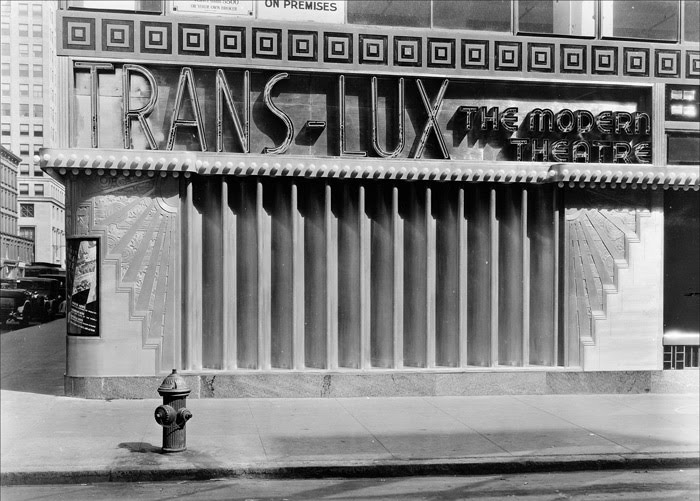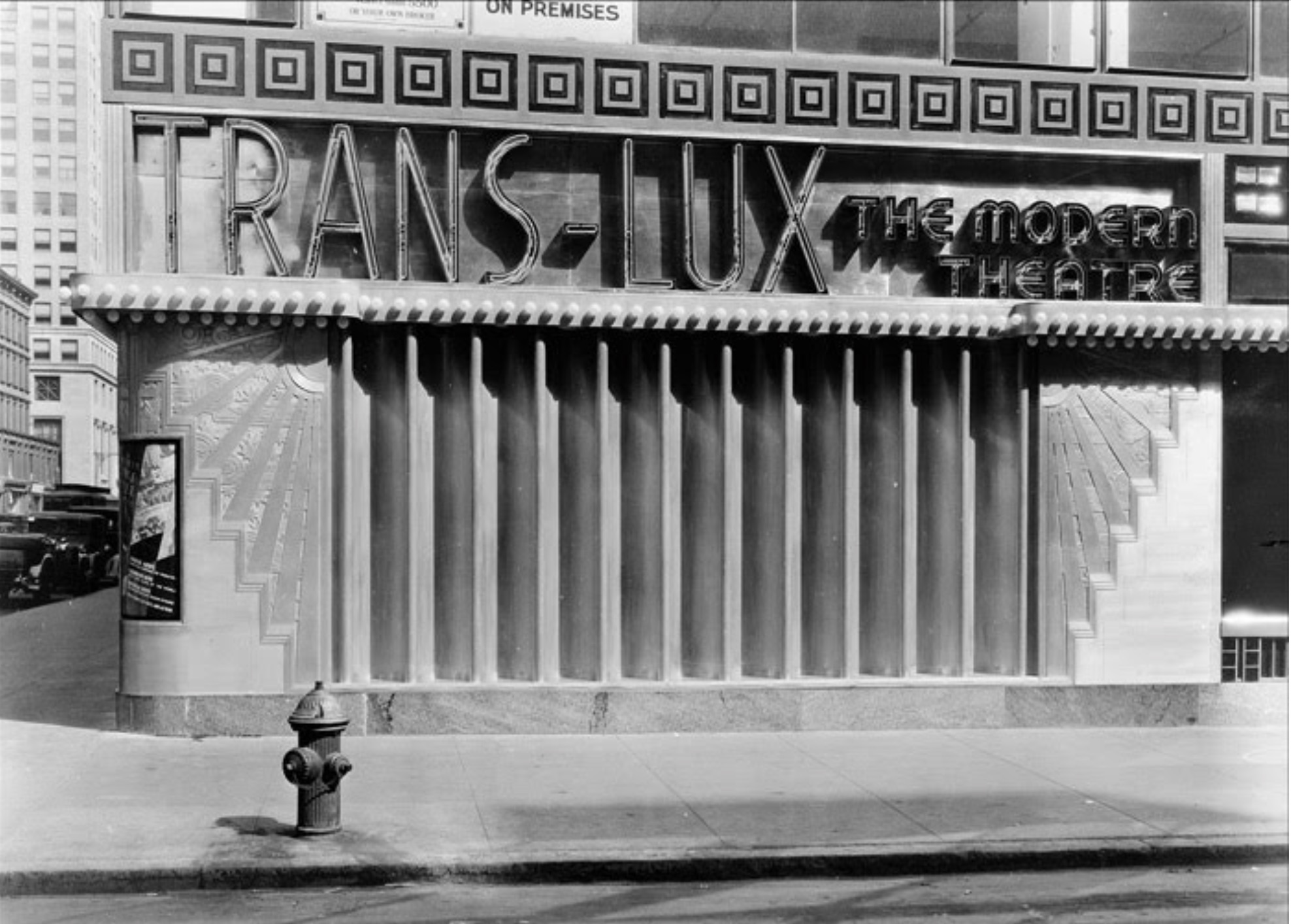
I’m a sucker for severe electric-laden art-deco theaters like the Trans-Lux Modern Theater which was once located in Midtown Manhattan on the corner of 58th Street and Madison Avenue.
Most every Midtown movie theater by the 1920s dabbled into electric signage to grab attention. But Trans-Lux worked in the opposite direction.
To underscore the importance of illuminated billboards in New York, Trans-Lux was actually a sign company who then dabbled into theater ownership.
Their separate film branch, Trans-Lux Movies Corporation, was a collaboration with RKO Pictures. This screen at 58th and Madison, opening in March 1931 as the first of Trans-Lux’s theater ventures, was a unique venue that played newsreels and shorts.
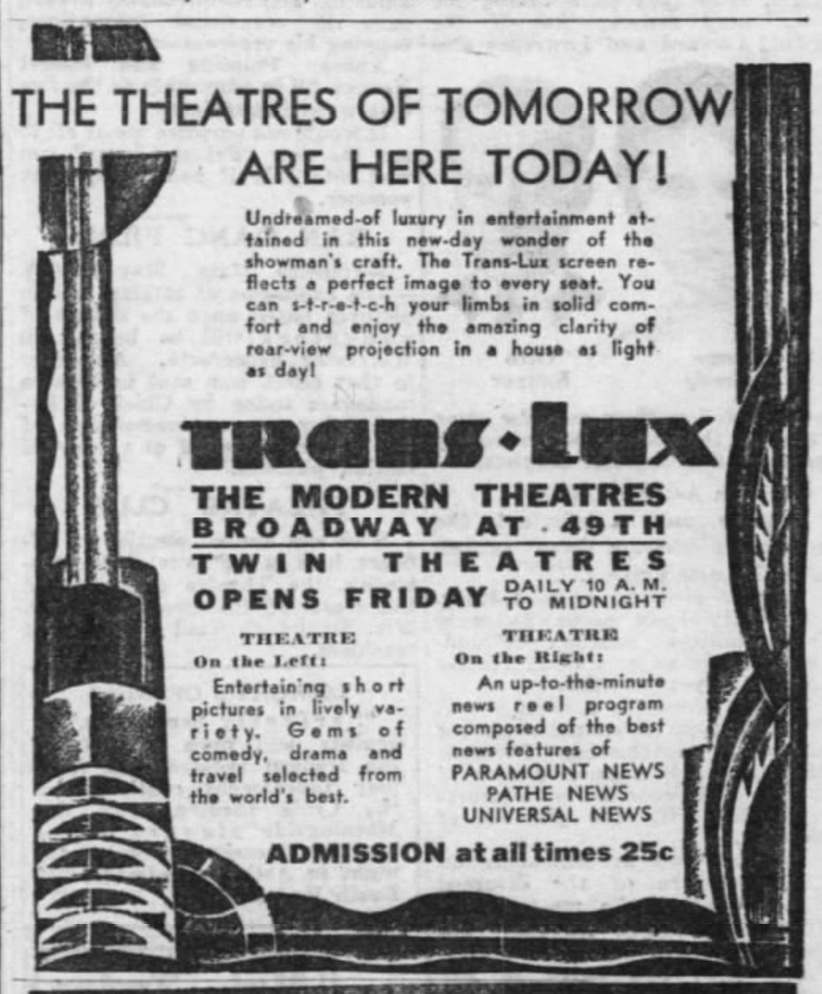
It was an ‘upgraded’ film-going experience, in a miniature theatrical environment.
According to a Time Magazine article from 1931, “[t]his theatre, about the size of a small drugstore, has 158 comfortable arm-seats, a turnstile in front and a svelte modernistic interior in which newsreels now flicker from 10 a. m. till midnight. There are no ushers; a ticket girl, two operators (union requirement) and a manager run the house.”
Below: The Broadway and 49th Street location with a more traditional marquee
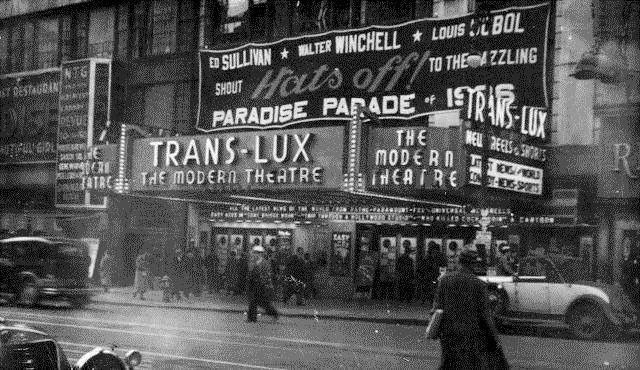
Customers would pay a quarter to see about an hour of newsreel and short films, in a brightened environment to allow them to read their programs and newspapers without squinting.
Trans-Lux opened several ‘newsreel’ theaters throughout the city, although by the late 1930s, those that survived the Great Depression switched to conventional feature films.
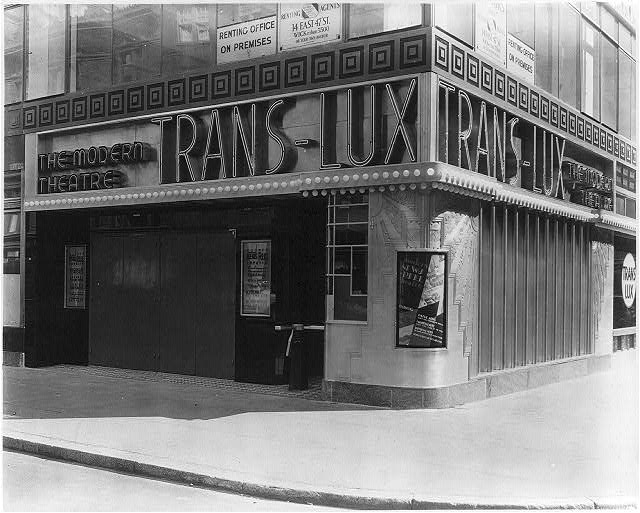
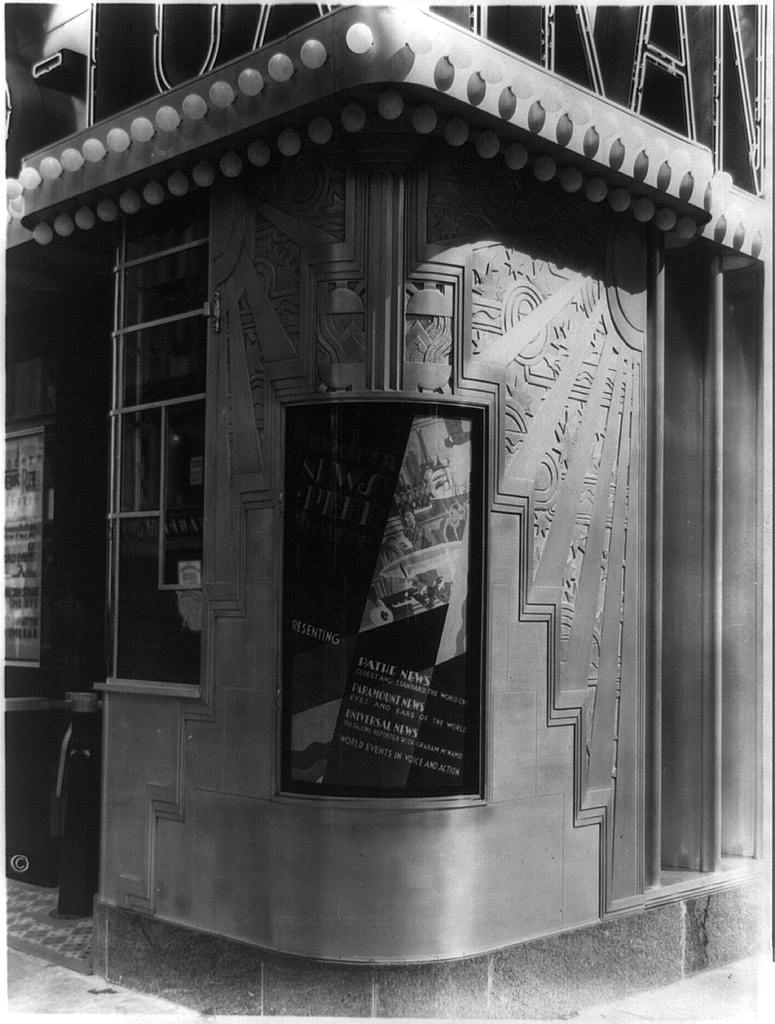
This Library of Congress image from April 1931 shows the building from the corner. That glorious neon lettering would have brightened a bustling Manhattan corner.
Their theaters may be gone today but the company lives on in its original capacity as electric sign makers, most notably for providing stock-exchange ticker displays.