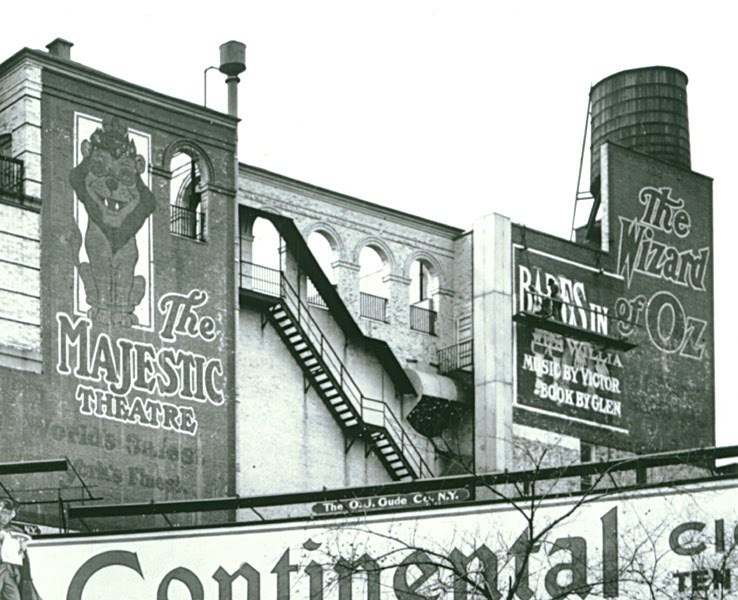
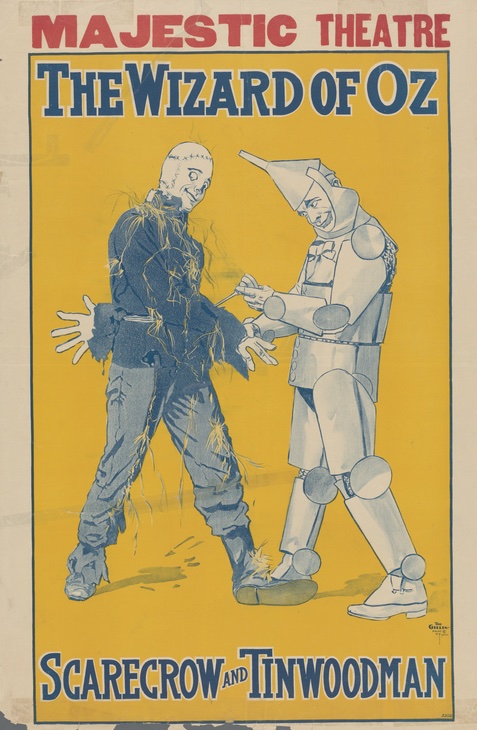
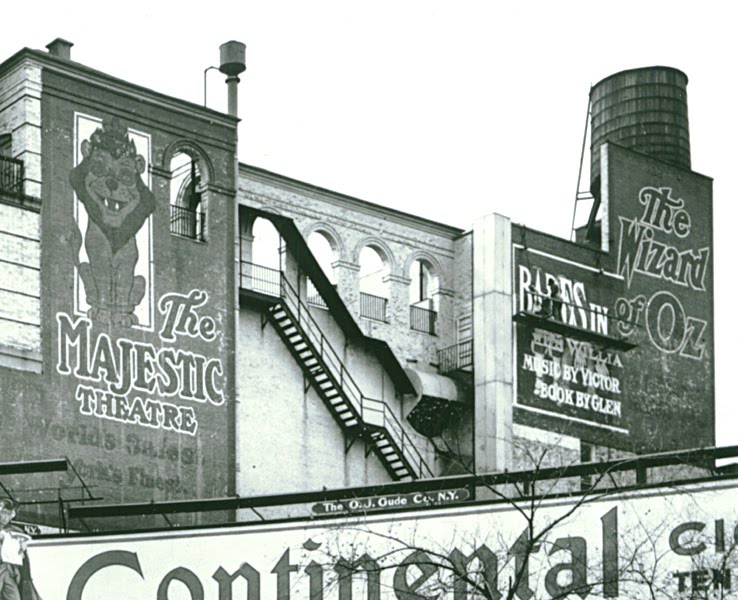
The very first musical version of The Wizard of Oz opened at the Majestic Theatre (at 5 Columbus Circle) on January 20, 1903, after playing to enthusiastic audiences in Chicago.
L. Frank Baum wrote the book to the musical, based on his novel ‘The Wonderful Wizard of Oz’ which was published in 1900.
New York Public Library
The temperatures were chilly that day, but New Yorkers were undeterred.
Or, as the New York Times observed: “With a dash of brilliant discovery ‘The Wizard of Oz’ last night discovered the north pole of the Broadway theatrical world in the Columbus Monument, at Fifty-ninth Street.
In a proximity as close as that of the Majestic Theatre frosts undoubtedly threaten, just as there is said to be a gathering chill in the theatres situated near the south pole in the Flatiron Building.”
The vaudeville act Montgomery and Stone played the Scarecrow and the Tinman.
Anna Laughlin, who played Dorothy, headed quickly to New York’s budding film business, starring in eighteen films between 1913-1915, many for the Brooklyn-based Vitagraph Company.
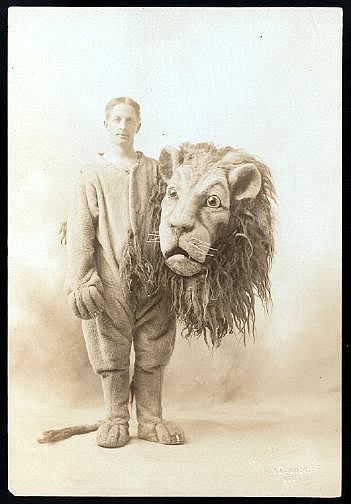
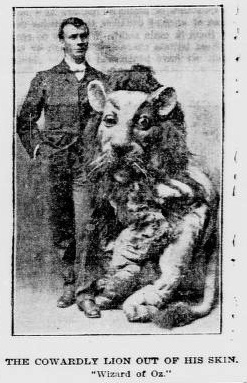
As for the Cowardly Lion, he was played by the handsome pantomimist Arthur Hill. He became so beloved in the role that he returned to the Broadway stage in other roles, always playing animals (including the wolf in a rendition of ‘Little Red Riding Hood’).
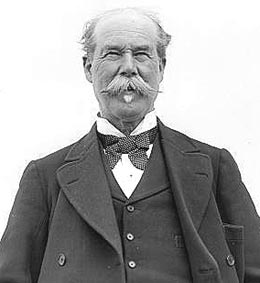
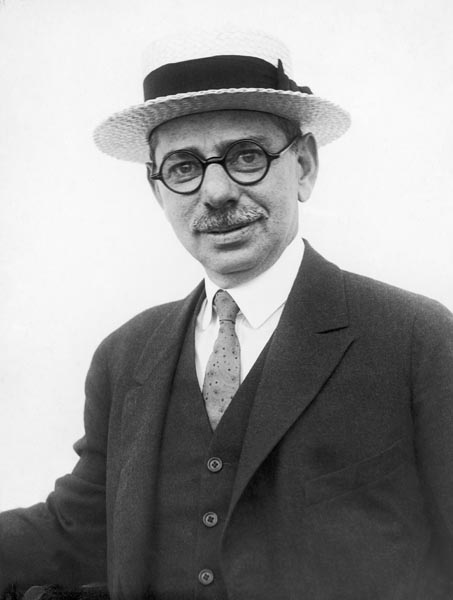
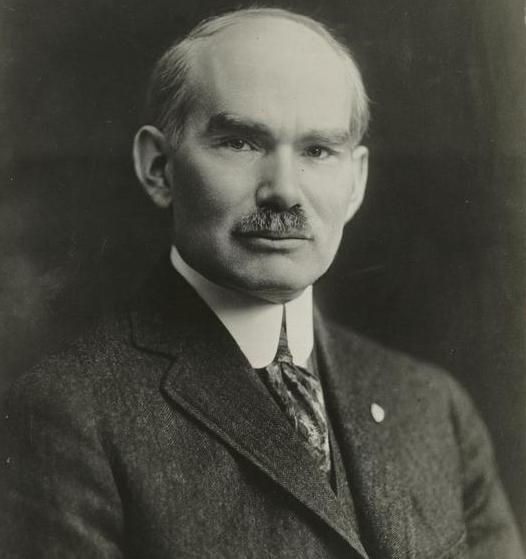
Among its admirers later that summer was the renown yachtsman Sir Thomas Lipton (pictured below), such a popular figure in 1903 that mobs arrived in Columbus Circle just to see his car pull up to the theater.
An ode to Lipton was performed by one of the chorus girls — Tommy! Oh! Oh Sir Tommy! You’re a dandy from your feet up — to his quite noticeable embarrassment.
Still, he came back to see the show a second time. Standing to give a speech, “[h]e may have intended to say more, but a misunderstanding about the calcium lights threw him suddenly into darkness, and he sat down.”
The show was a blockbuster, running in New York for two whole years, eventually closing on the final day of 1904.
I believe ‘Wizard’ was the inaugural performance at the Majestic Theatre, which survived several decades — as the International Theatre, it even co-hosted the Academy Awards — until it was demolished in the 1950s.
The play was such a success that Baum was convinced to write a sequel called ‘The Marvelous Land of Oz’. From there, he went on to expand his Oz franchise for several more books, including beloved installments featuring Tik-Tok, the Patchwork Girl and Ozma.
On the occasion of its 225th performance, the management of the Majestic gave out souvenir, telescopic silver drinking cups, “in which the friends and well-wishers of ‘The Wizard of Oz’ may drink to that potentate’s long long life and prosperous reign.”
Clippings courtesy the New York Tribune/Library of Congress.
PODCAST In celebration of 125 years of movie exhibition in New York City — from vaudeville houses to movie palaces, from arthouses to multiplexes.
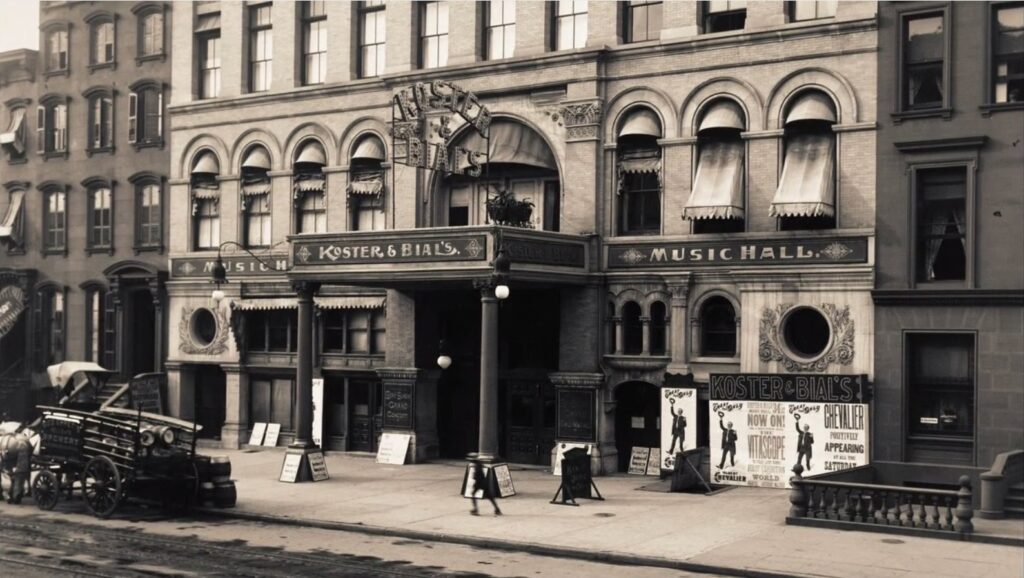
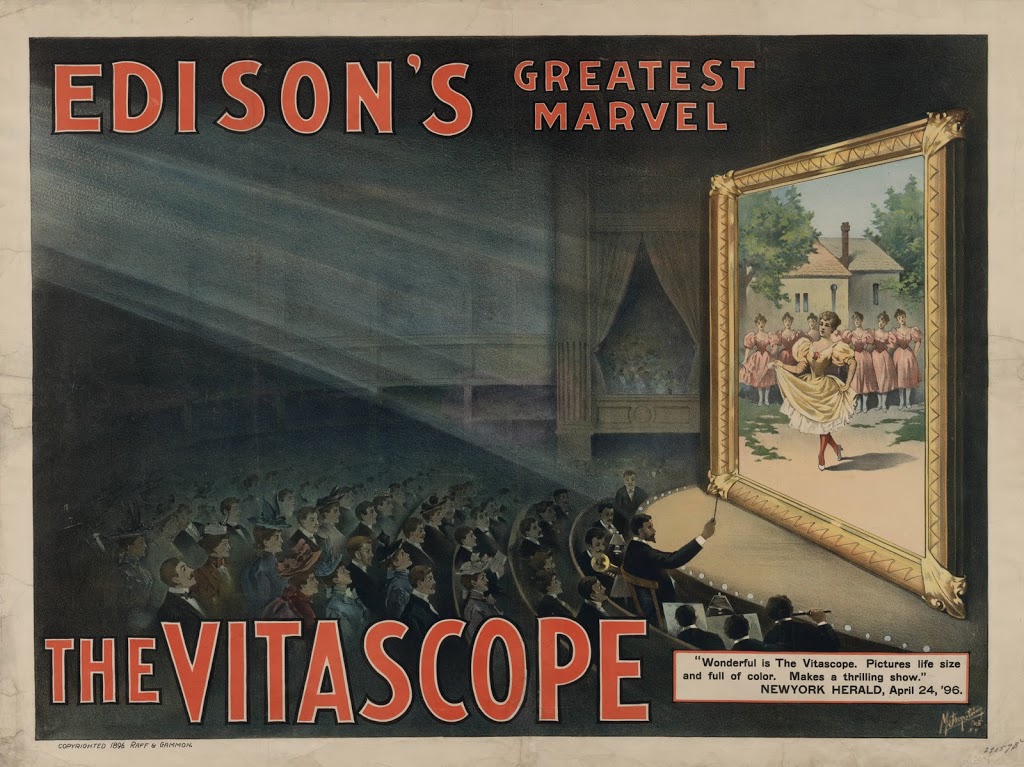
On April 23, 1896 an invention called the Vitascope projected moving images onto a screen at a Midtown Manhattan vaudeville theater named Koster and Bial’s Music Hall.
The business of movies was born.
By the late 1910s, the movies were big, but the theaters were getting bigger! Thanks to men like architect Thomas Lamb and the impresario Samuel ‘Roxy’ Rothafel, movie theaters in New York City grew larger and more opulent.
And in Times Square, they were so large that the became known as palaces — the Capitol, the Rialto, the Rivoli, the Strand, the Roxy. They were soon joined by the granddaddy of them all: Radio City Music Hall.
Even by the 1940s, movie theaters were a mix of film and live acts — singers, dancers, animal acrobats and the drama of a Wurlitzer organ!
But a major case at the Supreme Court brought a change to American film exhibition and diversity to the screen — both low brow (grindhouse) and high brow (foreign films and ‘art’ movies).
Today’s greatest arthouse cinemas trace their lineage back to the late 1960s/early 1970s and the new conception of movies as an art form.
Can these theaters survive the perennial villain of the movies (i.e. television) AND the current challenges of a pandemic?
FEATURING: All your favorite New York City movie theaters from A (Angelika) to Z (Ziegfeld).
Listen now on your favorite podcast player:
A special thanks to the website Cinema Treasures for inspiring us for many years and sending us out on many journeys, looking for the great old movie theaters of yore.
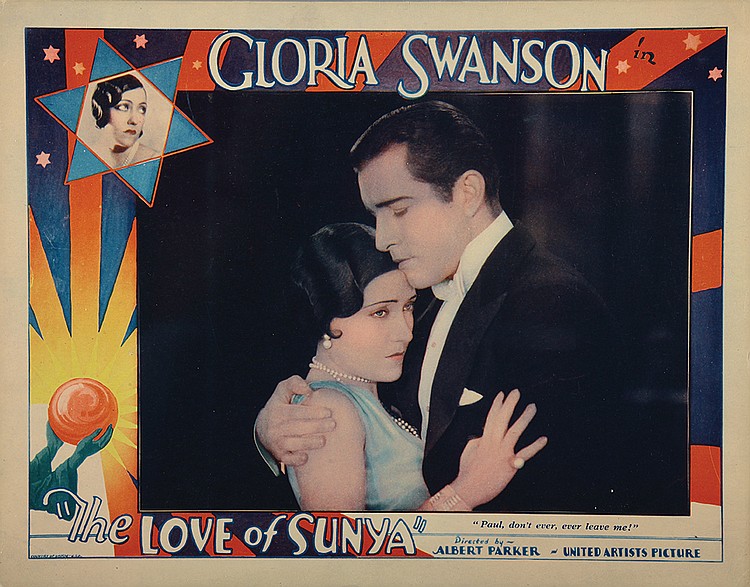
Gloria Swanson in The Love of Sunya, which played on the Roxy’s opening night — March 11, 1927.
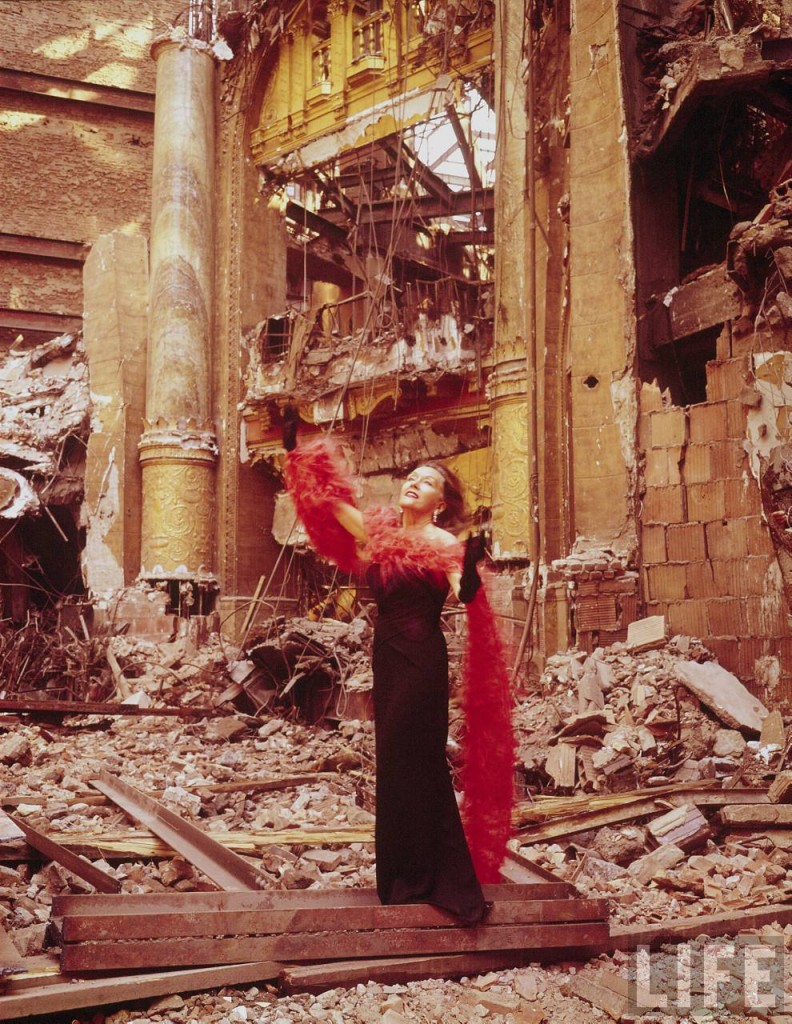
Gloria Swanson in the ruins of the Roxy Theatre, October 1960.
Eliot Elisofon for Life MagazineKoster and Bials at 34th Street — location of the first projected movie program for theatrical audiences in the United States.As with many of his ‘inventions’, Edison did not actually invent the Vitascope. But he bought the rights to say he did!
UNITED STATES – CIRCA 1925: Marcus Loew, Founder Of Loews Cinemas, In 1925, Usa. (Photo by Keystone-France/Gamma-Keystone via Getty Images)
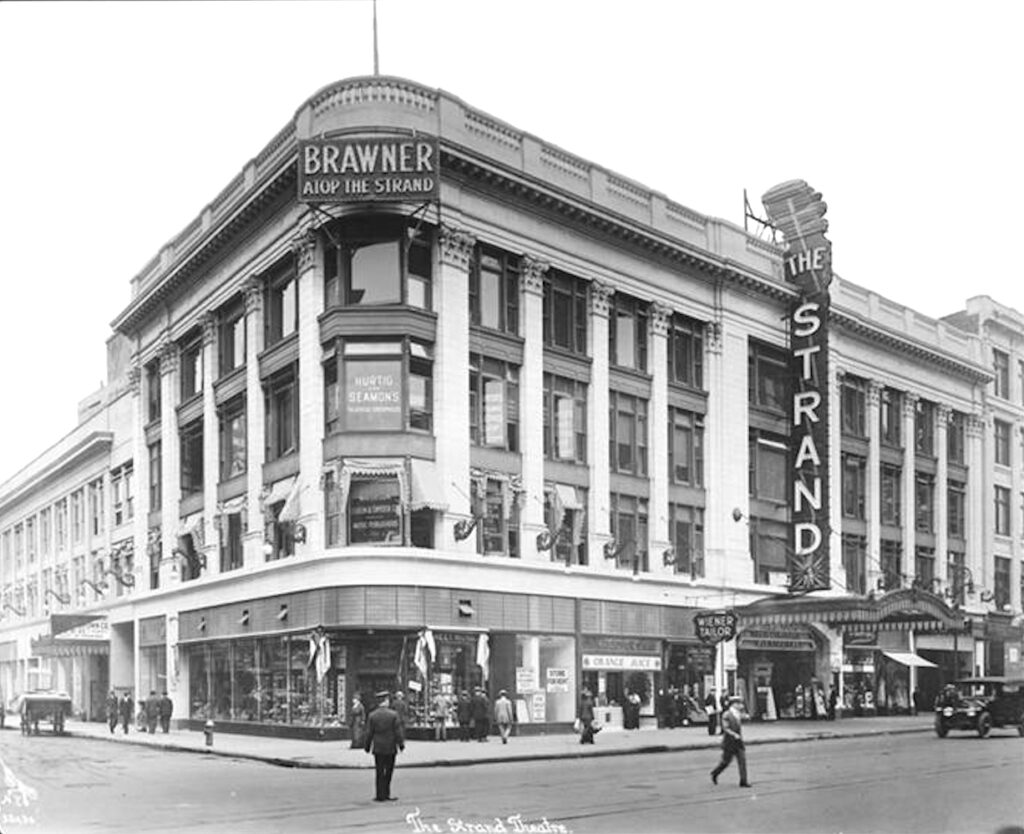
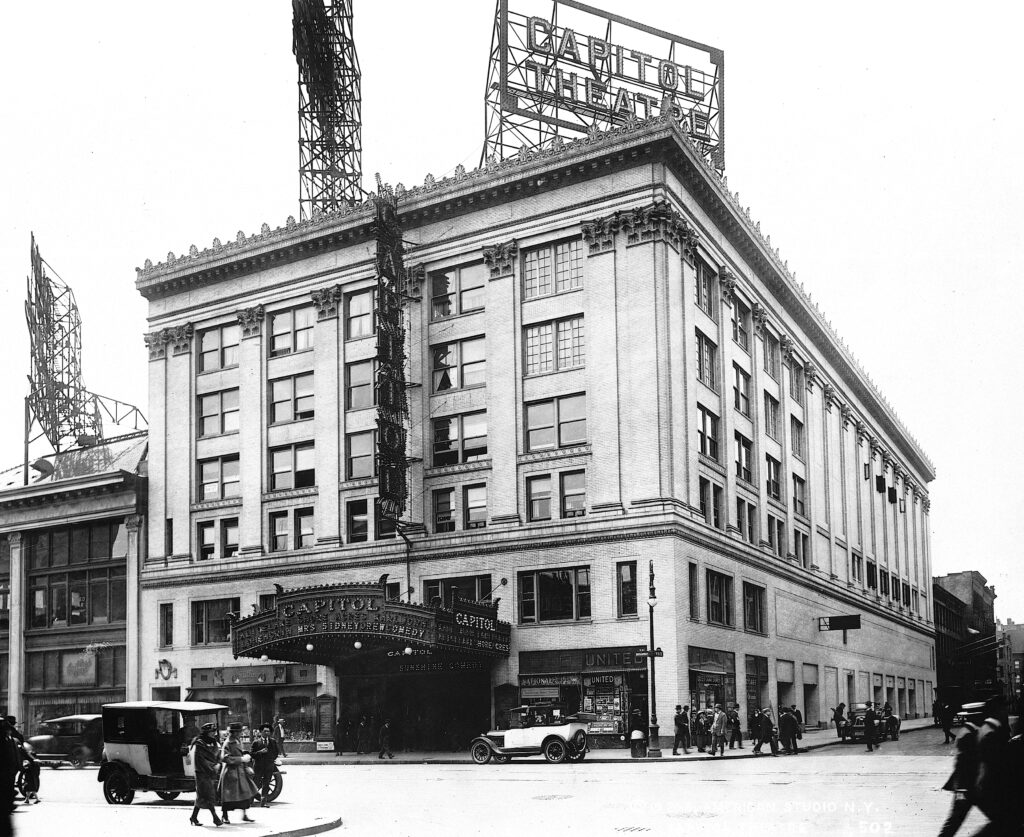
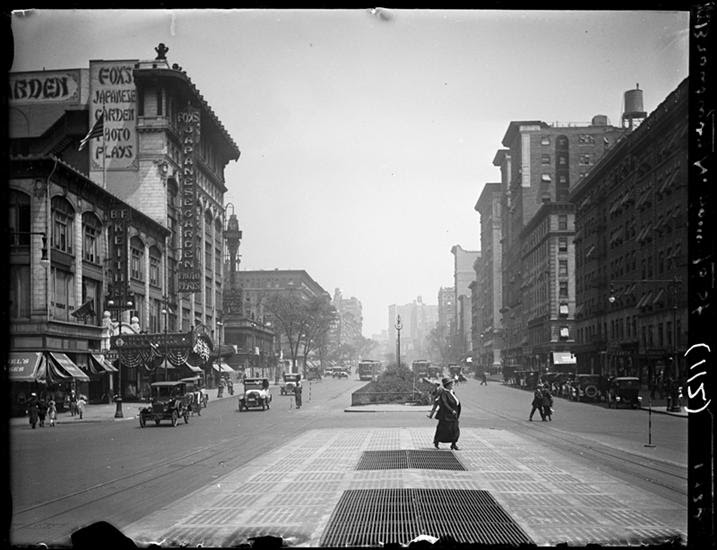
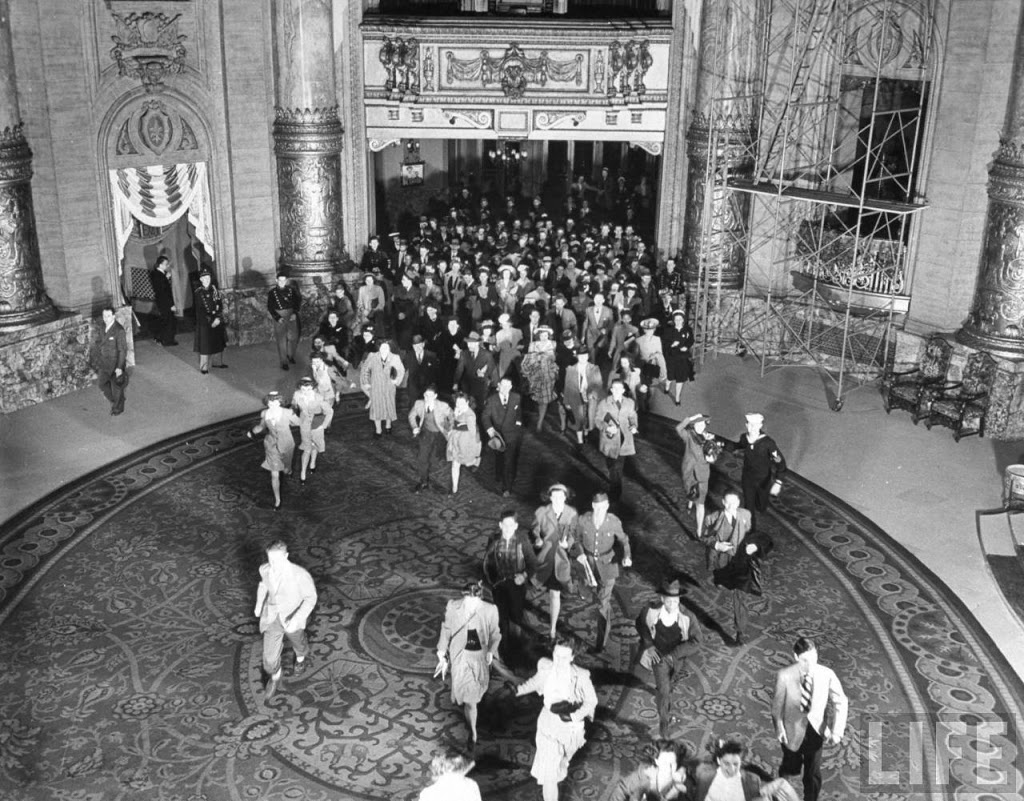
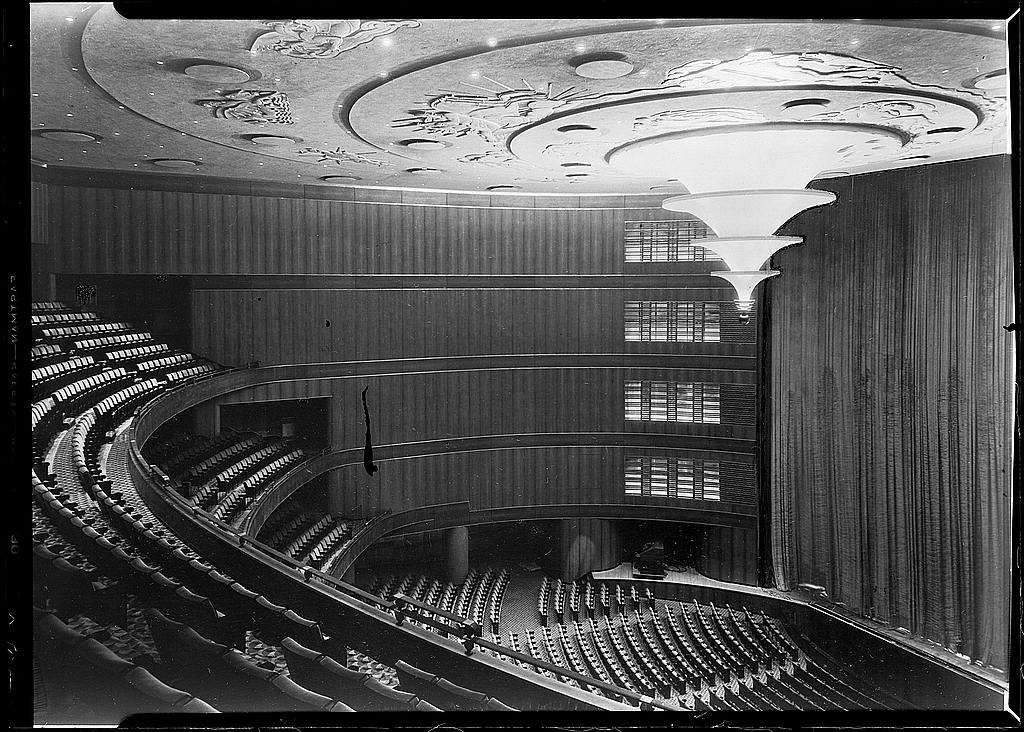
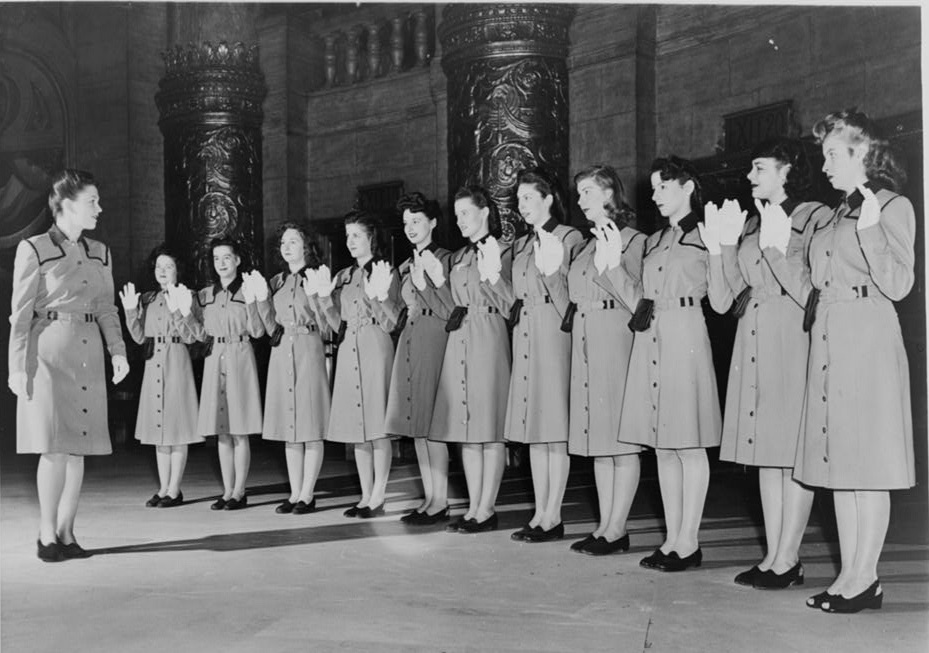
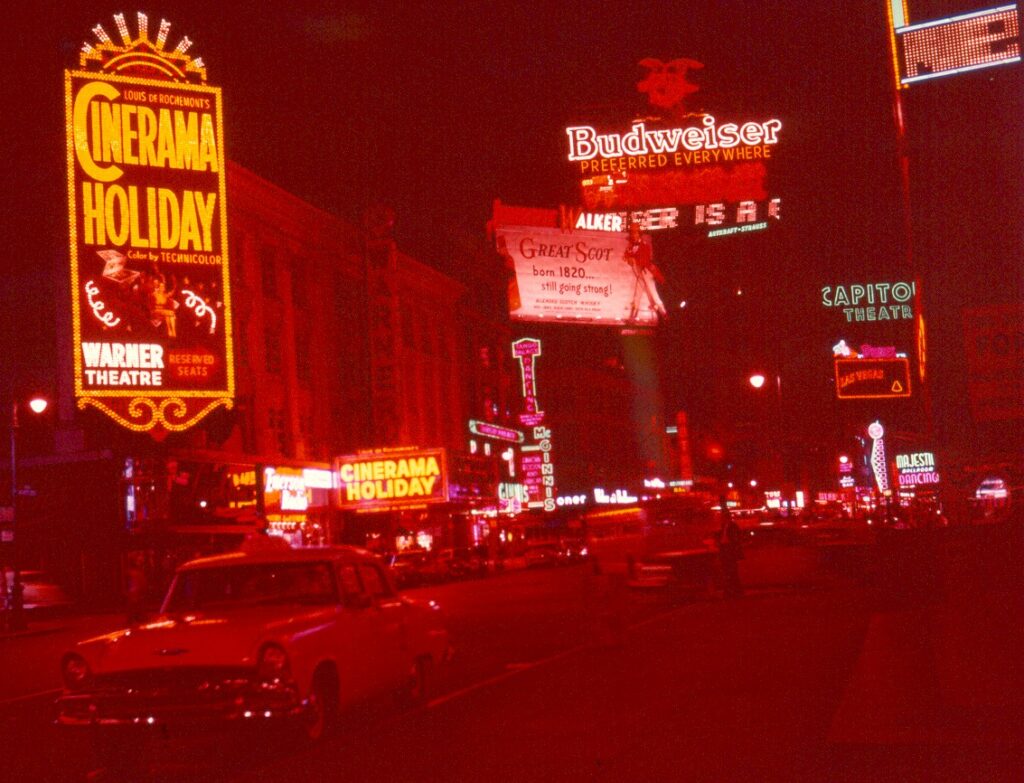
The Strand Theatre, 1914The Capitol Theater, 1920Fox’s Japanese Garden Theatre, at Broadway and 96th Street on the Upper West Side, 1920. Courtesy Museum of the City of New YorkSatisfied New York filmgoers at the Roxy exit into the lobby, May 1943. The 6,000-seat Roxy Theatre, at 153 W. 50th Street, “often cited as the most impressive movie palace ever built” according to Cinema Treasures. Movies at the Roxy were presented with live orchestras and vocals. In this case, the film was the Tyrone Power war thriller ‘Crash Dive’, accompanied by Jimmy Dorsey and His Orchestra and vocalists Bob Eberly and Kitty Kallen.The interior of the Roxy Theater 1932 (Library of Congress)1945 — Head usherette Capt. Rosemary Smith inspects line of uniformed usherettes who are holding gloved hands up to be examined, Roxy Theater, New York City. (Al Ravenna/Library of Congress)Courtesy In Cinerama In CineramaMore information on the Paris Theatre here. Courtesy the Paris TheatreMore information on the Ziegfeld Theater here. (Photo courtesy Ziegfeld Ballroom)
The Bowery Boys: New York City History podcast is brought to you …. by you!
We are now producing a new Bowery Boys podcast every other week. We’re also looking to improve and expand the show in other ways — publishing, social media, live events and other forms of media. But we can only do this with your help!
We are now a creator on Patreon, a patronage platform where you can support your favorite content creators.
Please visit our page on Patreon and watch a short video of us recording the show and talking about our expansion plans. If you’d like to help out, there are six different pledge levels. Check them out and consider being a sponsor.
We greatly appreciate our listeners and readers and thank you for joining us on this journey so far.
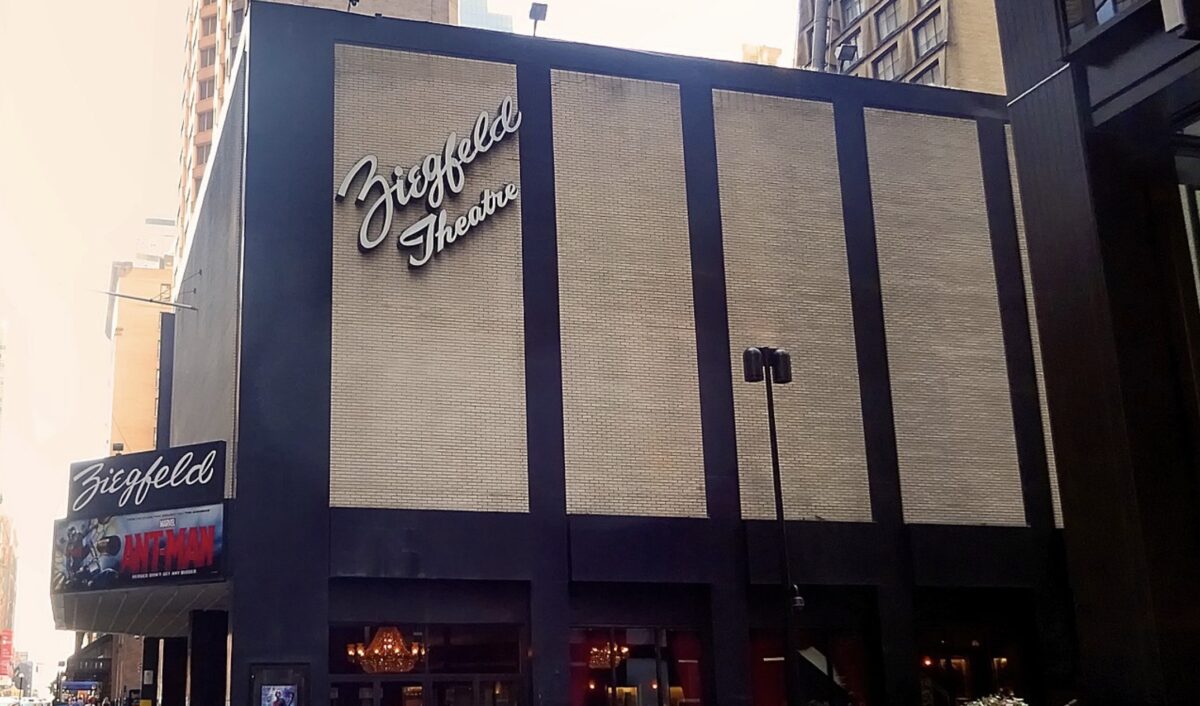
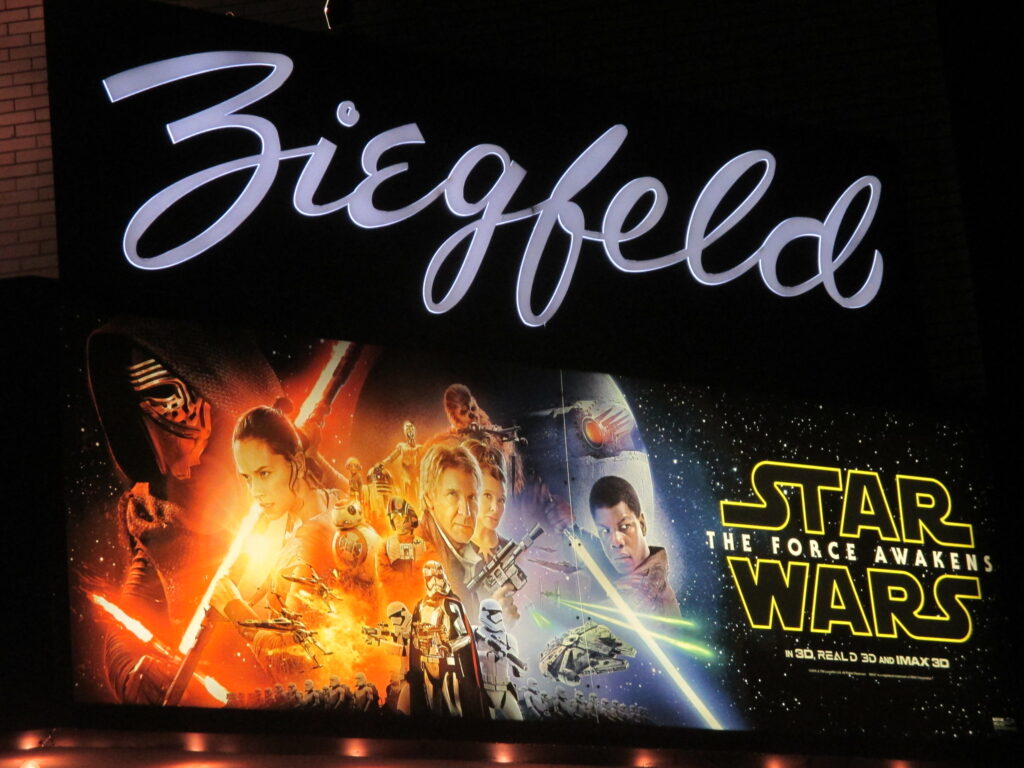
The Ziegfeld Theater, one of Manhattan’s last single-screen movie theaters, closed for regular film exhibition in 2016.* Its final film was Star Wars: The Force Awakens, an appropriate choice as tens of thousands of movie lovers had gone to the Ziegfeld to see previous films in the series — including the 1977 original.
I think the real story here is how — in a landscape of multiplexes and state-of-the-art home theaters — this respected dinosaur, sitting amidst the most valuable real estate in the world, managed to stay open as long as it did, playing a single film at a time.
(The Paris Theater is the only Manhattan theater remaining with just one screen.)
Losing the Ziegfeld means that New York lost a valuable link to one of the city’s greatest theatrical icons, Florenz Ziegfeld. Although, to be fair, that link was already indirect.
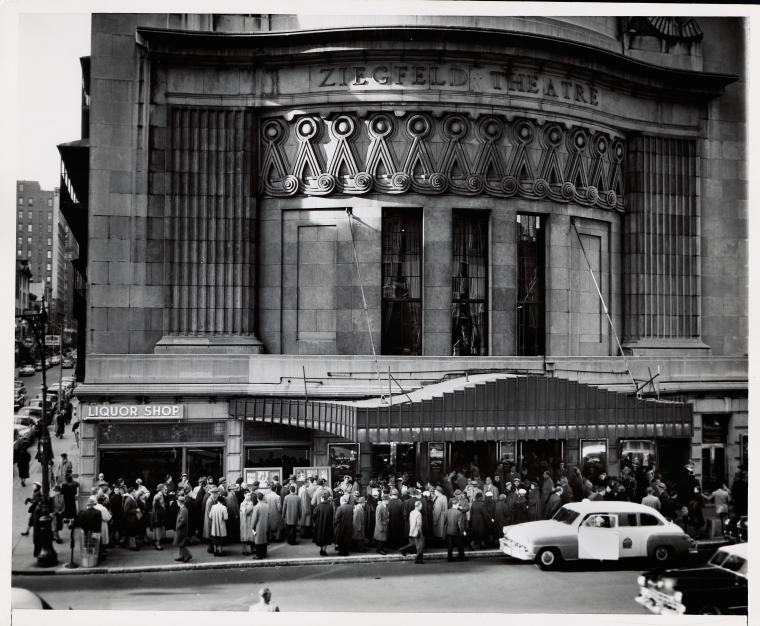
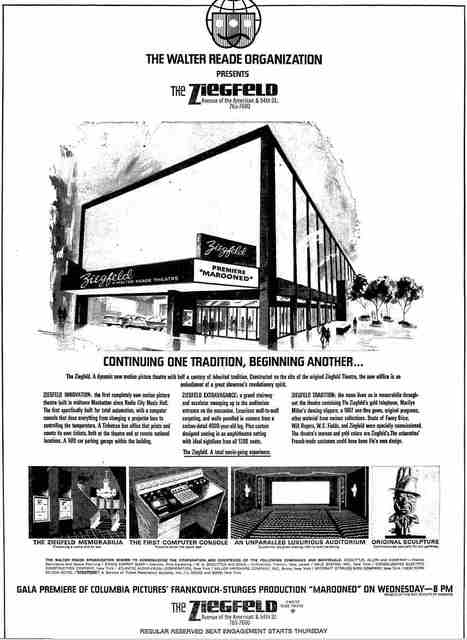
The original Ziegfeld Theater (at top), built especially for the showman by William Randolph Hearst, sat on Sixth Avenue close by the present movie theater. It was demolished in 1966, and a new Ziegfeld — devoted solely to film — was built nearby by Emory Roth & Sons. It opened in December 1969.
At 1,131 seats, the Ziegfeld movie house was hardly the biggest theater in New York. And it doesn’t even have the biggest movie screen (that title belonged to the IMAX at Lincoln Center).
But the grandiosity of design, the traditional show-palace style, and the dramatic trappings of its lobby make for a movie experience of special import. Even its bathrooms were extraordinary.
The Ziegfeld was a throwback to New York’s early single-screen theaters of yore like the Roxy, the Rivoli and the Capitol. It’s also much smaller than all of those. (The Capitol, for instance, sat 4,000 people!)
The Ziegfeld catered to films of a remarkable scope, and it built its reputation upon ‘serious’ films of pedigree.
Some of the most successful films to ever play the Ziegfeld include Gandhi (1982, playing 31 weeks), Cabaret (1972, 26 weeks), and Close Encounters of the Third Kind (1977, 23 weeks, plus an additional month in its 1980 reissue).
Courtesy Ziegfeld Ballroom
But screen longevity doesn’t necessary auger quality. For instance, Raiders Of The Lost Ark played here for three weeks. Grease 2 played for five.
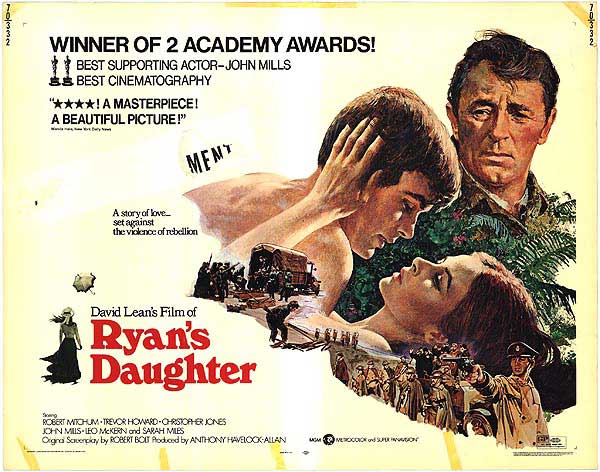
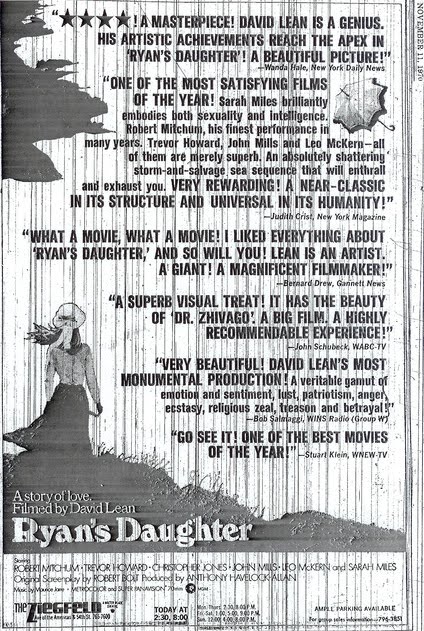
Less than a year after the theater’s opening, on November 9, 1970, came the film that currently holds the record for the longest-running film in Ziegfeld’s history — Ryan’s Daughter.
Perhaps not the traditional classic you might expect to hold such a record.
This blown-out, histrionic World War I drama by legendary filmmaker David Lean, loosely based on the book Madame Bovary, recounts an illicit love affair set along the Irish seashore, with crashing waves serenading the passionate kisses between a married pub owner’s daughter (played by Sarah Miles) and a maimed war veteran (Christoper Jones) who is intermittently tormented by battle flashbacks.
Star wattage was provided by Robert Mitchum as the jilted husband.
Lean’s previous film was Doctor Zhivago, a box office triumph that set international records and proved movie audiences would gratefully sit through lengthy costume dramas if they were any good.
Ryan’s Daughter, sadly, was no Doctor Zhivago.
New York Times critic Vincent Canby completely dismisses it — a film full of ‘soapy gestures’ — but adds a telling postscript to his review:
“I first saw ‘Ryan’s Daughter’ at a press preview at the Ziegfeld Theater, where the audience reaction tended toward rudeness. Five days later, I returned to see it with a paying audience that stood patiently in line around the block before getting into the theater. The members of that audience loved the movie even before they entered the lobby, and, from the reverence with which they greeted the movie itself, they also loved it while seeing it.“
The New Yorker’s Pauline Kael pulled no punches, calling it a “gush made respectable by millions of dollars ‘tastefully’ wasted”.
Afterwards, a brave Lean showed up for a function by the National Society of Film Critics held at the Algonquin Hotel, where he was mercilessly lambasted by the New York critics.
Lean recalls, “One of the most leading questions was, ‘Can you please explain how the man who directed Brief Encounter can have directed this load of sh*t you call Ryan’s Daughter?’ It really cut me to the heart, and that was Richard Schickel.”
The experience was so scarring that Lean later claimed it caused him to withdraw from film making for over a decade
Yet still, New Yorkers flocked to Ryan’s Daughter, from its premiere that November and for thirty-three weeks afterwards.
The film, initially presented in the old ‘roadshow’ format including its overture and intermission, lasted three and a half hours, so the Ziegfeld could only schedule two or three shows a day.
Ryan’s Daughter — all of Lean’s pictures, actually — seemed ready-made for the Ziegfeld.
By 1970, many of New York’s grandest movie screens were already torn down. Those that remained were in Times Square, and it’s doubtful that the Upper East Side crowd — older, wealthier New Yorkers — felt comfortable settling down in those theaters by this time.
The Ziegfeld, right off Sixth Avenue, was also nearby midtown’s swankiest restaurants (as Mad Men, which once mentioned the old Ziegfeld Theater, regularly demonstrates.)
The film was also presented in Super Panavision 70, a film process using ‘spherical optic’ lenses that had only been used by a few films. (2001: A Space Odyssey, another Ziegfeld success, used the same process.)
Such visual scope blasted out from the Ziegfeld’s immense screen, beguiling and even numbing audiences as the IMAX of its day.
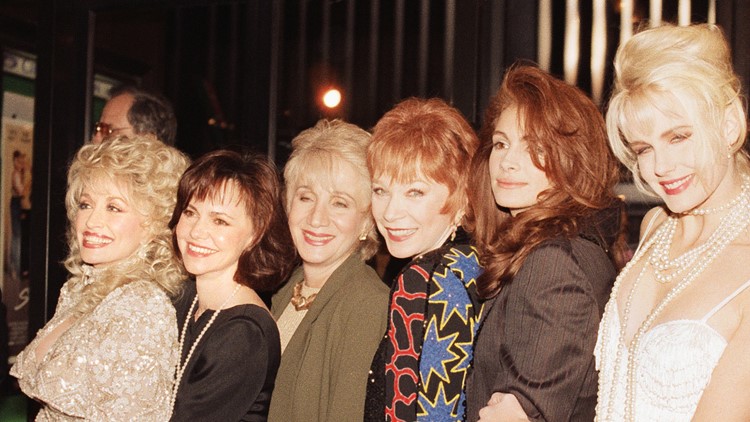
The theater was known for very splashy premieres — especially in the 1980s. Stars of the film Steel Magnolias pose backstage at the Ziegfeld Theater in New York Nov. 5, 1989 at the movie’s premiere. Shown from left: Dolly Parton, Sally Field, Olympia Dukakis, Shirley MacLaine, Julia Roberts and Daryl Hannah. (AP Photo/Ed Bailey)
Which is why Lean would always find a welcome audience at the Ziegfeld — his movies were too monumental in scale to be ignored.
His return to filmmaking A Passage To India would play for over three months at the Ziegfeld in 1984. And a reissue of his greatest masterpiece, Lawrence of Arabia, played to sold-out crowds here in 1989.
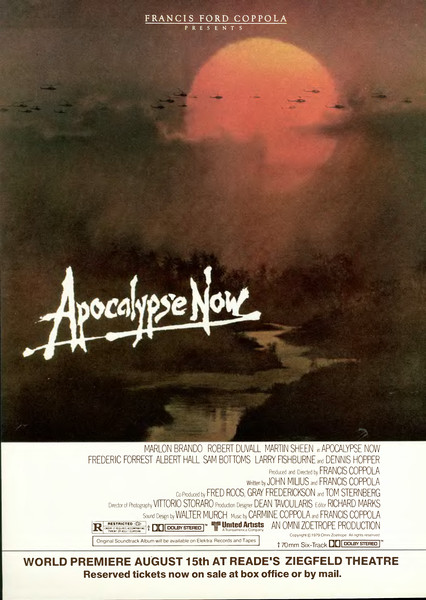
Personally, if I could go back in time, I’d probably want to attend the Ziegfeld premieres of The Last Temptation of Christ (met with offended protesters) or perhaps Apocalypse Now, which made its debut there in 1979 and played for twelve weeks.
Data courtesy the amazing Cinema Treasures / Michael Coate, with verification using old New York magazines.
*Today the old theater is the luxurious event space Ziegfeld Ballroom. Looks swanky!
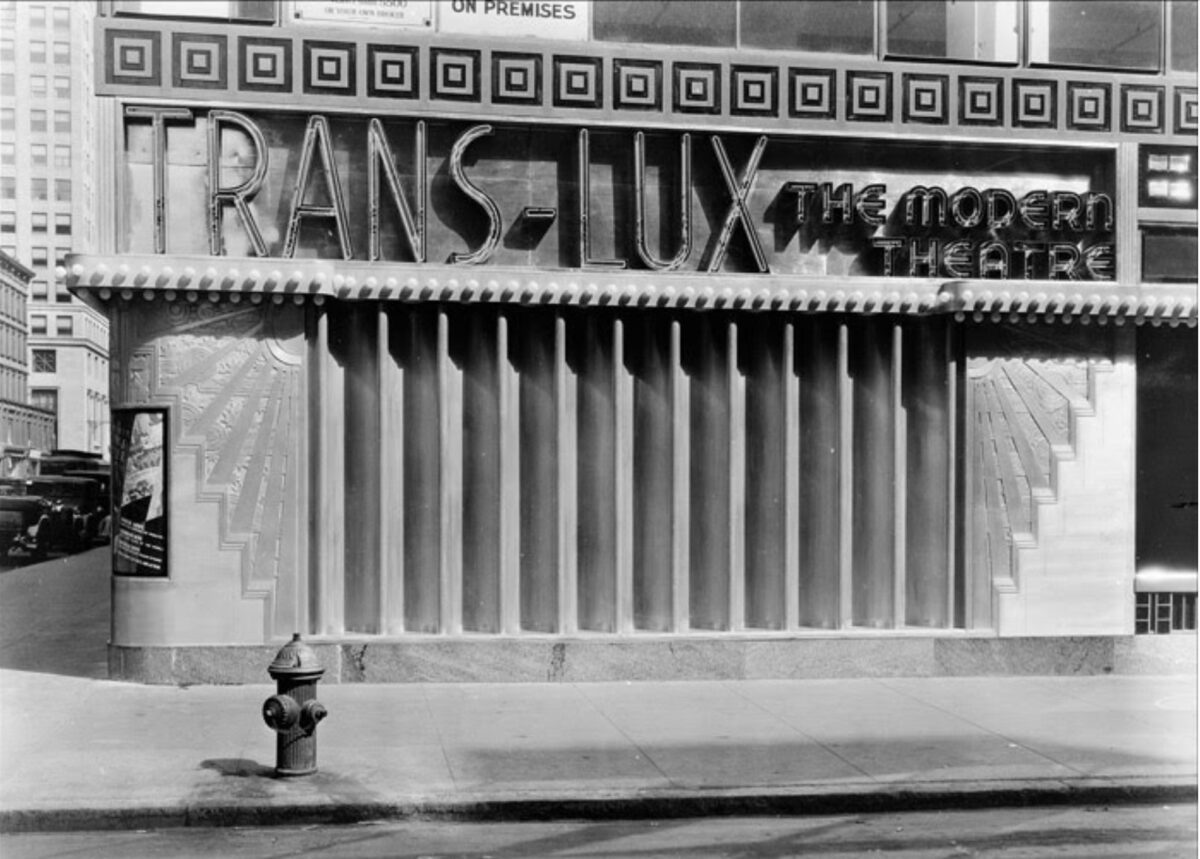
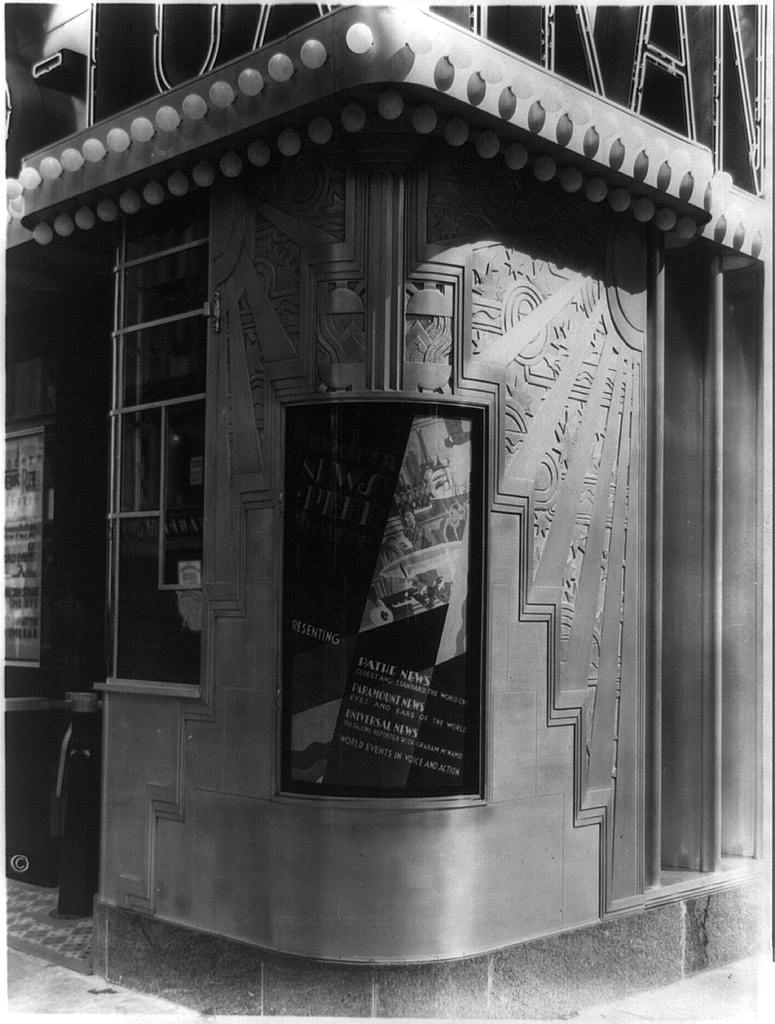
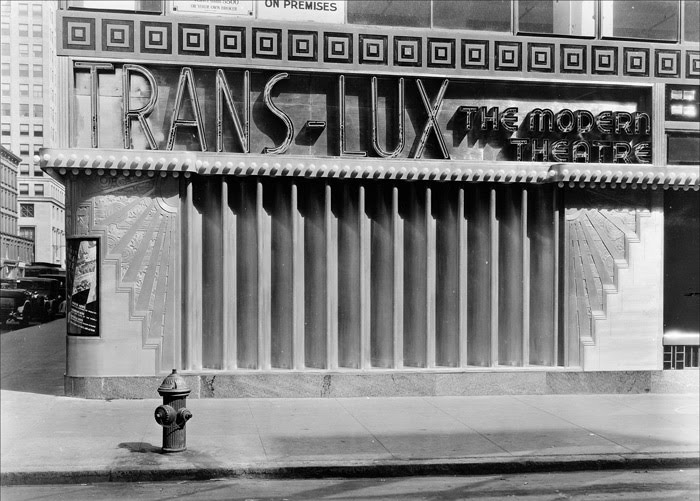
I’m a sucker for severe electric-laden art-deco theaters like the Trans-Lux Modern Theater which was once located in Midtown Manhattan on the corner of 58th Street and Madison Avenue.
Most every Midtown movie theater by the 1920s dabbled into electric signage to grab attention. But Trans-Lux worked in the opposite direction.
To underscore the importance of illuminated billboards in New York, Trans-Lux was actually a sign company who then dabbled into theater ownership.
Their separate film branch, Trans-Lux Movies Corporation, was a collaboration with RKO Pictures. This screen at 58th and Madison, opening in March 1931 as the first of Trans-Lux’s theater ventures, was a unique venue that played newsreels and shorts.
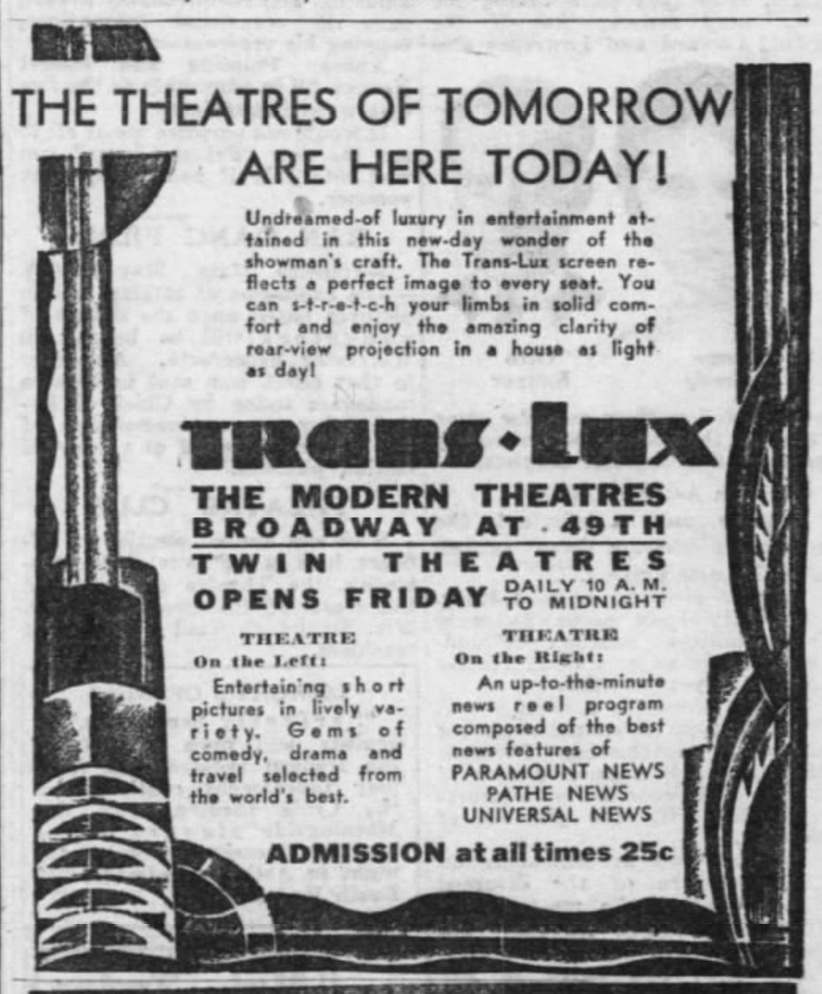
An advertisement for an additional location at Broadway and 49th Street, via the New York Daily News, May 13, 1911
It was an ‘upgraded’ film-going experience, in a miniature theatrical environment.
According to a Time Magazine article from 1931, “[t]his theatre, about the size of a small drugstore, has 158 comfortable arm-seats, a turnstile in front and a svelte modernistic interior in which newsreels now flicker from 10 a. m. till midnight. There are no ushers; a ticket girl, two operators (union requirement) and a manager run the house.”
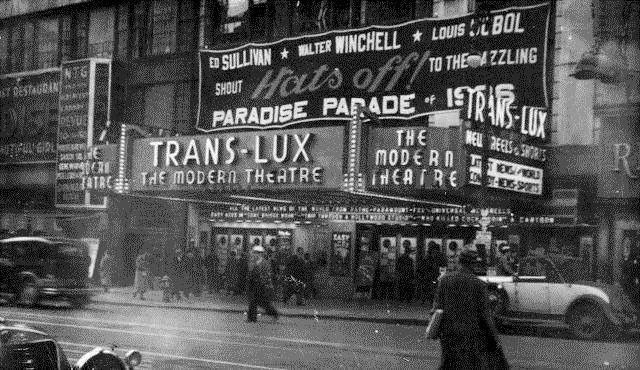
Below: The Broadway and 49th Street location with a more traditional marquee
Customers would pay a quarter to see about an hour of newsreel and short films, in a brightened environment to allow them to read their programs and newspapers without squinting.
Trans-Lux opened several ‘newsreel’ theaters throughout the city, although by the late 1930s, those that survived the Great Depression switched to conventional feature films.
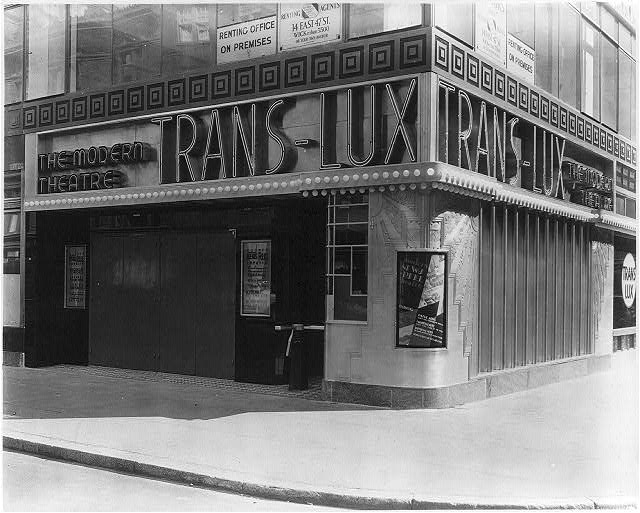
This Library of Congress image from April 1931 shows the building from the corner. That glorious neon lettering would have brightened a bustling Manhattan corner.
Library of Congress
Their theaters may be gone today but the company lives on in its original capacity as electric sign makers, most notably for providing stock-exchange ticker displays.
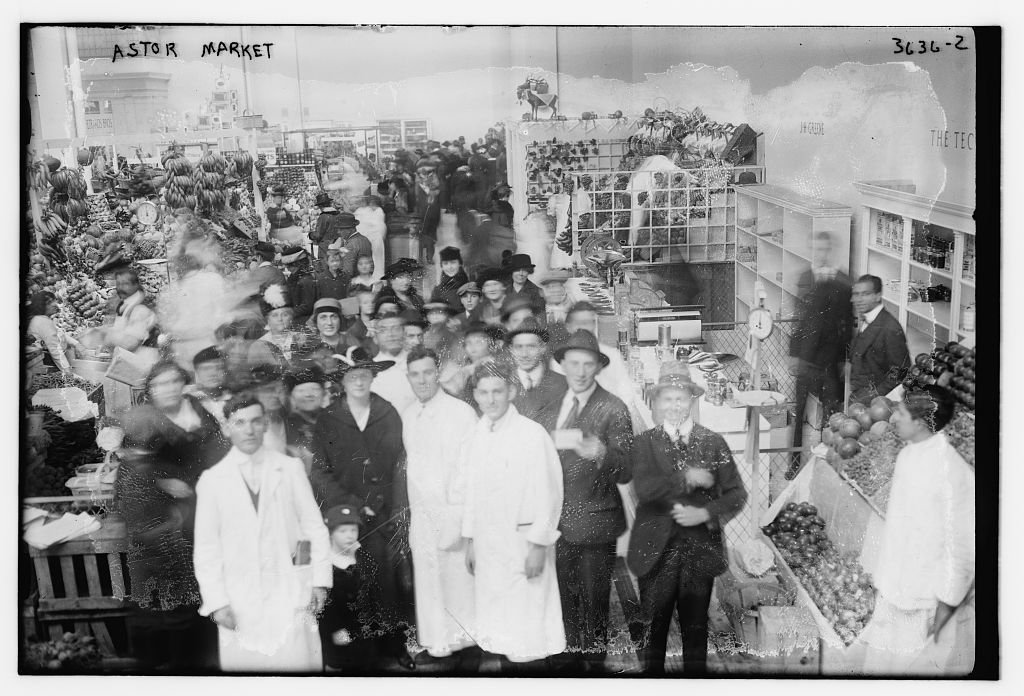
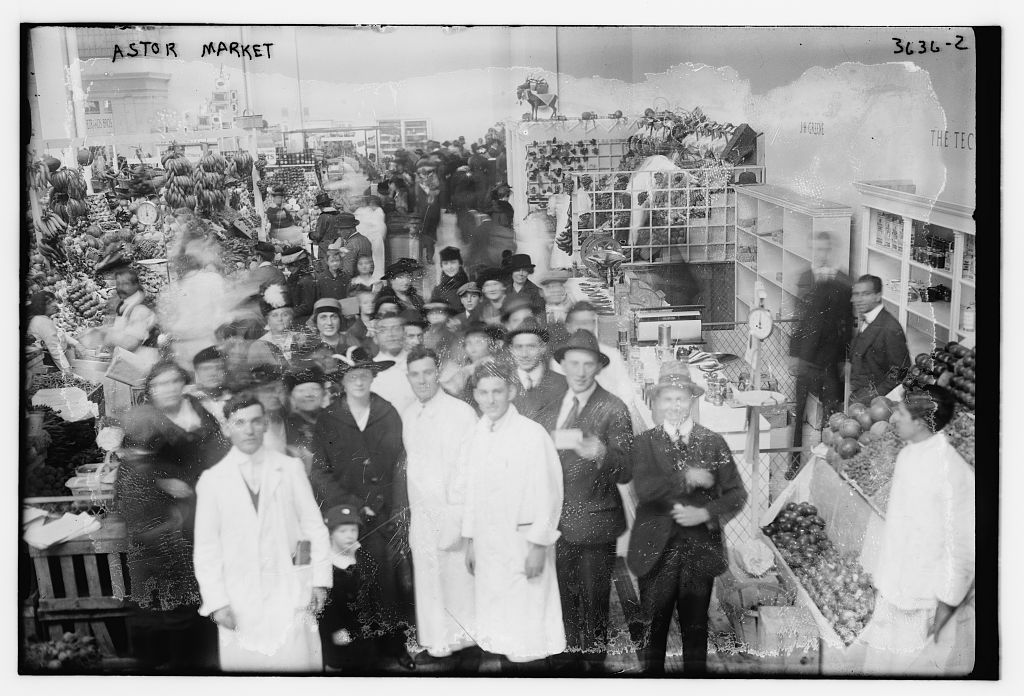
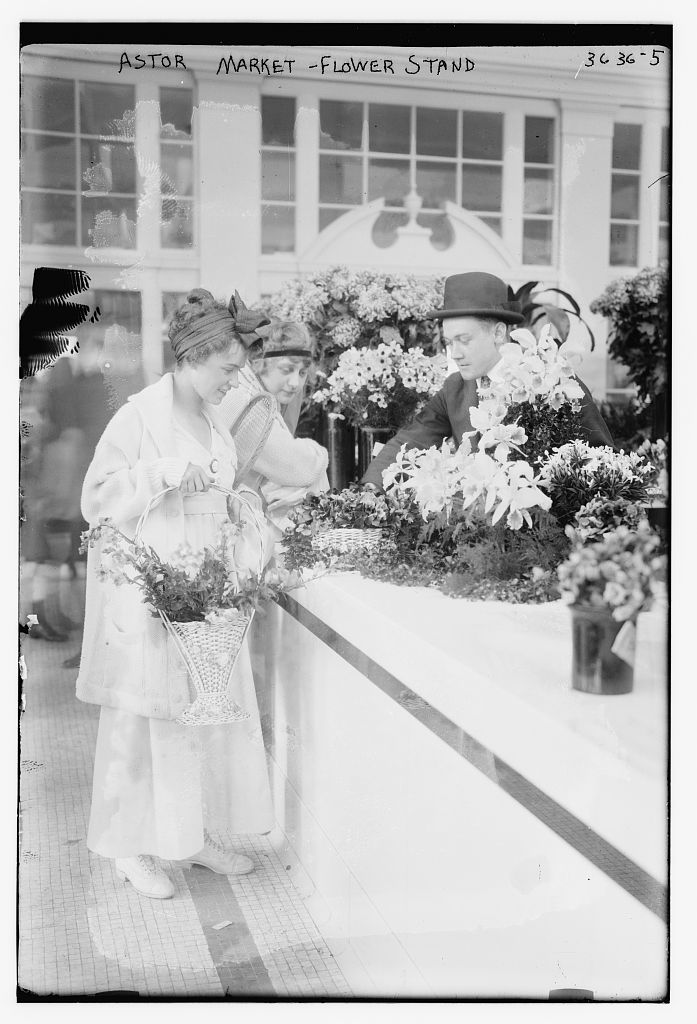
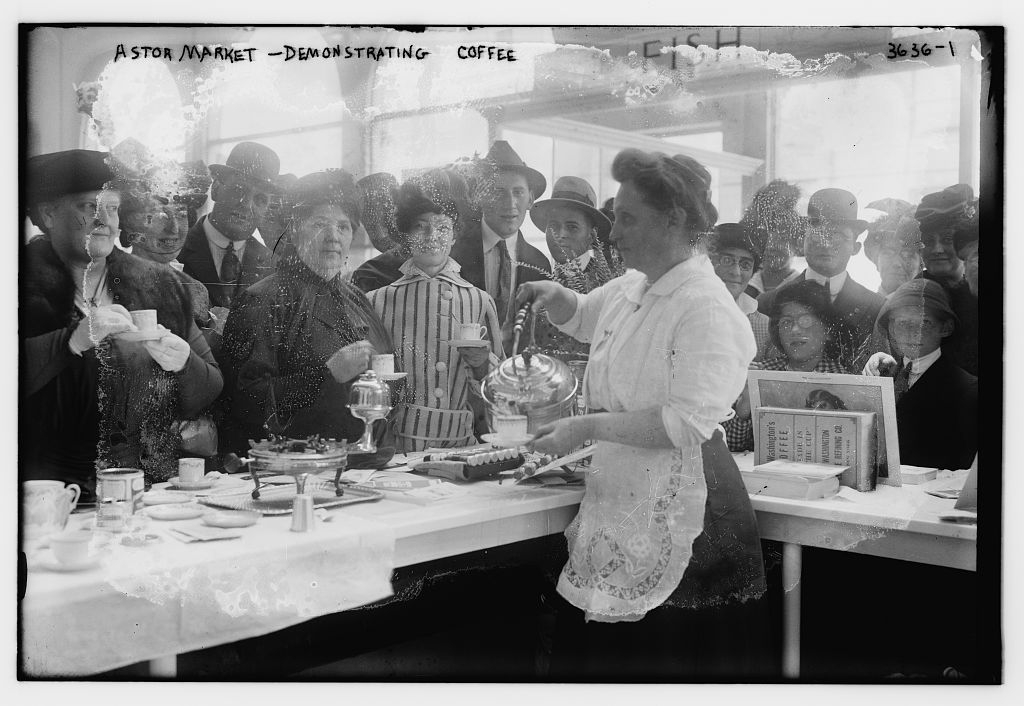
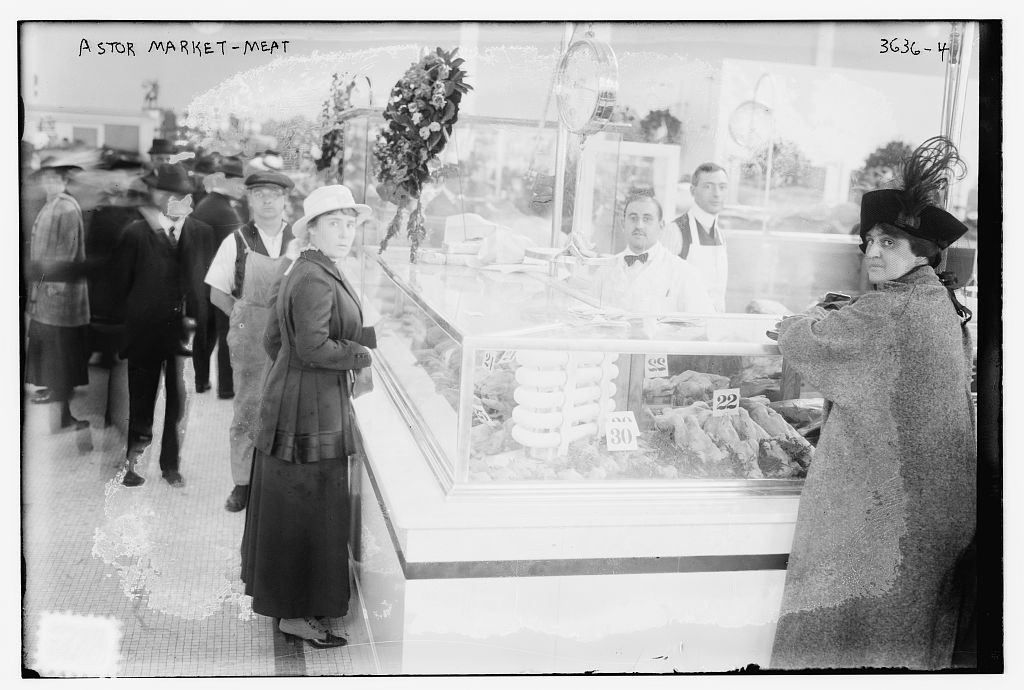
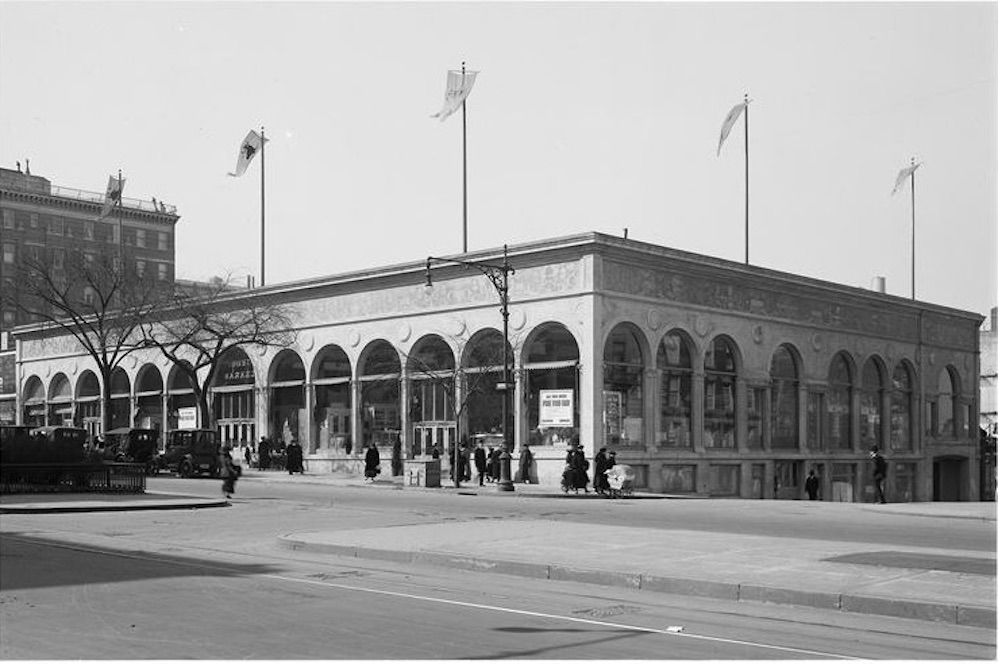
The Astor Market once sat on the corner of 95th Street and Broadway, a ‘model’ market built in 1915, devised by Vincent Astor, son of John Jacob Astor IV(and whose wife Brooke Astor may be better known to you) to combat some of the high food prices brought on by World War I.
Astor was on Mayor John Purroy Mitchel‘s market commission to solve this very problem. (Read more about New York’s wartime market woes here.)
Markets were being heavily re-conceived in New York in the 1910s. Astor would have a guiding hand in the new project. The space was to be both practical and ornate, designed by Tracy & Swartwout, better known by this time for the Yale Club.
According to the New York Times, “under the cornice ran a 290-foot-long frieze by William Mackay depicting a market procession, with farmers and dealers carrying meat, fish, poultry, fruit and vegetables in everything from medieval carts to motor trucks. “
Library of Congress
It was renown for its ultra-clean interior with nary an insect or vermin to disrupt shopping. “Mr. Tracy, the architect, boasts that a fly would starve in this market.” [source]
The city had great hopes that the Astor Market would set the standard for others in the city. “This is the last word in market building,” said the city’s commissioner of markets.
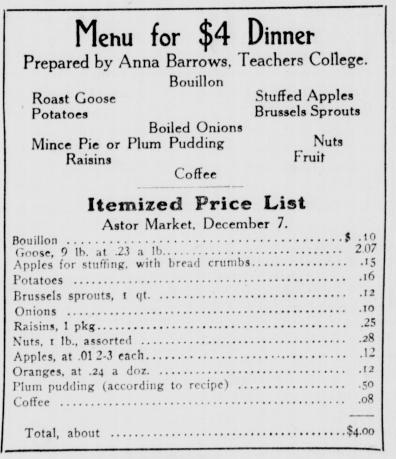
Here’s a standard Christmas menu that one could purchase at the market, printed in the 1915 New York Tribune. Coffee for eight cents!
The Astor Market is sometimes called the first supermarket. But it was a bit too experimental for its day and the market closed in 1917.
Simply put — people still preferred small and local vs. wide selection at a distance.
“Most people, on account of service and convenience, prefer to buy at the neighborhood corner grocery, with the result that in this country there is one grocery store for every 400 people.” [source]
Grocery stores of massive size would become quite popular of course — sometimes driving those neighborhood corner groceries out of business — once they offered lower prices and most people could get to them in automobiles.
Indeed the shopping revolution had already begun in the South with the opening (in 1916) of the first Piggly Wiggly, considered the first self-service grocery store.
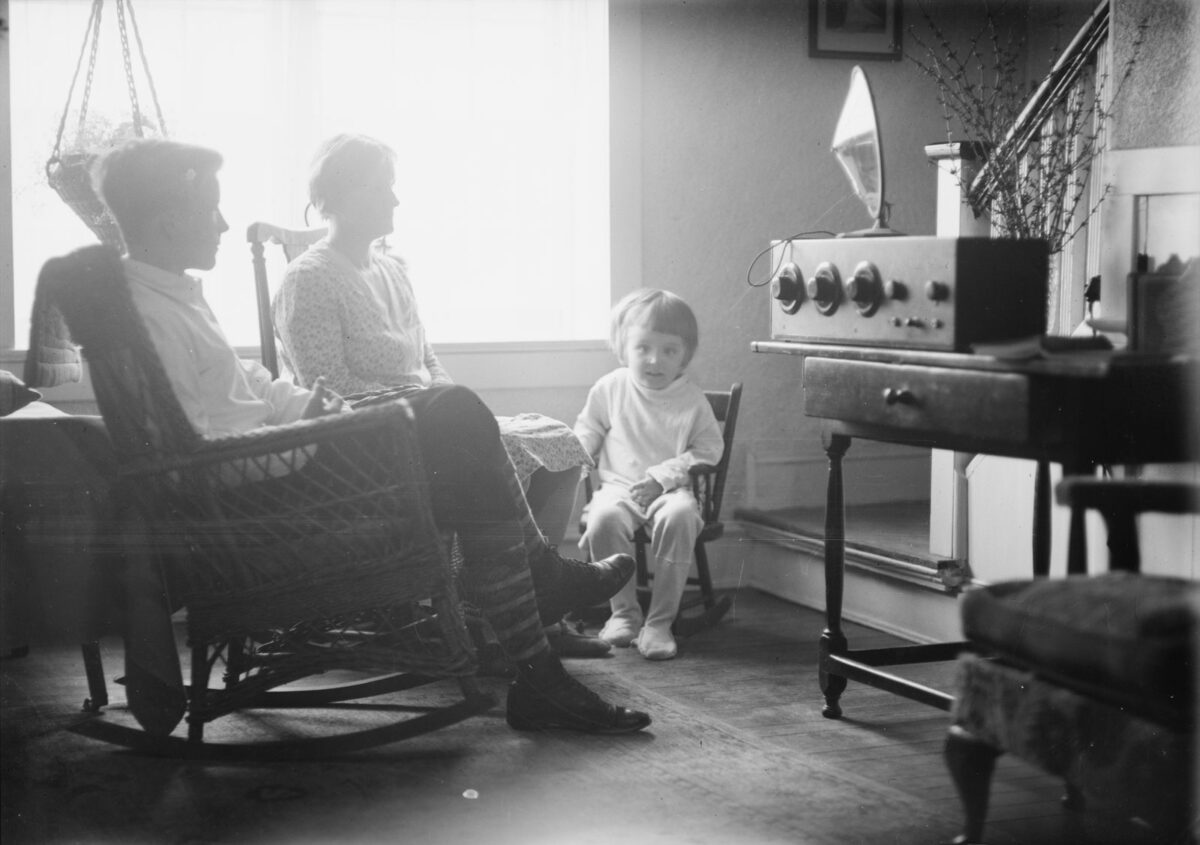
Our latest podcast explores the early history of radio in celebration of the 100th anniversary of the first commercial radio station (KDKA in Pennsylvania) and its first broadcast — the announcement of presidential election results. (Harding wins!)
Amateur radio operators at the 92nd Street Y on the Upper East Side, 1940. Courtesy the Milstein Archives
PODCAST The discovery of radio changed the world, and New York City was often front and center for its creation and development as America’s prime entertainment source during the 1930s and 40s.
In this show, we take you on a 50-year journey, from Marconi’s newsmaking tests aboard a yacht in New York Harbor to remarkable experiments atop the Empire State Building.
Two of the medium’s great innovators grew up on the streets of New York, one a fearless inventor born in the neighborhood of Chelsea, the other an immigrant’s son from the Lower East Side who grew up to run America’s first radio broadcasting company (RCA).
Another pioneer with a more complicated history made the first broadcasts that featured the human voice, the ‘angelic’ tones of a Swedish soprano heard by a wireless operator at the Brooklyn Navy Yard.
What indispensable station got its start as a department-store radio channel? What borough was touted in the very first radio advertisement? What former Ziegfeld Follies star strapped on a bonnet to become Baby Snooks?
Featuring tales of the Titanic, the rogue adventures of amateur operators, and a truly scary invasion from outer space!
Listen today on your favorite podcast player:
This episode was originally released in April 2012.
MINOR CORRECTION: The radio show of yore was obviously called Everready Hour, not Everready House!
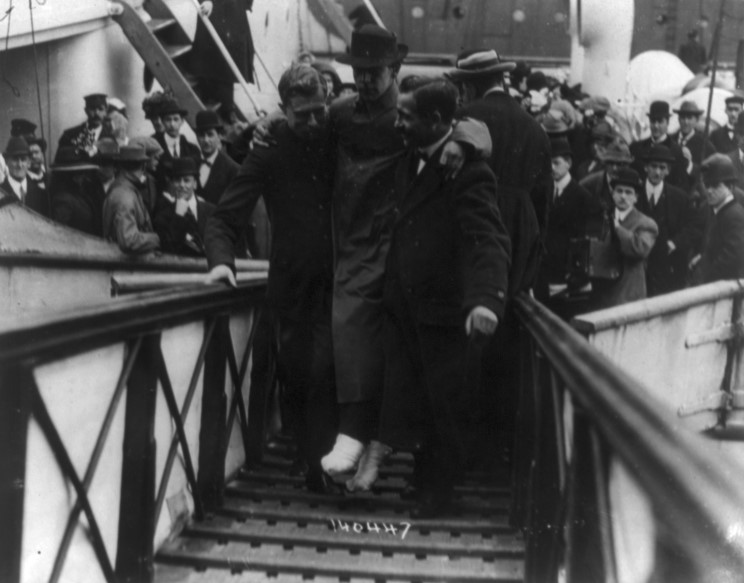
Harold Bride, the only surviving wireless operator from the Titanic, is escorted off the rescue vessel Carpathia.
Lee de Forest, one of the first inventors in New York to practice with broadcasting human voices. He eventually set up an experimental station in the Bronx. (NYPL)
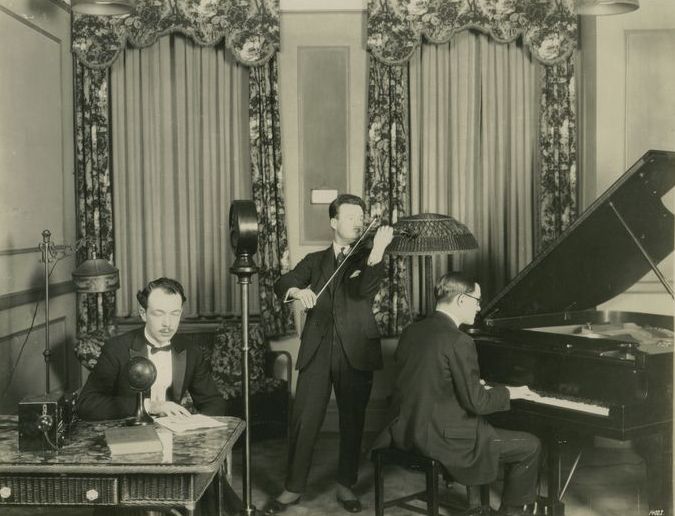
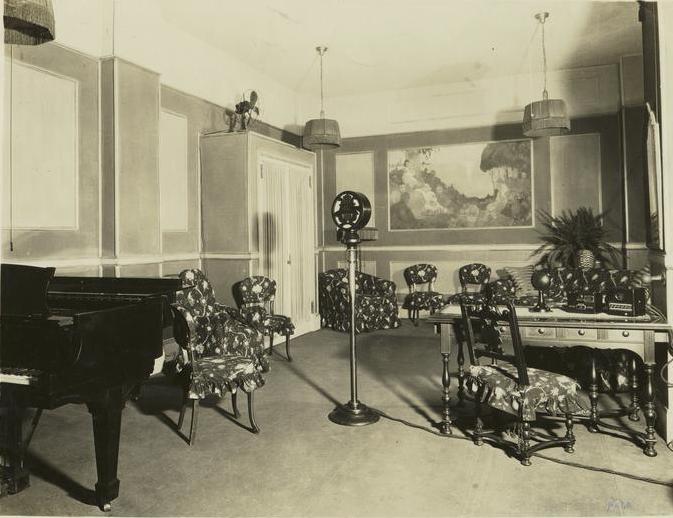
The rather cozy studios of WJZ, date unknown. WJZ, originally a Newark station (notice the JZ for Jersey), moved to New York by the mid-1920s and became the anchor station for the NBC Blue network.
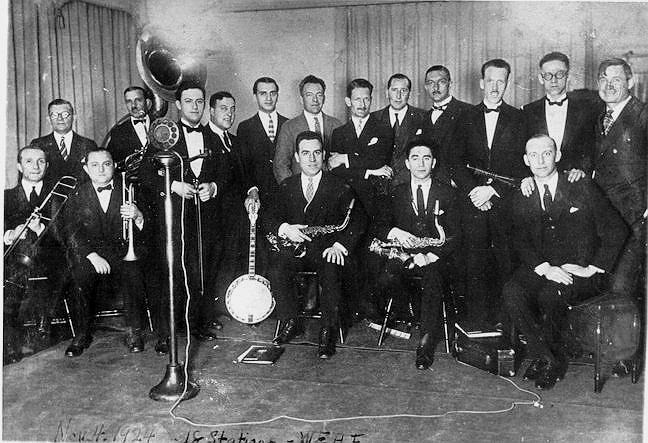
Stars of the Eveready Hour, broadcast on WEAF, featuring Will Rogers and the Waldorf-Astoria Orchestra. (Courtesy PDX Retro)
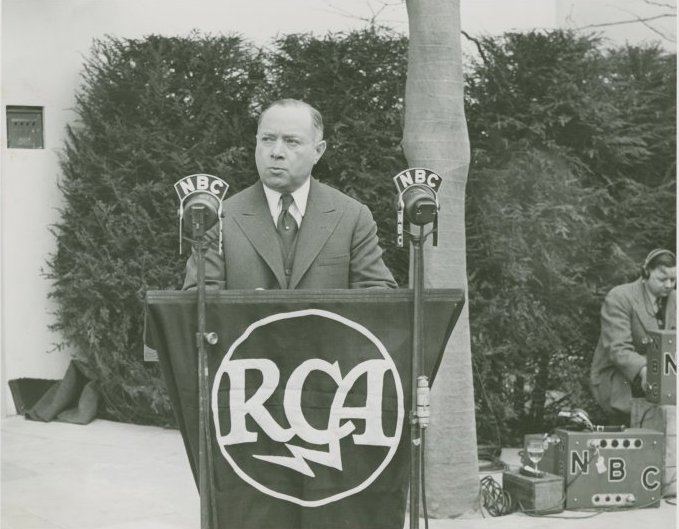
David Sarnoff at the World’s Fair in 1939 out in Flushing Meadows. (NYPL)
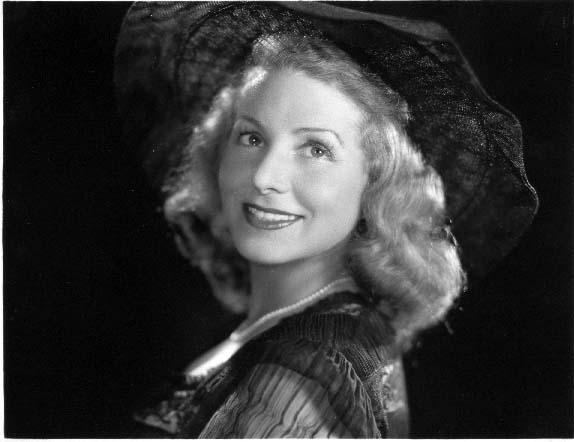
Songstress Jessica Dragonette, one of the most successful stars of the NBC stable during the 1930s, and one of many stars who struggle to find fame once television came along.
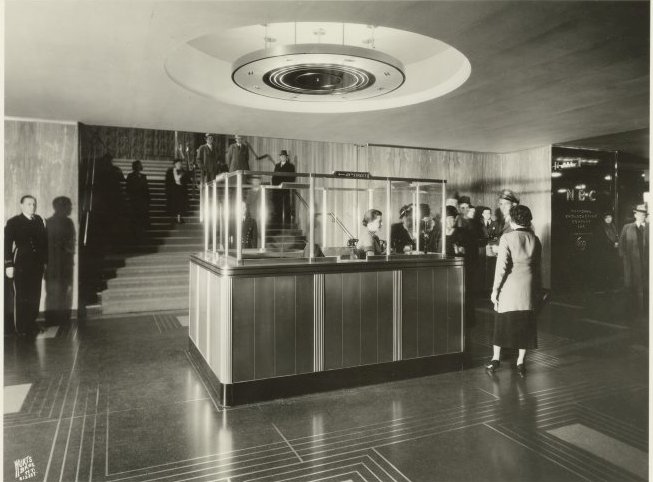
The lobby of 30 Rockefeller Plaza, the home of studios for the National Broadcasting Company. Photo by the Wurts Brothers
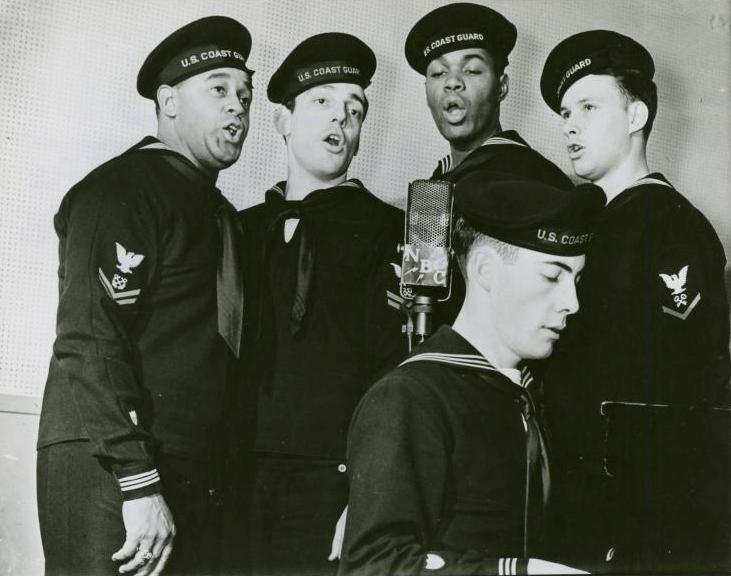
Manly music: The robust tones of U.S. Coast Guard Quartet, recording at an NBC affiliate station in New York
The complete broadcast of ‘War of the Worlds’, broadcast by the Mercury Theater on the Air from the CBS Studios at 485 Madison Avenue.
The Bowery Boys: New York City History podcast is brought to you …. by you!
We are now producing a new Bowery Boys podcast every week. We’re also looking to improve and expand the show in other ways — publishing, social media, live events and other forms of media. But we can only do this with your help!
We are now a creator on Patreon, a patronage platform where you can support your favorite content creators.
Please visit our page on Patreon and watch a short video of us recording the show and talking about our expansion plans.
If you’d like to help out, there are six different pledge levels.Check them out and consider being a sponsor.
We greatly appreciate our listeners and readers and thank you for joining us on this journey so far.
“By the pricking of my thumbs / something wicked this way comes” — Macbeth
PODCAST In old New York, one hundred and seventy years ago, a theatrical rivalry between two leading actors of the day sparked a terrible night of violence — one of the most horrible moments in New York City history.
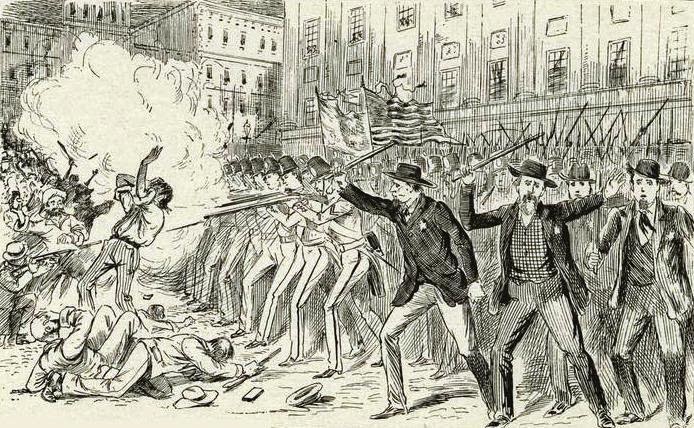
England’s great thespian William Macready mounted the stage of the Astor Place Opera House on May 10, 1849, to perform Shakespeare’s Macbeth, just as he had done hundreds of times before. But this performance would become infamous in later years as the trigger for one of New York City’s most violent events — the Astor Place Riot.
The theater, being America’s prime form of public entertainment in the early 19th century, was often home to great disturbances and riots. It was still seen as a British import and often suffered anti-British sentiments that often vexed early New Yorkers.
Macready, known as one of the world’s greatest Shakespearean stars, was soon rivaled by American actor Edwin Forrest, whose brawny, ragged style of performance endeared the audiences of the Bowery. To many, these two actors embodied many of America’s deepest divides — rich vs. poor, British vs. American, Whig vs. Democrat.
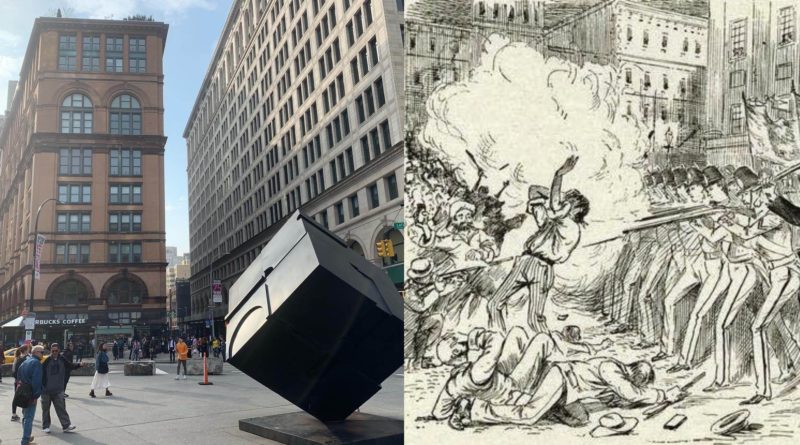
On May 10th, these emotions overflowed into an evening of stark, horrifying violence as armed militia shot indiscriminately into an angry mob gathering outside theater at Astor Place. By the end of this story, over two dozen New Yorkers would be murdered, dozens more wounded, and the culture of the city irrevocably changed.
RIOT OR RIOTS? You may have noticed in our podcast that we go from calling it the Astor Place Riot and the Astor Place Riots. We both saw primary references to both the singular and the plural. Though it was just one riot which occurred on May 10, the incidents on May 7 and May 11 constitute smaller riots or disturbances that lead up or were the result of the May 10 event. The word ‘riot’ is not perfect either as it starts as a riot and ends as a massacre.
CORRECTION: In the podcast, I mention that John Jacob Astor lived in the line of stately buildings today known as Colonnade Row. Although he built them, he never lived here. However he moved his family into them, including his grandson John Jacob Astor III. Cornelius Vanderbilt and Washington Irving also lived here. __________________________________________________________
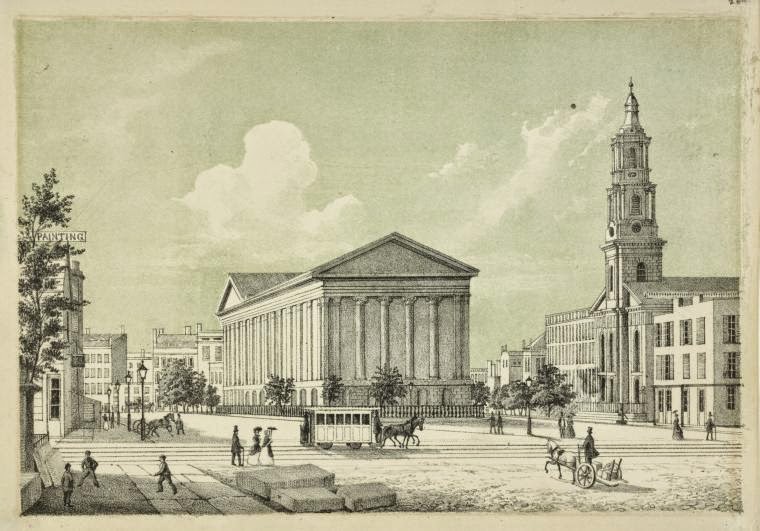
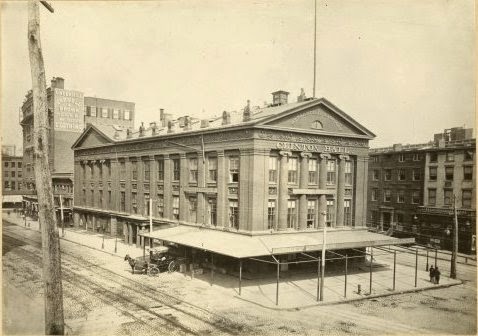
The Astor Place Opera House in 1850:
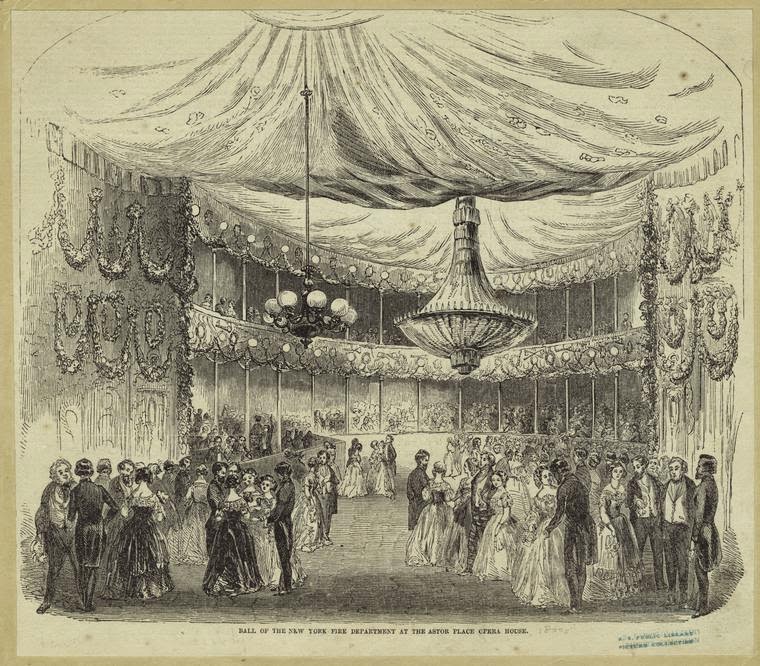
Inside the Astor Opera House, one of the most lavish spaces in all of New York in the 1840s. Curiously, this illustration depicts a ball for the New York Fire Department. Many members of the volunteer fire departments actually set upon the opera house as part of the angry mob.
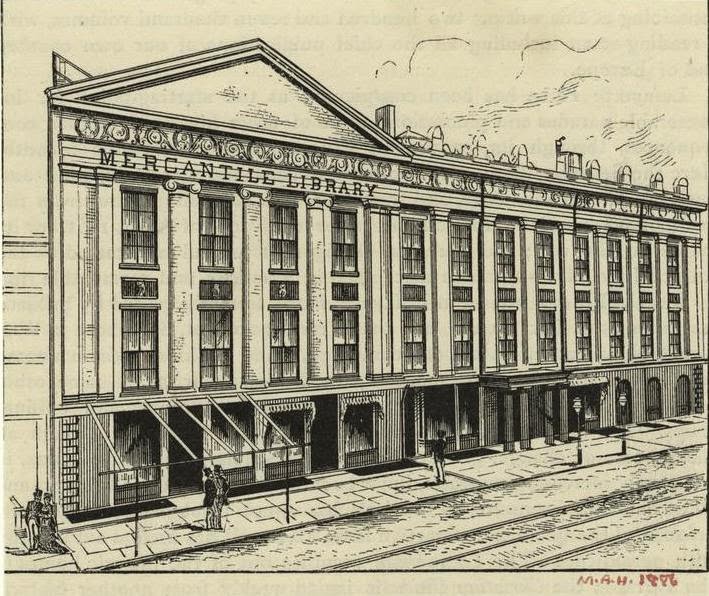
After the riots, the opera house quickly lost its cache. High society moved uptown to the Academy of Music (not so far away actually, on 14th Street, near Union Square). The interior of the theater was eventually demolished and sold to the New York Mercantile Library and renamed Clinton Hall.
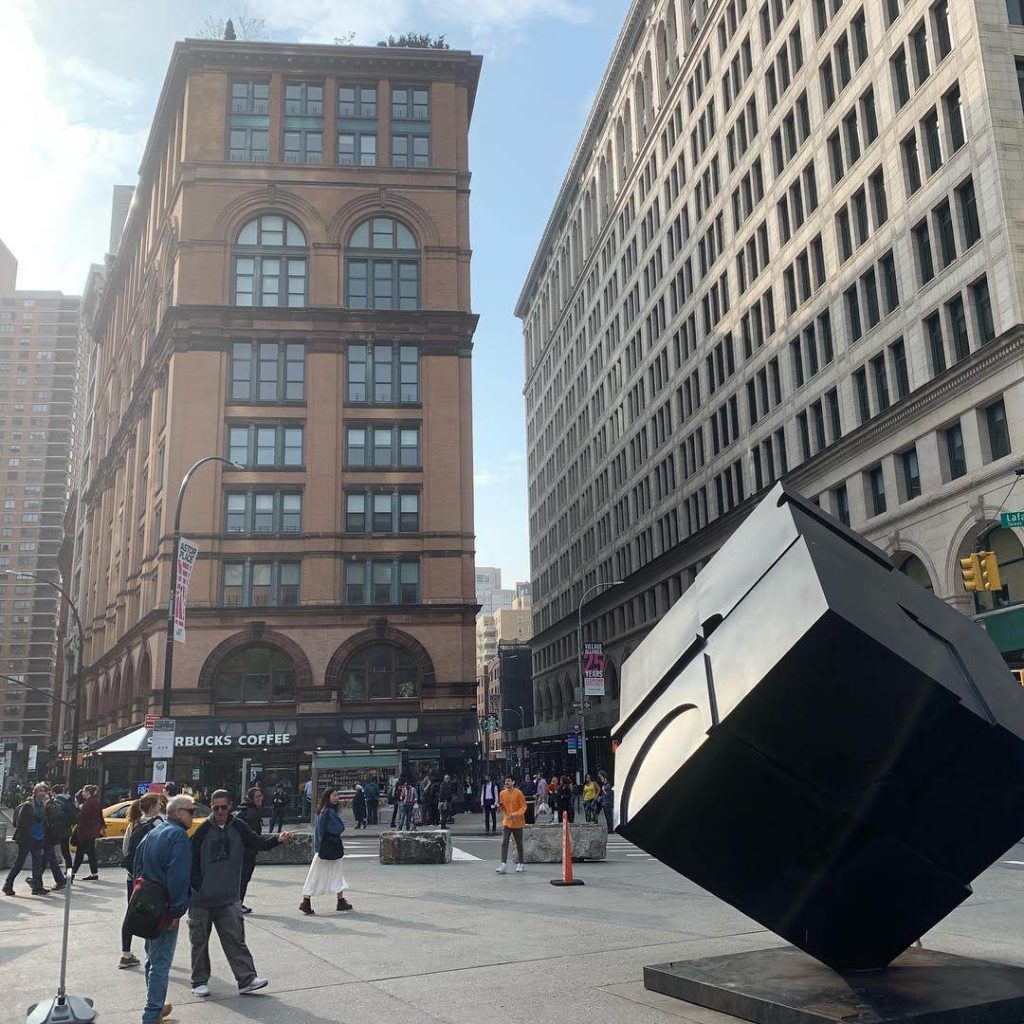
This was torn down in 1890 and replaced with the 11-story structure that stands there today.
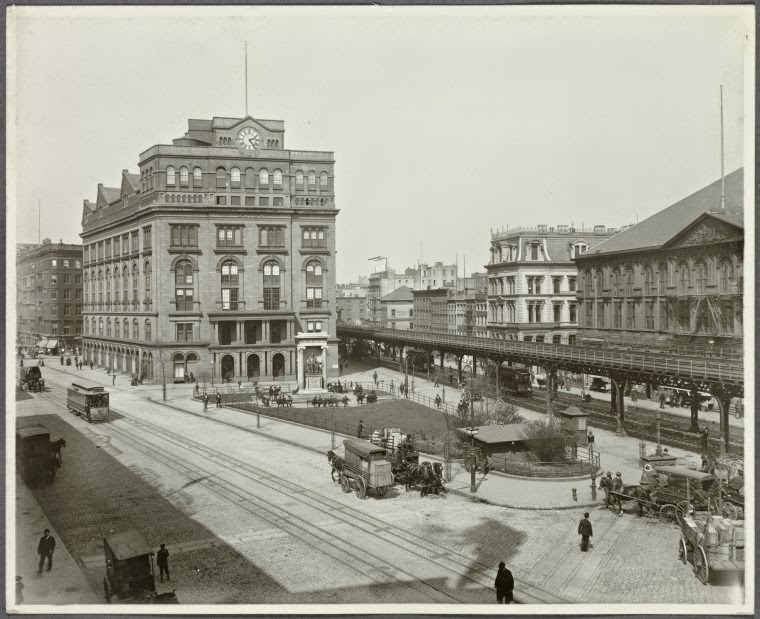
Many considered the demons of Astor Place purged when Cooper Union was finally constructed in 1859, a decade after the riots. In this image, we’re looking up Third Avenue and the final remnant of the Bowery. The Third Avenue Elevated has already been built here:
Astor Place in 2019:
William Macready:
From the New York Evening Post, May 1, 1849, advertising his May 7th show (which was interrupted by protesters).
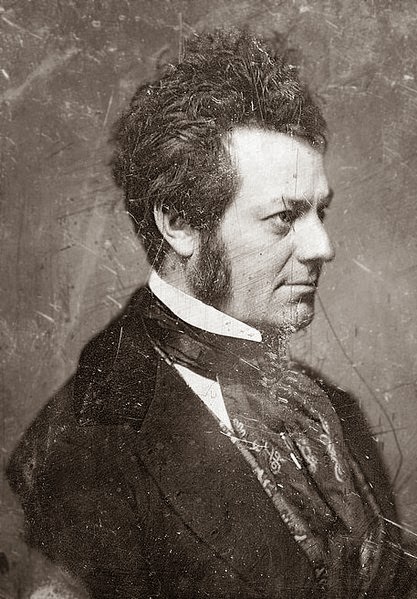
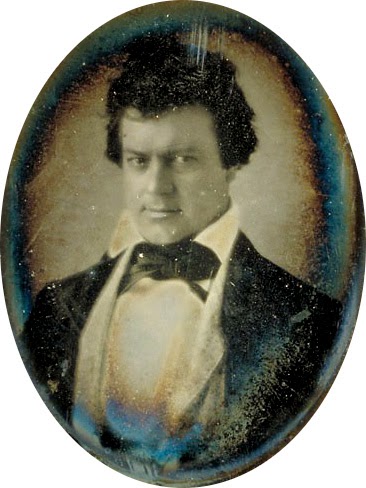
Edwin Forrest: In portrait and in daguerreotype
Images above courtesy the New York Public Library (except where otherwise noted).
FURTHER LISTENING:
We’ve been doing this for so long that we have MANY podcasts about historical landmarks in and around Astor Place. After you listen to this show, check out these older shows from our catalog:
The New York City entertainment world was never the same after Bob Fosse and Gwen Verdon met at a rehearsal space in Midtown Manhattan in 1955.
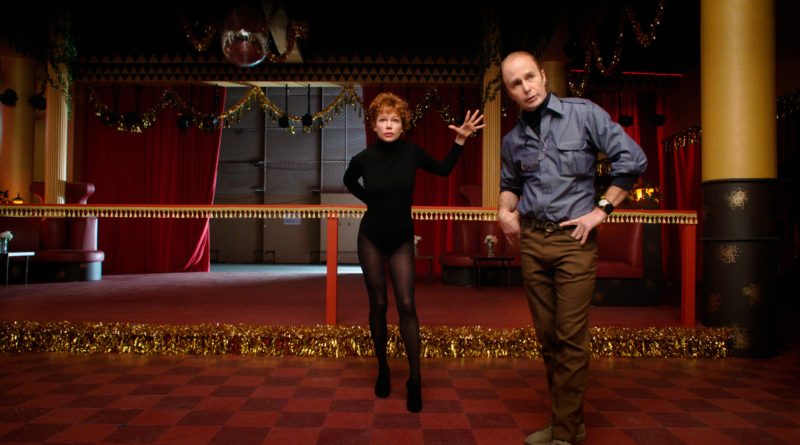
Tonight FX Network debuts its tribute to the lives of these collaborators and lovers in the series Fosse/Verdon, based upon the brilliant biography Fosse by Sam Wasson. This look at the complicated lives of two seminal performers of American theater and film will play out upon stages and in rehearsal spaces that were concentrated on just a few blocks of New York City’s Theater District. [For a full tour of Broadway, listen to our podcast episode: The Origin of Broadway.]
Wanna walk (or dance) in the footsteps of these two legendary performers? Visit these addresses in Midtown to pay homage:
January 9, 1951 — New York Daily News
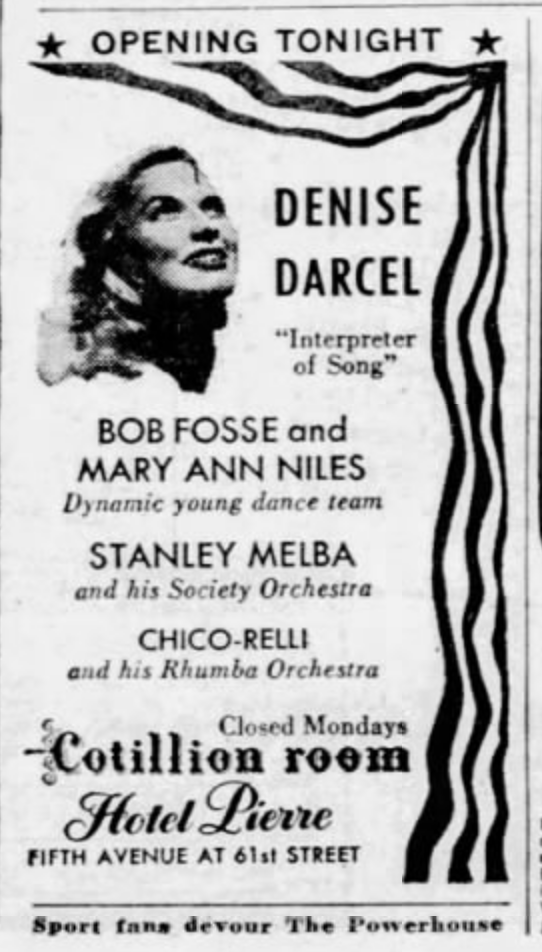
Pierre Hotel — In 1948, the Pierre’s Cotillion Room, “one of the most romantically appointed nightclubs in the city,” presented Fosse and his first wife Mary Ann Niles in a nightly ballroom act. While the critics were less than enthusiastic, their friends Dean Martin and Jerry Lewis, the hottest comic duo in town, invited the dancers to join them on TV’s Colgate Comedy Hour. Fosse later credits Lewis with giving him his first choreographer job.
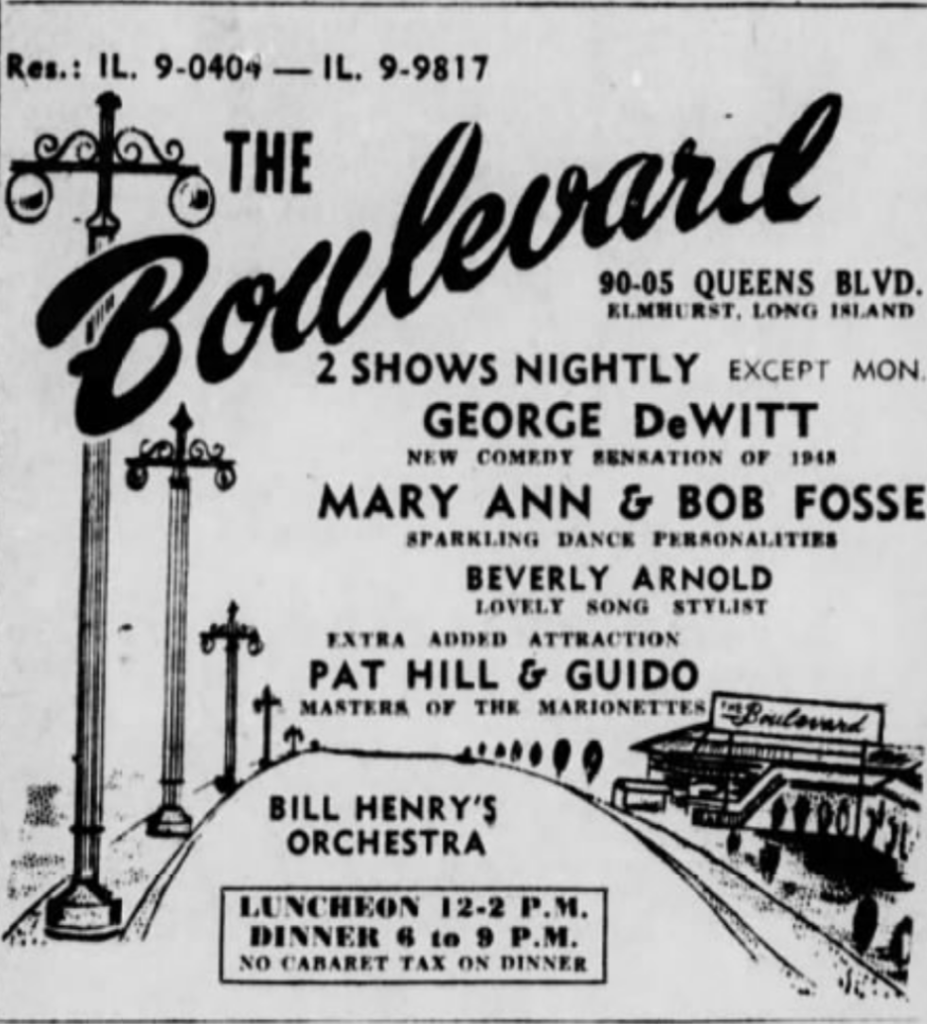
I also found a 1948 advertisement for a performance by these “sparkling dance personalities” at a venue in Queens:
Getty Images
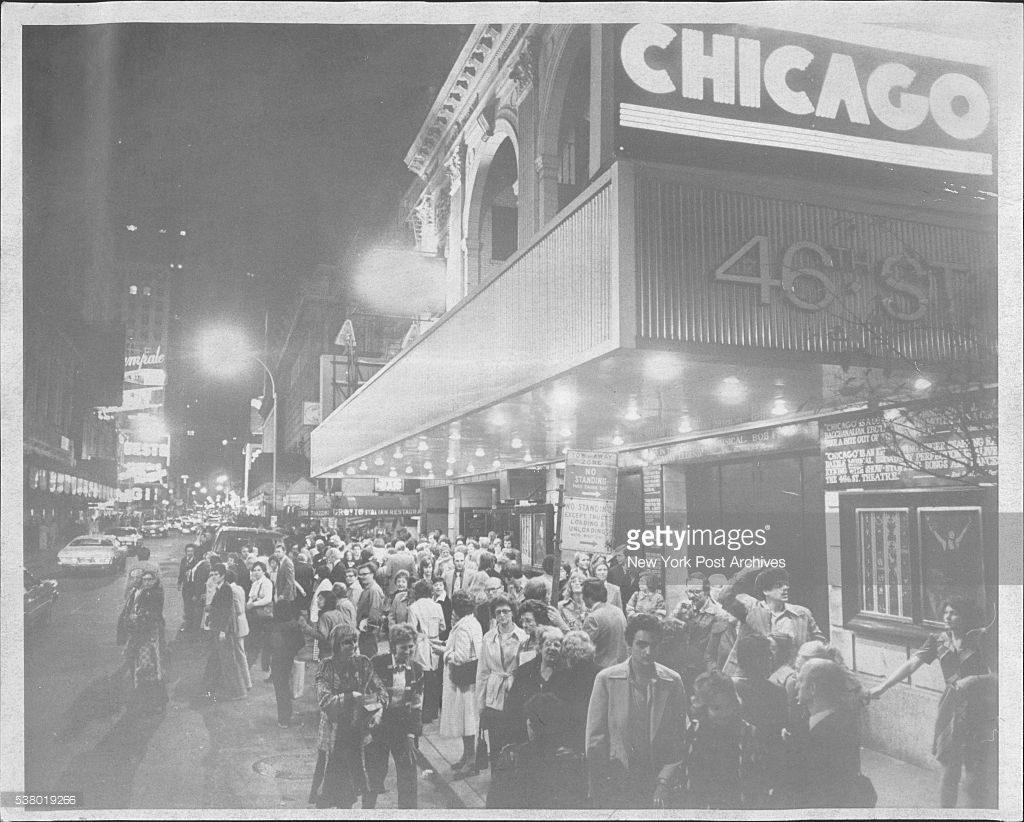
46th Street Theatre (aka Richard Rodgers Theatre) — The site of the 1955 production Damn Yankees, a Tony-winning musical romp featuring the New York Yankees as a sports nemesis. As choreographer, this was Fosse’s second musical on Broadway (after The Pajama Game) and the first with collaborator and future wife Gwen Verdon who won a Tony Award for her show-stopping performance as Lola.
Their follow-up together Redhead debuted here in 1959 and Fosse also worked here on the 1961 original production of How To Succeed In Business Without Really Trying. After the duo divorced in 1971, they continued to work with one another, most notably in the musical Chicago, which debuted in this theater on June 3, 1975.
(Hamilton continues to play at the Richard Rodgers Theatre today. Lin-Manuel Miranda is one of the producers of the FX series.)
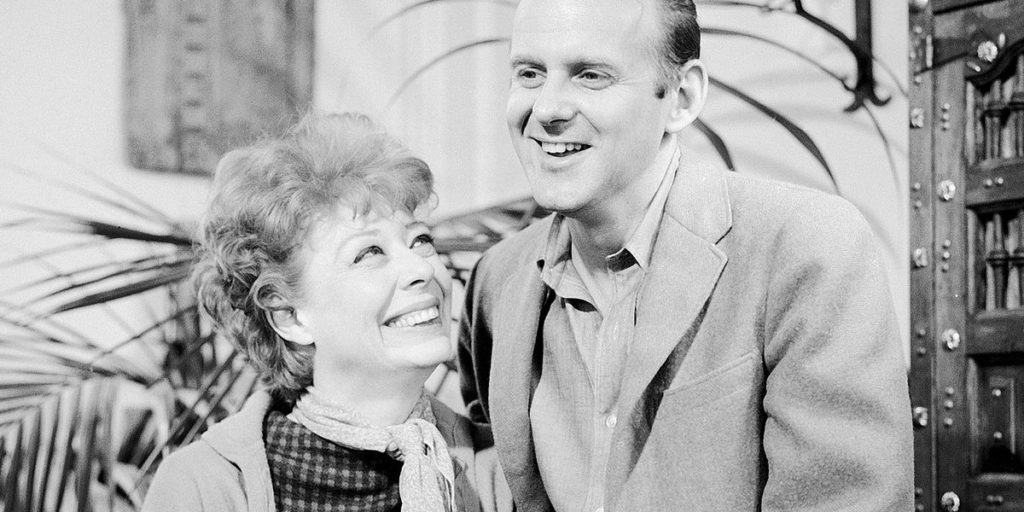
Fosse and Verdon from the 1958 film Damn Yankees:
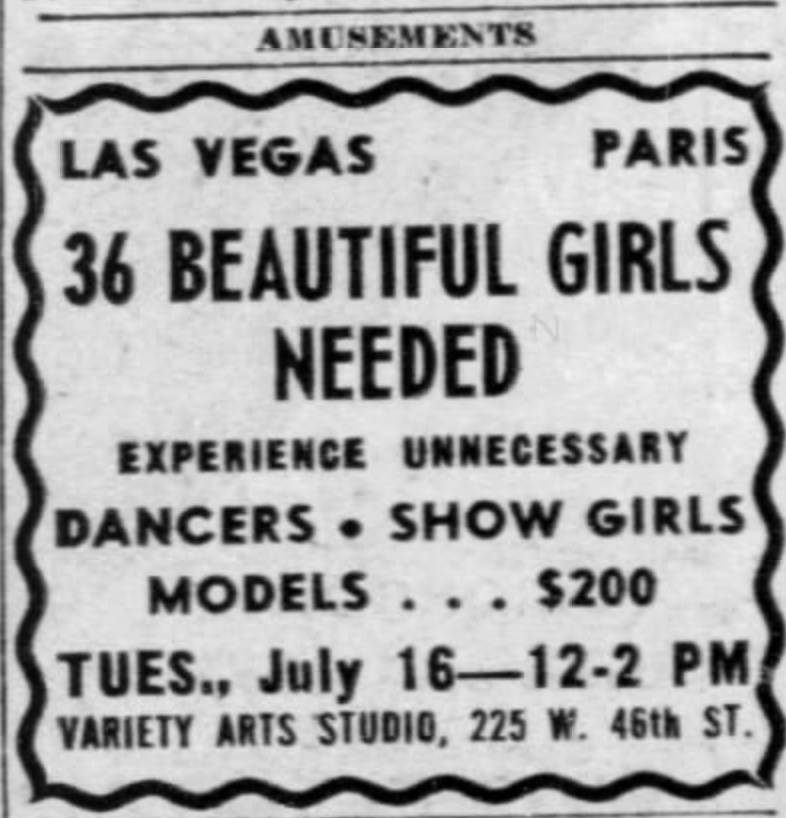
Variety Arts Studios (225 West 46th Street) — The Variety Arts not only contained rehearsal spaces used for many productions by Fosse and Verdon, but for a great many stars from the Golden Age of Broadway.
Here’s a 1957 New York Daily News advertisement for an audition held at the Variety Arts, illustrating a different kind of production that would have used the rehearsal space:
Getty Images
91 Central Park West — The lavish penthouse apartment of Fosse and Verdon for many years. From Wasson’s book: “From their terrace, vast enough to hold a vegetable garden, a Ping-Pong table, and dog run for Gwen’s pets, they could watch the park below, and on fair-weather days they could entertain a small group of friends, most of them carryovers from their Long Island summers and weekends.”
New York Public Library/Billy Rose Theater Division
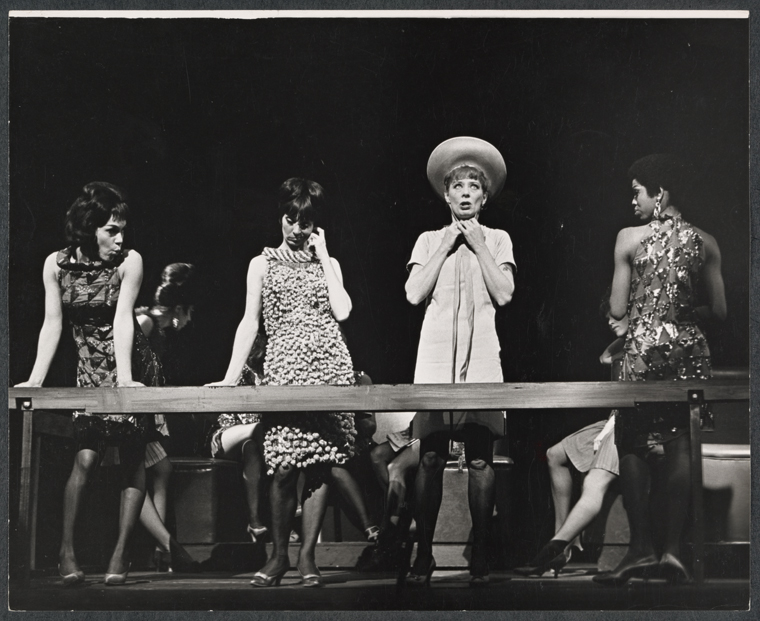
Palace Theatre (1564 Broadway) — Sweet Charity opened at this historic theater in 1966, just a block from the stage where Fosse and Verdon first worked together. The Palace, which first opened in 1913, had been a movie palace for many decades; Citizen Kane had even premiered here. Sweet Charity would bring this aging doyenne of the vaudeville circuit back to life as a still-thriving Broadway house.
58 West Fifty-Eighth Street — Fosse’s post-Verdon, early 70s pad, “a welcoming blend of bachelor and cozy.” The semi-autobiographical All That Jazz would feature a lead character who lived at 61 West 58th Street. (The apartment complex is called Tower 58 today.)
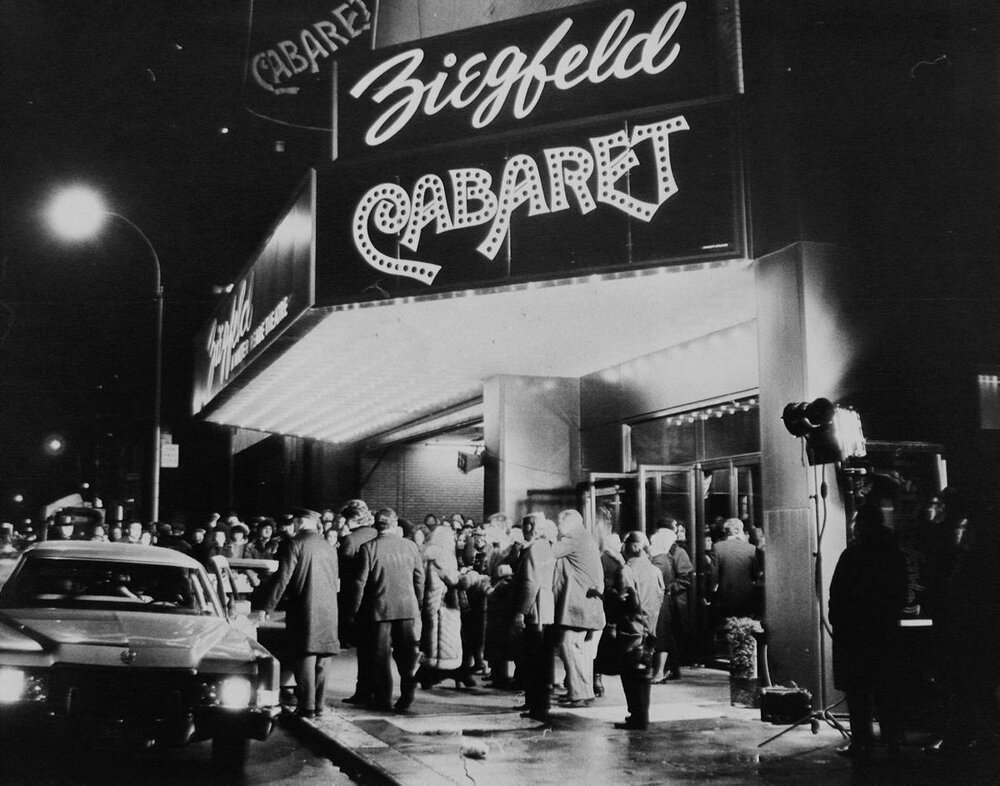
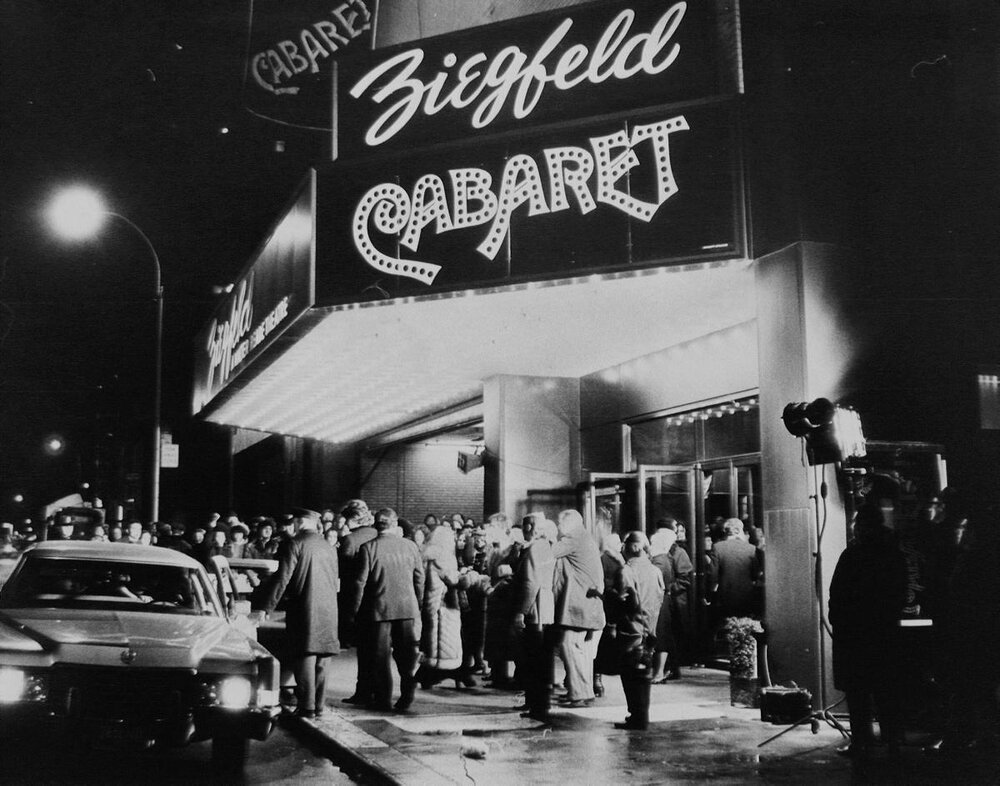
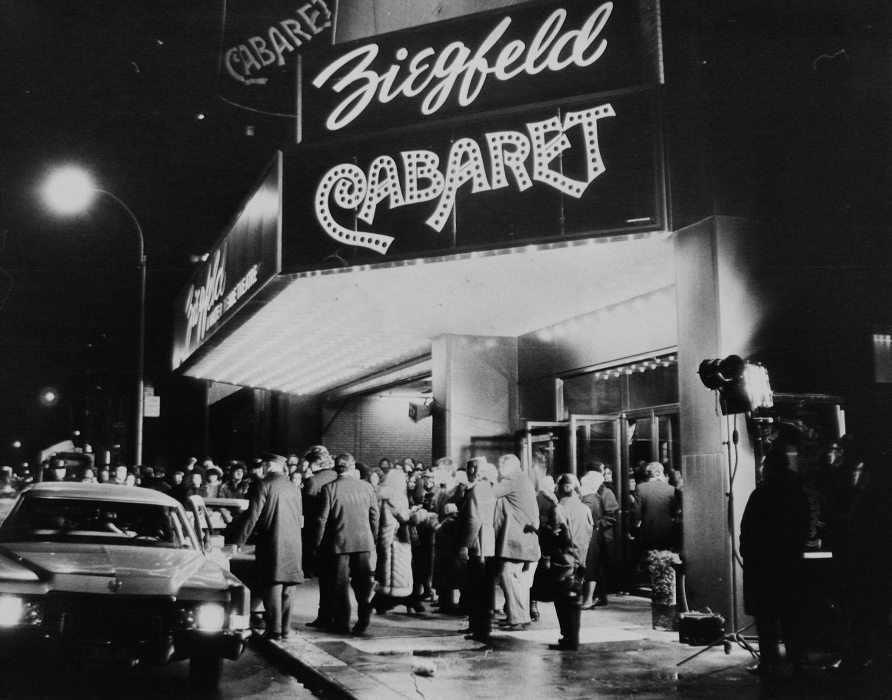
UNITED STATES – FEBRUARY 14: Crowds outside Ziegfeld Theatre for opening of “Cabaret”. (Photo by Richard Corkery/NY Daily News Archive via Getty Images)
Ziegfeld Theatre — Fosse was not involved with the original Broadway production of Cabaret, the 1966 Kander and Ebb musical based on a play I Am A Camera which was based on a Christopher Isherwood short novel Goodbye to Berlin. But he directed the 1972 film version, which premiered at the Ziegfeld.
According to Wasson, Fosse was obsessed with the theater’s environment for the premiere. He “adjusted the house lights and levels, honing the ambience for optimum viewing. He could not be too careful, even now. An exhibition atmosphere anything less than immaculate” could derail the film’s critical chances. “Fosse knew the Ziegfeld was his last line of defense against the likes of [New Yorker film critic] Pauline Kael and the critics from the New York Times.”
In the end, the critics loved it, and the film won an Academy Award for Best Director and one for his leading lady Liza Minelli.
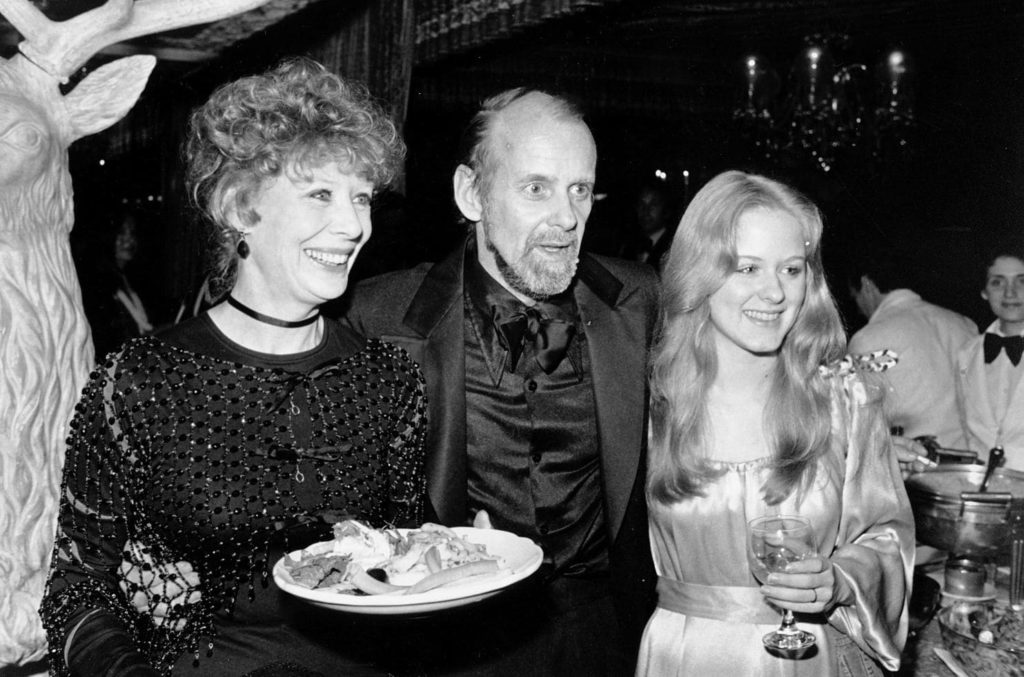
Verdon, Fosse and their daughter Nicole Fosse at Tavern on the Green, 1978. Photo courtesy the Associated Press
Tavern on the Green — “The site of sundry Fosse movie premieres and opening-night bashes,” the romantic Central Park restaurant was also the location of an unconventional dinner party on October 30, 1987, that Fosse was hosting for his closest friends.
The unconventional part — Fosse had died over a month earlier. From the New York Times: “‘Go out and have dinner on me,’ the choreographer and director ordered in his will.”
NOTE: Okay this is really a tour of Midtown and the Upper West Side.
PODCAST The thrilling tale of Edwin Booth and the marvelous social club he created for the acting profession
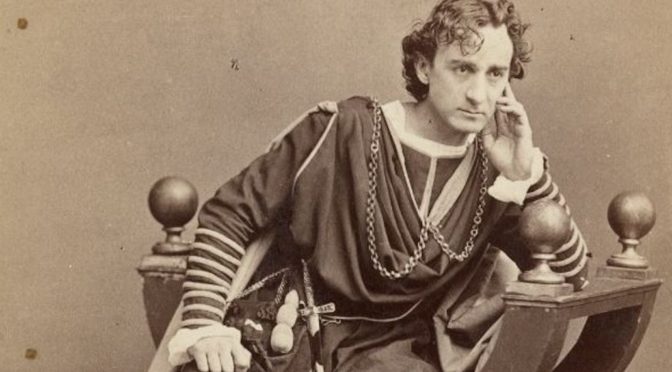
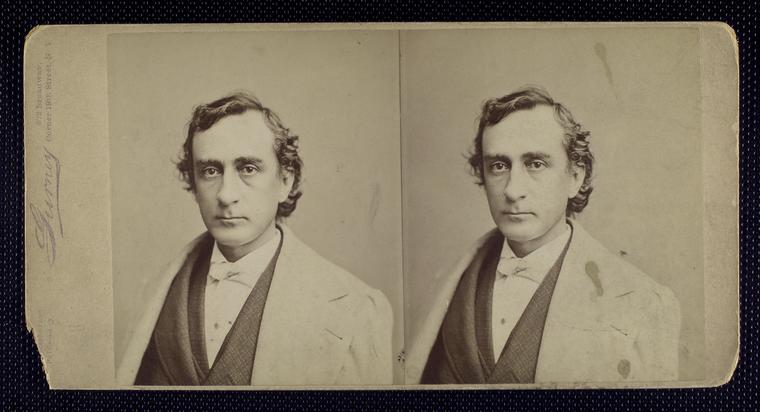
Edwin Booth was the greatest actor of the Gilded Age, a superstar of the theater who entertained millions over his long career. In this podcast, we present his extraordinary career, the tragedies that shaped his life (on stage and off), and the legacy of his cherished Players Club, the fabulous Stanford White-designed Gramercy Park social club for actors, artists and their admirers.
The Booths were a precursor to the Barrymores, an acting family who were as famous for their personal lives as they were for their dramatic roles. Younger brother John Wilkes Booth would horrify the nation when he assassinated Abraham Lincoln in April of 1865, and Edwin would briefly retire from the stage, fearing his career was over.
But an outpouring of love would bring him back to the spotlight and the greasepaint. From then on, Booth would be known as the most respected actor in the United States.
Booth would give back to the theatrical community with the formation of the Players Club which officially made its debut on New Year’s Eve 1888. In this show, we’ll take you on a tour of this exclusive destination for film and theatrical icons, including a look at the upstairs bedroom where Booth died, still preserved exactly as it looked on that fateful day in 1893.
Our thanks to Nicole and Patrick Kelly of Top Dog Tours NYC for giving us a tour of this extraordinary place!
The Bowery Boys: New York City History podcast is brought to you …. by you!
We are now producing a new Bowery Boys podcast every two weeks. We’re also looking to improve the show in other ways and expand in other ways as well — through publishing, social media, live events and other forms of media. But we can only do this with your help!
We are now a member of Patreon, a patronage platform where you can support your favorite content creators for as little as a $1 a month.
Please visitour page on Patreon and watch a short video of us recording the show and talking about our expansion plans. If you’d like to help out, there are five different pledge levels (and with clever names too — Mannahatta, New Amsterdam, Five Points, Gilded Age, Jazz Age and Empire State). Check them out and consider being a sponsor.
We greatly appreciate our listeners and readers and thank you for joining us on this journey so far. And the best is yet to come!
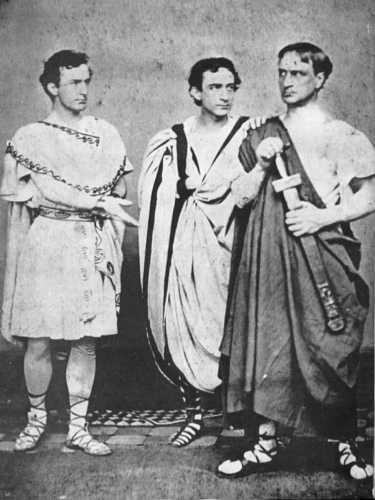
John Wilkes, Edwin and Junius Booth performing Julius Caesar.
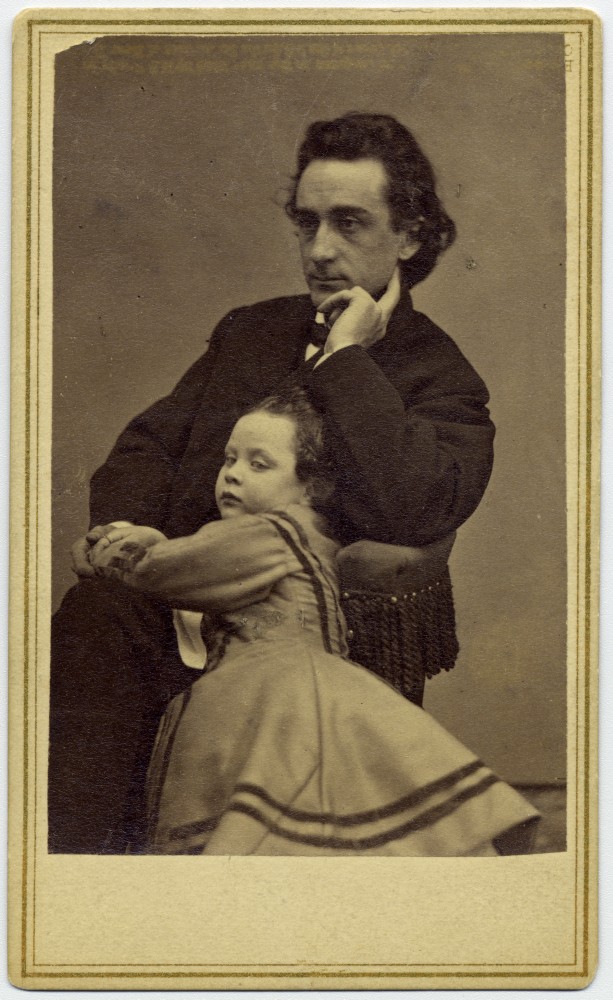
Edwin Booth and his daughter Edwina, photo taken by Mathew Brady, circa 1864
Courtesy George Eastman House
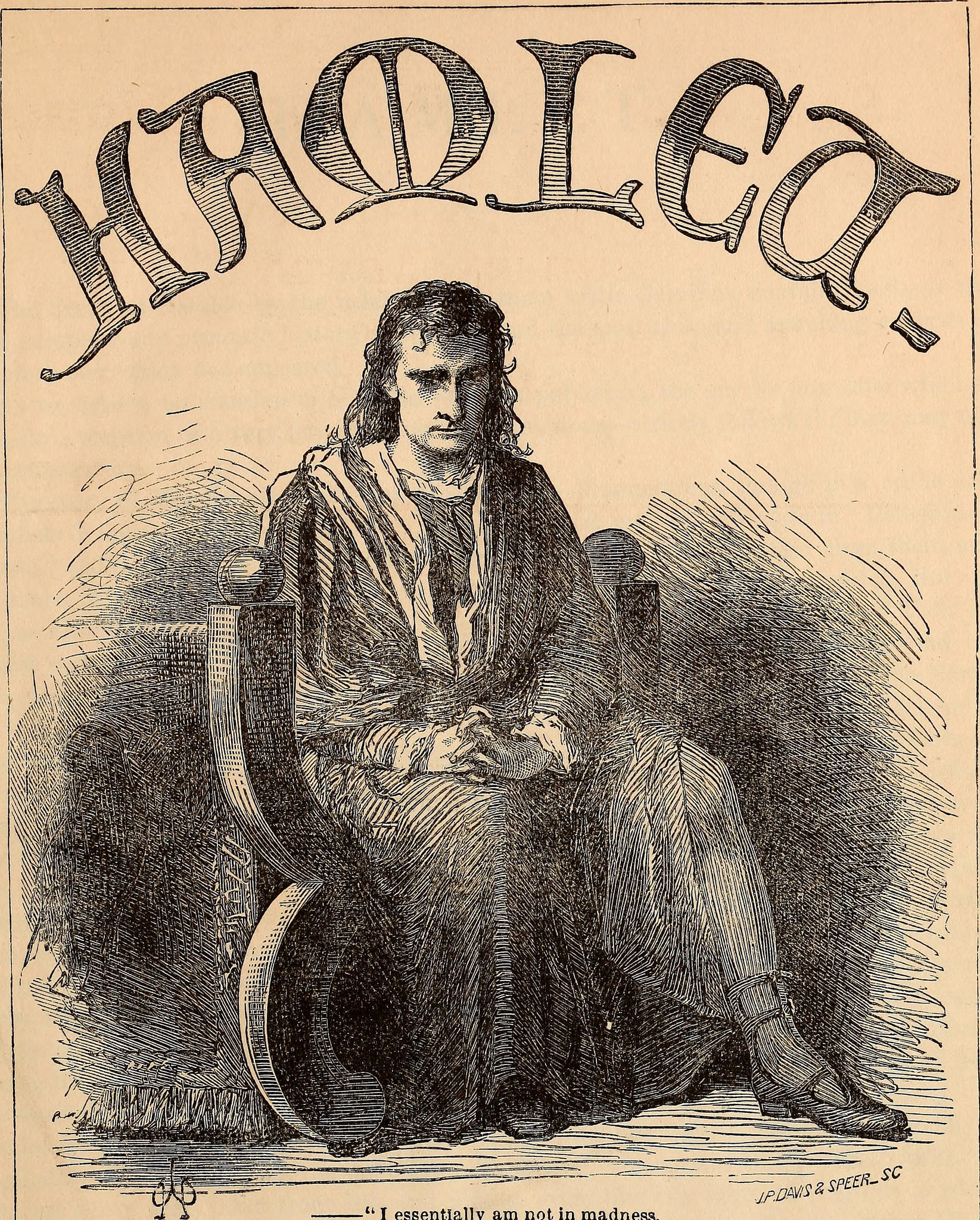
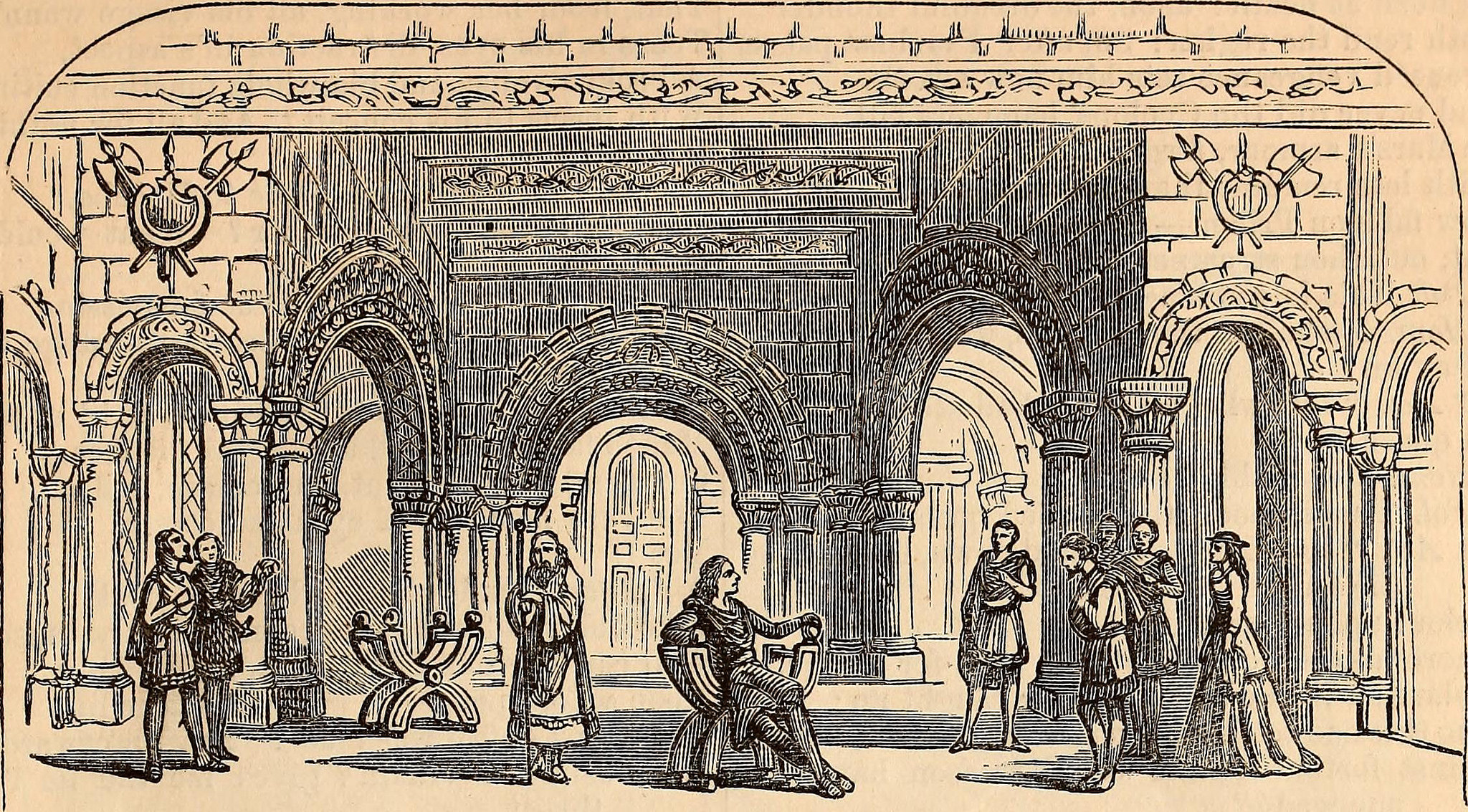
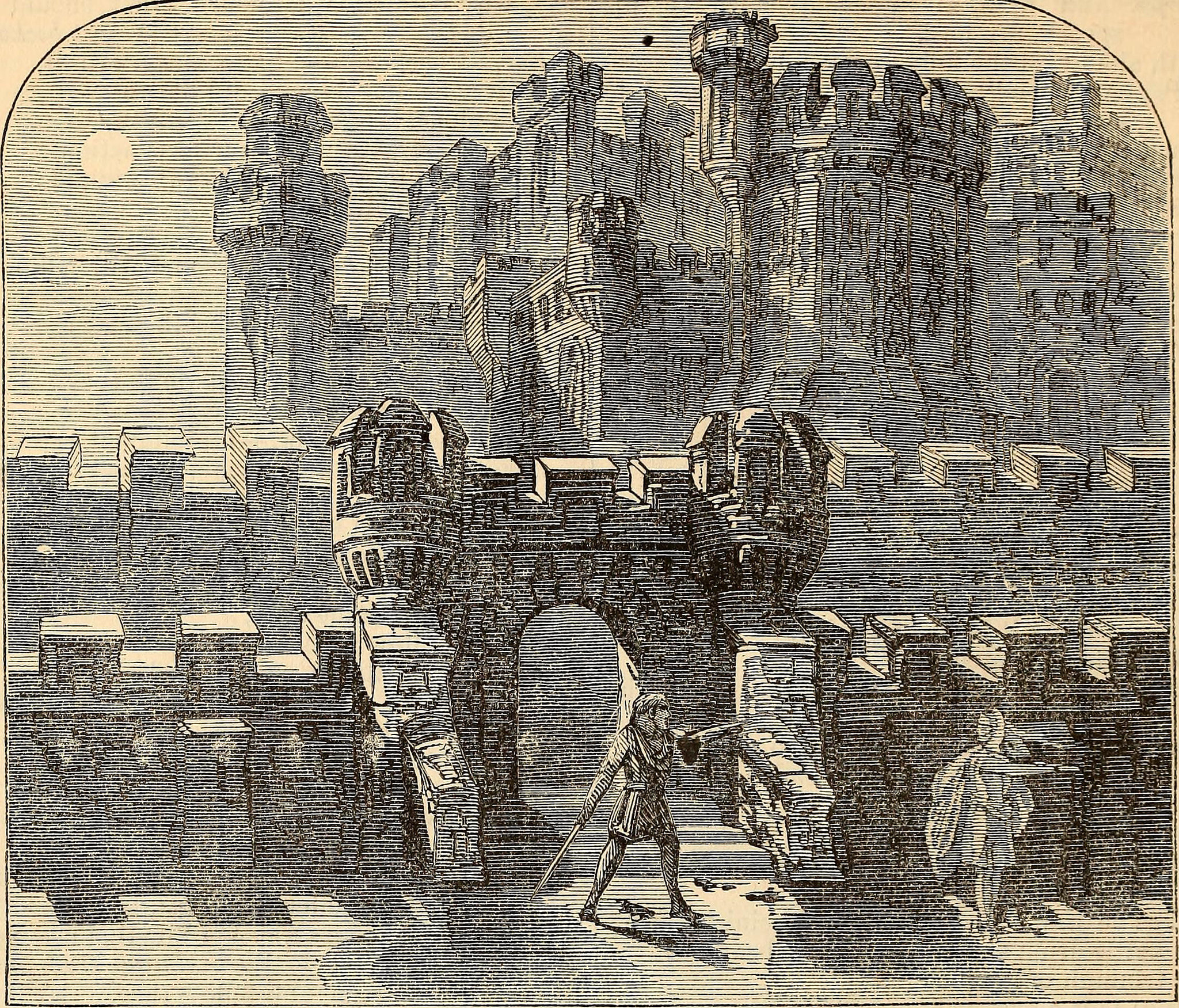
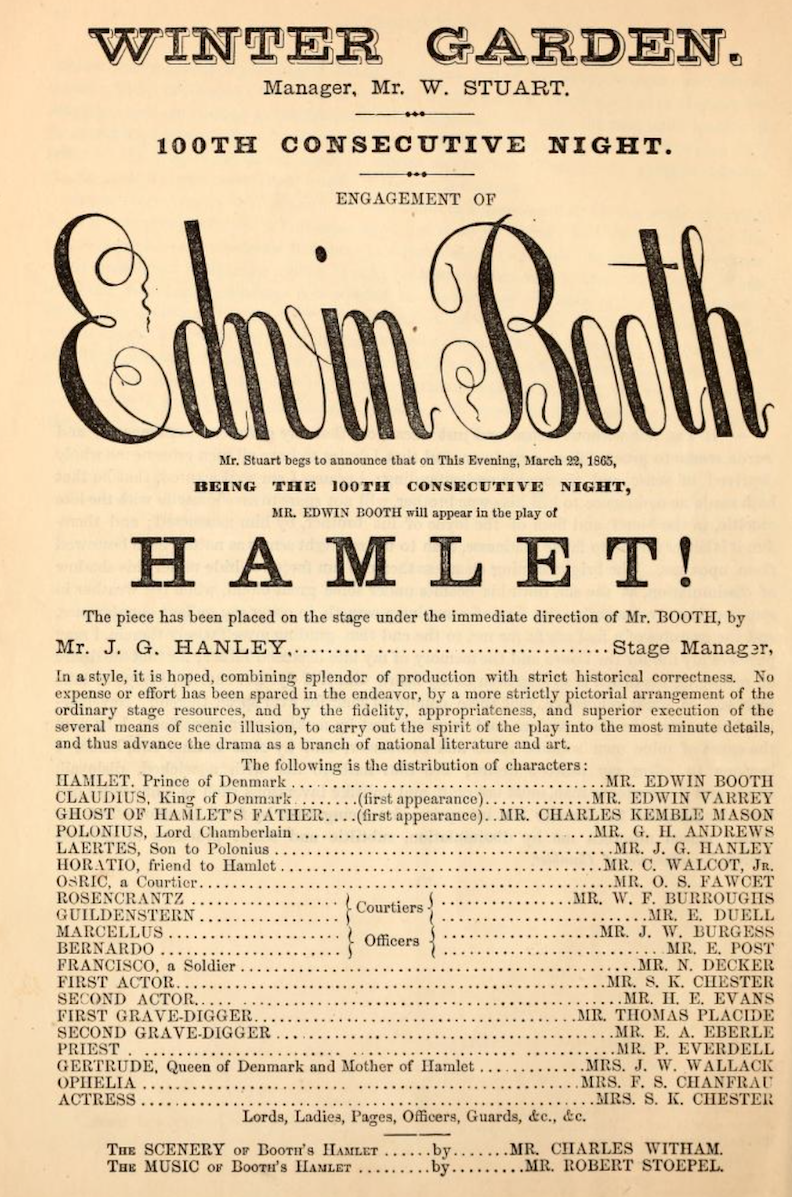
Images from a commemorative book (published in 1866) of Booth’s 100 nights of Hamlet at the Winter Garden.
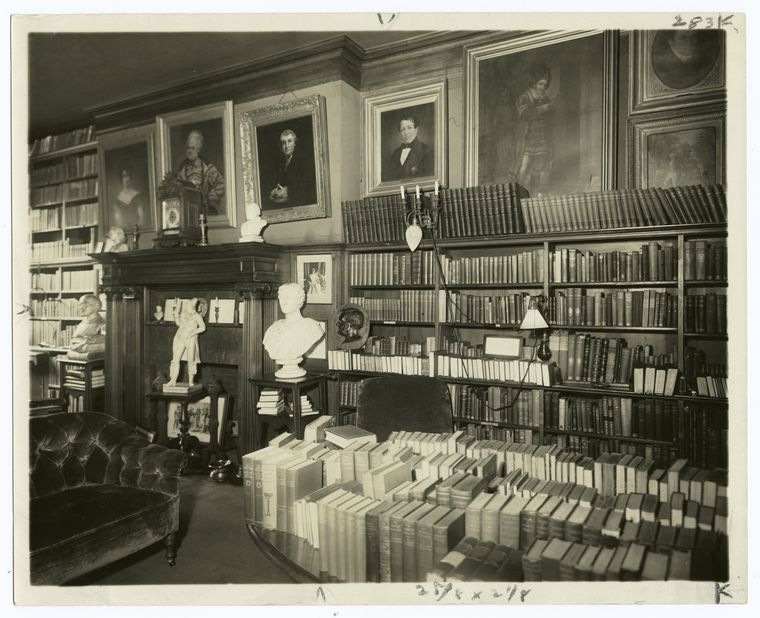
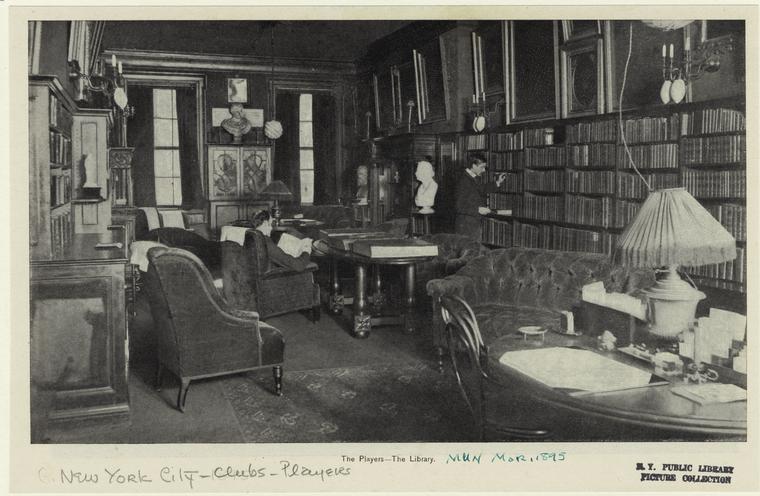
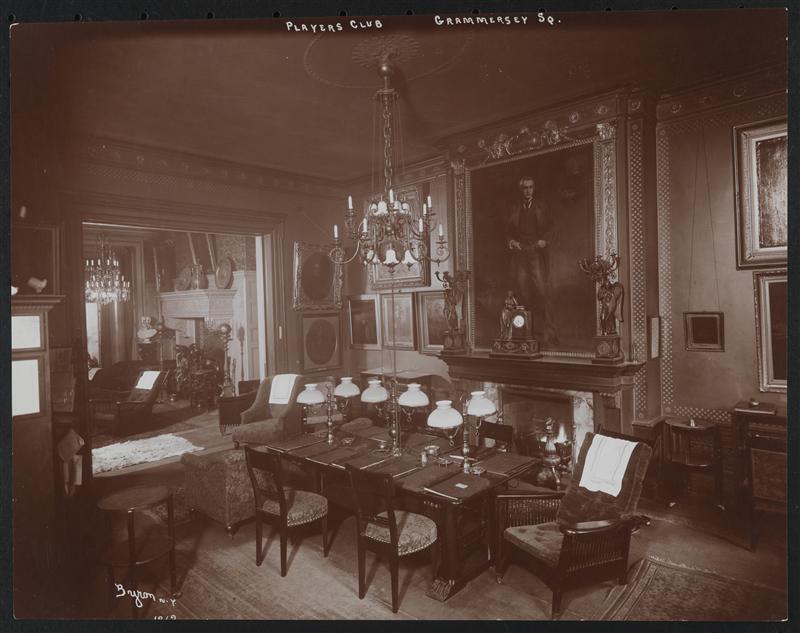
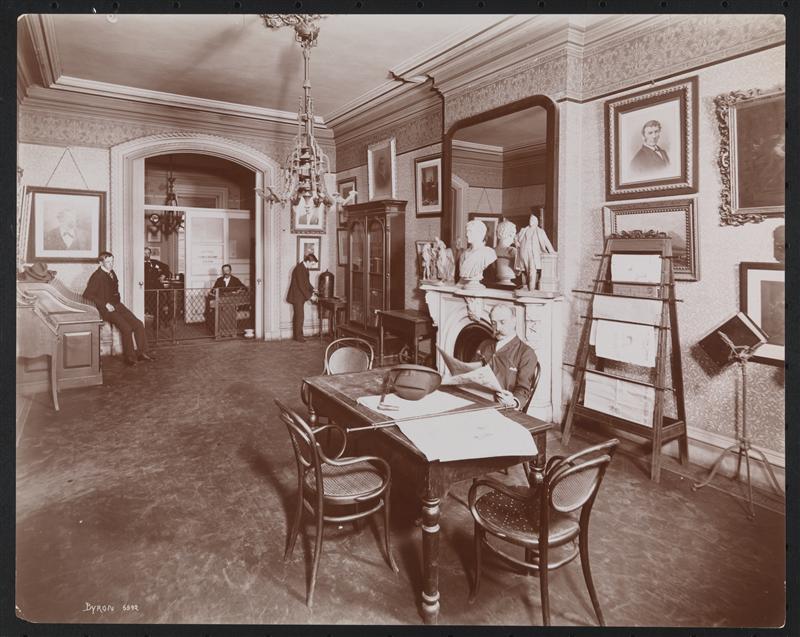
In the library of the Players Club, picture dated 1895
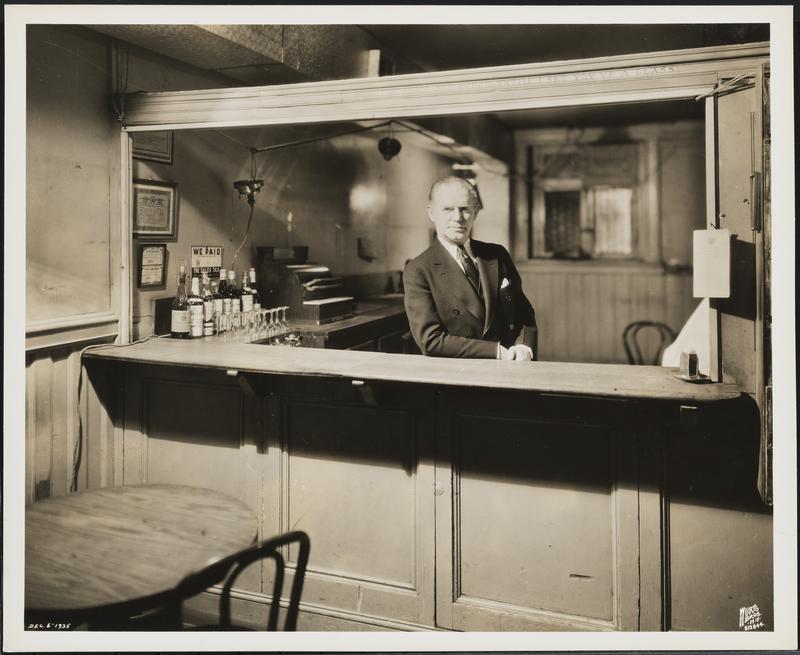
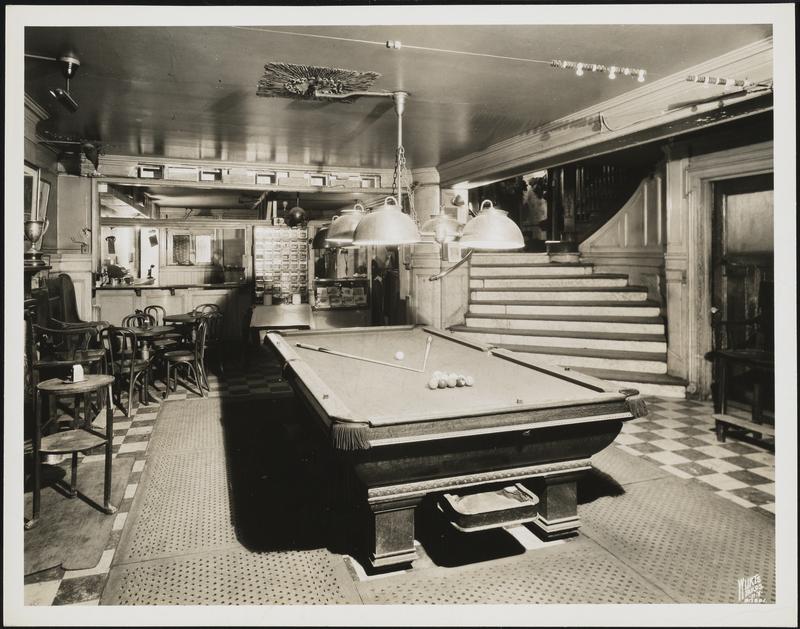
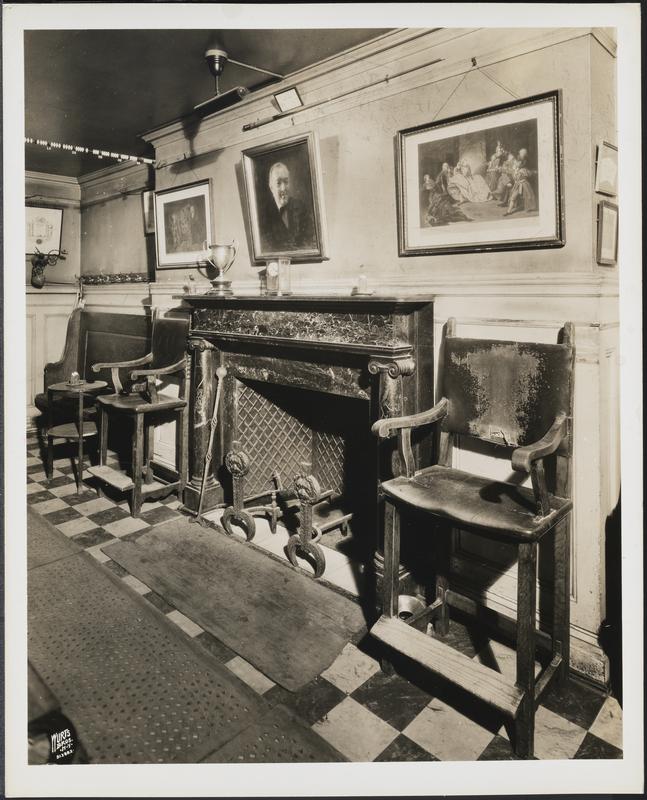
And some from 1935 of the barroom and billiard room downstairs (also courtesy MCNY):
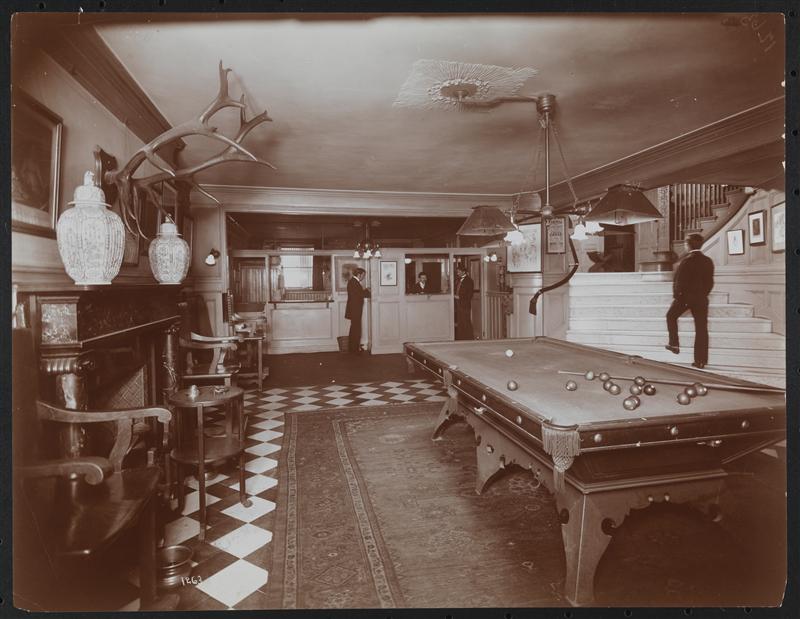
16 Gramercy Park South. Interior, The Player’s Club with Connelly, barkeeper 16 Gramercy Park South. The Players Club. Interior, view of playroom and bar, before alterations 16 Gramercy Park South. The Players Club. Interior, view of playroom and bar, before alterations
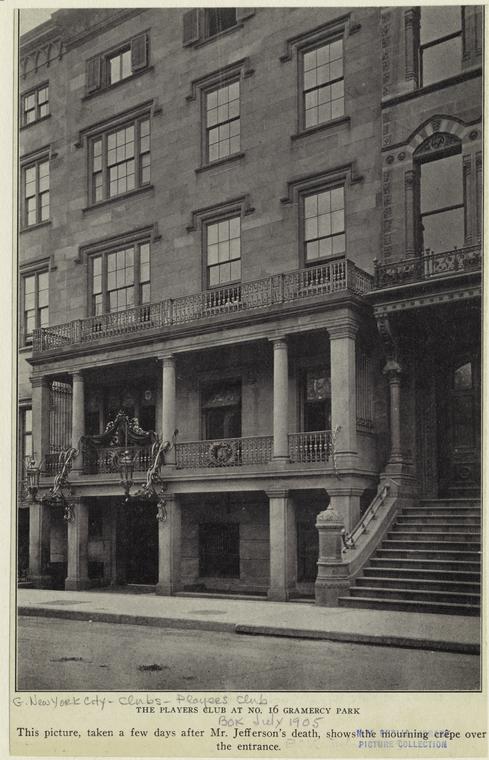
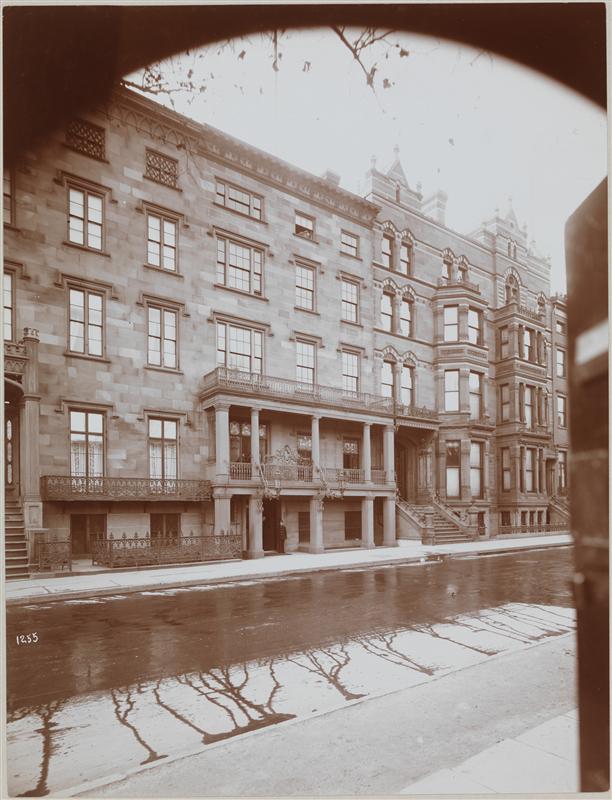
The exterior of the club (image dated 1895) with its distinctive balcony where members would enjoy an evening gazing out of the park, drinking a brandy or a flute of champagne.
NYPLMCNY/Byron Co.
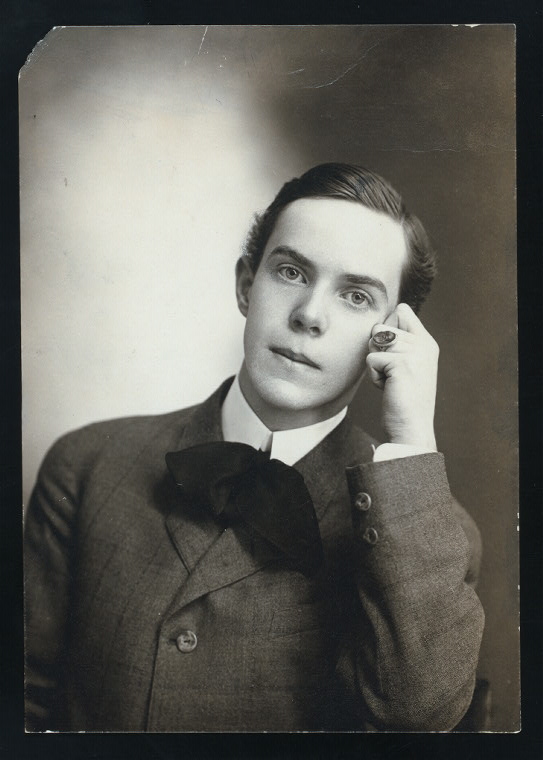
Edwin Booth Grossman, Booth’s grandson, who became a painter.
NYPL
Some pictures of our visit to the Players Club from last week —
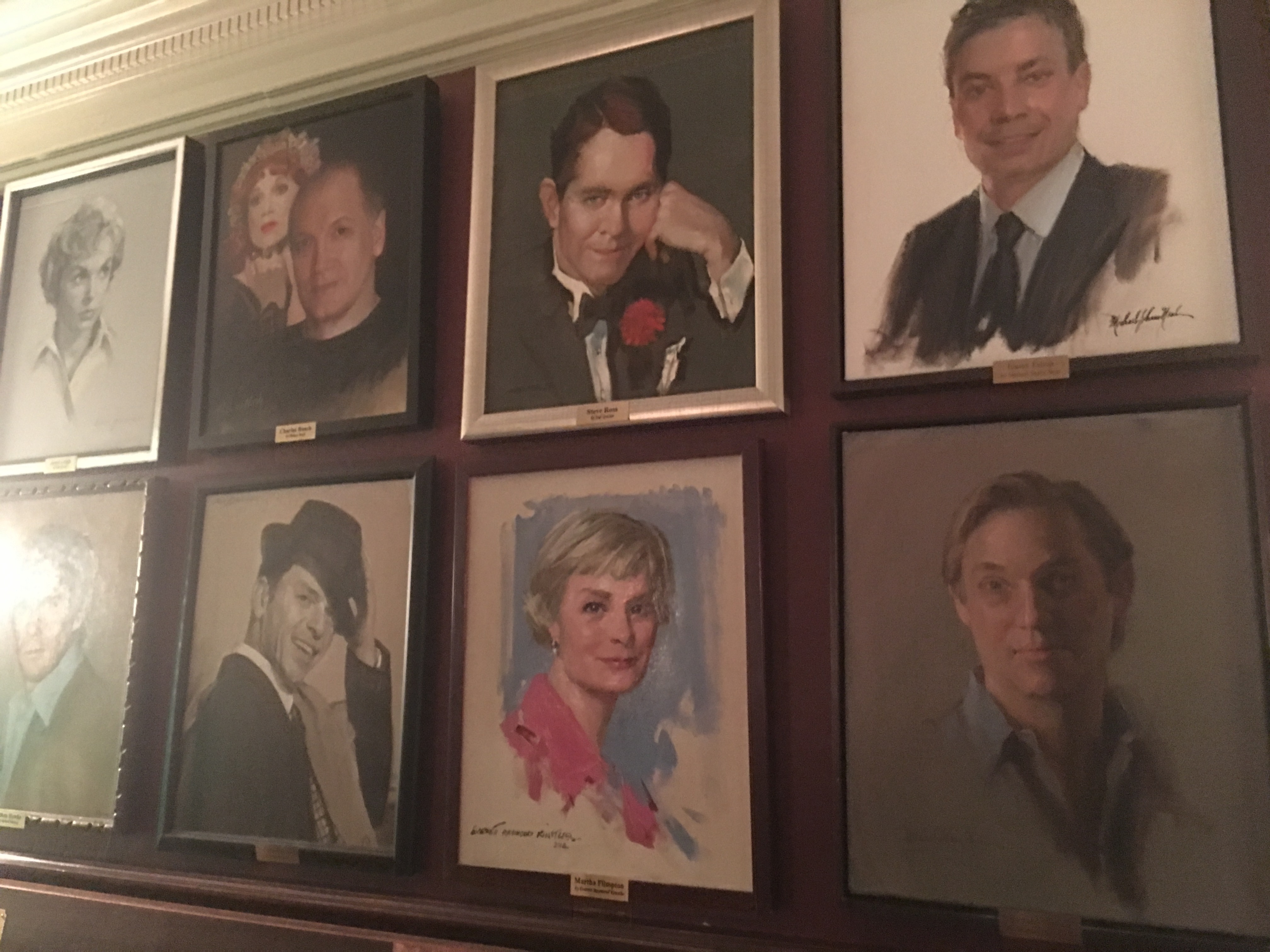
Portraits of members, past and future. Two very recent members are featured here — Martha Plimpton and Jimmy Fallon!
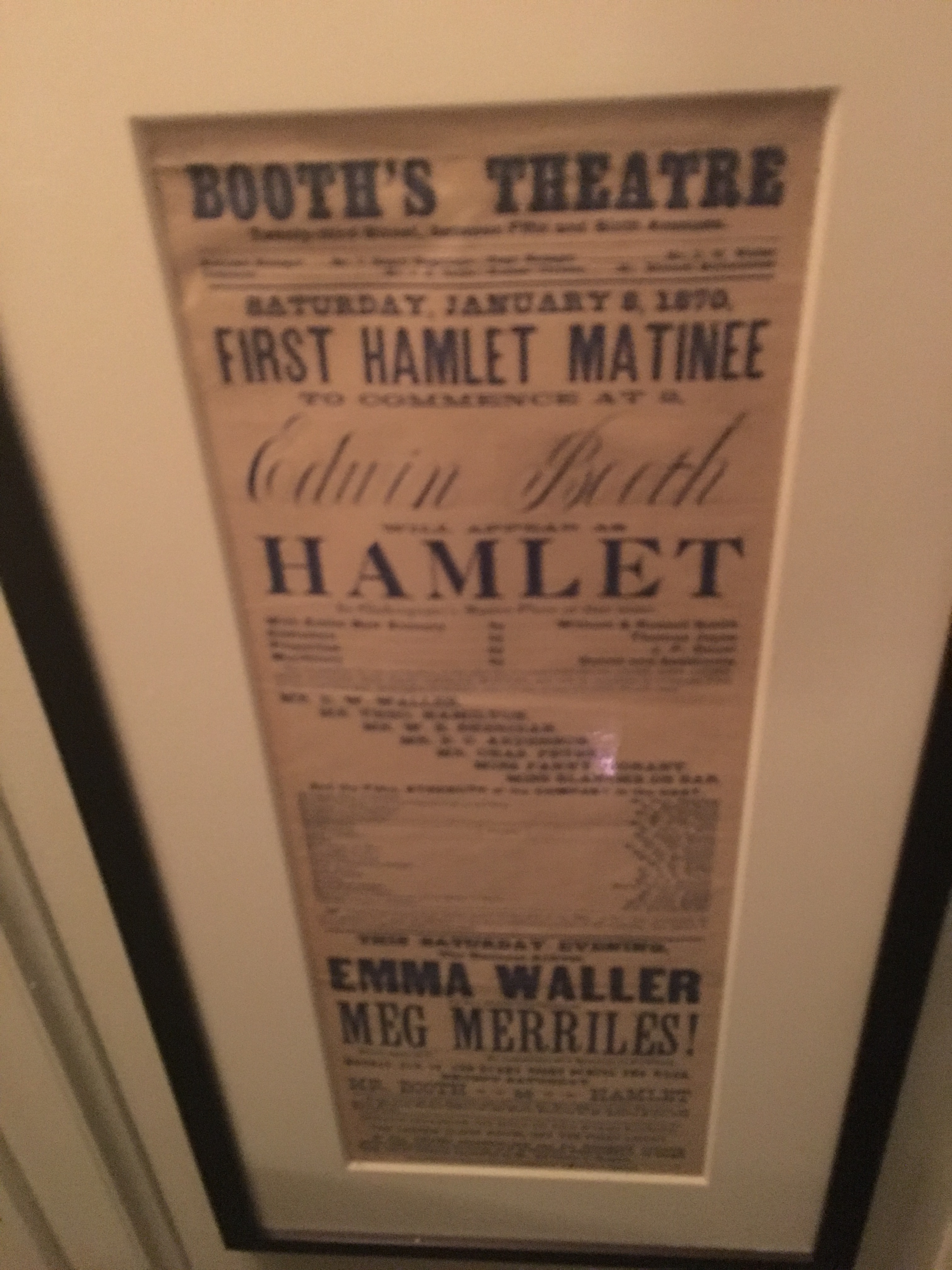
A framed bulletin from Booth’s Theatre on 23rd Street:
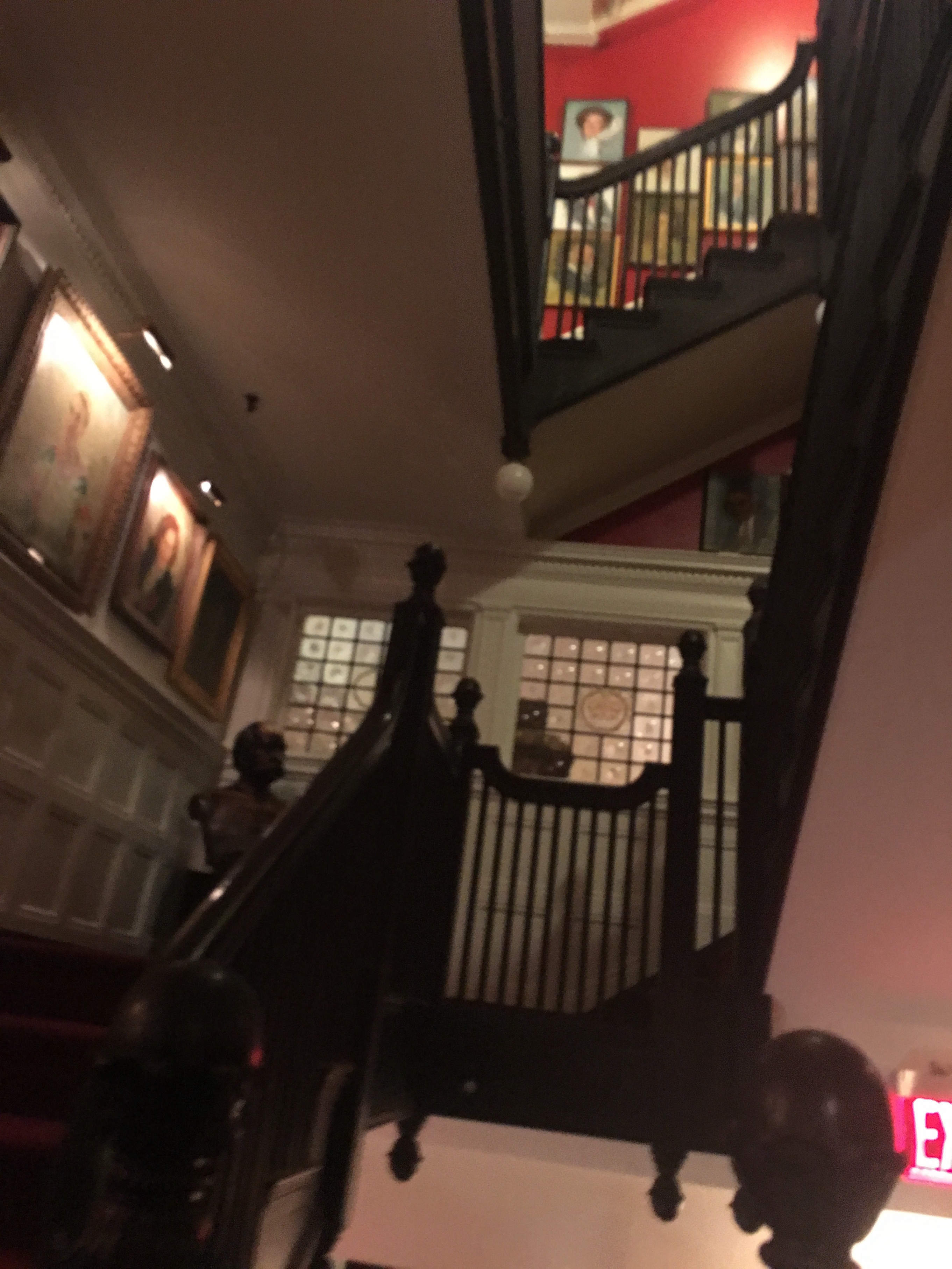
Up the winding staircase to Booth’s bedroom….
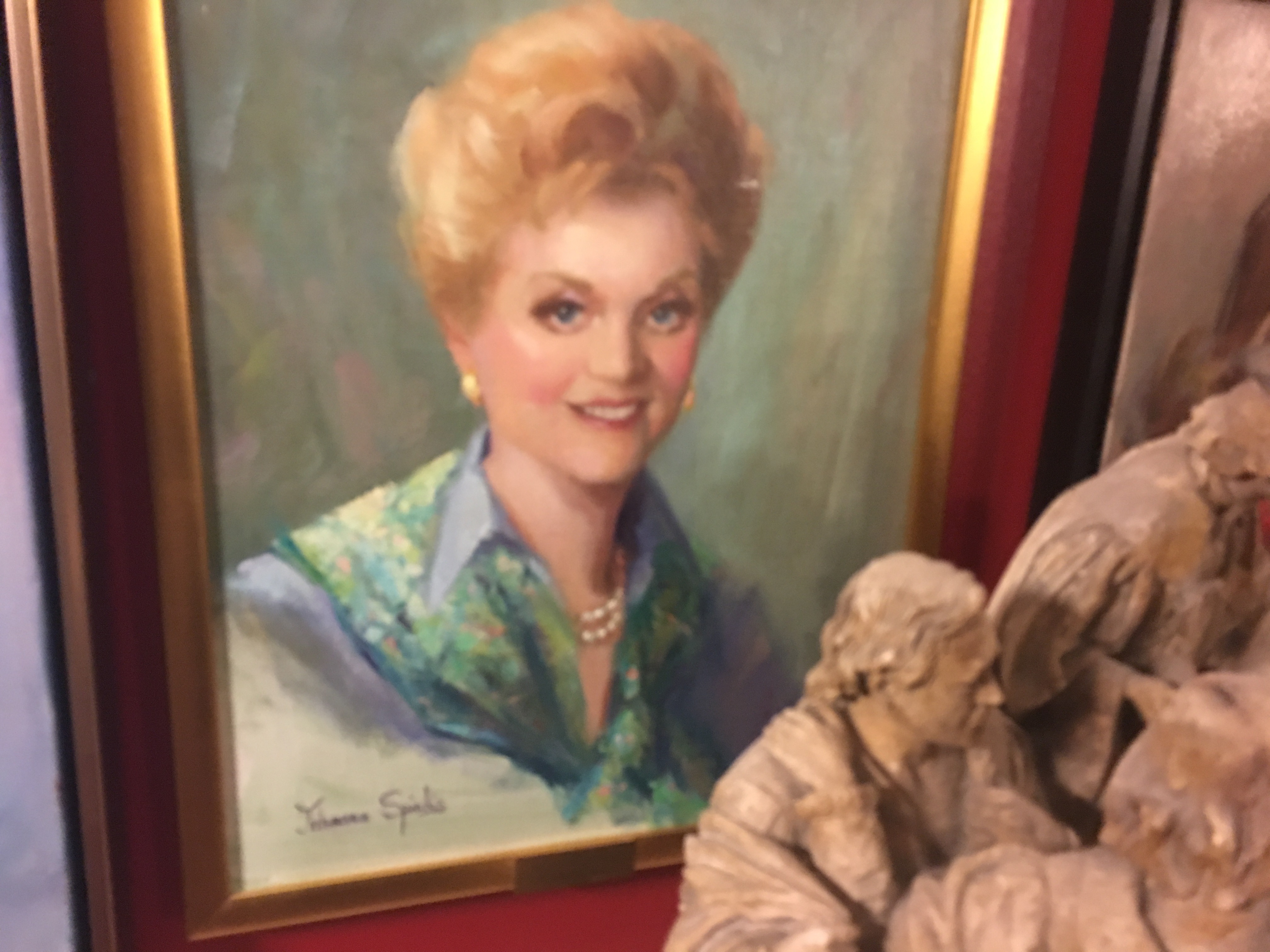
Angela Lansbury awaits us on the landing!
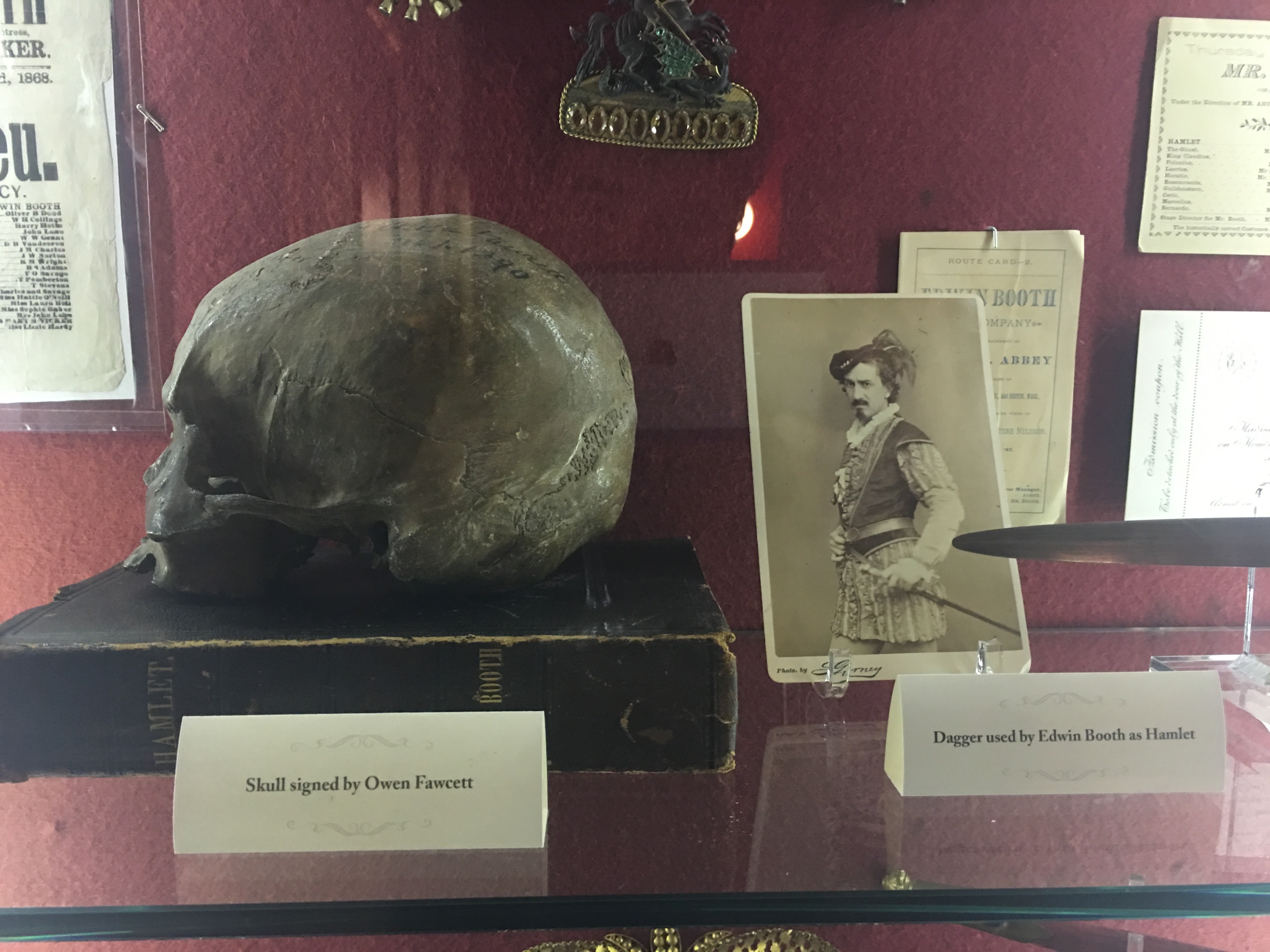
Theatrical props adorn every shelf of the club.
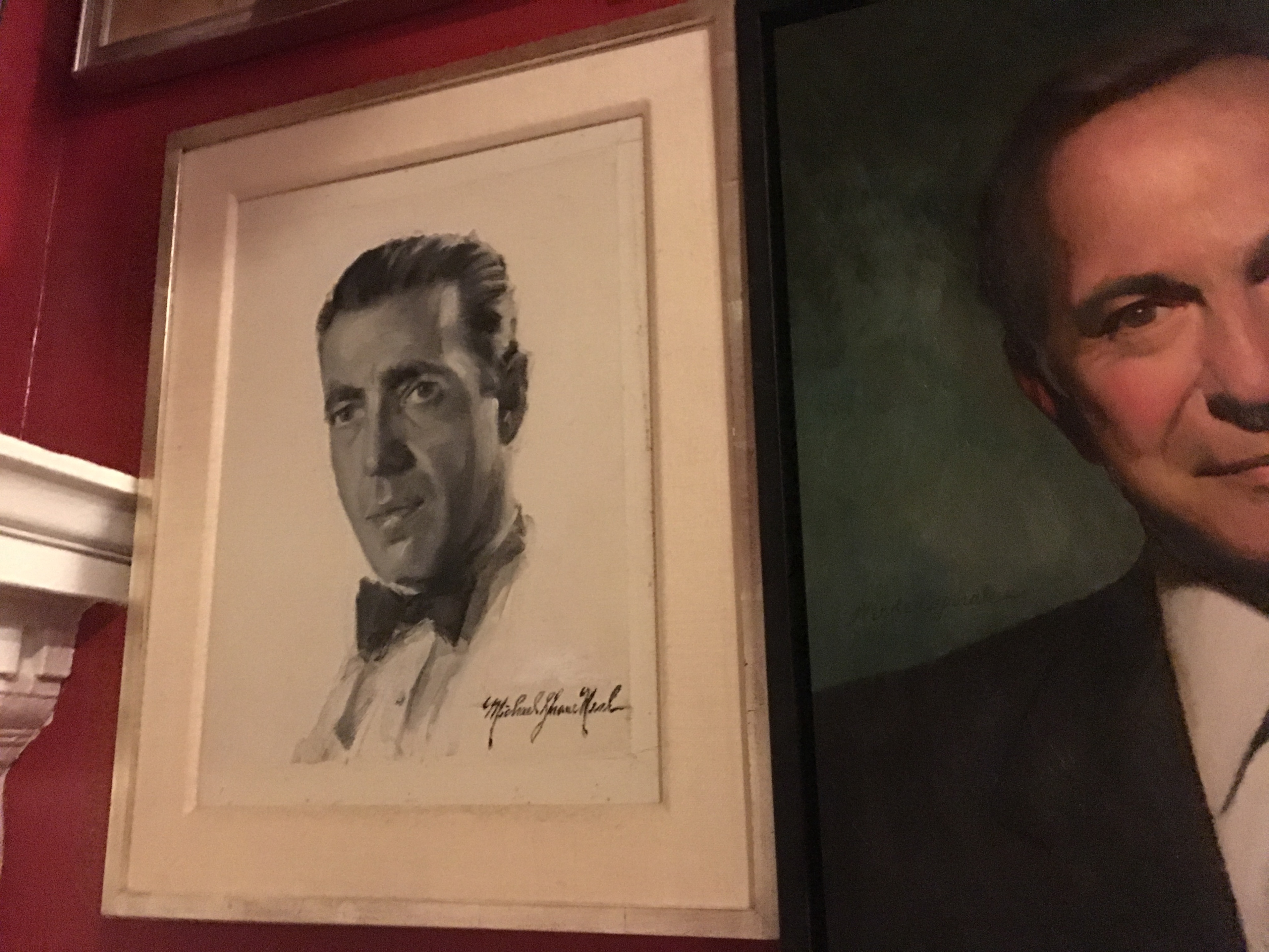
Humphrey Bogart hangs in the hallway. Lauren Bacall, by the way, also has a portrait hanging near the billiard table.
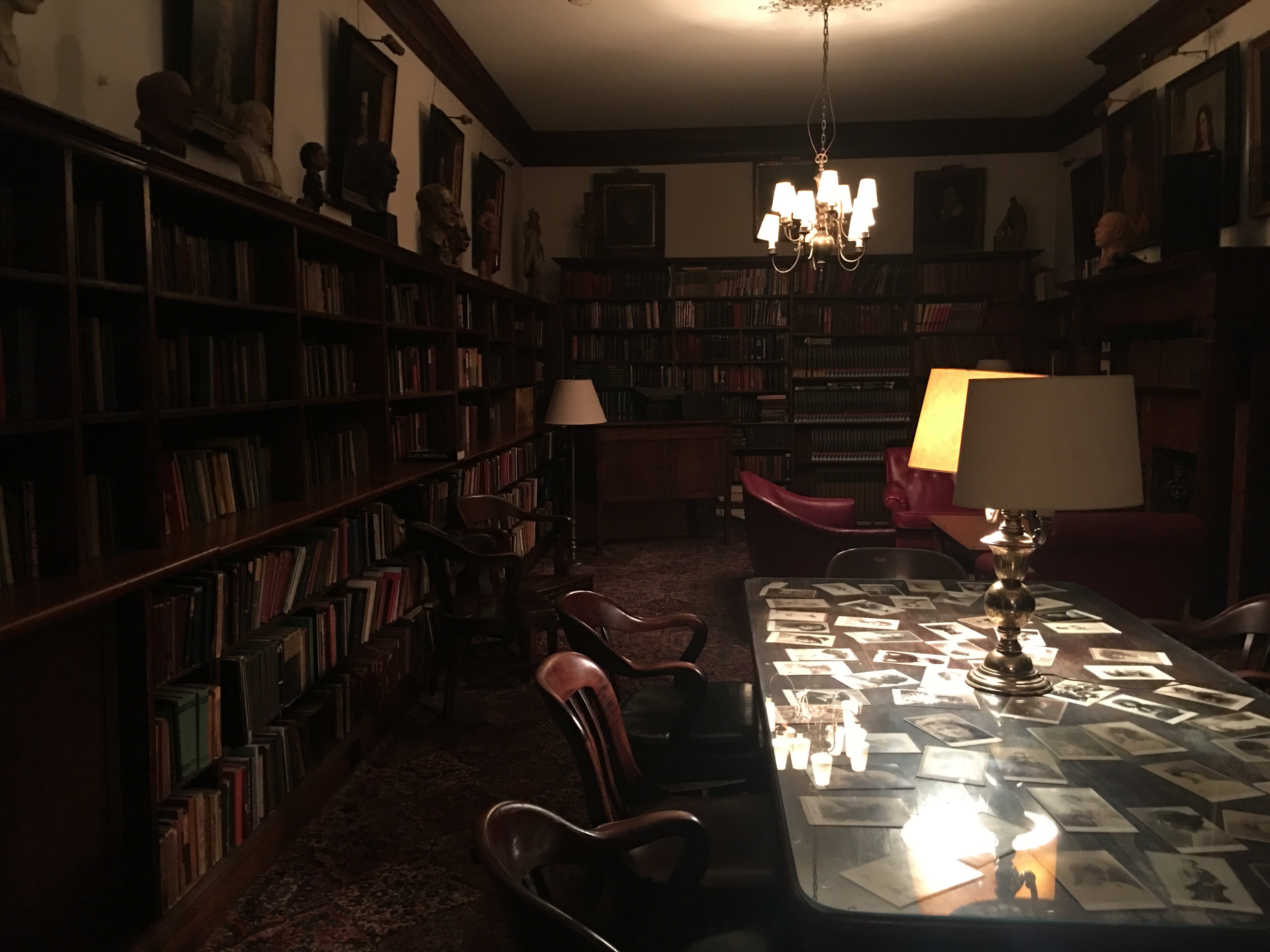
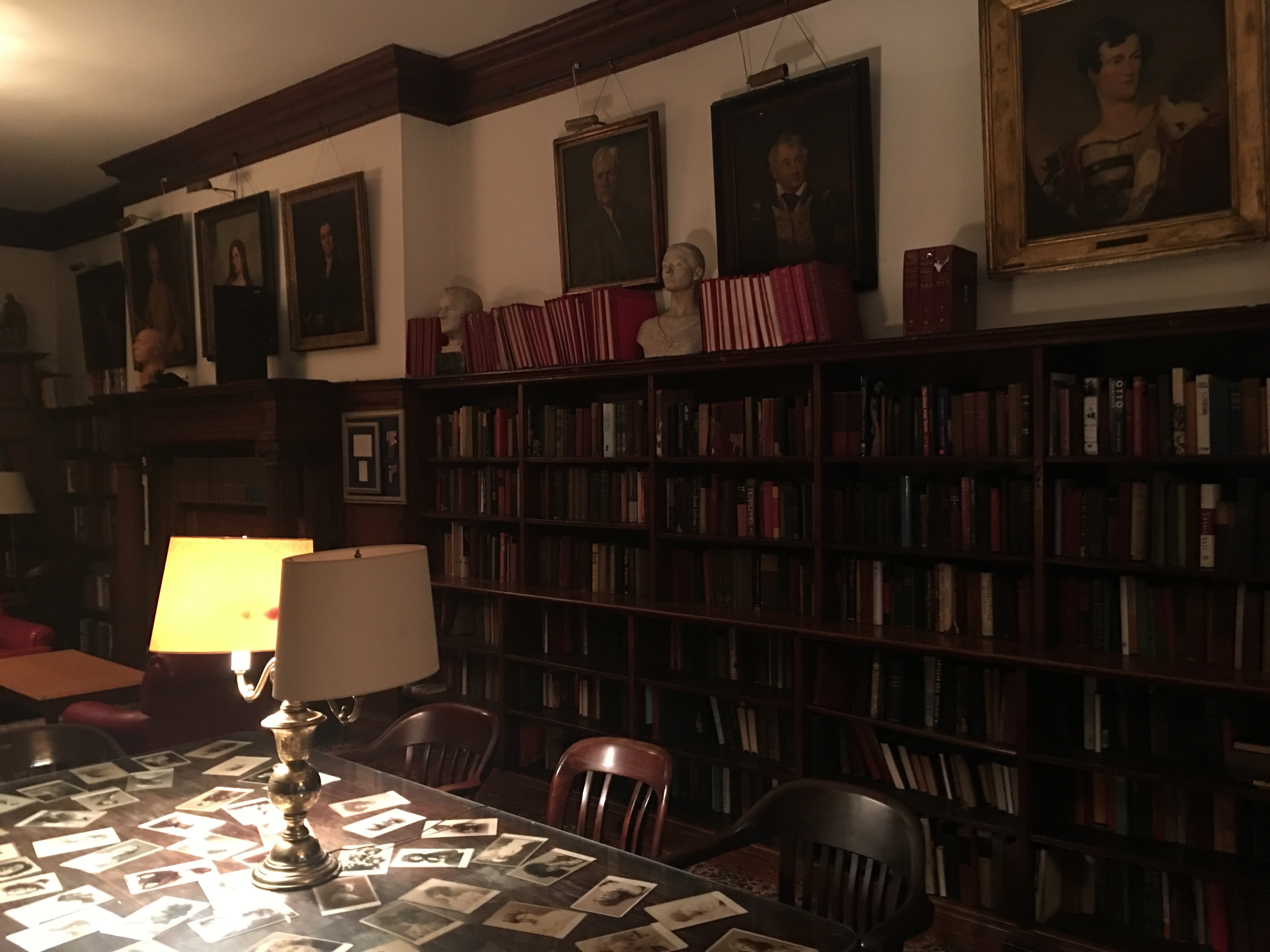
Inside the dark theatrical library, one of the greatest collections of theater history volumes in the world.
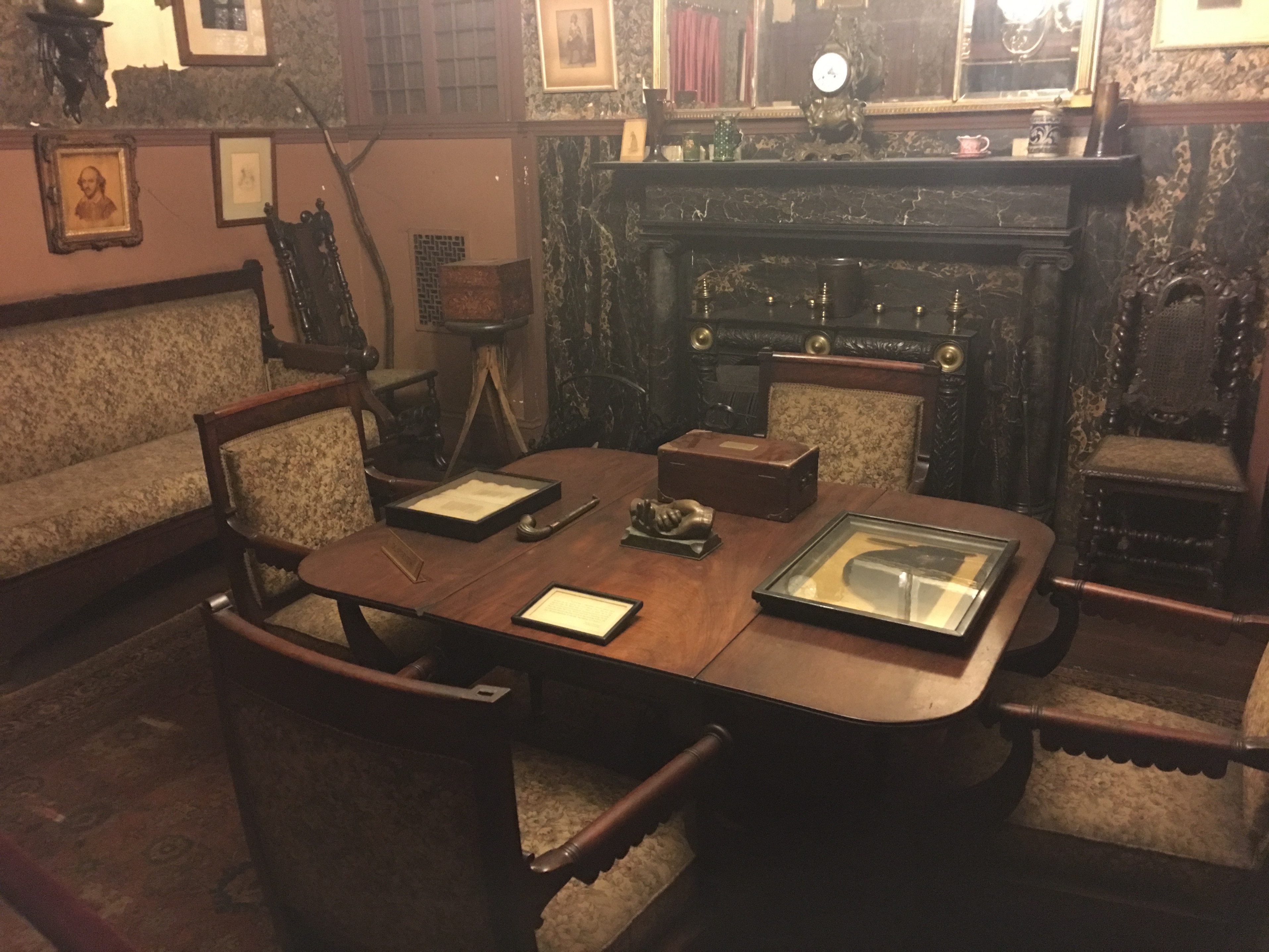
Finally, inside Booth’s living quarters! On the table sits a mold of Edwin’s hand holding that of his daughter Edwina.
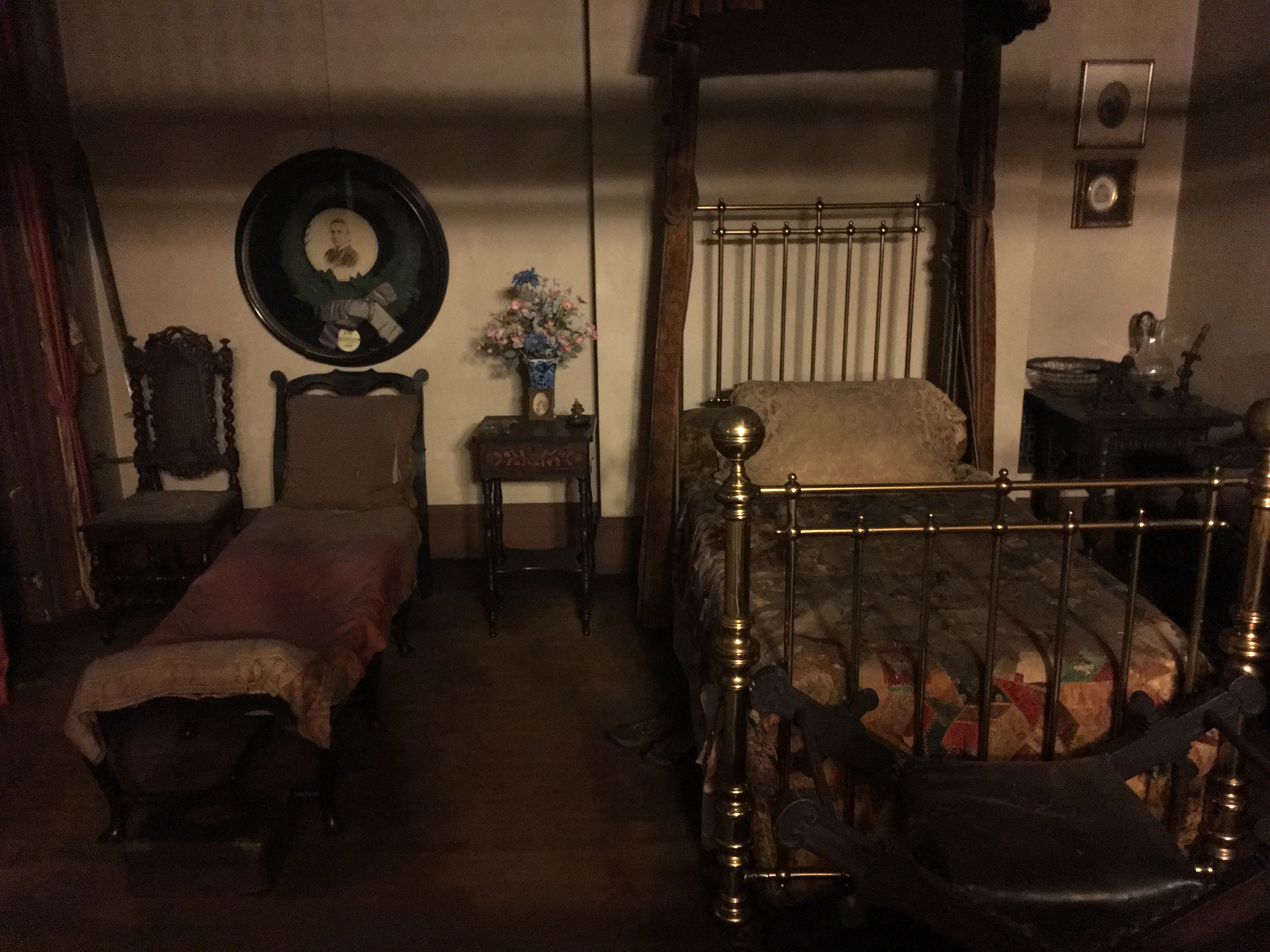
The bed where Edwin Booth died, and a smaller bed where his daughter kept next to him in his final moments.
Many of you have asked if we were ever going to do a live event in the near future. Finally you can see us live this September for one night only AND on Broadway!
The Bowery Boys are pairing up with The Ensemblist podcast (hosted by wonderful Mo Brady and Nikka Graff Lanzarone) to present a one of a kind event — the history of an iconic Broadway theater featuring musical performances by people who have performed there.
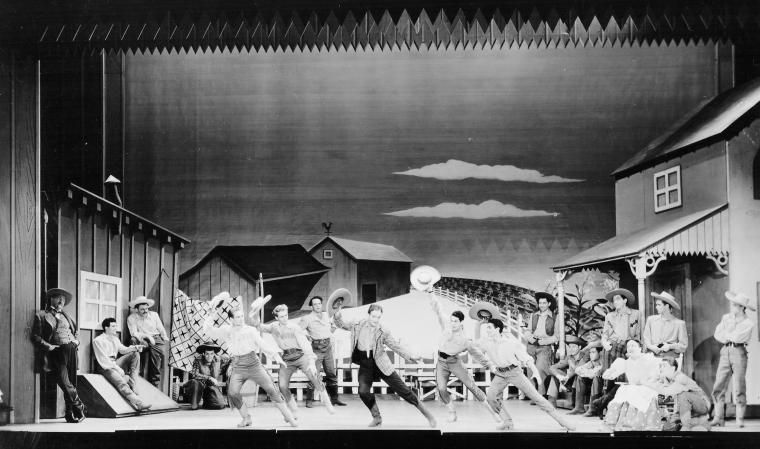
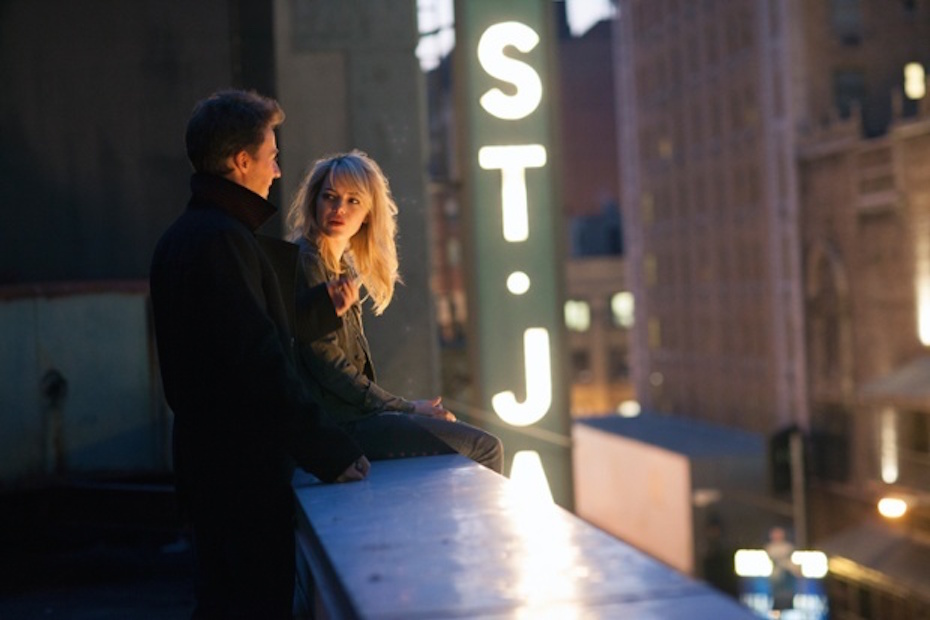
The star of our show is the St. James Theatre, a Broadway stage which opened in 1927 on the spot of the original Sardi’s Restaurant. It was here that many great Broadway musicals originated including Oklahoma!, The King and I, The Pajama Game and Hello Dolly. Â Most recently the theater was prominently featured in the Oscar-winning film Birdman or (The Unexpected Virtue of Ignorance) with Michael Keaton and Emma Stone.
We’ll be discussing some of the history of this classic theater amid an entire roster of Broadway singers performing music that the St. James made famous.  The line-up is tbd at this point but we’ll present the names of the performers as soon as we have them.
This is going to be a cabaret extravaganza — so naturally the show will be held at one of New York’s greatest cabaret spaces —54 Below (254 W. 54th Street). This is the basement of the former Studio 54. Maybe we’ll dress up like Andy Warhol and Bianca Jagger?!
This is a ONE NIGHT ONLY event— two shows on Sunday, September 13, 2015. Â Visit their websitefor more information about the show andCLICK HERE to get your tickets.
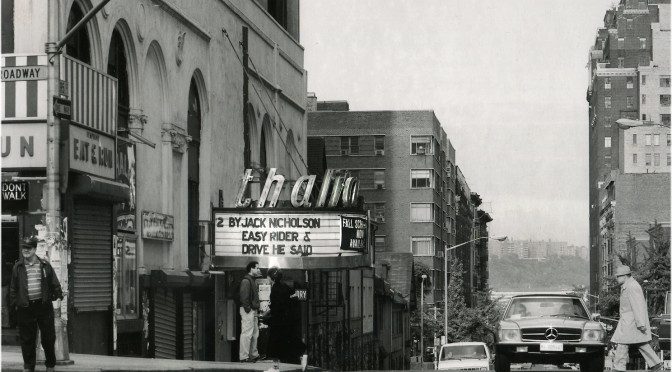
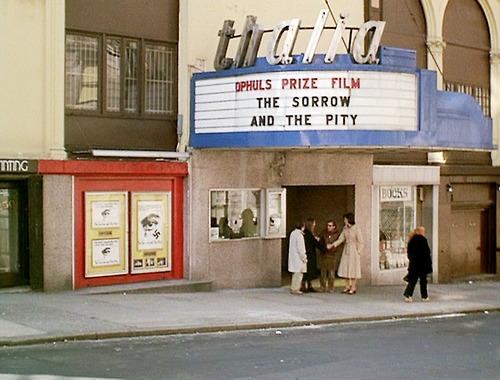
The Thalia in 1986, showing a revival of Easy Rider and Drive He Said. Photography by Matt Weber
Last night the Guides Association of New York City (GANYC) presented their first-ever GANYC Apple Awards at the Leonard Nimoy Thalia Theater (part of Symphony Space), honoring accomplishments in preservation, history, museum exhibition and tourism. It was a rather lively evening, thanks to the night’s hilarious hosts Kevin James Doyle and Olivia Petzy whom you may know from the off-Broadway hit How 2 B A New Yorker.
The institutions and individuals honored at the ceremony last night include:
And a lifetime achievement award was presented to artist James Turrell who transformed the Guggenheim Museum in 2013 into a surreal cathedral of light.
And look who else won an award!
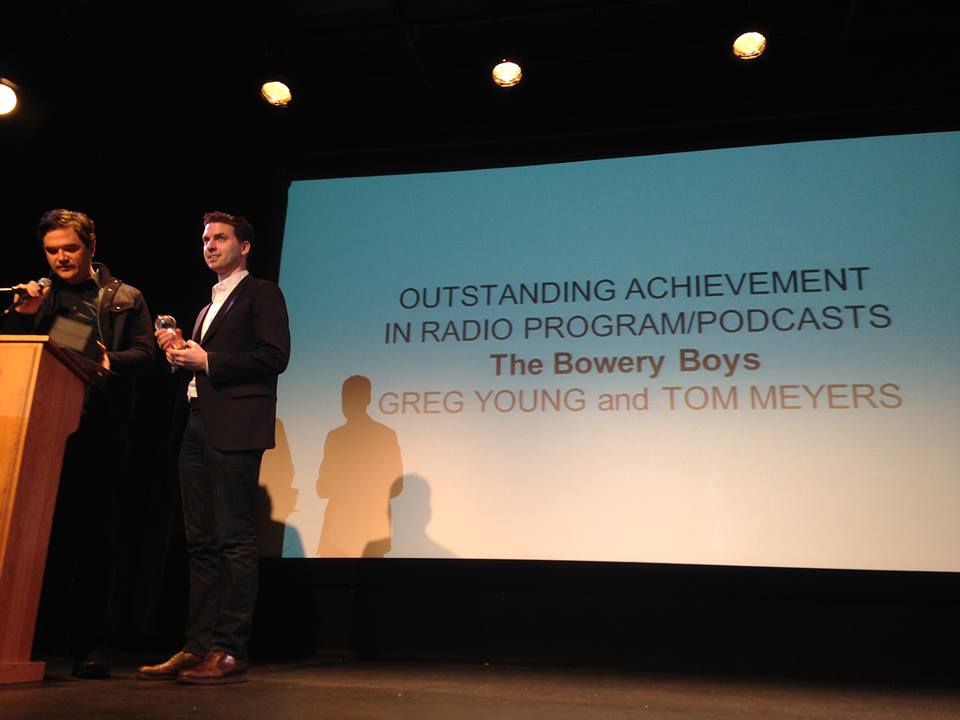
Thank you GANYC for this incredible honor! We are truly grateful for the recognition. Actually we were just honored to be invited in the first place so this was especially humbling! It was quite fantastic seeing all these different kinds of people — journalists, curators, filmmakers, politicians, tour guides, entertainers — together in one room to celebrate New York’s rich culture and historical legacy.
The award was presented to us by Ethel Sheffer from the Municipal Art Society who prefaced it with a moving tribute to her husband  Isaiah Sheffer, the founder of Symphony Space, and the man who helped save the very theater we were sitting in — Leonard Nimoy!
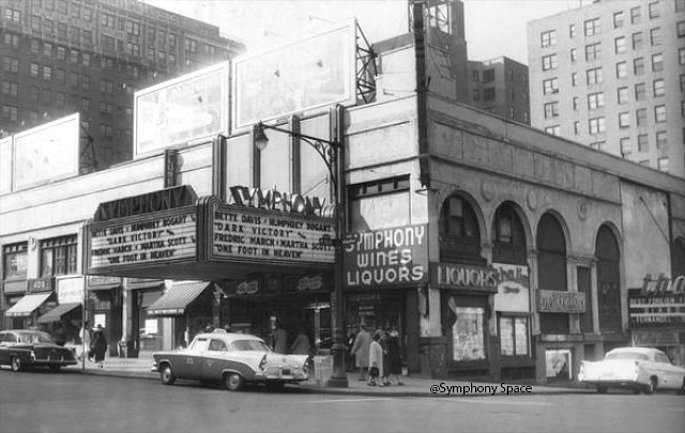
The building which contains the theater today was built one hundred years ago as an indoor market, owned by the Astor family.  In 1931 the basement was converted into the Thalia Theater. (Thalia is the ancient Greek Muse of comedy and idyllic poetry.)  To quote GANYC award winner in his history of the Thalia:
“Generations of Thalia patrons have assumed that its oddly sloping floor – with a depression in the middle – was the result of poor planning or unusual site conditions. But the Thalia’s parabolic reverse floor – apparently the first of its kind in the country – was just what its designer, Ben Schlanger, intended.
In Mr. Schlanger’s view, most movie theaters were poor adaptations of theater designs. The Thalia incorporated not only Mr. Schlanger’s patented floor system – designed to give everyone in the audience the same view of the screen – but also lighting, seating and projection provisions intended specifically for movie presentations.”
The Thalia is best known for showing art house movies and classic film revivals for decades. One might even say it was archetypal of the Upper West Side experience, immortalized in the movie Annie Hall.
Martin Scorsese attributes part of his cinematic education to the Thalia:  “That’s where I learned about films. I saw my first Eisenstein there: Alexander Nevsky. I also saw the Yiddish film series there: The Dybbuk and Green Fields and the films of Edgar G. Ulmer. It was the late 50’s. I saw Citizen Kane there and it was amazing on the big screen — well, the little screen. The films were programmed so that there was no intermission: one would end and the other would begin. It was really hard core. It was better than film school. It really was.” [source]
It was actually renowned for being a bit of a dump. According to GANYC nominee Clyde Haberman: “The air in the theater seemed left over from F.D.R.’s third term. Your seat was no thrill, either. It was upright, uncomfortable and usually torn. Pillars stood between it and the screen.”
The theater finally closed in 1987.  Its final screening was a double bill: The Night of the Shooting Stars and Paisan. During the 1990s,  its classic Art Deco interiors were removed to some controversy.  But its ultimate savior would come in the form of a science-fiction icon.
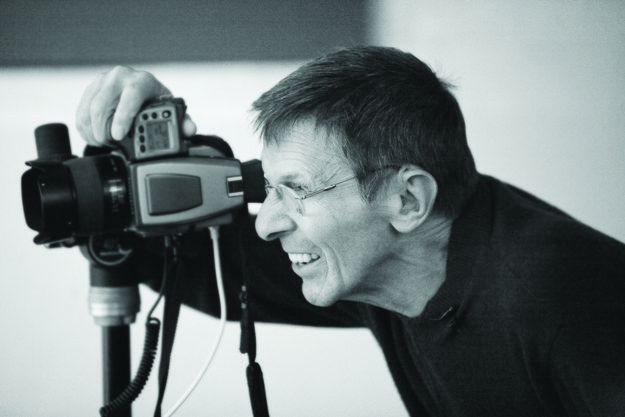
Leonard Nimoy, forever beloved as Spock from Star Trek, does have a background in theater — in 1977, he even performed in Equus on Broadway — and his work would sometimes be performed at Symphony Space.
By 2001, he was living in the Upper West Side, mostly occupied with his work as an acclaimed photographer.  Nimoy donated $1.5 million to the complete renovation of the theater which finally reopened in April 2002. In honor of the donation, the theater was renamed in his honor.  And,  honestly, the Leonard Nimoy Thalia just sounds cool too.
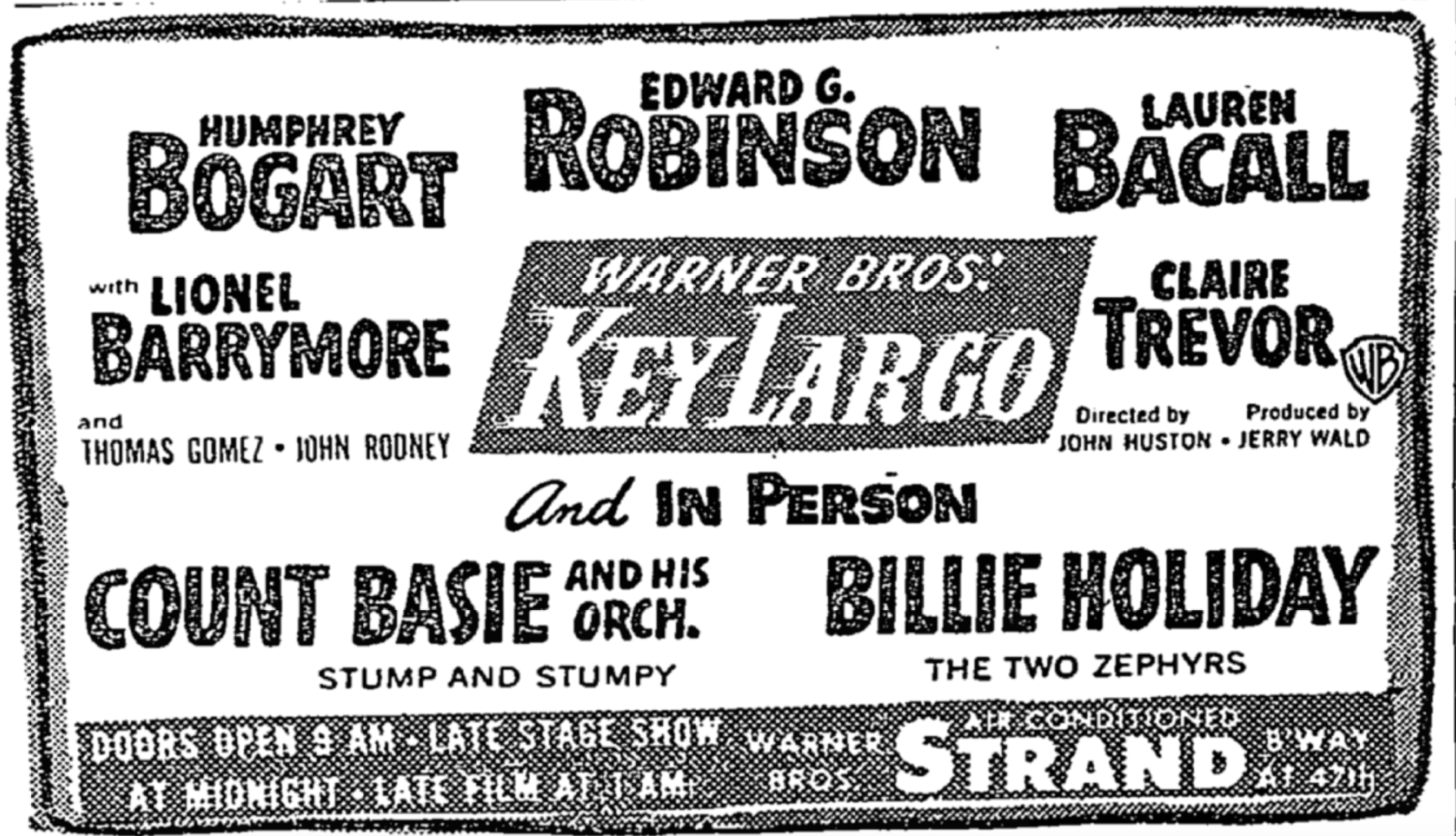
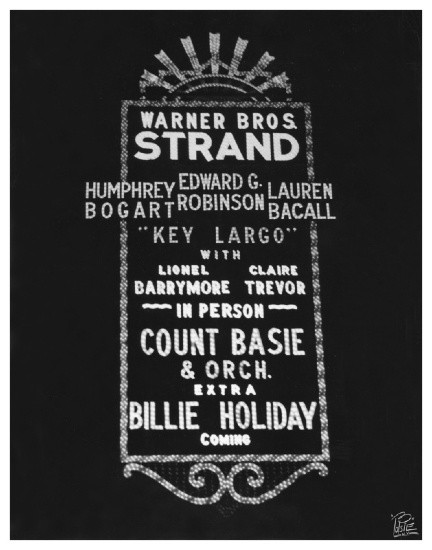
For the debut of the new film Key Largo — starring Humphrey Bogart and Lauren Bacall — the exhibitors at the Warner Strand Theater (at Broadway and 47th Street) has a special treat in store.
from the New York Times, July 17 1943
The Strand Theatre, which opened in 1914, has already made history a few times in New York. Considered the first theater built exclusively for motion picture exhibition, the Strand was the first New York job of Samuel ‘Roxy’ Rothefel (who would move on to his own Roxy Theatre and, then Radio City Music Hall). Â On July 6, 1928, The Lights of New York, the first all-talking feature in history, premiered at the Strand.
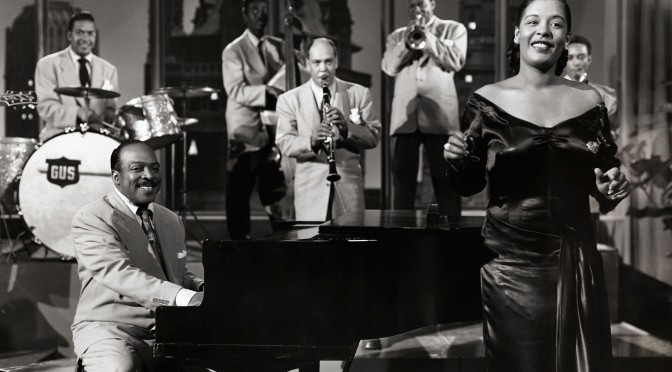
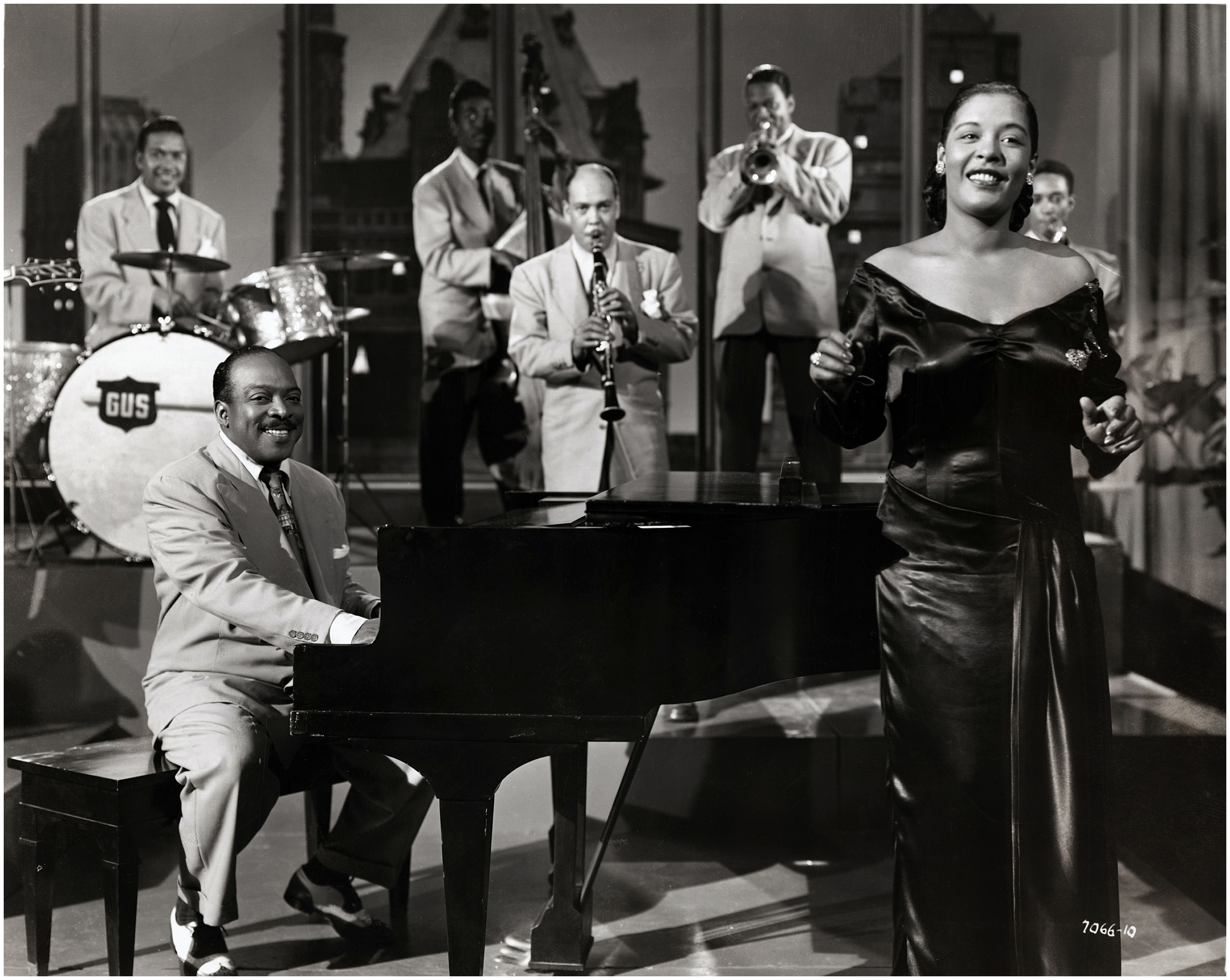
In 1948 came the fourth (and what would be final) movie collaboration between Bogart and Bacall, and its debut on July 16th deserved something out of the ordinary.  For six weeks, the Strand presented the film on an exhaustive bill of music and comedy, featuring two of the biggest stars in jazz music, Count Basie and Billie Holiday.
The two greats had recorded and toured with one another a decade previously, but much had changed since then.  Holiday had only been released from prison that March, serving time on a charge of heroin possession.  The big band era was ending, leaving Basie struggling to mold his music to the new styles of bebop, rock and  rhythm and blues.
While both would continue with their celebrated careers into the 1950s, the six-week Key Largo stint would remind many of earlier, more jubilant phases of their careers.
Basie and Billie from a film still
It was the longest theater run of Lady Day’s career although she fretted the fact that many were there to see her “get all fouled up,” Â according to author Donald Clarke.
As you can imagine, it broke box office records for the Strand. According to Basie’s autobiography, “I think we went in there on a contract for three weeks with an option to extend for another two weeks, and I think they revised it and made it five weeks with options to make it six or seven weeks.”
They were joined by the black comedy team The Two Zephyrs (with legendary comic Slappy White) and tap dancing duo Stump and Stumpy.
I hope that Billie sang “Moanin’ Low,” made famous by the film in a mesmerizing performance by Claire Trevor (who won the Academy Award).
Tonight NBC’s unveils its live theatrical experiment Peter Pan with Girls star Alison Williams in the cross-dressing role of the boy who never grows up.
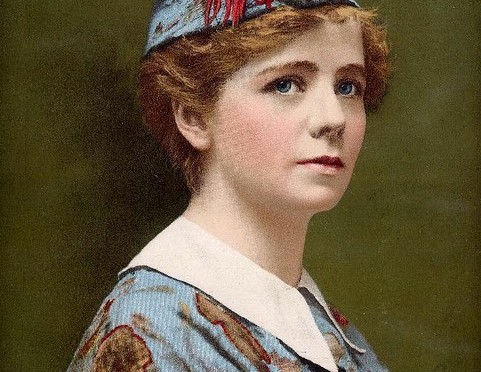
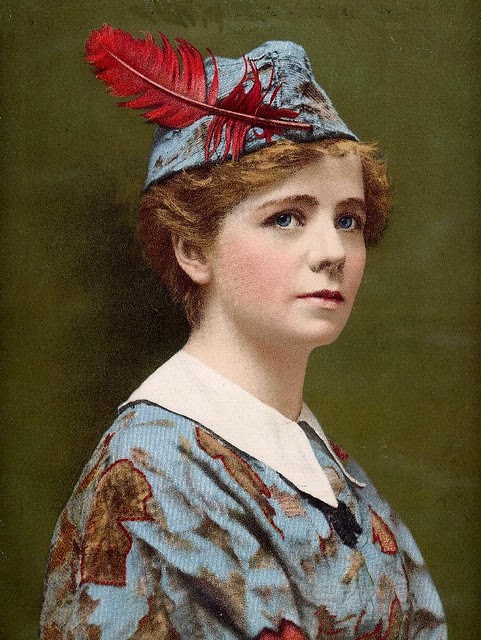
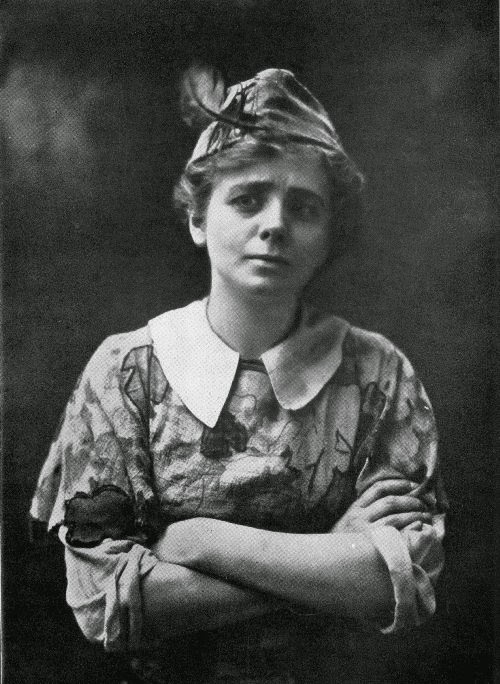
We can all have our debates about who’s been the greatest stage Peter Pan in history. Â Most will say Mary Martin, a sizable minority will claim Sandy Duncan, and a few smaller voices may even cry the name Cathy Rigby. However the first and most popular woman to ever play the role was most likely the actress who originated the role on the American stage — Maude Adams. Â
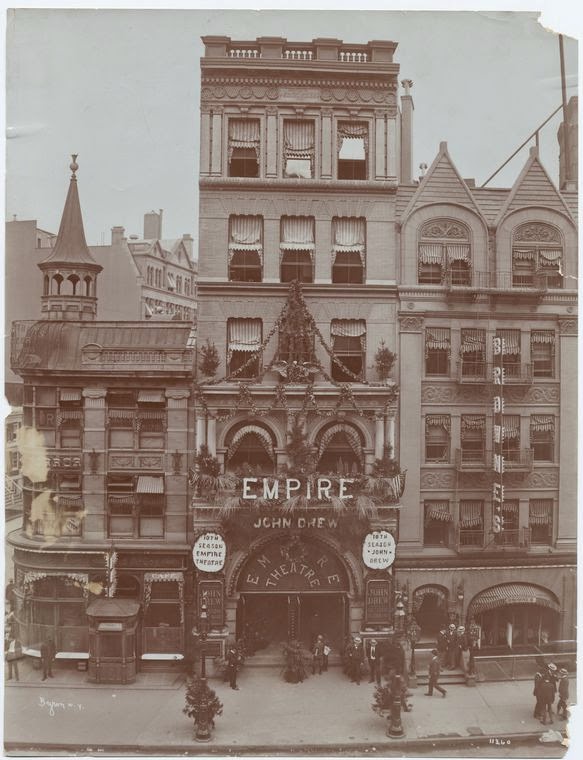
Her rendition was so popular that it inspired one enduring fashion trend. Peter Pan made its New York debut on November 6, 1905 at the Empire Theatre at Broadway and 41st Street. Â The theater was owned by one of New York’s most powerful producers Charles Frohman. Adams was one of his greatest finds, casting her in several productions when she was just a teenager.
Adams had played a boy on stage and had even starred in a prior play by Peter Pan’s author J. M Barrie (Quality Street). Â Barrie himself came to New York to witness rehearsals with Adams and the show 70-odd cast members.
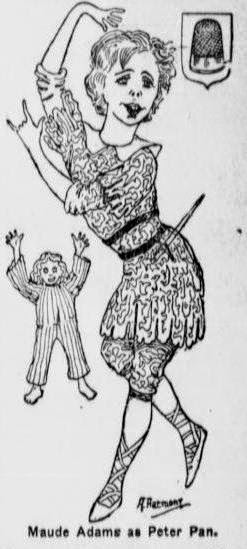
At right: The bizarre visage of Maude Adams as illustrated in the New York World, November 1905
The audiences loved Adams, but not the critics. From the New York Tribune the following day: Â “As an actress Miss Adams is incarnate mediocrity — for she possesses neither imagination, passion, power, depth of feeling or formidable intellect and her faculty of expressive impersonation is extremely limited” — OUCH — “but as a personality, she is piquant, interesting and agreeable … she has shown to advantage and she causes the effect of commingled merriment, sentiment and momentary thought.”
Others criticized her physical size, calling her “plump and prancing.” “She was a trifle overweight for a fairy, but she carried herself lightly and gracefully and didn’t scare the children in the least.”
Audiences loved her, however, Adams proceeded to play the role of Peter Pan, off and on, for over a decade. In fact, Maude Adams was the actress most associated with the part for fifty years. Â Mary Martin then took the role to Broadway in 1954, won the Tony Award for Best Actress the following year and then became the model for which all subsequent actors have looked to.
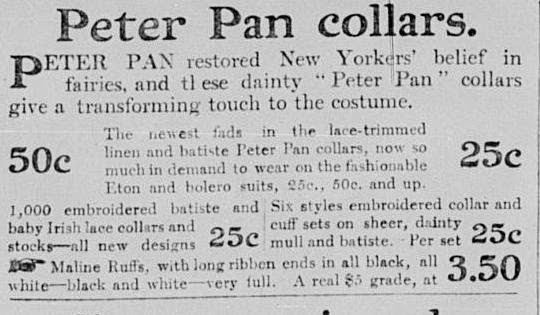
More important, Adams inspired a popular fashion trend — the Peter Pan collar. Â Her costume, by John White Alexander, took great liberties with Barrie’s descriptions of Peter’s garments. Â Women soon clamored for dresses with a similar floppy collar. Â The play was still running at the Empire when the collars soon appeared at department stores. Â This ad is from April 1906:
Her belted waist also took the fashion world by storm. Â The “Peter Pain waist,” a traditional shirtwaist bound with a thick black belt, was called “decidedly chic,” “particularly becoming and stunning in effect.”
The front of the Empire Theatre, where Peter Pan made its New York debut:
Meryl Streep is one of New Jersey’s greatest natural resources. She was born in Summit, NJ, also the hometown of Ice-T, and grew up nearby in the town of Bernardsville.
You may not otherwise associate Streep with New Jersey (at least, not in the same way we look at Bruce Springsteen) because, in 1975, after graduating from Vassar and developing her dramatic skills at Yale, she moved to New York City to begin her career in theater. The Meryl we know, the movie star and acting icon, grew up here.
Almost forty years later, Streep is considered one of the world’s greatest and most accomplished living actresses.
She’s been nominated for more Academy Awards than any other actor. In fact, she’s considered a benchmark for many thespians to aspire to. She’s so revered that she’s occasionally a punchline. (The Onion: “Court Rules Meryl Streep Unable To Be Tried By Jury As She Has No Peers.”)
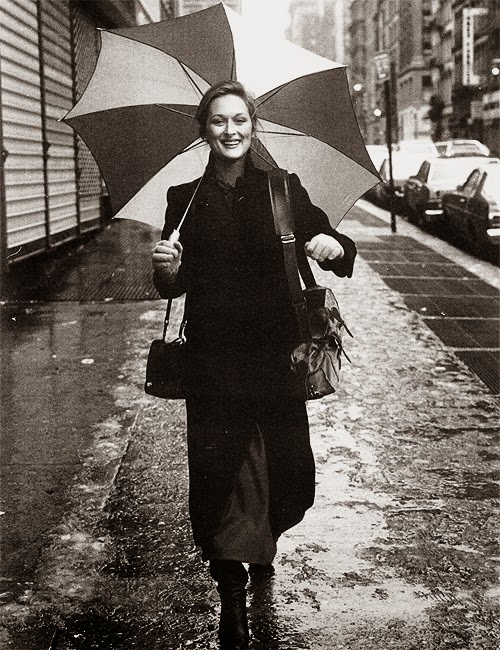
It’s Meryl in the rain, 1979! From the tumbler ingridsbergman (If anybody knows the name of the photographer, please let me know!)
But her early work on the New York stage — much of it with The Public Theater — cemented her reputation as a performer of uncommon ability. She became a fixture of both Broadway and off-Broadway at the moment when the creative revolutions of the 1960s were beginning to sink into mainstream productions.
She often worked in classical drama, retooled with unconventional direction.
Her formal training mixed with the spirit of off-Broadway innovators such as Joseph Papp.
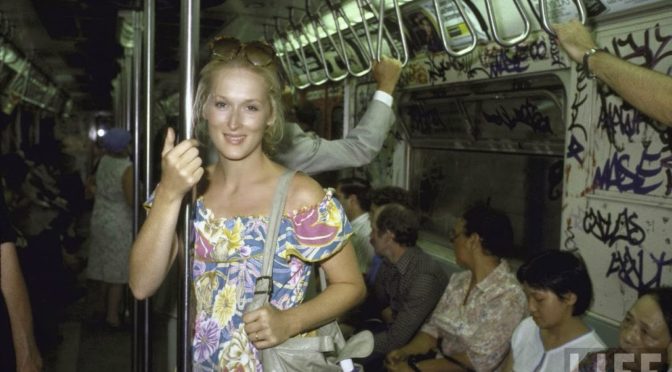
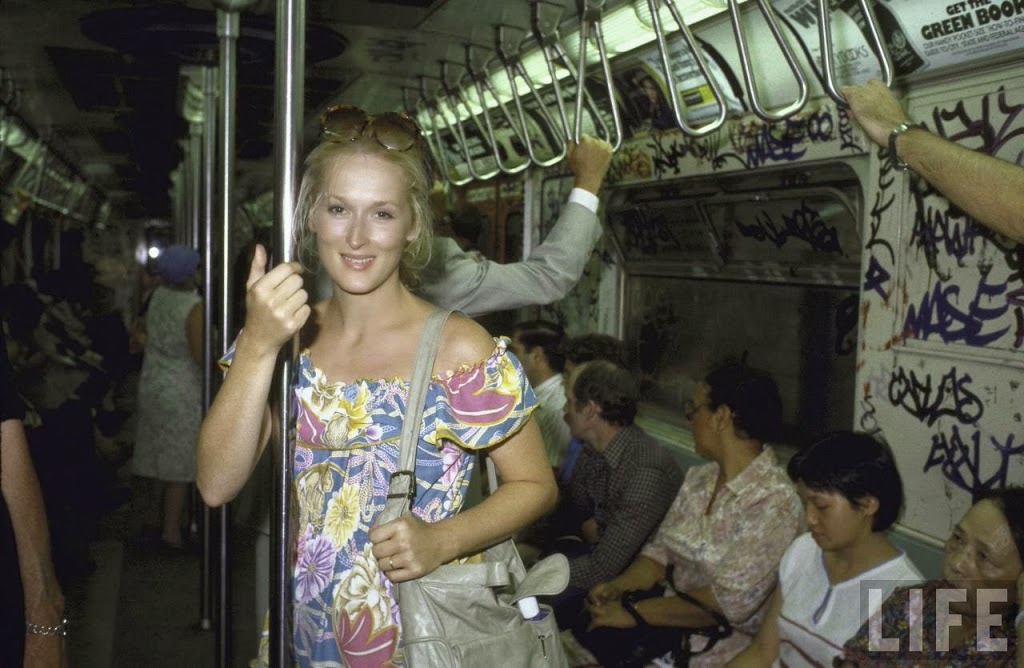
It’s hard to imagine Streep in a world parallel to that of A Chorus Line (which debuted the summer of her arrival in New York), hoofing it to Midtown auditions, cramming onto crowded subways to get to her performances in Shakespeare plays at the Delacorte Theater in Central Park.
Below: Meryl on the subway, 1981 (Courtesy Google Life images)
“For those who believe that stars are born overnight only in old movies like Stage Door on the late, late show, let me present Meryl Streep. Â She is on the threshold of stardom,” wrote the prescient Syracuse Herald-Journal in 1976.
Here is a look at some of her early New York stage successes from the 1970s, both off and on Broadway, accompanied by a few quotes from her first reviews:
Trelawny of the Wells (October-November 1975)
Vivian Beaumont Theatre/Lincoln Center
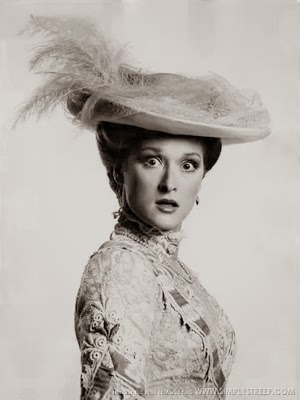
Playing: Miss Imogen Parrott (at left)
In her professional stage debut, Streep was praised by the New York Times: “tart, level headed, stunningly decked out in salmon gown and white plumes.” The play itself was only modestly received. “A Chorus Line soars, Trelawny falls flat.” [source]
(The Times didn’t see the appeal in her early years. Her first mention there, for a play by the Yale Repertory Theater, described her performance as “perhaps too giddy and high strung.“)
27 Wagons Full of Cotton by Tennessee Williams (January-March 1976)
performed with A Memory of Two Mondays by Arthur Miller
The Phoenix Theatre in the East Village (today the Village East Cinemas)
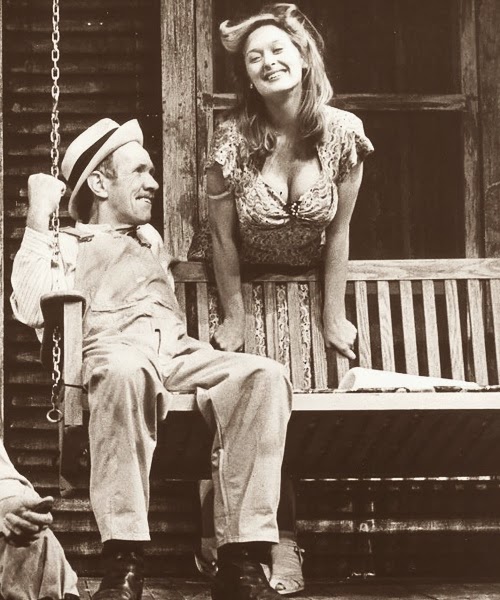
Playing Flora (pictured below)
Writes Walter Kerr: “We can settle down now, locked in the girl’s dilemma, to let actress Meryl Streep studiously slap away most believable mosquitoes, splay her legs like a rag doll, twist an evasive but sinuous toe to keep the porch swing rocking rhythmically, count her thoughts on her fingers, clutch her oversize white purse as she weighs inadvertent betrayal against what is happening to her flesh.” [source]
This was her breakthrough, and the very first of thousands of awards and nominations that would come her way for her work.
When it transferred to Broadway, she received a Tony Award nomination for Best Featured Actress In A Play. (She was nominated up against Mary Beth Hurt, her co-star from Trelawny. They both lost to Shirley Knight.)
Secret Service (April-May 1976)
The Playhouse Theater
Playing Edith Varnay
“Streep was all heaving anguish, startled eyes and passionate stances.” [review]
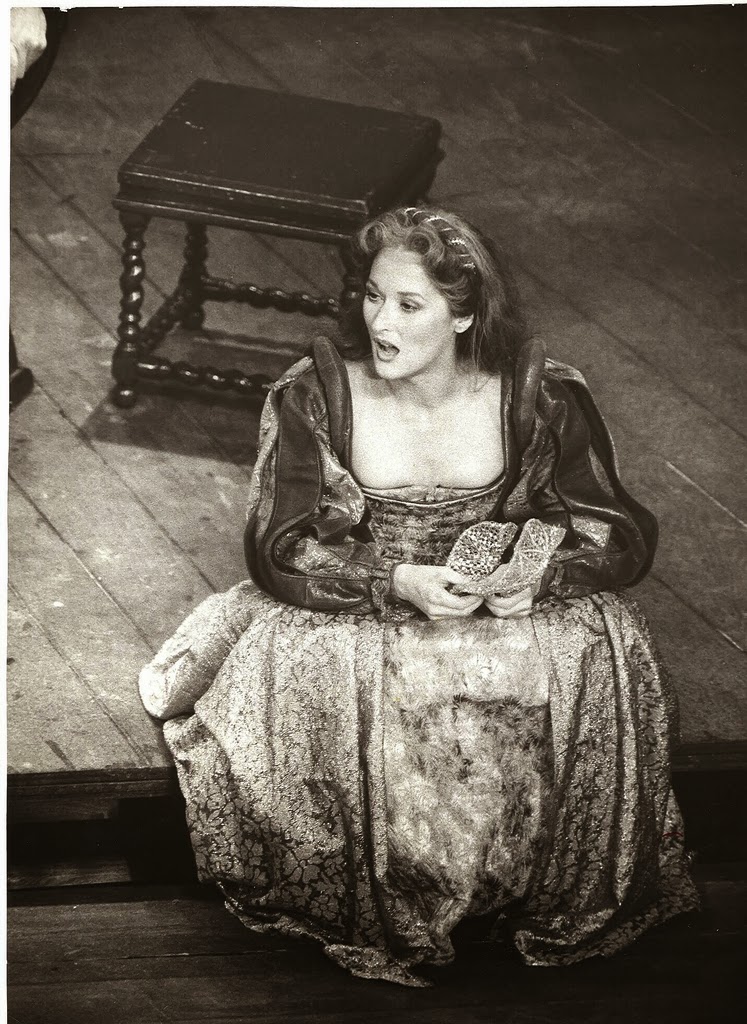
Henry V (June-July 1976)
Shakespeare In The Park
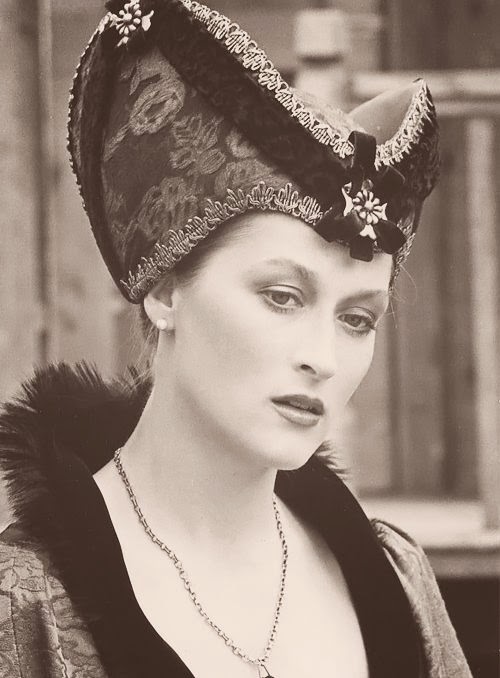
Playing French princess Catharine, pictured below (“I cannot tell vat is dat.”)
This is her first appearance in the New York Shakespeare Festival and the way she spent America’s Bicentennial. New Yorkers also got to hear her first non-English accent. “[T]hough Meryl Streep tends to be stiff in her first scene –the English lesson — she displays lovely bite and timing when Mr. [Paul Ryan] Rudd courts her.” (Picture courtesy Public Theater)
Measure for Measure (August 1977)
Shakespeare In The Park
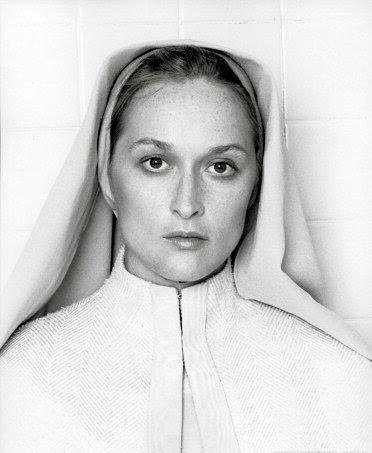
Playing: Isabella (“And have you nuns no farther privledge.“)
This is her for first nun role. She would return to the habit in the Oscar-nominated film Doubt. Reviews were mixed, the Times questioning the chemistry between Streep and her co-star John Cazale. The reviewer Kerr suggests her timing is off.
She took a break from the theater to star in her first work for television and film.
From an interview in the New York Times: “Miss Streep, who was drinking a Heineken at the Algonquin, gestured with her hand…. ‘Last summer I did all those things in the Park … and then I went and made a movie in London — Julia. I were a red dress in every scene and I look bizarre.”
The Cherry Orchard (February-April 1977)
Vivian Beaumont Theatre/Lincoln Center
Playing: Dunyasha (“I must tell you at once, I can’t bear to wait a minute.“)
Happy End (May-July 1977)
Martin Beck Theater
Playing Lieutenant Lillian Holiday (“Hallelujah Lil”)
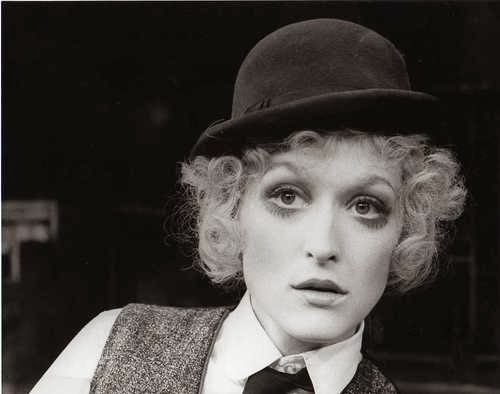
For this short-lived musical, Streep sang for the first time on the Broadway stage, and looking like a mix of Liza Minnelli and Charlie Chaplin:
Here’s an interview she did for that show:
The Taming of the Shrew (August-September 1978)
Shakespeare In The Park
Playing — who else? — but Katarina
She’s featured in this behind-the-scenes video with her co-star Raul Julia:
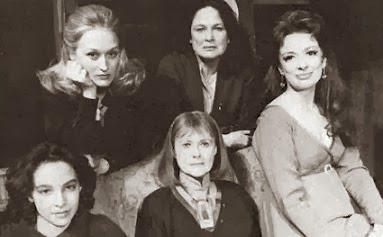
Taken In Marriage (February-April 1979)
The Public Theatre/Newman Theatre
Co-starring with Dixie Carter, Colleen Dewhurst, Kathleen Quinlan and Elizabeth Wilson
“Meryl Streep, as Andrea, is a series of prisms, breaking the character’s pale light into flashes of misery, remorse, frustrated love and self-hatred…..[S]he is the most wretched member of her family.” — Richard Eder. (Picture courtesy Public Theatre)
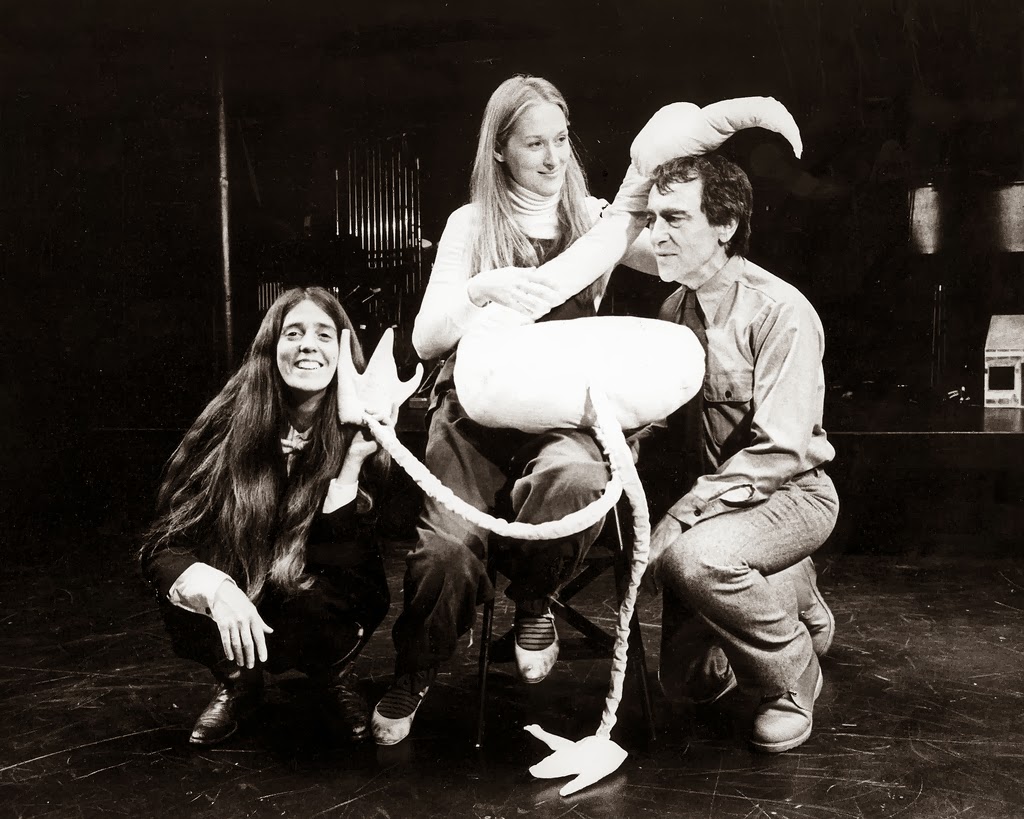
Below Meryl Streep in the rather unusual rendition of Alice In Wonderland, originally called ‘Alice In Concert’ (later retitled ‘Alice In The Palace’). According to the Public Theater, this was from an early 1978 showcase which ran for three performances. She’s pictured here with Elizabeth Swados and Joe Papp.
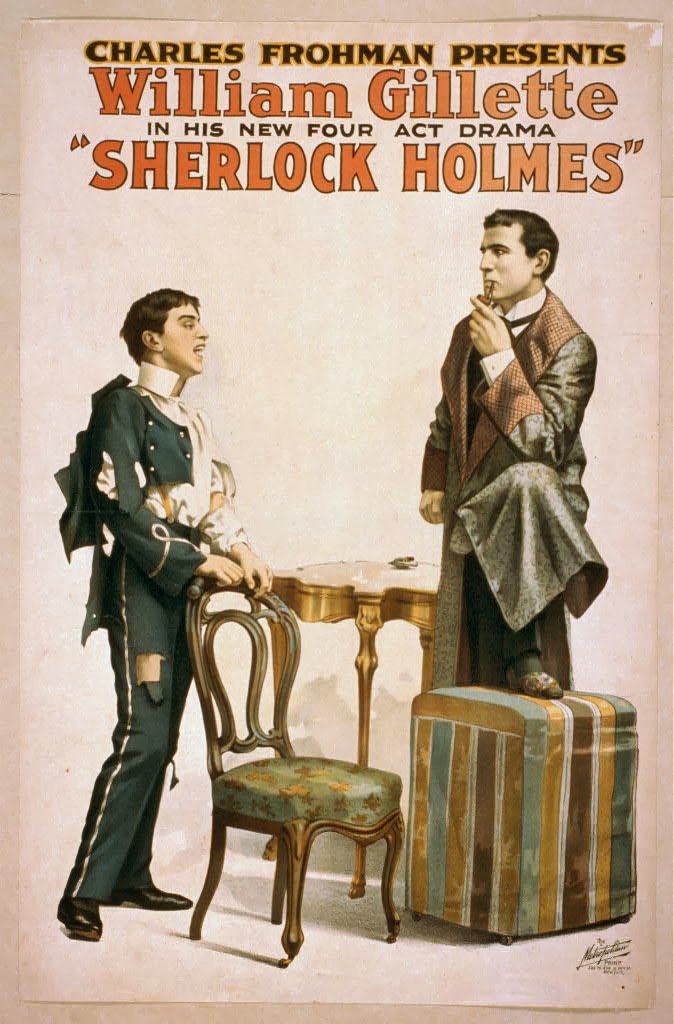
Above: While Sherlock Holmes made his film debut in 1900, he hit the stage a bit earlier. William Gillette was the most acclaimed Sherlock of the day, touring the United States in a play he co-wrote with the detective’s creator Sir Arthur Conan Doyle. After a tryout in Buffalo, the play made its debut at the Garrick Theatre (67 West 35th Street) in New York on November 6, 1899.
There are two varieties of Sherlock Holmes these days — the British alternative kind (Sherlock, with Benedict Cumberbatch) and the New York variant (Elementary, with Jonny Lee Miller). You might naturally assume that Cumberbatch’s Sherlock Holmes is closer in spirit to the original stories by Sir Arthur Conan Doyle. But the modern-day CBS variation, which is filmed in New York City, actually brings the classic detective stories back to its original roots in the cinema.
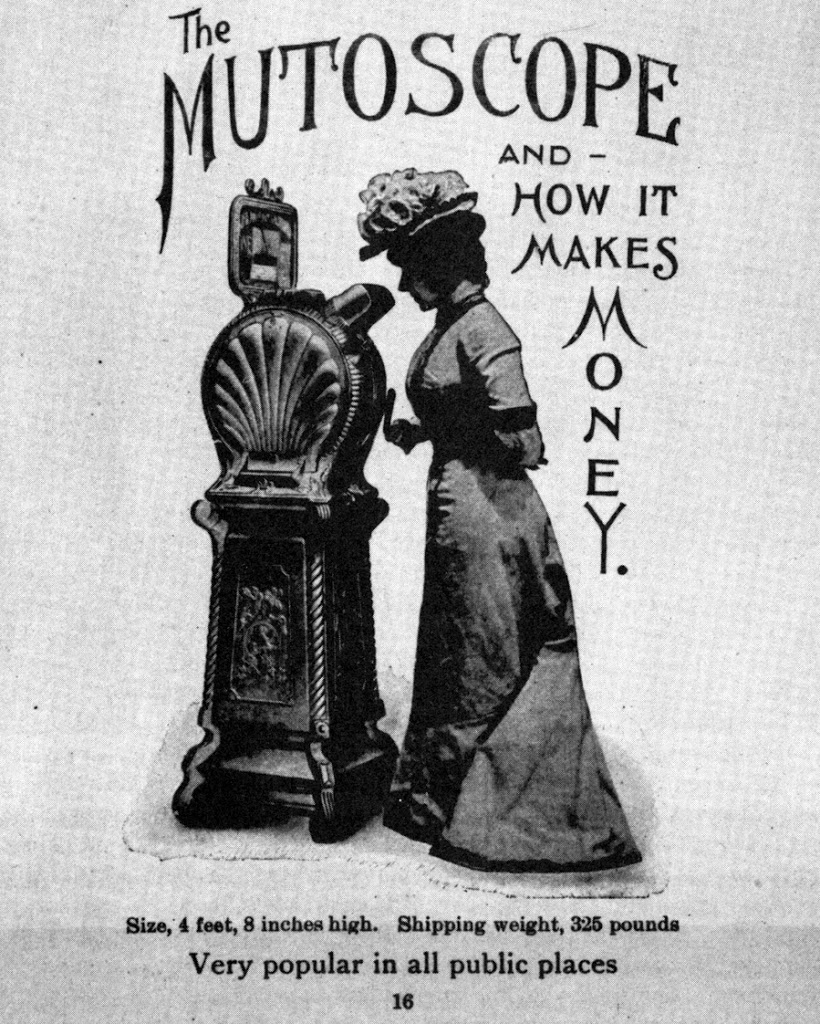
The first attempt to bring Sherlock Holmes to the film medium was in the year 1900 with Biograph-Mutoscope’s Sherlock Holmes Baffled. Mutoscope films were not projected, but rather, displayed in a stand-alone box for a single person to view, the images moving with the help of a hand crank. (At right: An 1899 trade advertisement for the Mutoscope).
Most early Mutoscope films were documentary in nature (often boxers or acrobats), similar to those for Thomas Edison‘s Kinetoscope. The very first movie made in the city of New York was a boxing match featuring Young Griffo, made for another competing film device, the Eidoscope, and filmed atop old Madison Square Garden.
Due to the short running time of films made for these private viewing consoles, the first narrative films were crude, silly and often confusing, throwing viewers into an action scene that abruptly stops. That is the case with Sherlock Holmes Baffled, seen here in its entirety:
Outside of the title card, the move bares no traits of Sherlock Holmes whatsoever. It seems to merely borrow the name to present a wacky narrative involving the detective discovering a thief who then disappears and re-appears at a whim.
The movie was made at Biograph’s revolving rooftop studio at 841 Broadway in Union Square. That original building was demolished at some point to make way for the Roosevelt Building. In an accidental tie to its movie heritage, across from the Roosevelt is the Regal Union Square Stadium multiplex, which has undoubtedly seen more sophisticated Sherlock Holmes movies (such as the Robert Downey Jr. version) since it was constructed in 1998.
The identity of the actor who played the first Sherlock Holmes is apparently unknown.
Biograph would continue using Union Square as a site for film production. They moved to another studio in 1906 — just up the street, at 11 14th Street — where they produced ever more extravagent movies, including a reinactment of the San Francisco earthquake, rushed into theater just months after the disaster struck the West Coast city on April 18, 1906.
From my original article: “What seems especially brazen about this fabrication is that it was being created in New York’s Union Square, even as San Francisco’s public square of the same name sat in ruins.”
Five years later, a slightly more recognizable Sherlock Holmes can be seen in The Adventures of Sherlock Holmes, or Held For A Ransom. In this version, Sherlock is played by vaudeville star Gilbert Anderson, best known for his appearance in The Great Train Robbery. (He was later renamed ‘Bronco’ Billy Anderson due to his later fame as an early cowboy film star.)
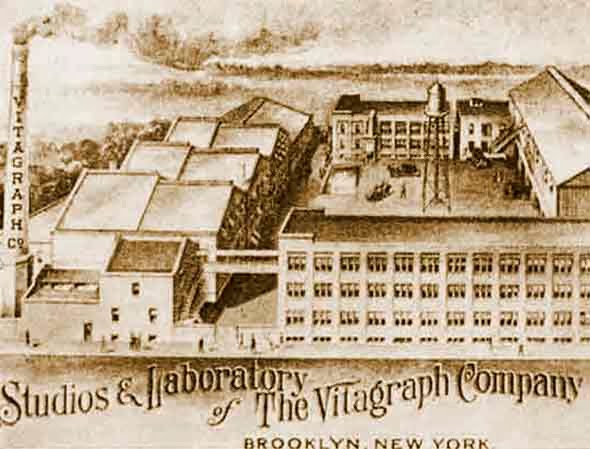
This, too, was filmed in New York — at Vitagraph Studios in Flatbush, Brooklyn! Pictured below: