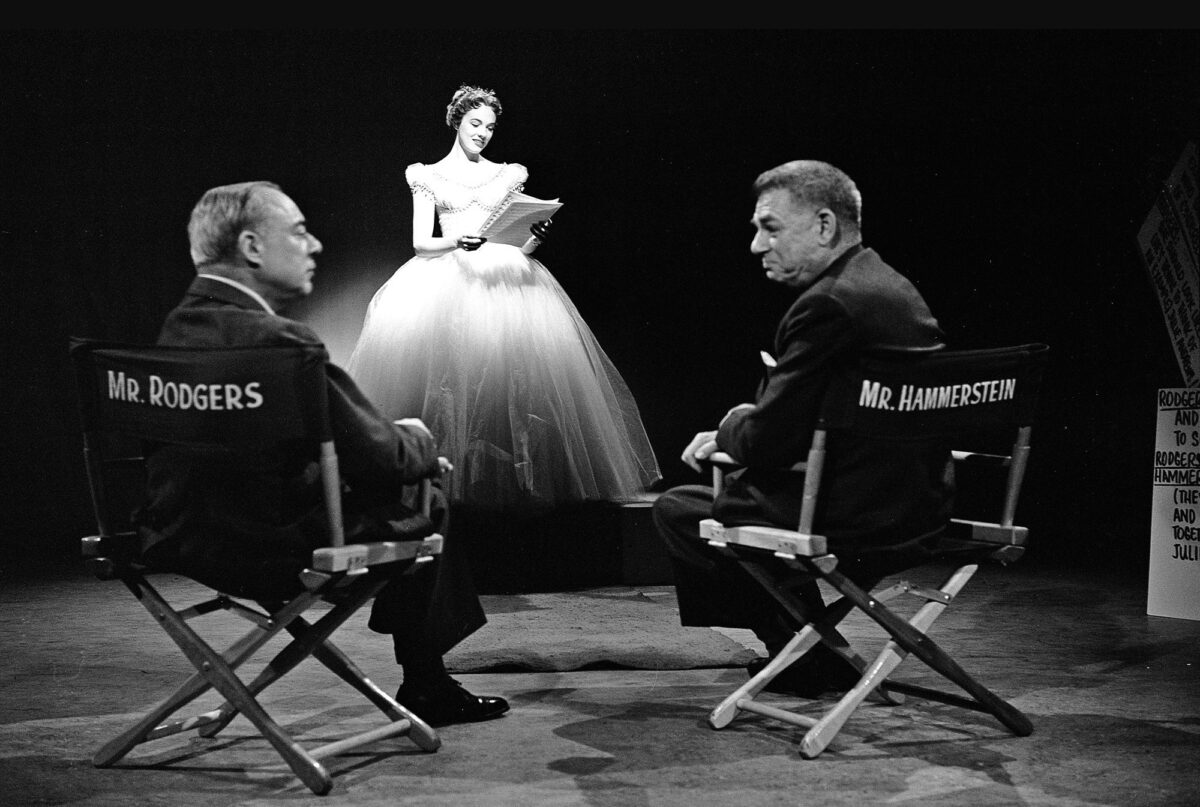
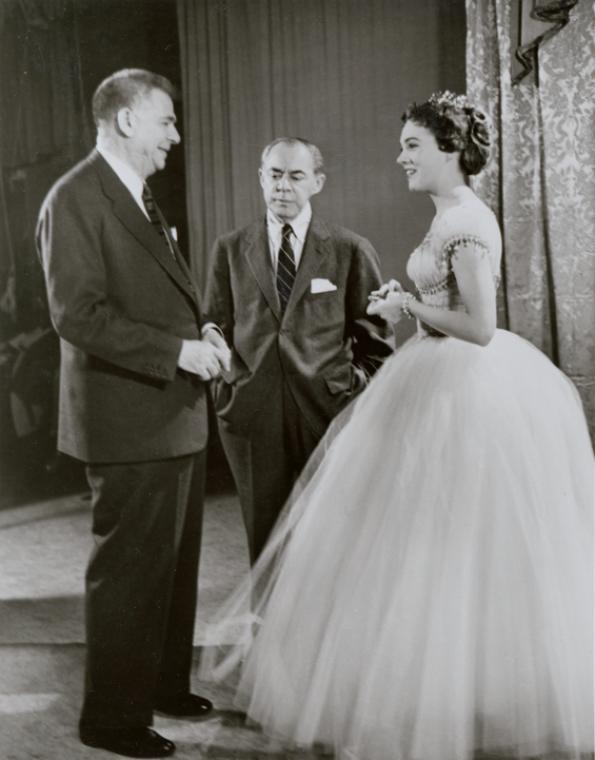
Publicity still for the broadcast of Cinderella in 1957. The television film was seen by more than 100 million people (or well over half the population of the United States.)
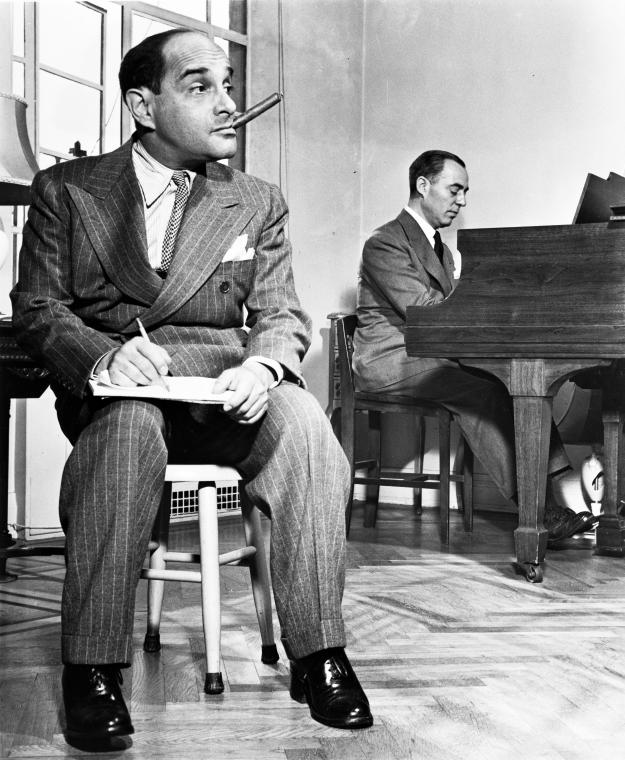
Richard Rodgers and Oscar Hammerstein II are two of the greatest entertainers in New York City history. They have delighted millions of people with their unique and influential take on the Broadway musical — serious, sincere, graceful and poignant. In the process they have helped in elevating New York’s Theater District into a critical destination for American culture.
In this episode, we tell the story of this remarkable duo — from their early years with other creators (Hammerstein with Jerome Kern, Rodgers with Lorenz Hart) to a run-down of all their shows. And almost all of it — from the plains of Oklahoma to the exotic climates of South Pacific — takes place on just two city blocks in Midtown Manhattan!
PLUS: What classic music venue still bears the name of Oscar Hammerstein’s grandfather?
How did the ritzy Plaza Hotel celebrate the fifth anniversary of Oklahoma’s debut?
How is Richard Rodgers associated with Hamilton the Musical?
And what was the final song written by Rodgers and Hammerstein?
LISTEN NOW: RODGERS AND HAMMERSTEIN
The Bowery Boys Podcast is proud to be sponsored by Founded By NYC, celebrating New York City’s 400th anniversary in 2025 and the 250th anniversary of the United States in 2026.
Read about all the exciting events and world-class institutions commemorating the five boroughs’ legacy of groundbreaking achievements, and find ways to celebrate the city that’s always making history at Founded by NYC.
The selection of theater images and memorabilia below are courtesy the Billy Rose Theatre Division at the New York Public Library.
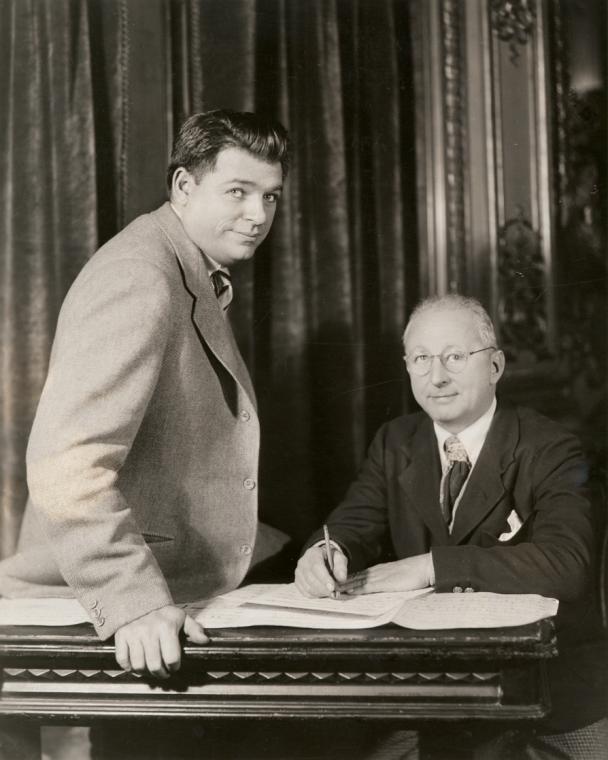
Hammerstein with another musical legend — Jerome Kern — in 1939
NYPL
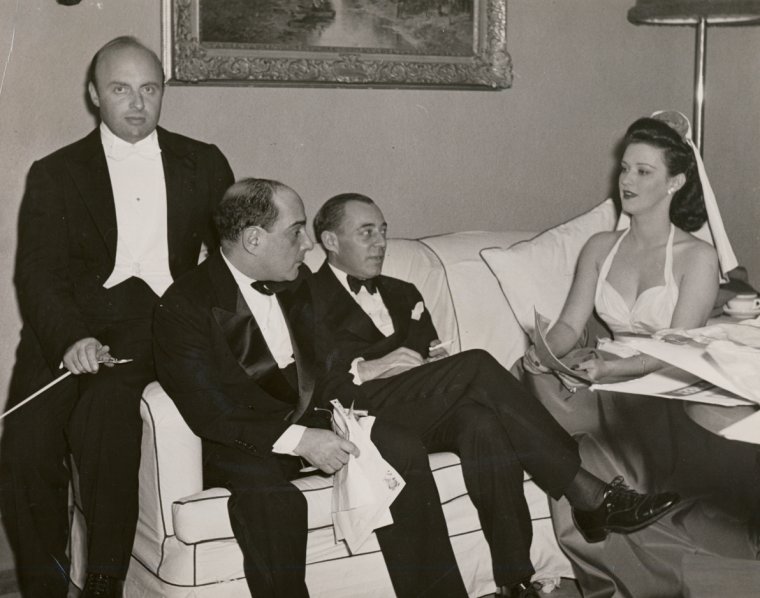
Andre Kostelanetz, Lorenz Hart, Richard Rodgers and Jane Froman, 194o
NYPL
Rodgers and Hart, circa 1940
NYPL
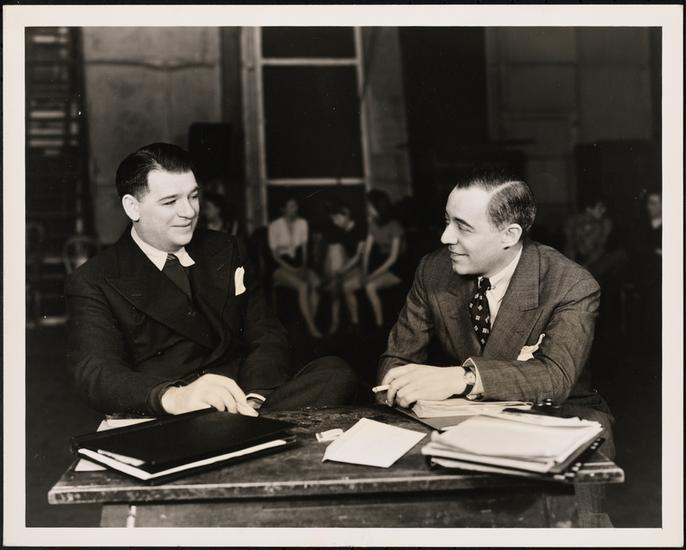
The creators, with performers in the background
Museum of the City of New York/NYPL
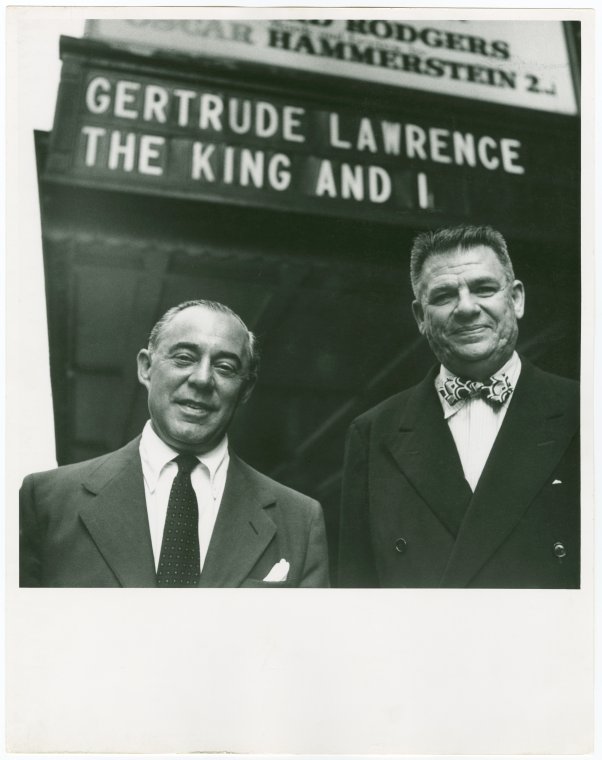
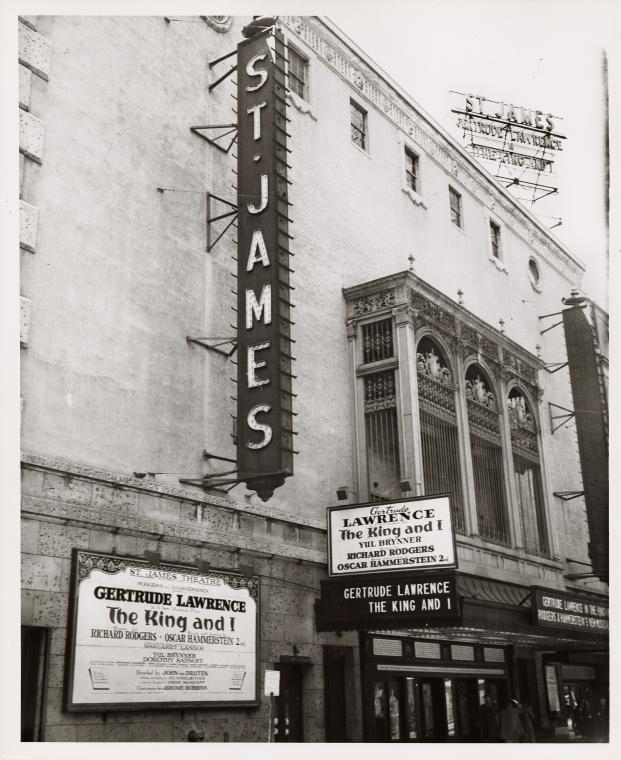
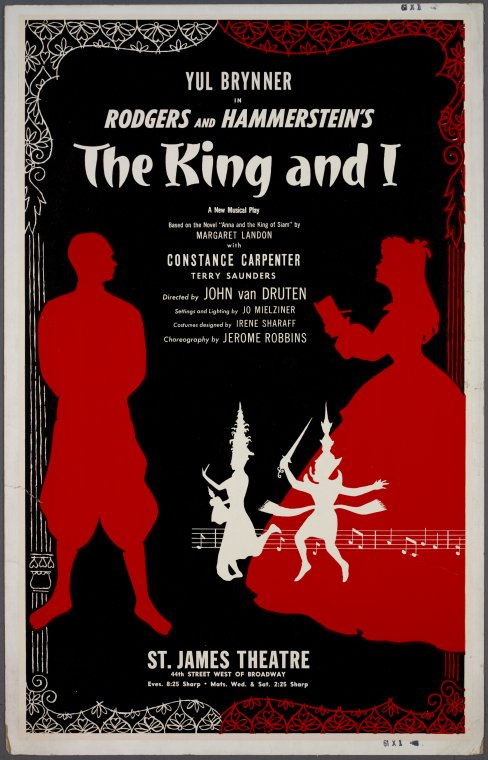
Richard Rodgers and Oscar Hammerstein II at the opening of The King and I at the St. James Theatre
NYPL
Hammerstein, Rodgers and a young Julie Andrews during rehearsals for the broadcast of Cinderella.
NYPL
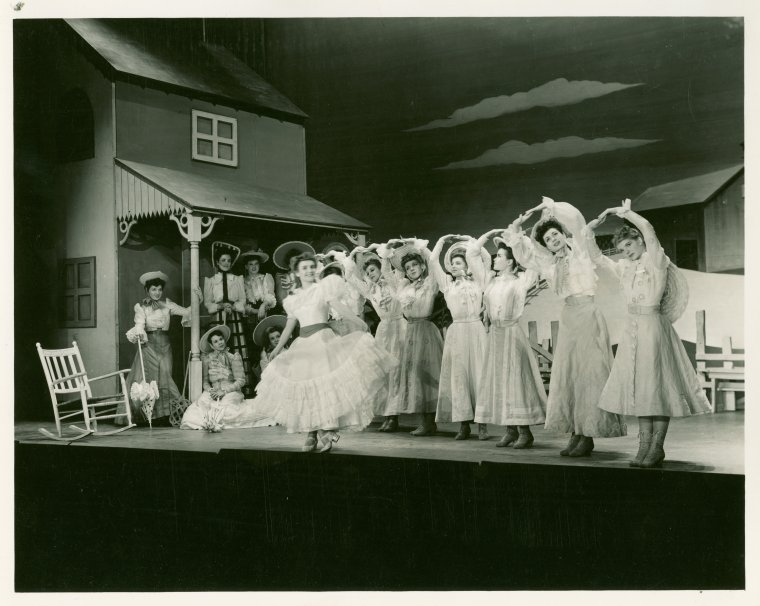
No ‘leggy chorus girls’ here. Joan Roberts and the original cast of Oklahoma! transformed the Broadway musical
NYPL
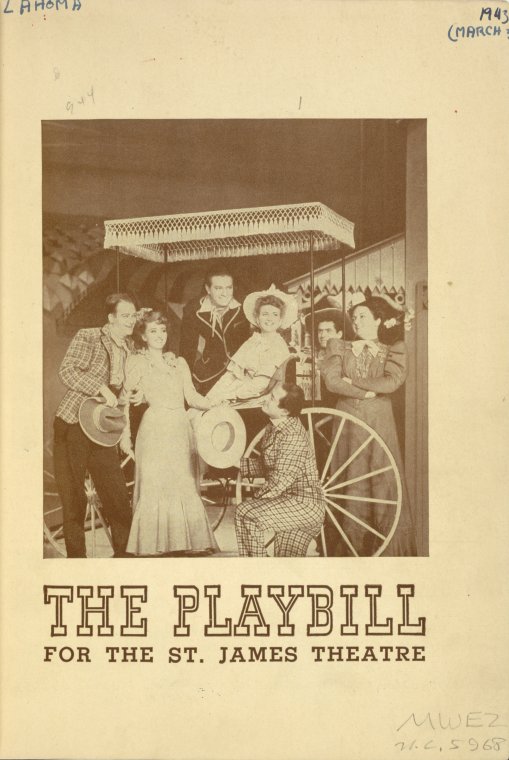
Playbill for the original production of Oklahoma! at the St. James Theatre (1943)
NYPL
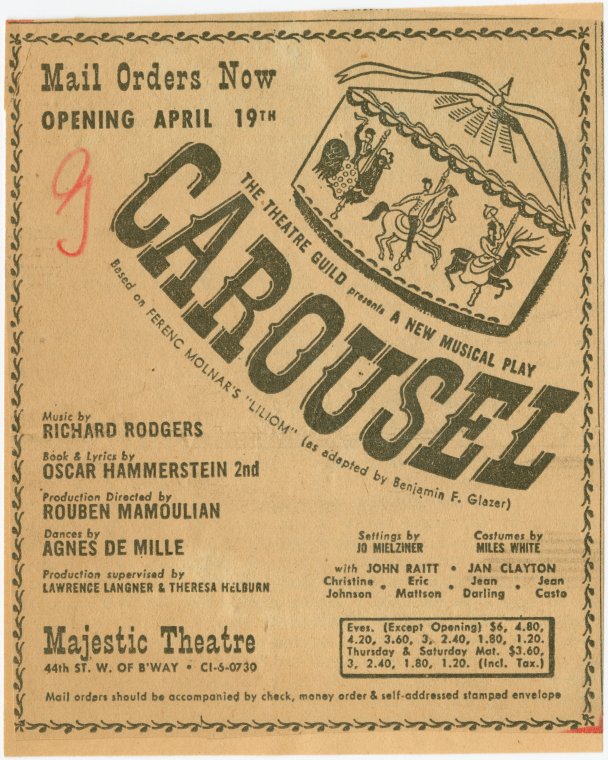
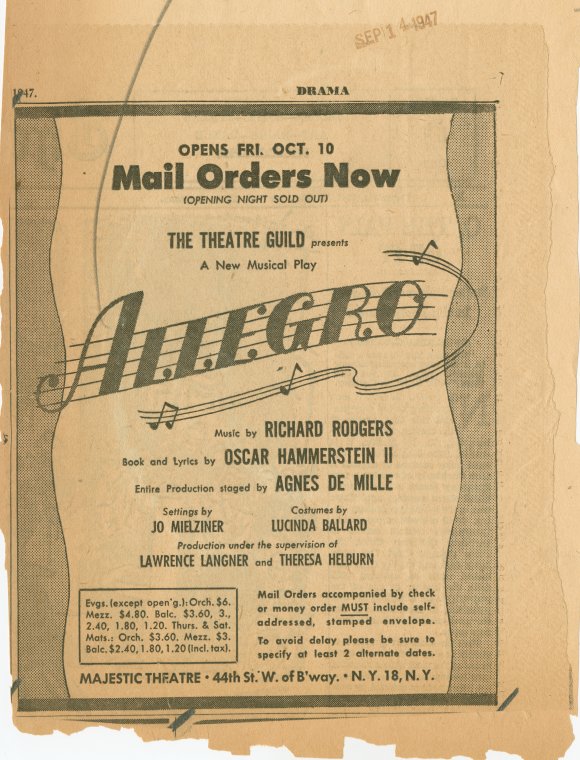
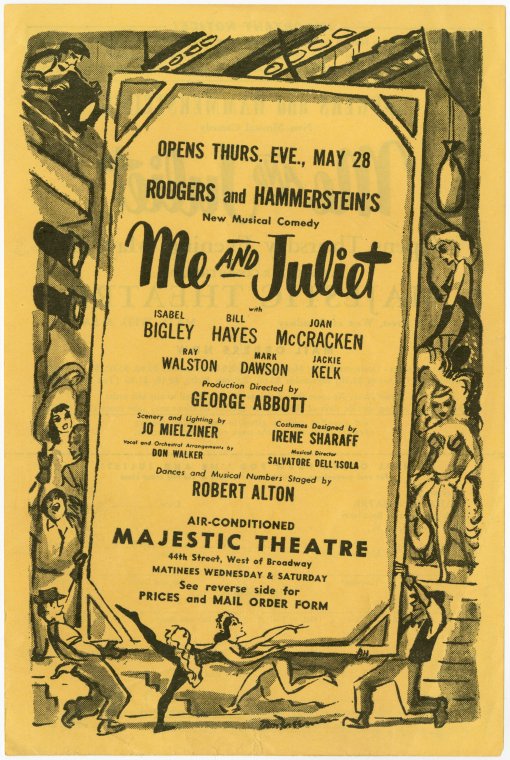
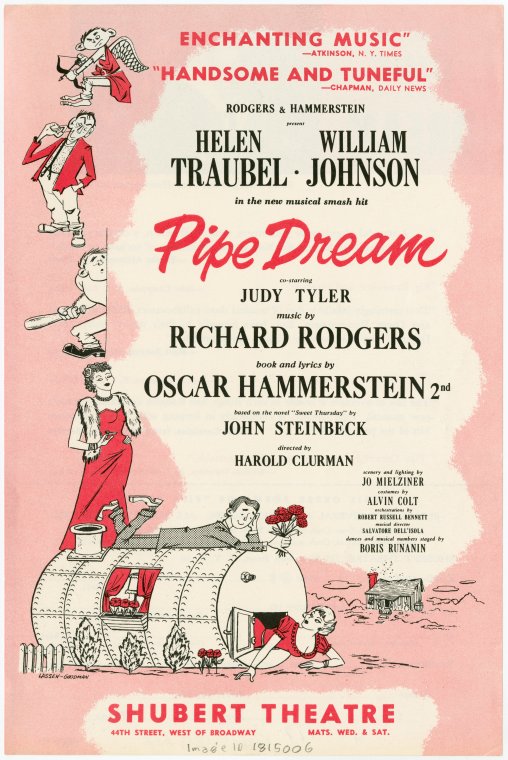
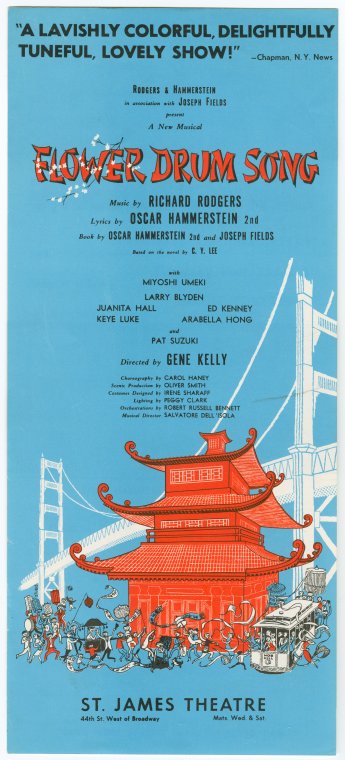
Thanks to advance “mail orders,” Rodgers and Hammerstein shows would be sold out months before opening — and months before the reviews came out.
NYPL
NYPL
NYPL
NYPL
NYPL
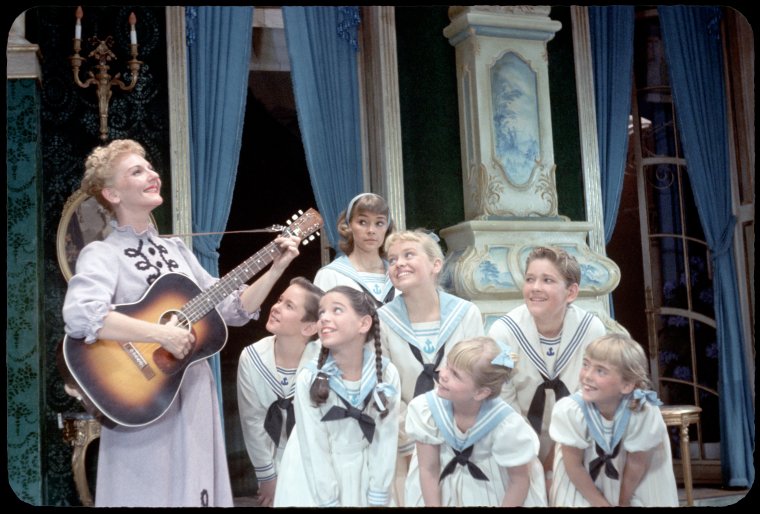
Mary Martin and the child stars of the original production of The Sound of Music.
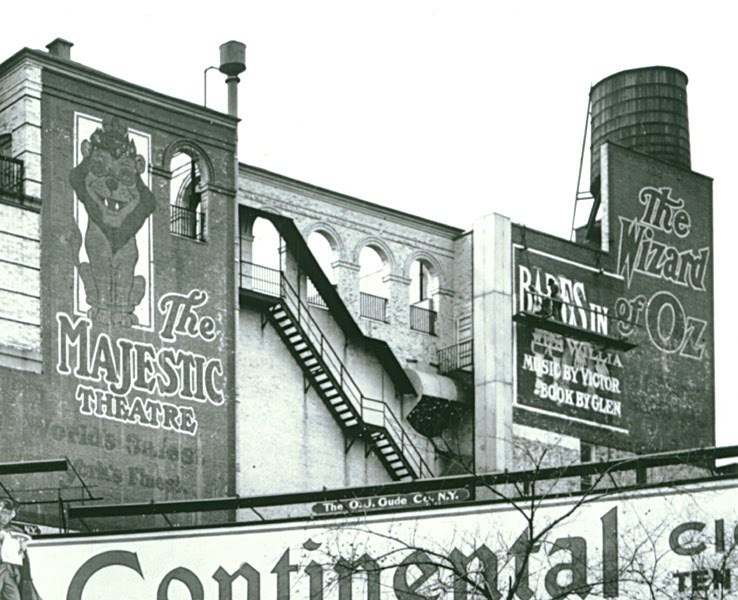
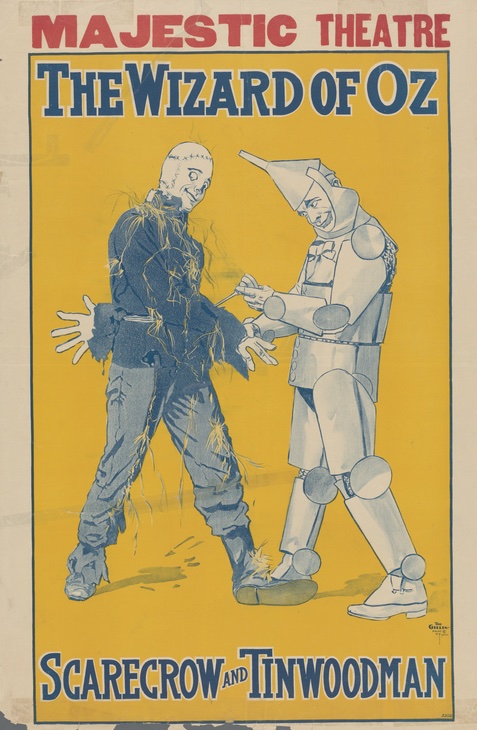
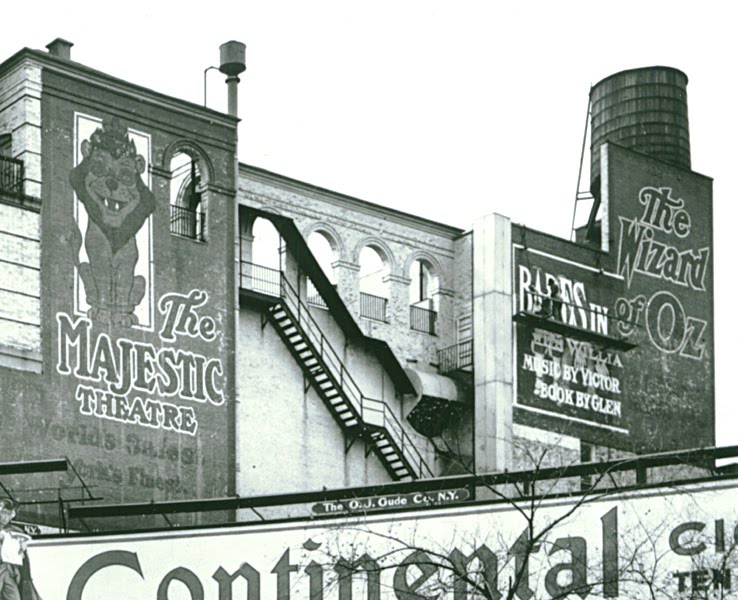
The very first musical version of The Wizard of Oz opened at the Majestic Theatre (at 5 Columbus Circle) on January 20, 1903, after playing to enthusiastic audiences in Chicago.
L. Frank Baum wrote the book to the musical, based on his novel ‘The Wonderful Wizard of Oz’ which was published in 1900.
New York Public Library
The temperatures were chilly that day, but New Yorkers were undeterred.
Or, as the New York Times observed: “With a dash of brilliant discovery ‘The Wizard of Oz’ last night discovered the north pole of the Broadway theatrical world in the Columbus Monument, at Fifty-ninth Street.
In a proximity as close as that of the Majestic Theatre frosts undoubtedly threaten, just as there is said to be a gathering chill in the theatres situated near the south pole in the Flatiron Building.”
The vaudeville act Montgomery and Stone played the Scarecrow and the Tinman.
Anna Laughlin, who played Dorothy, headed quickly to New York’s budding film business, starring in eighteen films between 1913-1915, many for the Brooklyn-based Vitagraph Company.
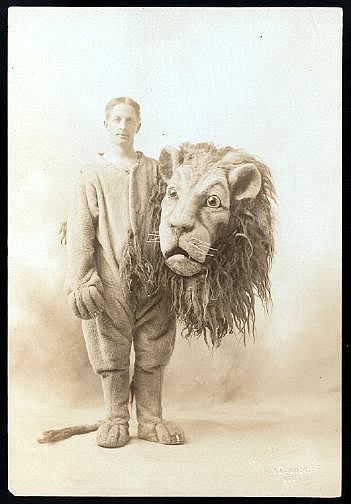
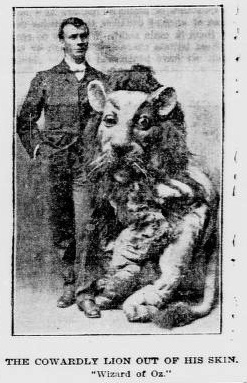
As for the Cowardly Lion, he was played by the handsome pantomimist Arthur Hill. He became so beloved in the role that he returned to the Broadway stage in other roles, always playing animals (including the wolf in a rendition of ‘Little Red Riding Hood’).
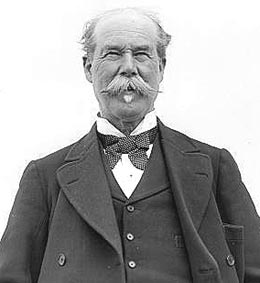
Among its admirers later that summer was the renown yachtsman Sir Thomas Lipton (pictured below), such a popular figure in 1903 that mobs arrived in Columbus Circle just to see his car pull up to the theater.
An ode to Lipton was performed by one of the chorus girls — Tommy! Oh! Oh Sir Tommy! You’re a dandy from your feet up — to his quite noticeable embarrassment.
Still, he came back to see the show a second time. Standing to give a speech, “[h]e may have intended to say more, but a misunderstanding about the calcium lights threw him suddenly into darkness, and he sat down.”
The show was a blockbuster, running in New York for two whole years, eventually closing on the final day of 1904.
I believe ‘Wizard’ was the inaugural performance at the Majestic Theatre, which survived several decades — as the International Theatre, it even co-hosted the Academy Awards — until it was demolished in the 1950s.
The play was such a success that Baum was convinced to write a sequel called ‘The Marvelous Land of Oz’. From there, he went on to expand his Oz franchise for several more books, including beloved installments featuring Tik-Tok, the Patchwork Girl and Ozma.
On the occasion of its 225th performance, the management of the Majestic gave out souvenir, telescopic silver drinking cups, “in which the friends and well-wishers of ‘The Wizard of Oz’ may drink to that potentate’s long long life and prosperous reign.”
Clippings courtesy the New York Tribune/Library of Congress.
The Broadway Musical is one of New York City’s greatest inventions, over 150 years in the making! It’s one of the truly American art forms, fueling one of the city’s most vibrant entertainment businesses and defining its most popular tourist attraction — Times Square.
But why Broadway, exactly? Why not the Bowery or Fifth Avenue? And how did our fair city go from simple vaudeville and minstrel shows to Shuffle Along, Irene and Show Boat, surely the most influential musical of the Jazz Age?
This podcast is an epic, a wild musical adventure in itself, full of musical interludes, zipping through the evolution of musical entertainment in New York City, as it races up the ‘main seam’ of Manhattan — the avenue of Broadway.
We are proud to present a tour up New York City’s most famous street, past some of the greatest theaters and shows that have ever won acclaim here, from the wacky (and highly copied) imports of Gilbert & Sullivan to the dancing girls and singing sensations of the Ziegfeld revue tradition.
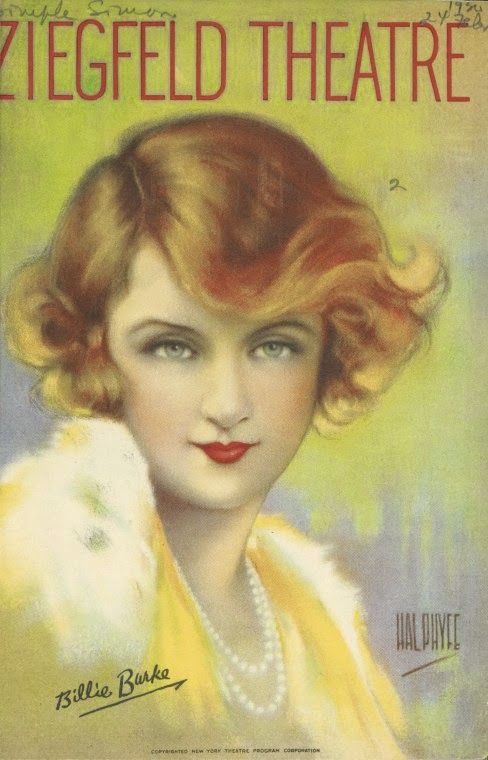
CO-STARRING: Well, some of the biggest names in songwriting, composing and singing. And even a dog who talks in German! At right: Billie Burke from a latter-year Follies. (NYPL)
This show, originally recorded in 2013, has been re-edited, remastered and even includes extra material which was cut from the original episode.
LISTEN NOW: THE BIRTH OF THE BROADWAY MUSICAL
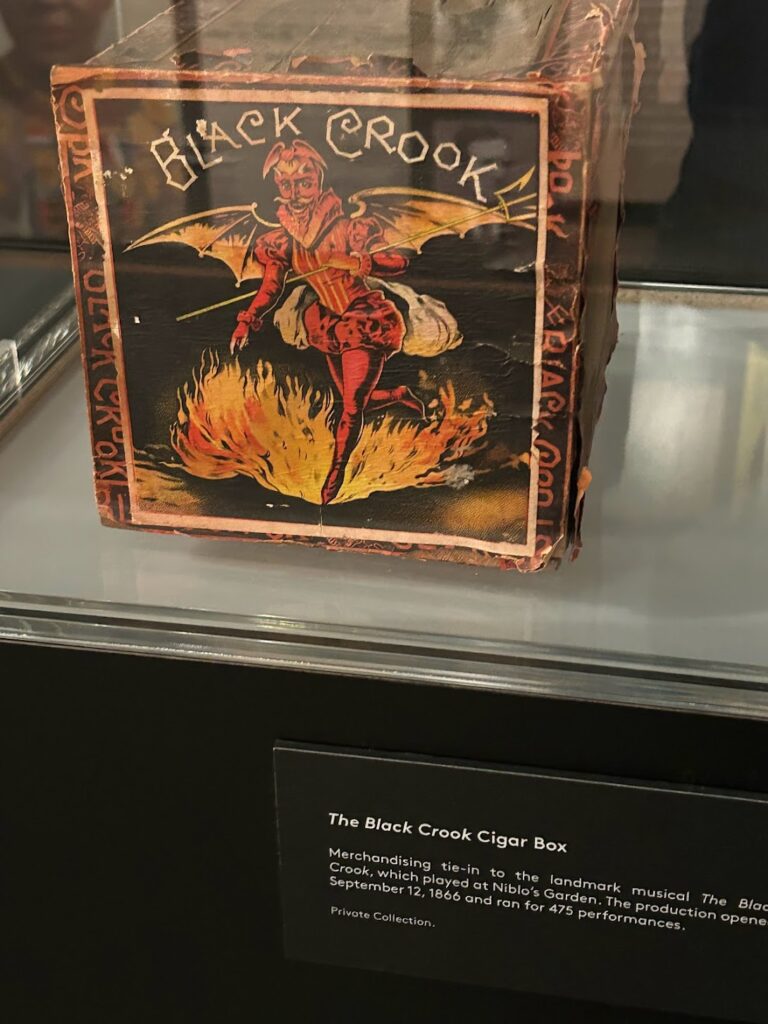
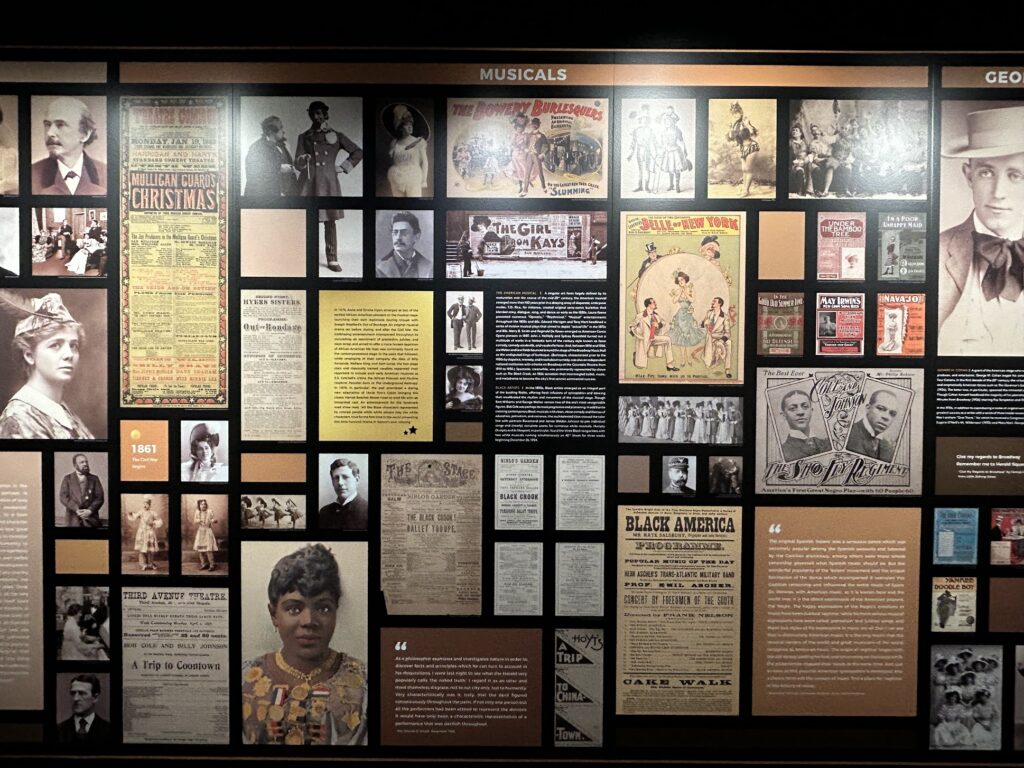
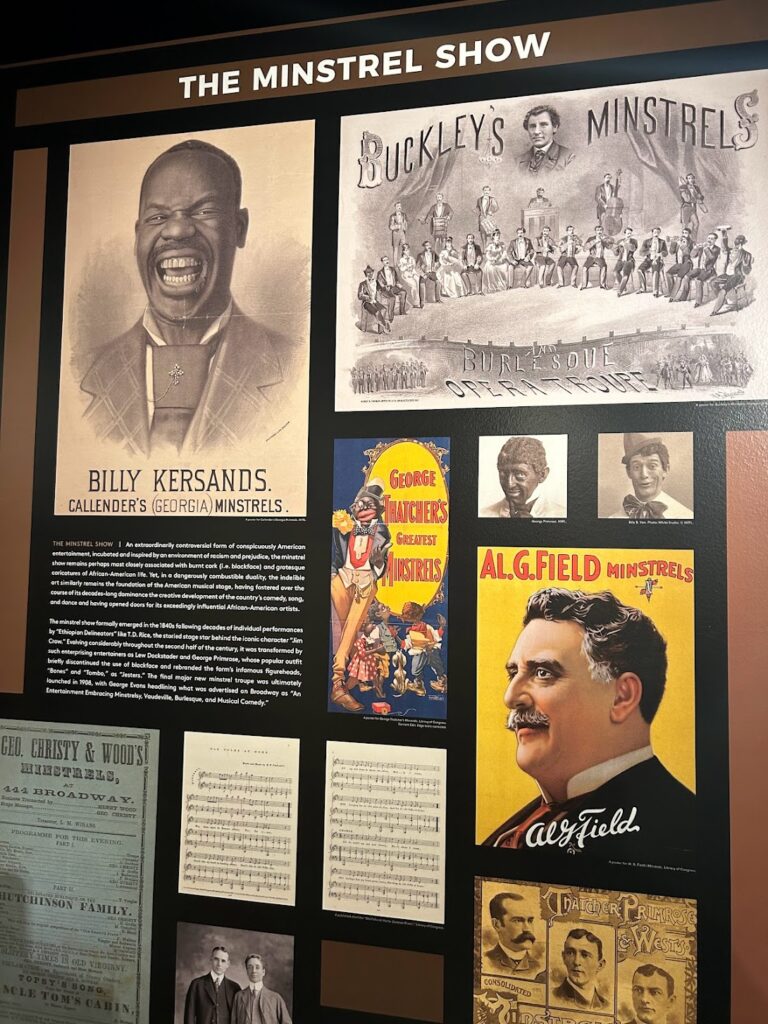
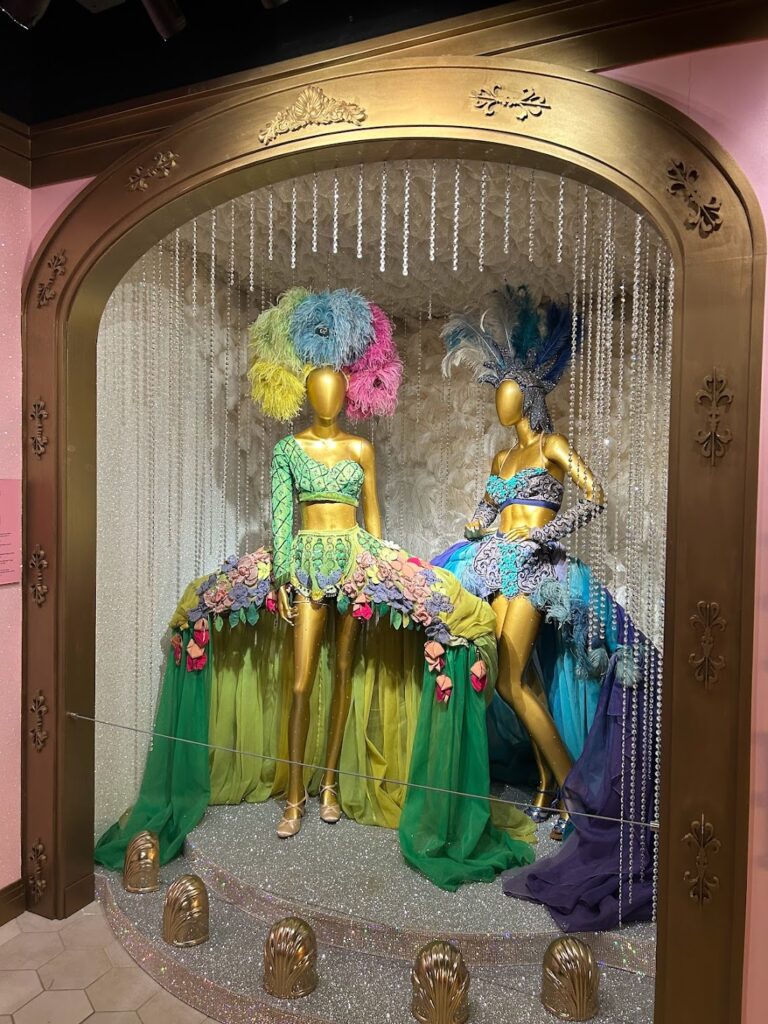
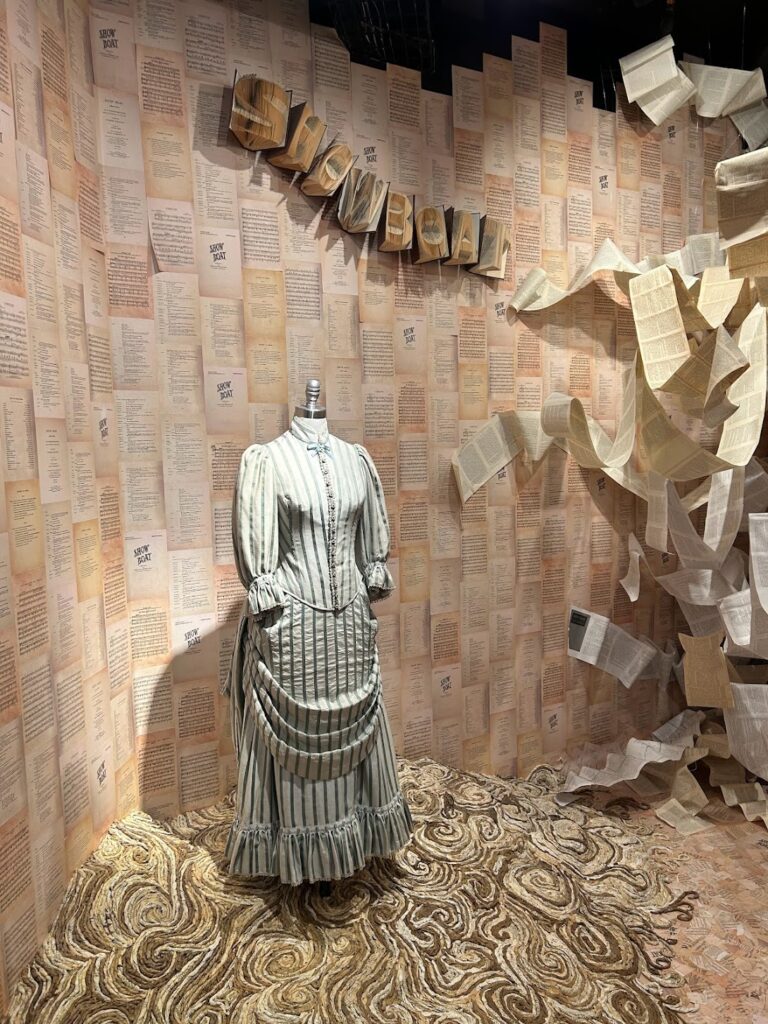
A few images from Greg’s trip to the Museum of Broadway at 145 West 45th Street.
The Black CrookZiegfeld FolliesShowboatRentThe Phantom of the Opera
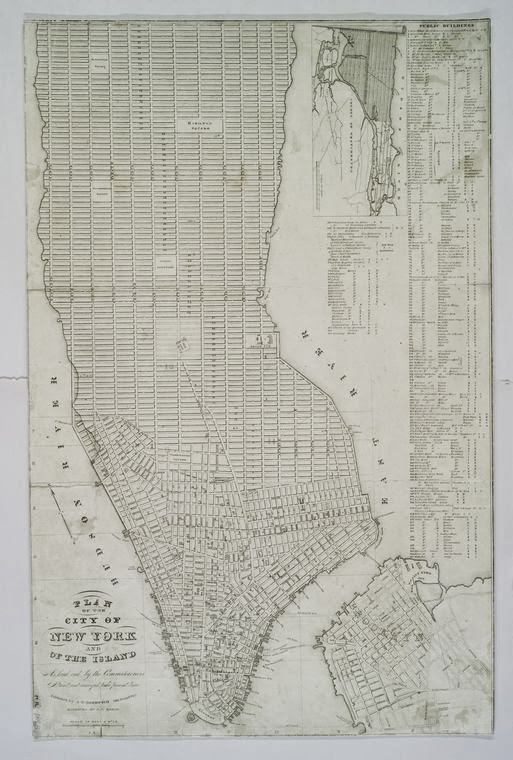
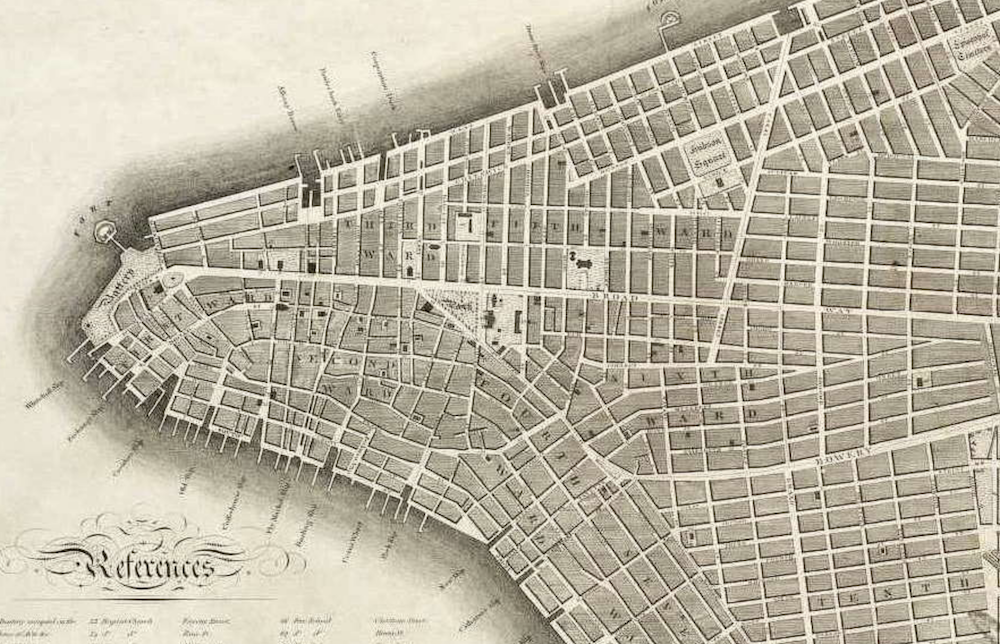
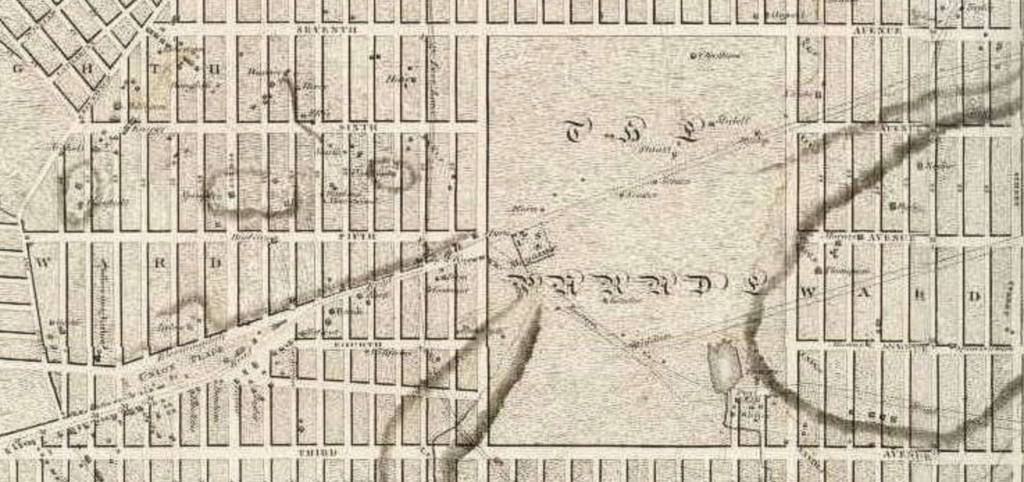
The original grid plan from 1811. As you can see, Broadway was not meant to extend further than the Parade Ground, the largest planned plaza from the Commissioner’s Plan. Years later, the Parade Ground was reduced (becoming Madison Square) and Broadway was allowed to break the grid, creating plazas conducive for transportation and public gathering. (NYPL)
New York Public Library
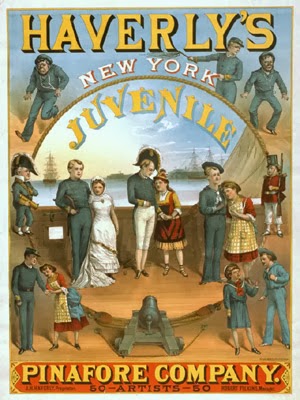
One of dozens of knock-off productions of HMS Pinafore, this one featuring children:
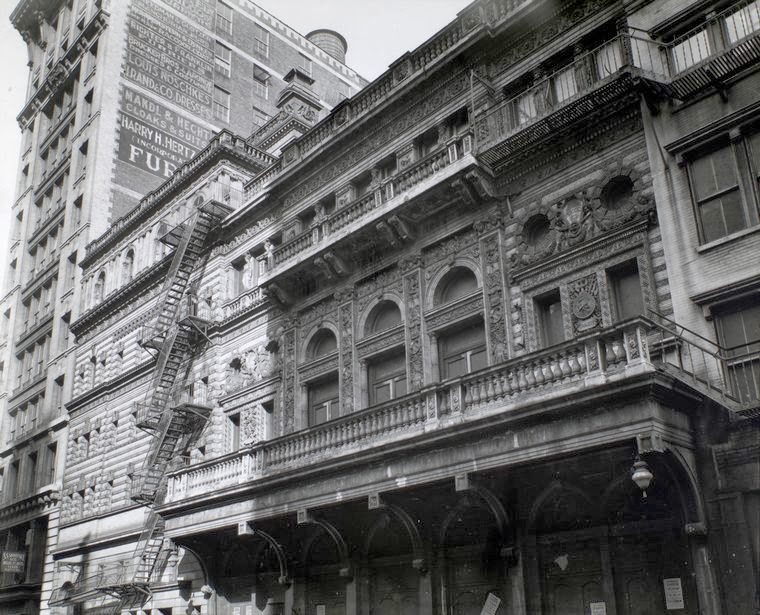
The facade of the Fifth Avenue Theater, once located at 1185 Broadway. Why was it called the Fifth Avenue Theater then? Possibly to just make the society ladies feel at home here! This was home to three Gilbert & Sullivan original productions, including the premiere of The Pirates of Penzance.
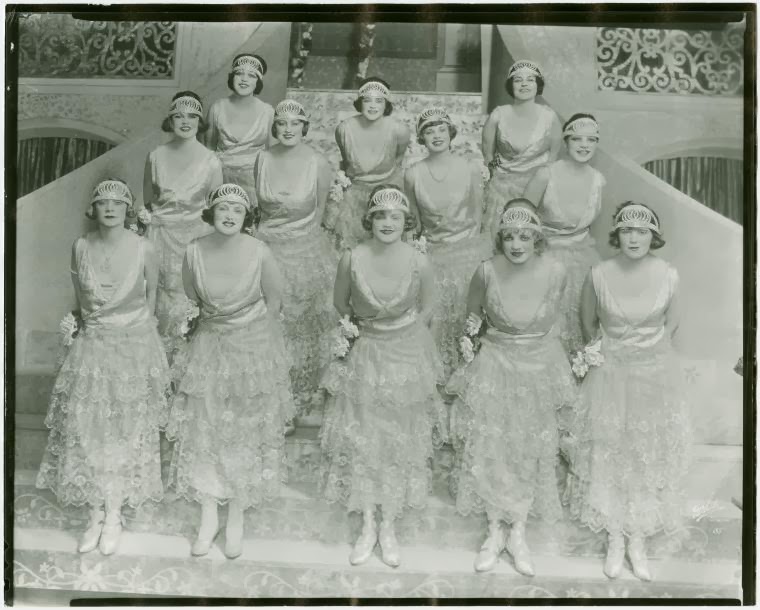
The Florodora girls, from the hugely successful 1900 musical comedy which debuted at the Casino Theater. (NYPL)
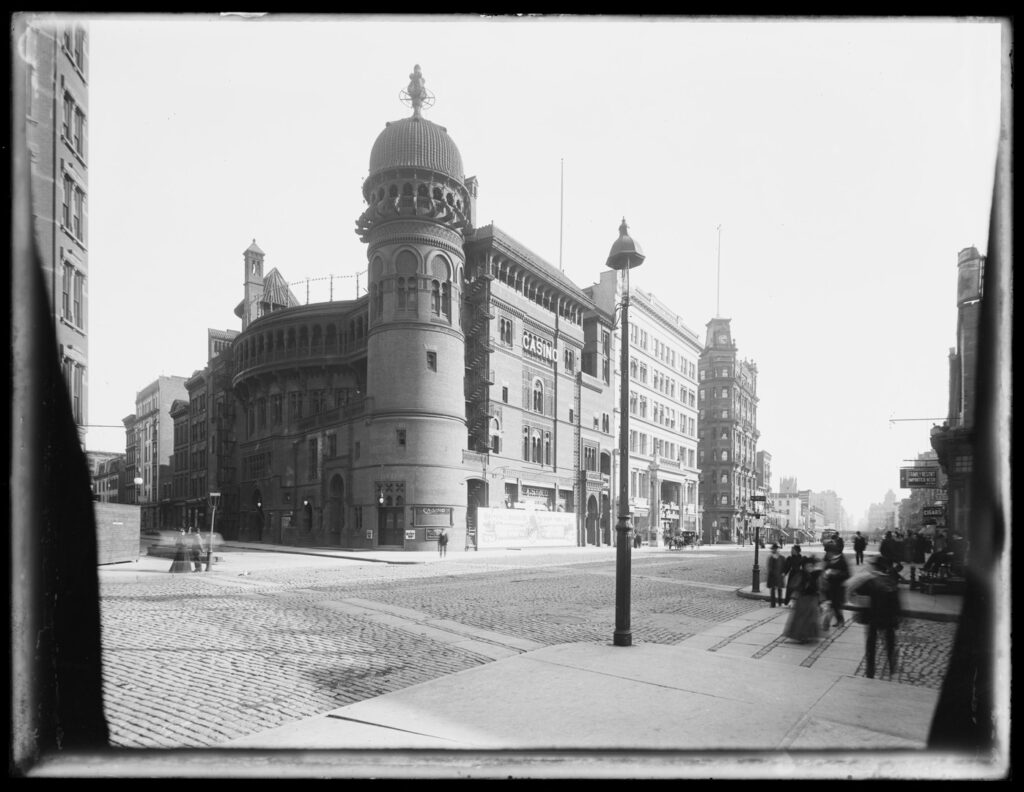
The Casino Theatre at West 39th Street and Broadway.
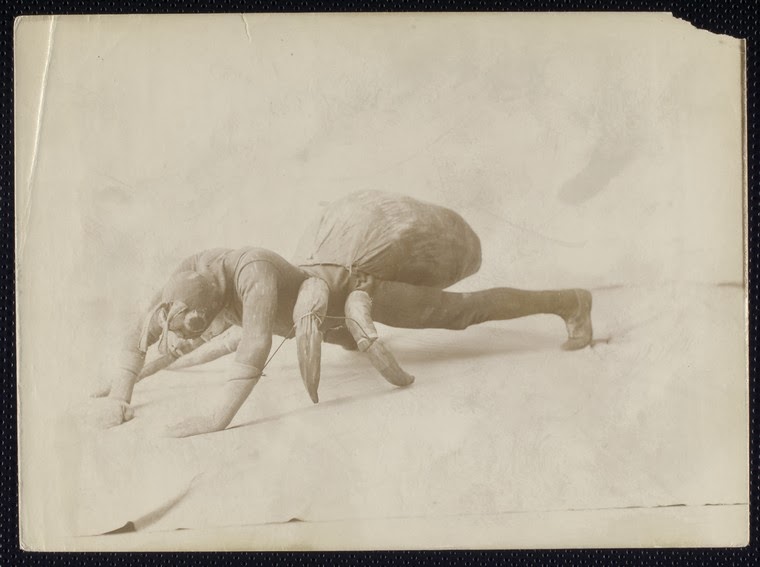
One of the more fantastic creatures from Victor Herbert’s Babes In Toyland, which made its debut in Columbus Circle’s Majectic Theater. You can read my article here on the musical which inspired Herbert’s show, the musical version of The Wizard of Oz. (NYPL)
New York Public Library
George M Cohan singing “Over There”
Video of a Ziegfeld Follies from 1929, a bit past their heyday, actually. They would only last until 1931:
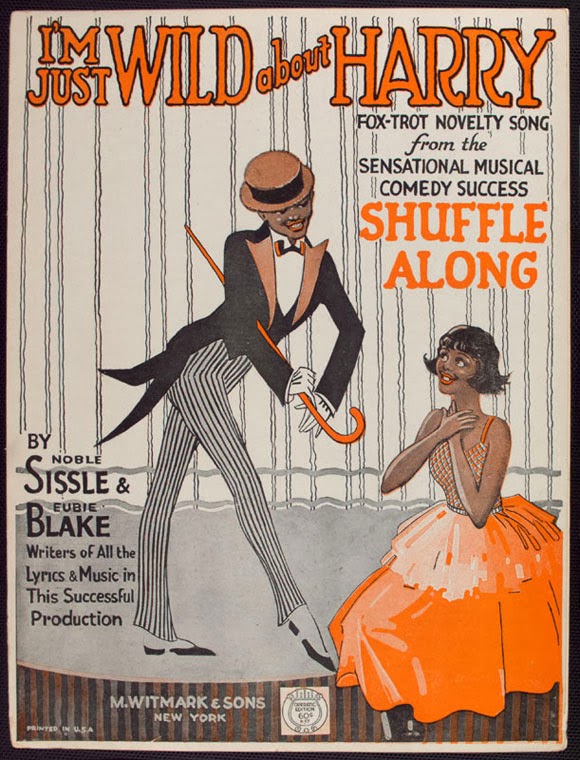
Sheet music from 1921 of one of the most famous songs from Shuffle Along (NYPL):
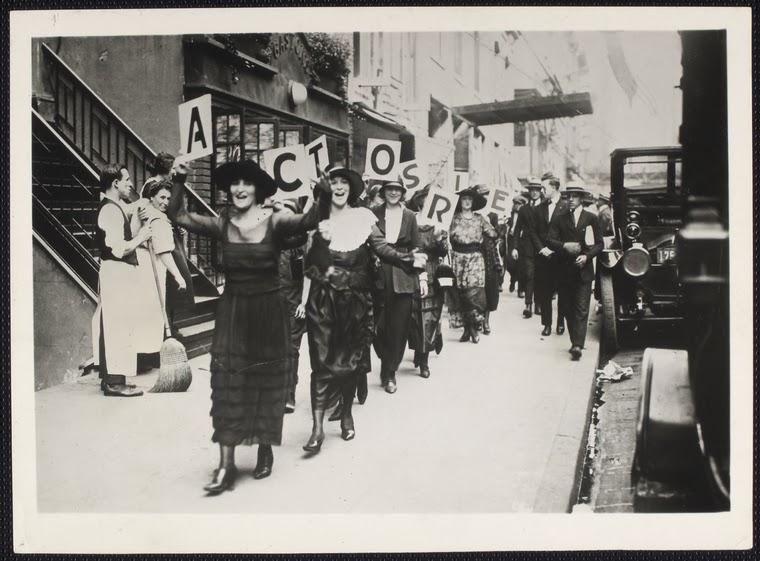
Dancing girls during the Actors Strike of 1919, which galvanized the industry and gave regular New Yorkers a window into the tough conditions faced by many background performers. (NYPL)
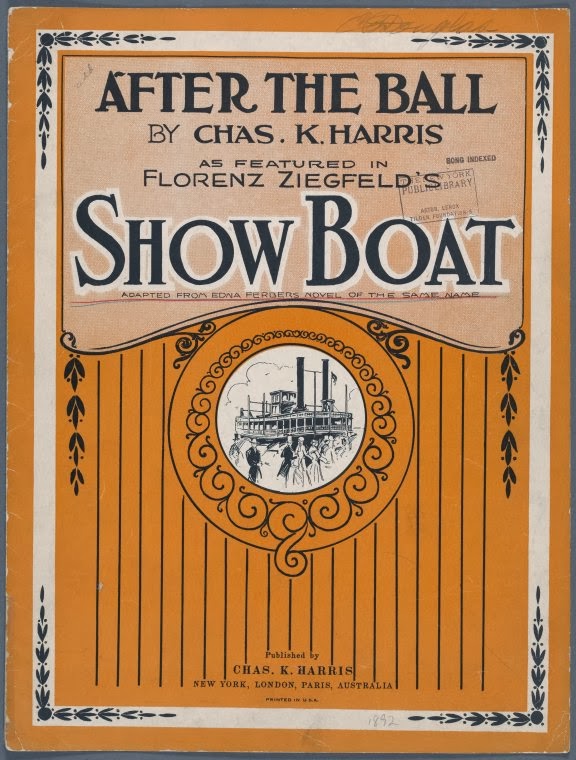
So the number ‘After The Ball’ — a huge hit song that made its stage debut in A Trip To Chinatown — made a return appearance to Broadway in 1927’s Show Boat!
Musical cues from this week’s show: Give My Regards To Broadway and After the Ball performed by Billy Murray A version of Make Believe recorded by Bing Crosby, and Ol Man River, performed by Paul Robeson, from a 1932 cast recording, featuring Victor Young and His Orchestra Love Will Find A Way, from a 1921 recording by Eubie Blake Selection from HMS Pinafore, from a 1914 recording by the Victory Light Opera Chorus
And finally, a clip from the film version of ‘Show Boat’, featuring an iconic performance by Paul Robeson.
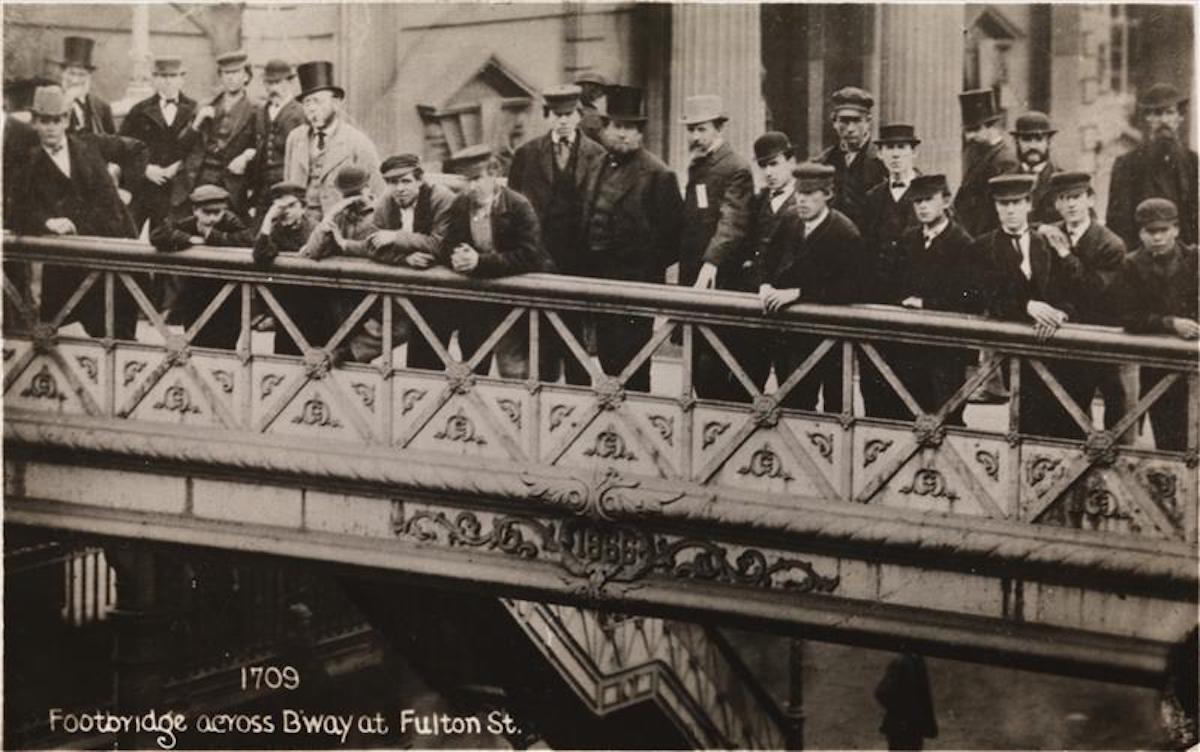
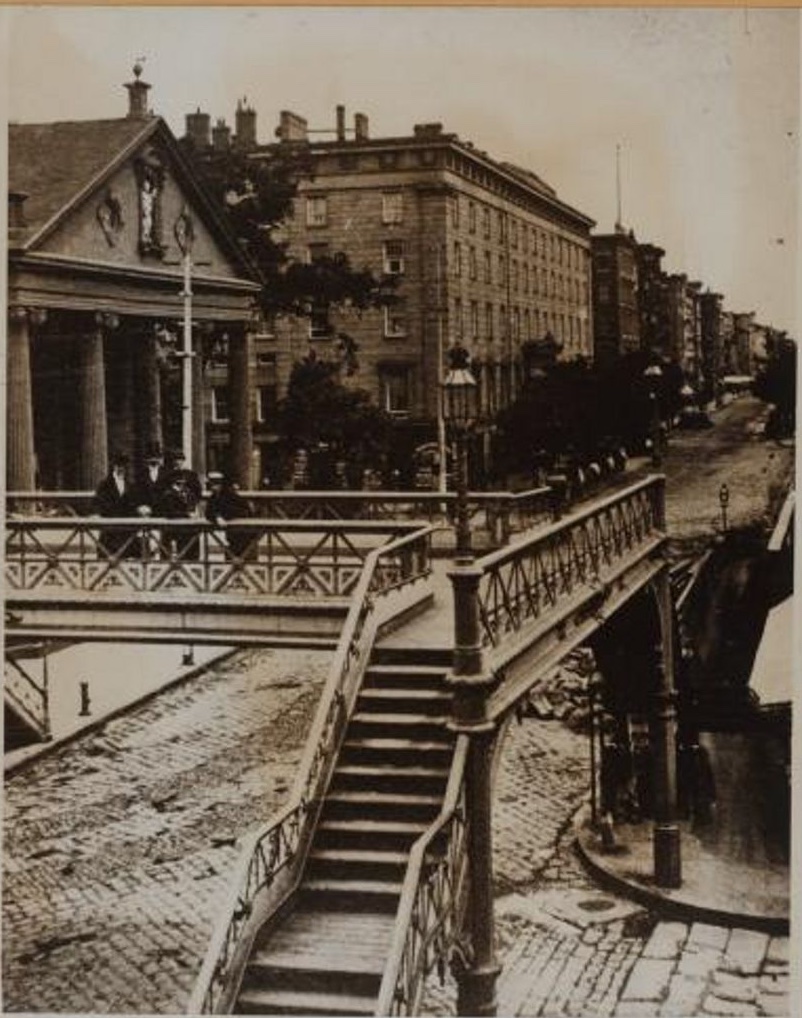
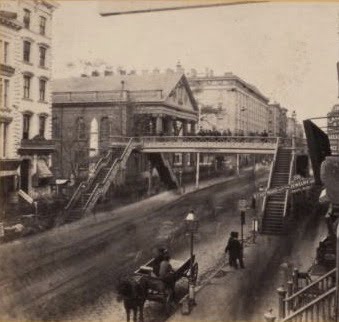
The bulky and yet somewhat elegant contraption above is the short-lived Loew Bridge, which once hung over Broadway at Fulton Street back in 1867 and 1868, an early cast-iron pedestrian bridge at one of the busiest intersections in the city.
It was named not for its architect, but for the comptroller of New York at the time, Charles E. Loew.
Crossing the street was indeed a challenge then, in an era of no traffic lights and conveyances operated by horses. A couple blocks to the north lay the heart of city government and the publishing industry, not to mention St. Paul’s Church and the Astor House, New York’s finest early hotel. (Both are seen in the photo below.)
New York Public Library
The bridge, which opened in April 1867, provided a respite to New Yorkers frustrated with dirty streets and impossible crossing options for pedestrians. One fanatic was even inspired to pen a lengthy poem to its honor.
Unfortunately, it was not popular with surrounding business owners, particularly the one at 212 Broadway. That storefront, the hatter of one Charles Knox, was obscured by the bridge’s latticework and decreased business opportunities, he alleged.
It seems unusual that one businessman would be able to effectively crumble a new bridge to the ground, but Mr. Knox had the city’s sympathies.
Two years earlier, his original shop had been destroyed in the same fire that incinerated Barnum’s American Museum. However he managed to unite some business owners of the area and eventually “brought suit against the city for $25,000 damages.” [source]
Most likely, Knox was more concerned with the belief that he was losing business to a rival hat shop across the street. (After all, to paraphrase a popular cliche, the hats are always cleaner on the other side.) Thanks to his efforts, the city ripped the bridge down less than two years after first erecting it, and citizens went back to their filthy and treacherous street crossings.
Back to square one, it seems. I think the situation is very well summarized in this letter from ‘B.’ to the New York Times, published on December 20, 1868:
“Taking down the Broadway Bridge appears to cause few remarks from the press, and when they have spoken they have rather been in favor of the removal.
“It appears to me the bridge, at certain periods was a great convenience, notwithstanding its needless height. When the snow slush is a foot thick, and the street blocked up with stages and trucks in a dead lock, it is a great accommodation to have a bridge to cross. It is almost impossible for women and children to cross Broadway, near Fulton Street, at such times; and if men get over it is at the risk of being covered with filth.
“Before the bridge was built, the writer has walked from Liberty Street to near Wall before getting across. At that time the papers were continually talking about ‘relief to Broadway”; but since the bridge was built, that has ceased. I think we shall hear it again on the first thaw after a heavy snowstorm, when crowds will be seen standing at the corners wondering how they will be able to get over the street.
“If the bridge is an injury to private property, the owners should be remunerated for the damage; not that a few shopkeepers, because their business is injured, or they think it is, should be the means of inconveniencing the whole public by having it removed.
“If that were the case with railroads, every farmer would have the power of stopping the road going over its land, because he thought it injured it — and there would not be a railroad in this country.”
Images above from the New York Public Library digital collection
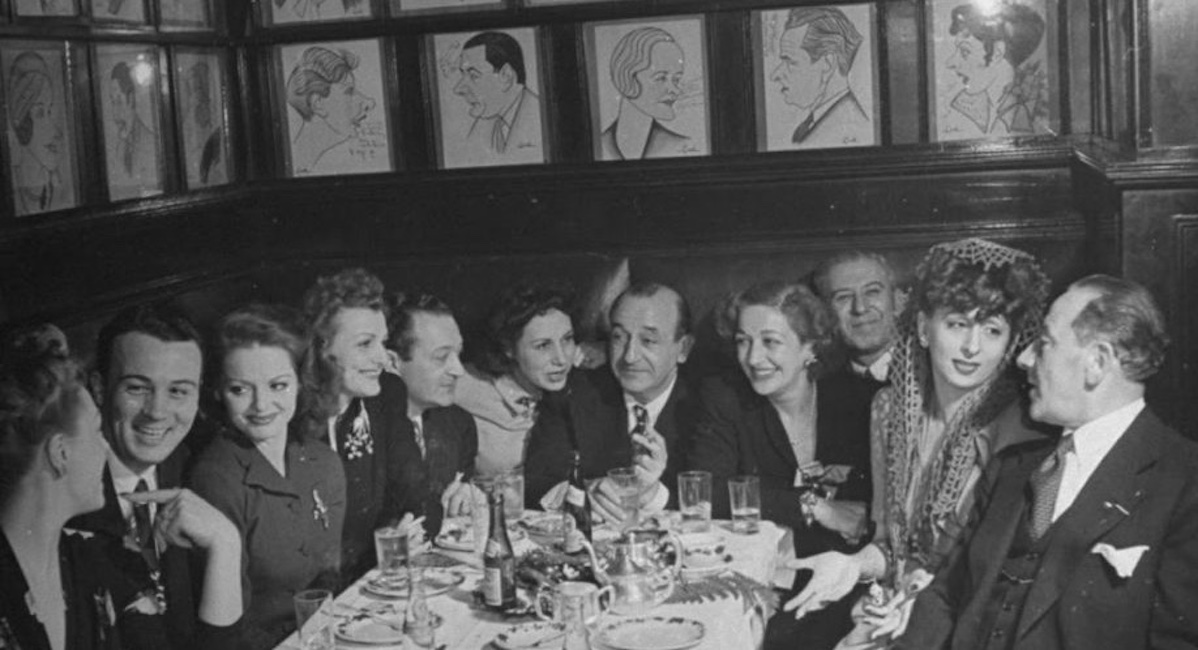
PODCASTREWIND The famous faces on the walls of Sardi’s Restaurant represent the entertainment elite of the 20th century, and all of them made this place on West 44th Street their unofficial home.
Known for its kooky caricatures and its Broadway opening-night traditions, Sardi’s fed the stars of the golden age and became a hotspot for producers, directors and writers — and, of course, those struggling to get their attention.
When Vincent Sardi opened his first restaurant in 1921, Prohibition had begun, and the midtown Broadway theater district was barely a couple decades old.
By the time the Italian-American restauranteur threw open its doors to its current locaton (thanks to the Shuberts) in 1927, Broadway’s stages were red hot, and Sardi found himself at the center of the New York City show business world.
We have some insider scoop from the old days — starring John Barrymore, Tallulah Bankhead, hatcheck girl Renee Carroll and a cast of thousands — and the scoop on those famous (and often unflattering) framed caricatures. So sidle up to the Little Bar, order yourself a stiff drink and eavesdrop in on this tale of Broadway’s longest dinner party.
PLUS: The birth of the Tony Awards!
FEATURING: Some 2022 updates including Sardi’s recent history.
LISTEN NOW: AN EVENING AT SARDI’S
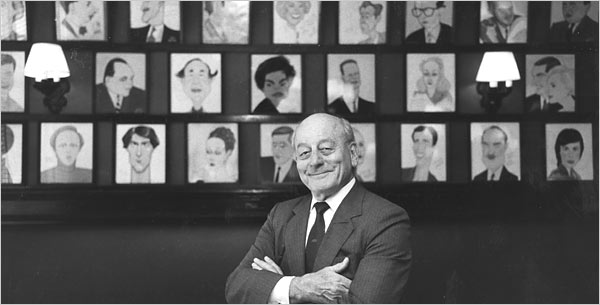
Vincent Sardi and his world-famous wall behind him. (Courtesy NYT)
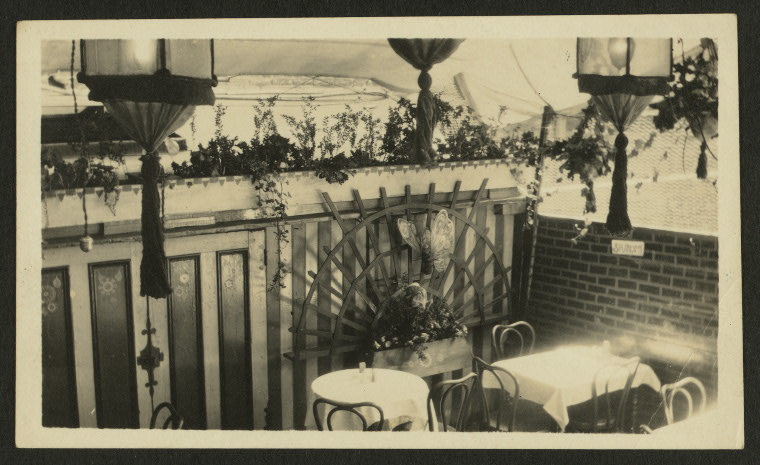
The outdoor garden cafe of the original Sardi’s, which opened in 1921 and was located two doors down from the current location. It was demolished to make way for the St. James Theatre.
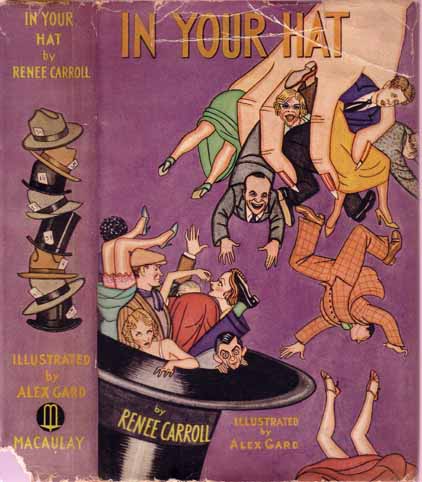
The cover of the tell-all 1933 memoir by famed Sardi’s hatcheck girl Renee Carroll and illustrated by Sardi’s original caricaturist Alex Gard.
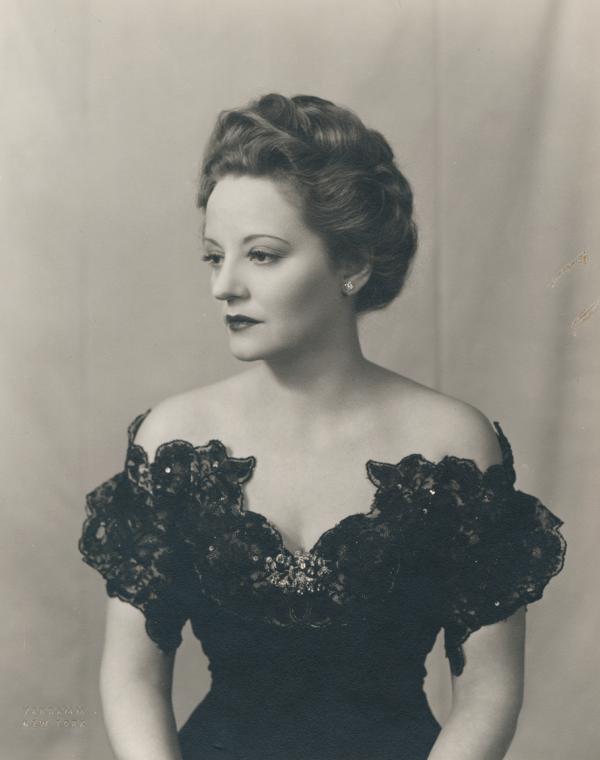
Tallulah Bankhead, Broadway diva and notorious Sardi’s customer. (Courtesy NYPL)
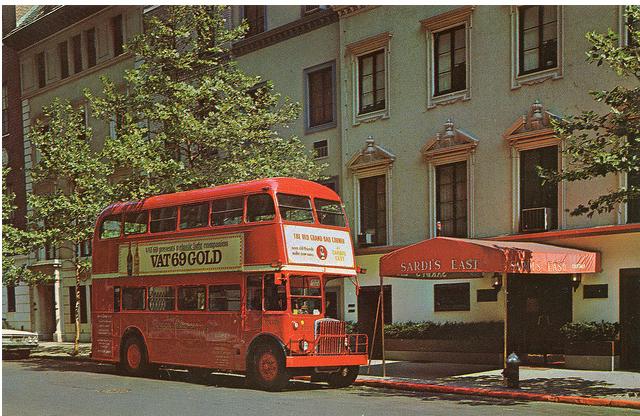
The failed experiment Sardi’s East, instantly problematic due to its distance from the theater district. Sardi Jr. attempted to solve the problem with a fun-filled double-decker bus — often accompanied by Broadway stars — that would zip diners to their shows after dinner. (source Flickr/edge and corner wear)
As we mentioned on the show, it’s difficult doing a history podcast on a private business without it sounding a bit like an advertisement, but hopefully we were able to execute past that. (We came across this odd feeling with other podcasts like Saks Fifth Avenue and The Plaza Hotel.)
We left a few details on the cutting-room floor, including Sardi’s lengthy involvement with the Dog Fanciers Club, which throws a congratulatory breakfast every year for the Best In Show winner of the Westminster Dog Show. Tom also did a rather nice job with reading an excerpt from Renee Caroll’s biography, but some sound problems forced us to cut it.
Tom mentioned the glory of Broadway in 1927. Show Boat is definitely the breakout show of that year, but theatergoers could also choose from one of these show that year — A Connecticut Yankee, Funny Face, Burlesque, Coquette, Hit The Deck, Rio Rita, Dracula and the hit play The Ivory Door, written by A.A. Milne of Winnie-the-Pooh fame. (Find a complete list here.)
Reading Recommendations: The best is Off The Wall by Vincent Sardi Jr. and Thomas Edward West, featuring full color representations of Sardi’s best known caricatures. Worth seeking out a copy at your used book stores. More difficult to find is Vincent Sardi Sr.’s own biography Sardi’s: A Story of a Restaurant, published in 1953 and well out of print. Carroll’s biography In Your Hat is also out-of-print, but you can find excerpts scattered online. You should seek out a physical copy if possible, as it features original artwork by original Sardi’s caricaturist Alex Gard.
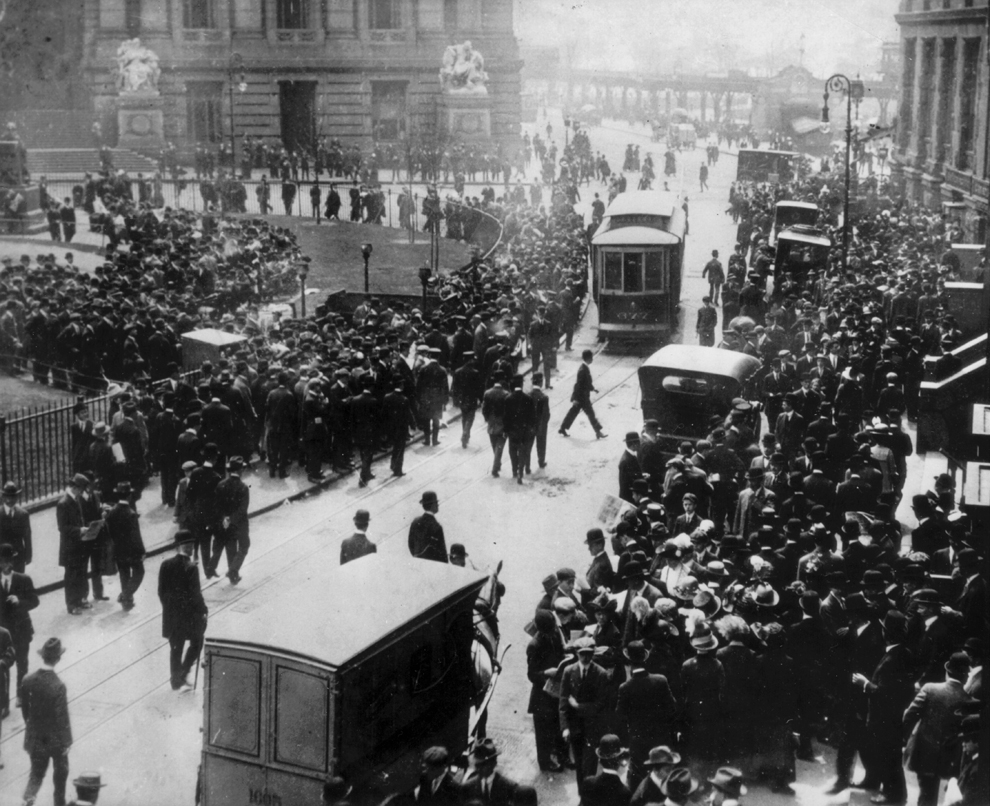
The Waiting Game: Down at the White Star Line's Broadway offices near Bowling Green, anxious New Yorkers line the streets waiting for news about the sunken vessel. 1912
Over fifteen hundred people died the night the Titanic sank, April 14-15, 1912. The early reports from the New York newspapers, of course, spent their time mourning the city’s most connected figures to society.
Even from some of the most obsessive sources on the Titanic, the details on the lives of dozens of men and women who died below deck are sometimes hard to locate.
There’s always been something slightly unsettling about using primary news sources for Titanic research. The bias towards wealthy lives over poor ones — and of American and British lives to all others — can be a little unsettling.
For instance, an anecdote from an April 20, 1912, article in the New York Times: “…[I]t became known among those saved from the Titanic were six or eight Chinamen who were among the steerage passengers on the big liner. It seems that they climbed aboard one of the lifeboats without anybody making objection, despite the fact that many of the women in the steerage of the Titanic went down with the ship.“
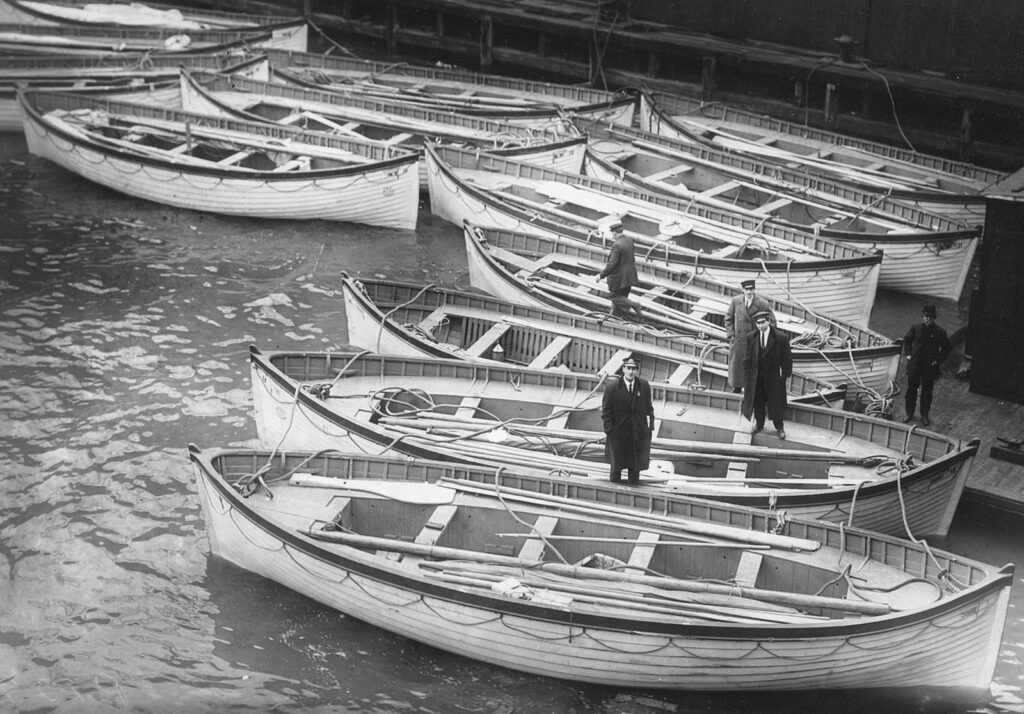
Titanic’s Lifeboats at The White Star Lines Pier 54 in NYC after Sinking. [source]
But this was indeed a tragedy that shook most of the entire world to its core and, in particular, changed the lives of many Americans, from tenements to townhouses.
The old-family names and the wizards of business (Astor, Straus, Guggenheim) have been well documented. But here I present the fates of five well-off but perhaps lesser-known New York women who survived the sinking of the Titanic with intriguing stories of their own to tell:
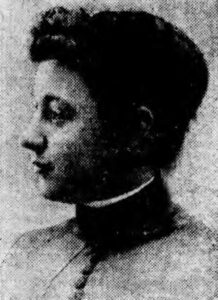
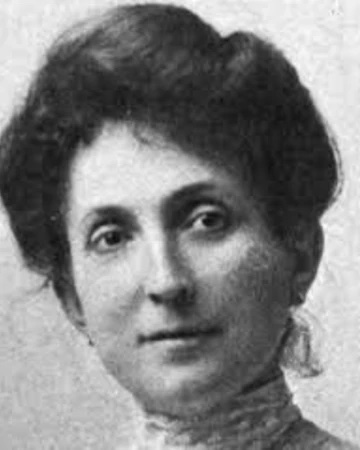
Dr. Alice Farnham Leader Born in New York, May 10, 1862
Alice would have been among the second generation of women trained in medicine, and a career in pediatrics was one of the few that a women of her day could ably progress towards. As late as 1907 she was employed at Bellevue Hospital as ‘a social service nurse‘.
However she wasn’t a practicing doctor by the time she boarded the Titanic; the 49 year old had retired when her husband died in 1908.
She was rescued by lifeboat no. 8, commanded by one of the Titanic’s most famous names: Noël Rothes, the Countess of Rothes. “The countess is an expert oarswoman and thoroughly at home in the water,” Alice told the press, who sadly seemed more interested in the fate of the titled gentry than of this mysterious doctor who appears to have avoided the spotlight for the remainder of her life.
Afterwards: Dr. Leader is mentioned in a Utah newspaper in 1916, discussing the crisis of graying hair. Her solution: “A head exercise for circulation is to lie on the couch with the head projecting beyond the couch. Bend the head forward, backward, to each side, to each side, then rotate.” Died: April 20, 1944
Irene (Rene) Harris Born: June 15, 1876
A New York stage actress with some considerable credits to her name, Harris boarded the Titanic with her husband Henry Birkhardt Harris, the theater impresario and partner (with Jesse Lasky) in the Folies Bergere, which has just opened in midtown the year before.
Irene made it to a lifeboat but her beloved husband perished on the Titanic. The Times recounts her cable to the Hudson Theater: “Praying that Harry has been picked up by another steamer.”
Afterwards: Returning to the New York theater in grief, she sued the White Star Line for a large petition of damages, and perhaps with good reason; she discovered when she got home that her husband was nearly bankrupt from the Folies Bergere venture and other flops.
So she decided to make her own money, soon becoming one of Broadway’s first female producers with such shows as ‘Lights Out’ and ‘The Noose’ and buying a Park Avenue apartment.
But her wealth didn’t make it out of the Great Depression, and she spent her last days living in Manhattan hotels. In 1958, she was subjected to a screening of the Hollywood film ‘A Night To Remember‘. “I think your film title is a mistake,” she said. “It was a night to forget.” Died: September 2, 1969
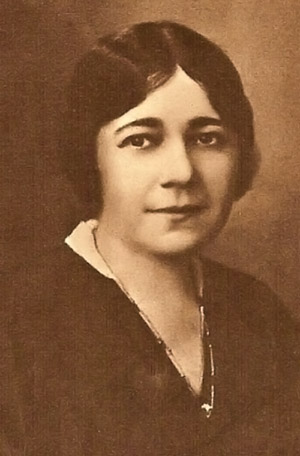
Margaret Hays Born: December 6, 1887
If not for the tragic sinking of the Titanic, Margaret Hays’ fate might have made a charming family comedy. The young woman lived at304 West 83rd Street and had gone to Europe with two school friends Olive and Lily.
And there was another lady with her on the Titanic that fateful night — Margaret’s Pomeranian dog.
All three friends and her little dog too made it to a lifeboat, but Margaret’s story was just beginning.
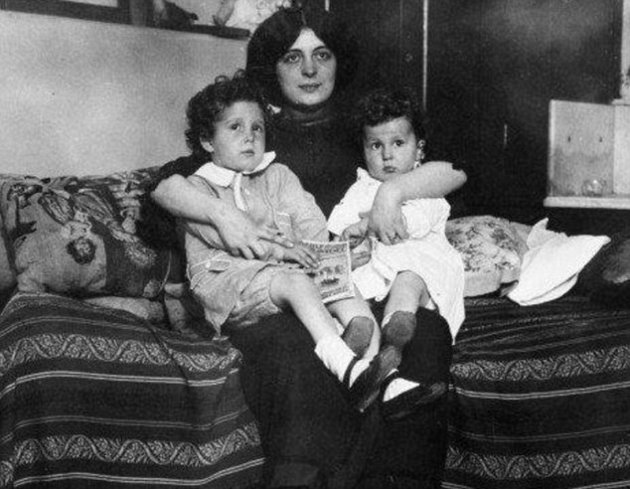
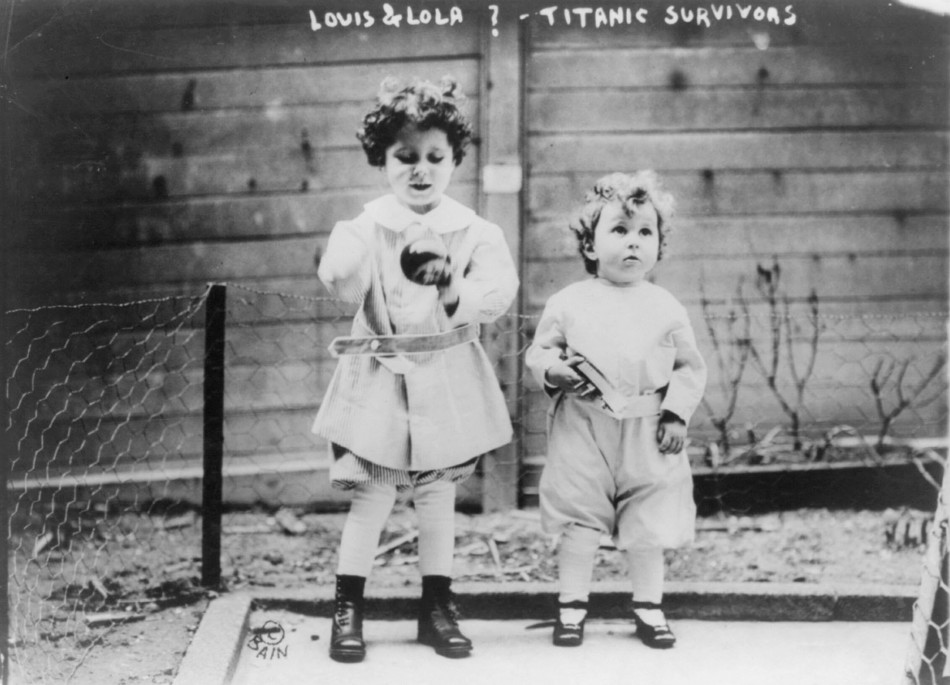
Onboard the rescue ship Carpathia were two small frightened French boys.
The ‘Titanic orphans’, named Michel and Edmond (not Louis & Lola!).
They had been separated from their father Michel who was never found. Hays, who spoke French, took the boys into her care during the somber voyage and well after they arrived in New York. They stayed at her home on West 83rd — she distracted the distraught boys with carriage rides up Riverside Drive — until their mother arrived from France.
On her arrival, it was revealed that their father had taken the two boys against their mother’s will during a bitter divorce battle.
Afterwards: Hays married a Rhode Island doctor and lived in relative comfort, dying during a vacation in Argentina. Died: August 21, 1956
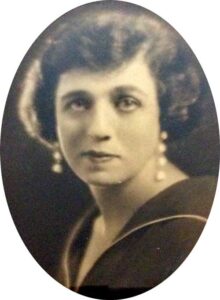
Leila Meyer Born in New York, September 28, 1886
The young socialite and daughter of Andrew Saks (founder of Saks Fifth Avenue) met aspiring Wall Street broker Eugene Meyer and married him in 1909.
While traveling, Leila was wired the tragic news that her father had died. (Later, she discovered that a sizable part of their fortune had been willed to her.) Leila and her husband boarded the Titanic to return home. She made it to a lifeboat; her husband died aboard the ship.
Afterwards: She later remarried and lived the remainder of her life at 970 Park Avenue, rarely speaking to the press about her tragedy, although her spectacular jewelry collection was frequently remarked upon in women’s magazines. Died: November, 27, 1957
Mrs. Charlotte Appleton Born in New York, December 12, 1858
Charlotte was well versed in the thrill of ocean travel. Her father, once a well-known dry goods importer, worked for the firm which operated theBlack Ball Line, one of the oldest shipping companies in New York and no stranger to a few shipwrecks of its own.
She married into the prestigious Appleton publishing family and was on the Titanic with two sisters, returning from a funeral in England.
Afterwards: Mrs. Appleton’s name is familiar with Titanic buffs as she was an acquaintance of Col. Archibald Gracie IV, the great-grandson of the man who built Gracie Mansion and one of the more notable bold-faced names on the Titanic. Mrs. Appleton lived the remainder of her life at 214-33 33rd Road, the oldest house in Bayside, Queens.
Died: June 25th, 1924
Some pictures and many of the birth/death dates above are courtesy Encyclopedia Titanica. Top picture courtesy the Library of Congress.
This story was originally published on the 100th anniversary of the Titanic and refreshed the honor the 110th anniversary.
PODCAST The thrilling tale of a classic heist from the Gilded Age, perpetrated by a host of wicked and colorful characters from New York’s criminal underworld.
Jesse James and Butch Cassidy may be more infamous as American bank robbers, but neither could match the skill or the audacity of George Leonidas Leslie, a mastermind known in his day as the ‘King of the Bank Robbers’.
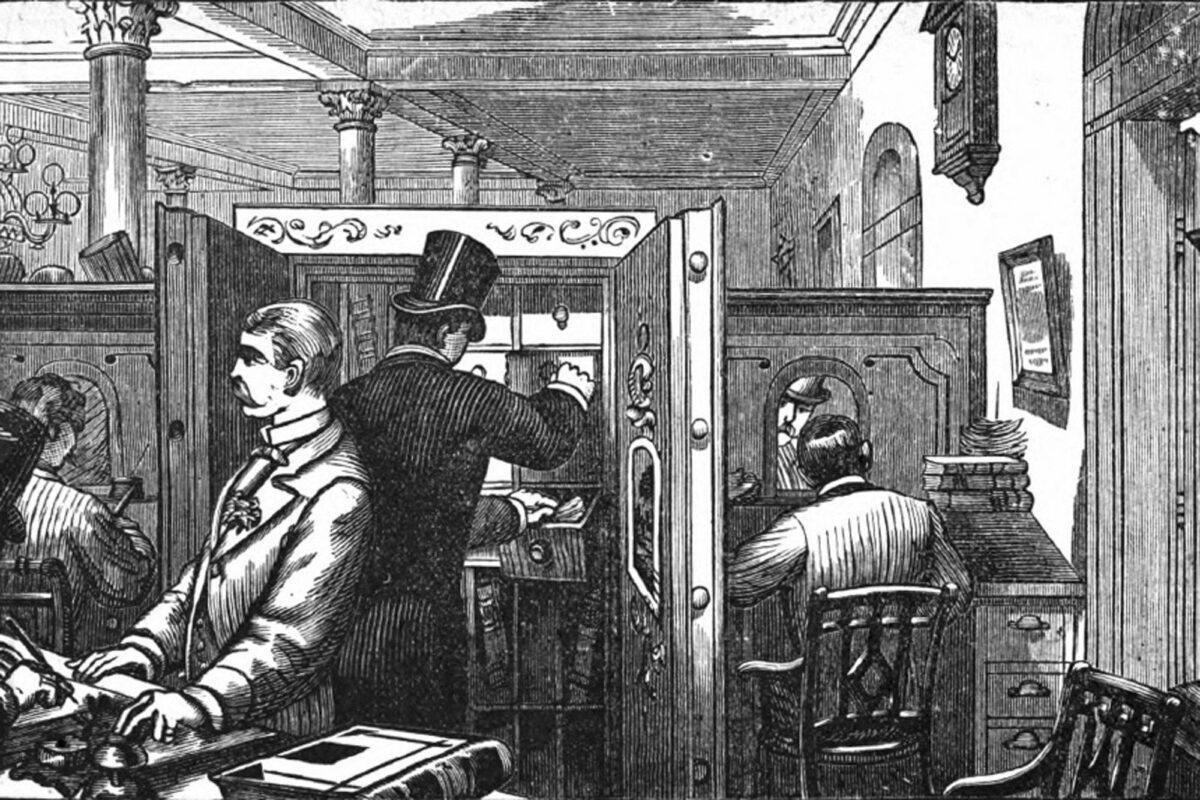
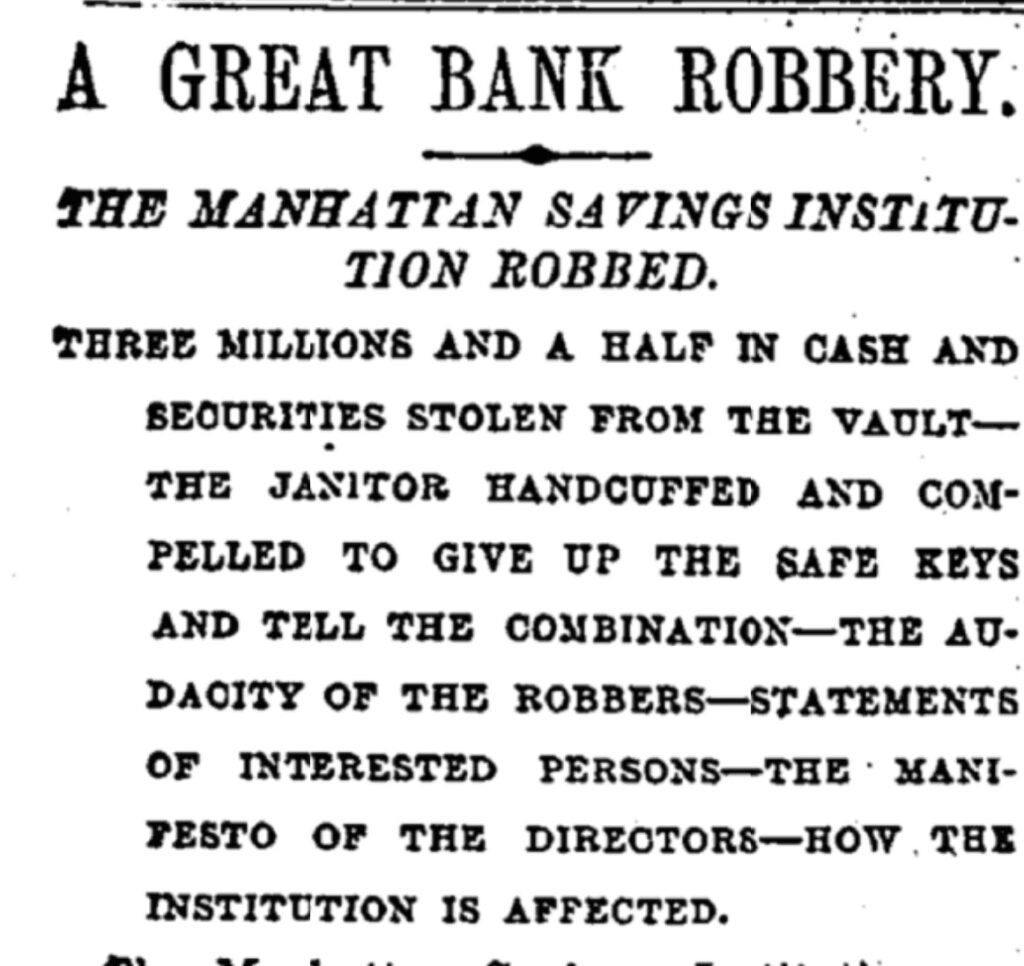
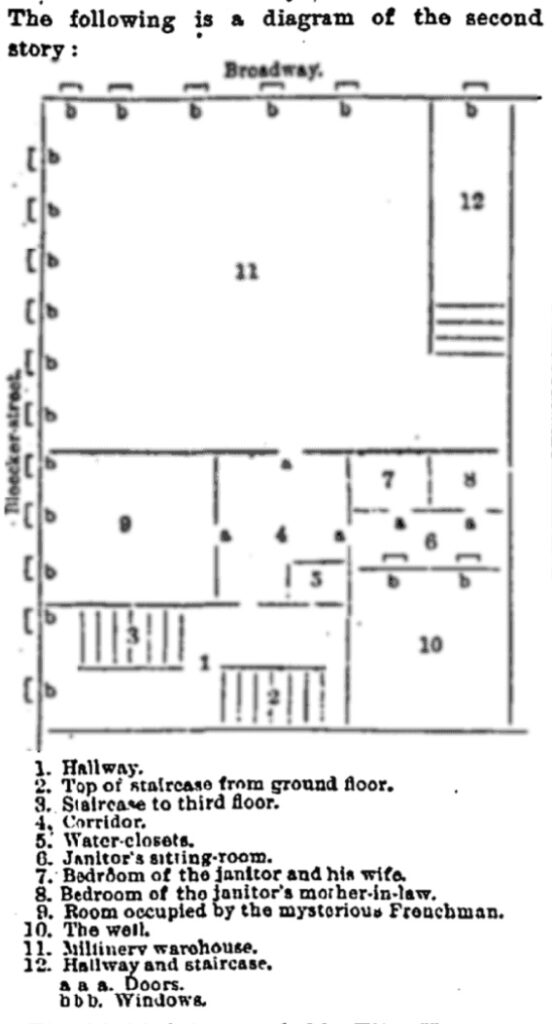
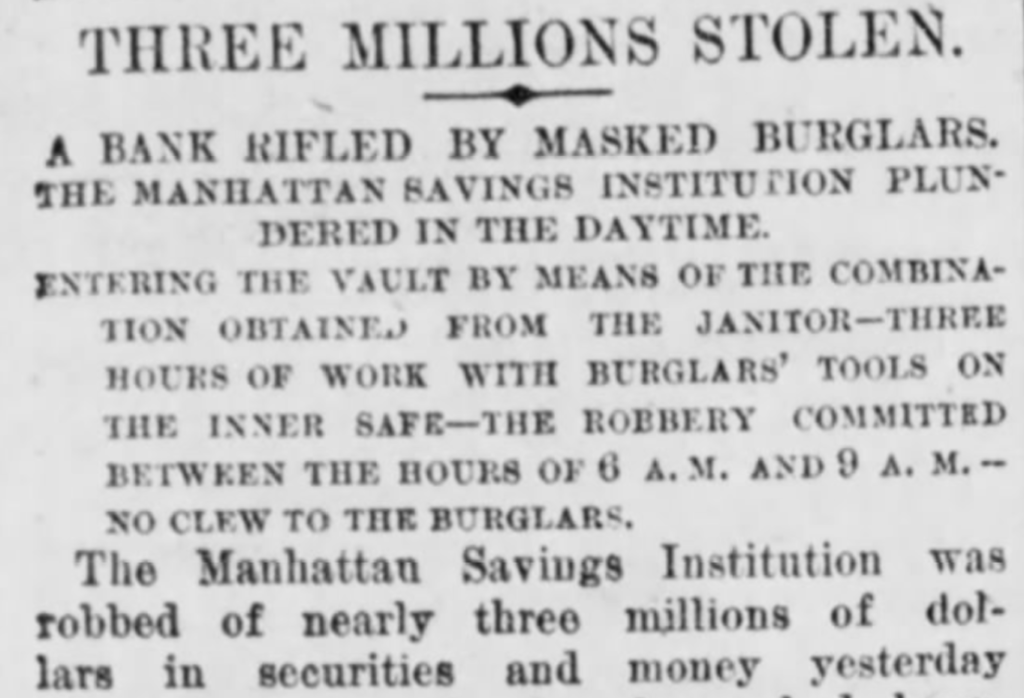
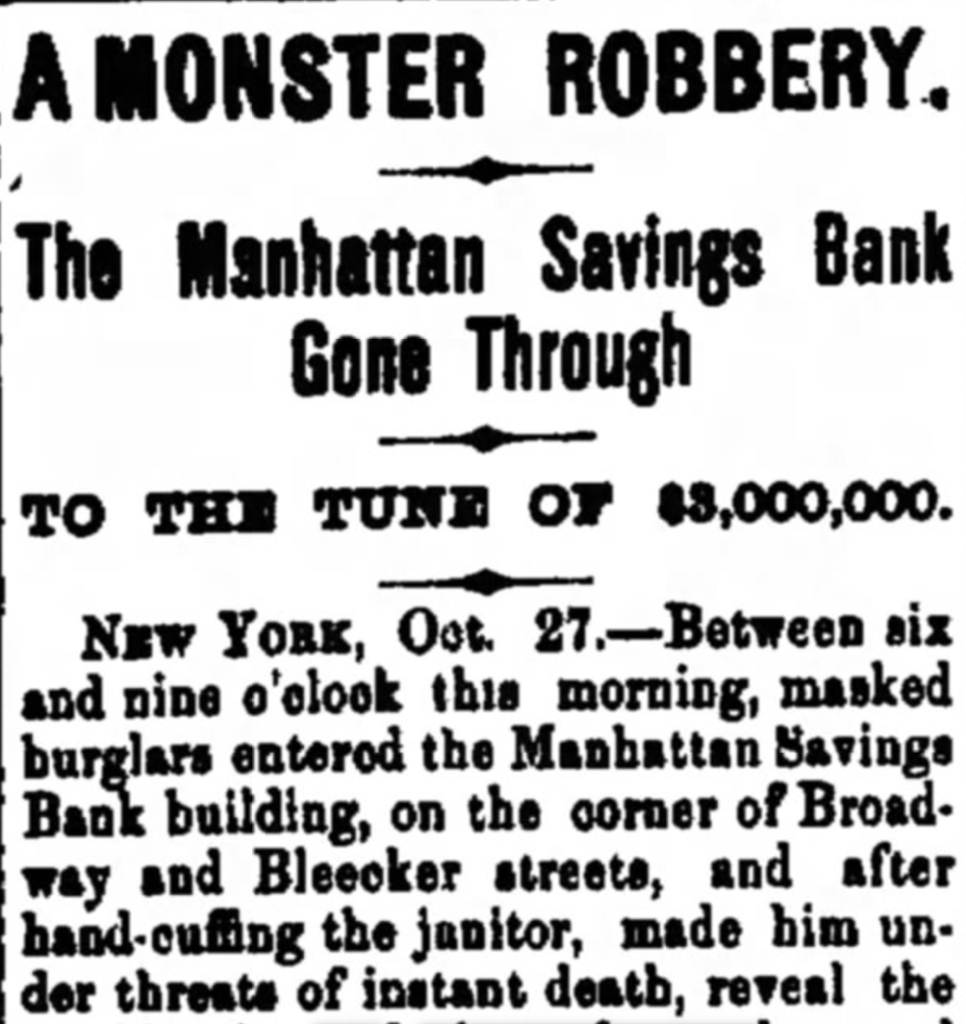
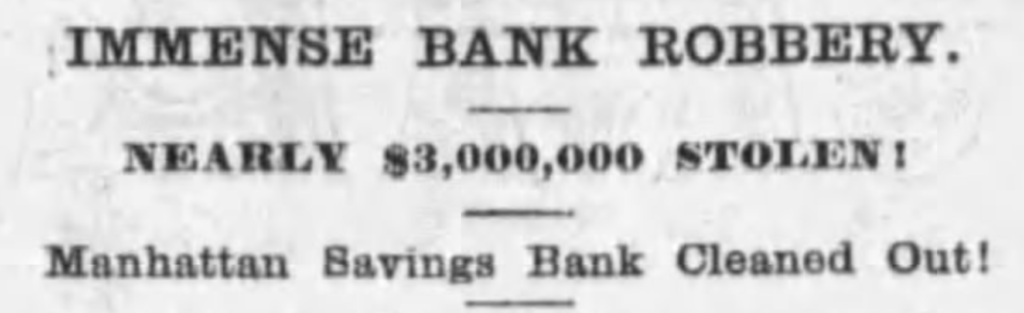
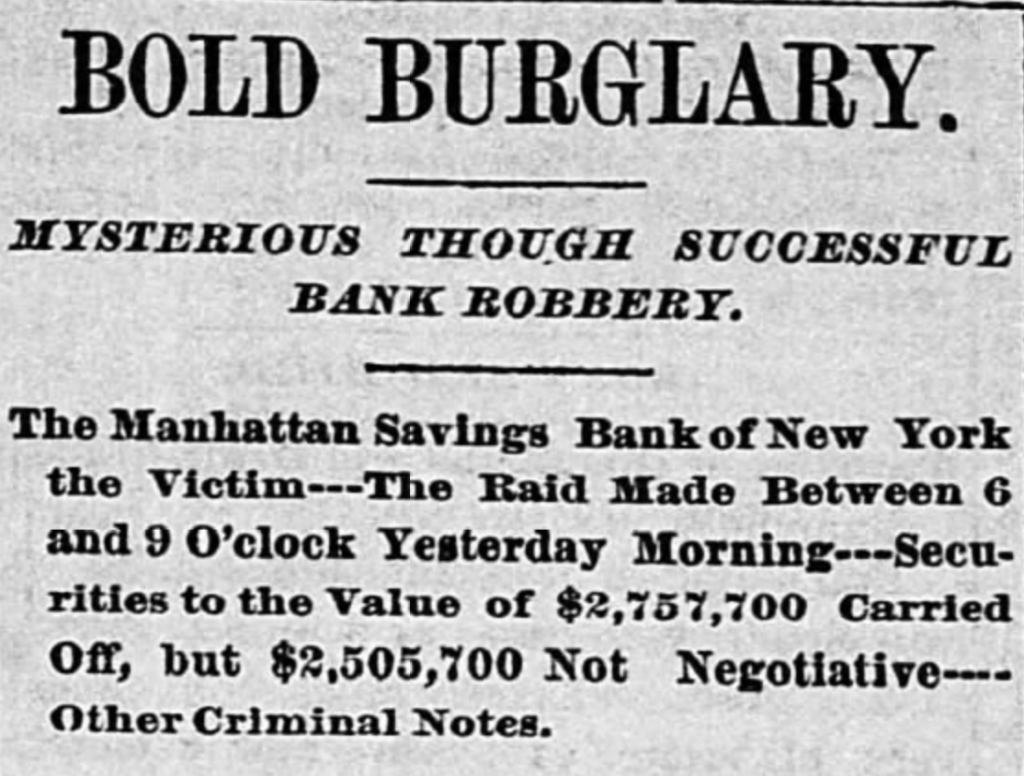
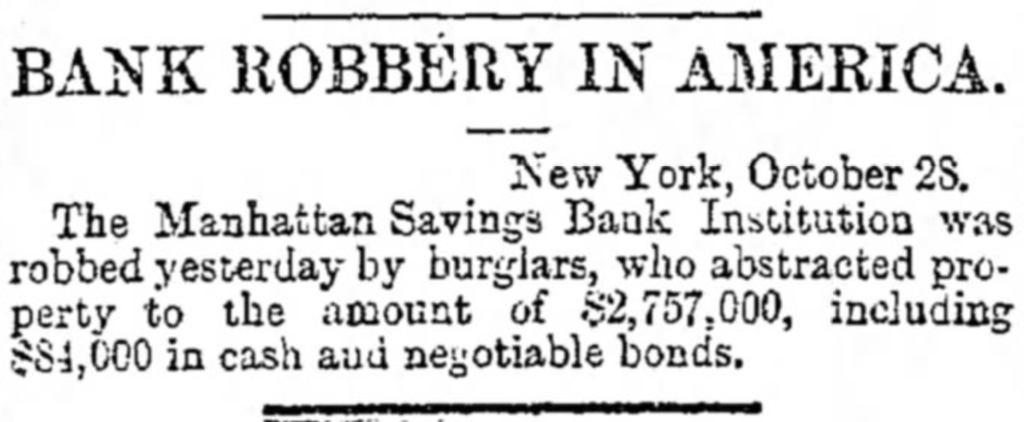
On October 27, 1878, Leslie’s gang broke into the Manhattan Savings Institution and stole almost $3 million in cash and securities (about $71 million in today’s money), making it one of the greatest bank robberies in American history.
This epic heist, which took three years to plan, was only the greatest in a string of high-profile robberies planned by Leslie and perpetrated by a rogue’s gallery of New York thieves and fences.
Many details of the crime remain a mystery, and the legend of Leslie has been immortalized — with some mixture of truth and fiction — in Herbert Asbury’s classic The Gangs of New York.
Who was this suave and mysterious Leslie? And how do you actually go about breaking into a bank in the 1870s? (Hint: Make sure you have a ‘little joker’ handy.)
Listen Now – The Great Bank Robbery of 1878
The Bowery Boys: New York City History podcast is brought to you …. by you!
We are now producing a new Bowery Boys podcast every other week. We’re also looking to improve and expand the show in other ways — publishing, social media, live events and other forms of media. But we can only do this with your help!
We are now a creator on Patreon, a patronage platform where you can support your favorite content creators.
Please visit our page on Patreon and watch a short video of us recording the show and talking about our expansion plans. If you’d like to help out, there are several different pledge levels. Check them out and consider being a sponsor.
We greatly appreciate our listeners and readers and thank you for joining us on this journey so far.
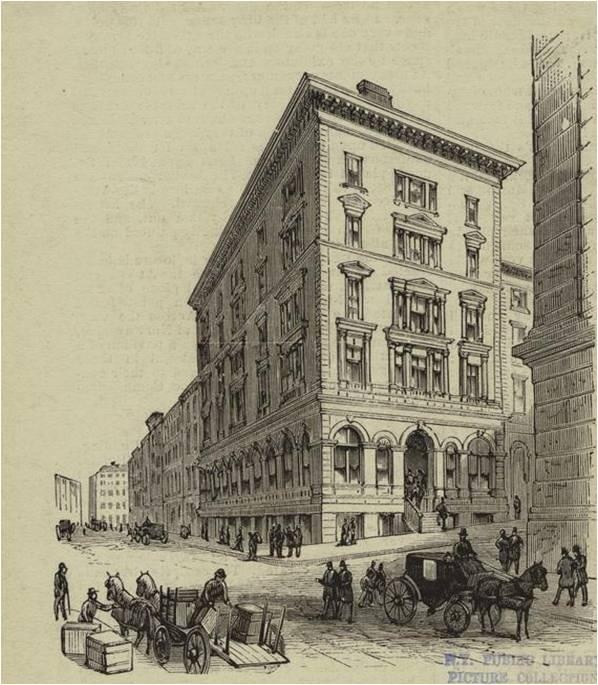
The second Manhattan Savings Institution building, built in 1891 at Broadway and Bleecker Street, on the spot of their first bank — the one targeted by the Leslie gang.
Photo by Greg YoungPhoto by Greg Young
The City Bank of New York which was robbed in 1831.
New York Public Library
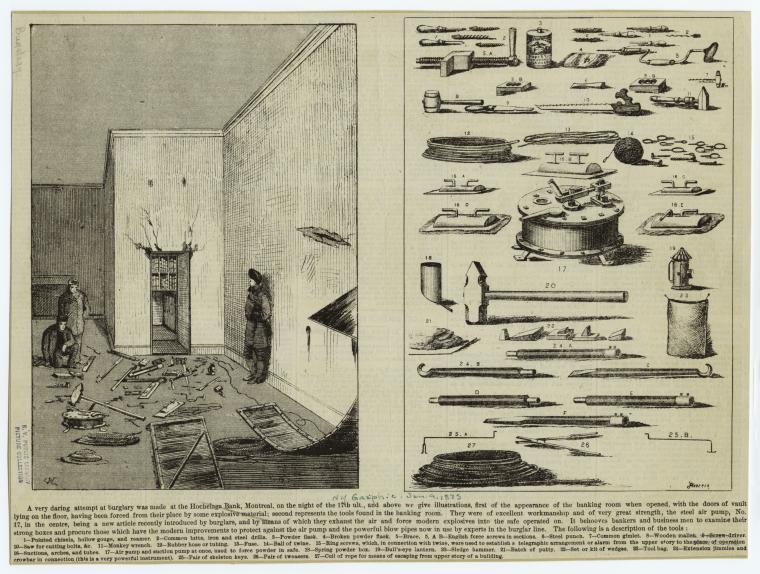
A selection of tools found at a bank break-in in Montreal, 1875.
New York Public LibraryMarm Mandelbaum, as depicted in Sins of New York: As Exposed by the Police Gazette by Edward Van Every
FURTHER READING
Herbert Asbury / The Gangs of New York Jerry Clark and Ed Palattella / A History of Heists: Bank Robbery In America J. North Conway / King of Heists Richard S. Grossman / Unsettled Account Stephen Jaffe and Jessica Lautin / Capital of Capitol: Money, Banking, and Power in New York City, 1784-2012 Geoff Manaugh / A Burglar’s Guide to the City
PODCAST There’s no business like show business — thanks to Lee, Sam and JJ Shubert, the Syracuse brothers who forever changed the American theatrical business in the 20th century.
Broadway is back! And the marquees of New York’s theater district are again glowing with the excitement of live entertainment.
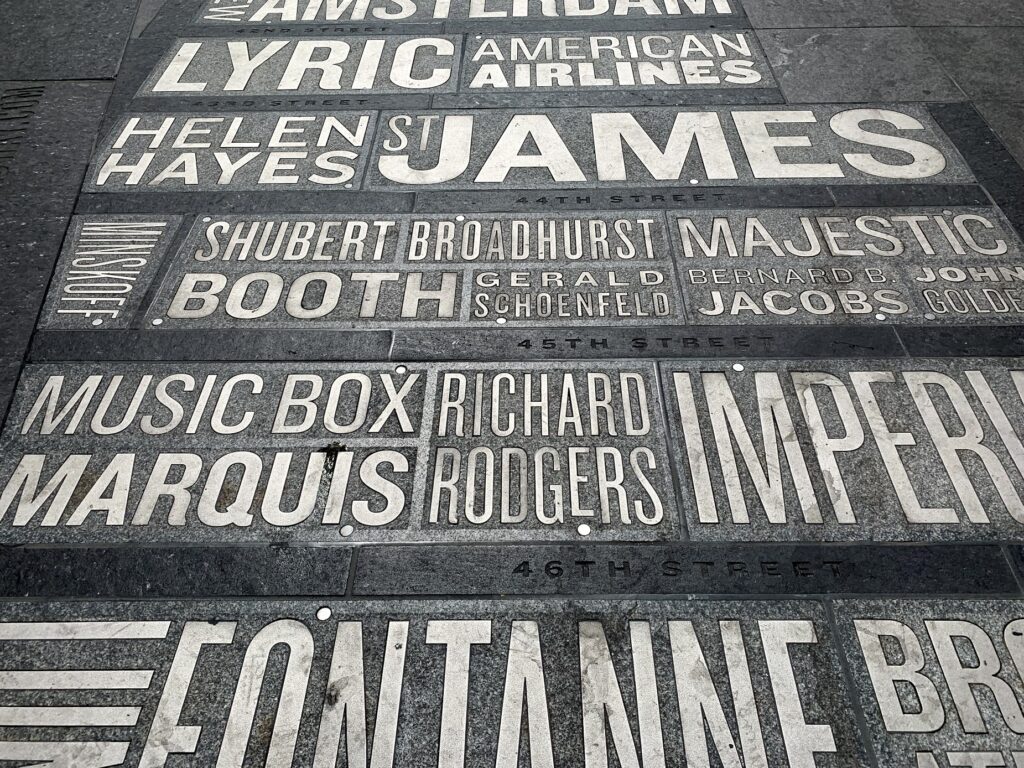
And many of these theaters were built and operated by the Shubert Brothers, impresarios who helped shape the physical nature of the Broadway theater district itself, creating the close cluster of stages that give Times Square its energy and glamour.
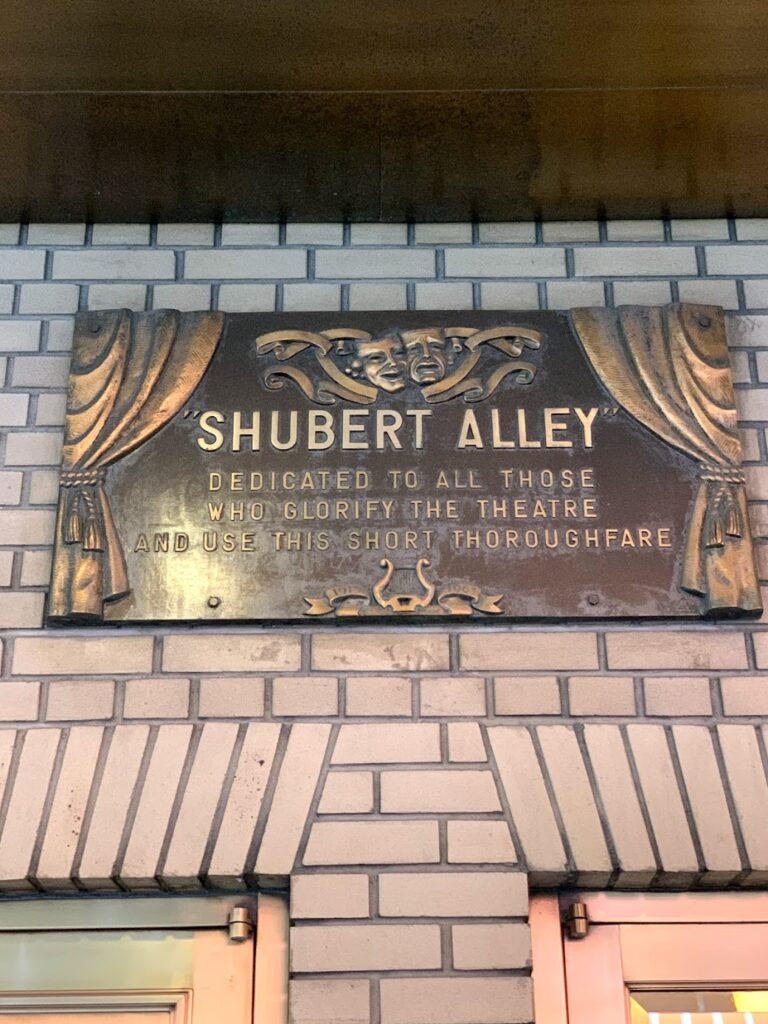
The Shuberts were there from the beginning. After fending off their rivals (namely the Syndicate), the Shuberts centered their empire around an alleyway that would quickly take their name — Shubert Alley.
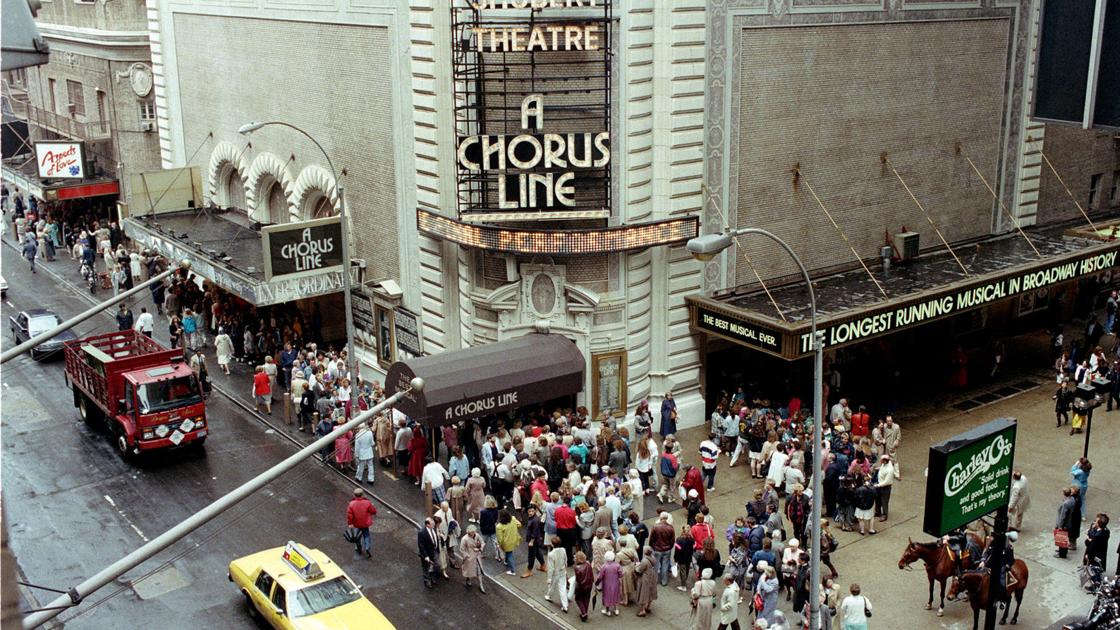
They were innovative and they were ruthless, generous and often cruel (especially to each other). During the 1950s and 60s, the Shubert empire almost crumbled — only to rise again in the 1970s and 1980s thanks to A Chorus Line and some very musical felines.
FEATURING A visit to the Shubert Archive above the Lyceum Theatre, a magical trove of historical items from the American stage.
Listen Now – The Shuberts
Our thanks to Mark E. Swartz, Sylvia Wang and Arielle Dorlester for giving us a marvelous tour of the Shubert Archive.
FURTHER LISTENING
After you’ve listened to this show on the history of Broadway, dive back into the back catalog and listen to these shows referred to on the show:
And here’s a special Spotify playlist inspired by this week’s show, featuring tunes which were made famous in America on Shubert stages — either in original runs or very acclaimed revivals.
The Bowery Boys: New York City History podcast is brought to you …. by you!
We are now producing a new Bowery Boys podcast every other week. We’re also looking to improve and expand the show in other ways — publishing, social media, live events and other forms of media. But we can only do this with your help!
We are now a creator on Patreon, a patronage platform where you can support your favorite content creators.
Please visit our page on Patreon and watch a short video of us recording the show and talking about our expansion plans. If you’d like to help out, there are several different pledge levels. Check them out and consider being a sponsor.
We greatly appreciate our listeners and readers and thank you for joining us on this journey so far.
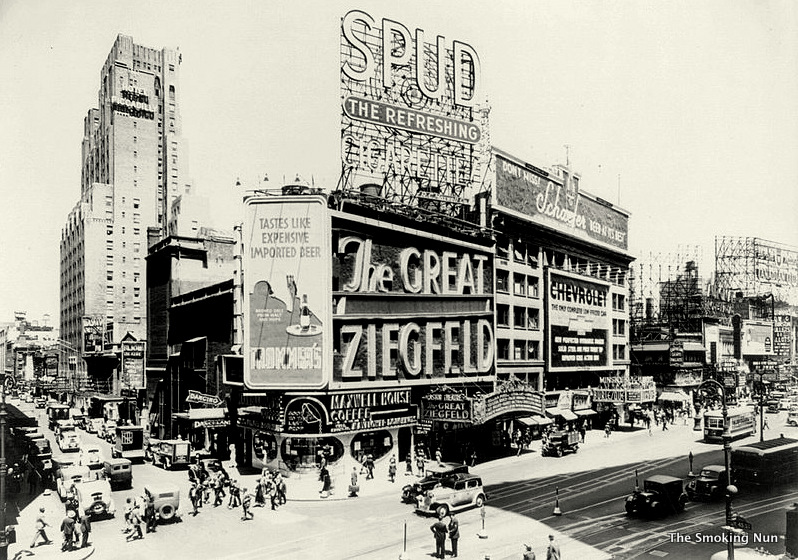
In Times Square
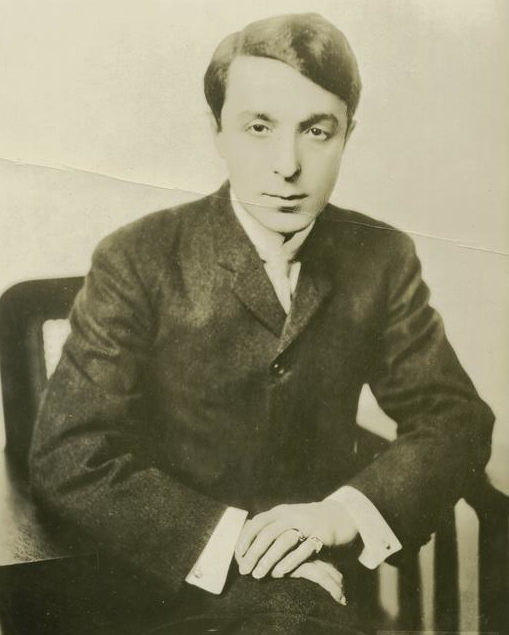
Sam Shubert. He had moxie!
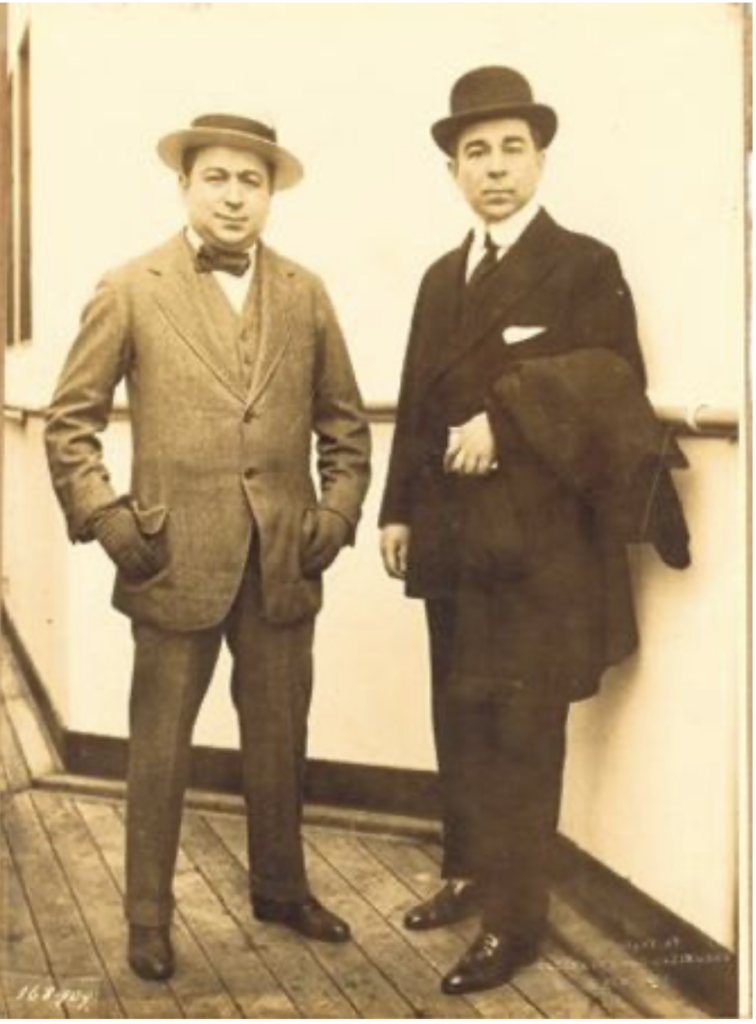
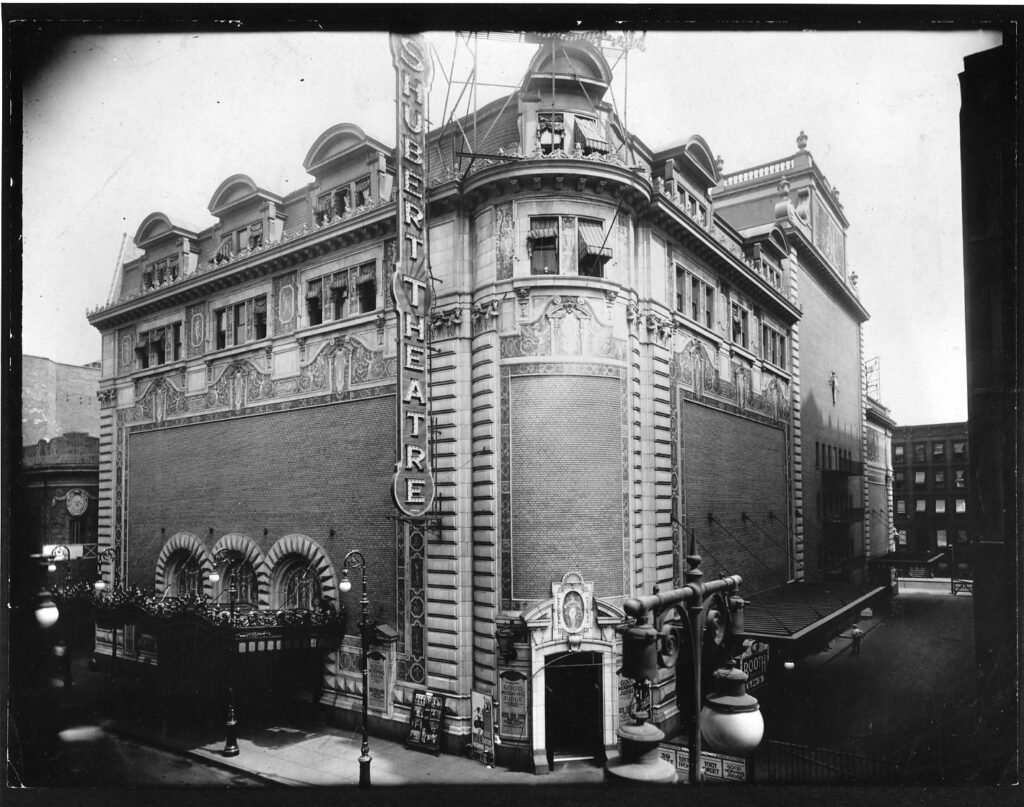
JJ and Lee Shubert, in a rare picture with each other. (Shubert Archive)Shubert Theatre (ca. 1919)
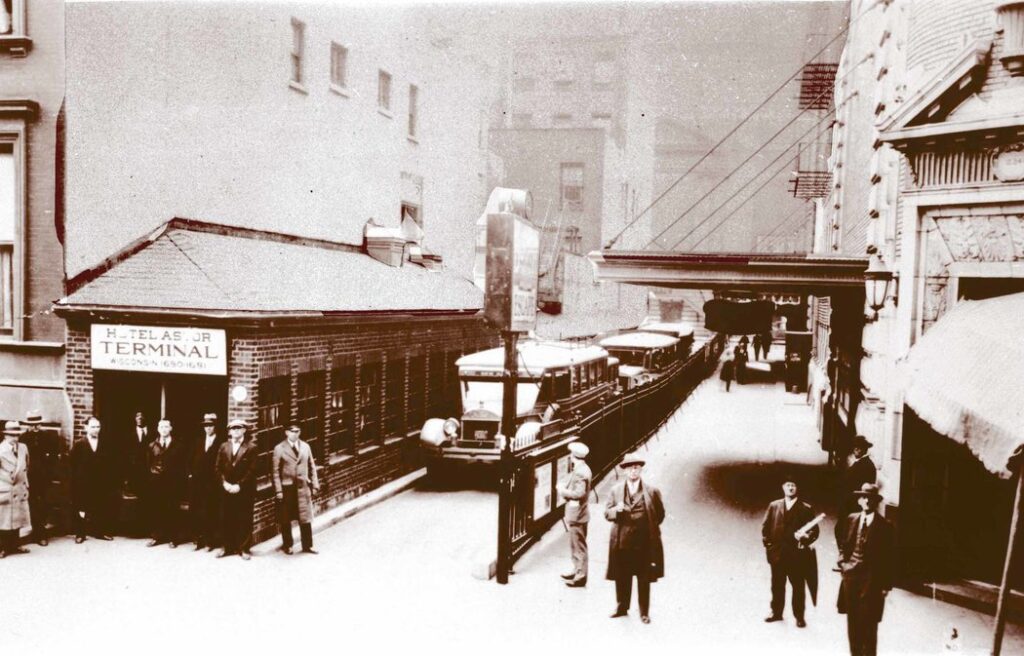
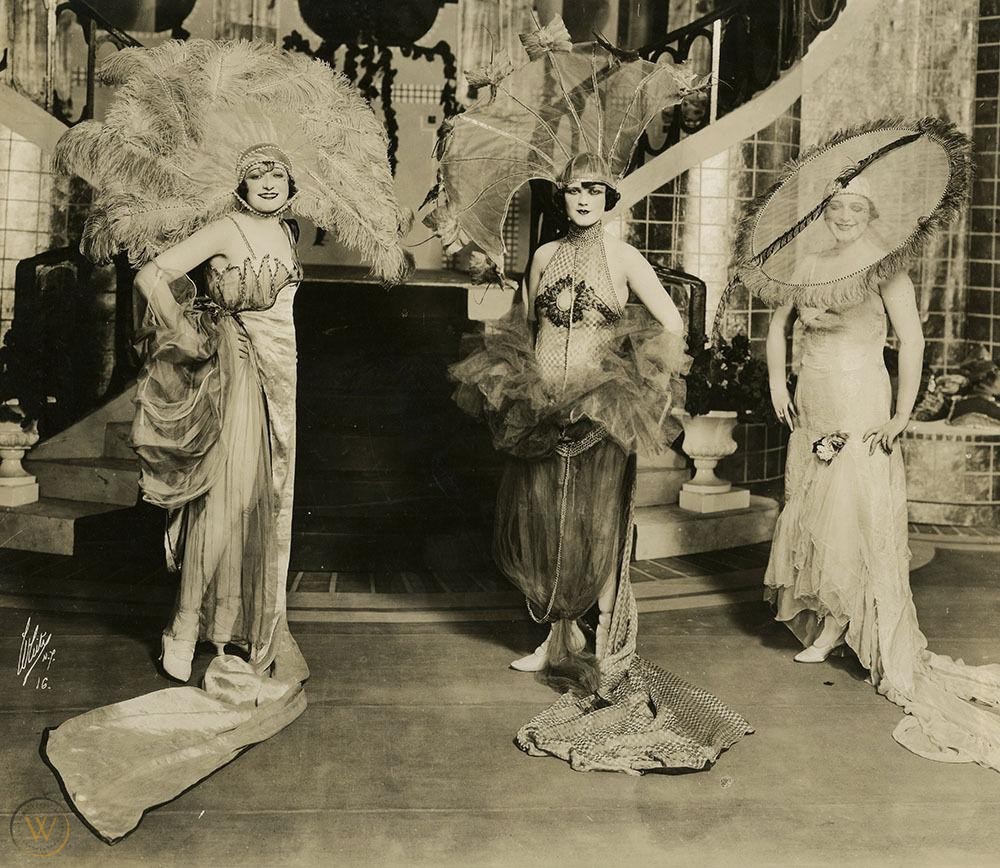
Shubert Alley in the 1930s, looking south, the Booth Theater to the right.Showgirls from The Passing Show
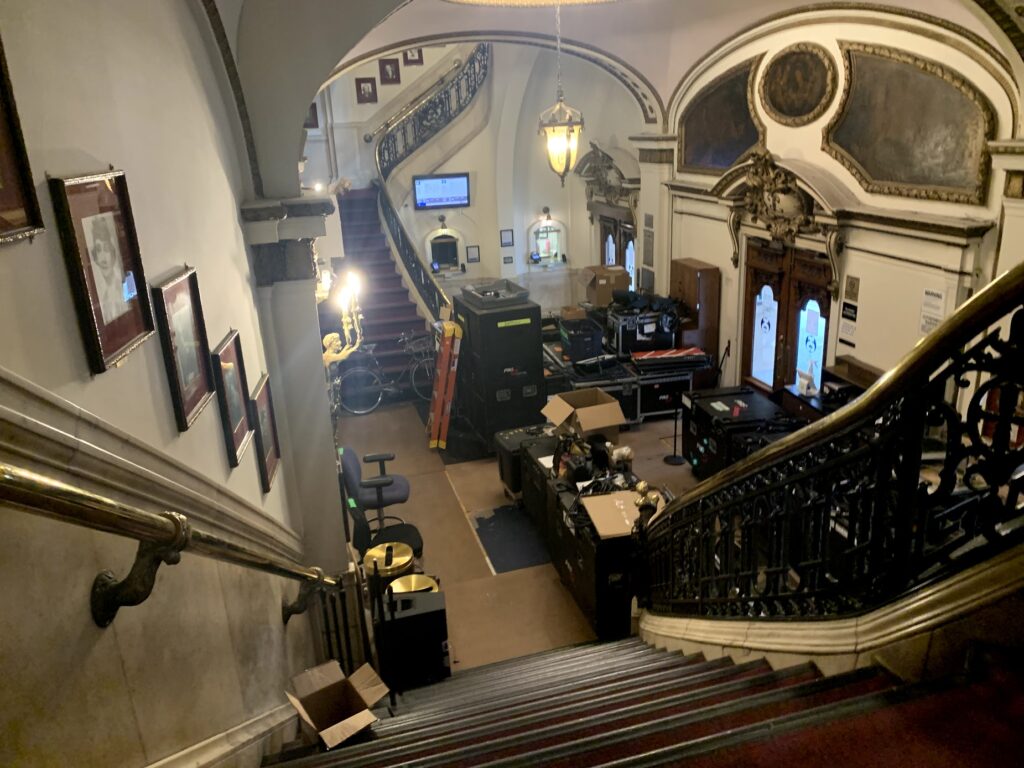
Images from the Shubert Archive (taken by Greg):
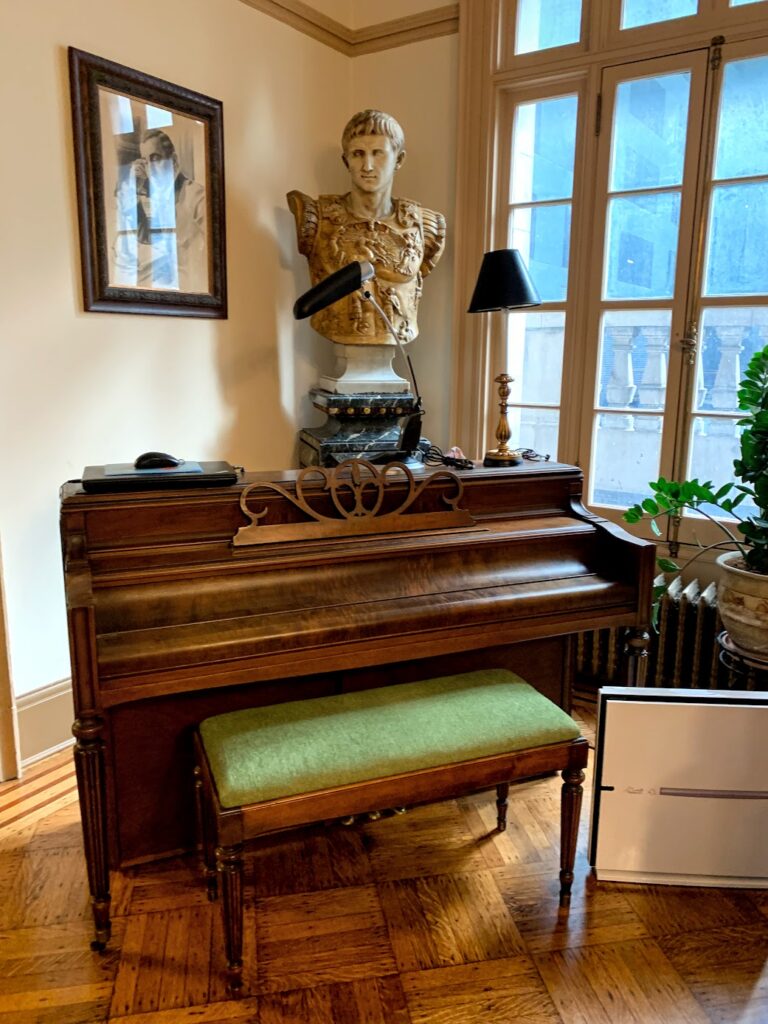
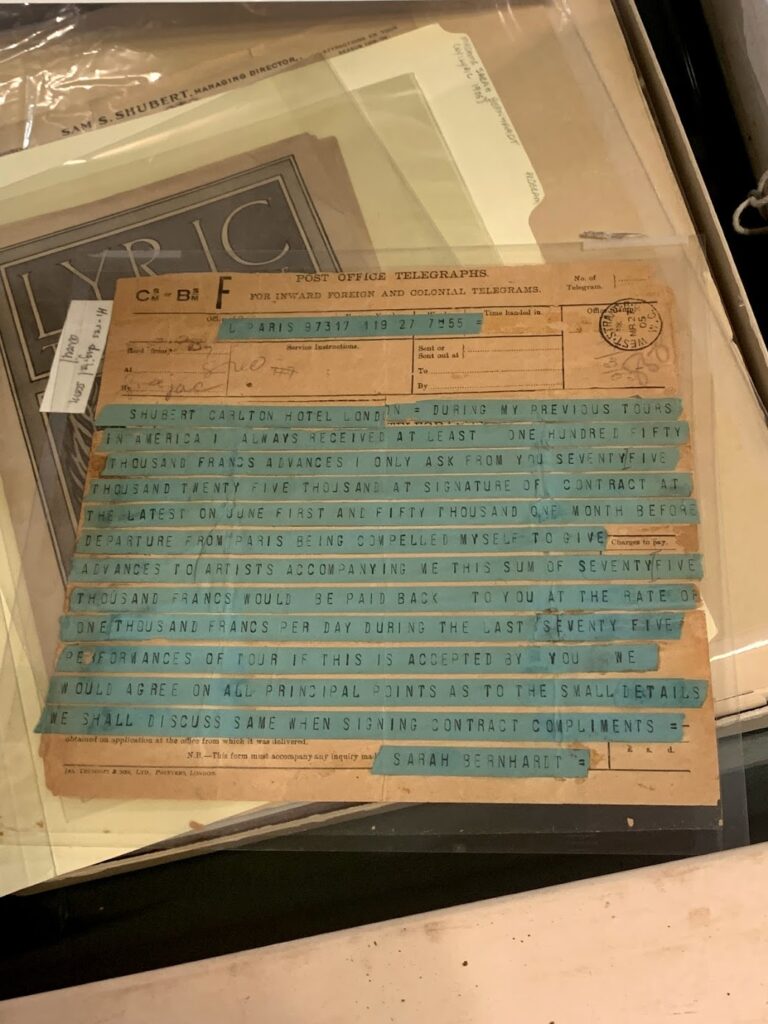
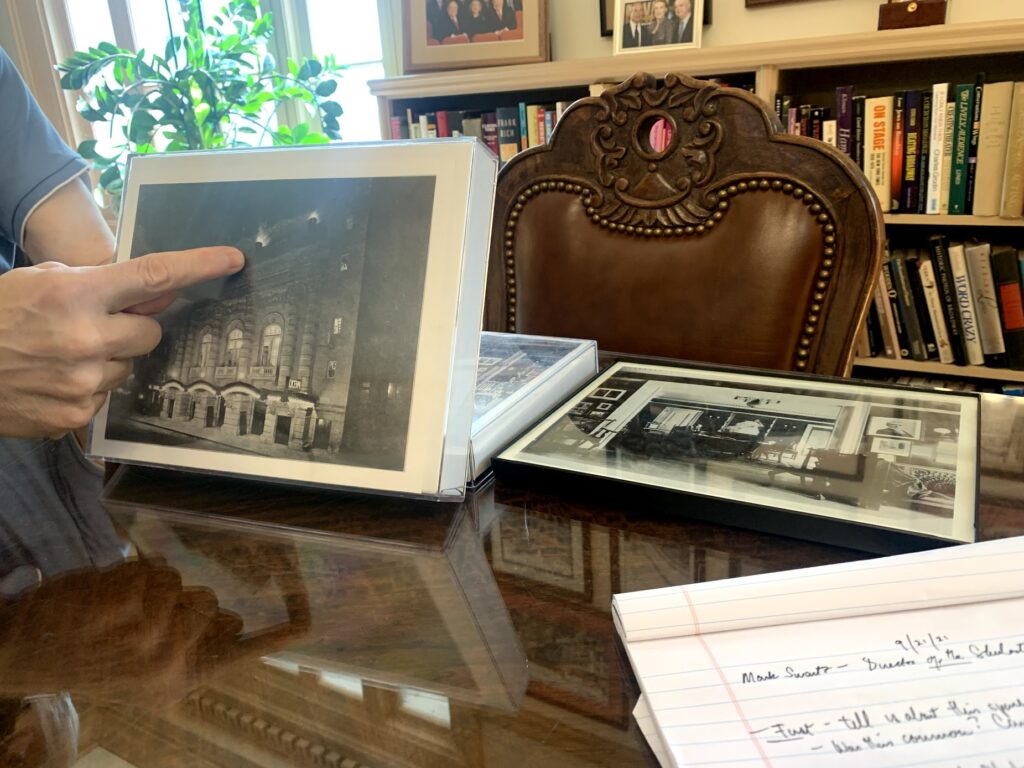
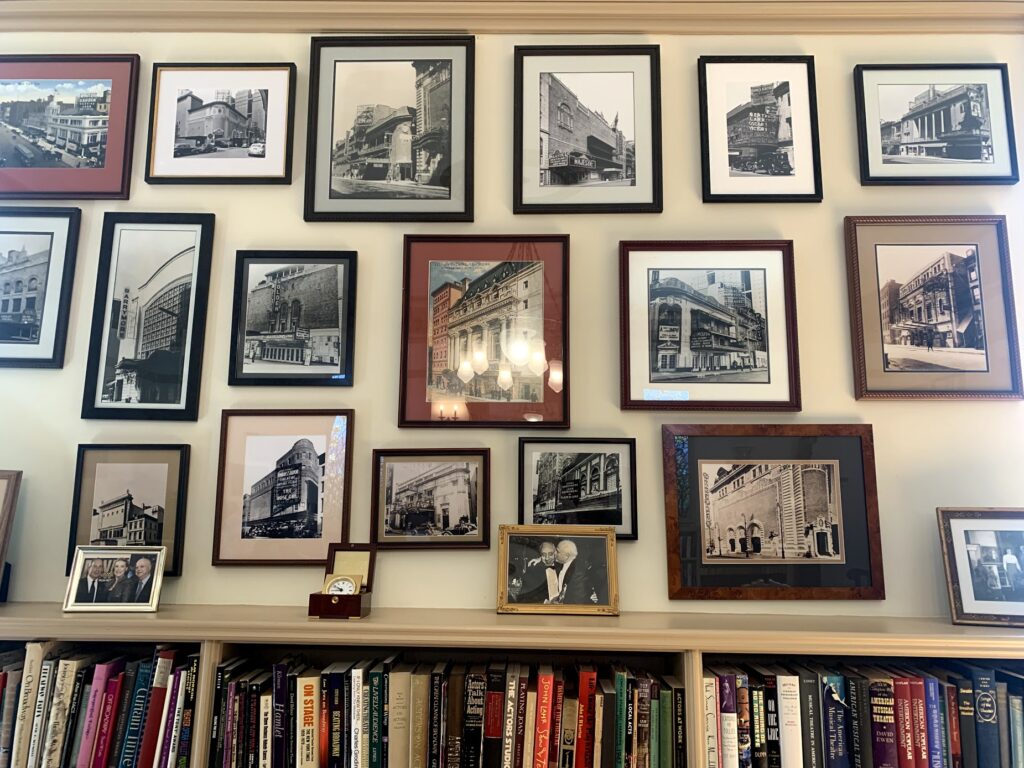
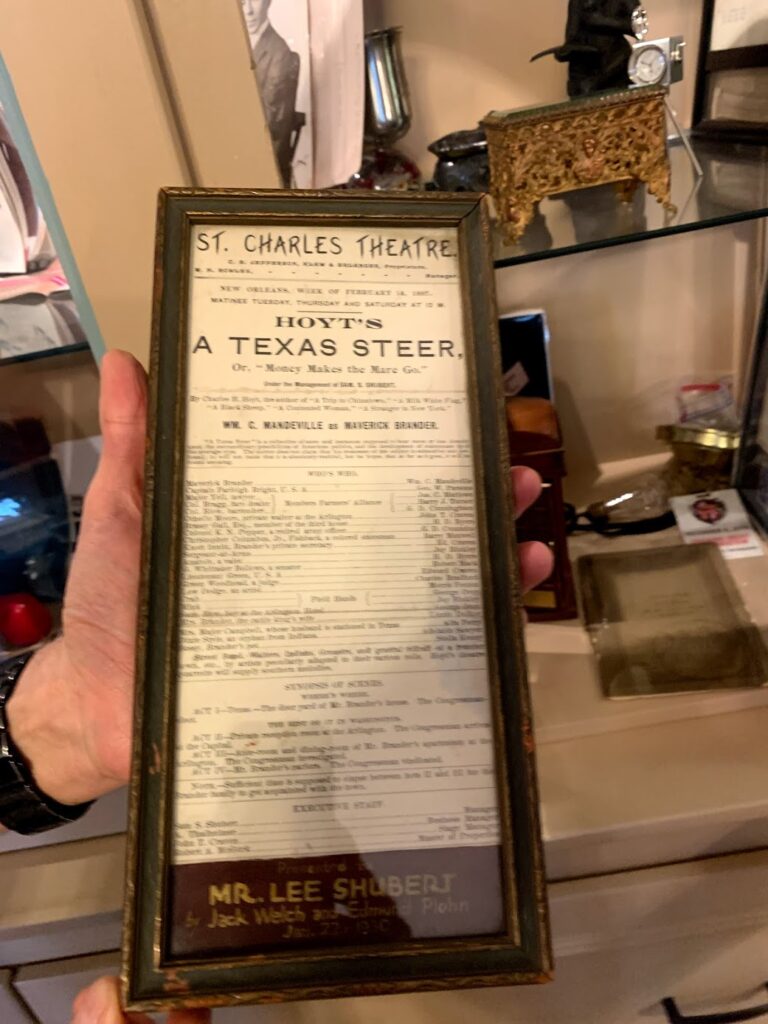
Taking the stairs to the elevator at the Lyceum Theatre.Gerald Schoenfeld’s pianoTelegram from Sarah BernhardtAt the Shubert dining table, looking at old photos of the LyceumWall of Shubert theaters!A notice for A Texas Steer, Sam Shubert’s first show.
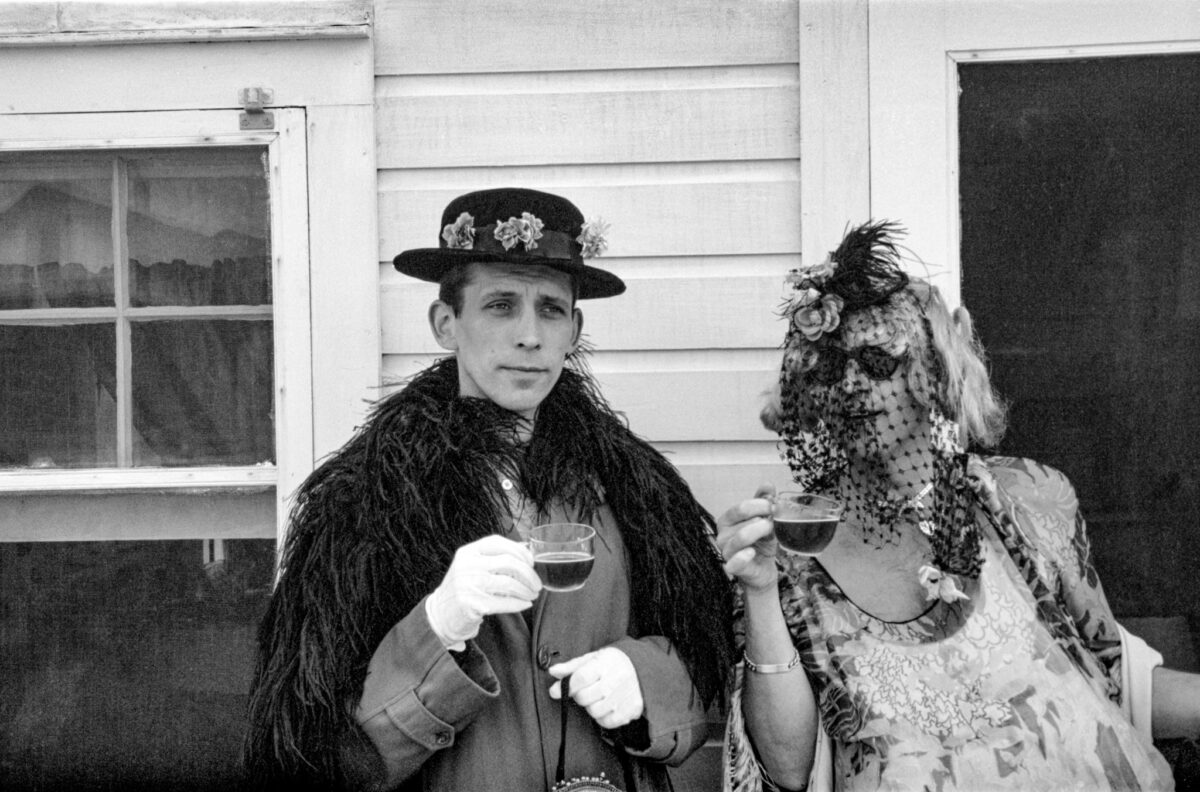
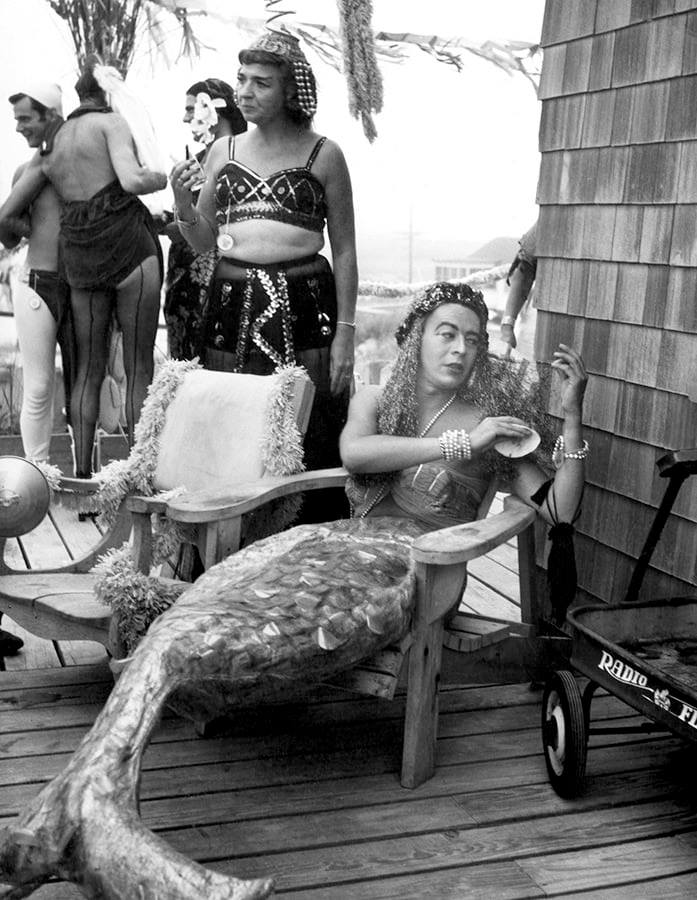
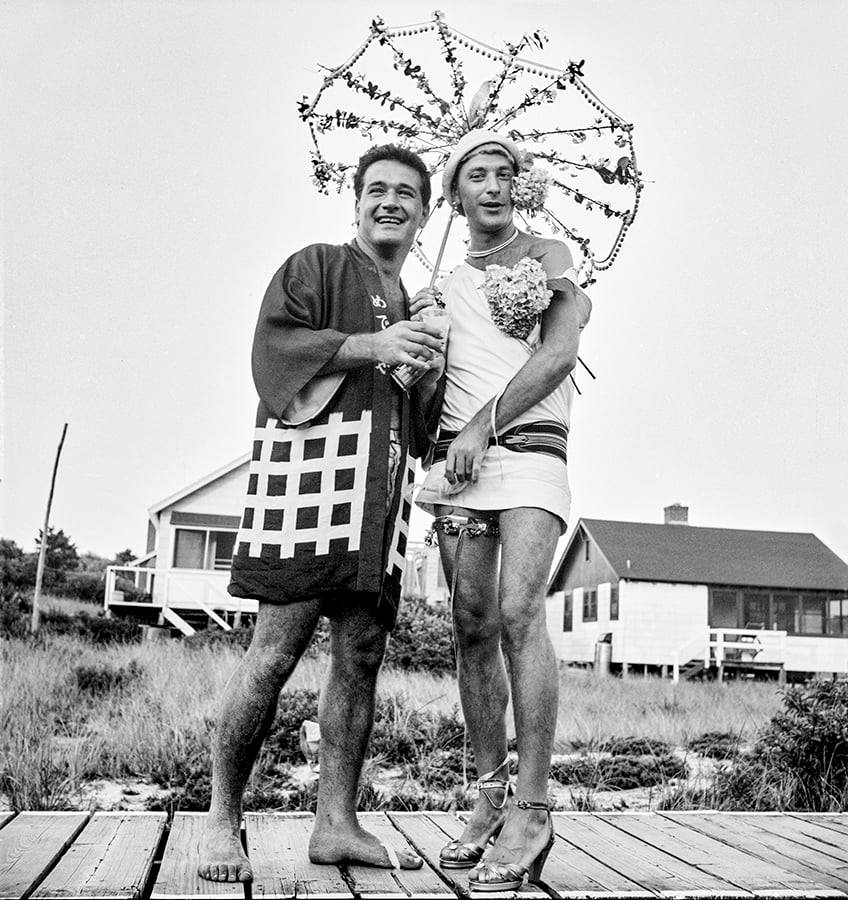
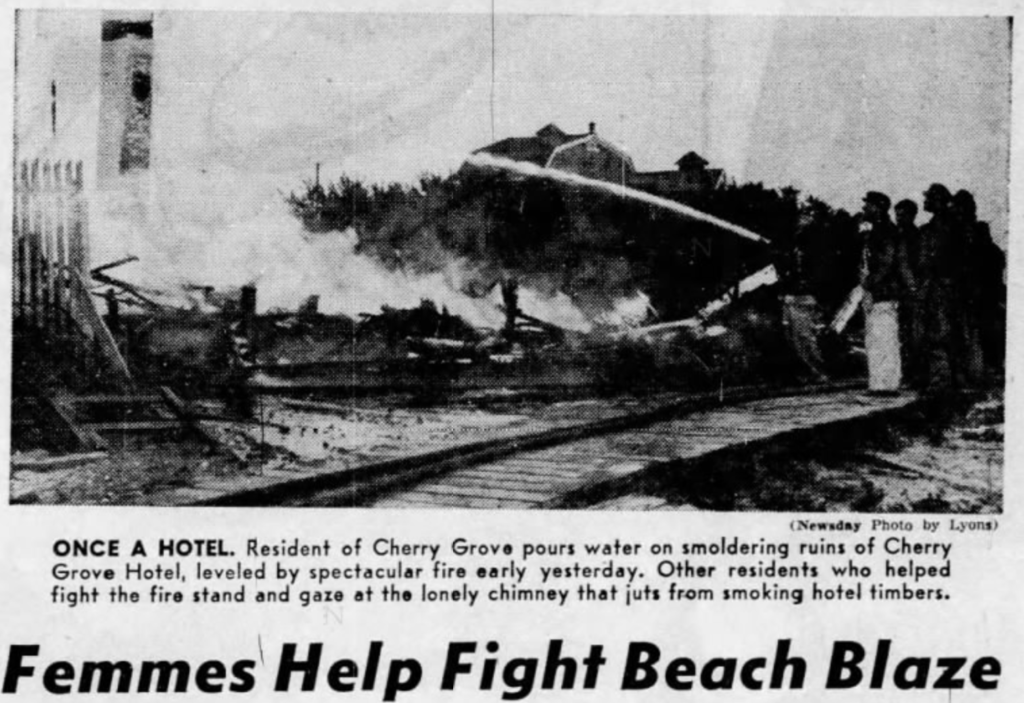
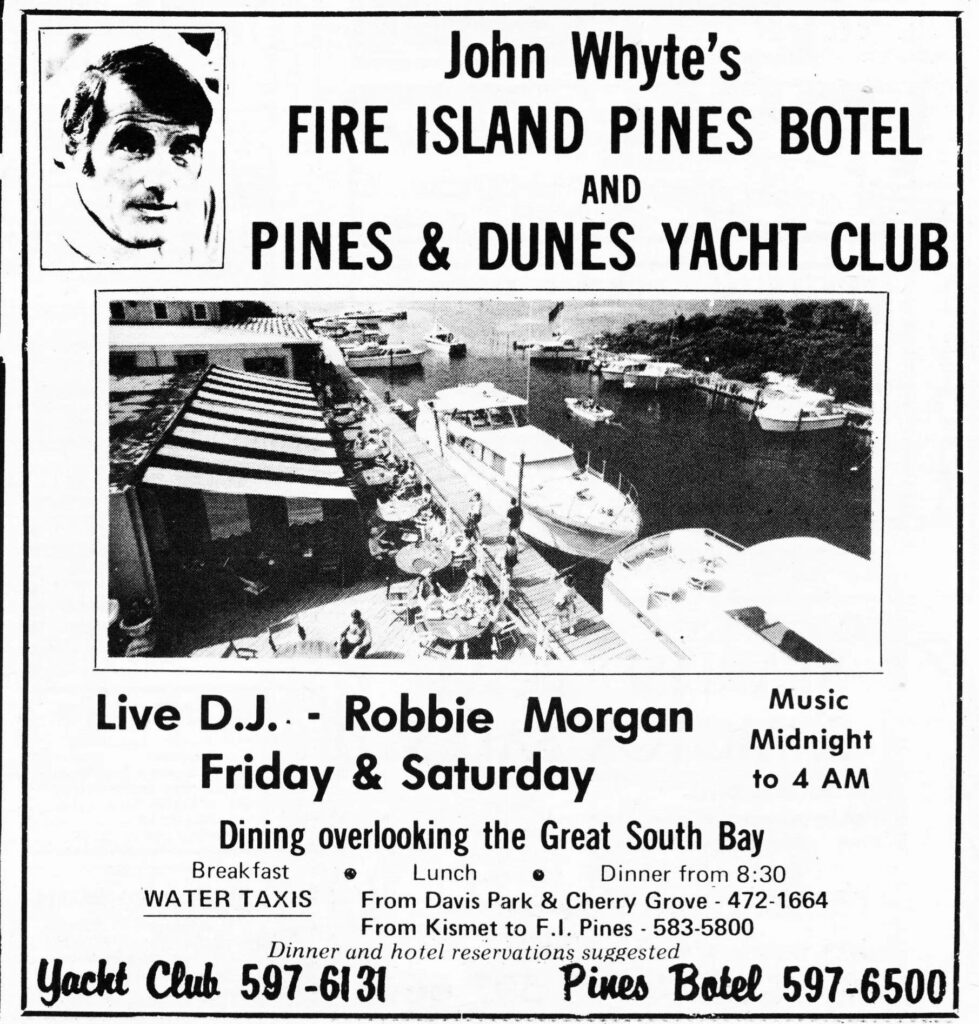
Outside of Bea Greer’s Home, Bea’s Brunch’, 1951. Courtesy the Cherry Grove Archives Collection. A gift of Harold Seeley
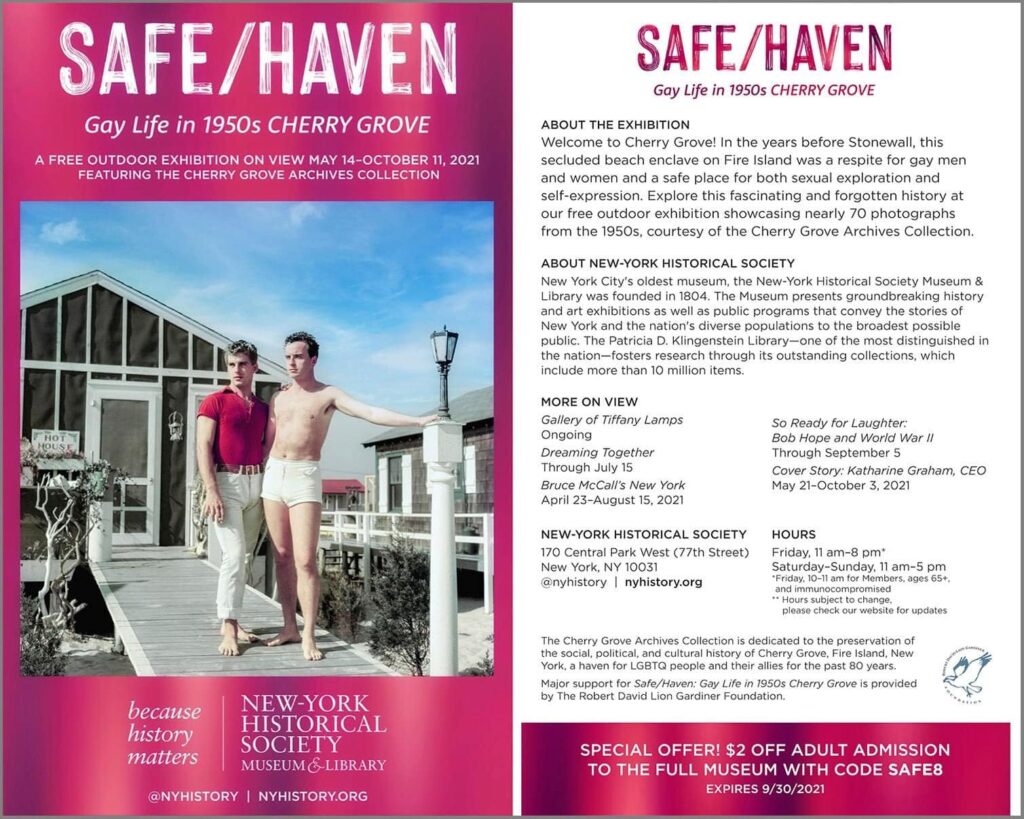
How did one particular summer settlement on Fire Island become a ‘safe haven’ for gay men and lesbians almost ninety years ago, decades before the uprising at Stonewall Inn?
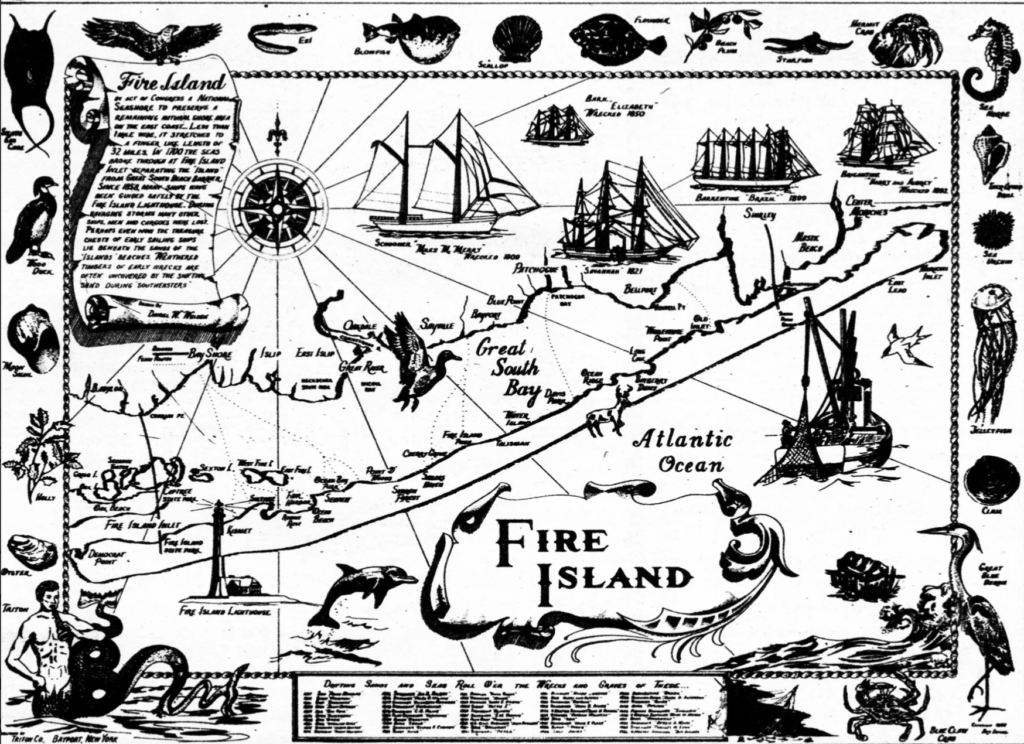
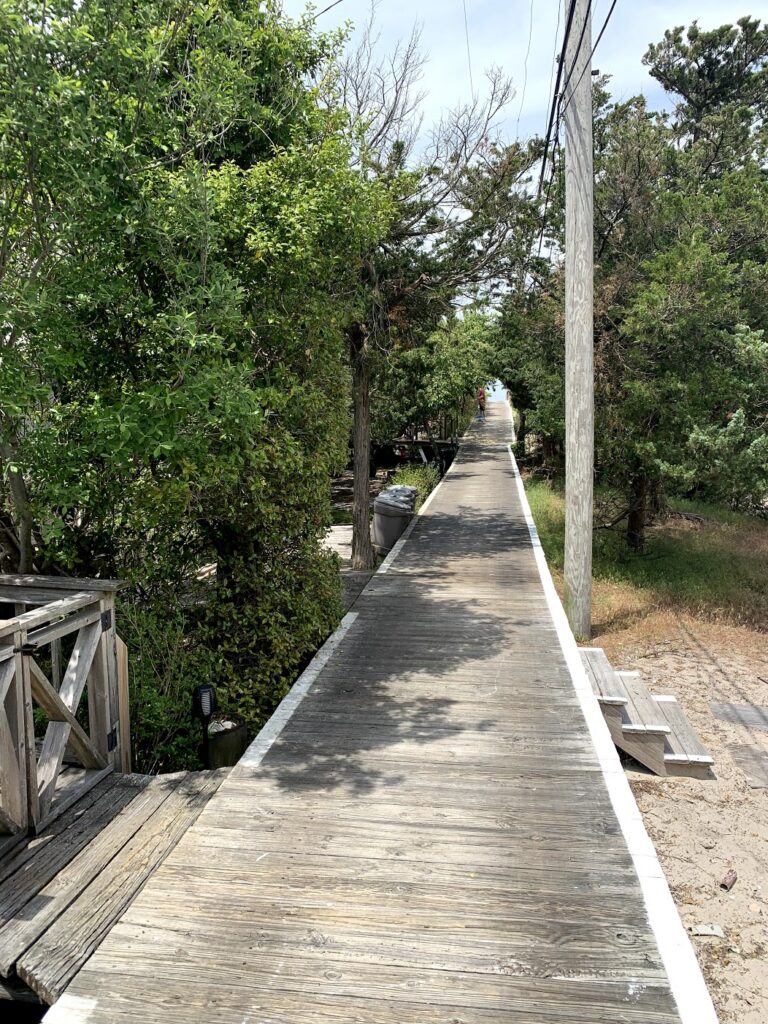
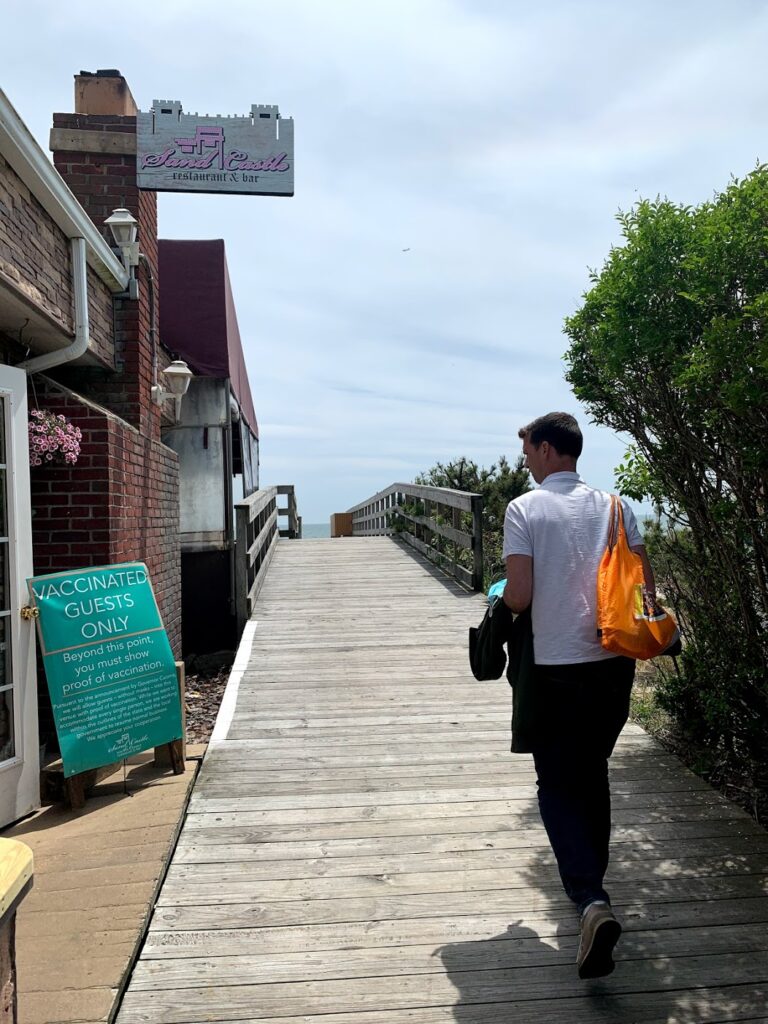
Fire Island is one of New York state’s most attractive summer getaways, a thin barrier island on the Atlantic Ocean lined with seaside villages and hamlets, linked by boardwalks, sandy beaches, natural dunes and water taxis. (And, for the most part, no automobiles.)
But Fire Island has a very special place in American LGBT history.
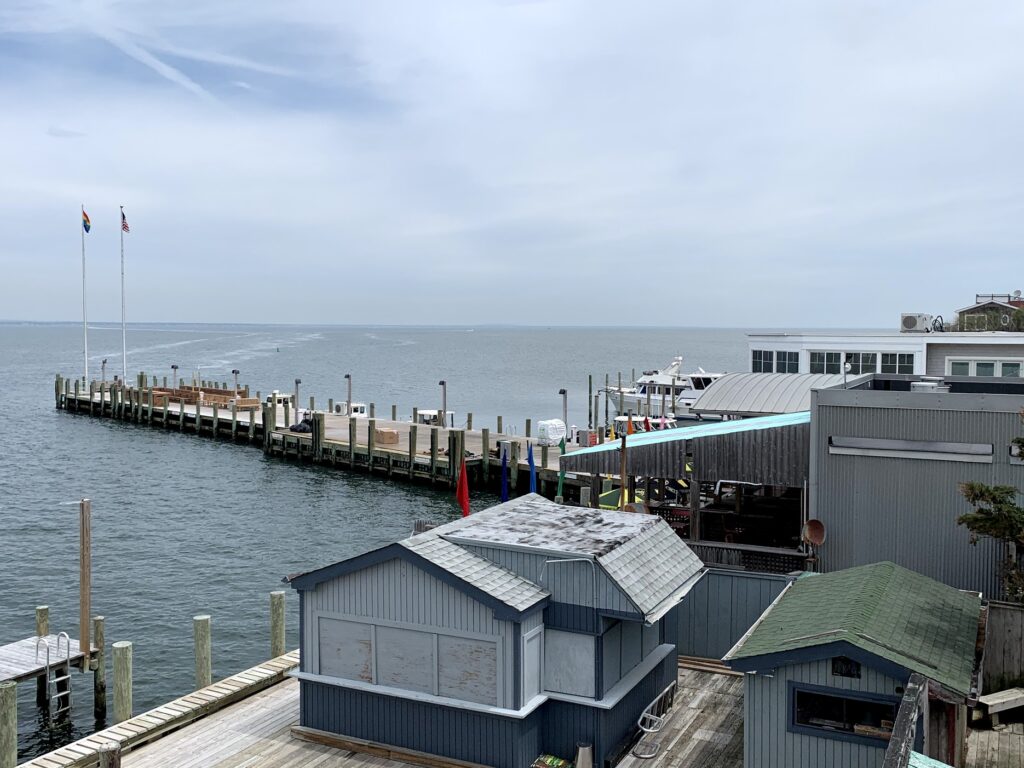
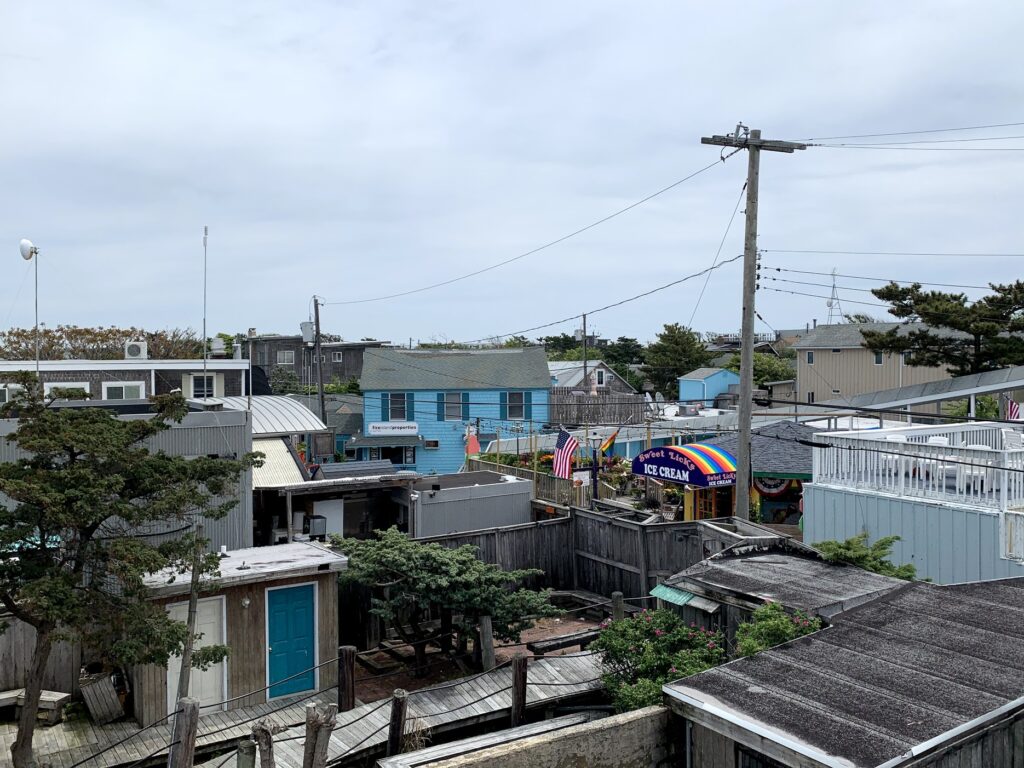
It is the site of one of the oldest gay and lesbian communities in the United States, situated within two neighboring hamlets — Cherry Grove and the Fire Island Pines.
During the 1930s actors, writers and craftspeople from the New York theatrical world began heading to Cherry Grove, its remote and rustic qualities allowing for gay and lesbians to express themselves freely — far away from a world that rejected and persecuted them.
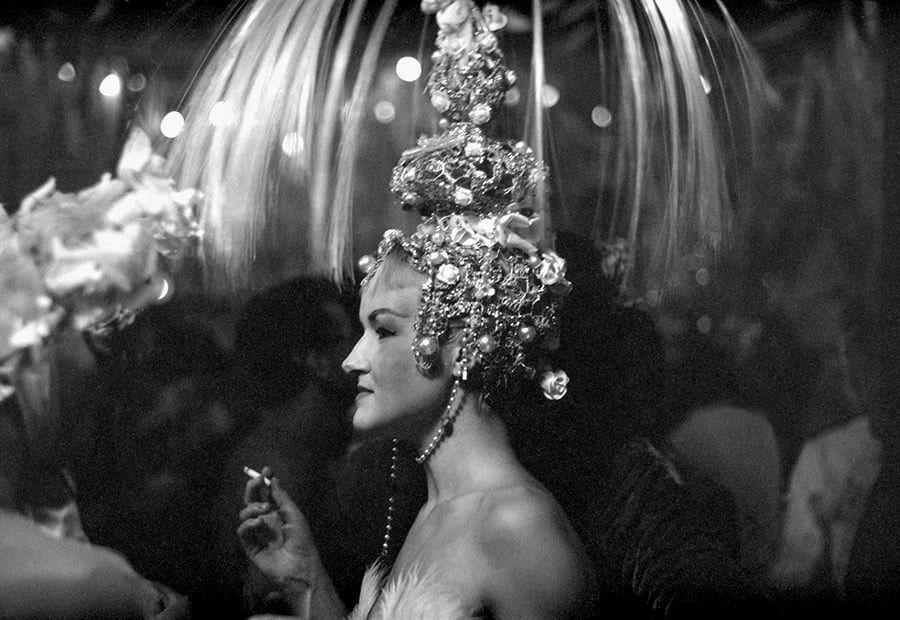
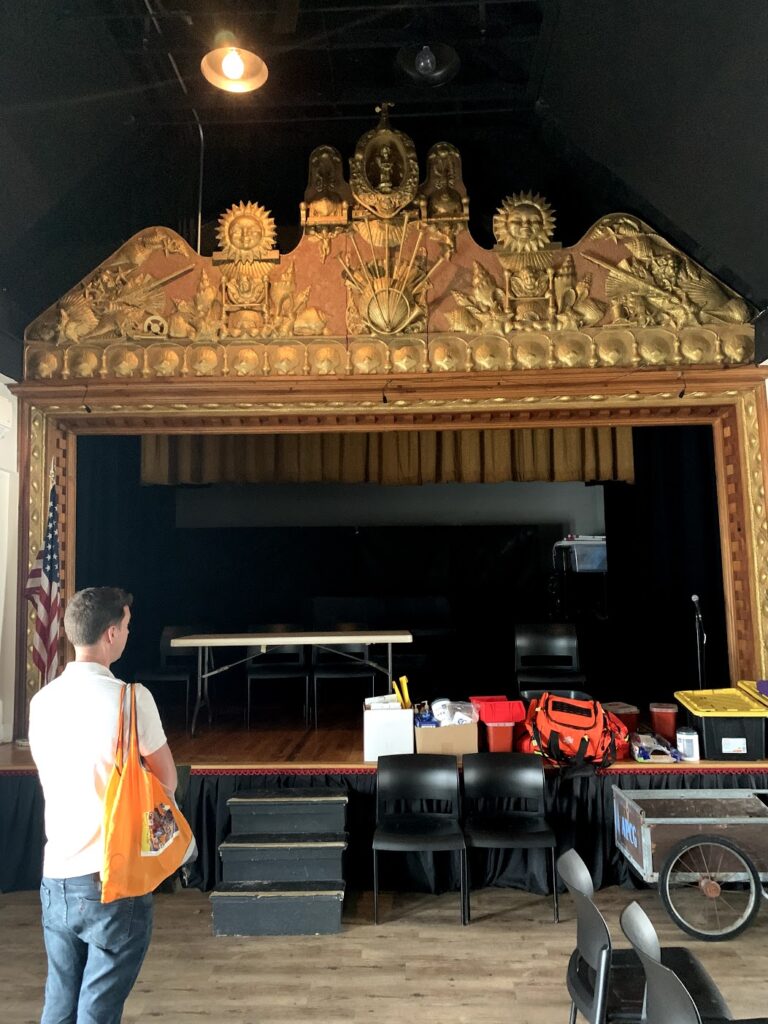
Performers at the Grove’s Community House and Theatre helped define camp culture, paving the way for the modern drag scene.
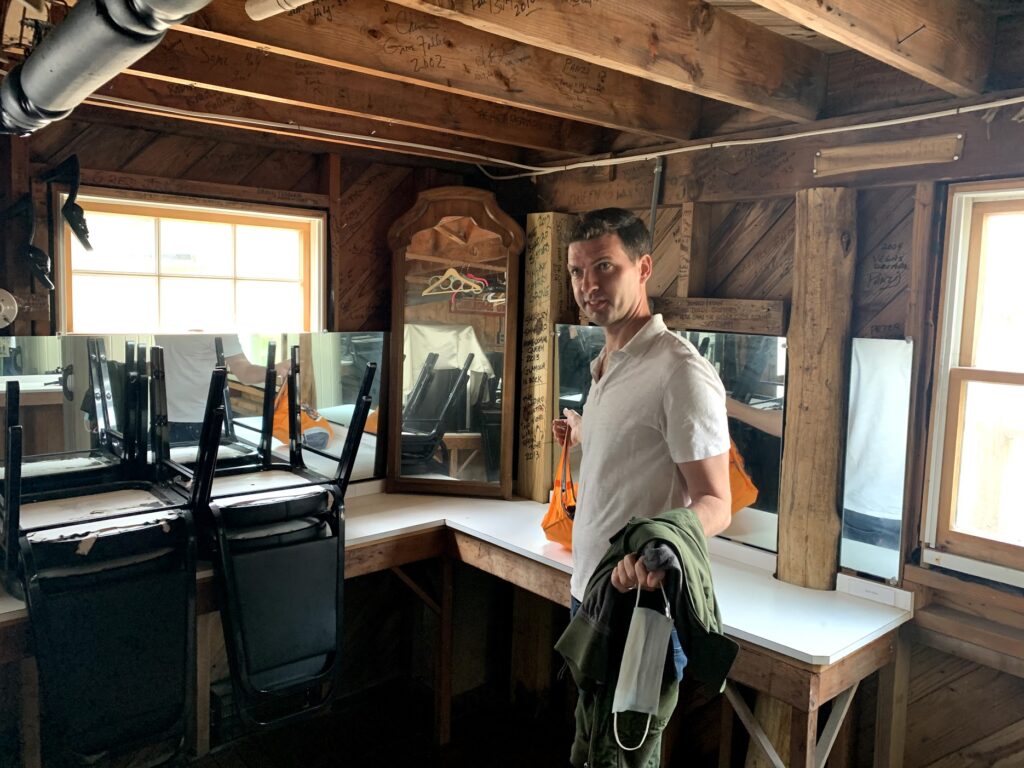
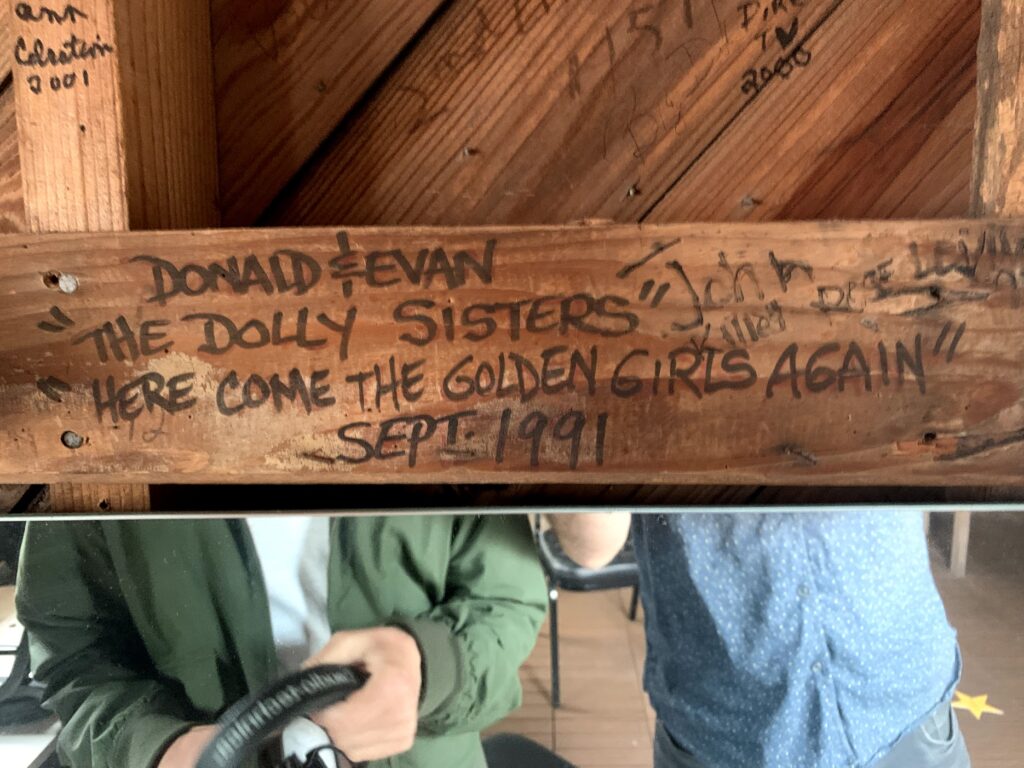
In this episode, Greg and Tom head to Cherry Grove — and the Community House and Theater — to get a closer look at Fire Island’s unique role in the American LGBT experience.
FEATURING: The Great Hurricane of 1938! The Invasion of the Pines! The indescribable Belvedere! And the surprising origin of Fire Island’s name.
Listen Now: The Very Gay History of Fire Island
The Official Bowery Boys Fire Island Playlist
Your soundtrack for the summer — whether you’re on Fire Island or just want to relive a retro experience from Cherry Grove or The Pines. Here’s a collection of songs inspired by our podcast on the history of Fire Island.
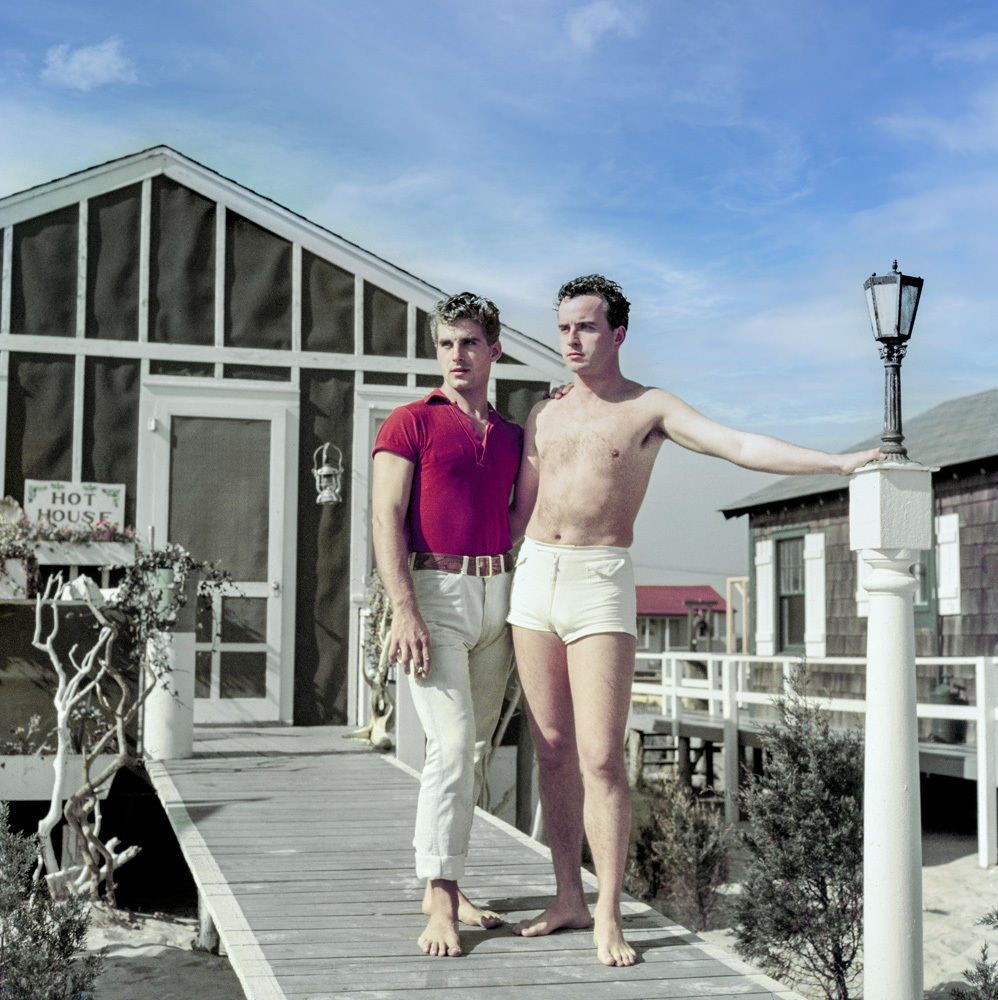
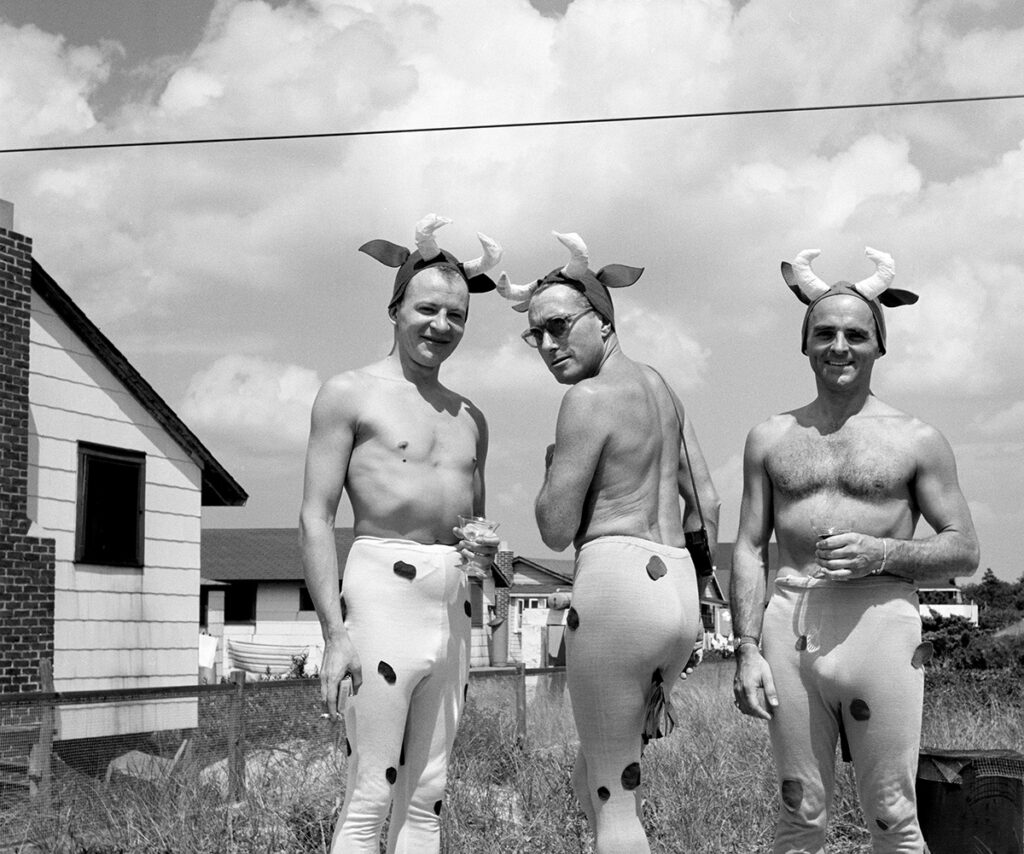
Images courtesy the Cherry Grove Archives Collection, taken by the men and women of Cherry Grove in the 1950s:
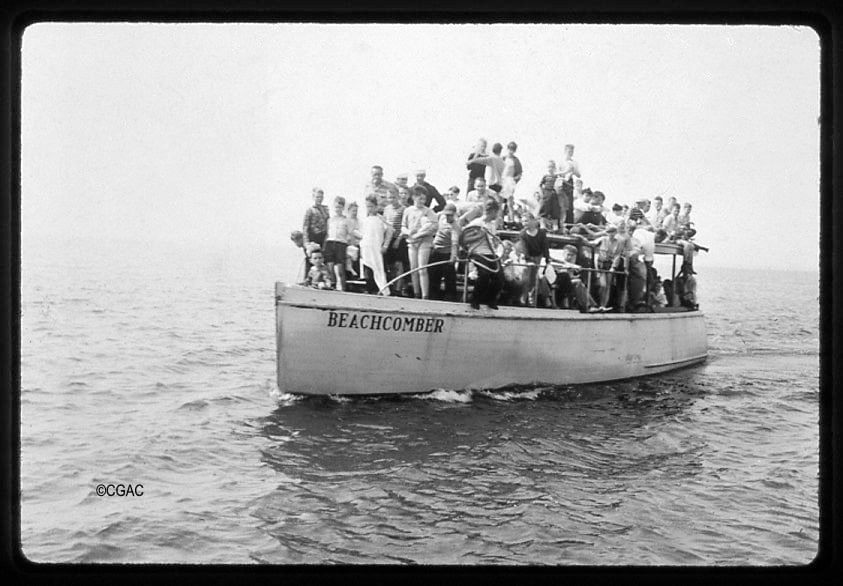
The Beachcomber, 1950s ferry to Cherry Grove.
Photographer unknown. Cherry Grove Archives Collection
A few images from the exhibition, courtesy the Cherry Grove Archives Collection:
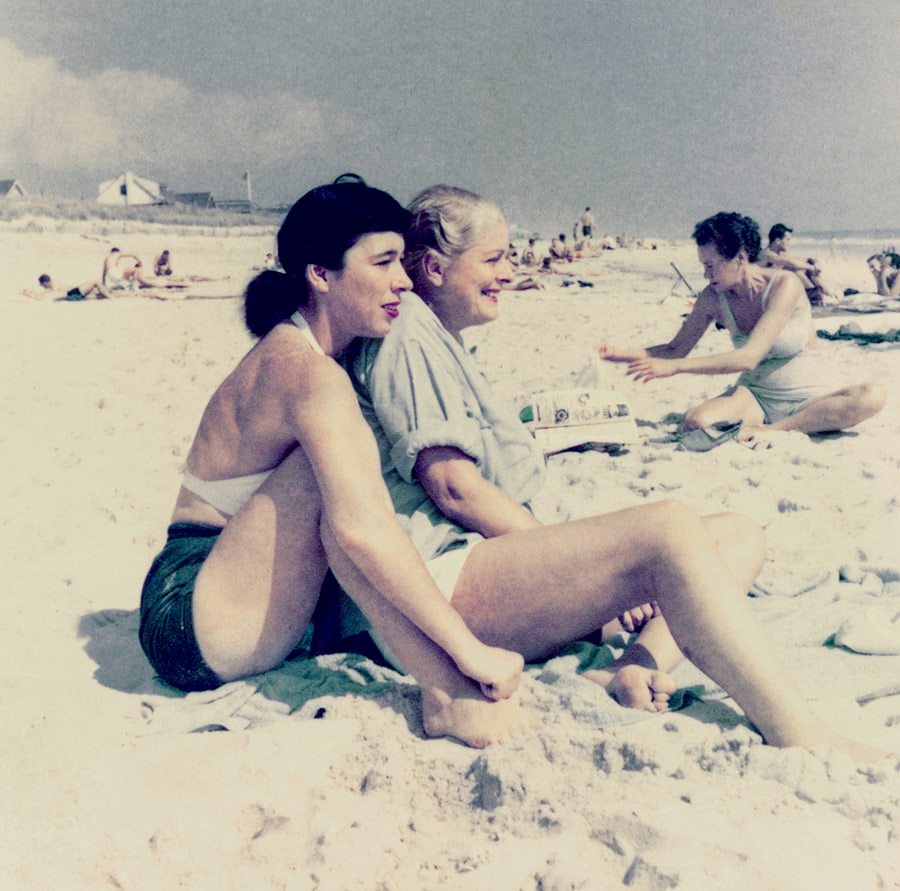
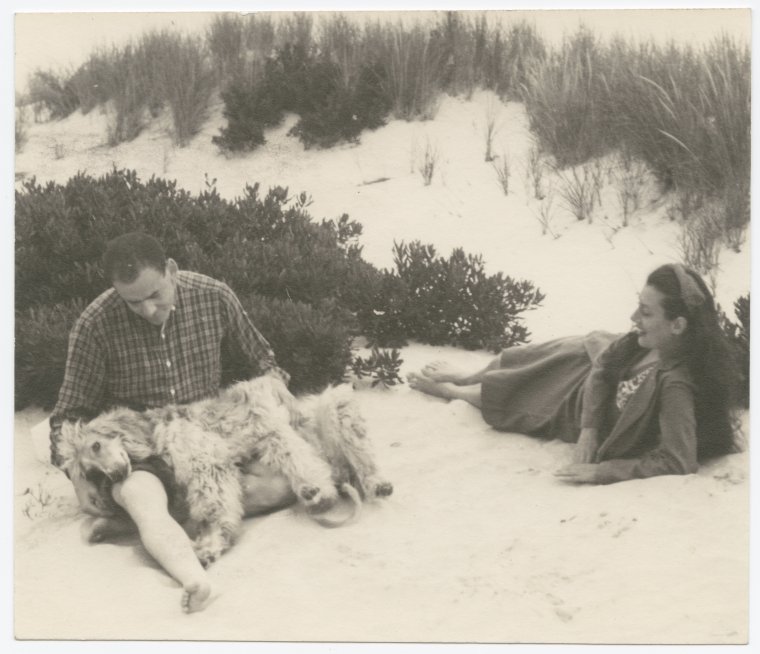
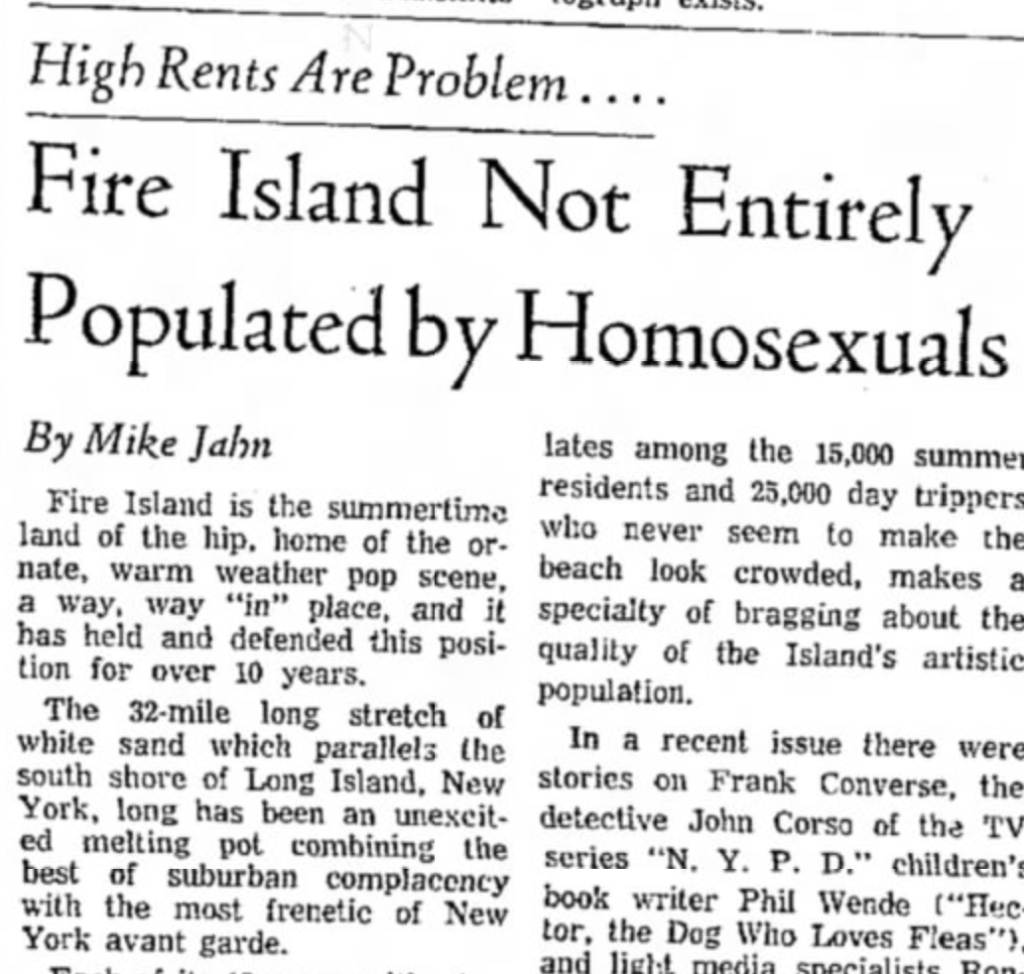
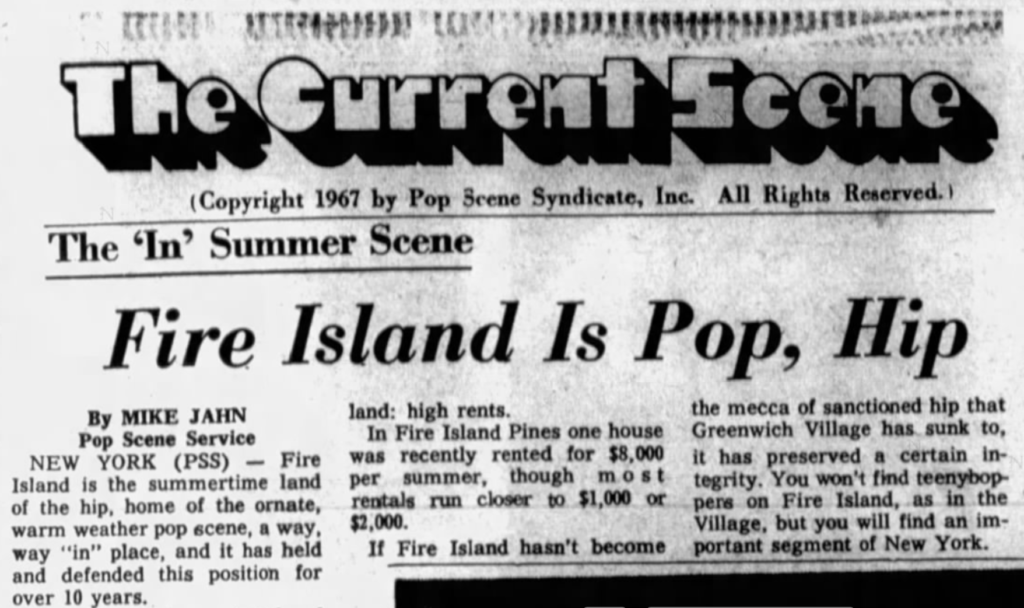
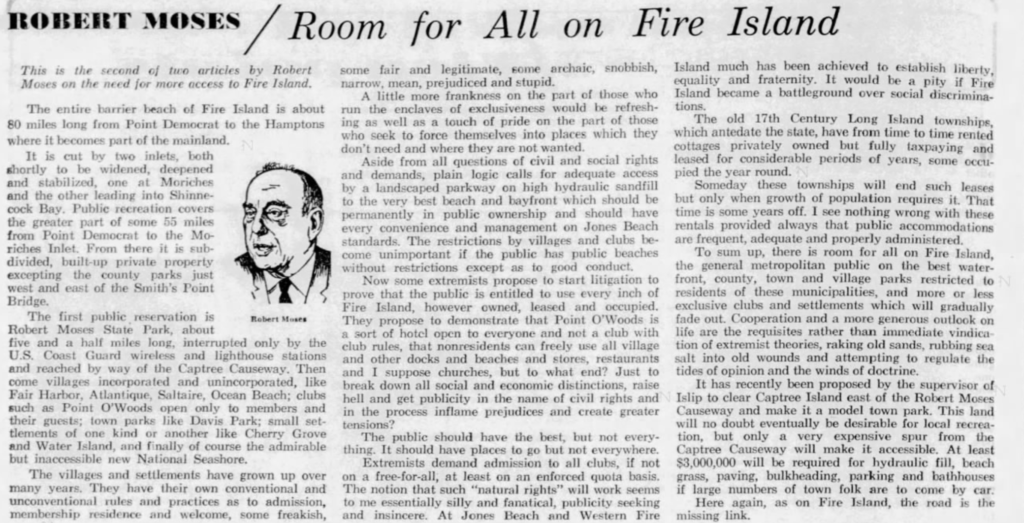
Patricia Fitzgerald & Kay Guinness, Cherry Grove Beach, September 1952Lincoln Kirstein and Fidelma Cadmus with dog on Fire Island, 1952. New York Public LibraryNewsday, September 28, 1956The Emporia Gazette, June 1968Then Tribune from Scranton, July 1968
Video about the exhibition from Safe/Haven curator Brian Clark:
https://www.youtube.com/watch?v=HHdROkyMlZ8&t=65s
Photographs of Tom and Greg in Cherry Grove (Photos courtesy Greg Young):
Behold — the Belvedere!
FURTHER LISTENING:
After listening to this show on the history of Fire Island check out these shows with similar themes and historical moments:
The Bowery Boys: New York City History podcast is brought to you …. by you!
We are now producing a new Bowery Boys podcast every other week. We’re also looking to improve and expand the show in other ways — publishing, social media, live events and other forms of media. But we can only do this with your help!
We are now a creator on Patreon, a patronage platform where you can support your favorite content creators.
Please visit our page on Patreon and watch a short video of us recording the show and talking about our expansion plans. If you’d like to help out, there are six different pledge levels. Check them out and consider being a sponsor.
We greatly appreciate our listeners and readers and thank you for joining us on this journey so far.
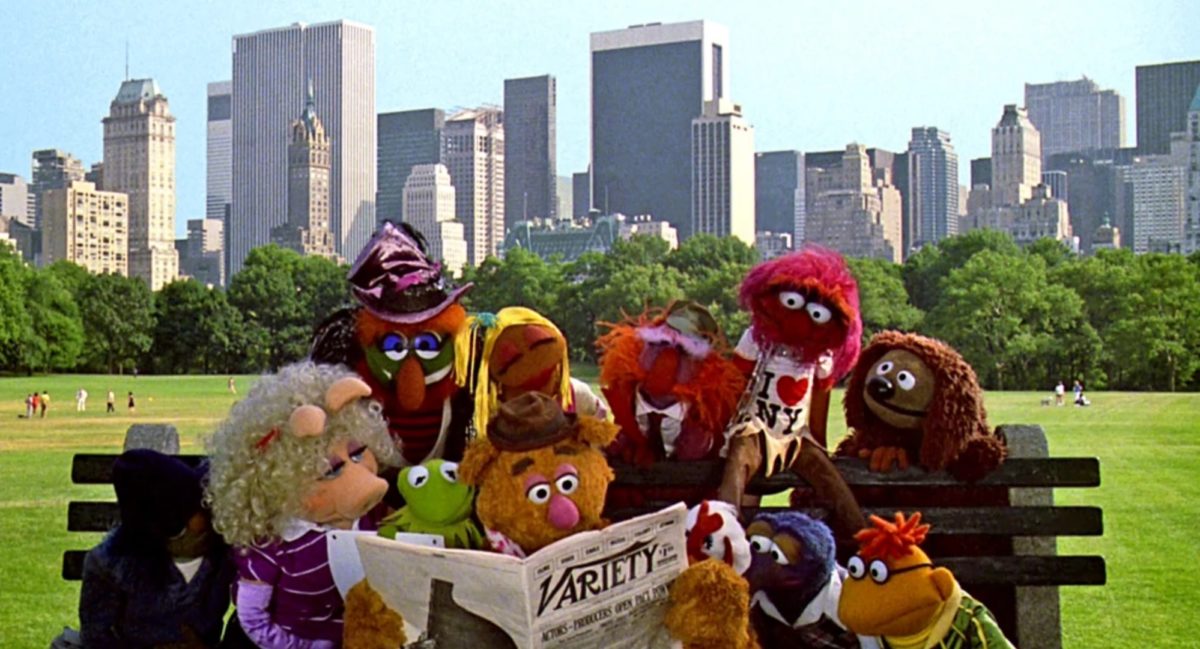
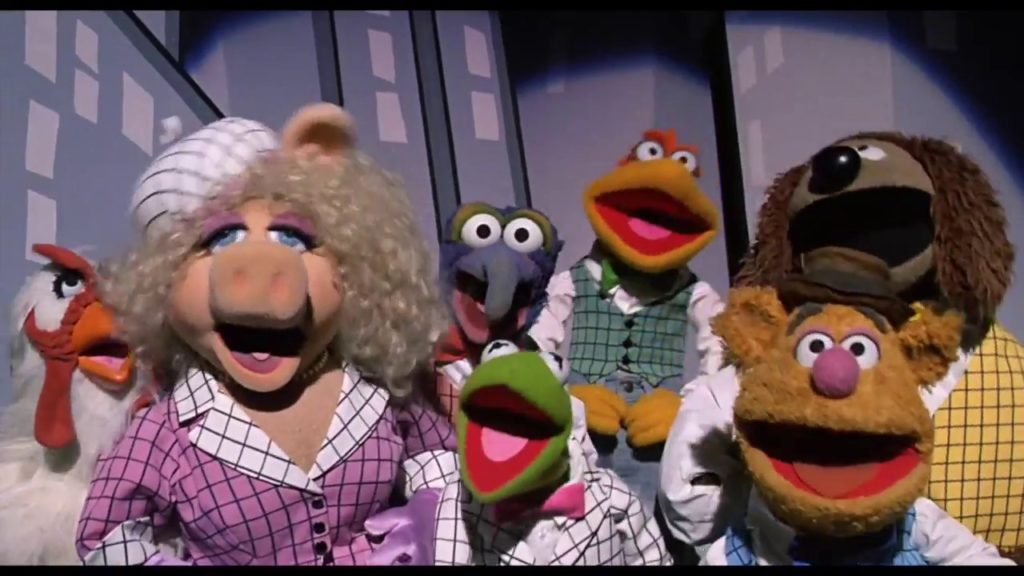
It’s spring in New York City and time for some frivolity! So we’ve just released an unusually whimsical episode of Bowery Boys Movie Club to the general Bowery Boys Podcast audience, exploring the 1984 comedy treat The Muppets Take Manhattan.
And that’s not all! Sticking to the theme of 1980s New York City, the latest episode of theBoweryBoysMovieClub explores the film Coming To America and its rich historical details. An exclusive podcast for those who support us on Patreon.
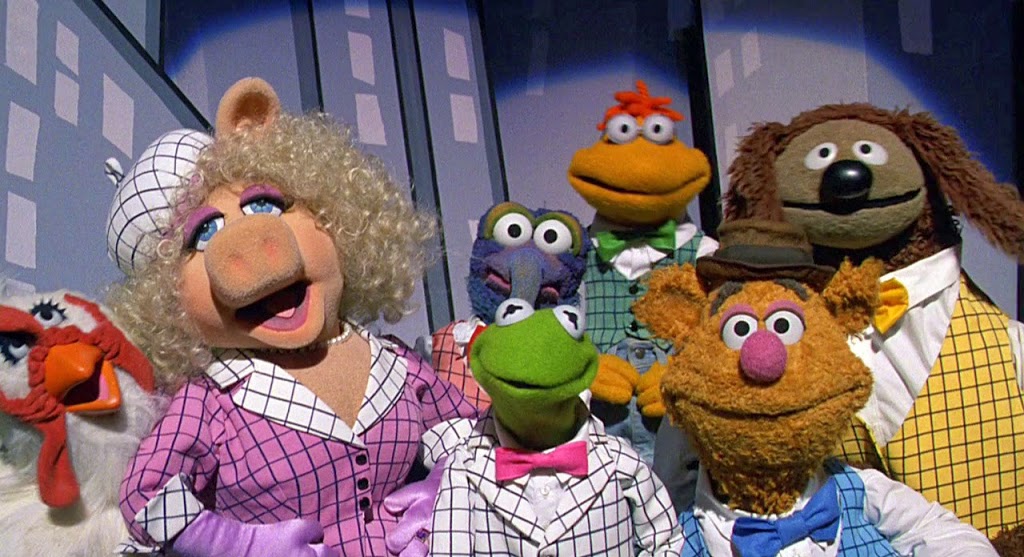
TOGETHER AGAIN! In 1984, Jim Henson brought his world-famous Muppets to New York for a wacky musical comedy that satirized the gritty, jaded environment of 1980s Manhattan while providing fascinating views of some of its most glamorous landmarks.
Listen in as Greg and Tom recap the story and explore the many real New York City settings of the film — from the Empire State Building and Central Park to the corner booth at Sardi’s Restaurant and certain luncheonette in the area of today’s Hudson Square.
The Muppets Take Manhattan expresses an unfiltered enthusiasm for the promise of New York City at a time when national headlines were filled with tales of the city’s high crime and budget problems.
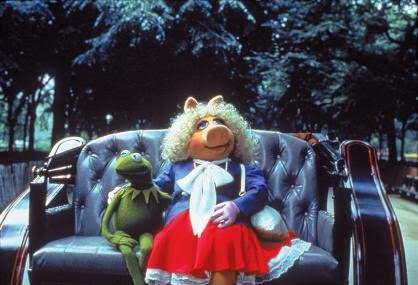
Can Kermit and Miss Piggy (and their roster of guest stars like Art Carney and Joan Rivers) bring magic back to the Big Apple?
HowdoIlistento all episodes of theBoweryBoysMovieClub? Once you’re signed in on Patreon, you’ll see a private RSS link that can be put directly into your favorite podcast player. Even easier, it can also be played directly from the Patreonapp if you’re signed in.
Your support on Patreon assists us in producing our podcast and website and it helps as we endeavor to share our love of New York City history with the world.
Shouldyouwatchthemoviebeforeyoulistentothisepisode? This podcast can be enjoyed both by those who have seen the film and those who’ve never even heard of it.
We think our take on The Muppets Take Manhattan might inspire you to look for the film’s many fascinating (but easy to overlook) historical details, so if you don’t mind being spoiled on the plot, give it a listen first, then watch the movie! Otherwise, come back to the show after you’ve watched it.
This episode was inspired by an ‘obsessive guide’ post that Greg wrote a few years ago. That article is presented here in its entirety, featuring many additional New York City details from the film.
“We did our first film in Los Angeles and our second in London. I thought it would be nice to do the next one in our hometown.” — Jim Henson
In The Muppets Take Manhattan, our friendly assortment of animal and animal-esque protagonists arrive in New York City to put on a variety show. But, of course, Jim Henson and his creations had been here for over a decade already, the critical ingredient of PBS’s Sesame Street, which originally filmed on the Upper West Side.
By 1982, production on the children’s show had moved to 55th Street and Ninth Avenue, but the Muppets had gone global — with a successful syndicated variety show (The Muppet Show, from 1976 to 1981, produced in England) and two box office hits, The Muppet Movie and The Great Muppet Caper.
Given the theatrical nature of their own weekly show — set in a theater, after all — it made sense to return the Muppets to New York, to finally bring the beloved characters to a cinematic Broadway stage.
Below are 21 often trivial, mostly historical points of interest from Henson’s zany, most exuberant homecoming:
NOTE ON TIME AND SETTING: The Muppets Take Manhattan, directed by Frank Oz, was released in the summer of 1984 and filmed the previous summer in a variety of New York and New Jersey locations, with interior shots at Empire Stages in Long Island City (today Paris Film Productions). However it’s set sometime in the summer of 1982, judging from flying calendar pages that set September 1 on a Wednesday.
“Broadway? But this show isn’t good enough for Broooadway!”
1. The film opens with some terrific overhead shots of Manhattan, before taking us over bridges to Poughkeepsie, NY, the home of the fictional Danhurst College (as played by Vassar College). The Muppets are on stage, delighting an over-enthusiastic crowd with their new variety show ‘Manhattan Melodies’. With charming naivety, they decide to bring the show to New York City.
‘Manhattan Melodies‘ was actually the name of a successful New York radio show in 1932, broadcast by WOR from Times Square.
History was made with a unique multi-location broadcast featuring The Do Re Mi Trio, three voices recorded from three different skyscrapers. “‘Do’ was on the Empire State [Building], eighty-six stories in the air, ‘Re’ was on the seventy-first floor of the Chrysler Building, and ‘Mi’ was on the roof of the Manhattan Bank Building [aka 40 Wall Street].” [source]
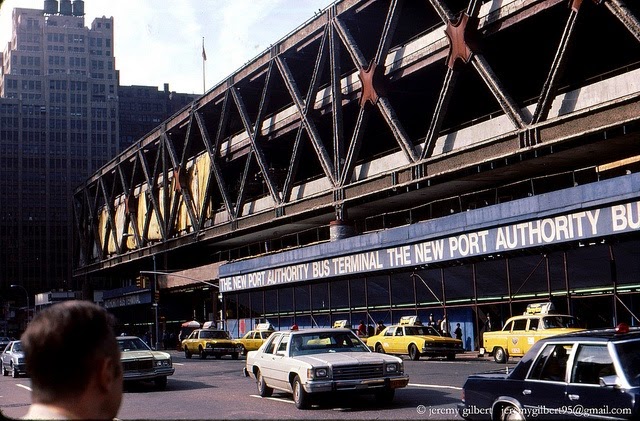
2. The Muppets arrive through the unglamorous hallways of the Port Authority Bus Terminal. In the early 1980s, this was considered one of the most crime infested areas of Midtown, a marketplace for prostitution and crack dealers. The bus terminal was “an ideal place for these illegal activities” during this period due to a recent expansion that left many corridors unguarded at night. Crime here “escalated to an uncontrollable level.”
Despite this, the Muppets decide to move into a wall of lockers. “I’ll trade with anybody who has a Jacuzzi!” says the free-spirited Janice.
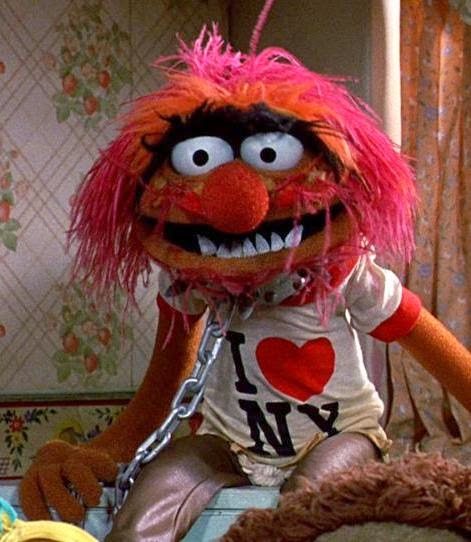
3. Animal wears an I HEART NEW YORK T-shirt throughout the film. This was a rather new emblem then, created in 1977 by graphic designer Milton Glaser. The irony of loving a particular city that was in a serious social and financial crisis was not lost on the designer.
“It was the mid-seventies, a terrible moment in the city. Morale was at the bottom of the pit,” Glaser said in an interview with The Believer. “….[T]hen suddenly the city simultaneously got fed up and said, ‘It’s our city, we’re going to take it back, we’re not going to allow this stuff to happen.” And part of that was this campaign.”
He gave away the rights to the design, so he gets paid nothing for the use — in the film, on tourist T-shirts, or anyplace else.
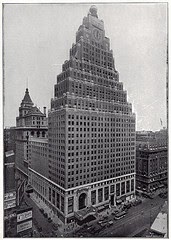
4. With Variety Magazine in hand, the Muppets venture off to pitch the show to big Broadway producers. The first, disreputable Martin Price (Dabney Coleman), has offices at the Paramount Building (1501 Broadway) in Times Square.
Originally built for the film company Paramount Famous Lasky Corporation in 1926, it rapidly became a key center for Broadway theater wheeling-and-dealing, “a hive of suites where ideas are hatched, partnerships forged, contracts signed, legends born,” according the New York Times.
Between 1979 and 1982, there were over 7,000 reported murders in New York City. (In comparison, there were less than 2,000 between 2009-2012.). This partially explains the dialogue exchange between Kermit and Price: “Well, it’s all about life in the big city.” “The big city? Cops, shootings, car chases — that kind of stuff?“
6. Rizzo the Rat delivers a hamburger with no patty to a customer. He turns and shouts to Pete: “Hey Pete. Where’s the beef?” The first Wendy’s commercial featuring the ‘Where’s The Beef’ lady Clara Pellerdebuted in January 1984 — after principal filming was completed — so this is most likely a weird coincidence.
7. Hopeless that their musical will ever be produced, everyone decides to leave town except Kermit. Scooter bikes away through New Jersey, Fozzie hops a train hobo-style, and Dr. Teeth and the Electric Mayhem hitch a ride to the Pennsylvania Turnpike. But, no surprise, Miss Piggy’s departure is the most glamorous, taking one ofThomas Edison’s original 1930 electric traincars from Hoboken Terminal.
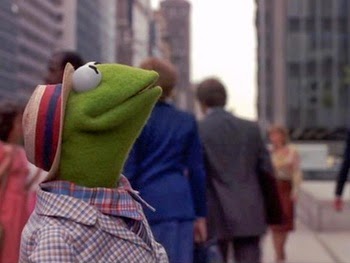
“You hear me, New York? We’re going to be on Broadway. You hear that, New York? I’m staying here! The Frog is staying!” 8. A dejected Kermit the Frog finds some renewed encouragement when he visits the Empire State Building‘s observation deck, looking north over the darkened city. To the right is the Pan Am Building which would remain branded with the airline’s logo until 1992, when it would become the Met Life Building.
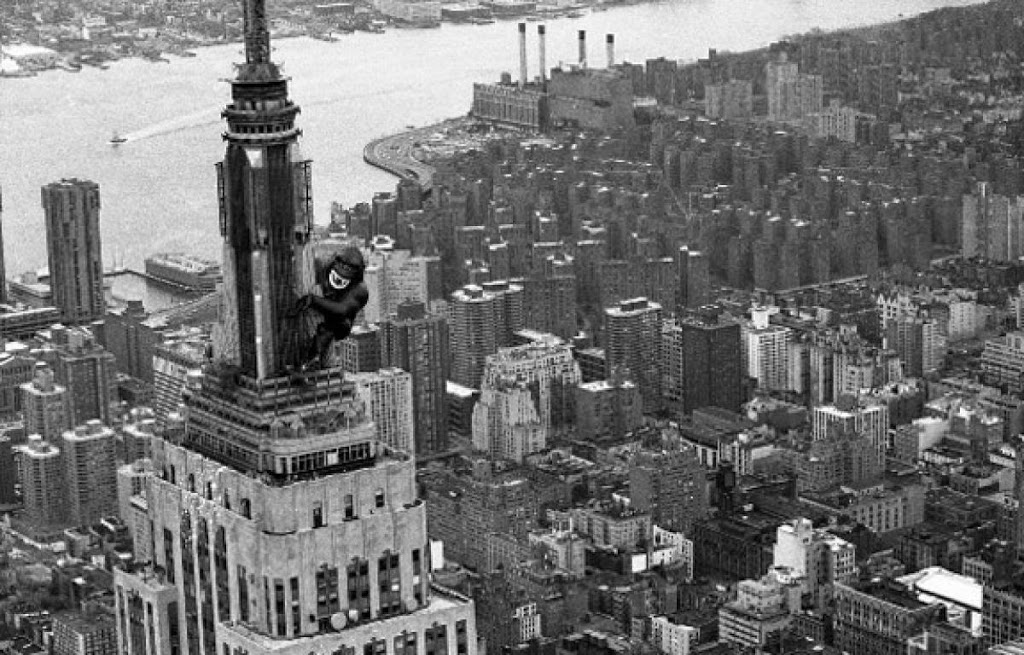
However, presuming this scene was filmed in 1983, Kermit would not have been the only animal superstar on the Empire State Building. In celebration of the 50th anniversary of the movie King Kong, a 3,000 lb nylon King Kong balloon was attached to the top of the building. (Photo courtesy Hamburg News/New York Daily News)
9. Kermit meets up with Pete’s daughter Jenny, a wanna-be fashion designer, in front of the Plaza Hotel, with everything inGrand Army Plazalooking almost the same as it does today.
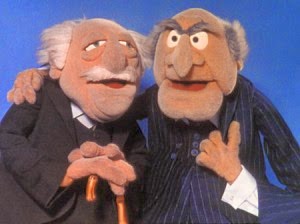
For some reason, those grumpy curmudgeons Statler and Waldorf are sitting on a bench, sunning themselves. The duo has a rather profound link to New York City history; they’re both named for classic New York hotels — the Statler (today’s Hotel Pennsylvania) and the Waldorf Astoria. And, yes, Waldorf’s wife is actually named Astoria. She appeared in this 1979 episode of The Muppet Show starring Dizzy Gillespie.
10. Miss Piggy is spying on Kermit from under a scaffolding in front of Bergdorf Goodman. (Just as we missed out on a shot of the Film Forum earlier, so too is Bergdorf’s neighbor The Paris Theater cut from view.) It’s later revealed she’s working at a perfume and makeup counter with Joan Rivers. This was not far-fetched casting; before making it big as a comic, Rivers worked as a fashion consultant for Bond Clothing Stores and even designed window displays for Saks Fifth Avenue and Lord and Taylor.
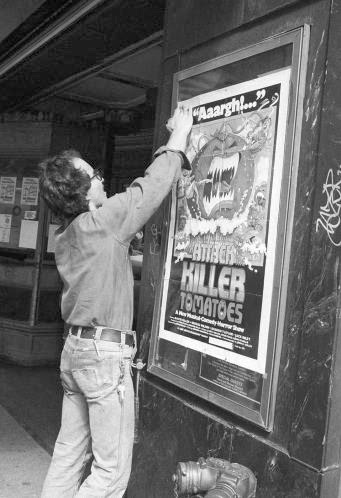
11. What are the rest of the Muppets up to? Scooter works at a Cleveland movie theater, with the Swedish Chef manning concessions. The film playing there is Attack of the Killer Fish in 3D, an obvious parody of 1978’s Attack of the Killer Tomatoes.
Believe it or not, Killer Tomatoes owes a small New York film festival for some of its cult cred. Two years after it was produced, the film piqued the curiosity of the media when it screened at the World’s Worst Film Festival at the Beacon Theatre in 1980, co-hosted by movie critic Michael Medved.
The film festival was a de facto Woodstock for schlock cinema, with Killer Tomatoes a star attraction. Said co-writer John DeBello, “The Wall Street Journal had the poster on its front page, the CBS Evening News used the song to close their credits. When people heard the title, just like when I heard the title, people loved it.” At right: Killer Tomatoes at the Beacon Theatre.
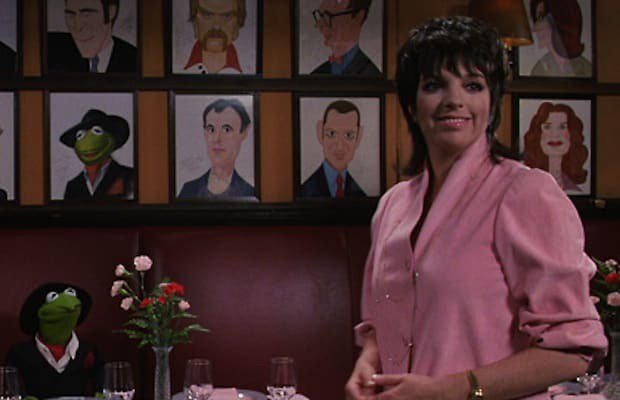
12.Sardi’s Restaurant takes center stage of perhaps the film’s most famous scene, as Kermit, disguised as an elegant producer, sends Rizzo’s rat friends in to create a ‘whisper campaign’ about his new musical.
Sardi’s has been inextricably linked to the Broadway industry since its opening in 1927, hosting hundreds of cast parties, business meetings and probably a few professional break-ups. It even gave birth to the Tony Awards. (You can listen to the whole fabulous tale of Sardi’s in our 2011 podcast.)
Vincent Sardi Jr., who appears in the film (see below), hosted the glittering greats of Broadway for over a half-century. He was considered the unofficial “Mayor of Broadway.“
Kermit also squeezes his own likeness onto Sardi’s famous wall of caricatures. To do so, he must take down that of Liza Minelli, which does not please her.
In fact, not only does Liza’s caricature still appear at Sardi’s, Kermit’s is still there too. (At least last time I checked!) Liza’s is by Brooklyn artist Richard Baratz. Look for his other likeness of Robert De Niro, Dustin Hoffman, Al Pacino, Whoopi Goldberg and dozens more. Kermit’s? No one knows who drew that.
13. Jenny consoles Kermit in Central Park, somewhere on Cherry Hill, next to Bethesda Fountain. Near this spot was the site of New York City’s first-ever frog jumping competition in 1935, inspired by Mark Twain’s short story “The Notorious Jumping Frog of Calavaras County.”
Local children’s organizations could sponsor one of 175 frogs shipped in from Louisiana. But this was not a trivial event. Ten thousand people took part, with former governor Al Smith presiding over the event and boxer Jack Dempsey serving as referee. The winner was a female frog named Abbie Villaret. (You can see a picture here.)
14.Central Park is depicted as a destination for people in exercise clothes and a place to ride through in carriages. Oh, and the place you get mugged. While Piggy is spying on Kermit, a mugger grabs her purse. (The mugger is played by Gary Tacon. Today he’s an accomplished stuntman and was recently in The Wolf of Wall Street.)
Crime was a factor people assumed was a regular component of New York’s most famous park. In 1982, the year it set an attendance record of 14.2 million, there were 22 reported rapes and over 700 robberies. [source] Although it would take several years to meaningfully reduce crime, the park’s infrastructure steadily improved, thanks to the efforts of the Central Park Conservancy.
Oh, by the way, Piggy borrows roller-skates from Gregory Hines, chases down her assailant and retrieves her purse. Here’s a video of some fine roller-skating style exhibited in the park during the 1980s:
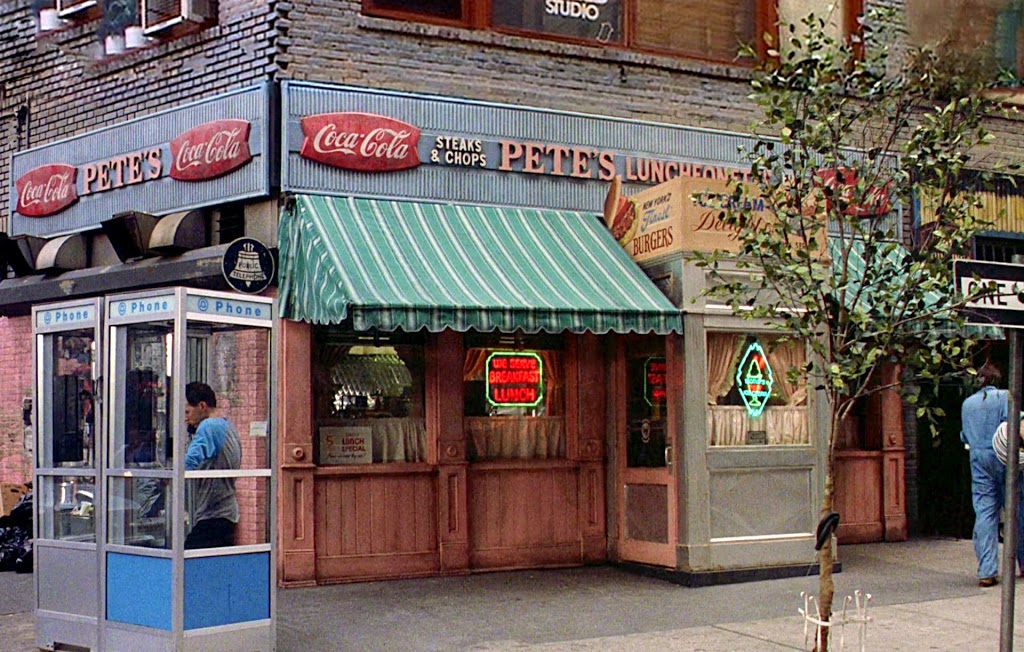
15. Of the many special guests who appear in the film, the hottest star of the moment was perhaps Brooke Shields. The Blue Lagoon star filmed this cameo at Pete’s Luncheonette a few months before entering Princeton:
Masterson the Rat: Do you believe in interspecies dating? Brooke: Well, I’ve gone out with a few rats if that’s what you mean. In 1982, Shields briefly dated John F. Kennedy Jr. and took Ted McGinley to her prom.
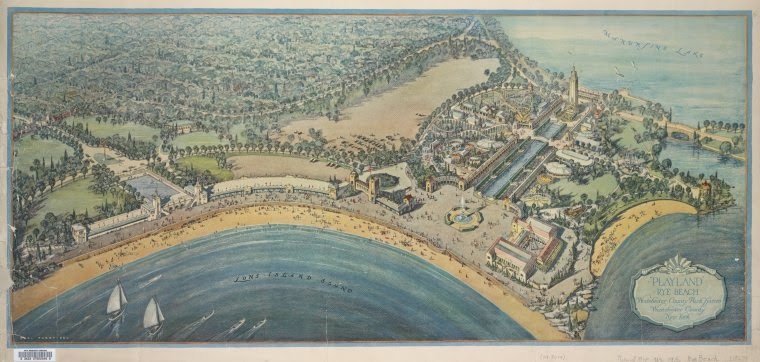
16. Meanwhile where’s Gonzo? He’s trying to make a living on the road, performing in an aquacade in Michigan. But these acrobatic scenes were actually filmed closer to home — Rye Playland, the historic amusement park overlooking the Long Island Sound. Gonzo’s fiery derring-do takes place by the Playland Lake (in the top right corner of the 1927 picture below, courtesy NYPL).
Four years after Gonzo conquers the park, a young boy consults an arcade fortune teller here at Rye Playland and becomes Tom Hanks in the movie Big.
“Just because the whole thing is crazy doesn’t mean it won’t make it on Broadway!”
17. Finally, somebody’s interested in ‘Manhattan Melodies’! Playing esteemed producer Bernard Crawford is Art Carney, who had acted on Broadway for almost thirty years by this time, not to mention, of course, his performance as Ed Norton on The Honeymooners.
But it’s Bernard’s son Ronnie who takes on Kermit’s script to produce and direct. He’s played by Lonny Price in a role that would almost precisely predict his future.
Price was an in-demand theater actor (best known for Broadway’s “Master Harold”…and the Boys) before Muppets. Afterwards, he became an in-demand theater director, recently helming 110 in the Shade with Audra McDonald and a new variation of Camelot with the New York Philharmonic.
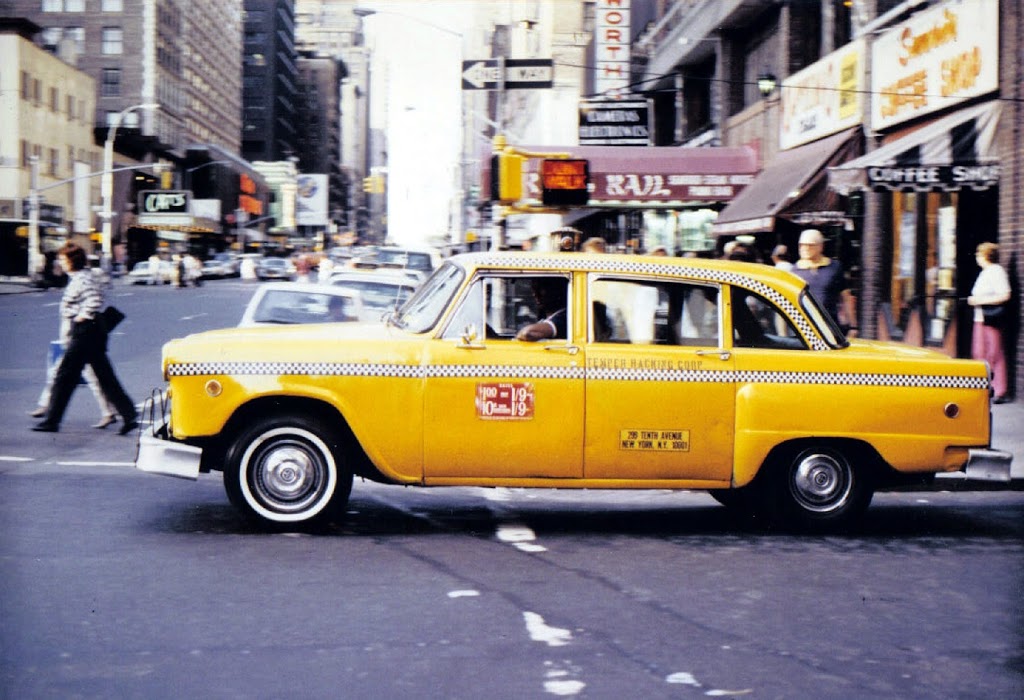
18. Things are looking up for Kermit when he is suddenly hit by a cab in front of Madison Square Garden. And not just any cab, but a Checker Taxi, which had actually ceased manufacturing in 1982. They stayed on city streets for several years after. According to the New York Times, there were ten left in 1993. The final one left service in 1999. Photo above courtesy Inside New York.
19.Kermit’s accident gave him amnesia, and confused about his identity, he gets a job at Mad Ave Advertising, a Madison Avenue advertising firm. Decades before Mad Men, Kermit is immediately thrown into pitch meetings, displaying a Don Draper-like salesmanship. Unlike the offices of Sterling Cooper, female frogs seem to be treated equally. (At least in name — Bill, Gil and Jill.)
1982 was a turbulent year for New York advertising firms with dozens of buyouts and mergers, including one between Madison Avenue’s two largest firms — Saatchi and Saatchi and Compton Advertising — worth over a billion and a half dollars. Given that Mad Ave Advertising is seeking the assistance of an amnesia patient, it doesn’t seem like this firm will be long for this world.
20. The Muppets tear through Manhattan, looking for Kermit. Scooter races his bike by the Shubert Theater and its smash hit A Chorus Line. In September 1983, the show became Broadway’s longest-running show of its day. By the time The Muppets Take Manhattan opened in movie theaters, a movie version of Chorus was already begun filming in New York.
Other Muppets search the New York Public Library, Central Park, even the sewer.
But it’s Gonzo that gets the privilege of interrupting Mayor Ed Koch during a press conference at Gracie Mansion.
Gonzo: I’m looking for a frog that can sing and dance! Koch: If he can also balance the budget, then I’ll hire him.
Koch had a special affection for Gracie Mansion, throwing weekly dinner parties there and organizing press conferences on the porch. Having the mayor of New York live elsewhere, said Koch, would be “like asking the president not to live at the White House.” [source]
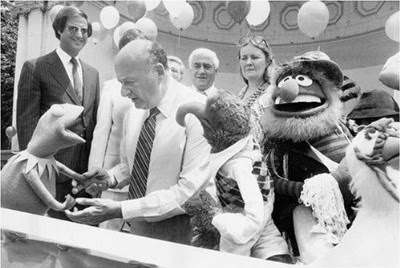
The mayor made several appearances with the Muppets throughout his tenure. The mayor’s itinerary from June 28, 1984 reads as follows: “Courtesy call with Yasushi Oshima, Mayor of Osaka, Japan; views new uniforms for Taxi and Limousine Commission inspectors; accepts check for $500,000 donated by Mobil Corporation for the Summer Youth Employment Program’s Clean Team; attends Financial Control Board meeting; drops in at reception celebrating the opening of The Muppets Take Manhattan.”
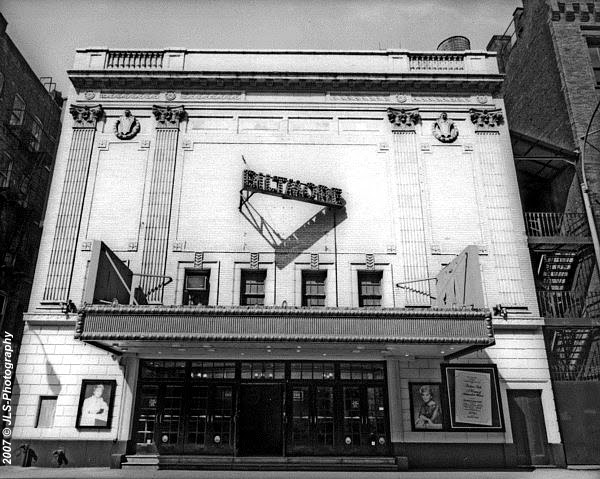
The Biltmore Theater in 1944
21. Finally, Manhattan Melodies opens! And on a swanky stage too — the Biltmore Theater. A stage that unfortunately is on its last legs in the film.
The Biltmore opened in 1925 and hosted dozens of shows in Broadway’s golden years. After briefly becoming a CBS television studio, it reverted back to live theater and was most notably the home for the Broadway transfer of Hairin 1968. The line-up of shows that appeared here in the early 1980s include Deathtrap with Victor Garber and the Garry Trudeau-written musical Doonesbury.
However, in 1987, the theater was ravaged by fire, most likely arson. According to the New York Times report, “Hypodermic needles were found inside the theater, indicating that drug users may have been using it as a shooting gallery, and storage lockers had been rifled.”
The theater finally reopened in 2008 — under the ownership of the Manhattan Theatre Club — as the Samuel J. Friedman Theatre, named for the renown Broadway publicist.
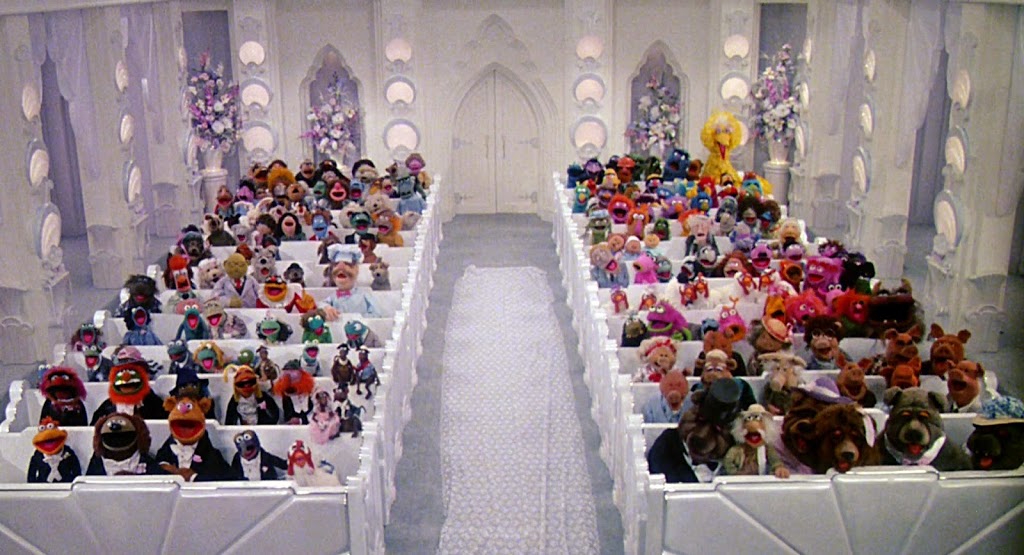
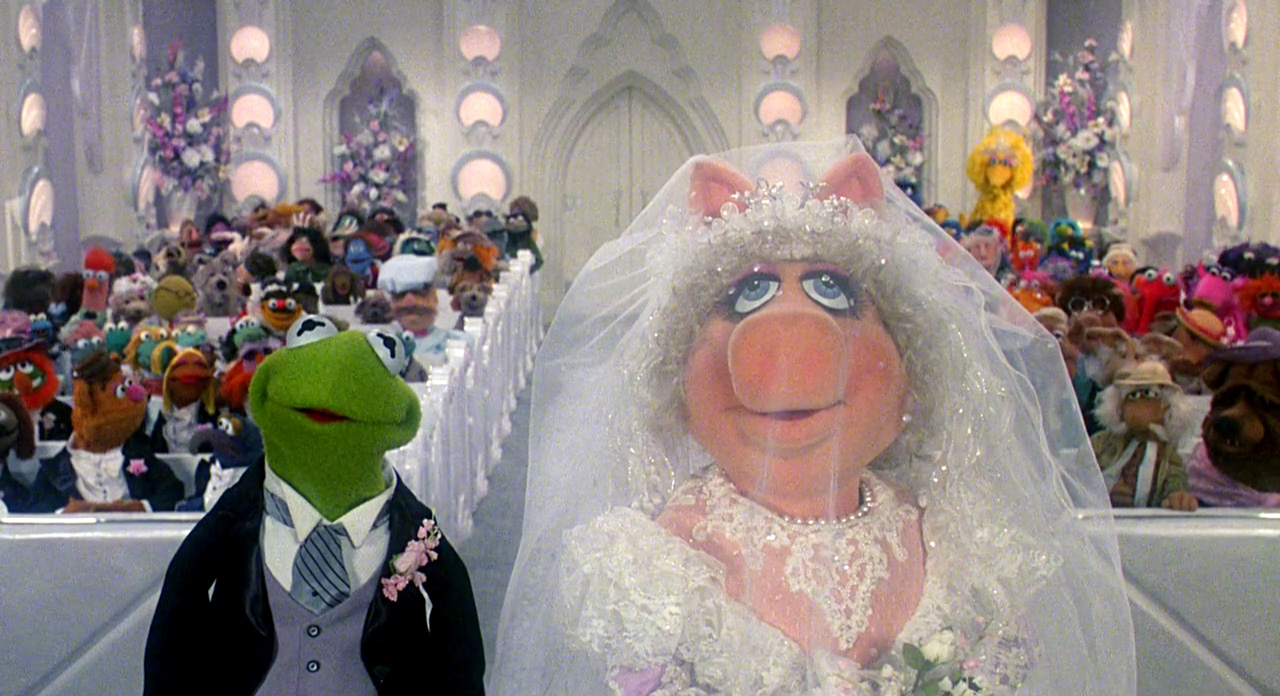
As quickly as the show begins, however we cut to a shot of a wedding chapel for the nuptials of Kermit and Piggy. Nearly all the existing Muppets appear in this scene. (Muppets Wiki actually has a complete seating chart.) Piggy’s gown gives a subtle nod to that of Princess Diana’s when she wed Charles in 1981.
AFTERWORD: The Muppets Take Manhattan was a modest box office success when it opened in July 1984. The film was up for the Academy Award for Best Music, Original Song Score. But the film lost the award to Prince for Purple Rain.
The artist took to the stage wearing a garment which Miss Piggy would have desperately coveted:
My thanks to the Muppets Wiki for the inspiration for this article.. All images are courtesy Tri-Star Pictures/Jim Henson
And now for a little news from the Bowery Boys: We’re excited to announce the launch of Bowery Boys Walks — our official small-group walking tours that are taking our show into the streets!
If you’re a regular listener to the podcast, you know that we try to bring a little fun and humor to retelling the events and characters that have shaped New York’s history. We’re taking the same approach in developing the Bowery Boys walking tours.
Each walk has been developed by an expert tour guide working together with us, and most will complement episodes of the show that have already been released. So, if you’re in the mood to study up before your walk, there will be at least one episode you can listen to to get “situated.”
Our first tour: Broadway
We’re kicking things off on center stage with our first walking tour: Legends and Landmarks of Broadway. Led by professional tour guide and long-time theater insider Jeff Dobbins, the tour will trace the history of Broadway theater and the theater district from the days of Oscar Hammerstein I up through Broadway’s “Golden Age”.
Several additional tours are currently in development and will be announced shortly. Stay tuned for that announcement.
About the tours
Bowery Boys Walks are intended to be as intimate as possible, so groups are limited to 15 participants. Because of this, we strongly recommend booking in advance through the website to ensure a spot on the tour.
PODCAST What makes a street so extraordinary that it becomes a destination in itself? What makes it Broadway? This is the history of New York City’s most famous street and a progression through the entire history of the city.
We’ve discussed Broadway, the street, in just about every show we’ve done — as so many of the city’s key events have taken place along Broadway or near it. And that’s also the point of Fran’s book — by telling the story of a street, you’re actually telling the story of the entire city.
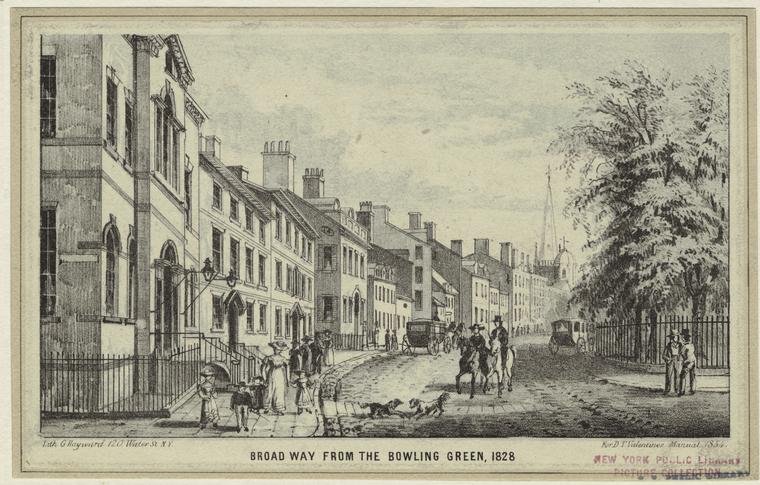
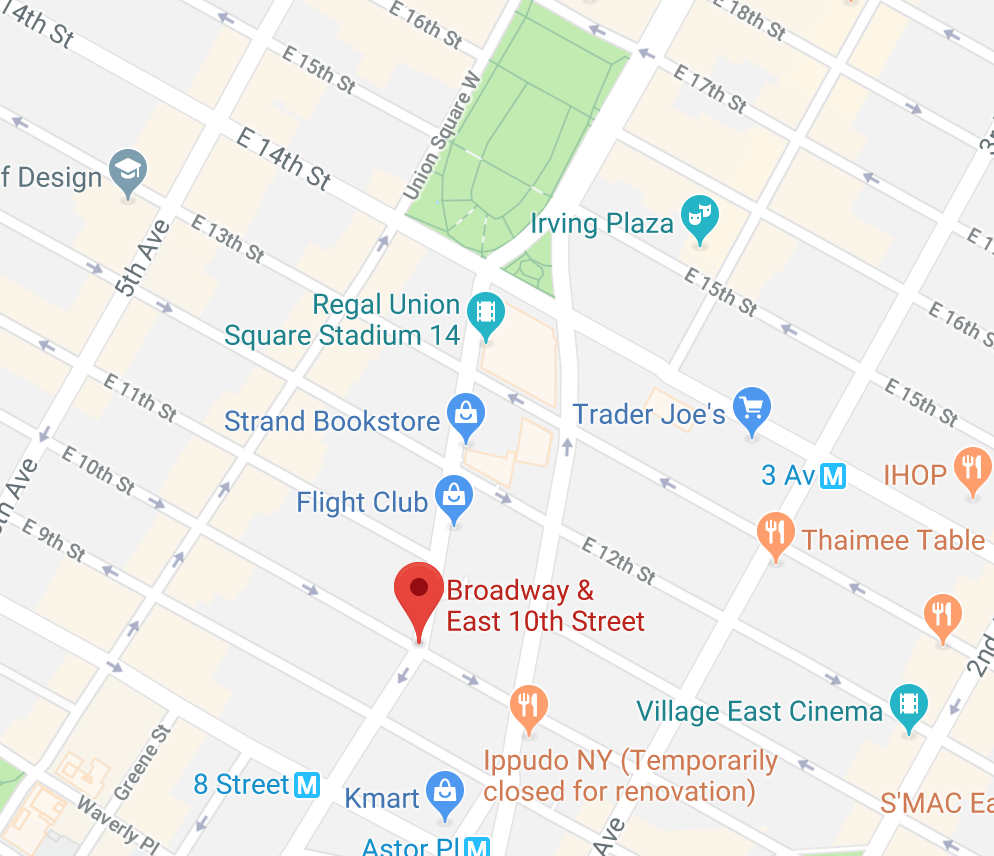
On today’s show, we’ll be discussing how Broadway moved north — literally, how did it expand, overcoming natural obstacles and merging with… or avoiding… old, pre-existing roads, and how did it take such an unusual route?
And perhaps most surprisingly, how did Broadway survive the Commissioner’s Plan of 1811 which imposed a rigid street grid on the city?
You’re in for a few surprises.
To download this episode and subscribe to our show for free, visit iTunes or other podcasting services or get it straight from our satellite site.
The Bowery Boys: New York City History podcast is brought to you …. by you!
We are now producing a new Bowery Boys podcast every other week. We’re also looking to improve the show in other ways and expand in other ways as well — through publishing, social media, live events and other forms of media. But we can only do this with your help!
We are now a member of Patreon, a patronage platform where you can support your favorite content creators for as little as a $1 a month.
Please visit our page on Patreon and watch a short video of us recording the show and talking about our expansion plans. If you’d like to help out, there are five different pledge levels (and with clever names too — Mannahatta, New Amsterdam, Five Points, Gilded Age, Jazz Age and Empire State). Check them out and consider being a sponsor.
We greatly appreciate our listeners and readers and thank you for joining us on this journey so far.
You can read Greg’s review of Fran Leadon’s book from a couple months ago here. “Fran Leadon, an architect and co-author of fifth edition of the AIA Guide to New York City, is a perfect biographer for Broadway, a main character in the development of one of the world’s great cities. His book is dense, richly written and researched, loaded with a million fun anecdotes.”
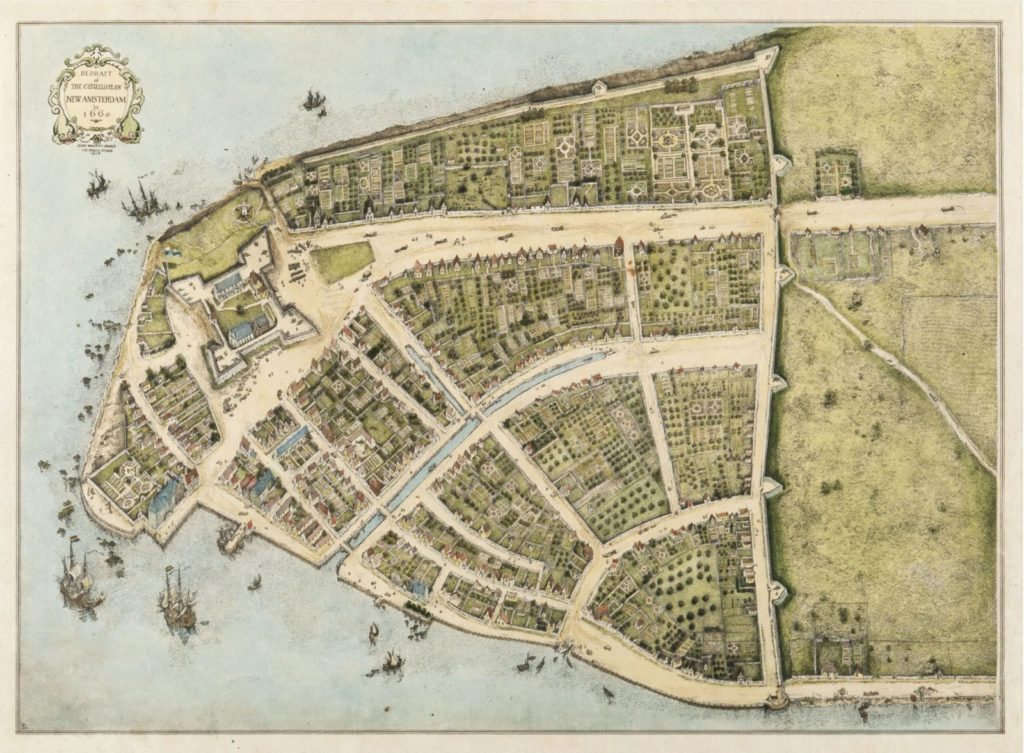
The beginning of Broadway — from a map of New Amsterdam and one from the Commissioners Plan
New York Public Library
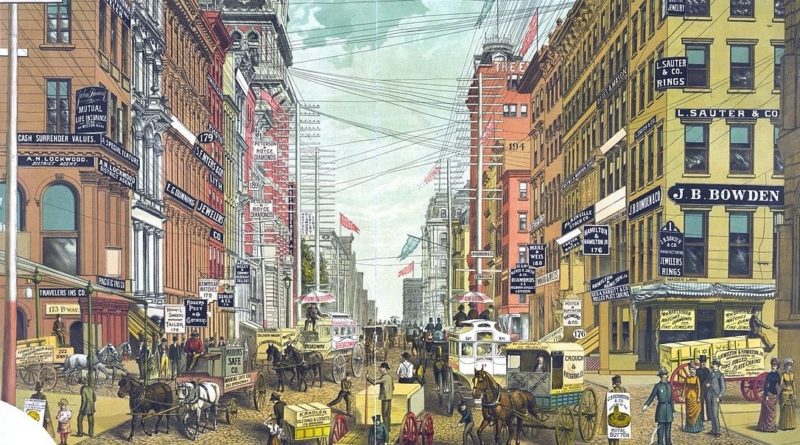
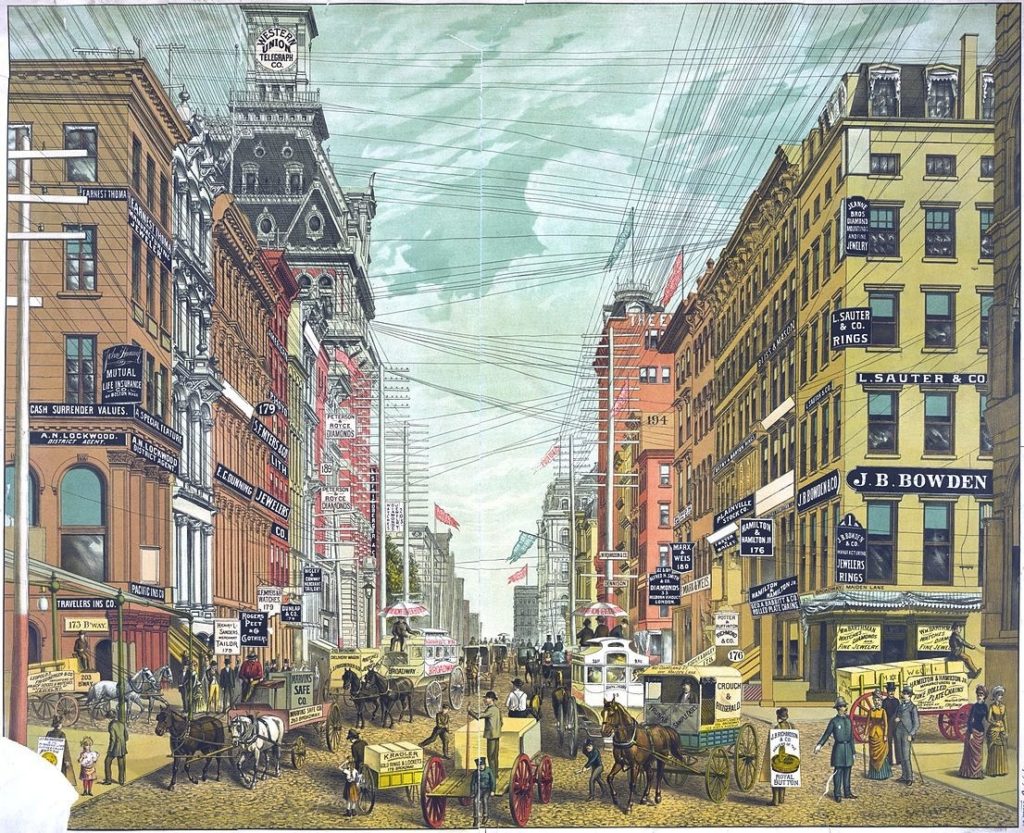
Undated image of the commerce of Broadway. The Western Union building was located on Broadway and Dey Street, placing this view in lower Manhattan. Note the telephone and telegraph wires!
Library of Congress [No Date Recorded on Shelflist Card]
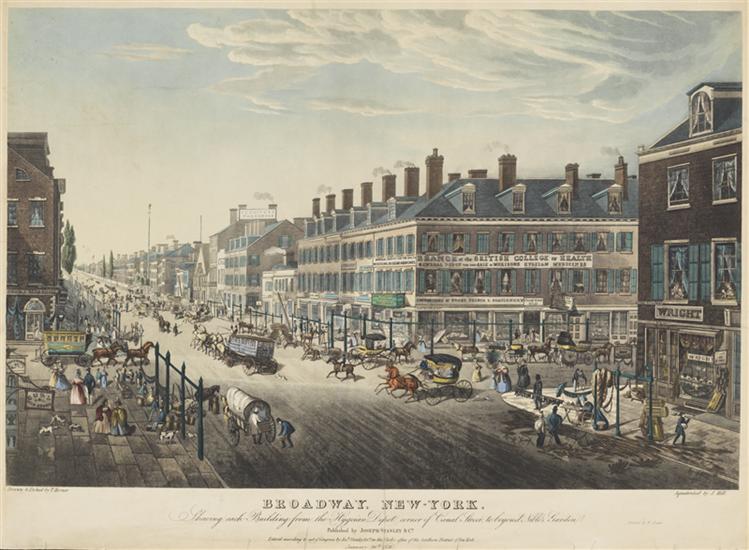
Broadway at Canal Street, 1836, in a lithograph by T. Hornor
Museum of the City of New York
The unique ‘Broadway bend’ that begins on 10th Street, attributed, some say, to the farm of Henry Brevoort.
From the Commissioners Plan of 1811, both Broadway and the Bowery were to ‘disappear’ into a massive open space called the Parade.
The glamour of Broadway and 42nd Street as it heads into Times Square. Broadway’s many ‘accidental’ plazas are responsible for most of New York’s cultural hubs. Thanks to the subway and proximity to the two major train stations, the ‘center of it all’ seemed to remain in Times Square, even as the city continued to move further northwards.
Library of Congress
Broadway at West 62nd Street and at West 153rd Street, circa 1900-1915. City planners had an opportunity to make Broadway in upper Manhattan into a grand boulevard, Paris-style.
Museum of the City of New YorkMuseum City of New York
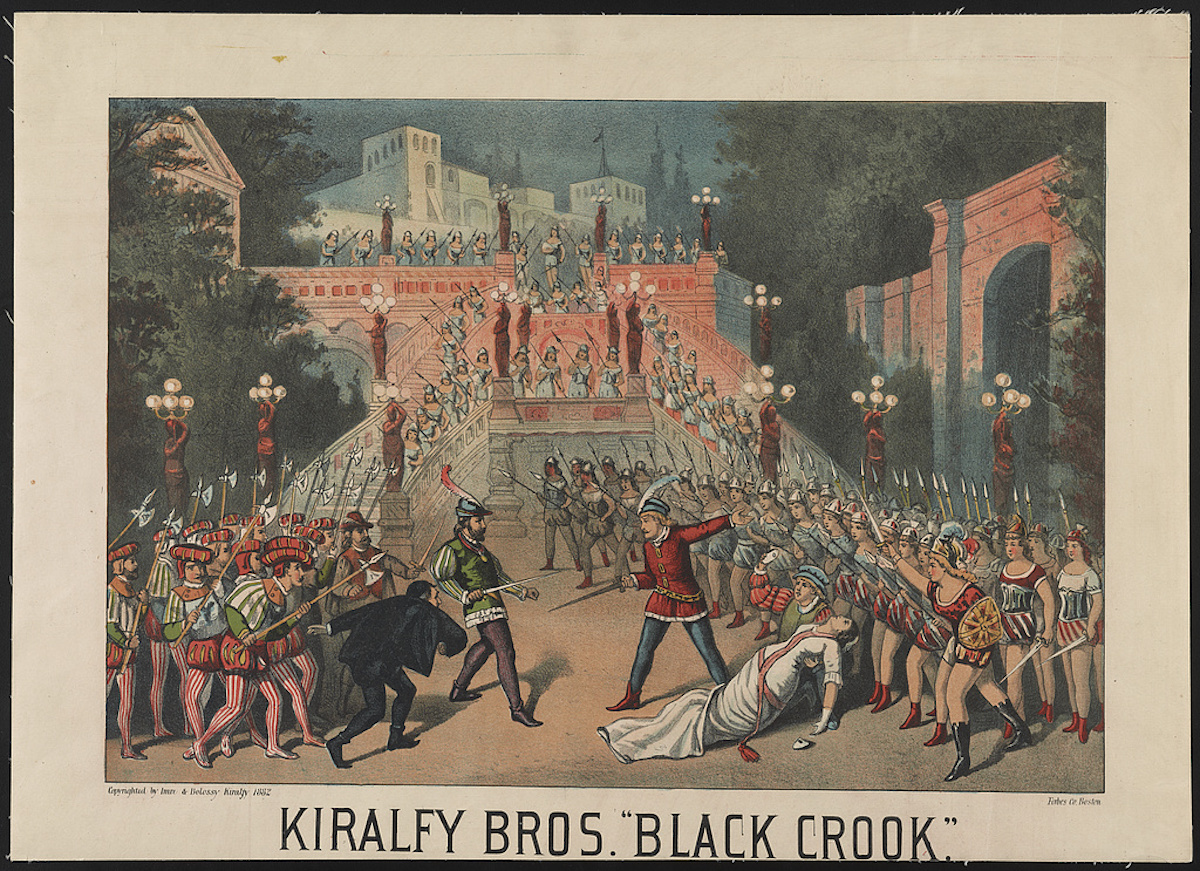
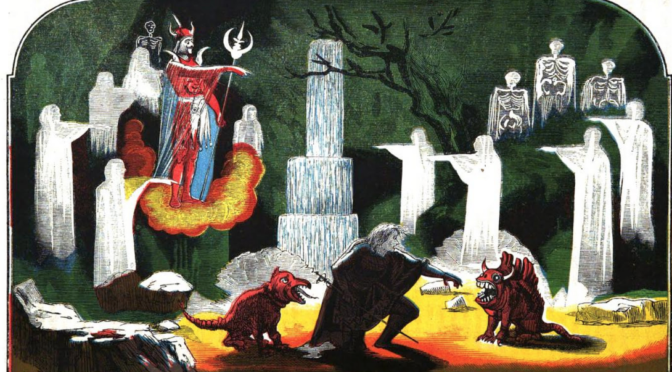
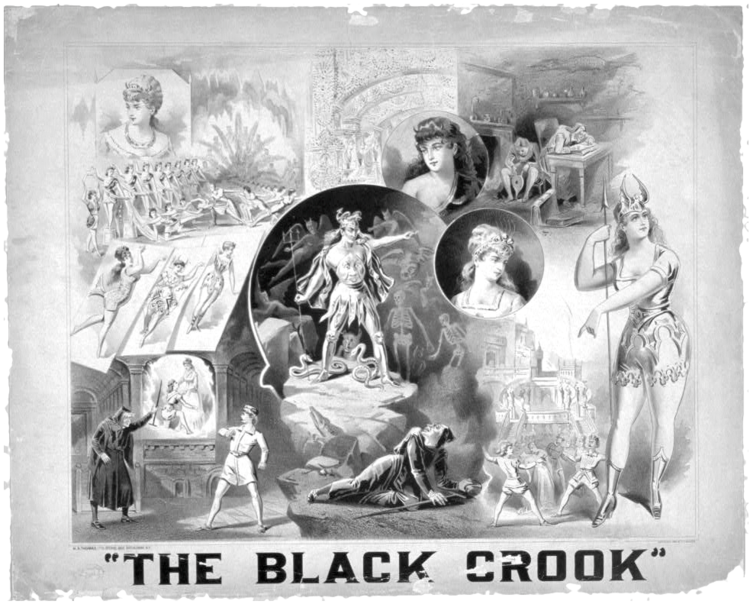
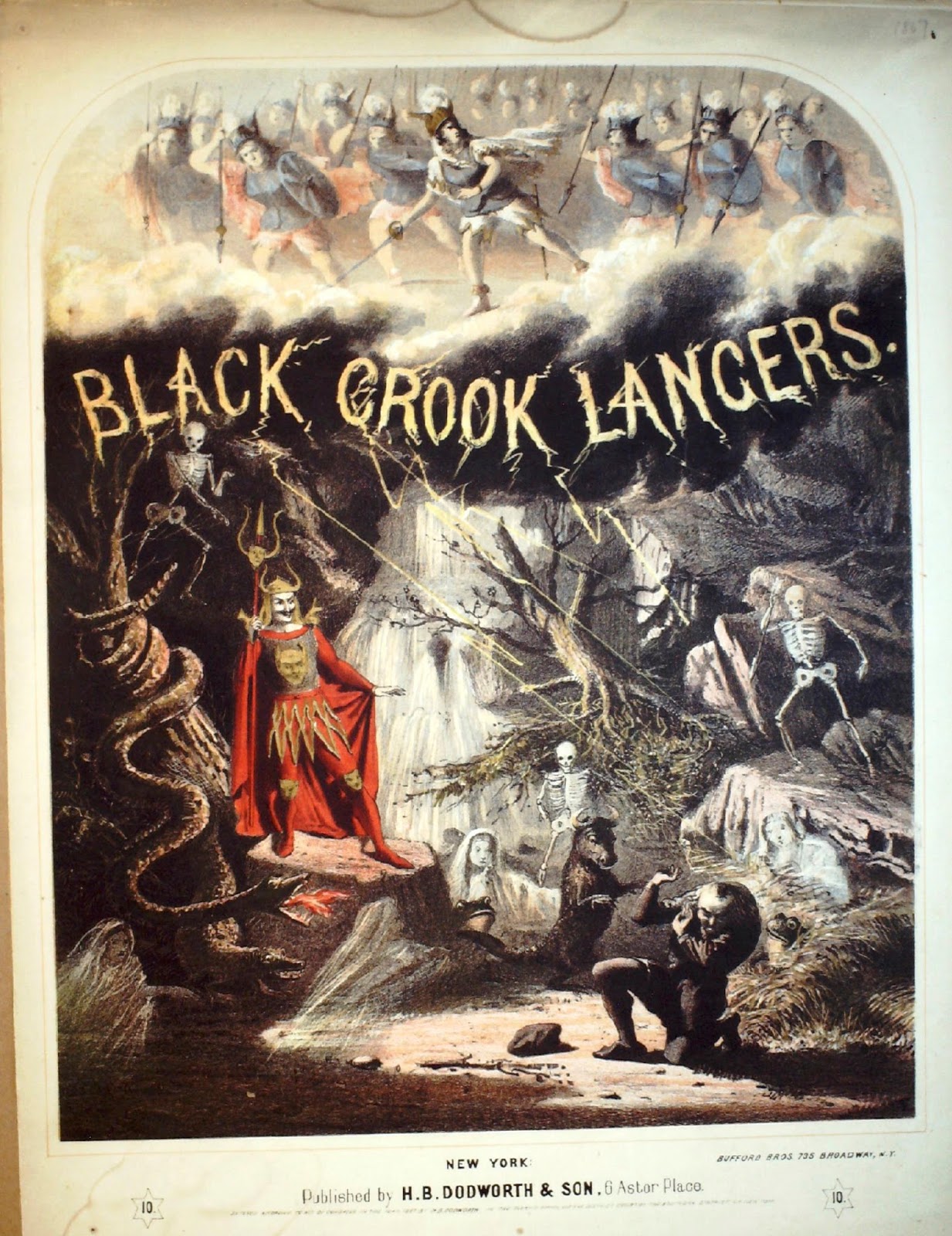
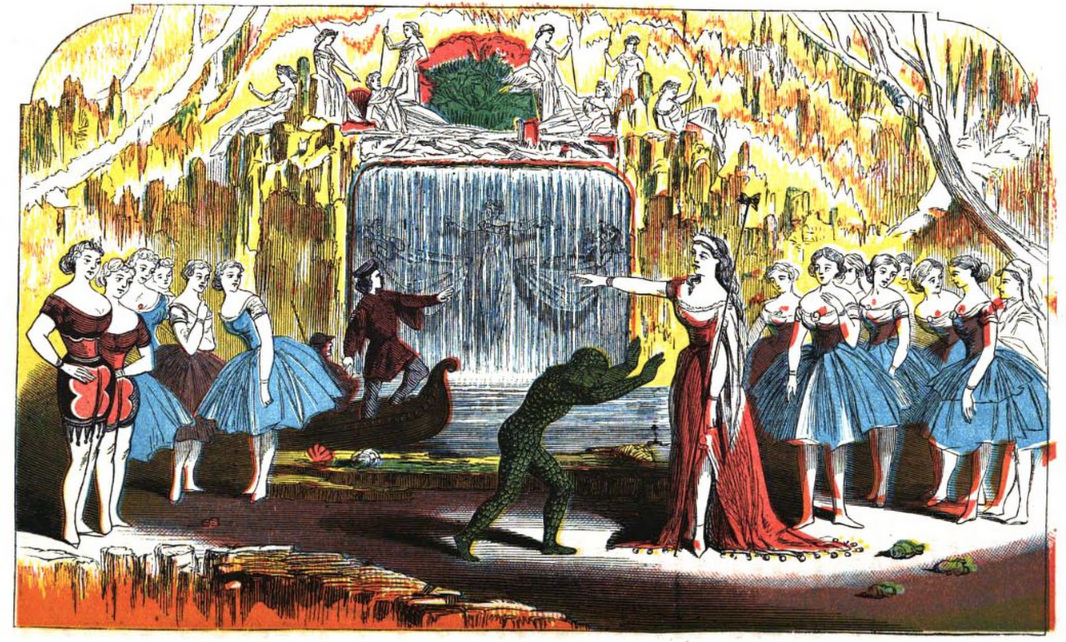
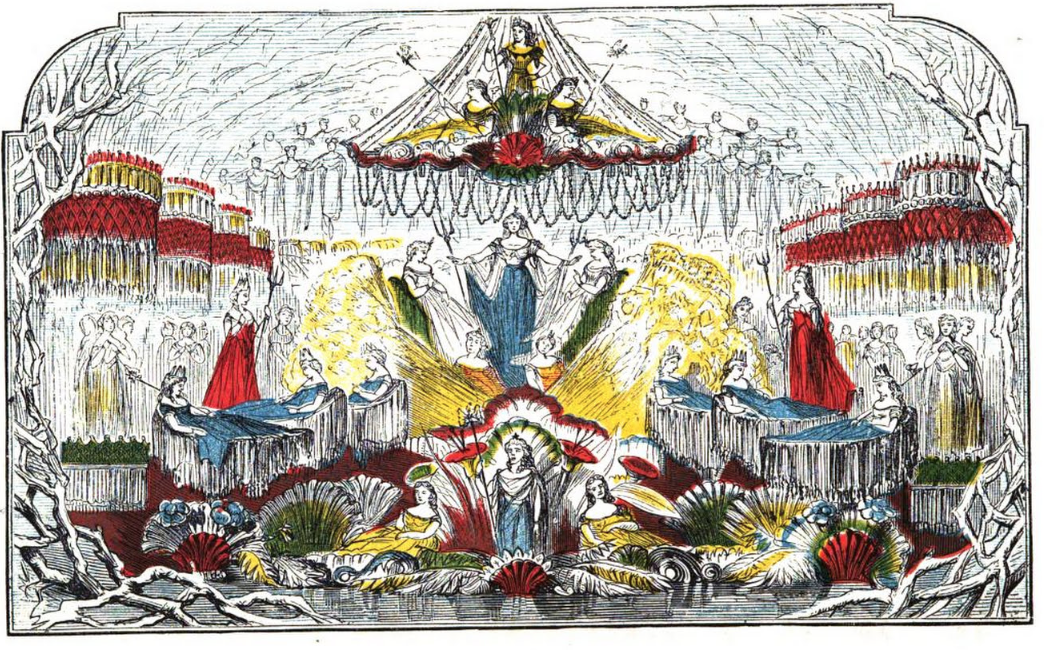
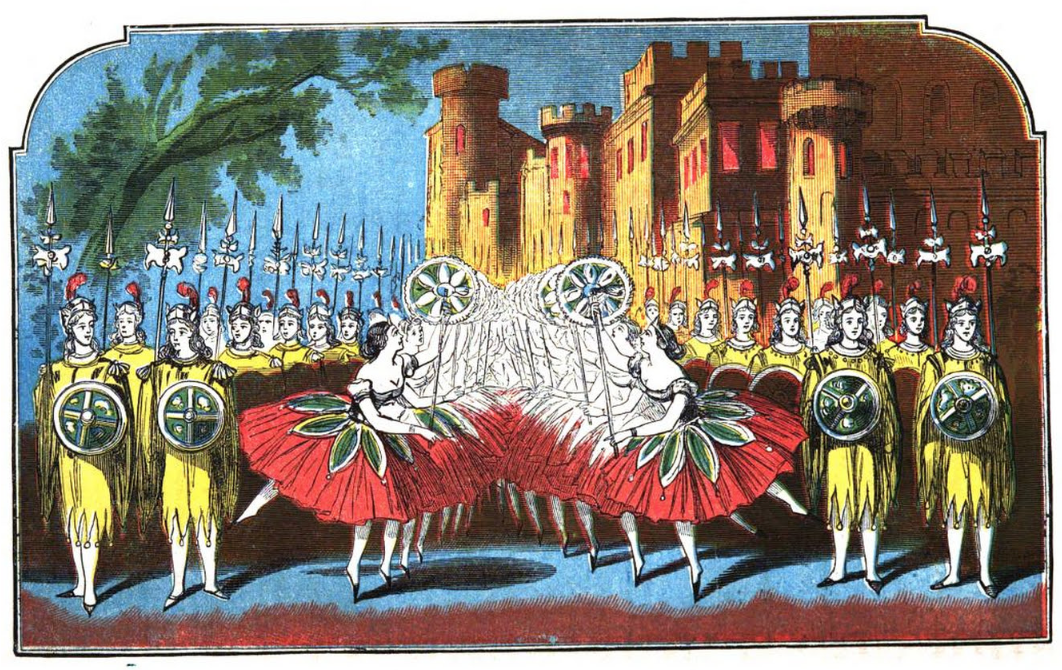
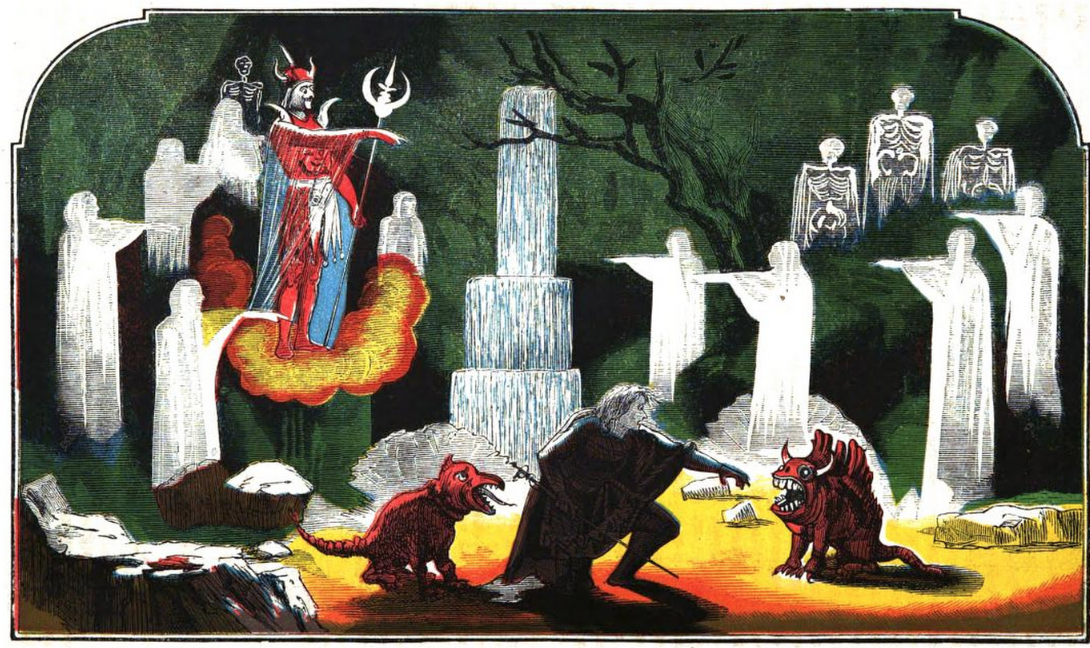
THE FIRST PODCASTThe Black Crook is considered the first-ever Broadway musical, a dizzying, epic-length extravaganza of ballerinas, mechanical sets, lavish costumes and a storyline about the Devil straight out of a twisted hallucination.
The show took New York by storm when it debuted on September 12, 1866. This is the story of how this completely weird, virtually unstageable production came to pass. Modern musicals like Phantom of the Opera, Wicked, and Hamilton wouldn’t quite be what they are today without this curious little relic.
WARNING: You may leave this show humming a little tune called “You Naughty, Naughty Men.”
Featuring music by Adam Roberts and Libby Dees, courtesy the New York Public Library for the Performing Arts.
And the voice of Ben Rimalower reading the original reviews of the Black Crook.
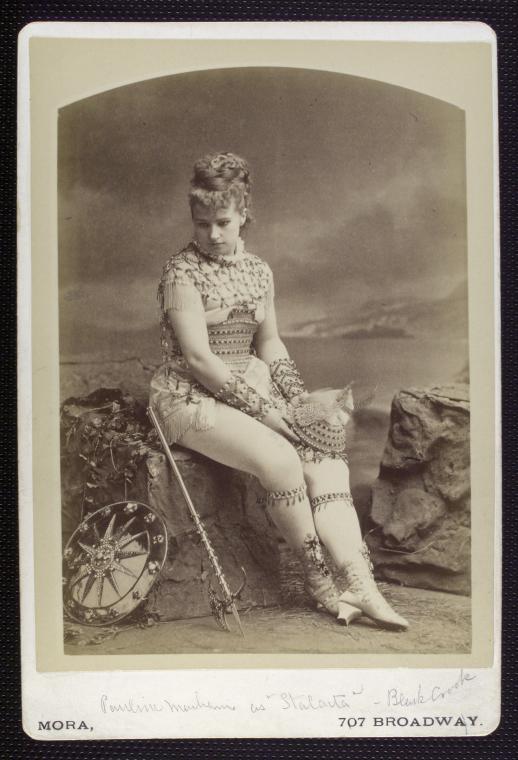
The actress and dancer Pauline Markham, performing as Stalacta, Queen of the Golden Realm
NYPL
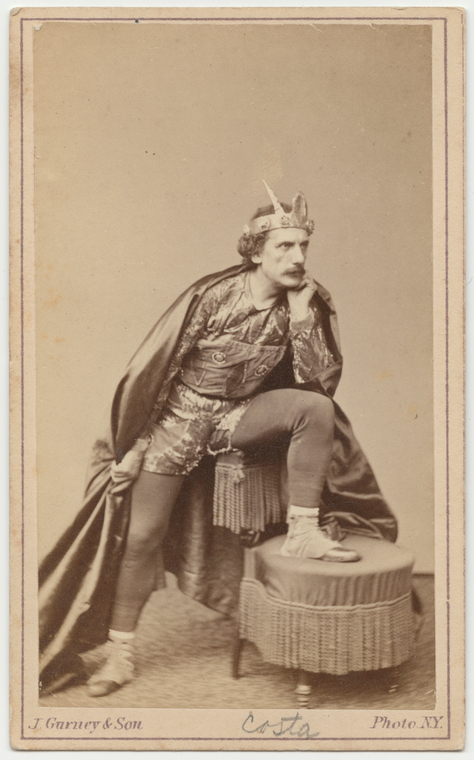
“Celebrated dancer and composer, David Costa, wearing tights, trunks, shirt and long cape with a satin sheen, and a crown on his head featuring horns. He has one foot on the seat of a round-seat chair with heavy fringe, his thigh resting on the back of the chair as he rests his elbow on his knee and his chin on his hand.”
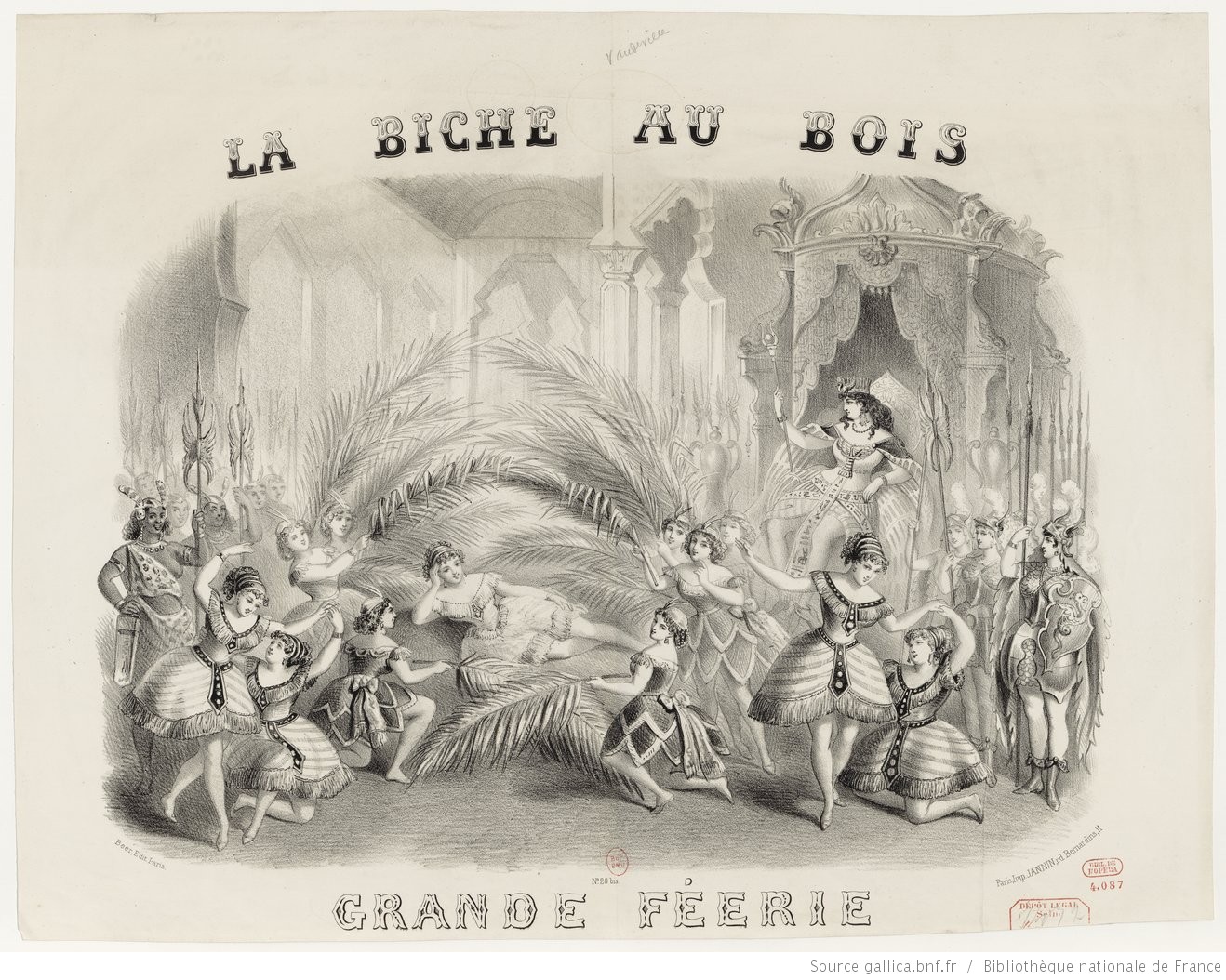
La Biche au Bois from which sprung the Black Crook
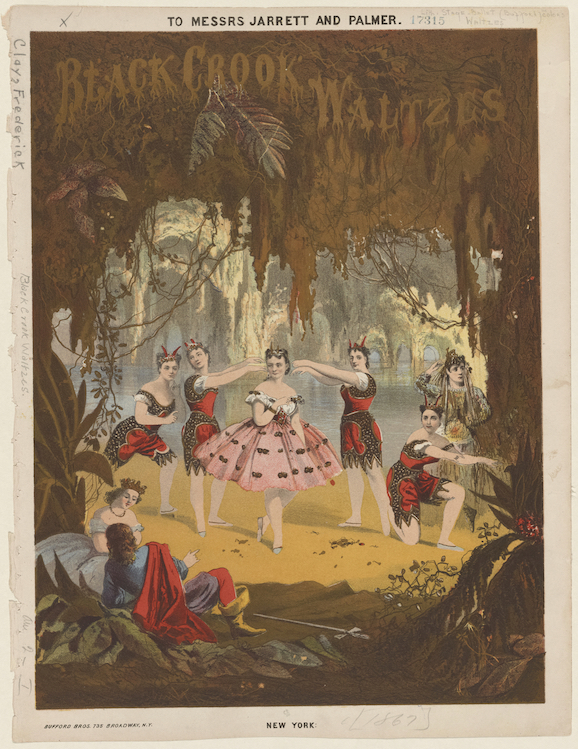
From an 1867 book of songs from the Black Crook (although many of the songs were likely never in the show!)
NYPL
Versions of the show popped up across the country in almost every major city. There was no real consistency aside from Barras’ story.
NYPL
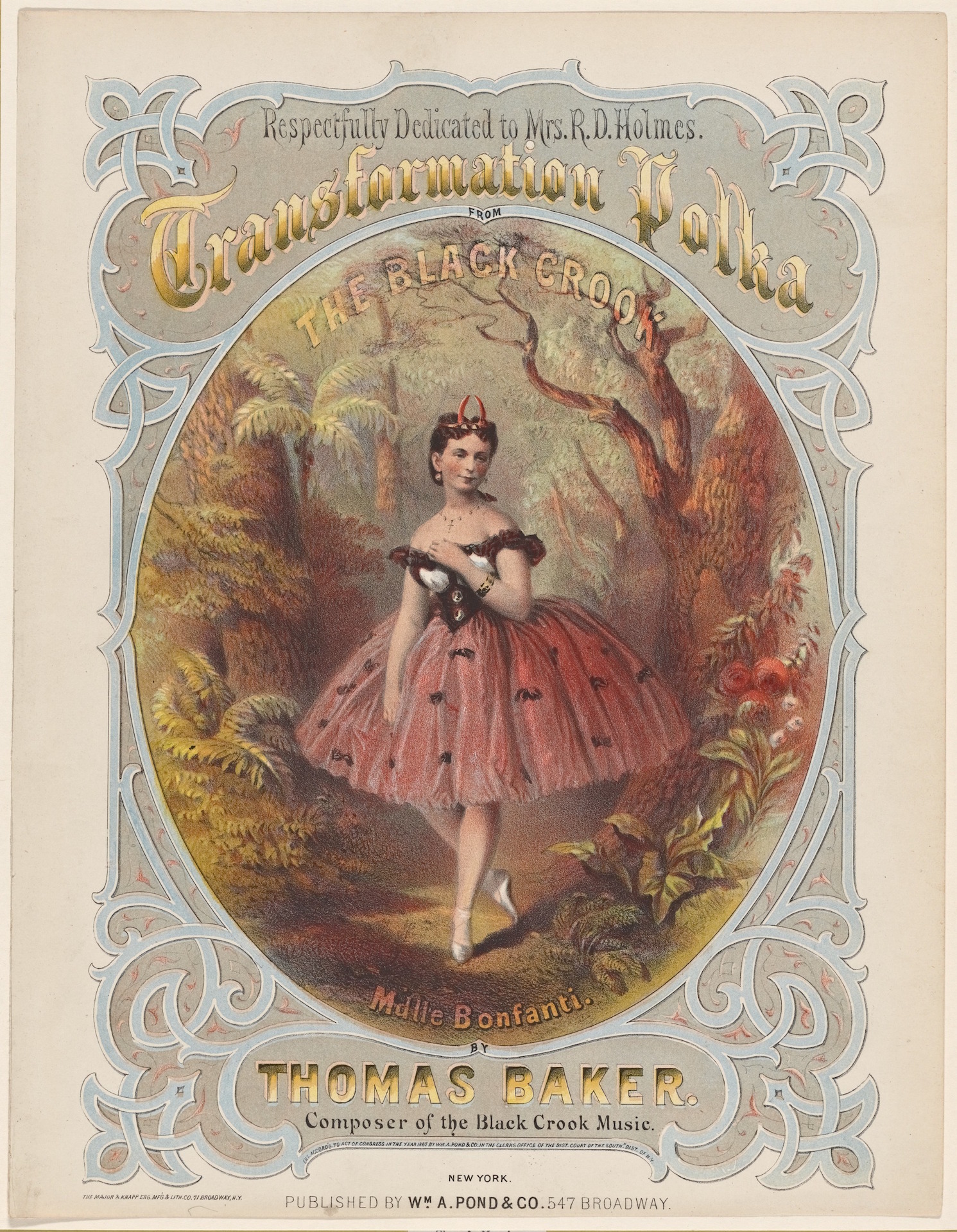
Thomas Baker wrote many of the songs in The Black Crook. He was also a song writer for Laura Keene whose show The Seven Sisters is sometimes noted as an early proto-musical.
NYPL
Each number was so elaborate that it would take several minutes to move scenery and get the cast into new costumes. This was one of the key reasons the show had so many unrelated songs which were sung as scenes were shifted.
The audio of Leonard Bernstein was taken from this episode of Omnibus:
“You Naughty, Naughty Men” performed by Adam Roberts and Libby Dees
“Les Grelots d’amour” performed by Adam Roberts
Some intrepid theater folk brought back a version of The Black Crook and performed it last year at Abrons Arts Center. Hopefully they will remount the show in the future!
PODCAST The musical story of the Cotton Club, the most famous (and infamous) nightclub of the Jazz Age.
The Cotton Club, Harlem’s most prominent nightclub during the Prohibiton era, delivered some of the greatest music legends of the Jazz Age — Duke Ellington, Cab Calloway, Fletcher Henderson, Ethel Waters, the Nicolas Brothers. Some of the most iconic songs in the American songbook made their debut at the Cotton Club or were popularized in performances here.
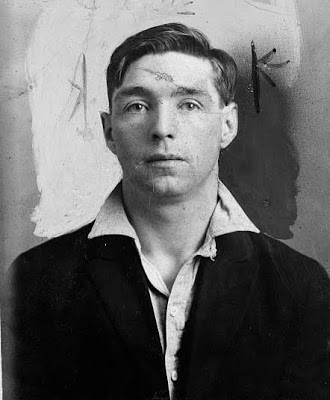
But the story of gangster Owney Madden‘s notorious supper club is hardly one to be celebrated.
That the Cotton Club was owned by Prohibition’s most ruthless mob boss was just the beginning. The club enshrined the segregationist policies of the day, placing black talent on the stage for the pleasure of white patrons alone. Even the club’s flamboyant decor — by Ziegfeld’s scenic designer, no less — made sure to remind people of these ugly admission practices.
This is the tale of Harlem late night — of hot jazz and illegal booze, of great music and very bad mobsters. Featuring some of the greatest tunes of the day by Ellington, Calloway, King Oliver and more.
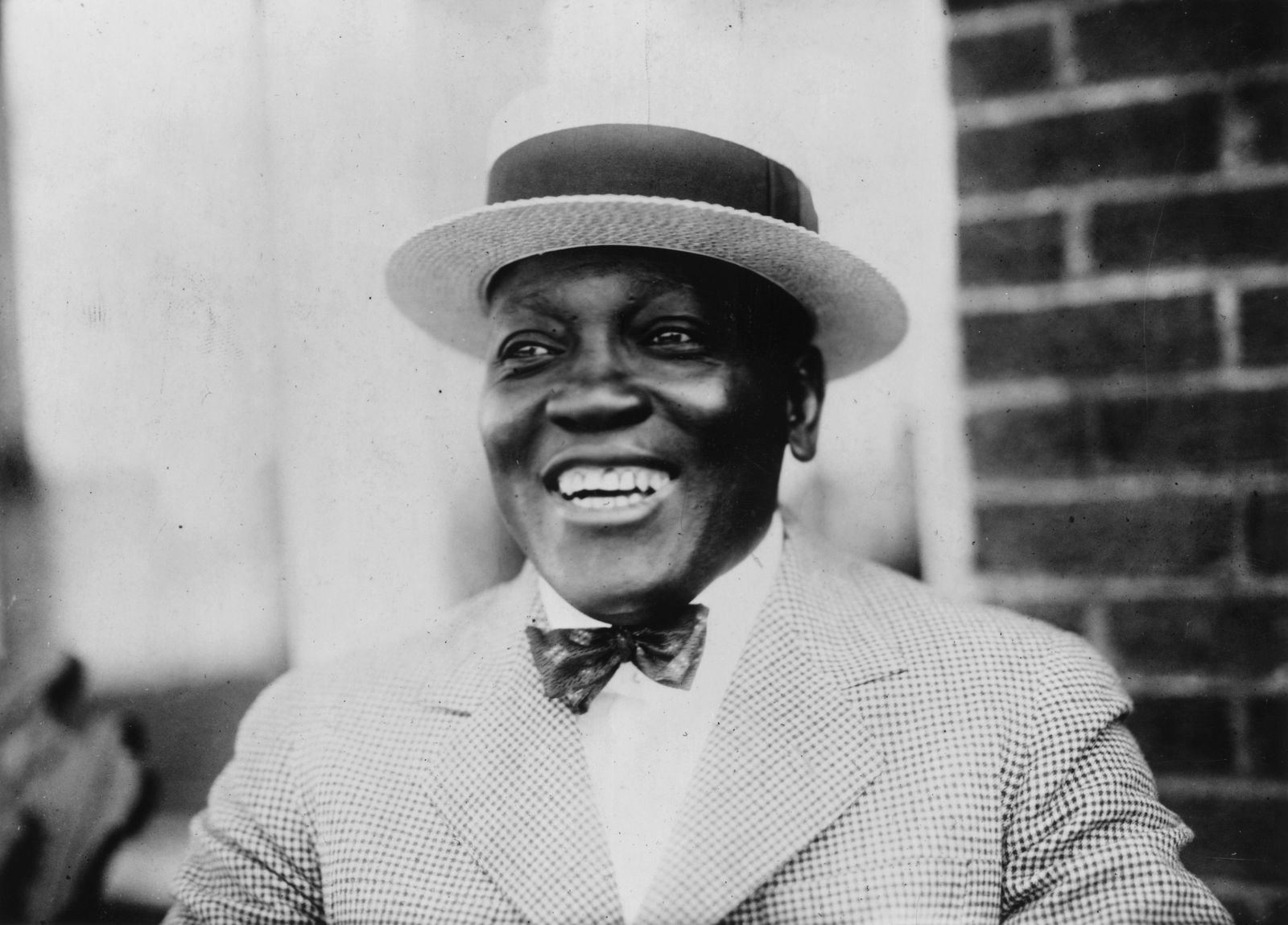
The Cotton Club was spawned from an earlier nightspot called Club Deluxe, owned by boxer Jack Johnson. (Below: Johnson in 1910)
Courtesy Getty Images)
Club Deluxe was renamed The Cotton Club in 1923 by Owney Madden, the mob boss and supplier of illegal booze.
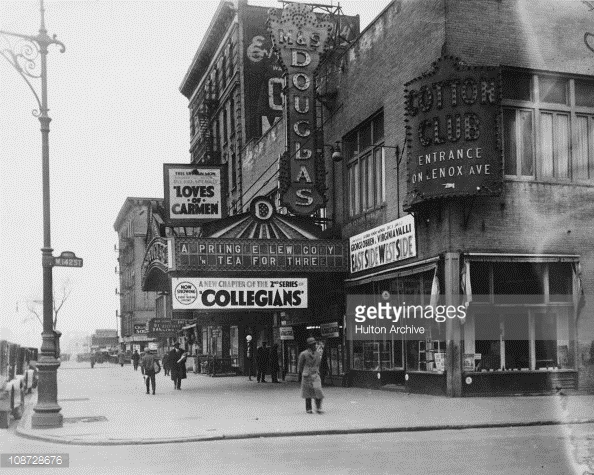
The original Cotton Club at 142nd Street and Lenox Avenue. The Douglas Theater, on the ground floor, is doing much better here, photo taken sometime in 1927:
Courtesy Getty Images
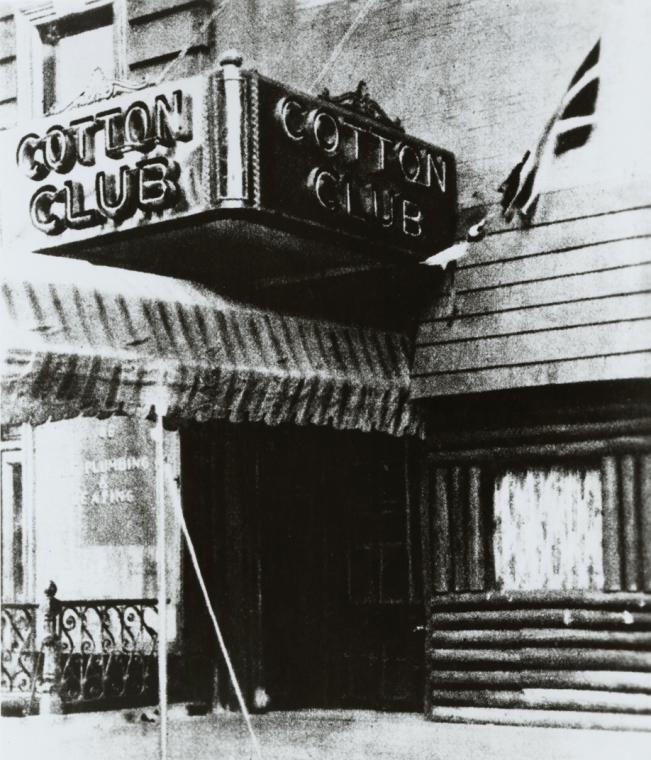
The entrance to the Harlem Cotton Club. Note the log decoration to make it appear like some old rugged shack.
Courtesy New York Public Library
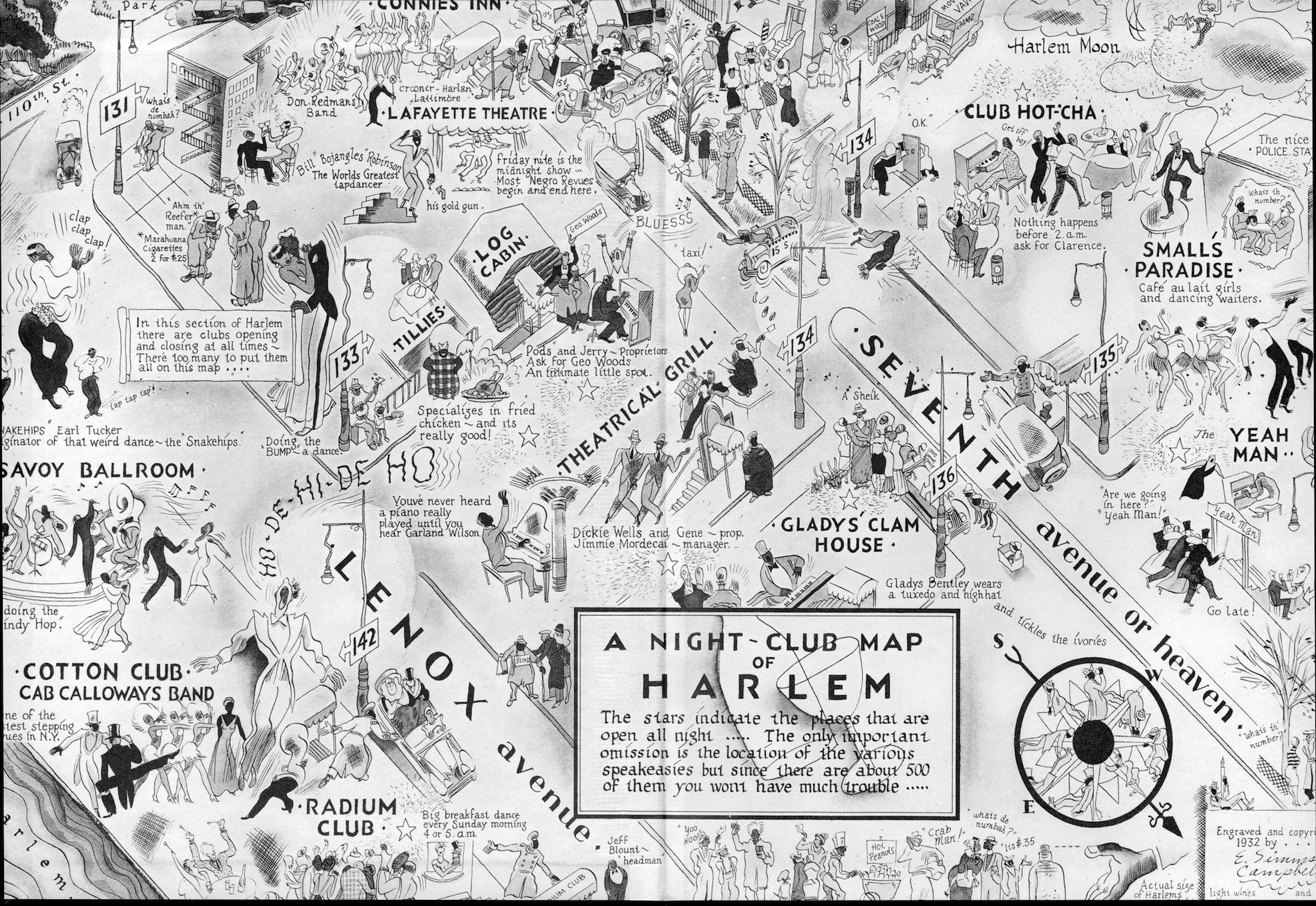
A map from 1932 of the Harlem nightclub scene, featuring the Cotton Club, Small’s Paradise, Connie’s Inn, the Savoy Ballroom and more….
Courtesy Open Culture
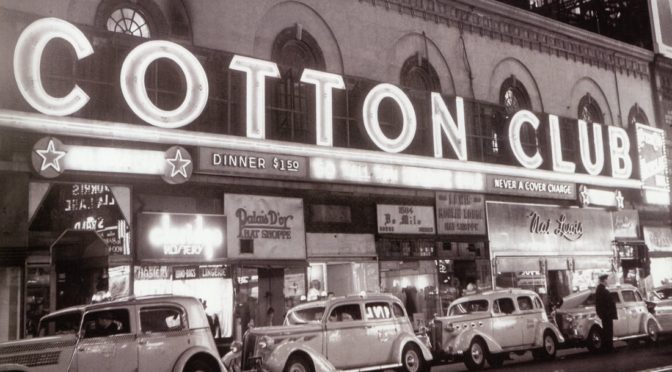
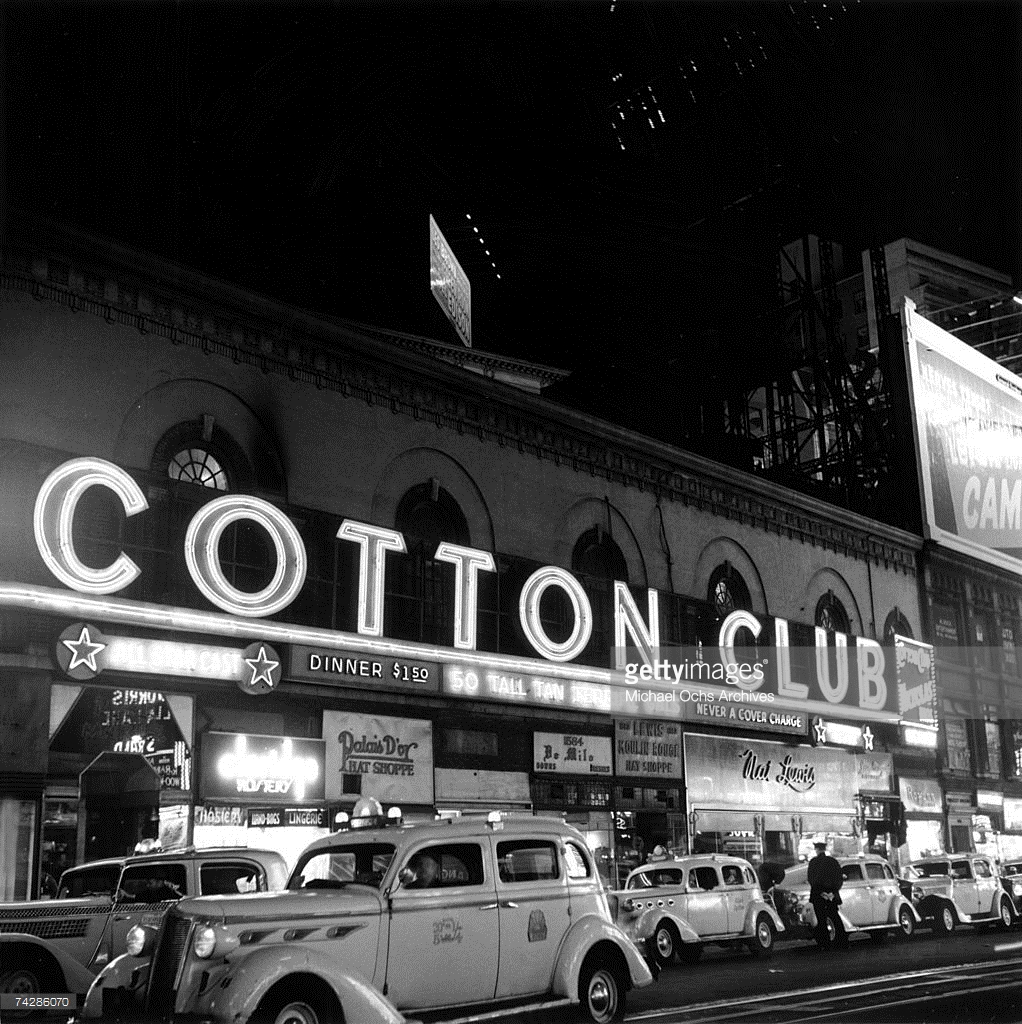
The Broadway Cotton Club as it looked one evening in 1938.
Courtesy Getty Images/ Michael Ochs Archives
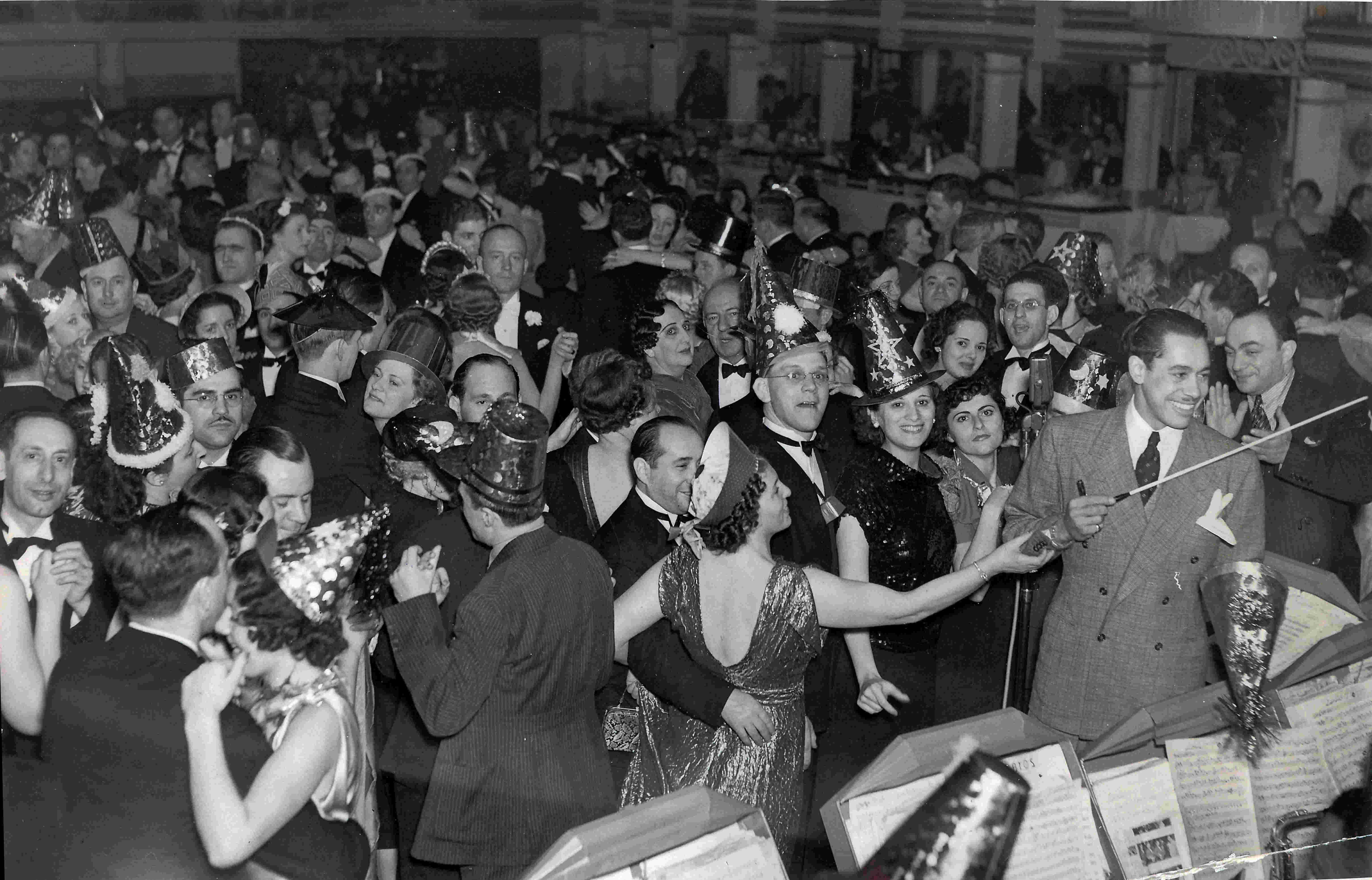
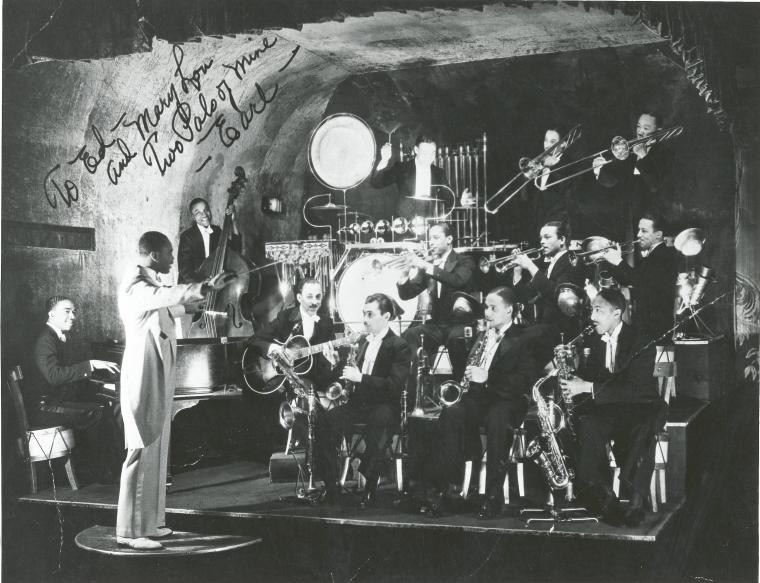
A look at the interior of the Broadway Cotton Club circa, during an New Year’s celebration, 1937, with Cab Calloway conducting.
Courtesy the Hi De Ho Blog, devoted to Cab Calloway
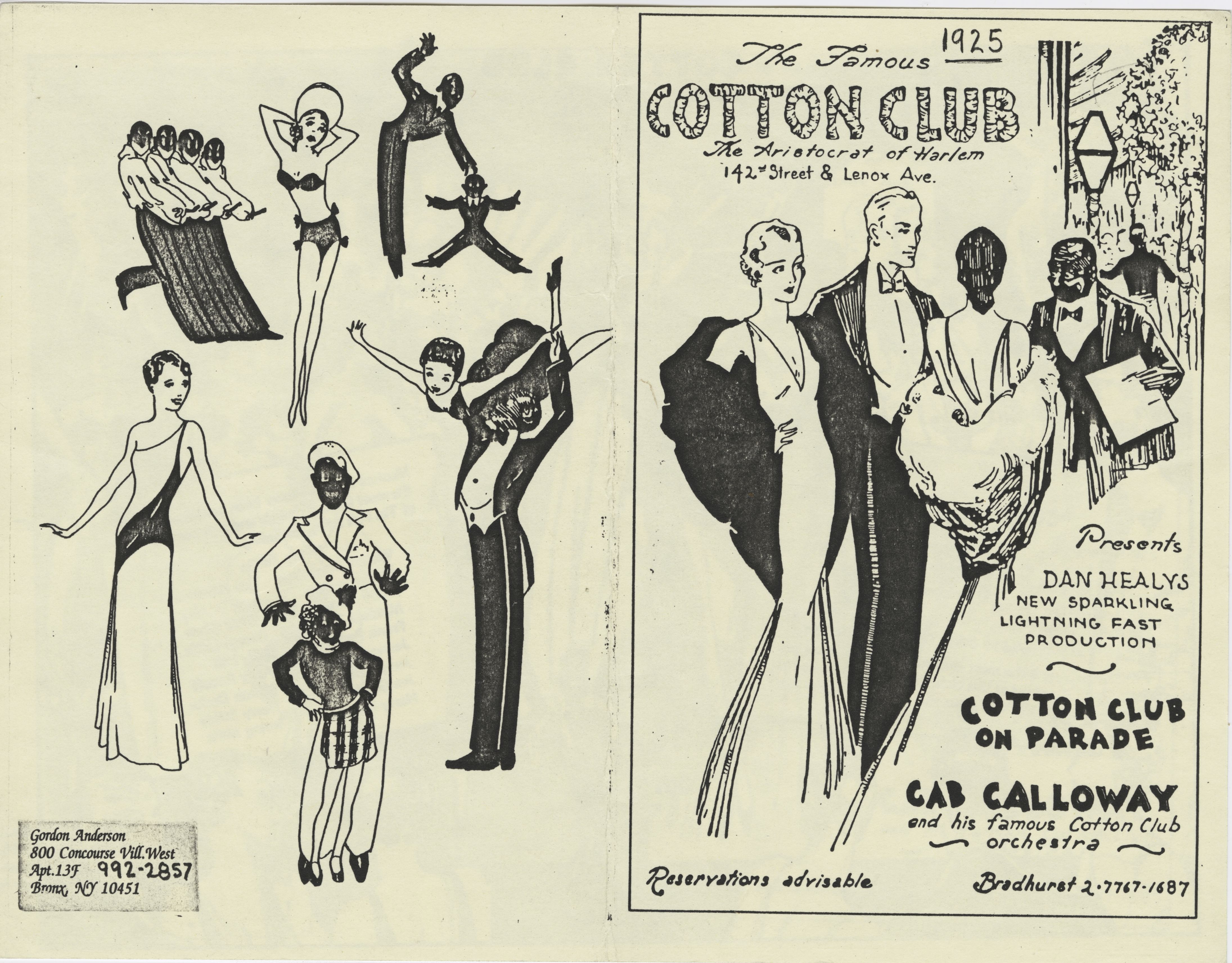
An advertisement or program for The Cotton Club. The year 1925 is penciled in at the top, but it has to be from a later date. Calloway had just graduated from high school in 1925!
Courtesy New York Public Library
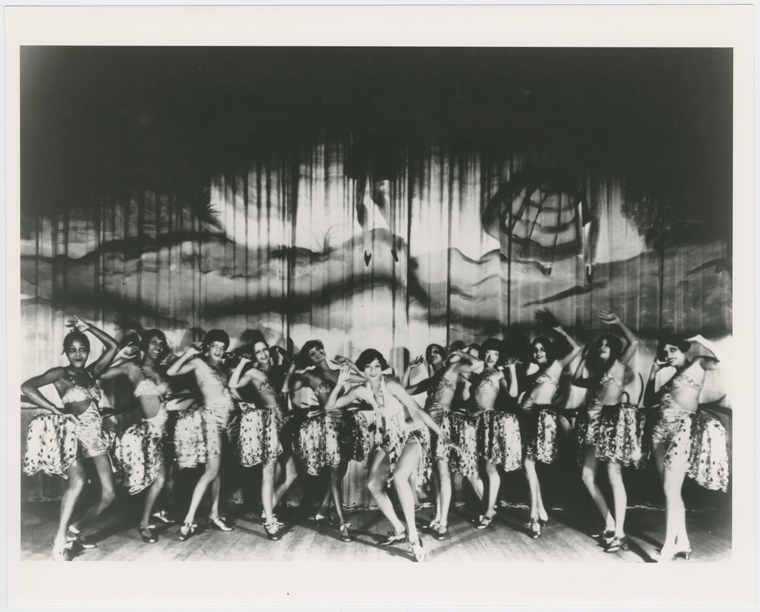
Maude Russel and her Ebony Steppers, performing in the 1929 Cotton Club show called ‘Just A Minute’.
Courtesy New York Public Library
A shot of Jimmy Lunceford and His Orchestra in 1934.
Courtesy New York Public Library
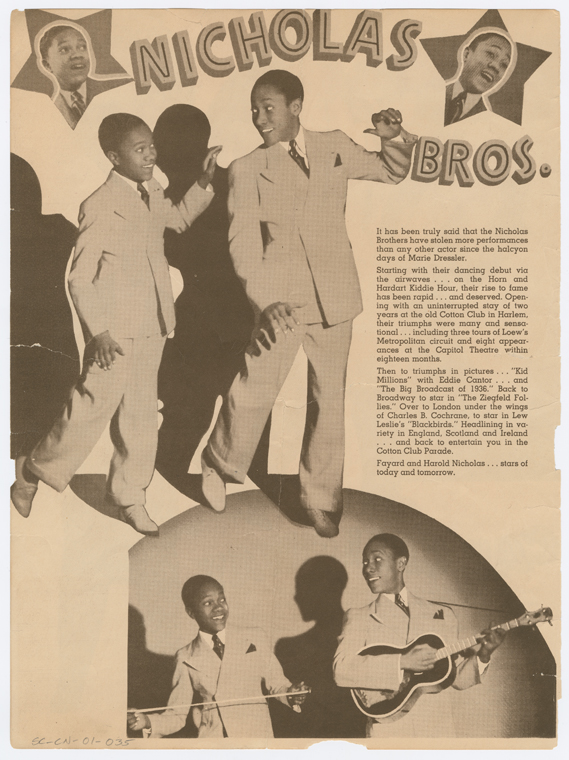
An advertisement for the Nicolas Brothers, for a performance in 1938 at the Broadway Cotton Club.
Courtesy New York Public Library
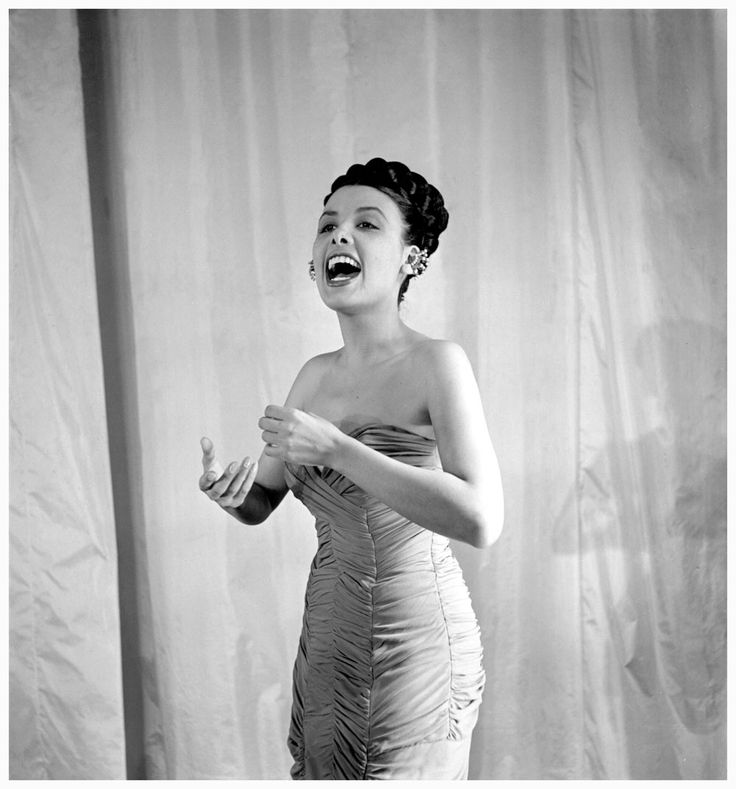
Lena Horne started out in the Cotton Club chorus line but eventually became a headlining star in her own right.
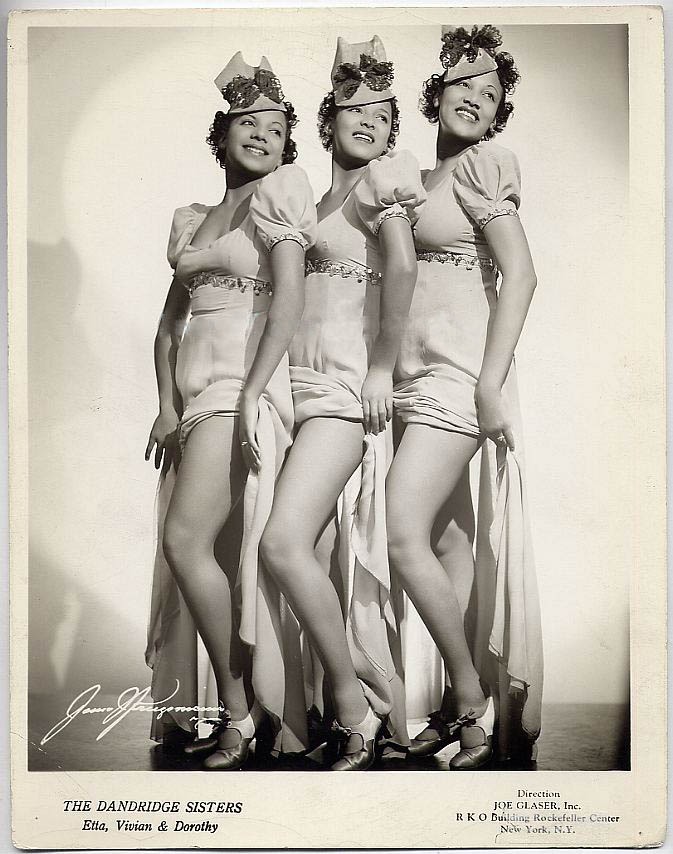
The Dandridge Sisters were notable performers in the final years of the Cotton Club.
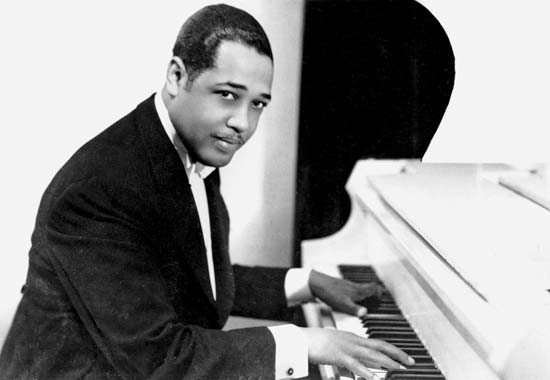
The young and dashing Duke Ellington became a superstar in the years following his Cotton Club residency.
Duke Ellington and his Cotton Club Band, in a 1930 film appearance:
In 1934, Cab Calloway made this short film featuring his music:
Cab Calloway’s here too, in this clip from the film Stormy Weather, but the real stars are the Nicholas Brothers in a breathtaking dance number:
THIS PODCAST FEATURED MUSICAL SNIPPETS FROM THE FOLLOWING SONGS:
Black and Tan Fantasy – Duke Ellington
Drop Me Off In Harlem – Duke Ellington
Speak Easy Blues – King Oliver Jazz Band
Charleston – Paul Whiteman
Mood Indigo – Duke Ellington
Swing Session – Duke Ellington
If You Were In My Place – Duke Ellington
Minnie the Moocher – Cab Calloway
I’ve Got The World On A String – Duke Ellington
Stormy Weather – Ethel Waters
On The Sunny Side of the Street – Duke Ellington
NOTES ON THIS SHOW:
— I made two amusing flubs in this show 1) Duke Ellington’s nickname is probably inspired by the Duke of Wellington, not (obviously) the Duke of Ellington, 2) the name of the movie with Lena Horne and the Nicholas Brothers is obviously named Stormy Weather, not Stormy Weathers (which must be the name of a drag queen somewhere)
— Jack Johnson‘s story is so much more complex and I wish I had more time to talk about him. For more information, check out the incredible documentary (and the book it’s based on by Geoffrey C Ward) called Unforgivable Blackness: The Rise and Fall of Jack Johnson.
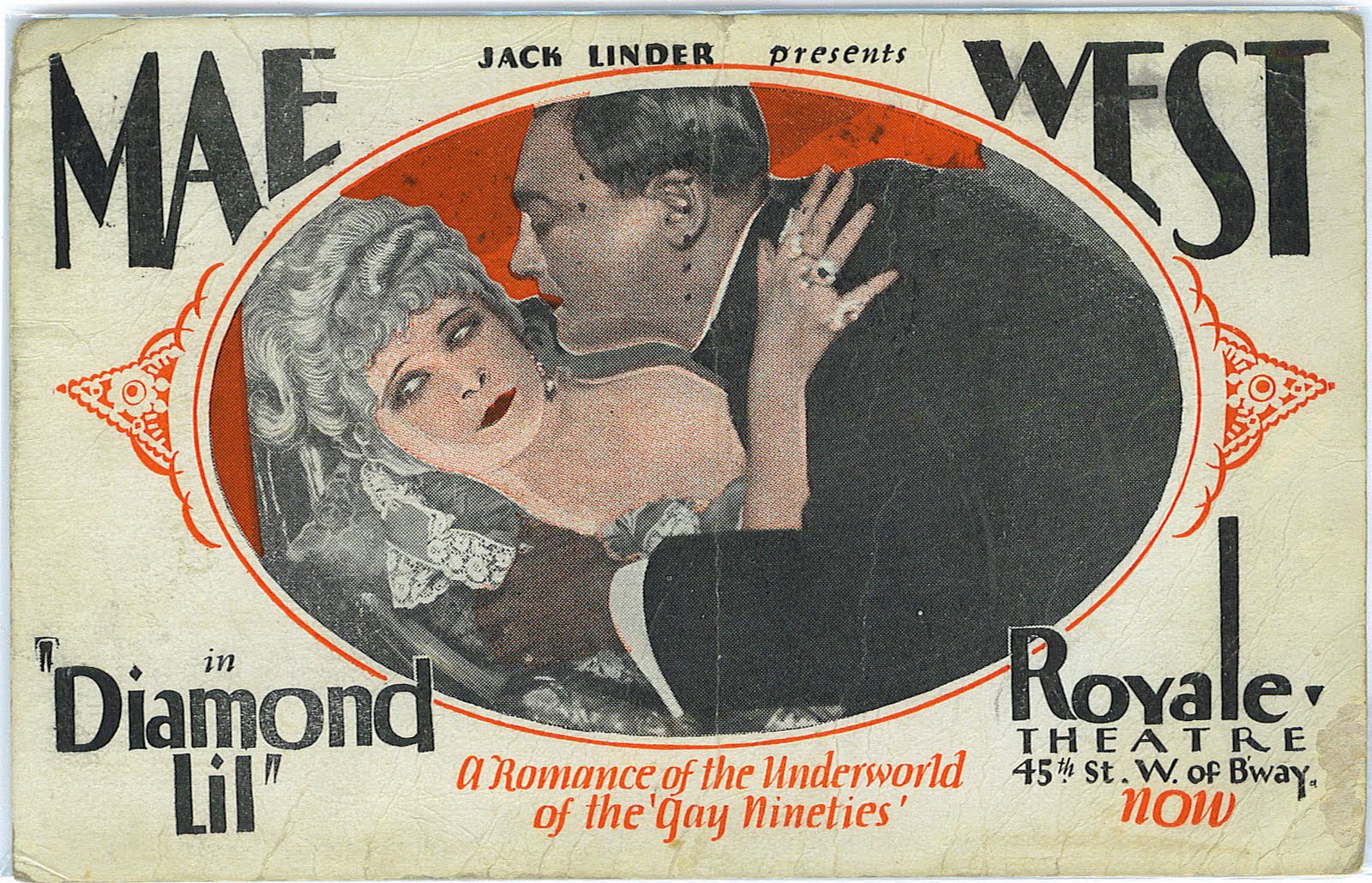
PODCASTMae West (star of I’m No Angel and She Done Him Wrong) would come to revolutionize the idea of American sexuality, challenging and lampooning ideas of femininity while wielding a suggestive and vicious wit. But before she was America’s diamond girl, she was the pride of Brooklyn! In this podcast, we bring you the origin story of this icon and the wacky events of 1927 that brought her brand of swagger to the attention of the world.
The Brooklyn girl started on the vaudeville stage early, inspired by the influences of performers like Eva Tanguay. She soon proved too smart for the small stuff and set her aim towards Broadway — but on her terms.
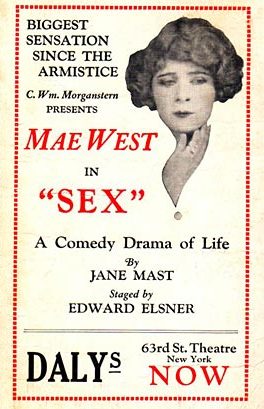
West’s play Sexintroduced her devastating allure in the service of a shocking tale of prostitution. It immediately found an audience in 1926 even if the critics were less than enamored. But it’s when she devised an even more shocking play — The Drag — that city leaders became morally outraged and vowed to shut her down forever.
From Bushwick to Midtown, from the boards of Broadway to the workhouse of Welfare Island — this is the story of New York’s ultimate Sex scandal.
Picture at top: Mae West in a publicity still for her Broadway hit Diamond Lil. (Courtesy Museum of City of New York)
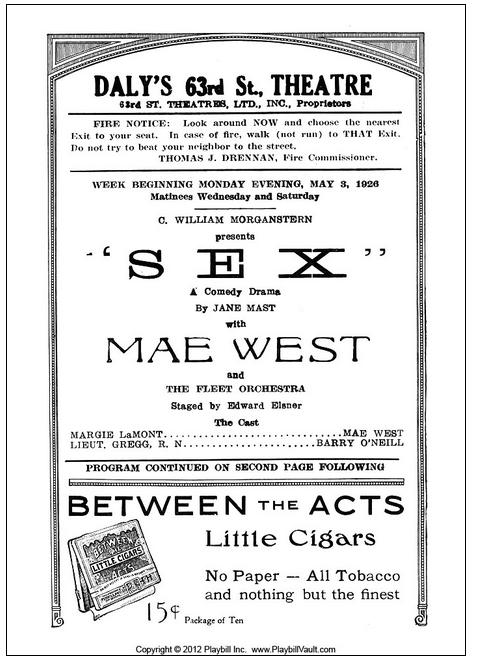
Inset: The poster for Sex by Jane Mast (aka Mae West)
Special thanks to Esther Belle from The West(a Mae West-inspired coffeehouse and bar in Williamsburg). We recorded an interview with her about the legacy of Mae West but weren’t able to use it. But it will be available for Patreon supporters!
The Bowery Boys: New York City History podcast is brought to you …. by you!
Starting this month, we are doubling our number of episodes per month. Now you’ll hear a new Bowery Boys podcast every two weeks. We’re also looking to improve the show in other ways and expand in other ways as well — through publishing, social media, live events and other forms of media. But we can only do this with your help!
We are now a member of Patreon, a patronage platform where you can support your favorite content creators for as little as a $1 a month.
Please visitour page on Patreon and watch a short video of us recording the show and talking about our expansion plans. If you’d like to help out, there are five different pledge levels (and with clever names too — Mannahatta, New Amsterdam, Five Points, Gilded Age, Jazz Age and Empire State). Check them out and consider being a sponsor.
We greatly appreciate our listeners and readers and thank you for joining us on this journey so far. And the best is yet to come!
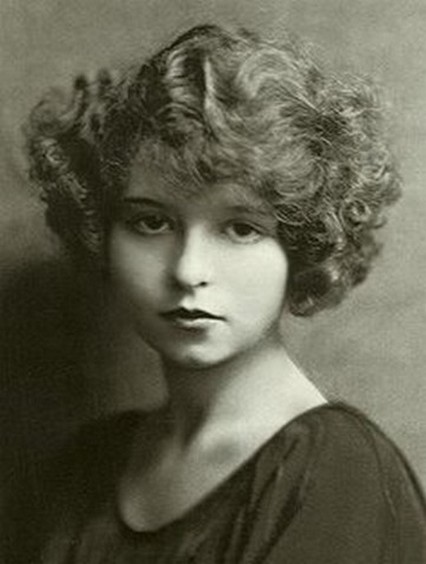
A young Mae West, already a seasoned performer by her teenage years.
Courtesy Notes On The Road
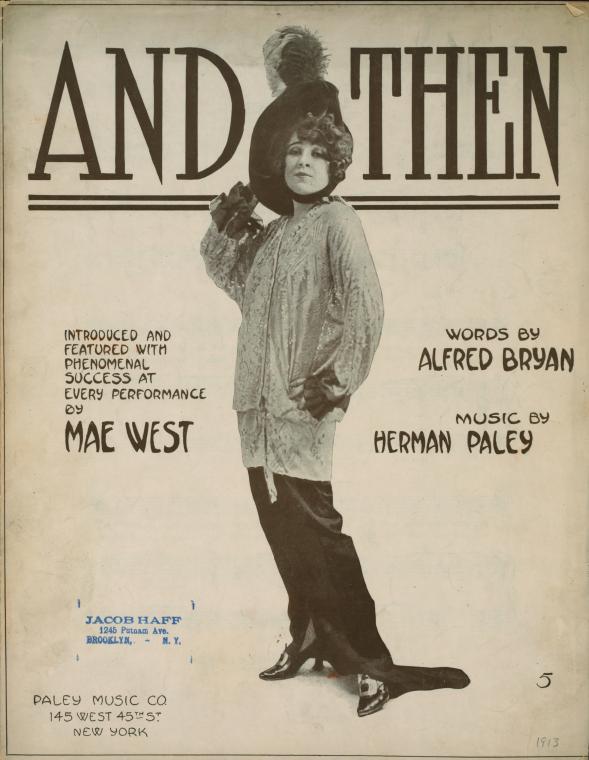
From Mae West’s vaudeville days, a piece of Tin Pan Alley sheet-music she performed in the stage:
Courtesy New York Public Library
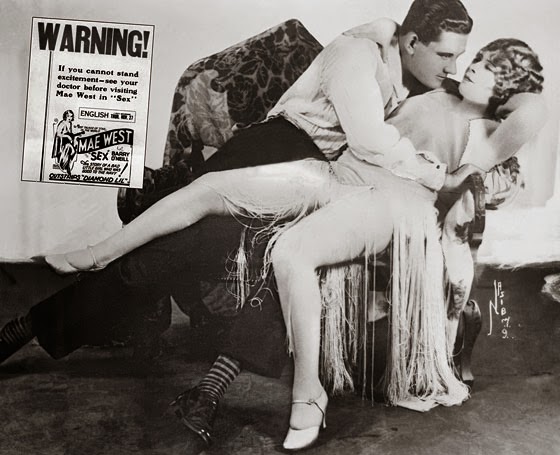
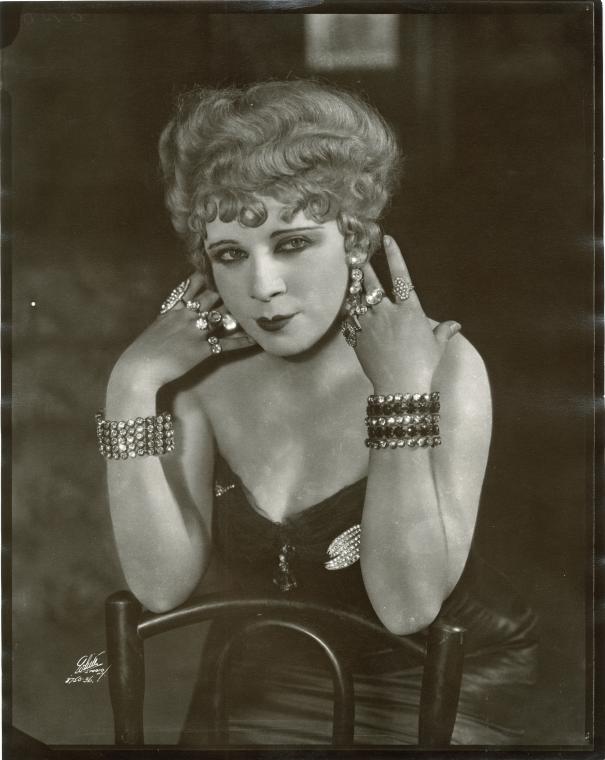
A saucy promotional still from Sex
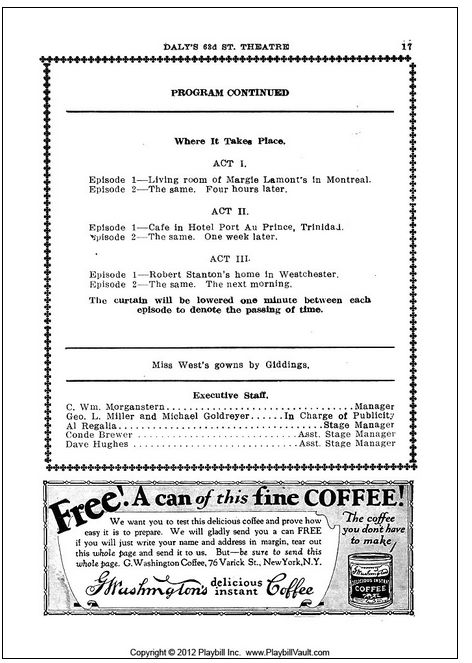
From the original program for Sex:
Courtesy Playbill Vault
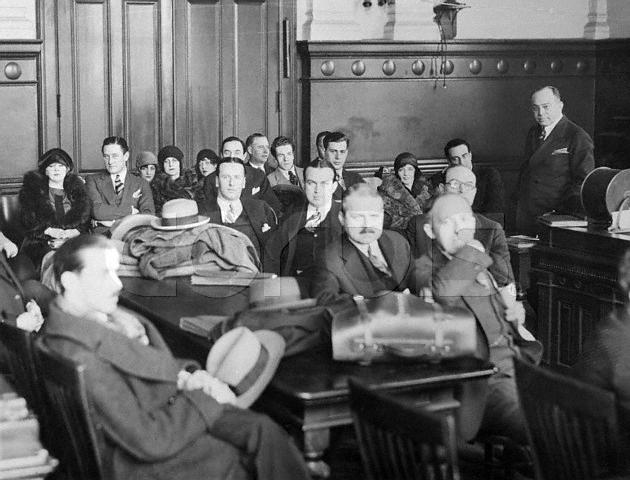
Mae West at the Jefferson Market courthouse:
Original caption: Cast of Tried By Jury. New York, New York: Photo shows scene in courtroom of general sessions part II at start of members of company. Mae West and Barry O’Niel, in productions leading roles, can be seen at extreme left. March 28, 1927 New York, New York, USA
Mae West in the original photography for the 1928 production of Diamond Lil. She attempted during this period to open the controversial show The Pleasure Man but it was shut down after two days. (Courtesy New York Public Library)
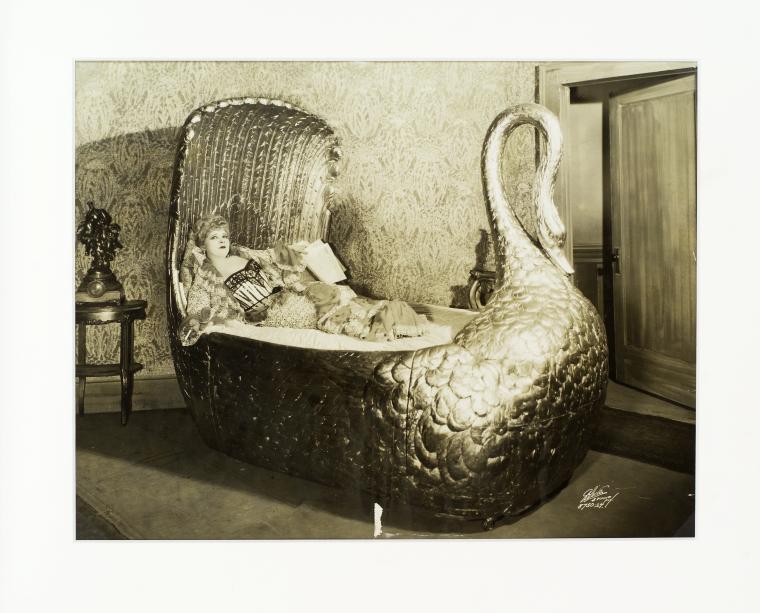
Another odd shot from Diamond Lil, of Mae reclining in a golden swan bed. (source)
Courtesy New York Public Library
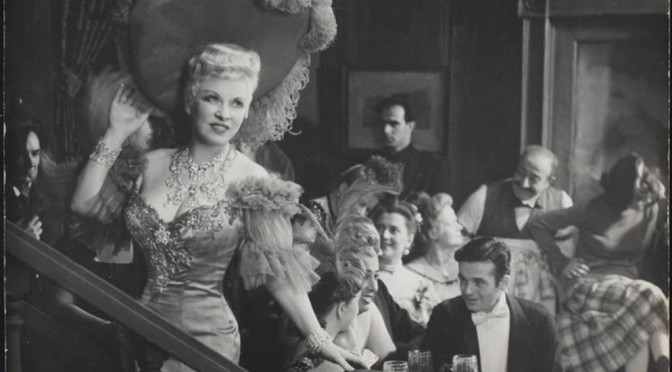
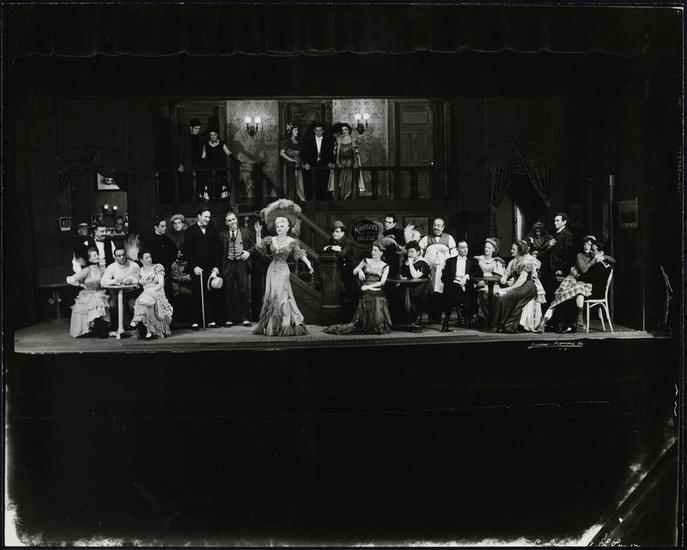
Mae West in the 1949 Broadway revival of Diamond Lil. Once a provocateur of the stage, she settled into her larger-than-life personae in later years, formed mostly from her successes in this role (and its film version She Done Him Wrong). (Courtesy Museum of the City of New York)
Courtesy the Museum of the City of New York
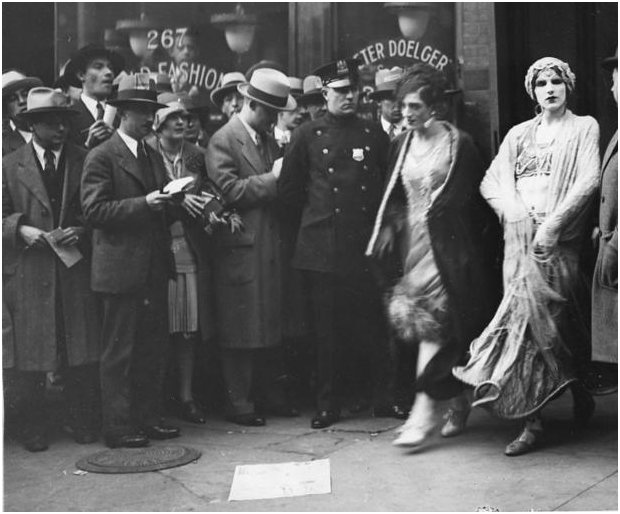
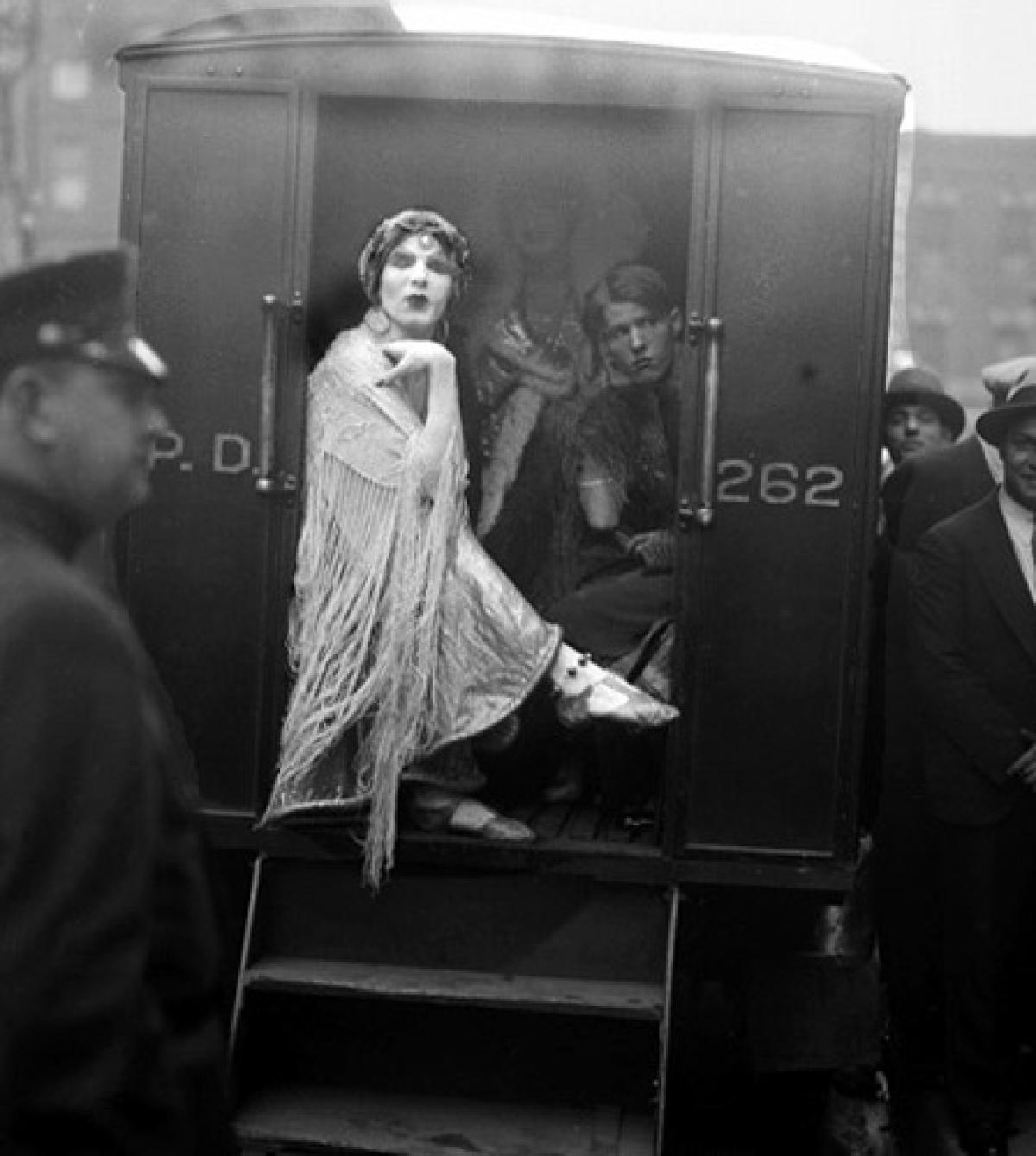
Members of the cast of The Pleasure Man being arrested by police, 1928.
Courtesy Queer Music Heritage — http://queermusicheritage.com/fem-arts6.html Courtesy New York Daily News
Mae West (and a young Cary Grant) in She Done Him Wrong