PODCASTA star of the New York City skyline is reborn — the Waldorf Astoria is reopening in 2025!
And so we thought we’d again raise a toast to one of the world’s most famous hotels, an Art Deco classic attached to the Gilded Age’s most prestigious name in luxury and refinement.
Now, you might think you know this story — the famous lobby clock, Peacock Alley, cocktail bars! — but do we have some surprises for you.
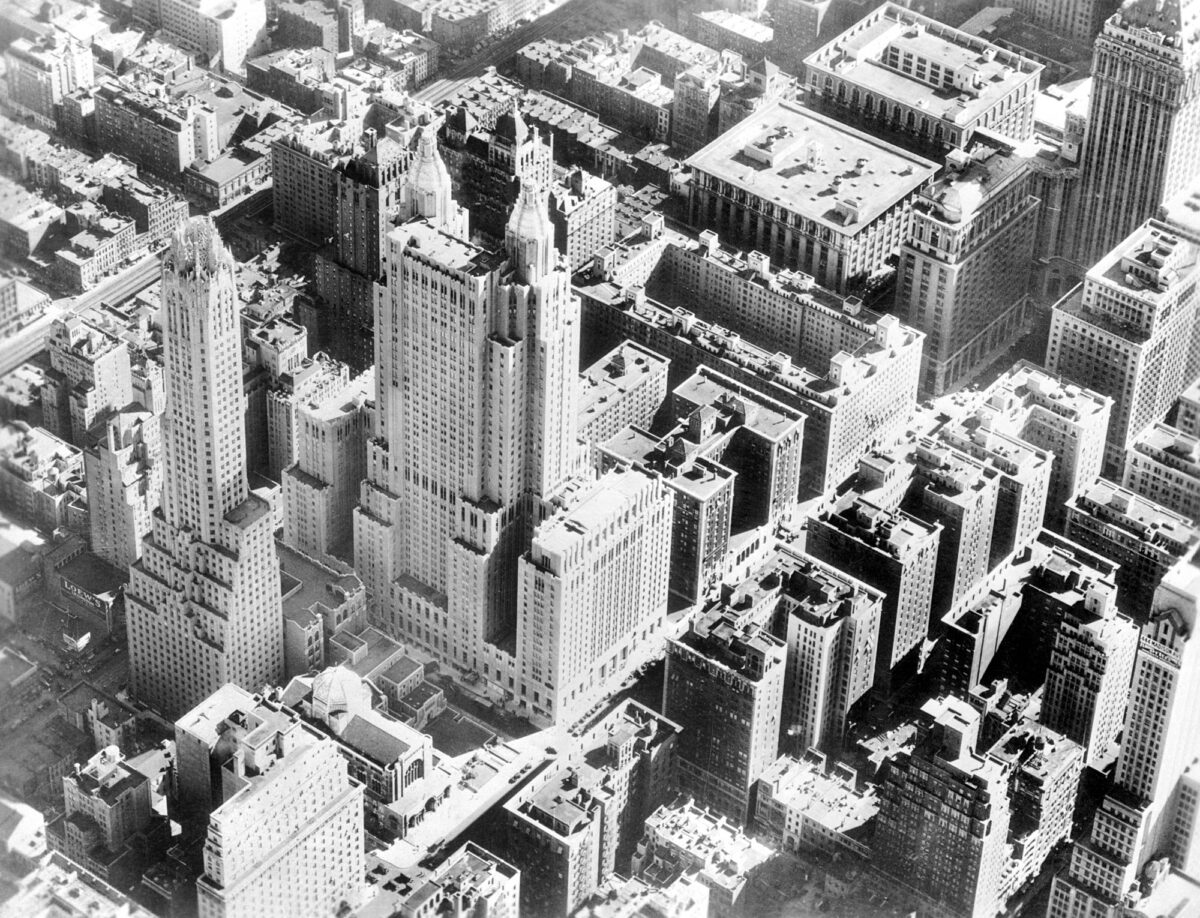
The Waldorf Astoria — once the Waldorf-Astoria and even the Waldorf=Astoria — has been a premier name in hotel accommodations since the opening of the very first edition on 34th Street and Fifth Avenue (the location of today’s Empire State Building).
But the history of the current incarnation on Park Avenue contains the twists and turns of world events, from World War II to recent diplomatic dramas. In essence, the Waldorf Astoria has become the world’s convention center.
Step past the extraordinary Art Deco trappings, and you’ll find rooms which have hosted a plethora of important gatherings, not to mention the frequent homes to Hollywood movie stars.
But its those very trappings — some of it well over a century old — that finds itself in danger today as recent changes threaten to wipe away its glamorous interiors entirely.
LISTEN NOW: THE RETURN OF THE WALDORF ASTORIA
The Bowery Boys: New York City History podcast is brought to you …. by you!
We are now producing a new Bowery Boys podcast every two weeks. We’re also looking to improve the show in other ways and expand in other ways as well — through publishing, social media, live events and other forms of media. But we can only do this with your help!
We are now a member of Patreon, a patronage platform where you can support your favorite content creators for as little as a $1 a month.
Please visitour page on Patreon and watch a short video of us recording the show and talking about our expansion plans. If you’d like to help out, there are five different pledge levels (and with clever names too — Mannahatta, New Amsterdam, Five Points, Gilded Age, Jazz Age and Empire State). Check them out and consider being a sponsor.
We greatly appreciate our listeners and readers and thank you for joining us on this journey so far. And the best is yet to come!
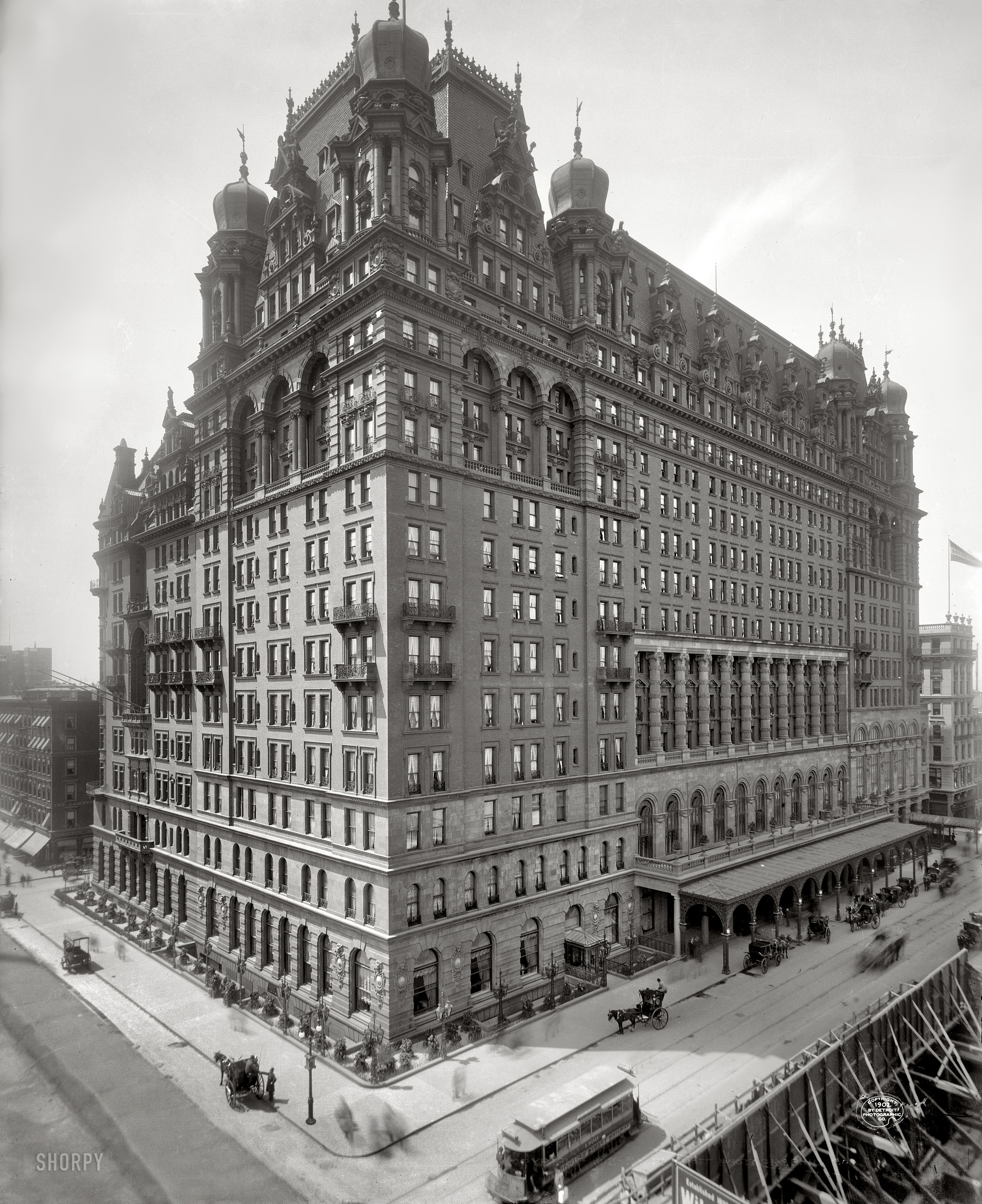
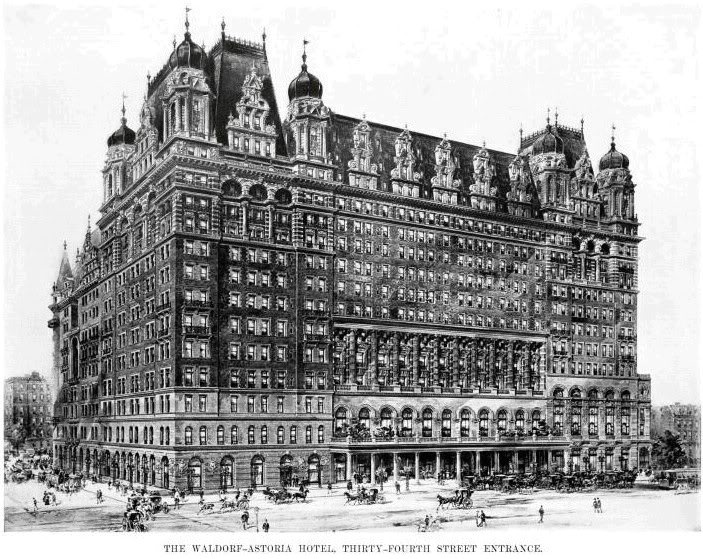
The original Waldorf-Astoria which once sat at 34th Street and Fifth Avenue. The first hotel, the Waldorf, is the shorter one facing 33rd Street.
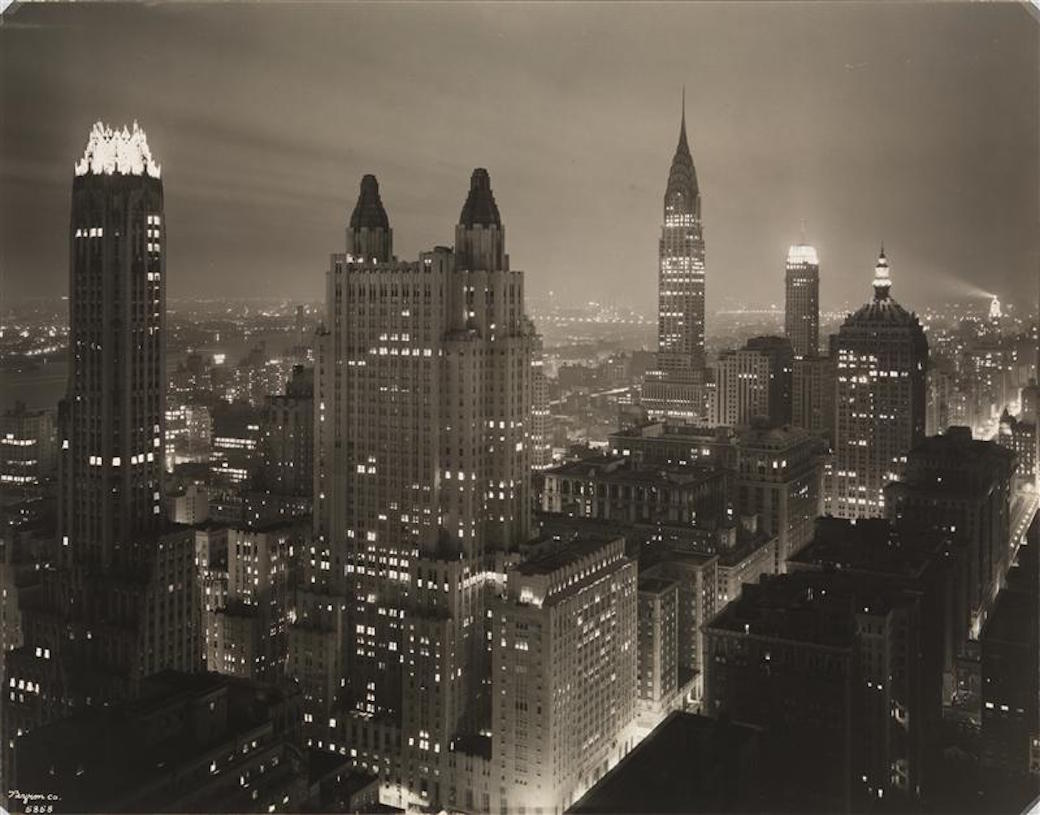
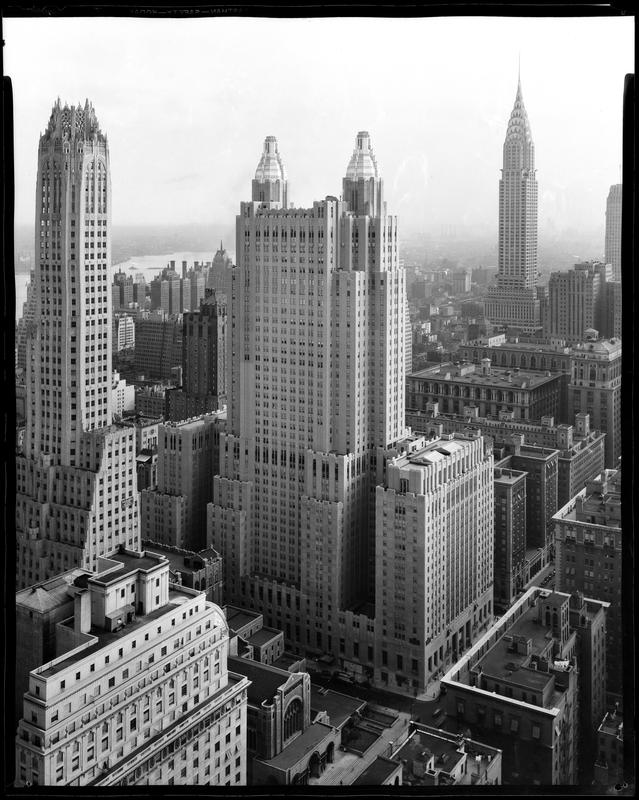
Park Avenue at nighttime, 1937. Seen here: 515 Mad. Ave, Gen. Electric, the Waldorf Astoria, the Chrysler Building, the Chanin Building, and the New York Central Building.
Museum of the City of New York
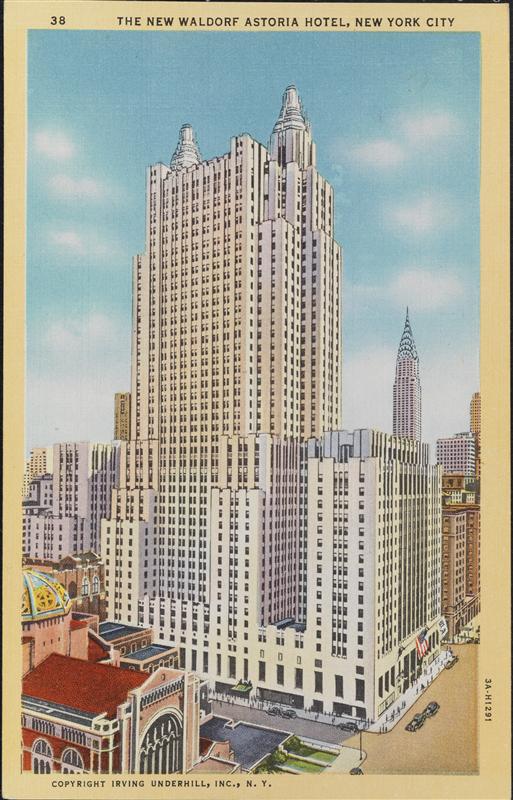
A 1931 postcard announcing the debut of the Waldorf Astoria with the Chrysler in the background.
Courtesy MCNY
MCNY
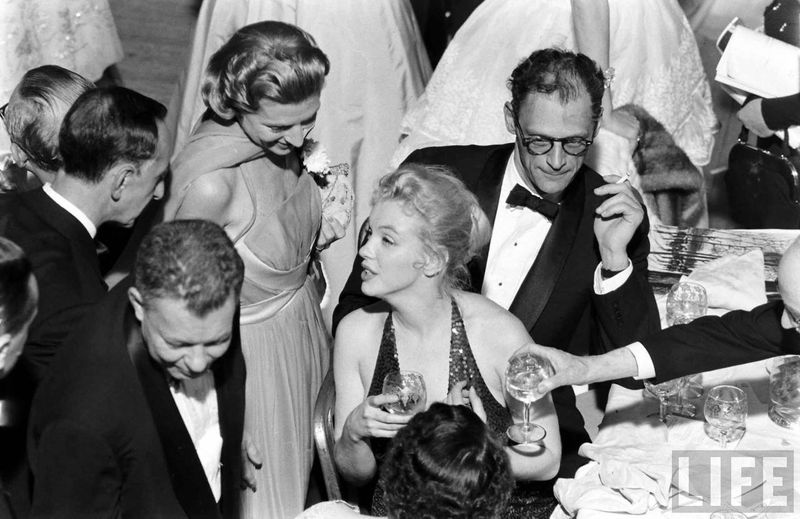
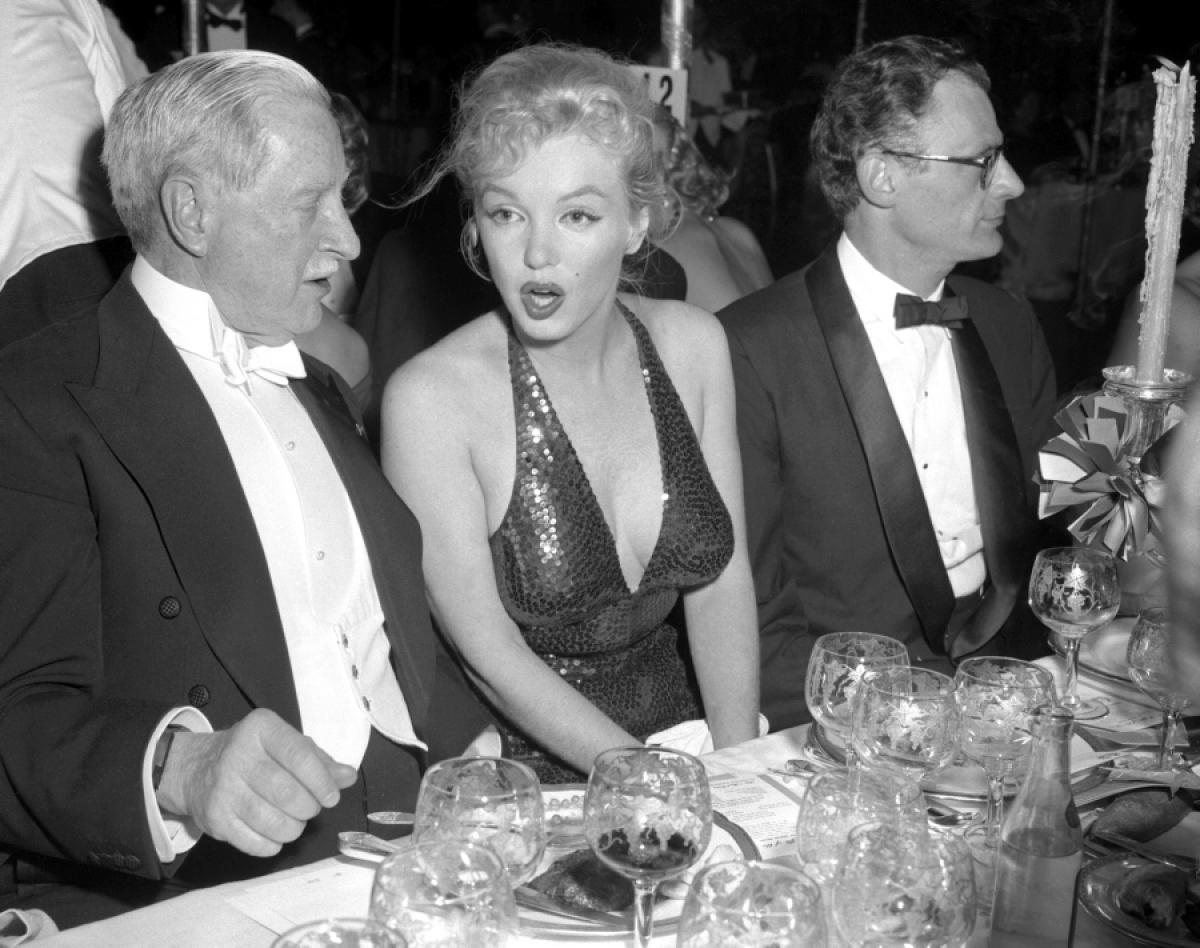
Marilyn Monroe at the Waldorf, her home in 1955. Here she is at the April In Paris ball with her then-husband Arthur Miller.
Courtesy New York Daily News
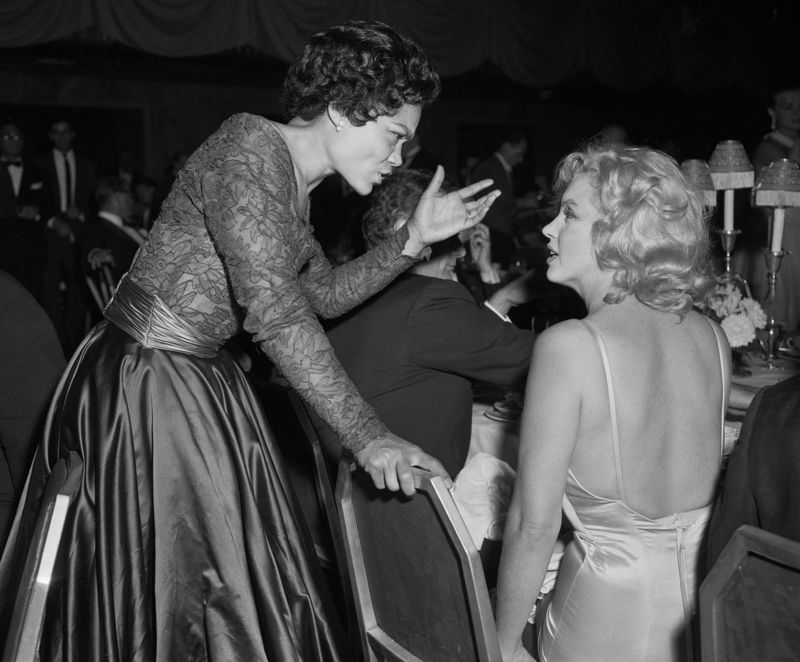
And at another function, this time chatting with Eartha Kitt.
A photo posted by Gregory Young (@boweryboysnyc) on
More information here on the Historic District Council’s efforts to help save the interior decor of the Waldorf Astoria.
CORRECTION: There are a few classic photographs of Marilyn Monroe at the Waldorf-Astoria; however the one that Greg described on the show is actually taken at the Ambassador Hotel, a couple blocks north of the Waldorf. (It was torn down in the 1960s.)
Instead of looking back to the history of New York City in this episode, we are looking forward to the future — to the new generation of creators who are celebrating New York and telling its story through mediums that are not podcasts or books.
Today we are honoring all the historians, journalists and photographers who bring New York City to life on social media platforms like Instagram.
There are a million different ways to tell a good story and the guests on today’s show are doing it with photography and short films, exposing new audiences to the best of New York City – its landmarks, its people, even its diners.
Featuring interviews with three of our favorite creators:
Nicolas Heller, aka New York Nico, the “unofficial talent scout of New York City,” the filmmaker and photographer who manages to capture the magic of the city’s most interesting and colorful characters
Riley Arthur, aka Diners of NYC, who explores the world of New York City diners, great and small, in hopes to bring awareness to many struggling local businesses
Tommy Silk, aka Landmarks of NY, who shares illuminating photos and videos featuring the city’s most interesting and sometimes overlooked architectural gems
Featuring stories of the Neptune Diner, the Green Lady, the Little Red Lighthouse, Junior’s Cheesecake, Tiger Hood and City Island
PODCAST REWIND A story almost four hundred years in the making — and a place at the center of modern New York political life.
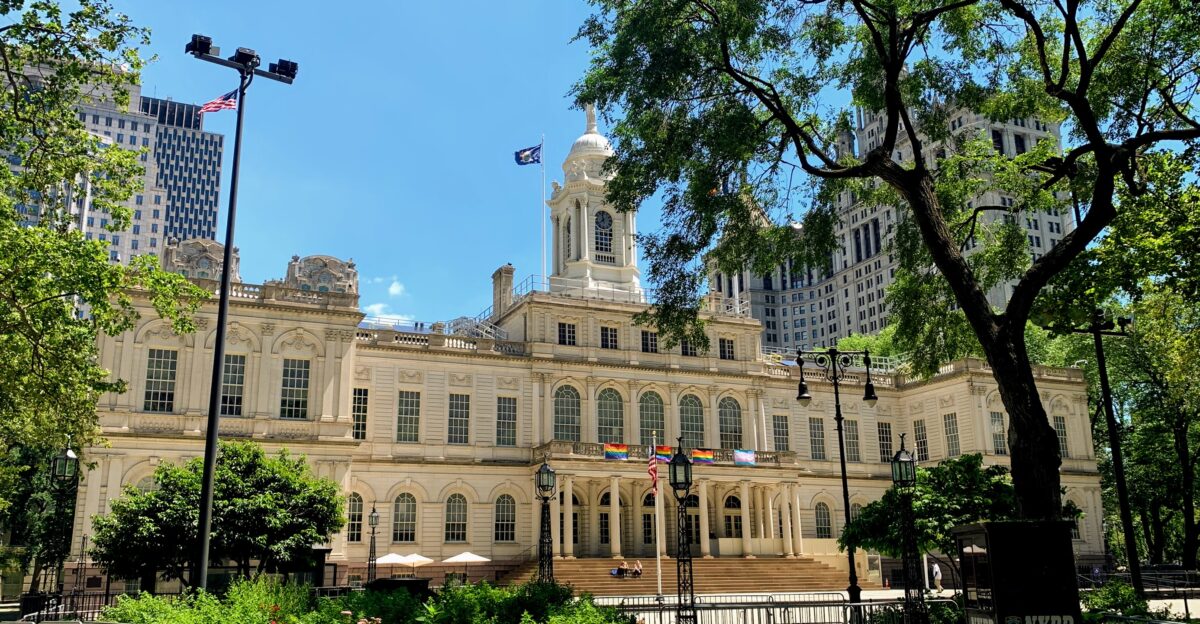
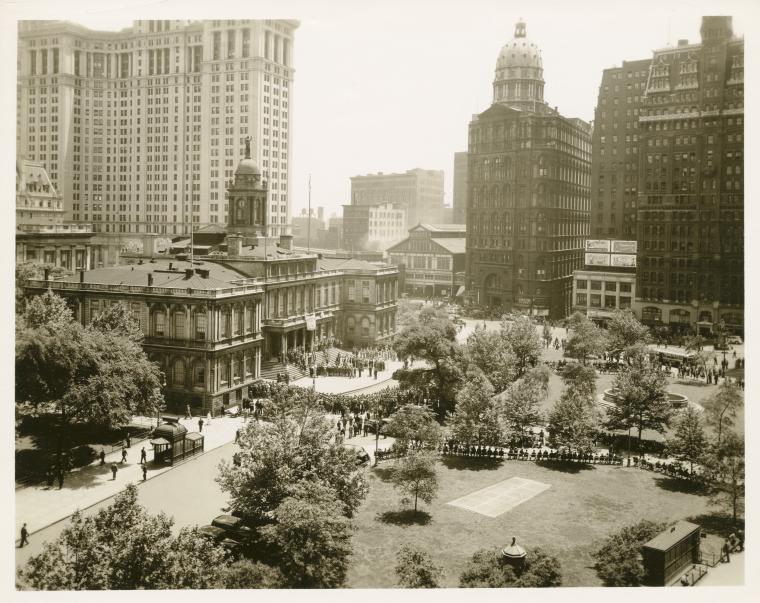
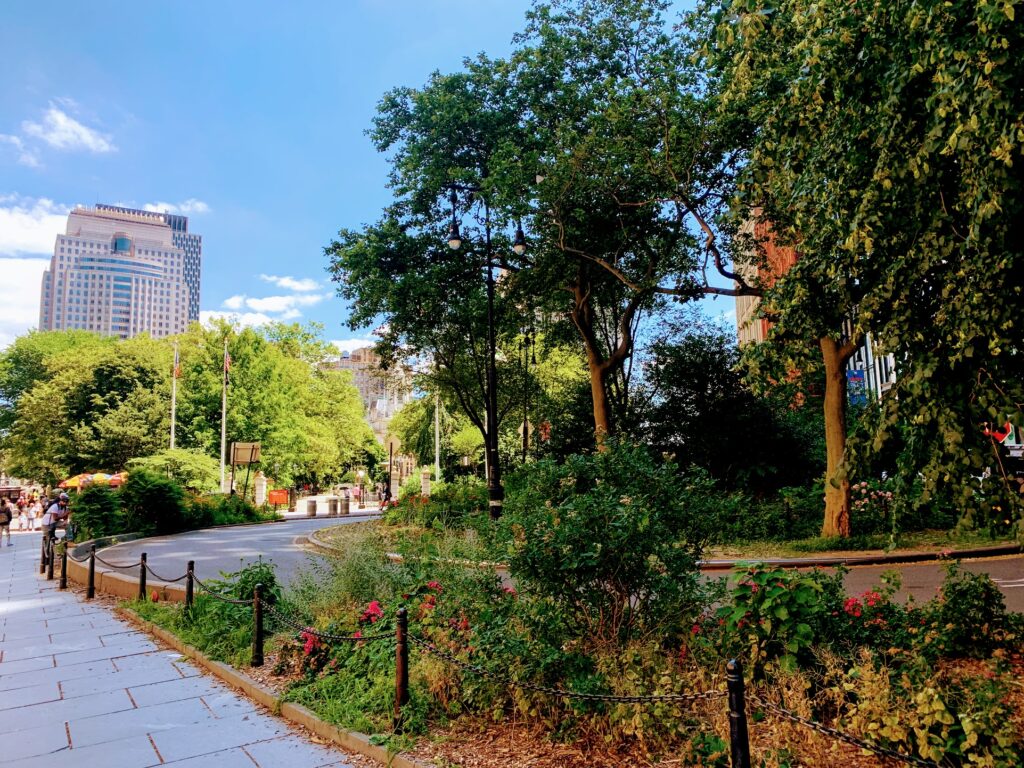
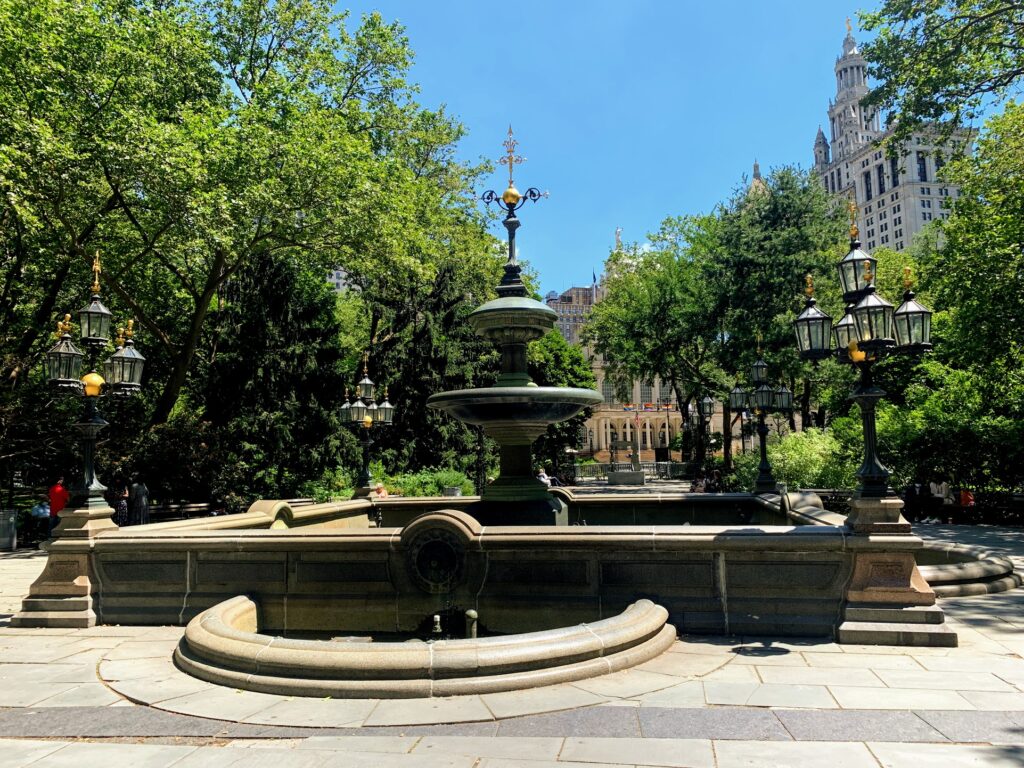
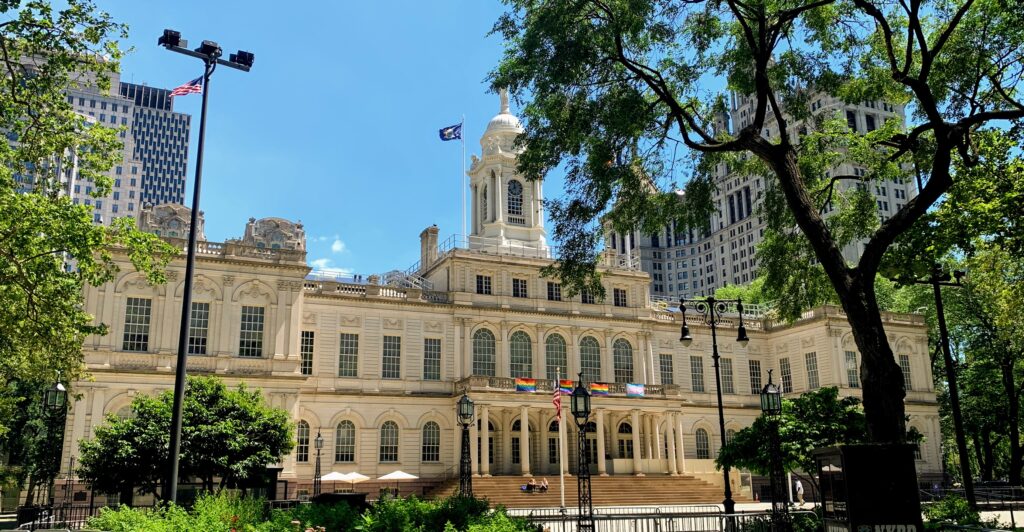
New York City Hall sits majestically inside a nostalgic, well-manicured park, topped with a beautiful old fountain straight out of gaslight-era New York.
But its serenity belies the frantic pace of government inside City Hall walls and disguises a tumultuous and vigorous history.
There have actually been two other city halls — one an actual tavern, the other a temporary seat of national government. The present city hall — first used in 1811 and completed the following year — is one of New York City’s greatest treasures.
Join us as we explore the unusual history of this building, through ill-executed fireworks, disgruntled architects and its near-destruction by city planners.
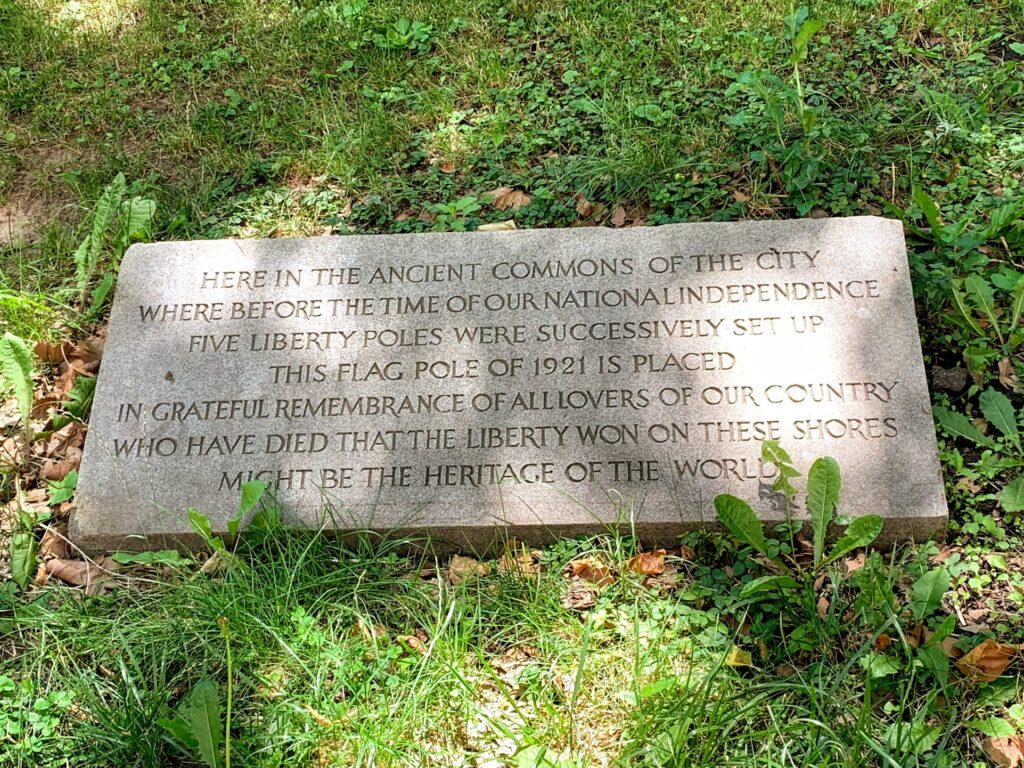
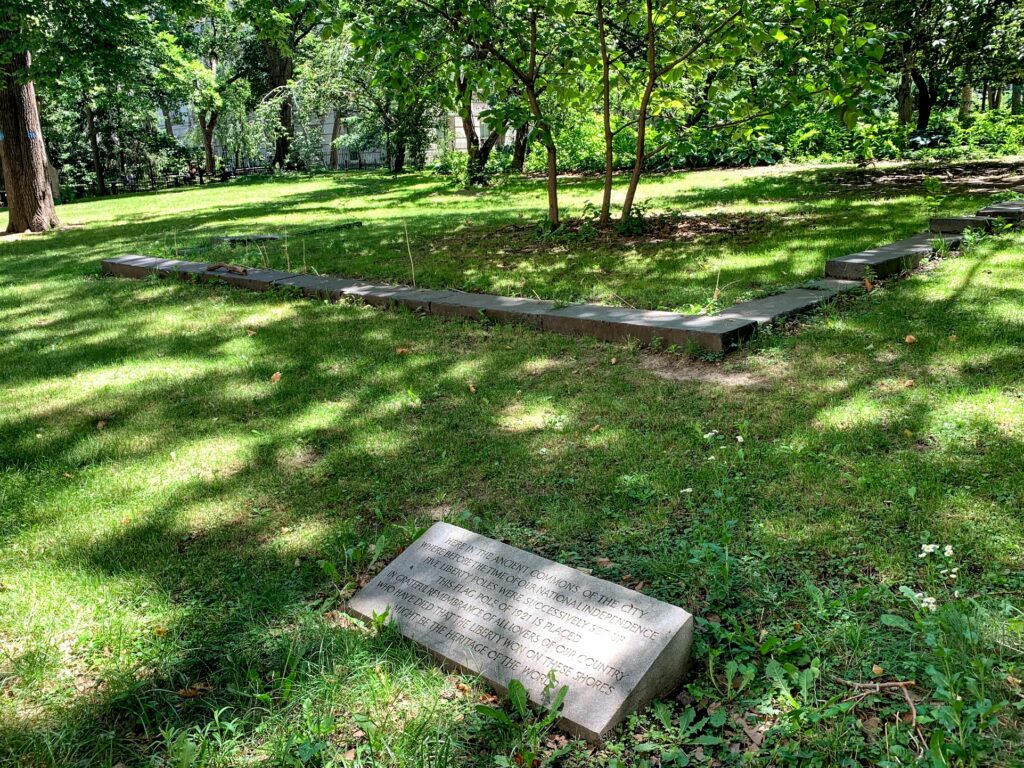
PLUS: We look at the park area itself, a common land that once catered to livestock, liberty poles, almshouses and a big, garish post office.
This is a reedited and remastered version of episode #93 featuring an all-new, very special ‘Choose Your Own Adventure’ challenge at the end.
Listen Now: The Historic New York City Hall
The Bowery Boys: New York City History podcast is brought to you …. by you!
We are now producing a new Bowery Boys podcast every other week. We’re also looking to improve and expand the show in other ways — publishing, social media, live events and other forms of media. But we can only do this with your help!
We are now a creator on Patreon, a patronage platform where you can support your favorite content creators.
Please visit our page on Patreon and watch a short video of us recording the show and talking about our expansion plans. If you’d like to help out, there are six different pledge levels. Check them out and consider being a sponsor.
We greatly appreciate our listeners and readers and thank you for joining us on this journey so far.
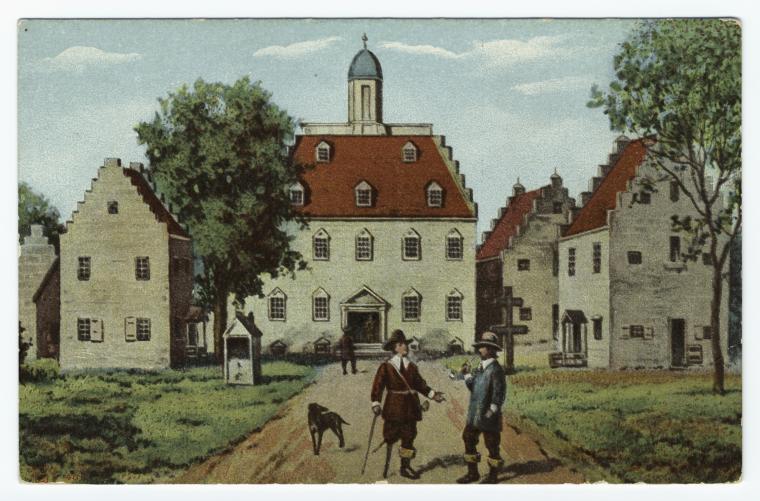
I’ll Drink To That: Stadt Huys, New Amsterdam’s town hall, was a multi-purpose stone building housing an inn, a tap room on the first floor and the workings of city government on the second floor. The building was the government center even when the British arrived and would only be replaced in 1700.
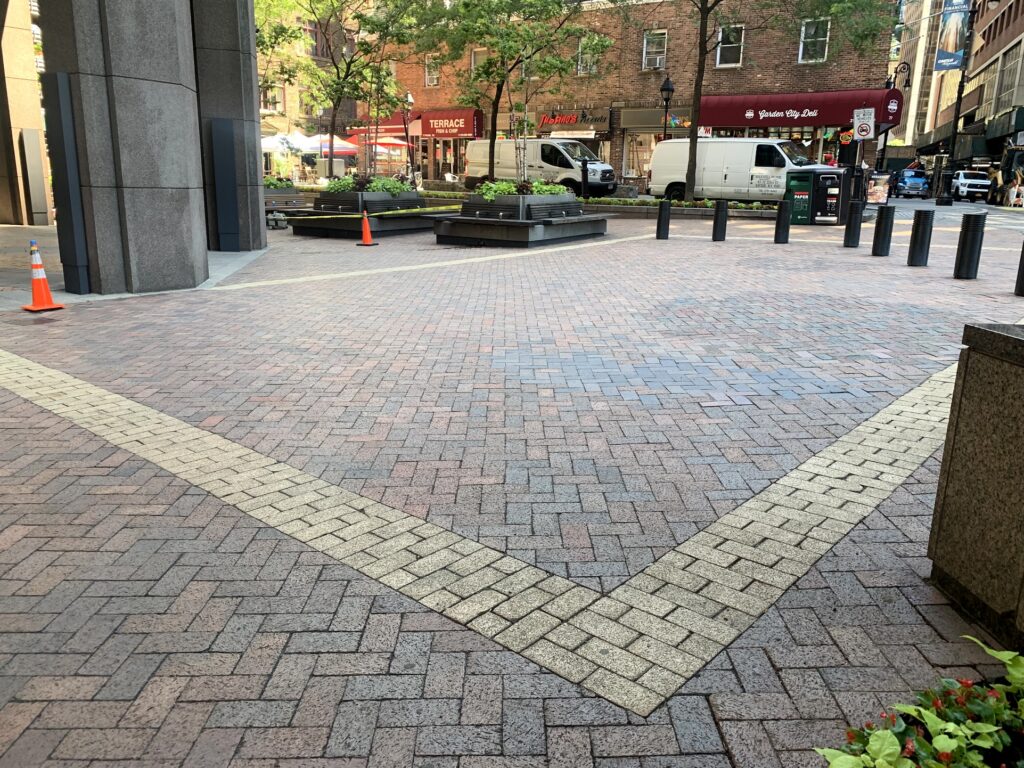
Today on Pearl Street (near Stone Street) one can find the exact spot where the Stadt Huys once stood, marked by beige-colored bricks.
Photo by Greg Young
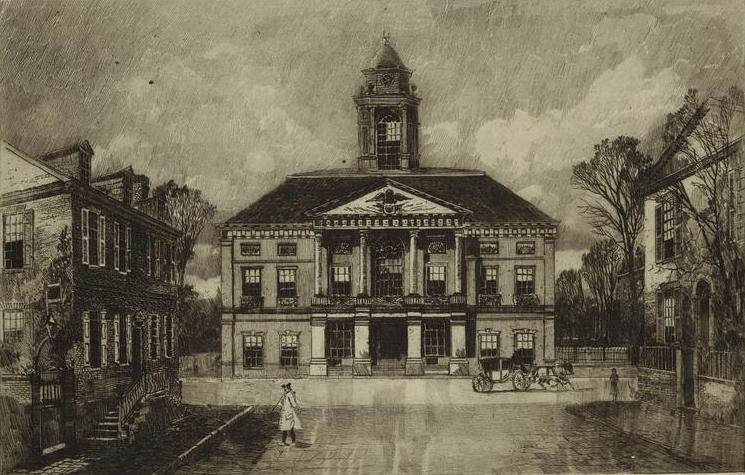
Federal Style: The second city hall, made with stones from the actual ‘wall’ of Wall Street, would be a bustling overstuff building and central to the beginnings of American history.
For a couple years, as Federal Hall, it was the center of federal government; the votes for George Washington as the first president were counted here and he was sworn in from the balcony.
New York Public Library
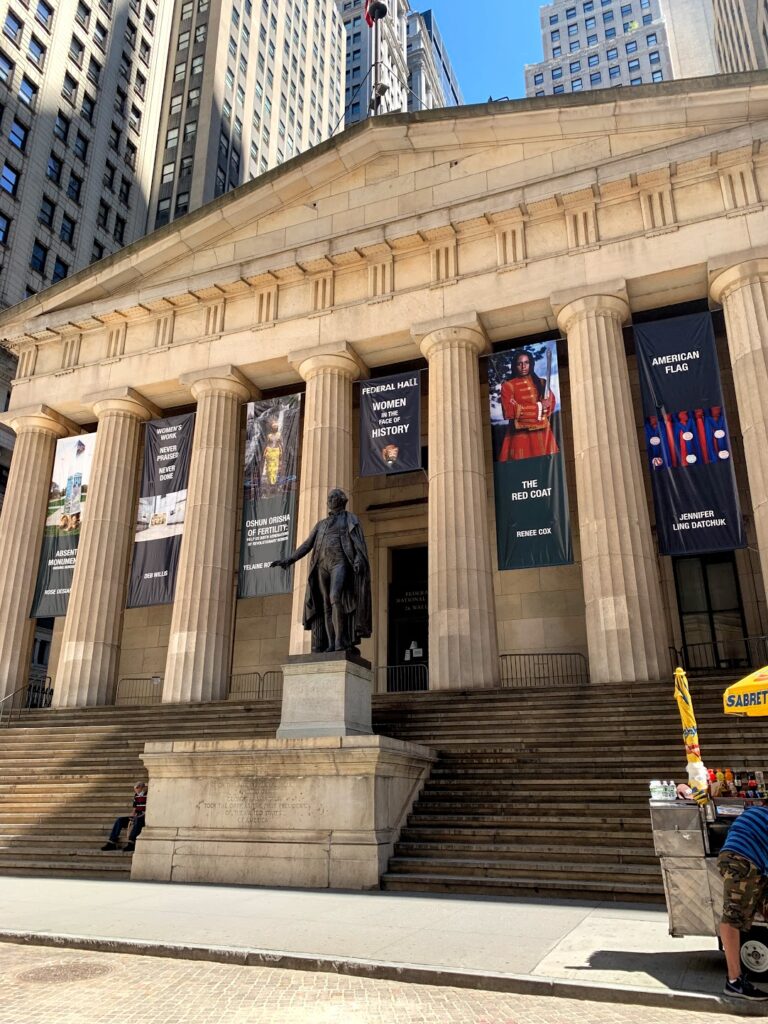
The old City Hall/Federal Hall was torn down in 1812. Three decades later the U.S. Custom House was constructed here, and today it is called Federal Hall.
Photo by Greg Young
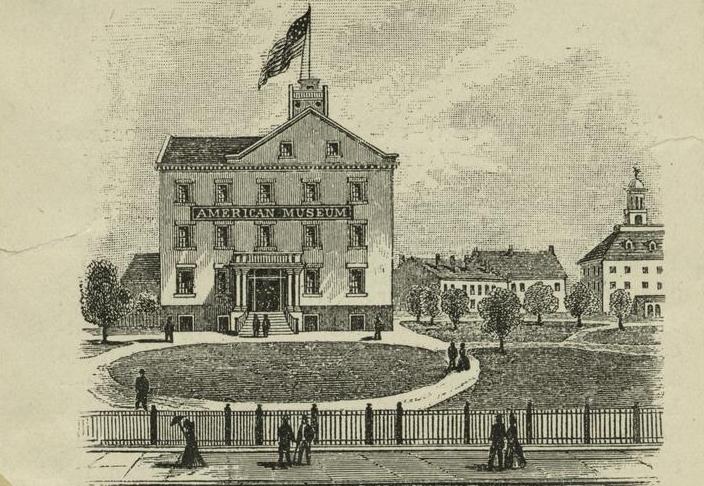
Park Purposes: Before City Hall arrives, the common ground held several buildings, includin almshouses and debtors prisons (depicted in the background) and an early version of the American Museum (which evolved to become Barnum’s American Museum).
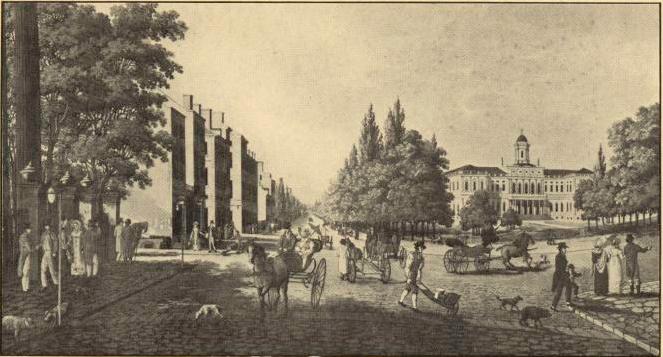
There Goes The Neighborhood: The image below depicts life in the year 1820. With the introduction of a shiny new City Hall, lavish rowhouses begin springing around the park, housing New York’s elite. Just a few years before, they would have faced into almshouses.
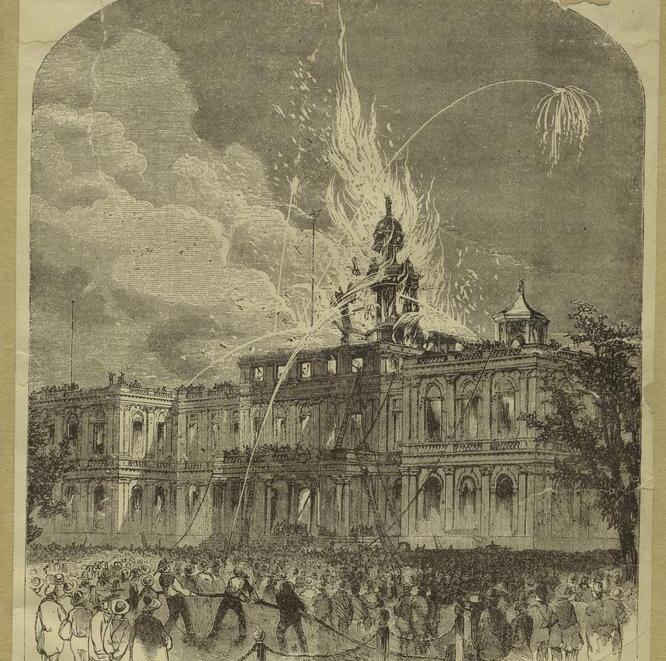
D’oh!: Wanna know one really good reason why we don’t shoot off fireworks in the middle of the city anymore? One robust fireworks celebration, honoring the laying of the Atlantic cable, caught the roof of City Hall on fire in 1858, causing extensive damage.
New York Public Library
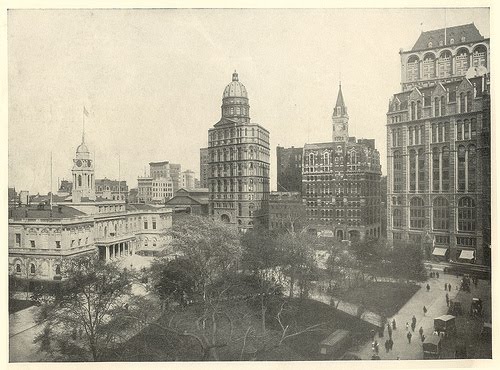
The City Grows Up: New York’s growth spurt starts around City Hall Park, with a few new skyscrapers becoming the tallest buildings of their times, including the World Building (pictured at center), the Park Row and St. Paul buildings (just south), and the Woolworth Building, on the park’s west side.
The Municipal Building joins it a few years later….
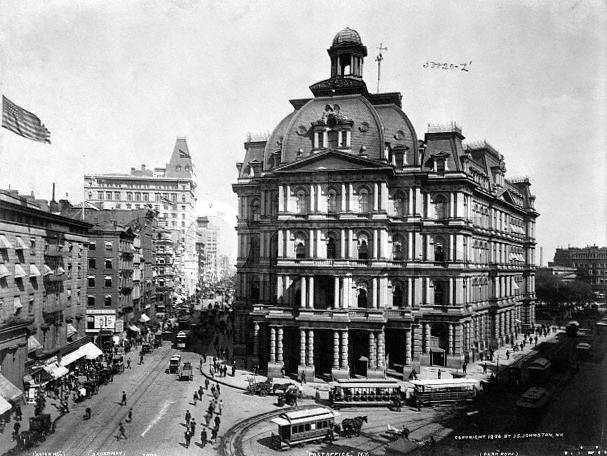
Post Haste: The City Hall Post Office sat on the southern end of City Hall Park.
The front of the Post Office, entirely consuming the area that is today’s southern end of the park and adjoining traffic triangle.
Photo by Greg Young
The Jacob Wrey Mould Fountain, first placed in City Hall in 1871. During the 1920s it was dismantled and shipped to Bronx, but returned to the park in 2000.
Photo by Greg Young
Plaque on the western side of City Hall Park:
Stones mark the site of Bridewell Prison:
Photo by Greg Young
FURTHER LISTENING:
After listening to this show on the history of New York City Hall check out these shows with similar themes and historical moments mentioned in this show:
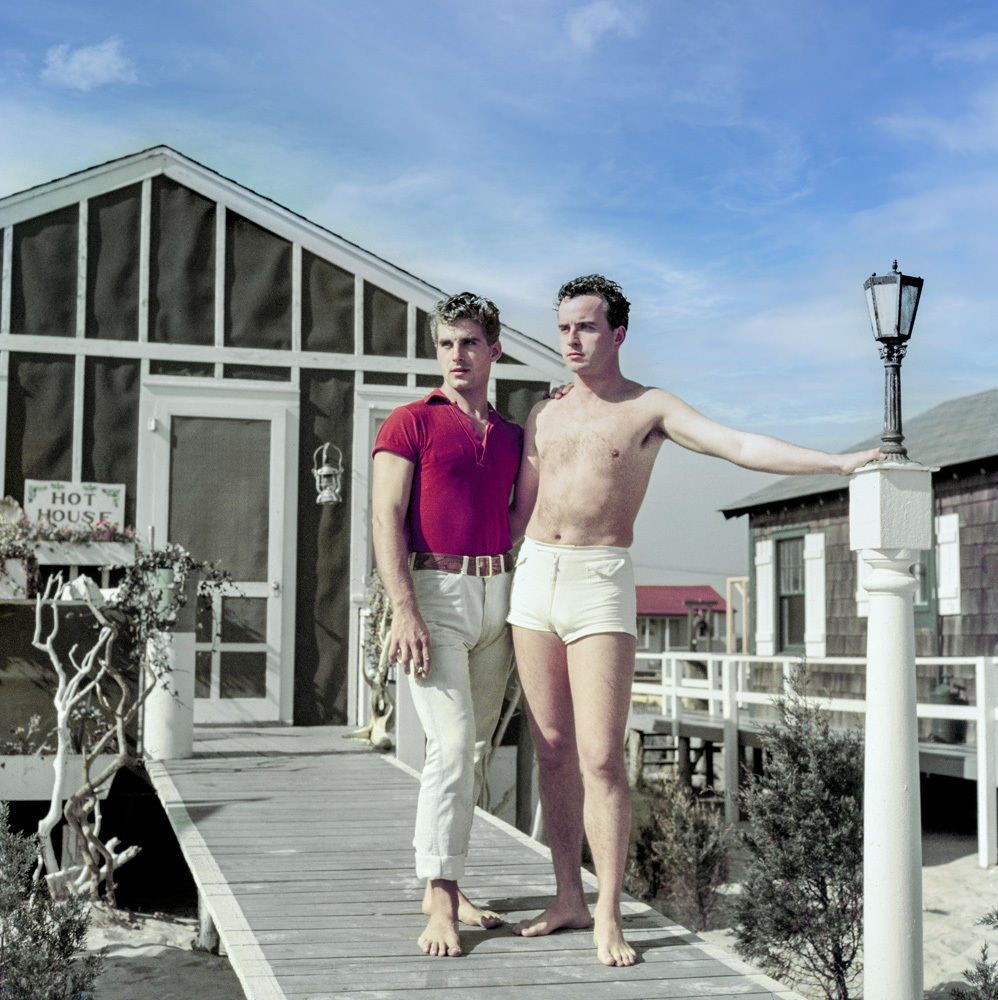
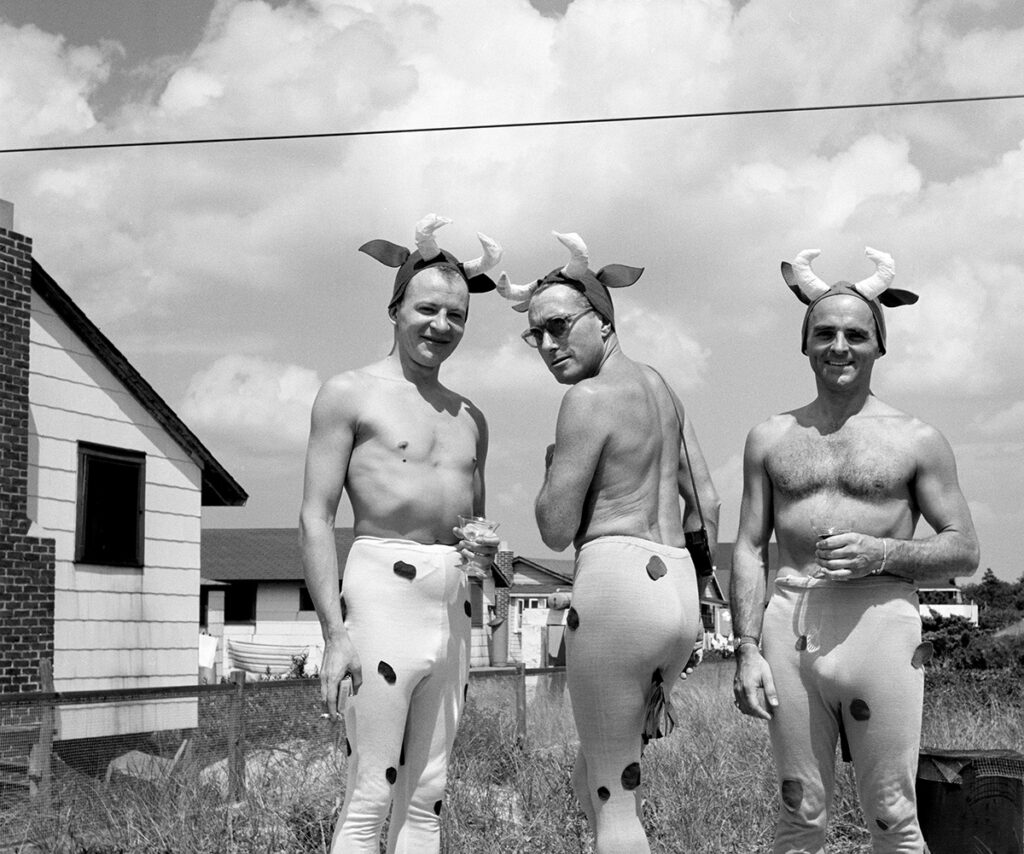
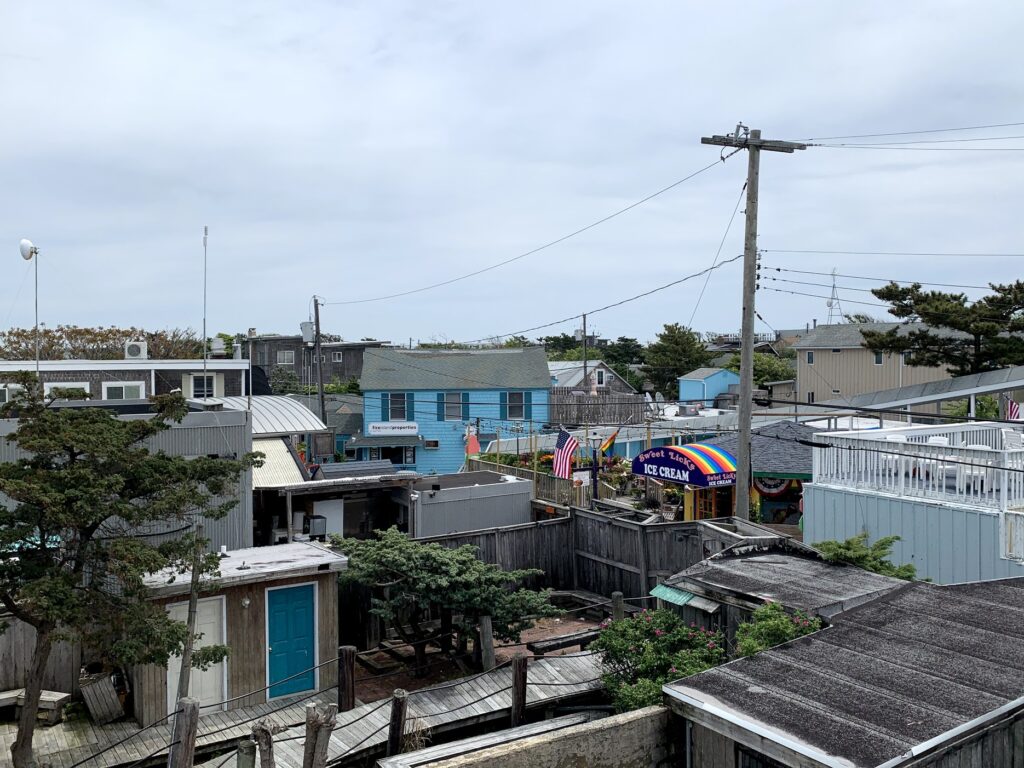
Outside of Bea Greer’s Home, Bea’s Brunch’, 1951. Courtesy the Cherry Grove Archives Collection. A gift of Harold Seeley
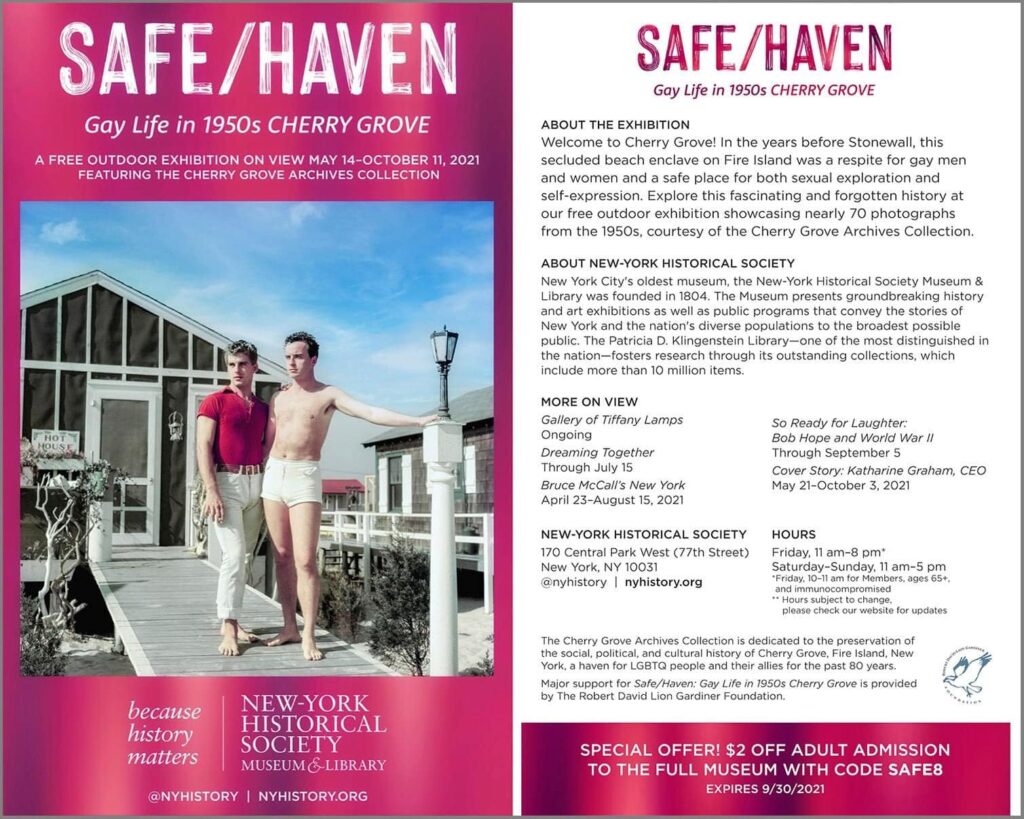
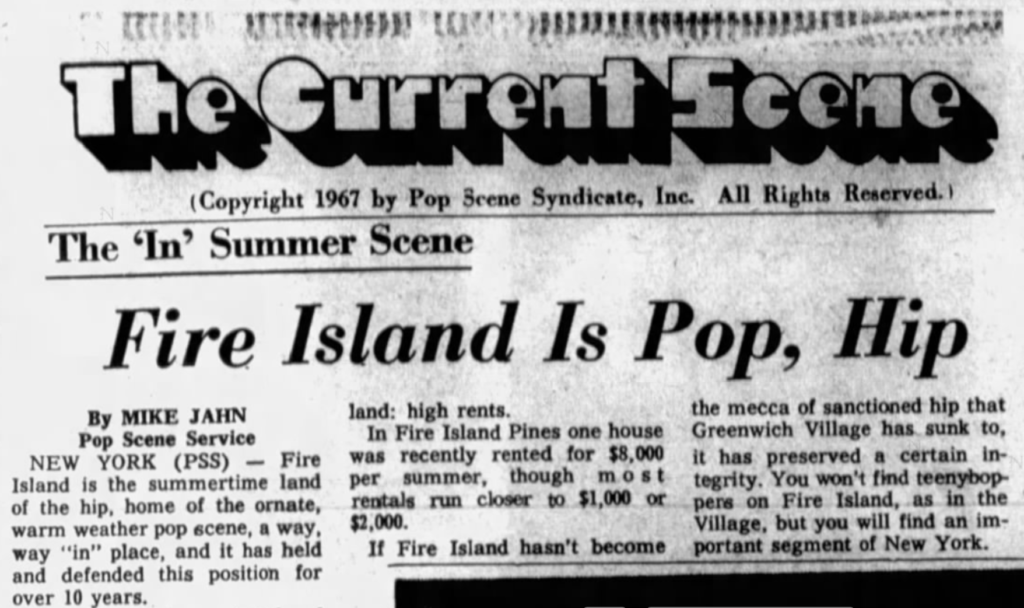
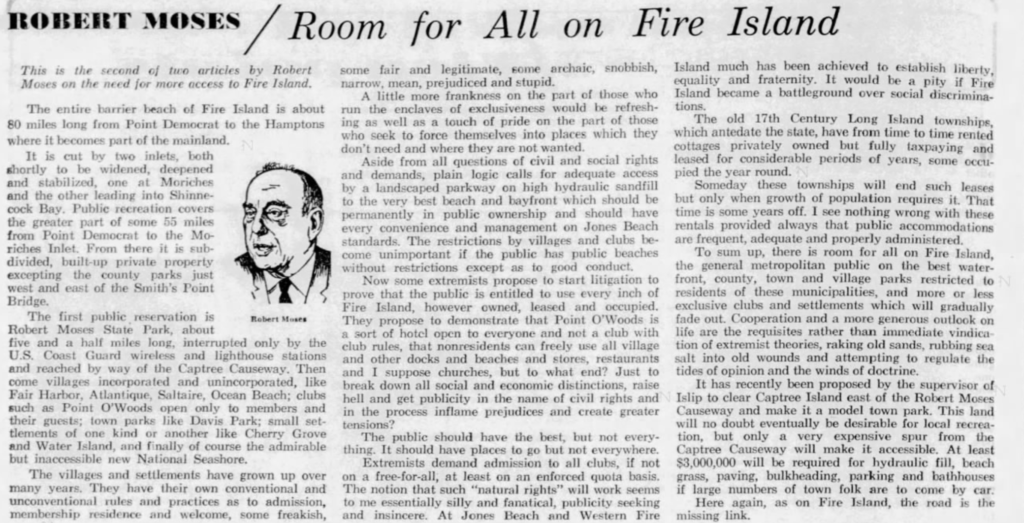
How did one particular summer settlement on Fire Island become a ‘safe haven’ for gay men and lesbians almost ninety years ago, decades before the uprising at Stonewall Inn?
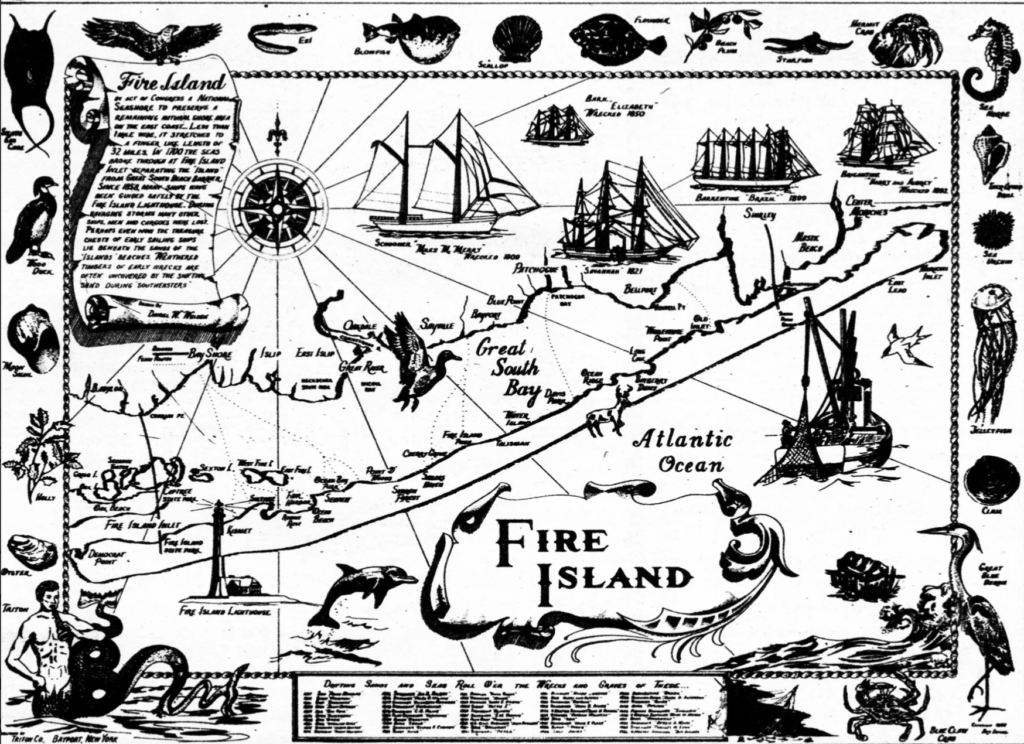
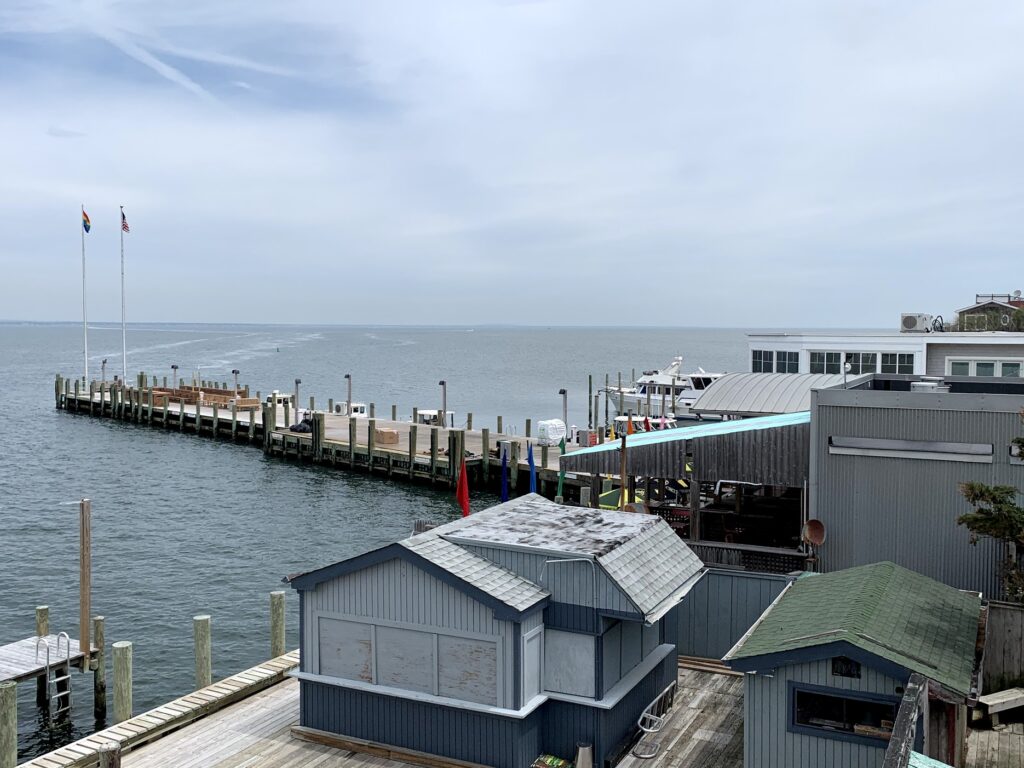
Fire Island is one of New York state’s most attractive summer getaways, a thin barrier island on the Atlantic Ocean lined with seaside villages and hamlets, linked by boardwalks, sandy beaches, natural dunes and water taxis. (And, for the most part, no automobiles.)
But Fire Island has a very special place in American LGBT history.
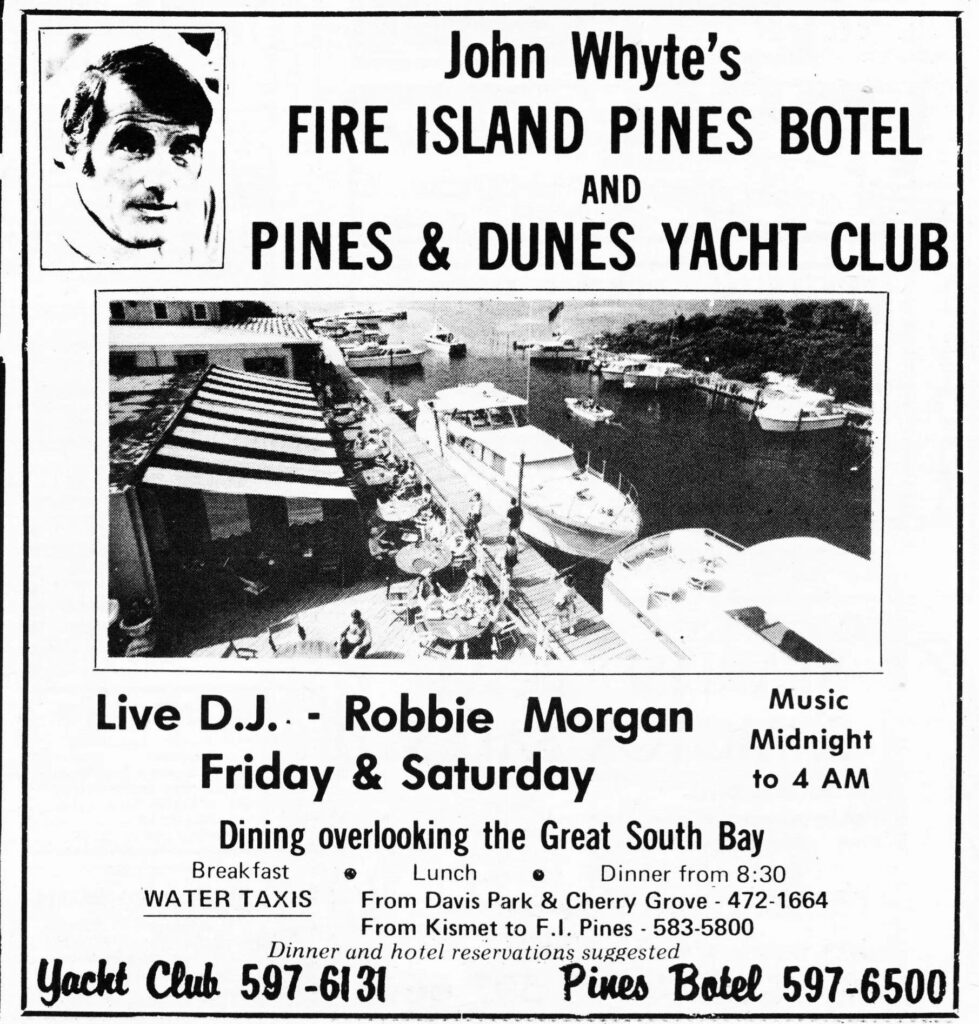
It is the site of one of the oldest gay and lesbian communities in the United States, situated within two neighboring hamlets — Cherry Grove and the Fire Island Pines.
During the 1930s actors, writers and craftspeople from the New York theatrical world began heading to Cherry Grove, its remote and rustic qualities allowing for gay and lesbians to express themselves freely — far away from a world that rejected and persecuted them.
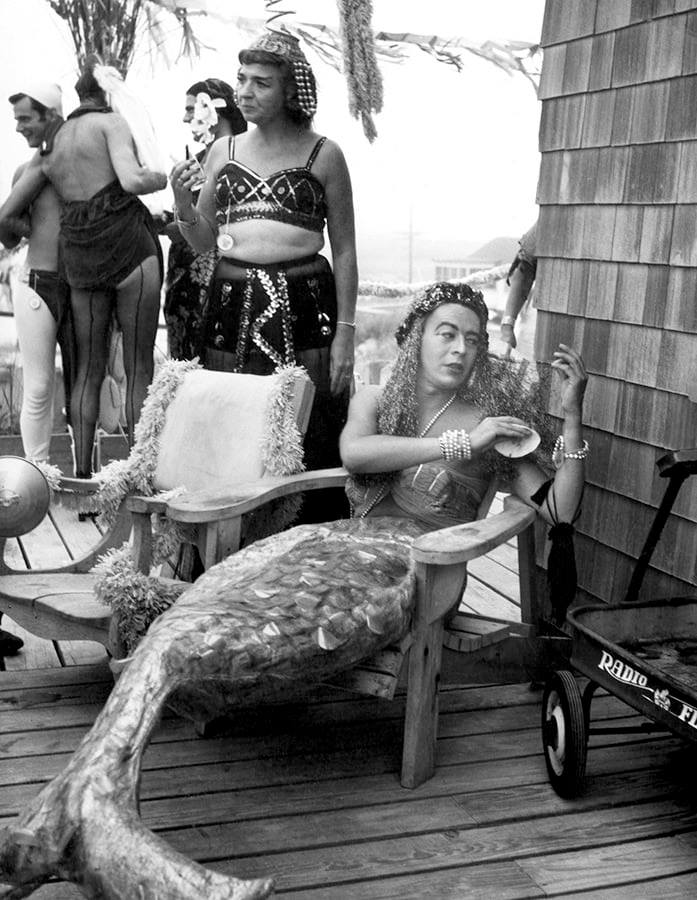
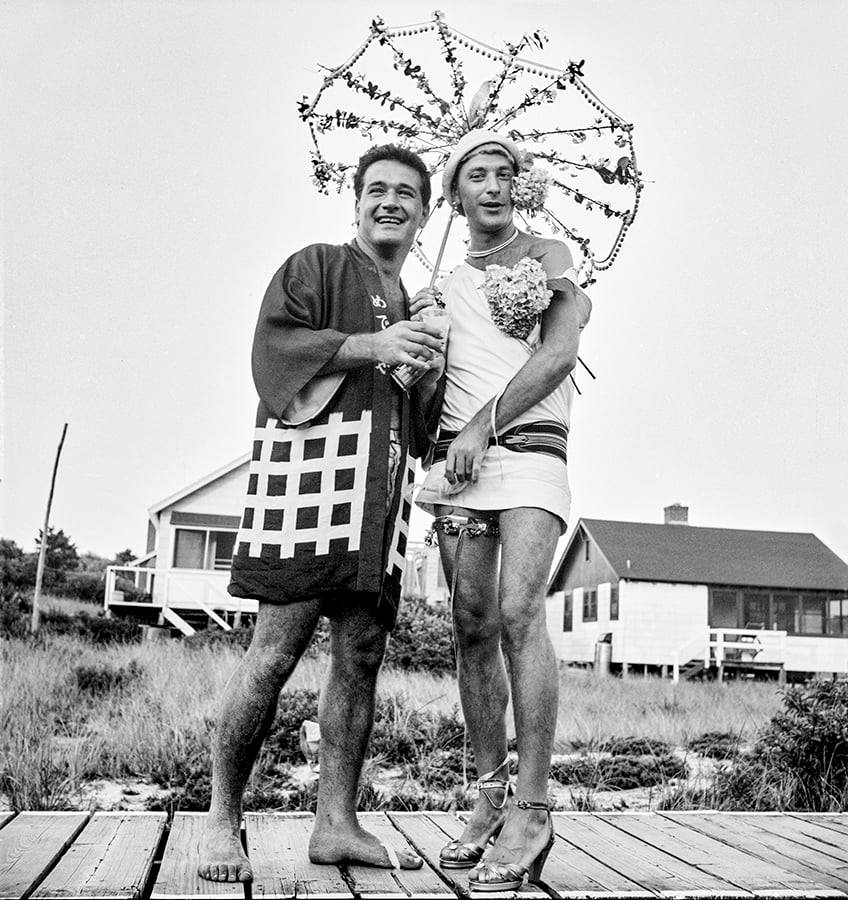
Performers at the Grove’s Community House and Theatre helped define camp culture, paving the way for the modern drag scene.
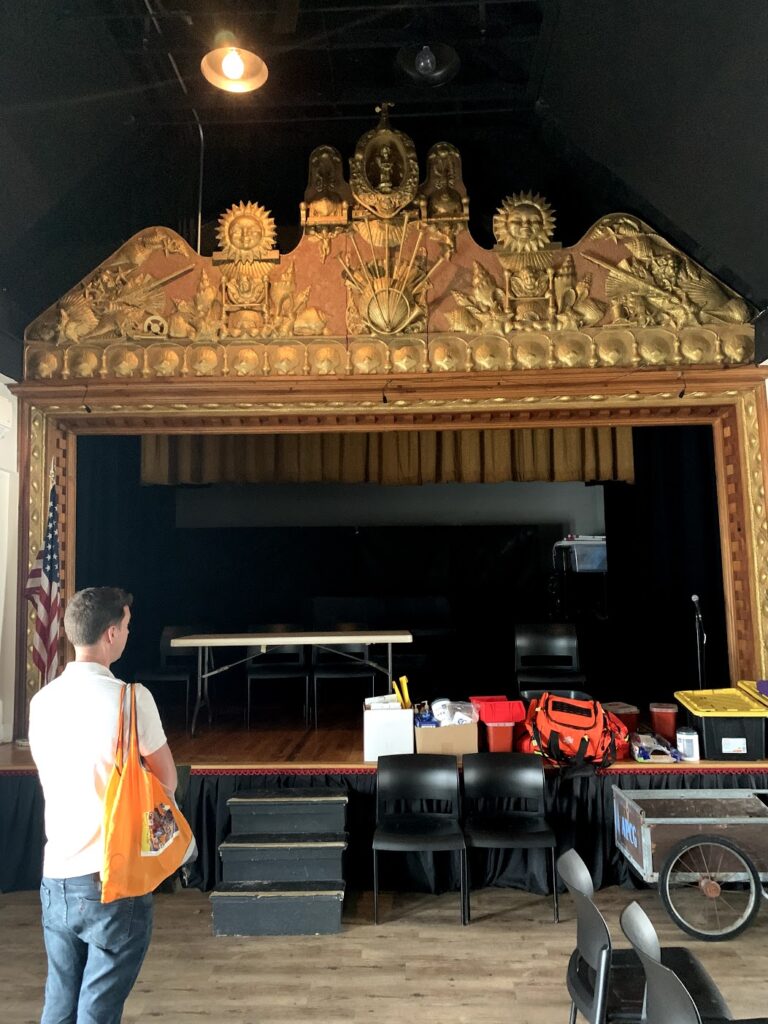
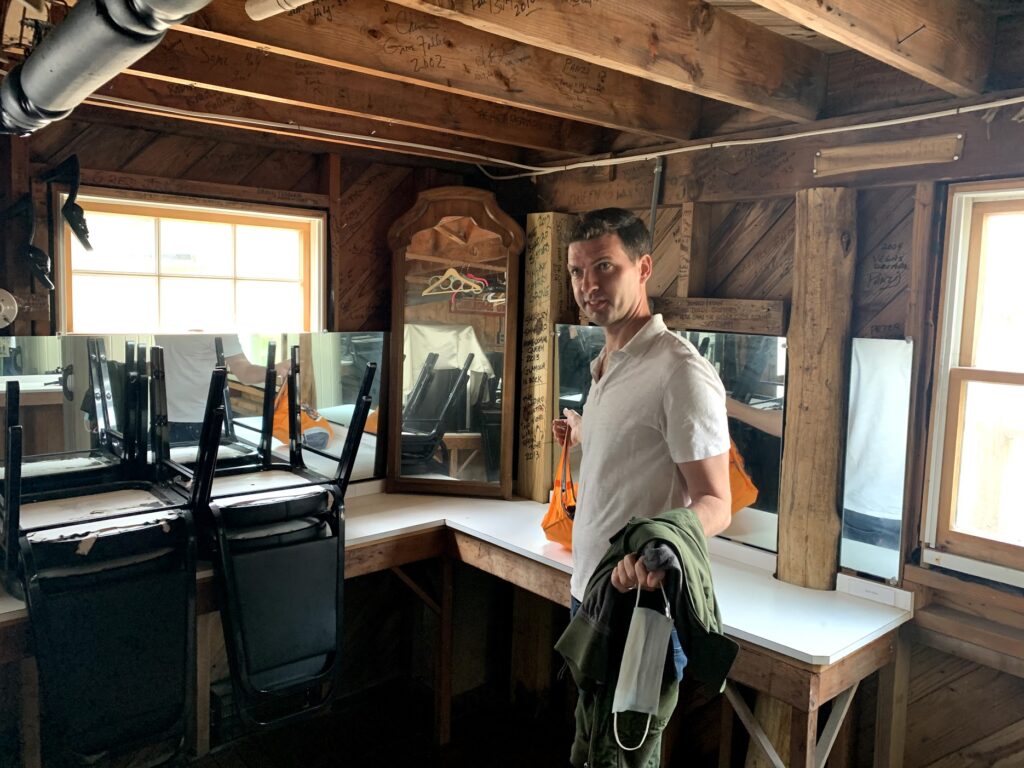
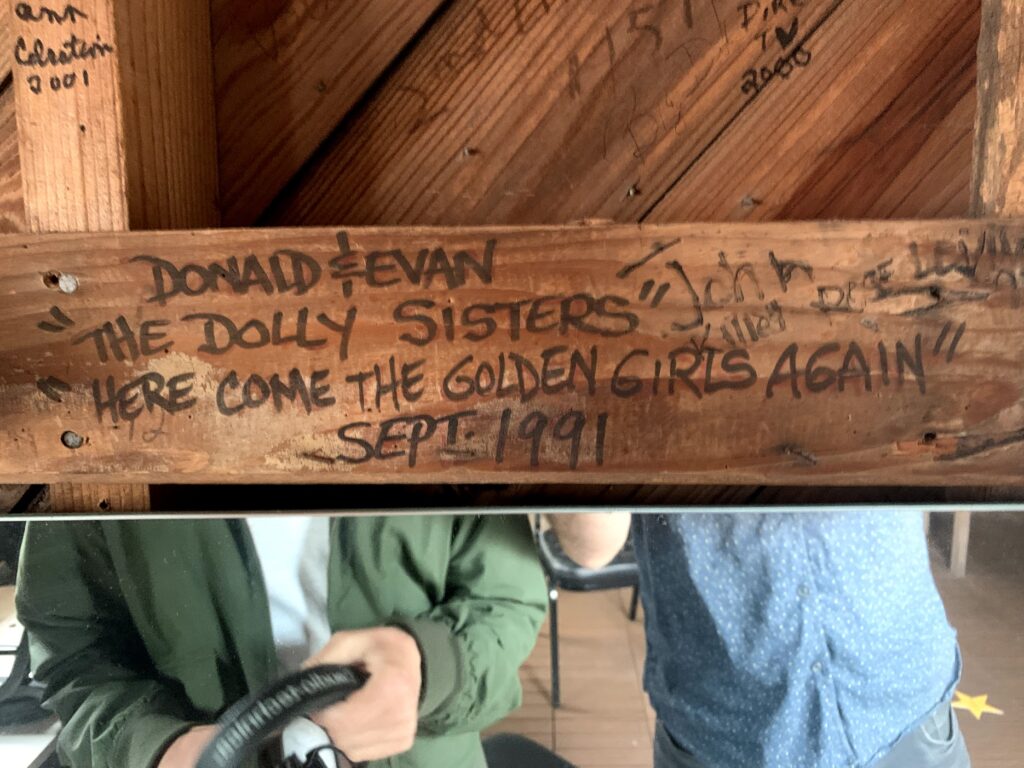
In this episode, Greg and Tom head to Cherry Grove — and the Community House and Theater — to get a closer look at Fire Island’s unique role in the American LGBT experience.
FEATURING: The Great Hurricane of 1938! The Invasion of the Pines! The indescribable Belvedere! And the surprising origin of Fire Island’s name.
Listen Now: The Very Gay History of Fire Island
The Official Bowery Boys Fire Island Playlist
Your soundtrack for the summer — whether you’re on Fire Island or just want to relive a retro experience from Cherry Grove or The Pines. Here’s a collection of songs inspired by our podcast on the history of Fire Island.
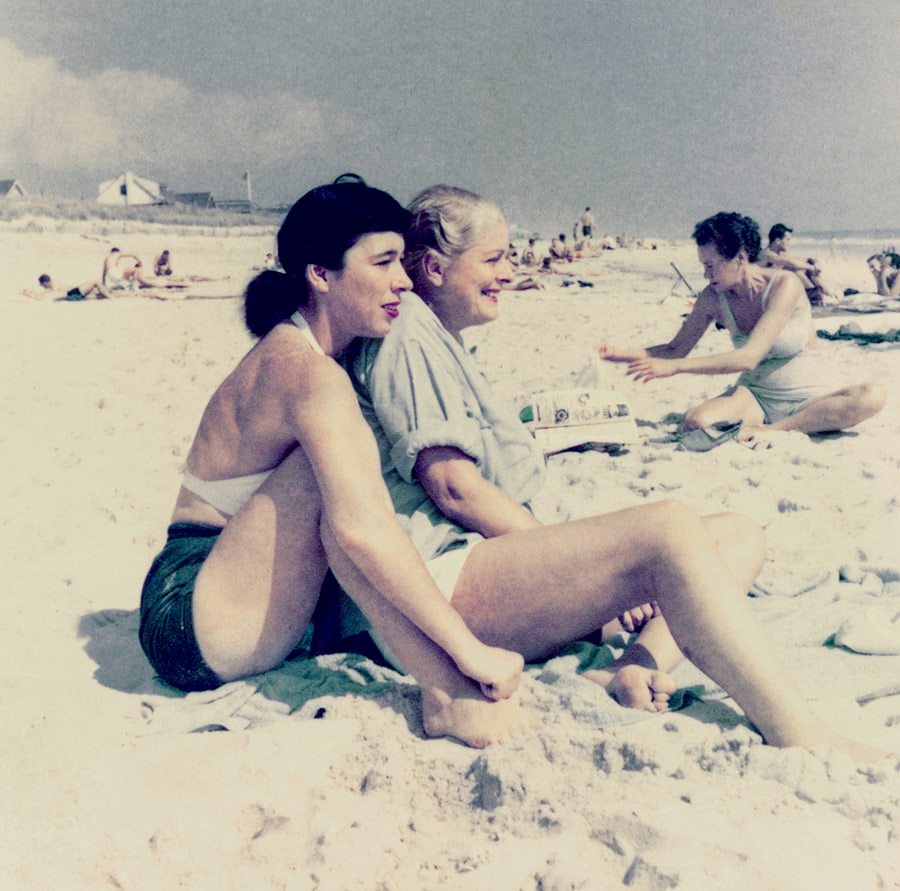
Images courtesy the Cherry Grove Archives Collection, taken by the men and women of Cherry Grove in the 1950s:
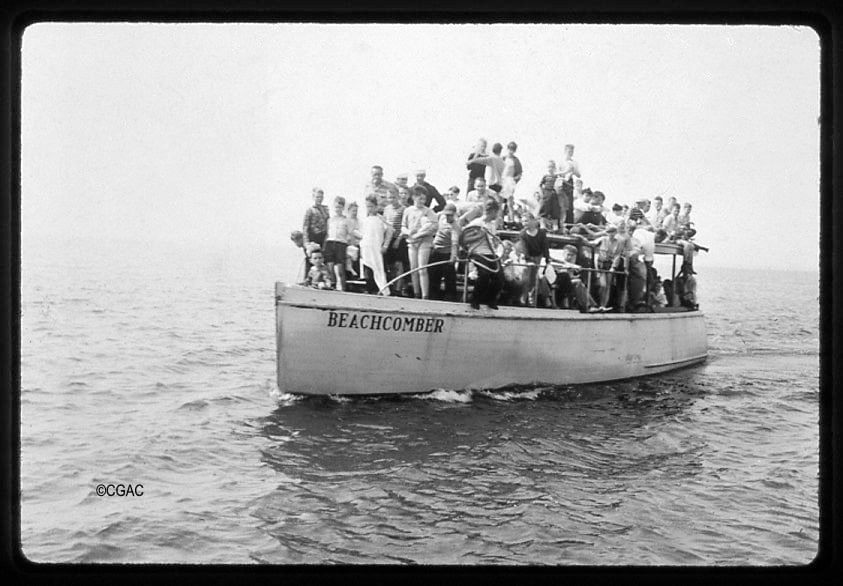
The Beachcomber, 1950s ferry to Cherry Grove.
Photographer unknown. Cherry Grove Archives Collection
A few images from the exhibition, courtesy the Cherry Grove Archives Collection:
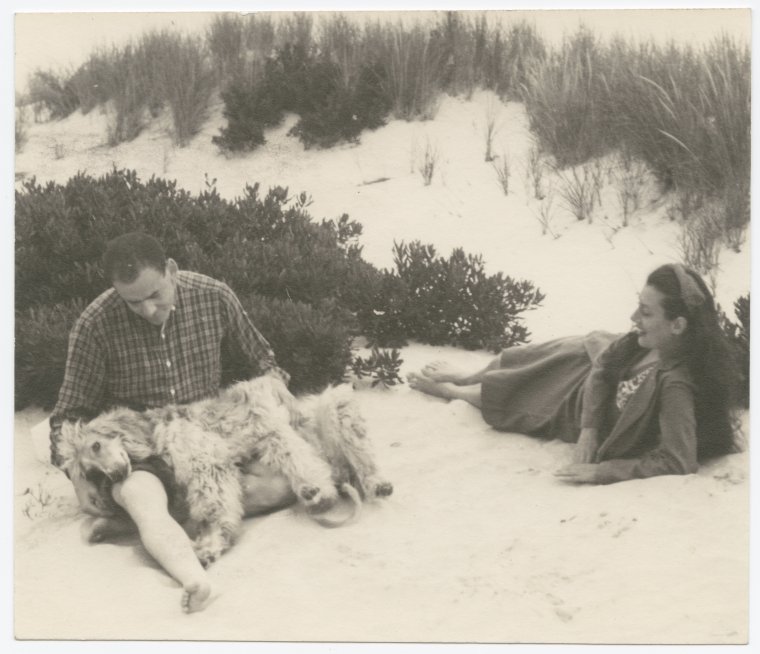
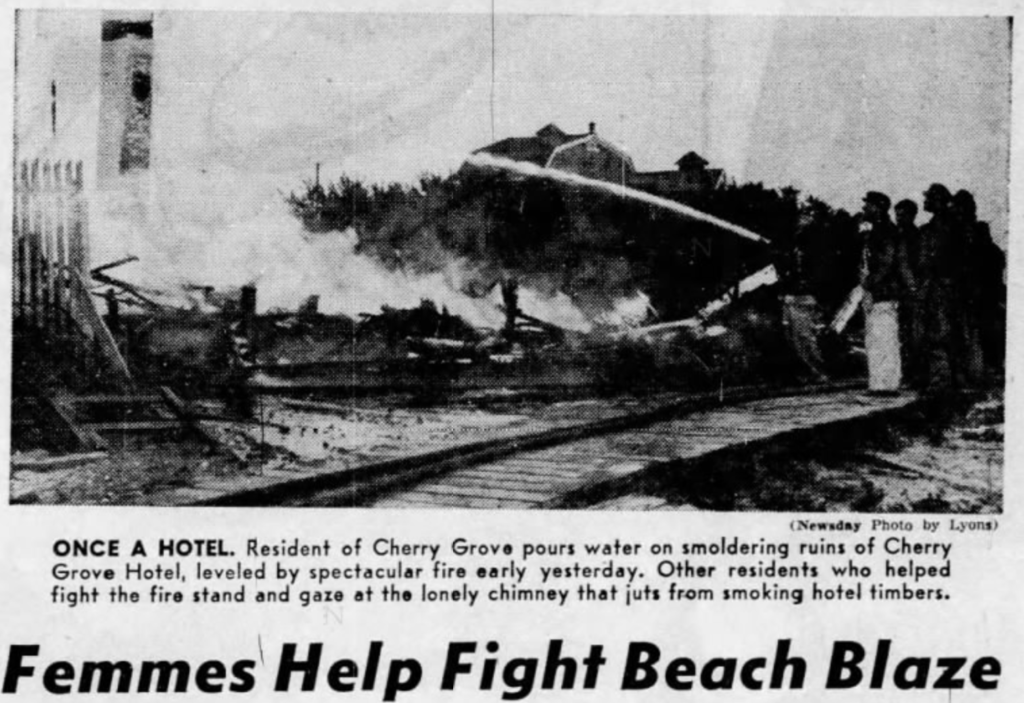
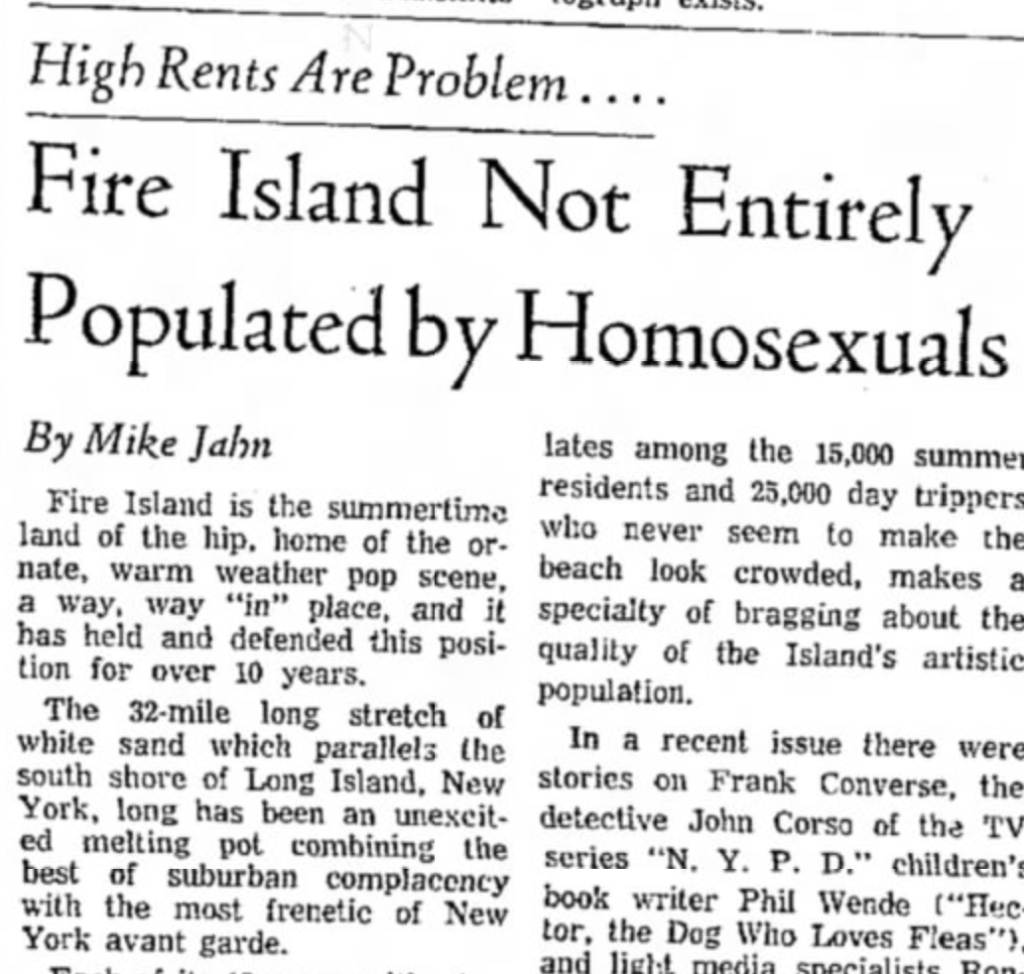
Patricia Fitzgerald & Kay Guinness, Cherry Grove Beach, September 1952Lincoln Kirstein and Fidelma Cadmus with dog on Fire Island, 1952. New York Public LibraryNewsday, September 28, 1956The Emporia Gazette, June 1968Then Tribune from Scranton, July 1968
Video about the exhibition from Safe/Haven curator Brian Clark:
https://www.youtube.com/watch?v=HHdROkyMlZ8&t=65s
Photographs of Tom and Greg in Cherry Grove (Photos courtesy Greg Young):
Behold — the Belvedere!
FURTHER LISTENING:
After listening to this show on the history of Fire Island check out these shows with similar themes and historical moments:
The Bowery Boys: New York City History podcast is brought to you …. by you!
We are now producing a new Bowery Boys podcast every other week. We’re also looking to improve and expand the show in other ways — publishing, social media, live events and other forms of media. But we can only do this with your help!
We are now a creator on Patreon, a patronage platform where you can support your favorite content creators.
Please visit our page on Patreon and watch a short video of us recording the show and talking about our expansion plans. If you’d like to help out, there are six different pledge levels. Check them out and consider being a sponsor.
We greatly appreciate our listeners and readers and thank you for joining us on this journey so far.
PODCASTThe history of the Empire State Building revealed!
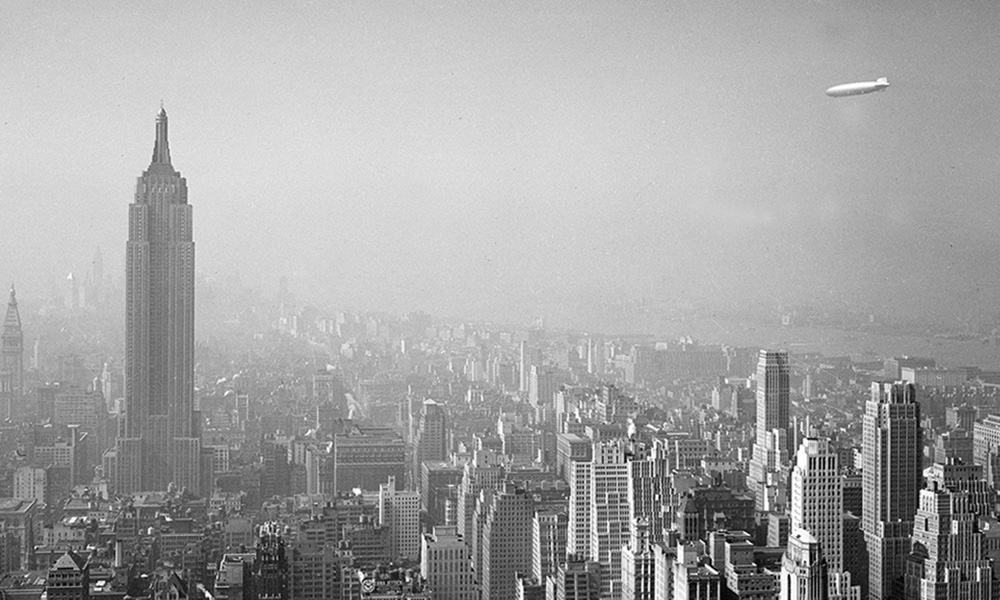
Start spreading the news …. the Bowery Boys are finally going to the Empire State Building!
New York City’s defining architectural icon is greatly misunderstood by many New Yorkers who consider its appeal relegated to tourists and real estate titans.
But this powerful and impressive symbol to American construction has a great many secrets among its 102 (or is that 103?) floors.
The Empire State Building project was announced in 1929 by former New York governor Al Smith. The group of wealthy investors he fronted were clear in associating the building with his image (the Empire State itself), and Smith was even there at the demolition of the building it would replace — the Waldorf-Astoria Hotel.
A few weeks after the announcement, however, the stock market crashed.
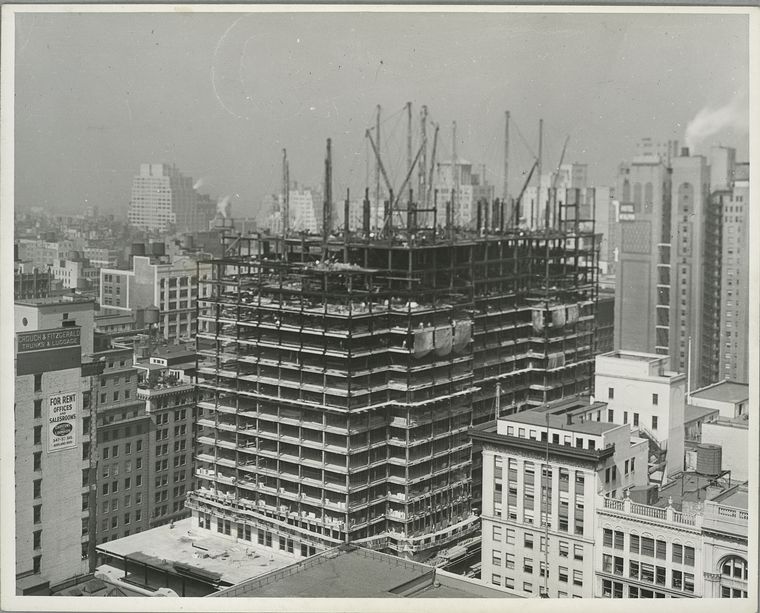
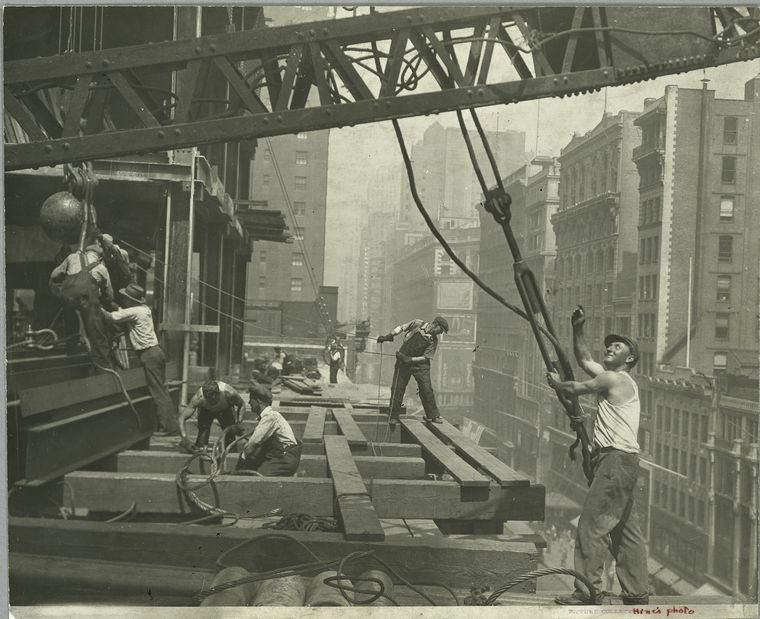
In this podcast, we look at how this magnificent skyscraper was built with incredible speed and efficiency, to tower over a city entering the Great Depression. It quickly became a beacon of hope for many — a symbol of American skill and the embodiment of the New York City spirit.
Tourists would indeed flock to it, enamored of the extraordinary views it offered for the very first time. (Most of its early visitors had never been in an airplane.) It would eventually become an object of great value and the subject of tabloid headlines — many featuring the current President of the United States — but it would never, ever lose its luster.
In fact, that luster, over the years, would become very well lit…..
The Bowery Boys: New York City History podcast is brought to you …. by you!
We are now producing a new Bowery Boys podcast every week. We’re also looking to improve the show in other ways and expand in other ways as well — through publishing, social media, live events and other forms of media. But we can only do this with your help!
We are now a member of Patreon, a patronage platform where you can support your favorite content creators for as little as a $1 a month.
Please visitour page on Patreon and watch a short video of us recording the show and talking about our expansion plans. If you’d like to help out, there are five different pledge levels (and with clever names too — Mannahatta, New Amsterdam, Five Points, Gilded Age, Jazz Age and Empire State). Check them out and consider being a sponsor.
We greatly appreciate our listeners and readers and thank you for joining us on this journey so far.
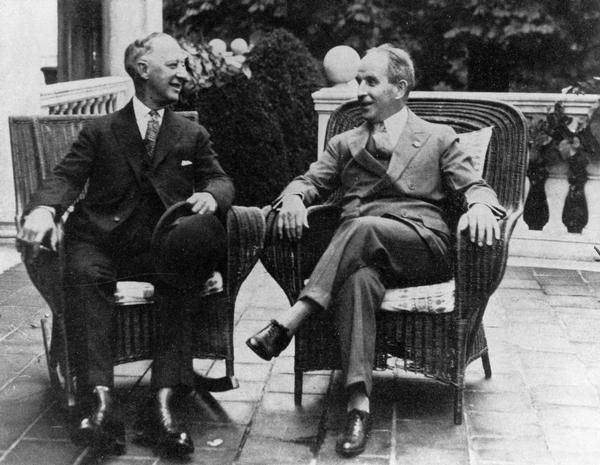
Al Smith, 1928 Democratic nominee for President of the United States, and John J. Raskob, chairman of the Democratic National Committee, were the two men most responsible for the idea of the Empire State Building.
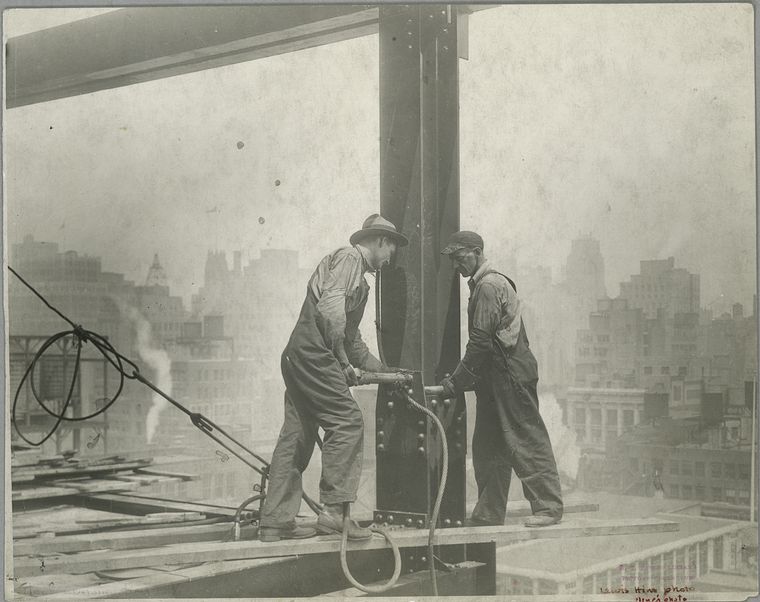
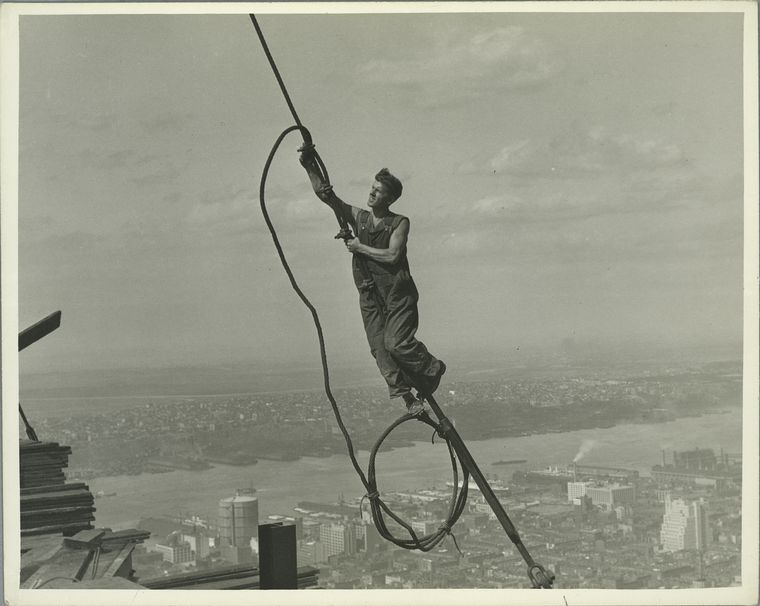
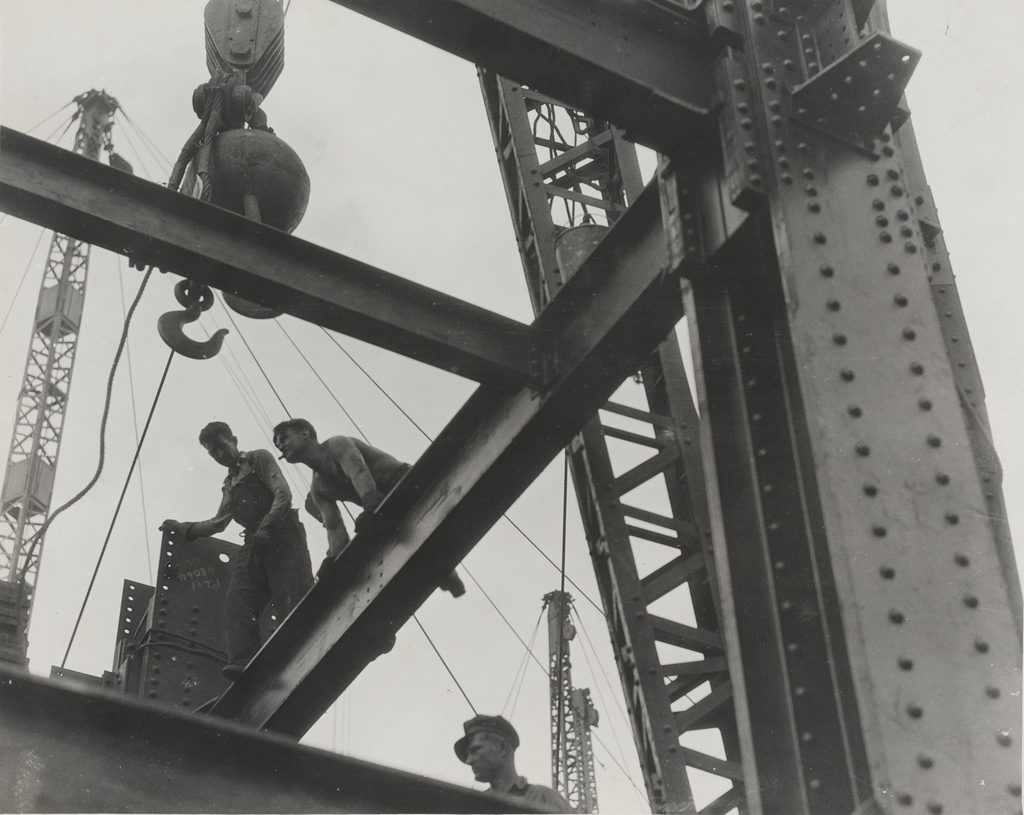
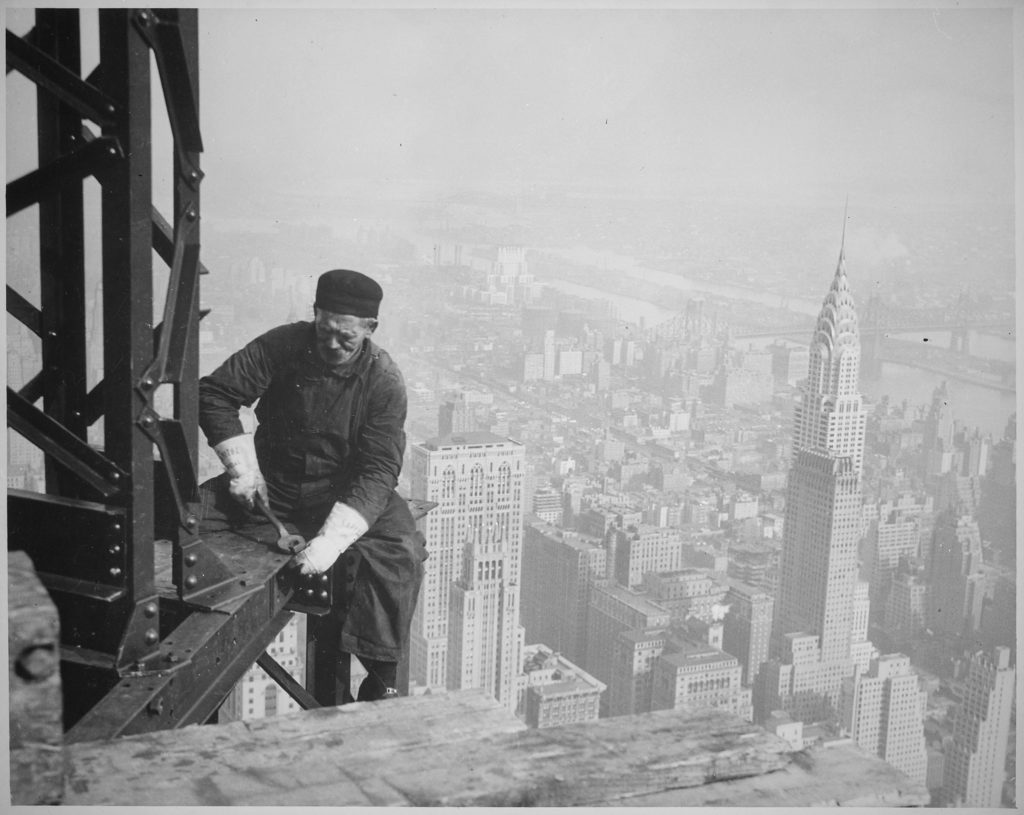
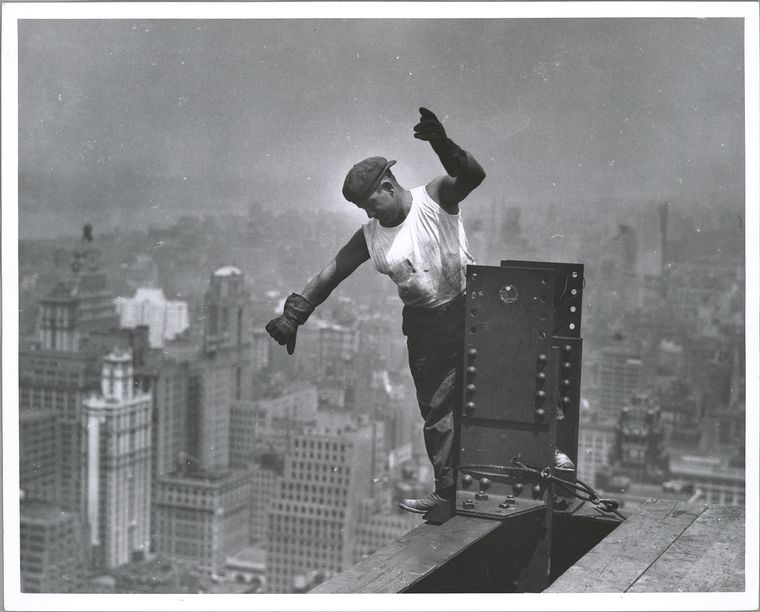
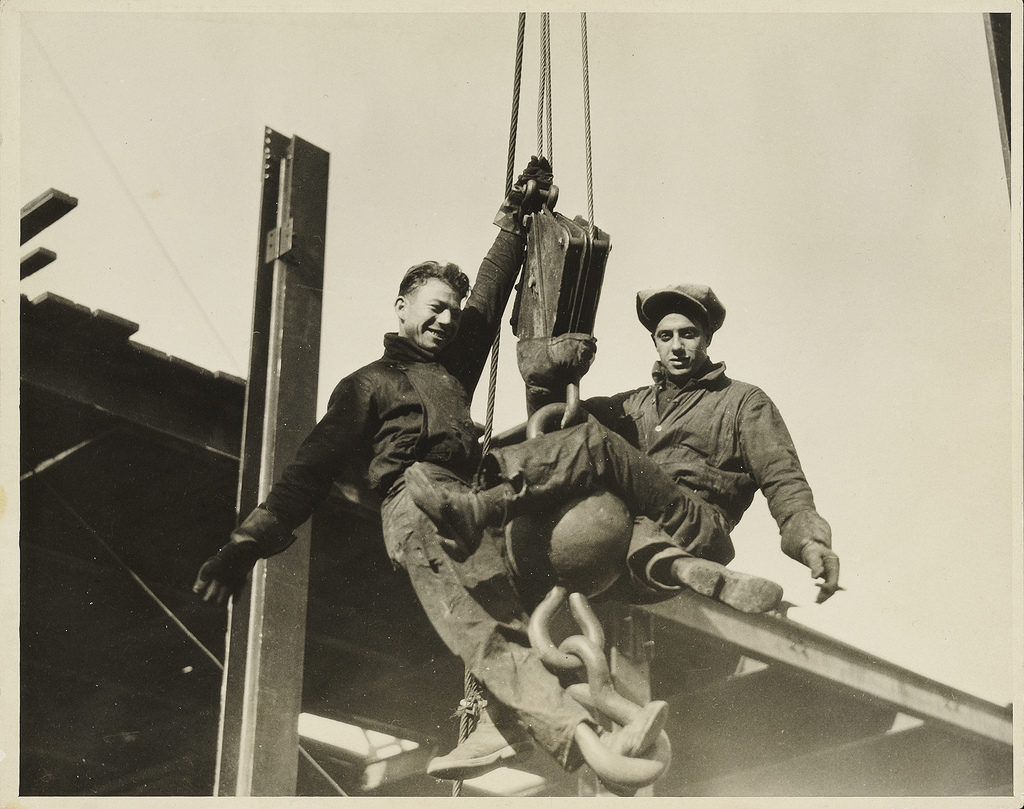
From the New York Public Library (except here noted): Photographs taken by Lewis Hine of the construction of the Empire State Building:
NYPL
NYPL
Preus Museum
U.S. National Archives
Preus Museum
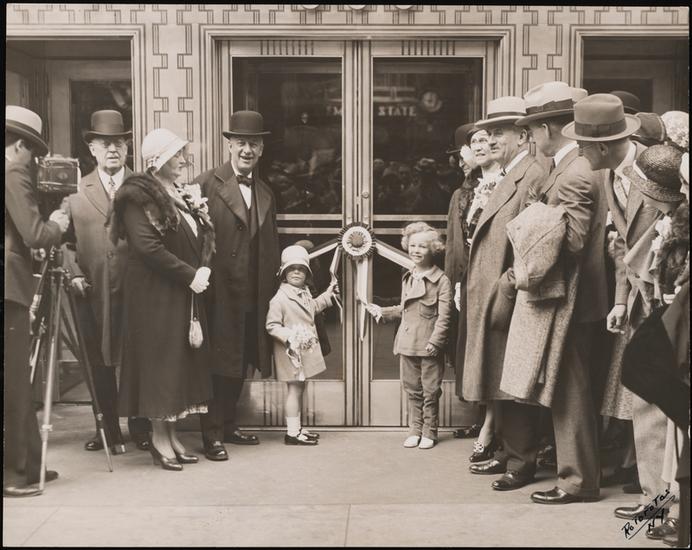
Al Smith — with his children — at the opening ceremony of the Empire State Building.
MCNY
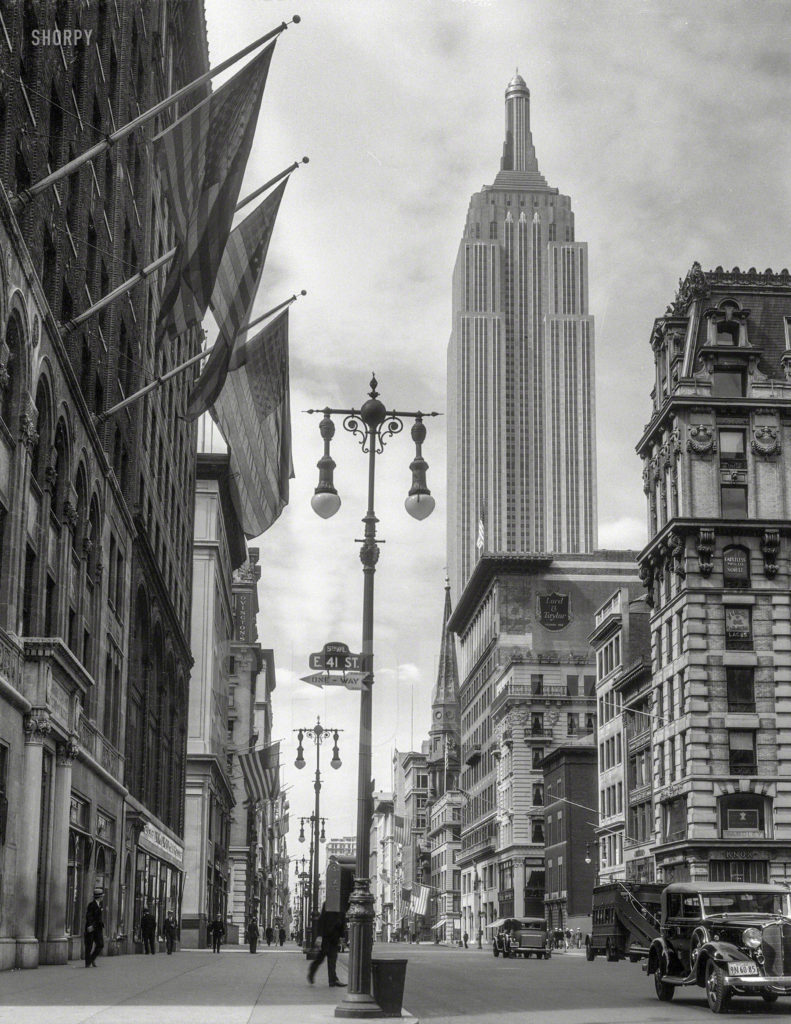
The Empire State in 1933, looking like a futuristic rocket standing over a city of Beaux-Arts architecture.
Library of Congress, cleaned up image Shorpy
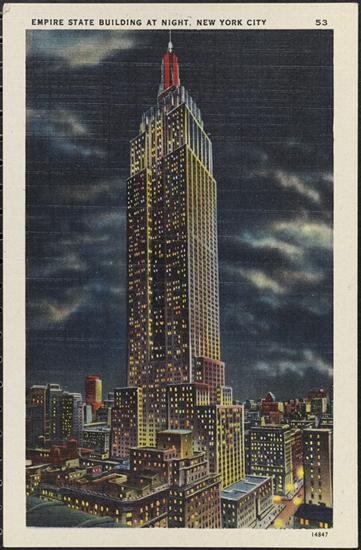
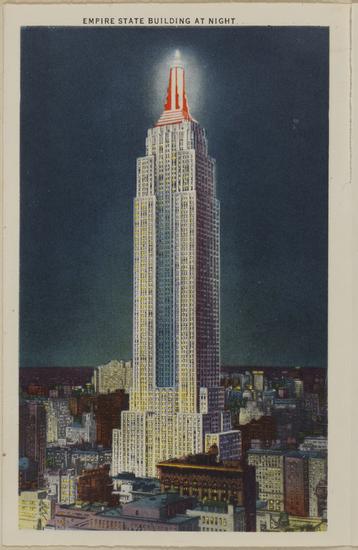
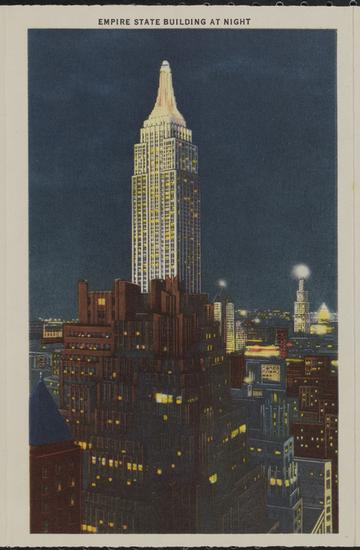
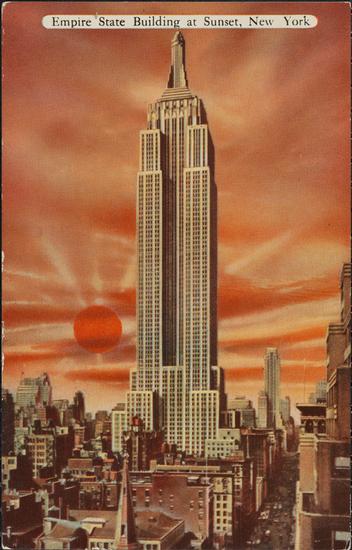
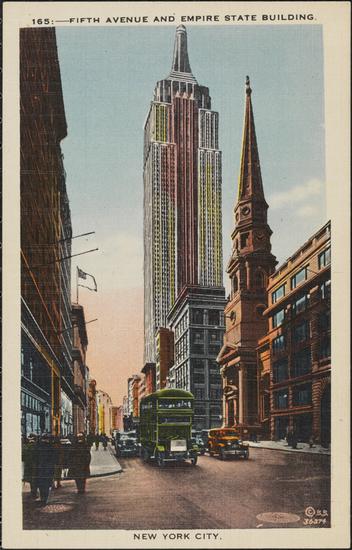
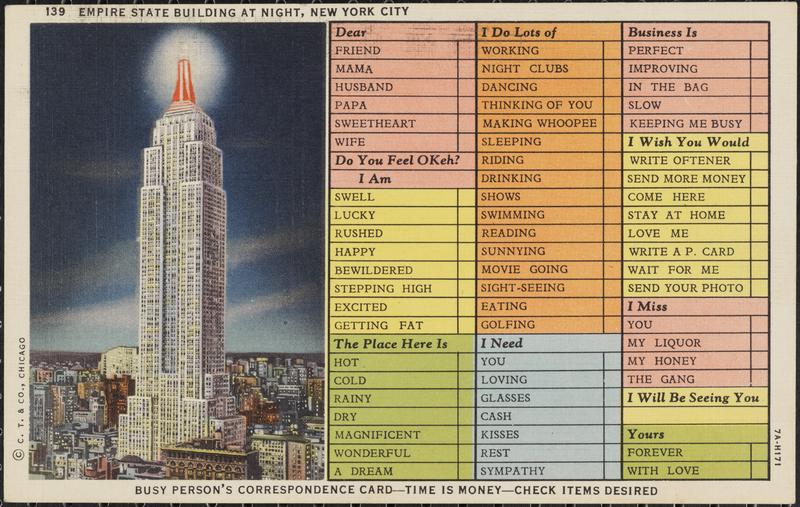
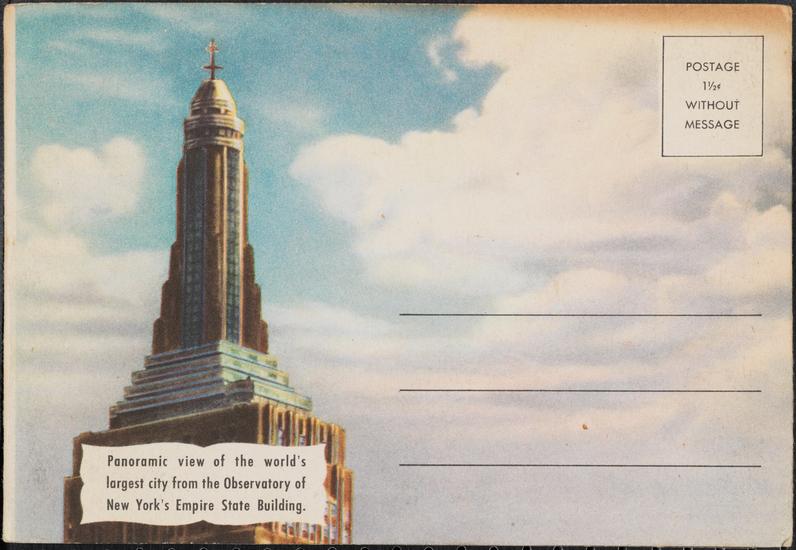
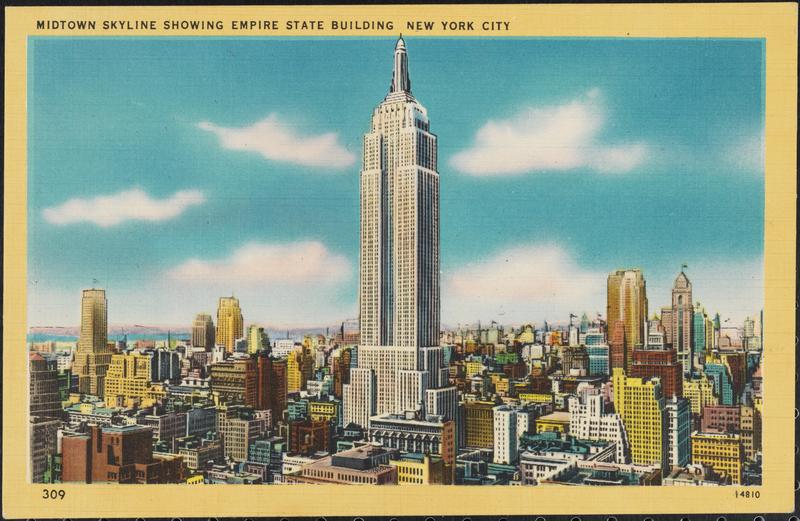
The Empire State Building — in postcards! (From the collection at the Museum of the City of New York.) You could buy these in the gift shop, available for purchase for the first day the building opened.
MCNY
MCNY
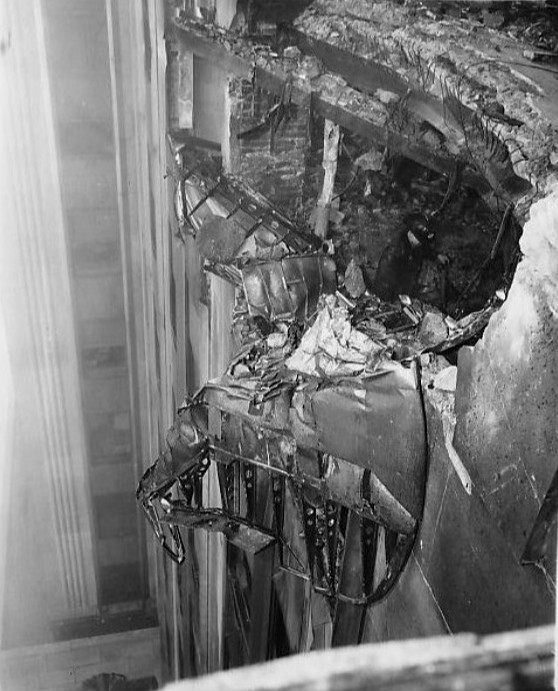
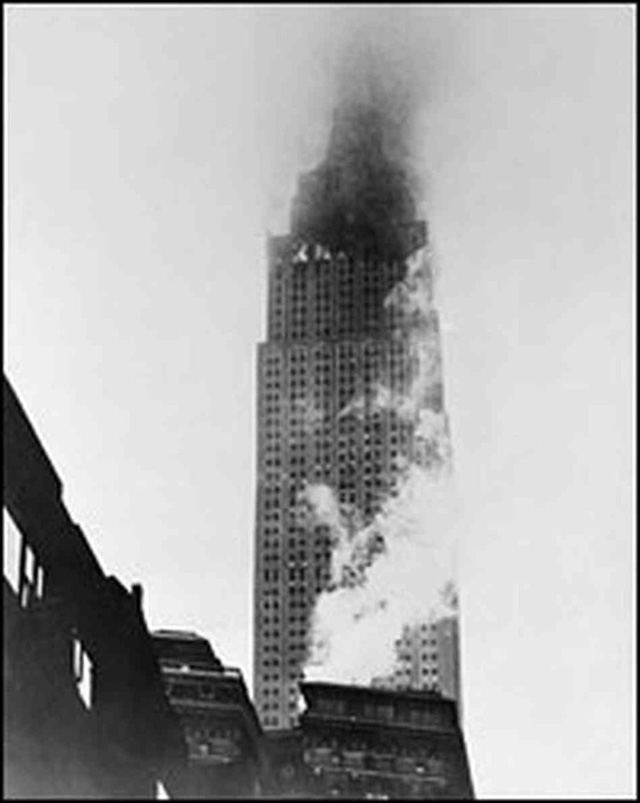
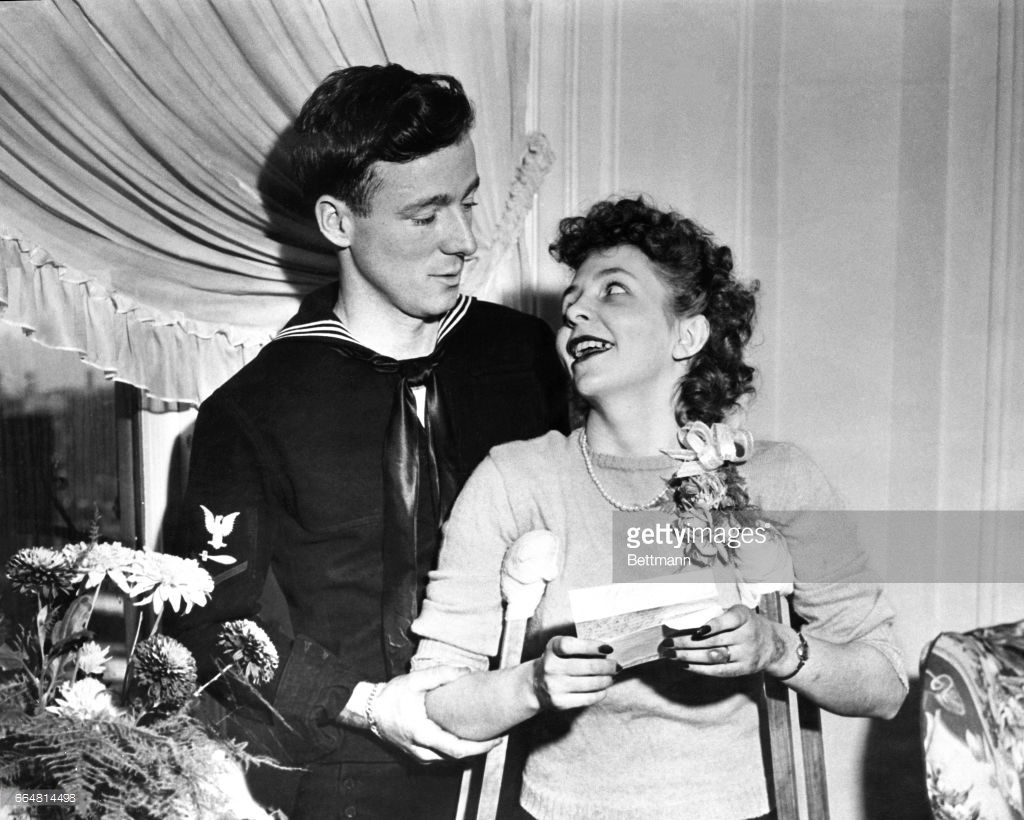
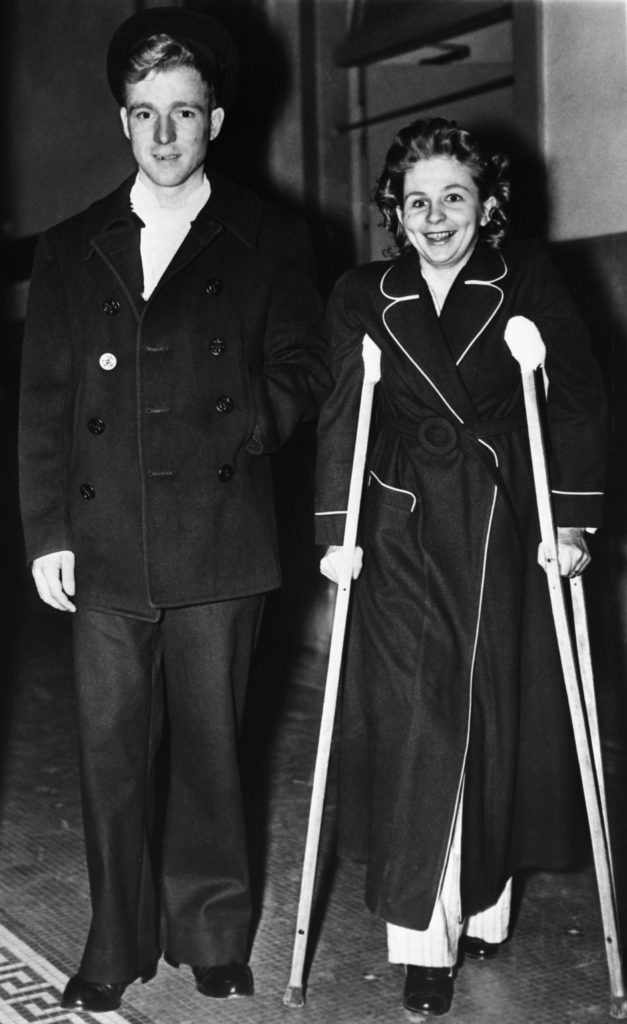
The tragic plane crash into the Empire State Building on July 28, 1945 caused 14 deaths. Injured elevator operator Betty Lou Oliver managed to survive a terrible plunge of 75 stories when the elevator she was been transported in plummeted.
Betty Lou Oliver on crutches, being consoled by her Navy husband Oscar Oliver.
The Empire State Building on film:
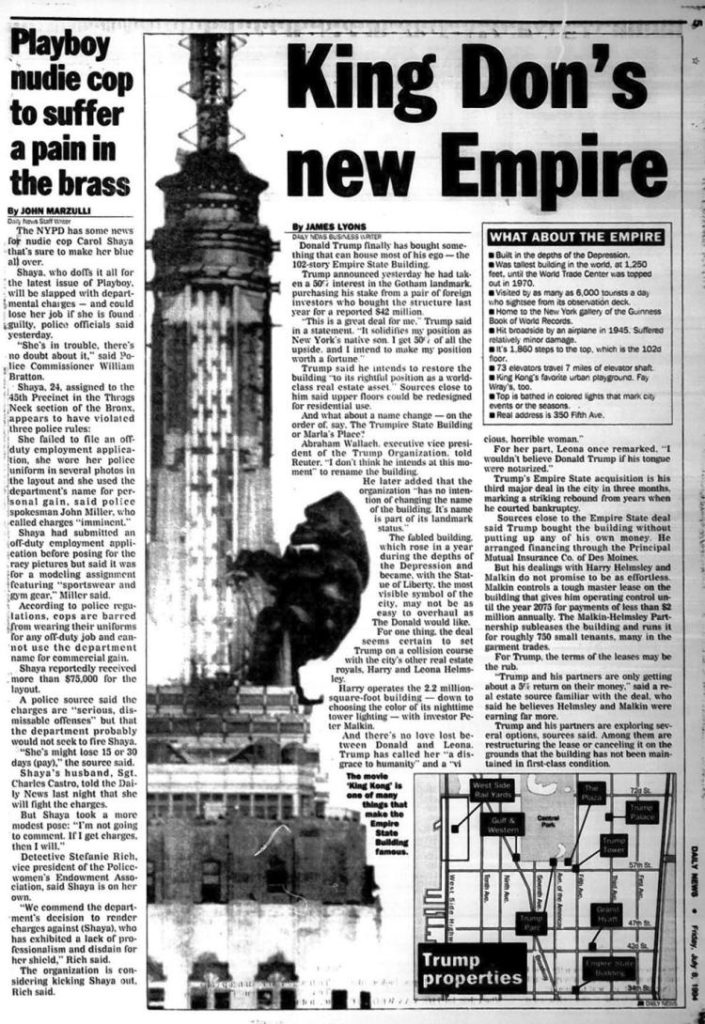
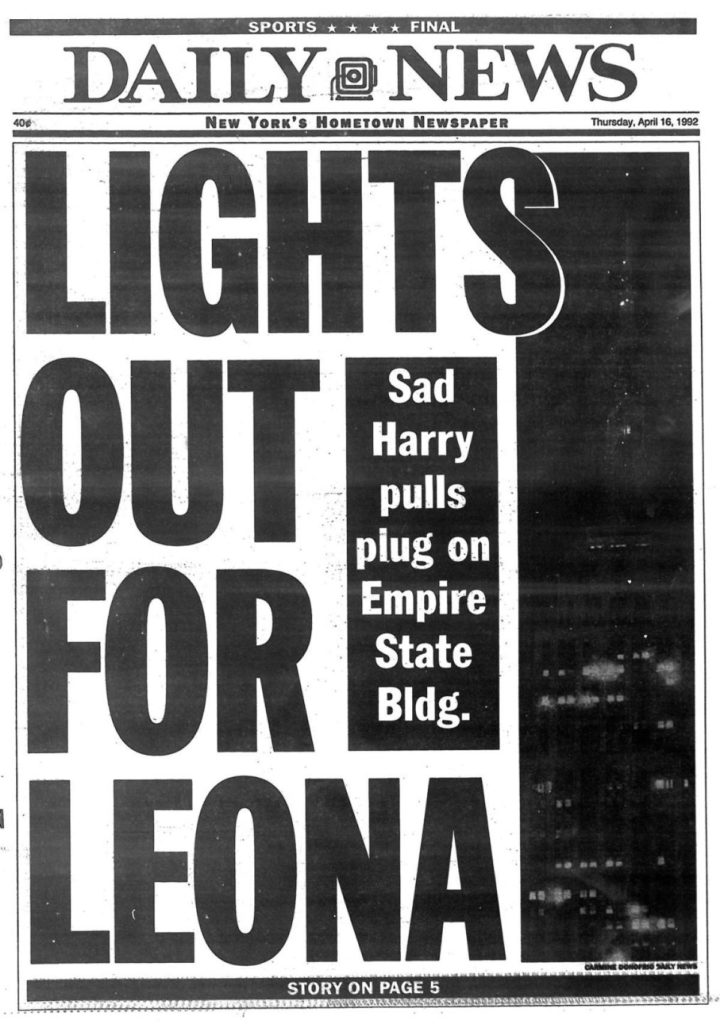
Some amusing tabloid headlines from the 1990s featuring Donald Trump and Leona Helmsley
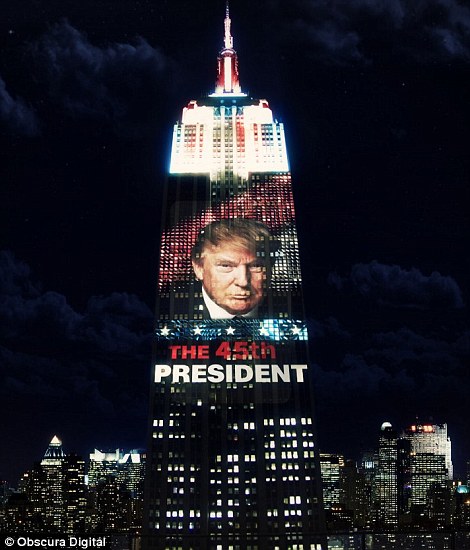
The Empire State Building projected the winner of the 2016 presidential election — thanks to its state-of-the-art lighting technology
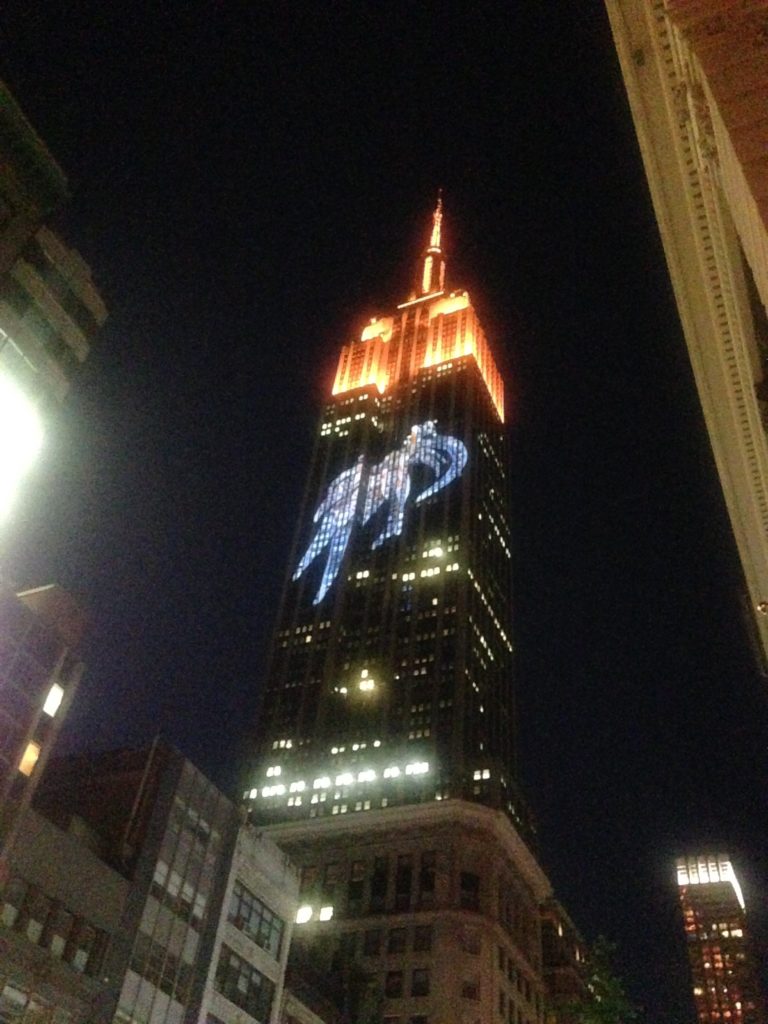
More dazzling were the endangered species projected upon it during the summer of 2015:
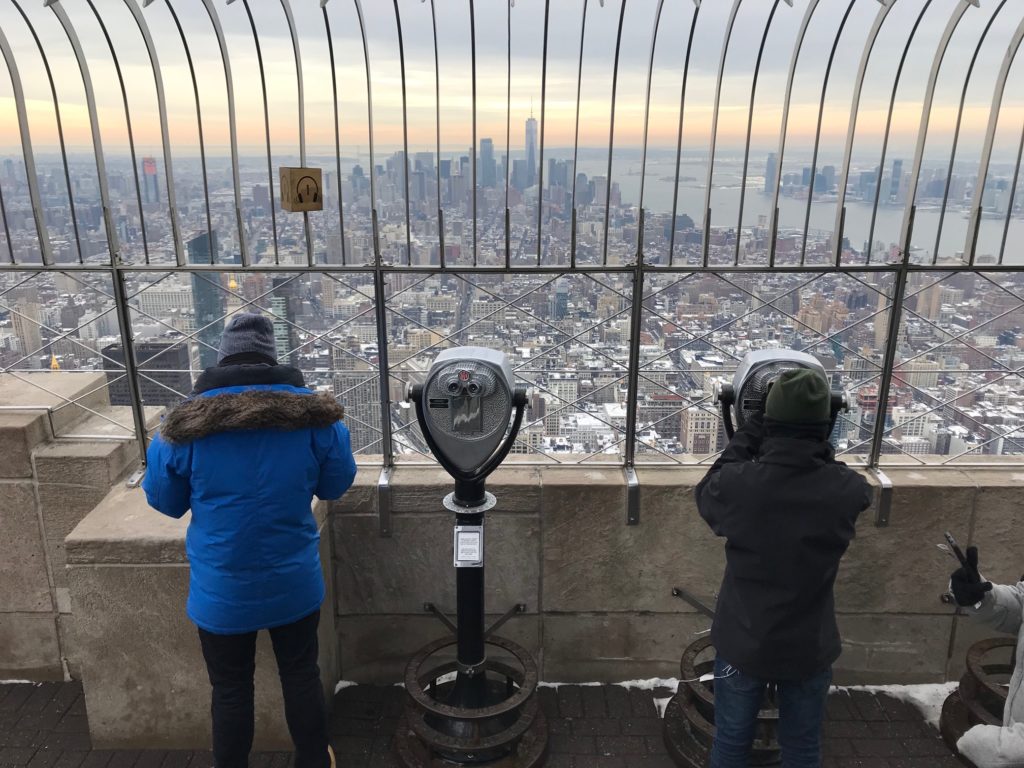
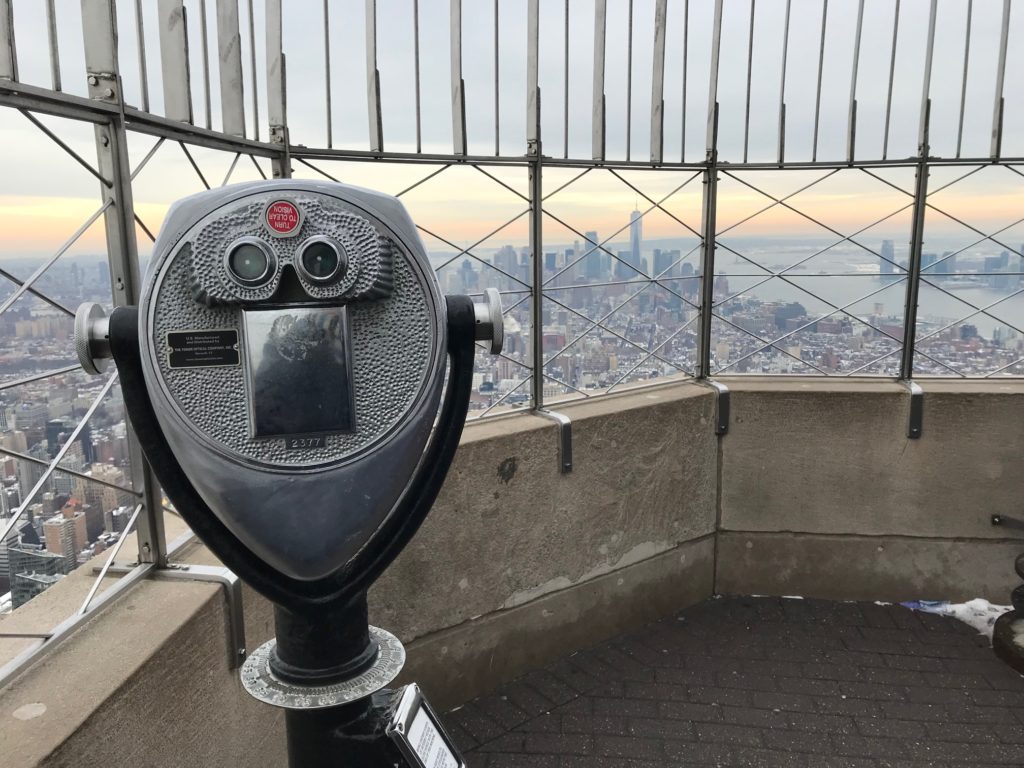
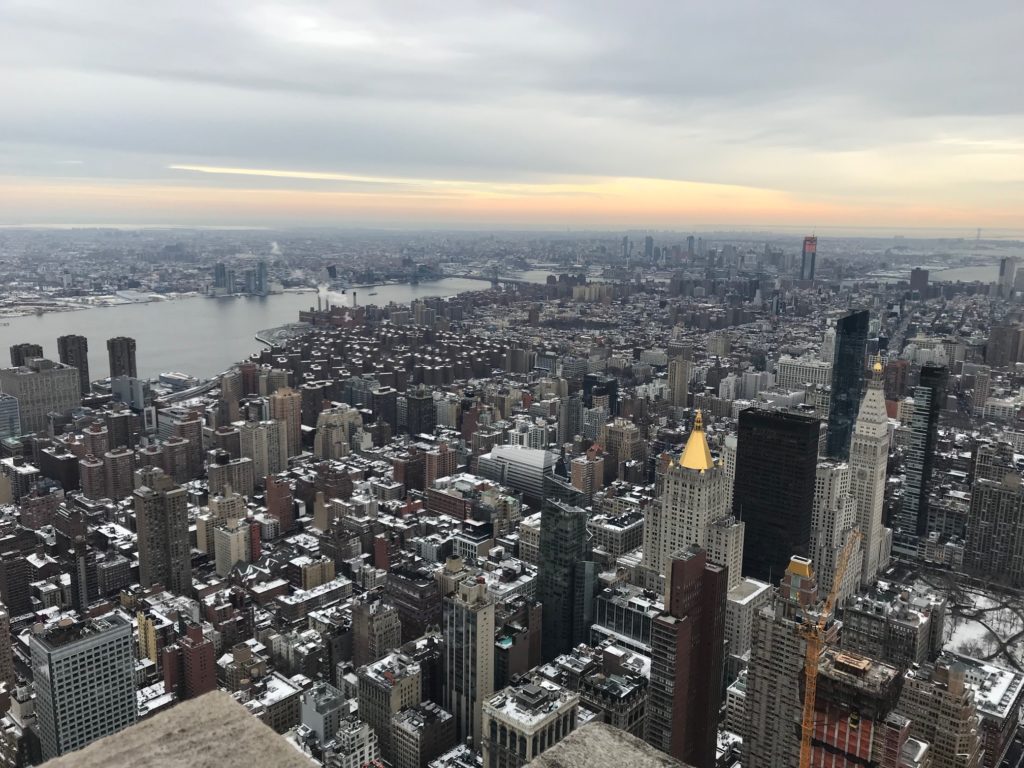
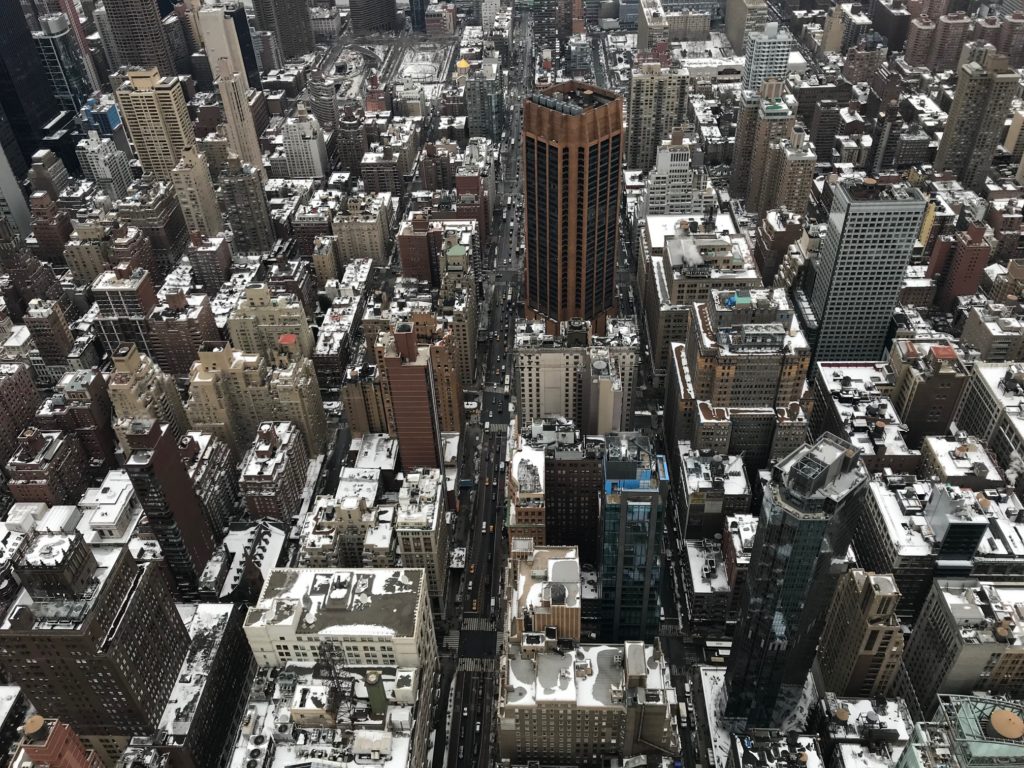
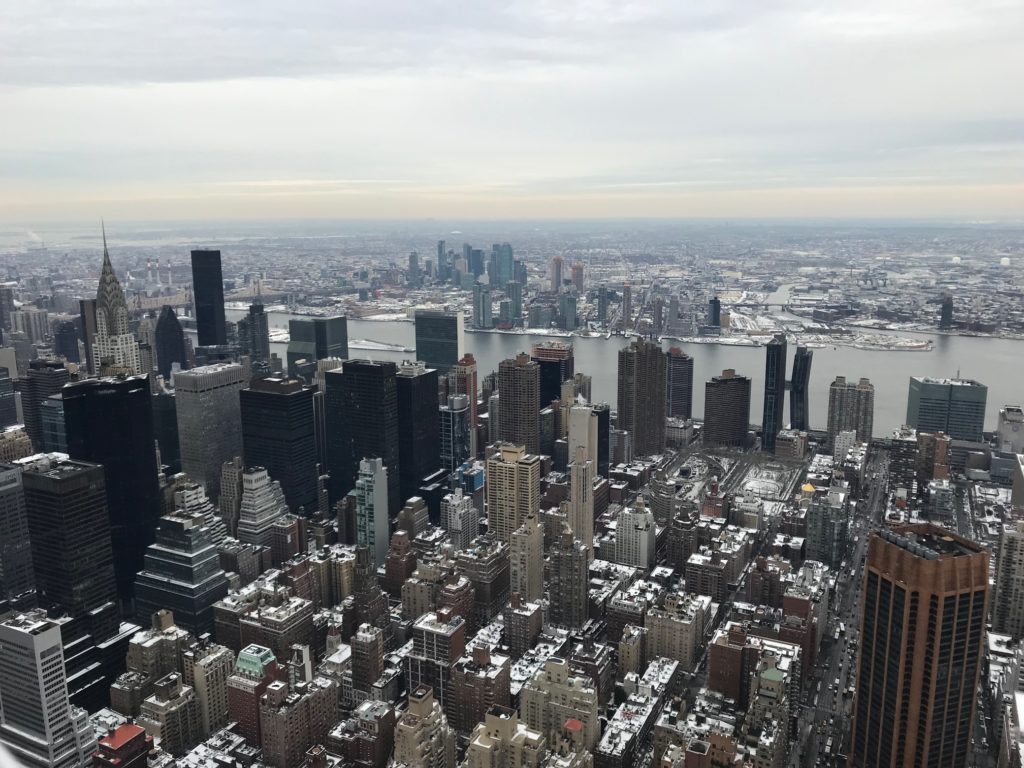
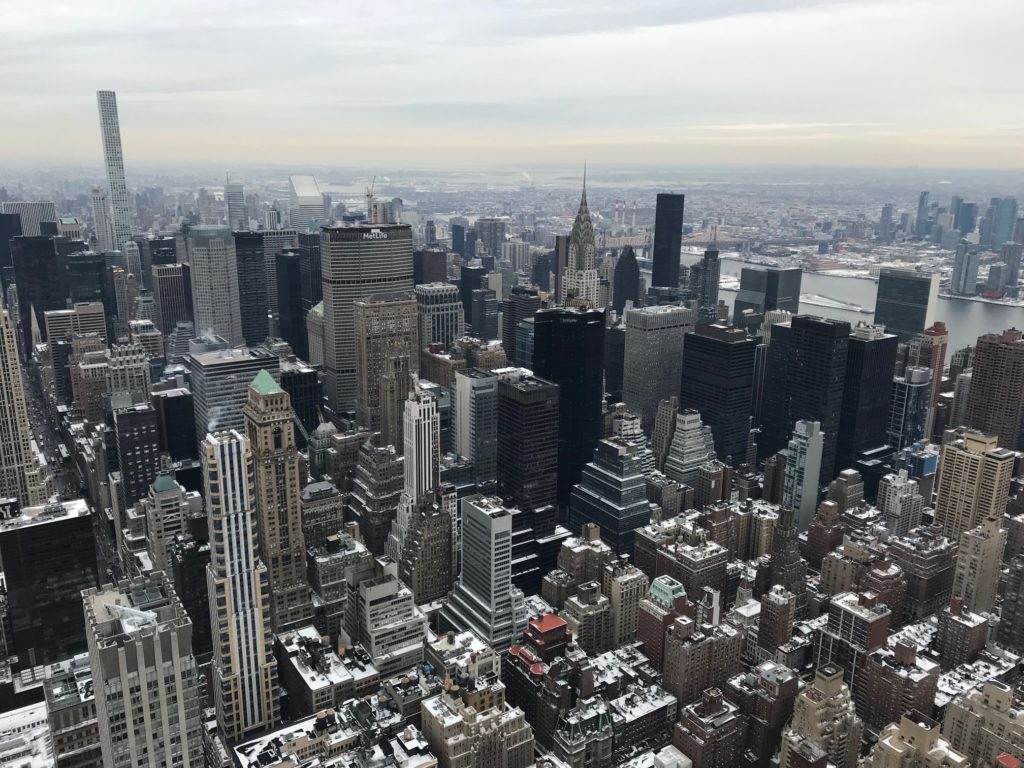
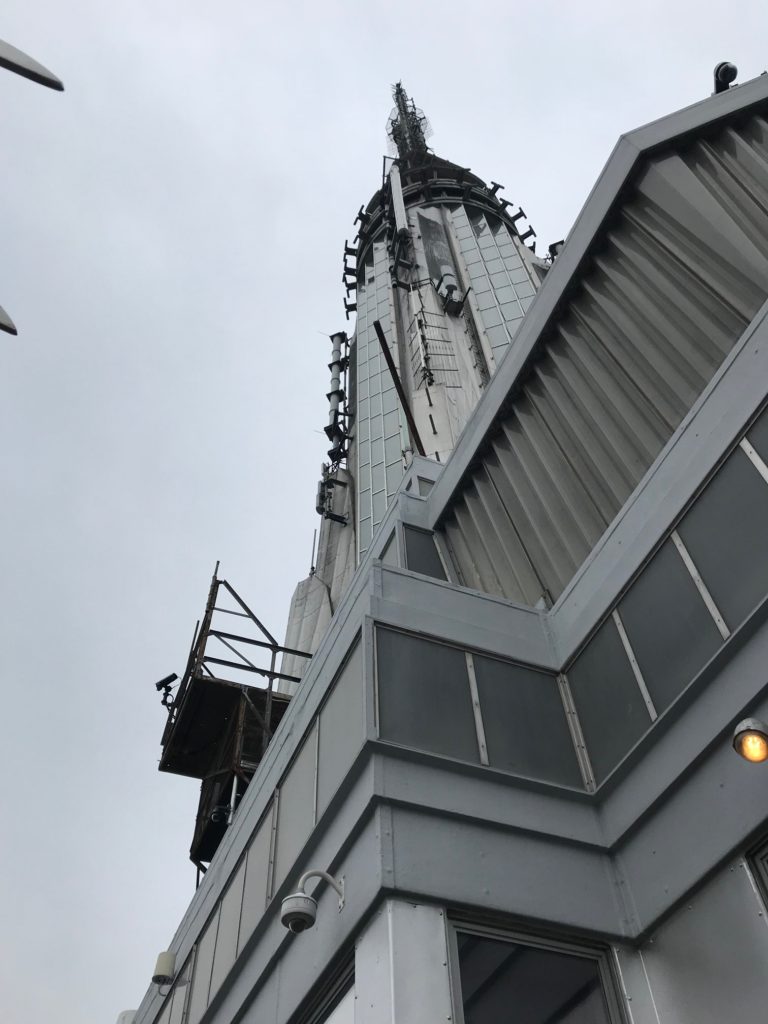
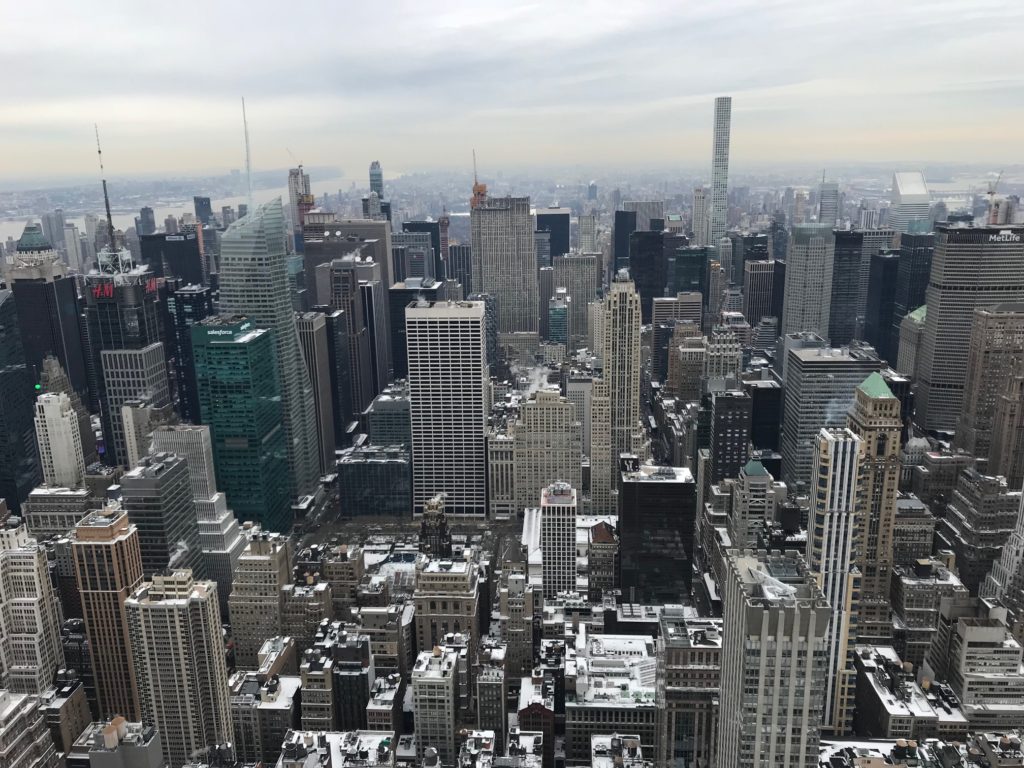
Some additional images from this week’s visit to the ESB:
The Dutch were sold on the island’s placement in the harbor at the mouth of the mighty Hudson River, making it a convenient waypoint for explorers and traders. Soon its ports had built the foundation for New York’s and later America’s financial sector.
The city’s most influential nineteenth-century businessman, Cornelius Vanderbilt, got his feet wet in business first with ferries and steamships before building his mighty railroad empire. Manhattan is surrounded by water, and yet early New York would almost be undone due to a lack of it.
Traces of the city’s centuries-long quest for clean drinking water can be found from the island’s tip to its top from the site of spring water wells down in Bowling Green to the relics of old water systems..
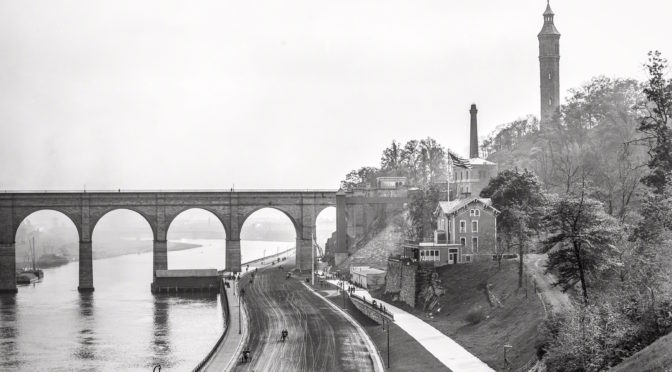
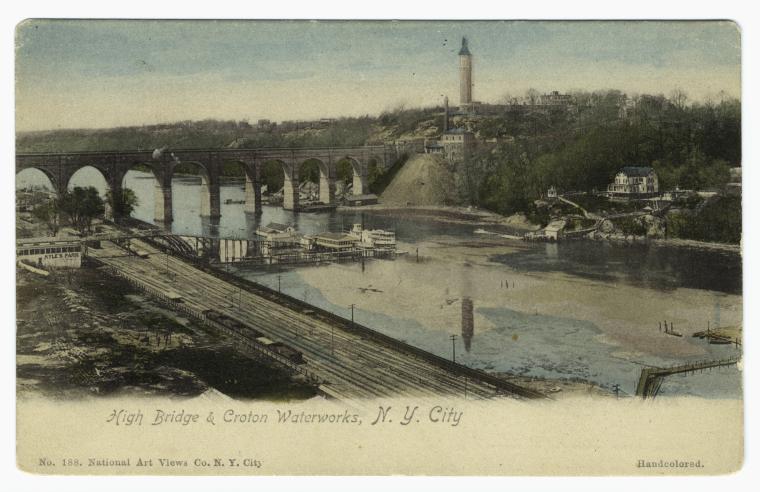
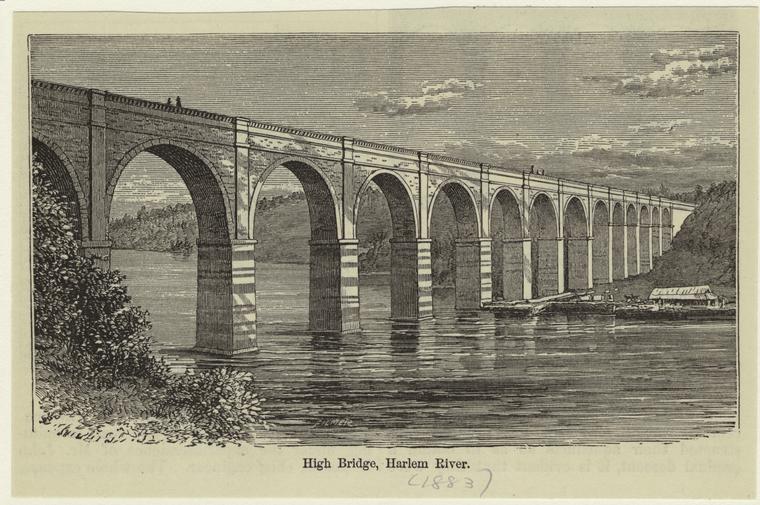
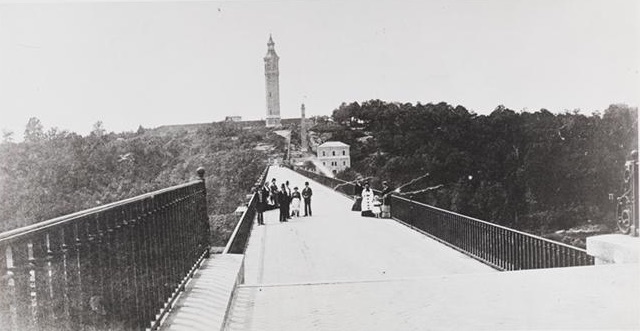
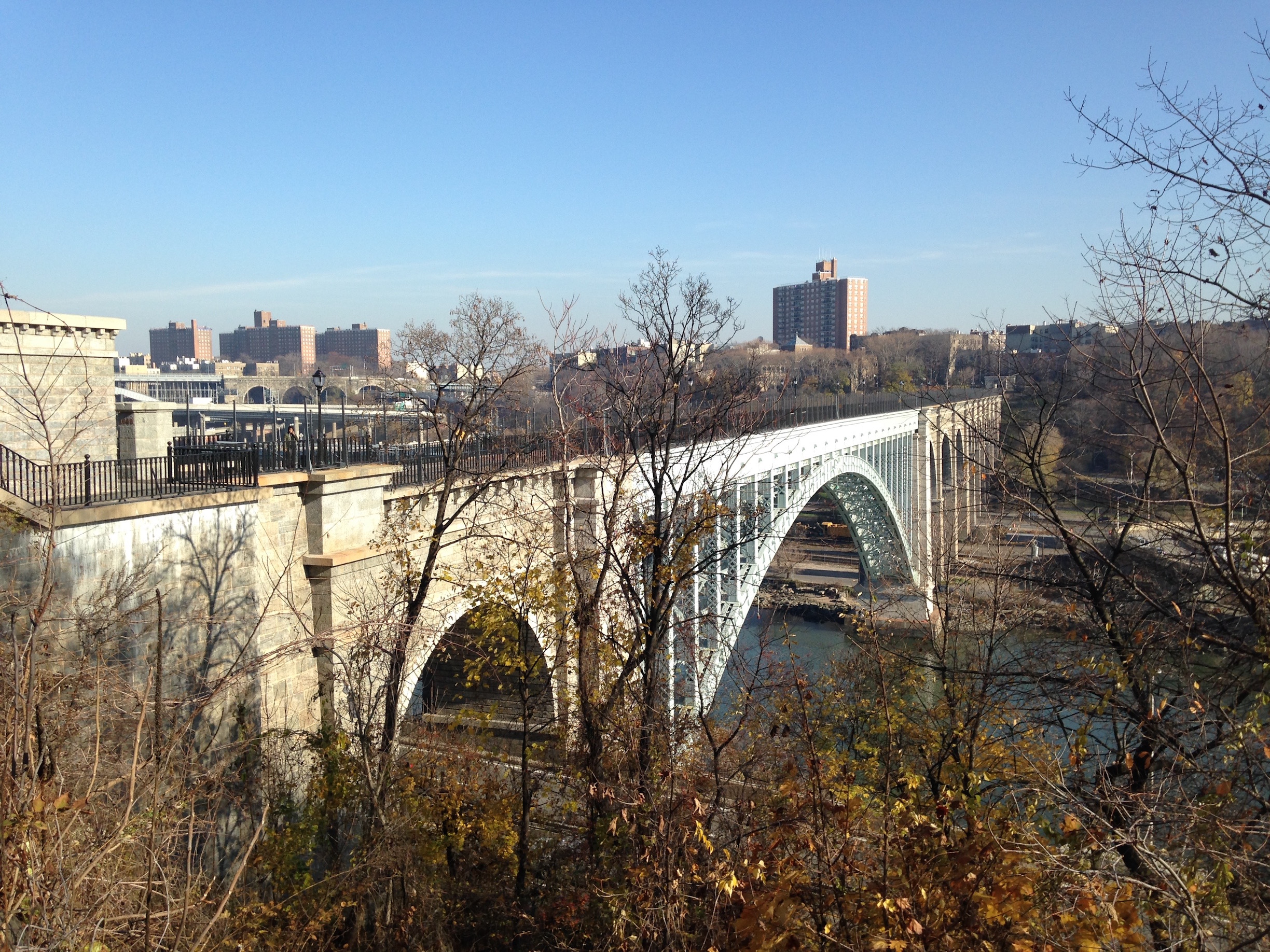
But no monument to freshwater dominates quite like the High Bridge, the Romanesque wonder linking Manhattan to the Bronx over the Harlem River.
Courtesy NYPL
For many decades this majestic artifact, seemingly plucked from the hills of ancient Gaul, was a vital link in that great engineering triumph: the Croton Aqueduct.
With the dense river traffic below and the icky-brackish composition of the surrounding rivers, early New Yorkers had to look beyond their waterways for drinking water. They dug cisterns and hunted down springs, but these couldn’t support the growing city.
By the late eighteenth century, Collect Pond, a so-called freshwater source located northeast of today’s City Hall, had become polluted by the industries that surrounded it, and valiant efforts to bring water from other sources during the Colonial era were dampened by debt and war.
Courtesy MCNY
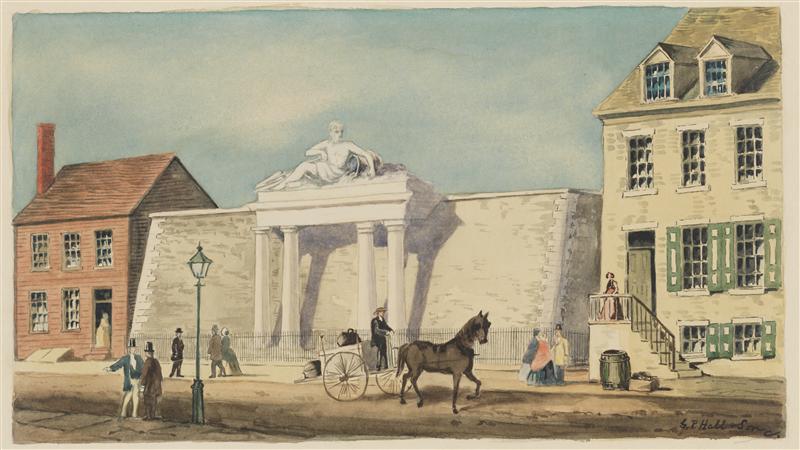
In 1799 future vice president/murderer Aaron Burr hatched a grand business plan to construct a reservoir system that would distribute water via an elaborate network of hollowed-out logs. (Above: The reservoir and grandest structure of the Manhattan Company system, pictured here in 1825.)
Unfortunately for parched New Yorkers, he ended up using most of the funding for his company to establish a successful bank instead. More than a century and a half later, Manhattan Company merged with Chase National Bank to become Chase Manhattan, known today simply as Chase, one of the largest banks in the world. But his water distribution efforts ended up being woefully inadequate, and left Manhattan high and dry.
NYPL
By the 1830s the city was on the verge of a health crisis, as putrid water, poor sanitation, and all-around squalid living conditions culminated in a series of health epidemics and breakouts—which only heightened the urgent need for clean water.
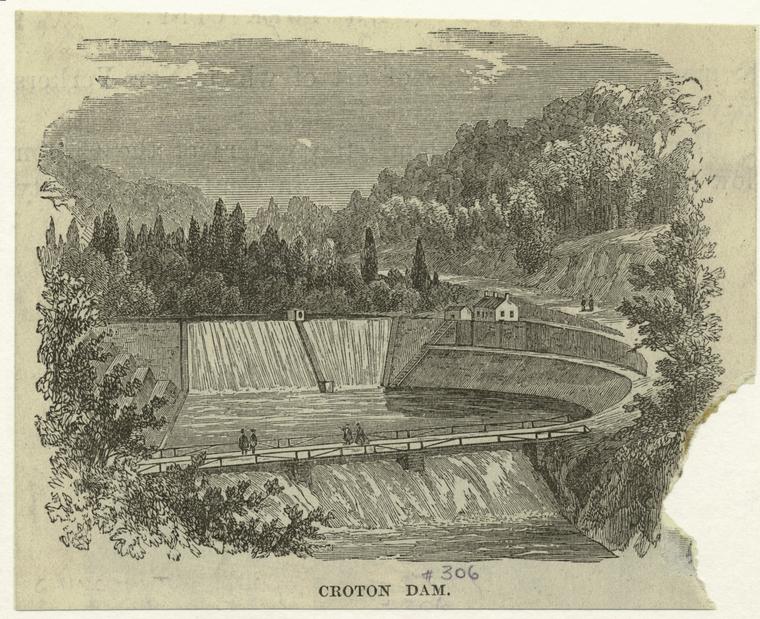
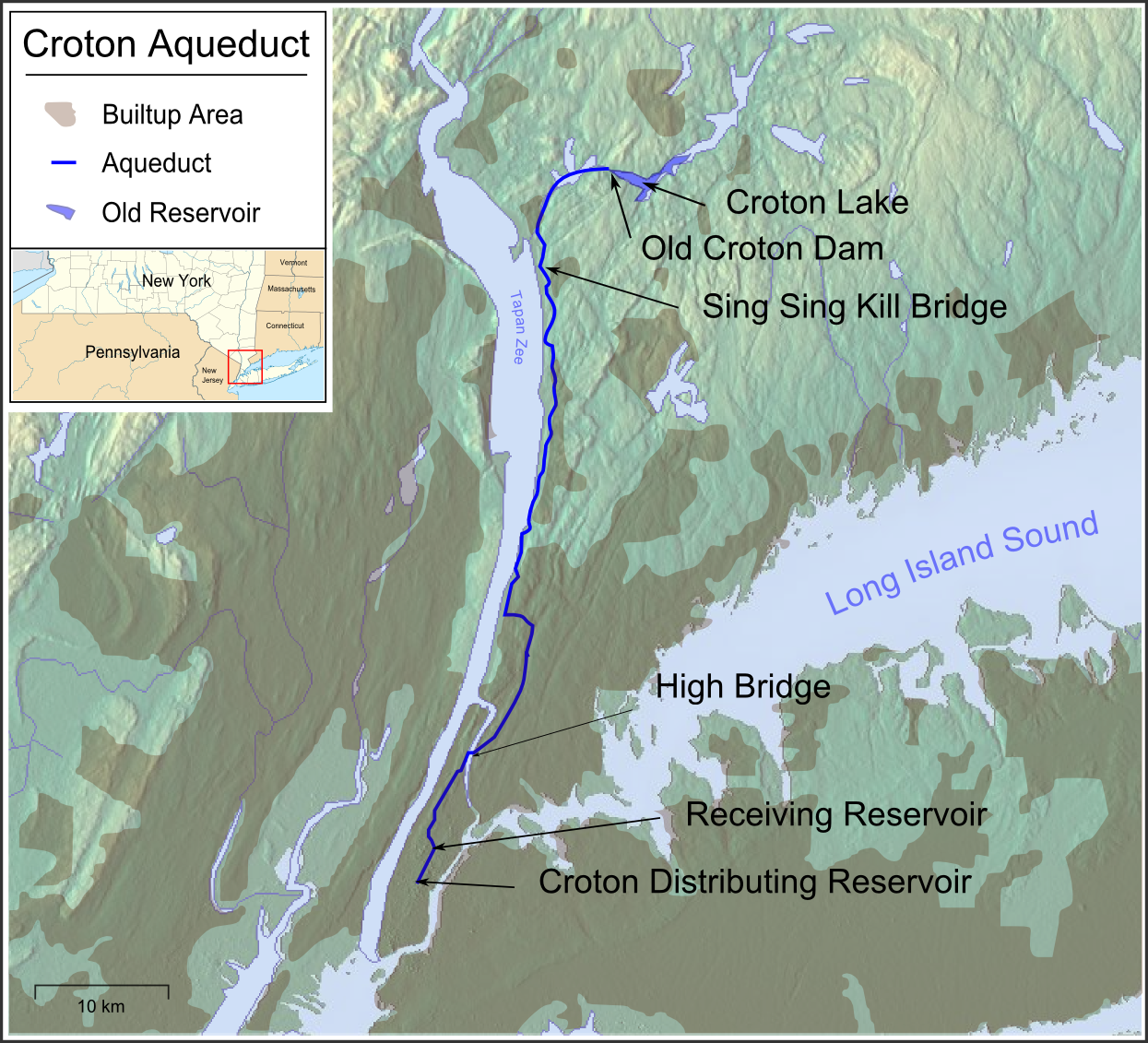
In April 1835 New Yorkers were so desperate for a freshwater supply that they voted in favor of a seemingly impossible plan: a pipeline that would bring the pure waters of the Croton River, forty miles north in Westchester County, down to city residents. Only underscoring the emergency, eight months later the Great Fire of 1835 would ravage the city. The aqueduct couldn’t be constructed quickly enough.
Wikipedia
The elaborate project employed thousands of mostly Irish immigrants for many years (1837-1842). They constructed a sophisticated system of iron piping and brick masonry, which drew upon gravity to run the water through pipes and over arches, across the lush terrain of Westchester, and through the small towns that would later form the nucleus of the Bronx.
But how would the water get into the island of Manhattan? The aqueduct’s architects would need to find a way to keep it flowing across the Harlem River. Drilling technologies were not advanced enough in the 1840s to allow for a tunnel, so planners thought bigger — and higher.
NYPL
The High Bridge, at an elegant 1,450 feet long, is the oldest surviving bridge in New York. Completed in 1848, it not only brought the Croton water into the city, but it also made one heck of a statement noticed around the world.
New Yorkers had pulled off a technological miracle, borrowing engineering and architecture principles not attempted, on this scale, since the glory days of the Roman Empire. They were changing the course of one river forty-one miles away and sending its waters high above another.
“Water! Water!” wrote diarist and former mayor Philip Hone on October 12, 1842, “is the universal note which is sounded through every part of the city, and infuses joy and exultation into the masses.”
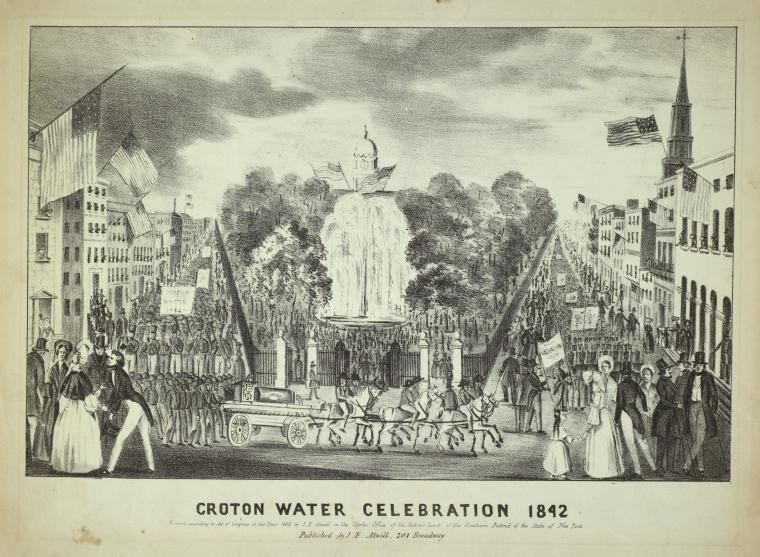
When the water was finally turned on — flowing on October 14, 1842 — the city threw a bash bigger than any since the expulsion of the British in 1783.
From there it moved through the city, eventually to City Hall Park, where good, clean water shot high into the air and down into the City Hall fountain, to the delight of the public. Imagine— enough water to waste in a fountain!
(At the time of the celebration, the High Bridge had not yet been completed, so Croton water crossed a temporary low bridge. The lofty span replaced the modest one a few years later.)
Below: New Yorkers gathering at City Hall in celebration at the completion of the Croton water system. For more information, check out our podcast on the construction of the Croton Aqueduct
NYPL
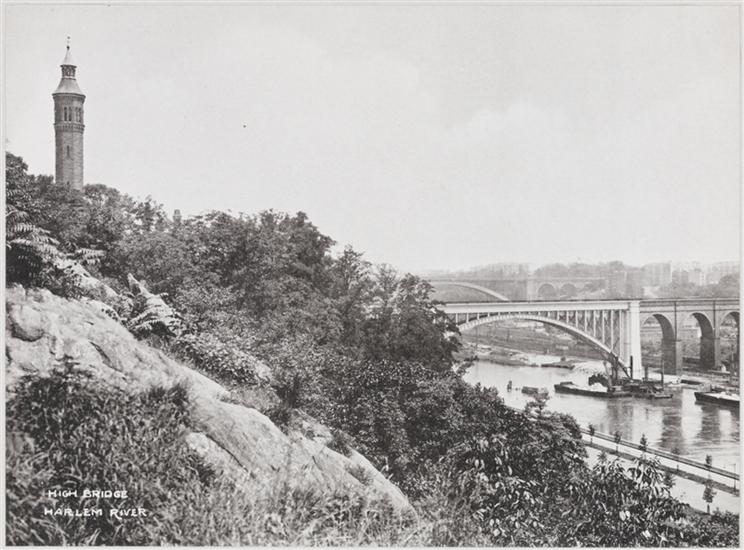
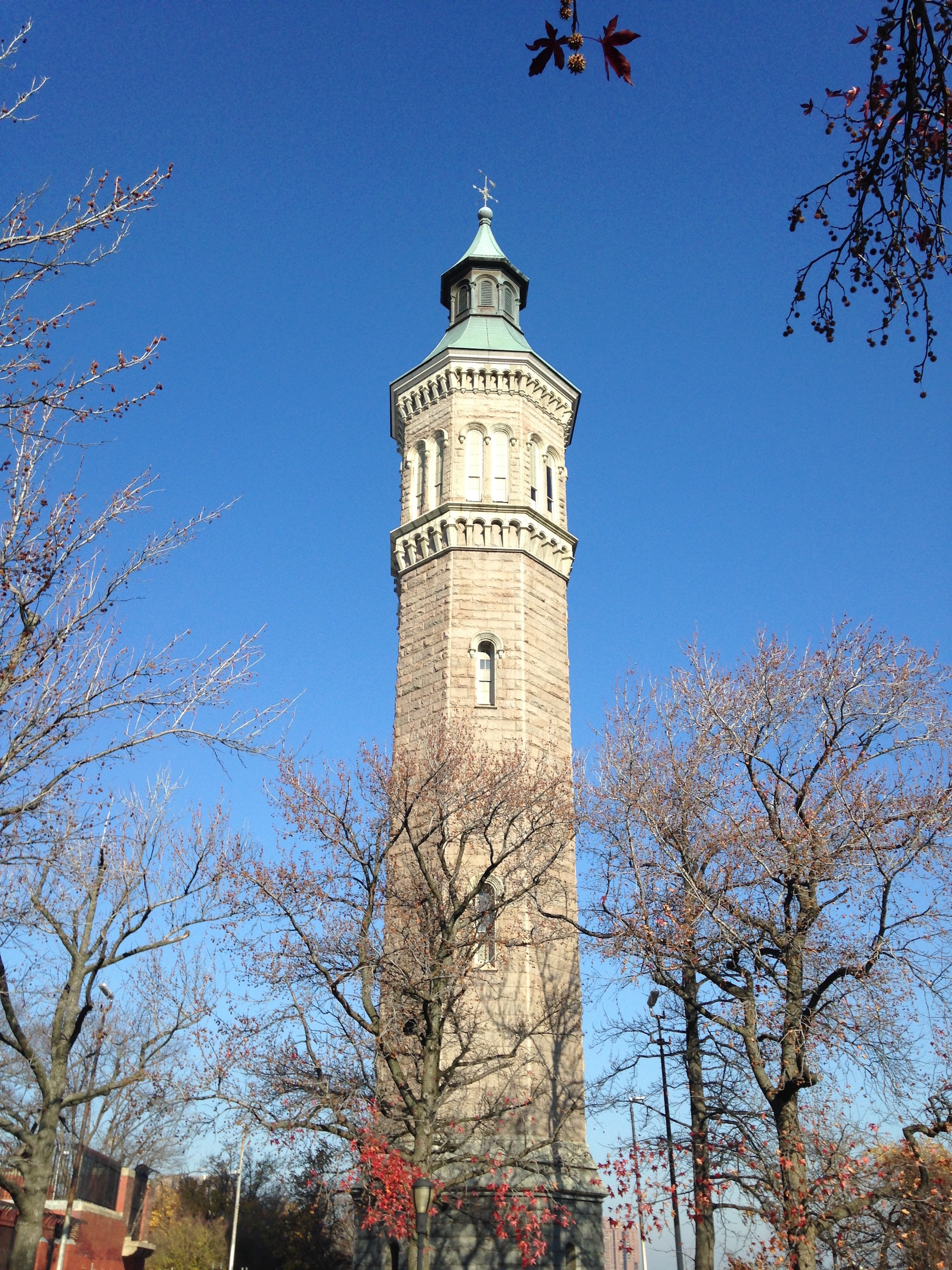
But the celebrated new system struggled to keep up with the demands of the growing city. In 1872, as masses of new arrivals from far-off lands crammed into tenements, an attractive water tower was constructed near the High Bridge to help increase the water pressure into the city.
The High Bridge and tower in 1915
By this time the High Bridge itself had turned into an attraction, a festive promenade where young gentlemen and their parasol-clinging lady companions could stroll, taking in the striking views of the still-forested landscape that surrounded them, while millions of gallons of clean water coursed beneath their feet.
MCNY
But New York, growing larger every day, would need more water. Much, much more. The introduction of indoor plumbing would require an entirely new and much larger Croton system to be built, which opened in 1890 and employed the massive Jerome Park Reservoir in the Bronx to satisfy the demand.
But alas, with a million flushes came the end of the High Bridge as an active part of the water system. Its function replaced by unromantic pipes buried underground, the bridge and water tower were retired from service by 1949, and soon these structures modeled after antiquity became historical relics themselves.
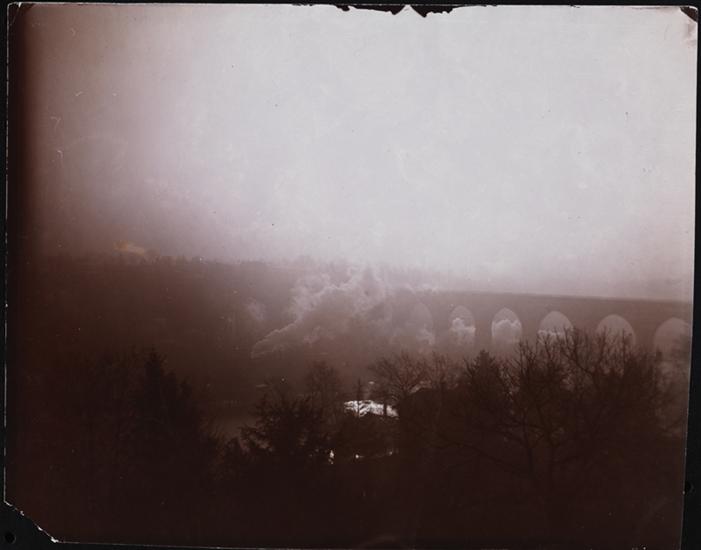
Below: The High Bridge, lost in a haze, photographed in 1920
MCNY
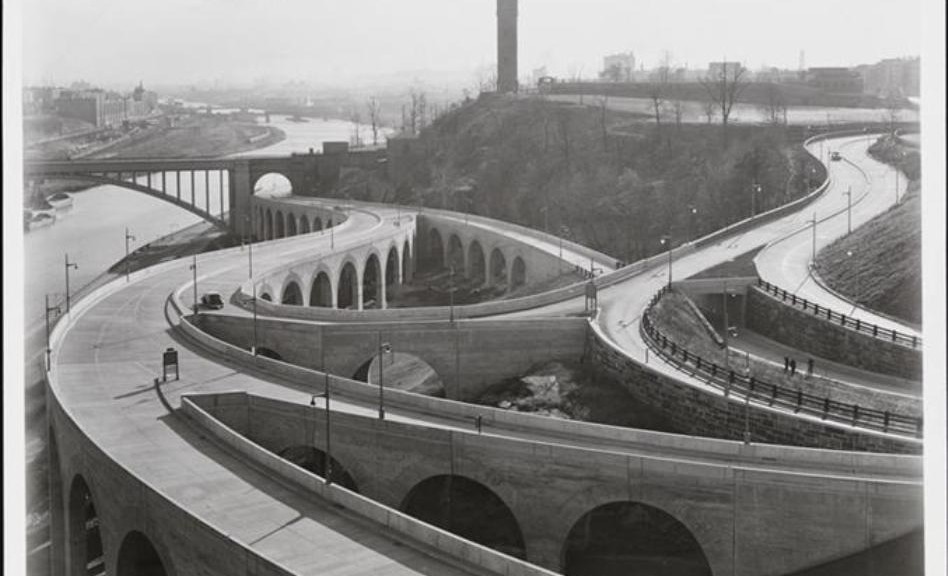
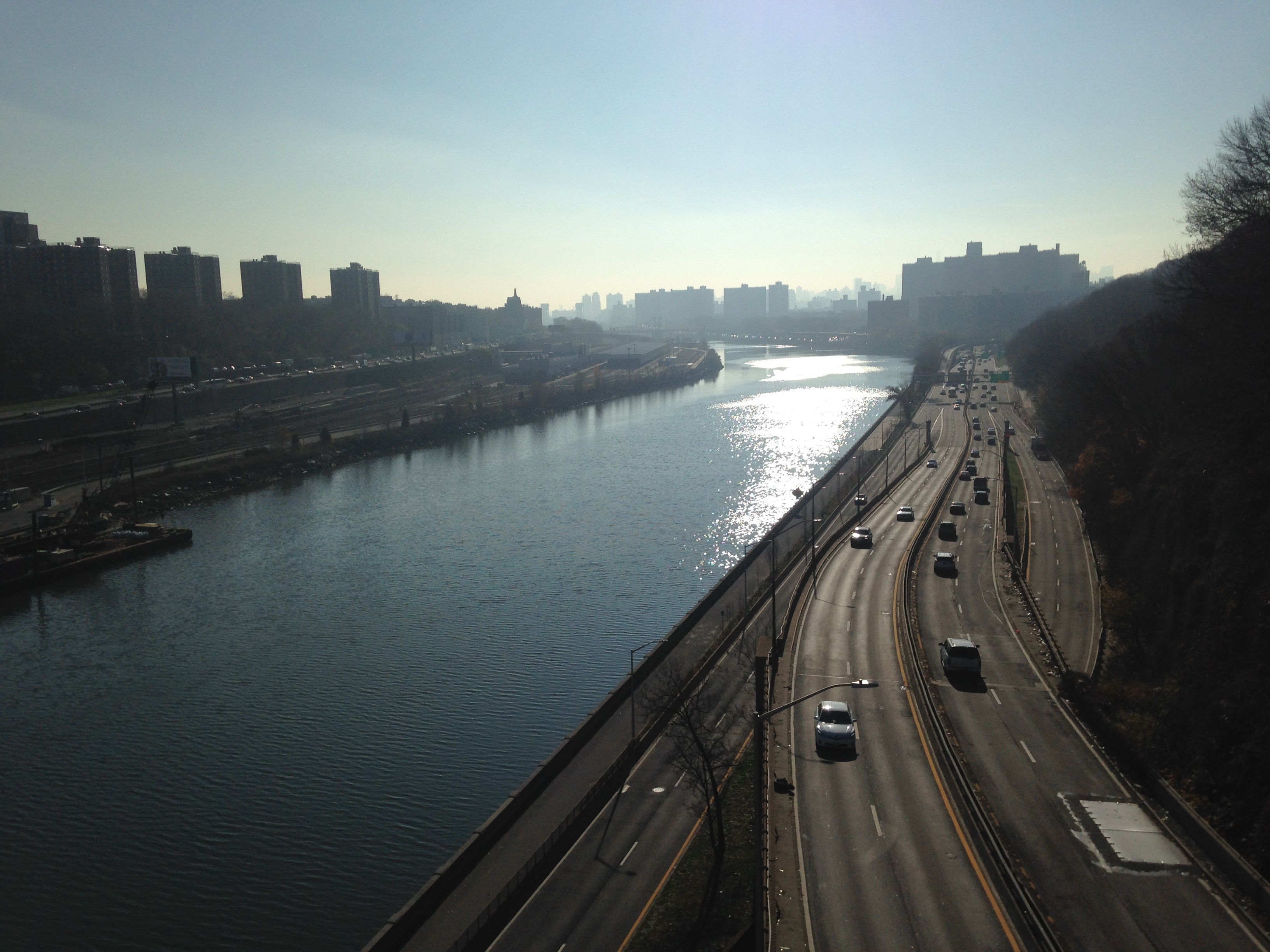
In a surprising twist given the unforgiving tendencies of city planners of the day, it was probably the beauty of the bridge and the tower that kept them from being ripped down in a bit of “progress.” Motorists along the Major Deegan Expressway took moments from their traffic jams to reflect on the possible story behind these strange and magnificent artifacts, which grew more incongruous as the modern highway system developed around them.
MCNY
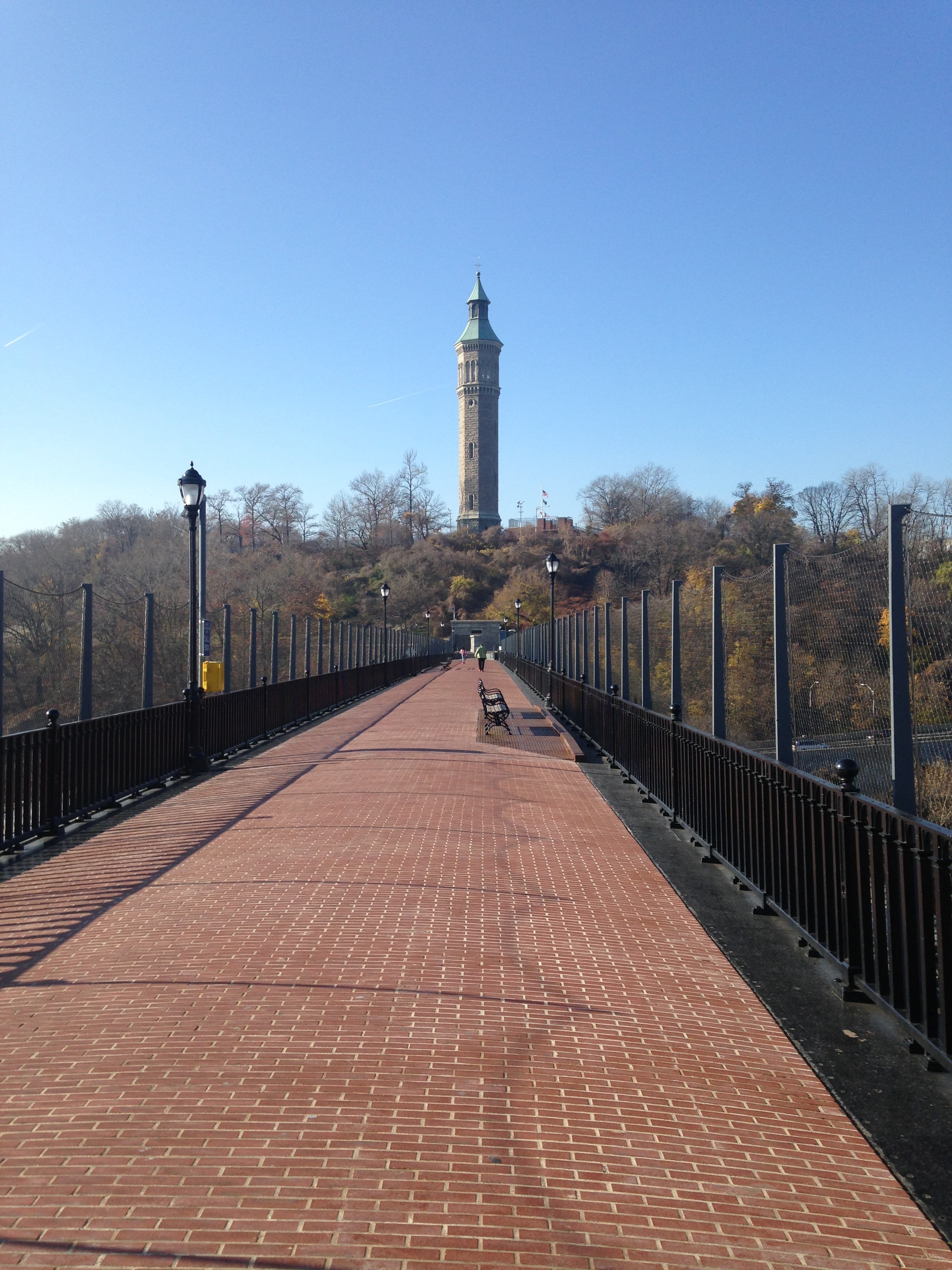
Two years ago this month, the High Bridge was restored, not for the movement of water but for those visitors and their parasols (replaced by headphones, we imagine) to enjoy a one-of-a-kind perspective on their buzzing metropolis.
If you go — or rather, when you go, because you really must see it — reflect upon the water that once passed below you. It helped this city grow.
HOW TO GET TO THE HIGH BRIDGE
Mass Transit: Take the A/C or the 1 train to 168th Street, get out and walk east. OR the M101 bus takes you right up to Highbridge Park
On the Bronx side, you can take the 4 train to Mt Eden Ave but it’s a bit of a walk west. Instead take the Bx11 or Bx13 bus
“If you are entering the High Bridge from the Manhattan side, please enter Highbridge Park at West 172nd Street and Amsterdam Avenue and walk east to the High Bridge Water Tower Terrace staircase down to the bridge level. If entering from the Bronx side, enter at University Avenue and 170th Street in Highbridge, Bronx.”
Some images from my trip there in November. It’s three times as beautiful now!
PODCAST It’s the ninth annual Bowery Boys ghost stories podcast, our seasonal twist on history, focusing on famous tales of the weird and the disturbing at some of New York’s most recognizable locations.
Don’t be frightened! We’re here to guide you through the back alleys … OF TERROR!
In this installment, we take a look at the spectral lore behind some of New York City’s most famous landmarks, buildings with great reputations as iconic architectural marvels and locations for great creativity.
But they’re also filled with ghost stories:
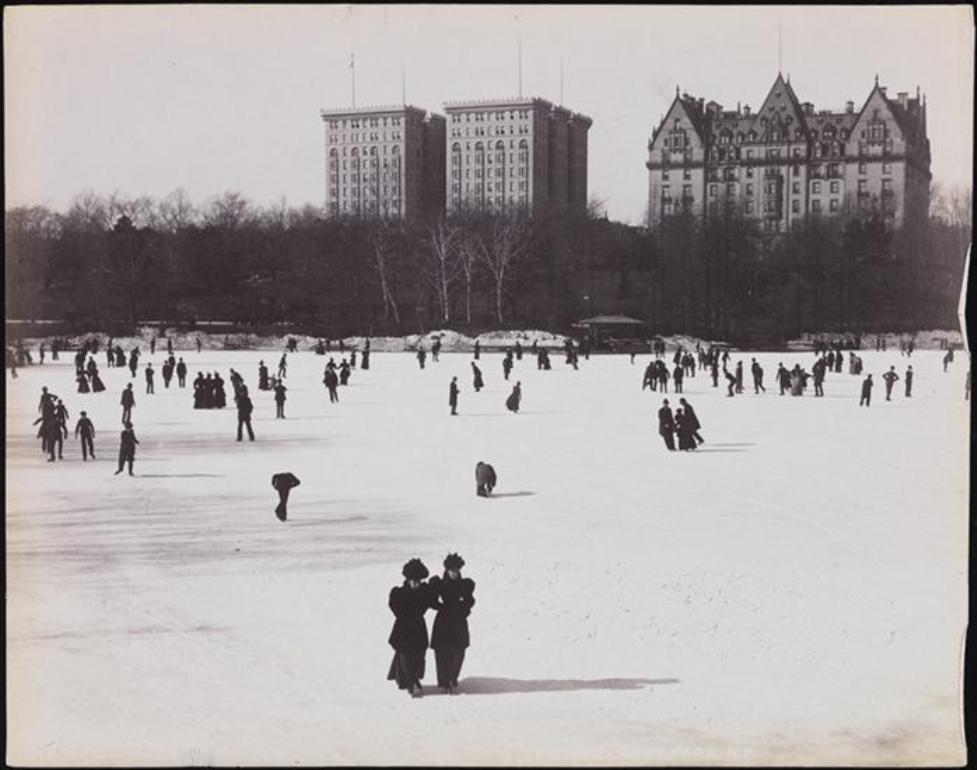
Who are the mysterious sisters in colorful outerwear skating on the icy pond in Central Park? And why are there so many uninvited guests at the Dakota Apartments, one of the first and finest buildings on the Upper West Side?
Meanwhile, at the Chelsea Hotel, all the intense creativity that is associated with this great and important location seems to have left an imprint of the afterworld upon its hallways.
Over at Grand Central Terminal, the Campbell Apartment serves up some cocktails — and a few unnatural encounters with Jazz Age spirits.
Finally, on the Brooklyn Bridge, a tragedy during its construction has left its shadow upon the modern tourist attraction. Who’s that up ahead on the pedestrian pathway?
A little spooky fun — mixed with a lot of interesting history — and a few cheesy sound effects!
The Bowery Boys: New York City History podcast is brought to you …. by you!
We are now producing a new Bowery Boys podcast every two weeks. We’re also looking to improve the show in other ways and expand in other ways as well — through publishing, social media, live events and other forms of media. But we can only do this with your help!
We are now a member of Patreon, a patronage platform where you can support your favorite content creators for as little as a $1 a month.
Please visitour page on Patreon and watch a short video of us recording the show and talking about our expansion plans. If you’d like to help out, there are five different pledge levels (and with clever names too — Mannahatta, New Amsterdam, Five Points, Gilded Age, Jazz Age and Empire State). Check them out and consider being a sponsor.
We greatly appreciate our listeners and readers and thank you for joining us on this journey so far. And the best is yet to come!
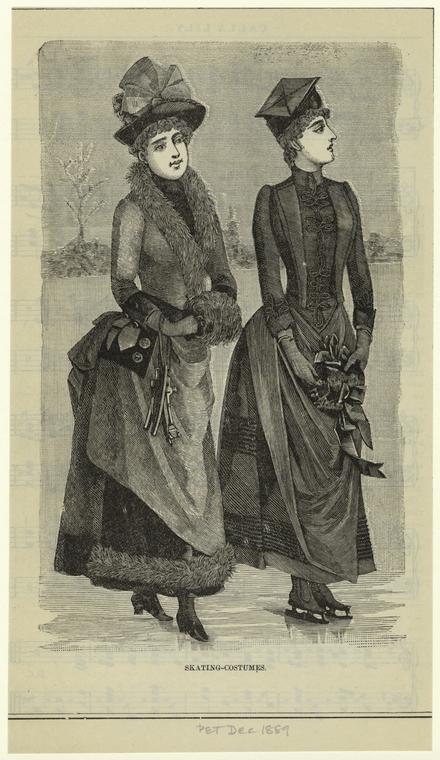
Two women in fashionable skating garments 1889. Perhaps similar to the ensembles worn by Janet and Rosette Van Der Voort during their ghostly figure eights in Central Park.
New York Public Library
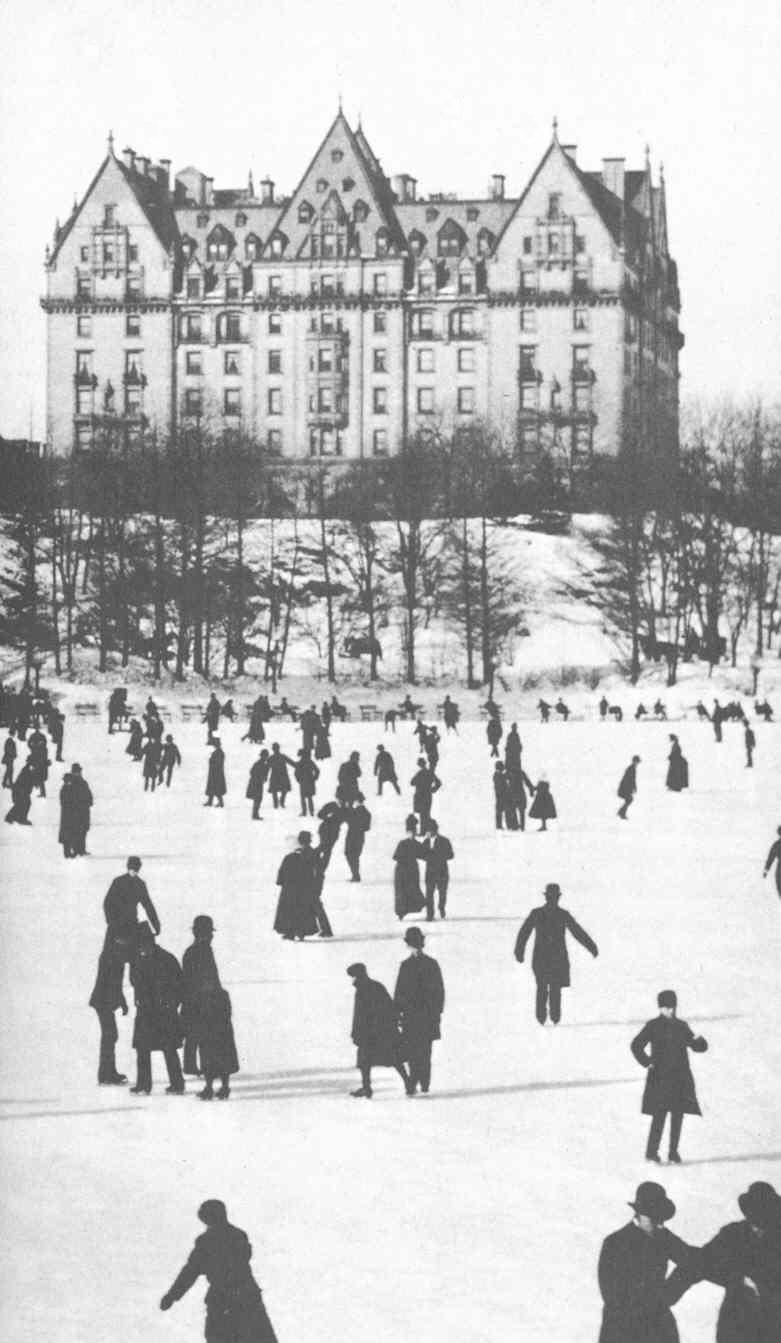
A famous image of the Dakota Apartment — all alone on the Upper West Side landscape — with skaters enjoying the frozen pond on a cold winter’s day.
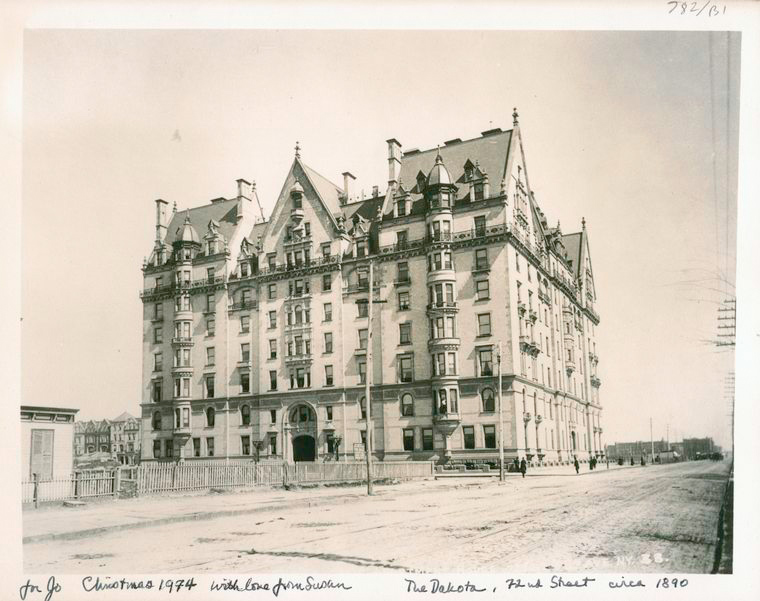
The Dakota photographed in 1890/
Courtesy New York Public Library
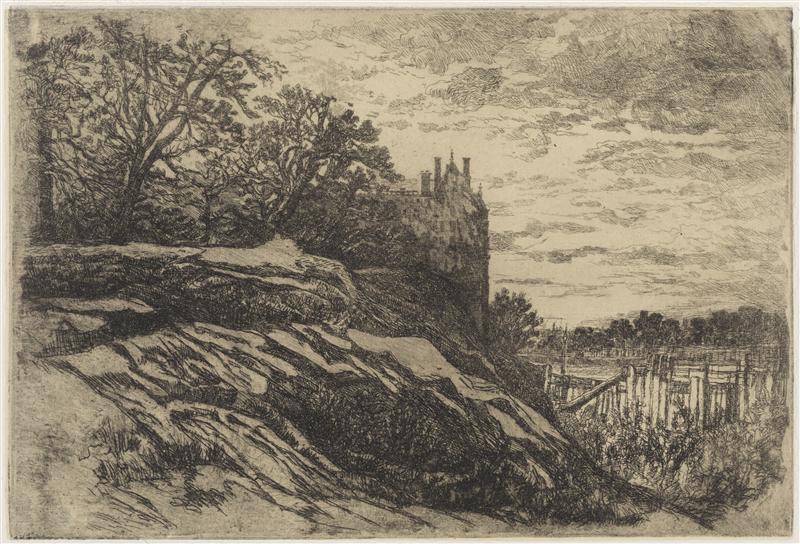
A haunting illustration by Eliza Greatorex from 1885 showing “The Dakota behind a rock at 72nd Street and Bloomingdale Road.”
Courtesy Museum of the City of New York
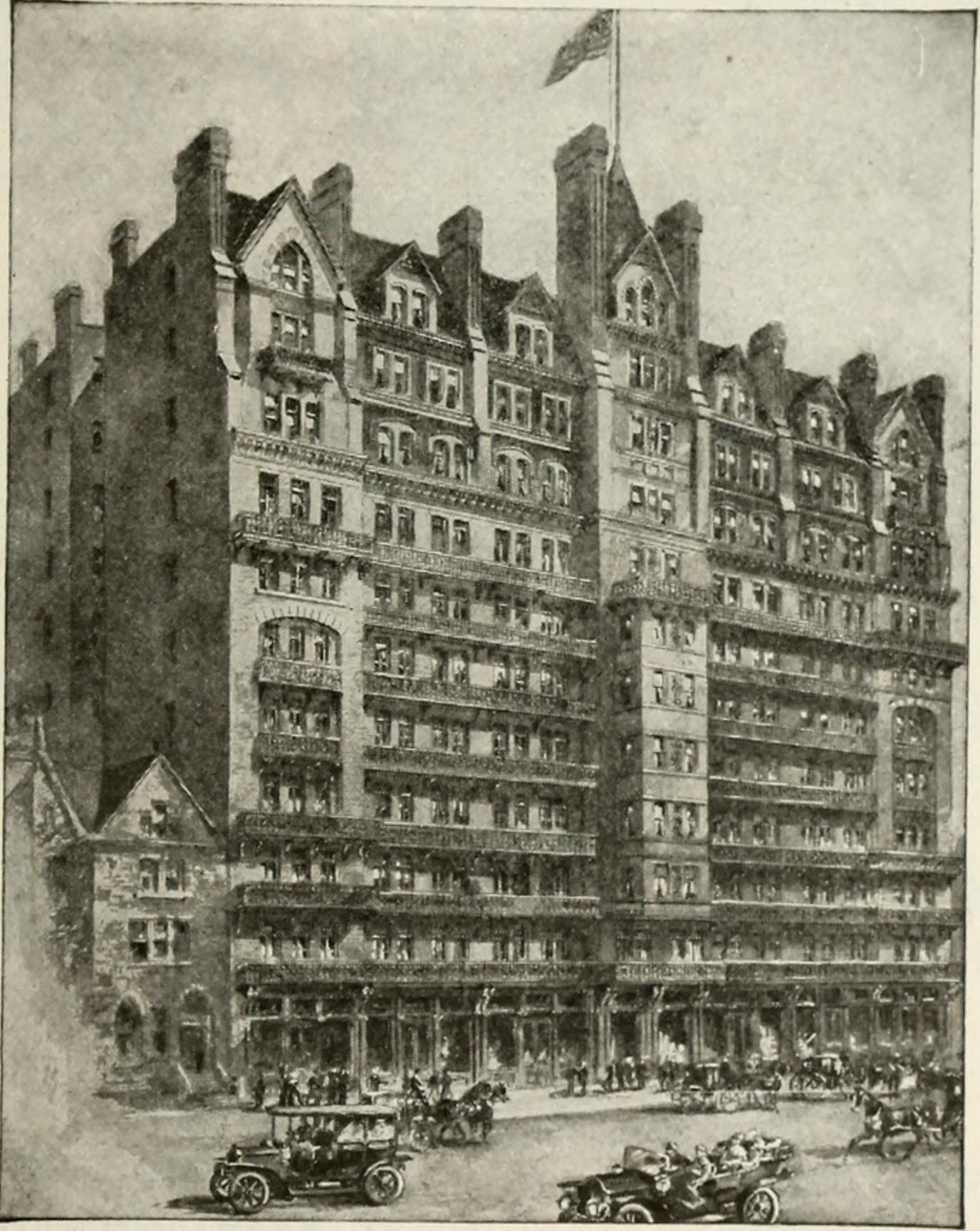
The Chelsea Hotel in 1903, one of the premier apartment houses in New York City which eventually became a destination (both short and long-term) for the city’s artistic circles. It also attracted its share of eccentric and even disturbed individuals over the decades.
Internet Book Archvies
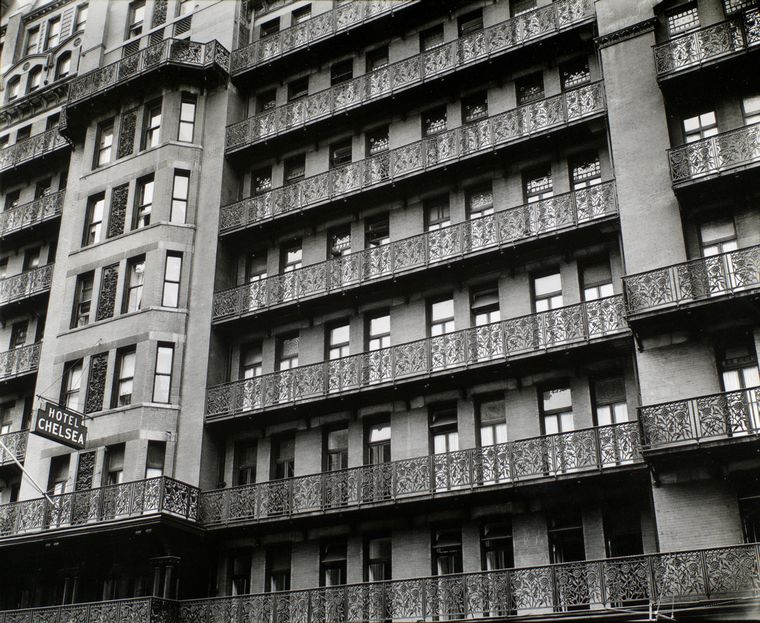
Oh what these floors have seen! The Chelsea in 1936.
Courtesy Berenice Abbott
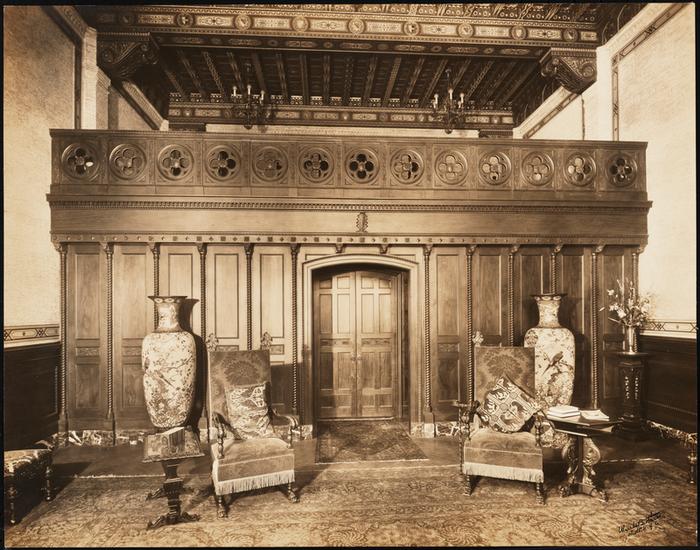
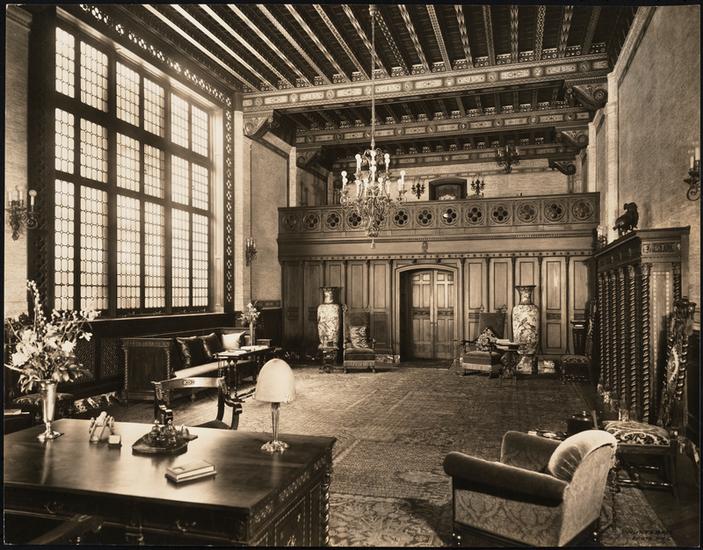
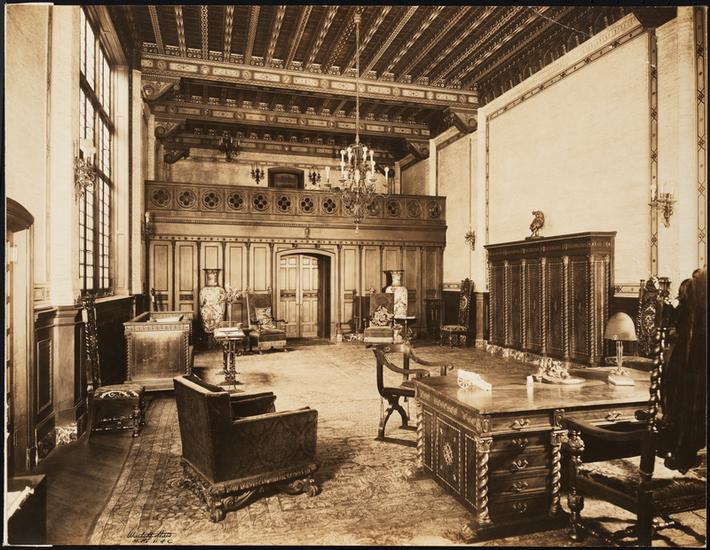
The interiors of the Campbell Apartment, back when it was an actual office. Are the ghosts of former party guests still enjoying the room’s luxurious trappings? More information at this blog post at the Museum of the City of New York. All photos, taking in 1923, by the Wurts Brothers.
Courtesy Museum of City of New York
Courtesy Museum of City of New York
Courtesy Museum of the City of New York
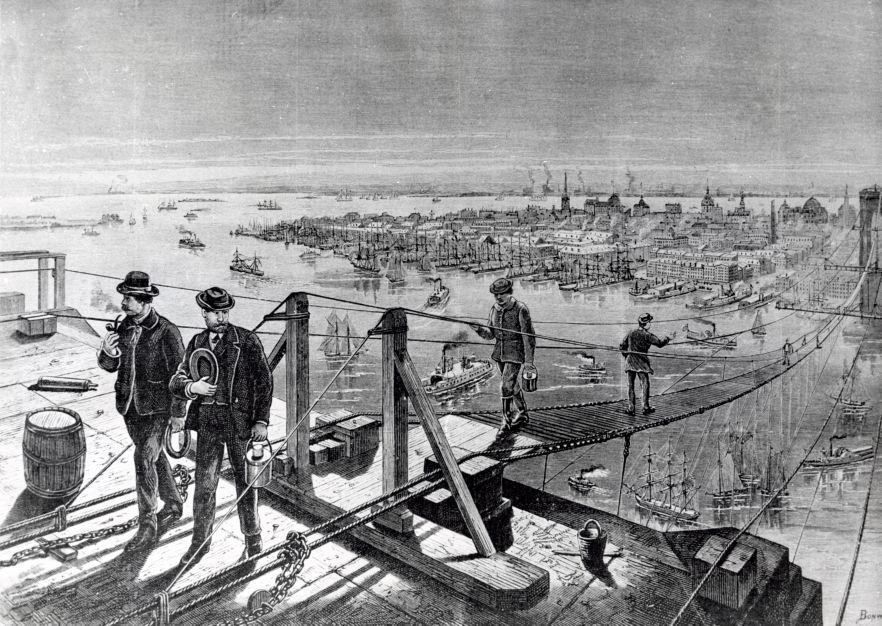
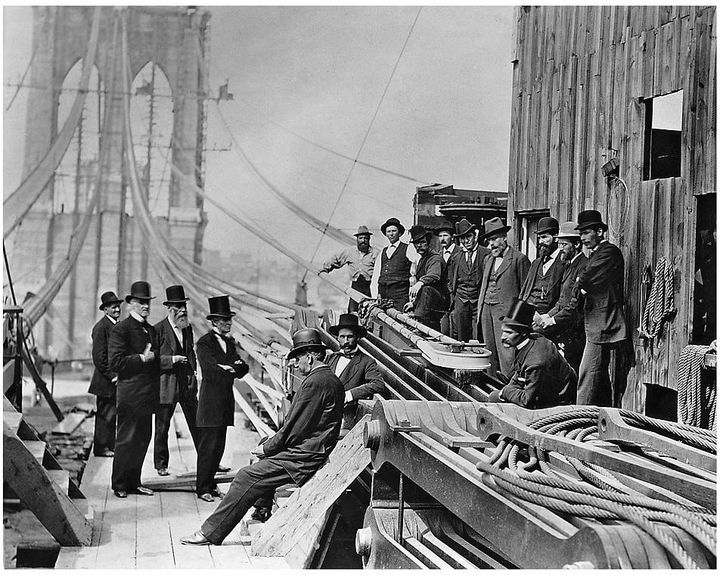
Workers upon the Brooklyn Bridge, a dangerous work environment where dozens of men were injured over the course of its construction.
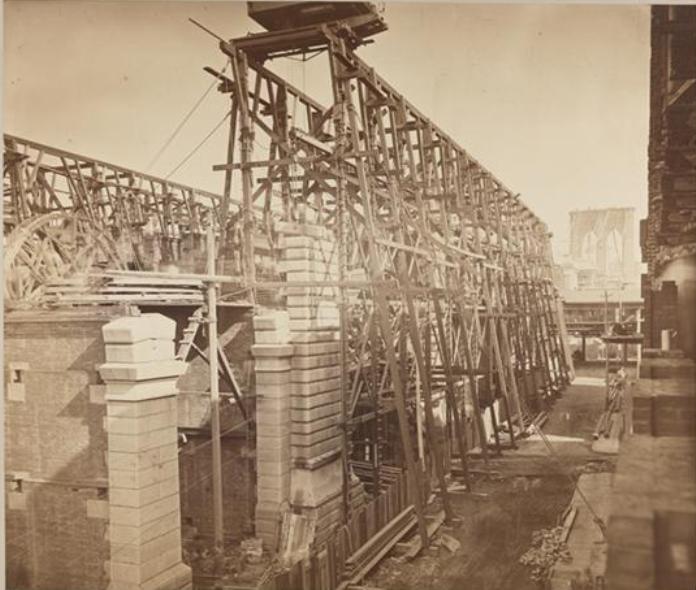
Construction of the approach to the bridge on the New  York side.
Courtesy Museum of the City of New York
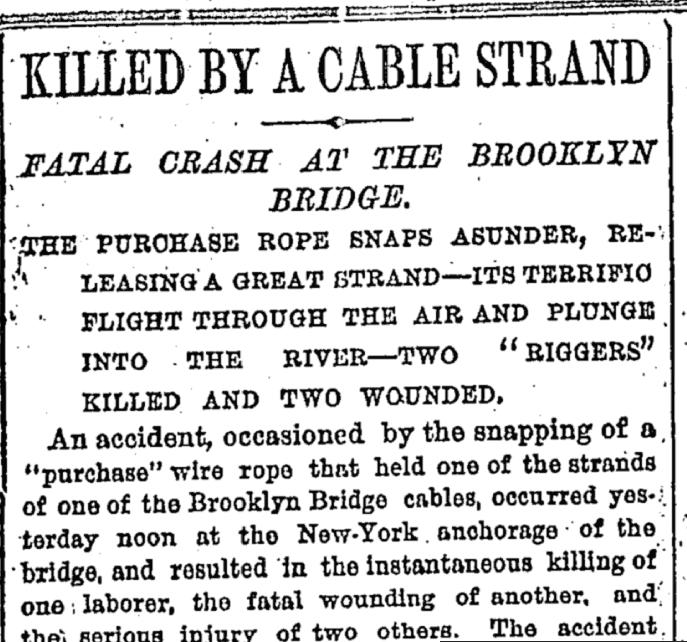
From the New York Times article regarding the unfortunate tragedy on the Brooklyn Bridge. Read the whole article here.
Courtesy New York Times
The scene at the bridge a few months after the accident — October 1878.
Courtesy New York Times
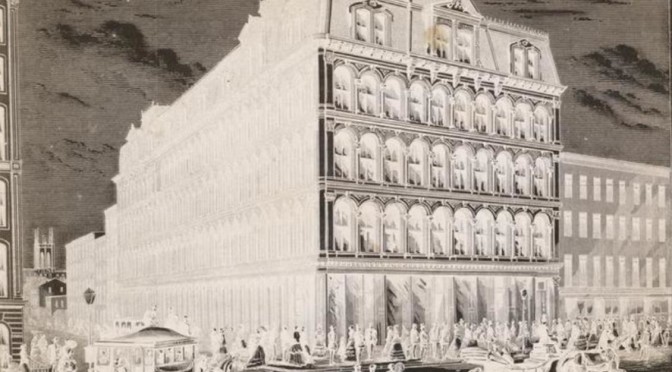
The picture at top is a reversed negative of the Methodist publishing and mission buildings, corner of Broadway and 11th Street, New York. [source]
In this blog roundup, a Bowery Boys appearance in Vice, a threat to preservation, a classic restaurant closes, the story of two hotels with very different histories and more!
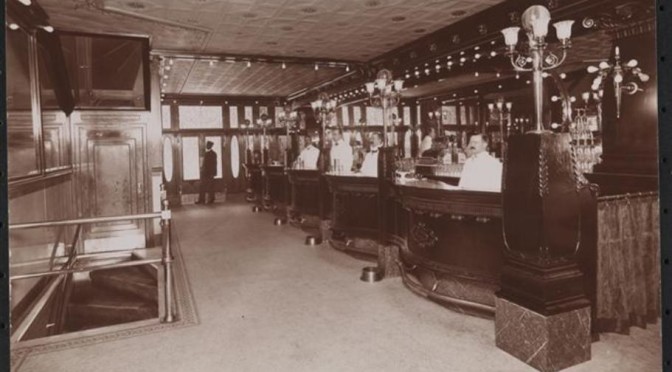
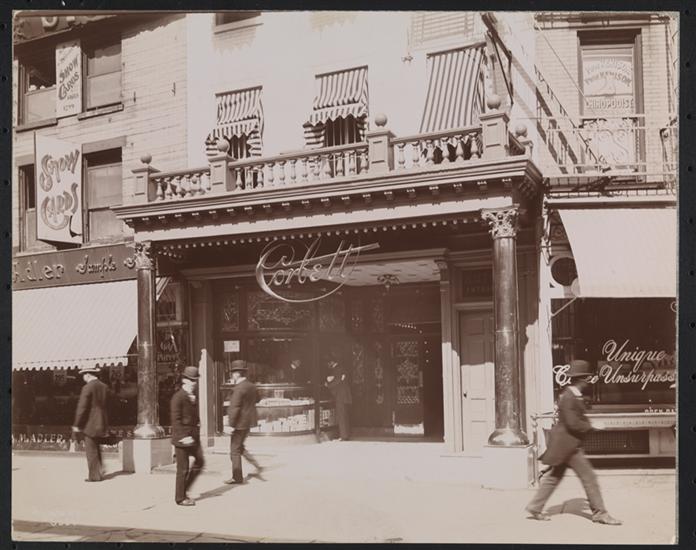
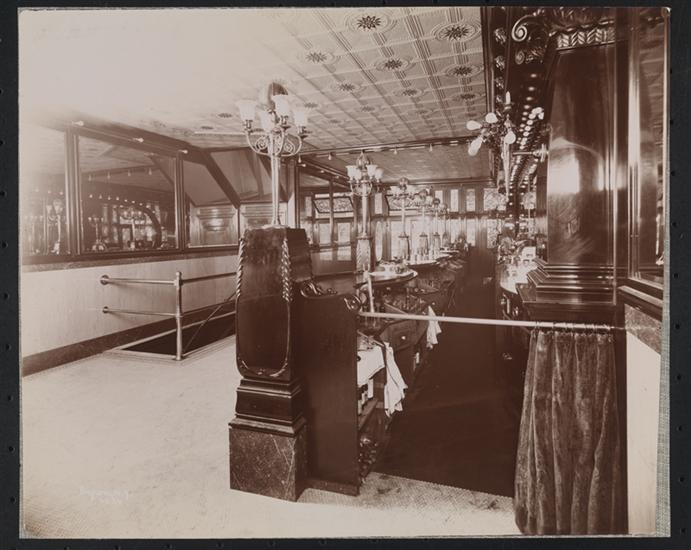
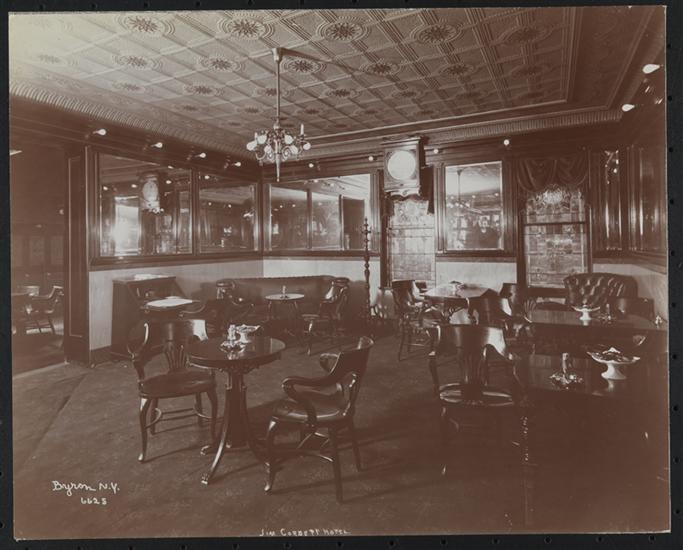
In the photo above and below — From the Museum of the City of New York collection, some images of the so-called Prize Fighters Saloon (at Sixth Avenue and 33rd Street) owned by boxer James J. Corbett.
LINKS OF INTEREST
— Vice Magazine’s John Surico wrote a great piece called ‘Why New Yorkers Love New York” and interviewed the Bowery Boys for it! Also — if you want to see us dressed in ridiculous Mermaid Parade costumes, you should definitely check this out. [Vice Magazine]
— An inconceivable and dangerous threat to New York landmark preservation is being debated at City Hall today.  “Intro. 775 would for the first time impose ‘do-or-die’ timeframes for buildings and neighborhoods being considered for landmark designation. If the deadlines are not met, buildings and neighborhoods, no matter how worthy or endangered, would automatically be disqualified for designation.” [Greenwich Village Society for Historic Preservation]
—  Destruction update! The beloved original location ofThe Palm restaurant — with its quirky wall of murals — has been closed for good. “The beloved hand painted caricatures were housed on walls made of plaster, which made it impossible to remove the caricatures for preservation purposes.” [Vanishing New York]
Below: The exterior of Corbett’s Prize Fighters Saloon:
Courtesy Museum of the City of New York
— The spectacular tale of thePierrepont Hotel in Herald Square, built in 1898 as a rare residential hotel for unmarried men.   “It is not so very long ago that the bachelor was not considered to be entitled much consideration; any old thing was good enough for him….” [Daytonian In Manhattan]
— That rather strange, kinda seedy, little-Flatiron hotel in Chelsea called the Liberty Hotel? Â That building has actually been standing there for well over one hundred years. Oh if only those walls could speak! [Ephemeral New York]
— Some rather sweet and amusing images pop up in this New York Times photo essay on the first day of schoolthrough the years. [New York Times]
— “The coolest place to eat is outside a smallpox hospital.” [New York Post]
TICKETS ARE GOING FAST for our live event with The Ensemblist this Sunday, September 13th, at 54 Below. Â Click herefor more information or go directly to 54 Below’s websiteto get your tickets!
Below: Another look at the interior of Corbett’s fancy saloon.
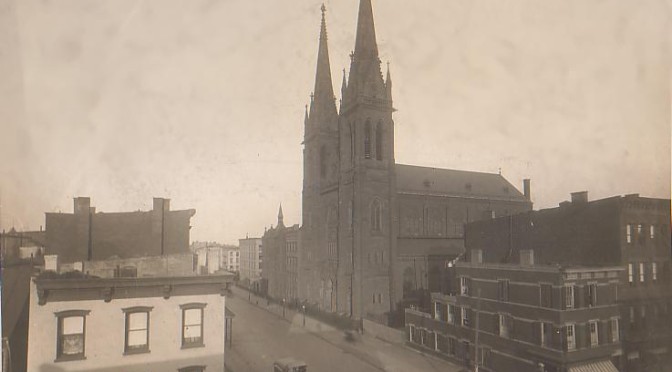
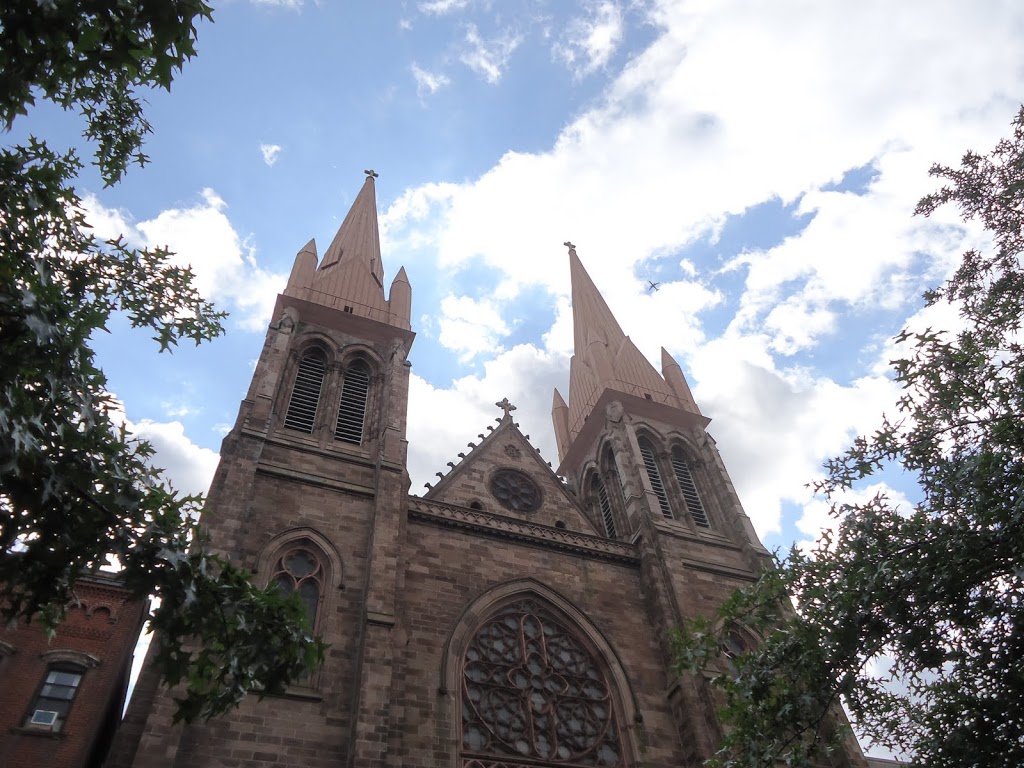
Most Holy Trinity in Bushwick, Brooklyn, shrouded in shadow, a place where the ghosts of former clergy are alleged to lurk the halls and other spirits may torment the nearby school.
PODCAST What mischievous phantoms and malevolent spirits haunt the streets of New York City today? In our fifth annual podcast of local ghost stories, we bring you the histories of four very haunted places from three boroughs and a small island in the harbor.
The legend of Captain Kidd‘s buried treasure — alleged to be buried in the New York region — inspires our first ghost tale of two ambitious soldiers on a quest during a full moon, on an island that today contains the Statue of Liberty! Meanwhile, out in Brooklyn, a congregation gathers at a new Catholic church, but maybe they shouldn’t have built it over a graveyard. Do the spirits of dead clergy haunt the halls today?
The Palace Theatre in Manhattan has hosted the greatest names in entertainment — and continues to play host to the undead. And finally, we hesitate to bring you the malevolent events at the Kreischer Mansion in Staten Island. What is it about this house that has inspired stories for over a hundred years, and did ghosts from a century ago have something to do with a horrifying and gory crime that took place here just a few years ago?
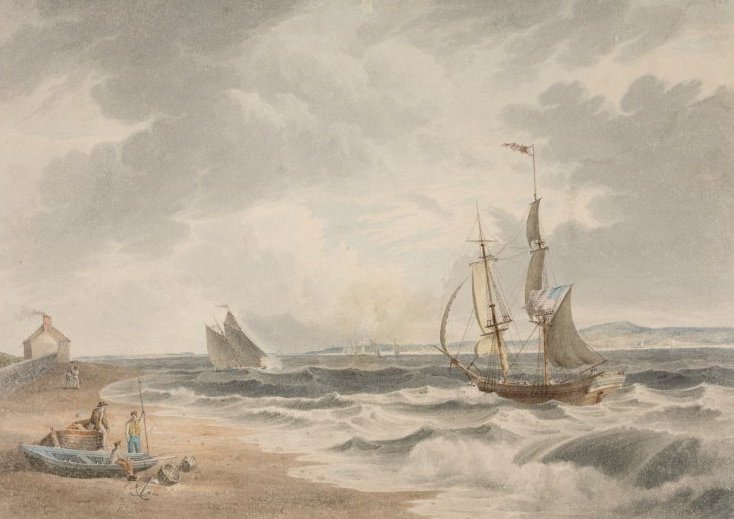
Bedloe’s Island: Below is a depiction of its southern shore in 1831. It was on the northern end during this period that two sentries at Fort Wood had a most unfortunate encounter while searching for buried treasure. (Image courtesy NYPL)
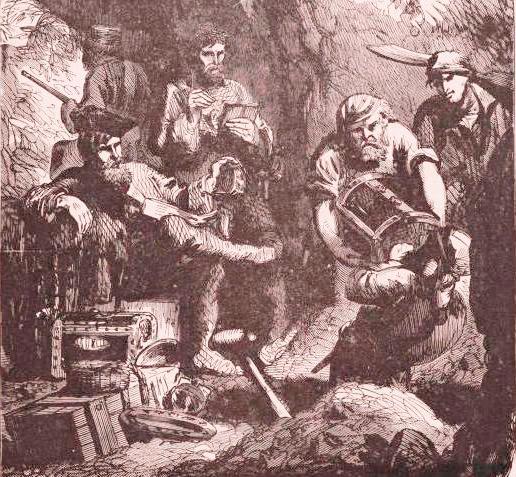
Legends of Captain Kidd’s treasure have possessed New Yorkers for centuries. It’s rumored that he killed one or two of his men and buried their bodies with the treasure to ‘guard’ it. Do these bodies lurk underneath the shadow of the Statue of Liberty? (NYPL)
Most Holy Trinity in Bushwick, Brooklyn, site of alleged hauntings from a variety of spirits.
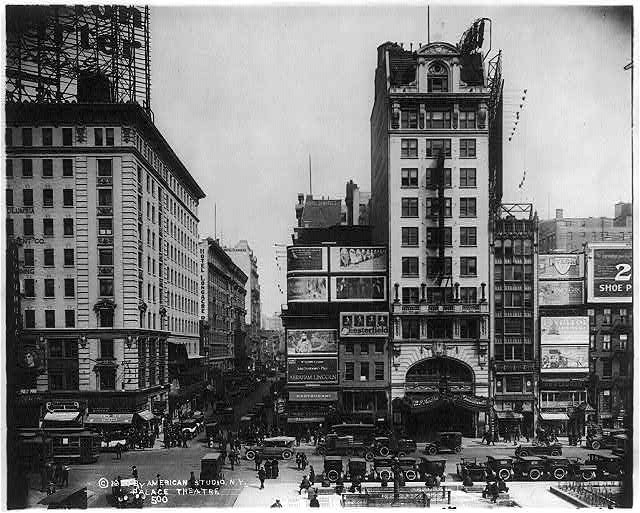
The Palace Theater rises over Times Square, hosting the greats of vaudeville. But the stage has also attracted its share of ghost sightings over the year, including that of one very tenacious acrobat.
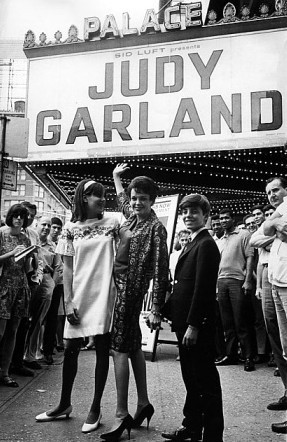
The legendary Judy Garland appeared here in the 1960s. Does she still lurk backstage today?
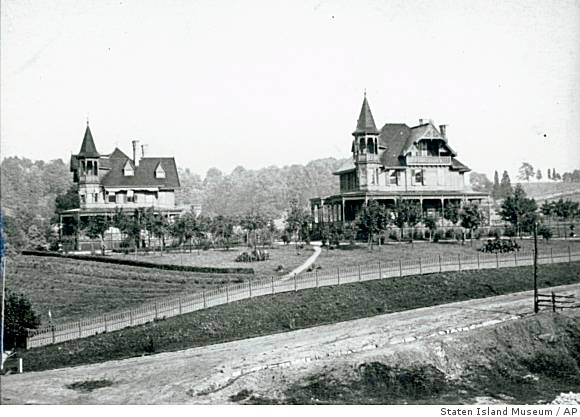
The Tale of Two Houses: The Kreischer Mansion in southern Staten Island, famous among generations of children as being an iconic haunted house, was actually once two houses. Or rather, a parallel house, mirroring the other in every way, once stood nearby, home built for the sons of a prominent German brick maker.
The mansion in the mid 1980s (Courtesy Flickr/Revup67)
Video filmed of the Kreischer Mansion in 1983:
In 2003, some amateur ghost hunters were allowed to photograph the property, escorted by the house’s caretaker at the time. From description, I believe the caretaker is the same person who committed a gory and terrible murder here just a few years later!