Categories
Planes Trains and Automobiles Podcasts Women's History

The Story of Miss Subways: Queens of the New York Commute

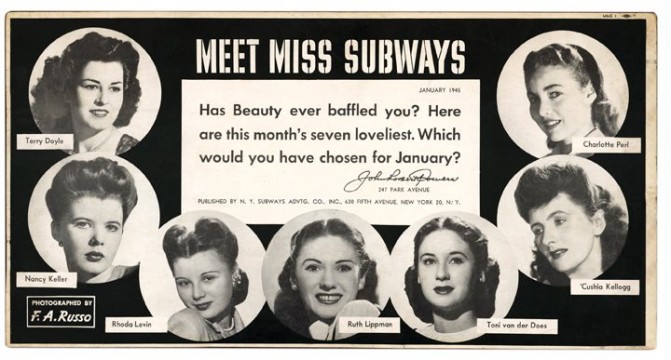
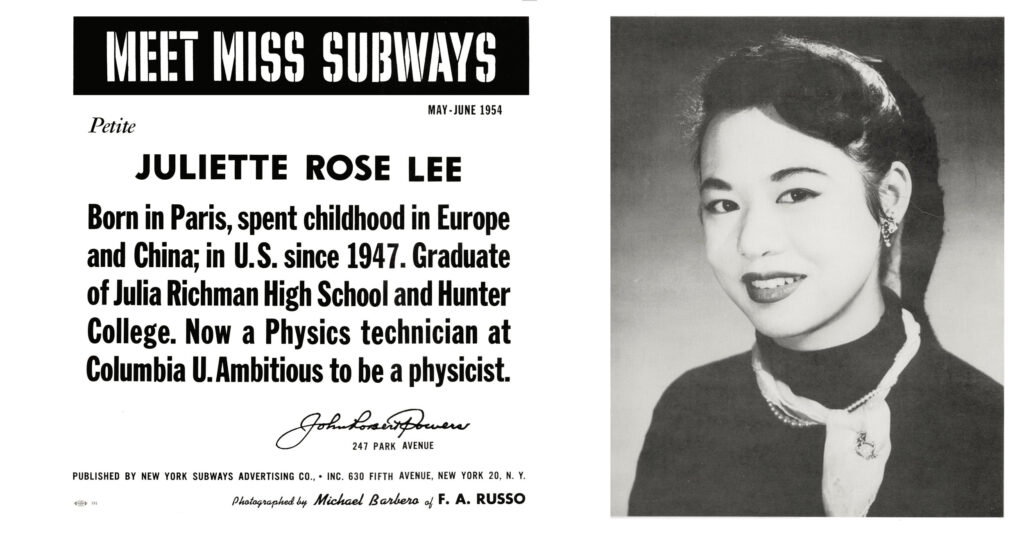
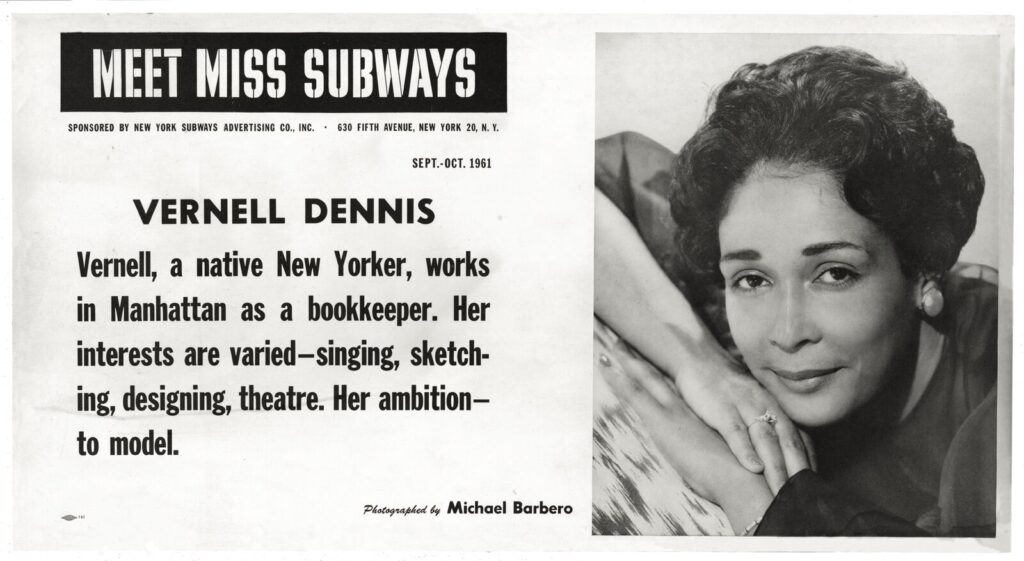
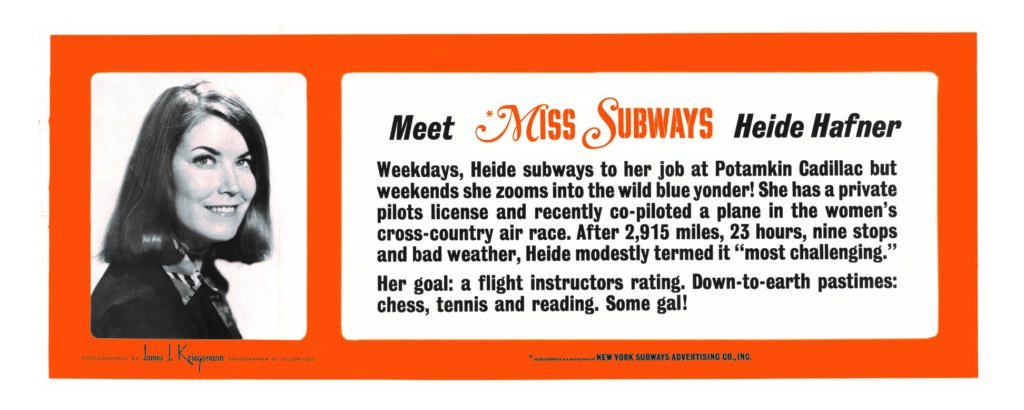
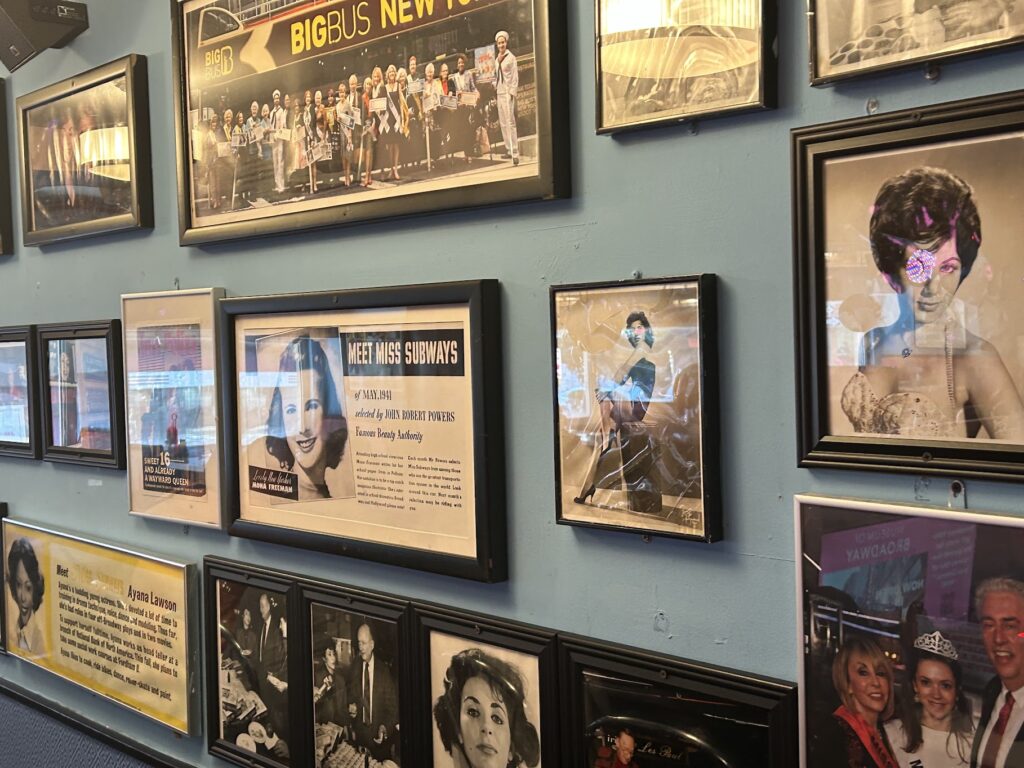
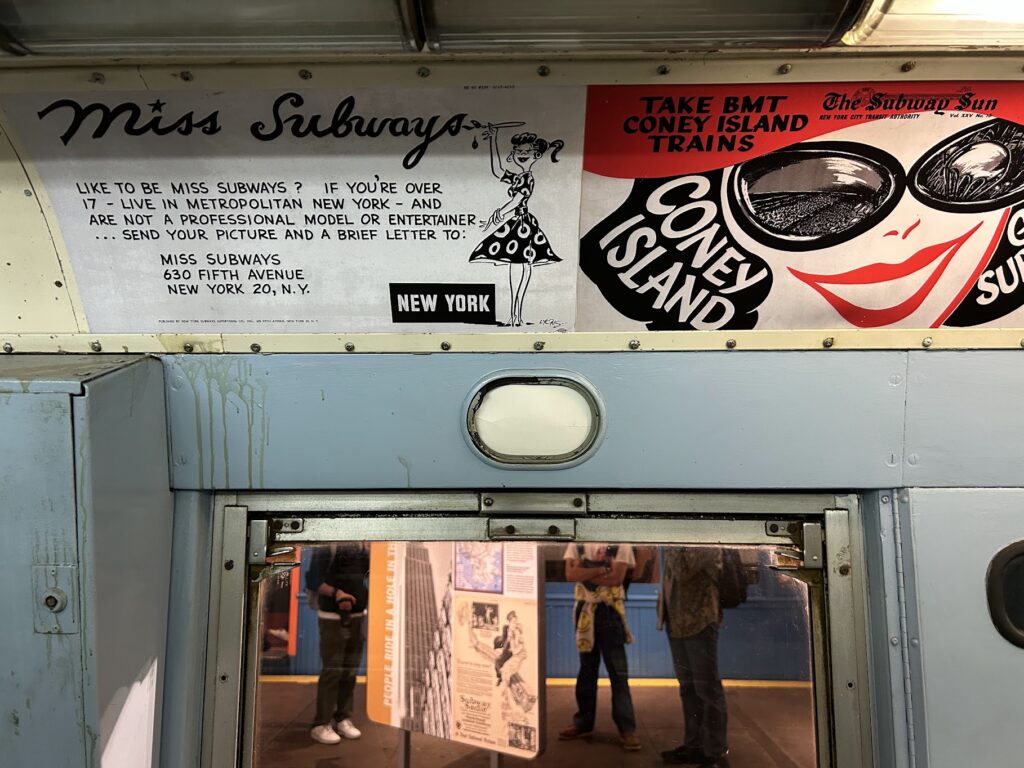
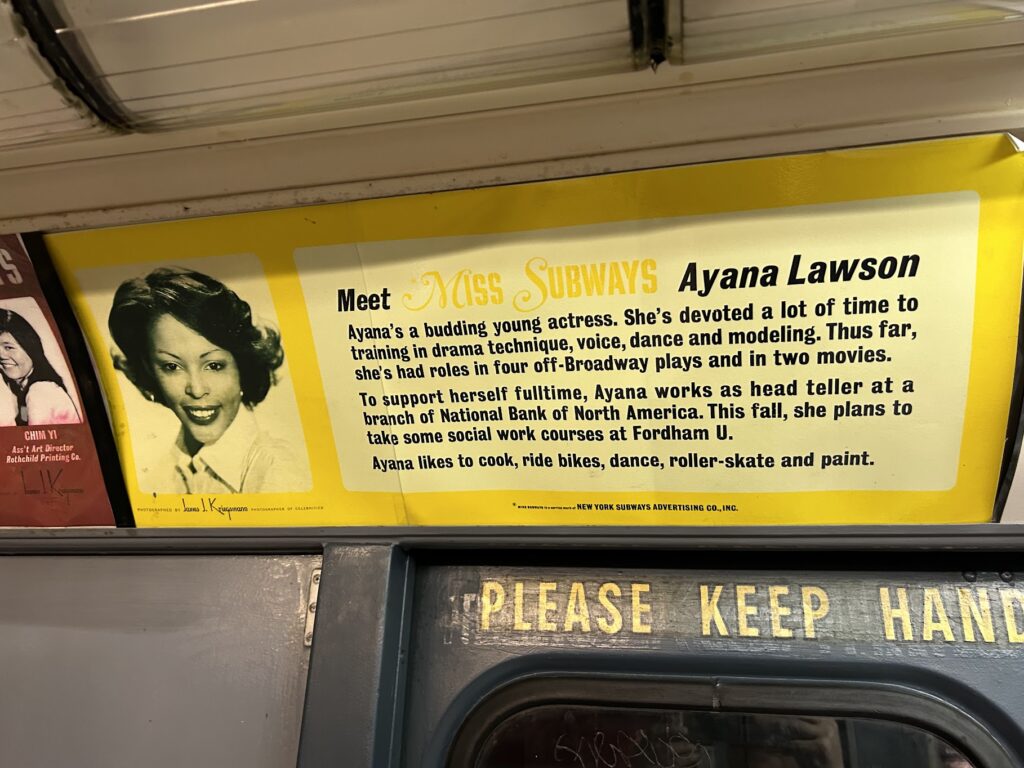
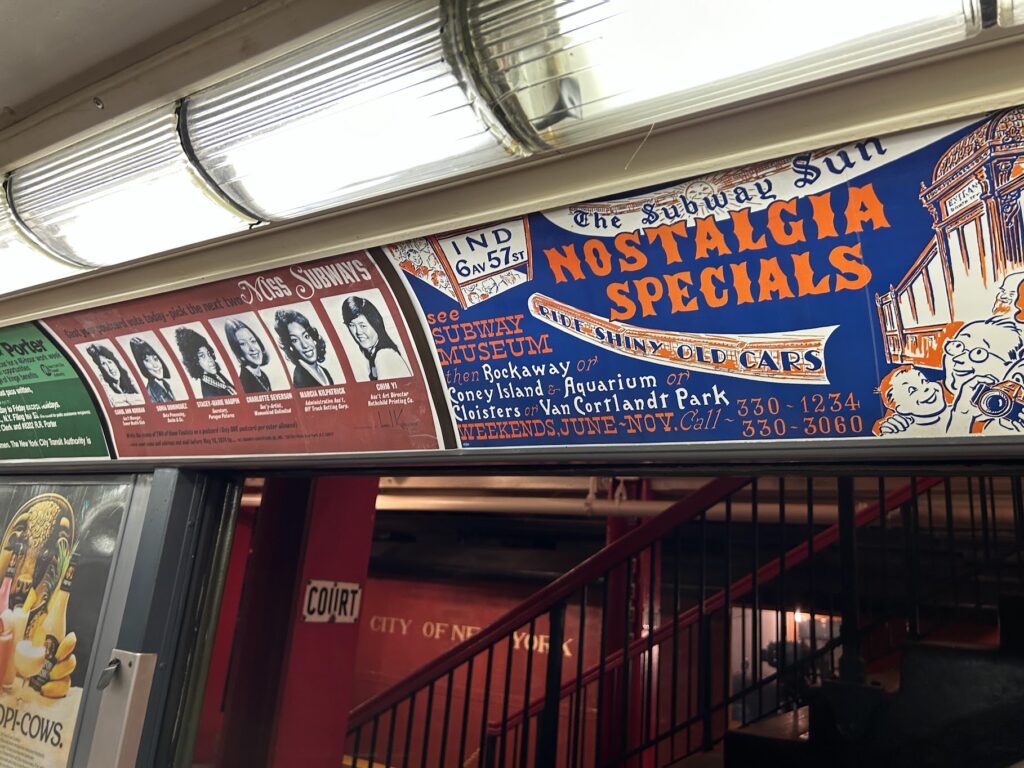
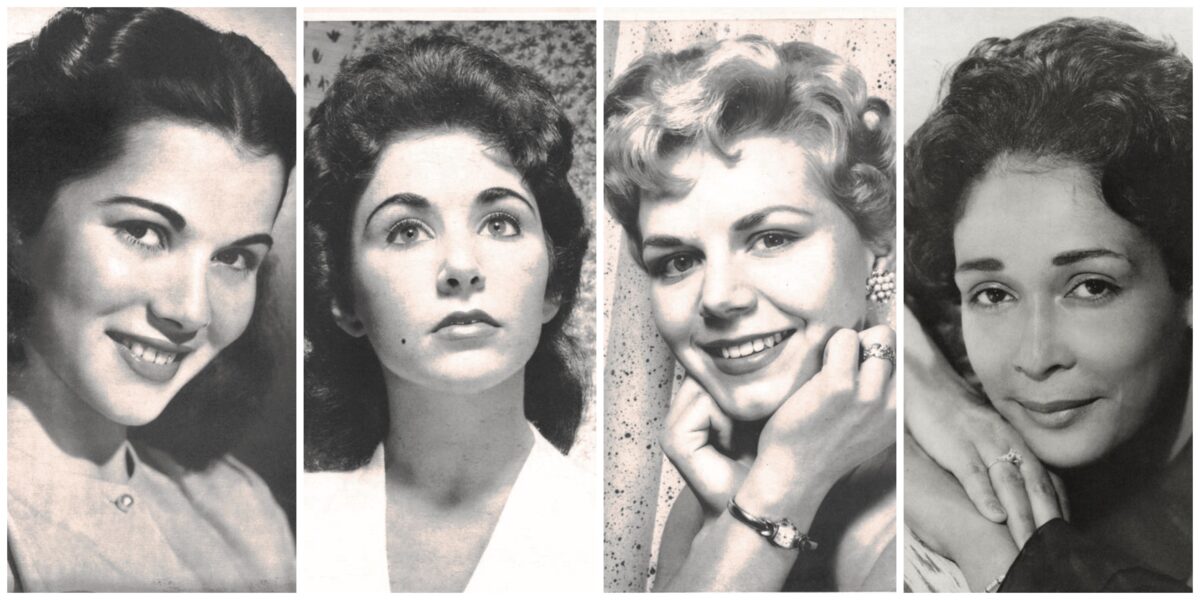
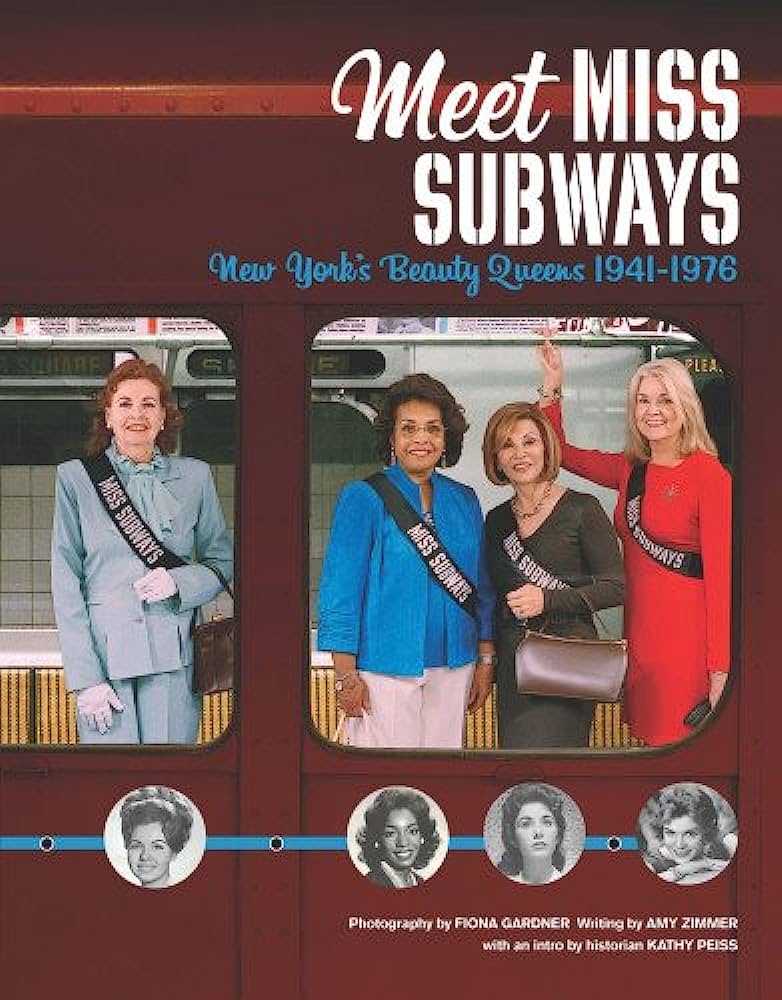
From 1941 and 1976, dozens of young women and high school girls were bestowed the honor of Miss Subways with her smiling photograph hanging within the cars of the New York subway system.

This was not a beauty pageant, but rather an advertising campaign which promoted the subway and drew the eyes of commuters to the train car’s many advertisements for cod liver oil, cigarettes and frozen foods.

The women who were chosen for Miss Subways became overnight local celebrities, aspirational figures for thousands of subway riders.

The program was overseen by modeling agent guru John Robert Powers whose work for mail order catalogs and newspapers would help define the ‘girl-next-door’ image of the mid 20th century.

However this blonde Midwestern template soon looked out of place promoting the subway system of one of the most diverse cities in the world. By the 1960s, winners of this fleeting title began to reflect the many types of women who commuted and used the subway.

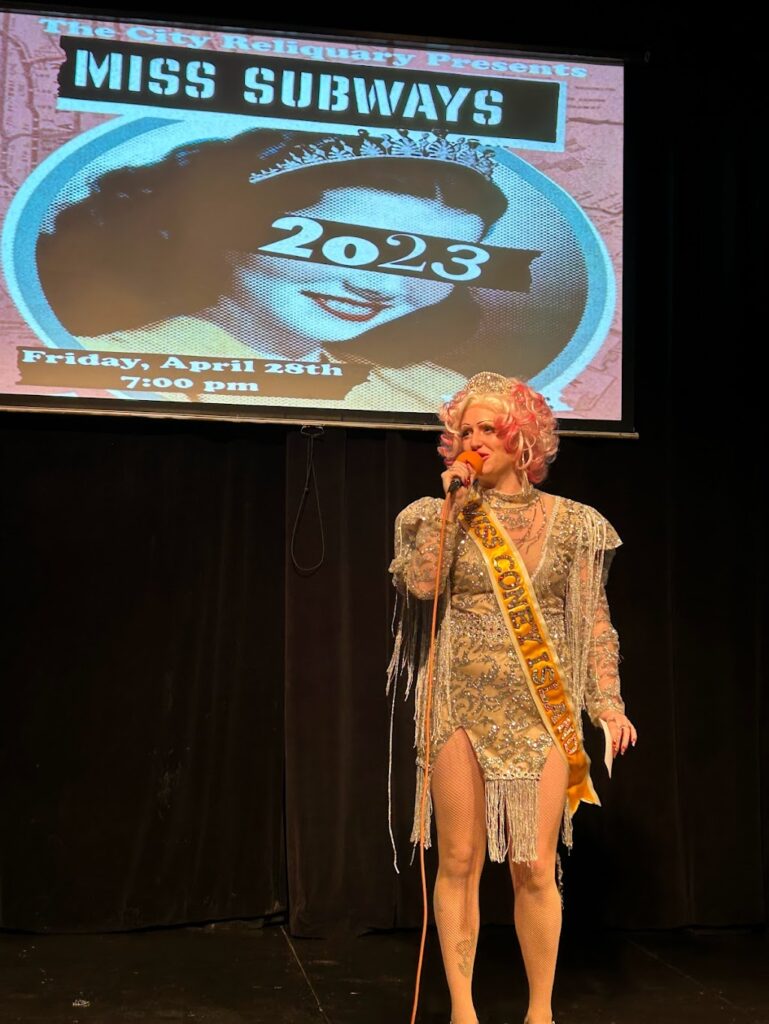
Listen in as Greg tells the story of the Miss Subways pageant then participates as a judge for a brand new Miss Subways competition, held in Coney Island in April. But what does this title mean in 2023?

FEATURING A visit to the New York Transit Museum, the City Reliquary, Coney Island USA’s Seashore Theater and Ellen’s Stardust Diner

LISTEN NOW: MISS SUBWAYS: QUEENS OF THE NEW YORK COMMUTE
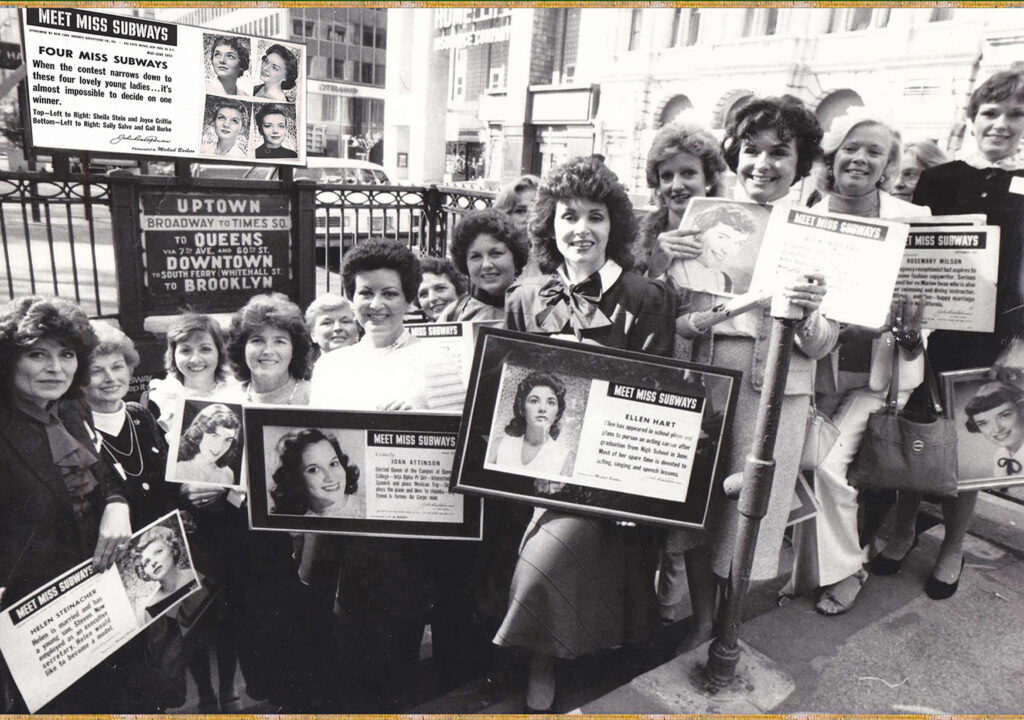

Photograph courtesy Ellen’s Stardust Diner/Miss Subways

My thanks to:

Jodi Shapiro and everybody at the New York Transit Museum
Ellen Hart Shurm and the whole gang at Ellen’s Stardust Diner
Dave Herman at the City Reliquary

And the reigning Miss Subways — Harmony Hardcore! And also to all the contestants who participated.
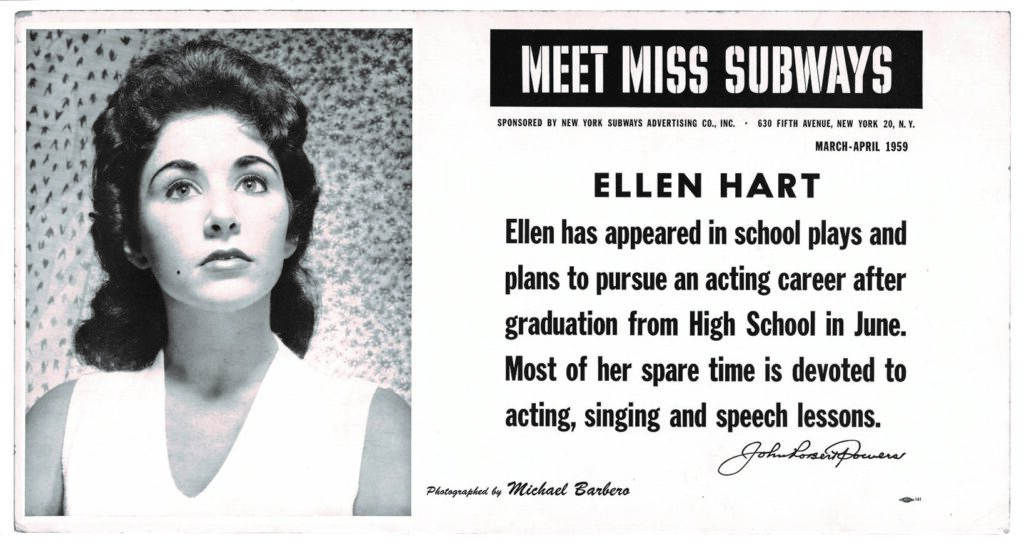
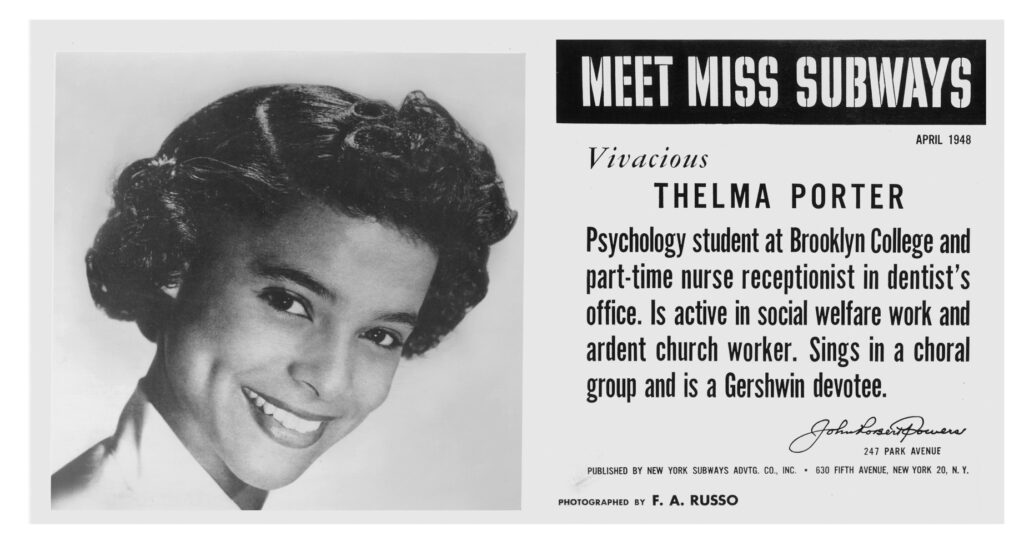
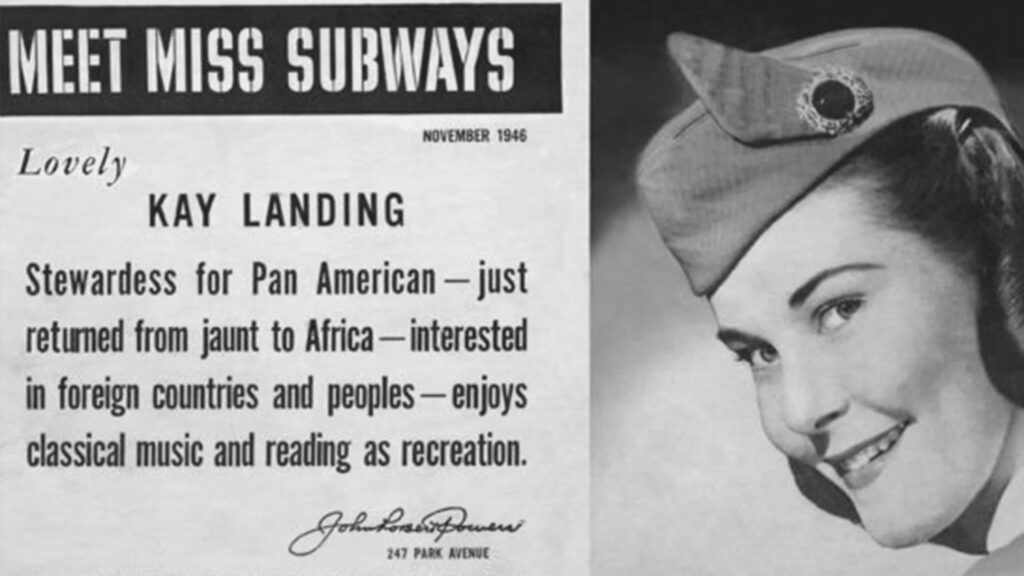
In 1948, Thelma Porter became the first African-American Miss Subways.

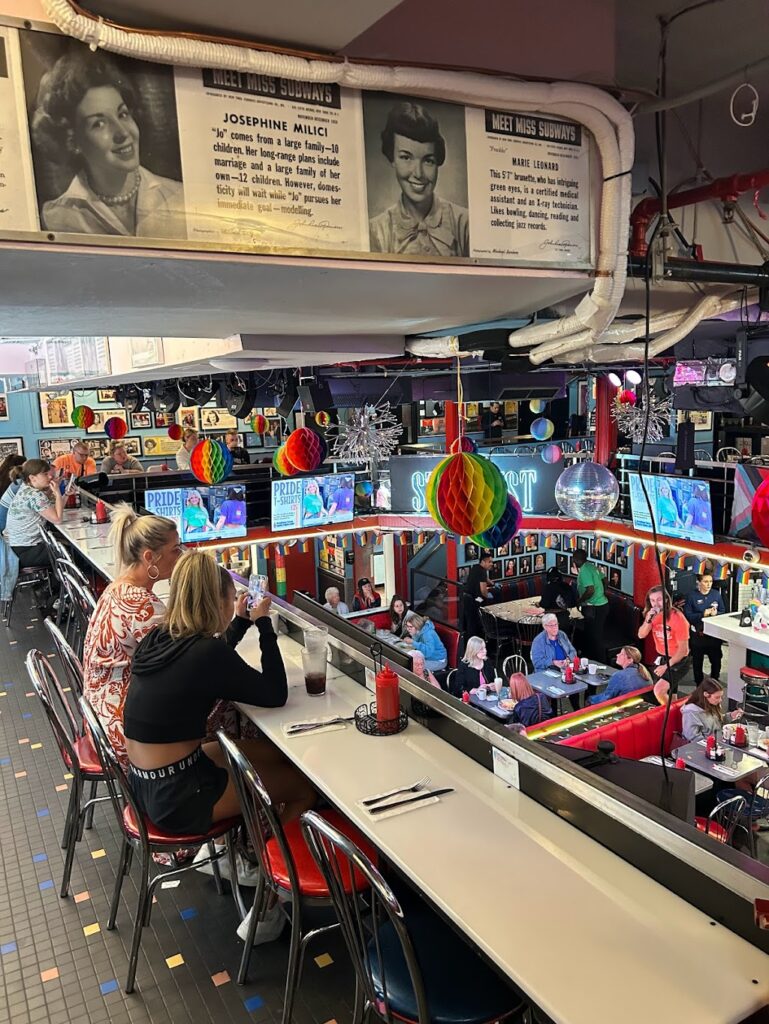
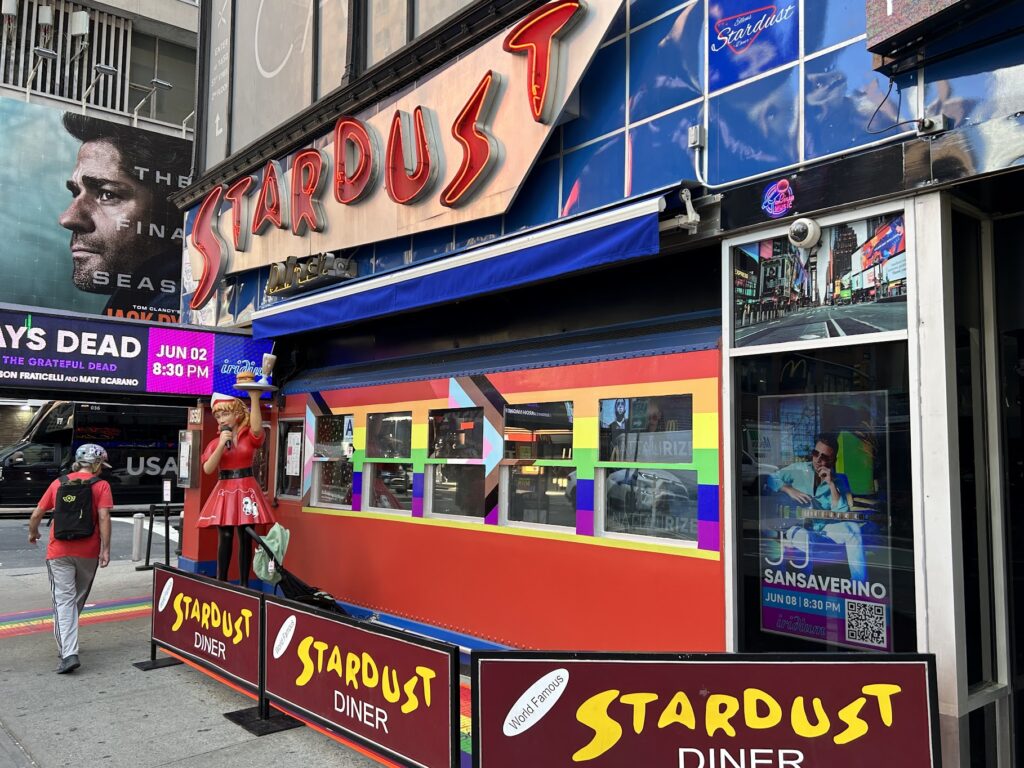
Ellen’s Stardust Diner. More information about their Miss Subways collection here.
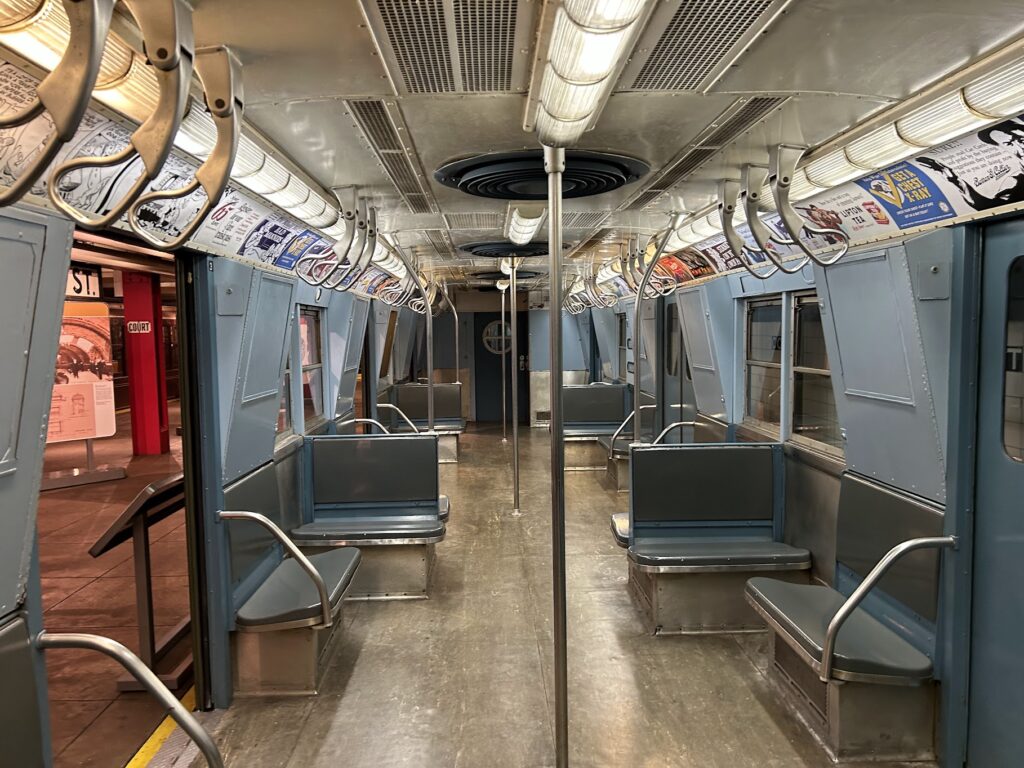
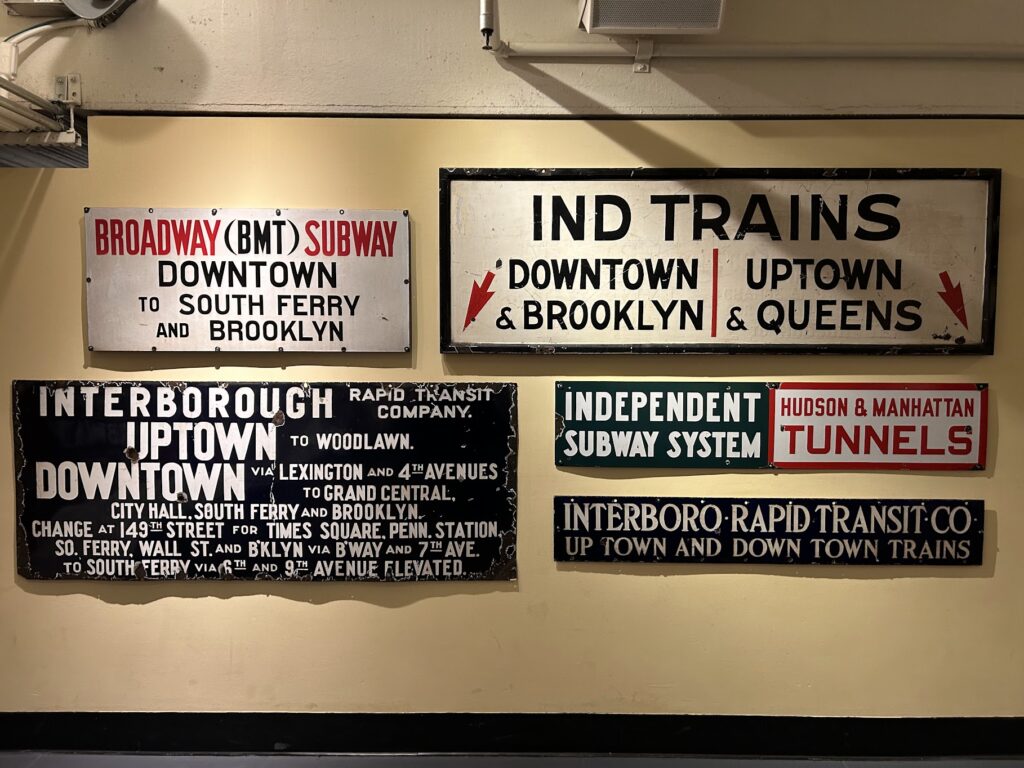
New York Transit Museum

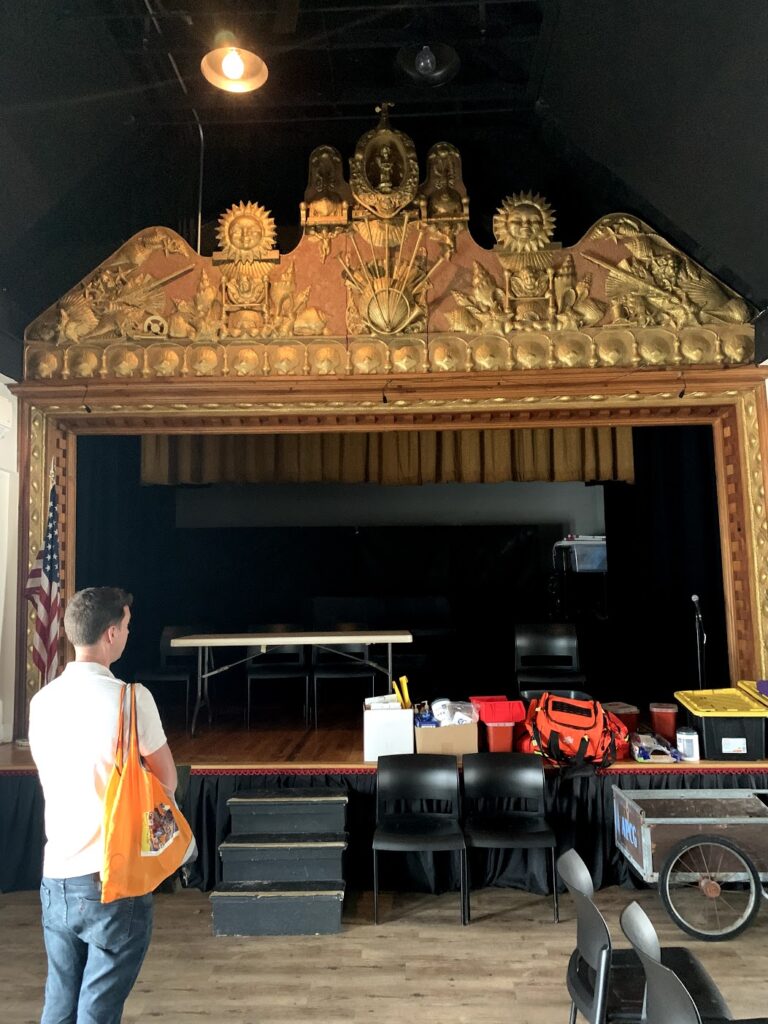
Seashore Theater at Coney Island USA
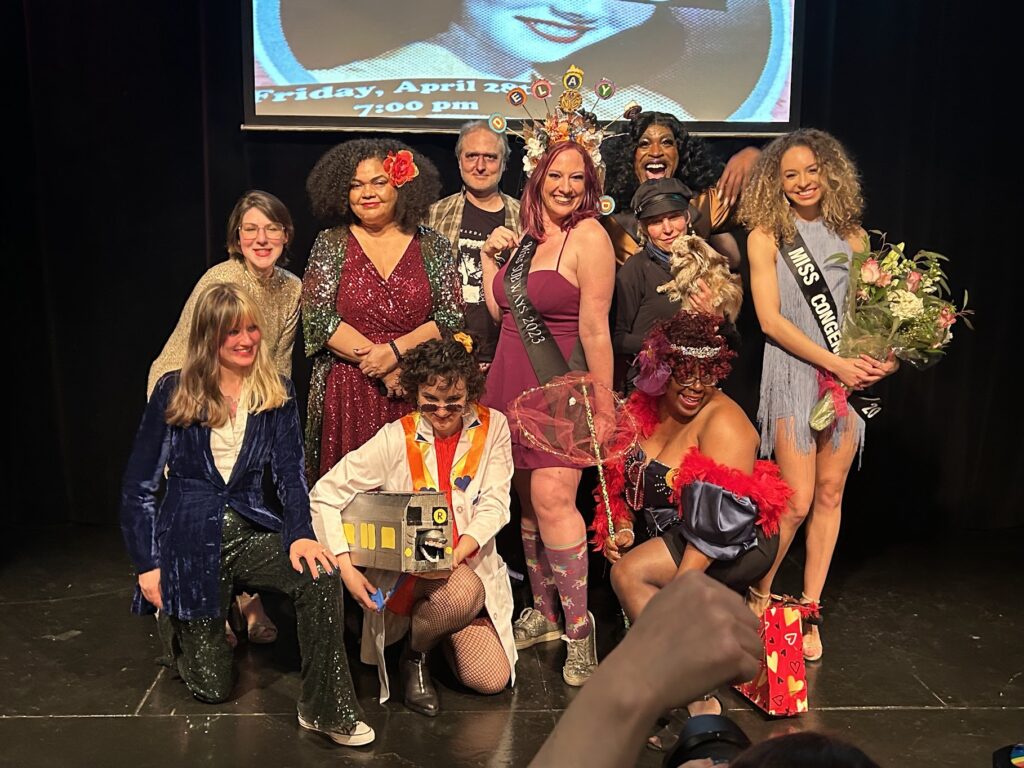
Harmony Hardcore and the contestants of the 2023 Miss Subways pageant
The glorious Maggie McMuffin
The final three contestants — Lena Horné, Chantelle and Harmony Hardcore

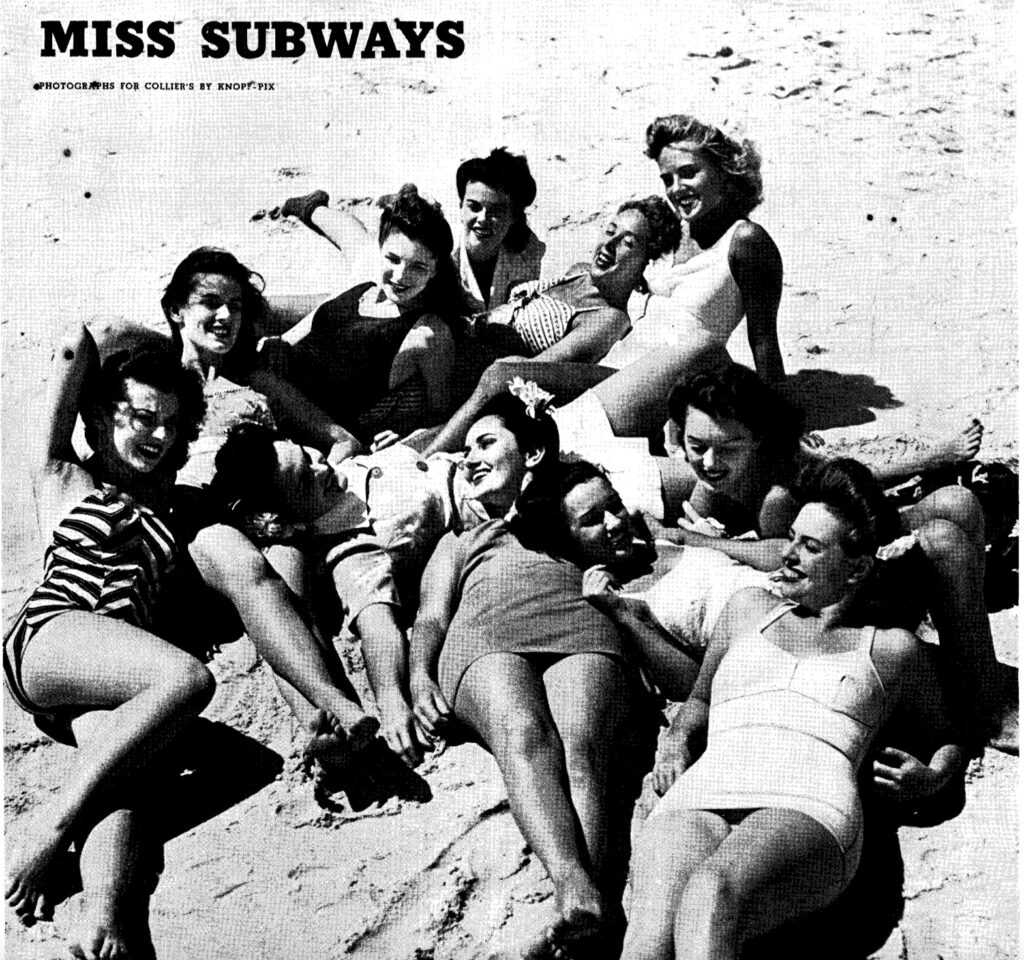
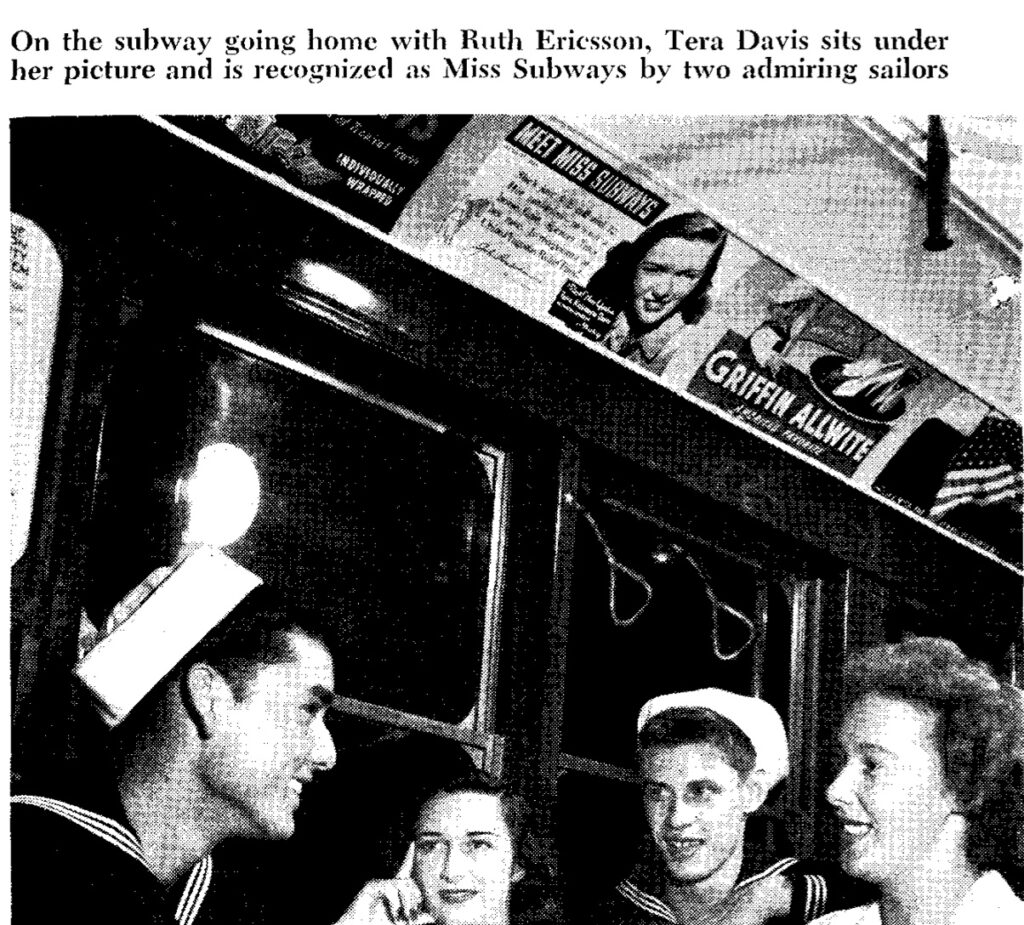
From an article in Collier’s WeeklySeptember 25, 1943, “Miss Subways: A new kind of beauty brightens the life of New York’s underground commuters,” in a photograph highly influenced by the pin-up photos of Betty Grable and other wartime beauties:
FURTHER LISTENING

After listening to this podcast, head back into our back catalog and listen to these shows with similar themes


FURTHER READING
Categories
Podcasts Politics and Protest Preservation

The History of Jefferson Market and the Women’s House of Detention

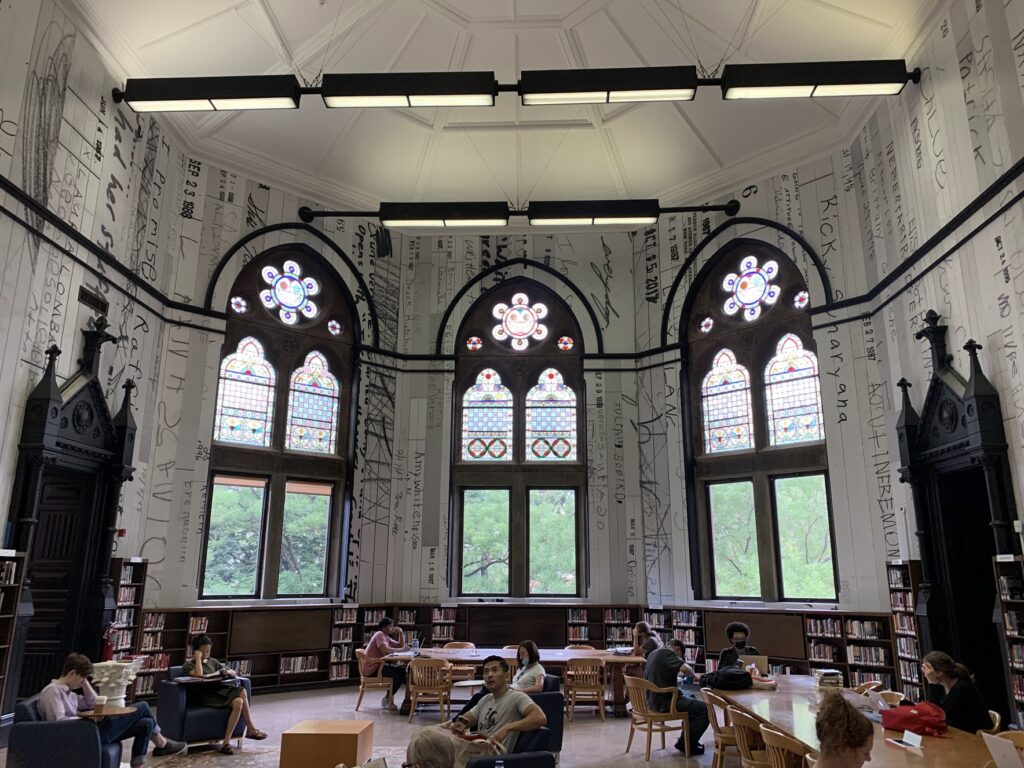
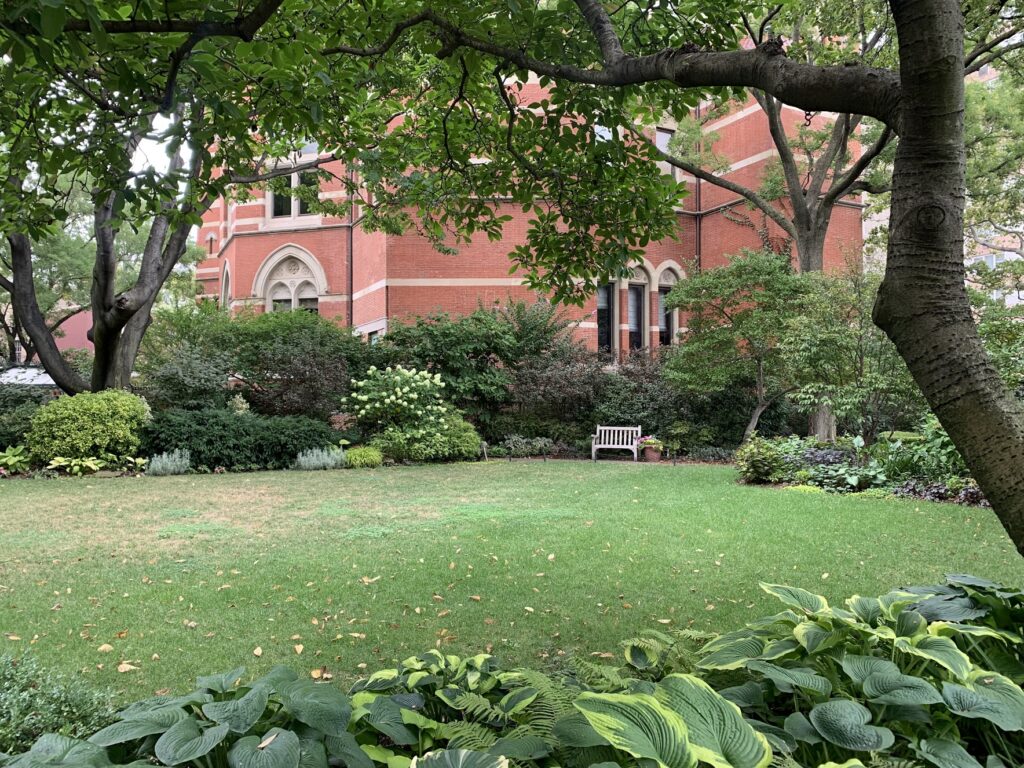
In the heart of Greenwich Village sits the Jefferson Market Library, a branch of the New York Public Library, and a beautiful garden which offers a relaxing respite from the busy neighborhood.

But a prison once rose from this very spot — more than one in fact.

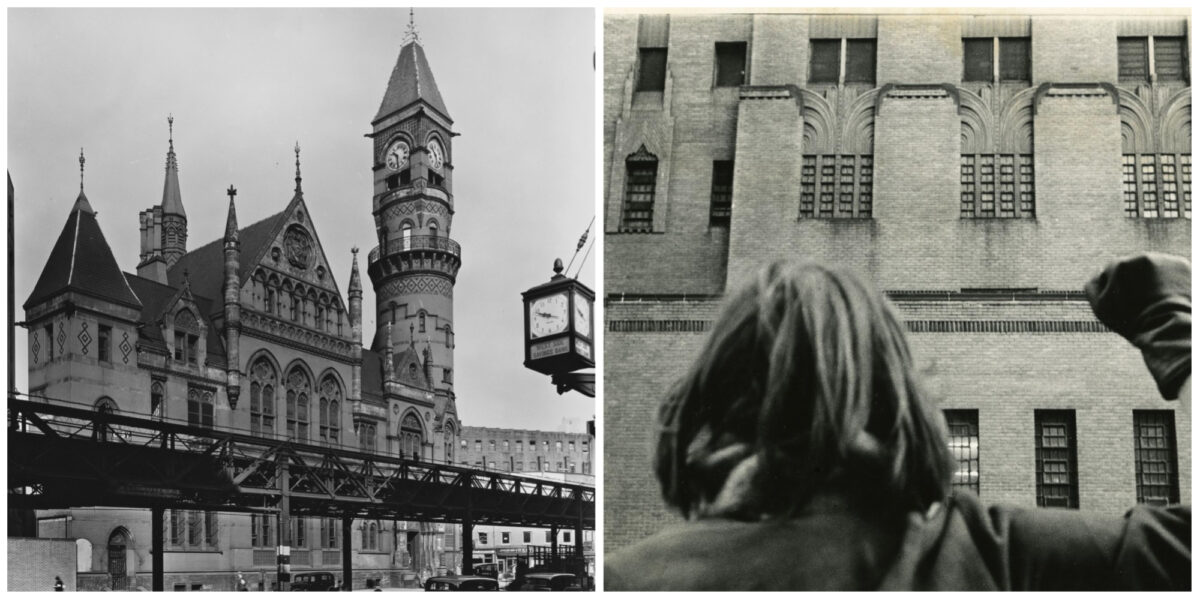
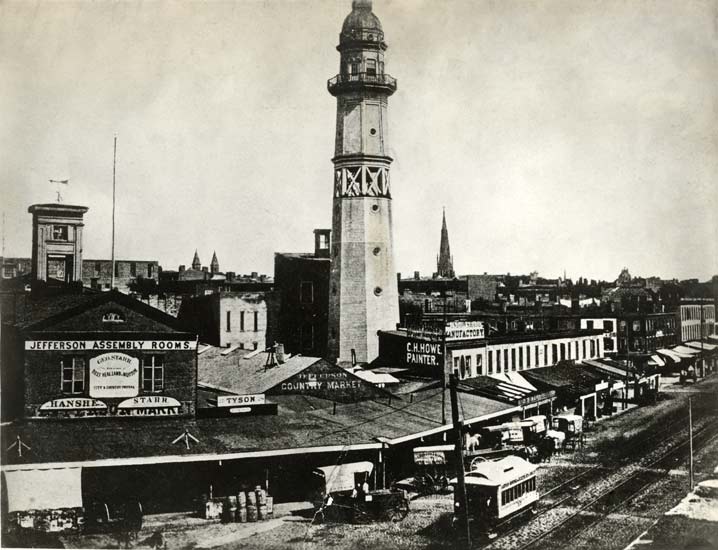
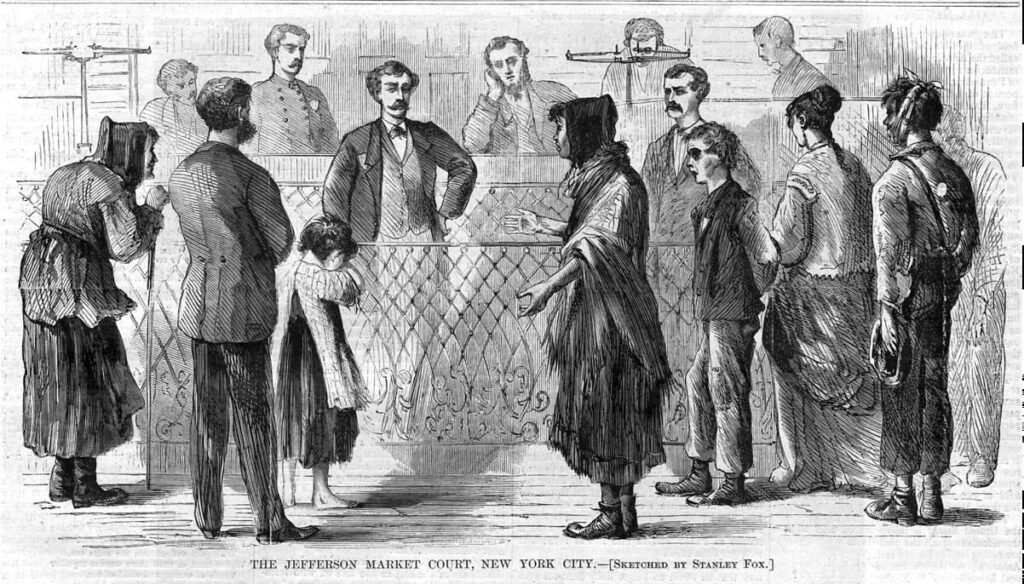
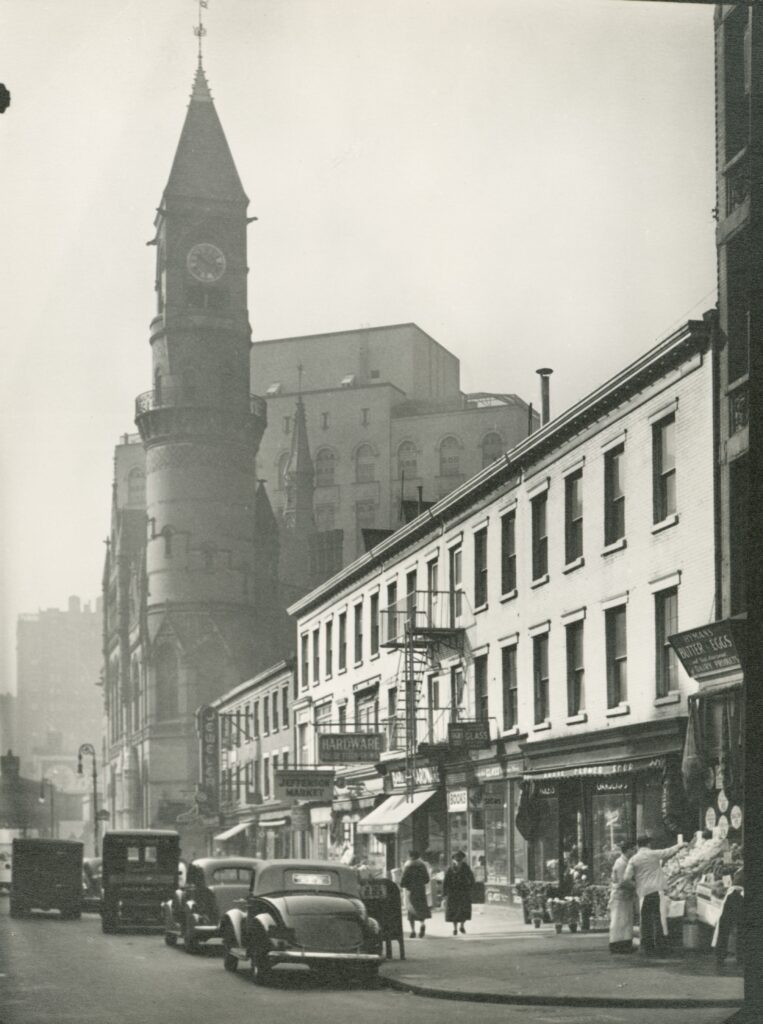
While there was indeed a market at Jefferson Market — dating back to the 1830s — this space is more notoriously known for America’s first night court (at the Jefferson Market Courthouse, site of today’s library) and the Women’s House of Detention, a facility which cast a gloom over the Village for over 40 years.

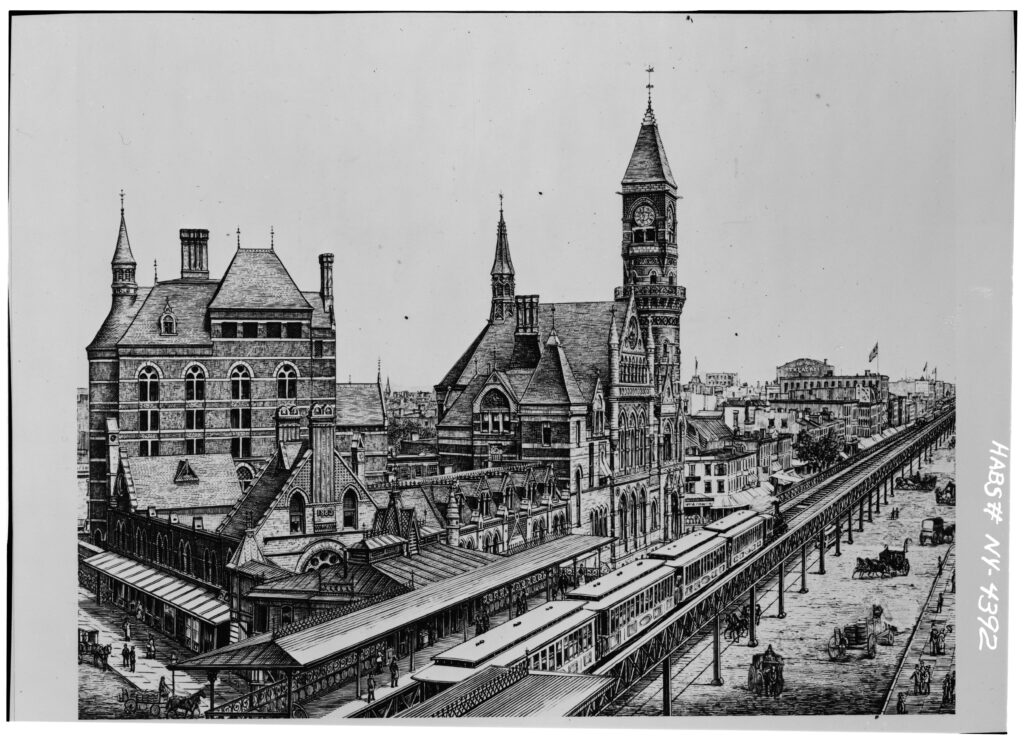
Almost immediately after the original courthouse (designed by Frederick Clarke Withers and Calvert Vaux) opened in 1877, it was quickly overburdened with people arrested in the Tenderloin district. By 1910 a women’s court opened here, and by the Jazz Age, the adjacent confinement was known as “the women’s jail.”

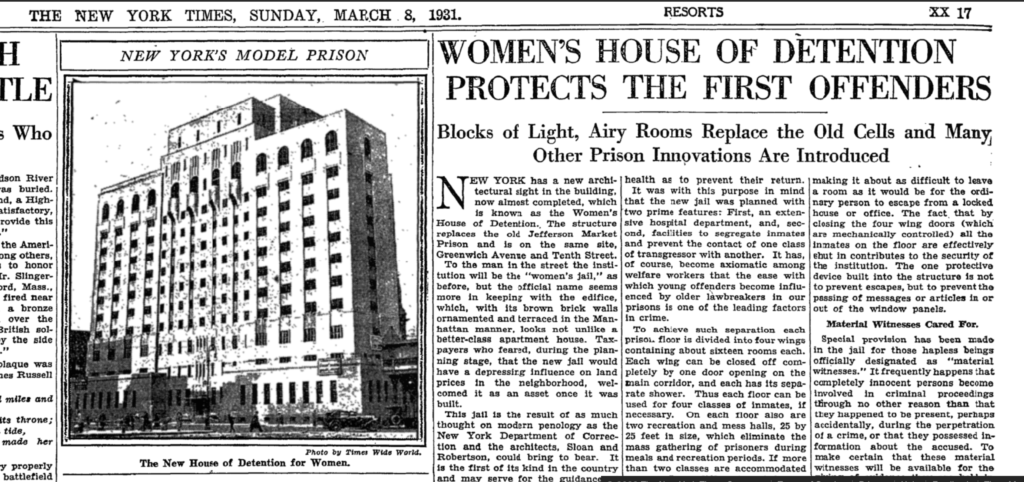
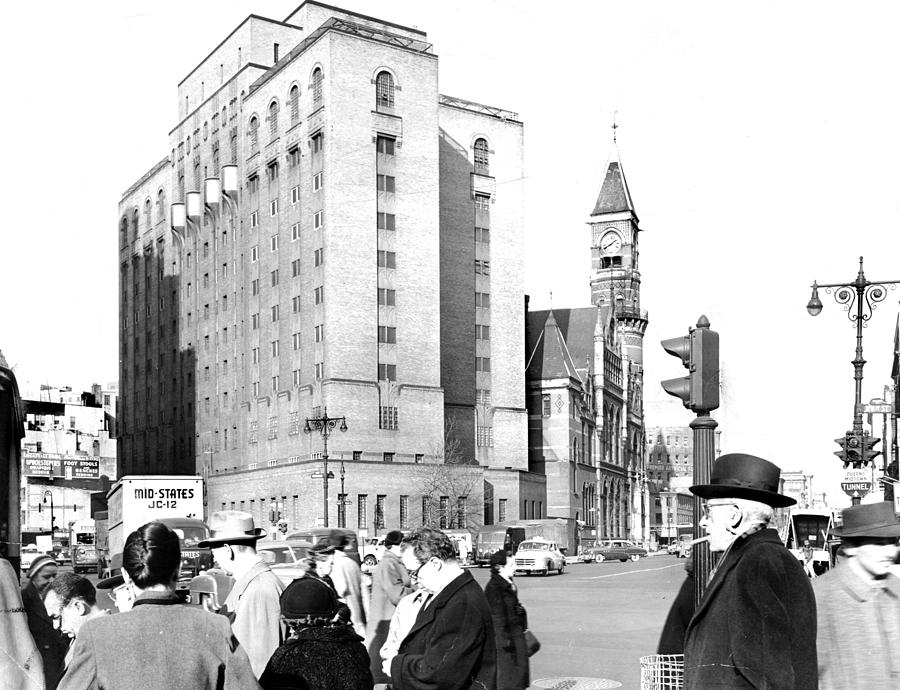
When the Women’s House of Detention opened in 1931 — sometimes referred to as the world’s only Art Deco prison — it was meant to improve the conditions for women who were held there. But the dank and inadequate containment soon became symbol of abuse and injustice.

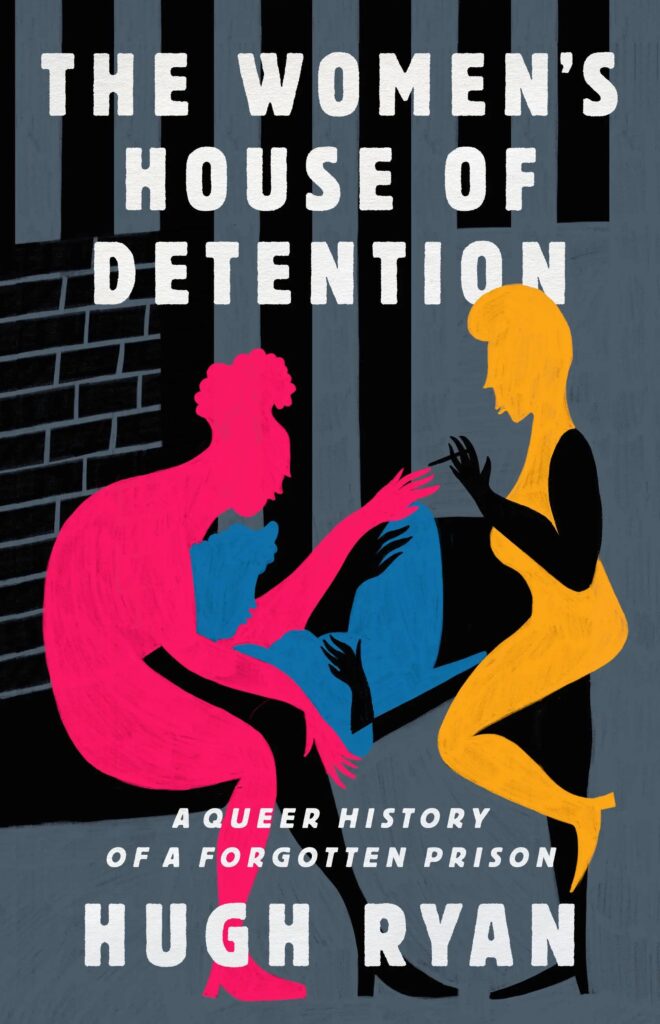
In this special episode — recorded live at Caveat on the Lower East Side — Tom and Greg are joined by Hugh Ryan, author of The Women’s House of Detention: A Queer History of a Forgotten Prison to explore the detention center’s place in both New York City history and LGBT history.

How did the “House of D” figure into the Stonewall Uprising of 1969? And what were the disturbing circumstances surrounding its eventual closure?

FEATURING: Stories of Mae West, Stanford White, Alva Belmont, Mayor Jimmy Walker, Angela Davis, Andrea Dworkin and — Tupac Shakur?

LISTEN NOW: THE HISTORY OF JEFFERSON MARKET AND THE WOMEN’S HOUSE OF DETENTION

Hugh Ryan on Patreon, Twitter and Instagram


Historic American Buildings Survey, Photocopy, c. 1880, Courtesy of New-York Historical Society,
New. York Public Library
The courtroom and House of Detention, 1938, New York Public Library
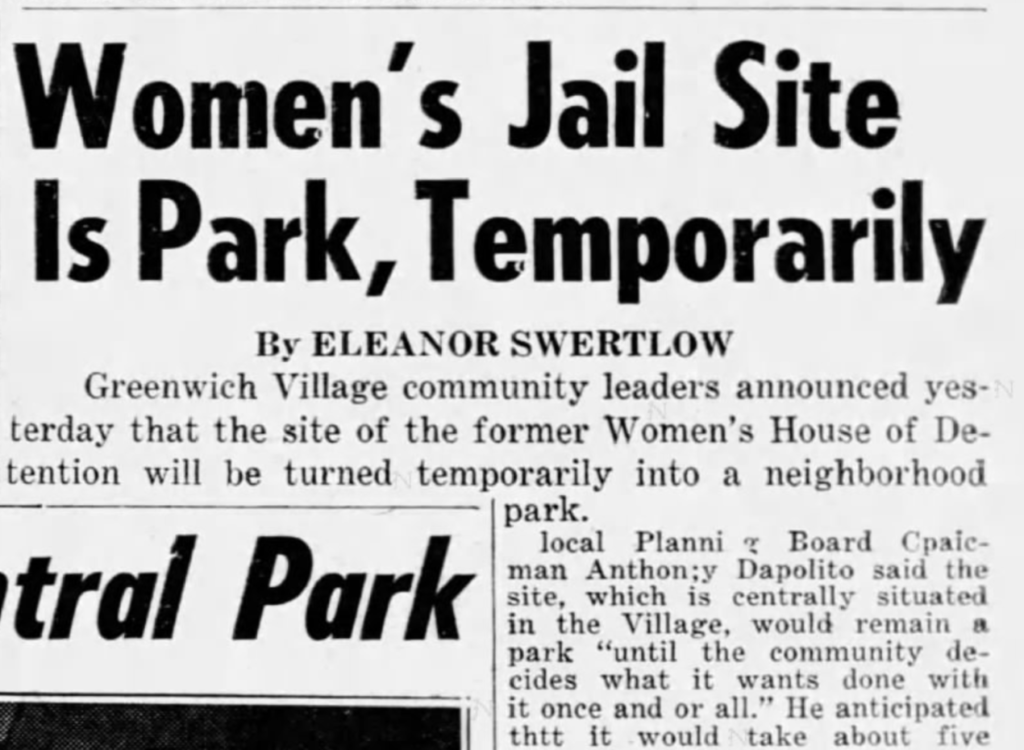
The Women’s House of Detention. Courtesy the New York Daily News Archives
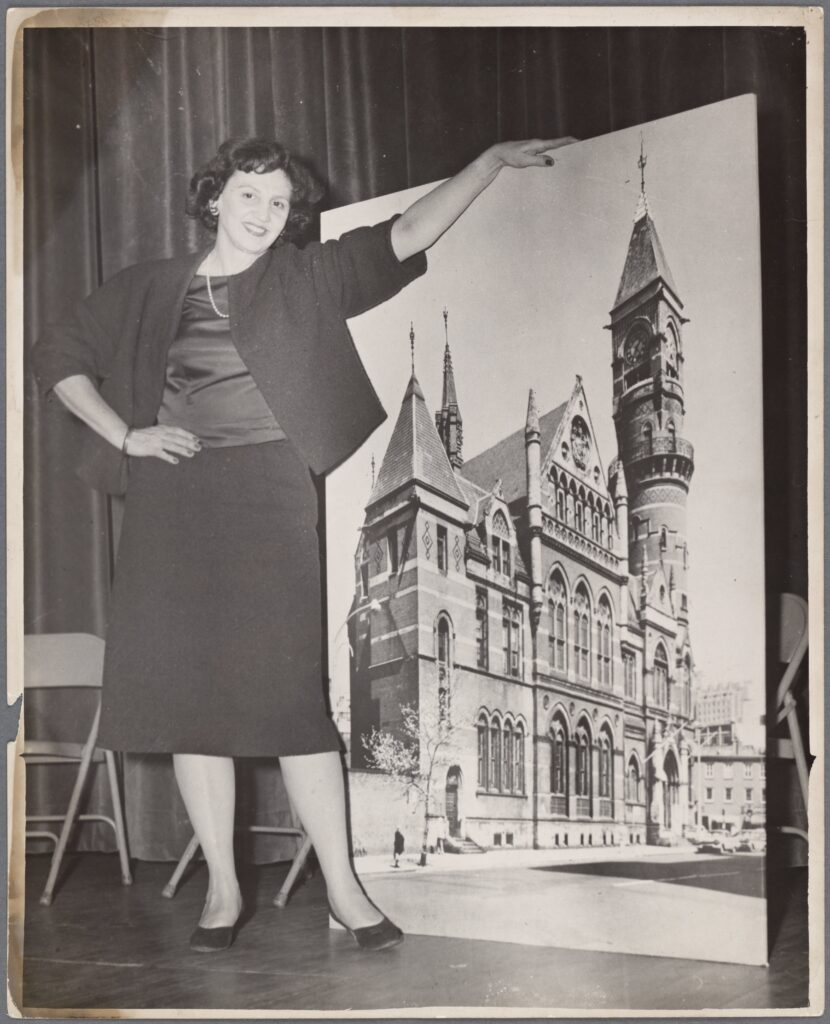
Margot Gayle with an image of the building she would help save. New York Public Library Digital Collections

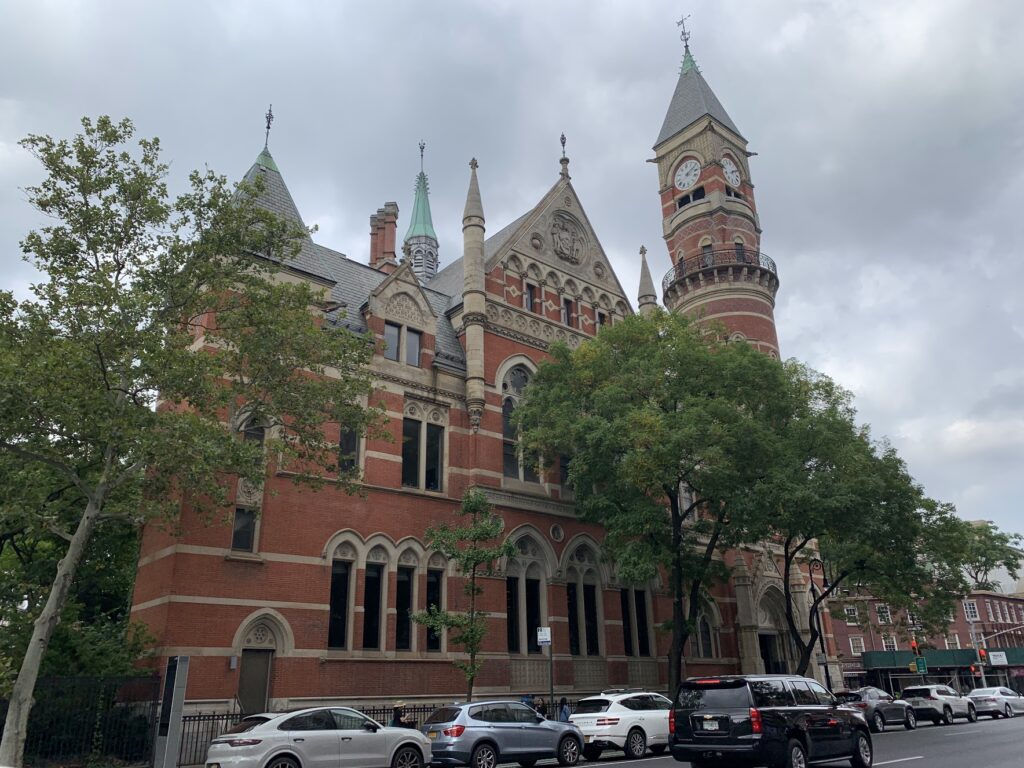
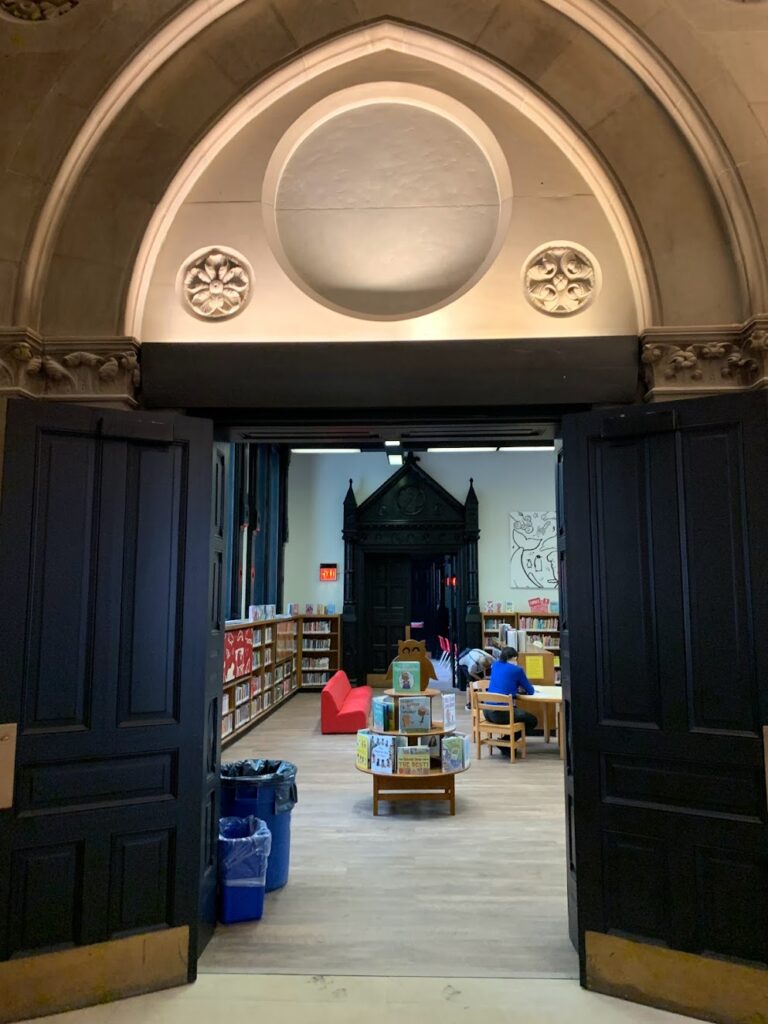
Photos of the current Jefferson Market Library

Photo by Greg Young
Photo by Greg Young
Photo by Greg Young

FURTHER LISTENING
The subjects of these episodes are featured on this week’s episode. So check them out after listening to the current show:


The Bowery Boys: New York City History podcast is brought to you …. by you!

We are producing a new Bowery Boys podcast every other week. We’re also looking to improve and expand the show in other ways — publishing, social media, live events and other forms of media. But we can only do this with your help!

We are creators on Patreon, a patronage platform where you can support your favorite content creators.

Please visit our page on Patreon and watch a short video of us recording the show and talking about our expansion plans. If you’d like to help out, there are several different pledge levels. Check them out and consider being a sponsor.

We greatly appreciate our listeners and readers and thank you for joining us on this journey so far.

Categories
American History Bowery Boys Bookshelf

‘An Open Secret’: A gay life in Jazz Age Chicago

Robert Allerton lived without a care thanks to his family’s Gilded Age fortune, built from the stockyards of Chicago’s meat processing district. As a young man, Allerton used his inherited wealth to maintain the family estate near Monticello, Illinois, cultivating a garden escape where he could be left to his own devices.

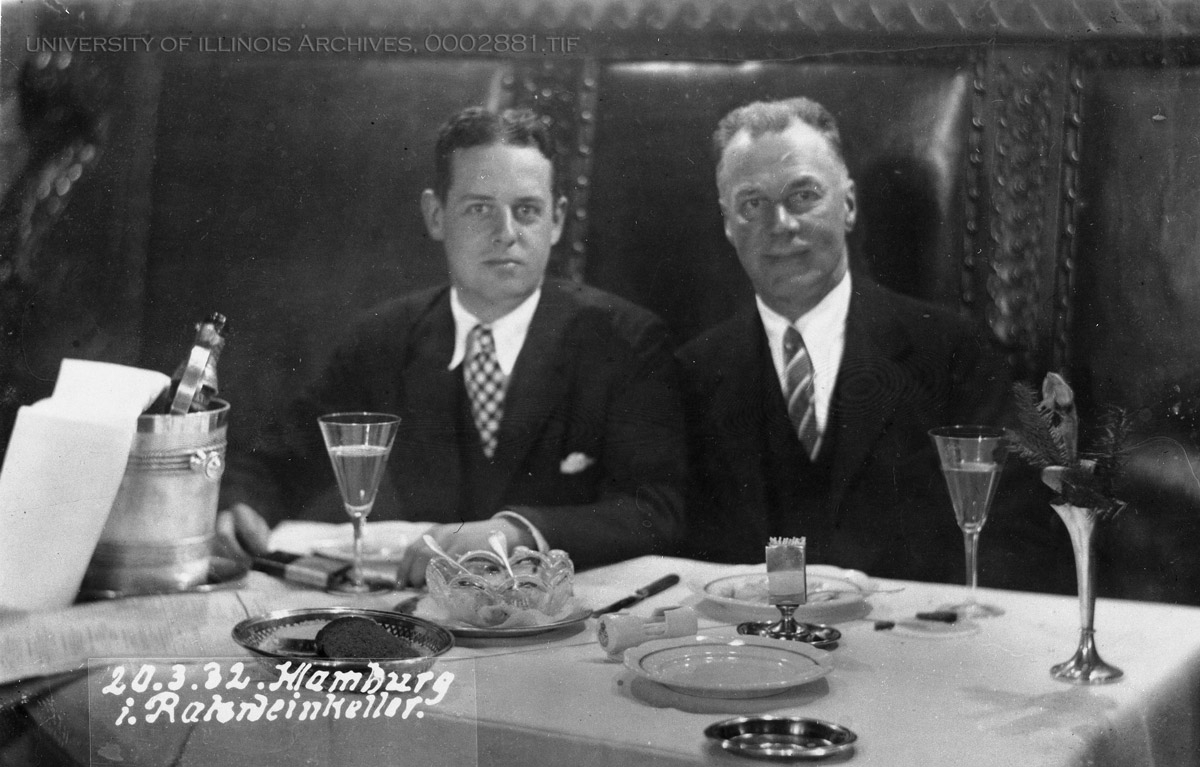
And then, in 1922, he met a handsome college student named John Gregg. They were separated in age by 26 years. They fell in love.

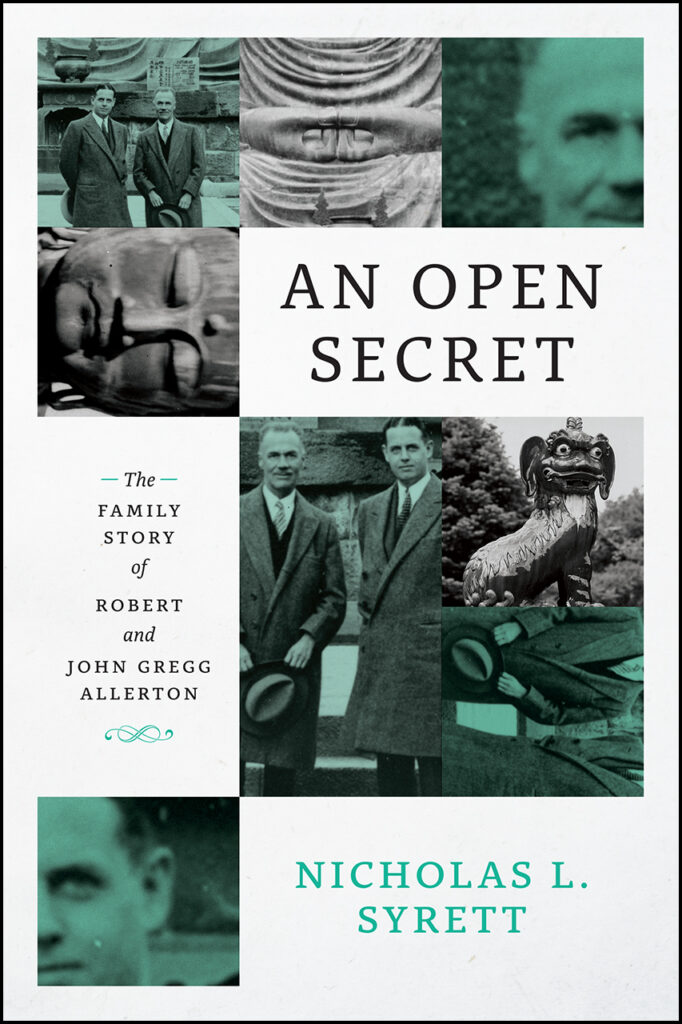
AN OPEN SECRET
The Family Story of Robert and John Gregg Allerton
Nicholas L. Syrett
University of Chicago Press

In An Open Secret, author Nicholas Syrett takes the reader into a maze of social norms redefined by the comforts of wealth and a collection of personal mysteries as well-kept as a display case of ancient art.

Robert Allerton is not an obscure figure. A building at the Art Institute of Chicago (one of America’s greatest art museums) is named for Allerton, one of Chicago’s great art collectors. And his estate on the island of Kaua’i is today a part of Hawaii’s National Tropical Botanical Garden.

But the parameters of Allerton’s personal life might be considered obscured today — concealed by the polite vestiges of post-Gilded Age social decorum, cushioned by the privilege of his vast wealth.

Or should I say — their vast wealth. Robert and John Gregg traveled the world together, living as a same-sex couple at a time when such romantic pairings were never seen or accepted.

They managed this unconventional life thanks to an intricate pantomime fueled by Allerton’s financial advantages and the vast age difference between the two men.

“By 1931,” writes Syrett, “the [Chicago] Tribune reported on the two traveling together, but the language of their relationship had become solidified as father and son, despite the fact that it was not legally so.”

They encouraged such language and eventually took it on themselves as a means to negotiate social spheres that would have otherwise shunned them.

“Calling John Gregg his son was a way of not talking about his actual role in Allerton’s life; even if Gregg’s relationship with Allerton was an open secret, calling him son allowed friends and acquaintances to avoid the awkwardness of having to discuss who he really was with Allerton.”

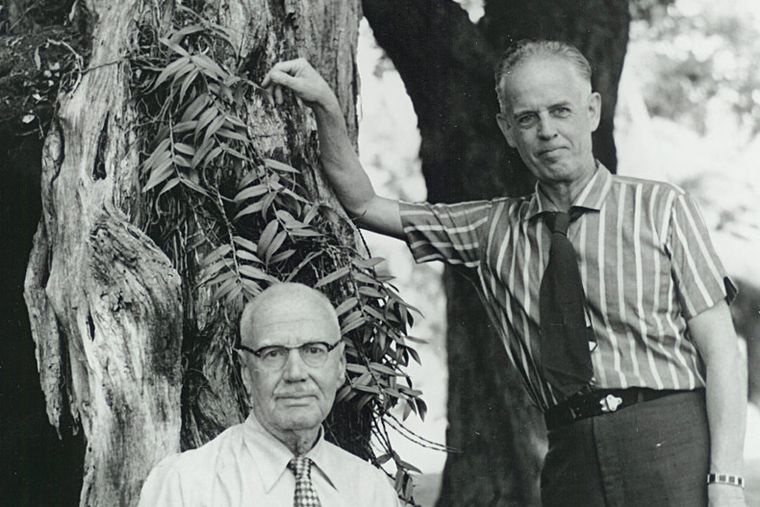
Robert and John Gregg Allerton in Hawaii, University of Illinois Archives

In 1960, near the end of elder man’s life, the pair made their charade official. John Gregg officially became John Gregg Allerton, the adopted son of Robert Allerton.

An Open Secret, with its daunting task of uncovering the secret world of two men who never left each other’s side (thus leaving no personal correspondence), succeeds as an x-ray into the procedures of living a closeted wealthy life, where clues of personal connections are scattered among the hydrangeas and exotic ornaments.


If the author’s name Nicholas Syrett sounds familiar to you, that’s because the author has been on our show! You can find him in our episode on Madame Restell, the ‘notorious’ abortionist of Fifth Avenue. Look for Syrett’s book on the life of Restell coming soon.

Categories
It's Showtime Long Island Podcasts Pride Collection

The Very Gay History of Fire Island

How did one particular summer settlement on Fire Island become a ‘safe haven’ for gay men and lesbians almost ninety years ago, decades before the uprising at Stonewall Inn?

This is the third and final part of the Bowery Boys Road Trip to Long Island. (Check out the first part on Gatsby and the Gold Coast and the second part on Jones Beach.)

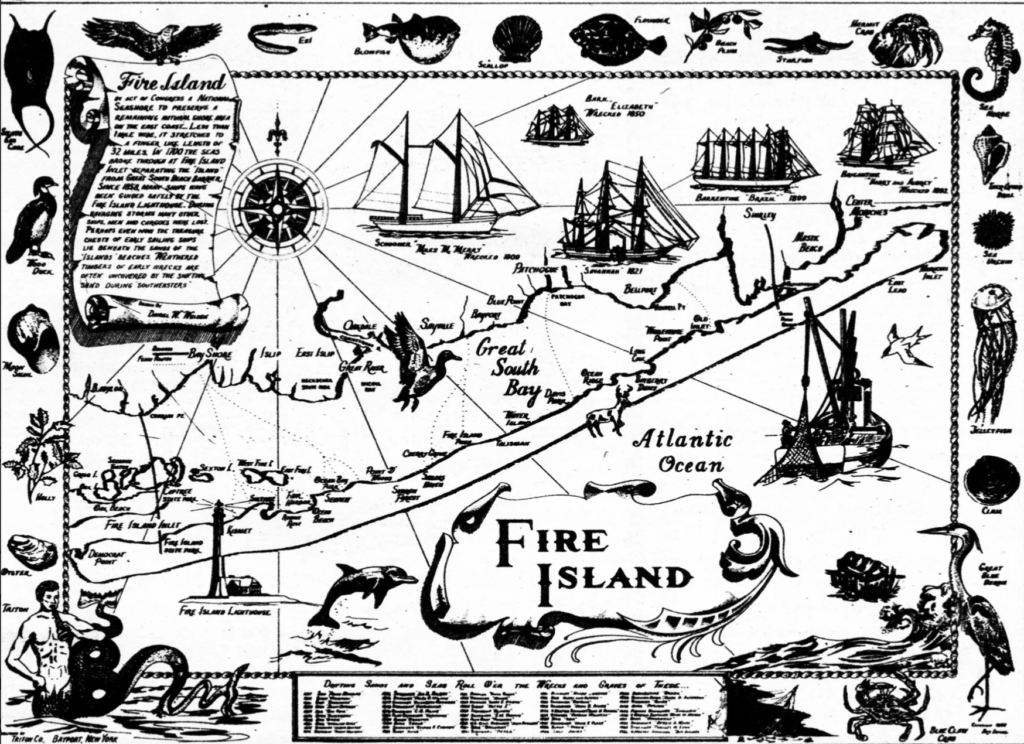
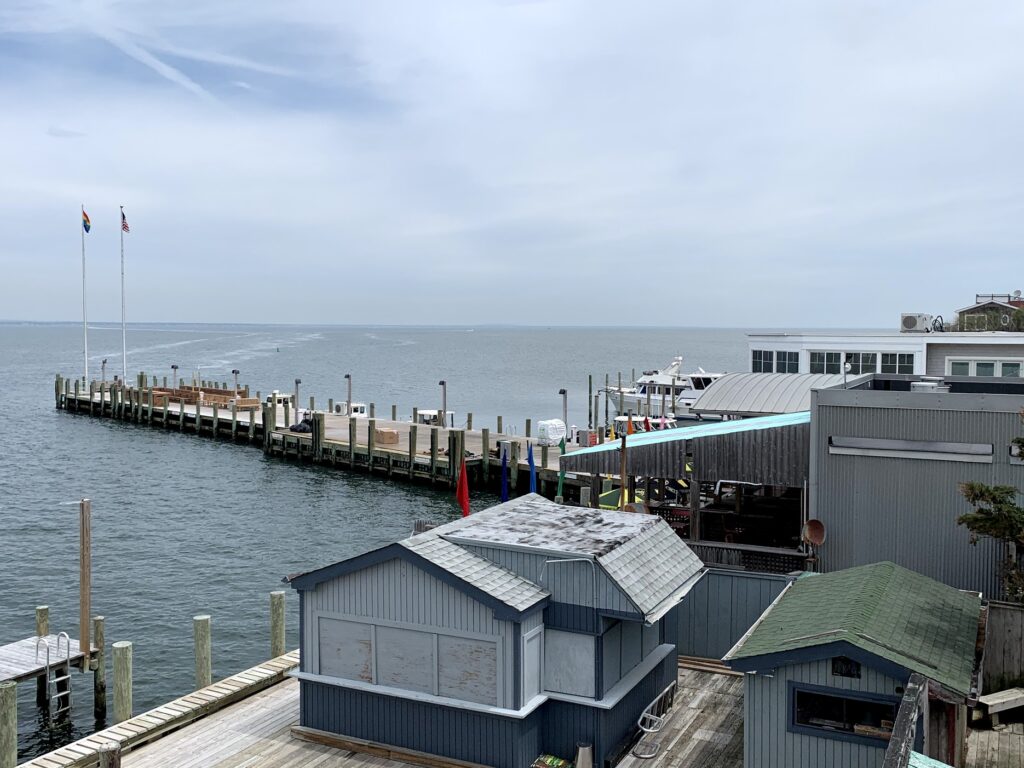
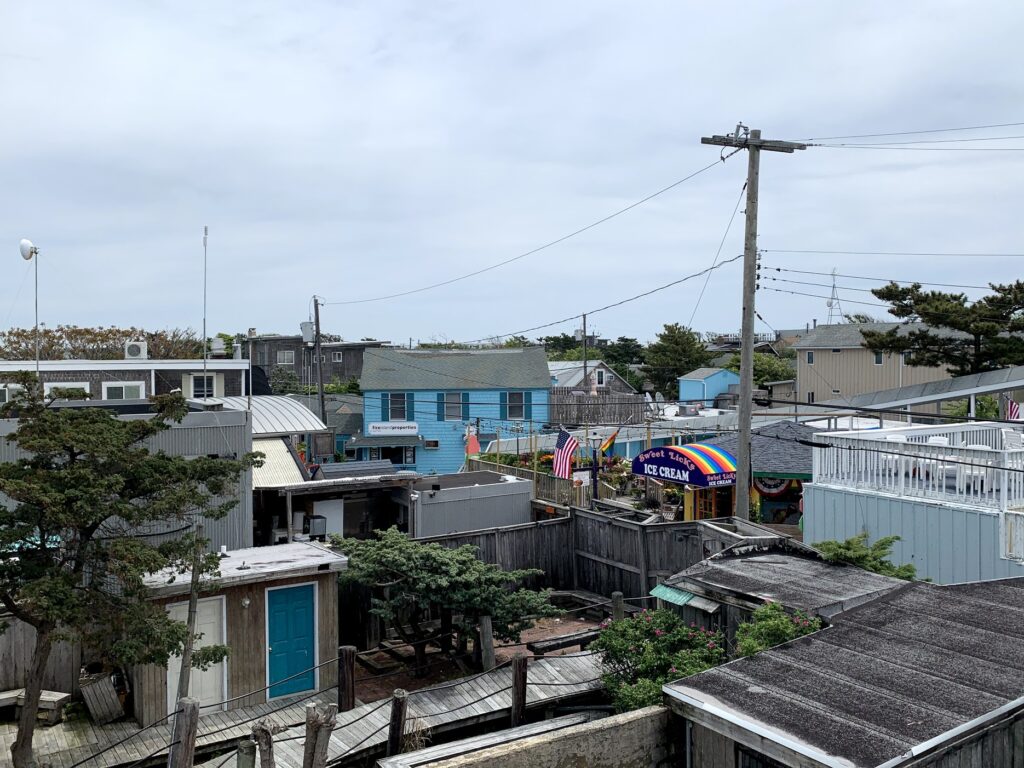
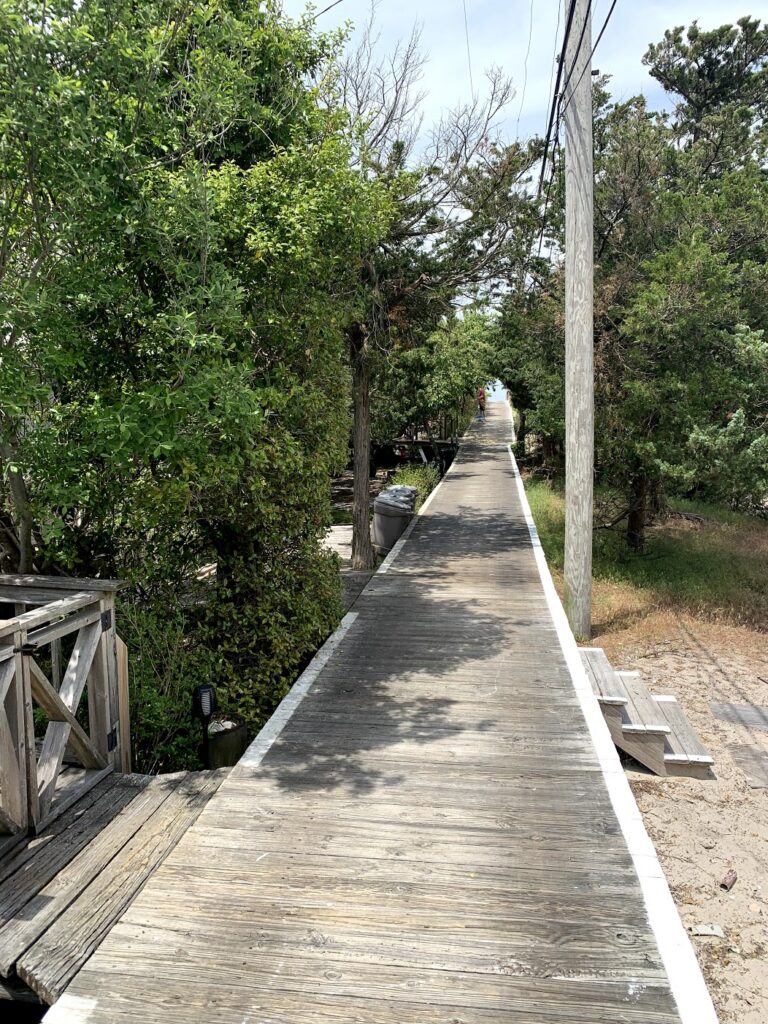
Fire Island is one of New York state’s most attractive summer getaways, a thin barrier island on the Atlantic Ocean lined with seaside villages and hamlets, linked by boardwalks, sandy beaches, natural dunes and water taxis. (And, for the most part, no automobiles.)

But Fire Island has a very special place in American LGBT history.

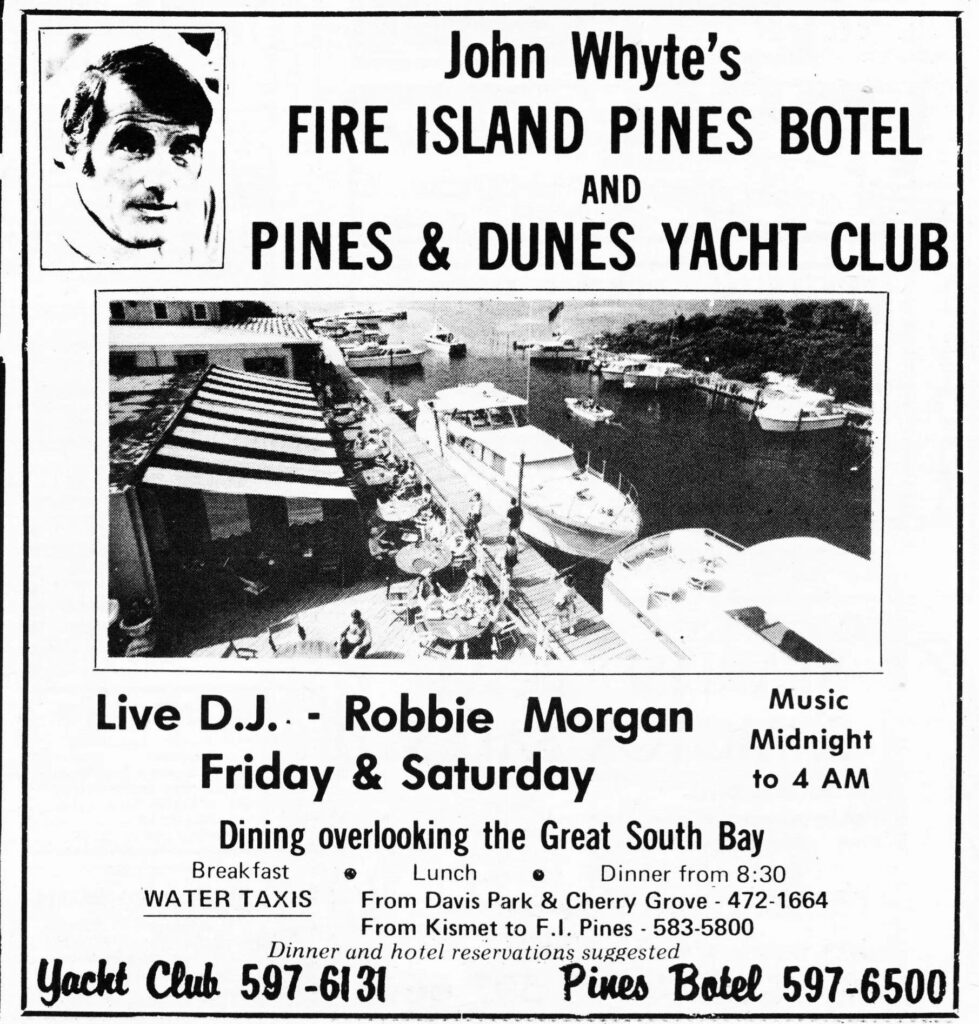
It is the site of one of the oldest gay and lesbian communities in the United States, situated within two neighboring hamlets — Cherry Grove and the Fire Island Pines.

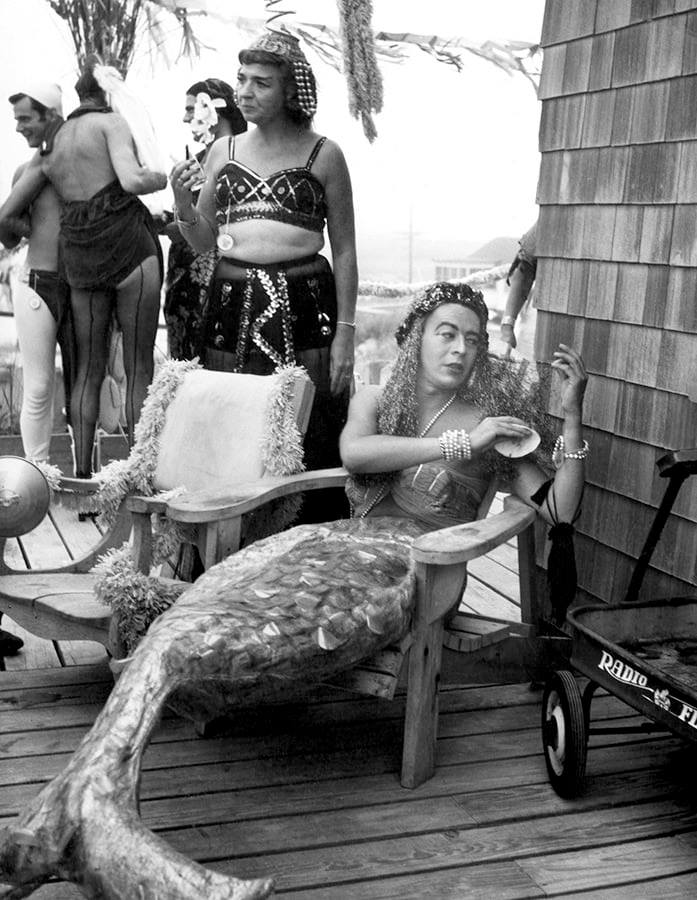
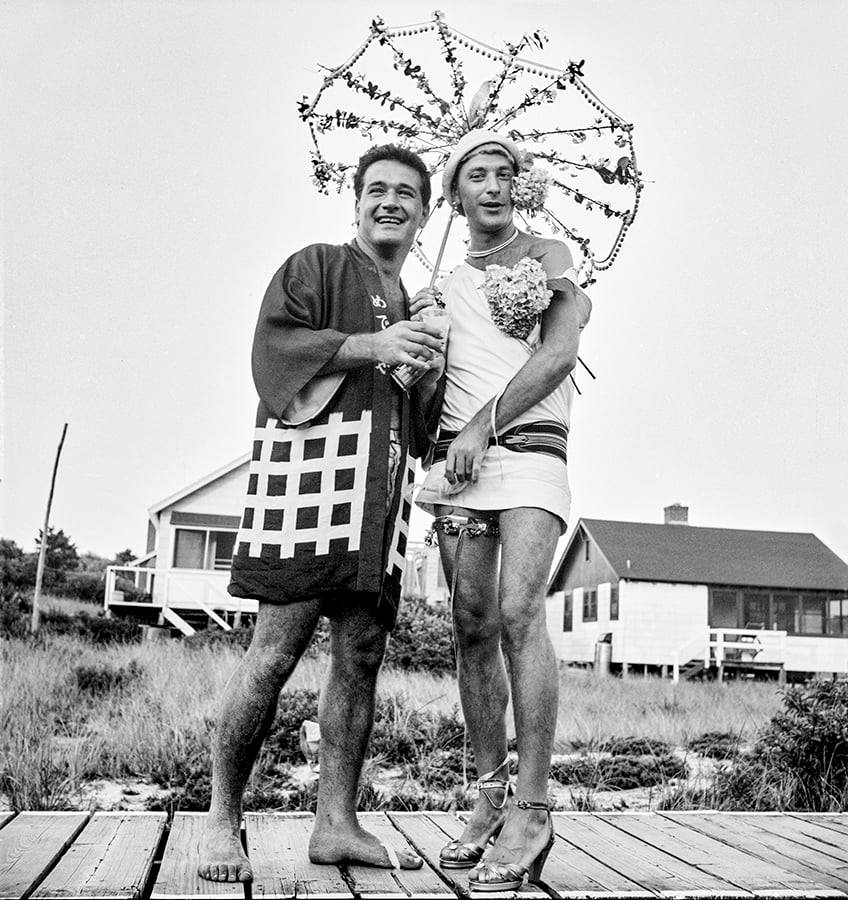
During the 1930s actors, writers and craftspeople from the New York theatrical world began heading to Cherry Grove, its remote and rustic qualities allowing for gay and lesbians to express themselves freely — far away from a world that rejected and persecuted them. 

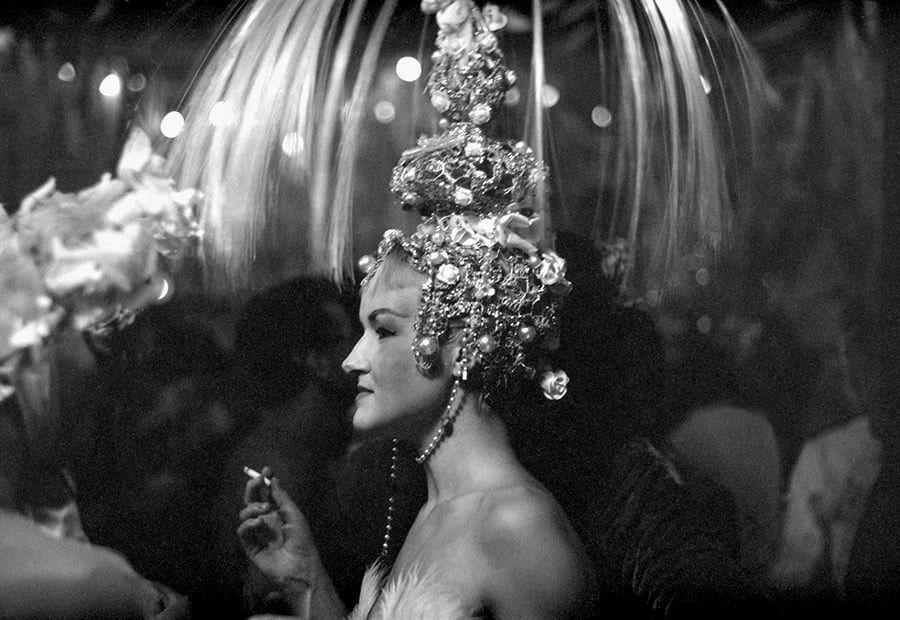
Performers at the Grove’s Community House and Theatre helped define camp culture, paving the way for the modern drag scene.

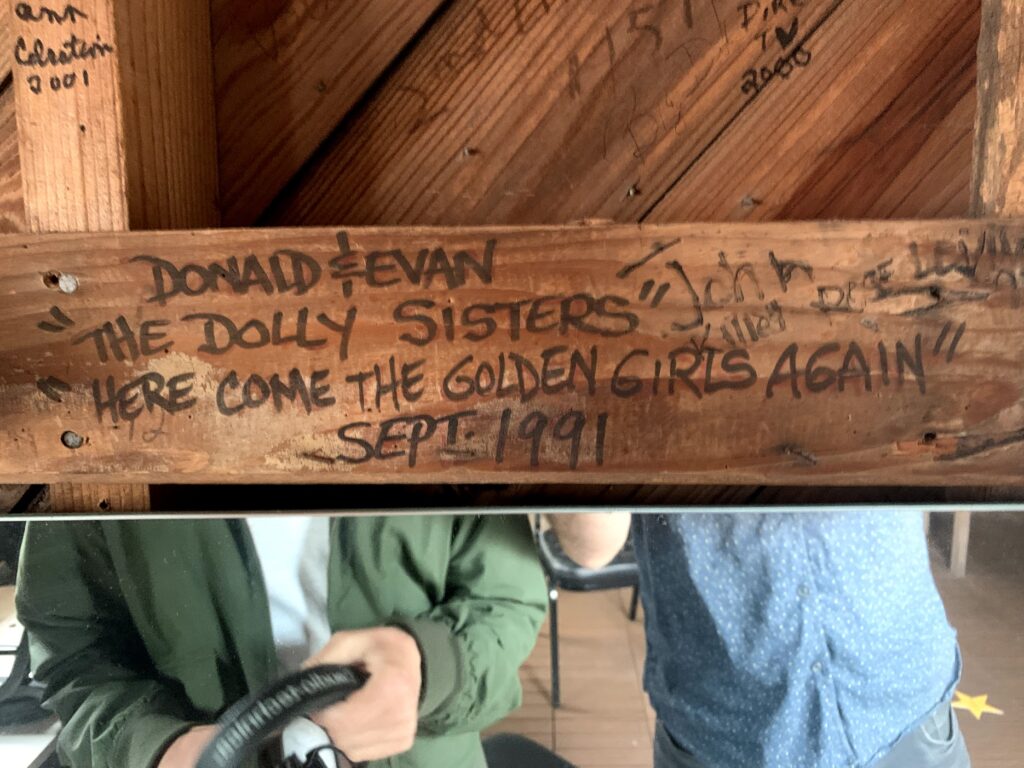
In this episode, Greg and Tom head to Cherry Grove — and the Community House and Theater — to get a closer look at Fire Island’s unique role in the American LGBT experience.

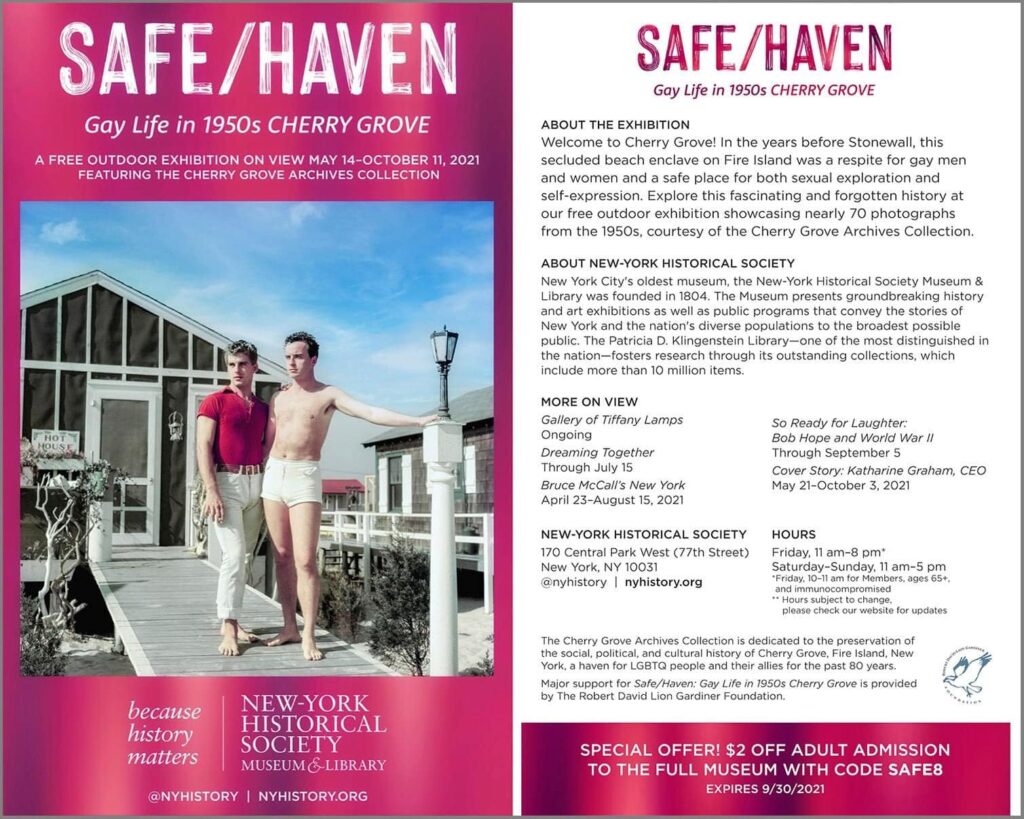
And they are joined by Parker Sargent, a documentary filmmaker and one of the curators of Safe Haven: Gay Life in 1950s Cherry Grove, a new exhibition at the New-York Historical Society, highlighting photography from the collection of the Cherry Grove Archives Collection.

FEATURING: The Great Hurricane of 1938! The Invasion of the Pines! The indescribable Belvedere! And the surprising origin of Fire Island’s name.

Listen Now: The Very Gay History of Fire Island


The Official Bowery Boys
Fire Island Playlist

Your soundtrack for the summer — whether you’re on Fire Island or just want to relive a retro experience from Cherry Grove or The Pines. Here’s a collection of songs inspired by our podcast on the history of Fire Island.

Find it on Spotify or listen to it from here.


Our big thanks to Parker Sargent from the Cherry Grove Archives Collection for joining us on the show this week and giving us such a marvelous tour of the Community House and Theatre.

Go see the show Safe/Haven: Gay Life in 1950s Cherry Grove at the New-York Historical Society. Details here.


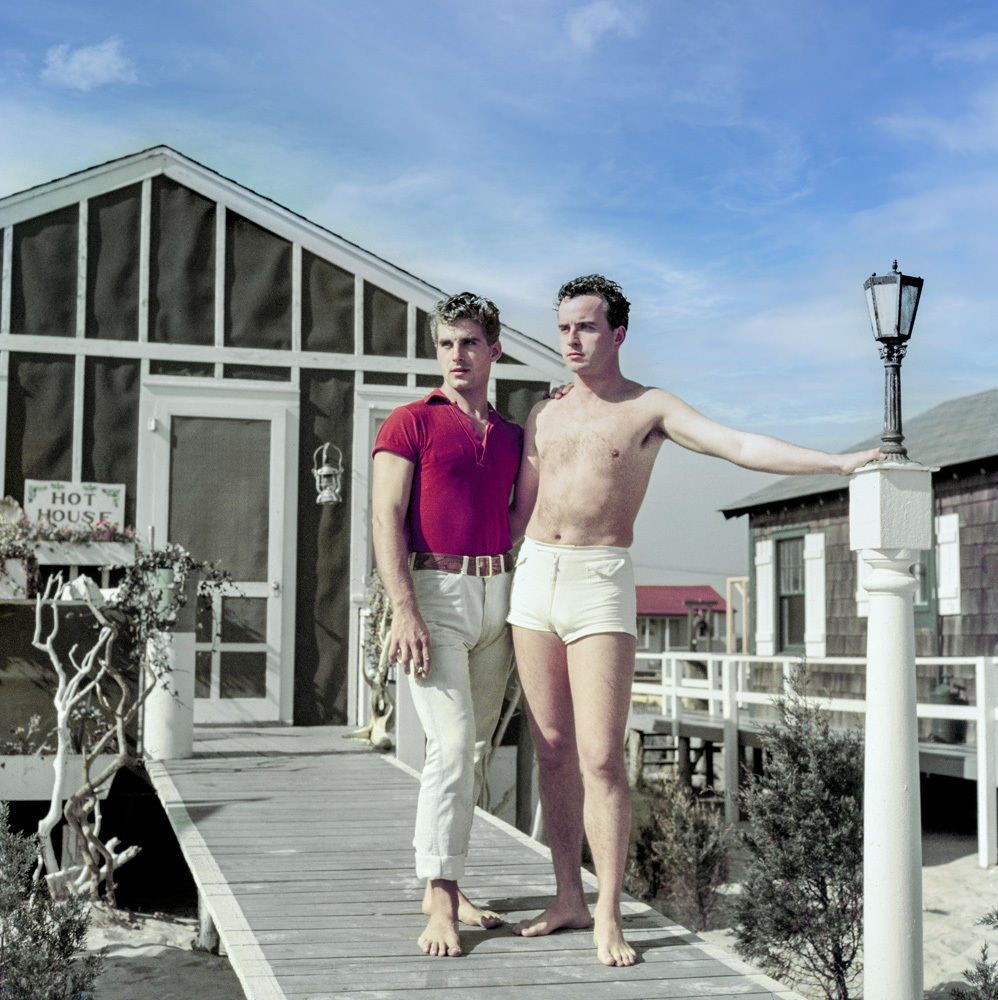
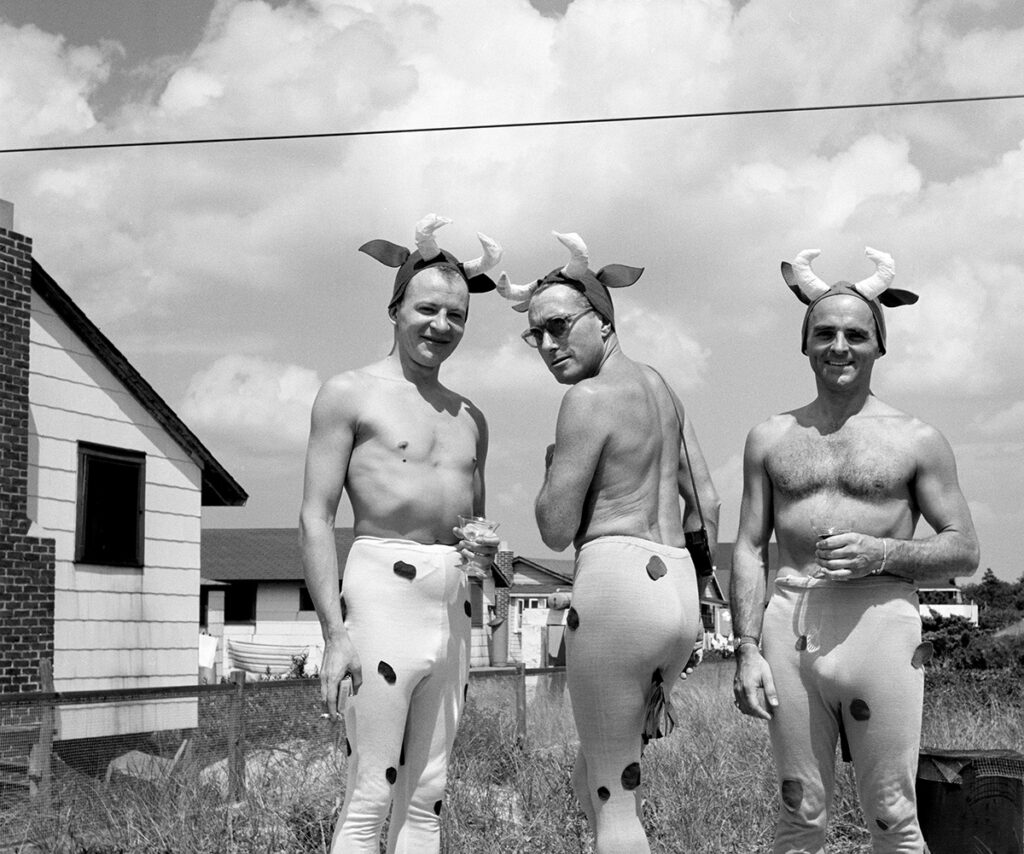
Images courtesy the Cherry Grove Archives Collection, taken by the men and women of Cherry Grove in the 1950s:

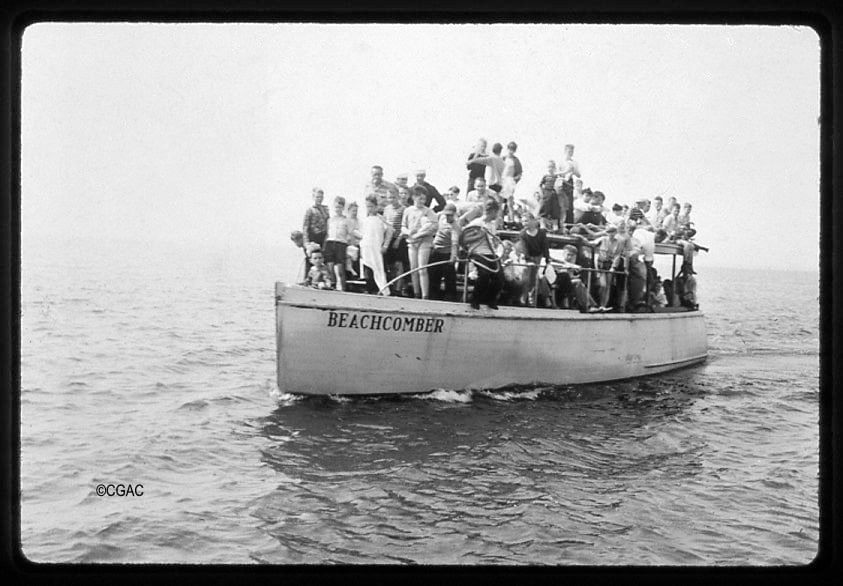
The Beachcomber, 1950s ferry to Cherry Grove. Photographer unknown. Cherry Grove Archives Collection

A few images from the exhibition, courtesy the Cherry Grove Archives Collection:

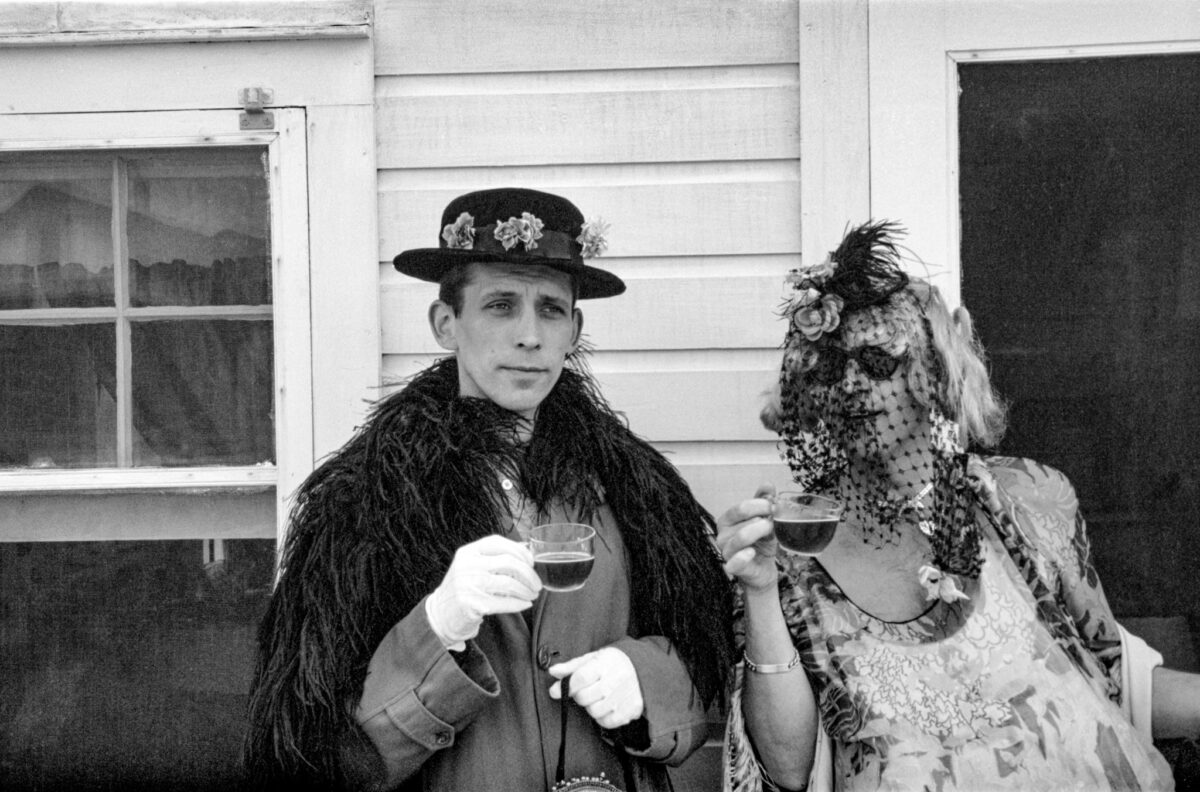
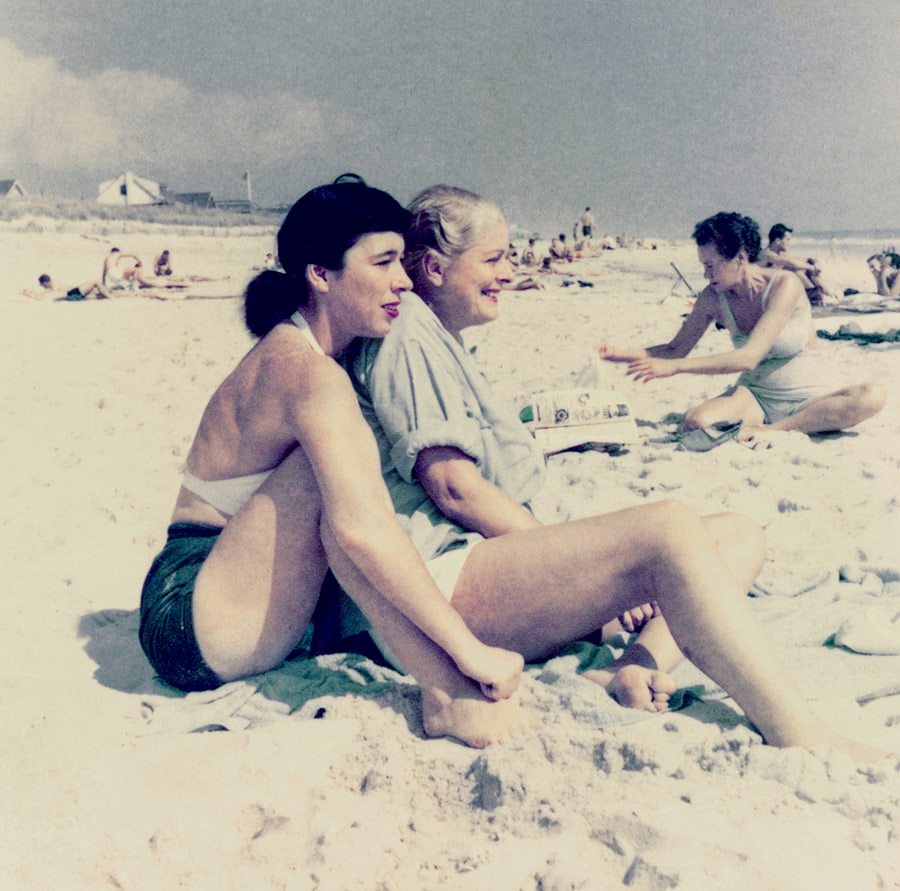
Patricia Fitzgerald & Kay Guinness, Cherry Grove Beach, September 1952

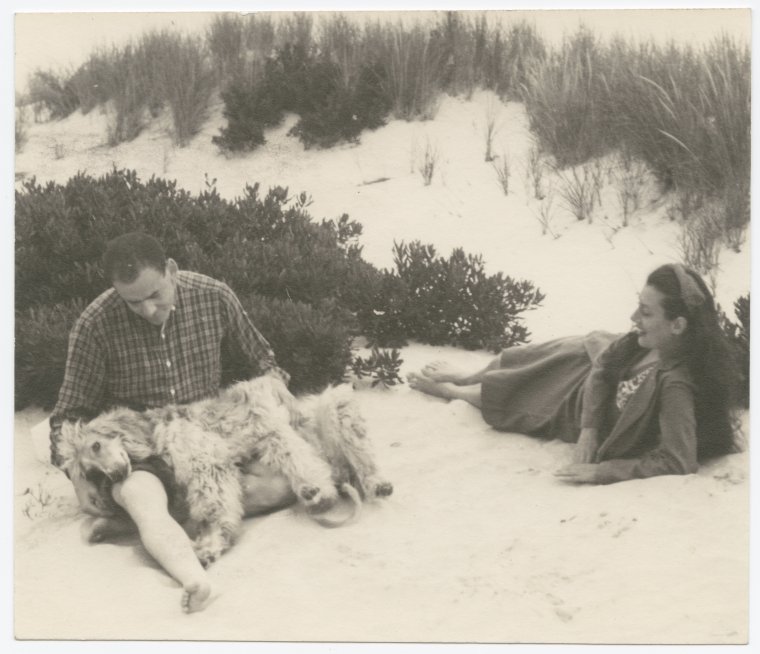
Lincoln Kirstein and Fidelma Cadmus with dog on Fire Island, 1952. New York Public Library
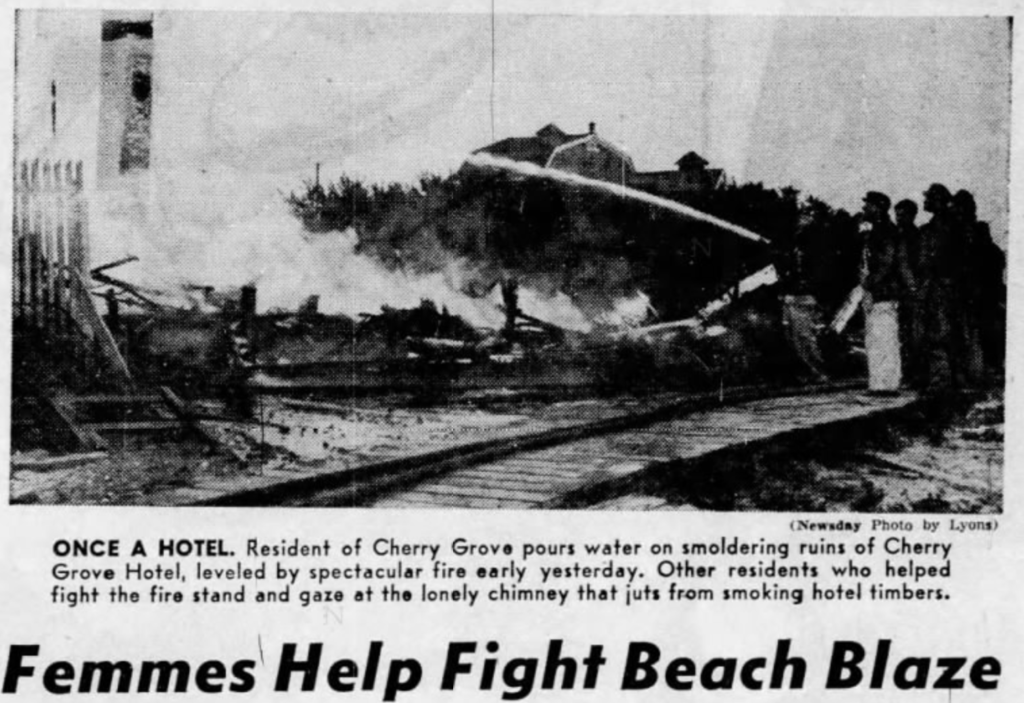
Newsday, September 28, 1956
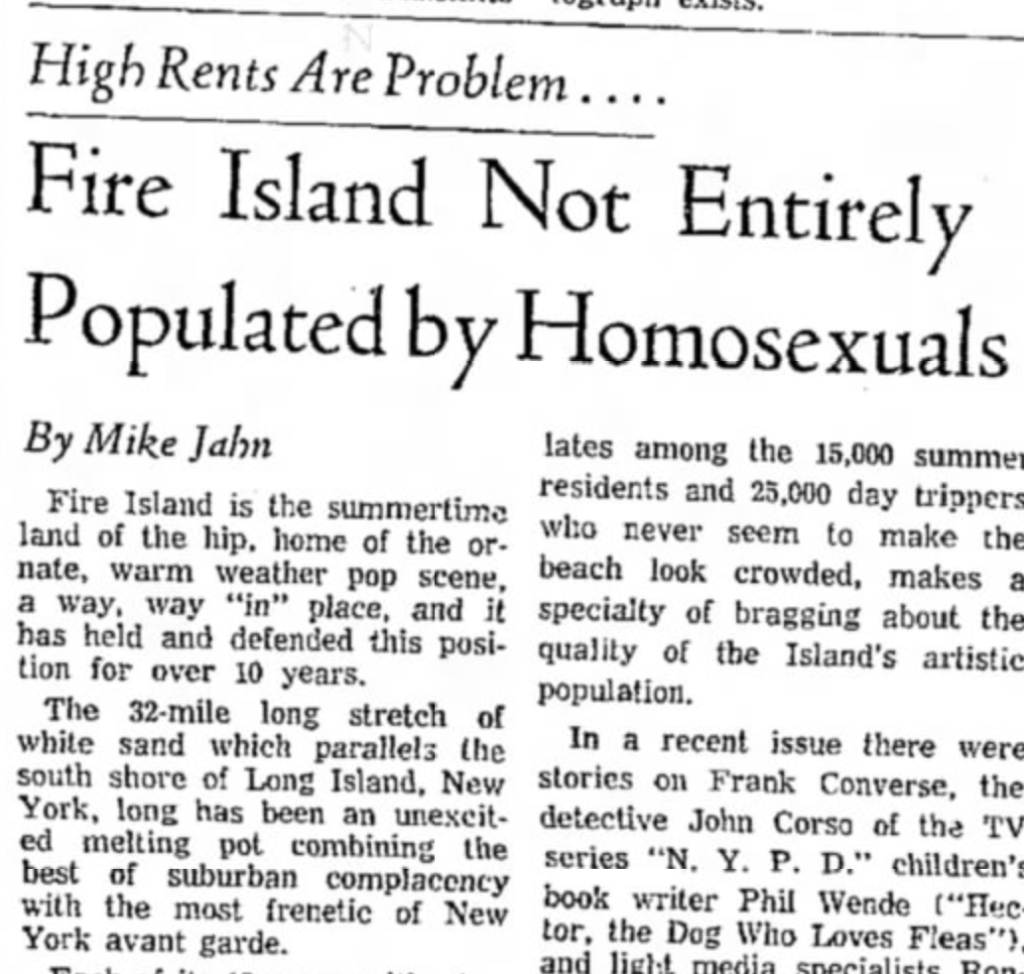
The Emporia Gazette, June 1968
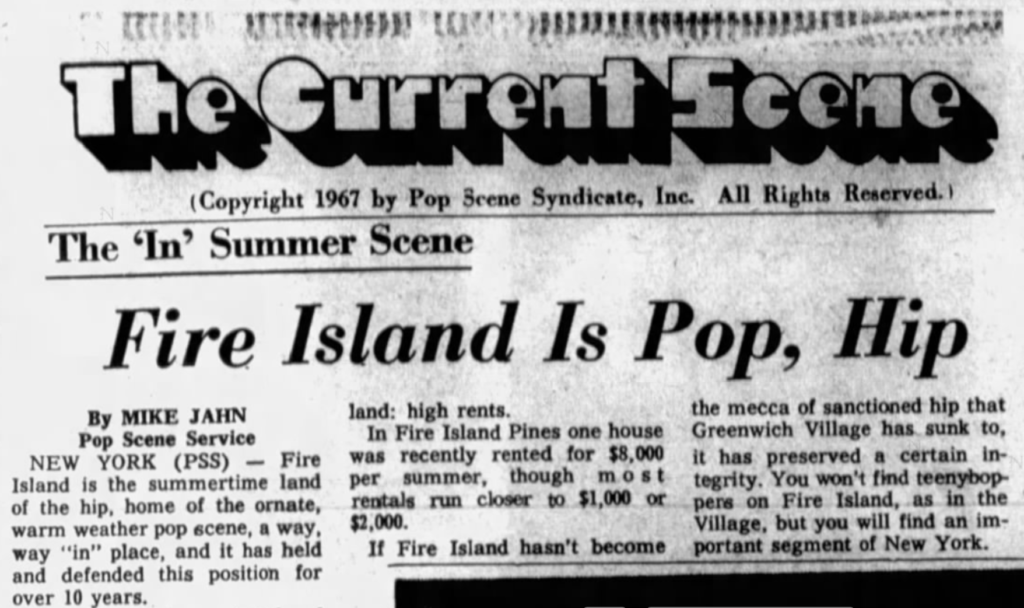
Then Tribune from Scranton, July 1968

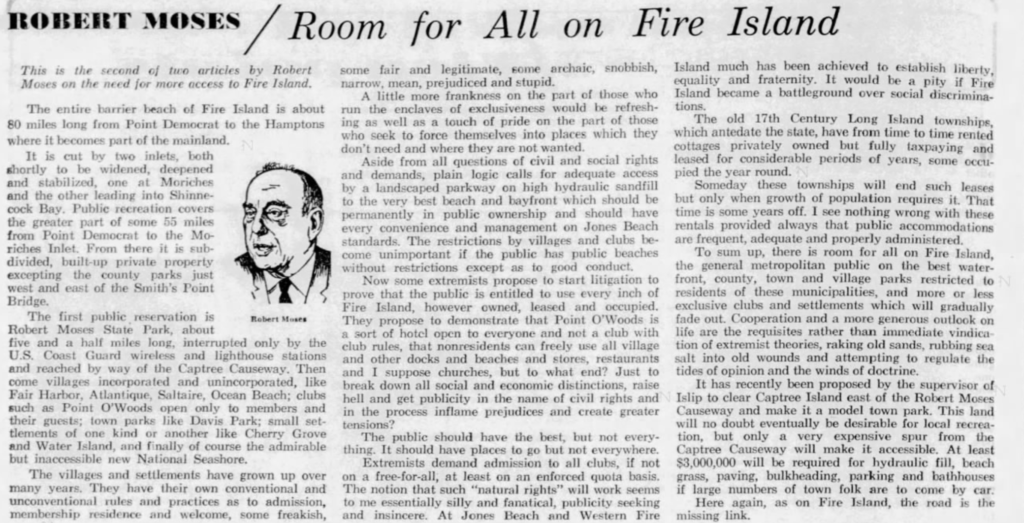
And a column from Robert Moses, 1969


Video about the exhibition from Safe/Haven curator Brian Clark:

https://www.youtube.com/watch?v=HHdROkyMlZ8&t=65s

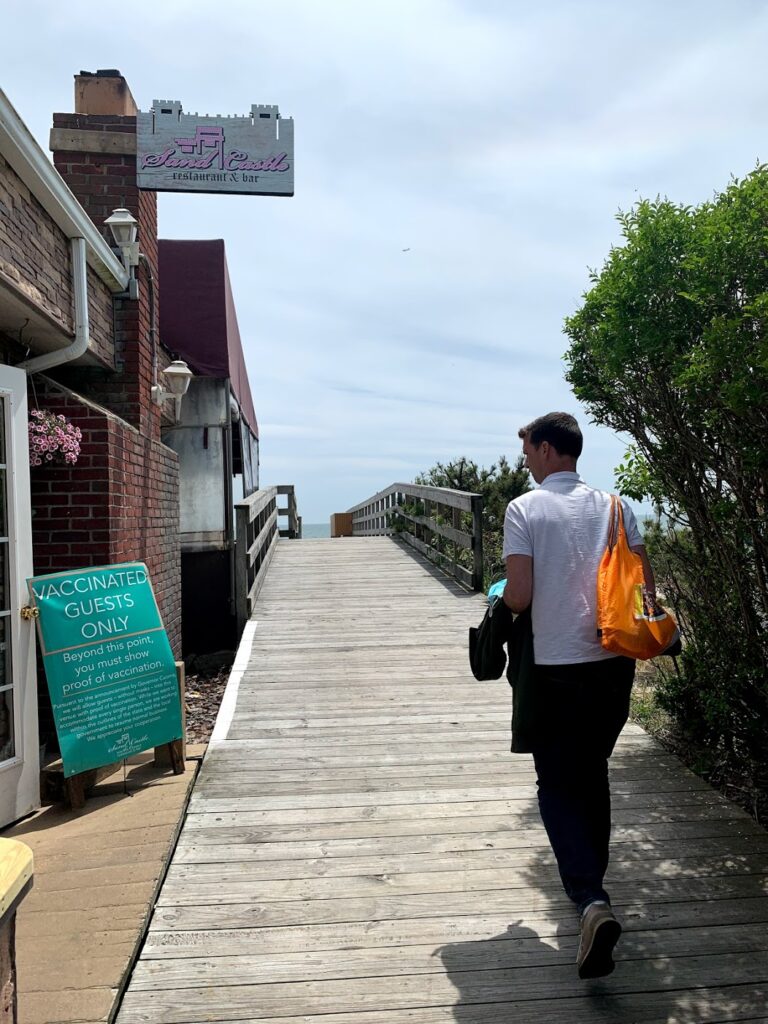
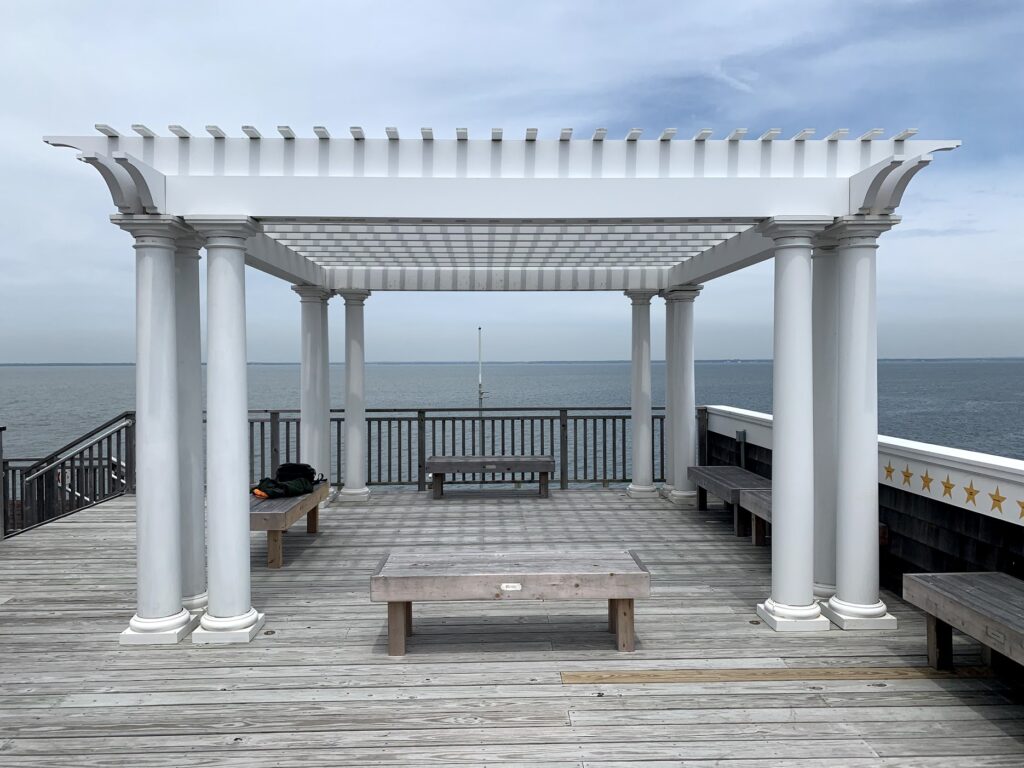
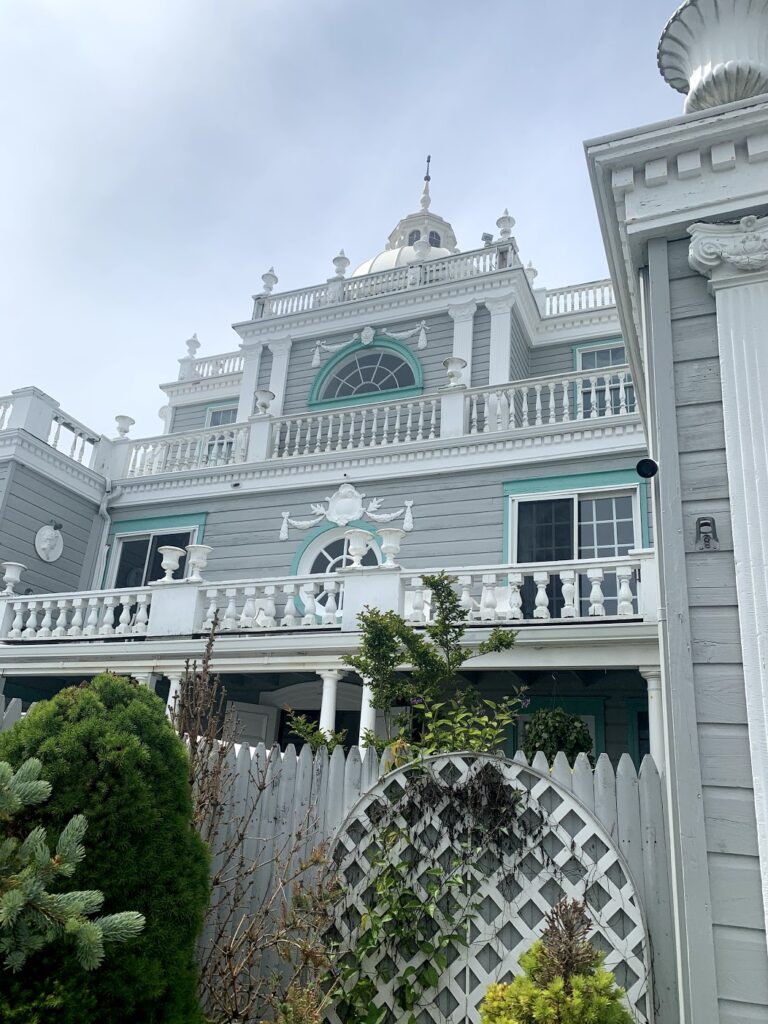
Photographs of Tom and Greg in Cherry Grove (Photos courtesy Greg Young):

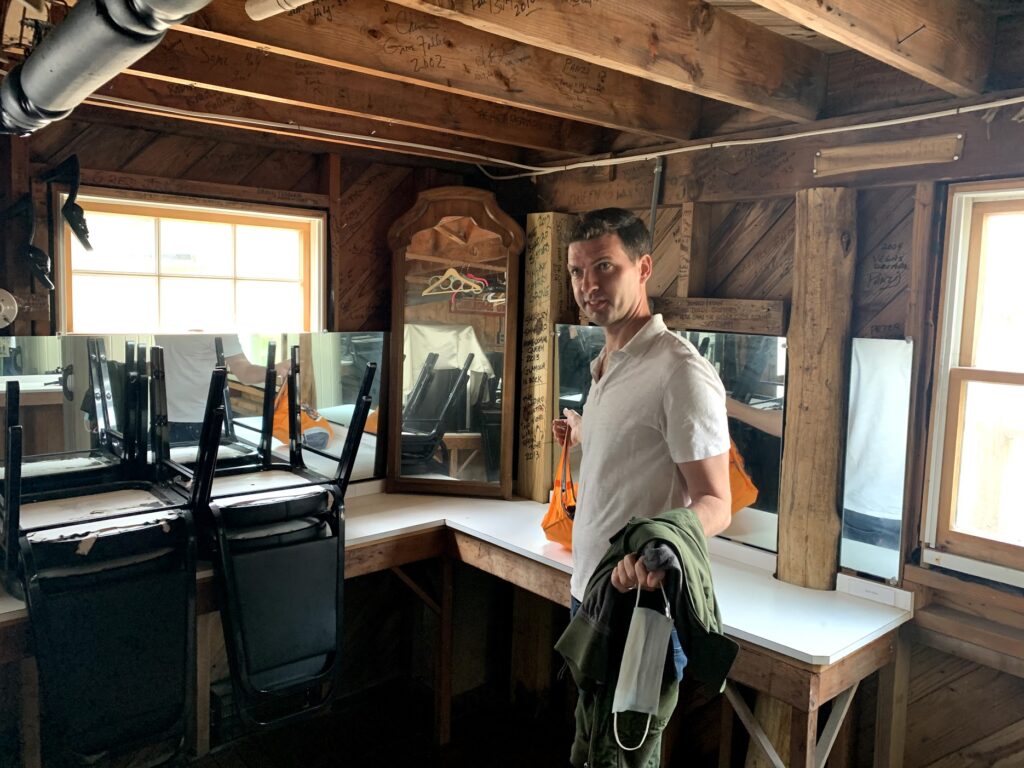
Behold — the Belvedere!


FURTHER LISTENING:

After listening to this show on the history of Fire Island check out these shows with similar themes and historical moments:


The Bowery Boys: New York City History podcast is brought to you …. by you!

We are now producing a new Bowery Boys podcast every other week. We’re also looking to improve and expand the show in other ways — publishing, social media, live events and other forms of media. But we can only do this with your help!

We are now a creator on Patreon, a patronage platform where you can support your favorite content creators.

Please visit our page on Patreon and watch a short video of us recording the show and talking about our expansion plans. If you’d like to help out, there are six different pledge levels. Check them out and consider being a sponsor.

We greatly appreciate our listeners and readers and thank you for joining us on this journey so far.