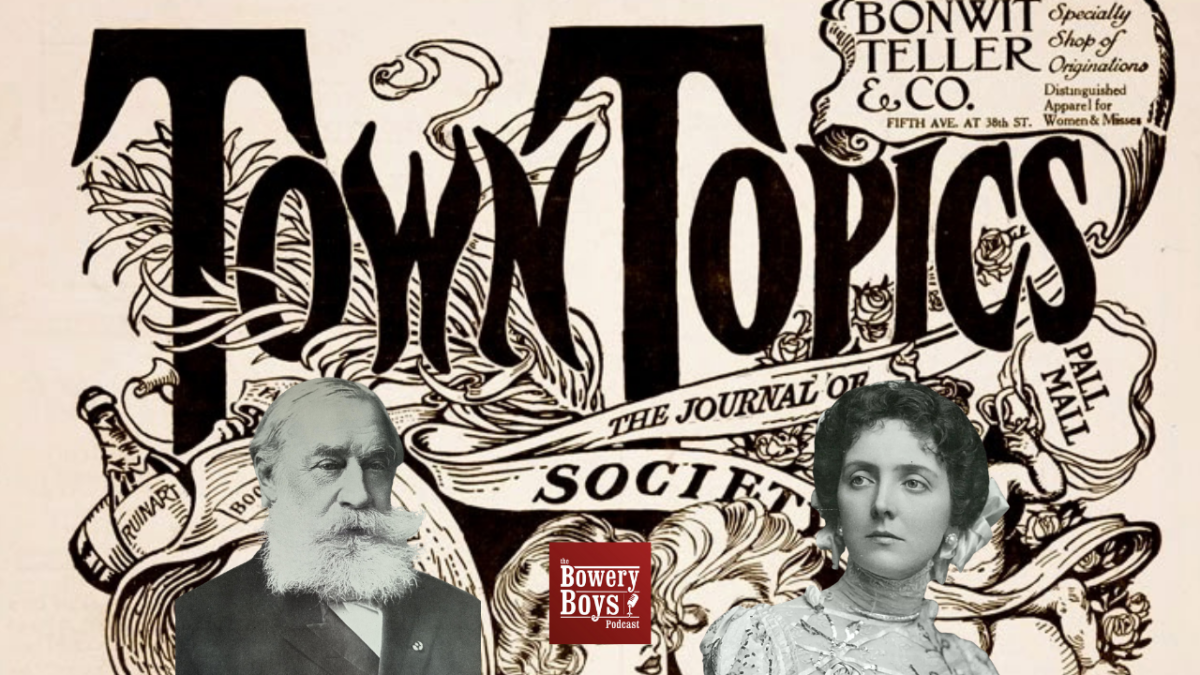
All the dirt that’s (un)fit to print — the tale of the Gilded Age scandal sheet Town Topics and its duplicitous publisher William D’Alton Mann.
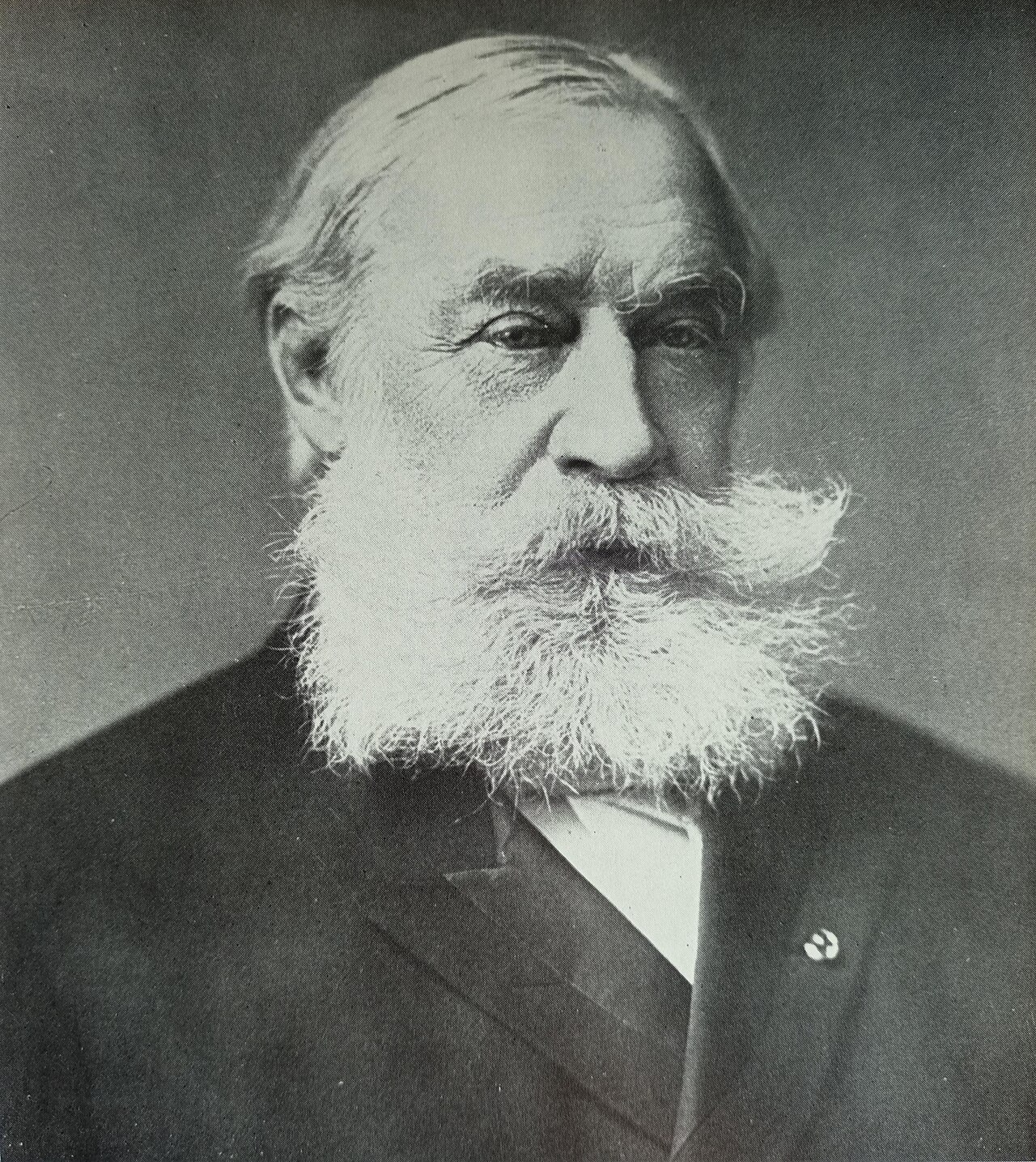
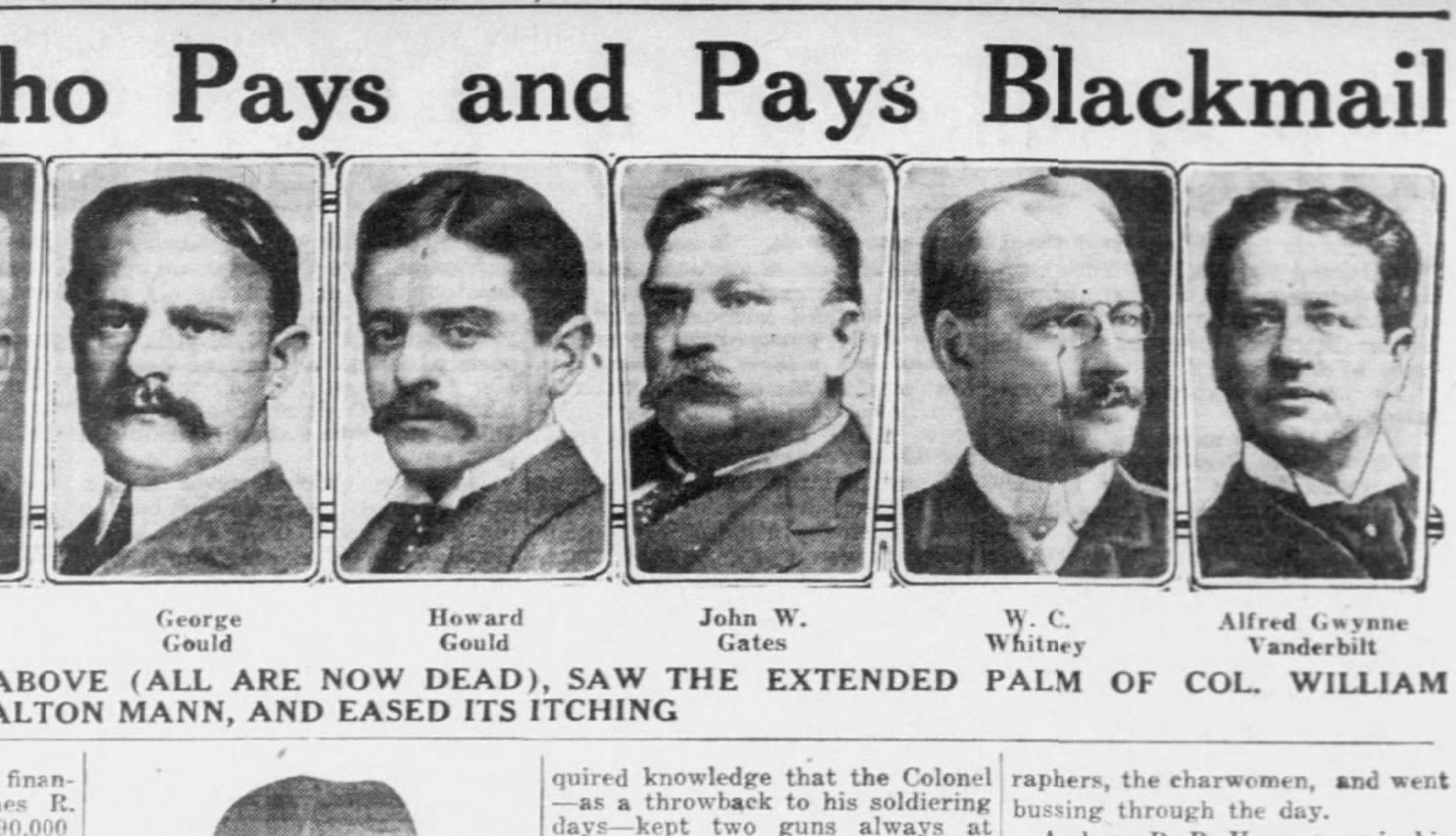
Before the era of the tabloid, New Yorkers got their gossip fix from a publication known as Town Topics, where the shocking secrets of the Gilded Age were revealed. But its publisher, William D’Alton Mann, was into more than just a bit of sleaze; he used these scandalous revelations to blackmail members of New York’s high society.
In this very special presentation of the Gilded Gentleman podcast, Carl Raymond and his special guest, Vanity Fair writer Joe Pompeo, introduce you to this forgotten scheme which threatened to tear apart the morals and polite mannerisms of Gilded Age society.
And for more adventures through Gilded Age New York, check out the Gilded Gentleman podcast, wherever you get your podcasts.
This show was produced and edited by Kieran Gannon
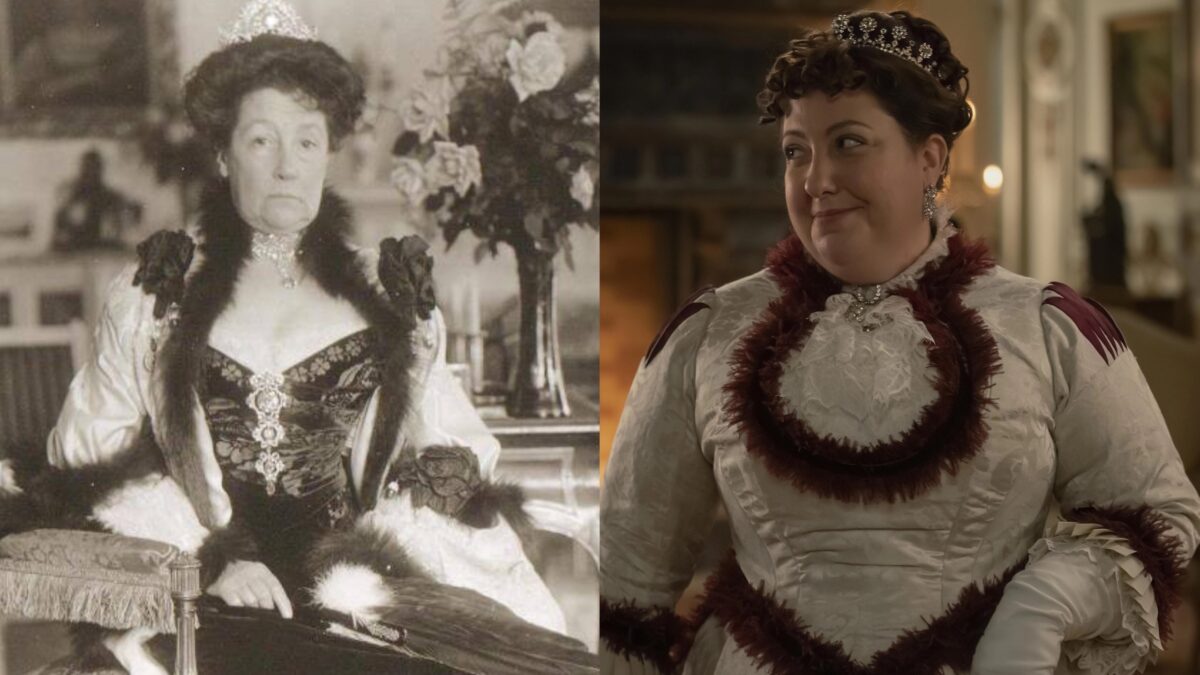
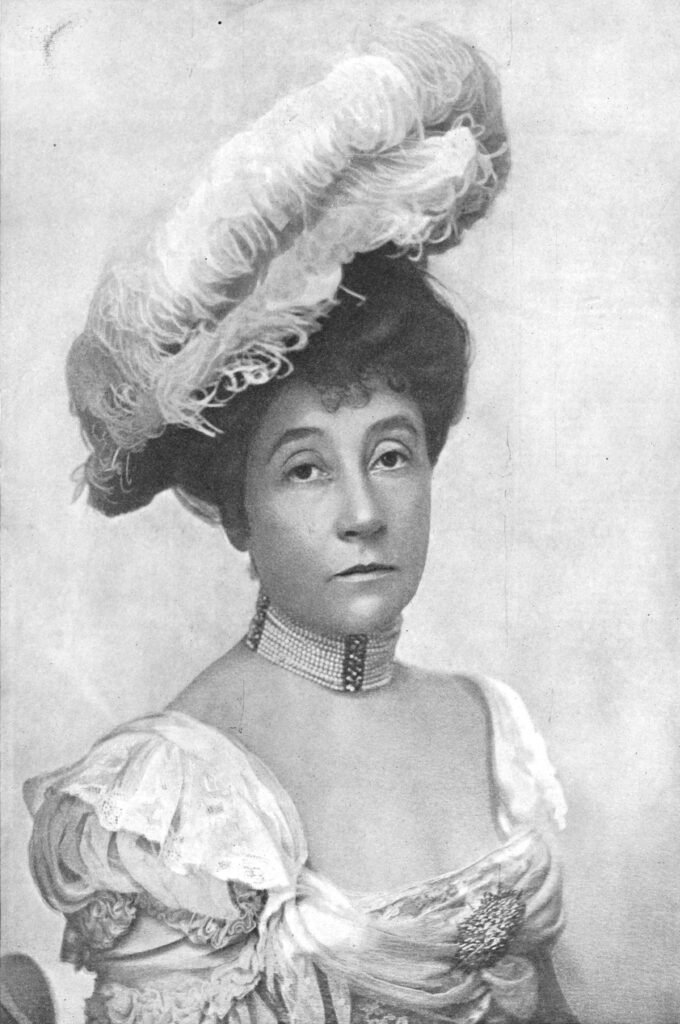
Mrs. Stuyvesant Fish, known to all as just Mamie Fish, was one of the more larger-than-life personalities of the Gilded Age, a hostess who thrived within the confines of high society.
Who was this enigma of the Newport set? Carl Raymond is joined by historian and writer Keith Taillon, a returning listener favorite, as well as actor Ashlie Atkinson who portrays Mamie Fish in HBO’s The Gilded Age for a look at this complicated but fascinating woman.
If you received an invitation to a party at Mamie Fish’s — you went.
Mamie Fish was known as a “fun maker” with an iron-clad family pedigree and enough money to compete with other Gilded Age hostesses. If yoy attended a party by Mrs. Astor’s you may have cemented your role in society. If you attended a party Mamie’s, however, you were just looking for a really good time.
Her parties bordered on the outrageous — from inviting an elephant as a guest to co-hosting the famous dinner for dogs, some of them adorned with diamond collars. But just who was Mamie Fish – and why do we find her fascinating today?
Historian Keith Taillon and actor Ashlie Atkinson offer deeply insightful perspectives on this woman who sought to break out of the role prescribed to her and shake up society.
Mamie, when looked at through a modern lens, was challenging, complicated, conflicted and certainly controversial — but given the Gilded Age’s restrictions and gender rules and roles, it’s interesting to consider how much she can also be considered a rebel and revolutionary for her time.
Listen to the latest episode of The Gilded Gentleman on Apple Podcasts, Spotify, Overcast or wherever you get your podcasts. And be sure to subscribe or follow the show to get future episodes
So we don’t know if you’ve heard, but New York City is an expensive place to live these days. So we thought it might be time to revisit the tale of the city’s most famous district of luxury — Fifth Avenue.
For about a hundred years, this avenue was mostly residential— but residences of the most extravagant kind.
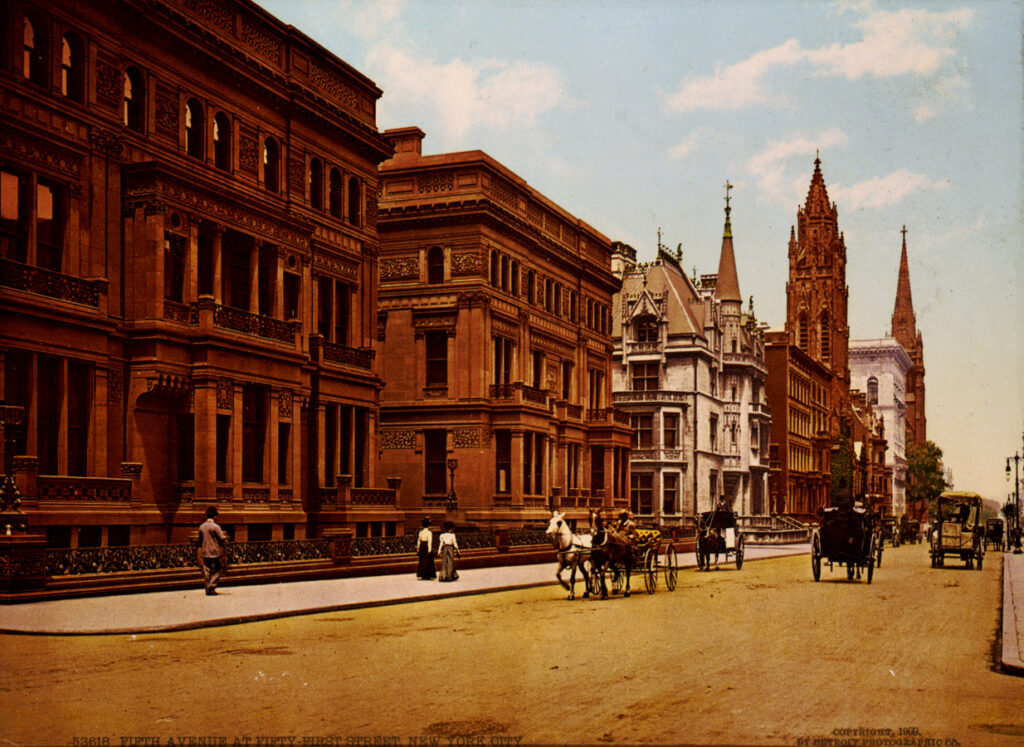
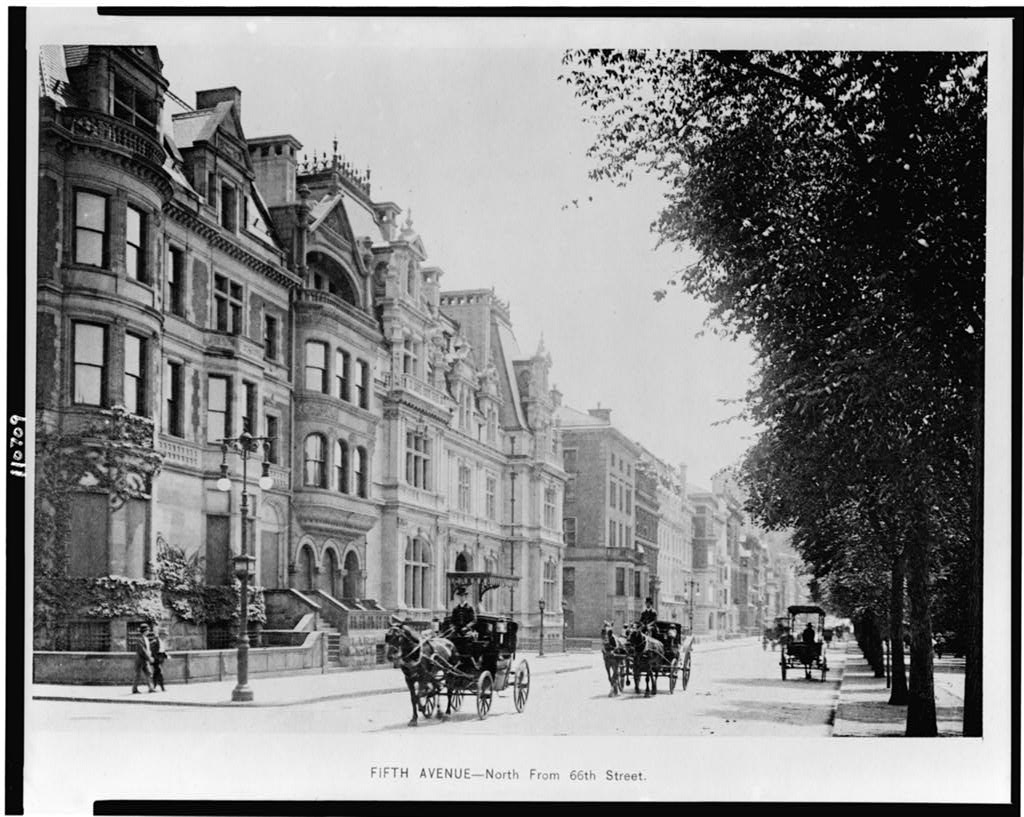
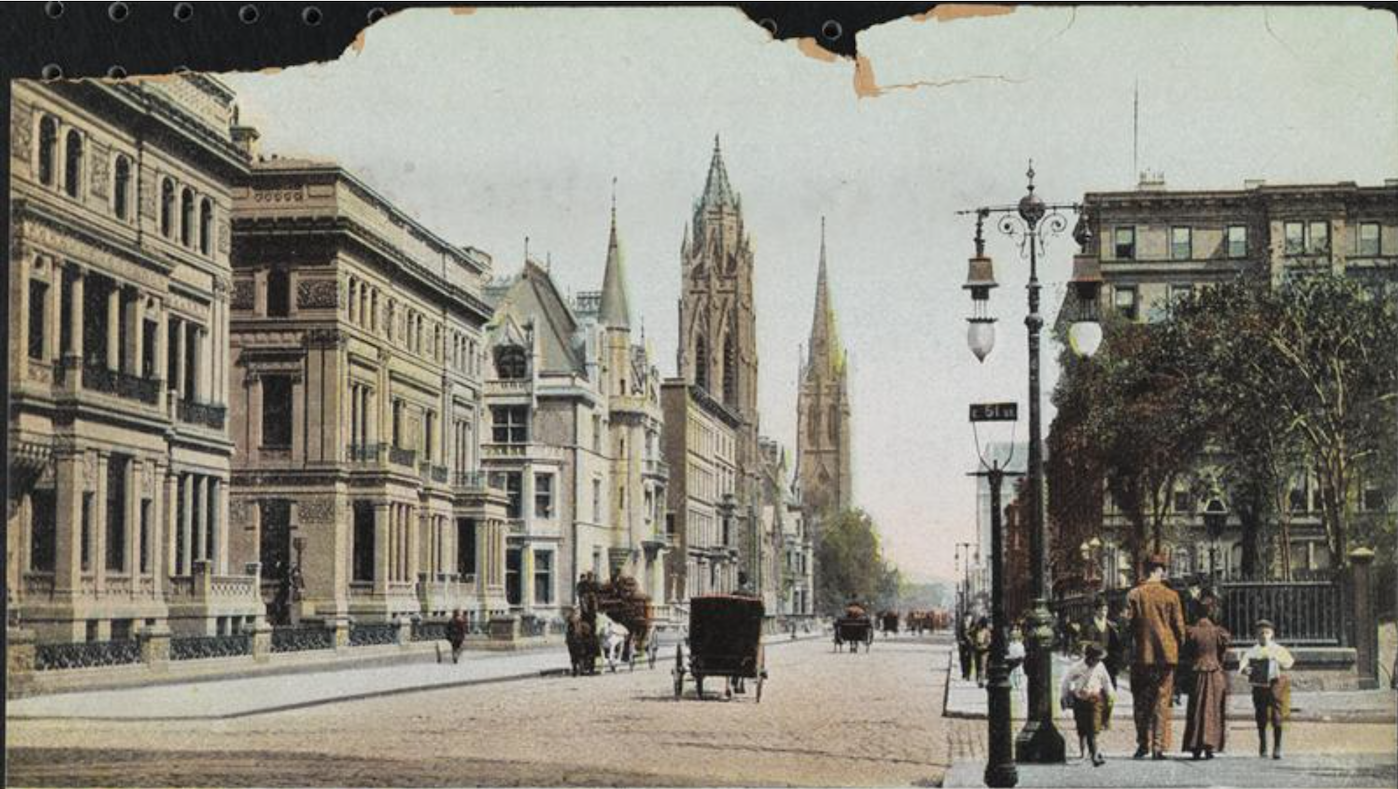
Fifth Avenue at Fifty-first Street in the year 1900. Image courtesy Library of Congress
At the heart of New York’s Gilded Age — the late 19th-century era of unprecedented American wealth and excess — were families with the names Astor, Waldorf, Schermerhorn, and Vanderbilt, alongside power players like A.T. Stewart, Jay Gouldand William “Boss” Tweed.
They would all make their homes — and in the case of the Vanderbilts, their great many homes — on Manhattan’s Fifth Avenue.
The image of Fifth Avenue as a luxury retail destination today grew from the street’s aristocratic reputation in the 1800s. The rich were inextricably drawn to the avenue as early as the 1830s when rich merchants, anxious to be near the exquisite row houses of Washington Square Park, began turning it into an artery of expensive abodes.
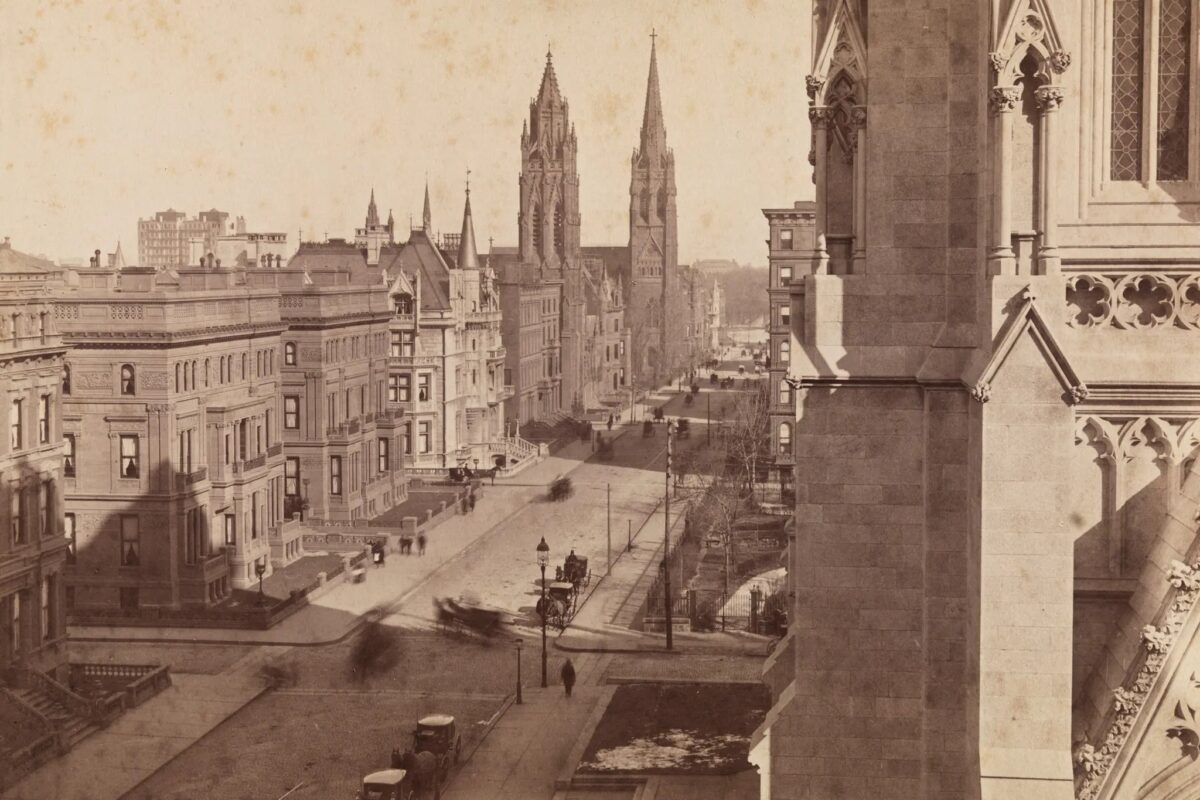
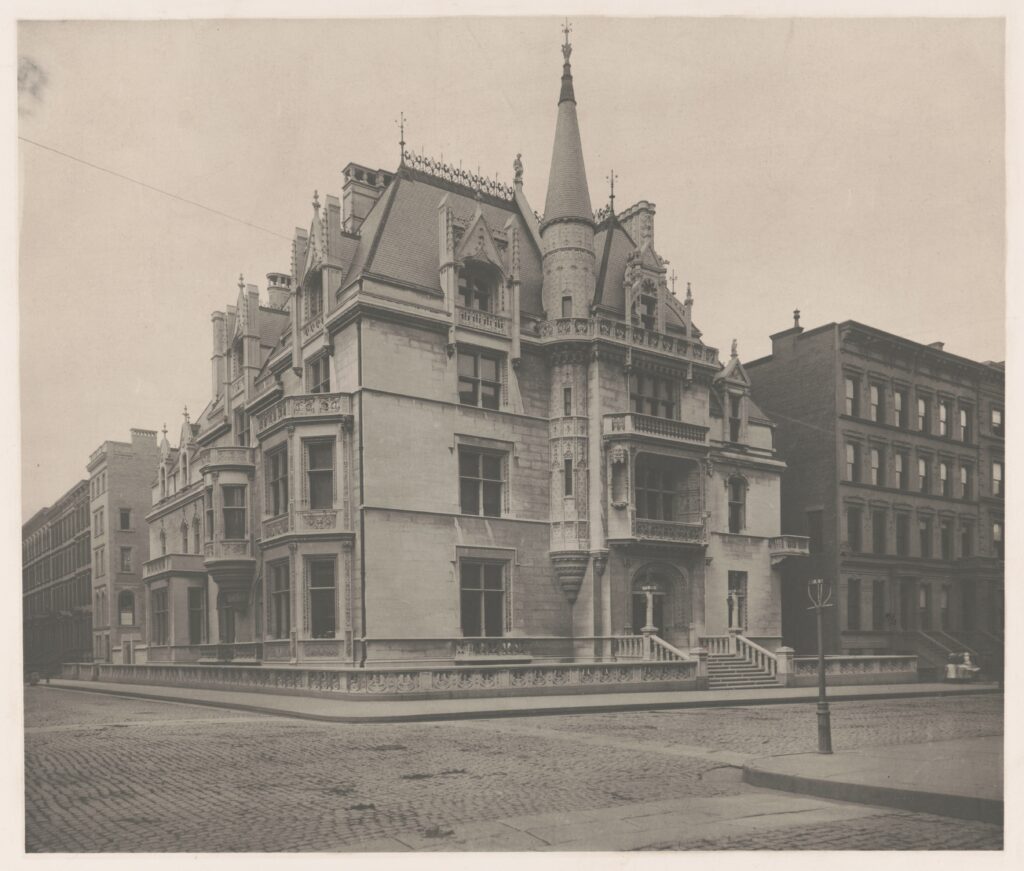
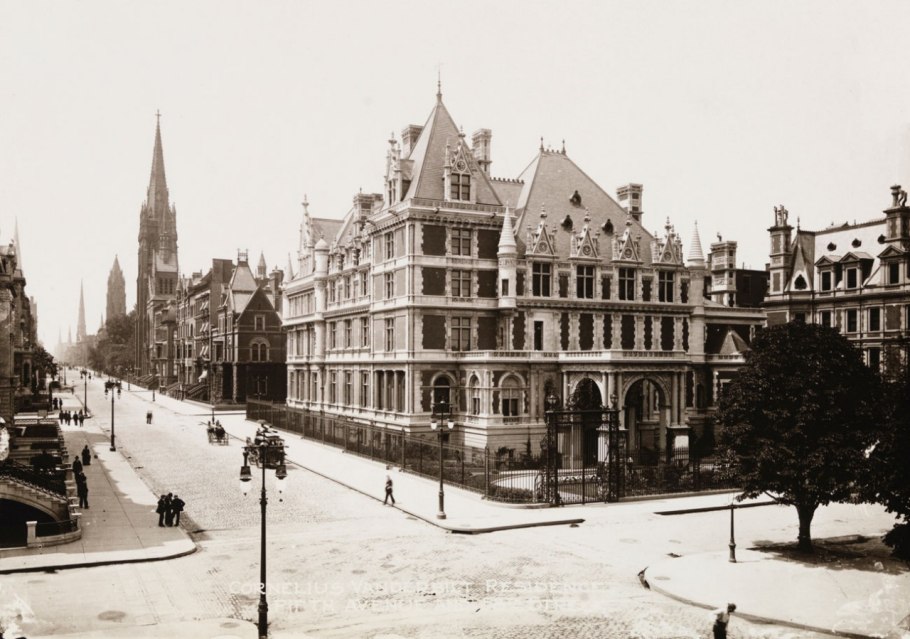
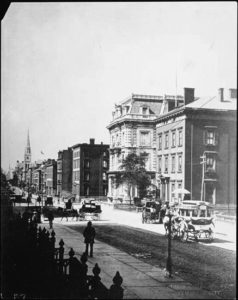
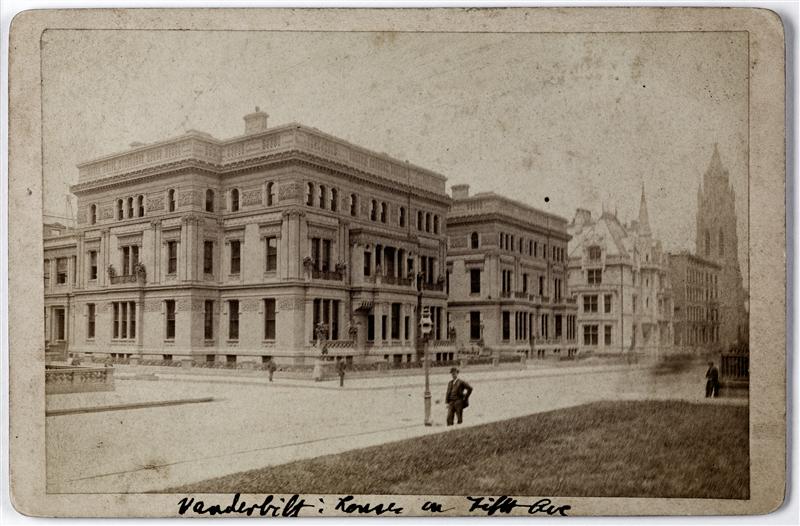
The Vanderbilt Mansion at 660 Fifth Avenue in 1885, Library of Congress
In this podcast, Tom and Greg present a world that’s somewhat hard to imagine — free-standing mansions in an exclusive corridor running right through the center of Manhattan.
Why was Fifth Avenue fated to become the domain of the so-called “Upper Ten”? And what changed about the city in the 20th century to ensure the eventual destruction of most of them?
The following is a re-edited, remastered version of two past Bowery Boys shows — the Rise and Fall of the Fifth Avenue Mansion. Combined, this tells the whole story of Fifth Avenue, from the initial development of streets in the 1820s to its Midtown transformation into a mecca of high-end shopping in the 1930s.
LISTEN NOW: THE GILDED AGE MANSIONS OF FIFTH AVENUE
Does your personal library overwhelm your home? Are there too many books in your life — but you’ll never get rid of them? Then you have a lot in common with Gilded Age mogul J.P. Morgan!
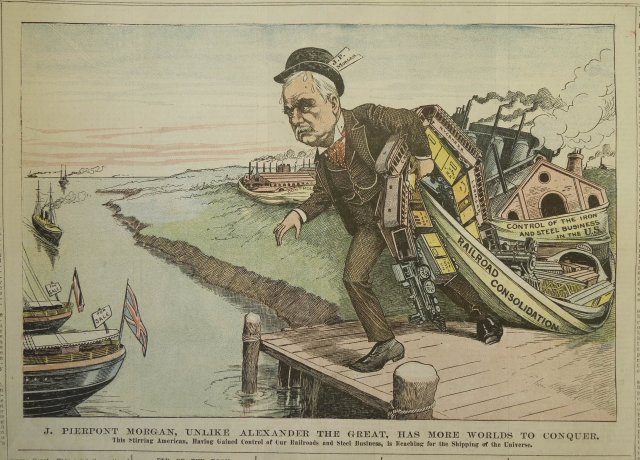
Morgan was a defining figure of the late 19th century, engineering corporate mergers and crafting monopolies from the desk of his Wall Street office. His vast control over the steel and railroad industries paired with his connections in international banking granted him great power over American life and helped fuel the great economic disparities of the Gilded Age.
In the process Morgan became one of the wealthiest men in America — but he did not tread the traditional path through New York high society. He preferred yachts over ballrooms.
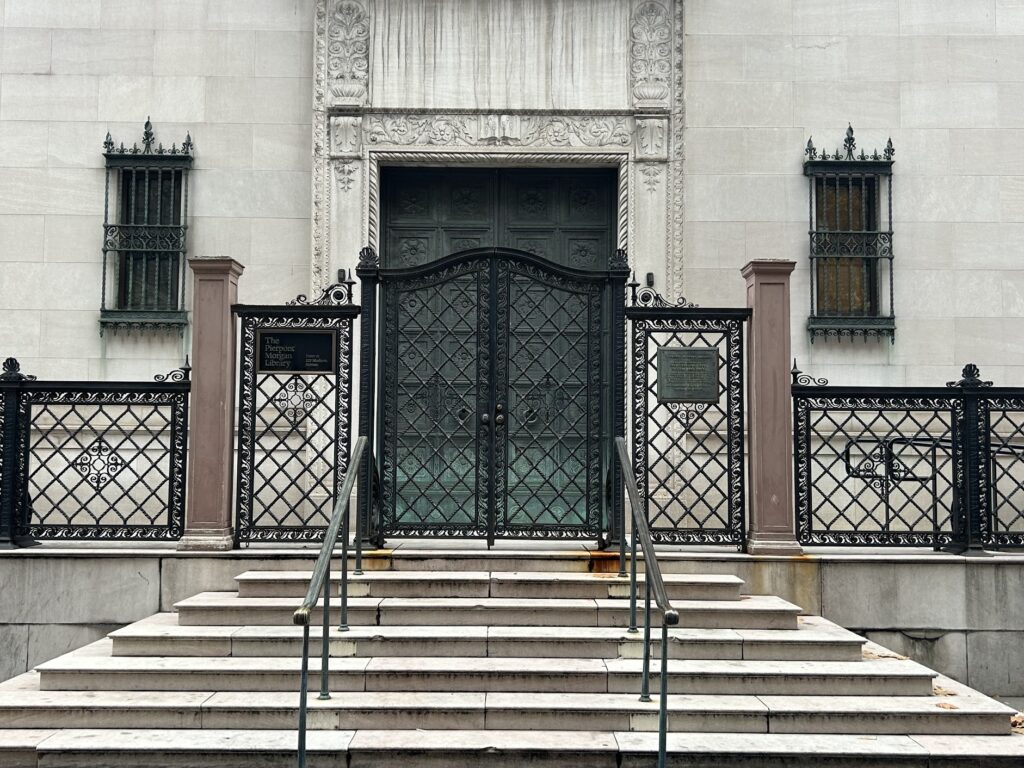
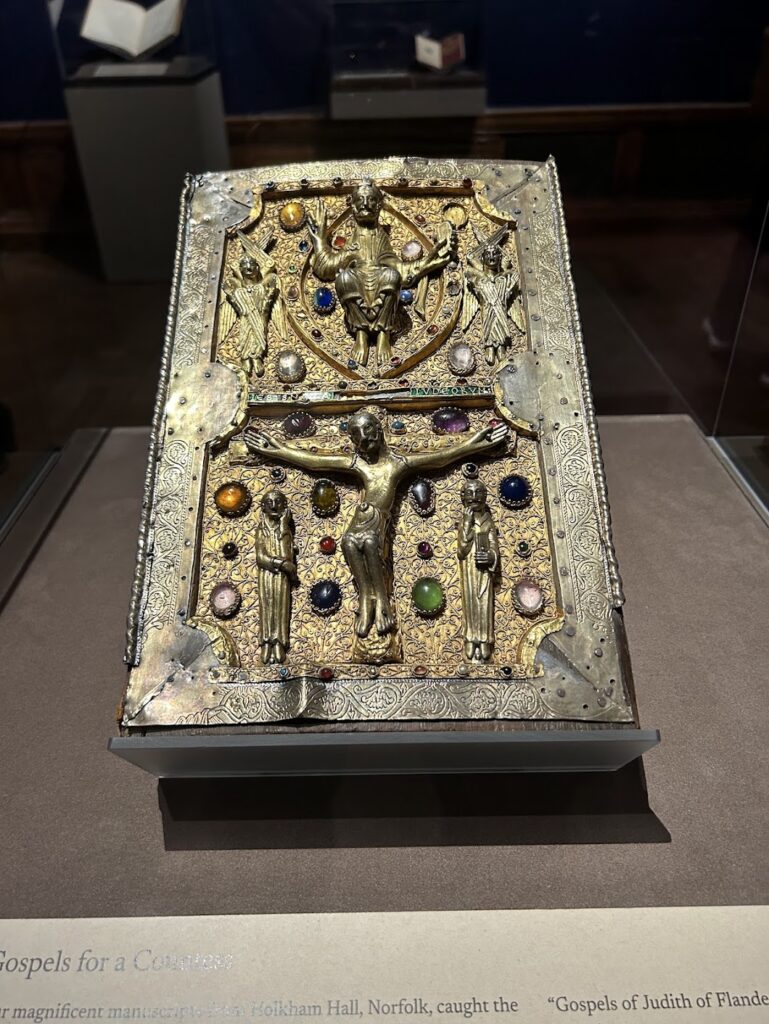
And books! For decades he collected thousands of rare books, letters, paintings and manuscripts from Gutenberg bibles to medieval illuminated tomes. So many books, in fact, that Morgan decided to start the new century with his own personal project — the construction of a library.
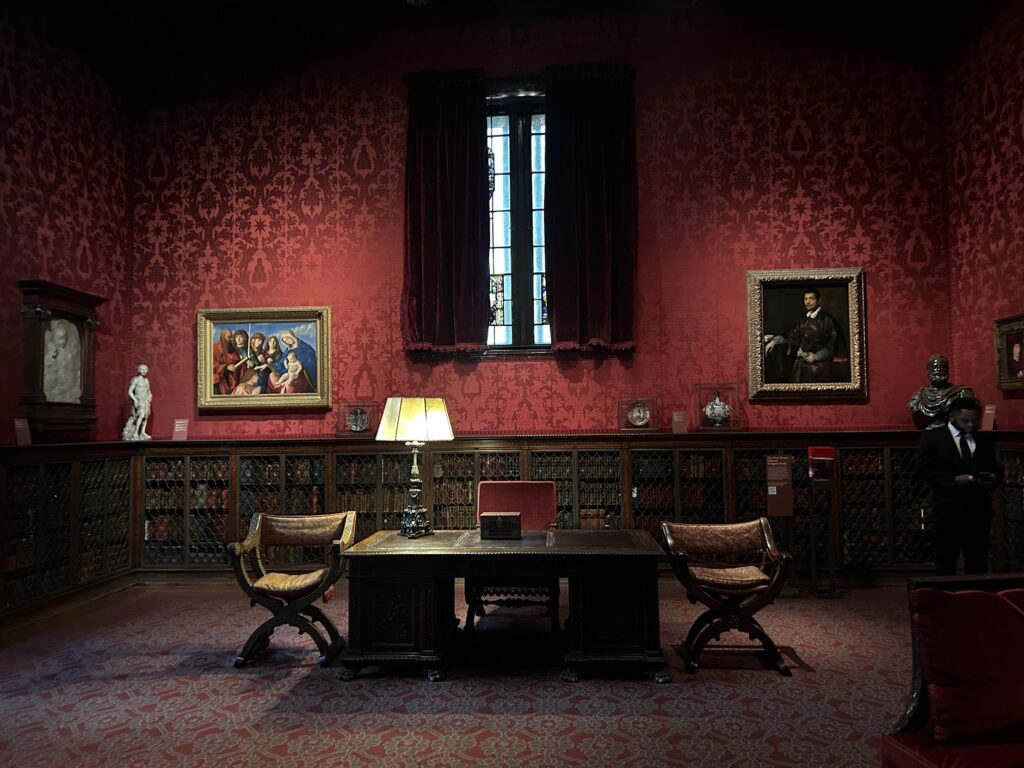
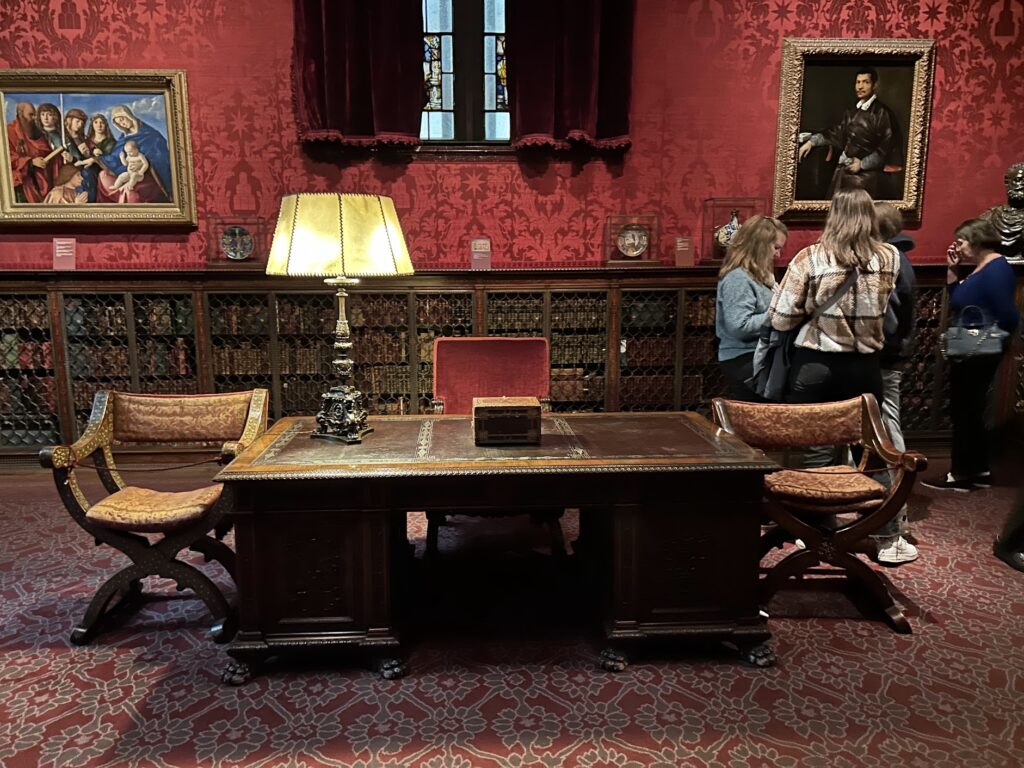
Morgan’s study
Today the Morgan Library and Museum is open to the public and, as an active and thriving institution, continues to highlight the world’s greatest examples of the printed word — from Charles Dickens manuscript for A Christmas Carol to past exhibitions on Beatrix Potter, James Joyce and even The Little Prince.
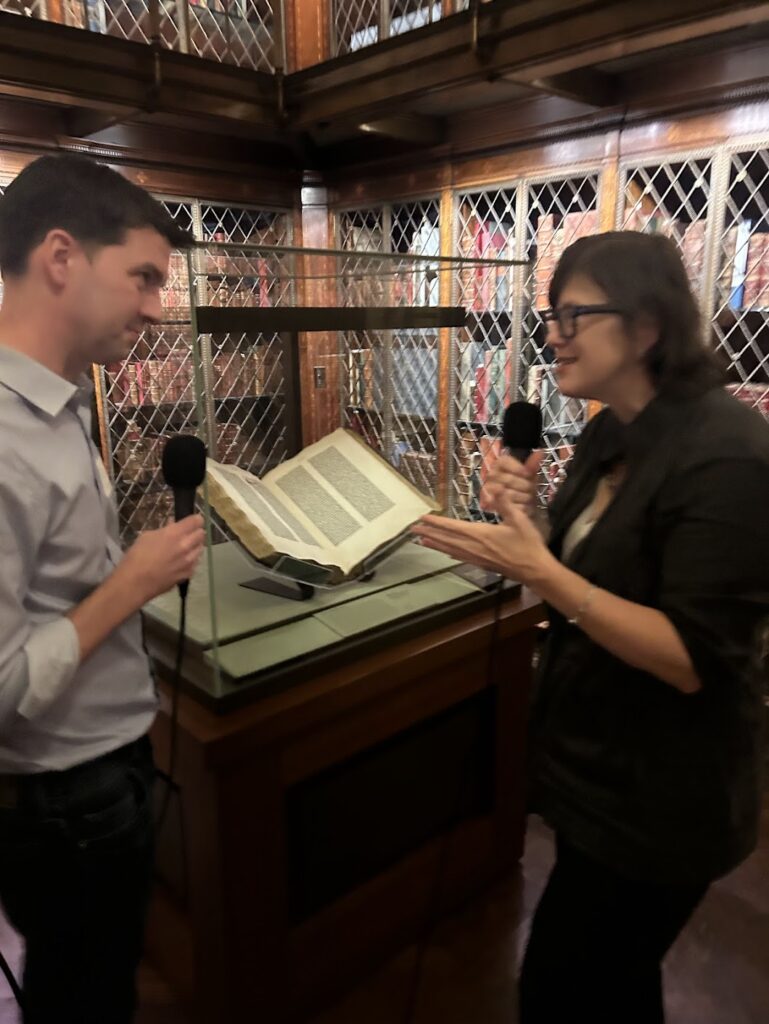
Tom and Greg explore the biography of J. Pierpont Morgan then head to the Morgan Library to speak with Jennifer Tonkovich, the Eugene and Clare Thaw Curator of Drawings and Prints.
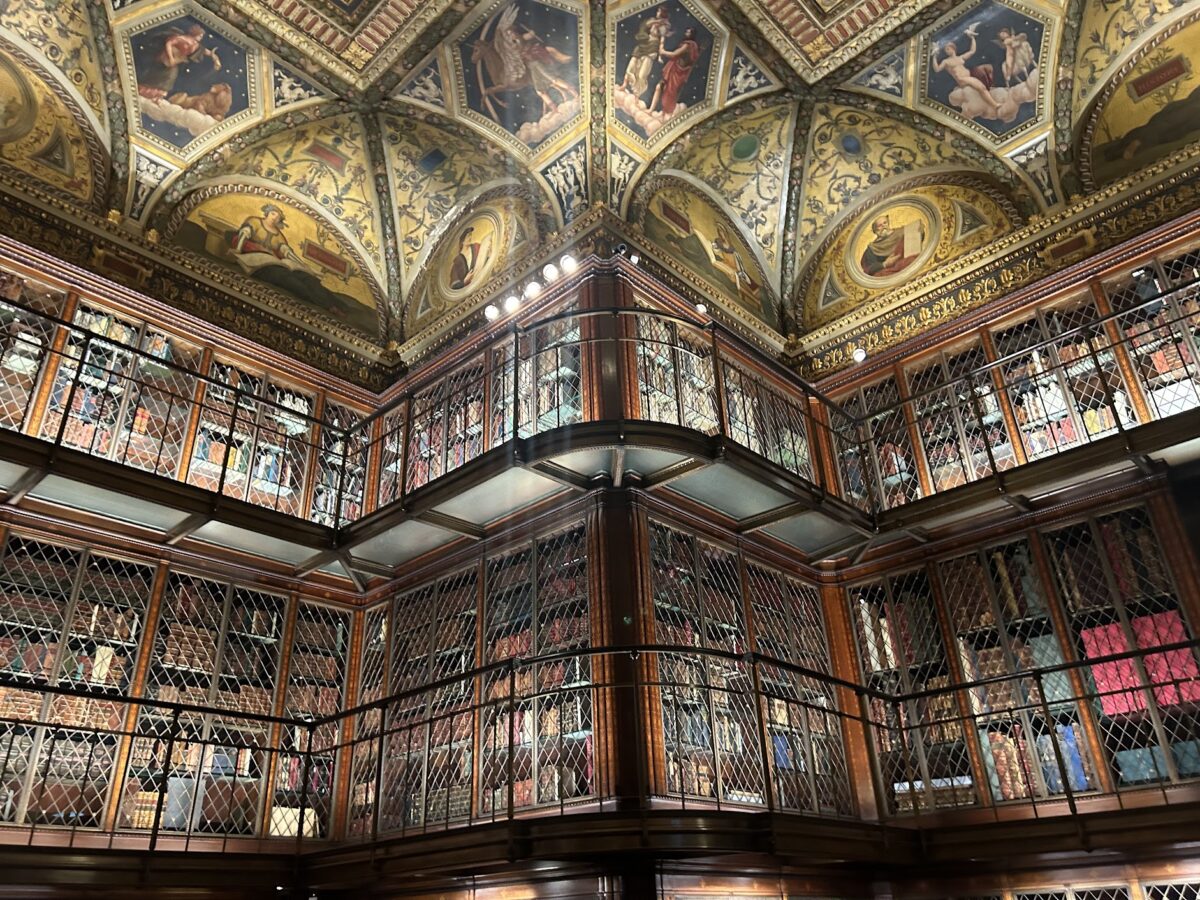
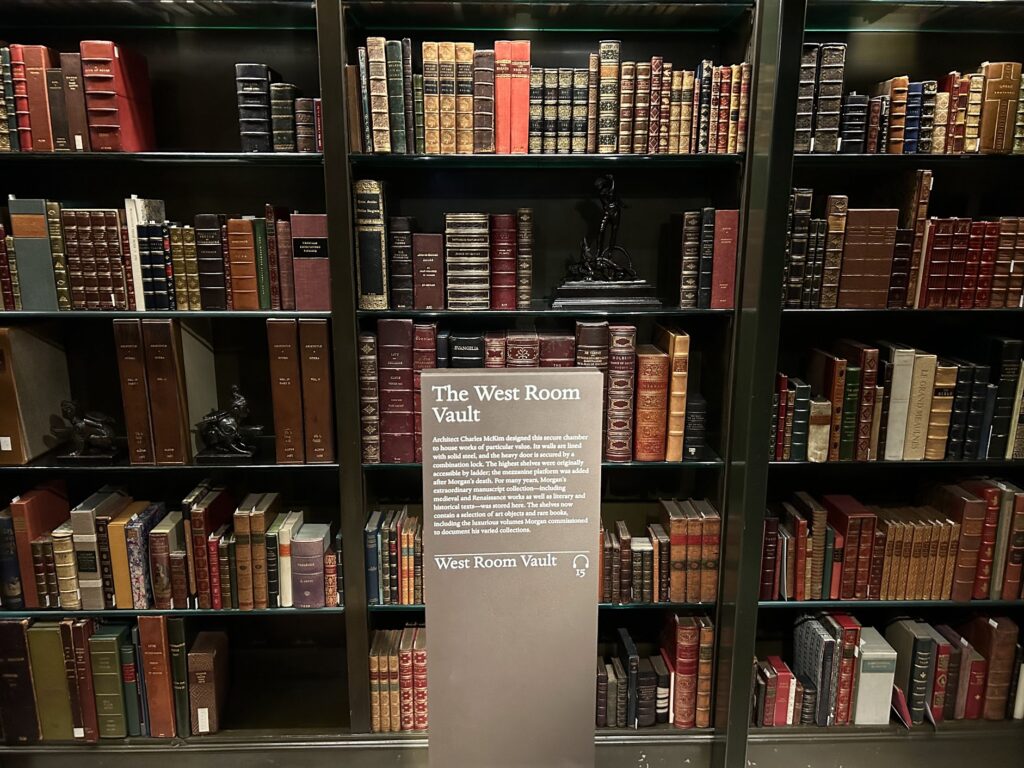
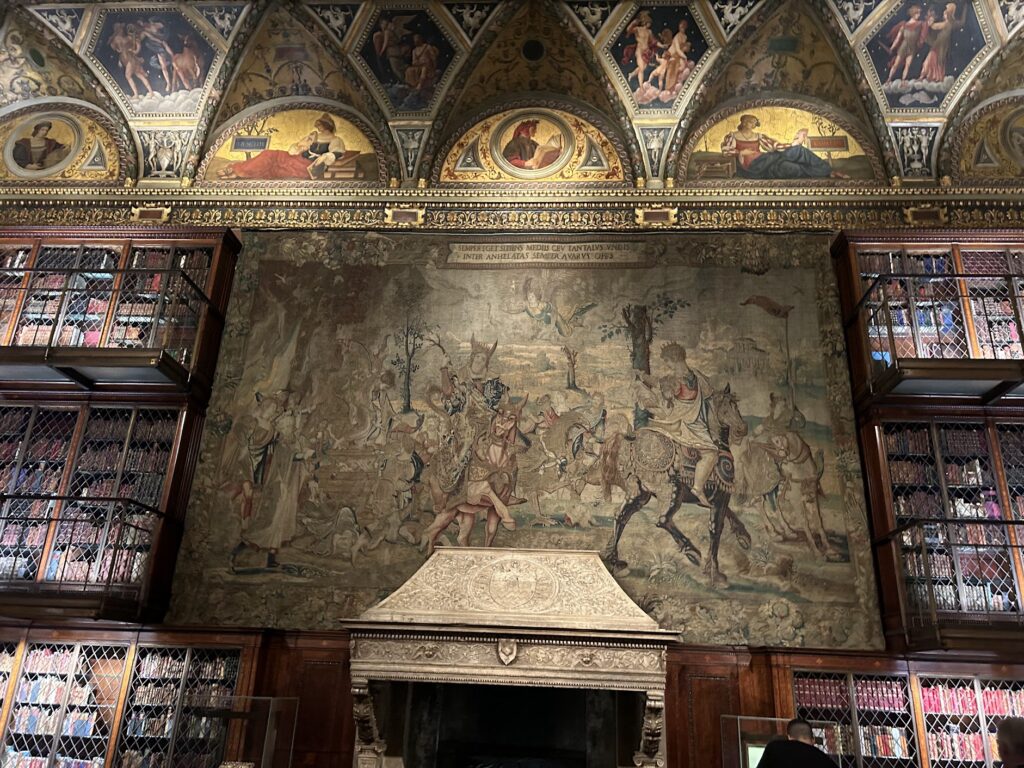
And then they wander through the winding connections of buildings which comprise the Morgan Library & Museum — from Morgan’s study (and its ‘hidden’ vault of books) to the glorious main stacks, lined with triple tiers of bookcases fashioned of bronze and inlaid Circassian walnut.
LISTEN NOW: MR. MORGAN AND HIS MAGNIFICENT LIBRARY
Share your love of the city’s history with a Bowery Boys Walks gift certificate! Our digital gift cards let your loved ones choose their perfect tour and date.
1903 portrait by Fedor EnckeSaturday Globe, 1901From the vaulted room in Morgan’s studyFrom the Franz Kafka showThe tapestry of gluttony
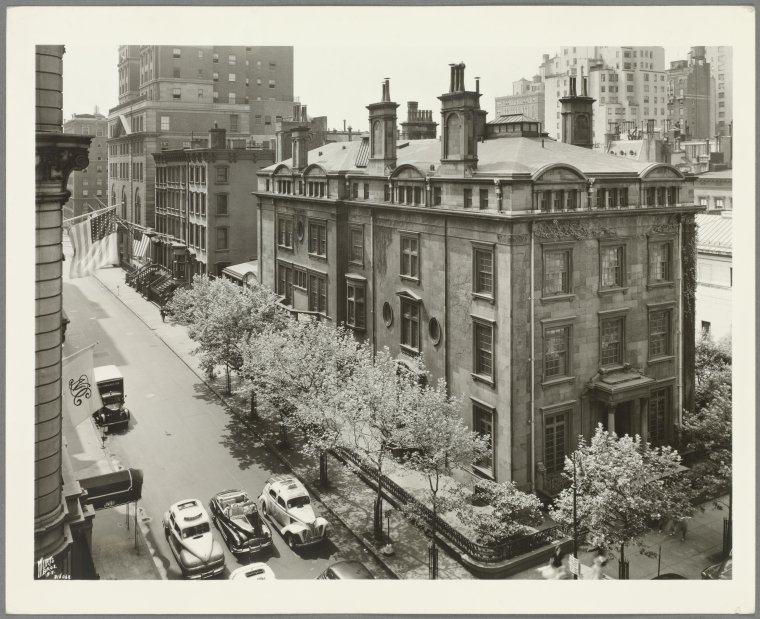
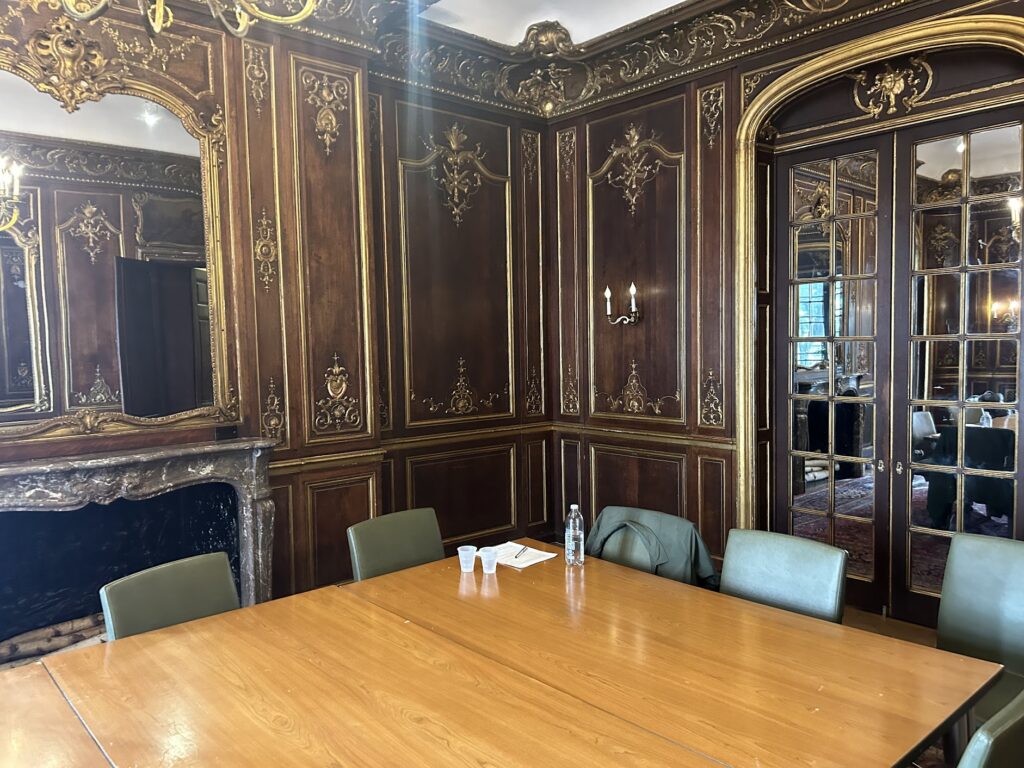
JP Morgan Jr’s brownstone which is today a part of the whole Morgan Library complex. In fact we recorded a portion of the show from its music room!
New York Public LibraryThe music room where we recorded a portion of the show.
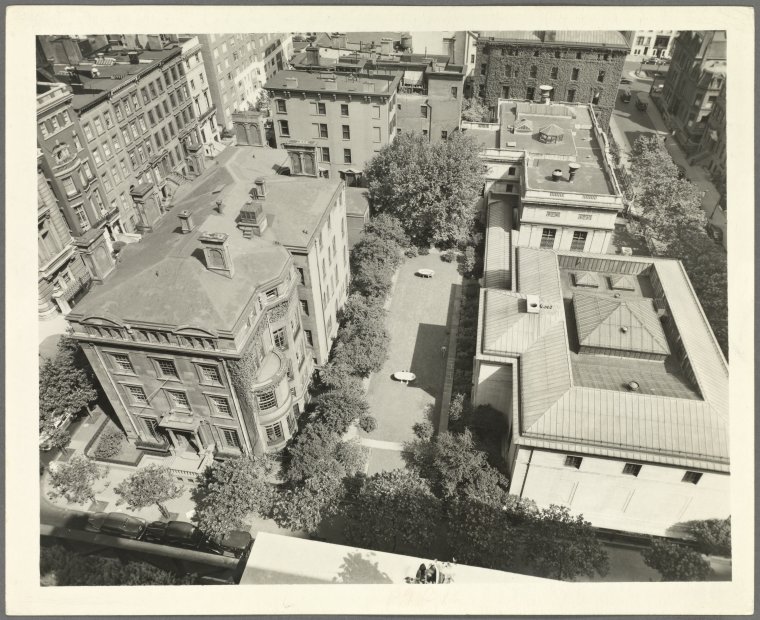
The Morgan Library and Museum from above. The slender garden in the middle was replaced in 2006 by a lavish hall designed by Renzo Piano.
New York Public Library
FURTHER READING
J. Pierpont Morgan’s Library: Building the Bookman’s Paradise / The Morgan Library and Museum The Hour of Fate: Theodore Roosevelt, JP Morgan and the Battle to Transform American Capitalism / Susan Berfield The House of Morgan: An American Banking Dynasty and the Rise of Modern Finance/ Ron Chernow J.P. Morgan – The Life and Deals of America’s Banker / J.R. MacGregor Morgan: American Financier / Jean Strouse
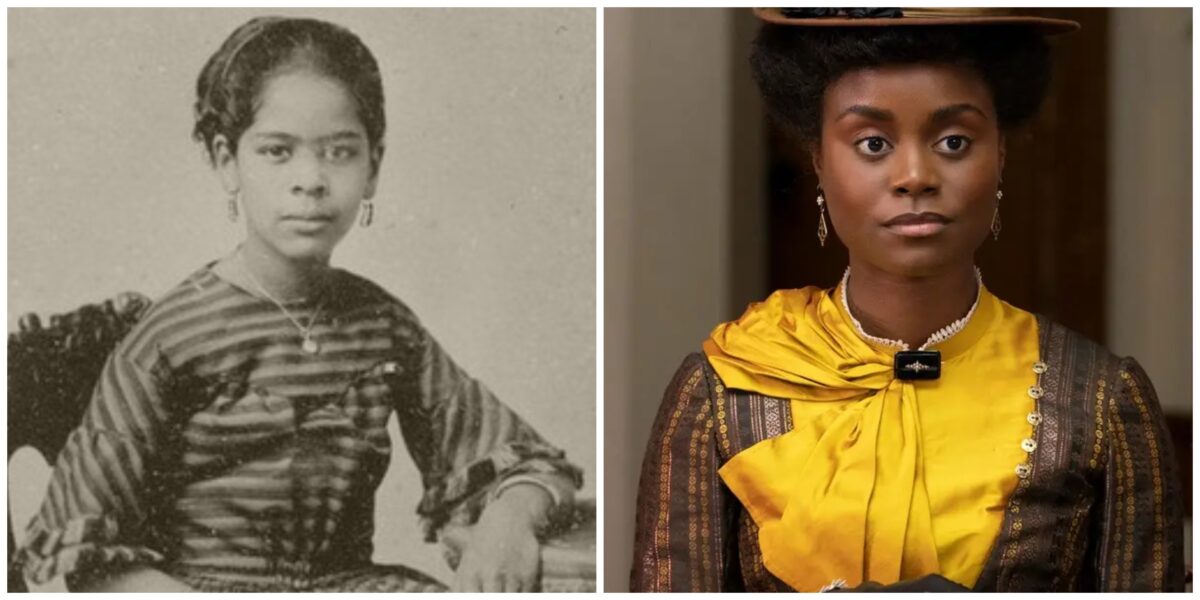
At left Maritcha Remond Lyons; at right the character of Peggy Scott (played by Denèe Benton) on The Gilded Age
NEW from The Gilded Gentleman podcast — some overlooked history of the 19th century, the story of black life and social class in New York City.
Dr. Carla Peterson, author of Black Gotham: Family History of African Americans in Nineteenth-Century New York City, joins Carl to share her research and perspective on the growth and development of the prosperous black professional class throughout the nineteenth century up to the Gilded Age.
In her 2012 groundbreaking book, Peterson sheds light on how this particular corner of the black community grew as New York became enriched in the late 19th century. She provides insight into leading African-American figures of the day, many missing in contemporary accounts of the period.
And believe it or not, a few characters from the HBO series “The Gilded Age” were designed with Black Gotham in mind. In particular, the father of Peggy Scott (played by Denée Benton) was based on Peterson’s own ancestral family.
LISTEN HERE OR ON YOUR FAVORITE PODCAST PLAYER:
And for other Bowery Boys podcasts on similar subjects, follow up your listening with these shows:
Robert Allerton lived without a care thanks to his family’s Gilded Age fortune, built from the stockyards of Chicago’s meat processing district. As a young man, Allerton used his inherited wealth to maintain the family estate near Monticello, Illinois, cultivating a garden escape where he could be left to his own devices.
And then, in 1922, he met a handsome college student named John Gregg. They were separated in age by 26 years. They fell in love.
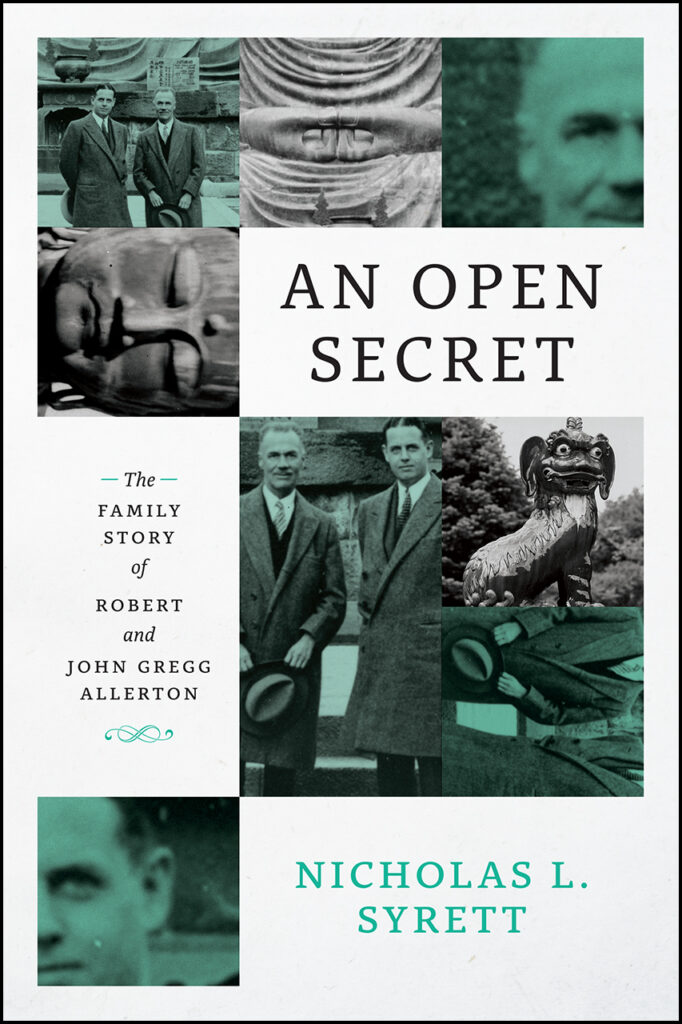
AN OPEN SECRET The Family Story of Robert and John Gregg Allerton Nicholas L. Syrett University of Chicago Press
In An Open Secret, author Nicholas Syrett takes the reader into a maze of social norms redefined by the comforts of wealth and a collection of personal mysteries as well-kept as a display case of ancient art.
But the parameters of Allerton’s personal life might be considered obscured today — concealed by the polite vestiges of post-Gilded Age social decorum, cushioned by the privilege of his vast wealth.
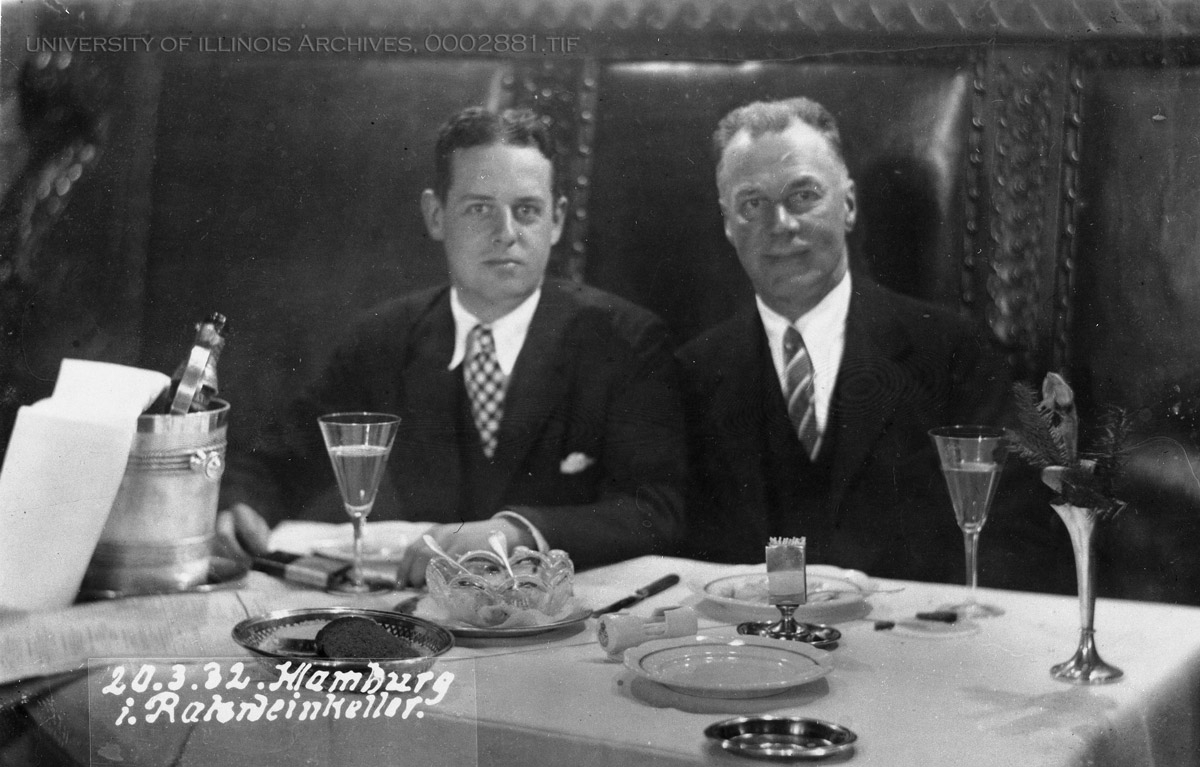
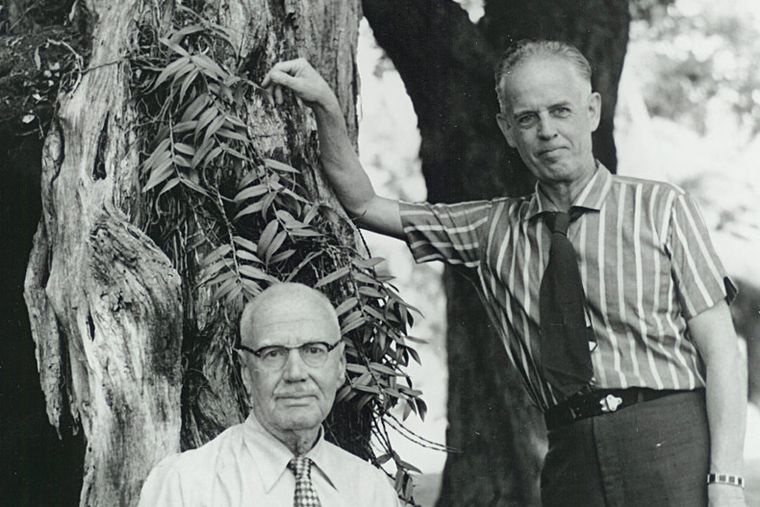
Or should I say — their vast wealth. Robert and John Gregg traveled the world together, living as a same-sex couple at a time when such romantic pairings were never seen or accepted.
They managed this unconventional life thanks to an intricate pantomime fueled by Allerton’s financial advantages and the vast age difference between the two men.
“By 1931,” writes Syrett, “the [Chicago] Tribune reported on the two traveling together, but the language of their relationship had become solidified as father and son, despite the fact that it was not legally so.”
They encouraged such language and eventually took it on themselves as a means to negotiate social spheres that would have otherwise shunned them.
“Calling John Gregg his son was a way of not talking about his actual role in Allerton’s life; even if Gregg’s relationship with Allerton was an open secret, calling him son allowed friends and acquaintances to avoid the awkwardness of having to discuss who he really was with Allerton.”
Robert and John Gregg Allerton in Hawaii, University of Illinois Archives
In 1960, near the end of elder man’s life, the pair made their charade official. John Gregg officially became John Gregg Allerton, the adopted son of Robert Allerton.
An Open Secret, with its daunting task of uncovering the secret world of two men who never left each other’s side (thus leaving no personal correspondence), succeeds as an x-ray into the procedures of living a closeted wealthy life, where clues of personal connections are scattered among the hydrangeas and exotic ornaments.
If the author’s name Nicholas Syrett sounds familiar to you, that’s because the author has been on our show! You can find him in our episode on Madame Restell, the ‘notorious’ abortionist of Fifth Avenue. Look for Syrett’s book on the life of Restell coming soon.
PODCAST At the heart of New York’s Gilded Age — the late 19th century era of unprecedented American wealth and excess — were families with the names Astor, Waldorf, Schermerhorn and Vanderbilt, alongside power players like A.T. Stewart, Jay Gould and William “Boss” Tweed.
They would all make their homes — and in the case of the Vanderbilts, their great many homes — on Manhattan’s Fifth Avenue.
The image of Fifth Avenue as a luxury retail destination today grew from the street’s aristocratic reputation in the 1800s. The rich were inextricably drawn to the avenue as early as the 1830s when rich merchants, anxious to be near the exquisite row houses of Washington Square Park, began turning it into an artery of expensive abodes.
In this podcast — the first of two parts — Tom and Greg present a world that’s somewhat hard to imagine — free-standing mansions in an exclusive corridor running right through the center of Manhattan. Why was Fifth Avenue fated to become the domain of the so-called “Upper Ten”? What were the rituals of daily life along such an unusual avenue? And what did these Beaux Arts palaces say about their ritzy occupants?
CO-STARRING: Mark Twain, Madame Restell, George Opdyke and “the Marrying Wilsons”.
The Bowery Boys: New York City History podcast is brought to you …. by you!
We are now producing a new Bowery Boys podcast every week. We’re also looking to improve the show in other ways and expand in other ways as well — through publishing, social media, live events and other forms of media. But we can only do this with your help!
We are now a member of Patreon, a patronage platform where you can support your favorite content creators — for as little as a $1 a month.
Please visitour page on Patreon and watch a short video of us recording the show and talking about our expansion plans. If you’d like to help out, there are five different pledge levels (and with clever names too — Mannahatta, New Amsterdam, Five Points, Gilded Age, Jazz Age and Empire State). Check them out and consider being a sponsor.
We greatly appreciate our listeners and readers and thank you for joining us on this journey so far.
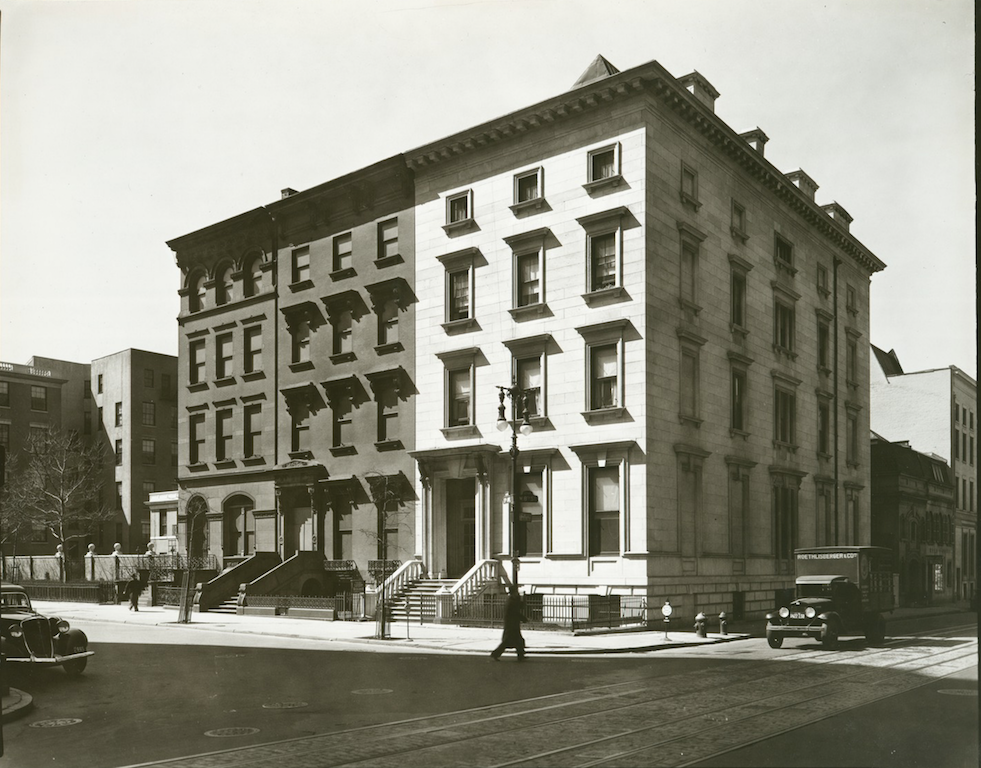
4-8 Fifth Avenue, buildings which were still standing in 1936 for photographer Berenice Abbott.
NYPL
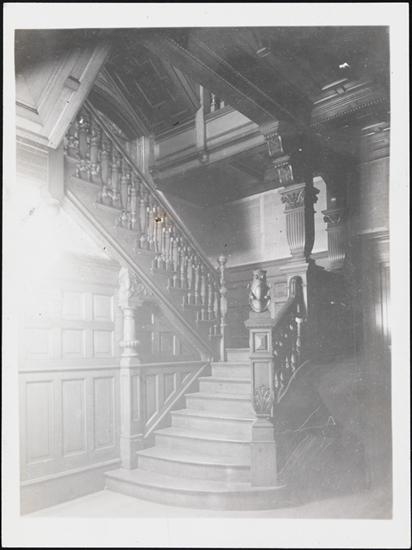
The stairway inside 4 Fifth Avenue, a beautiful relic of old living.
MCNY
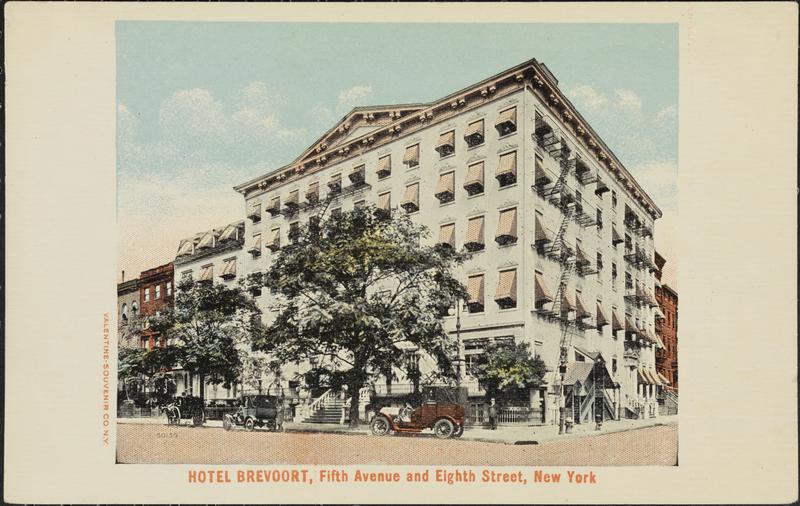
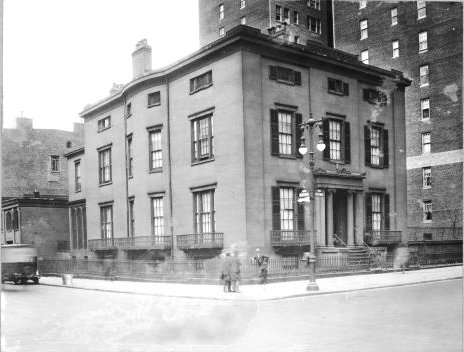
The Brevoort Hotel at Fifth Avenue and 8th Street and the Brevoort Mansion on 9th Street, circa 1925 (the year it was demolished)
NYPL
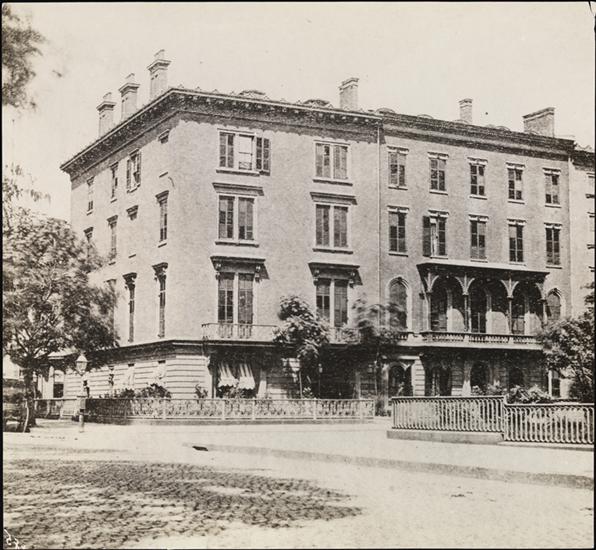
Delmonico’s Restaurant, pictured here in 1865, moved into an old mansion to serve its wealthy clients.
MCNY
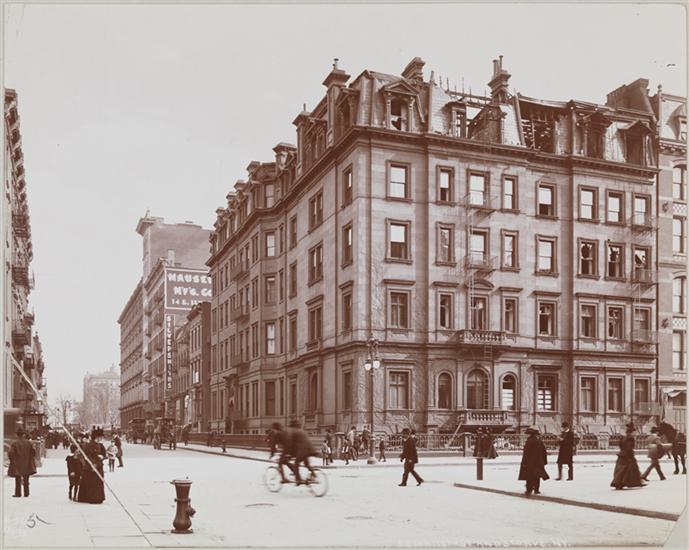
A mansion at the southeast corner of Fifth Avenue and 15th Street. Note that by the date of this photograph (1898), the house has been abandoned and the upper floors are falling in.
MCNY
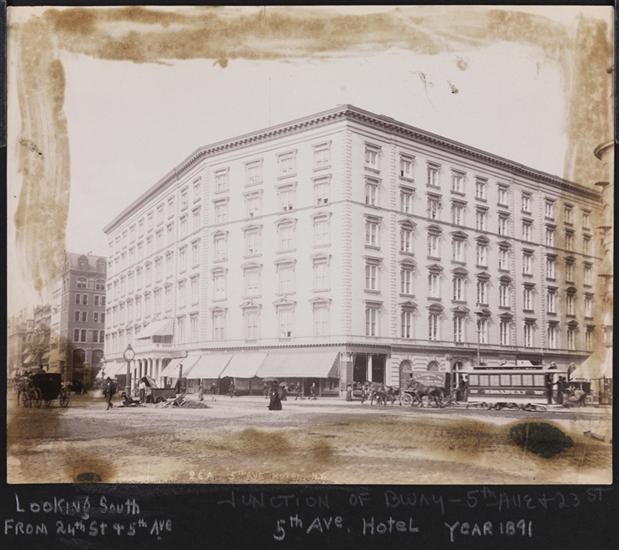
The Fifth Avenue Hotel at 23rd Street and Fifth Avenue, the anchor of the Madison Square area and the spot of great political machinations, especially in the 1870s and 80s.
MCNY
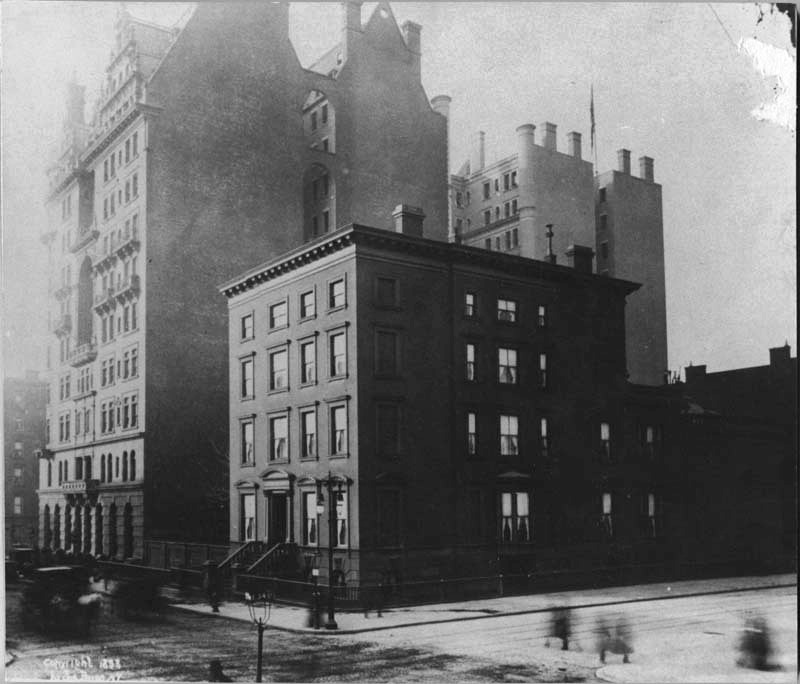
The Waldorf Hotel, rising next to the Astor mansion. Mrs. Astor eventually relented, moving from the house so that it could be demolished and replaced with a companion hotel.
Mina Rees Library, The Graduate Center, CUNY
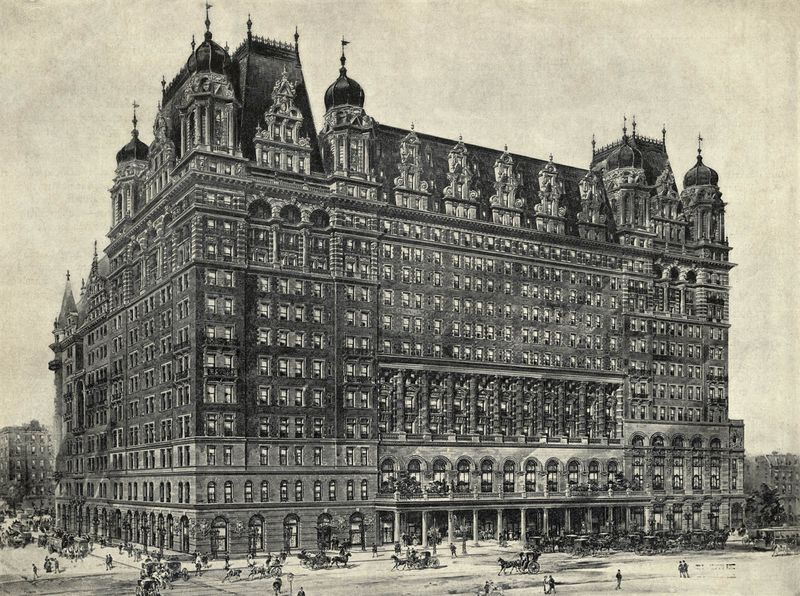
The combined Waldorf-Astoria Hotel would become the center of high-society entertainment in the Gilded Age.
Library of Congress
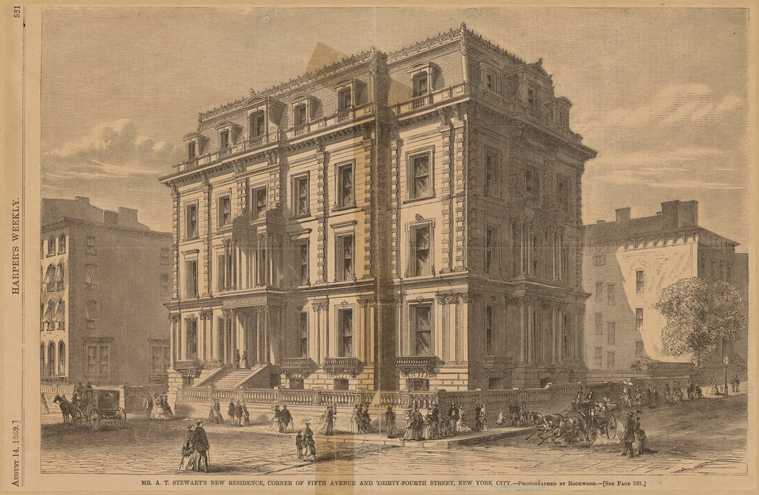
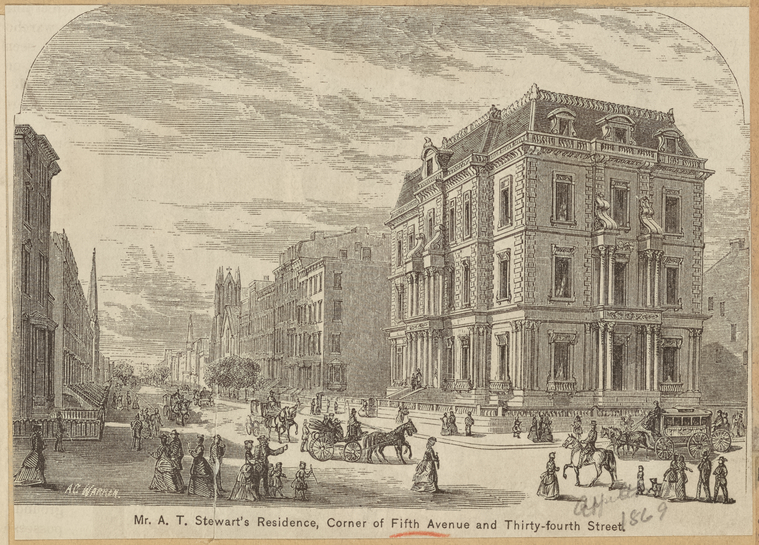
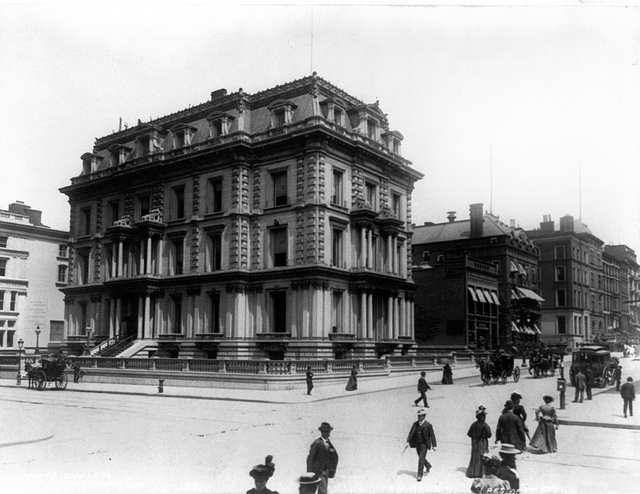
The home of A.T. Stewart — “the glorified shop clerk” — at the corner of Fifth Avenue and 34th Street, across the street from the Astors.
NYPL
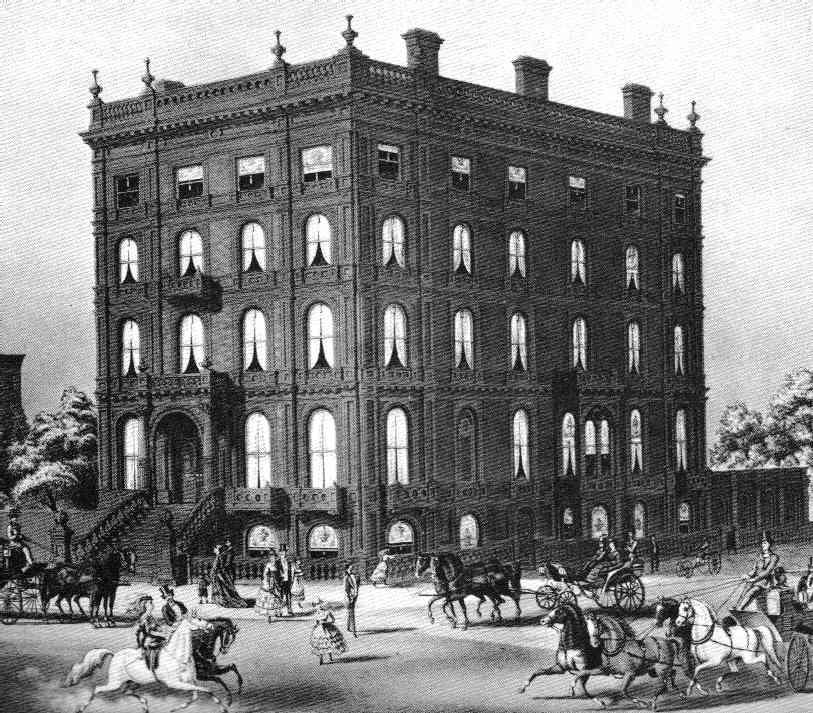
The home of Jay Gould in later years.
Library of Congress
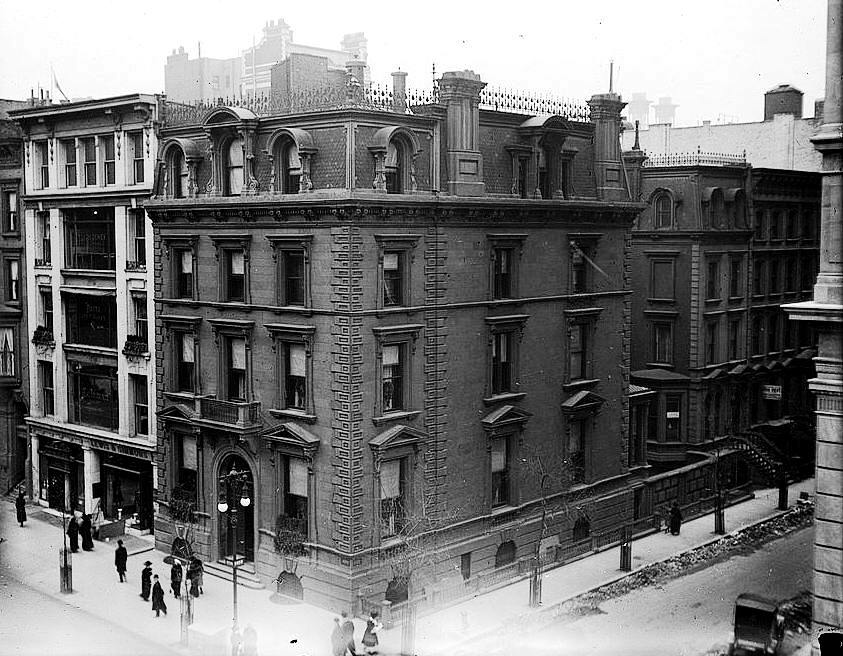
The home of the notorious Madame Restell.
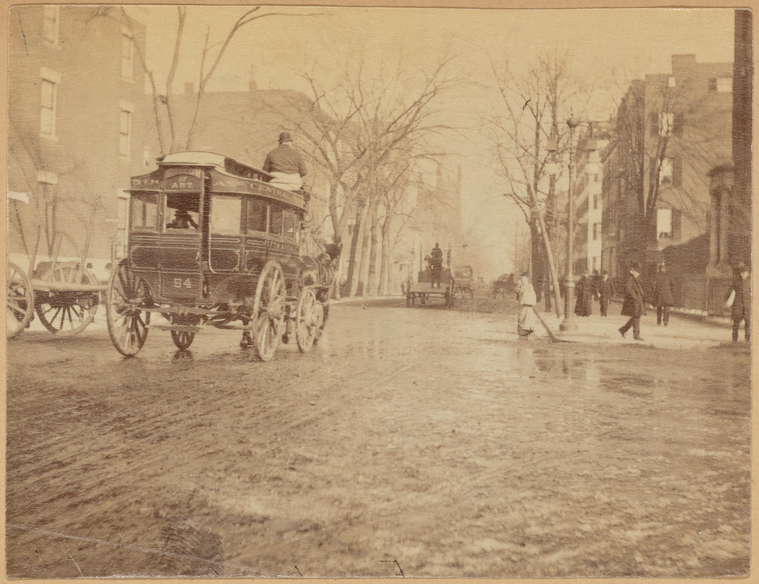
The Fifth Avenue Omnibus, circa 1890, a more elegant alternative to the dirty elevated train which ran just one avenue to the west.
NYPL
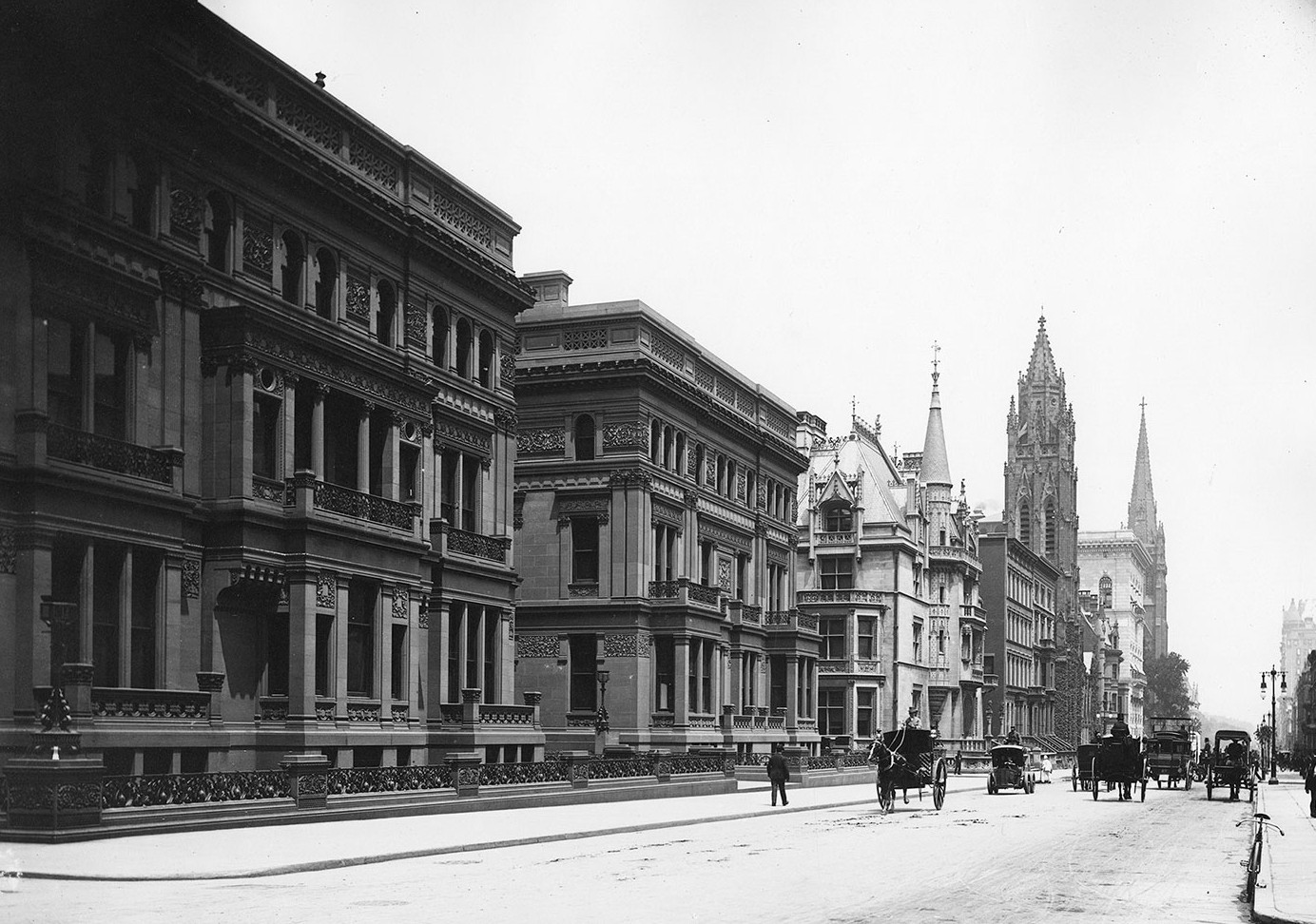
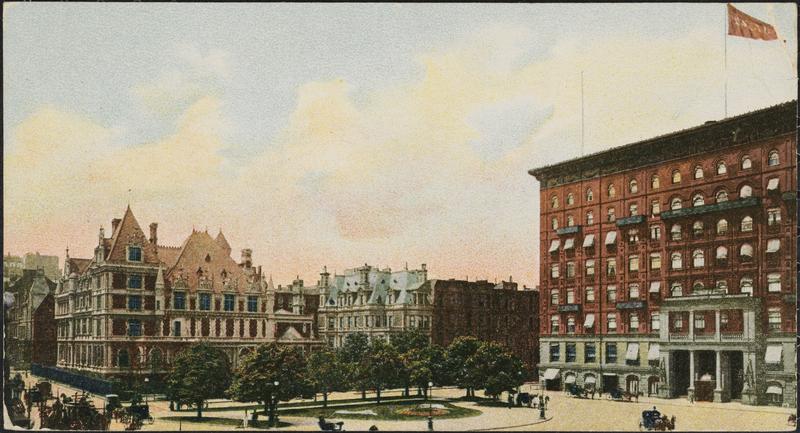
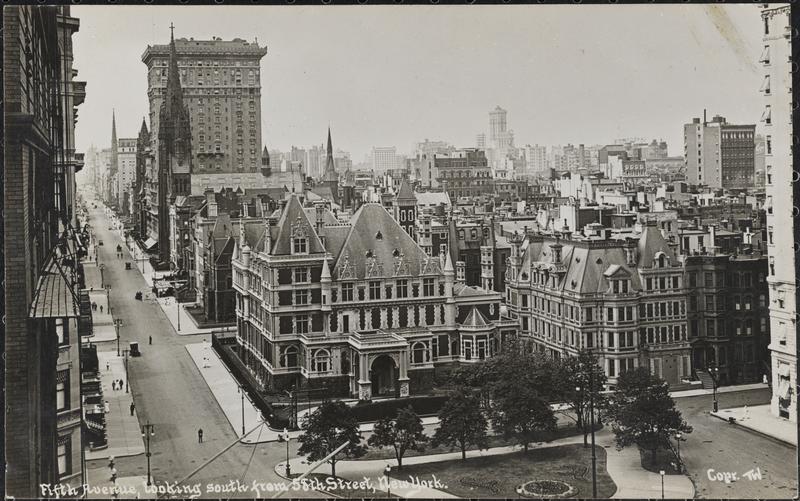
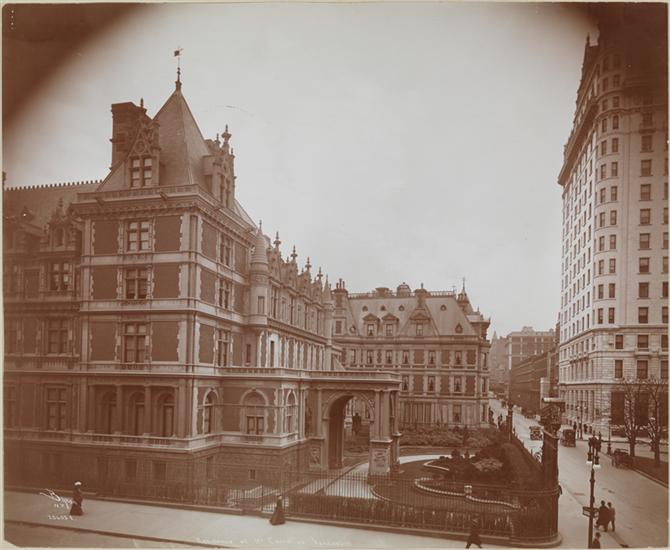
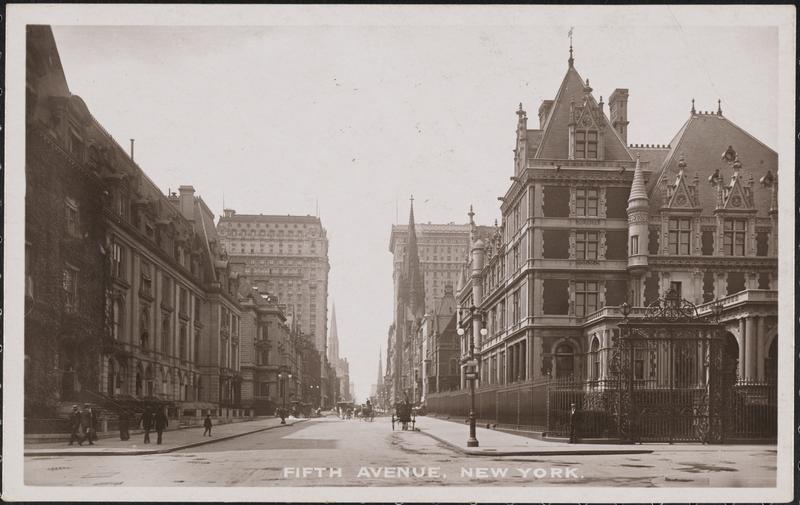
Vanderbilt Row in the 1890s. The family possessed the grandest homes on this stretch of Fifth Avenue from 51st Street to 58th.
NYPL
Vanderbilt University
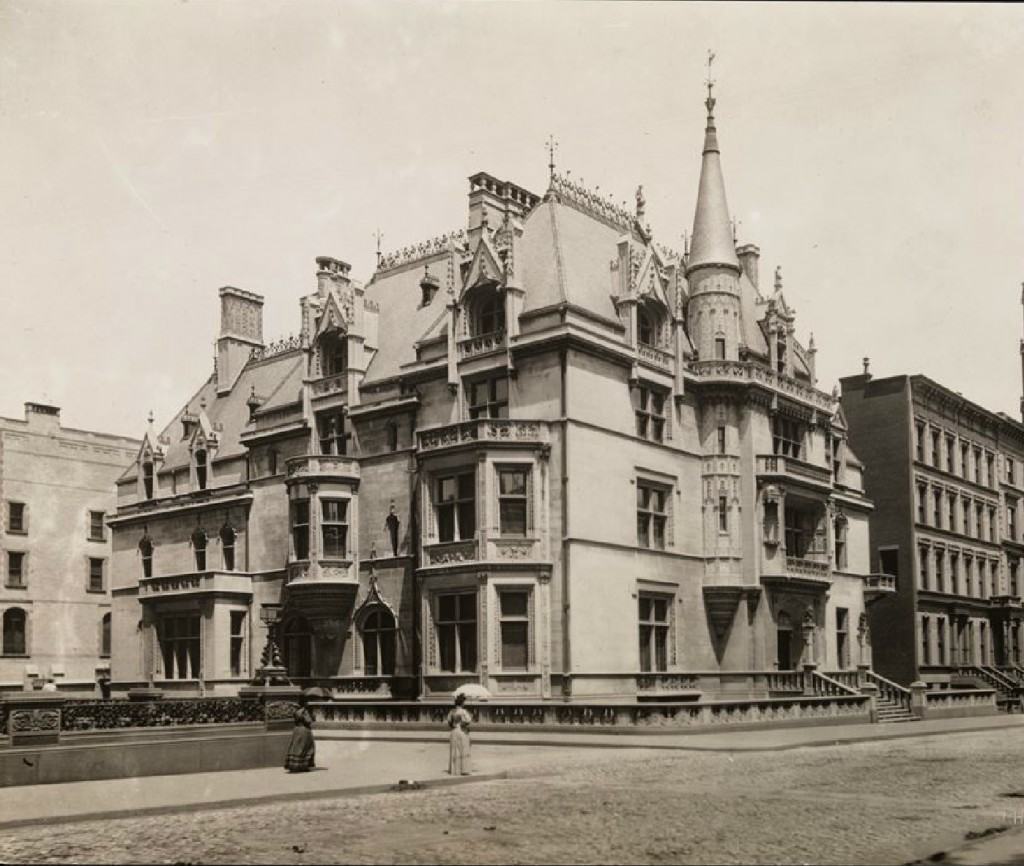
The mansion known as the Petite Chateau, next door to the Vanderbilt Triple Palace (pictured above)
The most insanely lavish of them all — the home of Cornelius Vanderbilt II — at Fifth Avenue between 57th and 58th Streets.
Note in the two images below (from 1901, 1905 and 1906) — both the first and second versions of the Plaza Hotel, in relation to the mansions surrounding it and Grand Army Plaza. All three courtesy Museum of the City of New York
MCNY
Fifth Avenue as seen in 1906, an avenue in transition by this time.