Does your personal library overwhelm your home? Are there too many books in your life — but you’ll never get rid of them? Then you have a lot in common with Gilded Age mogul J.P. Morgan!
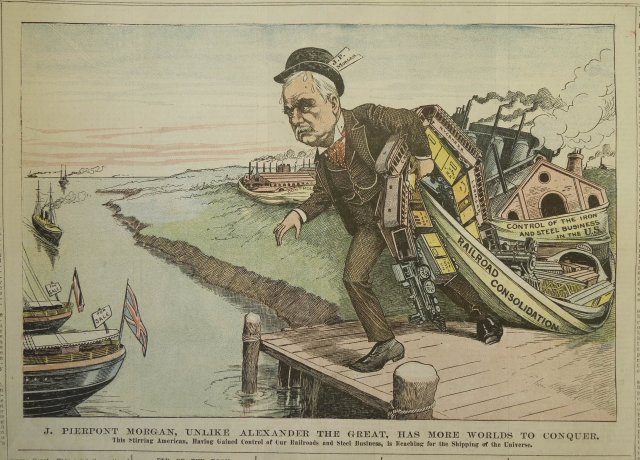
Morgan was a defining figure of the late 19th century, engineering corporate mergers and crafting monopolies from the desk of his Wall Street office. His vast control over the steel and railroad industries paired with his connections in international banking granted him great power over American life and helped fuel the great economic disparities of the Gilded Age.
In the process Morgan became one of the wealthiest men in America — but he did not tread the traditional path through New York high society. He preferred yachts over ballrooms.
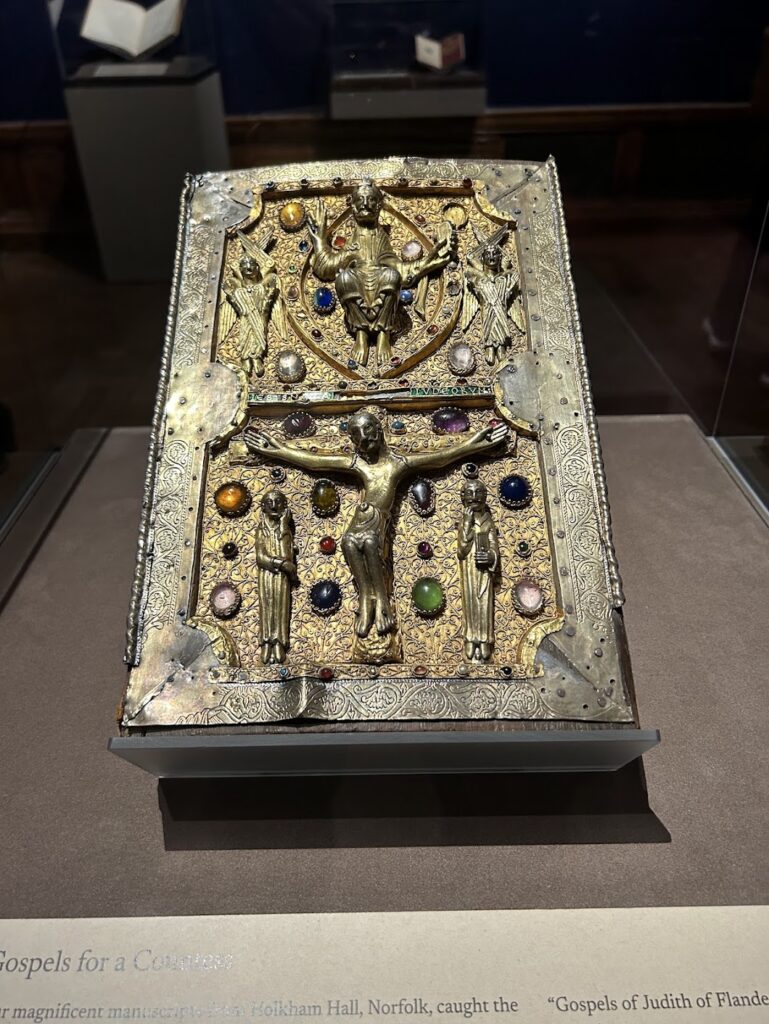
And books! For decades he collected thousands of rare books, letters, paintings and manuscripts from Gutenberg bibles to medieval illuminated tomes. So many books, in fact, that Morgan decided to start the new century with his own personal project — the construction of a library.
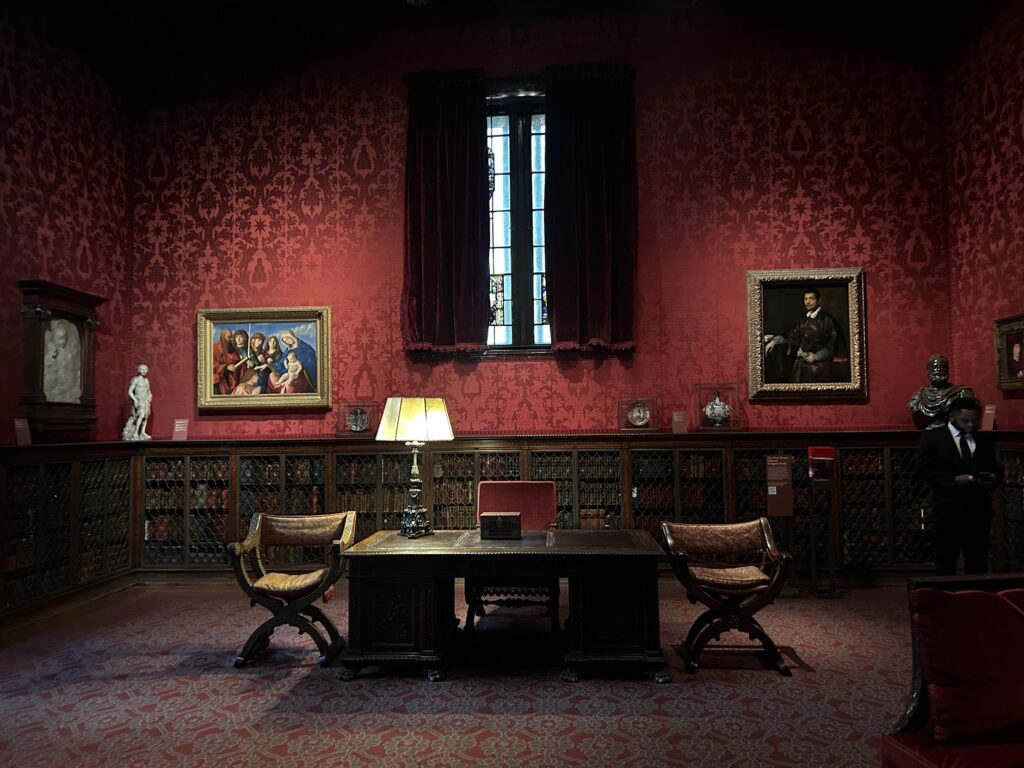
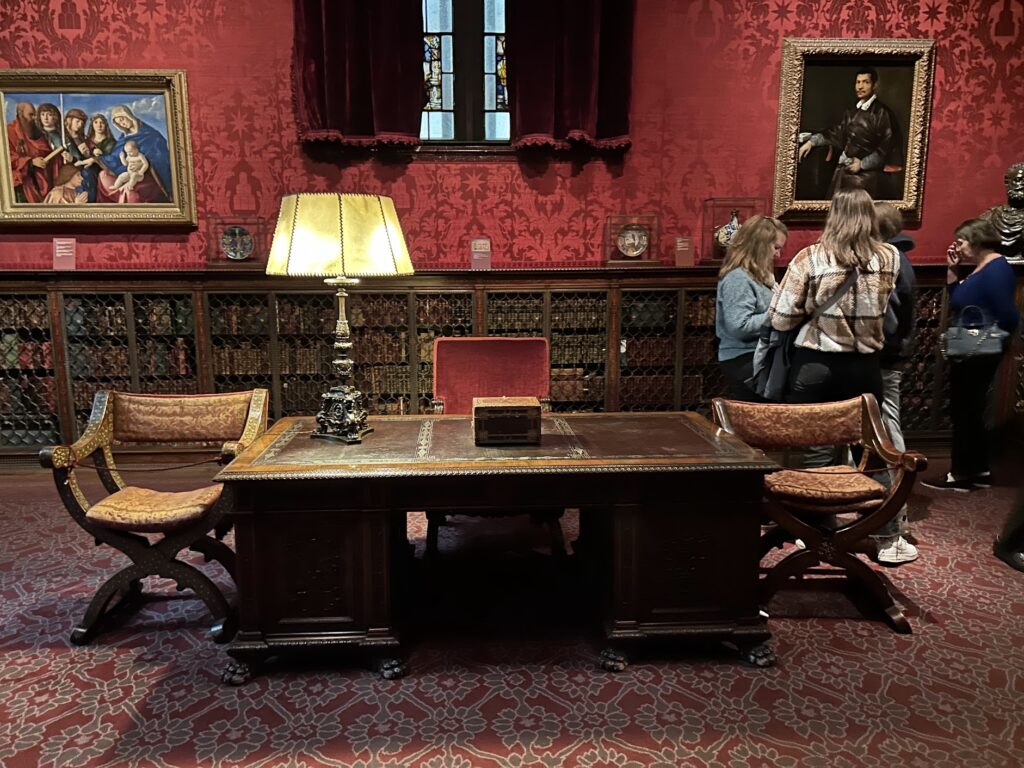
Morgan’s study
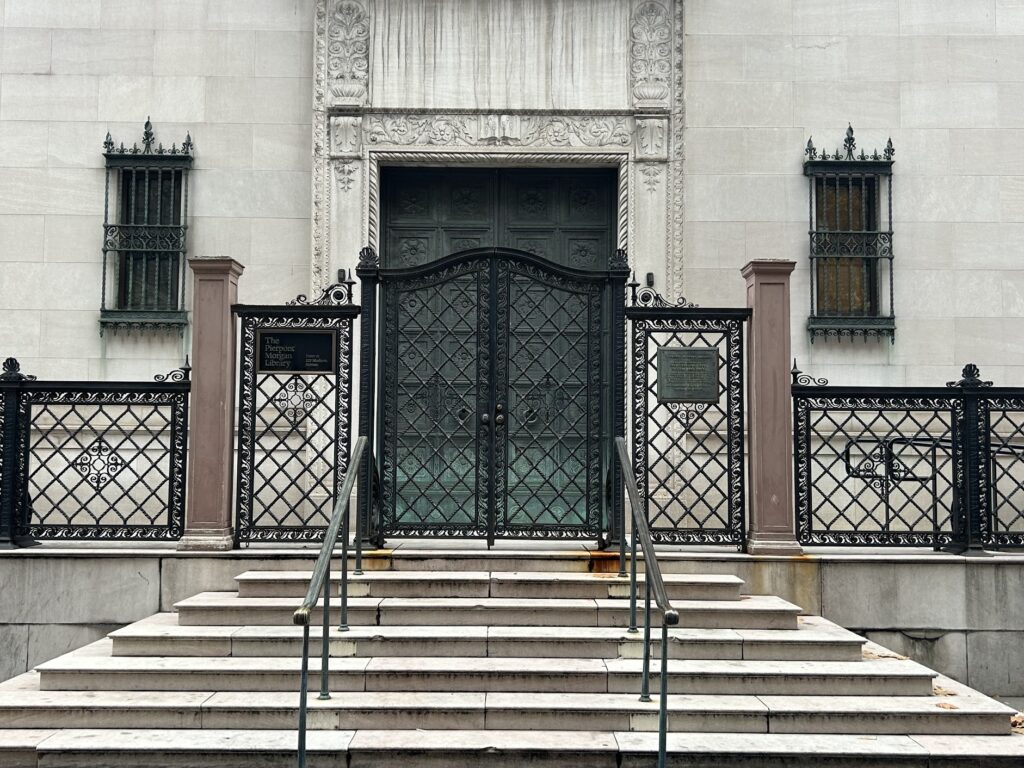
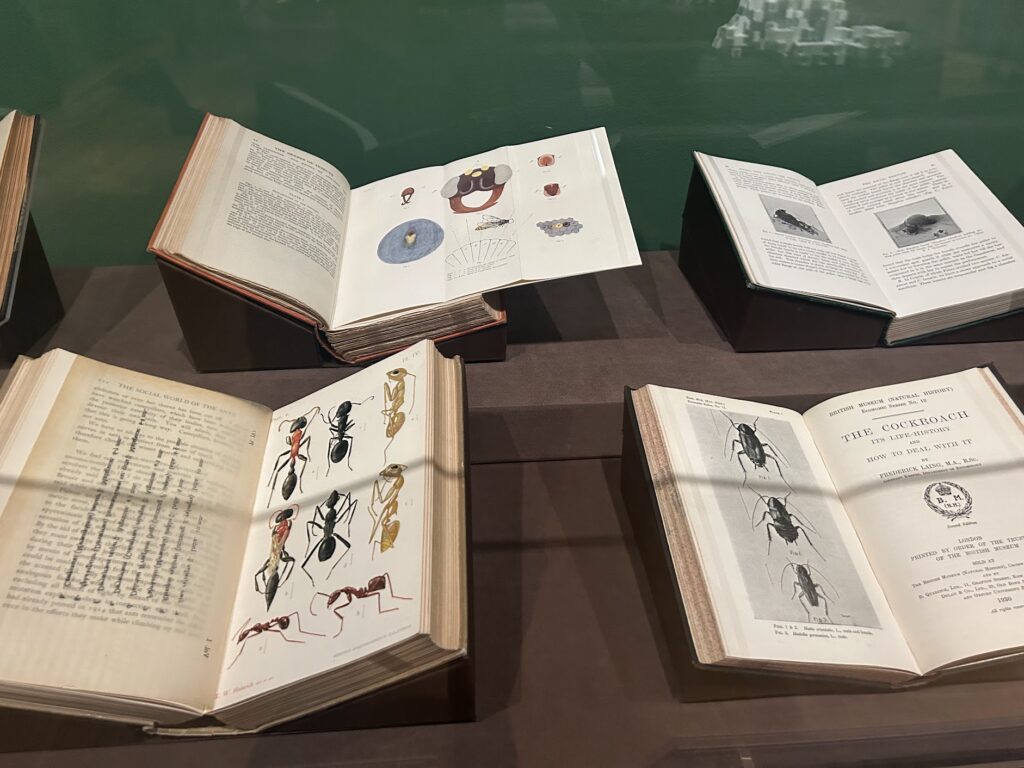
Today the Morgan Library and Museum is open to the public and, as an active and thriving institution, continues to highlight the world’s greatest examples of the printed word — from Charles Dickens manuscript for A Christmas Carol to past exhibitions on Beatrix Potter, James Joyce and even The Little Prince.
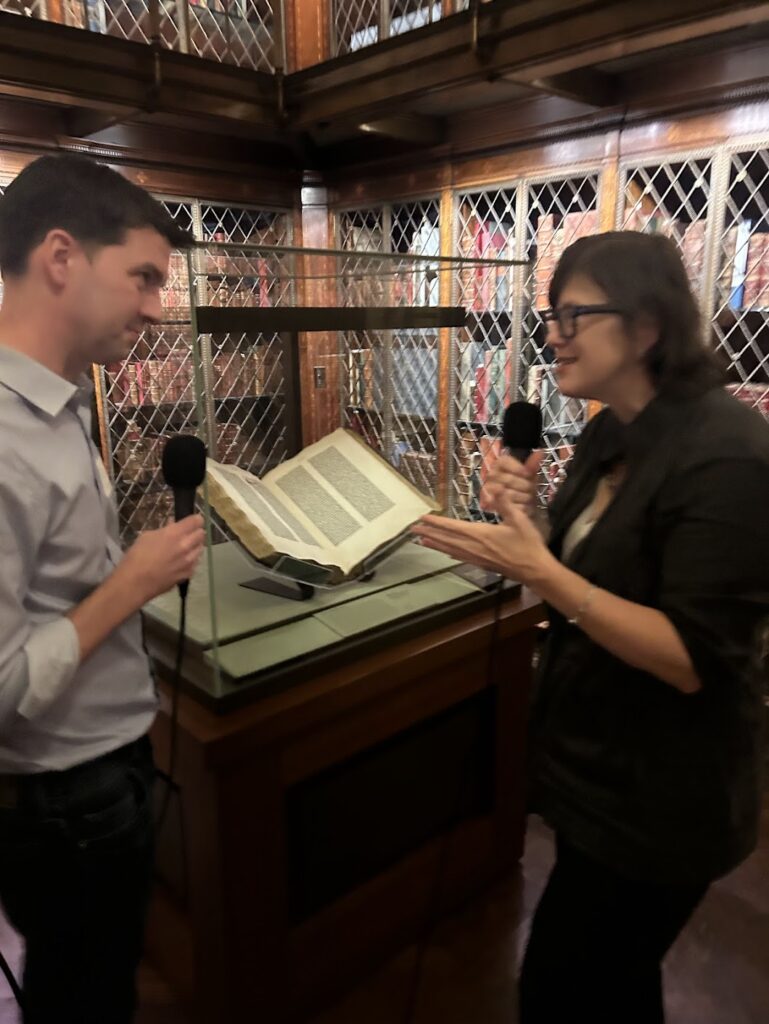
Tom and Greg explore the biography of J. Pierpont Morgan then head to the Morgan Library to speak with Jennifer Tonkovich, the Eugene and Clare Thaw Curator of Drawings and Prints.
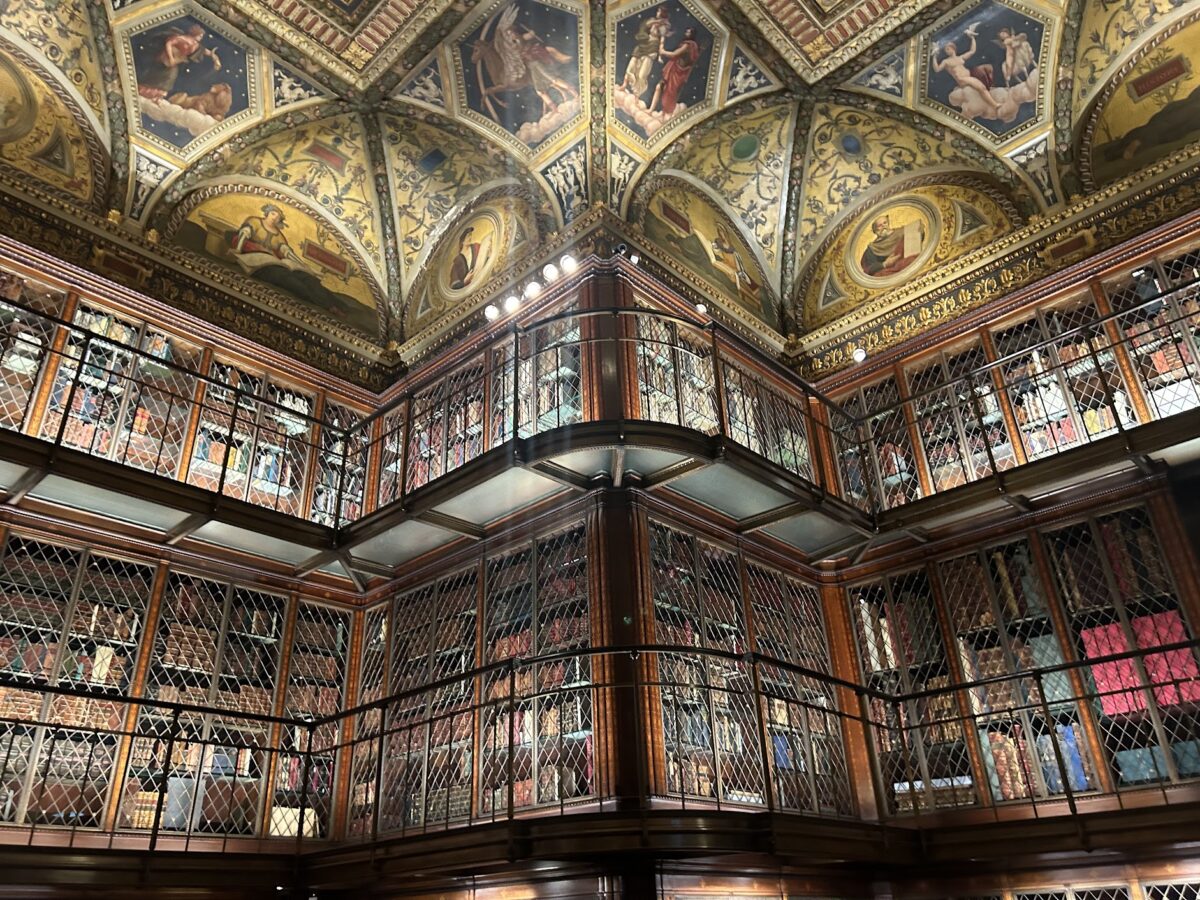
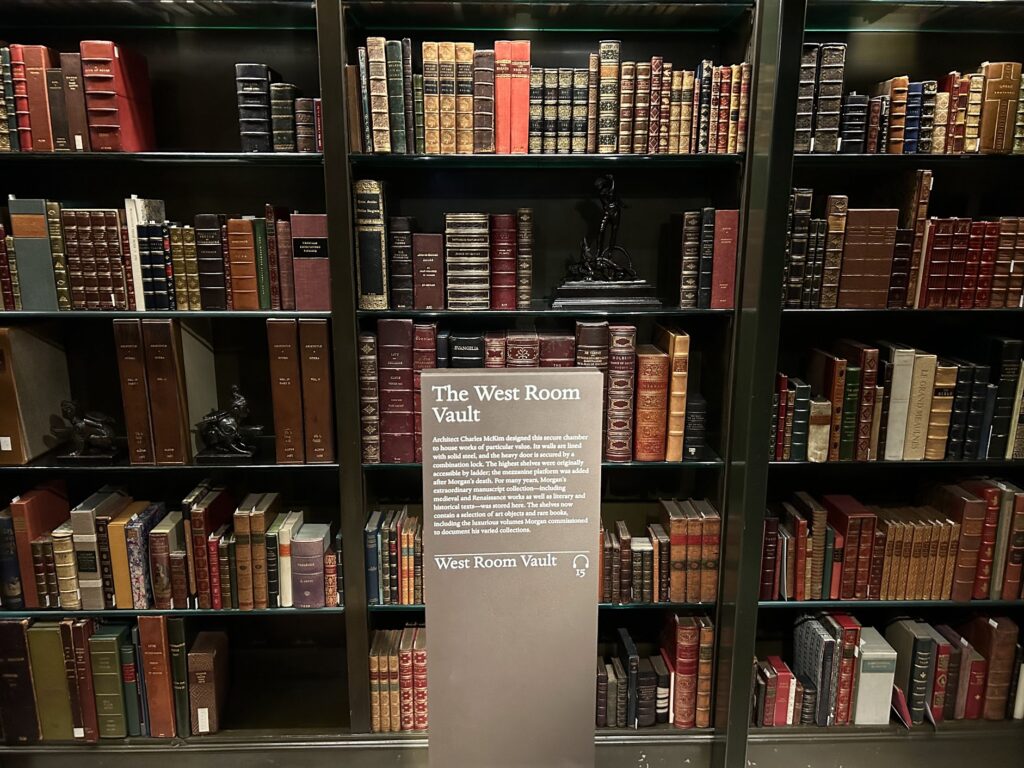
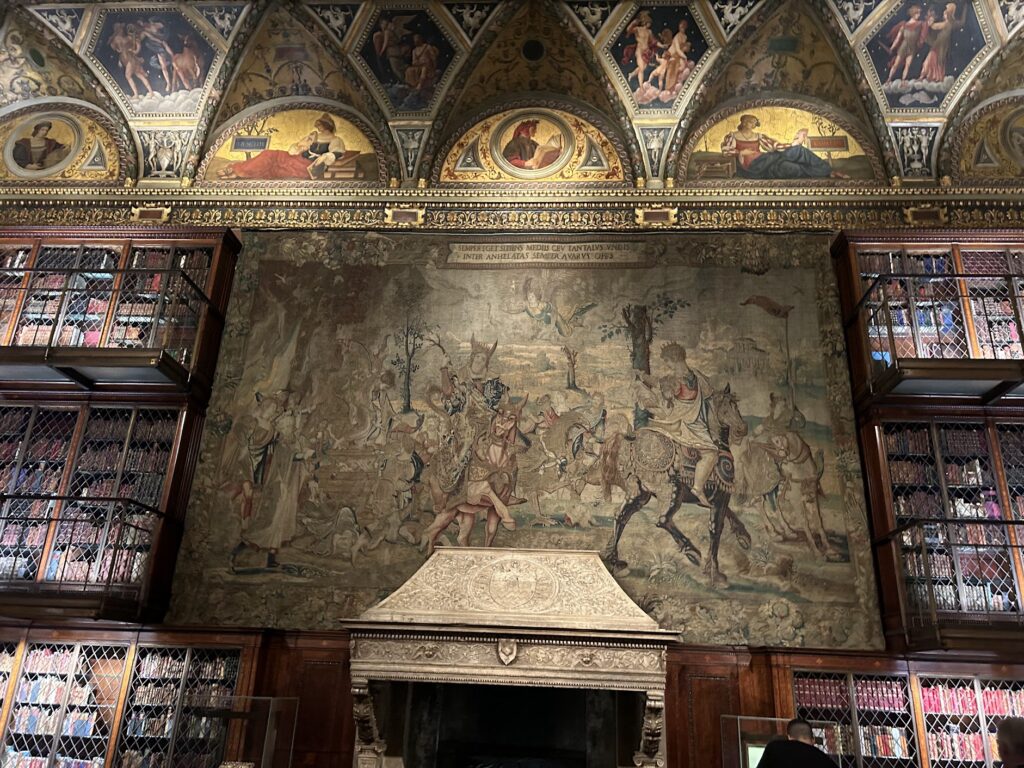
And then they wander through the winding connections of buildings which comprise the Morgan Library & Museum — from Morgan’s study (and its ‘hidden’ vault of books) to the glorious main stacks, lined with triple tiers of bookcases fashioned of bronze and inlaid Circassian walnut.
LISTEN NOW: MR. MORGAN AND HIS MAGNIFICENT LIBRARY
Share your love of the city’s history with a Bowery Boys Walks gift certificate! Our digital gift cards let your loved ones choose their perfect tour and date.
1903 portrait by Fedor EnckeSaturday Globe, 1901From the vaulted room in Morgan’s studyFrom the Franz Kafka showThe tapestry of gluttony
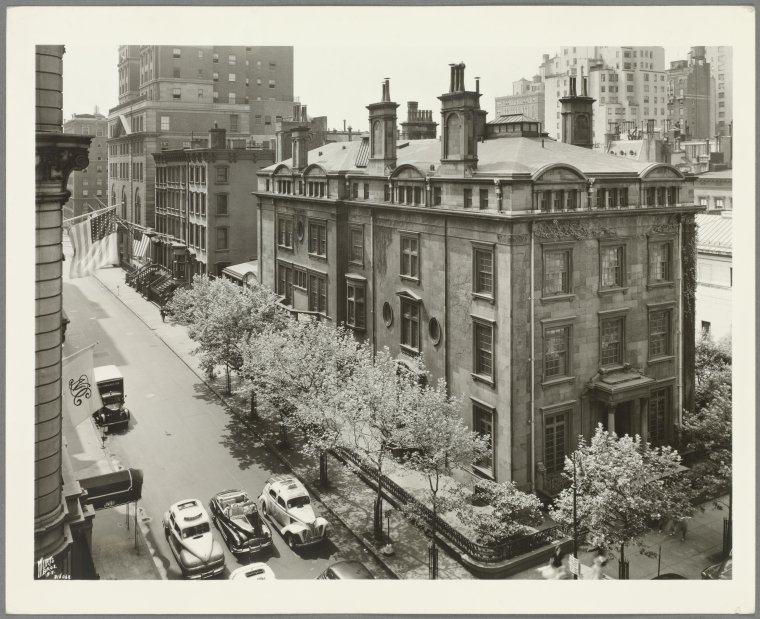
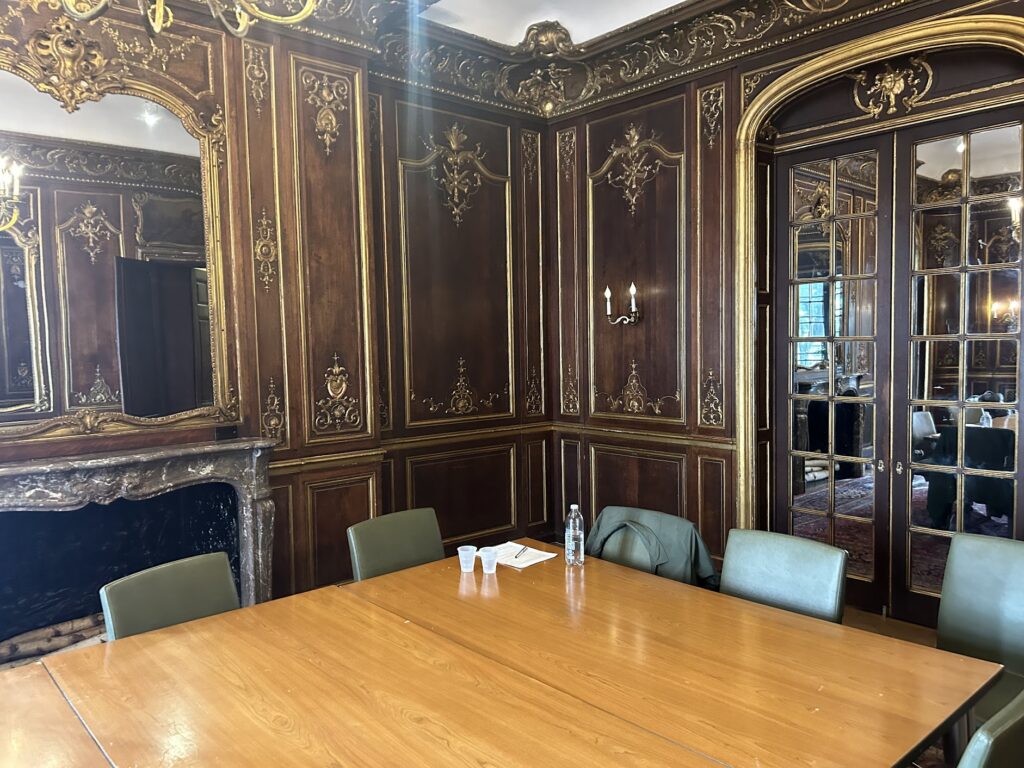
JP Morgan Jr’s brownstone which is today a part of the whole Morgan Library complex. In fact we recorded a portion of the show from its music room!
New York Public LibraryThe music room where we recorded a portion of the show.
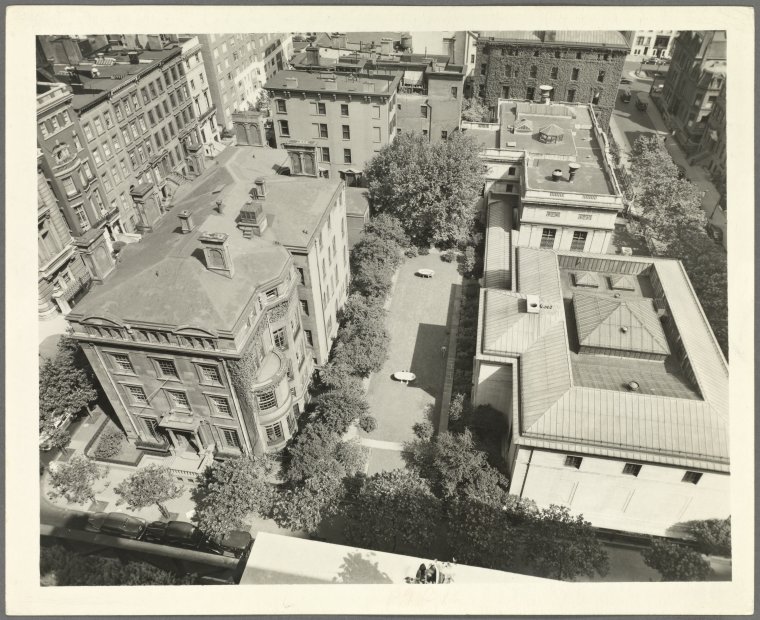
The Morgan Library and Museum from above. The slender garden in the middle was replaced in 2006 by a lavish hall designed by Renzo Piano.
New York Public Library
FURTHER READING
J. Pierpont Morgan’s Library: Building the Bookman’s Paradise / The Morgan Library and Museum The Hour of Fate: Theodore Roosevelt, JP Morgan and the Battle to Transform American Capitalism / Susan Berfield The House of Morgan: An American Banking Dynasty and the Rise of Modern Finance/ Ron Chernow J.P. Morgan – The Life and Deals of America’s Banker / J.R. MacGregor Morgan: American Financier / Jean Strouse
In the early days of July 1915, the United States was preparing for a subdued celebration of America’s 139th Independence Day.
It was hardly a festive time. War was still raging in Europe, and America was debating its entry on the side of Britain, Italy and France.
The deaths of 128 Americans aboard the RMS Lusitania on May 7 had forced the U.S.’s hand, some thought. President Woodrow Wilson pressed Germany for an apology while not yet calling for war. His Secretary of State William Jennings Bryan thought even that too harsh; he resigned in protest from Wilson’s cabinet in June.
The headlines were dire as it seemed the entire world would soon be caught in the maelstrom of the Great War.
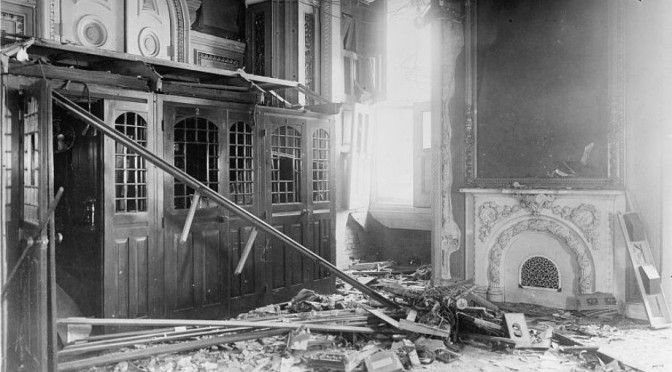
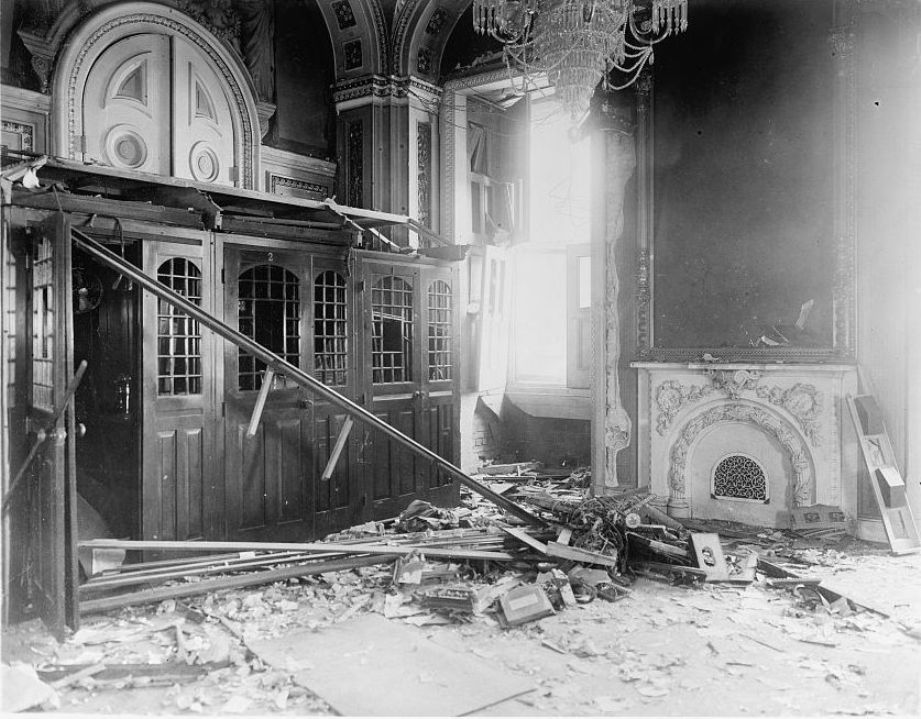
And then, right before midnight, July 2, 1915, a bomb went off at the U.S. Capitol building in Washington, D.C.
It exploded in an empty reception area. “The explosion was a loud one and shook the entire building, breaking transoms and shattering plastering, ” said the Sun. Windows and mirrors were smashed, but the only bodily harm it caused was throwing a watchman from his chair.
The Sun: “Some persons in the crowd which had gathered around the Capitol were inclined to believe that the bomb had been placed by some war fanatic as an act of resentment against the United States government.”
Below: The Capitol reception room after the explosion
Courtesy Library of Congress
They were right. And Eric Muenter wasn’t done.
Before newspaper readers in New York City would find out about the bombing, its instigator would have already arrived in their city, with a roster of further crimes on his mind.
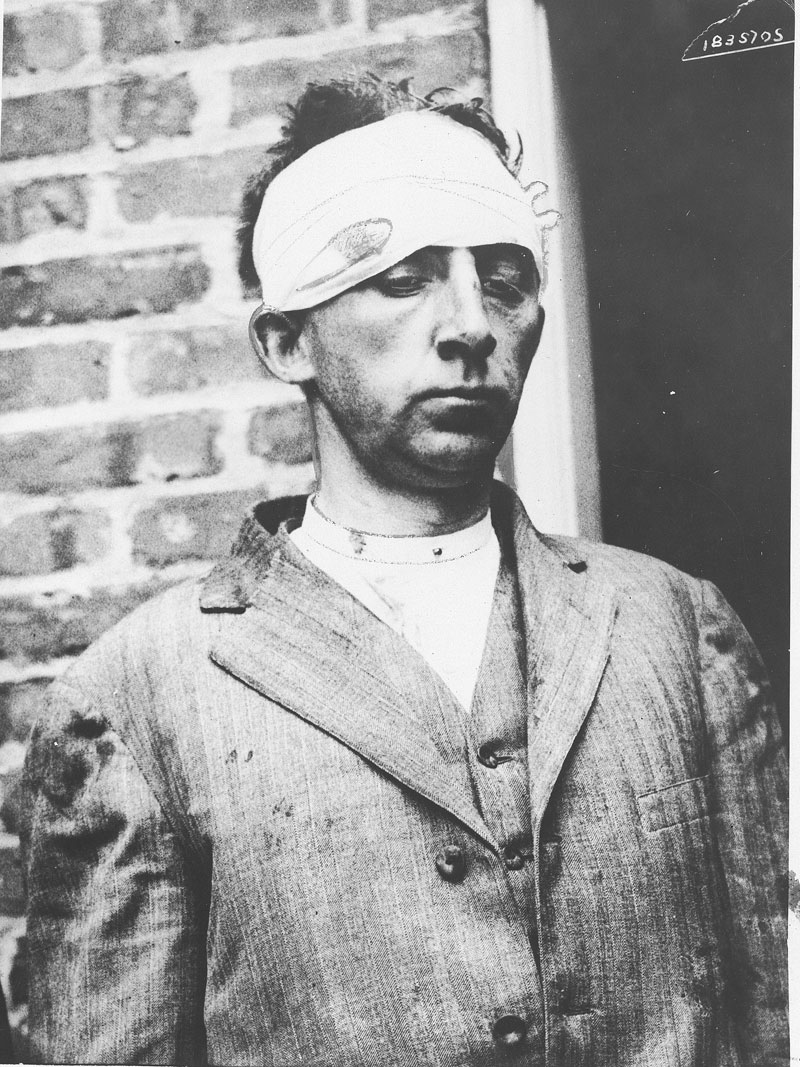
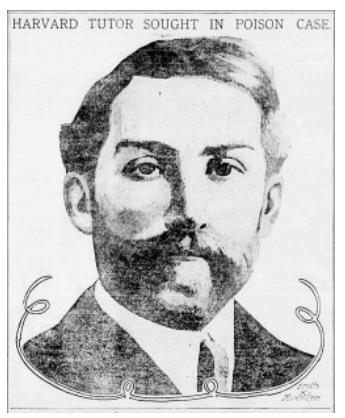
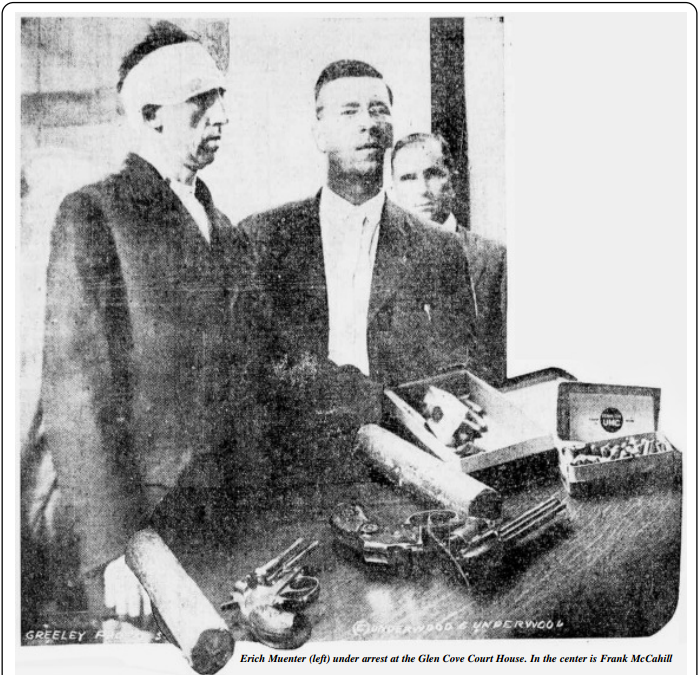
Muenter (pictured below), a former professor at Harvard University*, was a German sympathizer angered at American intervention in the war. He spread his vitriol wide, preparing to target private businessmen personally funding war efforts. In fact targeting one of America’s most wealthy financiers — JP Morgan Jr.
Below: Muenter after he was captured
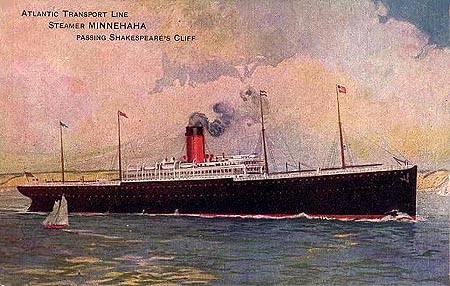
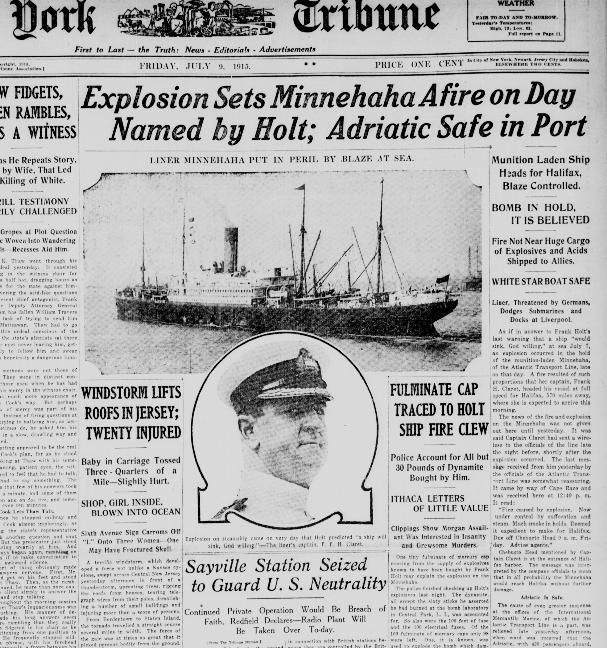
Following his sabotage at the Capitol, Muenter fled to New York on the morning of July 3 to wreak further chaos. He had a makeshift headquarters at the Mills Hotel (Seventh Avenue and 36th Street) where he had stored dozens of sticks of dynamite and fuses. At the port of New York, he managed to sneak aboard the SS Minnehana, an ocean liner filled with explosives destined for England, and install a time bomb to detonate once the ship was at sea.
Courtesy Library of Congress
It’s at this time that a similar time bomb was placed at New York Police Headquarters at 240 Centre Street. The device here was later believed to be from the same batch of dynamite as Muenter’s. If he was involved, you have to admit he was incredibly efficient with his time, for by 8 am, he had boarded a train, headed to Glen Cove, Long Island.
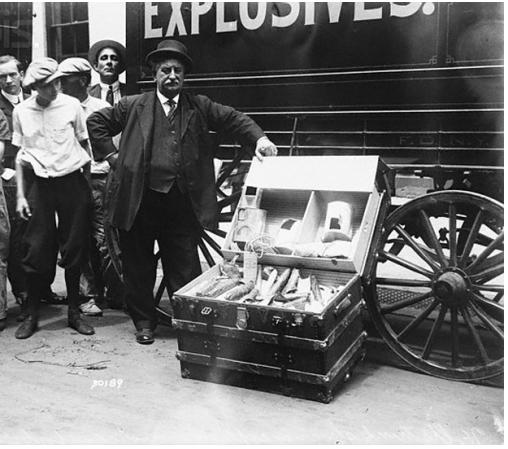
Below: New York’s Inspector of Combustibles with Muenter’s steamer trunk filled with dynamite. (Courtesy Glen Cove Heritage)
JP Morgan Jr. had been in control of his father’s banking empire since the elder’s death in 1913. The son embodied America’s involvement in the Great War in the years before the U.S.’s official entry. He facilitatedan unprecedented loan of 500 million dollars to the Allied countries, backed by a consortium of over 2,000 American banks. The loans would soon grow to almost 3 billion dollars.
This made the financier both a symbol of American beneficence for some and a target of unwanted intervention for others. New York was a great stew of European diversity in the 1910s, and the far-away war often played out in the streets of New York, especially in German communities.
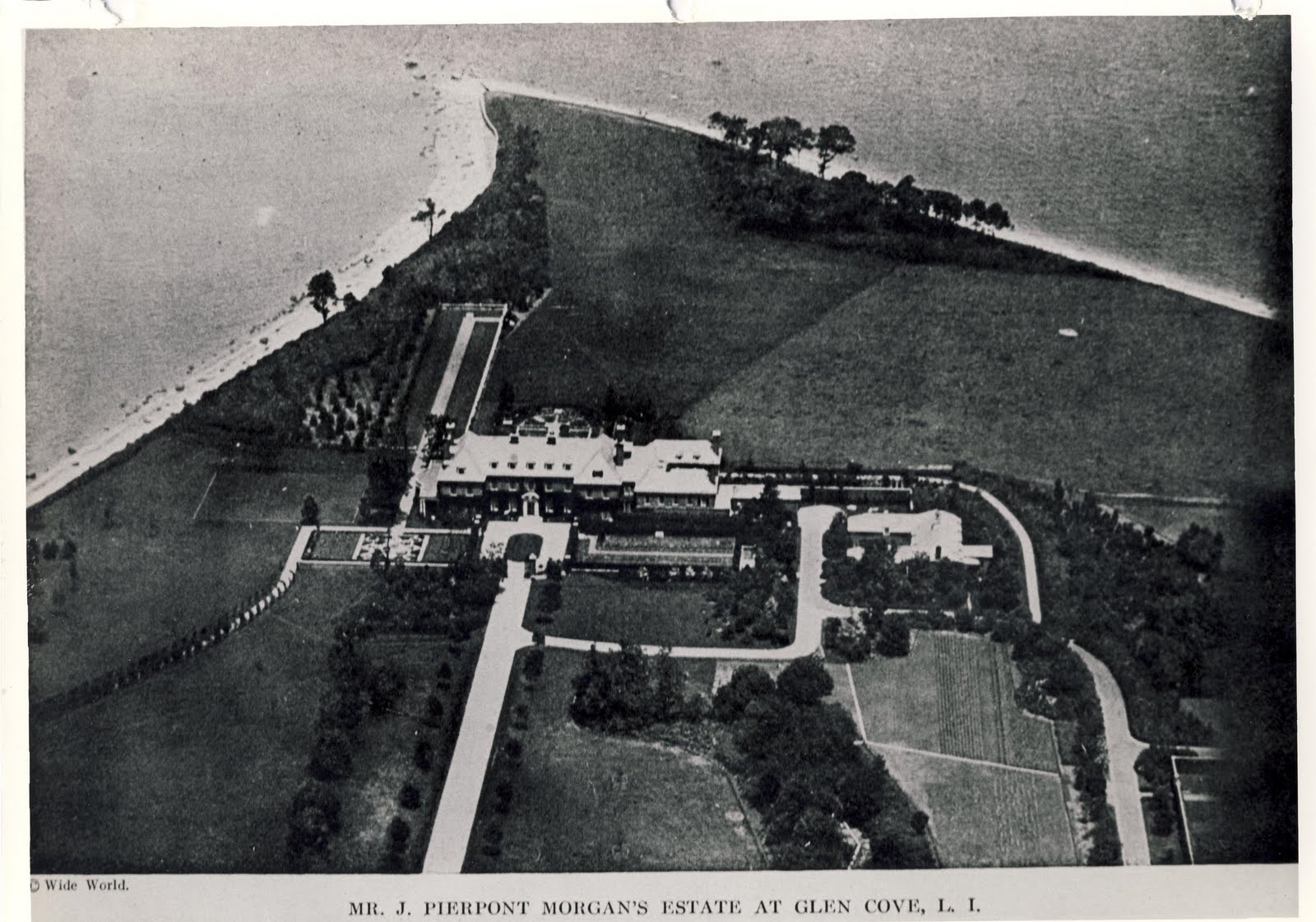
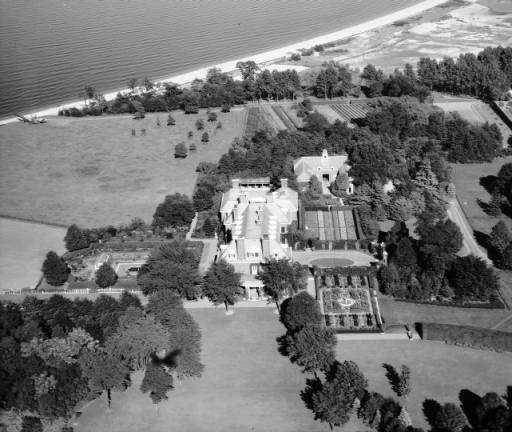
Morgan Jr had his recently-built summer home in Glen Cove, a palatial manor called Matinecock Point (pictured below). This was Muenter’s destination.
The assailant arrived, armed with two revolvers and a set of dynamite in his pocket, during an opportune breakfast meeting; the Morgans just happened to be entertaining the British ambassador Sir Cecil Spring-Rice.
Courtesy American Homes of Today, 1924
At the door, Muenter pulled a gun on Morgan’s butler who, quickly thinking, directed the intruder down an opposite hall then shouted in the other direction for the Morgans to hide. The family scattered throughout the house.
Eventually, for the safety of their children, the Morgans did appear at the second floor landing and lured Muenter to them.
“Now Mr. Morgan I have got you.” he said reportedly.
His wife Jane attempted to leap in front of the gunman but was harshly shoved out of the way. Muenter then shot Morgan twice and prepared to fire again from the second pistol.
Fortunately Morgan had actually fallen into the gunman, pinning him to the floor. This allowed time for Mrs. Morgan and the children’s elderly nurse to finally apprehend the shooter. The fact that Spring-Rice, the British ambassador, also personally assisted in the capture of the shooter seems especially notable.
His plan thwarted, Muenter reportedly exclaimed, “Kill me! Kill me now! I don’t want to live any more. I have been in a perfect hell for the last six months on account of the European war.”
Originally giving his names as Frank Holt, it was soon discovered that the assailant was in fact Muenter, the former Harvard professor. In 1906, he was accused of poisoning his pregnant wife. Most likely, he did indeed kill her, for he disappeared from campus, changing his name to avoid arrest and had apparently spent years cultivating this new identity.
Once in custody on Long Island, Muenter spilled the beans. “I wanted to attract the attentions of the country to the outrages being committed by those who are sending the munitions of war to the Allies.” [source]
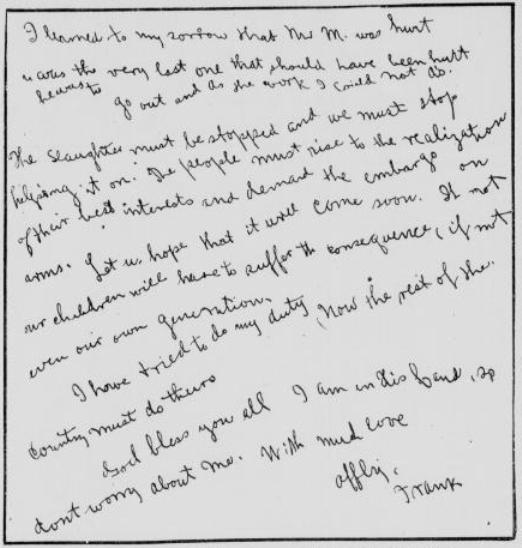
Below is a fragment of a letter Muenter wrote to his father-in-law while in custody. “I learned to my sorrow that Mrs. M[organ] was hurt,” it begins.
On July 5th the explosion at New York Police Headquarterswent off, following another explosion at the home of Andrew Carnegie. Nobody was hurt in these blasts. These similar explosions were later declared unrelated to the Muenter incident itself, but it grimly reinforces the danger New Yorkers faced during wartime, even so far away from the battlefields.
Morgan quickly recovered from his injuries although the attack had a chilling effect among the residents of Long Island’s Gold Coast. Security was quickly beefed up at Matinecock Point and at the estates of other wealthy financiers associated with the Morgan bank loan.
Below: Muenter in custody
On the evening of July 6, Muenter leaped to his death from his cell at Nassau County jail in Mineola. While it was but a short drop, he had jumped head first, crushing his skull.
The death was so bizarre and sudden — it actually made a loud, deafening thud — that investigators initially believed that he had placed a blasting cap in his teeth to hasten his demise.
But the reign of terror wasn’t over. The time bomb that Muenter had placed aboard the SS Minnehaha did eventually explode while the ship was in the Atlantic. While it caught the ship ablaze, fortunately the ship was able to reroute to Halifax, and the fire was safely put out.
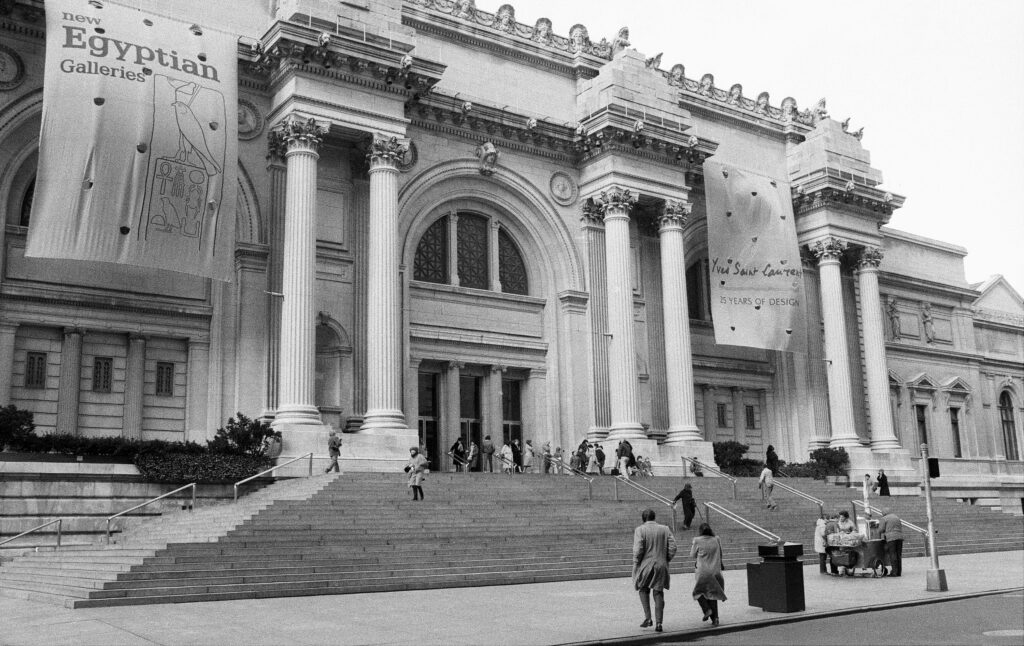
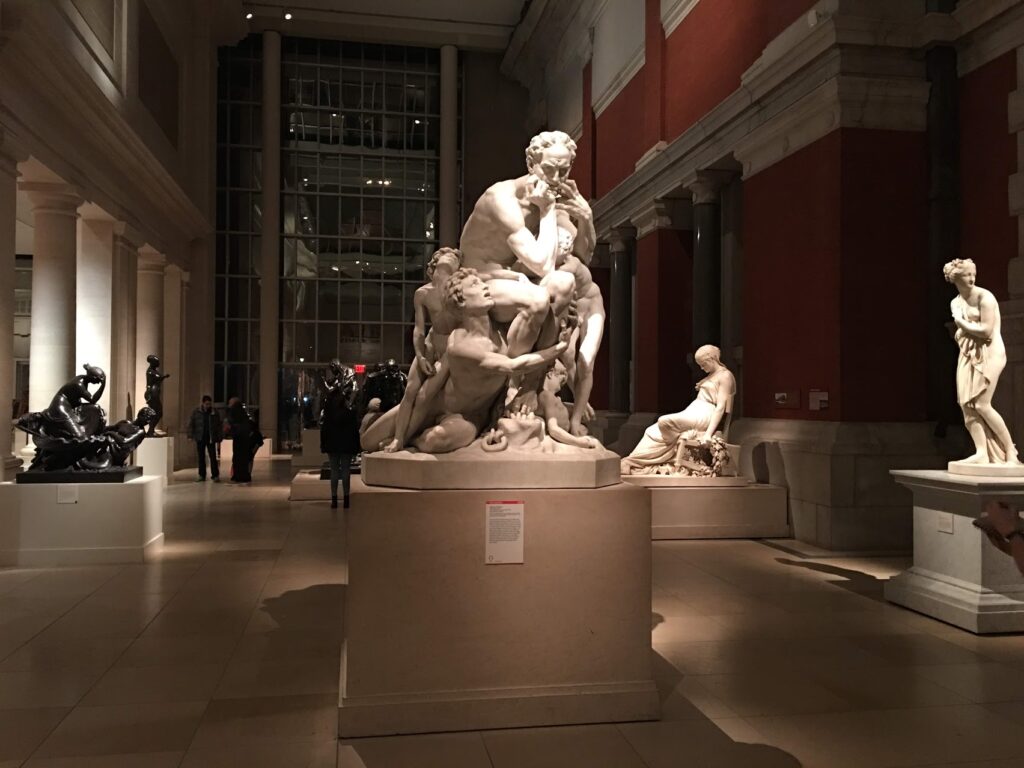
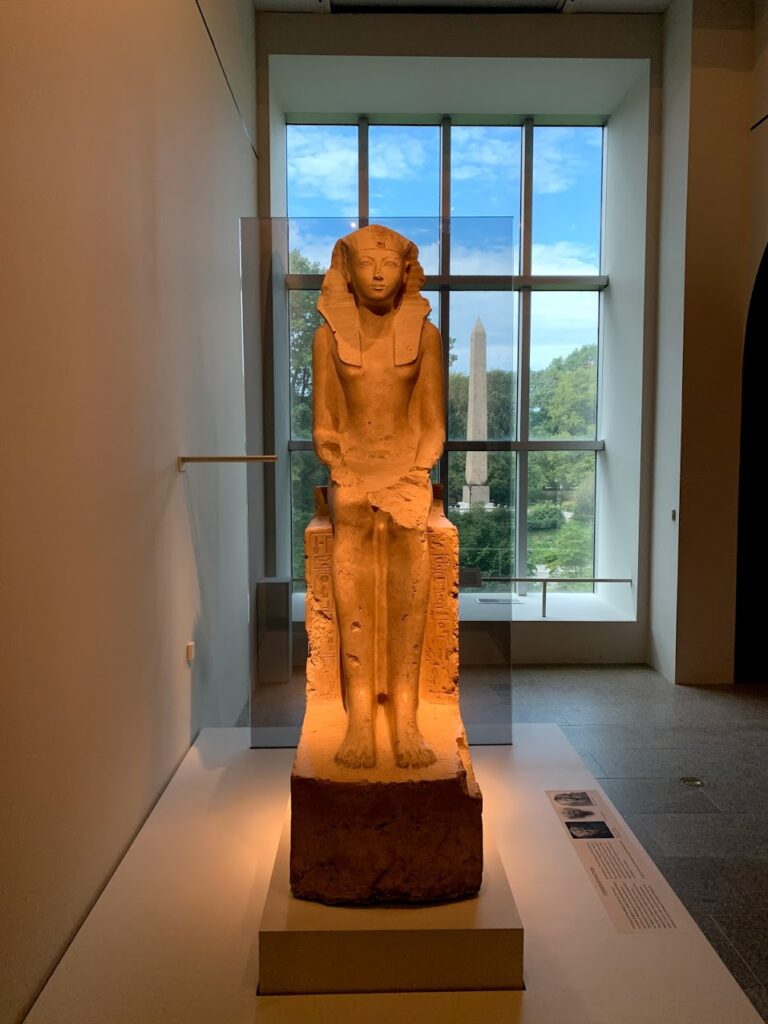
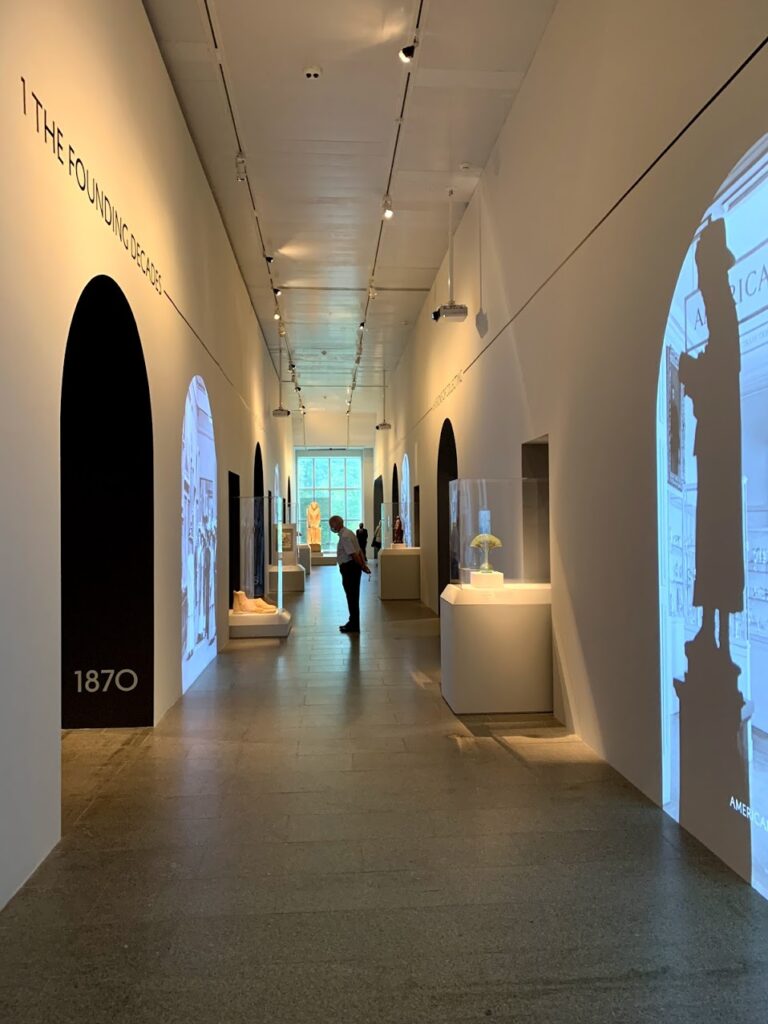
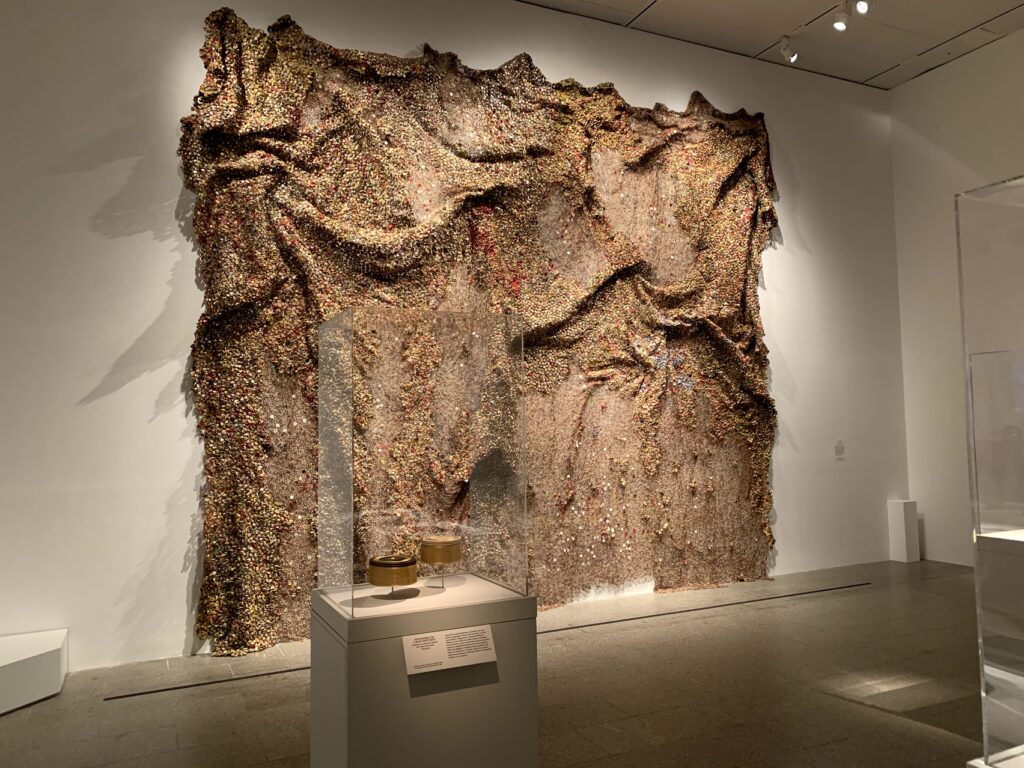
EPISODE 341 Celebrating the history of the Metropolitan Museum of Art in the 150th anniversary year of its founding — certainly one of the strangest years in its extraordinary existence.
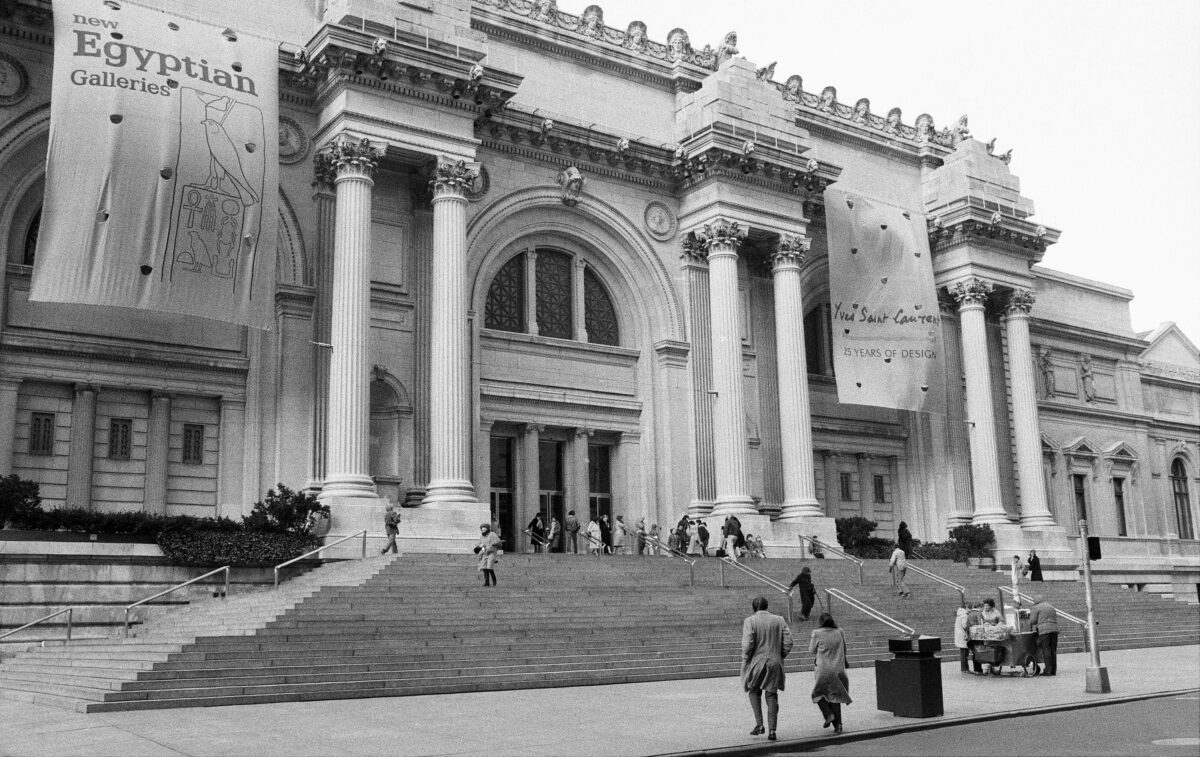
The Met is really the king of New York attractions, with visitors heading up to Central Park and streaming through the doors by the millions to gasp at the latest blockbuster exhibitions and priceless works of art and history.
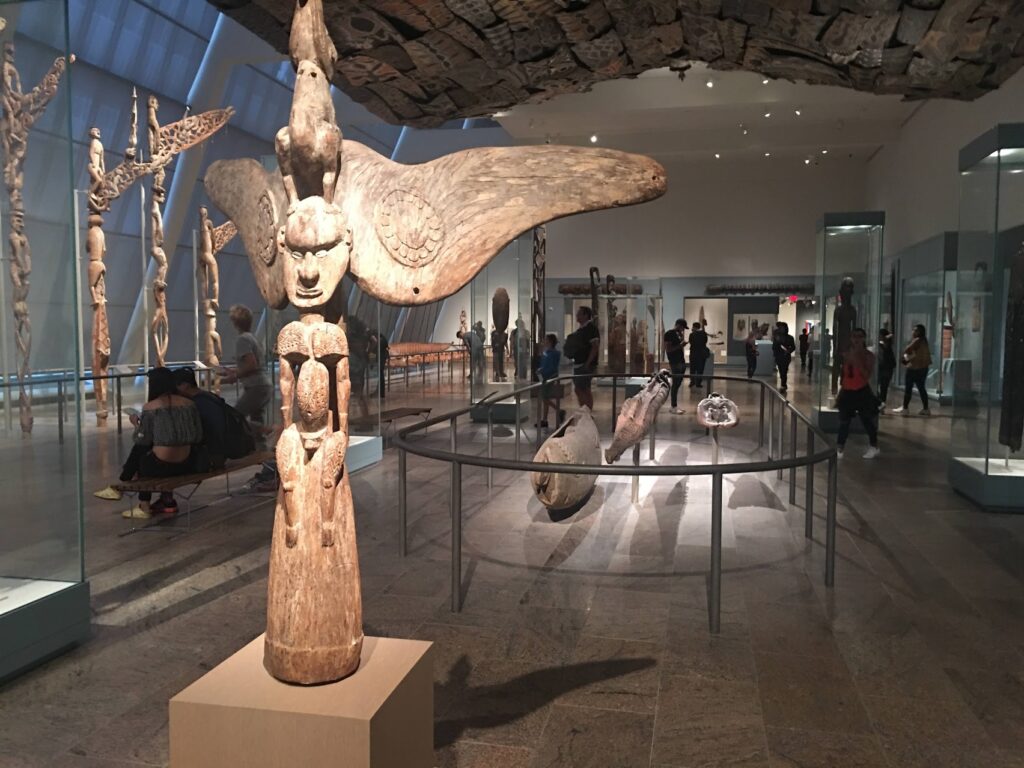
And who doesn’t love getting lost at the Met for an afternoon — wandering from the Greek and Roman galleries to the imposing artifacts within the Arms and Armor collection and the treasures of the Asian Art rooms?
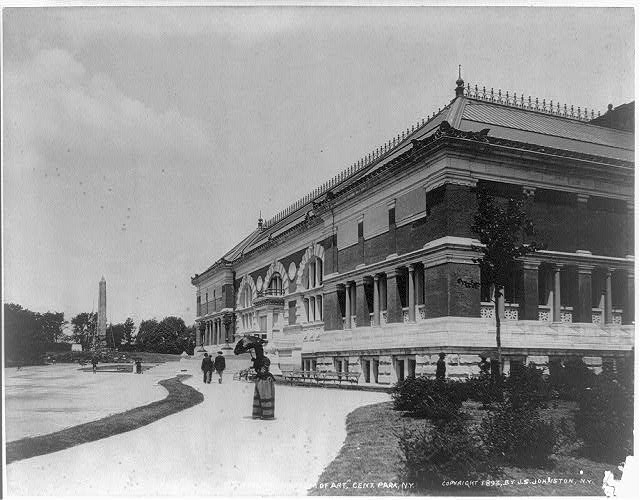
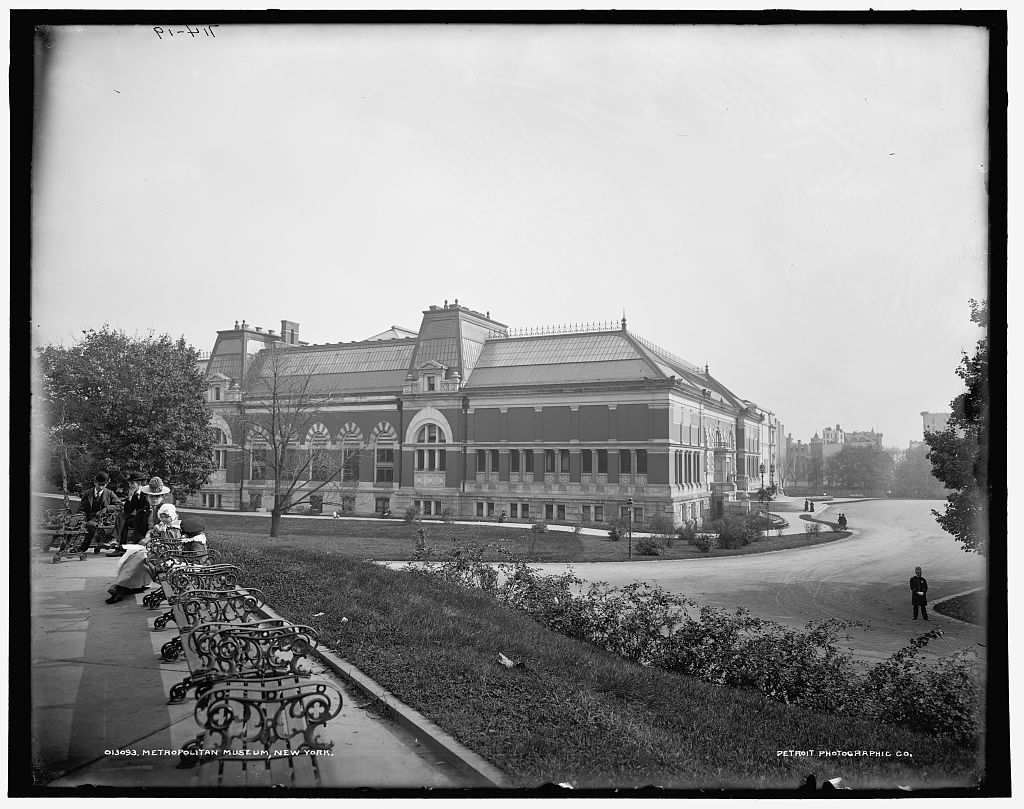
The Theodore Weston addition to the Met 1893, J.S. Johnston, Library of Congress
But this museum has a few surprising secrets in its history — and more than a few skeletons (or are those mummies?) in its closet.
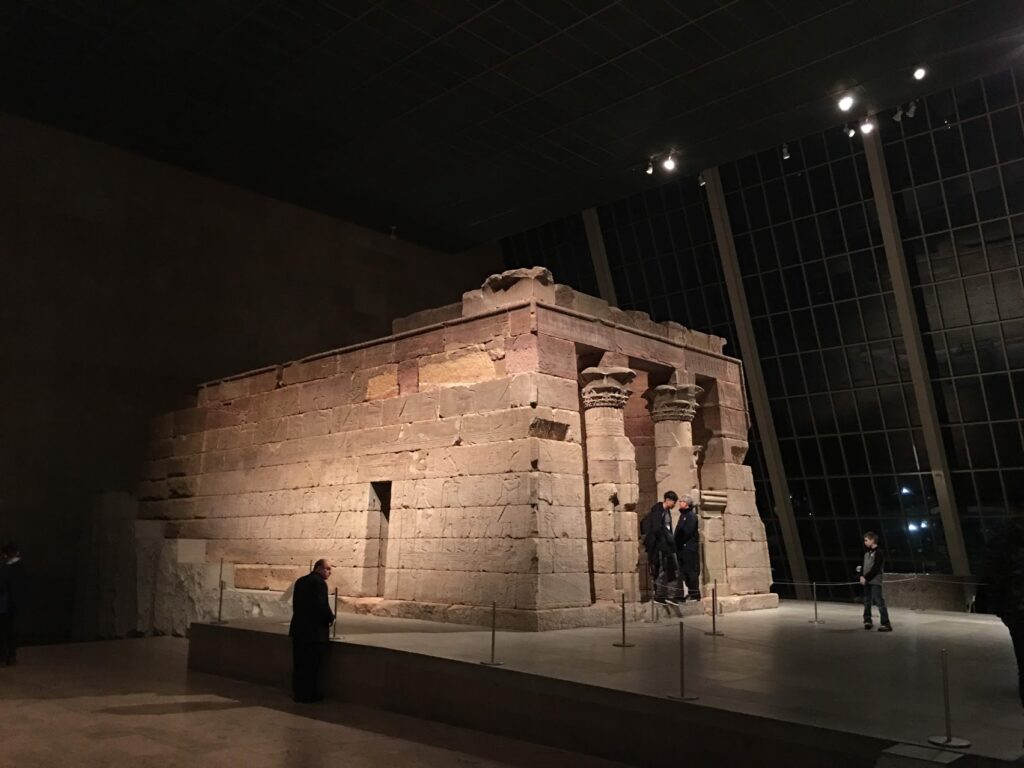
WITH Ancient temples, fabulous fashions, classical relics, Dutch masters, controversial exhibitions and the decorative trappings of the Gilded Age.
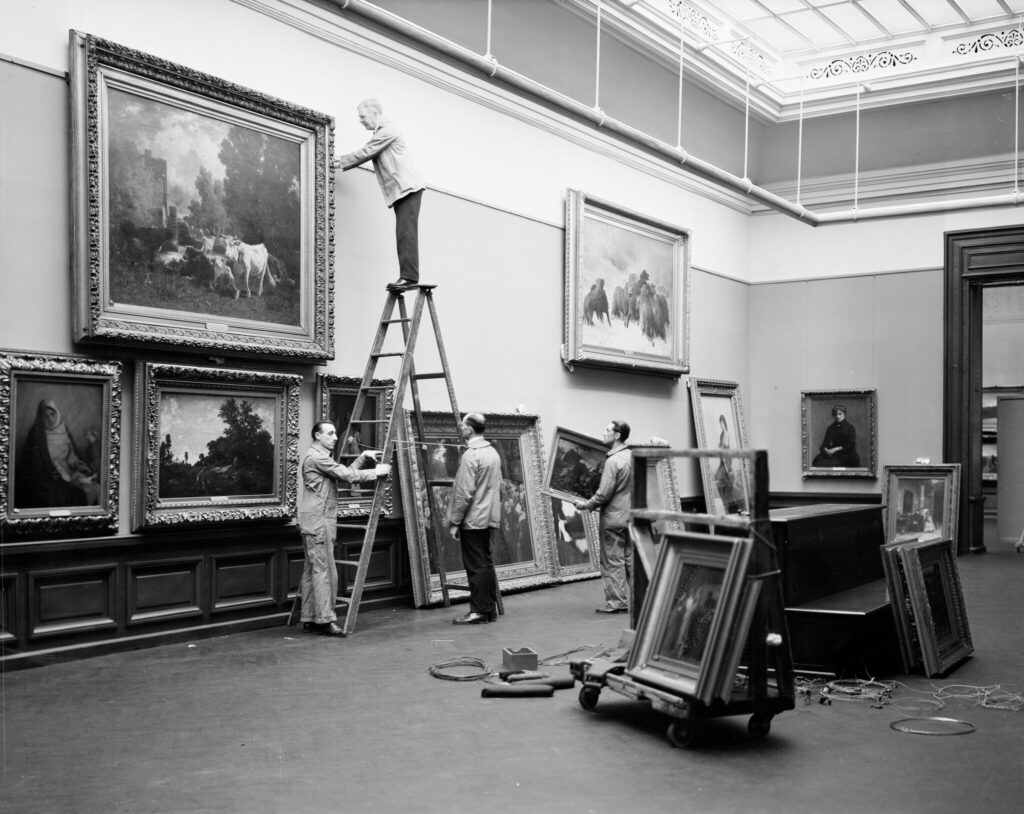
November 1928, photo courtesy The Metropolitan Museum of Art
AND Find out how the museum building has evolved over the years, employing some of the greatest architects in American history.
PLUS An interview with the Met’s Andrea Bayer, Deputy Director for Collections and Administration, on the museum’s celebratory exhibition Making the Met 1870-2020.
How do you launch an anniversary celebration during a pandemic and lockdown?
Listen today on your favorite podcast player:
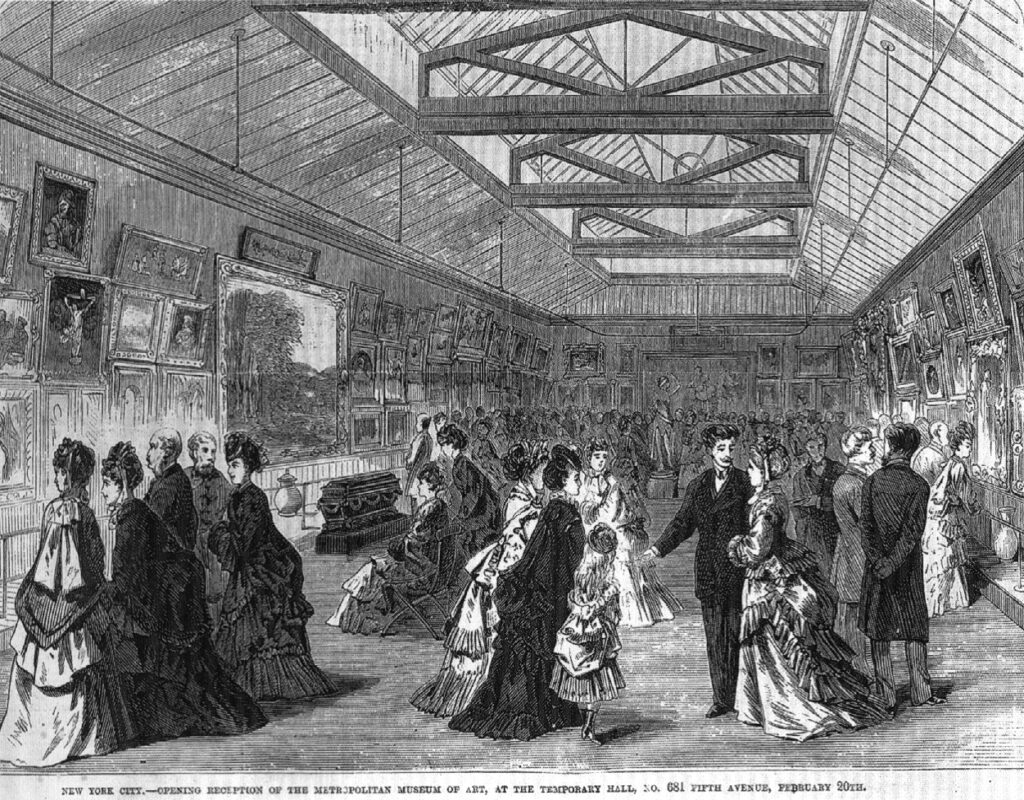
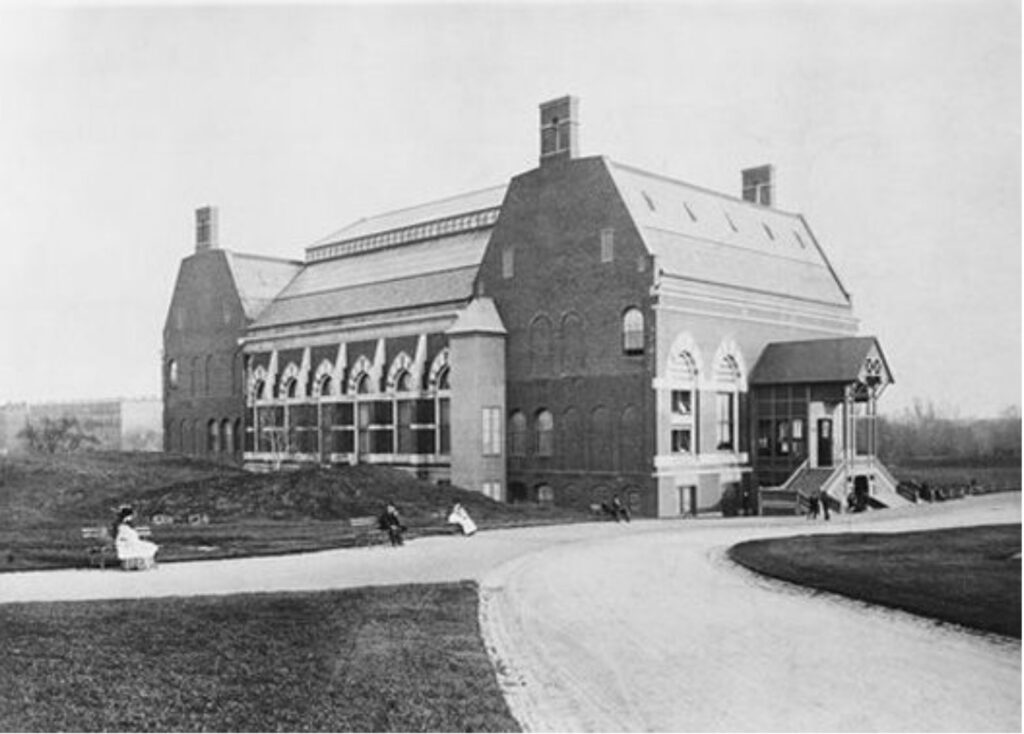
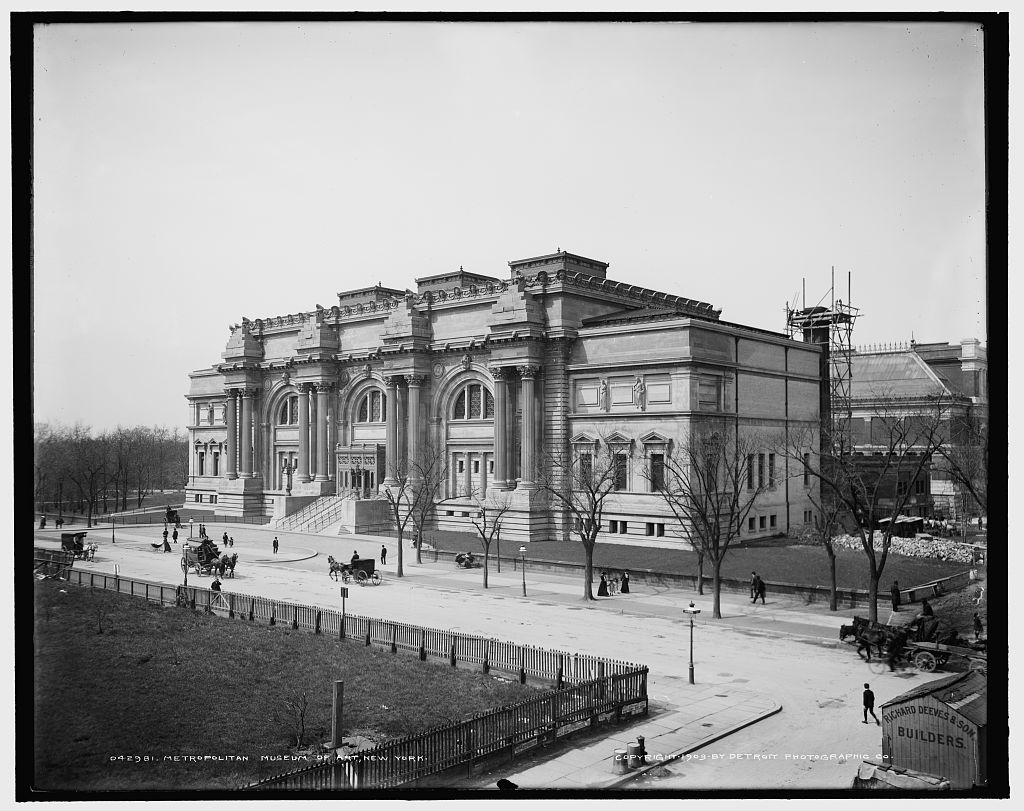
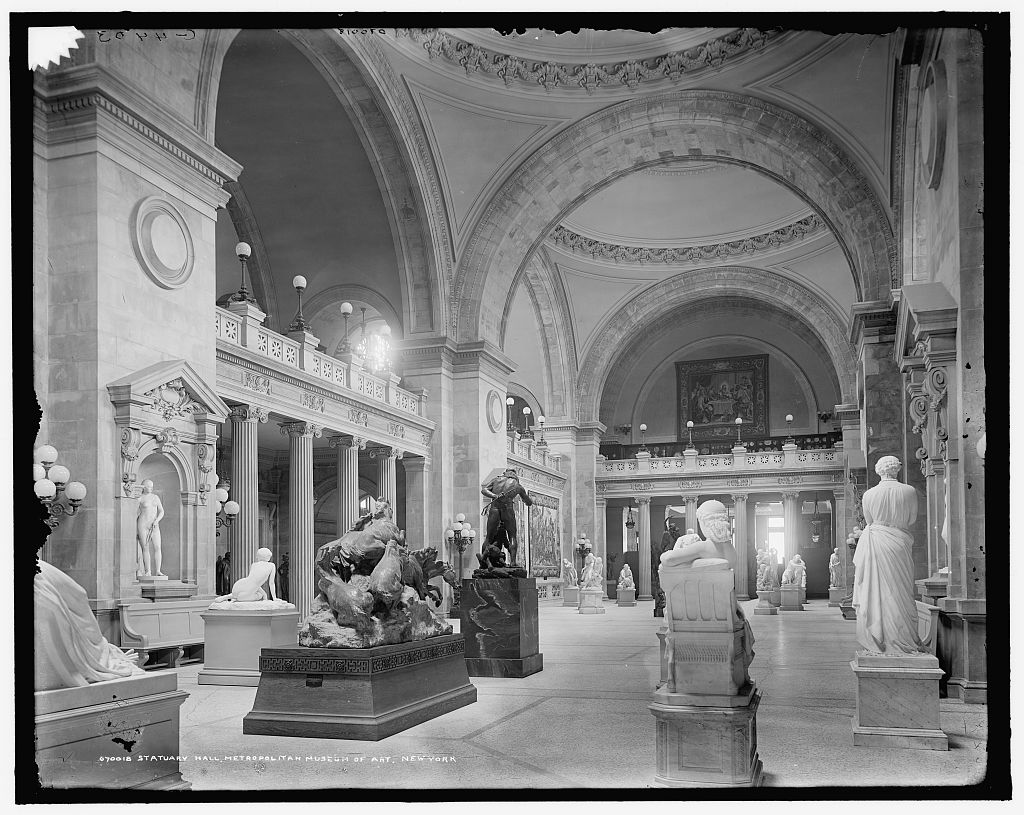
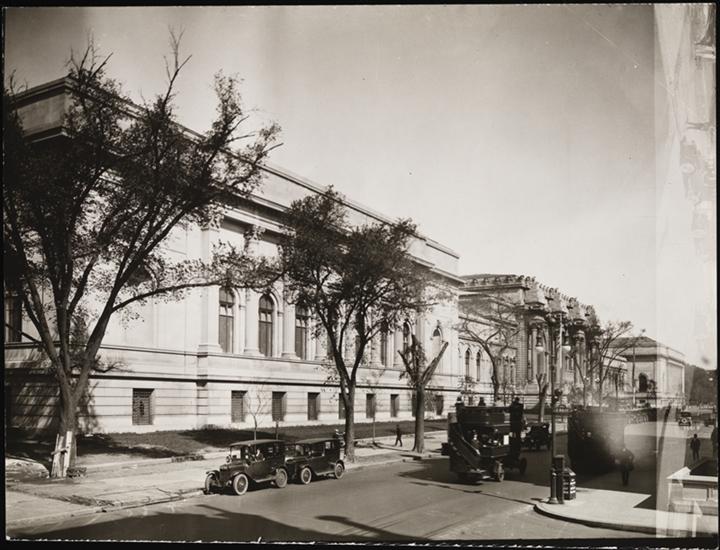
Opening reception in the picture gallery at 681 Fifth Avenue, February 20, 1872; wood-engraving published in Frank Leslie’s Weekly, March 9, 1872‘The Barn’, the original Met from Calvert Vaux and Jacob Wrey Mould, courtesy the Metropolitan Museum of Art1900, Detroit Pub Co, Library of CongressThe Richard Morris Hunt addition to the Met, 1903, Detroit Pub Co, Library of CongressThe Great Hall, 1907, Library of CongressThe Met in 1920, with the southern wing in place. Museum of the City of New YorkThe Met in 1983, Getty Images
Some excellent footage from the 1920s of the Met’s Egyptian excavations
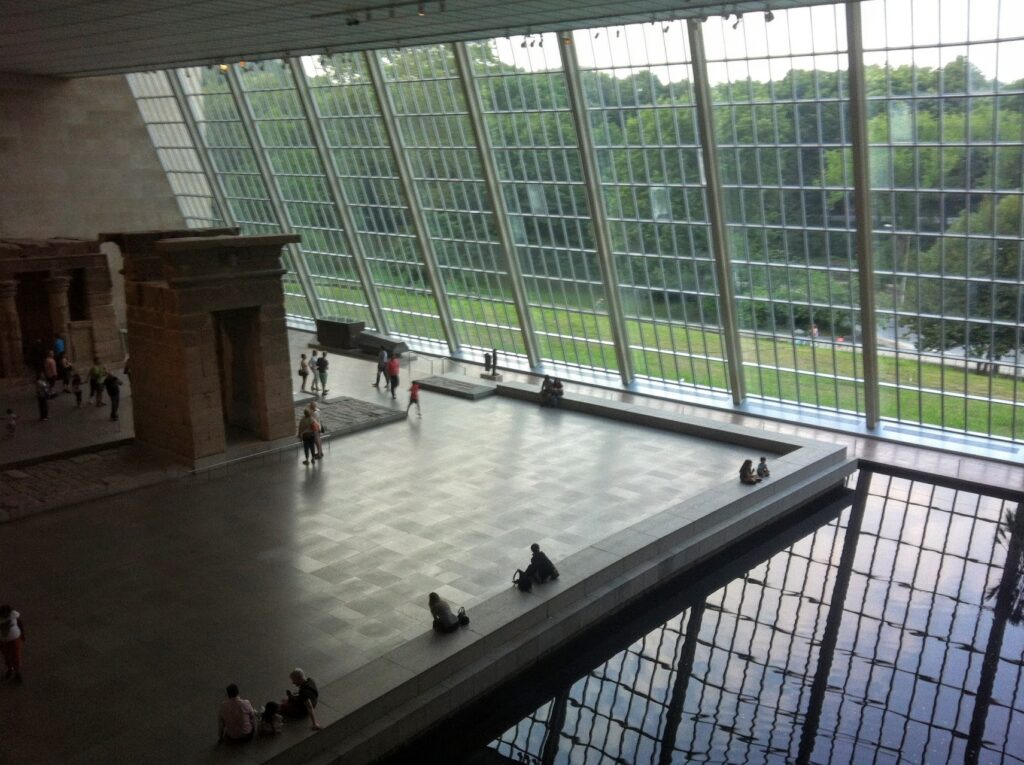
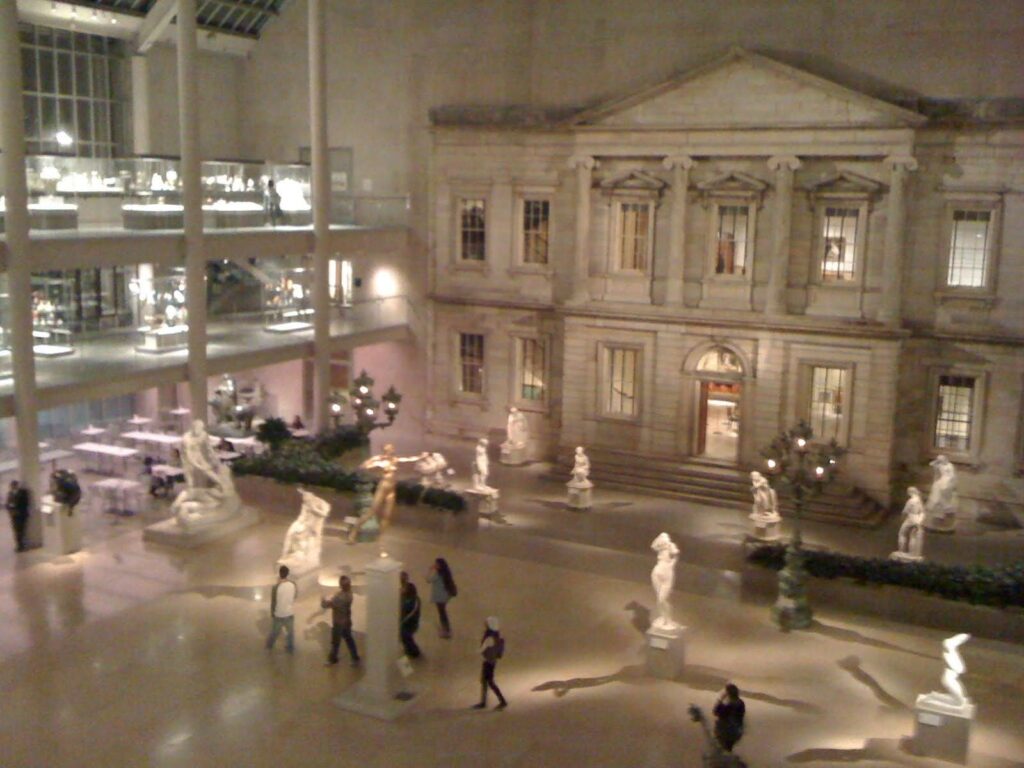
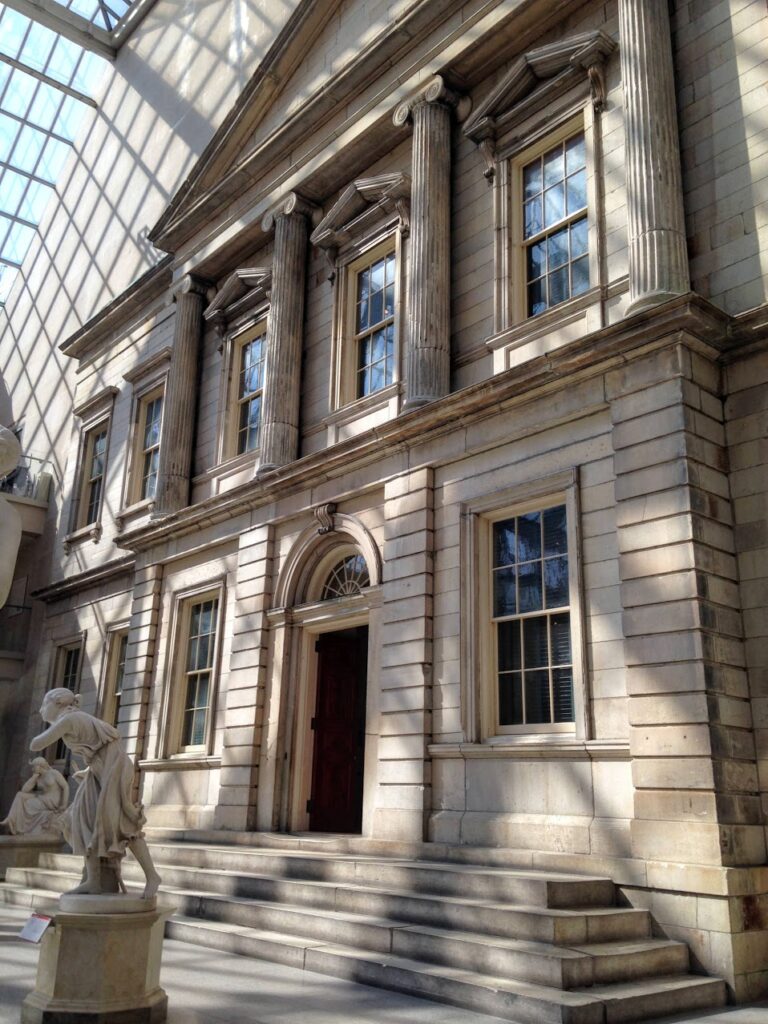
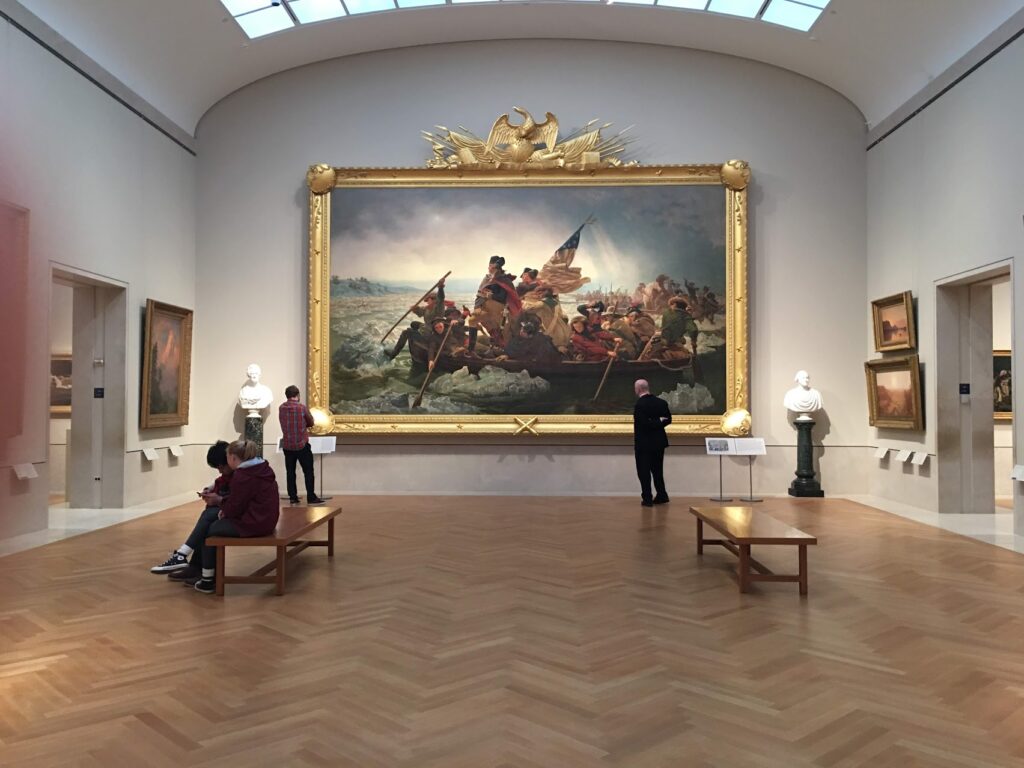
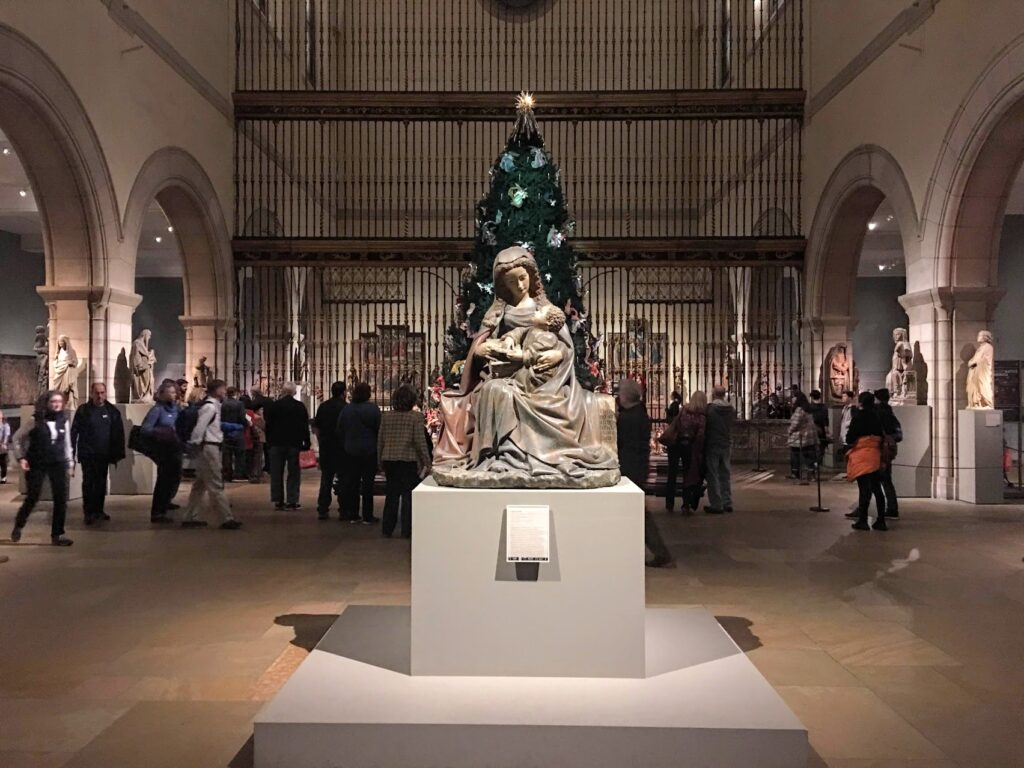
The Temple of Dendur. photo by Greg YoungThe American Wing sculpture garden at night, photo by Greg YoungBranch Bank entrance, 2012, photo by Greg YoungWashington Crossing the Delaware, taken 2017, photo by Greg YoungDendur at night, 2018, photo by Greg YoungThe Met at Christmas, 2018, photo by Greg YoungThe European sculpture garden at night, with views of the original 19th century facade in red brick. 2018, photo by Greg Young
Views from Making the Met (photos by Greg Young):
The Bowery Boys: New York City History podcast is brought to you …. by you!
We are now producing a new Bowery Boys podcast every week. We’re also looking to improve and expand the show in other ways — publishing, social media, live events and other forms of media. But we can only do this with your help!
We are now a creator on Patreon, a patronage platform where you can support your favorite content creators.
Please visit our page on Patreon and watch a short video of us recording the show and talking about our expansion plans.
If you’d like to help out, there are six different pledge levels.Check them out and consider being a sponsor.
We greatly appreciate our listeners and readers and thank you for joining us on this journey so far.
FURTHER LISTENING
The Met was a bit behind the times when it came to celebrating Impressionism but New Yorkers could take a gander at the ‘shocking’ output from Europe — as well as examples from the New York’ Ashcan School — at the Armory Show of 1913.
The Met is a twin institution to the American Museum of Natural History which shares a similar origin story.
In the second half of our Fifth Avenue Mansions series, we look at how the wealthy mansions of Fifth Avenue left midtown and headed to the Upper East Side.
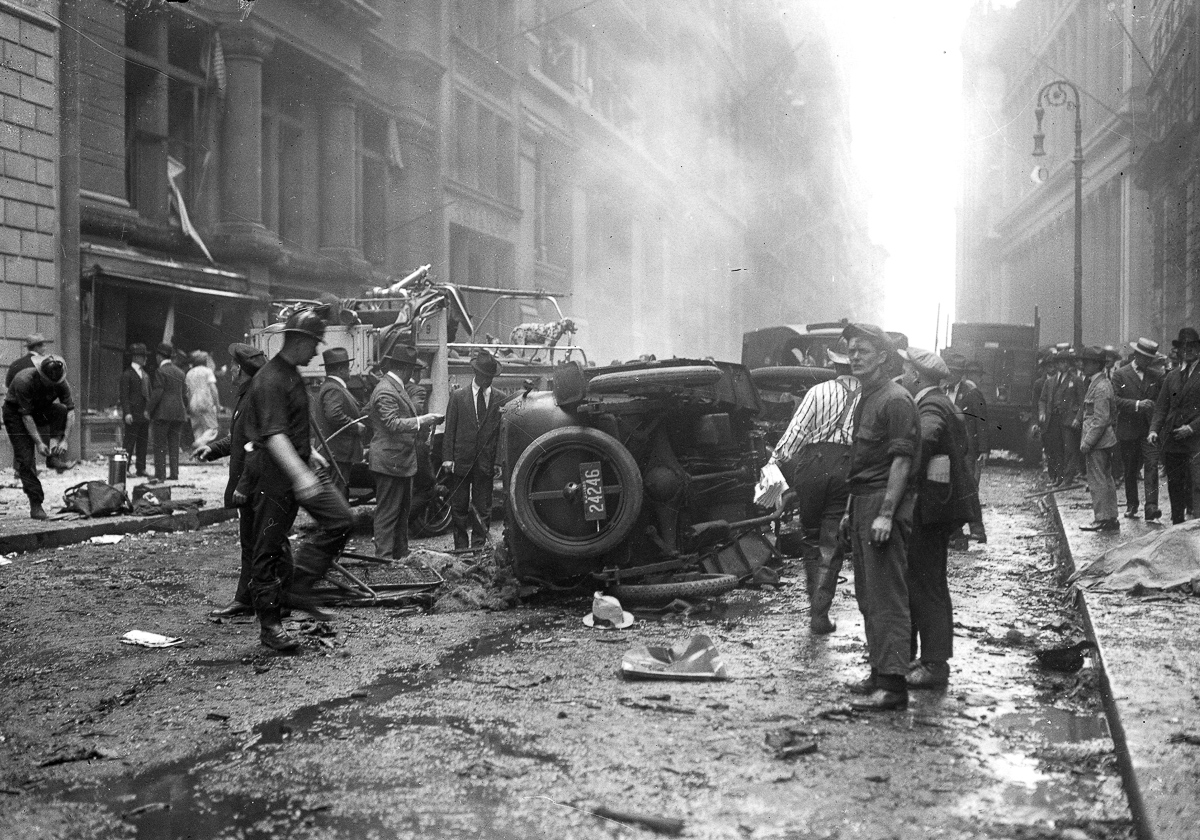
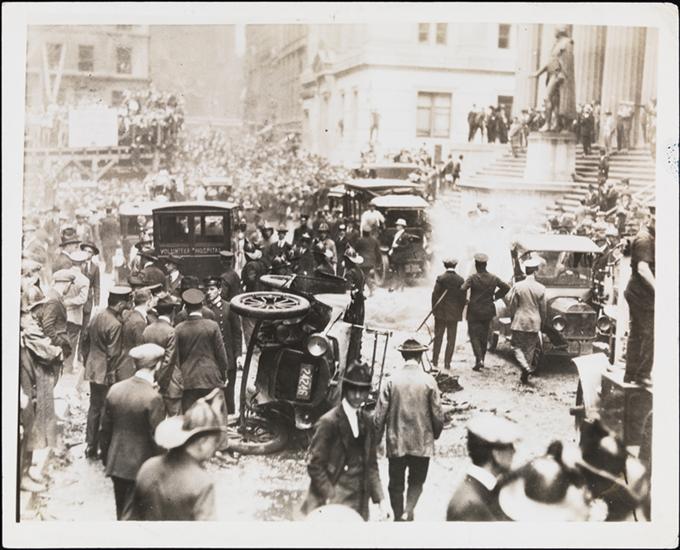
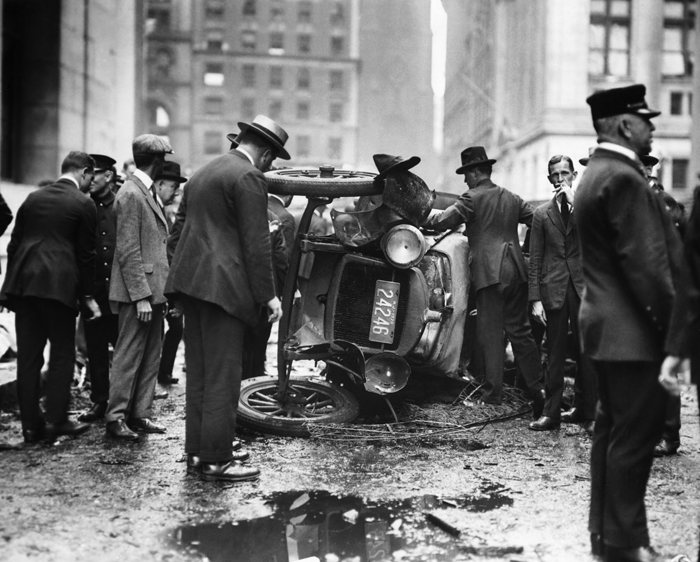
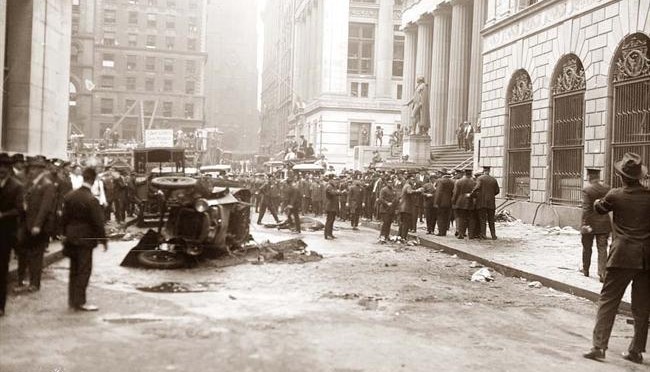
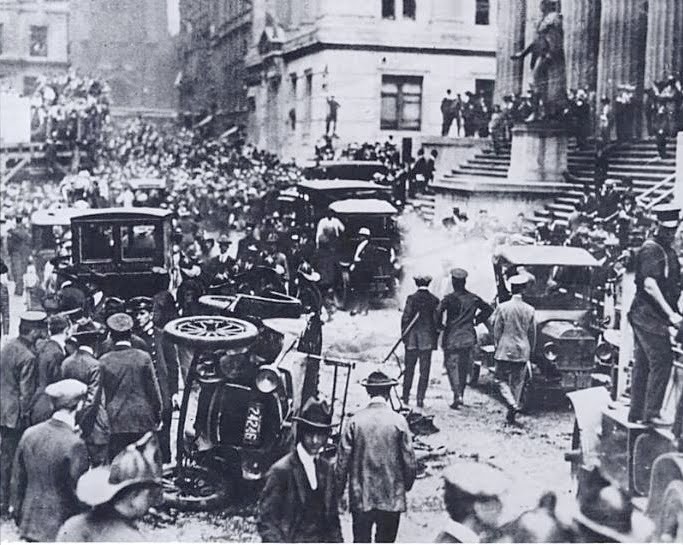
Wall Street bombing explosion - Overturned auto and crowd (Photo NY Daily News via Getty Images)
On a usual day, lunchtime down on Wall Street today is chaotic mess of brokers and bankers on cell phones, tour groups, messengers on bikes, police officers, construction workers, people delivering lunch and perhaps a stray older lady walking her dog.
One hundred years ago today, in 1920, it would have practically been the same, sans the cell phones.
So it’s particularly disturbing how easy it is to imagine the noontime scene on September 16, 1920.
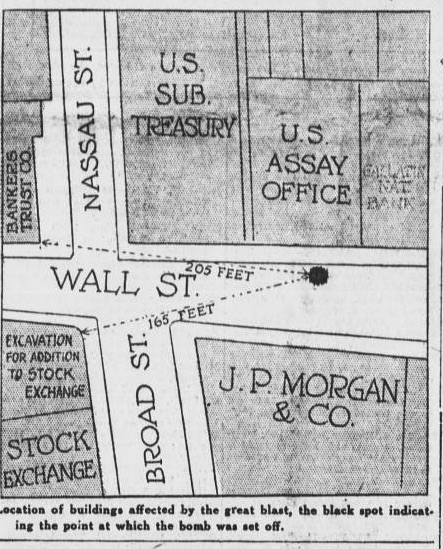
An unidentified man led a horse and carriage down the congested street, fighting to get past crowds, until it rested at the corner about 100 feet east of Broad Street. As theTrinity Church bells rang, the man dropped the reins and fled, never to be seen again.
One minute later, the wagon exploded with 100 pounds of dynamite, eradicating everything in its sphere, then sending dozens of iron slugs through the air to create a horrific scene of carnage.
From the Sun and New York Herald
The best way to really tell this story is to quote a few contemporary accounts from the New York newspapers. NOTE: Some of the accounts are quite graphic.
A 22-year-old woman named Ella Parry survived and was interviewed by the Evening World:
“The glass of our windows fell into the office and the ceiling fell all about us. Where I had just been sitting was covered with heavy plaster. I did not wait to get my hat, but with others rushed into the street.
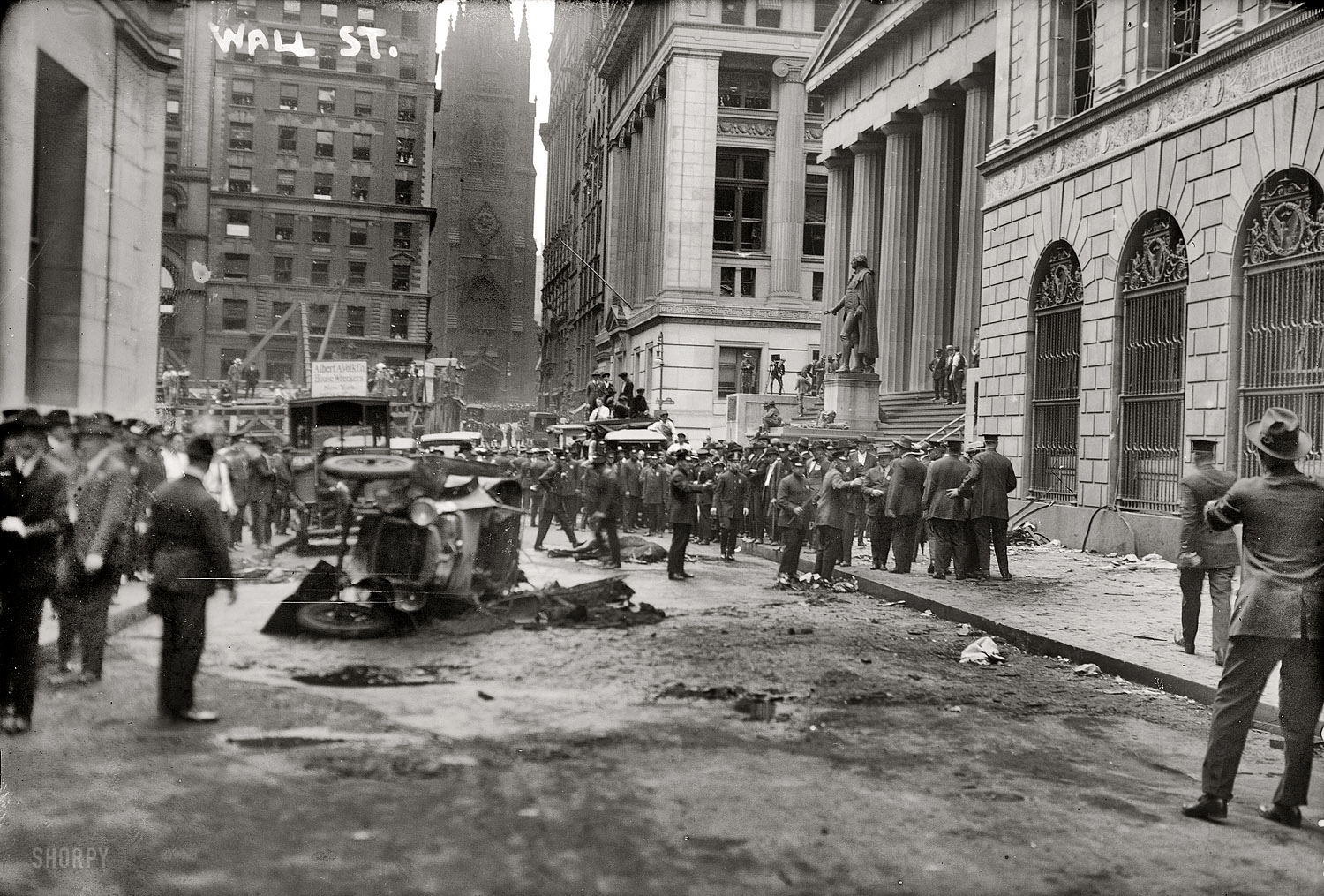
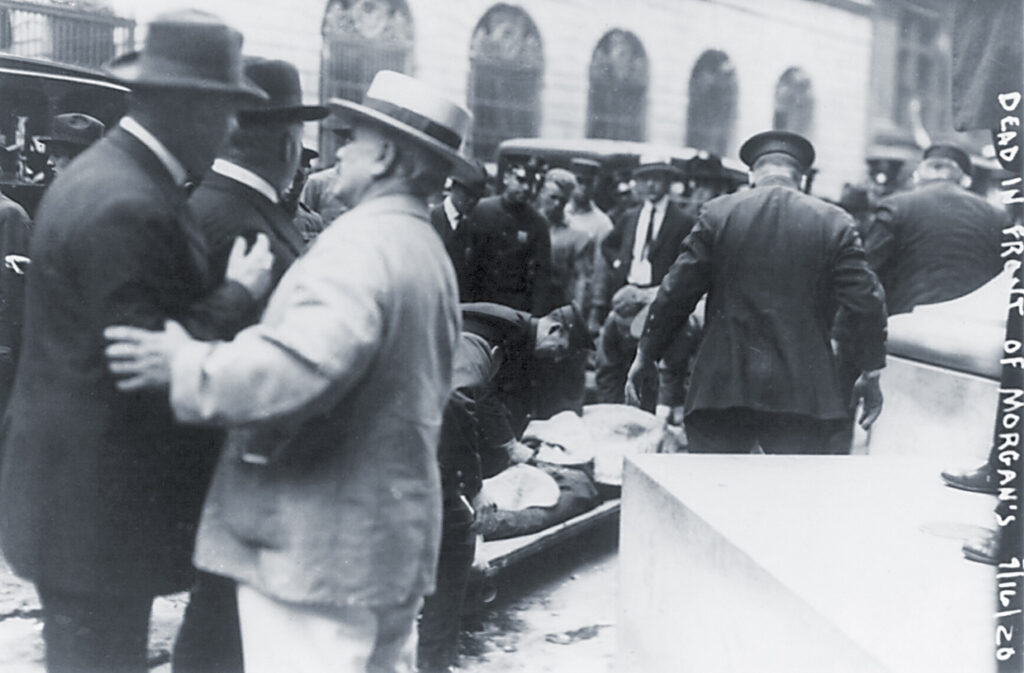
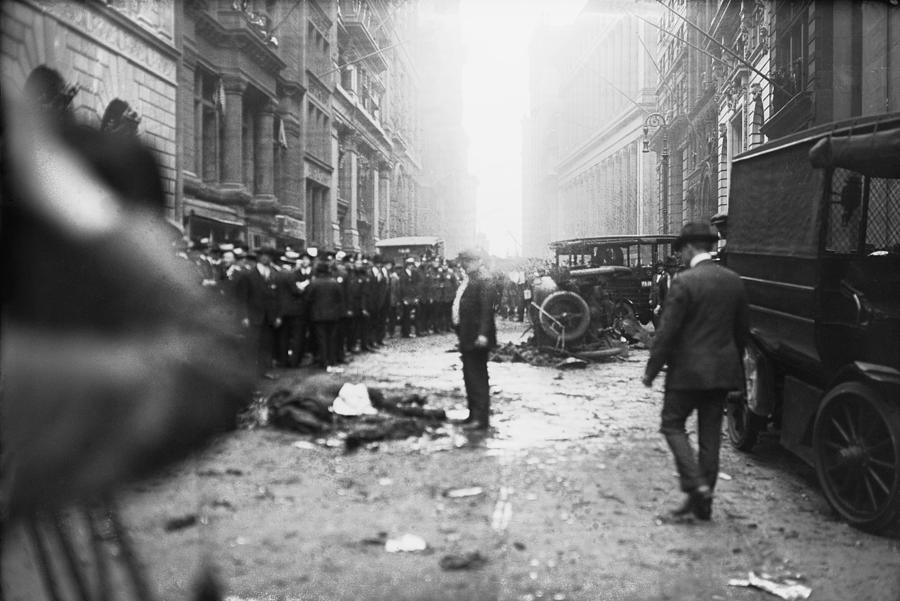
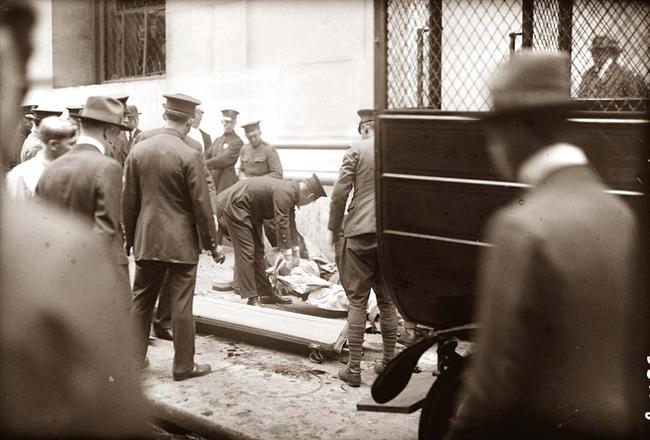
There were not less than a dozen dead persons on the sidewalk in front of tour building and the Sub-Treasury. Some of them had their faces almost completely blown off and their clothing had either been blown from their bodies or burned off. The police threw sheets over the bodies as fast as they could get them.”
“I was just about to enter the Morgan Building when the concussion knocked me down on the sidewalk. I arose after I had collected my thoughts and saw broken glass covering the street. All about me men and women were lying bleeding.
Above fifty feet down Wall Street there was an auto in a mass of flames. Across the street from it there was a shattered wagon and a horse lying dead. I saw several men cut almost in half from the large plate glass which fell from the building.”
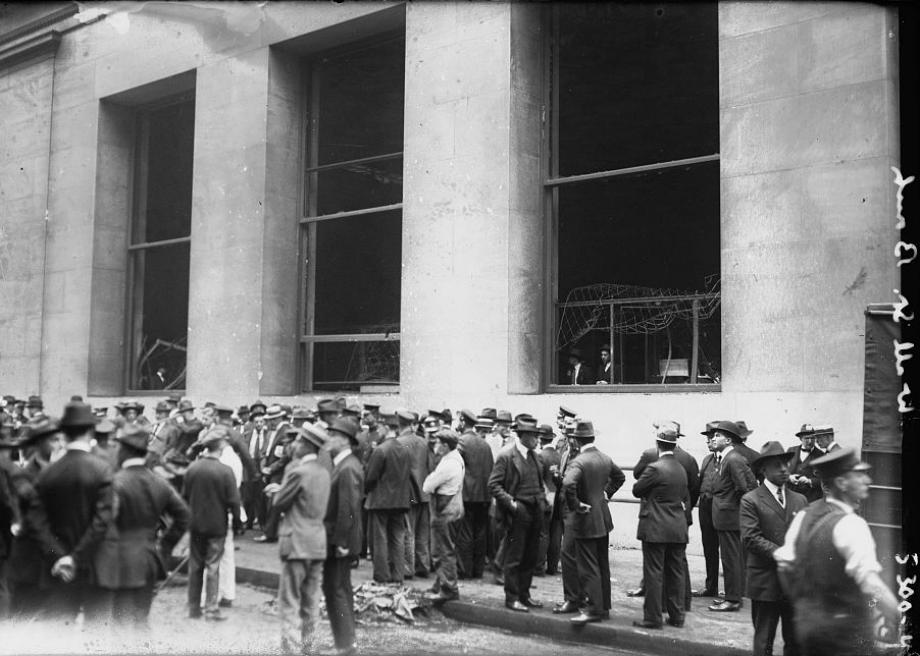
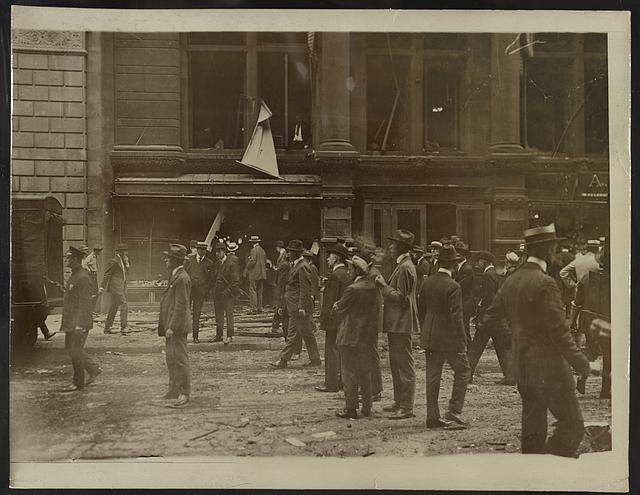
“Not a sound pane of glass remained in the Morgan Building. Screens of copper mesh which were set inside the windows were bent and twisted but had fulfilled their mission of protecting those within.
Fragments of the glass dome above the main office lay on the floor, and one of these, or some similar bit of falling debris, is believed to be responsible for the single death that occurred there. The streets were covered with broken glass, some of it finely powdered, like sugar.
The heroic statue of Washington on the steps of the Sub-Treasury was not so much as scratched by the explosion, and stood firmly, with hand outstretched in a quelling gesture.”
One unusual story of bravery emerged the following day. A teenage office boy named James Saul grabbed a random automobile and began driving injured victims to the local hospital. Fearing the owner of the automobile was among the injured, he then drove the car to a police station.
By the end of the day, 38 people would be dead from the attack, many while sitting at their desks. (An additional man with a “nervous condition” would take his own life due to the event, making the total 39.) And over 400 more would be injured.
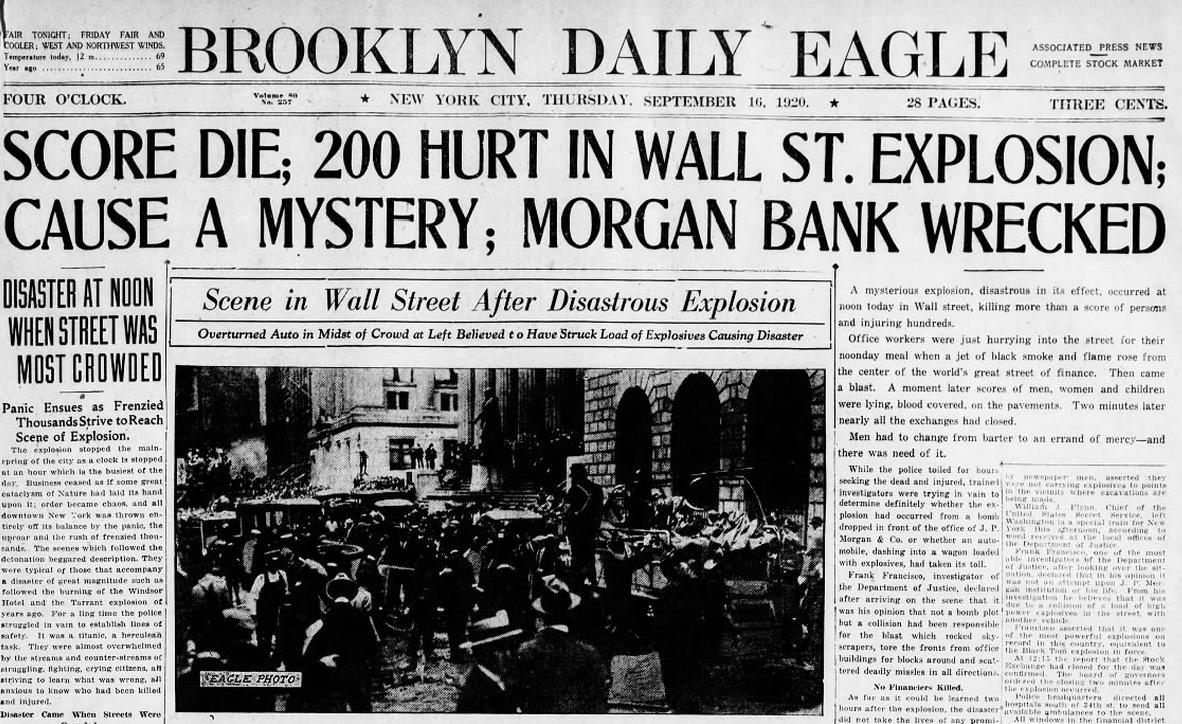
Below: The late edition of the Brooklyn Daily Eagle: “A mysterious explosion, disastrous in its effect, occurred at noon today on Wall Street, killing more than a score of persons and injuring hundreds.”
Following the attack, the Madison Avenue mansion of J.P. Morgan (site of the Morgan Library and Museum) was heavily guarded. Morgan himself was actually in England, enjoying a relaxing vacation.
With a little morbid imagination and some amateur CSI work, one can probably trace the trajectory of wall’s injuries to the very spot where the poor horse and wagon exploded.
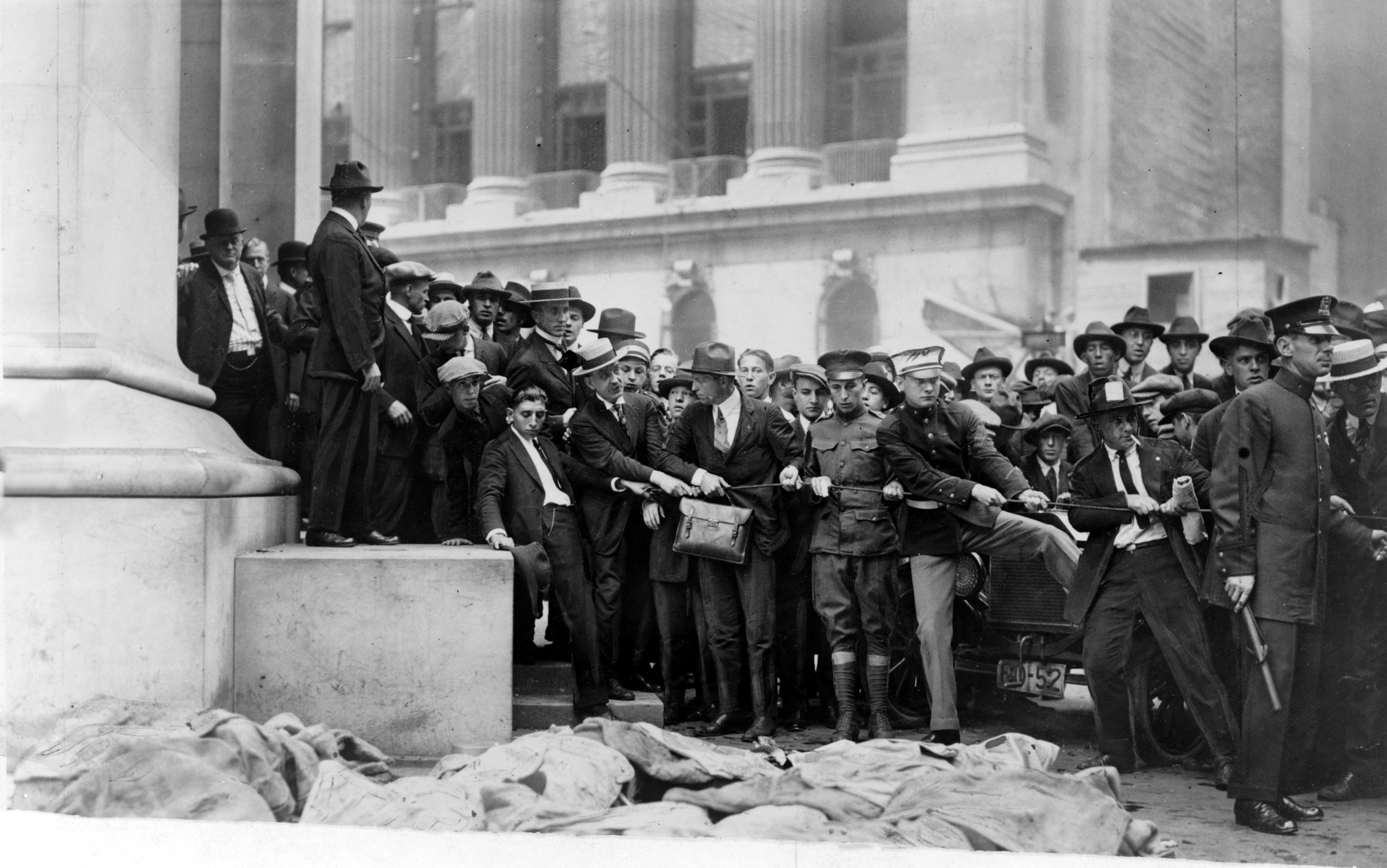
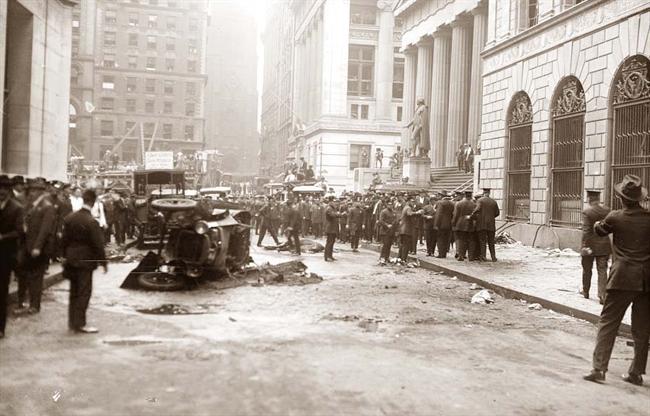
Below: Crowds gather to witness the destruction.
Despite a federal investigation which led to dozens of arrests, in fact the culprits were never caught.
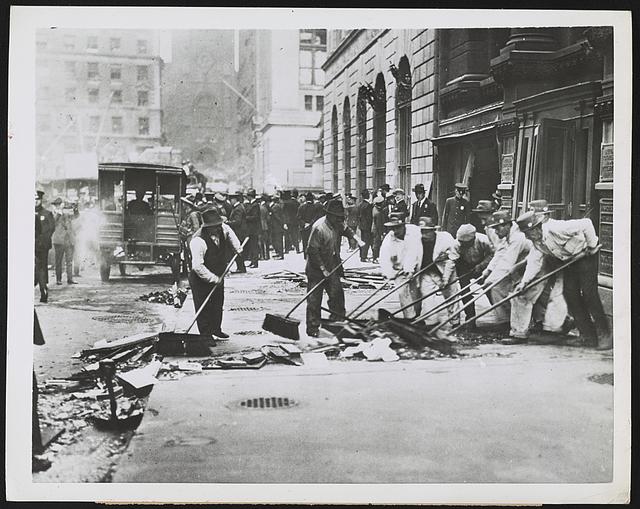
Largely assumed to be Italian anarchists, any evidence was unfortunately lost when, in an effort to appear unfazed, the city cleaned the street and kept Wall Street open for business the next day, even seeing a rally of thousands pour into the street that Friday.
Any of you who ride the 4-5-6 train in rush hour will especially relate to this story. It takes place, in fact, on that very line, one hundred years ago.
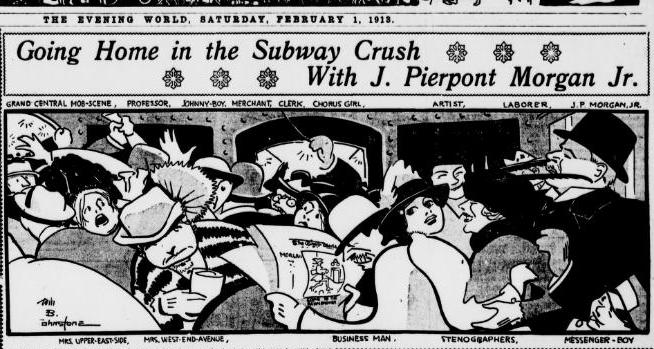
Will B. Johnstone, an artist at the New York Evening World, noticed an interesting sight on his subway ride that morning, February 1, 1913, the day before the opening of Grand Central Terminal. Crammed up against the wall of the train was J. P. Morgan Jr., son of the famous financier.
Such a sight greatly amused Johnstone. “There stood J. Pierpont Morgan Jr. ignominiously caught in the deadly rush hour!” Even more remarkable, the writer notes, was the fact that Morgan was a principal financier for the Dual Contracts project, which would greatly expand the subway system and double the length of tracks into the other boroughs.
“I wondered why he was using the subway instead of a diamond-studded limousine? What did he mean by travelling with the common herd and of all times during rush hour?”
At one point, Morgan was accosted by a young woman with “a large velvet hat and the hat had two long stiff quills projecting from it like the horns of a billy goat, and as dangerous. Mr. Morgan’s face was impaled between them.”
The woman hat jostled about during the bumpy ride, and “[t]he quills began to bob around his face and he was busy trying to avoid them.” Others noticed the financier’s dilemma and began laughing with him.
“She’s going to get me yet,” he laughed to another passenger. “And he was right,” Johnstone noted, “for one side of the quill and then the other jabbed him in the face.”
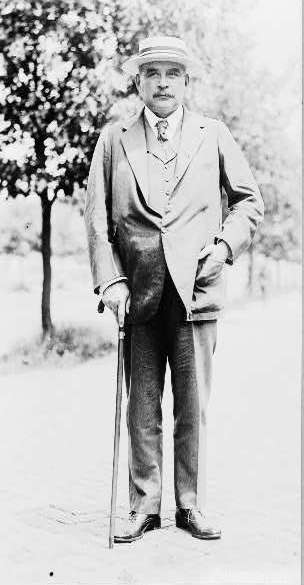
At right: Morgan in 1919
Finally at the Grand Central Station**, he had to push his way through the crowd and barely got of the car before the doors closed.
“This is no way to treat royalty,” Johnstone laments.
Less than two months after this incident, his father Morgan Sr. would die in Rome, leaving him one of the world’s largest business enterprises. I wonder if he ever rode the subway again after that.
Lunchtime down on Wall Street today is chaotic mess of brokers and bankers on cell phones, tour groups, messengers on bikes, police, construction workers, people delivering lunch and the stray old lady walking her dog.
Eighty-eight years ago, in 1920, it would have practically been the same, sans the cell phones. So it’s particularly disturbing how easy it is to imagine the noontime scene on September 16, 1920. In fact, most of the surroundings — the Stock Exchange, the Sub-Treasury building (today’s Federal Hall), and most importantly J.P. Morgan’s headquarters on 23 Wall Street — are still very much active.
An unidentified man led a horse and carriage down the congested street, fighting to get past crowds, until it rested at the corner about 100 feet east of Broad. As the Trinity Church bells rang, the man dropped the reins and fled, never to be seen again.
One minute later, the wagon exploded with 100 pounds of dynamite, eradicating everything in its sphere, then sending dozens of iron slugs through the air to create a horrific scene of carnage. I’ll let other sites outline some of the grimmer details, but by the end of the day, 38 people would be dead from the attack, many while sitting at their desks. And over 400 more would be injured.
Believe it or not, evidence of this attack can easily be seen from the street today. Morgan famously rejected repairs of his bank, preferring to leave the dents and pockmarks on the side of his building in a sign of defiance. With a little morbid imagination and some amateur CSI work, one can probably trace the trajectory of wall’s injuries to the very spot where the poor horse and wagon exploded.
Despite a federal investigation which led to dozens of arrests, in fact the culprits were never caught. Largely assumed to be Italian anarchists, any evidence was unfortunately lost when, in an effort to appear unfazed, the city cleaned the street and kept Wall Street open for business the next day, even seeing a rally of thousands pour into the street that Friday.