Does your personal library overwhelm your home? Are there too many books in your life — but you’ll never get rid of them? Then you have a lot in common with Gilded Age mogul J.P. Morgan!
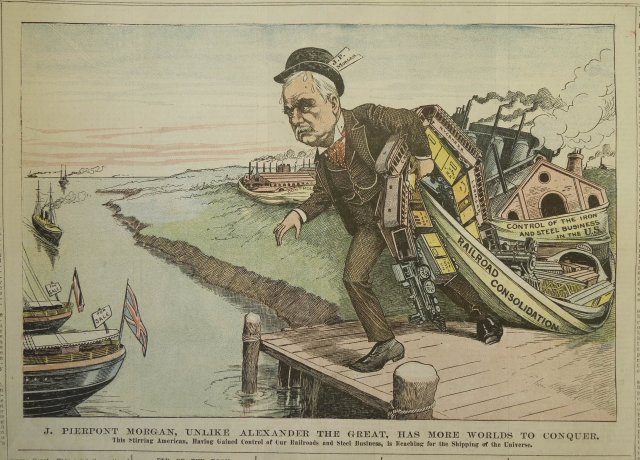
Morgan was a defining figure of the late 19th century, engineering corporate mergers and crafting monopolies from the desk of his Wall Street office. His vast control over the steel and railroad industries paired with his connections in international banking granted him great power over American life and helped fuel the great economic disparities of the Gilded Age.
In the process Morgan became one of the wealthiest men in America — but he did not tread the traditional path through New York high society. He preferred yachts over ballrooms.
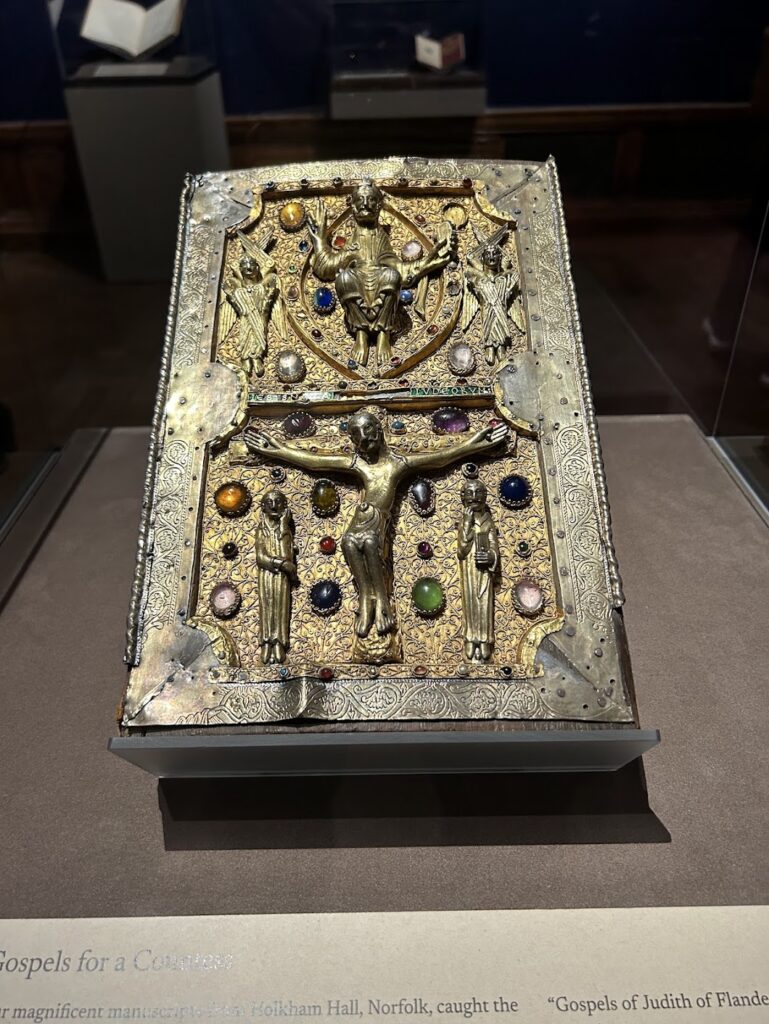
And books! For decades he collected thousands of rare books, letters, paintings and manuscripts from Gutenberg bibles to medieval illuminated tomes. So many books, in fact, that Morgan decided to start the new century with his own personal project — the construction of a library.
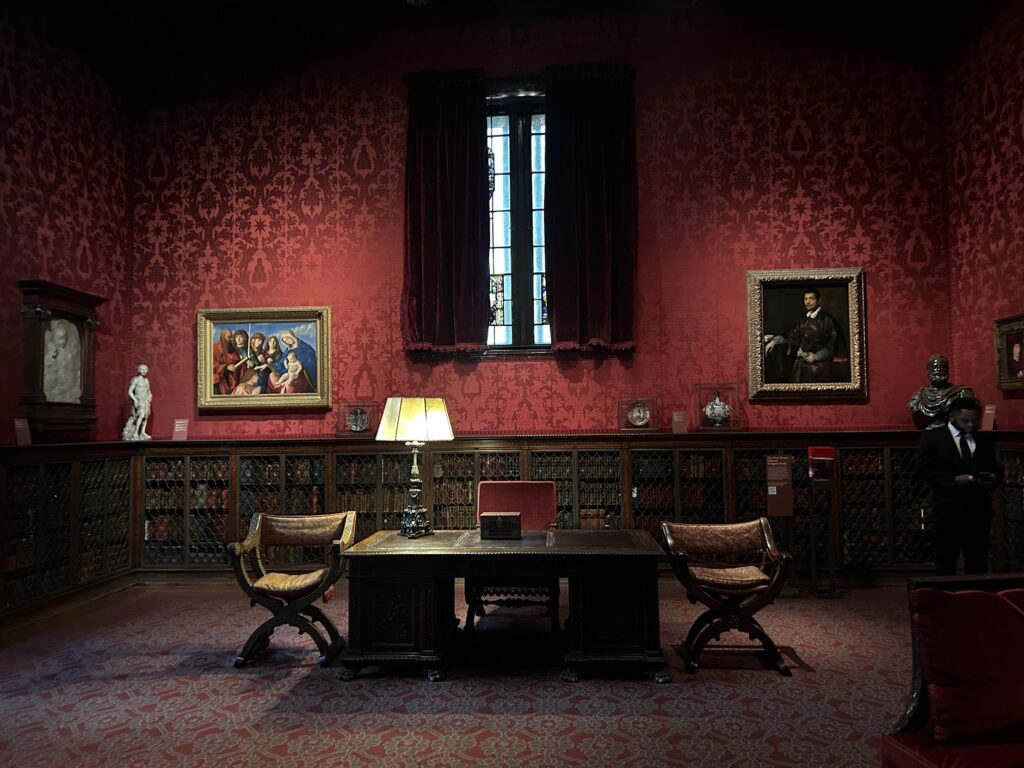
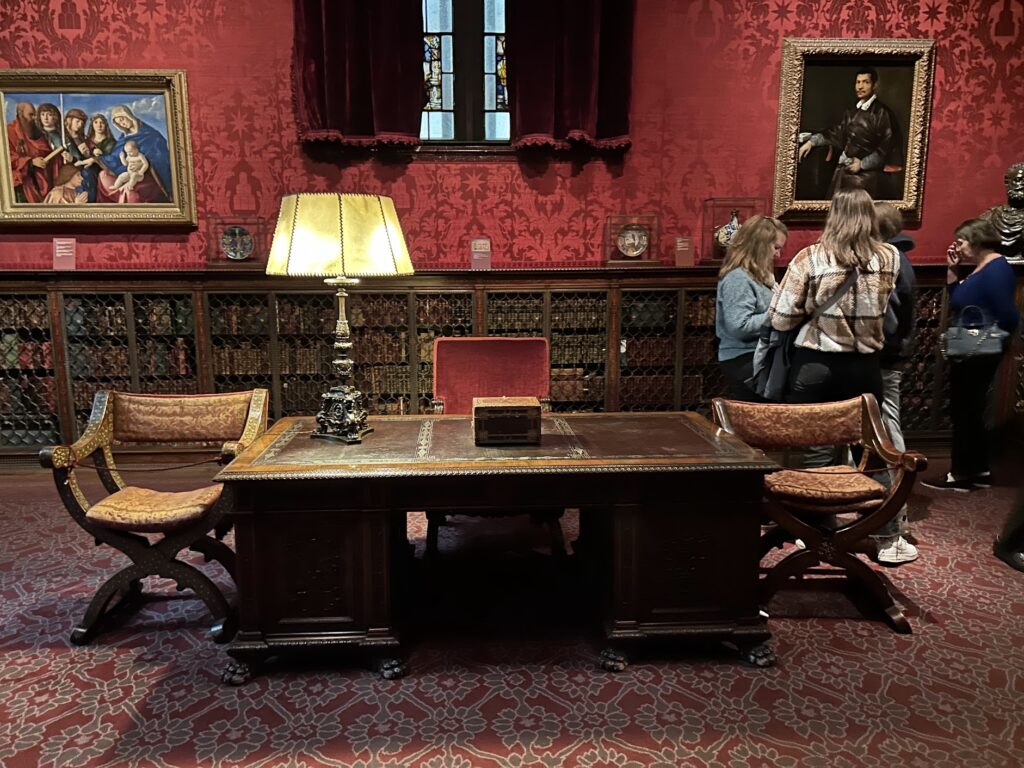
Morgan’s study
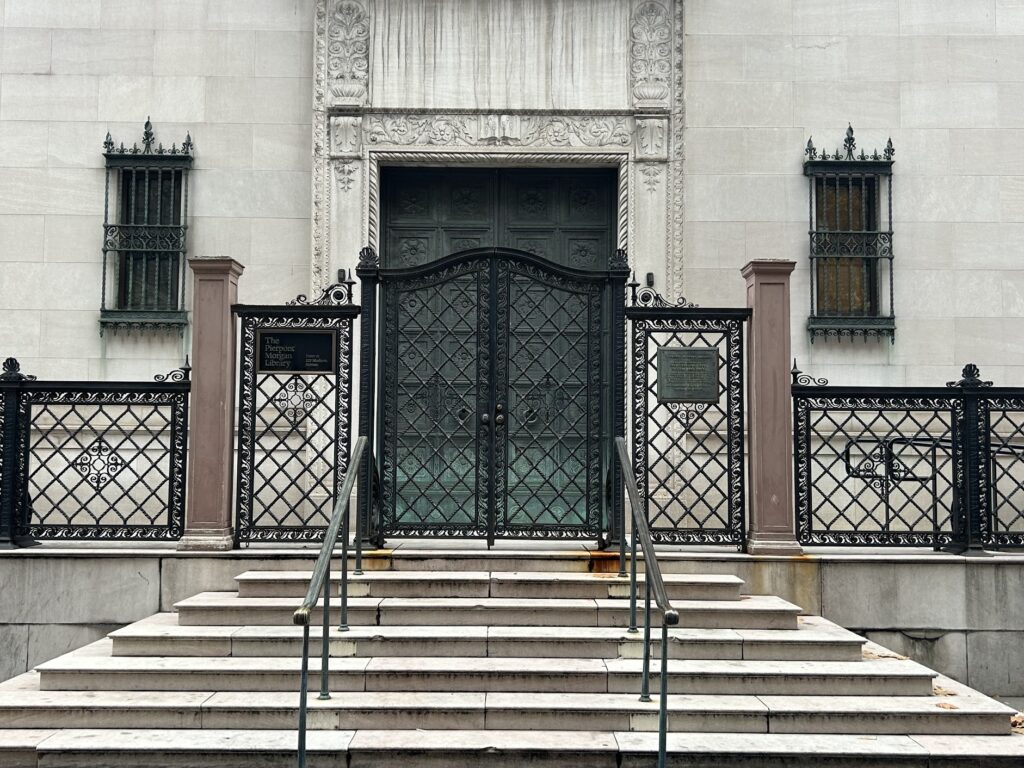
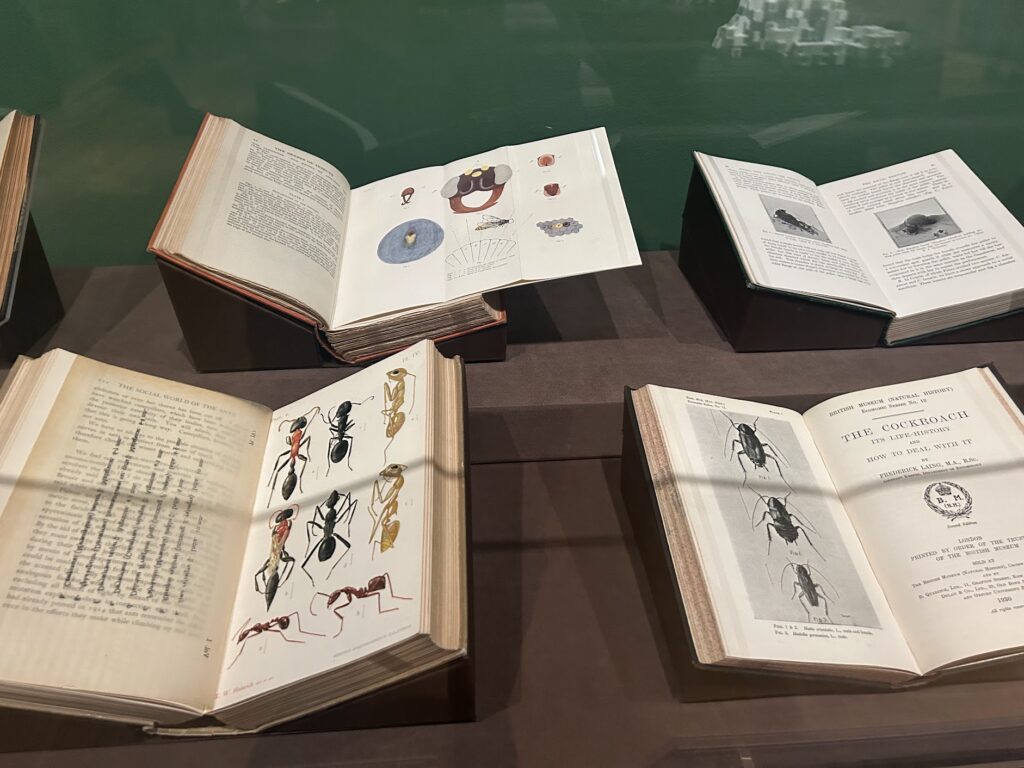
Today the Morgan Library and Museum is open to the public and, as an active and thriving institution, continues to highlight the world’s greatest examples of the printed word — from Charles Dickens manuscript for A Christmas Carol to past exhibitions on Beatrix Potter, James Joyce and even The Little Prince.
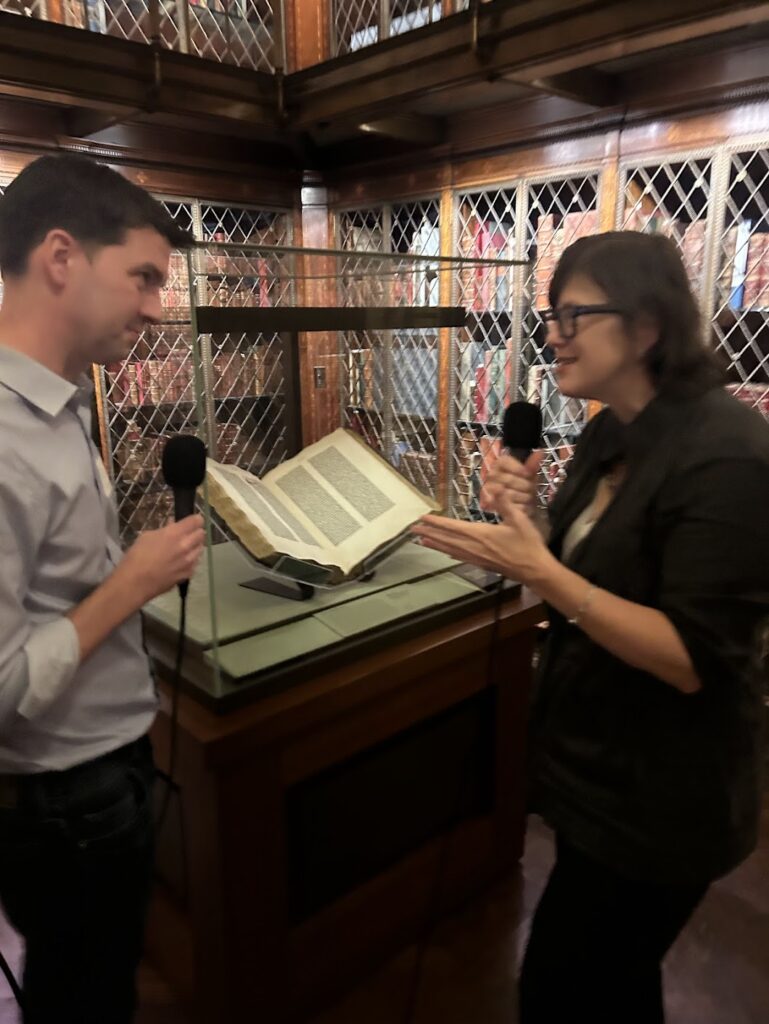
Tom and Greg explore the biography of J. Pierpont Morgan then head to the Morgan Library to speak with Jennifer Tonkovich, the Eugene and Clare Thaw Curator of Drawings and Prints.
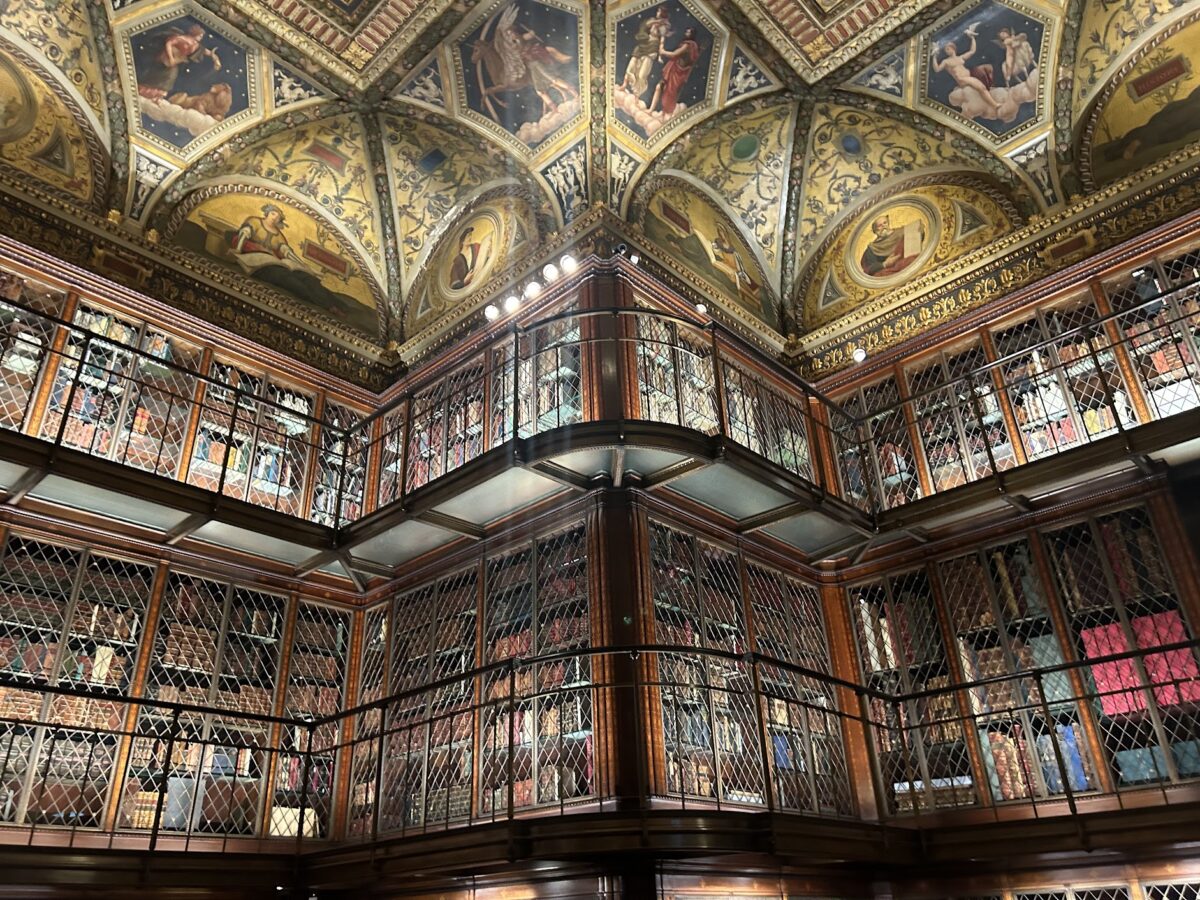
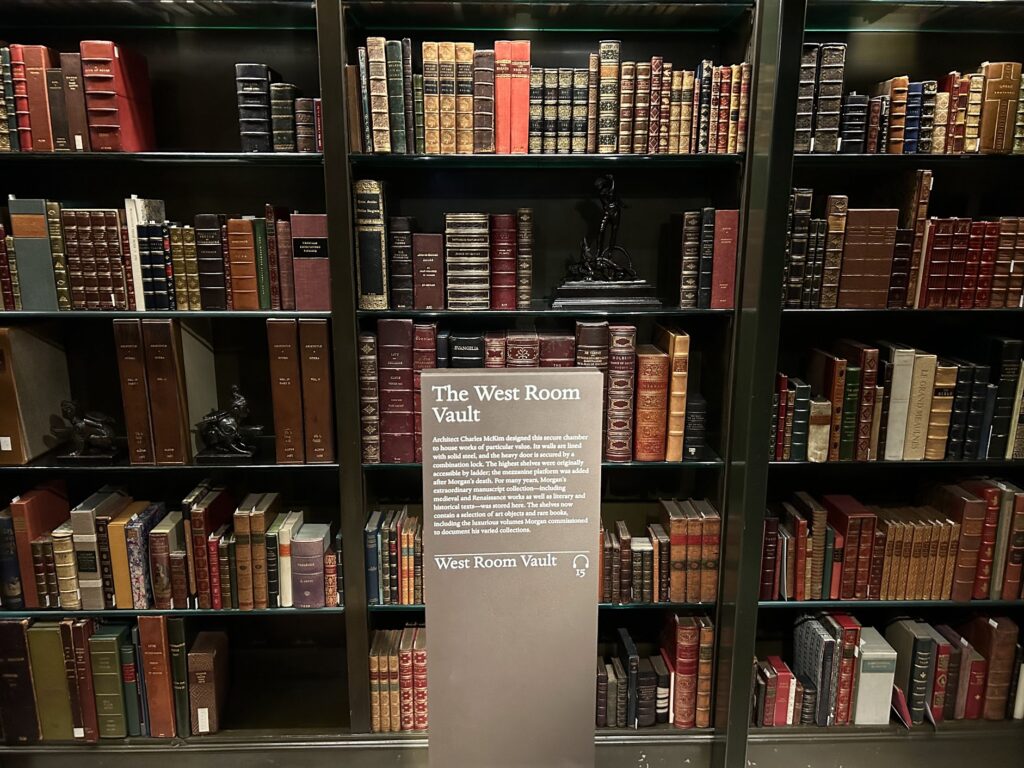
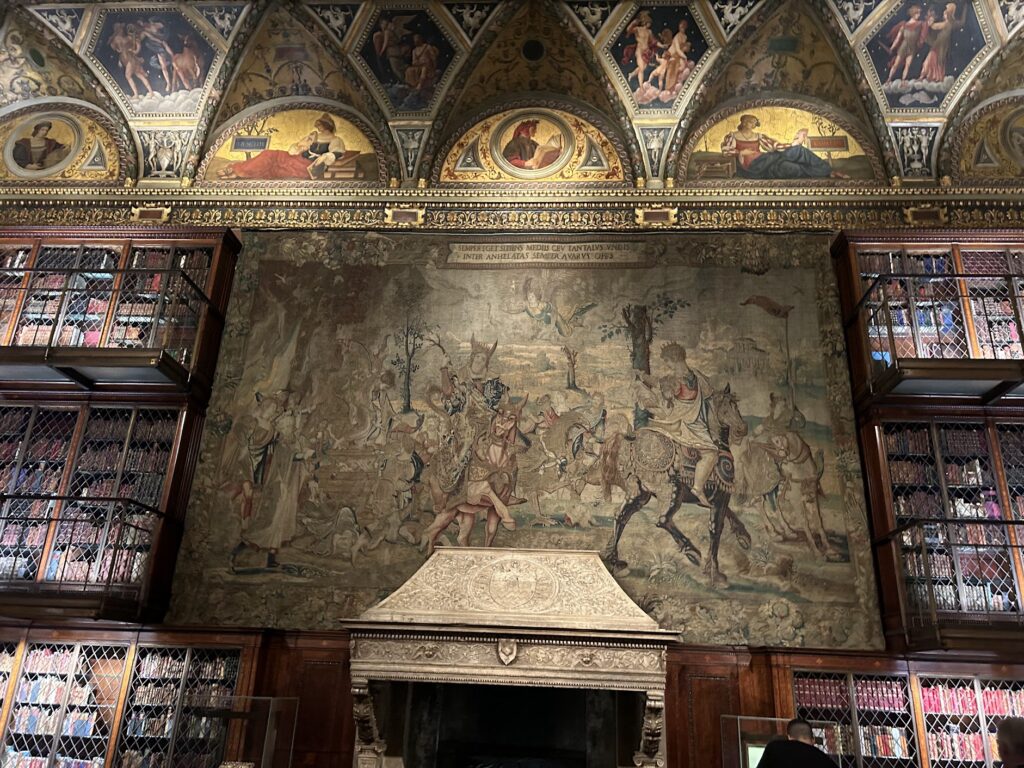
And then they wander through the winding connections of buildings which comprise the Morgan Library & Museum — from Morgan’s study (and its ‘hidden’ vault of books) to the glorious main stacks, lined with triple tiers of bookcases fashioned of bronze and inlaid Circassian walnut.
LISTEN NOW: MR. MORGAN AND HIS MAGNIFICENT LIBRARY
Share your love of the city’s history with a Bowery Boys Walks gift certificate! Our digital gift cards let your loved ones choose their perfect tour and date.
1903 portrait by Fedor EnckeSaturday Globe, 1901From the vaulted room in Morgan’s studyFrom the Franz Kafka showThe tapestry of gluttony
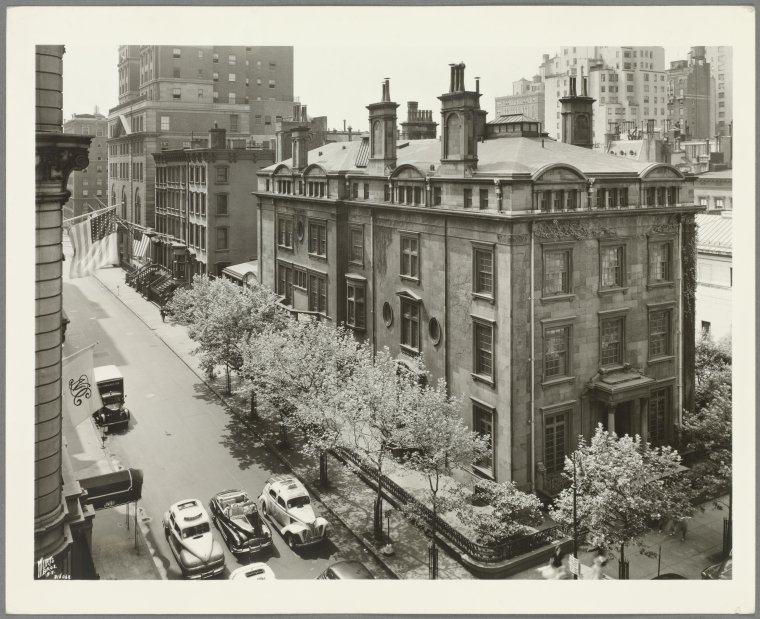
JP Morgan Jr’s brownstone which is today a part of the whole Morgan Library complex. In fact we recorded a portion of the show from its music room!
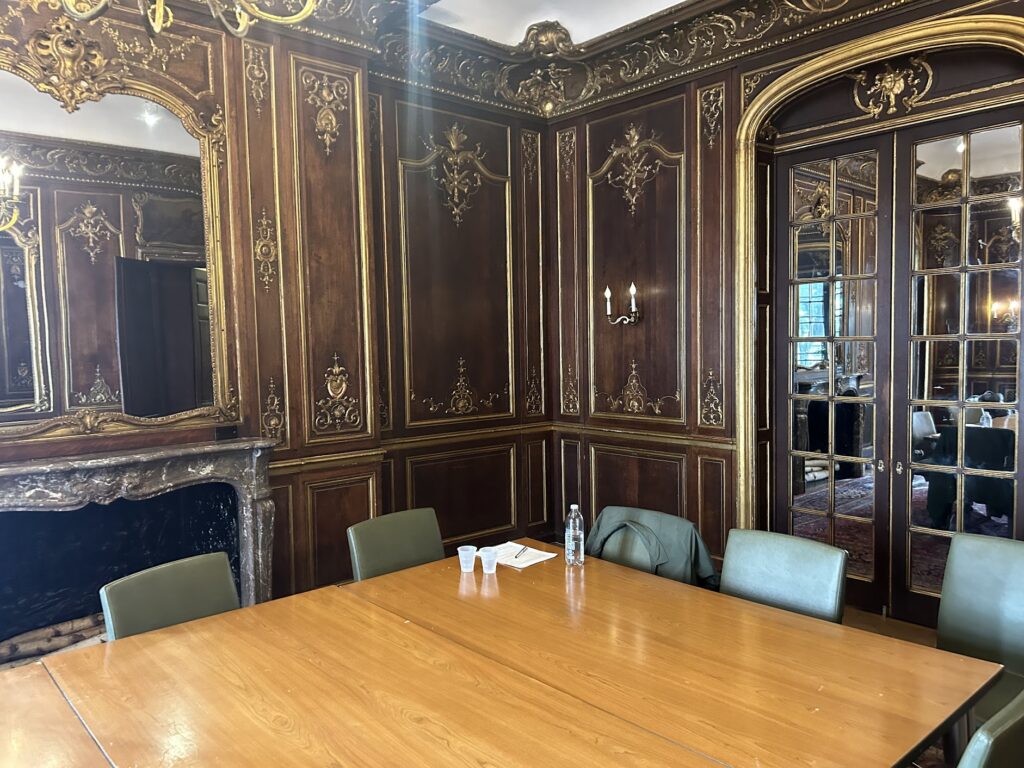
New York Public LibraryThe music room where we recorded a portion of the show.
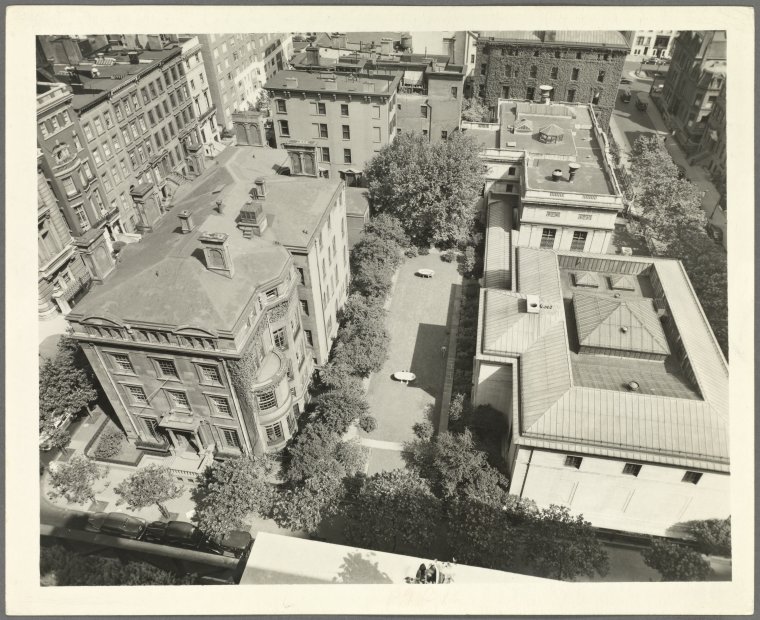
The Morgan Library and Museum from above. The slender garden in the middle was replaced in 2006 by a lavish hall designed by Renzo Piano.
New York Public Library
FURTHER READING
J. Pierpont Morgan’s Library: Building the Bookman’s Paradise / The Morgan Library and Museum The Hour of Fate: Theodore Roosevelt, JP Morgan and the Battle to Transform American Capitalism / Susan Berfield The House of Morgan: An American Banking Dynasty and the Rise of Modern Finance/ Ron Chernow J.P. Morgan – The Life and Deals of America’s Banker / J.R. MacGregor Morgan: American Financier / Jean Strouse
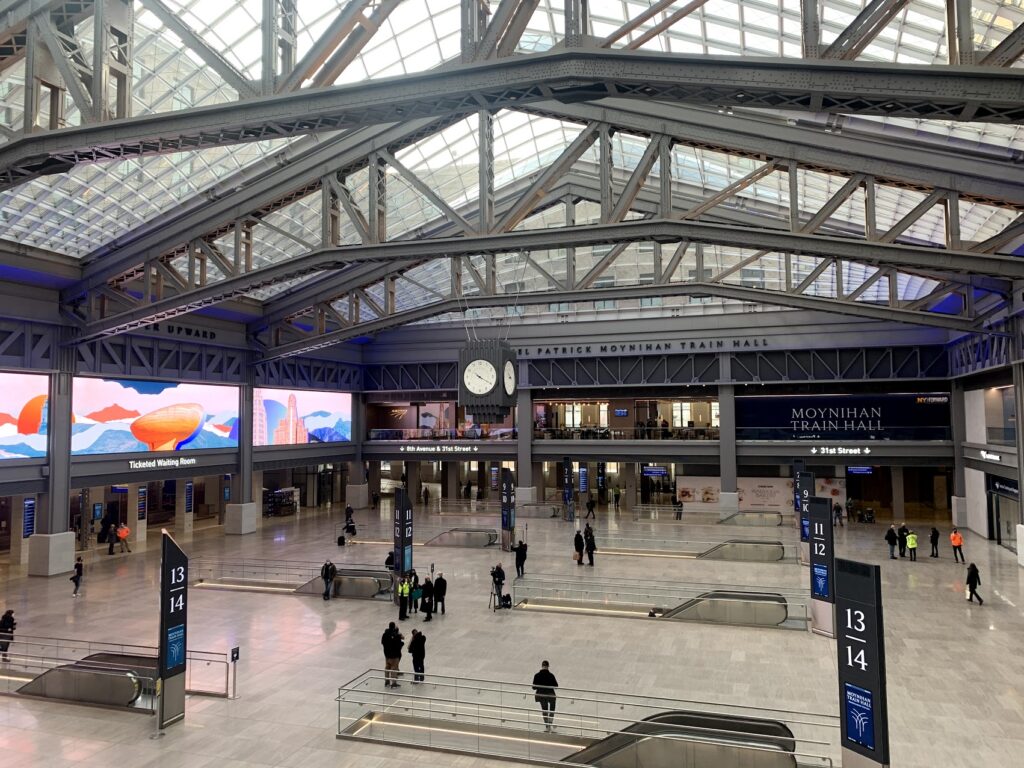
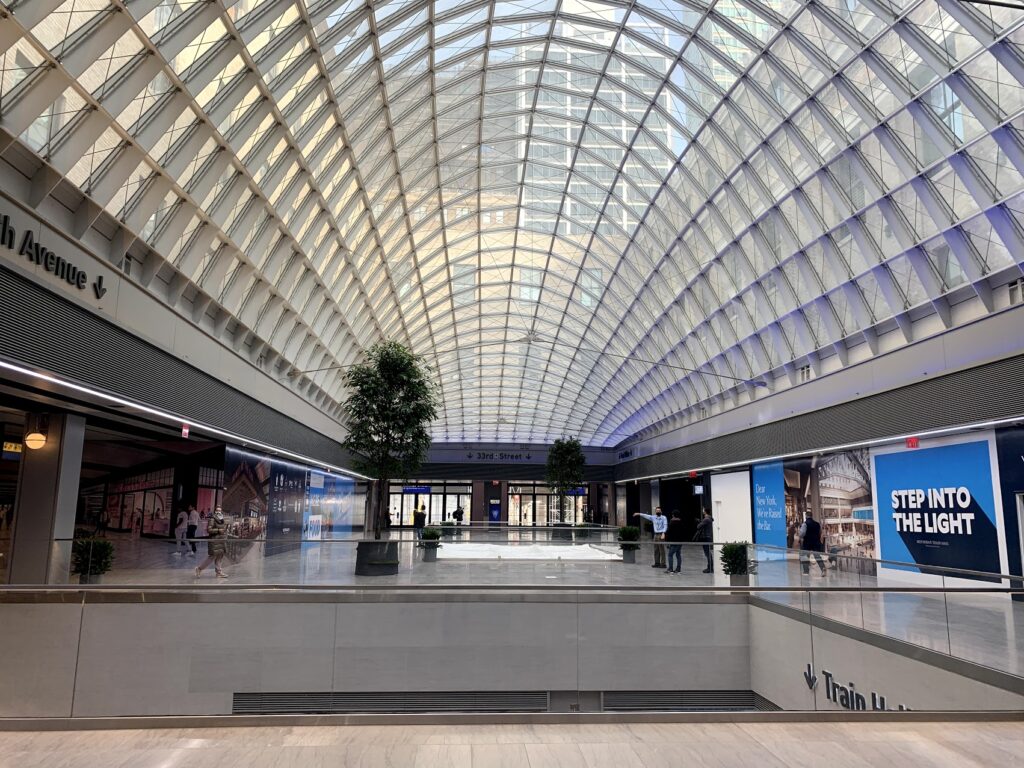
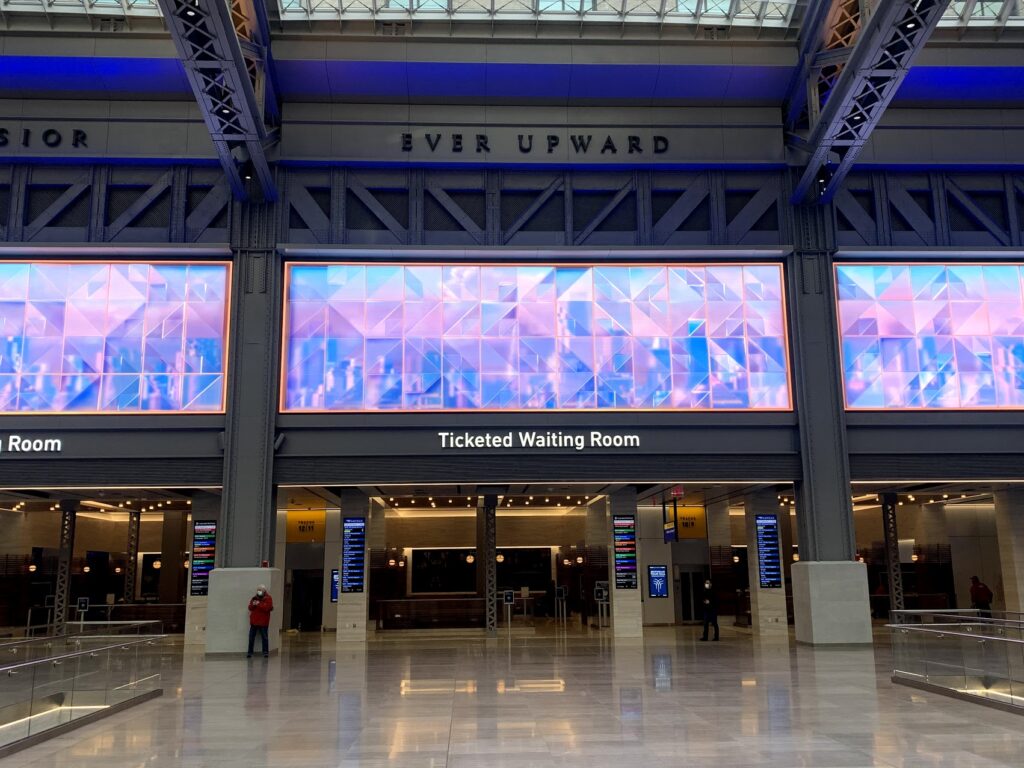
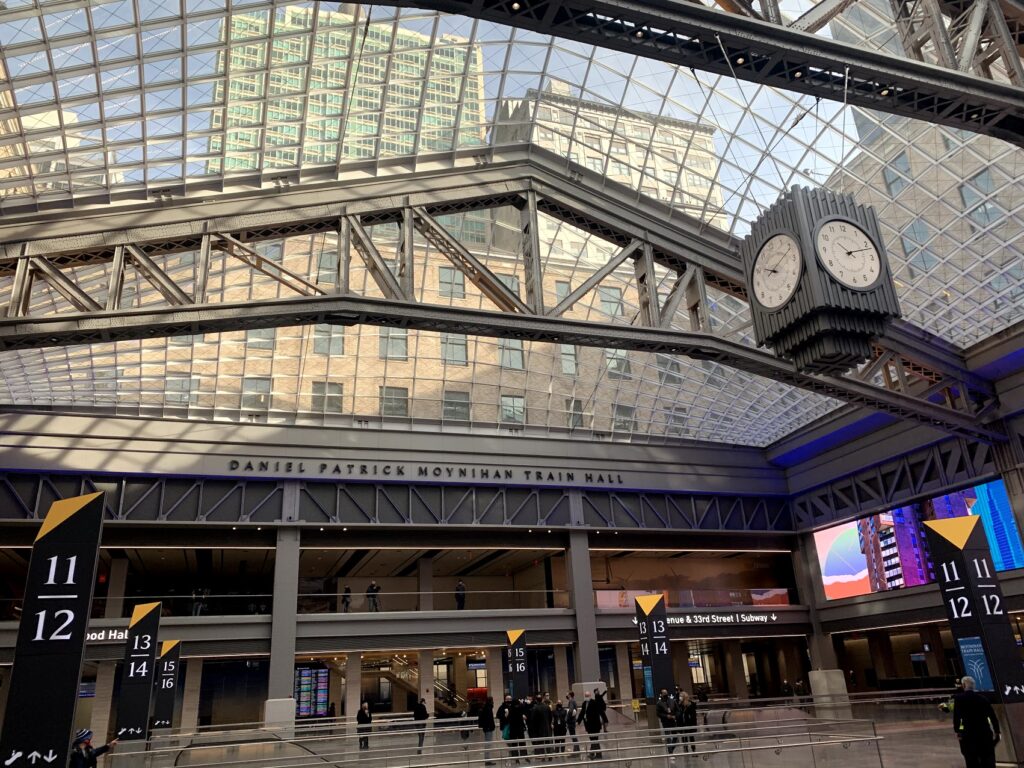
On January 1, 2021 Moynihan Train Hallofficially opens to the public, a new commuters’ wing catering to both Amtrak and Long Island Railroad train passengers at New York’s underground (and mostly unloved) Penn Station.
To celebrate this big moment in New York City transportation history, we’re going to tell the entire story of Pennsylvania Station and Pennsylvania Railroad over two episodes, using a couple older shows from our back catalog.
PODCAST The story of Pennsylvania Station involves more than just nostalgia for the long-gone temple of transportation as designed by the great McKim, Mead and White. It’s a tale of incredible tunnels, political haggling and big visions.
Pennsylvania Railroad was the largest railroad in the world by the 1880s, but thanks to Cornelius Vanderbilt’s New York Central Railroad, one prize was strategically out of their grasp — direct access to Manhattan.
An ambitious plan to link New Jersey to New York via a gigantic bridge fell apart, and it looked like Pennsylvania passengers would have to forever disembark in Jersey City.
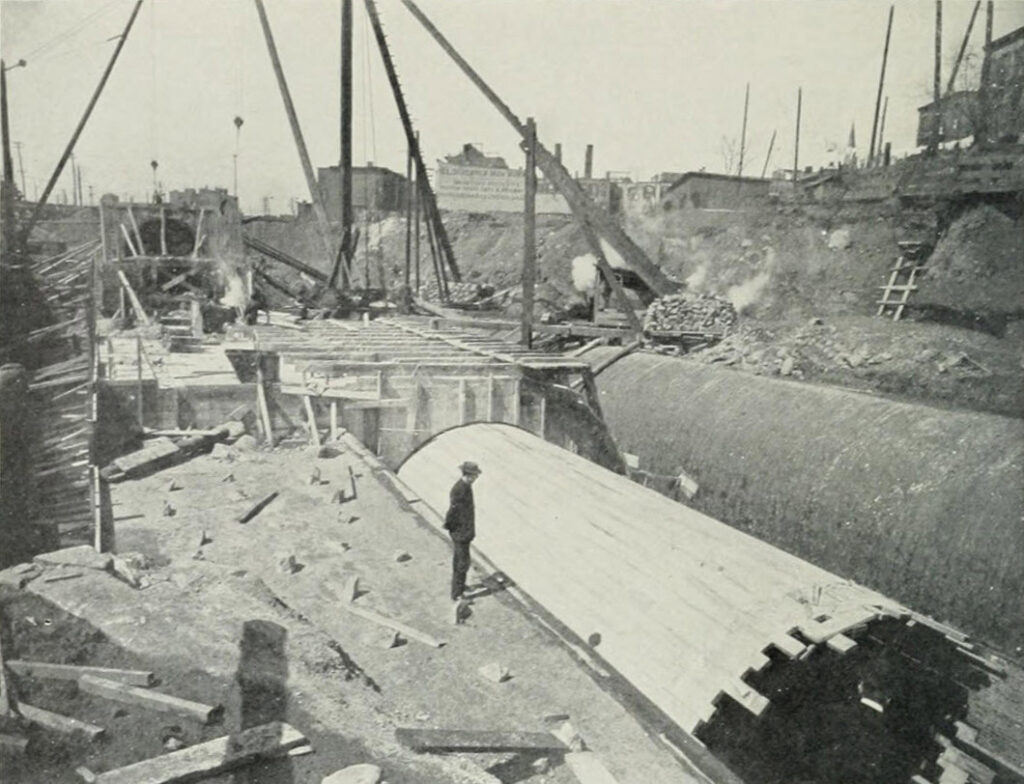
North River Tunnels of the Pennsylvania Railroad: Tunnel C crossing Tunnel B West of Sunnyside Yard as seen during cut-and-cover construction, 1909
But Penn Railroad president Alexander Cassatt was not satisfied. Visiting his sister Mary Cassatt — the exquisite Impressionist painter — in Paris, Cassatt observed the use of electrically run trains in underground tunnels. Why couldn’t Penn Railroad build something similar?
One problem — the mile-wide Hudson River (or in historical parlance, the North River).
This is the tale of an engineering miracle, the construction of miles of underground tunnels and the idea of an ambitious train station to rival the world’s greatest architectural marvels.
Listen to the show here or on your favorite podcast player:
THIS SHOW WAS ORIGINALLY RELEASED AS EPISODE 80 — APRIL 10, 2009
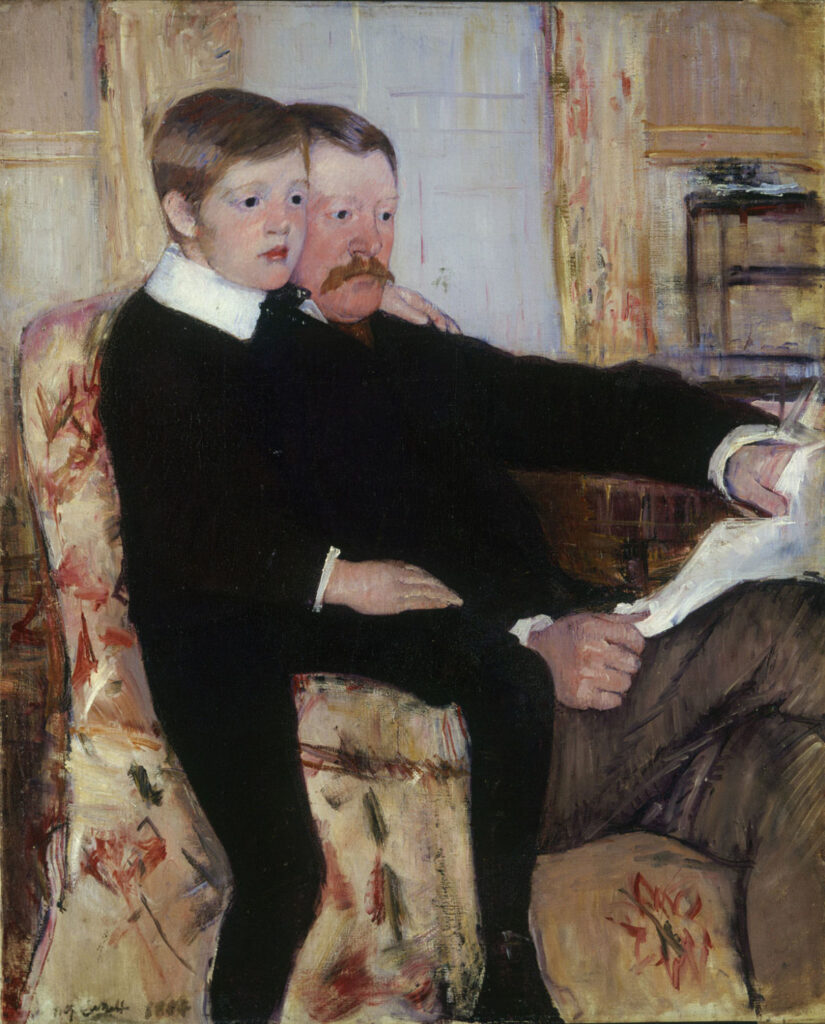
Alexander Cassatt and his son Robert, as painted in 1884 by Mary Cassatt
The Bowery Boys: New York City History podcast is brought to you …. by you!
We are now producing a new Bowery Boys podcast every other week. We’re also looking to improve and expand the show in other ways — publishing, social media, live events and other forms of media. But we can only do this with your help!
We are now a creator on Patreon, a patronage platform where you can support your favorite content creators.
Please visit our page on Patreon and watch a short video of us recording the show and talking about our expansion plans. If you’d like to help out, there are six different pledge levels. Check them outand consider being a sponsor.
We greatly appreciate our listeners and readers and thank you for joining us on this journey so far.
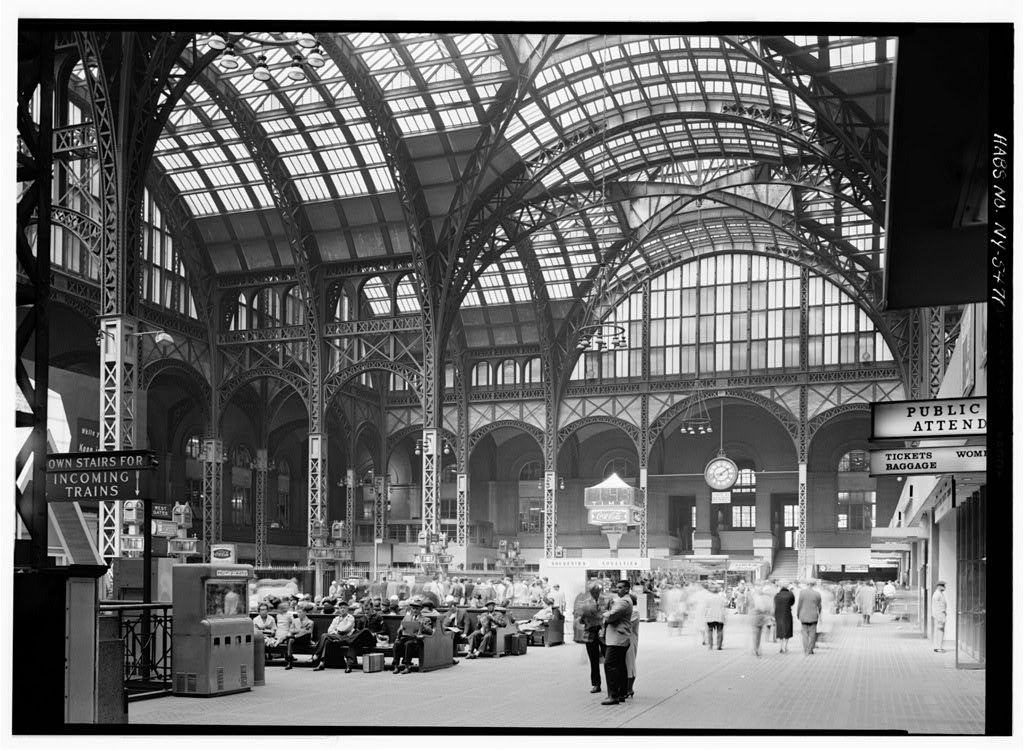
Old Penn Station vs the new Moynihan Train Hall
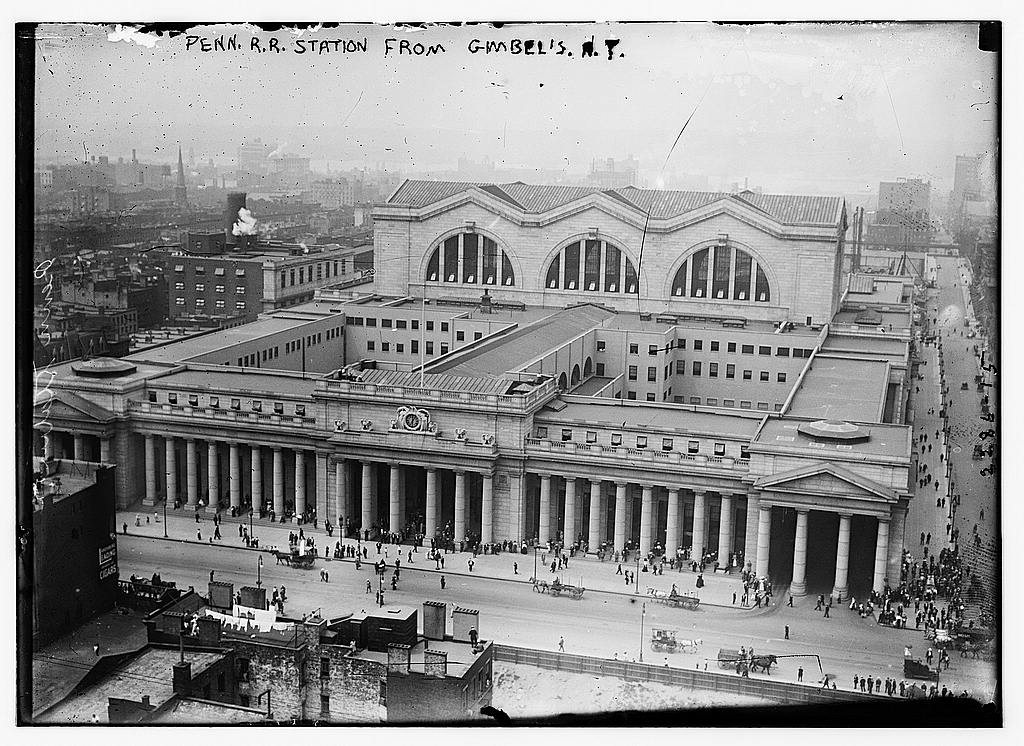
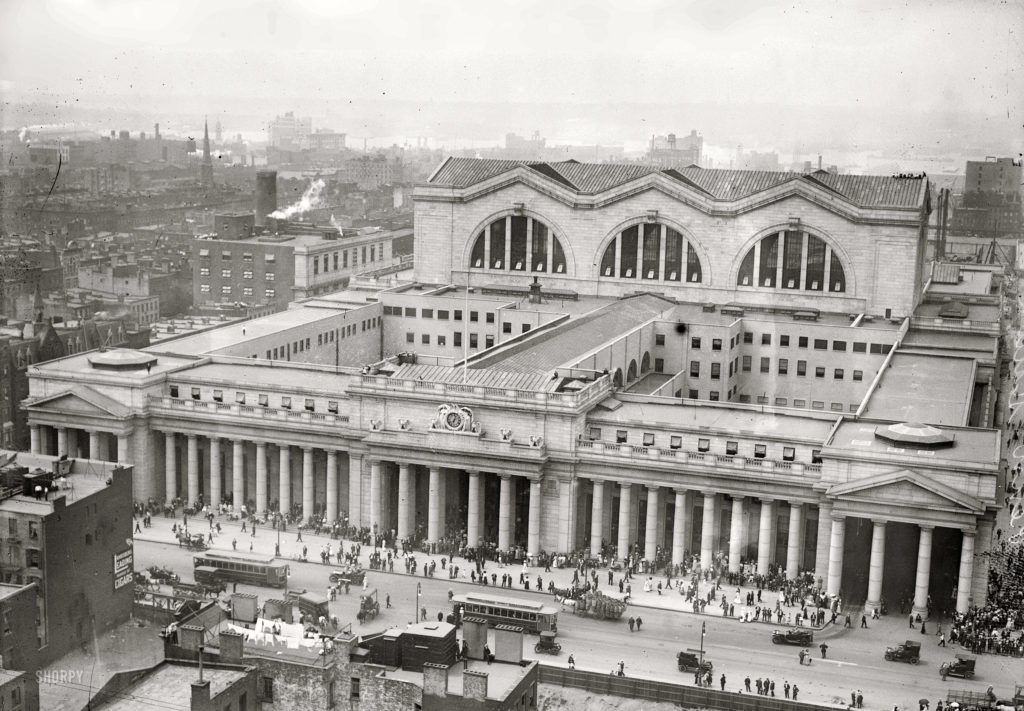
The view of Penn Station from the roof of Gimbels Department Store.
Library of Congress
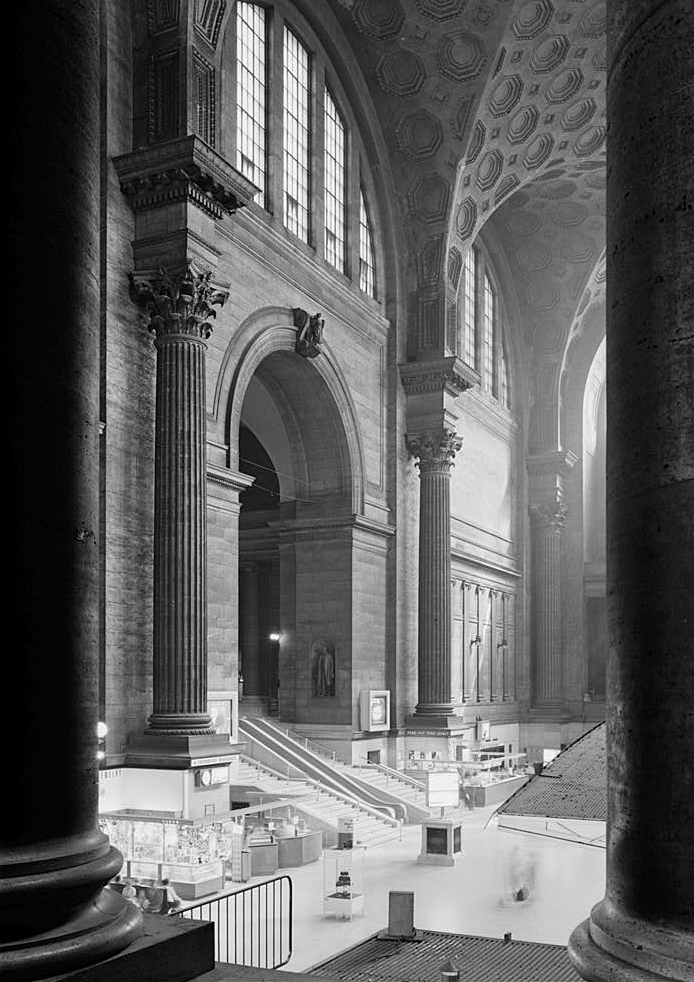
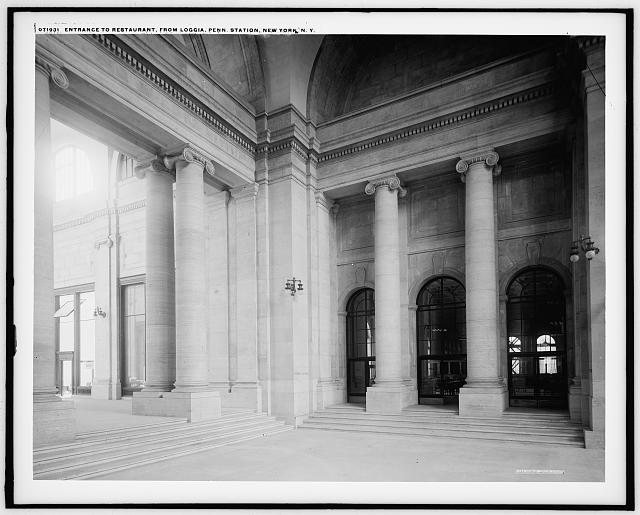
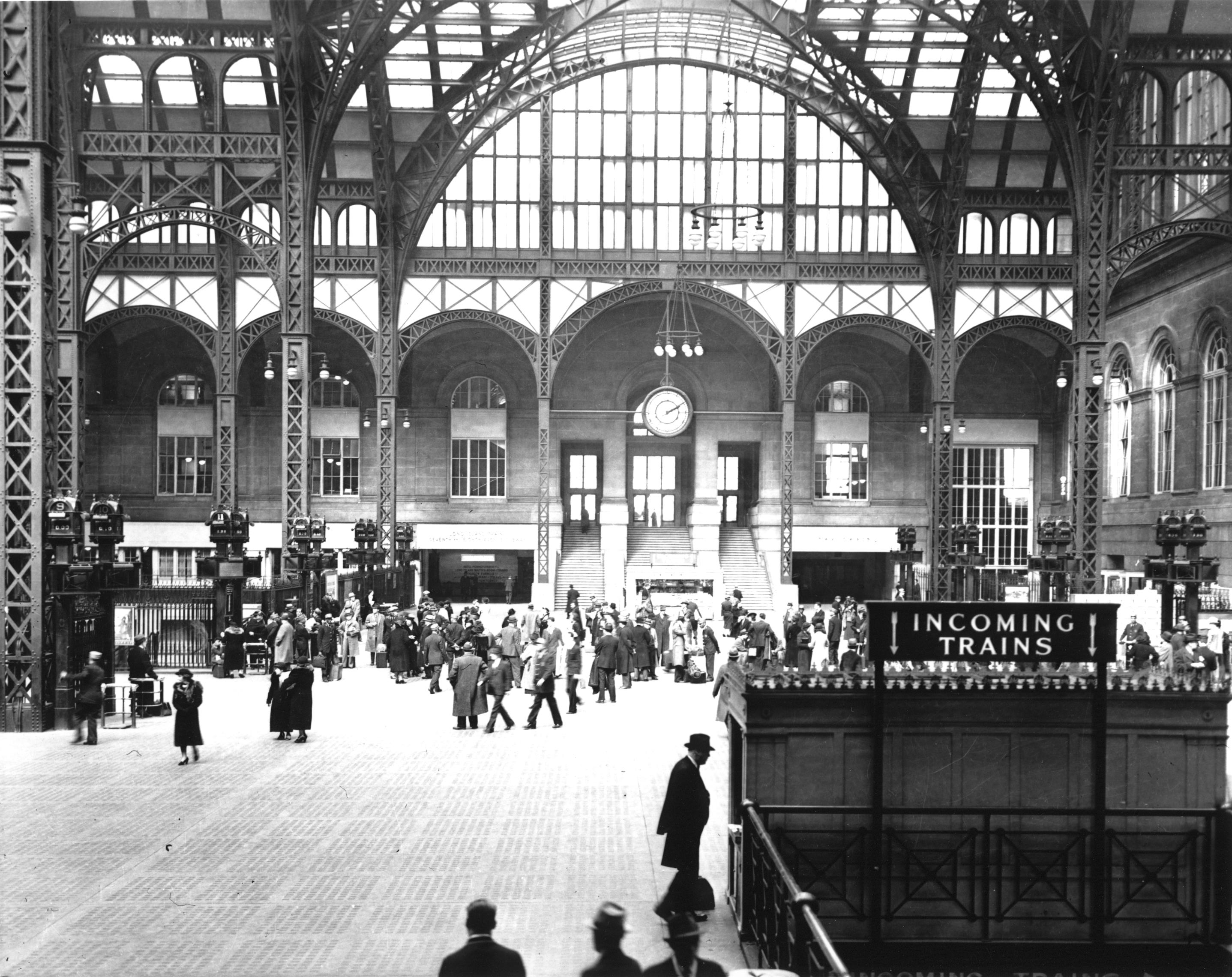
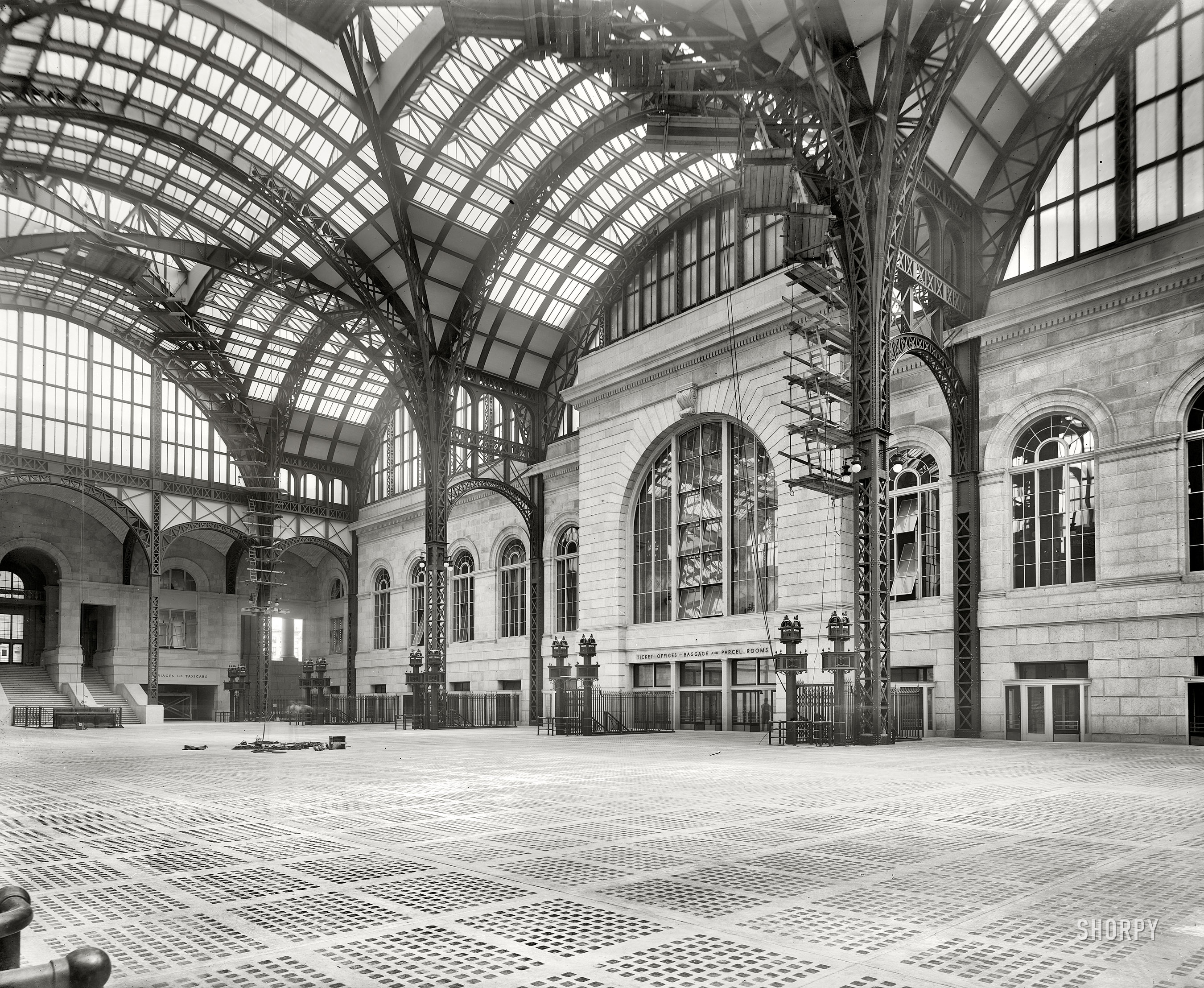
For this round of photographs, let’s focus on the inside of the station, shall we?
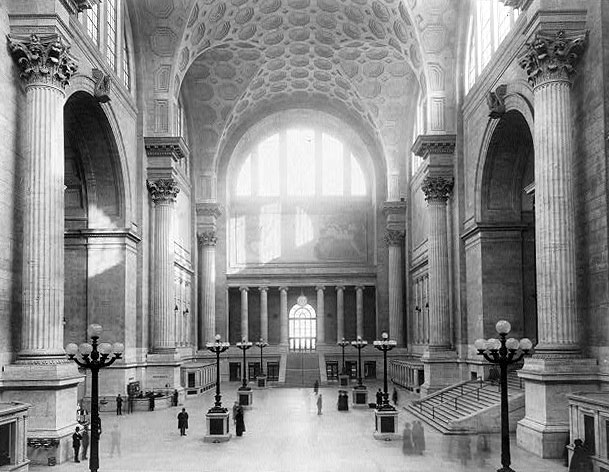
Images of the spectacular main waiting room and the classical Corinthian columns. Read here about something very mysterious and tragic which occurred near here in 1914.
Library of Congress
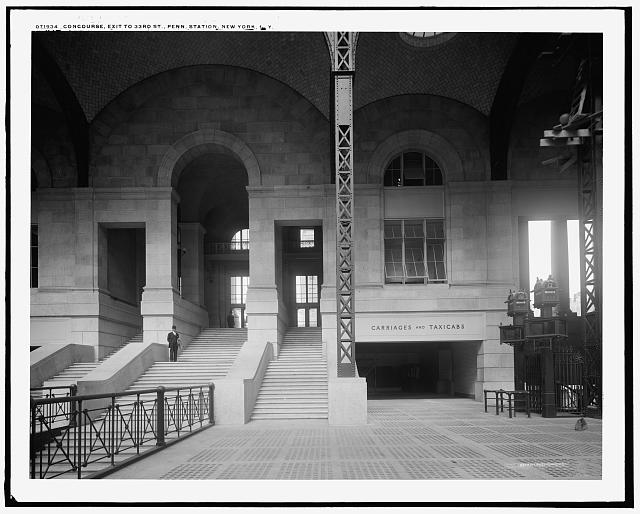
This is what greeted you as you got off the train and headed for 33rd Street.
Library of Congress
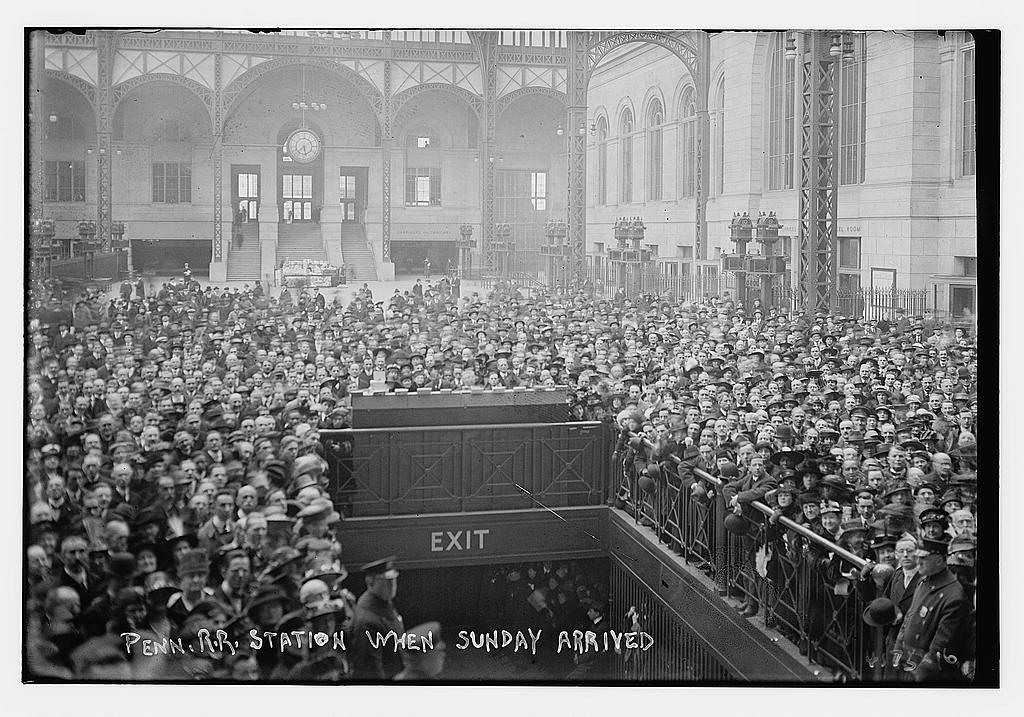
Crowds await the arrival of superstar preacher Billy Sunday in 1917. Read all about his visit here.
Library of Congress
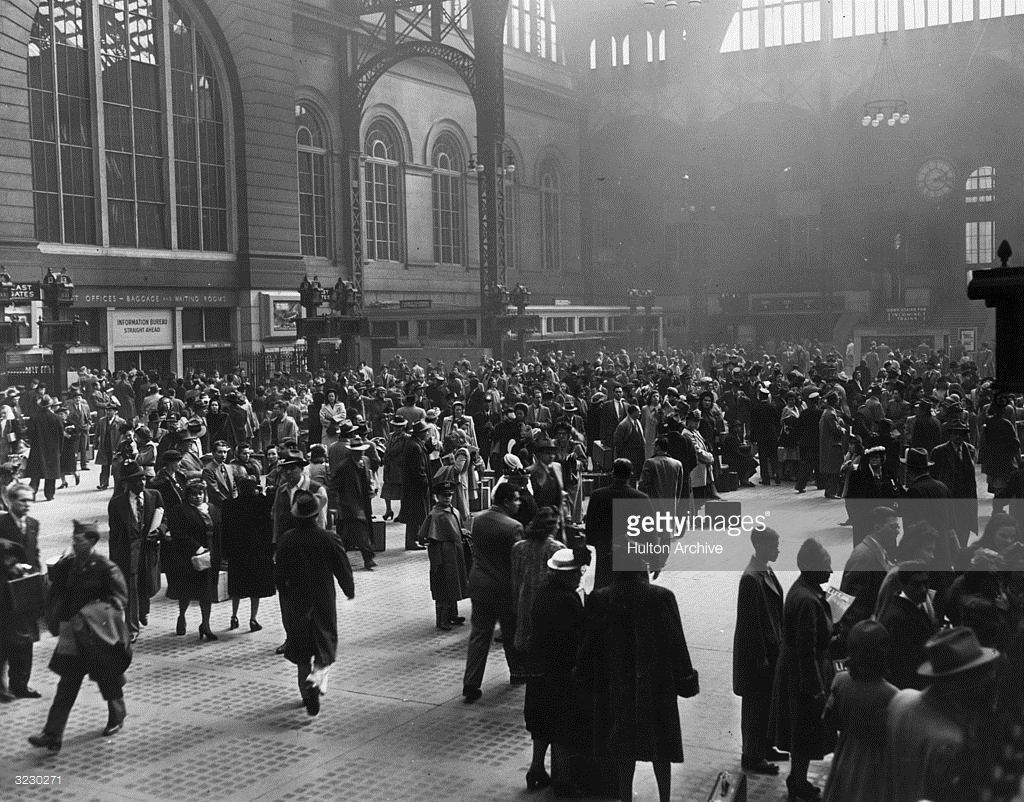
The interior from the 1950s during rush hour. Getty has a terrific collection of Penn Station photographs over the years.
Getty Images
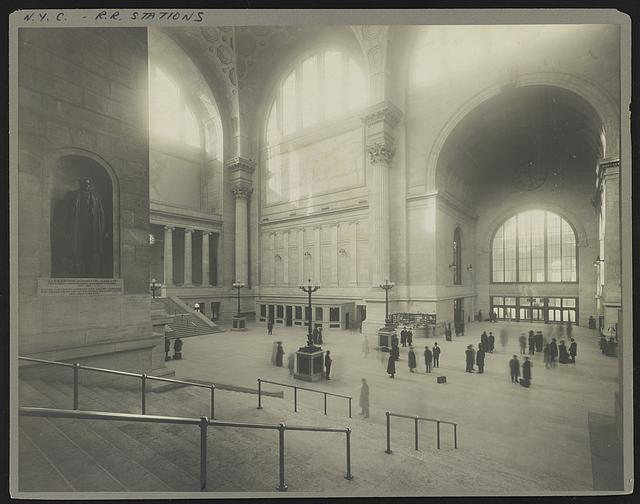
From this angle of the waiting room (taken in the station’s early days) you can see a statue of Alexander Cassatt, Penn Railroad’s former president, in its wall niche. Cassatt, brother of impressionist painter Mary Cassatt, never got to see the completed station, as he died in 1906. (The station opened in 1910.)
Library of Congress
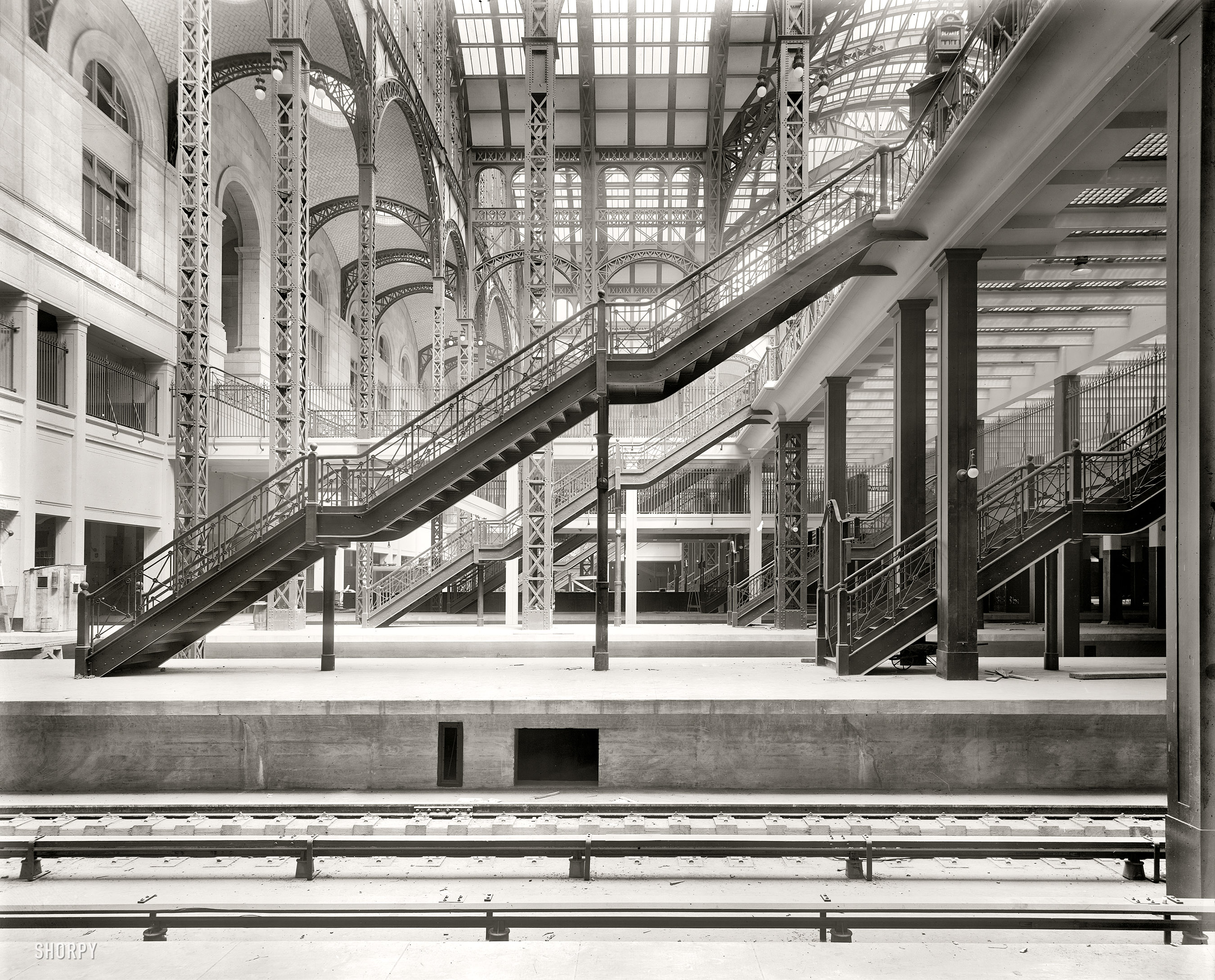
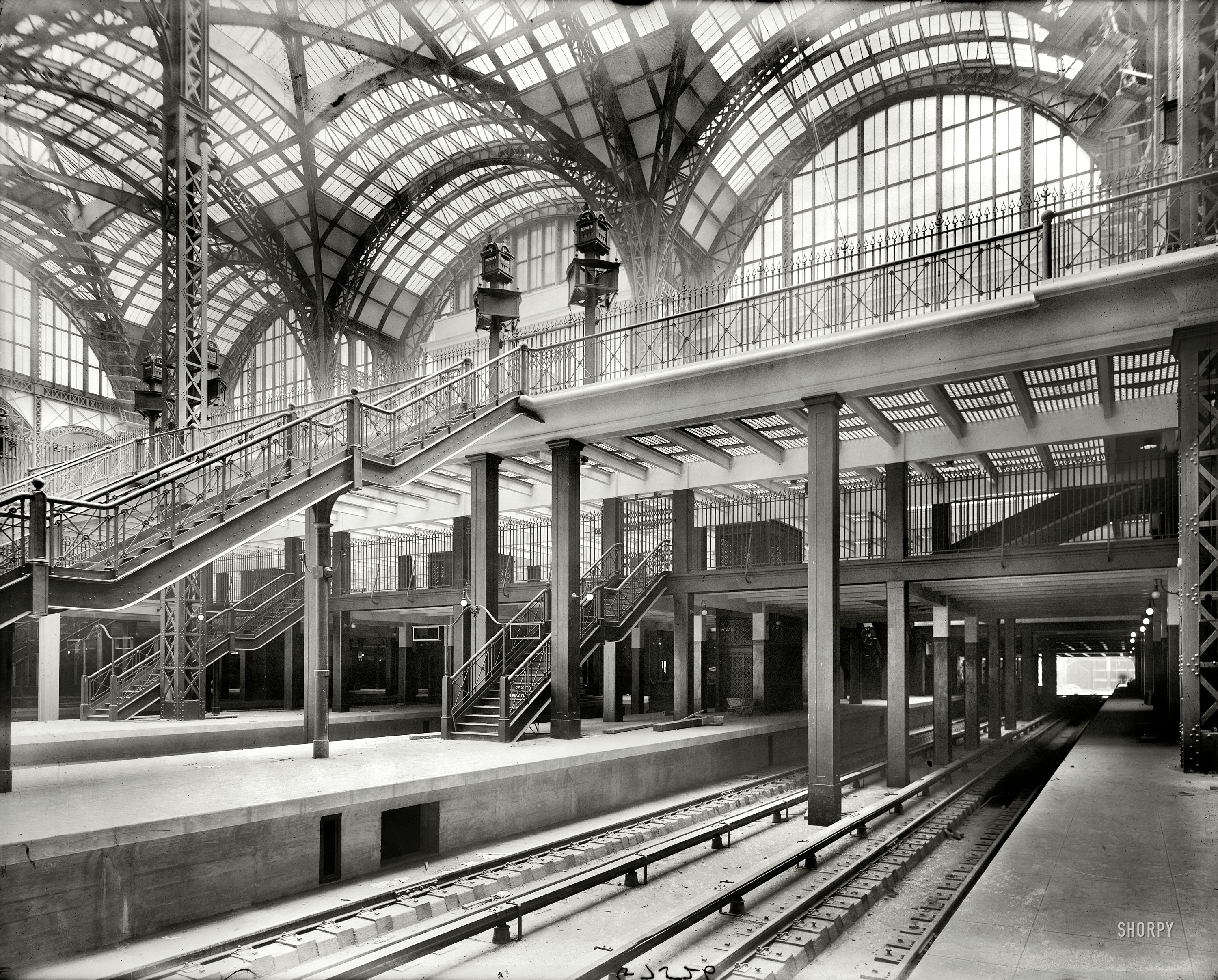
From this angle, you can really see the relation of the train platforms with one of the entrances. Seems easier to navigate than the current Penn Station, don’t you think?
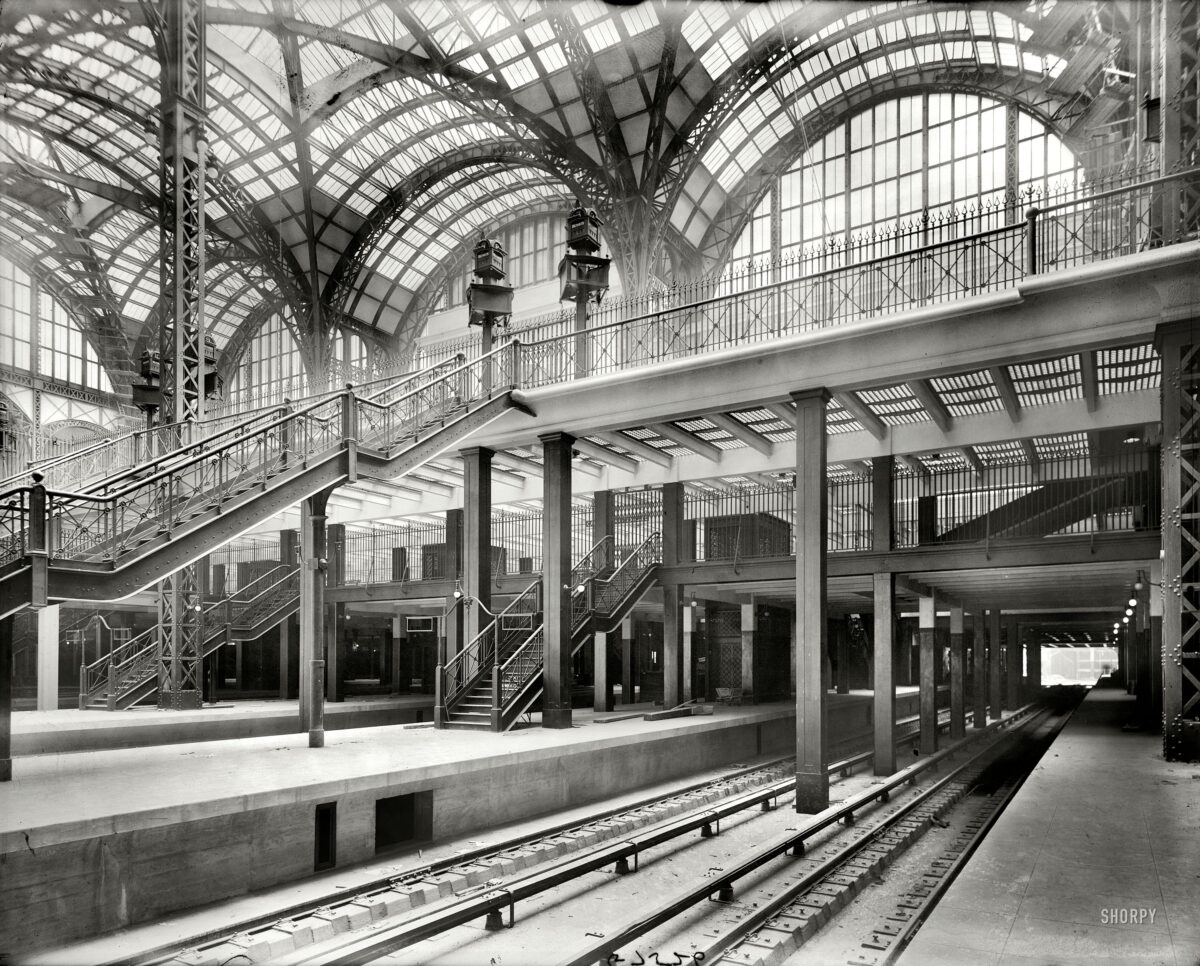
Here are a few ‘cleaned up’ hi-res images from the fine folks over at Shorpy, who have a bit of a thing apparently for old Penn Station. Go over to their blog to check out the rest of their work.
The 1896 landmark Supreme Court decision Plessy v. Ferguson embedded and legitimized the practice of “separate but equal” into American life in the 20th century.
The decision built racism into the fiber of everyday activities — schooling, housing, medical care, public transportation — and elevated personal prejudices into the realm of legality. It raised white and black children in separate environments, entrenching prejudice so deeply that we, in 2019, are still reeling from its consequences.
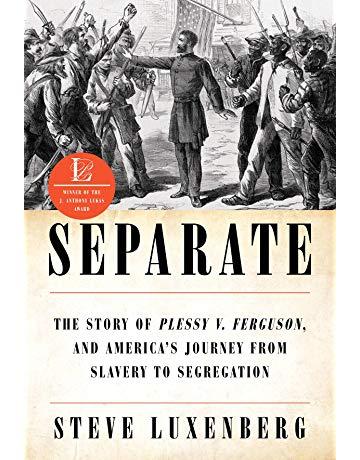
Steve Luxenberg’s captivating history Separate: The Story of Plessy v. Ferguson, and America’s Journey From Slavery to Segregation is a slow-build up to the case itself. (Homer Plessy, the Creole plaintiff who attempted to sit in a railroad car for white passengers, comes into the story 60 pages before the end.) Luxenberg is more concerned with the legal and social entanglements that led up to the case, a myriad of state-specific practices upon a wide spectrum of public prejudice.
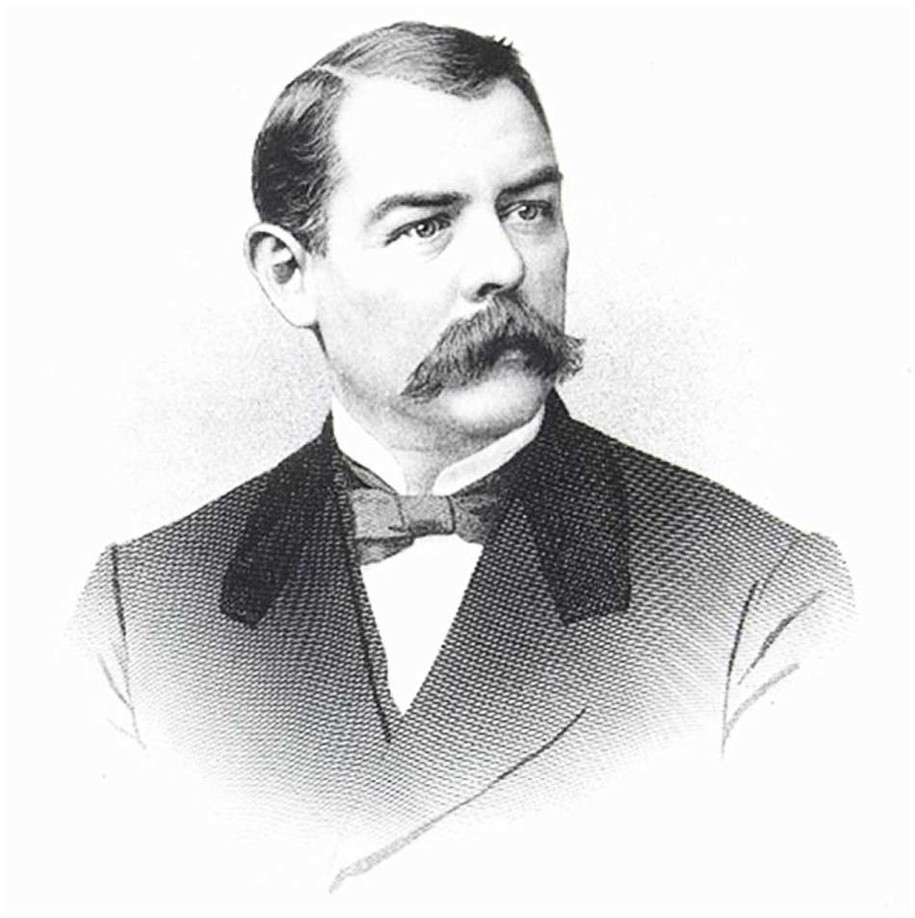
Separate follows the lives of three men crucial to the outcome of the decision — the firebrand white Northern journalist Albion Tourgée and Supreme Court justices Henry Billings Brown and John Marshall Harlan. From different states and backgrounds, the stories of these three men hurtle towards that fated moment in 1896 when their collective experiences lead to a damaging climax.
Albion Tourgée who litigated for Homer Plessy in front of the Supreme Court. (Library of Congress)
The fourth protagonist — and certainly the most interesting — are the people of color in New Orleans in the late 19th century.
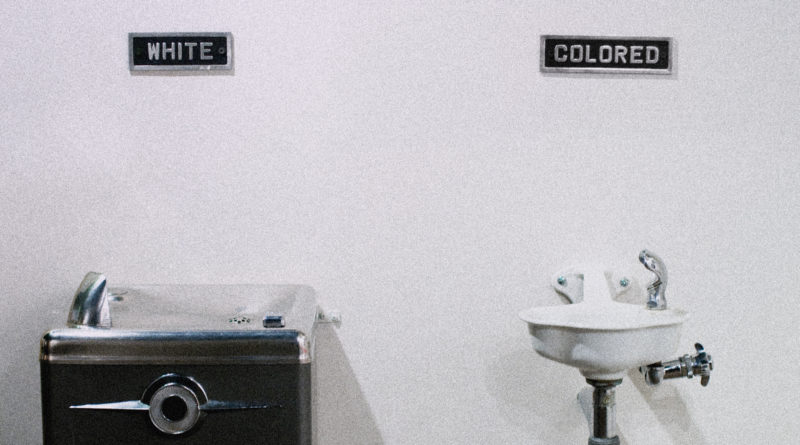
‘Separate but equal’ policies were commonplace on the state level throughout the South and especially contentious when it came to public transportation — streetcar and railroad passenger cars. Drivers and ticket takers had to determine on the spot the race of a passenger, guide them to the ‘proper’ section and enforce the separation should there be conflict.
But in Louisiana, there were thousands of residents of color who had never been enslaved people, lesgens de couleur libres with a mix of European and African ancestry. (An excerpt of a 1853 New Orleans divvied its population into eight different ‘grades’.) Passengers could be labeled black one day, white the next, depending on the railroad or streetcar employee making the determination.
Plessy was indeed a mixed race gentlemen from New Orleans, and his ‘test case’, destined for the high court, would be shepherded through the system by Tourgée, a nationally known columnist, and Louis Martinet, a Creole attorney with interesting challenges to his own career.
In the stories of Brown and Harlan, another fascinating subplot emerges, that of wavering and unexpected shifting views on slavery and racial relationships, inspired by unique state issues following the Civil War.
And even enlightened views can be reached narrowly. Harlan, the ‘lone dissenter’ in the case of Plessy vs. Ferguson, was once a proud member of the anti-immigrant Know Nothing Party and was a full-throated supporter of the Chinese Exclusion Act.
For many legal minds in the late 19th century, equality in a legal sense did not mean social equality. An American, white or black, may share the same rights as upheld by the U.S. Constitution, but in everyday matters, there was no urgent need to include all people in the same public spaces.
Of course this would prove dysfunctional and absurd, a fallacy based on an unenforceable belief that every actor at every level of public life would truly provide ‘equal’ options to Americans of any color. Separate lays out the course for how this thinking became the law of the land.
PODCAST All the history that came before the development of Hudson Yards, Manhattan’s skyline-altering new project.
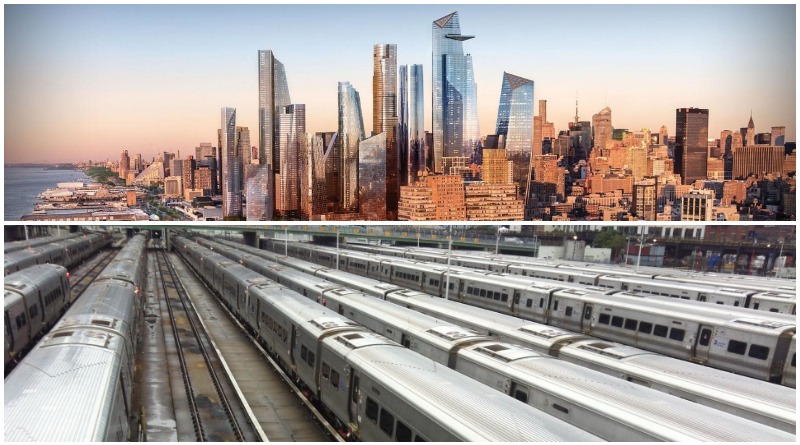
Hudson Yards is America’s largest private real estate development, a gleaming collection of office towers and apartments overlooking a self-contained plaza with a shopping mall and a selfie-friendly, architectural curio known as The Vessel.
By design, Hudson Yards feels international, luxurious, non-specific. Are you in New York City, Berlin, Dubai or Tokyo? Yet the mega-development sits on a spot important to the transportation history of New York City. And in the late 20th century, this very same spot would vex and frustrate some of the city’s most influential developers.
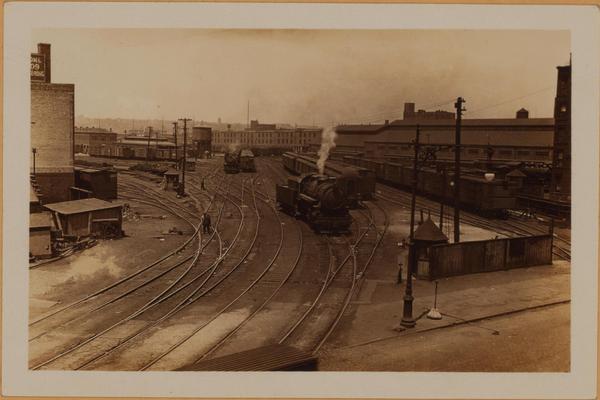
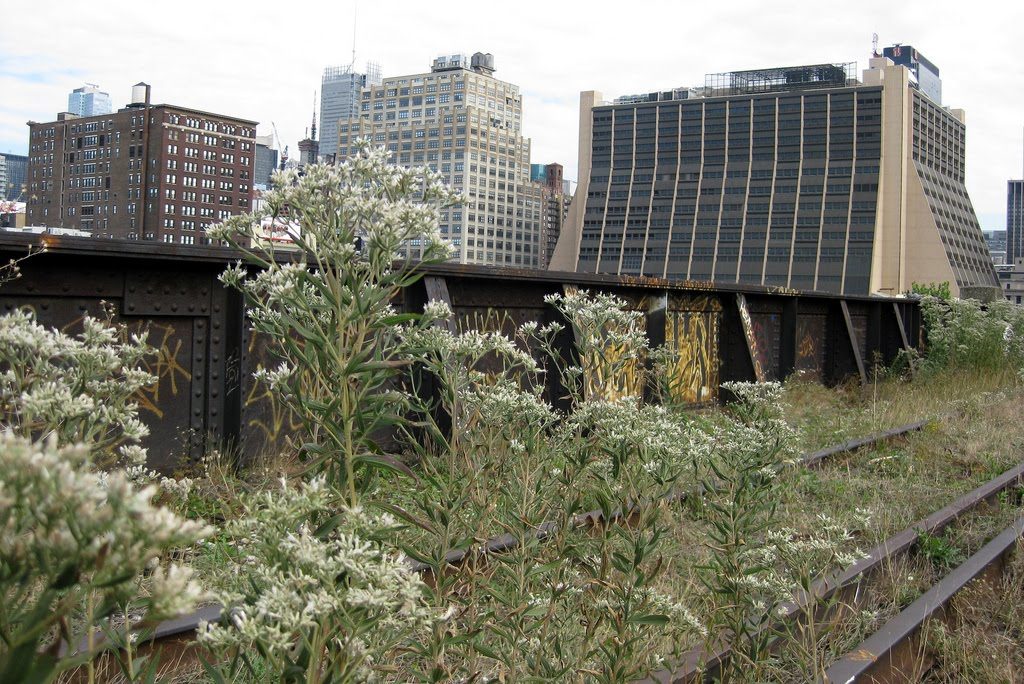
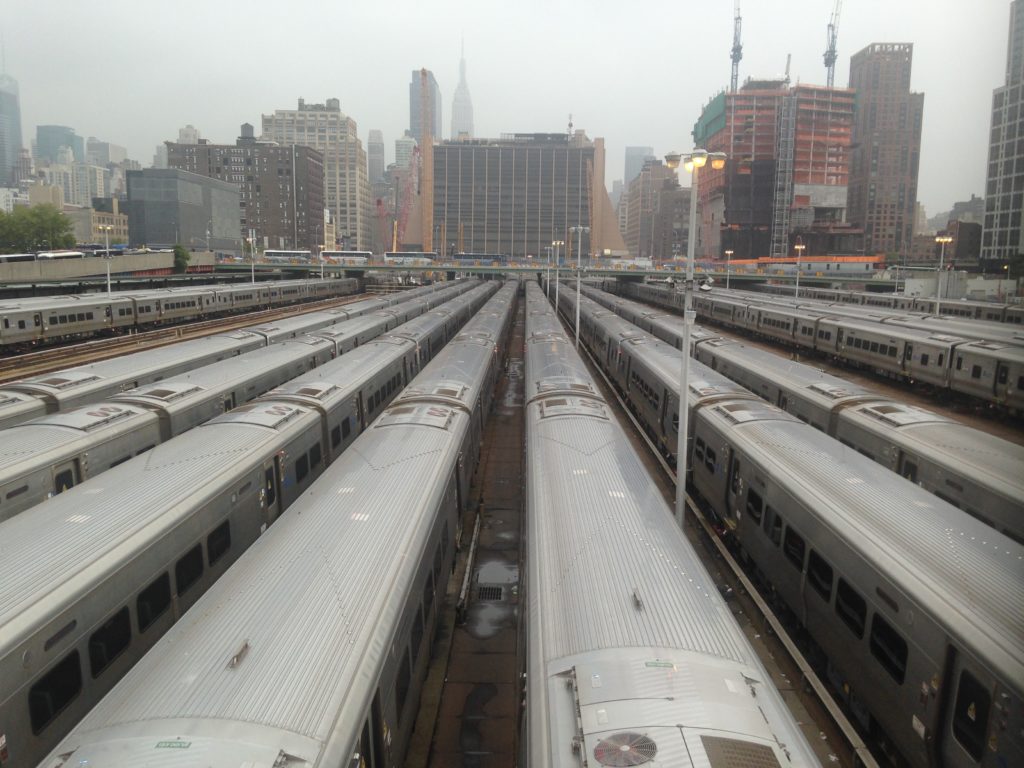
The key is that which lies beneath — a concealed train yard owned by the Metropolitan Transit Authority. (Only the eastern portion of Hudson Yards is completed today; the western portion of the Yards is still clearly on view from a portion of the High Line.)
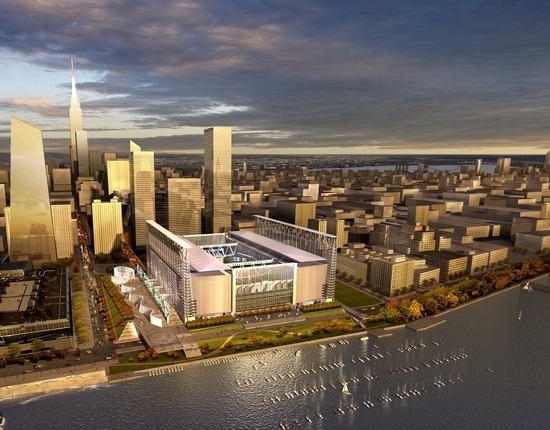
Prepare for a story of early railroad travel, historic tunnels under the Hudson River, the changing fate of the Tenderloin neighborhood, and a list of spectacular and sometimes wacky derailed proposals for the site — from a new home for the New York Yankees to a key stadium for New York City’s bid for the 2012 Olympic Games.
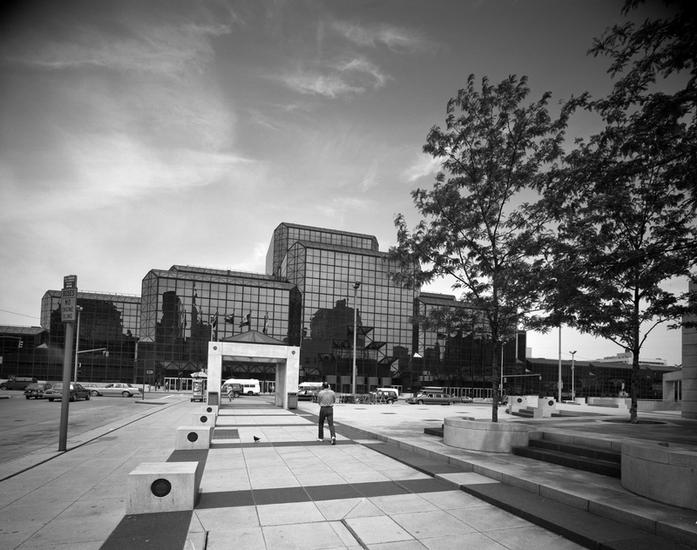
PLUS: Trump Convention Center — it almost happened!
The Bowery Boys: New York City History podcast is brought to you …. by you!
We are now producing a new Bowery Boys podcast every other week. We’re also looking to improve the show in other ways and expand in other ways as well — through publishing, social media, live events and other forms of media. But we can only do this with your help!
We are now a member of Patreon, a patronage platform where you can support your favorite content creators.
Please visit our page on Patreon and watch a short video of us recording the show and talking about our expansion plans. If you’d like to help out, there are six different pledge levels (New Amsterdam, Five Points, Gilded Age, Jazz Age, Empire State and Greater New York). Check them out and consider being a sponsor.
And join us for the next episode of the Bowery Boys Movie Club, an exclusive podcast provided to our supporters on Patreon.
We greatly appreciate our listeners and readers and thank you for joining us on this journey so far.
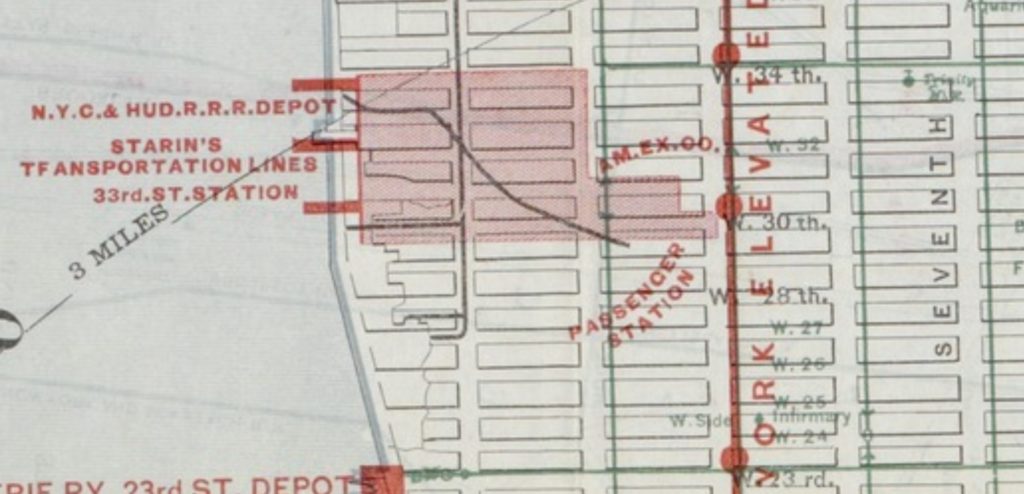
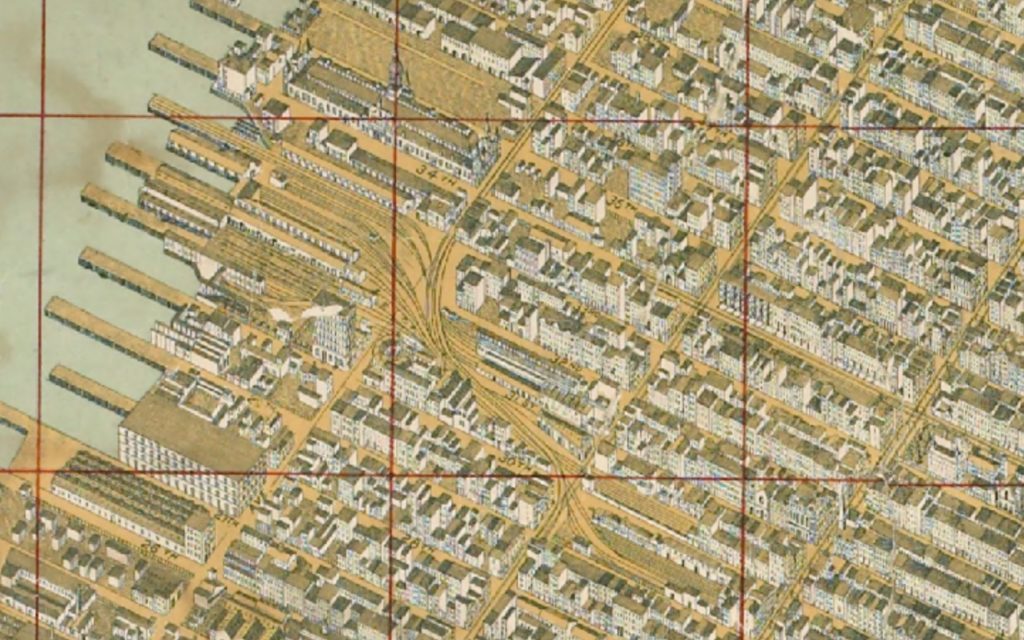
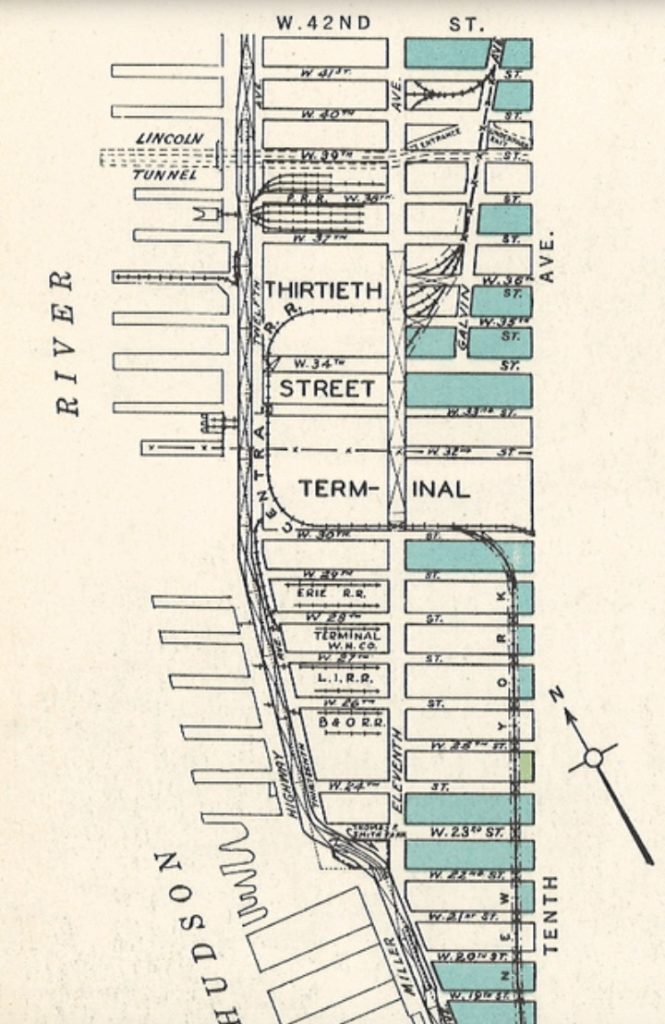
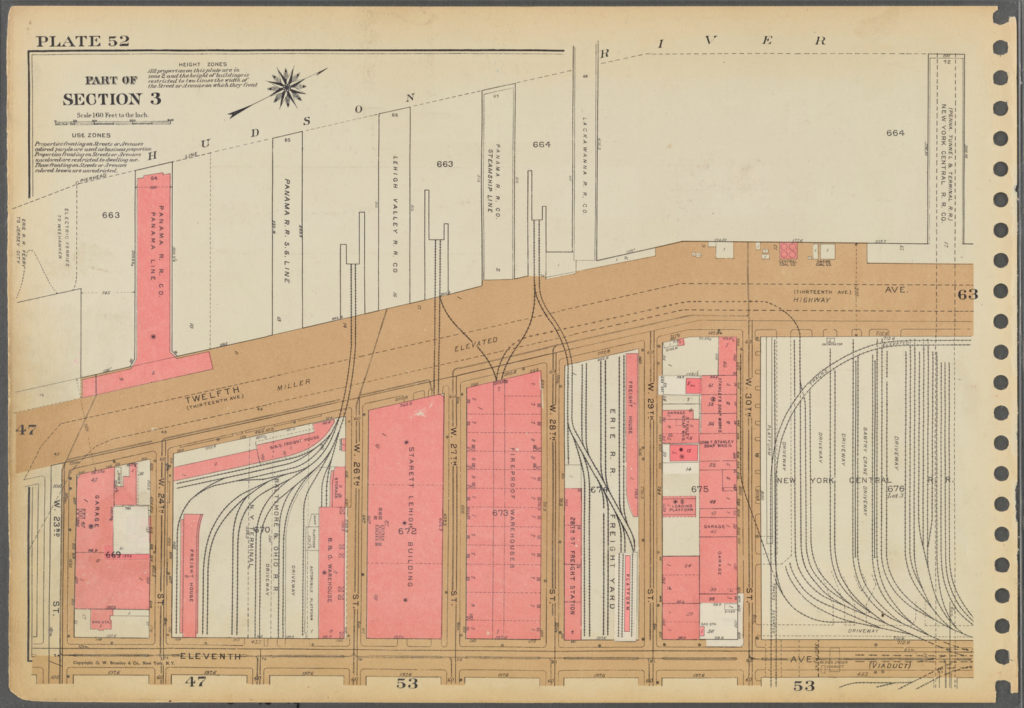
The West Side Yards area as it appeared on maps throughout the decades:
1879190019431955 New York Public Library
Pennsylvania Station, constructed between Seventh and Eighth Avenues, allowing for trains from New Jersey to arrive via tunnels which were dug under the Hudson River and the New York Central and Hudson River Railroad site on the waterfront.
Bain Collection/Library of Congress. Clean-up version courtesy Shorpy
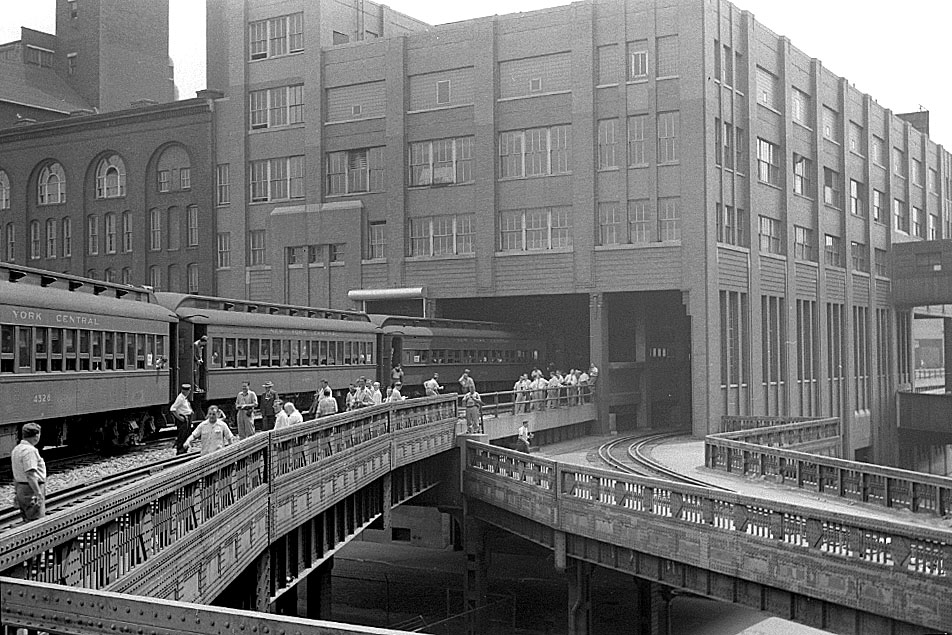
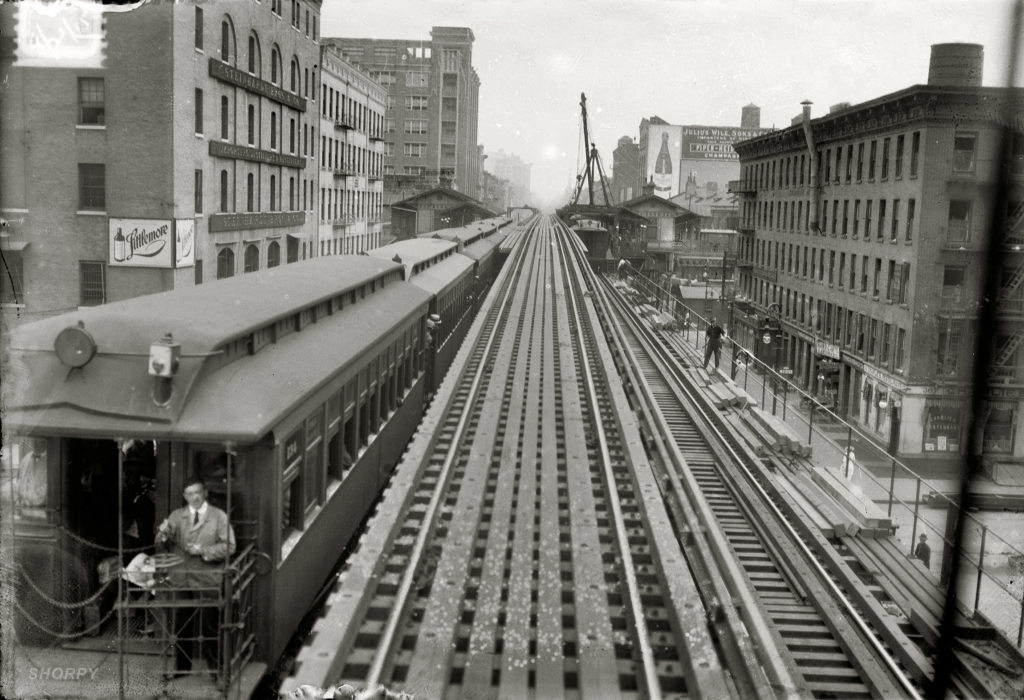
The West Side Elevated Freight Railroad lifted trains off the street and sometimes dropped off cargo right into the buildings themselves.
The elevated freight railroad enters the National Biscuit Company, between W. 15th and 16th streets, July 30, 1950.
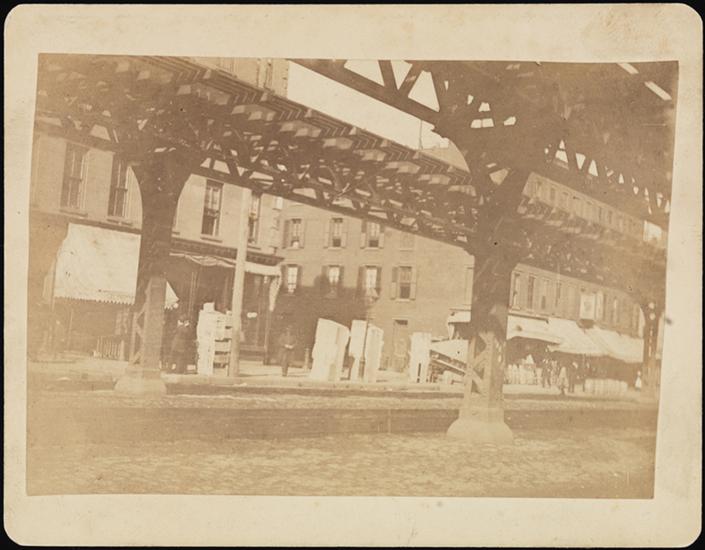
August 21, 1915. “Express track, 9th Avenue ‘L’.” Construction along the Ninth Avenue elevated tracks at West 13th Street in New York. On the corner: Charlie’s Restaurant. 5×7 glass negative by George Grantham Bain/Cleaned up version courtesy Shorpy
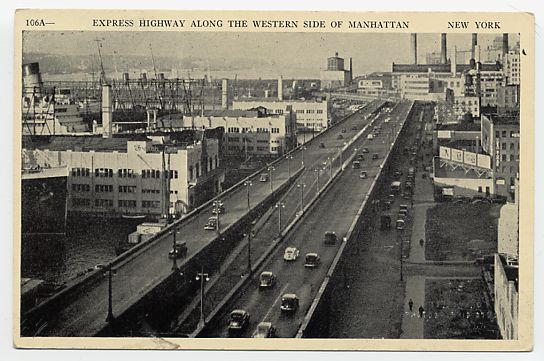
And finally, for automobile traffic, the West Side Elevated Highway (or Miller Highway) was constructed in stages during the mid 20th century, further separating the waterfront from the east. By the last 1980s, most of this highway was dismantled.
Date unknown, image courtesy NYC Architecture
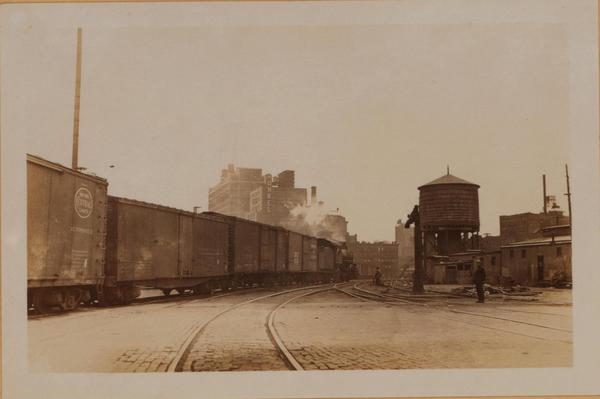
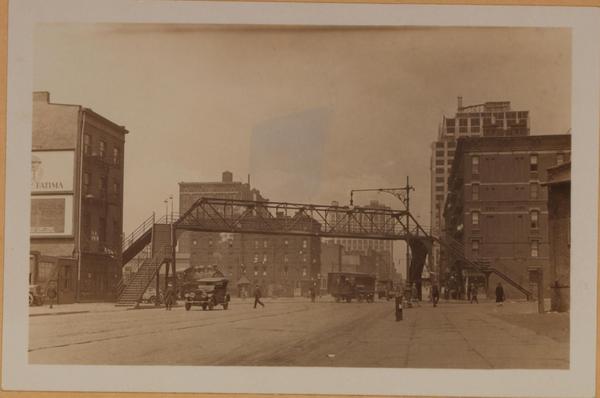
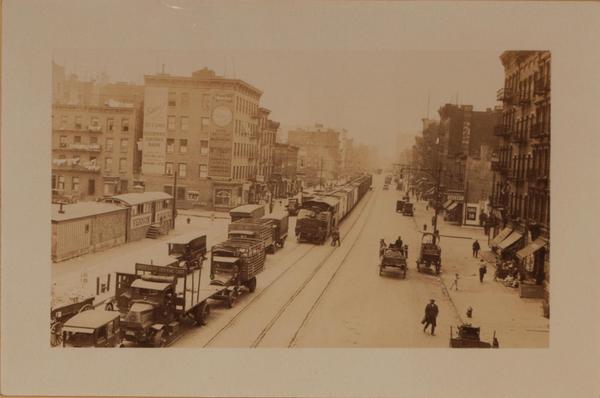
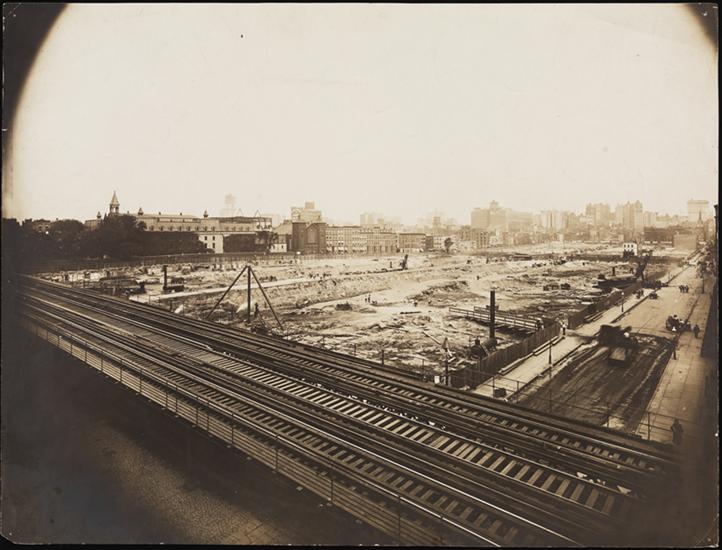
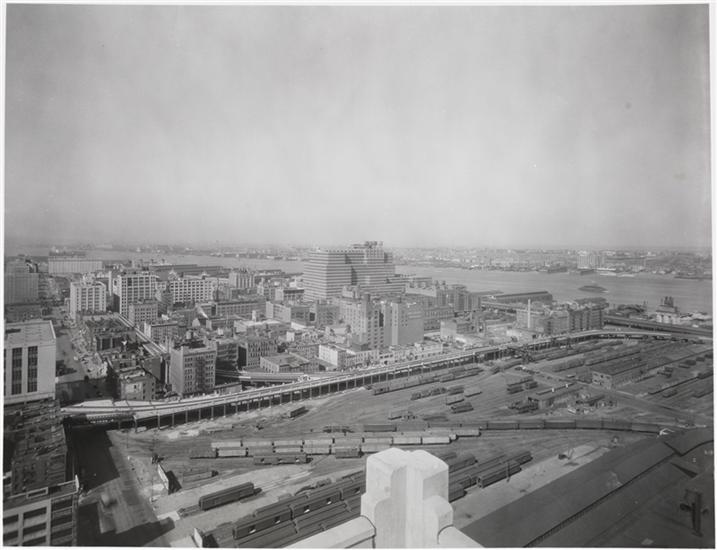
From the New York Public Library digital collection — a look at the ‘West Side Yards’ area in the late 1920s, before the construction of the elevated freight railroad (aka the High Line) and the elevated automobile highway along the west side. (Captions are those from the original images.)
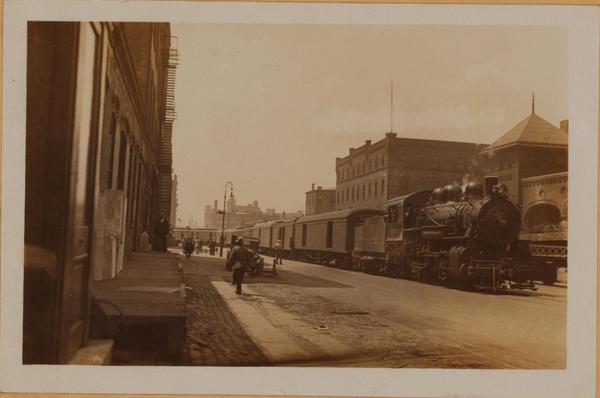
Eleventh Avenue between 31st and 32nd Streets, showing New York Central freight yards. May 17, 1927. P.L. Sperr, Photographer.Tenth Avenue, south from a point slightly above West 30th Street, showing prominently the pedestrian bridge over the Avenue at that thoroughfare. This was erected by the New York Central Railroad because of the danger involved by the use of the street bed by their trains. Popularly this was called “Death Avenue”. To the left are the milk shed yards. May 17, 1927Tenth Ave., south from, but not including West 30th Street. This view is as seen from the pedestrian bridge, at West 30th Street. May 17, 1927.enth Ave., west side, north from, but not including West 30th to, but not including 31st Streets. The view shows the yards of the N. Y. Central and Hudson River R.R. Company. May 17, 1927.South on Eleventh Avenue from 35th Street. May 17, 1929.Pennsylvania Station Excavation from 9th Avenue and 31st Street, ca. 1900 — Museum of the City of New YorkThe 9th Avenue Elevated Railroad at 37th Street, 1910 — Museum of the City of New York
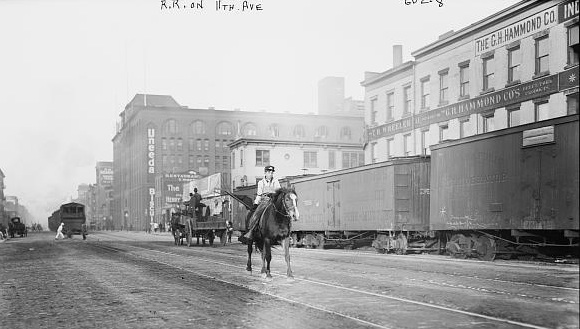
The ‘Death Avenue’ cowboys, guiding dummy engines down the avenue for the protection of pedestrians and horse-drawn vehicles.
1940, courtesy Museum of the City of New York — Taken from approximately 10th Avenue between 33rd-34th Streets, looking south.Javits Center, c. 1990 — Edmund Vincent Gillon, courtesy Museum of the City of New York
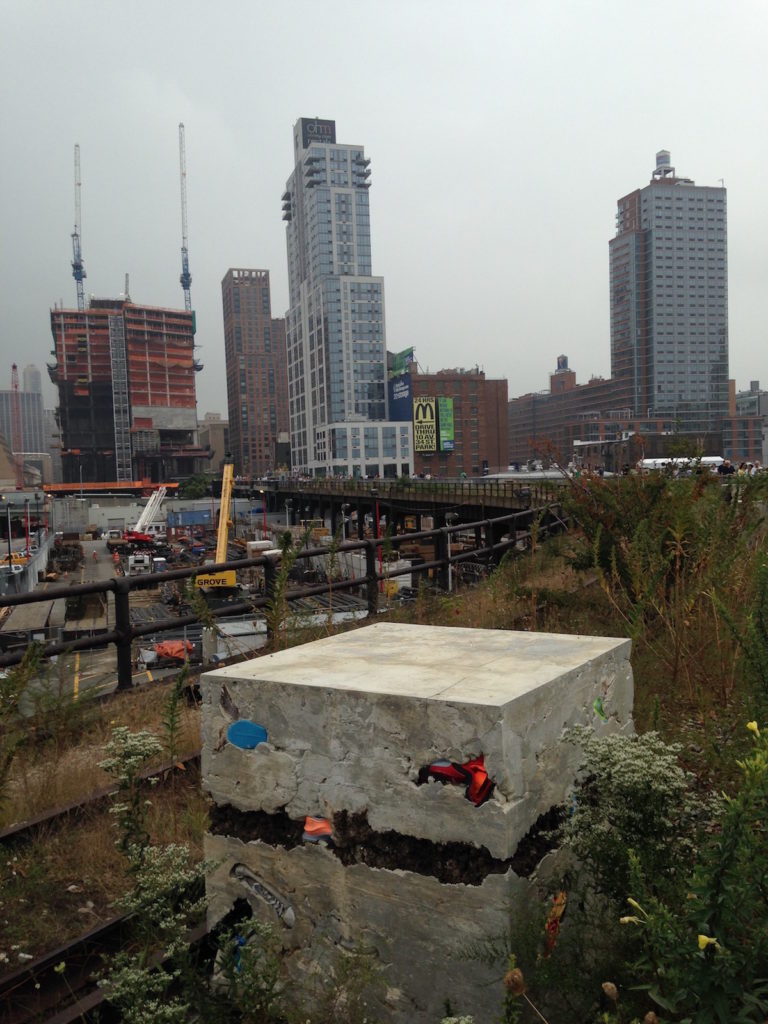
The elevated freight railroad in the early 2000s, before it became the High Line and before the area adjacent to it became Hudson Yards.
wally g/FlickrLooking over the West Side Yards, 2014, photo courtesy Greg Young. To the right, the first Hudson Yards building is being constructed.courtesy Greg YoungA rendering of the West Side Stadium, courtesy Kohn Pedersen Fox Associates
Images of the new Hudson Yards development, from opening day, March 15, 2019. Photos taken by Greg Young.
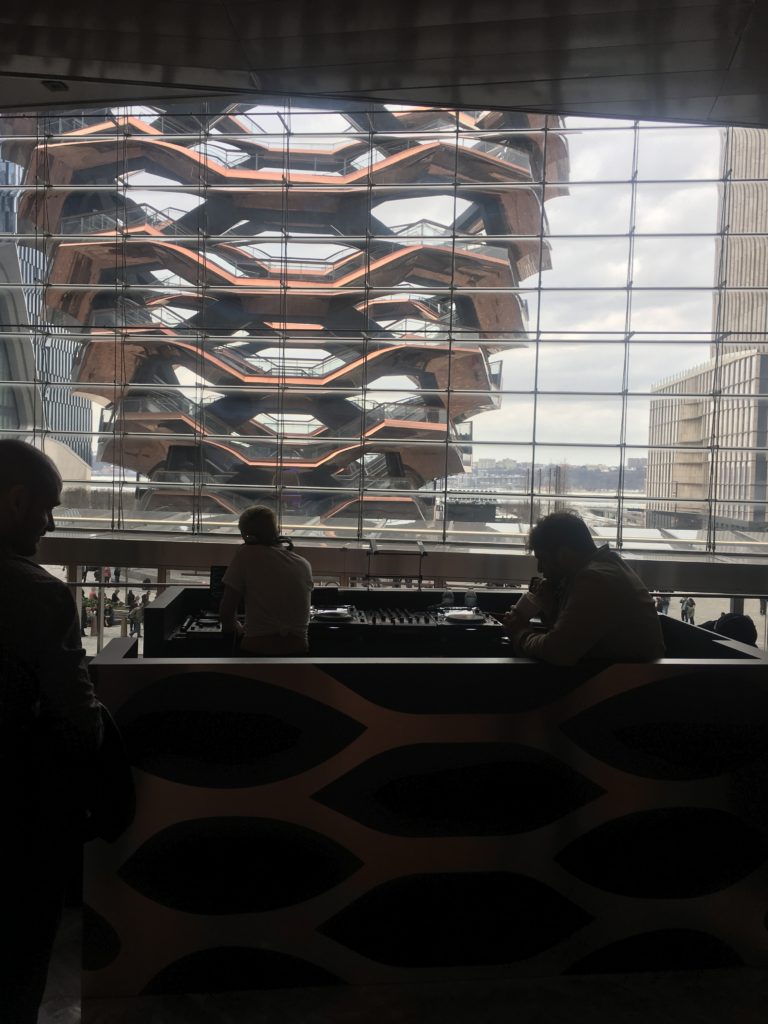
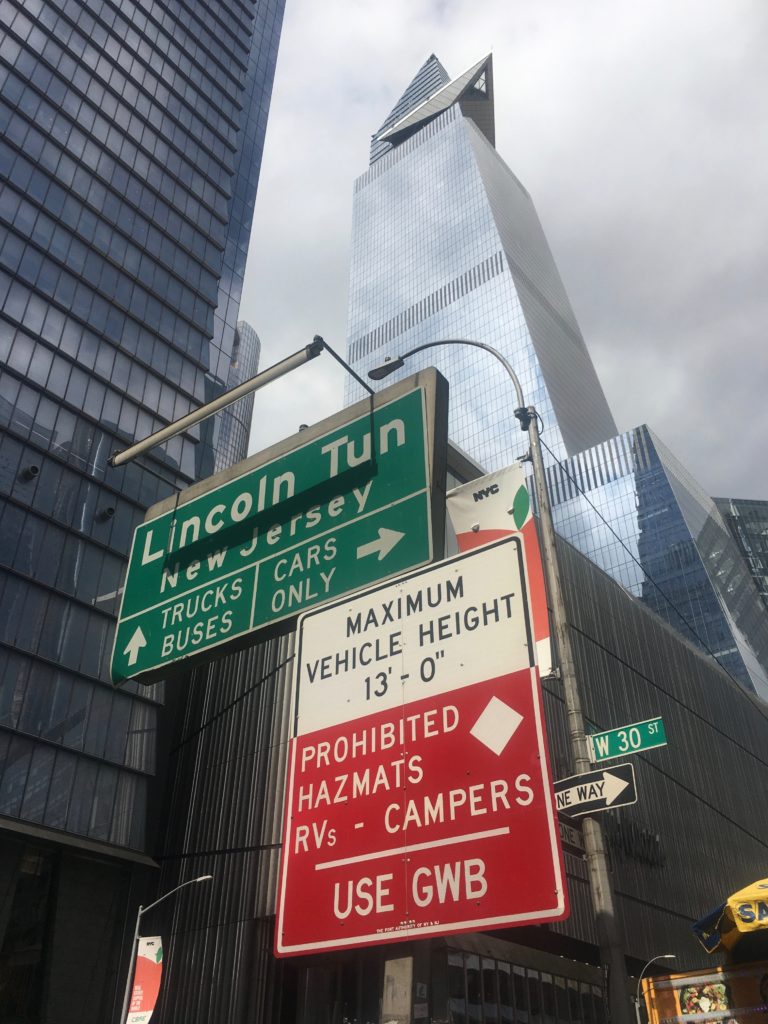
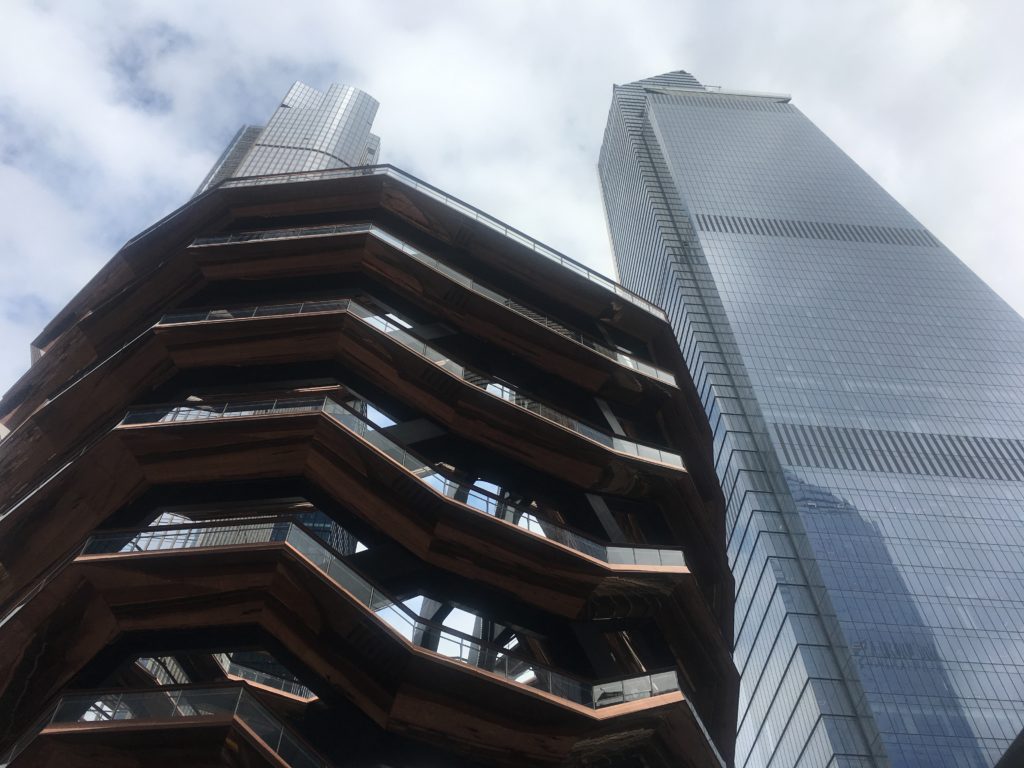
From the second floor, behind the deejay booth. Yes there is a deejay booth in the shopping center.An observation deck over New York as traffic passes by on its way through to the Lincoln Tunnel.Looking up at The Vessel and the towers behind it.
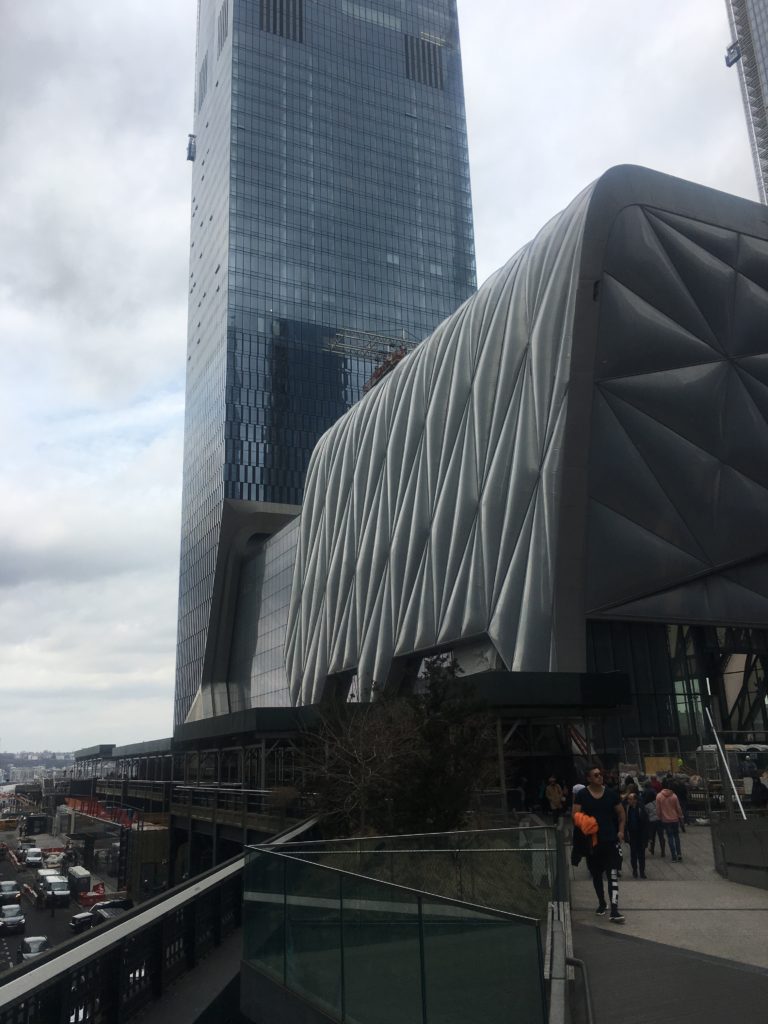
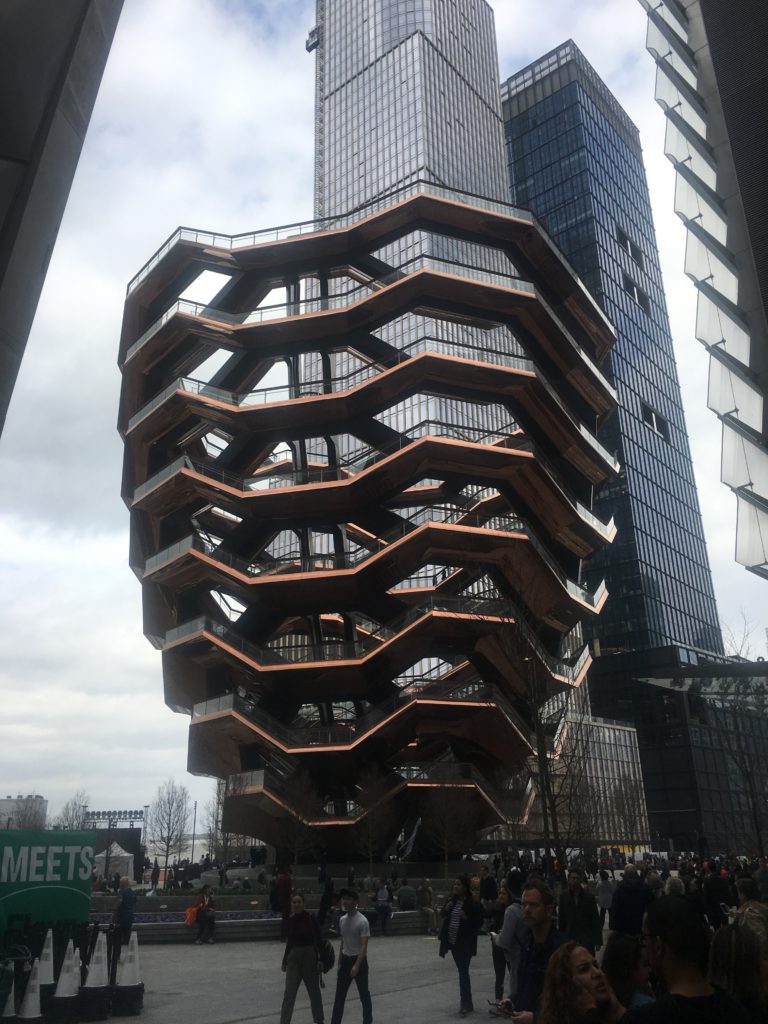
The Shed, a performance space that will be one of the primary draws for most locals.The Vessel, designed by Thomas Heatherwick
FURTHER LISTENING
For more information about this topic, check out these early Bowery Boys podcast episodes:
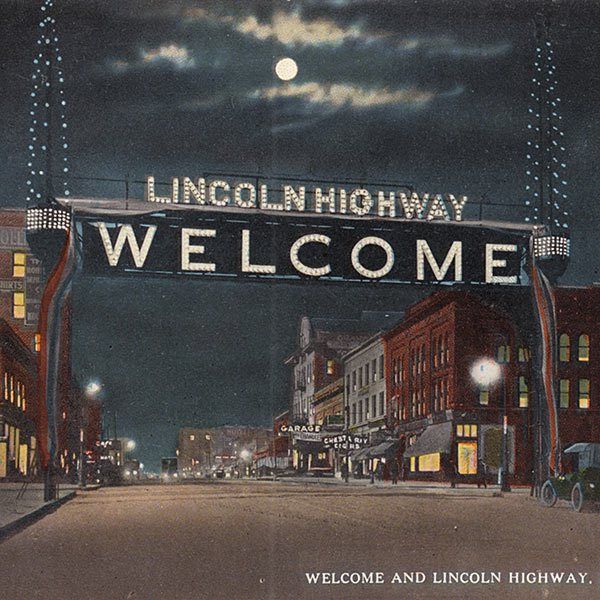
THE FIRST PODCASTÂ In 1900, there were about 8,000 registered automobiles in the United States. They were a genuine novelty. Those that attempted to go on ‘road trips’ met with a frustrating reality — there were no drivable roads, no unified road maps, no nation-wide infrastructure of gas stations or amenities. The first automobiles to attempt cross-country travel were essentially UFOs streaking through a sparsely populated and isolated America.
This is the story of how that all changed. This is the story of the Lincoln Highway, the first cross-country road in the Untied States, linking Times Square in Manhattan with Lincoln Park in San Francisco via a patchwork of pre-existing roads in twelve states.
The Lincoln Highway was developed by automotive executives who wanted to use the cross-country road to promote automobile sales. It accomplished more than that; the Lincoln Highway invented the pleasures and eccentricities of American road travel.
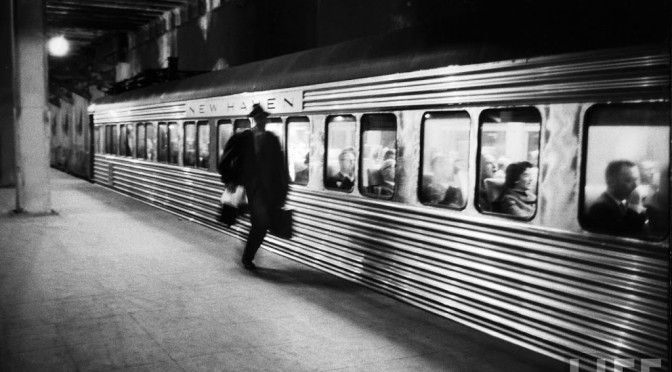
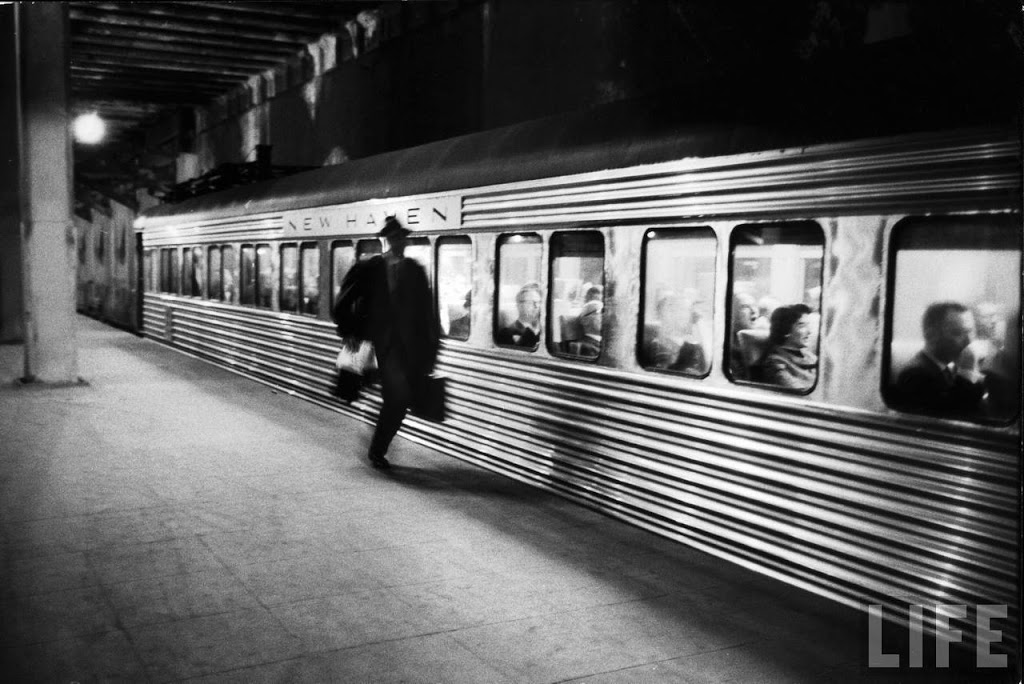
The train gang: Grand Central Terminal, 1961, photo by Alfred Eisenstaedt (LIFE images)
WARNING The article contains a couple spoilers about last night’s ‘Mad Men’ on AMC. If you’re a fan of the show, come back once you’re watched the episode. But these posts are about a specific element of New York history from the 1960s and can be read even by those who don’t watch the show at all. You can find other articles in this series here.
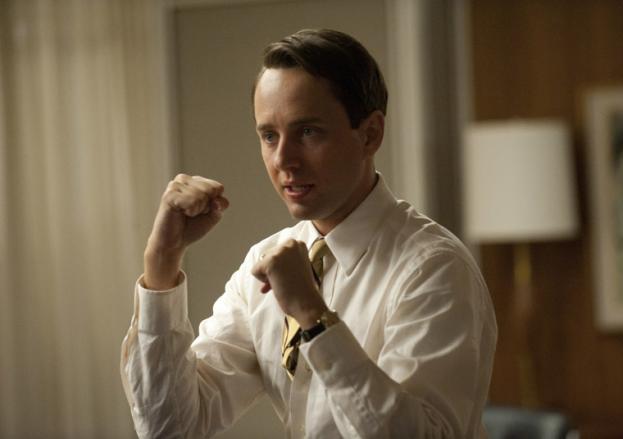
Oh, the mundane ritual of the daily commute! Of all the conformities of modern living, what is it in particular about the commute along the New Haven line — from Grand Central to points of suburbia along the south shore of Connecticut — that must drive the perpetually frustrated Pete Campbell to the edge of insanity?
In past ‘Mad Men’ episodes, we’ve seen the eager and ambitious adman strive for the trappings of ’60s urban success. He’s achieved a certain degree of material status, from a beaming, pregnant wife to a small but lovely home in Connecticut, equipped with a monstrous (some might say coffin-shaped) hi-fi stereo console. But the banality of a regular commute, robbed of privacy and forced into polite chatter — with the same insufferable people, day in, day out — has forced Campbell into taking driver’s education courses with teenagers.
The New Haven line has been a popular transportation route almost since the advent of the railroad itself. First laid and operated in 1848, Appleton’s was proclaiming a decade later that the shoreline railroad was “the most expeditious way between New York and Boston,” linking the Connecticut city with Williams Bridge in the Bronx (pictured at left, from 1865, courtesy NYPL). From there, a connecting track, shared with the Harlem Railroad, took trains directly down to the train depot at 27th Street and Fourth Avenue. When city laws forced the depot up to 42nd Street, that old depot became a storage shed and, later, the first Madison Square Garden.
Few urban professionals attempted daily commutes to and from New York until the early 20th century, when post-war lifestyles, affordable automobiles and an expensive and overcrowded city facilitated an exodus to the surrounding areas. By 1950, the suburbs were such an entrenched place — a lifestyle unto themselves, with unique social requirements — that people even began speaking of the exurbs, communities even further outside the chain of traditional suburbia. “[T]he suburbs are the first 25 miles out; the ‘exurbs’ are the next 25 miles out,” according to author Irving Lewis Allen, and initially appealed to the most wealthy professionals from “advertising, broadcasting and publishing.”
We can thank city planners like Robert Moses for much of this change, obsessed as he was with highway building. But new roads alone couldn’t facilitate the move to suburbia. Mass transit was required to provide a convenient and cost-effective alternative for the ‘second wave’ suburbanites — those aspiring professionals wishing the emulate the lifestyle behaviors of their bosses without the paychecks to secure it. People, say, like Pete Campbell.
Unfortunately, the massively unprofitable New York, New Haven and Hartford Railroad, no longer just a long-distance passenger train service, was never fully capable of handling the thousands of commuters traveling to and from the city. Once considered ‘profitable, clean and punctual’ according to Robert Caro, the line was bankrupt by the mid-1960s, operating overcrowded, less-than-comfortable trains solely on federal money by 1965. Some considered it worse than even the crippled, dysfunctional Long Island Railroad.
The New Haven was such an undesirable property that the newly merged New York Central Railroad and Pennsylvania Railroad (aka Penn Central) was literally forced to take possession of the line in 1968 by the Interstate Commerce Commission. New York Governor Nelson Rockefeller was especially concerned that a deterioration of the New Haven line would create an traffic burden which would reverberate through the entire northern New York City-Westchester County corridor.
Oh, things would only get worse for the New York area railroads in the 1970s! So I hope Pete’s taking copious notes in his driver’s education classes and that those gruesome Signal 30 films are hitting home.