Categories
Sports

Boston vs. New York: You think this is just about sports?

Here’s a fun article I wrote back in 2012 that may find new meaning for many of baseball fans this week. Again, happy to take any corrections on any particular sports statistics! – Greg


When again we see New York Knicks face off against the Boston Celtics this weekend, the beast of an old rivalry will continue to roar, the latest configuration of a fierce competition between two of America’s greatest cities.

While the rivalry between Boston and New York primarily manifests within the world of sports — the venue of modern warfare —  it echos a spirit of competition that has existed between the coastal cities for over two centuries. But how did it begin?
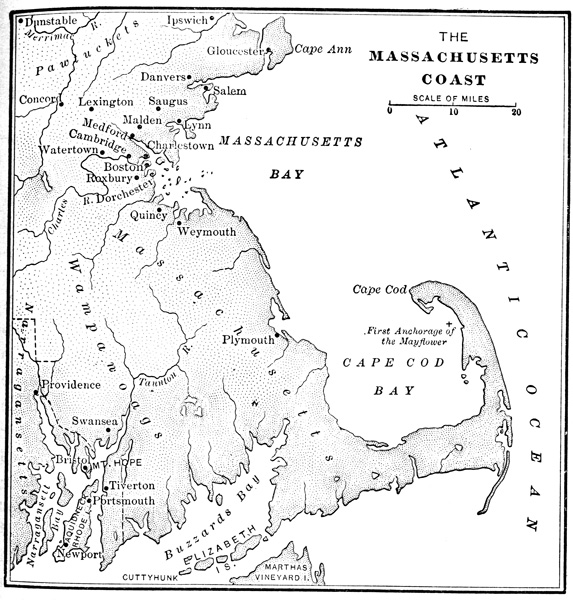
The cultures of the cities which would become Boston and New York were drastically different from the very start. Boston, after all, was founded in 1630 by Puritans of the Massachusetts Bay Colony, a society based on specific religious values, with little tolerance for variation. New Amsterdam, New York’s pre-cursor, developed as a company town in the 1620s and was quite renown for being notoriously value-less, relatively speaking.

The Puritans, with a moral superiority that paralleled national antagonisms, believed a distasteful mix of cultures, an abhorrent godless mixture festered there in New Amsterdam. As a secular development, New Amsterdam fostered a policy of religious freedom far more in keeping with modern American ethics than the stringent, finger-pointing Puritans. Many so-called heretics fled the Puritans and were granted haven by the Dutch.

The Puritans were fortified by their connection to England, while New Amsterdam was a rowdy outpost of a faltering world power. By 1644, Massachusetts had created a powerful alliance with other colonies, allowing England a stronghold in the New World.

New Amsterdam, meanwhile, deteriorated as the Dutch focused on warfare with the Lenape and encroaching colonies such as Swedish. Peter Stuyvesant arrived in 1647 to shape up the Dutch town, but by then motions were already in place to drive them out entirely.

By 1664, the Dutch were thrown out of New Amsterdam and the defeated city was renamed New York, part of a larger British colony named for the Duke of York.  Boston, for its part, became the premier British bastion, capital of the Dominion of New England, and a place many believed chosen by God (the storied ‘City Upon a Hill’) as a shining beacon of humanity. Boston was right to have an attitude.

Even as New York and Boston became competing ports in the British era, the Massachusetts city always had the edge.

America has benefited from Boston pride. The opening salvos of American independence were born from clashes between Boston citizens and British soldiers, rebellion in the form of bloody clashes (the Boston Massacre) and economic unrest (the Boston Tea Party).

As colonists rose up against British oppression during the Revolutionary War, they could look to the Boston battle at Bunker Hill as an example of victory and perseverance.

Bostonians celebrated Evacuation Day on March 17 because the British were booted from there in 1776 and never returned. New Yorkers celebrated the same holiday on November 25 because the British kept that city for most of the war and weren’t expelled from it until 1783.

Both cities struggled for economic footing after the war. Both had sophisticated ports and bustling harbors ready to send and receive shipping vessels, manufacturing plants rivaling anything overseas, and a growing class of wealthy old-family elites. In Boston, they were the Brahmins and went to Harvard. In New York, they were Knickerbockers and turned to Yale or Princeton. (Columbia was not quite in their league yet.)

Below: Boston in 1873
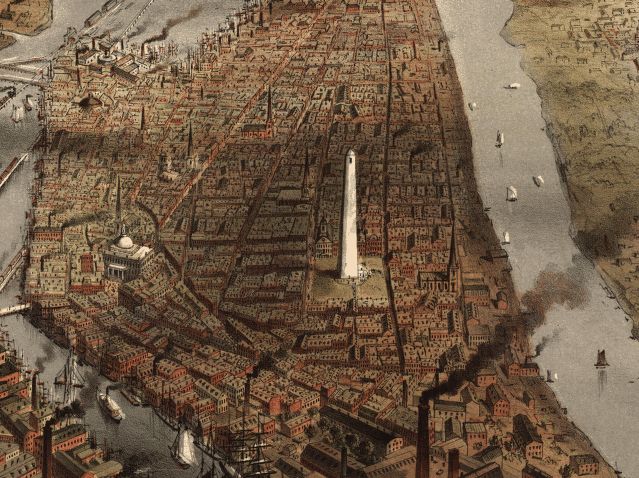
But only one city had access to a river inland, a point made explicit with the opening of the Erie Canal in 1825. Suddenly, New York became a gateway into the expanding American west. Not only would New York traders and merchants grow rich and form a nouveau upper-crust (thriving in the wake of men like John Jacob Astor), the canal would siphon away much of Boston’s livelihood, one ship at a time.

Bostonians were not pleased. The founder of Boston’s first daily newspaper saw a diversion of goods to New York as ‘evil‘ and recommended the city jump on a newfangled transportation idea just debuting in England — the steam-powered railroad. Within a few years, train tracks stretched down the old Boston Post Road (almost, but not quite, to New York) in an effort to connect Boston to the waters of the Hudson River.

Or as author Eric Jaffe observes: “…the goal of everyone involved in Boston’s railroad system at the time was clear: to move Manhattan toward the [Massachusetts] Bay along the highways of the future.”

The two cities remained locked in quiet, but stiff, competition throughout the 19th century, not only in industry and trade, but in intelligentsia, literature, politics and social ‘quality’.

The dynamics of both cities changed with the immigration boom that began in the late 1840s. Soon, one fifth of the populations of both cities would be Irish.

The culture of Boston was greatly affected, perhaps more that any American city, by these new Irish arrivals, but it was New York that felt the most weight. By 1860, with New York as the biggest city in America, even the city of Brooklyn had a greater population than Boston.

Bostonians had their legendary, steely pride for their city — in many ways, America’s first, greatest city — but New York was a powerful, untouchable metropolis by the time of the Gilded Age. Despite its grime and squalor, despite its sinful and corrupt reputation (or perhaps because of it), New York had bested Boston to become the biggest, richest, most powerful city in America by the time of the Civil War.

Below: New York City in 1873 (from George Schlegel lithograph)
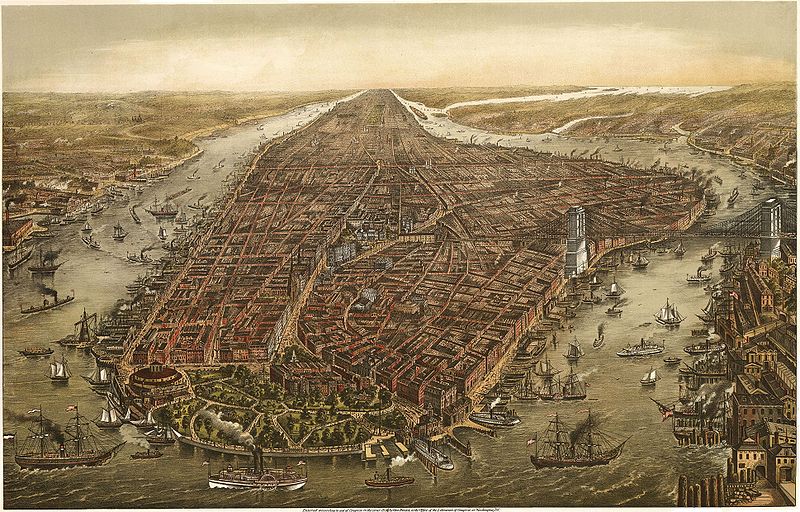
And so it was that, in the late 19th century, an apparatus arose for which the undercurrent of rivalry between the cities could take a more explicit, more robust form — sports.

Universities already organized sports teams — with accompanying rivalries of their own — and now, in the post-war era, professional teams began sprouting up in a wide variety of games.

The first sports leagues formed in the Northeast, thus it was natural that teams from Northern and Rust Belt cities would often clash.

The first organized baseball league principally concerned New York and Brooklyn teams. (Don’t even get me started on the New York/Brooklyn rivalry!) Teams wouldn’t truly take on defined regional characters until the formation of the National League in 1876, which included the Boston Red Stockings, a precursor of the Sox, among its original teams.

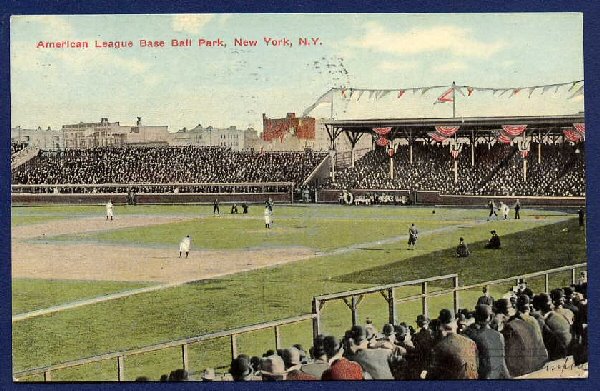
The two baseball franchises that would cement the Boston-New York conflict were born in the 20th century. The Boston team came first, in 1901, with the inauguration of the American League, but were not referred to by their distinctive bold-colored foot coverings until 1908.

In 1904, the Boston team was declared champion of the American League. However, National League teams looked down upon the ‘inferiority’ of the younger American League teams, and thus, what might have been the first World Series — between the Boston Red Sox and National League victors the New York Giants — never occurred.

The Giants were considered New York’s principal baseball franchise and even spawned a successful soccer team. (They frequently played a soccer spinoff of the Boston Beaneaters.)

By this time, another New York team limped into the city in 1903 — the Highlanders, who later changed their name to the New York Yankees.
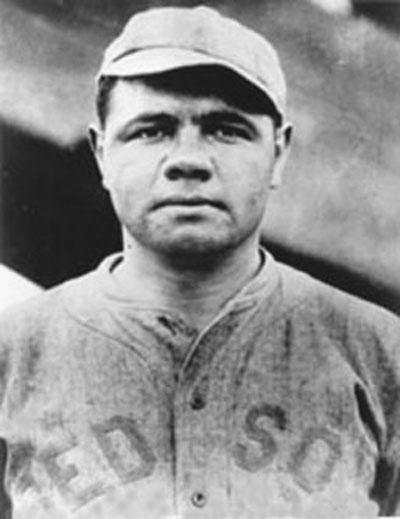
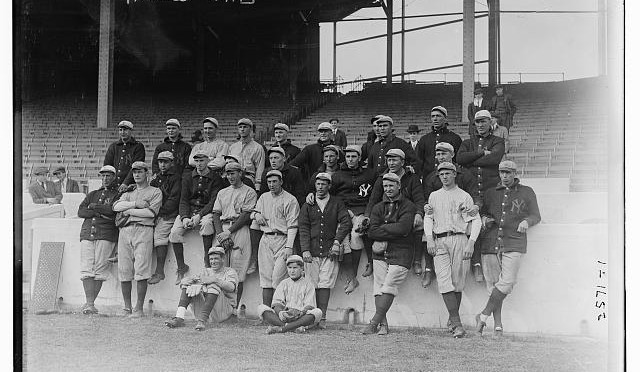
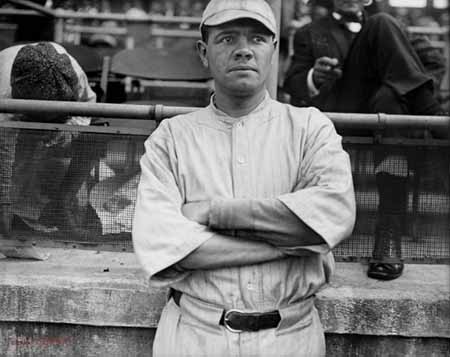
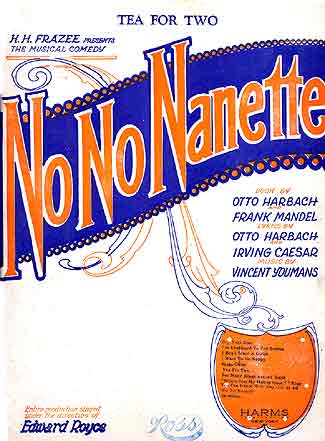
In 1918 came an event that changed the fortunes of the Boston Red Sox and the New York Yankees forever. Red Sox star Babe Ruth was traded to the New York Yankees during the off-season 1919-1920, allegedly because Sox owner Harry Frazee was looking to finance his Broadway musical offering No No Nanette. (That’s the popular legend, although many believe the trade was to finance another, equally  ridiculous production called My Lady Friends.)

Whatever the origin of the ‘Curse of the Bambino’, it had a psychological effect on fans and players on both sides. Boston, once the league’s most successful squad, didn’t win another World Series until 2004, while the Yankees, well, changed sports history with 27 World Series victories.

The deep animosity spilled over into other sport match-ups. In basketball, the New York Knicks pale under the legacy of the Boston Celtics, simply put the best basketball team in history.

In hockey, the Boston Bruins and New York Rangers became the first two American teams to play each other for the Stanley Cup in 1929. The Bruins cleaned the ice with the Rangers.

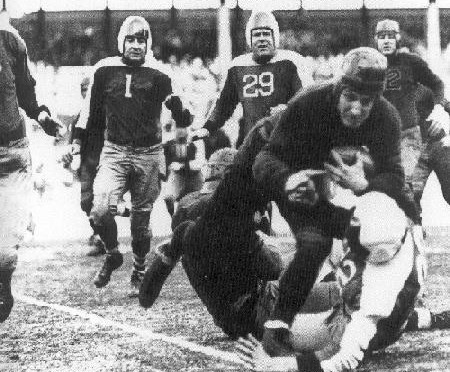
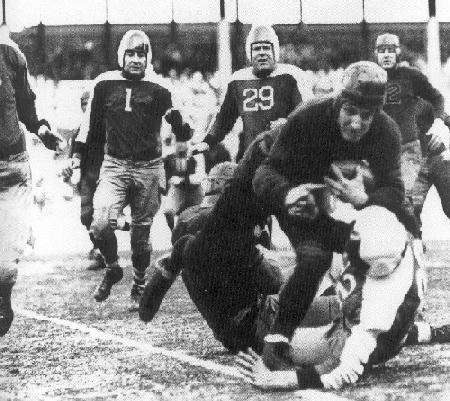
But it’s in football that the two cities have had some truly dramatic clashes. The New York Giants football team, hardly a threat when they first formed in the late 1920s, were a force to be reckoned with by the time they first met the Boston Patriots in 1960.

Notably, when the Boston team changed its name to the New England Patriots and moved to Schaefer Stadium in Foxborough in 1971, the first game they played was against the Giants.

The Giants and the Patriots have met in the Super Bowl just once before — and notably so — in 2008. New York was the victor, in one of the greatest upsets in sports history. This Sunday, Boston seeks revenge. As you sit through a halftime show with Madonna (a New Yorker in her formative years), ponder upon the weight of history hanging over both teams.


To sports fans: I welcome any clarification of details if I’ve gotten something wrong!
Categories
Amusements and Thrills Sports Those Were The Days

The New York Game: Baseball in the Early Years

Baseball, as American as apple pie, really is “the New York game.” While its precursors come from many places – from Jamestown to Prague – the rules of American baseball and the modern ways of enjoying it were born from the urban experience and, in particular, the 19th-century New York region.

The sport (in the form that we know it today) developed in the early 1800s, played in Manhattan’s many open lots or New Jersey public parklands and soon organized into regular teams and eventually leagues. The way that New Yorkers played baseball was soon the way most Americans played by the late 19th century.

But it wasn’t until the invention of regular ball fields – catering to paying customers – that baseball became truly an urban recreational experience. And that too was revolutionized in New York.

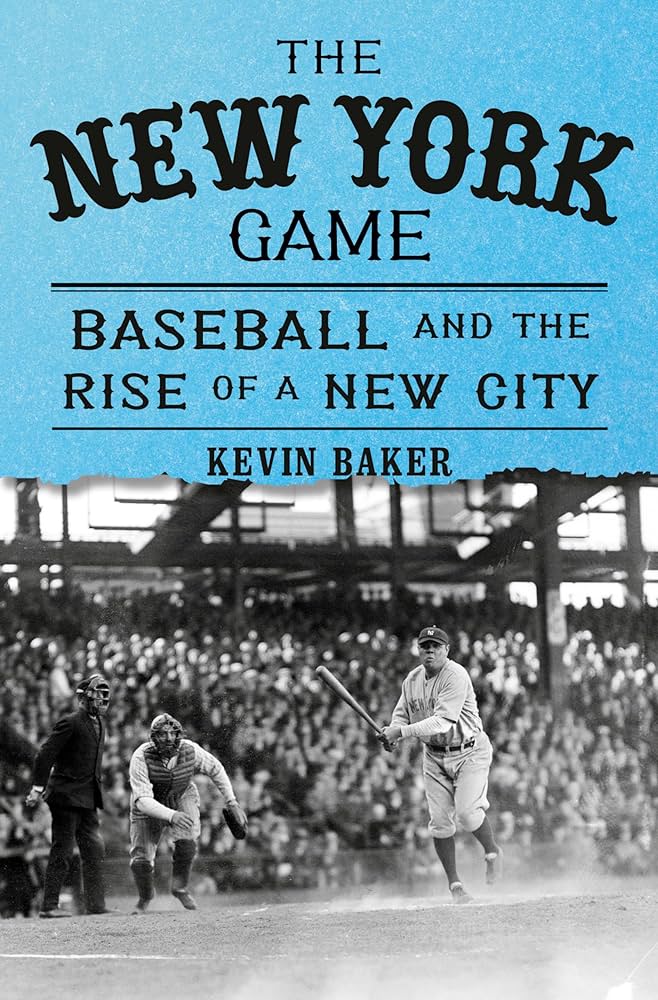
Just in time for spring and the new Major League baseball season, Tom and Greg are joined by the acclaimed Kevin Baker, author of The New York Game: Baseball and the Rise of a New City to discuss the early history of the sport and its unique connections to New York City.

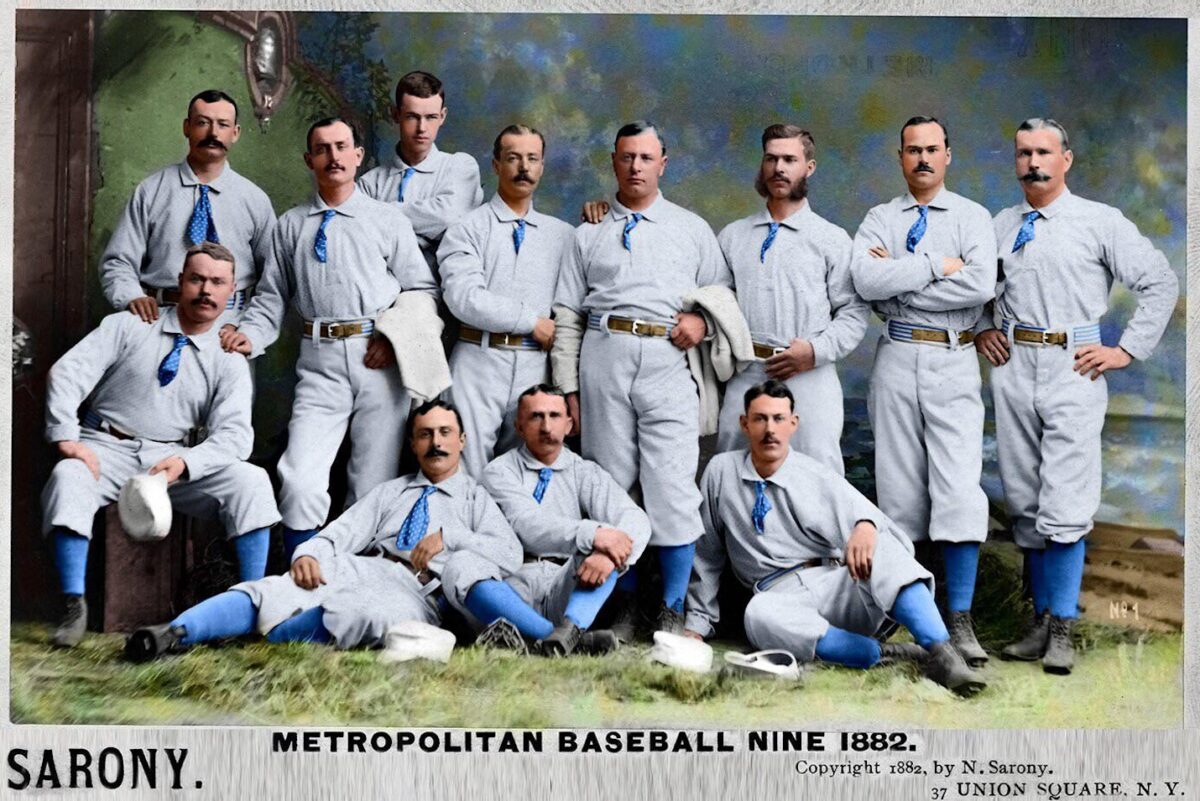
This show is truly the ultimate origin story of New York baseball, featuring tales of the city’s oldest and most legendary sports teams – the Yankees, the Dodgers, and the Giants. AND the New York Metropolitans – a different team than today’s Mets located in Queens.

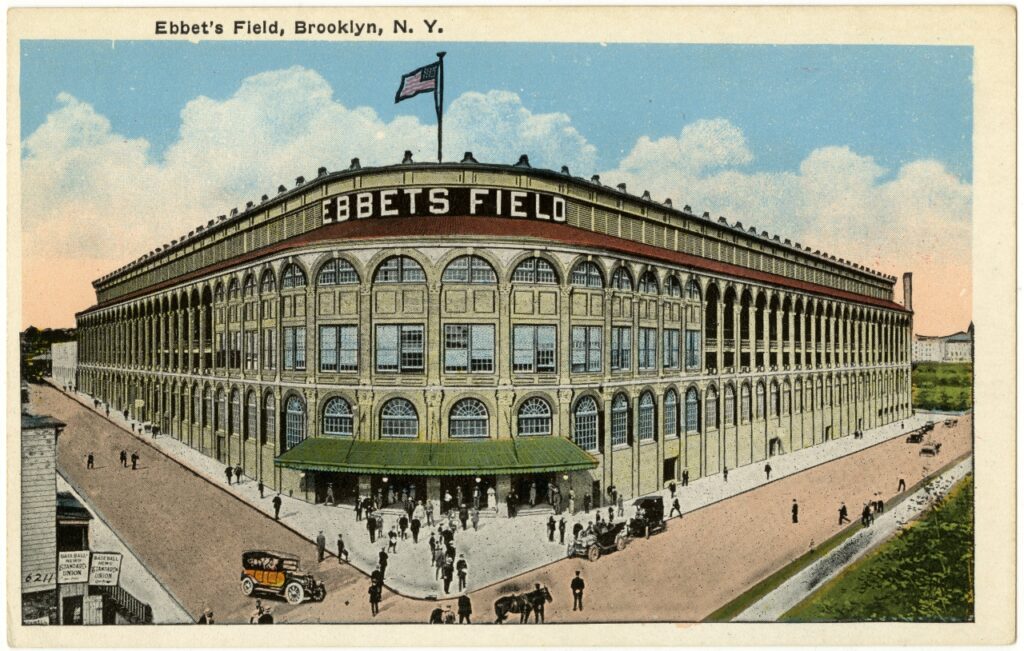
Where was baseball played? Kevin shares the secrets of New York baseball’s earliest venues – from the many Polo Grounds in upper Manhattan to Ebbets Field in Brooklyn

This is a true five-borough origin story! With stops at Hilltop Park (Manhattan), Yankee Stadium (Bronx), Fashion Race Course (Queens), Washington Park (Brooklyn), and St. George Cricket Grounds (Staten Island) among many other sites.
FEATURING the surprising link between baseball and Boss Tweed and his notorious political machine Tammany Hall

PLUS How did segregation distort the game and where did Black ballplayers play the sport? What was baseball like before Jackie Robinson?

LISTEN NOW: THE NEW YORK GAME


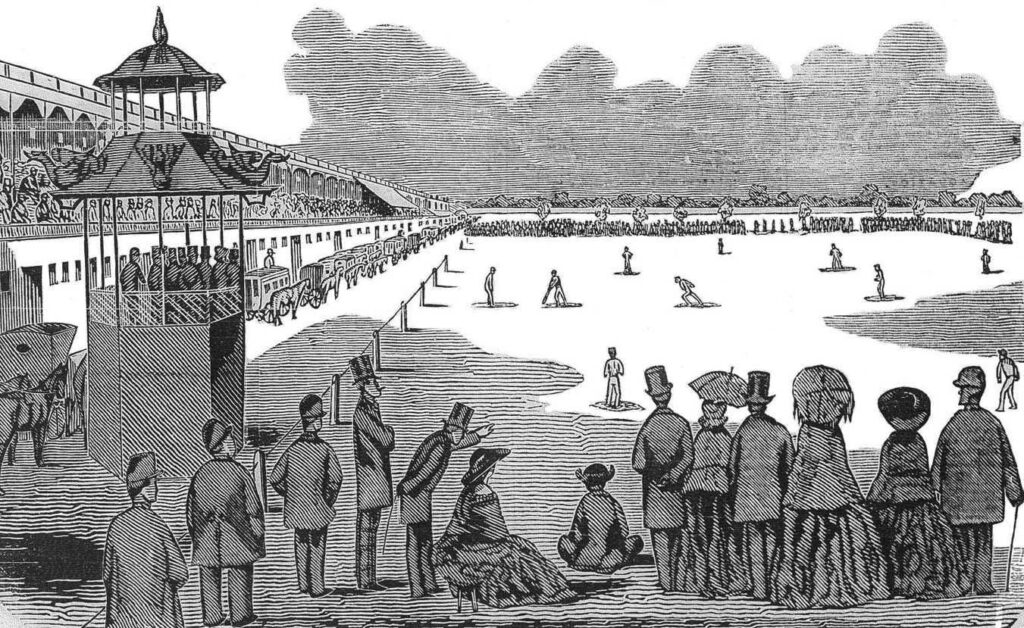
Fashion Race Course in Flushing, Queens, from The Clipper of July 24, 1858 (and via John Thorn/Our Game)
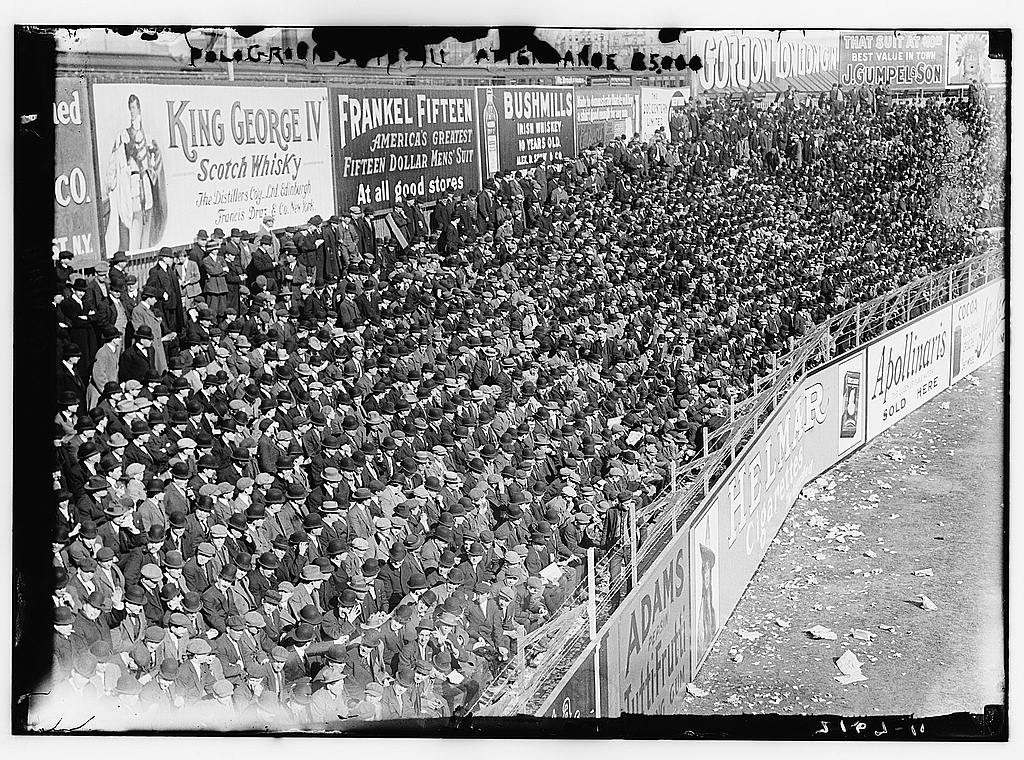
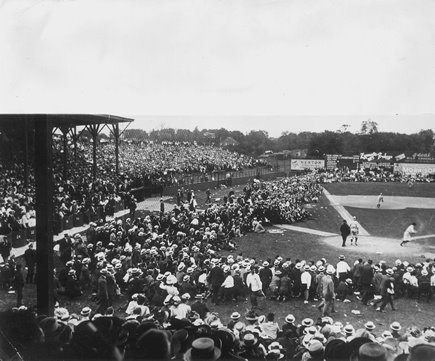
Many hatted men at the Polo Grounds, 1911 (Library of Congress)
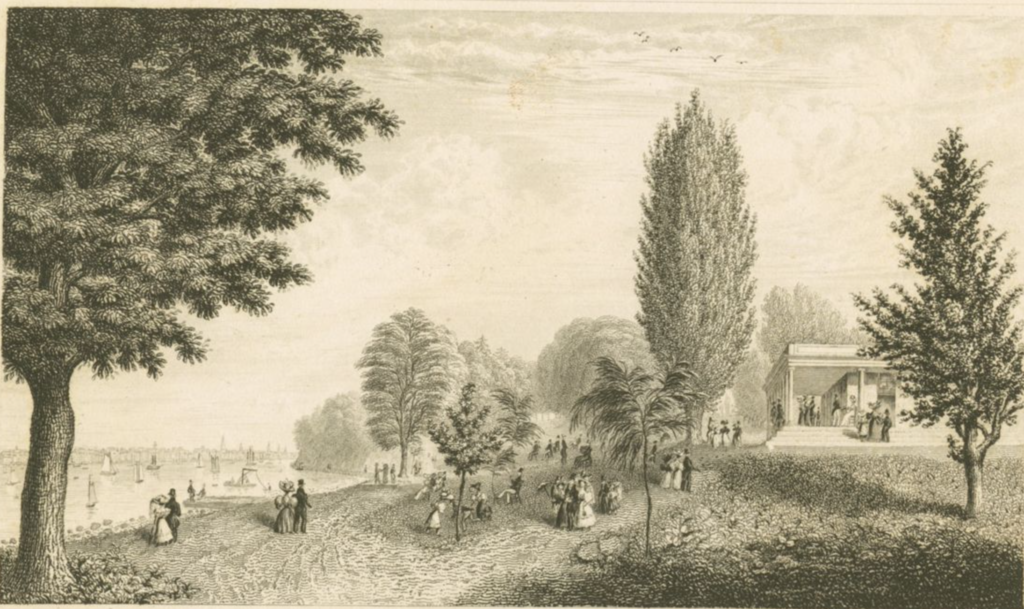
Elysian Fields in Hoboken, the site of America’s first baseball games (NYPL, image from Booth’s History of New York)
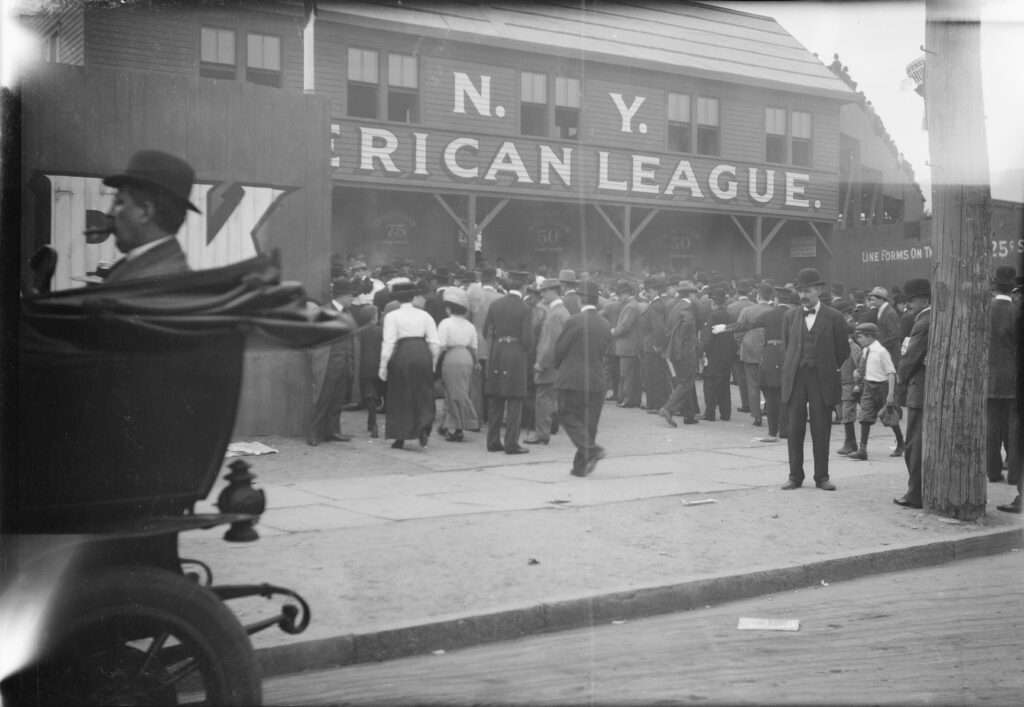
The entrance to Hilltop Park, 1912 (Library of Congress)
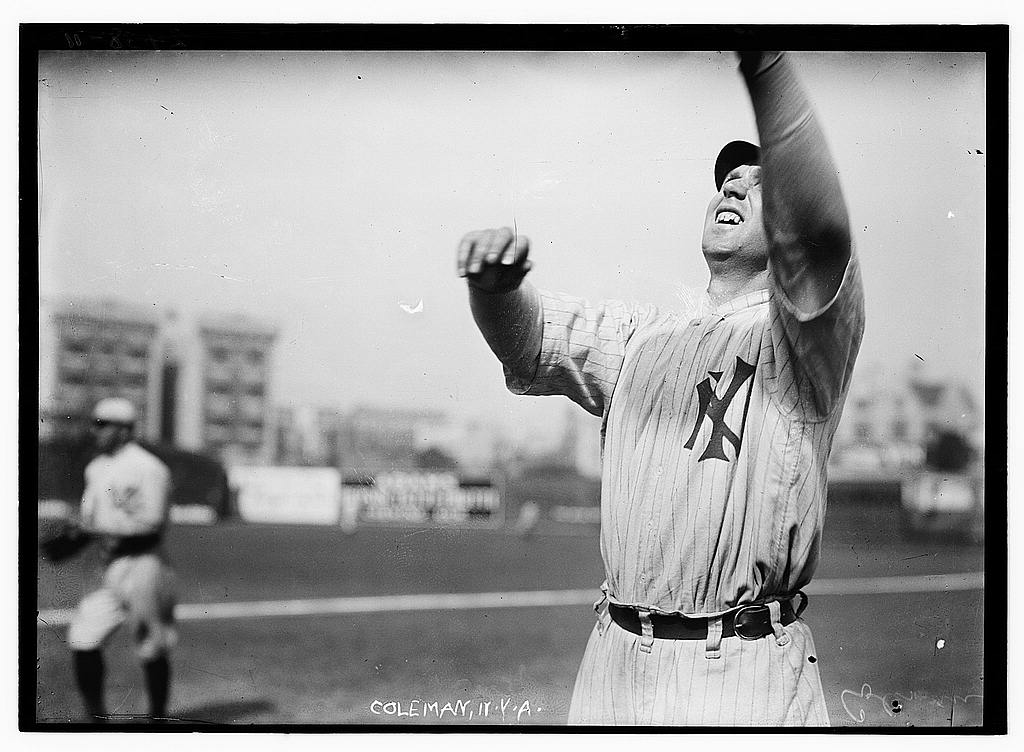
Curt Coleman at Hilltop Park, 1912
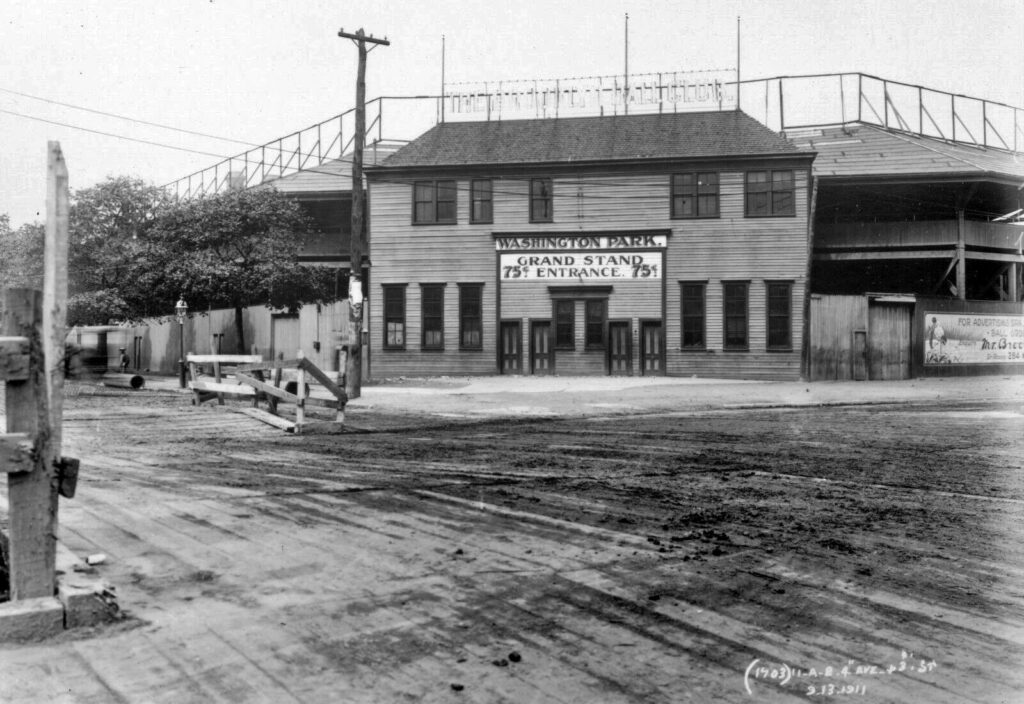
Washington Park taken September 13, 1911 from the intersection of 4th Avenue and 3rd Street in Park Slope, Brooklyn.
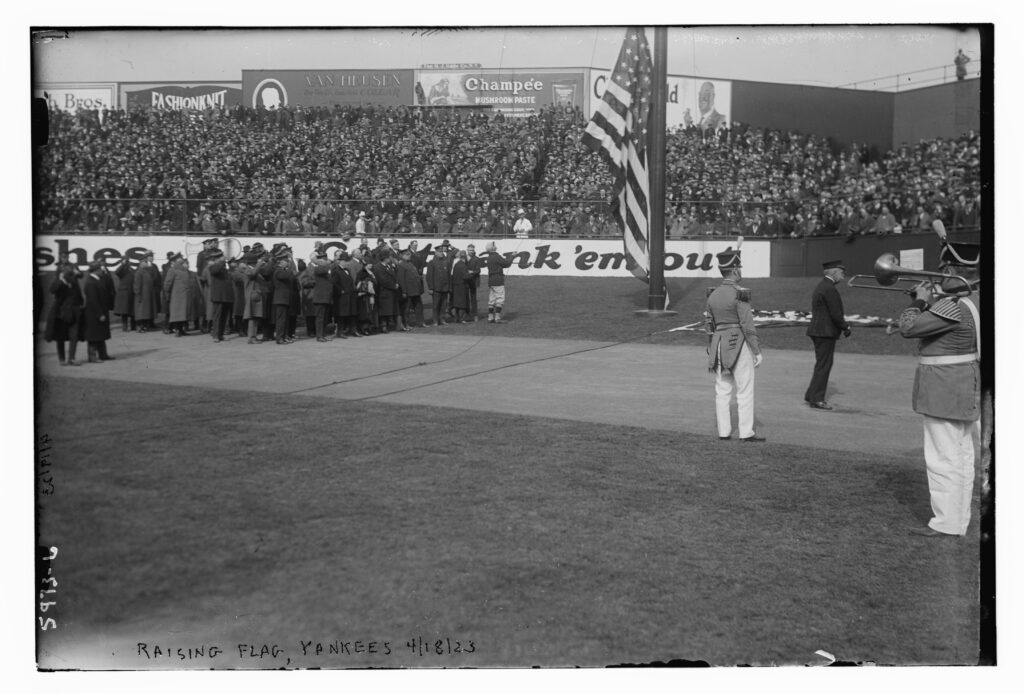
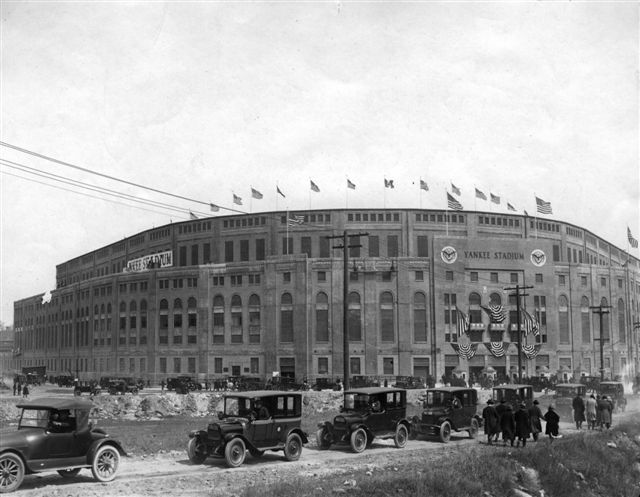
Opening Day at Yankee Stadium, 1923 (Library of Congress)
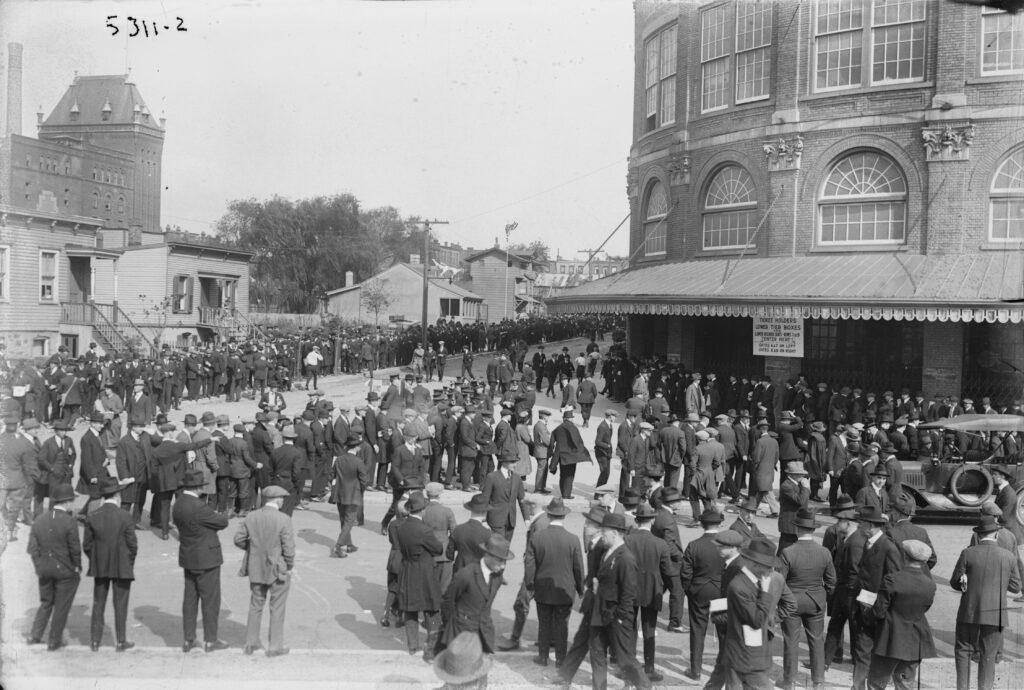
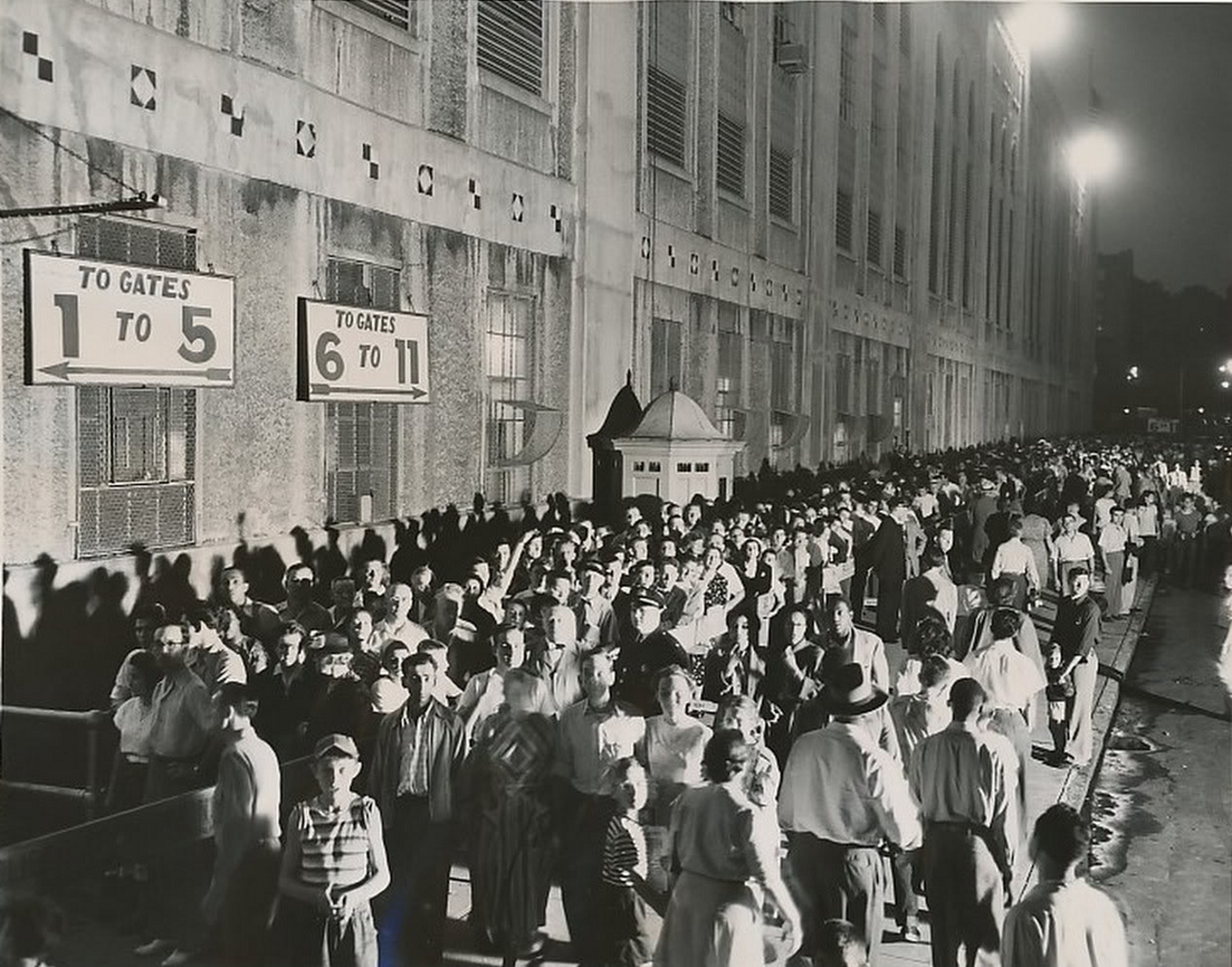
The crowd outside Ebbets Field for Game 1 of the 1920 World Series, the Brooklyn Dodgers against the Cleveland Indians.

FURTHER LISTENING

FURTHER READING

Brooklyn baseball: the Superbas and the worst batter ever

Brooklyn Dodgers vs. Cincinnati Reds at Ebbets Field — in the first Major League baseball game ever broadcast on television

Hilltop Park: home base for NYC’s premier baseball team

Meet the Mets! The Metropolitans, that is, an early NY baseball team
The short shelf life of the Tip-Tops, the Brooklyn baseball team situated near the Gowanus River and named for bread

Union Grounds: Baseball history in Williamsburg

The Wise Guy of Baseball: Getting To Know Leo ‘The Lip’ Durocher

100 years ago today, the Yankees played their first game at Yankee Stadium

Categories
New York Islands Sports

The strange link between the New York Yankees and South Brother Island

This article is an excerpt of an entire mini-podcast on the history of South Brother Island, available to those who support the Bowery Boys Podcast on Patreon (at the Five Points level and above). Join us on Patreon to listen today!


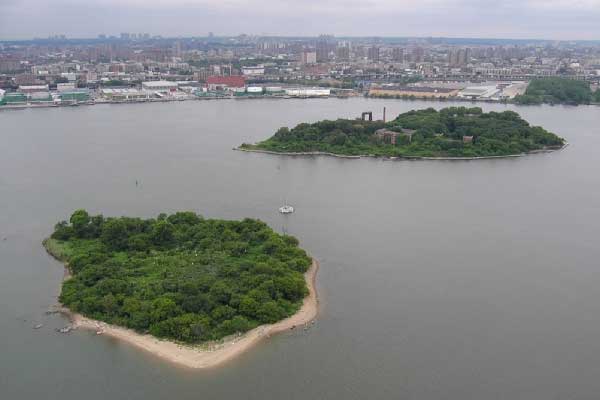
South Brother Island with North Brother Island behind it (Courtesy Harbor Lab)

This week’s latest podcast explores the dark and dramatic history of North Brother Island, the East River island home to the ruins of old Riverside Hospital.

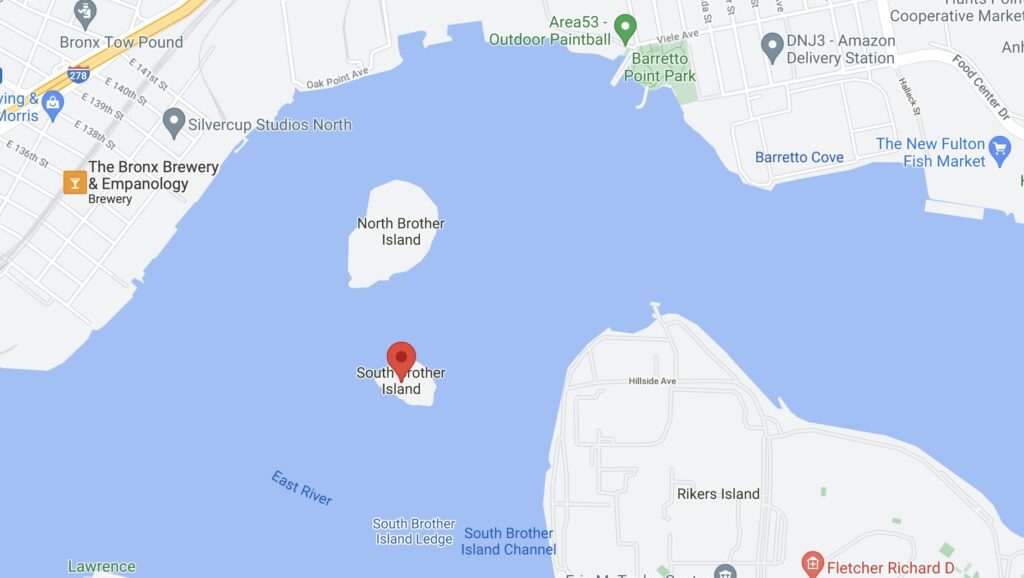
But that’s only one-half of the story. For of course there’s South Brother Island, less than 900 feet away, a smaller island separating its brother from Rikers Island.

South Brother Island wasn’t used in the same way as North Brother Island. But it isn’t entirely devoid of any human history; its just sort of odd history. 

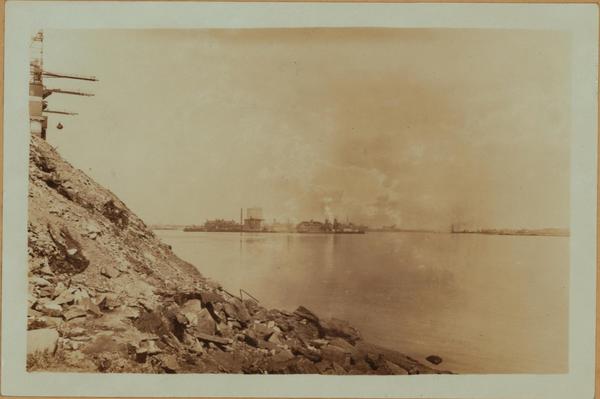
Looking east along the East River, from 132nd Street, Bronx, to South Brother Island. April 12, 1931. P. L. Sperr. Courtesy New York Public Library

During the Civil War it hosted military regiments and the island was often used in yachting competitions. There were small farm settlements here. And even a few bouts of river piracy.

But in the early 1890s something rather unusual came to this virtually abandoned place — baseball.

New ballfields would be constructed here for use by traveling ball teams, the opening innings of a true national baseball league. (For both white ball teams and those of the burgeoning Negro League.)

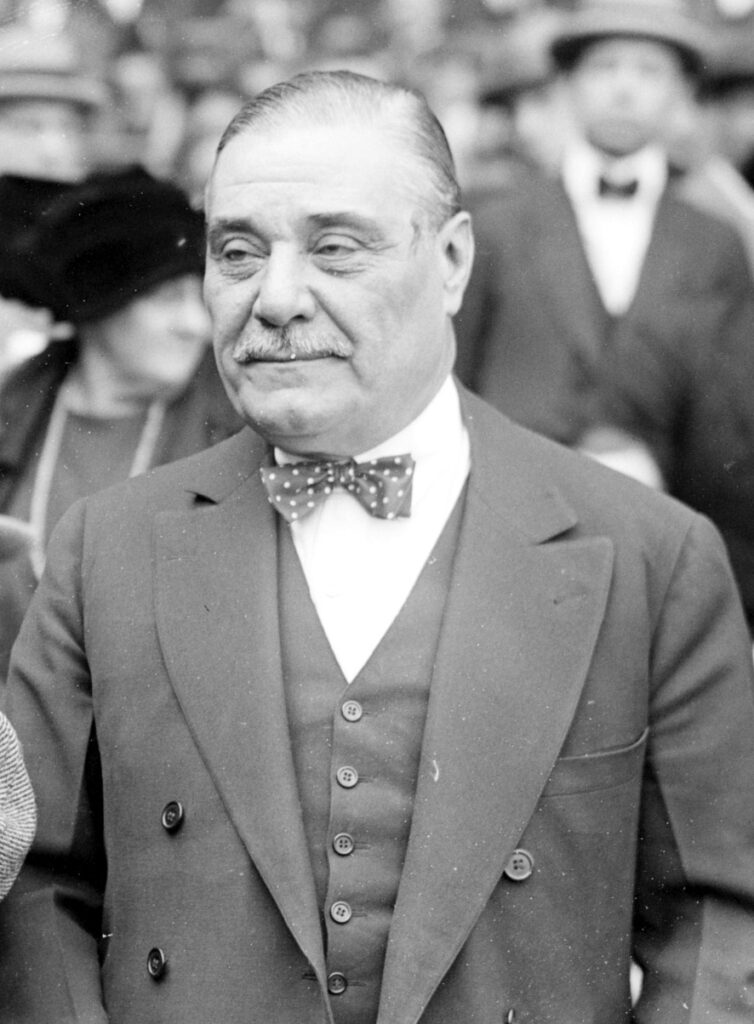
These fields would have a very fascinating pedigree for baseball historians for they were built by a man who would change the fate of the game forever — Jacob Ruppert Jr.

Ruppert, the son of a German brewer, was a decorated military man by this time and a prominent local politician, newly endorsed by Tammany Hall.

He had a lifelong obsession with baseball. In 1894 he purchased South Brother Island for the purposes of building baseball fields here. For many years Ruppert even lived on the island during the summer.

According to the New York Sun: “He intends to spend more than two million dollars on improvements on the island which is his property. He will have a trolly line running all over the island and a ferry of his own on 92nd Street. There will be a large building containing ballrooms and a German restaurant.”

Ruppert also reportedly wanted to build a brewery here. “He adds that everything on the island will be of a thoroughly German character.”

Now this is at the very same time — the 1890s — that neighboring North Brother Island was populated with epidemic patients afflicted with tuberculosis, smallpox, leprosy and more.

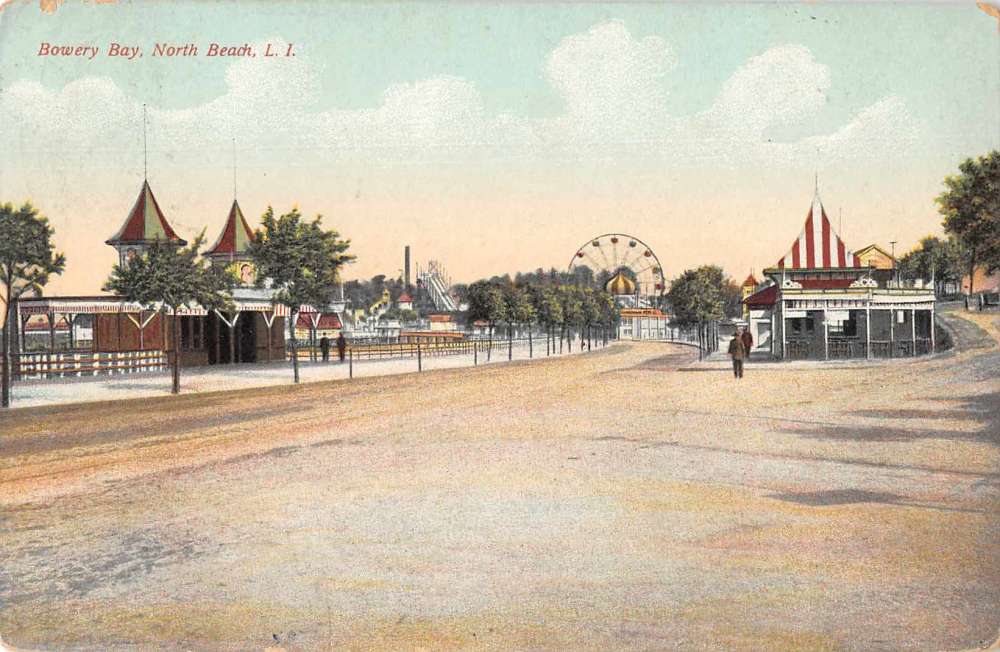
But the idea of an island sporting resort here would not actually be considered odd; in fact there were many such resorts along The Bronx and Queens waterfront back in the late 19th century, including College Point, Clason Point and Bowery Bay Beach (on the site of today’s LaGuardia Airport).

The amusement park at Bowery Bay/North Beach, on the site of today’s LaGuardia Airport.

So Ruppert had the right idea — although the project’s eventual execution was far less grandiose from his original designs. But by the early 1900s, Ruppert had turn South Brother into a sort of baseball fantasy island.

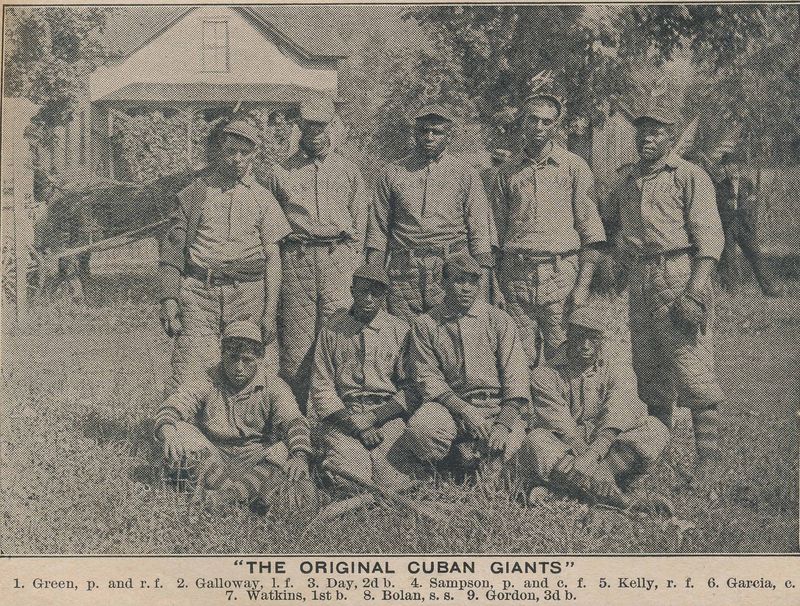
The baseball fields hosted a wide array of teams from several different leagues including one of the first and greatest black baseball teams: the Cuban Giants.

The Giants, one of the greatest African-American baseball teams from the era when the sport was highly segregated, first formed in 1885 in Babylon, Long Island.

An image of the team in 1902. The team played at several ballfields in the region, including South Brother Island.

They were a big draw in their day, so if they played out on South Brother Island, I assume facilities were substantial enough to cater to large crowds. (Sadly I have not been able to find any photographs of the island from this period.)

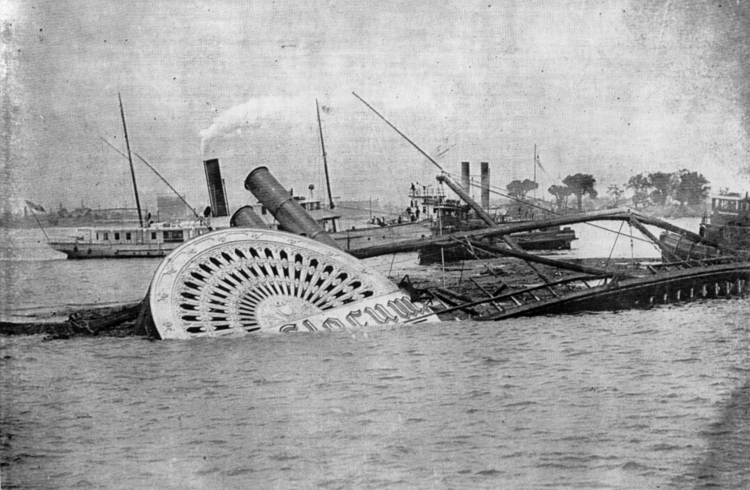
Since games were most likely played on the weekends, there were probably very few people on the island on June 15, 1904, to witness the disaster of the Gereral Slocum steamship fire, but the tragedy did comes to the shores of his island.

The sunken wreck of the General Slocum.

In fact there was so much calamity and chaos on North Brother island in the moments following the horrific tragedy that bodies of those who died and were found in the East River were taken to the shores of South Brother and from there transferred to the city morgue.

The captain of the General Slocum later said he considered running the ship aground at South Brother Island but decided against it due to its rocky shore. Thank goodness he did not, for it was the bravery of many nurses, doctors and patients on North Brother which saved so many that day.

In 1909 fire destroyed Jacob Ruppert’s summer house and it appears baseball moved off this island by this time. In fact, although the Ruppert estate would own the island for many decades, nobody would ever again LIVE on South Brother Island.

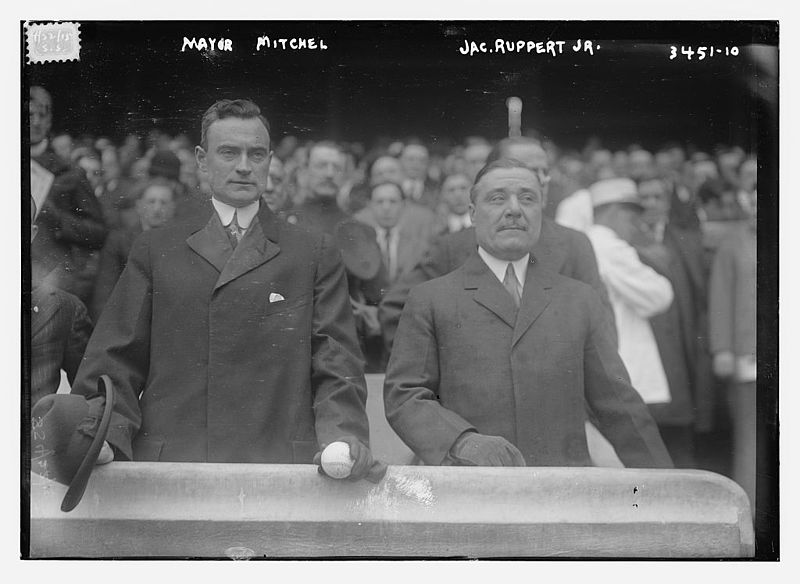
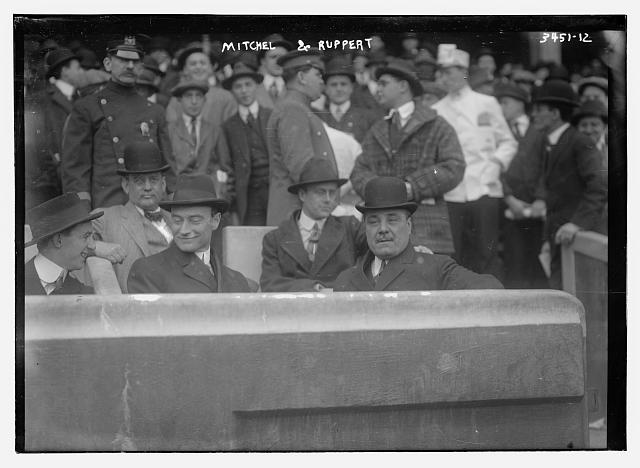
Ruppert with the mayor of New York — John Purroy Mitchel. April 1915. Library of Congress

In 1915, Ruppert became the president of his family’s beer empire. Then, partially to fuel beer sales but with a genuine love for the sport, he (and lifelong business partner Tillinghast Huston) purchased a failing baseball team named the New York Yankees.

Four years later he famously purchased the contract of Boston Red Sox player Babe Ruth. Some reports claim Ruth “spent his off days swatting balls into the East River from Ruppert’s island” however the island was mostly abandoned by the time Ruth was playing baseball. Perhaps it was a day excursion?

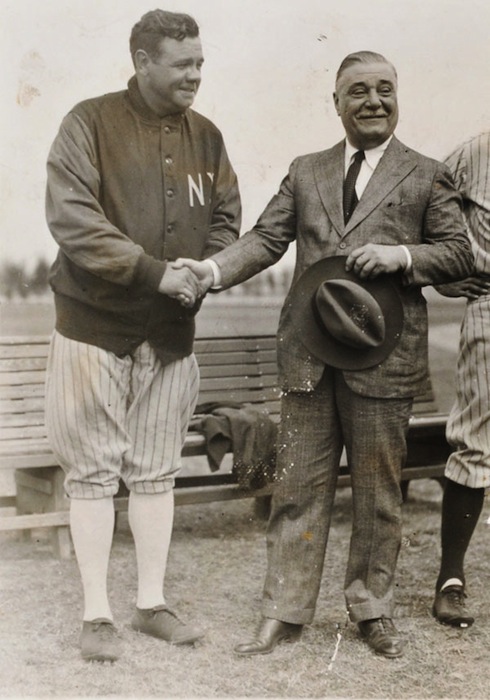
Babe Ruth and Jacob Ruppert, Jr., 1930. Photo via Legendary Auctions.

The island remained in the Ruppert family until it was sold in 1944 to a private businessman. Six decades later, a descendant of Ruppert visited the island, now an overgrown haven for wild birds. (The city officially purchased the island in 2007.)

According to Jacob Ruppert Jr’s great-great-grand nephew K. Jacob Ruppert, “There’s no beautiful lagoon. It’s a mound of bird poop. But there are beautiful birds. I never thought I could walk up to a swan on her nest. The ground is nothing but bird droppings and broken egg shells.”

Map of South Brother Island

Categories
Planes Trains and Automobiles Podcasts

Uncovering Hudson Yards: The hidden history beneath New York’s newest destination

PODCAST All the history that came before the development of Hudson Yards, Manhattan’s skyline-altering new project.

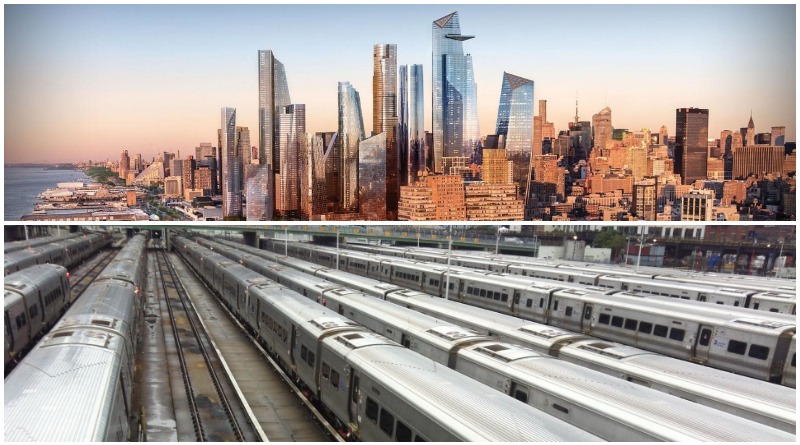
Hudson Yards is America’s largest private real estate development, a gleaming collection of office towers and apartments overlooking a self-contained plaza with a shopping mall and a selfie-friendly, architectural curio known as The Vessel.

By design, Hudson Yards feels international, luxurious, non-specific. Are you in New York City, Berlin, Dubai or Tokyo? Yet the mega-development sits on a spot important to the transportation history of New York City. And in the late 20th century, this very same spot would vex and frustrate some of the city’s most influential developers.

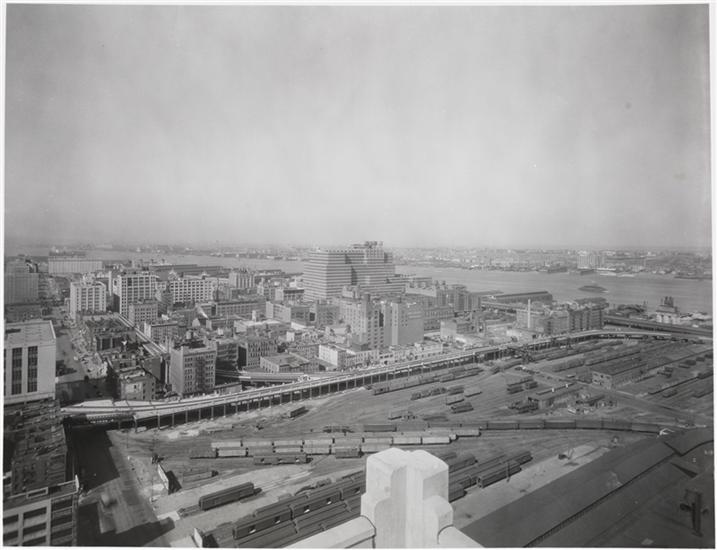
The key is that which lies beneath — a concealed train yard owned by the Metropolitan Transit Authority. (Only the eastern portion of Hudson Yards is completed today; the western portion of the Yards is still clearly on view from a portion of the High Line.)

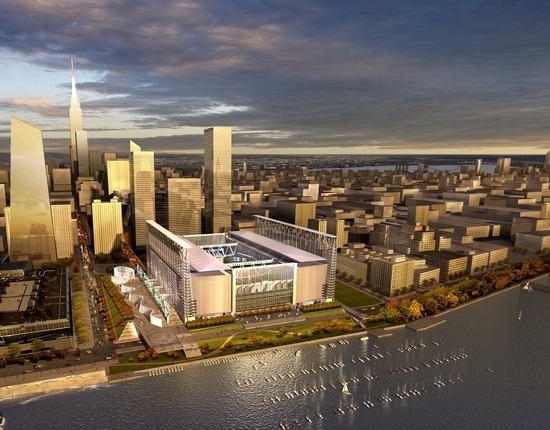
Prepare for a story of early railroad travel, historic tunnels under the Hudson River, the changing fate of the Tenderloin neighborhood, and a list of spectacular and sometimes wacky derailed proposals for the site — from a new home for the New York Yankees to a key stadium for New York City’s bid for the 2012 Olympic Games.

PLUS: Trump Convention Center — it almost happened!

Listen Now: Hudson Yards History Podcast

Or listen to it straight from here:

__________________________________________________________________________

The Bowery Boys: New York City History podcast is brought to you …. by you!

We are now producing a new Bowery Boys podcast every other week. We’re also looking to improve the show in other ways and expand in other ways as well — through publishing, social media, live events and other forms of media. But we can only do this with your help!

We are now a member of Patreon, a patronage platform where you can support your favorite content creators.

Please visit our page on Patreon and watch a short video of us recording the show and talking about our expansion plans. If you’d like to help out, there are six different pledge levels (New Amsterdam, Five Points, Gilded Age, Jazz Age, Empire State and Greater New York). Check them out and consider being a sponsor.

And join us for the next episode of the Bowery Boys Movie Club, an exclusive podcast provided to our supporters on Patreon.

We greatly appreciate our listeners and readers and thank you for joining us on this journey so far.

________________________________________________________________________

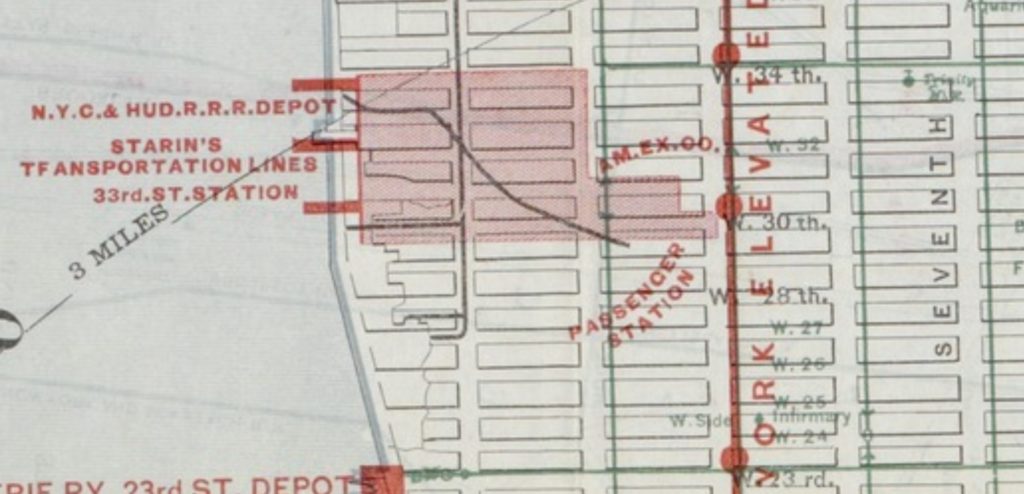
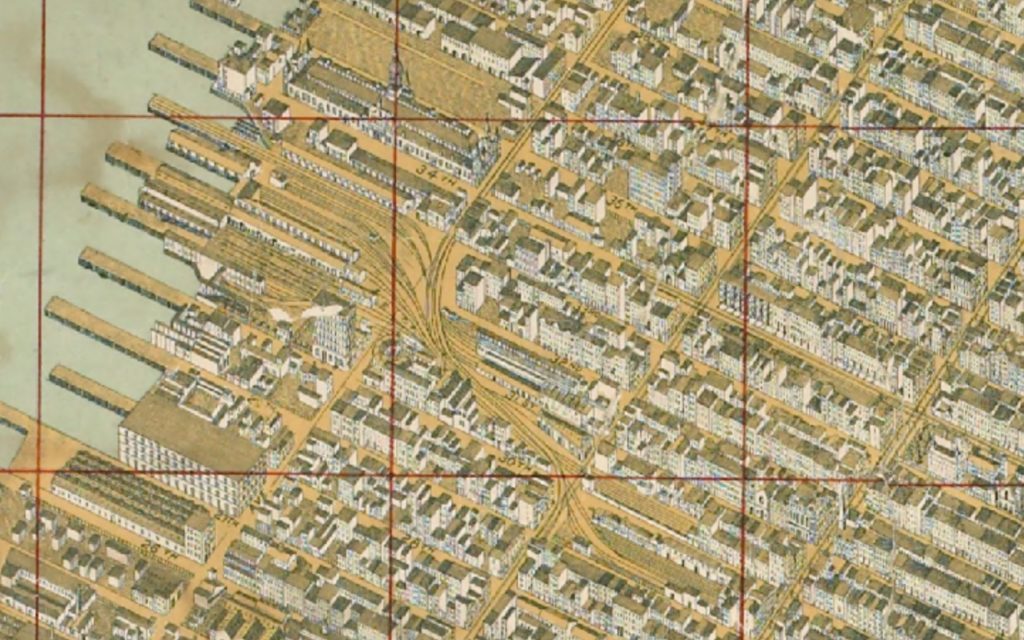
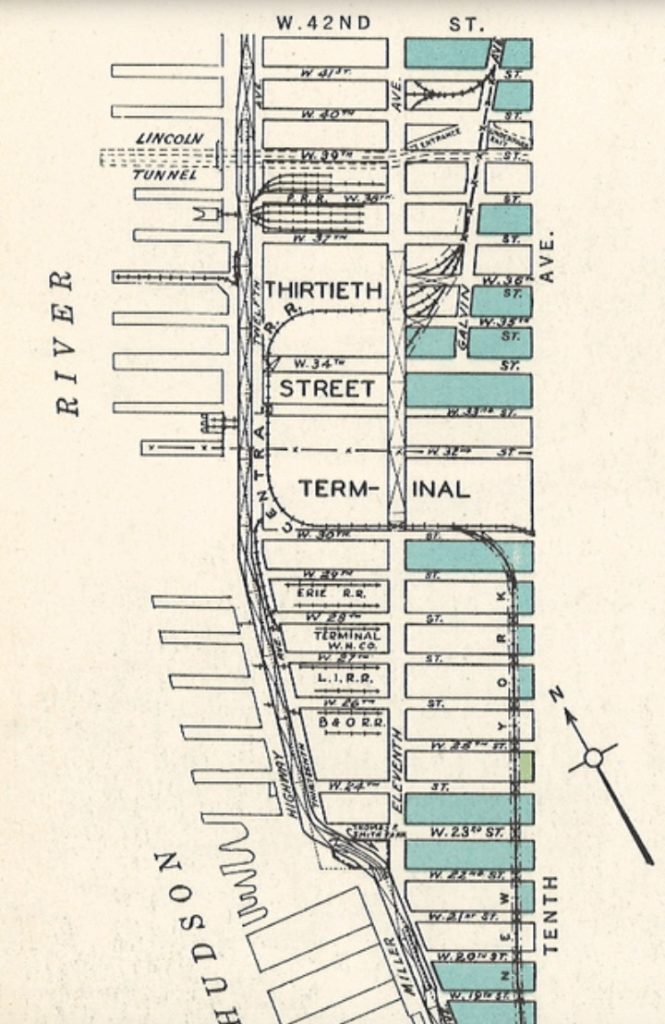
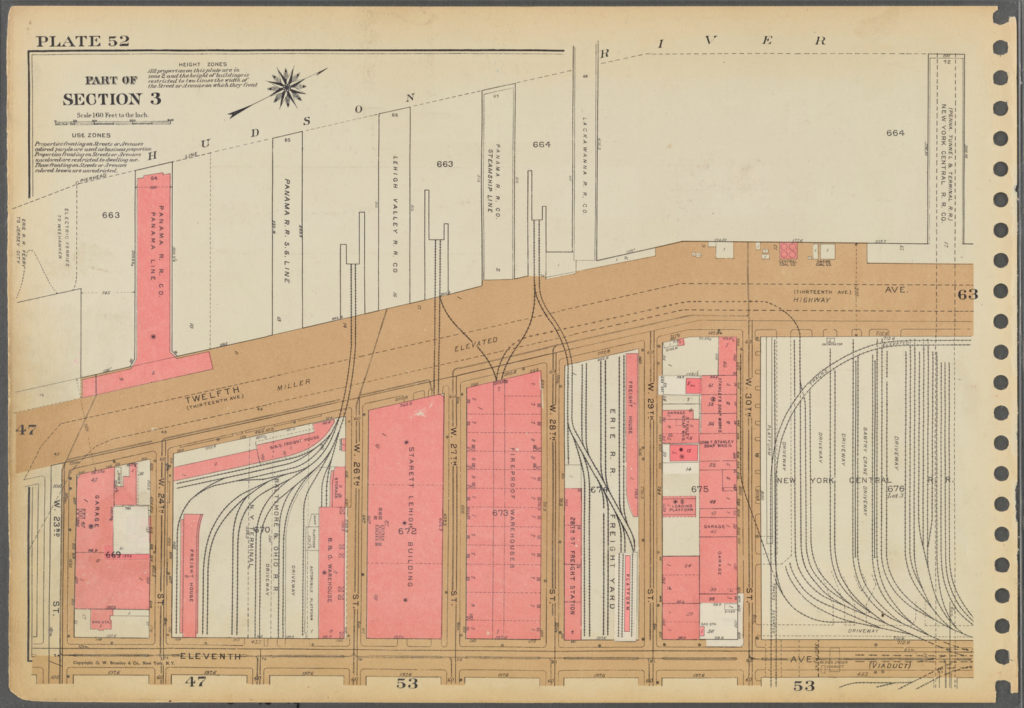
The West Side Yards area as it appeared on maps throughout the decades:

1879
1900
1943
1955 New York Public Library

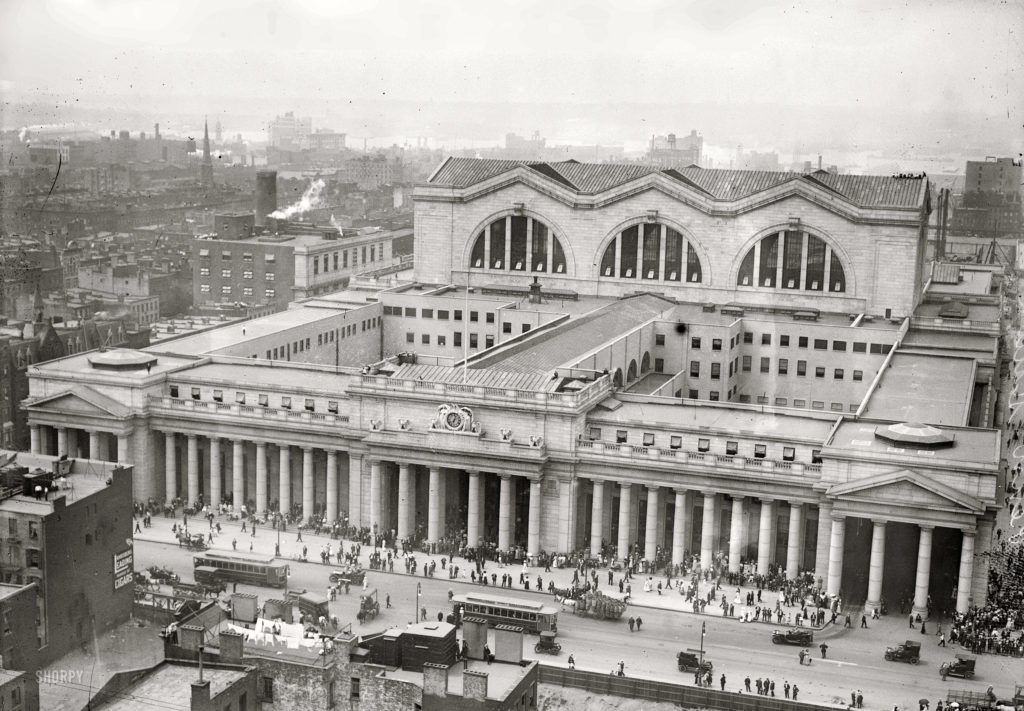
Pennsylvania Station, constructed between Seventh and Eighth Avenues, allowing for trains from New Jersey to arrive via tunnels which were dug under the Hudson River and the New York Central and Hudson River Railroad site on the waterfront.

Bain Collection/Library of Congress. Clean-up version courtesy Shorpy

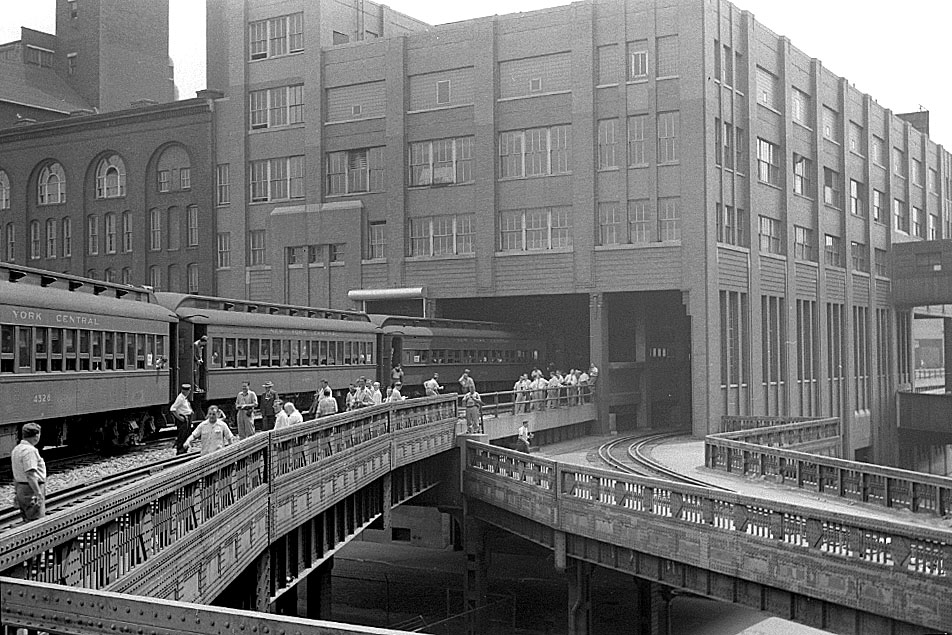
The West Side Elevated Freight Railroad lifted trains off the street and sometimes dropped off cargo right into the buildings themselves.

The elevated freight railroad enters the National Biscuit Company, between W. 15th and 16th streets, July 30, 1950.

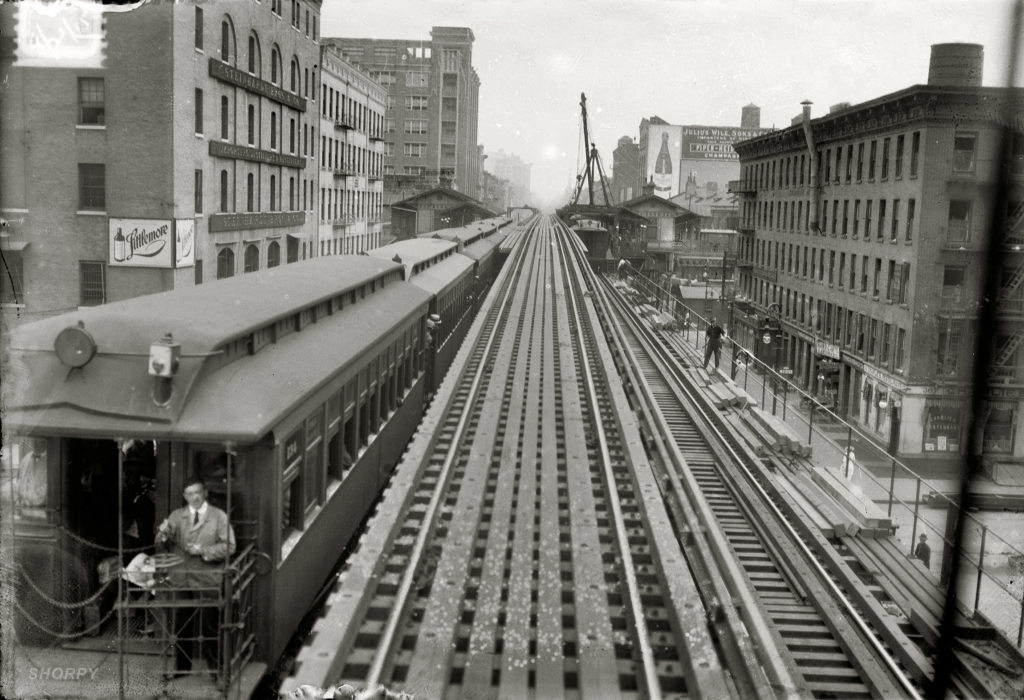
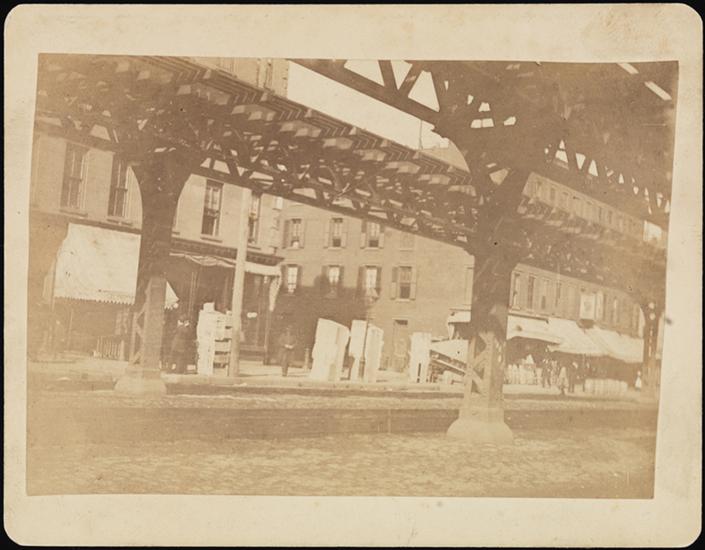
The Ninth Avenue Elevated Railroad for passengers also streaked through the west side area. This is a view of at Ninth Avenue and West. 13th Street in today’s Meat-Packing District.

August 21, 1915. “Express track, 9th Avenue ‘L’.” Construction along the Ninth Avenue elevated tracks at West 13th Street in New York. On the corner: Charlie’s Restaurant. 5×7 glass negative by George Grantham Bain/Cleaned up version courtesy Shorpy

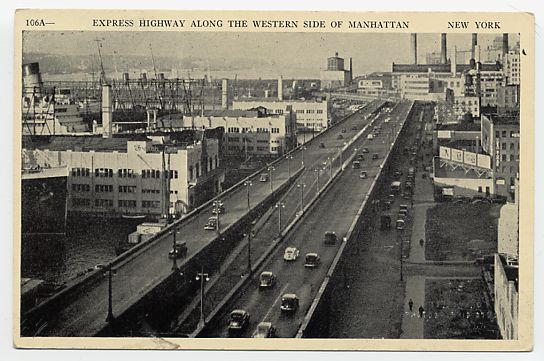
And finally, for automobile traffic, the West Side Elevated Highway (or Miller Highway) was constructed in stages during the mid 20th century, further separating the waterfront from the east. By the last 1980s, most of this highway was dismantled.

Date unknown, image courtesy NYC Architecture

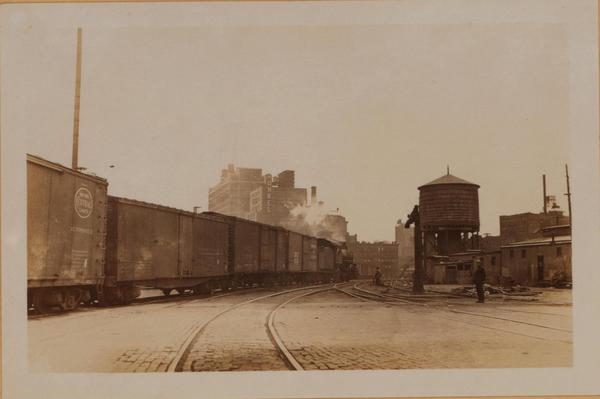
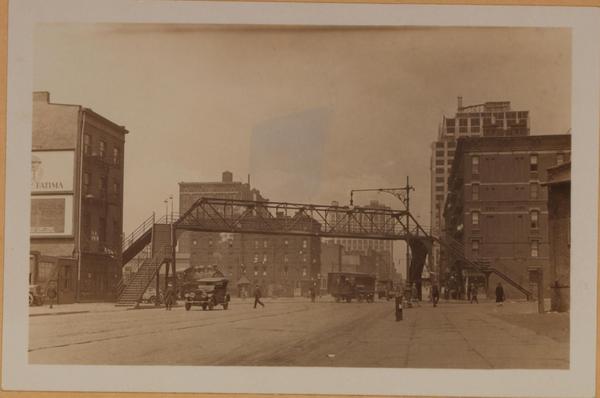
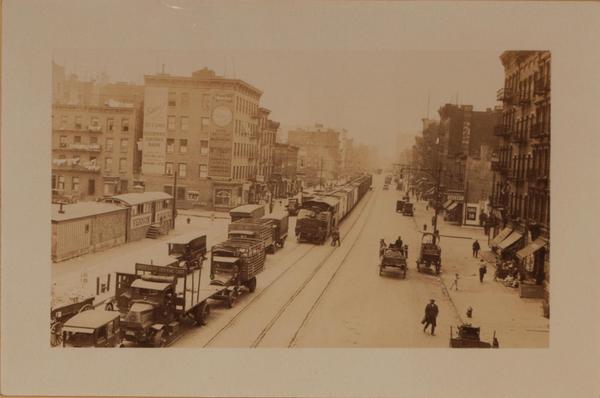
From the New York Public Library digital collection — a look at the ‘West Side Yards’ area in the late 1920s, before the construction of the elevated freight railroad (aka the High Line) and the elevated automobile highway along the west side. (Captions are those from the original images.)

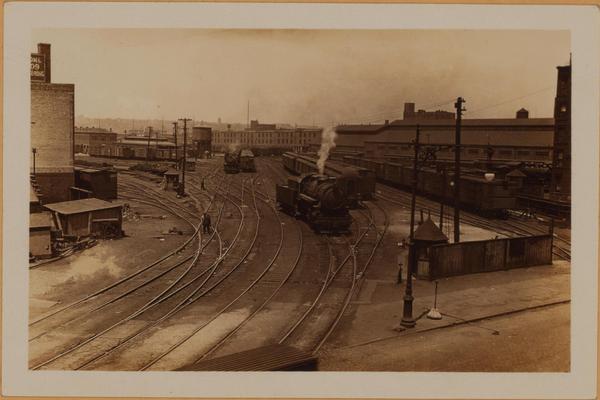
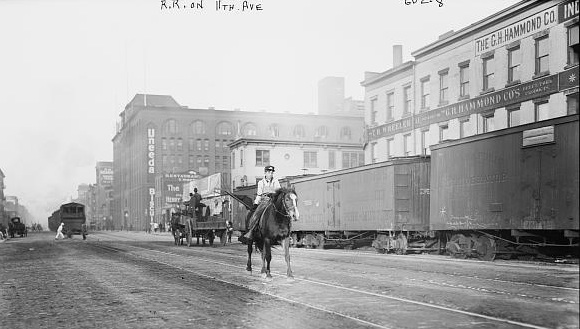
Eleventh Avenue between 31st and 32nd Streets, showing New York Central freight yards. May 17, 1927. P.L. Sperr, Photographer.
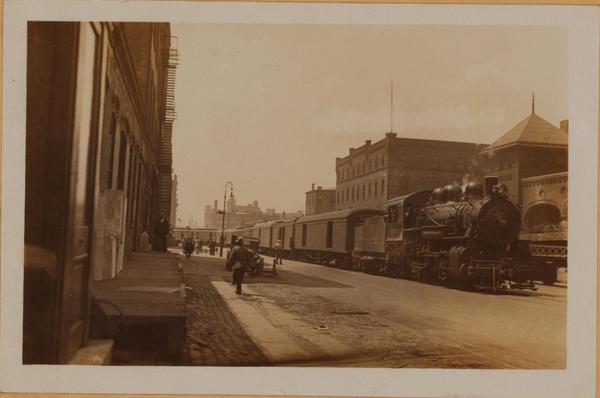
Tenth Avenue, south from a point slightly above West 30th Street, showing prominently the pedestrian bridge over the Avenue at that thoroughfare. This was erected by the New York Central Railroad because of the danger involved by the use of the street bed by their trains. Popularly this was called “Death Avenue”. To the left are the milk shed yards. May 17, 1927
Tenth Ave., south from, but not including West 30th Street. This view is as seen from the pedestrian bridge, at West 30th Street. May 17, 1927.
enth Ave., west side, north from, but not including West 30th to, but not including 31st Streets. The view shows the yards of the N. Y. Central and Hudson River R.R. Company. May 17, 1927.
South on Eleventh Avenue from 35th Street. May 17, 1929.
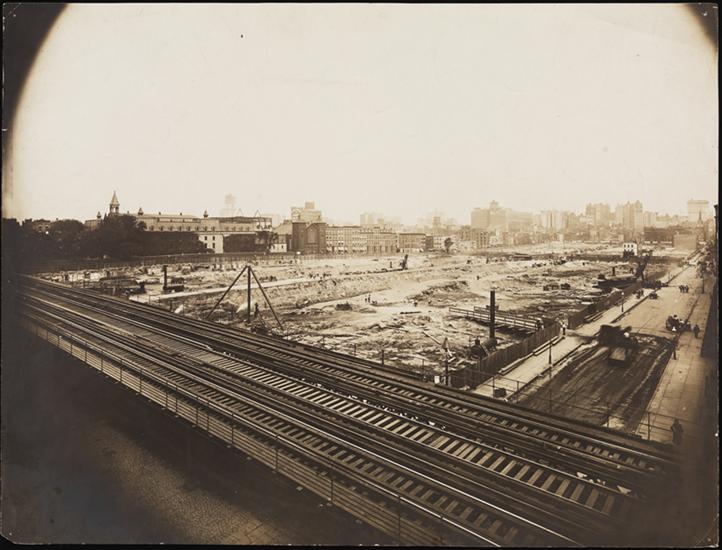
Pennsylvania Station Excavation from 9th Avenue and 31st Street, ca. 1900 — Museum of the City of New York
The 9th Avenue Elevated Railroad at 37th Street, 1910 — Museum of the City of New York

The ‘Death Avenue’ cowboys, guiding dummy engines down the avenue for the protection of pedestrians and horse-drawn vehicles.

1940, courtesy Museum of the City of New York — Taken from approximately 10th Avenue between 33rd-34th Streets, looking south.
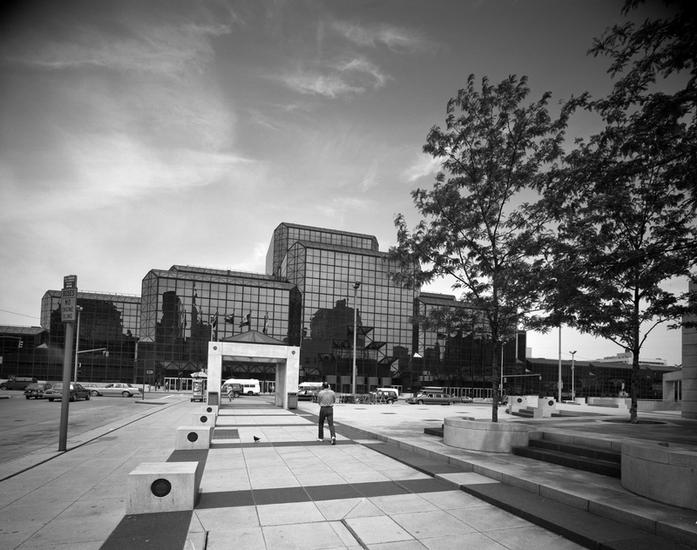
Javits Center, c. 1990 — Edmund Vincent Gillon, courtesy Museum of the City of New York

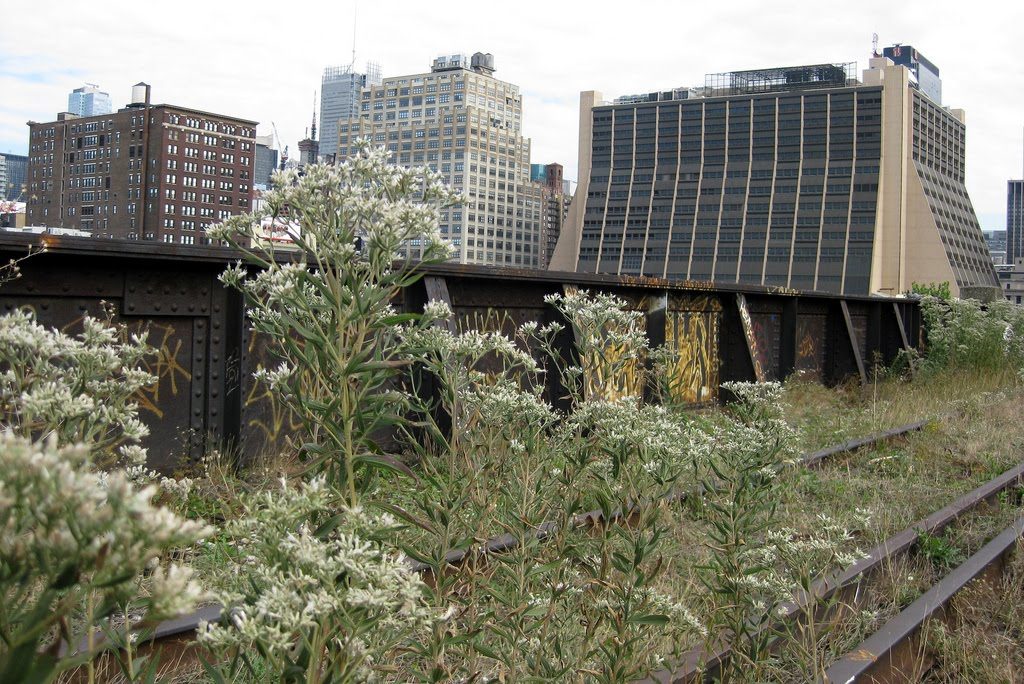
The elevated freight railroad in the early 2000s, before it became the High Line and before the area adjacent to it became Hudson Yards.

wally g/Flickr
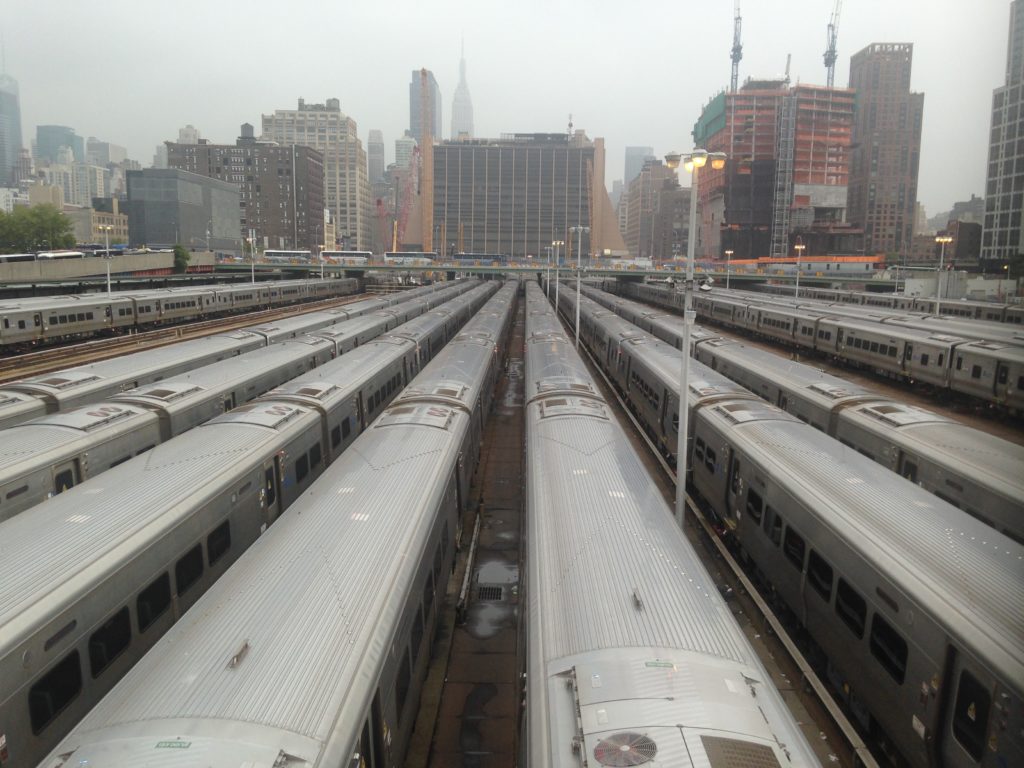
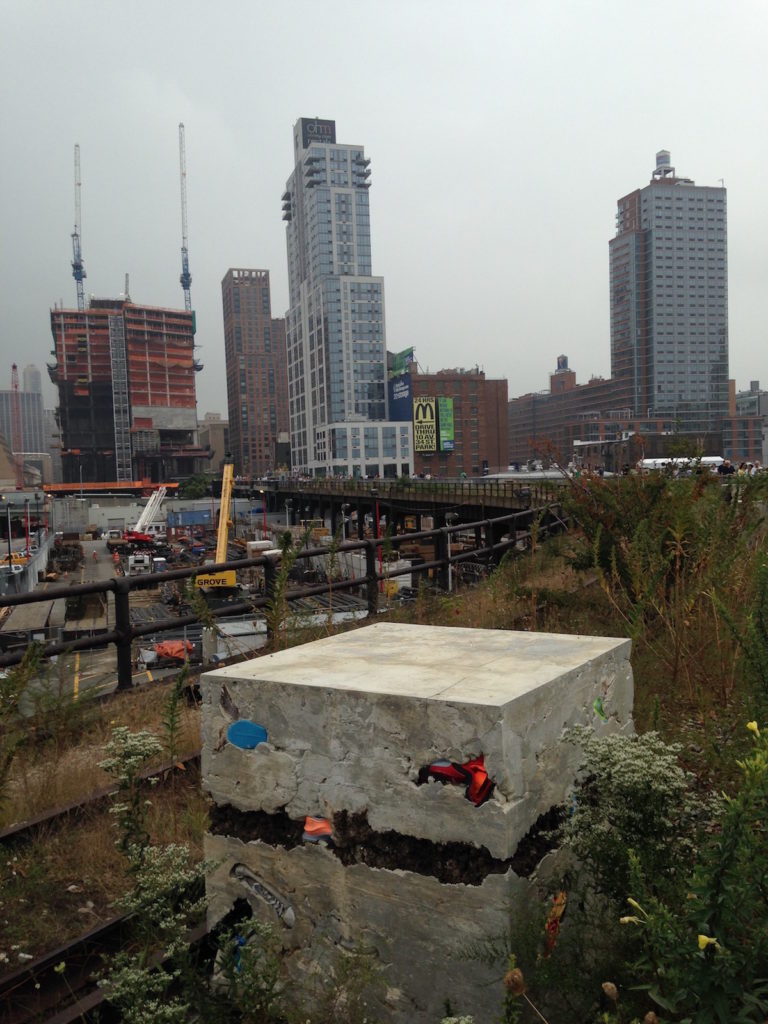
Looking over the West Side Yards, 2014, photo courtesy Greg Young. To the right, the first Hudson Yards building is being constructed.
courtesy Greg Young
A rendering of the West Side Stadium, courtesy Kohn Pedersen Fox Associates

Images of the new Hudson Yards development, from opening day, March 15, 2019. Photos taken by Greg Young.

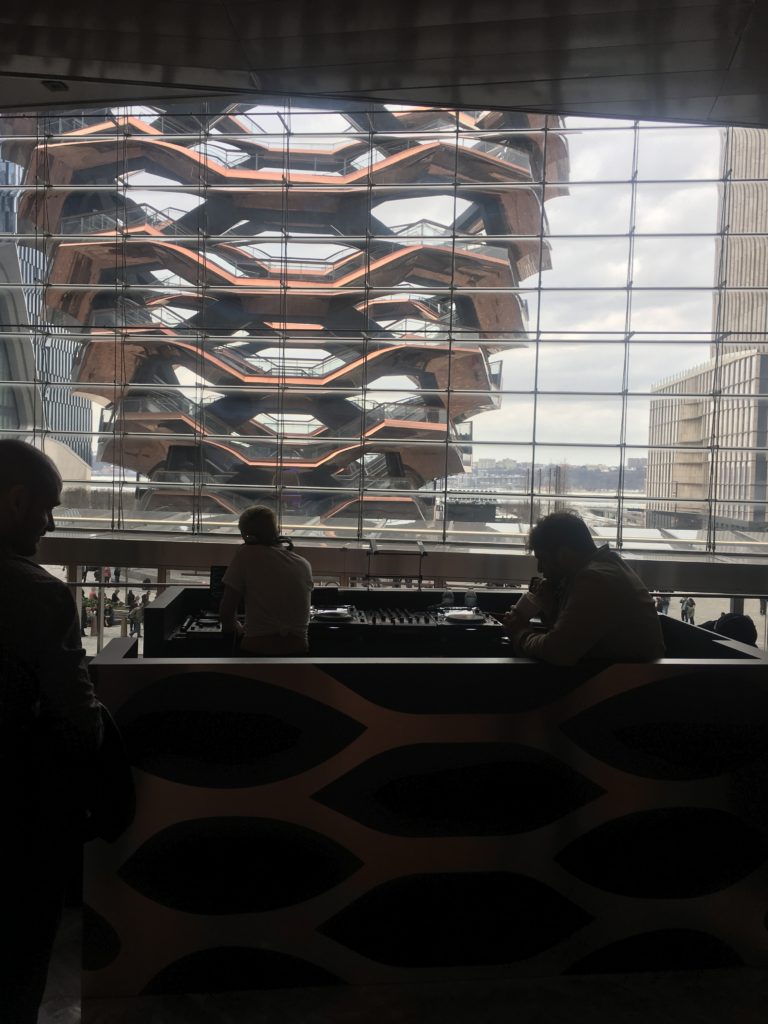
From the second floor, behind the deejay booth. Yes there is a deejay booth in the shopping center.
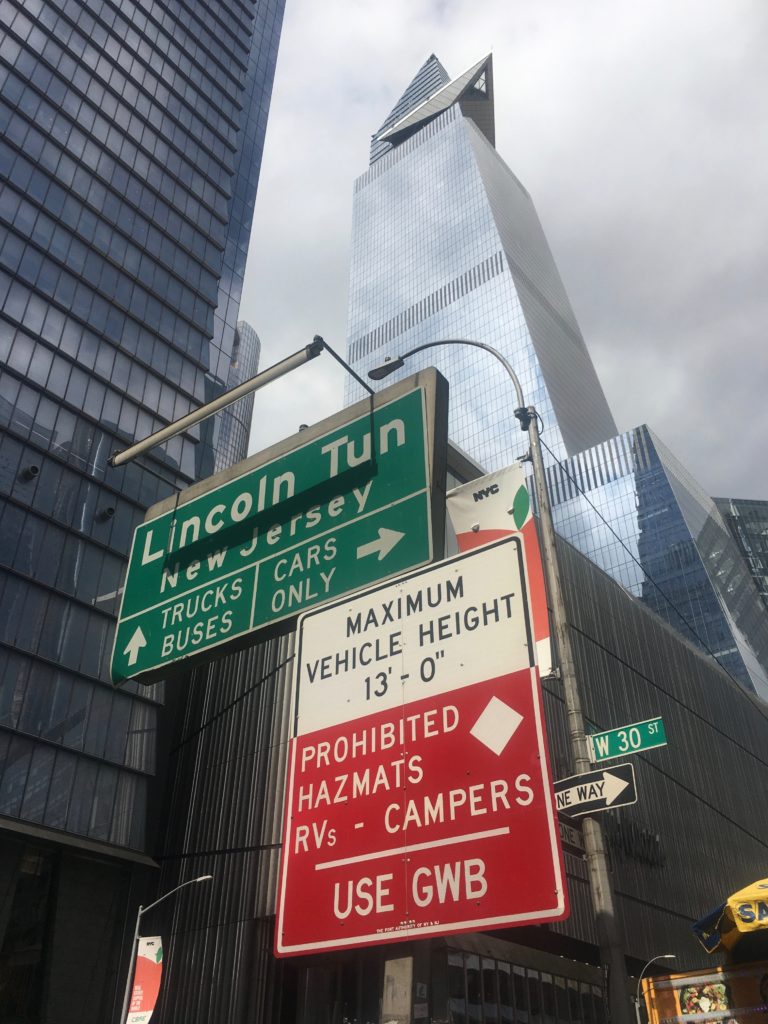
An observation deck over New York as traffic passes by on its way through to the Lincoln Tunnel.
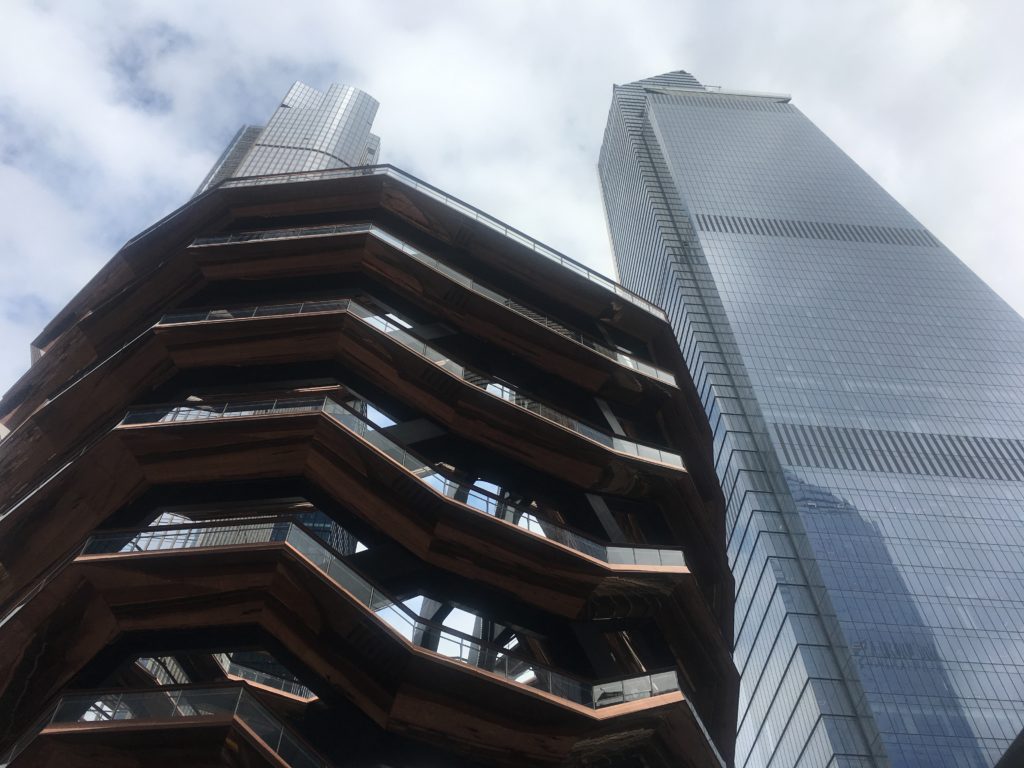
Looking up at The Vessel and the towers behind it.

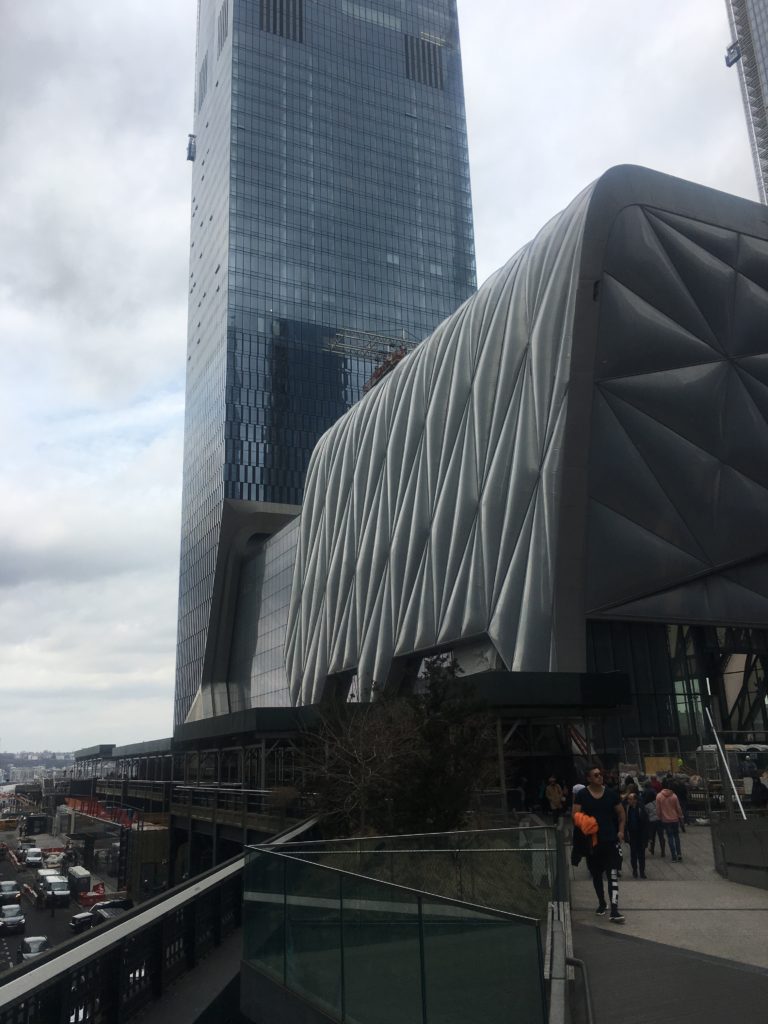
The Shed, a performance space that will be one of the primary draws for most locals.
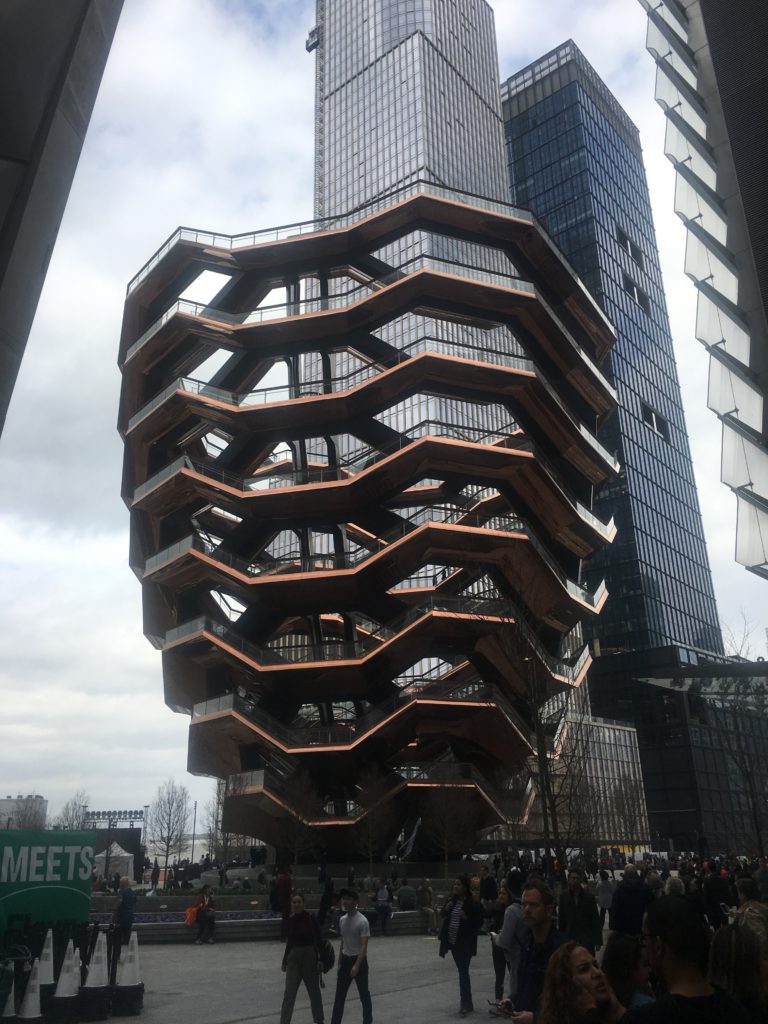
The Vessel, designed by Thomas Heatherwick

FURTHER LISTENING

For more information about this topic, check out these early Bowery Boys podcast episodes:

Categories
Sports

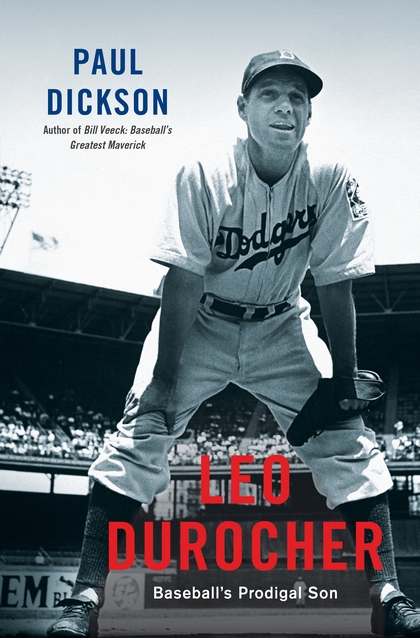
The Wise Guy of Baseball: Getting To Know Leo ‘The Lip’ Durocher

BOOK REVIEW The history of sports is often written around its most revered role models, as though the noble character of the greatest players comes from the purest devotion to their game.

Leo Durocher, a sterling shortstop and manager for some of the greatest teams in baseball history, was no role model. In most ways, he was the very opposite, a combative player with a rock-star personality.  He’s famously attributed as saying “Nice guys finish last,” not because he actually said it, but because it seemed to be his life’s slogan.

In Paul Dickson‘s fast-paced and often amusing biography, Durocher’s extraordinary accomplishments on the field battle for prominence with the player’s indulgent and never-ending quest for the good life. Along the way, he became an iconic New York sports hero. As a player for the New York Yankees (1925, 1928-29), the Brooklyn Dodgers (1938-48) AND the New York Giants (1948-1955), his story plays out in New York’s greatest ballparks, as well as its most glamorous nightclubs and hotels.

Leo Durocher: Baseball’s Prodigal Son
by Paul Dickson
Bloomsbury Publishing

Durocher, born in Massachusetts to French Canadian parents, has had many nicknames through his career — Frenchy, “the All-American Out,” and a great number of four-letter ones. But “Leo the Lip” seemed to fit him best. His quarrels with other players, umpires and sportswriters are the stuff of legends.

Babe Ruth famously couldn’t stand him. At one point, he accused Durocher of stealing his watch, an alleged theft that would follow the players from the Yankees to the Dodgers. Writes Dickson: “As Leo said, in a half-angry, half-mocking tone, ‘Jesus Christ, if I was going to steal anything from him I’d steal his god-damned Packard.”

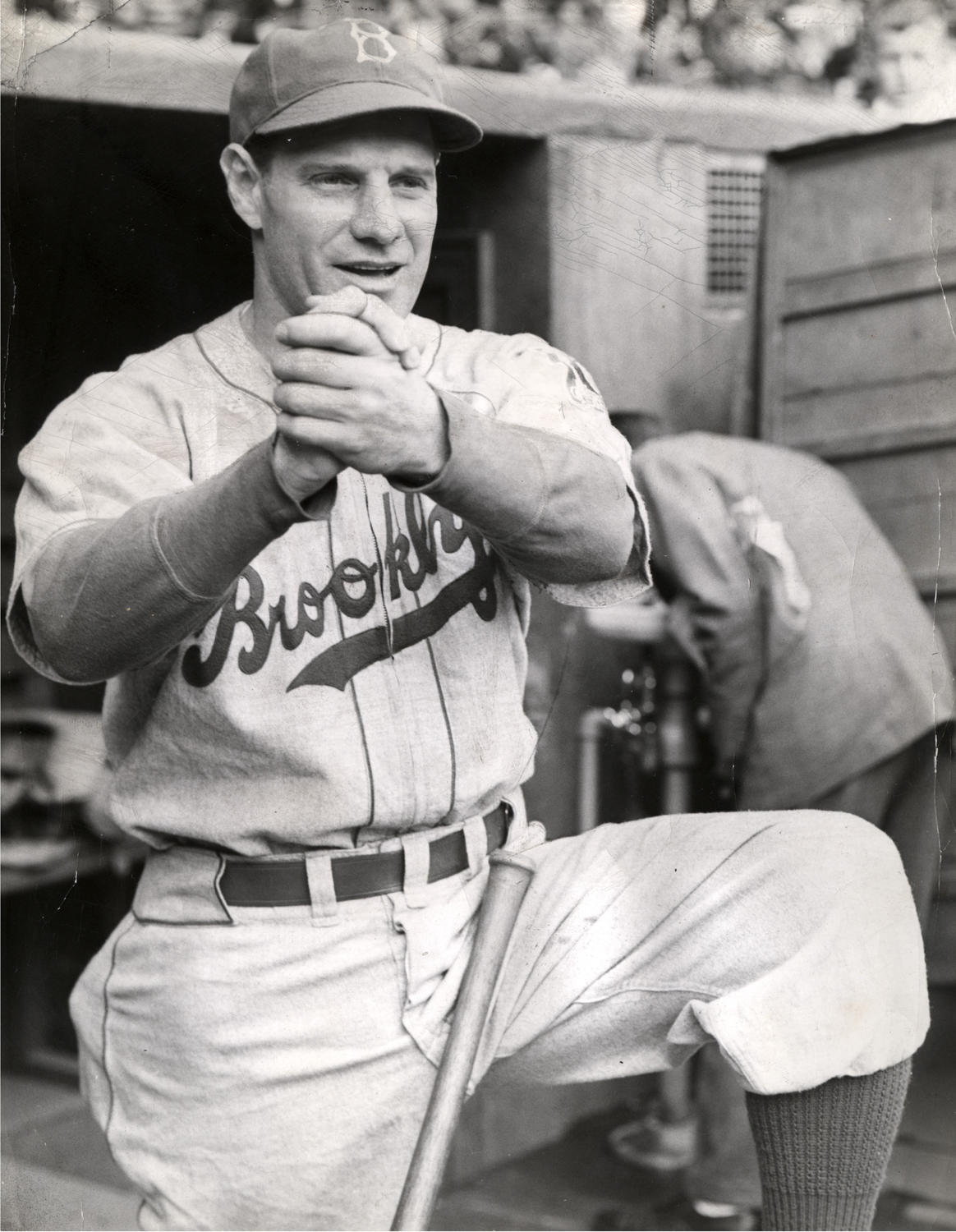
Brooklyn Dodgers Leo Durocher on dugout steps in 1939

His expletive-filled spats with teammates and managers tarred him early in his career; at one point, at age 24, Durocher was considered ‘washed out’, a toxic presence distracted by decadence and fame. As Dickson writes, “One rumored reason that all the teams in the American League passed on Durocher was that Babe Ruth let it be known he wanted Durocher out of the league.”

In New York, Durocher hops from the Cotton Club to the Stork Club in fancy suits, racking up debts at trendy hotels and acquiring a coterie of suspicious characters. His gambling addiction is now legendary; although many baseball players squandered their salaries this way, Durocher seemed to treat gambling as a second sport.

This led him into the circles of both mobsters and movie stars. And there, in the middle, was Durocher’s close friend George Raft, the Hollywood actor who frequently played gangsters on film. Durocher emulated Raft — often dressing and parting his hair in similar ways – and the actor, in turn, introduced the baseball player to the thrills of the entertainment world.

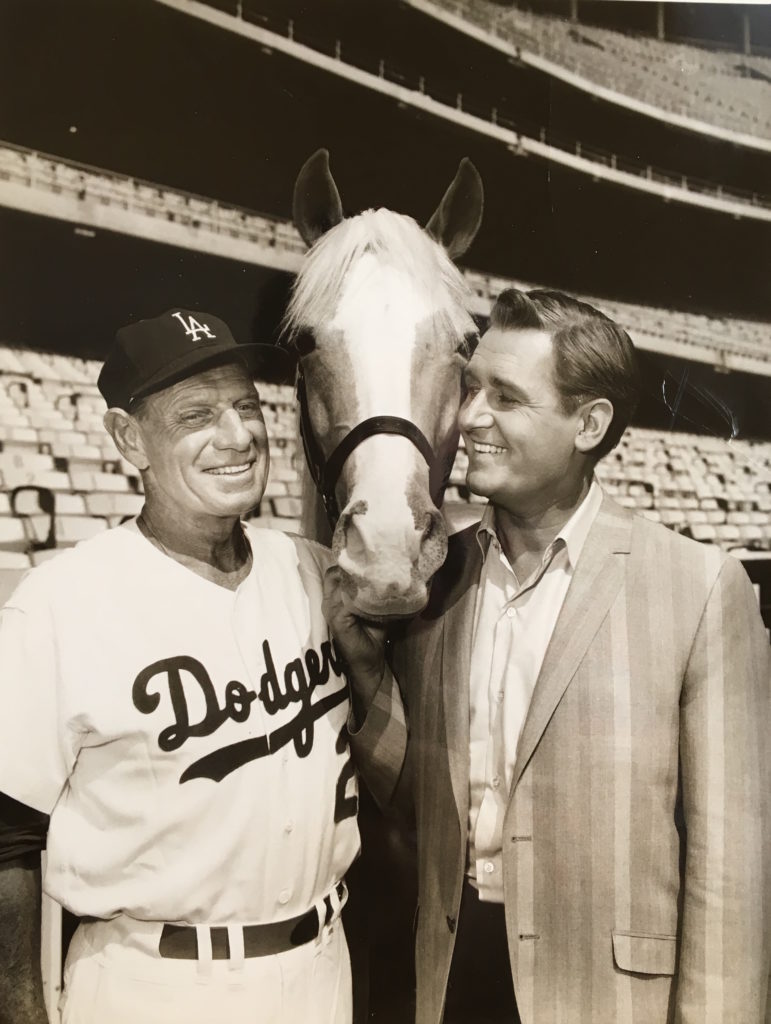
Below: Durocher with the stars of the TV show Mr. Ed

Courtesy Baseball Reliquary

Even during his greatest moments as a manager of the Dodgers, many believed Durocher might quit and become a radio comedian and actor. During World War II he even toured with the USO.

Yet he would always return to the game. With the Dodgers, he transitioned from player to manager, overseeing the team during some of its greatest moments. That included the years with Jackie Robinson, the first African-American player. (Of course, Robinson and Durocher would later public feud, almost a rite of passage for great baseball stars at this point.)

Dickson, a long-time chronicler of baseball history, finds a readable balance between Durocher’s on-field achievements and late-night scandals, revealing a charming and exceptionally scrappy, if not exactly likable, sportsman.

He’s harsh and mouthy to the end. But his talent was undeniable; the writer Bob Broeg, at Durocher’s death in 1991, said that “losing Leo Durocher was like losing either an old friend or an old enemy — you could take your pick.” Over the years, the writer had gotten into several fist-fights with Durocher.

Categories
Bronx History Podcasts

A History of the Bronx Part Two: Building The Borough

PODCAST The story of how the Bronx became a part of New York City and the origin of some of the borough’s most famous landmarks.

In the second part of the Bowery Boys’ Bronx Trilogy — recounting the entire history of New York City’s northernmost borough — we focus on the years between 1875 and 1945, a time of great evolution and growth for the former pastoral areas of Westchester County.

New York considered the newly annexed region to be of great service to the over-crowded city in Manhattan, a blank canvas for visionary urban planners. Soon great parks and mass transit transformed these northern areas of New York into a sibling (or, perhaps more accurately, a step-child) of the densely packed city to the south.

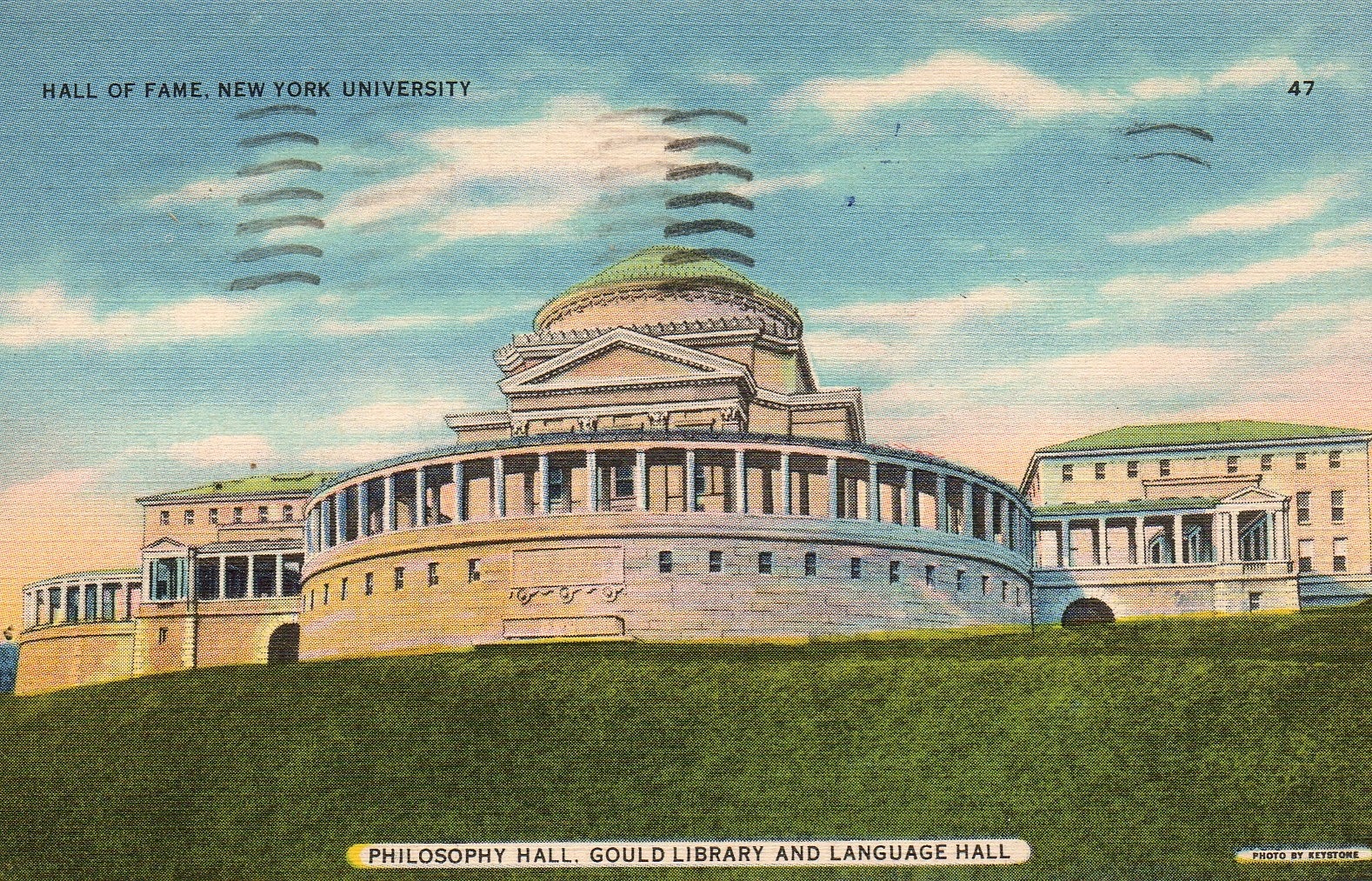
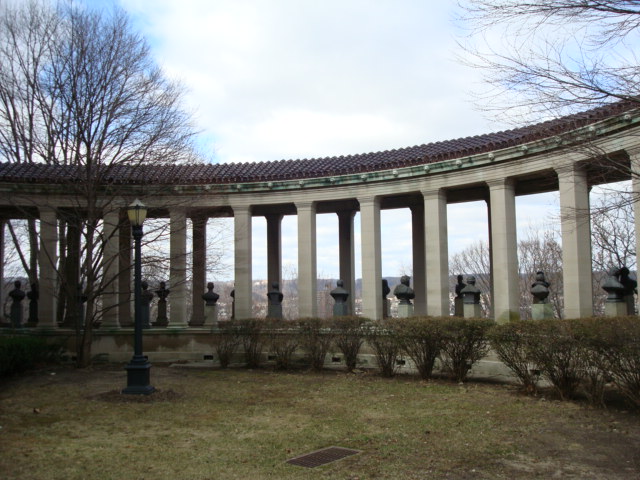
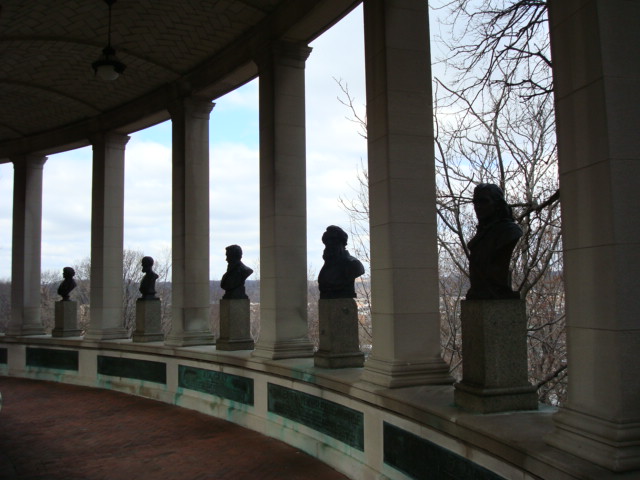
The Grand Concourse embodied the promise of a new life for thousands of new residents — mostly first and second-generation immigrants, many of them Jewish newcomers. The Hall of Fame of Great Americans was a peculiar tourist attraction that honored America’s greatest. But the first time that many outside New York became aware of the Bronx may have been the arrival in 1923 of New York’s most victorious baseball team, arriving via a spectacular new stadium where sports history would frequently be made.

By the 1930s Parks Commissioner Robert Moses began looking at the borough as a major factor in his grand urban development plans. In some cases, this involved the creation of vital public recreations (like Orchard Beach). Other decisions would mark the beginning of new troubles for the Bronx.


The Bowery Boys: New York City History podcast is brought to you …. by you!

We are now producing a new Bowery Boys podcast every two weeks. We’re also looking to improve the show in other ways and expand in other ways as well — through publishing, social media, live events and other forms of media. But we can only do this with your help!

We are now a member of Patreon, a patronage platform where you can support your favorite content creators for as little as a $1 a month.

Please visit our page on Patreon and watch a short video of us recording the show and talking about our expansion plans. If you’d like to help out, there are five different pledge levels (and with clever names too — Mannahatta, New Amsterdam, Five Points, Gilded Age, Jazz Age and Empire State). Check them out and consider being a sponsor.

We greatly appreciate our listeners and readers and thank you for joining us on this journey so far. And the best is yet to come!


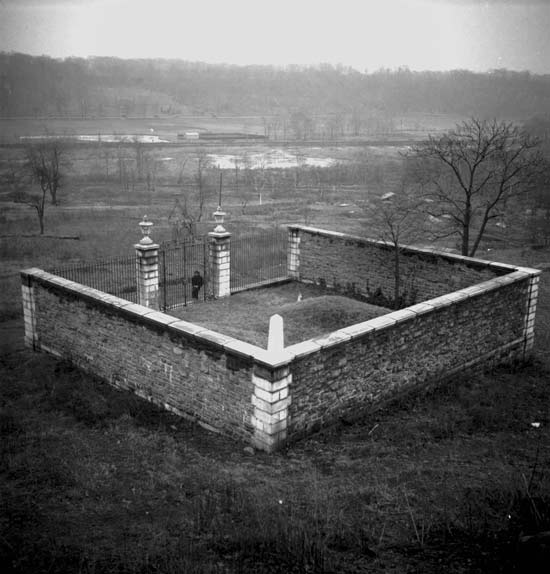
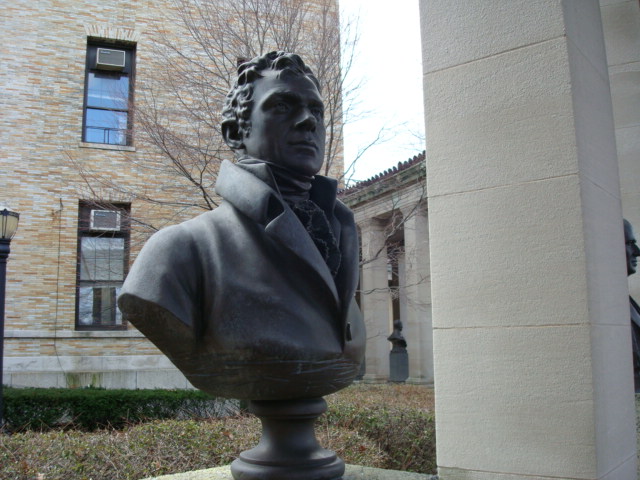
The burial vault of the Van Cortlandts was actually contained within the newly formed park. And it’s still there.

Courtesy New York Park Service

NYU’s former University Heights campus (now the home of Bronx Community College) contains one unusual tourist attraction — the Hall of Fame of Great Americans

nyuinthebronxpostcard

1 2 3

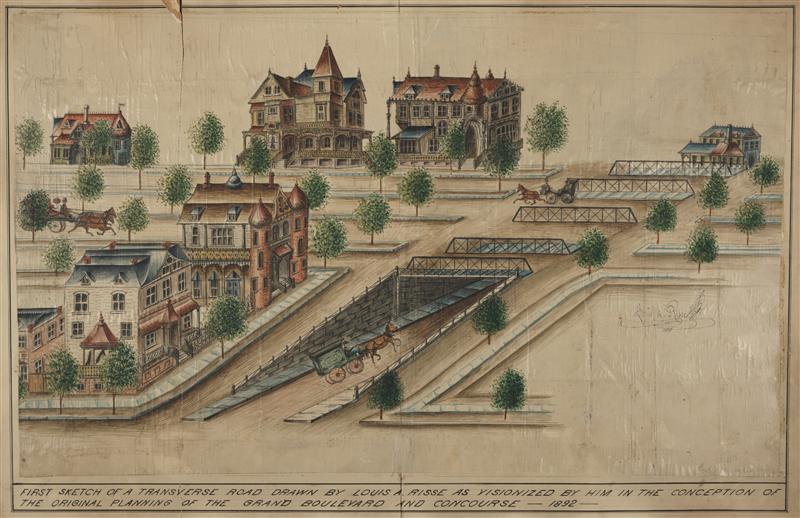
Louis Risse’s vision of the Grand Concourse in 1892 obviously did not imagine automobiles using the boulevard.

MCNY
MCNY

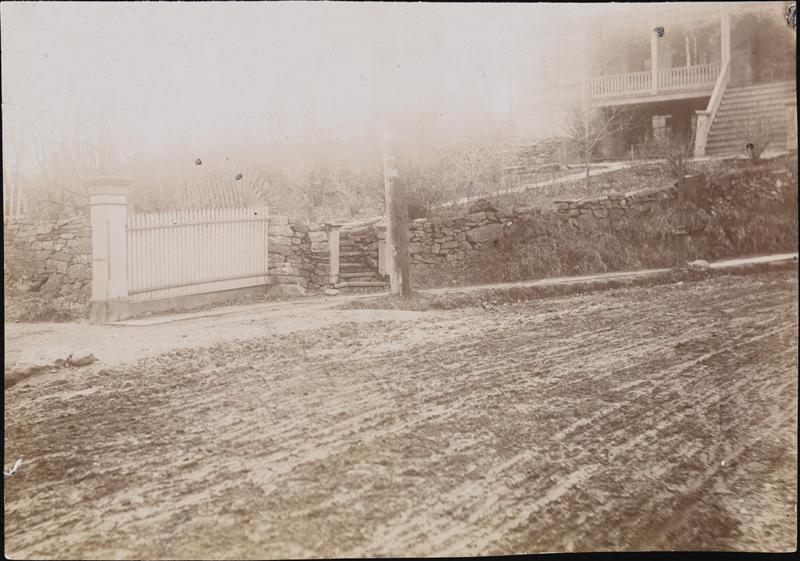
Kingsbridge Road near the Grand Concourse, 1890. It was originally a dirt road of course.

MCNY
MCNY

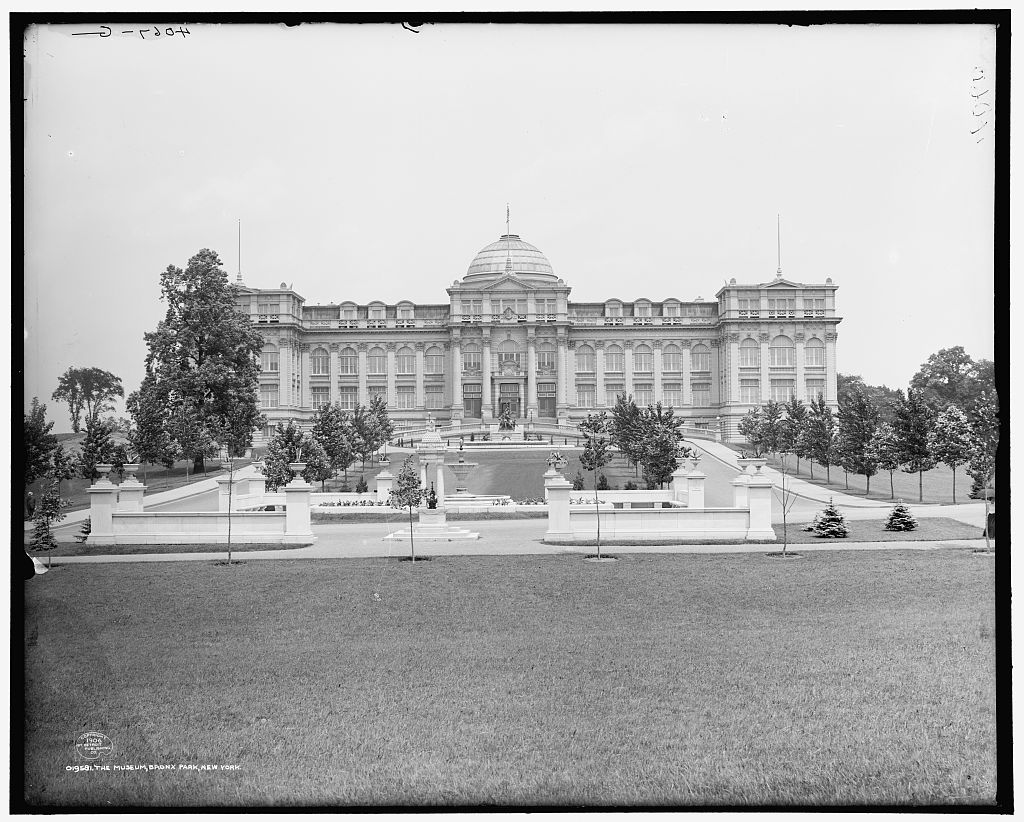
The New York Botanical Garden inaugurated Bronx Park and created another reason for New Yorkers to head up to the vastly evolving area up north.

4a13506v

A romantic depiction of the Lorillard snuff mill on the Bronx River. The building is still on the river, contained within the Botanical Garden.

By Frederick Rondel, Jr., courtesy MCNY

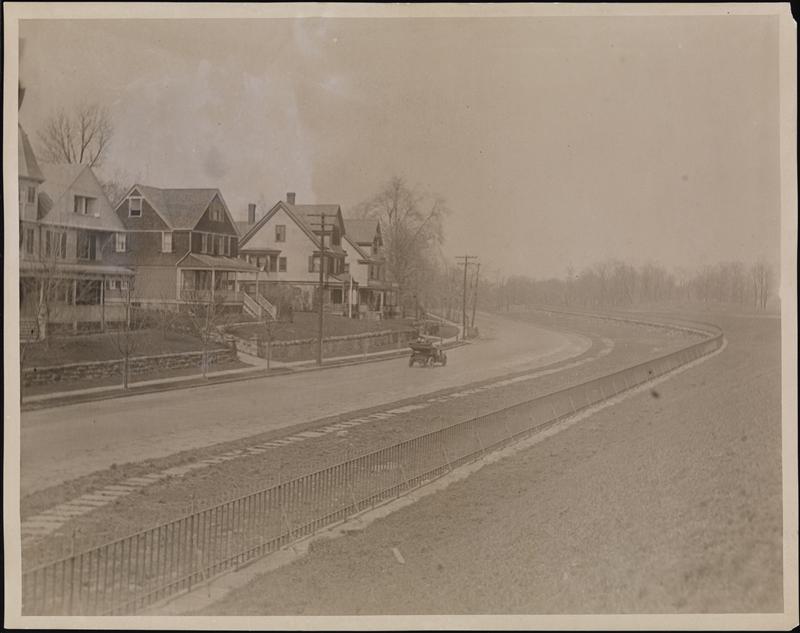
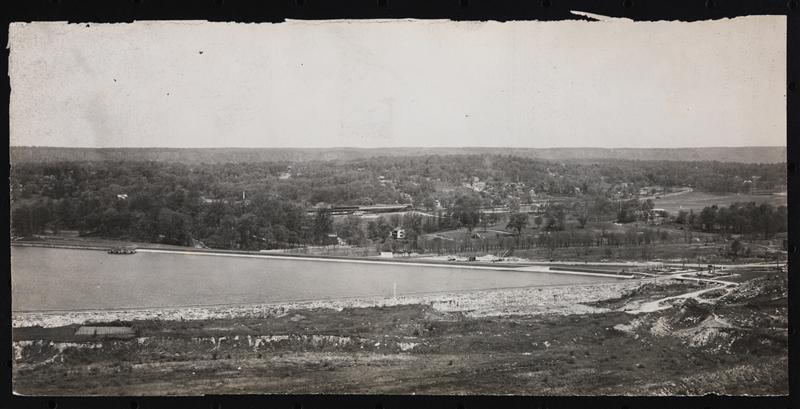
Jerome Park Reservoir, opposite a set of homes, pictured here in 1920 and (below) 1936.

MCNY
MCNY
mny221499
MCNY

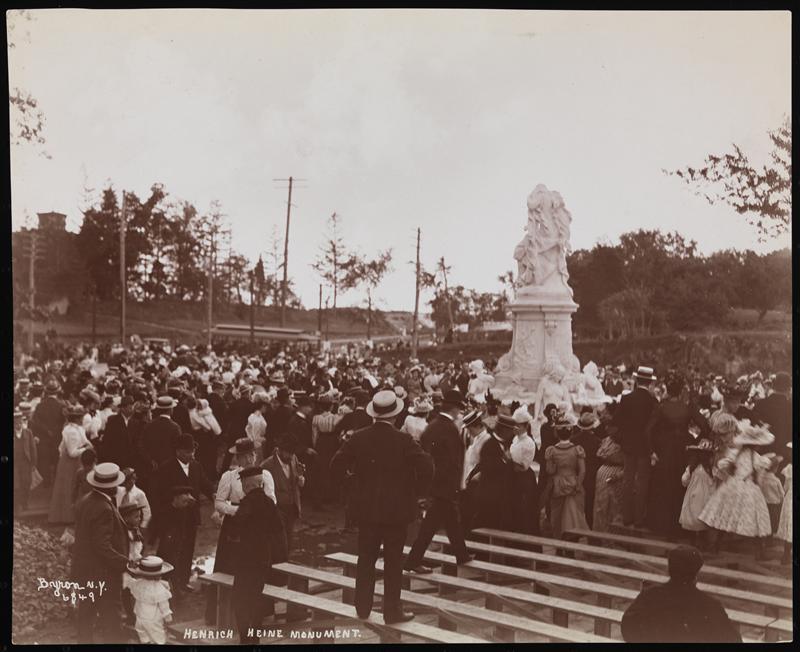
The unveiling of the Heinrich Heine monument in today’s Joyce Kilmer Park on the Grand Concourse.

MCNY
MCNY

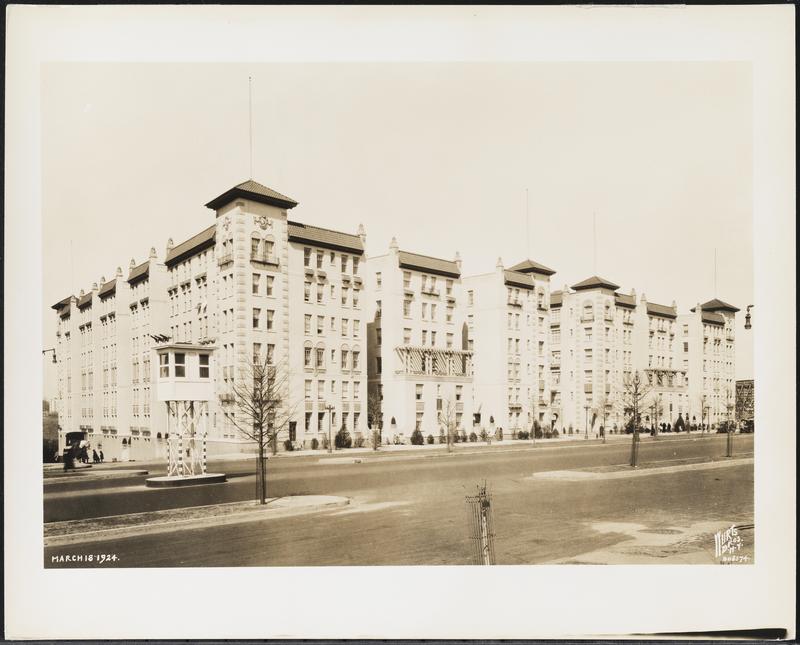
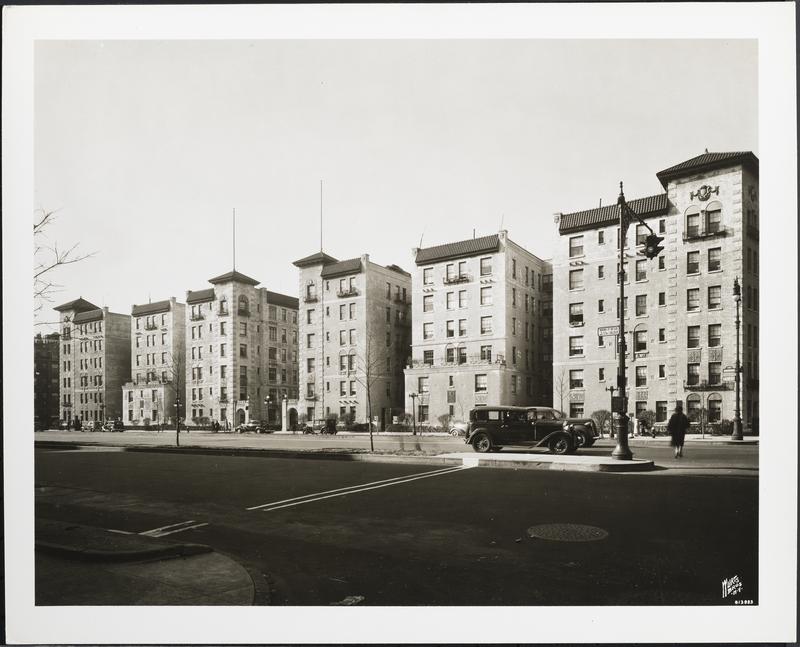
Lavish apartments like the Roosevelt  (pictured here in 1924 and in 1937) were able to attract New Yorkers escaping the overcrowded Lower East Side.

MCNY
MCNY
MCNY
MCNY

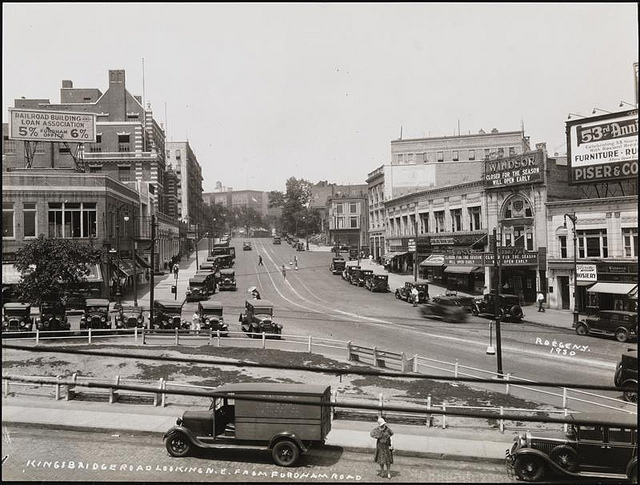
Fordham Road in 1930 with the Grand Concourse East Kingsbridge Road steaming by.

Photo by William Roege (1930)

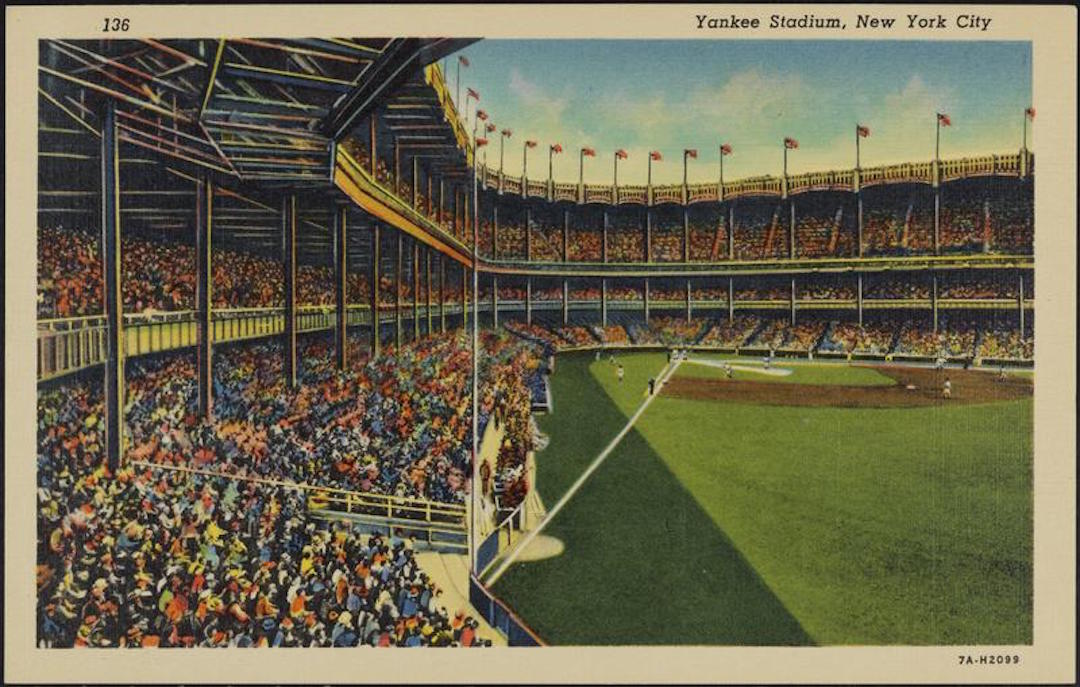
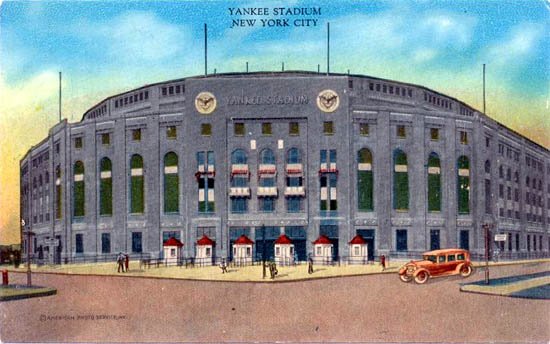
A Yankee Stadium postcard circa 1945

mny285122
Courtesy MCNY

Ruth was so integrally a part of the Bronx and Yankee Stadium that when he died in 1948, his casket was taken to the stadium where tens of thousands of people came to pay their respects.

babe-ruth-funeral-fans-line-up-8-17-1948

A few selections from our Instagram account of things we discussed on this week’s show:


A photo posted by Gregory Young (@boweryboysnyc) on


A photo posted by Gregory Young (@boweryboysnyc) on

From the Grand Concourse:


A photo posted by Gregory Young (@boweryboysnyc) on


A photo posted by Gregory Young (@boweryboysnyc) on


A photo posted by Gregory Young (@boweryboysnyc) on

Here’s Tom and our special guest this week — the great Lloyd Ultan

Categories
Podcasts

On The House: A history of New York City beer brewing

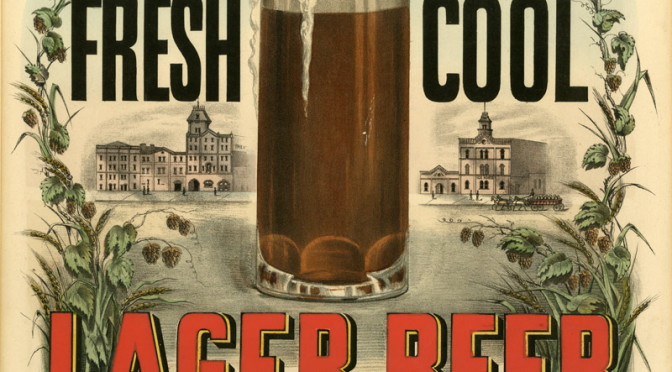
Behold the lager: A German variety of beer revolutionized American drinking, inspiring a new kind of drinking establishment (Courtesy the New-York Historical Society

Inspired by ‘Beer Here: Brewing New York’s History‘, the terrific summer show at the New-York Historical Society, the latest Bowery Boys podcast explores the story of one of America’s greatest, most treasured products– beer.

PODCAST New York City’s thriving craft brewing industry today hearkens to a time over a century ago when the city was one of America’s great beer-making capitals, the home to a robust industry of breweries and beer halls. In the 19th century, German immigrants introduced the lager to thirsty crowds, manufacturing thousands of barrels per year from breweries in Manhattan and Brooklyn’s ‘Eastern District’ (primarily Bushwick and Williamsburg). 

The top Manhattan brewers were Hell Gate Brewery and the Jacob Ruppert Brewing Company, situated right next to each other in the old German neighborhood of Yorkville. Both Ruppert and Hell Gate’s founder George Ehret rode the beer craze to become two of New York’s wealthiest businessmen. Meanwhile, out in Brooklyn, a phalanx of brewers clustered along Bushwick Avenue in fine red-brick factories.

Following World War I and Prohibition, New York lost its hold over beer manufacturing to more savvy Midwestern beer makers. But a few local brands weathered the century with unusual marketing ploys — from sports sponsorships to the Miss Rheingold beauty pageant.

By the late 1970s, significant brewing had vanished from New York entirely. But somewhere in SoHo in the 1980s, a renaissance was about to begin…..

For a little extra ambiance, the show is recorded on location, live in Bushwick, Brooklyn, within a couple blocks of the original Brewers Row.


NOTE: It wouldn’t be a show without my vocal slipup o’ the month. Perhaps  I watched too much Buffy The Vampire Slayer when I was younger. I keep referring to Hell Gate as Hell’s Gate. Scott says it correctly. Both the turbulent confluence of waters and the brewery are called Hell Gate.  

Next Week: Some books, additional resources, a few more pictures and some more stories left out of this week’s podcast.

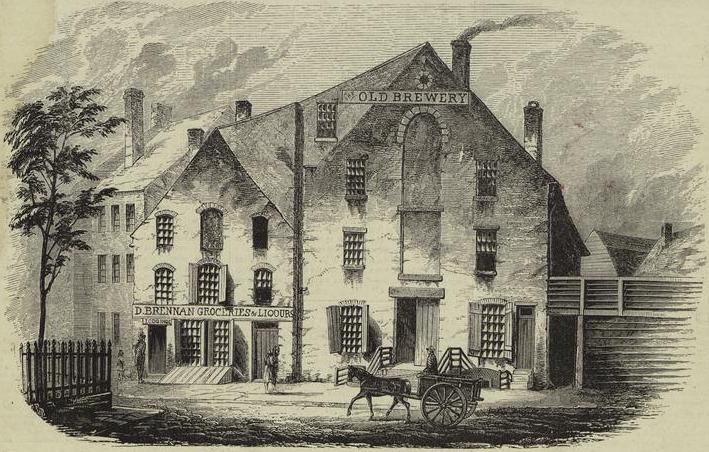
Perhaps the most notorious example of an early New York brewery was the Coulthard’s Brewery situated on the banks of Collect Pond. It survived the draining of that polluted body of water, only to survive as the center of the most disreputable elements of the Five Points neighborhood.  It was eventually demolished in 1853, replaced with a mission house.

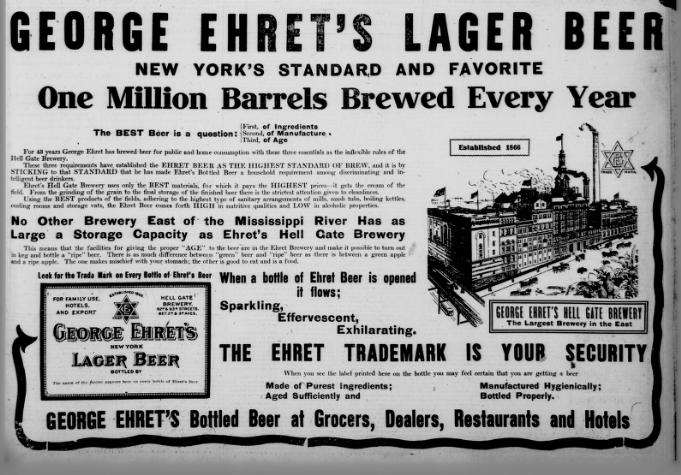
George Ehret was New York’s most successful brewer of the late 19th century. His assertion that ‘no other brewery east of the Mississippi River has as large a storage capacity as Ehret’s Hell Gate Brewery‘ was certainly accurate.  This ad from 1909 presents a company still at the top of its game. However Ehret would encounter serious opposition in the coming years, with both World War I and Prohibition cutting short the brewery’s meteoric success.

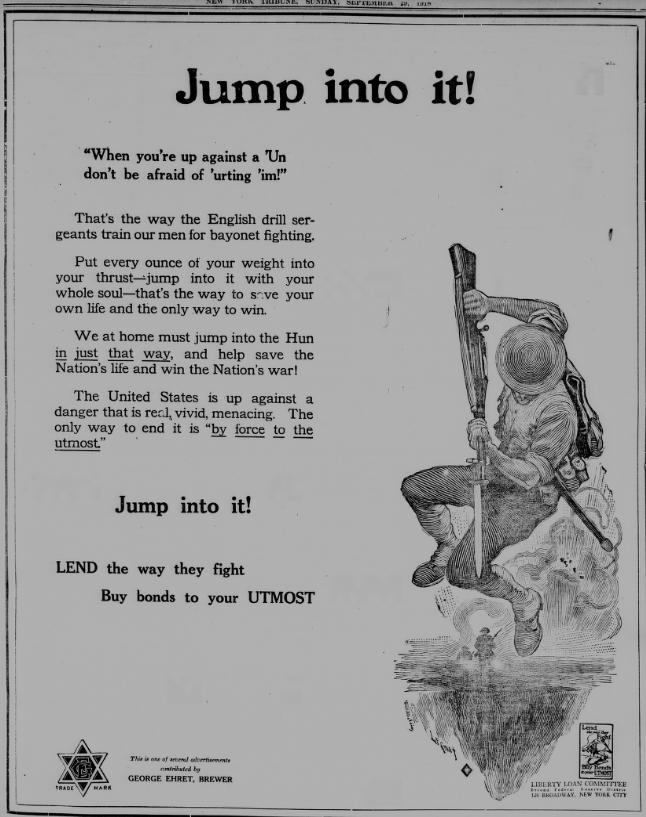
Ehret was stuck in Germany during World War I due to illness, not a great place to be during a war. His entire estate was seized by the government while he was away. When he finally returned, he threw his weight behind pro-American causes to banish any suspicions. This U.S bonds ad from 1918, the year Ehret returned to New York was one of many placed by the brewery.

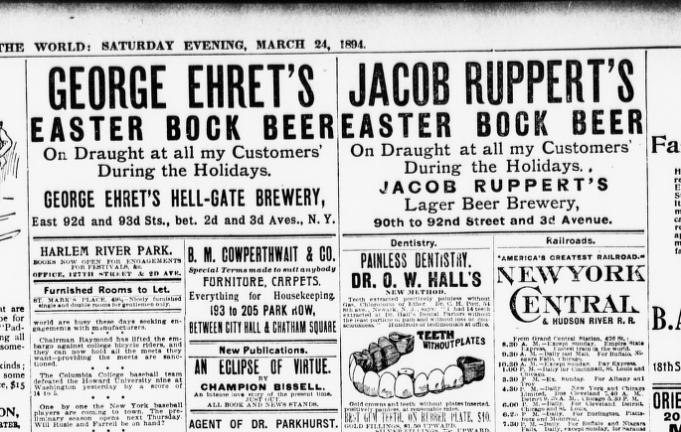
The brewery of Jacob Ruppert wasn’t just situated next to Ehret’s in this 1894 New York World newspaper; the buildings themselves were near one another, in the burgeoning neighborhood of Yorkville on the Upper East Side.  (Newspaper clippings courtesy the Library of Congress.)

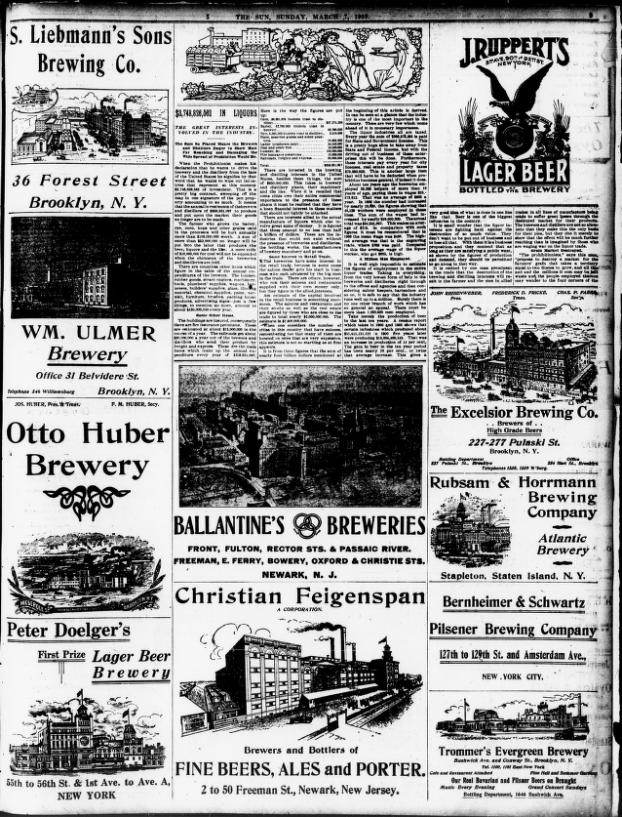
A sample page from a 1909 New York Sun newspaper illustrating some of the many breweries in the region.   Included here are the Liebmanns (who produced Rheingold Beer), the Otto Huber Brewery, William Ulmer, Trommer’s and the Excelsior Brewing Company — Brooklyn most prominent lager brewers.

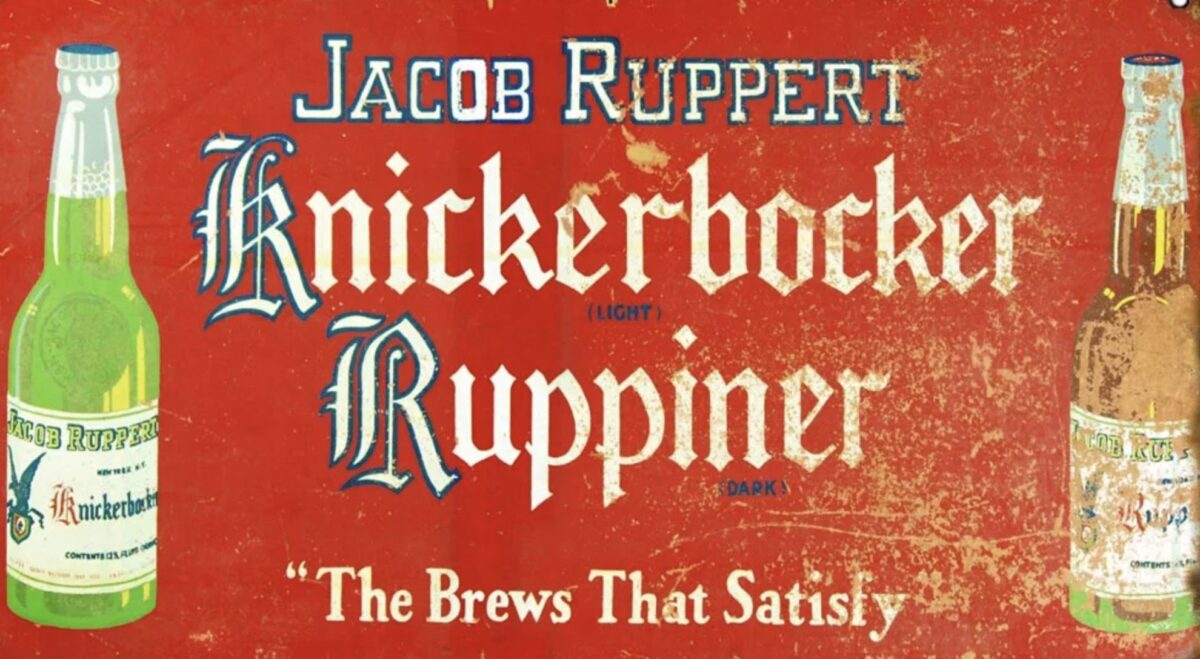
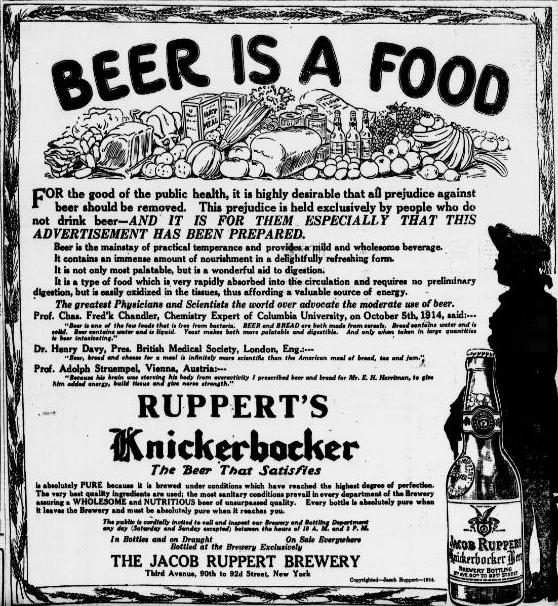
Temperance causes were greatly beginning to clamp down on the brewing industry, so beer makers attempted to market their product as true American beverages — with links to the Founding Fathers — or as products important to a person’s health. This Knickerbocker Beer ad from 1914 gamely attempts both.

New York’s ‘boy mayor’ John Purroy Mitchell sits with Jacob Ruppert at the Polo Grounds in anticipation of a game by the team owned by the brew man, the New York Yankees. The Yankees would play at the Polo Grounds until 1923, when they moved to the newly built Yankee Stadium.

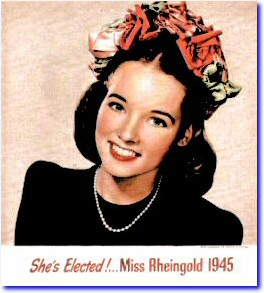
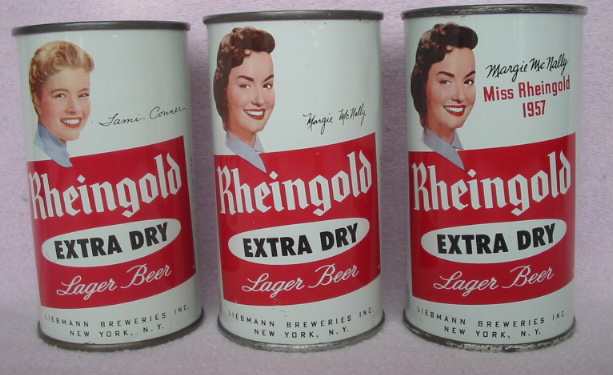
Rheingold Beer was one of the few remaining locally-based brewers to survive by the mid 20th Century, partially thanks to their annual Miss Rheingold beauty competition. [source]

This jingle, with true New York flavor, was featured in our podcast, but it really works better as a vintage television commercial!

And this Schaefer’s advertisement visualizes a world where robots are all-in-one bartenders.


I want to especially thank my guest host this week, Scott Nyerges, photographer, filmmaker and my old college friend! 

Oh, and do you need another reason to have a beer today? Well, it’s the birthday of Joseph Mitchell, born in 1908, the author of a great many profiles for The New Yorker. One of his best known collections is ‘McSorley’s Wonderful Saloon‘ from 1943, featuring a classic New York profile of the old ale house on East 7th Street.

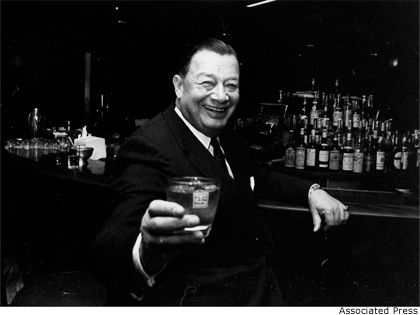
Toots Shor’s and the art of celebrity male bonding


So make it one for my baby, And one more for the road

FRIDAY NIGHT FEVER To get you in the mood for the weekend, every other Friday we’ll be featuring an old New York nightlife haunt, from the dance halls of 19th Century Bowery, to the massive warehouse clubs of the mid-1990s. Past entries can be found here.

NIGHTCLUB Toots Shor’s Restaurant
In operation: 1940-1959; 1961-1971; 1972-73

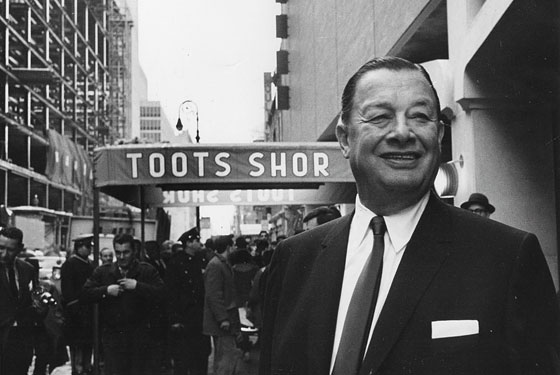
They really don’t make them like Toots Shor anymore. A stout, gregarious man, back-slappingly friendly with a child’s face, Shor reigned over one of midtown’s legendary martini scenes, his very own eponymous nightspot that attracted the most iconic mad men of music, movies, journalism, and sports. (In fact, Mad Men, the 50s Manhattan throwback TV series, is often set here.) Shor’s was where the world’s most famous alcoholics of the 50s and 60s tippled.

Toots is a bit of a tragic figure today in that he really became a self-branded institution of a simpler time, an old-school, double-breasted nightlife dominated by rich white men. When times became less simple, he foundered and faded.

This Jewish-born Philadelphian made his entry into New York nightlife in the most obvious way for a man of his frame — as a doorman to some of the city’s most famous speakeasies during the dry 1920s. “A kid on the hustle,” in his own words, Shor made 40-50 dollars a week in several places like the Five O’Clock Club and the Napoleon Club, where he would “flatten a guy a day, maybe two.” Along the way, he befriended celebrities and journalists alike; most importantly he also made connections with the influential mafia figures who owned the night spots.

He eventually moved on to a management position in 1936 at a popular tavern owned by Billy Lahiff (158 W. 48th Street), acquiring from his famous clientele the confidence and ease of a celebrity himself. He even married a Ziegfeld girl, nicknamed Baby, who was a virtual pixie next to him.

(By the way, just three years earlier, Lahiff’s served the last meal to Fatty Arbuckle, the embattled silent film star who died in bed that night.)

Shor moved on to his own establishment in 1940. Toots Shor’s Restaurant (51 W 51st Street) would be an instant success, ruling for two decades as the neighborhood lounge for some of New York’s biggest lushes. Most associated with the early years was Jackie Gleason, who would spend the day there drinking, go home and take a nap, then return to Toots for the nighttime crowd.

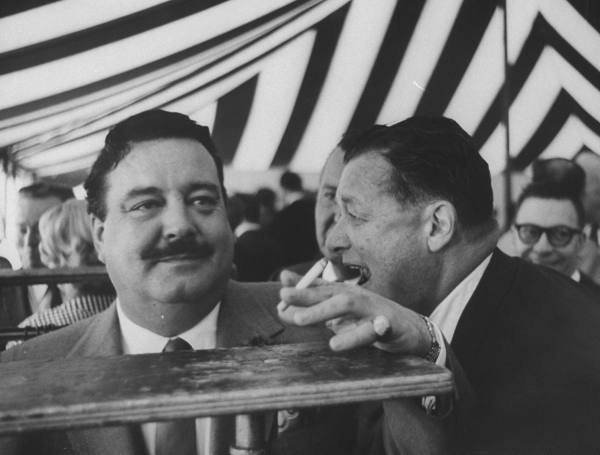
BELOW: Toots and Jackie and the ground breaking of his second restaurant in 1960 (Bob Gomel, LIFE archives)

You could eat at Toots — it was a restaurant — but, as the 1996 documentary Toots makes clear, it was all about the “whiskey and beer.”

Shor would befriend many of his clientele, calling them ‘crum-bums’ upon entry, joking with them, creating an inner circle for some of the most closely observed men in New York. In particular, the restaurant was quite popular with sports icons (and, by extension, sports writers); for this reason I would describe Toots as one of New York’s greatest sports bars ever. It didn’t need memorabilia on the walls; the memorabilia just walked in through the front door.

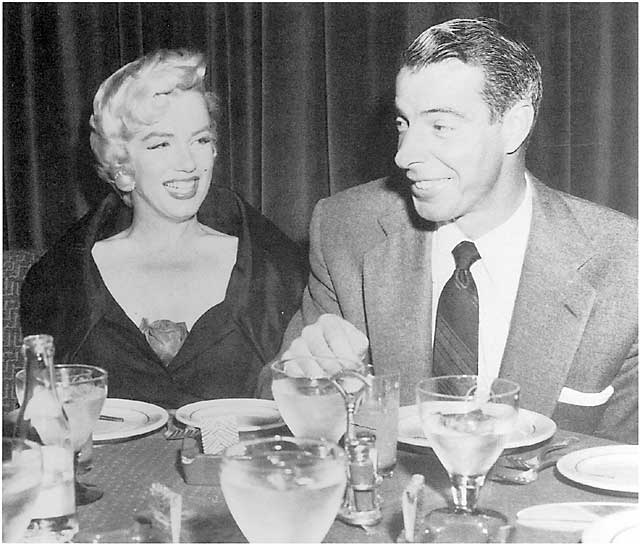
If you were a Yankee, you came to Toots. Mickey Mantle was his most recognizable regular; Joe Dimaggio came in for awhile, until Shor called his wife (you know, Marilyn Monroe) a whore, a slight Joe never forgave.

Bing Crosby and Frank Sinatra would frequently enter to applause. Supreme Court justice Earl Warren would enjoy a drink at one end of the bar, while the most notorious gangster in New York, Frank Costello, would be dining on the other side.

When it wasn’t filled with icons, regular businessmen would hit Shor’s for a lingering martini lunch. Few places in the city fostered such a tightly closed fraternity.

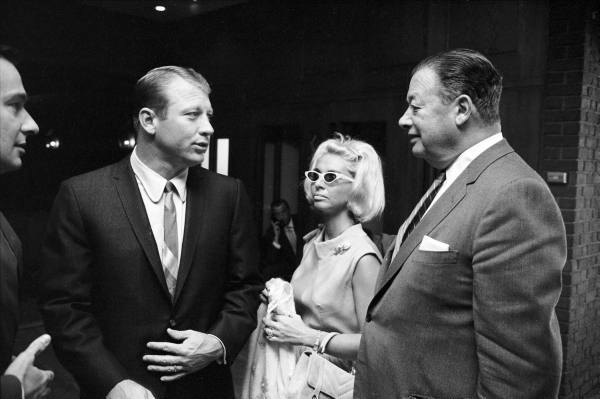
Mickey Mantle and his bespecled wife Merlyn, not exactly the most loving of couples, pull it together for master of ceremonies Toots Short, at right (1965, photographer John Dominis, courtesy of Life archives)

Along the way, Shor became quite well-known, a television star even. (That 2006 documentary features footage from his appearances on ‘What’s My Line?’ and ‘This Is Your Life’.) However his penchant for gambling and comping thousands of dollar of beverages for friends took a toll on his finances. Shockingly, he announced in 1959 that he had sold his restaurant. By the next year, it was demolished.

He tried again in 1961 at 33 West 52nd Street, closely copying his old formula. Some of his old friends even came back. But this type of nightlife was swiftly fading from view in the city. How could Shor coexist in a neighborhood with places like the Peppermint Lounge enticing people with the vibrations of counter-culture? It didn’t help that Shor continued to have financial problems; his celebrity and mafia connections couldn’t help him this time.

His new restaurant was unceremoniously closed in 1971 due to income tax evasion. He tried once more in October 1972 in a smaller place on 54th Street; it was closed within a year. Strapped for cash, Shor then sold his name to the Riese Corporation, who opened a small chain of Toots Shor bars throughout the city. Today, Riese operates such chains as TGI Fridays, Dunkin Donuts and Taco Bell. The bars had nothing to do with Toots, and what’s a Toots Shor establishment without Toots? Eventually the notoriety of his name would soon fade and even those knockoffs would close.

Shor died in 1977, living with his family at the Drake Hotel at Park and 56th Street.

Luckily, Shor is fondly remembered today as a vestige of old midtown Manhattan, a starched precursor to today’s more colorful party promoters. I highly recommend the Toots documentary, lovingly made by his granddaughter. Anybody interested in 1950s New York would be remiss not to spend a few minutes over a stiff martini this weekend in his memory.

By the way, his real name? Bernard.

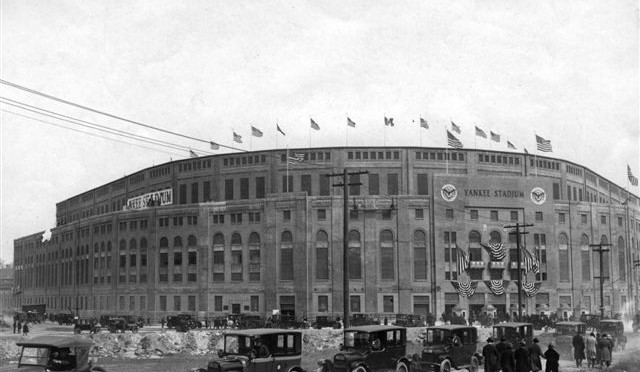
Yankee Stadium Opening Day: April 18, 1923


The first Yankee Stadium, all shiny and new in 1923

Today is opening day at the new high-tech Yankees Stadium as Derek Jeter and crew get used to that new stadium smell while fending off the Cleveland Indians. And legendary Yankees catcher and manager Yogi Berra, who turns 84 this year, will be there to throw out the first pitch.

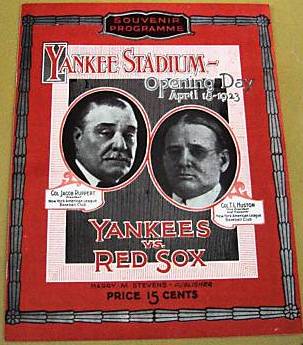
Just two years before Berra was even born, however, came Yankee Stadium’s first opening day, on April 18, 1923. Back then, the Yankees were Babe Ruth, baseball’s magnetic star whose popularity caused Yankees owners Jacob Ruppert and
Tillinghast L’Hommedieu Huston to built the new stadium in the first place.

But despite the stadium being ‘the House that Ruth Built’, he didn’t throw the first pitch. That honor went to governor Alfred E. Smith, hurling the ball at catcher Wally Schang. The Yankees went on the crush the Boston Red Sox that day 4-2, thanks to an effortless three-run homer from Ruth.

Above: an original opening-day program, curiously with Yankees owners Ruppert and Huston — not Ruth — on the cover

Click here to hear our podcast on the history of the Yankees.

Hallelujah! Billy Sunday comes to town

ANATOMY OF A PHOTOGRAPH An occasional feature where we take a closer look at an old photo of New York City, to give the image some historical context and piece together the situations that led up to it.

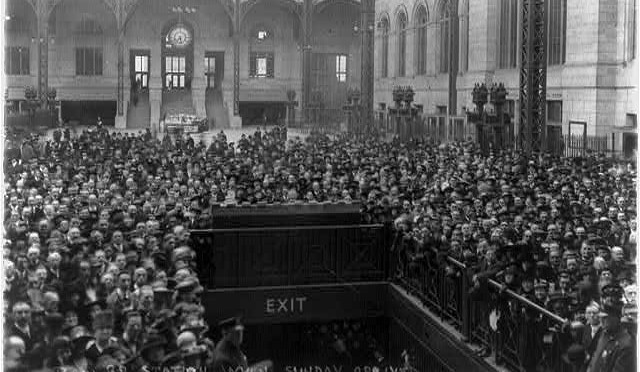
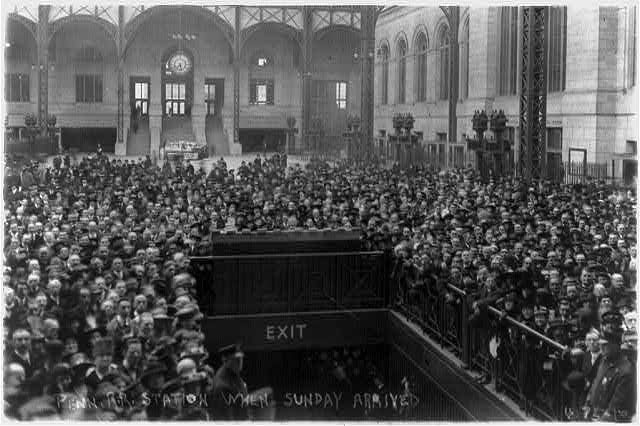
I ran the photograph above on Friday in reference to the early days of Pennsylvania Station. But the people cramming onto Penn Station’s platforms aren’t waiting for a train. They’re waiting for Sunday.

Billy Sunday, that is, America’s preeminent evangelical preacher in the 1910s.

Sunday was an outsized gospel celebrity, a former baseball star turned preacher who gloried in proselytizing to large audiences, a perfect spiritual fit to the Gilded Age.

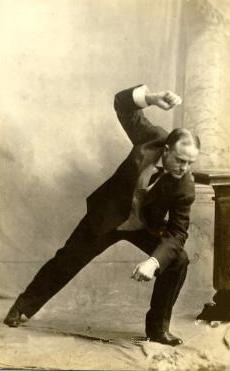
By 1917, Sunday was 65 years old and the most popular religious voice in America. He traveled with his wife Helen — and a staff of over 35 people — to many major cities in the United States in high profile spiritual ‘campaigns’. In an era without microphones and sound systems, Sunday electrified audiences with hyperactive body movements, violent eruptions of fire and brimstone, and elaborate presentations featuring ecstatic choirs and even chair smashing.

Chair smashing? Of course New Yorkers were excited. Sunday pulled into Penn Station on April 1917, for a series of highly publicized revivals that would run ten weeks. His arrival in a private Pullman car was greeted by almost five thousand people.

Sunday at first didn’t care for New York — calling it a ‘graveyard for evangelism’ — but New Yorkers certainly loved their Billy, as evidenced in the photo above. Eventually Sunday came to appreciate the New Yorker as well: “I think New Yorkers are keener than country folk. They are more used to seeing and hearing new things; they catch on quicker. I couldn’t give them any Class B stuff; not even when I was tired or wanted to.”

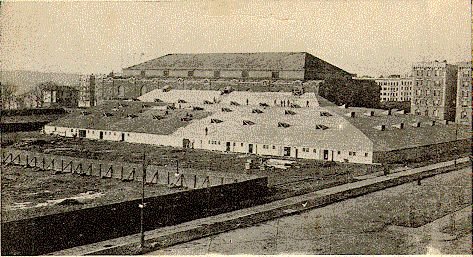
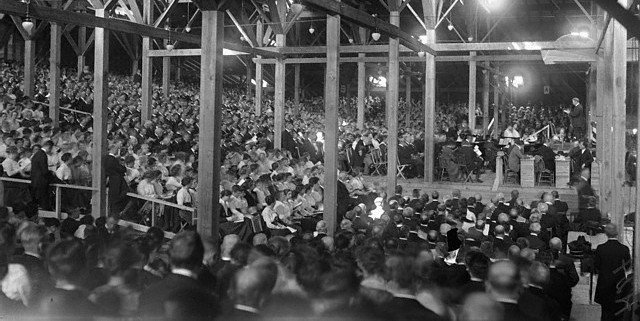
Sunday actually had his very own temporary tabernacle built for him, on Broadway and 168th Street (See below), on the site of Hilltop Park, former home of the New York Highlanders (later to become the New York Yankees). Sunday’s wife had spent the months before her husband’s arrival rallying the attentions of New York’s wealthiest businessmen, including John D. Rockefeller Jr., to assist in building the 16,000-seat arena.

The Sunday tabernacle was specially built “to fit his voice,” according to the New York Times, and also included a private bath for the preacher, “as the physical exertion of his speaking compel him to make an entire change of clothing after each service.”

From April 8 until June 19, 1917, Sunday engaged thousands with his messages and wild, half crazed performances. Naturally one of his pet causes was temperance; within two years, Congress would prohibit the sale of alcohol with the Eighteenth Amendment, something Sunday was instrumental in promoting.

Also factoring into Sunday’s success: America entered World War I that April, fueling attendance records. “If Hell could be turned upside down, you would find stamped on the bottom ‘Made in Germany,” he famously cried from the pulpit.

Sunday’s final assessment of the city: “New York has shown me that its Great White Way is not the pathway to hell that many believe. I know that many who walk the pavements of Broadway are as close to God as I am.”

New York was the culmination of Sunday’s success. America would swiftly outgrow Sunday’s hammy style by the 1920s and he would soon return to small town chapels and backwoods revival tents.

Of course, New Yorkers haven’t lost their interest in high-profile religious figures. Ninety-two years after Sunday took to a former Yankees playing field, pastor and author Joel Osteen comes to town on April 25th … rallying his flock at the new Yankees Stadium.

BELOW: Billy in his New York tabernacle on Palm Sunday

Mets Apple won’t fall far from the tree

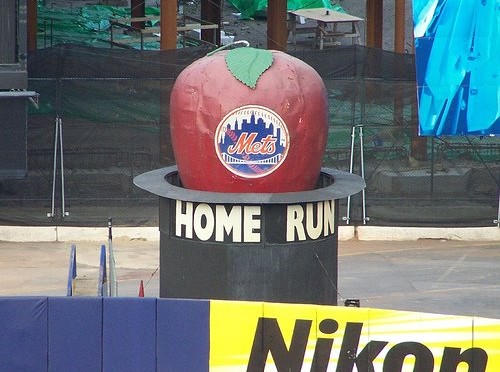
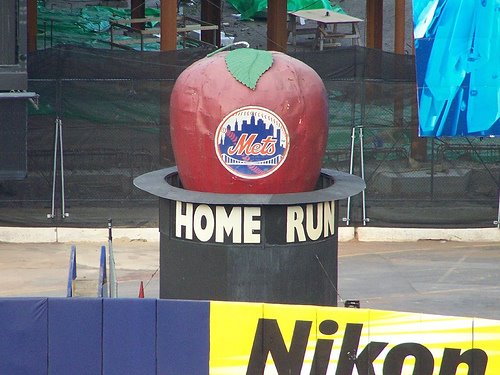
Back in March, we speculated on the fate of Thurman Munson’s locker, which had been preserved at Yankees Stadium since the untimely death of the popular Yankees catcher in 1979. Well, Shea Stadium has a far more irreverent but equally treasured fixture that many have been wondering about — the Mets Apple. Will the frail little thing make the move to Citi Field? The answer: no, and yes.

The Mets nine-feet-long, 582 lb apple, which would not look out of place in a Disney animatronic ride, made its debut during the 1980 season. Hoping a clever slogan could prove prophetic, the Mets advertised that “The Magic Is Back!” that year, literally demonstrating this with a mechanical apple that would emerge from a top hat behind center field every time a Met hit a home run.

Accompanied by a light show and the occasional firework display, it was without question one of the cheesiest things to ever grace an American sports stadium. Because of that, however, it was quickly beloved by Mets fans, derided by Yankees fans, and pretty much confused everybody else.

Silly, of course, but the apple was a colorful and original quirk of Shea Stadium. So when it was announced that the Mets would be moving to Citi Field, fans became concerned about the fate of the fruity apparatus. An impassioned website Save The Apple attempted to convince the team to move the apple, which they concede is “an ugly 80s relic.”

Their mission was only partially accomplished. According to the Daily News, a new replica of the apple will be popping up in center field at the new Citi Field.

It’s been confirmed that the original apple — fairly withered on the vine already — will be saved from the trash heap and will make the transition to the new field in some capacity. But how it will be displayed is undermined. Fans have suggested the apple stand alone on the walkway leading up to the new stadium.

Photo above from Flickr

Pope-fest 2008: The Holy (Sight) See

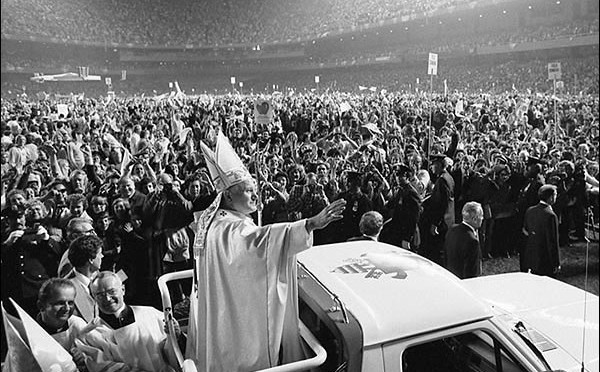
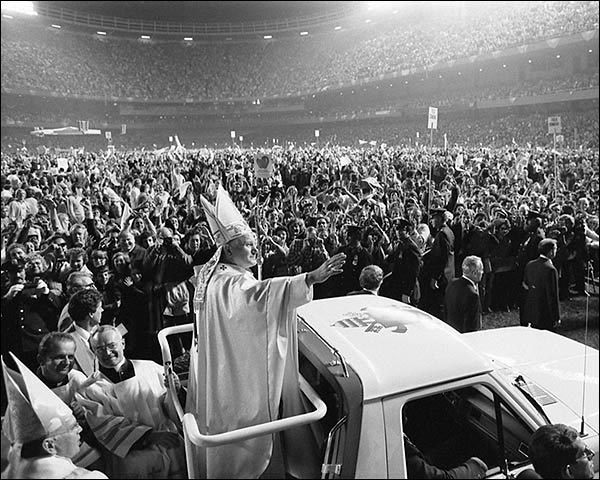
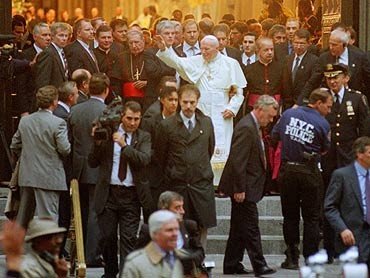
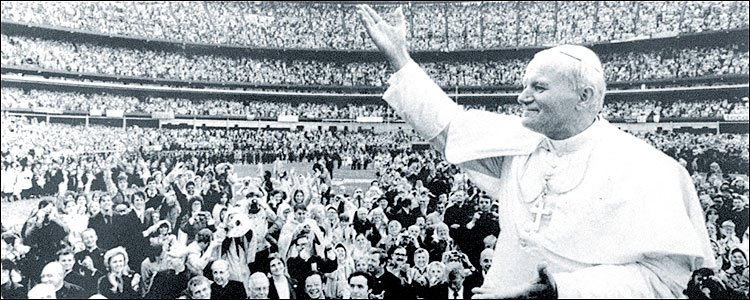
Pope John Paul greets the crowds at Yankee Stadium

Welcome Benedict! I’m not Catholic, but I do love a good papal visit to New York City. Nothing could be more absurd. The leader of the Catholic Church, a man who traces his spiritual lineage all the way back to the apostles — delivering mass at Yankee Stadium, traipsing Fifth Avenue in his sacred robes. I hope that person who dresses as Sesame Street’s Elmo in front of Rockefeller Center waves to Benedict as he enters St. Patrick’s Cathedral on Friday.

Only the Marquis de Lafayette and the Beatles have been treated to more rapturous displays of welcome by New York City residents. The city has been host to three previous papal visits, and in each case, St. Patrick’s has naturally been the manic center of activity. In fact each visit is immortalized on a plaque in front of the cathedral. Although with each trip, the pope in question managed to find a couple other unique corners of the city to visit as well.

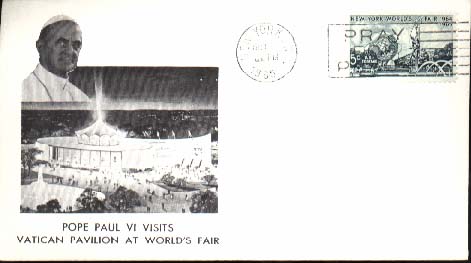
Perhaps the strangest was the very first — Pope Paul VI, the controversial leader who presided over the Second Vatican Council and made a name for himself traveling all over the world. Finally in an era were a man could be both pope and jetsetter, Pope Paul arrived in New York in October of 1965 and promptly went to visit his roommate, who was performing in a fair.

That roommate would be Michelangelo’s Pieta, on loan from St. Peter’s hallways to the Vatican pavilion at the 1964-65 World’s Fair. The Pope visited the Fair on Oct 4, 1965, on a busy day that also included mass at Yankee Stadium (the first papal mass ever in the United States), an address to the United Nations, and a meeting in the city with president Lyndon Johnson at the Waldorf=Astoria.

Today a rounded bench, or exedra, sits in Flushing Meadows park honoring the moment Pope Paul visited the Pavilion. (It seems that whenever a Pope hovers in a place for more than a few minutes, a plaque or monument springs up in its place.)

By the way, I found this extraordinary page full of great photos about the Pope-mobile, the superfine limousine used by the Pope during his visit.

But its Pope John Paul who’s the real New York favorite; he held the office for so long that he managed two trips to Gotham City — in 1979 and 1995.

His October 1979 trip was like a rock concert tour, also swinging through Philadelphia, Boston, D.C., Chicago and Des Moines. Part of the enthusiasm was because John Paul, at 58 years old, had just been appointed the year before.

As a cardinal, he had already held mass at Yankee Stadium, so by the time he did it again on October 2, 1979, he was as much a fixture as Reggie Jackson. Rain greeted over 9,000 cheering worshippers — or fans — and, according to legend, when the Pope mounted the ballfield to address the crowd, the rain showers stopped. And as a blessing for Mets fans, the next day the Pope also held rapt an audience of 52,000 at Shea Stadium (pictured below).

But like all rock stars, the Pope couldn’t complete his New York odyssey without a performance at Madison Square Garden. Although John Paul also addressed the U.N. and a St Patrick’s audience during that trip, he’s best remembered by many for his inspirational address on October 3rd to 19,000 city children.

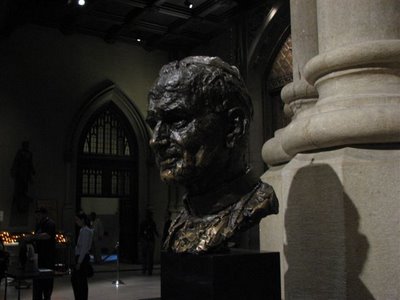
St Patrick’s honored his Holiness’s visit in 1979 by installing a bust (see below). But he would be back. On almost exactly the same day, sixteen years later.

New York City in 1995 was a vastly different city and John Paul returned for a longer visit — four days in total in the entire New York area — on October 4th. This time, instead of just delivering messages to the clergy gathered at St. Patrick’s, he spontaneously decided he wanted to walk around the block. And why not? You’ve got shopping, Saks, street vendors selling Pope souvenirs!

Below: the Pope prepares for his light stroll

The Pope also finished off his collection of performing in gigantic venues for mass — holding court in Giants Stadium, the Aquaduct Racetrack in Ozone Park and eventually to 100,000 people on the great lawn in Central Park.

From there, the elderly leader of the Catholic Church gave the city the ultimate shout-out: “This is New York! The great New York! This is Central Park. The beautiful surroundings of Central Park invite us to reflect on a more sublime beauty: the beauty of every human being, made in the image and likeness of God. Then you can tell the whole world that you gave the pope his Christmas present in October, in New York, in Central Park.”

Pope Benedict, here for two days (April 19-20), has broken the apparently holy tradition of visiting New York in the first week in October. But Benedict, as the cardinal formerly known as Joseph Ratzinger, actually visited the city in that lesser role in 1988, where apparently he was met with protest from gay activists and shunned by some prominent Jewish leaders.

This year, he intends to hit all the “usual” Pope spots — St. Patricks, the United Nations, Yankee Stadium — but has added a couple surprising detours: Park East Synagogue and Ground Zero. At this rate, he might even stop in to see an off-Broadway show! Is Nunsense still playing?

Categories
Podcasts

PODCAST: The New York Yankees

Get ready for nine innings (or 30 minutes) of the greatest sports team ever — the New York Yankees. Hear about their modest beginnings, their best players, and the fate of Yankee Stadium, their home for 85 years.

(And I apologize in advance for this week’s echo-y sound…had some difficulty with one of my directional mics!)

Listen to it for free on iTunes or other podcasting services. Or you can download or listen to it HERE

Babe Ruth in 1915, as a Red Sox. He would be traded in 1919 to the Yankees, thus beginning the Curse of the Bambino.

Ruth was alledgedly traded to the Yankees to finance Frazee’s musical No No Nanette. (Frazee’s name appears on the top of this poster.) Full disclosure — we dismiss this musical in the podcast, although musical enthusiasts might proclaim No No Nanette was very well worth it, if nothing more than for its signature song “Tea For Two.” Its first run ran over two years in 1925 and a 1971 revival did win several Tony Awards.

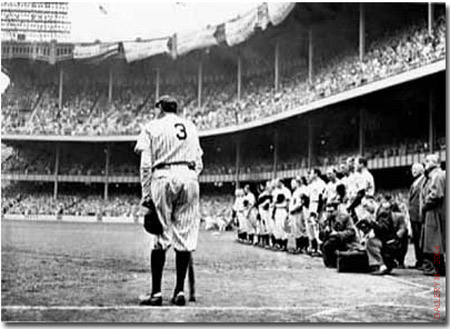
Babe at his retirement….

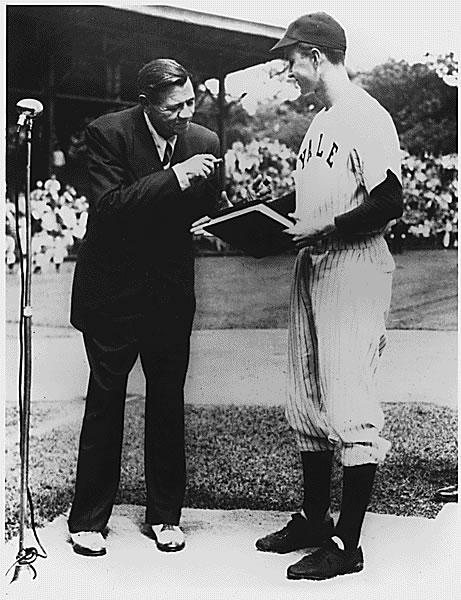
Babe Ruth in 1948, with a young Yale player, George H. W. Bush

Yankees owners Jacob Ruppert and Tillinghast L’Hommedieu Huston, with (fourth on the right) Red Sox owner Harry Frazee.

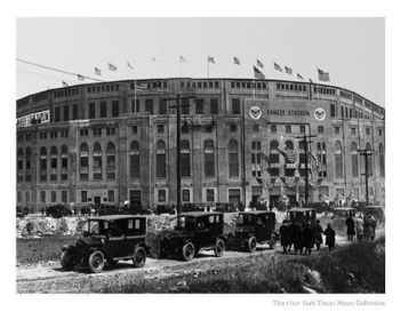
Yankee Stadium in its opening year 1923

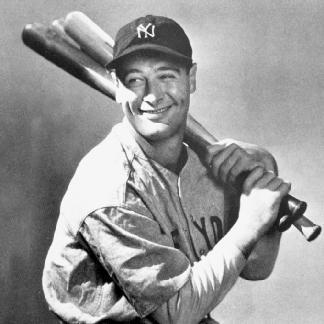
The player who probably enjoys the greatest mystique in the pantheon of iconic Yankee stars — Lou Gehrig

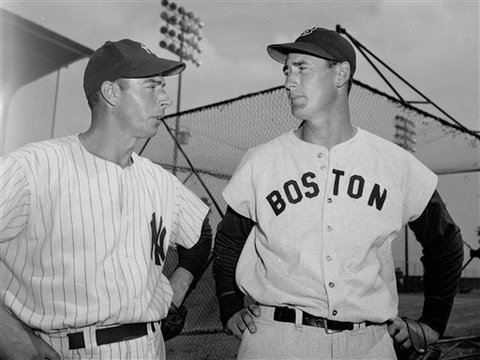
Joe Dimaggio with rival Ted Williams from the Red Sox. These two were almost traded with each other by their rival owners over an unfortunate night of cocktails.

DiMaggio ‘the Yankee Clipper’ retired in 1951 and soon found himself in an ordinary life with an ordinary wife.

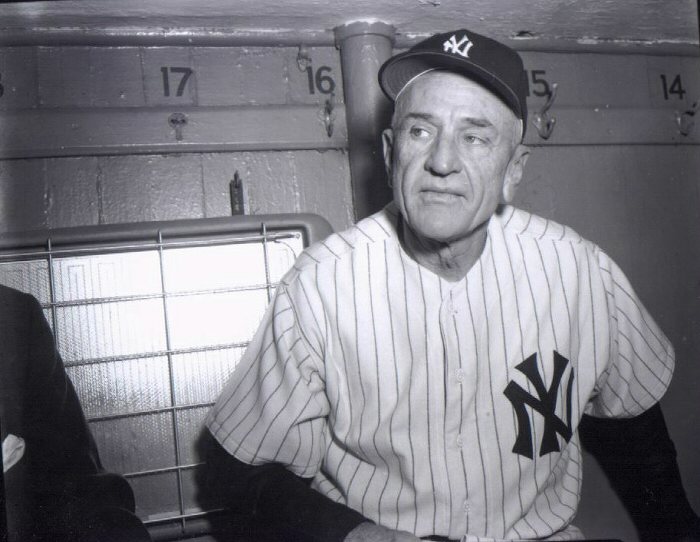
And who doesn’t love them some Casey Stengel, one of the best baseball managers who ever lived?

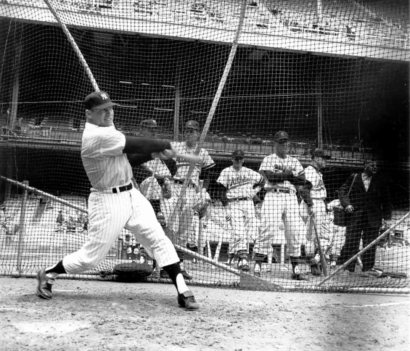
Mickey Mantle at batting practice

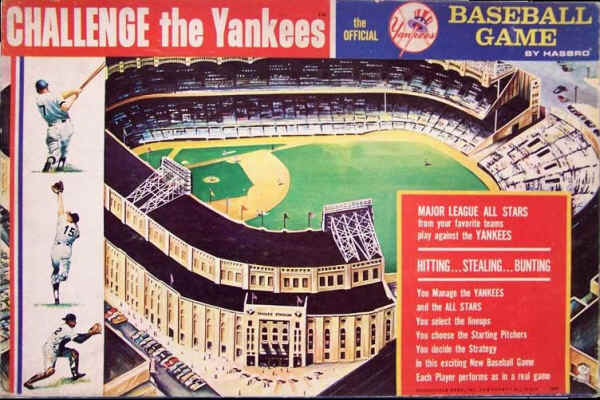
A 1960s Yankee board game

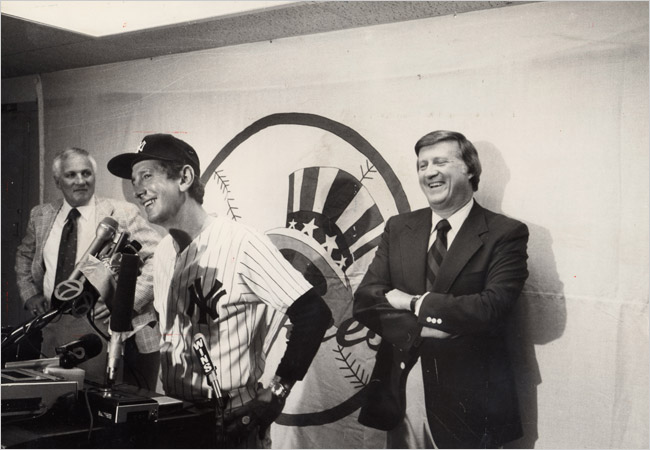
Billy Martin and the man who would repeatedly fire him, George Steinbrenner (Pic courtesy the New York Times)

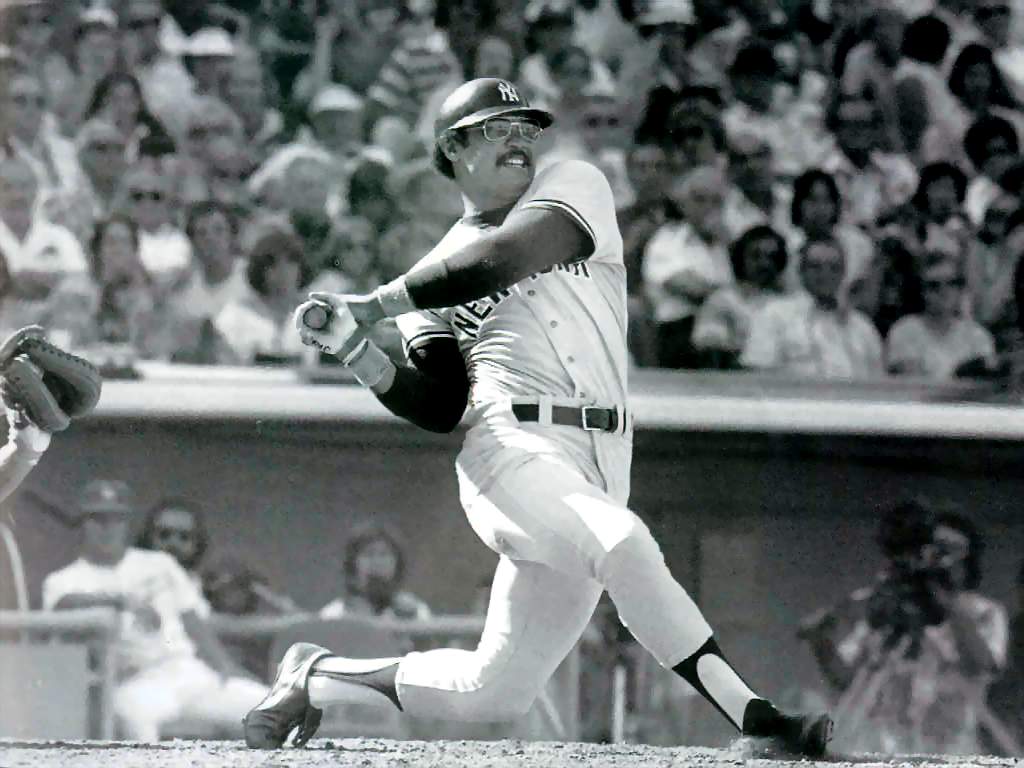
The controversial but undeniably sensational Reggie Jackson

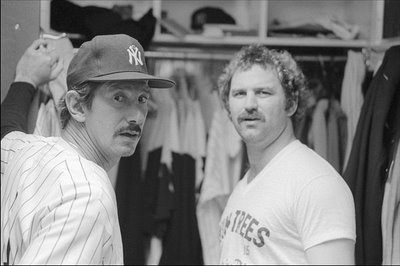
Billy Martin with Thurman Munson

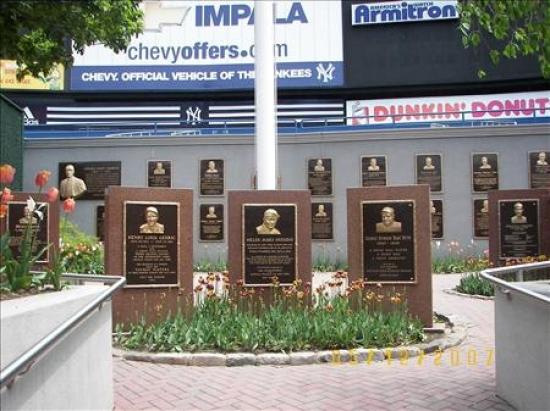
Monument Park at Yankee Stadium, honoring the greatest in baseball. Thank God they moved it out of center field….

About our guest host:
A former journalist, Tanya Bielski-Braham is a writer, personal chef and full-time “foodie” who specializes in educating her clients on healthy, tasty diets and proper nutrition. She can be reached at skinnytomato@gmail.com. [Ed. note — A Yankee fan who’s an amazing cook!]

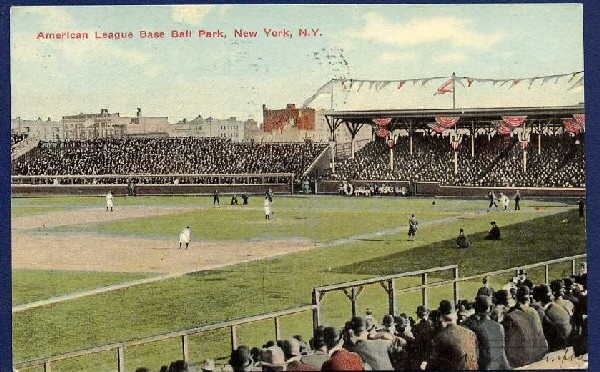
The Hilltop home of the Yankees


Before they went by their better known name — and before they were any good — the team that would become ‘the Yankees’ were known as the Highlanders, from 1903-1913. The name played to a couple dated references. The team captain was named Joseph Gordon, and the name referenced a British military outfit named Gordon’s Highlanders. More importantly, the team played on one of the highest points in the city, in a long forgotten ball field called Hilltop Park.

A large but spare field located in Washington Heights on Broadway between 165th and 168th streets, Hilltop Park could accommodate 15,000 to 16,000 spectators comfortably, though more exciting match-ups would draw clusters of almost 10,000 standing room only crowds. In fact, in the rather lax early days of formalized sports, fans were allowed to stand around, almost virtually on the playing field!

I’m sure it was at that capacity on opening day, April 30, 1903, when the Highlanders played the Washington Senators. Yet despite a cost of $200,000 and arresting views of the Hudson River, Hilltop had a swamp in right field and most of the bleacher seats were uncovered until 1912, making for many a hot, steamy game for fans.

The Highlanders were in equally good shape. In fact, many of the best moments in Hilltop Park’s brief history were made by players from other teams against the Highlanders. Cy Young (Boston Americans) and Ty Cobb (Washington Senators), the two best known players from this generation, had spectacular days on Hilltop beating the crap out of the local team.

Hilltop Park is almost completely gone save for one peculiar memorial. In 1914, almost as soon as the Highlanders moved to the nearby Polo Grounds (and thus changed their team name to their popular nickname ‘the Yankees’), the field was demolished. Within ten years, the hospital that today is known as the Columbia-Presbyterian Medical Center) would be built over it and it still stands there today.

However a small base-shaped plaque can be found in the grass outfront, placed there in 1993. It’s on the exact spot of the original home place — thank God it happened to be in a garden and not somebody’s room — honoring the now-forgotten home of the team that would become the most successful team in baseball.

A brief history of New York Giants

I’ve had a couple emails asking us to do a New York Giants podcast this week. Oh, had I known! We would have planned one. However, by the end of next month, we will unveil another major sports-themed podcast.

In the meantime, here’s a few New York Giants’ non-statistical, history-related factoids to chew on and toss out to your friends at Sunday night’s Superbowl party:

— The National Football League was all of five years old when the Giants, and four other teams, joined up in 1925. New York was an unusual place to host a professional football team back then; teams normally propped up the spirits of small to mid-size towns (Canton, Muncie, Rock Island, Portsmith, Akron, Buffalo) and many were particularly centered in Ohio. That’s why the Football Hall of Fame is in Canton.

— Promoter and bookie Tim Mara bought the New York Giants for all of $500 back in 1925, and for his troubles almost went bankrupt. The team thanks him by immediately losing their first three games, before charging through an amazing winning streak and ending the season 8-4.

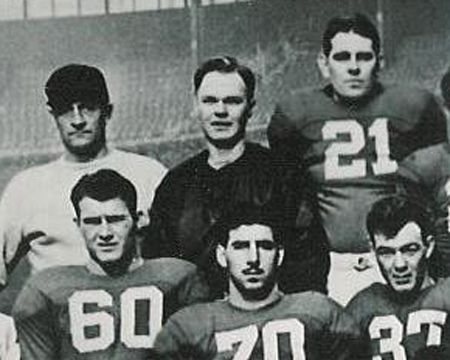
— In 1931, Mara passes ownership of his team to his two sons Jack Mara (age 22) and Wellington Mara (age 14). By far, Wellington is the youngest owner ever of a major league football team. Believe it or not, he would co-own the team all the way until his death in 2005! (That’s him in the pic below, with the team in 1941).

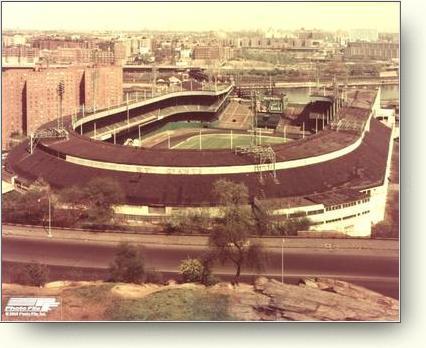
— The Giants played at Polo Grounds, at West 155th Street and Eighth Avenue, as did almost every other New York sports team at one time or another, including the New York Jets (even when they were known as the Titans). Sports enthusiasts referred to it as Polo Grounds IV, as three prior incarnations (including one in the same spot) have hosted New York sporting events since the 19th Century.

— In a 1934 game with the Chicago Bears, the temperature dipped to 9 degrees, and the grounds were so icy that the coach made the Giants switch to basketball sneakers in the Fourth Quarter, effectively winning them the game 30-13 against the slippery Bears. The game is infamously known as ‘The Sneaker Game’.

— A game against crosstown rivals the Brooklyn Dodgers (yes, they were a football team too) on Dec 7, 1941, was interrupted by the announcement of the attack on Pearl Harbor and the call for military personnel over the loudspeakers. Giants player Al Blozis would enlist in the Army and die in Vosges Mountains during the Battle of the Bulge; his number 32 would be permanently retired.

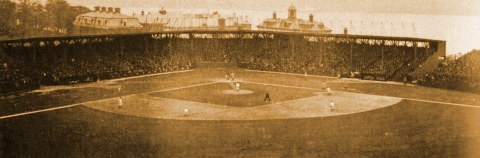
(Above: overhead shot of the Giants’ early home, the Polo Grounds)

— The Giants move to Yankee Stadium in 1956. That same year popular Giants player Frank Gifford (Kathee Lee’s husband) won the National Football League’s MVP honor.

— 1958 The Giants play the Baltimore Colts in the first-ever televised championship game, largely considered in football mythology as ‘The Greatest Game Ever Played’.

— 1966: the Giants worst season, going 1-12-1

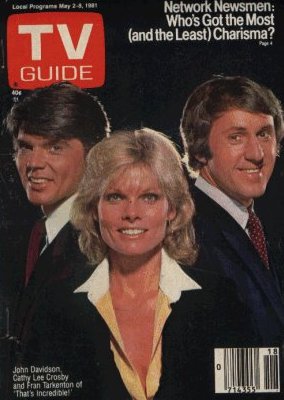
Fran Tarkenton, a Giant quarterback from 1967-72, became so popular that he became host of the 70s show That’s Incredible with co-hosts John Davidson and Cathy Lee Crosby.

— The Yankees kick out the Giants, and they prep for a new stadium to be built in East Rutherford, NJ. So from 1973 to 74, the Giants temporarily move their games to New Haven, Connecticut and the Yale campus. However, after terrible losses there, they double back to the city to share Shea Stadium with the Jets for a single season (1975)

— Yay! The Giants move into their new stadium in 1976. They rejoice by promptly losing almost every game they play there, ending with a 3-11 record.

— The Giants have won the Super Bowl exactly TWICE (1986 and 1990), however before the NFL-AFL merger in 1970, they did manage to be the NFL champs four times.

Eli Manning starts with the Giants in 2004. His first decisive performance came in January 2, 2005, in a 28-24 win against the Dallas Cowboys.

— Wellington Mara, a constant presence with the Giants since his teens, dies at age 89.

Check out the Giants official history. And thanks to Sports Encylopedia for the info…