Categories
Neighborhoods Podcasts

Welcome to Yorkville: German life on the Upper East Side

EPISODE 332 The Manhattan neighborhood of Yorkville has a rich immigrant history that often gets overlooked because of its location on the Upper East Side, a destination usually associated with wealth and high society.

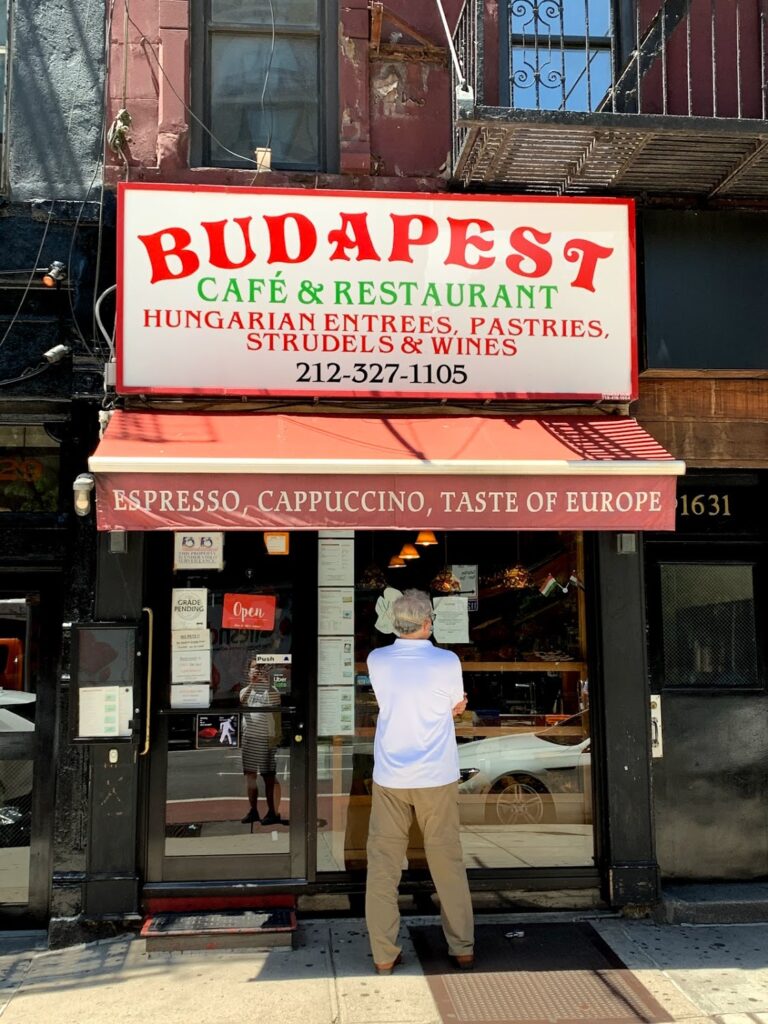
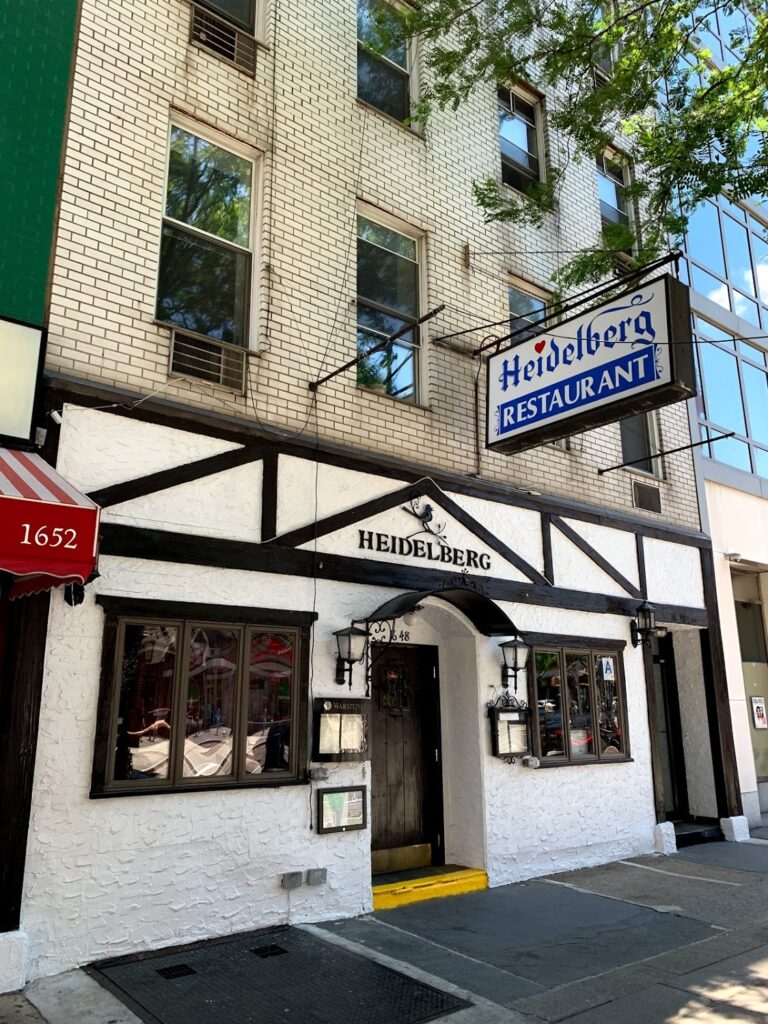
But Yorkville, for over 170 years, has been defined by waves of immigrant communities which have settled here, particular those cultures from Central and Eastern Europe — Germans, Austrians, Hungarians, Czechs and Slovaks. 

The neighborhood developed thanks to its location to various streetcar and train lines, but that proximity insured that Yorkville would evolve in quite a different way from the more luxurious Fifth Avenue just a few blocks away.
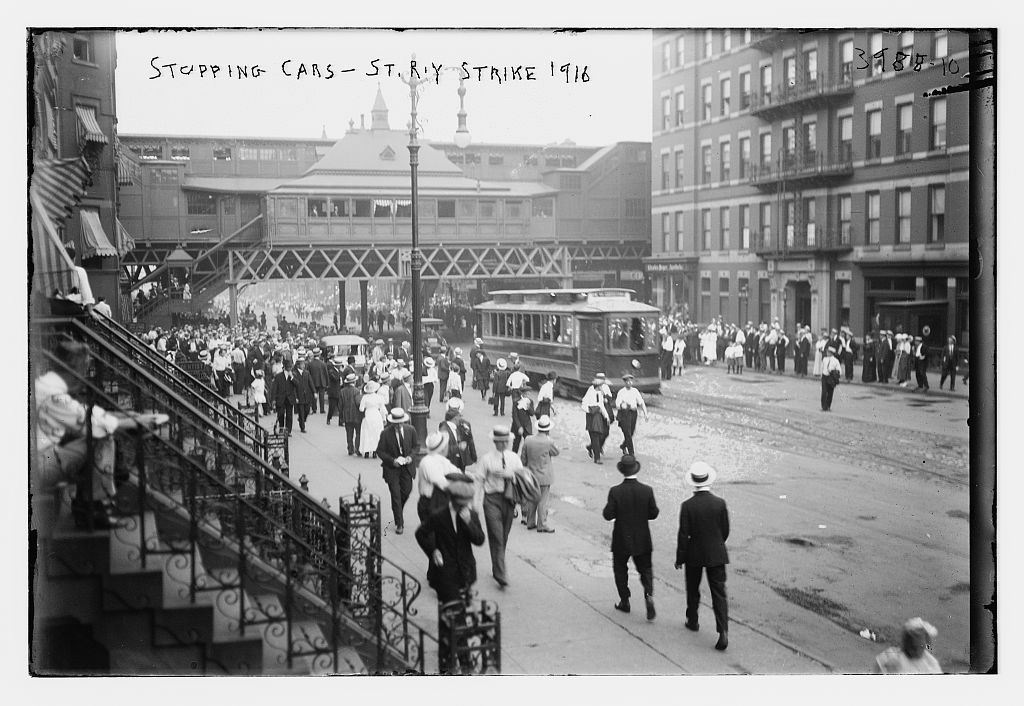
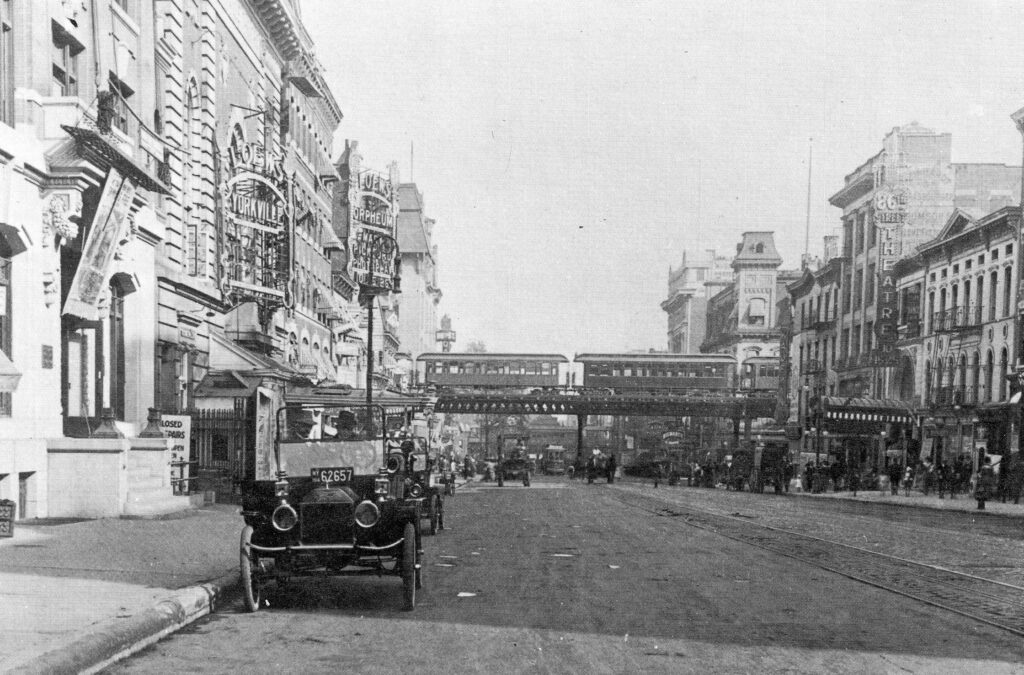
The corner of 86th Street and Second Avenue, 1916 — Library of Congress/Bain Collection

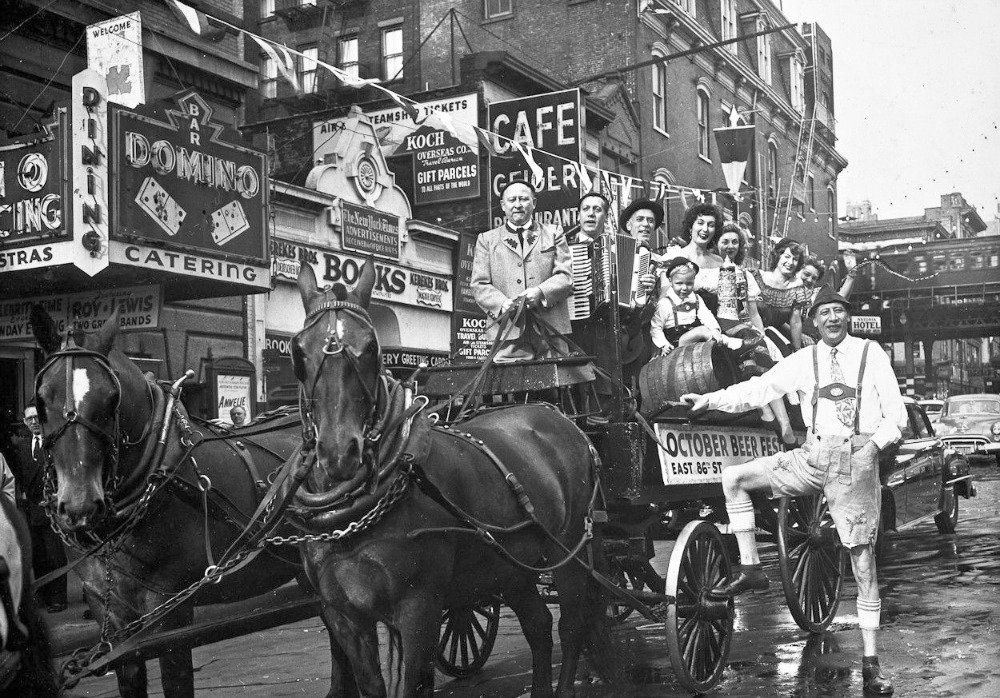
Yorkville’s German cultural identity was centered around East 86th Street — aka Sauerkraut Boulevard — where cafes and dance halls catered to the amusements of German Americans. The Yorkville Casino was a ‘German Madison Square Garden’, catering to those seeking cabaret, film and ballroom dancing.

Does the spirit of old Yorkville still exist today? While events in the early 20th century brought dramatic change to this ethnic enclave, those events didn’t entirely erase the German spirit from the city streets.

In this show, we tell you where can still find the most interesting cultural artifacts of this often overlooked historical gem.

This episode is brought to you by the Historic Districts Council. Funding for this episode is provided by public funds from the New York City Department of Cultural Affairs in partnership with the City Council and Council Member Benjamin Kallos.

This episode features an interview with Historic Districts Council executive director Simeon Bankoff and with Council Member Benjamin Kallos sharing his experiences in the neighborhood.


Listen to our podcast on the history of Yorkville here:

To get this episode, simply stream on Stitcher or your favorite podcast player

Or listen to it straight from here: WELCOME TO YORKVILLE: GERMAN LIFE ON THE UPPER EAST SIDE
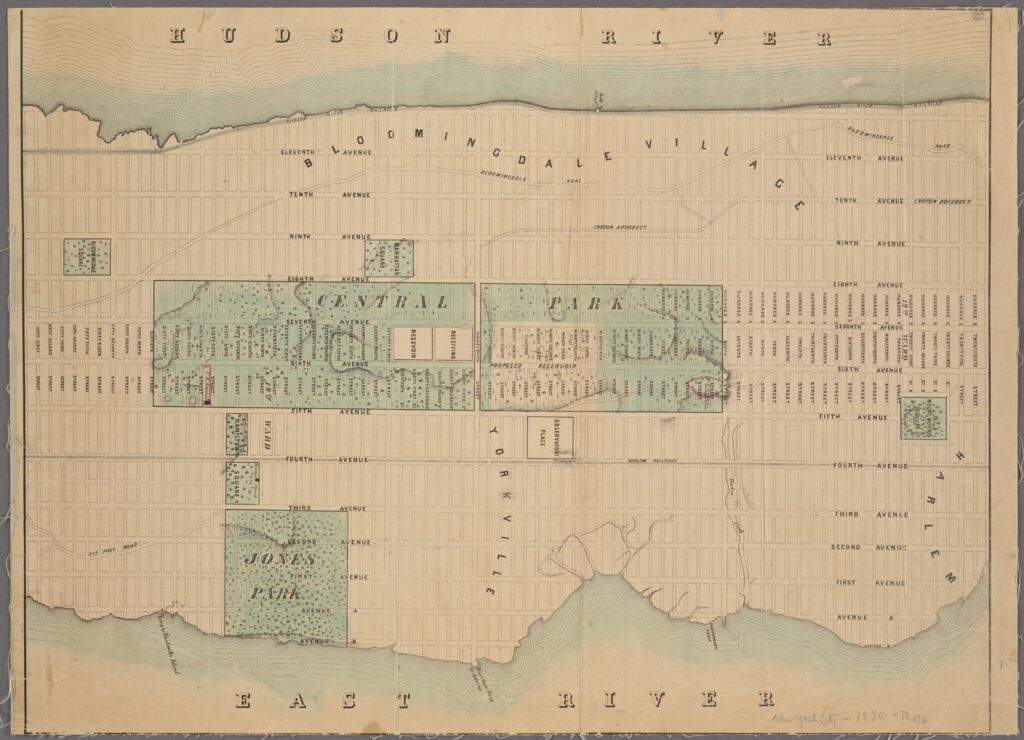

A map from 1870, showing Yorkville officially on the map. Interestingly this is a bit of a ‘ghost map’ as Jones Wood (pictured here as Jones Park) was never really developed as an official park.

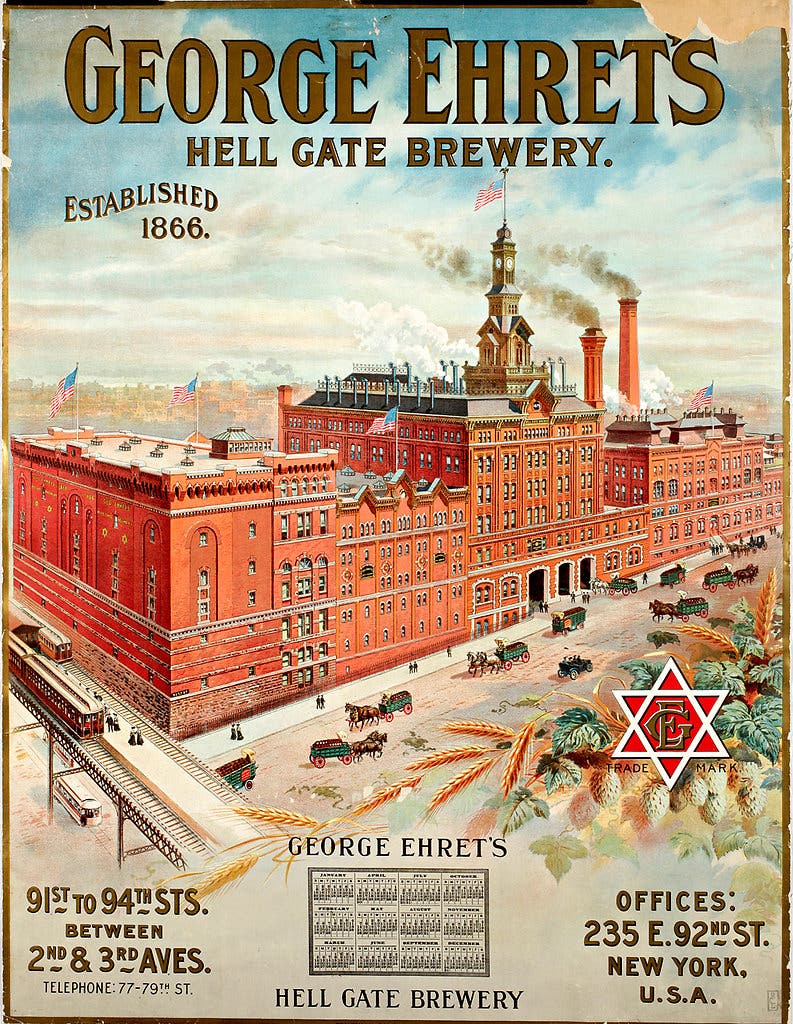
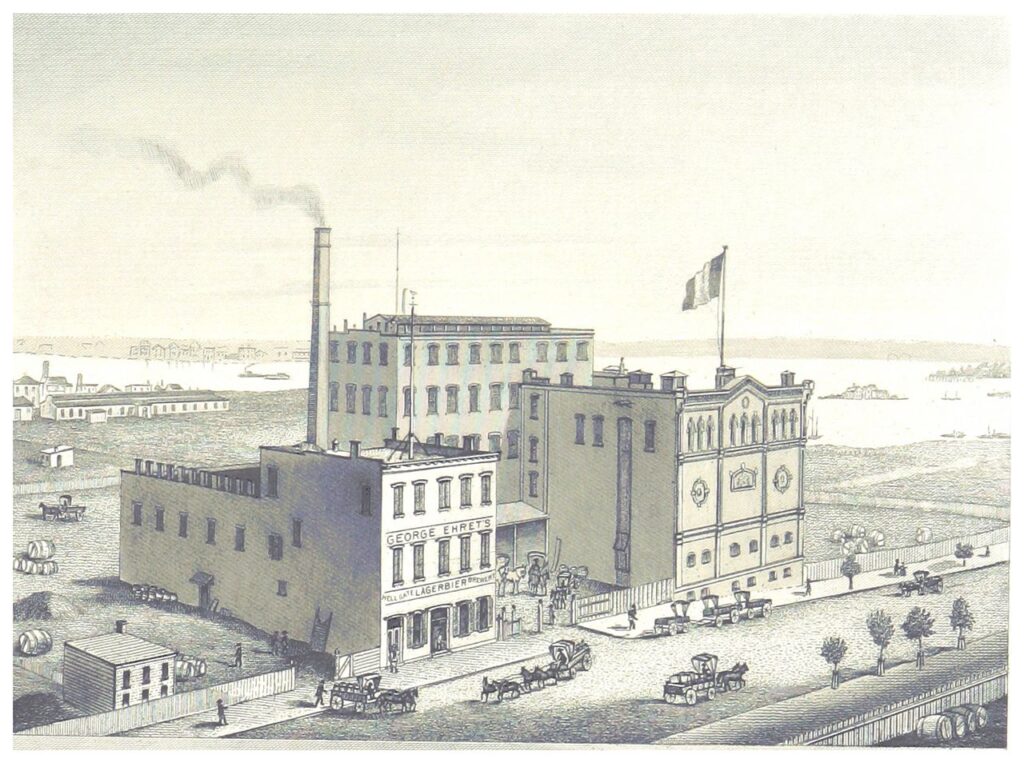
Ehret’s brewery in its early years, then in its grander days:
A couple interesting streetscapes of Yorkville from 1885 (courtesy the Museum of the City of New York) showing homes with large yards along a streetcar route:
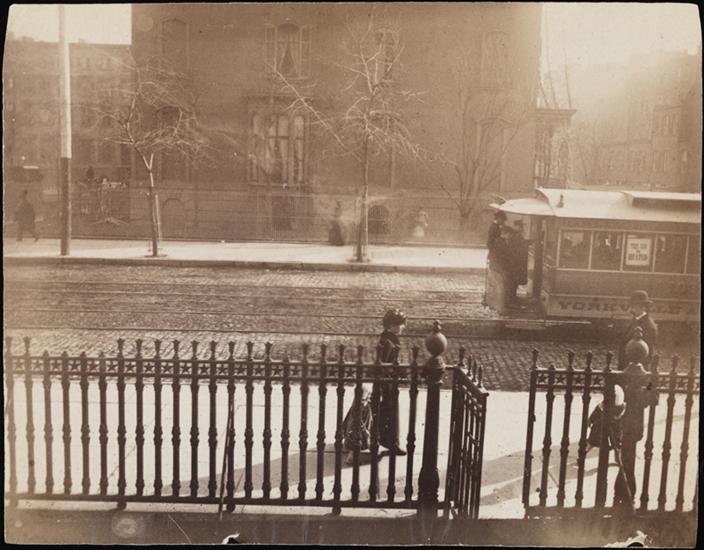
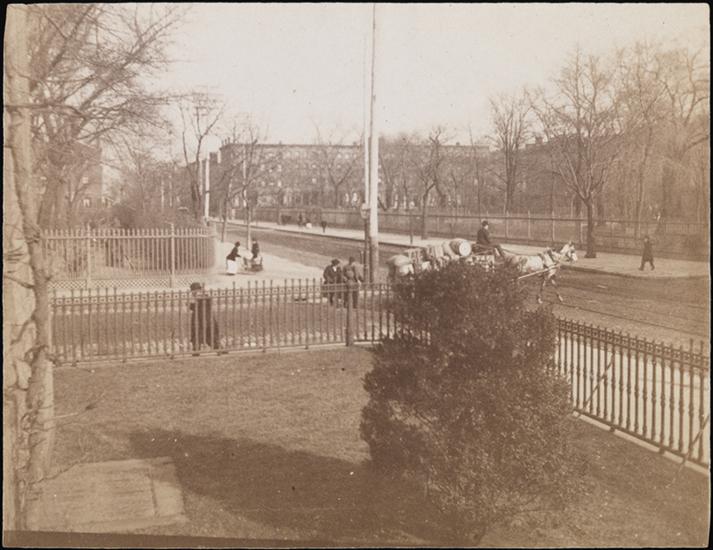
Museum of the City of New York
East 86th Street in 1914 — Ephemeral New York
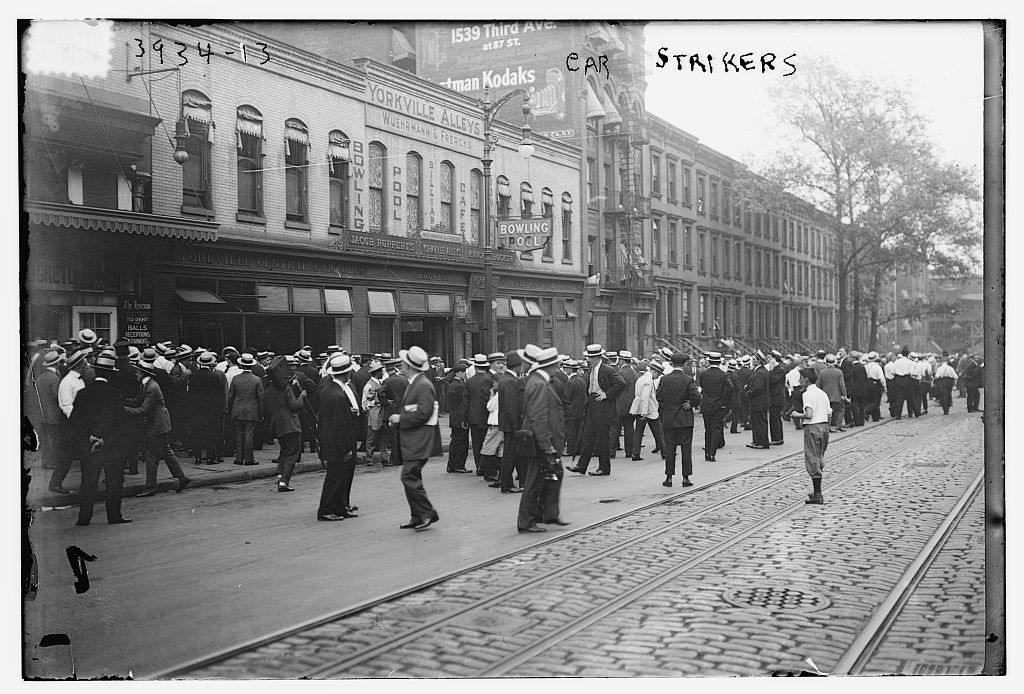
Gathering for a streetcar conductor’s strike in Yorkville on East 86th Street — Library of Congress/Bain Collection

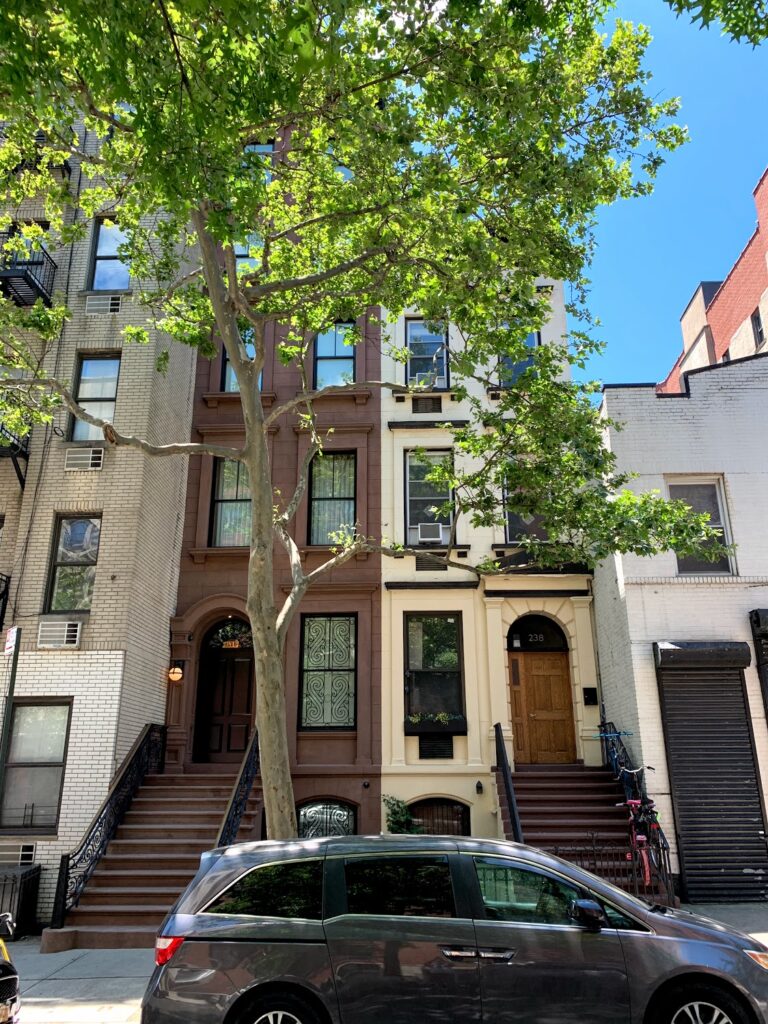
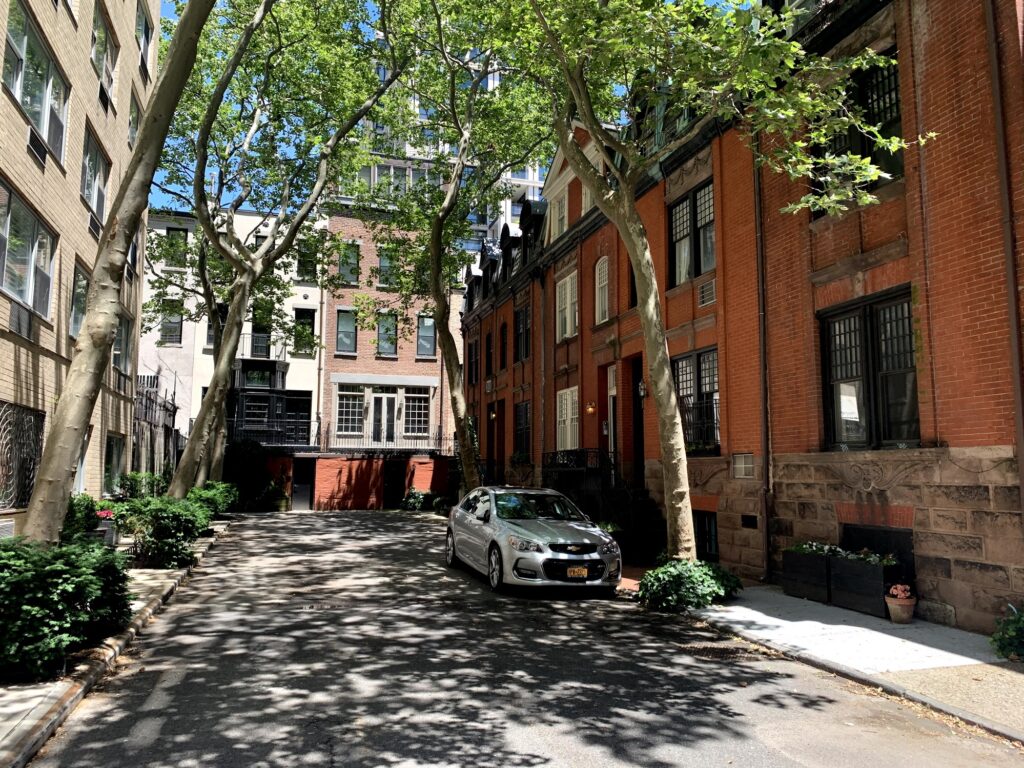
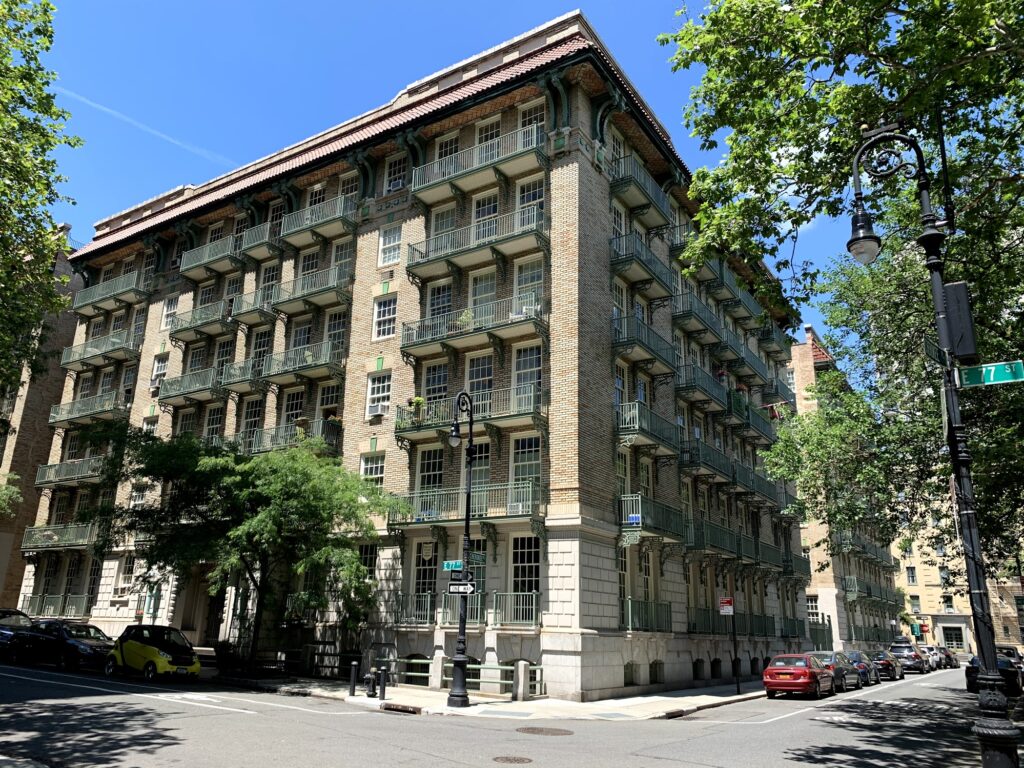
A diversity of housing in just a few blocks (photos by Greg Young):
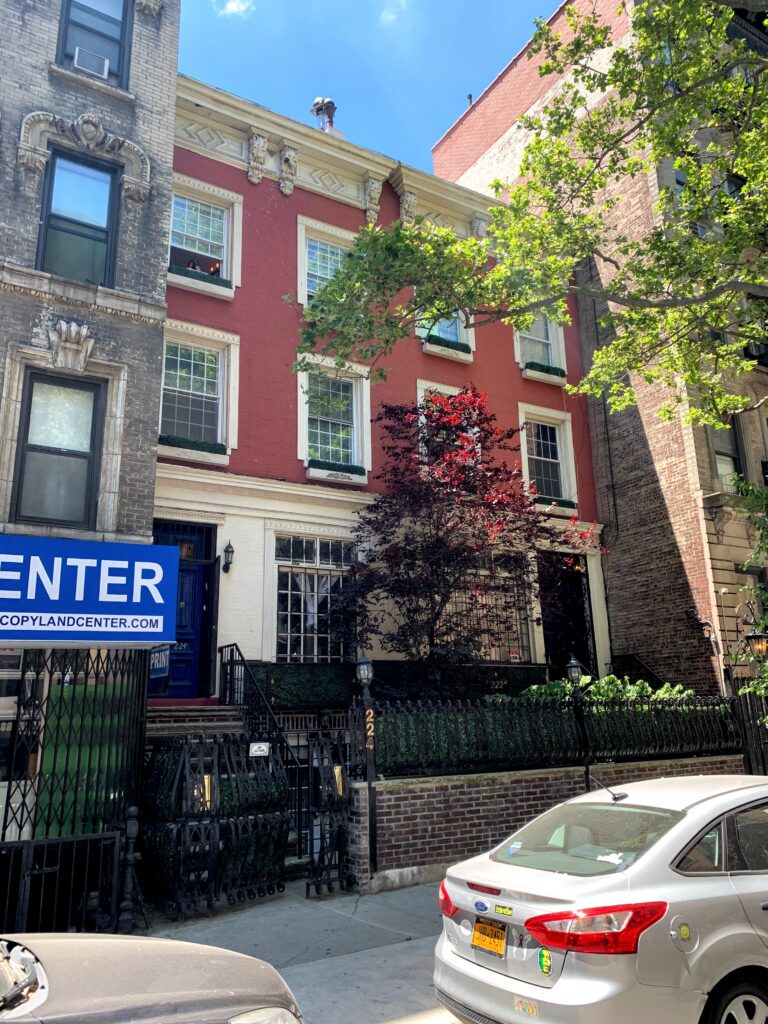
Beautiful Henderson Place!
The Cherokee Apartments

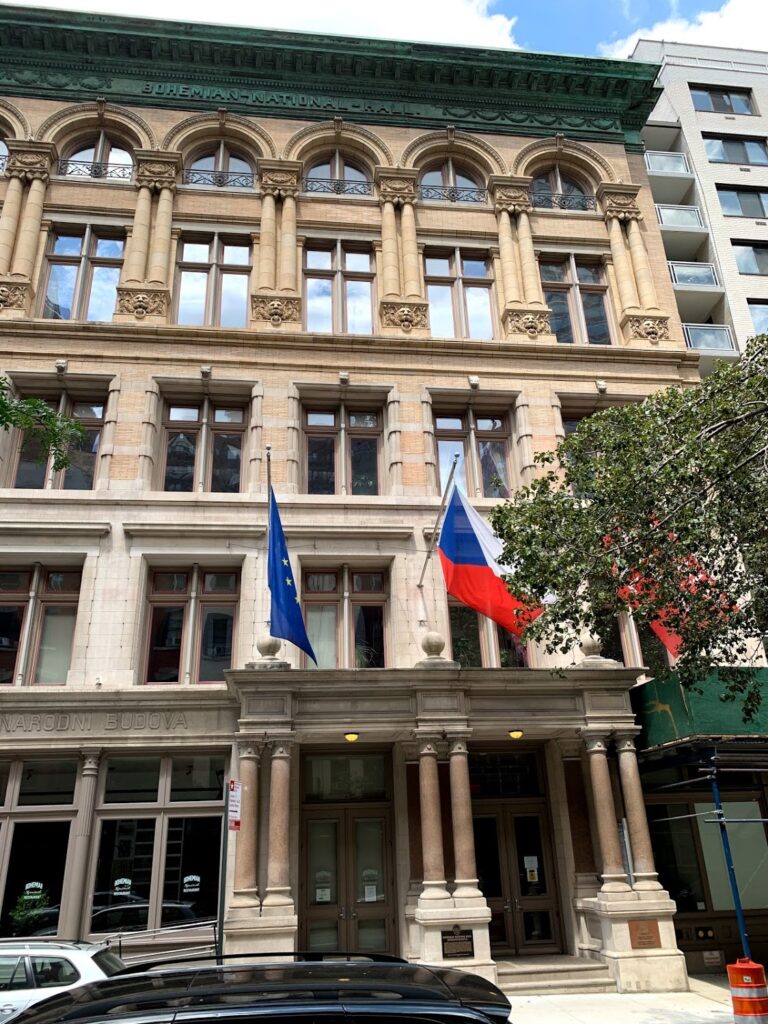
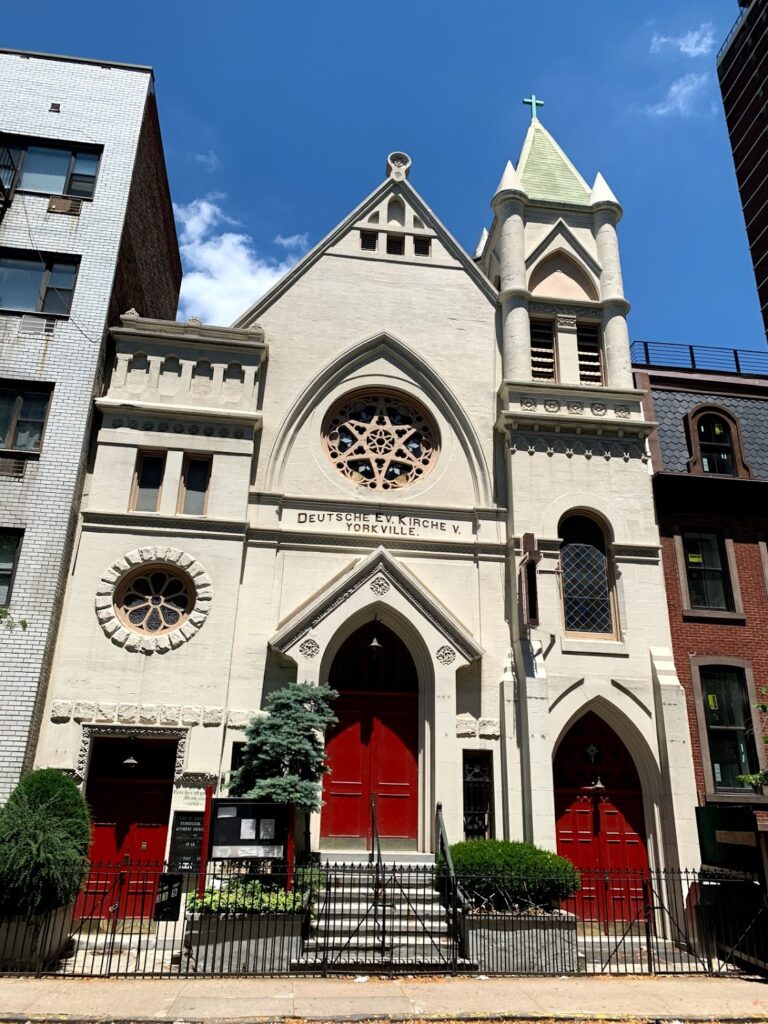
Some other sites of Yorkville (photos by Greg Young)
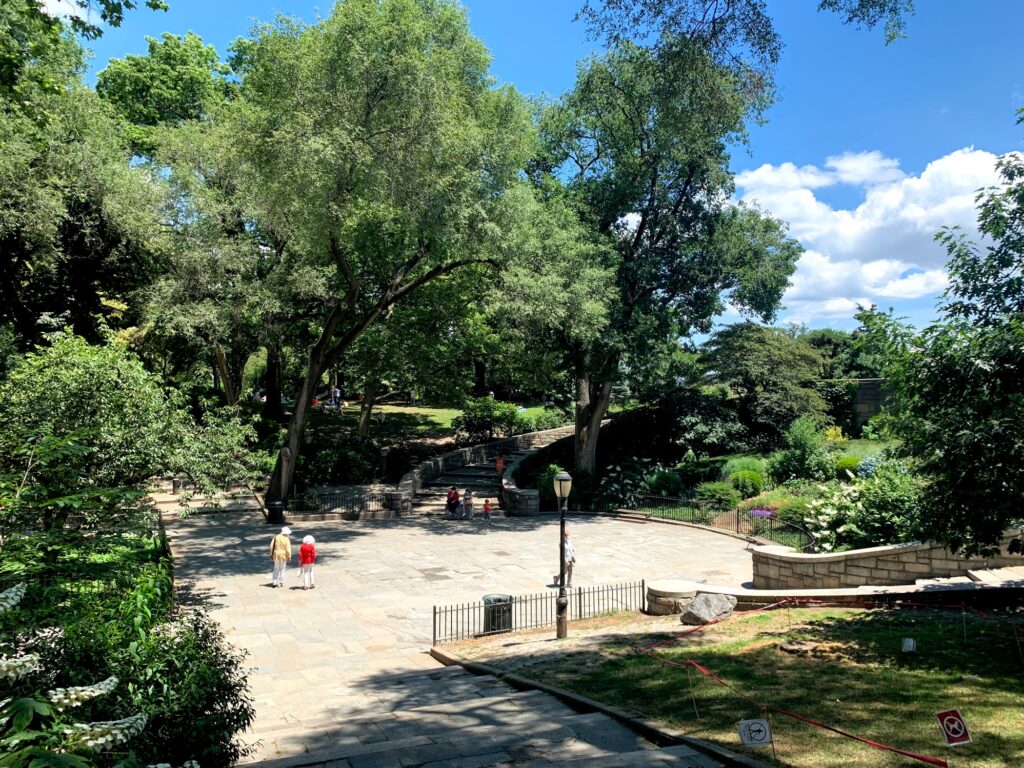
Carl Schurz Park
Bohemian National Hall
Zion-St. Mark’s Evangelical Lutheran Church ( 339—341 East 84th Street) which traces its congregation from the Lower East Side.

FURTHER VIEWING


An excellent short film about the history of Yorkville from the Friends of the Upper East Side

And a short introduction to Schaller & Weber:


FURTHER LISTENING

After listening to this show on the history of Yorkville, dive into our back catalog to check out shows on subjects mentioned in this show:

The East Side Elevated: Life Under the Tracks

The General Slocum Disaster 1904
Danger In The Harbor: The Black Tom Explosion

Archibald Gracie and His Mansion

Categories
Planes Trains and Automobiles Podcasts

The East Side Elevateds: Life Under the Tracks

EPISODE 331 During the Gilded Age, New York City had one form of rapid transit — the elevated railroad.

The city’s population had massively grown by the 1870s thanks to large waves of immigration from Ireland and Germany. Yet its transportation options — mostly horse-drawn streetcars — were slow and cumbersome.

As a result, people rarely lived far from where they worked. And in the case of most working class New Yorkers, that meant staying in overcrowded neighborhoods like the Lower East Side.

In the 1870s, New York hoped to alleviate the population pressure by constructing four elevated railroad lines — along 2nd, 3rd, 6th and 9th Avenues — in the hopes that people would begin inhabiting Upper Manhattan and the newly acquired portion of Westchester County known as the Annexed District (today’s South Bronx).

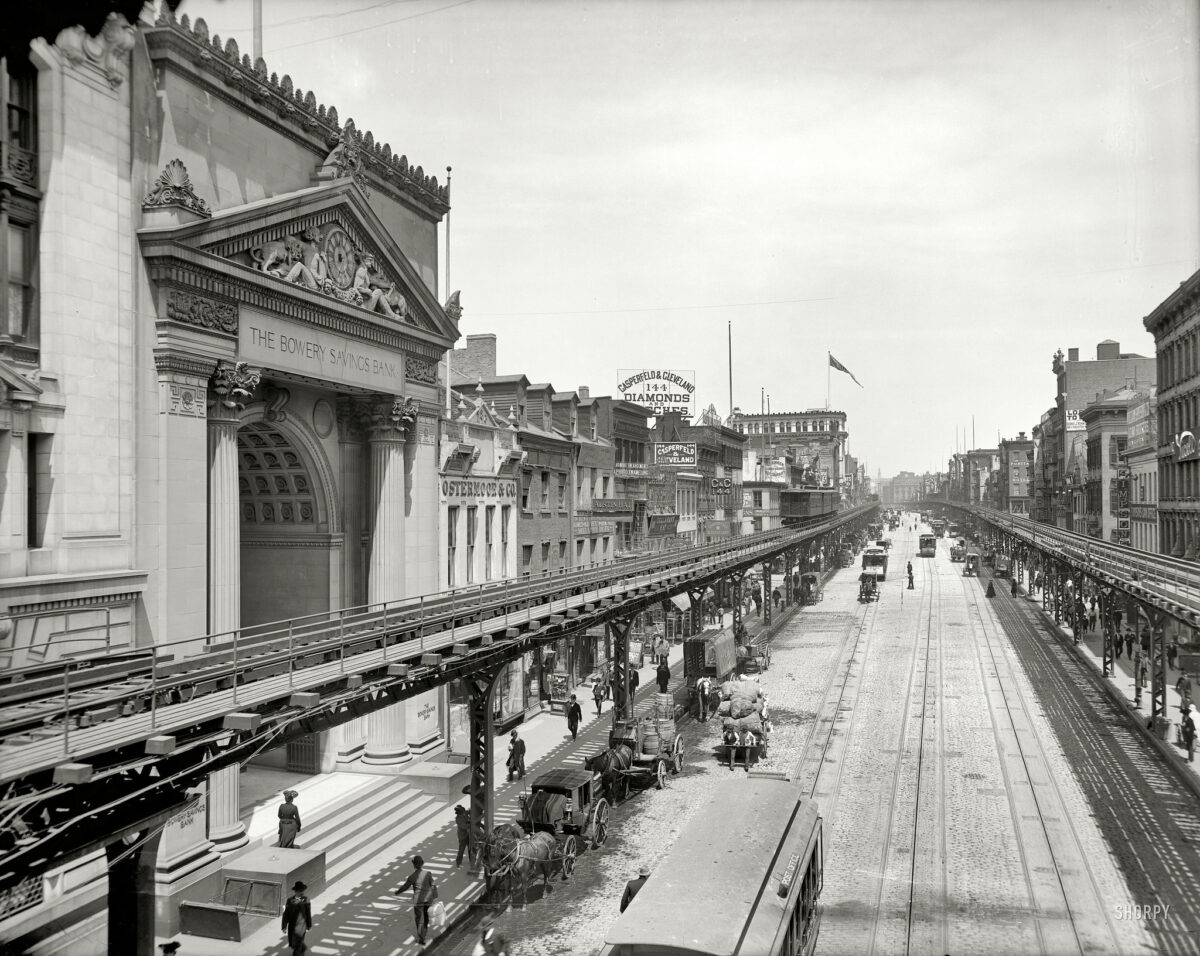
In this show, we focus on the two eastern-most lines and their effects on the city’s growth. Take a ride with us — through Lower Manhattan, the Lower East Side, Midtown Manhattan, Yorkville, East Harlem and Mott Haven!

FEATURING an interview with elevated expert and tour guide Michael Morgenthal.

This episode is brought to you by the Historic Districts Council. Funding for this episode is provided by public funds from the New York City Department of Cultural Affairs in partnership with the City Council and Council Member Benjamin Kallos.


Listen to our podcast on the history of New York City’s East Side Elevateds here:


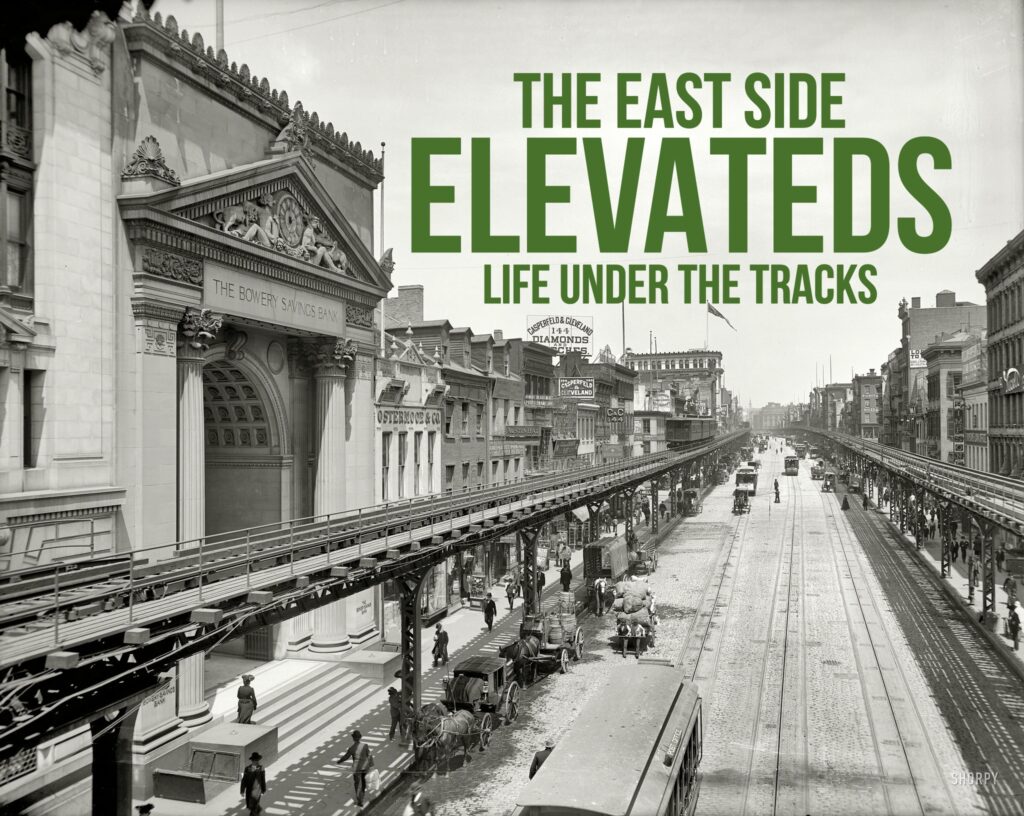
The Third Avenue elevated, 1910 — Image courtesy Shorpy. (Click here for a Hi-Res version with great detail)
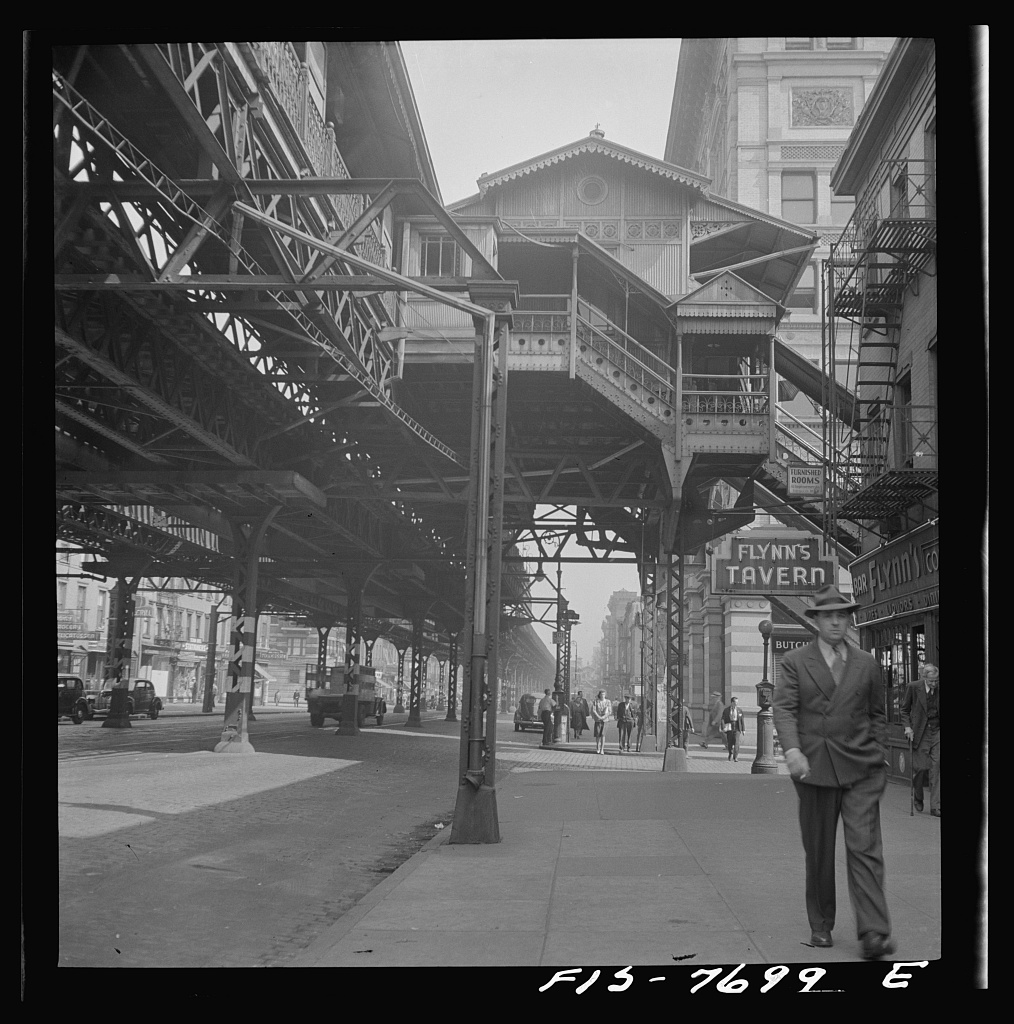
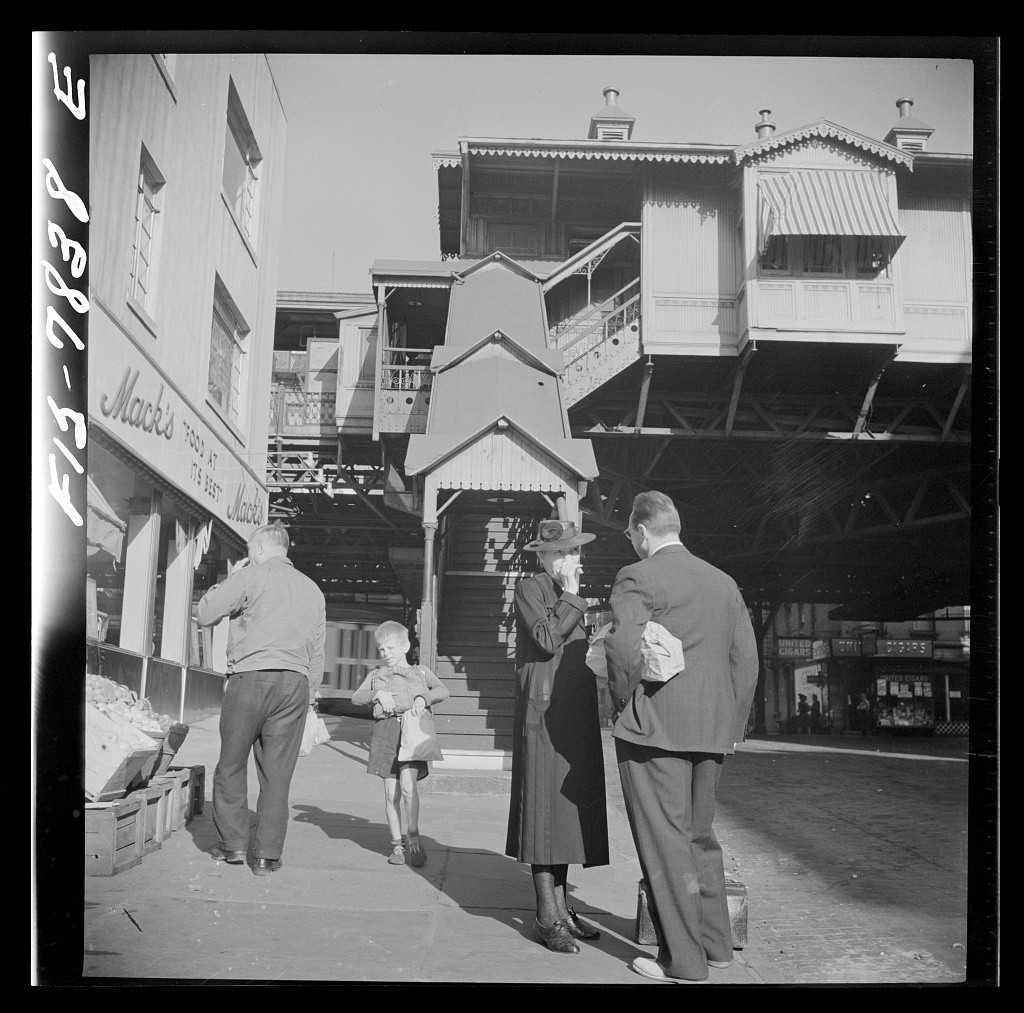
The Third Avenue El at 18th Street, September 1942. Courtesy Marjory Collins, United States Office of War Information.
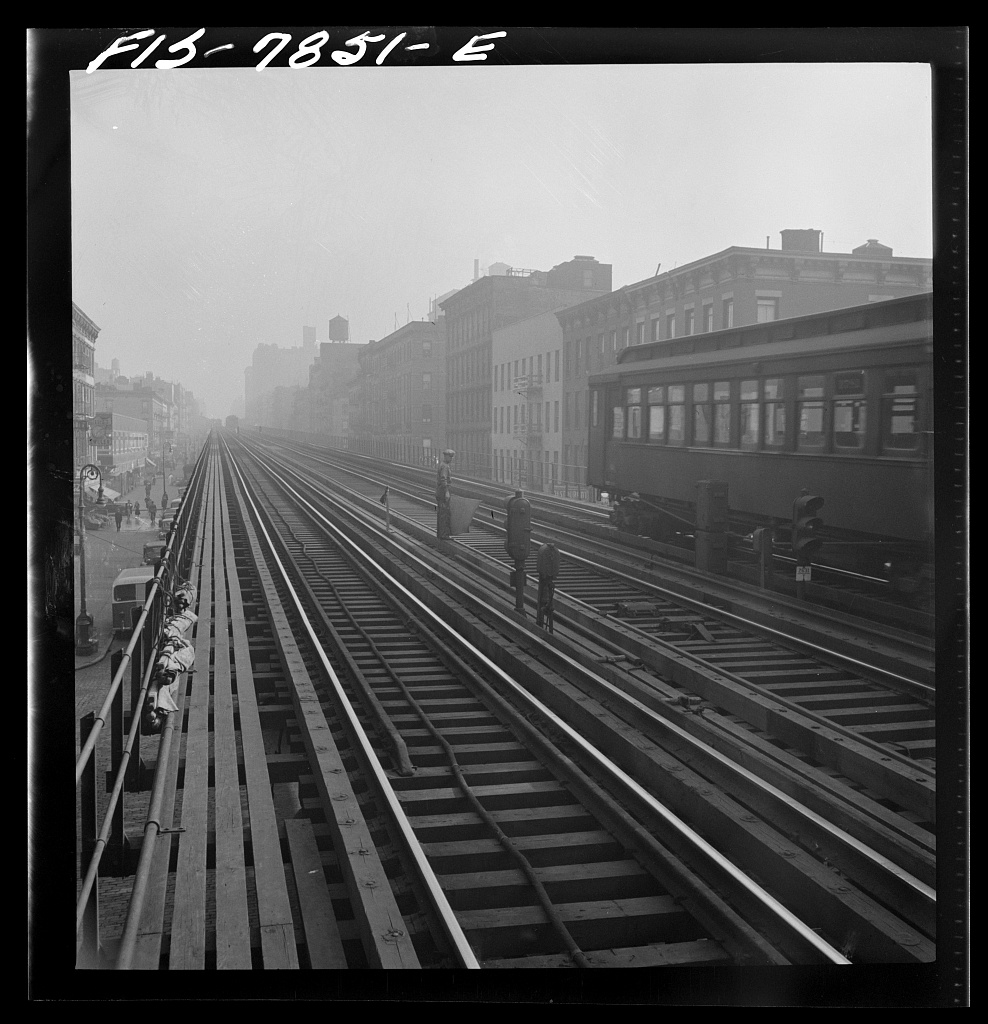
Signaller on the track of the Third Avenue elevated railway near 14th Street in the early morning, September 1942. Photographer Marjory Collins, courtesy United States Office of War Information.
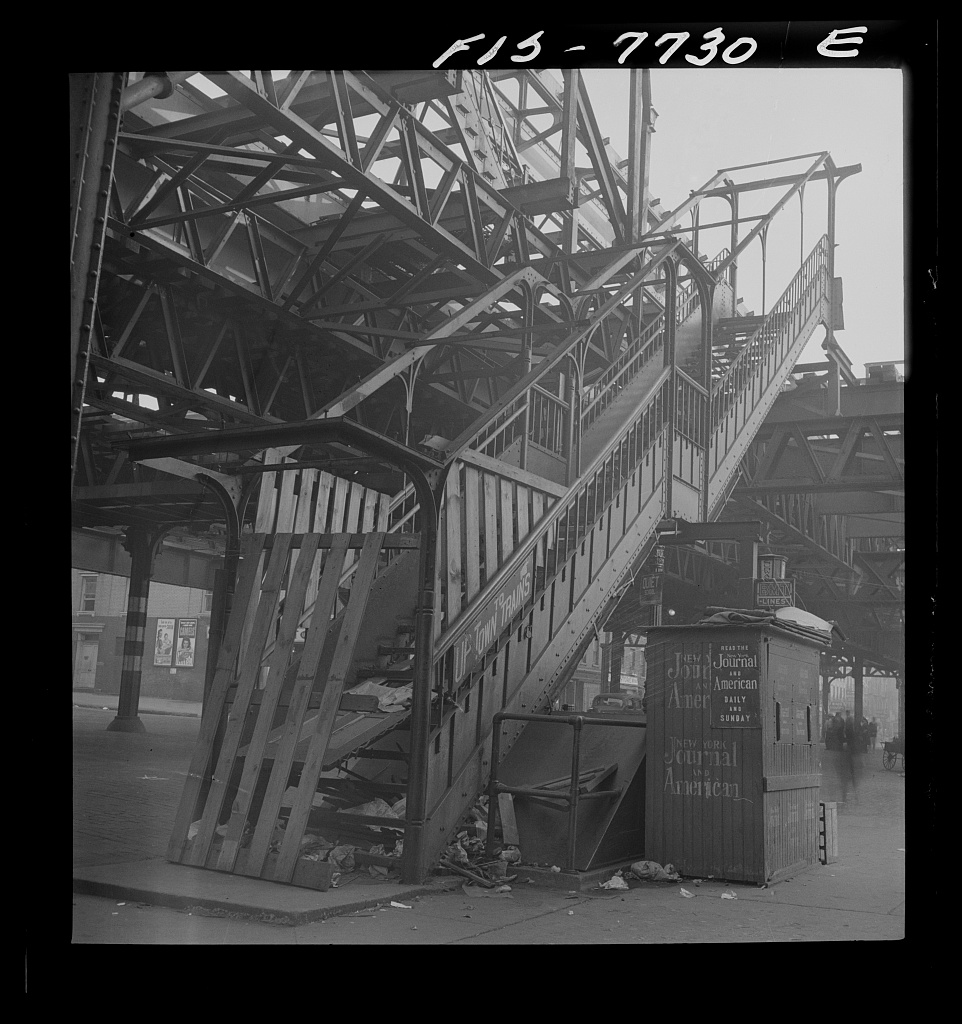
Elevated railway station at Fourteenth Street and Third Avenue, September 1942. Photographer Marjory Collins, courtesy United States Office of War Information.
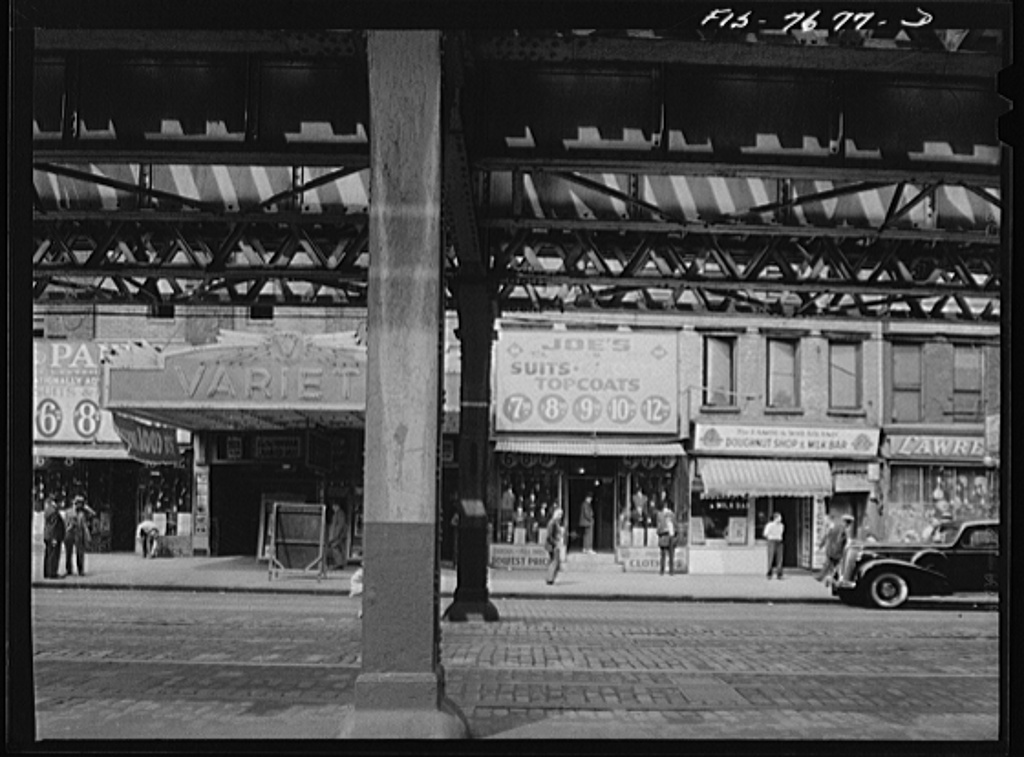
Second Avenue elevated railway at 14th Street in the midst of demolition, September 1942. Photographer Marjory Collins, courtesy United States Office of War Information.
94th Street. Station of the Third Avenue elevated railway at 8 a.m. September 1942. Photographer Marjory Collins, courtesy United States Office of War Information.

FURTHER LISTENING

After listening to this episode, check out these past Bowery Boys episodes on subjects featured in the latest show.


The Bowery Boys: New York City History podcast is brought to you …. by you!

We are now producing a new Bowery Boys podcast every week. We’re also looking to improve and expand the show in other ways — publishing, social media, live events and other forms of media. But we can only do this with your help!

We are now a creator on Patreon, a patronage platform where you can support your favorite content creators.

Please visit our page on Patreon and watch a short video of us recording the show and talking about our expansion plans.

If you’d like to help out, there are six different pledge levels. Check them out and consider being a sponsor.

We greatly appreciate our listeners and readers and thank you for joining us on this journey so far.


Categories
Bowery Boys Bookshelf

The New York Riots of 1964: Violent history with a haunting familiarity

One hot summer’s morning, in the neighborhood of Yorkville on the Upper East Side, high school student James Powell was shot and killed by police officer James Gilligan.

Powell either attempted to stab the officer or else the unarmed boy was brutally set upon by a man with violent tendencies. Gilligan, a war veteran, was either defending himself from a troubled delinquent or else he gunned down the teenager with little remorse.

There were few actual witnesses but dozens of bystanders. The incident took place across the street from a high school, and the students, incensed by rumors and the fear of blood running in the streets, began panicking.

The year was 1964.

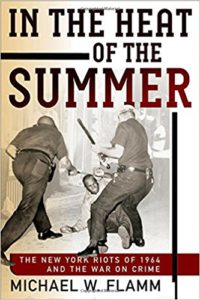
It’s hard not to read the opening pages to Michael W. Flamm’s gripping In The Heat Of The Summer: The New York Riots of 1964 and the War on Crime (University of Pennsylvania Press) and not see the parallels to modern police brutality cases.  So many different testimonies obscure the truth that it’s hard to know what really did happen in front of 215 East 76th Street that day. (Video footage might not have even cleared it up.)
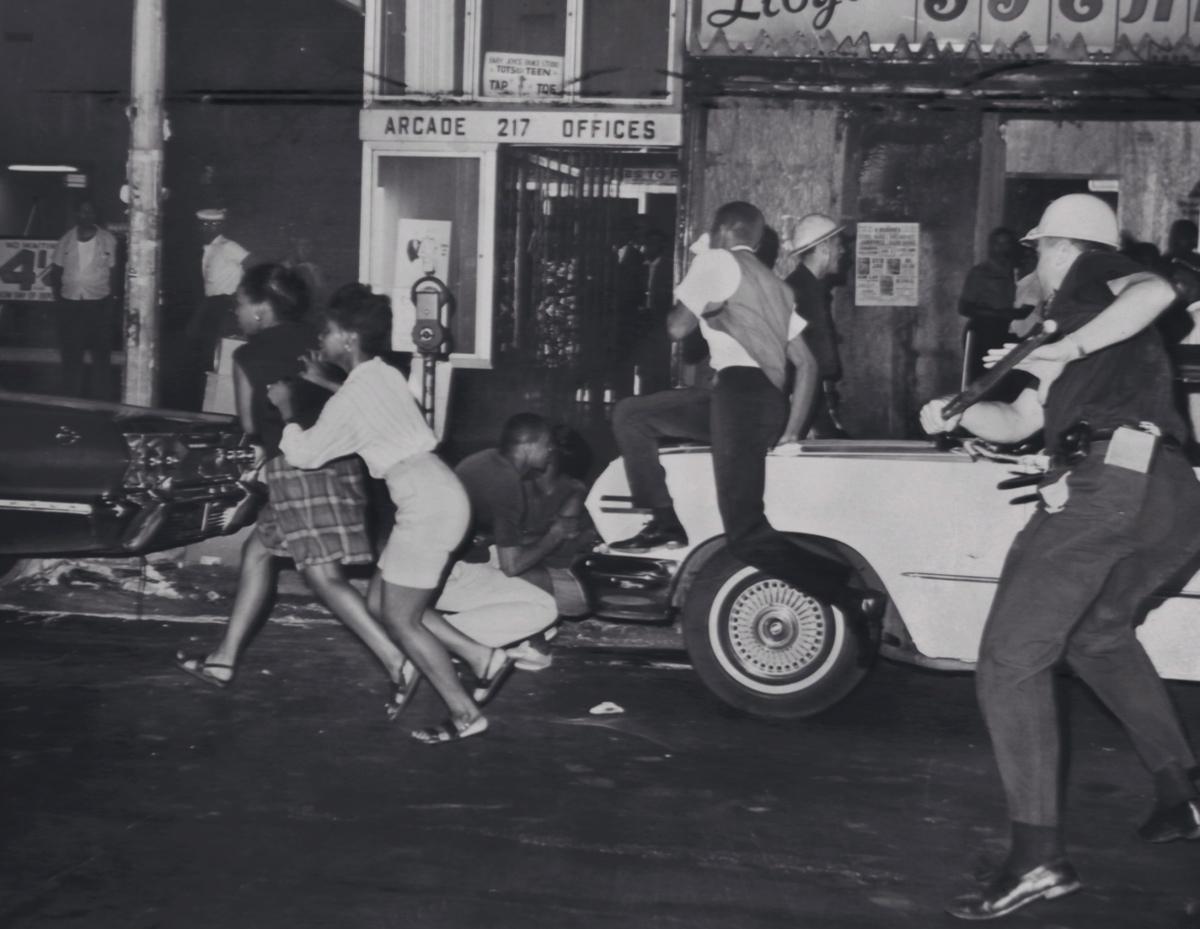
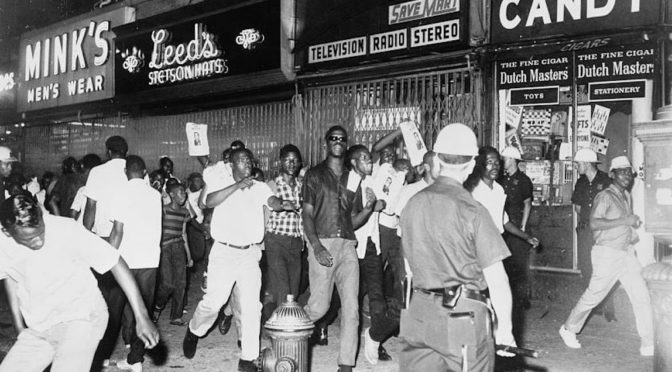
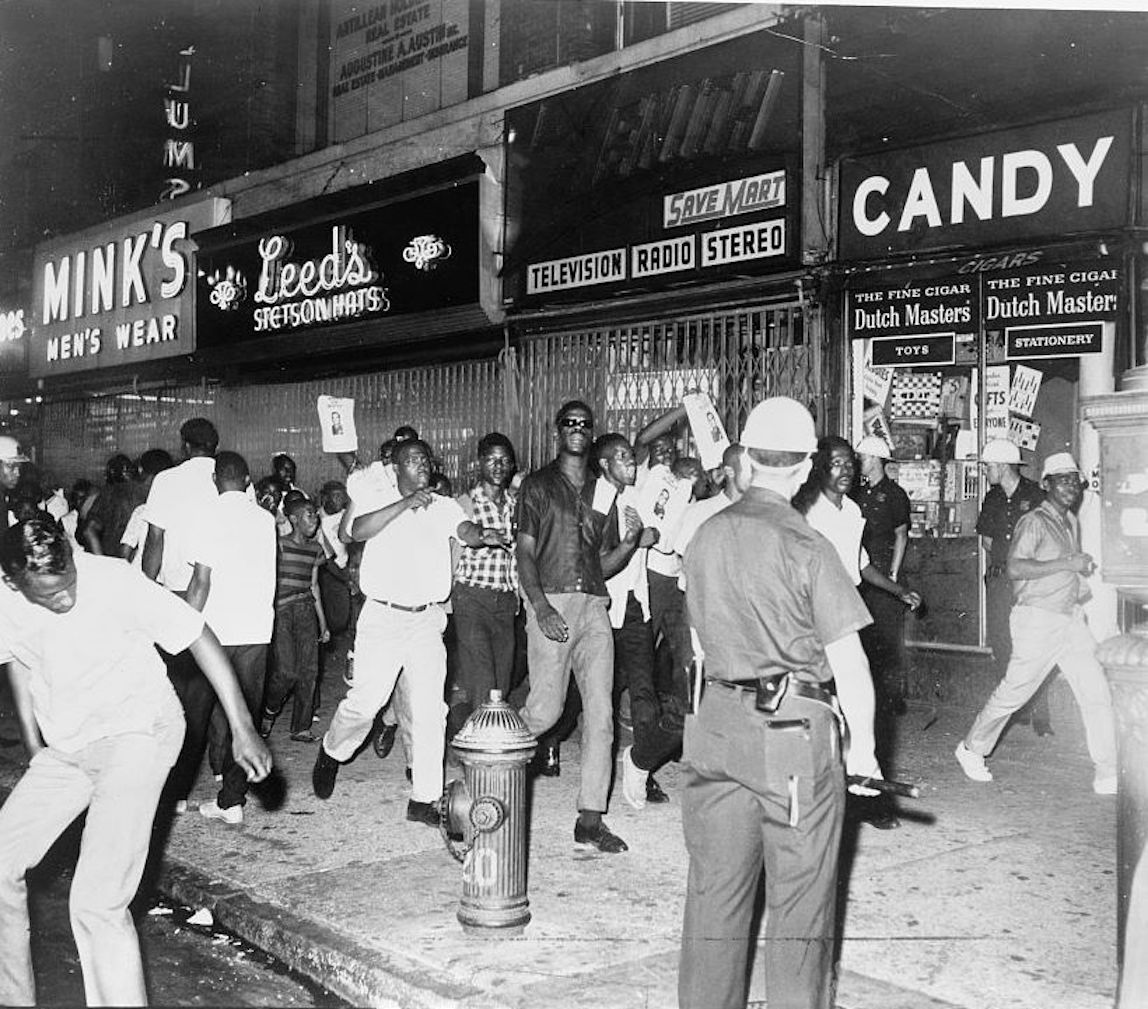
Yet Flamm’s book isn’t specifically about the crime, but the chaos which ensued — the New York Riots of 1964 (with the most violent night often referred to as the Harlem Riot of 1964). For several evenings following the shooting, a host of speculations and false rumors — mixing with grief and despair on a series of hot summer evenings — led to roaming violence and looting in Harlem (with some also reported in the Brooklyn neighborhood of Bedford-Stuyvesant).

The incidents which occurred that summer stem from hostilities which had built up within the black community for decades. A great distrust between the police and African-Americans played a part in the rising crime rate in poor neighborhoods like Harlem in the 1960s.

Courtesy the New York Daily News

Fearful residents felt powerless against increasing criminal behavior and drug abuse in their streets but didn’t risk involving law enforcement, who most considered corrupt and racist.

White residents avoided black neighborhoods — and vice versa — due to wildly dramatic reports in the press. Black power movements like the Nation of Islam escalated talk of violence while, in some neighborhoods, white vigilantes stopped and interrogated every black person found in the streets.

Writes Flamm: “New York sounded to the rest of the country like some frontier town helpless before the uncontrollable violence stalking its streets.”

Dick DeMarsico, New York World Telegraph & Sun

Flamm follows two parallel threads, both coming together in raw, unexpected ways. The first is a terrifying minute-by-minute account of the late-night street riots, the chaotic protests and the rallies organized by those who wished to funnel that rage into a mechanism of change. The second is the reactions of politicians and civil rights leaders to New York’s race and law enforcement problems.

The author’s meticulous research finds microcosms of hate and fear at nearly ever corner — of the kind which will make nobody particularly nostalgic for the period. “Central Harlem seemed like a war zone, with screams from people and cracks from bullets as they ricocheted off brick walls and cement sidewalks.”

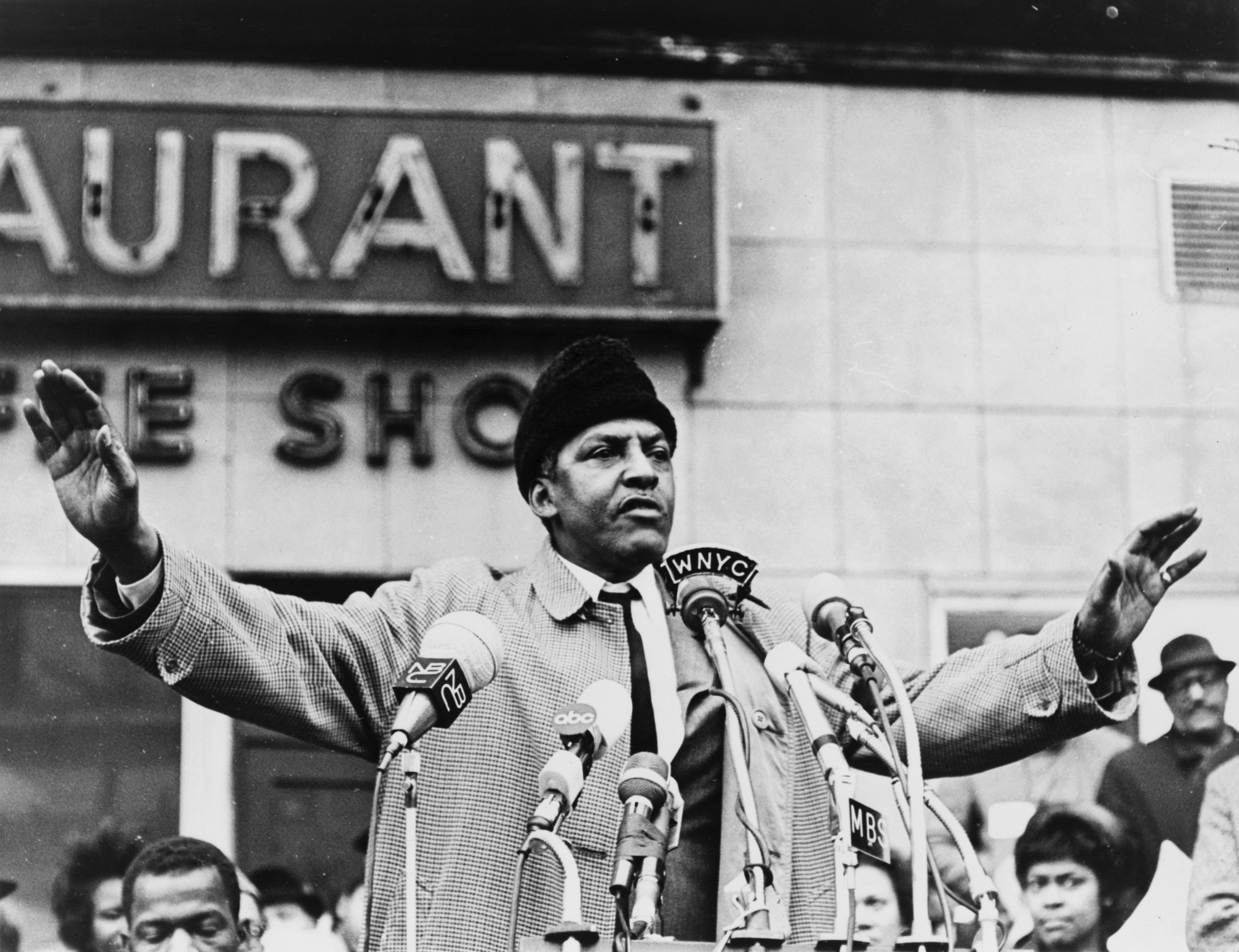
New York World-Telegram and the Sun staff photographer: Wolfson, Stanley, photographer.

At the center of the story is civil rights leader Bayard Rustin (pictured above) and the Congress for Racial Equality (CORE), often caught between keeping and promoting the peace and quelling the concerns of angry residents.

At one point, Rustin was literally disarming people. “The toll might have gone much higher if not for Rustin, who personally disposed of three cases of dynamite — enough to destroy a city block — after two young black men agreed to give it to him instead of using it.”

Few history books I’ve read in the past twelve months have felt as immediate as In the Heat of the Summer, with anecdotes that seem to speak pointedly to the events of today’s headlines.

For example, some police authorities applauded television coverage of the riots. Said one commissioner: “It’s the best answer we have to the cries of police brutality. The camera, after all, cannot distort or lie; the worst that can happen is that the film is edited. But what you see on the home screen is the actual occurrence.”

Categories
Mysterious Stories Podcasts

Mysteries and Magicians of New York: Whimsical spirits, scary legends, strange magic and the original ghost busters

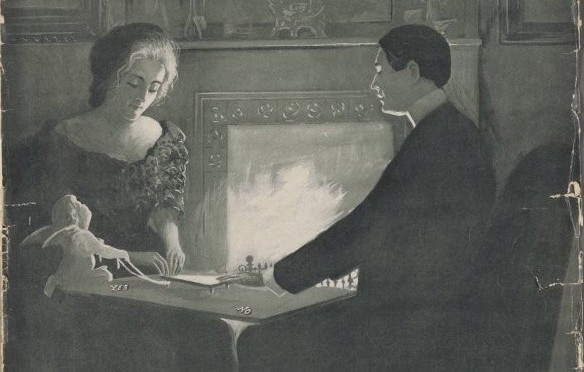
A session with a ouija board, a haunting illustration from a piece of 1901 sheet music ‘There’s A Charm About The Old Love Still’. (NYPL)

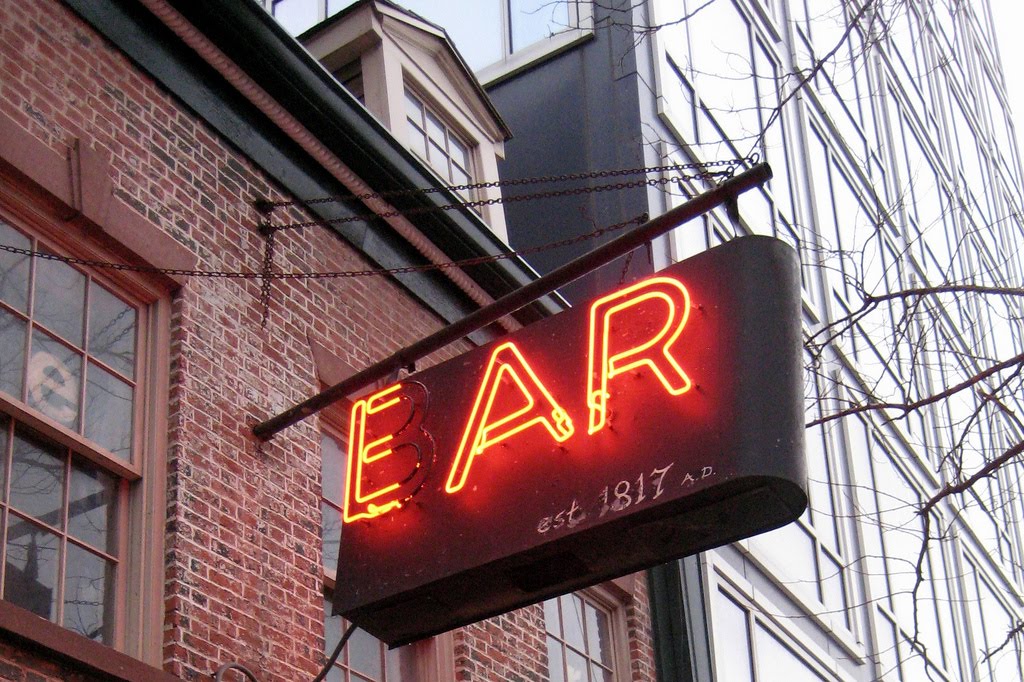
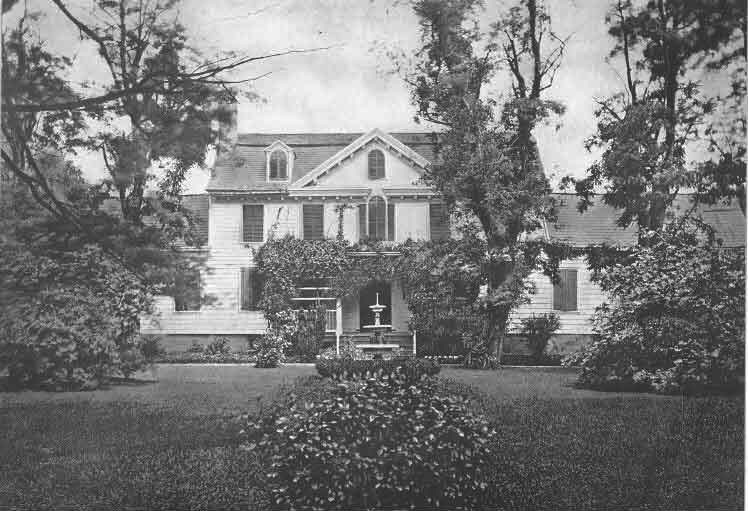
PODCAST Our sixth annual ghost story podcast takes a little twist this time around. Oh sure, we have two of New York’s most FAMOUS horror stories in our first part, beginning with a spirited sailor named Mickey who haunted a classic structure on the Lower West Side. Today it’s the Ear Inn, where you better watch your drink. Then we switch to a Colonial-era tale of obsession and entrapment in old Flatbush, the tale of Melrose Hall with its secret passages, stairwells and dungeons.

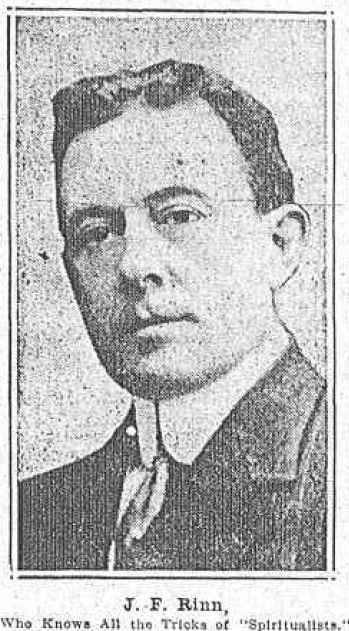
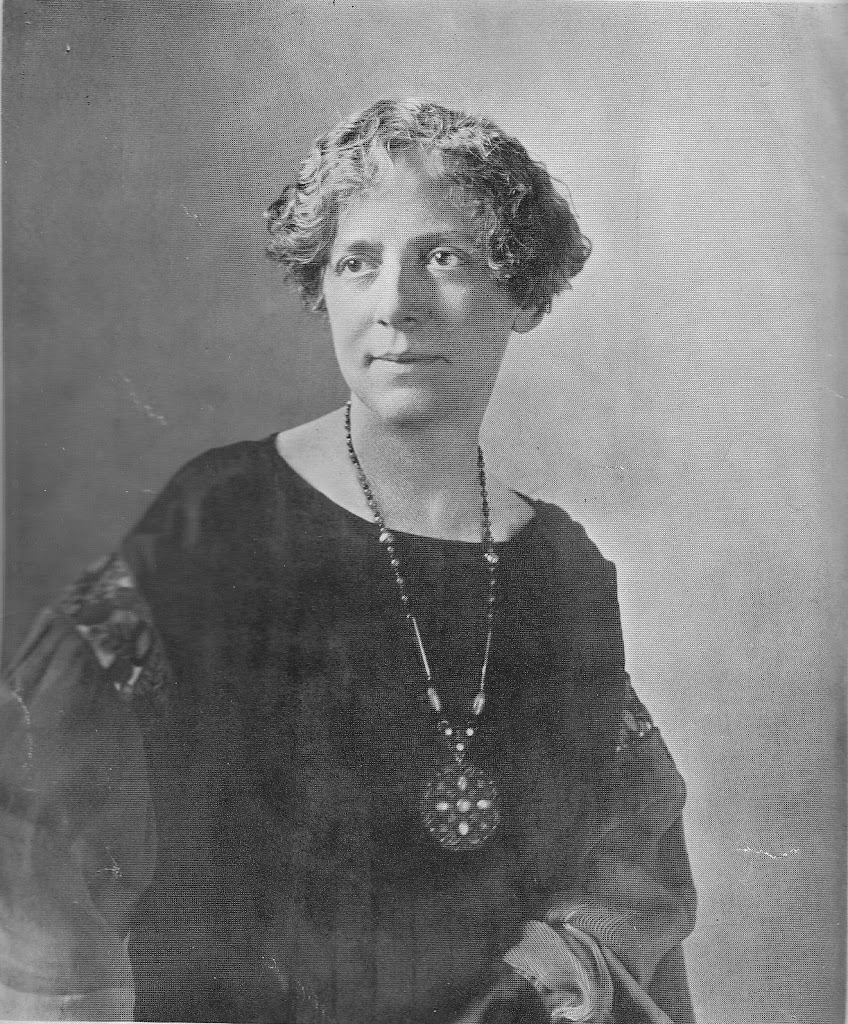
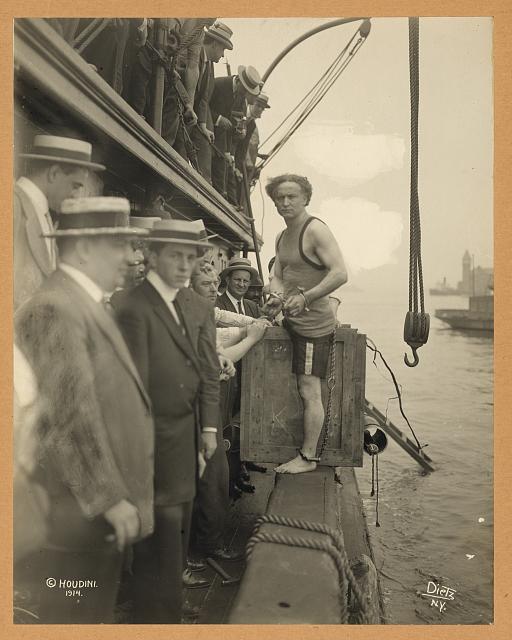
But in the second half, we observe New York’s spiritualism craze of the early 20th century through two frightening faceoffs. In the first, its the madame of the Ouija board, Pearl Curran, and her ghostly companion Patience Worth vs. one of New York’s original ghostbusters, the adventurer and conjurer Joseph Rinn (pictured at right). And in the final tale, Tom explores the secrets of Harry Houdini and what happens when a close confidante — in this case, the noted author Sir Arthur Conan Doyle — believes his powers are of a supernatural variety.

Featuring our annual ghost-story dramatics, a few sound effects, and the surprising haunted history of Carnegie Hall!


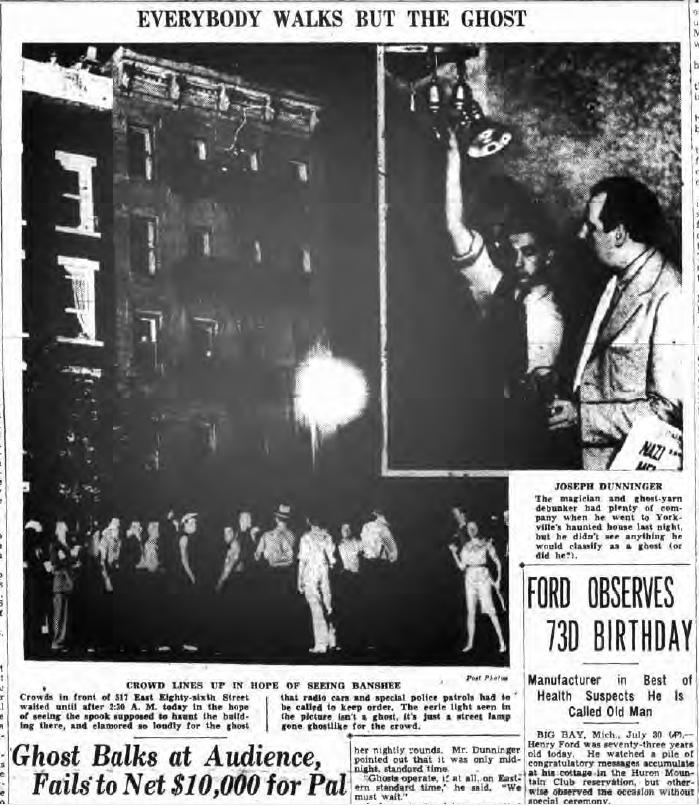
From the pages of the New York Post, July 1936. Crowds hunt for the spirit of Angelina, the Italian ‘banshee’. Crowds lined up to get a glimpse, so many that ‘special police patrols’ were called to control the search. [source]

The house of Revolutionary War veteran James Brown, today the worn and welcoming Ear Inn, is almost 200 years old, which means it has a great many ghosts, including a couple literal ones, including the randy spirit of a sailor named Mickey. (Picture courtesy Flickr/wallyg)

 
The haunted Melrose Hall in Flatbush, Brooklyn, the site of some improbable architecture and a terrible crime. Is that Alma peering from the third floor window? Do you dare enter?
 

Pearl Curran, the St. Louis woman who began conjuring the spirit of an 17th century English woman named Patience Worth, via the Ouija board. She was frequently questioned by prominent medium debunkers, including Houdini’s friend Joseph Rinn.

Harry Houdini in 1912, about to step in to a sealed sunken chest, which he will inevitably escape from. But what was his secret? Was Sir Arthur Conan Doyle — and his wife Lady Jean — onto something about Houdini’s secret powers? (Courtesy Library of Congress)

Categories
Podcasts

On The House: A history of New York City beer brewing

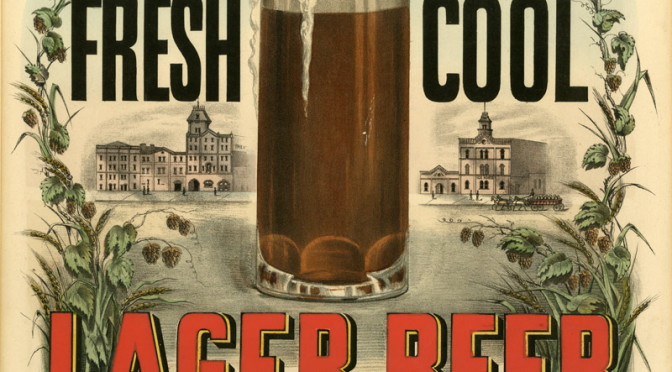
Behold the lager: A German variety of beer revolutionized American drinking, inspiring a new kind of drinking establishment (Courtesy the New-York Historical Society

Inspired by ‘Beer Here: Brewing New York’s History‘, the terrific summer show at the New-York Historical Society, the latest Bowery Boys podcast explores the story of one of America’s greatest, most treasured products– beer.

PODCAST New York City’s thriving craft brewing industry today hearkens to a time over a century ago when the city was one of America’s great beer-making capitals, the home to a robust industry of breweries and beer halls. In the 19th century, German immigrants introduced the lager to thirsty crowds, manufacturing thousands of barrels per year from breweries in Manhattan and Brooklyn’s ‘Eastern District’ (primarily Bushwick and Williamsburg). 

The top Manhattan brewers were Hell Gate Brewery and the Jacob Ruppert Brewing Company, situated right next to each other in the old German neighborhood of Yorkville. Both Ruppert and Hell Gate’s founder George Ehret rode the beer craze to become two of New York’s wealthiest businessmen. Meanwhile, out in Brooklyn, a phalanx of brewers clustered along Bushwick Avenue in fine red-brick factories.

Following World War I and Prohibition, New York lost its hold over beer manufacturing to more savvy Midwestern beer makers. But a few local brands weathered the century with unusual marketing ploys — from sports sponsorships to the Miss Rheingold beauty pageant.

By the late 1970s, significant brewing had vanished from New York entirely. But somewhere in SoHo in the 1980s, a renaissance was about to begin…..

For a little extra ambiance, the show is recorded on location, live in Bushwick, Brooklyn, within a couple blocks of the original Brewers Row.


NOTE: It wouldn’t be a show without my vocal slipup o’ the month. Perhaps  I watched too much Buffy The Vampire Slayer when I was younger. I keep referring to Hell Gate as Hell’s Gate. Scott says it correctly. Both the turbulent confluence of waters and the brewery are called Hell Gate.  

Next Week: Some books, additional resources, a few more pictures and some more stories left out of this week’s podcast.

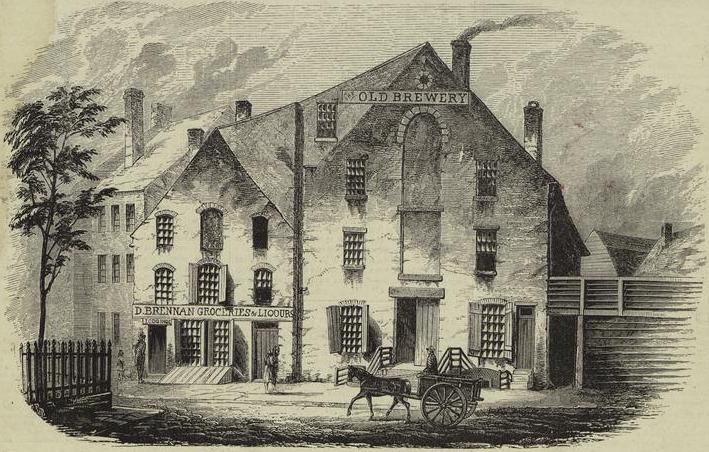
Perhaps the most notorious example of an early New York brewery was the Coulthard’s Brewery situated on the banks of Collect Pond. It survived the draining of that polluted body of water, only to survive as the center of the most disreputable elements of the Five Points neighborhood.  It was eventually demolished in 1853, replaced with a mission house.

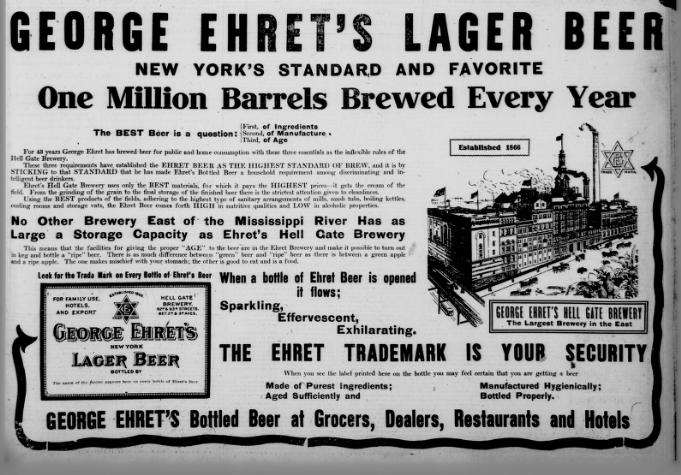
George Ehret was New York’s most successful brewer of the late 19th century. His assertion that ‘no other brewery east of the Mississippi River has as large a storage capacity as Ehret’s Hell Gate Brewery‘ was certainly accurate.  This ad from 1909 presents a company still at the top of its game. However Ehret would encounter serious opposition in the coming years, with both World War I and Prohibition cutting short the brewery’s meteoric success.

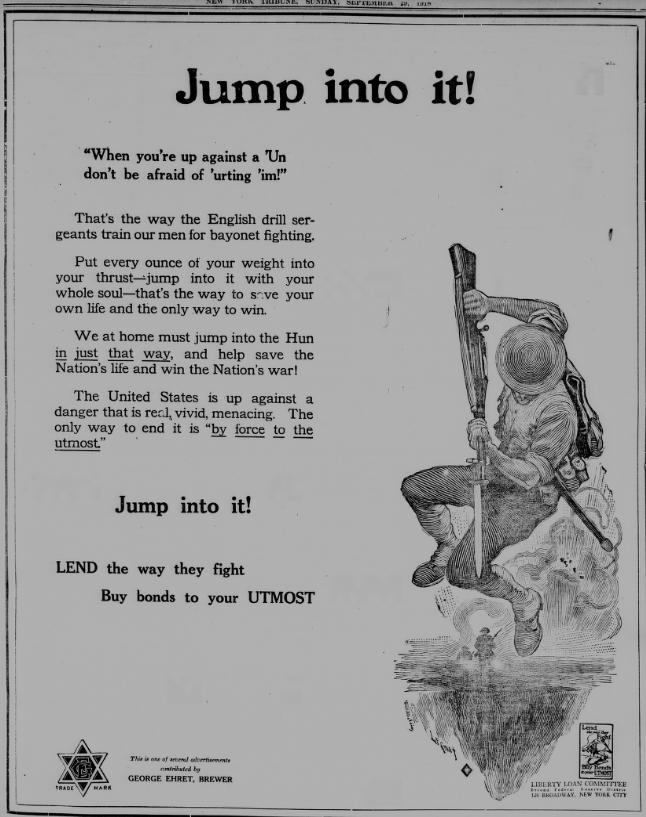
Ehret was stuck in Germany during World War I due to illness, not a great place to be during a war. His entire estate was seized by the government while he was away. When he finally returned, he threw his weight behind pro-American causes to banish any suspicions. This U.S bonds ad from 1918, the year Ehret returned to New York was one of many placed by the brewery.

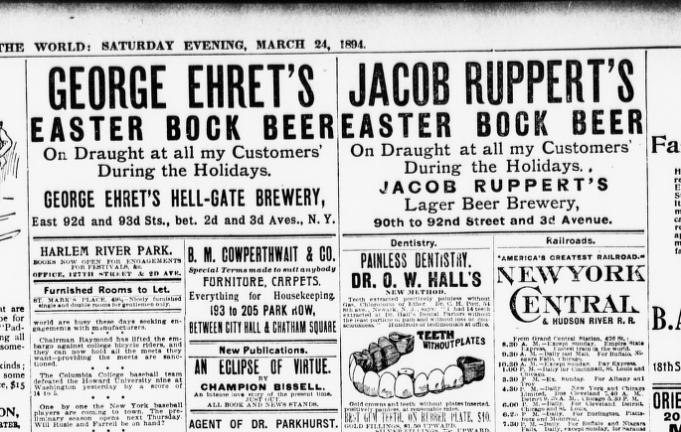
The brewery of Jacob Ruppert wasn’t just situated next to Ehret’s in this 1894 New York World newspaper; the buildings themselves were near one another, in the burgeoning neighborhood of Yorkville on the Upper East Side.  (Newspaper clippings courtesy the Library of Congress.)

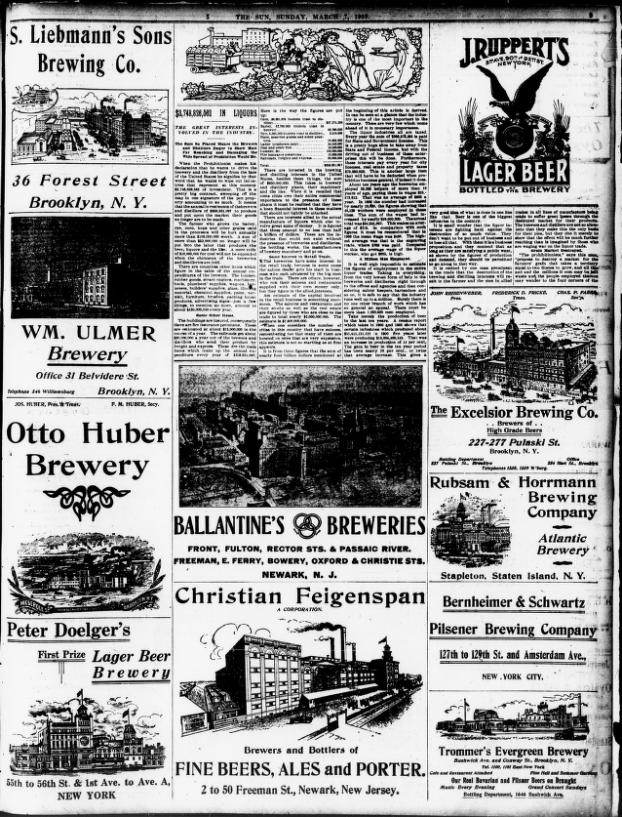
A sample page from a 1909 New York Sun newspaper illustrating some of the many breweries in the region.   Included here are the Liebmanns (who produced Rheingold Beer), the Otto Huber Brewery, William Ulmer, Trommer’s and the Excelsior Brewing Company — Brooklyn most prominent lager brewers.

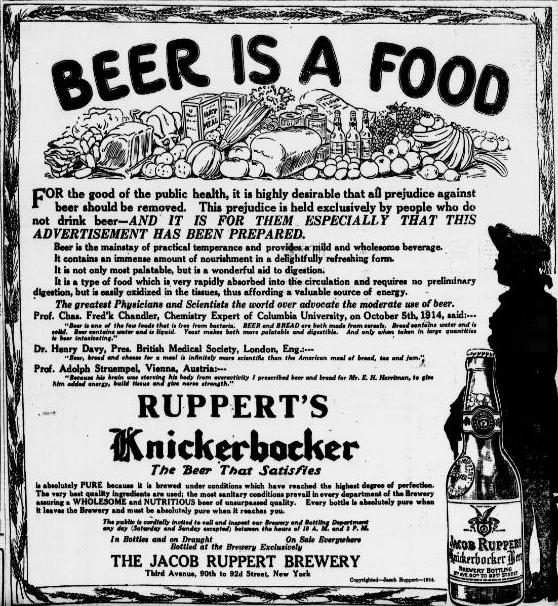
Temperance causes were greatly beginning to clamp down on the brewing industry, so beer makers attempted to market their product as true American beverages — with links to the Founding Fathers — or as products important to a person’s health. This Knickerbocker Beer ad from 1914 gamely attempts both.

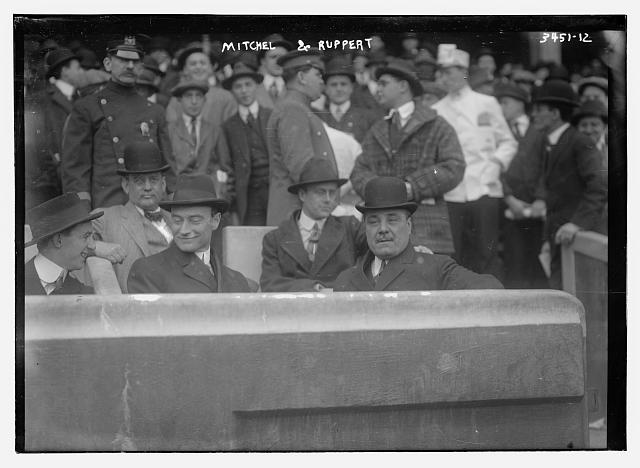
New York’s ‘boy mayor’ John Purroy Mitchell sits with Jacob Ruppert at the Polo Grounds in anticipation of a game by the team owned by the brew man, the New York Yankees. The Yankees would play at the Polo Grounds until 1923, when they moved to the newly built Yankee Stadium.

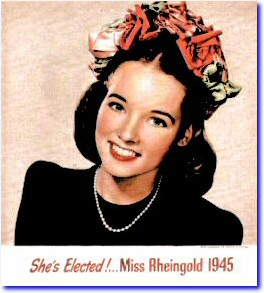
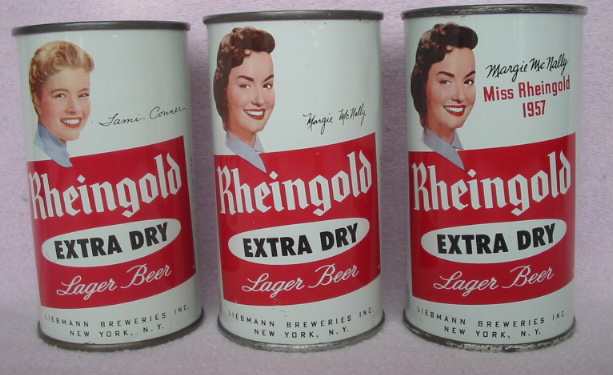
Rheingold Beer was one of the few remaining locally-based brewers to survive by the mid 20th Century, partially thanks to their annual Miss Rheingold beauty competition. [source]

This jingle, with true New York flavor, was featured in our podcast, but it really works better as a vintage television commercial!

And this Schaefer’s advertisement visualizes a world where robots are all-in-one bartenders.


I want to especially thank my guest host this week, Scott Nyerges, photographer, filmmaker and my old college friend! 

Oh, and do you need another reason to have a beer today? Well, it’s the birthday of Joseph Mitchell, born in 1908, the author of a great many profiles for The New Yorker. One of his best known collections is ‘McSorley’s Wonderful Saloon‘ from 1943, featuring a classic New York profile of the old ale house on East 7th Street.