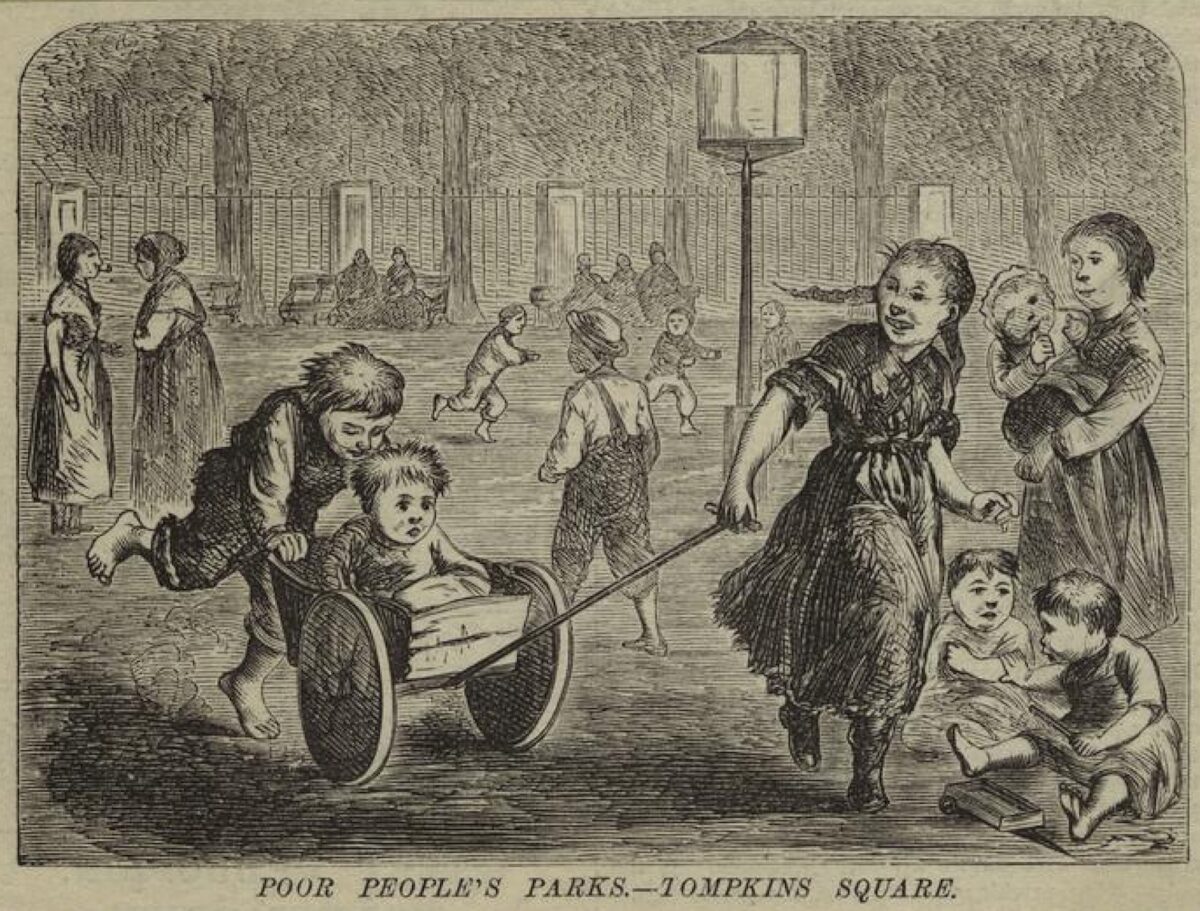
A condescending illustration of Tompkins Square Park from the New York journal Hearth and Home, 1873. (NYPL)
This episode on the history of Tompkins Square Park ties right into an all-new two-part episode coming in September, the first part coming at you next week.
Central Park has frequently been called ‘the people’s park,” but we think Tompkins Square Park may have a better claim to that title. From its inception, this East Village recreational spot — named for Vice President Daniel D Tompkins — has catered to those who might not have felt welcome in other New York parks.
Carved from the marshy area of Peter Stuyvesant‘s old farm, Tompkins Square immediately reflected the personality of German immigrants who moved here, calling it Der Weisse Garten. With large immigrants groups came rallies and demands for improved working conditions, leading to more than a number of altercations with the police in the 19th century.
Progressives introduced playgrounds here, and Robert Moses changed the very shape of Tompkins Square. But the most radical transformation here took place starting in the late 1950s, with the introduction of beatnik and ‘hippie’ culture and infusion of youth and music.
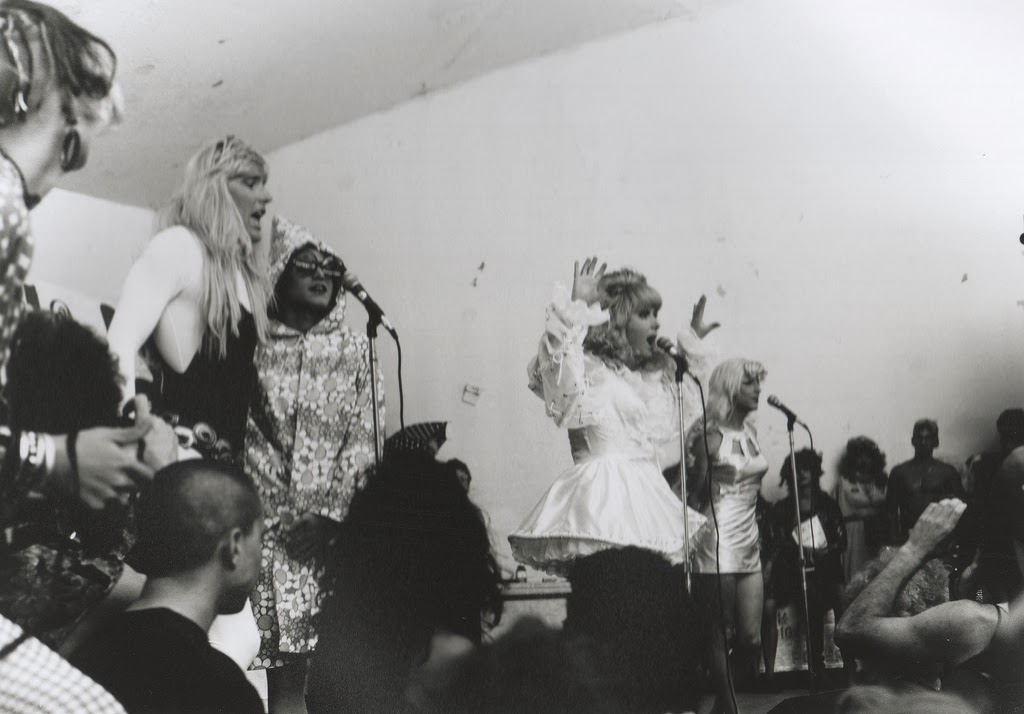
By the 1980s, the park became known not only for embodying the spirit of the East Village through punk music and drag shows (above: Lady Bunny), but also as a haven for the homeless. Clashes with police echoed the clashes that happened here one century before. The park still maintains a curfew left over from the strife of the late 1980s.
FEATURING: Lillian Wald, the Grateful Dead, Charlie Parker, Samuel S. Cox, Lady Bunny … and Chevy Chase?
LISTEN NOW: TOMPKINS SQUARE PARK
A version of this show was originally released in 2014 (episode #160)
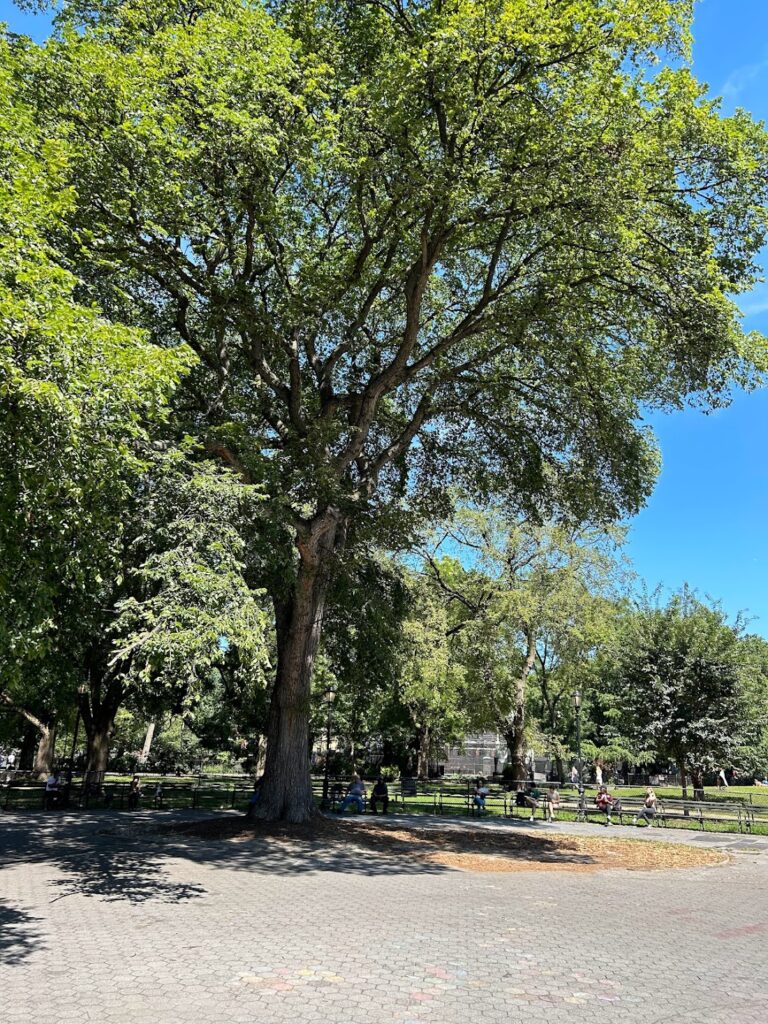
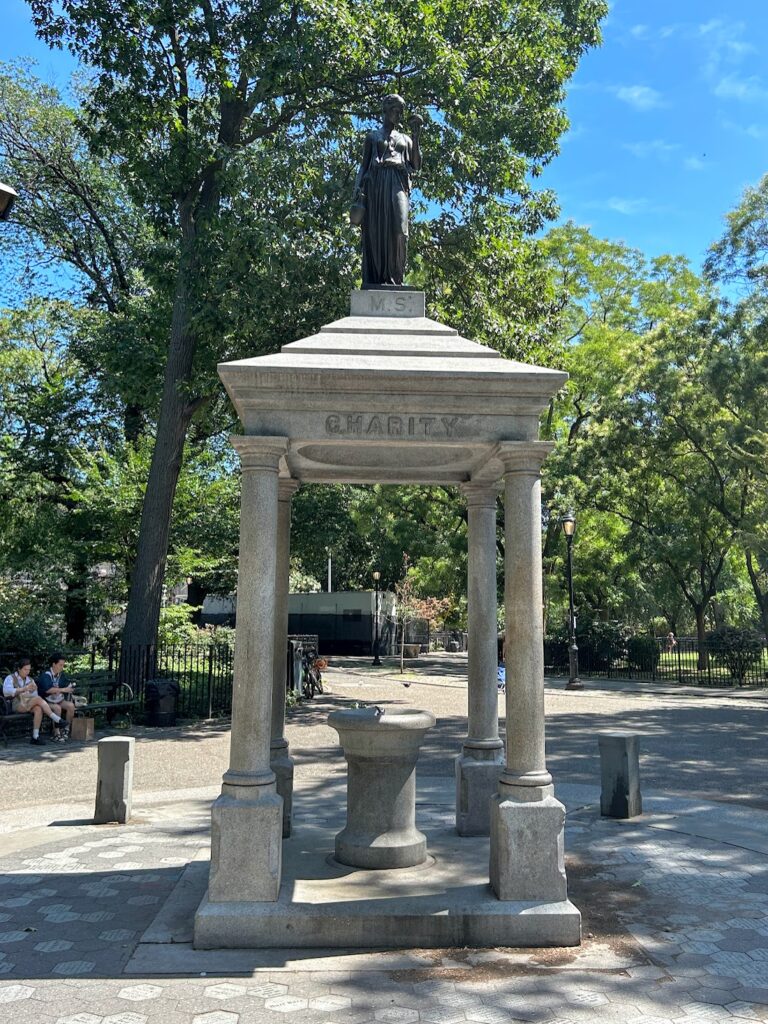
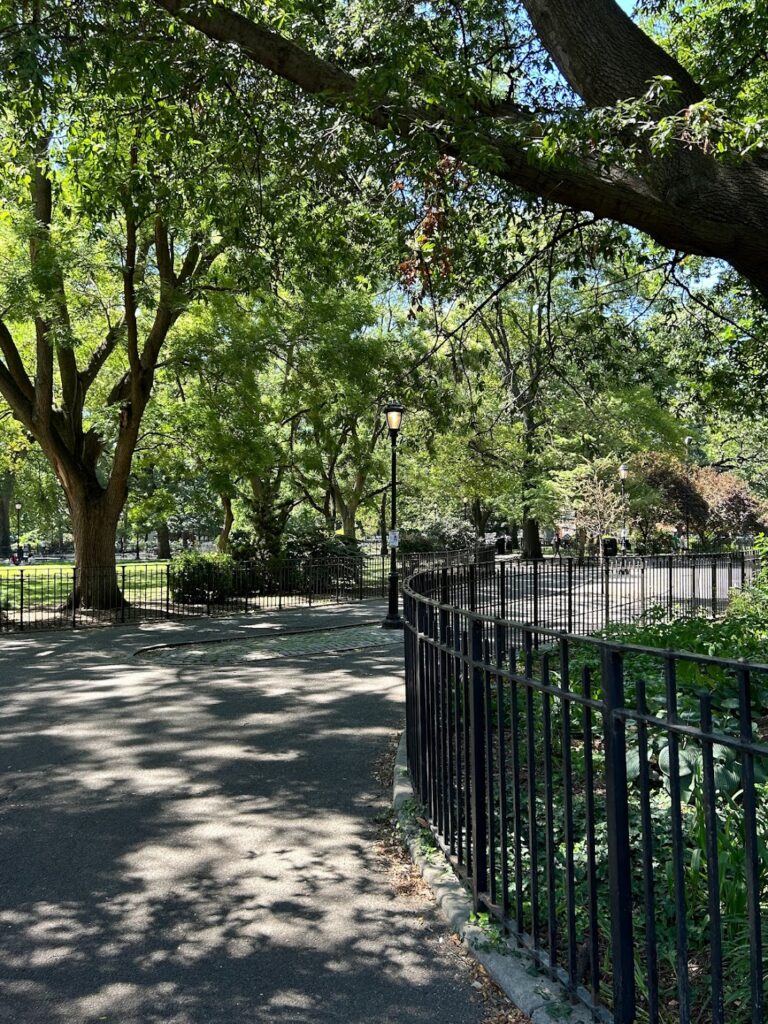
Images from the park this week (August 2023)
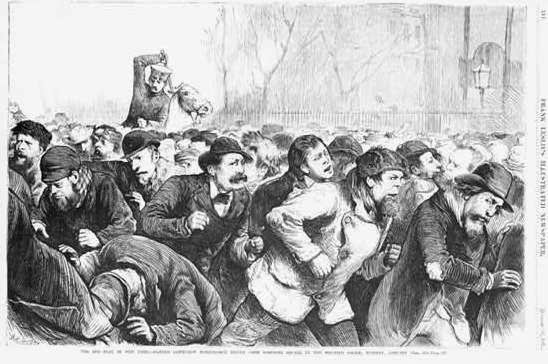
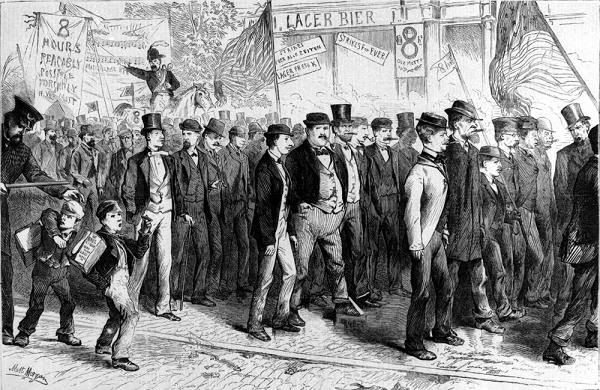
It’s doubtful that the image below is accurately depicted by the caption which accompanied it in Frank Leslie’s Illustrated Newspaper in 1874: “The red flag in New York – riotous Communist workingmen driven from Tompkins Square by the mounted police, Tuesday, January 13th.” [Courtesy LOC]
Another illustration of the 1874 protests, notably featuring a German establishment in the background. (More information on the Tenement Museum blog.)
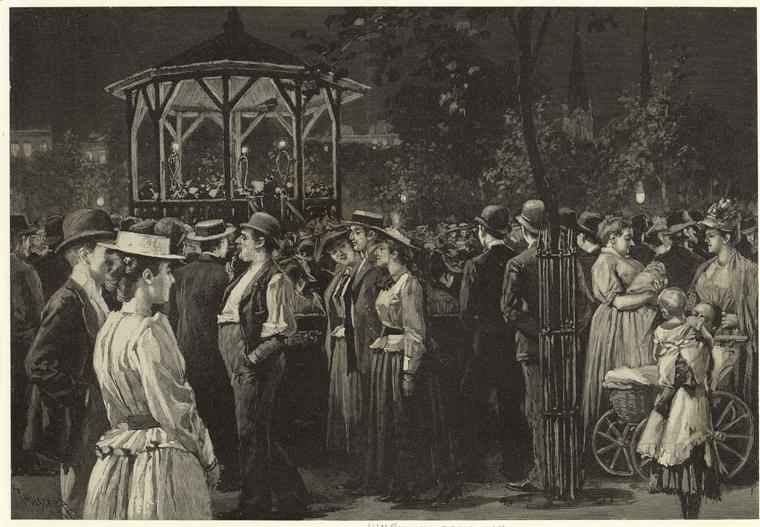
People enjoying (most likely) German music and entertainment in Tompkins Square Park, 1891. An image from Harper’s Weekly by Thure de Thulstrup. (NYPL)
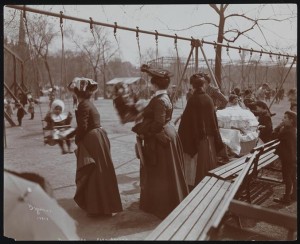
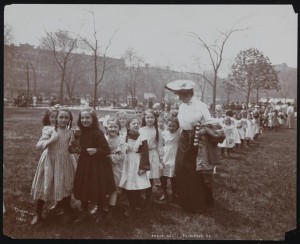
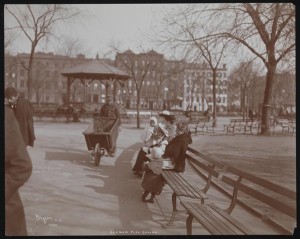
Women and children enjoying themselves in Tompkins Square Park, Arbor Day, 1904, on the brand new playground for girls. (Photos courtesy Museum of the City of New York)
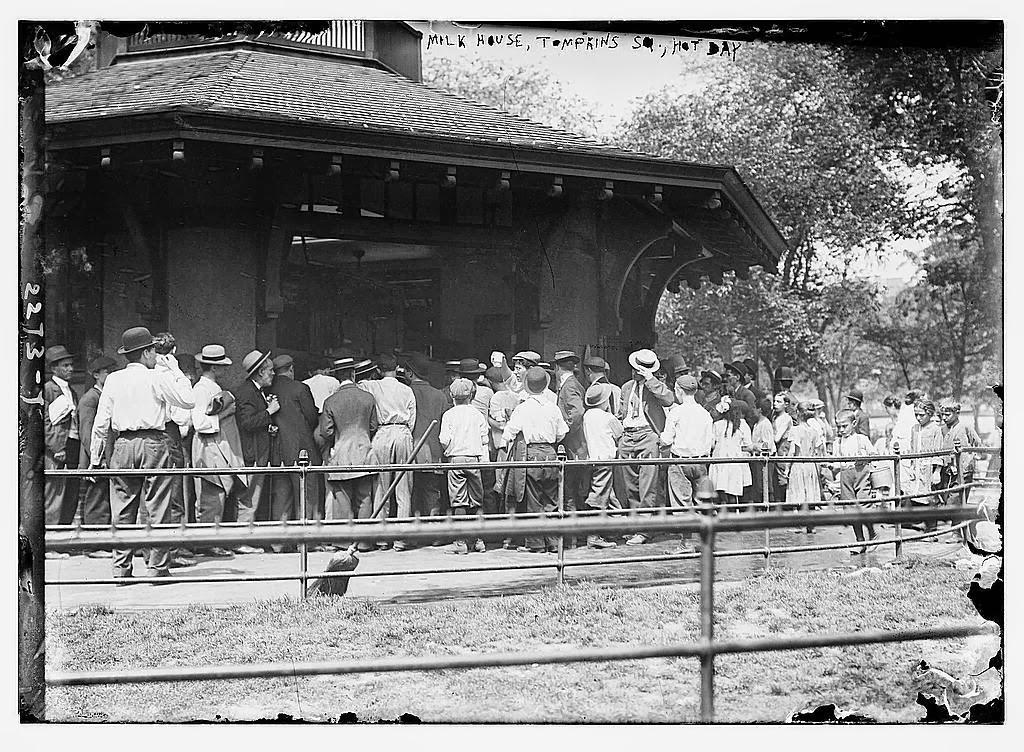
The Tompkins Square Milk House, which provided clean, healthy milk to families in the 1910s.
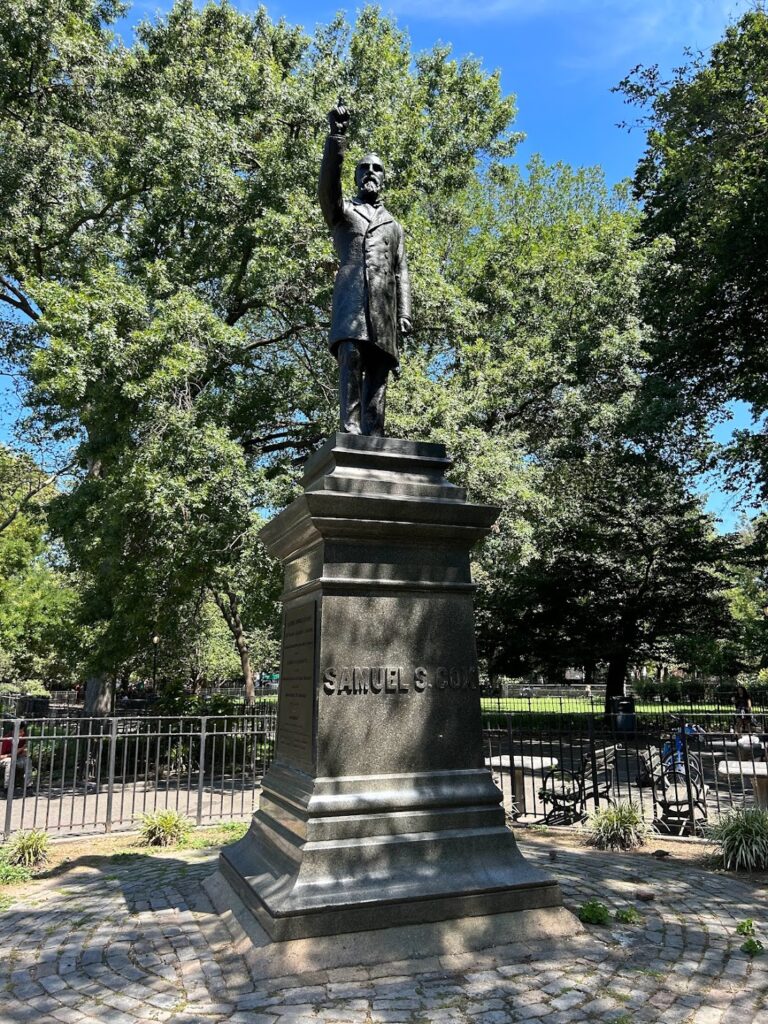
The statue of Samuel Cox, funded by New York postal workers. (1900, pic courtesy Museum of the City of New York
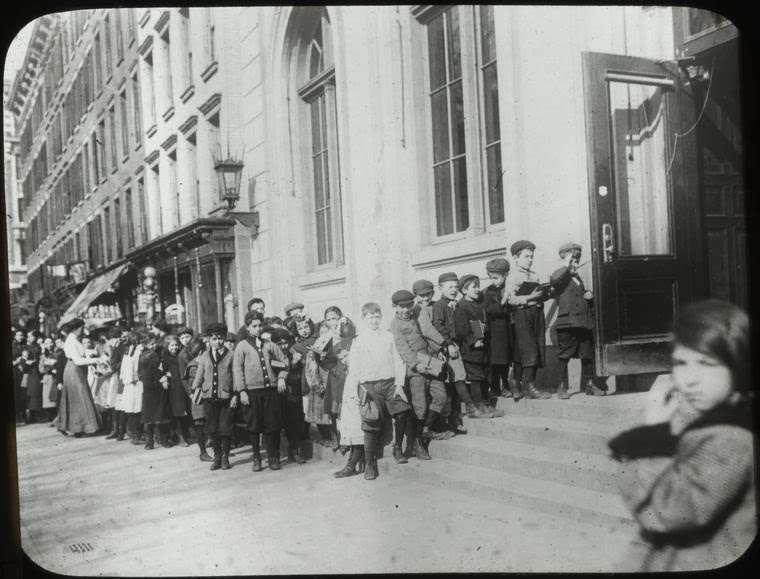
Children waiting in line to use the children’s reading room at the Tompkins Square branch library. (NYPL)
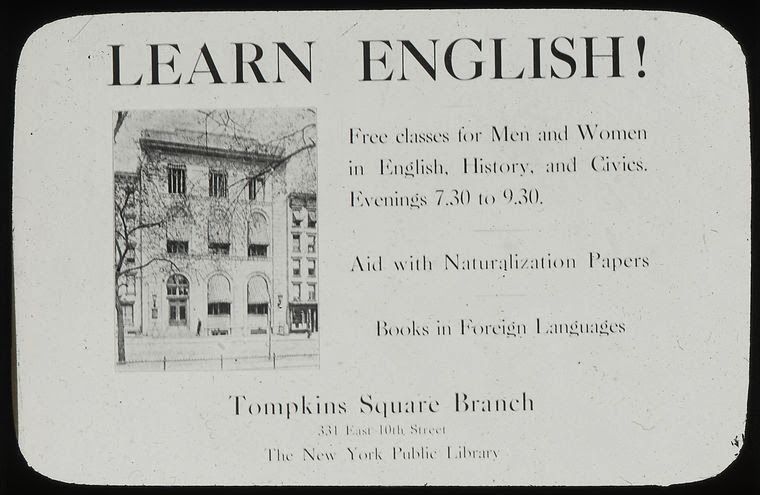
An advertisement from 1920, urging residents of the Lower East Side to take English courses at the Tompkins Square branch library. There are several of these posters in different languages here. (NYPL)
Lady Bunny and friends, performing at Wigstock 1988 (Picture courtesy aquaman6 on Flickr)
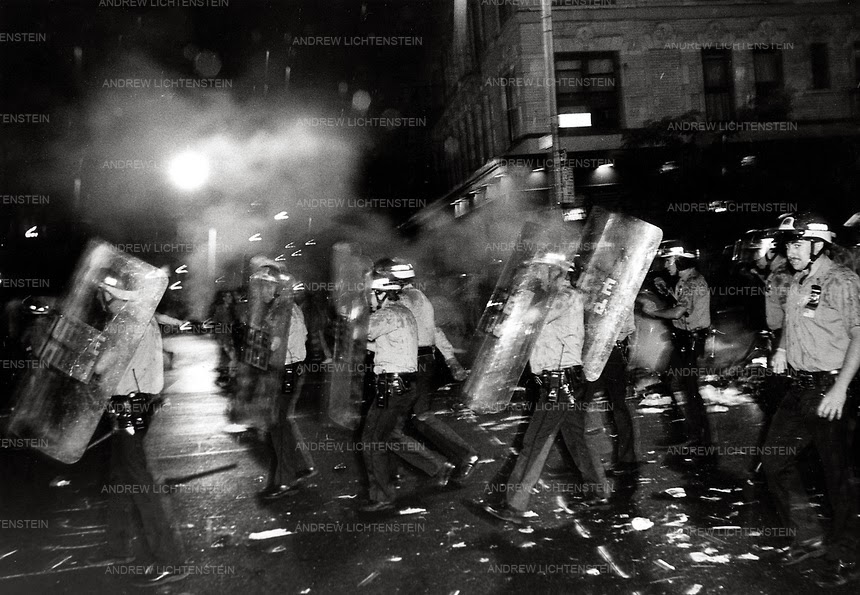
The Tompkins Square Police Riot from 1988 (courtesy Quilas)
Police retake Avenue A during a riot outside Tompkins Square Park that erupted after police allegedly beat a homeless man. The late 1980’s and early 1990’s was a period of rapid gentrification in the East Village, and many homeless residents, activists, and squatters, battled the process, frequently clashing with the police around Tompkins Square Park.
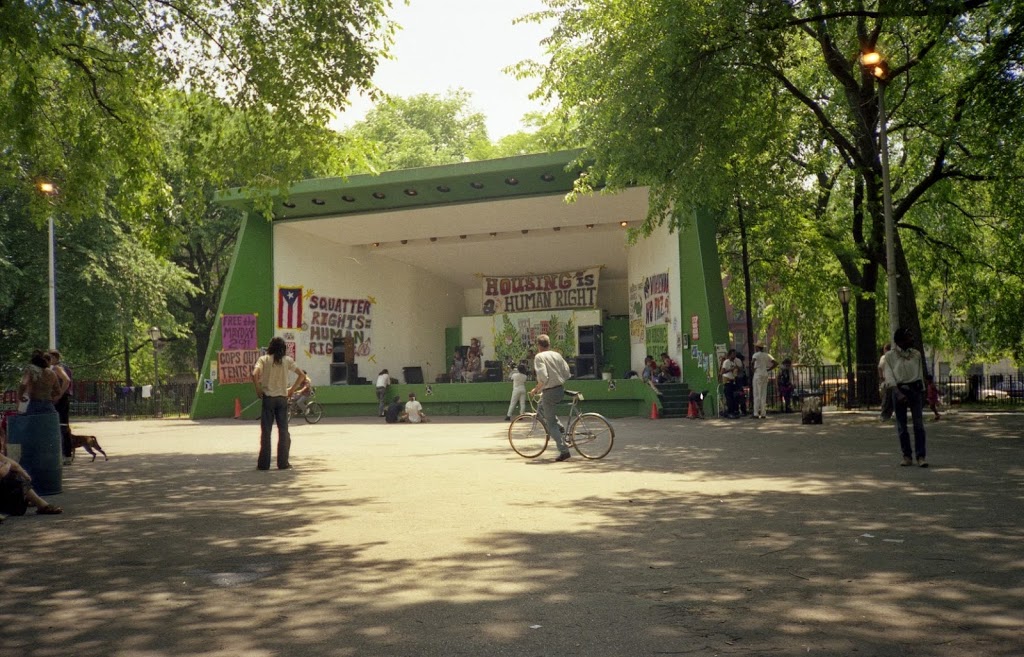
The Tompkins Square Park bandshell, which was torn down by the city in 1991. (Photo courtesy Flickr/Mike Evans)
A performance by the hardcore band Breakdown at the bandshell in 1988
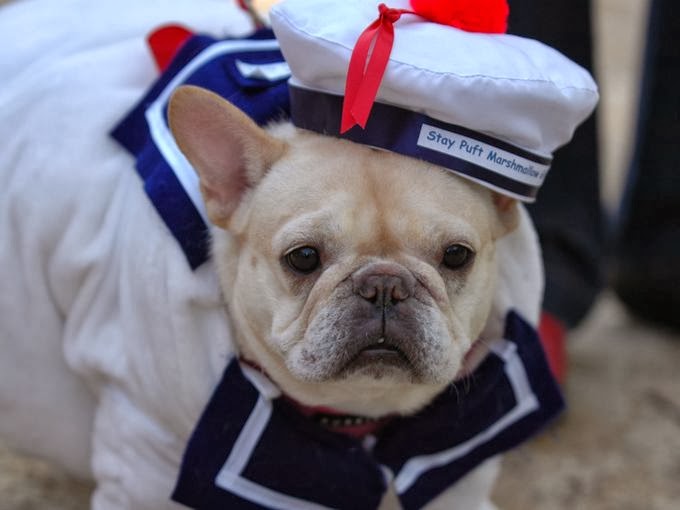
A Ghostbusters-themed entrant in the Halloween Dog Parade in 2013 (Courtesy USA Today)
The origin of a true Brooklyn ‘start up’ — Charles Pfizer and Co, who went from developing intestinal worm medication in 1849 to being a leader in vaccine distribution in the 21st century.
This is story of Pfizer Pharmaceuticals before the 1950s, a tale of German immigration and of early medical practices and concoctions that might seem alien to us today. Patent medicines! Worm lozenges!
But this company’s biography is also a celebration of Brooklyn — the City of Brooklyn in the mid 19th century, developing into an economic force in the United States and in opposition to the city of New York across the East River.
PLUS You can’t tell the Pfizer story without looking at the world of apothecaries and early drug stores in New York City in the 19th century.
Apothecaries were the first ‘natural’ medicine makers but their objectives were limited, seeking only to alleviate symptoms, not tend to the root cause of so many discomforts.
Later on, drugstores would stock up on manufactured medicines and questionable additions to the health regimen like soft drinks.
FEATURING Duane Reade, Kiehl’s, C.O. Bigelow, E. R. Squibb and Johnson & Johnson
ALSO: What important American figure today grew up delivering parcels for his family drugstore in Dyker Heights, Brooklyn?
LISTEN TODAY ON YOUR FAVORITE PODCAST PLAYER — PFIZER: A BROOKLYN ORIGIN STORY
FURTHER LISTENING
After listening to this show, take a dive in other episodes on similar or adjacent subjects.
The German biotechnology company Biopharmaceutical New Technologies (BioNTech) developed the COVID-19 vaccine injection with Pfizer, one of the world’s large pharmaceutical companies, who will manufacture and distribute it.
Let’s give our thanks to the scientists, researchers and physicians who helped get us to this moment. And yes, Brooklyn, you also get to share in a little bit of that pride today.
Because Charles Pfizer & Company — the originating business, founded in 1849 — first got its start in Brooklyn.
Or, to be more specific — the Brooklyn neighborhood of Williamsburg.
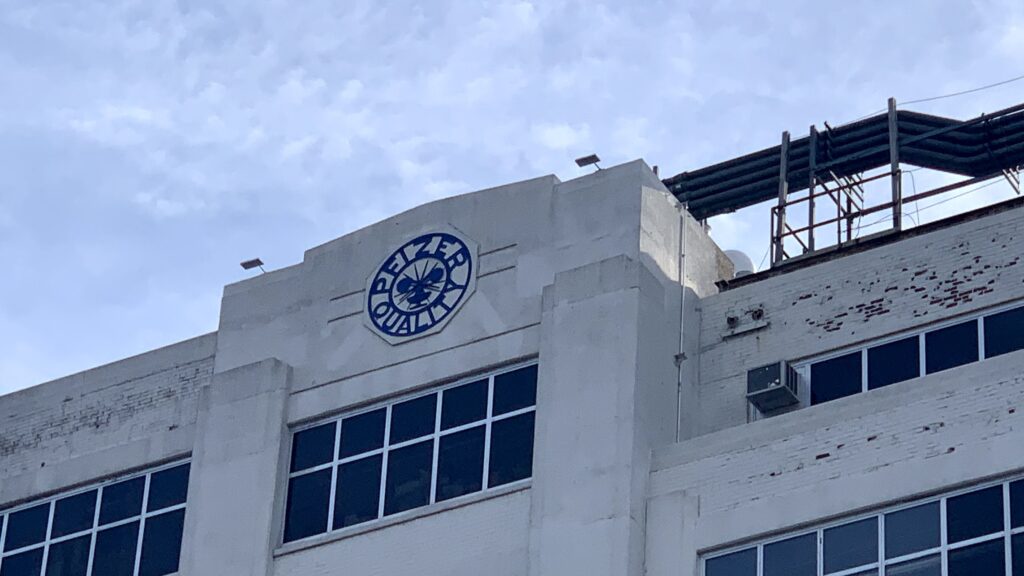
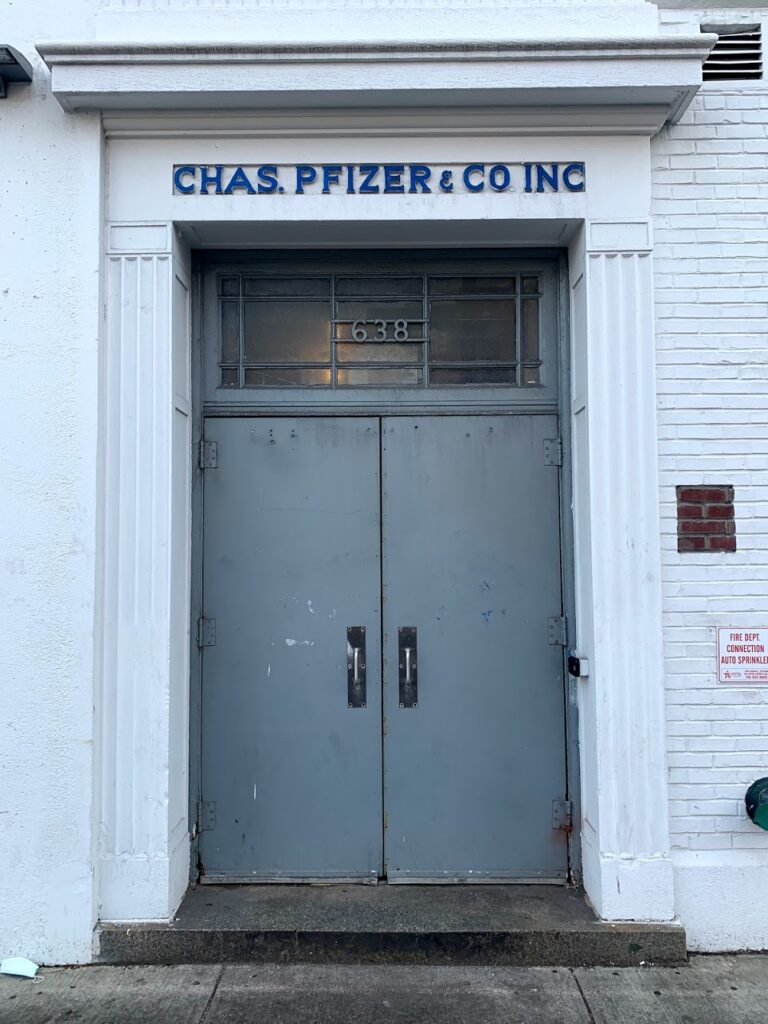
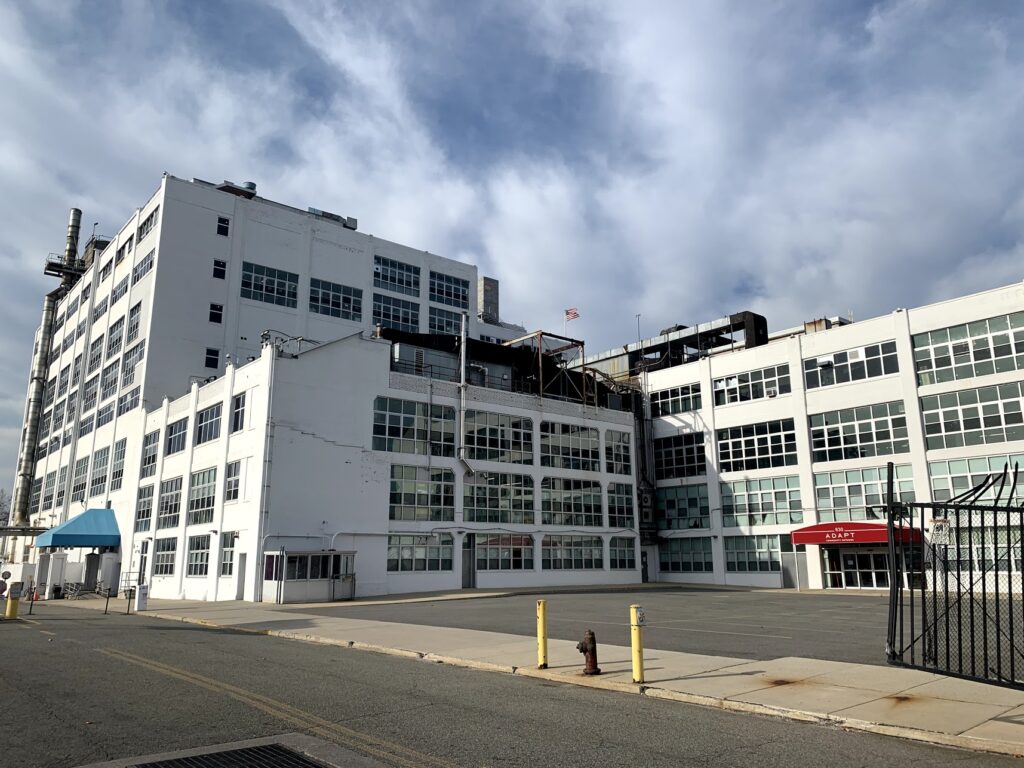
At their original Brooklyn location, the architectural details still gleam with ‘Pfizer Quality’.
A Company of Immigrants
Karl Christian Friedrich Pfizer (later Charles Pfizer), born in 1824 in the Kingdom of Württemberg, was one of the many thousands of Germans who would immigrate to the United States during the 1840s.
Pfizer came to America with his cousin Charles Erhart in the fall of 1848. Unlike the experiences of so many immigrants during this time, both Pfizer and Erhart came from wealthy families and were both highly educated — Pfizer as a chemist, Erhart in the grocery and confectionary trade.
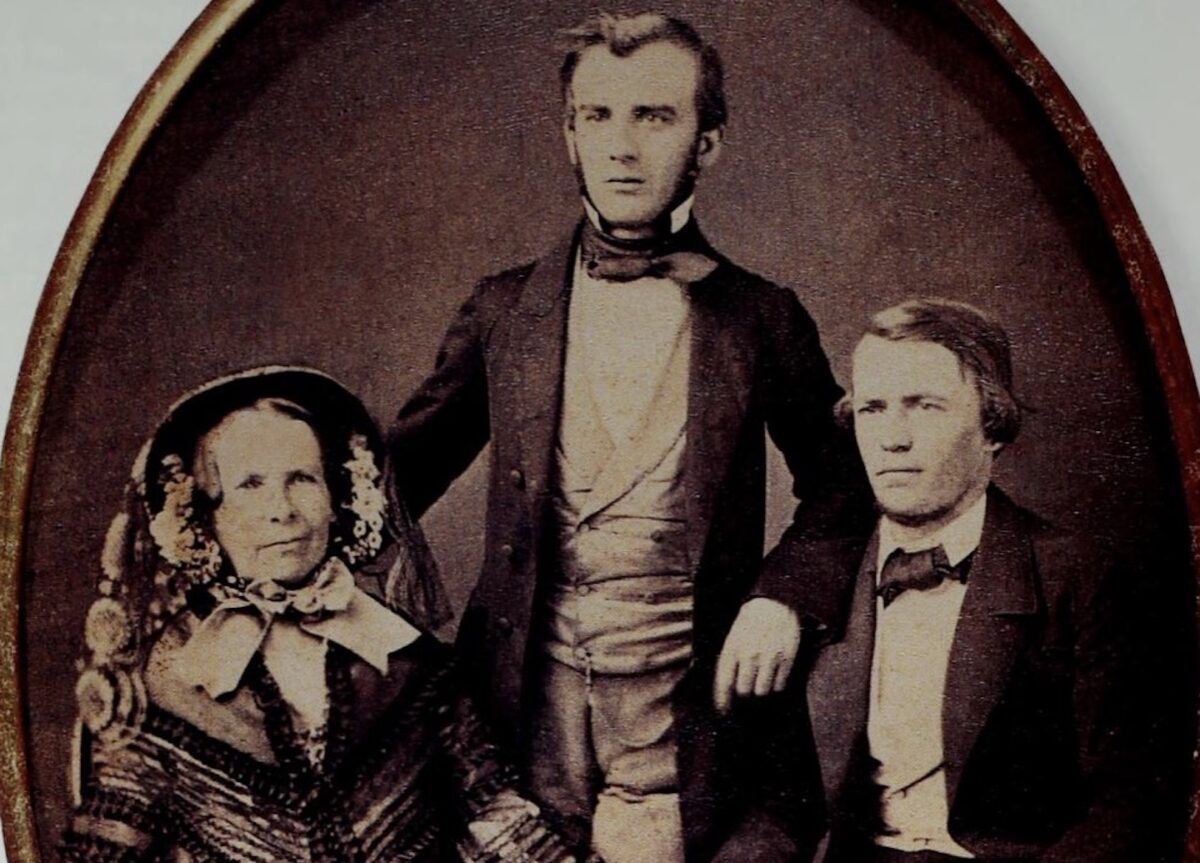
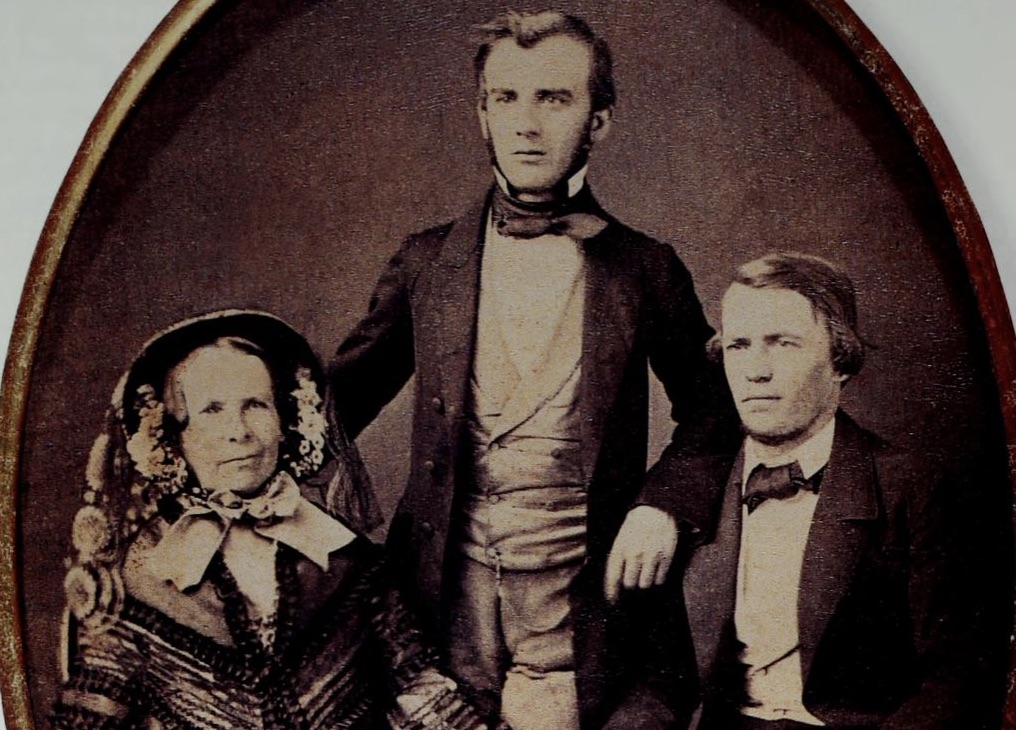
Wilhelmine Klotz Erhart, her son Charles Erhart, and her nephew Charles Pfizer standing. Photograph taken in 1855, courtesy the book The Legend of Pfizer
The practical applications of science to modern life were just beginning to be explored in the early 19th century. Pfizer was taking his training to a country not yet internationally known for scientific breakthrough.
According to author Jeffrey L. Rodengen, “Chemicals that once interested only scholars were becoming indispensable in manufacturing, agriculture and medicine. [Pfizer] also recognized that in the new nation of America, virtually no one was meeting the growing demand.”
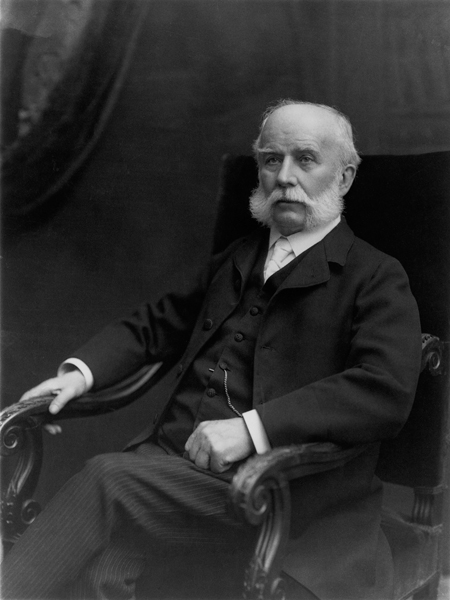
Charles Pfizer, photographed here in 1890
A Home Among The Factories
Pfizer and Erhart would form their new chemical operation in Long Island’s King County in 1849, shortly after their arrival in America.
They had their eye on a spot near the Town of Williamsburgh, north of the burgeoning Brooklyn metropolis.
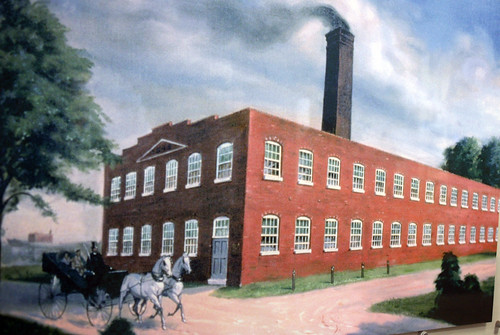
The first Pfizer building
Williamsburgh — a former village under the jurisdiction of the town of Bushwick — was a desirable destination for budding industrialists thanks to its proximity to a busy waterfront and the already busy waters of Newtown Creek. Chemical and oil plants were already home here when the cousins arrived.
Pfizer’s first headquarters was a bit far from the waterfront. They couldn’t quite afford to build a new factory.
Instead the cousins moved their operations into a pre-existing red brick building at Bartlett and Tompkins Streets thanks to a $2,500 loan from Pfizer’s father. (That’s about $78,000 today thanks to inflation.)
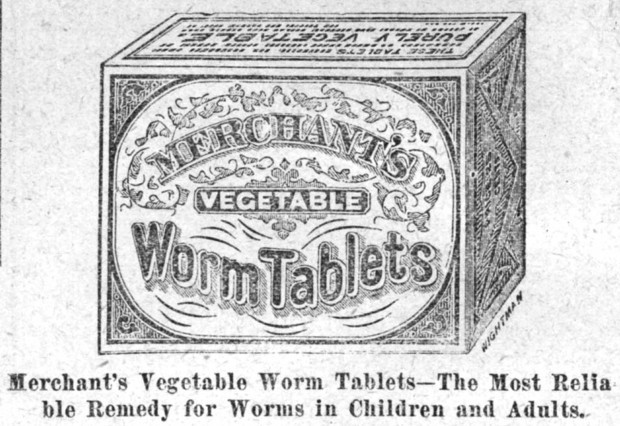
An example of 19th century medicine used to treat worms *shivers*.
How To Deal With Worms
A chemist and confectioner might seem like an odd couple today. But go to your medicine cabinet. How many of your medicines have flavor? Most pharmaceuticals would be hard to swallow without additives literally meant to make the medicine go down.
In 1849 the Pfizer company rolled out its first product — a product made from santonin. But this was santonin that tasted, well, not good exactly, but palatable enough to help relieve a very grotesque condition — intestinal worms.
Pfizer and Erhart produced santonin (made from the flower of Artemesia plants) with a relatively delicious almond-toffee taste.
Given that intestinal worms were a far bigger problem in the mid 19th century than they are today, the product flew off the shelves, allowing Pfizer to expand into other chemical remedies.
The original Brooklyn location of Pfizer still displays its history.
Room To Grow
As business was just getting off the ground, exciting things were happening in the neighborhood. In 1851, Williamsburgh briefly became its own incorporated city.
Less than four years later the city — along with the township of Bushwick and Greenpoint — would be incorporated into the expanding City of Brooklyn. It was collectively known as the Eastern District.
As the community was quickly growing, so too was business booming for the cousins who over the next three decades quickly expanded into the lots surrounding their original headquarters on Bartlett and Thompson.
Like many areas of the Eastern District by the late 19th century, the chemical aroma must have been remarkable.
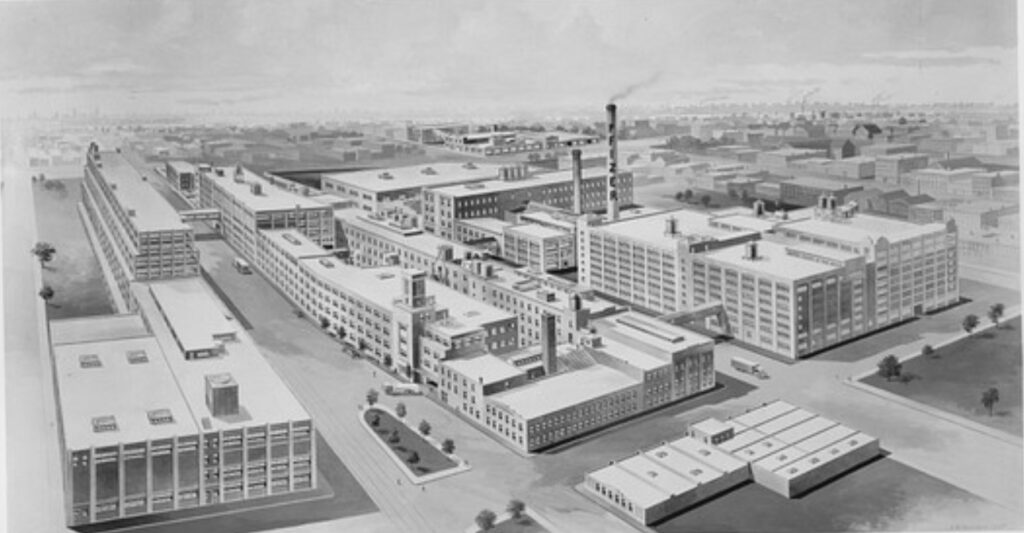
Brooklyn Public Library
Of course Pfizer also expanded outside of Brooklyn almost immediately. In 1868, they naturally moved their central headquarters closer to Wall Street — to 81 Maiden Lane.
Meanwhile their Brooklyn location was cranking out such products as iodine, chloroform, borax, camphor and even morphine. They also specialized in non-medicinal products like cream of tartar.
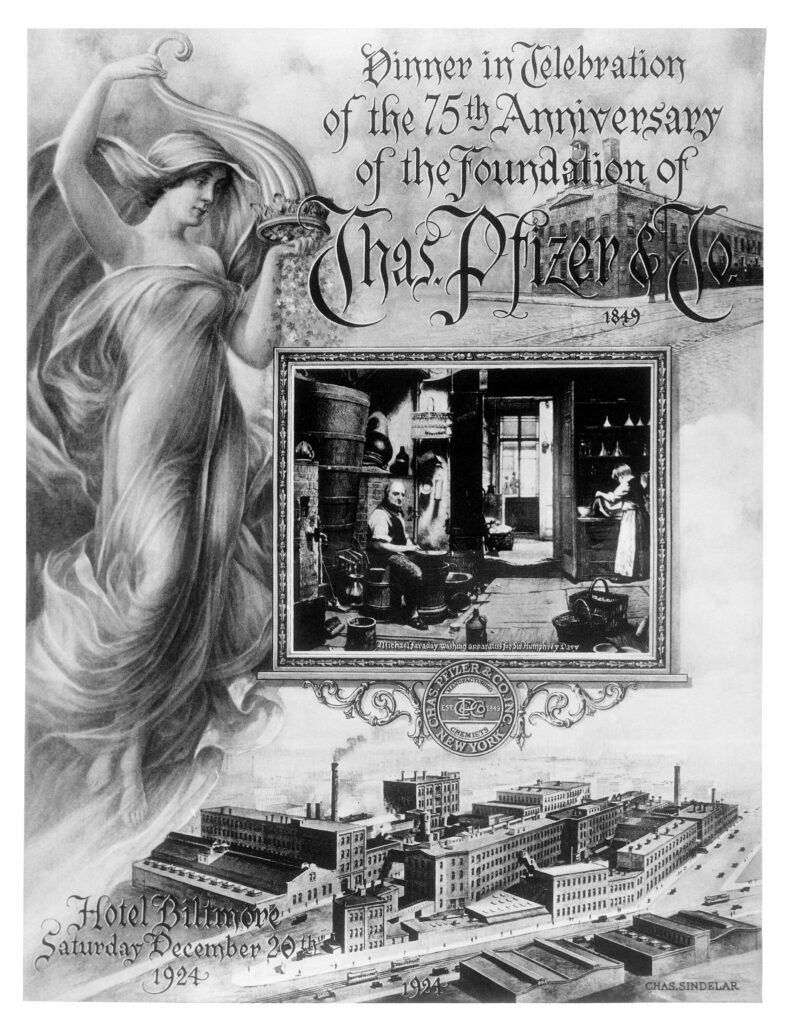
A celebration of their 75th anniversary featuring a depiction of their Brooklyn operation.
As Scott H. Podolsky writes in his journal article Antibiotics and the Social History of the Controlled Clinical Trial 1950-1970:
“For nearly a century of Pfizer’s existence, it did not market pharmaceuticals but rather had centered upon the production and refinement of chemicals such as citric acid, which Pfizer was the world’s largest producer by World War II.
“However the fermentation techniques used in the production of citric acid would render Pfizer a leader in the American World War II efforts to mass-produce penicillin and Pfizer soon followed as one of the largest producers of the equally nonexclusive streptomycin and dihydrostreptomycin (selling to other companies to distribute).”
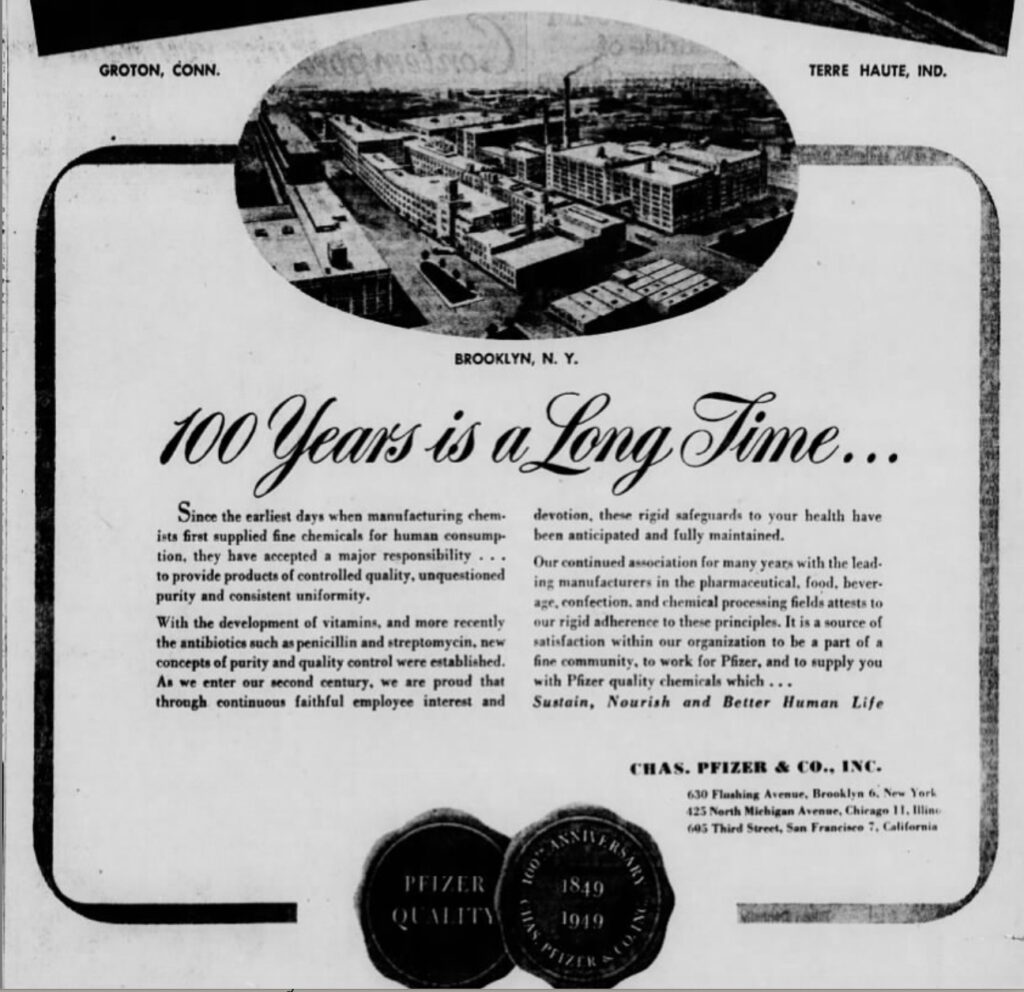
An advertisement touting their 100th anniversary
Penicillin would change the world — and significantly expand Pfizer’s profile by the second half of the 20th century through corporate mergers and expanded offices in several countries.
EPISODE 332 The Manhattan neighborhood of Yorkville has a rich immigrant history that often gets overlooked because of its location on the Upper East Side, a destination usually associated with wealth and high society.
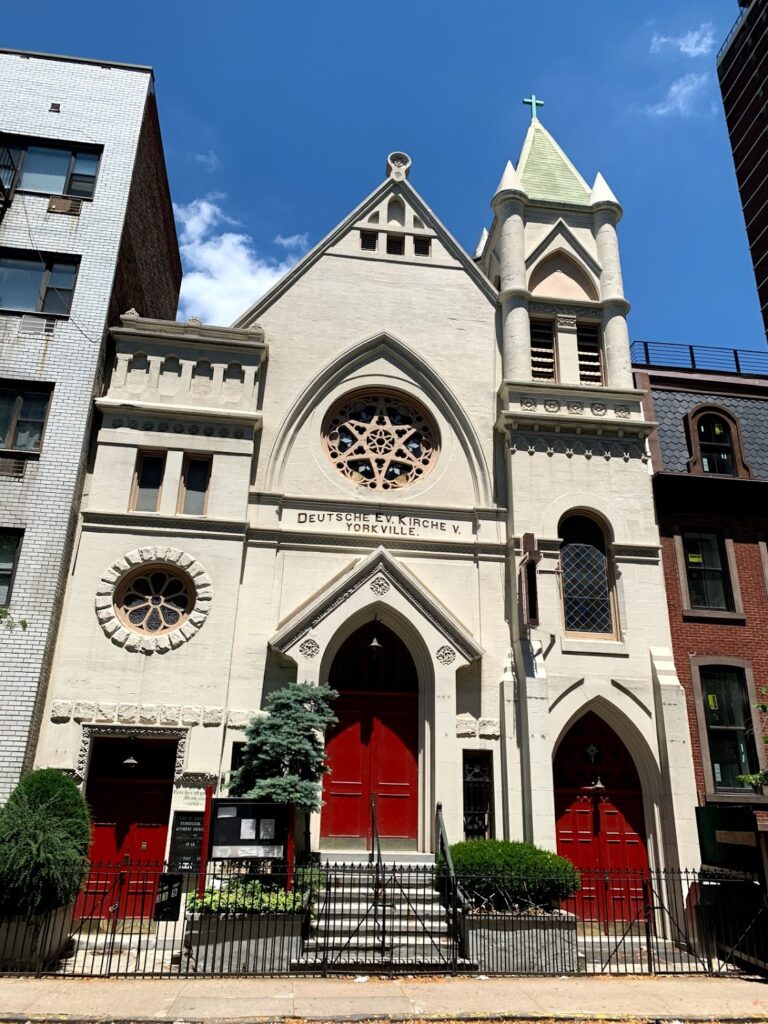
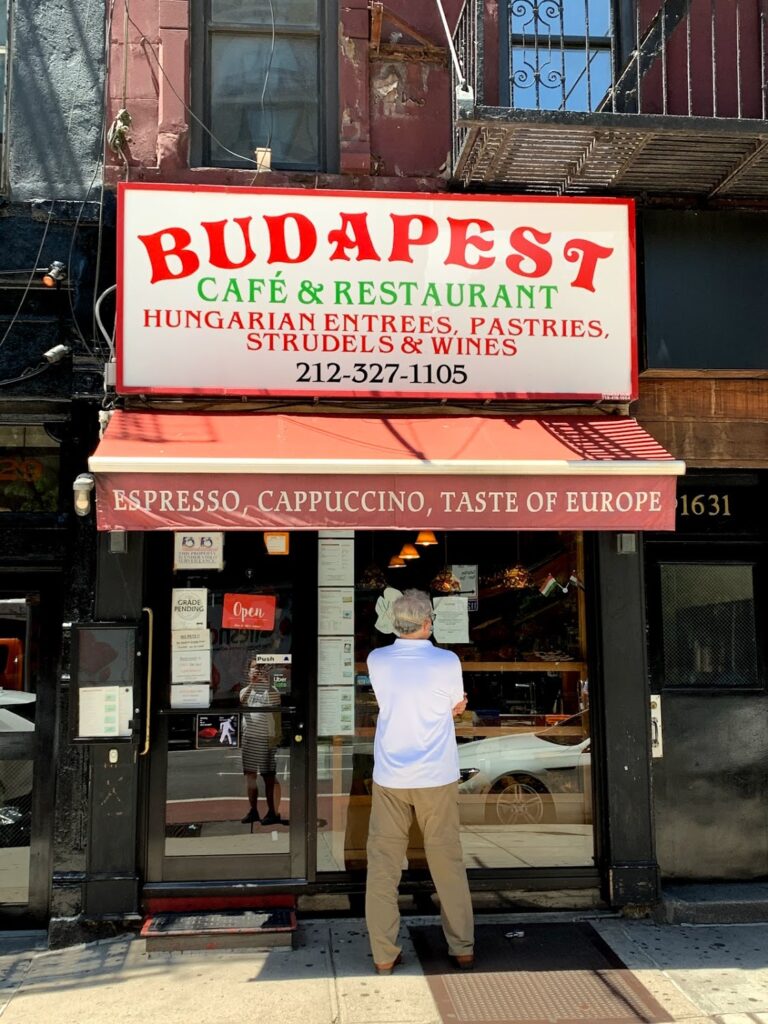
But Yorkville, for over 170 years, has been defined by waves of immigrant communities which have settled here, particular those cultures from Central and Eastern Europe — Germans, Austrians, Hungarians, Czechs and Slovaks.
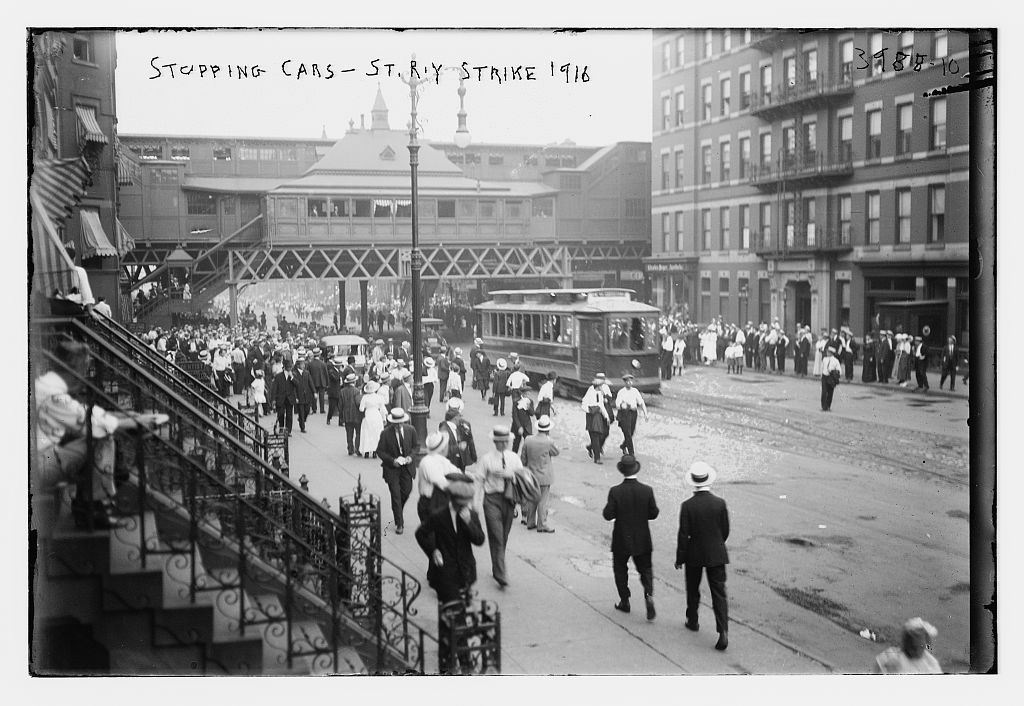
The neighborhood developed thanks to its location to various streetcar and train lines, but that proximity insured that Yorkville would evolve in quite a different way from the more luxurious Fifth Avenue just a few blocks away.
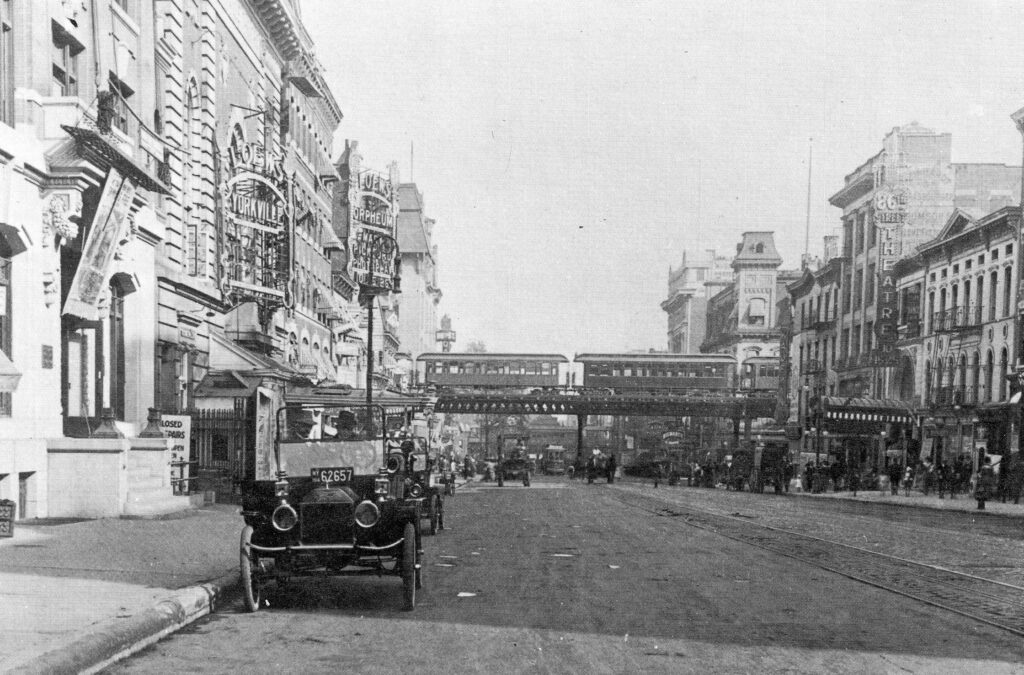
The corner of 86th Street and Second Avenue, 1916 — Library of Congress/Bain Collection
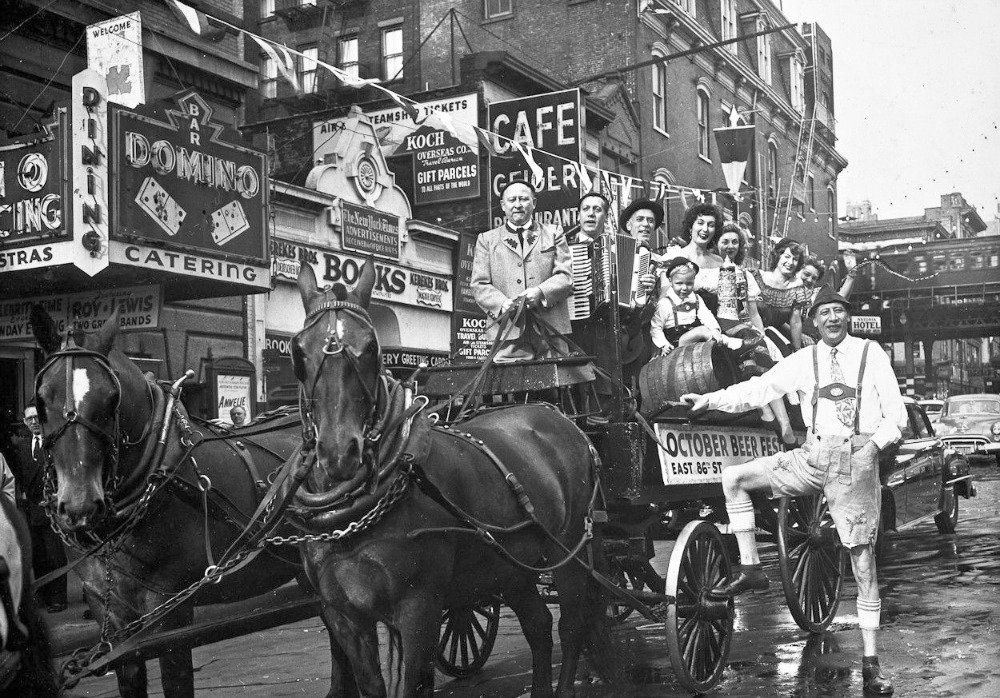
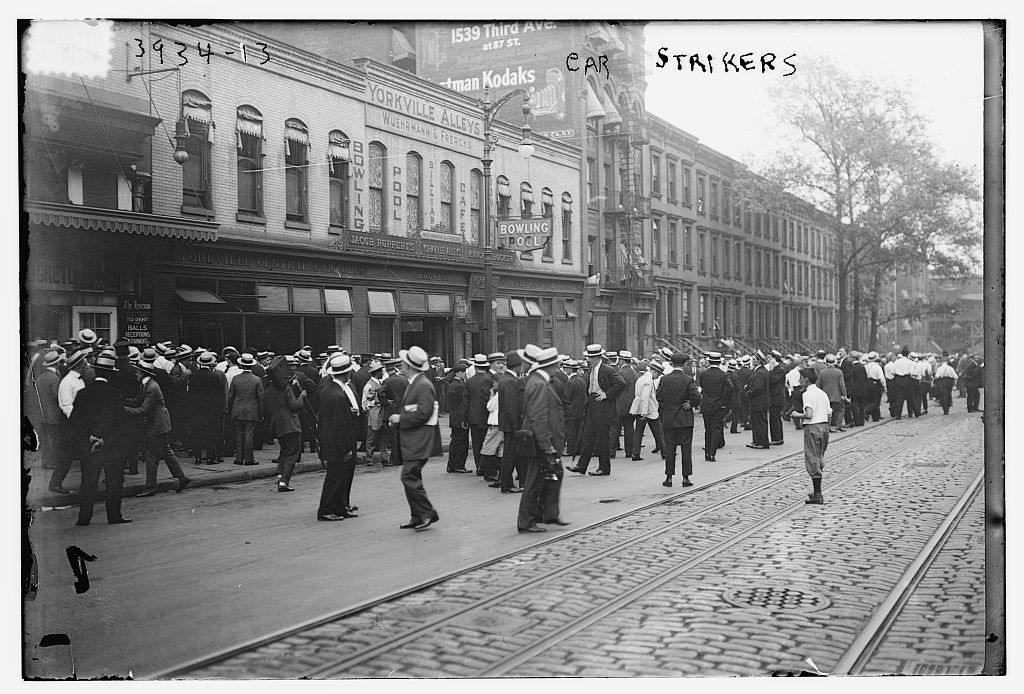
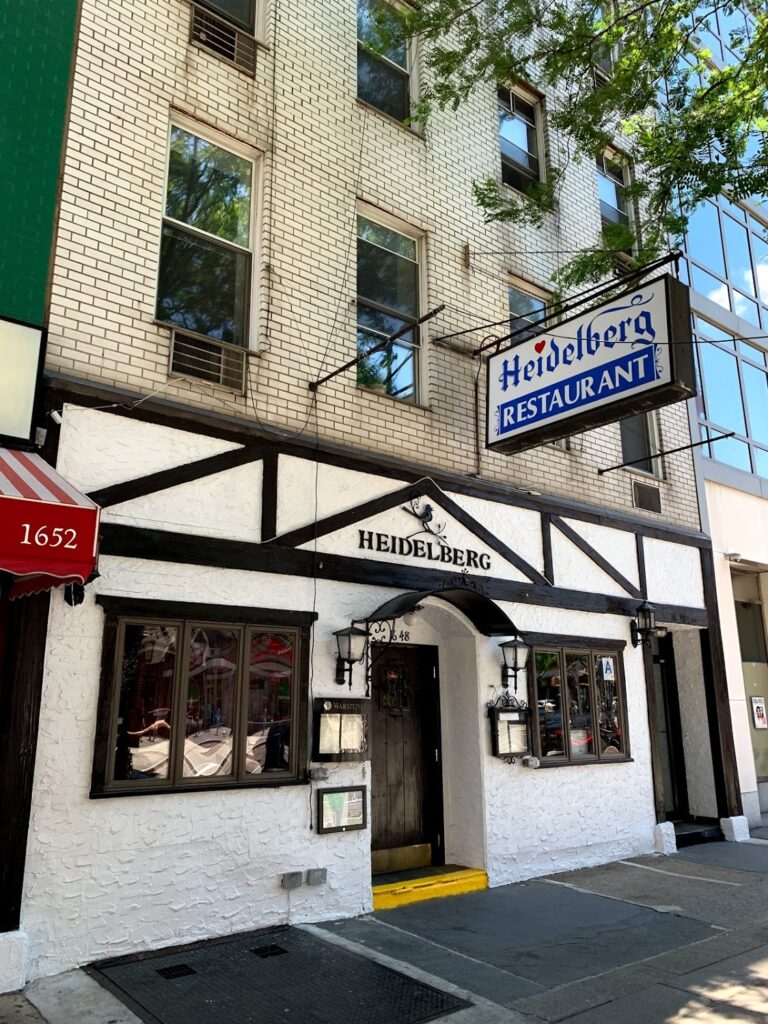
Yorkville’s German cultural identity was centered around East 86th Street — aka Sauerkraut Boulevard — where cafes and dance halls catered to the amusements of German Americans. The Yorkville Casino was a ‘German Madison Square Garden’, catering to those seeking cabaret, film and ballroom dancing.
Does the spirit of old Yorkville still exist today? While events in the early 20th century brought dramatic change to this ethnic enclave, those events didn’t entirely erase the German spirit from the city streets.
In this show, we tell you where can still find the most interesting cultural artifacts of this often overlooked historical gem.
This episode is brought to you by the Historic Districts Council. Funding for this episode is provided by public funds from the New York City Department of Cultural Affairs in partnership with the City Council and Council Member Benjamin Kallos.
This episode features an interview with Historic Districts Council executive director Simeon Bankoff and with Council Member Benjamin Kallos sharing his experiences in the neighborhood.
Listen to our podcast on the history of Yorkvillehere:
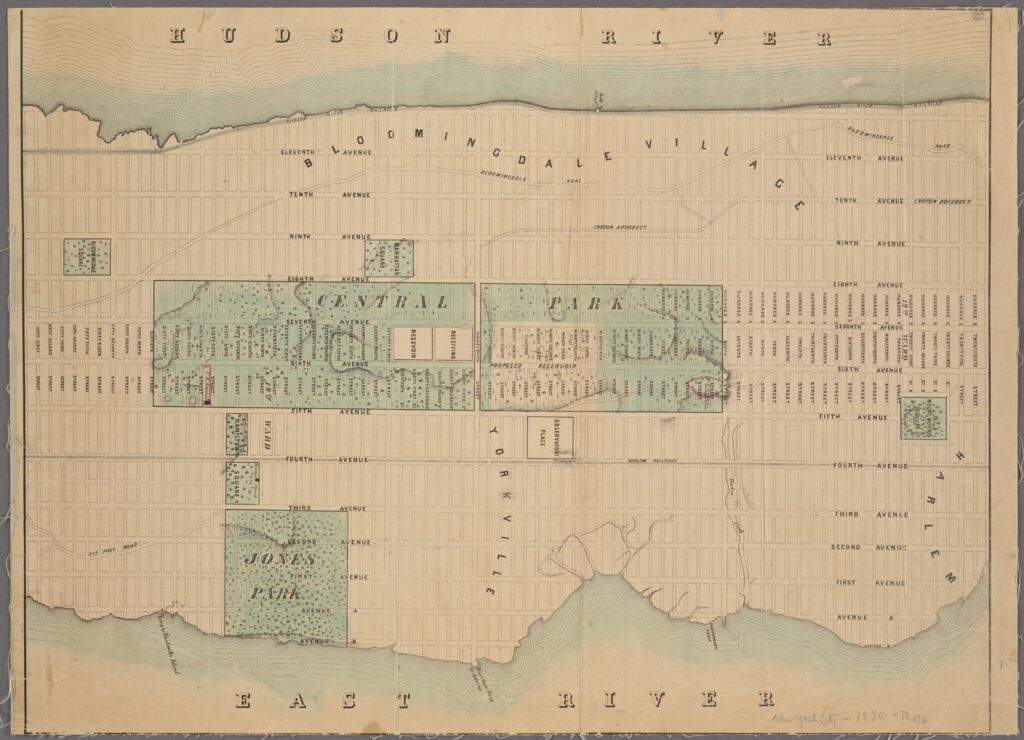
A map from 1870, showing Yorkville officially on the map. Interestingly this is a bit of a ‘ghost map’ as Jones Wood (pictured here as Jones Park) was never really developed as an official park.
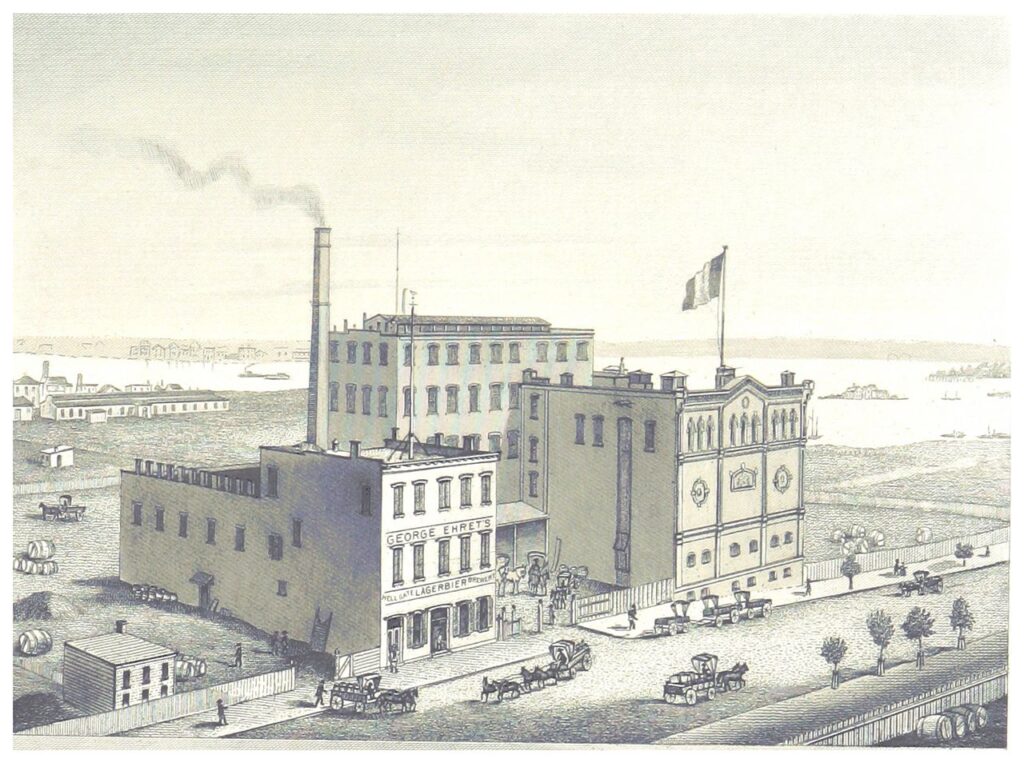
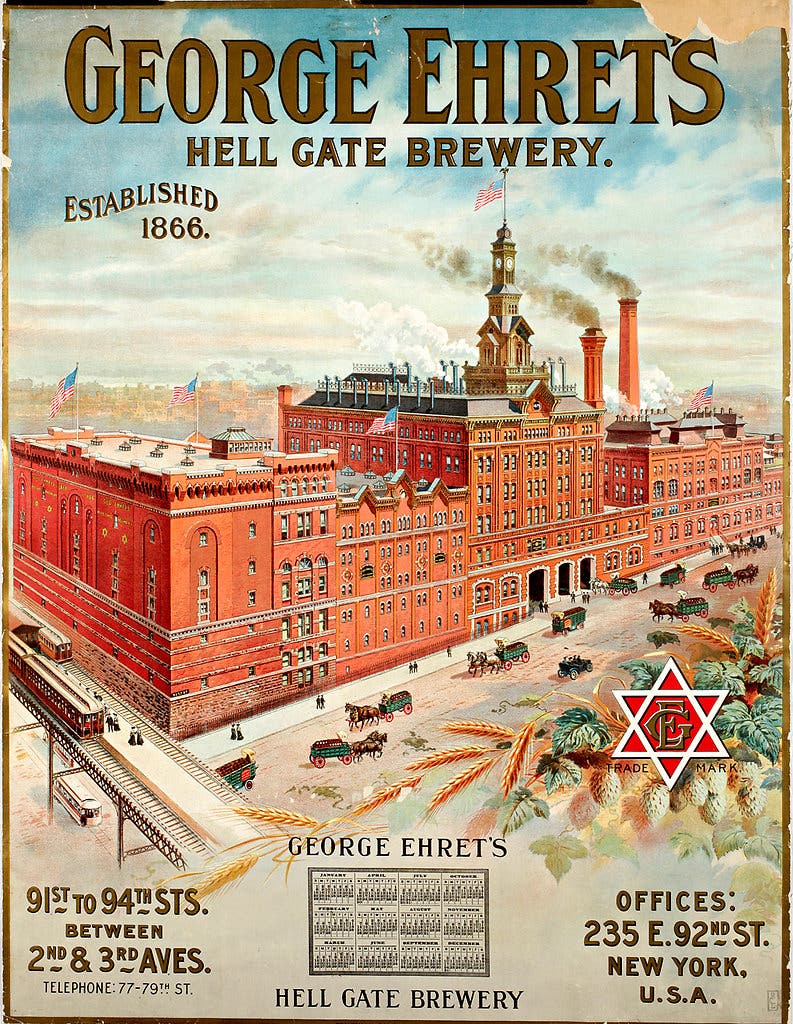
Ehret’s brewery in its early years, then in its grander days:
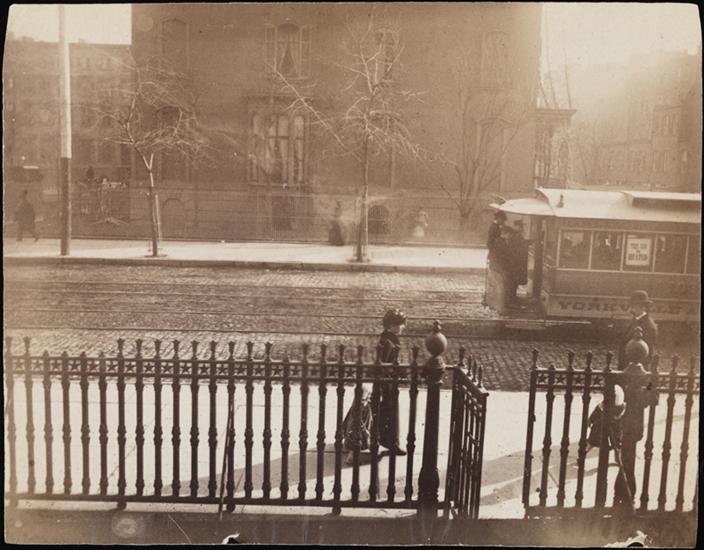
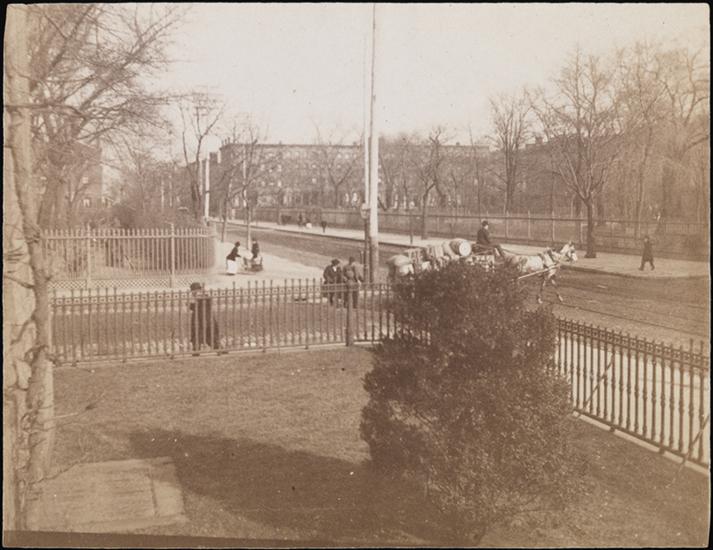
A couple interesting streetscapes of Yorkville from 1885 (courtesy the Museum of the City of New York) showing homes with large yards along a streetcar route:
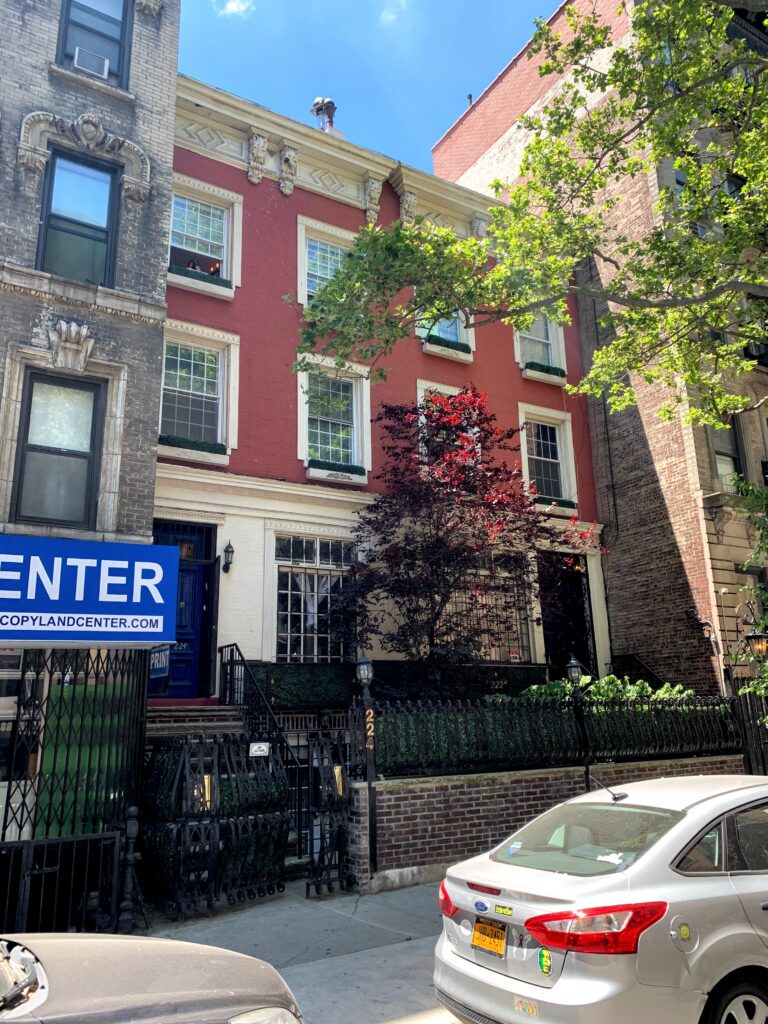
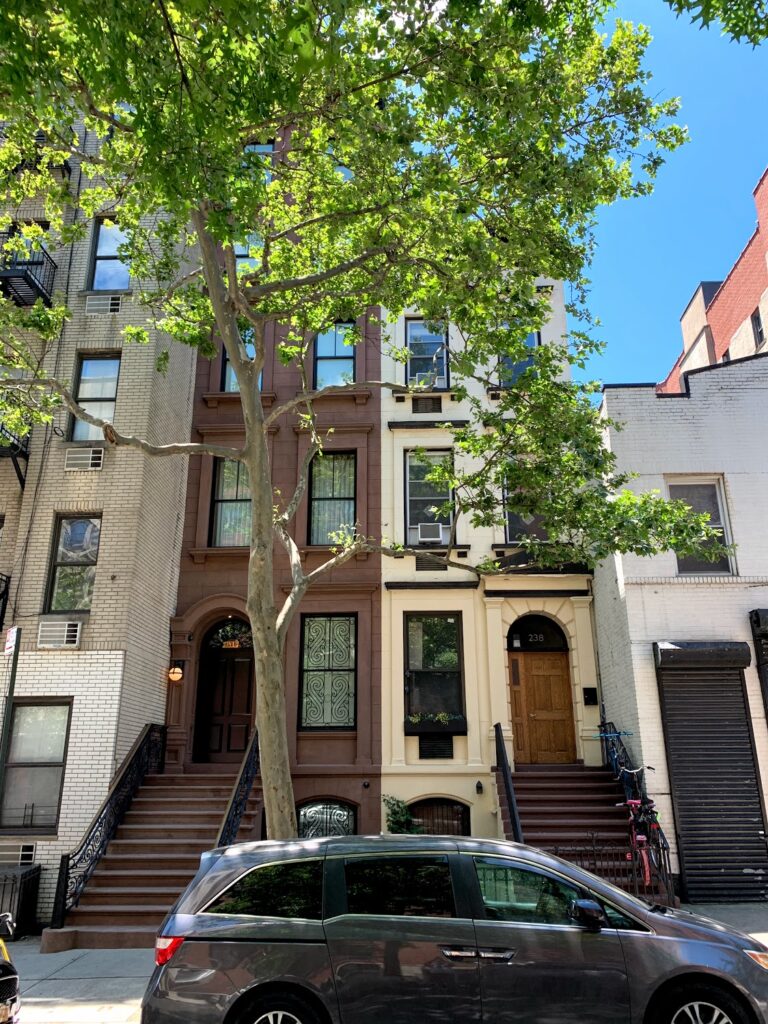
Some other sites of Yorkville (photos by Greg Young)
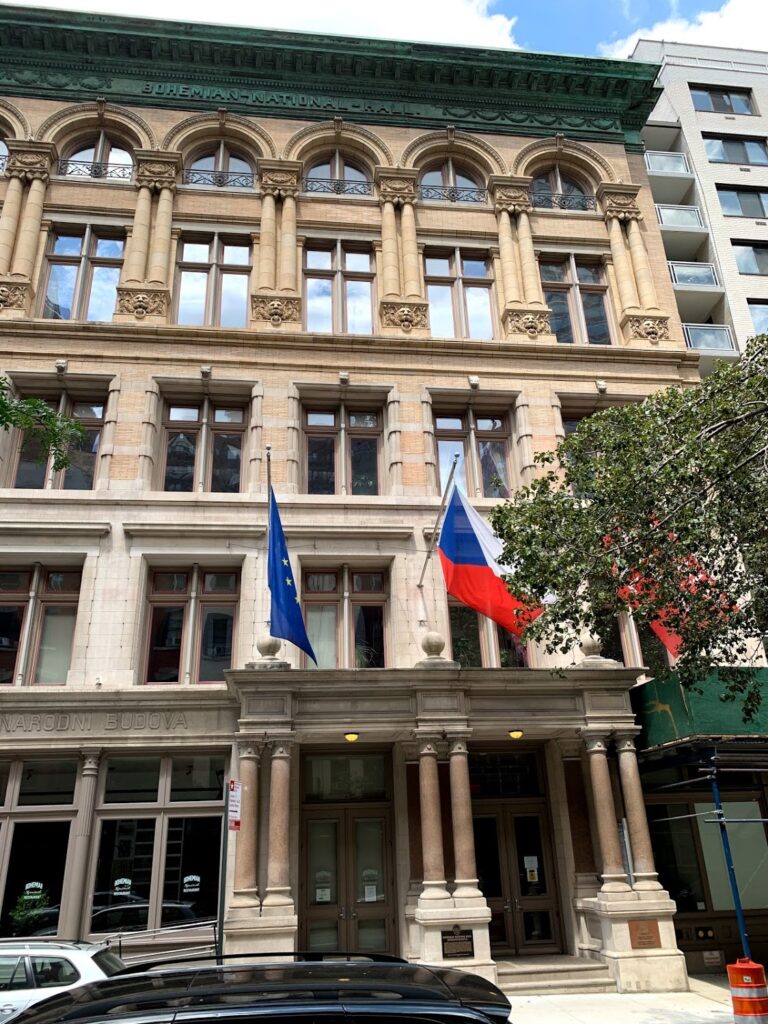
Carl Schurz ParkBohemian National HallZion-St. Mark’s Evangelical Lutheran Church ( 339—341 East 84th Street) which traces its congregation from the Lower East Side.
PODCAST: The big, brash history of St. Mark’s Place, the East Village’s most interesting street.
St. Mark’s Place may be named for a saint but it’s been a street full of sinners for much of its history.
One of the most fascinating streets in the city, St. Mark’s traces its story back to Peter Stuyvesant, meets up with the wife of Alexander Hamilton in the 1830s, experiences the incredible influx of German and Polish immigrants in the late 19th century, then veers into the heart of counter-culture — from the political activism of Abbie Hoffman to the glamorously psychedelic parties of Andy Warhol.
And that’s when the party really gets started! St. Mark’s is known for music, fashion, rebellion and pandemonium. In the 1970s and 80s, clothing stores like Limbo and club nights like Club 57 helped define its character — punk, new wave, alternative, raucous.
The Bowery Boys: New York City History podcast is brought to you …. by you!
We are now producing a new Bowery Boys podcast every two weeks. We’re also looking to improve the show in other ways and expand in other ways as well — through publishing, social media, live events and other forms of media. But we can only do this with your help!
We are now a member of Patreon, a patronage platform where you can support your favorite content creators for as little as a $1 a month.
Please visitour page on Patreon and watch a short video of us recording the show and talking about our expansion plans. If you’d like to help out, there are five different pledge levels (and with clever names too — Mannahatta, New Amsterdam, Five Points, Gilded Age, Jazz Age and Empire State). Check them out and consider being a sponsor.
We greatly appreciate our listeners and readers and thank you for joining us on this journey so far. And the best is yet to come!
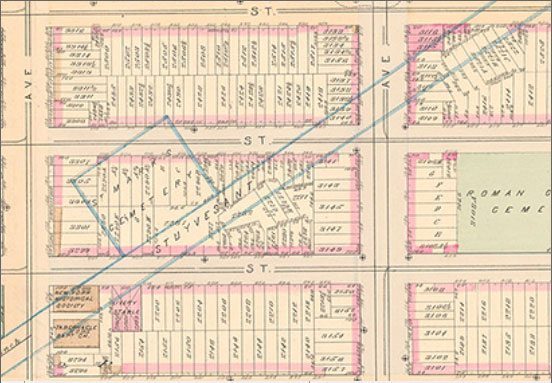
Stuyvesant Street superimposed over the planned grid. Ultimately the street was allowed to remain, breaking the grid. By the way, see that green patch at the far right? That was also a cemetery.
Courtesy EV Transitions
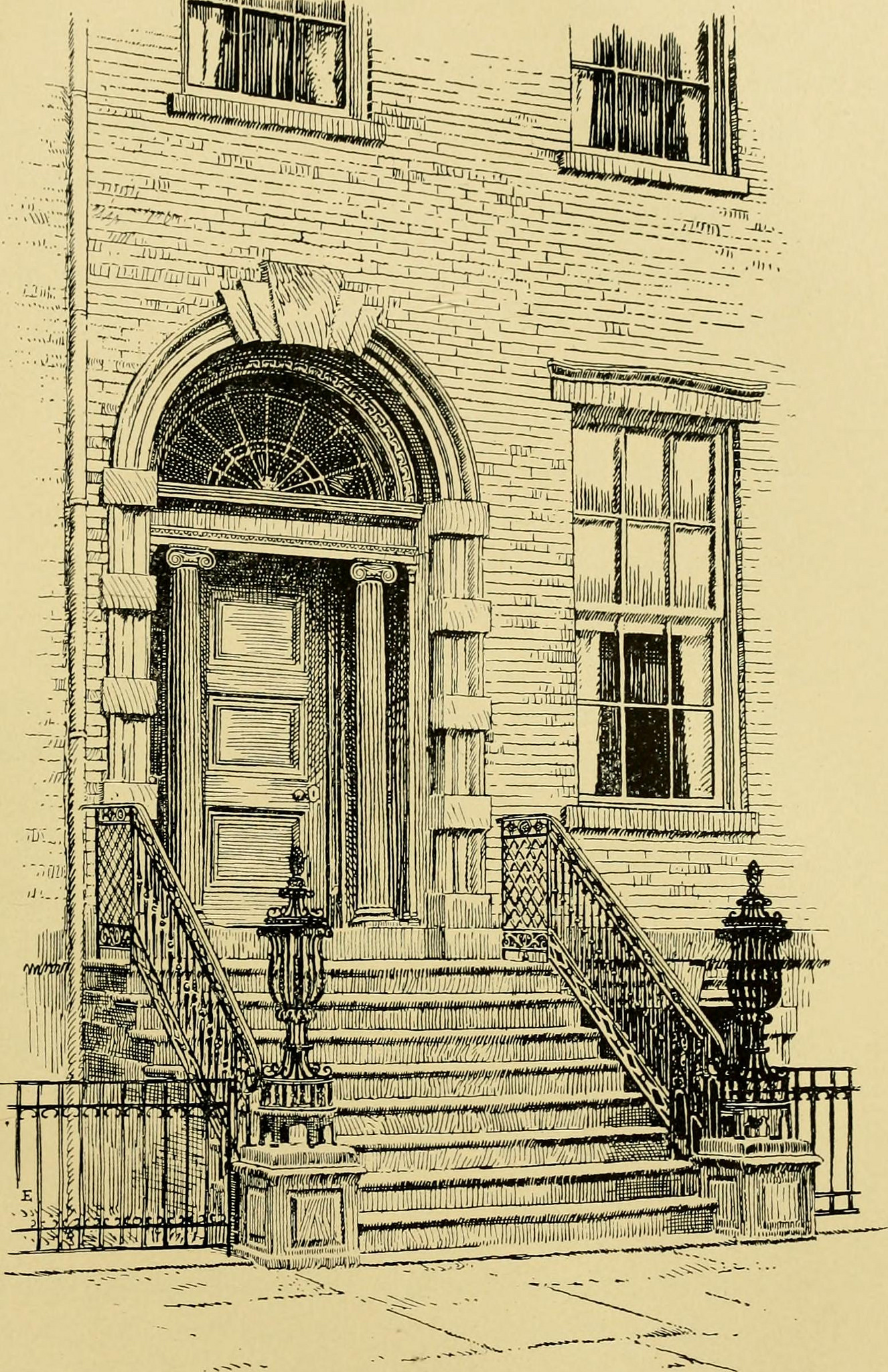
The front of 22 St. Mark’s Place from a 1914 history book. (It looks almost identical to 20 St. Mark’s, the old Daniel LeRoy House, which is still there.). “It had a tea room in the rear of the first floor, which [the tenant] altered into a library, constructing a bathroom in connection with it. A new bedroom was added above the library, and in the basement was installed a cook.” [source]
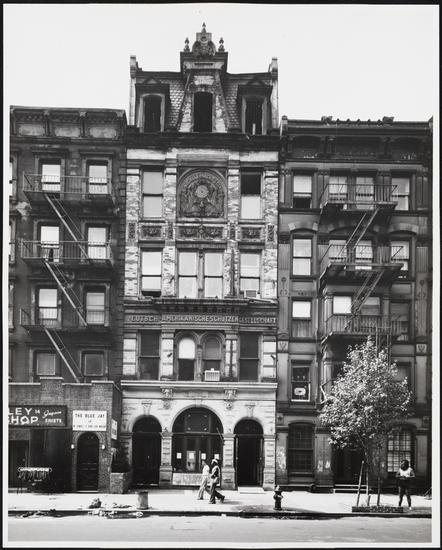
Deutsch-Amerikanische-Schützen Gesellschaft (German-American Shooting Society) building, 12 St. Mark’s Place, pictured here in 1975 in a photograph by Edmund Gillon
Courtesy Museum of the City of New York
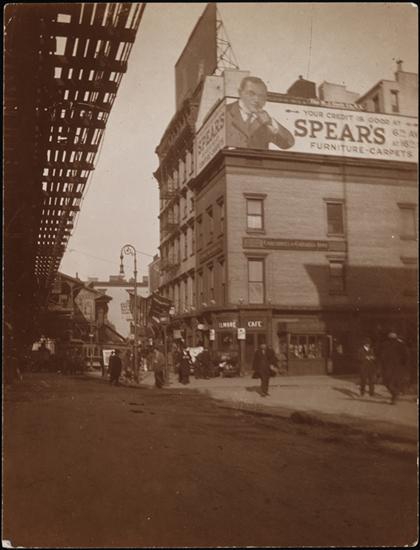
St. Mark’s Place and Third Avenue in 1914, the same year as the shootout at Arlington Hall! The Third Avenue elevated train framed St. Mark’s on the west end, the Second Avenue elevated (which actually ran along First Avenue in the East Village) to the east.
Courtesy Museum of the City of New York
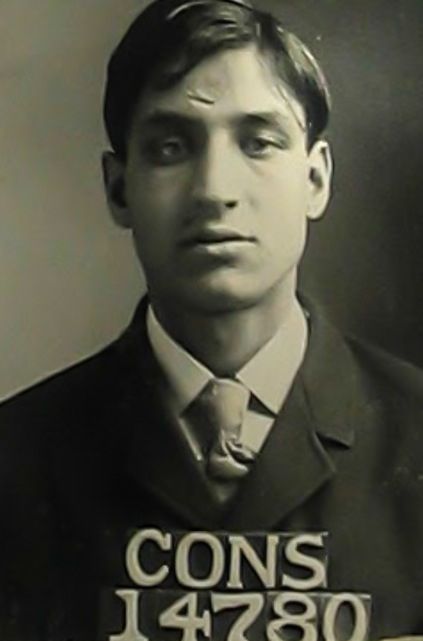
The mugshot of Dopey Benny whose gang was involved in the shootout which killed a city official.
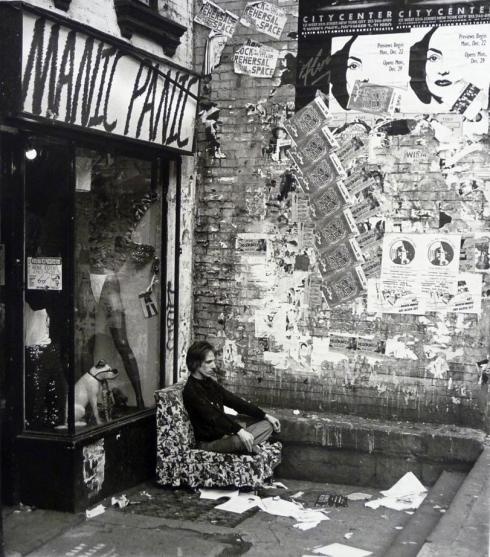
A photo by Victor George Macarol of the boutique Manic Panic (and a man in meditation), 1975
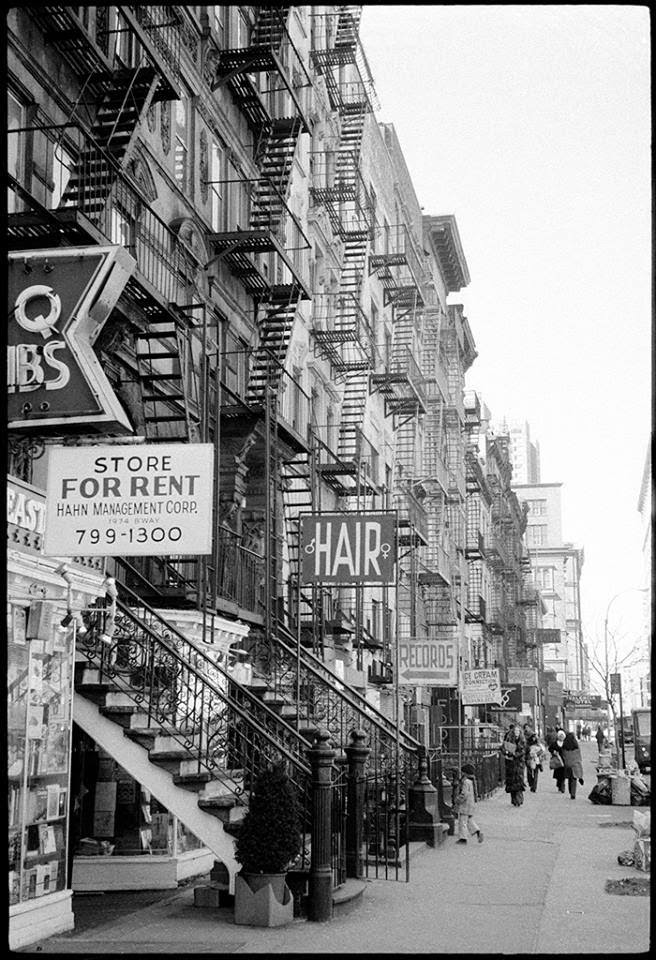
The south side of St. Mark’s Place, 1975
EV Grieve
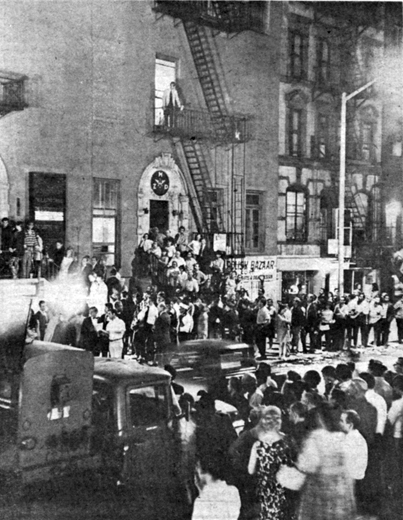
Crowds waiting to get into the Electric Circus
courtesy Alex Ross
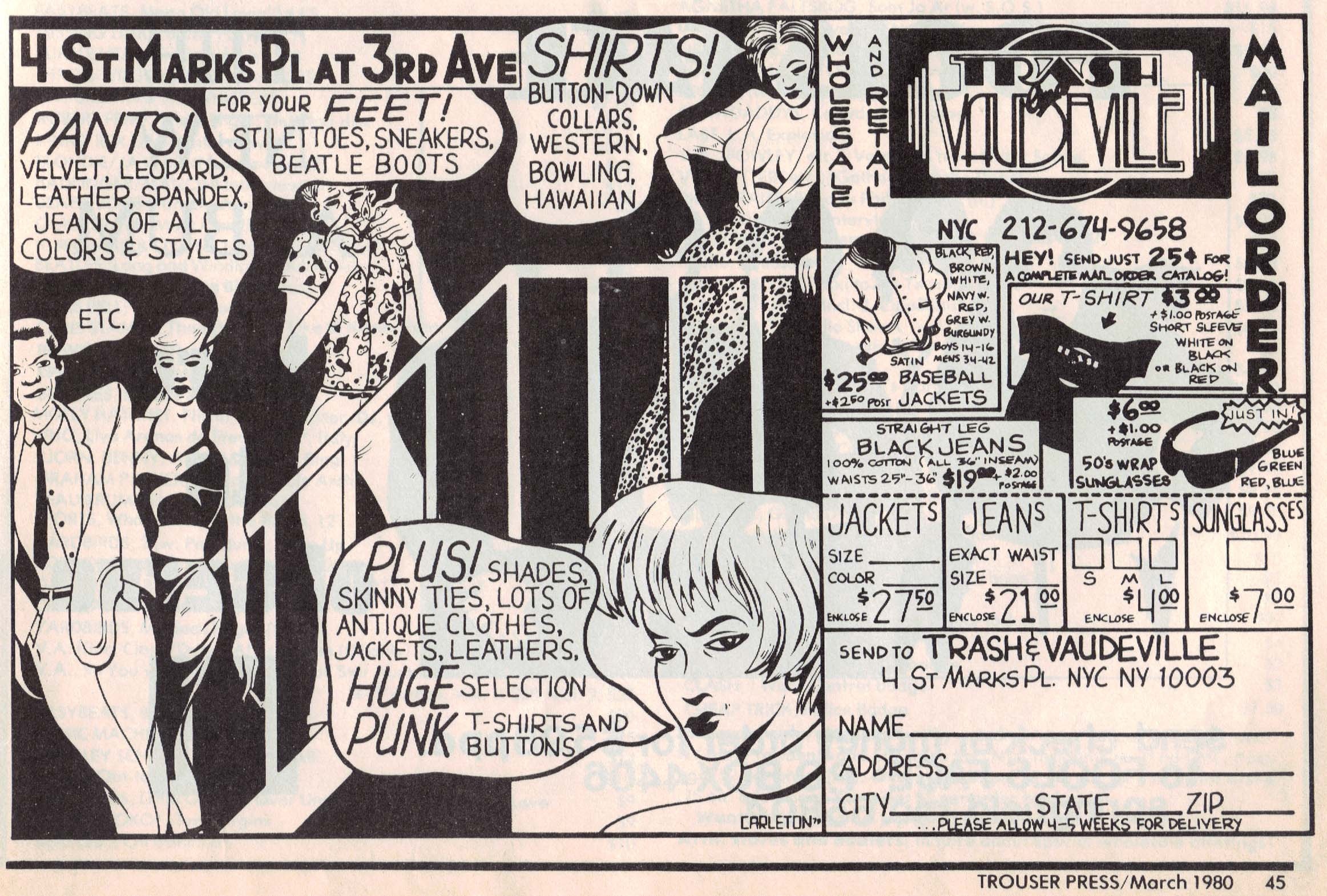
A flyer for Trash and Vaudeville…
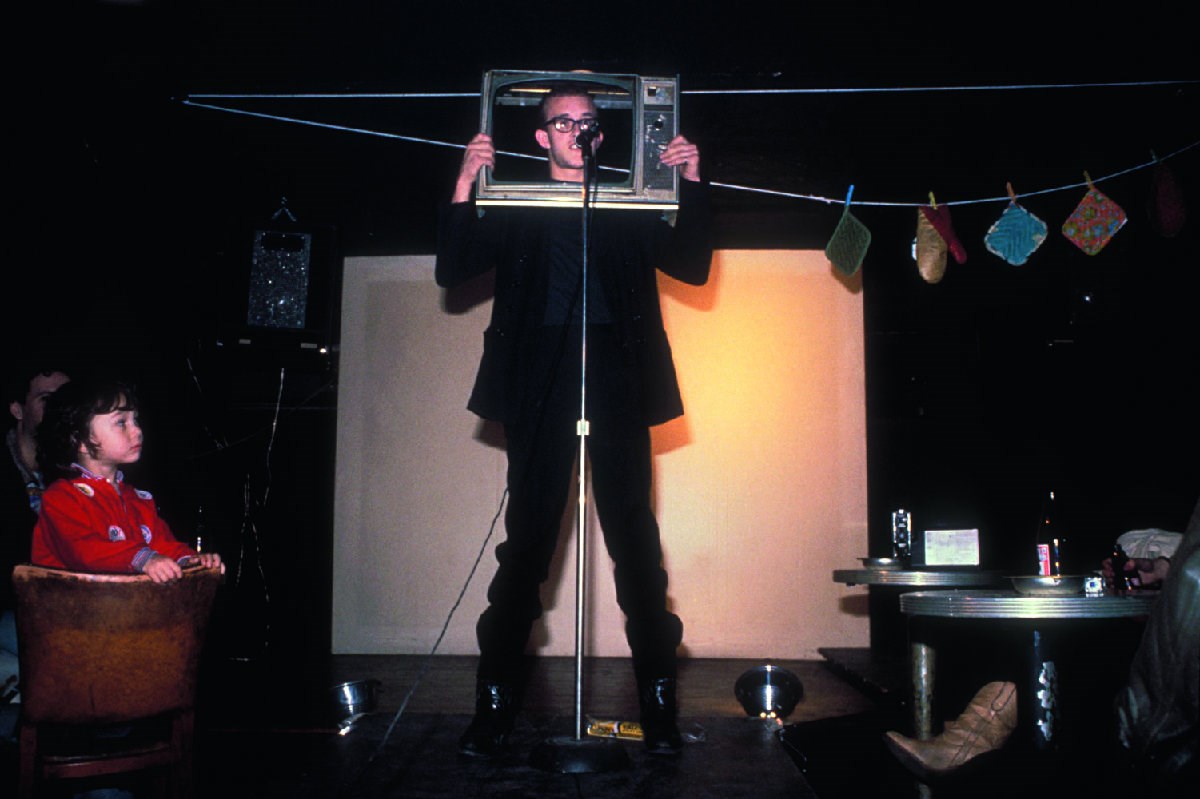
Keith Haring performing at Club 57 in a themed evening called Acts of Live Art. For more information on Club 57, you can read my earlier article about this extraordinary club here. Dazed has a pretty great article about the place here.
Photo by Joseph Szkodzinski
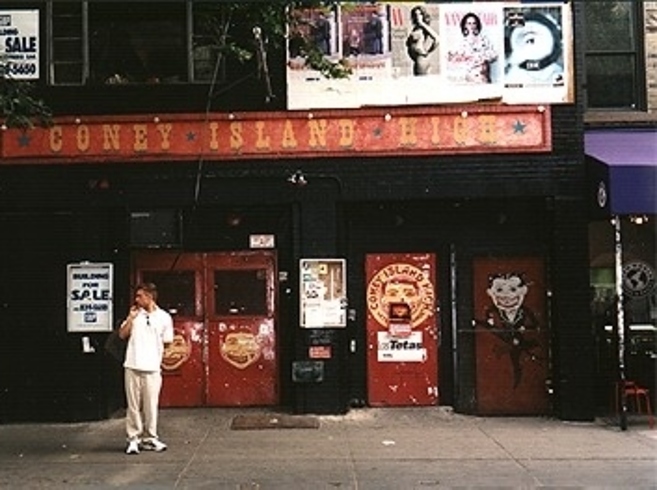
Coney Island High, a pivotal East Village venue during the 1990s.
Courtesy Buzzfeed
Top photo — St. Mark’s Place in 1978, Photos by Leonard Freed / Magnum Photos, care of Vintage Everyday
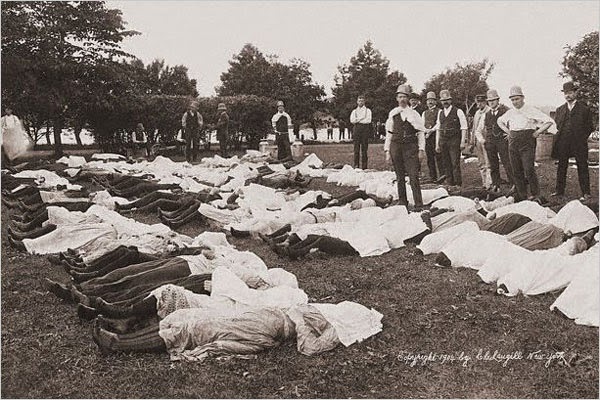
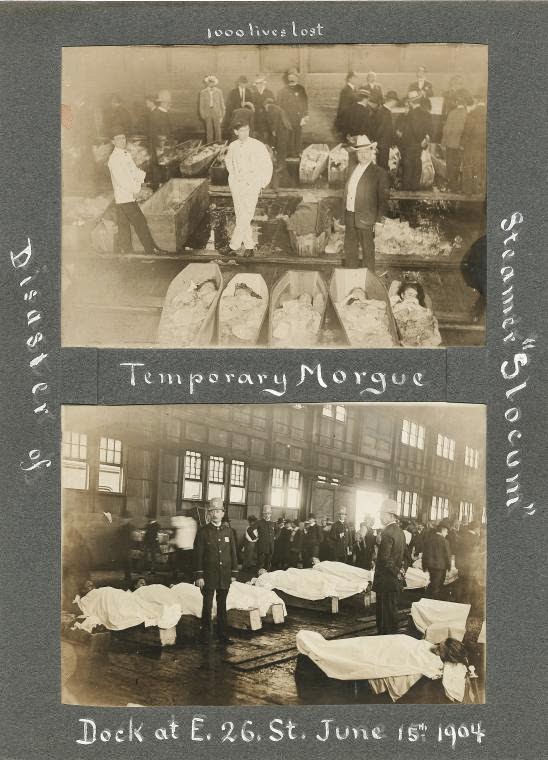
PODCAST On June 15, 1904, hundreds of residents of Kleindeutschland, the Lower East Side’s thriving German community, boarded the General Slocum excursion steamer to enjoy a day trip outside the city. Most of them would never return home.
The General Slocum disaster is, simply put, one of the greatest tragedies in American history. Before September 11, 2001, it was the largest loss of life of any event that has ever taken place here.
This is a harrowing story, brutal and tragic. The fire that engulfed the ship near the violent waters of the Hell Gate gave the passengers a horrible choice — die by fire or by drowning.
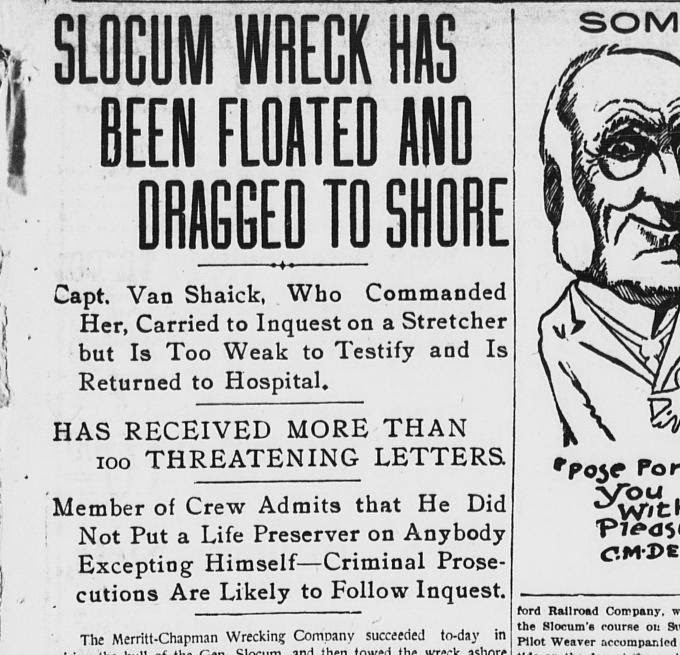
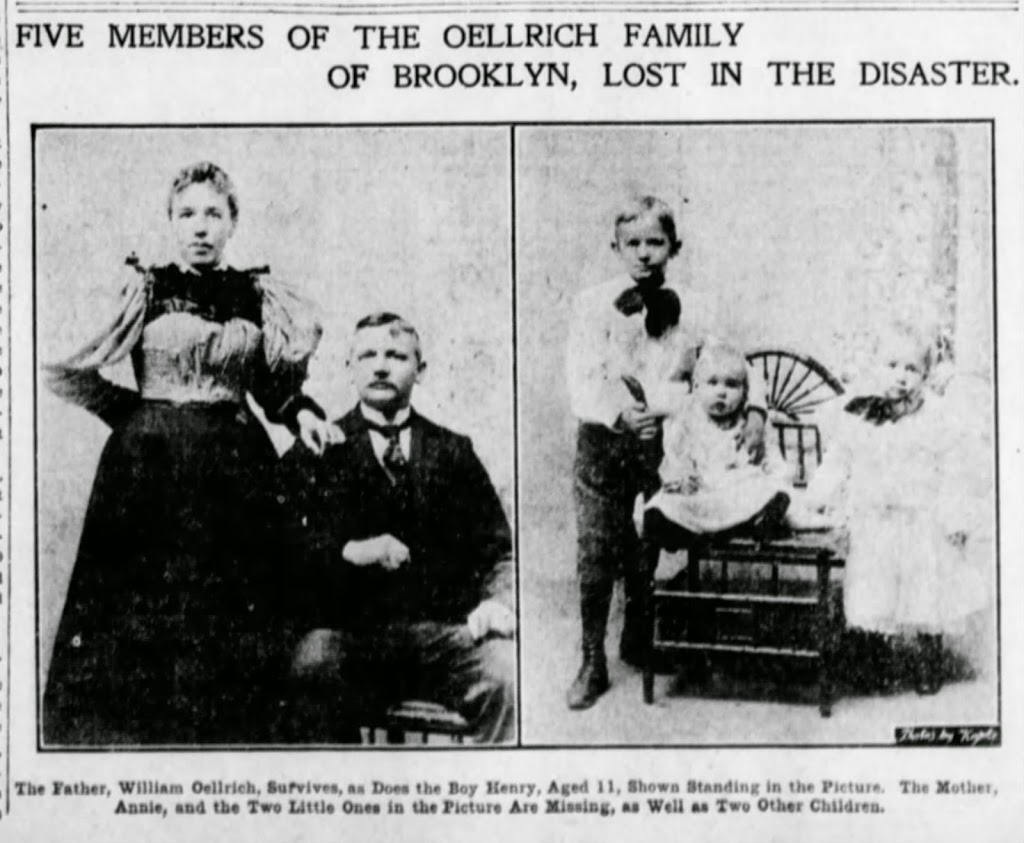
In the end, over one thousand people would lose their lives in an horrific catastrophe that could have been easily prevented. But there are also some surprising and even shocking stories of human survival here, real tales of bravery and heroism.
PLUS: The extraordinary fate of little Adella Liebenow Wotherspoon (at right)
And we would like to thank a new sponsor Audible, the premier provider of digital audiobooks. Get a FREE audiobook download and 30 day free trial at www.audibletrial.com/boweryboys. Over 150,000 titles to choose from for your iPhone, Android, Kindle or mp3 player Audible titles play on iPhone, Kindle, Android and more than 500 devices for listening anytime, anywhere.
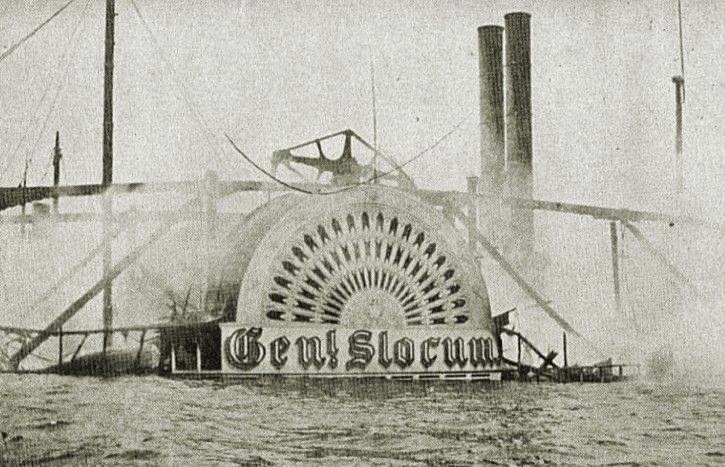
The General Slocum, in its glory days. I believe this photograph was taken in the Rockaways.
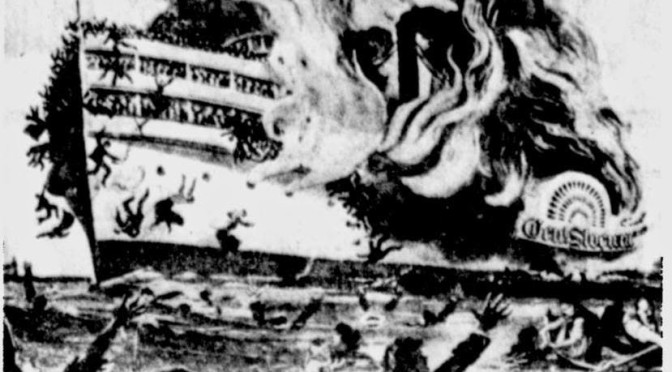
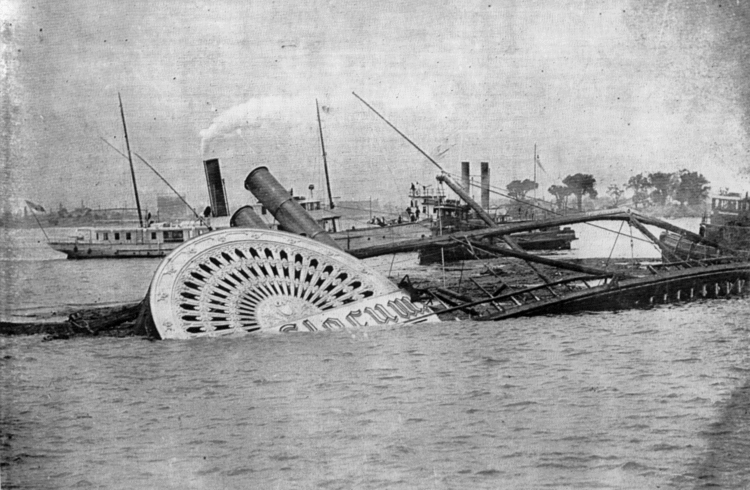
A tugboat attempts to put out the remaining flames of the Slocum, now a burning husk in the water.
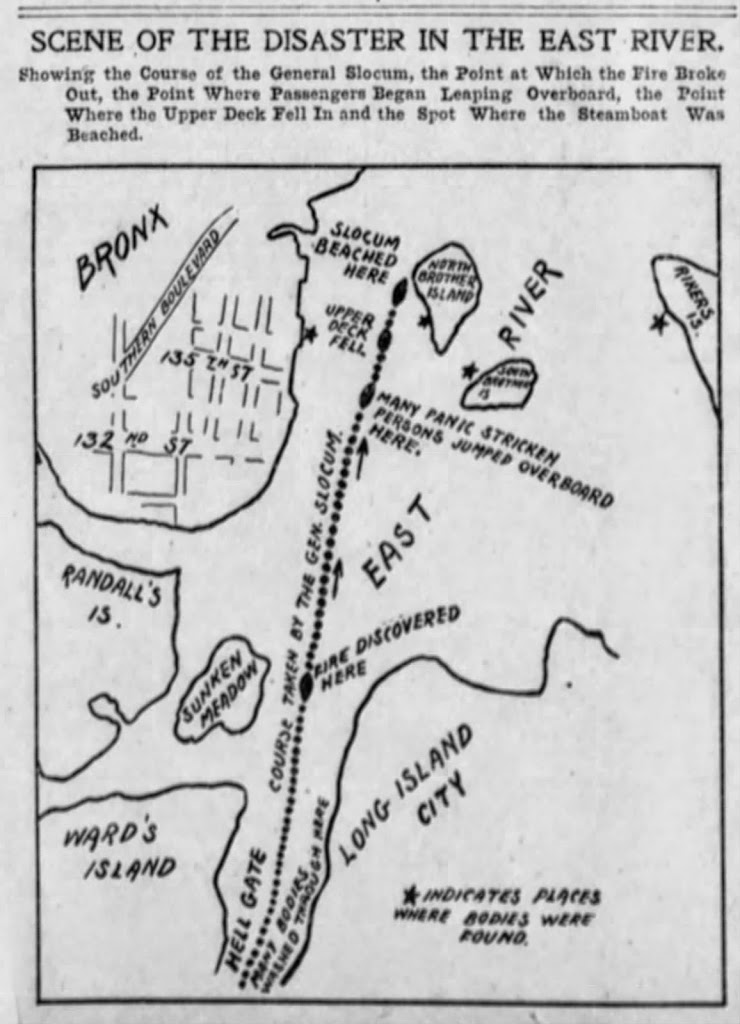
A make-shift map, from the Brooklyn Daily Eagle, June 15, 1904, late edition:
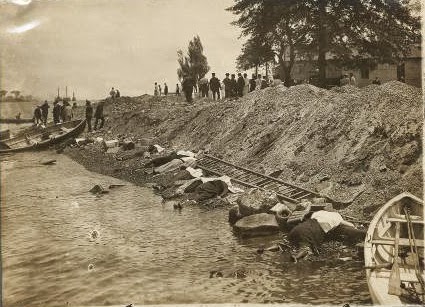
Bodies washed ashore on North Brother Island
Two morbid photographs from Charities Pier:
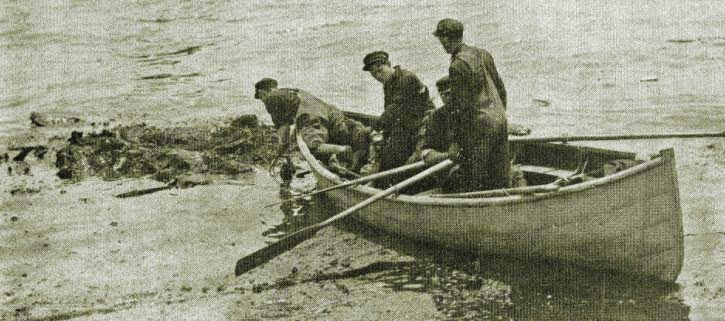
For days later, recovery workers sifted through East River debris, looking for additional bodies:
A funeral procession through the Lower East Side for some of the victims:
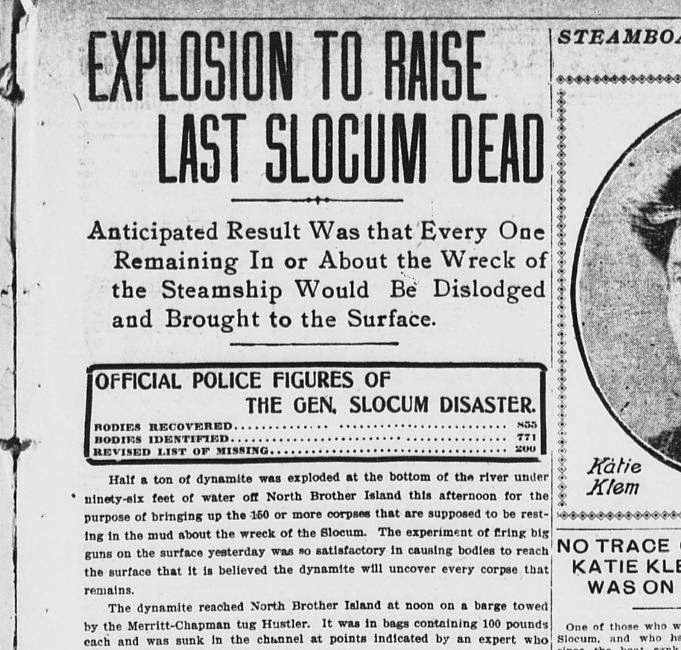
Two headlines from the New York Evening World, one week after the disaster:
The cover ofPuck Magazine, one year after the disaster, wondering if justice would ever be served to those under indictment for the disaster. “Illustration shows an old and haggard “Justice” sitting in a chair on a rock in the East River, cobwebs have grown over her sword, scales, and an “Indictment” (Library of Congress)
From the Brooklyn Daily Eagle, the following day:
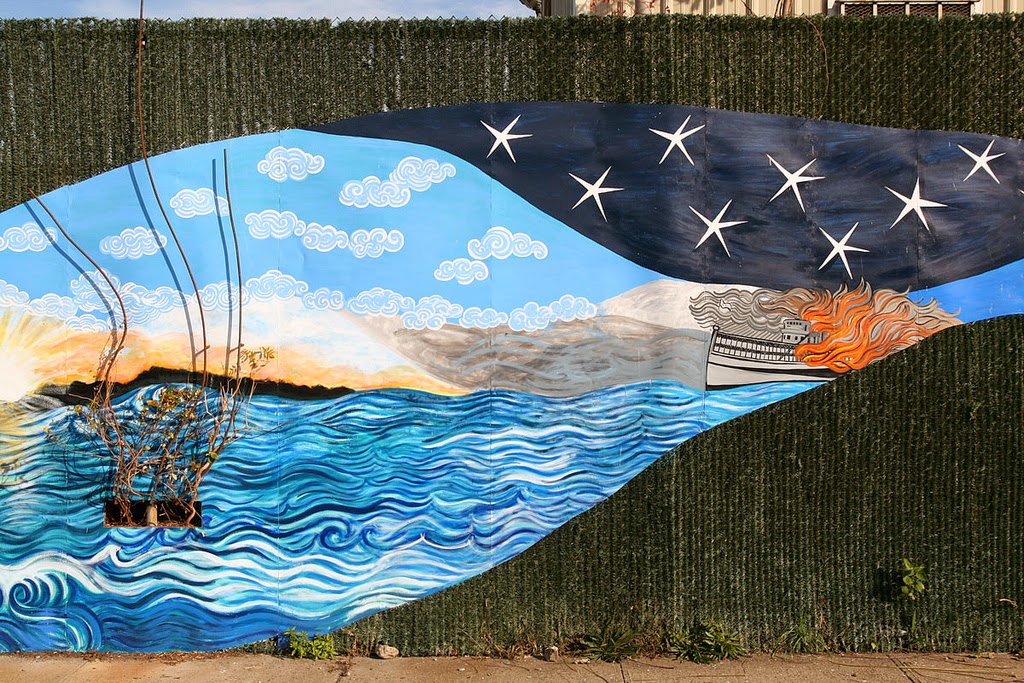
A mural in the Bronx that depicts the General Slocum disaster (courtesy Flickr/Joe Schumacher):
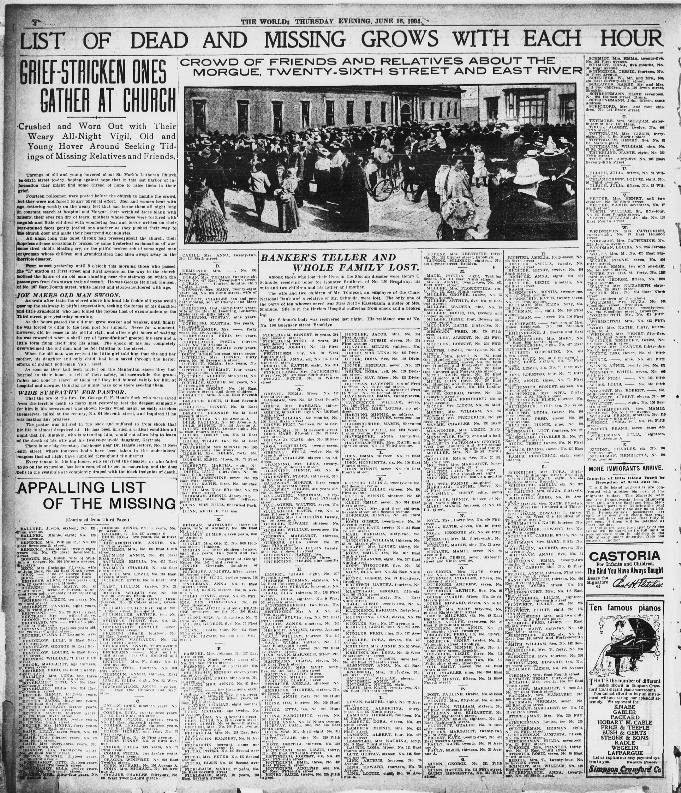
The initial list of the deceased, from the June 16, 1904 edition of the New York Evening World. The number would increase over the coming days.
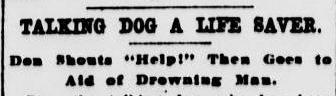
One hundred years ago today, he saved a man from drowning in Brighton Beach. Don shouted or barked the word ‘Help!’ then ran to the waters to save him.
But perhaps I should explain.
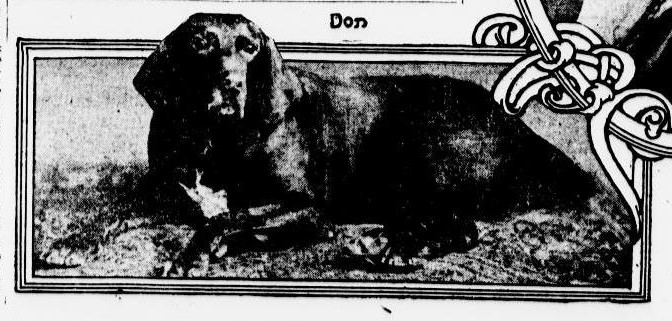
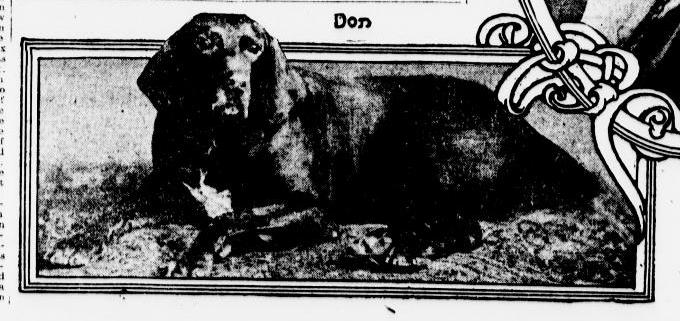
In December 1910, the New York Times ran a startling announcement that a dog in Germany had been discovered that could pronounce certain human words. The setter from Theerhutte was owned by an eastern German gamekeeper and possessed several human qualities, not the least of which was the name Don. The dog had beautiful eyes “sometimes almost human in their expression” and was an “uncommonly intelligent animal,” according to the Times.
Naturally, Don spoke only in German. Being a dog, among the six words at his command were ‘haben’ (want), ‘kuchen’ (cakes) and ‘hunger’. You had to use your imagination, of course, but one could detect a slight difference in Don’s barks that could be interpreted as separate words.
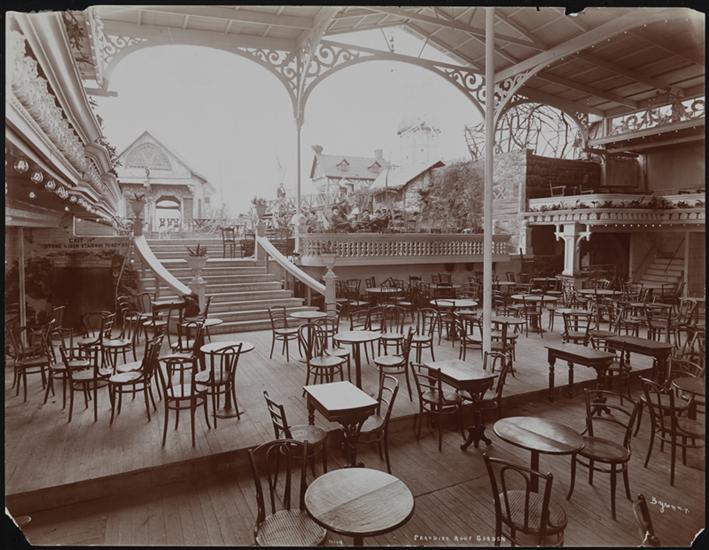
Above: Hammerstein’s rooftop garden at the Victoria Theatre in Times Square, the stage where Don the Talking Dog made his debut.
Generally speaking, dogs were a definite novelty among the stars of the vaudeville stage. A troupe of animals called Wormwood’s Dogs and Monkeys held court on the stages of Coney Island in the 1910s. More renowned, perhaps, was the cross-dressing pooch Uno the Mind Reading Dog , who wowed theater crowds in 1910.
But the highest paid dog act up to that time was Dan the Drunken Dog, an animal who emulated the wobbling demeanor of an alcoholic, to the delight of audiences at the Oscar Hammerstein‘s Victoria Theater rooftop garden in Times Square.
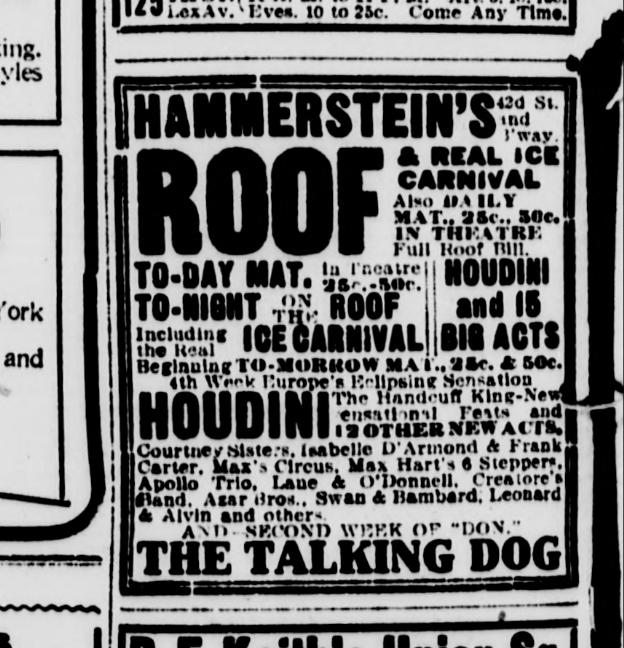
None of these would reach the fame of Don the Talking Dog. Hammerstein was so sure New Yorkers would love him that he posted a $50,000 bond to have Don brought to the United States. The dog arrived in America on July 9, 1912 aboard the German steamship Prinz Friedrich Wilhelm, “absolutely refus[ing] to be interviewed at the pier, and indeed, had been too seasick on the way over to converse with anybody.” [source]
At right: On the bill with Harry Houdini, from the New York Sun, July 21, 1912
A few weeks later, the German canine would make his debut on Hammerstein’s rooftop garden, alongside master of ceremonies Loney Haskell. “The trained growls which emanate from his throat can readily be mistaken for words,” claimed a Variety reviewer. “On the roof the audience, skeptical in the first place, became more so at Loney’s [introduction], but after the dog had made its first try they became interested and later enthusiastic.”
His salary was allegedly $1,000 a week, paid, of course, to his owner Martha Haberland. Like many temperamental divas, Don disliked the roof garden lifestyle due to the sounds of traffic, preferring to perform inside theaters, not atop them. But he was huge success that year, touring to other Hammerstein stages before returning to Germany that fall, a bonafide American star.
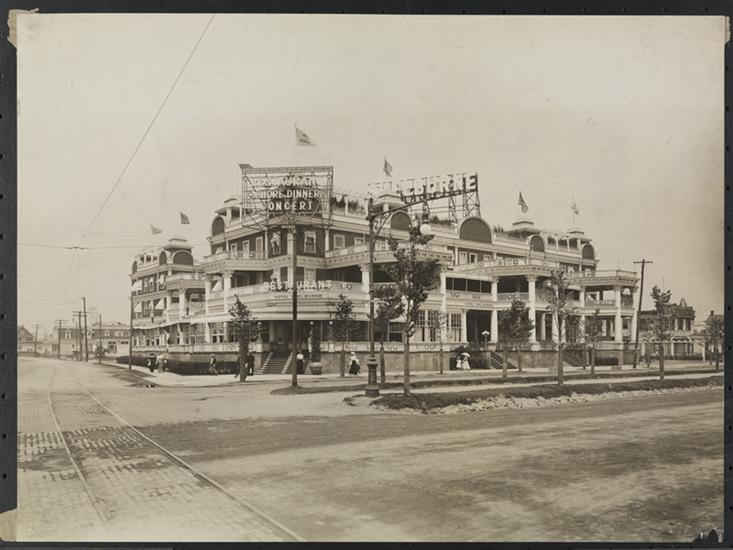
Above: The Hotel Shelburne in Brighton Beach, where Don the Talking Dog saved a man from drowning
Don returned to Hammerstein’s Times Square stage in 1913, this time performing alongside the likes of young comedian Sophie Tucker. Later that summer he arrived in Brighton Beach to delight Brooklyn audiences. It was here, on one of his afternoons off, that he rescued a drowning man with his famed ubiquitous voice.
The man was a waiter for the Hotel Shelburnewho was actually out walking Don that afternoon. The man jumped in the water for a swim and instantly lost his footing. Don saw the man flailing in desperation in the ocean foam and, then, according to the New York Sun, allegedly unfurled one of his new words — “Help!” — startling everyone on the beach.* The performer then swam over to the drowning man and began pulling on his bathing suit.
A passing policeman leaped into the water on his horse to rescue Don and the waiter. This whole scene — dog, horse, waiter, policeman — was in turn rescued by three lifeguards in a boat. [source]
This was perhaps Don’s shining moment. He shortly retired from the stage and finally died in 1915 back in Germany. His final words, according the Evening World: “Say goodbye to my old pal Loney Haskell.”
*The Tribune reports the same event but does not mention this magical ‘Help!’
Top pic courtesy New York Evening World. Bottom two images courtesy Museum of the City of New York.

![[Samuel Sullivan Cox statue.]](https://www.boweryboyshistory.com/wp-content/uploads/2014/01/M3Y44713-188x300.jpg)