Categories
American History New Amsterdam Podcasts Wartime New York

How New York Got Its Name: A Tale of Adventure and Betrayal with Russell Shorto

It’s one of the most foundational questions we could ever ask on this show — how did New York City get its name?

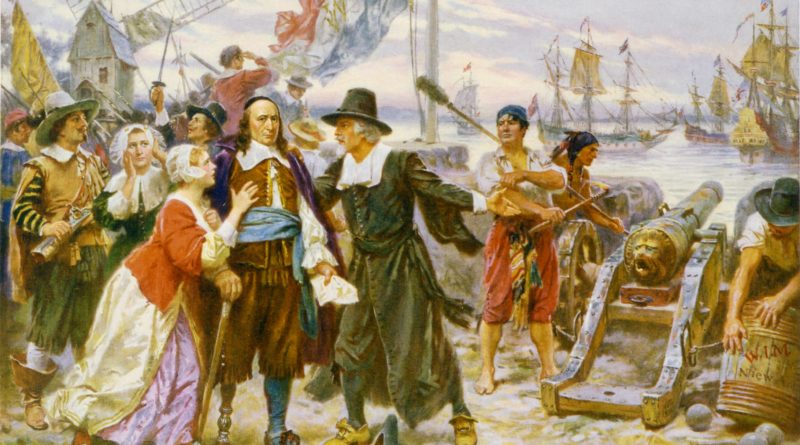
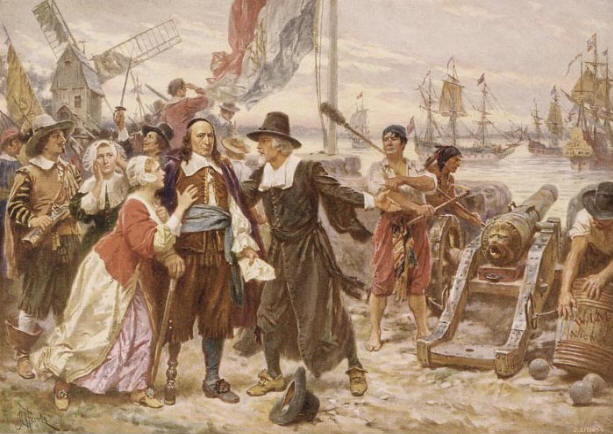
You may know that the English conquered the Dutch settlement of New Netherland (and its port town of New Amsterdam) in 1664, but the details of this history-making day have remained hazy — until now.

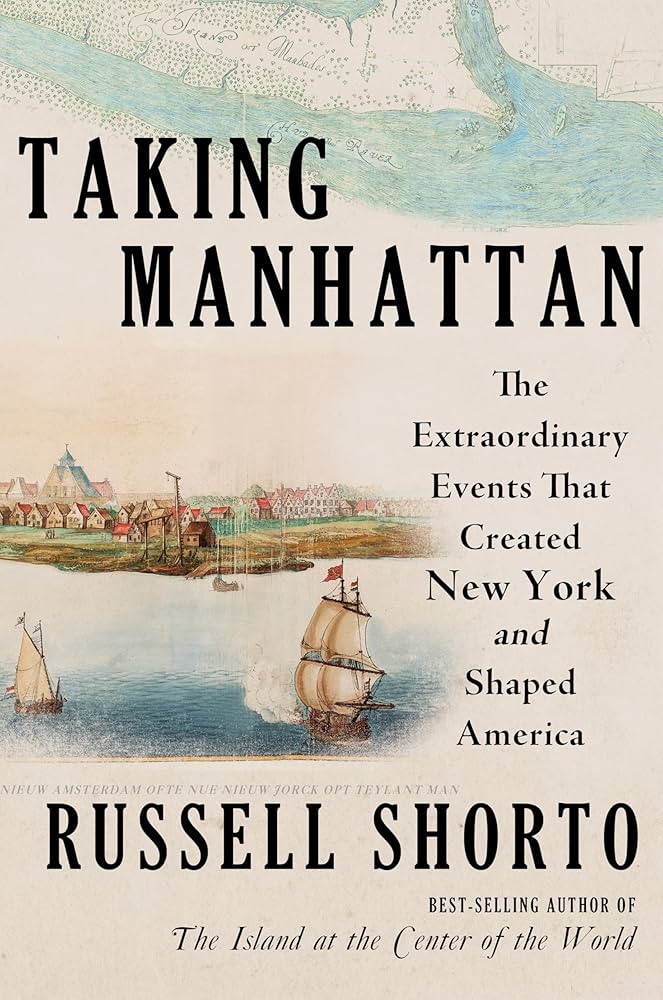
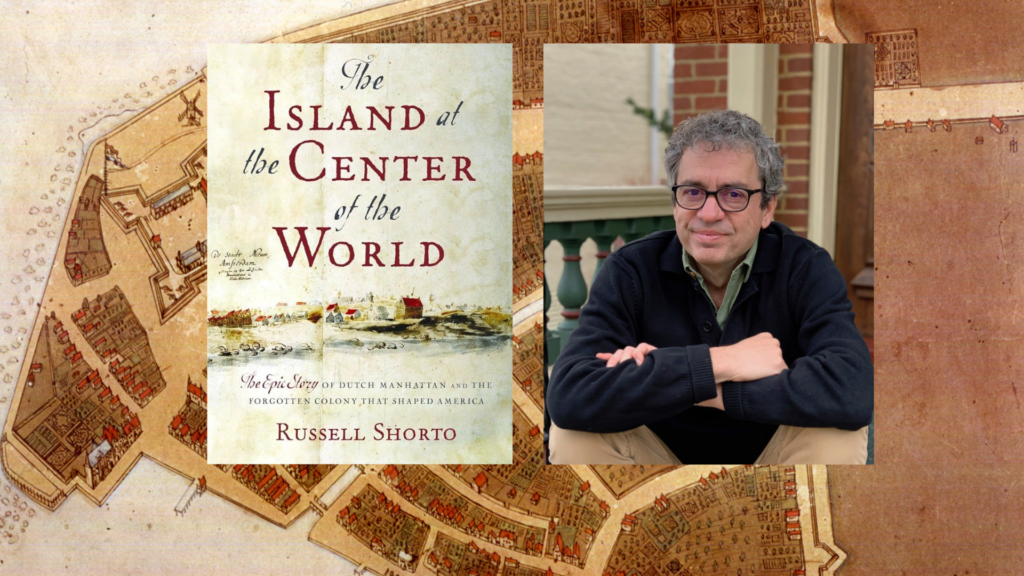
Russell Shorto brought the world of New Amsterdam and the early years before New York to life in his classic history The Island At The Center of The World.

His new book Taking Manhattan: The Extraordinary Events That Created New York and Shaped America functions as a sequel of sorts, revisiting the moment when New Amsterdam ceased to be — and New York was born.

Shorto joins Greg and Tom for a very spirited discussion of international warfare, displaced princes, frantic letter writing and ominous warships in the harbor.

At the end of this story, you will not only know how New York — the city, the state, the whole place, from Buffalo to Long Island — got its name, you will know the exact forgotten historical figure who gave it that name.


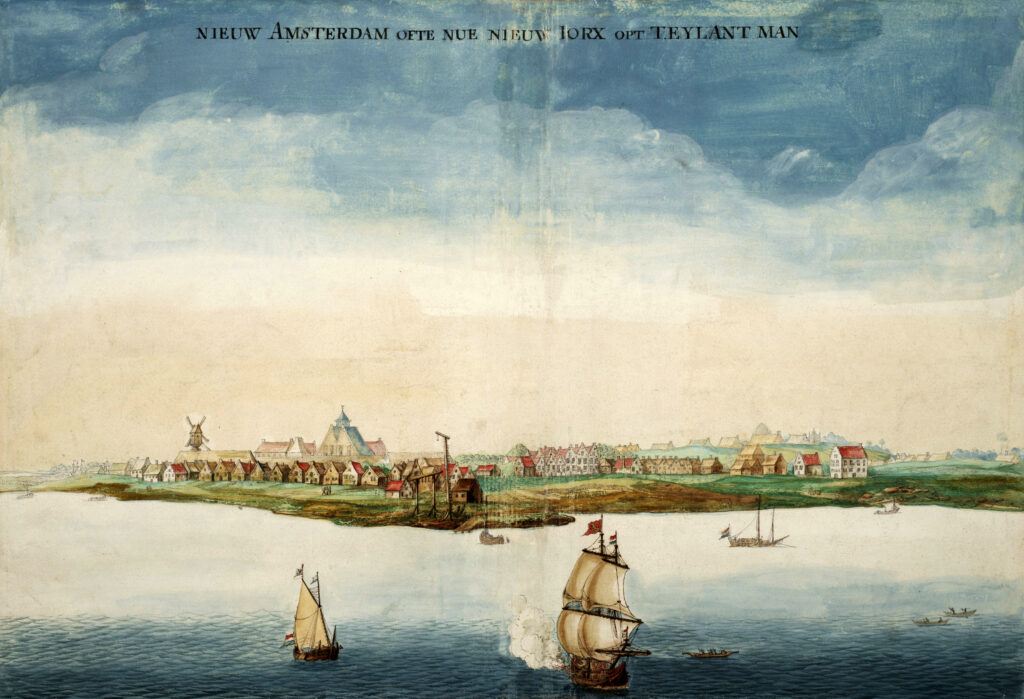
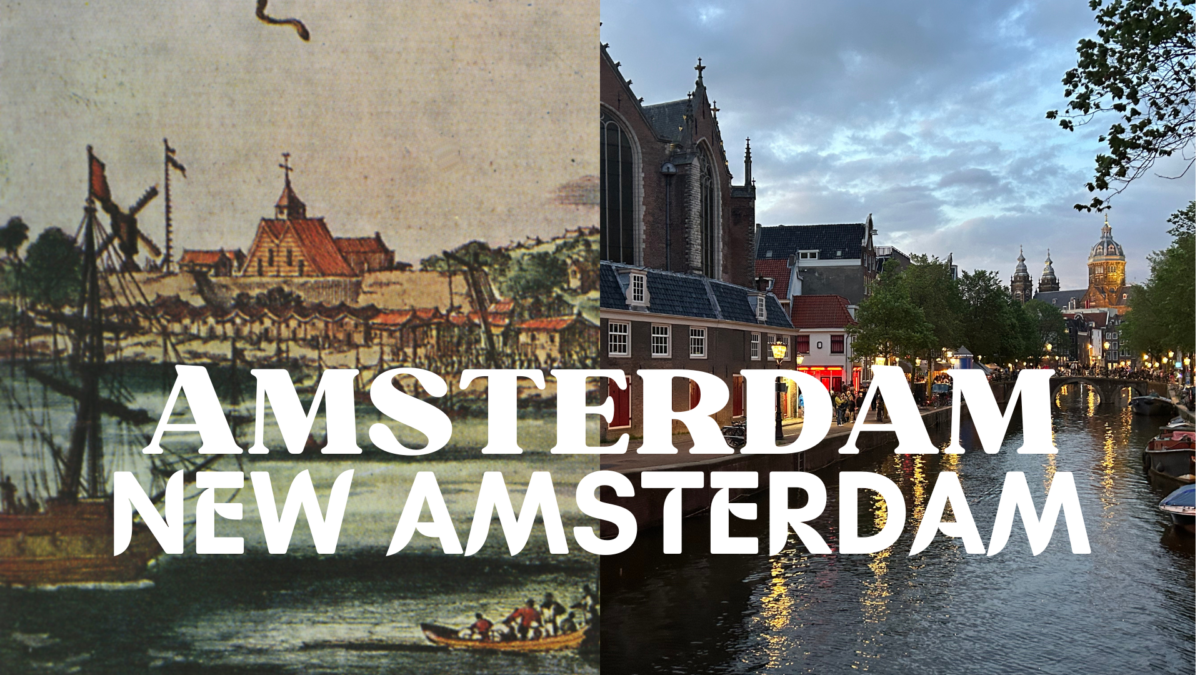
More details NIEUW AMSTERDAM OFTE NUE NIEUW IORX OPT TEYLANT MAN by Johannes Vingboons (1664),
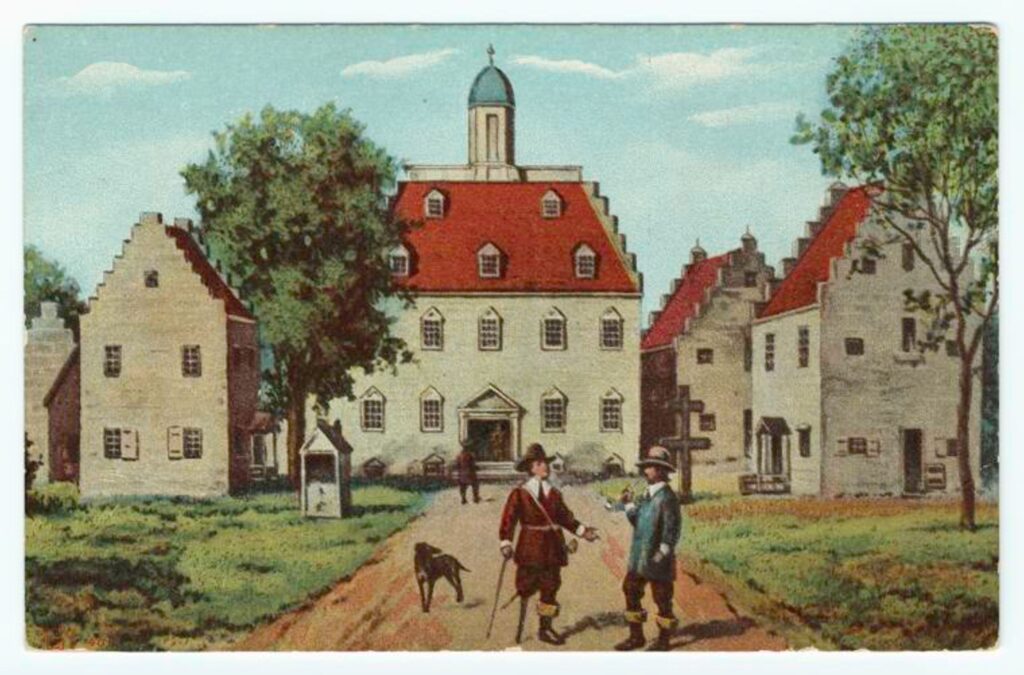
Stadt Huys, the first City Hall on Pearl Street
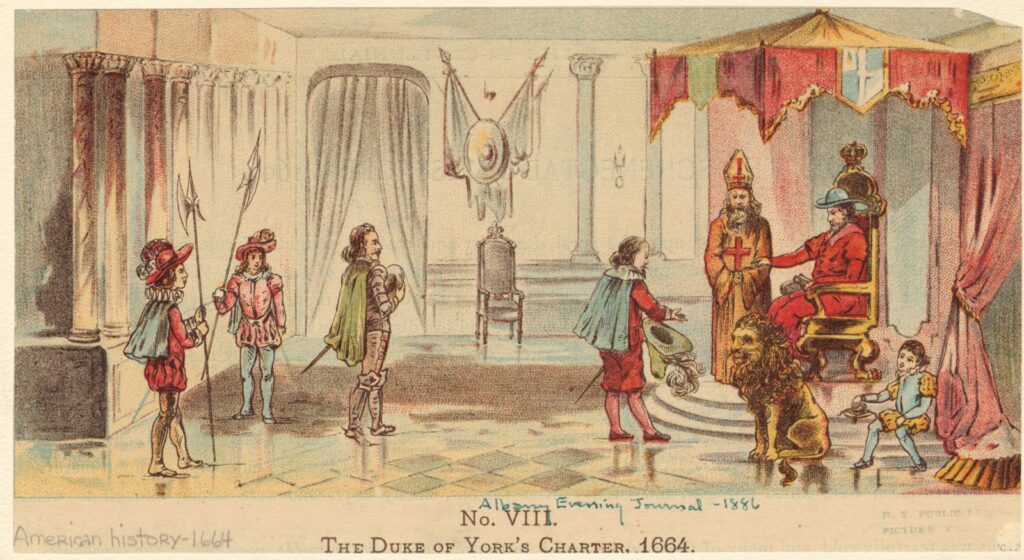
The Duke of York Charter, 1886 illustration
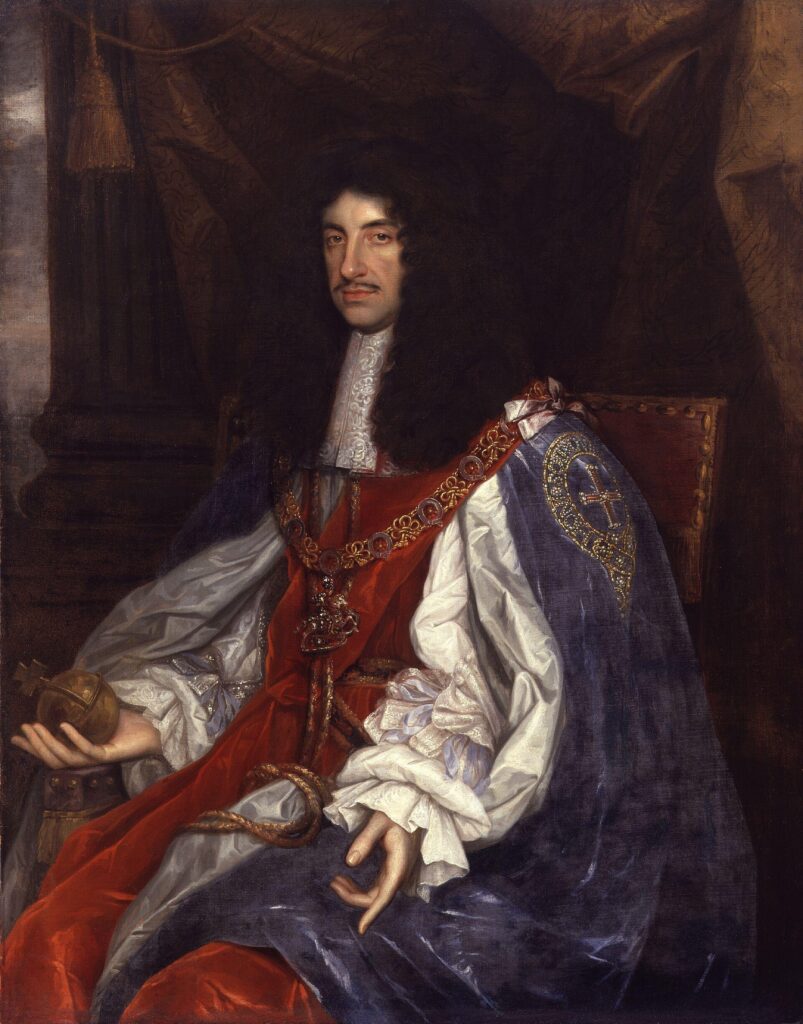
King Charles II, portrait by John Michael Wright,
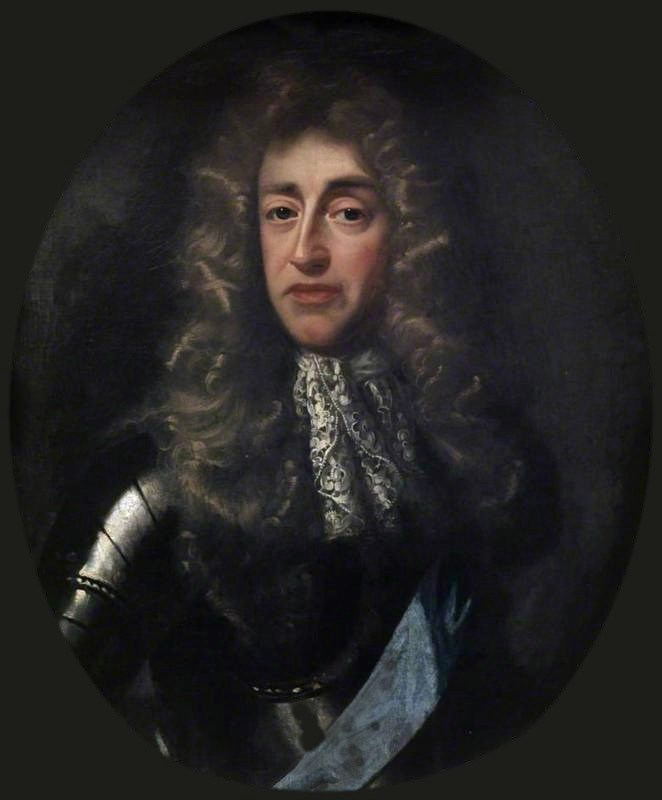
The Duke of York and future King James II, portait by John Riley

FURTHER LISTENING

Our mini-series on New Amsterdam, featuring Russell Shorto, recorded in 2024
Categories
Adventures In Old New York New Amsterdam Podcasts

The Bowery Boys Adventures in the Netherlands: All Episodes Now Available

Our epic ‘road trip’ to the Netherlands is at an end and it was mission accomplished! We learned so much about New York’s Dutch roots — from the settlement of New Amsterdam to the European settlers who first populated the island which would become Manhattan.

Along the way we also found interesting connections — and great contrasts — between America and the Netherlands. We’ll certainly never look at a bike lane the same way.

All five episodes of our Adventures in the Netherlands series are now available. Make that six actually — our show The Lenape Nation serves as an excellent prologue and reminder of the people who were already here when the Dutch arrived in 1624.

Here’s the trailer for the whole series:

The shows were designed so they the end of one show rolls into the next one, so the series makes an excellent summer binge listen! Better yet, take them with you on your own adventure someplace.

You can find the shows on most of the major podcast players including Spotify, Apple, Overcast, iHeartRadio, Pocket Casts, Podcast Addict and Amazon Music (ask your Alexa to play our show!)

Start here:

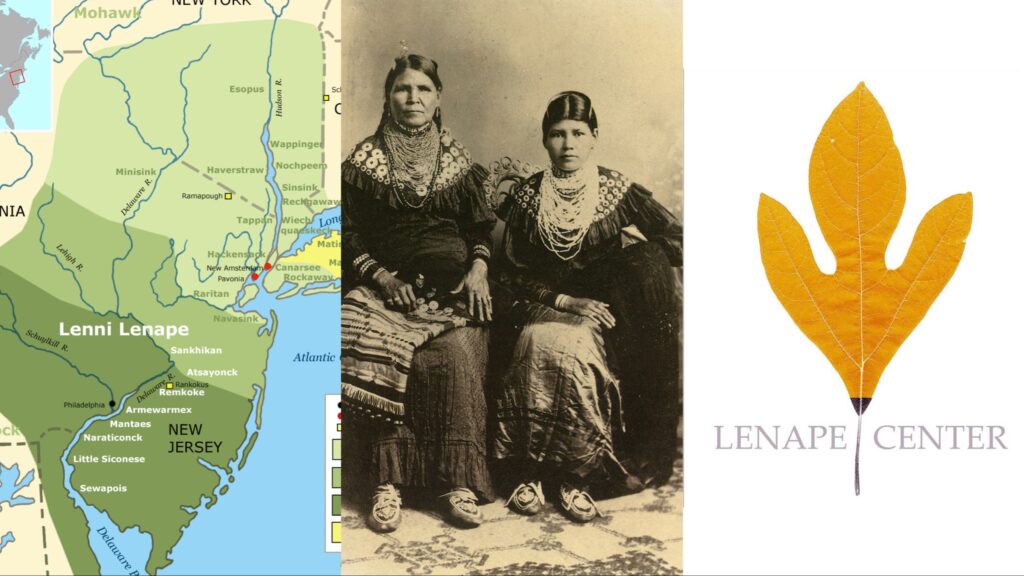
#432 The Lenape Nation: Past, Present and Future

The Lenape were among the first in northeast North America to be displaced by white colonists — the Dutch and the English. By the late 18th century, their way of life had practically vanished upon the island which would be known by some distorted vestige of a name they themselves may have given it – Manahatta, Manahahtáanung or Manhattan.

But the Lenape did not disappear. Through generations of great hardship they have persevered.


Our Introduction and a Special Guest:

#433 New Amsterdam Man: An Interview with Russell Shorto

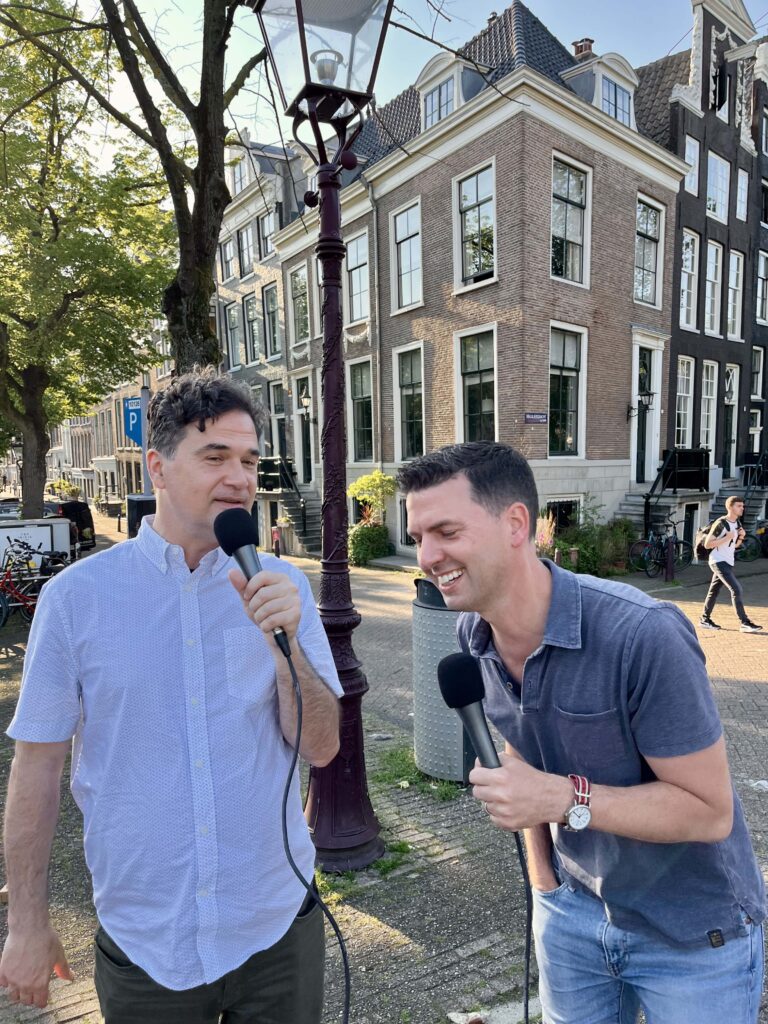
The Bowery Boys Podcast is headed to Amsterdam and other parts of the Netherlands for a very special mini-series, marking the 400th anniversary of the Dutch first settling in North America in the region that today we call New York City.

But before they go, they’re kicking off their international voyage with a special conversation — with Russell Shorto, author of The Island At The Center of the World, the man who inspired the journey.


Amsterdam/New Amsterdam:

#434 Amsterdam/New Amsterdam: Empire of the Seas

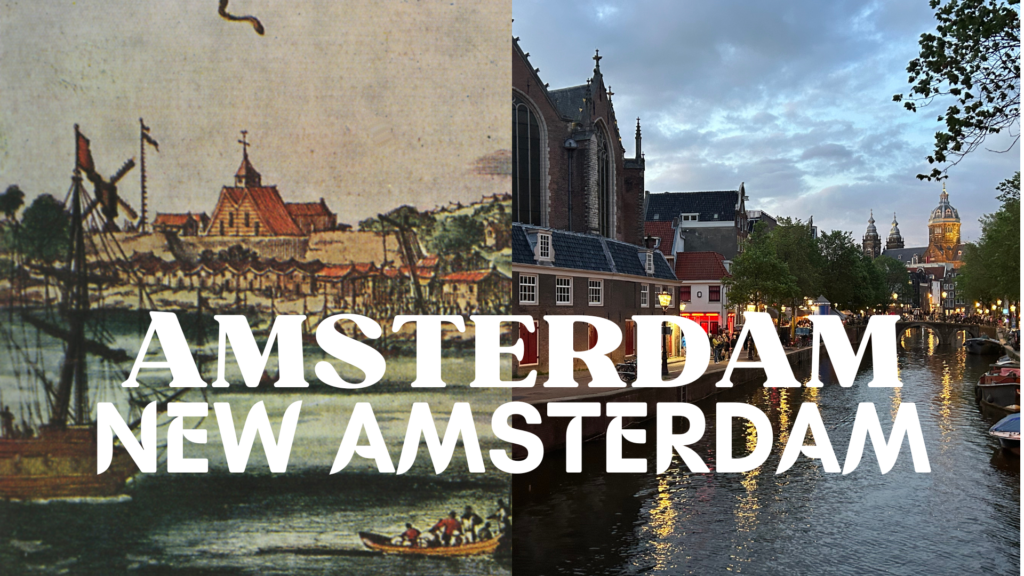
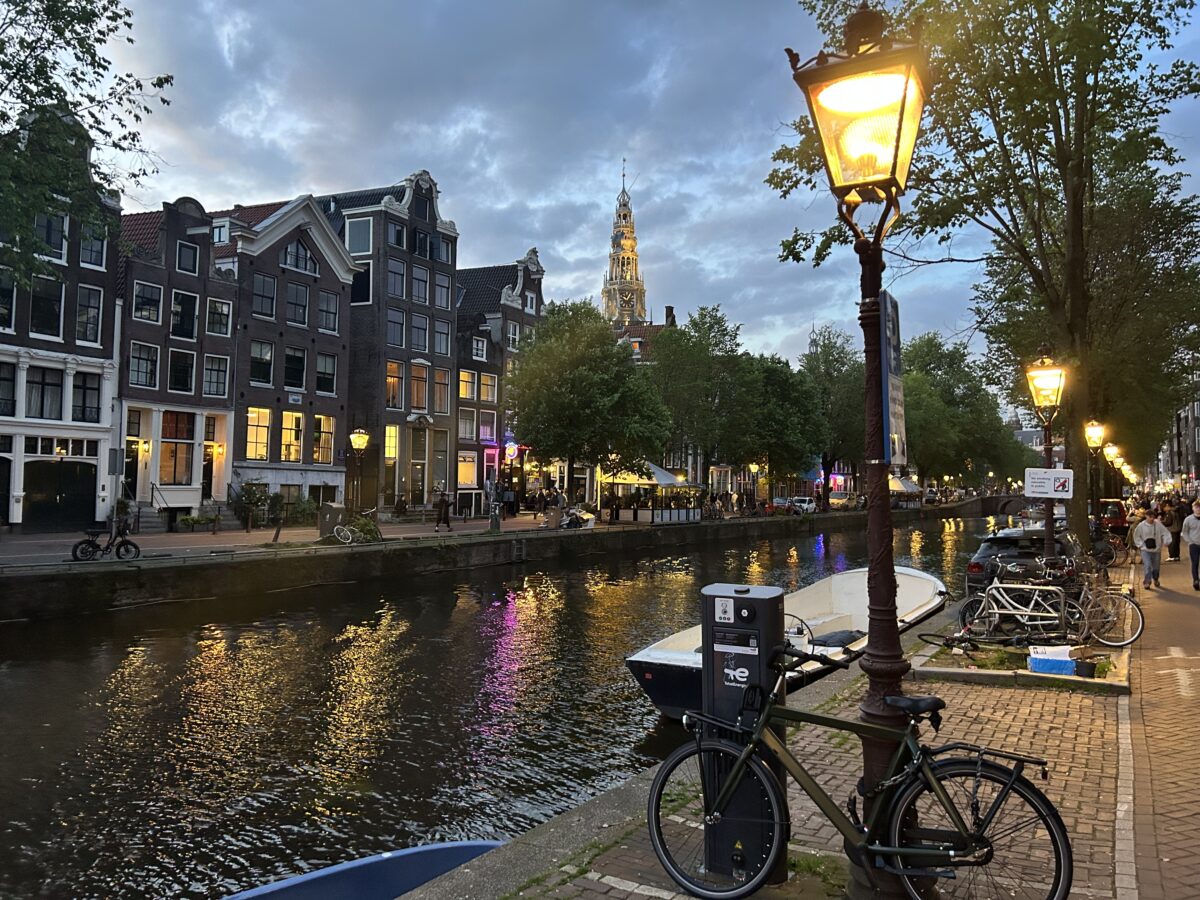
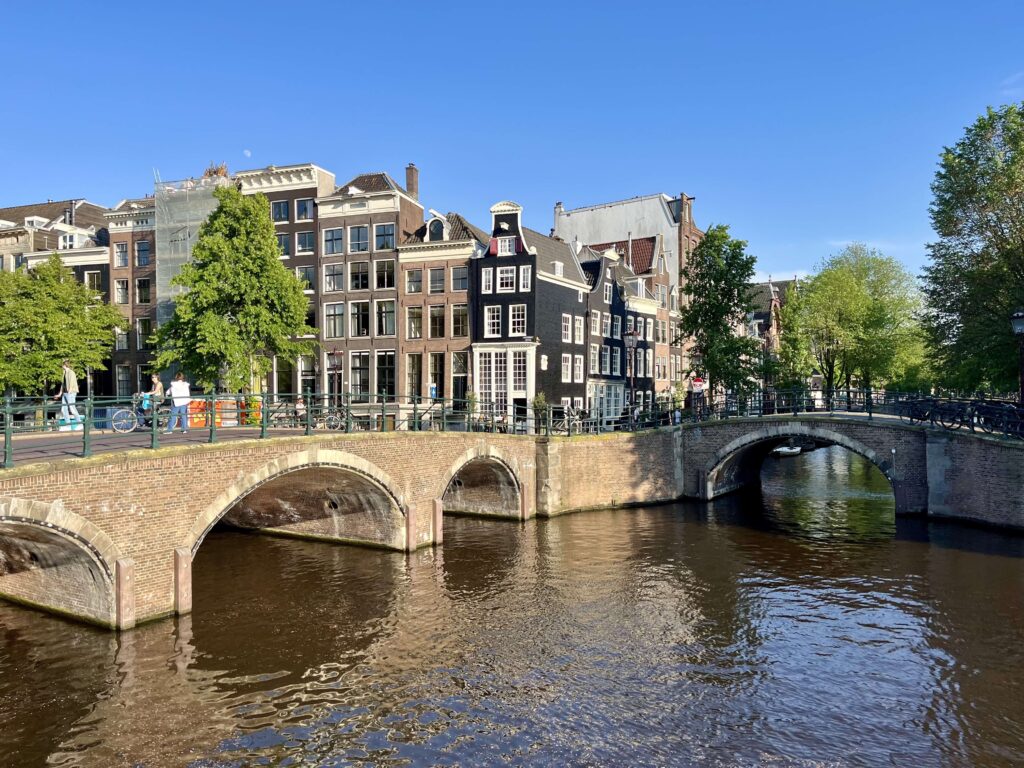
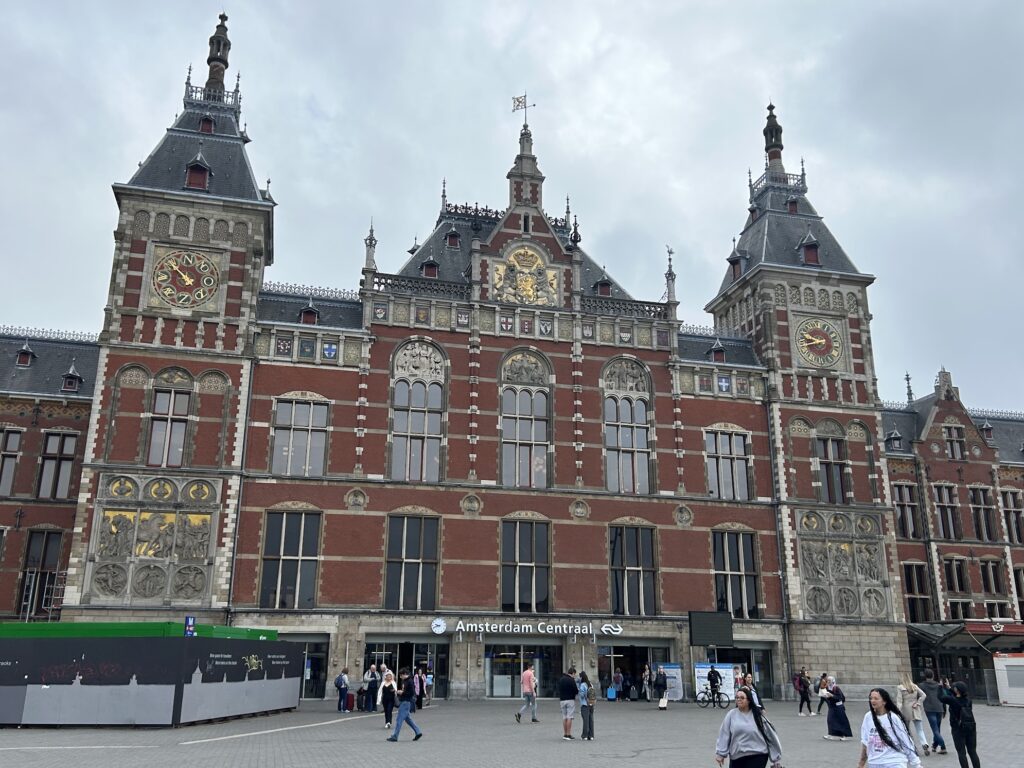
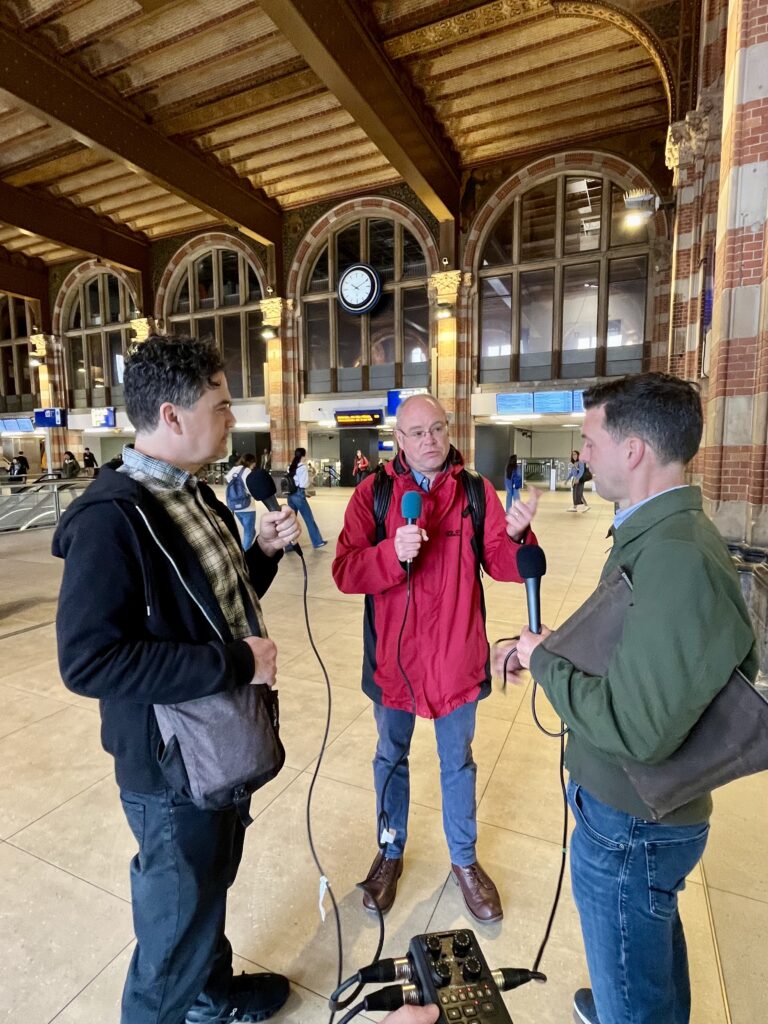
We begin our journey at Amsterdam’s Centraal Station and spend the day wandering the streets and canals, peeling back the centuries in search of New York’s roots.

Our tour guide for this adventure is Jaap Jacobs, author of The Colony of New Netherland: A Dutch Settlement in Seventeenth-Century America

Jaap takes us around to several spots within the old medieval city — Centrum, including the Red Light District — weaving through the canals and along the harbor, in search of connections to New York’s (and by extension, America’s) past.


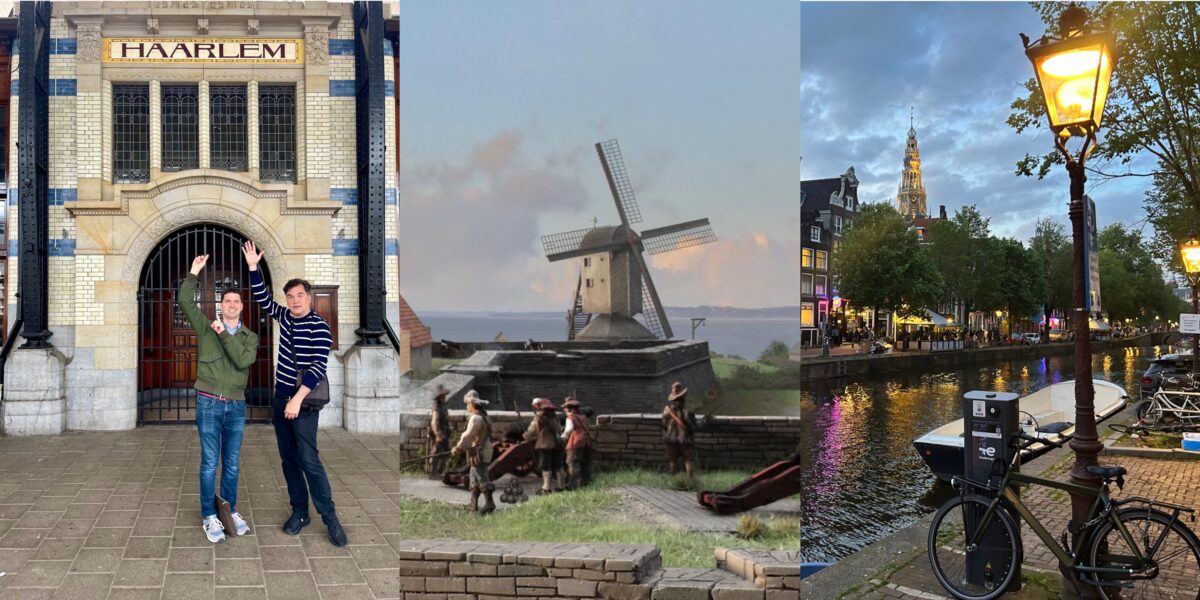
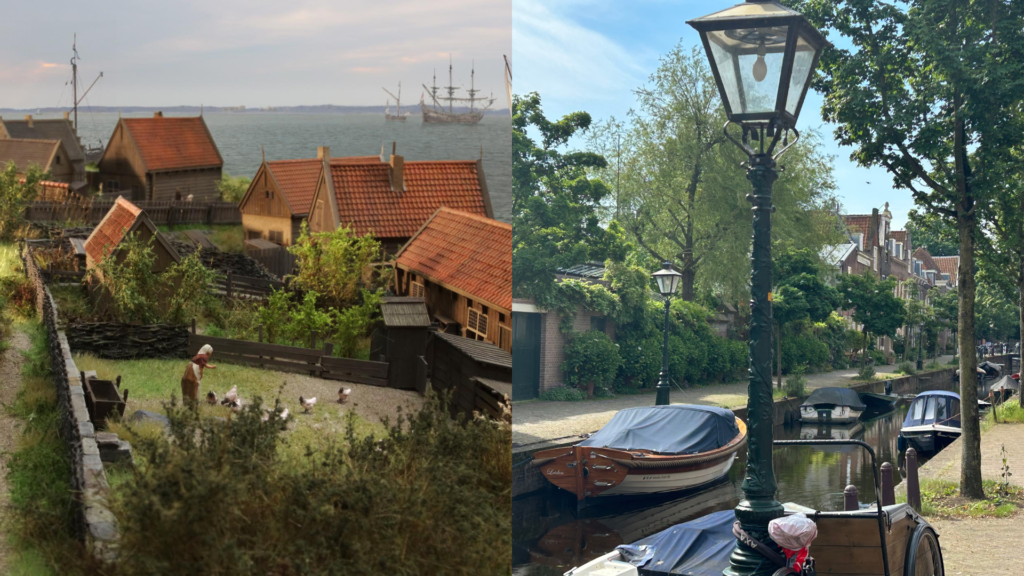
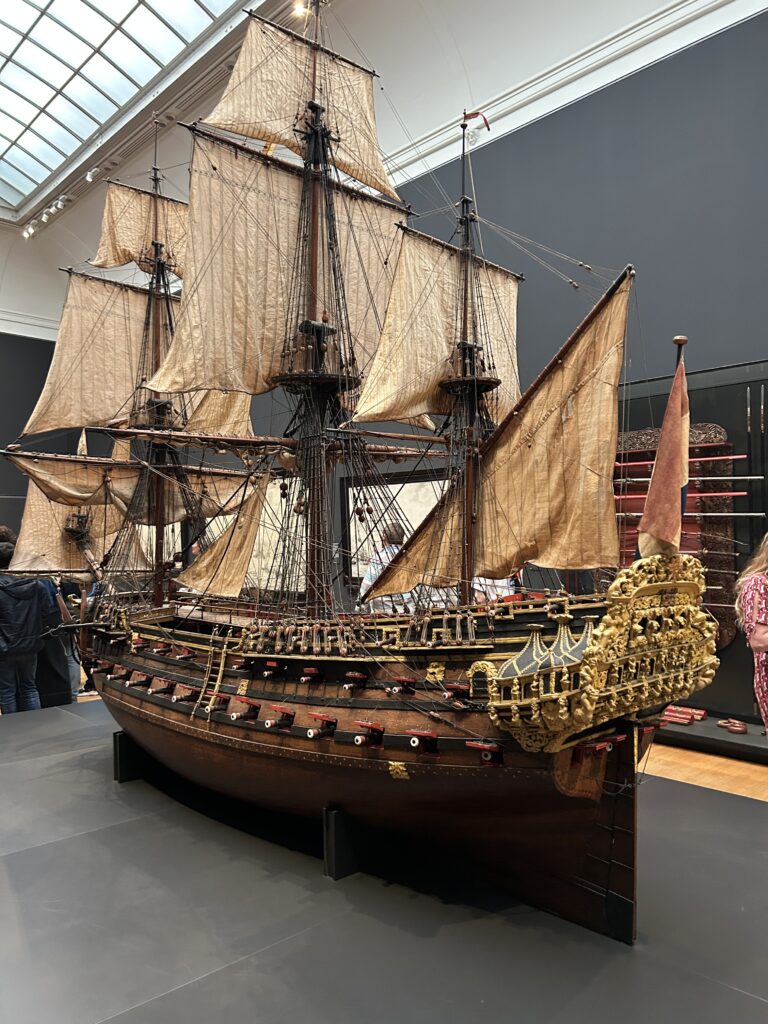
A look at the New Amsterdam miniature and a scene of full-size Leiden

#435 Amsterdam/New Amsterdam: The Radical Walloons

Our adventure in the Netherlands continues with a quest to find the Walloons, the French-speaking religious refugees who became the first settlers of New Netherland in 1624. Their descendants would last well beyond the existence of New Amsterdam and were among the first people to call themselves New Yorkers.

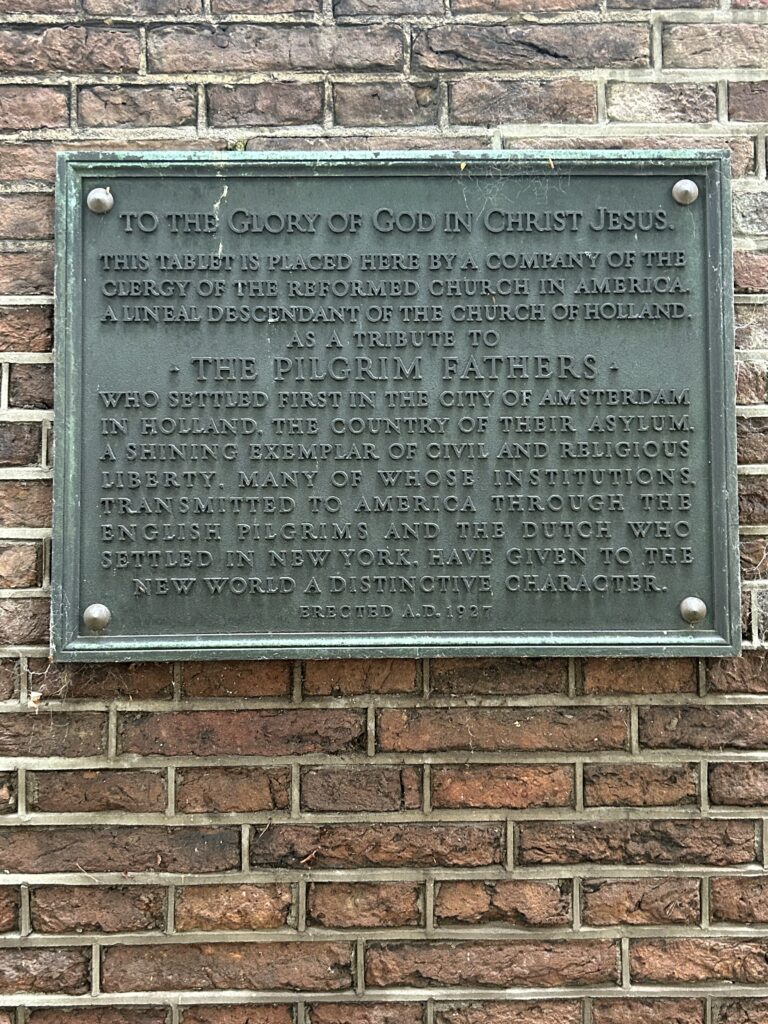
But you can’t tell the Walloon story without that other group of American religious settlers — the Pilgrims who settled in Massachusetts four years earlier.


#436: Amsterdam/New Amsterdam: Finding Peter Stuyvesant

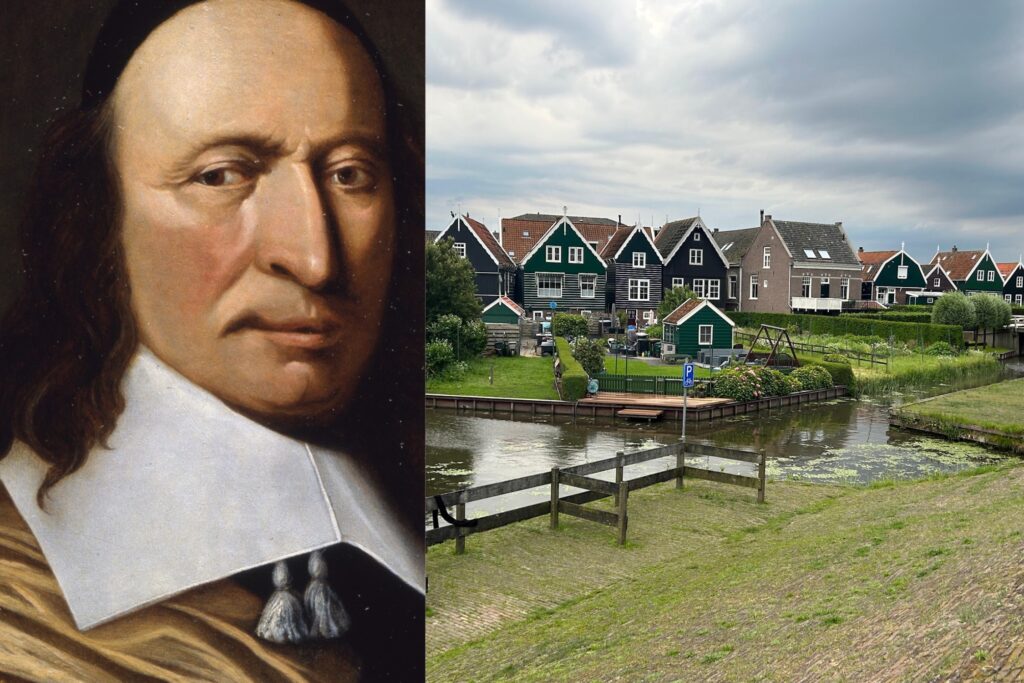
In our last days in Amsterdam (before heading to other parts of the Netherlands), we spend their time getting to know Peter Stuyvesant, the last director-general of New Amsterdam.

The name Stuyvesant can be found everywhere in New York City. — in the names of neighborhoods, apartments, parks and high schools. He’s a hero to some, a villain to others — and probably a caricature to all. What do we really know about Peter Stuyvesant?

And outside the mayor’s residence in Amsterdam’s exclusive Gouden Bocht (Golden Bend), we meet up with Jennifer Tosch of Black Heritage Tours  to investigate the story of New Amsterdam and the Dutch slave trade.


And Finally, To Other Parts of the Netherlands:

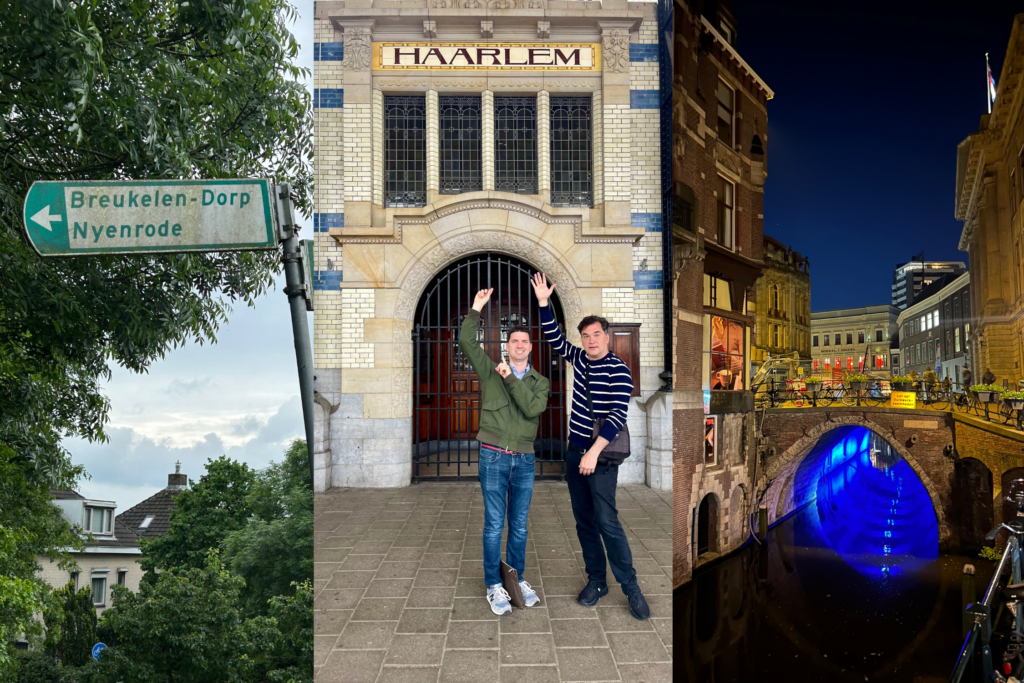
#437: Haarlem, Breukelen, Utrecht: Exploring New York’s Dutch Roots

Follow along with us in this travelogue episode as we visit several historic cities and towns in the Netherlands — Utrecht, De Bilt, Breukelen and Haarlem— wandering through cafe-filled streets and old cobblestone alleyways, the air ringing with church bells and 

But of course, our mission remains the same as the past three episodes. For there are traces of Dutch culture and history all over New York City — through the names of boroughs, neighborhoods, streets and parks.


Over On Patreon

We released a series of daily shows while on the streets of the Netherlands! These are true behind-the-scenes episodes and we let you in on the unique processes of putting these shows together. You can check out those shows — and the many other benefits of being a Bowery Boys patron — by supporting the show at Patreon.


And on Instagram

We’ve been going wild with the Instagram Reels to show you videos of our adventures. Follow us on Instagram to follow our journey. Here’s just a sampling:

Categories
American History Museums New Amsterdam Podcasts

Amsterdam/New Amsterdam: Empire of the Seas (New Bowery Boys Mini-Series)

The epic journey begins! The Bowery Boys Podcast heads to old Amsterdam, the capital of the Netherlands, to find traces of New Amsterdam, the Dutch settlement which became New York.

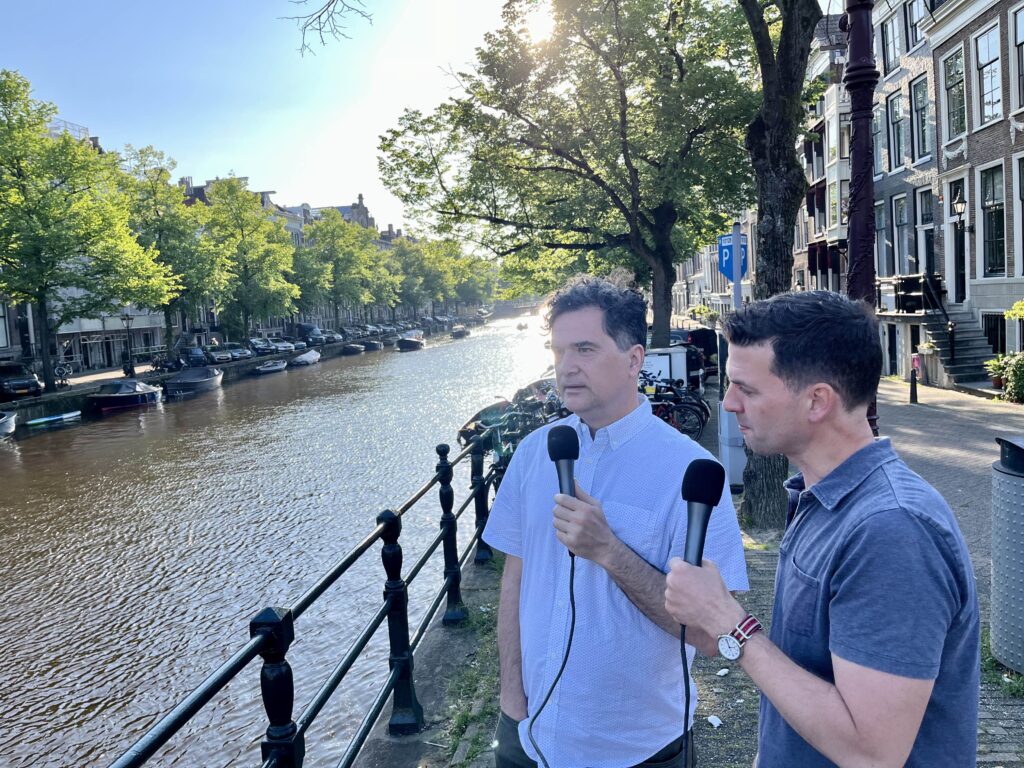
We begin our journey at Amsterdam’s Centraal Station and spend the day wandering the streets and canals, peeling back the centuries in search of New York’s roots.

Our tour guide for this adventure is Jaap Jacobs, Honorary Lecturer at the University of St. Andrews in Scotland and the author of The Colony of New Netherland: A Dutch Settlement in Seventeenth-Century America.

Jaap takes us around to several spots within the old medieval city — Centrum, including the Red Light District — weaving through the canals and along the harbor, in search of connections to New York’s (and by extension, America’s) past.

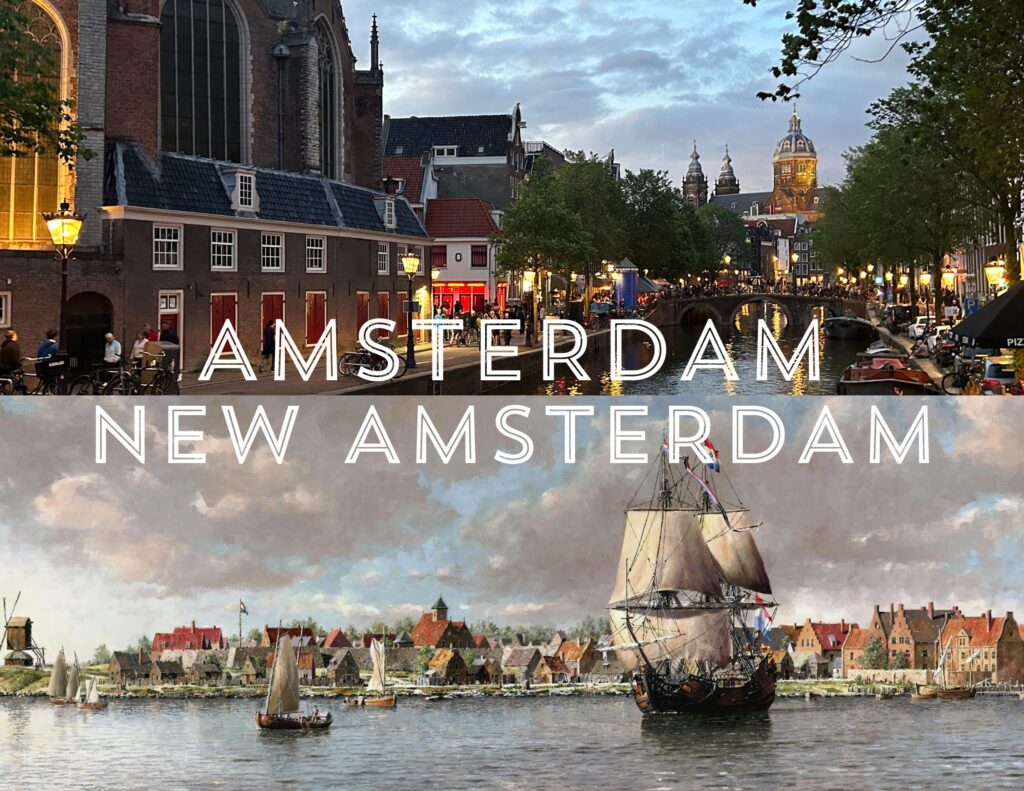
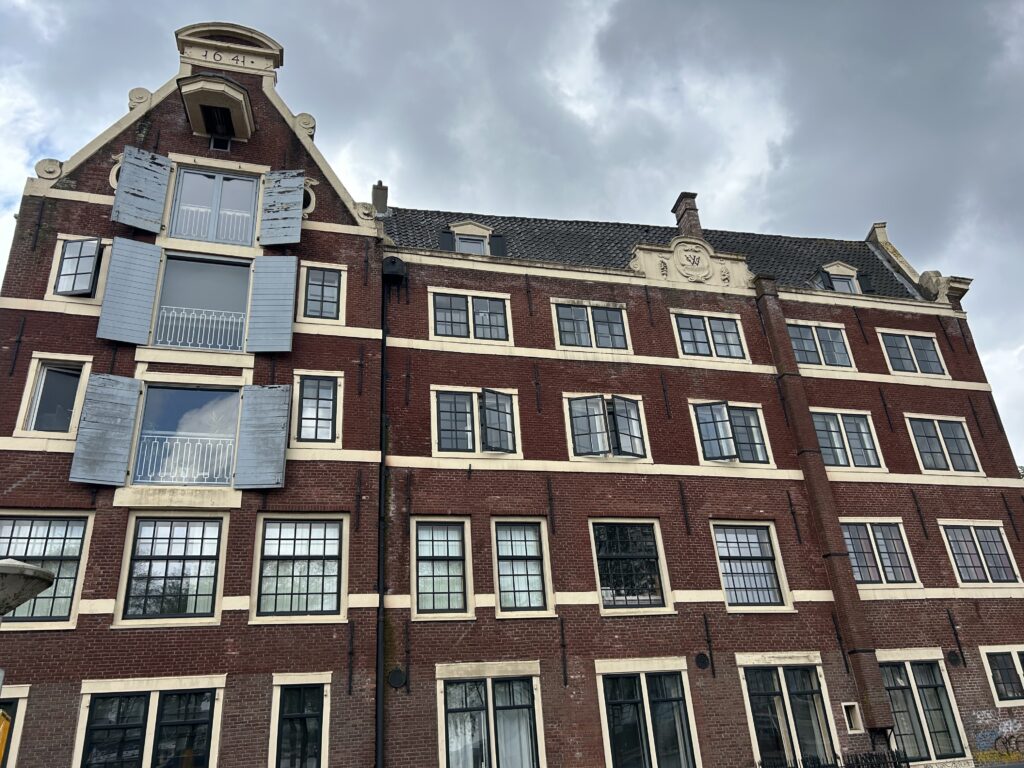
You might see hints of this architecture in New York City but back when it was New Amsterdam, it also had canals!

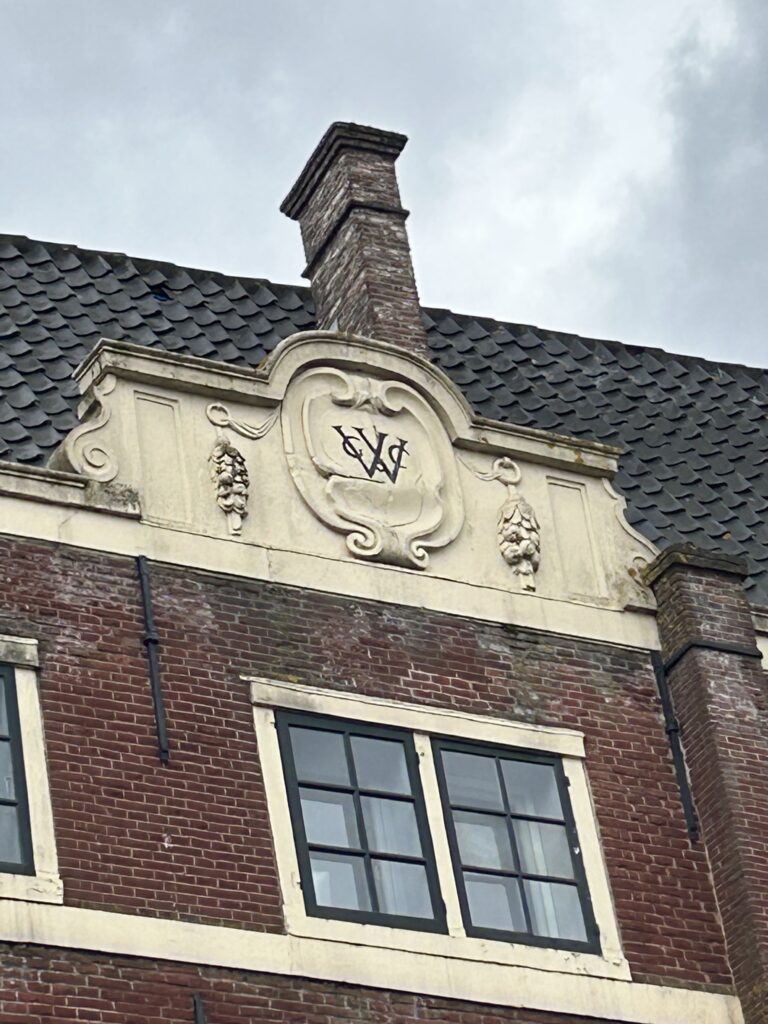
This year marks the 400th anniversary of Dutch settlement in North America, led by the Dutch West India Company, a trading and exploration arm of the thriving Dutch empire. So our first big questions begin there:

What was the Dutch Empire in 1624 when New Netherland was first settled? Was the colony a major part of it? Would Dutch people have even understood where New Amsterdam was?

— What’s the difference between the Dutch East India Company and the Dutch West India Company?

To what degree was New Amsterdam truly tolerant in terms of religion? Was it purely driving by profits and trading relationships with the area’s native people like the Lenape?

— The prime export was the pelts of beavers and other North American animals. What happened to these thousands of pelts once they arrived in Amsterdam?

— How central were the Dutch to the emerging Atlantic slave trade? When did the first enslaved men and women arrive in New Amsterdam?

And how are the Pilgrims tied in to all of this? Had they always been destined for the area of today’s Massachusetts?

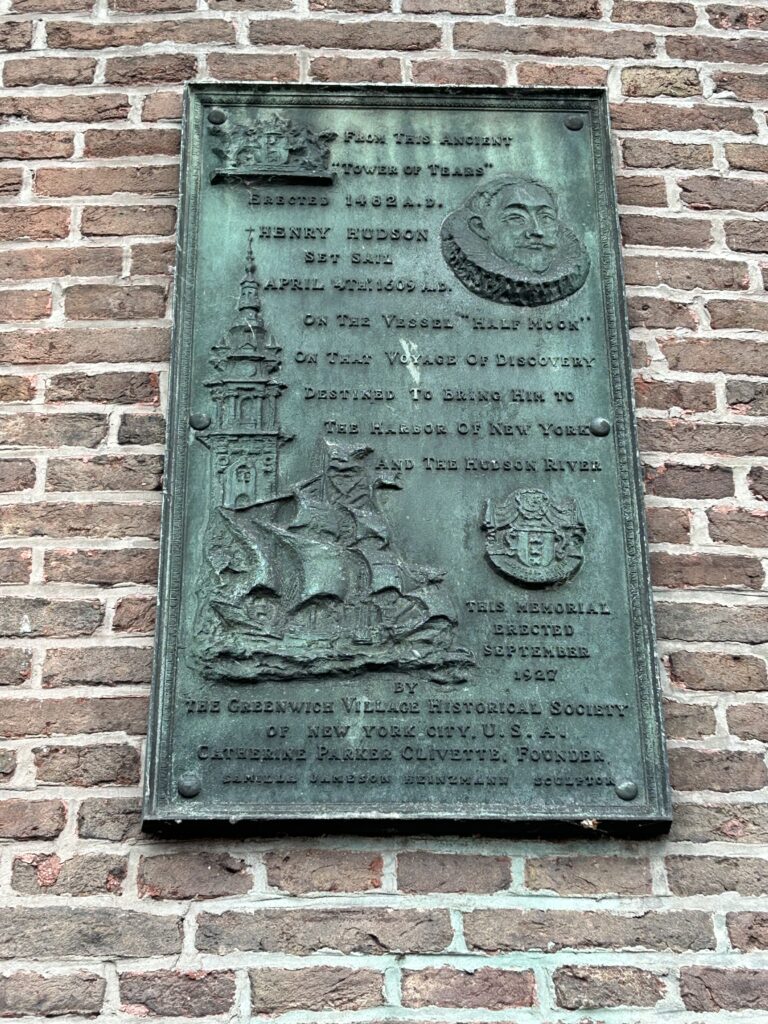
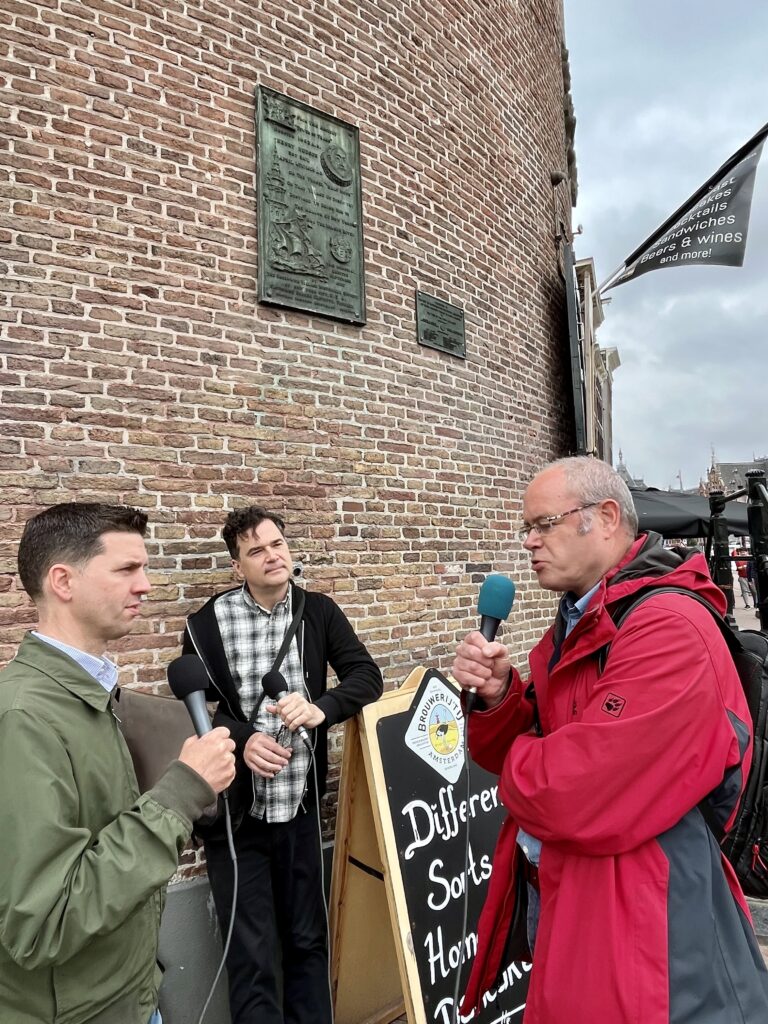
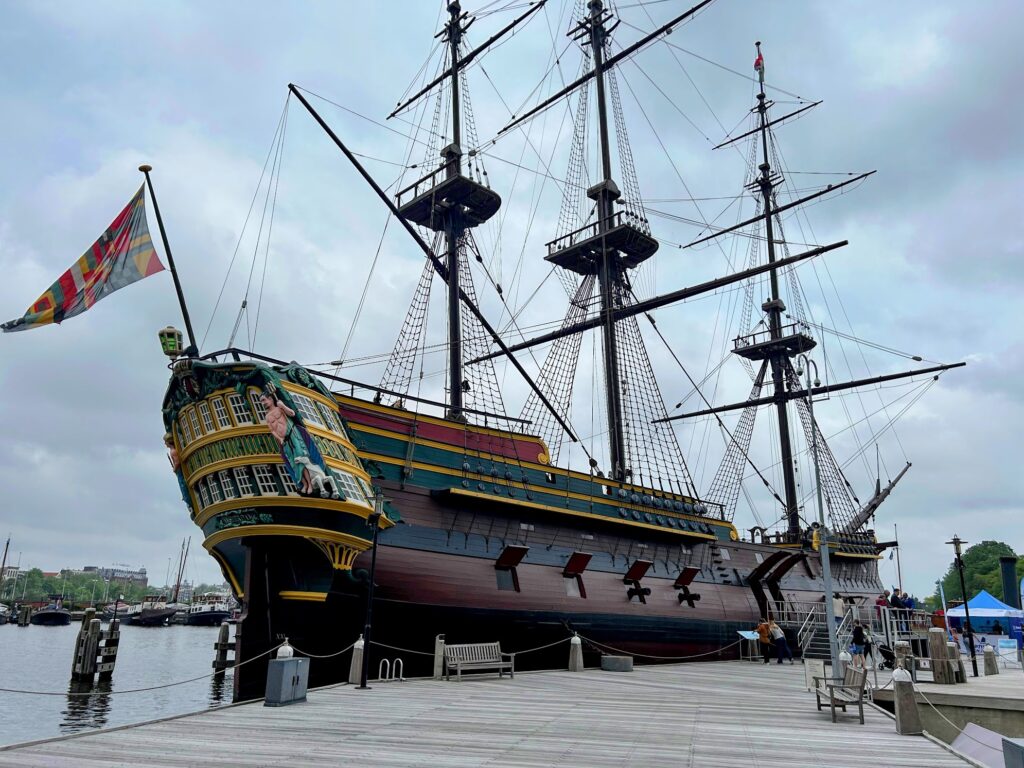
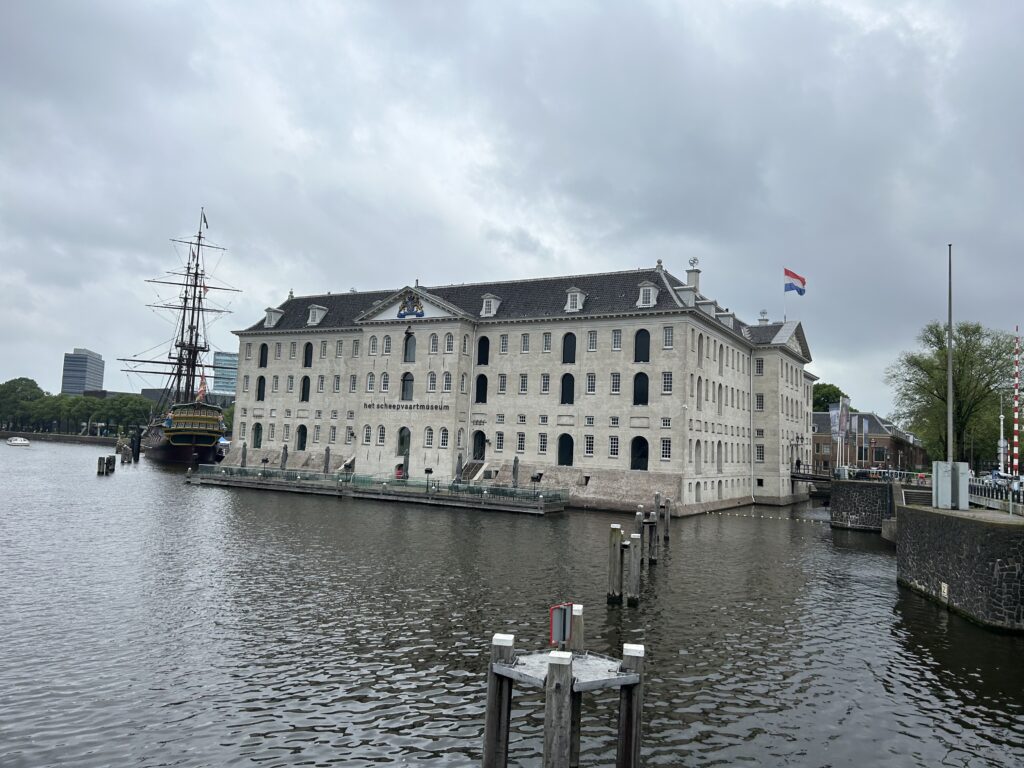
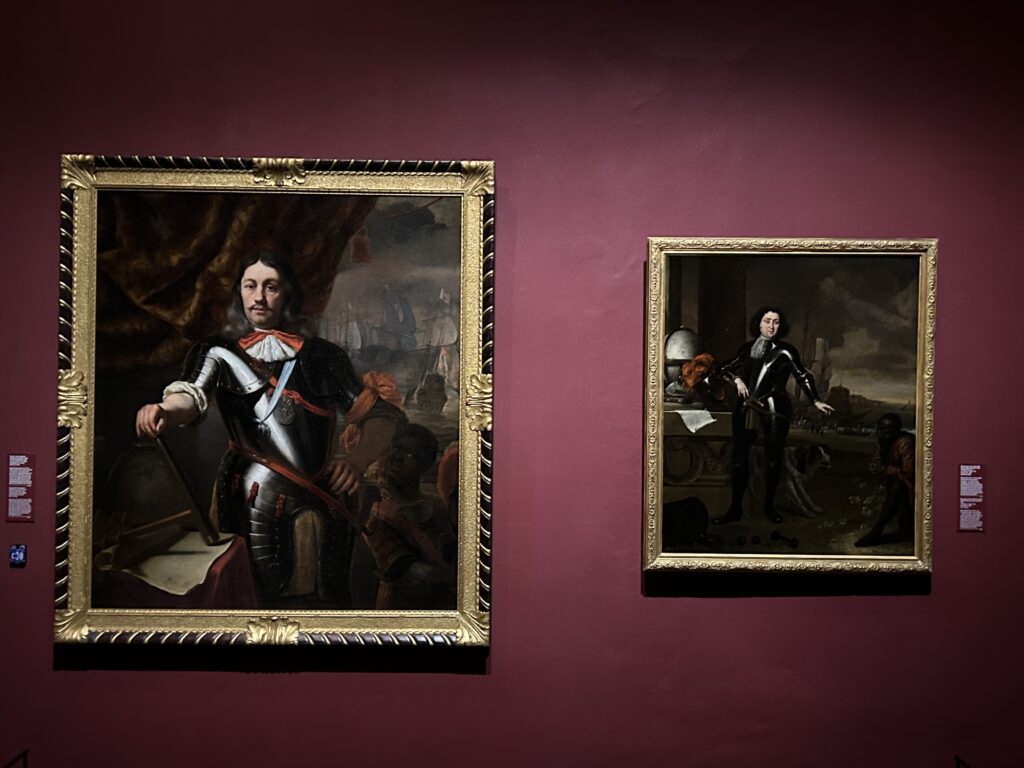
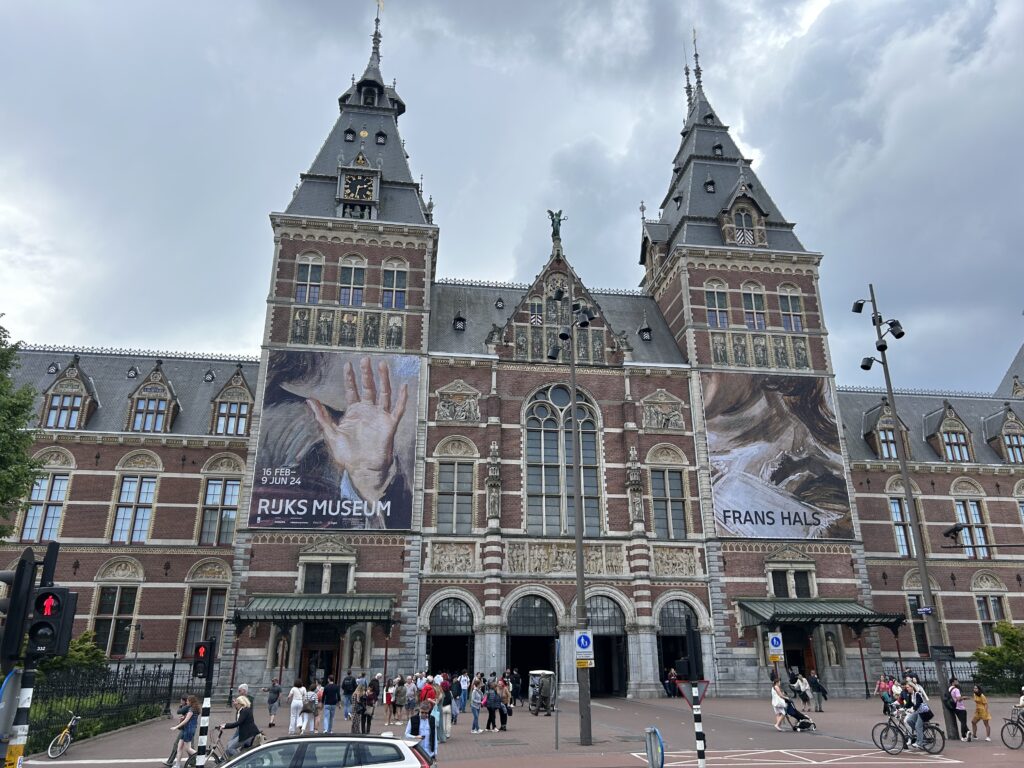
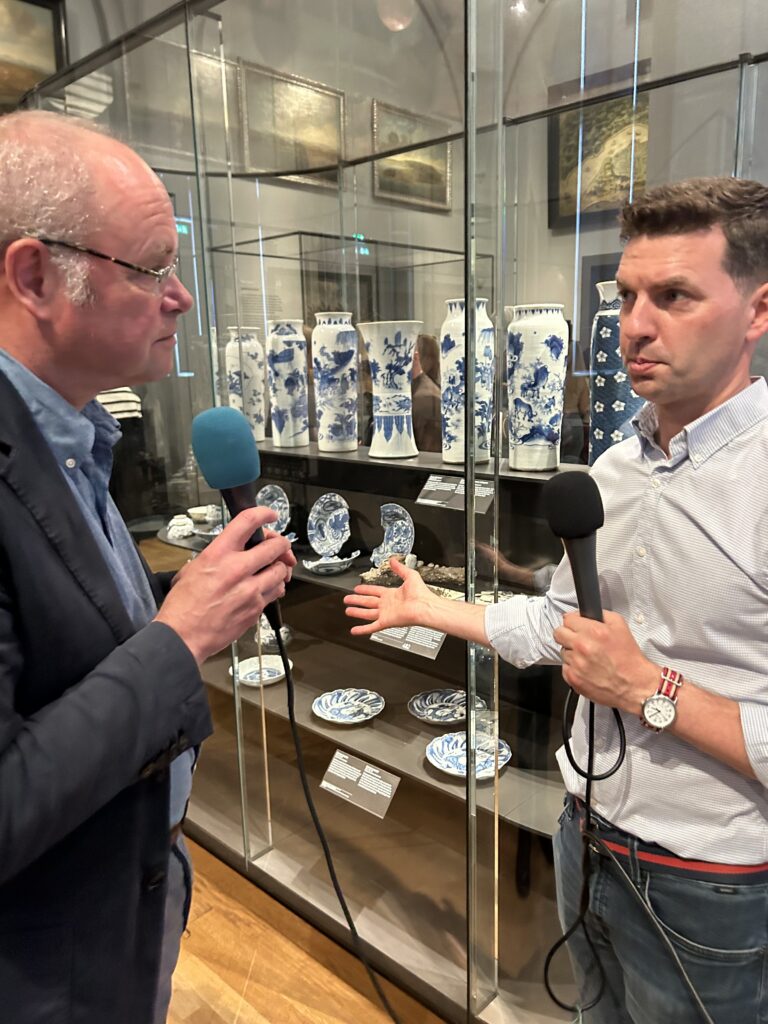
Among the places we visit this episode — the Maritime Museum, the Rijksmuseum, Amsterdam’s oldest building Oude Kirk, the Schreierstoren (the Weeping Tower) and many more

PLUS: We get kicked out of a convent! And we try raw herring sandwiches

LISTEN NOW — AMSTERDAM/NEW AMSTERDAM: EMPIRE OF THE SEAS


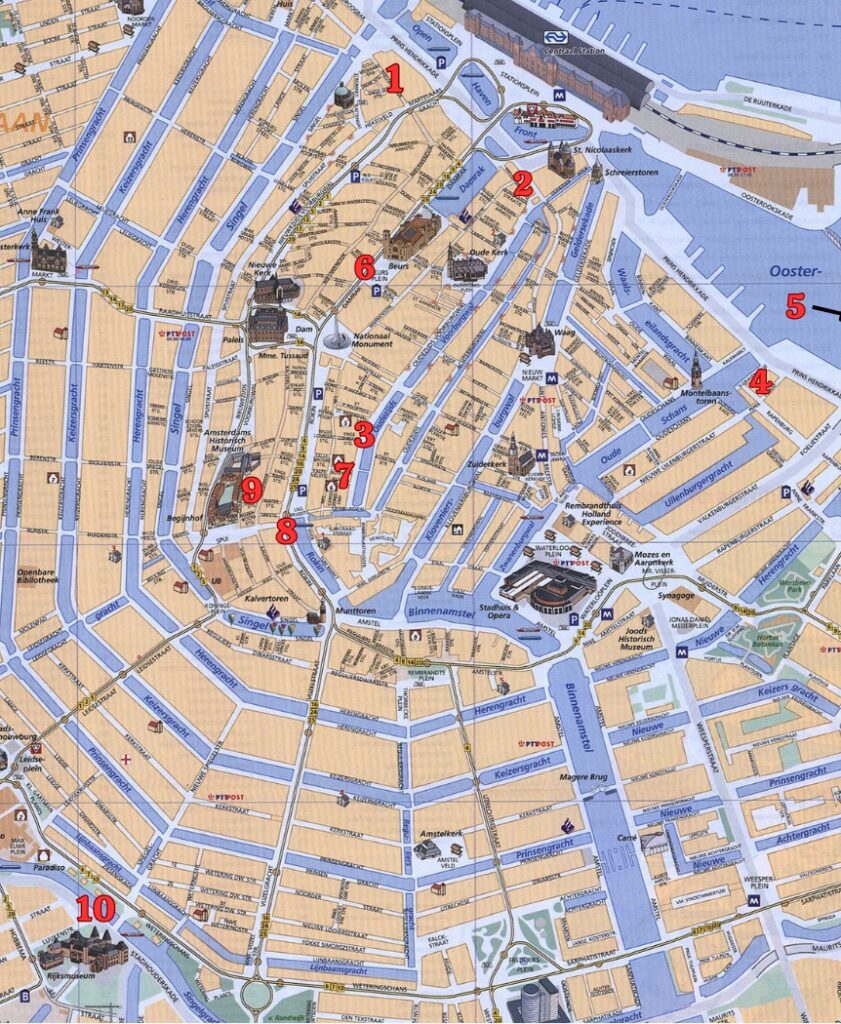
Our destinations in this episode:
1 Centraal Station
2 “The Crying Tower”
3 Oust East India House
4 Dutch West India Warehouse
5 Maritime Museum
6 Oude Kirk
7 Walloon Church in Asmterdam
8 Frens Haringhandel
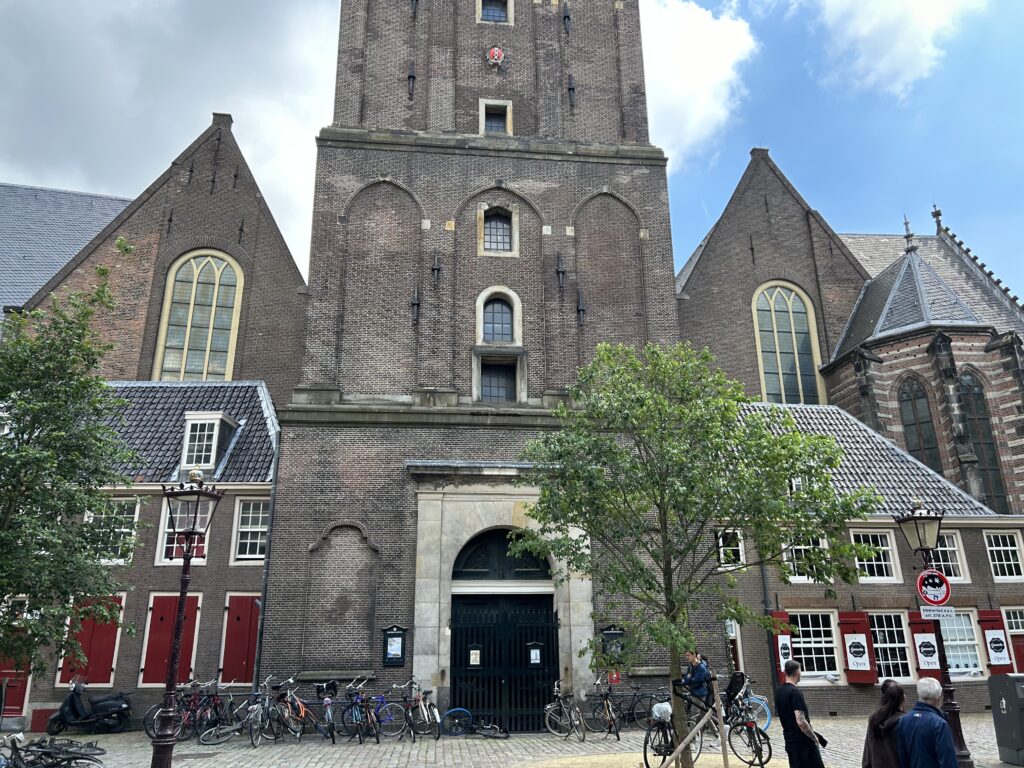
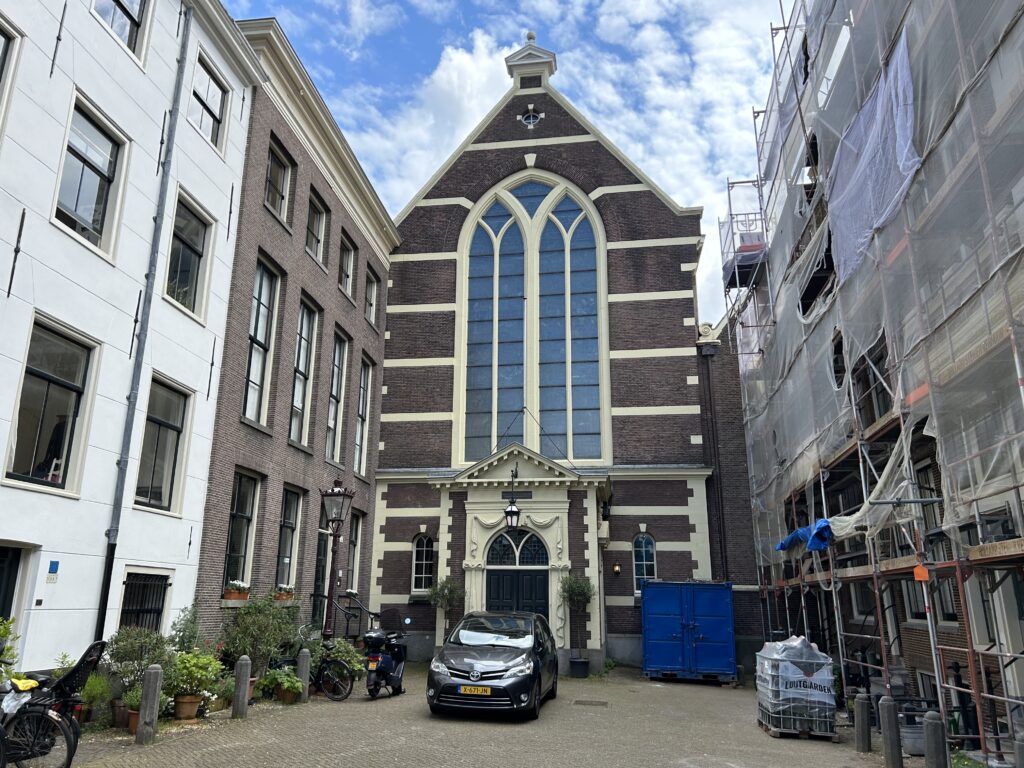
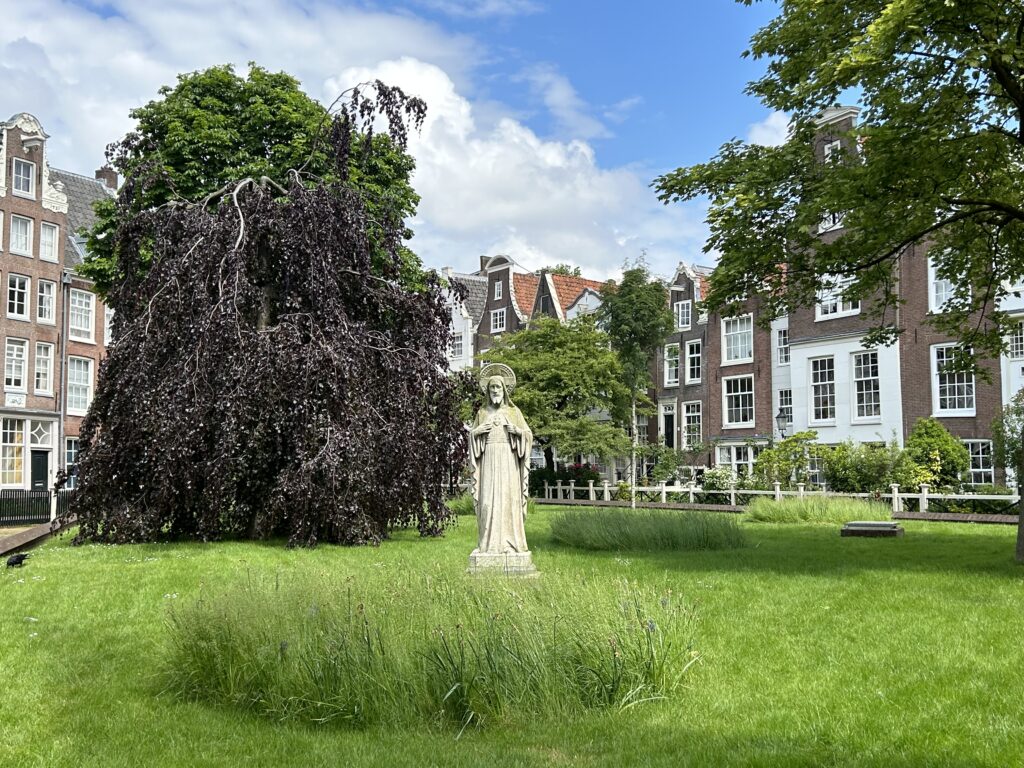
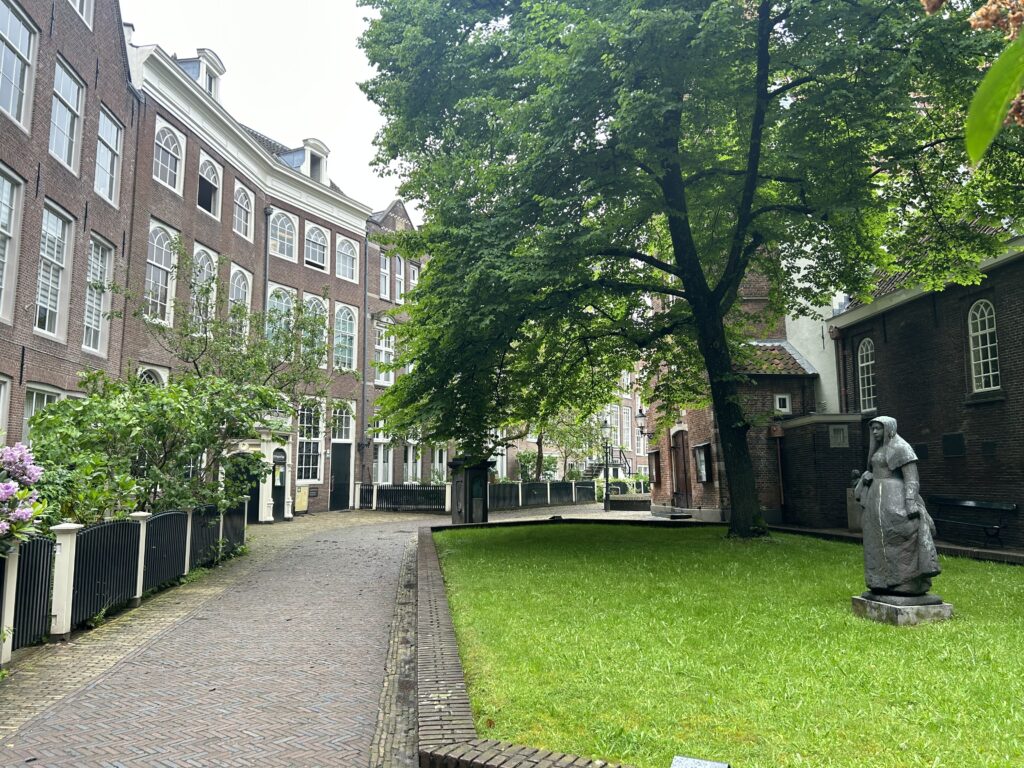
9 Begijnhoff/Cloister
10 Rijksmuseum

Among the historic places featured on this week’s show:

Amsterdam Centraal Station

Schreierstoren/The Crying Tower

Oust East India House (Oude Hoogstraat 24)

Dutch West India Company Warehouse

The Dutch National Maritime Museum

Oude Kirk in the Red Light District

Walloon Church in Asmterdam

Frens Haringhandel

Begijnhof

Rijksmuseum Amsterdam


Over on Patreon, we released a series of daily shows while on the streets of the Netherlands. You can check out those shows — and the many other benefits of being a Bowery Boys patron — by supporting the show at Patreon.


FURTHER LISTENING

Interview with Russell Shorto, author of The Island At The Center of the World

The Lenape and other native peoples of the New York/Hudson Valley region would be both trading partners and adversaries of the Dutch, who claimed to have ‘discovered’ the land those people already lived upon.

The story of religious freedom during the New Amsterdam/Peter Stuyvesant plays a major role in this episode which features a visit to the John Bowne House:

Our original two-part series on New Amsterdam:

Categories
Bowery Boys New Amsterdam

Adventures in the Netherlands: Finding New York’s Dutch Roots

Announcing an epic new Bowery Boys podcast mini-series — The Bowery Boys Adventures in the Netherlands. Exploring the connections between New York City and that fascinating European country, in honor of the 400th anniversary of the first Dutch settlement in this region.

LISTEN TO A SNEAK PREVIEW HERE:

Simply put, you don’t get New York City as it is today without the Dutch who first settled here 400 years ago. The names of Staten Island, Greenwich Village and the Bronx actually come from the Dutch.

The names of places like Brooklyn and Harlem derive from actual Dutch cities and towns. 

Even our own podcast name — Bowery Boys — comes from the Dutch! (Bowery comes from the Dutch bouwerij for farm. Yes technically that makes us “farm boys.”)

Starting this Friday, and over the course of several weekly shows, we’ll dig deeper into the history of those Dutch settlements in New Amsterdam and New Netherland — from the first Walloon settlers in 1624 to the arrival of Peter Stuyvesant. 

But we’ll be telling that story not from New York, but from the other side of the Atlantic, in the Netherlands.

We’ll be walking the the streets of Amsterdam and other Dutch cities, searching for clues of America’s early history. And along the way we’ll be joined by acclaimed Dutch historians, journalists and tour guides. 

While much of our series was recorded in Amsterdam — tracing the paths of Henry Hudson, Peter Stuyvesant and the beginnings of the Dutch West India Company — we’ll also take the show on the road (or the canal, as it were) to Leiden, Utrecht, Haarlem and more.

That’s the Bowery Boys, Adventures in the Netherlands.

Coming soon. Subscribe to the Bowery Boys podcast so you don’t miss a show.  

And support the Bowery Boys on Patreon to listen to daily dispatches from our journey. And those are available now.

Categories
Parks and Recreation Podcasts

The rebellious history of Tompkins Square Park

This episode on the history of Tompkins Square Park ties right into an all-new two-part episode coming in September, the first part coming at you next week. 

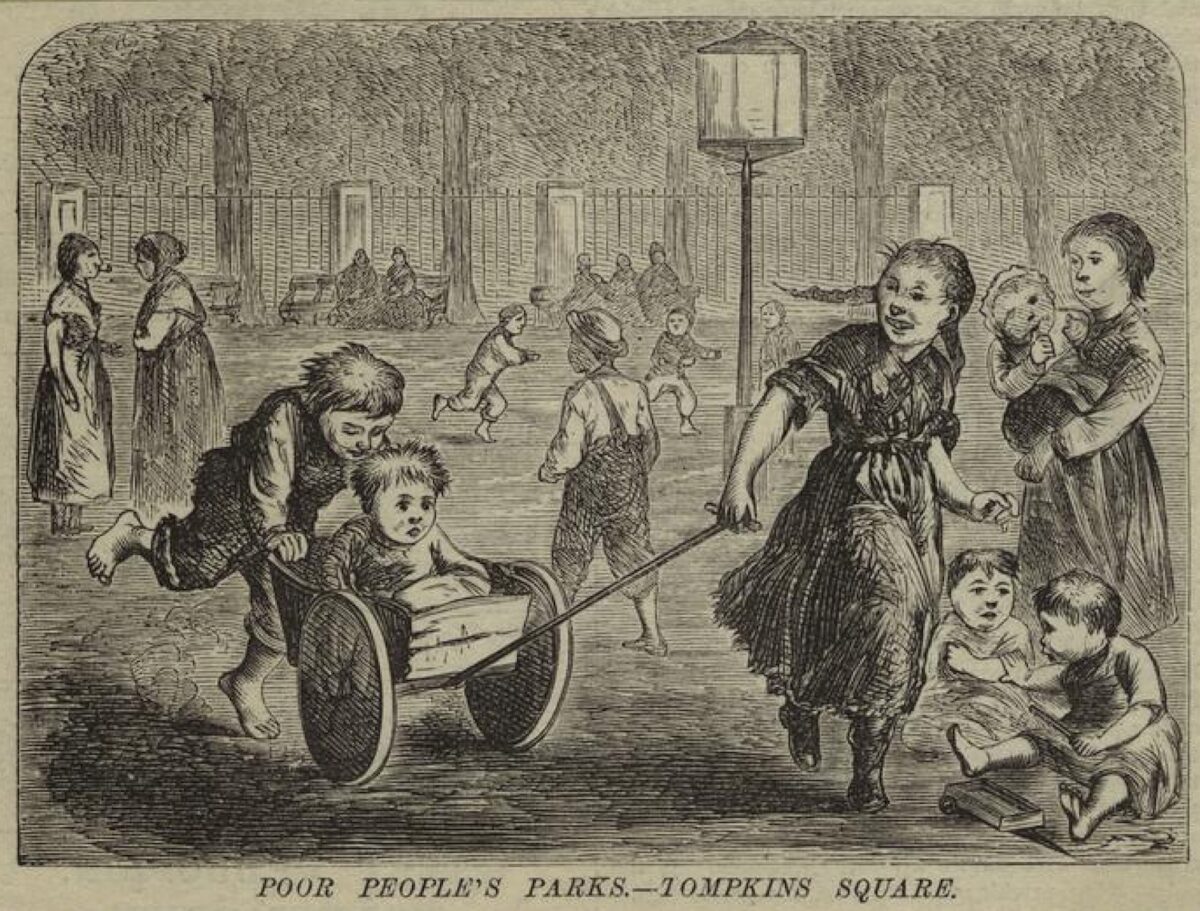
Central Park has frequently been called ‘the people’s park,” but we think Tompkins Square Park may have a better claim to that title.  From its inception, this East Village recreational spot — named for Vice President Daniel D Tompkins — has catered to those who might not have felt welcome in other New York parks.

Carved from the marshy area of Peter Stuyvesant‘s old farm, Tompkins Square immediately reflected the personality of German immigrants who moved here, calling it Der Weisse Garten.  With large immigrants groups came rallies and demands for improved working conditions, leading to more than a number of altercations with the police in the 19th century.

Progressives introduced playgrounds here, and Robert Moses changed the very shape of Tompkins Square.  But the most radical transformation here took place starting in the late 1950s, with the introduction of beatnik and ‘hippie’ culture and infusion of youth and music.

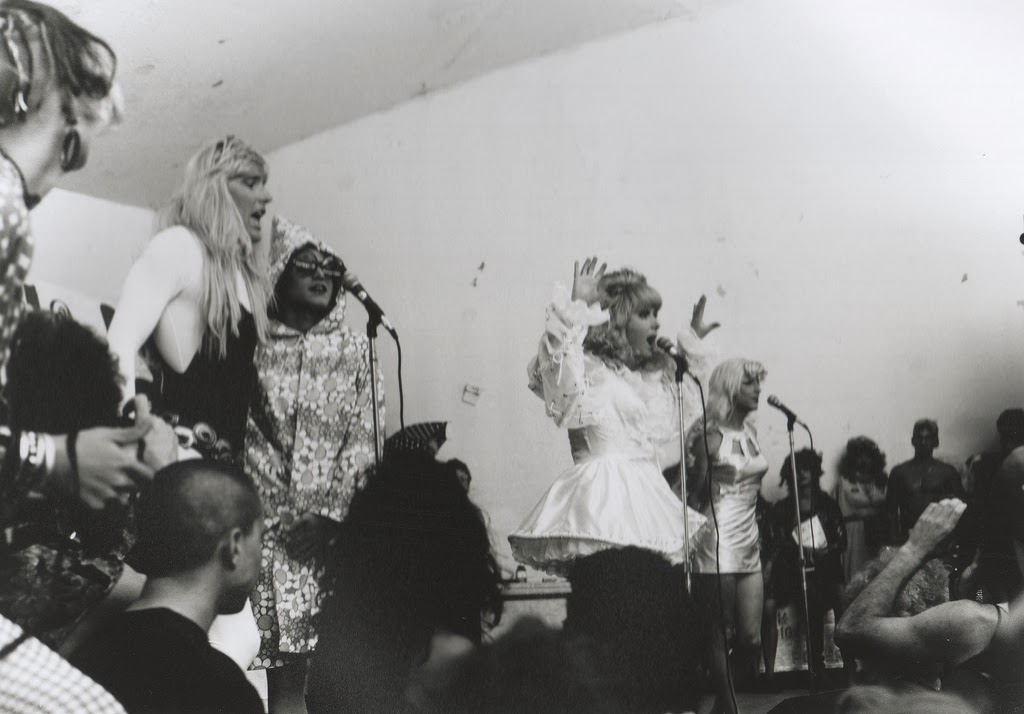
By the 1980s, the park became known not only for embodying the spirit of the East Village through punk music and drag shows (above: Lady Bunny), but also as a haven for the homeless.  Clashes with police echoed the clashes that happened here one century before.  The park still maintains a curfew left over from the strife of the late 1980s.

FEATURING:  Lillian Wald, the Grateful Dead, Charlie Parker, Samuel S. Cox, Lady Bunny … and Chevy Chase?

LISTEN NOW: TOMPKINS SQUARE PARK

A version of this show was originally released in 2014 (episode #160)


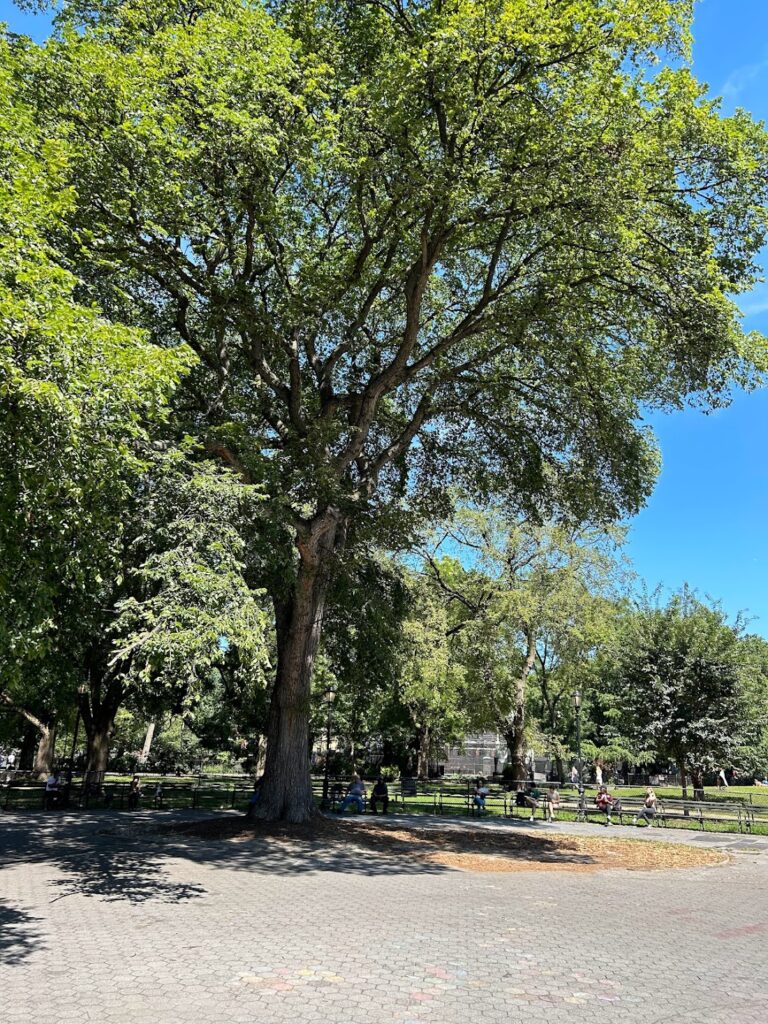
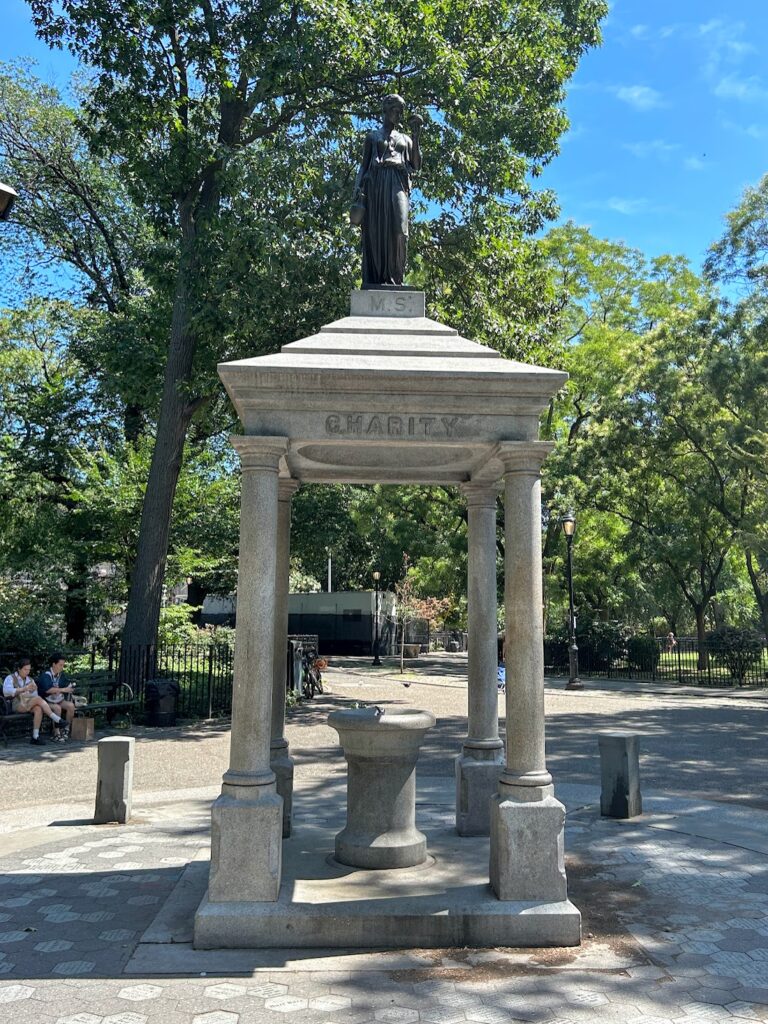
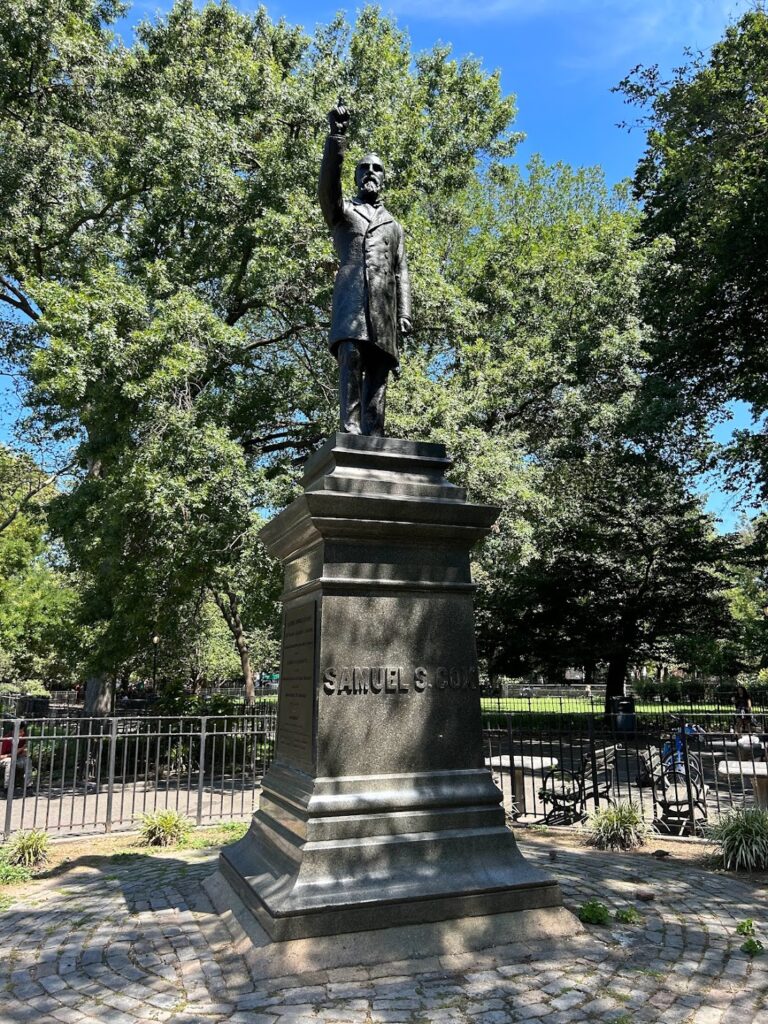
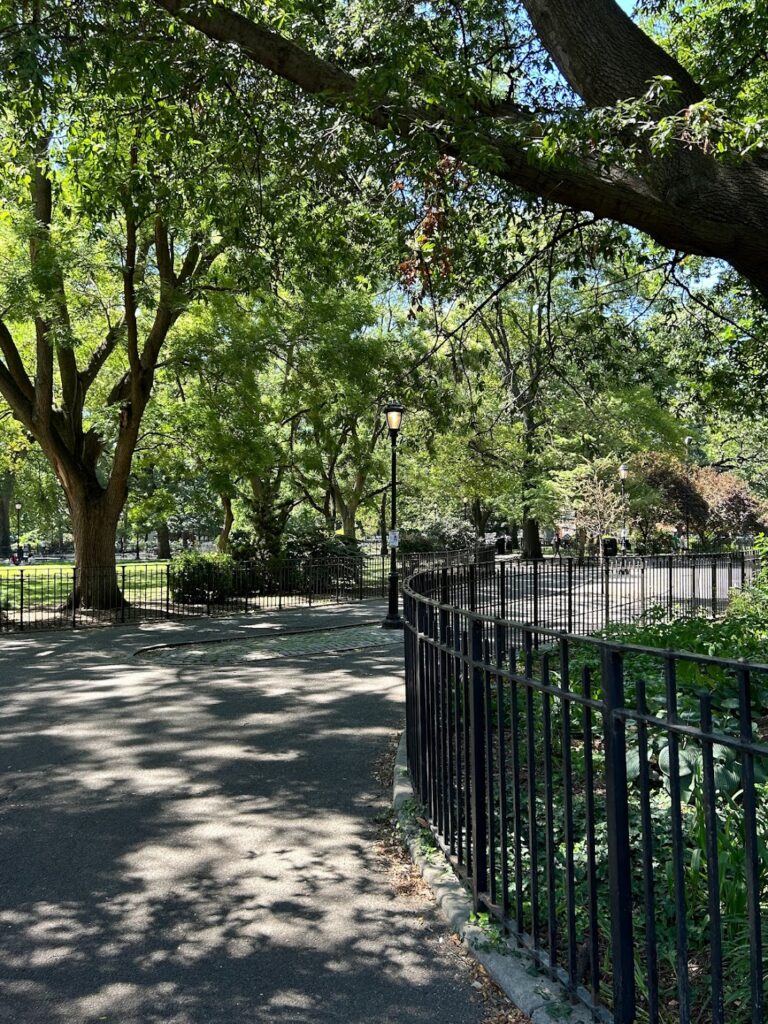
Images from the park this week (August 2023)


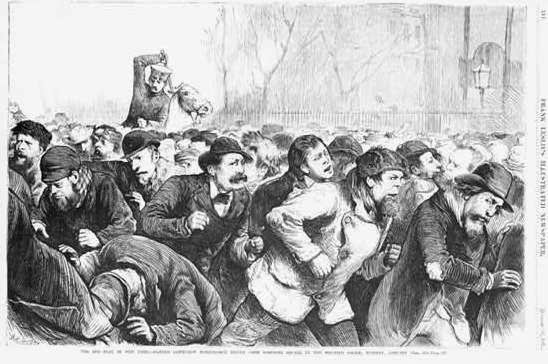
It’s doubtful that the image below is accurately depicted by the caption which accompanied it in Frank Leslie’s Illustrated Newspaper in 1874: “The red flag in New York – riotous Communist workingmen driven from Tompkins Square by the mounted police, Tuesday, January 13th.” [Courtesy LOC]

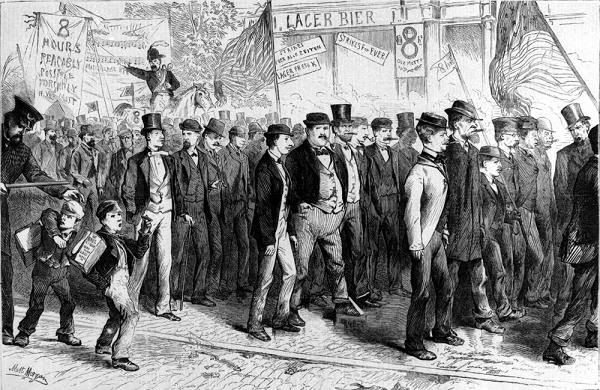
Another illustration of the 1874 protests, notably featuring a German establishment in the background. (More information on the Tenement Museum blog.)

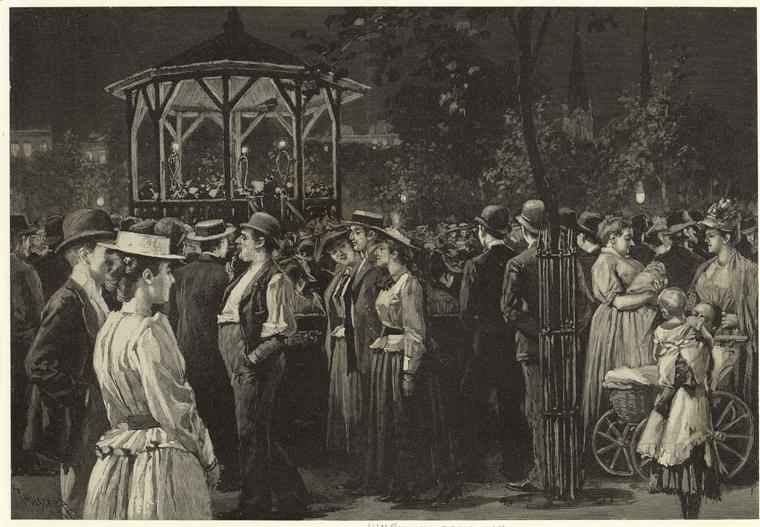
People enjoying (most likely) German music and entertainment in Tompkins Square Park, 1891. An image from Harper’s Weekly by Thure de Thulstrup. (NYPL)

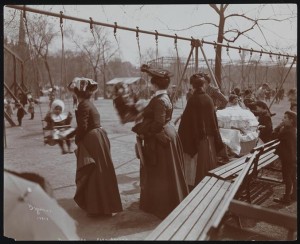
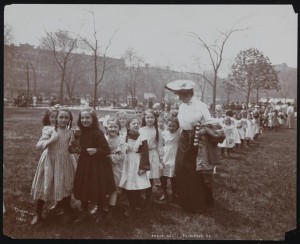
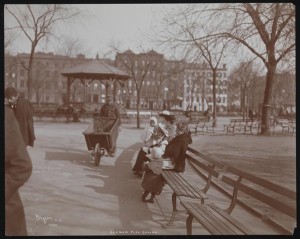
Women and children enjoying themselves in Tompkins Square Park, Arbor Day, 1904, on the brand new playground for girls. (Photos courtesy Museum of the City of New York)

Thompson Sq., Play Ground.
Arbor Day, Thompson Sq.
German Play Ground.

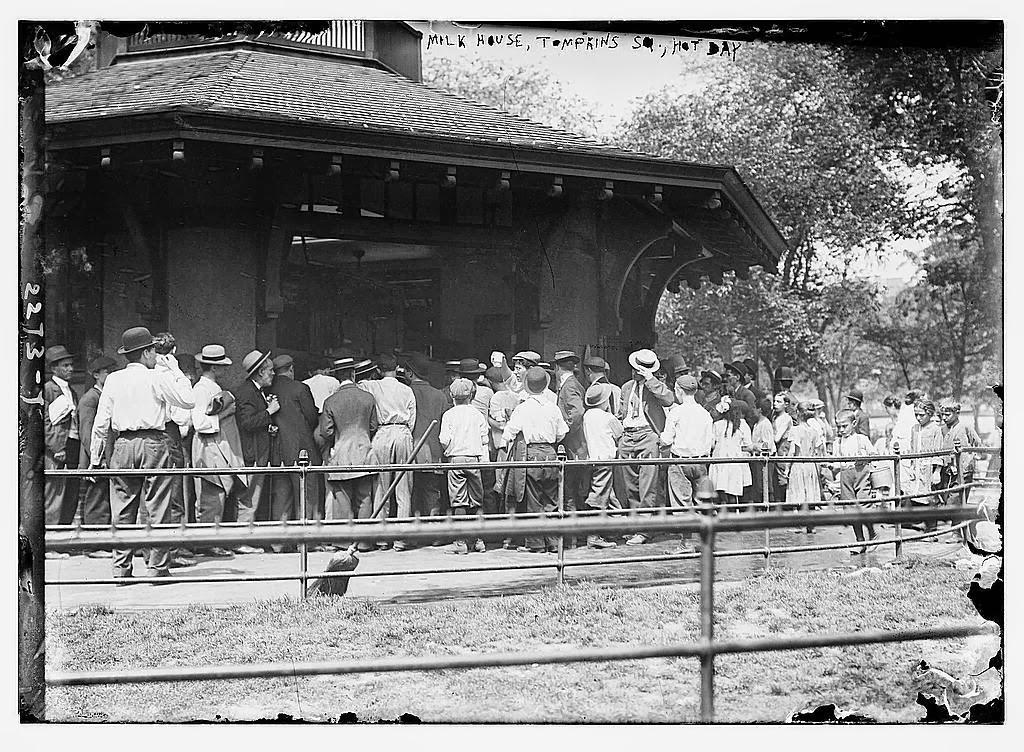
The Tompkins Square Milk House, which provided clean, healthy milk to families in the 1910s.

The statue of Samuel Cox, funded by New York postal workers. (1900, pic courtesy Museum of the City of New York

[Samuel Sullivan Cox statue.]

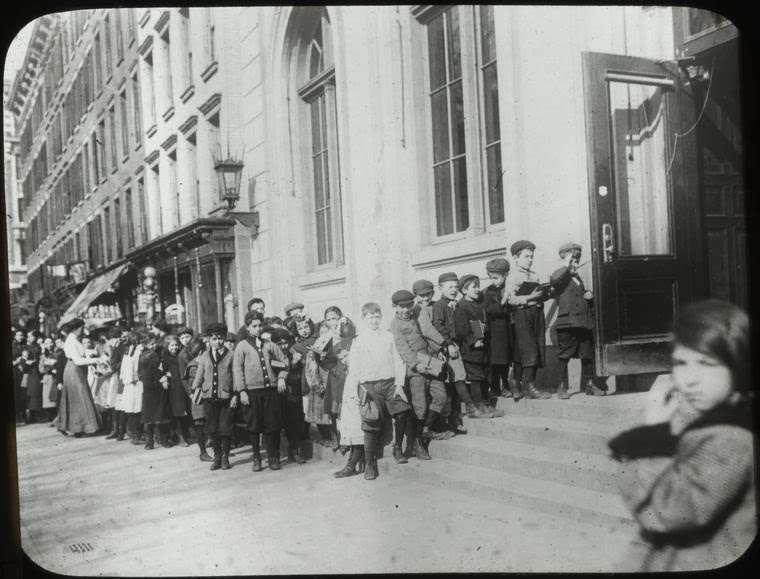
Children waiting in line to use the children’s reading room at the Tompkins Square branch library. (NYPL)

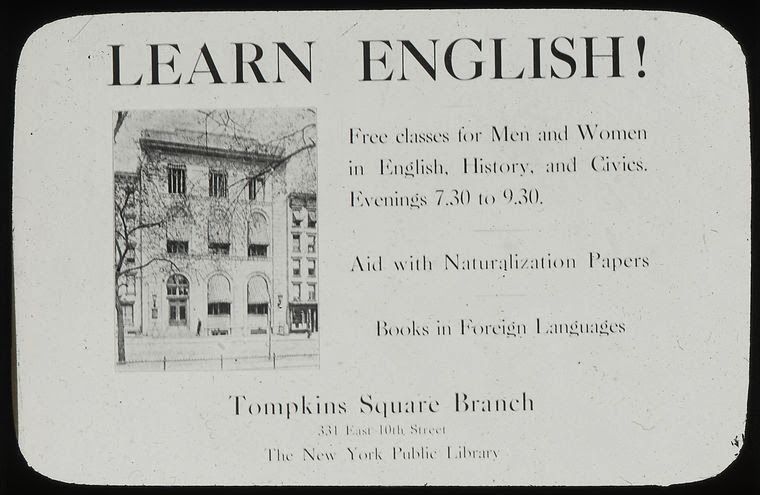
An advertisement from 1920, urging residents of the Lower East Side to take English courses at the Tompkins Square branch library. There are several of these posters in different languages here. (NYPL)

 Lady Bunny and friends, performing at Wigstock 1988 (Picture courtesy aquaman6 on Flickr)

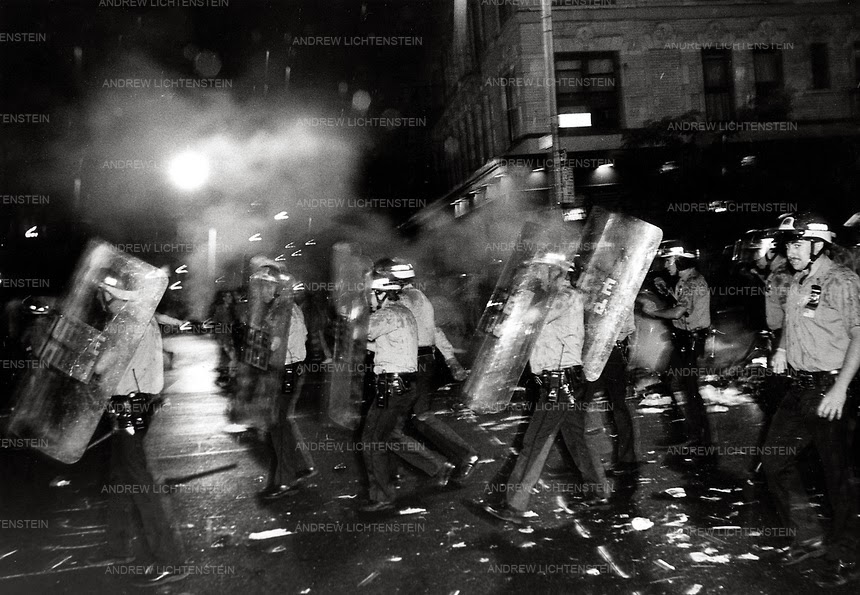
The Tompkins Square Police Riot from 1988 (courtesy Quilas)

Police retake Avenue A during a riot outside Tompkins Square Park that erupted after police allegedly beat a homeless man. The late 1980’s and early 1990’s was a period of rapid gentrification in the East Village, and many homeless residents, activists, and squatters, battled the process, frequently clashing with the police around Tompkins Square Park.

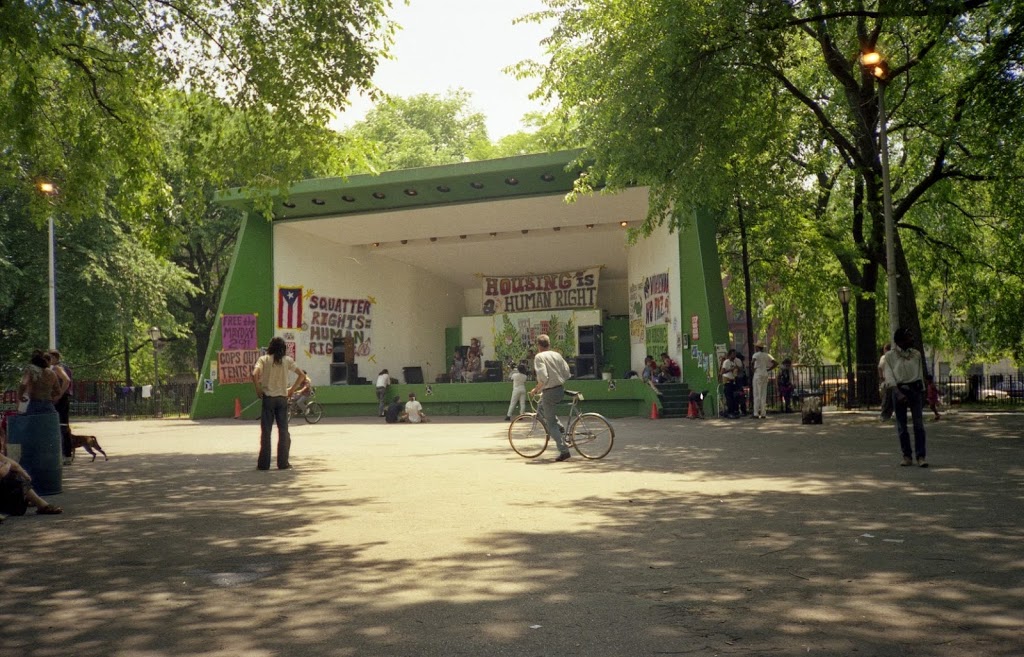
The Tompkins Square Park bandshell, which was torn down by the city in 1991.  (Photo courtesy Flickr/Mike Evans)

A performance by the hardcore band Breakdown at the bandshell in 1988

A Ghostbusters-themed entrant in the Halloween Dog Parade in 2013 (Courtesy USA Today)

Categories
Holidays New Amsterdam

How Dutch New Amsterdam helped create the American Christmas tradition

After reading this article on the origins of Christmas in America, find some information about a virtual Christmas in Old New York tour from Bowery Boys Walks.


There are many different ways to celebrate Christmas, a national holiday derived from the union of Christianity and capitalism. How one chooses to mark the occasion is a reflection of one’s own traditions and faith (or lack thereof).

Christmas can be intensely religious for some, not at all for others. It is ever evolving to fit the population’s needs.

However, if none of the present ideas work, then there is the Puritan way: don’t celebrate it at all.

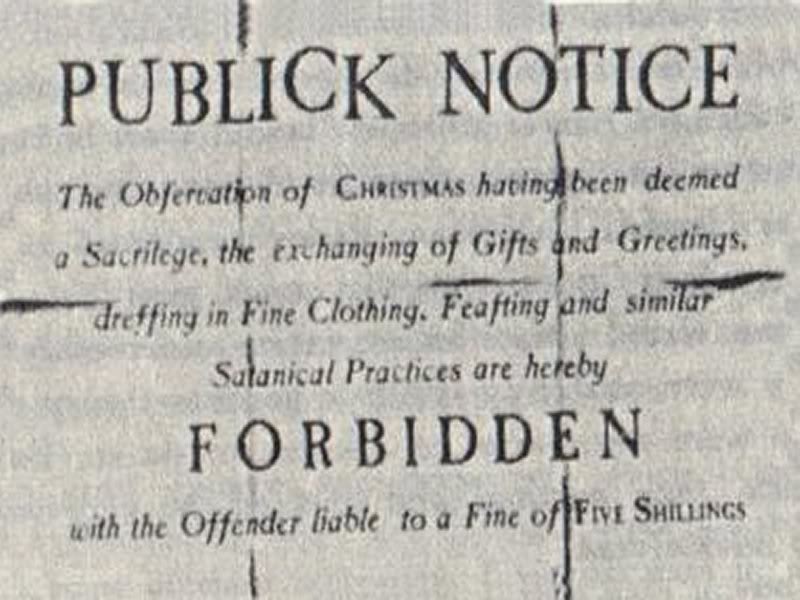
Below: A 1659 notice forbidding the celebration of Christmas in the Puritan-led colonies

There was such opposition to the holiday within the first communities of the New World that it was outright banned among the Puritans of the Massachusetts Bay Colony.

Puritan leaders, ironically enough, took this abolition directly from the Bible; there was no celebration authorized in the book, and since it was doubtful Jesus was actually born on December 25, they considered the day a sinner’s excuse for debauchery.

As Puritans were by nature a homogeneous community, differing traditions were frowned upon, although modest observance of Christ’s birth was occasionally allowed. Generally speaking, December blew through the early English colonies with nary a festivity.

So where did the ingredients of modern Christmas first wash up onto the shores of North America? All signs point to New Amsterdam.

Courtesy Museum of the City of New York

The New Netherland colony of the 17th century was not ruled by such strict restriction of belief.

New Amsterdam, New York’s precursor, was a company town. While laws suppressing the celebration of Christmas were on the books until 1681 up in Massachusetts and other places, down in New Amsterdam, rudimentary holiday traditions were openly, even casually, celebrated.

The settlers of Dutch New Netherland could theoretically celebrate how they wished.

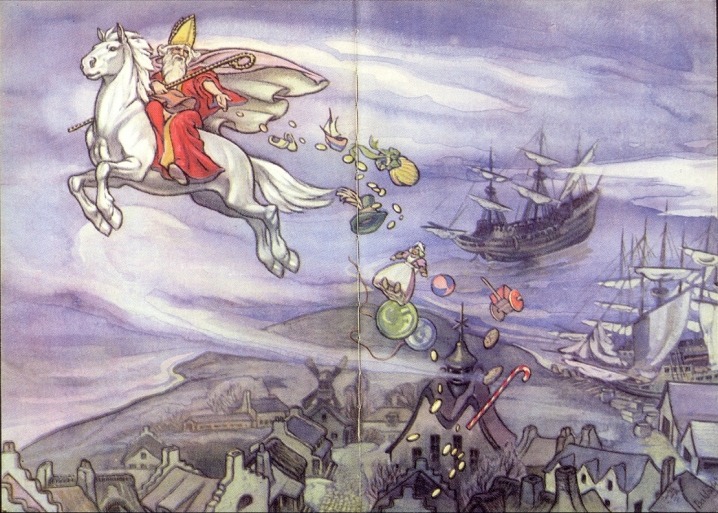
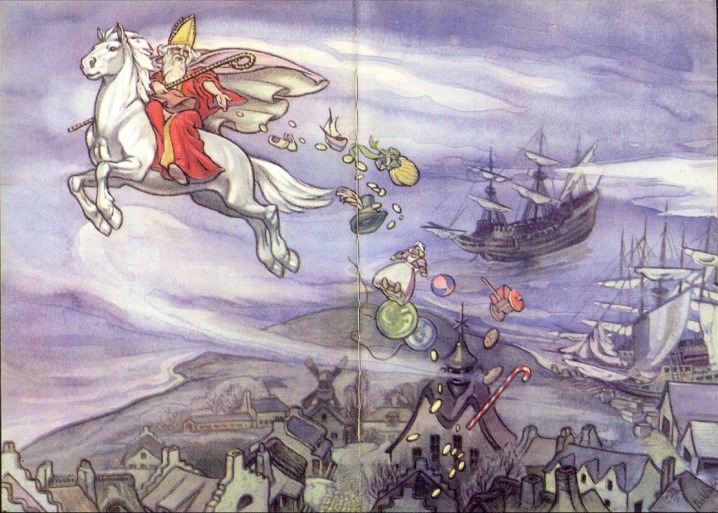
There were certainly observations of Christ’s birth — called Kerstydt — but, it was often overshadowed by a more popular December holiday: Sinterklaas, a Dutch gift-giving tradition where children sat their shoes outside their homes to be filled by a visiting St. Nicolas on December 6th.

(Often, perhaps due to inclement weather, it made sense to have the shoes remain inside, and perhaps better still, to hang stockings near the fireplace.)

A whimsical illustration of St Nicolas over a Dutch city, very possibly New Amsterdam. Artist unknown.

New Netherland’s population in 1624 was only 270 people, with few if any children. Over the next 40 years, however, dozens of families populated the outpost, passing down family customs and linking their distant home with the mainland.

With Dutch residents eventually outnumbering the others, their traditions became the most prevalent.

Combine that prevalence (with its extra-exciting gift-getting component) with the envy of the other non-Dutch children, and suddenly Sinterklaas becomes a highly anticipated holiday among the entire population of New Amsterdam.

This, despite Peter Stuyvesant‘s disgust at any holiday which promoted moral laxity (also known in some circles as fun).

NYPL

Or as author Russell Shorto describes it: “[A]mong the English, the French, the German, the Swedish families of Manhattan, pressure was brought to bear on parents, and the Dutch tradition was adopted and, later, pushed forward a couple of weeks to align with the more generally observed festival of Christmas.”

And New Amsterdamers didn’t stop at Christmas; the party kept going for weeks afterwards, throwing Manhattan’s very first New Year’s parties.

According to one source, “On Nieuw Jaar (New Year) and Kerstydt (Christmas) the Governor’s house was ablaze with candles and the young men and maidens danced in the ‘entry’.”

Official business was closed for weeks after, and “the burghers and their families spent much of their time in firing guns, beating drums, dancing, card-playing, playing at bowls or nine-pins and in drinking beer.”

No wonder Peter Stuyvesant hated holidays!

Over time, Christmas and Sinterklaas — one an observance of Jesus’ birth, the other honoring one of his most popular saints — would melt into each other. Even when the Dutch were kicked out of Manhattan in 1664, Sinterklaas was still celebrated in the region, further infused with English Christmas customs.

However, even as the British were expelled from Manhattan, American holiday traditions were still localized, often tied to one’s specific ethnicity and hardly unified.

It would take New York city leaders in the 19th century and the work of New York’s greatest writers to define new holiday symbols for a national audience.

In some Dutch pockets of upstate New York, the tradition of Sinterklaas is still celebrated today.


Want to hear more about the history of Christmas in New York? Take a Bowery Boys Walking Tour and get into the holiday spirit with a merry virtual stroll through The Big Apple!

On the Christmas In Old New York tour, guide Jeff Dobbins unveils the history of how the Big Apple became the center of all things Christmas from Macy’s to Rockefeller Center.

Book your tickets today! There are several dates available in the month of December. Get your tickets here.

Categories
New Amsterdam Podcasts

Land of the Lenape: A Violent Tale of Conquest and Betrayal

PODCAST The story of the Lenape, the native people of New York Harbor region, and their experiences with the first European arrivals — the explorers, the fur traders, the residents of New Amsterdam.

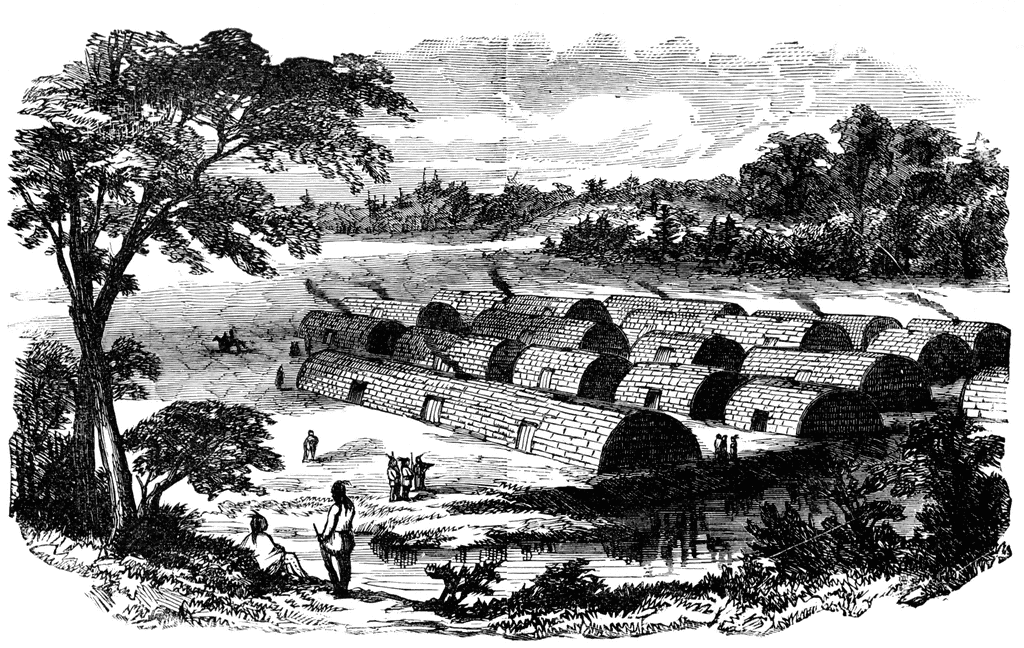
Before New York, before New Amsterdam — there was Lenapehoking, the land of the Lenape, the original inhabitants of the places we call Manhattan, Westchester, northern New Jersey and western Long Island.

This is the story of their first contact with European explorers and settlers and their gradual banishment from their ancestral land.

Fur trading changed the lifestyles of the Lenape well before any permanent European settlers stepped foot in this region. Early explorers had a series of mostly positive experiences with early native people.

With the Dutch settlement of New Amsterdam, the Lenape entered into various land deals, “selling: the land of Manhattan at a location in the area of today’s Inwood Hill Park.

But relations between New Amsterdam and the surrounding native population worsened with the arrival of Director-General William Kieft, leading to bloody attacks and vicious reprisals, killing hundreds of Lenape and colonists alike.

Peter Stuyvesant arrives to salvage the situation, but further attacks threatened any treaties of peace.  But the time of English occupation, the Lenape were decimated and without their land.

And yet, descendants of the Lenape live on today in various parts of the United States and Canada.  All that and more in this tragic but important tale of New York City history.

To get this week’s episode, simply download it for FREE from iTunes or other podcasting services or get it straight from our satellite site.

Or listen to it straight from here:

__________________________________________________________

The Bowery Boys: New York City History podcast is brought to you …. by you!

We are now producing a new Bowery Boys podcast every two weeks.  We’re also looking to improve the show in other ways and expand in other ways as well — through publishing, social media, live events and other forms of media.  But we can only do this with your help!

We are now a member of Patreon, a patronage platform where you can support your favorite content creators for as little as a $1 a month.

Please visit our page on Patreon and watch a short video of us recording the show and talking about our expansion plans.  

If you’d like to help out, there are five different pledge levels (and with clever names too — Mannahatta, New Amsterdam, Five Points, Gilded Age, Jazz Age and Empire State). Check them out and consider being a sponsor.

We greatly appreciate our listeners and readers and thank you for joining us on this journey so far. And the best is yet to come!

__________________________________________________________

The long road of the Lenape. This 1978 map shows the path of their various relocations across the country in comparison with the relocation path of the Cherokee.

Ives Goddard, “Delaware,” in Handbook of North American Indians, vol. 15: Northeast, ed. Bruce Trigger and William Sturtevant (Washington DC: Smithsonian Institution1 1978)

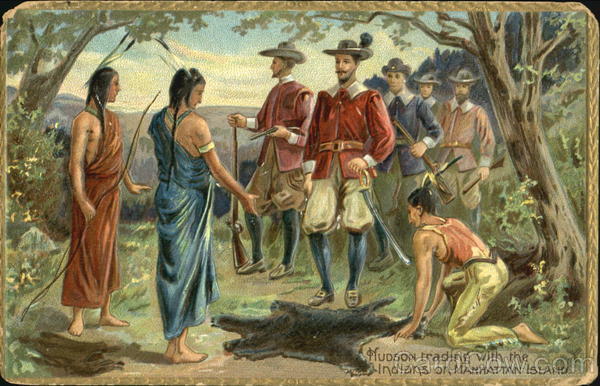
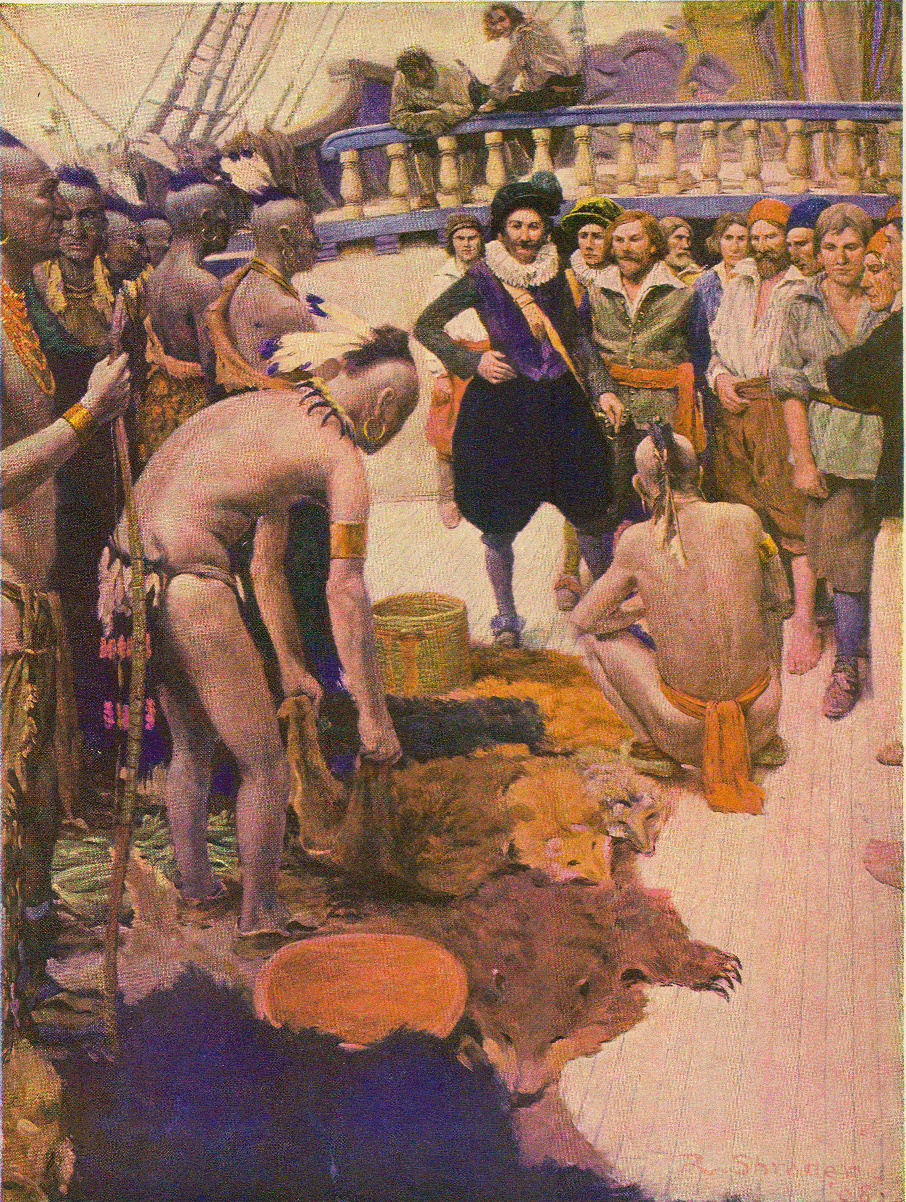
Henry Hudson’s interaction with the native people of the area would much later inspire a host of fanciful depictions.

From a 1909 postcard for the Hudson-Fulton Celebration

Hudson Trading With Indians On Manhattan Island

From an old textbook:

Courtesy The Baldwin Project

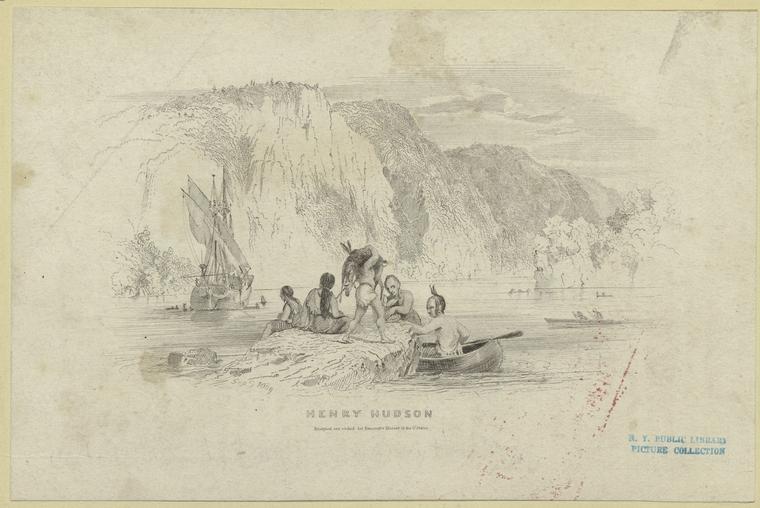
“‘Designed and etched for Bancroft’s History of the United States’ Written on image: ‘Sept. 7 1609’

Courtesy NYPL
Courtesy NYPL

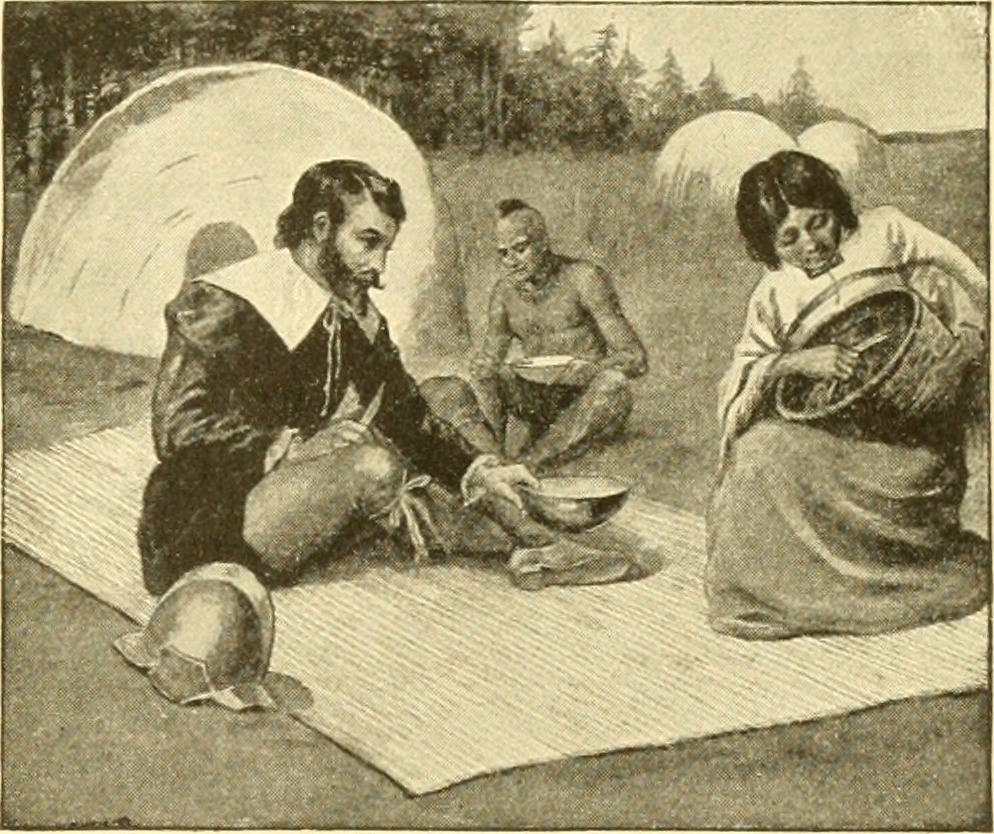
From a 1915 textbook ‘A First Book In American History’ — “Hudson’s ship anchored again opposite the Catskill Mountains, and here he found some very friendly Indians, who brought corn, pumpkins, and to-bacco to sell to the crew. Still farther up the river Hudson visited a tribe onshore, and wondered at their great heaps of corn and beans. The chief lived in around bark house. Captain Hudson wasmade to sit on a mat and eat from a red wooden bowl. The Indians wished him to stay all night; they broke their arrows and threw them into the fire, to show their friendliness.

Internet Archive Book Images

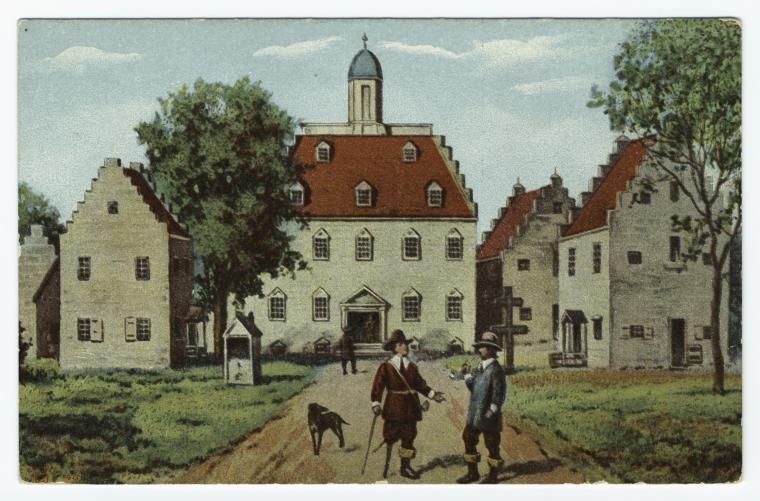
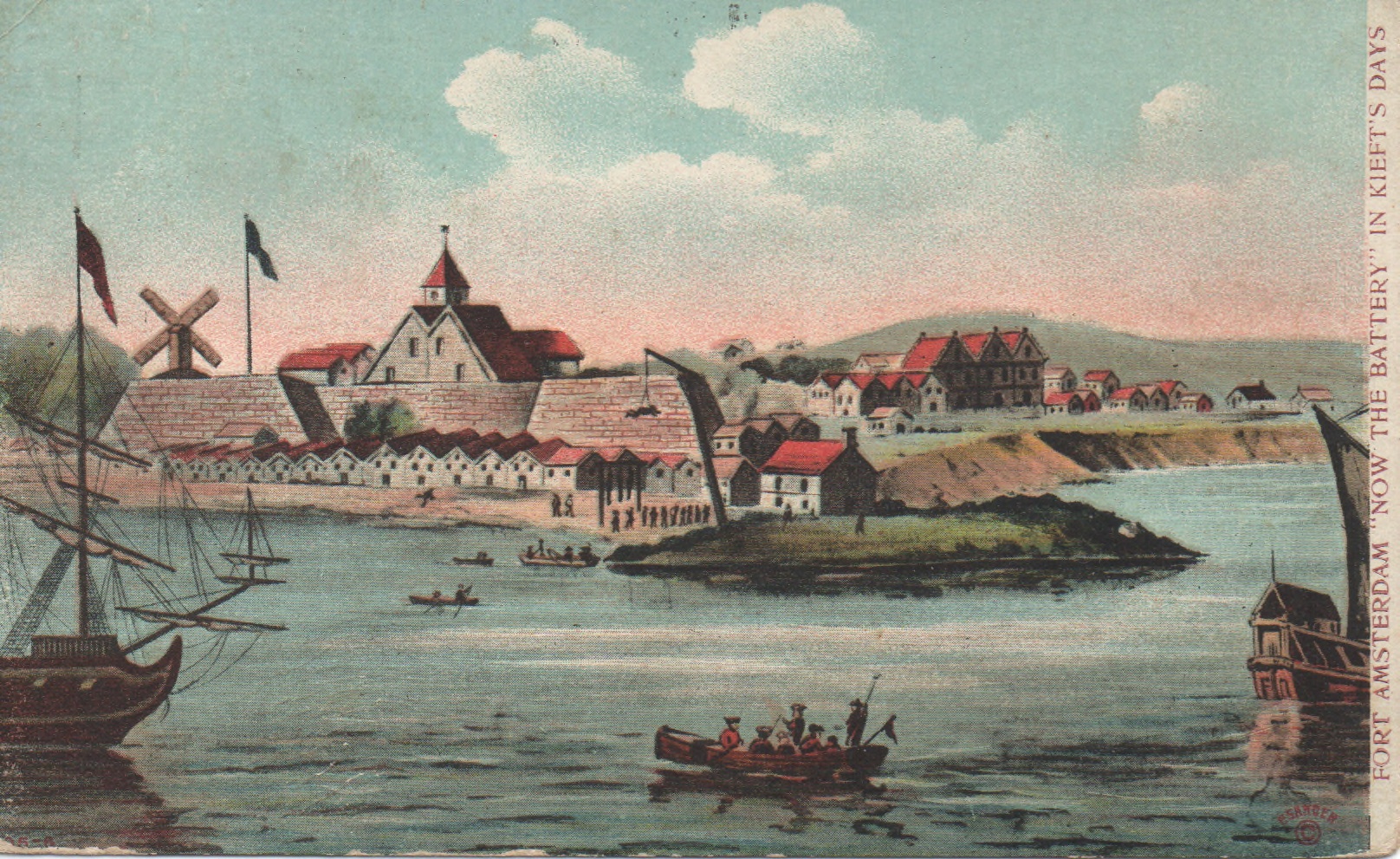
Behold New Amsterdam!

fortamsterdampostcard

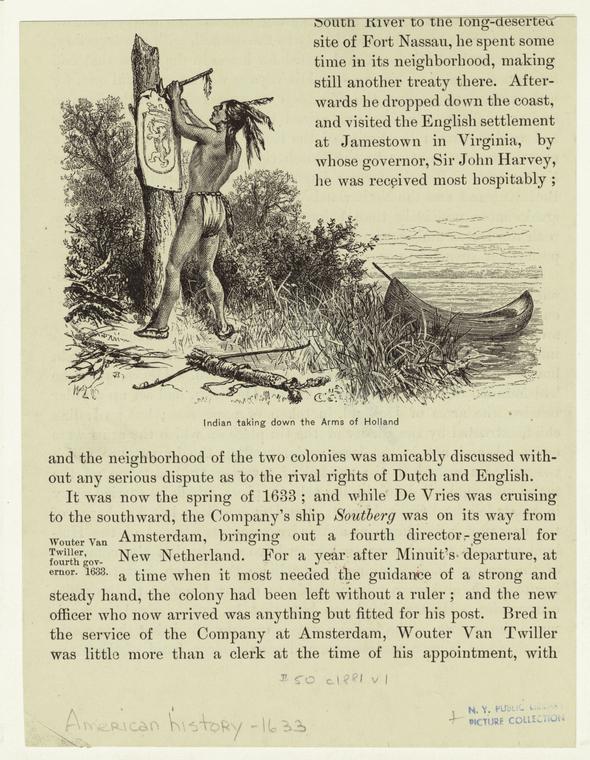
From another text book, this one from 1881:

New York Public Library

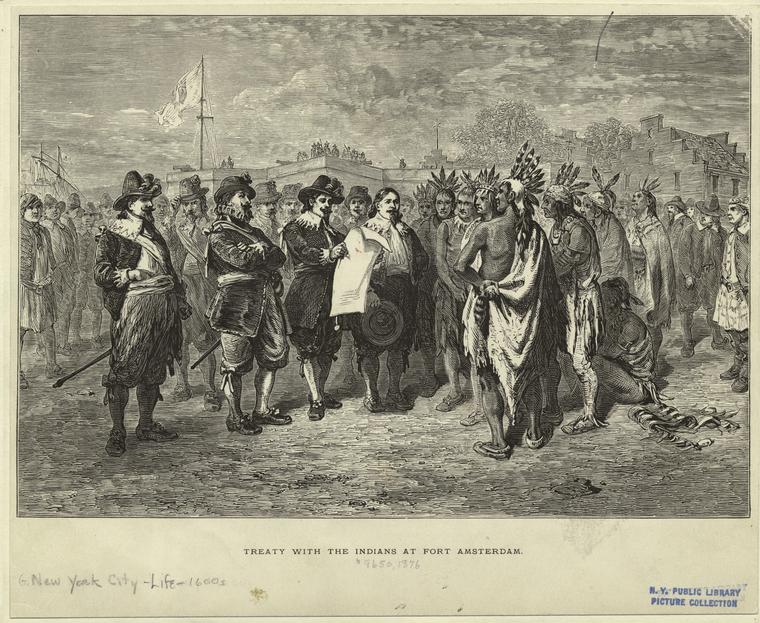
From an 1876 print: ‘Treaty with the Indians at Fort Amsterdam.” Not sure what year this picture depicts but everybody has two legs, so no Peter Stuyvesant!

NYPL
NYPL

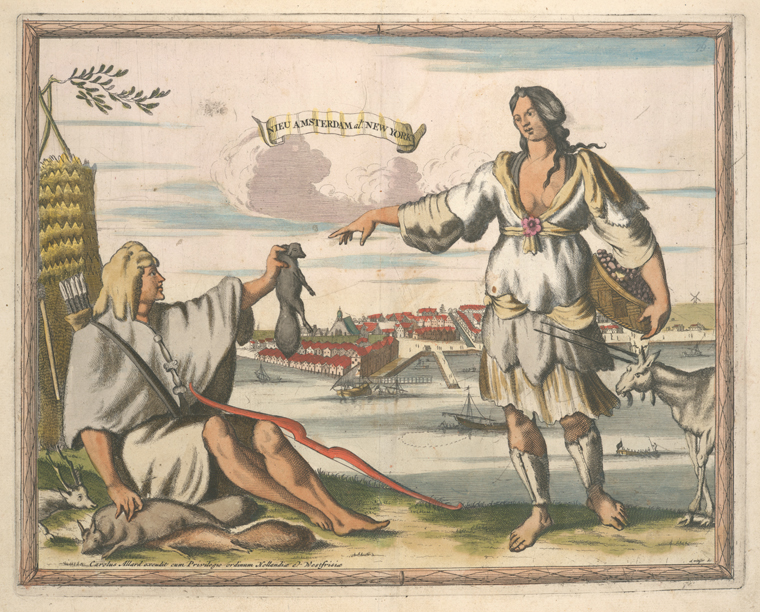
A well-known engraving by Aldert Meijer depicts New Amsterdam as being touched by the hand of providence.

NYPL
NYPL

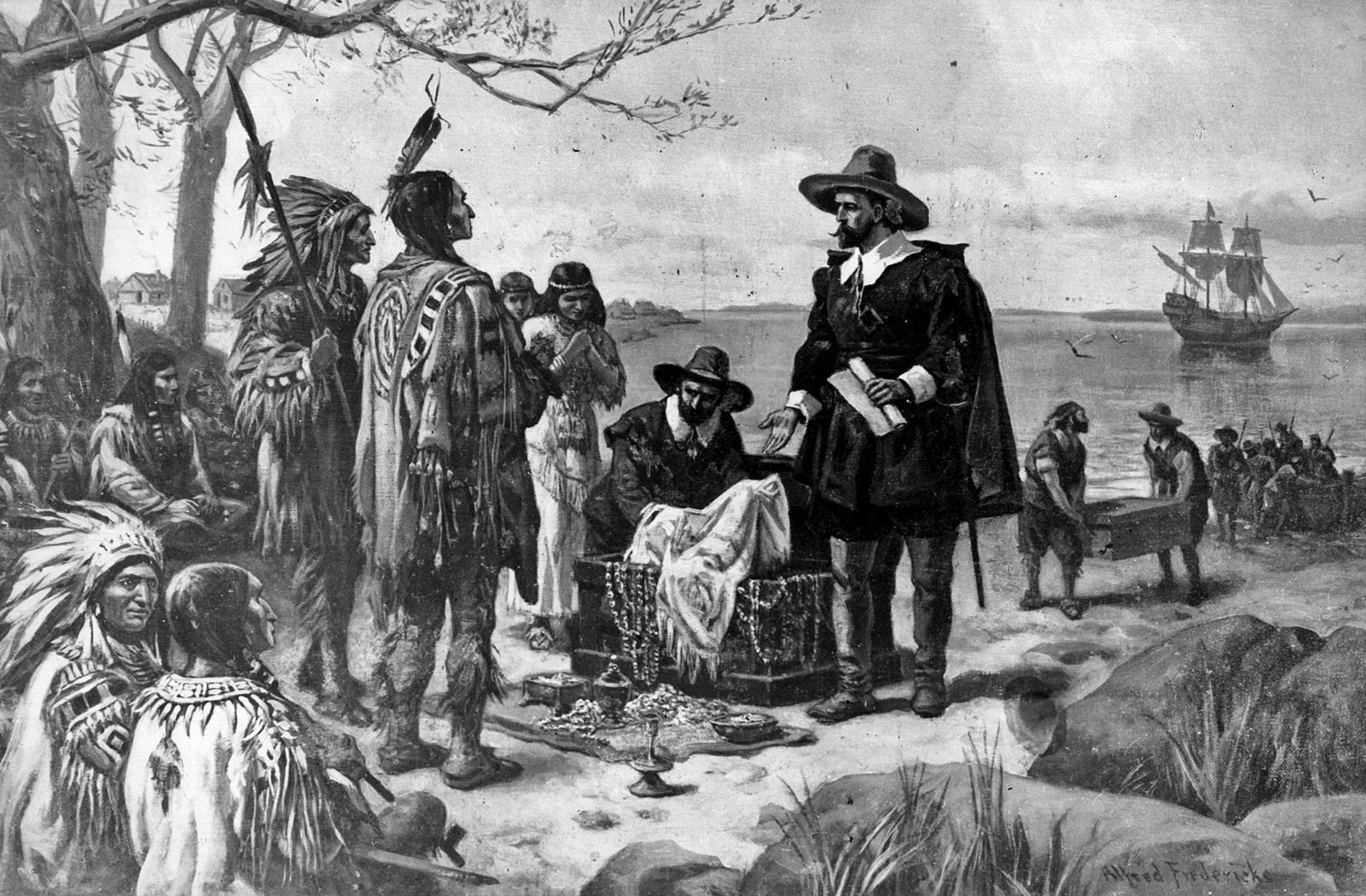
A drawing of the 1926 purchase of Manhattan between the native population and Peter Minuit. Image is from Popular Science Magazine, 1909.

NYPL
NYPL

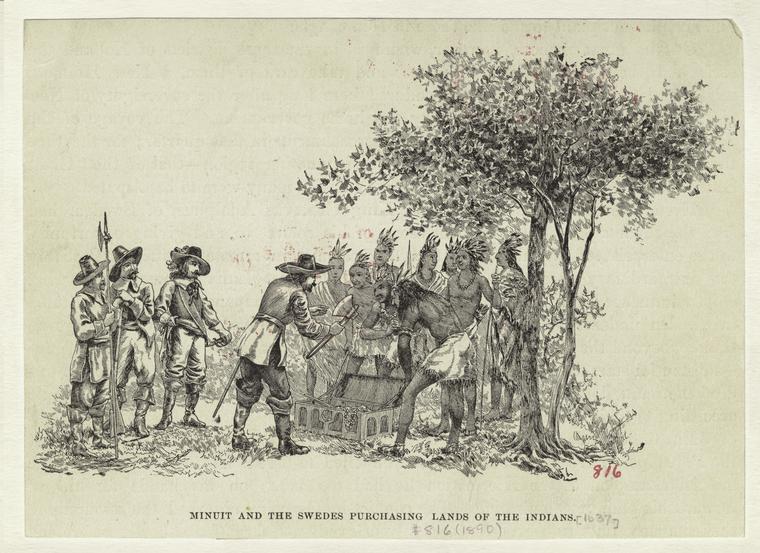
…clearly derived from

“Peter Minuit and the Swedes purchasing lands of the Indians.” Illustration dated 1890

NYPL
NYPL

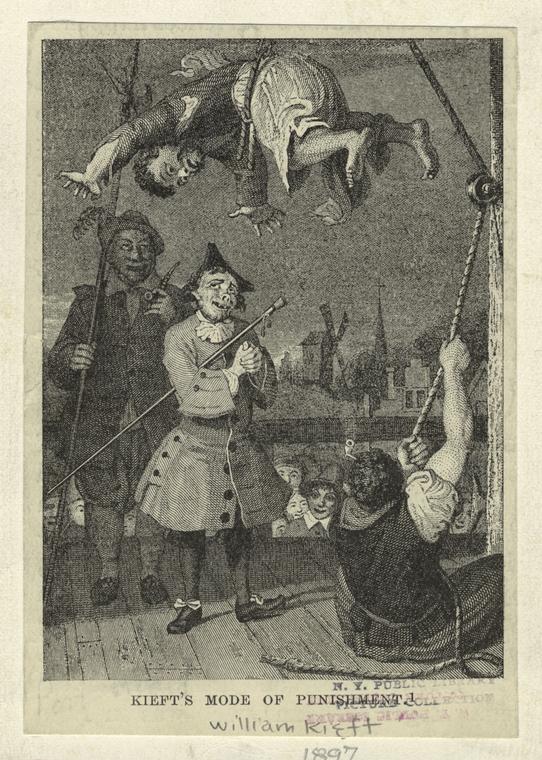
William Kieft’s reputation as a vicious tyrant is made apparent here in this 1897 illustration captioned ‘Kieft’s Mode of Punishment.’

NYPL
NYPL

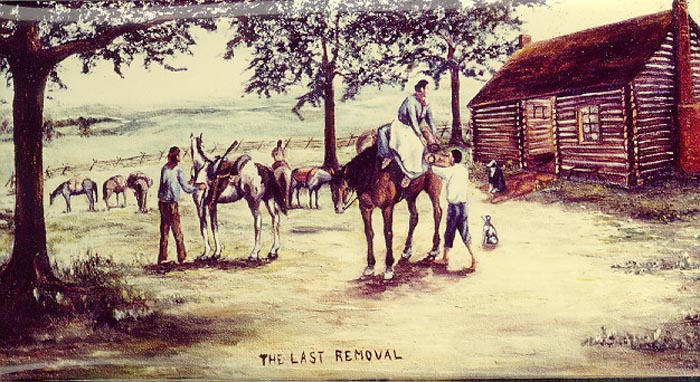
From the Delaware Indians website: “A painting by Lenape artist Jacob Parks (1890-1949), which depicts a Lenape family leaving their home on their reservation in Kansas in 1867. This area had been their home for over thirty-five years, and now the government told them they had to move to Indian Territory (now Oklahoma).”

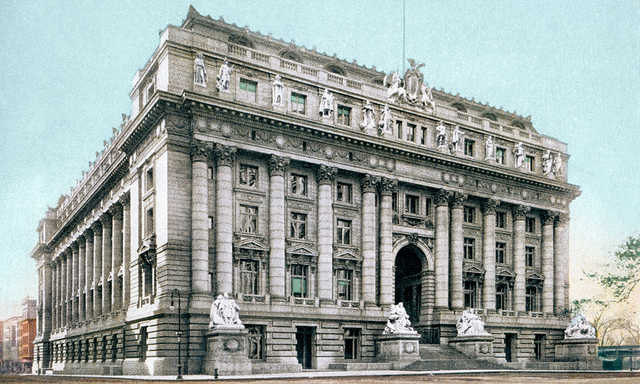
The Smithsonian National Museum of the American Indian is currently living in the Alexander Hamilton U.S. Custom House. It’s a FREE museum so you should stop in anytime you’re in the Battery Park area.

custom-house

FURTHER READING

The First Manhattans: A History of the Indians of Greater New York by Robert S. Grumet

The Island At The Center Of The World by Russell Shorto

The Delaware Indians: A History by  C.A. Westanger

Native New Yorkers: The Legacy of the Algonquin People of New York by Evan T. Pritchard

The Official Site of the Delaware Tribe of Indians

Lenape Lifeways: An overview of Lenape life and customs

Removal History of the Delaware Tribe

FURTHER LISTENING

After you’ve listened to this show on the history of the Lenape, check out other shows related to this episode:

Categories
New Amsterdam Podcasts

Peter Stuyvesant and the Fall of New Amsterdam: Where did the Dutch roots of New York City go?

PODCAST There would be no New York City without Peter Stuyvesant, the stern, authoritarian director-general of New Amsterdam, the Dutch port town that predates the Big Apple. 

The willpower of this complicated leader took an endangered ramshackle settlement and transformed it into a functioning city. But Mr. Stuyvesant was no angel.

In part two in the Bowery Boys’ look into the history of New Amsterdam, we launch into the tale of Stuyvesant from the moment he steps foot (or peg leg, as it were) onto the shores of Manhattan in 1647.

Stuyvesant immediately set to work reforming the government, cleaning up New Amsterdam’s filth and even planning new streets. He authorized the construction of a new market, a commercial canal and a defense wall — on the spot of today’s Wall Street. But Peter would act very un-Dutch-like in his intolerance of varied religious beliefs, and the institution of slavery would flourish in New Amsterdam under his unwavering direction.

And yet the story of New York City’s Dutch roots does not end with the city’s occupation by the English in 1664 — or even in 1673 (when the city was briefly retaken by a Dutch fleet). The Dutch spirit remained alive in the New York countryside, becoming part of regional customs and dialect.

And yet the story of New Amsterdam might otherwise be ignored if not for a determined group of translators who began work on a critical project in the 1970s……

Listen Now: Peter Stuyvesant Podcast

___________________________________________________________

The Bowery Boys: New York City History podcast is brought to you …. by you!

We are now producing a new Bowery Boys podcast every other week. We’re also looking to improve the show in other ways and expand in other ways as well — through publishing, social media, live events and other forms of media. But we can only do this with your help!

We are now a member of Patreon, a patronage platform where you can support your favorite content creators for as little as a $1 a month.

Please visit our page on Patreon and watch a short video of us recording the show and talking about our expansion plans. If you’d like to help out, there are five different pledge levels (and with clever names too — Mannahatta, New Amsterdam, Five Points, Gilded Age, Jazz Age and Empire State). Check them out and consider being a sponsor.

And join us for the first ever Bowery Boys Movie Club, an exclusive podcast provided to our supporters on Patreon. This month’s selection — Taxi Driver.

We greatly appreciate our listeners and readers and thank you for joining us on this journey so far.

__________________________________________________________

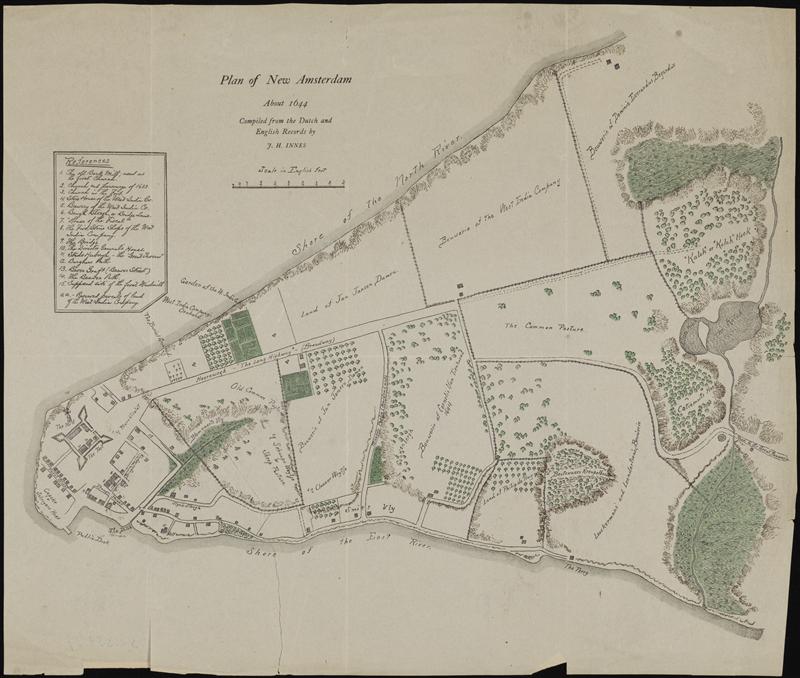
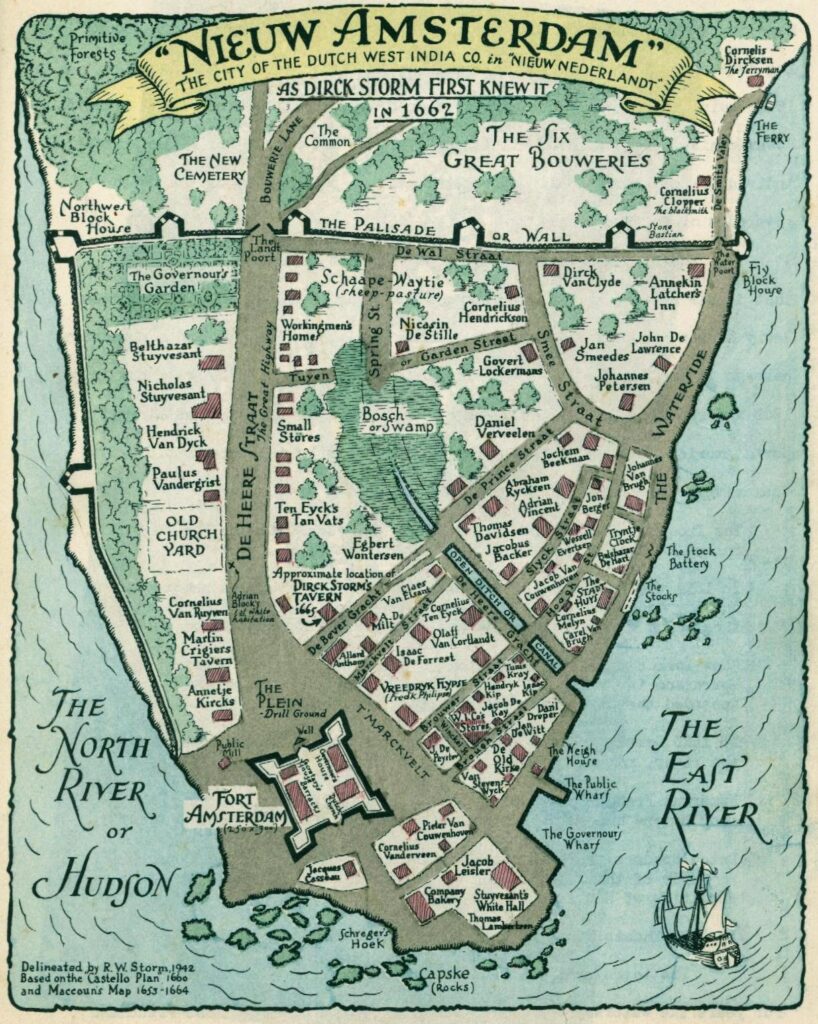
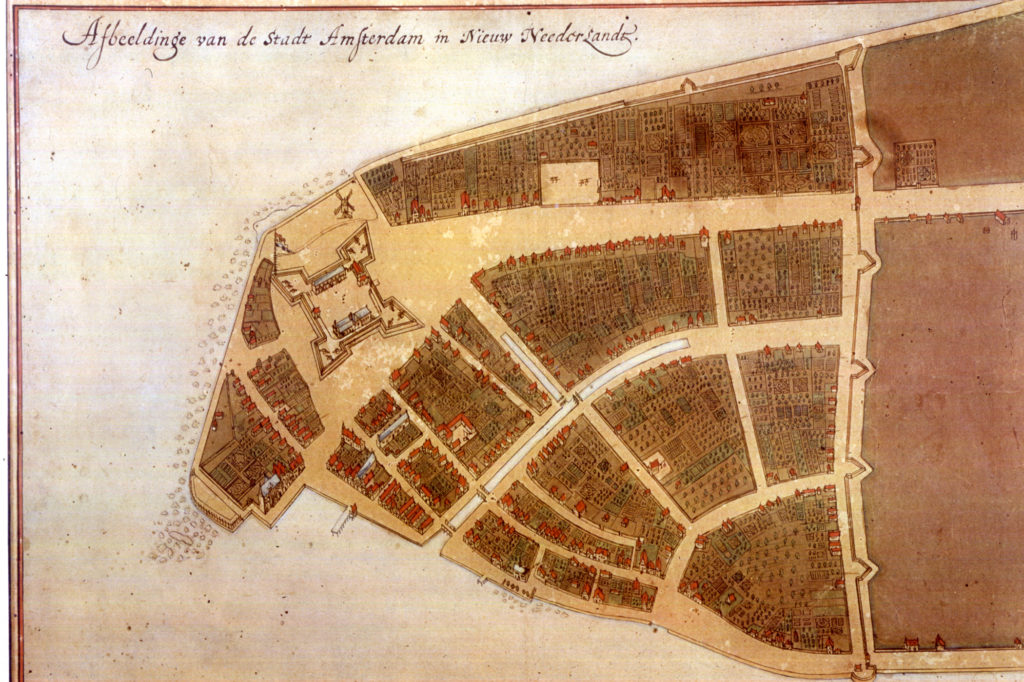
The Costello Plan, New Amsterdam 1660. Surveyed by Jacque Cortelyou. Full size photograph of manuscript map in the Biblioteca Medicea-Laurenziana of Florence, Italy. The Castello plan is the earliest known plan of New Amsterdam, and the only one dating from the Dutch period. Wikicommons.

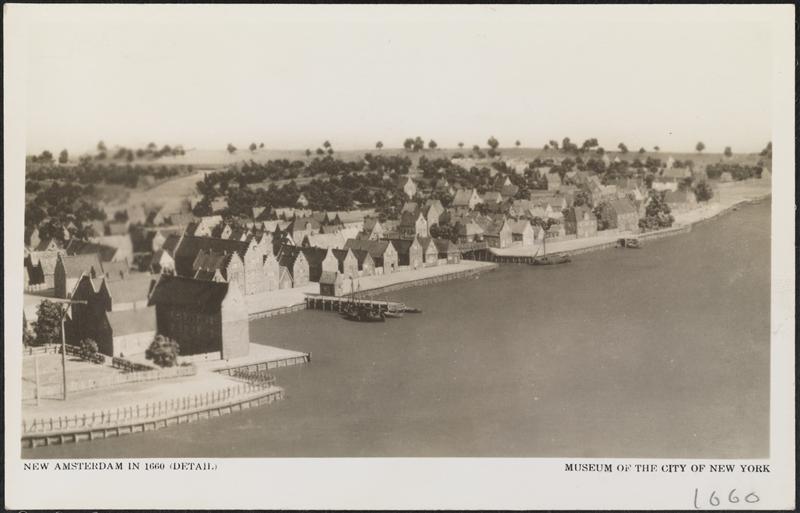
New Amsterdam in miniature at the Museum of the City of New York, photographed in 1932

Museum of the City of New York
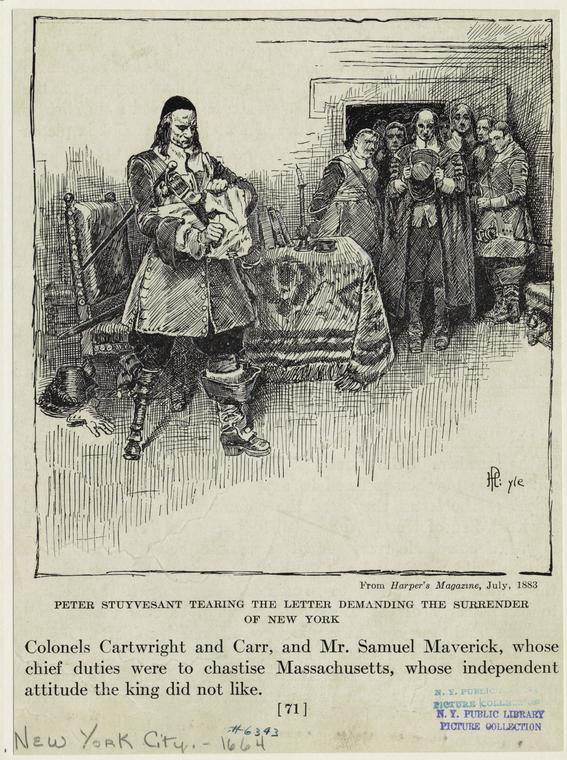
Peter Stuyvesant tearing the letter demanding the surrender of New York. Artist Howard Pyle, 1923. New York Public Library

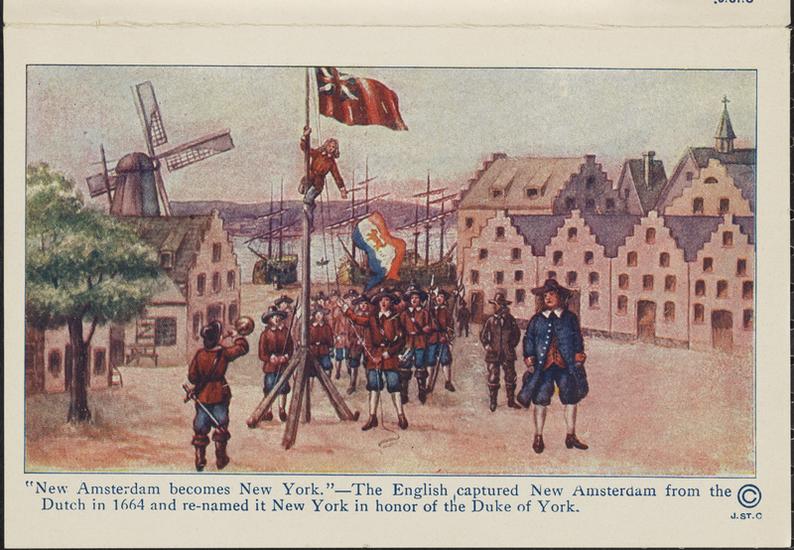
The moment when New Amsterdam became New York, depicted in a 1914 picture book.

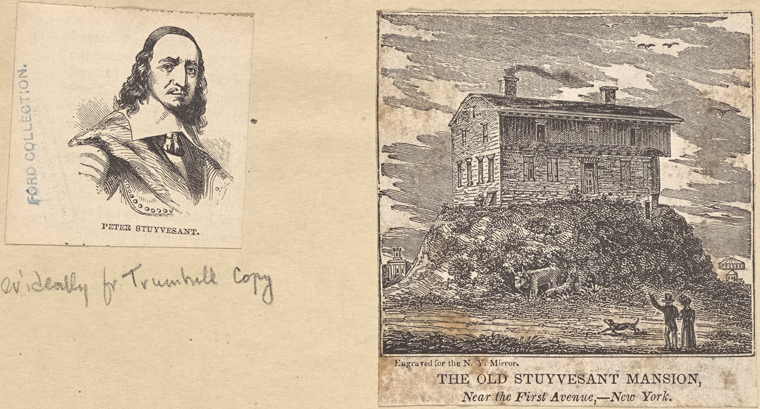
The old Stuyvesant mansion, near First Avenue, engraved for the N.Y. Mirror newspaper. Courtesy NYPL

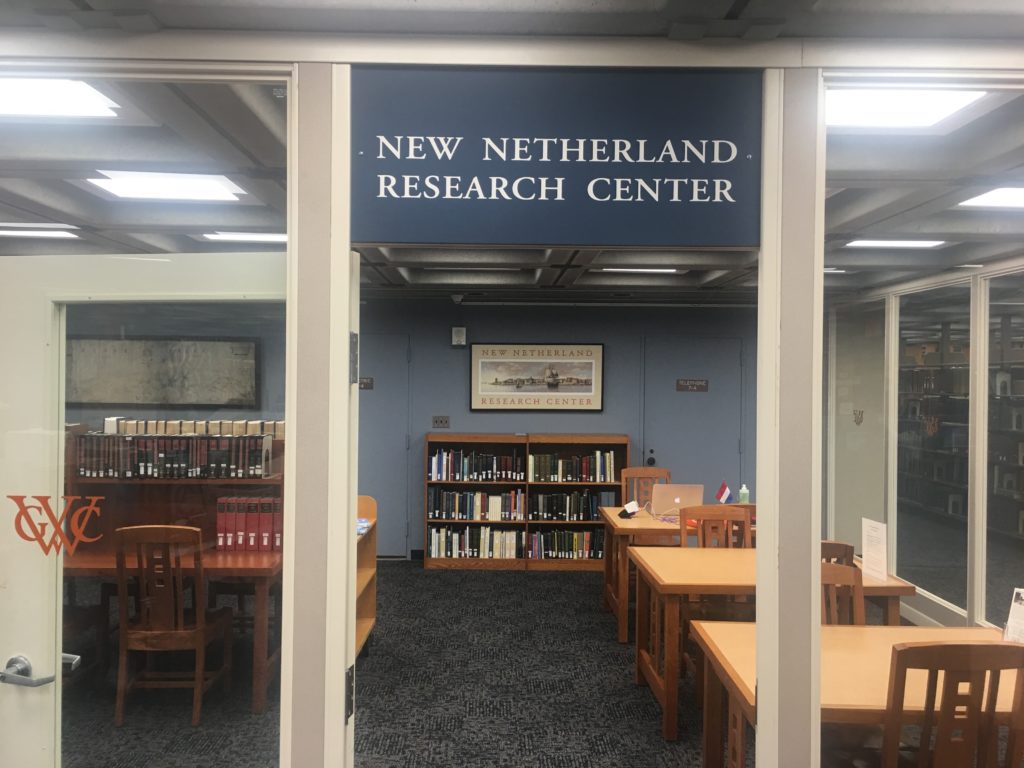
The New Netherland Research Center, located on the seventh floor of the New York State Library.  For more information, visit the New Netherland Institute website.

Greg Young

FURTHER LISTENING

We didn’t go too deeply into it in our latest show, but the Bronx also has a very rich Dutch history. The name even comes from a (unfortunately doomed) Dutch settler.

The early history of Broadway begins in New Amsterdam.

We also spoke about the ‘rattle watch’ in our show on the New York Fire Department.

Categories
Neighborhoods Podcasts

St. Mark’s Place: It’s Party Time in the East Village!

PODCAST: The big, brash history of St. Mark’s Place, the East Village’s most interesting street.

St. Mark’s Place may be named for a saint but it’s been a street full of sinners for much of its history.

One of the most fascinating streets in the city, St. Mark’s traces its story back to Peter Stuyvesant, meets up with the wife of Alexander Hamilton in the 1830s, experiences the incredible influx of German and Polish immigrants in the late 19th century, then veers into the heart of counter-culture — from the political activism of Abbie Hoffman to the glamorously psychedelic parties of Andy Warhol.

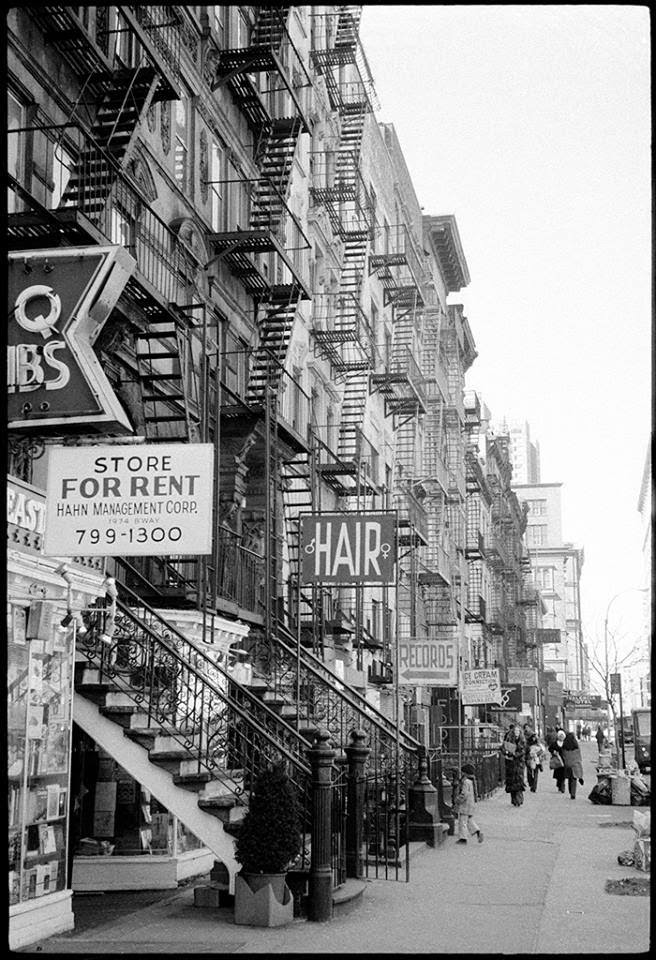
And that’s when the party really gets started! St. Mark’s is known for music, fashion, rebellion and pandemonium. In the 1970s and 80s, clothing stores like Limbo and club nights like Club 57 helped define its character — punk, new wave, alternative, raucous.


The Bowery Boys: New York City History podcast is brought to you …. by you!

We are now producing a new Bowery Boys podcast every two weeks. We’re also looking to improve the show in other ways and expand in other ways as well — through publishing, social media, live events and other forms of media. But we can only do this with your help!

We are now a member of Patreon, a patronage platform where you can support your favorite content creators for as little as a $1 a month.

Please visit our page on Patreon and watch a short video of us recording the show and talking about our expansion plans. If you’d like to help out, there are five different pledge levels (and with clever names too — Mannahatta, New Amsterdam, Five Points, Gilded Age, Jazz Age and Empire State). Check them out and consider being a sponsor.

We greatly appreciate our listeners and readers and thank you for joining us on this journey so far. And the best is yet to come!


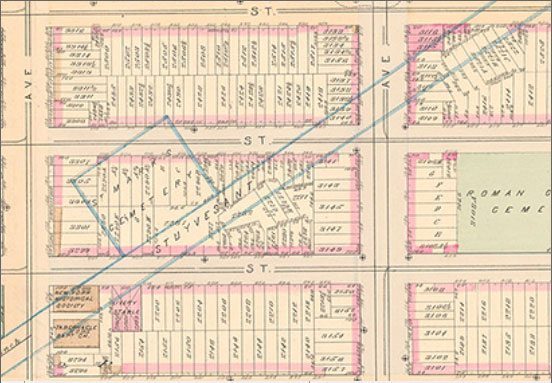
Stuyvesant Street superimposed over the planned grid. Ultimately the street was allowed to remain, breaking the grid. By the way, see that green patch at the far right? That was also a cemetery.

Courtesy EV Transitions

The front of 22 St. Mark’s Place from a 1914 history book. (It looks almost identical to 20 St. Mark’s, the old Daniel LeRoy House, which is still there.). “It had a tea room in the rear of the first floor, which [the tenant] altered into a library, constructing a bathroom in connection with it. A new bedroom was added above the library, and in the basement was installed a cook.” [source]

1

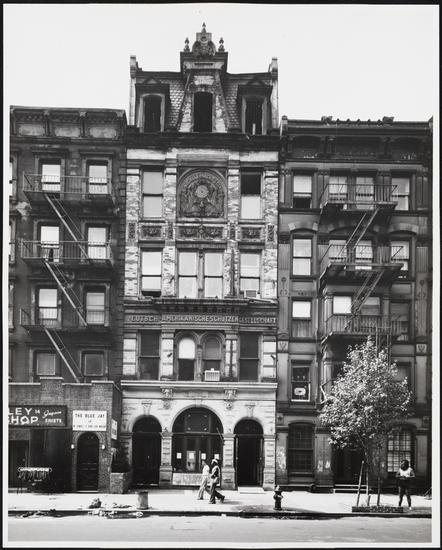
Deutsch-Amerikanische-Schützen Gesellschaft (German-American Shooting Society) building, 12 St. Mark’s Place, pictured here in 1975 in a photograph by Edmund Gillon

Courtesy Museum of the City of New York

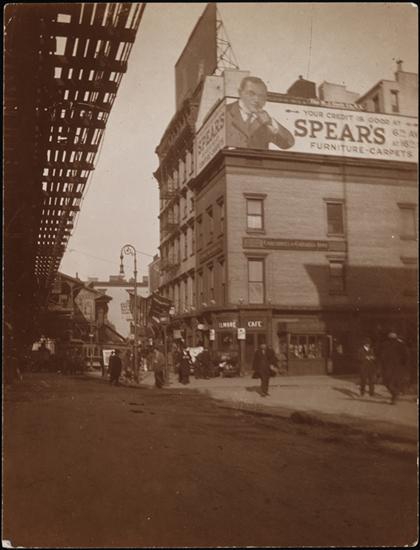
St. Mark’s Place and Third Avenue in 1914, the same year as the shootout at Arlington Hall! The Third Avenue elevated train framed St. Mark’s on the west end, the Second Avenue elevated (which actually ran along First Avenue in the East Village) to the east.

Courtesy Museum of the City of New York

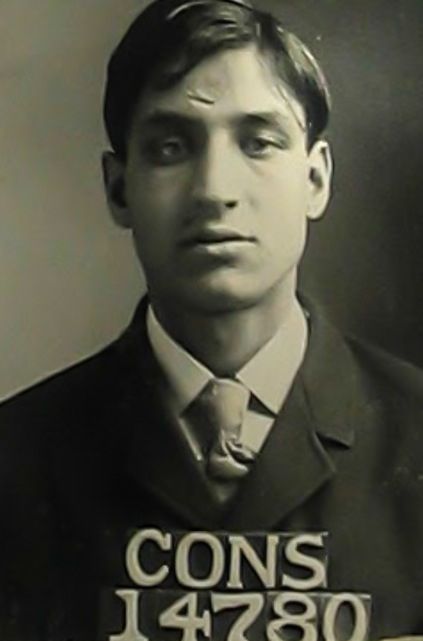
The mugshot of Dopey Benny whose gang was involved in the shootout which killed a city official.

dopey

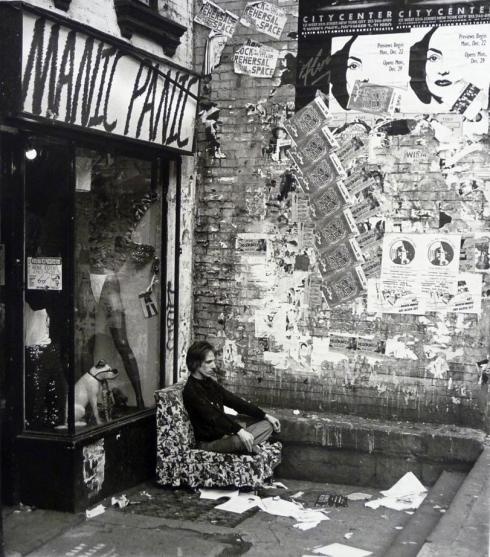
A photo by Victor George Macarol of the boutique Manic Panic (and a man in meditation), 1975

3

The south side of St. Mark’s Place, 1975

EV Grieve
EV Grieve

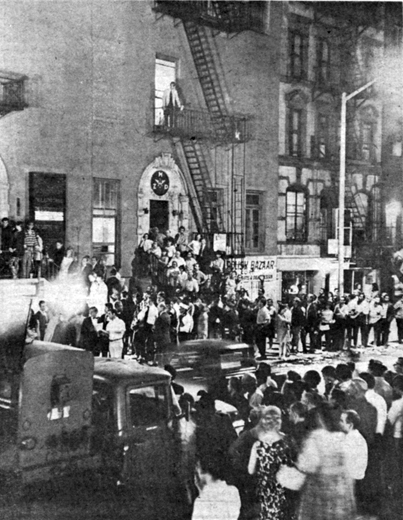
Crowds waiting to get into the Electric Circus

courtesy Alex Ross
courtesy Alex Ross

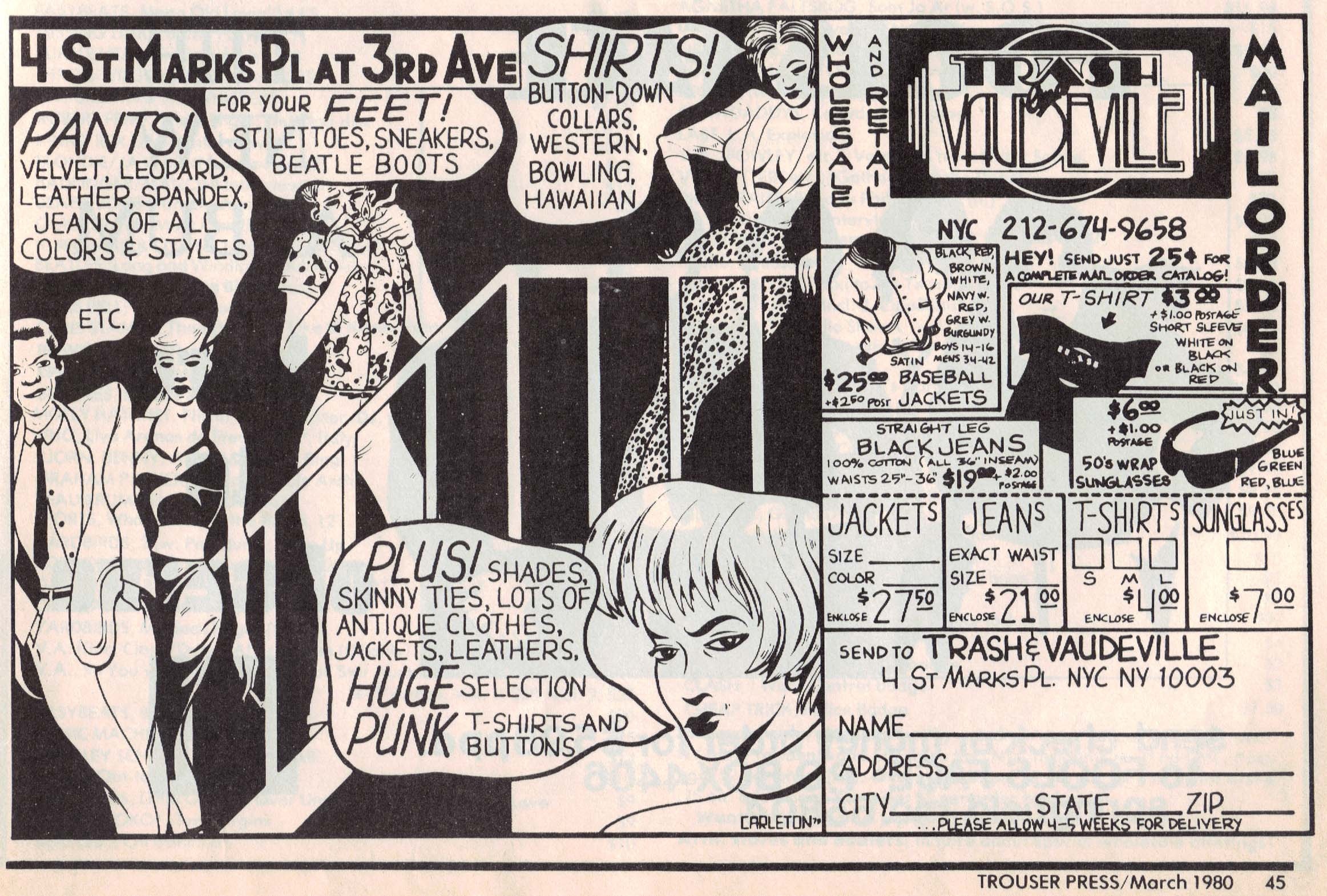
A flyer for Trash and Vaudeville…

trash

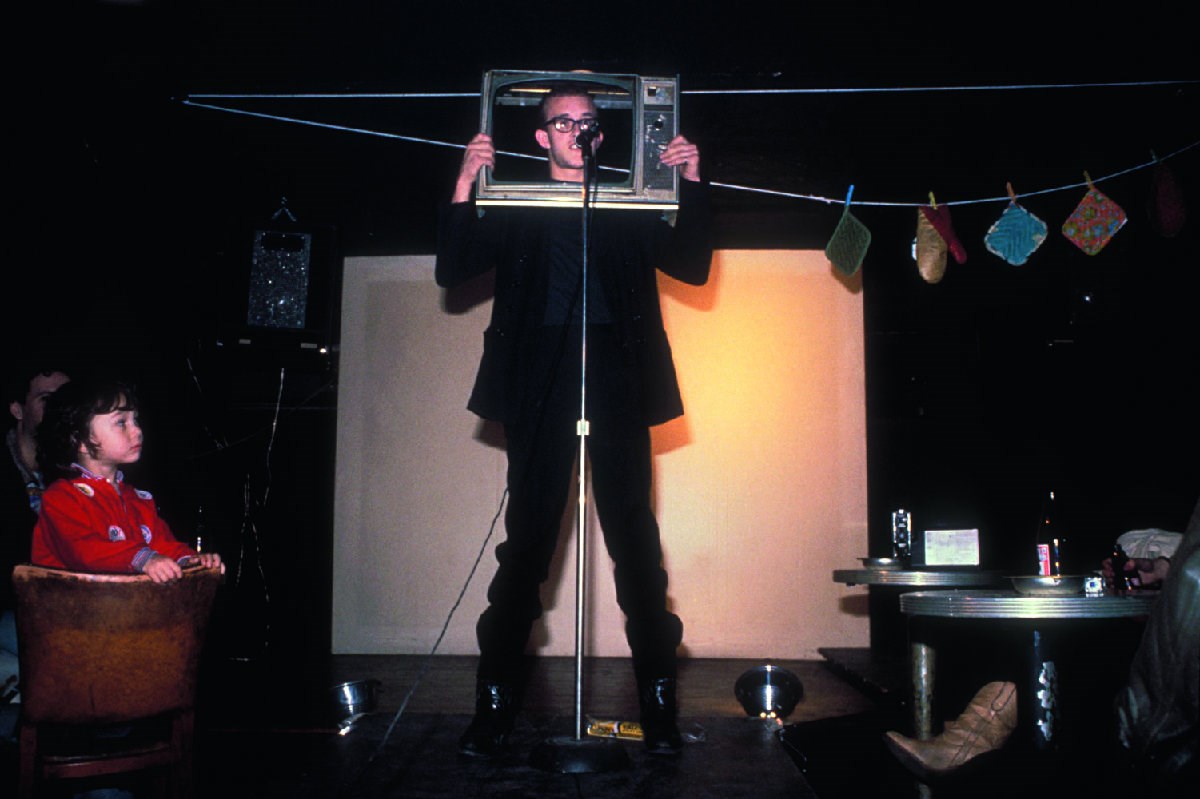
Keith Haring performing at Club 57 in a themed evening called Acts of Live Art. For more information on Club 57, you can read my earlier article about this extraordinary club here. Dazed has a pretty great article about the place here.

Photo by Joseph Szkodzinski

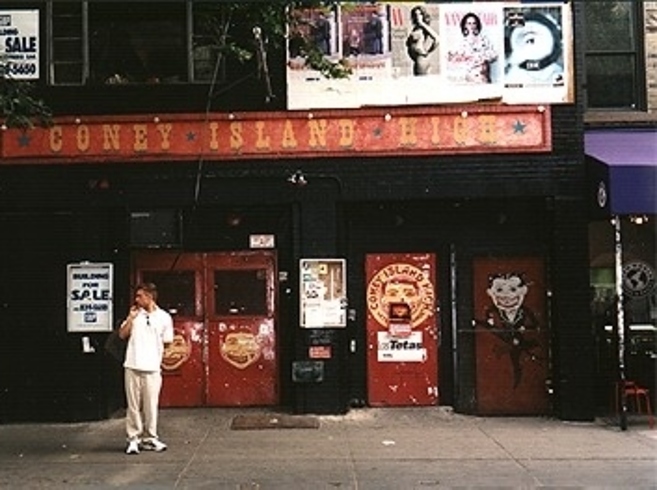
Coney Island High, a pivotal East Village venue during the 1990s.

Courtesy Buzzfeed
Courtesy Buzzfeed

Top photo — St. Mark’s Place in 1978, Photos by Leonard Freed / Magnum Photos, care of Vintage Everyday

Categories
Landmarks Mysterious Stories

The Ghost of Peter Stuyvesant May Still Haunt the East Village

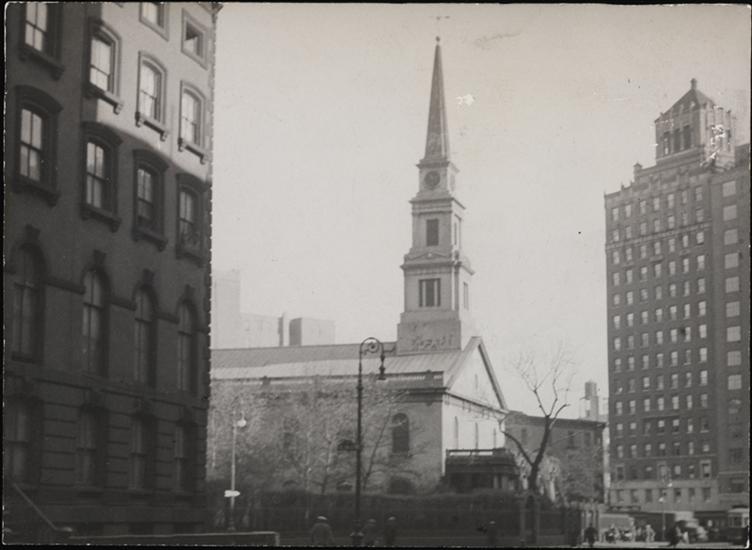
St. Mark’s Church-in-the-Bowery is the oldest standing structure in the East Village. Upon seeing it, you’re almost forced to reevaluate where you are.

It’s intriguing even to those who pass by it everyday. It’s mysterious even to those who work and worship here.

Built in 1799 by the Stuyvesant family, St. Mark’s chapel and cemetery conformed to a street grid plan unique to their farmland. Today the only street that exists from the old Stuyvesant plan is Stuyvesant Street, running diagonally through New York’s standard street grid.

The Stuyvesants planned the street on a true east-west access.  It’s the rest of the island that’s askew with the compass.

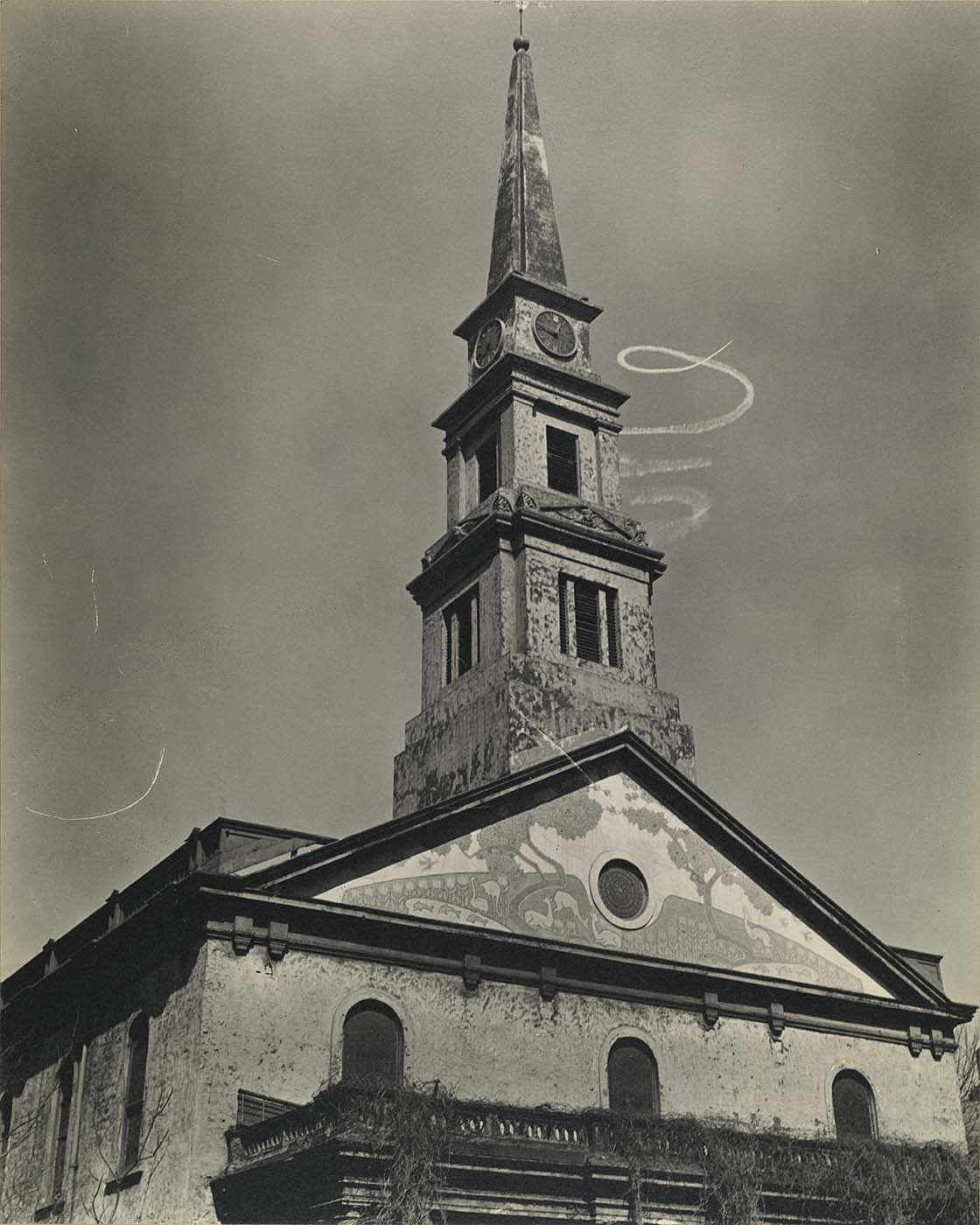
Photo by Berenice Abbott

Buried under the church ground are vaults of some of New York’s greatest civic leaders and social notables. Daniel D Tompkins, Vice President under James Monroe, is here, although the park that bears his name Tompkins Square Park is a couple avenues over. The department store king A.T. Stewart used to be here before his remains were stolen in a bizarre ransom attempt.

Philip Hone, the so-called ‘party mayor’ of New York, is interred in a vault here. From my profile of the mayor a few years ago:  “Mostly, he’s remembered as a cultural ambassador, even commissioning artwork for City Hall, approving of a developing theater district in the not-yet-seedy Bowery and encouraging the city’s growth as an American capitol of arts and sciences.”

Courtesy Museum of the City of New York

But of course the most famous individual beneath St. Mark’s is that of the original Stuyvesant — Petrus Stuyvesant, the director-general of New Amsterdam whose farms comprised much of today’s East Village and give the Bowery (Bouwerij) its name.

Stuyvesant died in 1672 in the British controlled colony of New York. From an 1893 history on Stuyvesant: “His remains were interred in a vault beneath the chapel which he had built near his house.  When the present St. Mark’s Church was erected, on the site of the old chapel, the vault was preserved, and a commemorative stone was placed upon its wall.”

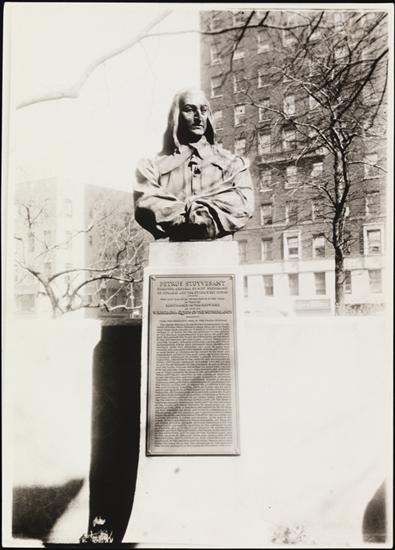
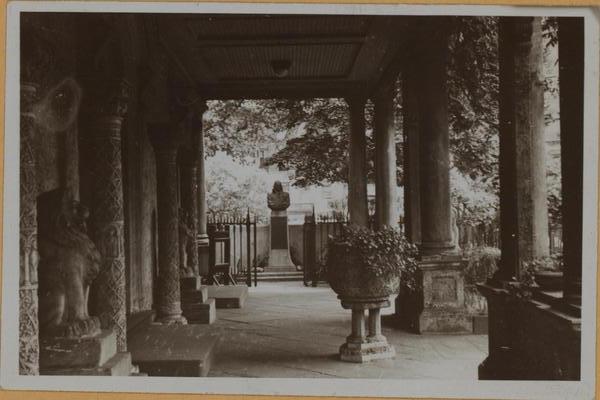
Today his vault marker can be easily seen along the side of the church, and a bust of Petrus sternly greets visitors into the church yard.

Courtesy Museum of the City of New York

The bust by Dutch sculptor Toon Dupuis is 100 years old, placed at St. Mark’s on December 6, 1915. Speaking at the ceremony, oddly enough, was General Leonard Wood, chief of staff of the U.S. Army. “Peter Stuyvesant was a headstrong, positive character with intolerance of lack of interest in the welfare of his company or colony.”

So headstrong that he’s still around perhaps? Legends of the ghost of Peter Stuyvesant have been associated with St. Mark’s since the 19th century.

Courtesy New York Public Library

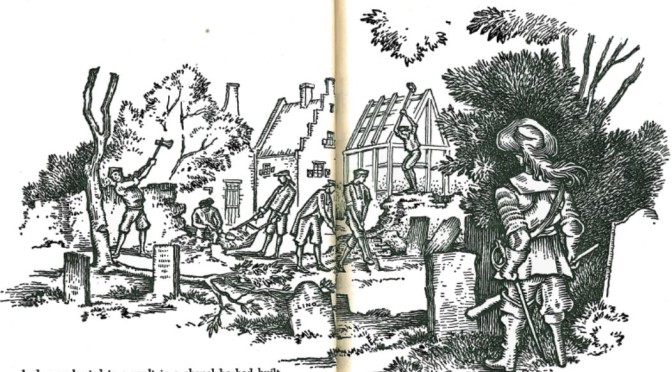
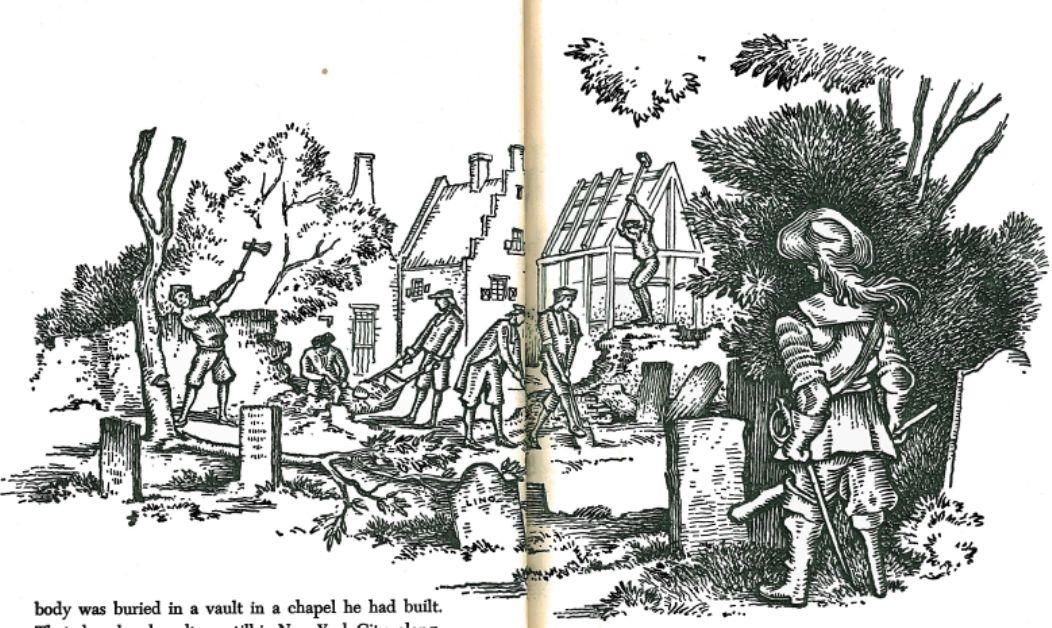
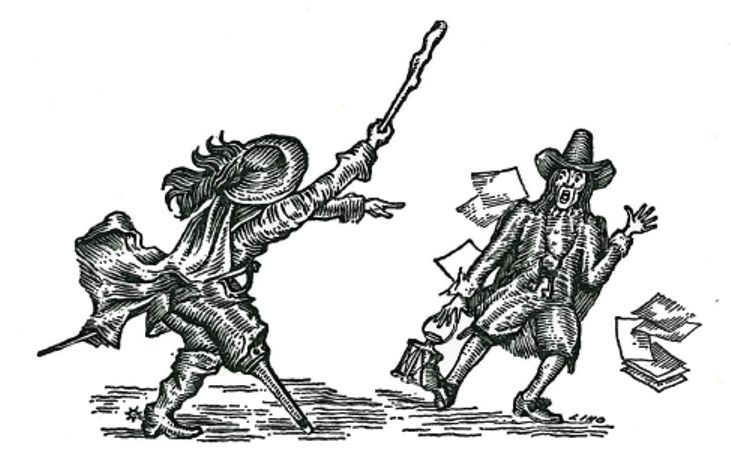
One version of his ghost story recounted in the 1966 children’s book The Ghost of Peg-Leg Peter by M.A. Jagendorf, with illustrations by Lino S. Lipinsky (reprinted here):

“His body had been put into a closed vault.  But that did not stop the ghost of the governor from stomping around on black or moonlit nights in his old haunts; his farm and the city hall where he had once reigned.  Folks heard his stomping peg leg with the silver band, and saw him — and ran away in fear. That pleased him, particularly if they were English. He wanted no one around his grave, least of all the enemy who had robbed him and the Dutch Government.”

st marks

The growth of New York up Manhattan island so that it soon included all of Stuyvesant’s farm apparently enraged his spirit to such an extent that his apparition was reported in locations surrounding the church.

One fateful night a sexton entered the church late at night to fetch something for the rector.

The moon was only half full, but bright enough to show church, trees … and ghost.

When the ghost saw the sexton, he raised his stick threateningly. The sexton raised his eye, took one look and ran off.

1

“The governor-ghost looked after the fleeing fellow with contempt and then stomped to the locked church door. He walked through it into the church and stomped up to the hanging bell rope. Taking it in his hands he began pulling it savagely. “

Ringing a church bell two hundred years ago meant an emergency — a fire in the region, perhaps, or a major announcement. According to legend, when neighbors ran to the church to inspect the sound, they found nobody inside. The bell rope had been torn off and its lower section was completely gone.

Over the years stories of his ghost crop up, usually tied with tales of a rapidly changing city.

One can only imagine how he’s taken to the  gentrification of the East Village!

Sometimes the ghost of the governor still comes out again and looks around sadly. But he never rings the bell any more, for he knows it will be of little use.”

Courtesy Museum of the City of New York

Another disturbing event occurred at the church in 1903 although the resolution to this mystery was a bit more mundane.

One day the old clock atop St Mark’s began to act very mysteriously. “Churchgoers and others noticed last Sunday that the clock was acting in a manner befitting neither its age nor its position as hour marker over the historic graveyard. Not only was its course unreliable, but its actions were positively skittish, the minute hand having been seen to wiggle in a most undignified manner.” [source]

After several days of peculiar operation, a repairman climbed to the tower to fix the clock, only to find the culprit — “a kite string and pigeon were found to be responsible for the charges of horological misconduct lodged against the ancient timepiece.”

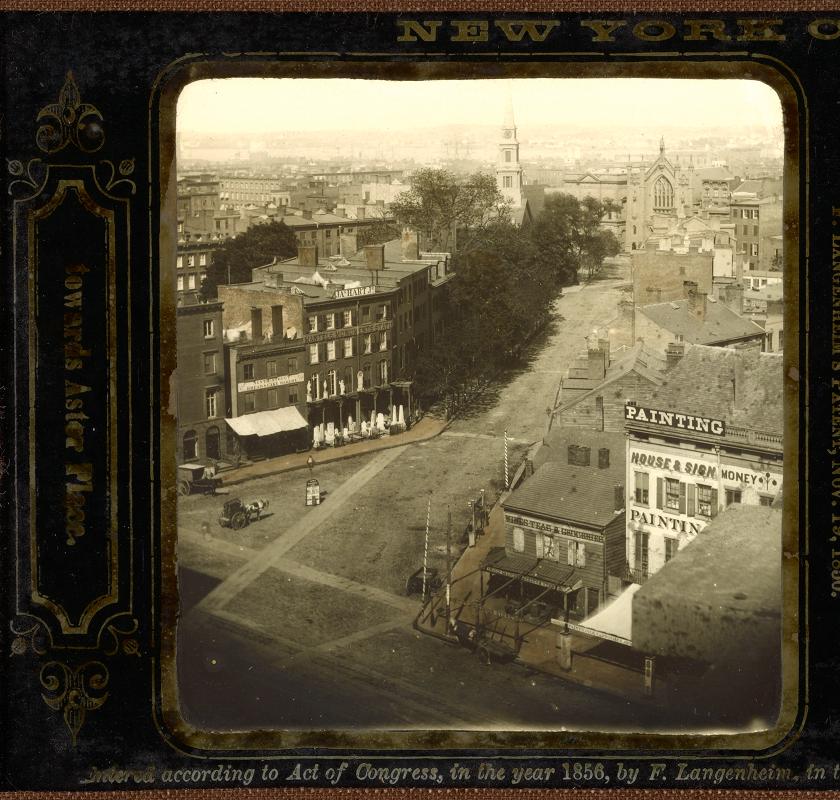
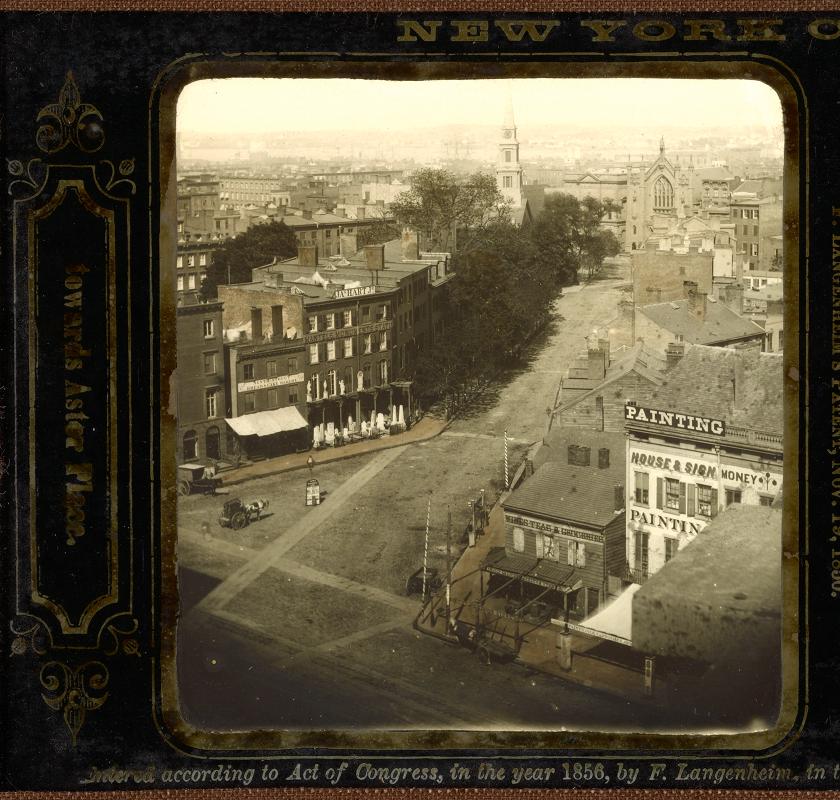
Below: Stuyvesant Street in 1856, an aberration to the city grid plan thanks in part to the presence of St. Mark’s Church and its well-established churchyard

1

For more information on St. Mark In-The-Bowery, check out our podcast on its amazing history.  And the ghost of Peter Stuyvesant pops up in our very FIRST ghost stories podcast.

Categories
Podcasts

At The Ready: The History of the New York City Fire Department


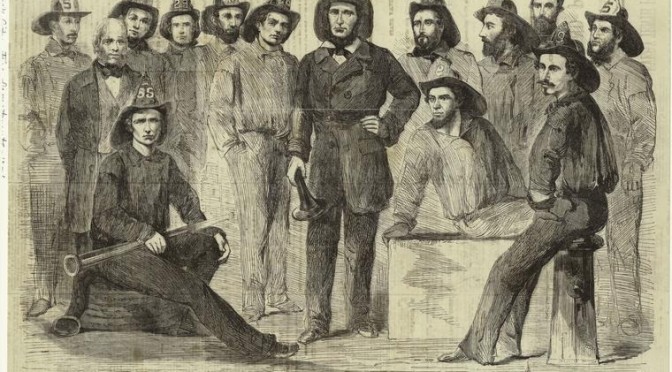
The distinguished members of New York’s various volunteer fire brigades, posing for the photographer Matthew Brady in 1858

PODCAST  The New York City Fire Department (or FDNY) protects the five boroughs from a host of disasters and mishaps — five-alarm blazes, a kitchen fire run amok, rescue operations and even those dastardly midtown elevators, always getting stuck!  But today’s tightly organized team is a far cry from the chaos and machismo that defined New York’s fire apparatus many decades ago.

New York’s early firefighters — Peter Stuyvesant‘s original ratel-watch — were all-purpose guardians, from police work to town timepieces.  Volunteer forces assembled in the 18th century just as innovative new engines arrived from London.

By the 19th century, the fire department was the ultimate boys club, with gangs of rival firefighters, with their own volunteer ‘runners’, raced to fires as though in a sports competition.  Fisticuffs regularly erupted.  From this tradition came Boss Tweed, whose corrupt political ways would forever change New York’s fire services — for better and for worse.

Volunteers were replaced by an official paid division by 1865.  Now using horse power and new technologies, the department fought against the extraordinary challenges of skyscraper and factory fires.  There were internal battles as well as the department struggled to become more inclusive within its ranks.

But the greatest test lay in the modern era — from a deteriorating infrastructure in the 1970s that left many areas of New York unguarded, and then, the new menace of modern terrorism that continues to test the skill of the FDNY.  From burning chimneys in New Amsterdam to the tragedy of 9/11, this is the story of how they earned the nickname New York’s Bravest.

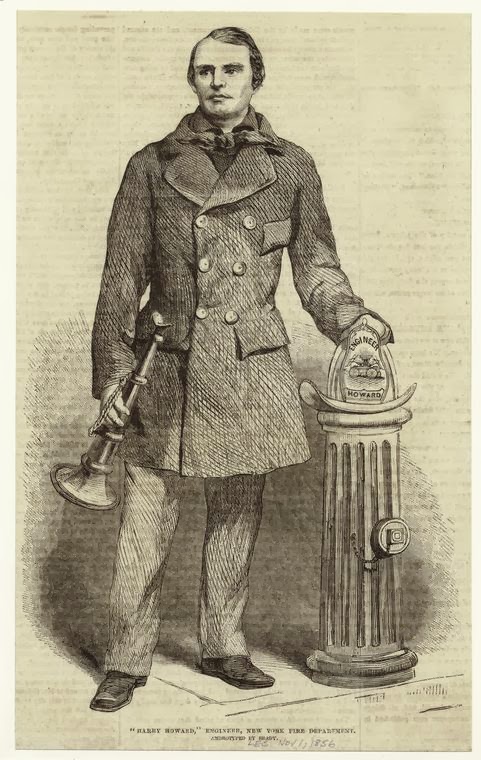
Above:  That’s Harry Howard, one of the FDNY’s greatest firemen and a former member of the Bowery Boys volunteer fire unit!


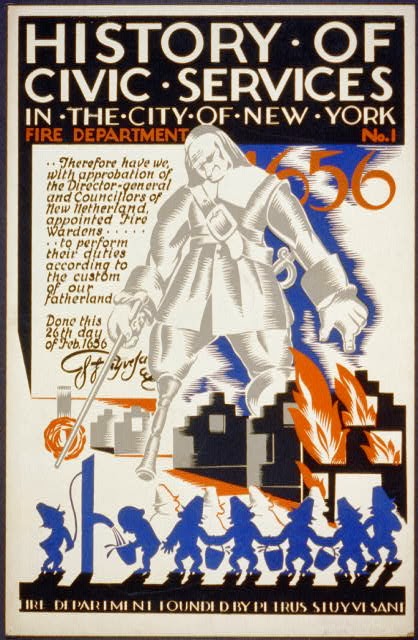
A poster by Vera Bock from 1936, created for a series by the Federal Art Project, touts the contributions of Peter Stuyvesant to the history of New York firefighting. (LOC)

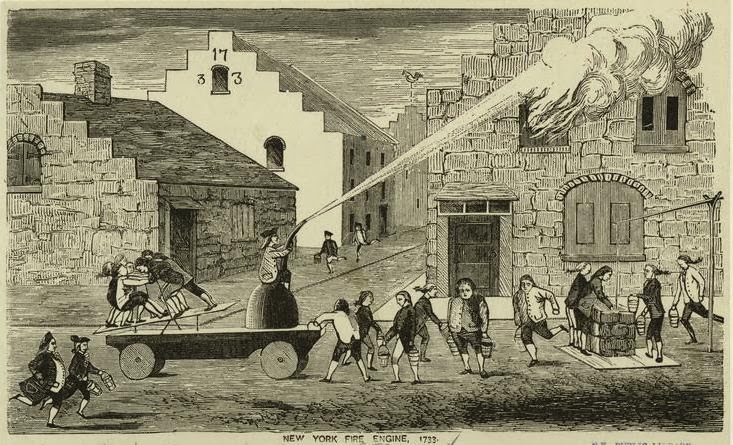
One of two fire engines first received by New York in 1733 (from an 1872 illustration) Courtesy NYPL

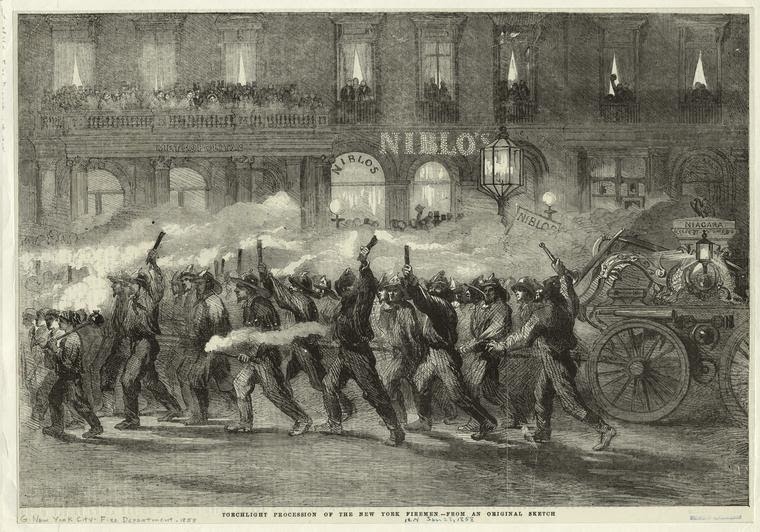
A firefighters’ procession at night, marching past Niblo’s Garden. 1858   Courtesy NYPL

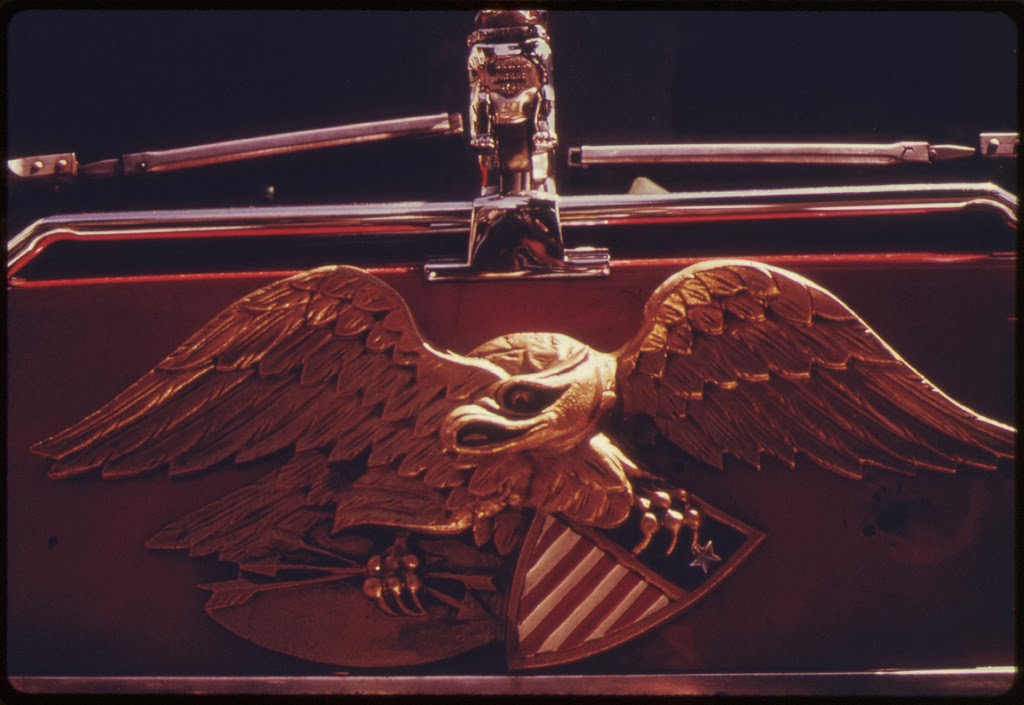
Eagle insignia from a New York fire truck, 19th century, courtesy the US National Archives

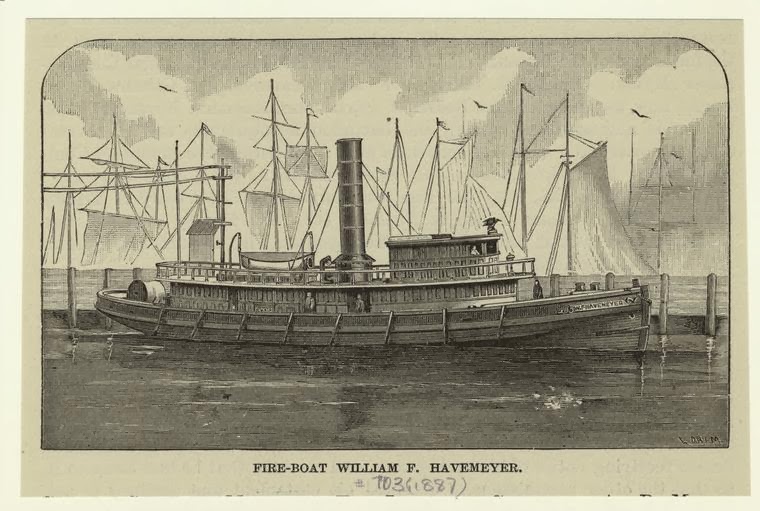
The first official fire boat of the FDNY (although others had been rented before this), named for former mayor William F. Havemeyer.


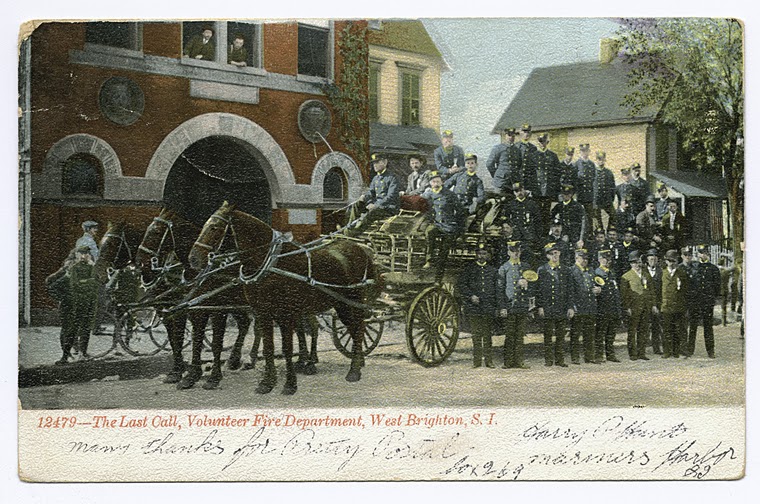
Volunteer fire divisions were slowly fazed out after the introduction of an official paid company.  This was expanded when the five boroughs were created in 1898.  This postcard commemorates the final run of a volunteer fire department in West Brighton, Staten Island. (NYPL)

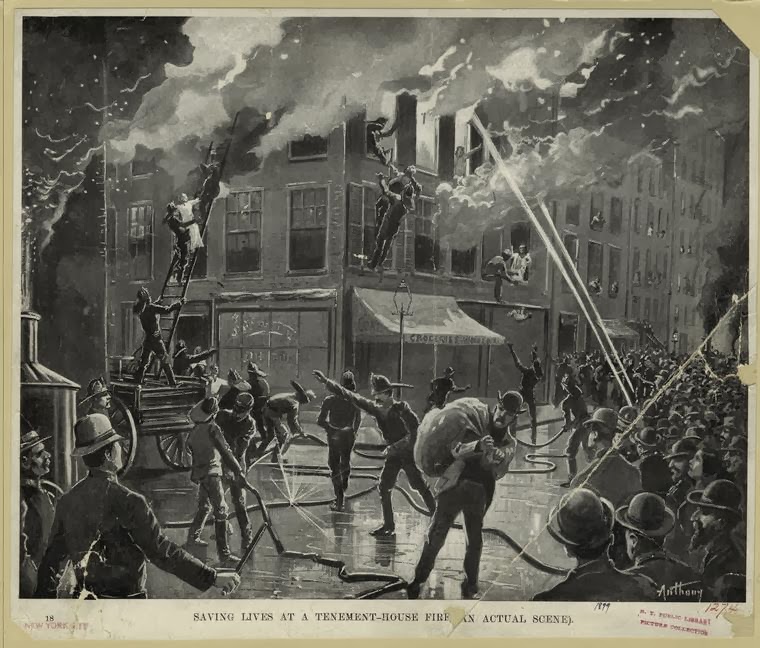
Firefighters battled a tenement blaze in this illustration from 1899, one of thousands that occurred in the poorer districts of town.  Improved fire regulations would ensure newer buildings were more fire proof. (Courtesy NYPL)

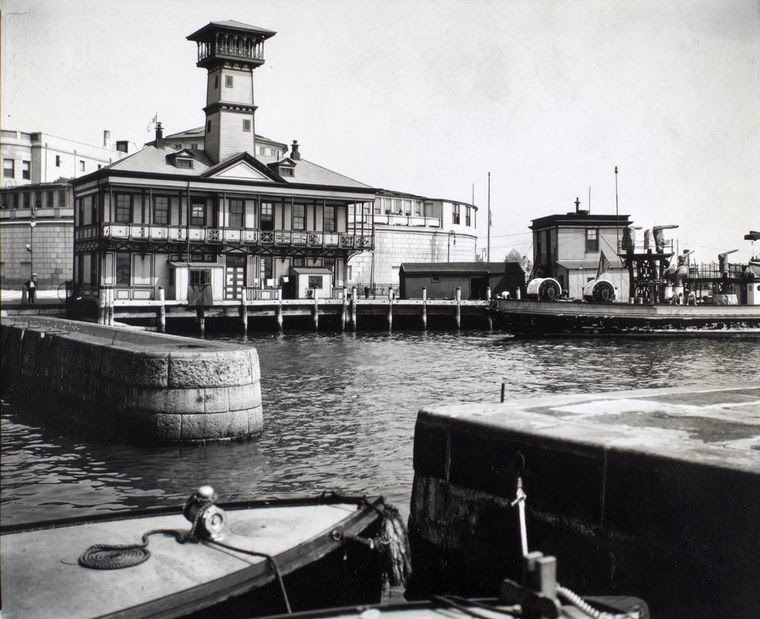
One of New York’s more interesting firehouses — the one for fireboats at the Battery. Photo by Berenice Abbott (courtesy NYPL)

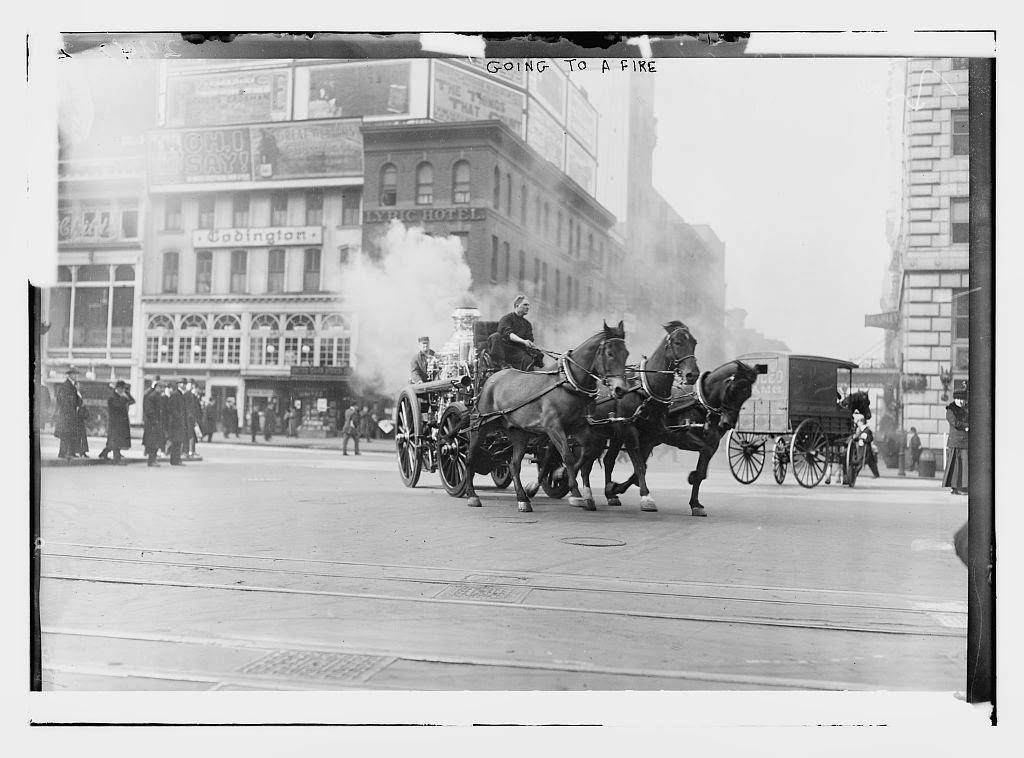
Horses were a hotly contested inclusion to the fire departments during the 19th century.  They were eventually banished during the volunteer years, but re-introduced after 1870 and soon became essential for getting quickly to fires.

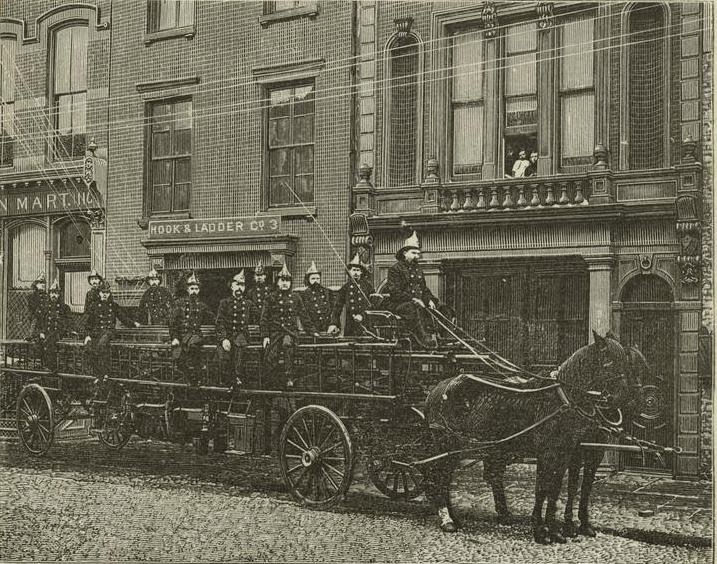
Hook and Ladder Co. No. 8, from 1887


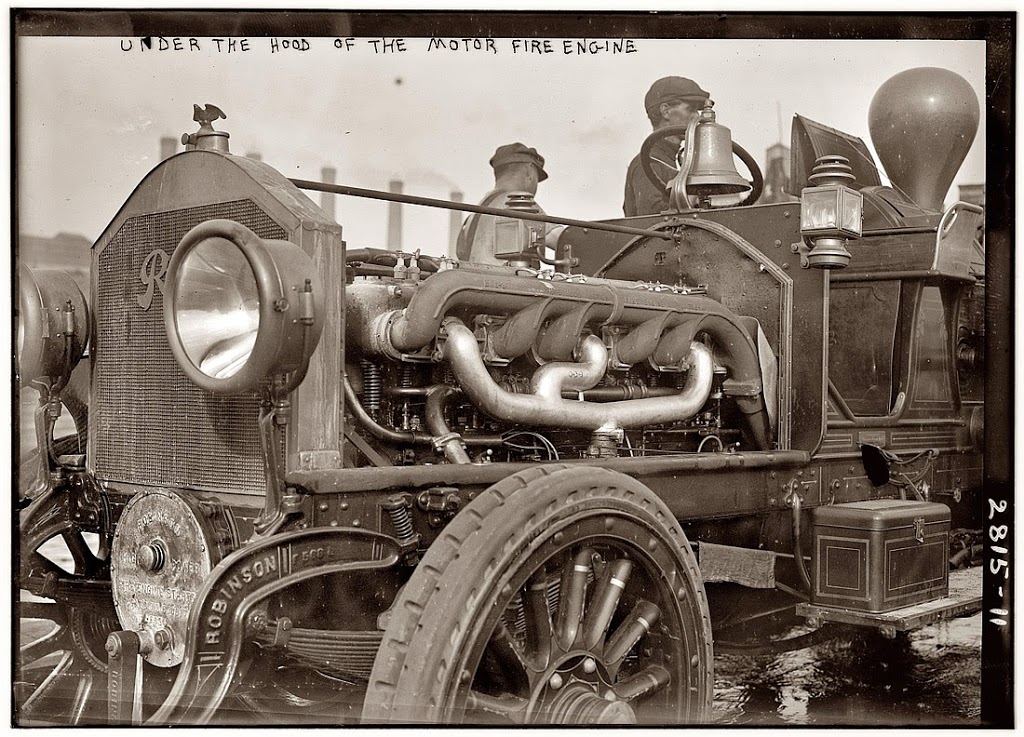
Motorized fire engines and trucks replaced the horse-drawn varieties in the 1910s.  Here’s one model that was used by the FDNY in 1913 (Courtesy Shorpy)

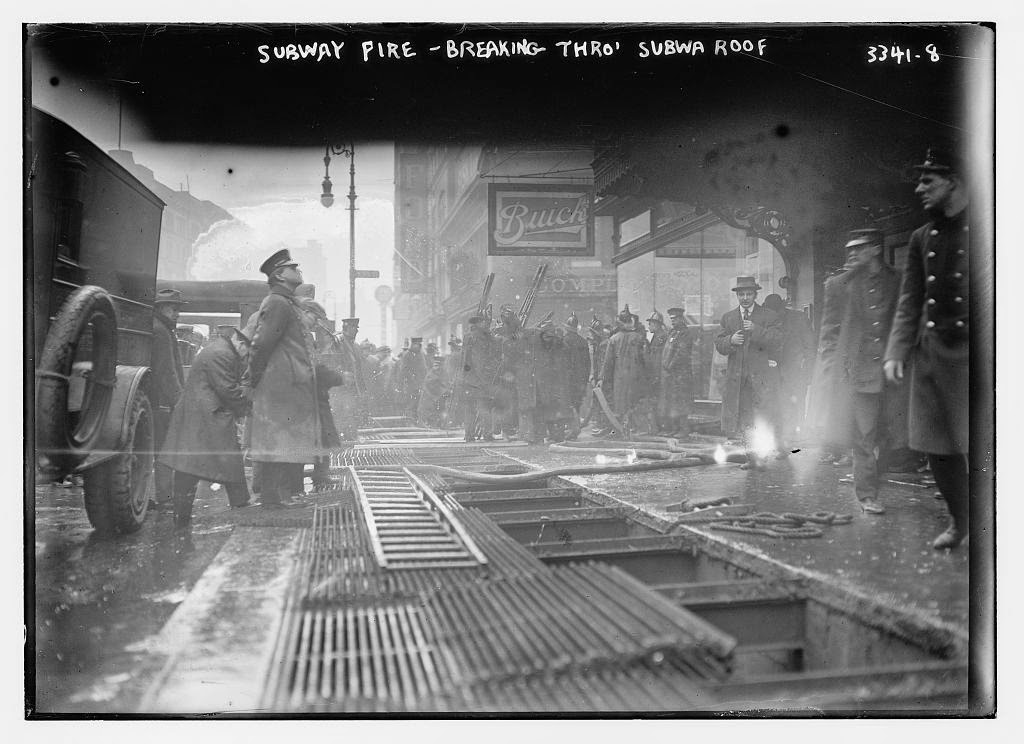
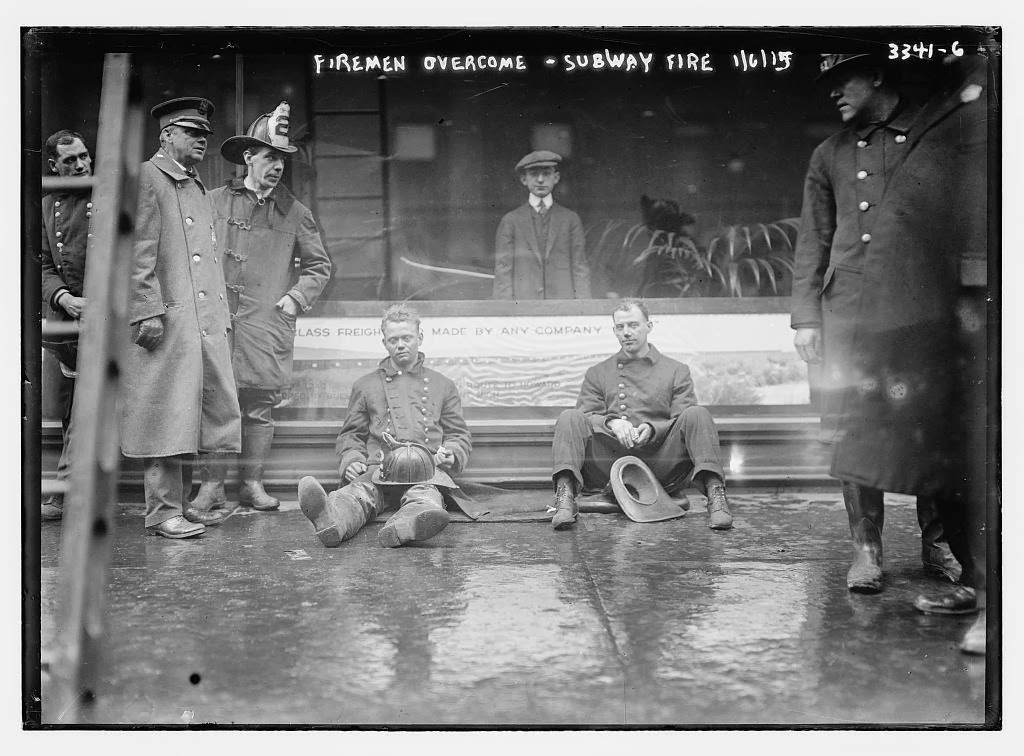
The city’s growth created new challenges for the FDNY.  With the new subway, there was the potential for dangerous fires underground.  Here a team of firefighters battle a subway fire in midtown in 1915, and a couple firemen who braved the inferno underfoot. (LOC)


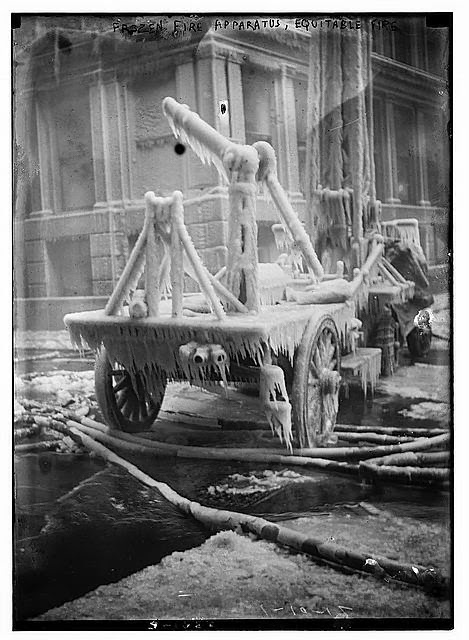
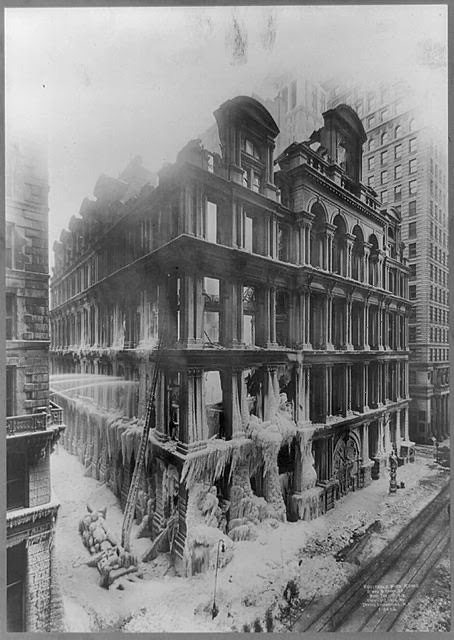
The difficult blaze at the Equitable Building in 1912 produced a bizarre aftermath of icy ruins.


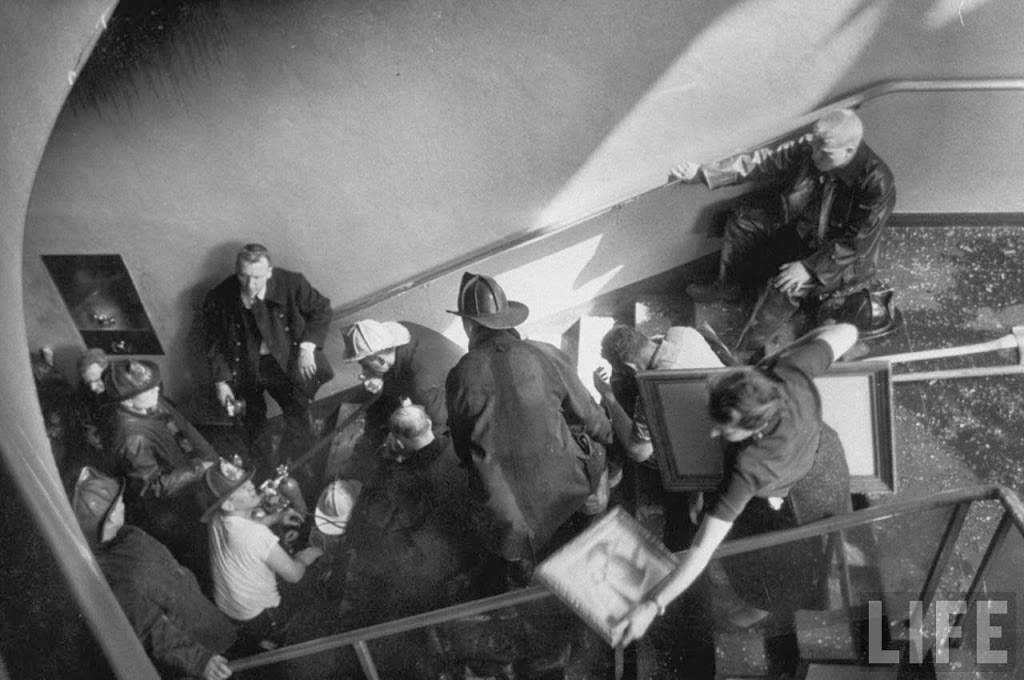
Firefighters rescuing people (and paintings!) from a fire at the Museum of Modern Art, 1958. (Courtesy Life)

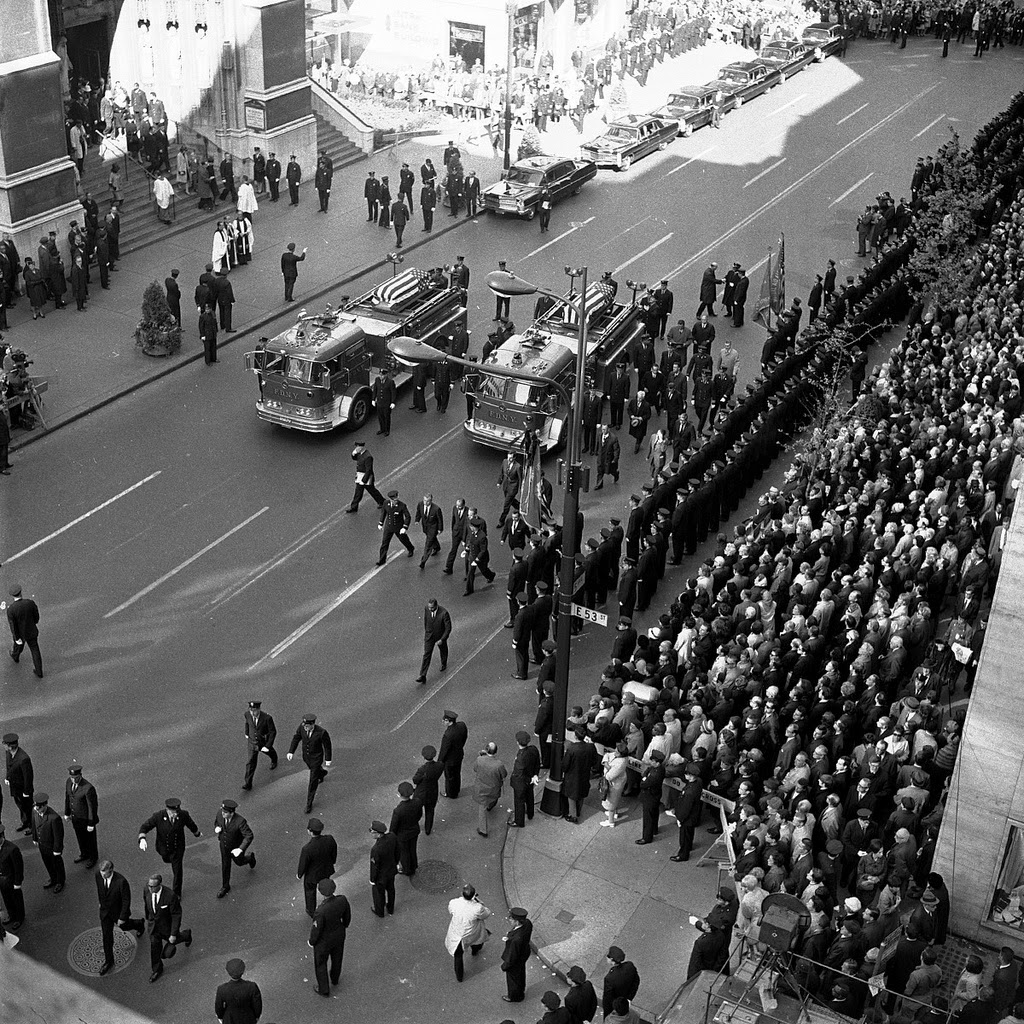
A sorrowful day:  Thousands come out to mourn the 12 firefighters who died fighting a terrible blaze that erupted across from the Flatiron Building on October 21, 1966. (Picture courtesy FDNY)

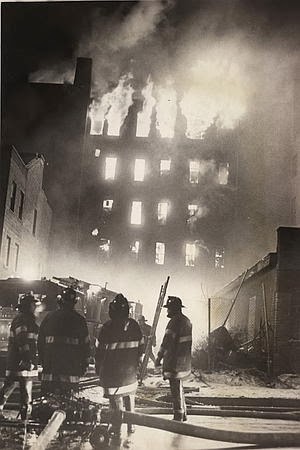
Total mayhem erupted in New York City in the 1970s, as whole districts like the South Bronx, Bushwick, Harlem and the Lower East Side saw a massive increase of fire-related disasters due to the city’s financial woes. (Photo courtesy New York Post/Vernon Shibla photographer)

Three hundred and forty-three firefighters and FDNY paramedics died in the September 11, 2001, terrorist attack on the World Trade Center.  But the force, along with the police and other emergency workers, managed to save tens of thousands of people on that day, making one of the largest rescue operations in American history.  In total, 2,977 people were killed that day, 2,606 of them in New York, on the ground and in the towers.

And finally, a rather amazing film documenting the fire department’s emergency response process in 1926, with a breathless dash-cam vantage point!

Who are Barnes and Price? And other notes from the podcast

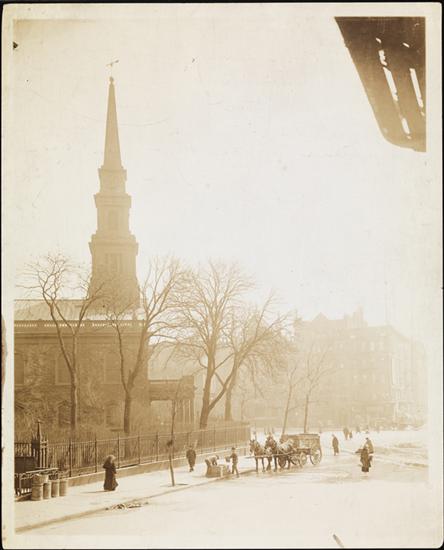
Stuyvesant Street in 1856, an aberration to the city grid plan thanks in part to the presence of St. Mark’s Church and its well-established churchyard. The small building in the foreground is where the St. Mark’s Bookshop stands today. You can see the steeple of St. Mark’s. Hmm, what what’s the other 
church in the background? (Pic courtesy East Village Transitions)

Some notes on our podcast, Episode #139: St. Mark’s-in-the-Bowery

THANK YOUS: For of all, we’d like to thank Rev. Winnie Varghese and Roger Jack Walters from St. Mark’s Church for telling us some wonderful stories on a sunny Sunday afternoon as volunteers worked busily to repaint that 1838 iron fence. This is one landmark is really good hands!


THE MYSTERY OF BARNES AND PRICE: There was once a second cemetery one block north of St. Mark’s that contained the bodies of less wealthy individuals in the community. In September 1864, their bodies were exhumed and moved to Evergreen Cemetery at the border of Brooklyn and Queens. The New York Times report on the exhumation mentions two individuals in particular: “The remains of two dramatic notables, BARNES and PRICE, of the Old Park Theatre, have been removed from this cemetery.”

The Park Theatre (pictured at right) is considered New York’s first great theater, sitting on Park Row in the days before there was a City Hall, a Printer’s Row or anything else recognizable or familiar about that area today. The stage entertained British officers during the Revolutionary War, and in the early 19th century presented entertainment of the highest class.

The PRICE buried in the old St. Mark’s Cemetery is most likely its former manager Stephen Price, who specialized in importing British stage stars for their American debuts. One of those was Julius Brutus Booth, who debuted Shakespeare’s Richard III here in 1822. Booth’s children Edwin Booth and John Wilkes Booth would enter the acting profession in the mid-19th century.

But who’s the BARNES? Most likely it was English actor John Barnes who frequented the Park and died in 1841. However, his wife Mary, billed as Mrs. John Barnes, was in many ways a bigger star, the resident ‘heavy-tragedy lady‘ who made here debut here in 1816. The two often appeared on stage together — husband for the comedy, wife for the drama.

Mary Barnes outlived her husband by a quarter century, remarrying and becoming a successful theater manager in her own right. She died in the same year that her first husband’s body was moved to Evergreen. An assessment of her career:  “In melodrama and pantomime her action was always graceful, spirited and correct.” [source]


JAMES BOGARDUS: The portico of St. Marks is one of the last remaining examples of original cast-iron construction designed by Bogardus, but there are four other buildings in New York attributed to Bogardus that still exist: 254 Canal Street, 85 Leonard Street, 75 Murray Street and 63 Nassau Street. In TriBeCa today, you’ll find Bogardus Garden, a lush, green-fitted traffic triangle. Bogardus is buried at Green-Wood Cemetery.


FURTHER LISTENING: Although Augustus Stuyvesant was the last living direct descendant, there are others named Stuyvesant that trace their lineage to Rutherford Stuyvesant. To find out why this doesn’t quite count, listen in to my podcast on Rutherford’s pet project The Stuyvesant apartment, New York’s first of its kind. (Episode #131: The First Apartment Building).

We tell a ghost story about Peter Stuyvesant and St. Mark’s Church In-The-Bowery in our most popular of our ghost story podcasts. (#91 Haunted Tales of New York)

And of course, for more information on Peter Stuyvesant himself, we devoted an entire podcast to the director-general back in 2007. (Episode 14# Peter Stuyvesant)

SLIP UPS: This weeks verbal slip-ups include me saying ‘St. Mark’s ON-the-Bowery’ twice (it’s referred to in many ways, but never that).

Categories
Neighborhoods Podcasts

The secrets of St. Mark’s Church in-the-Bowery, and uncovering the East Village footprint of Peter Stuyvesant


FOR YOUR CONSIDERATION Until May 21st, you can vote every day in the Partners In Preservation initiative, which will award grant money to certain New York cultural and historical sites among 40 nominees. Having trouble deciding which site to support? I’ll be featuring on a few select sites here on the blog, providing you with a window into their history and hopefully giving you many reasons to visit these places, long after this competition is done. Read about other candidates here.


PODCAST The church of St. Mark’s-in-the-Bowery is one of Manhattan’s most interesting and mysterious links to early New York history. This East Village church was built in 1799 atop the location of the original chapel of Peter Stuyvesant, New Amsterdam’s peg-legged director-general. His descendants — with the help of Alexander Hamilton and the architect of New York City Hall — built this new chapel with the intention of serving the local farming community of Bowery Village.

But in many ways, the more thrilling tales occur among the honeycomb of burial vaults underneath the church, the final resting place of vice presidents, mayors, and even Peter himself.

St. Mark’s reflected the changes that swept through Greenwich Village during the 20th century, with experimental and sometimes scandalous church activities, from hypnotism, modern dance and even a trippy foray into psychedelic Christian rock.

ALSO: Find out why you can never EVER go down into the vault of Peter Stuyvesant. And why is the church IN the Bowery, not ON the Bowery?

NOTE ABOUT THE NAME: The modern name of this historic structure is technically St. Mark’s Church In-The-Bowery. However most 18th-19th century sources drop the ‘church’ from the middle of the name. The hearty bust of Peter Stuyvesant in the courtyard calls it ‘Saint-Mark’s-in-the-Bowerie’.

Hyphens are liberally or reservedly applied based on the source. As we decided to spend a great deal of time talking about the old farm and the early years, we settled on ‘St. Mark’s in-the-Bowery’. But I even twisted myself around during recording and said ‘on-the-Bowery’ accidentally at least twice, so sorry for the confusion!

I’ll post some more notes on the show next week, some thank-yous, further information and some further sources to check out for more information.


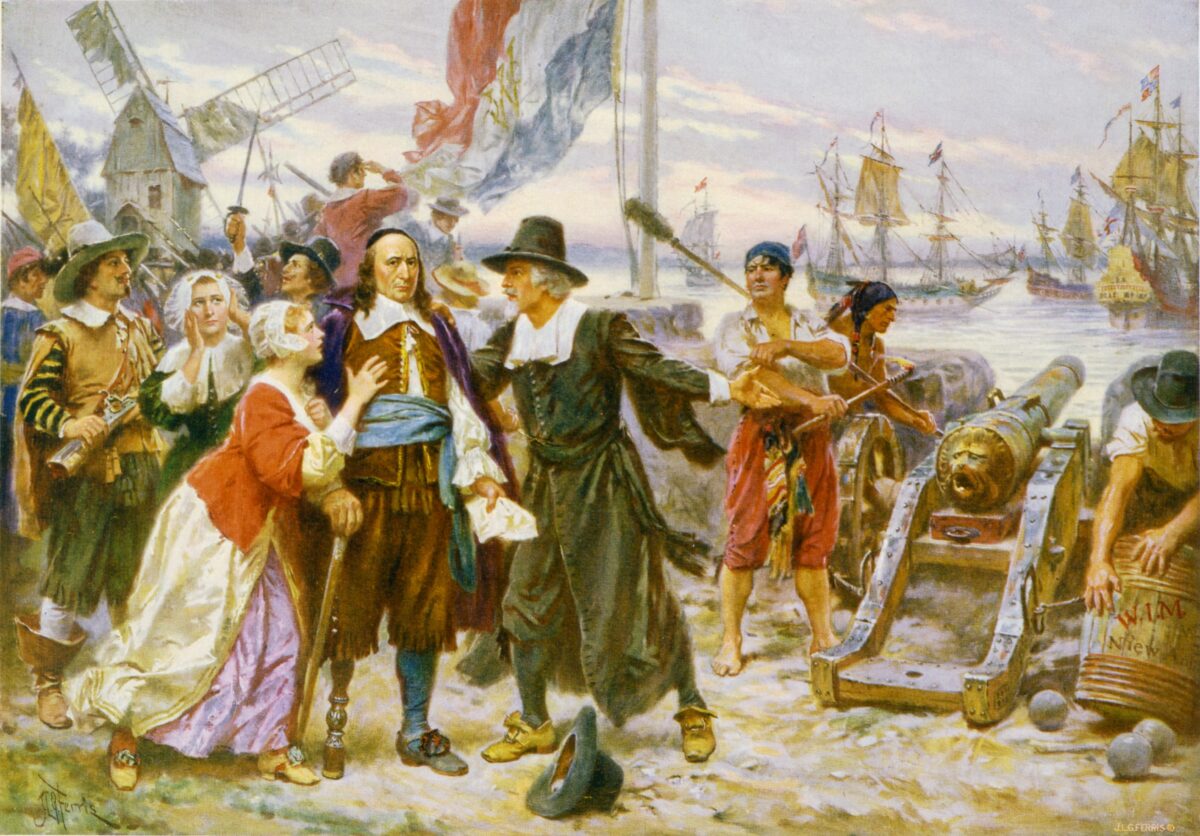
Below: The residents of New Amsterdam beseech Peter Stuyvesant to surrender to the coming British forces in 1664. He is clearly not pleased. The official surrender actually took place at Stuyvesant’s farm house, two miles outside of town along the bouweij or Bowery road. Listen here for the real pronunciation of bouwerij.

The caption reads ‘The Residence of N.W. Stuyvesant’ which formerly stood in 8th Street, between 1st and 2nd Avenue‘, one property on the land estate of the Stuyvesants during the 18th century. (NYPL) I’ve seen this same illustration differently labeled, dated 1800 and called simply ‘the Bowery House’.

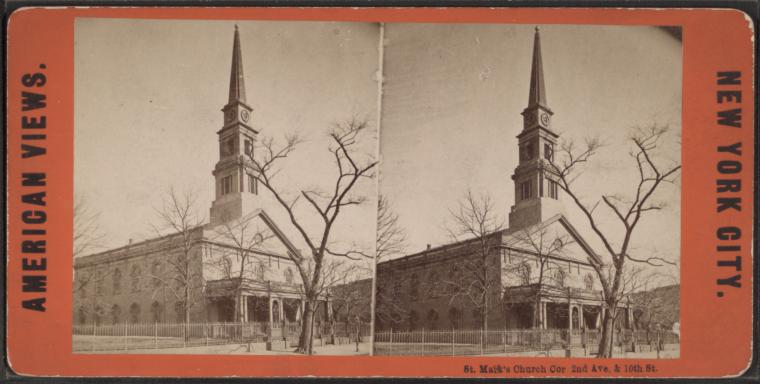
 St. Marks in 1865, rendered in an early stereoptic photograph. The church itself looks pretty much as it does today. But the surrounding churchyard would be radically transformed. (NYPL)

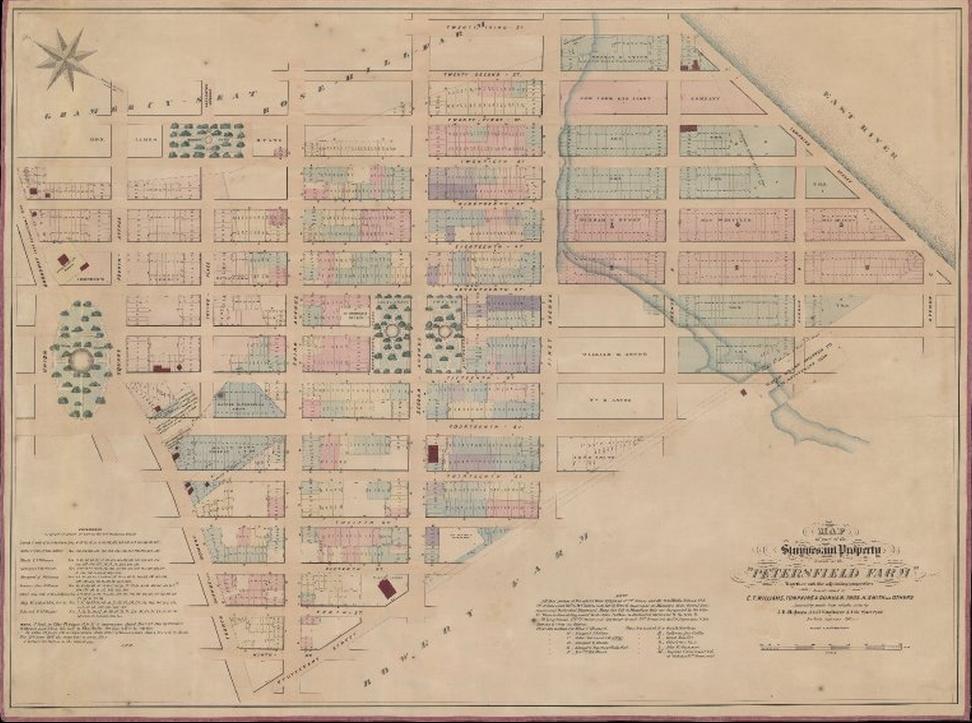
A real estate map, imprinted with the grid plan over the Stuyvesant property. You can see Stuyvesant Street at the bottom. The collected properties were also known as ‘Petersfield’ after a manor home of one of the Stuyvesant descendants. (NYPL)

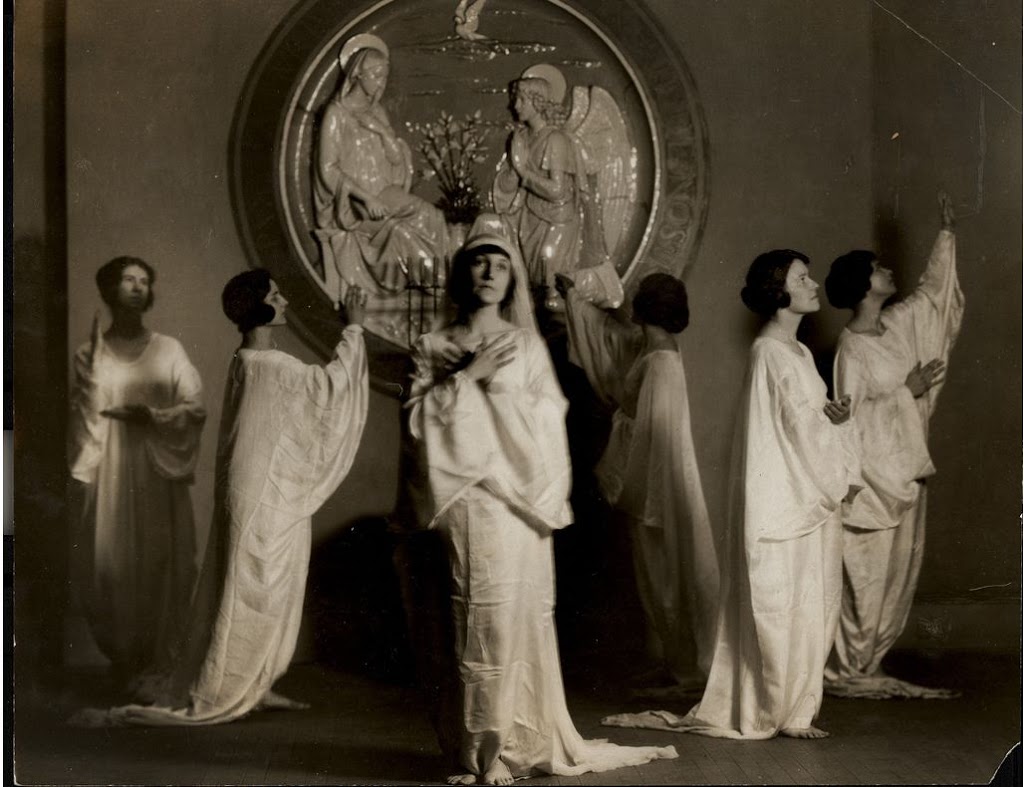
The interpretive dancers of Dr William Norman Guthrie,  the Scottish clergyman who oversaw many radical changes to the standard St. Mark’s services.


An excerpt from the Mind Garage’s ‘Electric Liturgy‘, which was performed at St. Mark’s Church in 1969


Visit St. Mark’s website for a virtual tour of the St. Mark’s church yard.

  Disclosure: I have partnered up with Partners in Preservation as a blog ambassador to help spread the word and raise awareness of select historical sites throughout the tri-state area. Though I am compensated for my time, I have not been instructed to express any particular point of view. All opinions expressed here are strictly my own. And since writing about New York landmarks is kinda my thing anyway, I’m thrilled to share my love of these places!

Categories
New Amsterdam

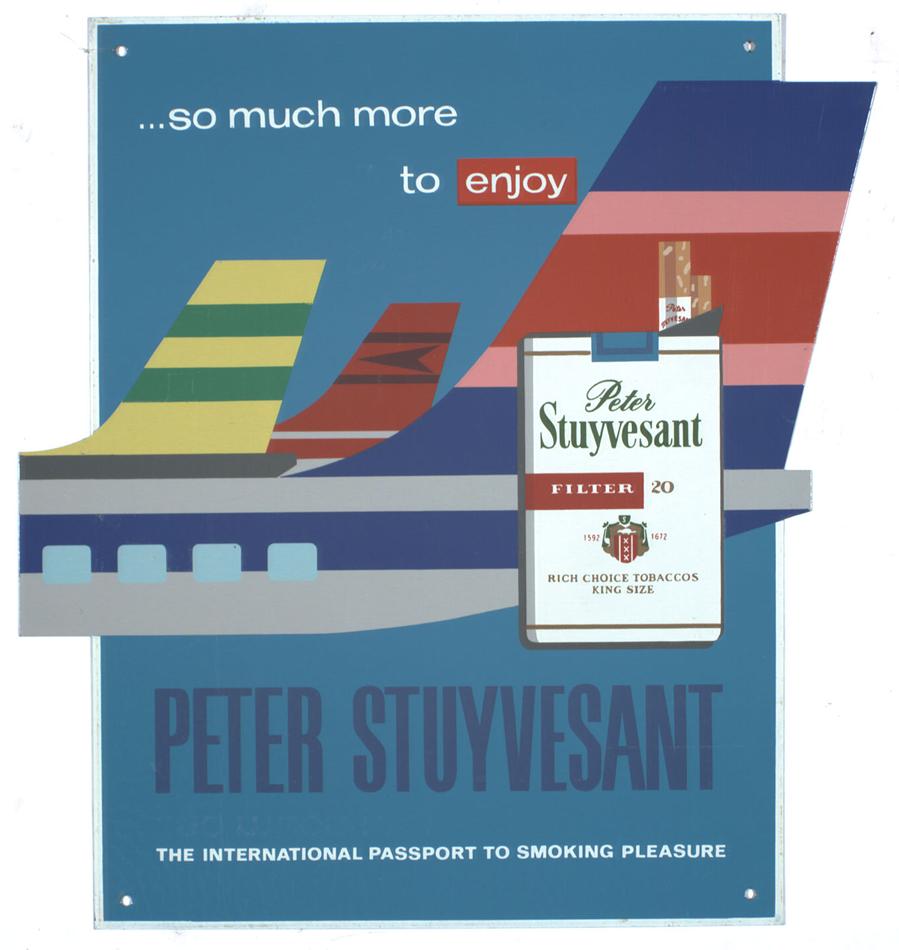
Peter Stuyvesant is also a cigarette, the “international passport to smoking pleasure”

Oh, that Peter Stuyvesant. He was all about luxury, high class athletic sport and international travel. The Concorde! Monte Carlo! Caviar!
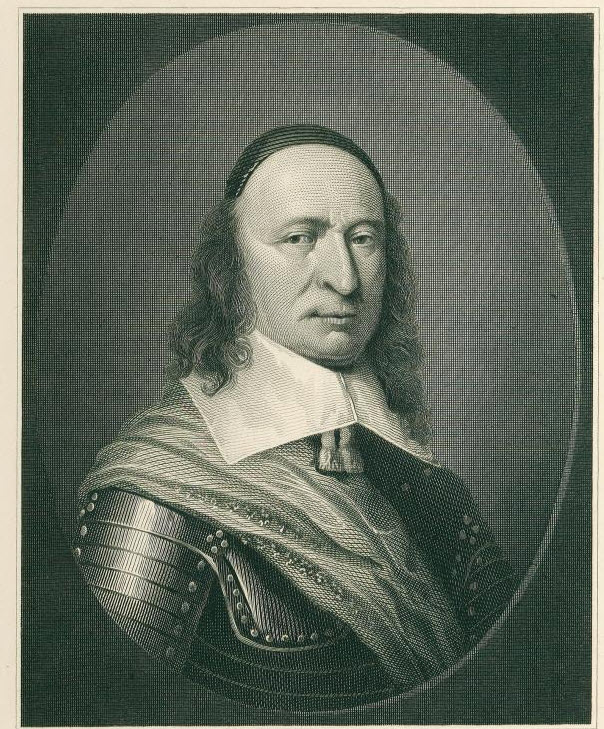
Less than three centuries after the iconic Dutch director-general of New Amsterdam died at his palatial farm in today’s East Village, his name was employed to sell a brand of stylish, premium cigarette, still enjoyed today by smokers in Australia, New Zealand, South Africa and other counties, most being places Peter Stuyvesant had no idea existed.

The cigarette was developed by a German company in the 1950s and soon became associated with an international sensibility due to its ‘American blend’ of various tobaccos from different countries. “The smell of the large far world: Peter Stuyvesant” went the slogan in 1958. It was test marketed in New York in 1957. Stuyvesant was not the only Dutch historical figure to make his cigarette debut that year; Rembrandt cigarettes also hit the streets of New York that year.

“Stuyvesant people having fun!” went the jingle, accompanied by rigorous activity that might prove challenging for those enjoying one too many of their advertised product:

By the 1980s, the Peter Stuyvesant cigarette was advertised as a high adventure, Donald Trump-like symbol of masculinity and wealth, trying to closely align with upper class leisure. In London, during the 1980s, the cigarette company even sponsored the Peter Stuyvesant Pops in London. In 2003, the cigarette was even bought by a British company, which would have disturbed the actual Peter Stuyvesant to no end.

The company even experimented with Peter Stuyvesant travel agencies in some places, clever ways to advertise their cigarettes in places with strict advertising laws.

The cigarette embodied the American ideal, a distillation of glamour, capitalism and excess, ‘further testimony to the adoption by European of American dreams’, according to author Alexander Stephan.  “Feel the Big Apple beat!” went this promotion in 1985. “It’s fun! It’s fabulous! It’s fast!”

Meanwhile, over in Brooklyn, the neighborhood which bore the Stuyvesant name (Bedford-Stuyvesant) was hardly tasting the fruits of prosperity advertised in Stuyvesant commercials half a world away. And it was hardly Polos and champagne in the East Village, the neighborhood which developed from Stuyvesant’s old farm to become the gritty backdrop for 1980s art and punk music.

Not that Stuyvesant cigarette executives turned their backs to the promotional opportunities provided by the fight for freedom and human rights. In 1989, employees in ‘Come Together’ shirts distributed Peter Stuyvesant cigarettes to East Berliners on their way to the vote in the election that would unite the former Soviet sector with West Berlin.

Here’s an older ad for you German speakers!

Tomorrow, the Bowery Boys will return to the world of Peter Stuyvesant in our newest podcast.

 Image at top courtesy Museum Victoria
Categories
Podcasts

The Stuyvesant, New York’s first apartment building: Imported luxury style for a new middle class
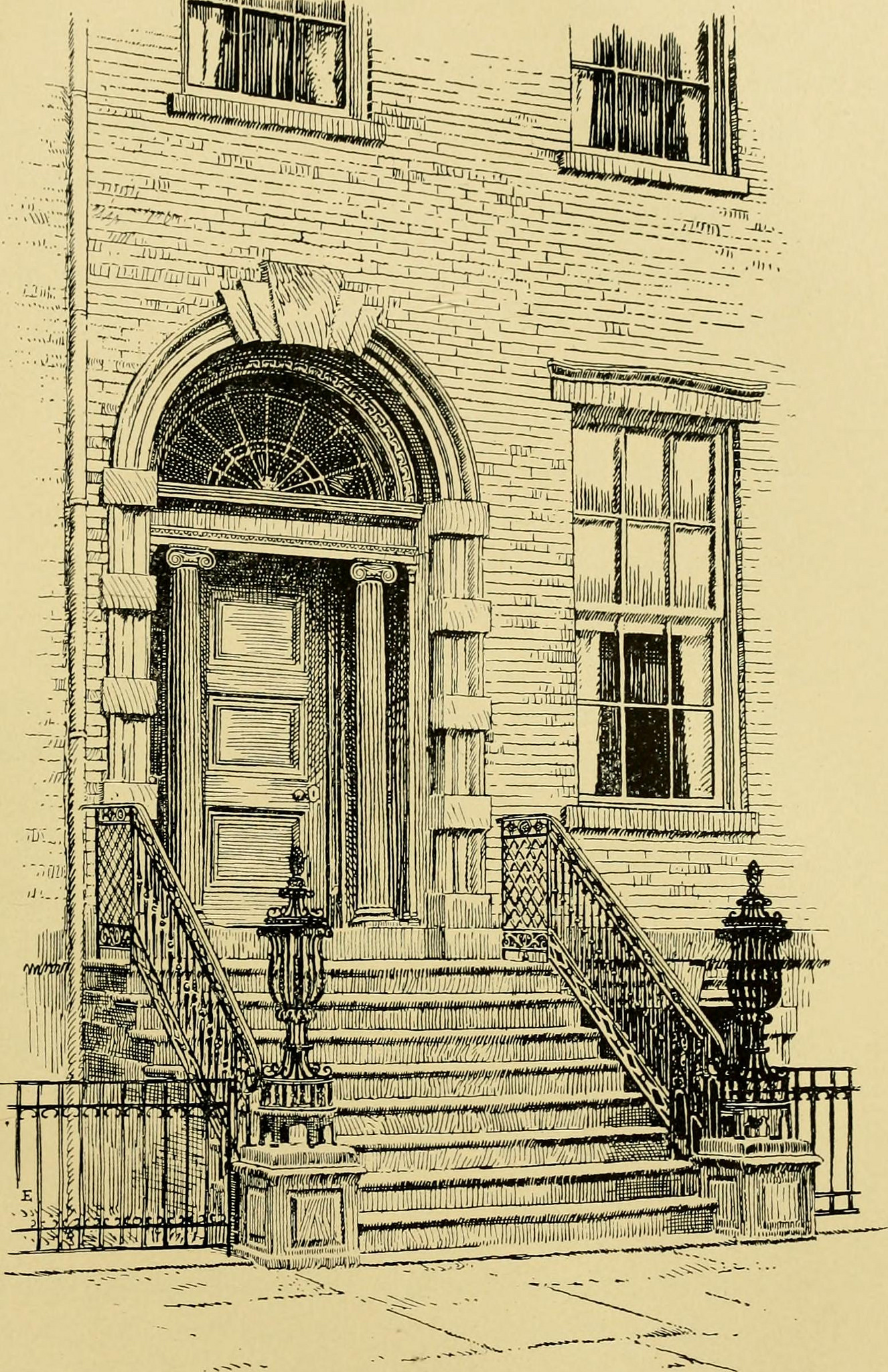
The creation of ‘acceptable’ communal living: The Stuyvesant Flats, at 142 East 18th Street, designed by Richard Morris Hunt, photographed by Berenice Abbott.

PODCAST Well, we’re movin’ on up….to the first New York apartment building ever constructed. New Yorkers of the emerging middle classes needed a place to live situated between the townhouse and the tenement, and the solution came from overseas — a daring style of communal and affordable living called the ‘apartment’ or ‘French flat’.

The city’s first was financed by Rutherford Stuyvesant, an old-money heir with an unusual story to his name. He hired one of the upper class’s hottest architects to create an apartment house, called the Stuyvesant Apartments, with many features that would have been shocking to more than a few New Yorkers of the day.

The building’s first tenants were sometimes well-known, often artists and publishers, and almost all of them with a fascinating story to tell. Listen in to hear about the vanguard first renters of this classic, long-gone building.

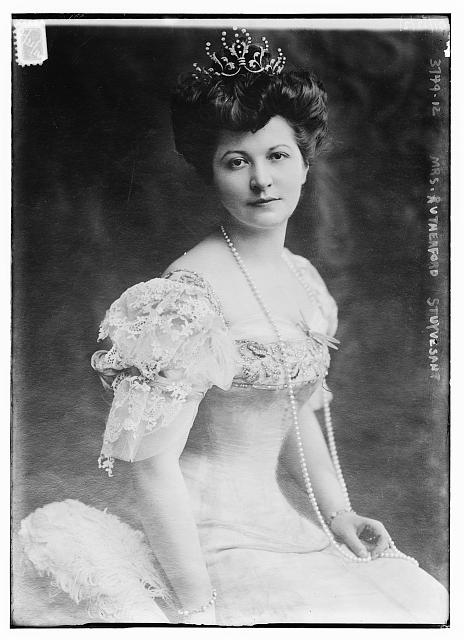
I have been unable to find any portraits of Mr. Rutherford Stuyvesant (aka Stuyvesant Rutherford), the man who financed the Stuyvesant for $100,000. However I have found a picture of Mrs. Rutherford Stuyvesant, who doesn’t look like the kind of lady to mettle around in her husband’s affairs. She would not have found the apartments which bore her name very accomodating. Many, many others did. (Courtesy LOC)
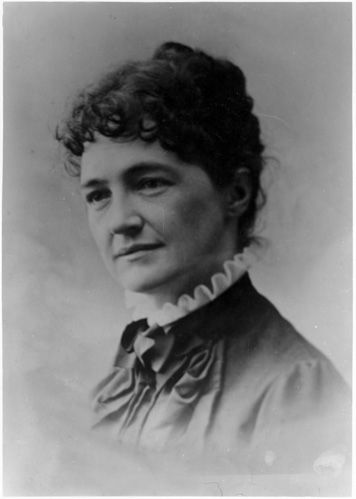
The tenacious Elizabeth ‘Libby’ Custer, photo taken in 1876, the year her husband was killed at the Battle of Little Bighorn. Mrs. Custer moved into Stuyvesant and successfully led her crusade to rehabilitate her husband’s reputation.

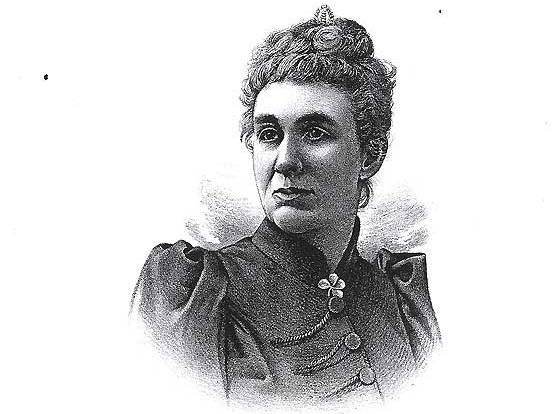
Maggie Custer Calhoun, younger sister to General Custer, lived with her sister-in-law at the Stuyvesant before embarking on a successful career as an elocutionist.

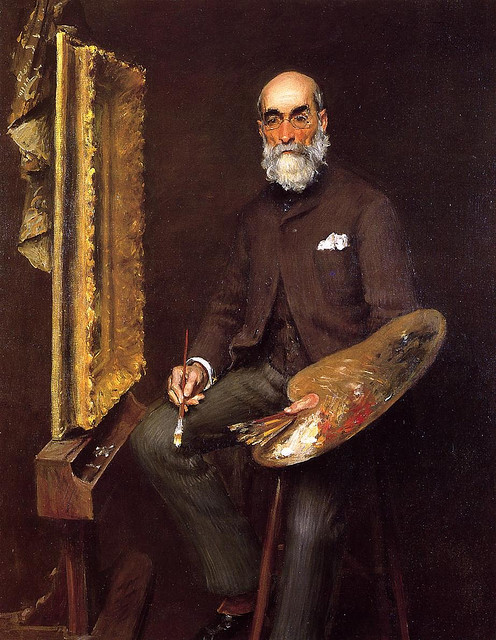
The landscape painter Worthington Whittredge also resided here. In fact, he beamed about it in his autobiography: “I was one of the first to subscribe for an apartment in this house, which was to be erected in 18th Street near Third Avenue and Stuyvesant Square.”

Earlier in his career, Whittredge posed as George Washington while Emanuel Leutze painted ‘Washington Crossing The Delaware’. (Worthington is quite comfortable on both sides of the easel The painting below is by William Merritt Chase.)

In its later years, the Stuyvesant was used as the set for a pivotal scene in the Oscar-nominated film noir ‘Kiss of Death’ starring Richard Widmark. Needless to say, this sort of activity very rarely went on at the Stuyvesant.

View Larger Map