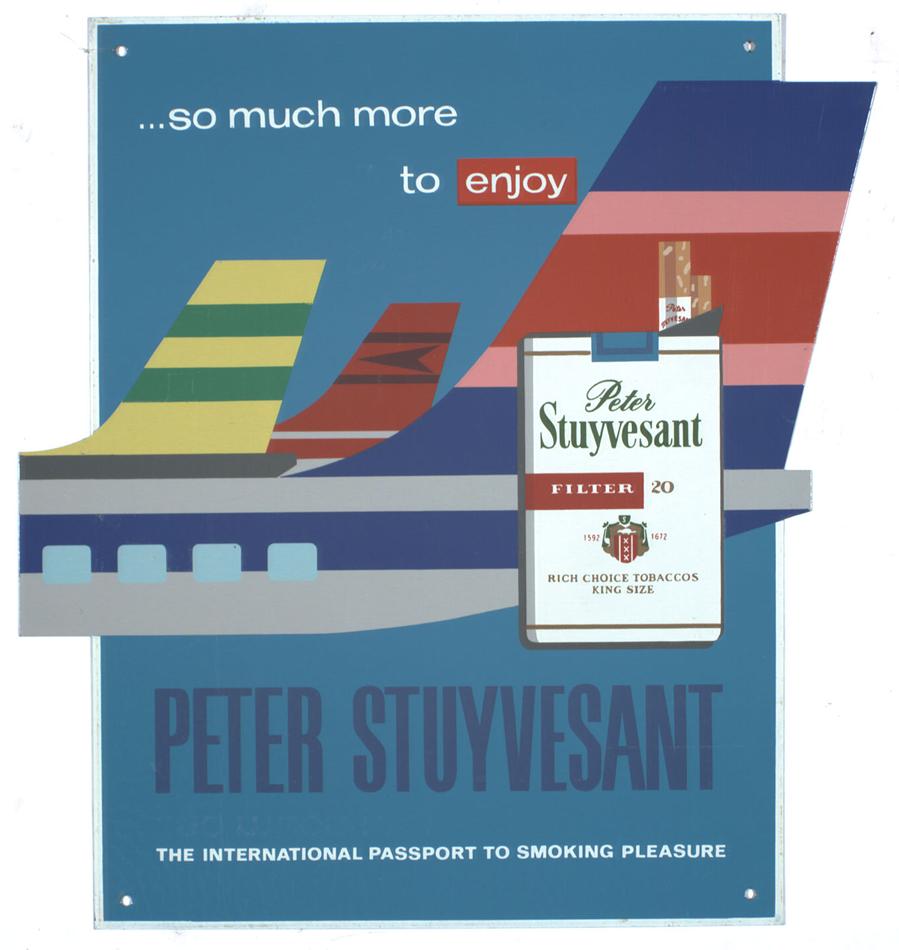
Oh, that Peter Stuyvesant. He was all about luxury, high class athletic sport and international travel. The Concorde! Monte Carlo! Caviar!
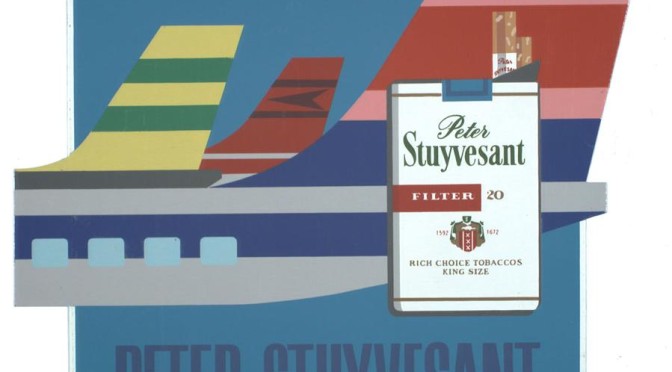
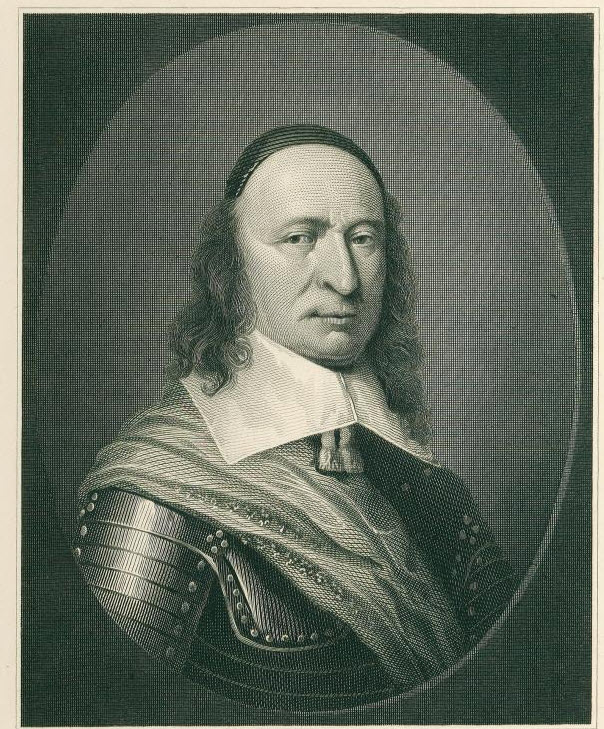
Less than three centuries after the iconic Dutch director-general of New Amsterdam died at his palatial farm in today’s East Village, his name was employed to sell a brand of stylish, premium cigarette, still enjoyed today by smokers in Australia, New Zealand, South Africa and other counties, most being places Peter Stuyvesant had no idea existed.
The cigarette was developed by a German company in the 1950s and soon became associated with an international sensibility due to its ‘American blend’ of various tobaccos from different countries. “The smell of the large far world: Peter Stuyvesant” went the slogan in 1958. It was test marketed in New York in 1957. Stuyvesant was not the only Dutch historical figure to make his cigarette debut that year; Rembrandt cigarettes also hit the streets of New York that year.
“Stuyvesant people having fun!” went the jingle, accompanied by rigorous activity that might prove challenging for those enjoying one too many of their advertised product:
By the 1980s, the Peter Stuyvesant cigarette was advertised as a high adventure,Donald Trump-like symbol of masculinity and wealth, trying to closely align with upper class leisure. In London, during the 1980s, the cigarette company even sponsored the Peter Stuyvesant Pops in London. In 2003, the cigarette was even bought by a British company, which would have disturbed the actual Peter Stuyvesant to no end.
The company even experimented with Peter Stuyvesant travel agencies in some places, clever ways to advertise their cigarettes in places with strict advertising laws.
The cigarette embodied the American ideal, a distillation of glamour, capitalism and excess, ‘further testimony to the adoption by European of American dreams’, according to author Alexander Stephan. “Feel the Big Apple beat!” went this promotion in 1985. “It’s fun! It’s fabulous! It’s fast!”
Meanwhile, over in Brooklyn, the neighborhood which bore the Stuyvesant name (Bedford-Stuyvesant) was hardly tasting the fruits of prosperity advertised in Stuyvesant commercials half a world away. And it was hardly Polos and champagne in the East Village, the neighborhood which developed from Stuyvesant’s old farm to become the gritty backdrop for 1980s art and punk music.
Not that Stuyvesant cigarette executives turned their backs to the promotional opportunities provided by the fight for freedom and human rights. In 1989, employees in ‘Come Together’ shirts distributed Peter Stuyvesant cigarettes to East Berliners on their way to the vote in the election that would unite the former Soviet sector with West Berlin.
Here’s an older ad for you German speakers!
Tomorrow, the Bowery Boys will return to the world of Peter Stuyvesant in our newest podcast.
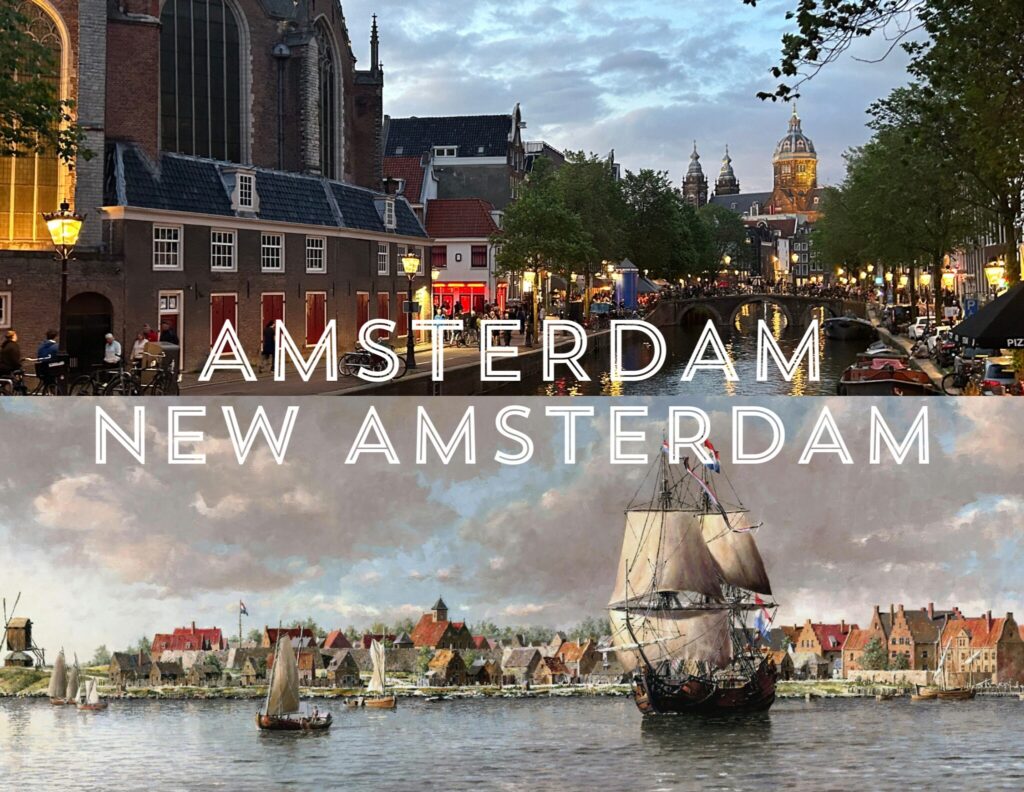
The first part on our Amsterdam/New Amsterdam series — called Empire of the Seas — was just awarded the 2025 Webby Award for Best History Podcast (Individual Episode)
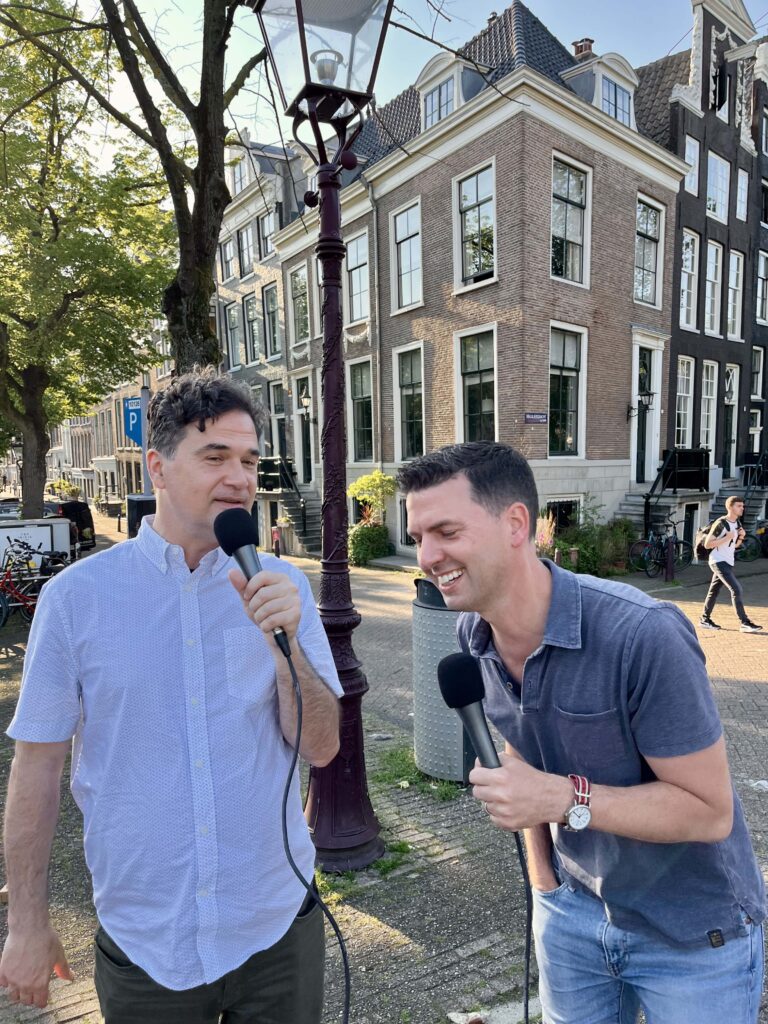
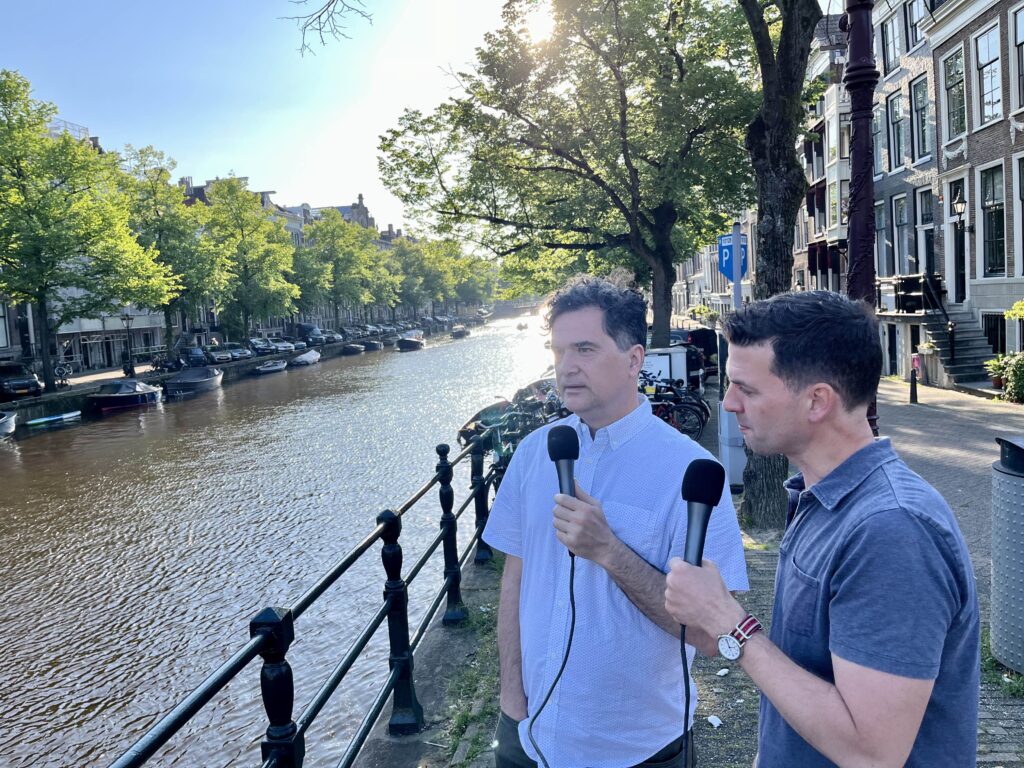
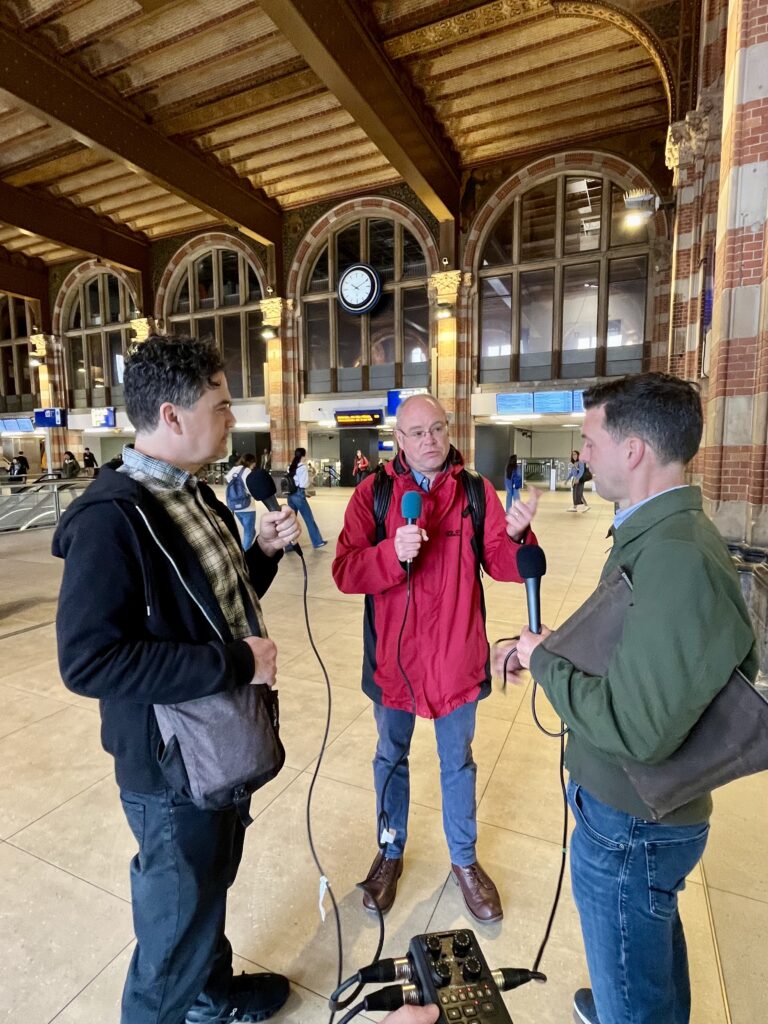
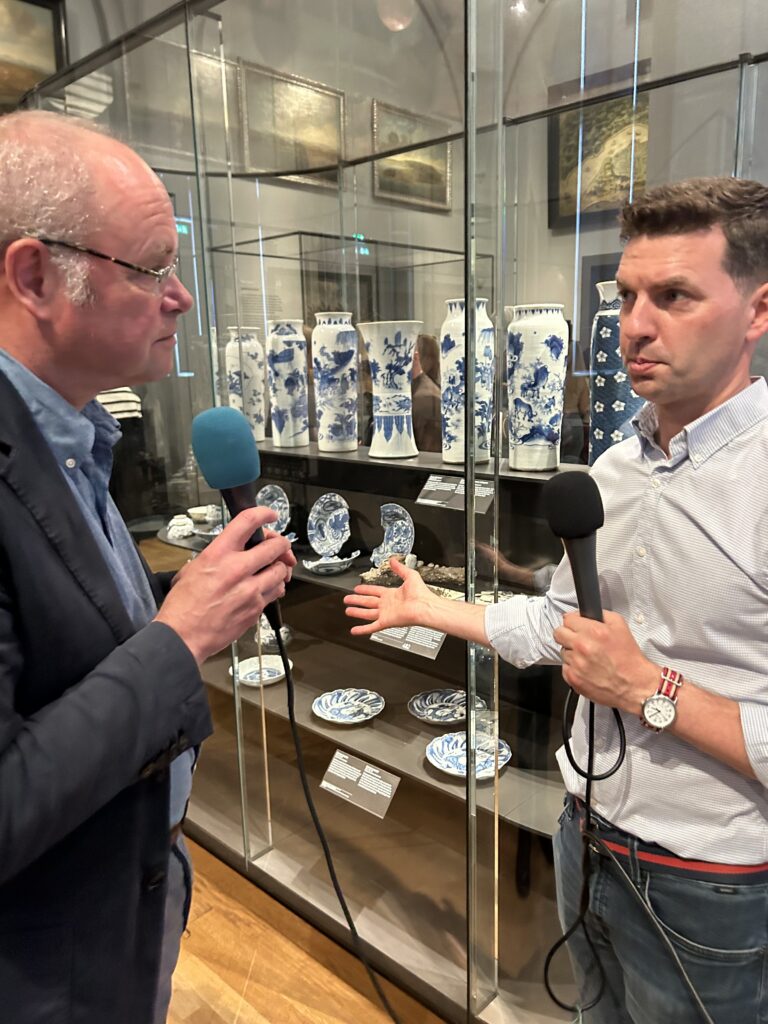
A big thank you to our brilliant producer and editor Kieran Gannon, who pulled this together from about a dozen hours of audio footage. And our fabulous guest Jaap Jacobs, who led us around Amsterdam and allowed us to peer back in time to the 17th century.
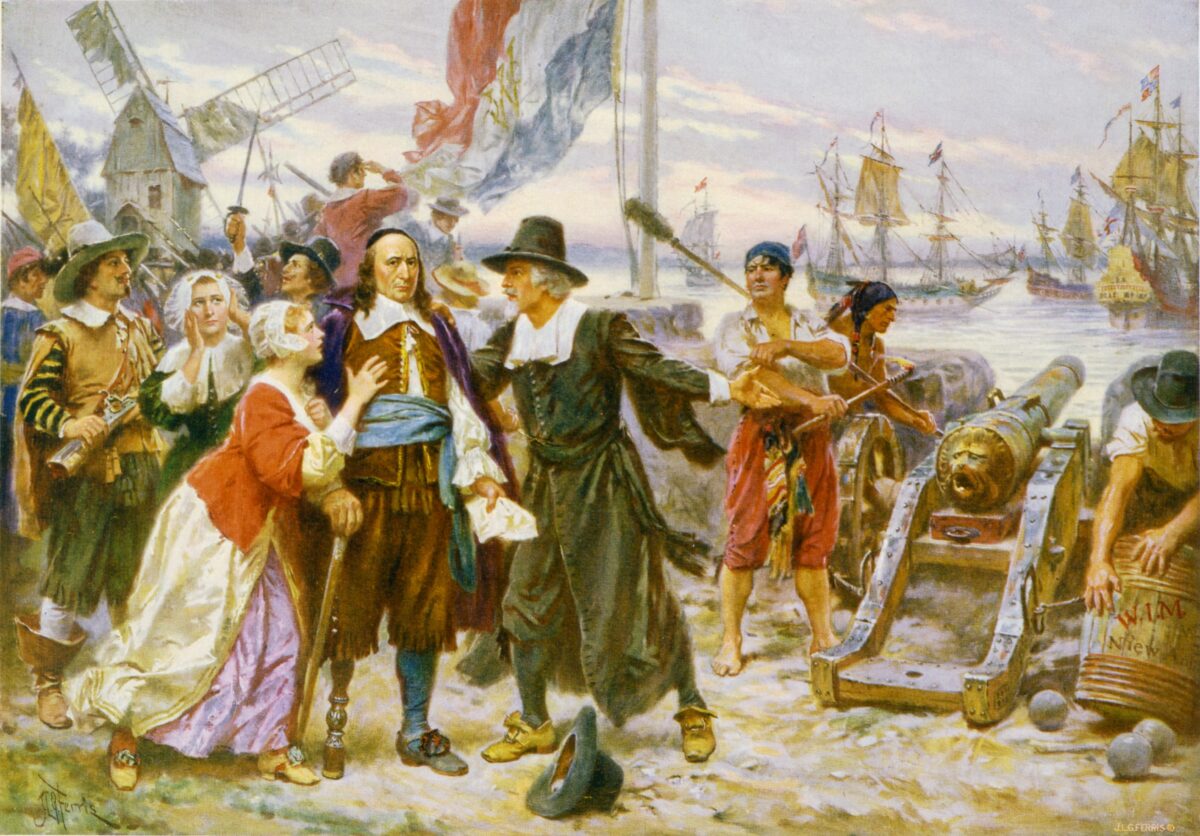
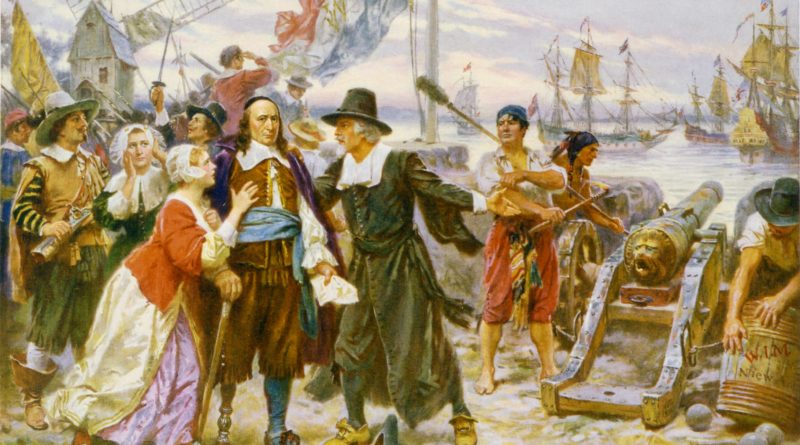
The Fall of New Amsterdam, painted in 1932 by Jean Leon Gerome Ferris
It’s one of the most foundational questions we could ever ask on this show — how did New York City get its name?
You may know that the English conquered the Dutch settlement of New Netherland (and its port town of New Amsterdam) in 1664, but the details of this history-making day have remained hazy — until now.
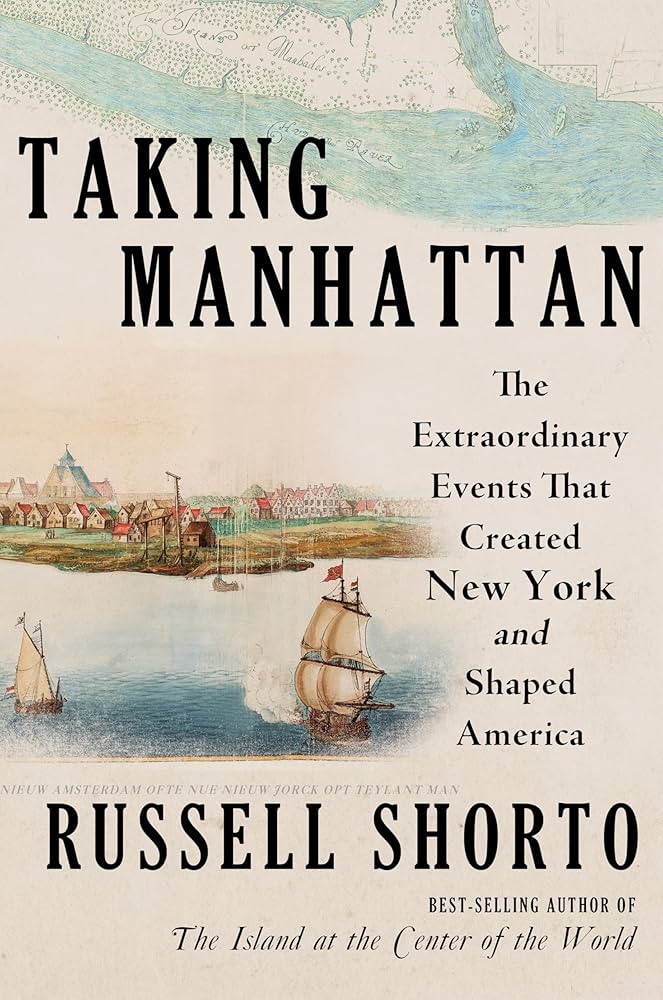
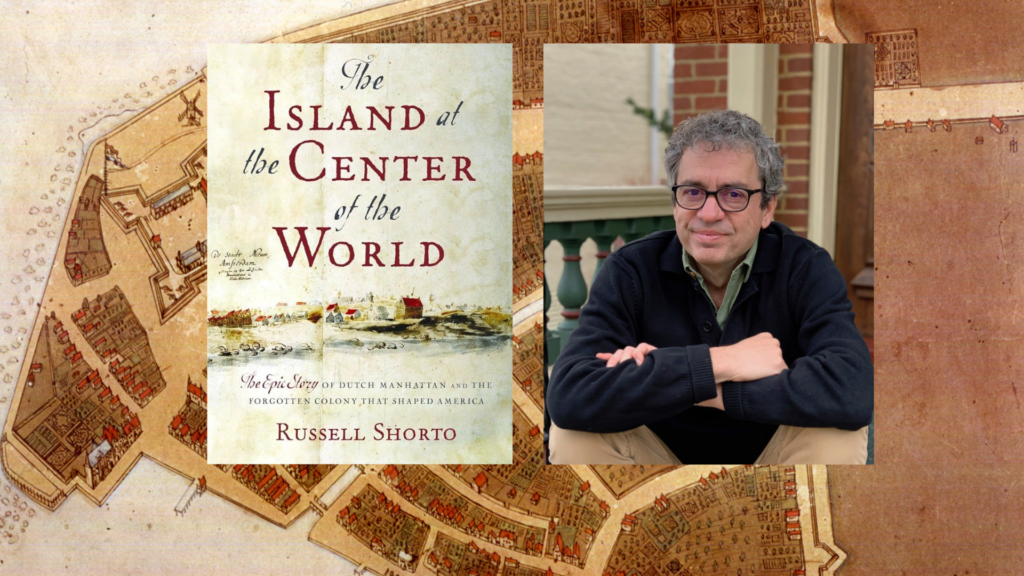
Russell Shorto brought the world of New Amsterdam and the early years before New York to life in his classic history The Island At The Center of The World.
His new book Taking Manhattan: The Extraordinary Events That Created New York and Shaped America functions as a sequel of sorts, revisiting the moment when New Amsterdam ceased to be — and New York was born.
Shorto joins Greg and Tom for a very spirited discussion of international warfare, displaced princes, frantic letter writing and ominous warships in the harbor.
At the end of this story, you will not only know how New York — the city, the state, the whole place, from Buffalo to Long Island — got its name, you will know the exact forgotten historical figure who gave it that name.
More details
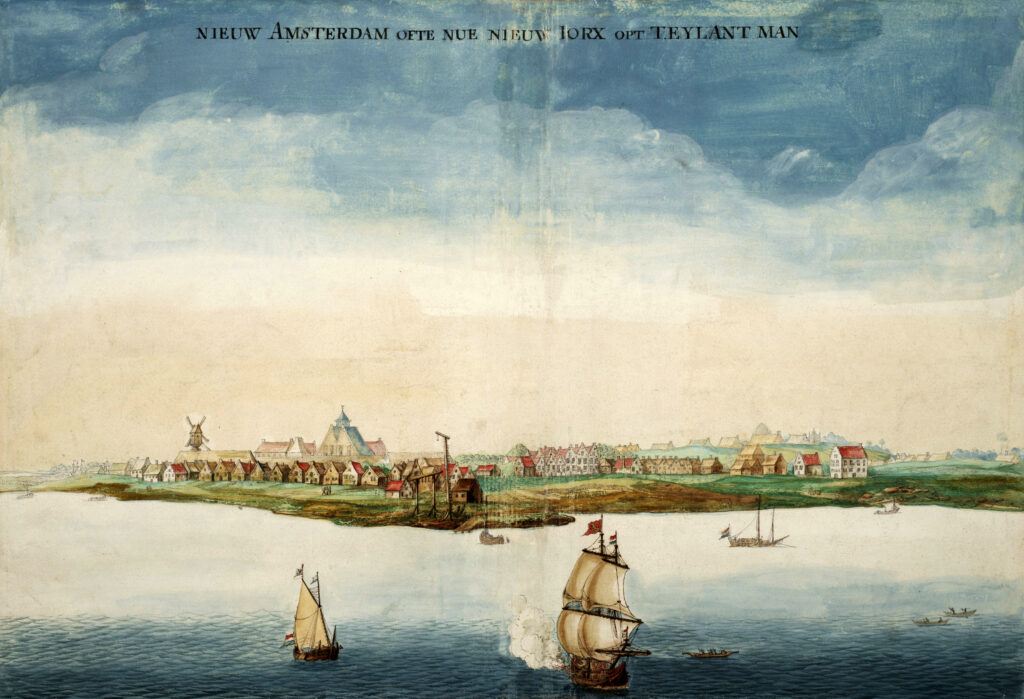
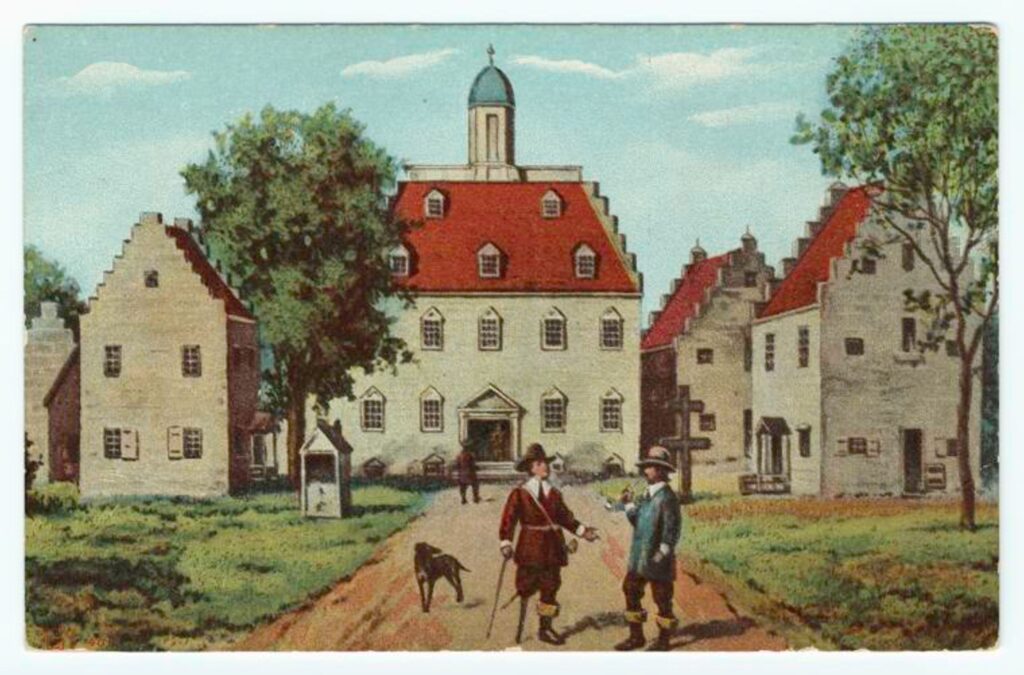
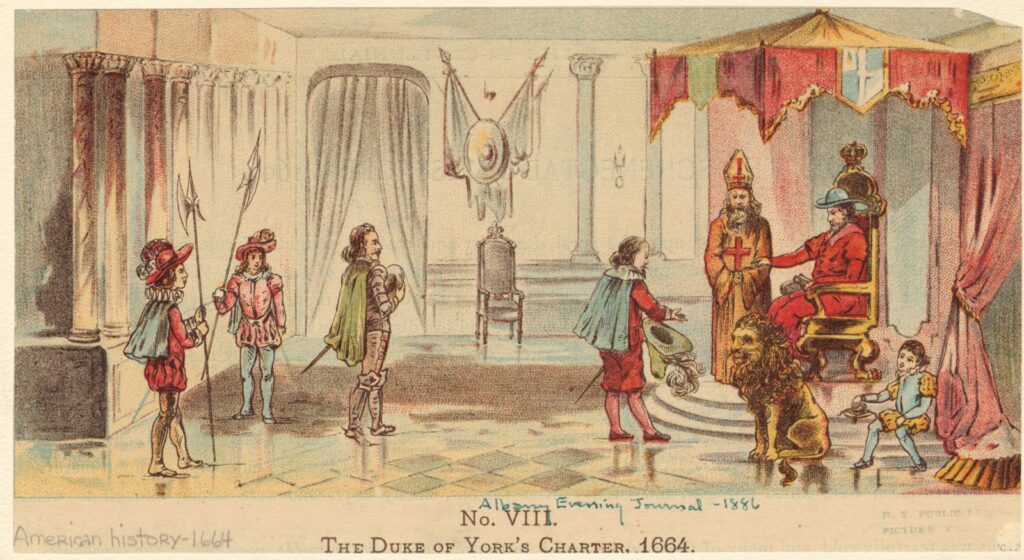
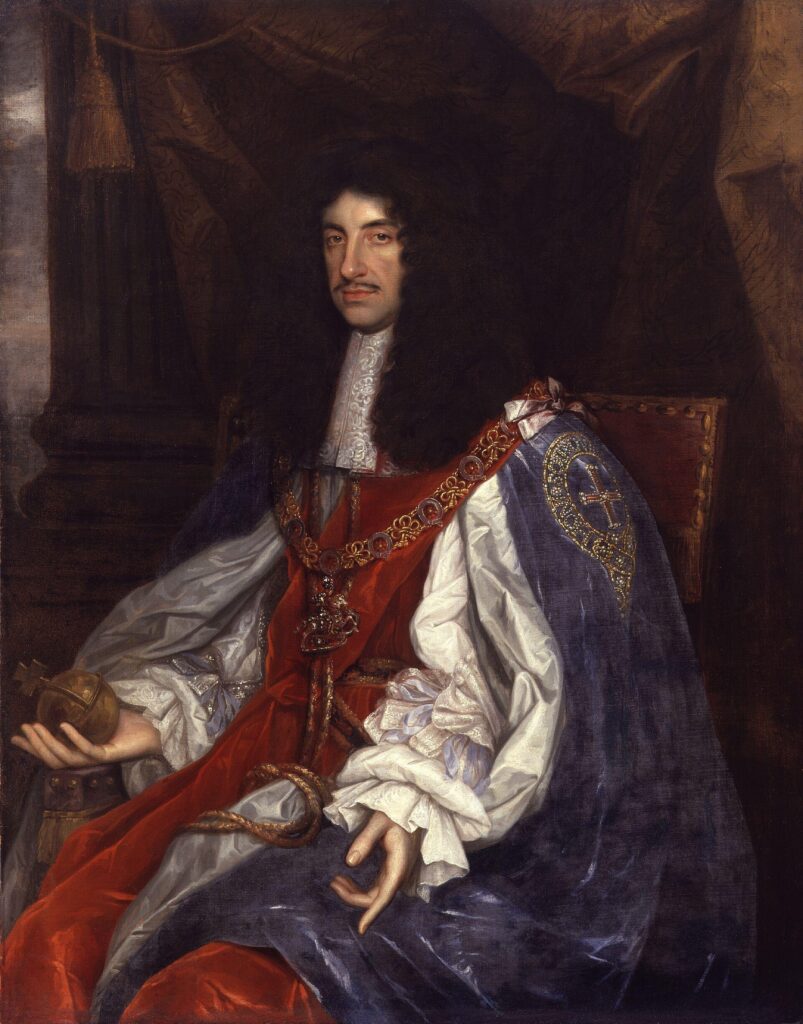
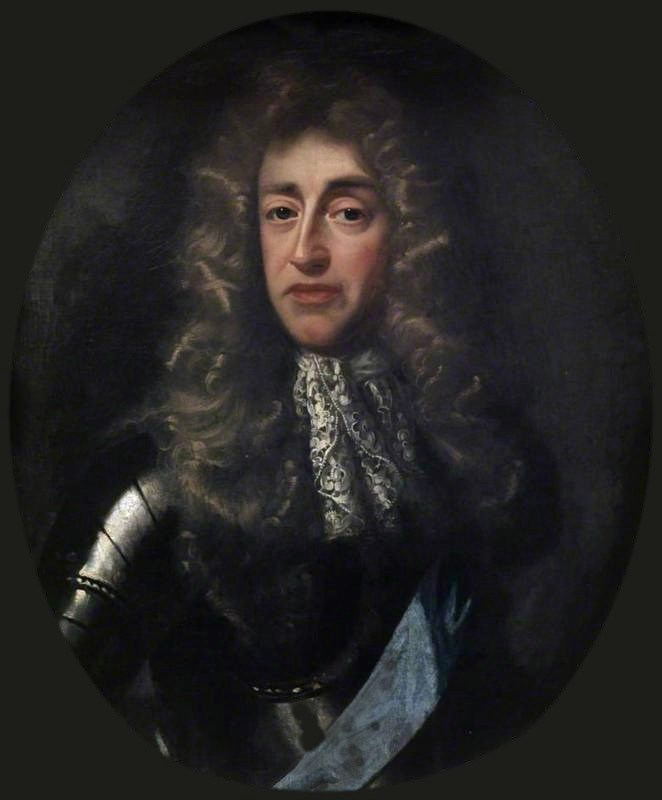
NIEUW AMSTERDAM OFTE NUE NIEUW IORX OPT TEYLANT MAN by Johannes Vingboons (1664), Stadt Huys, the first City Hall on Pearl StreetThe Duke of York Charter, 1886 illustrationKing Charles II, portrait by John Michael Wright, The Duke of York and future King James II, portait by John Riley
FURTHER LISTENING
Our mini-series on New Amsterdam, featuring Russell Shorto, recorded in 2024
Our epic ‘road trip’ to the Netherlands is at an end and it was mission accomplished! We learned so much about New York’s Dutch roots — from the settlement of New Amsterdam to the European settlers who first populated the island which would become Manhattan.
Along the way we also found interesting connections — and great contrasts — between America and the Netherlands. We’ll certainly never look at a bike lane the same way.
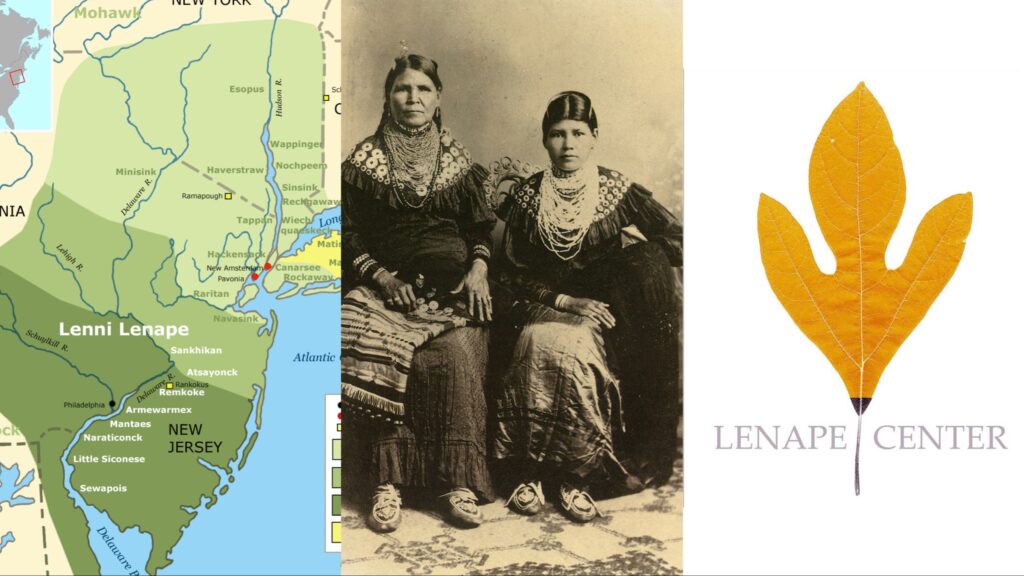
All five episodes of our Adventures in the Netherlands series are now available. Make that six actually — our show The Lenape Nation serves as an excellent prologue and reminder of the people who were already here when the Dutch arrived in 1624.
Here’s the trailer for the whole series:
The shows were designed so they the end of one show rolls into the next one, so the series makes an excellent summer binge listen! Better yet, take them with you on your own adventure someplace.
The Lenape were among the first in northeast North America to be displaced by white colonists — the Dutch and the English. By the late 18th century, their way of life had practically vanished upon the island which would be known by some distorted vestige of a name they themselves may have given it – Manahatta, Manahahtáanung or Manhattan.
But the Lenape did not disappear. Through generations of great hardship they have persevered.
The Bowery Boys Podcast is headed to Amsterdam and other parts of the Netherlands for a very special mini-series, marking the 400th anniversary of the Dutch first settling in North America in the region that today we call New York City.
But before they go, they’re kicking off their international voyage with a special conversation — with Russell Shorto, author of The Island At The Center of the World, the man who inspired the journey.
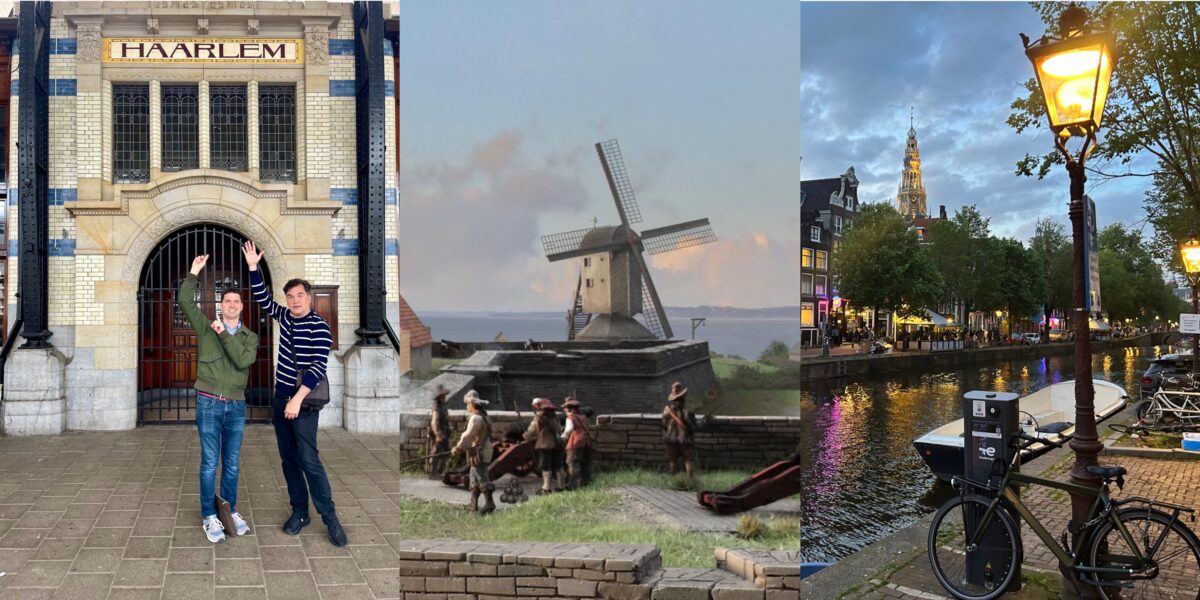
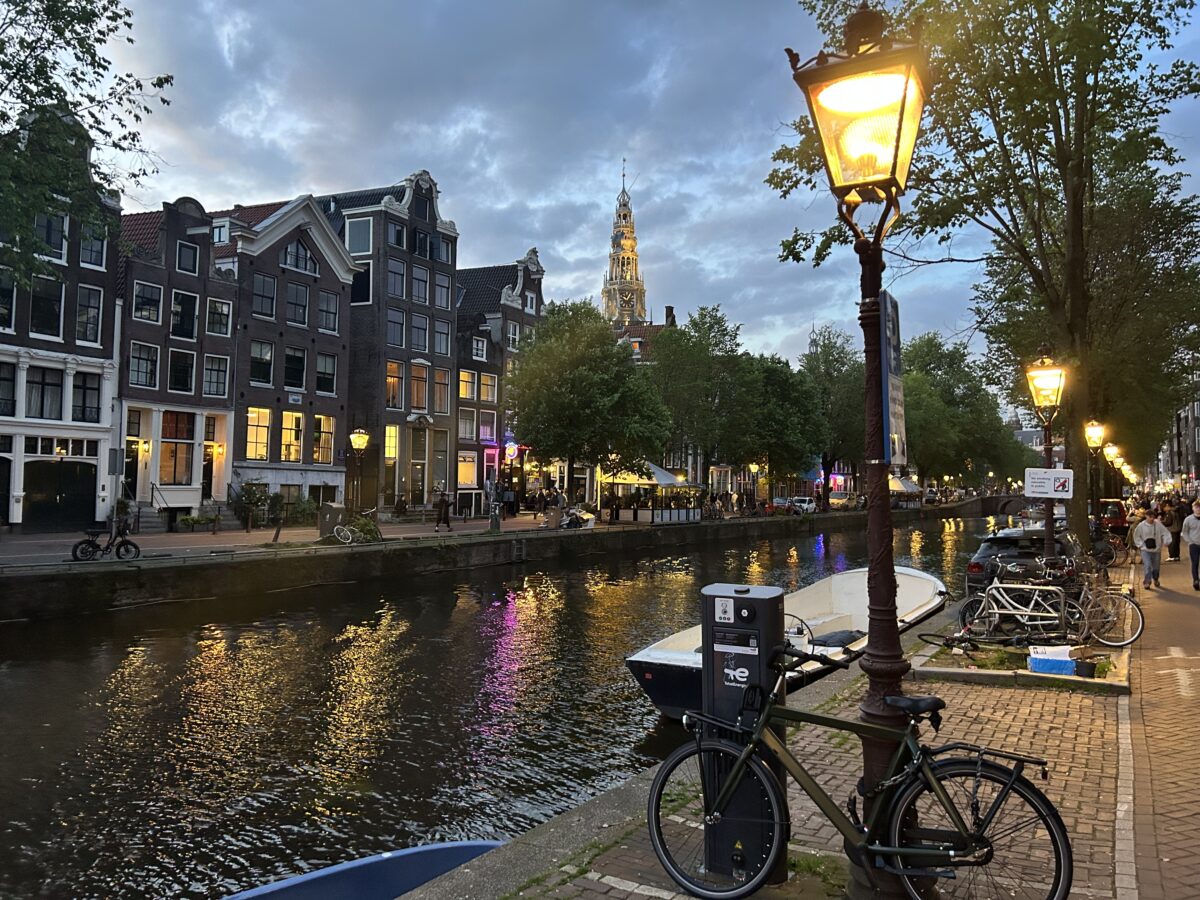
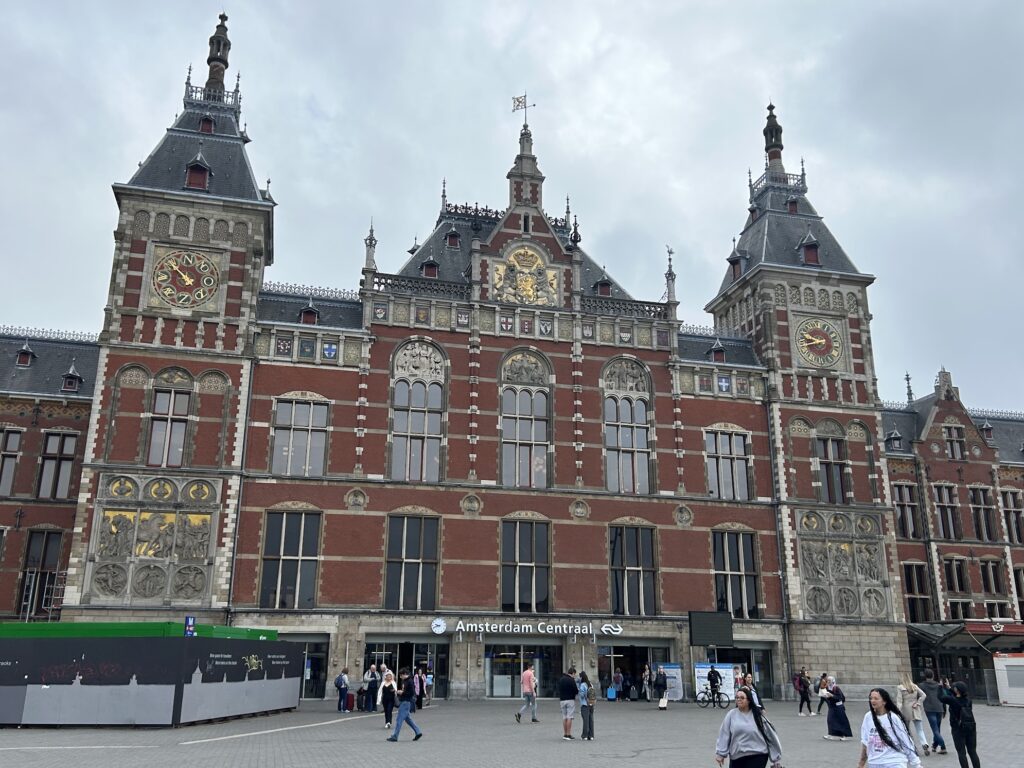
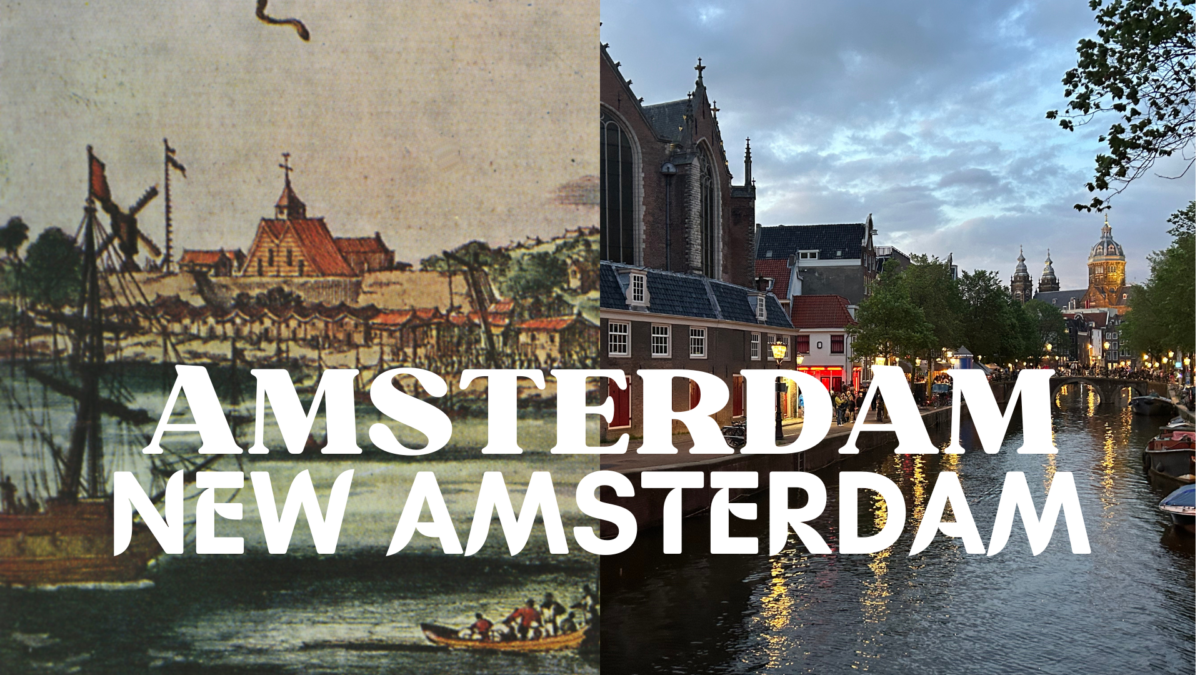
We begin our journey at Amsterdam’s Centraal Station and spend the day wandering the streets and canals, peeling back the centuries in search of New York’s roots.
Our tour guide for this adventure is Jaap Jacobs, author of The Colony of New Netherland: A Dutch Settlement in Seventeenth-Century America.
Jaap takes us around to several spots within the old medieval city — Centrum, including the Red Light District — weaving through the canals and along the harbor, in search of connections to New York’s (and by extension, America’s) past.
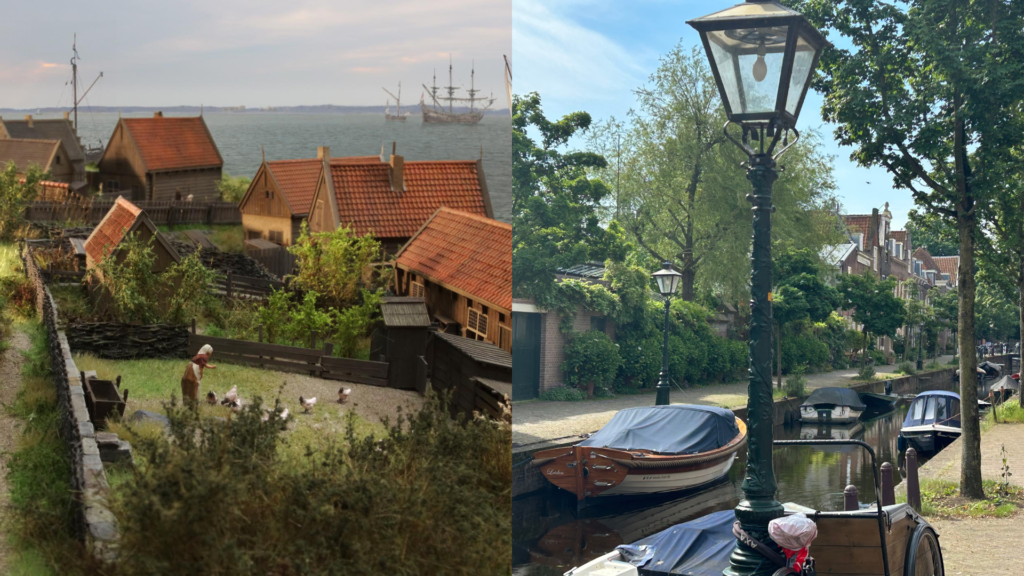
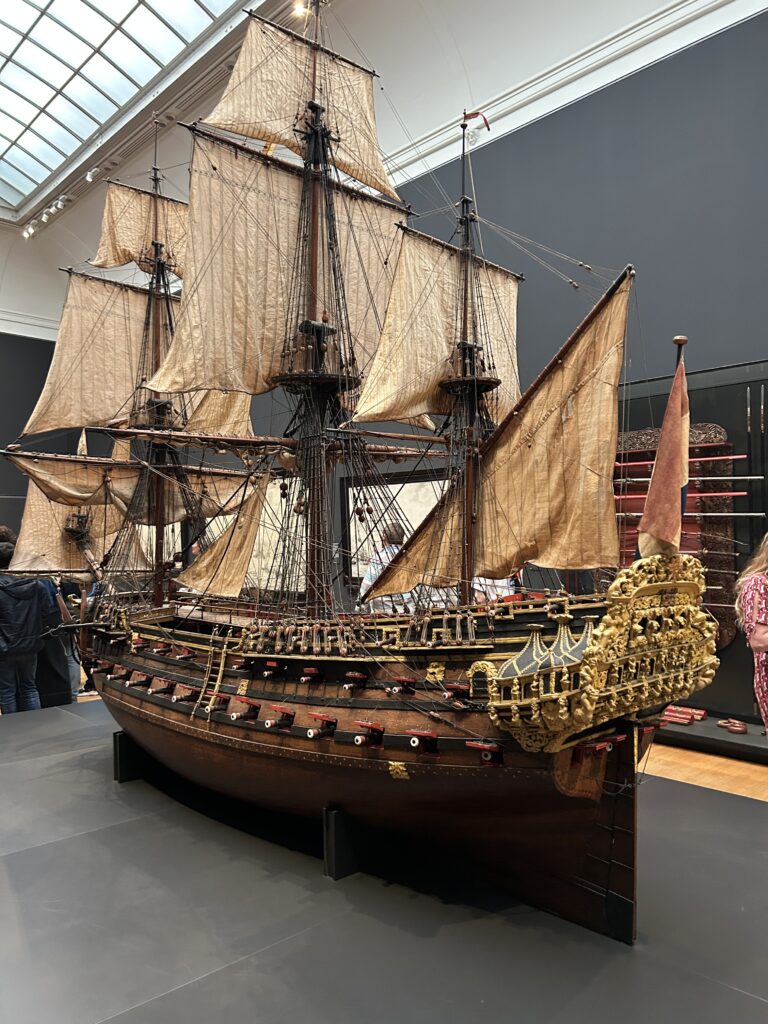
A look at the New Amsterdam miniature and a scene of full-size Leiden
Our adventure in the Netherlands continues with a quest to find the Walloons, the French-speaking religious refugees who became the first settlers of New Netherland in 1624. Their descendants would last well beyond the existence of New Amsterdam and were among the first people to call themselves New Yorkers.
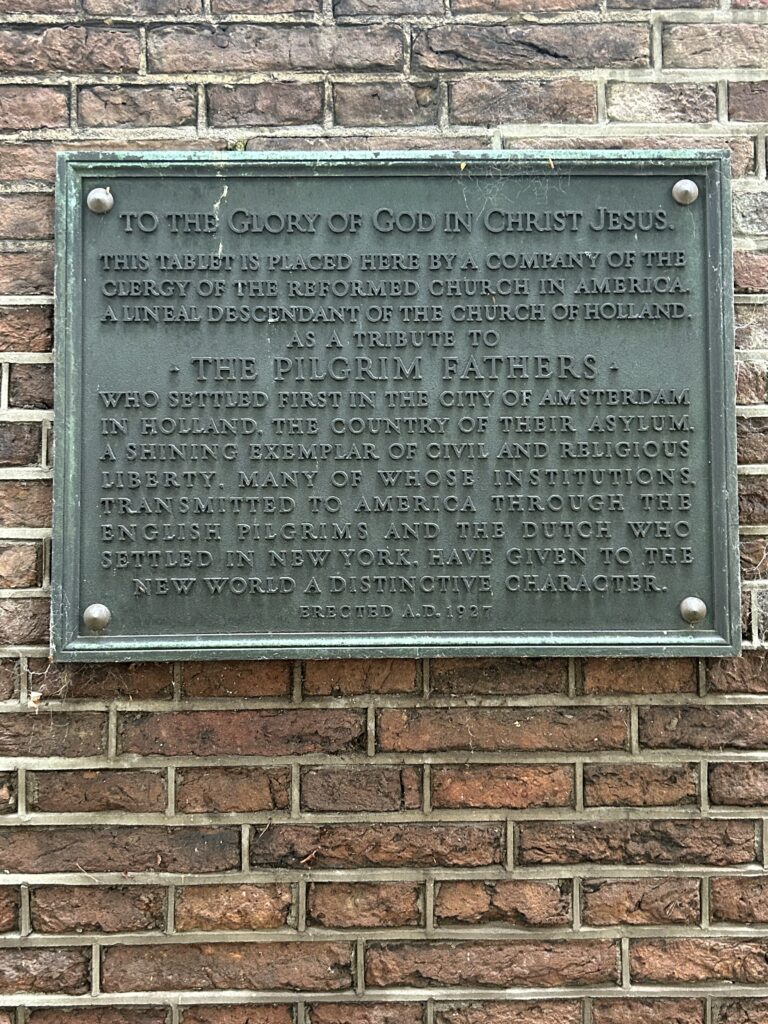
But you can’t tell the Walloon story without that other group of American religious settlers — the Pilgrims who settled in Massachusetts four years earlier.
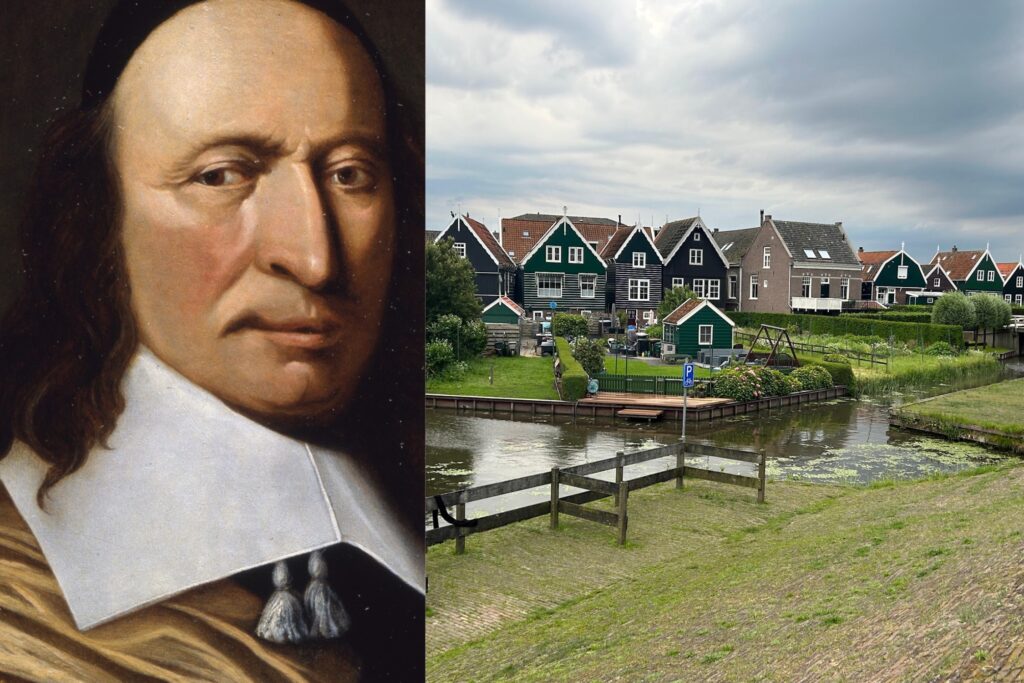
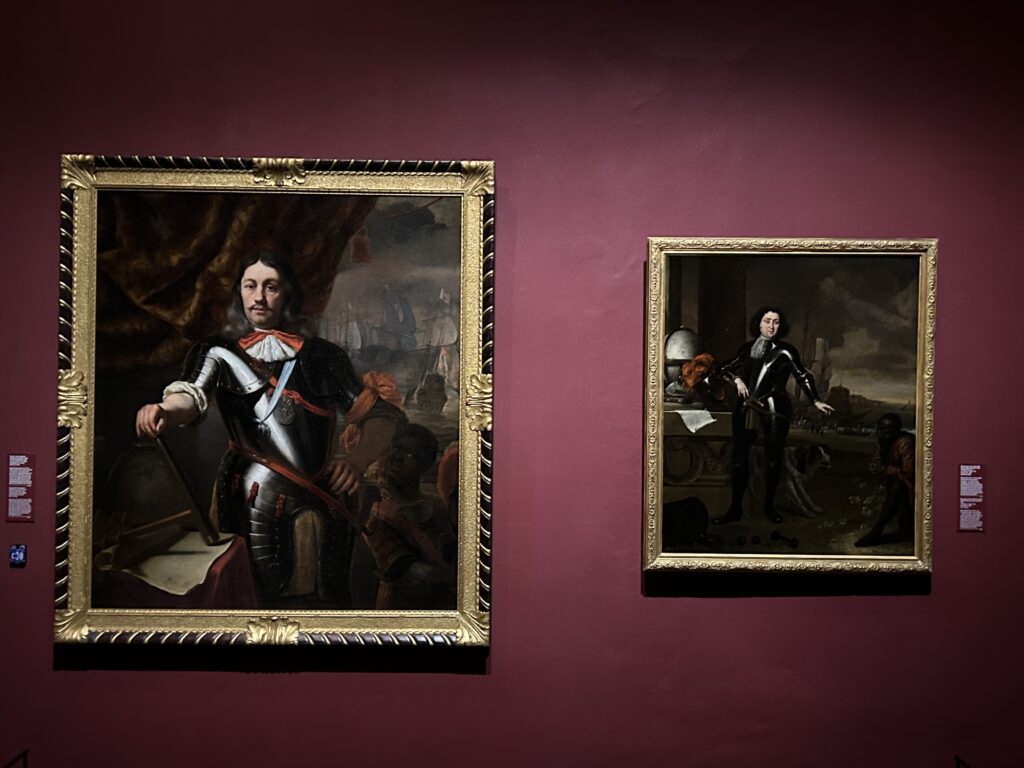
In our last days in Amsterdam (before heading to other parts of the Netherlands), we spend their time getting to know Peter Stuyvesant, the last director-general of New Amsterdam.
The name Stuyvesant can be found everywhere in New York City. — in the names of neighborhoods, apartments, parks and high schools. He’s a hero to some, a villain to others — and probably a caricature to all. What do we really know about Peter Stuyvesant?
And outside the mayor’s residence in Amsterdam’s exclusive Gouden Bocht (Golden Bend), we meet up with Jennifer Tosch of Black Heritage Tours to investigate the story of New Amsterdam and the Dutch slave trade.
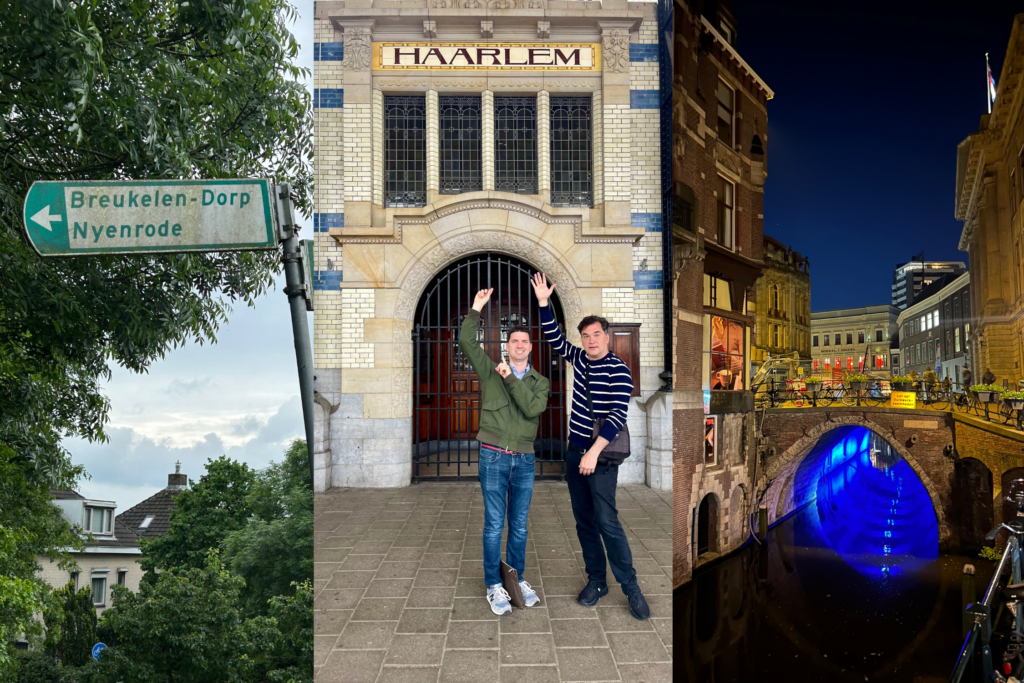
Follow along with us in this travelogue episode as we visit several historic cities and towns in the Netherlands — Utrecht, De Bilt, Breukelen and Haarlem— wandering through cafe-filled streets and old cobblestone alleyways, the air ringing with church bells and
But of course, our mission remains the same as the past three episodes. For there are traces of Dutch culture and history all over New York City — through the names of boroughs, neighborhoods, streets and parks.
Over On Patreon
We released a series of daily shows while on the streets of the Netherlands! These are true behind-the-scenes episodes and we let you in on the unique processes of putting these shows together. You can check out those shows — and the many other benefits of being a Bowery Boys patron — by supporting the show at Patreon.
And on Instagram
We’ve been going wild with the Instagram Reels to show you videos of our adventures. Follow us on Instagram to follow our journey. Here’s just a sampling:
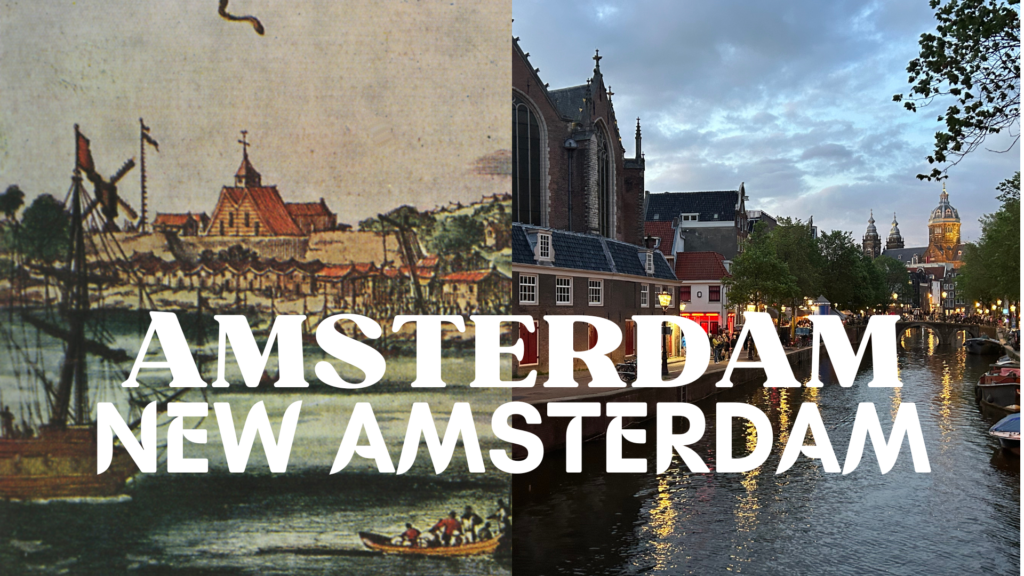
The epic journey begins! The Bowery Boys Podcast heads to old Amsterdam, the capital of the Netherlands, to find traces of New Amsterdam, the Dutch settlement which became New York.
We begin our journey at Amsterdam’s Centraal Station and spend the day wandering the streets and canals, peeling back the centuries in search of New York’s roots.
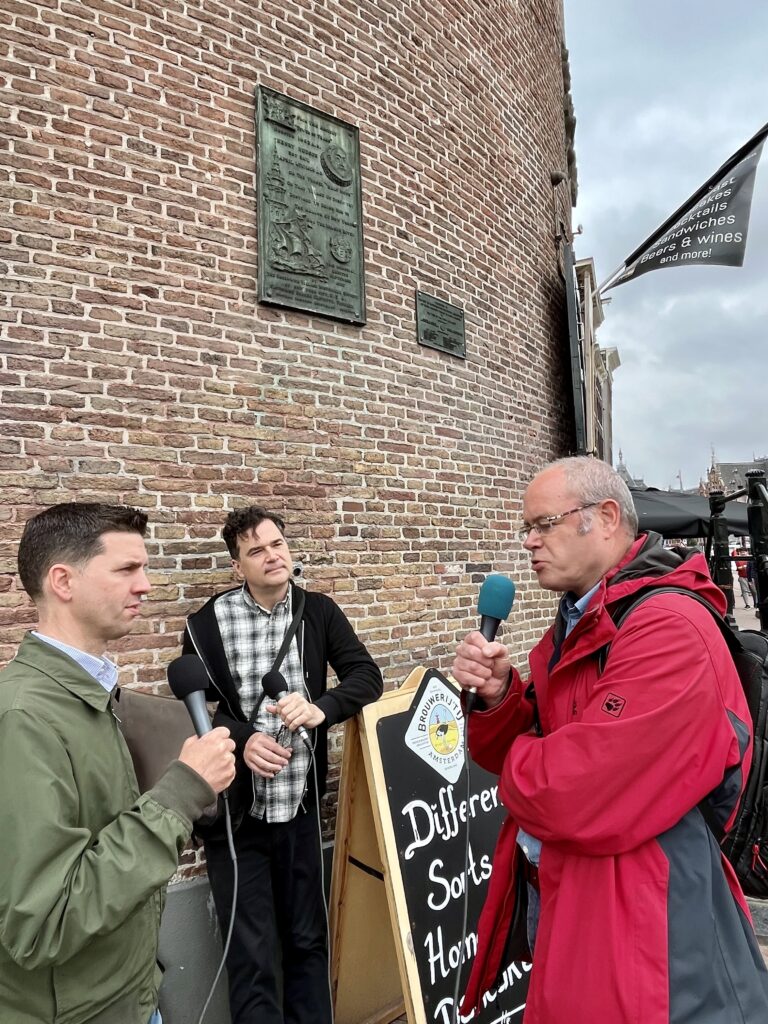
Our tour guide for this adventure is Jaap Jacobs, Honorary Lecturer at the University of St. Andrews in Scotland and the author of The Colony of New Netherland: A Dutch Settlement in Seventeenth-Century America.
Jaap takes us around to several spots within the old medieval city — Centrum, including the Red Light District — weaving through the canals and along the harbor, in search of connections to New York’s (and by extension, America’s) past.
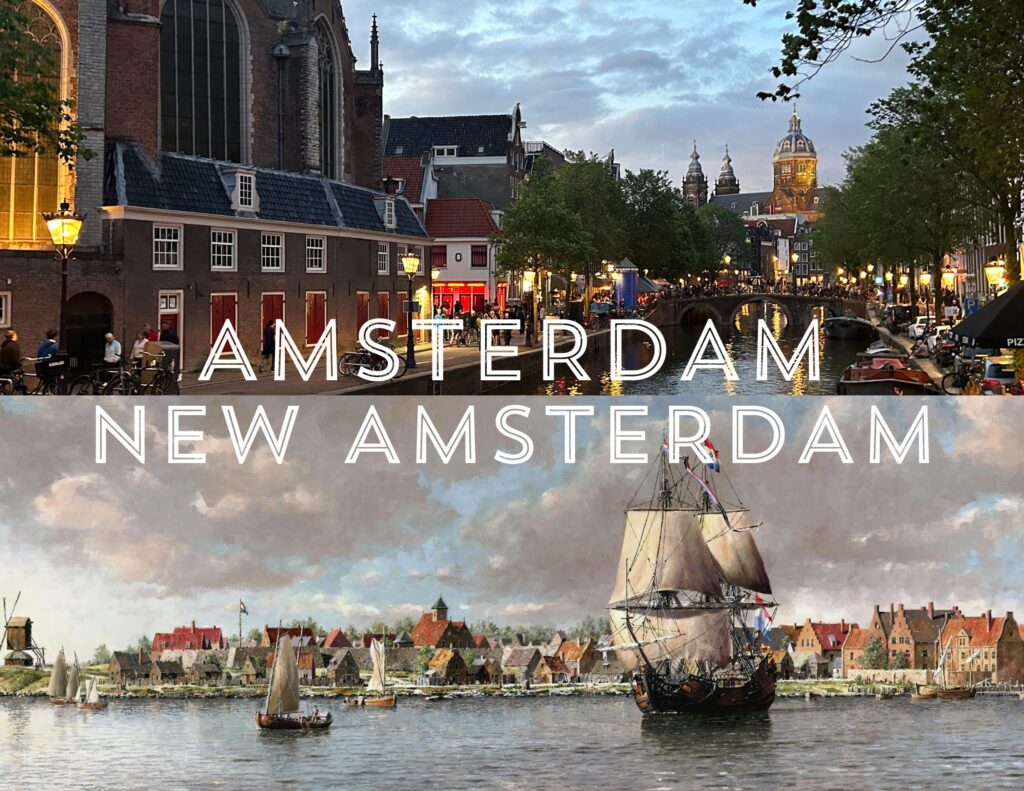
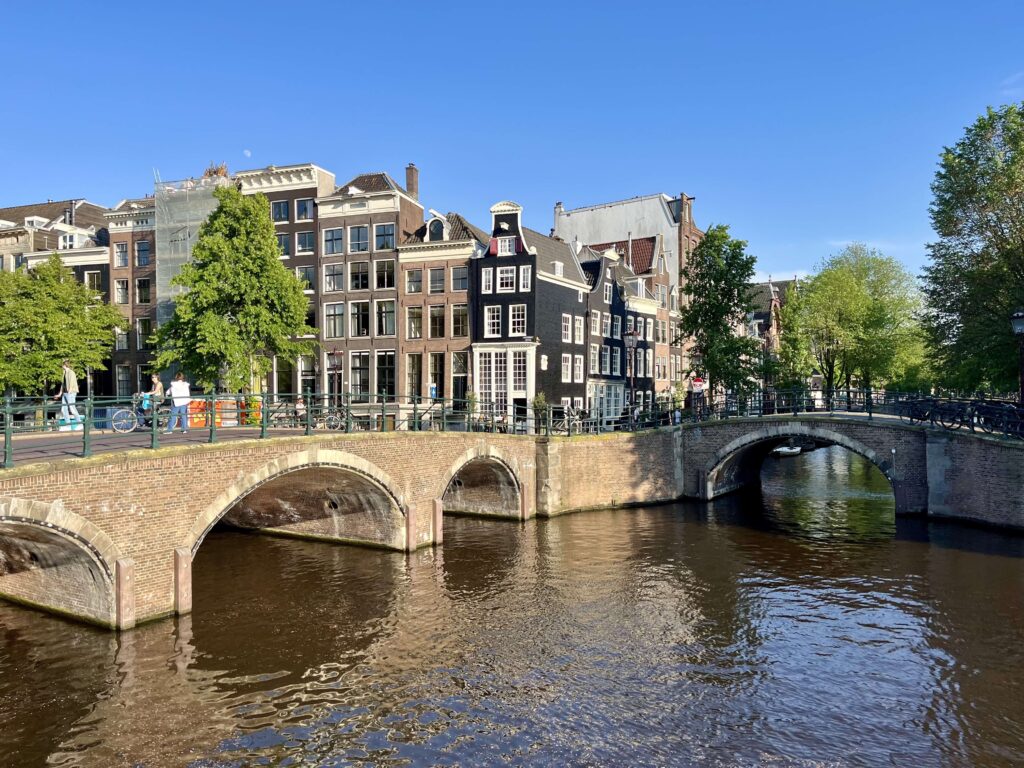
You might see hints of this architecture in New York City but back when it was New Amsterdam, it also had canals!
This year marks the 400th anniversary of Dutch settlement in North America, led by the Dutch West India Company, a trading and exploration arm of the thriving Dutch empire. So our first big questions begin there:
— What was the Dutch Empire in 1624 when New Netherland was first settled? Was the colony a major part of it? Would Dutch people have even understood where New Amsterdam was?
— What’s the difference between the Dutch East India Company and the Dutch West India Company?
— To what degree was New Amsterdam truly tolerant in terms of religion? Was it purely driving by profits and trading relationships with the area’s native people like the Lenape?
— The prime export was the pelts of beavers and other North American animals. What happened to these thousands of pelts once they arrived in Amsterdam?
— How central were the Dutch to the emerging Atlantic slave trade? When did the first enslaved men and women arrive in New Amsterdam?
— And how are the Pilgrims tied in to all of this? Had they always been destined for the area of today’s Massachusetts?
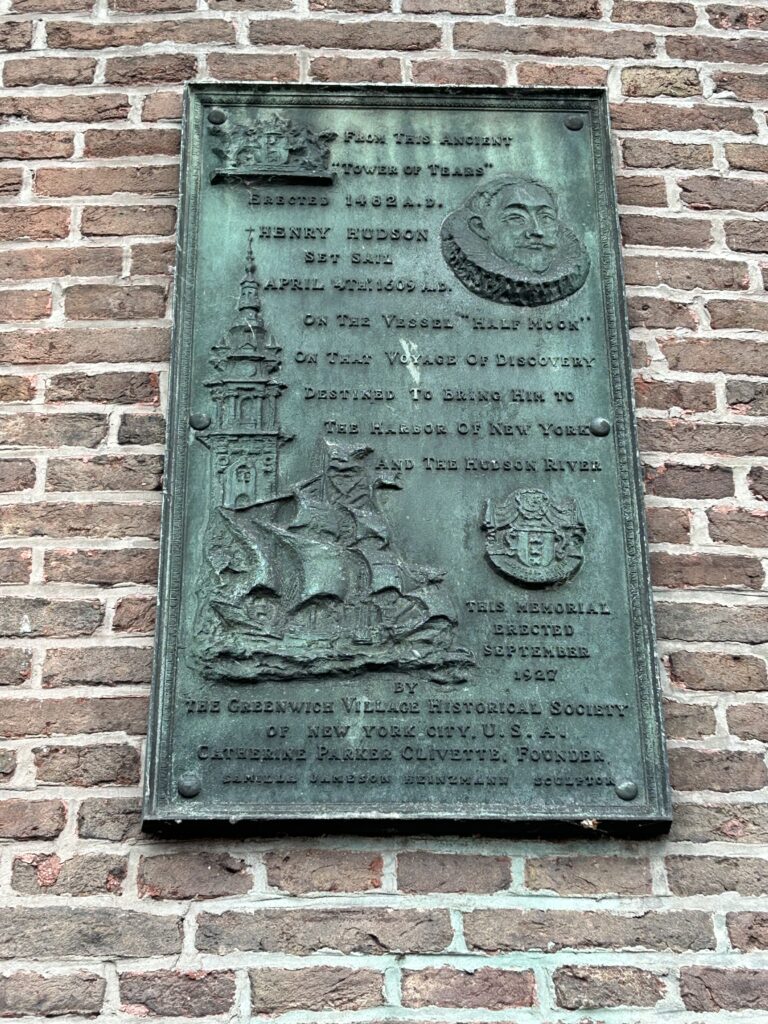
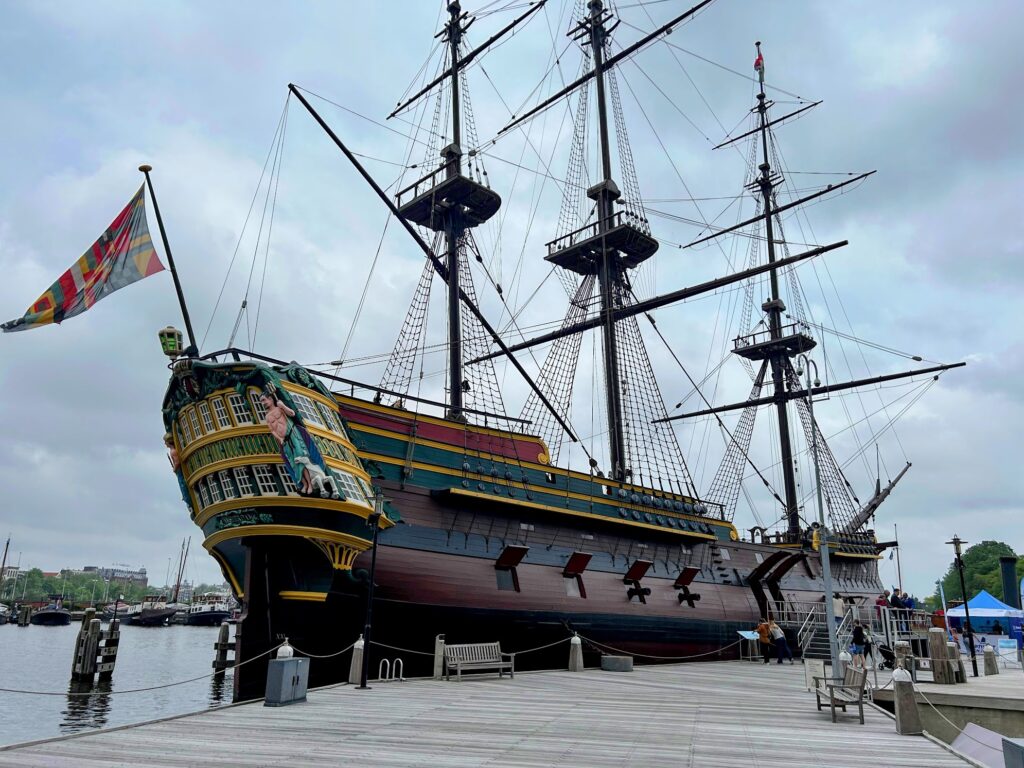
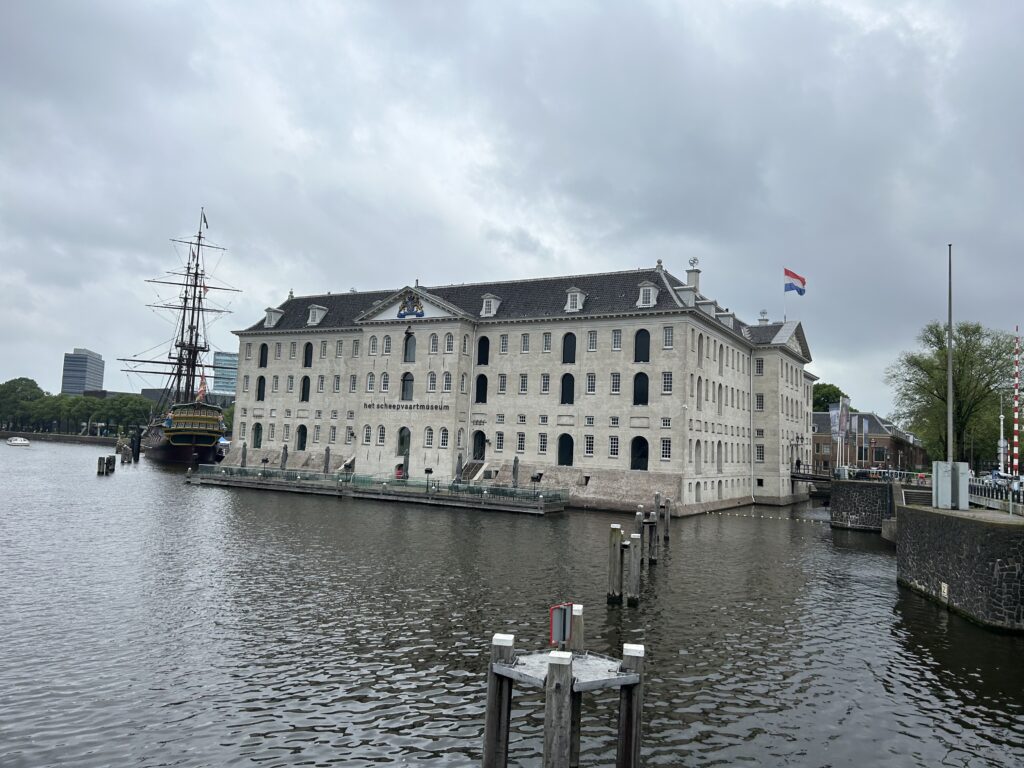
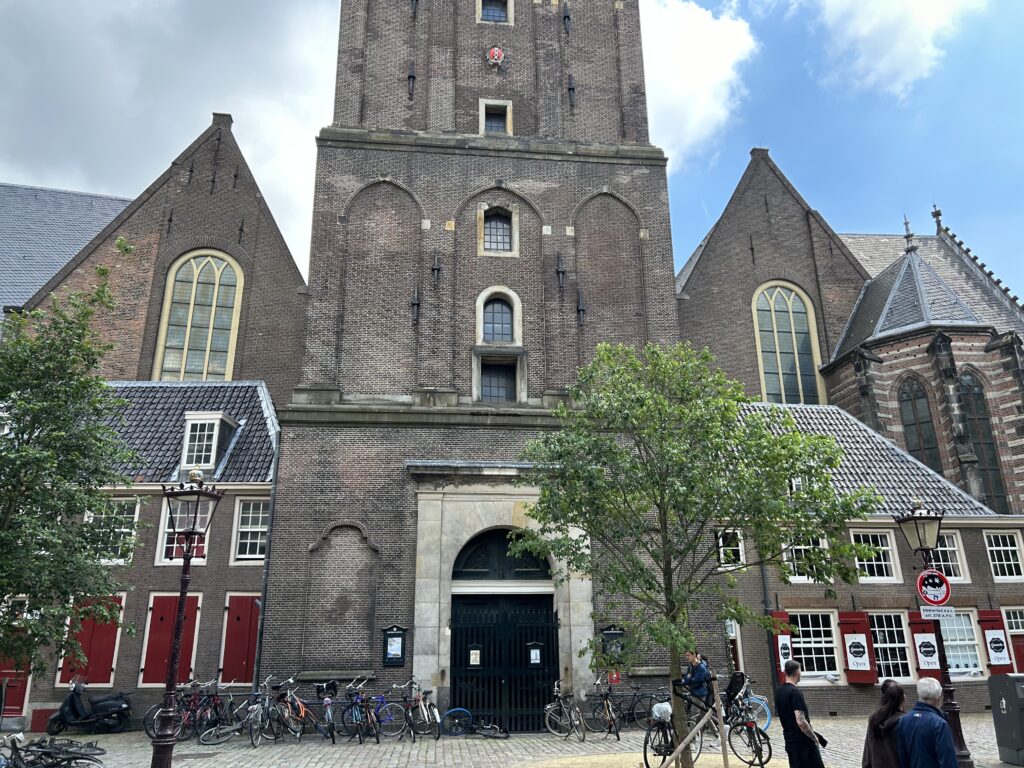
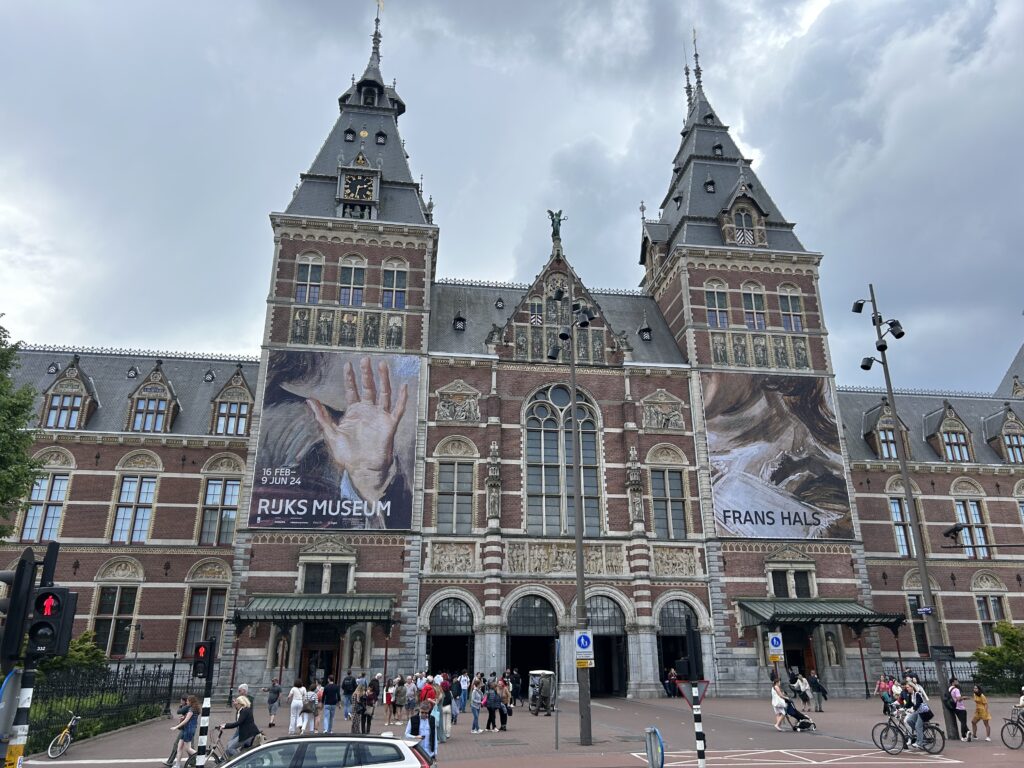
Among the places we visit this episode — the Maritime Museum, the Rijksmuseum, Amsterdam’s oldest building Oude Kirk, the Schreierstoren (the Weeping Tower) and many more
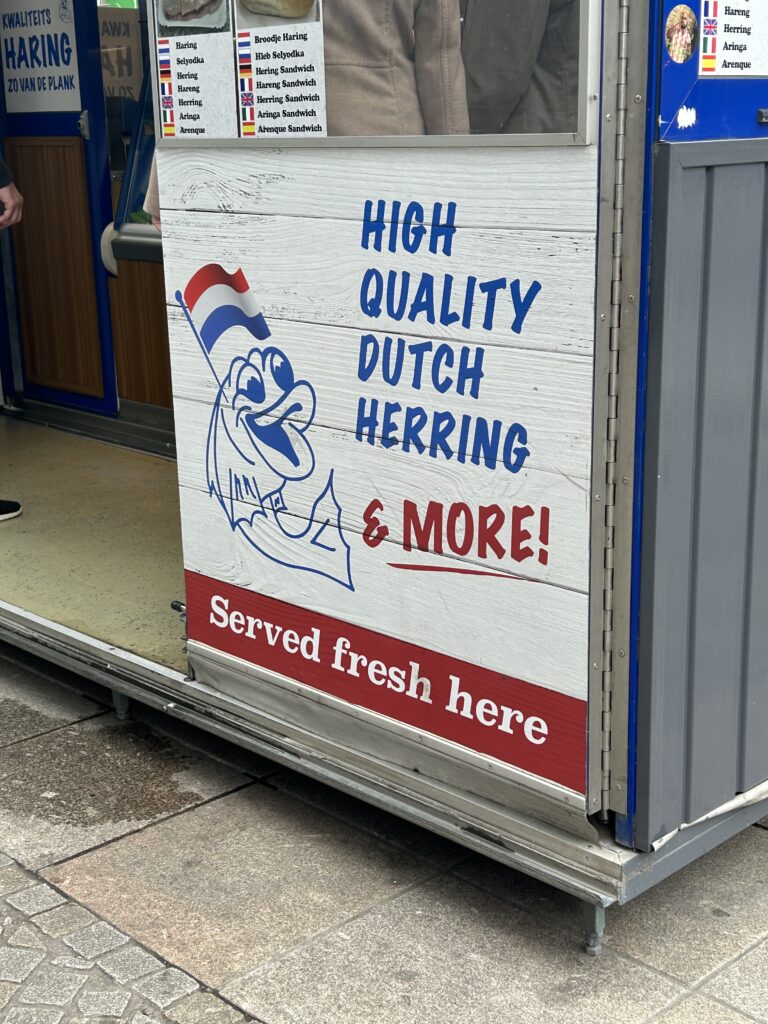
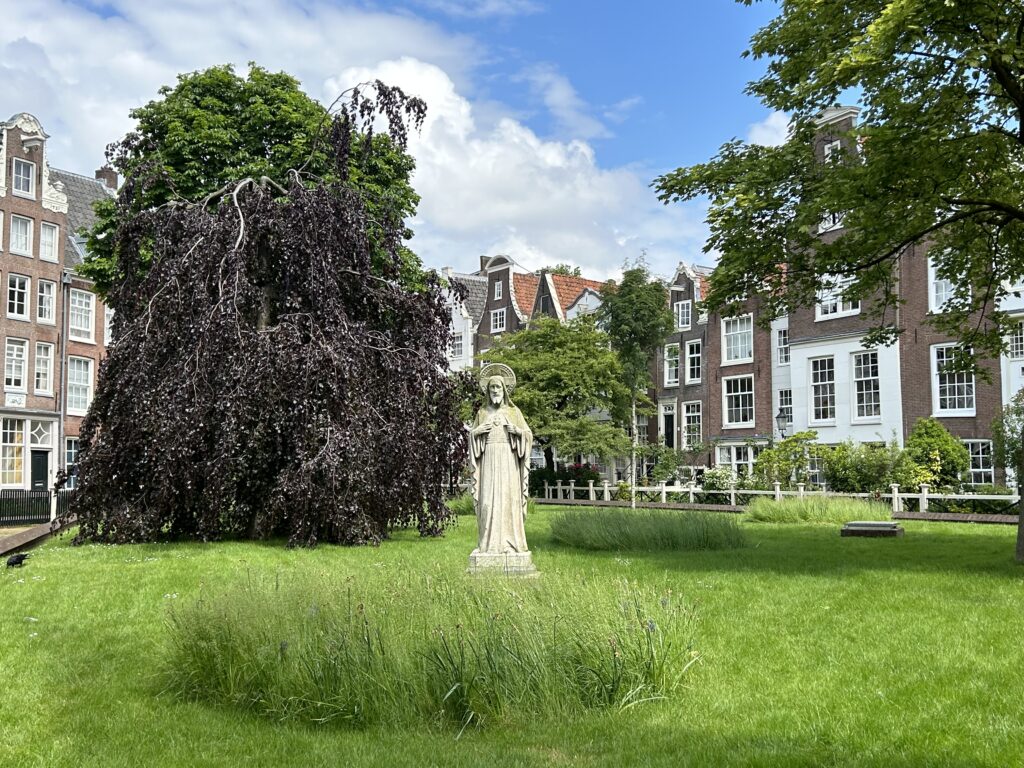
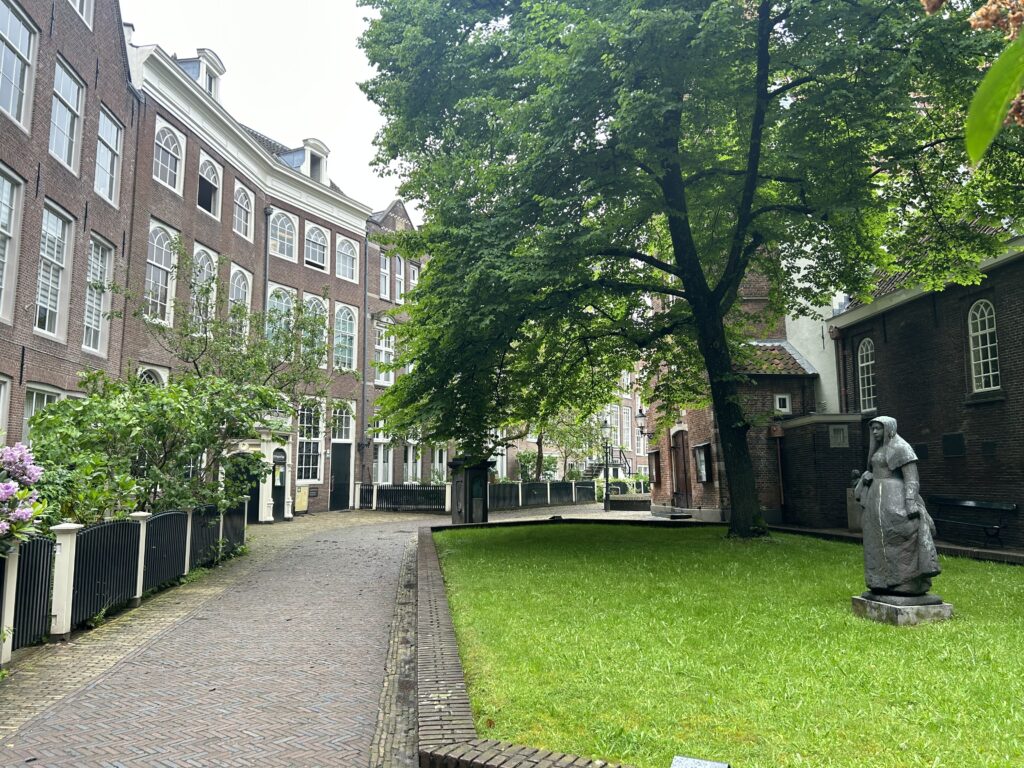
PLUS: We get kicked out of a convent! And we try raw herring sandwiches
LISTEN NOW — AMSTERDAM/NEW AMSTERDAM: EMPIRE OF THE SEAS
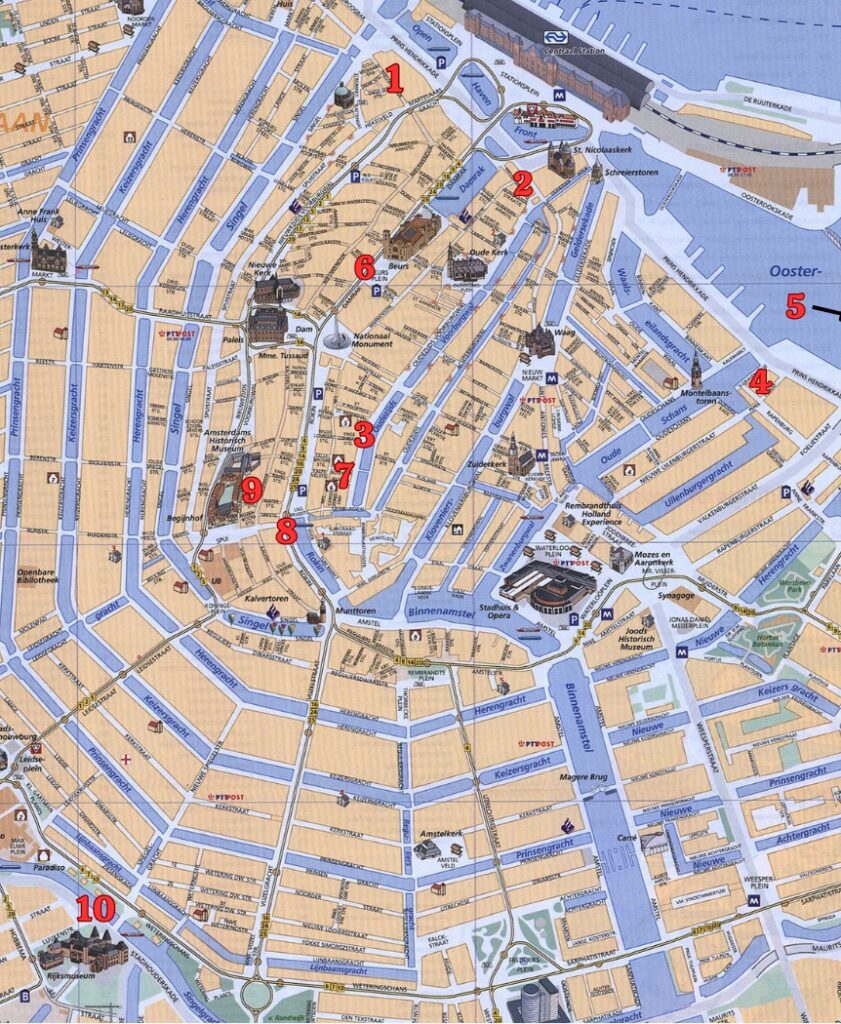
Our destinations in this episode:
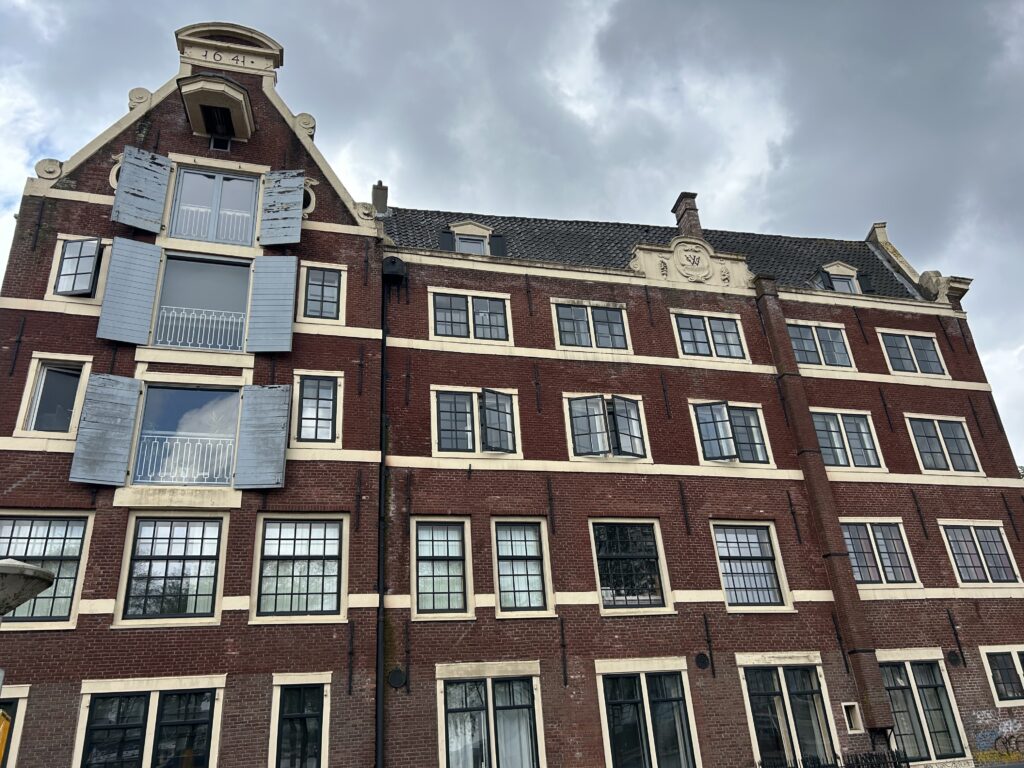
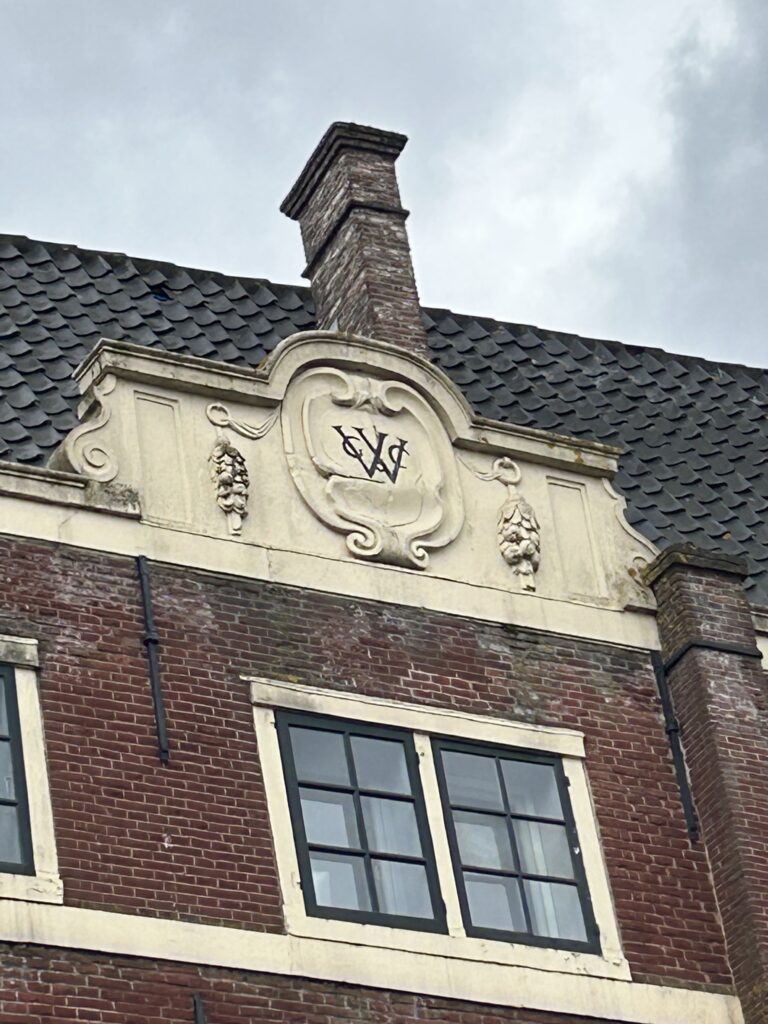
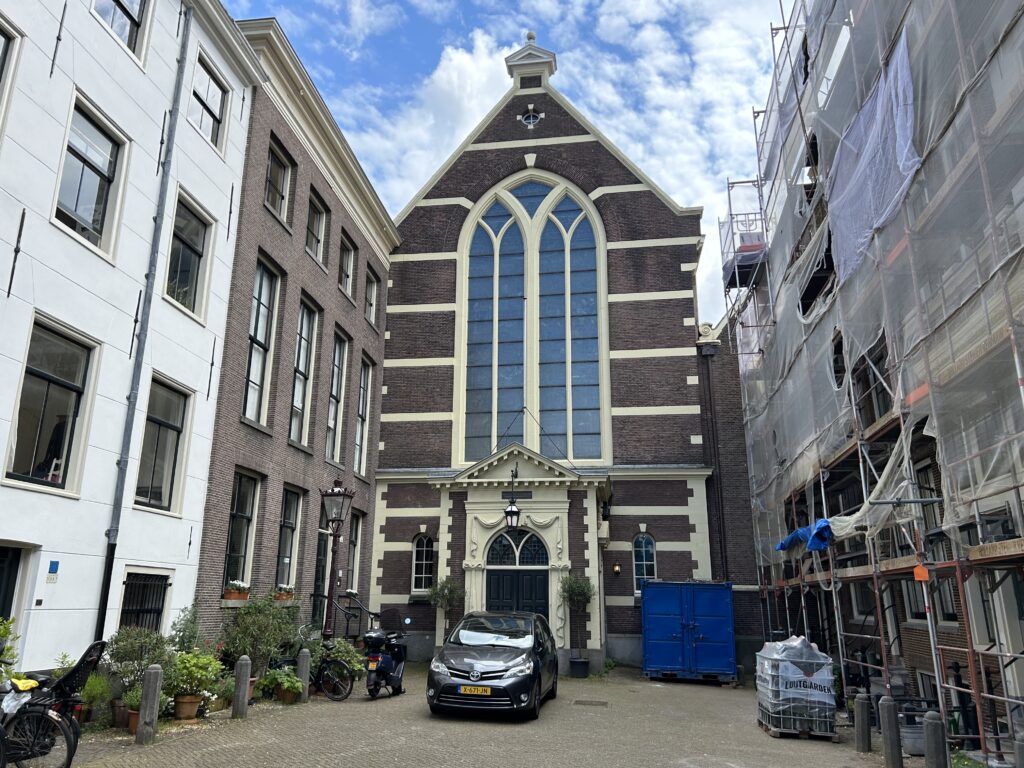
1 Centraal Station 2 “The Crying Tower” 3 Oust East India House 4 Dutch West India Warehouse 5 Maritime Museum 6 Oude Kirk 7 Walloon Church in Asmterdam 8 Frens Haringhandel 9 Begijnhoff/Cloister 10 Rijksmuseum
Among the historic places featured on this week’s show:
Over on Patreon, we released a series of daily shows while on the streets of the Netherlands. You can check out those shows — and the many other benefits of being a Bowery Boys patron — by supporting the show at Patreon.
FURTHER LISTENING
Interview with Russell Shorto, author of The Island At The Center of the World
The Lenape and other native peoples of the New York/Hudson Valley region would be both trading partners and adversaries of the Dutch, who claimed to have ‘discovered’ the land those people already lived upon.
The story of religious freedom during the New Amsterdam/Peter Stuyvesant plays a major role in this episode which features a visit to the John Bowne House:
Announcing an epic new Bowery Boys podcast mini-series — The Bowery Boys Adventures in the Netherlands. Exploring the connections between New York City and that fascinating European country, in honor of the 400th anniversary of the first Dutch settlement in this region.
LISTEN TO A SNEAK PREVIEW HERE:
Simply put, you don’t get New York City as it is today without the Dutch who first settled here 400 years ago. The names of Staten Island, Greenwich Village and the Bronx actually come from the Dutch.
The names of places like Brooklyn and Harlem derive from actual Dutch cities and towns.
Even our own podcast name — Bowery Boys — comes from the Dutch! (Bowery comes from the Dutch bouwerij for farm. Yes technically that makes us “farm boys.”)
Starting this Friday, and over the course of several weekly shows, we’ll dig deeper into the history of those Dutch settlements in New Amsterdam and New Netherland — from the first Walloon settlers in 1624 to the arrival of Peter Stuyvesant.
But we’ll be telling that story not from New York, but from the other side of the Atlantic, in the Netherlands.
We’ll be walking the the streets of Amsterdam and other Dutch cities, searching for clues of America’s early history. And along the way we’ll be joined by acclaimed Dutch historians, journalists and tour guides.
While much of our series was recorded in Amsterdam — tracing the paths of Henry Hudson, Peter Stuyvesant and the beginnings of the Dutch West India Company — we’ll also take the show on the road (or the canal, as it were) to Leiden, Utrecht, Haarlem and more.
That’s the Bowery Boys, Adventures in the Netherlands.
Coming soon. Subscribe to the Bowery Boys podcast so you don’t miss a show.
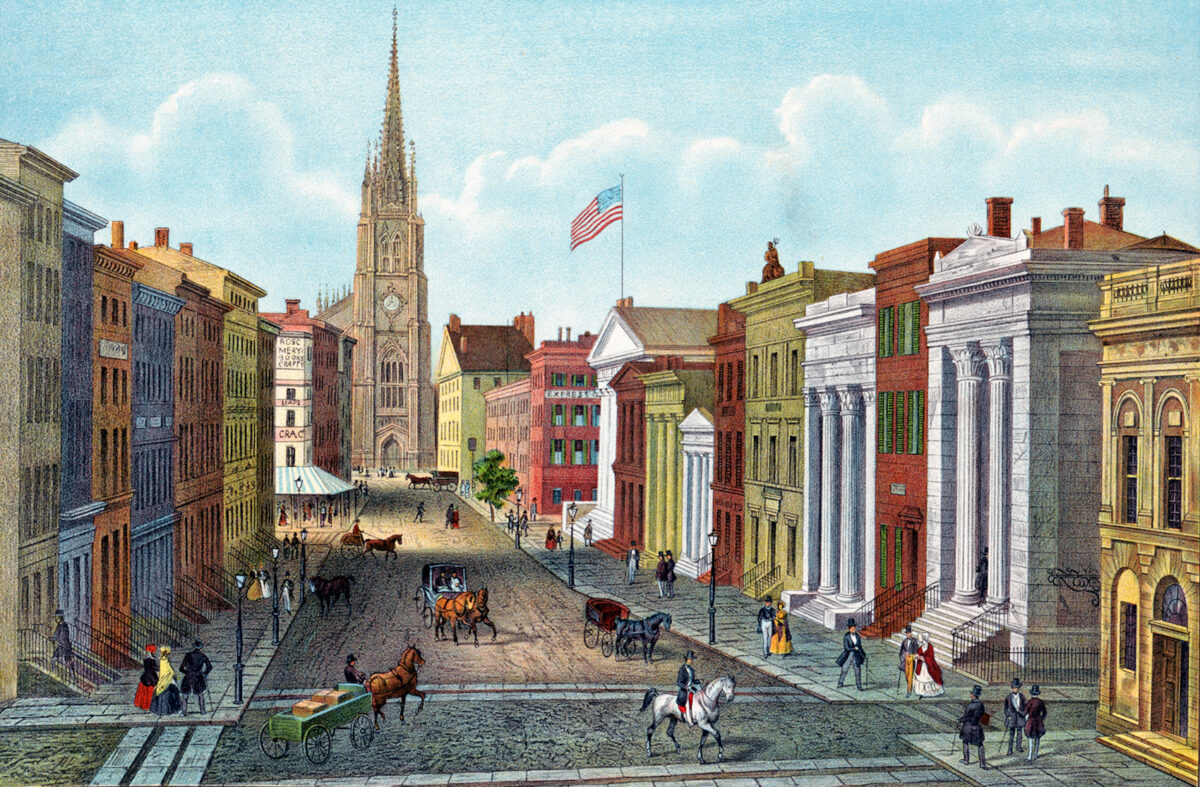
Wall Street in 1847, German artist Augustus Köllner, from lithograph by Laurent Deroy
Wall Street, today a canyon of tall buildings in New York’s historic Financial District, is not only one of the most famous streets in the United States, it’s also a stand-in for the entire American financial system.
Wall Street in 1847, German artist Augustus Köllner, from lithograph by Laurent Deroy
One of the first facts you learn as a student of New York City history is that Wall Street is named for an actual wall that once stretched along this very spot during the days of the Dutch when New York was known as New Amsterdam.
The particulars of the story, however, are far more intriguing. Because the Dutch called the street alongside the wall something very different.
During the colonial era, the wall was torn down and turned into the center of New York life, complete with Trinity Church, City Hall and a shoreline market with a disturbing connection to one New York’s financial livelihoods — slavery.
So how did this street become so associated with American finance? The story involves Alexander Hamilton, a busy coffee house and a very important tree.
LISTEN NOW: HOW WALL STREET GOT ITS NAME
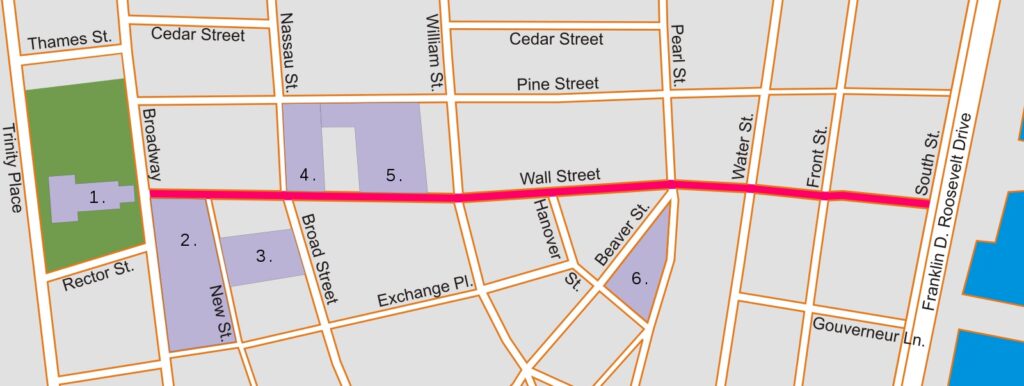
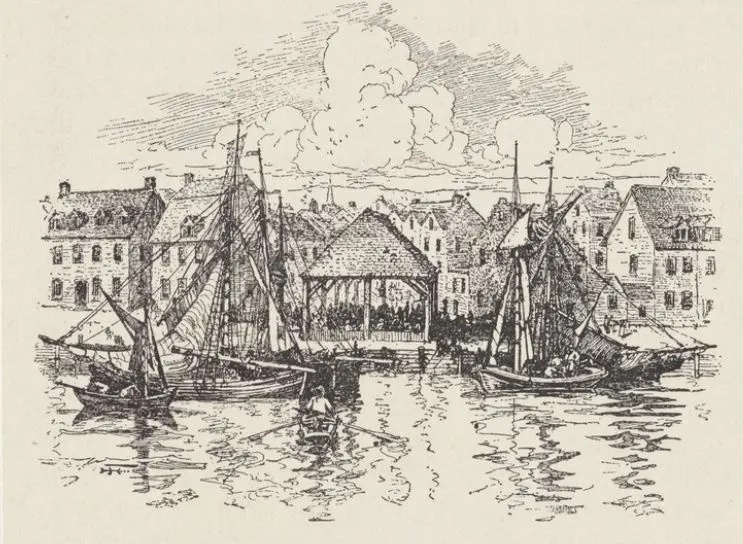
Map courtesy Wikimedia Commons: Featured on the map 1) Trinity Church 2) Bank of New York Building 3) NY Stock Exchange 4) Federal Hall 5) Trump Building 6) Cocoa ExchangeThe slave market was where the “Meal Market” is marked on the map.From Our Firemen: A History of the New York Fire Departments. Augustine E. Costello, 1887The Wall Street market which featured a slave market in 1711
FURTHER LISTENING:
After listening to the show about Wall Street, check back into these prior episodes for further adventures relating to this story.
This podcast is inspired by the article below, which ran in 2017 (and was itself based on an earlier article on this website).
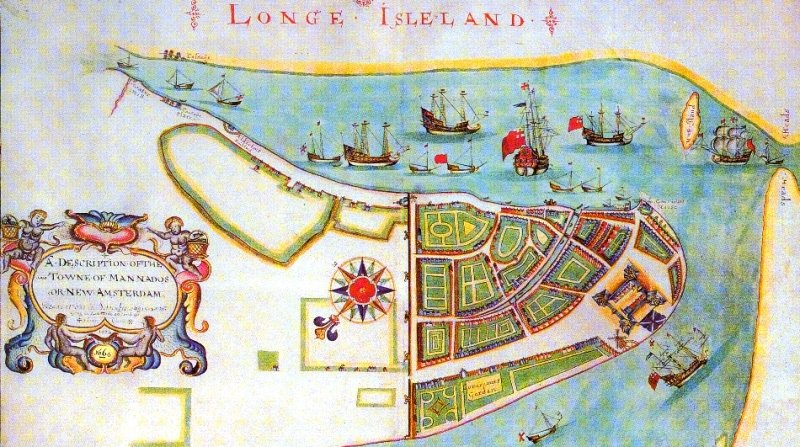
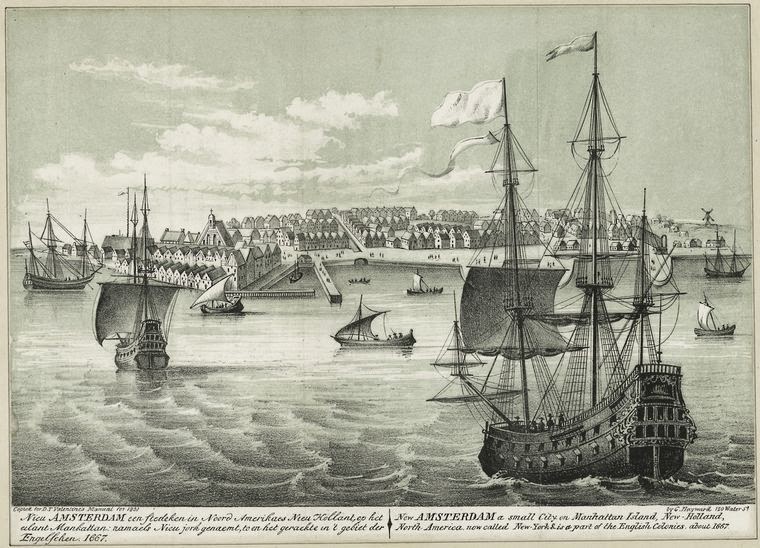
A simplistic but colorful view of “Man Mados” or “New Amsterdam” in 1664 (click in to inspect the detail)
There was most definitely a walled fortification nearby on New
Amsterdam’s northern boundary, and it certainly did stretch along about
the same area as Wall Street does today.
But the present name seems to be a formation of mixed meanings that
only a tangle of languages and hundreds of years of history can create.
The Dutch themselves referred to an actual street alongside the
waterfront that ran up to and alongside the wall as the ‘Cingel’ —
according to old history, meaning “exterior, or encircling, street.”
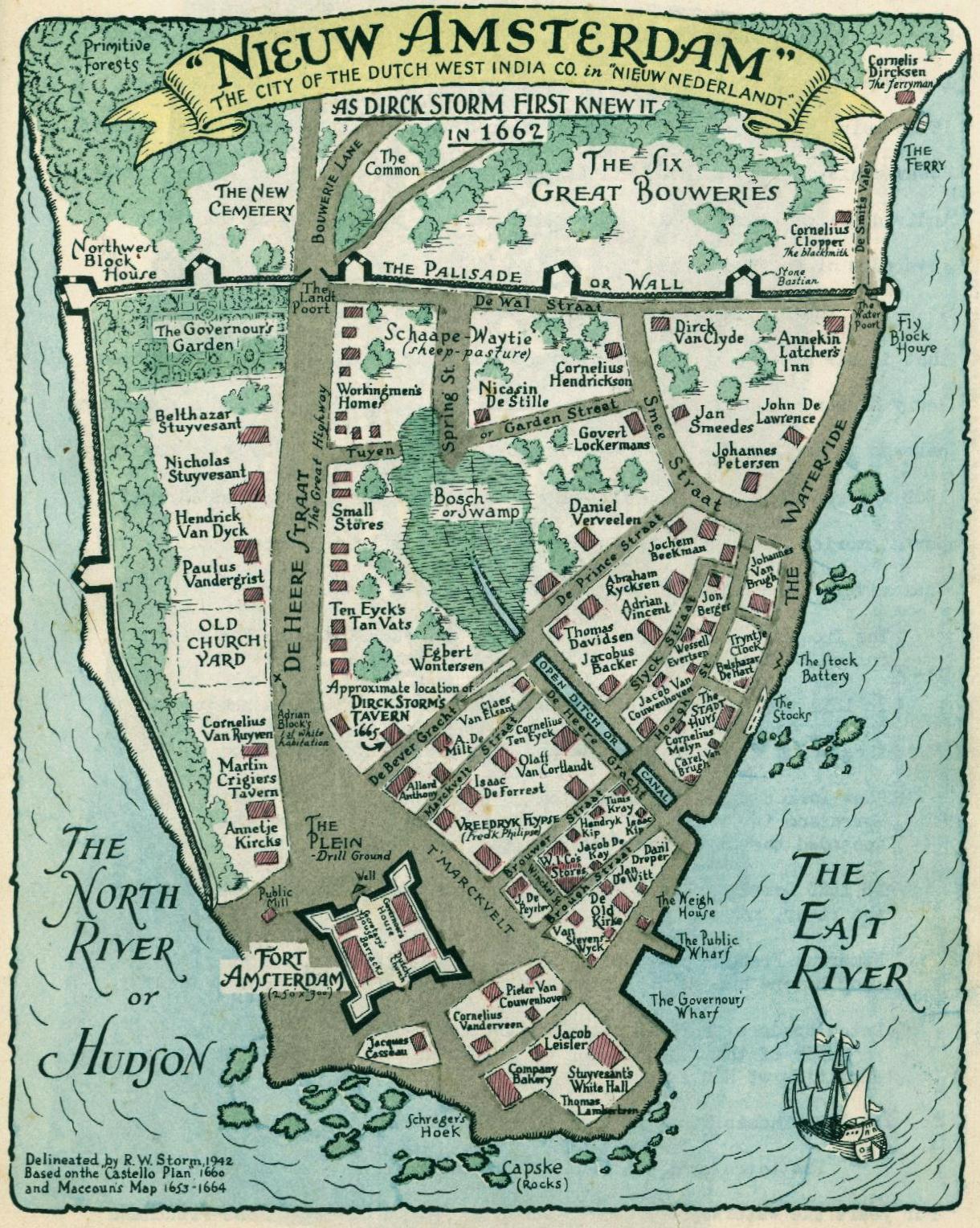
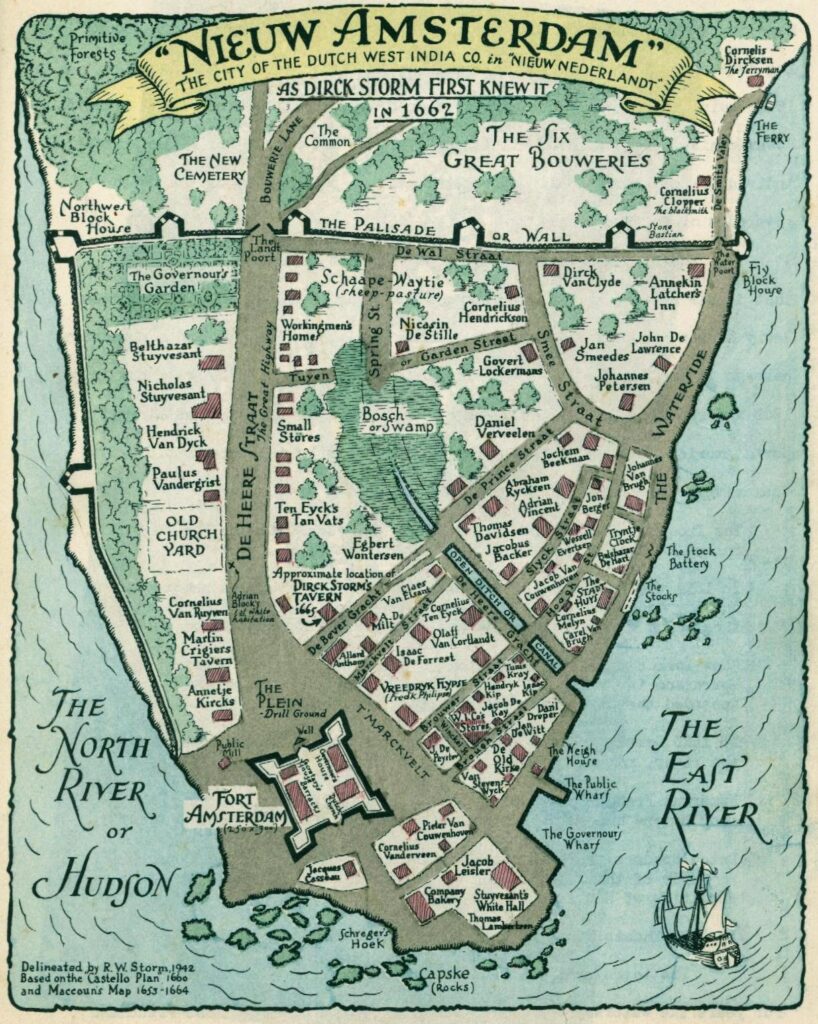
This festive illustration from 1949, created for Old Dirck Storm’s Book, takes some liberties with the names and streets of New Amsterdam. For instance it applies De Wal Straat as the name of the street next to the wall. See this week’s show for how this confusion came to be.
But ‘De Waal Straat’, as it was also known, was also the center of a
small Walloon community in New Amsterdam, and some believe the name
comes from them. The Walloons were French-speaking Belgians who were
among the first European settlers, arriving in the New World as part of a
contingent hired by the Dutch West India Company.
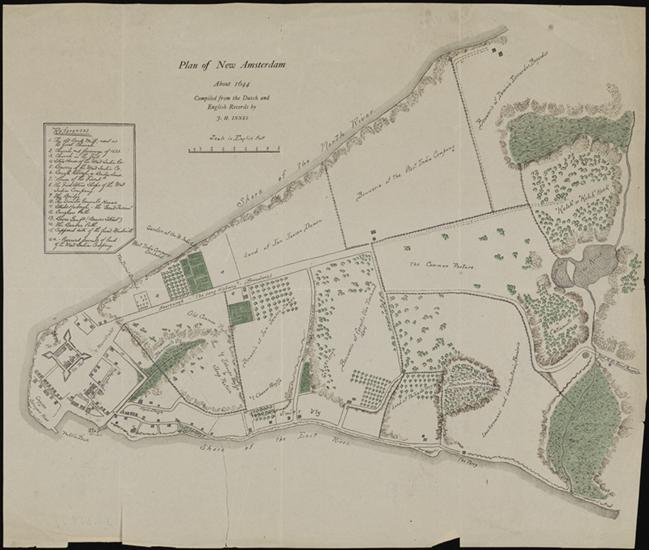
A map of New Amsterdam, indicating the layout from about 1644, well before a wall was constructed.
MCNY
The real reasons for New Amsterdam building its famous wall are also
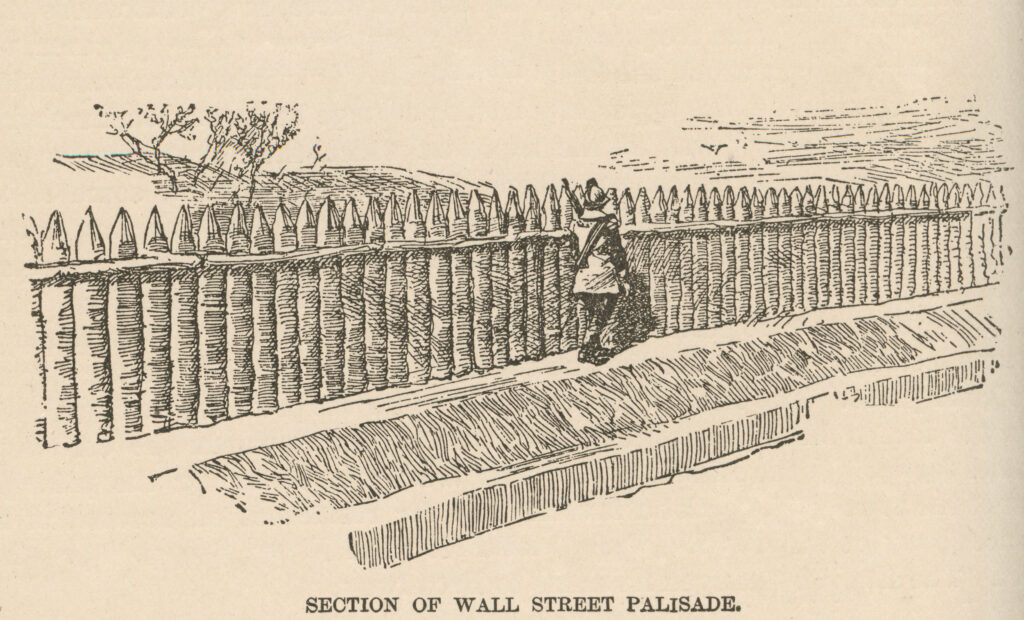
up for grabs. It’s commonly held that an original wooden palisade was
erected in 1644 in defense of Indian attacks, and certainly, the
residents of New Amsterdam did their part to rile the anger of the
native landowners.
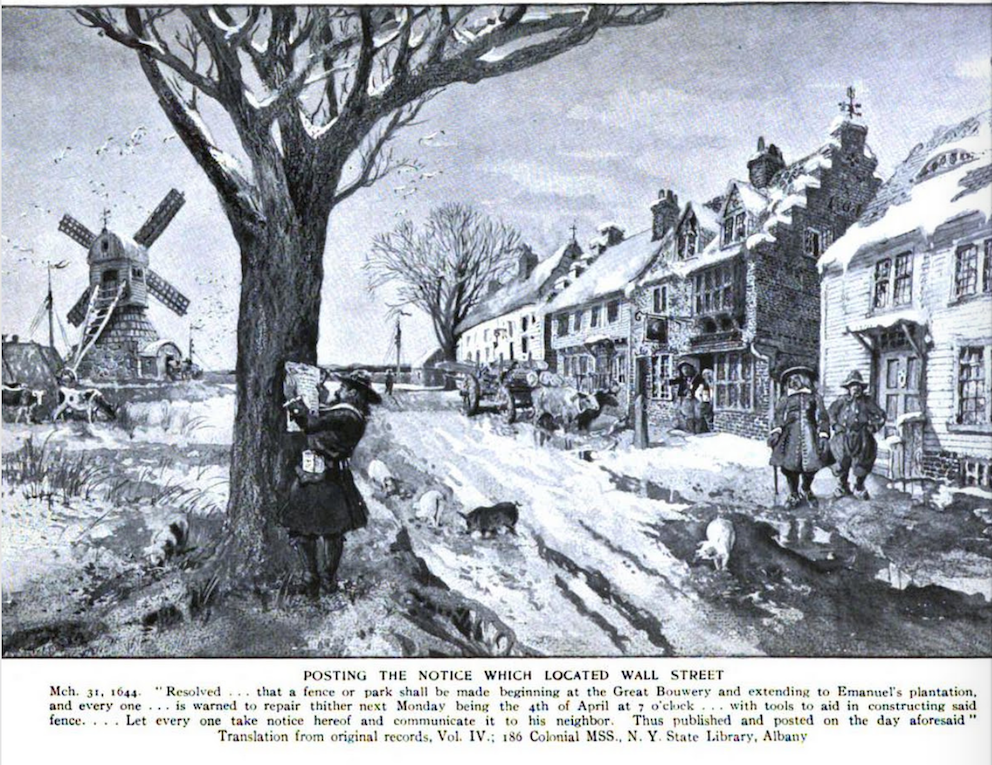
Below: A fanciful illustration from Harper’s Magazine, 1908,
imagining New Amsterdam and the construction of the original ‘wall’.
But the Dutch had been living at the tip of Manhattan for over 25
years by the time the sturdier wall was built in 1653. In truth, it was
commissioned to keep out a different sort of enemy.
You’ll be pleased to know that director-general Peter Stuyvesant was the man who ordered the construction of the wall — in his words, “to surround the greater part of the city with a high stockade and small breastwork” — to replace the inadequate wooden barrier that had previously marked the city’s northern border.
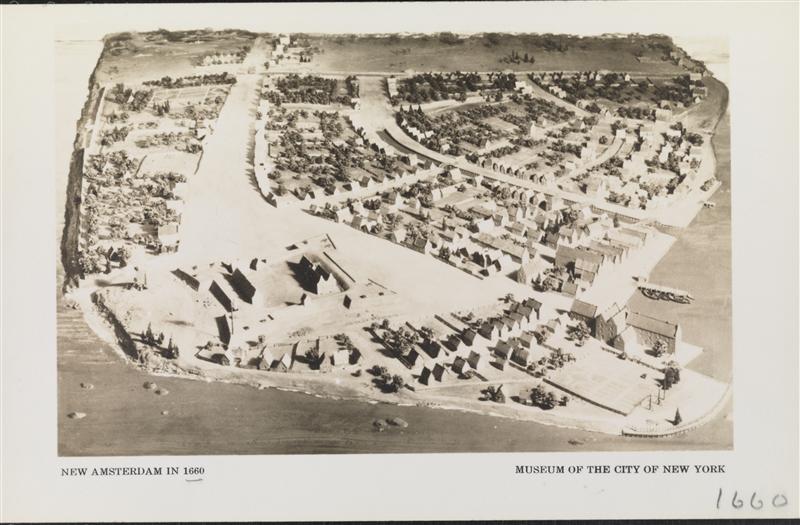
A model of New Amsterdam made in 1933, clearly showing how sudden the city borders stopped thanks to the wall.
MCNY
This was an incredibly important year for New Amsterdam in two respects. In February 1653, New Amsterdam was chartered as an official Dutch city.
Although Stuyvesant was quite against the outpost receiving such official recognition, he eventually took advantage of it, appointing the first town council himself rather than putting it up to such trivial inconveniences as elections.
But in 1653, the tides of the motherland spilled onto their shores as the war between England and the Netherlands threatened the remote and undefended new city.
The Dutch intended to launch ships from New Amsterdam harbor in a battle against the English.
As a result, the English colonies up north were sure to retaliate,
either by sea or, feared Stuyvesant, over land, possibly teaming with
hostile Indian forces, down through undefended Manhattan island.
Essentially, the wall that helped give us Wall Street was built
because Stuyvesant feared attacks not just from Indian tribes, but from
the European colonies of Connecticut, Massachusetts and New Haven!
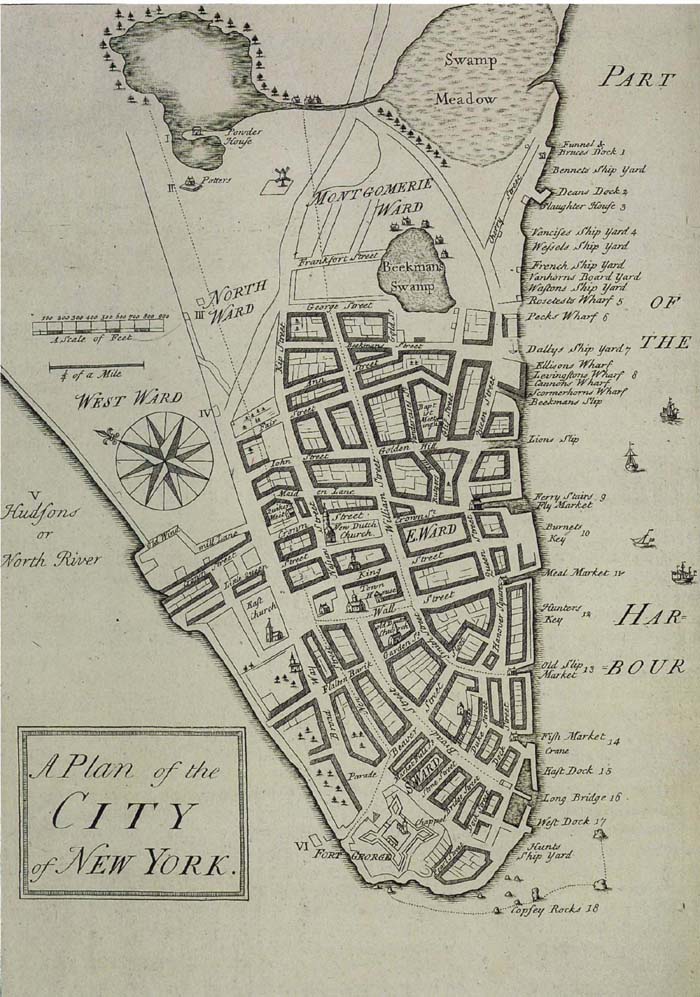
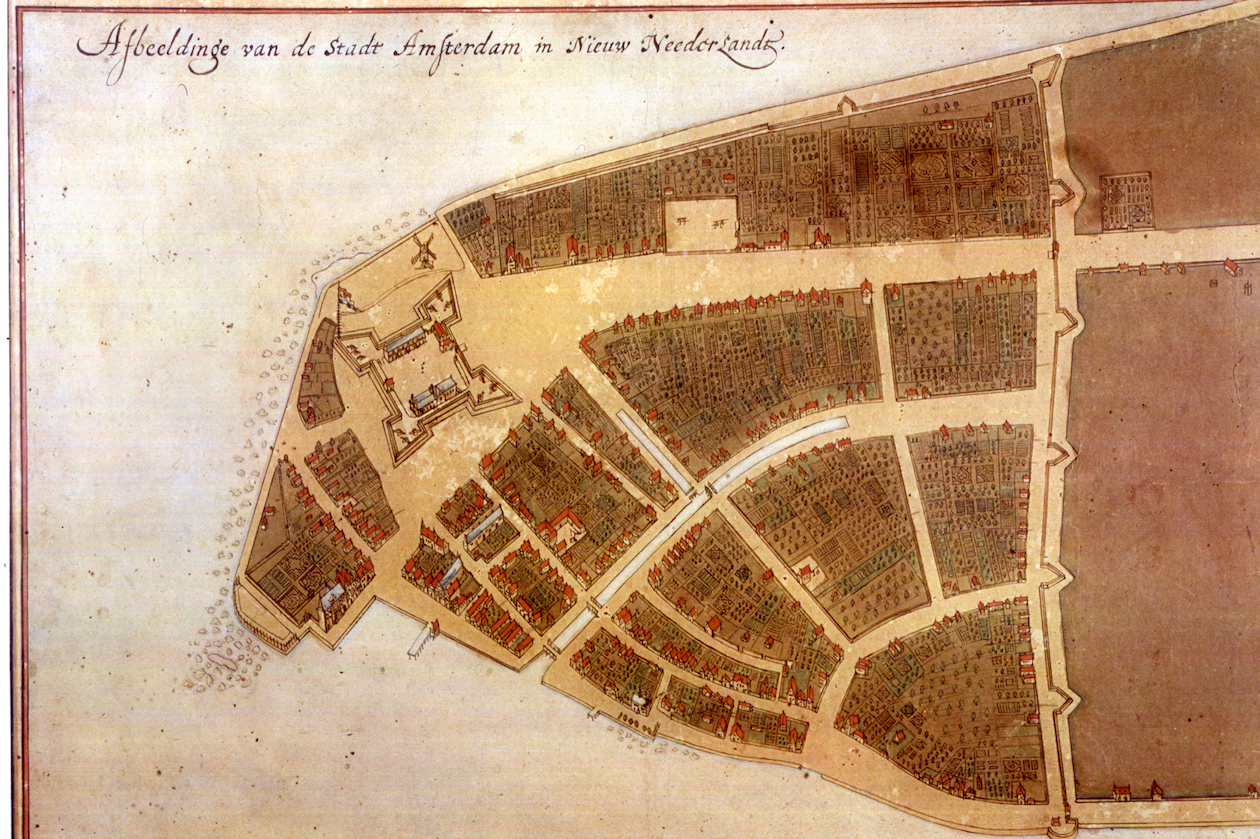
Looking at this more well-known map of New Amsterdam – the Costello Plan of 1660 — one can see the two gates very clearly.
Stuyvesant called upon the 43 richest residents of New Amsterdam to
provide funding to fix up the ailing Fort Amsterdam and to construct a
stockade across the island to prevent attacks from the north, while it
took New Amsterdam’s most oppressed inhabitants — slave labor from the
Dutch West India Company — to actually build the wall.
The barrier was constructed out of earth, rock, and 15 feet timber planks sold to the Dutch, ironically enough, by the “notorious“ Englishman Thomas Baxter. In a turnabout that one would expect from hiring your enemy, Baxter later led a group of “Rhode Island marauders“ and pirated Dutch fishing ships.
Early in the 1660s, the Dutch upgraded its wall to include brass
cannons and two sturdy gates — one at today’s intersection of Wall and
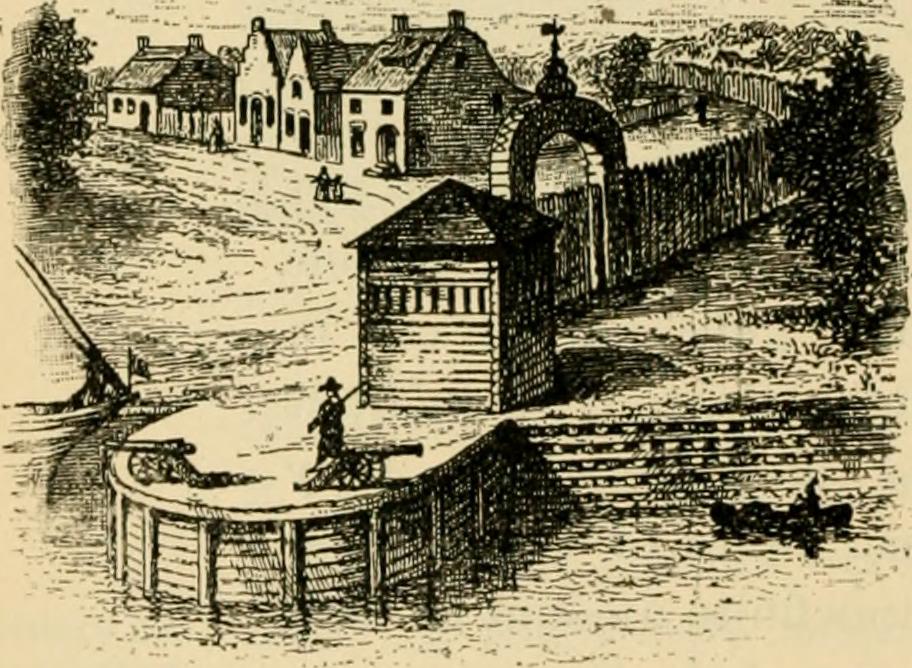
Broadway (for land), the other at Wall and Pearl Street (according to an early account, a water gate and access to a ‘river road’).
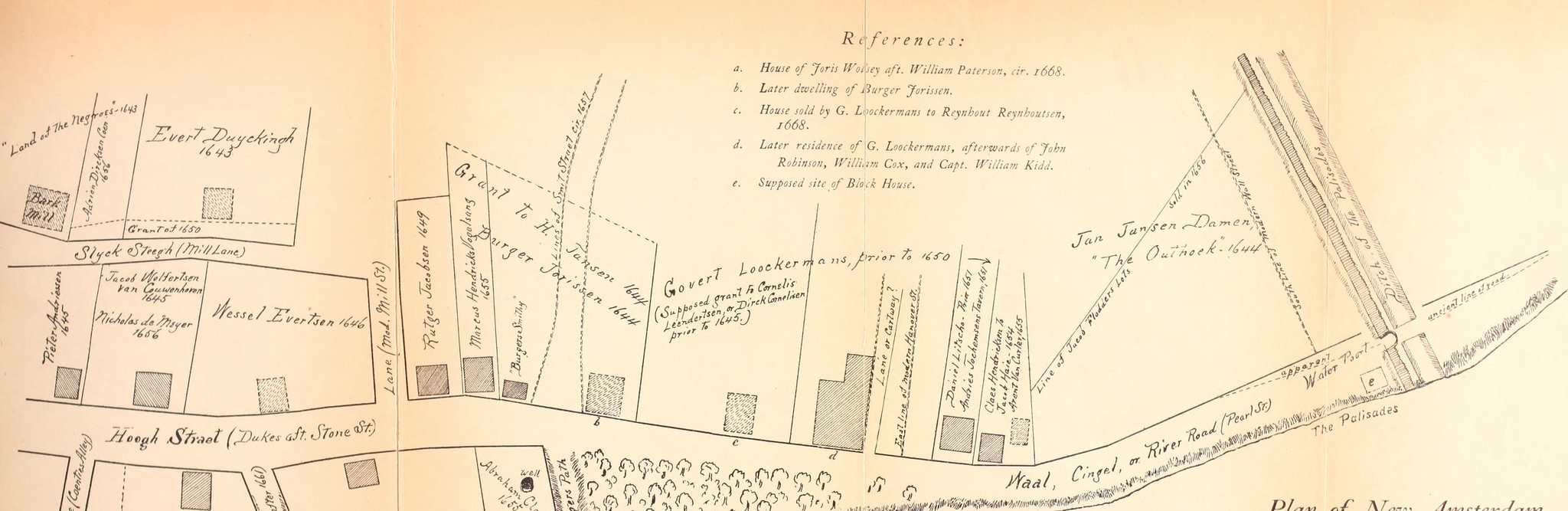
Below: A detail from a map of New Amsterdam’s eastern side,
clearly showing the water gate, and an illustration from 1908 of that
eastern gate:
Internet Archives Book Images
The British took over New Amsterdam in 1664 and renamed it New York,
but the wall still remained, becoming more a relic than a serious
defense.
By the turn of the century, the fear of land attacks had almost completely subsided and the city was beginning to feel crowded. So in 1699, the wall was torn down with some of the material salvaged to help construct a new City Hall at the corner of Nassau Street and the newly christened Wall Street.
In 1711 a slave market was built on Wall Street along the eastern shore, remaining there until 1762.
When the British were forced out in 1783 by the Americans, the City Hall building was finally renamed Federal Hall — the first official center of American government.
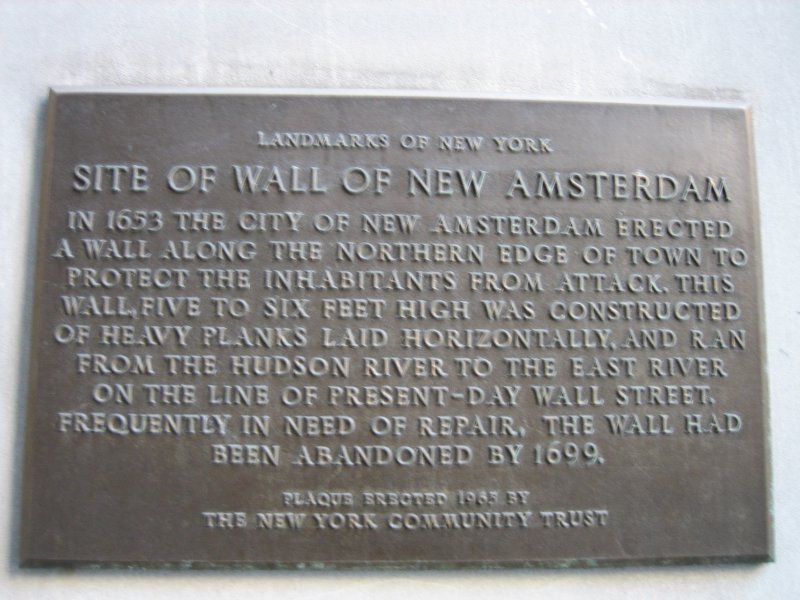
A plaque honoring the old wall sits today at the corner of Wall and Broadway, where the gate to the city once opened:
After reading this article on the origins of Christmas in America, find some information about a virtual Christmas in Old New York tour from Bowery Boys Walks.
There are many different ways to celebrate Christmas, a national holiday derived from the union of Christianity and capitalism. How one chooses to mark the occasion is a reflection of one’s own traditions and faith (or lack thereof).
Christmas can be intensely religious for some, not at all for others. It is ever evolving to fit the population’s needs.
However, if none of the present ideas work, then there is the Puritan way: don’t celebrate it at all.
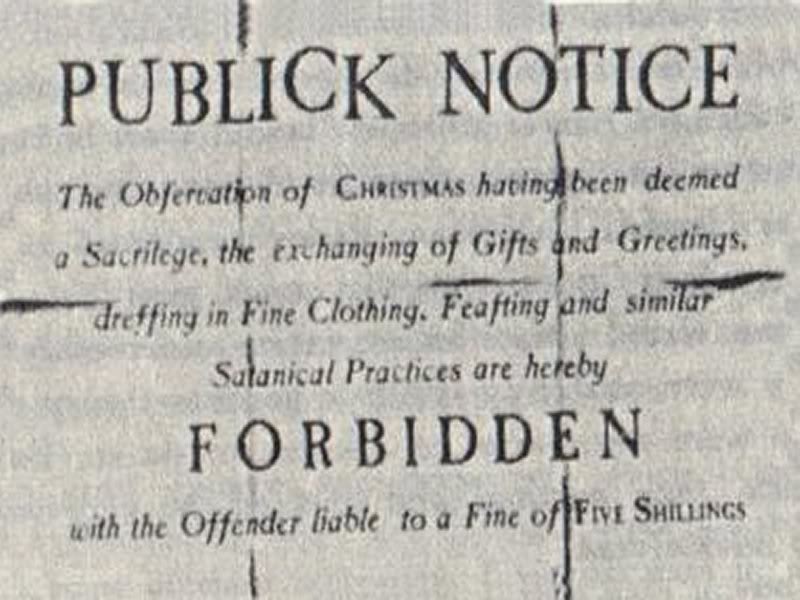
Below: A 1659 notice forbidding the celebration of Christmas in the Puritan-led colonies
There was such opposition to the holiday within the first communities of the New World that it was outright banned among the Puritans of the Massachusetts Bay Colony.
Puritan leaders, ironically enough, took this abolition directly from the Bible; there was no celebration authorized in the book, and since it was doubtful Jesus was actually born on December 25, they considered the day a sinner’s excuse for debauchery.
As Puritans were by nature a homogeneous community, differing traditions were frowned upon, although modest observance of Christ’s birth was occasionally allowed. Generally speaking, December blew through the early English colonies with nary a festivity.
So where did the ingredients of modern Christmas first wash up onto the shores of North America? All signs point to New Amsterdam.
Courtesy Museum of the City of New York
The New Netherland colony of the 17th century was not ruled by such strict restriction of belief.
New Amsterdam, New York’s precursor, was a company town. While laws suppressing the celebration of Christmas were on the books until 1681 up in Massachusetts and other places, down in New Amsterdam, rudimentary holiday traditions were openly, even casually, celebrated.
The settlers of Dutch New Netherland could theoretically celebrate how they wished.
There were certainly observations of Christ’s birth — called Kerstydt — but, it was often overshadowed by a more popular December holiday: Sinterklaas, a Dutch gift-giving tradition where children sat their shoes outside their homes to be filled by a visiting St. Nicolas on December 6th.
(Often, perhaps due to inclement weather, it made sense to have the shoes remain inside, and perhaps better still, to hang stockings near the fireplace.)
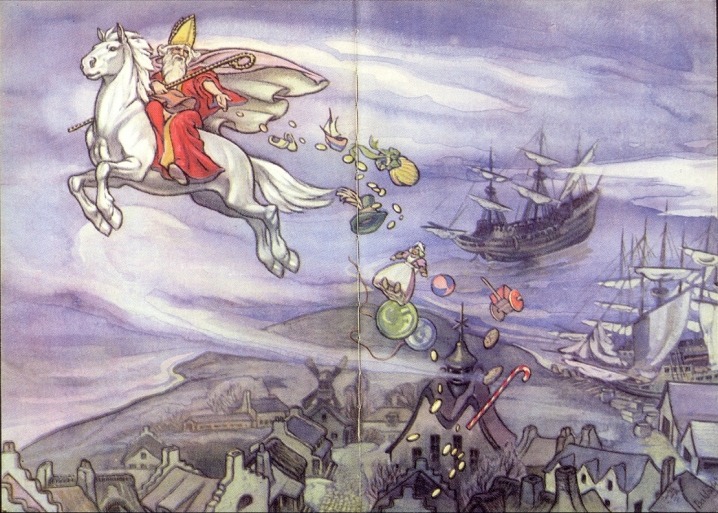
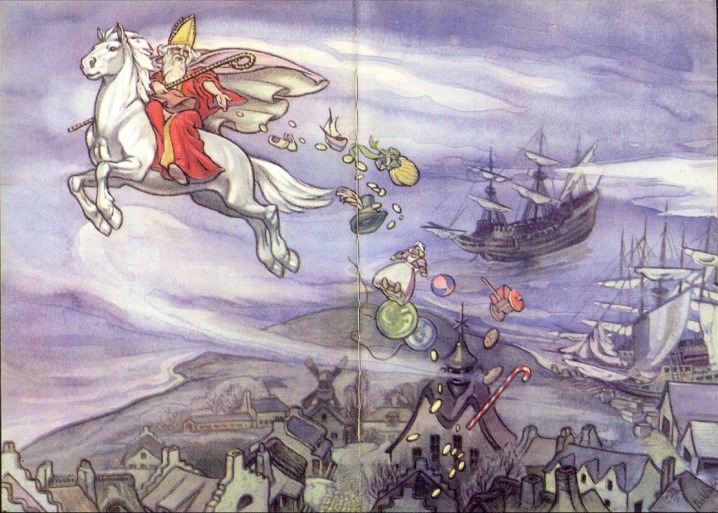
A whimsical illustration of St Nicolas over a Dutch city, very possibly New Amsterdam. Artist unknown.
New Netherland’s population in 1624 was only 270 people, with few if any children. Over the next 40 years, however, dozens of families populated the outpost, passing down family customs and linking their distant home with the mainland.
With Dutch residents eventually outnumbering the others, their traditions became the most prevalent.
Combine that prevalence (with its extra-exciting gift-getting component) with the envy of the other non-Dutch children, and suddenly Sinterklaas becomes a highly anticipated holiday among the entire population of New Amsterdam.
This, despite Peter Stuyvesant‘s disgust at any holiday which promoted moral laxity (also known in some circles as fun).
NYPL
Or as author Russell Shorto describes it: “[A]mong the English, the French, the German, the Swedish families of Manhattan, pressure was brought to bear on parents, and the Dutch tradition was adopted and, later, pushed forward a couple of weeks to align with the more generally observed festival of Christmas.”
According to one source, “On Nieuw Jaar (New Year) and Kerstydt (Christmas) the Governor’s house was ablaze with candles and the young men and maidens danced in the ‘entry’.”
Official business was closed for weeks after, and “the burghers and their families spent much of their time in firing guns, beating drums, dancing, card-playing, playing at bowls or nine-pins and in drinking beer.”
No wonder Peter Stuyvesant hated holidays!
Over time, Christmas and Sinterklaas — one an observance of Jesus’ birth, the other honoring one of his most popular saints — would melt into each other. Even when the Dutch were kicked out of Manhattan in 1664, Sinterklaas was still celebrated in the region, further infused with English Christmas customs.
However, even as the British were expelled from Manhattan, American holiday traditions were still localized, often tied to one’s specific ethnicity and hardly unified.
It would take New York city leaders in the 19th century and the work of New York’s greatest writers to define new holiday symbols for a national audience.
In some Dutch pockets of upstate New York, the tradition of Sinterklaas is still celebrated today.
Want to hear more about the history of Christmas in New York? Take a Bowery Boys Walking Tour andget into the holiday spirit with a merry virtual stroll through The Big Apple!
On the Christmas In Old New York tour, guide Jeff Dobbins unveils the history of how the Big Apple became the center of all things Christmas from Macy’s to Rockefeller Center.
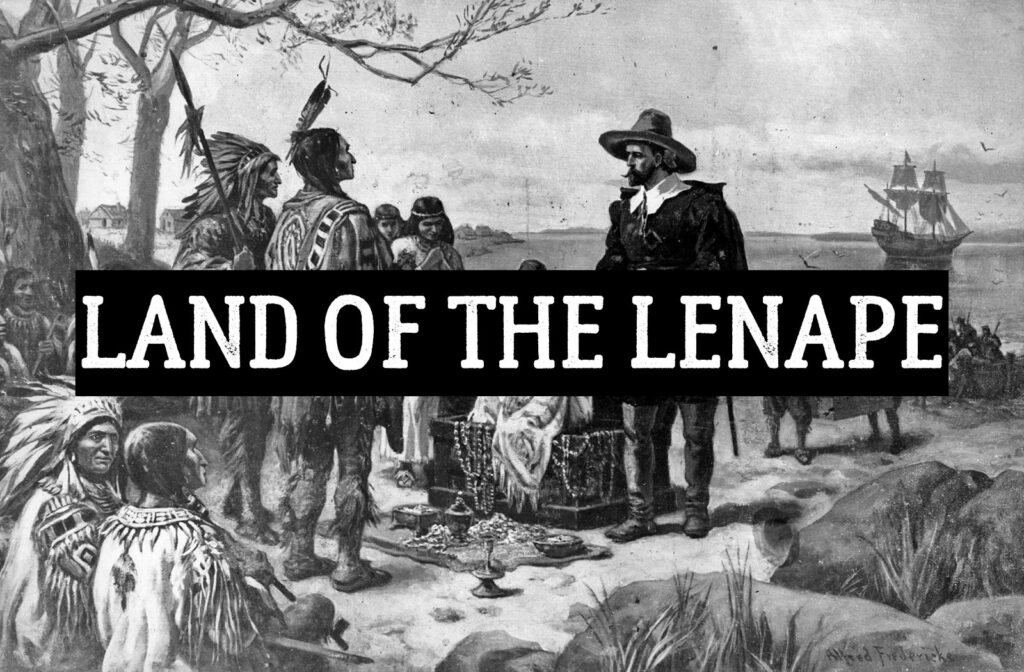
PODCAST The story of the Lenape, the native people of New York Harbor region, and their experiences with the first European arrivals — the explorers, the fur traders, the residents of New Amsterdam.
Before New York, before New Amsterdam — there was Lenapehoking, the land of the Lenape, the original inhabitants of the places we call Manhattan, Westchester, northern New Jersey and western Long Island.
This is the story of their first contact with European explorers and settlers and their gradual banishment from their ancestral land.
Fur trading changed the lifestyles of the Lenape well before any permanent European settlers stepped foot in this region. Early explorers had a series of mostly positive experiences with early native people.
With the Dutch settlement of New Amsterdam, the Lenape entered into various land deals, “selling: the land of Manhattan at a location in the area of today’s Inwood Hill Park.
But relations between New Amsterdam and the surrounding native population worsened with the arrival of Director-General William Kieft, leading to bloody attacks and vicious reprisals, killing hundreds of Lenape and colonists alike.
Peter Stuyvesant arrives to salvage the situation, but further attacks threatened any treaties of peace. But the time of English occupation, the Lenape were decimated and without their land.
And yet, descendants of the Lenape live on today in various parts of the United States and Canada. All that and more in this tragic but important tale of New York City history.
The Bowery Boys: New York City History podcast is brought to you …. by you!
We are now producing a new Bowery Boys podcast every two weeks. We’re also looking to improve the show in other ways and expand in other ways as well — through publishing, social media, live events and other forms of media. But we can only do this with your help!
We are now a member of Patreon, a patronage platform where you can support your favorite content creators for as little as a $1 a month.
Please visit our page on Patreon and watch a short video of us recording the show and talking about our expansion plans.
If you’d like to help out, there are five different pledge levels (and with clever names too — Mannahatta, New Amsterdam, Five Points, Gilded Age, Jazz Age and Empire State). Check them out and consider being a sponsor.
We greatly appreciate our listeners and readers and thank you for joining us on this journey so far. And the best is yet to come!
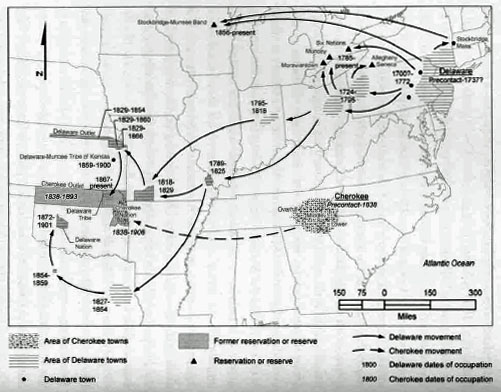
The long road of the Lenape. This 1978 map shows the path of their various relocations across the country in comparison with the relocation path of the Cherokee.
Ives Goddard, “Delaware,†in Handbook of North American Indians, vol. 15: Northeast, ed. Bruce Trigger and William Sturtevant (Washington DC: Smithsonian Institution1 1978)
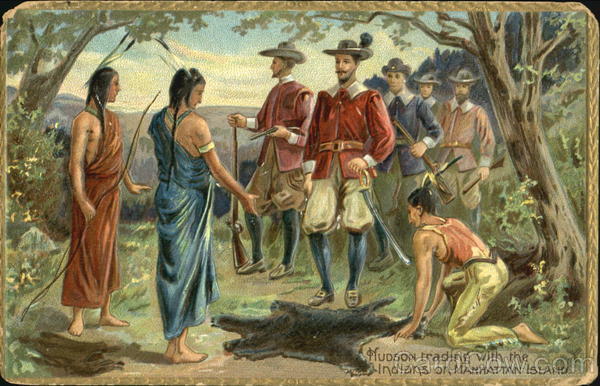
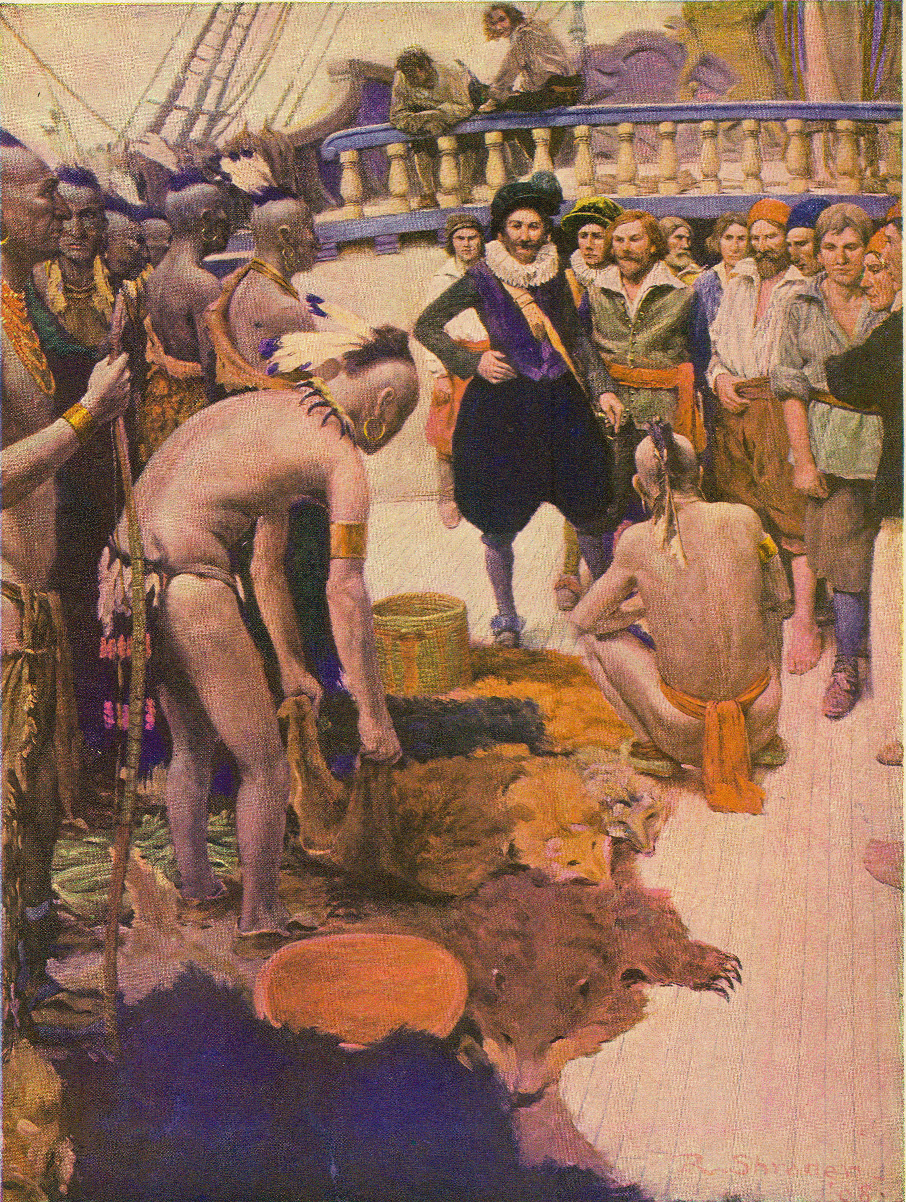
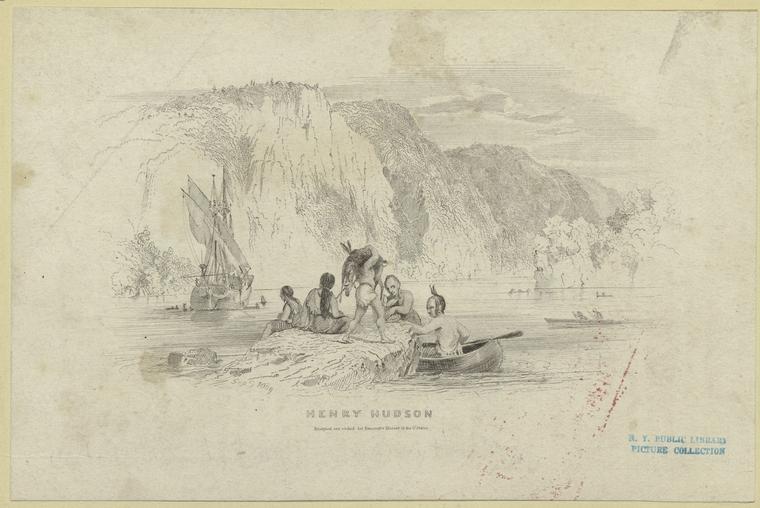
Henry Hudson’s interaction with the native people of the area would much later inspire a host of fanciful depictions.
“‘Designed and etched for Bancroft’s History of the United States’ Written on image: ‘Sept. 7 1609’
Courtesy NYPL
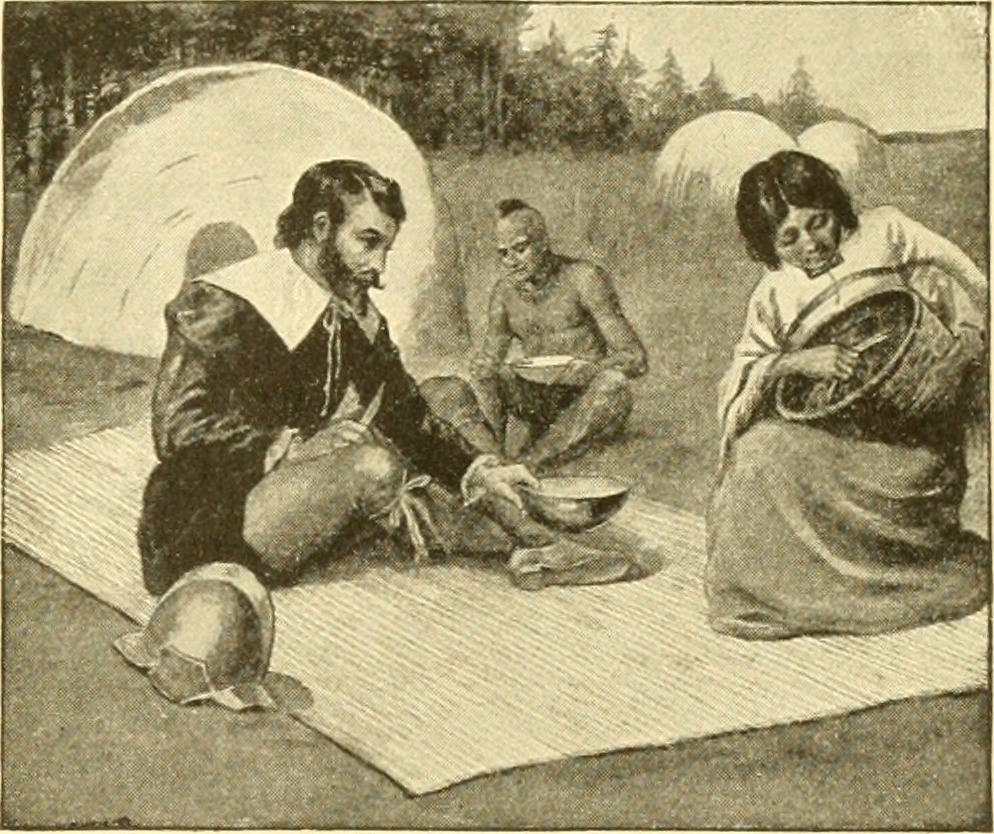
From a 1915 textbook ‘A First Book In American History’ — “Hudson’s ship anchored again opposite the Catskill Mountains, and here he found some very friendly Indians, who brought corn, pumpkins, and to-bacco to sell to the crew. Still farther up the river Hudson visited a tribe onshore, and wondered at their great heaps of corn and beans. The chief lived in around bark house. Captain Hudson wasmade to sit on a mat and eat from a red wooden bowl. The Indians wished him to stay all night; they broke their arrows and threw them into the fire, to show their friendliness.
Internet Archive Book Images
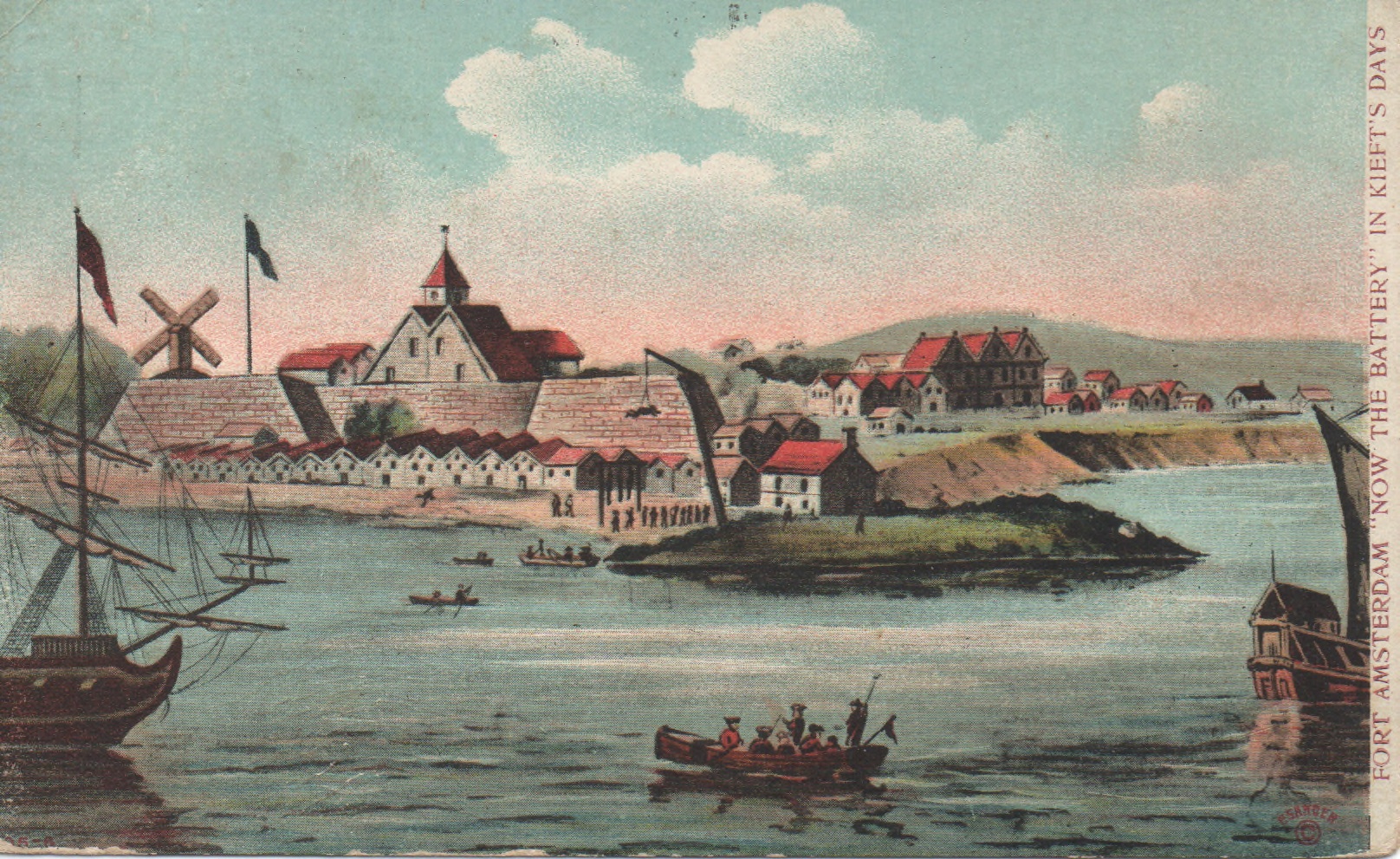
Behold New Amsterdam!
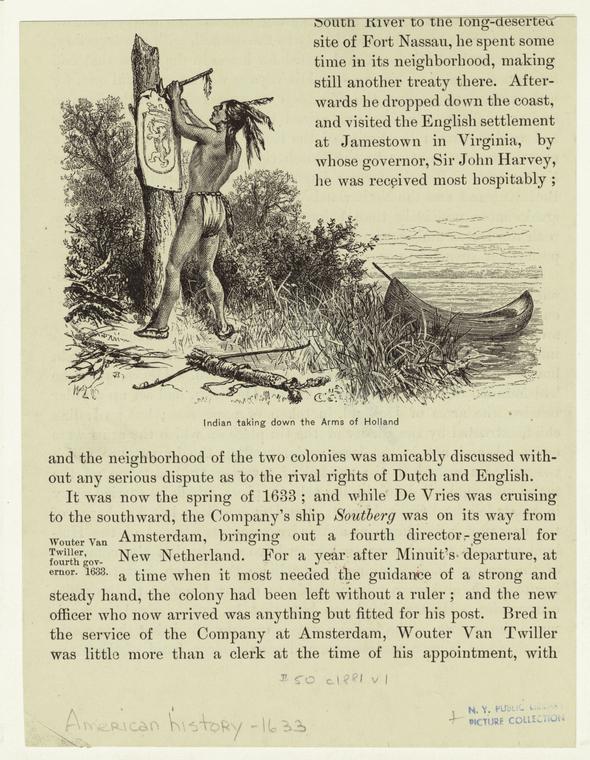
From another text book, this one from 1881:
New York Public Library
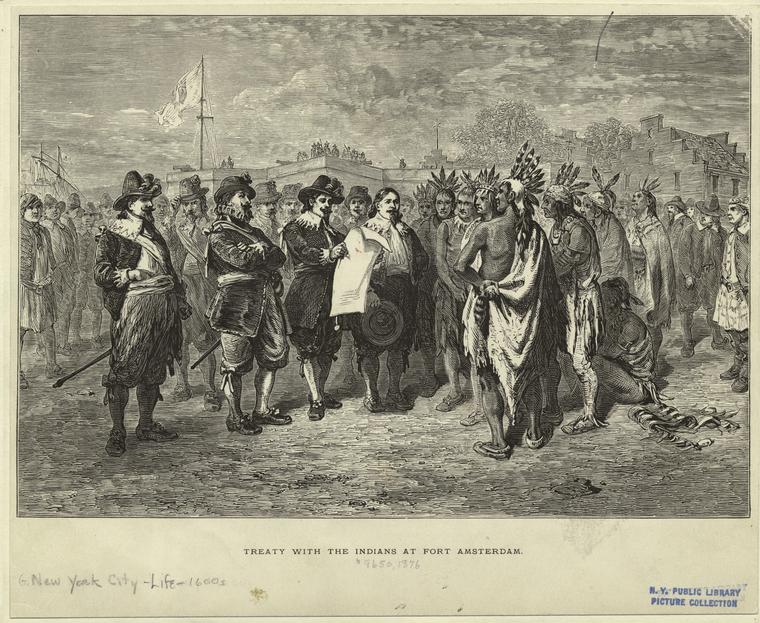
From an 1876 print: ‘Treaty with the Indians at Fort Amsterdam.” Not sure what year this picture depicts but everybody has two legs, so no Peter Stuyvesant!
NYPL
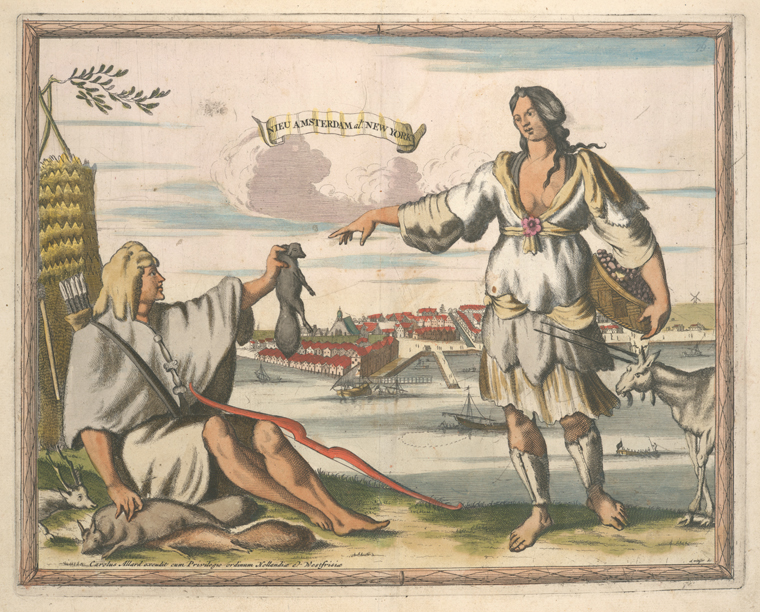
A well-known engraving by Aldert Meijer depicts New Amsterdam as being touched by the hand of providence.
NYPL
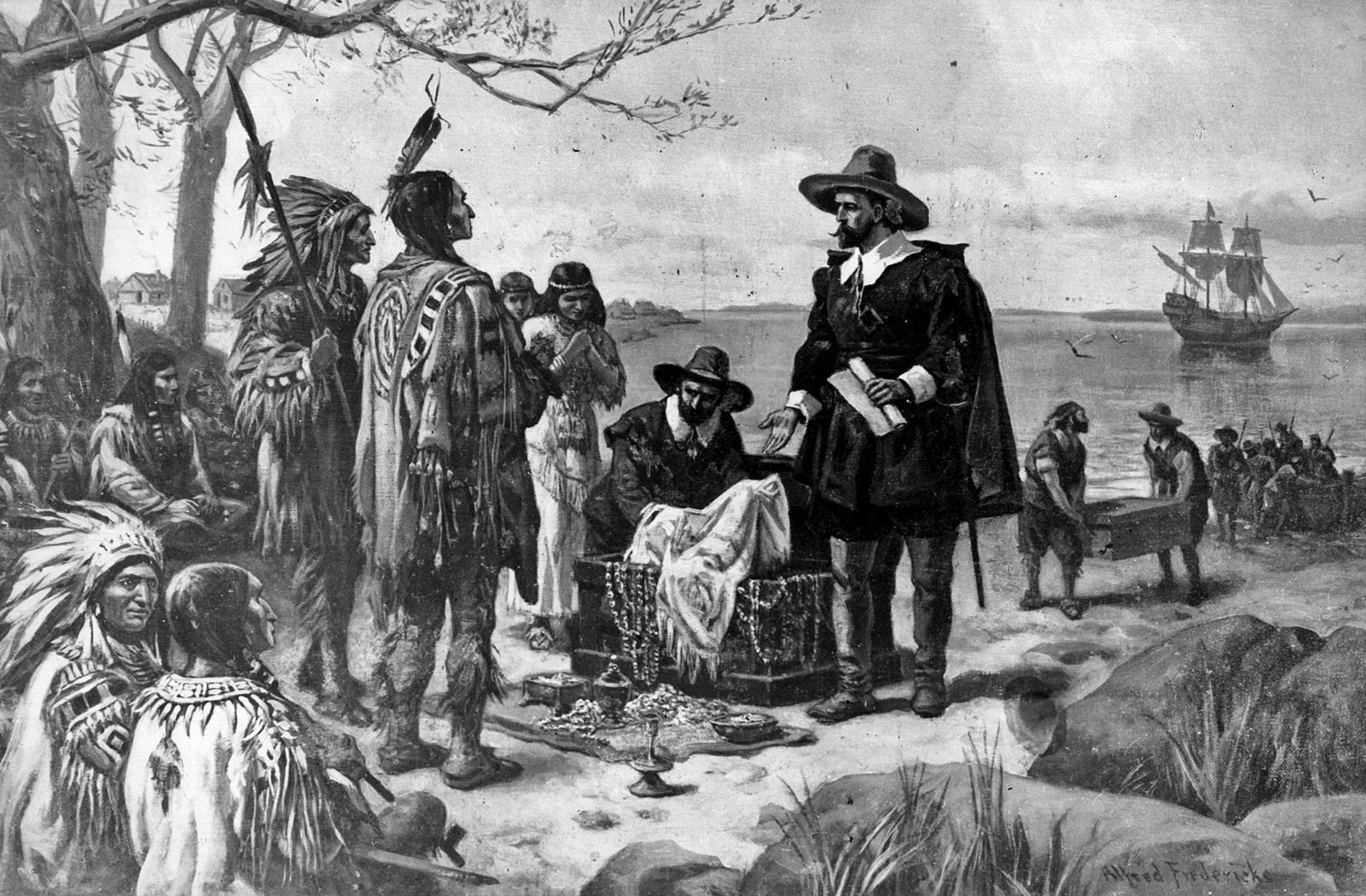
A drawing of the 1926 purchase of Manhattan between the native population and Peter Minuit. Image is from Popular Science Magazine, 1909.
NYPL
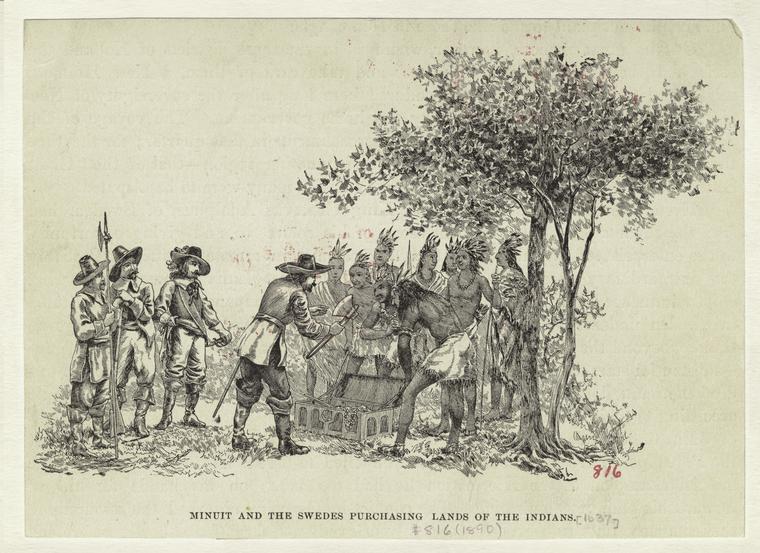
…clearly derived from
“Peter Minuit and the Swedes purchasing lands of the Indians.” Illustration dated 1890
NYPL
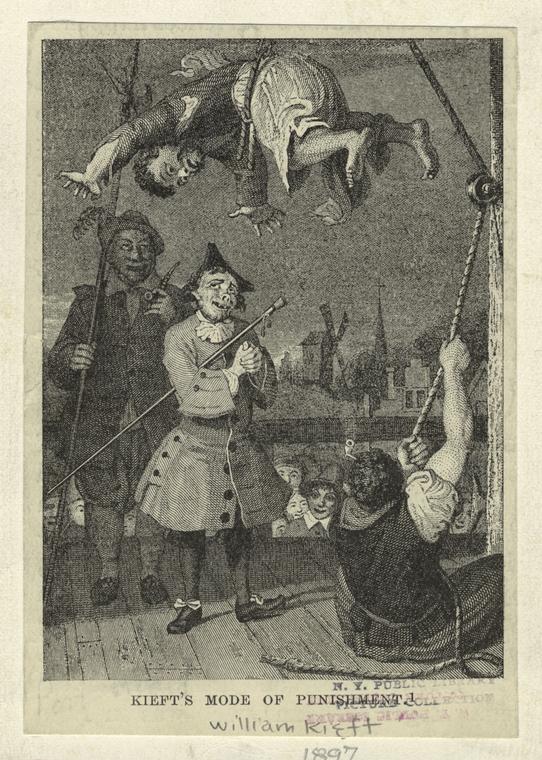
William Kieft’s reputation as a vicious tyrant is made apparent here in this 1897 illustration captioned ‘Kieft’s Mode of Punishment.’
NYPL
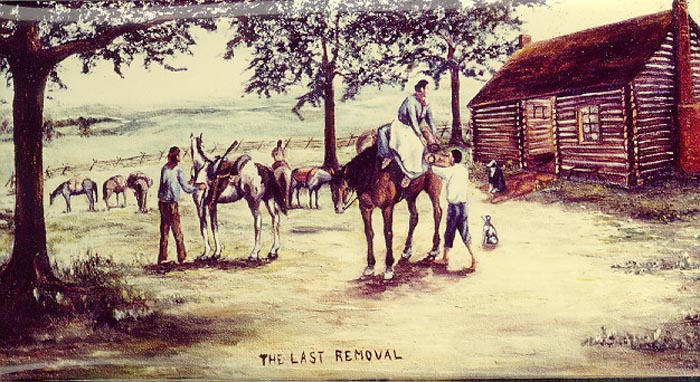
From the Delaware Indians website: “A painting by Lenape artist Jacob Parks (1890-1949), which depicts a Lenape family leaving their home on their reservation in Kansas in 1867. This area had been their home for over thirty-five years, and now the government told them they had to move to Indian Territory (now Oklahoma).”
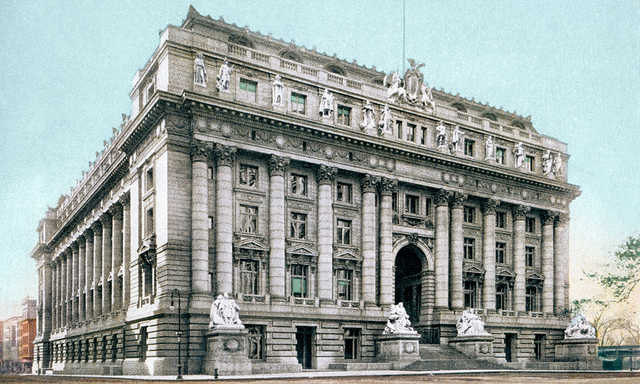
The Smithsonian National Museum of the American Indian is currently living in the Alexander Hamilton U.S. Custom House. It’s a FREE museum so you should stop in anytime you’re in the Battery Park area.
FURTHER READING
The First Manhattans: A History of the Indians of Greater New York by Robert S. Grumet
The Island At The Center Of The World by Russell Shorto
The Delaware Indians: A History by  C.A. Westanger
Native New Yorkers: The Legacy of the Algonquin People of New York by Evan T. Pritchard
PODCAST The history of African-American settlements and neighborhoods which once existed in New York City
Today we sometimes define New York City’s African-American identity by the places where thriving black culture developed – Harlem, of course, and also Crown Heights and Bedford-Stuyvesant, neighborhoods that developed for groups of black residents in the 20th century.
But by no means were these the first in New York City. Other centers of black and African-American life existed long before then. In many cases, they were obliterated by the growth of the city, sometimes built over without a single marker, without recognition.
This is the story of a few of those places. From the ‘land of the blacks‘ — the home to New Amsterdam and British New York’s early black population — to Seneca Village, a haven for black lives that was wiped away by a park.
From Little Africa — the Greenwich Village sector for the black working class in the late 19th century — to Sandy Ground, a rural escape in Staten Island with deep roots in the neighborhood today.
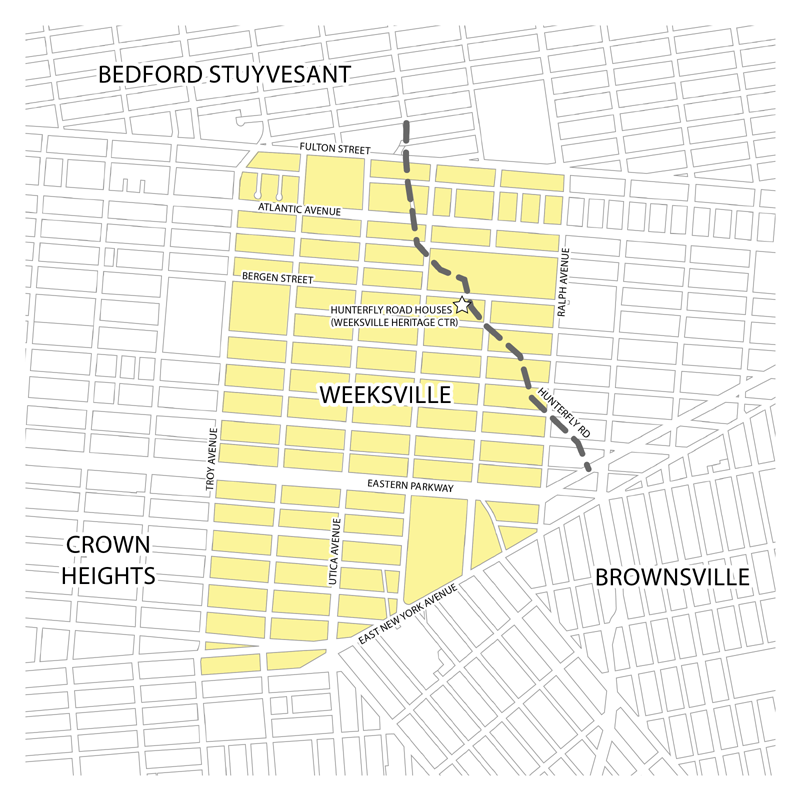
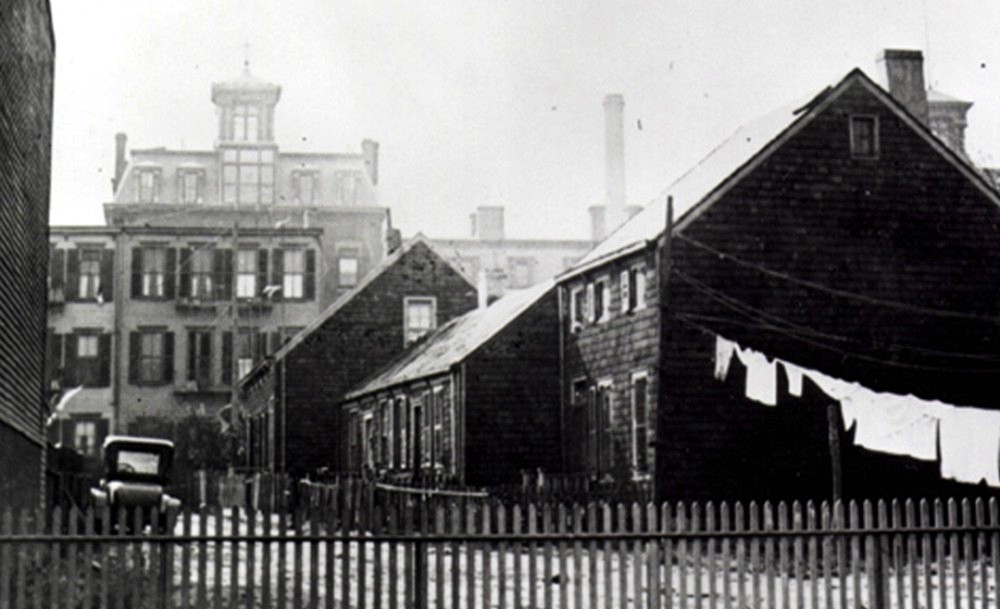
And then there’s Weeksville, Brooklyn, the visionary village built to bond a community and to develop a political foothold.
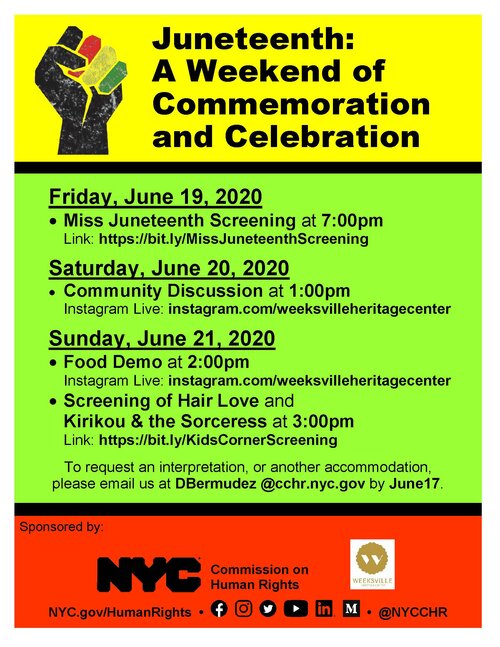
The episode is a rebroadcast of a show which first aired on June 9, 2017. Stay tuned to the end of this show for some newly written material and an update on the Black Gotham Experience and the Weeksville Heritage Center.
To get this week’s episode, just find our show onStitcher or your favorite podcast streaming service. Or listen to it here:
The Bowery Boys: New York City History podcast is brought to you …. by you!
We are now producing a new Bowery Boys podcast every week. We’re also looking to improve and expand the show in other ways — publishing, social media, live events and other forms of media. But we can only do this with your help!
We are now a creator on Patreon, a patronage platform where you can support your favorite content creators.
Please visit our page on Patreon and watch a short video of us recording the show and talking about our expansion plans.
If you’d like to help out, there are six different pledge levels. Check them out and consider being a sponsor.
We greatly appreciate our listeners and readers and thank you for joining us on this journey so far.
Our thanks to Weeksville Heritage Center and Black Gotham Experience. Visit their websites for further information about upcoming events and programs. In addition please check out the Sandy Ground Historical Society for information about this important site in Staten Island.
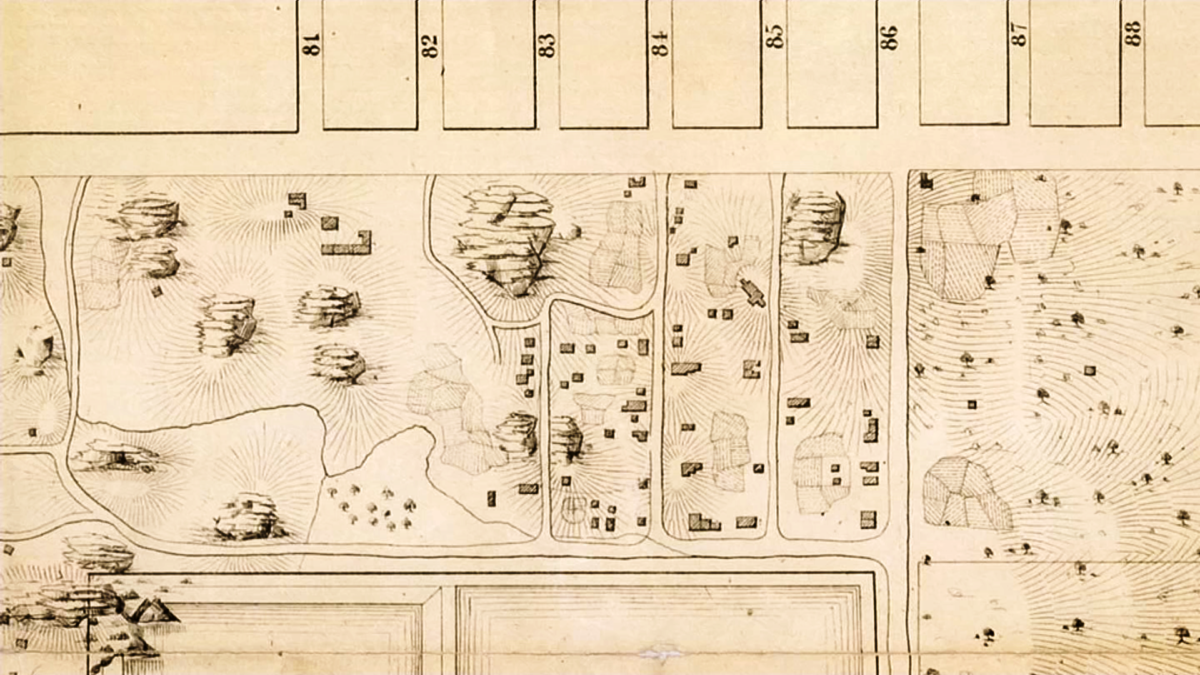
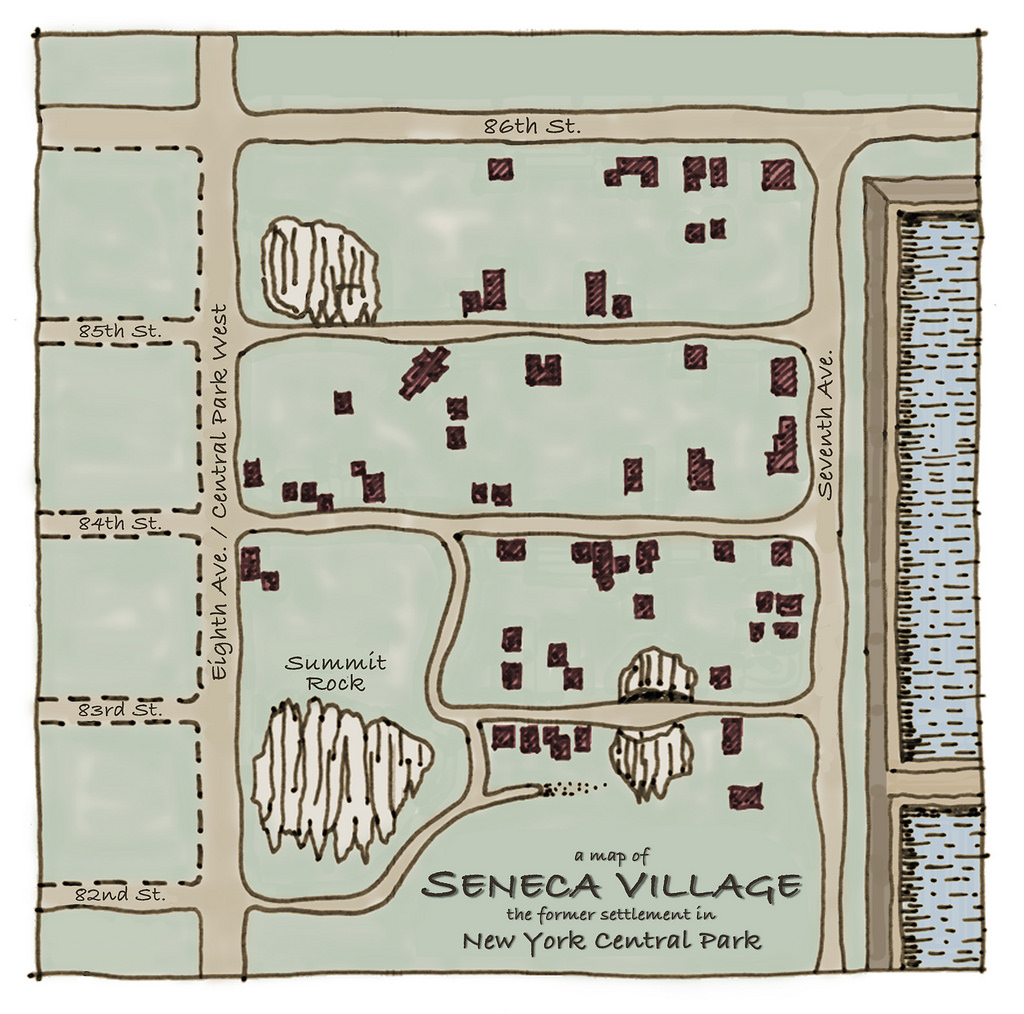
This map of Seneca Village was made by Andy Proehlillustrating what the settlement looked like in the years before its destruction.
Courtesy Andy Proehl/Flickr
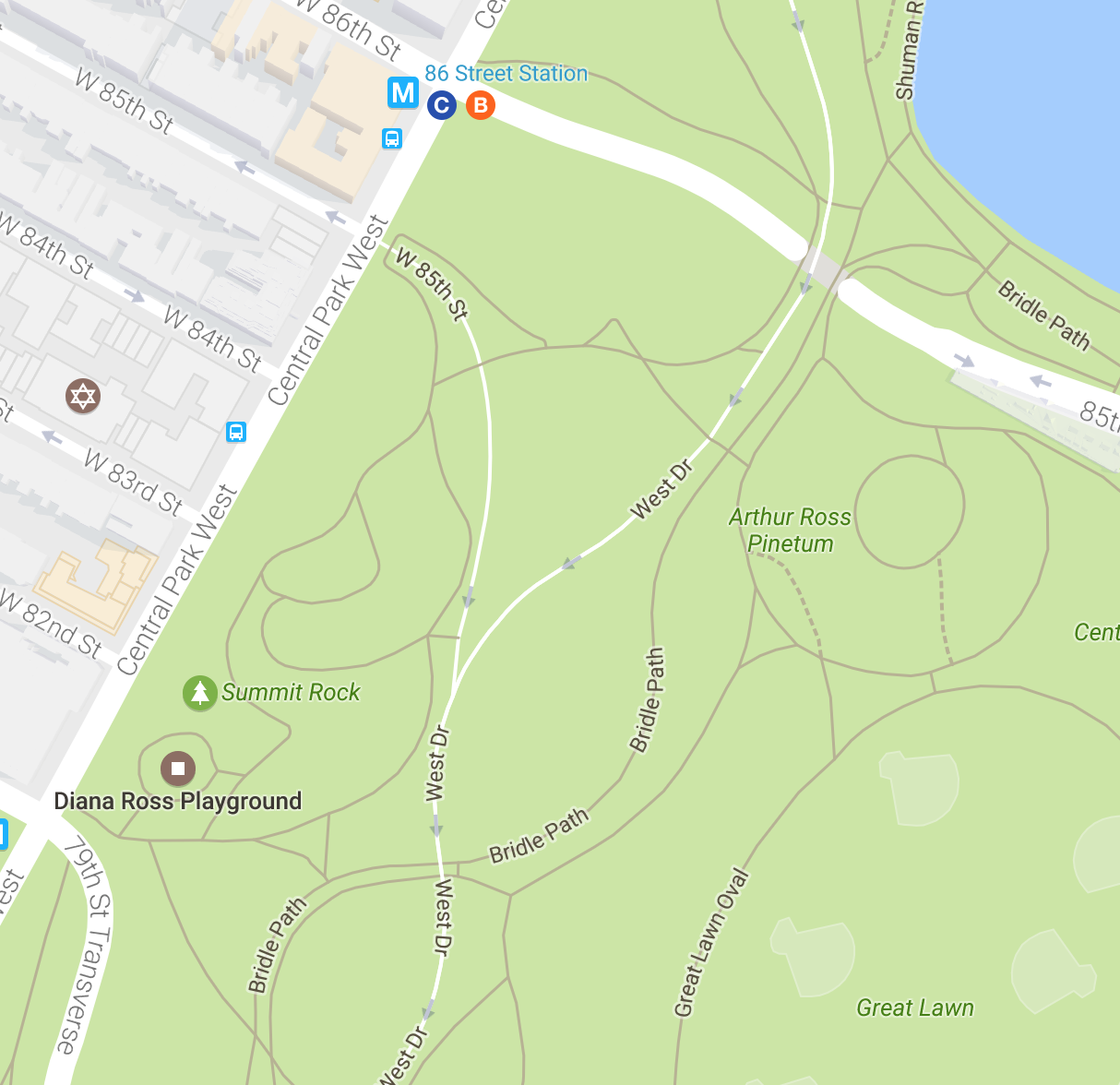
The approximate area via Google Maps. The Great Lawn now sits on the spot where the reservoir is.
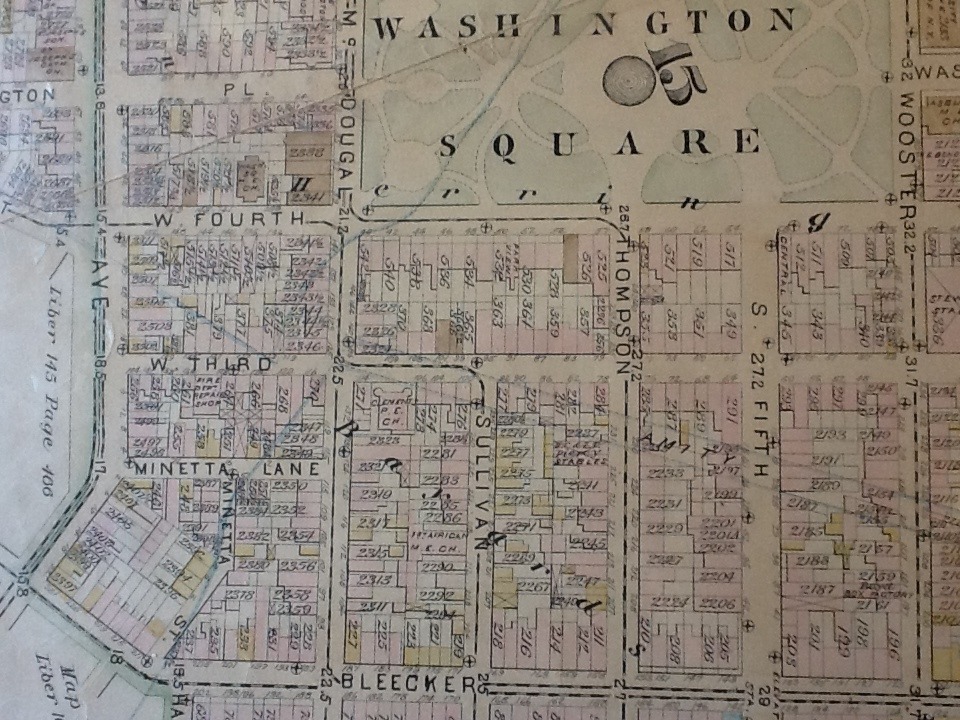
The approximate area of Little Africa. The map is from 1889.
NYPL via Greenwich Village Society of Historical Perseveration
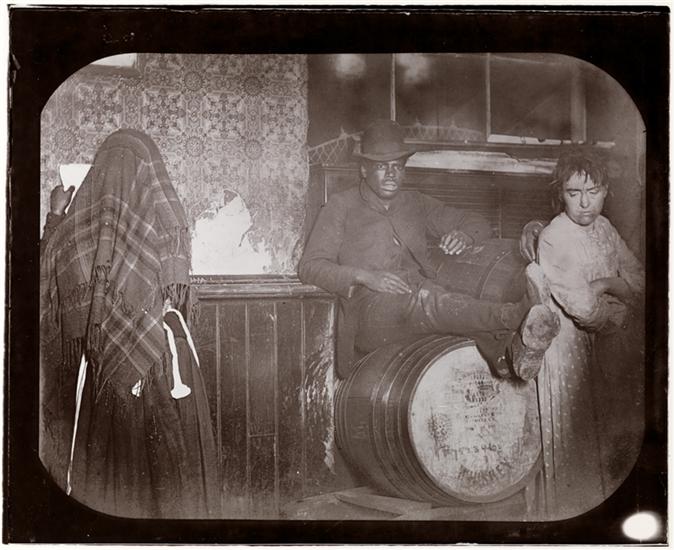
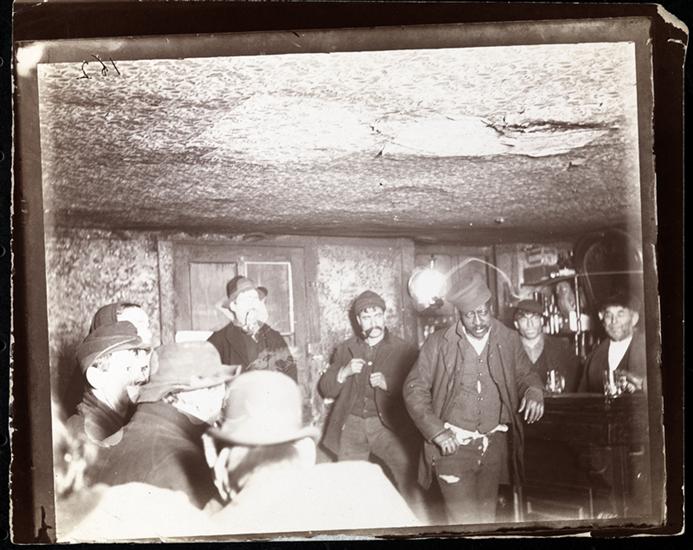
Richard Hoe Lawrence and Jacob Riis’s images of a “Black and Tan” dive bar on Broome Street near Wooster Street, 1890.
Courtesy Museum of the City of New York
Courtesy Museum of the City of New York
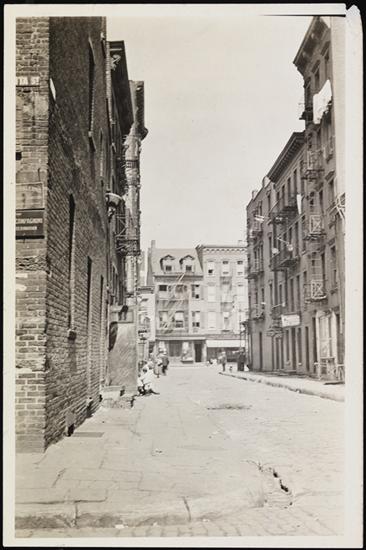
Minetta Lane, circa 1900.
MCNY
The approximate location of Weeksville, Brooklyn
Wikipedia
Brooklyn Public Library
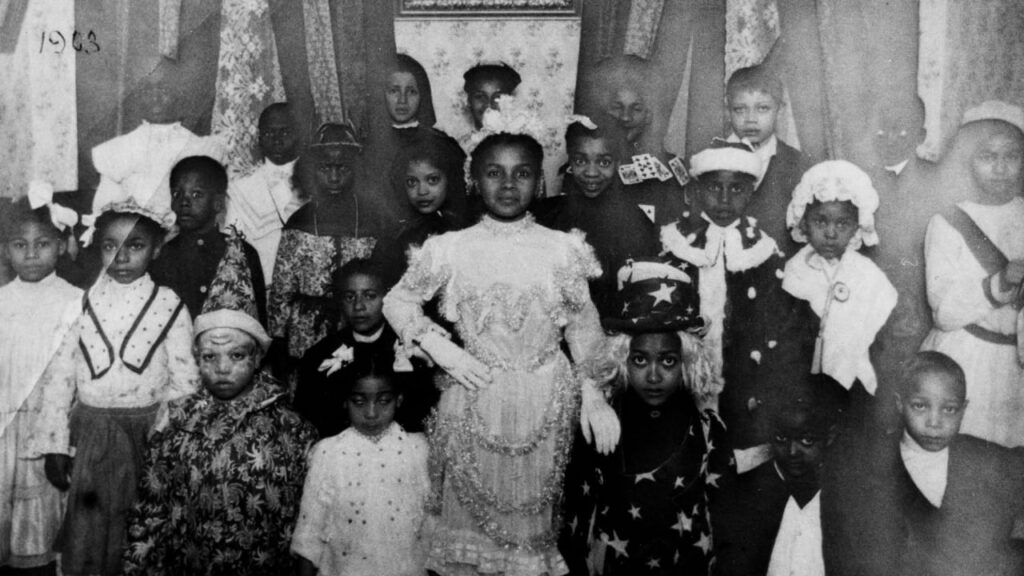
Halloween party by photographer and Weeksville resident Alexander Moore. [PHOTO: PERCY F. MOORE COLLECTION, COURTESY OF THE 5TH OF JULY RESOURCE CENTER FOR SELF-DETERMINATION & FREEDOM, WEEKSVILLE HERITAGE CENTER]
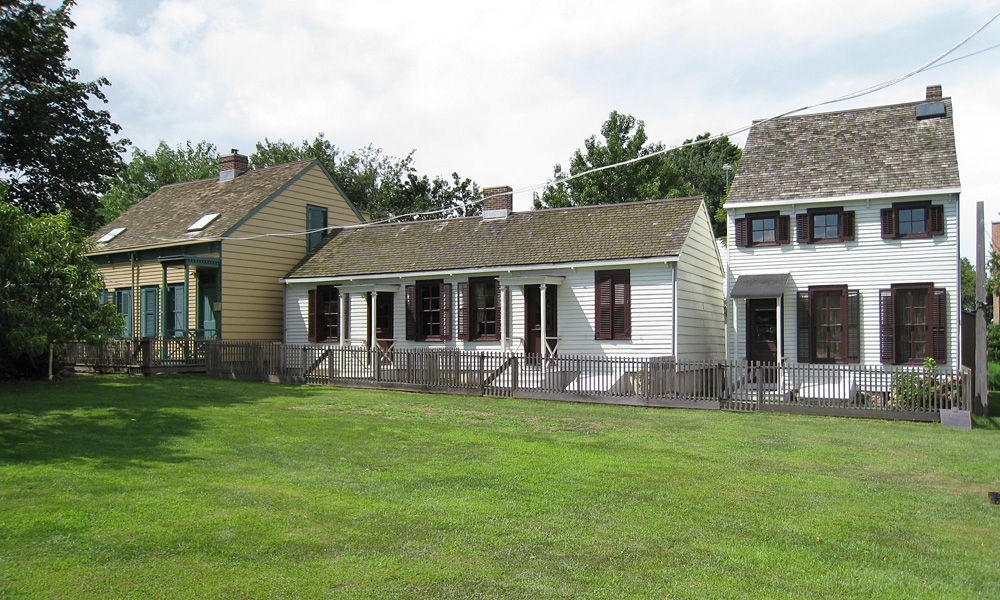
The three surviving houses today
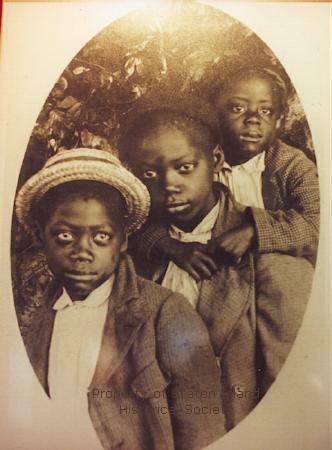
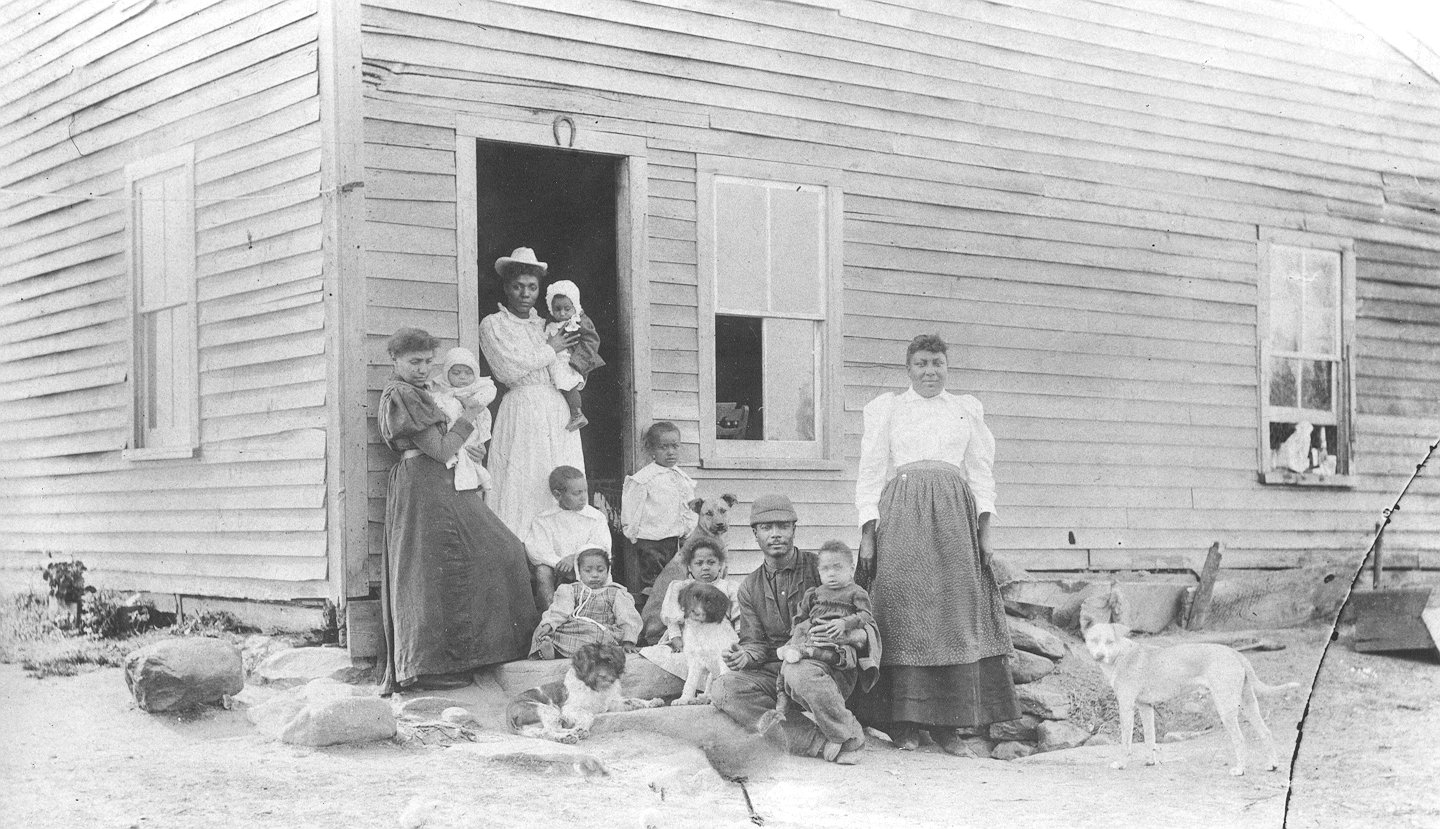
The picture at top features an African-American family posed in front of the John Brown Homestead in Torrington, Connecticut, circa 1890s-1900. I particularly love this picture because the house is reminiscent of the Weeksville houses and those that were in Sandy Ground.
Connecticut Historical Society
FURTHER LISTENING
After you’ve listened to this episode on Seneca Village and New York’s forgotten black communities, check out these past Bowery Boys episodes about aspects of New York City history featured on this show:
In this special episode, the Bowery Boys podcast focuses on the delicious treats that add to the New York experience. These aren’t just the famous foods that have been made in New York, but the unique desserts that make the city what it is today.
The origins of some of these treats go way, way back — the Dutch New Amsterdam. Others have become staples of the New York diet thanks to immigrant groups who first developed and perfected them in neighborhoods like the Lower East Side.
So while this show may seem like a trifle, the underlying story celebrates the contributions of local communities in creating timeless food classics, served in historic bake shops, candy stores and cafes.
Cheesecake and cannoli are two of our five historic treats. What are the other three? Tune in and find out! (And definitely save some room after dinner for dessert.)
LISTEN NOW — JUST DESSERTS
THE TAKEOUT — A bonus after-show podcast for those who support us on Patreon. Greg dives into further tales of sweet history. Near the Brooklyn Bridge sits a remnant of an old Revolutionary War sugar house with a disturbing history (and possibly ghosts). The Gilded Age shopping district of Ladies Mile was also the home of a short lived chocolate factory. And the tragic story behind the Tootsie Roll.
PLUS: More on the history of soft drinks. Who was Doctor Pepper?
FURTHER LISTENING: Check out our other food history episodes!
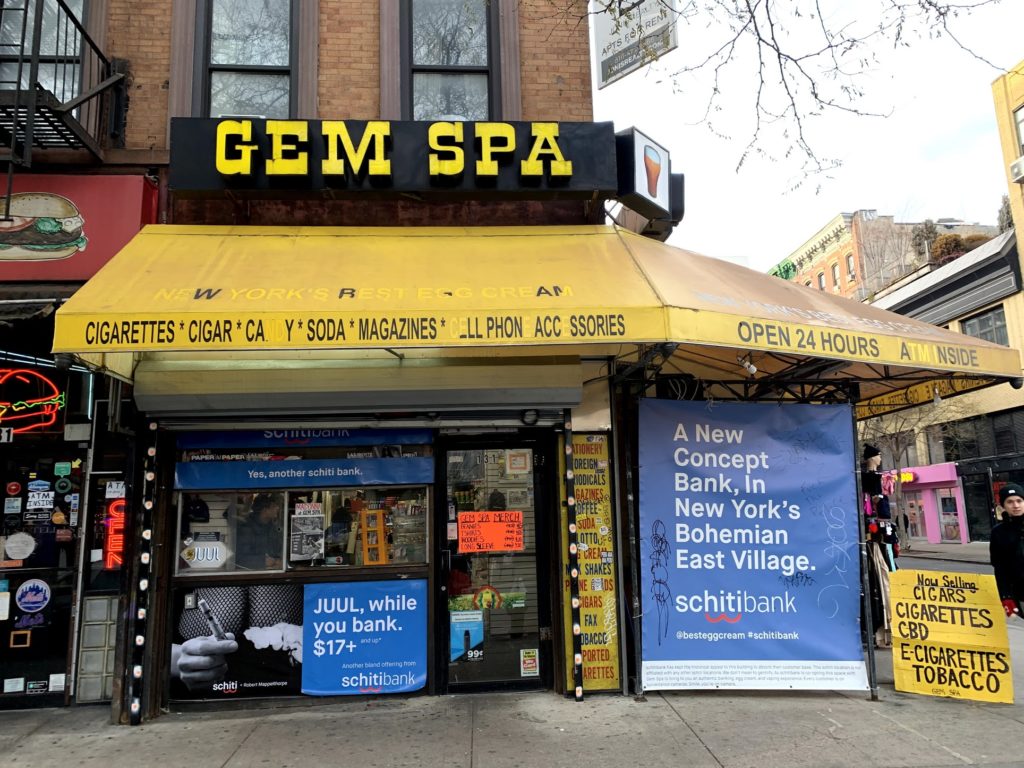
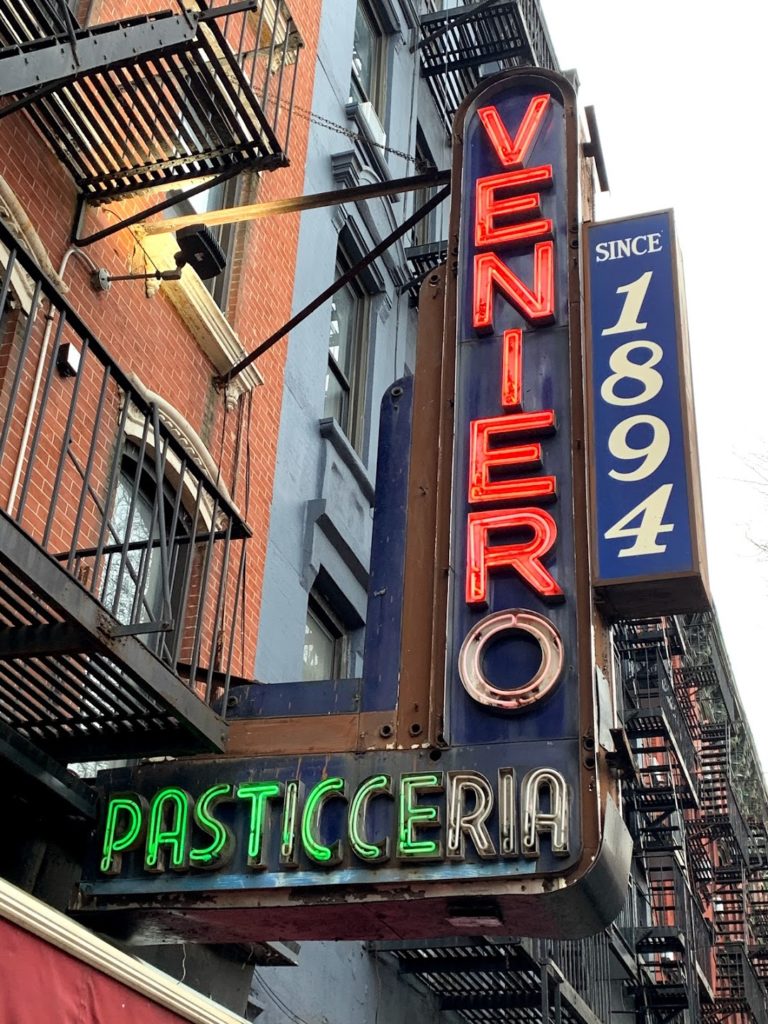
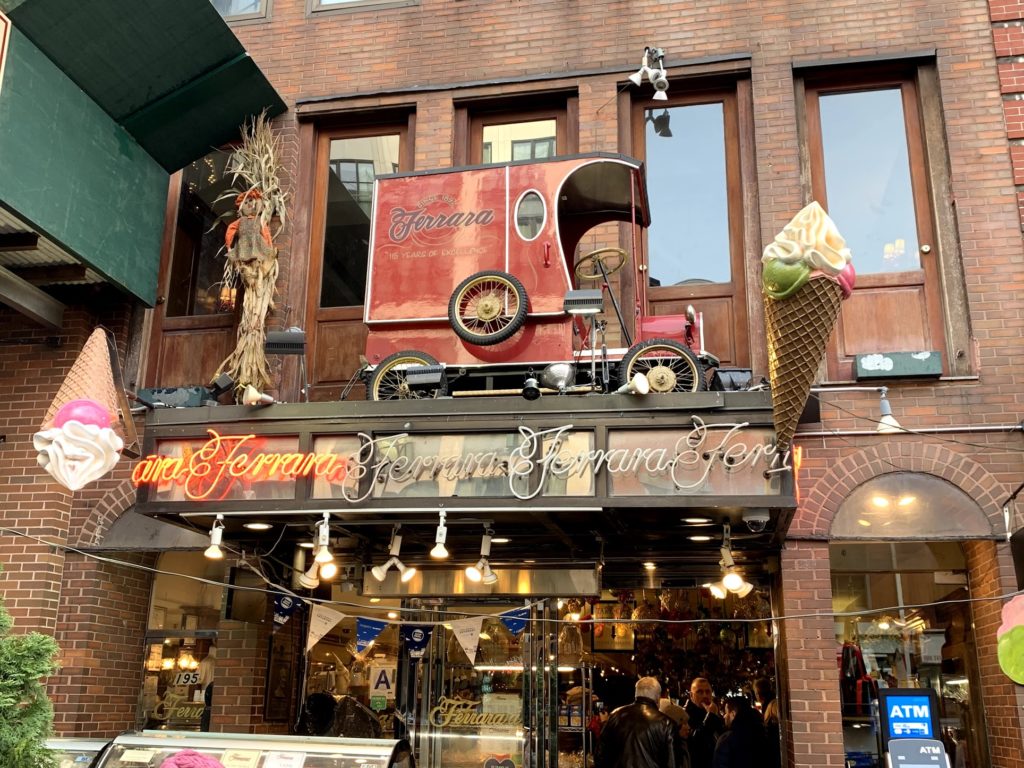
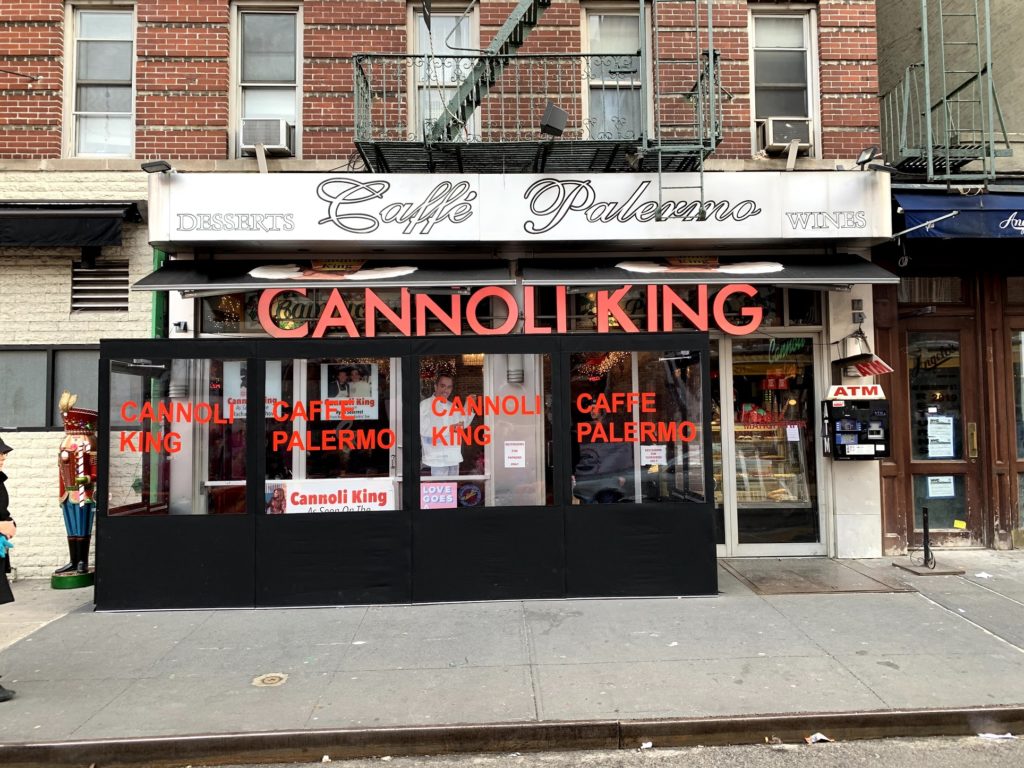
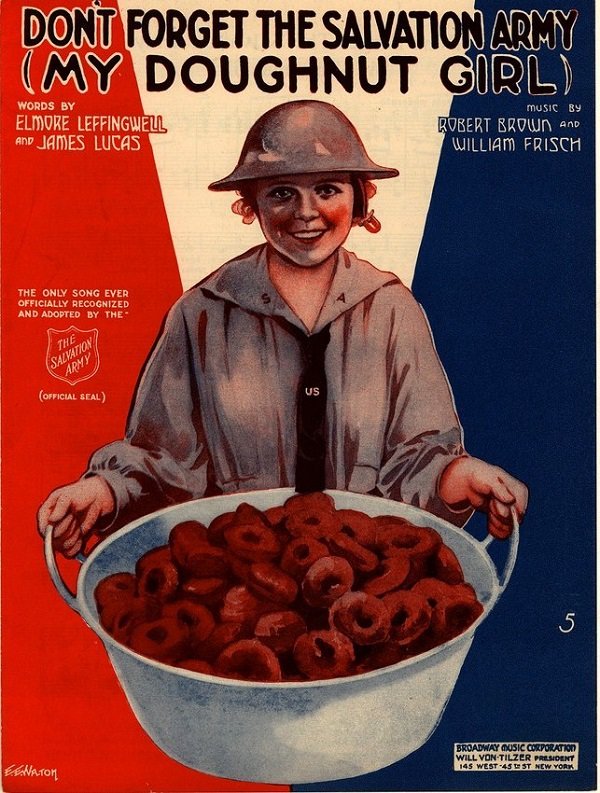
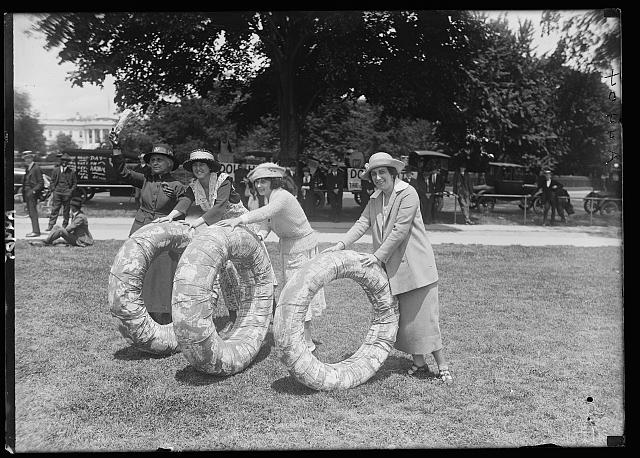
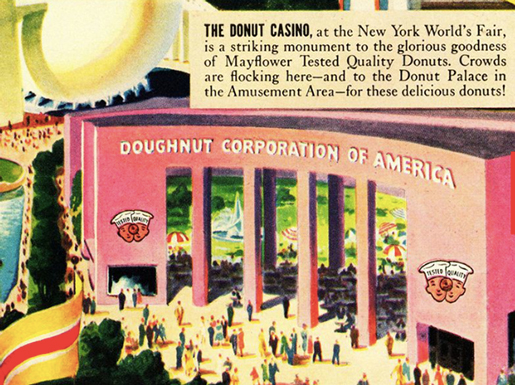
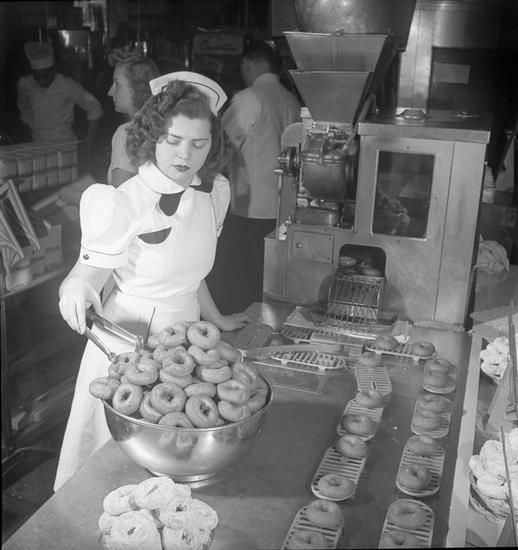
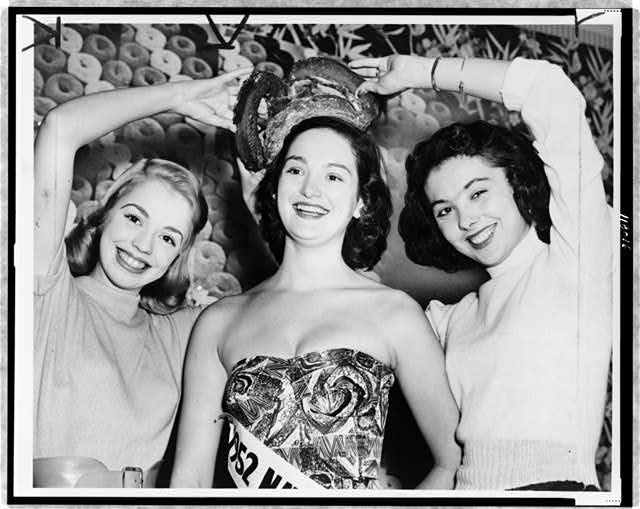
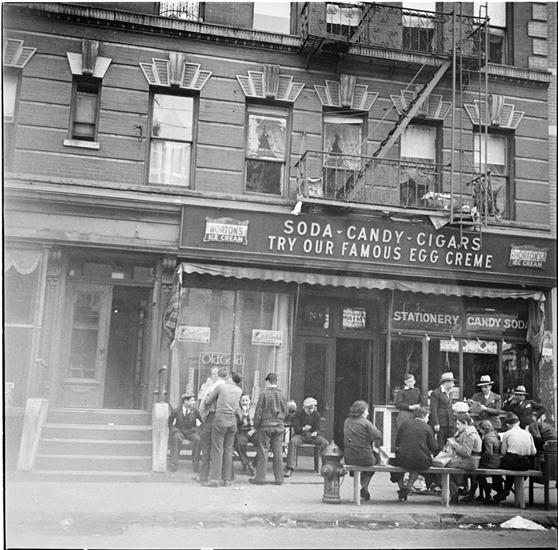
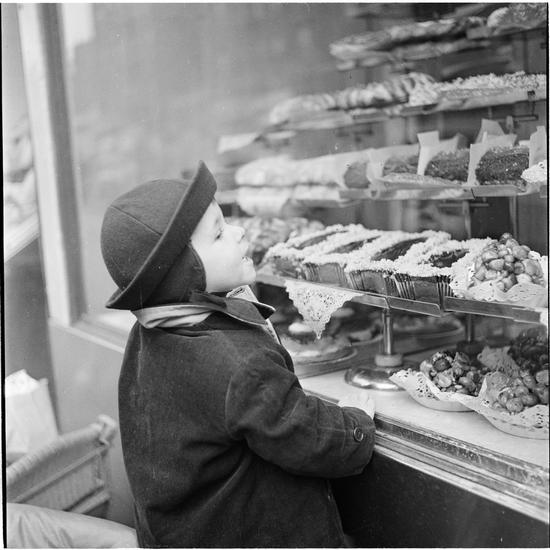
Inside the wonderful world of Junior’s in BrooklynA view inside Caputo’s Bake Shop in Carroll Gardens, BrooklynA no-fuss egg cream can still be had at Gem Spa, which has been serving them for generations.Sweets to your heart’s delight at Veniero’s, celebrating 125 years.Ferrara’s in Little Italy is always hopping with hungry patrons….…as is Caffe Palermo’s around the corner, aka the Cannoli King!Sheet music celebrating the World War I ‘doughnut girl’A 1922 Salvation Army ‘doughnut race’. Harris & Ewing, photographer, Library of CongressThe Donut Casino, delivering thousands of free doughnuts to World’s Fair goers.A well-dressed employee working a doughnut machine at a shop in Times Square. 1945, Bob Leavitt, Look Magazine. Courtesy Museum of the City of New YorkNancy Templeton, the 1952 National Doughnut Queen flanked by her runners-up. orld Telegram & Sun photo by Fred Palumbo, Library of CongressA New York City candy store, advertising egg creams, 1935. Arnold Eagle, photographer. Courtesy Museum of the City of New York.A photo taken by Stanley Kubrick in 1947 of a child admiring pastries. Courtesy Museum of the City of New York
PODCAST There would be no New York City without Peter Stuyvesant, the stern, authoritarian director-general of New Amsterdam, the Dutch port town that predates the Big Apple.
The willpower of this complicated leader took an endangered ramshackle settlement and transformed it into a functioning city. But Mr. Stuyvesant was no angel.
In part two in the Bowery Boys’ look into the history of New Amsterdam, we launch into the tale of Stuyvesant from the moment he steps foot (or peg leg, as it were) onto the shores of Manhattan in 1647.
Stuyvesant immediately set to work reforming the government, cleaning up New Amsterdam’s filth and even planning new streets. He authorized the construction of a new market, a commercial canal and a defense wall — on the spot of today’s Wall Street. But Peter would act very un-Dutch-like in his intolerance of varied religious beliefs, and the institution of slavery would flourish in New Amsterdam under his unwavering direction.
And yet the story of New York City’s Dutch roots does not end with the city’s occupation by the English in 1664 — or even in 1673 (when the city was briefly retaken by a Dutch fleet). The Dutch spirit remained alive in the New York countryside, becoming part of regional customs and dialect.
And yet the story of New Amsterdam might otherwise be ignored if not for a determined group of translators who began work on a critical project in the 1970s……
The Bowery Boys: New York City History podcast is brought to you …. by you!
We are now producing a new Bowery Boys podcast every other week. We’re also looking to improve the show in other ways and expand in other ways as well — through publishing, social media, live events and other forms of media. But we can only do this with your help!
We are now a member of Patreon, a patronage platform where you can support your favorite content creators for as little as a $1 a month.
Please visit our page on Patreon and watch a short video of us recording the show and talking about our expansion plans. If you’d like to help out, there are five different pledge levels (and with clever names too — Mannahatta, New Amsterdam, Five Points, Gilded Age, Jazz Age and Empire State). Check them out and consider being a sponsor.
And join us for the first ever Bowery Boys Movie Club, an exclusive podcast provided to our supporters on Patreon. This month’s selection — Taxi Driver.
We greatly appreciate our listeners and readers and thank you for joining us on this journey so far.
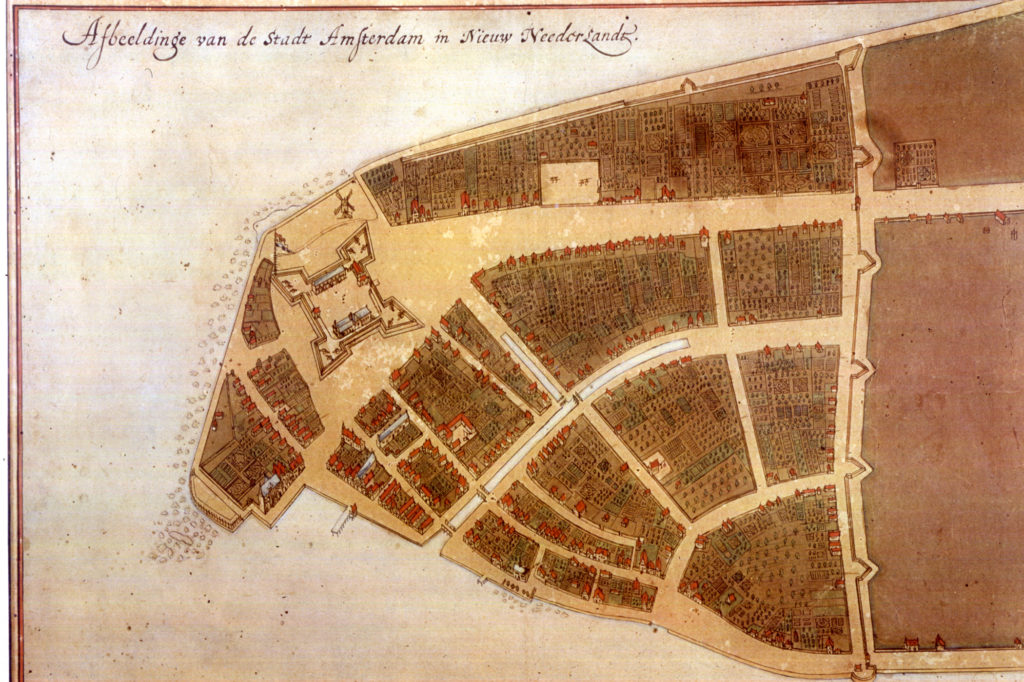
The Costello Plan, New Amsterdam 1660. Surveyed by Jacque Cortelyou. Full size photograph of manuscript map in the Biblioteca Medicea-Laurenziana of Florence, Italy. The Castello plan is the earliest known plan of New Amsterdam, and the only one dating from the Dutch period. Wikicommons.
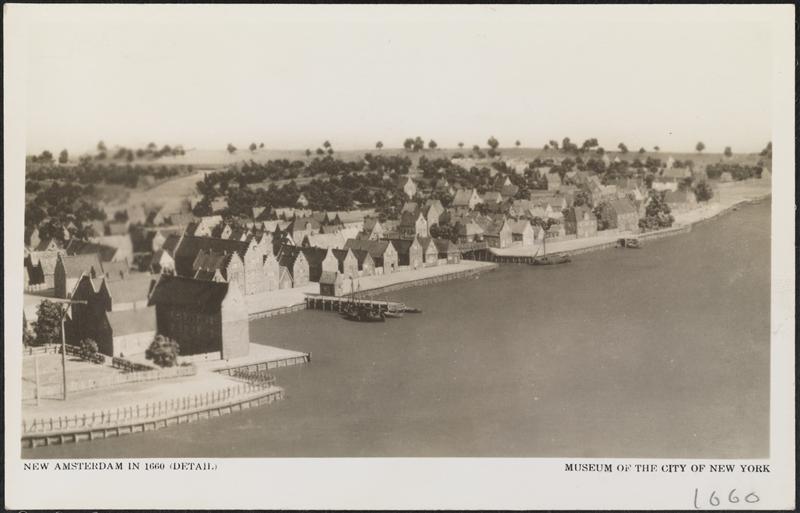
New Amsterdam in miniature at the Museum of the City of New York, photographed in 1932
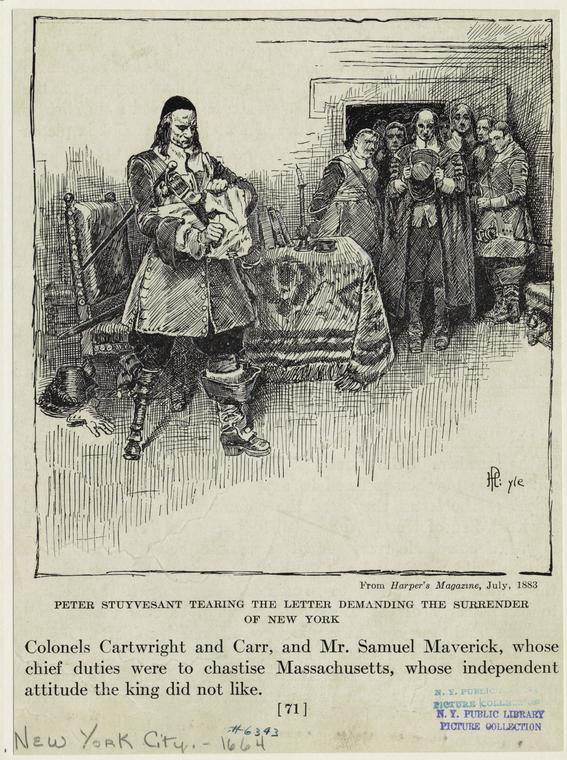
Museum of the City of New YorkPeter Stuyvesant tearing the letter demanding the surrender of New York. Artist Howard Pyle, 1923. New York Public Library
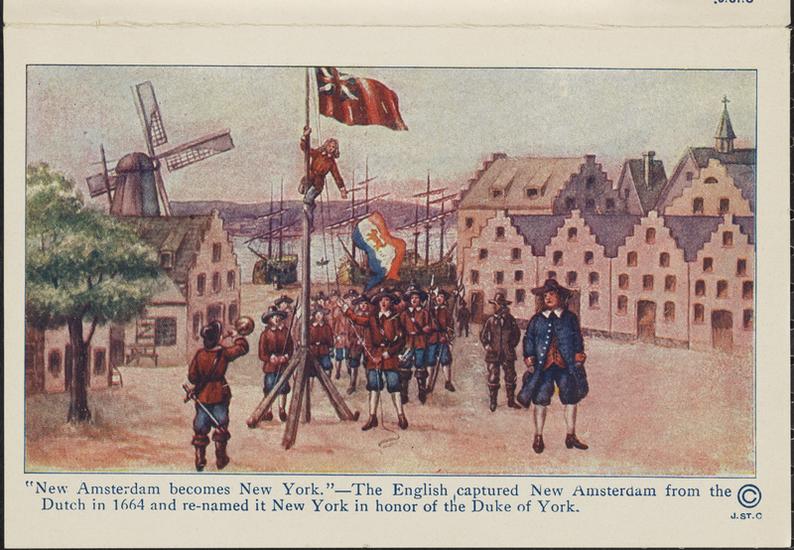
The moment when New Amsterdam became New York, depicted in a 1914 picture book.
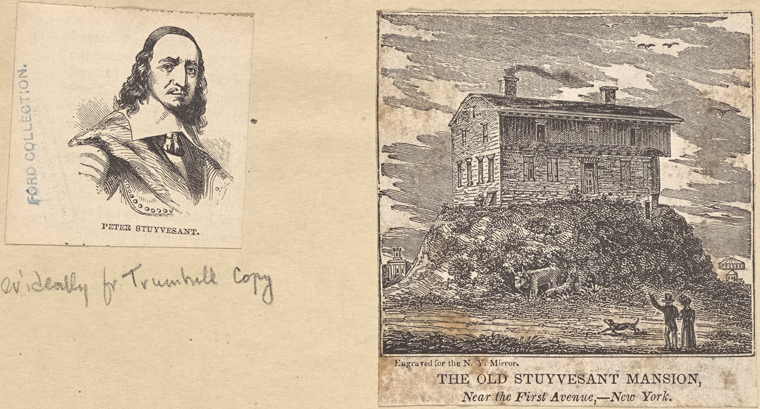
The old Stuyvesant mansion, near First Avenue, engraved for the N.Y. Mirror newspaper. Courtesy NYPL
We didn’t go too deeply into it in our latest show, but the Bronx also has a very rich Dutch history. The name even comes from a (unfortunately doomed) Dutch settler.
The early history of Broadway begins in New Amsterdam.
We also spoke about the ‘rattle watch’ in our show on the New York Fire Department.
PODCAST Back when old New York was once New Amsterdam.
We are turning back the clock to the very beginning of New York City history with this special two-part episode, looking at the very beginnings of European settlement in the area and the first significant Dutch presence on the island known as Manhattan.
The Dutch were drawn to the New World not because of its beauty, but because of its beavers. Beaver pelts were all the rage in European fashion, and European explorers like Henry Hudson reported back that this unexplored land was filled with the animals and their beautiful coats.
Of course, people were already living here — the tribes of the Lenape — and the first settlers sent by the Dutch — French-speaking Walloons — encountered them in the mid 1620s. But relations were relatively good between the two parties at the beginning. Could the native Munsee-speaking people and the first Dutch settlers get along?
In this episode, we walk you through the first two decades of life in the settlement of New Amsterdam, confined to the southern tip of Manhattan. What was the island like back then? How did people live and work in a region so entirely unknown to its European inhabitants?
The Bowery Boys: New York City History podcast is brought to you …. by you!
We are now producing a new Bowery Boys podcast every other week. We’re also looking to improve the show in other ways and expand in other ways as well — through publishing, social media, live events and other forms of media. But we can only do this with your help!
We are now a member of Patreon, a patronage platform where you can support your favorite content creators for as little as a $1 a month.
Please visit our page on Patreon and watch a short video of us recording the show and talking about our expansion plans. If you’d like to help out, there are five different pledge levels (and with clever names too — Mannahatta, New Amsterdam, Five Points, Gilded Age, Jazz Age and Empire State). Check them out and consider being a sponsor.
And join us for the first ever Bowery Boys Movie Club, an exclusive podcast provided to our supporters on Patreon.
We greatly appreciate our listeners and readers and thank you for joining us on this journey so far.
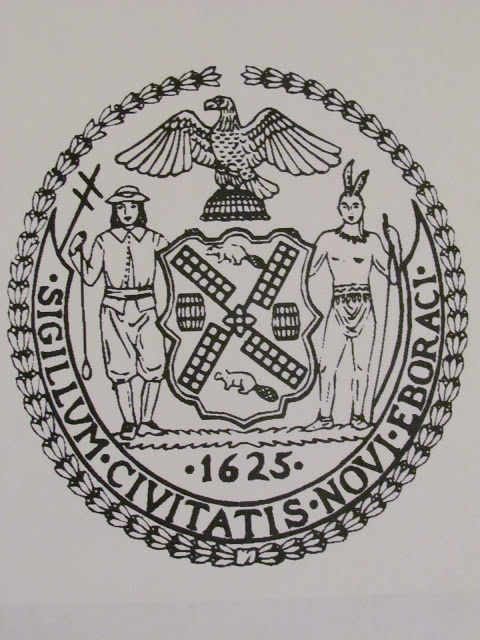
The official seal of New York City contains many clues to the city’s history. It also features not one, but two, beavers.
Manhattan Unlocked
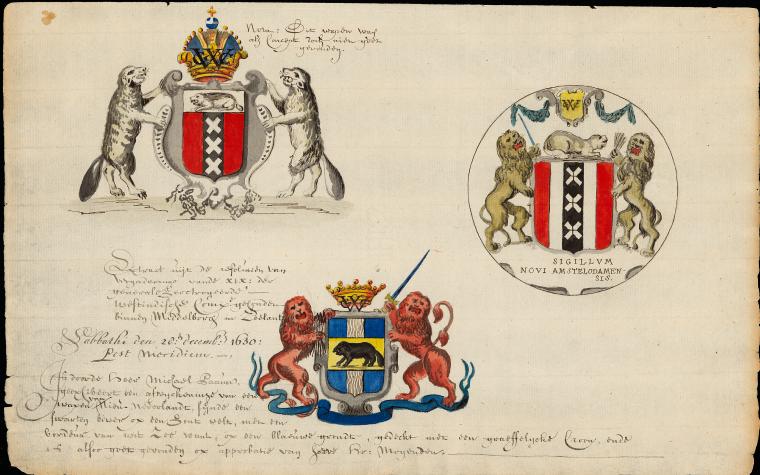
The original coat of arms for New Amsterdam and New Netherland.
New York Public Library
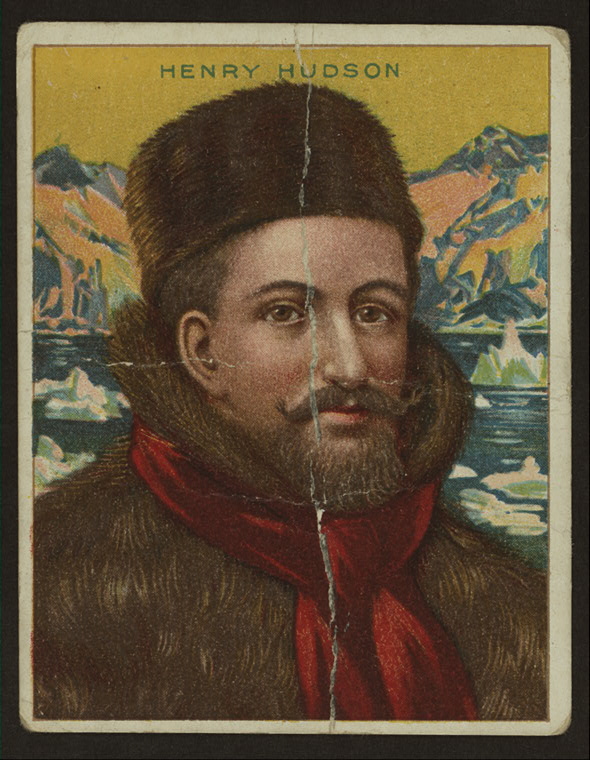
Henry Hudson on a vintage cigarette card.
George Arents Collection/New York Public LIbrary
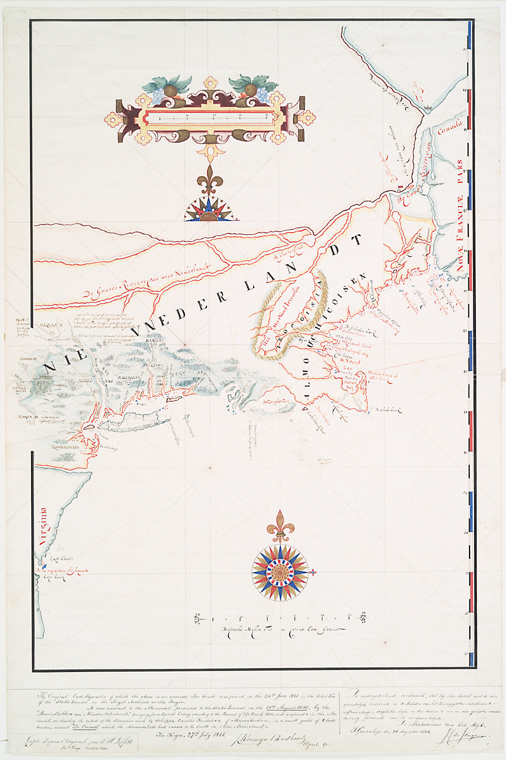
A 1614 map drawn by explorer Adriaen Block, labeling the entire place New Nederlandt!
I. N. Phelps Stokes Collection of American Historical Prints/ New York Public Library
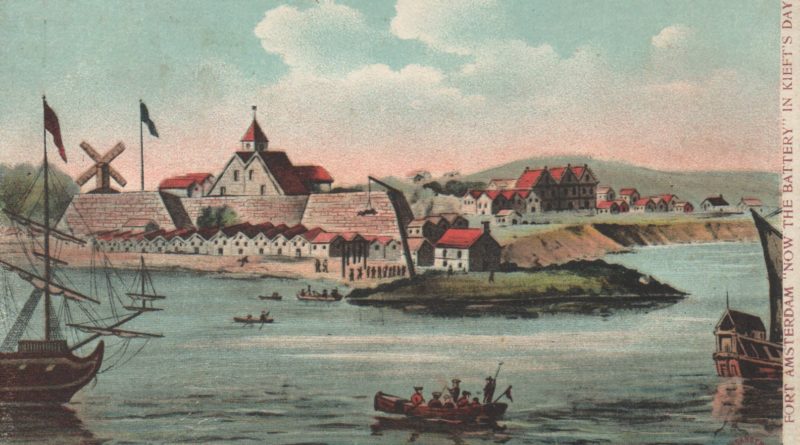
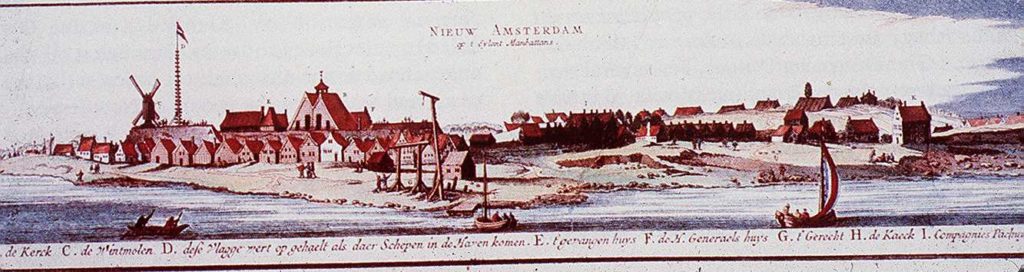
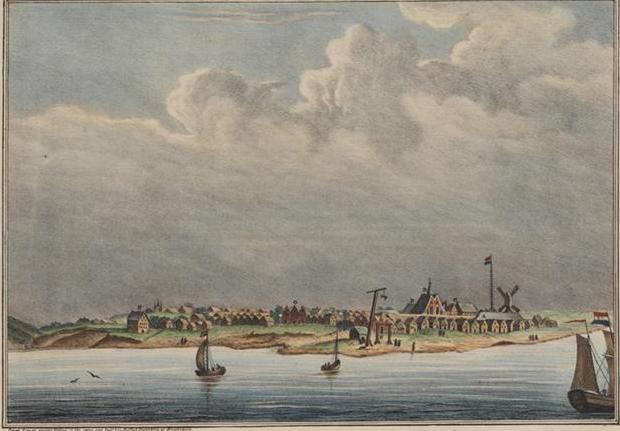
A look at New Amsterdam in it might have looked in 1640. Note the windmill in the background and gallows on Capske Hook!
New-York Historical Society“As it appeared about the year 1640, while under the Dutch Government. Copied from an ancient Etching of the same size Publd. by Justus Danckers, at Amsterdam. Printed and Published by H. R. Robinson, 52 Courtlandt Street New York” Courtesy Museum of the City of New York
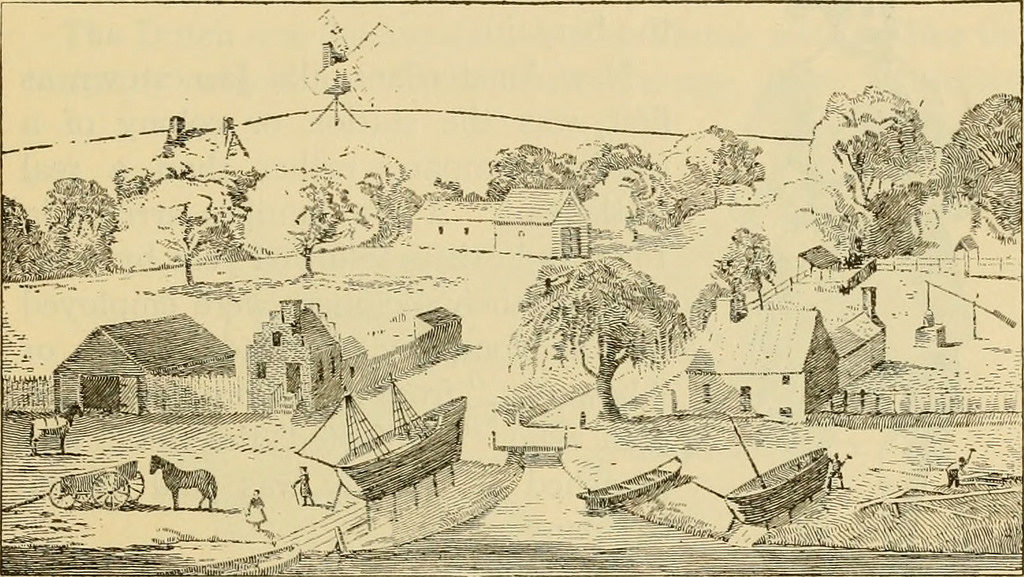
An illustration from the 1921 book A History of the United States by Henry Eldridge Bourne. A Dutch blacksmith shop and a farm scene, Manhattan Island, where a brookside path with the name of Maiden Lane followed a valley to the East River
From the same book — a look at Fort Amsterdam and Capske Hook.
An illustration of New Amsterdam clearly depicts its placement in the larger scheme of the New Netherland territory (and, as the years went by, its increasing prominence as both a tobacco producer and a component of the Dutch transatlantic slave trade).
New York Public Library
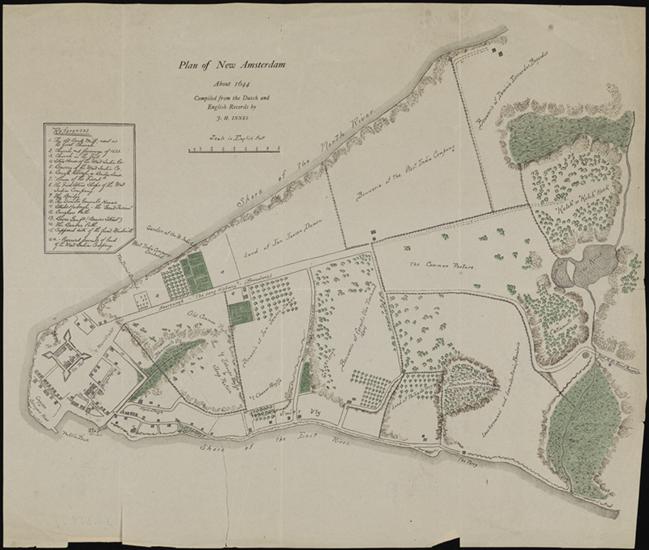
A look at New Amsterdam in the year 1642, dominated by the fort to the south and a sheep’s pasture and various farms to the north.
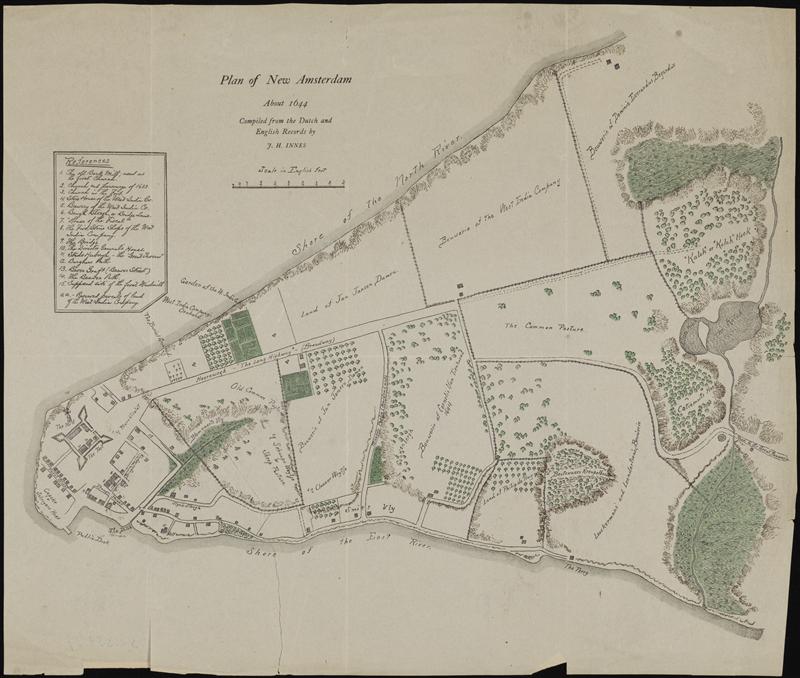
Plan of New Amsterdam About 1644, map dated 1902, compiled from the Dutch and English records by J. H. Innes.
Museum of the City of New York
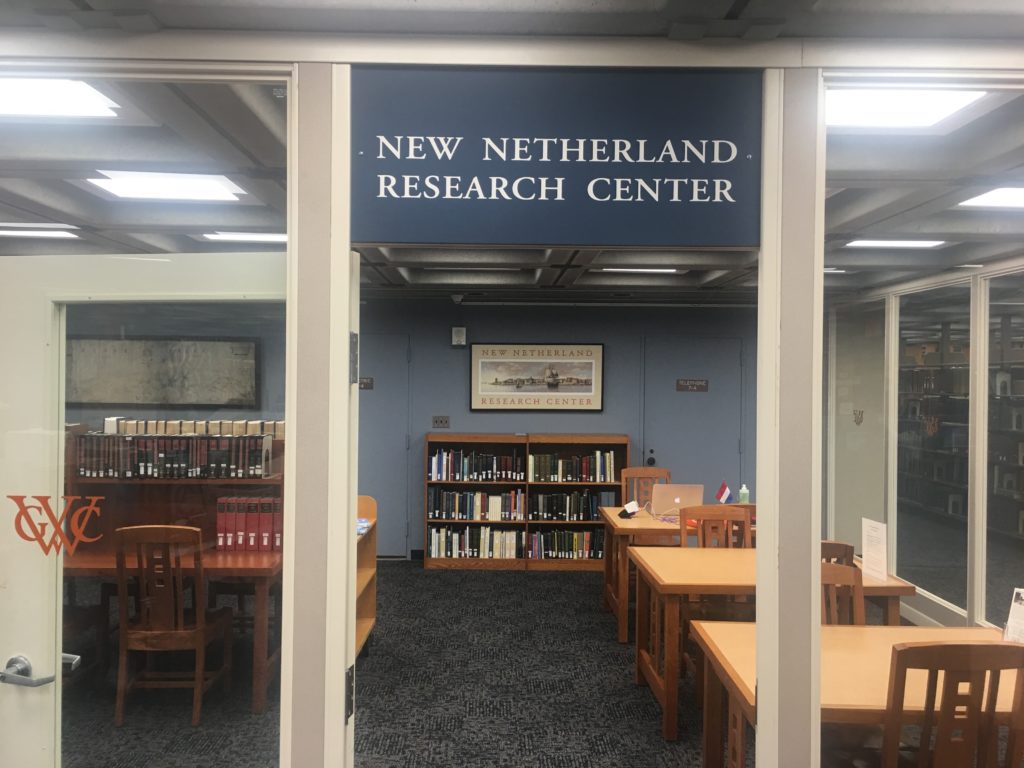
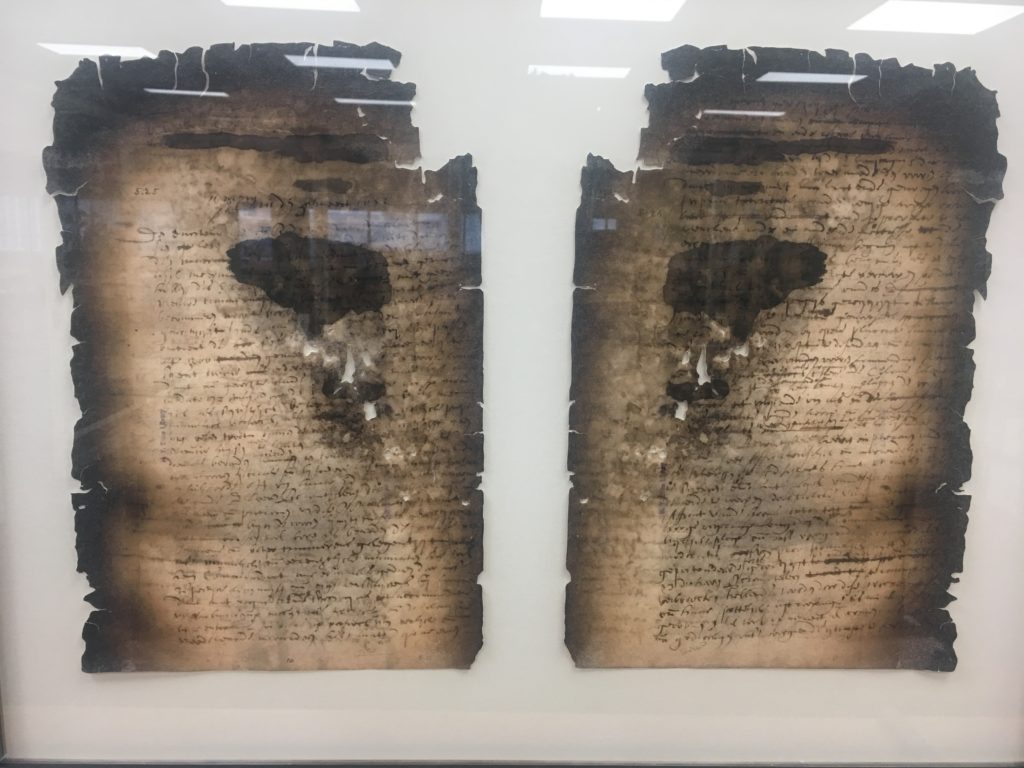
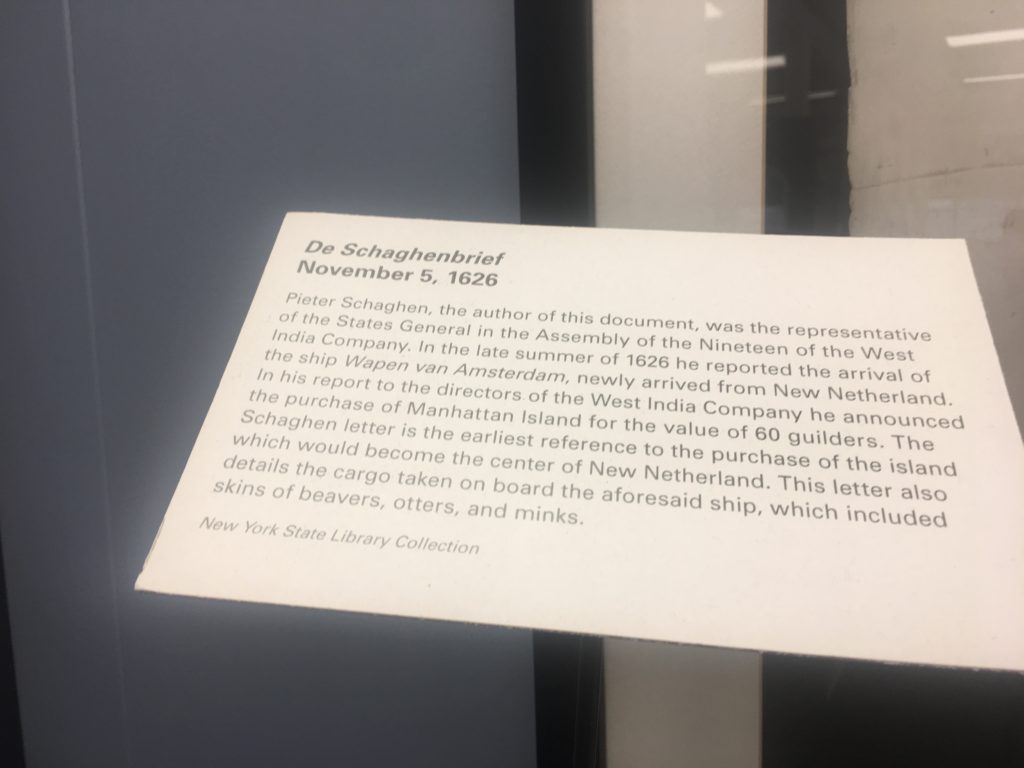
The Pieter Schaghen letter outlining the purchase of the island of Manhattan. This letter is located at the New Netherland Research Center.
Our first-ever Bowery Boys book, “Adventures in Old New York” is now out in bookstores! A time-traveling journey into a past that lives simultaneously besides the modern city.
Bowery Boys Walking Tours
Are you ready to walk through time? We’re excited to announce Bowery Boys Walks, our new walking tours developed around our podcast. Join us in the streets — beginning in October 2018!
PODCAST A history of the land which would become the Bronx, from the first European settlement to its debut in 1874 as New York’s Annexed District.
The story of the borough of the Bronx is so large, so spectacular, that we had to spread it out over three separate podcasts!
In Part One — The Bronx Is Born — we look at the land that is today’s borough, back when it was a part of Westchester County, a natural expanse of heights, rivers and forests occasionally interrupted by farm-estates and modest villages. Settlers during the Dutch era faced grave turmoil; those that came afterwards managed to tame the land with varying results. Speculators were everyone; City Island was born from the promise of a relationship with the city down south.
During the Revolutionary War, prominent families were faced with a dire choice — stay with the English or side with George Washington’s Continental Army? One prominent family would help shape the fate of the young nation and leave their name forever attached to one of the Bronx’s oldest neighborhoods. Sadly that family’s legacy is under-appreciated today.
By the 1840s, Westchester County was at last connected to New York via a new railroad line. It was a prosperous decade with the development of the area’s first college, a row of elegant homes and some of its very first ‘depot towns.’ Two decades later, the future borough would even cater to the dead — both the forgotten (at Hart Island) and the wealthy (Woodlawn Cemetery).
The year 1874 would mark a new chapter for a few quiet towns and begin the process of turning this area into the borough known as the Bronx.
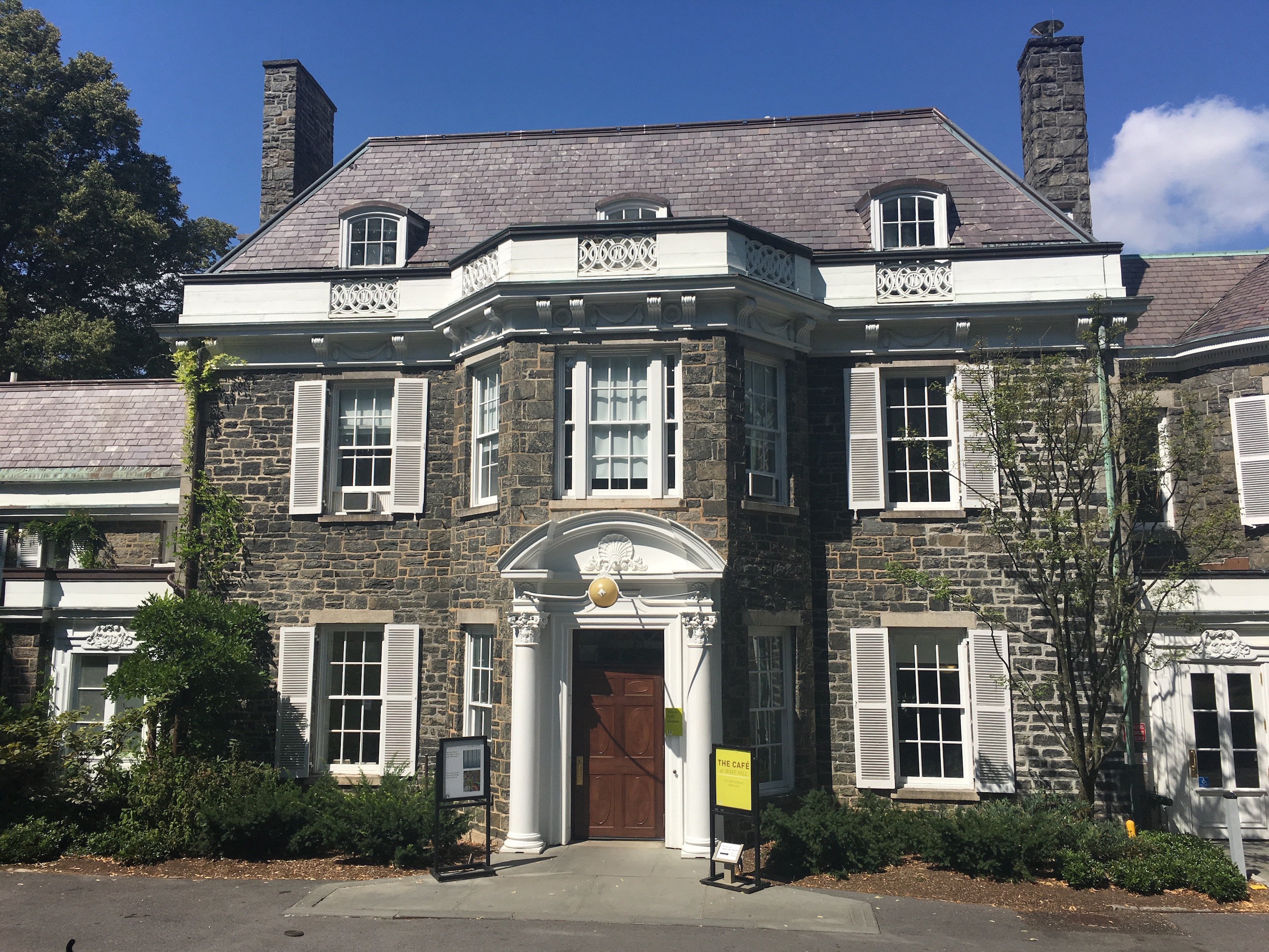
FEATURING: Many places in the Bronx that you can visit today and experience this early history up close, including Wave Hill, Pelham Bay Park, Woodlawn Cemetery, City Island and more.
The Bowery Boys: New York City History podcast is brought to you …. by you!
We are now producing a new Bowery Boys podcast every two weeks. We’re also looking to improve the show in other ways and expand in other ways as well — through publishing, social media, live events and other forms of media. But we can only do this with your help!
We are now a member of Patreon, a patronage platform where you can support your favorite content creators for as little as a $1 a month.
Please visitour page on Patreon and watch a short video of us recording the show and talking about our expansion plans. If you’d like to help out, there are five different pledge levels (and with clever names too — Mannahatta, New Amsterdam, Five Points, Gilded Age, Jazz Age and Empire State). Check them out and consider being a sponsor.
We greatly appreciate our listeners and readers and thank you for joining us on this journey so far. And the best is yet to come!
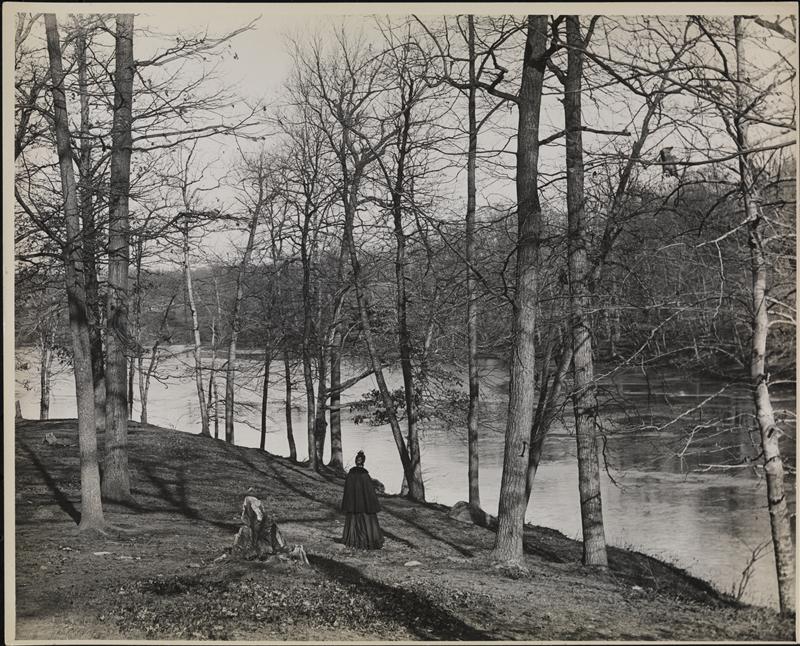
In this 1896 Robert Bracklow photograph, a solitary woman stands by the Bronx River, looking almost completely unchanged from how it would have looked when Jonas Bronck saw it.
Museum of the City of New York
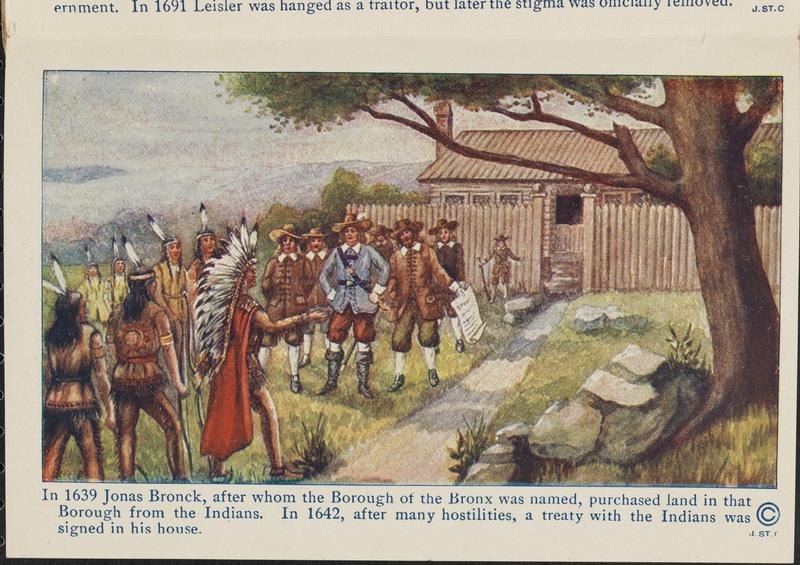
A 1914 illustration recounting the tale of Jonas Bronck:
Museum of the City of New York
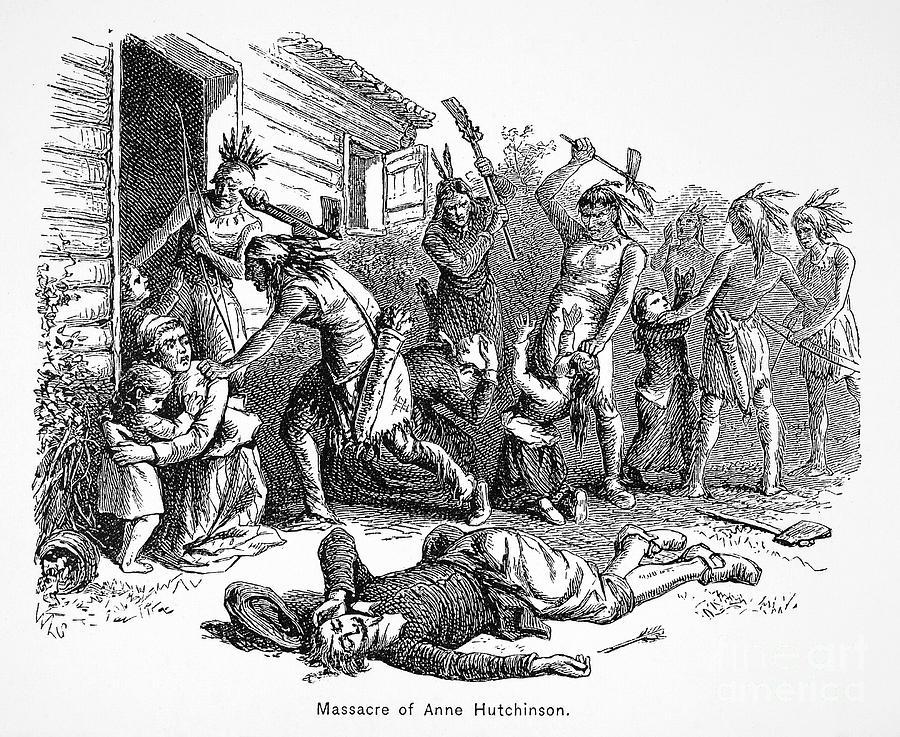
Another book illustration, this one of the massacre of Anne Hutchinson and her family.
NYPL
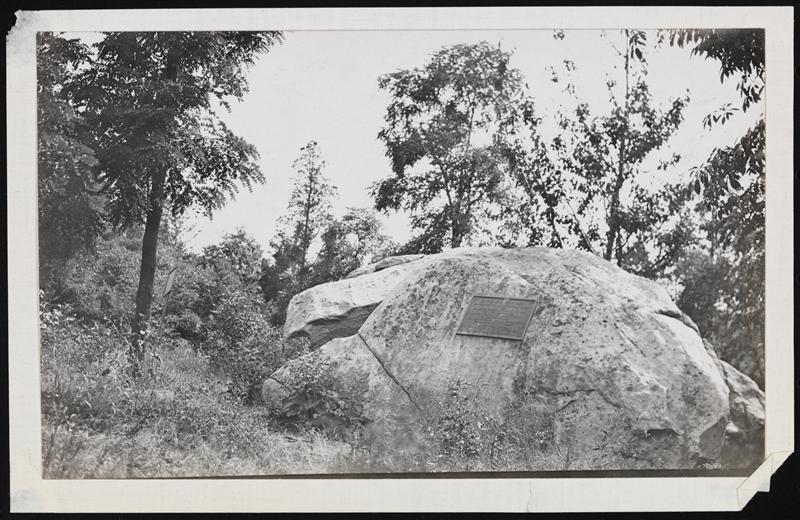
The Split Rock as it appeared in 1910, with a memorial plaque to Anne and her family and no highways anywhere around it. The rock today has no plaque but the impression of one can still be seen.
Courtesy MCNY
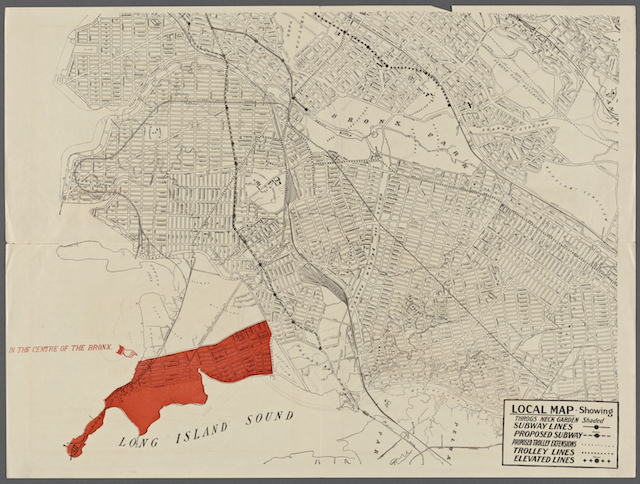
An auction map of the Bronx from 1910, highlighting the area of Throg’s Neck which gets its name from Throckmorton or Throgmorton.
NYPL
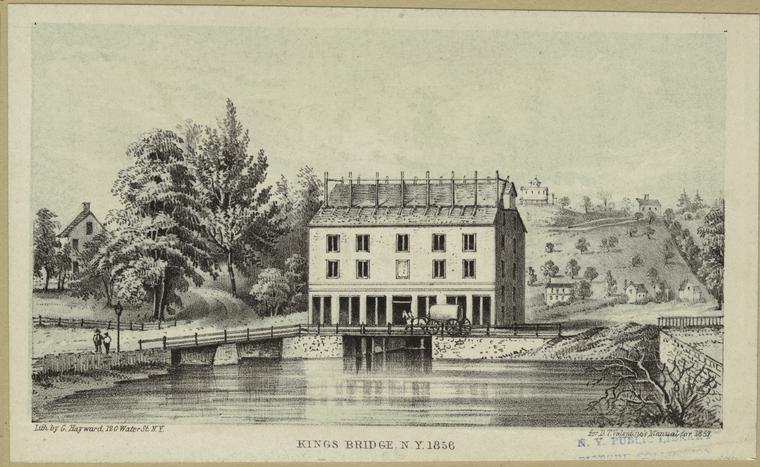
The King’s Bridge from an 1856 illustration.
NYPL
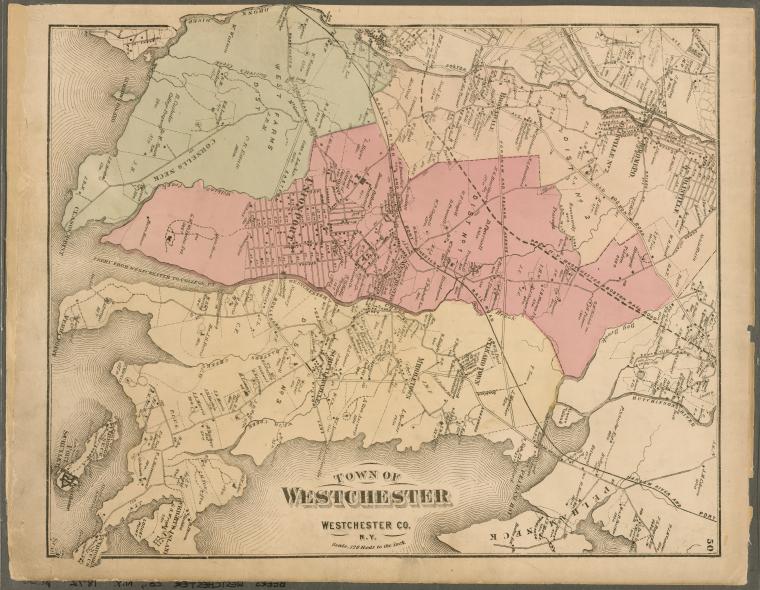
The town of Westchester in the East Bronx, pictured here in 1872. Throg’s Neck is in the lower portion of the map. Today’s neighborhood of Soundview comprises the green portion.
NYPL
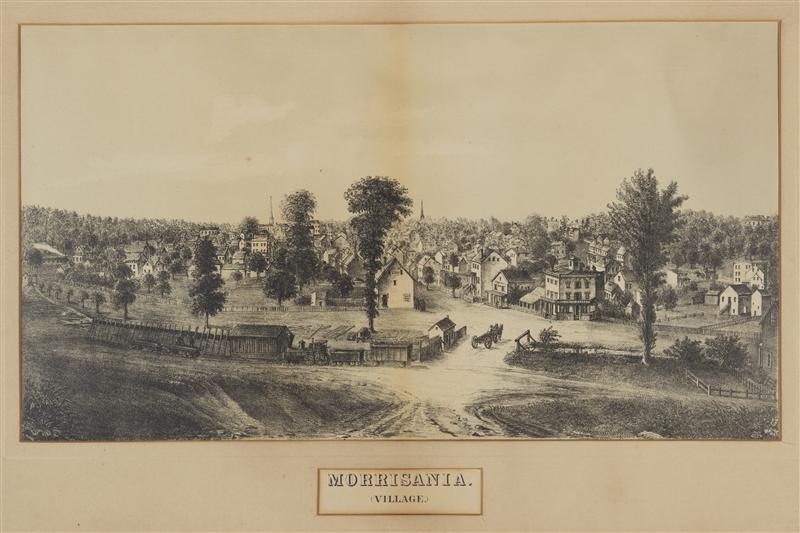
The village of Morrisania, pictured here in 1860, which arose from land owned by the Morrises after the railroad encouraged a row of ‘depot towns.’
MCNY
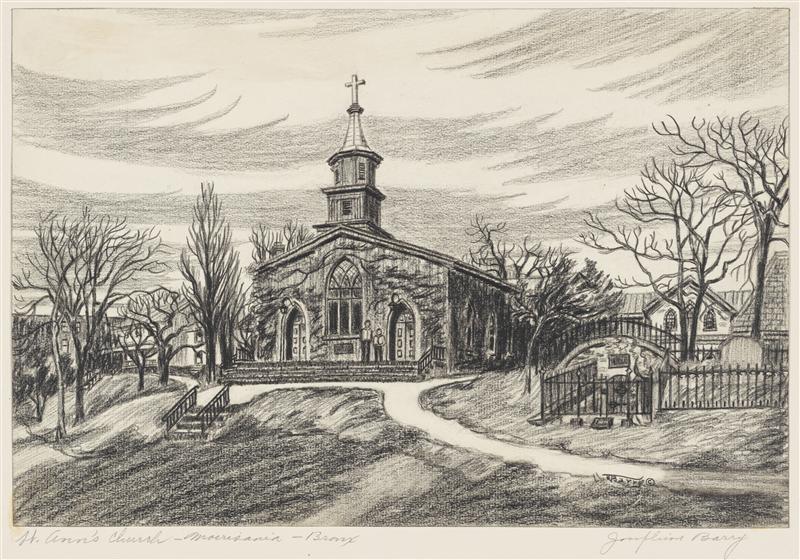
St Ann’s Episcopal Church in Morrisania, where both Lewis and Gouverneur Morris (and Gouverneur’s wife Ann) are buried.
Courtesy MCNY
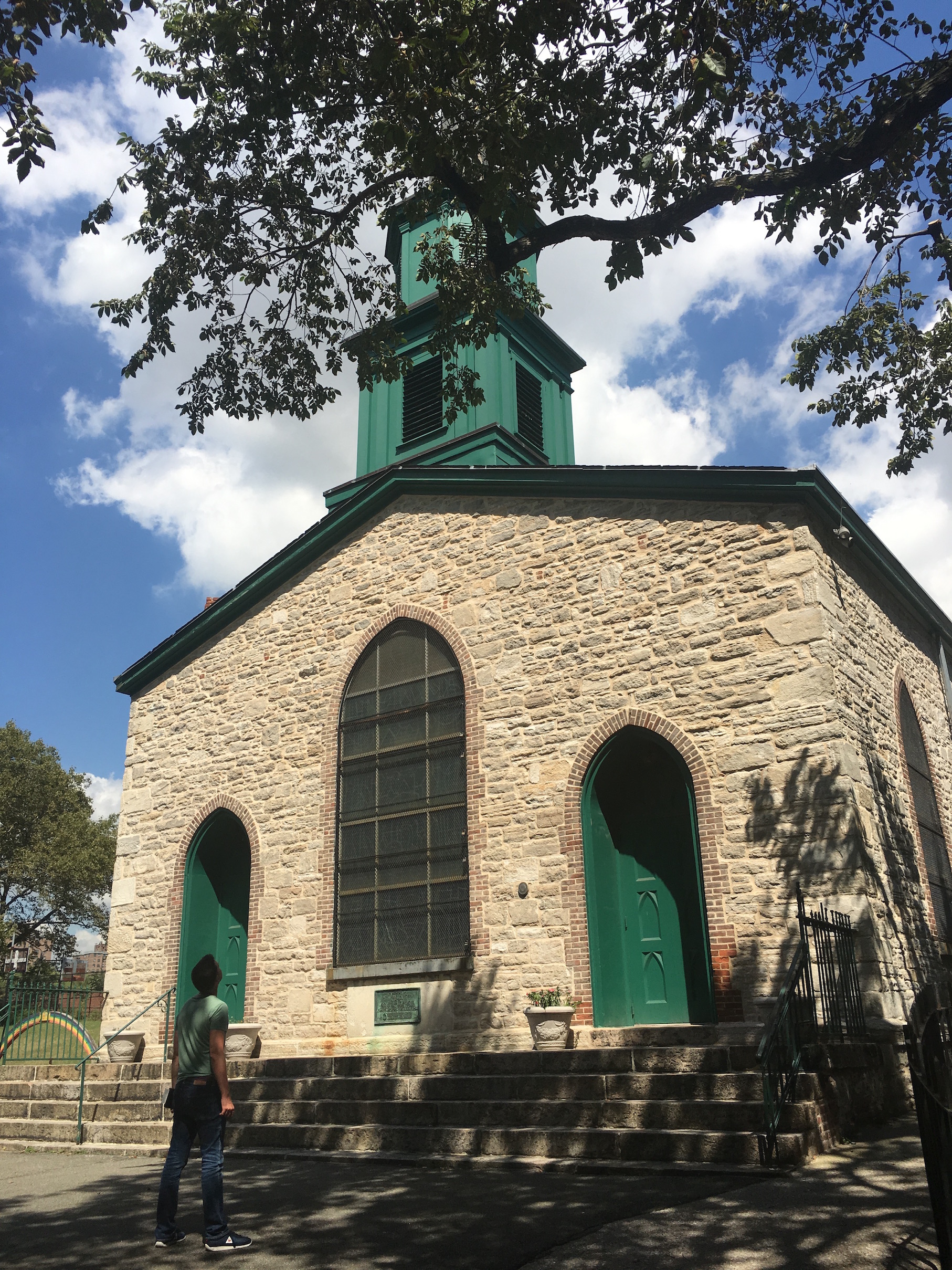
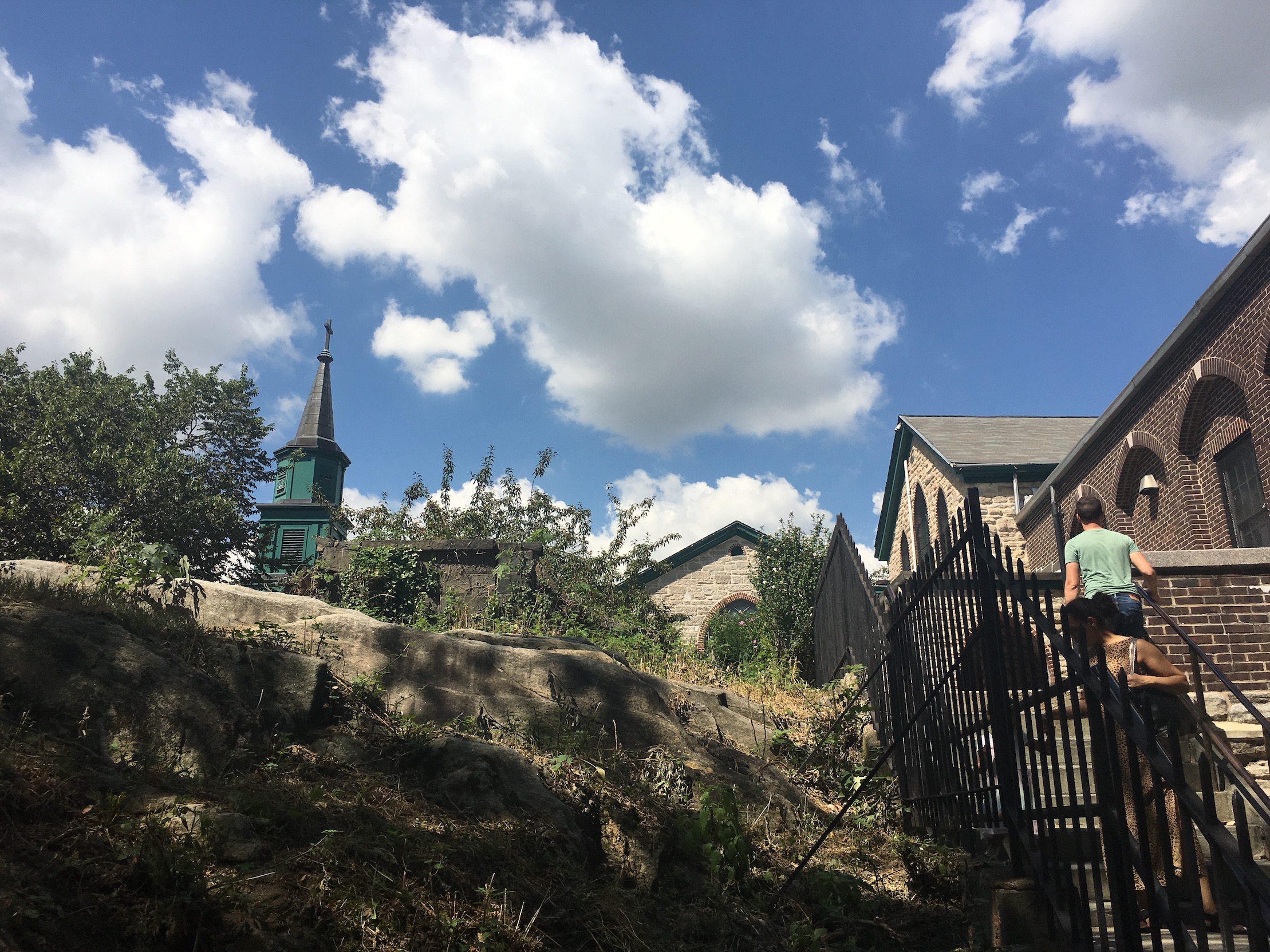
A view of St. Ann’s today:
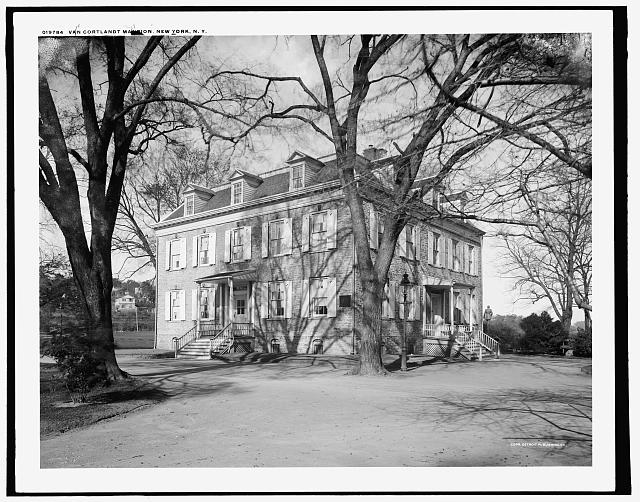
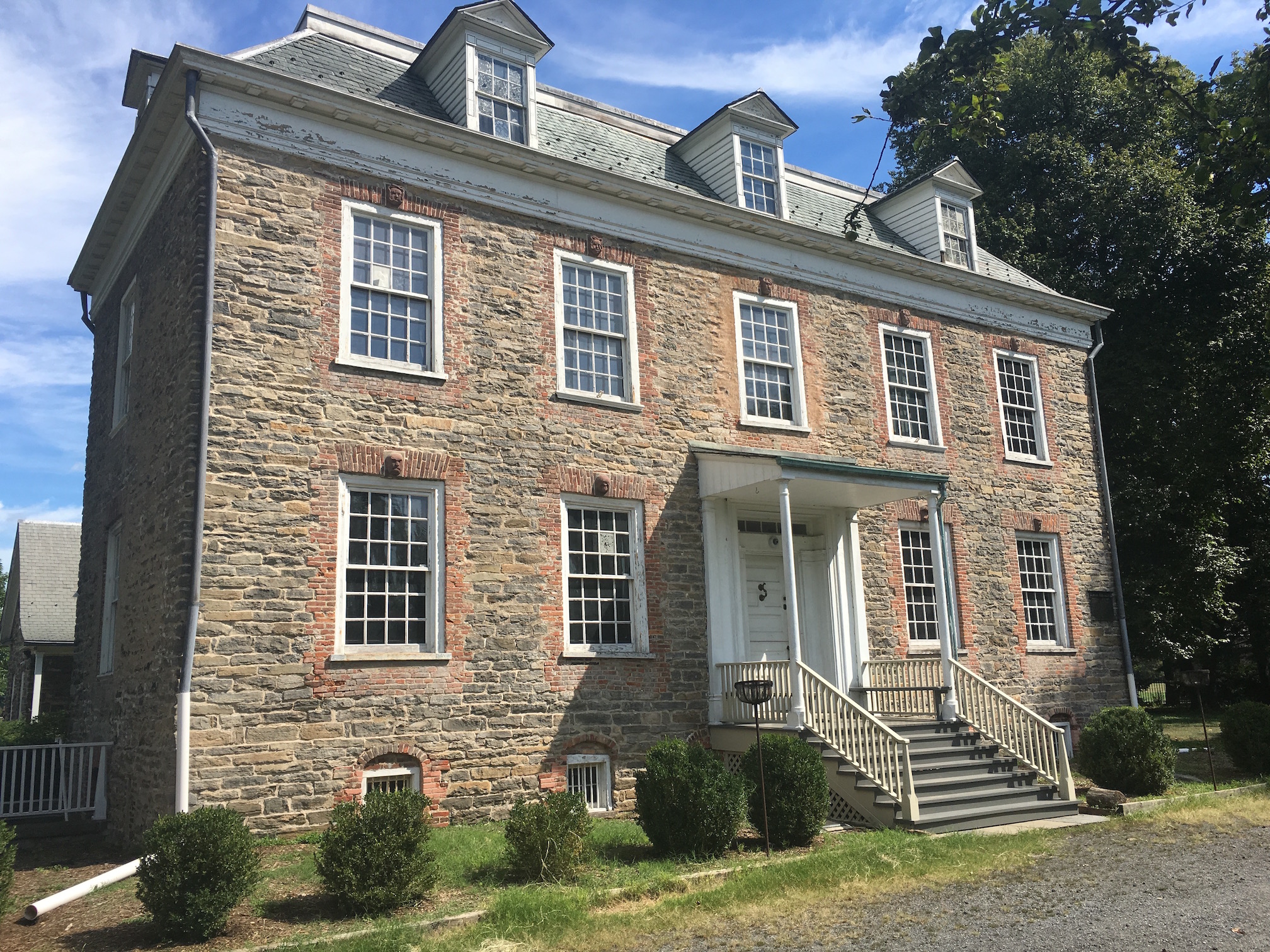
The Van Cortlandt Mansion then (in 1906)…
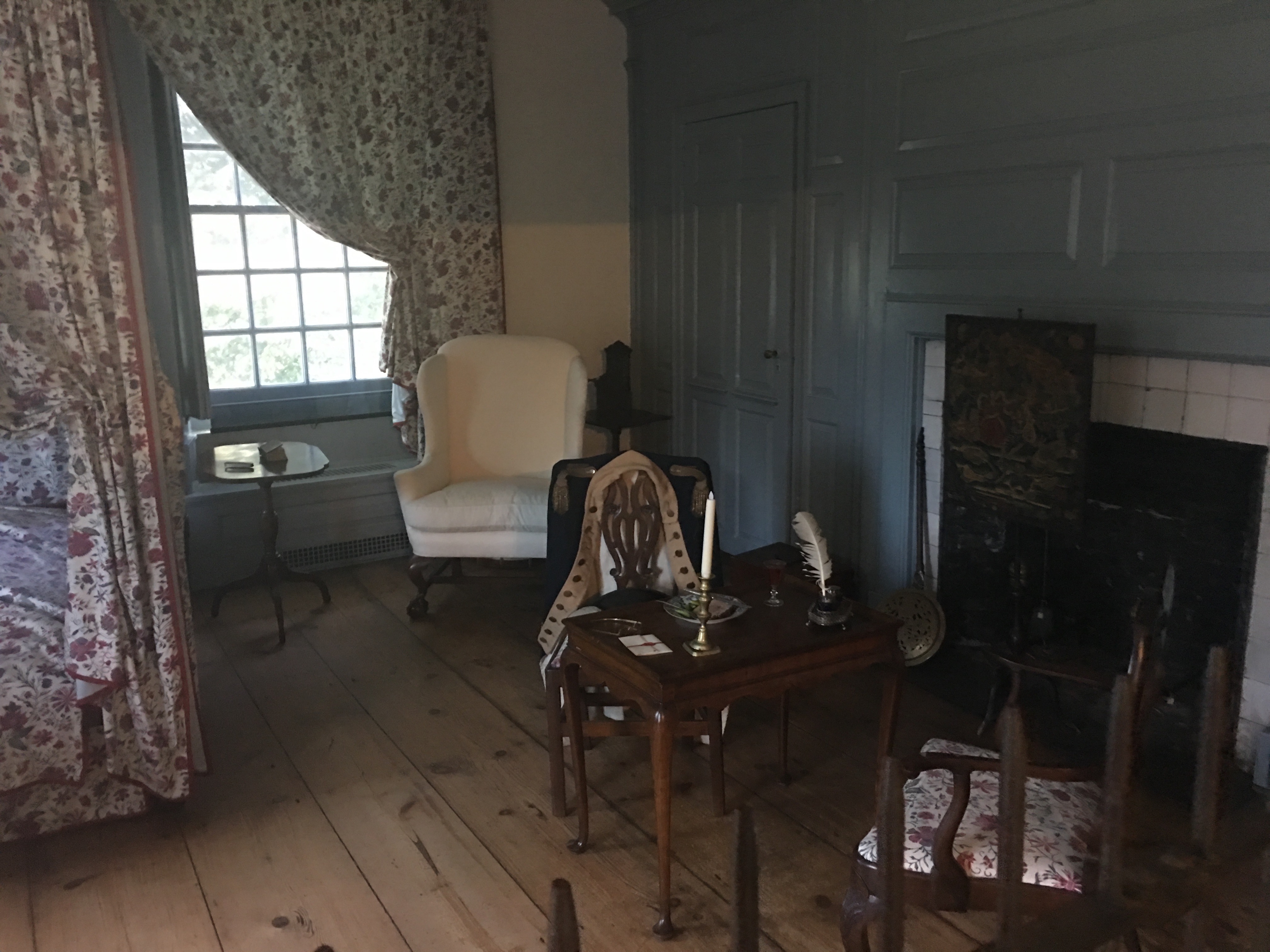
And today (featuring George Washington’s room):
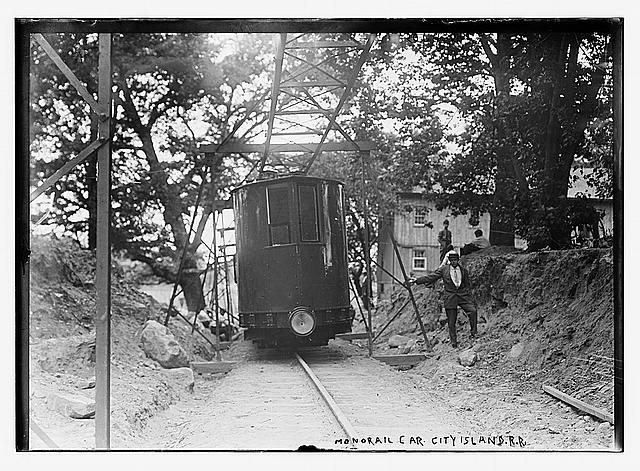
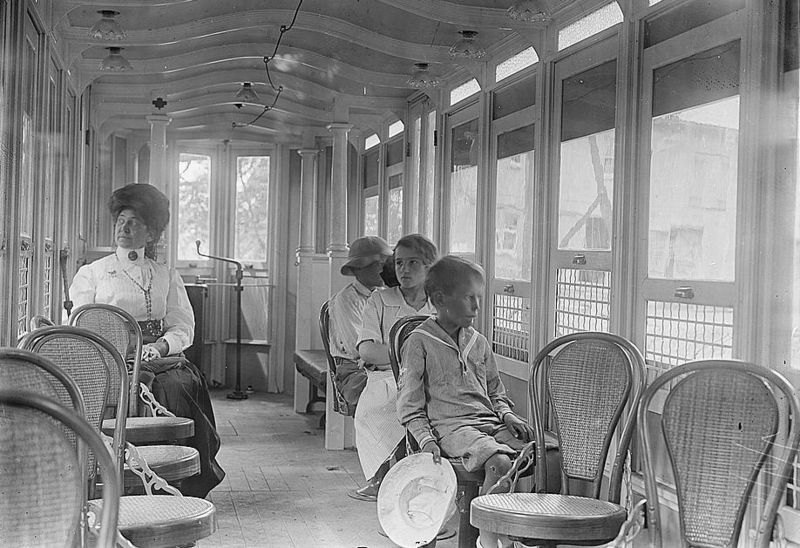
The old City Island monorail from 1910
LOC
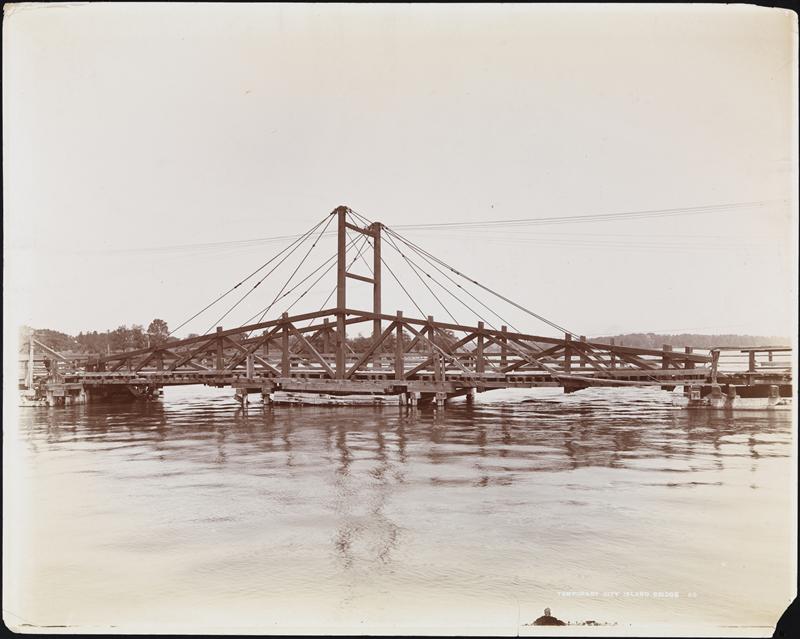
The old City Island Bridge, the only way on or off the island that’s not a boat. That remains true to this day, although the bridge is much sturdier-looking today!
MCNY
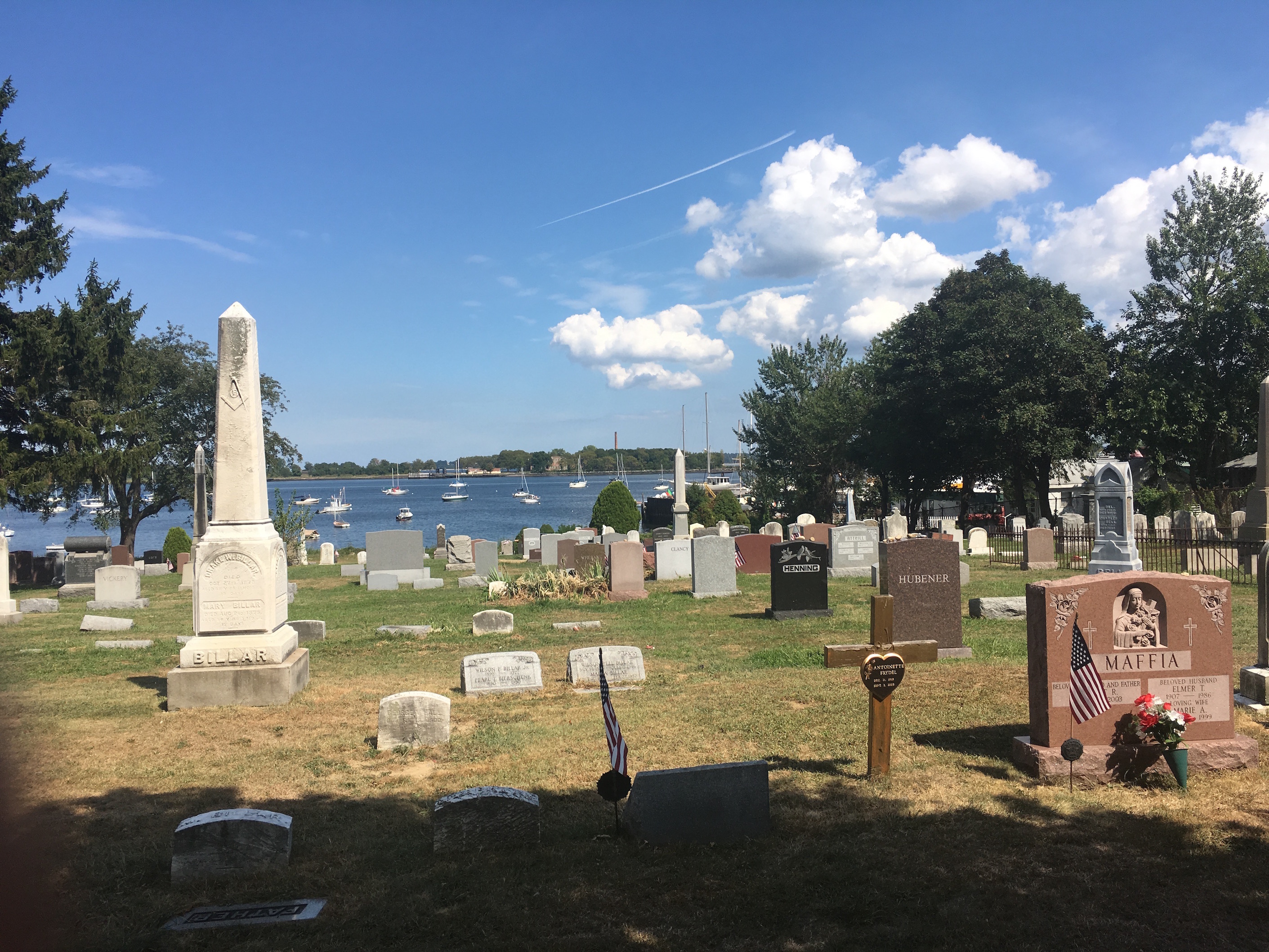
The old City Island Cemetery with Hart Island in the distance.
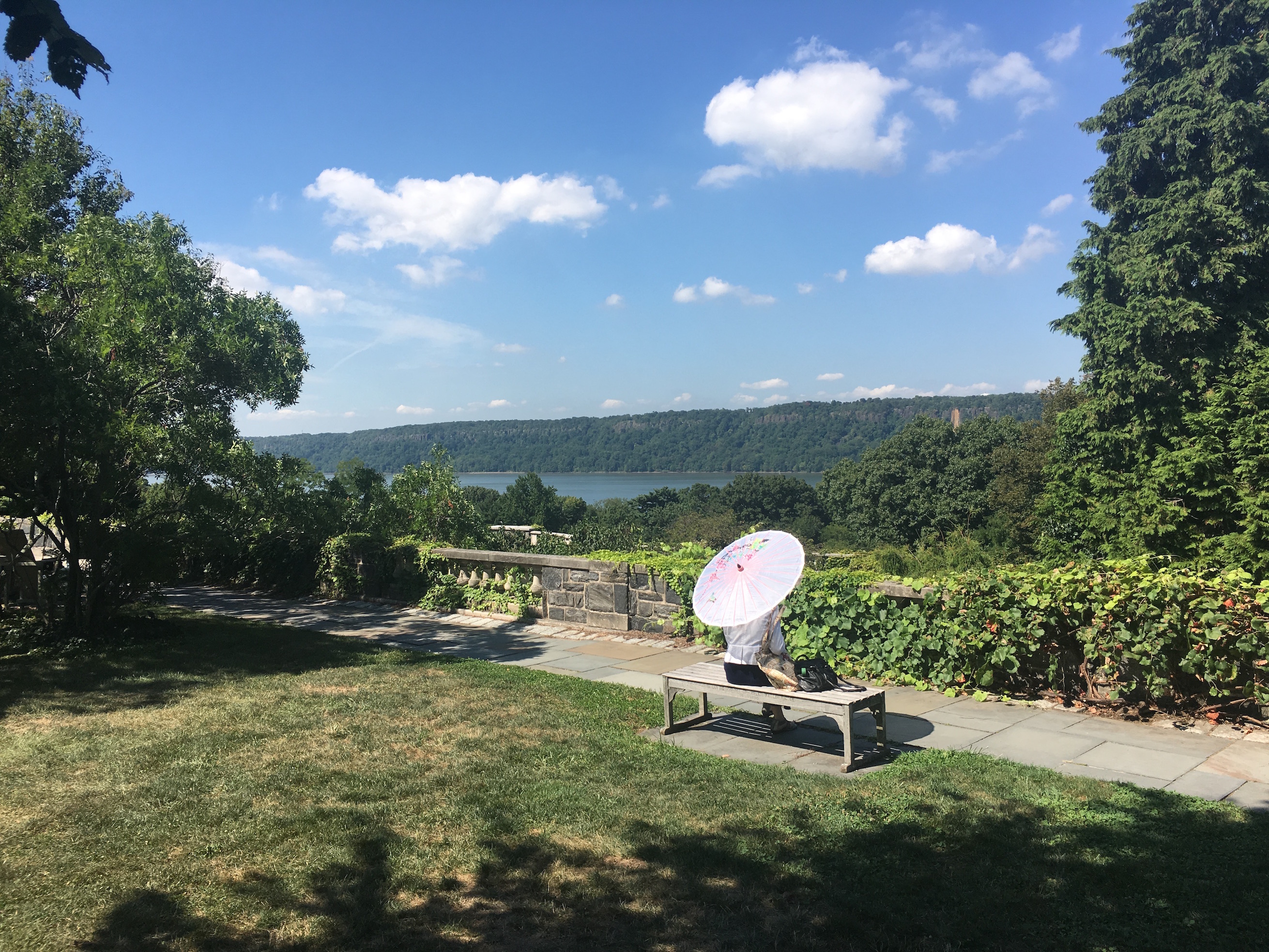
Breathtaking Wave Hill and the grounds which provide an unbelievable view of the Hudson River and the Palisades.
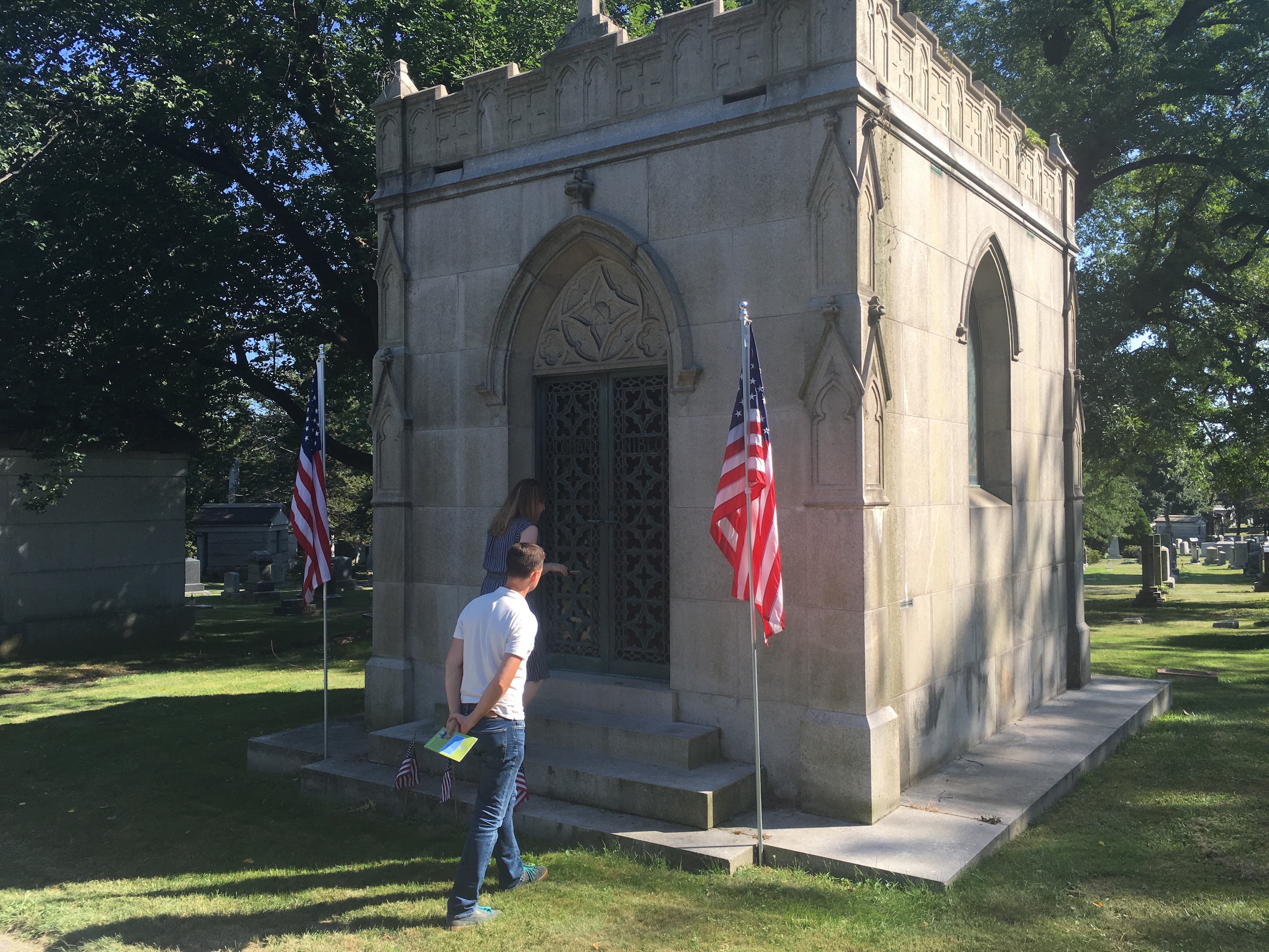
Here’s Tom, getting a peek inside George M Cohan’s mausoleum at Woodlawn Cemetery:
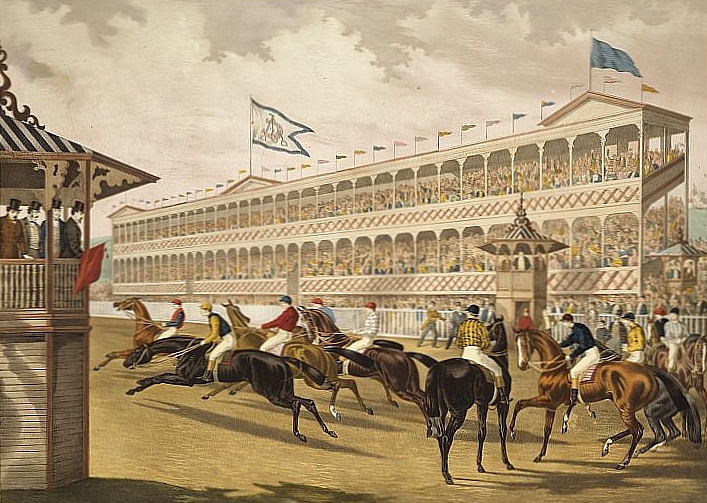
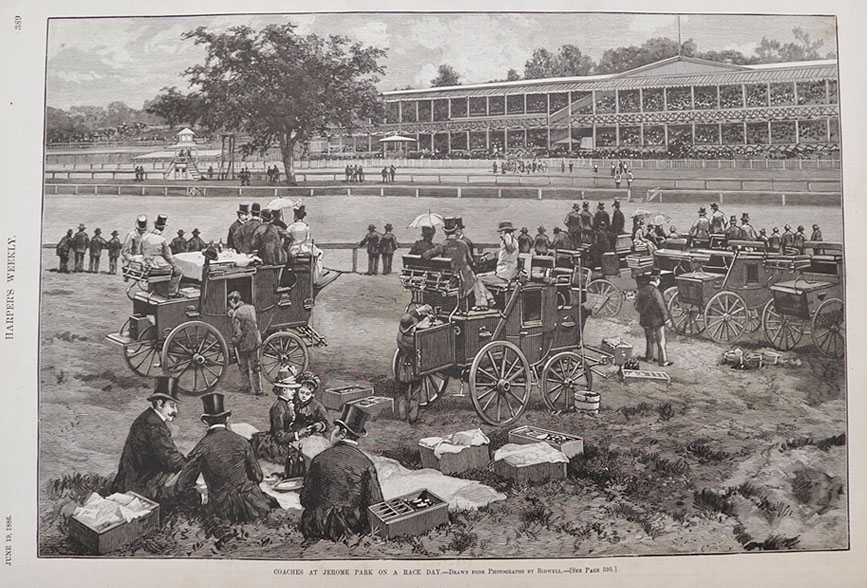
Jerome Park Racetrack where the Belmont Stakes were first run in 1867.
From Harpers Weekly, 1886:
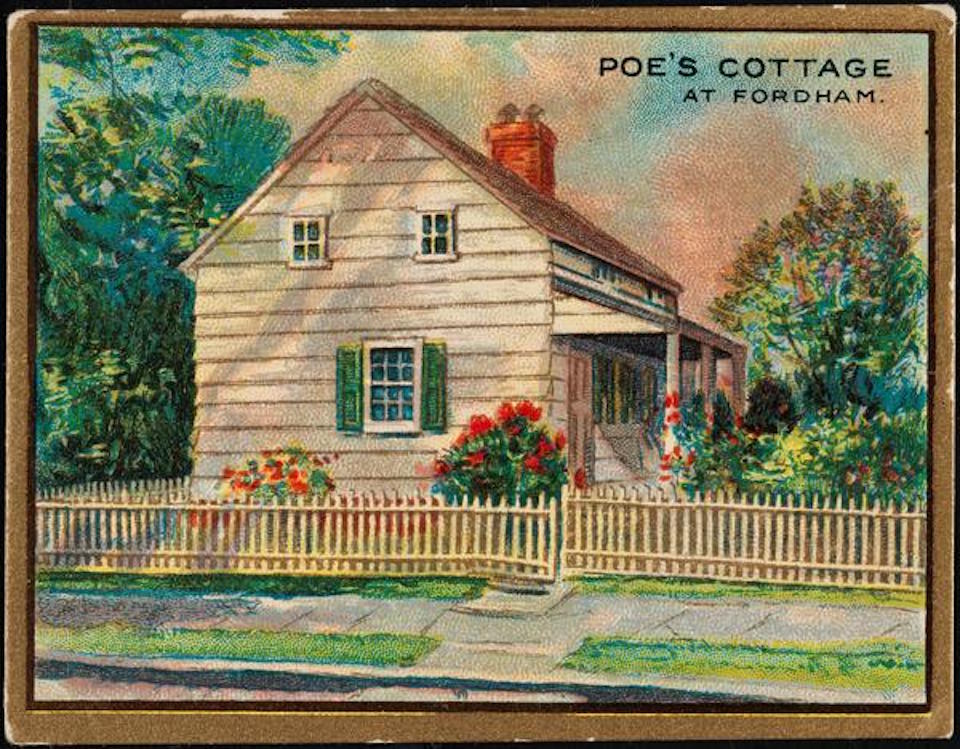
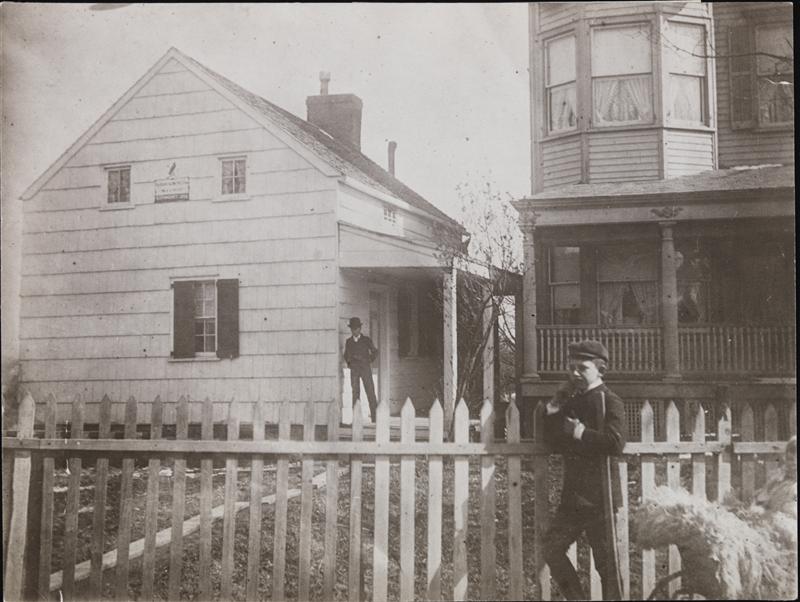
The former (awkward) location of Edgar Allan Poe’s cottage. It has since been moved to the Grand Concourse.
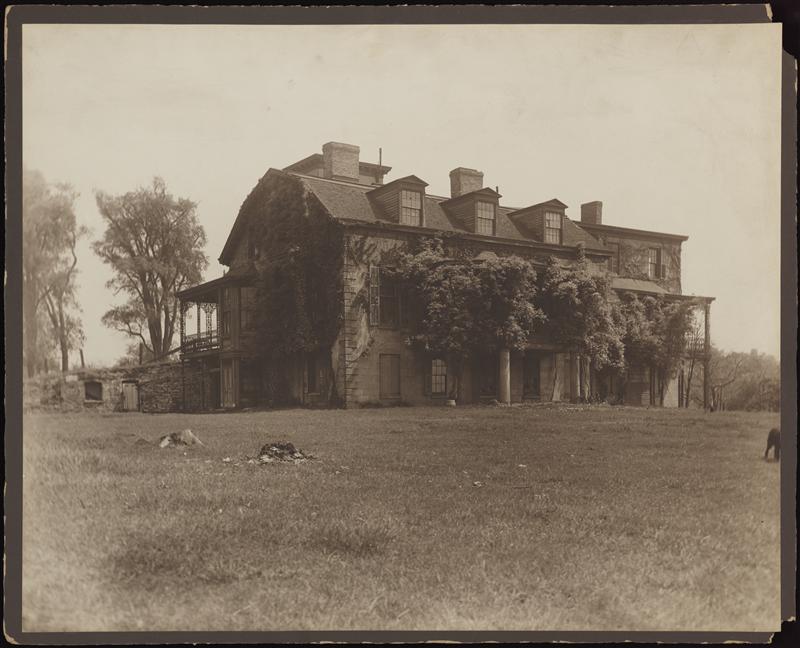
And finally — Gouverneur Morris’ mansion which — believe it or not — stood at the foot of St. Ann’s Avenue until the 20th century.
MCNY
We want to give a big thanks to the Bronx Historical Society, Wave Hill, Woodlawn Cemetery and St. Ann’s Episcopal Church for helping us with our research. Keep coming back to the blog throughout the month of September as we’ll have additional stories about these places and others.
New Amsterdam, the home of Claes Maartenszen van Rosenvelt (by Thomas Addis Emmet, courtesy NYPL)
The new Ken Burns seven-part documentary The Roosevelts: An Intimate History is underway on PBS, a sprawling look at one of New York’s most prominent families. It began last night with the introduction of young Theodore Roosevelt, the sickly boy turned New York police commissioner. Tonight, in part two, he becomes the President of the United States.
With so many Roosevelts to speak about — and two clans of Roosevelts, named for their summer haunts Hyde Park and Oyster Bay — there wasn’t much time to mention the very first Roosevelt. That is, the first ancestor to arrive in future North America — Claes Maartenszen van Rosenvelt.
Claes arrived to New Amsterdam sometime around 1649 or 1650, although possibly much earlier (some records say 1638), one of a number of Dutch settlers arriving at this outpost of the Dutch West India Company. If the earlier dates are true, this puts Rosenvelt in the outpost during the years of William Keift, when New Amsterdam was a ragged company town, with a rudimentary civic structure and in constant fear of attack by the Lenape.
His wife is referred to in records as both Jannetje Samuels and Jannetie Thomas. Keep in mind that with the paucity of extant records, a company-town’s inefficiencies, basic human error and the “peculiar method of naming people during Dutch times,” it’s incredible that we even have these names at all!
Many histories make note of Claes unusual nickname — Klein Klassje or Cleyn Claesjen (“Little Claes”) — perhaps meaning he was a short man or that there was a much larger Claes in town. It’s not inconceivable to think he was also “short” in social stature, not physical.
The colony was whipped into a relatively more livable condition with the arrival of Peter Stuyvesant in 1647, and records list Claes as having a farm “situated back of Stuyvesant’s Bouwery, at present somewhere between Broadway and the East River, in the neighborhood of Tenth Street.” [source]
The couple had four children of which only one (Nicolas) took and kept the name Rosenvelt, which of course was modified over time into Roosevelt.
For decades, Manhattan once had a Roosevelt Street, named not for any of the later great leaders who would make the family famous, but (it’s believed) for either Nicolas or his son Jacobus. The family owned a profitable mill on a small stream which ran between the East River and the banks of Collect Pond. [source]
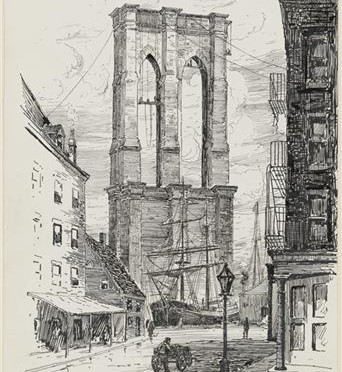
At right: the construction of the Brooklyn Bridge as seen from Roosevelt Street, 1876 (courtesy MCNY)
In the 19th century, Roosevelt Street was a dour place, rife with poverty and the downtrodden culture of South Street piers. It was entirely erased in the 1950s with the creation of the Alfred E. Smith Houses.

 Less than three centuries after the iconic Dutch director-general of New Amsterdam died at his palatial farm in today’s East Village, his name was employed to sell a brand of stylish, premium cigarette, still enjoyed today by smokers in Australia, New Zealand, South Africa and other counties, most being places Peter Stuyvesant had no idea existed.