Categories
Brooklyn History Neighborhoods Podcasts

The Story of Flatbush: Brooklyn Old and New

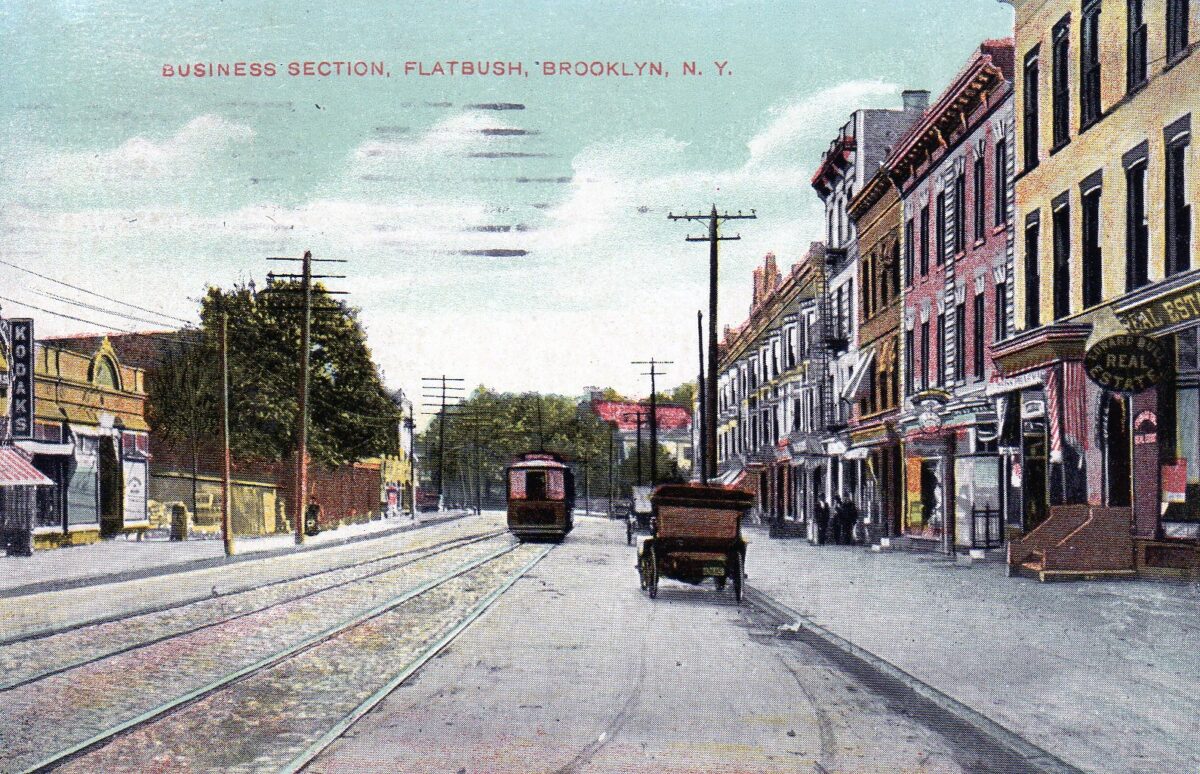
Over 350 years ago today’s Brooklyn neighborhood of Flatbush was an old Dutch village, the dirt path that would one day become Flatbush Avenue lined with wheat fields and farms.

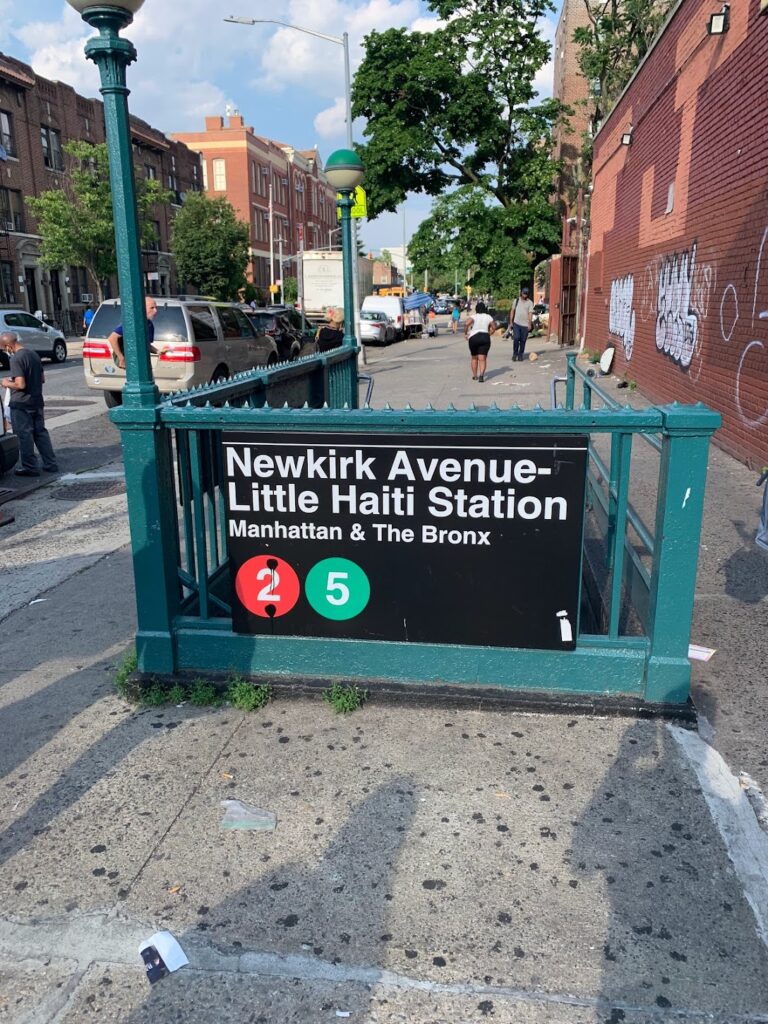
Contrast that with today’s Flatbush, a bustling urban destination diverse in both housing styles and commercial retail shops. It’s also an anchor of Brooklyn’s Caribbean community — Little Caribbean.

There have been many different Flatbushes — rural, suburban and urban. In today’s show we highlight several stories from these phases in this neighborhood’s life.

If you are a Brooklynite of a certain age, the first thing that might come to mind is maybe the Brooklyn Dodgers who once played baseball in Ebbets Field here. Or maybe you know of a famous person who was born or grew up there — Barbra Streisand, Norman Mailer or Bernie Sanders. 

But the story of Flatbush reflects the many transformative changes of New York City itself. And it holds a special place in the identity of Brooklyn — so much so that it is often considered the heart of Brooklyn.

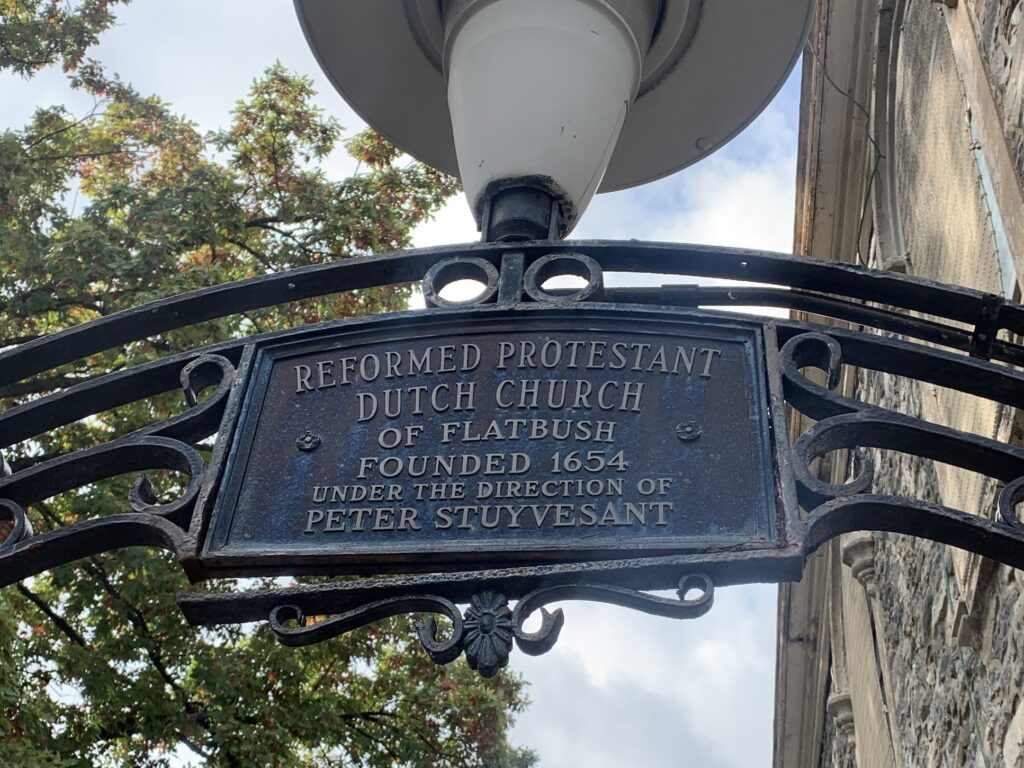
FEATURING STORIES OF Erasmus Hall, the Kings Theater, Lefferts Historic House, the Flatbush African Burial Ground and the Flatbush Dutch Reformed Church.

PLUS We chat with Shelley Worrell of I Am CaribBEING about her work preserving and celebrating the neighborhood’s Caribbean community.

Listen Now — The Story of Flatbush


Thank you to Shelley Worrell for being on the show. For more information on I am CaribBEING, visit their website.

Today (June 17) is One Love Little Caribbean Day, celebrating the Caribbean businesses of Flatbush, Prospect Lefferts Garden and East Flatbush.

And this Sunday (June 19) celebrate National Caribbean-American Heritage Month in Prospect Park with I AM CaribBeing and Prospect Park Alliance

A Juneteenth celebration with live performance by Grammy-Award winning Angela Hunte backed by Da Jerry Wonda Band, peer-to-peer gaming powered by Fun With Friends DJ sets by Gab Soul + Khalil and Little Caribbean artisan vendors.


This episode is brought to you by the Historic Districts Council. Funding for this episode is provided by public funds from the New York City Department of Cultural Affairs in partnership with the City Council and Council Member Benjamin Kallos.


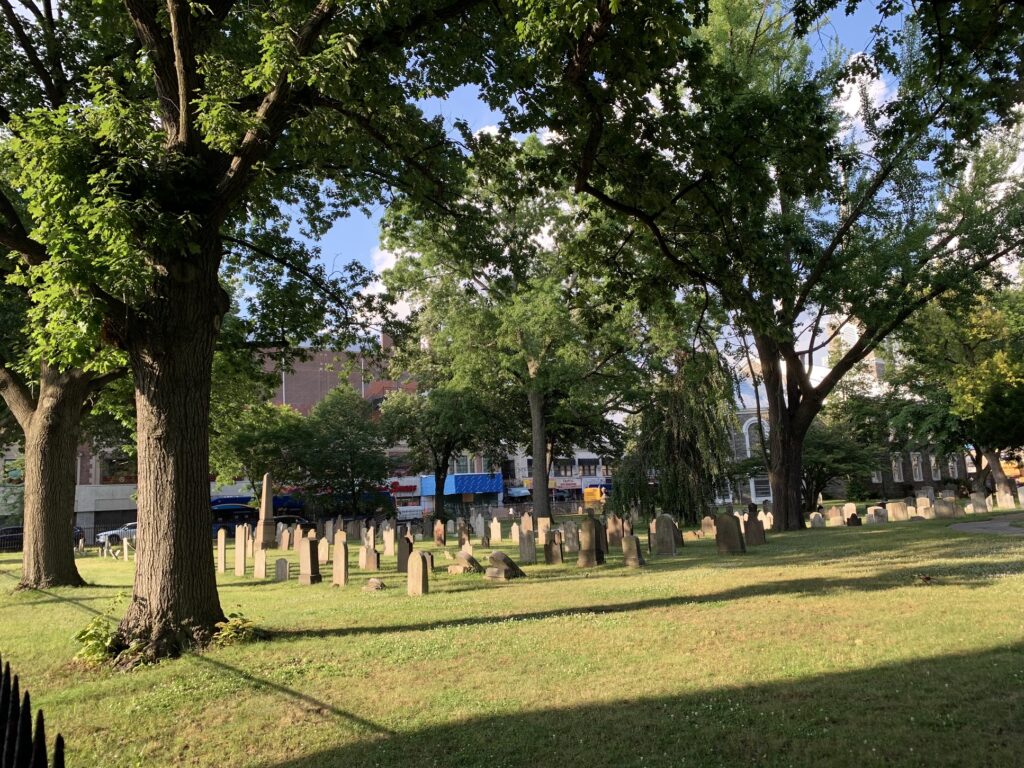
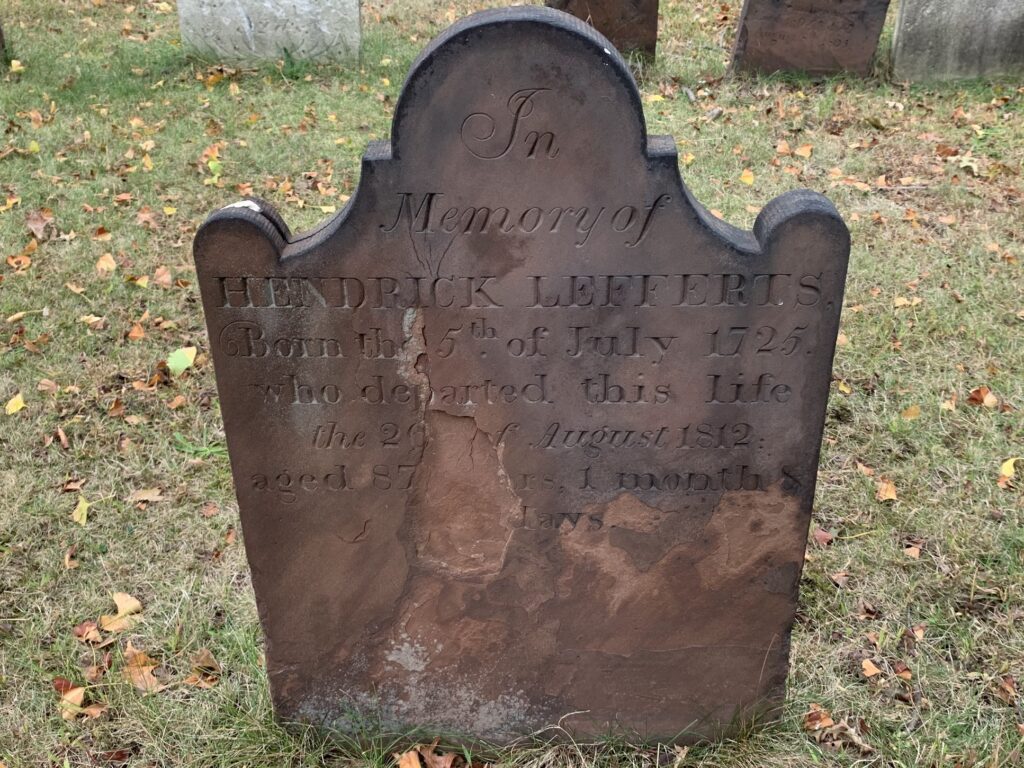
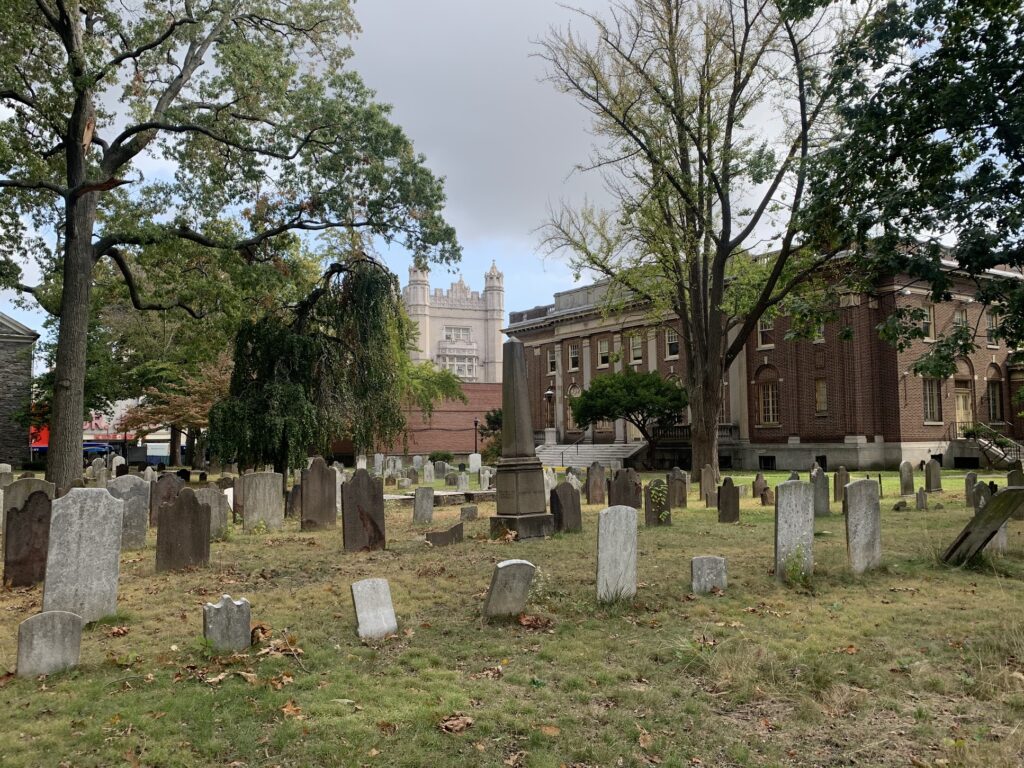
The historic cemetery at Flatbush Dutch Reformed Church

Erasmus Hall High School can be seen from the grounds of the cemetery.

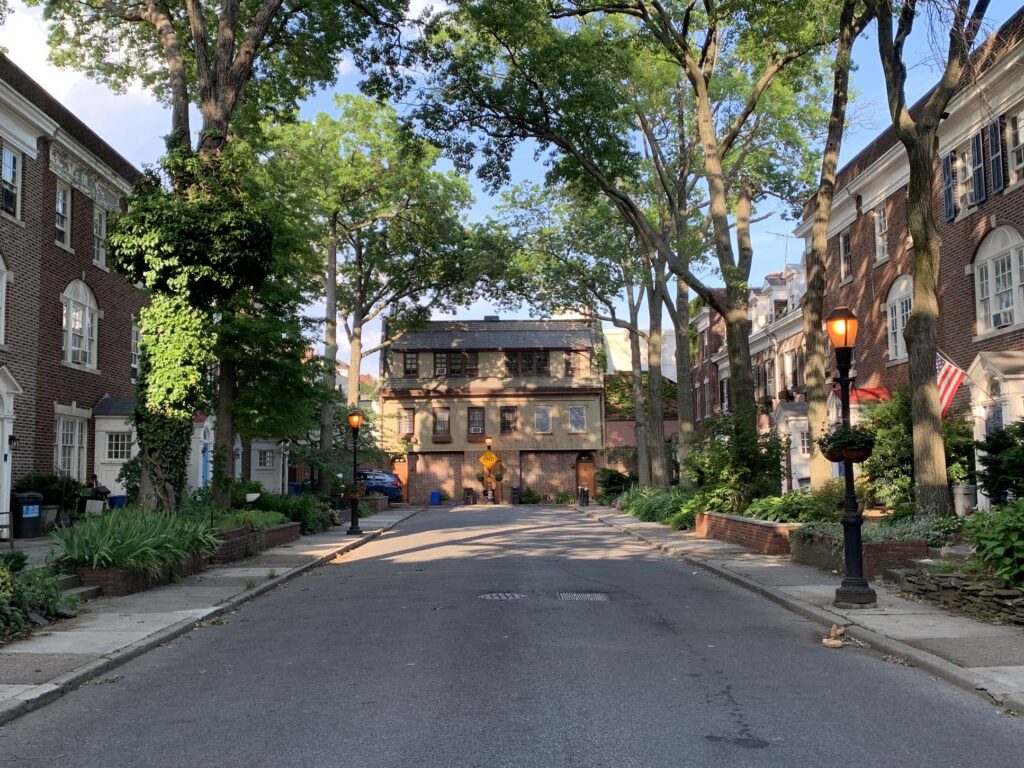
Albemarle–Kenmore Terraces Historic District

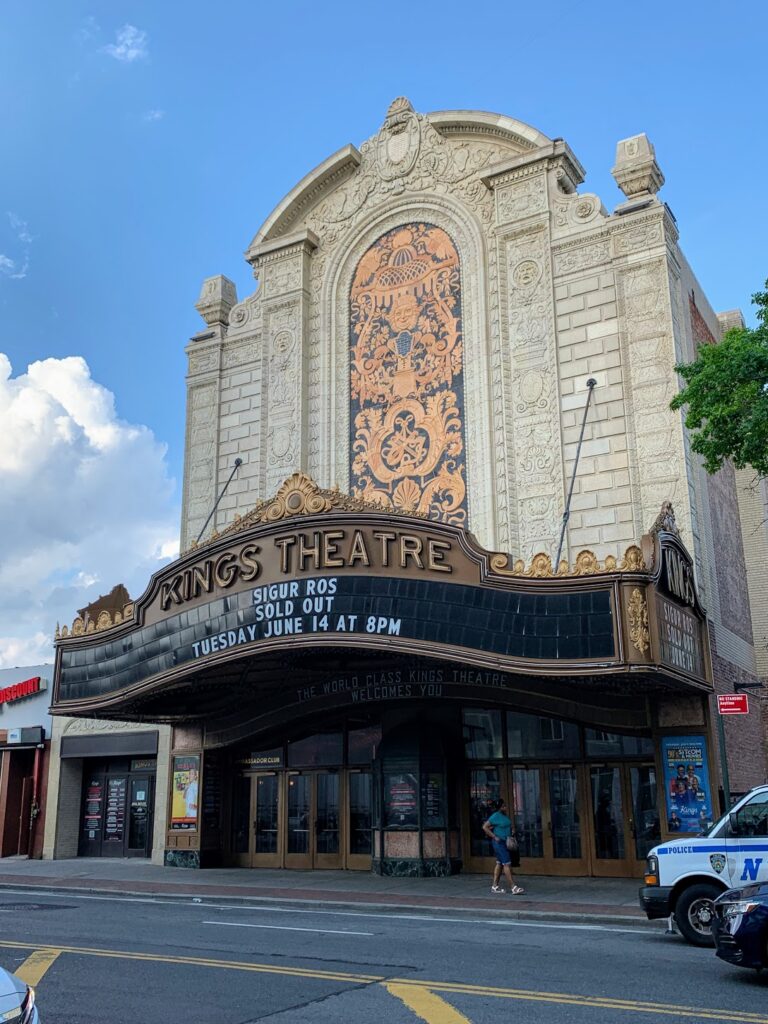
Kings Theatre, a Flatbush landmark since the 1920s

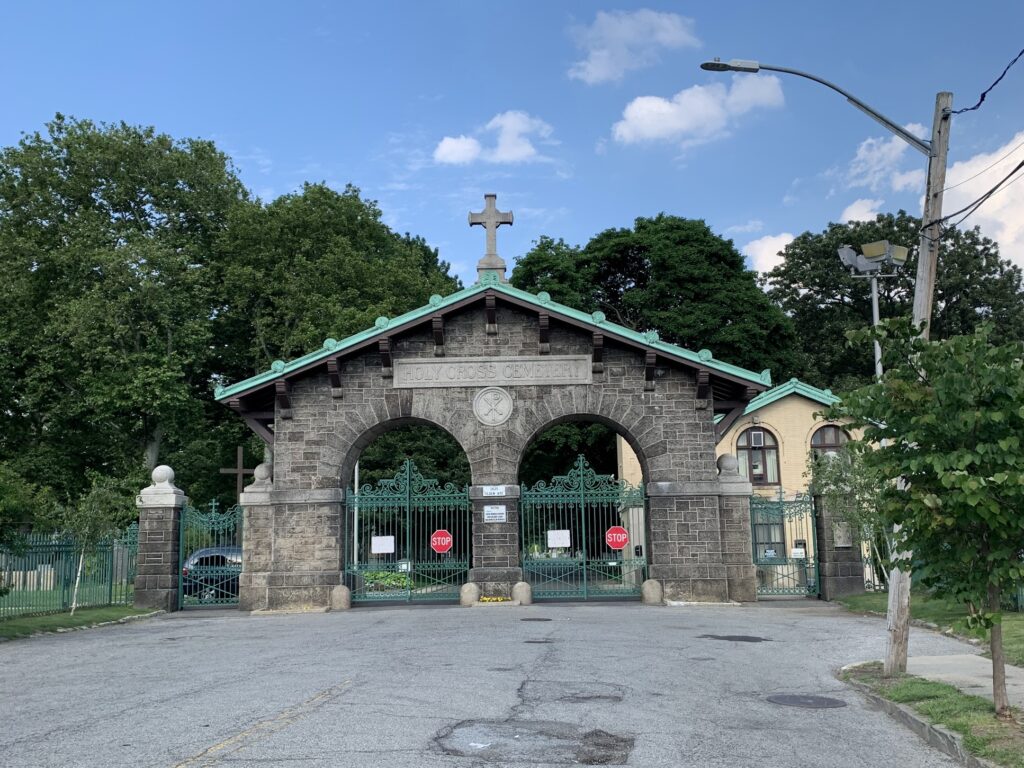
Holy Cross Cemetery in East Flatbush

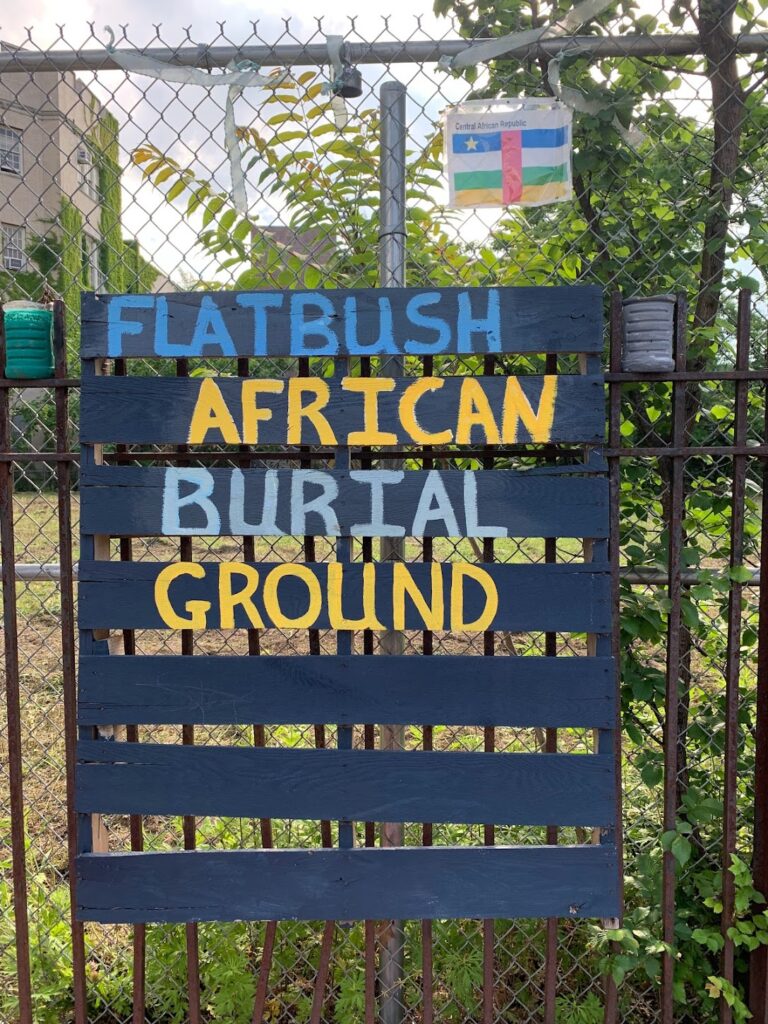
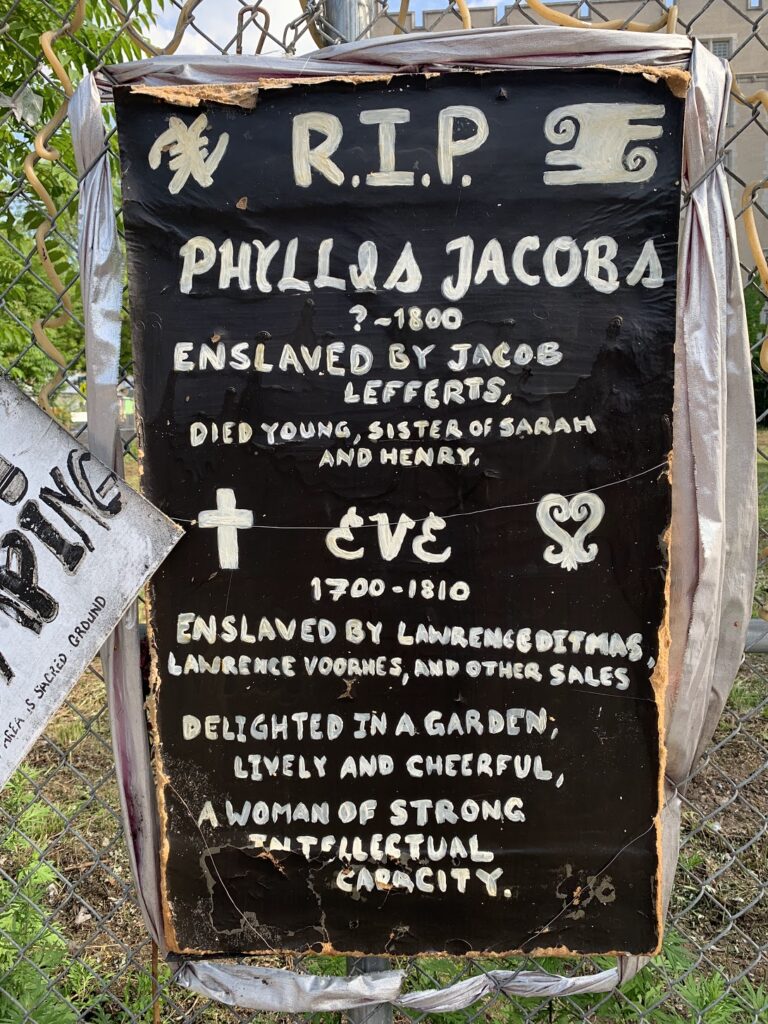
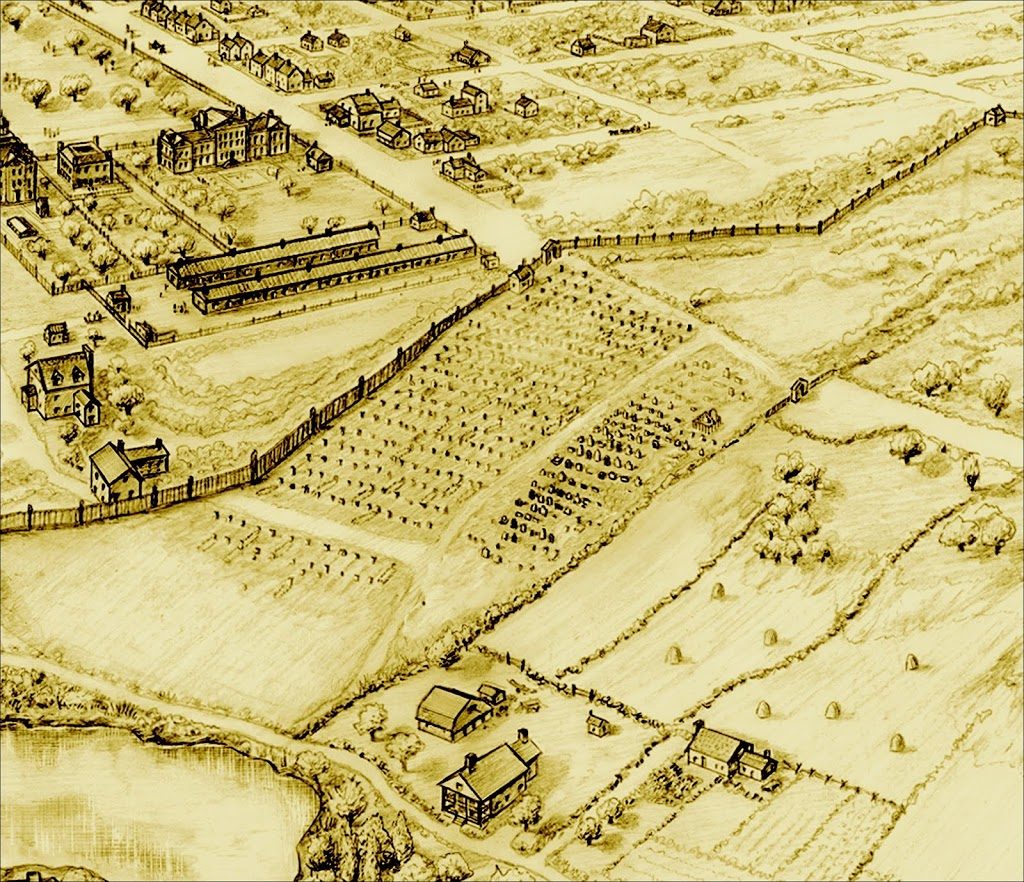
Marker for the Flatbush African Burial Ground and a makeshift tombstone for the two people who were known to be buried here.

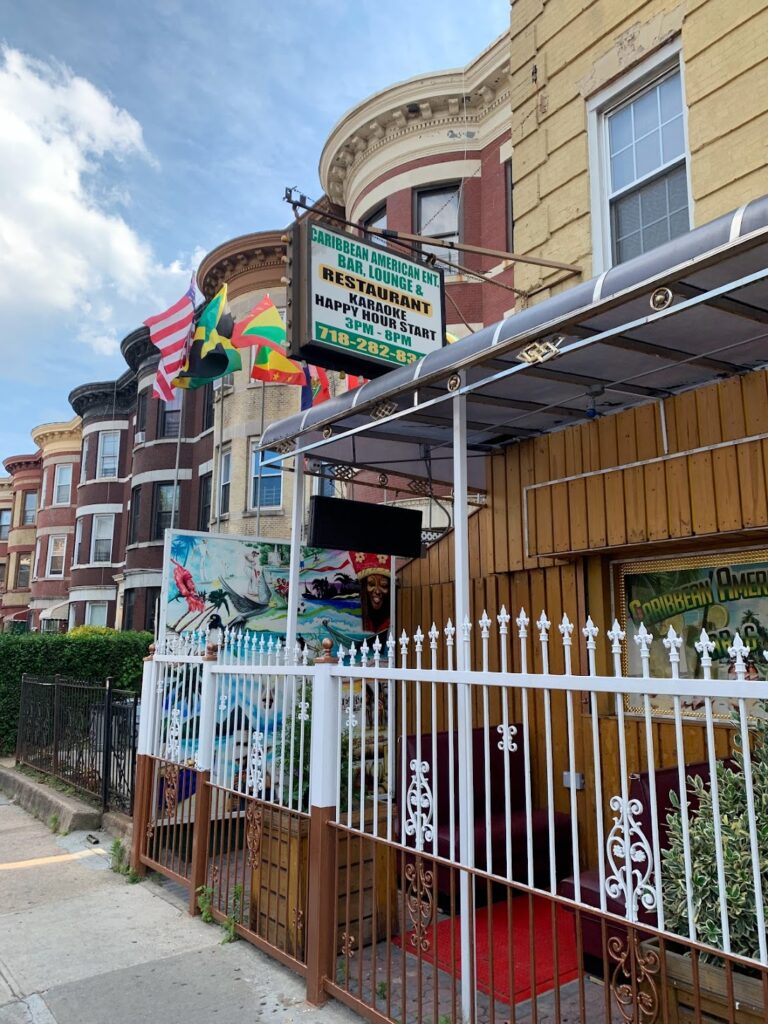
A Caribbean restaurant in East Flatbush amid some excellent examples of rowhouses that are scattered throughout the area.

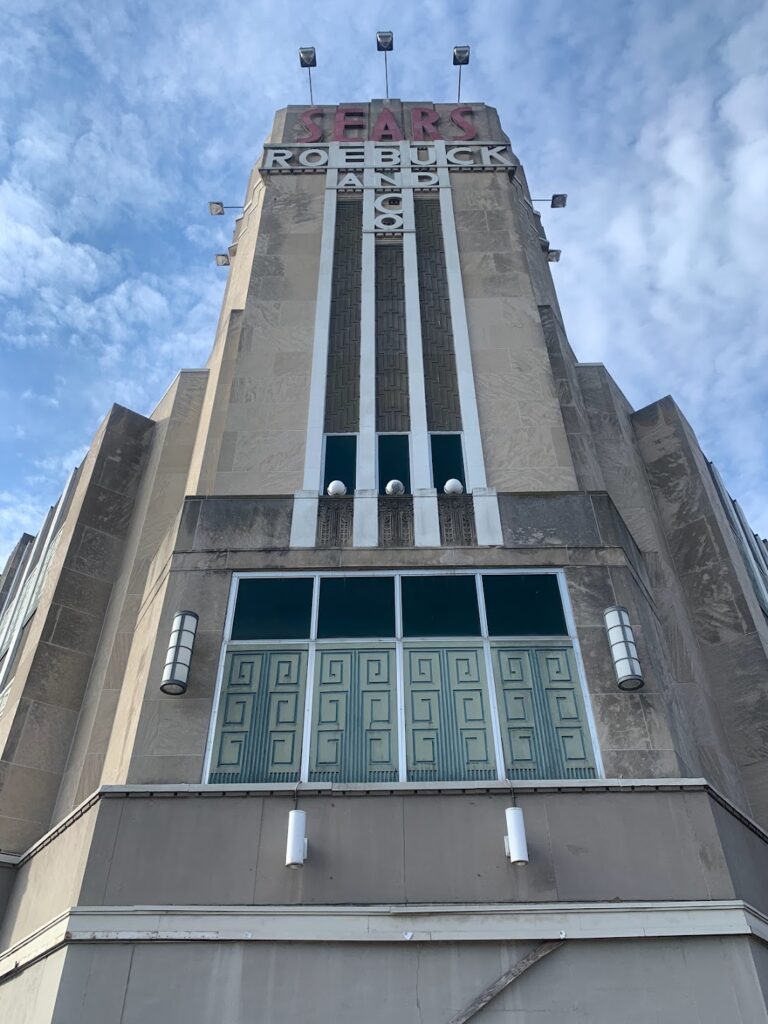
The landmarked Sears Roebuck building, one of the last reminders of the mid-century department stores of Flatbush


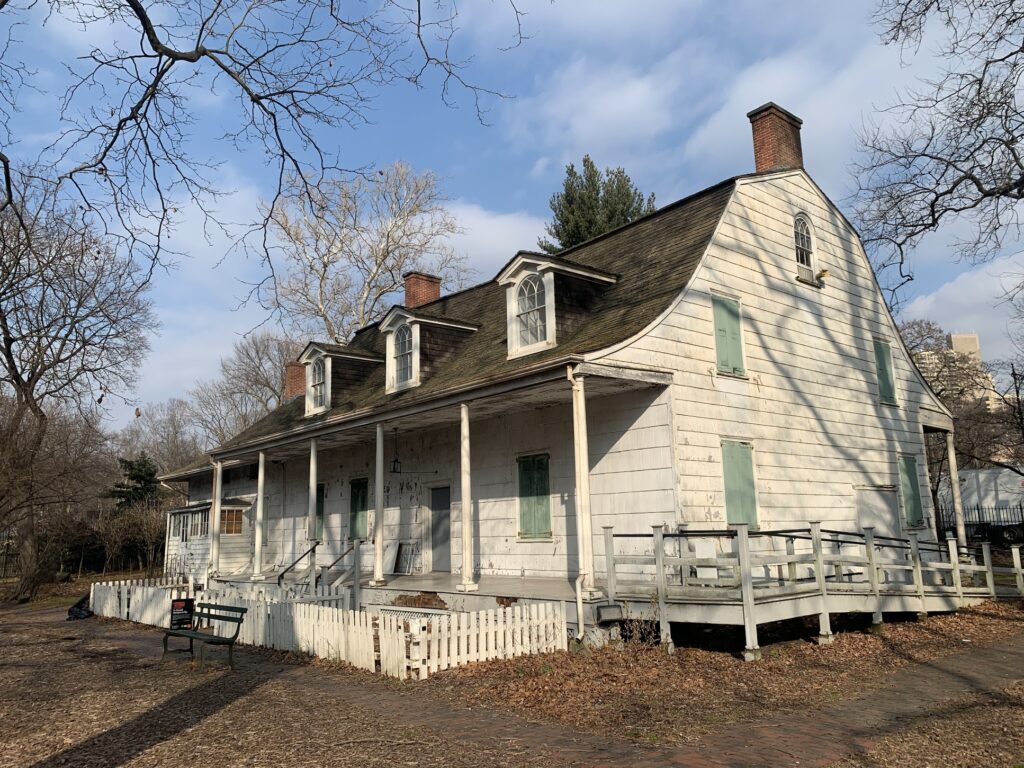
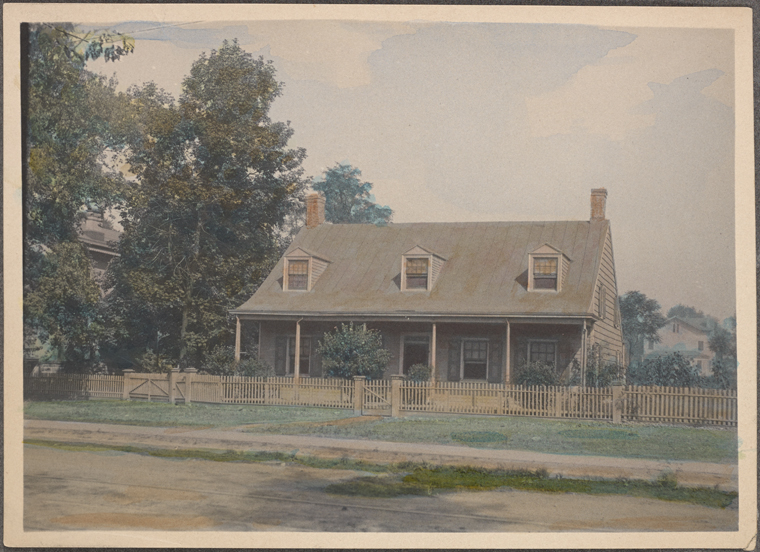
Lefferts Historic House in Prospect Park

Historic image of the house at its original site (north of Church Avenue) Courtesy New York Public Library

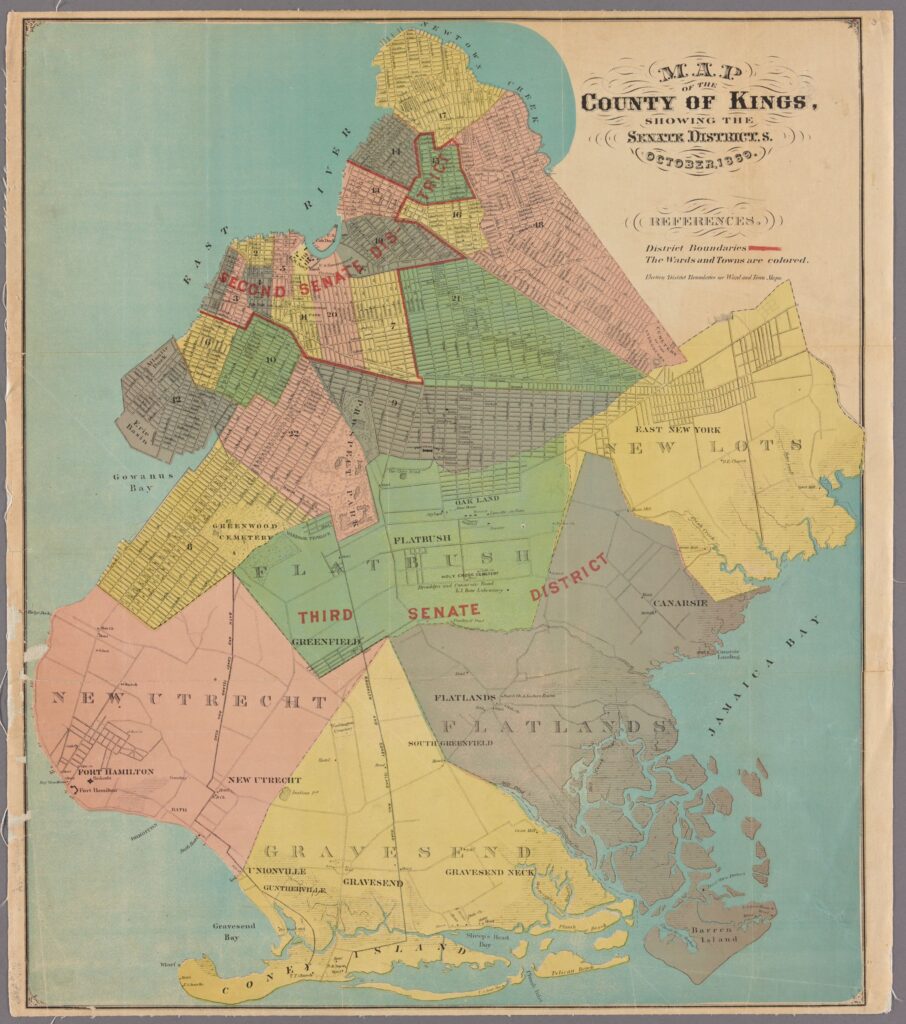
An 1869 map of state senate districts in Kings County. (Courtesy New York Public Library)
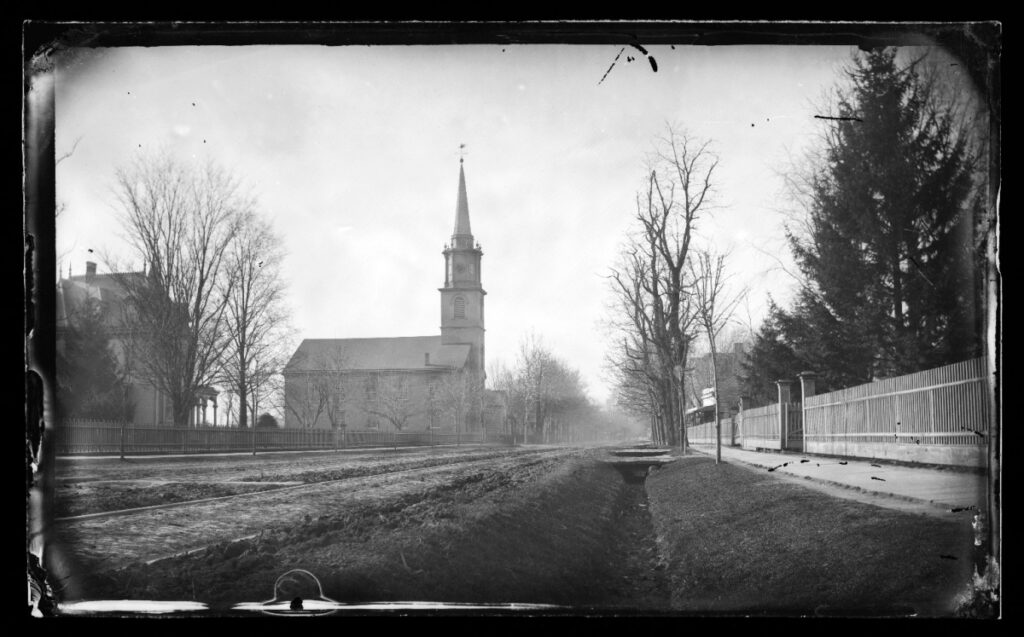
George Bradford Brainerd (American, 1845-1887). Steeple, Flatbush, Brooklyn, ca. 1872-1887. Wet-collodion negative. Prints, Drawings and Photographs. Brooklyn Museum/Brooklyn Public Library, Brooklyn Collection, 1996.164.2-384. (1996.164.2-384_glass_IMLS_SL2.jpg)
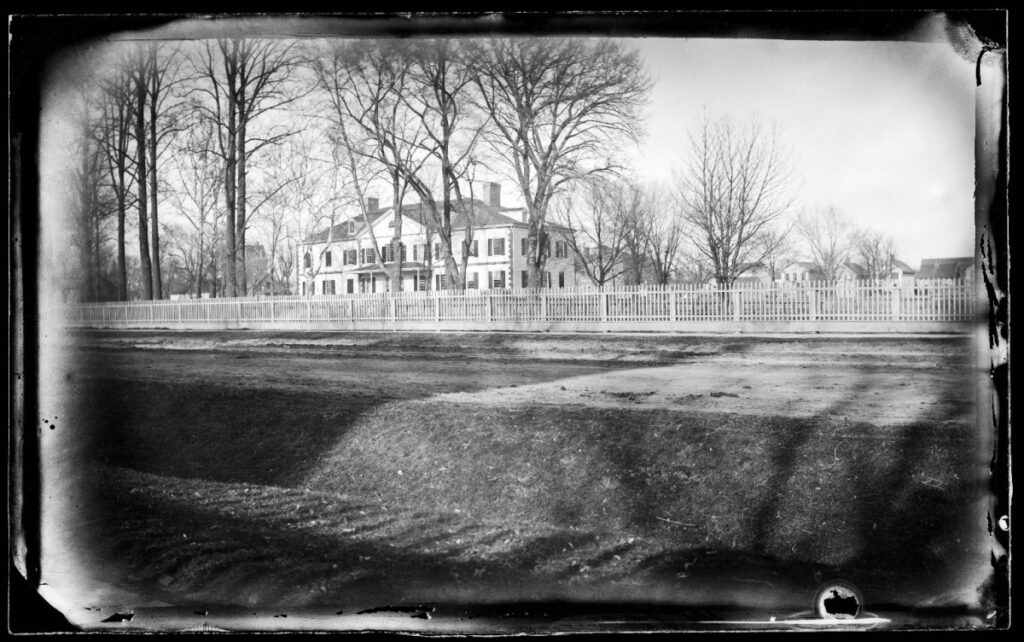
George Bradford Brainerd (American, 1845-1887). Erasmus Hall, Flatbush, Brooklyn, 1879. Wet-collodion negative. Prints, Drawings and Photographs. Brooklyn Museum/Brooklyn Public Library, Brooklyn Collection, 1996.164.2-159. (1996.164.2-159_glass_IMLS_SL2.jpg)
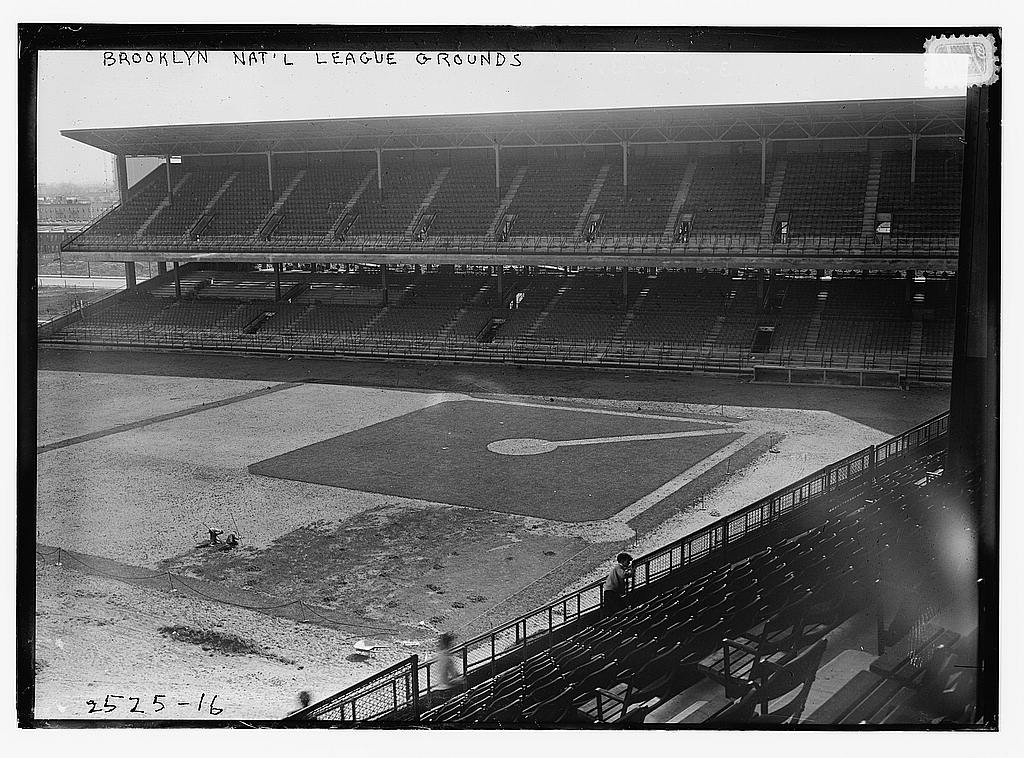
Inside Ebbets Field, 1913, Library of Congress. Here’s an article on their first regular game there.

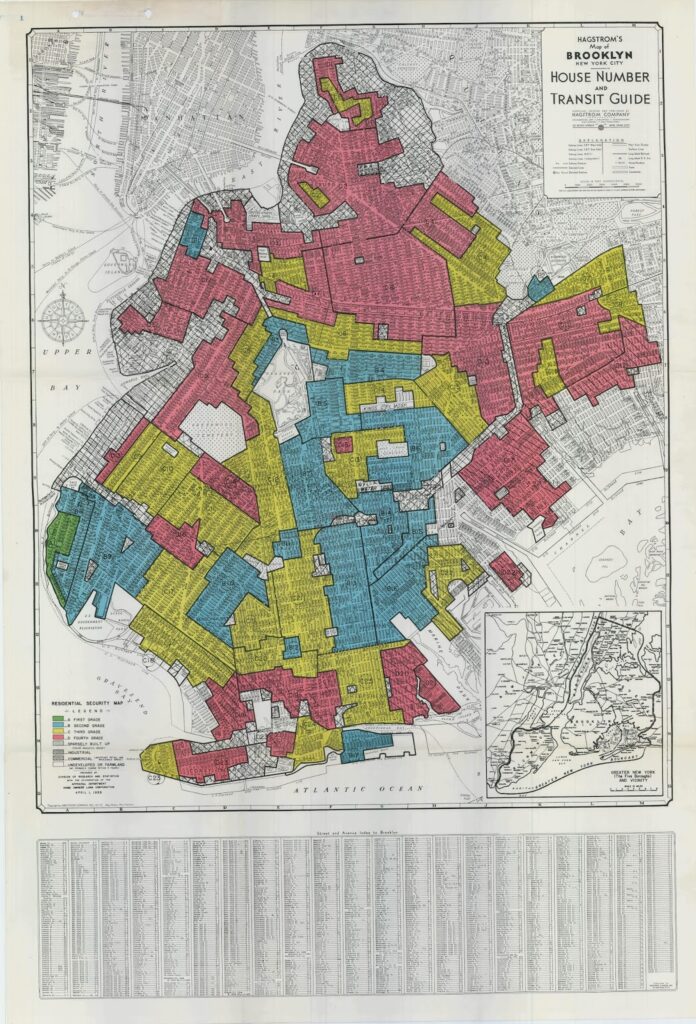
A map of redlined Brooklyn. Flatbush (seen below the Prospect Park white space) has sections in blue, yellow and red.

FURTHER LISTENING

After listening to the story of Flatbush, dive back into these podcasts which touch on some of the themes from this week’s show:

Categories
American History Bowery Boys Bookshelf

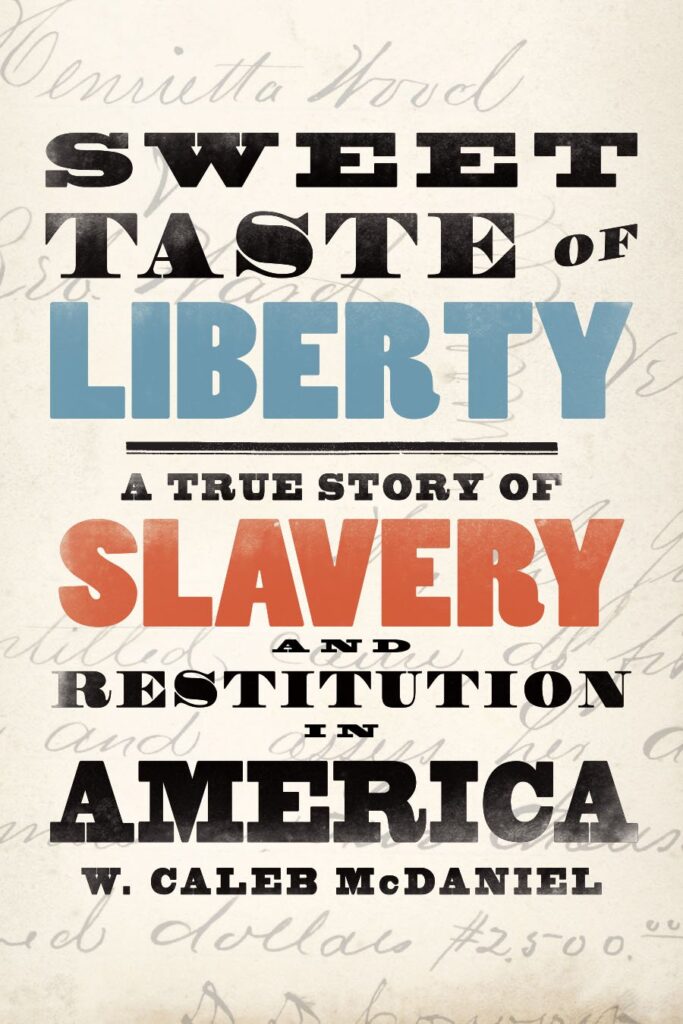
Sweet Taste of Liberty: Celebrating the life of Henrietta Wood

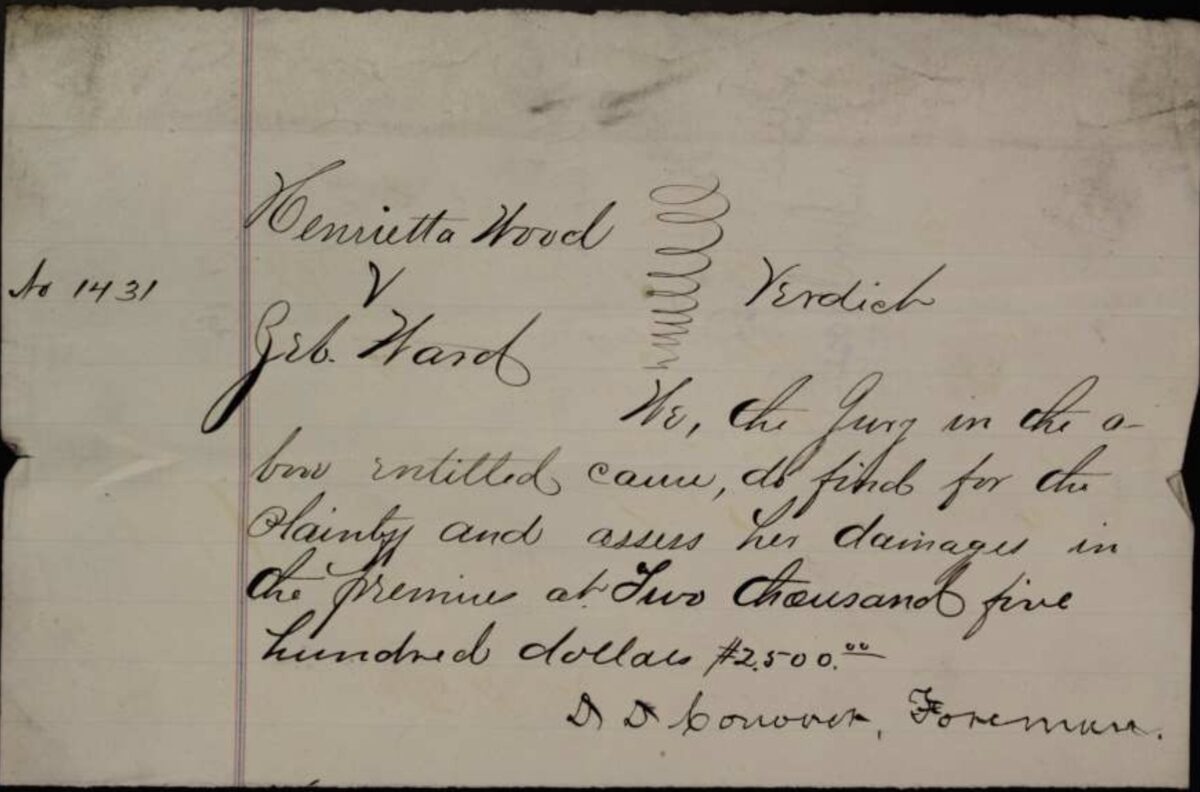
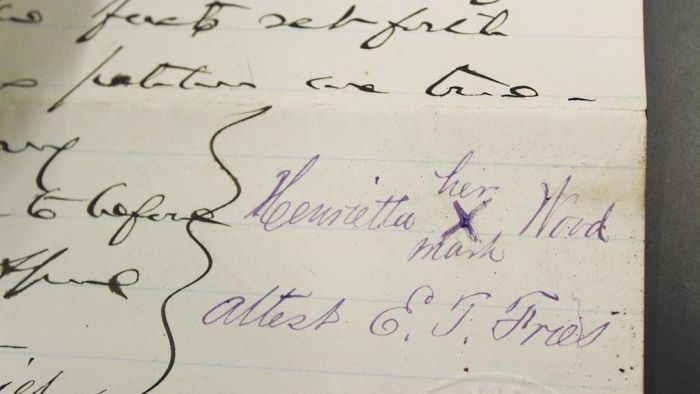
One hundred and fifty years ago this month, Henrietta Wood sued the man who kidnapped her and sold her back into slavery.

In his lifetime, that man — a prison warden and general scoundrel named Zebulon Ward — often bragged about losing the case, saying “he was the last American ever to pay for a slave.”

But Ward has become an ugly footnote. The woman who suffered that injustice, whose story has almost been lost in obscurity, will never be forgotten again.

Sweet Taste of Liberty
A True Story of Slavery and Restitution in America

W. Caleb McDaniel
Oxford University Press

Last month author and Rice University professor W. Caleb McDaniel won the Pulitzer Prize in History for this compact but potent story, an achievement that feels like a master class in archival research.

Past winners of this honor have been grand, sweeping tomes exploring vast reaches of American history. Sweet Taste of Liberty is a little different, an intimate story of one woman’s survival presented as a sobering illustration of the chaotic definitions of freedom in America’s border states in the 1850s.

Wood was born into slavery in Kentucky; she was later freed when she was brought into Ohio. By crossing the border, she technically gained her freedom. (Most enslaved people, however, were purposefully kept from this information.)

Her mistress eventually did register her as free. But in a warped system where ‘freedom’ simply means a piece of paper indicating your freedom, great and frequent abuses meant that many formerly enslaved (and sometimes never enslaved) people were kidnapped and sold to plantations in the Deep South.

For Wood, the theft of her freedom was just the beginning.

From the words of just a couple newspaper interviews she later gave, McDaniel is able to piece together Wood’s entire world, finding her voice and dignity through increasingly fraught and intolerable scenarios.

Wood’s story is unique not because of the legal reparation she received, a stunning result and hardly destined given the circumstances. (It took Wood years to finally succeed in court.)

Her story is exceptional because it was told at all.

Categories
New Amsterdam Podcasts

Peter Stuyvesant and the Fall of New Amsterdam: Where did the Dutch roots of New York City go?

PODCAST There would be no New York City without Peter Stuyvesant, the stern, authoritarian director-general of New Amsterdam, the Dutch port town that predates the Big Apple. 

The willpower of this complicated leader took an endangered ramshackle settlement and transformed it into a functioning city. But Mr. Stuyvesant was no angel.

In part two in the Bowery Boys’ look into the history of New Amsterdam, we launch into the tale of Stuyvesant from the moment he steps foot (or peg leg, as it were) onto the shores of Manhattan in 1647.

Stuyvesant immediately set to work reforming the government, cleaning up New Amsterdam’s filth and even planning new streets. He authorized the construction of a new market, a commercial canal and a defense wall — on the spot of today’s Wall Street. But Peter would act very un-Dutch-like in his intolerance of varied religious beliefs, and the institution of slavery would flourish in New Amsterdam under his unwavering direction.

And yet the story of New York City’s Dutch roots does not end with the city’s occupation by the English in 1664 — or even in 1673 (when the city was briefly retaken by a Dutch fleet). The Dutch spirit remained alive in the New York countryside, becoming part of regional customs and dialect.

And yet the story of New Amsterdam might otherwise be ignored if not for a determined group of translators who began work on a critical project in the 1970s……

Listen Now: Peter Stuyvesant Podcast

___________________________________________________________

The Bowery Boys: New York City History podcast is brought to you …. by you!

We are now producing a new Bowery Boys podcast every other week. We’re also looking to improve the show in other ways and expand in other ways as well — through publishing, social media, live events and other forms of media. But we can only do this with your help!

We are now a member of Patreon, a patronage platform where you can support your favorite content creators for as little as a $1 a month.

Please visit our page on Patreon and watch a short video of us recording the show and talking about our expansion plans. If you’d like to help out, there are five different pledge levels (and with clever names too — Mannahatta, New Amsterdam, Five Points, Gilded Age, Jazz Age and Empire State). Check them out and consider being a sponsor.

And join us for the first ever Bowery Boys Movie Club, an exclusive podcast provided to our supporters on Patreon. This month’s selection — Taxi Driver.

We greatly appreciate our listeners and readers and thank you for joining us on this journey so far.

__________________________________________________________

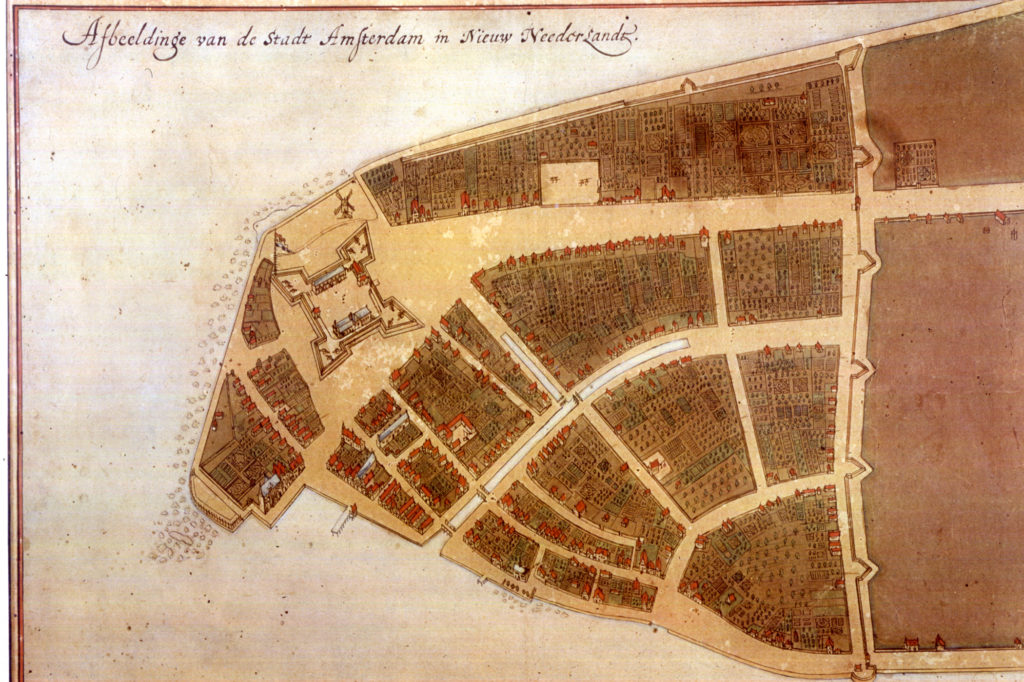
The Costello Plan, New Amsterdam 1660. Surveyed by Jacque Cortelyou. Full size photograph of manuscript map in the Biblioteca Medicea-Laurenziana of Florence, Italy. The Castello plan is the earliest known plan of New Amsterdam, and the only one dating from the Dutch period. Wikicommons.

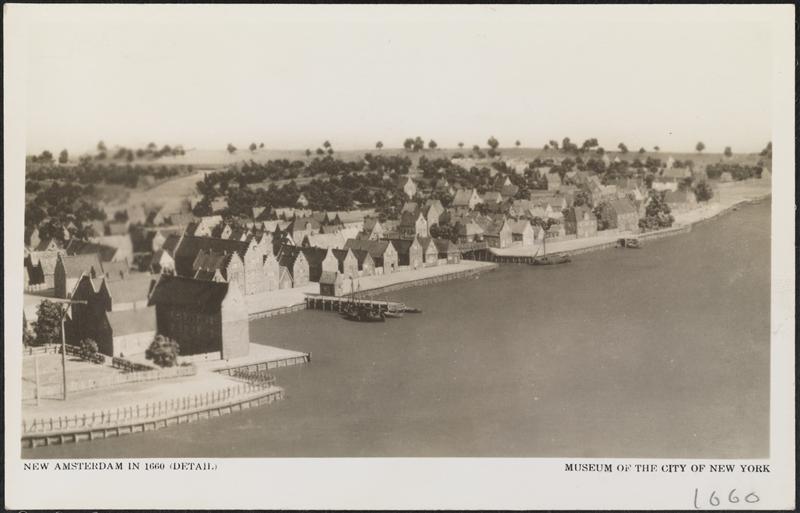
New Amsterdam in miniature at the Museum of the City of New York, photographed in 1932

Museum of the City of New York
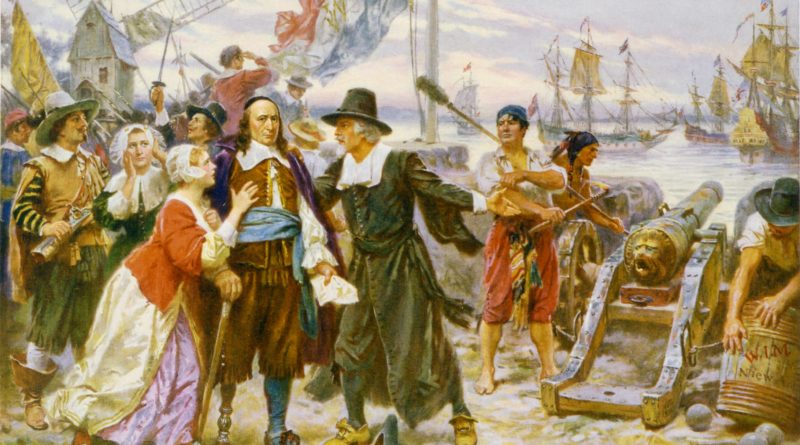
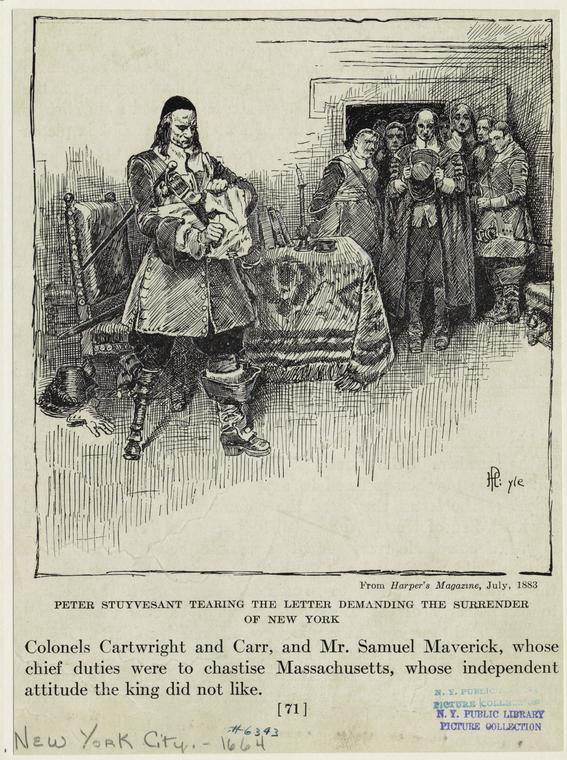
Peter Stuyvesant tearing the letter demanding the surrender of New York. Artist Howard Pyle, 1923. New York Public Library

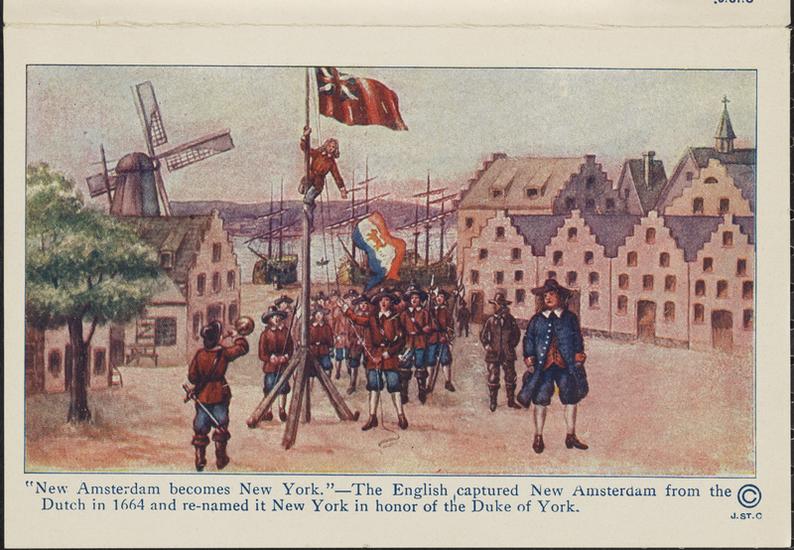
The moment when New Amsterdam became New York, depicted in a 1914 picture book.

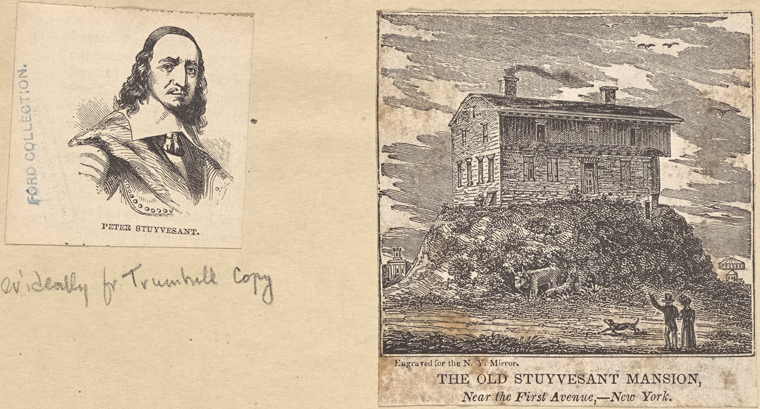
The old Stuyvesant mansion, near First Avenue, engraved for the N.Y. Mirror newspaper. Courtesy NYPL

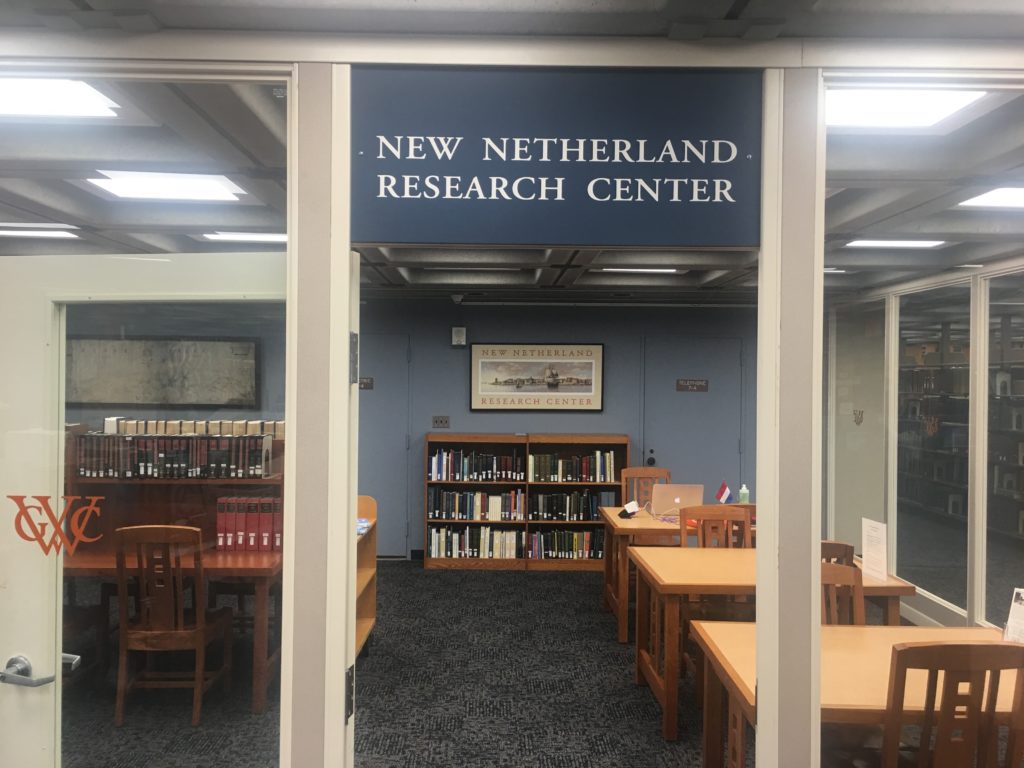
The New Netherland Research Center, located on the seventh floor of the New York State Library.  For more information, visit the New Netherland Institute website.

Greg Young

FURTHER LISTENING

We didn’t go too deeply into it in our latest show, but the Bronx also has a very rich Dutch history. The name even comes from a (unfortunately doomed) Dutch settler.

The early history of Broadway begins in New Amsterdam.

We also spoke about the ‘rattle watch’ in our show on the New York Fire Department.

Categories
Podcasts Revolutionary History

New York City during the Revolutionary War: Besieged and occupied by the British (1776-1783)

PODCAST What was life like in New York City from the summer of 1776 to the fall of 1783 — the years of British occupation during the Revolutionary War?

New York plays a very intriguing role in the story of American independence. The city and the surrounding area were successfully taken by the British by the end of 1776 — George Washington and the Continental Army forced to escape for the good of the cause — and the port city became the central base for British operations during the conflict.

While British officers dined and enjoy a newly revitalized theater scene, Washington’s spies on the streets of New York collected valuable intelligence. As thousands of soldiers and sympathizing Loyalists arrived in the city, hunger and overcrowding put the residents of the city in peril. When the sugar houses and churches became too filled with captured rebels, the British employed prison ships along the Brooklyn waterfront to hold their enemies.

This is a very, very special episode, a newly edited combination of two older shows from our back catalog.  PLUS several minutes of brand new material, featuring stories that we overlooked the first time.

Listen Now: Revolutionary War NYC Podcast

_________________________________________________________

The Bowery Boys: New York City History podcast is brought to you …. by you!

We are now producing a new Bowery Boys podcast every other week. We’re also looking to improve the show in other ways and expand in other ways as well — through publishing, social media, live events and other forms of media. But we can only do this with your help!

We are now a member of Patreon, a patronage platform where you can support your favorite content creators for as little as a $1 a month.

Please visit our page on Patreon and watch a short video of us recording the show and talking about our expansion plans. If you’d like to help out, there are five different pledge levels (and with clever names too — Mannahatta, New Amsterdam, Five Points, Gilded Age, Jazz Age and Empire State). Check them out and consider being a sponsor.

We greatly appreciate our listeners and readers and thank you for joining us on this journey so far.

_________________________________________________________

Since 2008, we’ve taken a deep dive into New York’s Revolutionary years with several shows focusing on many different aspects of these trying times. For more information, check out these shows from our back catalog:

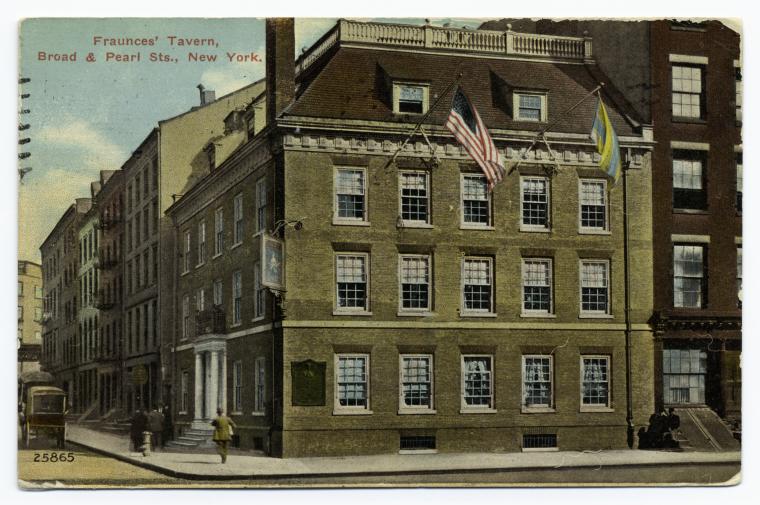
FRAUNCES TAVERN
Fraunces Tavern is one of America’s most important historical sites of the Revolutionary War and a reminder of the great importance of taverns on the New York way of life during the Colonial era.

Van Cortlandt House Museum

BRONX TRILOGY (PART ONE): THE BRONX IS BORN
Before it was the borough of the Bronx, the southern portion of Westchester County was populated with wealthy, prominent British families who faced a tough choice during the Revolutionary War? Remain loyal to the Crown or support the rebels?

GOWANUS! Brooklyn’s Troubled Waters
Back when the Gowanus was a marshy creek, an early battle in the quest for American independence was fought here. The Old Stone House today pays homage to this pivotal skirmish.

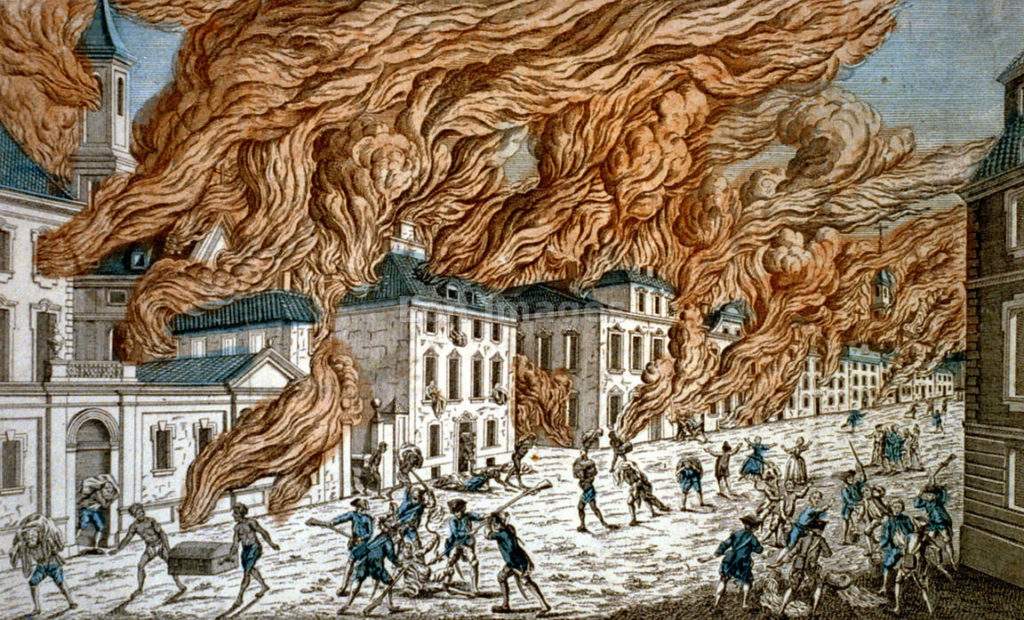
THE GREAT FIRE OF 1776
The circumstances surrounding the Great Fire of 1776, the events of the Revolutionary War leading up to the disaster, and the tragic tale of the American patriot Nathan Hale.

BEFORE HARLEM: NEW YORK’S FORGOTTEN BLACK COMMUNITIES
Featuring a chat with Kama’u Ware of Black Gotham Experience about the struggles of enslaved and free black people during the colonial period

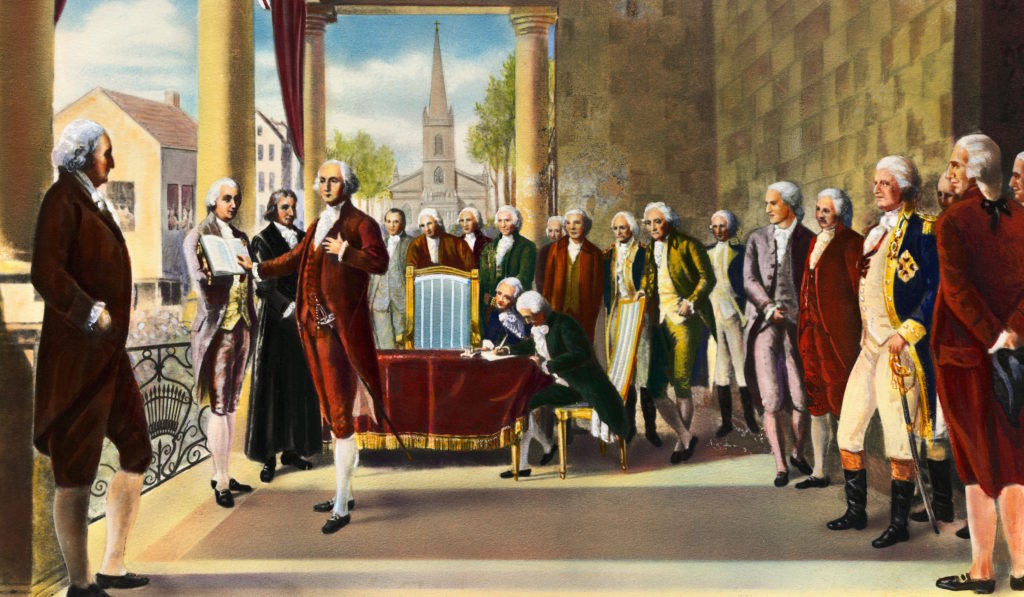
GEORGE WASHINGTON’S NEW YORK INAUGURATION
After Washington resigned as head of the Continental Army in 1783, many did not ever expect to see him back in New York. But providence — and a new nation — called.

Categories
Podcasts Politics and Protest

New York City and the Underground Railroad: Escaping to freedom through a hostile city

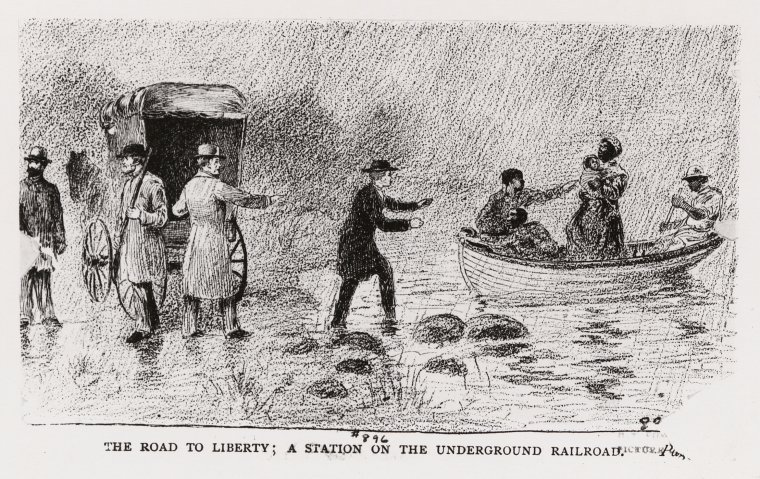
PODCAST For thousands of people escaping the bonds of slavery in the South, the journey to freedom wound its way through New York City via the Underground Railroad.


The Underground Railroad was a loose, clandestine network of homes, businesses and churches, operated by freed black people and white abolitionists who put it upon themselves — often at great risk — to hide fugitives on the run.

New York and Brooklyn were vital hubs in this network but these cities were hardly safe havens. The streets swarmed with bounty hunters, and a growing number of New Yorkers, enriched by Southern businesses, were sympathetic to the institution of slavery. Not even freed black New Yorkers were safe from kidnapping and racist anti-abolitionist mobs.

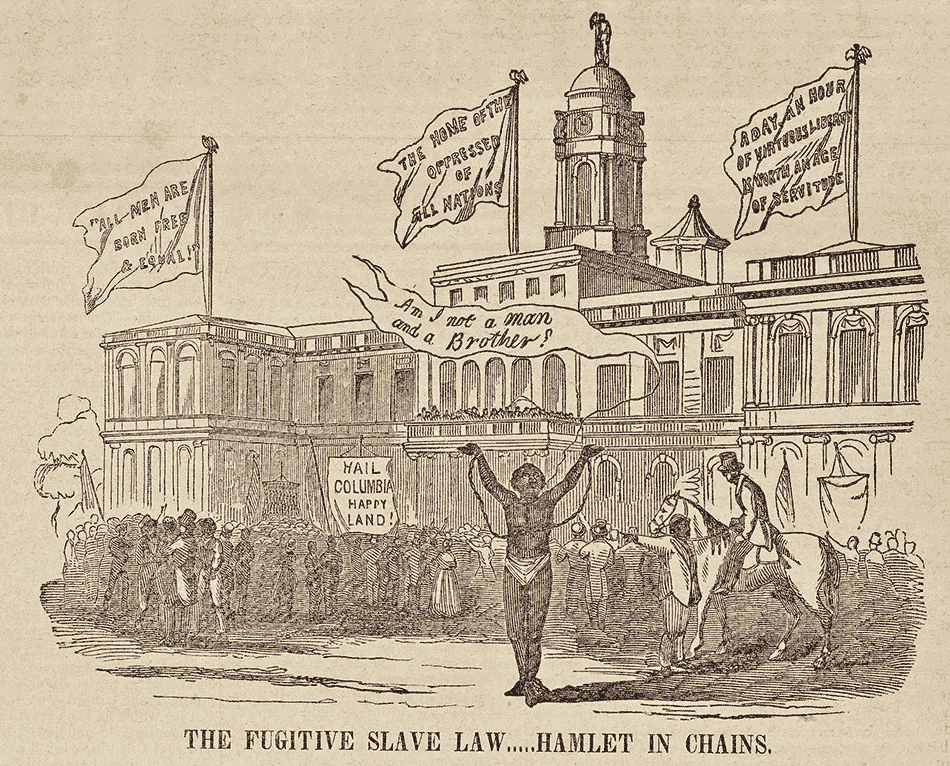
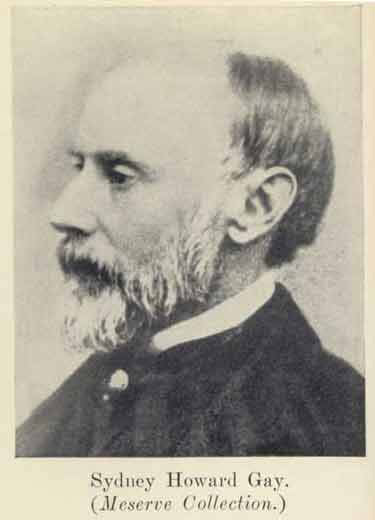
In this podcast we present some of the stops in New York along the Underground Railroad — from offices off Newspaper Row to the basement of New York’s first African-American owned bookstore. You’ll be familiar with some of this story’s leading figures like Frederick Douglass, Harriet Tubman and Henry Ward Beecher. But many of these courageous tales come from people who you may not know — the indefatigable Louis Napoleon, the resolute Sydney Howard Gay, the defiant David Ruggles and James Hamlet, the first victim of the 1850 Fugitive Slave Act.

PLUS: A trip to Brooklyn Heights and the site of New York’s most famous Underground Railroad site — Plymouth Church

LISTEN HERE:

_______________________________________________________

The Bowery Boys: New York City History podcast is brought to you …. by you!

We are now producing a new Bowery Boys podcast every week. We’re also looking to improve the show in other ways and expand in other ways as well — through publishing, social media, live events and other forms of media. But we can only do this with your help!

We are now a member of Patreon, a patronage platform where you can support your favorite content creators for as little as a $1 a month.

Please visit our page on Patreon and watch a short video of us recording the show and talking about our expansion plans. If you’d like to help out, there are five different pledge levels (and with clever names too — Mannahatta, New Amsterdam, Five Points, Gilded Age, Jazz Age and Empire State). Check them out and consider being a sponsor.

We greatly appreciate our listeners and readers and thank you for joining us on this journey so far. 

________________________________________________________

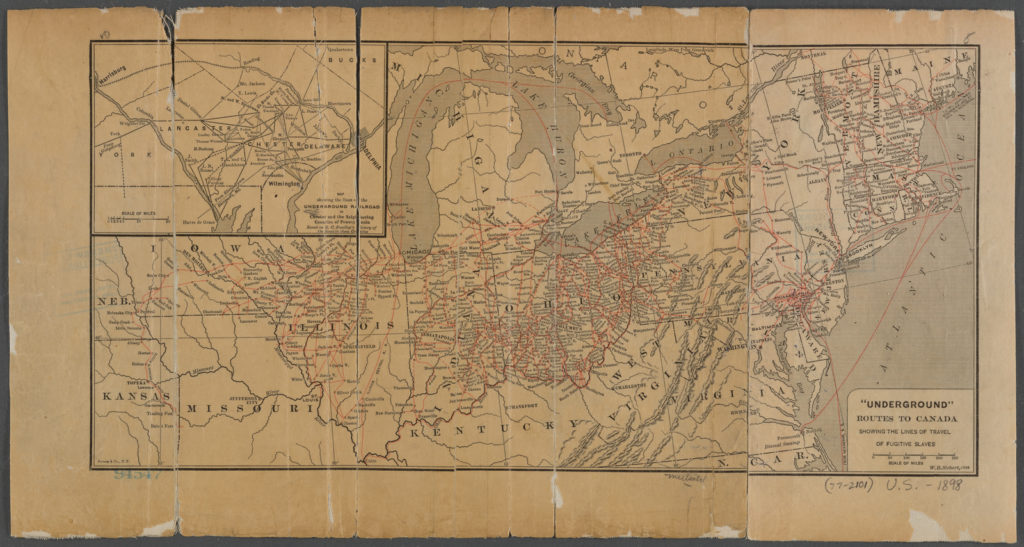
The many routes of the Underground Railroad, in an 1898 map by cartographer Wilbur Henry Siebert.

New York Public Library

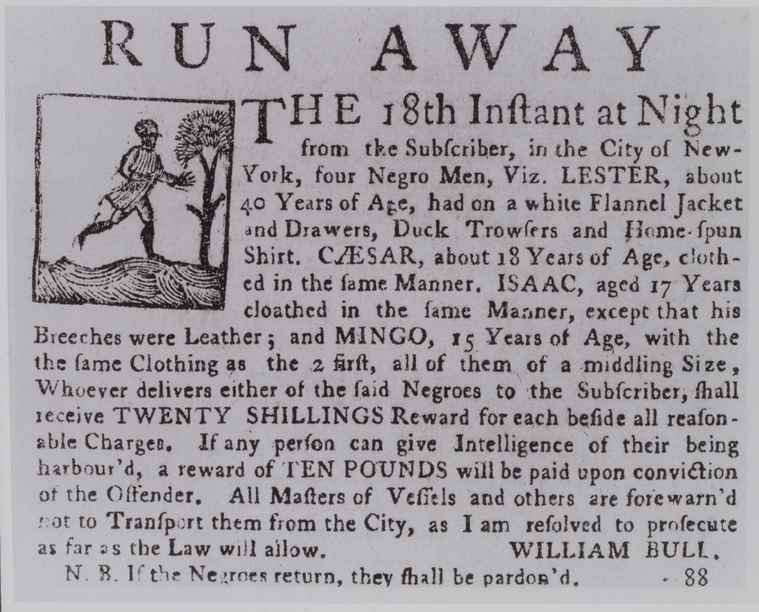
An advertisement for the capture of a runaway slave, published during the colonial era (1760s)

Schomburg Center for Research in Black Culture, Photographs and Prints Division

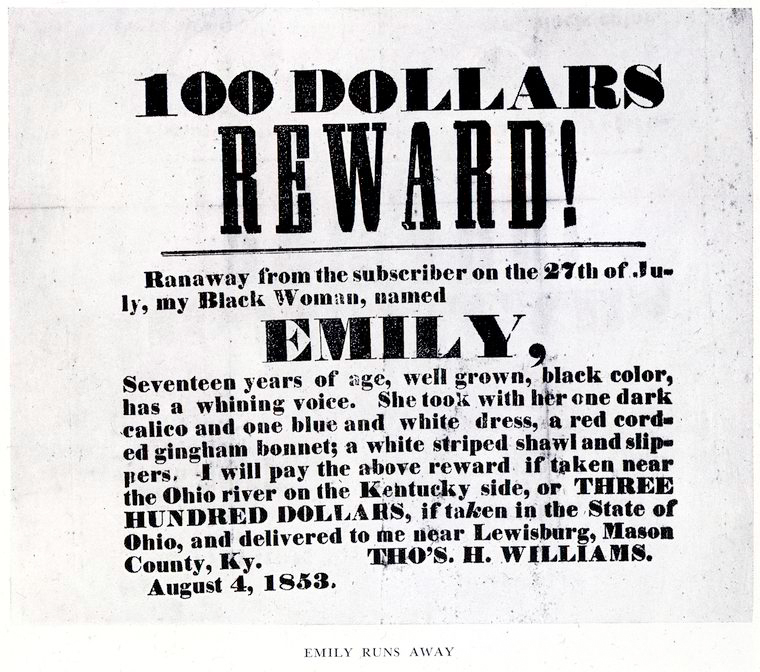
….and another, from 90 years later.

Schomburg Center for Research in Black Culture, Photographs and Prints Division

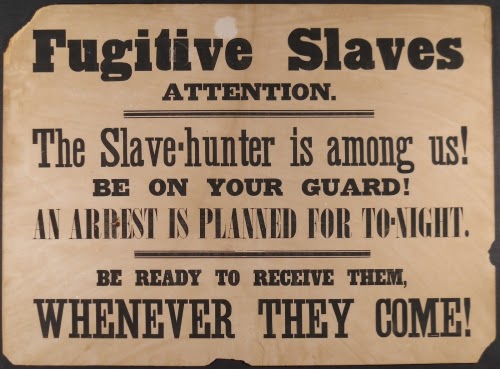
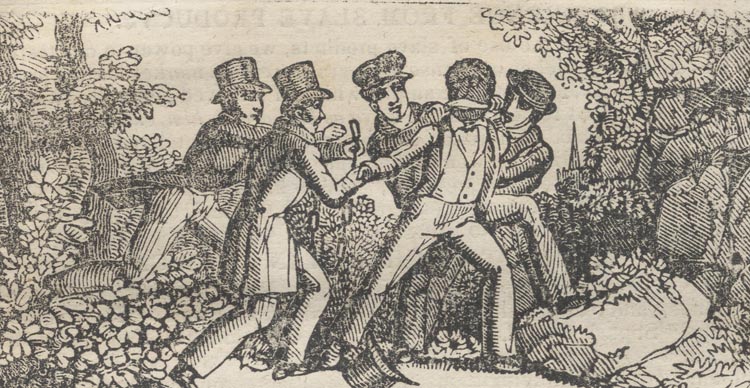
African-American New Yorkers lived in fear of being kidnapped by bounty hunters.

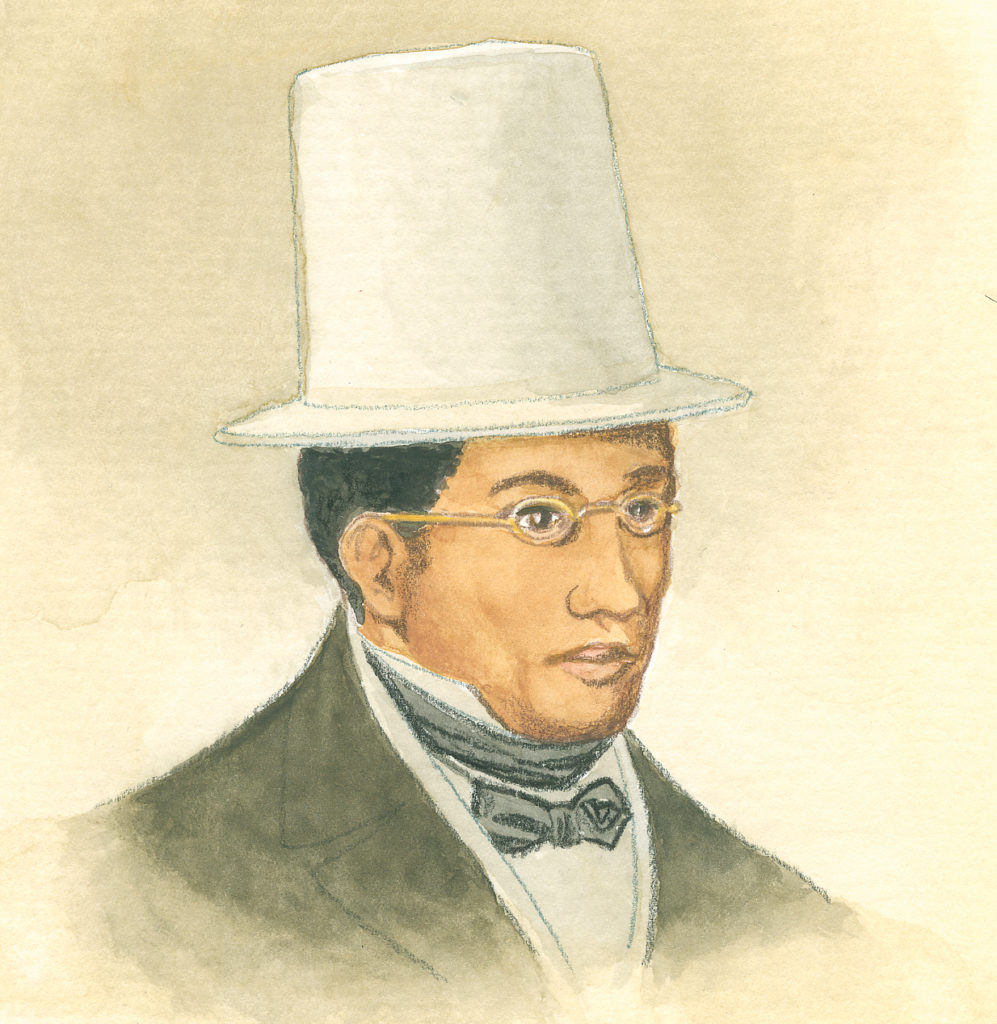
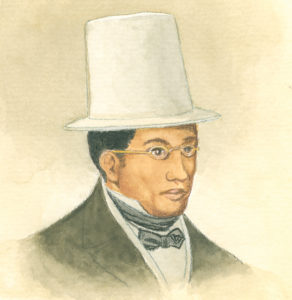
David Ruggles who operated America’s first African-American library and reading room on Lispenard Street. His home was also a stop on the Underground Railroad.

Illustration by Bob Powers (from original engraving)

At the release of James Hamlet (i.e. the purchase of his freedom by the AME Zion Church), this handbill was distributed

Rare Books and Manuscripts Library, Columbia University

Sydney Howard Gay worked with several operatives on the Underground Railroad and was one of the few to keep records of new fugitive arrivals.

Abigail Hopper Gibbons, daughter of esteemed abolitionist Isaac Hopper, worked as a battlefield nurse in the early years of the Civil War. She returned to New York in 1863, only to be chased from her home by angry mobs during the Civil War Draft Riots.

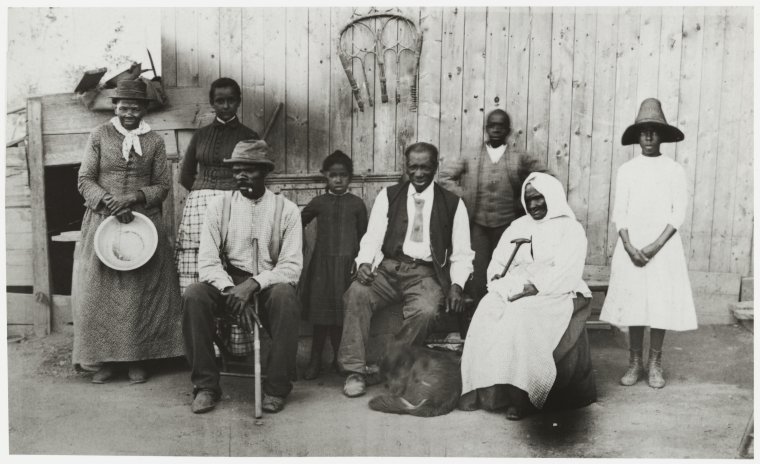
Harriet Tubman and her family — Gertie Davis [Tubman’s adopted daughter]; Nelson Davis [Tubman’s husband]; Lee Cheney; “Pop” Alexander; Walter Green; Sarah Parker [“Blind Auntie” Parker] and Dora Stewart [granddaughter of Tubman’s brother, John Stewart].

Schomburg Center for Research in Black Culture, Photographs and Prints Division

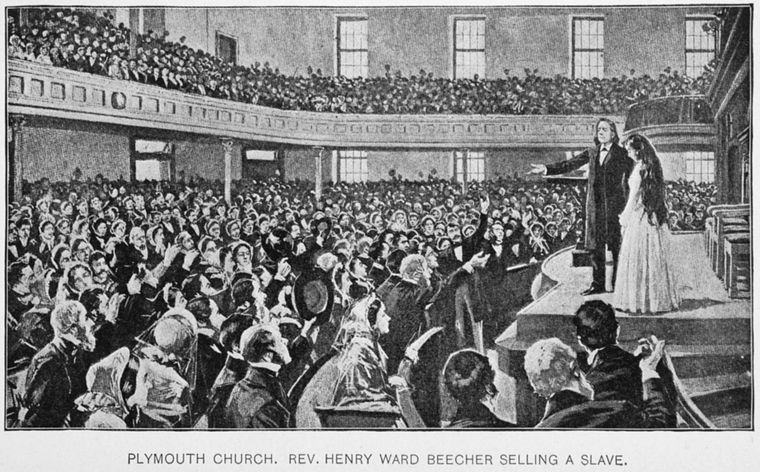
An illustration of Henry Ward Beecher‘s ‘auction’ of the enslaved woman nicknamed Pinky, held at Plymouth Church.

Schomburg Center for Research in Black Culture, Manuscripts, Archives and Rare Books Division

TOURS
Inside Out Tours: Slavery and Underground Railroad Walking Tour
Walks of New York
Black Gotham Experience

Plymouth Church — Public tours every Sunday at 12:30. Visit their website for more information

Plymouth now has a New Abolitionists ministry, tied into New York state’s anti-human trafficking initiatives. Visit Plymouth’s website for further information.

FURTHER READING
Bound for Canaan: The Epic Story of the Underground Railroad by Fergus M. Bordewich
Gateway to Freedom: The Hidden History of the Underground Railroad by Eric Foner
The Underground Railroad: Authentic Narratives and First-Hand Accounts (African American) by William Still

and, of course,

The Underground Railroad by Colson Whitehead

EXHIBITIONS

Brooklyn Historical Society — In Pursuit of Freedom: A long term installation celebrating the lives of Brooklyn abolitionists

Weeksville Heritage Center — Site of one of America’s first free black communities in the 19th century

You may also be interested in New-York Historical Society‘s online exhibit New York Divided: Slavery and the Civil War

FURTHER LISTENING
We mentioned these past Bowery Boys podcast on the show. After you’ve finished listening to our Underground Railroad show, give these a try!

Categories
Politics and Protest

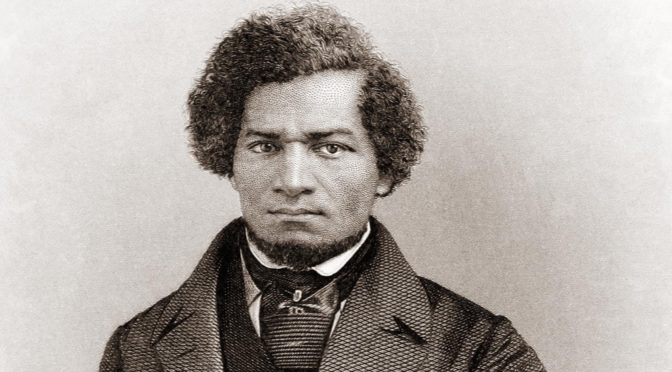
Frederick Douglass and the life saver of Lispenard Street, a stop on the Underground Railroad

In the early and mid-nineteenth century, the Underground Railroad secretly escorted tens of thousands of Southern enslaved people to Northern destinations, where slavery was illegal. The African American publisher David Ruggles was born a freeman in Connecticut and moved to New York to energize the emerging abolitionist move- meant via the New York Vigilance Committee, one of the city’s most influential abolitionist collectives.

And thank goodness David Ruggles was there.

Below: One of the few extant depictions of David Ruggles

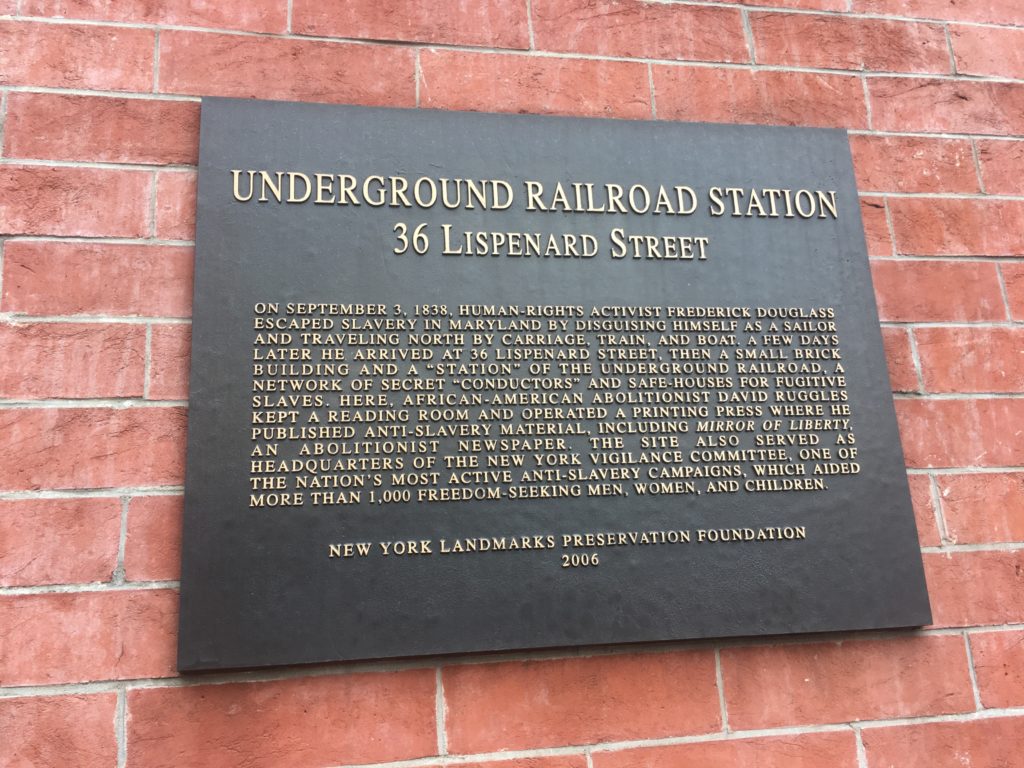
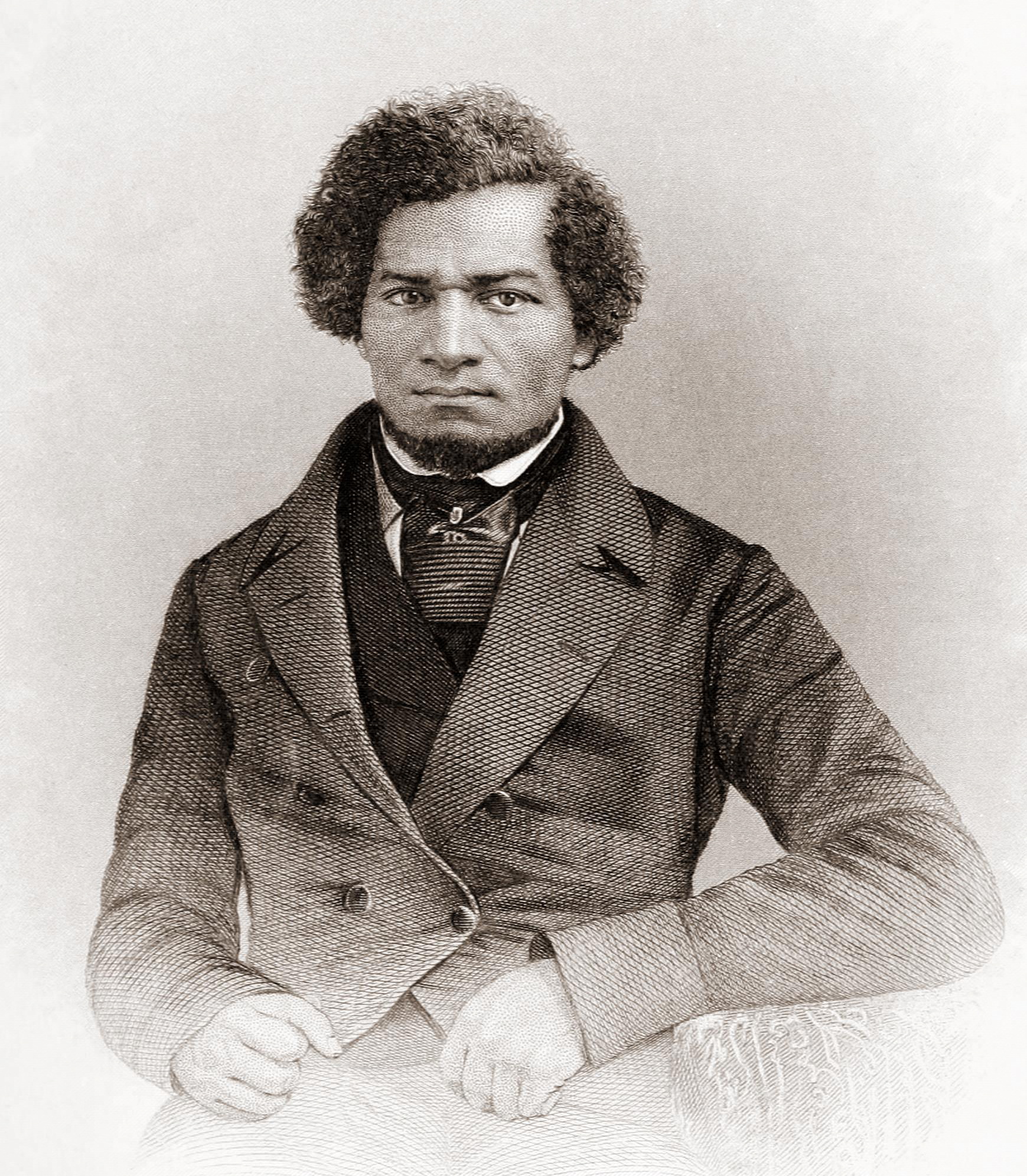
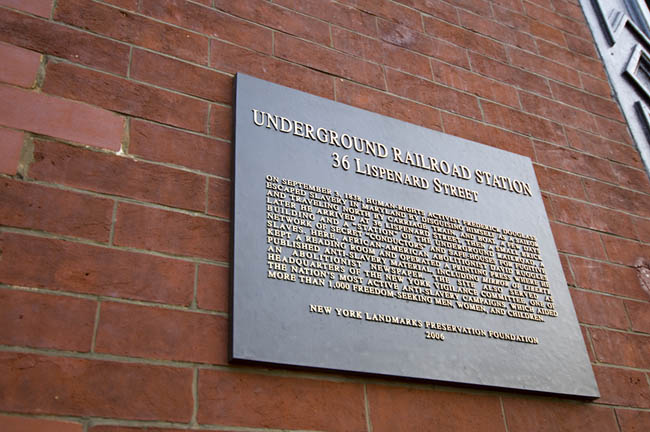
At his home at 36 Lispenard Street (in today’s Tribeca neighborhood), Ruggles ran a printing press and reading room for abolitionist literature. He also sheltered an estimated 600 fugitive slaves here over the years, including in 1838 a man named Frederick Washington Bailey, who had escaped a life of slavery in Maryland.

Under a new name, the abolitionist Frederick Douglass later wrote about how he felt arriving in New York. The following words are from the Life and Times of Frederick Douglass: From 1817-1882:

“My free life began on the third of September, 1838. On the morning of the fourth of that month, after an anxious and most perilous but safe journey, I found myself in the big city of New York, a free man – one more added to the mighty throng which, like the confused waves of the troubled sea, surged to and fro between the lofty walls of Broadway.

Though dazzled with the wonders which met me on every hand, my thoughts could not be withdrawn from my strange situation.

I have often been asked how I felt, when first I found myself on free soil; and my readers may share the same curiosity. There is scarcely anything in my experience about which I could not give a more satisfactory answer. A new world had opened upon me. 

If life is more than breath, and the ‘quick round of blood,’ I lived more in one day than in a year of my slave life.

In a letter written to a friend soon after reading New York, I said: “I felt as one might feel, upon escape from hungry lions.”

Anguish and grief, like darkness and rain, may be depicted; but gladness and joy, like the rainbow, defy the skill of pen or pencil.

While the building which sheltered Douglass on Lispenard Street is no longer there, a plaque is affixed to the current structure at that spot, marking Ruggles — and New York’s — contribution to the liberation of Southern slaves.

Columbia University

In tomorrow’s new Bowery Boys podcast, we’ll look at the story of Mr. Ruggles more closely and explore the many paths taken through New York City along the Underground Railroad.

This is an excerpt from the Bowery Boys Adventures In Old New York, now available in bookstores everywhere.

Categories
Bowery Boys Bookshelf

Solomon Northup’s ominous journey to New York City, 1841

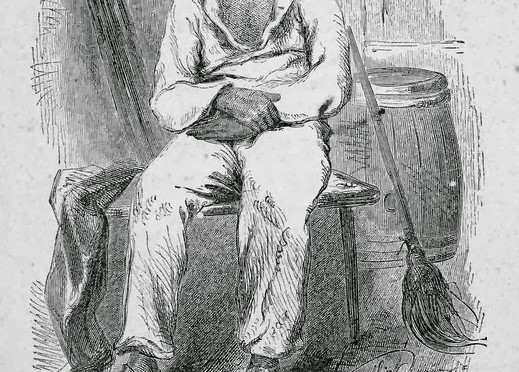
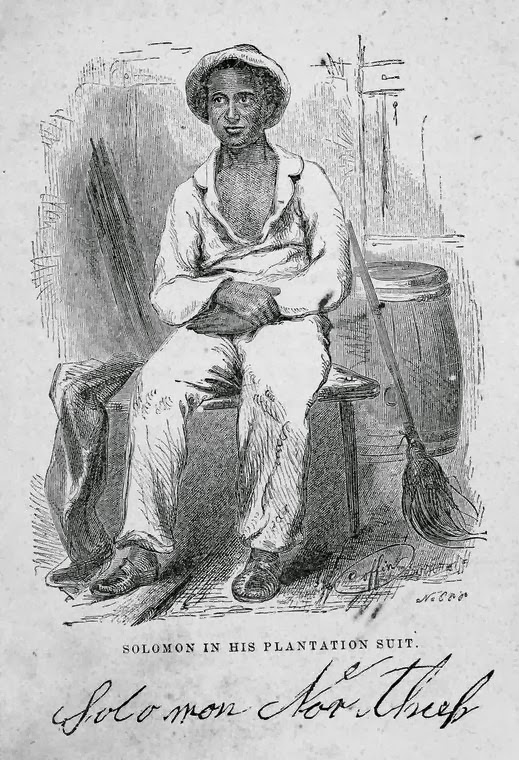
An engraving featured in Solomon Northup’s narrative Twelve Years A Slave, published in 1853.

The New York farmer and musician Solomon Northup was sold into slavery in 1841, tricked by two supposed members of a circus troupe, promising Northrup work in their traveling show.  Instead, Northrup awoke in bondage, eventually smuggled to New Orleans where he faced years of cruel servitude under a variety of plantation owners.   After regaining his freedom in 1853, he wrote the narrative Twelve Years A Slave, his harrowing account of his years in the South.

The book became a best-seller within Republican abolitionist circles, released a year after Harriet Beecher Stowe‘s Uncle Tom’s Cabin.  It was certainly in the possession of Henry Ward Beecher, Harriet’s younger brother, who turned his Brooklyn pulpit at Plymouth Church into a sounding board for abolitionist ideas.  (One hundred and sixty years later, the Oscar-nominated film version of Twelve Years A Slave, starring Chiwetel Ejiofor as Northup, played at Brooklyn Heights Cinema, located one block away from Beecher’s church.)

Northup and his family lived in upstate New York, but New York City proper plays a small but ominous role in his narrative.  Lured by the promise of employment by two men named Brown and Hamilton, Northup travels from home in Saratoga, first to Albany, then to New York itself:

“They hurried forward, without again stopping to exhibit, and in due course of time, we reached New-York, taking lodgings at a house on the west side of the city, in a street running from Broadway to the river.”

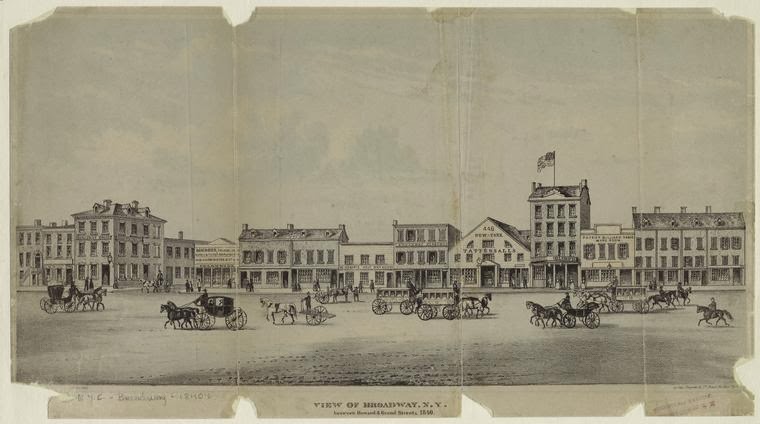
Below: A view of Broadway (between Howard and Grand Streets) in 1840.  To the south of this view was Canal Street and Five Points.


“I supposed my journey was at an end, and expected in a day or two at least, to return to my friends and family at Saratoga.   Brown and Hamilton, however, began to importune me to continue with them to Washington.  They alleged that immediately on their arrival, now that the summer season was approaching, the circus would set out for the north.   They promised me a situation and high wages if I would accompany them.  

Largely did they expatiate on the advantages that would result to me, and such were the flattering representations they made, that I finally concluded the offer.”

Northup agrees to accompany them further north to Washington DC.  It would be there that Northup would be drugged and sold into bondage by his two nefarious companions.  But before they leave New York, they suggest that Solomon perform a certain task, curious given the subsequent events which occurred:

“The next morning they suggested that, inasmuch as we were about entering a slave State, it would be well, before leaving New-York, to procure free papers.  The idea struck me as a prudent one, though I think it would scarcely have occurred to me, had they not proposed it. 

We proceeded at once to what I understood to be the Custom House. They made oath to certain facts showing I was a free man.” 

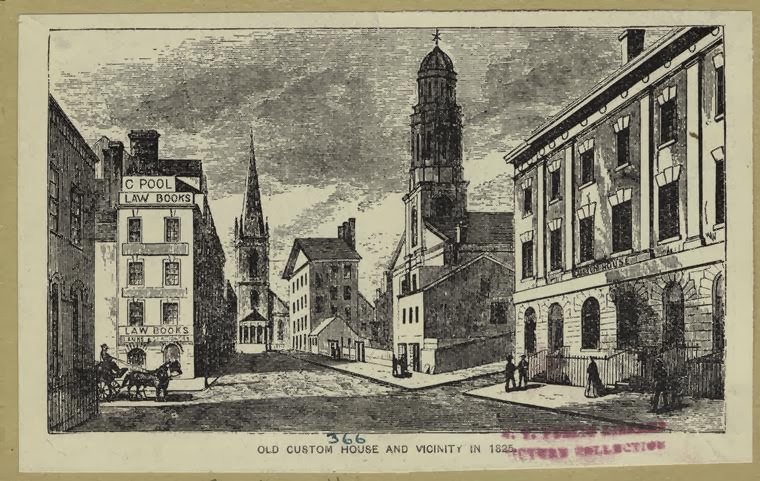
Why is there a little confusion in Northrup’s statement regarding the Custom House?  Perhaps because the building he would have visited — at 22-24 Wall Street — was in its final days as New York’s Custom House, an office which had grown far too small for the task.  The following year, New York’s new Custom House would have at last been opened at the other end of the block — the building that is today’s Federal Hall.

Below: Northrup and his associates would have entered the building at the far right of this illustration (which depicts Wall Street in 1825)

“Some further formalities were gone through with before it was completed, when, paying the officer two dollars, I placed the papers in my pocket, and started with my two friends to our hotel.  I thought at the time, I must confess, that the papers were scarcely worth the cost of obtaining them – the apprehension of danger to my personal safety never having suggested itself to me in the remotest manner.”

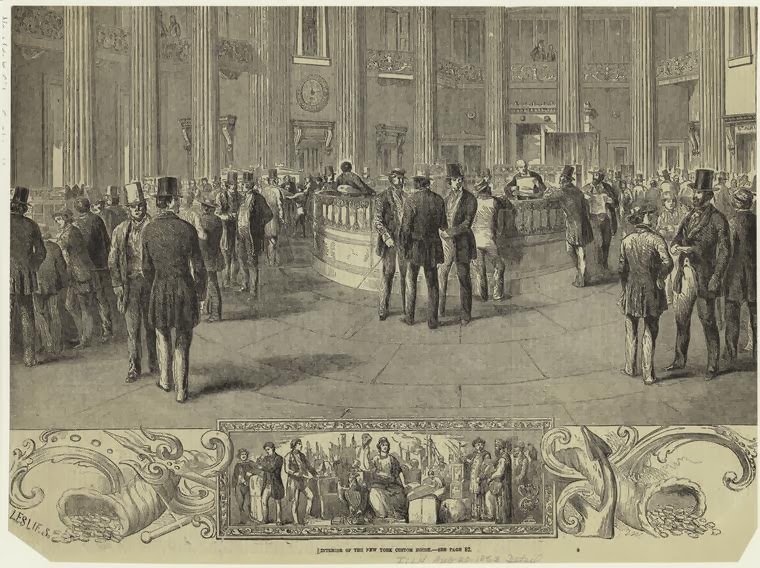
Below: The interior of the New York Custom House, 1853

All images courtesy New York Public Library

After its publication in 1853, Northup’s account would be available for sale in certain New York bookstores for several years.  But keep in mind New York’s divided loyalties to the South; it would not have been a universally popular read here in the city.

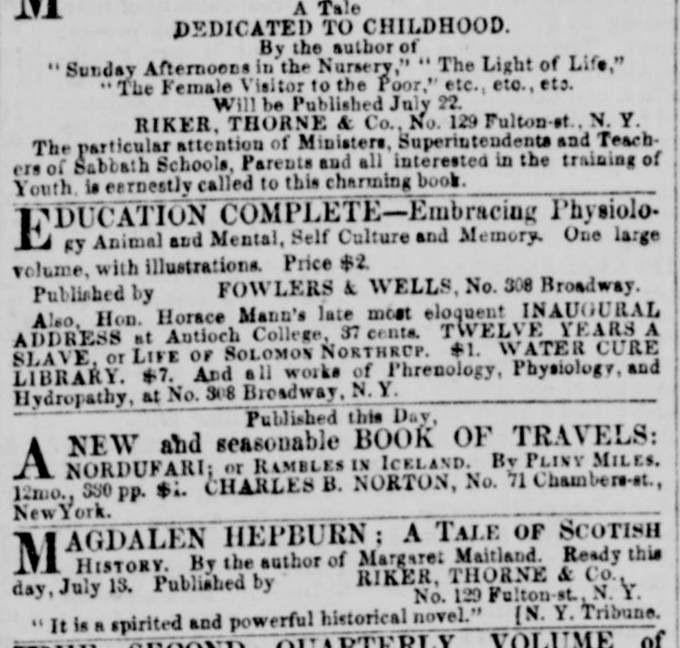
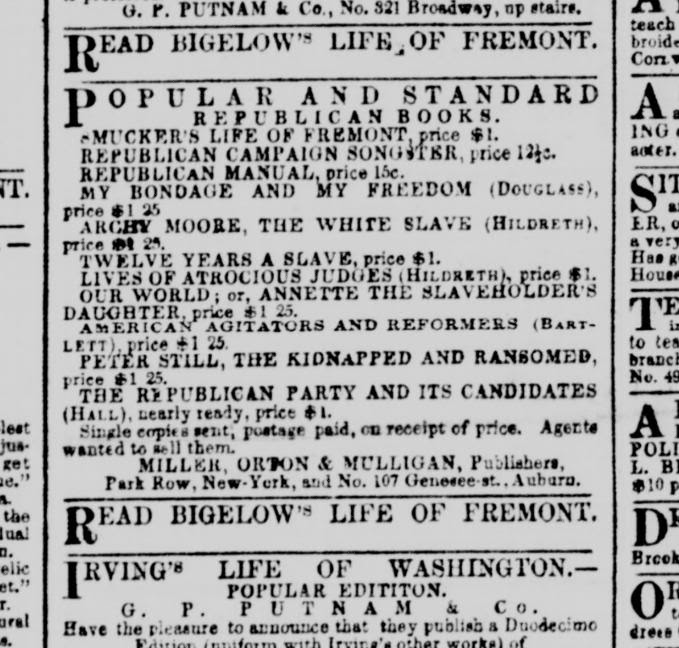
Below: the book for sale in 1854 at a bookstore at 308 Broadway, and in 1856, at a Park Row bookseller, both ads from the New York Daily Tribune


Categories
Know Your Mayors

George Opdyke: The mayor during the Civil War Draft Riots and his unsavory connection to New York’s fashion industry

KNOW YOUR MAYORS A modest little series about some of the greatest, notorious, most important, even most useless, mayors of New York City. Other entrants in the Bowery Boys mayoral survey can be found here.

Mayor George Opdyke
In office: 1862-1863

The wealthy merchant and politician George Opdyke died on June 12, 1880, attended to by his family from their lavish home at Fifth Avenue and East 47th Street, just a few blocks from where the violent Draft Riots had ignited back in 1863.
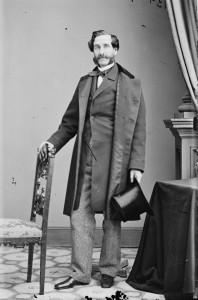
In the 17 years since those terrible days, New York had grown mightier with vast wealth, in an explosion of prosperity that would inaugurate the Gilded Age.  But while the scars of the Draft Riots had faded from the city streets, they never quite faded from Opdyke, who had been mayor of New York during the violent outbreak.

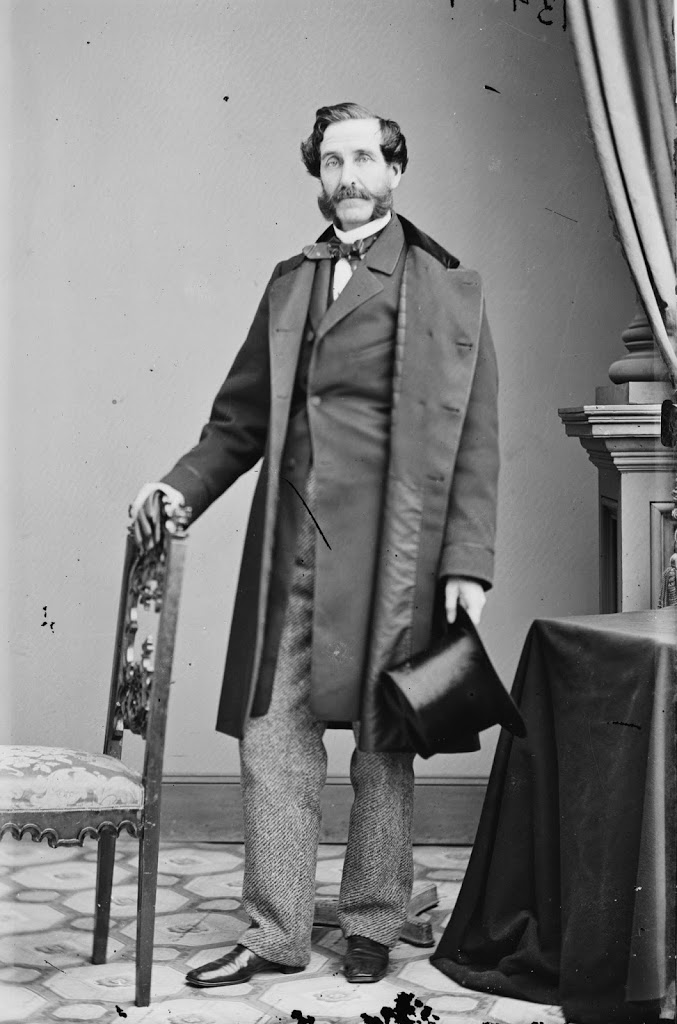
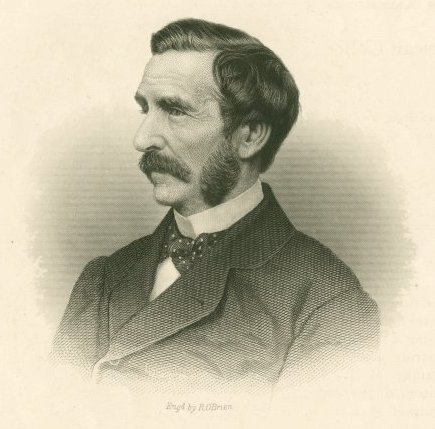
At right: George Opdyke, in a photo taken by Matthew Brady

Some of the violence that week in July had been directed towards Opdyke, one of the most prominent Republicans in a city of Democrats. His former home at 57 Fifth Avenue had been attacked twice by rioters.  He was considered the face pro-Lincoln, pro-war, and, thus, pro-abolitionist forces in New York

Yet had it not been for the institution of slavery in the South, Opdyke might never have even made his fortune.

George Opdyke was born to a large New Jersey farming family in 1805, working his way from the fields to the classroom, becoming a young school teacher at an early age.  Like so many teenagers in the early 19th century, job opportunities out West spoke to his sense of adventure.  With $500 in their pockets, Opdyke and a friend settled in Cleveland, Ohio, opening a clothing store and tailor for workers of the newly constructed Erie Canal.

Opdyke soon found a more profitable application for his young business — the high mark-up manufacturing of cheap slave clothing.  He moved to New Orleans and began an incredibly profitable plant there, making inexpensively produced clothing for the plantations of the deep South.

In fact, Opdyke became so successful that, in 1832, he moved to New York to open a larger clothing factory on Hudson Street.  According to historian George Lankevich, Opdyke “built the city’s first important clothing factory, selling his goods largely to southern plantations and creating the basis of a new industry.”  It was the first large-scale, ready-to-wear clothing establishment in New York, soon employing thousands; so, yes, this is how the New York fashion industry begins.

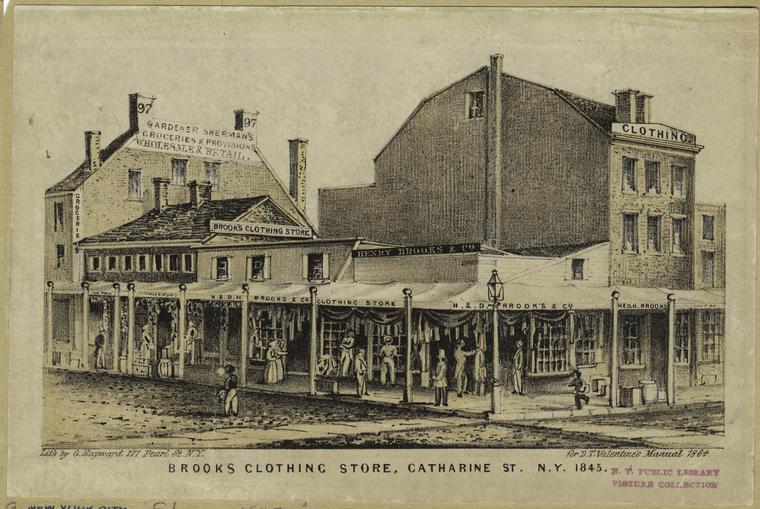
Below: Brooks Clothing Store in 1845, a rival of Opdyke’s clothing business. Opdyke would have some rather controversial connections for Brooks Brothers during the Civil War. (NYPL)

And a successful political career begins as well.  By 1846, Opdyke, now a millionaire and a well-connected member of mid-19th century New York society, entered a life of politics.

Interestingly, he was originally associated with the Free Soil Party, an early anti-slavery effort, illustrating how businessmen often separated certain moral beliefs from their business practices. (Early on, he would become one of Abraham Lincoln’s most ardent supporters.) The Free Soilers were soon be incorporated into the burgeoning Republican Party, and Opdyke’s first appearance in New York state assembly, in 1859, was as a Republican.

That same year, Opdyke became the Republican’s best chance at winning the mayor’s seat in New York. However, he vied for the job with two other seasoned politicians — unscrutable Democrat Fernando Wood and former mayor and sugar king William Havemeyer.  Thanks to machine politics and the uncertainty of war with the South, Wood prevailed that fall, becoming mayor of New York at the start of the Civil War. (I have an entire podcast on Wood’s roller-coaster career in politics.)

But tides would change in Opdyke’s favor.  Pro-Union sentiment surged through the nation and in New York City by the start of the war.  And by the time of the next mayoral election in 1861, situations were ideal for a Republican to take charge.

It helped that Democrats were divided — Tammany Hall went with C. Godfrey Gunther, while Wood formed his own alternative political machine Mozart Hall.  But it was Opdyke that prevailed, although barely.  He beat Gunther by a whopping 613 votes. (But he did beat Wood in Wood’s own ward.  That must have felt good.)

Part of Opdyke’s appeal at that moment was his deep connections to the Lincoln administration. When the flags were waving in New York, Opdyke was an ideal representative, encouraging support for the war, hosting troops in the city, raising money for the effort.  But when enthusiasm for the war withered, so did Opdyke’s reputation.

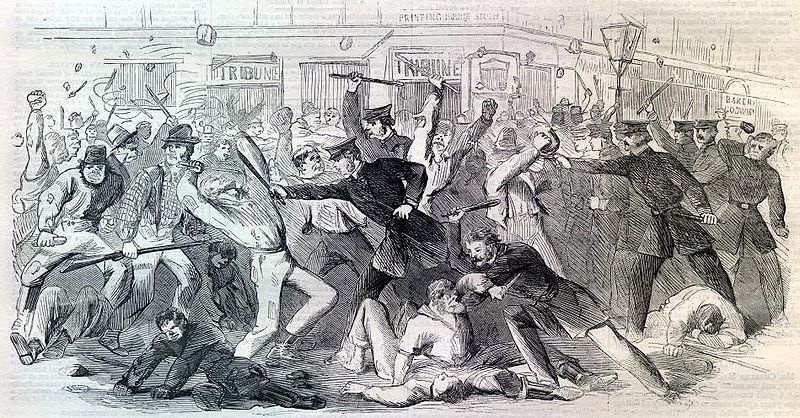
Below: The draft riots, which paralyzed New York in July 1863

Opdyke’s unwavering support for the draft backfired severely in the summer of 1863. When New Yorkers took the street on July 13, 1863, burning the draft offices and taking out their anger on black citizens and prominent Republicans, Opdyke topped the list of most despised New Yorkers.  He had very little power to quell the violence; the police department was placed under state control, and state militia had been called away.

While his home was nearly destroyed, it was his political reputation that took the greatest hit. At first, he had vetoed a plan by the Common Council to pay for substitutes for any drafted New Yorkers. But a month later, working with Tammany Hall, he essentially endorsed a similar bill to avoid more violence.

This saved New York, but it did not save him.  On election day, that December in 1863, he was replaced with the Democrat Gunther, whom he had narrowly beat just two yeas before.

His woes weren’t quite over. A political feud with newspaper editor Thurlow Weed revealed some unpleasant information about Opdyke in the press. “[H]e had made more money out of the war by secret partnerships and contracts for army clothing, than any fifty sharpers in New York,” claimed the irate newspaper editor.

At right: Opdyke in later life (NYPL)

Opdyke had profited handsomely from the war through his own clothing plant and in deals with rival clothing manufacturer Brooks Brothers.  Opdyke took Weed to court for libel in December 1864, but the jury essentially exonerated Weed, delivering an indecisive verdict “as to whether Weed should pay nominal damages of six cents, or be acquitted.” [source]

In later life, Opdyke took up banking with his sons, representing the concerns of various railroad companies. He “retired a few months before his death with a large fortune.” [source]

After his death, the Opdykes would sell their house to railroad tycoon Jay Gould.

An historic New Years Day editorial from 150 years ago, as the Emancipation Proclamation takes effect


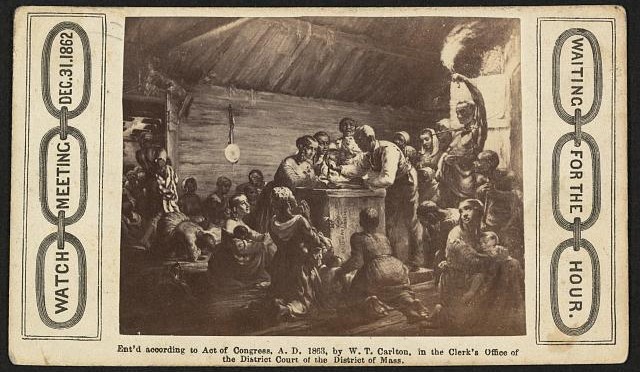
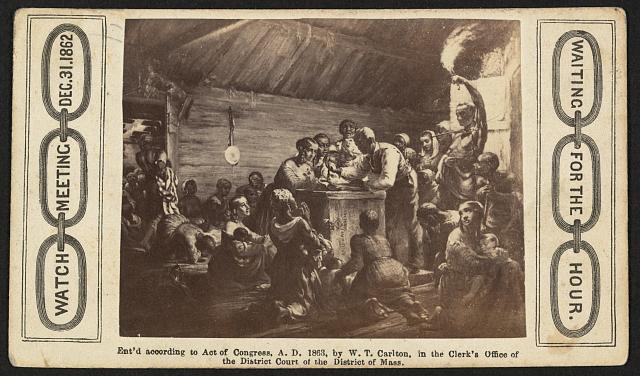
In black churches throughout America 150 years ago, gatherers celebrated ‘Watch Night’ on December 21, 1862, counting down to the moment when Abraham Lincoln’s Emancipation Proclamation would take effect. The carte-de-visite above celebrates a watch night that took place in Boston. [LOC]

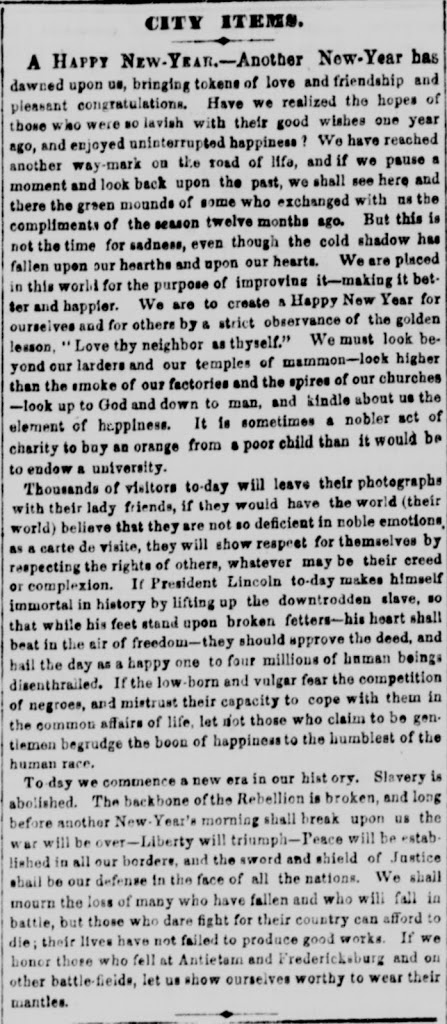
The following text is taken from the New York Tribune on January 1, 1863. (You can read the entire issue here.) With the North in the terrible throes of war, most of the issue is filled with battle reports.  New York City celebrations of the new year were most likely muted, with possible exception of a few saloons celebrating some odd-timed primary elections for various Tammany Hall job functions.

But for a great many, midnight brought in more than just a new year.  That day was significant for another reason.  President Abraham Lincoln’s executive order, the Emancipation Proclamation, freeing the slaves in Confederate territories, took effect on January 1.

I’m reprinting the Daily Tribune’s notice in full, both the significant and trivial portions, to give you a full sense of how the news was received, in this case, by the pro-Lincoln paper owned by Horace Greeley (over three decades before Mr. Greeley was immortalized in statuary in Herald Square). It’s a celebration of a true historical event and the pursuit of freedom, with a snide insult lobbed at ‘the low-born and vulgar [who] fear the competition of the negroes’.

Here’s the original article, with excerpts from the text below it.

A Happy New Year Another New Year has dawned upon us, bringing tokens of love and friendship and pleasant congratulations. Have we realized the hopes of those who were so lavish with their good wishes one year ago, and enjoyed uninterrupted happiness? 

We have reached another way-mark on the road of life, and if we pause a moment and look back upon the past, we shall see here and there the green mounds of some who exchanged with us the compliments of the season twelve months ago. But this is not the time for sadness, even though the cold shadow has fallen upon our healths and upon our hearts.

….

Thousands of visitors today will leave their photographs with their lady friends, if they would have the world (their world) believe that they are not so deficient in noble emotions as a carte de visite*, they will show respect for themselves by respecting the rights of others whatever may be their creed or complexion. 

If President Lincoln today makes himself immortal in history by lifting up the downtrodden slave, so that while his feet stand upon broken fetters — his heart shall beat in the air of freedom — they should approve the deed, and hail the day as a happy one to four millions of human beings disenthralled**.  If the low-born and vulgar fear the competition of negroes and mistrust their capacity to cope with them in the common affairs of life, let not those who claim to be gentlemen begrudge the boon of happiness to the humblest of the human race.***

Today we commence a new era in our history. Slavery is abolished. The backbone of the Rebellion is broken, and long before another New Year’s morning shall break up us the war will be over — Liberty will triumph — Peace will be established in all our borders, and the sword and shield of Justice shall be our defense in the face of all the nations.**** 
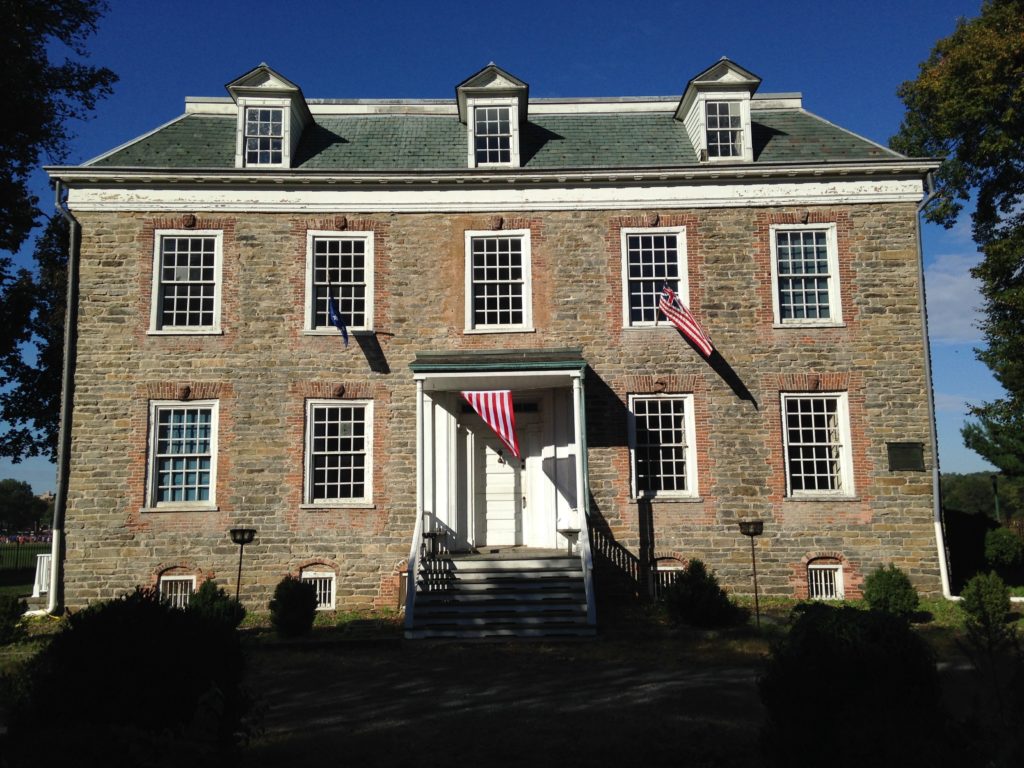
We shall mourn the loss of many who have fallen and who will fall in battle, but those who dare fight for their country can afford to die; their lives have not failed to produce good works.   If we honor those who fell at Antietam and Fredericksburg and on other battlefields, let us show ourselves worthy to wear their mantles.
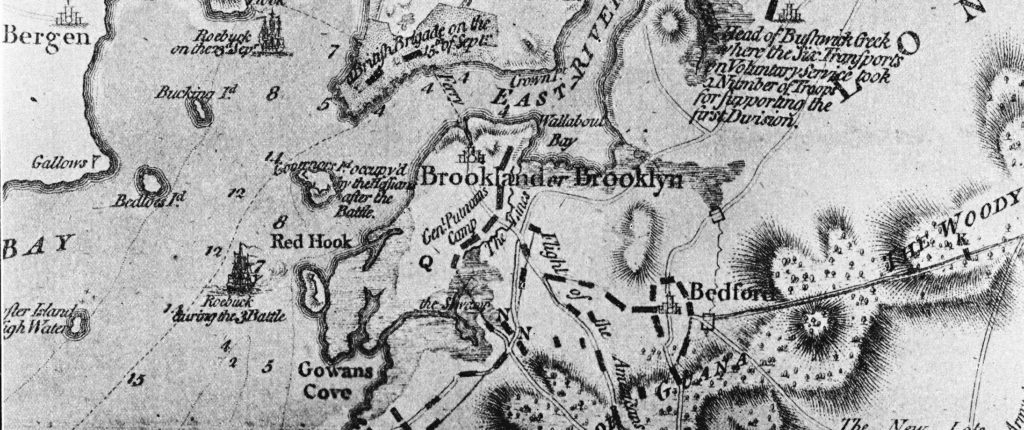
*Small likenesses  — essentially trading cards of yourself — called carte de visite were especially trendy during the Civil War, both as a novelty and as a way of remembering those at war.

**The Proclamation could only be enforced in rebel territory under Northern control, so not all of the four million enslaved men felt its benefits on this date.

***Referencing fears of new immigrants that freed blacks would become a competitive labor force. These fears would, of course, culminate later that summer in the Civil War Draft Riots.

****Of course, we know now that the war would drag on for over two more years.


Categories
Gangs of New York

Execution in Five Points: Piracy, slave trade and the Tombs

Sometimes you can look back at history and think that nothing ever changes. And sometimes you find something that makes New York seem extraordinary unrecognizable, a city besieged by near barbaric crises.

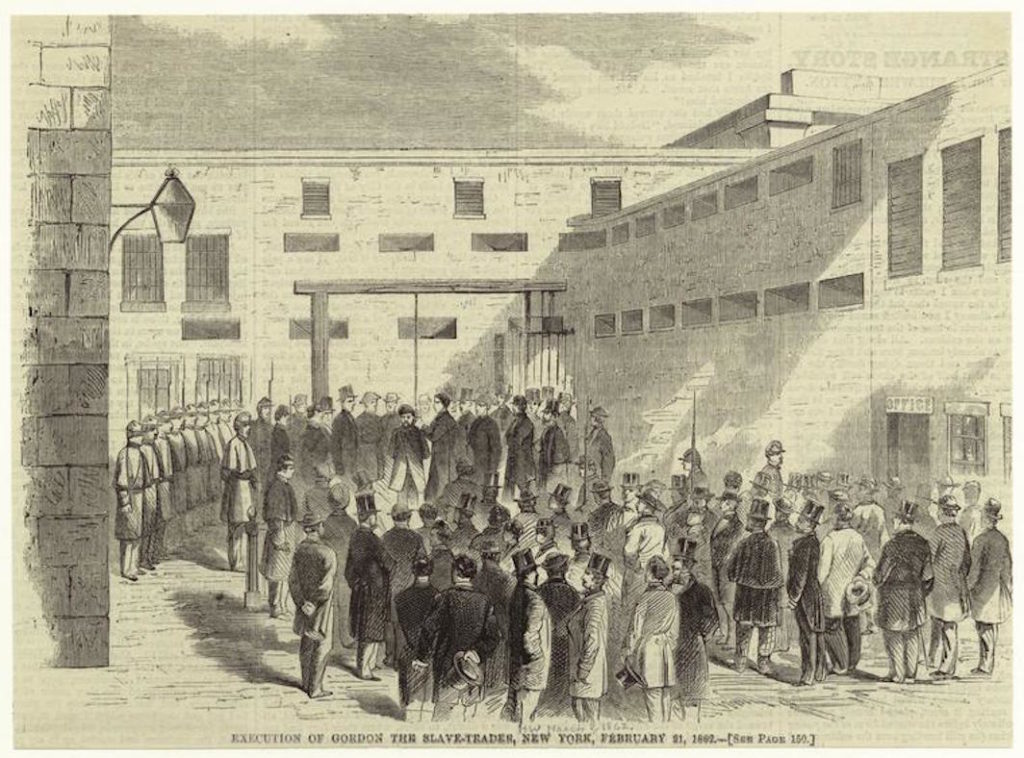
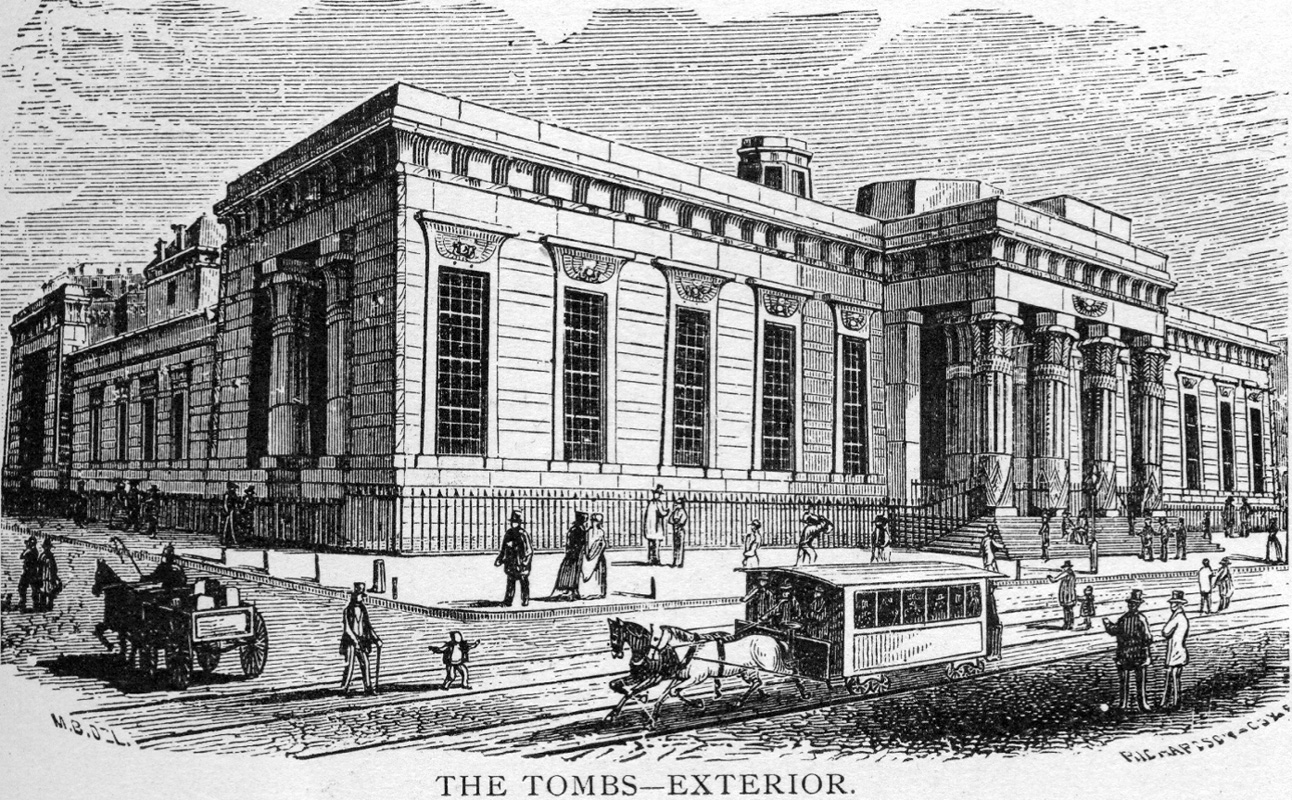
The image above depicts a scene from February 21, 1862, in the courtyard of the famous Tombs prison in the Five Points neighborhood.

The notoriously dank and foul-smelling complex was the scene of a great many public executions since its opening in 1838, but the one which took place on February 21 was particularly urgent, the crime cutting to the core of America’s central dilemma.

The man being hanged was Nathaniel Gordon, and his crime was international slave trade.

America was in the throes of a Civil War between the North and South, waged with slavery as its central issue. But the import and export of slaves into the United States has technically been banned decades earlier, and the U.S. Piracy Act of 1820 included human cargo in its definition of international piracy.

This did not deter Gordon, who sailed to North Africa in 1860 and loaded a boat with almost 900 people, intending to sell them to Southern plantations.

From a vivid description from Harper’s Weekly, the boat was overloaded with “eight hundred and ninety-seven (897) negroes, men, women, and children, ranging from the age of six months to forty years. They were half children, one-fourth men, and one-fourth women, and so crowded when on the main deck that one could scarcely put his foot down without stepping on them. The stench from the hold was fearful, and the filth and dirt upon their persons indescribably offensive.”

Gordon was caught just 50 miles offshore and brought to the United States for trial. He would have received a stern sentence even before the war, but with the conflict in full swing by the time of his trial in late 1861, Gordon’s defense team never stood a chance.

Despite pleas from wealthy supporters, Gordon was sentenced to die on February 7, 1862. President Abraham Lincoln commuted the sentence by two weeks, and Gordon’s supporters might have even convinced him to commute it further had Lincoln’s young son Willie not died of typhoid on February 20.


One notable fact about this execution is the Tombs (pictured above, in 1863) is a city prison, but the crime was a federal offense, the only such national execution to have taken place here.

Most federal executions took place at military installations. For instance ‘Pirate’ Albert Hicks was hanged on Bedloe’s Island, home of Fort Wood (and today the residence of the Statue of Liberty). Robert Cobb Kennedy, one of the Confederate conspirators who attempted to torch various New York hotels in November 1864, was executed at Fort Lafayette off the coast of Bay Ridge, Brooklyn.

Gordon was also the last person ever executed by the U.S. government for violations of the Piracy Act.

For more details on the execution, check out the great Corrections History blog which details the messy particulars of the execution.

Illustration above courtesy New York Public Library

Categories
Podcasts

African Burial Ground: History from underneath the city, and the secret tale of New Yorkers once forgotten

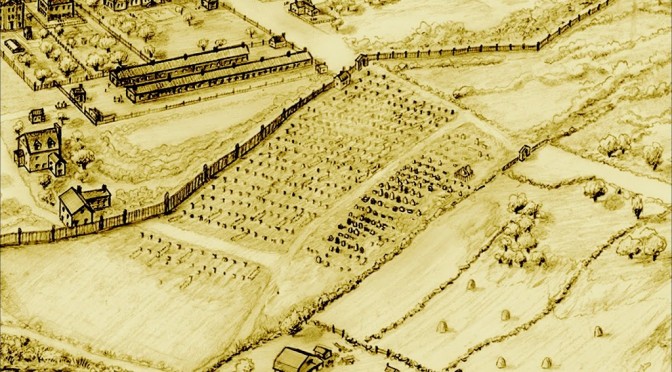
A small cemetery for African slaves and free black New Yorkers developed along the southern edge of Collect Pond. But when that filthy body of water was drained and filled, the burial ground disappeared underground with it. (Image courtesy Preserve America)

PODCAST During the construction of a downtown federal administration building, an extraordinary find was discovered — the remnants of a burial ground used by African slaves during the 18th Century.

In the earliest days of New Amsterdam, the first Africans were brought against their will to build the new Dutch port, slaves for a city that would be built upon their backs. Later, forced to repress the cultural expressions of their forefathers, the early black population of British New York did preserve their heritage in the form of burial rites, in a small ‘Negro Burial Ground’ to the south of Collect Pond (and just a couple short blocks to today’s City Hall).

How did this small plot of land — and its astounding contents — become preserved in the middle of the most bustling area of the most bustling city in the world? And why is it considered one of the most spectacular archaeological finds in New York City history?

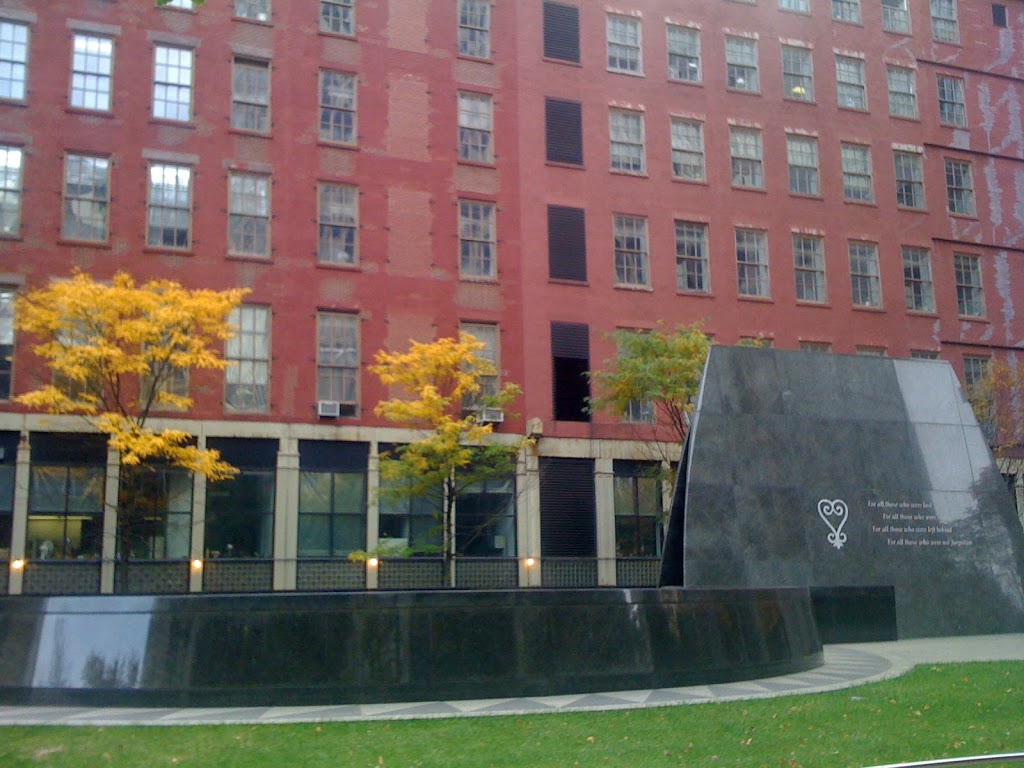
The African Burial Ground monument, at street level. Designed by Rodney Leon, the monument in contained on a quiet patch of land that seems to escape the bustle of the city around it.

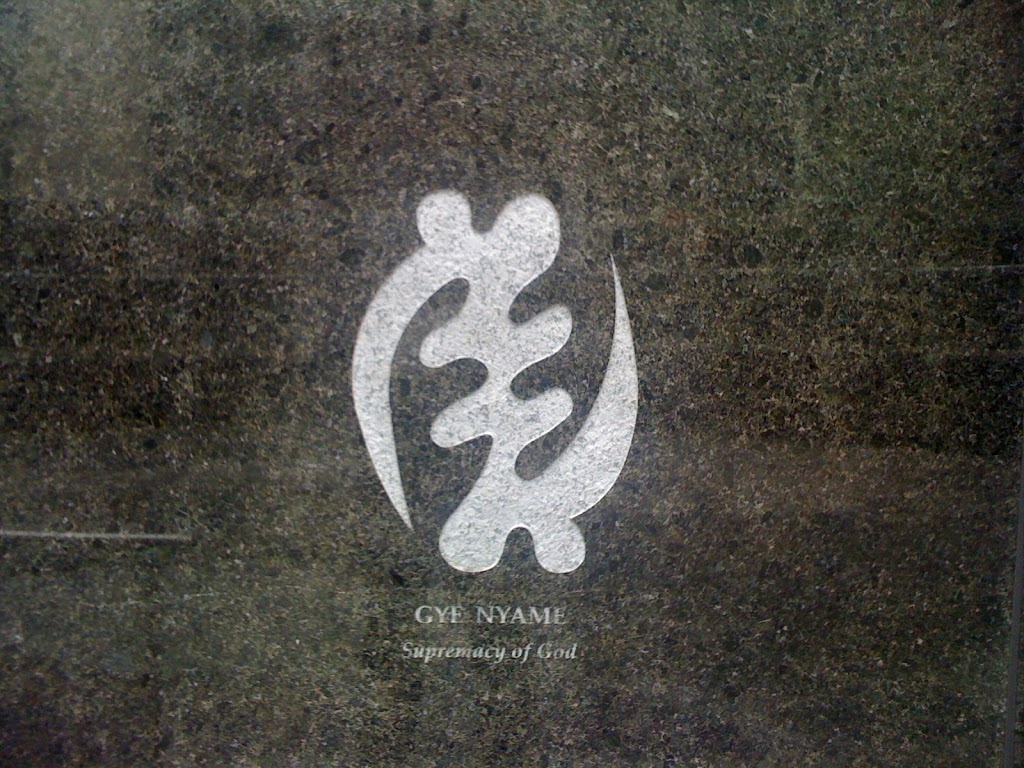
Within the ‘Circle of Diaspora’ are various spiritual and religious symbols, many quite exotic.


There’s no shortage of information about the history of slavery in New York. I would definite start with the materials related to the New York Historical Society’s extraordinary show from a few years ago. The GSA’s site on the African Burial Ground is a treasure trove of information as well.

For hours and directions, check out the National Park Service, not only for the Burial Ground, but New York’s many other national monuments.