Categories
Bowery Boys Bookshelf

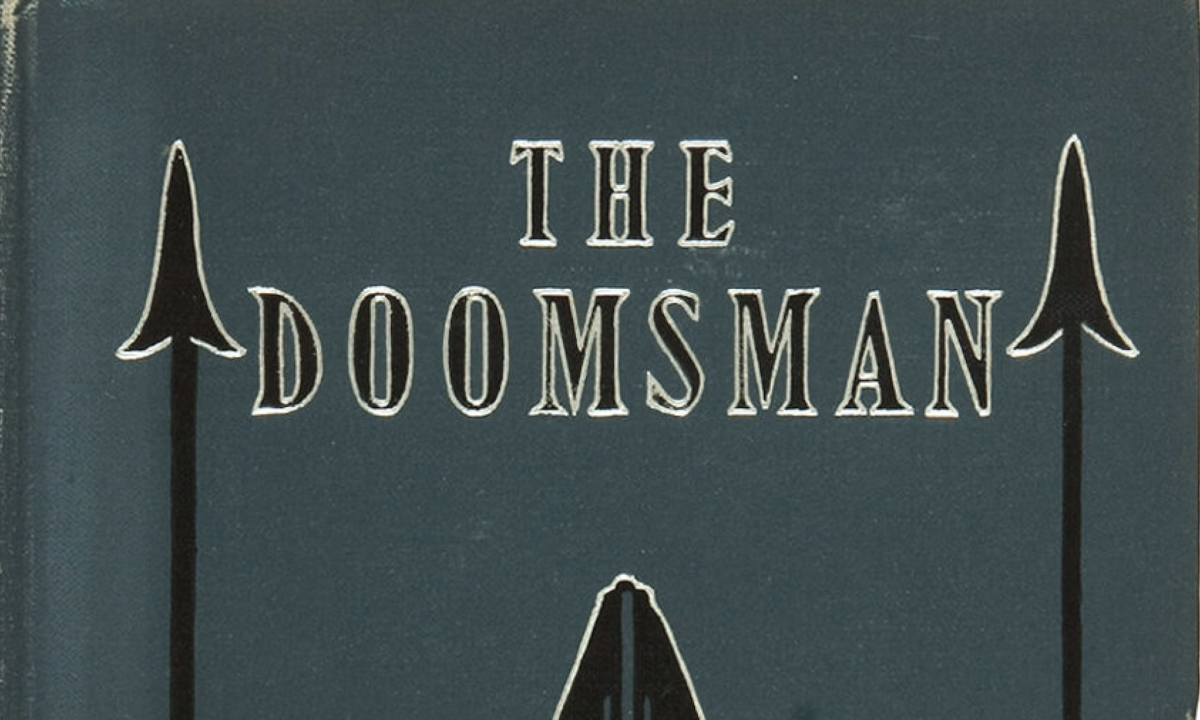
The Doomsman: an apocalyptic view of New York City in 2015, written in 1906

“Such is the world, or, rather, one infinitesimal portion of the cosmos, in the year 2015, according to the ancient calendar, or 90 since the Terror.”
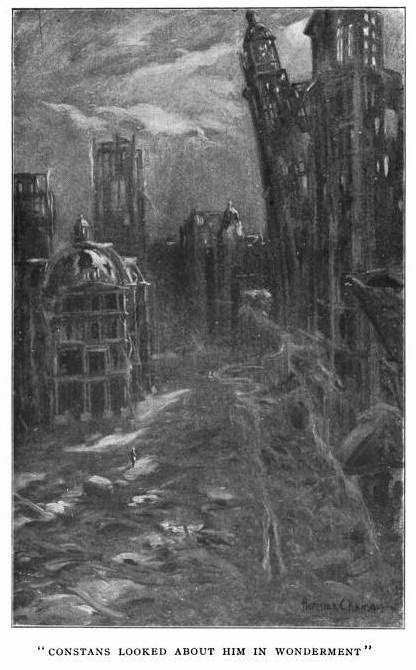
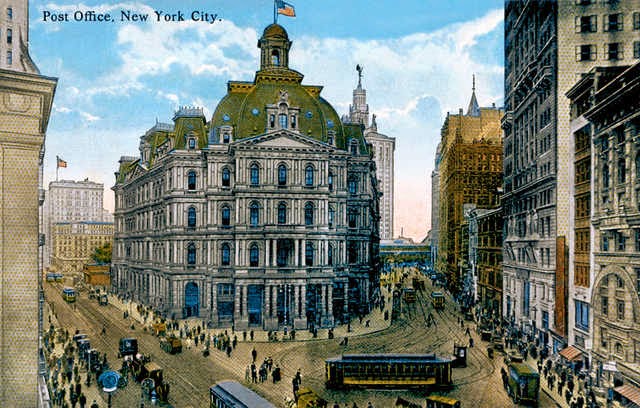
From the original illustrations of The Doomsman: a look up Park Row in 2015, a decrepit row of deteriorating structures. You can clearly see the ruins of old Post Office at the foot of City Hall Park. Compare this view to the photograph at the bottom of this post.

The destruction of New York City is a literary pastime that began in the late 19th century, usually in the hands of moralist writers seeking a little comeuppance upon the great evil of modern life.

By the year 1900, Manhattan had already been destroyed by nitroglycerin bombs (Park Benjamin Jr‘s ‘The End of New York,” 1880), left to waste in a future dystopia (John Ames Mitchell‘s The Last American, 1889), and cleansed with poison gas in a ‘revolutionary holocaust’ (Caesar’s Column: A Story of the Twentieth Century, written in 1890 by Congressman Ignatius Donnally).*

In 1906, the Episcopalian minister William Van Tassel Sutphen entered the fray with his own version of post-apocalyptic New York City in the novel The Doomsman, first serialized in Metropolitan Magazine.

What makes this book especially interesting today is that the breathless plot takes place in the year 2015. We’ve lived through that year so we can address what Sutphen got right. (The answer: nothing.)

Hole in One

Sutphen, an intellectual and New York literary sophisticate, is perhaps best known today as an early sports writer, best known for his observations on the sport of golf.

In 1898, he wrote the very Dr. Seuss-ian Golfers Alphabet. (“A is Arithmetic, handy to know/When the score figures up to a hundred or so.“) His most popular book remains 1901’s The Nineteenth Hole: Being Tales of the Fair Green, featuring humorous stories along the sporting course.

He was closely associated with Harper Brothers, writing and editing for the publishing house for most of his life. It was for Harpers that Sutphen wrote The Doomsman, his first non-golf book.

Doom and Gloom

The Doomsman is Anglo-Saxon fantasy, Game of Thrones lite, turning the New York metropolitan era into a landscape of wild vales and stockades. But its most interesting element is the depiction of a future Manhattan neglected and overcome, its ruins lorded by the vicious remnants of mankind.

Keep in mind however this is 1906 Manhattan.

This is the futuristic version of an old landscape. The novel’s version of a dismantled America should be familiar to anyone whose watched a recent disaster film or enjoyed an episode of The Walking Dead.

“For miles and miles the ruined city stretched away, a wilderness of brick and mortar. Here and there were areas of blackness and vacancy, where fire had worked its will. 

The business section, with its substantial shops and warehouses, and the central district, made up of the clubs, churches, theatres and the handsomer private homes, remained intact. And yet, withal, the spectacle was a singularly mournful and depressing one, for nowhere were there any signs of life.”

It’s 2015, and New York City is now called Doom. At some point in the 1920s, a Great Change occurred, so instantly that few could prepare for the aftermath.

The wealthiest New Yorkers, “seiz[ing] upon the shipping in the harbors for their exclusive use,” fled via steamships. The remaining population were ravaged by the Terror, a combination of panic and disease, and left only a handful of survivors.

Most fled to the countryside but died there. All industry, “every form of thought and progress,” ceased to be. “The relapse into barbarism was swift.”

People escaped into new walled encampments and quickly divided into medieval classes. Walled fortifications appeared over the ruins of the outer boroughs, Long Island and Westchester.

Our hero Clemens is raised at Greenwood Keep (pictured above), some kind of stockade presumably in the area of Greenwood Cemetery.
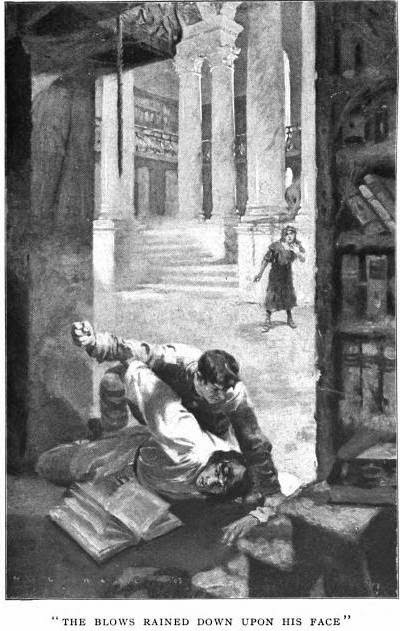
The area is constantly terrorized by The Doomsmen, inhabitants of the ruins of Doom. When Clemens’ own home is savagely destroyed in an attack, Clemens vows to venture into Doom and seek his revenge on the nefarious warrior Quinton Edge.

Days of Future Past

In 1906, the year Doomsman was published, there was not yet a Woolworth Building, but downtown Manhattan was in the midst of a colossal building boom unlike any other.

The author plays upon the fears of the day. Unusual gases seeped from the broken sidewalks. Old stone adornments fall the sky, almost killing our hero.

New York’s skyscrapers still exist in 2015, but all were empty, hollowed out and falling apart; one skyscraper on Park Row “had settled and was leaning over at a terrifying divergence from the perpendicular.”

He eventually arrives at the main branch of the New York Public Library (above) — lion-less and half-completed in 1906 — and meets the tempestuous young Esmay whom he will eventually fall in love with.

With a little detective work, you can figure out many of the real-life locations depicted here. For instance, the walled city Croye, “the principal city of this western hemisphere in the year 2015,” is actually Yonkers. Perhaps because it’s already so ancient looking, one landmark retains its name — the High Bridge.

But most of the action takes place in Citadel Square, alongside the Palace Road (Broadway).

That’s actually Madison Square, which has become the encampment of the Doomsmen, many of whom are holed up in the White Tower — most likely the medieval-looking tower upon old Madison Square Garden.

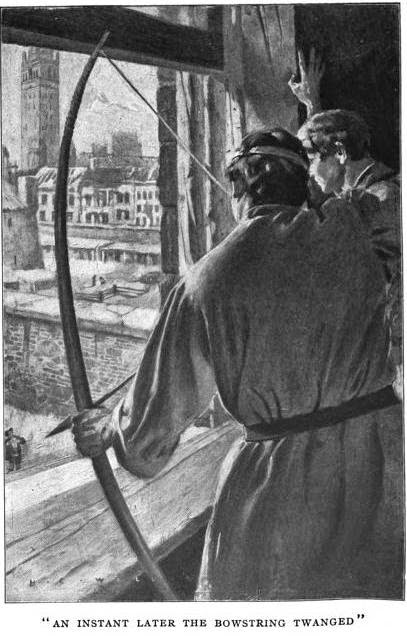
Our hero takes up a home on the fourth floor of the peculiar building to its southern side, a structure that would have been sparkling new in the mid 1900s. “The building had been constructed upon a narrow, triangular plot of land, and its ground-plan bore a fanciful resemblance to the shape of a flat-iron.” From this vantage within the Flatiron Building, Clemens is able to launch arrows upon his enemy.
But perhaps its strangest detail comes from another obsession of the late 19th century — electricity. The Doomsmen worship The Shining One, an electric dynamo in an abandoned power plant. A crazed priest has been able to reconnect the power and turn — get this — an electric chair into the central relic of worship!

The Doomsman is hardly an unfairly forgotten masterpiece. Its racial and ethnic politics are frankly repellent, its female characters mostly stock characters of helpless maidens and selfish harpies. The prose is occasionally cinematic — that’s cinema in 1906 — perfect for a silent film adaptation that regrettably never happened.

At right: The original cover of the book featured the Flatiron Building

For a modern audience, it’s most interesting for its descriptions of Gilded Age ruin, of a city that never developed to embrace automobiles.

In a book that’s so conventionally swashbuckling, it’s startling to read passages like, “Hats and garments, cash-boxes and accountbooks, littered the hallways and were piled in little heaps at the entrances of elevators.”

The book is in the public domain if you would like to read it for yourself.

**If you’re looking for more Victorian era tales of future destruction, check out this paper by Mike Davis and other authors called ‘Dark Raptures’.

Below: A look at City Hall Post Office and Park Row before everything went to hell. Compare with the image at the top.
Originally published in 2015
Categories
Writers and Artists

6 facts about Herman Melville, born 200 years ago today in Manhattan

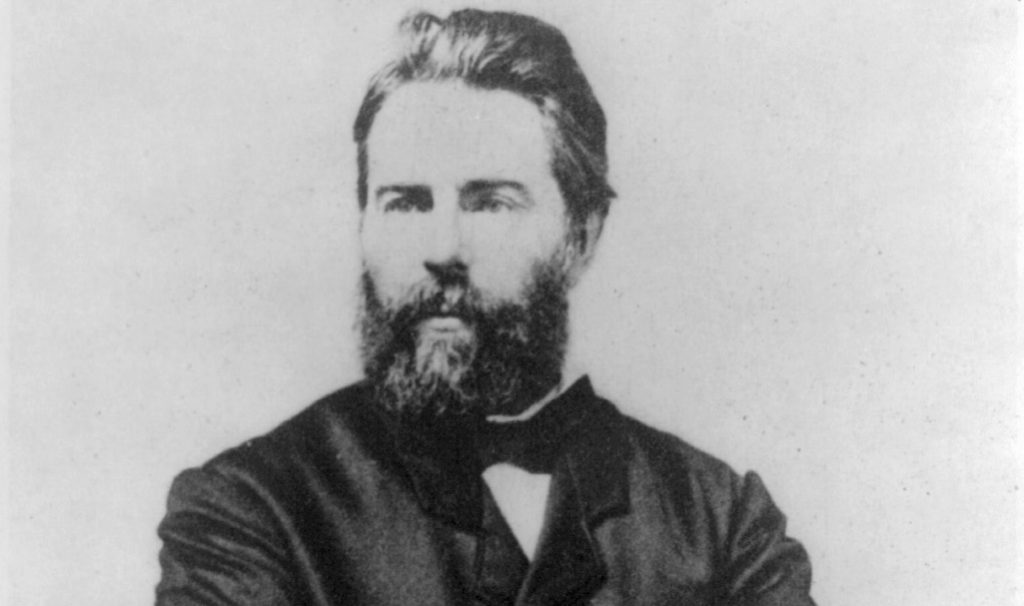
Herman Melville, one of America’s greatest writers of the 19th century, was born 200 years ago today.  Here are five New York-centric facts about Melville that you may not have known:

1)  Melville was born at 11:30 pm on August 1, 1819, at 6 Pearl Street. Today, across the street from that approximate location of the address sits a Starbucks, the coffee franchise named after a character in Melville’s Moby Dick.

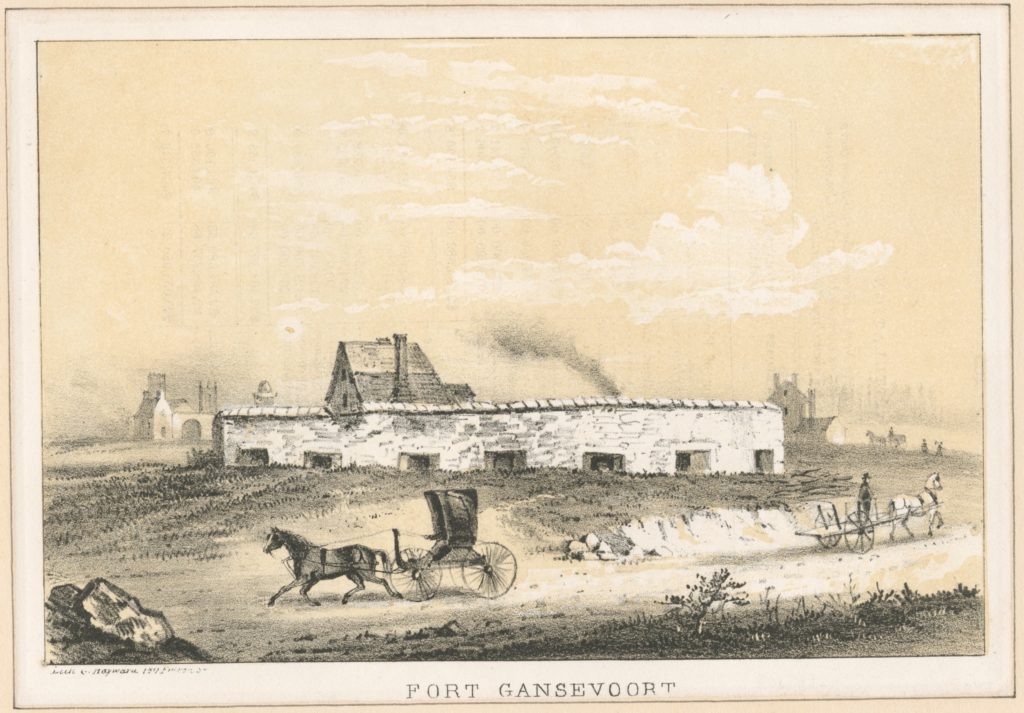
2)  His grandfather Peter Gansevoort, a colonel in the Continental Army, had a fort named after him on the west side of Manhattan, in the area of today’s Meatpacking District.  Gansevoort Street is a lasting tribute to both the colonel and his fort.

Melville worked on whalers and merchant ships as a young man, acquiring the rich experiences he would immortalize in his writing. For a time, he also worked in a customs office at West Street and Gansevoort Street, almost exactly where the old fort once stood. Today a fortress to art stands in its place — the Whitney Museum of American Art.

3)  His family’s wealth wildly fluctuated, and Herman’s father was at one point thrown in debtor’s prison.  But at the height of the Melville’s prosperity, they managed to live in a luxurious townhouse at 675 Broadway, between Bond and Great Jones Street. (Click the address to see what’s there today.)   In the 1820s, that would have put them in the lap of wealthy New York

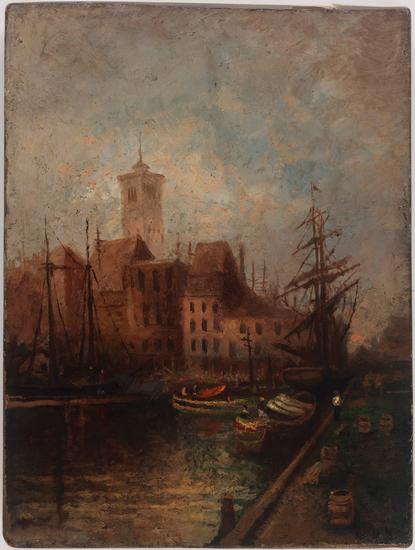
A painting of Coenties Slip circa mid 19th century, artist unknown. Courtesy Museum of the City of New York

4)  Melville was very familiar with all of downtown New York’s seaport culture but made special note to mention those places along the East River — WhitehallCorlear’s Hook and Coenties Slip — in his book Moby Dick.  These locations along the east side would have been his landscape as a youth, the places where his mind began crafting tales of adventure. From Moby Dick:

“Circumambulate the city of a dreamy Sabbath afternoon. Go from Corlears Hook to Coenties Slip, and from thence, by Whitehall, northward. What do you see?- Posted like silent sentinels all around the town, stand thousands upon thousands of mortal men fixed in ocean reveries. Some leaning against the spiles; some seated upon the pier-heads; some looking over the bulwarks of ships from China; some high aloft in the rigging, as if striving to get a still better seaward peep.” 

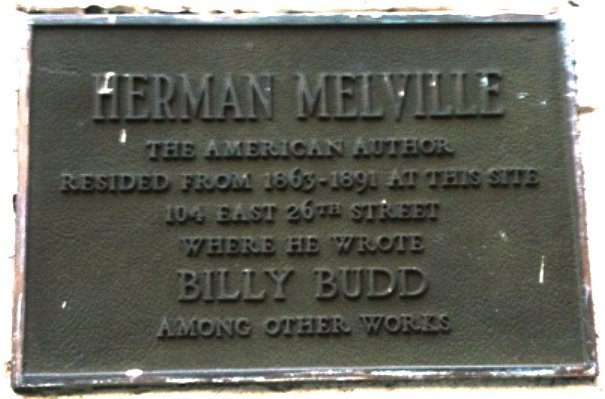
5)  For much of his later career, Melville lived at 104 East 26th Street.  Most of his greatest works had already been written, but it was from this house that he started a novella called Billy Budd. Uncompleted at the time of his death in 1891, it was later published and is today considered one of his greatest works.  There’s a plaque nearby where this building once stood, making note of this important literary spot.

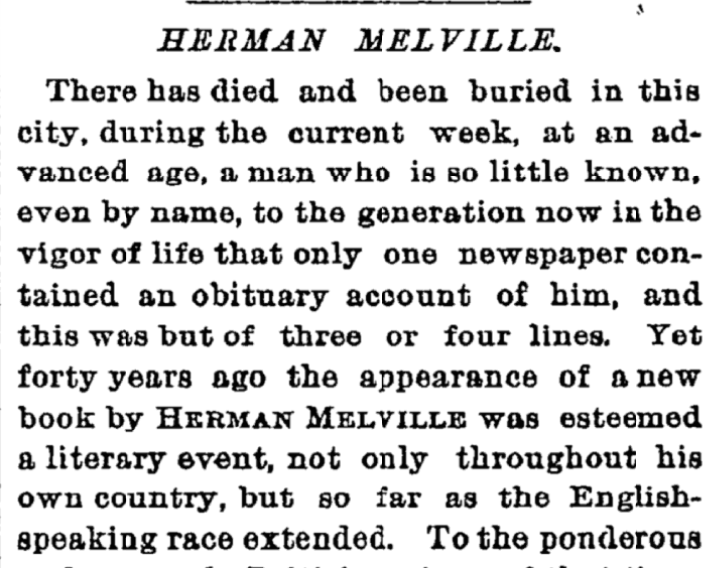
6) Melville died on September 28, 1891 and was buried at Woodlawn Cemetery. He had fallen into some obscurity at the end of his life; his initial obituary in the New York Times is a single paragraph. Somebody on staff, a lover of literature I would imagine, corrected this oversight a few days later with a longer tribute:

Opening sentences from the ‘correction’ which ran on October 2, 1891
Categories
Podcasts Writers and Artists

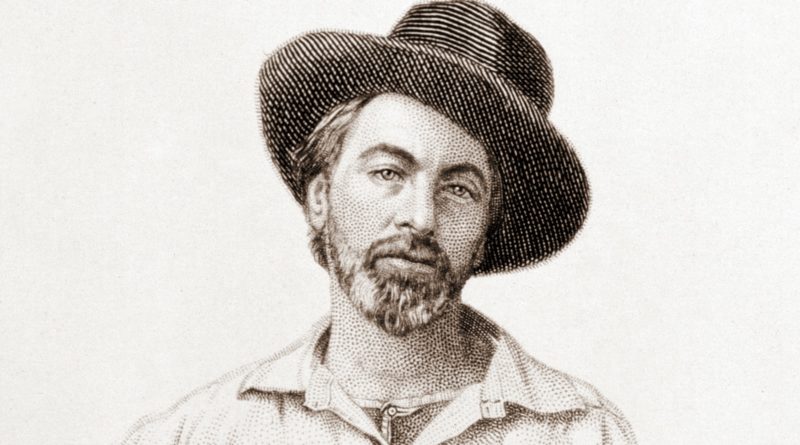
Walt Whitman at 200: Celebrating his life and legacy in the cities of New York and Brooklyn

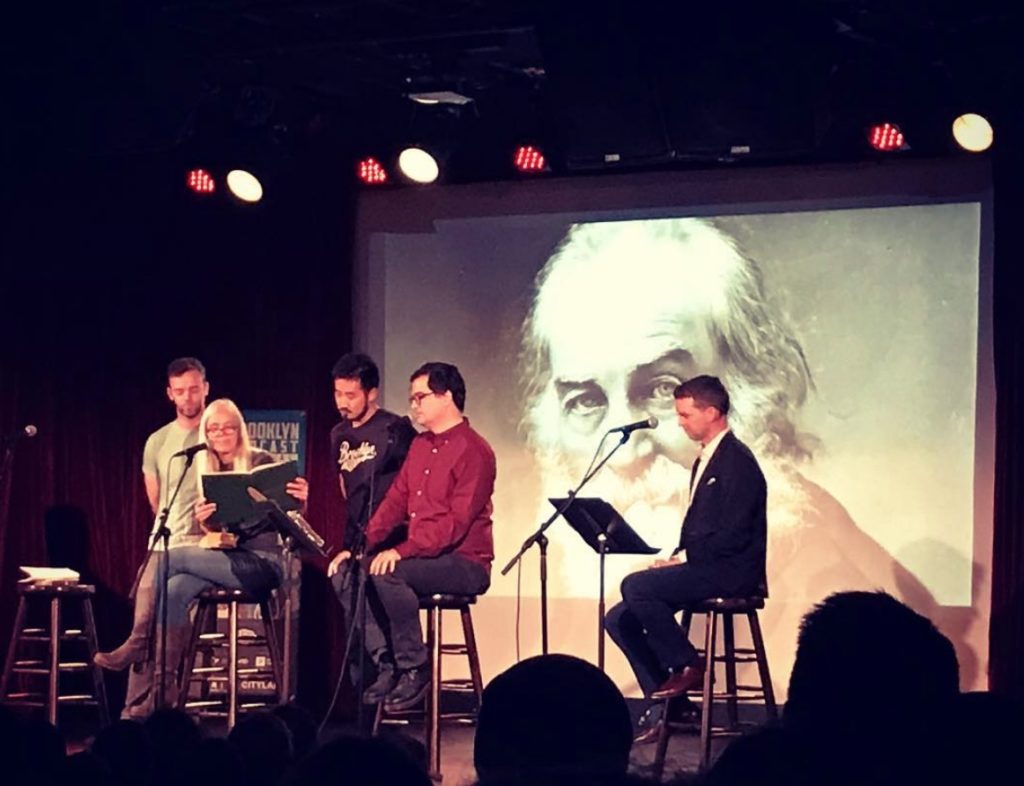
A very special episode of the Bowery Boys podcast, recorded live at the Bell House in Gowanus, Brooklyn, celebrating the legacy of Walt Whitman, a writer with deep ties to New York and its 19th century sister-city Brooklyn.

On May 31, 1819, the world will mark the 200th anniversary of the birth of Whitman, a journalist who revolutionized American literature with his long-crafted work Leaves of Grass. The 19th century cities of New York and Brooklyn helped shape the man Whitman would become, from its bustling printing presses to bohemian haunts like Pfaff’s Beer Cellar.

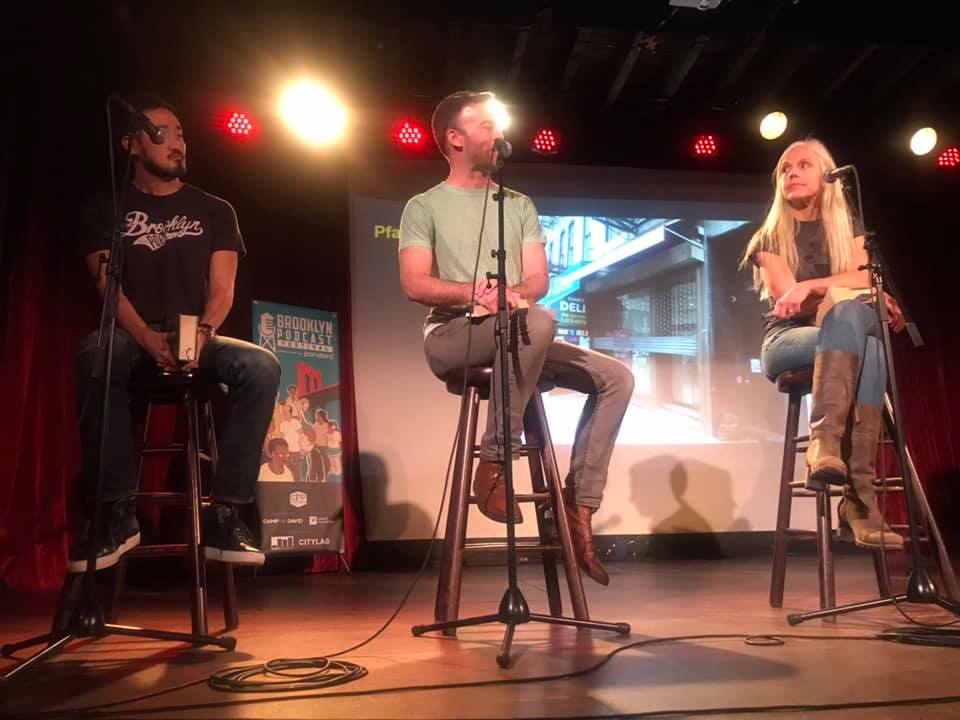
To help them tell this story, Greg and Tom are joined by guests from the worlds of academia, literature and preservation:

Karen Karbiener, NYU professor and head of the Walt Whitman Initiative, an international collective bringing together all people interested in the life and work of Walt Whitman

Jason Koo, award-winning poet, and founder and executive director of Brooklyn Poets, celebrating and cultivating the literary heritage of Brooklyn, the birthplace of American poetry

and Brad Vogel, executive director at the New York Preservation Archive Project and board member of the Walt Whitman Initiative, leading the drive to protect New York City-based Whitman landmarks.

This episode was recorded as part of the Brooklyn Podcast Festival presented by Pandora.

Listen Now: Walt Whitman New York Podcast

________________________________________________________

The Bowery Boys: New York City History podcast is brought to you …. by you!

We are now producing a new Bowery Boys podcast every other week. We’re also looking to improve the show in other ways and expand in other ways as well — through publishing, social media, live events and other forms of media. But we can only do this with your help!

We are now a member of Patreon, a patronage platform where you can support your favorite content creators for as little as a $1 a month.

Please visit our page on Patreon and watch a short video of us recording the show and talking about our expansion plans. If you’d like to help out, there are five different pledge levels (and with clever names too — Mannahatta, New Amsterdam, Five Points, Gilded Age, Jazz Age and Empire State). Check them out and consider being a sponsor.

And join us for the next episode of the Bowery Boys Movie Club, an exclusive podcast provided to our supporters on Patreon.

We greatly appreciate our listeners and readers and thank you for joining us on this journey so far.

_________________________________________________________

For a list of Walt Whitman celebrations in New York City and around the country, visit the Walt Whitman Initiative for details. And the week of Whitman’s bicentennial (May 27-June 1) is International Whitman Week!

Some images from our live show:

jenna_scherer/Instagram

Jason Koo reading “Crossing Brooklyn Ferry”

Courtesy Marie Carter

Jason Koo, Brad Vogel and Karen Karbiener

Courtesy Marie Carter

This is a recording of what many consider the actual voice of Walt Whitman, recorded on wax cylinder, reading a section of his poem “America”. (There is some controversy over its veracity.)

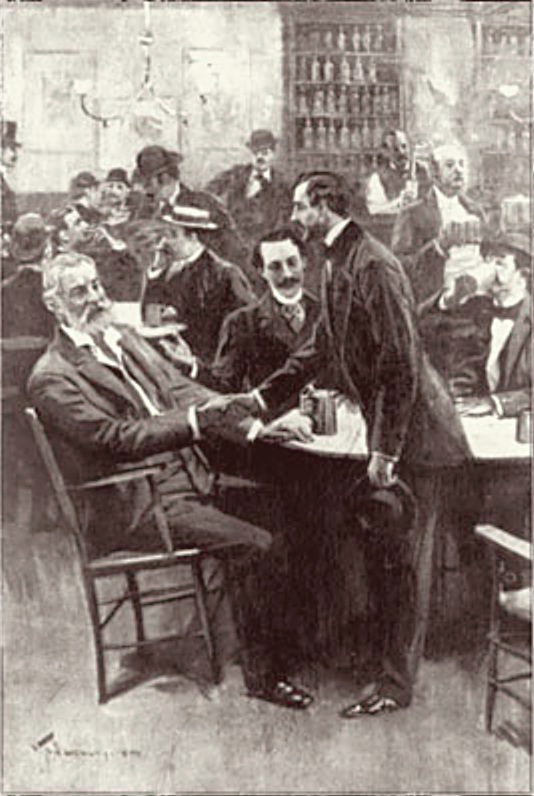
An illustration of the interior of Pfaff’s Beer Cellar, depicted here in 1857 (the seated gentleman is Whitman).

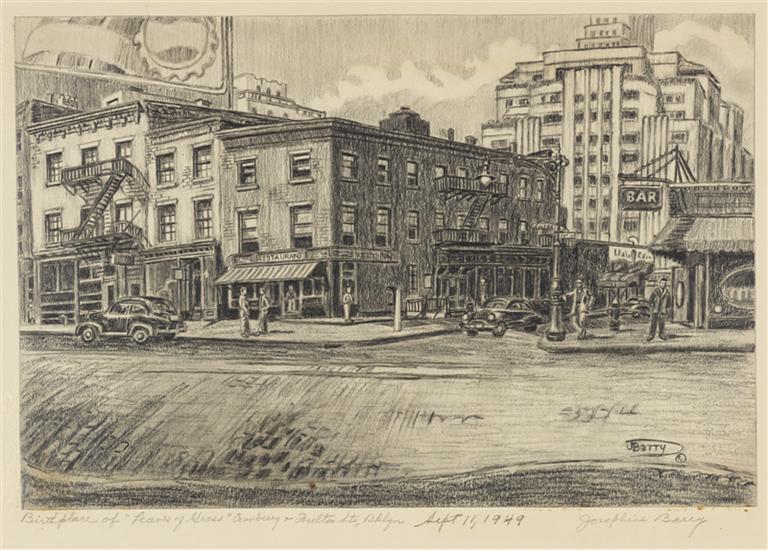
The location of Rome Brothers printing house (at Cranberry and Fulton streets), depicted here in 1949 in an illustration by Josephine Barry.

Museum of the City of New York

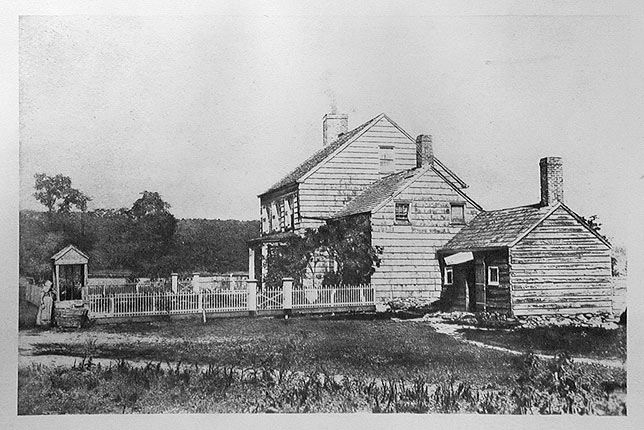
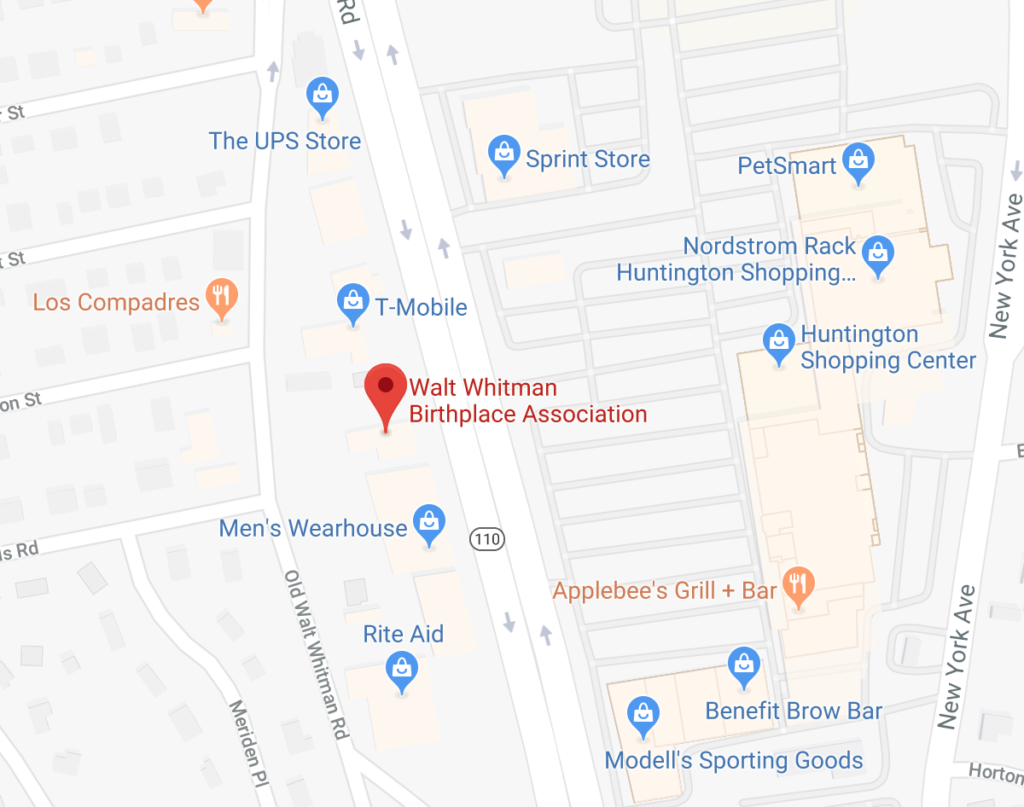
Whitman’s birthplace in Huntington, Long Island, still stands and is well worth a visit. It’s lovely! Unfortunately the landscape around the house has changed dramatically.

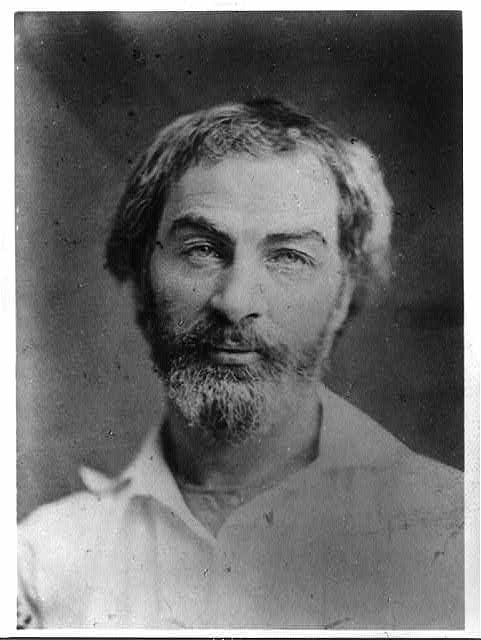
Whitman in 1854

Library of Congress

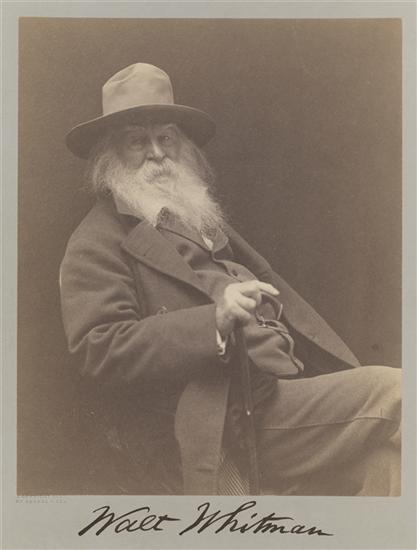
Whitman in 1890, photographed by George C. Cox

Museum of the City of New York

FURTHER LISTENING

Before Whitman, Poe found inspirations for his poetry in New York and in another future borough — the Bronx:

Whitman was a young man living in New York when a terrible blaze destroyed much of the city (not to mention job prospects):

Downtown Brooklyn, the area where Whitman once lived and published, has gone through several transformations since he lived here:

Categories
Amusements and Thrills Bowery Boys Bookshelf

The literary Coney Island

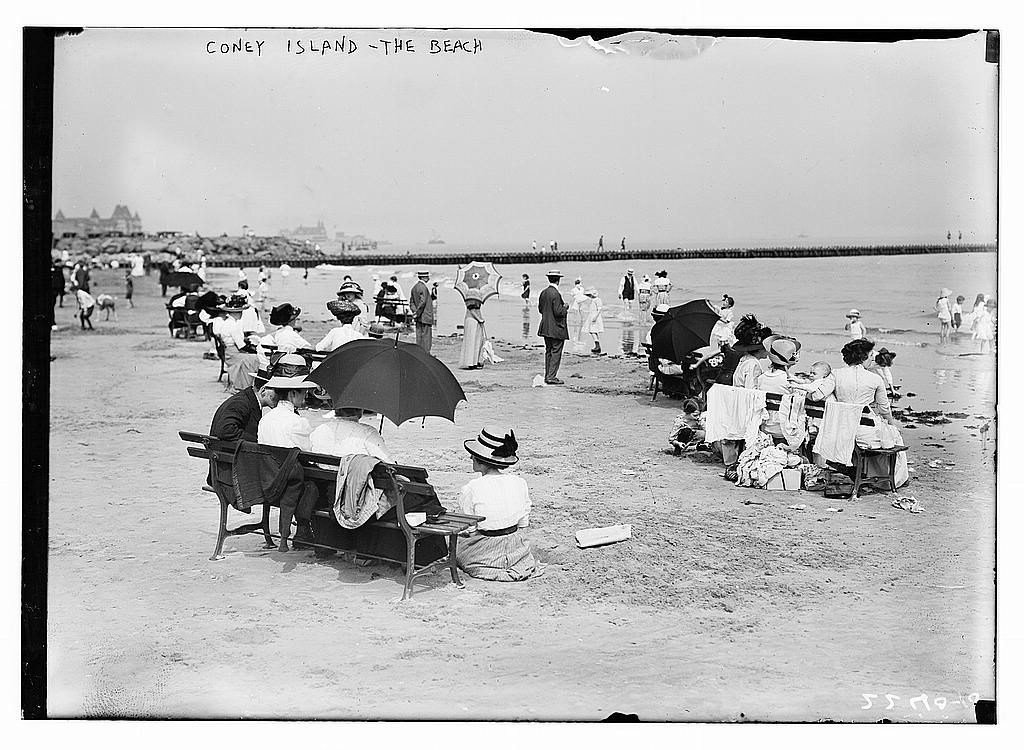
Everybody sees Coney Island a little differently. Most people know it for the amusements but not everybody has the same feeling about them. One person craves the beaches, the food. Another prefers a stroll along the boardwalk, fireworks, an evening Cyclones game. Others live nearby, too familiar with the swelling weekend crowds. And some people — and this seems like blasphemy — have had their fill of Nathan’s hot dogs.

1Coney Island has always been a Rorschach test of class, morals and taste, an escape from the city for more than 150 years. (In the 19th century, it was an escape from two cities, as Brooklyn was independent then and had not yet subsumed Coney Island within its borders.)

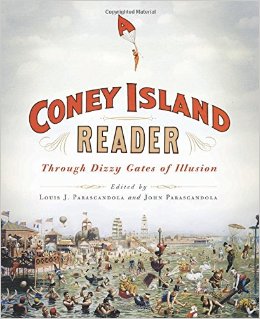
It’s never been considered a bastion high culture, although its degrees of middle- and low-brow have been vibrantly written about from the very beginning.  In The Coney Island Reader: Through The Dizzy Gates of Illusion, edited by Louis J. and John Parascandola, we get a time machine through its many iterations, thanks to the observations of dozens of writers.

I don’t think of Coney Island as a particularly literary destination, and yet here we have some of their greats chiming in to describe the lusty pleasures of Brooklyn’s beach-side getaway.

We begin with Brooklyn’s greatest voices — Walt Whitman.Yes: there was a clam-bake — and, of all the places in the world, a clam-bake at Coney-Island! Could moral ambition go higher, or mortal wishes go deeper?”  He’s writing in 1847 when the area is a barely developed destination.

2163524020_af077b7fec_o

Jose Marti, the poet and Cuban revolutionary, is overtaken by its magic. “And this squandering, this uproar, these crowds, this astonishing swarm of people, lasts from June to October, from morning until late night, without pause without any change whatsoever.”

Today’s Coney Island amusement district is vastly smaller than the one which greeted Stephen Crane in 1894.  “We strolled the music hall district, where the sky lines of the rows of buildings are wondrously near to each other, and the crowded little thoroughfares resemble the eternal ‘Street Scene in Cairo’.”

As Coney Island grew larger in the early 20th century — with its three principal amusement parks Dreamland, Steeplechase and Luna Park — it pulled thousands more to its whimsical attractions.  It’s almost  hilarious to picture Russian writer and dramatist Maxim Gorky sitting inside the Dreamland ride Hellgate, with its hellish flames “constructed of paper mache and painted dark red. Everything in it is on fire — paper fire — and it is filled with the thick, dirty odor of grease. Hell is badly done.”

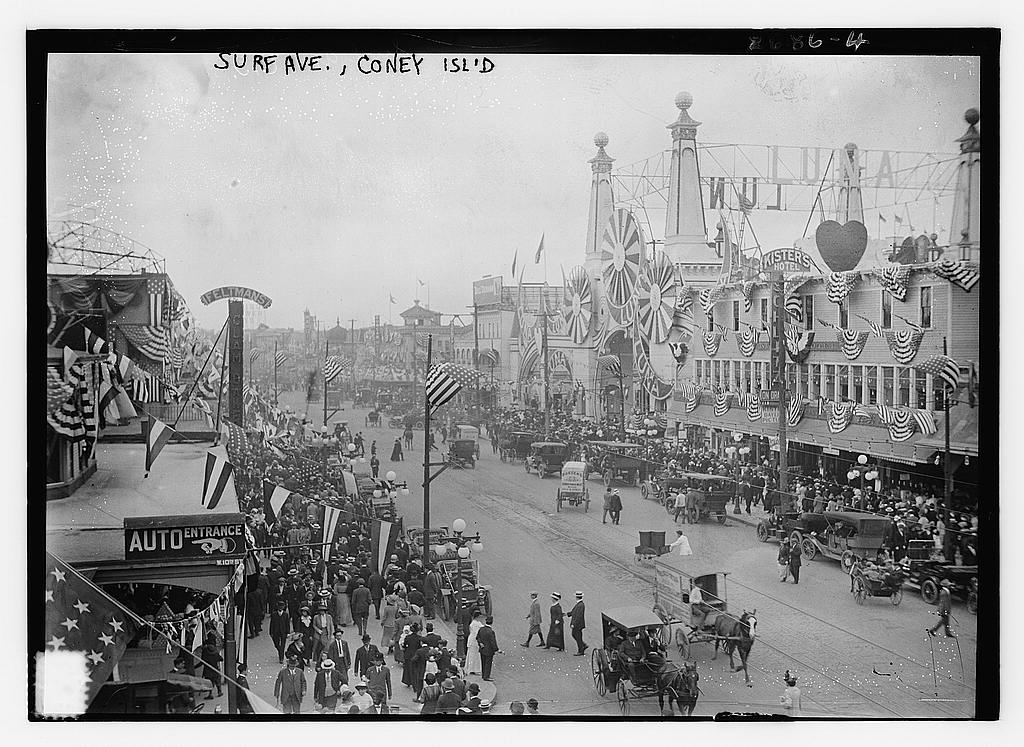
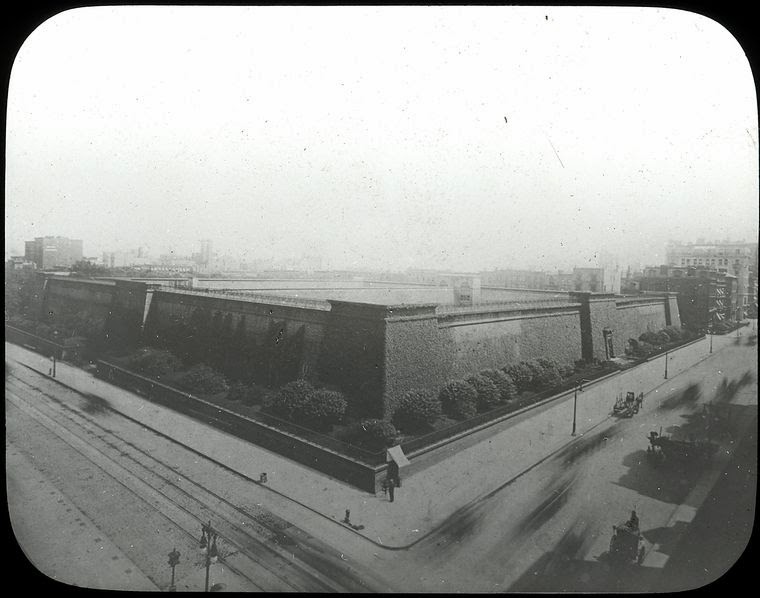
Surf Avenue 1910-15
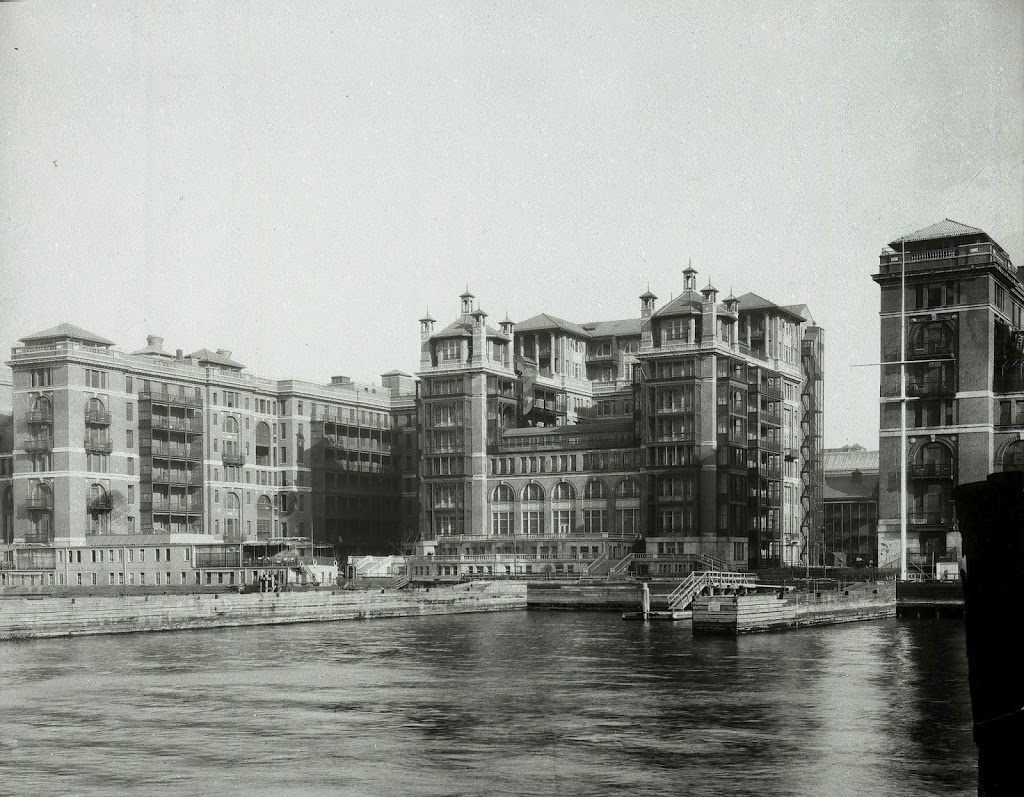
Surf Avenue 1910-15
The Coney Island Reader combines literary observances with social commentary and documentary accounts featuring interviews with the impresarios themselves.  In a 1909 magazine article by Reginald Wright Kauffman, George C. Tilyou, the owner of Steeplechase Park, proclaims, “To sum up my opinion of the whole thing, we Americans want either to be thrilled or amused, and we are ready to pay well for either sensation.” (George’s brother Edward is represented here with a vivid essay called “Human Nature with the Brakes Off — Or: Why the Schoolma’am Walked Into the Sea.”)

More contemporary observations of the fictional kind are represented by Kevin Baker (who also contributes the forward), Josephine W. Johnson and Sol Yurick (from the novel which inspired the film The Warriors).

This is perhaps the only book in history that features the writing of e.e. cummings and Robert Moses. One saw saw “[t]he incredible temple of pity and terror,  mirth and amazement,” the other “overcrowding at the public beach, inadequete play areas and lack of parking space.”

Ah, Coney Island. It’s what you make of it.


The Coney Island Reader
Through Dizzy Gates of Illusion
edited by Louis J. Parascandola and John Parascandola
Columbia University Press

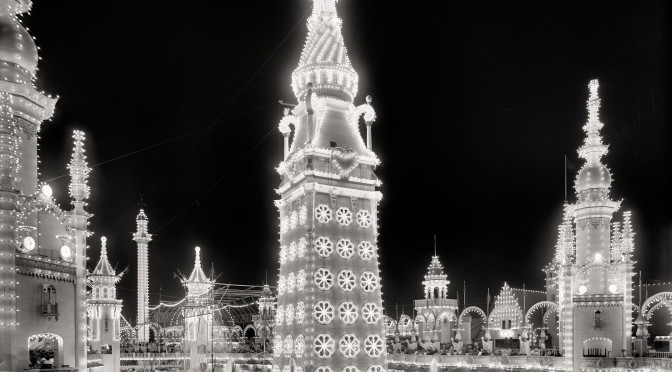
Top image: Luna Park at night, 1905 (polished up image courtesy Shorpy)


Categories
Bowery Boys Bookshelf Mysterious Stories

Spectropia, or How to Make Ghosts in Your Home

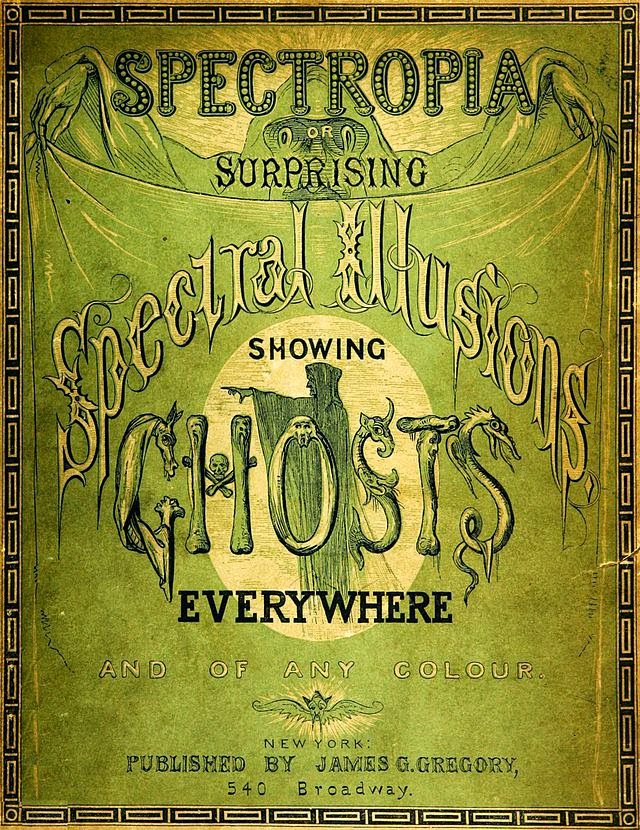
Above: The cover of the New York edition of Brown’s optical illusion book

One of the hottest books in New York City in the fall of 1864 was an optical illusion collection that conjured ghosts through a simple trick of the eye.

Spectropia, or surprising spectral illusions showing ghosts everywhere and of any colour was both a parlor amusement and picture-filled chapbook written and illustrated by J. H. Brown, an early skeptic of the spiritualism movement.

From the books introduction: “It is a curious fact that, in this age of scientific research, the absurd follies of spiritualism should find an increase in supporters; but mental epidemics seem at certain seasons to affect our minds, and one of the oldest of these mental afflictions — witchcraft — is once more prevalent in this nineteenth century, under the contemptible forms of spirit-rapping and table-turning.”

To counter the phonies, Brown presents readers with a nifty optical illusion that will allow its readers to create their own ghosts at home.

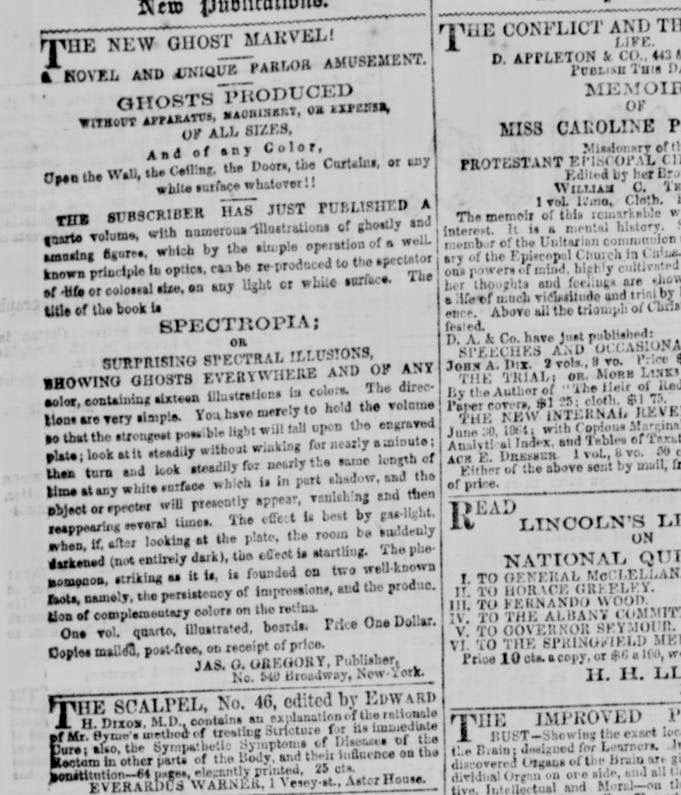
According to advertisements for the book:

The directions are very simple.  You have merely to hold the volume so that the strongest possible light will fall upon the engraved plate; look at it steadily without blinking for nearly a minute; then turn and look steadily for the same length of time at any white surface which is in part shadow, and the object or specter will presently appear.”

“The effect is best by gaslight.” My goodness, what isn’t?

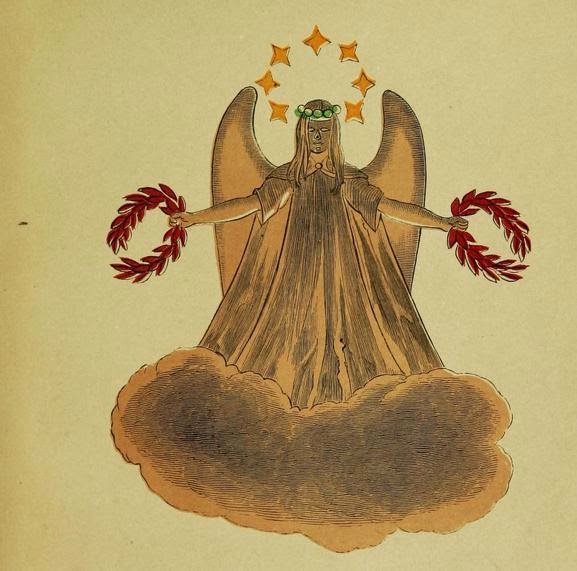
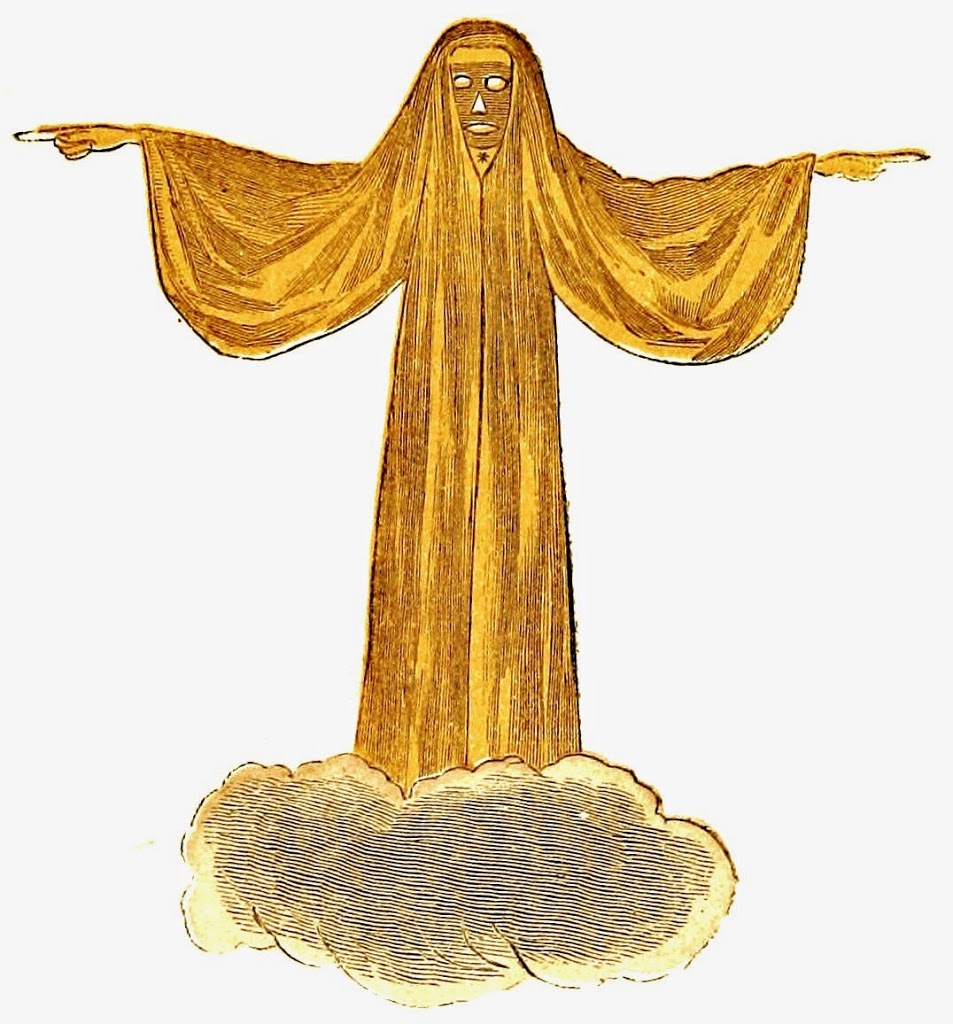
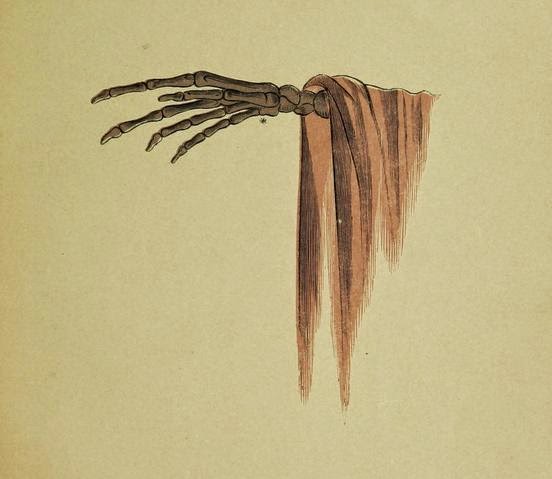
Here’s a sampling of the illustrations.  See if they work for you! And yes, definitely try these out if your home is equipped with gaslight….

The book was produced in New York by publisher James Gregory at 540 Broadway in today’s SoHo area. (It’s the building where the Steve Madden shoe store is today.).

Believe it or not, Spectropia was a hot gift under the tree that Christmas. The New York Times lists it that year in their recommended holiday gift list. “The publications of Mr. JAS. G. GREGORY, of No. 540 Broadway, are characterized by good taste and fine execution.”  Mr. Gregory kept the book in publication for several years afterwards or at least until the novelty wore off.

You can read the book here.  And here’s a PDF.

Below from the New York Daily Tribune, September 13, 1864

Categories
Bowery Boys Bookshelf

Happy birthday Herman Melville! Some New York City trivia Plus: News on our upcoming podcasts

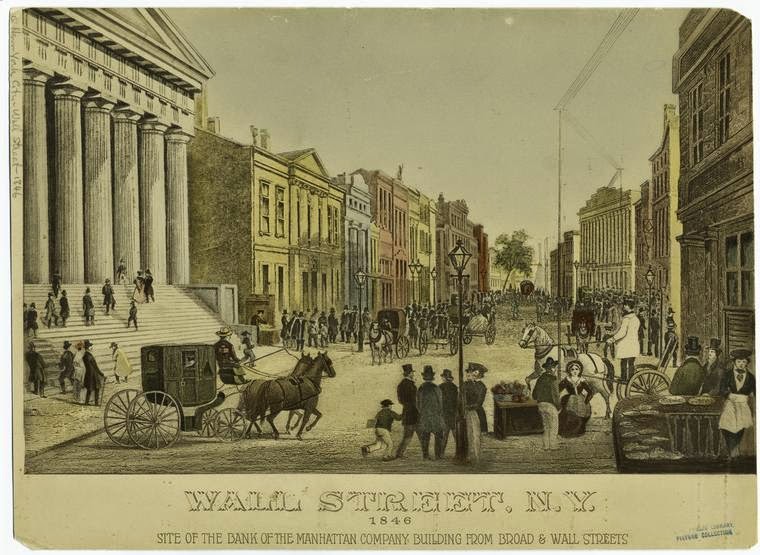
“Of a Sunday, Wall-Street is deserted as Petra; and every night of every day it is an emptiness.” — Herman Melville, Bartelby the Scrivener.  The lithograph above is what Wall Street would have looked like in Melville’s day. (NYPL)

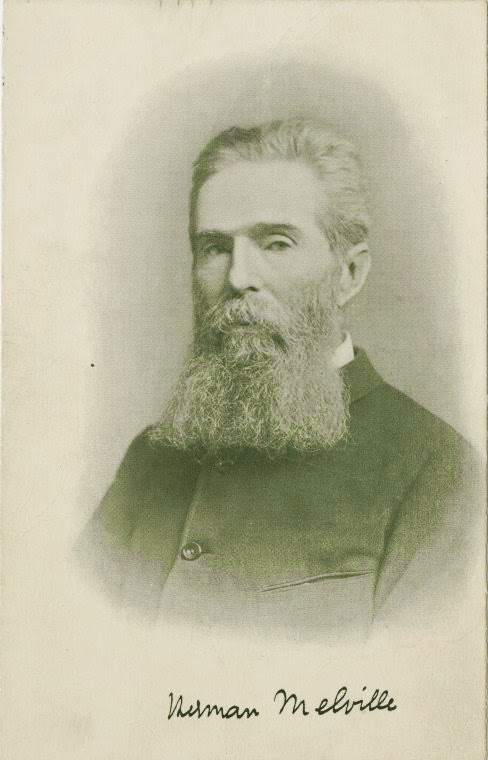
Herman Melville, one of America’s greatest writers of the 19th century, was born 195 years ago today.  Here are five New York-centric facts about Melville that you may not have known:

1)  Melville was born at 11:30 pm on August 1, 1819, at 6 Pearl Street. Today, across the street from that approximate location of the address sits a Starbucks, the coffee franchise named after a character in Melville’s Moby Dick.

2)  His grandfather Peter Gansevoort, a colonel in the Continental Army, had a fort named after him on the west side of Manhattan, in the area of today’s Meatpacking District.  Gansevoort Street is a lasting tribute to both the colonel and his fort.

Melville worked on whalers and merchant ships as a young man, acquiring the rich experiences he would immortalize in his writing. For a time, he also worked in a customs office at West Street and Gansevoort Street, almost exactly where the old fort once stood.

3)  His family’s wealth widely fluctuated, and Herman’s father was at one point thrown in debtor’s prison.  But at the height of the Melville’s prosperity, they managed to live in a luxurious townhouse at 675 Broadway, between Bond and Jones Street. (Click the address to see what’s there today.)   In the 1820s, that would have put them in the lap of wealthy New York.

4)  Melville was very familiar with all of downtown New York’s seaport culture but made special note to mention those places along the East River — WhitehallCorlear’s Hook and Coenties Slip — in his book Moby Dick.  These locations along the east side would have been his landscape as a youth, the places where his mind began crafting tales of adventure. From Moby Dick:

“Circumambulate the city of a dreamy Sabbath afternoon. Go from Corlears Hook to Coenties Slip, and from thence, by Whitehall, northward. What do you see?- Posted like silent sentinels all around the town, stand thousands upon thousands of mortal men fixed in ocean reveries. Some leaning against the spiles; some seated upon the pier-heads; some looking over the bulwarks of ships from China; some high aloft in the rigging, as if striving to get a still better seaward peep.” 

5)  For much of his later career, Melville lived at 104 East 26th Street.  Most of his greatest works had already been written, but it was from this house that he started a novella called Billy Budd. Uncompleted at the time of his death in 1891, it was later published and is today considered one of his greatest works.  There’s a plaque nearby where this building once stood, making note of this important literary spot.
___________________

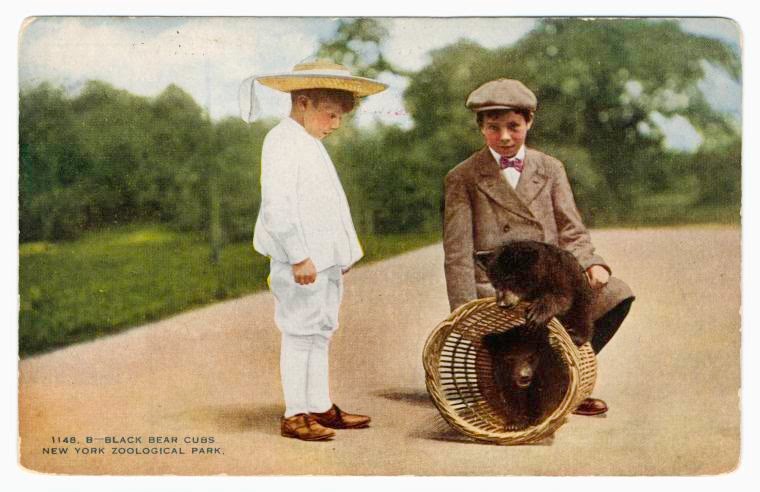
Above: Boys in fancy dress marvel over baby bears at the Bronx Zoo (NYPL)

Bonjour and hey! I’ve just returned from Europe where I saw Tom Meyers get married to his partner amid the bucolic beauty of southern France.  This may shock you but there was not a single pun made the entire ceremony.

This was also the longest vacation I’ve taken since starting the Bowery Boys so I thank you for your patience in the general silence around these parts.  I’ll have a Parisian flavored posting on Monday or Tuesday.

The podcast release schedule has been very erratic this summer so we’ve tried to give you a little extra doses wherever possible.  Sohis month you’ll be getting TWO new shows.  Here’s the layout:

August 8 — A new solo podcast
August 22 — Tom returns with a new duo show

At that point we’ll return to our monthly schedule with the next show on September 19.

Categories
Bowery Boys Bookshelf

The Alienist by Caleb Carr, released 20 years ago this week: Retracing the steps of this Gilded Age murder mystery

NOTE: This article has a few plot spoilers but no major twists are revealed or discussed.  I’ve tried to write the descriptions within the interactive map as vaguely as possible.

The Alienist by Caleb Carr was published 20 years ago this week, an instant best-seller in 1994 that has become a cult classic among history buffs.  Despite some creakiness uniquely inherent to early ’90s fiction thrillers, it remains today a page-turning and utterly spellbinding adventure.

Although the Jack the Ripper murders were an obvious inspiration for Carr, perhaps The Alienist‘s biggest influence is The Silence of the Lambs by Thomas Harris.  Carr completed his tale of serial murders in the Gilded Age just as a slew of Silence knockoffs began hitting the bookshelves.  The Alienist stands far above the pack, of course, but you can’t deny its success in 1994 was partially inspired by reader’s cravings for murderers with perverted tastes and body parts in formaldehyde jars.

The Alienist follows a quirky team of investigators in 1896 as they follow the bloody trail of a killer with a peculiar penchant for boy prostitutes, often dressed as girls to the delight of their clientele.  Dr. Laszlo Kreizler is the alienist (or psychologist) in charge of the case, stitching together a profile of the loathsome figure, conveniently using soon-to-be standard analytic techniques.

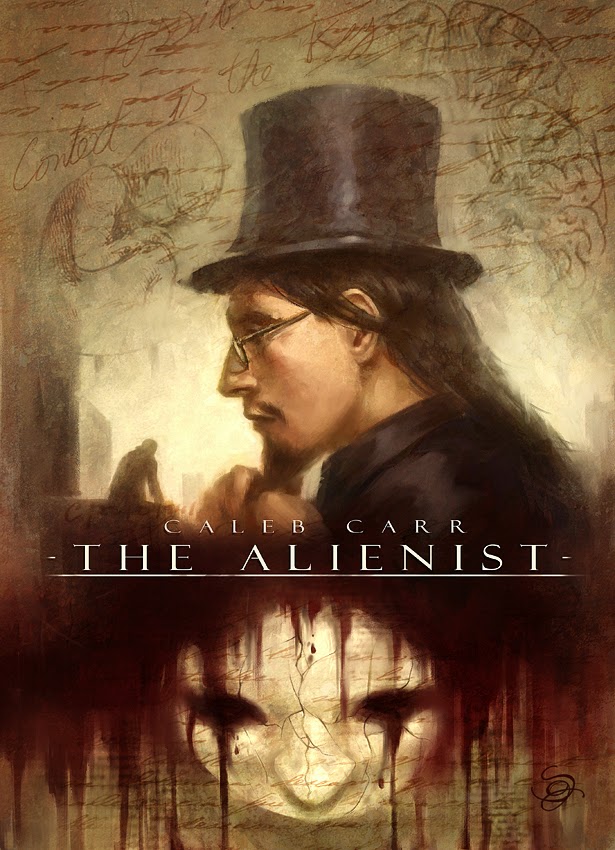
At right: Alternate artwork for The Alienist (Courtesy Nerd Blerp)

As protagonist John Schuyler Moore, a reporter for the New York Times, explains it “[W]e start with the prominent features of the killings themselves, as well as the personality traits of the victims, and from those we determine what kind of man might be at work. Then, using evidence that would otherwise have seemed meaningless, we begin to close in.”

Carr’s book is finely detailed, perhaps overly detailed, which won’t be a problem if you love New York City history.  There are over two dozen scenes at various notable landmarks throughout Manhattan, some in various states of construction.  Several real-life figures make appearances, although the most entertaining characters are Carr’s own, including the intrepid proto-policewoman Sara Howard and scrappy errand boy Stevie ‘Stovepipe’ Taggart.

When I first read The Alienist back in 1994, I was struck by its preciseness, an expertly placed breadcrumb trail through old Gotham.  There is no romantic gloss, as in another history classic Time and Again. He makes it seem possible to retrace almost every step of our heroes. (In researching this article, I tried to do so.)  The original New York Times review noted that “[y]ou can practically hear the clip-clop of horses’ hooves echoing down old Broadway.”  They’re still echoing.

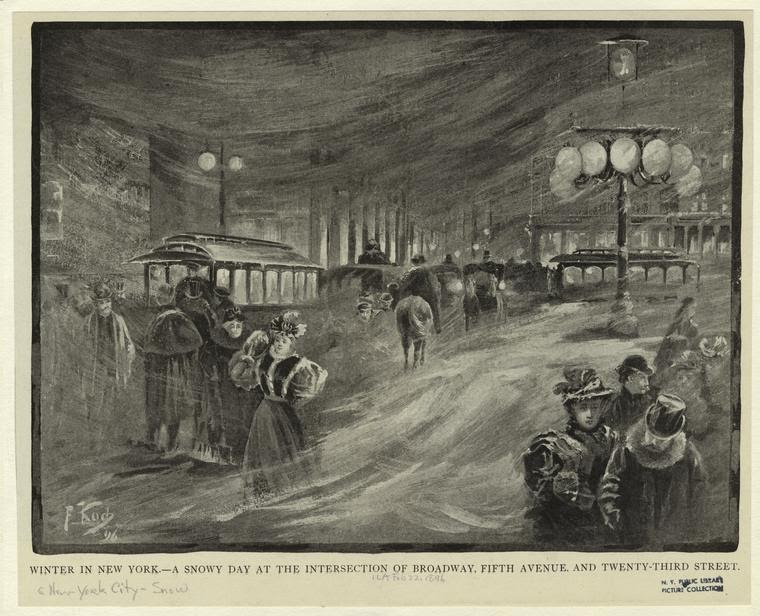
The story begins in the early months of 1896 during a robust winter. Below, from the Illustrated American, a depiction of a snowy Madison Square that year (NYPL):

His depiction of old New York is still glorious.  The book’s polite take on certain social issues, however, read a bit wobbly today.  To his credit, Carr tackles police corruption, gender discrimination, racial prejudice and the plight of homosexuals, all while elaborating on complicated psychological theories in service of an entertaining story.  He has stuffed a hidden epic of New York into the framework of a modern murder mystery.  That he chooses to handle hot-button social issues with kid gloves is not a misstep, but merely a symptom of its genre and day.

The Alienist is still greatly enjoyable, perhaps slightly more so now.  Thanks to renewed interest in New York City history, the details here are even more shimmering and vital.  This is not an old New York emerging from a mysterious fog, but a world that seems to exist alongside our own.

And to prove that — below you will find a detailed, interactive map of the pivotal locations used in the book.  You can click into various points for further details.  A few of these pins have pictures and other links. Just zoom in and choose a location!  (NOTE: Some locations are approximate and a couple are speculation.)


A little elaboration on certain elements of the book’s bigger places and themes:

Paresis Hall 
Most of the murder victims are boy prostitutes employed as several houses of ill repute throughout the city.  Paresis Hall, located steps from Cooper Union, sounds like it was both a place where gay men could congregate in private clubs and a place of sexual transaction, often (as in the book) with underage boys dressed up as girls.  This boy, Nathaniel ‘ The Kid’ Cullen, may have worked there, or may have just a habitue of the club. (He appears in this collection of photographs from Paresis Hill.)

Madison Square 
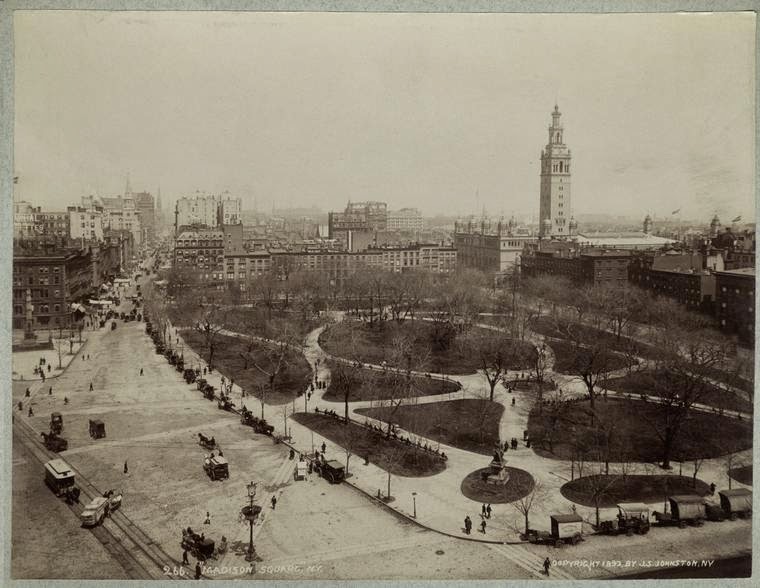
This was still a thriving center for culture and dignified entertainments in 1896. Many theaters clustered around the park, although newer stages were making their way up Broadway to Herald Square.  If Delmonico’s (on the northwest corner) is too crowded for you, head over to the tea room at Madison Square Garden on the northeast side.  Pictured here in 1893, three years before the events of the Alienist. (NYPL)

Murray Hill Distributing Reservoir
In 1896, New York still relied on this reservoir to provide most people with water.  But it was also a tourist destination in itself, with walking paths along the top.  Shortly after its appearance it the book, the Egyptian-inspired reservoir was torn down to make way for New York’s new public library. (NYPL)

Bellevue Hospital and Morgue
Check out our podcast and blog posting on the history of Bellevue Hospital, as many of the details mentioned there appear in this book.  Below: Bellevue in 1879.

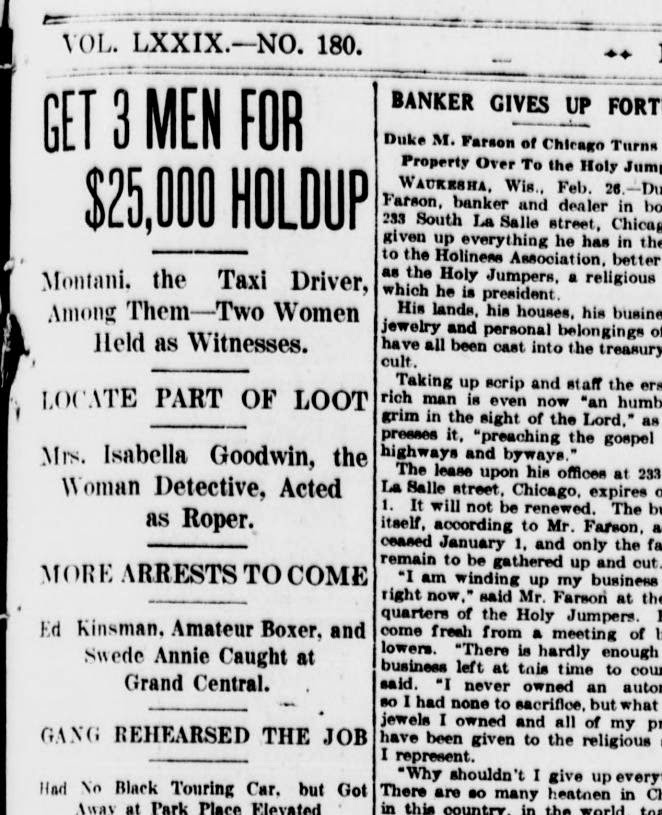
Isabella Goodwin
Sara Howard seems to be a little bit Nellie Bly, and a lot Isabella Goodwin, the first female office promoted to detective in 1896 (the year the book is set).  Below: A front-page case cracked by Goodwin from February 1912.

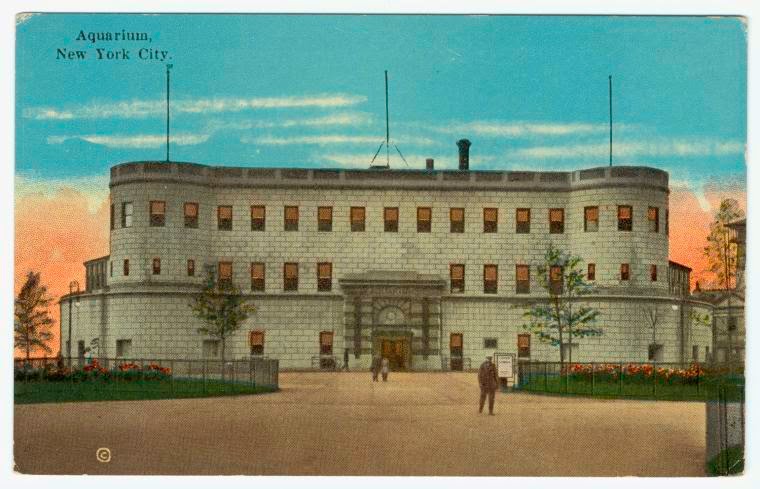
New York Aquarium
Carr’s narrative features several New York landmarks in construction.  Two of those places take a morbid center stage in the book — the Williamsburg Bridge and the nearly completed New York Aquarium (the former Castle Garden) (NYPL)

Theodore Roosevelt
Carr weaves several real life figures into the storyline, from J.P. Morgan (who comes off quite ominous) to Jacob Riis (not a flattering portrait of him either).  But future president Roosevelt gets a glowing supporting role as New York’s police commissioner who directs Dr. Kreizler, Moore and Howard to investigate the murders using powers of psychological deduction.

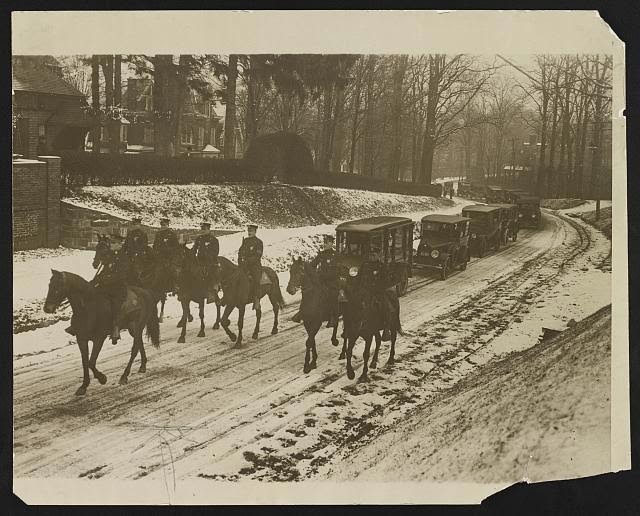
In fact, the book is actually a flashback by our hero Moore, recalled when he visits the Oyster Bay funeral of his dear friend in 1919 (pictured below). (LOC)

True Crime
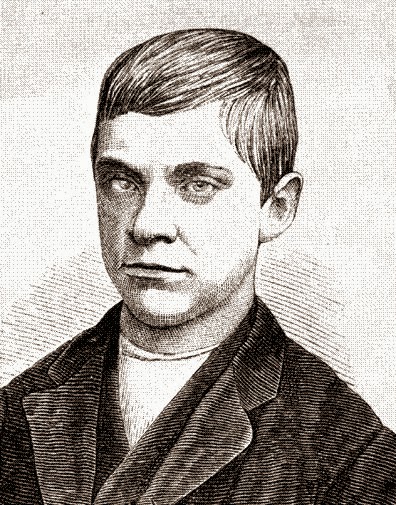
And there are a great many real-life figures from New York’s criminal underworld as well.  In fact, most of the lecherous and notorious figures depicted in the book are real folks, from early gangsters like Paul Kelly to brothel owners such as Biff Ellison.  Carr also finds a few disturbing mental cases to bring into the story, including the young killer Jesse Pomeroy (pictured below), considered one of the most brutal of murderers at a ripe age of 14.

Grand Central Depot
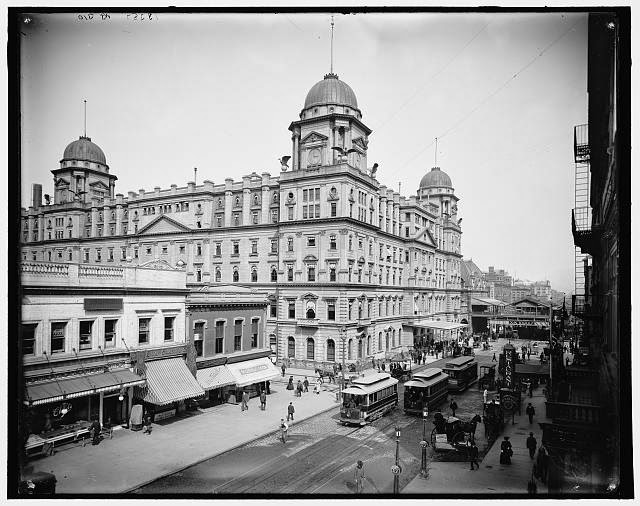
The characters do venture to places outside the city for further clues, but they always come through Grand Central Depot, the most hectic place in New York.  (Pennsylvania Station had not yet been built.)  Within a few years, this too would be ripped down and replaced with the present Grand Central Terminal. (LOC)

And finally, there are three central locations from the book that are still around today:

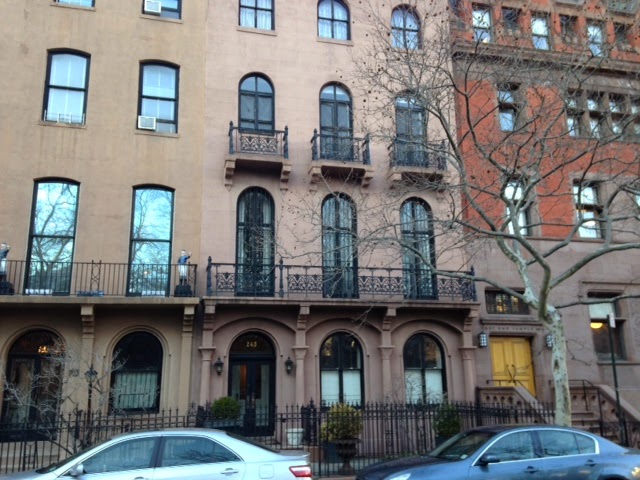
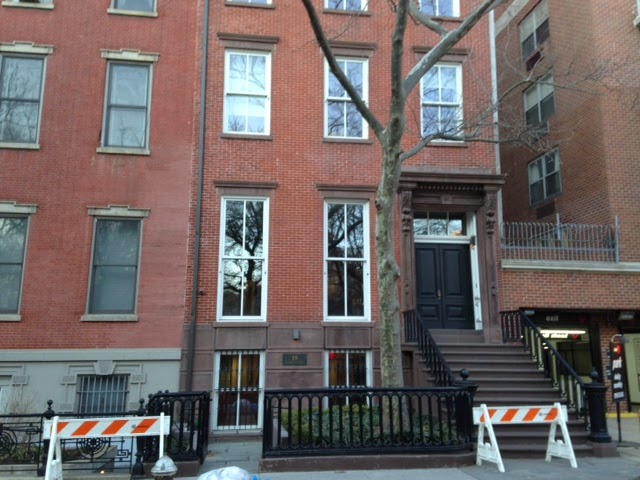
Dr. Laszlo’s residence at Stuyvesant Park. Actually the address in the book doesn’t really exist.  But based on a couple descriptions — and its proximity to St. George’s Church, which is mentioned as close by — this building at 237 East 17th Street may be what Carr had in mind:

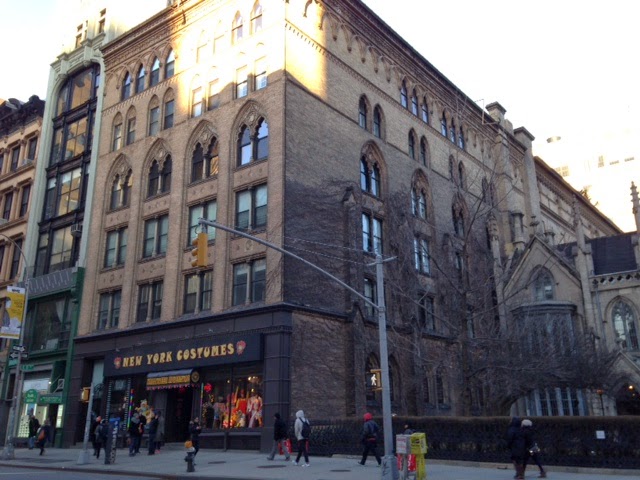
Murder headquarters at 808 Broadway — This exceptionally handsome building was constructed by James Renwick, playing nicely off its neighbor Grace Church.  It’s actually called the Renwick!  The team was located on the sixth floor.  Today, on the first floor, is one of New York’s most popular costume shops.

John Schuyler Moore’s home at Washington Square Park North, facing the park:


(My thanks to Dixie Roberts for the story idea!)

Categories
Bowery Boys Bookshelf

Solomon Northup’s ominous journey to New York City, 1841

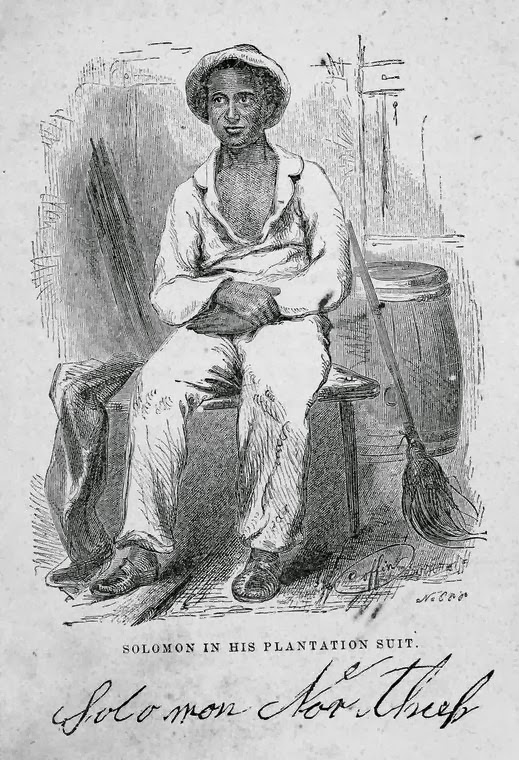
An engraving featured in Solomon Northup’s narrative Twelve Years A Slave, published in 1853.

The New York farmer and musician Solomon Northup was sold into slavery in 1841, tricked by two supposed members of a circus troupe, promising Northrup work in their traveling show.  Instead, Northrup awoke in bondage, eventually smuggled to New Orleans where he faced years of cruel servitude under a variety of plantation owners.   After regaining his freedom in 1853, he wrote the narrative Twelve Years A Slave, his harrowing account of his years in the South.

The book became a best-seller within Republican abolitionist circles, released a year after Harriet Beecher Stowe‘s Uncle Tom’s Cabin.  It was certainly in the possession of Henry Ward Beecher, Harriet’s younger brother, who turned his Brooklyn pulpit at Plymouth Church into a sounding board for abolitionist ideas.  (One hundred and sixty years later, the Oscar-nominated film version of Twelve Years A Slave, starring Chiwetel Ejiofor as Northup, played at Brooklyn Heights Cinema, located one block away from Beecher’s church.)

Northup and his family lived in upstate New York, but New York City proper plays a small but ominous role in his narrative.  Lured by the promise of employment by two men named Brown and Hamilton, Northup travels from home in Saratoga, first to Albany, then to New York itself:

“They hurried forward, without again stopping to exhibit, and in due course of time, we reached New-York, taking lodgings at a house on the west side of the city, in a street running from Broadway to the river.”

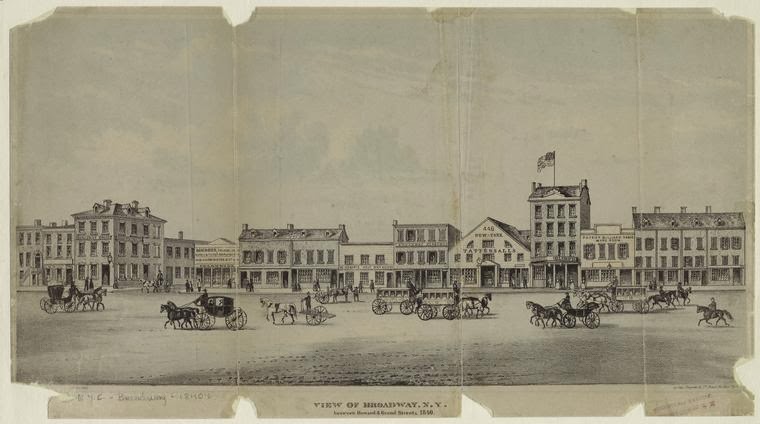
Below: A view of Broadway (between Howard and Grand Streets) in 1840.  To the south of this view was Canal Street and Five Points.


“I supposed my journey was at an end, and expected in a day or two at least, to return to my friends and family at Saratoga.   Brown and Hamilton, however, began to importune me to continue with them to Washington.  They alleged that immediately on their arrival, now that the summer season was approaching, the circus would set out for the north.   They promised me a situation and high wages if I would accompany them.  

Largely did they expatiate on the advantages that would result to me, and such were the flattering representations they made, that I finally concluded the offer.”

Northup agrees to accompany them further north to Washington DC.  It would be there that Northup would be drugged and sold into bondage by his two nefarious companions.  But before they leave New York, they suggest that Solomon perform a certain task, curious given the subsequent events which occurred:

“The next morning they suggested that, inasmuch as we were about entering a slave State, it would be well, before leaving New-York, to procure free papers.  The idea struck me as a prudent one, though I think it would scarcely have occurred to me, had they not proposed it. 

We proceeded at once to what I understood to be the Custom House. They made oath to certain facts showing I was a free man.” 

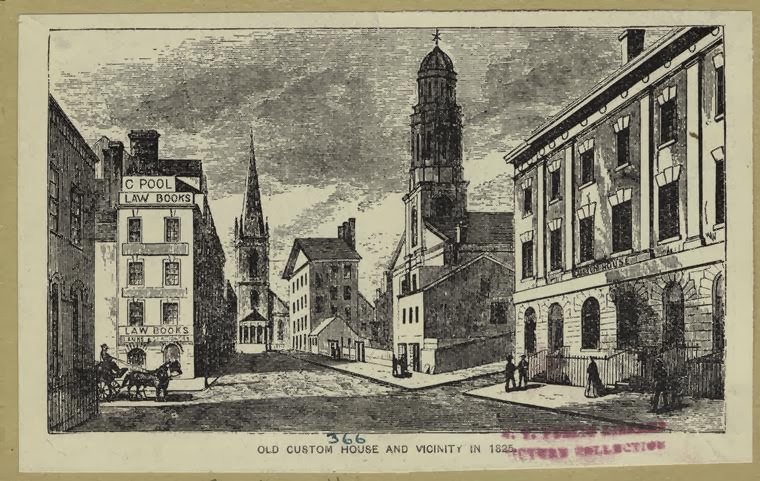
Why is there a little confusion in Northrup’s statement regarding the Custom House?  Perhaps because the building he would have visited — at 22-24 Wall Street — was in its final days as New York’s Custom House, an office which had grown far too small for the task.  The following year, New York’s new Custom House would have at last been opened at the other end of the block — the building that is today’s Federal Hall.

Below: Northrup and his associates would have entered the building at the far right of this illustration (which depicts Wall Street in 1825)

“Some further formalities were gone through with before it was completed, when, paying the officer two dollars, I placed the papers in my pocket, and started with my two friends to our hotel.  I thought at the time, I must confess, that the papers were scarcely worth the cost of obtaining them – the apprehension of danger to my personal safety never having suggested itself to me in the remotest manner.”

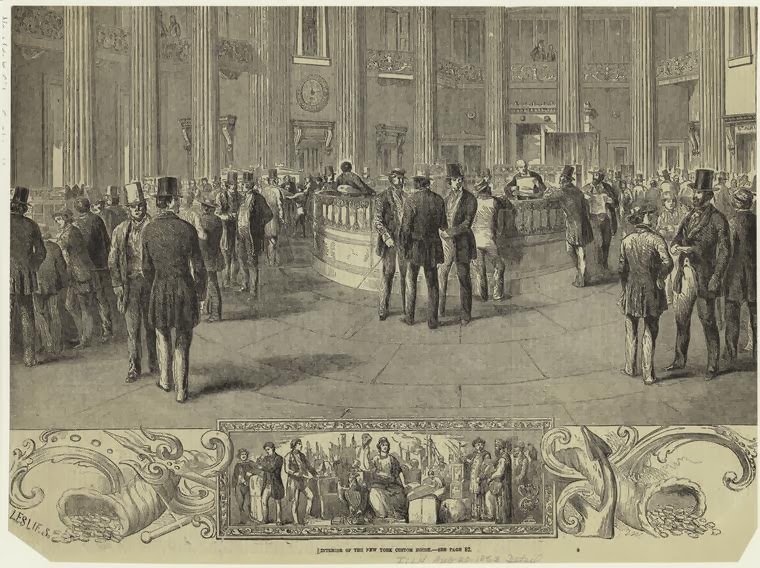
Below: The interior of the New York Custom House, 1853

All images courtesy New York Public Library

After its publication in 1853, Northup’s account would be available for sale in certain New York bookstores for several years.  But keep in mind New York’s divided loyalties to the South; it would not have been a universally popular read here in the city.

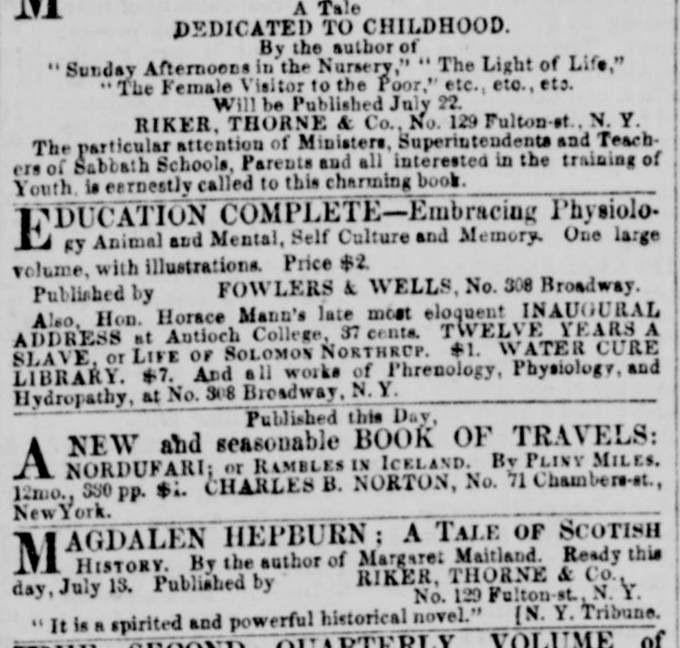
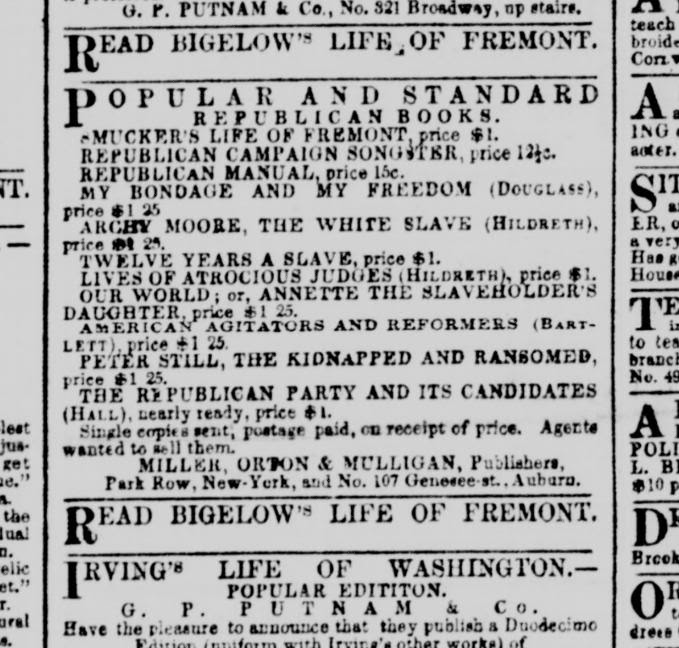
Below: the book for sale in 1854 at a bookstore at 308 Broadway, and in 1856, at a Park Row bookseller, both ads from the New York Daily Tribune


Categories
Bowery Boys Bookshelf Museums

Edgar Allan Poe: Terror of the Soul at the Morgan Library: Genius from a dark place, his strange torment on display

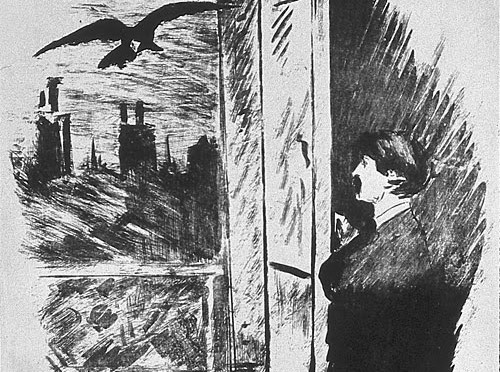
An illustration by Eduardo Manet from a 1875 French reprinting of “The Raven”

We are all too comfortable with Edgar Allan Poe in the abstract.  His fingerprints seem to be on everything these days.  His morbid tastes and the flowering dark genres he helped create appear just underneath much of American pop culture in the 21st century, from crime procedurals to teen supernatural romances.  He inspired the modern detective novel (and, by extension, film noir) and an uncountable number of American mystery and horror stories.

But do you dare get closer to the man, to the stained papers and morbid inner thoughts of a writer who practically cornered the market on early 19th century American perversity?  In Edgar Allan Poe: Terror of the Soul, the brilliant new show at the Morgan Library & Museum, you are trapped in a bloodred box with the writer, his letters, notes and original publications in an intimate and vaguely disturbing setting.

Yes, the room is actually painted red.  And a silhouette of Edgar’s haggard face glares down at you as you huddle in a perfectly awkward closeness over evidence of Poe’s brilliance, fame and madness.  Terror of the Soul is an autopsy of a strange career, revealed through first edition volumes and original newspaper clippings, then confirmed through bold, occasionally terse letters from the author himself.  A vivid portrait of the public Poe emerges — erratic, rarely satisfied — allowing you to speculate upon his private, tormented side.

Among the treasures here is a copy of Poe’s first book of poetry Al Aaraaf, Tamerlane and Minor Poems, published in 1829, a book so rare that it inspired one of the 20th century’s great book thefts.  Nearby sits the first publication of “The Raven,” next to handwritten notes from Poe about changes to be made in future reprintings.

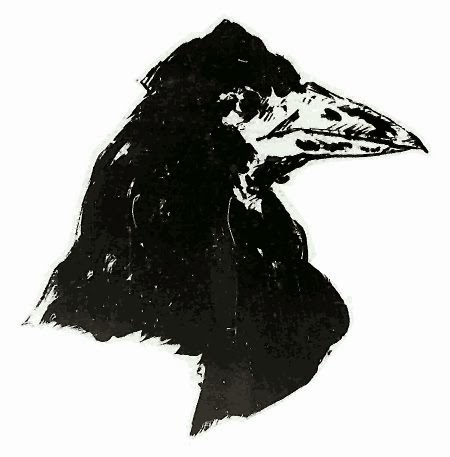
Terror of the Soul is as much about other people’s perception of Poe as it is about the writer himself.  Eduardo Manet‘s expressive lithographs from a 1875 French edition of “The Raven” are a highlight of the show, a perfect synthesis of elegance and gloom.  A selection of sketches, daguerreotypes, photographs and even a bust of Poe are on display, his hollow face in an array of contortions and somber moods.

Most of the objects here require you to move closer, your eyes peering over old text of a sometimes unsettling nature.  Often the format is downright alien, as in the odd, mysterious scroll on which he chose to lavishly transcribe his poem “The Bells” in 1849, one month before his death.  The scroll has pencilled changes along the margins; in one change, he ponders using the word ‘menace’ over ‘meaning’.  Along the edges of the scroll is evidence that it had been set on fire at some point.

There are many such tiny mysteries among the artifacts of Edgar Allan Poe: Terror of the Soul, a show with more horrors contained within it than any Halloween-inspired haunted house could ever provide.

Edgar Allan Poe: Terror of the Soul, at the Morgan Library & Museum, through January 26, 2014.  Visit their website for more information.

Categories
Bowery Boys Bookshelf

Thieves of Book Row: Strange treasure among the stacks inspires New York’s most intellectual black market


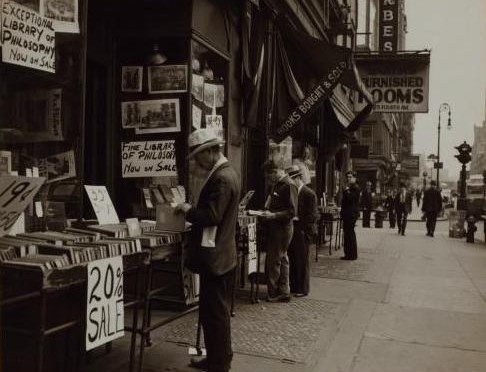
The used bookstores of Book Row, the above shot from Fourth Avenue and 10th Street, 1938 (courtesy NYPL)

BOWERY BOYS BOOK OF THE MONTH Each month I’ll pick a book — either brand new or old, fiction or non-fiction — that offers an intriguing take on New York City history, something that uses history in a way that’s uniquely unconventional or exposes a previously unseen corner of our city’s complicated past.  You can find some our past selections here and links to purchase them from Amazon at the bottom of this post.

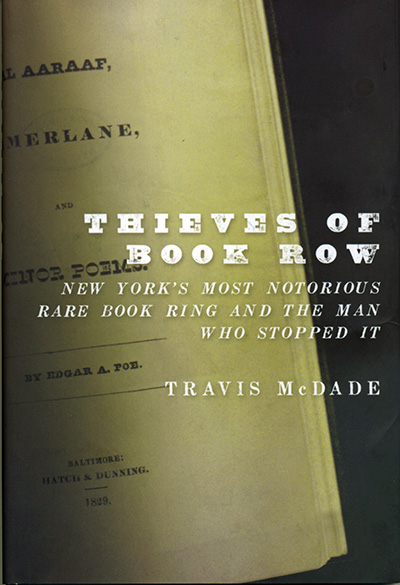
Thieves of Book Row
by Travis McDade
Oxford University Press

You probably own a book that you consider priceless, not for its physical value, but for the knowledge it imparted upon you, or the adventure it provided.  Books can bring you into their worlds, and they can capture who you once were when you first read them.

Now separate those meaningful values and see your favorite book as nothing but an object — a precious, rare artifact, hoarded like jewels by wealthy collectors. A one-of-a-kind bound volume as desirable as fictional literary treasures like the Maltese Falcon or the Holy Grail.

From the late 19th century until the end of the jazz age, criminals worthy of a film noir backdrop were on the prowl for these objects, spiriting them away in coat pockets and sprinting through the streets of Manhattan to deliver them to book-buying fences.  It was in this manner that hundreds of books changed  hands from the advent of mass-market publishing to the end of the jazz age, creating New York’s most intellectual black market.

Welcome to the world of Thieves of Book Row, an intriguing new historical investigation by Travis McDade that uncovers an unusual criminal undercurrent that thrived in New York upon the increasing stature of books as exotic, desirable artifacts.

The rare book market exploded in the late 19th century as Americans became wealthier and created their own personal libraries.  The development of American identity after the Civil War turned obscure, small-run volumes of Americana by local historians into highly sought-after items.  Early editions by famous poets and novelists, manufactured in modest runs, were hunted down by Gilded Age millionaires who could spend months seeking one particular book.

But the value of books went beyond particular authors and titles. Public lending libraries, such as the Astor and Lenox libraries, made old books available for the general public.  The concept of a ‘rare book’ room was still many years in the future, so older books frequently went into circulation. By the early 20th century, the New York Public Library and associated neighborhood libraries sprang up throughout the city, and for the first time, regular New Yorkers could experience great works of writing themselves.

With mass production of books came the advent of used bookstores, which clustered in New York City north of Astor Place in an area called Book Row and later in areas of midtown Manhattan.  As McDade illustrates, it was here that the book thief thrived, as crooked book sellers went into overdrive to provide rare, valuable objects for a growing number of wealthy book lovers.

In fact, a ring of book thieves terrorized book stores and libraries up and down the East Coast, common criminals often led by a book seller with connections to wealthy buyers. Hardly a trifling crime, book thieves were considered “the meanest thief God ever let live” by 1907 and were harshly prosecuted. A few thieves you will meet in McDade’s engrossing investigation will end up in Sing Sing Prison.

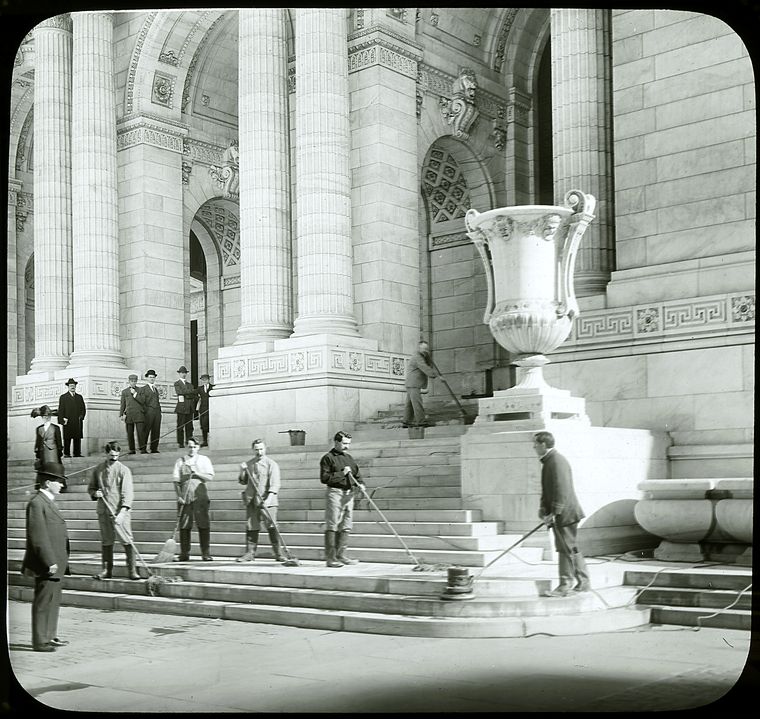
Below: Outside of the New York Public Library central branch on 42nd Street, early 1920s 


Robbing from a public library was akin to snatching a book from a poor child’s hands. “Stealing books from the libraries of the public is one of the unspeakable crimes — like stealing coins from the eyes of a dead man,” said a judge in 1904.

The centerpiece of this tale is the theft of a particular volume: Al Aaraaf, Tamerlane and Minor Poems by Edgar Allan Poe, an author whose book value skyrockets during the Gilded Age.  What makes this book theft so intriguing is where it was stolen from — the virtual fortress of the New York Public Library’s main branch.  The best passages in Thieves of Book Row describe the methodical heist of this and other precious volumes from NYPL’s Reserve Book Room, walking you step-by-step through this criminal enterprise.

If you love books, it will be McDade’s backdrop that may appeal to you more, a world of bookstores that has disappeared, dozens of stores stocked with thousands of old book, clustered along a few city streets.  Today, the Strand BookstoreAlabaster Bookstore and a couple others are all that remain of this once remarkable district in the Village.

Along the way, you’ll meet the New York Public Library’s jazz-age investigator G. William Bergquist and a shifty assortment of book thieves, some of middling intelligence. It seems many of these desperate men were simply too busy shoving volumes into their coats to actually read any of them.

PAST BOWERY BOYS FEATURED BOOKS:


Categories
Gilded Age New York

“The First Dandelion” and Walt Whitman’s very bad timing

In 1888, the New York Herald ran this poem by the great Walt Whitman:

                                         The First Dandelion

                                         Simple and fresh and fair from winter’s close 
                                                    emerging, 
                                        As if no artifice of fashion, business, politics, 
                                                   had ever been, 
                                       Forth from its sunny nook of shelter’d grass— 
                                                  innocent, golden, calm as the dawn, 
                                      The spring’s first dandelion shows its trustful 
                                                  face 

Whitman was a living legend by this point.  The infirm 78-year old writer lived in Camden, New Jersey, and rarely left his home.  His most notable appearance in New York the previous year had been as a lecturer at the Madison Square Theater, discussing the legacy of Abraham Lincoln to an audience which included Mark Twain and Augustus Saint-Gaudens.

A poem by Whitman would have been reason alone to buy an edition of the New York Herald. And indeed, as the Herald’s ‘poet laureate’, several of his most notable works had debuted there.  “Mannahatta,” for instance, debuted in the Herald on February 27 that year.

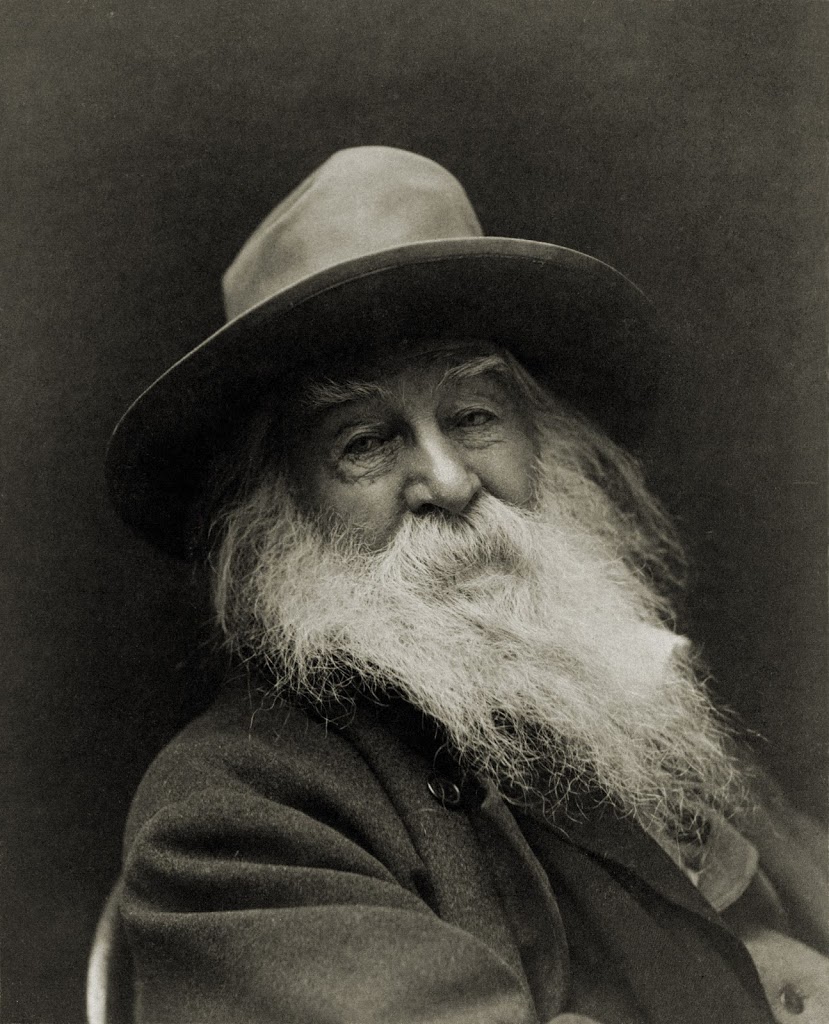
At right: Walt Whitman in 1887, taken in New York by George C. Cox

Unfortunately, “The First Dandelion,” a little ode to the coming spring, ran on March 12, 1888, the worst day of the Blizzard of 1888, a day when several feet of show and deathly winds were making the American northeast a very unpleasant place to be. The poem “made its appearance at a most unfortunate time,” said the journal Illustrated American in 1892.

Nobody wanted to read about a gentle dandelion that day.  And in proceeding issues of the Herald, the poem was roundly mocked with parody verse.  Two days later, ran a verse below, signed simply “After Walt Whitman.”

                                     The First Blizzard

                                     Simple and fresh and fierce, from Winter’s close 
                                          emerging, 
                                    As if no artifice of summer, business, politics 
                                         had ever been, 
                                   Forth from its snowy nook of shivering glaciers– 
                                        innocent, silver, pale as the dawn, 
                                  The Spring’s first blizzard shows its wryful 
                                         face. 

Not quite finished, the Herald ran another mocking poem the following day:

                                  Served Him Right

                                  The poet began an ode to Spring–
                                 “Hail, lusty March! Thy airs inspire
                                 My muse of flowers and love to sing–“
                                 And then the blizzard struck the lyre

Neither the Herald nor its readership held it against Whitman personally. Four days later, the paper published “The Wallabout Martyrs,” his tribute to those held capture aboard prison ships during the Revolutionary War.

And the reputation of “The First Dandelion” was saved when it appeared in the ‘deathbed’ edition of Whitman’s Leaves of Grass, where its beauty was better appreciated.

‘Twas the Night Before Christmas, 190 years ago, that an iconic poem was written in Chelsea

On Christmas Eve, one hundred and ninety years ago today, wealthy landowner and august Columbia professor Clement Clarke Moore completed a seasonal poem to read to his children. He penned the whimsical little tale — a throwaway, really, in comparison to his great and respected writings in Greek and biblical literature — from a desk at his comfortable, snow-covered mansion which the family called Chelsea.

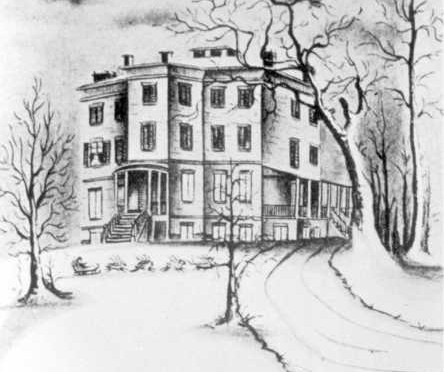
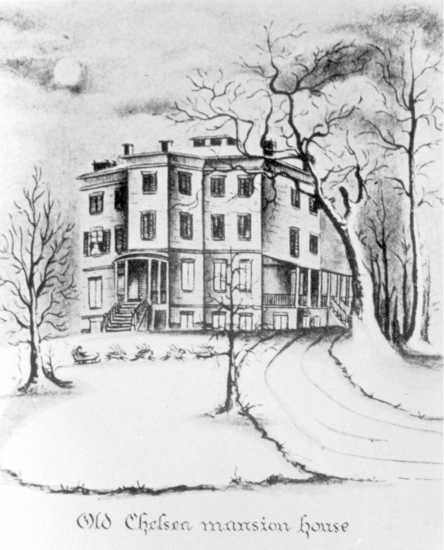
The home sat atop an old hill (at around today’s modern addresses of 422-424 West 23rd Street) overlooking Moore’s estate which stretched south from here. His estate, of course, gives modern Chelsea its name. At right, the Chelsea estate on a cold winter’s night.

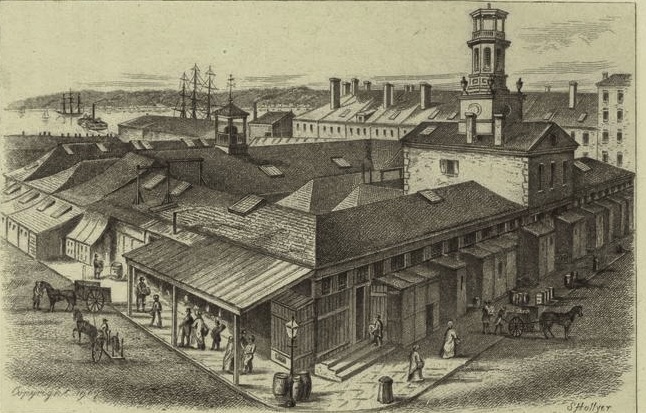
Moore was allegedly inspired that afternoon during an outing to Washington Market to purchase a Christmas turkey. The market (pictured below in 1829) would have another holiday claim to fame: it was the site of America’s first outdoor Christmas tree market.

The poem, “A Visit from St. Nicholas” and often referred to as “‘Twas The Night Before Christmas,” would eventually help define Santa Claus mythology. It’s perhaps the most important source in shaping the physical appearance and ritual behavior of the North Pole gift-giver and would provide inspiration to New York illustrators like Thomas Nast and, in the 20th century, the Coca-Cola advertising of Haddon Sunblom.  Moore is even credited with naming the eight reindeer.

But the poem was only originally intended for Moore’s children. I’m not certain how many were around to hear it in 1822, but Moore and his wife Catherine Elizabeth Taylor would eventually have nine of them. One daughter, Mary Ogden, would later produce the first of dozens of illustrated versions of the poem.

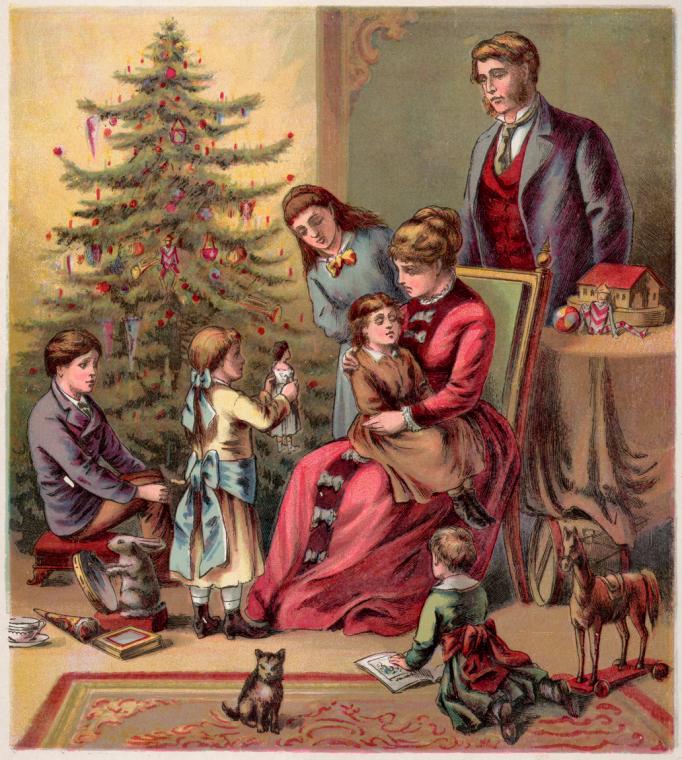
At left: An illustration of Moore and his family from an edition published in 1896 (source)

The poem was published anonymously the following year, and Moore would only take credit — at his children’s insistence — in 1844.

Given Moore’s original hesitation, some scholars have suggested that another New Yorker, Henry Livingston Jr., may have penned it.  Until that is definitely proven, you are allowed to always think of the neighborhood of Chelsea — just two blocks west of the Chelsea Hotel — every time you hear it.

So jump in your ‘kerchief, open your shutters and throw up your sashes, and give this little holiday poem a ripe rendition this year. You can find the full text here. But to quote the final section:

He sprang to his sleigh, to his team gave a whistle,
And away they all flew like the down of a thistle.
But I heard him exclaim, ‘ere he drove out of sight,
“Happy Christmas to all, and to all a good-night!”

For more information on Moore and the Chelsea neighborhood, check out our podcast on the Chelsea Hotel.

Pictures courtesy NYPL

Categories
Brooklyn History

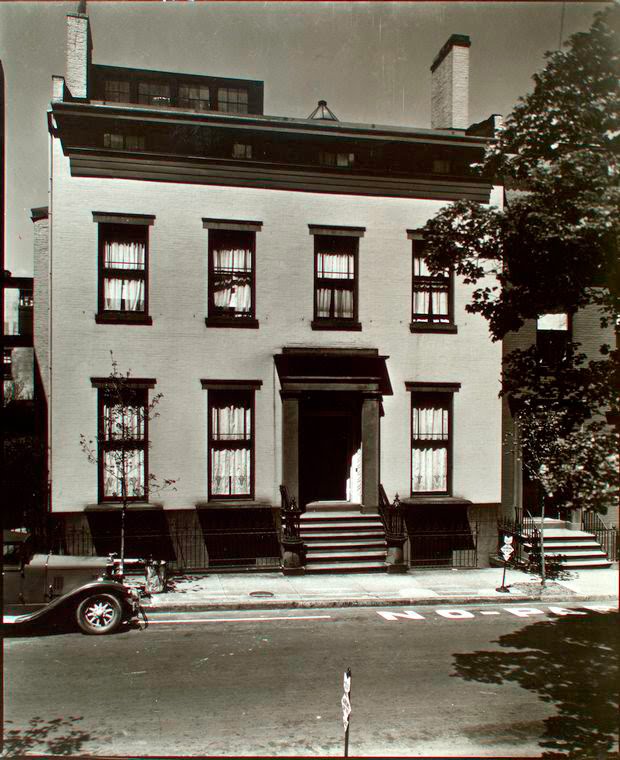
Ten fabulous facts about 70 Willow Street, Brooklyn Heights, aka ‘the Truman Capote house’

The strange, yellow Brooklyn Heights mansion best known as the home where Truman Capote wrote ‘Breakfast At Tiffany’s’ has finally been sold for $12 million, after many months of humbling markdowns from its original hefty pricetag.
Located in the heart of old Brooklyn, the new owners will be winning more than a literary prize. The house has a rather unusual past full of influential inhabitants and has been used in some curious ways:
1) 70 Willow Street, in the popular Greek revival style of the day, was built in 1839 by Adrian Van Sinderen, the descendant of original Dutch settlers in New Amsterdam and a fiery Revolutionary War-era reverend from Flatbush, Ulpianus Van Sinderen. Van Sinderen’s lavish urban villa — it has almost a dozen fireplaces — is one of the oldest houses in the neighborhood, but not the oldest. There are a few neighboring houses that are older, including 24 Middagh Street, just a couple blocks away and built in 1824.
2) The house passed to his son Adrian Jr., a prominent New York lawyer, who fell spectacularly from grace when he mishandled the family trust. He died nearly penniless and alone in New Lots, far outside the sphere of wealth, in 1864. (There’s an avenue near that east Brooklyn neighborhood named for the Van Sinderen family.) His descendants appear to have done better. Another Adrian Van Sinderen has an annual book-collecting competition named for him at Yale University.
3) The ‘estate of Van Sinderen’, as it was often called then, was built for a single family, but by the late 1860s, the roomy floors were being split up for several tenants. From an October 1869 classified ad in the Brooklyn Eagle:”One large, handsomely furnished second floor room for gentleman and wife or gentlemen willing to room together.”***

4) The primary resident during the late 19th century was the banker William Putnam, better known as a significant trustee for the Brooklyn Museum in its early years. He betrothed to the museum paintings by Rembrandt and Monet, as well as some ‘Royal Copenhagen  porcelain’ that rivaled that of European rulers, according to the Times.

5) The house was a pivotal location for the women’s suffrage movement. Scratch that, the anti-women’s suffrage movement. The newly married lady of the house, Caroline Putnam, and her sister Lillian joined other local ladies of means in organizing protests against granting women the right to vote or, in the words of their 1894 petition, to protest “the obligations of the ballot upon the women of the state.” Mrs. Putnam also hosted French conservation classes and literary salons from her parlor here. [source]
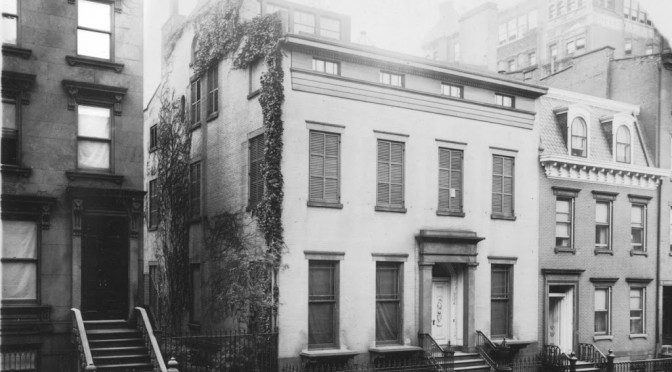
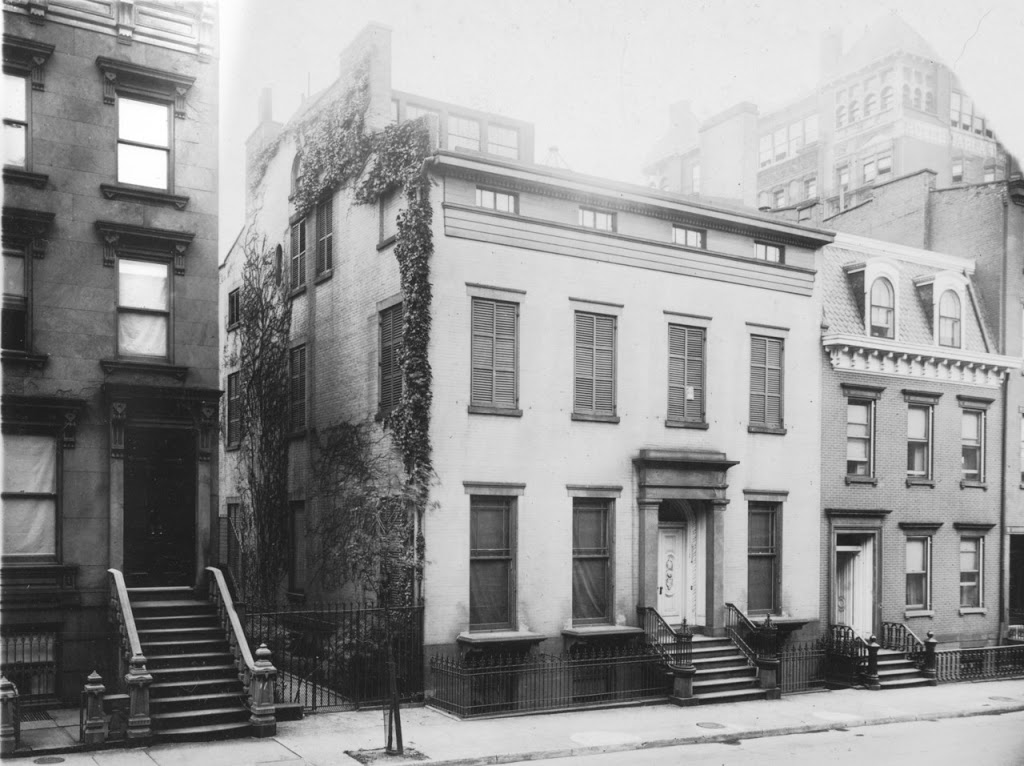
The picture at top shows the house as it looked in 1922. At right, the home in 1936. (Pictures courtesy New York Public Library.)
6) After Mrs. Putnam died in 1940, the house sat entirely vacant until 1944, when it was donated to the Red Cross. They used the house as a classroom, teaching arts and crafts, Braille to the blind and cooking classes to the wives of returning soldiers from World War II.

7) In 1953, the old house landed in the hands of renown Broadway stage designer Oliver Smith, responsible for the original scenery from great American musicals like Oklahoma!, Guys and Dolls and West Side Story. In his lifetime, he was nominated for 25 Tony Awards. With some of his earnings from the musical On The Town, Smith bought 70 Willow Street and lived here until he died in 1994.

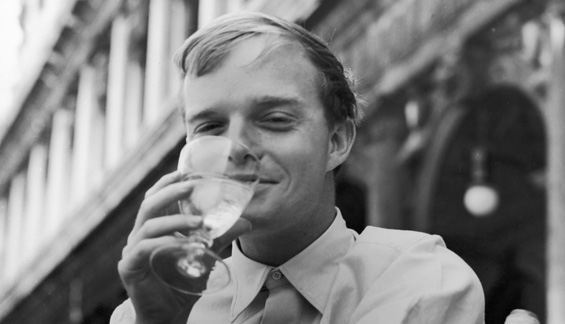
8) From 1955 to 1965, he lent the basement apartment to his friend Truman Capote. The blond Southern writer was simply wild about Brooklyn Heights and basically charmed himself into a permanent room on Willow Street. From his essay ‘A House on the Heights,‘ Capote describes, “We [Smith and Capote] sat on the porch consulting Martinis — I urged him to have one more, another. It got to be quite late, he began to see my point; yes, twenty-eight rooms were rather a lot; and yes it seemed only fair that I should have some of them.”

9) Decked out in green wallpaper and odd knickknacks, “an atmosphere of perpetual Christmas,” the house would prove a place of great inspiration for Capote. He wrote part of ‘Breakfast At Tiffany’s‘ here. Perhaps more notably, it was here that he picked up a New York Times are read about the brutal slaying of a Kansas family. Capote set about working on what became ‘In Cold Blood‘ the next day.

10) I can’t leave the tale of 70 Willow Street without mentioning one of its most famous lunch guests — Jackie Kennedy. Capote conveniently left out the fact that the house was Smith’s, not his. “She laughed about it, because suddenly in the middle of lunch she got the idea that it wasn’t his,” Smith recalled later. “I suppose I acted as if it were mine.”

And here’s some literary bonus points — it’s just down the street from the old home of Arthur Miller (155 Willow Street)

***A reader emailed me to say that the addresses for Willow Street were differently numbered before 1865 and that this ad probably refers to a neighbor of 70 Willow Street. In that case, I’ll replace that fact with one I should have mentioned in the lede of this article — as reported by Brownstoner, the $12 million final price tag for 70 Willow Street makes it the most expensive house purchase in Brooklyn history. Does this mean that nobody has yet bought my dream apartment in DUMBO?

Categories
Brooklyn History On The Waterfront Podcasts

Notes from the podcast (#133): Red Hook, Brooklyn

A haunting snapshot of the Atlantic Docks, circa 1870-80s (possibly as early as 1872) photo by George Bradford Brainerd (courtesy the Brooklyn Museum

Quite a few notes on the podcast this week! There were a lot of little details I found interesting that didn’t make the cut:

Before the Water Taxi: One of the more enlightening tales left on the cutting-room floor was that of the Hamilton Avenue Ferry, the 1846 Atlantic Docks ferry line that linked Red Hook with downtown Manhattan in much the same way the IKEA Water Taxi does today. As the ferry made “the shortest and most direct route from New York” to the newly constructed Green-Wood Cemetery, it also became the method by which many bodies were transported there.

Fiery renovation: A stalwart of the old community is Visitation of the Blessed Virgin Mary Roman Catholic Church (built in 1896) right off of Coffey Park, the third incarnation after the congregation grew out of the first building (originally built in 1855) and fire destroyed the second. That fire, incidentally, was allegedly caused by combustible materials workers were using to renovate the structure.

Goodbye Vienna: A vestige of World War I hysteria exists within the name of Red Hook’s Lorraine Street. According to Brooklyn By Name, the street was once named Vienna Street but was deemed ‘offensive’ during the war and was changed to reflect the area of Alsace-Lorraine, which entered French possession after the war.

What’s My Name?: I mentioned a couple facts about the neighborhood of Carroll Gardens (once considered a part of Red Hook), although we hope to elaborate further one day on a show on South Brooklyn. The name Carroll Gardens, like that of its neighbors Cobble Hill and Boerum Hill, was a real-estate invention which the community quickly embraced. (Contrast this with modern failures of real-estate re-branding, like ChumboBelDel and LoDel.) You might be interested in reading Carroll Garden’s original 1973 historic designation.

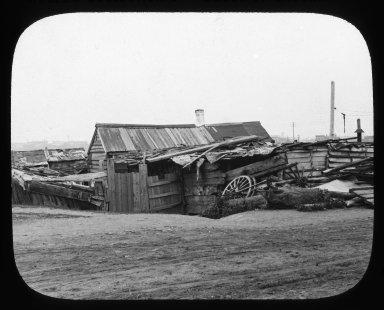
Below: I’m not quite sure of the story behind this sunken squatters home, taken on Van Brunt Street from the year 1900 (courtesy the Brooklyn Museum

Brooklyn Museum: Brooklyn scenes; buildings


Further reading: For more information on the corruption of the  New York and Brooklyn waterfronts , I highly endorse Nathan Ward‘s ‘Dark Harbor’. It’s brilliantly lucid and immediate. In particular, he focuses some attention on the disappearance of Columbia Street longshoreman Pietro Panto and vividly describes a mob hit that took place in a building in Manhattan’s West Village, in a building next door to the treasured piano bar Marie’s Crisis. There are several books that feature chapters on Red Hook history, but a dedicated book on the subject is sorely needed. In the meantime, I recommend the short essay by Jerry Nachman that appears in “Brooklyn: A State of Mind,” about, of all things, an air conditioning crisis!

Maggie Blanck has an extraordinary web resource that begins as a genealogy of her family and elaborates into a history of Red Hook’s industrial giants. And for those of you who are fascinated by late-century street-gang history, the website Stone Greasers has an exhaustive list of gang names, many more unusual than anything you’d find in the movie The Warriors.

Red Hook as inspiration: Several sources, both on Brooklyn history and film history, discuss Red Hook’s impact on the work of both Arthur Miller and Budd Schulberg, the screenwriter of ‘On The Waterfront’.

 In 2009, a unique restaging of ‘On The Waterfront’ took place aboard the Waterfront Barge Museum in Red Hook, a production that then floated to Manhattan and Hoboken waterfronts for further performances, “all places whose dock wars echoed in Terry [Malloy’s] story,” according to Ward.

Elia Kazan’s Oscar-winning film is embedded with influences from the entire New York waterfront struggle. For instance, Karl Malden‘s Father Barry is transparently inspired by Father Corridan, an activist waterfront priest from Manhattan’s west side. (Author J.T. Fisher focuses on Corridan’s contribution in his new book ‘On The Irish Waterfront’.) Of course no inspiration was greater than Malcolm Johnson‘s now classic series of articles for the New York Sun in the late 1940s, a series which won the Pulitzer Prize in 1949 — coincidentally the same year that Miller won for ‘Death of A Salesman’!

I suppose there is some controversy in some circles regarding whether Schulberg and Kazan ‘stole’ the idea of ‘Waterfront’ from Miller’s ‘The Hook’, but I’m not touching that. However you can read about it yourself in Stephen Schwartz’s argumentative 2005 article.

Thanks to commenter Rob Hill who calls to attention another fascinating literary Red Hook reference. In 1957, Harlon Ellison, one of America’s great science fiction and crime novelists, literally went undercover with a Red Hook street gang called The Barons to find inspiration for his book ‘Web of the City’ and, later, in the non-fictional account Memos From Purgatory. Ellison’s entire life would probably make a good subject for a podcast one day. Thanks Rob!

Further listening: This show shares many similar themes with our past shows on Williamsburg, Brooklyn and Corlears Hook and the Pirates of the East River. Hmm, and let’s just say, we’re probably coming back to the waterfront sooner than later this year….

Community vs Neighborhood: One listener Carolina from PortSide NY had some strong objections to my characterization of Red Hook, particularly my focus on the neighborhood’s crime and gang activity. I’m excerpting part of her letter, as it highlights a challenge that Tom and I often tackle with our podcast:

“Red Hook housed great poverty, but for decades was more mixed economically than your focus on gangland stories describes. Personally, I find what is most distinctive about Red Hook over the years is the capacity of this small place to hold AT THE SAME TIME a striking economic range in its residents and a striking range of land use from major industry to residences.

That is an undoubtedly true statement, especially when you compare it to the fate of other dockside neighborhoods, like Corlears Hook and Water Street in Manhattan. I find there are two ways to accurately tell a story of a place like Red Hook — from an organic, street-level or ‘ground up’ perspective (what I call ‘a community history’) and from a macro-view, as a component of the larger forces of the city which contain it (or ‘a neighborhood history’).

As the creators of a New York City history podcast, we opt to recount neighborhood histories, as New Yorkers and those who love this city are familiar with the mechanisms of change that have influenced it. In this decision, we understand that the normalcy of a place can get sometimes overlooked. (After all, not every person in Five Points was a gang member or a prostitute either.)

However, the sad truth is, Red Hook was for many years nationally known as a blighted neighborhood, and it was important to inspect both how it got that way and how that condition demanded some very unique revitalization plans.  I hope I have shown how essential Red Hook was to New York, and continues to be.  We encourage you to wander around the waterfront on a sunny afternoon sometime and, in particular, check out places like the Waterfront Barge Museum.

Jack Finney’s ‘Time And Again’, preservation by sci-fi

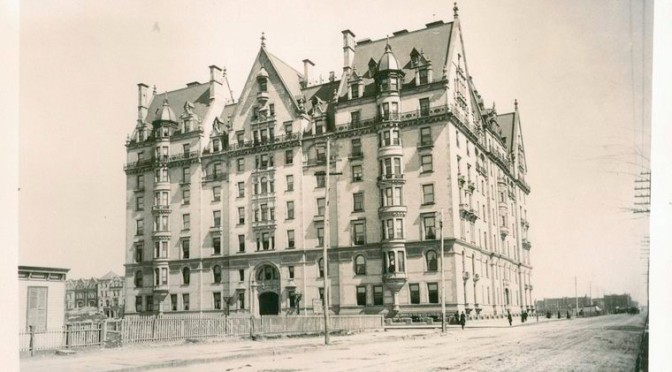
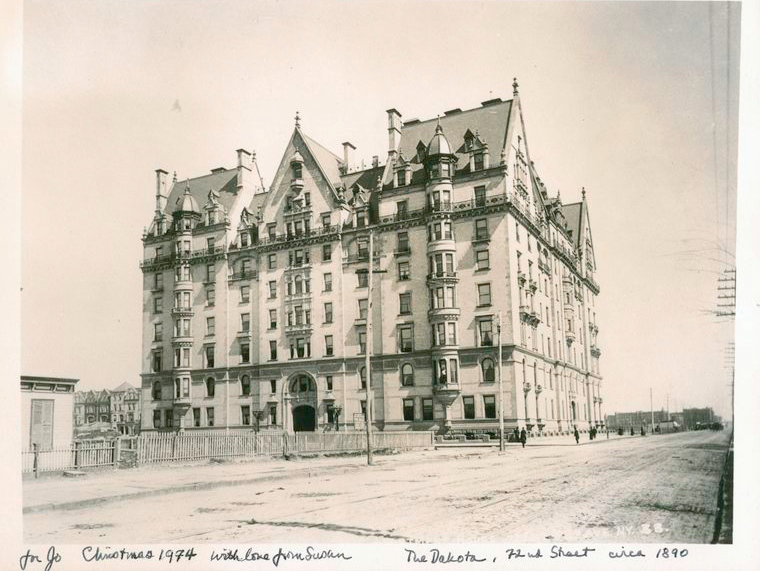
The Dakota Apartment circa the 1890s: If you arranged everything just right, could you go back to it?

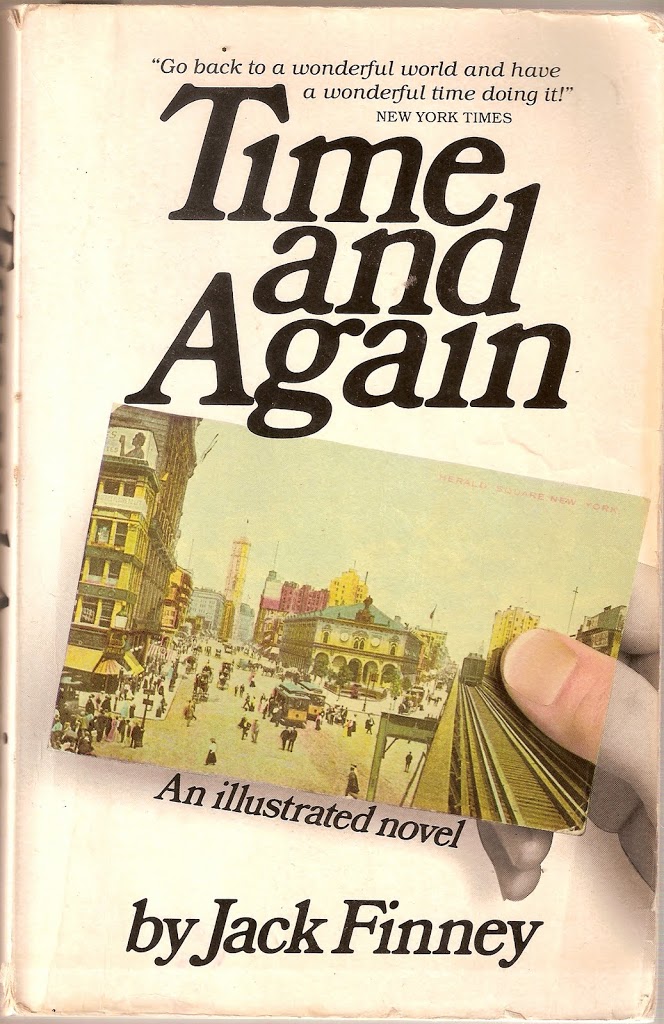
The writer Jack Finney, who was born a hundred years ago this week, on October 2, 1911, turned the Dakota Apartments into a time machine in his 1970 novel ‘Time And Again’. He inspired a legion of New York City history lovers (including myself) and a simple (if scientifically absurd) way of traveling in time, technically obtainable by anybody with adroit attention to detail.

Finney was hardly a New York literary figure of note. Born in Wisconsin, Finney moved to New York in the 1940s to work in advertising but detoured in to a successful short-story writer. He had already moved from New York in 1954 when a set of his serialized stories were compiled for the novel The Body Snatchers, which inspired the classic film Invasion of the Body Snatchers and its many derivatives.

Time travel and New York were common themes in his work. In the 1950 tale ‘The Third Level’, a man finds a mysterious concourse at Grand Central Terminal and a train that carries him to the year 1894. Almost two decades later he wrote ‘The Woodrow Wilson Dime’ about a bored advertising executive who enters an alternate New York universe (imagine ‘Mad Men’ as a science fiction.)

But Time And Again, first published in 1970, was his greatest success, a time-shifting novel short on scientific rationale, but large in nostalgia and architectural romance. The plot involves a curious scientific experiment that delivers a man back to the date January 21, 1882, to locate the sender of a mysterious letter that foretells “the destruction by fire of the entire World.”

The key to the novel’s success were its illustrations and photographic reproductions. Pick up an old copy today and you’ll wonder why the smudged, sometimes darkened reprinted photographs would excite anyone. When I first picked it up, probably twenty years ago, that was part of the allure. The book itself had a creaky, dated presentation and a wide-open earnestness about it. It was ideal for burgeoning history lovers, never lecturing its readers. You felt you were joining Finney himself as he excitedly flipped through a stack of old photographs and imagined a reason for stepping into the images.

Perhaps that’s because the science fiction behind it almost blushingly simplistic. Essentially, anyone can go back in time. All you have to do is recreate a situation exactly as it might have been at a selected date, then hypnotize yourself into thinking it into reality.

For this reason, the Dakota Apartments are chosen for the time experiment. Finney certainly chose the location due to the building’s pristine, unchanged condition. (Meanwhile, as he wrote, Roman Polanski would film ‘Rosemary’s Baby’ here, placing the structure into a far darker fantasy context.)

“We know exactly when all the apartments facing the park have stood empty, and for how long,” proclaims a scientist. “Picture one of those upper apartmenets standing empty for two months in the summer of 1894. As it did. Picture our arraging — as we are — to sublet that very apartment for those identical months during the coming summer….I believe it may be possible this summer, just barely possible, you understand, for a man to walk out of that unchanged apartment and into that other summer.”

Simply by bringing a structure and its surroundings into physical replica of the past can one actually get there. Keep in mind when this was written. Pennsylvania Station had been destroyed seven years before the publication of ‘Time And Again’. The New York Landmark Preservation Commision was but a few years old. People were beginning to fight for their neighborhoods and protect aging city relics.

‘Time And Again’ was a manifesto for preservation. In essense, keeping an area locked in a certain place in history created some kind of metaphysical bridge. Or, more easily put, magic.

Having returned to 1882, the main character wanders the city and marvels in wonder. His adventures take him the offices of the New York World, the old City Hall Post Office and Gramercy Park.. The plot, involving jealous lovers and blackmail, incorporates actual historical detail into the adventure, although not in anyway one would consider subtle. For instance, my favorite detail of the book is easily the disembodied arm of the Statue of Liberty, sitting in Madison Square Park years before it was attached its body.

‘Time And Again’ is written with awe while keeping a certain distance. (Finney was no historian.) The story takes place within a snowglobe of New York more than an actual depiction of it. In other words, there are no visits to Five Points or the Lower East Side, for that matter. Later books, like Caleb Carr’s ‘The Alienist’, would take a more technical, tour-guide approach to its descriptions. ‘Time And Again’ is simple in its tintype illustration of old New York but leaving someting to the imagination makes it an inspiring read, even today.

By the way, Finney wrote a sequel called From Time To Time that was published in 1996, a year after his death. The book takes place in 1911, the year of Finney’s birth.

Top picture courtesy NYPL