The New Yorker turns one century old — and hasn’t aged a day! The witty, cosmopolitan magazine published its first issue on February 21, 1925. And even though present-day issues are often quite contemporary in content, the magazine’s tone and style still recall its glamorous Jazz Age origins.
The New Yorker traces itself to members of that legendary group of wits known as the Algonquin Round Table — renowned artists, critics and playwrights who met every day for lunch at the Algonquin Hotel.
And in particular, to two married journalists – Harold Ross and Jane Grant – who infused the magazine with a very distinct cosmopolitan zest. High fashion, martinis and Midtown Manhattan mixed with the droll wit of a worldly literati.
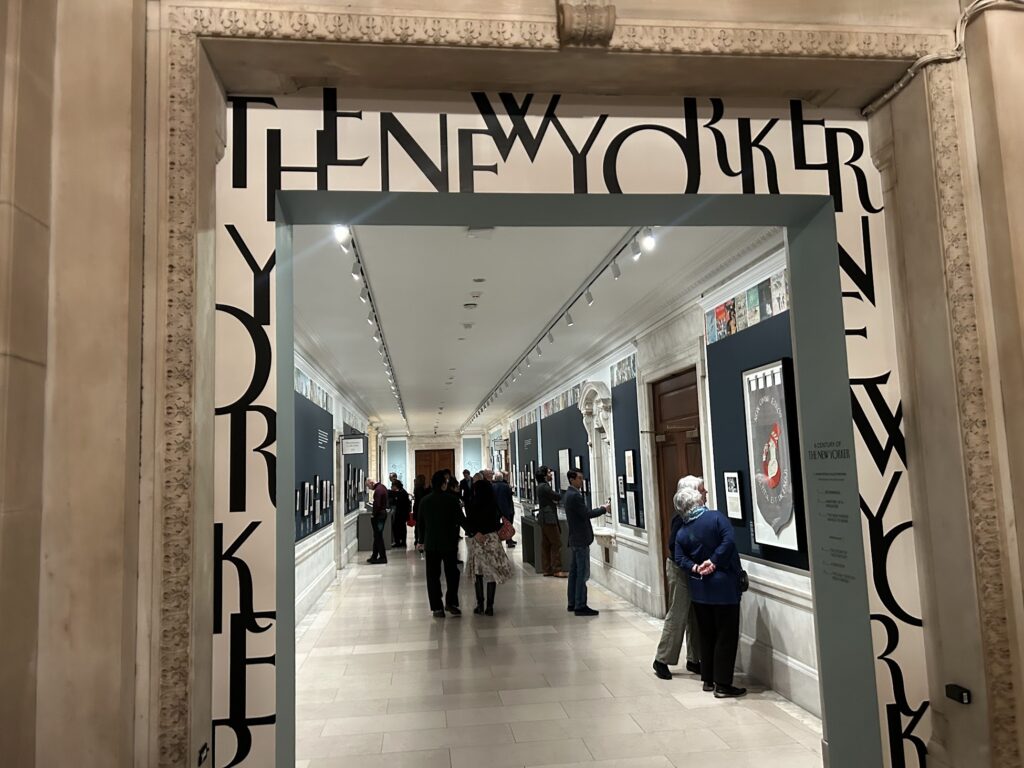
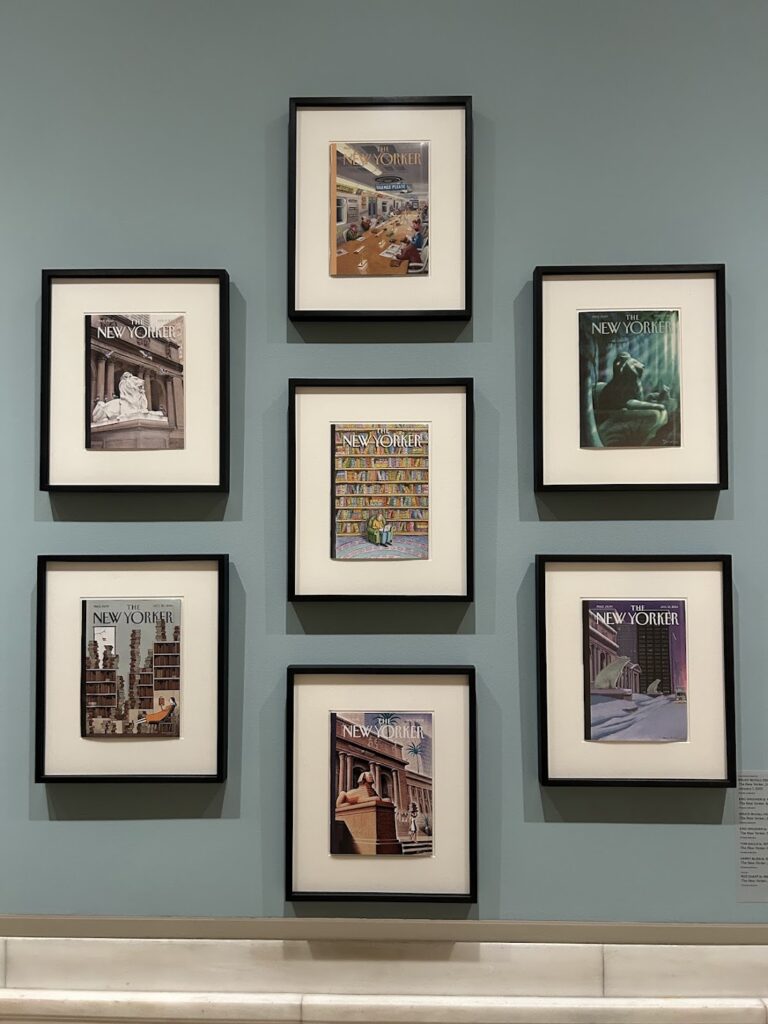
A new exhibition at the New York Public Library — “A Century of the New Yorker” — chronicles the magazine’s history, from its origins and creation by Ross and Grant to its current era, under the editorship of David Remnick.
Greg and Tom interview the show’s two curators Julie Golia and Julie Carlsen about the treasures on display from the New Yorker’s glorious past — from the magazine’s first cover (featuring everybody’s favorite snob Eustace Tilly) to artifacts and manuscripts from the world’s greatest writers.
Through February 21, 2026, third floor of the Stephen A. Schwarzman Building, 42nd Street and 5th Avenue
“The New York Public Library’s new major exhibition A Century of The New Yorker draws on NYPL’s collections, including the magazine’s voluminous archives and the papers of many of its contributors, to bring to life the people, stories, and ideas that made The New Yorker.”
Does your personal library overwhelm your home? Are there too many books in your life — but you’ll never get rid of them? Then you have a lot in common with Gilded Age mogul J.P. Morgan!
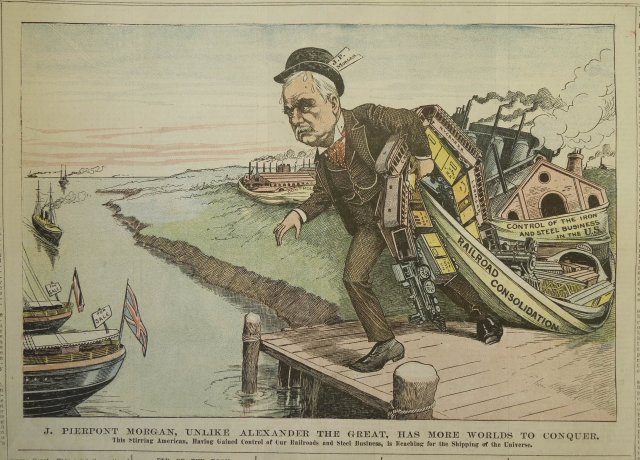
Morgan was a defining figure of the late 19th century, engineering corporate mergers and crafting monopolies from the desk of his Wall Street office. His vast control over the steel and railroad industries paired with his connections in international banking granted him great power over American life and helped fuel the great economic disparities of the Gilded Age.
In the process Morgan became one of the wealthiest men in America — but he did not tread the traditional path through New York high society. He preferred yachts over ballrooms.
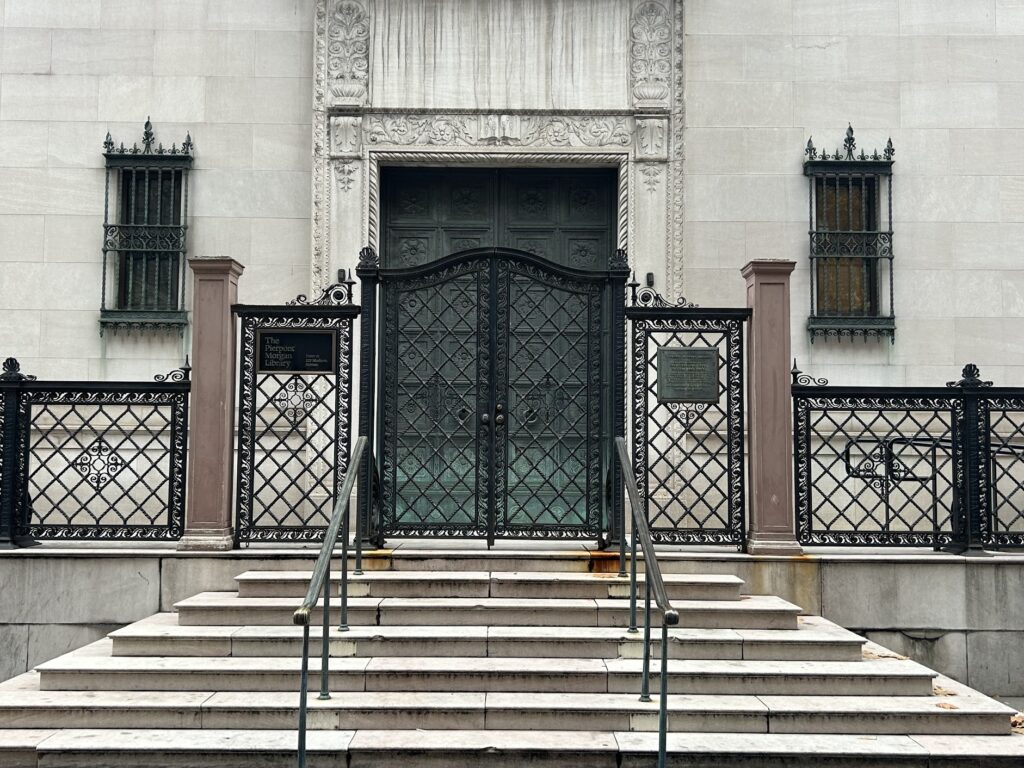
And books! For decades he collected thousands of rare books, letters, paintings and manuscripts from Gutenberg bibles to medieval illuminated tomes. So many books, in fact, that Morgan decided to start the new century with his own personal project — the construction of a library.
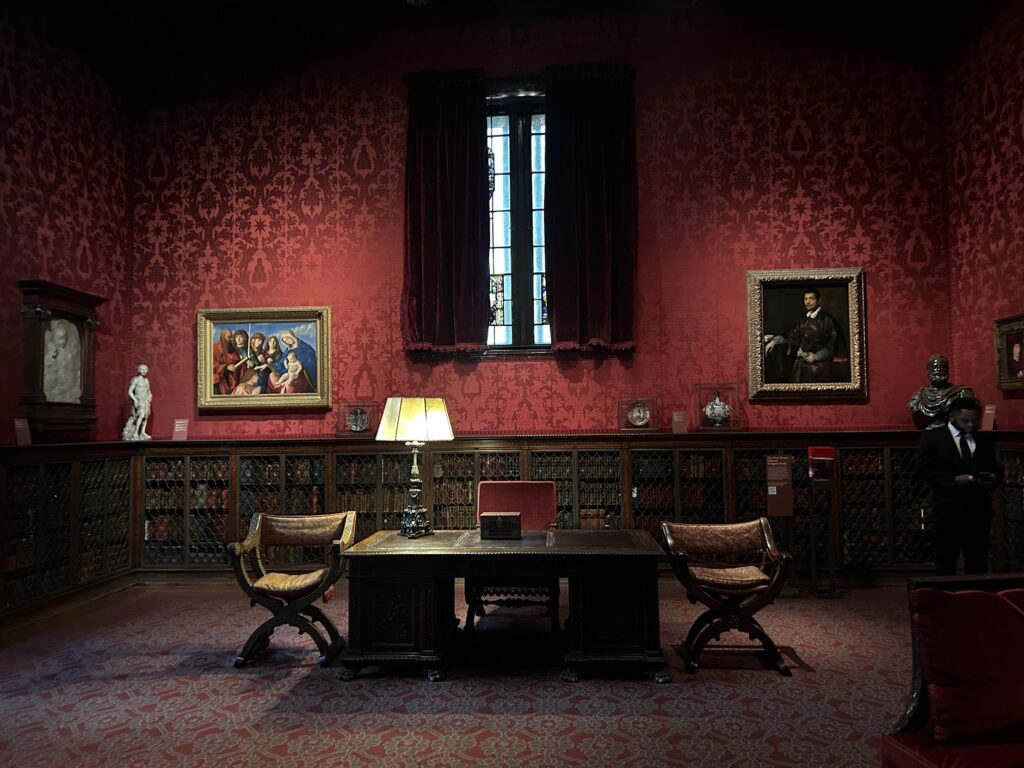
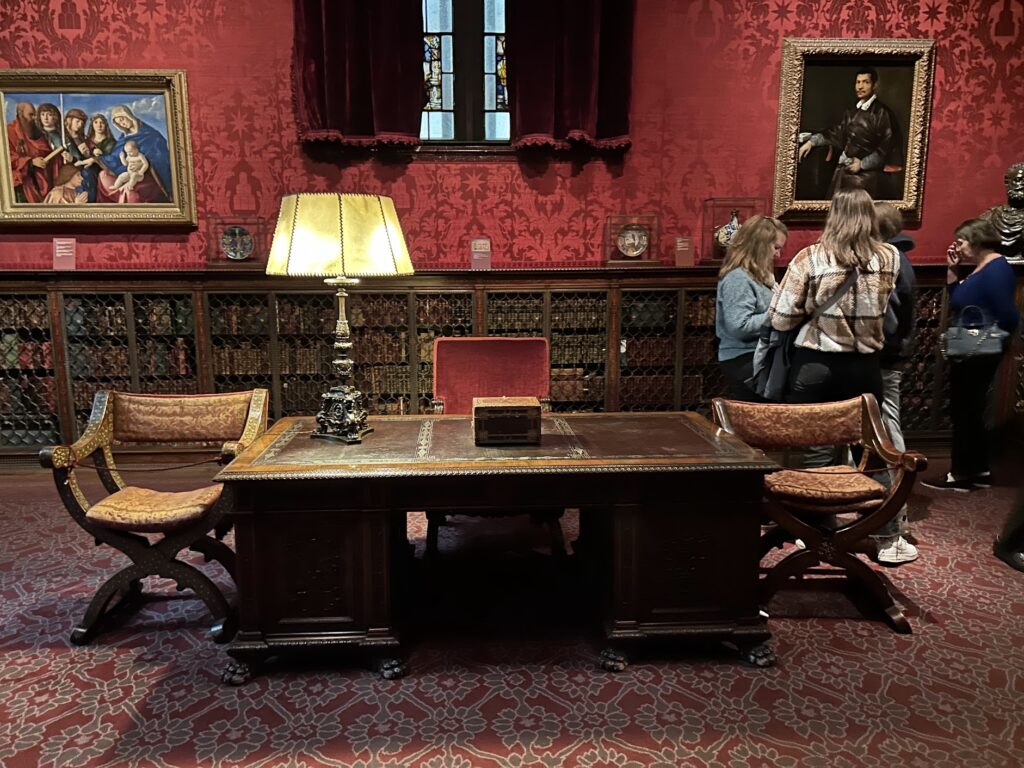
Morgan’s study
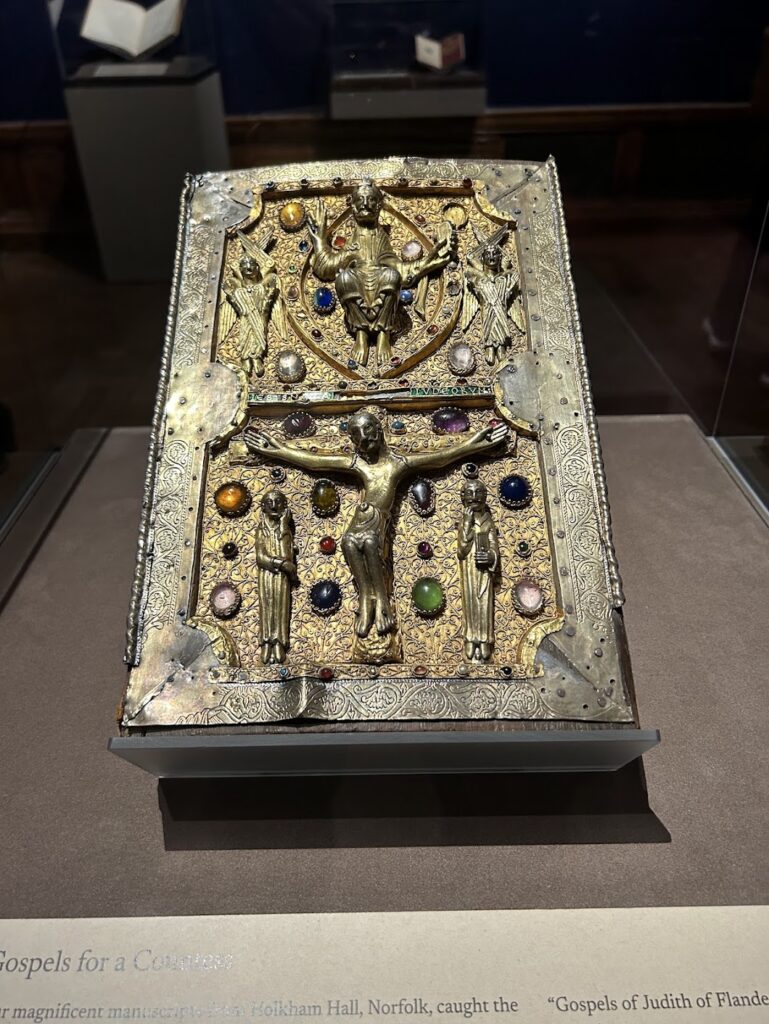
Today the Morgan Library and Museum is open to the public and, as an active and thriving institution, continues to highlight the world’s greatest examples of the printed word — from Charles Dickens manuscript for A Christmas Carol to past exhibitions on Beatrix Potter, James Joyce and even The Little Prince.
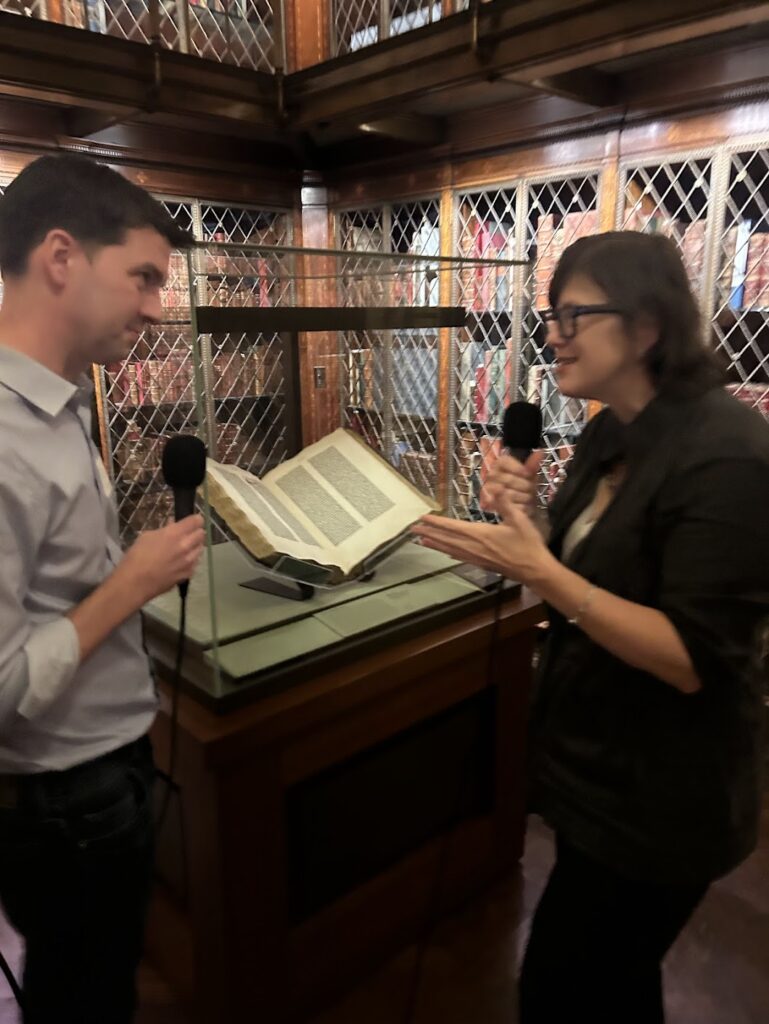
Tom and Greg explore the biography of J. Pierpont Morgan then head to the Morgan Library to speak with Jennifer Tonkovich, the Eugene and Clare Thaw Curator of Drawings and Prints.
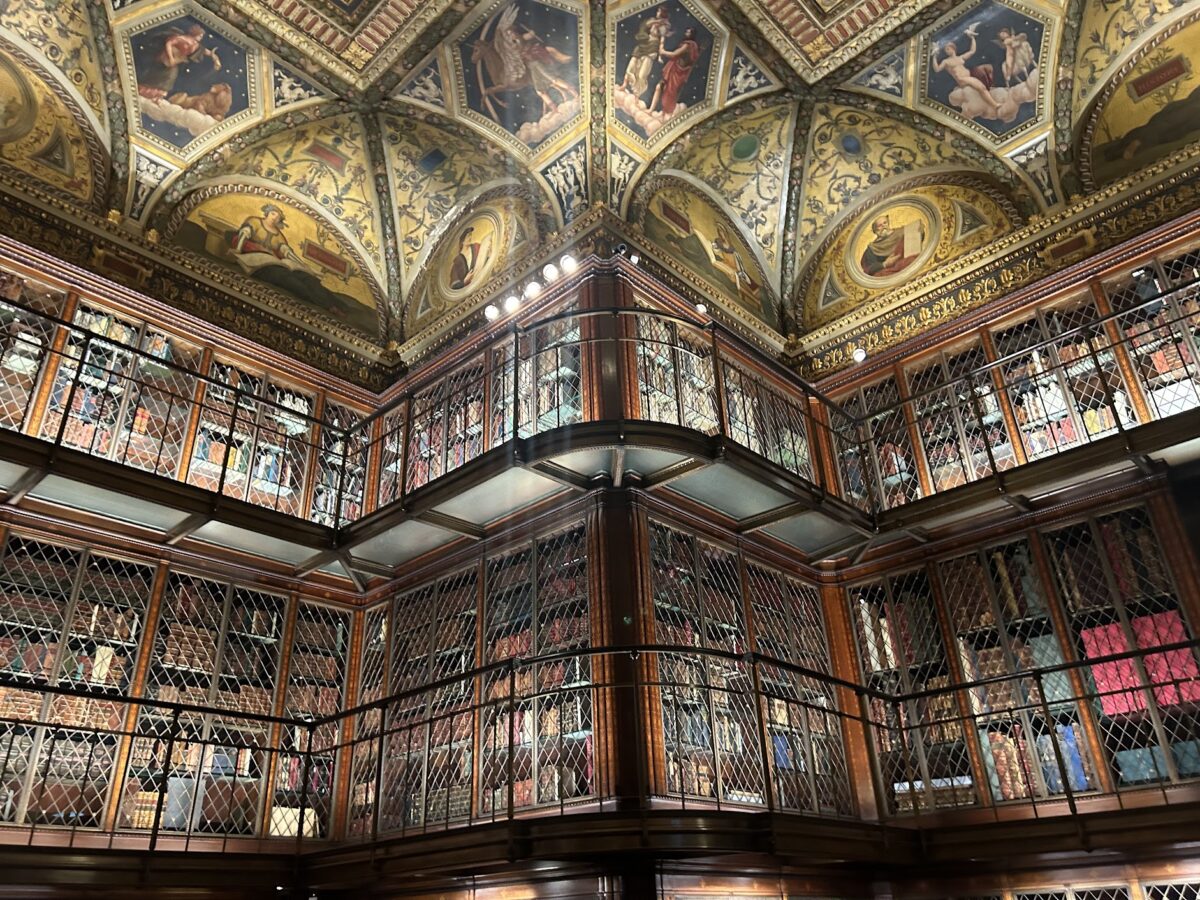
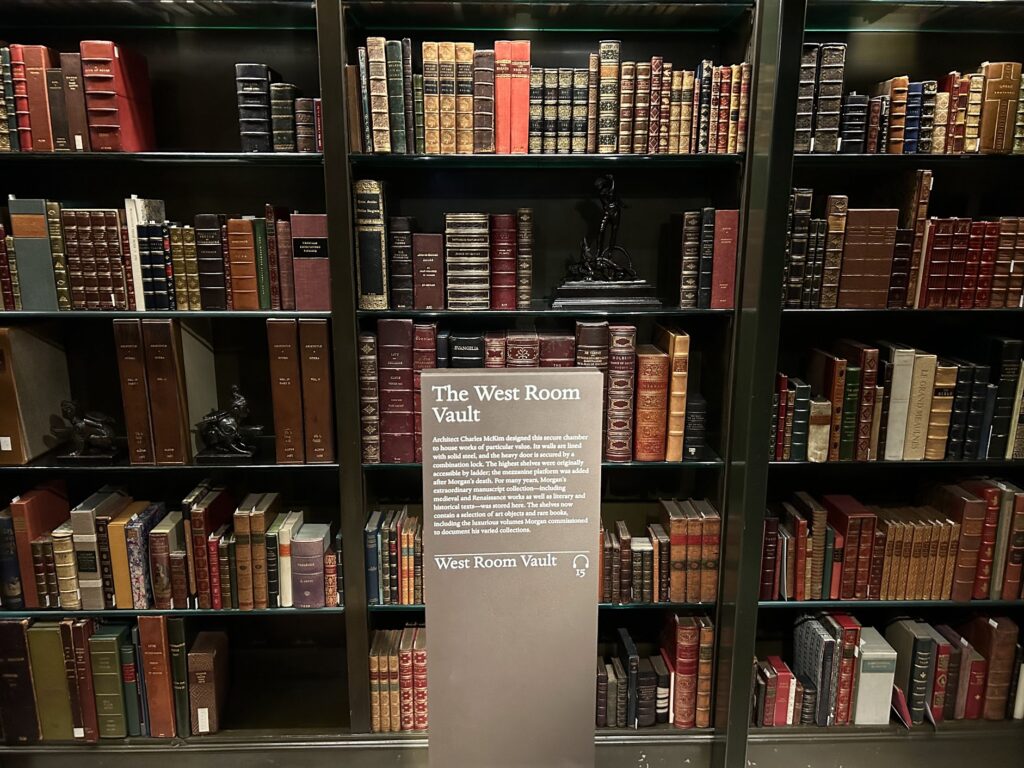
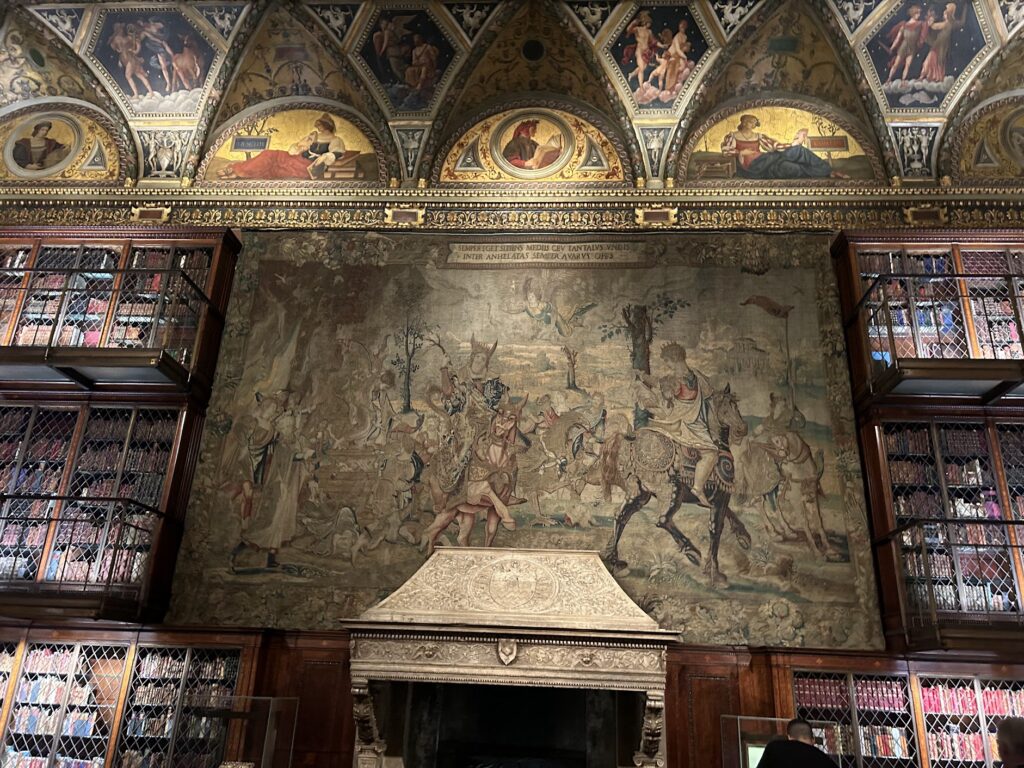
And then they wander through the winding connections of buildings which comprise the Morgan Library & Museum — from Morgan’s study (and its ‘hidden’ vault of books) to the glorious main stacks, lined with triple tiers of bookcases fashioned of bronze and inlaid Circassian walnut.
LISTEN NOW: MR. MORGAN AND HIS MAGNIFICENT LIBRARY
Share your love of the city’s history with a Bowery Boys Walks gift certificate! Our digital gift cards let your loved ones choose their perfect tour and date.
1903 portrait by Fedor EnckeSaturday Globe, 1901From the vaulted room in Morgan’s studyFrom the Franz Kafka showThe tapestry of gluttony
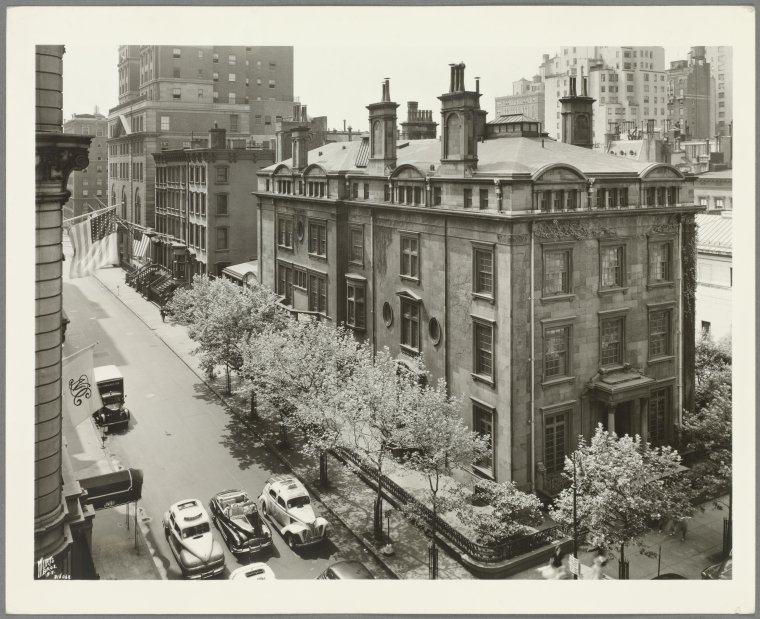
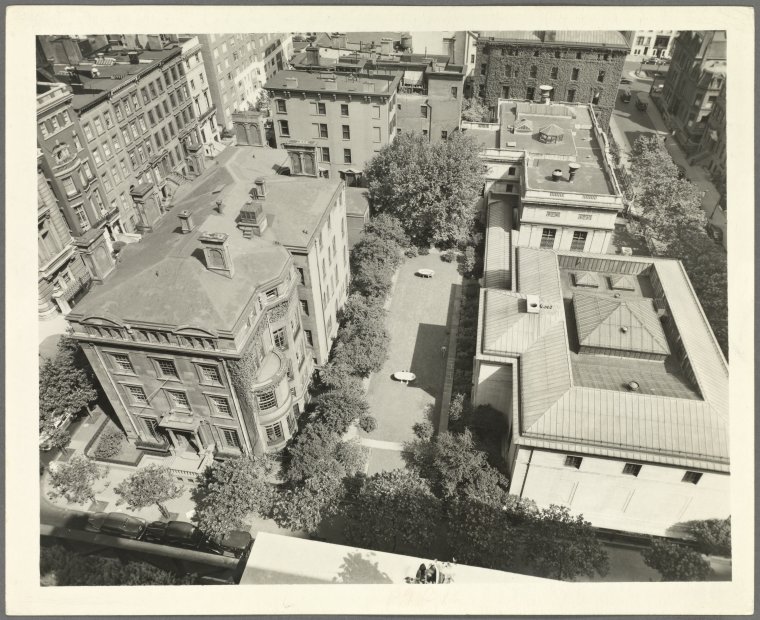
JP Morgan Jr’s brownstone which is today a part of the whole Morgan Library complex. In fact we recorded a portion of the show from its music room!
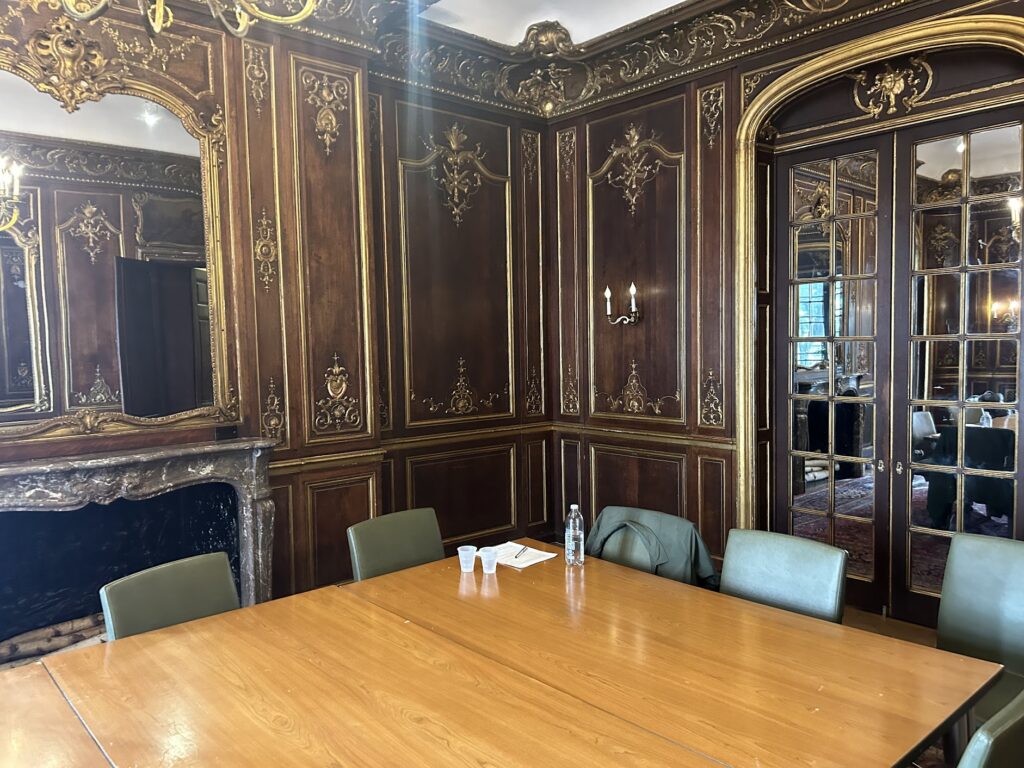
New York Public LibraryThe music room where we recorded a portion of the show.
The Morgan Library and Museum from above. The slender garden in the middle was replaced in 2006 by a lavish hall designed by Renzo Piano.
New York Public Library
FURTHER READING
J. Pierpont Morgan’s Library: Building the Bookman’s Paradise / The Morgan Library and Museum The Hour of Fate: Theodore Roosevelt, JP Morgan and the Battle to Transform American Capitalism / Susan Berfield The House of Morgan: An American Banking Dynasty and the Rise of Modern Finance/ Ron Chernow J.P. Morgan – The Life and Deals of America’s Banker / J.R. MacGregor Morgan: American Financier / Jean Strouse
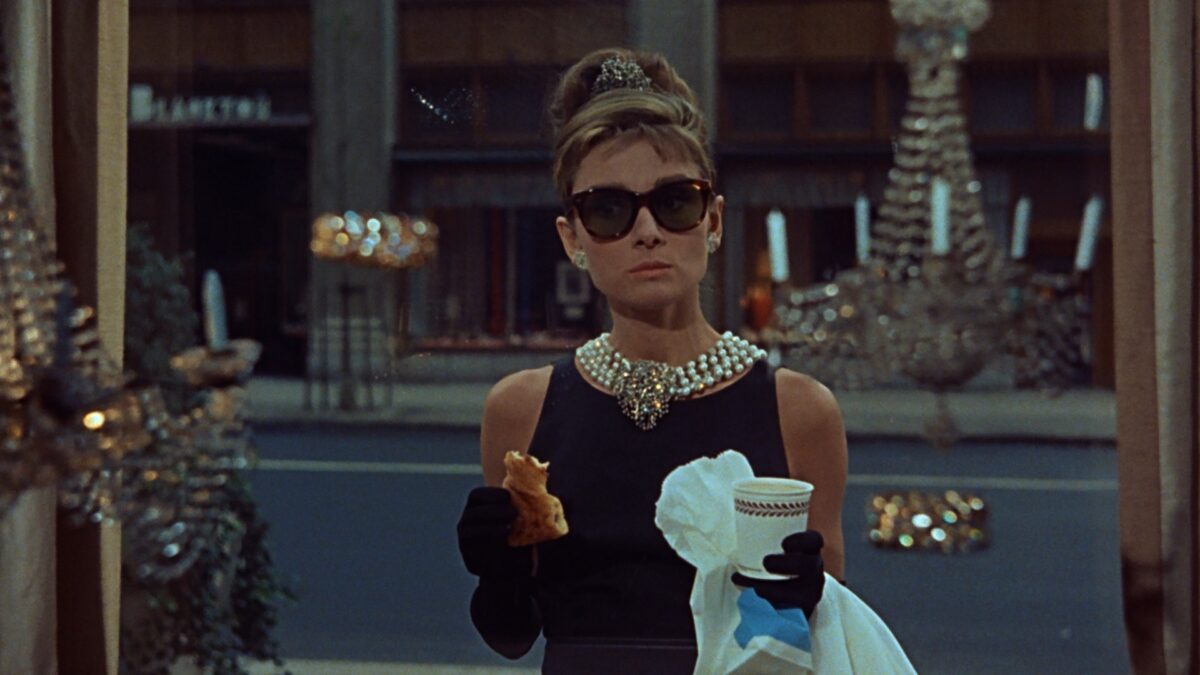
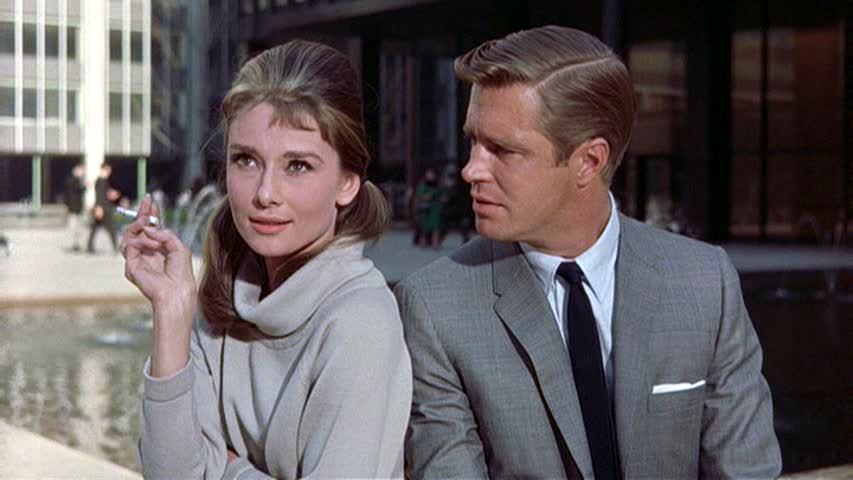
In the film version of Truman Capote‘s daring 1958 novella — starring Audrey Hepburn and George Peppard— New York City provides the elegant backdrop to a romantic fable dripping in diamonds and booze.
Holly Golightly lives in her own fantasy world, and from her Upper East Side apartment, she seduces wealthy strangers and entertains a roster of outcasts and oddballs. From glamorous dates at the 21 Club to visits with her mobster ‘friend’ in Sing Sing Prison, Holly paints for herself a glamorous life — even through bouts of the ‘mean reds’.
But when a handsome writer moves into the building — a man with his own complicated relationships (hello, Patricia Neal!) — will Holly find in him, as the song goes, a fellow ‘drifter, off to see the world’?
Listen in as Greg and Tom recap the story and explore some of the historical context for the film. Featuring a dreamy lineup of New York locations including the Central Park, the Seagram Building, theNew York Public Library and, of course, Tiffany and Co.
PLUS: What to do with Mickey Rooney.
HowdoIlistentheBoweryBoysMovieClub? Once you’re signed in on Patreon, you’ll see a private RSS link that can be put directly into your favorite podcast player. Even easier, it can also be played directly from the Patreonapp if you’re signed in.
Your support on Patreon assists us in producing our podcast and website and it helps as we endeavor to share our love of New York City history with the world.
EPISODE 344 We’ve now made our Bowery Boys Movie Club episode on the film Ghostbusters available for everyone. Listen to it today wherever you get your podcasts.
This episode is brought to you by those who support the Bowery Boys Podcast on Patreon. Join us there to get additional episodes of the new Patreon-only Bowery Boys Movie Club — including the latest episode on When Harry Met Sally.
This episode is partially based on this in-depth article on the New York City history moments featured in the film, originally written in 2013. Give it a read while you listen along!
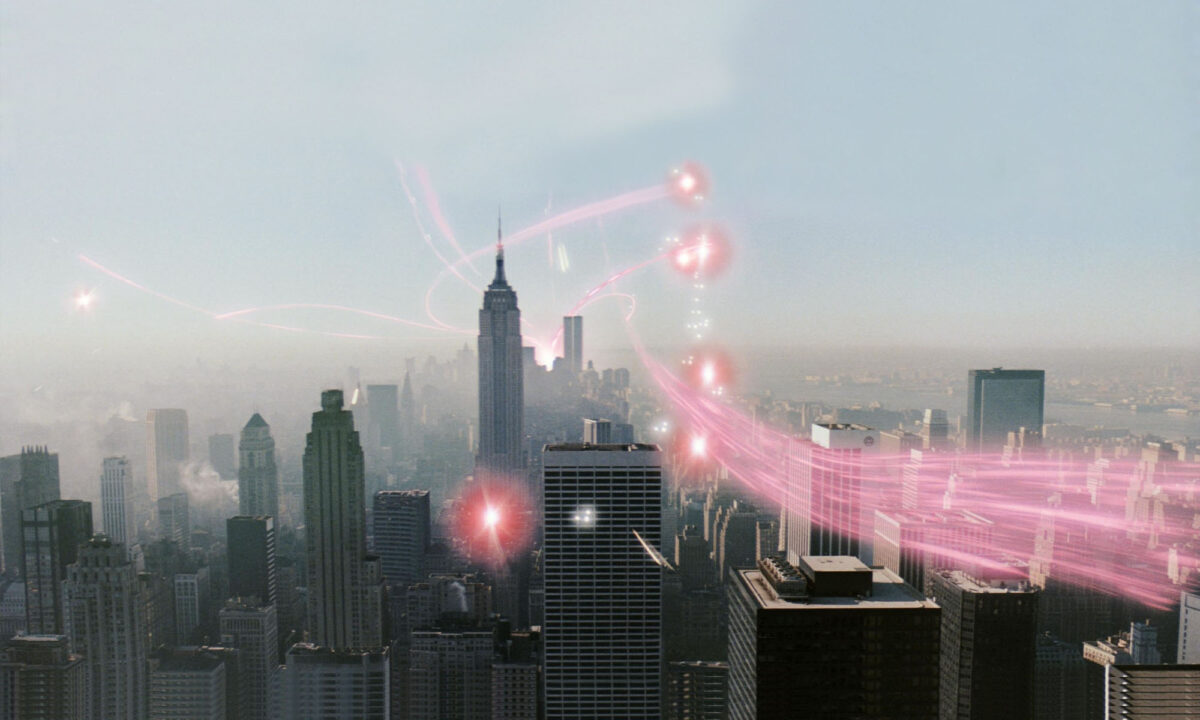
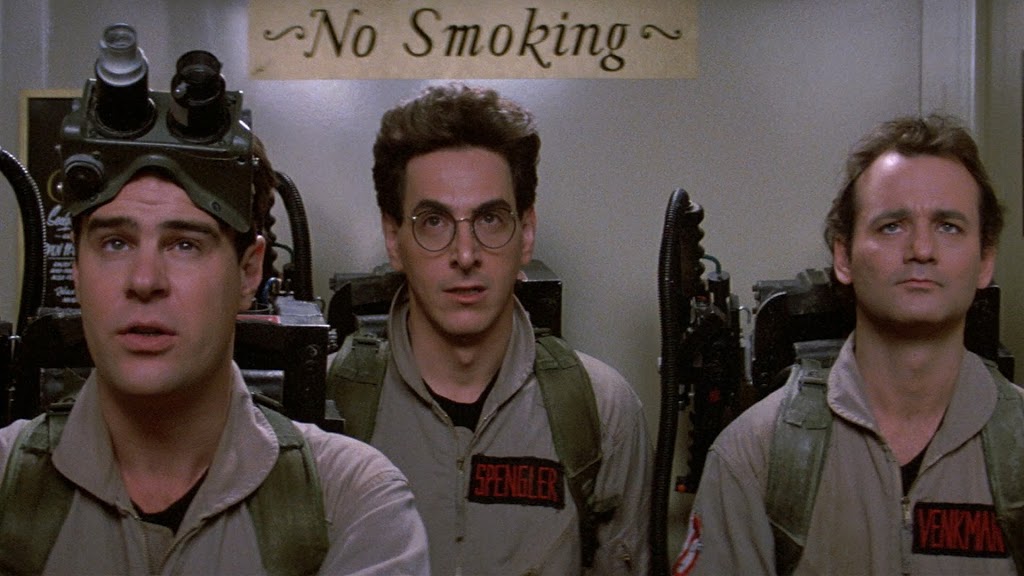
Ghostbusters, the goofy, supernatural tale starring Bill Murray, Dan Ackroyd, Harold Ramis, Ernie Hudson, and Sigourney Weaver, was one of the biggest hits of 1984, a rare blend of wry comedy, special effects and spectacular New York City landscapes.
Despite its preposterous premise — that ghosts look either like oozing fat blobs or Sheena Easton-ish supermodels — the film flawlessly displays the easy comic talents of its stars and reveals a New York City with only monsters as its greatest threat.
There have been both believers and cynics from New York history who have attempted to prove the existence of supernatural forces and have even tried to purge them from the city.
From there, I took a deeper look into the historical people, places and events depicted in the film, if not only to find evidence of New York’s ghostbusting forefathers, then at least to enjoy the pop culture references of the early 1980s.
Ghostbusters was a mainstream offering, so it goes very light on its urban commentary of a city picking itself up out of withering debt.
Its ghosts are quite democratic, in fact, terrorizing libraries, public places, ethnic neighborhoods and wealthy condominiums alike.
Here are 25 fascinating pieces of trivia about Ghostbusters, putting the film within the context of New York City history. Obviously there are a ton of spoilers here, in case you haven’t yet seen it.
But hopefully I’m giving you a good excuse to catch on television this Halloween!
1)Ghostbusters is set in 1984, late October-early November, judging from the dates on newspapers and magazines which appear midway through the film. But the film’s release date was in June 1984, so technically the film documents future events.
The appearance of Sumerian gods on the Upper West Side and a team of wise-cracking ghost exterminators certainly would have been the top story of the year.
Real life is not as magical. The big story in New York City that year came over a month later, when Bernhard Goetz shot four men who tried to mug him in the subway.
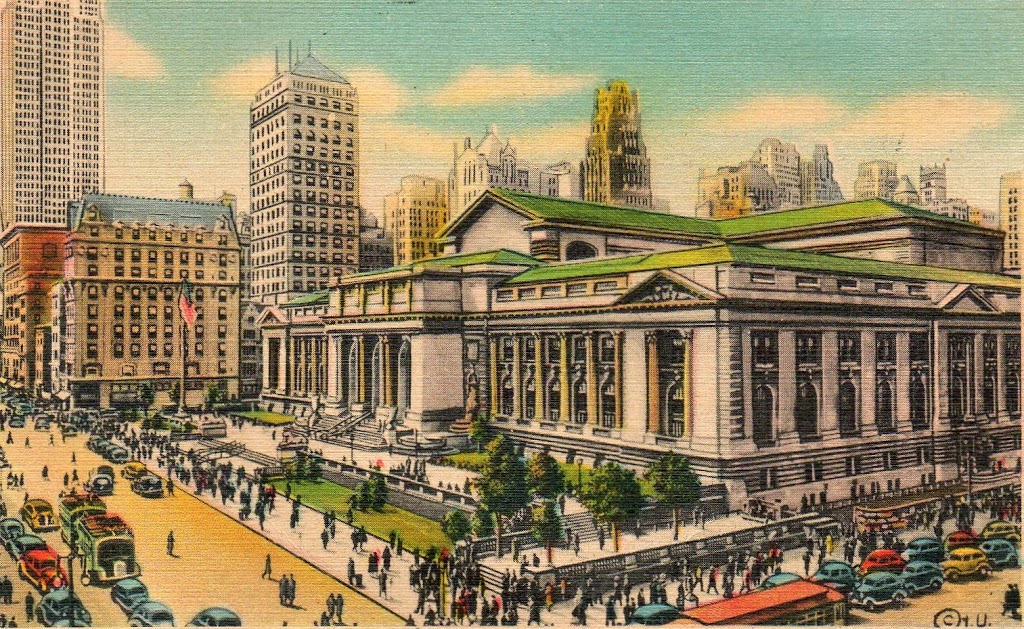
2) The New York Public Library, setting for the delightfully shushy spectre in the opening scene, may actually be haunted. After all, it sits on land that was once a burial ground.
According to historian Charles Hemstreet, writing in 1899, “The ground between Fifth and Sixth Avenues, Fortieth and Forty-second Streets, now occupied by Bryant Park and the old reservoir, was purchased by the city in 1822, and in 1823, a potter’s field was established there, the one in Washington Square having been abandoned in its favor.”
By the way, the two lions (named Patience and Fortitude) are prominently featured in the opening, a sly parallel to the stone monsters which will appear later.
Photo courtesy Bain News Service
3) Our ghostbusting heroes are originally located at Columbia University, in Weaver Hall (actually Havemeyer Hall). Although there is no actual department of paranormal psychology, Columbia does have a connection to one of New York’s earliest institutes of paranormal study.
The American Society for Psychical Research was founded in 1884 — exactly one century before Ghostbusters — as a legitimate organization looking to separate spiritualist quacks from actual supernatural phenomena.
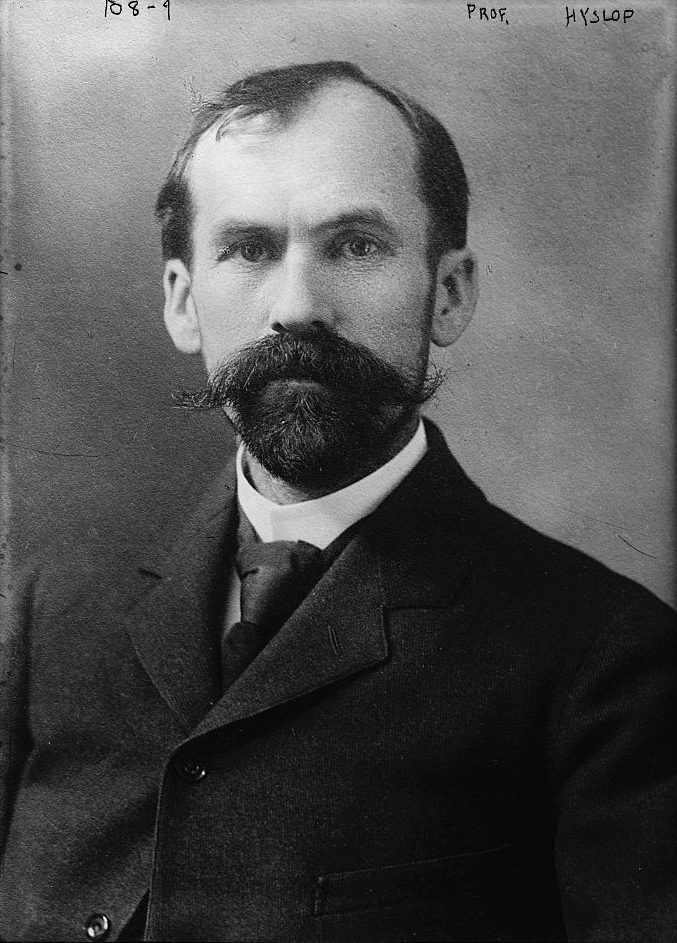
Its most prominent leader was James H. Hyslop (above), a former professor of ethics and logic at Columbia University. Â His early studies read like a jazz-age X-Files, investigating ghosts, spiritual possession and a strange variety of mental abilities. Â (We speak of Hyslop in two of our old ghost story podcasts, investigating a case of spiritual harassment and contact via a Ouija board.)
4) While no hauntings are actually displayed at Columbia University in the film, they certainly could have been.
The campus is located on the site of old Bloomingdale Insane Asylum, where more than a few mentally disturbed individuals met their end.
Columbia bought the facility in the 1880s and demolished most of it to make way for their McKim, Mead and White-designed campus. But one structure still remains — the Macy Villa, a home for mentally-troubled rich gentlemen, in today’s Buell Hall, home of La Maison Francaise.
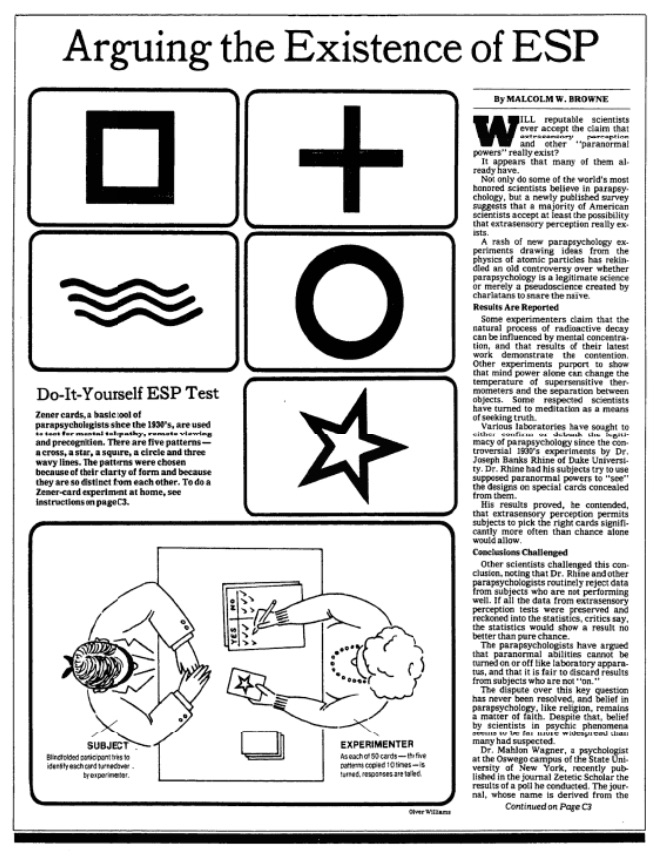
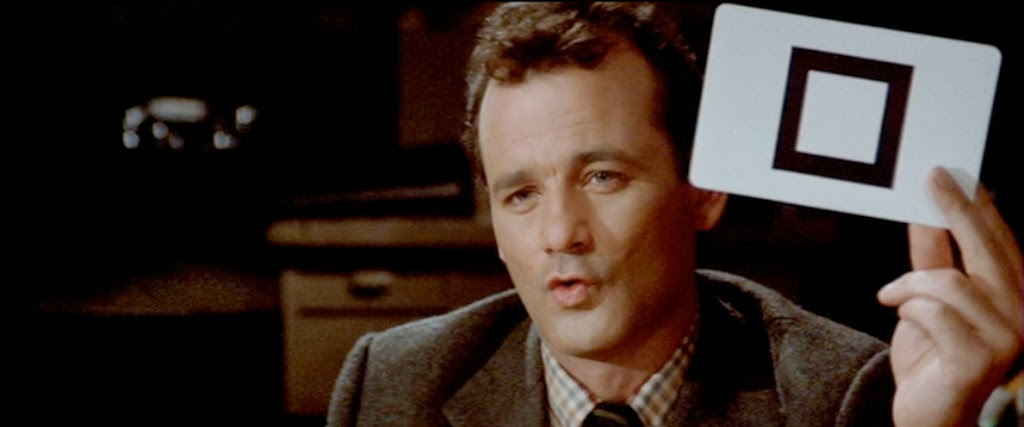
5)The deck of cards used by Dr. Venkman (Bill Murray) to test the telepathic abilities of his patients (and to flirt with the pretty blonde) are called Zener cards, invented by Karl Zener and J. B. Rhine, who was inspired to enter psychical research after listening to a lecture by author and paranormal cheerleader Sir Arthur Conan Doyle.
In 1980, the New York Times printed a set of Zener cards in its January 29, 1980 edition. “The reader may judge for themselves.”
6) Dr. Venkman’s continued skepticism gives Murray a host of excuses to stare at the camera and mug sardonic. But his character probably has the most in common with New York’s original ghostbusters, especially adventurer and conjurer Joseph Rinn.
He and his childhood friend Harry Houdini basked in debunking frauds while keeping alive the illusion of magic and mystery for their acts.
Rinn most famously held a demonstration at Carnegie Hall where he taunted mediums and mystics to exercise their powers for a prize pot of $10,000. Nobody ever won the money.
7)Manhattan City Bank, depicted in the film, is not real. Â Coincidentally, the scene was filmed at another bank directly across the street from the New York Public Library at Fifth Avenue/41st Street. In fact, you can see that the library is surrounded by scaffolding in the movie.
What was the scaffolding for? In 1982, the library embarked a $20 million renovation project. It’s difficult to imagine today, but this classic New York institution had been badly abused over the years.
The 1982 renovation was meant to return the building to its original glory. “It is a restoration in some ways, a modernization in others,” said the Times. “[T]his ambitious plan emerges out of the conviction that this building is as much a part of our cultural heritage as the billions of words that it contains.”
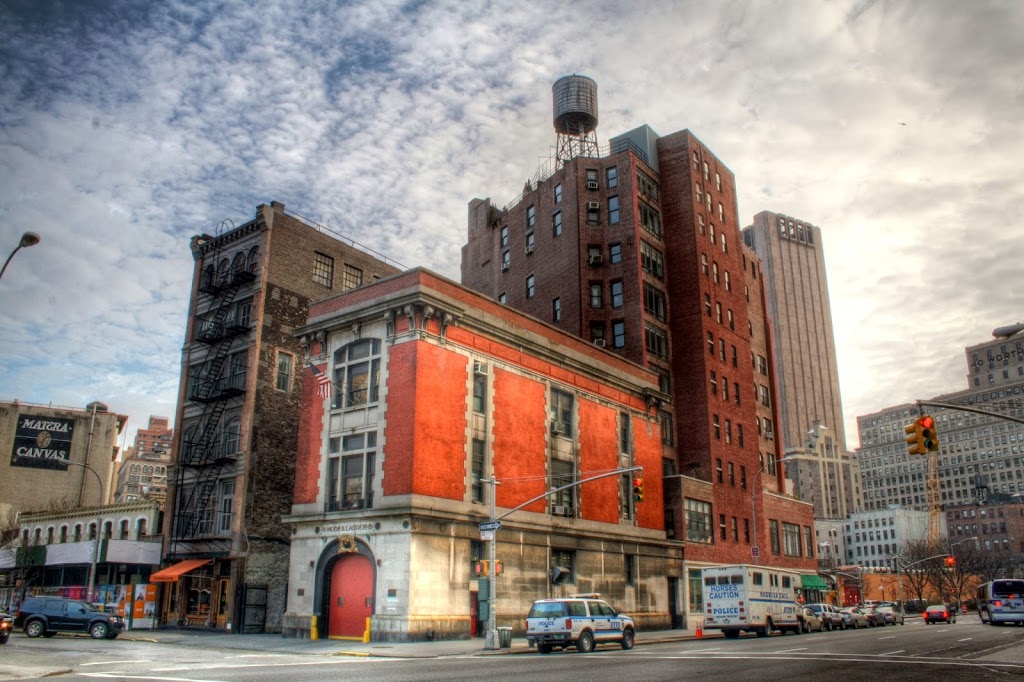
Ghostbusters headquarters — the TriBeCa fire house on North Moore. Pic courtesy Phillip Ritz
8) Perhaps the most beloved New York site from the film is Ghostbusters headquarters, the Hook and Ladder Company No. 8 fire station at the corner of North Moore Street and Varick Street.
If the building looks awkwardly slender to you, there’s a good reason — half the building was demolished in 1914 when Varick Street was widened. Several other buildings, including St. John’s Chapel, owned by Trinity Church, were not so lucky, wiped out entirely by Varick’s expansion.
Spengler (Harold Ramis) says of the firehouse. “I think this building should be condemned….The neighborhood is like a demilitarized zone.”
In fact, the converted lofts and warehouses of TriBeCa (Triangle Below Canal) — the name was slightly over a decade old in 1984 — were a haven for artists, designers and musicians by this time and probably deemed ‘gritty’ by the standards of 1980s American film goers.
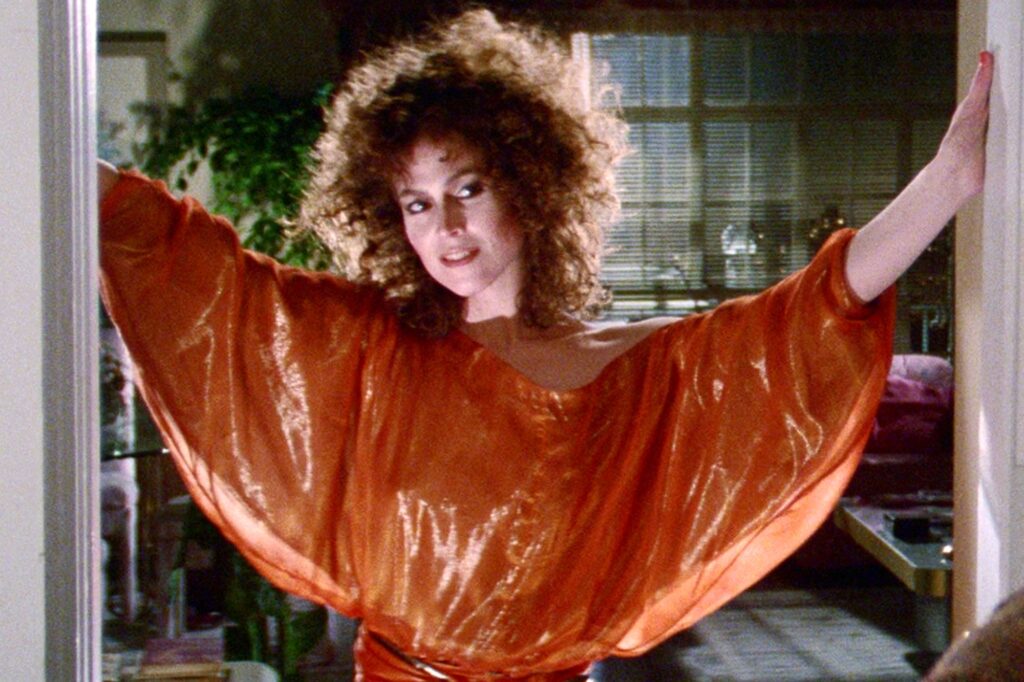
9)Sigourney Weaver is probably the most New York-centric star of Ghostbusters and a perfect choice for the role of Dana, the sophisticated lady possessed by an ancient God. (Dana’s in the New York Philharmonic after all!)
Weaver was a regular on the off-Broadway stage, an offbeat star who once starred in a Christopher Durang play about the Titanic. Her first two film performances are in two 1970s New York film classics — Serpico and Annie Hall. 10) As Sigourney arrives at her apartment building, you can clearly identify Checker Cabs passing on the street, even though that were already a dying breed by this time, the last rolling out from its Michigan plant in 1982.
11) The Sedgewick Hotel, site of the Ghostbusters’ most conspicuous catch, is one of several Los Angeles locations pretending to be in New York.
However, if they wanted a haunted hotel near the New York Public Library, they could have looked no further than the Algonquin Hotel, two blocks north on West 44th Street, notoriously famous for the ghosts of the Round Table.
The Sedgewick is played in the film by L.A.’s Biltmore Hotel, site of several Academy Awards ceremonies and itself haunted by a famous ghost, that of Elizabeth Short, aka the Black Dahlia.
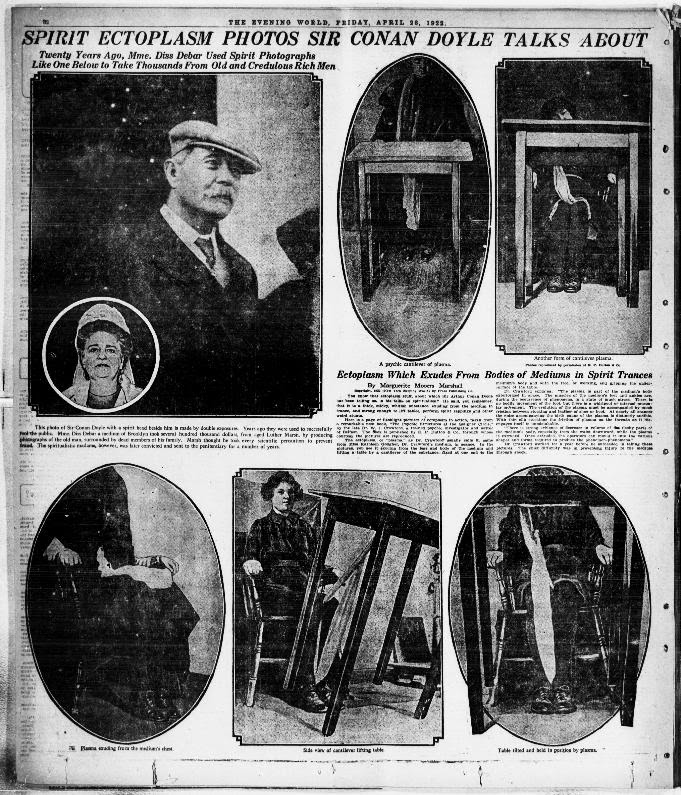
12) Ectoplasm isn’t just a cool word for ‘slime’. In 1922, the New York Evening World ran photographs of mediums coated in ectoplasm.
Sir Arthur Conan Doyle described it as “thick, sticky, whitish substance exuding from the medium in trance and strong enough to lift tables, perform spirit rappings and other weird stunts.”
13) A New Jersey high school student named Jeff Nichols found momentary fame when he accidentally appeared as an extra in the film, during the brief scene in which Bill Murray and Dan Ackroyd storm through Rockefeller Center. (Did they not sign release forms back then?) The scene appears in a montage of the crew’s many ghost-exterminating antics.
”I got a bunch of phone calls from friends who saw it, saying, ‘Hey, Jeff, you’re in the movie,’ ” said a surprised Jeff last week. ”It’s strange to think that I’m in a movie that’s playing all over the country…… I guess it’s like being part of history.”
No offense to Jeff, but I’m kinda more fascinated in another brief scene during this montage, when the Ghostmobile speeds past Umberto’s Clam House in its original location (the corner of Mulberry and Hester).
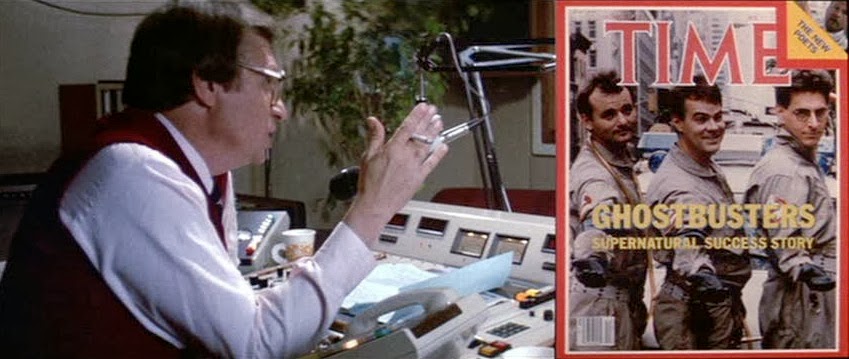
14)Larry King on the radio in Ghostbusters in 1984:
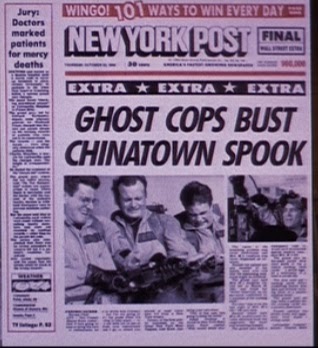
15) There’s a silly montage of 1984 publications that go swirling by. People Magazine touting the trio also reveals “Princess Di Expecting Again!” The magazine (supposedly from October 1984) is a little off — Prince Harry was born on September 15, 1984.
The New York Post also celebrates one off-screen Ghostbusters’ victory: GHOST COPS BUST CHINATOWN SPOOK.
In the early 1980s, the Post gave $50,000 a week in its WINGO! lottery promotion. According to author and former Post reporterCharlie Carillo, the contest illicited some rather mysterious winners:
“One Wingo winner showed up soaked in sweat and literally looking over both shoulders. He wouldn’t even tell me his real name, and he covered his face with his hands when the photographer lifted the camera. ‘No pictures!’ he cried through his fingers. ‘Can’t have my picture in the paper!'”
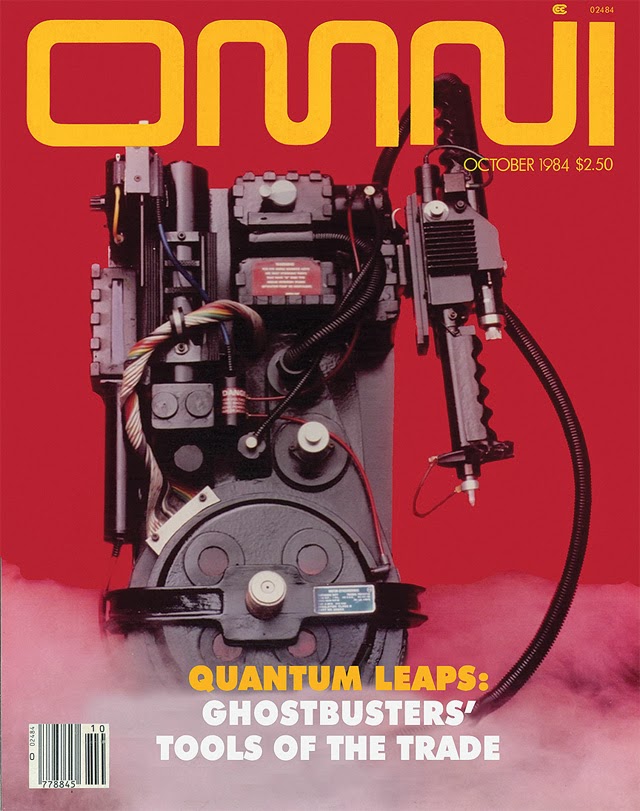
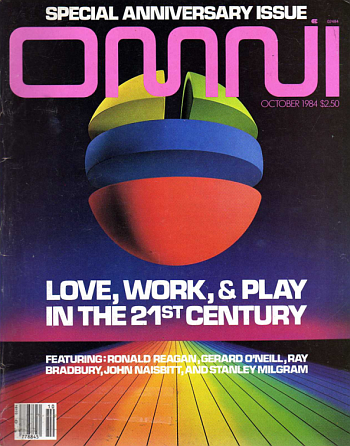
16) Also given credible prominence during this montage is the long-gone OMNI Magazine, a science publication with the unique distinction of being one of the first magazines to simultaneously publish a digital edition (in 1986).
Here’s a copy of the October 1984 issue from the movie, and the actual October 1984 issue:
17) Dana listens to Casey Kasem gab about the Ghostbusters during his Top 40 countdown show. His wife Jean Kasem appears later in the movie as Rick Moranis’ ditzy date.
Had we been privy to the entire broadcast, we would have heard that the top five songs that week were (in Kasem countdown order): 5) “Lucky Star” by Madonna, 4) “Purple Rain” by Prince, 3) “Hard Habit To Break” by Chicago, 2) “Caribbean Queen (No More Love On The Run)” by Billy Ocean, and 1) “I Just Called To Say I Love You” by Stevie Wonder.
18) Veteran New York broadcaster Joe Franklin appears on television, asking Murray, “I’m sure there’s one big question on everybody’s mind, and I imagine you are the man to answer that. How is Elvis, and have you seen him lately?”
Franklin, presumably recording from WWOR‘s brand-new studios in Secaucus, NJ, was touching on a hot-button issue in 1984. That year, some believers found proof that Elvis Presley was actually still alive, due to an infamous photograph that emerged in the press of Elvis with Muhammed Ali. A video of that investigation is below:
19) A supernatural upheaval of godlike forces emerges from Dana’s icebox, located in a penthouse at 55 Central Park West. In the film, this building, constructed in 1929, was made with cosmic connections in mind, with a super-conductive antenna, “pulling in and concentrating spiritual turbulence.” Stantz (Dan Ackroyd) adds, “The architect was either a certified genius or a pathetic wacko.”
In Ghostbusters lore, the architect is Ivo Shandor. In reality, the building was constructed by the less immortal architectural firm of Schwartz and Gross, best known before then for their building The Majestic on West 75th Street. 55 Central Park West has been home to Rudy Vallee, Ginger Rogers, Donna Karan and Calvin Klein.
There does appear to be something strange going on with the building. According to the latest AIA Guide: “[I]f the sun seems brighter at the top than the bottom, it is brighter. Â A flush of brick from red to yellow rises from the second floor to the sun.” Gozer is impressed.
20) Louis Tully (Rick Moranis) just wants somebody to like him. Although a “nerd” in the classic 1980s nerd style, he’s pretty much a prototype for the modern hipster. In a futile effort to get Dana to his party, he proclaims that they will “play some Twister, do some breakdancing.”
1984 was the year that this form of street dancing went mainstream, with films, fashion and music that year monopolizing on the trend. Breakin‘ was in theaters for a month already when Ghostbusters opened on June 8, 1984. It handily beat a competing film making its debut that same week — Beat Street (see below).
Believe it or not, Beat Street debuted on more screens than Ghostbusters, but lost in the box office battle.
21) Louis runs into Central Park to escapes Gozer’s demon minion but is cornered at Tavern On The Green. It would have been quite a party that Louis and the hellbeast were crashing, as the fancy restaurant was celebrating its 50th anniversary that very month.
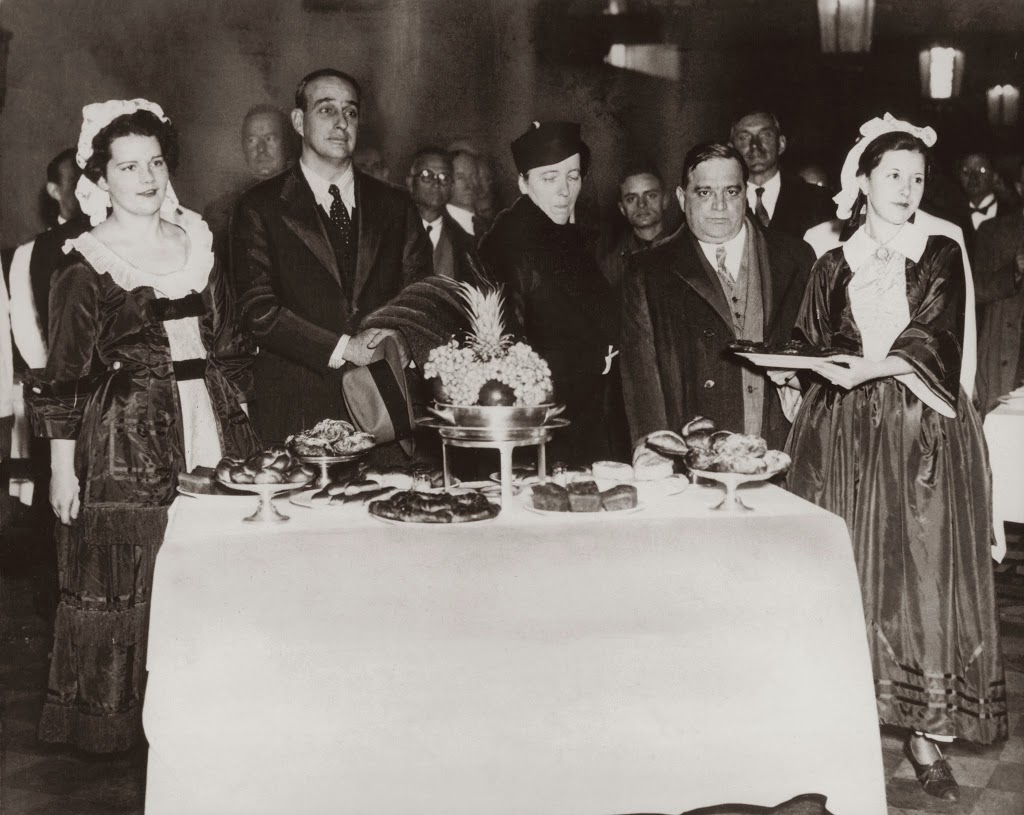
Tavern On The Green opened on October 20, 1934, with a lavish dinner attended by Mayor Fiorello LaGuardia and parks commissioner Robert Moses (pictured below, image courtesy New York Times)
22) Later, a possessed Louis (as the Key Master) streaks through Times Square in a demoniacal rage, looking for the Gate Keeper.
It’s a fairly nondescript early 80s midtown landscape, but look for the curious chain restaurant WienerWald in the background.
The German franchise had several locations throughout the United States but was unable to turn Americans on to its menu — mostly chicken, despite the name.
One intrepid Ghostbusters fan has successfully located the precise block on Seventh Avenue where this WienerWald was located.
23) With the city in crisis, the Ghostbusters are invited to City Hall for a meeting. As they enter the building, you can clearly see the banner for an exhibit in the rotunda called “Furnishing the Streets: 1902-1922.”
Because the banner could not be removed for some reason, the filmmakers cleverly obscure the exhibition’s date with a flagpole. However you can still make out that it says 1983.
24) The Stay Puft Marshmallow Man in his deliciously savage rage stomps up Central Park West from Columbus Circle. The most significant landmark destroyed by this sugary-sweet demon spawn is Holy Trinity Lutheran Church which sits next to 55 Central Park West.
The picturesque Gothic building has been a magnet for chaos from the very beginning. Over 3,000 people filled the street when its cornerstone was laid in November 1902, causing a traffic meltdown.
According to the New York Tribune, “It was as much as the police could do for a time to prevent people from being run down by trolley cars and automobiles, as many people were compelled to stand in the middle of the street.”
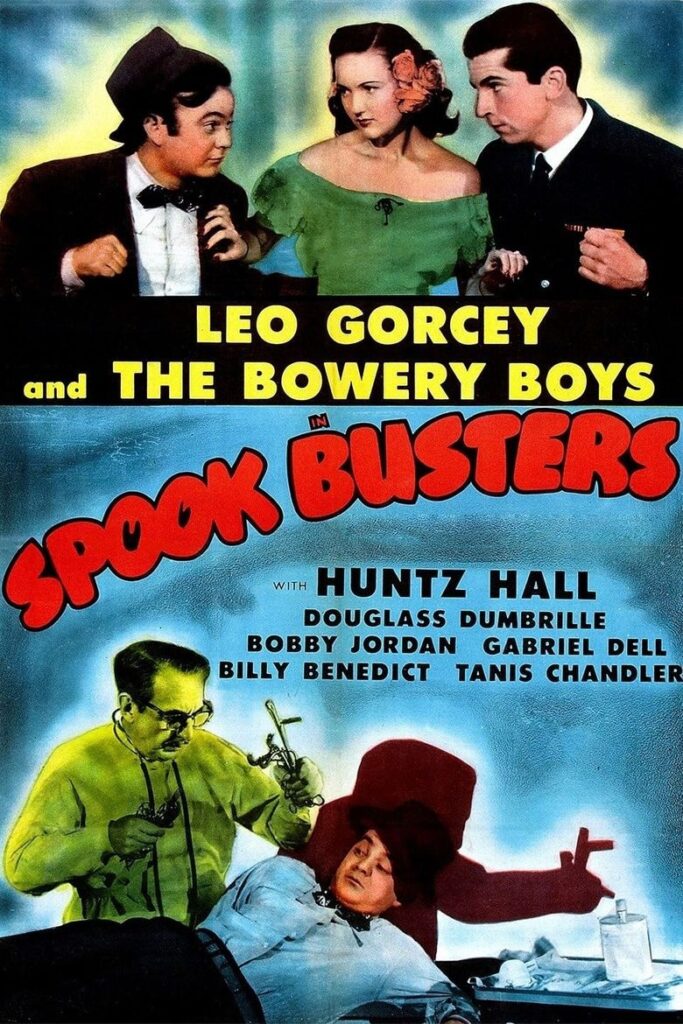
25) Our brave heroes vanquish Gozer and return to the street, greeted to the applause of grateful New Yorkers. I would be remiss, however, if I didn’t mention another set of Ghostbusters who once scoured Manhattan of its supernatural nuisances: the 1940s wacky Bowery Boys comedy troupe made a film in 1946 called Spook Busters.
Instead of a fire station, these exterminators of unwanted phantoms set up shop in a candy store.
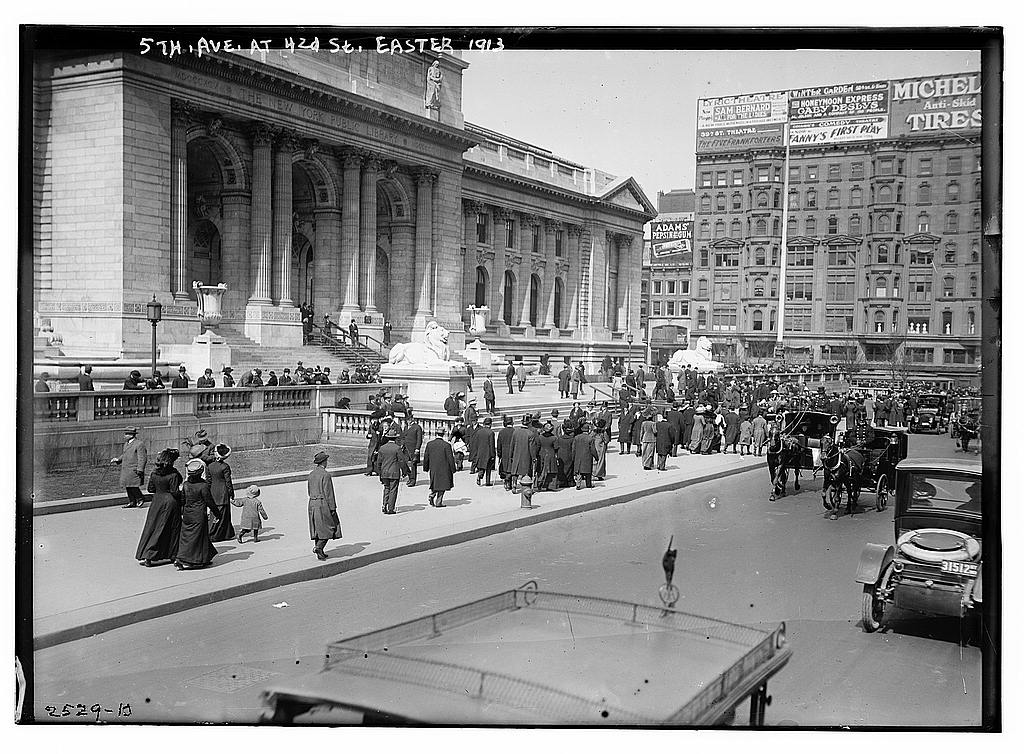
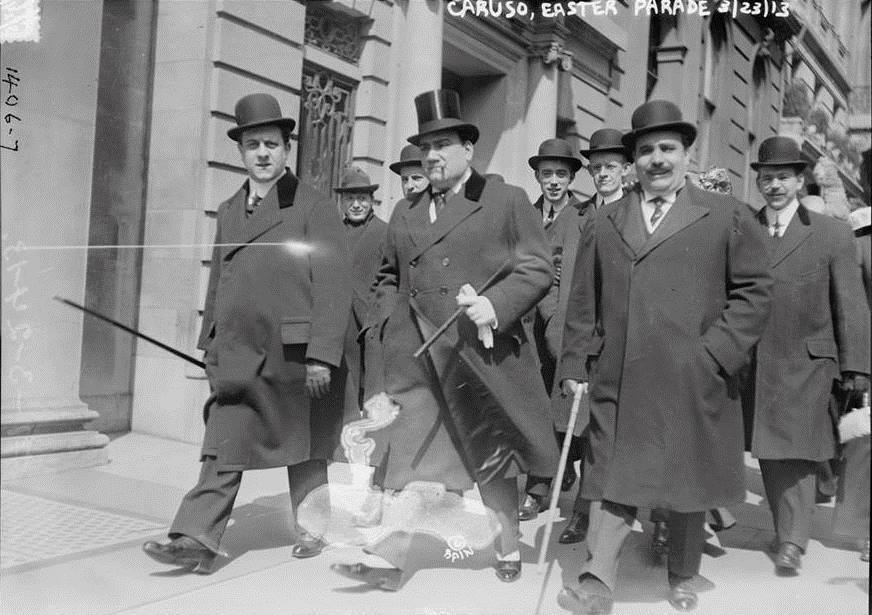
In the picture above: People in Sunday finery stroll past the New York Public Library building. The library had not even been open two years by the time this picture was taken in March 23, 1913.
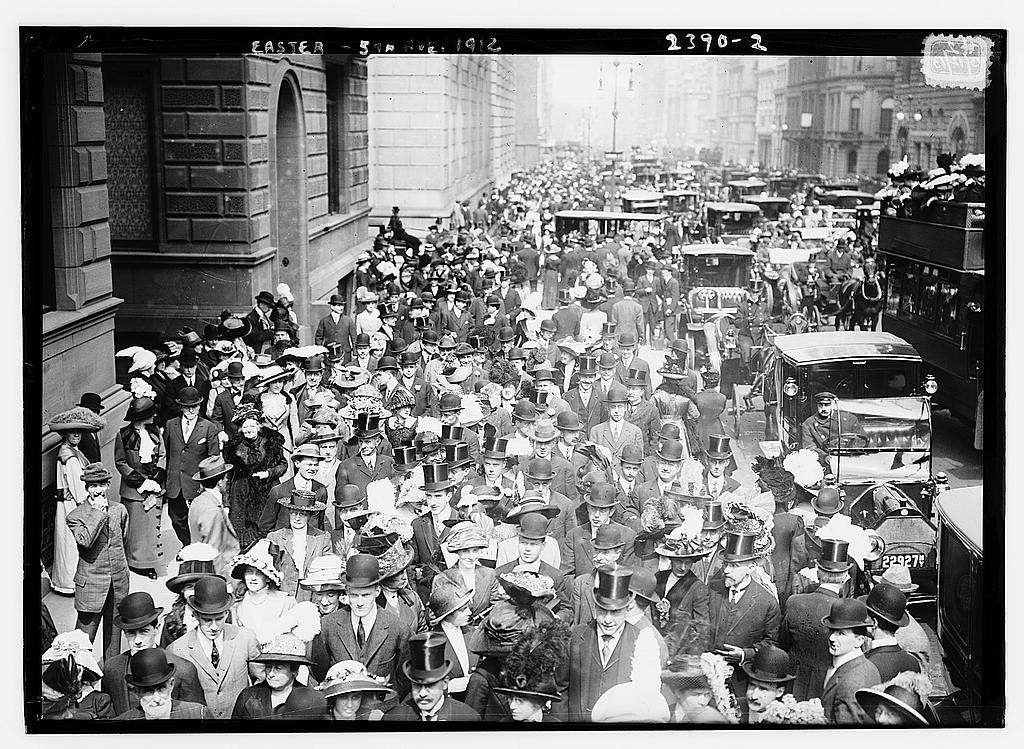
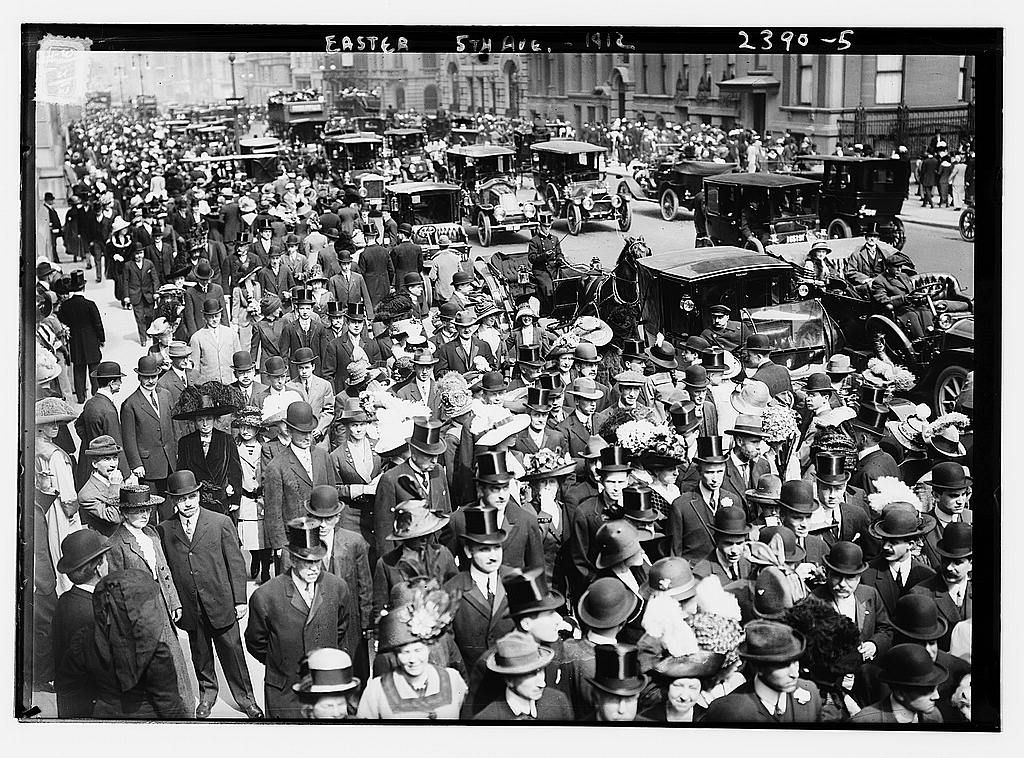
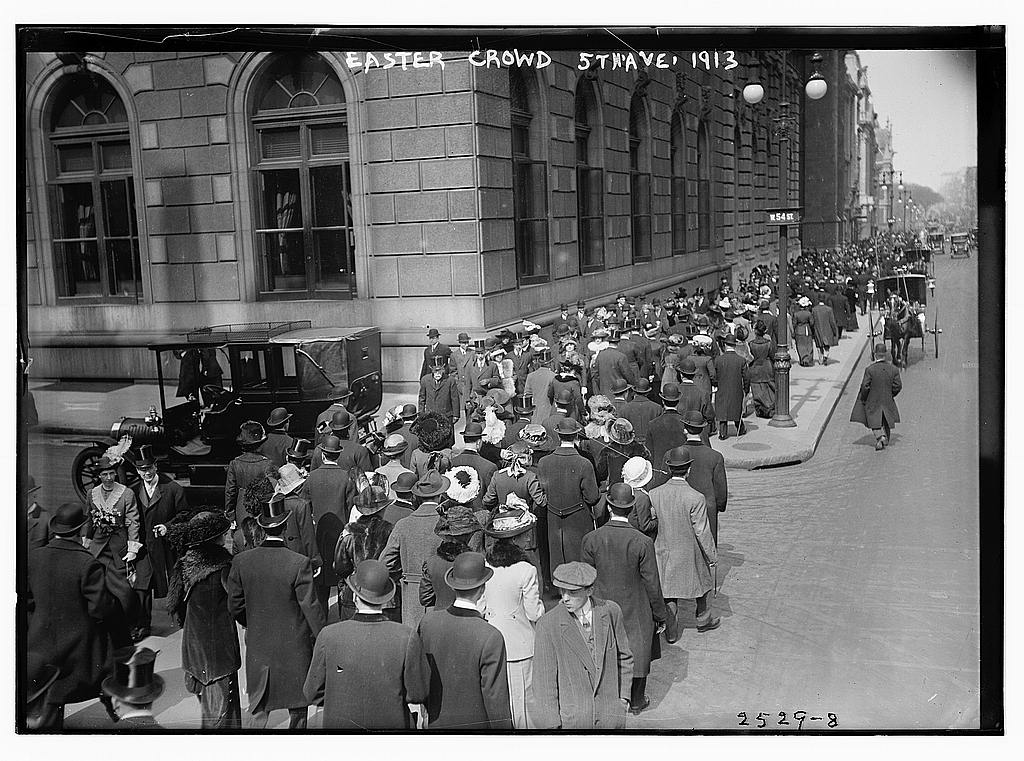
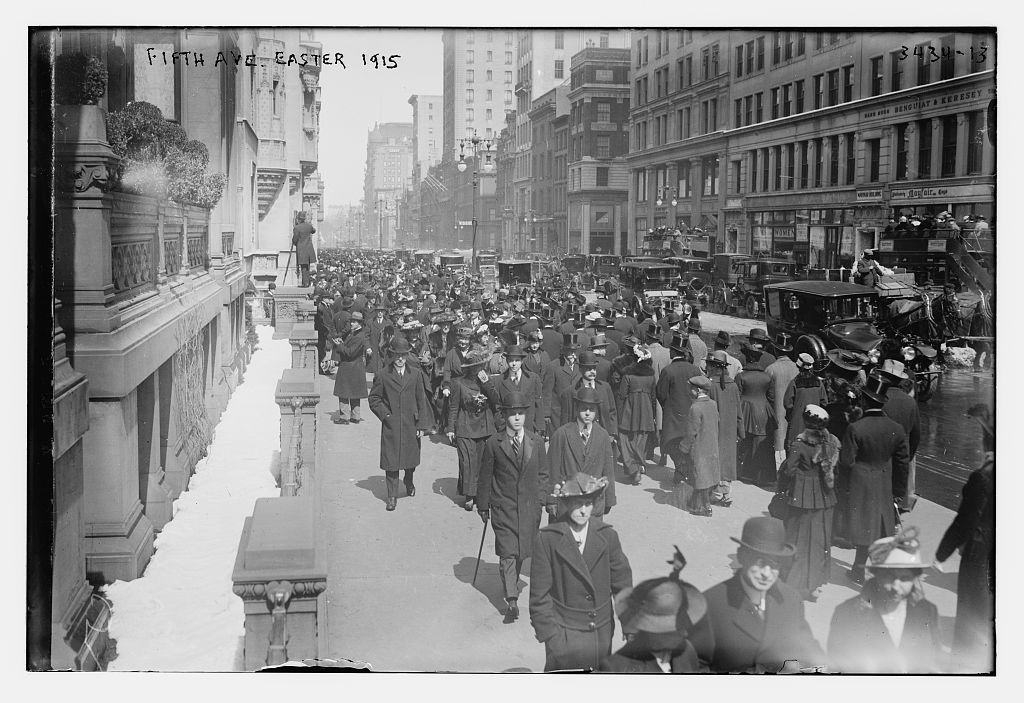
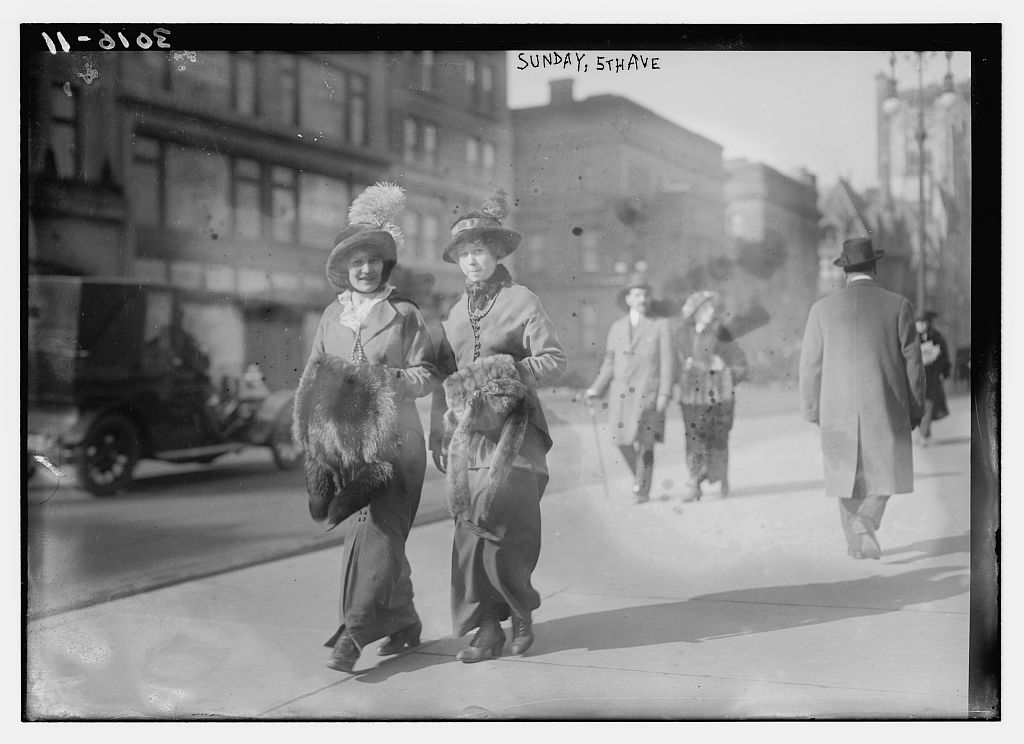
New York City’s time-honored Easter custom — the Sunday morning Fifth Avenue Easter bonnet stroll — once turned the wealthiest residents of Fifth Avenue into primping peacocks, their Sunday best on display.
The makeshift parade, which some believe traces back to New York’s Dutch days, blossomed into a full-assault of expensive headwear once the upper crust made Fifth Avenue their home.
Thousands lined the street, either brandishing their most expensive apparel or else to gawk at those wearing it. It was the closest New York got to a high-end fashion show, with dressmakers parked on the corner, taking notes.
“All the women were slim who could be,” remarked the New York Tribune’s fashion writer, “and a few were who couldn’t.”
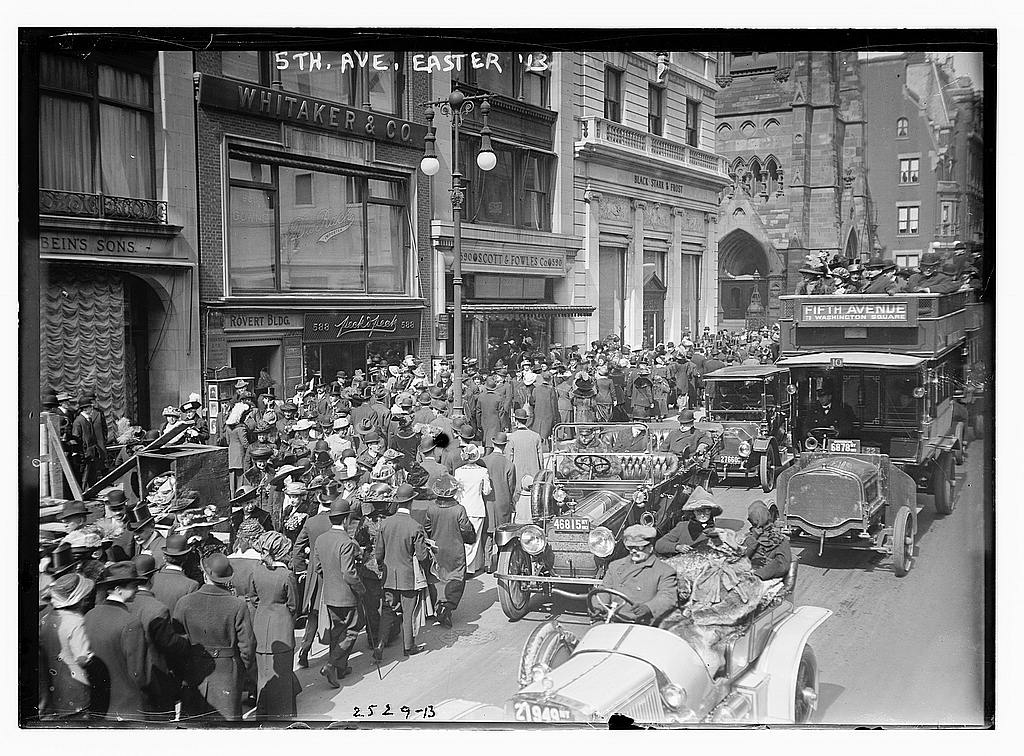
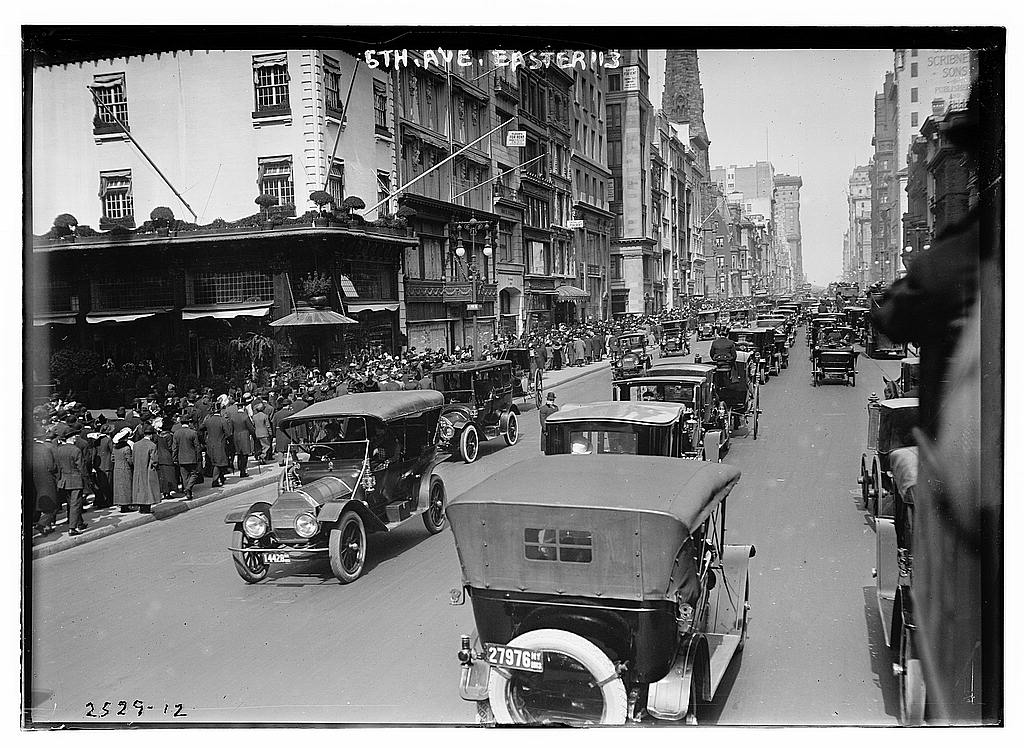
But the 1910s brought a new accessory to the Easter parade — automobiles.
A decade before, there were probably no more than 1,000 automobiles in all of New York City. By 1913, there were enough to create what must have been Fifth Avenue’s very first automobile traffic jam.
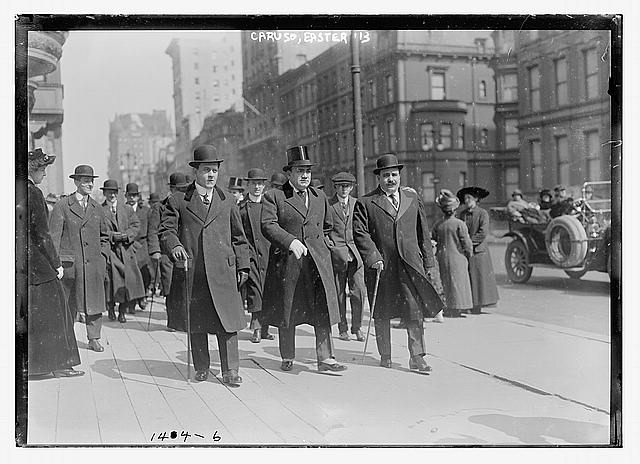
All the photographs featured here are from Easter Sundays, between 1912 and 1915 (images courtesy the Bain Collection/Library of Congress.
The magnificent Enrico Caruso even participated in the Easter stroll. He looks fanciful in his top hat and a bit like Batman villain the Penguin.
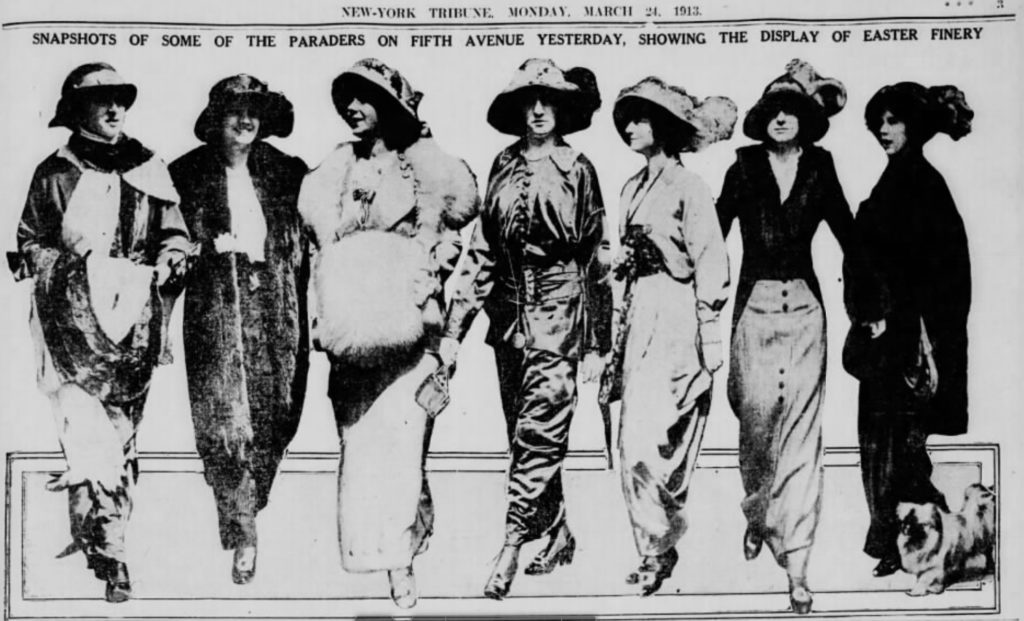
Apparently it was an unseasonably cold day that Easter in 1913 and most society women, braving the chill, wrapped up their fine gowns in heavy wraps and coats of various animal skin. “Furs and pink noses” was the fashion assessment, according to the Tribune.
Still, in the sea of coats and curious hats, one woman managed to make an impression. “LADY IN VERMILION AN EASTER CUBIST‘ cried the newspaper the following day — on its front page, no less. “…[W]ho was the young lady in bright vermilion, with lips of a vivid purple, who talked excitedly to hide her shivering as she passed St. Patrick’s Cathedral?”
The New York Tribune ran this banner photograph the following day. (Note the dog in the corner.) Sadly I don’t believe any of these ladies was the aforementioned ‘vermilion lady’:
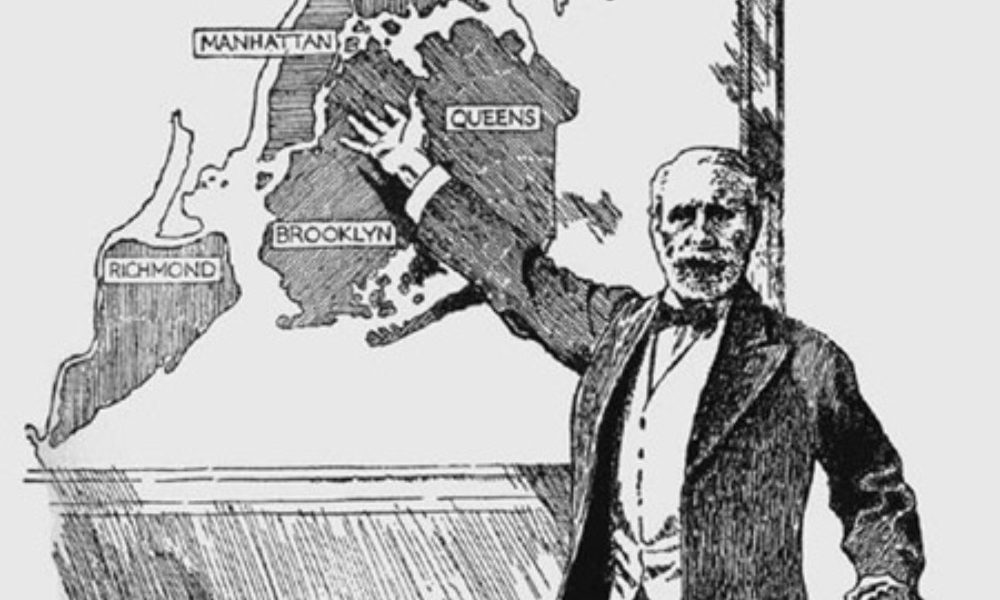
This smart, frugal and unassuming bachelor, an attorney and financial whiz, was critical in taking down William Tweedand the Tweed Ring during the early 1870s, helping to bail out a financially strapped government.
Kenneth T. Jackson, editor of the Encyclopedia of
New York, called Green “arguably the most important leader in Gotham’s
long history, more important than Peter Stuyvesant, Alexander Hamilton, Frederick Law Olmsted, Robert Moses and Fiorello La Guardia.”
So why is he virtually forgotten today?
“Today not one New York in 10,000 has heard of Andrew Haswell Green,” wrote the New York Daily News in 2003.
In our 300th episode, we’re delighted to bring you the story of Mr.
Green, a public servant who worked to improve the city for over five
decades. And we’ll be joined by an ardent Green advocate — former
Manhattan Borough Historian Michael Miscione.
LISTEN NOW — THE FORGOTTEN FATHER OF NEW YORK CITY
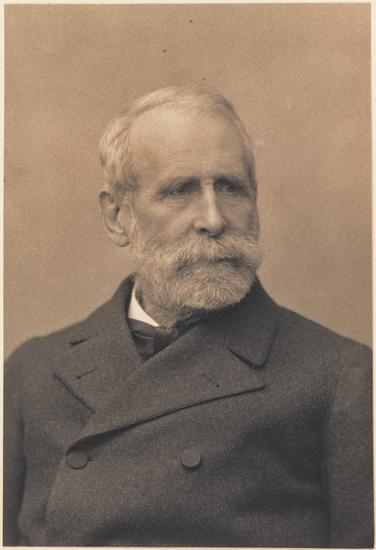
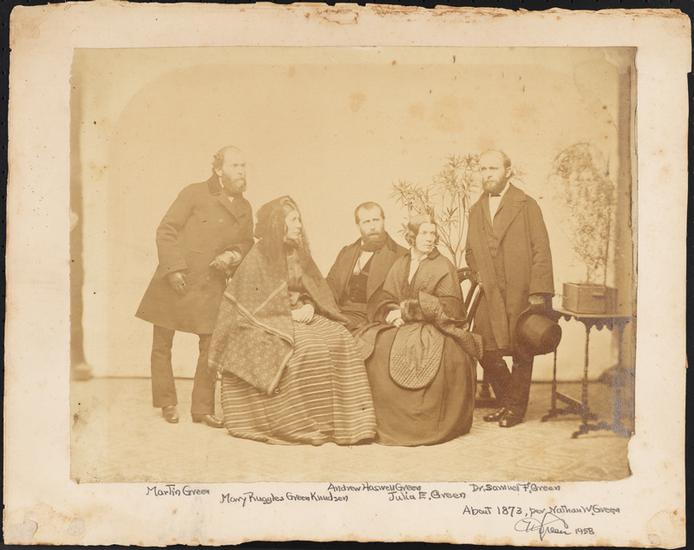
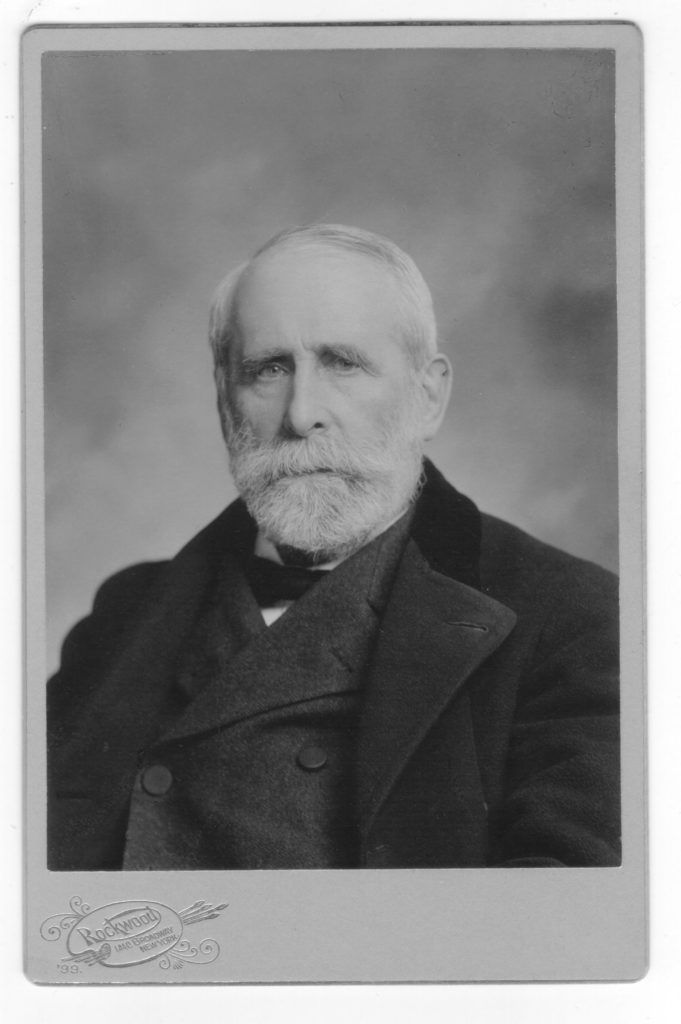
Andrew H. Green sits for a family photo, 1873. He would remain a bachelor his entire life.
Martin
Green, Mary Ruggles Green Knudsen, Andrew Haswell Green, Julia E.
Green, Dr. Samuel F. Green — courtesy Museum of the City of New York
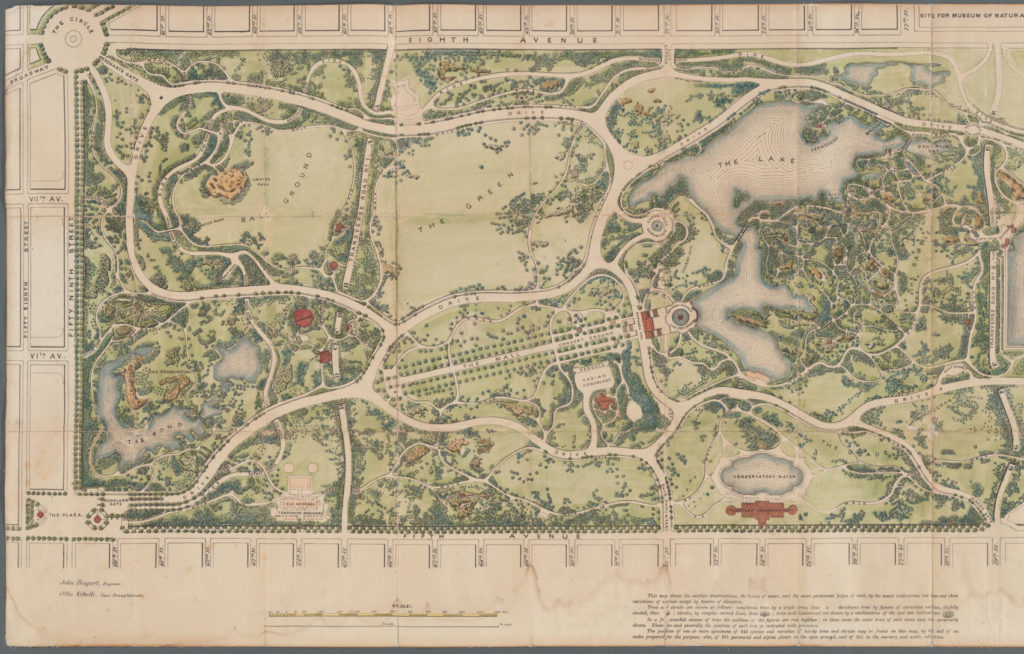
The Greensward plan, by Frederick Law Olmsted and Calvert Vaux, was
chosen as the winning design for the new ‘central park’ in 1857
New York Public Library
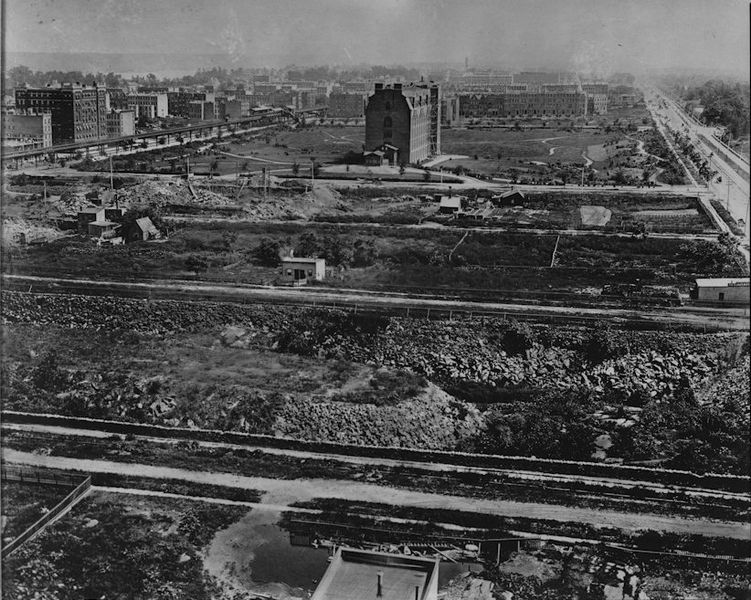
From the late 1870s, the solitary American Museum of Natural History building sits on the spot of Manhattan Square (land just to the west of Central Park granted to Green and the Central Park Commission).
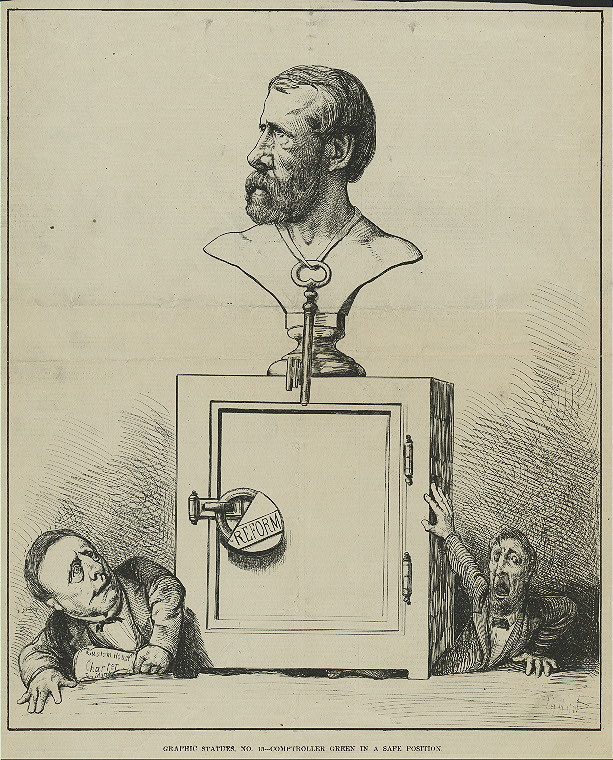
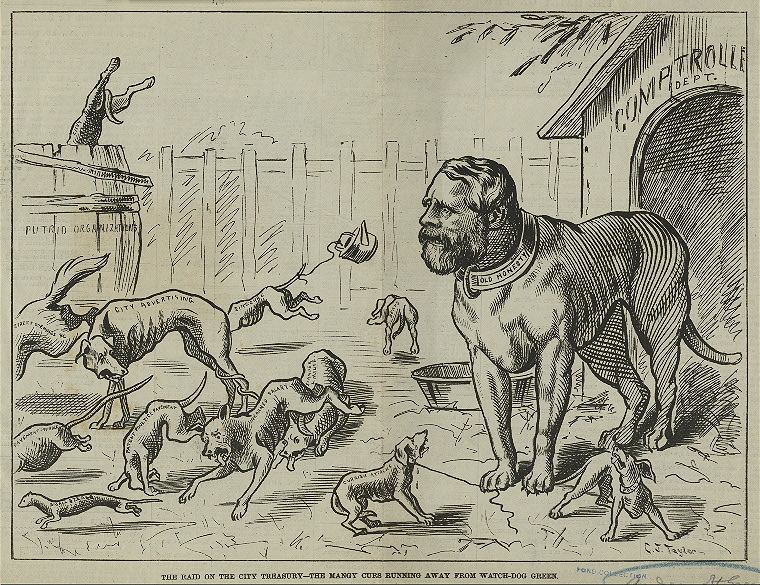
Green in a couple 1870s political cartoon, lampooning his honesty and
austerity — in comparison to Boss Tweed and his Tammany Hall cronies.
New York Public Library
“Not a dollar, not a cent, is got from under his paw that is not wet
with his blood and sweat.” — Olmstead on Green’s legendary
money-managing reputation.
New York Public Library
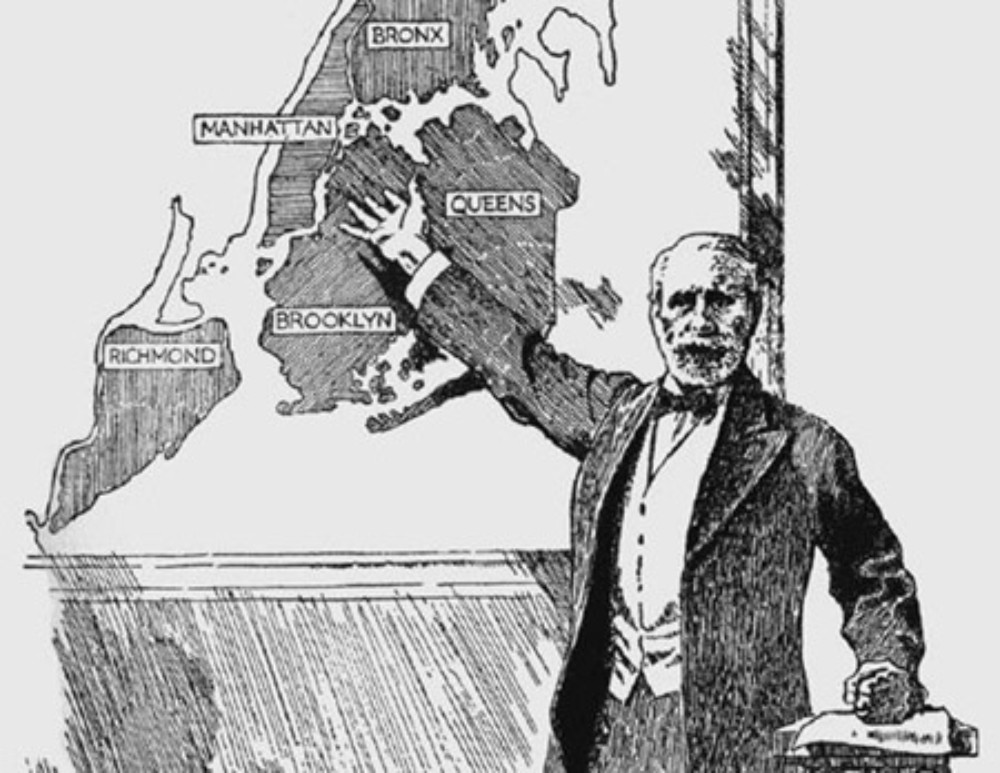
Green, the ardent salesman of a consolidated metropolis.
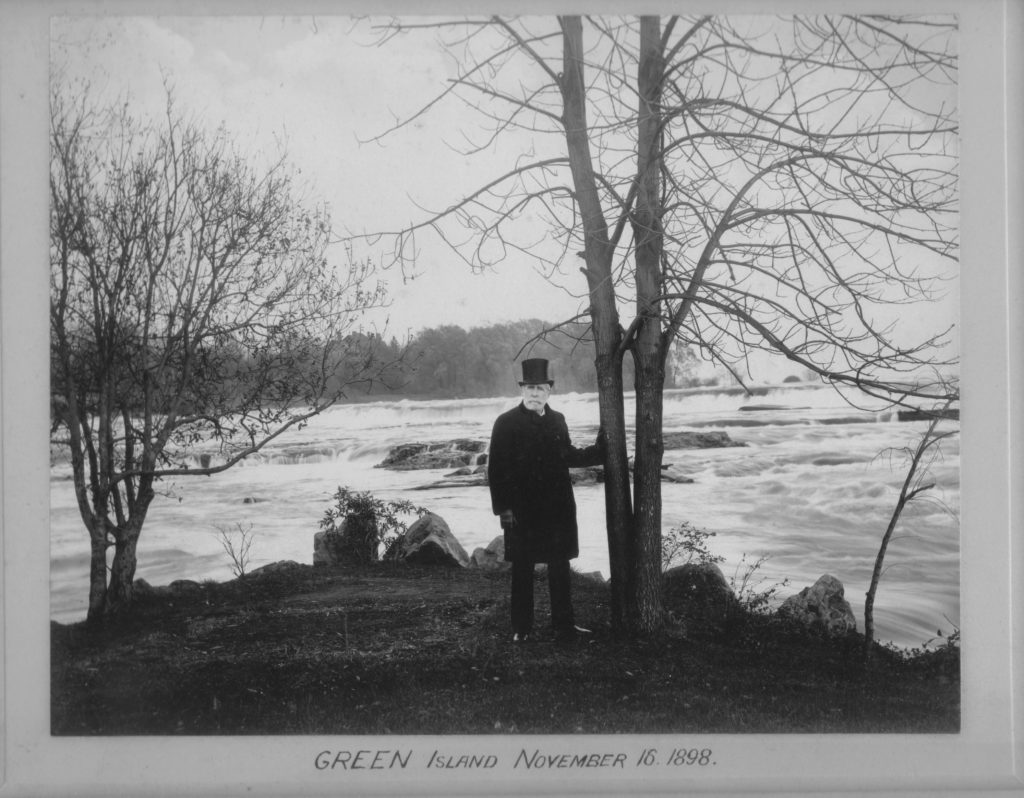
Green on the island that was named for him near Niagara Falls in
1898. He chaired the Niagara Falls State Reservation Commission for
decades, helping to create the park and preserve the falls.
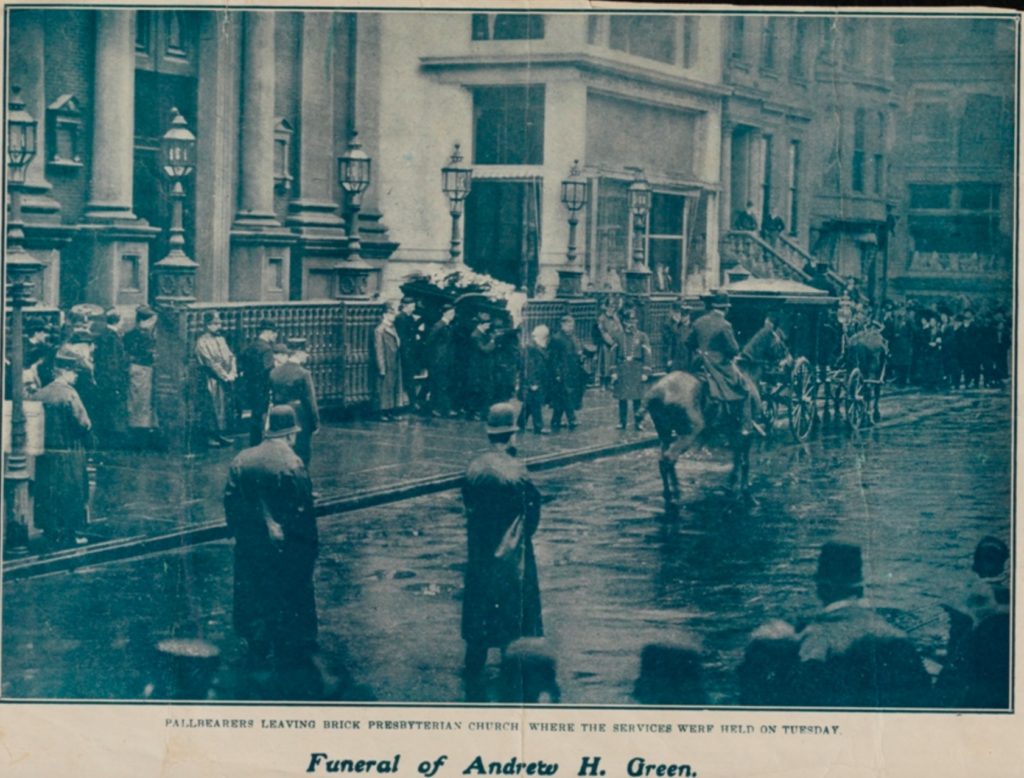
Andrew Haswell Green’s funeral procession leaving Brick Presbyterian Church, 1903
Museum of the City of New York
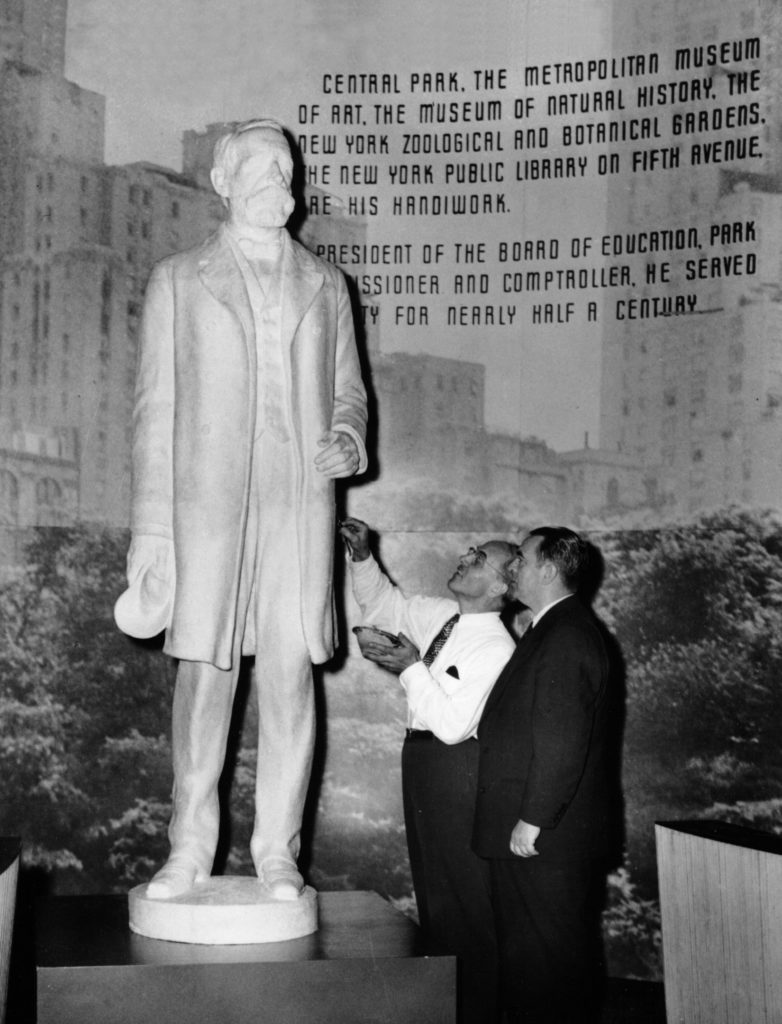
Temporary statue of Green created for the city’s Golden Jubilee
celebration in 1948, marking the 50-year anniversary of the consolidated
city. The men are sculptor Karl Gruppe and NYC Mayor William O’Dwyer.
Michael Miscione
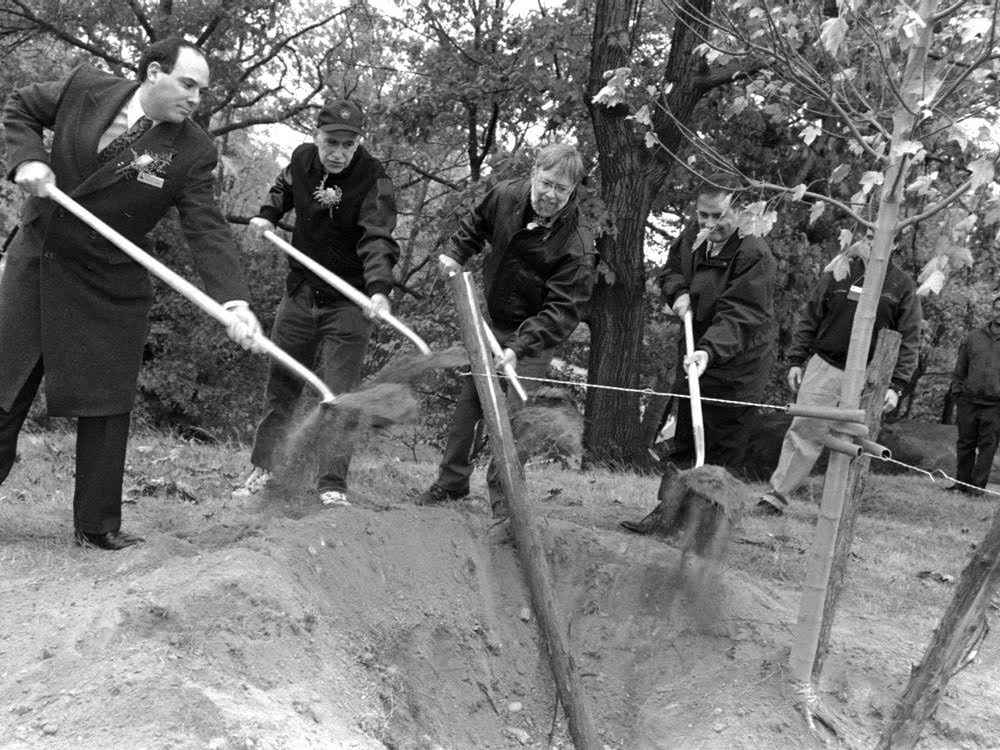
Michael Miscione, Parks Commissioner Henry Stern, Pulitzer
Prize-winning historian Mike Wallace, and MCNY President Robert
Macdonald (left to right) planting five new symbolic trees —
representing the boroughs — at the AHG Memorial Bench in Central park in
1998 to replace the original ones that had died decades years earlier.
Michael Miscione
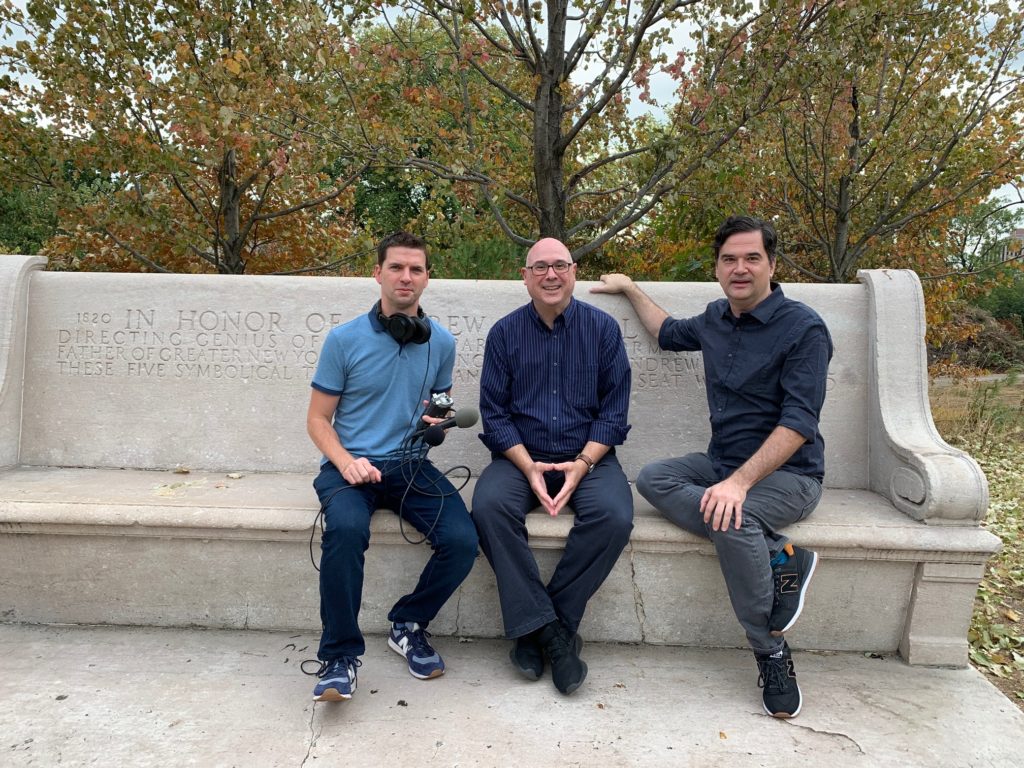
Tom and Greg with Michael Miscione at the Andrew Haswell Green Bench.
Courtesy Michael Miscione
FURTHER LISTENING:
So many of our past 299 shows touch upon landmarks and institutions mentioned in the show, but start with these five:
Andrew Haswell Green and Dorothy Catherine Draper courted for just a
few months and both would remain unmarried for their entire lives. Yet
both are critical figures in American history:
The Consolidation of Greater New York was Green’s grand vision, conceived of during his years on the Central Park Commission.
From way, way back in our back catalog, a two part show on the history of Central Park:
The Bronx Is Born: The magnificent idea of
consolidation was conceived from Green’s ideas of expansion into
Westchester County, into districts that would become known as the
Annexed District
FURTHER READING:
The American Museum of Natural History and How It Got That Way by Colin Davey
The Life and Public Services of Andrew Haswell Green by John Foord
The Greater New York Charter by Andrew Haswell Green
Capital City: New York City and the Men Behind America’s Rise to Economic Dominance, 1860-1900 by Thomas Kessner
The Once and Future New York: Historic Preservation and the Modern City by Randall Mason
Two Centuries of American Planning by Daniel Schaffer
The Father of Greater New York: Official Report of the
Presentation to Andrew Haswell Green of a Gold Medal Commemorating the
Creation of the Greater City of New York: with a Brief Biographical
Sketch
The Bowery Boys: New York City History podcast is brought to you …. by you!
We are now producing a new Bowery Boys podcast every other
week. We’re also looking to improve and expand the show in other ways —
publishing, social media, live events and other forms of media. But we
can only do this with your help!
We are now a member of Patreon, a patronage platform where you can support your favorite content creators.
Please visit our page on Patreon
and watch a short video of us recording the show and talking about our
expansion plans. If you’d like to help out, there are six different
pledge levels. Check them out and consider being a sponsor.
And join us for the next episode of the Bowery Boys Movie Club, an exclusive podcast provided to our supporters on Patreon.
We greatly appreciate our listeners and readers and thank you for joining us on this journey so far.
The New York Public Library‘sOld NYC interface is pretty much one of the best things to happen to New York City history this year. It selects photographs from their extensive archives and maps them out — all five boroughs and pretty much most major intersections. Â It’s like a Google Maps street-view of the past.
It’s been a true delight (and a major distraction) to revisit random avenues and see what things looked like over 75-100 years ago. Â Try it out. Pick a street, any street.
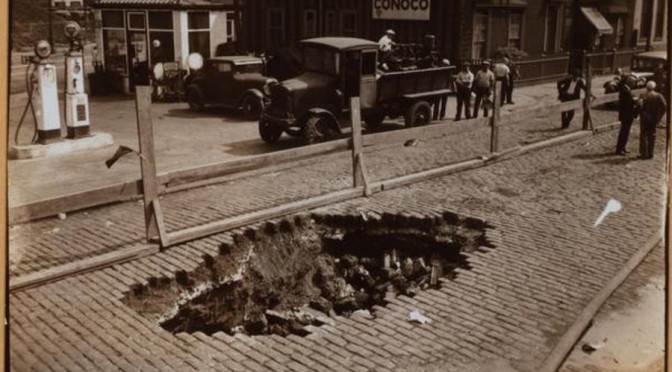
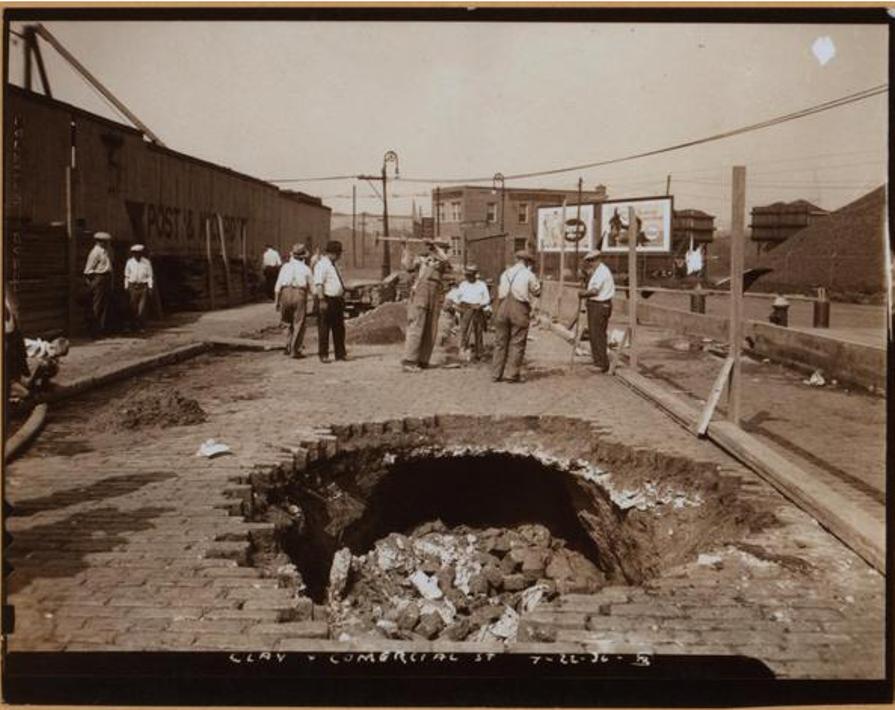
While stumbling through Brooklyn history, I can upon a startling sight at Clay Street and Commercial Street in Greenpoint. Â According to the caption, the photos show “operations on a W. P. A. sewer project.”
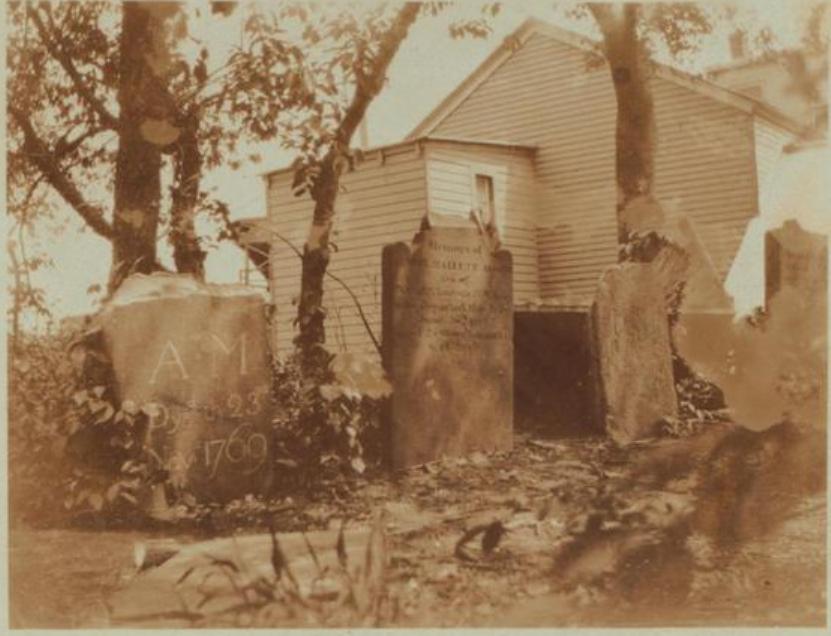
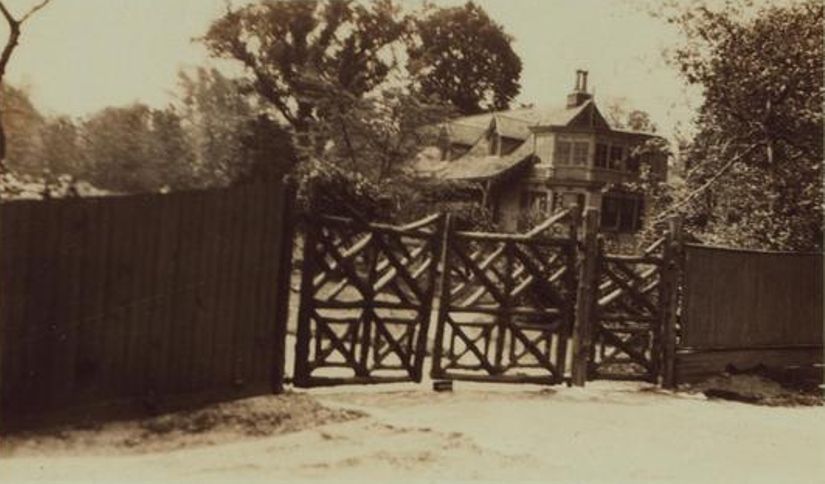
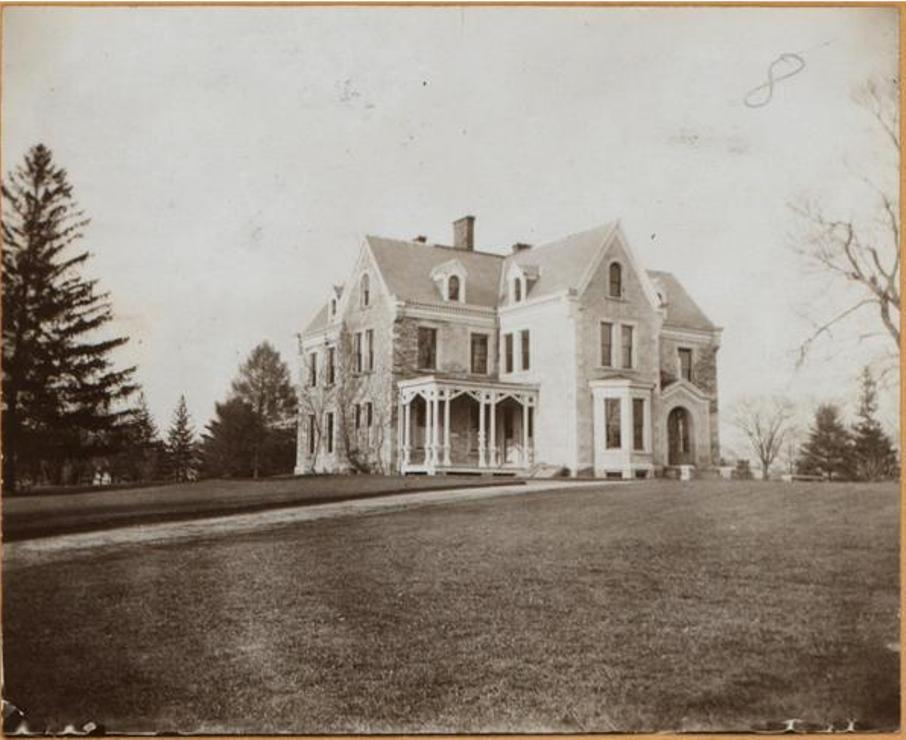
An in-depth plunge through this resource finds all sorts of unusual items from the past. Here are a few more that I discovered but, by all means,go hunt around for yourself!
A spooky cemetery in Woodside, Queens, at 32nd Avenue and the northwest corner of 54th Street (or this intersection):
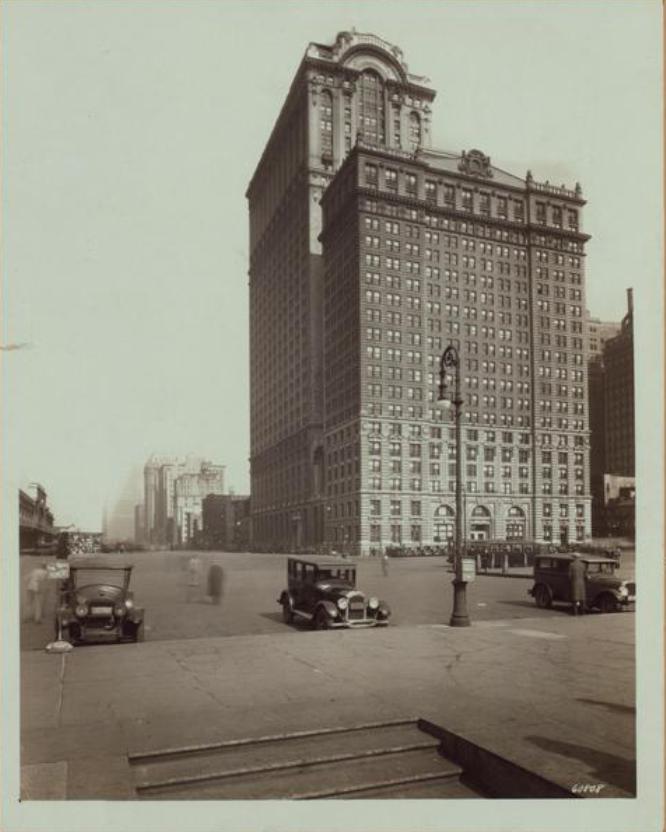
Back when one could just park your jalopy at the foot of West Street, 1920s. Here’s that view today. [source]
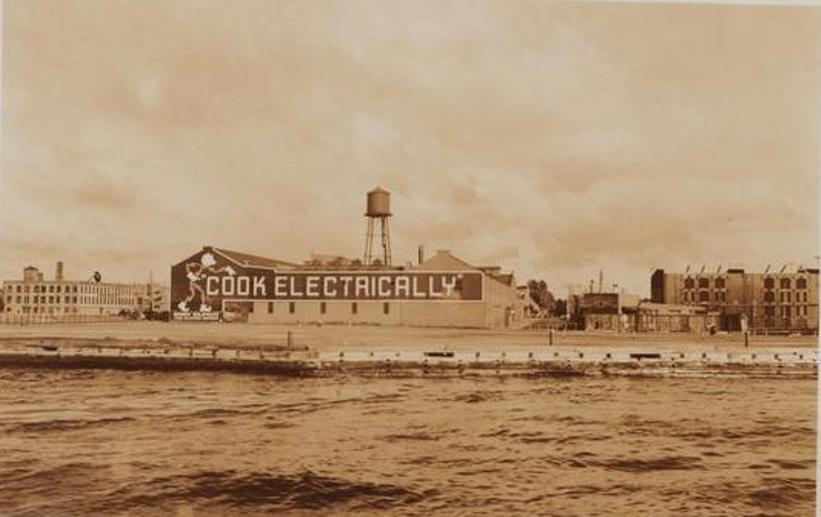
Edison Electric Company wants to encourage you to ‘COOK ELECTRICALLY’ from the vantage of a Ferris Street sign in Red Hook, Brooklyn. [source]
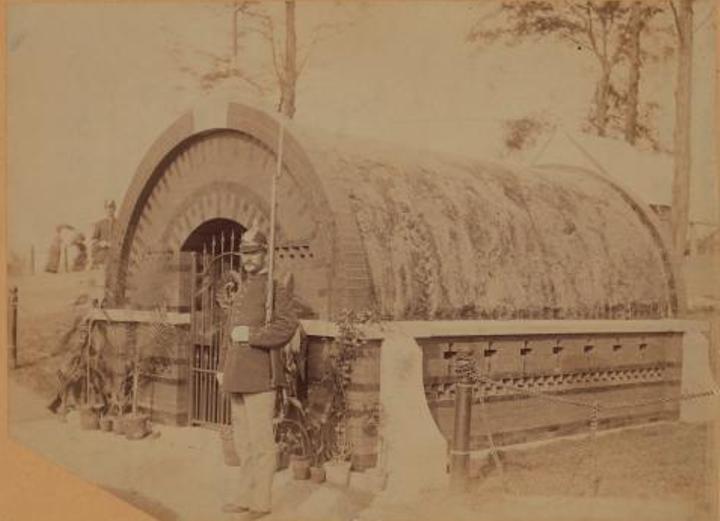
Before Ulysses S. Grant was interred in the monument that bears his name, he was kept in a temporary tomb near the same spot. Â This picture is from the 1880s. [source]
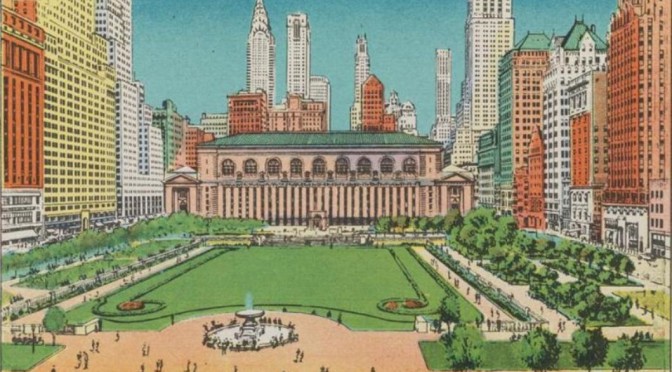
NEW PODCAST In our last show, we left the space that would become Bryant Park as a disaster area; its former inhabitant, the old Crystal Palace, had tragically burned to the ground in 1858. The area was called Reservoir Square for its proximity to the imposing Egyptian-like structure to its east, but it wouldn’t keep that name for long.
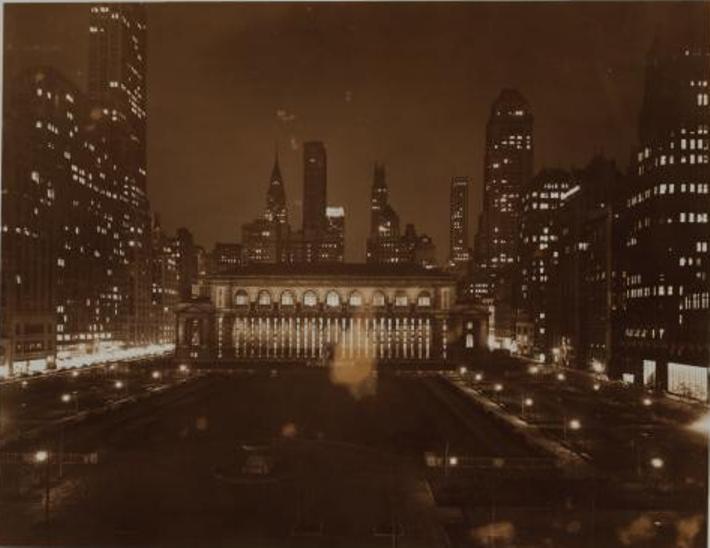
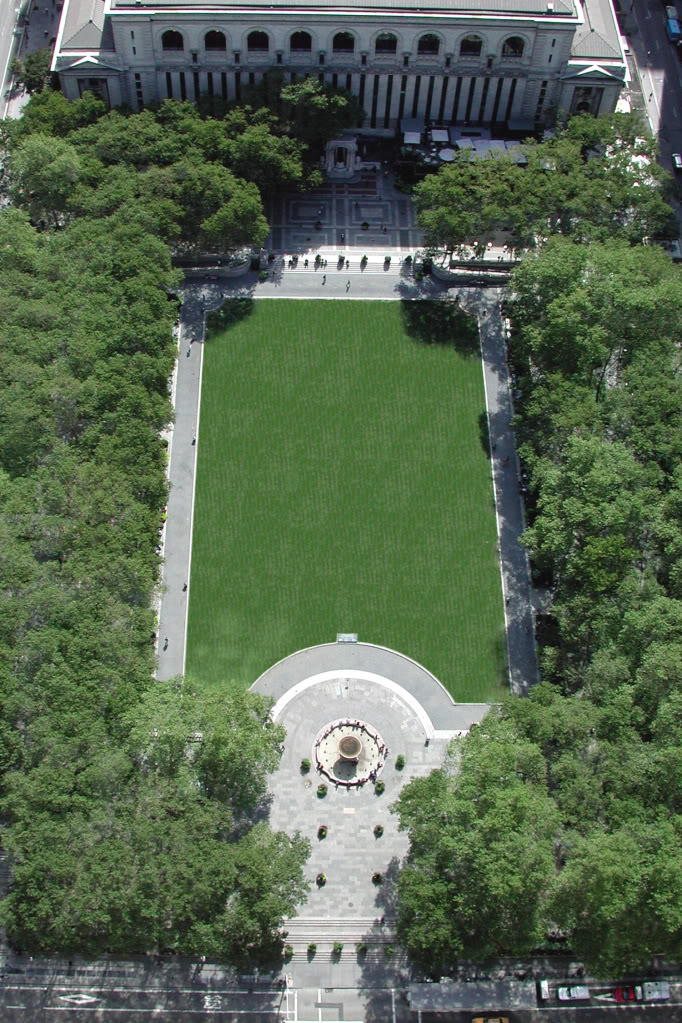
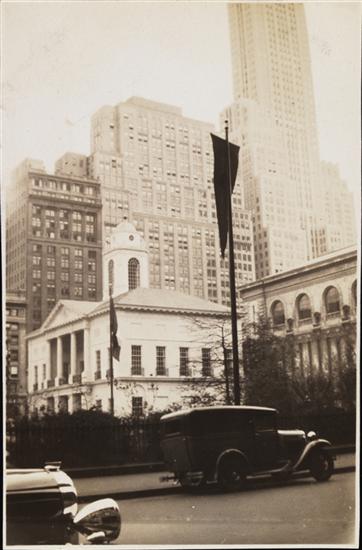
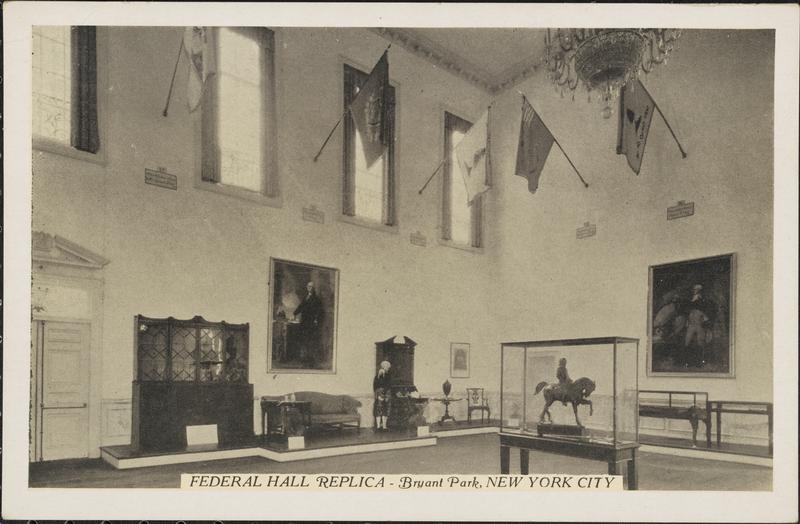
William Cullen Bryant was a key proponent to the creation of Central Park, but it would here that the poet and editor would receive a belated honor in the 1884. With the glorious addition of the New York Public Library in 1911, the park received some substantial upgrades, including its well-known fountain. Over twenty years later, it took on another curious present — a replica of Federal Hall as a tribute to George Washington.
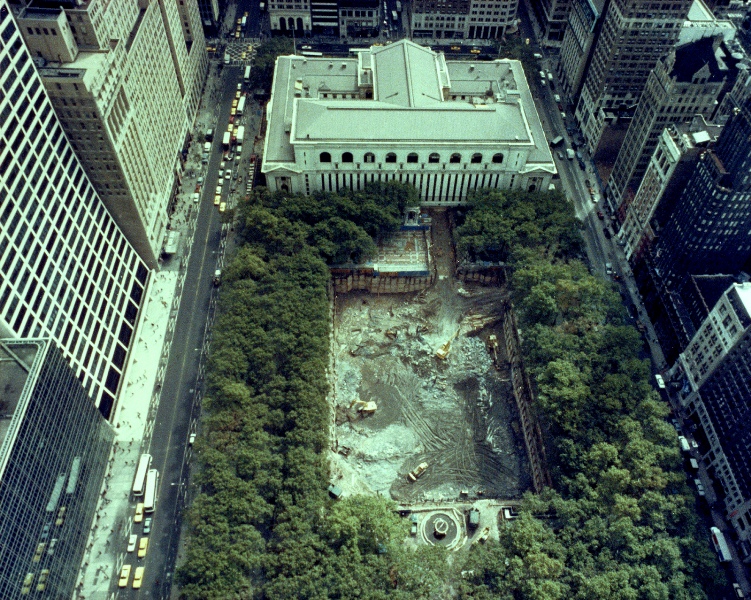
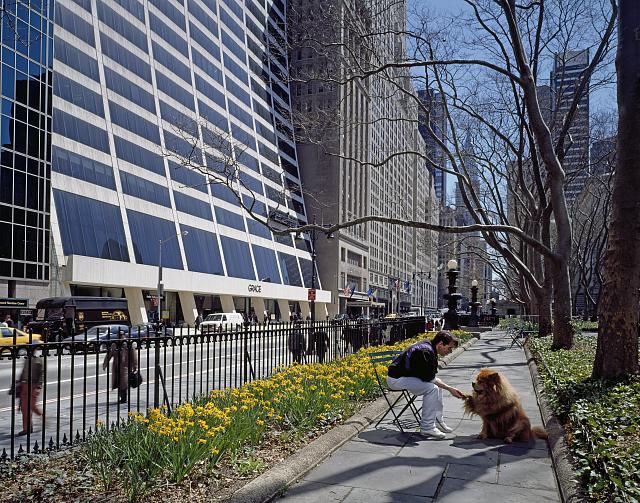
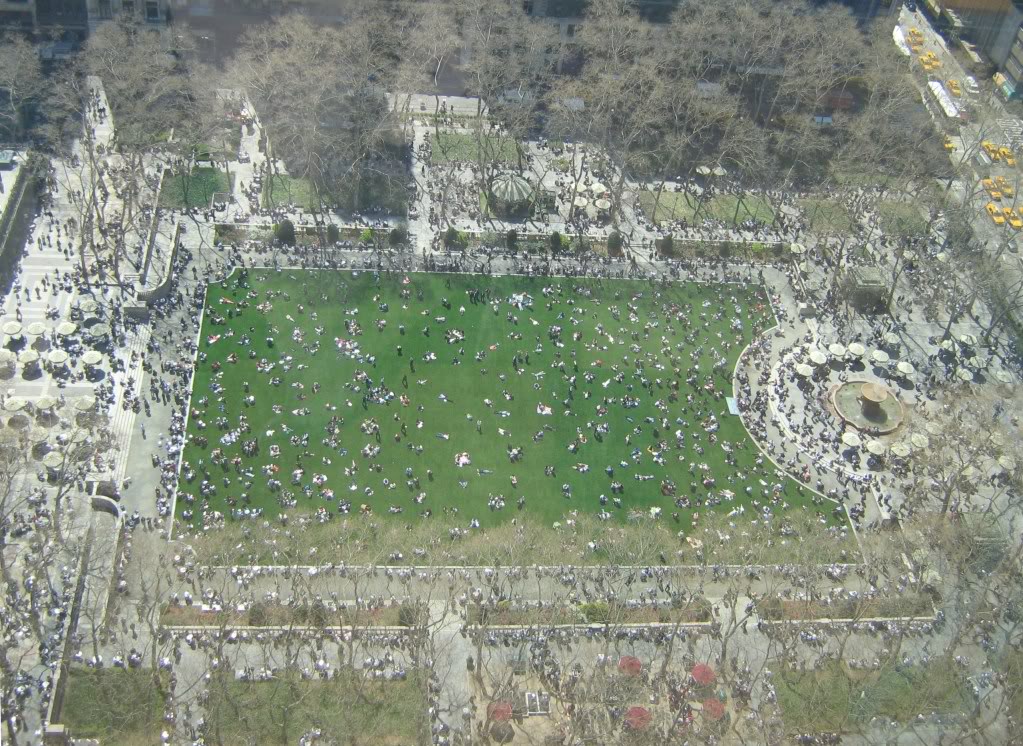
By the 1970s Bryant Park was well known as a destination for drug dealers and most people shied away from its shady paths, even during the day. It would take a unique plan to bring the park back to life and a little help from Hollywood and the fashion world to turn it into New York’s most elegant park.
The Bowery Boys: New York City History podcast is brought to you …. by you!
Starting with this episode, we are doubling our number of episodes per month. Now you’ll hear a new Bowery Boys podcast every two weeks. We’re also looking to improve the show in other ways and expand in other ways as well — through publishing, social media, live events and other forms of media. And we need your help to make these expansion plans happen.
We are now a member of Patreon, a patronage platform where you can support your favorite content creators for as little as a $1 a month.
Please visitour page on Patreon and watch a short video of us recording the show and talking about our expansion plans. If you’d like to help out, there are five different pledge levels (and with clever names too — Mannahatta, New Amsterdam, Five Points, Gilded Age, Jazz Age and Empire State). Check them out and consider being a sponsor.
We greatly appreciate our listeners and readers and thank you for joining us on this journey so far. And the best is yet to come!
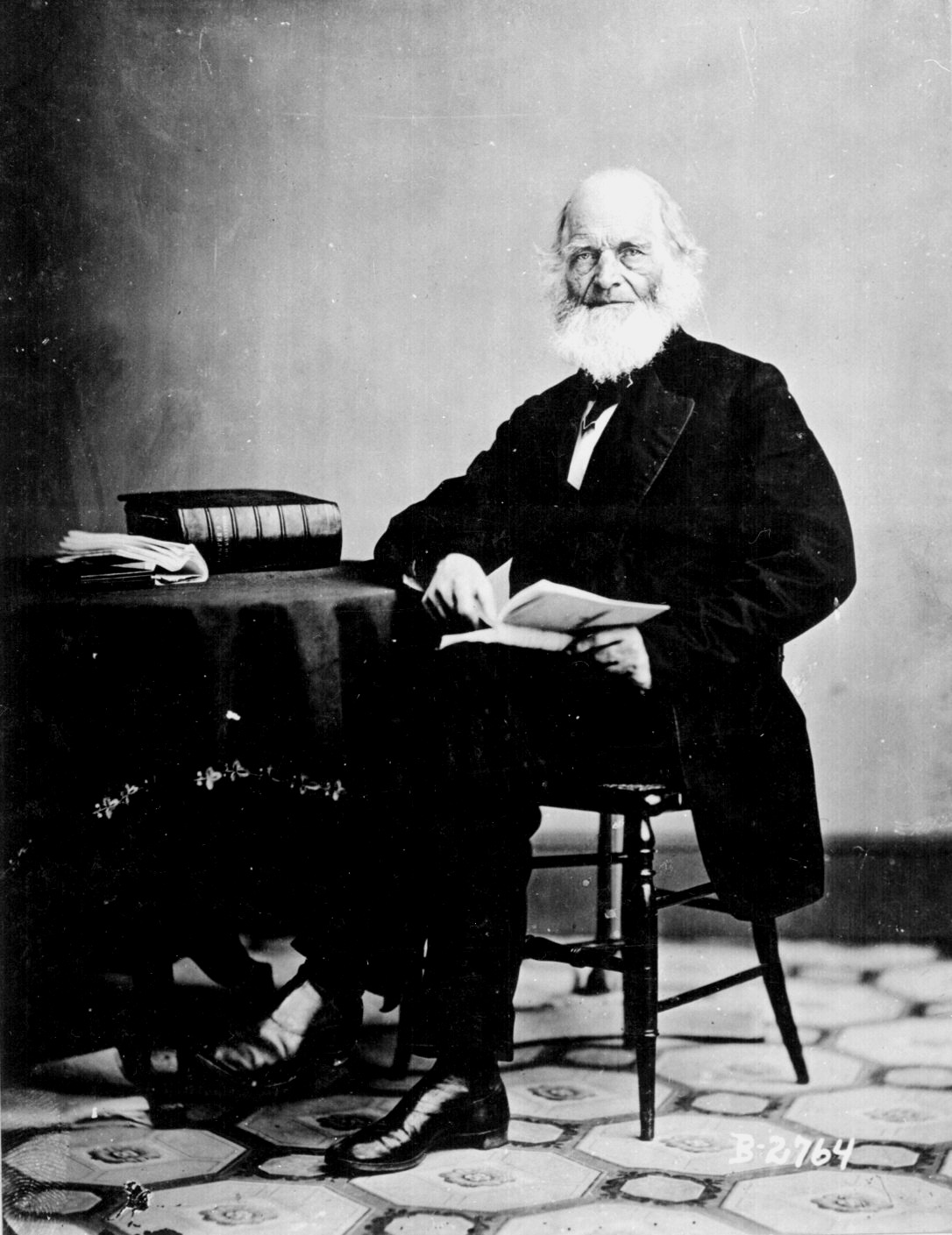
William Cullen Bryant, photo taken by Matthew Brady
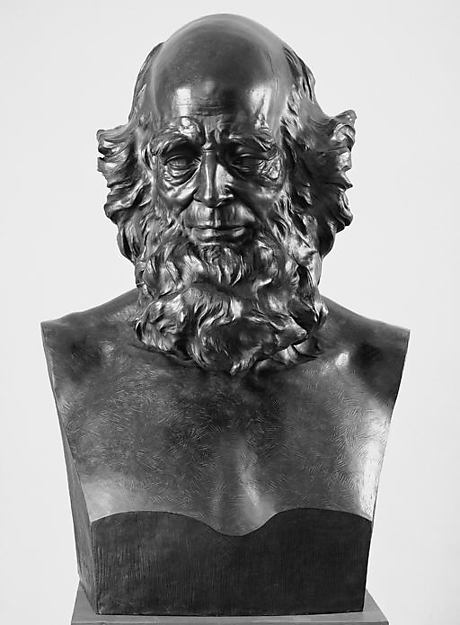
William Cullen Bryant in bust form, but Launt Thompson. It seems this bust has made its way back to the Metropolitan Museum of Art!
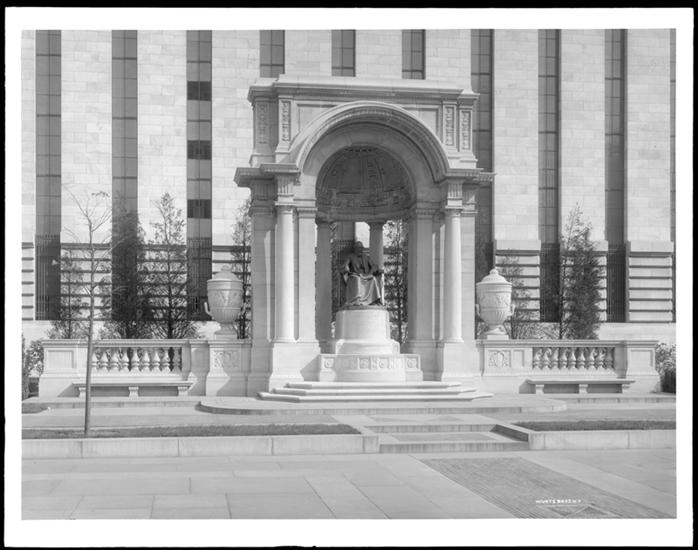
William Cullen Bryant installed in his marble niche behind the New York Public Library. This picture was taken in 1910, well before the radical redesign of the park in the 1930s. (Museum of the City of New York).
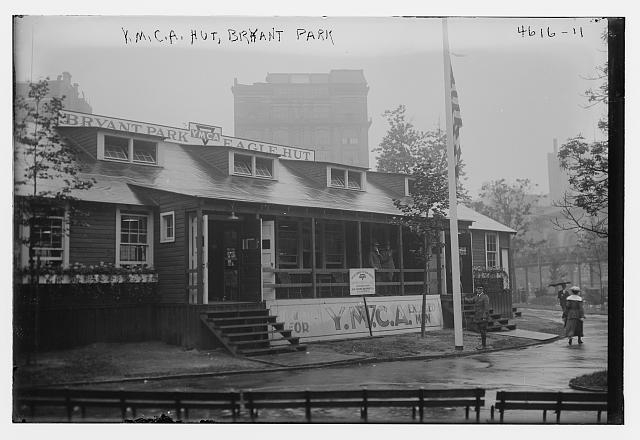
During World War I, the YMCA had a special ‘Eagle Hut’ built in the park for traveling servicemen. (Library of Congress)
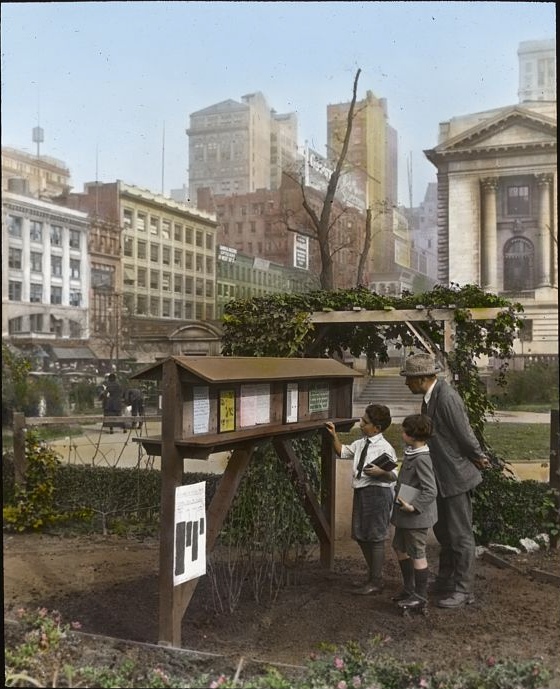
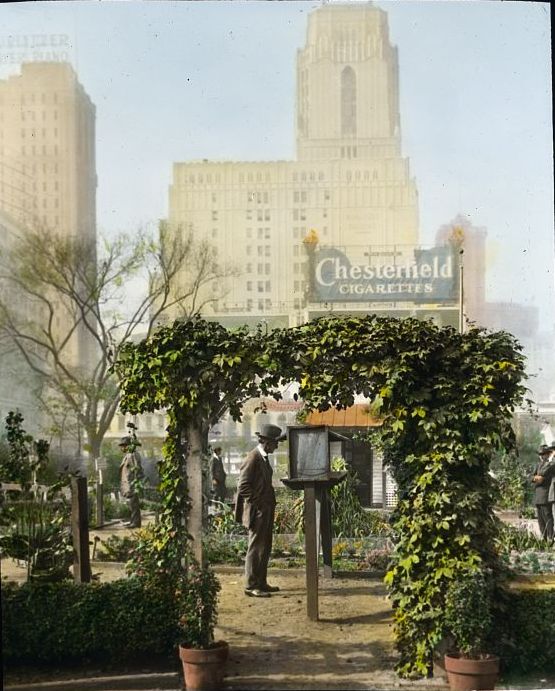
A colorful depiction of the Bryant Park ‘demonstration gardens’ that were planted during the war. (Library of Congress)
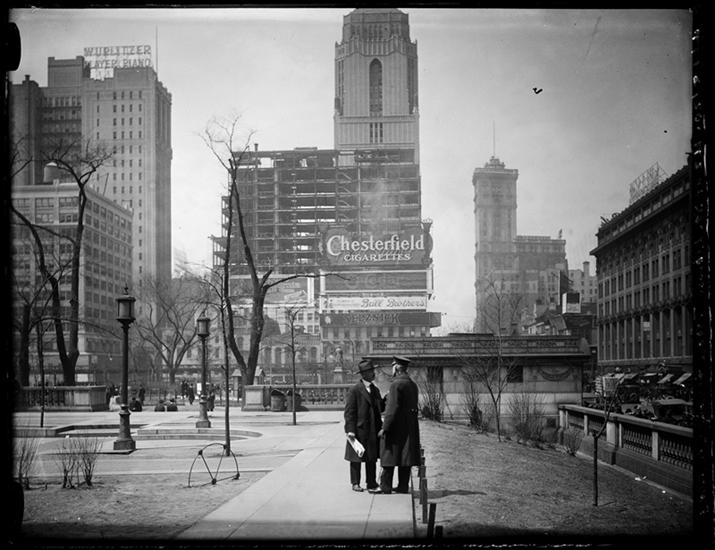
Bryant Park in 1920. Looking west on 42nd Street at 6th Avenue (you can see the elevated railroad!) In the distance is One Times Square. Note the reappearance of the Chesterfield Cigarettes billboard from the picture above. (Museum of the City of New York)
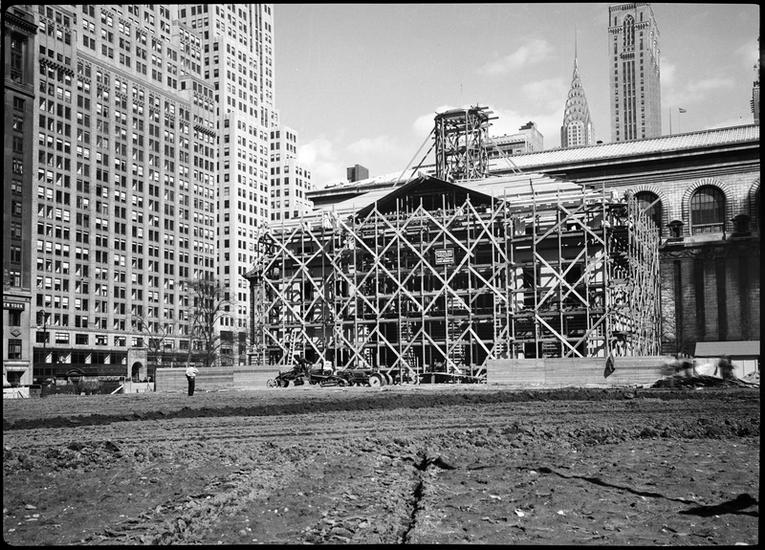
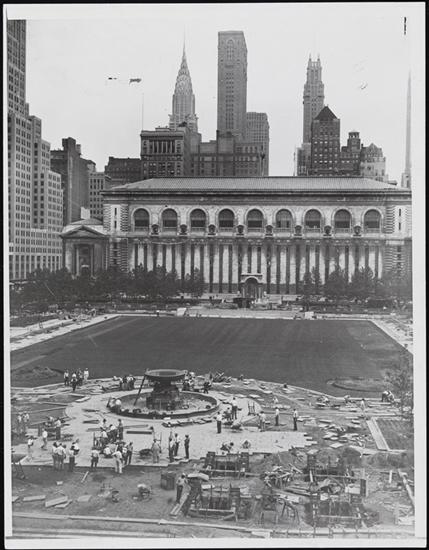
Constructing a replica of Federal Hall in a barren Bryant Park. (Picture taken by the Wurts Brothers, Museum of the City of New York)
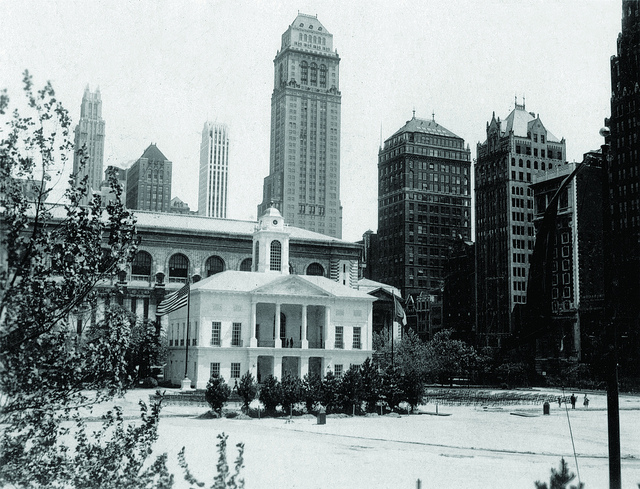
The Federal Hall reconstruction had a corporate sponsor — Sears Roebuck & Co. Here’s how it looked in better days. Believe it or not, the reproduction of Mount Vernon actually did get built in New York —in Prospect Park in Brooklyn! (Bryant Park Corporation)
Bryant Park’s Federal Hall, May 1932. (Museum of the City of New York)
The interior of Bryant Park’s Federal Hall. (Museum of the City of New York)
The reconstruction of Bryant Park in 1934, overseen by new Parks Commissioner Robert Moses
This photo was taken by Stanley Kubrick during his years as a photographer for Look Magazine. The caption reads “Park Bench Nuisance [Woman reading a newspaper, while a man reads over her shoulder.]” Courtesy Museum of the City of New York
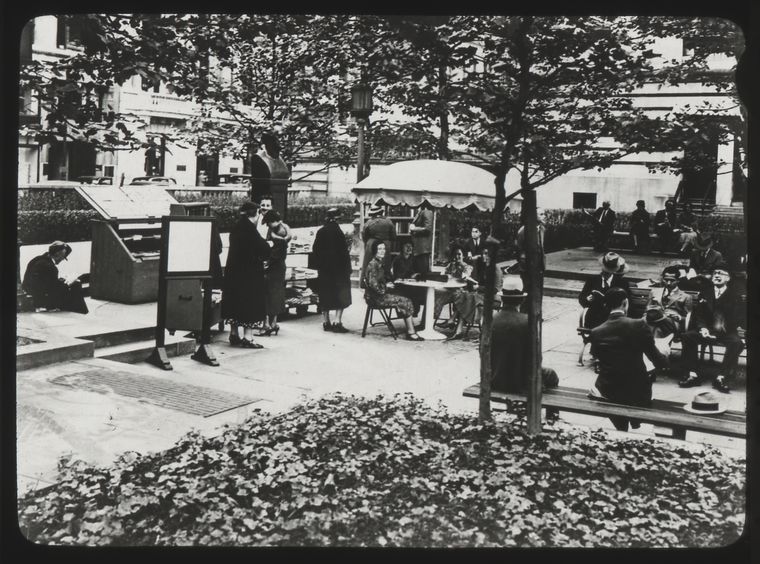
People enjoying the New York Public Library’s outdoor reading room, 1930s. (New York Public Library)
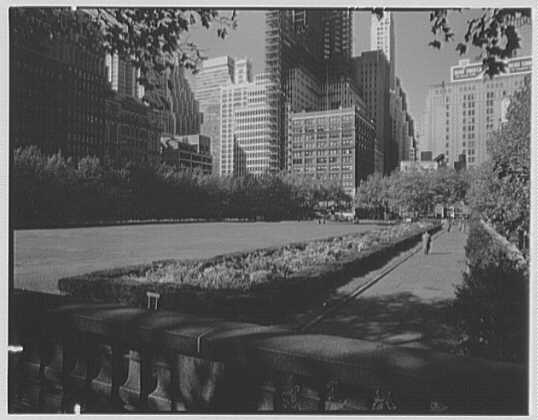
The hedges of the central lawn, photo taken in 1957. These were removed in the desperate effort to clean up the park in the late 1980s. (Library of Congress)
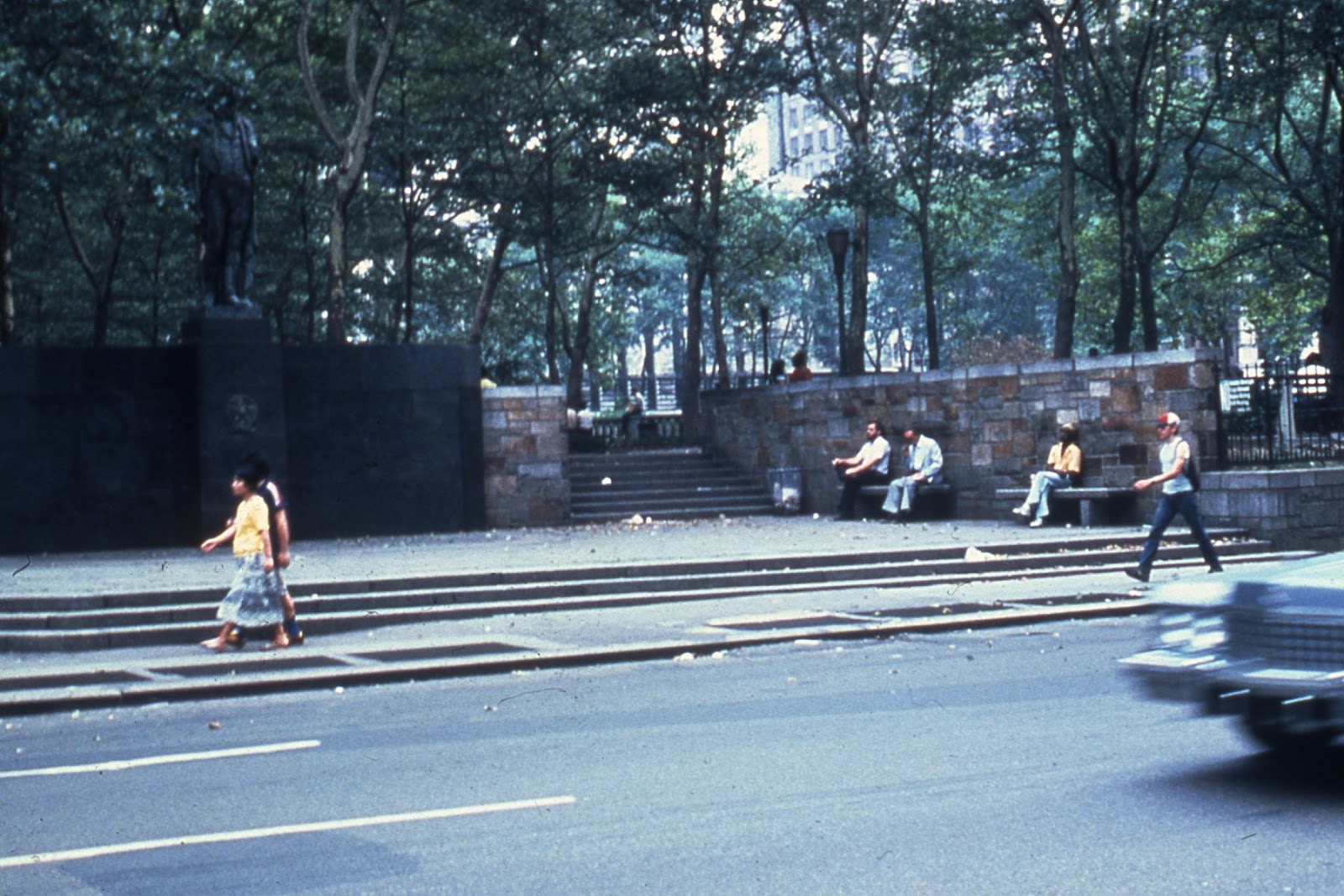
Bryant Park in the 1980s. High walls allowed for suspicious behavior to occur in the at all hours of the day. (Bryant Park Conservancy)
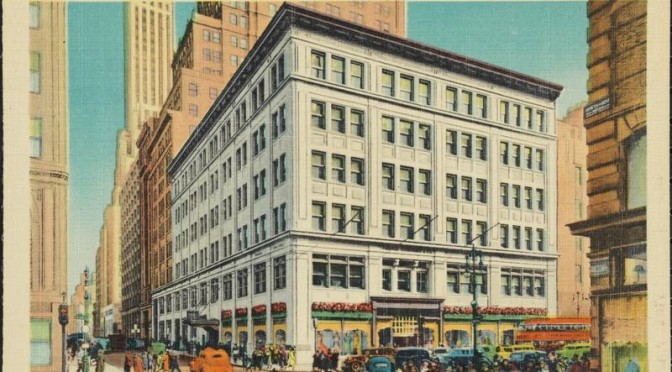
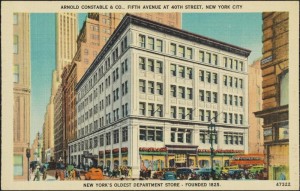
“When Arnold, Constable and Co. move next September to the new building that Frederick W. Vanderbilt is to erect on the site of his home at Fifth Avenue and Fortieth Street, not a department store will remain on Broadway between 14th and 23rd streets, for nearly half a century the recognized high class shopping center of New York City.”
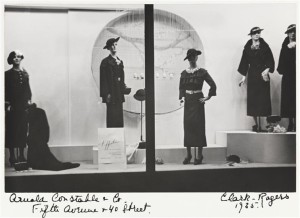
Below: Display windows at the 5th Ave location in 1935 (Pictures are courtesy MCNY)
B Altman, the first of the major department store owners to move to Fifth Avenue, was immediately seen as a visionary. “Every one can see today that this shrewd business man knew what he was doing, for Fifth Avenue is not only the greatest shopping street in New York, but is said to lead all others in the world.”
The B Altman department store building is still around, on the northeast corner of 34th Street and Fifth Avenue. It’s now the home for the City University of New York.
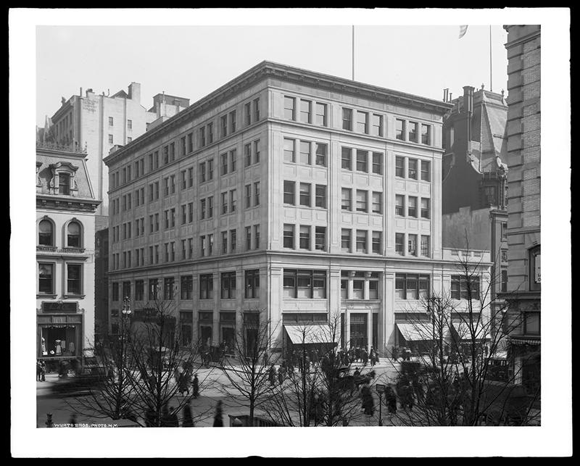
The building which contained the Fifth Avenue store of Arnold, Constable and Co. is still around as well.
The upper-crust store was one of Ladies’ Mile’s last holdouts, even as the other fine shops like Lord & Taylor had already moved uptown. Their new department store, catty-corner to the New York Public Library main branch, finally opened in November 1915 and stayed open for sixty years, until 1975. The structure was then bought and turned into the Mid-Manhattan Library.
Incidentally, just yesterday, the New York Public Library released its newest plans to refurbish this much distressed building.
Compare this picture of Arnold Constable & Co., from 1915, with the one taken yesterday at the Mid-Manhattan Library:
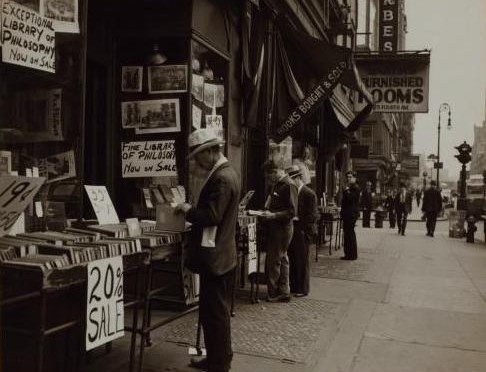
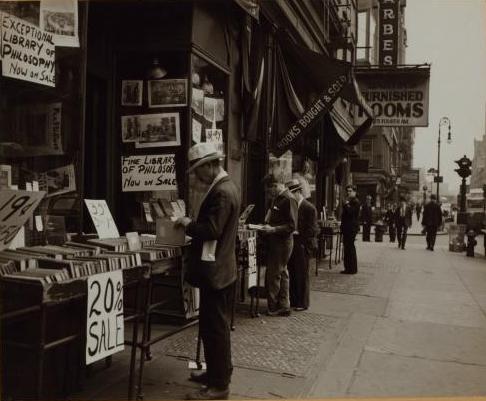
The used bookstores of Book Row, the above shot from Fourth Avenue and 10th Street, 1938 (courtesy NYPL) BOWERY BOYS BOOK OF THE MONTH Each month I’ll pick a book — either brand new or old, fiction or non-fiction — that offers an intriguing take on New York City history, something that uses history in a way that’s uniquely unconventional or exposes a previously unseen corner of our city’s complicated past. You can find some our past selections here and links to purchase them from Amazon at the bottom of this post.
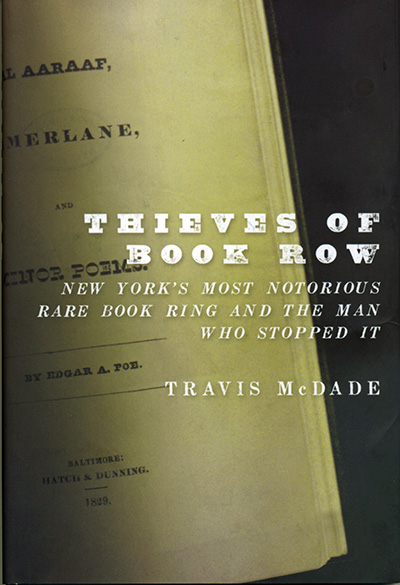
Thieves of Book Row by Travis McDade Oxford University Press
You probably own a book that you consider priceless, not for its physical value, but for the knowledge it imparted upon you, or the adventure it provided. Books can bring you into their worlds, and they can capture who you once were when you first read them.
Now separate those meaningful values and see your favorite book as nothing but an object — a precious, rare artifact, hoarded like jewels by wealthy collectors. A one-of-a-kind bound volume as desirable as fictional literary treasures like the Maltese Falcon or the Holy Grail.
From the late 19th century until the end of the jazz age, criminals worthy of a film noir backdrop were on the prowl for these objects, spiriting them away in coat pockets and sprinting through the streets of Manhattan to deliver them to book-buying fences. It was in this manner that hundreds of books changed hands from the advent of mass-market publishing to the end of the jazz age, creating New York’s most intellectual black market.
Welcome to the world of Thieves of Book Row, an intriguing new historical investigation by Travis McDade that uncovers an unusual criminal undercurrent that thrived in New York upon the increasing stature of books as exotic, desirable artifacts.
The rare book market exploded in the late 19th century as Americans became wealthier and created their own personal libraries. The development of American identity after the Civil War turned obscure, small-run volumes of Americana by local historians into highly sought-after items. Early editions by famous poets and novelists, manufactured in modest runs, were hunted down by Gilded Age millionaires who could spend months seeking one particular book.
But the value of books went beyond particular authors and titles. Public lending libraries, such as the Astor and Lenox libraries, made old books available for the general public. The concept of a ‘rare book’ room was still many years in the future, so older books frequently went into circulation. By the early 20th century, the New York Public Library and associated neighborhood libraries sprang up throughout the city, and for the first time, regular New Yorkers could experience great works of writing themselves.
With mass production of books came the advent of used bookstores, which clustered in New York City north of Astor Place in an area called Book Row and later in areas of midtown Manhattan. As McDade illustrates, it was here that the book thief thrived, as crooked book sellers went into overdrive to provide rare, valuable objects for a growing number of wealthy book lovers.
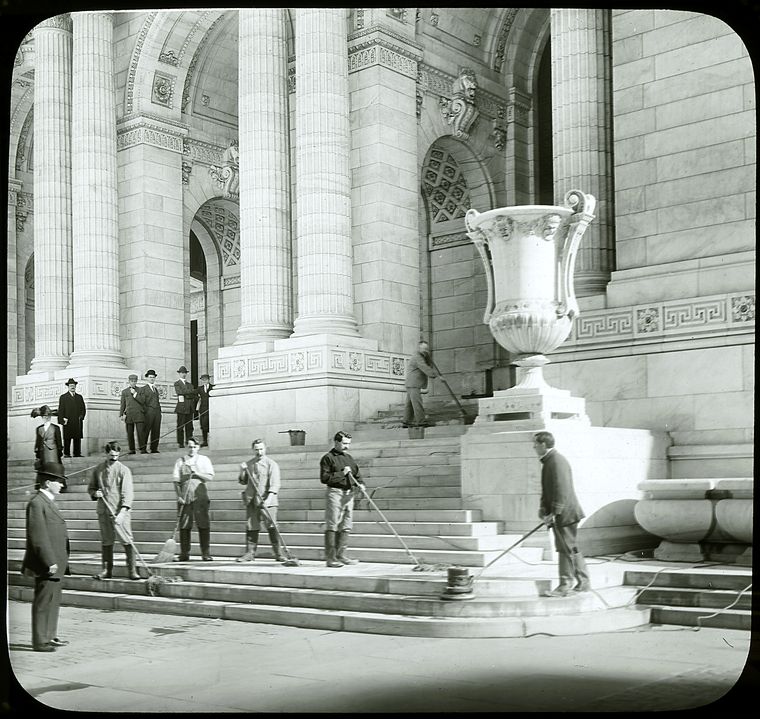
In fact, a ring of book thieves terrorized book stores and libraries up and down the East Coast, common criminals often led by a book seller with connections to wealthy buyers. Hardly a trifling crime, book thieves were considered “the meanest thief God ever let live” by 1907 and were harshly prosecuted. A few thieves you will meet in McDade’s engrossing investigation will end up in Sing Sing Prison. Below: Outside of the New York Public Library central branch on 42nd Street, early 1920s
Robbing from a public library was akin to snatching a book from a poor child’s hands. “Stealing books from the libraries of the public is one of the unspeakable crimes — like stealing coins from the eyes of a dead man,” said a judge in 1904.
The centerpiece of this tale is the theft of a particular volume: Al Aaraaf, Tamerlane and Minor Poems by Edgar Allan Poe, an author whose book value skyrockets during the Gilded Age. What makes this book theft so intriguing is where it was stolen from — the virtual fortress of the New York Public Library’s main branch. The best passages in Thieves of Book Row describe the methodical heist of this and other precious volumes from NYPL’s Reserve Book Room, walking you step-by-step through this criminal enterprise.
If you love books, it will be McDade’s backdrop that may appeal to you more, a world of bookstores that has disappeared, dozens of stores stocked with thousands of old book, clustered along a few city streets. Today, the Strand Bookstore, Alabaster Bookstore and a couple others are all that remain of this once remarkable district in the Village.
Along the way, you’ll meet the New York Public Library’s jazz-age investigator G. William Bergquist and a shifty assortment of book thieves, some of middling intelligence. It seems many of these desperate men were simply too busy shoving volumes into their coats to actually read any of them.
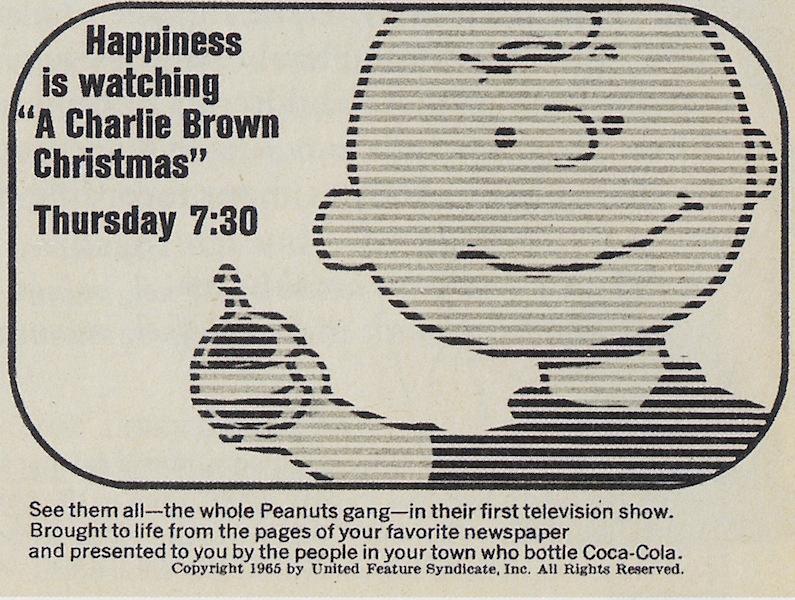
The first time: A TV Guide advertisement from 1965 announcing the upcoming Charlie Brown special, “presented … by the people in your town who bottle Coca-Cola.” [source]
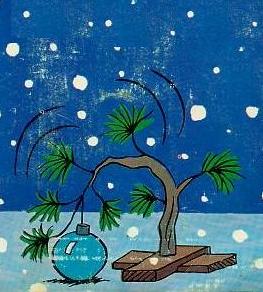
A Charlie Brown Christmas, the holiday special to end all holiday specials, needed a little encouragement from the Madison Avenue advertising world in 1965 to spring into existence. Â In fact, Peanuts’ creator Charles Schulz wasn’t exactly clamoring for any kind of television version of his classic characters.
The Minnesota cartoonist’s first fateful encounter in New York came in June 1950, when he met with editors at United Feature Syndicate, located in the Daily News Building on 42nd Street, to form the strip which eventually became Peanuts. Â The syndicate initially restricted the size of Schultz’s cartoon panels to flexibly adhere to the various column sizes of their partner newspapers. This forced simplicity into Schultz eventual designs for his characters — the bulbous head of Charlie Brown, the dash of black ears on an all-white beagle.
The syndicate unveiled Schulz’s creation a few months later, on October 2, 1950. Within a decade, it would be one of America’s most famous comic strips.
Flash-forward to another spring in New York, April 1965, and to the bustling offices of advertising agency McCann Erickson, at 485 Lexington Avenue. Â They were Madison Avenue’s most successful agency and held among their clients the defining product of post-war America — Coca-Cola.
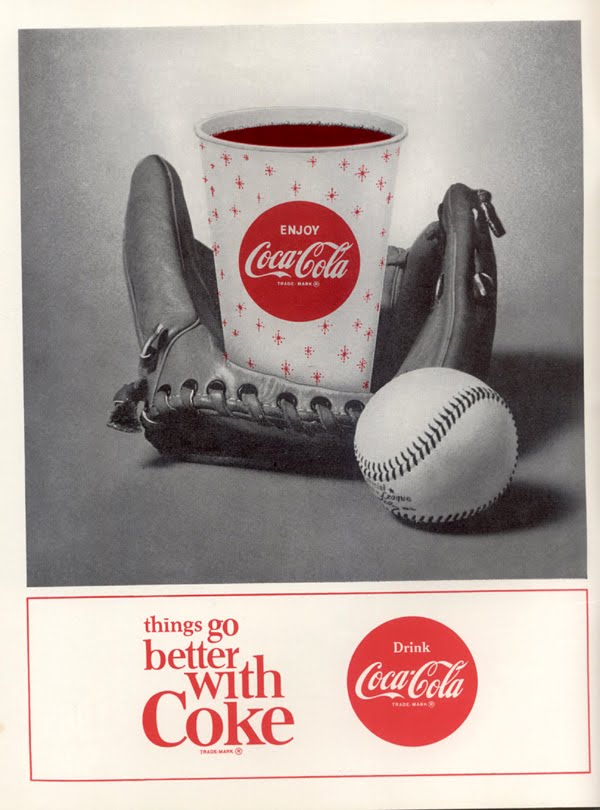
McCann Erickson would be responsible for some of Coke’s most recognizable advertising campaigns during a decade when the beverage would reach international popularity.  In 1971, agency efforts would underscore Coke’s world domination with ‘I’d Like To Buy The World A Coke’.  At left: A McCann-Erickson Coke ad from 1965, courtesy the blog Beautiful Life
Coke was looking for a television show to sponsor for the holiday season of 1965, one that could be developed from scratch, with a Coca-Cola audience in mind — namely, families with children.
(If you’re a ‘Mad Men‘ fan, you may also be familiar with McCann Erickson as the agency from Season 3 who bought out Sterling Cooper, forcing Don Draper and the gang to quit and form a new, fledgling agency. The events of Season 4 — with Ken Cosgrove still in McCann’s employ — play out during 1965, the same year as AÂ Charlie Brown Christmas.)
One of McCann Erickson’s lead executives John Allen had an idea in mind. Â He had seen a documentary on Schulz, called A Boy Named Charlie Brown, and that film contained some crudely animated versions of Charlie Brown and Lucy by animator Bill Melendez. Â Allen called up Melendez and asked if Schulz had ever been interested in developing a full-length television special.
He had not, actually. Â In fact he had turned down many previous offers to produce animated specials. Schulz said at the time, “There are some greater things in the world than TV animated cartoons.” Â Yet, perhaps contradictory to this, Schulz seemed open to licensing and merchandising opportunities. Â In 1960, Charlie Brown and Lucy made their first animated appearance on television hawking cars for Ford:
But you couldn’t turn down an offer by the world’s biggest sugary beverage, could you? Â Melendez agreed, brought the offer to Schulz at his northern California home, and from his studio there, he and a team of animators frantically put together a program in time for the holidays.
Schulz wanted lots of snow and ice skating and talk of “the true meaning of Christmas,” inspiring the special’s lengthy Biblical monologue by Linus. Â They auditioned Hollywood children and kids from Schulz’s neighborhood for the voiceovers and called up San Francisco-based musician Vince Guaraldi, who had recently cracked the Billboard charts with the song ‘Cast Your Fate To The Wind‘, to score the special.
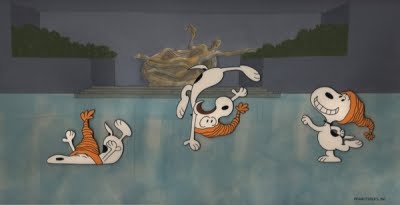
Below: Snoopy careens around the Rockefeller Center ice skating rink in the 1969 film A Boy Named Charlie Brown.
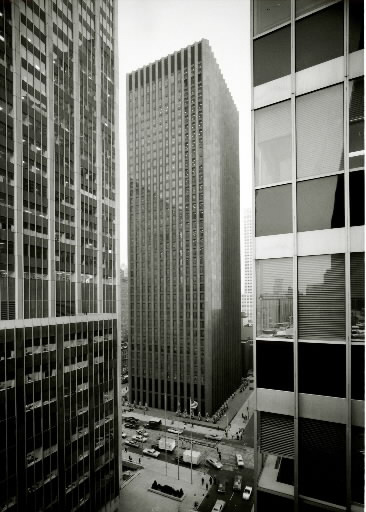
The half-hour feature was finished just a few days before broadcast. TV Guide and newspapers were already advertising the airing when Melendez sped to CBS’s brand new corporate offices at 51 West 52nd Street; the Eero Saarinen-designed building was nicknamed Black Rock for its monolithic design. (Pictured below, pic courtesy Skyscraper.org.)
Melendez screened the special for executives who were greatly underwhelmed with the final product. Â “It seems a little flat … a little slow,” said one executive, assuring Melendez that CBS would not be ordering any future Peanuts specials. Â According to producer Lee Mendelson, “If the show hadn’t already been scheduled to air in six days, it might never have been broadcast.”
Fortunately, a Time Magazine reviewer was allowed to screen A Charlie Brown Christmas and wrote a rave review that ran a couple days before showtime. From the review: “For one thing, the program is unpretentious; for another, it is unprolonged (30 minutes).”
But television audiences would have the final say and, upon broadcast on Thursday, December 9, it became the week’s second biggest show behind Bonanza.  Popular acclaim was soon joined by critical plaudits; a few months later, Schulz, Melendez and Mendelson arrived back in New York to receive an Emmy Award for Best Animated Special.
The original version of A Charlie Brown Christmas included a short shot of Linus being flung by Snoopy into a Coca-Cola sign. It was later edited to say Danger, which was then edited out entirely, because, well, it’s a bit disturbing. (See below.) Â No remnant exists today within A Charlie Brown Christmas of its Coca-Cola advertising reason for being.
Four years later, Charlie Brown, Snoopy and Linus would head to New York themselves, in the 1969 feature length film A Boy Named Charlie Brown (title similar to the 1962 documentary) in which Charlie would nervously compete in the Scripps Spelling Bee competition.
Schulz’s Manhattan is as abstract as any of his landscapes, but he does depict both the New York Public Library and Rockefeller Center. Â It’s here that Snoopy reprises his ice skating routine to the music of Guaraldi.
There’s also several scenes of a cracked-out Linus stumbling through the city at night, looking for his blanket, which he has unwisely loaned to Charlie. An excerpt of the film: A Boy Named Charlie Brown made its premiere at Radio City Music Hall on December 11, 1969. You can check out the original film program here.
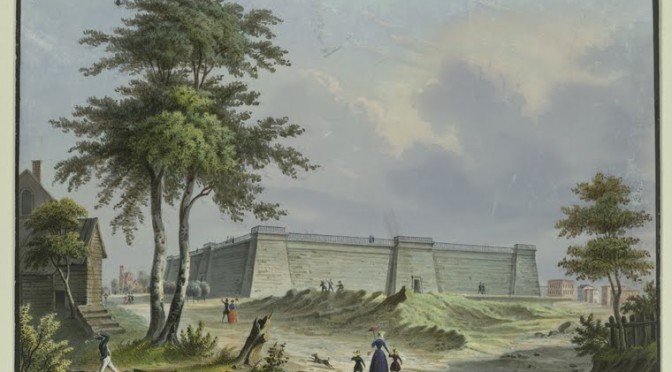
Above: The Croton Reservoir in 1850, in what would soon become Central Park. (NYPL) PODCAST One of the great challenges faced by a growing, 19th-century New York City was the need for a viable, clean water supply.
We take water for granted today. But before the 1830s, citizens relied on cisterns to collect rainwater, a series of city wells drilled down to bubbling, underground springs, and, of course, the infamously polluted Collect Pond. But these sources were spreading disease and clearly inadequate for a city whose international profile was raising thanks to the Erie Canal.
The solution lay miles north of the city in the Croton River. New York engineers embarked on one of the most ambitious projects in the city’s history — to tame the Croton, funnelling millions of gallons of waters through an aqueduct down to Manhattan, where it would be collected and stored in grand, Egyptian-style reservoirs to serve the city’s needs.
This is the story of both the old and new Croton Aqueducts, and of the many landmarks that are still with us — from New York’s oldest surviving bridge to a former Bronx racetrack that was turned into a gigantic reservoir.
FEATURING: An entire town moved on logs, a famous writer’s strange musings on Irish laborers, the birth of a banking titan, and guest appearances by Isaac Newton, DeWitt Clinton, and Gouverneur Morris (or, at least, men who share those names).
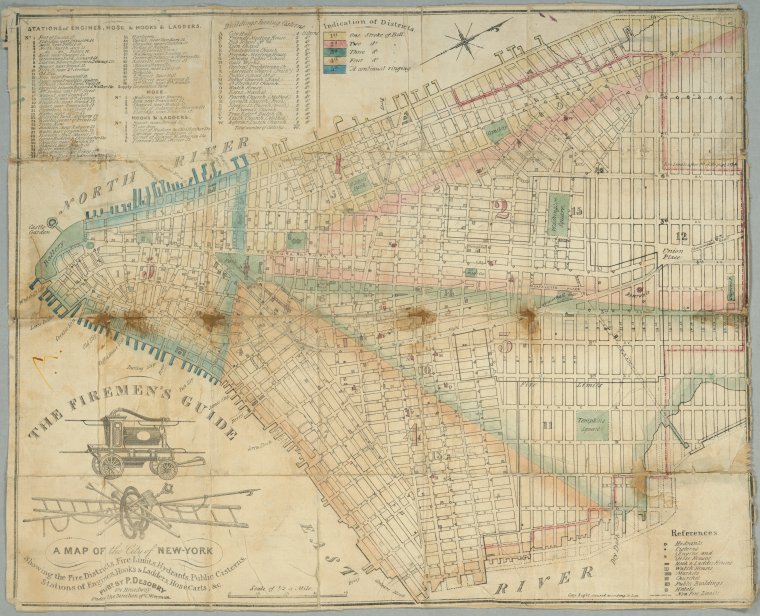
A fireman’s map of New York in 1834, detailing the location of the city water supply, in cisterns and hydrants fueled by the 13th Street Reservoir. (NYPL)
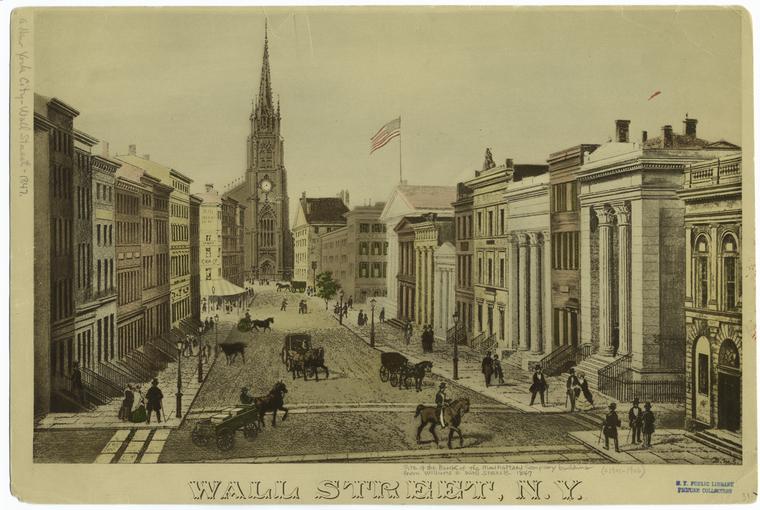
Wall Street in 1847. The Manhattan Company is at 40 Wall Street. Founded by Aaron Burr ostensibly as a public works to distribute water, the Company soon shed its water responsibilities to become a full-fledged financial institution.
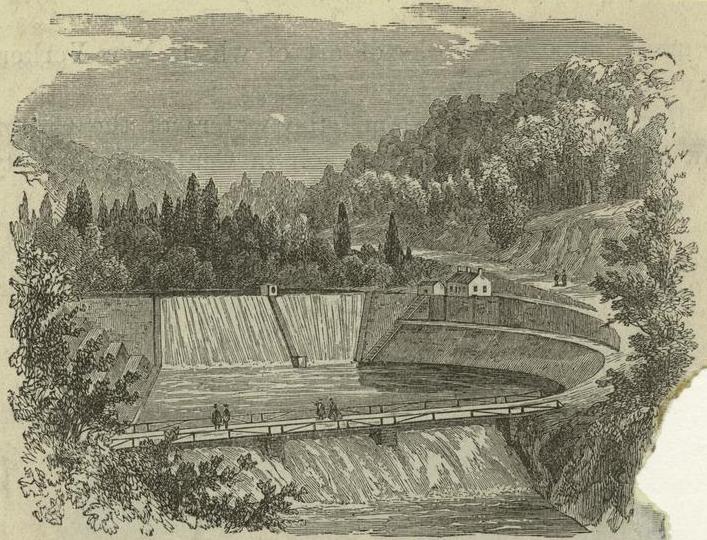
The Croton Dam and the start of the aqueduct system. After a partial collapse in 1841, the dam was quickly rebuilt for the opening of the entire system the following year. Today, the location of this dam is submerged under the current Croton. (NYPL)
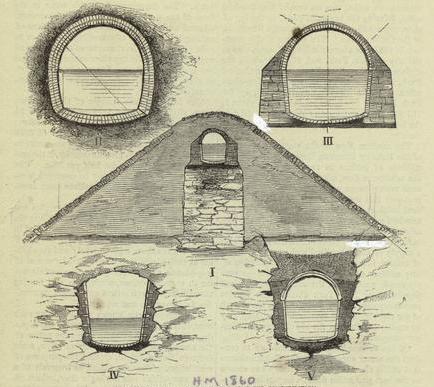
Examples of the various tunnels created to accommodate the various topographical challenges encountered during construction. Miles of these water tunnels were constructed by a team mostly comprised of Irish laborers. (NYPL)
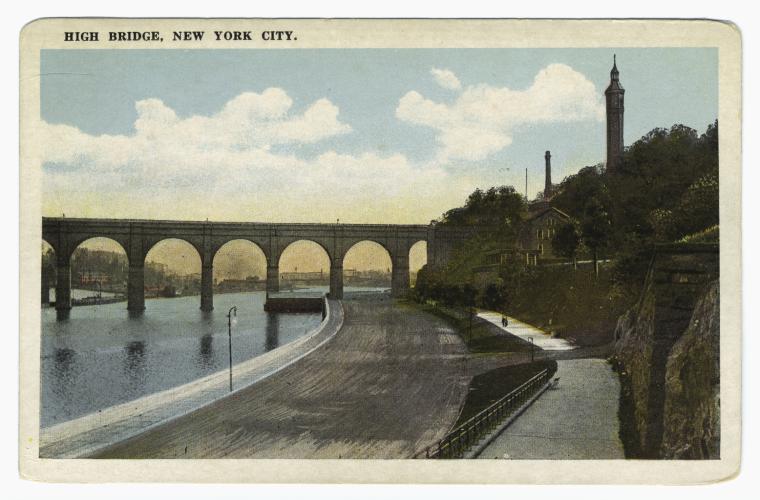
The glorious High Bridge, the oldest surviving bridge in New York — although much of it has been replaced and quite altered. (NYPL)
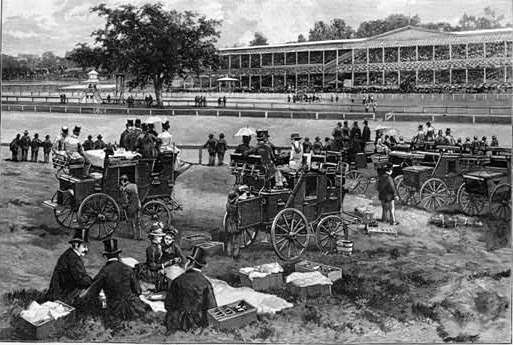
High society flocked to Jerome Park Racetrack on the weekends in the 19th century. But the park was turned into a reservoir at the beginning of the 1900s. (NYPL)
Also: please see my post from yesterday The Art of the Reservoir for pictures of some of the receiving and distributing reservoirs used in the Croton system and others through the New York region.
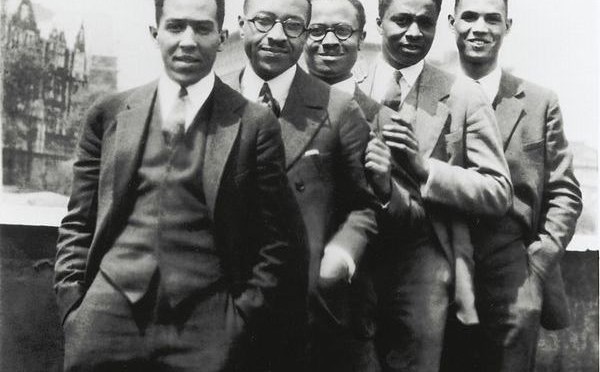
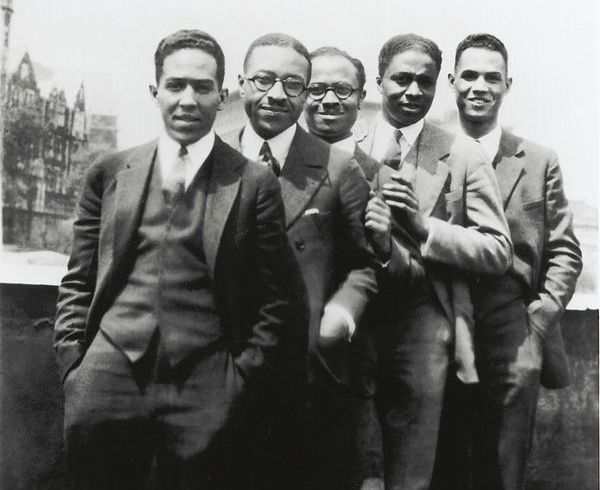
Dapper gentlemen: At a 1924 celebration in Langston’s honor, at the home of Regina Andrews on 580 St. Nicholas Avenue. The author is to the far left, followed by future sociologists Charles S. Johnson and E. Franklin Frazier; novelist and future doctor Rudolph Fisher; and Hubert T. Delany, who would become a New York justice in 1942, appointed by Fiorello LaGuardia.
Since I was a teenager, I’ve had an affinity for writer Langston Hughes, the revolutionary jazz poet who was born 110 years ago today in 1902. I grew up about an hour away from Langston’s birthplace in Joplin, Mo. One of the brightest lights of the Harlem Renaissance grew up here?, I frequently pondered in English class. In fact, Hughes is considered Joplin’s most famous son.*
But you don’t need to follow Langston’s footprints back to the Ozarks. Celebrate his birthday with a mini-walking tour, four Manhattan addresses that were pivotal to Hughes’ development as an iconic African-American voice and a star of the Harlem literary scene:
181 W. 135th Street (corrected, see note) — Langston’s first exposure to Harlem’s creative energy was as a Columbia University student in 1921, wandering the street, hoping to see “Duke Ellington on the corner of 135th Street, or Bessie Smith passing by, or Bojangles Bill Robinson in front of the Lincoln Theatre, or maybe Paul Robeson or Bert Williams walking down the avenue.” [source] Before moving into Columbia’s Hartley Hall, however, Langston took a room here at the YMCA, known for its live drama productions and art shows. He didn’t need to stroll around to find Robeson; he got his start acting in productions at the YMCA.
NOTE: Thanks to Stephen Robinson for the following correction to the information above: “I’m afraid you’ve got the wrong address for the YMCA at which Langston Hughes would have stayed. From 1919-1933, the YMCA was located across the street from the current building, at 181 West 135th Street. You can see the footprint of this building on the 1930 map we use on our site Digital Harlem: Everyday Life, 1915-1930 , and find more information about it by doing a search for Places, location type=YMCA.“
634 St. Nicholas Avenue— Although Langston would rent out a studio in 1938 down the street at 66 St. Nicholas Avenue, he frequently stayed at this address in the Sugar Hill area of Harlem, the home of his friends Toy and Emerson Harper. (He referred to them as ‘aunt’ and ‘uncle’.) Hughes later moved with the couple to another address…
515 Malcolm X Boulevard (at W. 135th Street) — The Schomburg Center for Research in Black Culture, a branch of the New York Public Library, is Hughes’ final resting place. His ashes are contained underneath the foyer floor, beneath an inscription: “My soul has grown deep like the rivers.” But the library always had a long association with Hughes. His ‘poetry-play’ ‘Don’t You Want To Be Free‘ played to sold-out crowds in the basement of the library in 1938. The play co-starred Robert Earl Jones, the father of James Earl Jones.
You can find a far more in-depth walking tour of 1920s Harlem here.
*Another African-American cultural icon, George Washington Carver, was born in the town of Diamond, Mo., fifteen minutes southeast of Joplin. If you’re ever swinging through that area of the world, the George Washington Carver National Monument, where his home was located, is worth a stop.
Every Monday I’ll try and check in with the Mad Men episode from the night before and focus in on one or two historical references made on the show. Spoilers aplenty, so read no further if you don’t want to know….
While the inebriated men of Sterling Cooper Draper Price were accepting Clio Awards at the Waldorf=Astoria, poor Peggy was stuck in a hotel room with a pretentious creative director going over ideas for a campaign for Vicks cough drops. Rizzo, the director, claims to be a nudist, or at least to sympathize with the cause. (Since the impetus of the conversation revolves around looking at a Playboy Magazine, I would say he’s probably a poseur and a faux-nudist.) Goading Peggy, she calls his bluff, strips off her clothes in a sign of liberation and casually settles back to brain storm.
By 1965, the nudism movement (or naturism) was firmly established in America, its proponents gathering in secluded camp grounds for decades, often near urban areas where its philosophies could be more easily disseminated, usually (but not always) among bohemians or extreme practitioners of physical fitness. Rizzo’s casual — but ultimately timid — embrace of a nudist philosophy was certainly not unusual by the mid-1960s and would be popularly corrupted in the practice of campus streaking.
The roots of the American nudist movement start in New York City among a group of German immigrant intellectuals, bringing over a well-established discipline from Europe. Kurt Barthel began the American League for Physical Culture in New York in 1929 as a straight-laced, non-lurid celebration of the human body; as an extreme corollary to the temperance movement, Barthel advocated clean living and eschewed alcohol.
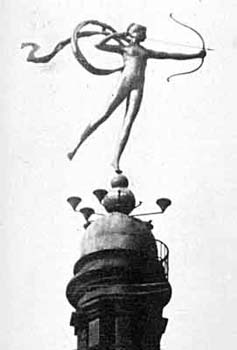
At left: In the days before nudist organizations, even racy sculpture like that atop the old Madison Square Garden could scandalize discreet New Yorkers.
From the little I could find on the early days of this organization, they had their first clothes-off gathering on Labor Day 1929 in upstate New York with seven participants (both men and women), but the organization held meetings in the city, at a Tenderloin establishment called the Michelob Cafe on 28th Street. (NOTE: I can only find evidence of a place called this from various nudist literature and not from any independent source.)
A guidebook to the discipline, called ‘The New Gymnosophy’ (or ‘Nudism In Modern Life’) written by Turkish doctor Maurice Parmelee, could be found in certain bookstores in New York, but was naturally sold behind the counter. Although a dry, philosophical text, the subject would have scandalized book buyers! In ‘Gymnosophy’, Parmelee extolled the virtues of the nude lifestyle, recounting the health risks of clothing and mental strains of bodily shame while being sure to separate these philosophies from common prurient thoughts.
Parmelee writes: “Sex feeling and curiosity…characterize practically all adults who enter the gymnosophic movement. After becoming habituated, sex stimulus through vision usually falls to normal and the initial curiosity is satisfied. [Excerpted in the book ‘Studies in human sexuality’ by Suzanne G. Frayser]
Interestingly, this sociologist and intellectual nudist is perhaps best known as being the author of America’s ‘first criminology textbook’.
Upstate campgrounds were fine (and far away from disapproving eyes) during the summer; but in the winter, the American League for Physical Culture met up a few times a month in a Manhattan gymnasium, and that put its naked aesthetic at odds with New York’s indecency laws. In 1931, one such meeting was raided by the police and Barthel was thrown into jail. In 1932 Barthel founded the Sky Farms nudist colony in Basking Ridge, NJ, the nation’s oldest continually operating nudist facility.
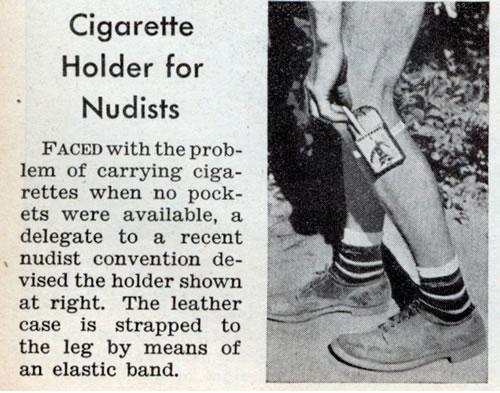
Above: If Don Draper were a nudist. (Photo from Martin Klasch)
By then, nudism philosophies had attracted other New Yorkers, including two librarians from the New York Public Library, Herman and Katherine Soshinski, who started up their own group — American Gymnosophical Association — and their own nudist colony, the Rock Lodge Club in northern New Jersey, still active today. (Who knew there were so many outlets for nudism in New Jersey?)
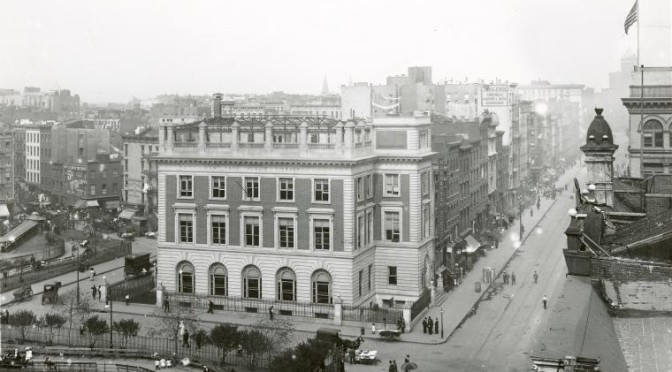
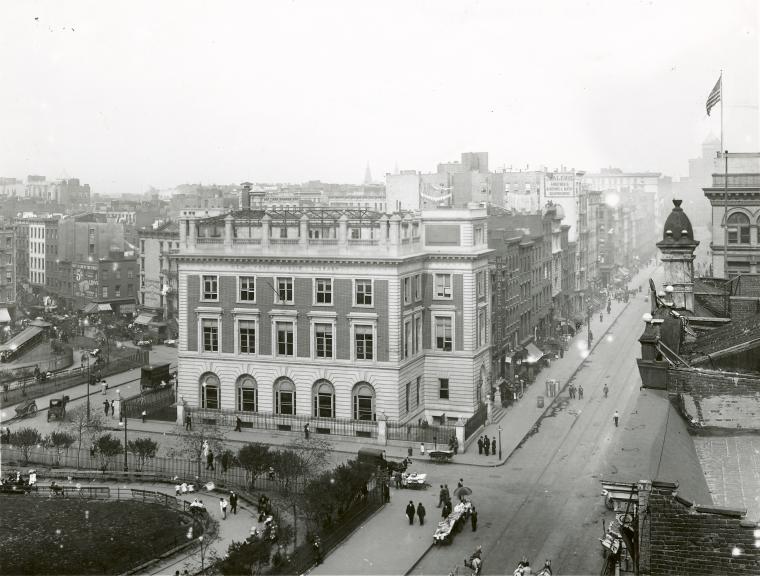
Above is a picture, facing east, of Seward Park Library in the ‘lower’ Lower East Side at 192 E. Broadway (picture taken in 1911). This spectacular branch library, funded by Andrew Carnegie, opened in November 1909, two years before the 42nd Street main branch opened. All of the housing behind the library to the east has since been demolished.
The nearby park in the foreground is still there, but the small extension of Jefferson Street which separate them has been turned into a paved, closed off pedestrian plaza. The streets seen in the left of the photograph are completely gone.
The library was built by the firm Babb, Cook and Welch, whose accomplishments from the Gilded Age are seldomly still found today. But, in fact, one of the firm’s lead architects William Cook was part of a committee which included Charles McKim (of McKim, Mead and White) and John Carerre (of Carerre and Hastings, who ultimately designed the famous 42nd Street branch) to standardize library designs in the city. Those two better known firms got most of the commissions; however the Seward Park library remains one of Babb, Cook and Welch’s best known remaining public works.
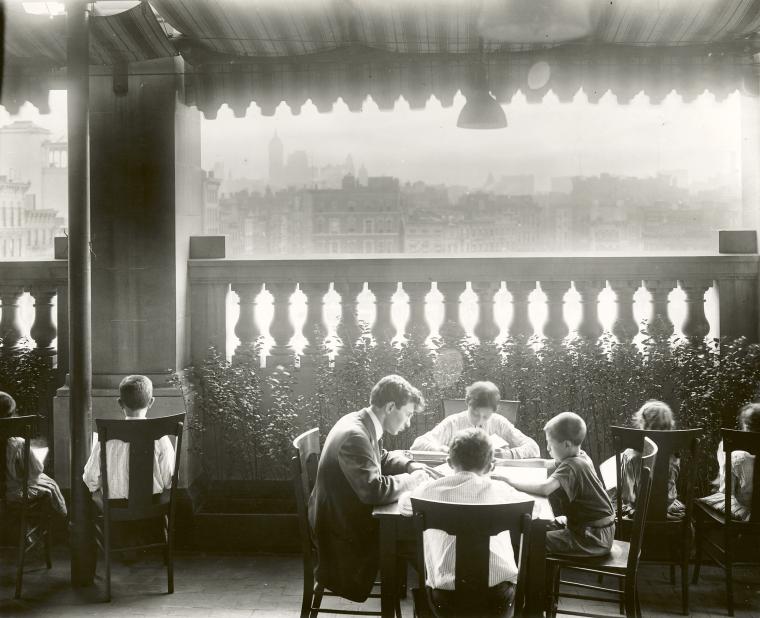
During the library’s first years, readers were actually allowed onto a “roof garden.” According to a New York Times article from 1910, “There will be awnings over the top to shield from sun and the occasional shower; tables around which the readers can congregate, and a network of electric bulbs strung over the top so that there will be plenty of light for the industrious who wish to study.”
Below: children and adults alike on Seward Park’s roof garden
Adults were even allowed onto the roof late into the evening, including “mothers who wish to do their sewing out of doors.”
Although this grand structure was placed here in 1909, it was certainly not the neighborhood’s first library. Once the domain of the private sector, libraries were provided by philanthropic organizations such as the Aguilar Free Library Society, which began offering a reading room for New Yorkers at this very address starting in 1891.
Aguilar’s East Broadway library, “where the readers are nearly all Hebrew,” featured over 140,000 thousands books, the most popular being ‘Uncle Tom’s Cabin’ and ‘Around The World In 80 Days”. This library was sold in 1902 and remade as the building which stands there today.
The Seward Park Library has gone through two major renovations, the most recent in 2004, bringing back most of the building’s original lustre. As evidenced by this photo, little around it remains from its original condition.
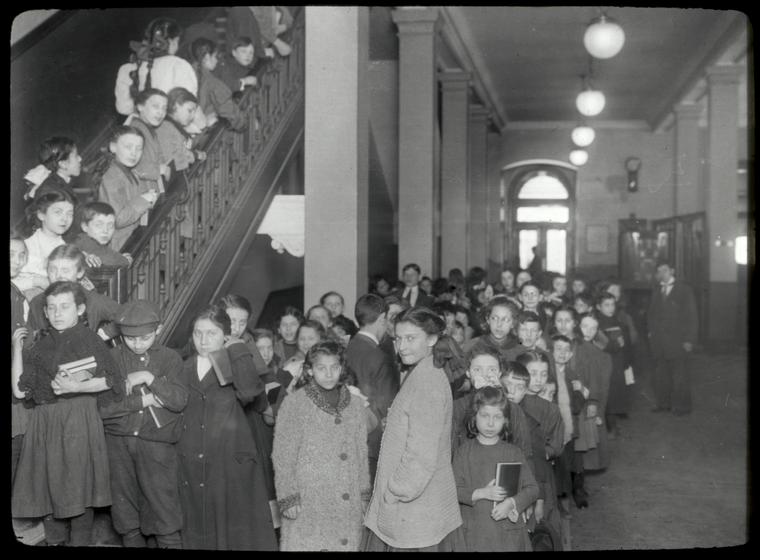
Of course, children have changed as well. Outside of a reading by Stephenie Meyer, can you imagine this mob scene at a library today? (Photo by Lewis Wickes Hine)


![This photo was taken by Stanley Kubrick during his years as a photographer for Look Magazine. The caption reads "Park Bench Nuisance [Woman reading a newspaper, while a man reads over her shoulder.]" Courtesy Museum of the City of New York](https://www.boweryboyshistory.com/wp-content/uploads/2015/04/4.jpg)