Categories
Black History It's Showtime Neighborhoods Podcasts Writers and Artists

Harlem in the Jazz Age: A Renaissance in New York, a Revolution on Swing Street

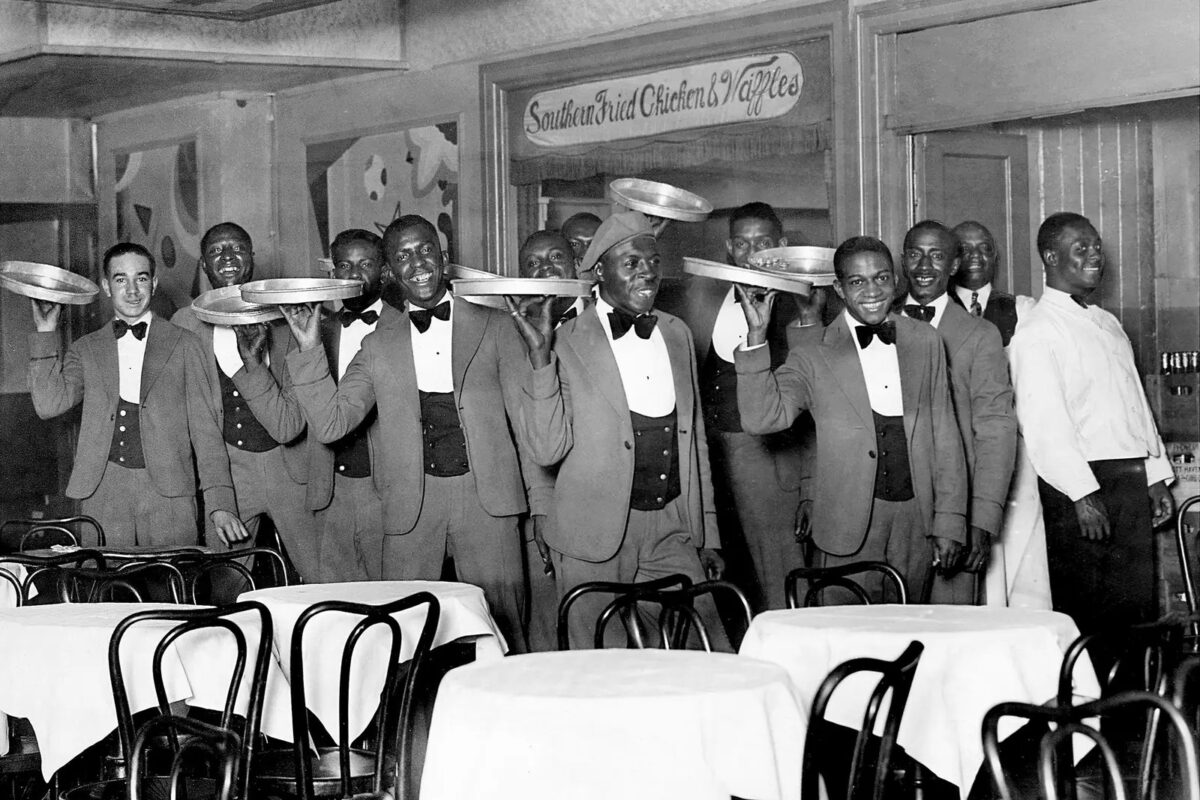
For the Bowery Boys episode number 450, we’re looking at the glamour and mystery of Harlem during the 1920s, a decade when the predominantly black neighborhood, in the words of Langston Hughes, “was in vogue.”

This year marks the 100th anniversary of Alain Locke’s classic essay “The New Negro” and the literary anthology featuring the work of Langston Hughes, Zora Neale Hurston, Countee Cullen and other significant black writers of the day.

The rising artistic scene would soon be known as the Harlem Renaissance, one of the most important cultural movements in American history.

And centered within America’s largest black neighborhood — Harlem, the “great black city,” as described by Wallace Thurman, with a rising population and growing political and cultural influence.
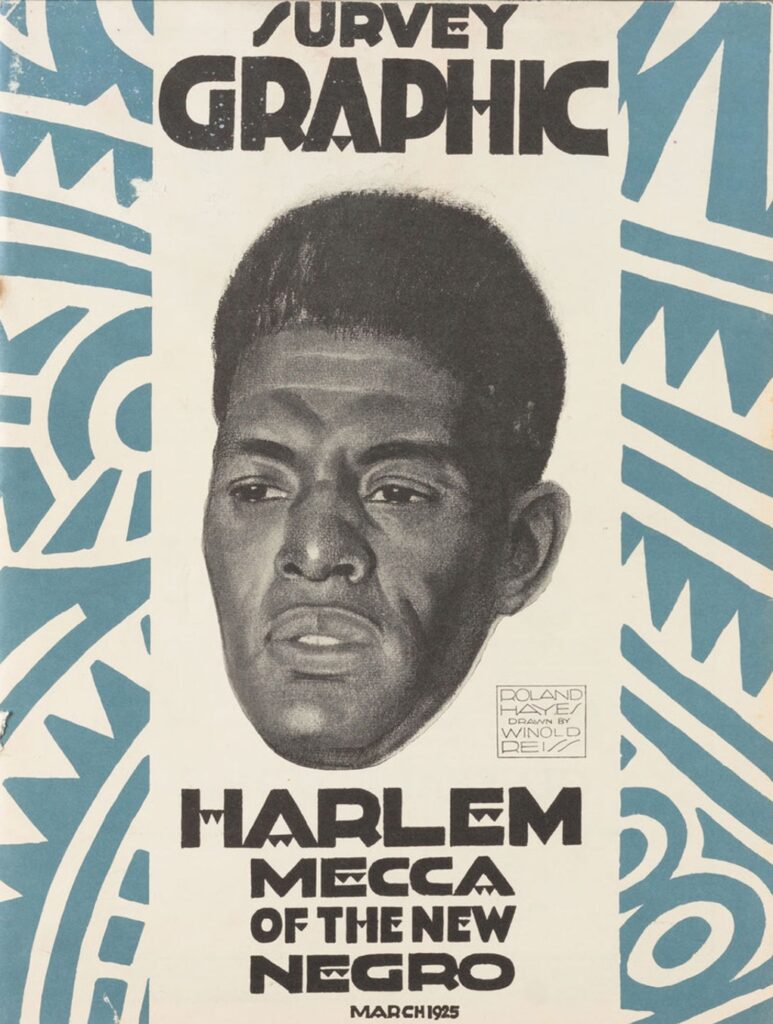
The Survey Graphic, published in March 1925, focusing on “Harlem: Mecca of the New Negro” and featuring the writing of Alain Locke.

And during the 1920s, Harlem became even more. Along “Swing Street” and Lenox Avenue, nightclubs and speakeasies gave birth to American music and fostered great musical talents like Count Basie, Billie Holiday and Duke Ellington.

Ballrooms like the Savoy and the Alhambra helped turn Harlem into a destination for adventure and romance.

While Harlem was truly the largest and most prominent African-American neighborhood in America, it was still tied to — and even reliant upon — the white New Yorkers who became fascinated by black culture. Many Harlem nightclubs (notably The Cotton Club) were not open to the black residents who lived around them.

What were these two worlds like — the literary salons and the nightclubs? How removed were these spheres from the every day lives of regular Harlem residents? How did the neighborhood develop both an energetic and raucous music scene and a diverse number of churches — many (like the Abyssinian Baptist Church) still around today?

FEATURING the stories of Sugar Hill, the Dunbar Apartments, and Hamilton Club Lodge Ball

PLUS lots of great music!

LISTEN TODAY: HARLEM IN THE JAZZ AGE
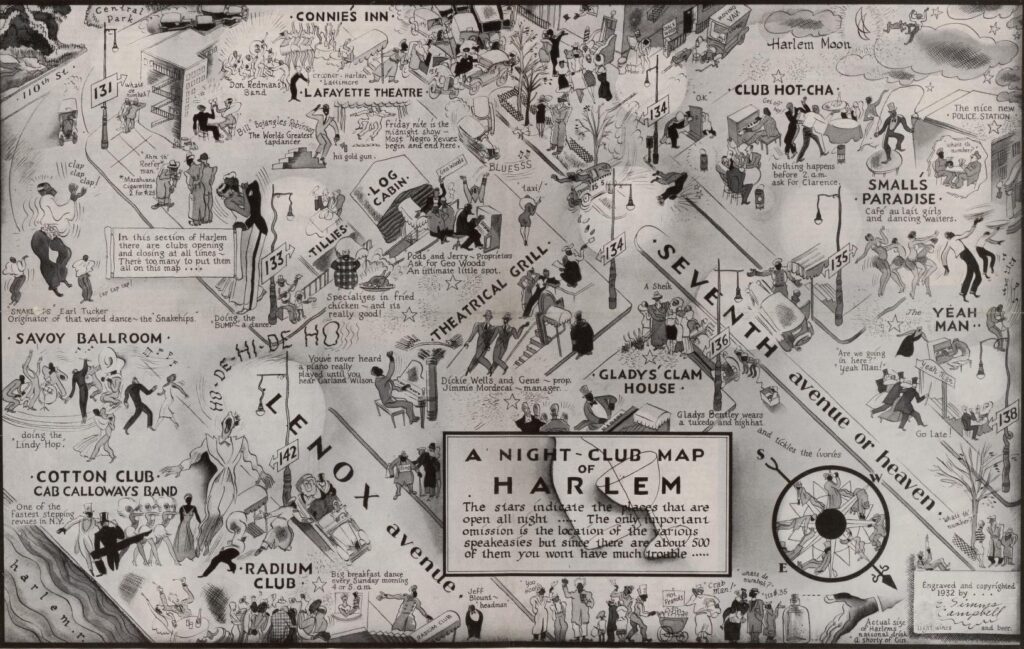
Harlem Night Life map in 1933, Campbell, E. Simms (Elmer Simms), cartographer. Dell Publishing Company, publisher.

Get tickets to our March 31 City Vineyard event Bowery Boys HISTORY LIVE! here

And join us for our Gilded Age Weekend in New York, May 29-June 1, 2025. More info here.
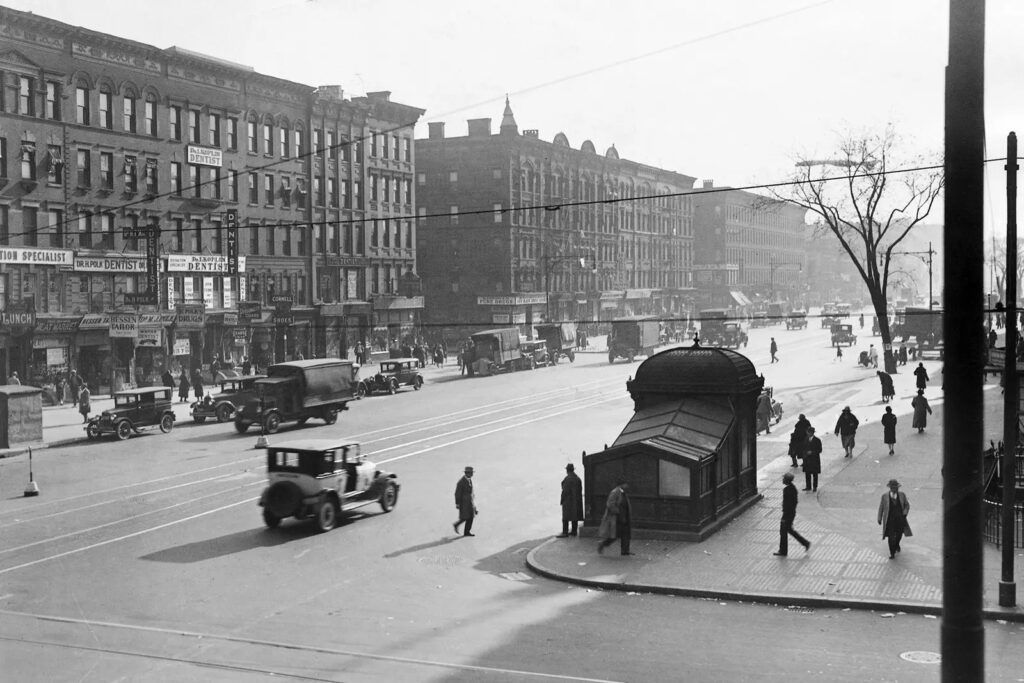
Harlem scene, 1927, George Rinhart / Getty Images

FURTHER LISTENING

Categories
Writers and Artists

Happy birthday Langston Hughes! A few stops in Harlem to celebrate

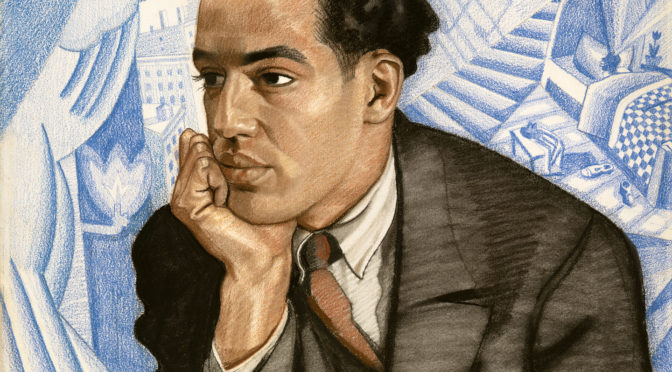
Since I was a teenager, I’ve had an affinity for writer Langston Hughes, the revolutionary jazz poet who was born 115 years ago today in 1902. I grew up in Springfield, Mo., about an hour away from Langston’s birthplace in Joplin. One of the brightest lights of the Harlem Renaissance grew up here?, I frequently pondered in English class.  In fact, Hughes is considered Joplin’s most famous son.*

But you don’t need to follow Langston’s footprints back to the Ozarks. Celebrate his birthday with a mini-walking tour, four Manhattan addresses that were pivotal to Hughes’ development as an iconic African-American voice and a star of the Harlem literary scene–

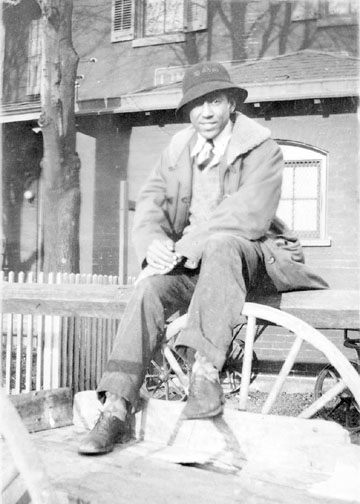
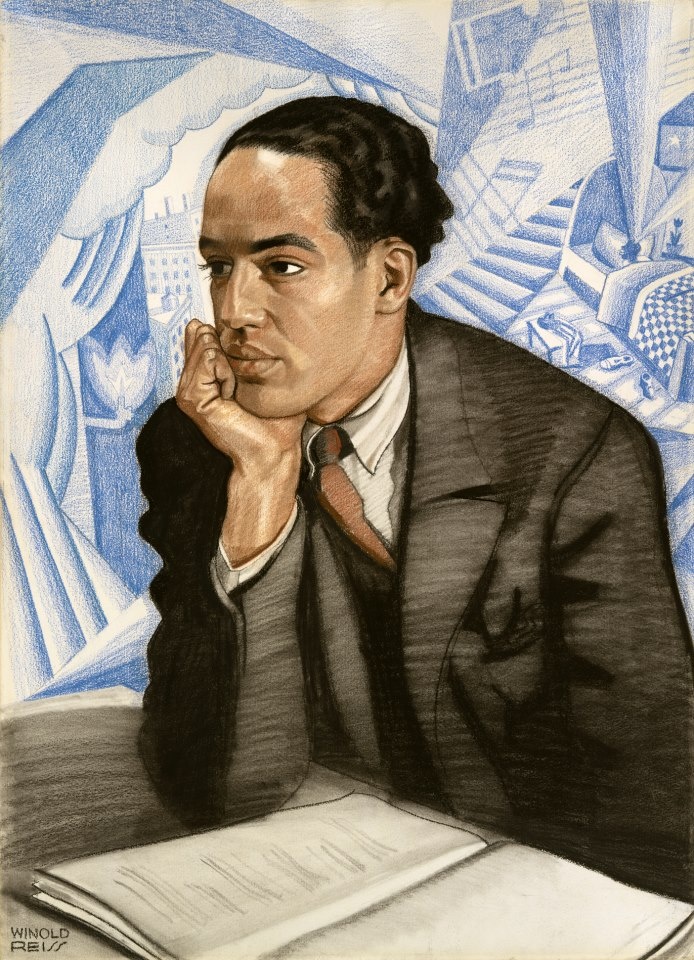
 Young Langston in college, 1928

Yale Collection of American Literature, Beinecke Rare Book and Manuscript Library

181 W. 135th Street  — Langston’s first exposure to Harlem’s creative energy was as a Columbia University student in 1921, wandering the street, hoping to see “Duke Ellington on the corner of 135th Street, or Bessie Smith passing by, or Bojangles Bill Robinson in front of the Lincoln Theatre, or maybe Paul Robeson or Bert Williams walking down the avenue.” [source]

Before moving into Columbia’s Hartley Hall (1124 Amsterdam Avenue), however, Langston took a room here at the YMCA, known for its live drama productions and art shows. He didn’t need to stroll around to find Robeson; he got his start acting in productions at the YMCA.


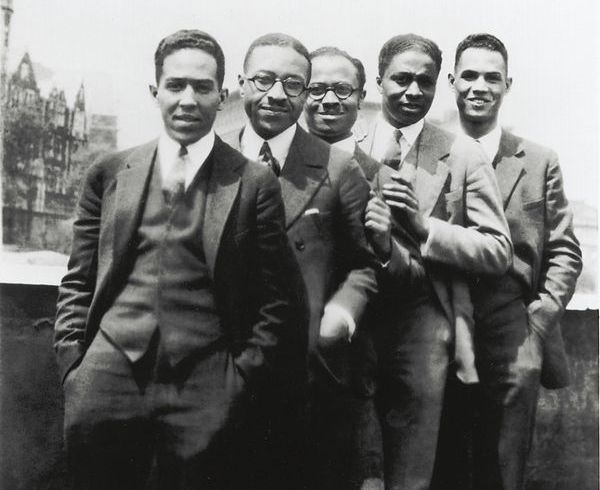
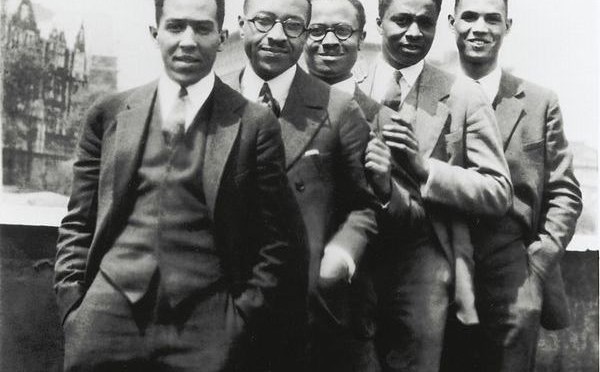
Dapper gentlemen: At a 1924 celebration in Langston’s honor, at the home of Regina Andrews on 580 St. Nicholas Avenue. The author is to the far left, followed by future sociologists Charles S. Johnson and E. Franklin Frazier; novelist and future doctor Rudolph Fisher; and Hubert T. Delany, who would become a New York justice in 1942, appointed by Fiorello La Guardia.

634 St. Nicholas Avenue — Although Langston would rent out a studio in 1938 down the street at 66 St. Nicholas Avenue, he frequently stayed at this address in the Sugar Hill area of Harlem, the home of his friends Toy and Emerson Harper. (He referred to them as ‘aunt’ and ‘uncle’.) Hughes later moved with the couple to another address…

20 East 127th Street  For 20 years, Hughes worked out of the top floor, by now an international phenomenon. He was residing here (his own ivory tower) when he died in 1967. The house was up for sale for awhile, but was finally sold in 2011 in a Sotheby’s auction.

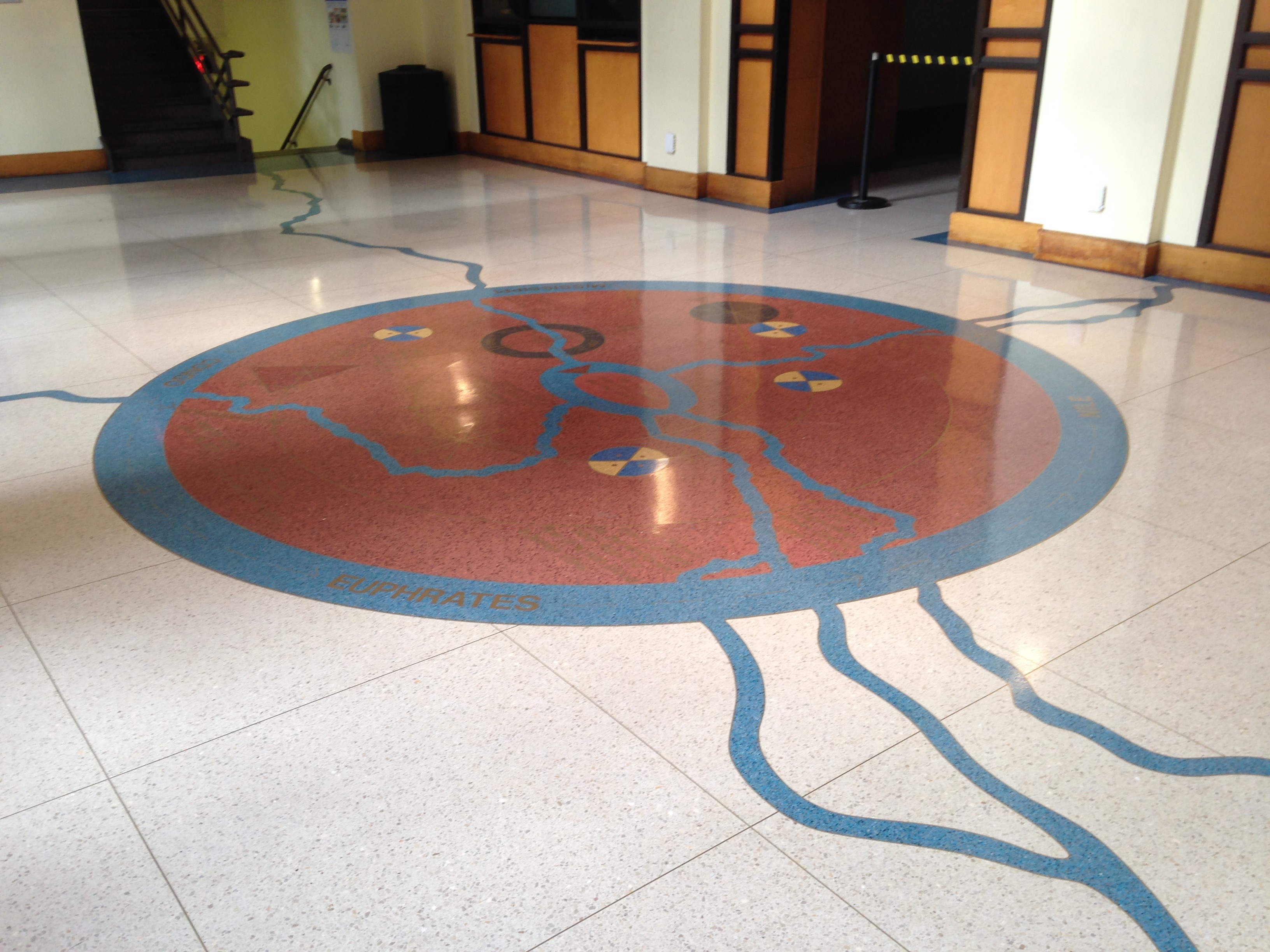
 515 Malcolm X Boulevard (at W. 135th Street) – The Schomburg Center for Research in Black Culture, a branch of the New York Public Library, is Hughes’ final resting place. His ashes are contained underneath the foyer floor, beneath an inscription: “My soul has grown deep like the rivers.” But the library always had a long association with Hughes. His ‘poetry-play’ ‘Don’t You Want To Be Free‘ played to sold-out crowds in the basement of the library in 1938. The play co-starred Robert Earl Jones, the father of James Earl Jones.

You can find a far more in-depth walking tour of 1920s Harlem here.

*Another African-American cultural icon, George Washington Carver, was born in the town of Diamond, Mo., fifteen minutes southeast of Joplin. If you’re ever swinging through that area of the world, the George Washington Carver National Monument, where his home was located, is worth a stop.


Categories
Bowery Boys Bookshelf

Langston Hughes: A few Harlem stops on his birthday


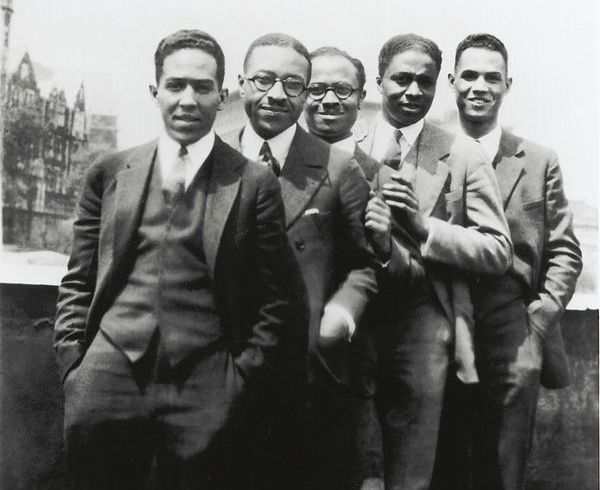
Dapper gentlemen: At a 1924 celebration in Langston’s honor, at the home of Regina Andrews on 580 St. Nicholas Avenue. The author is to the far left, followed by future sociologists Charles S. Johnson and E. Franklin Frazier; novelist and future doctor Rudolph Fisher; and Hubert T. Delany, who would become a New York justice in 1942, appointed by Fiorello LaGuardia.

Since I was a teenager, I’ve had an affinity for writer Langston Hughes, the revolutionary jazz poet who was born 110 years ago today in 1902. I grew up about an hour away from Langston’s birthplace in Joplin, Mo. One of the brightest lights of the Harlem Renaissance grew up here?, I frequently pondered in English class.  In fact, Hughes is considered Joplin’s most famous son.*

But you don’t need to follow Langston’s footprints back to the Ozarks. Celebrate his birthday with a mini-walking tour, four Manhattan addresses that were pivotal to Hughes’ development as an iconic African-American voice and a star of the Harlem literary scene:

181 W. 135th Street (corrected, see note) — Langston’s first exposure to Harlem’s creative energy was as a Columbia University student in 1921, wandering the street, hoping to see “Duke Ellington on the corner of 135th Street, or Bessie Smith passing by, or Bojangles Bill Robinson in front of the Lincoln Theatre, or maybe Paul Robeson or Bert Williams walking down the avenue.” [source] Before moving into Columbia’s Hartley Hall, however, Langston took a room here at the YMCA, known for its live drama productions and art shows. He didn’t need to stroll around to find Robeson; he got his start acting in productions at the YMCA.

NOTE: Thanks to Stephen Robinson for the following correction to the information above: “I’m afraid you’ve got the wrong address for the YMCA at which Langston Hughes would have stayed. From 1919-1933, the YMCA was located across the street from the current building, at 181 West 135th Street. You can see the footprint of this building on the 1930 map we use on our site Digital Harlem: Everyday Life, 1915-1930 , and find more information about it by doing a search for Places, location type=YMCA.

634 St. Nicholas Avenue — Although Langston would rent out a studio in 1938 down the street at 66 St. Nicholas Avenue, he frequently stayed at this address in the Sugar Hill area of Harlem, the home of his friends Toy and Emerson Harper. (He referred to them as ‘aunt’ and ‘uncle’.) Hughes later moved with the couple to another address…

20 East 127th Street For 20 years, Hughes worked out of the top floor, by now an international phenomenon. He was residing here (his own ‘ivory tower’) when he died in 1967. The house was up for sale for most of the year, but was finally sold in December in a Sotheby’s auction.

 515 Malcolm X Boulevard (at W. 135th Street) — The Schomburg Center for Research in Black Culture, a branch of the New York Public Library, is Hughes’ final resting place. His ashes are contained underneath the foyer floor, beneath an inscription: “My soul has grown deep like the rivers.” But the library always had a long association with Hughes. His ‘poetry-play’ ‘Don’t You Want To Be Free‘ played to sold-out crowds in the basement of the library in 1938. The play co-starred Robert Earl Jones, the father of James Earl Jones.

You can find a far more in-depth walking tour of 1920s Harlem here.

 *Another African-American cultural icon, George Washington Carver, was born in the town of Diamond, Mo., fifteen minutes southeast of Joplin. If you’re ever swinging through that area of the world, the George Washington Carver National Monument, where his home was located, is worth a stop.