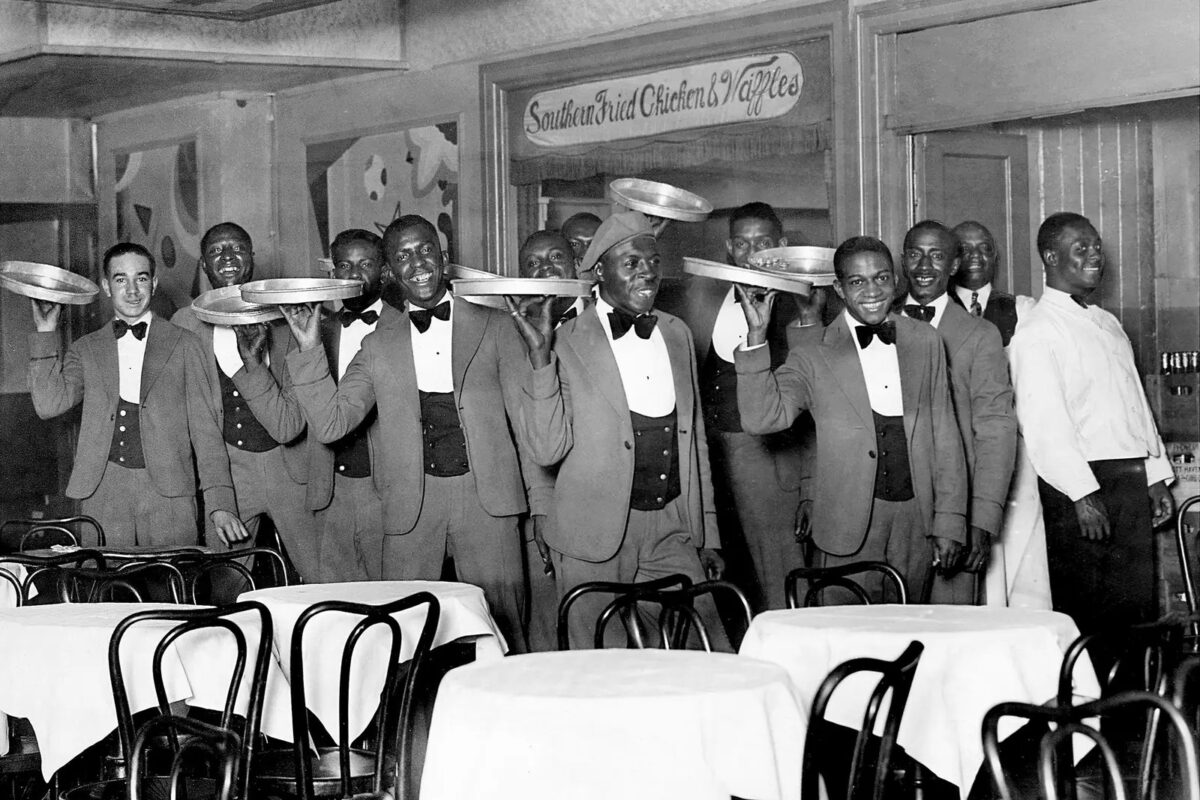
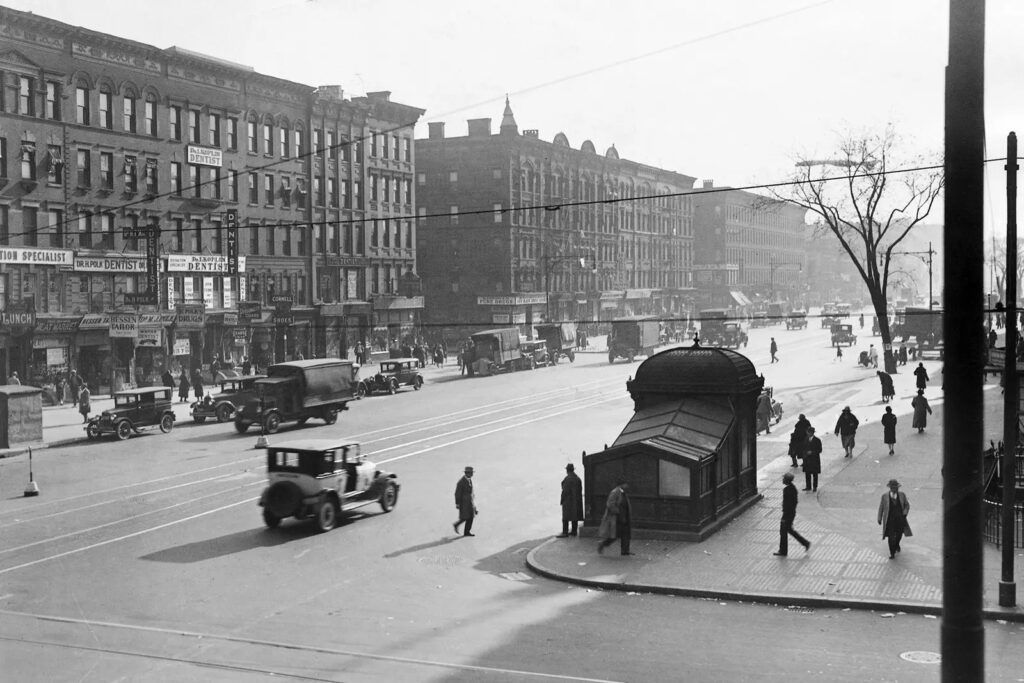
The wait staff at Small's Paradise, 1929. The venue, on 134th Street and today's Adam Clayton Powell Jr Boulevard, was the rare Black-owned nightclub that was integrated. It became one of Harlem's most enduring hot spots, closing in 1986. New York Daily News Archive / Getty Images
For the Bowery Boys episode number 450, we’re looking at the glamour and mystery of Harlem during the 1920s, a decade when the predominantly black neighborhood, in the words of Langston Hughes, “was in vogue.”
This year marks the 100th anniversary of Alain Locke’s classic essay “The New Negro” and the literary anthology featuring the work of Langston Hughes, Zora Neale Hurston, Countee Cullen and other significant black writers of the day.
The rising artistic scene would soon be known as the Harlem Renaissance, one of the most important cultural movements in American history.
And centered within America’s largest black neighborhood — Harlem, the “great black city,” as described by Wallace Thurman, with a rising population and growing political and cultural influence.
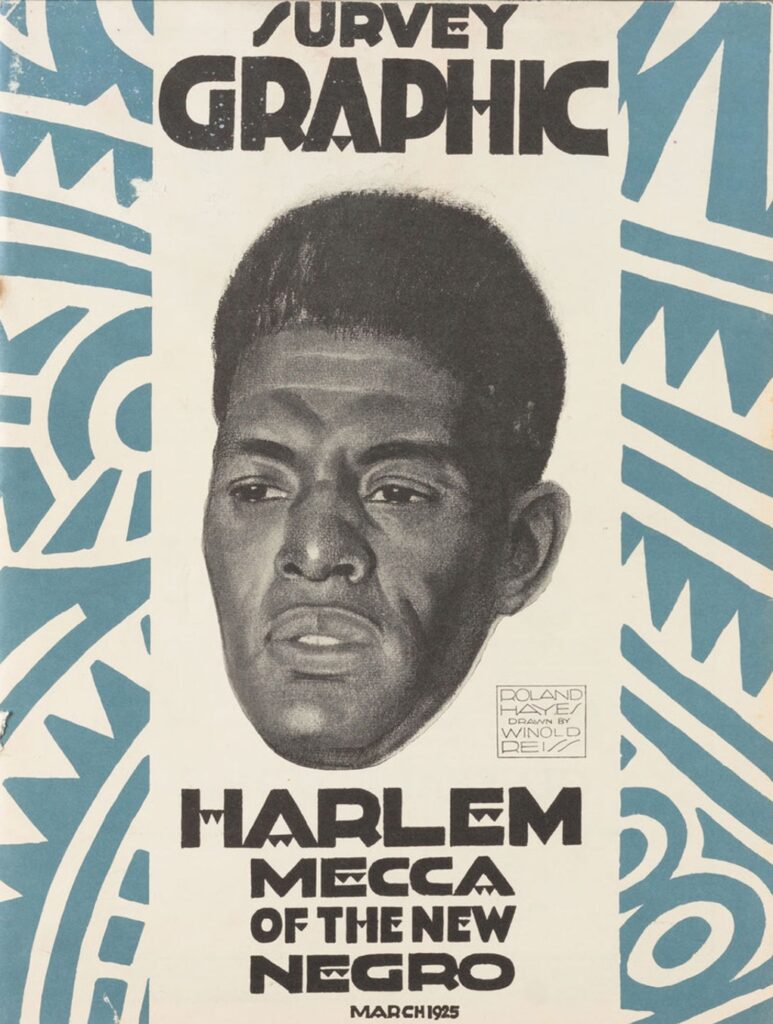
The Survey Graphic, published in March 1925, focusing on “Harlem: Mecca of the New Negro” and featuring the writing of Alain Locke.
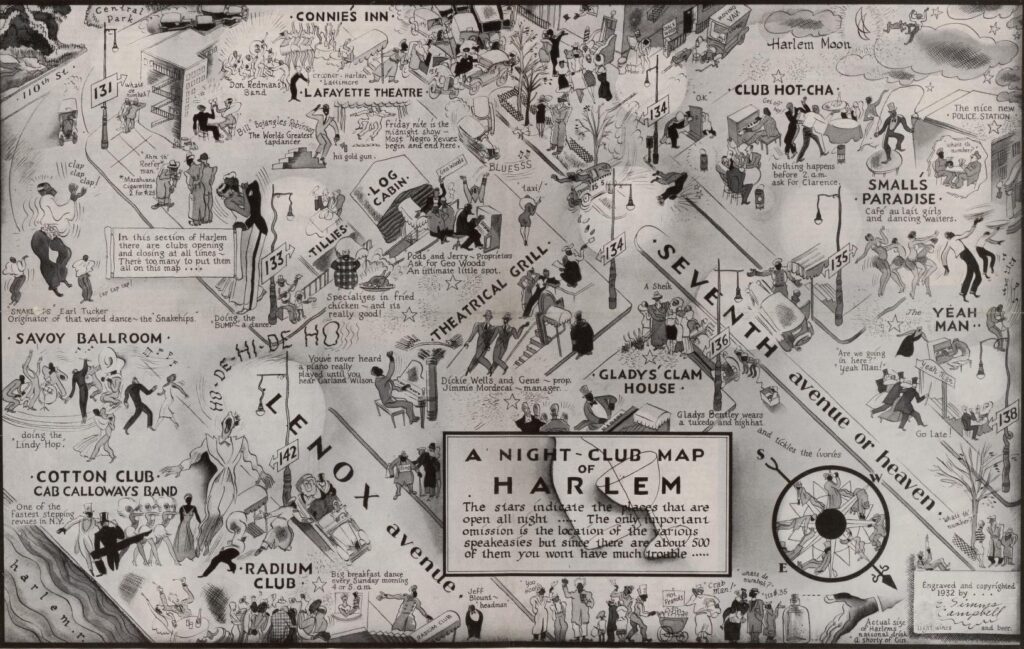
And during the 1920s, Harlem became even more. Along “Swing Street” and Lenox Avenue, nightclubs and speakeasies gave birth to American music and fostered great musical talents like Count Basie, Billie Holiday and Duke Ellington.
Ballrooms like the Savoy and the Alhambra helped turn Harlem into a destination for adventure and romance.
While Harlem was truly the largest and most prominent African-American neighborhood in America, it was still tied to — and even reliant upon — the white New Yorkers who became fascinated by black culture. Many Harlem nightclubs (notably The Cotton Club) were not open to the black residents who lived around them.
What were these two worlds like — the literary salons and the nightclubs? How removed were these spheres from the every day lives of regular Harlem residents? How did the neighborhood develop both an energetic and raucous music scene and a diverse number of churches — many (like the Abyssinian Baptist Church) still around today?
FEATURING the stories of Sugar Hill, the Dunbar Apartments, and Hamilton Club Lodge Ball
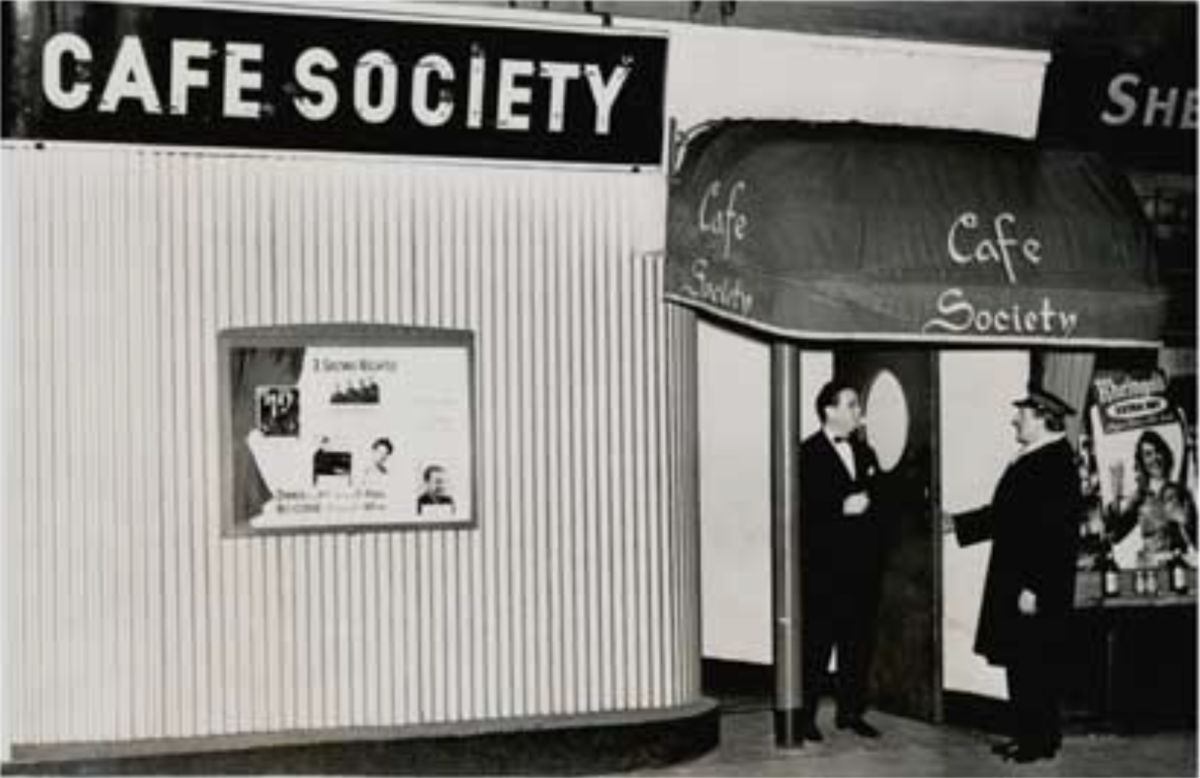
There once was a modest basement nightclub in an old West Village building which opened the door to a revolutionary (and now obvious) idea in New York City music and delivered one of the most significant moments in all of music history.
In the 30s Midtown Manhattan clubs were alight with the bourgeoisie, tuxes and evening gowns, tables and banquettes of rich white people drinking champagne, and often entertained by Black performers borrowed from the Harlem music scene.
It was putting on the ritz, it was dancing cheek to cheek.
It was embodied within the phrase ‘cafésociety‘, coined by the one of the scene’s wittier celebrities Claire Booth Luce, playwright of The Women and a darling toast of Broadway.
But there was also something saccharine and square — and segregated — about those Midtown haunts. Things were wound too tightly.
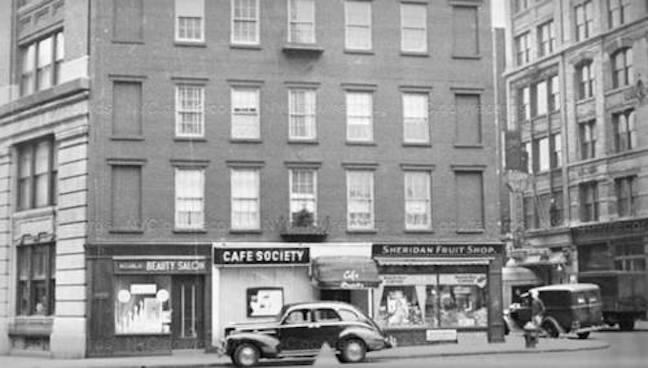
What would become one of the New York music world’s most fertile spots for musical innovation was far, far downtown from the ‘real’ nightlife — at 1 Sheridan Square in the West Village.
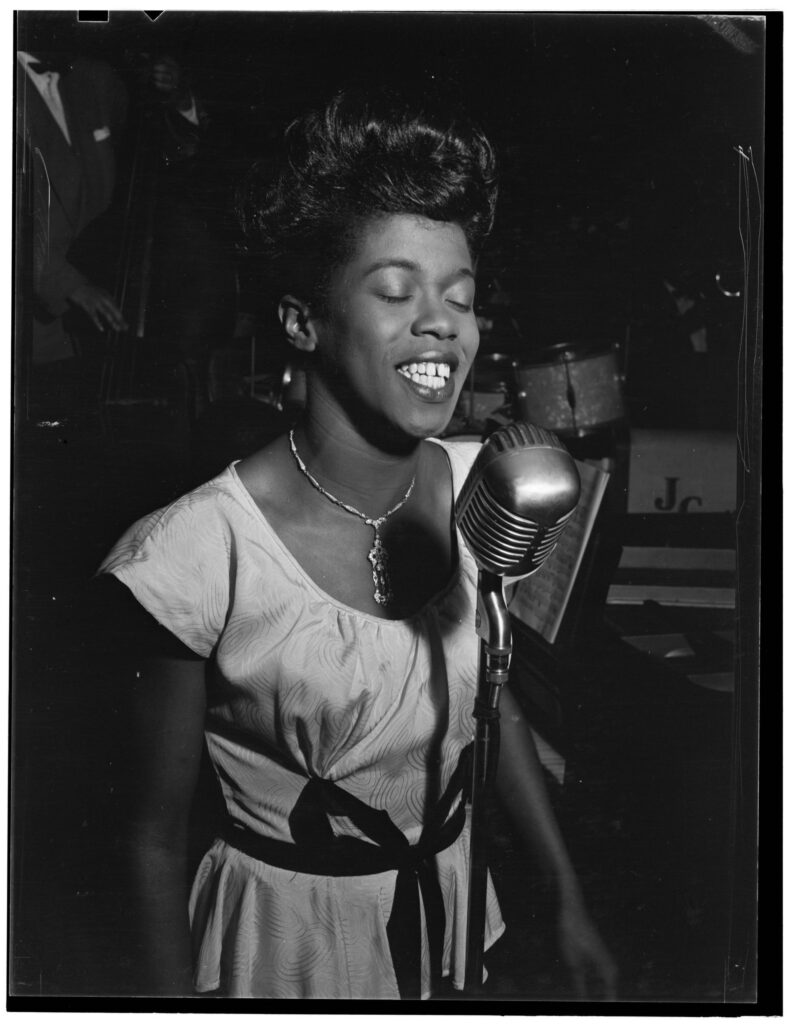
Portrait of Sarah Vaughan, Café Society (Downtown), ca. Aug. 1946], photo by William Gottlieb, courtesy Library of Congress
Café Counter Culture
New Jersey shoe salesman Barney Josephson had an affinity for jazz music — partially grown from visiting the bawdy clubs of underground Berlin — but grew irritated at the race segregation, which even occurred in Harlem, at places like The Cotton Club.
Josephson envisioned a venue where musicians of any color could perform — and audiences of any color could enjoy it — but such a notion seemed to fly in the face of modern ‘café society’ culture.
“I wanted a club where blacks and whites worked together behind the footlights and sat together out front. There wasn’t, so far as I know, a place like that in New York or in the whole country.”
So, acquiring his Greenwich Village location, what a better name to call this rather kooky experiment than Café Society?
Luce, knowing good irony when she saw it, even encouraged the bar’s lusty slogan: The wrong place for the right people.
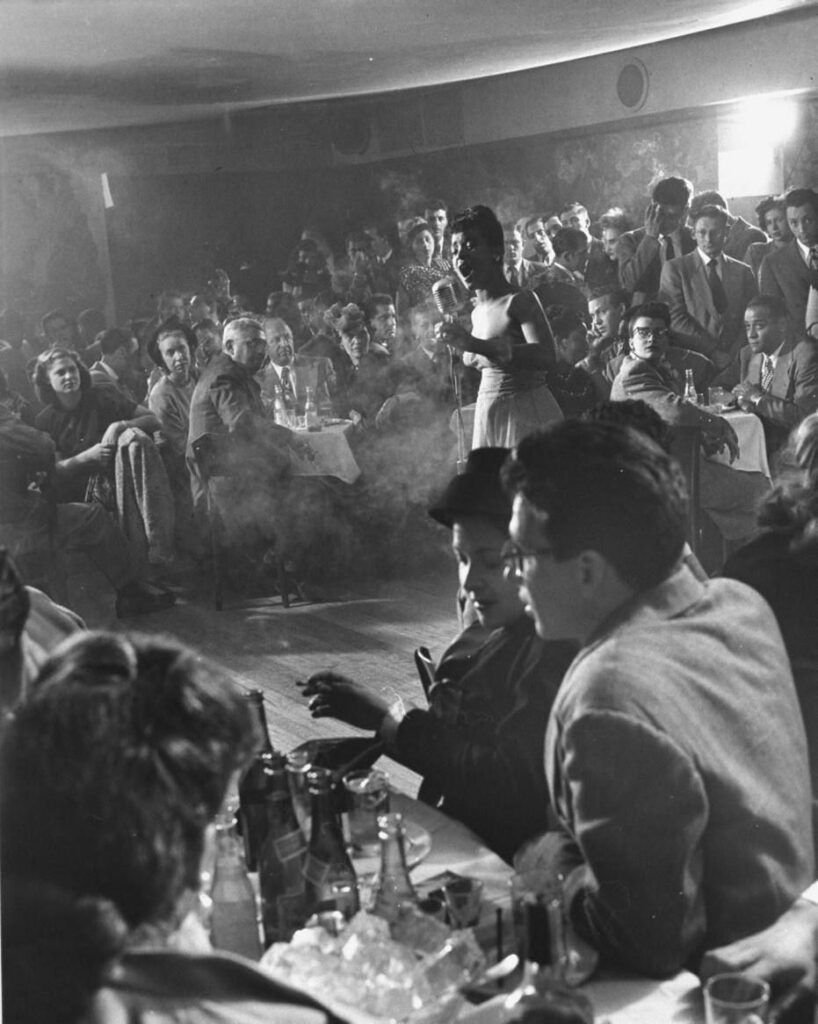
Jon Mili/The LIFE Picture Collection/Getty Images
Open (To All) For Business
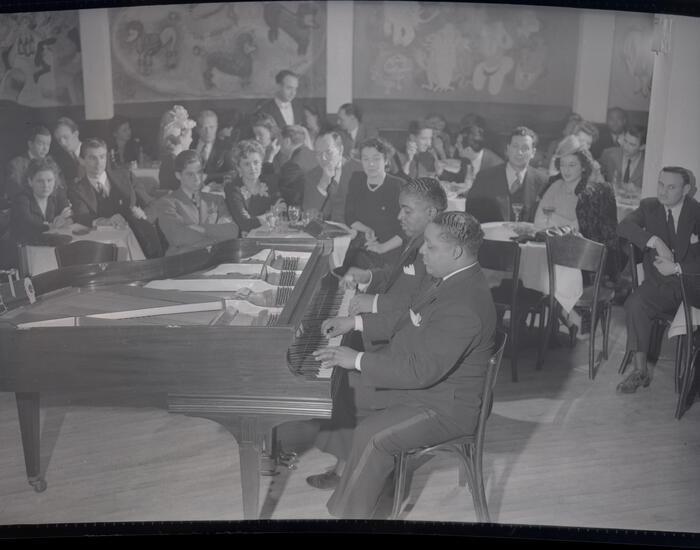
Opening on December 18, 1938,Café Society was festooned in wacky caricatures of music stars, comedians and personalities of the age. Walls were muralled by creations from local artists.
The club doorman played with the notion of informal glamour, wearing a tattered top hat and white gloves with the fingertips ripped off.
Below: The Boogie Woogie pianists, Cafe Society, 1941. Take note of the murals on the walls.
Frank Bauman/Look Magazine — Courtesy Museum of the City of New York
Josephson began hosting performers of all stripes, many taking to a mixed stage for the first time in their careers.
Over the course of its ten-year run — and that of a second location, coyly placed at 58th and Park — Josephson and his partners would host dozens of soon-to-be jazz stars, in many cases paving the way to their success.
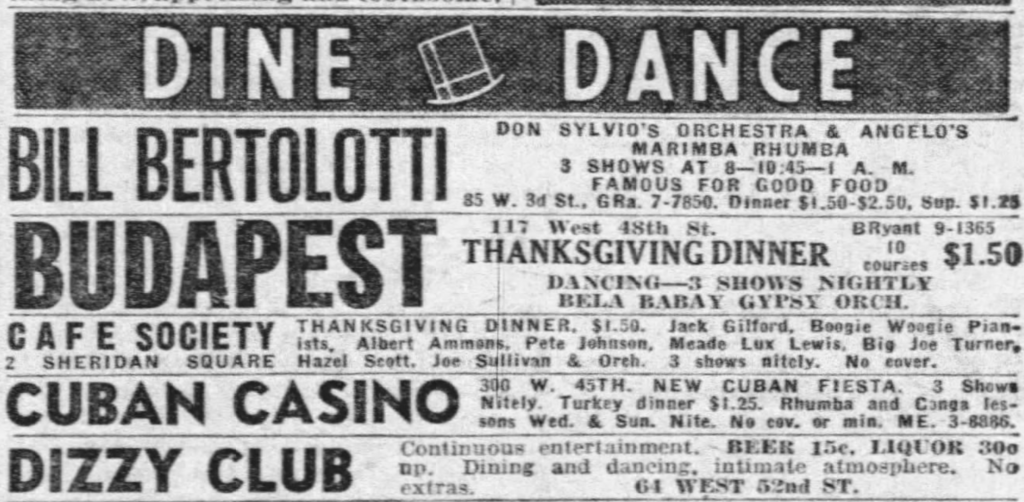
New York Daily News, November 22, 1939 (courtesy Newspapers.com
Art Tatum, Lena Horne, Sarah Vaughn, Mary Lou Williams, Lester Young, Burl Ives, the Golden Gate Quartet, Ella Fitzgerald — in fact its easier to make a list of jazz and pop music icons who didn’t perform there.
But Café Society’s biggest claim was there from the beginning.
On opening night, a young woman took to the microphone. She achieved some success on the New York stage by this point and had even snagged a recording contact with Columbia Records.
But the legend of Billie Holiday would begin here — on opening night.
A Song For Lady Day
To have Holiday as your in-house singer (for nine months!) would have been an honor enough.
To give her — and the world — a defining musical moment, well, that’s New York.
Café Society naturally took on a liberal, left-leaning clientele and with that, a political edge.
Josephson presented a song to Holiday that he had heard at political gatherings, a piercing tune about lynching, one that forcefully reminding listeners that violence and discrimination still very much existed outside the doors of his club.
Billie was originally indifferent to the song, written first as a poem “Bitter Fruit,” by a white Jewish schoolteacher Abel Meeropol; then after contemplating it, considered it too bold.
But she was eventually convinced to sing it, and on three consecutive nights early in 1939, Holliday ended her sets with the song — “Strange Fruit.”
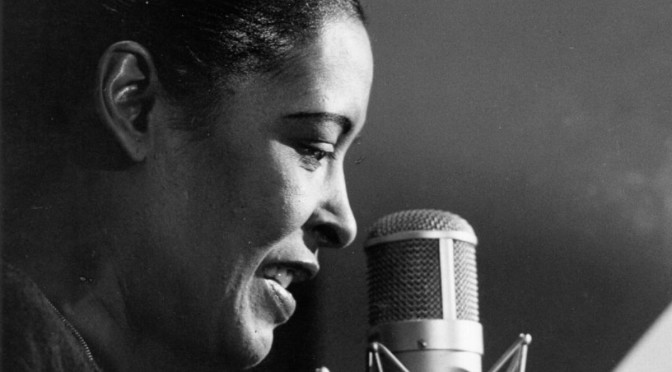
A spotlight tightly focused on her face, she stunned the audience with its searing intensity.
Southern trees bear a strange fruit Blood on the leaves and blood at the root Black bodies swingin’ in the Southern breeze Strange fruit hangin’ from the poplar trees….
And then she left the stage, not returning to hear the thundering applause.
It was theater at its finest; thousands of less talented chanteuses would search to recapture the drama in dozens of Village clubs and cabarets, from then to today.
The Café Society ‘revolution’ would not last long.
Josephson’s brother Leon was being investigated for communist ties, and Barney soon felt the heat of J. Edgar Hoover and his House Un-American Activities Committee.
The FBI even staked out the clubs, photographing patrons, and Hoover soon ‘opened a file’ on Barney himself. Both locations of Café Society were closed by 1950.
But Josephson managed to pick himself up and soon opened another influential downtown jazz club, the Cookery, which stayed opened into the 1980s.
But for a moment, that gritty nightclub became the center of the musical universe.
Most music critics agree that Holiday’s original performances of ‘Strange Fruit’ at Café Society are among the most influential musical moments of 20th century and basically constitute the birth of political activism in popular music.
You can visit the location of the former Café Society simply by taking the subway to Sheridan Square (actually a triangle) and going to its eastern side.
Throughout the month, we will shed a little light on a few of these choices. And we’d love to hear yours! Leave a choice in the comments section and we will compile them in a couple weeks in a dedicated article. At the end of the month, we’ll send all the choices — both yours and ours — to the nomination committee.
Artists and entertainers make natural candidates for statues and public commemorations as many become immortal with the passage of time, their influence imprinted on future generations. There are several such honors for artists in New York — all men (but one).
Among the city’s statuary entertainers are Edwin Booth, Jackie Gleason, Duke Ellington, George M Cohan, Ludwig Van Beethoven, William Shakespeare and countless other writers and composers (many in Central Park). But in Bryant Park, one can find a single bust dedicated to a female writer — Gertrude Stein.
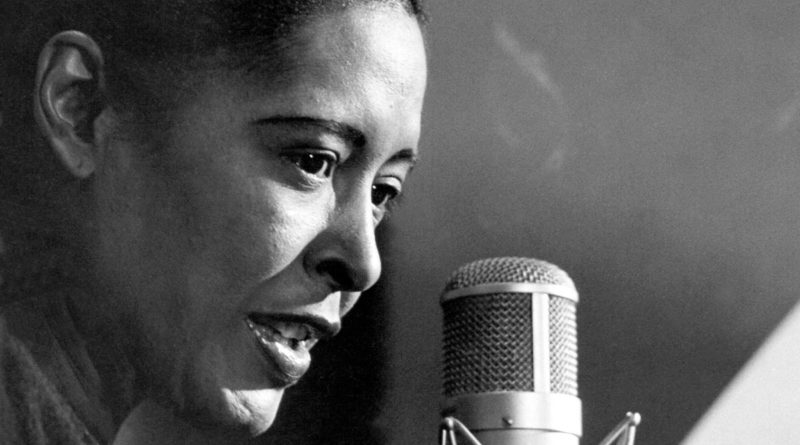
New York City needs another! And we nominate one of the greatest vocalists in American popular music – Billie Holiday.
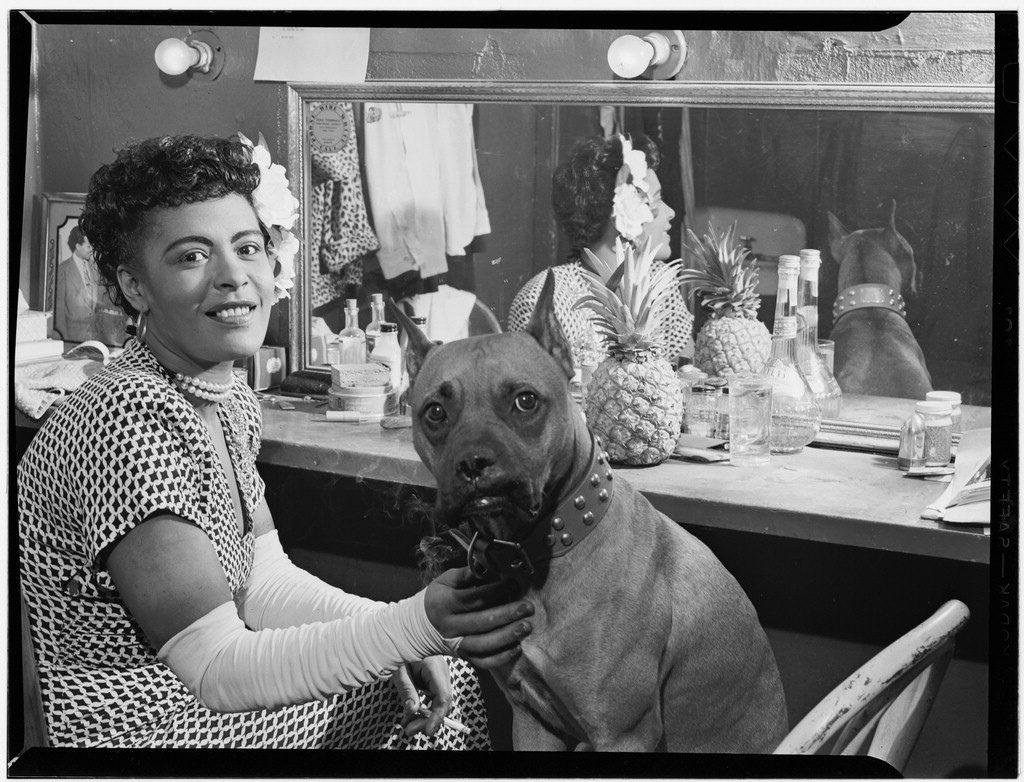
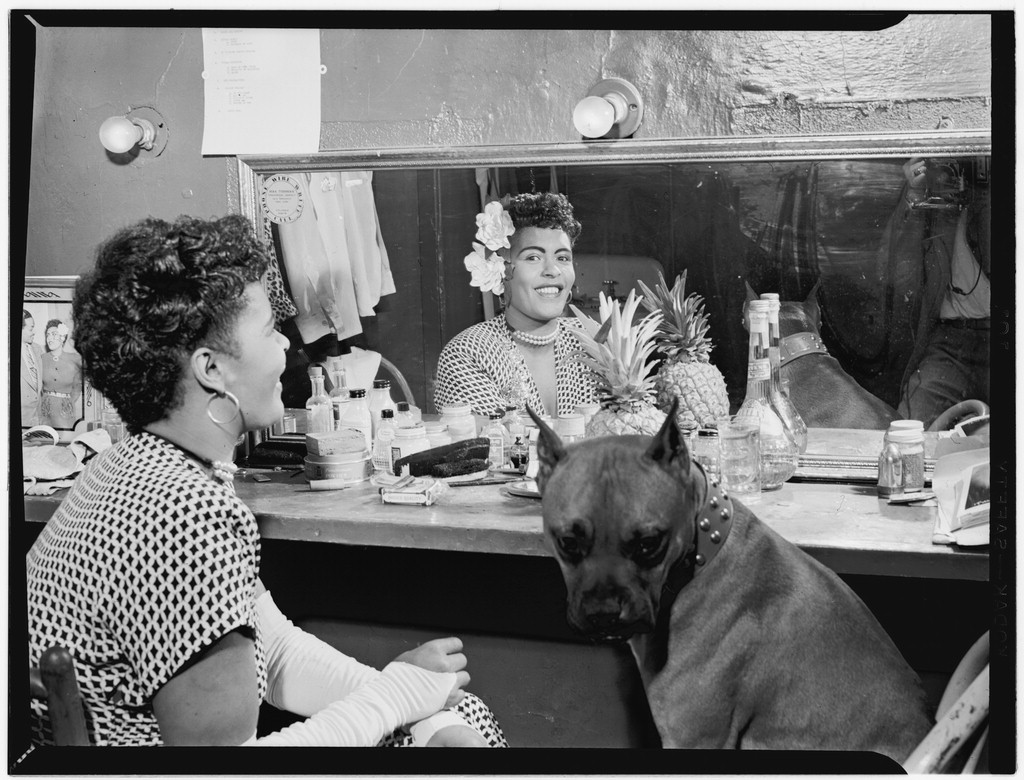
New York City, June 1946, with her dog Mister, courtesy Library of Congress
Her impact upon American music is profound, changing the way vocalists interpret songs, bringing out extraordinary subtlety and richness beyond the lyrics and instrumentation. And she did it within a set of important Manhattan music venues, from Midtown to Harlem. Hers is the story of New York’s own jazz legacy.
Her story is full of drama and paradox, moments of sadness, others of pure ecstasy, in the midst of New York’s history in the making. At its core, her biography is a reflection of the black experience in the 1930s and 40s and how separations of race effected the music scene, how those impressions still reverberate today.
She was born Eleanora Fagan in Philadelphia on April 7, 1915, and first arrived in New York as a teenager. Her first home was in Harlem, a neighborhood in the midst of a renaissance of black art, music and literature.
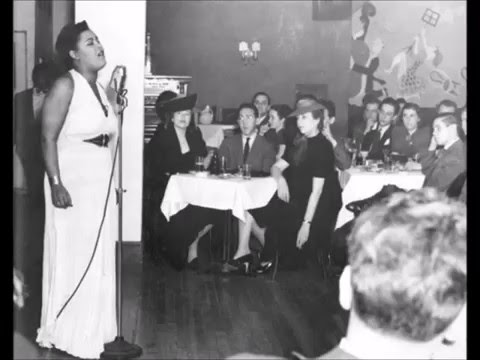
She worked her way through many of Harlem’s great music venues of this period (Small’s Paradise, Covans), singing at 2-3 in the morning, working for tips, hoofing from table to table.
She experimented with her voice, understanding what captivated an audience, learning to interact with gangsters, randy young men, even white movie stars. She shook off her ragged appearance, recognized that a little glamour, a fancy dress, would also help sell her songs. It was at this time she took her stage name Billie, from a white silent film actress named Billie Dove, and Holiday from her father.
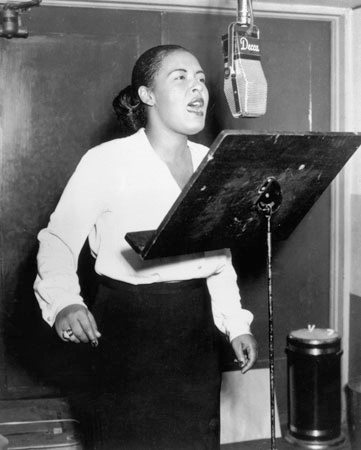
What she learned to do was style music, using her vocals in much the same way as a jazz instrumentalist. She stepped back from the precise hit-every-note style of predecessors for discovered ways of dramatizing music with what some called a slurred or sauntering tone, perhaps one beat behind where a traditional songstress would have come in. By the mid 1930s, she had already invented a singular musical style, captured in recordings for Columbia Records.
In 1937 she began touring with famous big-band orchestras – first with Count Basie, then Artie Shaw. On the road, she came up immediately against the racial and gender prejudices of the day.
Sadly she didn’t even need to leave New York to experience this. In the late 1930s, most hotels in New York City had strict segregation policies. One October evening in 1938, the manager asked Shaw to tell his young singer to use the freight elevator as they did not want guest to think that a black woman was staying there.
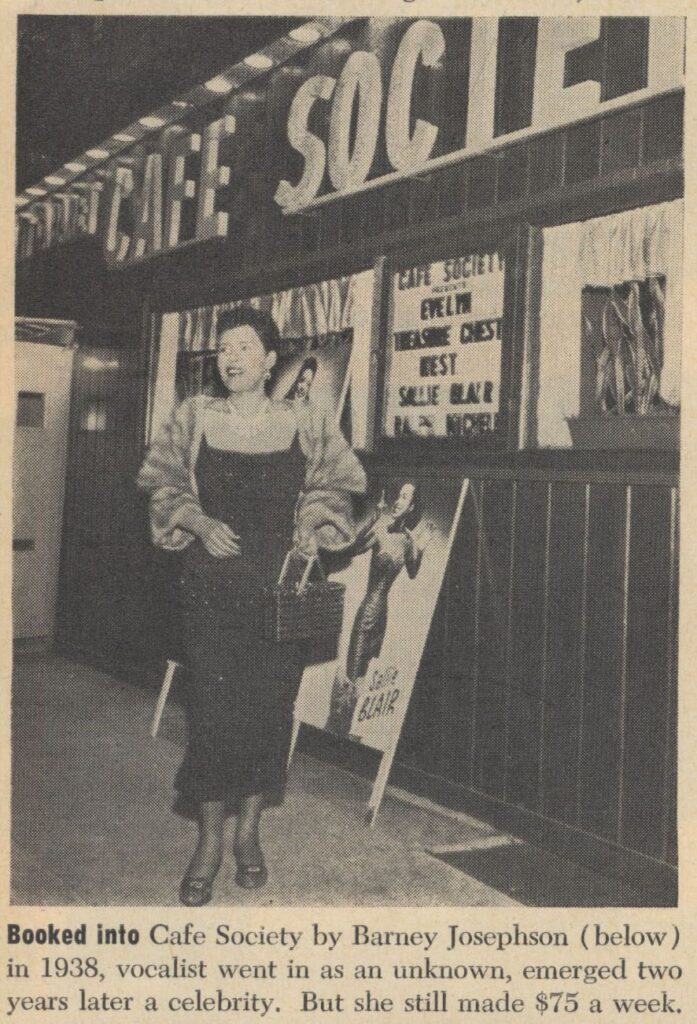
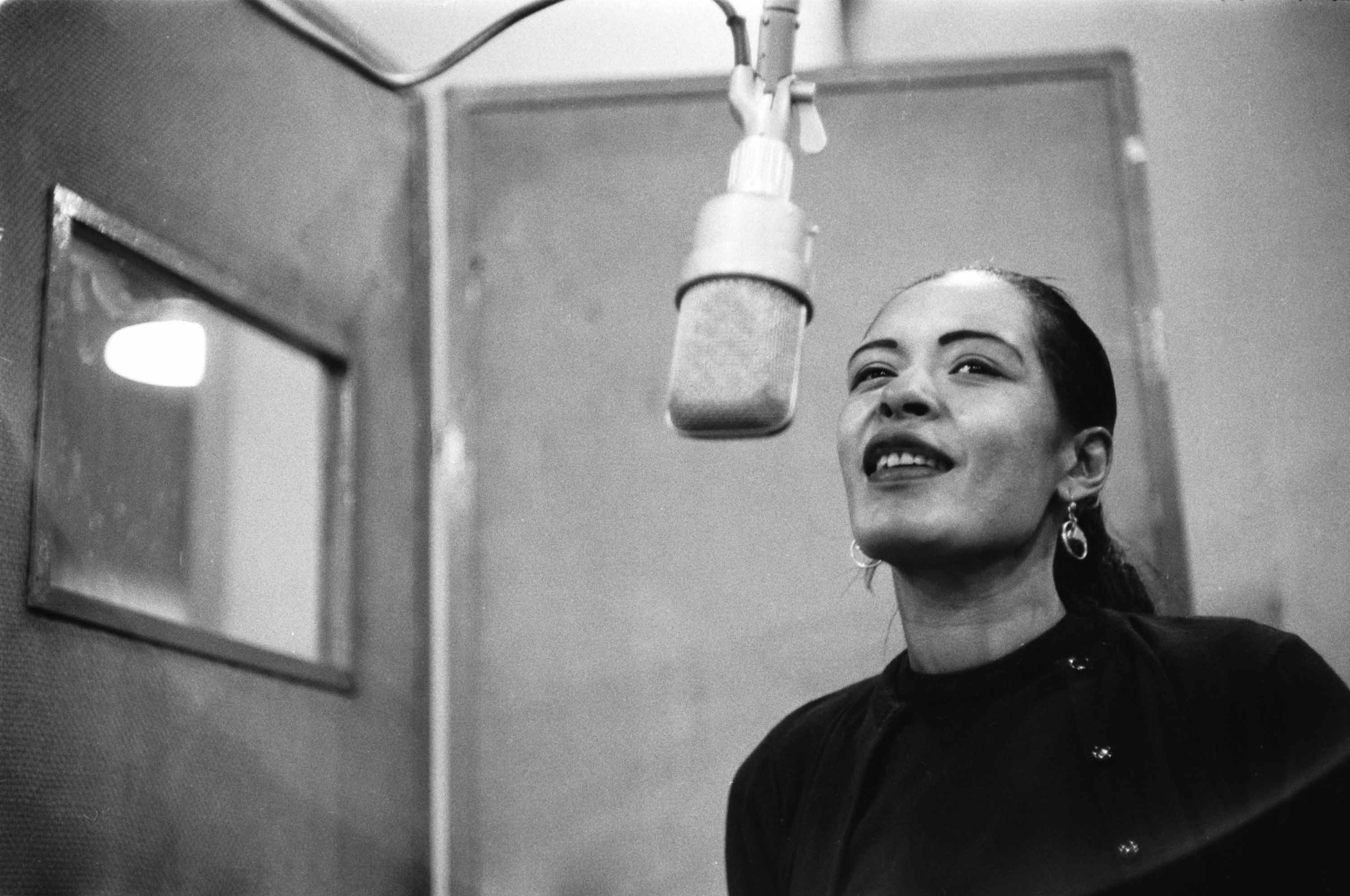
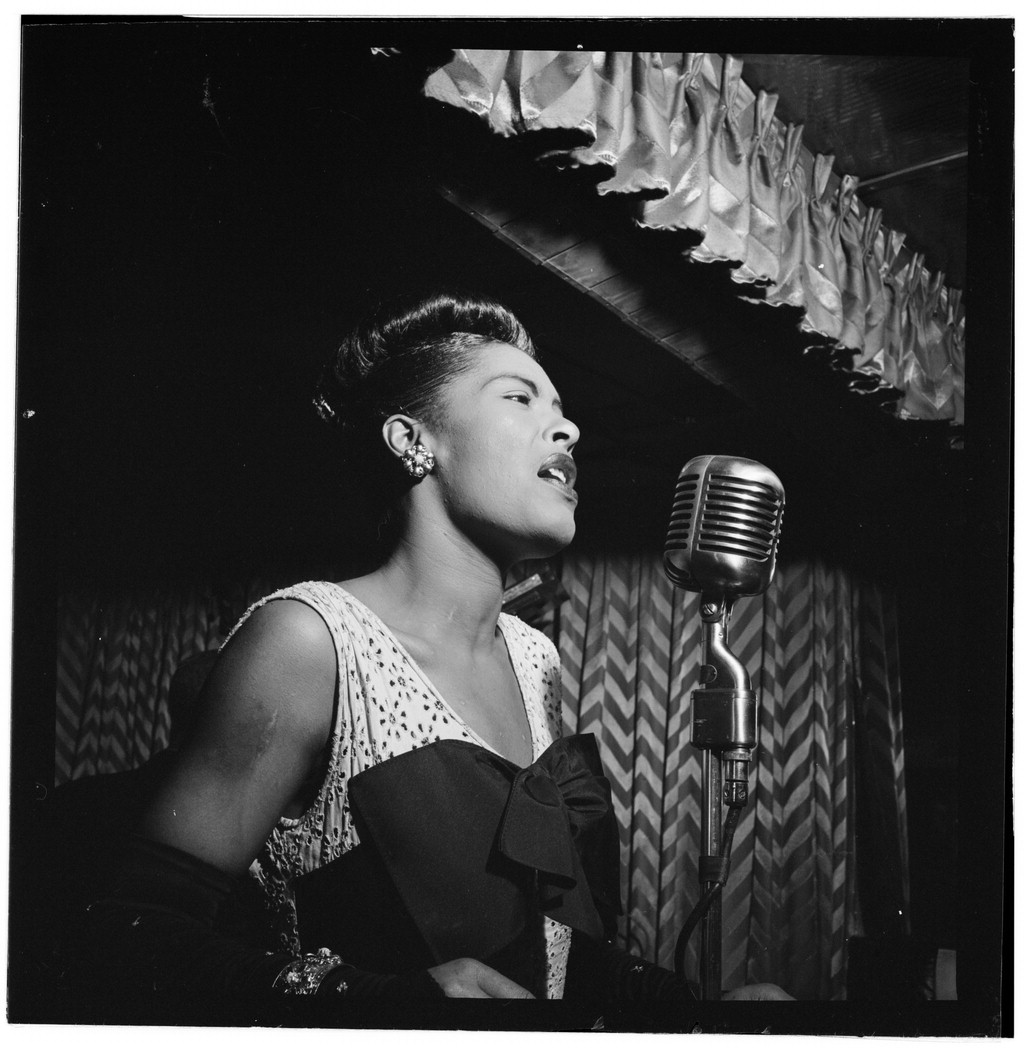
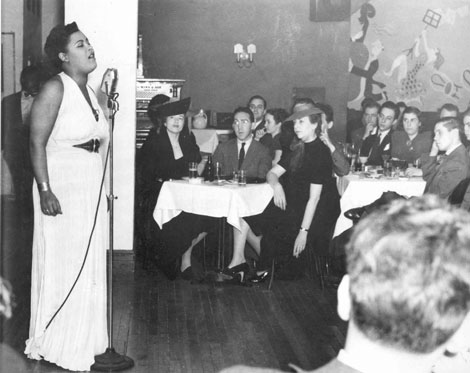
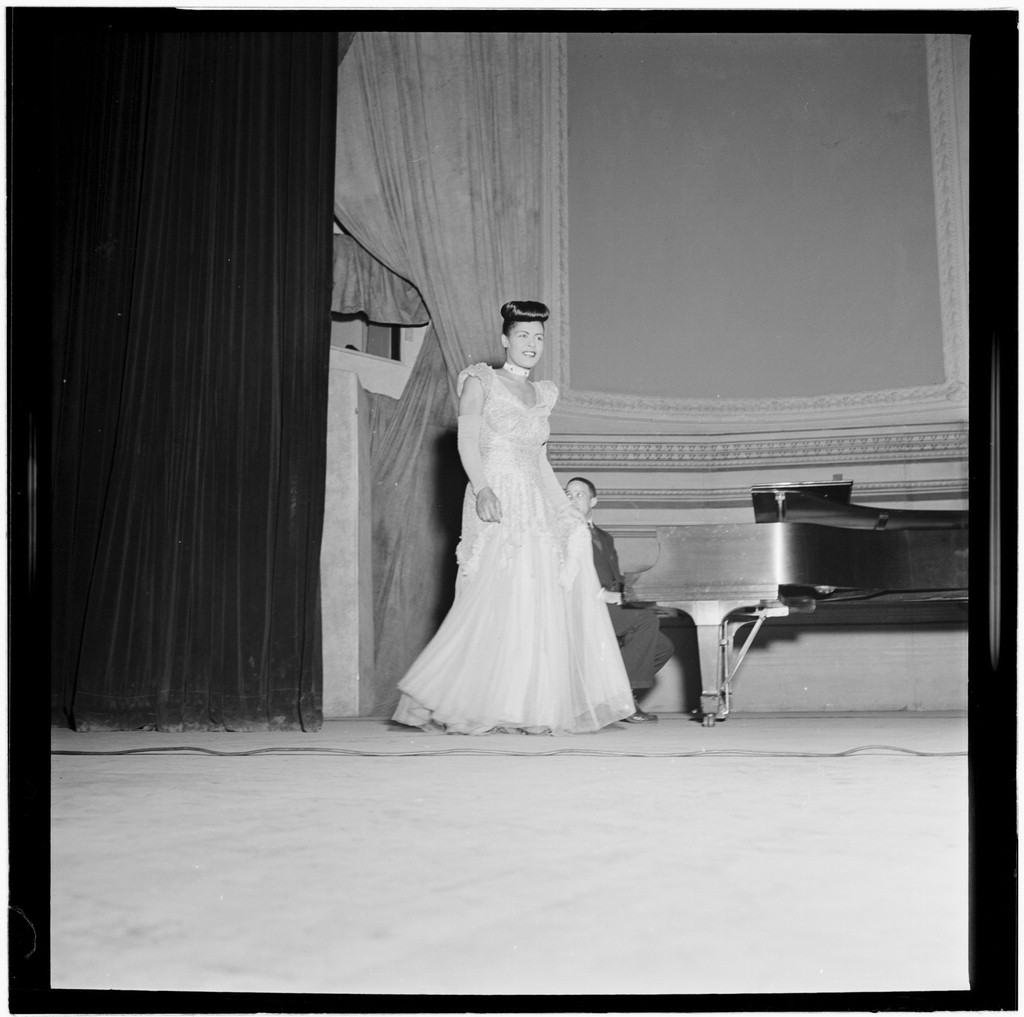
Holiday performing at Cafe Society
But a life changing experience was just around the corner — a Greenwich Village club named Café Society, a venue specifically designed to mix black and white audiences. The novelty of it all brought a lot of attention to Café Society, as did its coterie of progressive celebrities. And this brought attention to Holiday, just at the moment that many of her recordings were now being listened to across the country.
For in April 1939 a Jewish songwriter named Abel Meerepol asked Holiday to perform a new song – one about racism in the South. “If you think it’s okay man, I’ll do it,” said Billie.
“Strange Fruit” was a stark and graphic song about the lynching of black men. She would sing ‘Strange Fruit’ for the remainder of her career, a rare political message in a career mostly comprised of swing and torch songs.
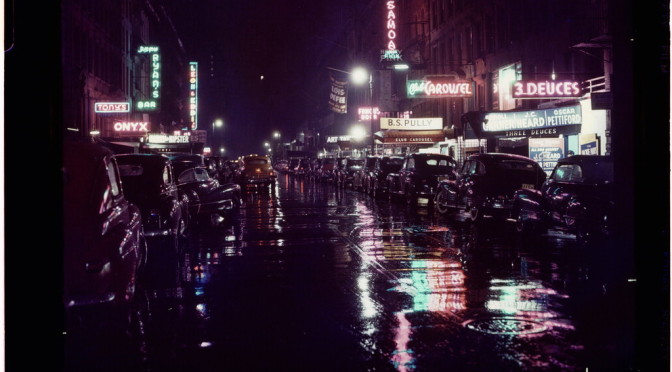
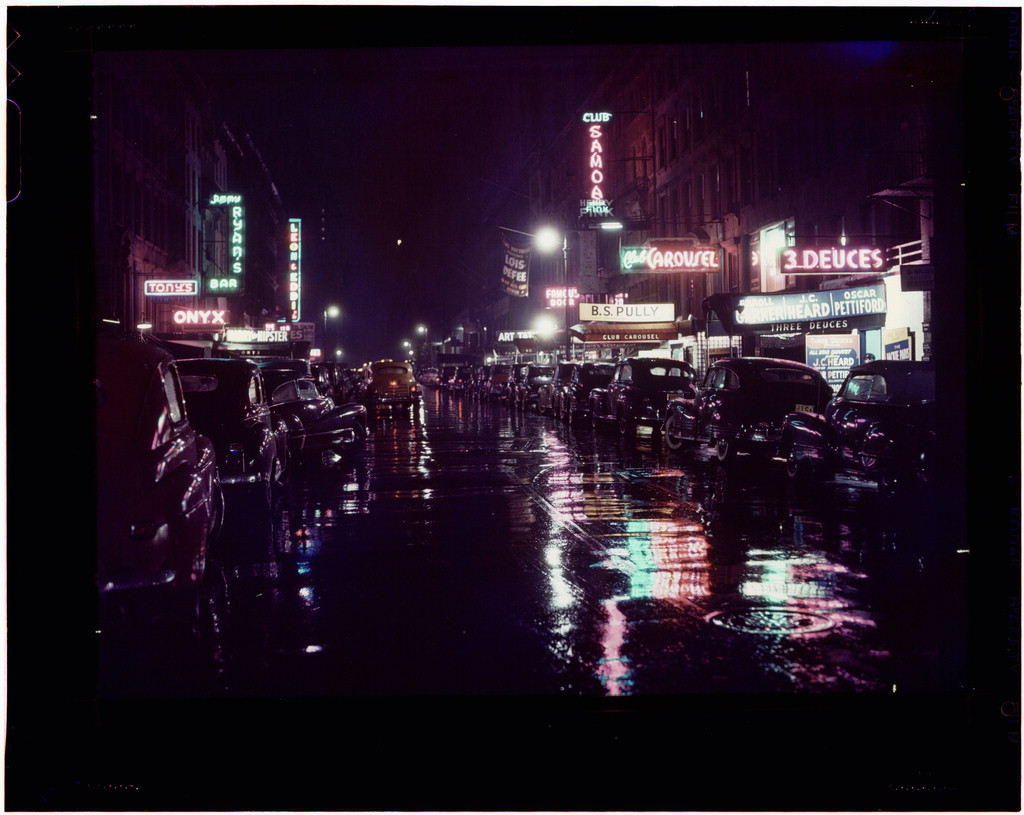
In the 1940s Holiday became one of America’s most famous recording artists, but the real magic happened inside a cluster of smoky music clubs around the area of 52nd Street, between Fifth and Seventh Avenues. Billie Holiday wasSwing Street. She played most of these places during the mid and late 1940s — the Onyx Club, Kelly’s Stable, the Famous Door and Club Downbeat.
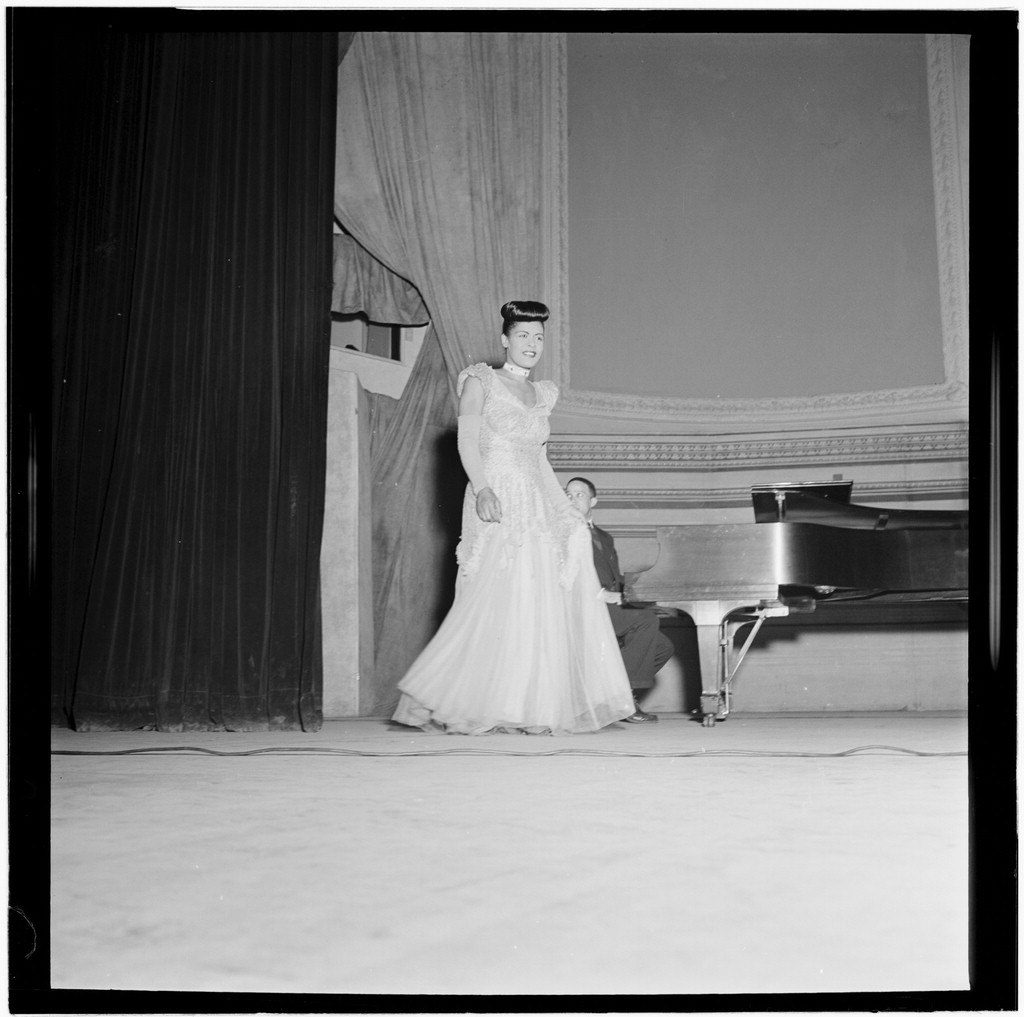
She lived the life of a night owl, eyes stinging from smoke filled bars, drinking continuously. But fans would have clearly noticed a startling change in her off-stage demeanor by the time she got to Onyx. At some point in the 1940s she had begun turning heroin, eventually shooting it up before shows. Her addiction worsened throughout her life, even as she graduated to larger, more ‘respectable’ venues like Town Hall and even Carnegie Hall (pictured below in 1946).
Library of Congress
Perhaps due to a renewed interest by the curious public (her substance-abuse troubles had made the papers), the Carnegie Hall concerts were sold out for weeks, and additional seats were placed on the aisle, with even 600 people sitting on the stage behind her.
That first night, she sang 21 song and 6 different encores. People claim it was the greatest concert she ever gave.
In 1958 Frank Sinatra said of her: “With few exceptions every major pop singer in the US during her generation has been touched in some way by her genius. It is Billie Holiday who was, and still remains the greatest single musical influence on me. Lady Day is unquestionably the most important influence on American popular singing of the last twenty years.”
Holiday died on July 16, 1959, leaving the world countless recordings of undeniably beauty (not to mention her biography Lady Sings the Blues).
A public memorial to Billie Holiday would serve not only as a tribute to her impact on modern music, but would also function as a tribute to New York City’s forgotten musical districts — Harlem’s 133rd Street, Midtown’s 52nd Street, the Village’s integrated music clubs.
For more information on Holiday’s bittersweet career, check out our podcast Billie Holiday’s New York. Portions of the article above are taken from this podcast. You can hear the entire thing here:
The great Billie Holiday was born 100 years ago today. This requires spending some of your day listening to a greatest hits album, I hope. But here are five other ways you can celebrate this icon’s life this week:
1) Watch Diana Ross in Lady Sings The Blues. Sure it’s wildly inaccurate but it’s still a pretty great movie.
2) Listen to Cassandra Wilson‘s perform her new Billie Holiday tribute album Coming Forth By Day at the Apollo Theatre this Friday.
3) Just go to a jazz club.Any one. Keep the tradition that made Holiday’s career alive.
5) Listen to the Bowery Boys podcast from this past January — Billie Holiday’s New York, available on iTunes, Stitcher, wherever you get podcasts or right here.
PODCAST Grab your fedora and take a trip with the Bowery Boys into the heart of New York City’s jazz scene — late nights, smoky bars, neon signs — through the eyes of one of the greatest American vocalists who ever lived here — Billie Holiday.
Eleanora Fagan walked out of Pennsylvania Station in 1929 and into the city that would help make her a superstar. Her early years were bleak, arrested for prostitution and thrown into the Welfare Island workhouse. But music would be her savior, breaking out in Harlem first in the nightclubs on 133rd Street, then in the basement clubs of ‘Swing Street’ on 52nd Street.
Her recordings make her an international star, but the venues of New York helped solidify her talents — from the Apollo Theater to Carnegie Hall. But one particular club in the West Village would provide her with a signature song, one that reflected the horrible realities of racism in the mid 20th century.
Billie Holiday at Club Downbeat, 1947
Locations featured in this episode:
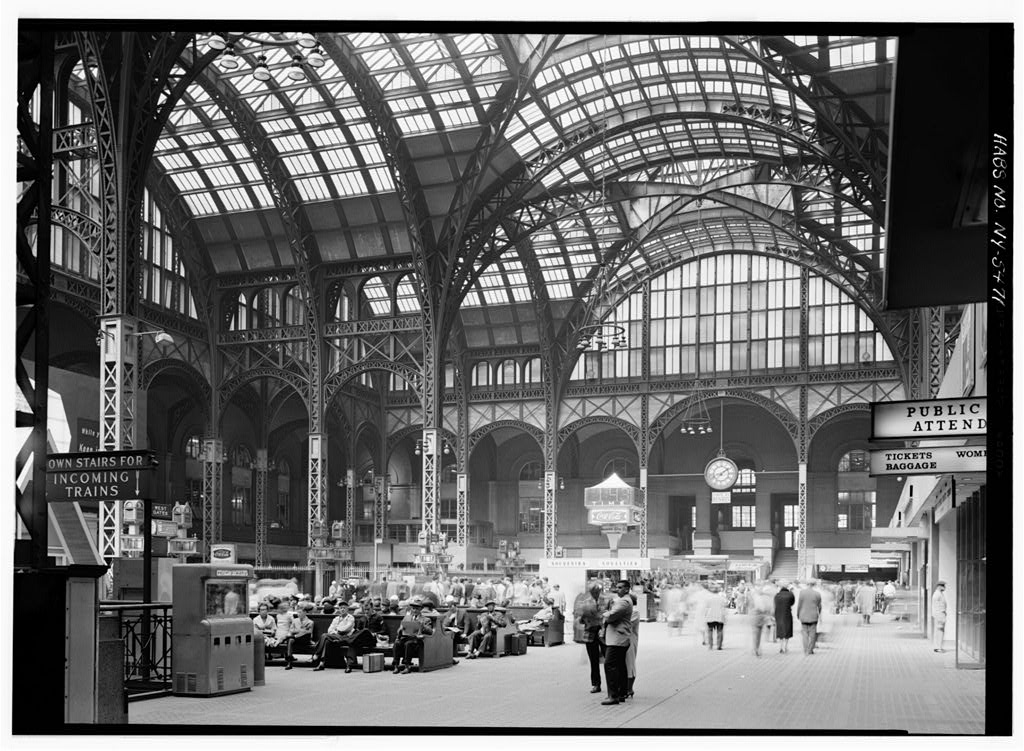
1) Pennsylvania Station (circa 1930s-40s)
Courtesy Library of Congress
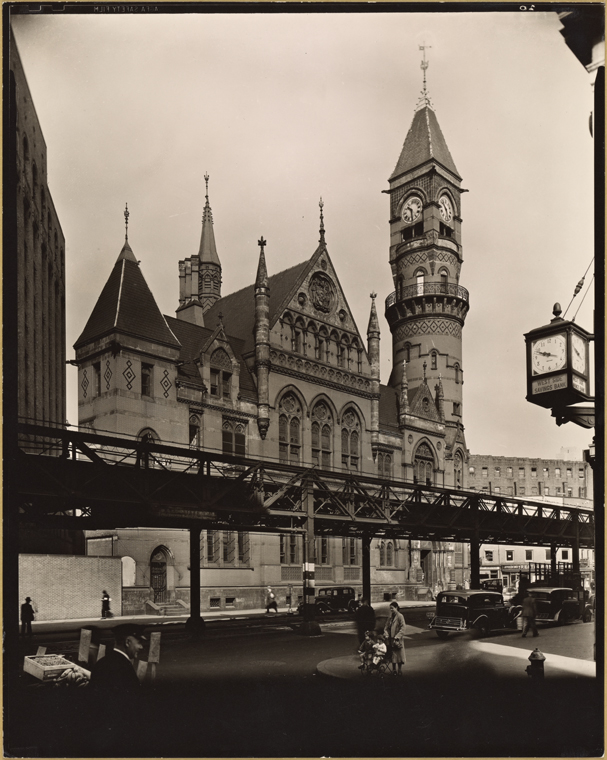
2) Jefferson Market Courthouse, pictured here in 1935
Photographed by Berenice Abbott, courtesy New York Public Library
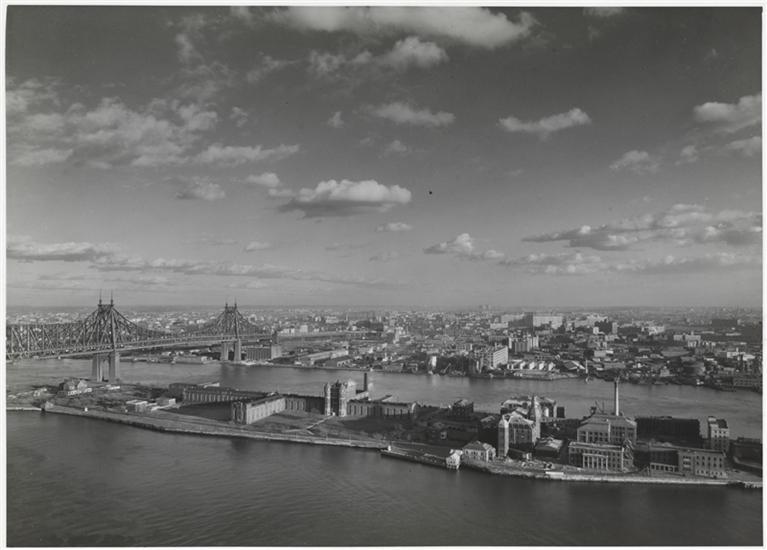
3) Welfare Island, pictured here in 1931
Photographed by Samuel H Gottscho, courtesy Museum of City of New York
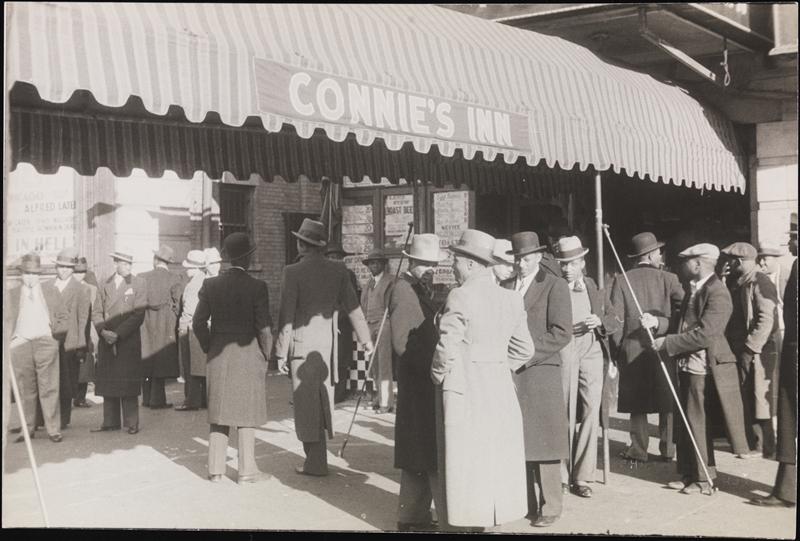
4) 133rd Street — “Jungle Alley” or The Street — outside Connie’s Inn
Courtesy Museum of the City of New York
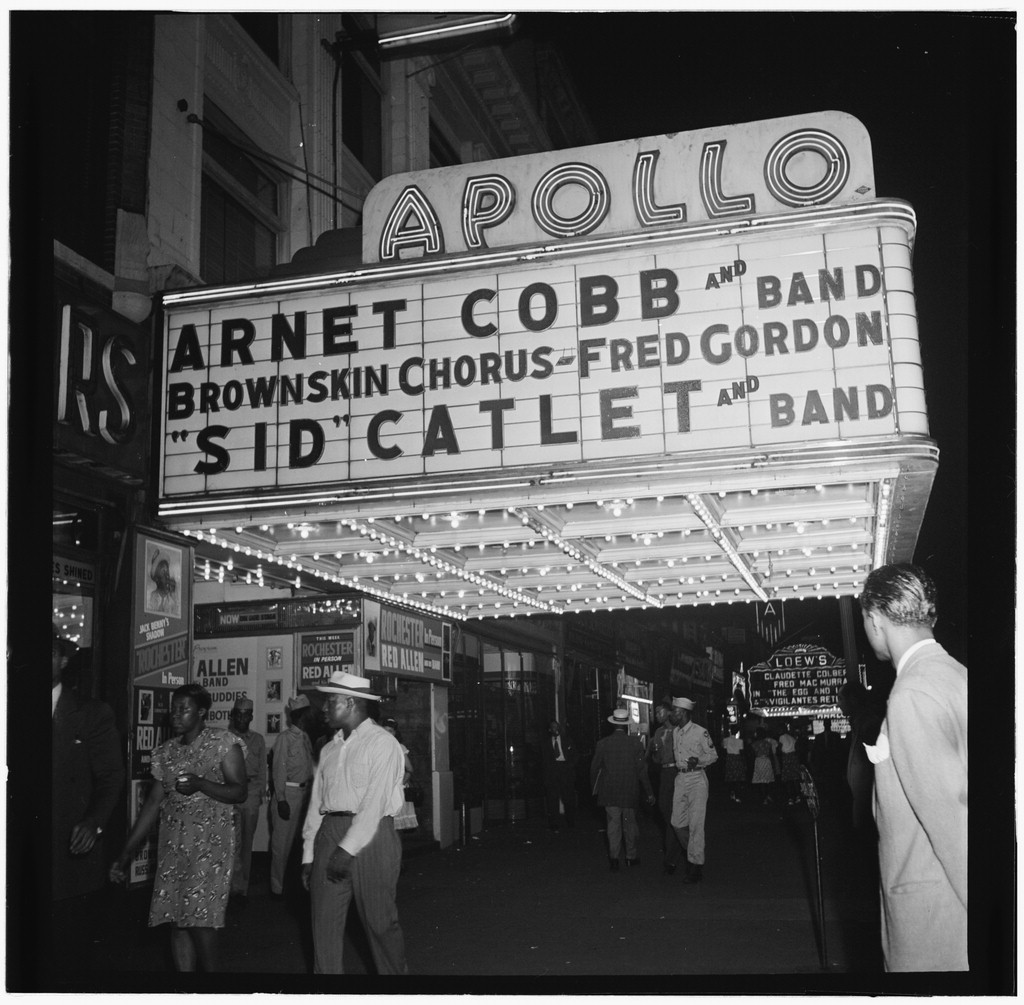
5) Apollo Theater, pictured here in the mid 1940s
Courtesy Library of Congress, photographer William Gottlieb
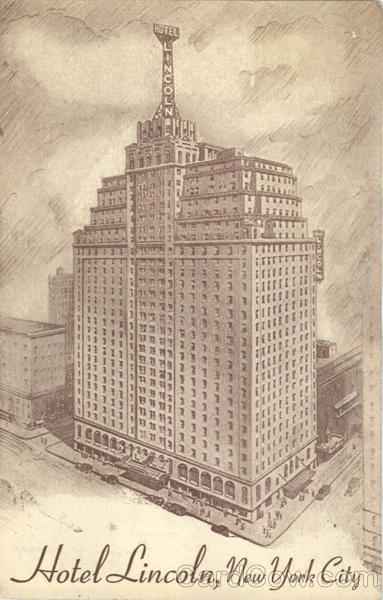
6) Lincoln Hotel
Hotel Lincoln, 44th to 45th Street at 8th Avenue New York City
7) Billie Holiday at Cafe Society 1939
Photo by Charles B. Nadell
8) 52nd Street aka Swing Street
Billie at Club Downbeat (with her dog Mister) — June 1946
Courtesy Library of Congress
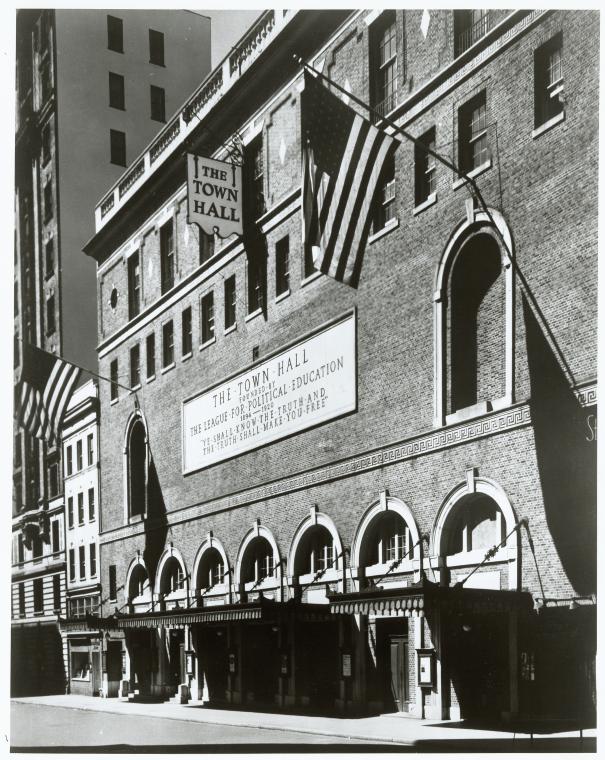
9) Town Hall, sometime in the 1940s
Exterior view of The Town Hall, courtesy New York Public Library
10) Billie Holiday at Carnegie Hall for her rave 1948 concert
Courtesy Library of Congress
An extraordinary performance of ‘Strange Fruit’, performed in February 1959, months before she died. This was recorded for a British television show called ‘Chelsea At Nine’.
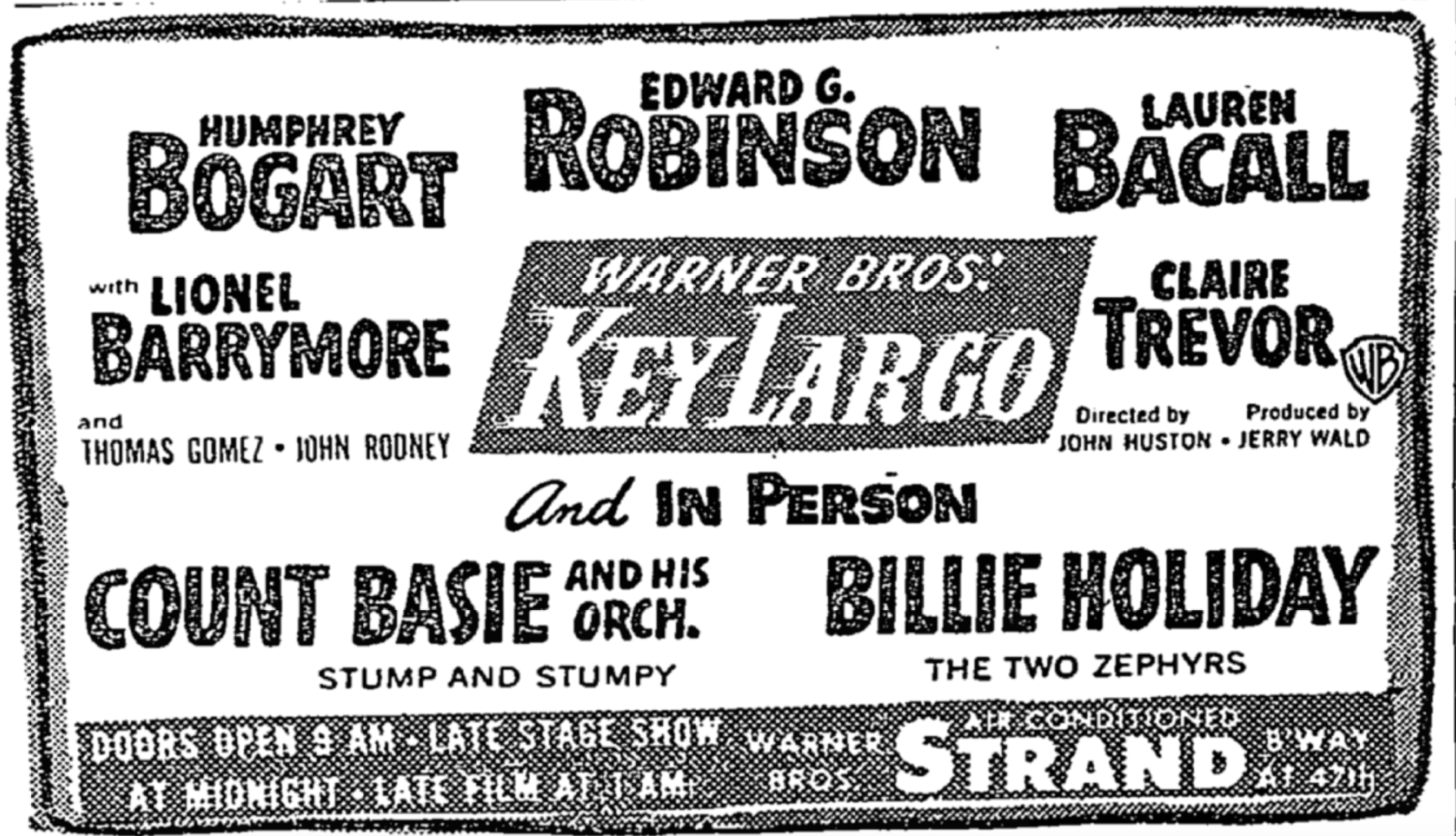
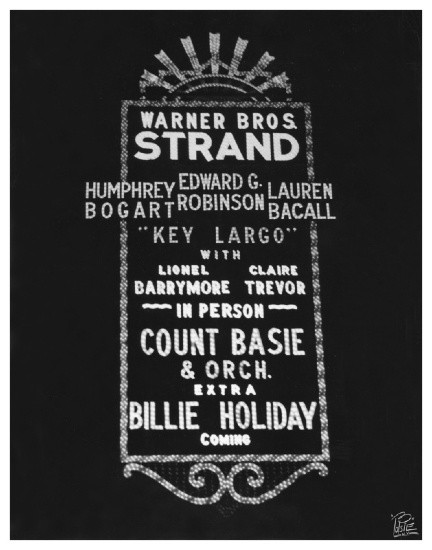
For the debut of the new film Key Largo — starring Humphrey Bogart and Lauren Bacall — the exhibitors at the Warner Strand Theater (at Broadway and 47th Street) has a special treat in store.
from the New York Times, July 17 1943
The Strand Theatre, which opened in 1914, has already made history a few times in New York. Considered the first theater built exclusively for motion picture exhibition, the Strand was the first New York job of Samuel ‘Roxy’ Rothefel (who would move on to his own Roxy Theatre and, then Radio City Music Hall). Â On July 6, 1928, The Lights of New York, the first all-talking feature in history, premiered at the Strand.
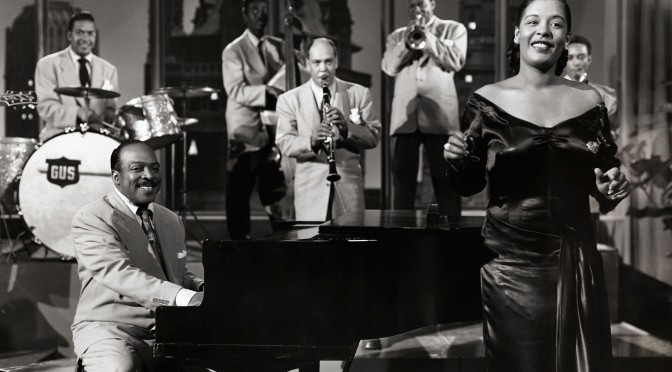
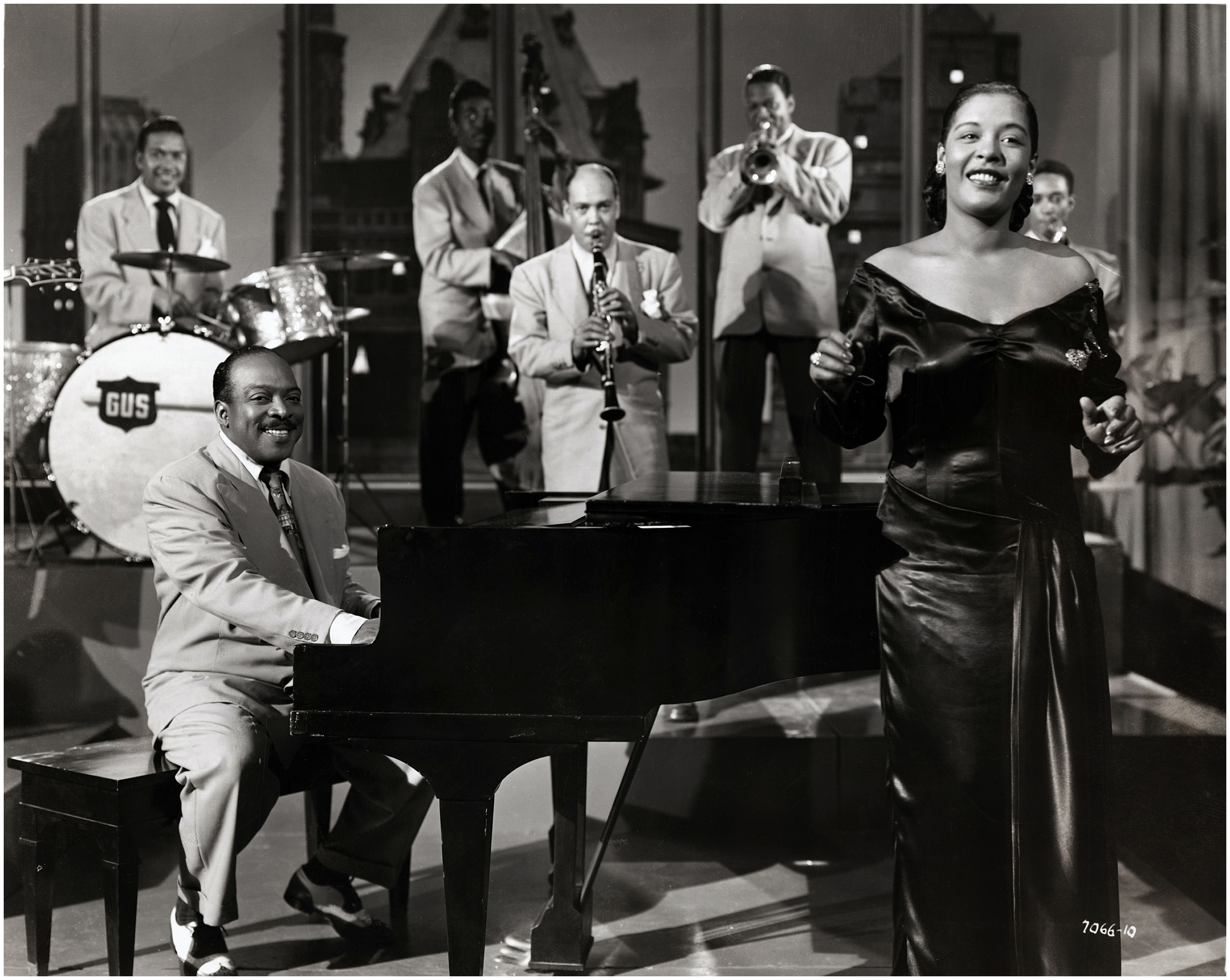
In 1948 came the fourth (and what would be final) movie collaboration between Bogart and Bacall, and its debut on July 16th deserved something out of the ordinary.  For six weeks, the Strand presented the film on an exhaustive bill of music and comedy, featuring two of the biggest stars in jazz music, Count Basie and Billie Holiday.
The two greats had recorded and toured with one another a decade previously, but much had changed since then.  Holiday had only been released from prison that March, serving time on a charge of heroin possession.  The big band era was ending, leaving Basie struggling to mold his music to the new styles of bebop, rock and  rhythm and blues.
While both would continue with their celebrated careers into the 1950s, the six-week Key Largo stint would remind many of earlier, more jubilant phases of their careers.
Basie and Billie from a film still
It was the longest theater run of Lady Day’s career although she fretted the fact that many were there to see her “get all fouled up,” Â according to author Donald Clarke.
As you can imagine, it broke box office records for the Strand. According to Basie’s autobiography, “I think we went in there on a contract for three weeks with an option to extend for another two weeks, and I think they revised it and made it five weeks with options to make it six or seven weeks.”
They were joined by the black comedy team The Two Zephyrs (with legendary comic Slappy White) and tap dancing duo Stump and Stumpy.
I hope that Billie sang “Moanin’ Low,” made famous by the film in a mesmerizing performance by Claire Trevor (who won the Academy Award).
Here’s a sampling of female entertainers from the last one hundred years, focusing on one particular venue that figures into shaping that person’s professional career. Obviously, most of these women performed in dozens of places throughout the city. I’m just focusing on location pivotal to their beginnings.
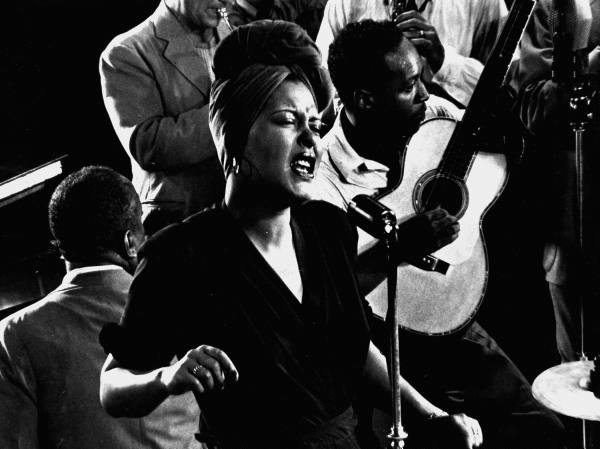
Billie Holiday in a jam session, 1943 (Gjon Mili, courtesy Google Life)
Most of these places are long gone, but you can still visit a couple of them (namely the Bottom Line, The Apollo, and St. Mark’s.)
Sophie Tucker1918 Reisenweber’s Cafe
58th Street and 8th Avenue
One of New York’s true “red hot” ladies of nightlife, Tucker got her start in the Ziegfeld Follies and developed her sassy schtick in vaudeville. The bawdier contours of her act she picked up on the nightclub circuit, cemented in her appearances at Reisenweber’s Cafe. [Read more in my prior article on Reisenweber’s.]
Ethel Waters 1919 Edmonds Cellar
130th Street
Although she would later be associated with gospel music, Waters’ debut at this dank piano bar brought out the bawdy in this future star, learning to incorporate her natural bluesy with popular standards. The combination, mixed with a sass honed in front of drunken, rowdy clientele, would make Waters (at right) one of the biggest black stars of the Harlem Renaissance.
Josephine Baker 1923Â Plantation Club
126th St and Lenox Ave
That ambitious little showgirl from St. Louis came to New York as a chorus girl in a traveling show and stayed to wow the crowds of Broadway and Harlem, in particular at the Plantation Club, a sleek competitor of the mafia-run Cotton Club. French producers, catching Baker stealing one of her shows at the Plantation, invited her to Paris. And the rest is burlesque history.
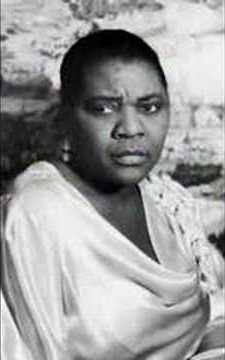
Bessie Smith 1923
The Nest
169 West 133rd Street
Bessie (at left) was not the glamorous kind; her dark bluesy performances tended burrow into your soul. Her 1923 performances at the new Harlem club The Nest marked a turning point for her career; she got her Columbia recording contract that year and began a successful run of Broadway and vaudeville performances, until alcoholism and a tragic car accident cut short her career in the 1930s.
Billie Holiday 1933
Covan’s
West 132nd St
You would need a really large map to chart out all the places Billie sang. The moment Elinore Harris left the workhouse (thrown there after a prostitution conviction) and changed her name to Billie Holiday, she worked stages both in Harlem and in Greenwich Village. It was at Covan’s nightclub that a Columbia Records producer heard her. “The way she sang around a melody, her uncanny harmonic sense and her sense of lyric content were almost unbelievable in a girl of 17.†Within a year, Lady Day would make her first recording with Columbia.
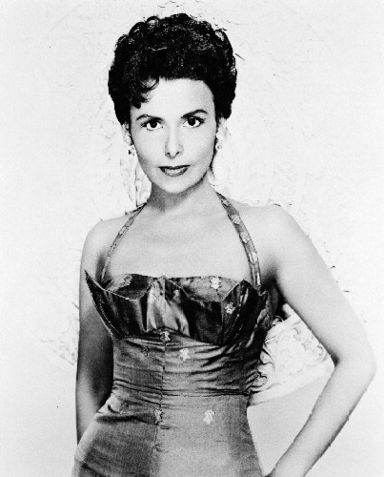
Lena Horne 1933
The Cotton Club
142nd St and Lenox Ave
It was the most famous club in Harlem; she was a lovely young 16 year old girl with barely any experience. As the Cotton Club’s youngest chorus girl, Horne (at right) grew up fast, absorbing the presence of the marquee stars, befriending band leaders, and learning the hard knocks of a color segregated entertainment industry — experience she would take with her to Hollywood years later.
Ella Fitzgerald 1935
Savoy Ballroom
140th St. and Lenox Ave
In New York in the 1930s, the best place to hear swing was the Savoy Ballroom, and the best person to hear sing the swing was a young singer who had just been discovered at the Apollo Theater a few months before. The amateur singer was invited to join Chick Webb’s orchestra for a residency at the hoppin’ ballroom, and as dancers jived, a legend was born on stage.
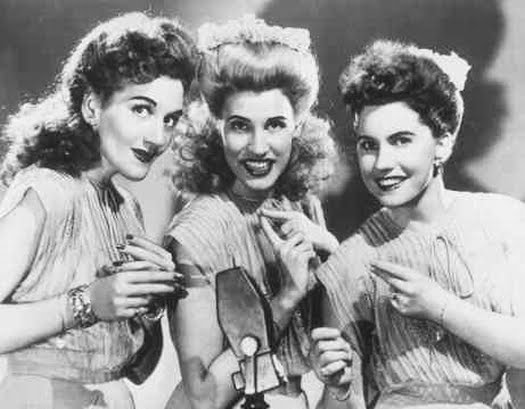
The Andrews Sisters 1937
The Terrace Room @ Hotel New Yorker
481 Eighth Avenue
Years before a war would turn them harmonies into anthemic radio hits, the cornbread sister trio hoped their March 1937 breakout performance at the Terrace Room in the Hotel New Yorker would make them stars. Although the hotel management would find them bland, record executives didn’t. Within the month, they were making music for RCA Victor.
Betty Hutton 1938
Casa Manana 753 Seventh Avenue (at 50th Street)
A scrappy, gangly Midwestern girl who cut her teeth singing in speakeasies and at lake resorts, Hutton was discovered by bandleader Vincent Lopez and taken to New York, where she was given a rare opportunity — to perform in a nightclub owned by impresario Billy Rose. And did she run with it. New Yorkers loved her wacky, electric style, and within a year, she was a scene-stealing co-star in an Ethyl Merman musical.
Pearl Bailey 1944
The Blue Angel 152 East 52nd Street
The choir-trained Virginian songstress had made her rounds on the big band scene — and even toured with the USO during the war — when she took a two-week gig at the swank east-side nightclub the Blue Angel. Her warm, belting voice and stage presence electrified New Yorkers; her two-month stint turned into eight-months, and awaiting her on the other side were a recording contract with Columbia Records and roles on Broadway and in motion pictures.
Nina Simone 1960
The Village Gate 158 Bleecker Street
Simone was already an accomplished musician by the early 1960s, Julliard trained, performing in cabarets of Atlantic City and even scoring a recording contract. But her distinctive sound, the gravity and intensity of her beliefs, would only manifest themselves musically in New York lounges like the Village Gate, one of the few clubs she would enjoy returning to. One live recording from her appearances there became one of her greatest albums, released in 1962. Fun fact — her opening act that night was a new comedian Richard Pryor.
BELOW: “If He Changed My Name” from Nina’s Village Gate release
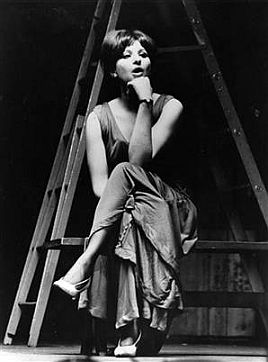
Barbra Streisand 1960
The Lion 62 West Ninth Street
She had barely left her parents home in Brooklyn when young Barbra Joan Streisand turned to singing as a way to become a star. Her New York debut was at a quiet, mafia-run gay club called The Lion, who had a weekly talent show. Barbra, needing the money, entered with the song ‘A Singing Bee’, and won the prize money. She stayed at the Lion for weeks afterwards, fostering her very first gay fanbase.
Ronnie Spector 1961
Peppermint Lounge 128 West 45th Street
Phil Spector might have transformed (and later married) Spanish Harlem resident Ronnie Bennett, but he did not make her a star. Two years before meeting him, Ronnie, her sister Estelle and cousin Nedra were hired as dancers at the crowded new rock club the Peppermint Lounge. One day they were mistaken for the main act, and so the trio just went with it, performing a Ray Charles cover and winning over the audience. [Read more about the Peppermint Lounge here.]Joni Mitchell 1967
Cafe Au Go Go 152 Bleecker Street
The coffeehouses of Greenwich Village launched their share of careers in the 1960s. Mitchell was a seasoned performer from the folk scenes in Toronto and Detroit when she arrived in New York and played regular performances at the Cafe Au Go Go, a cramped basement space best known as the place comedian Lenny Bruce was arrested on obscenity charges. Opening for Richie Havens one October, Mitchell met her future manager Eliot Roberts here. Within six months, she would release her first album, Songs To A Seagull.
Bette Midler 1970
Continental Baths, Ansonia Hotel 2109 Broadway
It seems impossible to imagine — a gay bathhouse as performance venue. But this was the late ’60s/early ’70s, and everything’s possible! Bette had arrived in New York five years previous and was just starring in her first Broadway show when she debuted an odd little cabaret act here at the Continental. With waterfall trickling in the background, Midler created her Divine Miss M persona here, wrapped in a towel. On occasion she even had a shy, betoweled Barry Manilow with her. (Bette wasn’t the only stars to stake out the Continental; Melba Moore, Patti Labelle, Nell Carter and the Pointer Sisters also tried out their acts here.
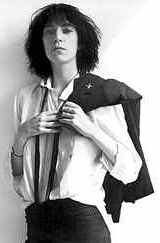
Patti Smith 1971
St. Marks-On-The-Bowery 131 East 10th Street
While Bette was in a bathhouse, Patti was at church. The career of New York’s pre-eminent 1970s rocker ignited at the rock venue CBGB’s. She and Robert Mapplethorpe would learn the ways of celebrity at Max’s Kansas City. But her first musical appearance was at a more unusual venue — the basement of St. Mark’s On The Bowery, counter-culture community center since the late 1960s. She was there as a poet, but with Lenny Kaye on guitar, she sheepishly sang a few numbers (even a cover of “Mack the Knife”) which kicked off her ascent into rock icon status.
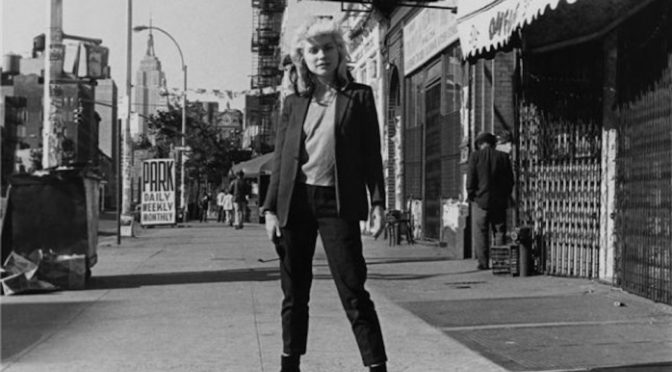
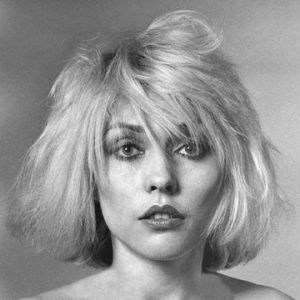
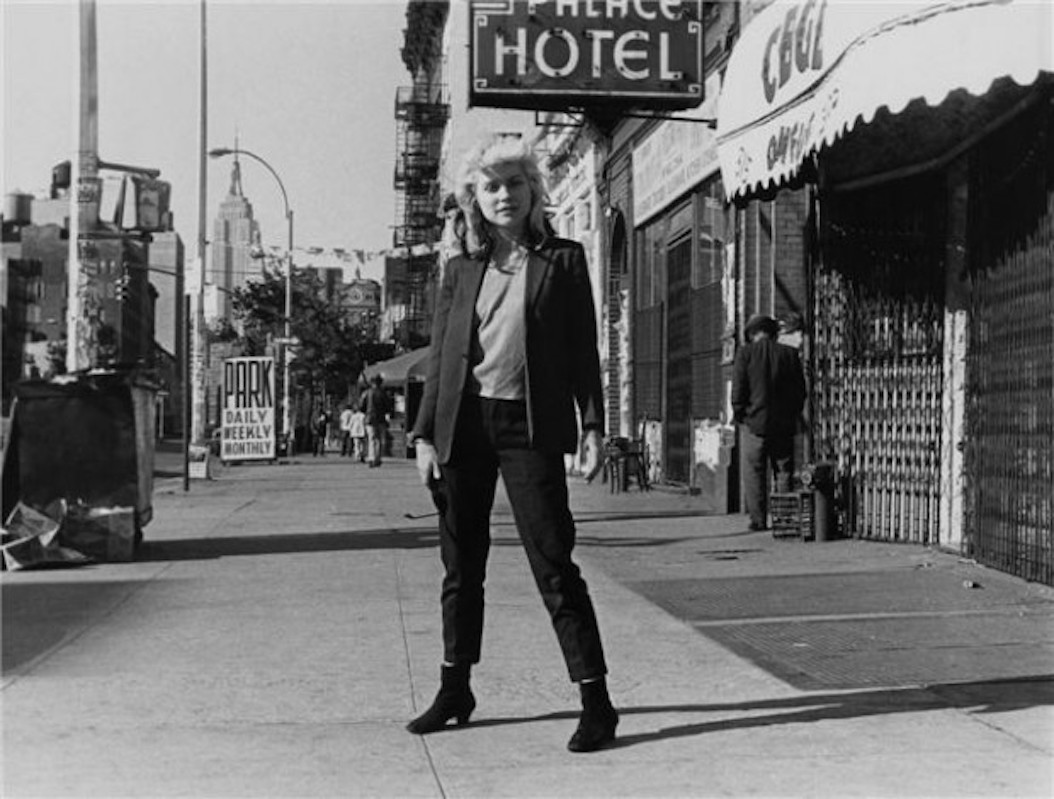
Deborah Harry 1974
CBGBs 315 Bowery
She knew she was star material, but it just took her a couple tries to get it right. The former Max’s Kansas City waitress has already worked through one band, the Wind In The Willows, and tried out another one — the Stilletos, debuting at CBGB’s in May 1974. They folded, but a year later, she took lover and bandmate Chris Stein and formed Blondie. The band would build its reputation on the sturdy little CBGBs stage, easing it into the era of New Wave.
Madonna 1983
Danceteria 30 West 21st Street
She was going to be famous, no matter what. Her time to strike was one evening in 1982, when Danceteria’s flirty hat-check girl slipped her demo cassette “Everybody” to deejay Mark Kamins. A year later, now signed to Warner Bros., she would come back as a performer, and the Madonna identity — more than a mere vocalist — would strike its first pose. [Read more about Danceteria here]
BELOW: Madonna at Danceteria
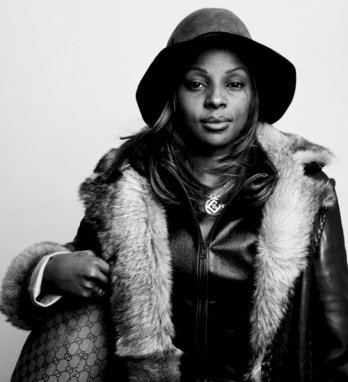
Mary J Blige 1991
The Apollo Theater 253 W. 125th Street
No surprise that people get discovered at the Apollo; what impresses me is that people still use it as a springboard for fame, decades after it opened. Bronx resident Blige actually got signed to a label deal after being discovered at a White Plains shopping mall. But that deal went nowhere until she started showing up at the Apollo, singing backup to other performers. During those Apollo years, she survived bouts of alcoholism and depression which later fueled her confidence as R&B’s reigning diva. (Photo at left by Annie Leibowitz.)
Lady Gaga 2006
The Bitter End 147 Bleecker Street
Of all the performers to grace the legendary Bitter End stage during its almost 50-year history (Bob Dylan, Woody Allen, Bruce Springsteen), odd that a woman who once went by the name of Stefani Germanotta would be among the lucky few to become superstars. The January 2006 performance might have been the pinnicle of the young singer-songwriter’s career “She was learning how to put on a show,†says Bitter End owner Kenny Gorka. “She learned to get people to listen.†[Daily News] But something about the downrock rock scene set her on a different path, one of complete re-invention. She went to Los Angeles, and came back Lady Gaga.
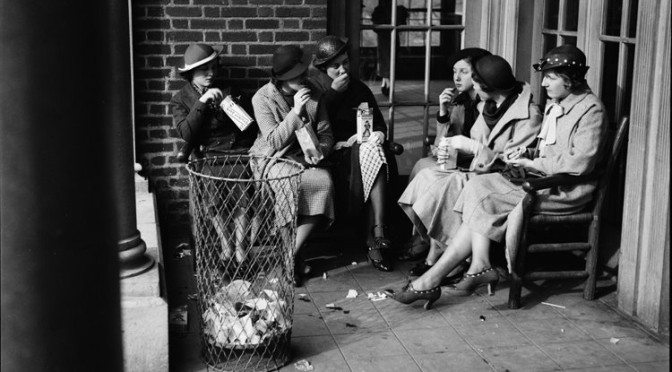
ABOVE: These are the ladies who lunch in Prospect Park 1935
We talk about a lot of white men on the Bowery Boys podcast. When
discussing the mainstream history of the city, it’s pretty unavoidable.
Men had the money, the power, the influence. Not to mention most of the
corruption, the crime, the scandal.
So as Women’s History Month draws to a close (okay, I’m one day
late), I thought I’d make a very opinionated list of the 25 women who
made the biggest impact to the city of New York, at least as seen by
this humble blogger and podcaster.
There have obviously been many, many New York-based women whose
contributions changed the country and the world. There are your
feminists (Elizabeth Cady Stanton), your activists (Ella Baker), your
entrepreneurs (Estee Lauder), your tastemakers (Diana Vreeland) and your
entertainers (Madonna).
But these 25 helped shape
the actual city itself. The neighborhoods, populations and culture, to
be sure. But most importantly, they each effected perceptions of the
city, both to its residents and outward to the world. (Thus, for
instance, you’ll note my heavy emphasis on preservationists.)
This is not an ultimate list. I obviously do not know the impact of
every woman who ever lived in New York City. Many women communicated
power through wealth and property; I don’t have the social register from
every season and cannot gauge the influence of every bold-faced name.
These are just 25 that have crossed my path since we started the Bowery
Boys that I just wanted to celebrate today.
I’ve obviously missed out on a few, so if you have a
particular favorite that’s missing, please put them in the comment
section. At the bottom I have a list of ladies that made my personal
honorable mention. So here we go!
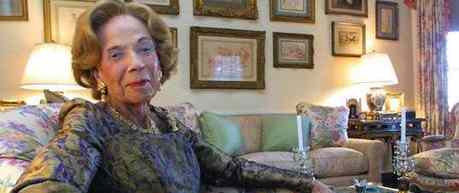
Brooke Astor (1902-2007)
Philanthropist
She was the last of the socialites, as they say. The queen of old
American money, for 105 years Astor ruled as the last official vestige
of one of Manhattan’s wealthiest families, setting a standard for
philanthropy and sadly leaving an uncertain legacy amid scandals
involving her heirs.
Power is the ability to do good things for others. — Brooke Astor
Alice Austen (1866-1952)
Photographer
Few saw the Gilded Age city quite as Austen did, a Staten Island
native who captured the beauties of New York, the horrors of Ellis
Island’s quarantine station, and the wonders of the world, but probably
took her best shots from her own backyard at Clear Comfort, in Rosebank,
SI.
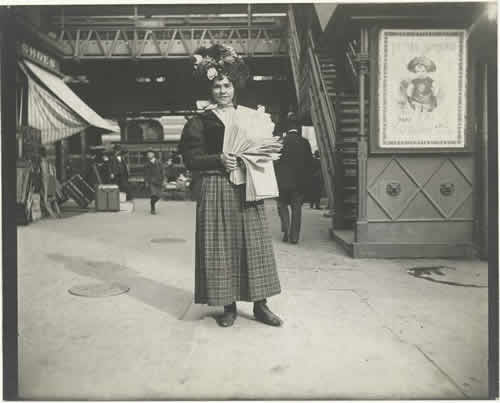
Below: a girl newsie in 1896, as captured by Austen
Nellie Bly (1864-1922)
Journalist
Her bravery, curiosity and outright nerve made her a writer of
international fame, one of the first investigative journalists in the
age of sensational journalism. But the story that put her on the map was
her undercover expose at Blackwell’s Island, ripping open the abuses of
New York’s island of untouchables, changing how the city thought about
both the infirm and the incarcerated.
Could I pass a week in the insane ward at Blackwell’s Island? I said I could and I would. And I did. — Nellie Bly
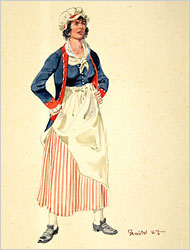
Margaret Corbin (1751-1800)
Revolutionary
Things were so precarious in the fall of 1776, the dawn of the
Revolution, that anyone who lived in New York might have turned the tide
of war. Many women did their part to battle the British, from Mary Lindlay Murray the to the mysterious Agent 355,
a shrouded spy among the British. But Corbin is notable not just for
particular bravery but for sacrifice; she continued to lob cannon fire
at the British from Fort Washington in today’s Washington Heights well
after her husband was killed. Corbin herself was later imprisoned by the
British. Today the street along Fort Tryon is named for her.
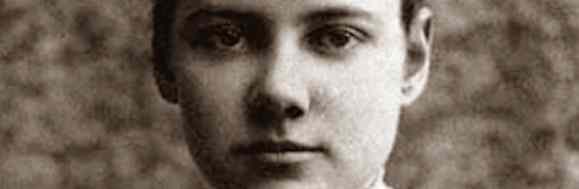
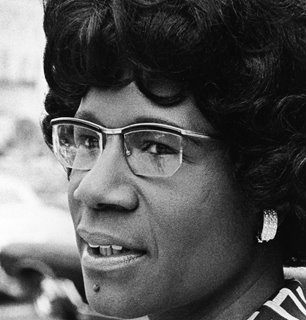
Shirley Chisholm (1924-2005)
Trailblazer
The pride of Bedford-Stuyvesant maneuvering through the precarious world
of New York politics, Chisholm won a seat in the state legislature in
1964 but always dreamed to represent Brooklyn on a national level, in
the U.S House of Representatives. She finally got her wish to represent
her neighborhood when redistricting lines were finally redrawn — finally
allowing a black candidate to run (and win) in a largely black
community — and won her seat in Congress in 1968. Shirley never
disguised her ties to her beloved Brooklyn neighborhood, even as a
candidate for president of the United States.
That I am a national figure because I
was the first person in 192 years to be at once a congressman, black
and a woman proves, I think, that our society is not yet either just or
free. — Shirley Chisholm
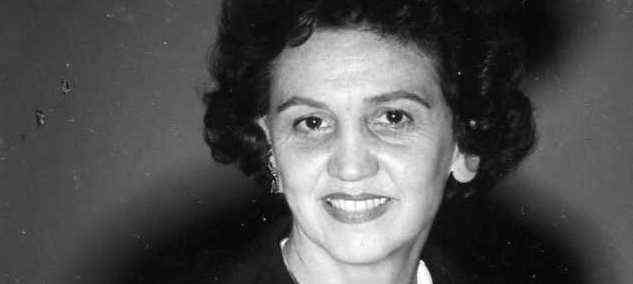
Margot Gayle (1908-2008)
Community leader
Gayle, who died last year at age 100, loved her Victorian
architecture and in particular cast-iron, the antiquated style of
downtown New York warehouses. Seeing destruction imminent, she decided
to save what she considered one of the city’s most neglected treasures.
Forming her first community group in the 1950s to save castle-like
Jefferson Market Courthouse, Gayle galvanized a grassroots architecture
movement.
There might be no SoHo without Gayle; as a campaigner, her work in
saving and preserving this heretofore disregarded part of downtown led
to one of Manhattan’s great neighborhood success stories. The SoHo Cast
Iron Historic District exists due to her efforts. And, more importantly,
her work became a template for how future neighborhoods could be
revitalized. (Read her Times obituary here).
Emma Goldman (1869-1940)
Agitator
Probably the most influential anarchist in American history, Goldman
promoted the rights of workers and upended the role of women in New York
politics. The Russian-born activist made her name on the streets of
Manhattan, stirring Bohemia and workers alike, butting heads with most
of New York’s leading industrialists in the process.
Her views are controversial, often horrifying by today’s standards.
(She once ordered the assassination of Henry Clay Frick, for instance.)
But her powers as an orator and rabble-rouser are unquestioned; her
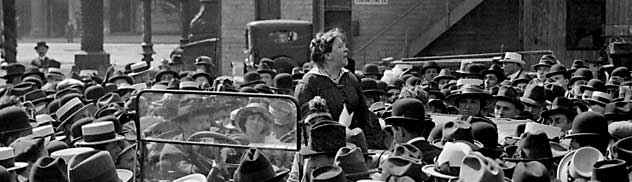
stirring words in Union Square (pictured above) during the panic of 1893
gave voice to the outrage of the city.
If voting changed anything, they’d make it illegal. — Emma Goldman
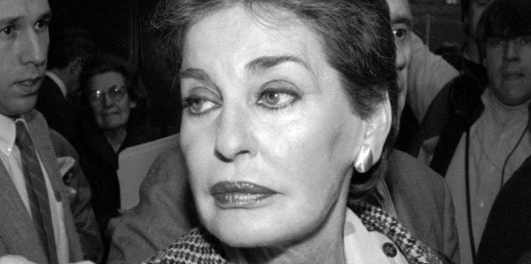
Leona Helmsley (1920-2007)
Magnate
Leona and her husband Harry reigned over a vast Manhattan empire of
highrises and hotels, permanently changing Park and Madison avenues,
helping transform New York into a city of condominiums. Her status as
the Queen of Mean also formed the modern caricature of overbearing and
out of touch wealthy elite. Later convicted of tax evasion, Leona died
in 2007 a laughing-stock. (That Suzanne Pleshette film
didn’t help either.) But her reach extends through many of the city’s
great iconic buildings, including the Empire State Building, which she
and her husband once managed.
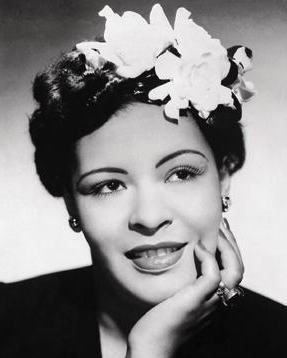
Billie Holiday (1915-1959)
Chanteuse
Of all the thousands of entertainers that have left their imprint on the
city, Holiday’s is the one that makes the deepest impact. Her entire
story — her birth, her rise to fame, her indiscretions and her tragic
death — takes place in New York. Her greatest performances electrified
and reshaped race assumptions in 1930s and 40s nightlife; legendary
nights at places like Cafe Society ensured entertainment would no longer
be strictly a black and white affair. Her performance style is emulated
nightly in cabarets and clubs throughout the city.
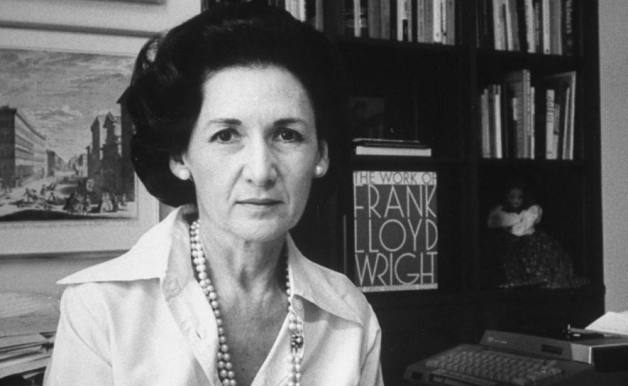
Ada Louise Huxtable (1921-2013)
Critic
She is the best known woman in twentieth century architecture, and she
isn’t even an architect. It’s hard to analyze the history of any
building without first checking in with Ada to see what she has to say
on the matter. Her writing is elegant, persnickety, direct and
affectionate to architectural aesthetic as a whole, and New York City in
specific. As a writer for the New York Times and Wall Street Journal,
Huxtable directed New York’s architecture scene from behind her desk,
excoriating designers for excess or dullness, praising beauty when it
improved the city’s legendary skyline.
I like old buildings that are
intriguing and quite wonderful but don’t make the history books. What
you discover is there’s a little group of people that have been admiring
them quietly by themselves all along. — Ada Louise Huxtable
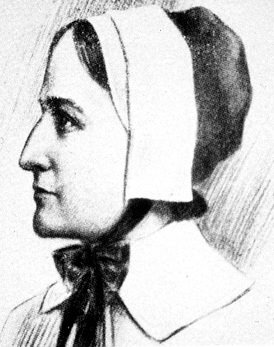
Anne Hutchinson (1591-1643)
Dissident
Escaping persecution in both Puritan Massachusetts and Rhode Island,
religious revolutionary Hutchinson and her followers settled in today’s
area of the North Bronx in the 1640s, one of two significant female
leaders in the early New York area. Although she was later murdered —
Lenapes wiped out the settlement in 1643, a victim of New Amsterdam’s
persistent conflicts with native tribes — she still leaves her mark
today. The Hutchinson River and Parkway both carry her name.
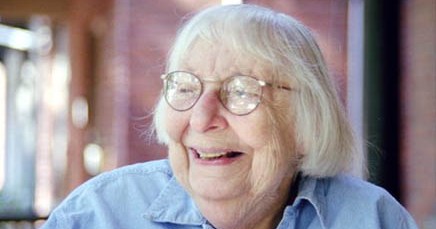
Jane Jacobs (1916-2006)
Community defender
Her theories on urban life have benefited many North American cities,
but it was her struggles to save neighborhoods from Robert Moses and
the rise of car culture in the 1950s and 60s that make her most
influential today. The entirely of downtown Manhattan has her to thank
for fighting back — and ultimately defeating — Moses’ destructive Lower
Manhattan Expressway proposal. The theories described in her classic
“Death and Life of Great American Cities” were shaped from observing
life from her window at 555 Hudson Street in the West Village.
Cities have the capability of providing something for
everybody, only because, and only when, they are created by everybody. —
Jane Jacobs
Lady Deborah Moody (1586 – 1659)
Founder
The British-born Moody, like Hutchinson, took to the unknown when
persecuted for her religious beliefs. With the permission of William
Kieft, the “dangerous” Moody set up the colony of Gravesend in 1645,
becoming the first female founder of an American colony. Gravesend was
one of the original towns of Brooklyn and is still the name of a south
Brooklyn neighborhood today.
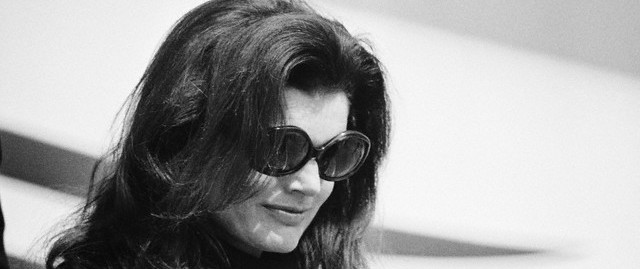
Jackie Kennedy Onassis (1929-1994)
Icon
Settling in New York after the deaths of two husbands, Onassis was
the biggest bold-faced name in the city, famously suffering the
intrusive effects of paparazzi. However she used her headline grabbing
name wisely as a member of the Municipal Art Society, helping defend
Grand Central Station, Columbus Circle and Staten Island’s Snug Harbor
from modification or outright destruction. The Central Parks reservoir
is named in her honor, and MAS gives out a yearly Jackie Kennedy Onassis
Medal to noteworthy New Yorkers. (Margot Gayle received it in 1997.)
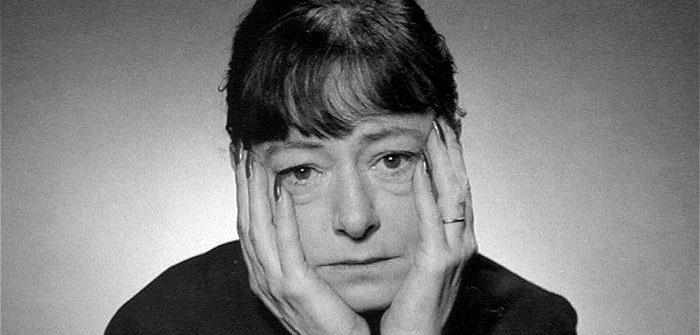
Dorothy Parker (1893-1967)
Wit
As doyenne of the Algonquin Round Table, Parker had the sharpest
friends in town in the 1920s. Her droll charm helped create the
archetype of New York caustic intellectualism, something Woody Allen,
Fran Lebowitz and an entire culture of New Yorker readers can well
recognize.
I’d rather have a bottle in front of me, than a frontal lobotomy. — Dorothy Parker
Abby Aldrich Rockefeller (1874-1948)
Collector
She could very well have stayed in the sidelines with the other
spouses of multi-millionares. But Abby’s tastes and passions for modern
art led her to an astonishing collection she kept on an upper floor of
her townhouse, away from her husband J.D. Rockefeller Jr., who didn’t
much care for those odd little pictures. Years later, that townhouse
would give way to Abby’s pet project, the Museum of Modern Art, one of
the most influential galleries for 20th Century art. Her memory is kept
alive at the museum with the Abby Aldrich Rockefeller Sculpture Garden.
Emily Warren Roebling (1843-1903)
Bridge Builder
Construction on the Brooklyn Bridge had barely begun when her husband
and master engineer Washington Roebling came down with crippling
symptoms of the Bends. Emily at first operated only as his eyes and
ears, but soon grew into the role of leading the completion of New
York’s first great bridge. Ceremonially, she was the first person to
cross it.
Eleanor Roosevelt (1884-1962)
World Leader
One of the most powerful American women to have ever lived was a New
Yorker through and through. Her aristocratic name may have opened doors
for her early on, but her compassion and ingenuity would soon set her
apart, first as a social worker in Manhattan slums, then as the spouse
of a governor and president. She returned to New York after FDR’s death
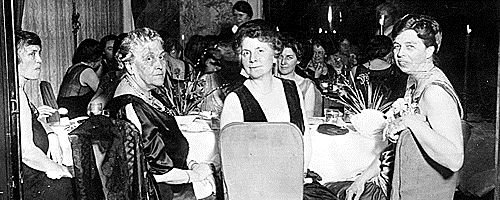
to become a U.S. delegate to the United Nations. (Above: Eleanor with
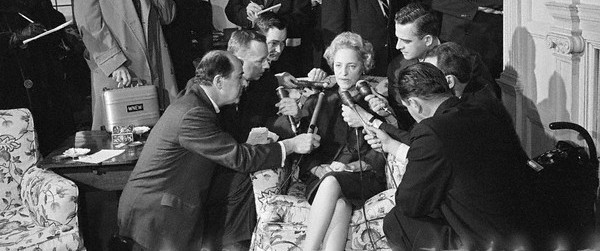
New York City society women.)
Beautiful young people are accidents of nature, but beautiful old people are works of art. — Eleanor Roosevelt
Margaret Sanger (1879-1966)
Rebel
Her influence in the fields of reproduction and birth control would
eventually go global, but all nurse Sanger really wanted to do at first
was help out women in the Lower East Side. From her work in the slums,
Sanger believed radical action was neccessary to control the rising tide
of pregnancies, leading to larger families and greater poverty. In 1917
she opened New York’s first birth control clinic in Brooklyn and was
promptly thrown in jail. Ten years later, her innovations as an educator
in birth control — she’s the mother of Planned Parenthood! — would
catch on worldwide.
During these years in New York more and more my calls began
to come from the Lower East Side, as though I were being magnetically
drawn there by some force outside my control. — Margaret Sanger
Verna Small (1916-2008)
Preservationist
Small is the queen of Greenwich Village, a fiesty, often poetic
community leader who provoked residents into lobbying for historic
preservation. She organized or led one group after another, all in an
effort to preserve the remainder of the Village before developers could
sweep it away. She succeeded. Today it seem impossible that the Village
was ever in that much danger at all. Her many years with the Landmarks
Committee in the 1980s assured the rest of the city would benefit from
her tender loving care.
The attitude of the Village was ‘We’ve got to catch up with Brooklyn Heights!’ —Verna Small
Dorothy Schiff (1903-1989)
Publisher
Native New Yorker Schiff owned the New York Post from 1939 to the 1970s
and eventually shaped its editorial policy as publisher, the first New
York woman to do so. Her stinging, left-leaning views and saavy tastes
for great writers turned the once tame newspaper into the city’s most
successful tabloid. Her sudden decision to sell it to Rupert Murdoch in
1976 led to the decidedly different, far more sensational Post we’re
familiar with today.
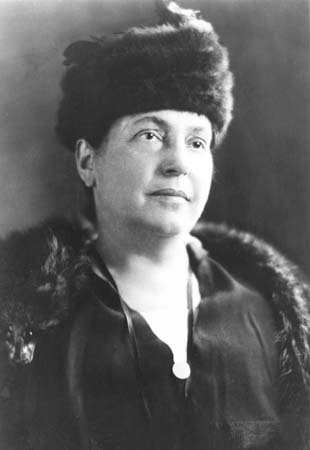
Lillian Wald (1867–1940)
Social Worker
The patron saint of the Lower East Side, devoted nurse Wald helped
found both the Henry Street Settlement and the National Association for
the Advancement of Colored People. Her desire to help New York’s poorest
consumed her life. Her altruism helped save thousands of lives and set
the standard modern social work and nursing. If that isn’t enough, her
innovations from everything to playgrounds and school lunch programs
redefined New York education and reverberated throughout America. Um,
what have you done today to help your fellow man?
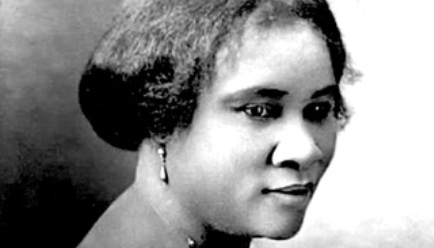
Madam C.J. Walker (1867-1919)
Tycoon
Walker, a self-made entrepreneur and hair product queen, was the
richest and most powerful woman in Harlem, during the neighborhood’s
pivotal years of growth in the dawn of the Harlem Renaissance. (Some
sources say she was America’s first female millionaire.) She shattered
color and gender barriers, employing hundreds of other black women and
eventually leaving most of her wealth to notable African-American
organizations. Walker’s daughter A’Lelia was a patron of many great
writers of the Renaissance era.
And her name? She was once married to a man named Charles Joseph Walker; he left in 1910, but the C.J. — and the Madam — stayed.
Edith Wharton (1862-1937)
Observer
Wharton was a woman of ultimate privledge in Gilded Age New York but
had an uncanny ability to describe it. Our notions of what upper-crust
New York was at this time are shaped in part by her novels and short
stories. Her creations Lily Bart and the Countess Ellen Olenska are
still the best evidence we have of the absurdities and restraints
upper-class New York.
A New York divorce is in itself a diploma of virtue. — Edith Wharton
Gertrude Vanderbilt Whitney (1875-1942)
Patron
Gertrude, the daughter of Cornelius Vanderbilt, turned her powerful
name, untold wealth and fascinations with art into an endeavor that
would benefit the general public, eventually founding the Whitney Museum
in 1931. But unlike Abby Rockefeller, Whitney actually was an artist
herself, a sculptrress and a habitue of turn-of-the-century Greenwich
Village bohemia. Gertrude’s daughter Flora Payne Whitney would go on to
head her mother’s museum for decades.
And 25 more that I didn’t get to write about this time around:
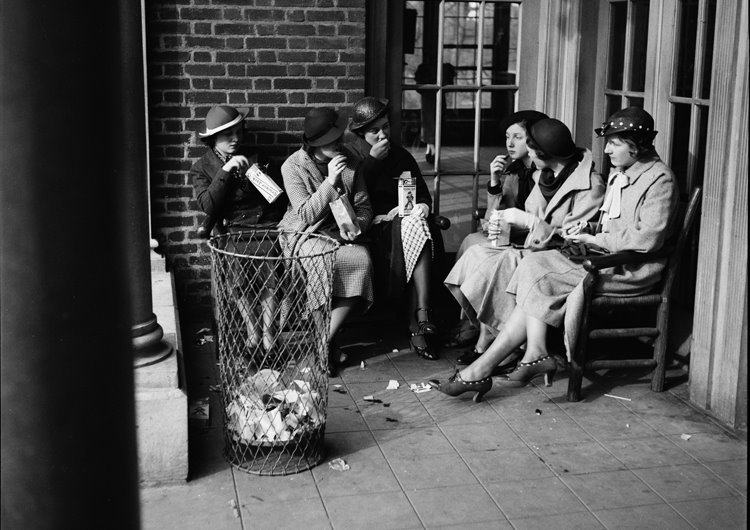
ABOVE: These are the ladies who lunch in Prospect Park 1935
We talk about a lot of white men on the Bowery Boys podcast. When discussing the mainstream history of the city, it’s pretty unavoidable. Men had the money, the power, the influence. Not to mention most of the corruption, the crime, the scandal.
So as Women’s History Month draws to a close (okay, I’m one day late), I thought I’d make a very opinionated list of the 25 women who made the biggest impact to the city of New York, at least as seen by this humble blogger and podcaster.
There have obviously been many, many New York-based women whose contributions changed the country and the world. There are your feminists (Elizabeth Cady Stanton), your activists (Ella Baker), your entrepreneurs (Estee Lauder), your tastemakers (Diana Vreeland) and your entertainers (Madonna).
But these 25 helped shape the actual city itself. The neighborhoods, populations and culture, to be sure. But most importantly, they each effected perceptions of the city, both to its residents and outward to the world. (Thus, for instance, you’ll note my heavy emphasis on preservationists.)
This is not an ultimate list. I obviously do not know the impact of every woman who ever lived in New York City. Many women communicated power through wealth and property; I don’t have the social register from every season and cannot gauge the influence of every bold-faced name. These are just 25 that have crossed my path since we started the Bowery Boys that I just wanted to celebrate today.
I’ve obviously missed out on a few, so if you have a particular favorite that’s missing, please put them in the comment section. At the bottom I have a list of ladies that made my personal honorable mention. So here we go!
Brooke Astor (1902-2007)
Philanthropist
She was the last of the socialites, as they say. The queen of old American money, for 105 years Astor ruled as the last official vestige of one of Manhattan’s wealthiest families, setting a standard for philanthropy and sadly leaving an uncertain legacy amid scandals involving her heirs.
Power is the ability to do good things for others. — Brooke Astor
Alice Austen (1866-1952)
Photographer
Few saw the Gilded Age city quite as Austen did, a Staten Island native who captured the beauties of New York, the horrors of Ellis Island’s quarantine station, and the wonders of the world, but probably took her best shots from her own backyard at Clear Comfort, in Rosebank, SI.
Below: a girl newsie in 1896, as captured by Austen
Nellie Bly (1864-1922)
Journalist
Her bravery, curiosity and outright nerve made her a writer of international fame, one of the first investigative journalists in the age of sensational journalism. But the story that put her on the map was her undercover expose at Blackwell’s Island, ripping open the abuses of New York’s island of untouchables, changing how the city thought about both the infirm and the incarcerated.
Could I pass a week in the insane ward at Blackwell’s Island? I said I could and I would. And I did. — Nellie Bly
Margaret Corbin (1751-1800)
Revolutionary
Things were so precarious in the fall of 1776, the dawn of the Revolution, that anyone who lived in New York might have turned the tide of war. Many women did their part to battle the British, from Mary Lindlay Murray the to the mysterious Agent 355, a shrouded spy among the British. But Corbin is notable not just for particular bravery but for sacrifice; she continued to lob cannon fire at the British from Fort Washington in today’s Washington Heights well after her husband was killed. Corbin herself was later imprisoned by the British. Today the street along Fort Tryon is named for her.
Shirley Chisholm (1924-2005)
Trailblazer
The pride of Bedford-Stuyvesant maneuvering through the precarious world of New York politics, Chisholm won a seat in the state legislature in 1964 but always dreamed to represent Brooklyn on a national level, in the U.S House of Representatives. She finally got her wish to represent her neighborhood when redistricting lines were finally redrawn — finally allowing a black candidate to run (and win) in a largely black community — and won her seat in Congress in 1968. Shirley never disguised her ties to her beloved Brooklyn neighborhood, even as a candidate for president of the United States.
That I am a national figure because I was the first person in 192 years to be at once a congressman, black and a woman proves, I think, that our society is not yet either just or free. — Shirley Chisholm
Margot Gayle (1908-2008)
Community leader
Gayle, who died last year at age 100, loved her Victorian architecture and in particular cast-iron, the antiquated style of downtown New York warehouses. Seeing destruction imminent, she decided to save what she considered one of the city’s most neglected treasures. Forming her first community group in the 1950s to save castle-like Jefferson Market Courthouse, Gayle galvanized a grassroots architecture movement.
There might be no SoHo without Gayle; as a campaigner, her work in saving and preserving this heretofore disregarded part of downtown led to one of Manhattan’s great neighborhood success stories. The SoHo Cast Iron Historic District exists due to her efforts. And, more importantly, her work became a template for how future neighborhoods could be revitalized. (Read her Times obituary here).
Emma Goldman (1869-1940)
Agitator
Probably the most influential anarchist in American history, Goldman promoted the rights of workers and upended the role of women in New York politics. The Russian-born activist made her name on the streets of Manhattan, stirring Bohemia and workers alike, butting heads with most of New York’s leading industrialists in the process.
Her views are controversial, often horrifying by today’s standards. (She once ordered the assassination of Henry Clay Frick, for instance.) But her powers as an orator and rabble-rouser are unquestioned; her stirring words in Union Square (pictured above) during the panic of 1893 gave voice to the outrage of the city.
If voting changed anything, they’d make it illegal. — Emma Goldman
Leona Helmsley (1920-2007)
Magnate
Leona and her husband Harry reigned over a vast Manhattan empire of highrises and hotels, permanently changing Park and Madison avenues, helping transform New York into a city of condominiums. Her status as the Queen of Mean also formed the modern caricature of overbearing and out of touch wealthy elite. Later convicted of tax evasion, Leona died in 2007 a laughing-stock. (That Suzanne Pleshette film didn’t help either.) But her reach extends through many of the city’s great iconic buildings, including the Empire State Building, which she and her husband once managed.
Billie Holiday (1915-1959)
Chanteuse
Of all the thousands of entertainers that have left their imprint on the city, Holiday’s is the one that makes the deepest impact. Her entire story — her birth, her rise to fame, her indiscretions and her tragic death — takes place in New York. Her greatest performances electrified and reshaped race assumptions in 1930s and 40s nightlife; legendary nights at places like Cafe Society ensured entertainment would no longer be strictly a black and white affair. Her performance style is emulated nightly in cabarets and clubs throughout the city.
Ada Louise Huxtable (1921-2013)
Critic
She is the best known woman in twentieth century architecture, and she isn’t even an architect. It’s hard to analyze the history of any building without first checking in with Ada to see what she has to say on the matter. Her writing is elegant, persnickety, direct and affectionate to architectural aesthetic as a whole, and New York City in specific. As a writer for the New York Times and Wall Street Journal, Huxtable directed New York’s architecture scene from behind her desk, excoriating designers for excess or dullness, praising beauty when it improved the city’s legendary skyline.
I like old buildings that are intriguing and quite wonderful but don’t make the history books. What you discover is there’s a little group of people that have been admiring them quietly by themselves all along. — Ada Louise Huxtable
Anne Hutchinson (1591-1643)
Dissident
Escaping persecution in both Puritan Massachusetts and Rhode Island, religious revolutionary Hutchinson and her followers settled in today’s area of the North Bronx in the 1640s, one of two significant female leaders in the early New York area. Although she was later murdered — Lenapes wiped out the settlement in 1643, a victim of New Amsterdam’s persistent conflicts with native tribes — she still leaves her mark today. The Hutchinson River and Parkway both carry her name.
Jane Jacobs (1916-2006)
Community defender
Her theories on urban life have benefited many North American cities, but it was her struggles to save neighborhoods from Robert Moses and the rise of car culture in the 1950s and 60s that make her most influential today. The entirely of downtown Manhattan has her to thank for fighting back — and ultimately defeating — Moses’ destructive Lower Manhattan Expressway proposal. The theories described in her classic “Death and Life of Great American Cities” were shaped from observing life from her window at 555 Hudson Street in the West Village.
Cities have the capability of providing something for everybody, only because, and only when, they are created by everybody. — Jane Jacobs
Lady Deborah Moody (1586 – 1659)
Founder
The British-born Moody, like Hutchinson, took to the unknown when persecuted for her religious beliefs. With the permission of William Kieft, the “dangerous” Moody set up the colony of Gravesend in 1645, becoming the first female founder of an American colony. Gravesend was one of the original towns of Brooklyn and is still the name of a south Brooklyn neighborhood today.
Jackie Kennedy Onassis (1929-1994)
Icon
Settling in New York after the deaths of two husbands, Onassis was the biggest bold-faced name in the city, famously suffering the intrusive effects of paparazzi. However she used her headline grabbing name wisely as a member of the Municipal Art Society, helping defend Grand Central Station, Columbus Circle and Staten Island’s Snug Harbor from modification or outright destruction. The Central Parks reservoir is named in her honor, and MAS gives out a yearly Jackie Kennedy Onassis Medal to noteworthy New Yorkers. (Margot Gayle received it in 1997.)
Dorothy Parker (1893-1967)
Wit
As doyenne of the Algonquin Round Table, Parker had the sharpest friends in town in the 1920s. Her droll charm helped create the archetype of New York caustic intellectualism, something Woody Allen, Fran Lebowitz and an entire culture of New Yorker readers can well recognize.
I’d rather have a bottle in front of me, than a frontal lobotomy. — Dorothy Parker
Abby Aldrich Rockefeller (1874-1948)
Collector
She could very well have stayed in the sidelines with the other spouses of multi-millionares. But Abby’s tastes and passions for modern art led her to an astonishing collection she kept on an upper floor of her townhouse, away from her husband J.D. Rockefeller Jr., who didn’t much care for those odd little pictures. Years later, that townhouse would give way to Abby’s pet project, the Museum of Modern Art, one of the most influential galleries for 20th Century art. Her memory is kept alive at the museum with the Abby Aldrich Rockefeller Sculpture Garden.
Emily Warren Roebling (1843-1903)
Bridge Builder
Construction on the Brooklyn Bridge had barely begun when her husband and master engineer Washington Roebling came down with crippling symptoms of the Bends. Emily at first operated only as his eyes and ears, but soon grew into the role of leading the completion of New York’s first great bridge. Ceremonially, she was the first person to cross it.
Eleanor Roosevelt (1884-1962)
World Leader
One of the most powerful American women to have ever lived was a New Yorker through and through. Her aristocratic name may have opened doors for her early on, but her compassion and ingenuity would soon set her apart, first as a social worker in Manhattan slums, then as the spouse of a governor and president. She returned to New York after FDR’s death to become a U.S. delegate to the United Nations. (Above: Eleanor with New York City society women.)
Beautiful young people are accidents of nature, but beautiful old people are works of art. — Eleanor Roosevelt
Margaret Sanger (1879-1966)
Rebel
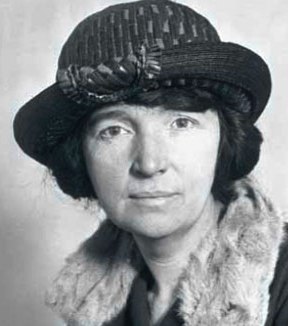
Her influence in the fields of reproduction and birth control would eventually go global, but all nurse Sanger really wanted to do at first was help out women in the Lower East Side. From her work in the slums, Sanger believed radical action was neccessary to control the rising tide of pregnancies, leading to larger families and greater poverty. In 1917 she opened New York’s first birth control clinic in Brooklyn and was promptly thrown in jail. Ten years later, her innovations as an educator in birth control — she’s the mother of Planned Parenthood! — would catch on worldwide.
During these years in New York more and more my calls began to come from the Lower East Side, as though I were being magnetically drawn there by some force outside my control. — Margaret Sanger
Verna Small (1916-2008)
Preservationist
Small is the queen of Greenwich Village, a fiesty, often poetic community leader who provoked residents into lobbying for historic preservation. She organized or led one group after another, all in an effort to preserve the remainder of the Village before developers could sweep it away. She succeeded. Today it seem impossible that the Village was ever in that much danger at all. Her many years with the Landmarks Committee in the 1980s assured the rest of the city would benefit from her tender loving care.
The attitude of the Village was ‘We’ve got to catch up with Brooklyn Heights!’ —Verna Small
Dorothy Schiff (1903-1989)
Publisher
Native New Yorker Schiff owned the New York Post from 1939 to the 1970s and eventually shaped its editorial policy as publisher, the first New York woman to do so. Her stinging, left-leaning views and saavy tastes for great writers turned the once tame newspaper into the city’s most successful tabloid. Her sudden decision to sell it to Rupert Murdoch in 1976 led to the decidedly different, far more sensational Post we’re familiar with today.
Lillian Wald (1867–1940)
Social Worker
The patron saint of the Lower East Side, devoted nurse Wald helped found both the Henry Street Settlement and the National Association for the Advancement of Colored People. Her desire to help New York’s poorest consumed her life. Her altruism helped save thousands of lives and set the standard modern social work and nursing. If that isn’t enough, her innovations from everything to playgrounds and school lunch programs redefined New York education and reverberated throughout America. Um, what have you done today to help your fellow man?
Madam C.J. Walker (1867-1919)
Tycoon
Walker, a self-made entrepreneur and hair product queen, was the richest and most powerful woman in Harlem, during the neighborhood’s pivotal years of growth in the dawn of the Harlem Renaissance. (Some sources say she was America’s first female millionaire.) She shattered color and gender barriers, employing hundreds of other black women and eventually leaving most of her wealth to notable African-American organizations. Walker’s daughter A’Lelia was a patron of many great writers of the Renaissance era.
And her name? She was once married to a man named Charles Joseph Walker; he left in 1910, but the C.J. — and the Madam — stayed.
Edith Wharton (1862-1937)
Observer
Wharton was a woman of ultimate privledge in Gilded Age New York but had an uncanny ability to describe it. Our notions of what upper-crust New York was at this time are shaped in part by her novels and short stories. Her creations Lily Bart and the Countess Ellen Olenska are still the best evidence we have of the absurdities and restraints upper-class New York.
A New York divorce is in itself a diploma of virtue. — Edith Wharton
Gertrude Vanderbilt Whitney (1875-1942)
Patron
Gertrude, the daughter of Cornelius Vanderbilt, turned her powerful name, untold wealth and fascinations with art into an endeavor that would benefit the general public, eventually founding the Whitney Museum in 1931. But unlike Abby Rockefeller, Whitney actually was an artist herself, a sculptrress and a habitue of turn-of-the-century Greenwich Village bohemia. Gertrude’s daughter Flora Payne Whitney would go on to head her mother’s museum for decades.
And 25 more that I didn’t get to write about this time around:
We’ve got some more on that wacky, wonderful place called Roosevelt Island. We highlighted some of the spookier stuff last week. Read it all here.
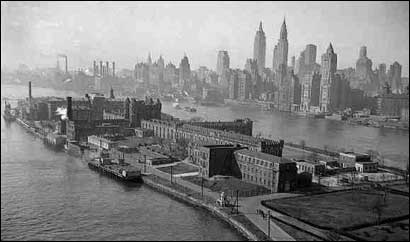
I mentioned earlier that Roosevelt Island was named for a Franklin Delano Roosevelt memorial that was never built there. Perhaps the reason that doesn’t bother anybody is that’s a far more attractive name than its last one, Welfare Island. In the continuum of names in the island’s history, Welfare is worse than all of them, although slightly better than Hog Island.
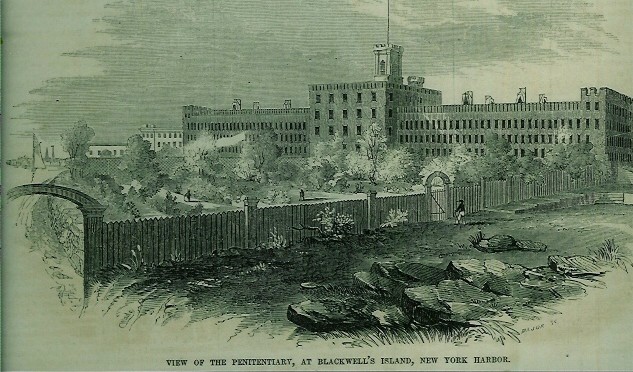
Welfare Island might seem a rather unappealing name these days, but at the time it was changed from Blackwell’s to Welfare in 1921, the connotation was less onerous. By that time, the island was crammed with institutions that benefited “the welfare” of the public, while at the same time sequestering society’s most undesirable. It’s held an almshouse, various hospitals, a workhouse, an asylum. Yet none of these public projects grabbed as many headlines as the island penitentiary, which stood there for over a hundred years.
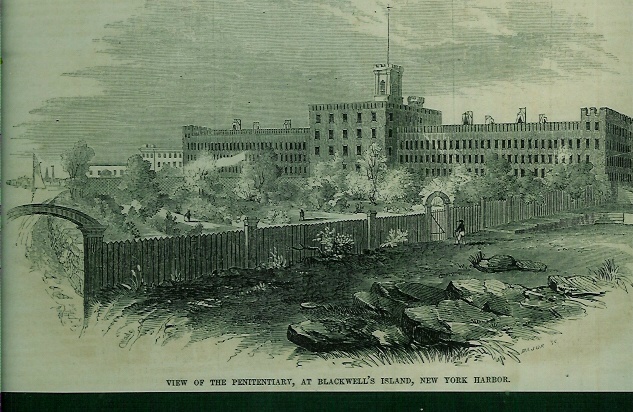
A prison was one of the first things built on then-Blackwell’s Island in 1832. A north wing was added to the prison to accommodate inmates transported from a facility next door to Bellevue Hospital. (The mental patients of Bellevue would make a similar journey to Blackwell’s asylum at around the same time.) The five-story L-shaped building had a granite, medieval-looking facade and 800 cells, much of it filled to capacity through most of its existence.
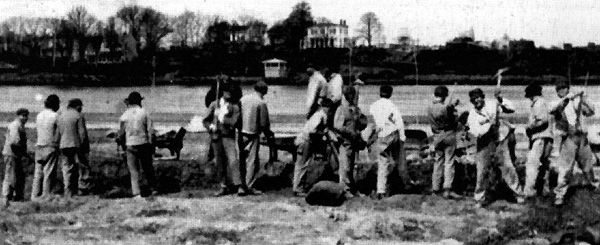
The prison fomented little idleness. Male inmates from there and the adjoining 220-cell workhouse (essentially a correctional facility for “drunks and disorderlies”) were used either in the quarry or to build many of the island’s structures, including a seawall around the perimeter. (Below: a picture from the book Images From America: Roosevelt Island of some of Blackwell Island’s prison laborers.)
This takes the notion of a chain-gang to a whole other level. But then, where would they escape to? Even if they could find a boat, the closest dock was heavily guarded. And although swimming was a possibility, the waters of the East River were far more crowded than they are today. Although some criminals — like ‘Oily’ Rockford — managed escape quite easily.
While the men were outside, women prisoners would do more ‘womanly’ chores, like sewing and laundry. I can’t help but think many of these women could have been better served in the quarries than in the sewing circles.
The prison and workhouse has seen its share of celebrity lawbreakers; one could imagine Paris Hilton feeling at home here. (I’m kidding; she wouldn’t last a day.) Many of the purported crimes wouldn’t even get you a slap on the wrist today.
Margaret Sanger’s sister Ethel Byrne was locked up for providing birth control advice to women in Brooklyn. Anarchist Emma Goldman was a frequent ‘guest’ for incendiary remarks and inciting riots, joining other frequenter Madame Restell, an early 20th century abortionist. Well before her singing career took off Billie Holiday spent four months here for a “vagrant and dissipated adult” (code for prostitution), although she was still a minor.
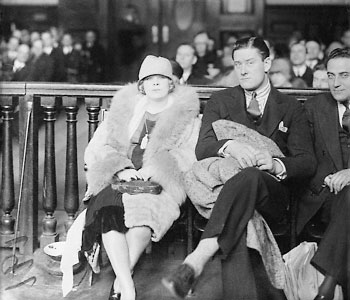
However its two most recognizable residents to the public at the time stand at either end of the justice scale; Boss Tweed served there for a year as the instigator of New York’s corruption woes, while comedian Mae West was locked up for eight days in 1927 on public obscenity charges, due to the ‘salacious’ nature of her Broadway show ‘Sex’. She received so much media attention that she was allowed to wear silk underpants at night and was eventually let off for good behavior. (The picture above is Mae in court, possibly on the day receiving her sentence.)
The celebrity element also helped shine spotlights on the prison’s squalid conditions — a sorry hall of overcrowding, drug addiction and corruption. By the 20th century, gangs of prisoners virtually ran the place. It would become the inspiration for dozens of pulp novels and films, including one actually called Blackwell’s Island.
After a few sorry reforms — including the name change to Welfare Island — produced few results, it was up to can-do mayor Fiorello Laguardia and his hire for corrections commissioner Austin H. MacCormick to raid the prison and transport its remaining inmates to the newly built Rikers Island. The Welfare Island prison was quickly torn down and replaced by Goldwater Hospital, today the Coler-Goldwater Memorial, which still serves the city in an environment far more inviting that anything that ever stood there before. has some of the best medical facilities in the city.
That’s it for Roosevelt Island this week! If you want to know more, the best online resources I could find include those at the Roosevelt Island Historical Society and a spectacular in-depth timeline at NY10044. (I know, I know, I didnt even get to the Blackwell house, fifth oldest building in all of New York City, or the ruins of old Strecker Laboratory.)
By the way, if you want to see what Blackwell Island might have been like, Roosevelt Island 360 has a video stream of the 1903 panoramic film reel that surveys the island in all its gloom and gray.