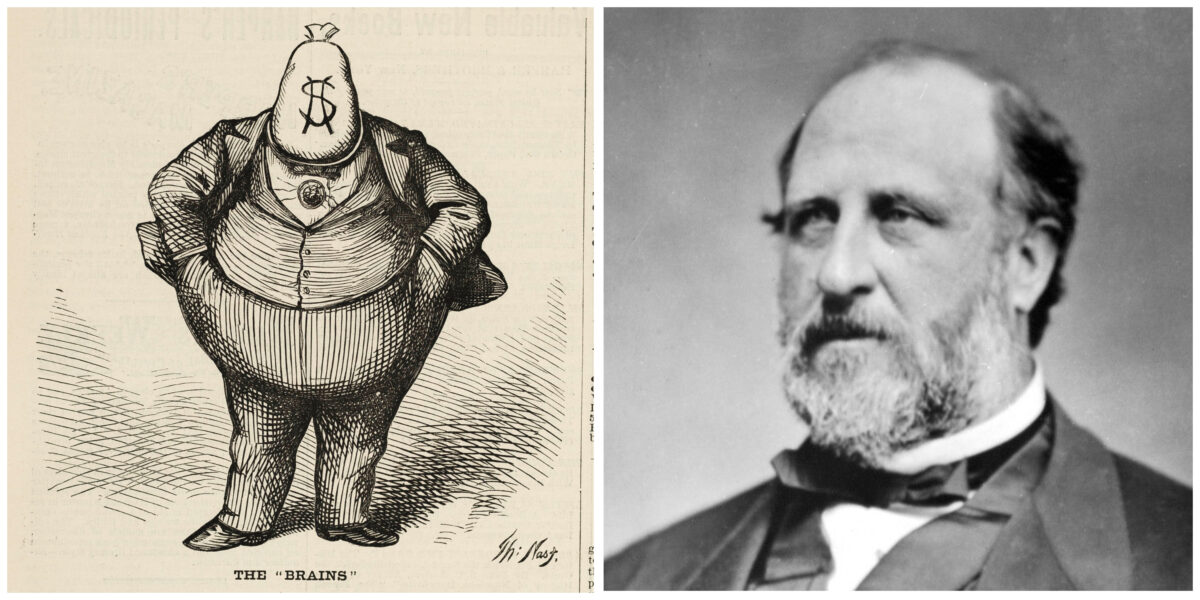
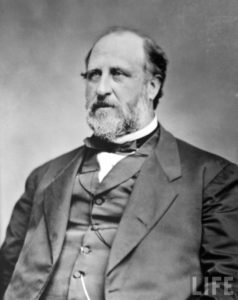
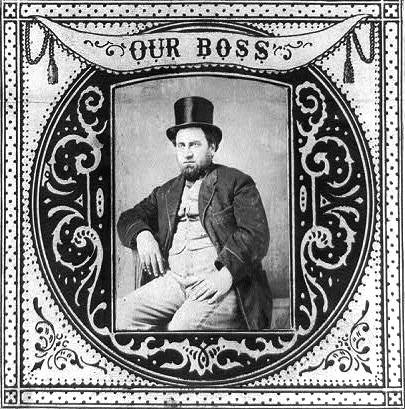
One of our great sources of inspiration here on the Bowery Boys Podcast was born 200 years ago today — William Tweed, otherwise known as Boss Tweed.
This doesn’t mean he was a great guy. In fact, as the boss of America’s most infamous political machine Tammany Hall, you could say he formalized all the very worst aspects about local politics.
Mark his birthday today by taking a dive into one of these top podcasts we’ve recorded over the years with Tweed as a central character, recounting his adventures and misdeeds
The tale of America’s most infamous political machine and the rise and fall of its flamboyant William ‘Boss’ Tweed.
You cannot understand New York without understanding its most corrupt politician — William ‘Boss’ Tweed, a larger than life personality with lofty ambitions to steal millions of dollars from the city.
With the help of his Tweed Ring’ the former chair-maker had complete control over the city — what was being built, how much it would cost and who was being paid.
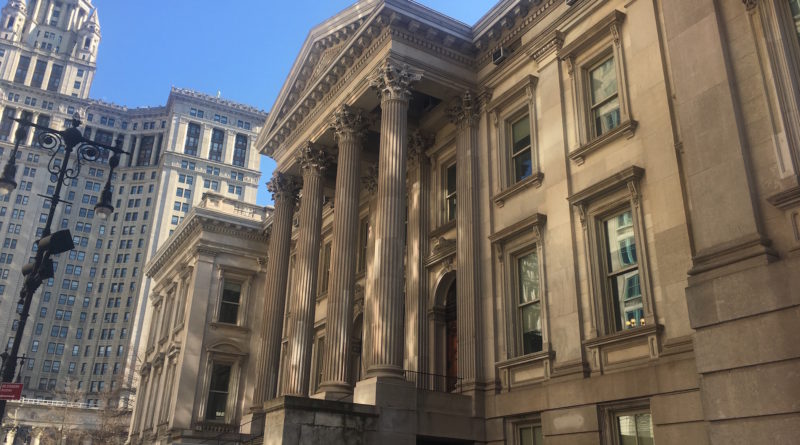
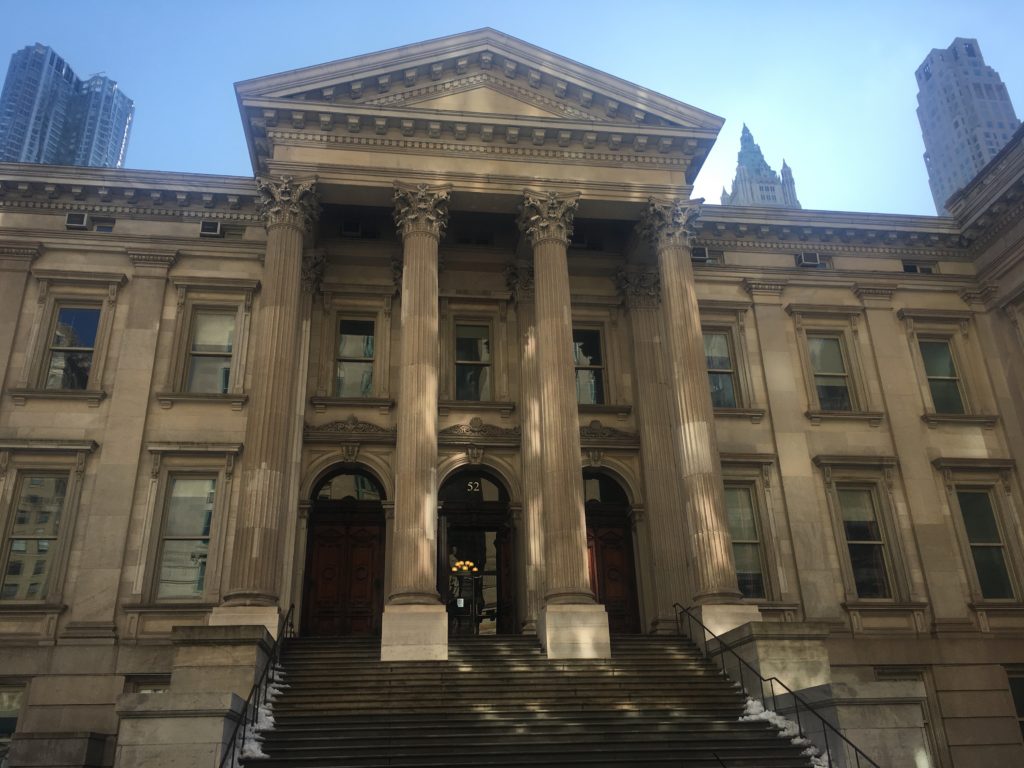
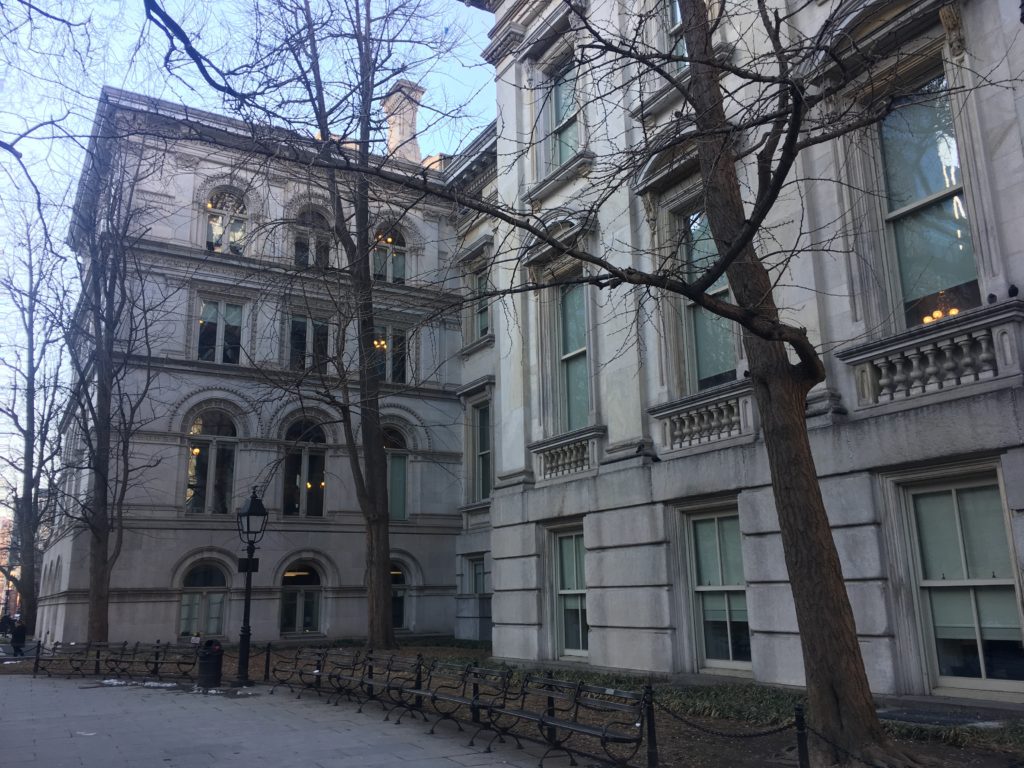
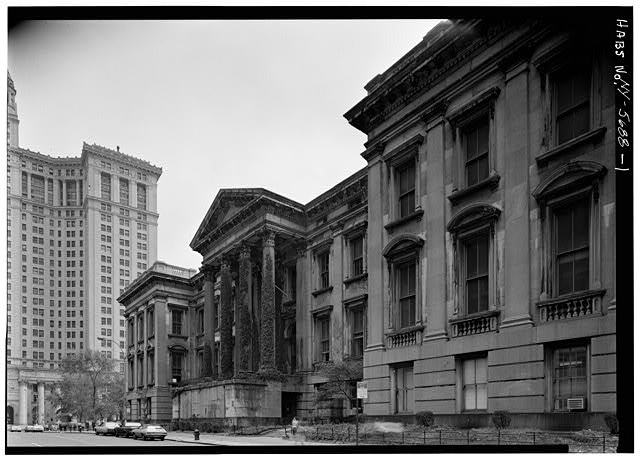
How the Tweed Courthouse became a symbol for everything rotten about 19th century American politics.
The Tweed Courthouse is more than a mere landmark. Once called the New York County Courthouse, the Courthouse is better known for many traits that the concepts of law and order normally detest — greed, bribery, kickbacks and graft.
In this special episode, we look at the history of New York City as seen through one corner of the Lower East Side. Created by the intersections of several streets, this is a place that has gone by many names — in the past and even today.
And in one inconceivable historical moment, a statue was almost raised here to William ‘Boss’ Tweed!
And other Bowery Boys articles on this website about Boss Tweed that you might enjoy:
PODCAST: How the Tweed Courthouse became a symbol for everything rotten about 19th century American politics.
The roots of modern American corruption traces themselves back to a handsome — but not necessarily revolutionary — historic structure sitting behind New York City Hall.
The Tweed Courthouse is more than a mere landmark. Once called the New York County Courthouse, the Courthouse is better known for many traits that the concepts of law and order normally detest — greed, bribery, kickbacks and graft.
But Tammany Hall, the oft-maligned Democratic political machine, served a unique purpose in New York City in the 1850s and 60s, tending to the needs of newly arrived Irish immigrants who were being ignored by inadequate city services. But they required certain favors like the support of political candidates.
And that is how William ‘Boss’ Tweed rose through the ranks of city politics to become the most powerful man in New York City. And it was Tweed, through various government organizations and his trusty Tweed Ring, who transformed this new courthouse project into a cash cow for the greediest of the Gilded Age.
How did the graft function during the construction of the Tweed Courthouse? What led to Tweed’s downfall? And how did this literal temple to corruption become a beloved landmark in the 1980s?
The Bowery Boys: New York City History podcast is brought to you …. by you!
We are now producing a new Bowery Boys podcast every other week. We’re also looking to improve the show in other ways and expand in other ways as well — through publishing, social media, live events and other forms of media. But we can only do this with your help!
We are now a member of Patreon, a patronage platform where you can support your favorite content creators for as little as a $1 a month.
Please visit our page on Patreon and watch a short video of us recording the show and talking about our expansion plans. If you’d like to help out, there are six different pledge levels (New Amsterdam, Five Points, Gilded Age, Jazz Age, Empire State and Greater New York). Check them out and consider being a sponsor.
And join us for the next episode of the Bowery Boys Movie Club, an exclusive podcast provided to our supporters on Patreon.
We greatly appreciate our listeners and readers and thank you for joining us on this journey so far.
We’d like to thank Mary Beth Betts of the NYC Public Design Commission for giving us a tour of the Tweed Courthouse. Tours are not currently available of the courthouse, but Betts and her docents lead tours of New York City Hall next door. Visit their website to book a free tour.
Some images from our visit —
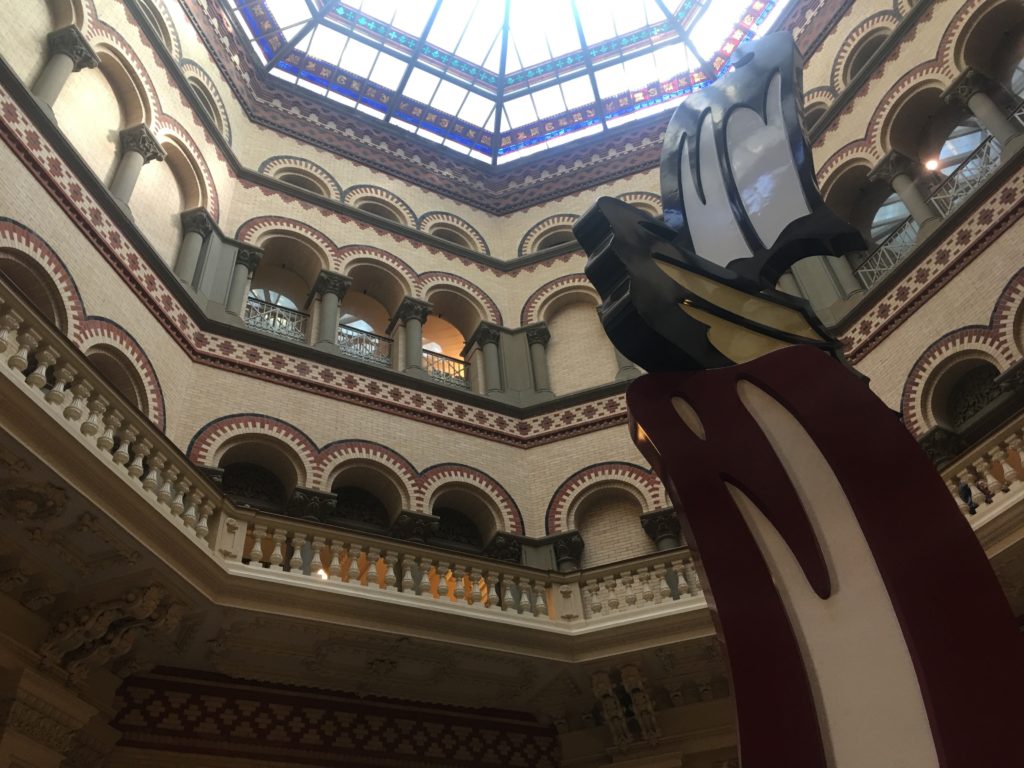
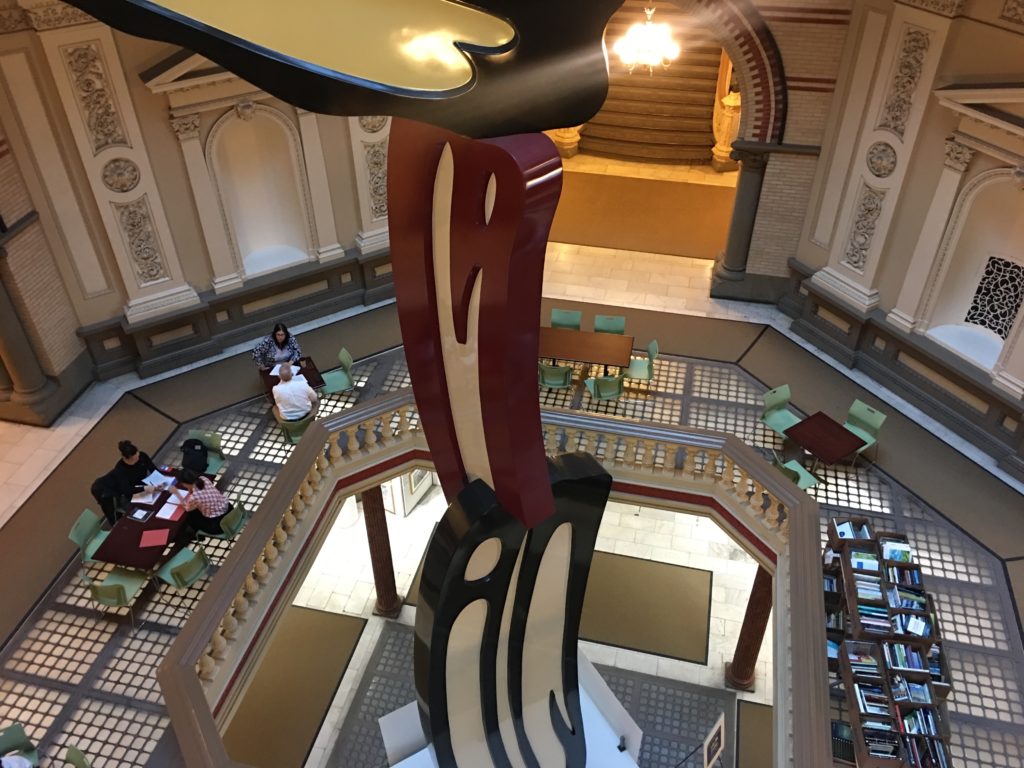
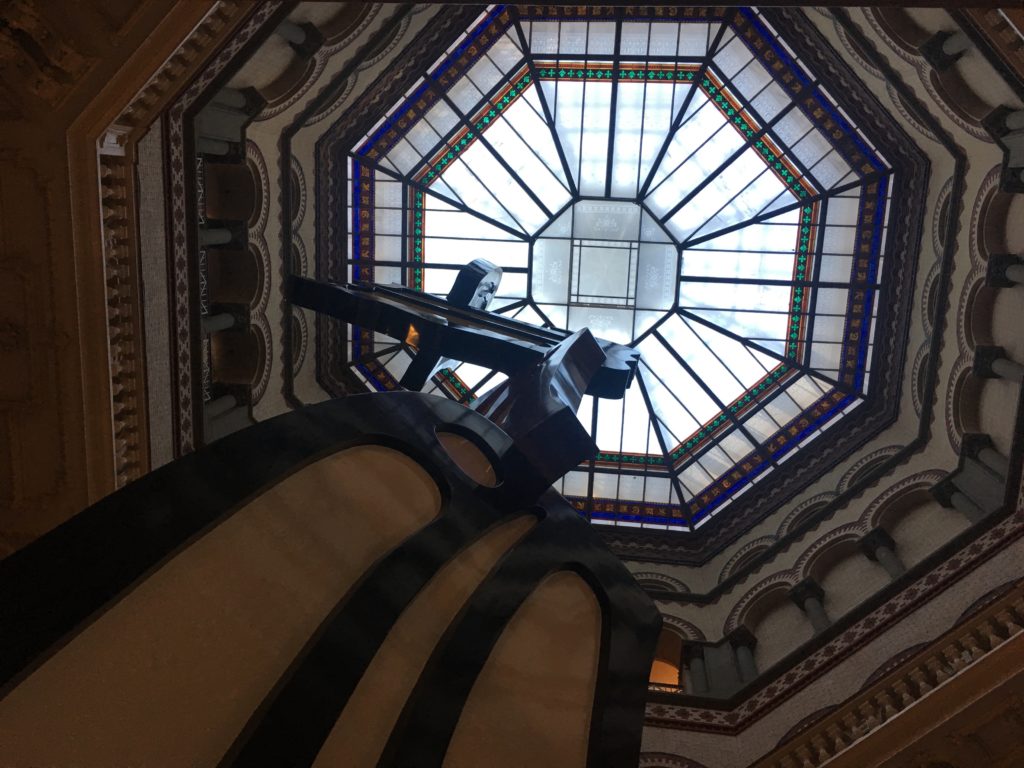
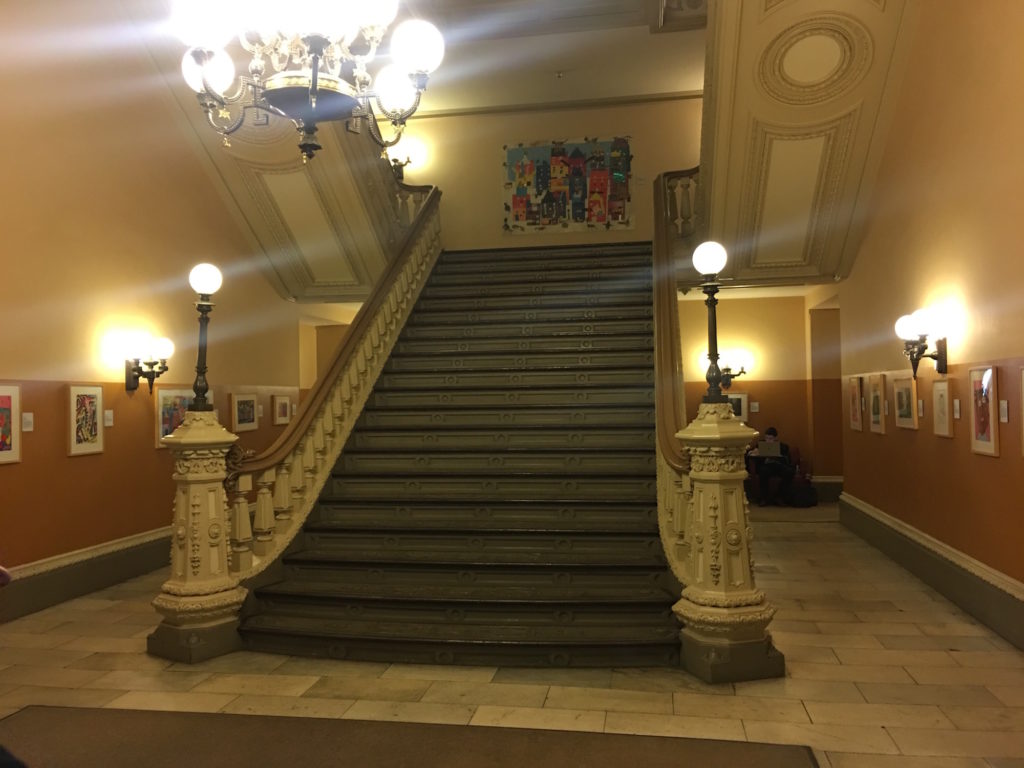
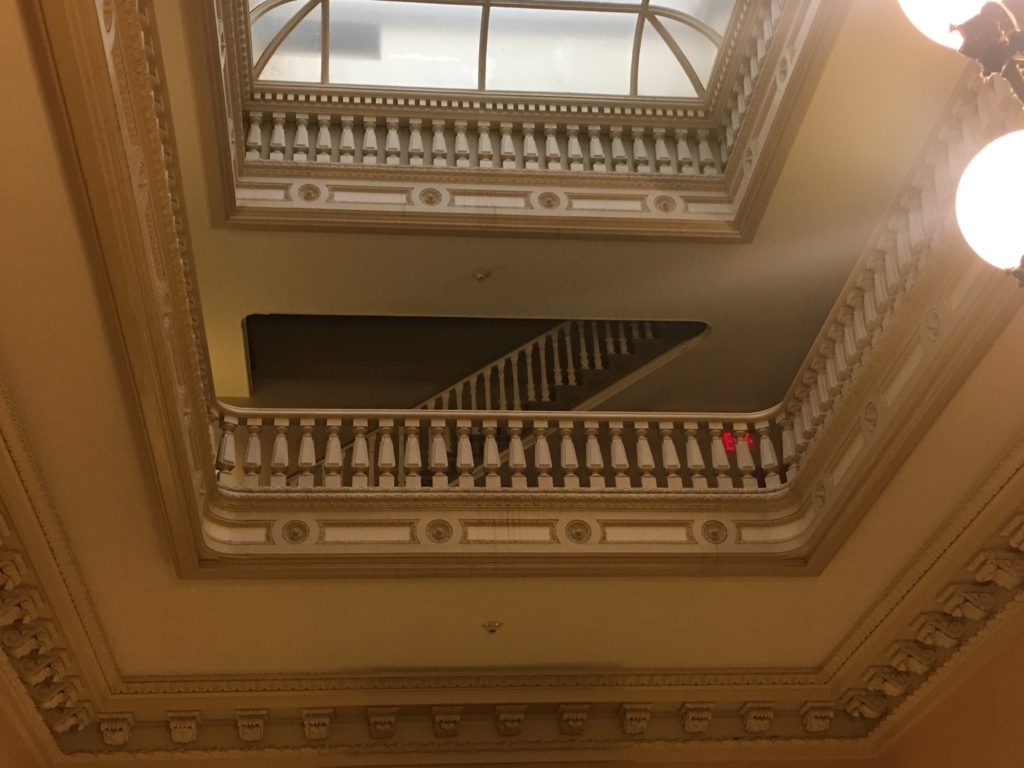
Leopold Eidlitz brought a million arches into the courthouse, his medieval inspirations playing an interesting contrast to the Romanesque Revival of architect John Kellum.Roy Lichtenstein’s Element E now dominates the interior of the courthouse. Students, teachers and administrators work in the spaces surrounding the sculpture.The infamous rotunda roof which remained incomplete even when courts began convening in the courthouse in the 1870s. The sumptuous staircases are all made of cast iron.The courthouse has many curious staircases, leading to smaller spaces on the upper floors. You can actually view the two competing architectural styles on the exterior facades facing into City Hall Park. (Hint: Arches vs. no arches)
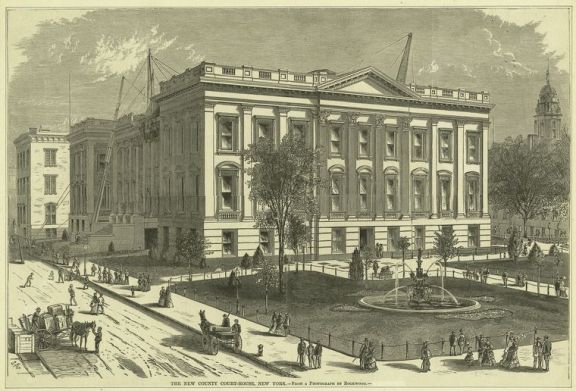
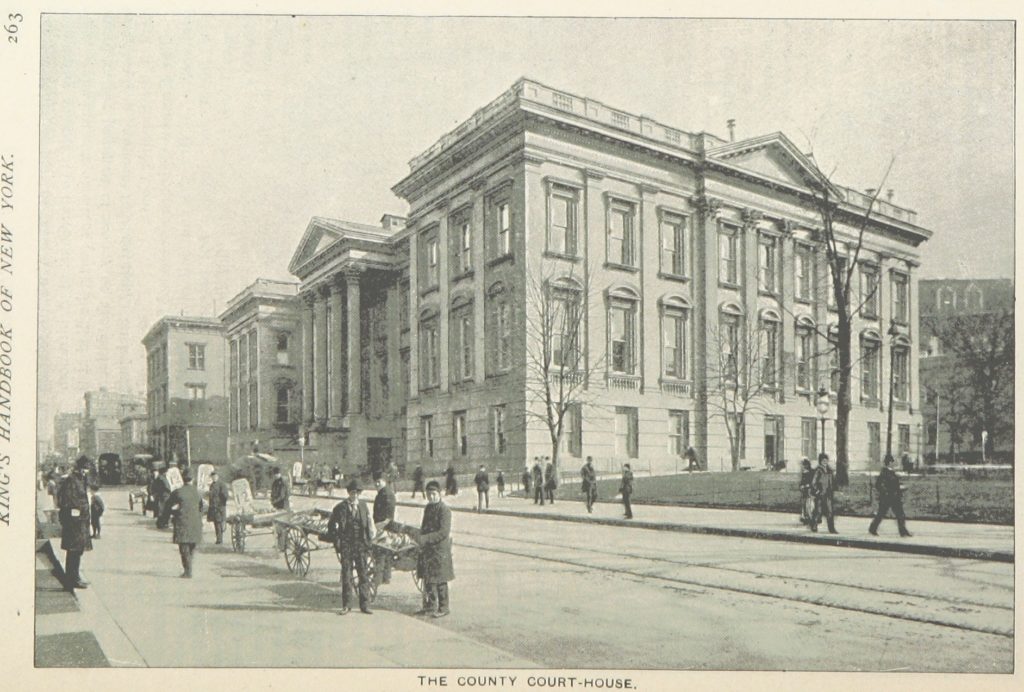
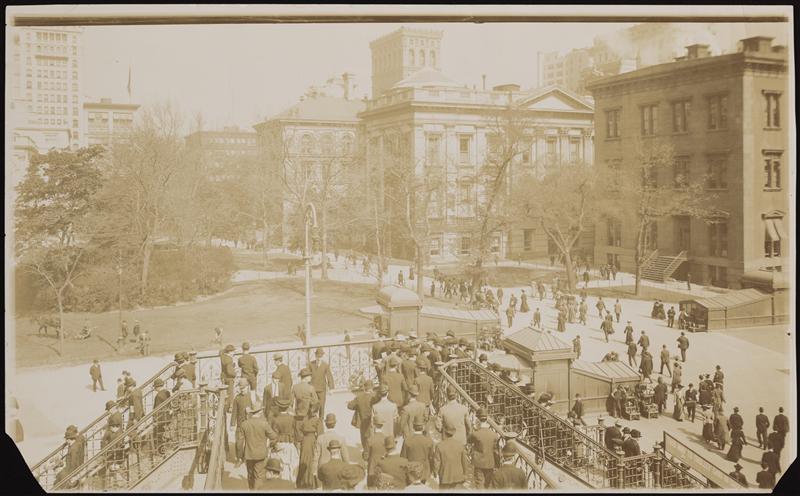
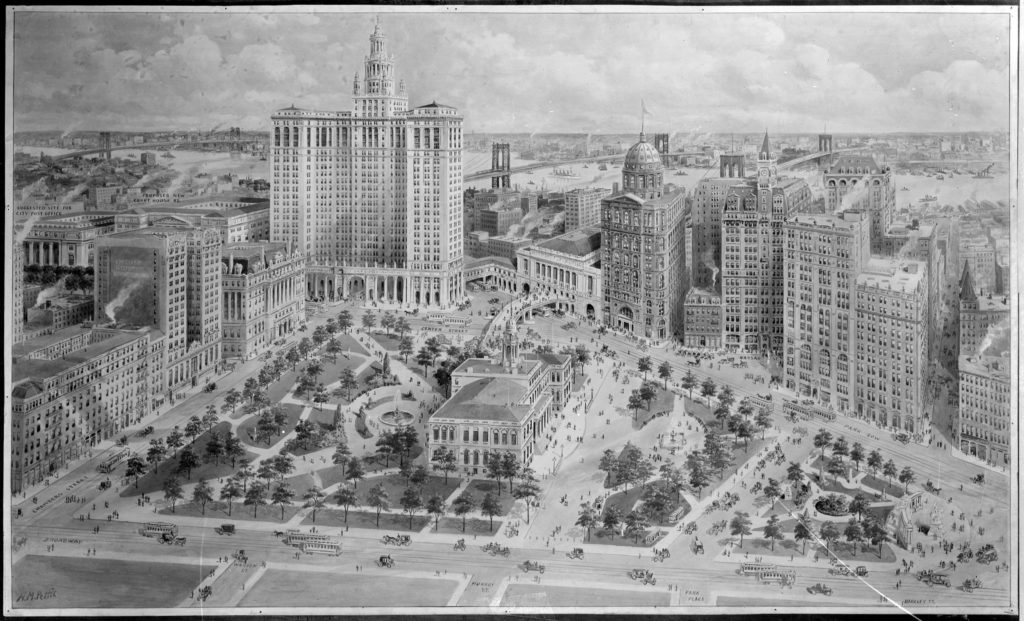
The Tweed Courthouse under construction, date unknown Image taken from page 269 of ‘King’s Handbook of New York City. An outline history and description of the American metropolis. With … illustrations, etc. (Second edition.)’ Courtesy the British LibraryA view of the Tweed Courthouse as seen from the City Hall elevated train station, 1915. The brownstone structure to the right of the courthouse is no longer there. In 1915 the city planned to actually get rid of the Tweed Courthouse. This rendering creates a large park space surrounding City Hall.
H.M. Pettit. Department of Bridges/Plant & Structures collection, NYC Municipal Archives.
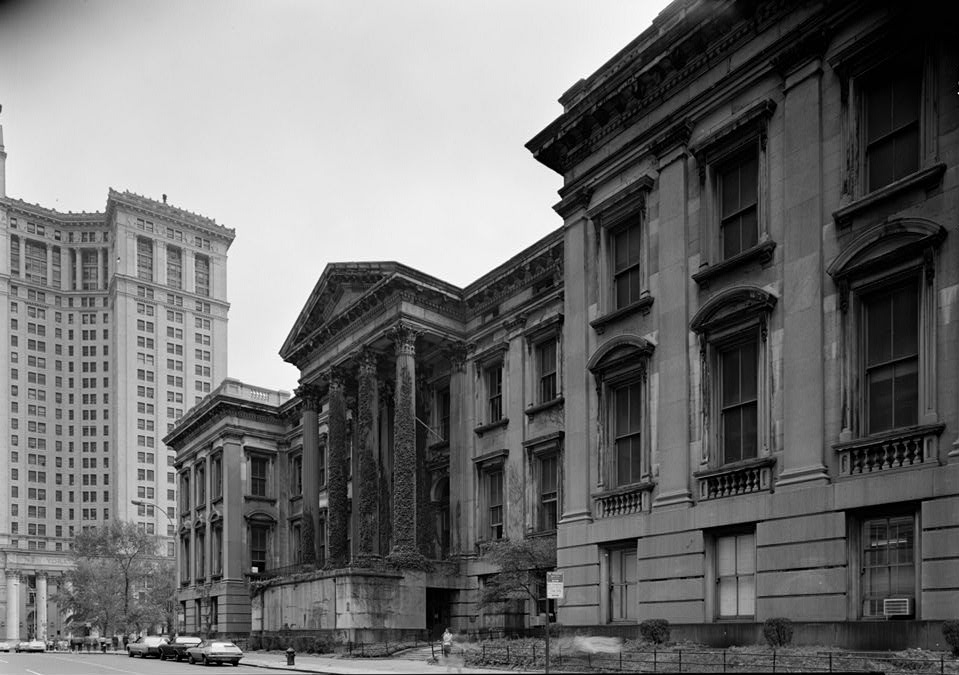
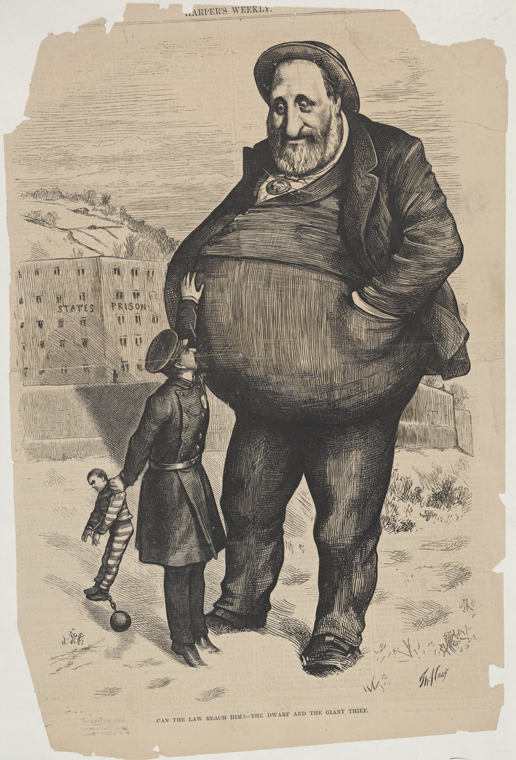
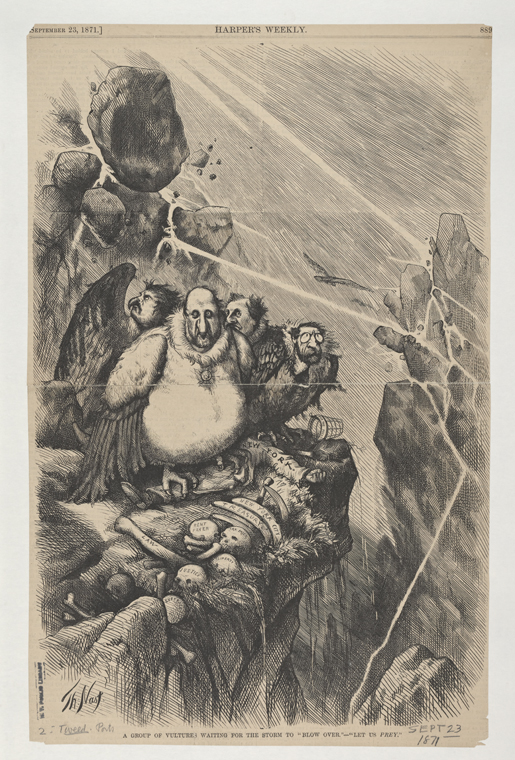
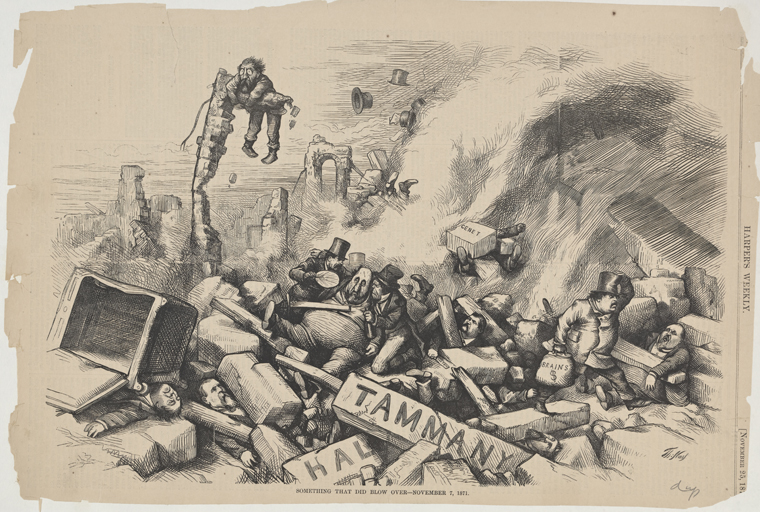
The courthouse in 1979 — in shoddy condition and without its famous staircase! Photo by Walter Snalling, Jr., Library of Congress“Can the law reach him?–The dwarf and the giant thief.” Thomas Nast/New York Public Library Digital CollectionAgroup of vultures waiting for the storm to “blow over.”–“Let us prey.” Thomas Nast/New York Public Library Digital CollectionSomething that did blow over–November 7, 1871. Thomas Nast/New York Public Library Digital Collection
FURTHER READING:
Boss Tweed’s New York by Seymour J. Mandelbaum
Boss Tweed: The Rise and Fall of the Corrupt Pol Who Conceived the Soul of Modern New York by Kenneth D. Ackerman
Machine Made: Tammany Hall and the Creation of Modern American Politics by Terry Golway
The Tweed Ring by Alexander B. Callow Jr.
The Tiger: The Rise and Fall of Tammany Hall by Oliver E. Allen
FURTHER LISTENING:
Our original Boss Tweed show from 2009 — with a big news reference at the very beginning that echoes the story we’re about to tell
The massive waves of Irish immigrants who arrived in this country starting in the 1830s and 40s changed New York City forever. Here’s their story:
Fernando Wood was another major power broker in New York City politics in the 1860s.
New York City lost a very interesting landmark this past weekend.
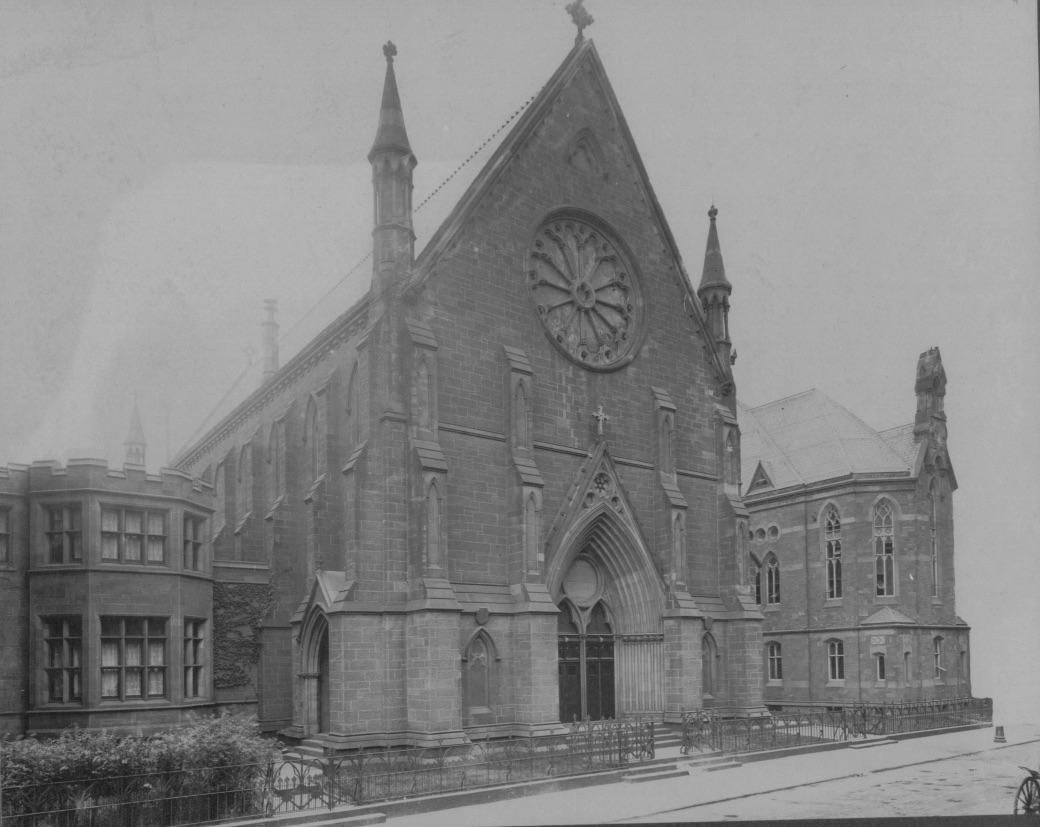
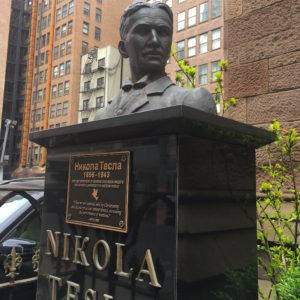
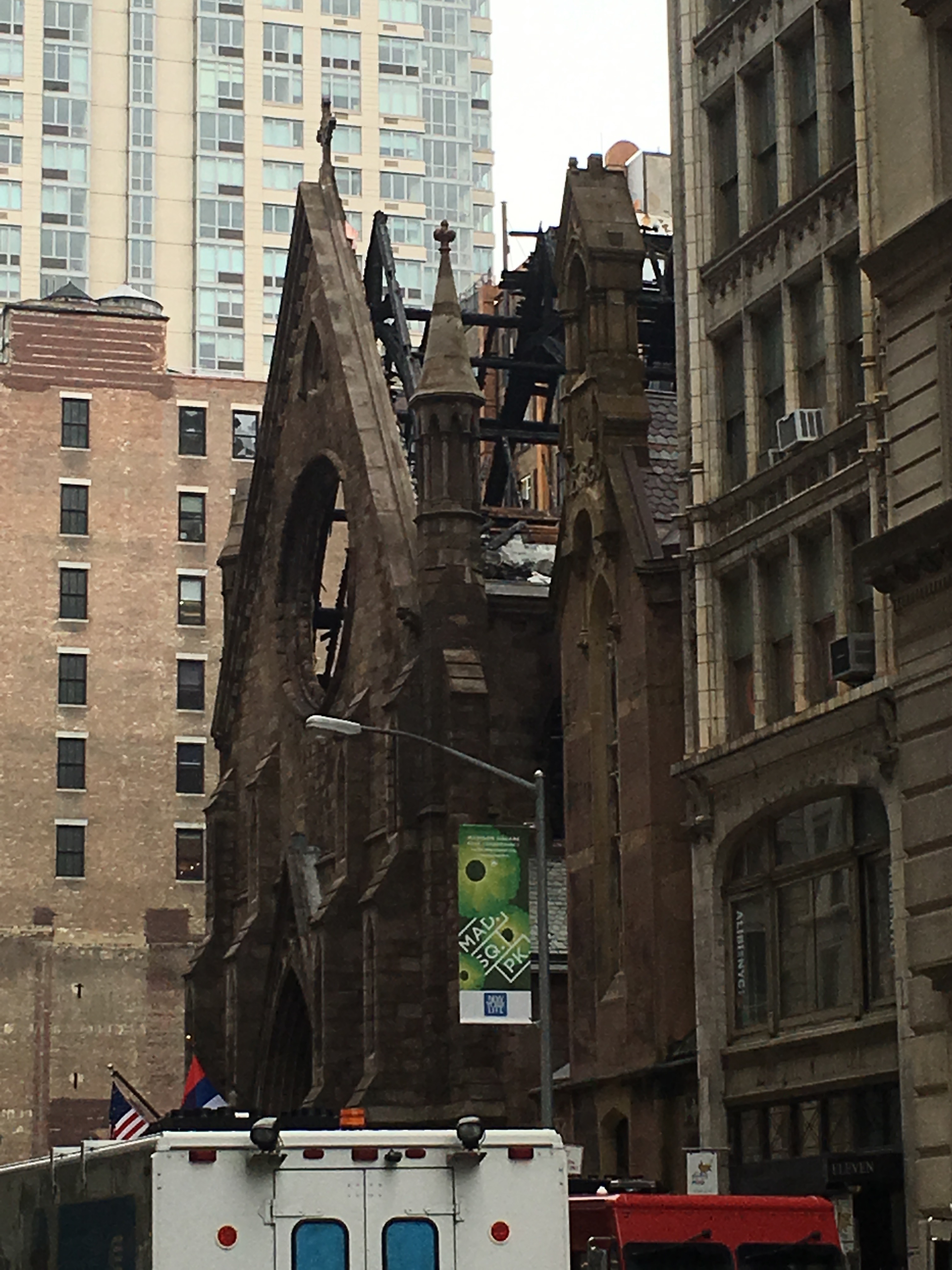
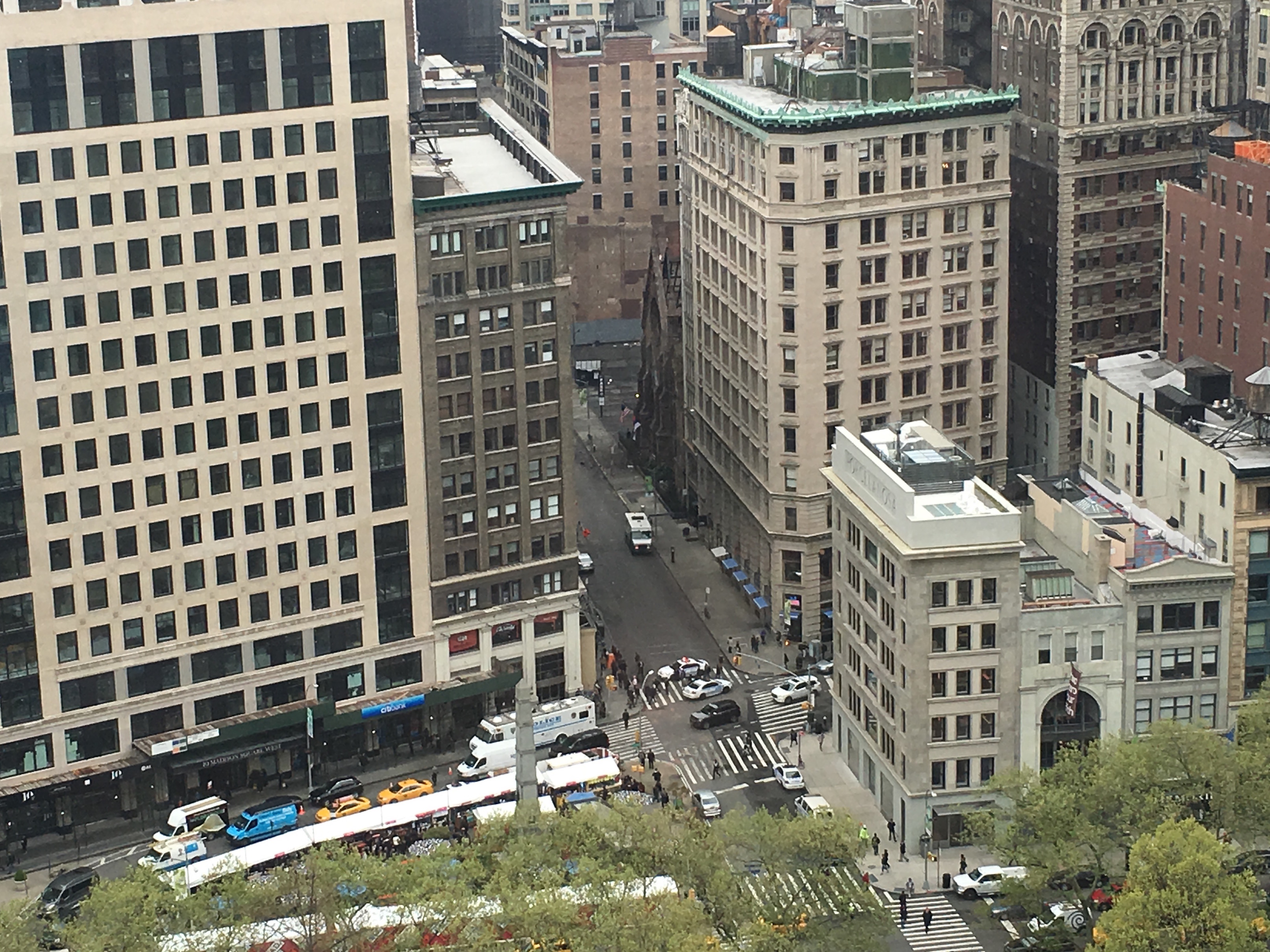
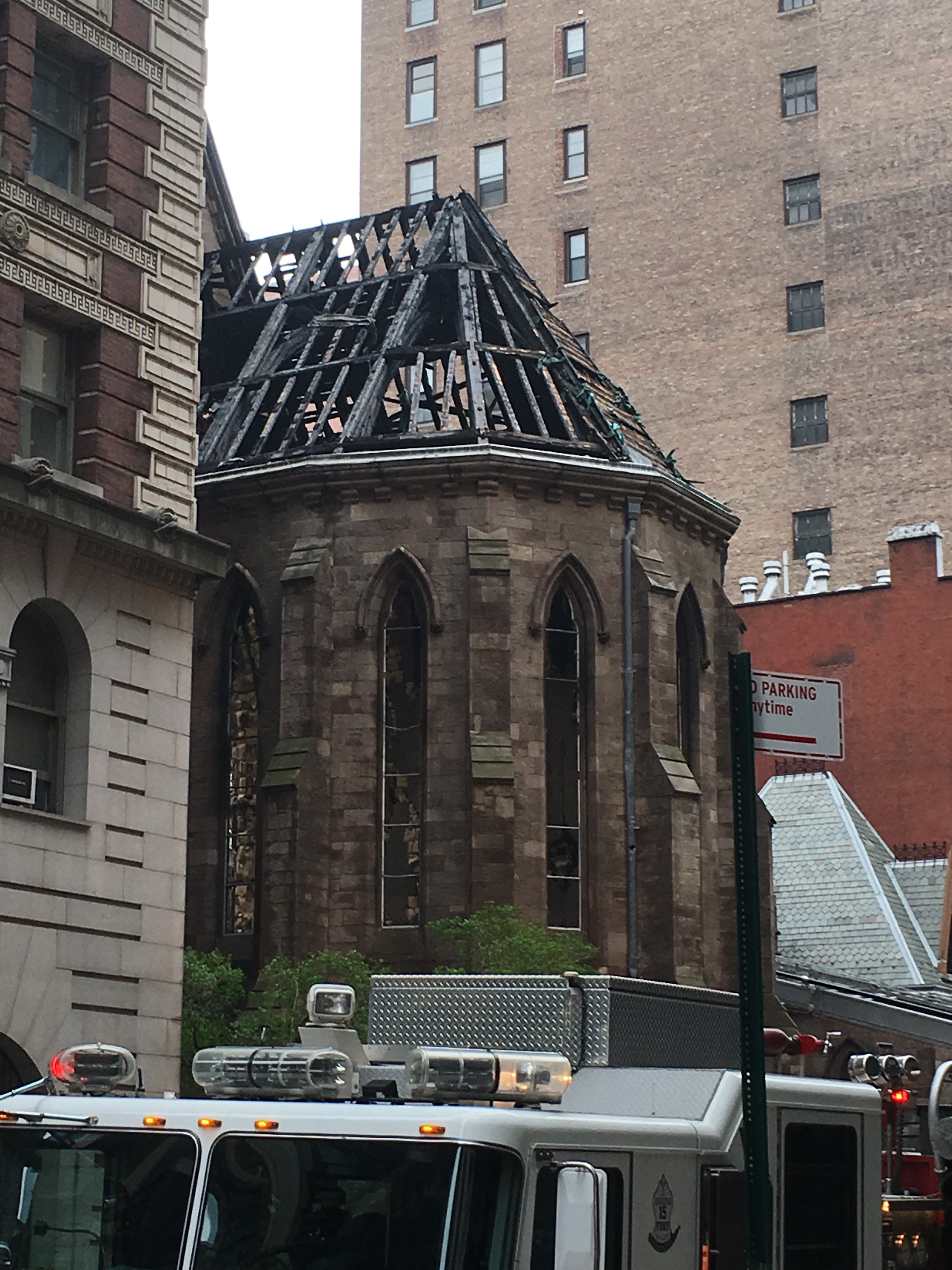
Serbian Orthodox Cathedral of St. Sava, at West 25th and Broadway, was destroyed in a spectacular and mysterious four-alarm fire on Sunday, its windows shattered in shafts of flame, its ceiling reduced to cinders. If you’re a podcast listener, you may know this place from the show we released just last Friday on the life of Nikola Tesla. Sitting in front of St. Sava is a bust of Tesla, placed there by the Tesla Memorial Society of New York. Or was, I suppose. The bust was either moved or did not survive this catastrophic blaze.
New York has lost an important bit of history. The cathedral was the former Trinity Chapel, an outpost of downtown’s Trinity Church which opened here in 1851 to cater to the elite moving uptown along Fifth Avenue.
The New York Times has a short roundup of some of its most notable events — notably the marriage of Edith Wharton in 1885 and, in 1943, its conversion into an Eastern Orthodox house of worship. The usual fine work of Daytonian In Manhattanhighlights the details of its construction.  “It was, as The New York Times called it in 1914, “distinctly fashionable to be married there.'”
Picture courtesy Trinity Wall Street
In fact one of the most notorious weddings in New York City history took place here.
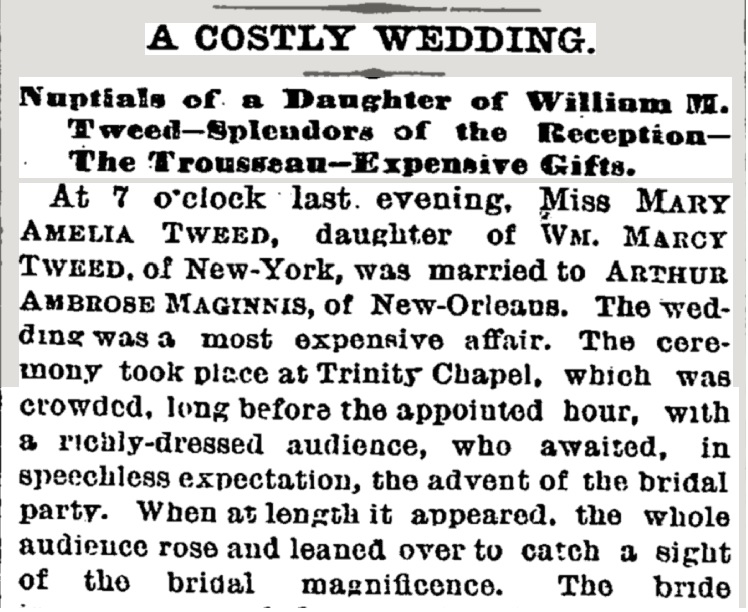
Not because of the bride and groom — Mary Amelia Tweed and New Orleans heir Ambrose MaGinnis — but because of the lavish behavior of the bride’s father William ‘Boss’ Tweed. In another strange bit of coincidence, that fated wedding occurred 145 years ago this month, on May 31, 1871.
“The streets for blocks around were filled with carriages, while the church was crowded to excess,†said the New York Herald the following day. “The center aisle was reserved for the invited guests and presented a most brilliant spectacle.â€
The entire clan was adorned in jewels; “the Tweed family seemed to be a Christmas tree of diamonds,†according to author Alexander B. Callow Jr. Tweed wore his famous diamond pin, while his wife sparkled in so many that she threatened to take attention away from the bride.
It was one of the most ostentatious weddings of the post-Civil War era. The reception was held at the Tweed residence at Fifth Avenue and 43rd Street where hallways were filled with rich fineries. But it was the upstairs rooms — filled with wedding gifts — that would be the focus of future query.
“THE WEDDING PRESENTS, which were displayed in one of the upper rooms, must have amounted to the value of over $700,000 and presented an appearance of brilliancy which can never have been equaled in munificence even in this Empire City. They comprised all sorts of jewelry with diamonds enough to stock half a dozen stores; silver sets in profusion and almost everything that the ingenuity of the human mind could suggest in the line of presents.”
In today’s money, those gifts would have been worth over $14 million! This lavish ceremony highlighted Tweed’s extravagance at a time when many began questioning his corrupt hold over city affairs. In particular, the New York Times, Tweed’s biggest enemy, delighted in highlighting the garish cost of the ceremony. “The wedding was a most expensive affair.”
Tweed’s arrogance and extravagance definitely got the better of him, and the wedding at Trinity Chapel would soon become emblematic of the absolute corruption which fueled the city politic of the day.
“Weddings are often relentless prodigal of lucre. A recent one in our great Gotham has attracted some special attention, both on account of the profuse expenditure, and from the character and position of the parties concerned. It was at the ‘palatial residence’ of the redoubtable ‘Boss Tweed,’ and the happy bride was his daughter. Here we shall cease to wonder at the extravagant amounts absorbed in grounds, house, stables; and now in profuse expenditures for the wedding, when we are reminded how the ‘Boss’ got his money. For here certain unmistakable ‘footprints’ are, if possible, more apparent in the getting than in the spending.”
Tweed and his notorious Ring (including mayor A. Oakey Hall) would be exposed by the summer, and the Boss was soon thrown into jail (only to promptly be released on bail). He would go to trial for his crimes by 1873 and eventually died at the Ludlow  Street Jailon April 12, 1878.
Yesterday I went searching for remnants of the old Cherry Hill neighborhood. There are none, as far as I could tell.
It’s not the first New York City neighborhood to entirely vanish in the rush of progress — is it, Robert Moses ? — however it may be the one that began with the most impressive pedigree.
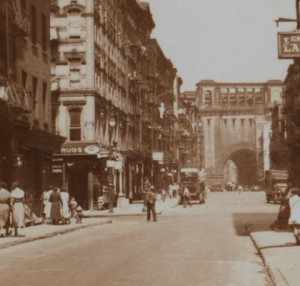
Cherry and Catherine streets, looking towards the Manhattan Bridge anchorage, in the once glorious Cherry Hill neighborhood. Pic courtesy Knickerbocker Village, who guesses photo to be from 1920s)
I’m not referring to the part of Central Park called Cherry Hill or even the upstate farm of Cherry Hill, best known for the prominent New York family the Van Rensselaers.
Downtown Manhattan’s Cherry Hill once lay near the waterfront in the area more literally called Two Bridges today, between the Brooklyn Bridge and the area just northeast of the Manhattan Bridge.
The Two Bridges Historical District was created in 2003, just to the north of the site of old Cherry Hill. Indeed there is nothing much left of the Cherry Hill neighborhood at all.
In 1890 Jacob Riis, in documenting what the neighborhood had become, referred to its early days as the “proud and fashionable Cherry Hill.” (pictured below)
Although he later moved to 39 Broadway, the neighborhood remained high on the list of the rich and important, including John Hancock (at 5 Cherry Street) and DeWitt Clinton (who moved into Washington’s old home).
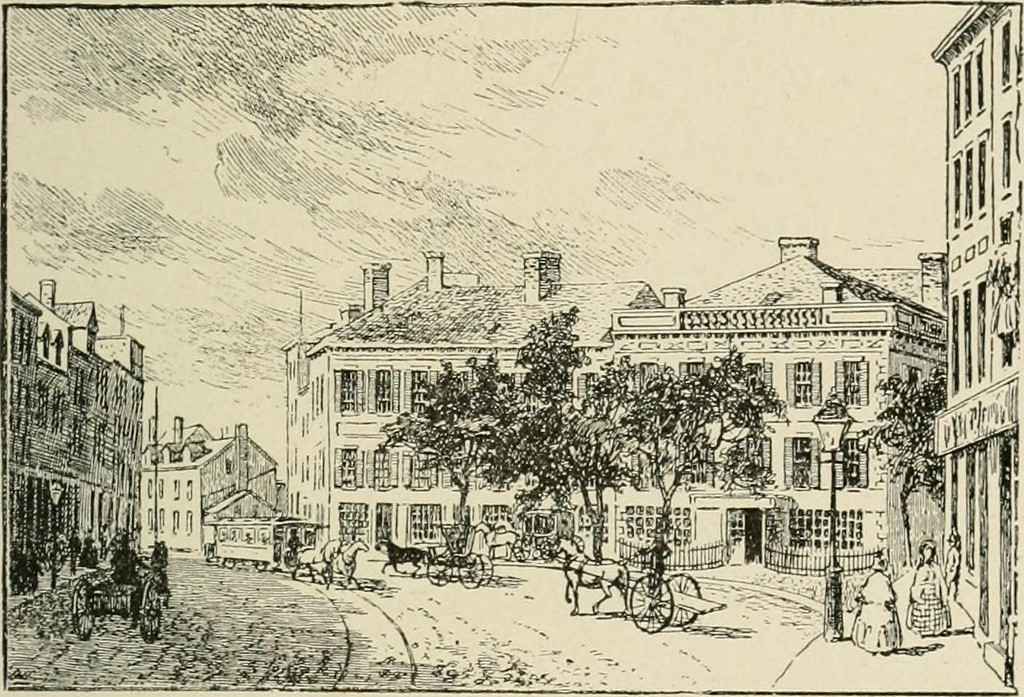
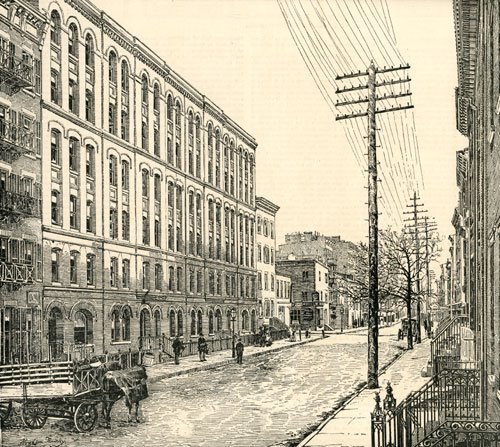
Below: An illustration of the more genteel days of Cherry Hill, taken from the book When Old New York Was Young (written in 1902)
Courtesy Internet Archives Book Images
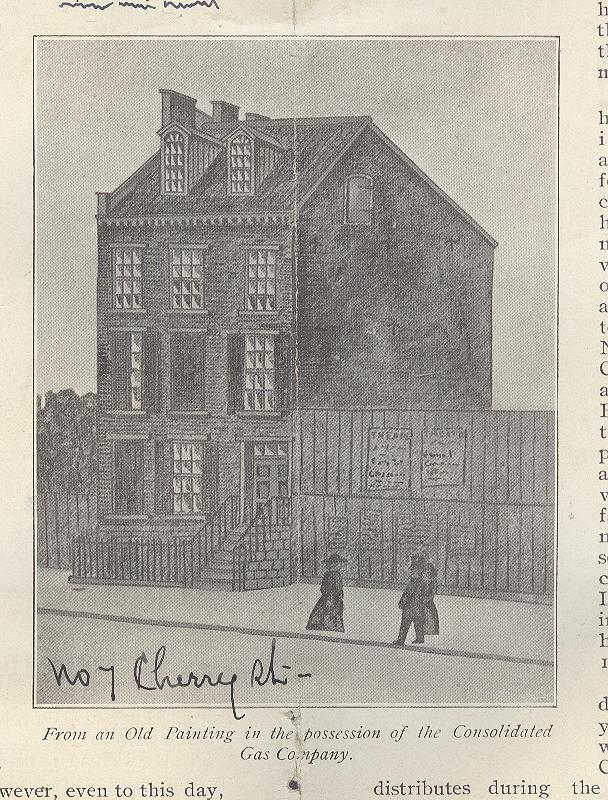
Even as late as the 1824, the area featured fine homes such as that of Samuel Leggett, founder of the New York Gas Light Company (later Con Edison), who enjoyed New York’s first interior gas lighting.
Here’s a picture of the first gas-lit home at 7 Cherry Street. (More information here)
If you’re looking for a symbolic date of Cherry Hill’s demise, look no further than April 3, 1823, birth date of William ‘Boss’ Tweed, who was born here and worked at a Cherry Hill chair shop in his early years.
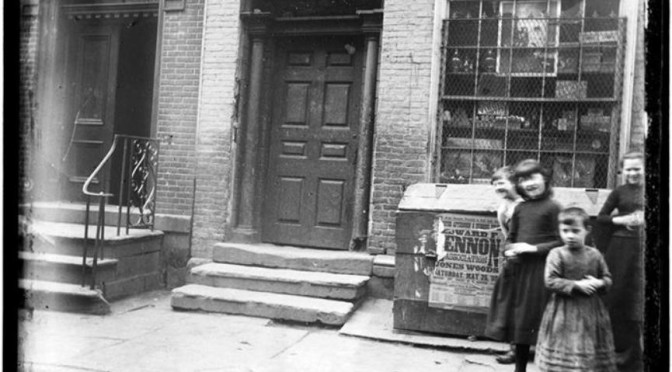
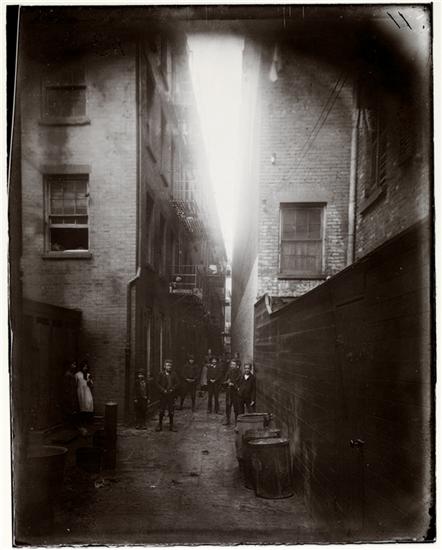
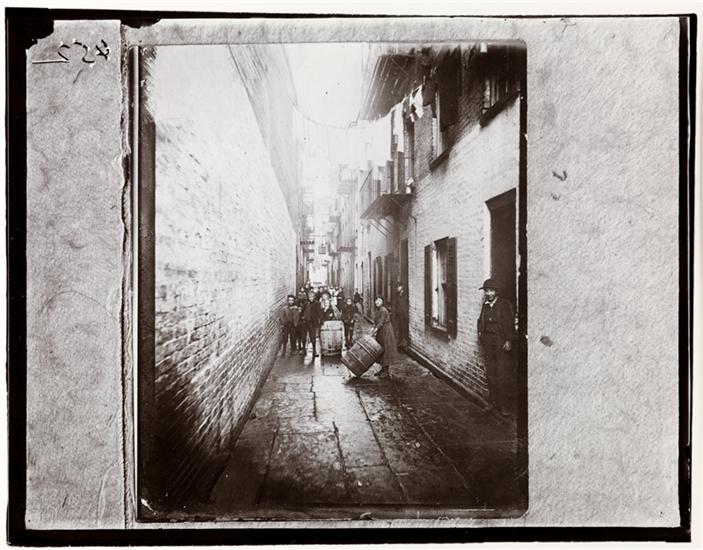
Below: Mullen’s Alley in Cherry Hill, picture taken by Jacob Riis in 1890. Courtesy the Museum of the City of New York
As many well-to-do neighborhoods would later do, Cherry Hill devolved into a slum, paralleling the decline of nearby Five Points. Its well-intentioned tenements soon became the worst in the city.
Located in the Fourth Ward, Cherry Hill abutted the saloons, boarding houses and brothels along Water Street, including the legendary Hole In The Wall (the former Bridge Cafe).
None of this would assist the neighborhood in escaping its fate.
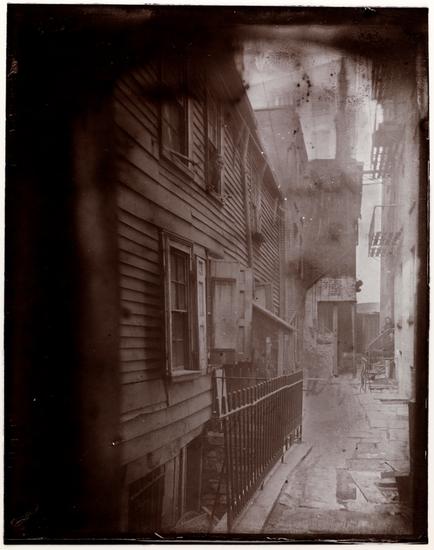
Below: Blindman’s Alley at 22 Cherry Street, taken by Jacob Riis
It would later be made infamous in Jacob Riis’ renown 1890 blistering survey of How The Other Half Lives. Â According to Riis:
“It is curious to find that this notorious block, whose name was so long synonymous with all that was desperately bad, was originally built (in 1851) by a benevolent Quaker for the express purpose of rescuing the poor people from the dreadful rookeries they were then living in.”
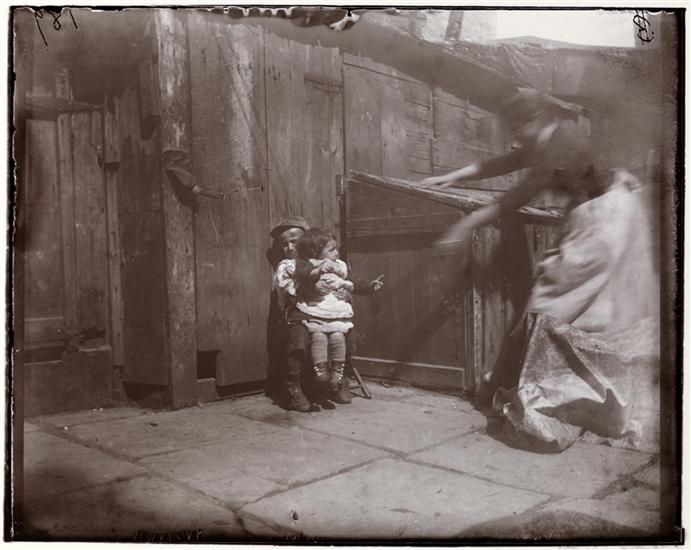
Below: photo from Gotham Court by Jacob Riis, 1890. “Minding the baby; Baby yells a Whirlwind Scream, Gotham Court.”
How long Gotham Court continued to be a so-called model tenement is not on record. It could not have been very long, for already in 1862, ten years after it was finished, a sanitary official counted 146 cases of sickness in the court, including “all kinds of infectious disease from small-pox down.”
Courtesy Museum of the City of New York
In 1894, the New York Tribune went as far as to make several attempts to describe Gotham Court as a prison. From the piece ‘Life in Gotham Court’:
The side alleys are narrower. They are not more than three or four feet wide. In order to enter either of these alleys one has to pass through an iron arch. The gate has been taken away, but enough remains to give unpleasant suggestions of a penitentiary..
The idea is not dissipated by the appearance of the houses inside the alley. The small windows with tiny panes of glass, the low, dark doors, through which iron gratings can be seen, and the bare brick walls are like those of a prison. The people move about free, as the prisoners do during exercise hour at the Tombs. All the doors are alike, all the windows are alike, and all are dilapidated, forlorn and forbidding.
Gotham Court and the rest of Cherry Hill were not long for this world. In the wake of Riis expose, Gotham Court was demolished in 1897.
By that time, efforts were made to construct more amenable tenements, including those built at 340, 342 and 344 Cherry Street in 1888. (See below, courtesy of Maggie Blanck)
By that time, the anchorage to the Brooklyn Bridge — and in 1909, with the Manhattan Bridge anchorage — would block in the neighborhood from the circulation of the city. The construction of traffic ramps to the Brooklyn Bridge and the downtown section of the FDR Drive (opened in 1942) obliterated much of what remained.
In its place would be more ambitious housing “super projects,” most notably one in the form of the Alfred E. Smith Houses, built in 1953and named for the governor and saavy politico born very close by, at 25 Oliver Street.
His old street and a couple around it may give you the closest idea of what some areas of Cherry Hill may have looked like in earlier years.
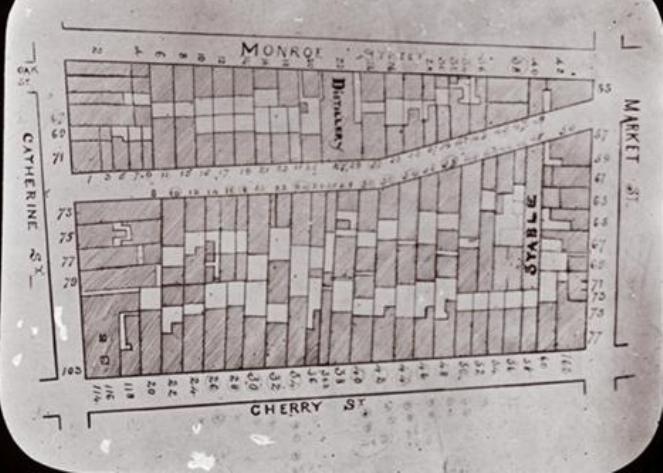
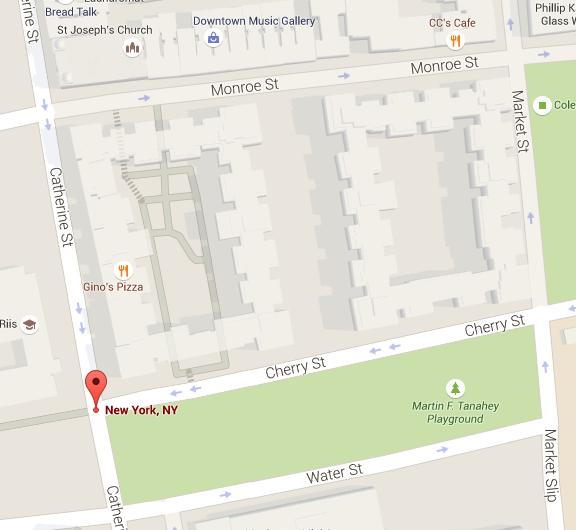
Two maps — one block of tenements in Cherry Hill in 1890 (from a map by Jacob Riis) and a Google map of the same block today:
Given its rather uniform appearance, I found it quite impossible to picture Cherry Hill’s early days here.
A shortened version of this article originally ran August 18, 2008. I’ve left the comments from that original run as they relate to the history.
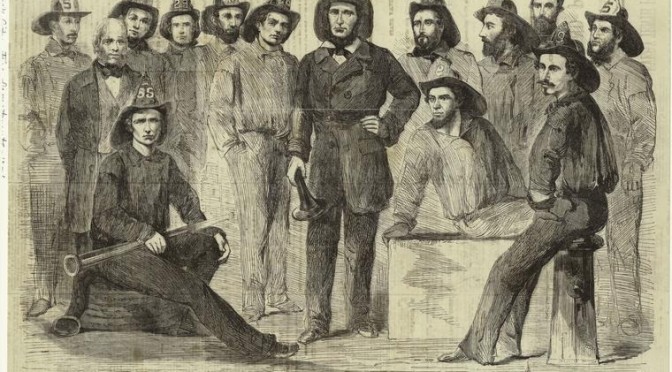
The distinguished members of New York’s various volunteer fire brigades, posing for the photographer Matthew Brady in 1858 PODCAST The New York City Fire Department (or FDNY) protects the five boroughs from a host of disasters and mishaps — five-alarm blazes, a kitchen fire run amok, rescue operations and even those dastardly midtown elevators, always getting stuck! But today’s tightly organized team is a far cry from the chaos and machismo that defined New York’s fire apparatus many decades ago.
New York’s early firefighters — Peter Stuyvesant‘s original ratel-watch — were all-purpose guardians, from police work to town timepieces. Volunteer forces assembled in the 18th century just as innovative new engines arrived from London.
By the 19th century, the fire department was the ultimate boys club, with gangs of rival firefighters, with their own volunteer ‘runners’, raced to fires as though in a sports competition. Fisticuffs regularly erupted. From this tradition came Boss Tweed, whose corrupt political ways would forever change New York’s fire services — for better and for worse.
Volunteers were replaced by an official paid division by 1865. Now using horse power and new technologies, the department fought against the extraordinary challenges of skyscraper and factory fires. There were internal battles as well as the department struggled to become more inclusive within its ranks.
But the greatest test lay in the modern era — from a deteriorating infrastructure in the 1970s that left many areas of New York unguarded, and then, the new menace of modern terrorism that continues to test the skill of the FDNY. From burning chimneys in New Amsterdam to the tragedy of 9/11, this is the story of how they earned the nickname New York’s Bravest.
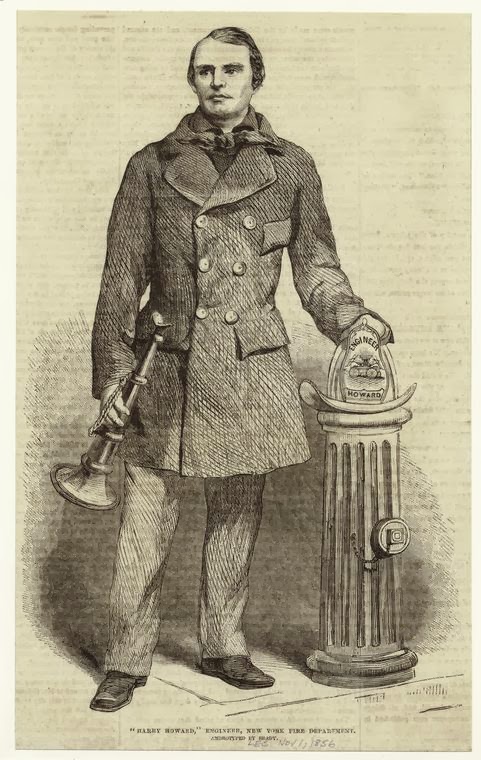
Above: That’s Harry Howard, one of the FDNY’s greatest firemen and a former member of the Bowery Boys volunteer fire unit!
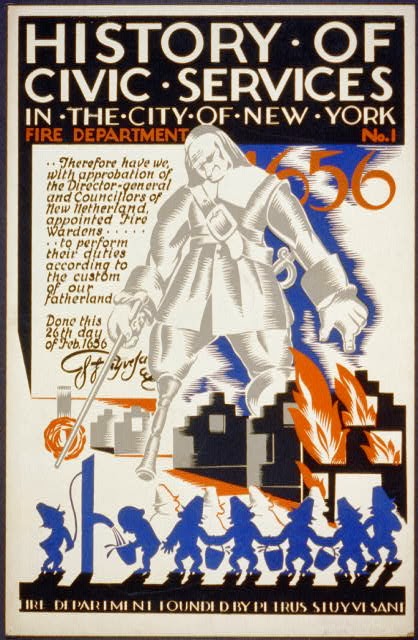
A poster by Vera Bock from 1936, created for a series by the Federal Art Project, touts the contributions of Peter Stuyvesant to the history of New York firefighting. (LOC)
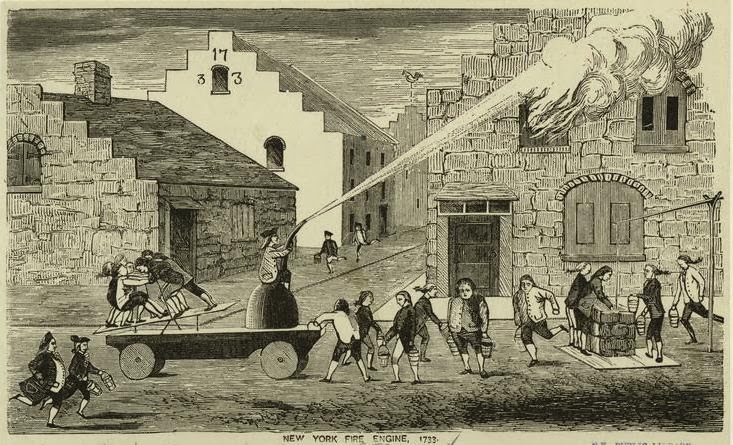
One of two fire engines first received by New York in 1733 (from an 1872 illustration) Courtesy NYPL
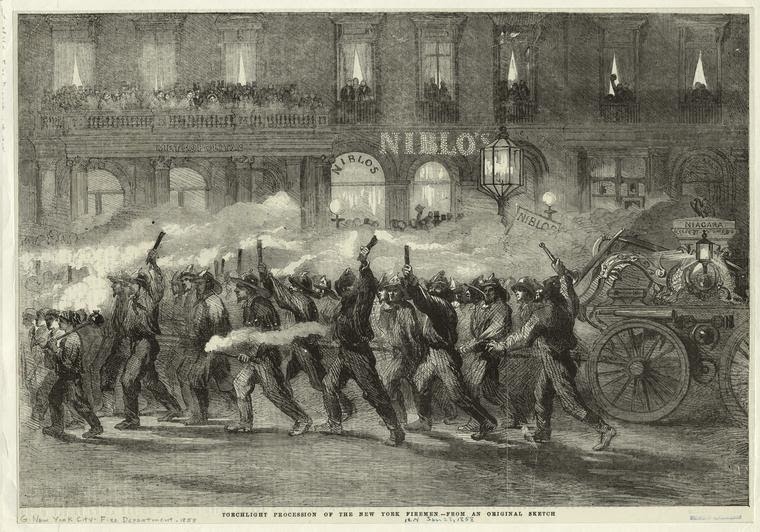
A firefighters’ procession at night, marching past Niblo’s Garden. 1858 Courtesy NYPL
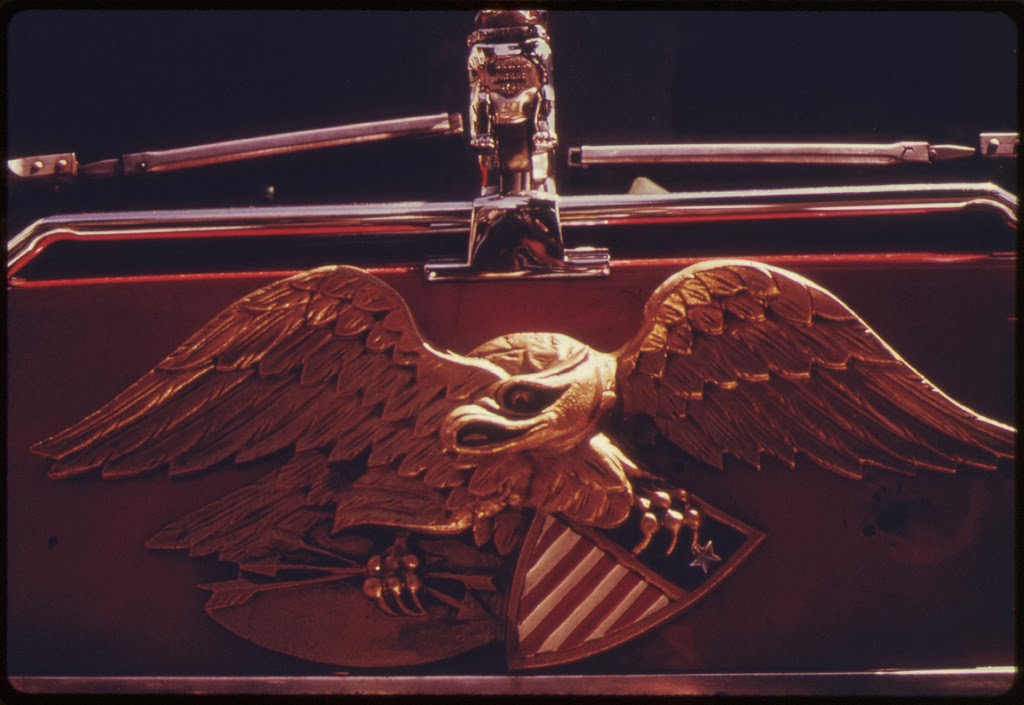
Eagle insignia from a New York fire truck, 19th century, courtesy the US National Archives
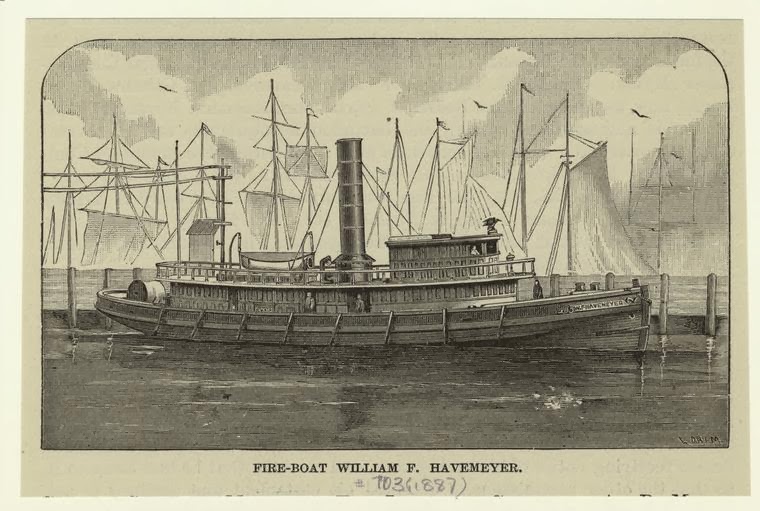
The first official fire boat of the FDNY (although others had been rented before this), named for former mayor William F. Havemeyer.
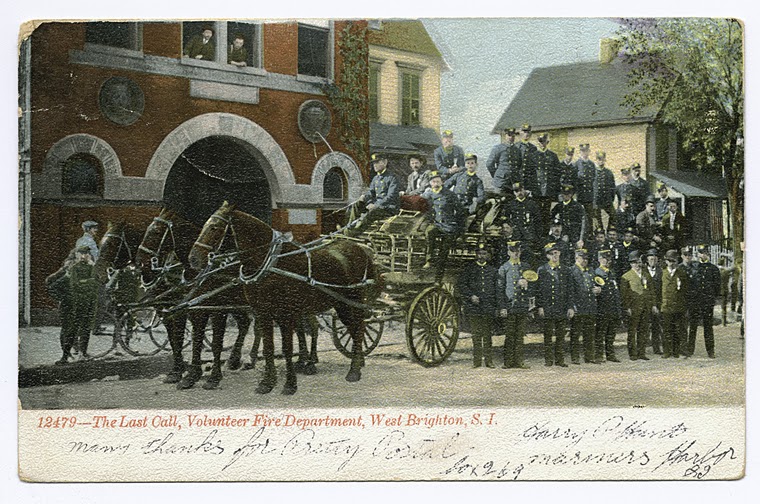
Volunteer fire divisions were slowly fazed out after the introduction of an official paid company. This was expanded when the five boroughs were created in 1898. This postcard commemorates the final run of a volunteer fire department in West Brighton, Staten Island. (NYPL)
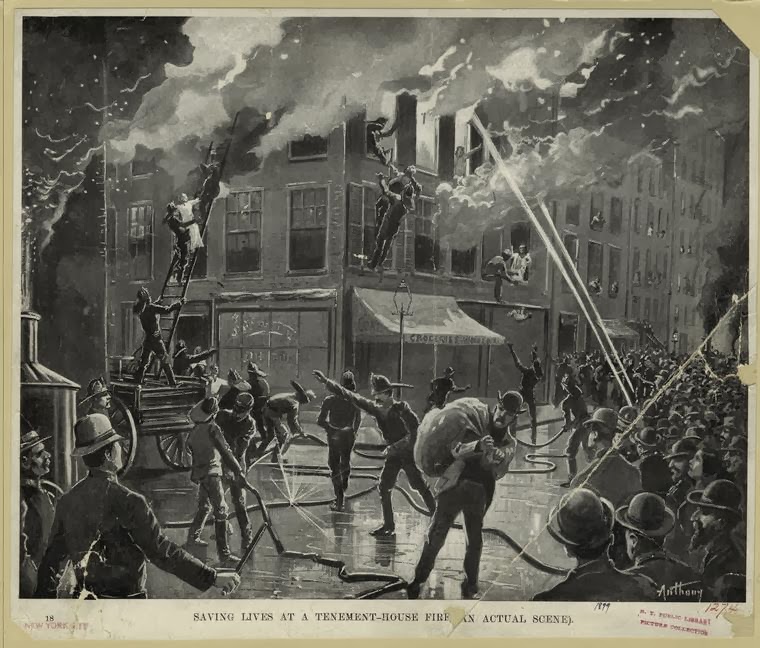
Firefighters battled a tenement blaze in this illustration from 1899, one of thousands that occurred in the poorer districts of town. Improved fire regulations would ensure newer buildings were more fire proof. (Courtesy NYPL)
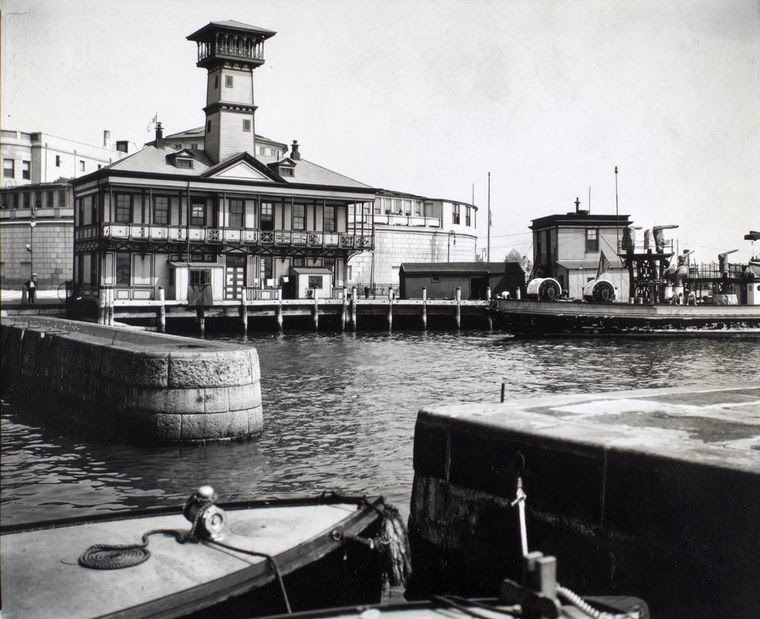
One of New York’s more interesting firehouses — the one for fireboats at the Battery. Photo by Berenice Abbott (courtesy NYPL)
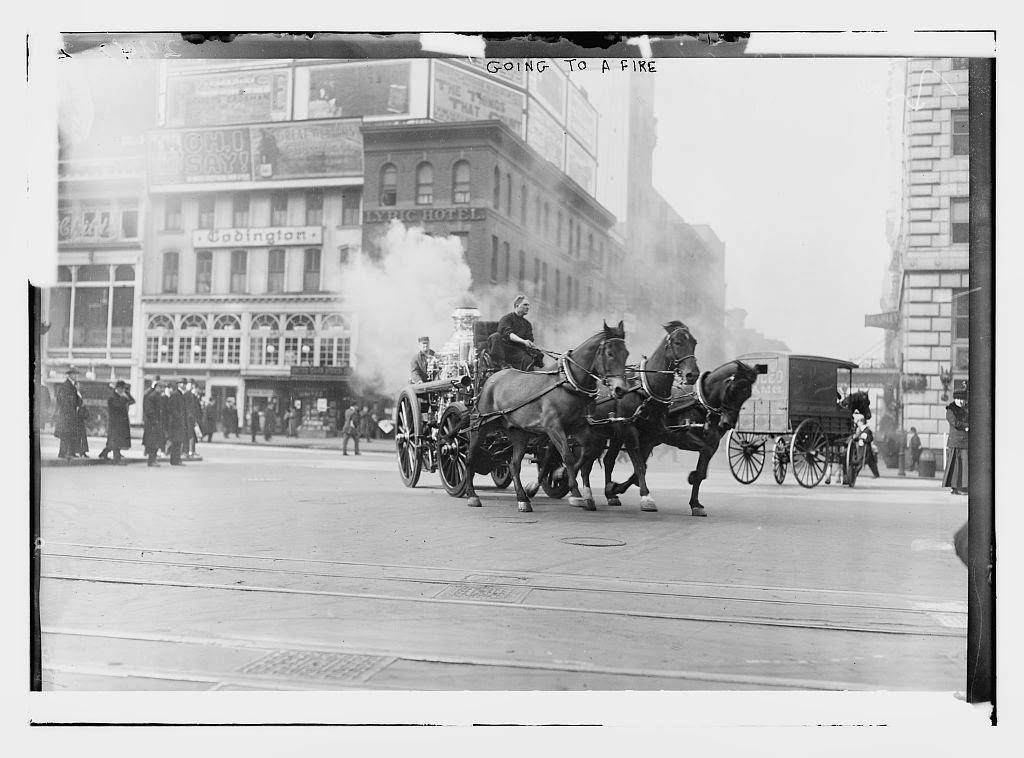
Horses were a hotly contested inclusion to the fire departments during the 19th century. They were eventually banished during the volunteer years, but re-introduced after 1870 and soon became essential for getting quickly to fires.
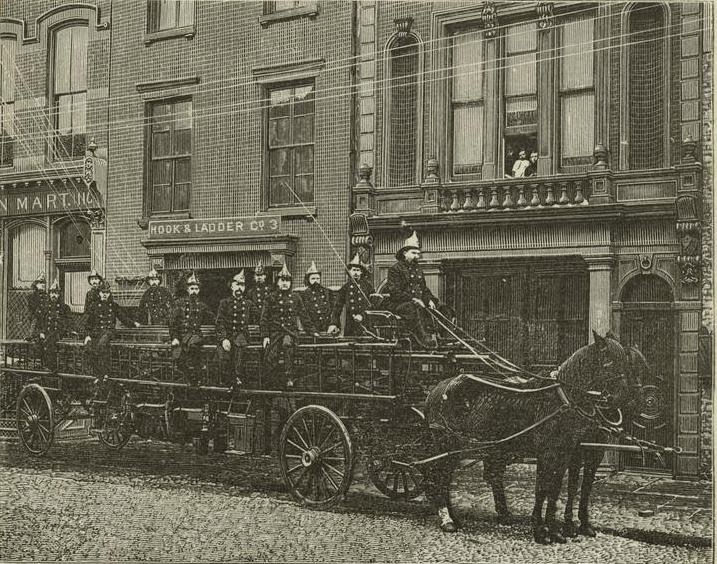
Hook and Ladder Co. No. 8, from 1887
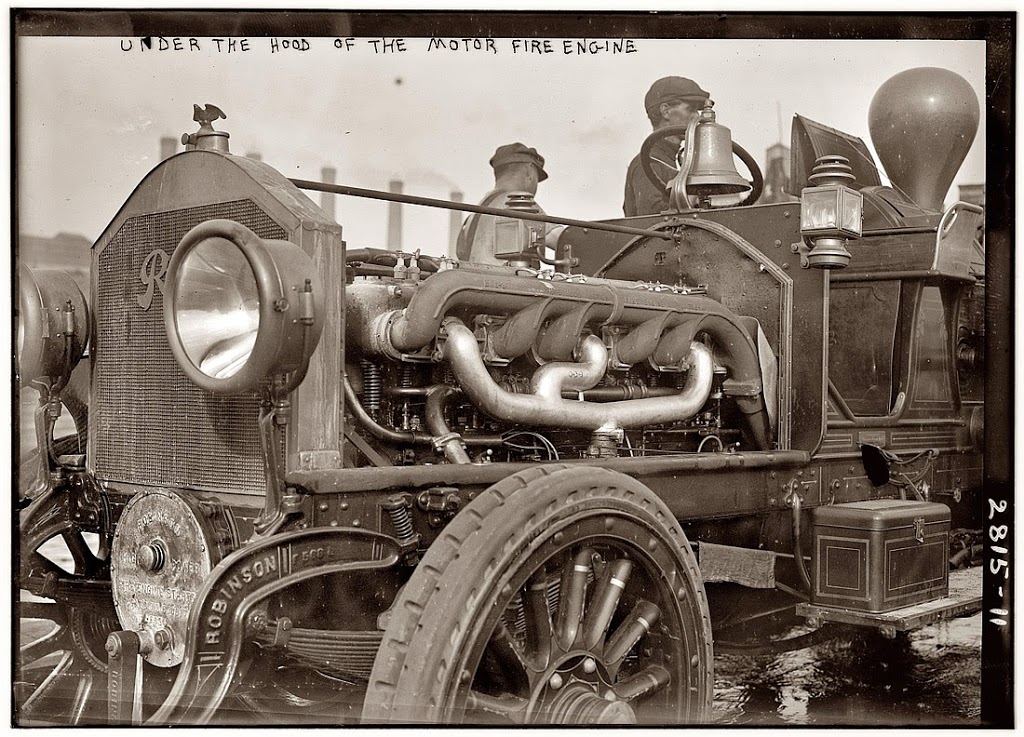
Motorized fire engines and trucks replaced the horse-drawn varieties in the 1910s. Here’s one model that was used by the FDNY in 1913 (Courtesy Shorpy)
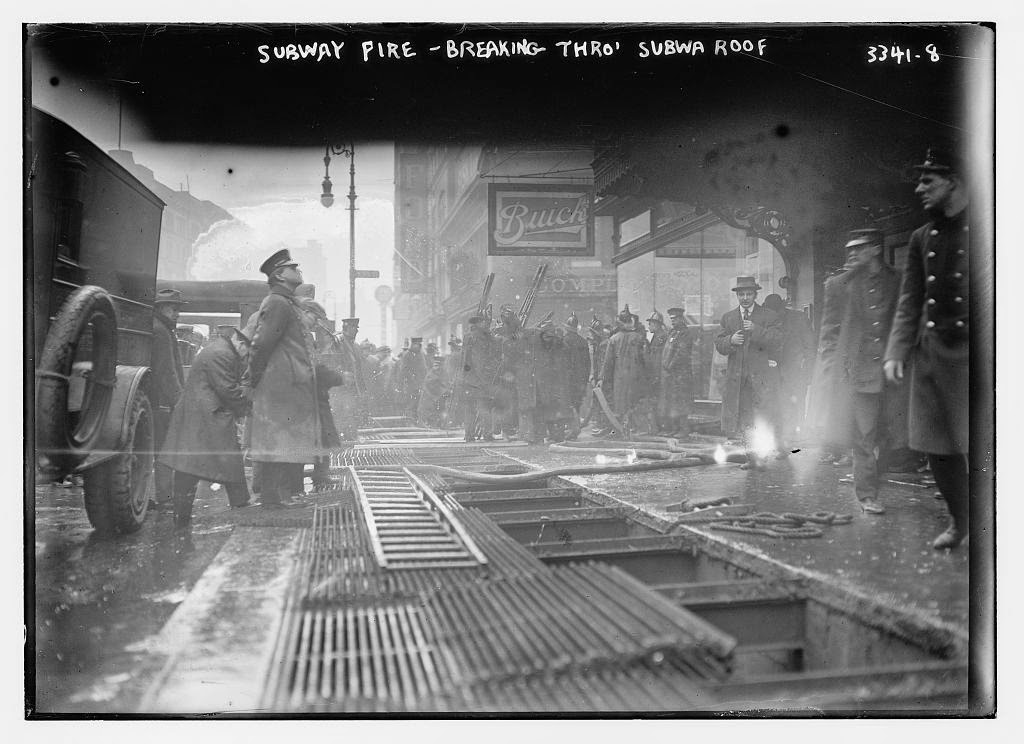
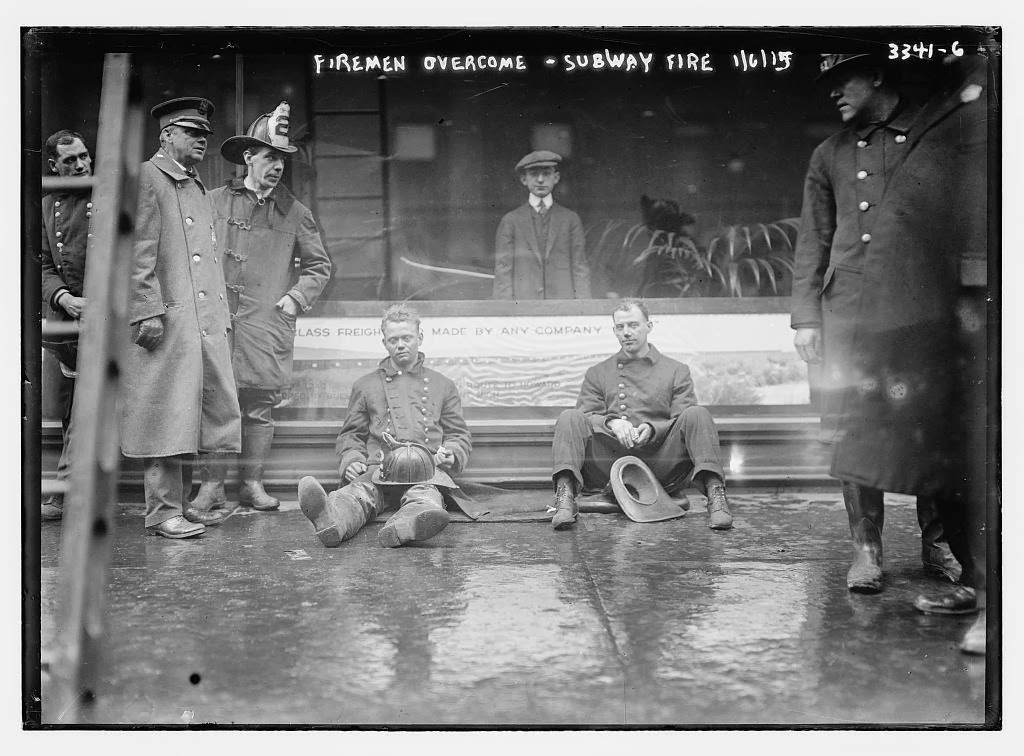
The city’s growth created new challenges for the FDNY. With the new subway, there was the potential for dangerous fires underground. Here a team of firefighters battle a subway fire in midtown in 1915, and a couple firemen who braved the inferno underfoot. (LOC)
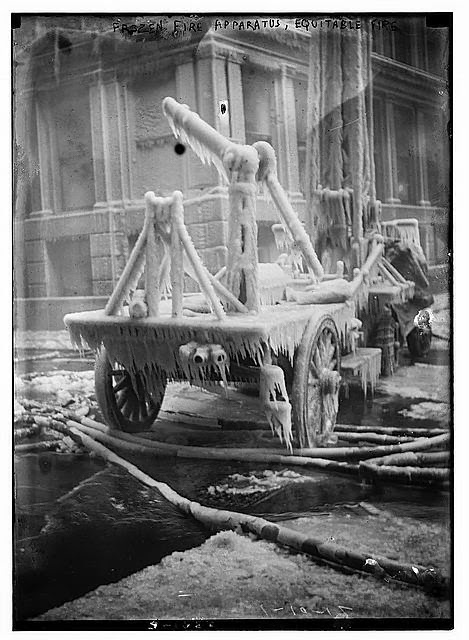
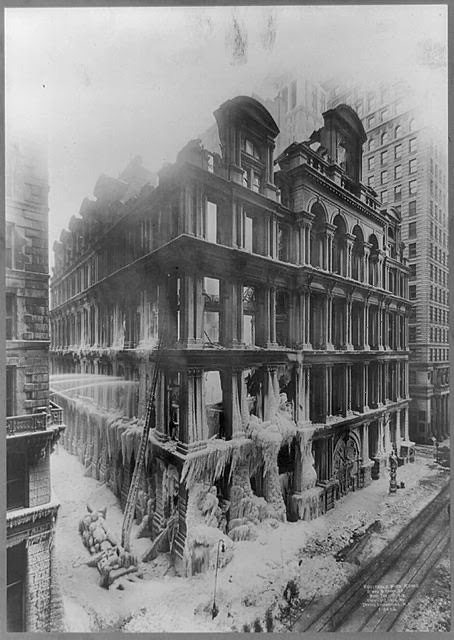
The difficult blaze at the Equitable Building in 1912 produced a bizarre aftermath of icy ruins.
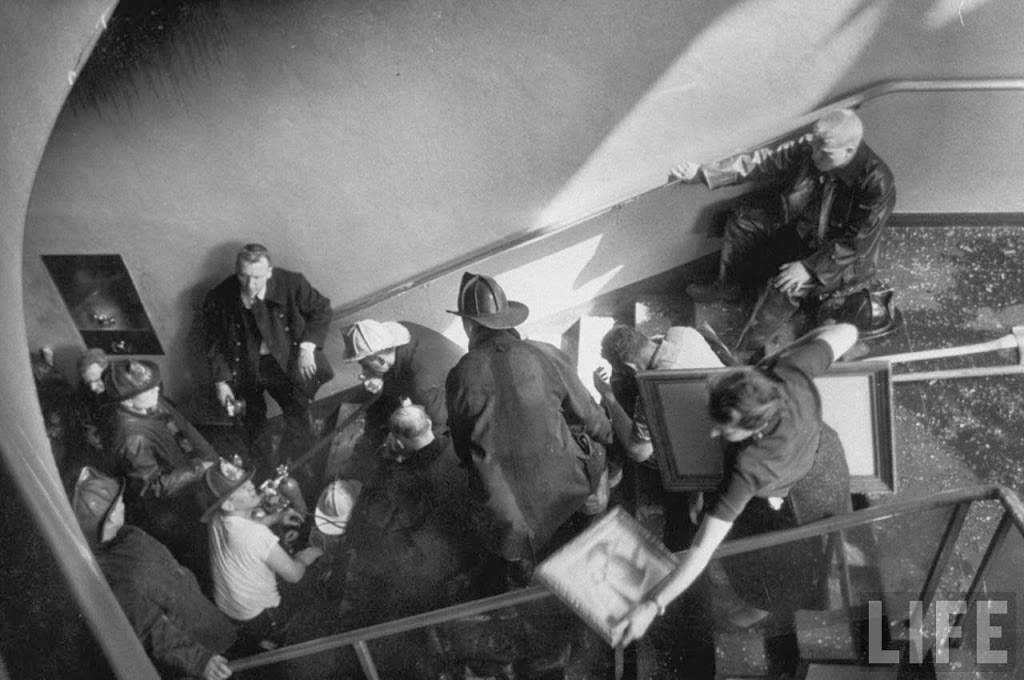
Firefighters rescuing people (and paintings!) from a fire at the Museum of Modern Art, 1958. (Courtesy Life)
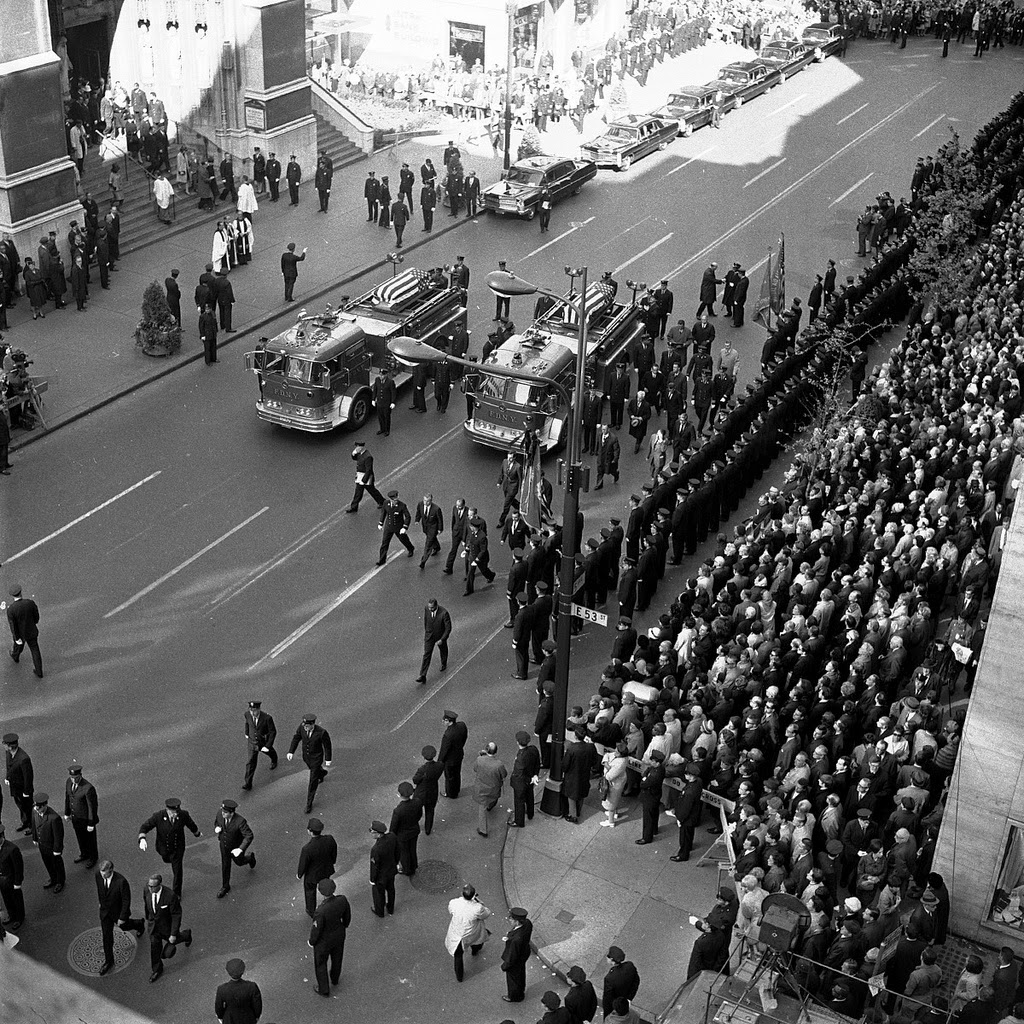
A sorrowful day: Thousands come out to mourn the 12 firefighters who died fighting a terrible blaze that erupted across from the Flatiron Building on October 21, 1966. (Picture courtesy FDNY)
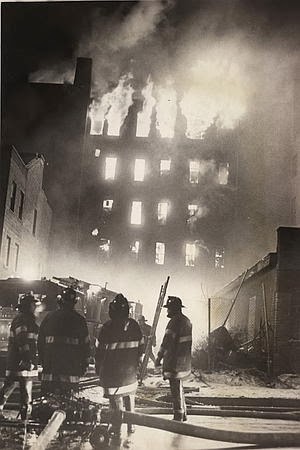
Total mayhem erupted in New York City in the 1970s, as whole districts like the South Bronx, Bushwick, Harlem and the Lower East Side saw a massive increase of fire-related disasters due to the city’s financial woes. (Photo courtesy New York Post/Vernon Shibla photographer)
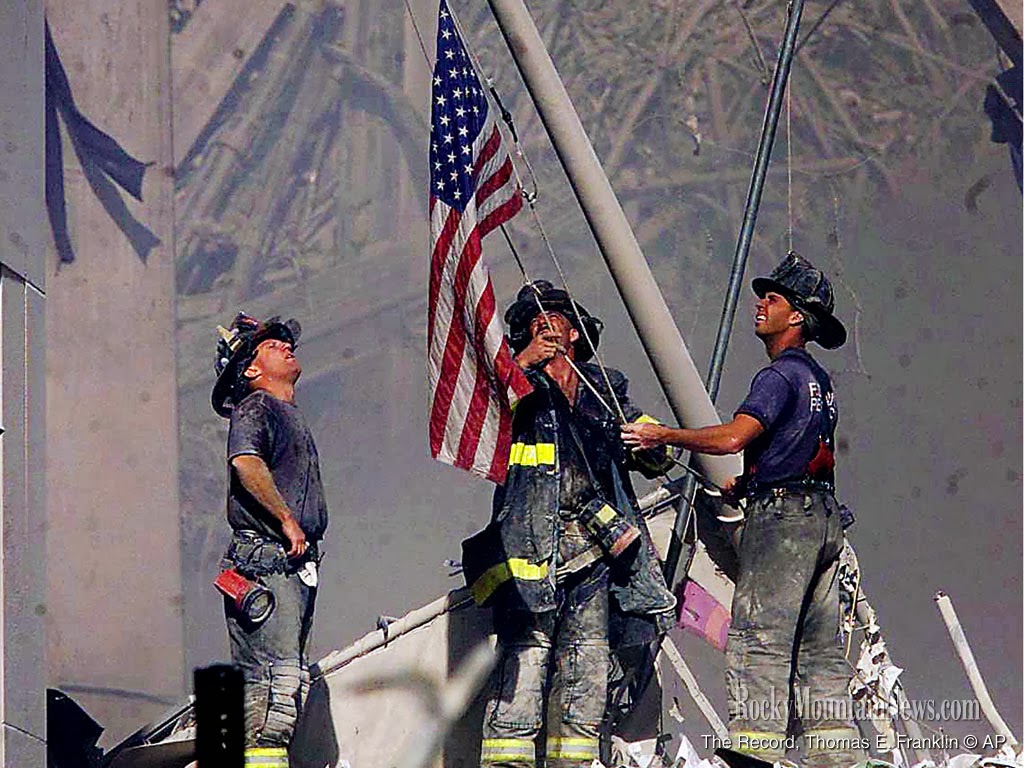
Three hundred and forty-three firefighters and FDNY paramedics died in the September 11, 2001, terrorist attack on the World Trade Center. But the force, along with the police and other emergency workers, managed to save tens of thousands of people on that day, making one of the largest rescue operations in American history. In total, 2,977 people were killed that day, 2,606 of them in New York, on the ground and in the towers.
And finally, a rather amazing film documenting the fire department’s emergency response process in 1926, with a breathless dash-cam vantage point!
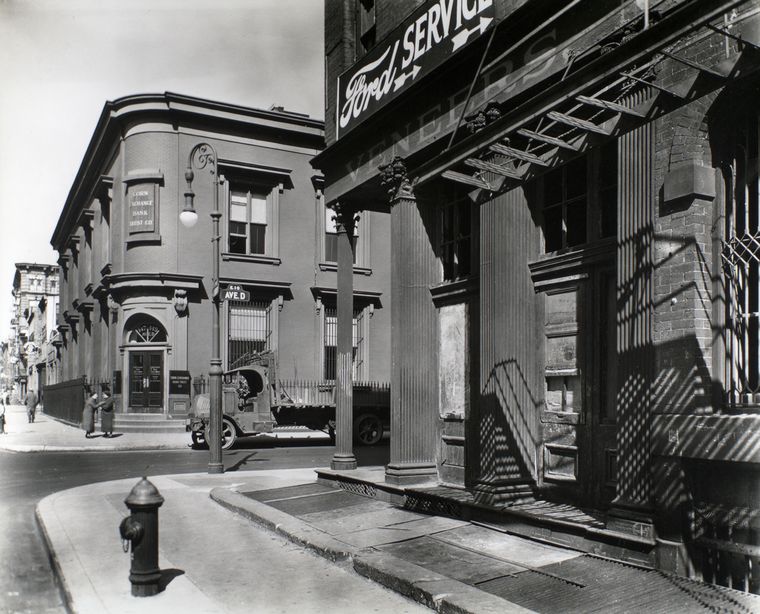
A genuine survivor: The building to the right was once the Strangers Hospital in the 1870s. This picture, by Berenice Abbott, was taken many decades later, in 1937. And the building is still around today! (Picture NYPL)
New York used to lump the sick, the poor and the homeless into one mass of needy unwanted. Since its founding, the city has struggled take care of the growing dual problems of poverty and plague, but in a way that kept the unwanted safely invisible to its wealthier classes.
With the rise of immigration starting in the 1840s, the problem became too pervasive to simply throw people into large catch-all institutions like Bellevue Hospital (which, in its early years, served as almshouse, hospital, quarantine, prison and morgue). Soon Blackwell’s Island became the solution, with a string of grim institutions lining the East River island.
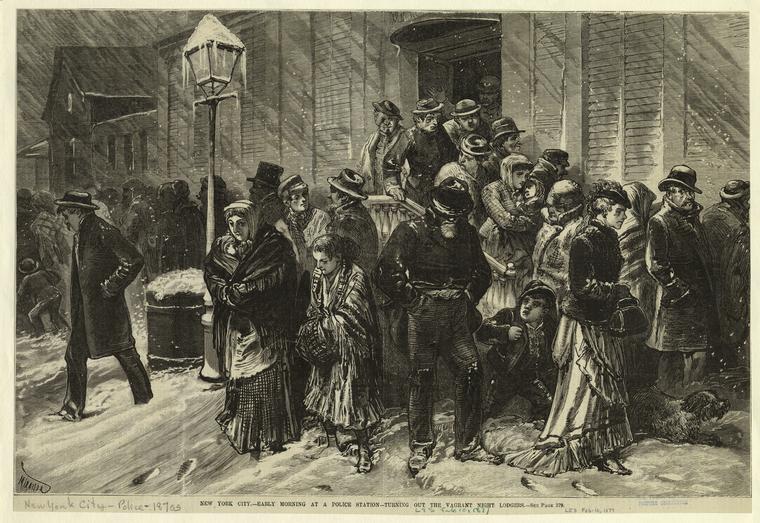
Below: For those less ‘worthy’, a cold night might have meant sleeping in the local police station. In the illustration below (1877), the homeless are turned out into the street at morning’s light. (NYPL)
Another solution for the homeless arose in 1870s in the delirious days of the scandals of the Tweed Ring.John H. Keyser made his fortune in the growing new field of indoor plumbing; in fact, he seemed to be wildly successful at it, a sudden millionaire in an era were certain men — with certain connections — grew wealthy overnight.
Keyser may have had friends in high places, but he expressed an unusual need for the common man. Perhaps his outreach was a tad cynical; the poor he helped often voted the way Keyser preferred. But with the city facing a severe poverty crisis, even the baited gesture had beneficial results.
The plumber king operated a ‘Strangers Rest’ at 510 Pearl Street in 1869, a boarding house for vagrant men and women. The vagrant house was situated halfway between City Hall and Five Points, and it operated on that spirit as well, an abode of good will and a little favoritism. You could stay if you were deemed “worthy,” meaning either good behavior or an unofficial pledge of allegiance to the Democratic Party.
The following year, Keyser purchased a building for $8,000 owned by the New York Dry Dock Company and transformed it into the Strangers Hospital, a vagrant home and care center in the vastly crowded Lower East Side. The building is still standing today at 143-145 Avenue D. Across the street is the Dry Dock Playground.
The Strangers Hospital opened in January 1871 with dozens of bed in several wards, a reading room, Russian and Turkish baths, a recreation room, and a chapel, with walls made of “India rubber, to avert the absorption of any infectious materials.”
An opening day blessing announced its unique mission: “It is not intended for the benefit of the wealthy, who in times of sickness can command the comforts of a well-ordered home and the attendance of a skillful physician or surgeon. Nor yet the beggar, who leads a life of dissolute idleness, rotating in winter and in sickness about the charitable institutions of this city. It is intended for the succor and restoration of the deserving poor……strangers — strangers to the home of plenty and comfort in which they have been born and nurtured, and from which misfortune and disease have parted them.”
In other words, you were worthy if they deemed you to be so.
It was an odd differentiation. As an accommodation for up to 200 people, it served not only as a regular treatment hospital for the ‘deserving poor’, but as a convalescent home and halfway house. Most likely, you had to be recommended but a tenant in good standing and, as I mentioned, it probably helped if you were a Democrat.
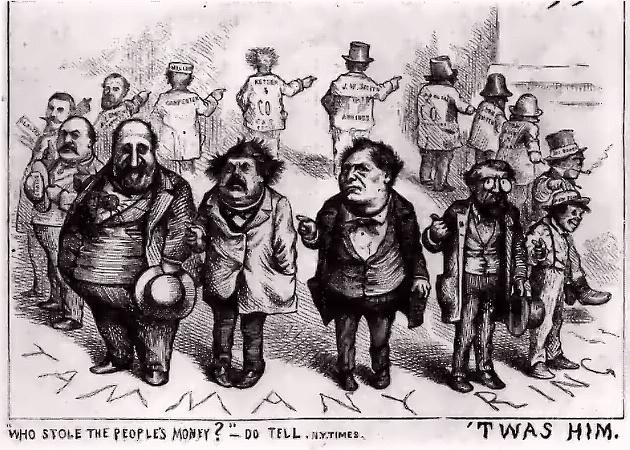
I underscore that because the Strangers Hospital didn’t last very long, closing in 1874. And this is why — Keyser was known as the ‘Ring Plumber’, a crony of William ‘Boss’ Tweed who enjoyed thousands of dollars in kickbacks and special favors. Tweed went to trial in 1873 for his crimes, and his cronies, although never formally charged, were disgraced.
Below: Keyser would have been one of the links of this chain of favoritism, envisioned by illustrator Thomas Nast
Contemporary sources of the day are not kind to Keyser, with one account call him “a real live Oily Gammon [arch-villian, from an English phrase which meant fatty ham], an Americanized specimen of the article — revised and improved in order to fit him to be a bright and shining light in the fraternity of which he is a member.”
By 1877 Keyser went bankrupt. Still, his obituary lists several more philanthropic efforts by Keyser, including a “free eating house” in Washington Square in 1888. From the headline: “Thousands were aided by Man Accused to Being Tweed’s Partner.” So whether or not his actions were sincere, he did manage to fund the feeding and caring of thousands of poor and sick New Yorkers. Where does such a legacy stand?
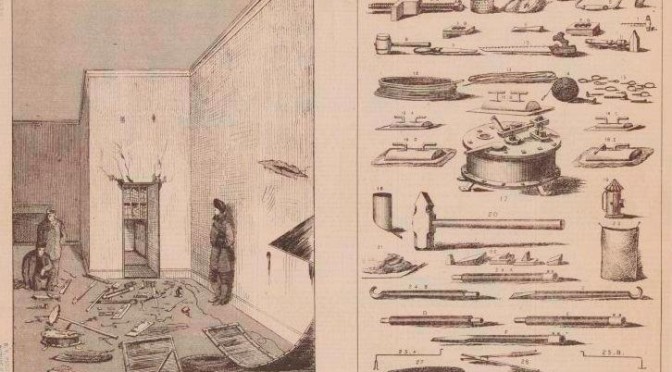
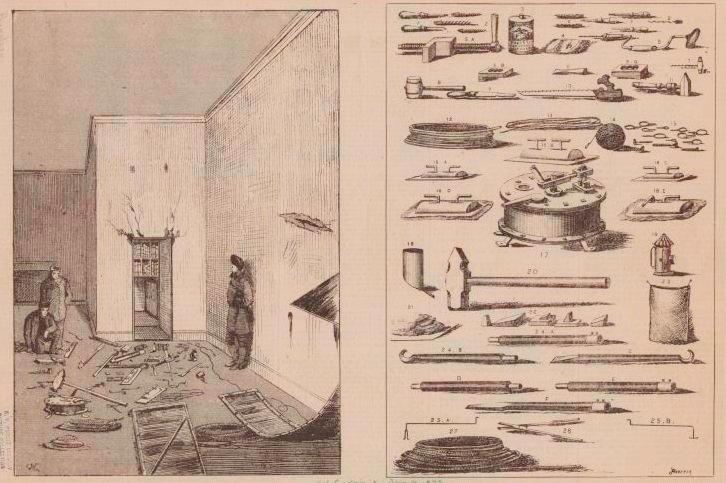
‘Red’ Leary was one of the famous bank robbers of the 1870s, assisting in heists all along the Northeast. Above is an illustration of a bank robbery in Montreal, Canada, displaying some of the tools found at the crime scene.
They don’t talk about ‘Red’ Leary anymore down in the streets of the Lower East Side. In the hipster bars and boutiques, in the graphic design firms and the Chinese foot-massage parlors, his name goes virtually unspoken.
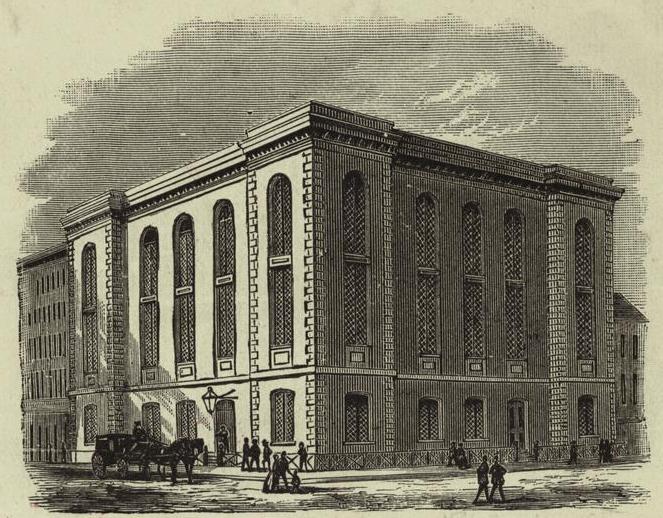
But over one hundred and thirty years ago, his unusual escape from the Ludlow Street Jail (pictured below) captivated New Yorkers, willing to overlook the rascal’s criminal misdeeds to marvel at the ambitiously planned jail break, orchestrated by his wife Kate Leary. ‘A Hero and a Burglar’ proclaimed the New York Times, appalled that teenagers were “absolutely besides themselves and exultant over the daring deed, each individual boy wishing, for the moment, that we was a Red Leary.”
John ‘Red’ Leary was one of the northeast’s most notorious bank robbers of the 1870s, frequently pairing with other known criminals of the day to pull of spectacular heists. In particular, as a part of the gang of George Leonidas Leslie (nicknamed “king of bank robbers”), Leary helped make off with thousands of dollars in stolen sums, involved in tricky operations that sometimes took years to plan.
According to Herbert Asbury, Leslie’s gang was responsible for 80% of the bank robberies between 1874-84. Not sure how that number was specifically settled on, but needless to say, as a critical member of Leslie’s operation, ‘Red’ Leary was a master at his chosen profession.
However, in December 1878, after a robbery at the Northampton Bank in Massachusetts (making off with a staggering $1.6 million), Leary was promptly captured back in New York at Second Avenue and 92nd Street, in connection with another bank robbery. It was decided to extricate Leary to Massachusetts to answer for the robbery there, so he was thrown into Ludlow Street Jail to await transferal.
Leary would be sure not to meet the same fate, thanks in part to his wife, the fiery Coney Island pickpocket Kate Leary, and some of Red’s criminal cohorts. Included among them were Shang Draper, a crooked saloon owner famous for drugging customers and shanghaiing them onto ships.
Kate had already helped her husband escape capture once before, in August 1877, when the duo eluded several officers at a hotel near Fort Hamilton in Brooklyn. A lightly guarded prison in the middle of one of the most populated neighborhoods in the world was certainly no match for a woman as determined as Kate, known as much for her intelligence as for her venality.
In May of 1879, Mrs. Leary, in disguise, rented a tenement flat next door to the jail at 76 Ludlow Street. She and her accomplices then knocked out a wall, drilling through the thick prison defenses until they broke through into the prisoner’s bathroom, perfectly timed with Red’s arrival there.
As author B.A. Botkin‘s describes: “No alarm was raised, nor was the tunnel leading to the room with its neatly piled ton of excavated brick discovered until 10:30. By that time the fugitive was on his way to Coney Island in a light truck.”
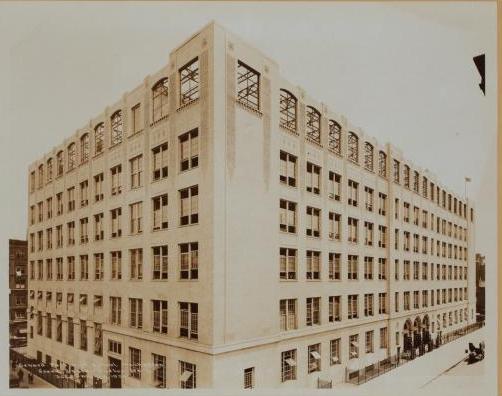
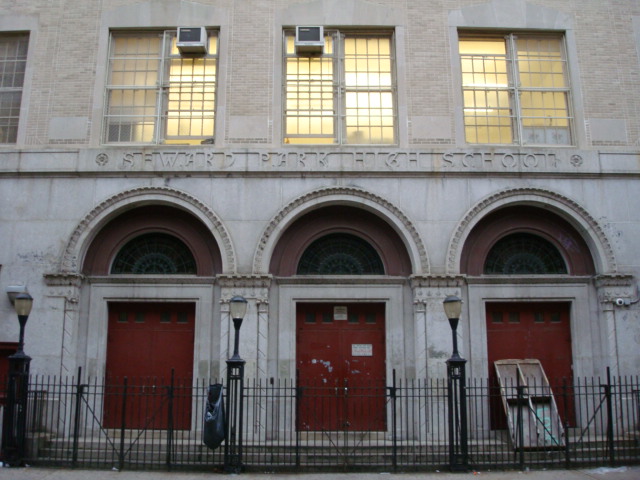
As a judge has explicitly stated that Leary would probably try to escape, the clean extraction of the high profile criminal elicited mocking scorn at the jailers and officers involved. Saving face, Ludlow officials declared Leary’s assisted release was “one of the most daring and skillfully-planned affairs of the kind to ever occur in the city,” “executed by shrewd and bold criminals.” [source] The Ludlow jail would never really shake its, shall we say, porous reputation and was eventually demolished in the 1920s. Both the jail and the address 76 Ludlow Street would make way for Seward Park High School (pictured below, from 1930)
So dramatic was the 1879 Ludlow prison break that Leary and his crew were soon turned into folk heroes by the more rebellious residents of the Lower East Side. For this reason, the Leary escape is sometimes listed as a New York urban legend. But in fact, newspapers of the day spilled over with reports of the bold getaway.
According to Botkin’s 1956 book ‘New York City Folklore’, the legend of Red Leary even briefly entered sports vernacular. “So celebrated did the exploit become, that …. [a] coach who wanted to instruct a player to break loose and steal a base simply yelled, “Red Leary!“
But to me, April 12th will always be the day that William ‘Boss’ Tweed died in his cell at the Ludlow Street Jail in 1878, locked up for his far-reaching crimes of corruption and graft.
We’re working on putting together a new podcast for this Friday, but in the meantime, here’s a reprint of an articleon the Ludlow Street Jail I wrote back in 2008, in support of the Riker’s Island podcast:
Despite being in sight of two boroughs and a very large airport, Rikers Island lulls us with psychological assurance of feeling remote and entirely sequestered from our regular world. But never fear, New Yorkers; there are prisons all over the damn city.
Take the Bayview Correctional Facility, a former Seaman’s YMCA turned medium security prison for women. It’s in Chelsea, 20th street and 12 Avenue, not far the Chelsea Piers sporting facilities. Or the modern day version of the Tombs, officially the Manhattan Detention Complex and once called the Bernard Kerik Complex. (Poor Kerik. Imagine being so disgraced from misdemeanor charges that they strip your name off of a jail.)
But our current correction system benefits from increased security advancements, better run facilities, and relatively humane treatment of inmates. Quite unlike the world which greeted Rikers Island when its first jail opened in 1932.
The prisons of New York City were notorious for atrocious conditions, disease, frequent escapes, corruption and disorganization. The most notorious of these jails, the original Tombs, sat in the festering shadow of a drained Collect Pond, creating a leaky, damp world, or as James Baldwin once described, “a place of sorrow and tears and dread forebodings.” The original Tombs, which opened in 1838, with its ostentatious Egyptian facade, sat close between Five Points and City Hall and often filled its cells with residents of both.
The prisons and workhouses on Blackwell’s Island(later Welfare Island, then Roosevelt Island) were equally as moribund when paired with the island’swretched asylum, smallpox hospital and other places one wouldn’t wish to throw a birthday party.
We have the beautiful gardenof West Village’s Jefferson Marketas a keepsake to the former New York Women’s House of Detention. Its proximity to West Village foot traffic was the bane of the neighborhood until it closed in 1974. Activist Angela Davis was kept here before being acquitted of murder charges in 1972. Florrie Fisherwas also a regular here.
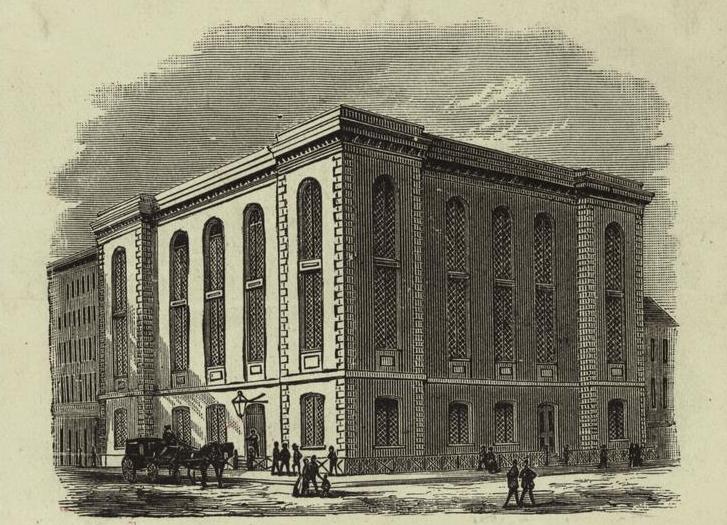
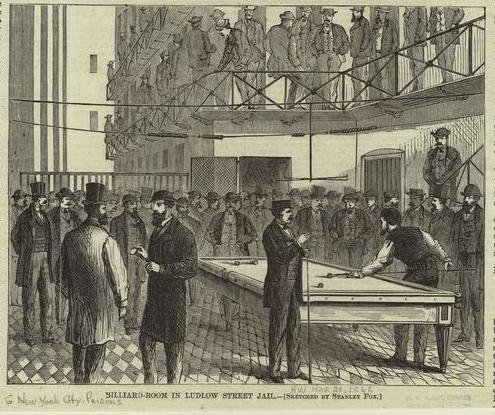
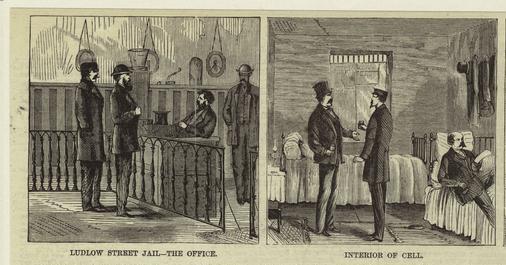
But my favorite former prison location, however, has to be the Ludlow Street Jail, formerly at the corner of Ludlow and Broome, opened in 1862 and sat for many years smack in the middle of a stretch of residential tenements. Originally a debtors prison, the red-brick jail complex, with its 87 cells and an open courtyard, later kept county detainees, some of whom could pay to receive slightly better accommodations as though it were a hotel.
From this picture of the Ludlow jail interior, things don’t look so awful there. I mean, billiards in top hats?
Victoria Woodhull, the free-love advocate who became the first woman to run for president, spent her 1872 election day in a jail cell here at Ludlow Street for sending obscene materials through the mail, documenting the alleged womanizing of Plymouth Church’s Henry Ward Beecher.
More notably, the king of Tammany Hall corruption, ‘Boss Tweed, died inside a prison cell here on April 12, 1878. Although some accounts claim the Ludlow jail to be better than most — with wide windows allowing sunlight and “probably not surpassed by any prison in the United States” — the doctor who pronounced Tweed’s death mentions it was brought on by “prolonged confinement in a unhealthful locality.”
Curiously, the once-powerful Tweed had partially overseen the construction of Ludlow’s jail and, according to his biography by Kenneth D. Ackerman, his former friends remarked, “If Mr. Tweed had known he was going to patronize it, he would have made the rooms more commodious.”
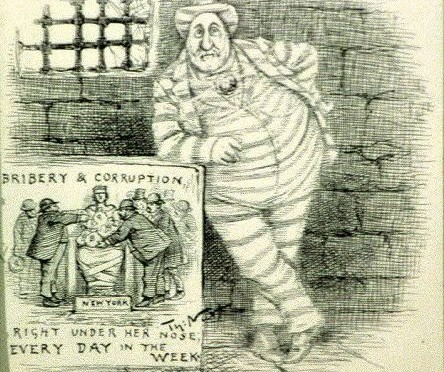
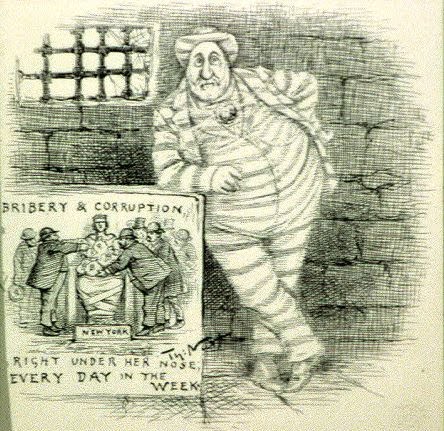
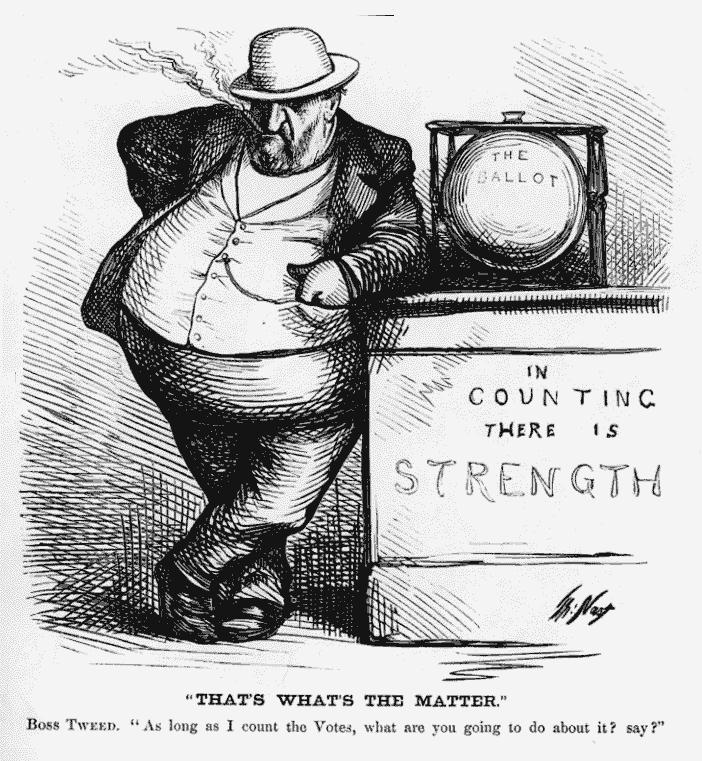
Below –Â From a Thomas Nast cartoon, with the caption: Â The spirit of Tweed is mighty still “…and even yet you don’t know what you are going to do about it!”
By the 1920s, the prison was affectionately referred to as Alimony Jail for the number of deadbeat husbands contained there. In 1929, the block was cleared to make way for what many would consider a new form of incarceration — the new Seward Park High School. (The original, which actually did sit next to Seward Park, was moved due to subway construction.)
It should be noted that this school was notable for poor performing students and an alarming amount of dropouts and was eventually closed in 2006. Five new smaller high schools now share the building. Former “inmates” of this institution include Tony Curtis, Estelle Getty, and Jerry Stiller.
(Below) Seward Park High School today, a prison for some, built over the site of an actual prison
KNOW YOUR MAYORS Our modest little series about some of the greatest, notorious, most important, even most useless, mayors of New York City. Other entrants in our mayoral survey can be found here.
MayorThomas Francis Gilroy In office: one term 1893-1894
When it comes to corruption, you can’t get more front and center than Thomas Francis Gilroy. His political education came from the most dishonest names in public service, he was elected mayor in one of the most rigged elections in New York history, and he reigned as a mere figurehead controlled by the ruling political machine. There is little to distinguish him but for his uncanny knack of latching on to the most corrupt men in government.
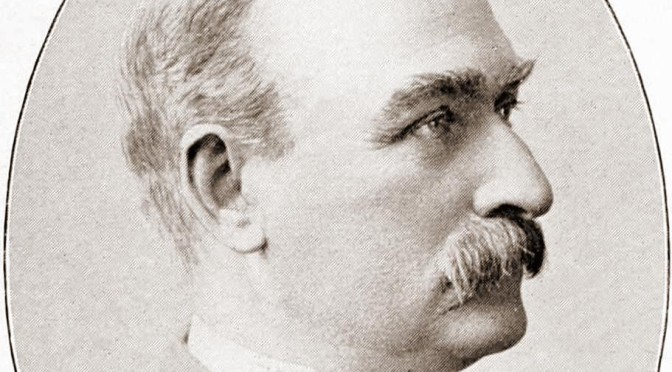
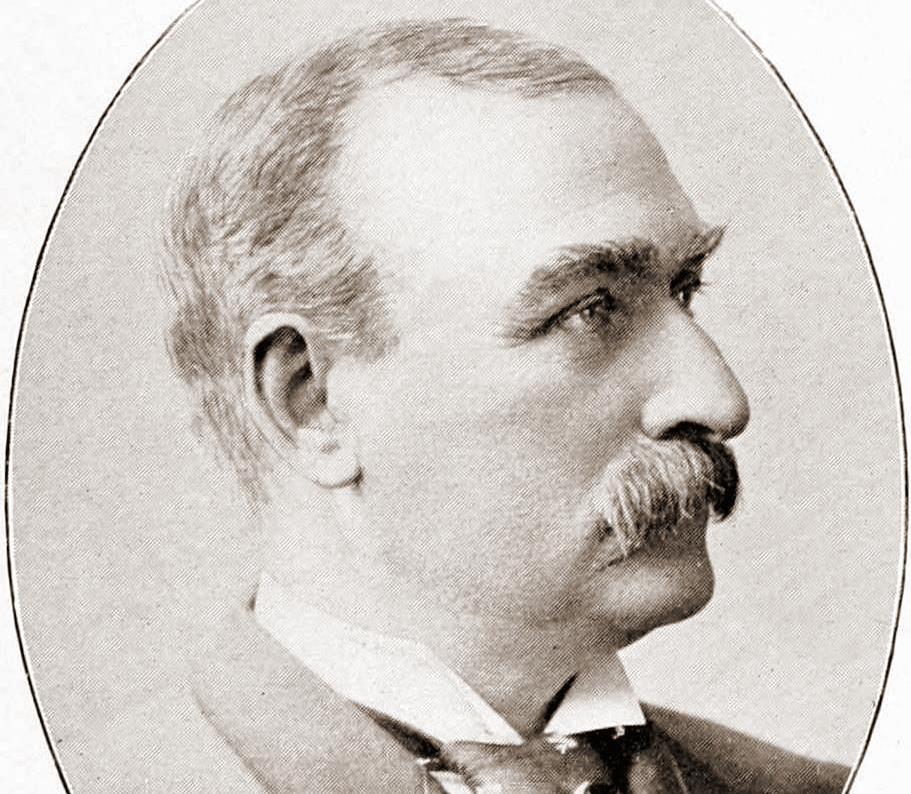
But didn’t he look dashing! “Gilroy was one of the most striking looking mayors this city has ever had, with iron-gray hair, a heavy mustache, a well-knit erect physique and ruddy cheeks,” according to his obit.
In the alternating crests of corruption and reform in New York City government, Gilroy rose when wrong was king and kept his head low every time else. It might have been different for Tommy, as his chums called him, if not for the connections of Boss Tweed, the notorious head of Tammany Hall and the embodiment of New York machine politics.
Gilroy was a bit of a rarity for the late century, a mayor born in another country but of a nationality greatly valued by future Tammany leaders. He was seven years old in 1847 when his parents brought him over from Sligo, Ireland, just one of millions of Irish newcomers at the beginning of a mass wave of immigration that would last decades.
As a teenager, sometime in the 1850s, he began on-the-job training as a printer’s devil for a young, well-known publishing company, G. Putnam Broadway*, who would produce work by Edgar Allen Poe, Nathaniel Hawthorne and most notably to Gilroy, Washington Irving. According to Gilroy: “They were getting out Irving’s ‘Life of Washington’ [the writer’s bio on George Washington] to be sold on subscription. It was a godsend for me to be in a bookstore. I read everything I could lay my hands on.”
“I don’t believe I was a very good servant though, for as soon as the subscription business was done, the publishers let me go.” Gilroy is being modest here; he would be a most excellent servant to the political machine.
He moved onto other publishers and by 1864 had become a proofreader. It may have been through his publisher that he made his introduction with city politics, and Tammany Hall in particular. He soon moved on to a useless city job, his title ‘sixth clerk to the Croton Aqueduct Department’, one of hundreds of padded government jobs requiring no conceivable skills except mendacity and blind ambition.
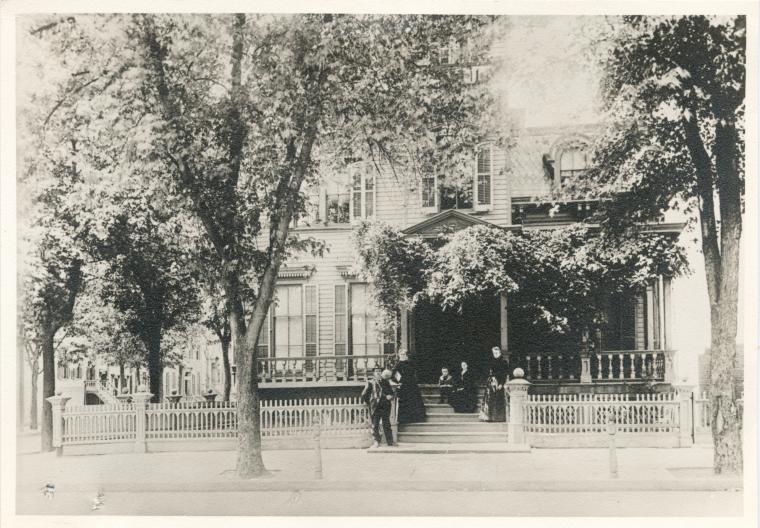
Gilroy’s home in the 1860s at the corner of Broome and Mott streets would have placed him near the epicenter of immigrant life in New York, which may suggest his usefulness within Tammany. Tommy was the boilerplate Irish American that Democrats liked in their ranks and lusted after during elections.
He became a confidante of Boss Tweed’s in early 1870, at the height of the notorious boss’s power as the city’s commissioner of public works. Apparently not busy enough in his Croton Aqueduct duties, Gilroy served as Tweed’s personal ‘messenger’, delivering the type of ‘messages’ one can only imagine and marvel at.
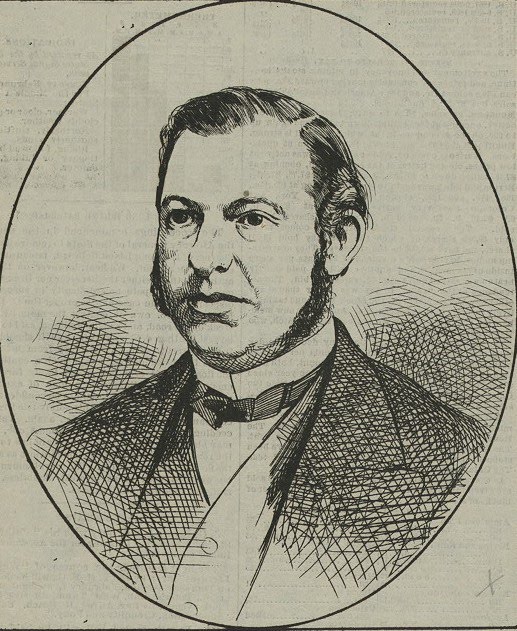
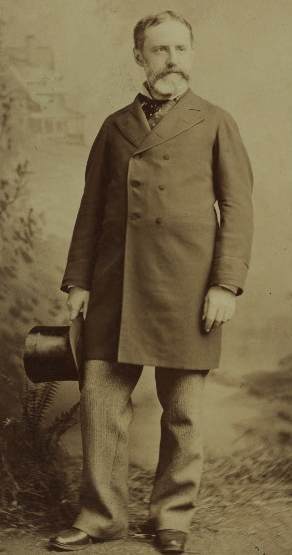
Tweed was arrested in the fall of 1871, but Gilroy had already moved on, as clerk and personal secretary to state senator Herry Genet (at right). Sometimes nicknamed ‘Prince Hal’, Genet was left picking up the pieces of a tattered political machine in the wake of the Tweed scandal and would himself had been shipped off to prison in 1873 on corruption charges had he not escaped from jail and fled the city. (He was eventually caught years later.)
After these associations, Gilroy kept a lower profile, but always worked within the Tammany system, damaged by the Tweed scandals. He became a Mott Haven court clerk in 1874 — the year it was annexed by New York — and observed this Bronx neighborhood grow from an industrial backwater to a tony residential area.
People generally have a short memory when it comes to government corruption, and by the mid 1880s, Tammany Hall was back in full swing. Gilroy took a cozy clerk job closer to City Hall in 1885, benefiting financially from the kind of kickbacks perfected by the Tweed Ring.
He was so snug with Tammany that he was chosen by Boss William Crocker to oversee the campaign of Hugh Grant, who became mayor in 1889. As a reward, Grant make Gilroy commissioner of public works — the same job Boss Tweed had once held! And just to make the parallel complete, he became Tammany’s grand sachem in 1891. Make no mistake however; the man behind the curtain — behind both Grant and Gilroy’s ascensions — was Crocker.
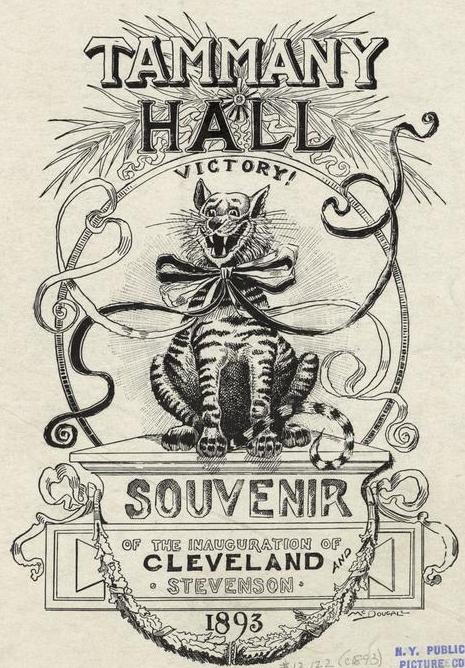
According to Oliver Allen: “There was no question that the good times were now rolling for Tammany Hall; it could hardly lose an election.” Crocker decided, after two two-year terms of Grant, that Gilroy should replace him, and rigged the election to assure that victory, crushing his republican opponent Edwin Einstein. In fact, in one Lower East Side district, 389 votes went to Gilroy and three to another candidate. Croker vowed he would find out who those three voters were. (Also on the ballot that year: Grover Cleveland for president, see 1893 souvenir print below)
Gilroy kept things status quo, for Tammany, that is. According to Burrows and Wallace, City Hall distributed funds from “municipal employees and saloonkeepers” by city charities in need although stopped short of initiating a promised jobs program to deal with a growing unemployment rate. He rejected calls for improved public baths and additional schools, this in a decade of massive immigration swells.
Gilroy is notable only for coming in at the end of Tammany’s moment of glory. He had inherited a deeply corrupted police force, so ineffective that a state commission was called in 1894 to expose the deep fissures. The Lexow Committee would eventually uncover an institutional system of “extortion, bribery, counterfeiting, voter intimidation, election fraud, brutality, and scams.” All of it, naturally, inextricably tied together with Tammany leadership.
Gilroy tried desperately to turn the tide by appointing a ‘bi-partisan’ board of police directors, Democrats and Republicans. This paltry concession persuaded no one. By the next election, New York was a reform mood. In fact, Gilroy didn’t even bother running again; after briefly putting Macy’s president Nathan Straus on the ticket, the Democrats replaced him with also-ran Hugh Grant.
To no avail; Tammany’s nearly decade-long reign was (temporarily) over, as gruff reform candidate William Strong won handily. (The story picks up in my article on Strong’s tenure as mayor.)
Gilroy had played his last political card by this time. After a short stint as a bank president, Tommy retired to his homes, one on West 121st Street and another on Far Rockaway, where he died on December 1, 1911.
*The company still exists today as a division of the Penguin Group: Penguin Putnam Inc, frequently publishing juvenile literature
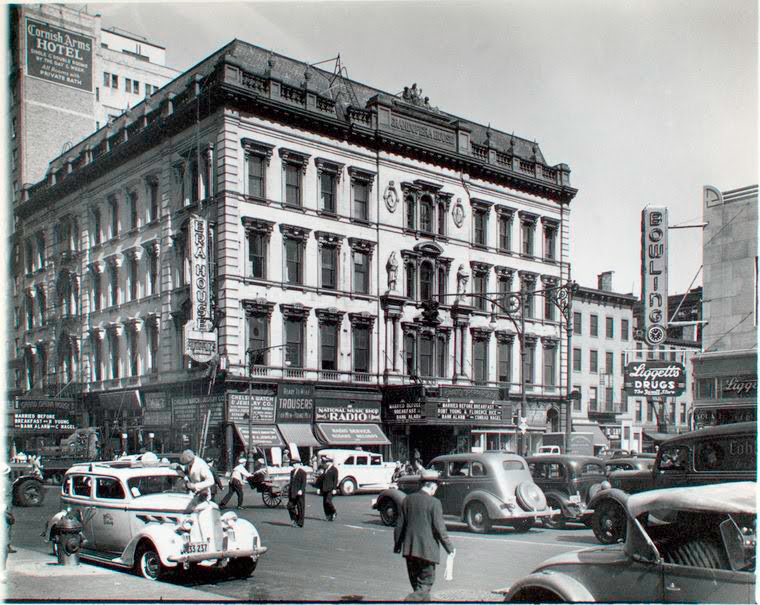
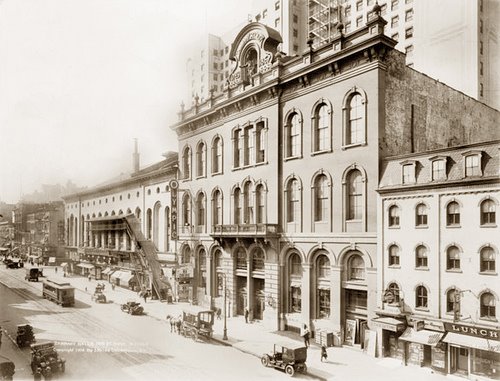
In last Friday’s podcast on the Hotel Chelsea, I mentioned a building that was located very near by called the Grand Opera House, at the northwest corner of 23rd Street and 8th Avenue. Here it is:
The opera house sprang up in 1868, the project of Samuel N. Pike, who purchased the land directly from Chelsea estate owner Clement Clarke Moore himself. In fact, the original Moore estate was only a block away.
The Pike Opera House, as it was called in those days, was Pike’s play for legitimacy in New York. A German immigrant who arrived in the U.S. in 1837, Pike lived in New York for a few years and made his fortunes in wine imports. Aspiring to upper-crust tastes, Pike fell in love with opera music after viewing performances by PT Barnum chanteuse Jenny Lind.
Pike constructed a massive opera house in his adopted home of Cincinnati in 1859 and many years later built a companion here in Manhattan at 23rd Street. Pike’s timing was off; theaters would crowd along 23rd Street in the coming years, but in 1860s, the wealthy preferred the Academy of Music down on 14th Street.
So the next year, Pike sold his lavish hall to two rather unlikely investors — Jim Fisk and Jay Gould, grade-A robber barons, pals of Boss Tweed and the orchestrators of the Black Friday Panic of 1869. Why would these two nefarious characters want an opera house?
The house’s upper floors doubled as the offices of their own Erie Railway venture. Fisk’s mistress Josie Mansfield was frequently installed into productions at the newly named Grand Opera House; it was even rumoured her next-door apartment was connected to the opera house with an underground tunnel.
However it does seem that Fisk and Gould were legitimately aficionados of the theater, or at very least fans of the elite who would attend them, and the profits that would follow. The Grand Opera House would soon showcase a great number of theater endeavors outside of opera.
Mansfield would prove Fisk’s downfall; her other lover Edward Stokes shot him in 1872. Mourners could stream through the lobby of the Opera House and observe Fisk’s body laying in state there. Gould would operate the Opera House for several years afterwards, eventually renting it out to vaudeville shows and ‘second-run’ Broadway productions, its fortunes disintegrating as theater moved uptown and the Chelsea neighborhood became more middle-class.
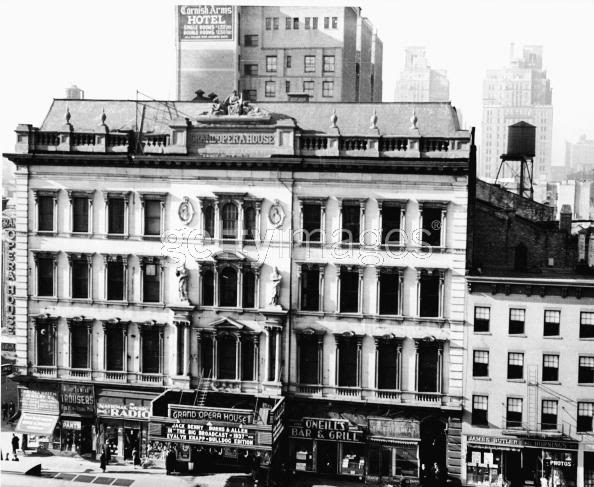
Like many old stages before it, the Grand Opera House switched to films in the 1920s. RKO tried its best to rehabilitate the space, hiring Thomas Lamb to renovate the theater with modern flourishes, reopening the space as the RKO 23rd Street Theatre. The picture below is actually from the year before the renovation, which stripped away some of the the Grand Opera’s frippery:
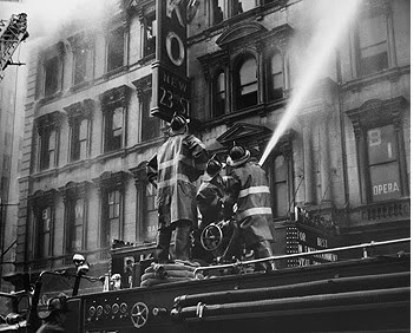
The site remained a movie house through the 40s and 50s, finally closing on June 15, 1960. In a further indignity, the Opera House was thoroughly gutted in a fire (seen in the picture below (courtesy Cinema Treasures):
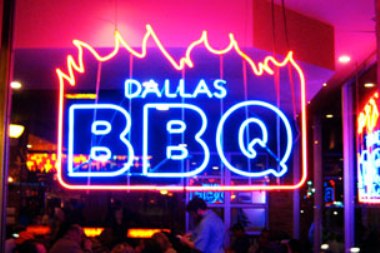
And thus it was time — to put in a strip mall! Today you can visit that very corner and enjoy a rather enduring Chicken Delight location or stop and have a Texas-sized margarita at the corner Dallas Barbecue.
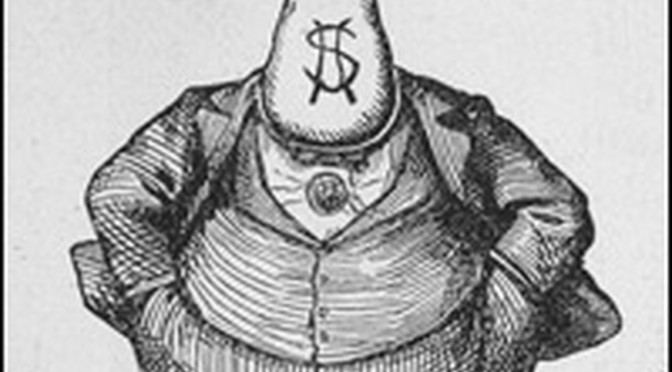
Hail to the thief: an imposing man with money on his mind
___________________________________ You cannot understand New York without understanding its most corrupt politician — William ‘Boss’ Tweed, a larger than life personality with lofty ambitions to steal millions of dollars from the city.
With the help of his ‘Tweed Ring’, the former chair-maker had complete control over the city — what was being built, how much it would cost and who was being paid.
How do you bring down a corrupt government when it seems almost everyone’s in on it? We reveal the downfall of the Tweed Ring and the end to one of the biggest political scandals in New York history. It began with a sleigh ride.
ALSO: Find out how Tammany Hall, the dominant political machine of the 19th century, got its start — as a rather innocent social club that required men to dress up and pretend they’re Indians.
___________________________________
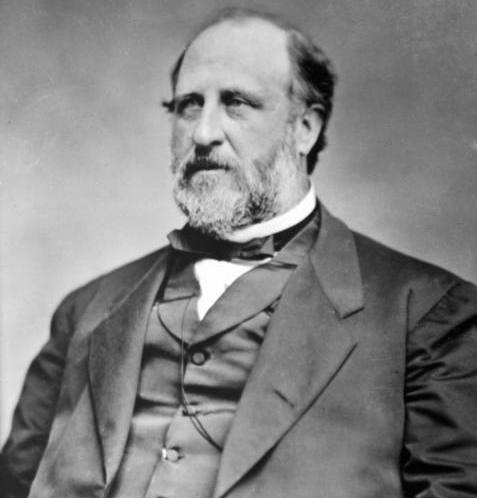
William M. Tweed, son of a chair maker, as photographed by Matthew Brady in 1865. The Lower East Side would not spawn a man as powerful as Tweed until the rise of Al Smith in the 20th Century. Tweed’s influence, however, came at great expense to the city.
The M. in his middle name is something of a controversy. Marcy or Magear? It’s commonly assumed to stand for Marcy; however, there’s no real documentary evidence for this (according to biographer Kenneth Ackerman) while Magear is his mother’s maiden name.
Below: a younger-looking Tweed appears on a tobacco box
___________________________________
The powerful Democratic machine Tammany Hall (or, officially the Tammany Society) was actually in a hall, located at Frankfurt and Nassau streets, near City Hall. Built in 1811, the new headquarters saw the once benign social organization morph into an influential and often ruthless group with political objectives.
During Tweed’s reign, Tammany Hall was actually located at 14th Street between 3rd Avenue and Irving Place. Tammany moved here in 1867 and would remain until the late 20s, when they would move just around the corner to Union Square. This photo was taken in 1914. Today the Con Edison building, with its beautiful clock tower, stands in its place.
___________________________________
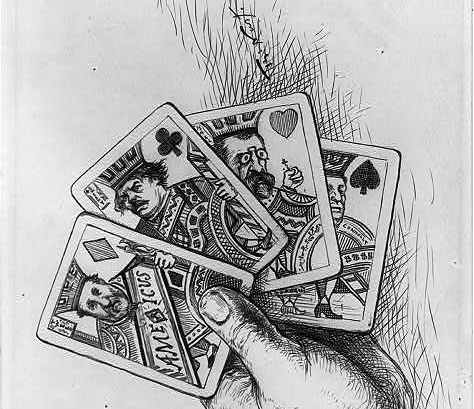
The Tweed Ring — on in this case ‘the Four Knaves’ — as interpreted by their harshest critic, illustrator Thomas Nast. The Ring was composed of Tweed, Mayor A. Oakey Hall, chamberlain Peter Sweeny and ‘Slippery Dick’ Connolly, the comptroller. Emanating from this core group would be other underlings and associates who would assist in the Ring’s graft and embezzlement
Nast’s charges of voting fraud below weren’t hyperbole. The elections of 1868, which installed Hall into the mayor’s seat and Tammany disciple John Hoffman into the governor’s chair, was one of the most manipulated in American history. Fraud was only too common in New York elections in the 19th century.
___________________________________
The New York County Courthouse, also known as the Tweed Courthouse for the vast amount money supposedly thrown at it during construction. Contractors would wildly overbill for their often shoddy work, with members of the Tweed Ring skimming from the totals. It would take over 20 years for the building to finally be completed — longer than it took to build the Brooklyn Bridge.
___________________________________
BOOK RECOMMENDATIONS: If you want to learn more about Boss Tweed, go immediately to Kenneth Ackerman’s excellent ‘Boss Tweed: The Rise and Fall of the Corrupt Pol Who Conceived the Soul of Modern New York’. For a broader overview on Tammany Hall, seek out a copy of Oliver E. Allen’s ‘The Tiger: The Rise And Fall of Tammany Hall’ which I believe it out of print but worth looking for.
RELATED PODCASTS: Listen to our prior show on Greenwood Cemetery, where Tweed is buried. Re-visit our Union Square show to get a taste of Tammany’s wily Fernando Wood. Last year I wrote about the Ludlow Street Jail, where Tweed saw his final days.
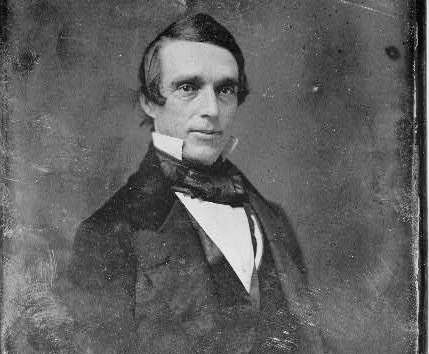
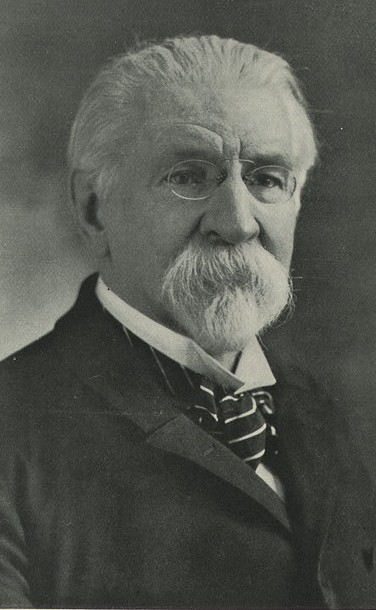
An early portrait of A. Oakey Hall as photographed by Matthew Brady
KNOW YOUR MAYORSOur modest little series about some of the greatest, notorious, most important, even most useless, mayors of New York City. Other entrants in our mayoral survey can be found here.
Mayor A. Oakey Hall
In office: 1869-1872
Few leaders of New York could match Abraham Oakey Hall in personal flair. For every nine colorless businessmen who ascend to the mayoralty, there is one truly debonair statesman, an enigma of charm who seems to govern with ease. In 1869 that was Hall, a jack of all trades, a raconteur and paragon of style. Unfortunately, as the most glamorous member of the notorious Tweed Ring, corruption may have been another trend that suited him.
Before the events, Hall was destined for great things. Most (even Tweed himself) assumed Hall would become New York’s governor, with the White House in sights. He was after all born in Albany, in 1826, back when New York’s capital was one of the most populous cities in the entire country. For those who believed in such things, Hall’s birth there might have been providence, because his parents were merchants in New York and were merely visiting Hall’s grandfather. “I was born transitu,” he proclaimed later. But he never made it back to Albany, at least not officially.
A slight, nimble figure, Hall expressed a variety of talents at an early age, latching on first to journalism, writing for many city newspapers while working his way through New York University, graduating in 1844. Next came a love for the law, attending both Harvard and Cambridge before heading to New Orleans to start a small practice. He then returned to Manhattan and swiftly maneuvered through the courts to become the assistant district attorney in 1850 and a short time later to even argue a case before the state Supreme Court — all before he was 25 years old.
He would win true acclaim and popularity, however, as the city’s district attorney proper, serving first from 1853-1859 and again from 1861-1869, one of New York’s most important legal voices during the Civil War. He allegedly prosecuted over 12,000 cases. He was also on hand during the Draft Riots, funneling many rioters through the court system and straight to jail. His accomplice was often judge John Hoffman, soon to be the mayor of New York who preceded Hall. Their crusades against rioters would boost both their popularity.
Hall would also be known for a rather alarming law briefly on the books in 1855. The state had outlawed the sale of alcohol in the entire state. Under advisement of mayor Fernando Wood (who wanted to please hard-drinking Irish voters), Hall constructed a law allowing for unencumbered liquor sales, seven days a week, in the two months before the prohibition was to take effect. May and June of 1855 were the booziest months in New York City history.
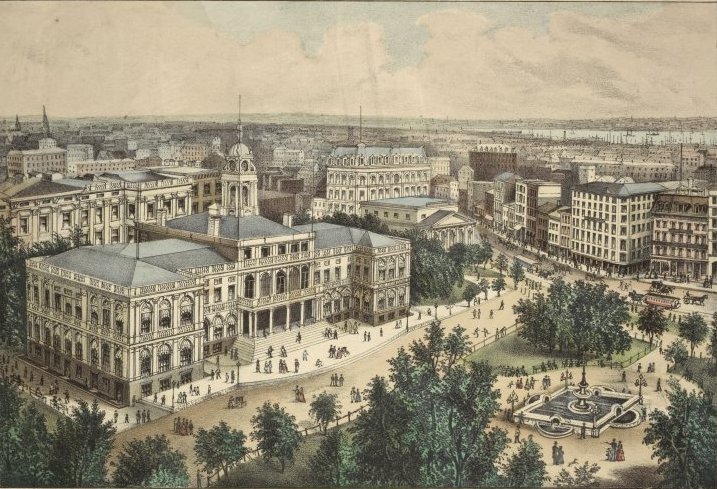
Above: City Hall in 1874 in an illustration by Currier and Ives
With his professorial good looks and humorous demeanor, A. Oakey was a natural for politics of course. Bespeckled and bearded, he spoke elegantly — Elegant Oakey was his nickname after all — and wrote passionately. He penned social polemics, theatrical plays, political tirades and at least one holiday novel — Old Whitey’s Christmas Trot.
More importantly though, he was an attractive politician to Tammany Hall and in particular its boss, William M. Tweed**.
We know the Tweed Ring as that most notorious of crooked entities that came from the Democratic machine. In fact, through, Hall was for many years a Republican — even claiming to have helped form the Republican Party! — and was even elected District Attorney as a member of that party. But he was lured into Tammany Hall shortly before the war ended and would facilitate their dominance over the affairs of City Hall.
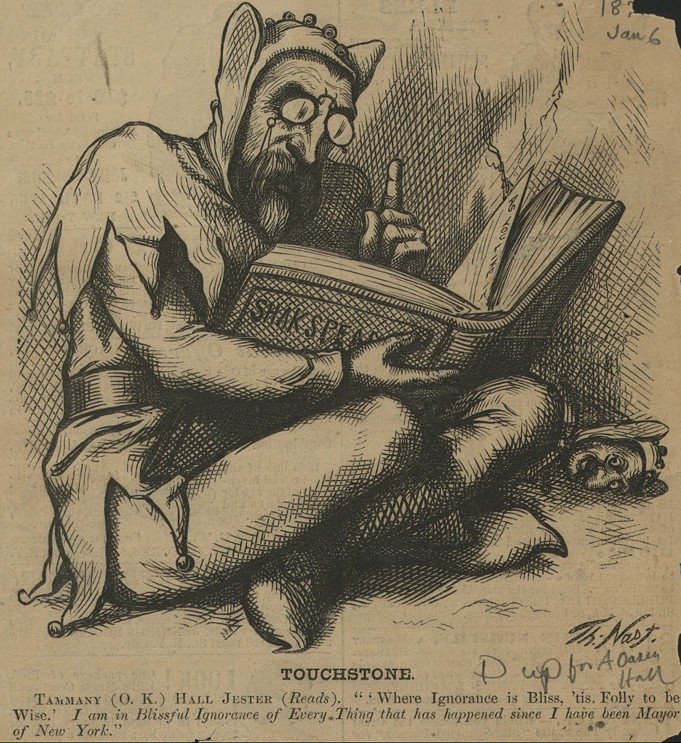
‘Boss’ Tweed liked him because he was confident, likable, distracting. He often quoted Shakespeare and cracked jokes. The complicated layers of graft, bribery and outright theft that were installed in city government needed an attractive front. In one of the most manipulated elections in New York history, Tweed and Tammany Hall succeeded that fall of 1868 in getting their man Hoffman into the governors seat, with Elegant Hall becoming his elegant replacement at City Hall. (Hall would be re-elected three times in heavily tampered elections.)
The year 1869 was a watershed year in New York City corruption, with the Tweed’s hand-selected cohorts fully in place at City Hall, all oversight committees abolished the previous year, and civic projects sprouting up throughout the city, ripe for graft and embezzlement.
Tweed and the others directly associated with the ring (chamberlain Peter Sweeny, comptroller Richard Connelly) needed Hall’s charm to bedazzle the press and public, deflecting any charges of malfeasance.
The level of Hall’s involvement in the city corruption at the time is unclear. He was brought before a grand jury twice, once during the final days of his tenure as mayor. Two trials followed, the first ending in mistrial, the second in acquittal. Despite clear signatures on dozens of suspicious invoices, Hall claim was that he was much too busy running the city to have carefully inspected each and other claim.
Below: Thomas Nast parodies Hall’s statements at being ‘blissfully ignorant’ of corruption
Perhaps so. During his first year in office came a devastating stock market crash, the Black Friday of September 24, 1869, facilitated by Tweed’s chums Jay Gould and Jim Fisk.
As immigrant numbers increased — as tenements like Five Points were swelling to overcrowded — racial and religious disunion threatened the city. Like Tammany, Hall was a friend of the Irish; on St. Patricks Day, he would wear an emerald flytail coat. When Hall suddenly banned the particularly violent protestant Orange parade that year, its participants feared his actions were controlled by Irish Catholics. Governor Hoffman ordered the parade to resume, but the result was an even more violent riot, with 62 people dead and over a hundred injured. Confidence in Hall’s leadership quickly evaporated.
Despite the aura of corruption and mediocrity that hung over his tenure as mayor, Hall actually had a quite colorful life afterwords, working as both a newspaper editor (for the New York World), a London correspondent for the New York Herald and the manager of a theater. He even produced and starred in his own play. For some reason, few went to see it.
He returned to practicing law in his later years in London, famously returning to New York in a court case in 1893 representing Emma Goldman. Despite the convergence and press coverage of these two great New York figures, Goldman and Hall lost the case.
Hall died on October 7, 1898, at his home at 68 Washington Square South, just blocks from where he first went to college. The picture above was taken the year of his death (pic courtesy NYPL)
**Wanna know more about Boss Tweed and the Tweed Ring? Tune in on Friday!
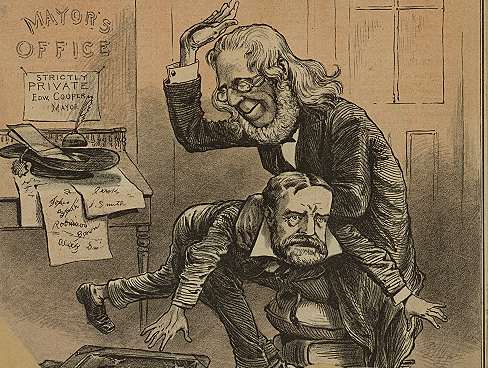
ABOVE: Puck Magazine satirizes father and son, Peter and Edward Cooper
KNOW YOUR MAYORSOur modest little series about some of the greatest, notorious, most important, even most useless, mayors of New York City. Other entrants in our mayoral survey can be found here.
Mayor Edward Cooper
In office: 1879-1880
Many of us must inevitably live in the shadows of the achievements of our parents. Edward Cooper, while no slouch, suffers from the competing bios of two great men in his family — papa Peter Cooper, New York’s cleverest industrialist, and brother-in-law Abram Hewitt, a transformative city leader.
Like Hewitt, Cooper too was mayor of New York, from 1879-1880. Cooper’s tenure wasn’t exactly memorable, but the years following up to it certainly were.
Edward was born on the outskirts of town (i.e., 28th Street and today’s Park Avenue South) in October 1824, the only surviving son of Peter and his wife Sarah, a child with the unique advantage of having one of America’s leading inventors to apprentice from. Peter was already wealthy from his Kips Bay glue factory and employed his free time tinkering, experimenting and dreaming. In fact, Edward was celebrating his third birthday when Peter brought into this world another of his pride and joys — the Tom Thumb, the first operable, steam-powered train engine.
Not surprising, Edward quickly followed his father’s intellectual lead. During his early days in public school, “it was often said of him that there was never a time in his life when he would not sit up half the night to solve a difficult problem in mathematics or engineering which were his especial delights.” Like father, like geek!
Edward went to Columbia University where he befriended his fellow student Abram Hewitt, and the two set out for an educational European vacation in 1844. On the way back however, they were both nearly killed in a shipwreck, stranded with the crew for many days without food or water,
Leave it to outrageous hearsay, but allegedly during this shipwreck, according to Edward’s own obituary, he was almost cannibalized for food by the survivors.
“One report had it that the castaways were so hungry that lots were cast to see who should be eaten. Mr. Cooper drew the unlucky number, but Mr. Hewitt asked to take his place.
“I have brothers,” Mr. Hewitt said, but you are your father’s only son and his life is wrapped up in you. Let me take your place.” Now that’s friendship!
This devastating experience drew the Coopers and the Hewitts together. In fact, Hewitt would later marry Edward’s only sister Sarah Amelia. Edward and Abram, meanwhile would go into the ironworks business together, with capital from Peter Cooper. The results would make them very rich men with foundries in Trenton, New Jersey, producing “mortar beds and gun carriages” in the years leading up to the Civil War.
In 1865, Peter gave control of his coveted glue factory to Edward and soon young Cooper became as distinguished a New York business man in his own right. Just in time to pursue a political career.
Edward was a Democrat, but not of the tainted Tammany Hall stripe. Cooper came from the short-lived rival and reform-minded Irving Hall, battling to sweep away city hall corruption as practiced by the machinations of the other, far powerful Democratic machine. In fact, he would prove instrumental — both through his close friend Samuel Tilden, and as a member of the reform Committee of 70 — in helping bring down the ring of Boss Tweed and the corrupt mayoralty of A. Oakley Hall. He later ardently supported his friend Tilden during his contentious run for the White House in 1876.
The rift was caused by two rival party bosses — John Morrissey, a prize-fighter turned state senator who drew men like Cooper by recoiling from the excesses of Tweed-style politics, and ‘Honest’ John Kelly, who at first rallied in reform rhetoric with Tilden and others but later rebuffed his former allies when he became New York comptroller.
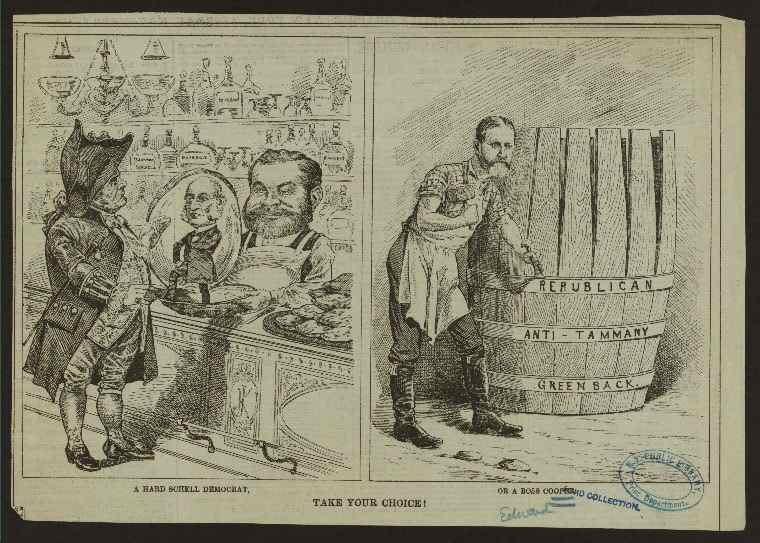
Morrissey ran for state legislature defeating Tammany stalwart August Schell. August turned around and ran for mayor, but this time it was Edward Cooper who defeated him in the fall of 1878. (Ironically, Cooper had to cull together a coalition of Republicans and anti-Tammanys in order to claim victory.)
Below: the electoral decision between Schell and Cooper, as seen through the satire a political cartoon.
The conflict above between Morrissey and Kelly deserves some greater inspection in this column at a later date. Only know that it was John Kelly’s ascension into the comptroller seat before Cooper became mayor that basically ensured Cooper would not be any kind of an effective mayor at all.
Most of Cooper’s time was spent in political infighting, and his prime objective — to reform the corrupt police department — was continually met with criticism, mostly led by Kelly.
Let’s just say, Kelly and Cooper really didn’t get along. Or, in Kelly’s own words, “Let, Edward Cooper, that infamous hypocrite who occupies the Mayoralty chair know that, after his betrayal of the Democracy, he is no nearer Heaven, nor Samuel Tilden near the White House, than they were before!”
Interestingly, Cooper is front and center of a small but precious moment in New York history: the debut of Cleopatra’s Needle, the 3,500 year old obelisk from Egypt planted in Central Park on Oct 9, 1880.
Near the end of his life, Edward would take another, more familiar and far less strenuous office — the president of Cooper Union — in 1898. He died seven years later, in 1905.
Our modest little series about some of the greatest, notorious, most important, even most useless, mayors of New York City. Other entrants in our mayoral survey can be found here.
You can divide the mayors of New York into at least five different groups, with some obvious overlapping into one or more groupings:
1) Ladder climbers who use the mayor’s seat as a mere spoke to greater political power
2) Puppet mayors of Tammany Hall, driven by corruption, though occasionally by sudden late-day resistance against the powerful Democratic machine that put them into power
3) Idealistic one-shots, who rise to power during flashes of mass community unrest, then often disappear shortly afterwards
4) City workhorses, who spend their lives rising through the ranks to achieve the mayor’s seat almost as a finish line to their careers
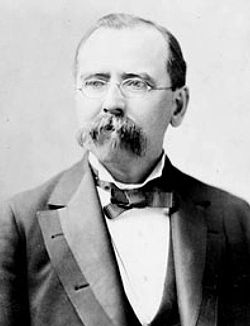
Then there is the fifth kind, one that our current Michael Bloomberg embodies, as does this week’s Know Your Mayor topic, William R. Grace — the mogul mayor, a powerful businessman with astute vision who pursue civic leadership almost like a hobby.
Like Bloomberg, Grace entered New York politics only after establishing a business empire that spanned the globe. In fact, Grace’s resume hardly seems to foretell a future in local politics at all.
Born on May 10, 1832, in Cork, Ireland, young William and his family fled the potato famine in 1846 and eventually found themselves in Peru. Grace became a successful merchant to the shipping and delivery vessels mining South America’s natural resources, particularly bat guano, whose flexible chemical properties made it as desirable as precious metals.
By 1854, Grace and his brothers had their own operation — W.R. Grace and Company — which initiated steamship lines traveling between North and South America. By the time the young entrepreneur decided to relocate to his North American office in New York City in 1866, he had become independently wealthy and one of the most powerful men navagating the Atlantic Ocean.
Like many of the nouveau riche, Grace lived in Brooklyn Heights with his wife where he could observe his burgeoning shipping empire in New York harbor, his vessels traveling between Latin America and Europe. His office was at 47 Exchange Place and, later, the India House.
His new financial powers granted him avenues into New York’s political scene. At first entirely uninterested in civic matters, he ran for mayor in 1880, and won, incredibly as a Democrat who also happened to be foe to the Tammany Hall forces. (If you’re going to fight Tammany Hall, it helps to have money and influence already in the bank.)
If that wasn’t enough, Grace become the first Irish-American and Catholic mayor in an age where when many city residents still distrusted Catholics. In fact, Republican opponents had claimed that Grace would “make this City subordinate to the Holy Father in Rome.“
Grace was mayor for two non-consecutive terms. From 1880-1882, his battles were with Tammany’s ‘Honest’ John Kelly and the city’s deteriorating infrastructure. Although Boss Tweed had been dead for two years, and Tammany’s corrosive readily exposed, Grace still devoted most of his first term battling his fellow Democrats over such things as street cleaning.
After returning to business for a couple years, he was brought back into the mayoral world in 1884 (until 1886) after the Republican and traditional Tammany candidates proved too divisive. Less dramatic years in terms of political battles, Grace would be involved with ensuring New York two of its most famous monuments.
He was mayor when the Statue of Liberty came to town, officially accepting the gift from the French in 1885. That same year he successfully secured the permission to have the body of Ulysses S. Grant buried in the city, in the ostentatious mausoleum that would be known as Grant’s Tomb.
According to the Catholic Encyclopedia, Grace went to Mass every morning before heading to City Hall. Grace’s latter days were devoted to philanthopical gestures, including the Grace Institute, which educated immigrant women, in 1897. He died in 1904.
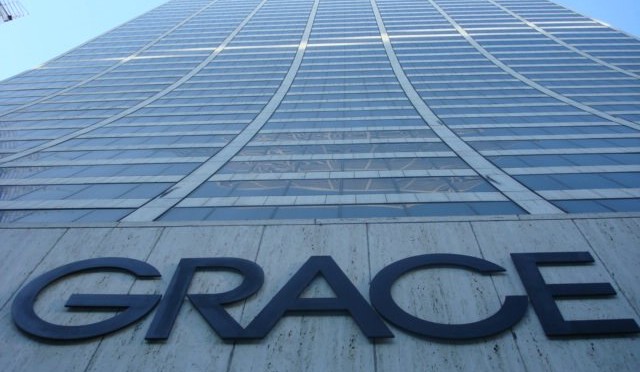
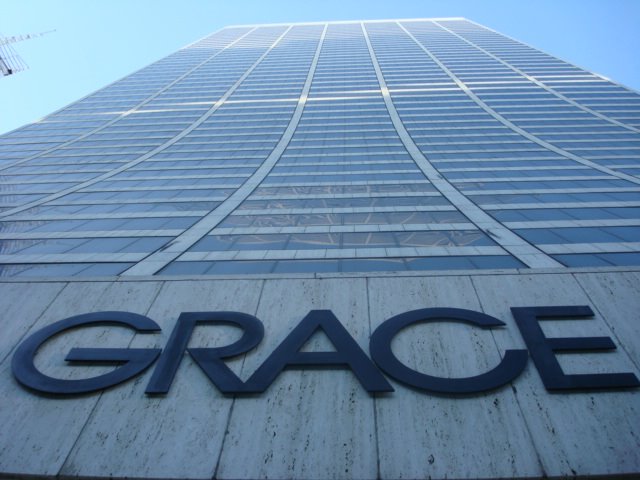
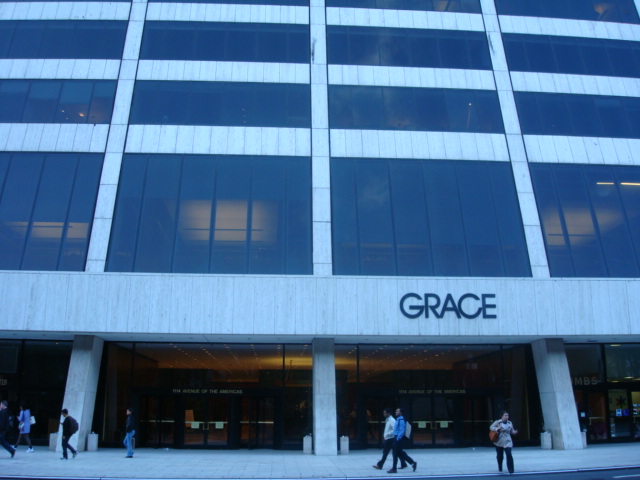
However, his company W.R. Grace and Company would grow, from its salad days in bat guano, to become one of the world’s biggest chemical conglomerates. Their New York corporate headquarters was built in 1971 on the north side of Bryant Park and is generally known for its white sloping facade. At present it is the 61st tallest building in New York City.
We’ve got some more on that wacky, wonderful place called Roosevelt Island. We highlighted some of the spookier stuff last week. Read it all here.
I mentioned earlier that Roosevelt Island was named for a Franklin Delano Roosevelt memorial that was never built there. Perhaps the reason that doesn’t bother anybody is that’s a far more attractive name than its last one, Welfare Island. In the continuum of names in the island’s history, Welfare is worse than all of them, although slightly better than Hog Island.
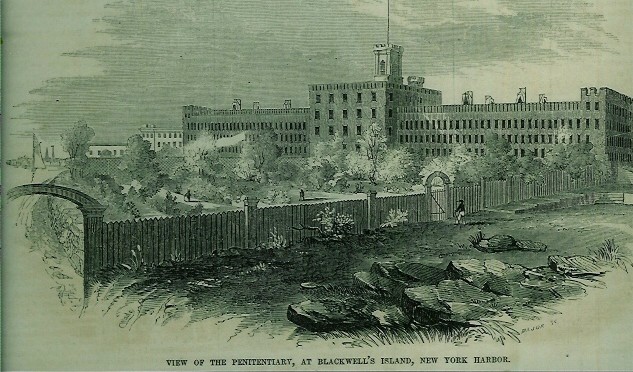
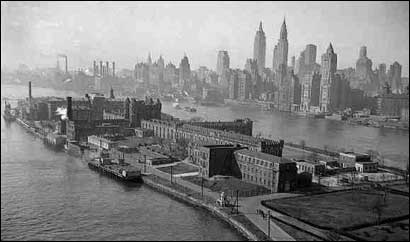
Welfare Island might seem a rather unappealing name these days, but at the time it was changed from Blackwell’s to Welfare in 1921, the connotation was less onerous. By that time, the island was crammed with institutions that benefited “the welfare” of the public, while at the same time sequestering society’s most undesirable. It’s held an almshouse, various hospitals, a workhouse, an asylum. Yet none of these public projects grabbed as many headlines as the island penitentiary, which stood there for over a hundred years.
A prison was one of the first things built on then-Blackwell’s Island in 1832. A north wing was added to the prison to accommodate inmates transported from a facility next door to Bellevue Hospital. (The mental patients of Bellevue would make a similar journey to Blackwell’s asylum at around the same time.) The five-story L-shaped building had a granite, medieval-looking facade and 800 cells, much of it filled to capacity through most of its existence.
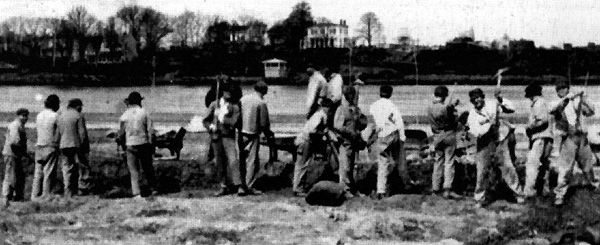
The prison fomented little idleness. Male inmates from there and the adjoining 220-cell workhouse (essentially a correctional facility for “drunks and disorderlies”) were used either in the quarry or to build many of the island’s structures, including a seawall around the perimeter. (Below: a picture from the book Images From America: Roosevelt Island of some of Blackwell Island’s prison laborers.)
This takes the notion of a chain-gang to a whole other level. But then, where would they escape to? Even if they could find a boat, the closest dock was heavily guarded. And although swimming was a possibility, the waters of the East River were far more crowded than they are today. Although some criminals — like ‘Oily’ Rockford — managed escape quite easily.
While the men were outside, women prisoners would do more ‘womanly’ chores, like sewing and laundry. I can’t help but think many of these women could have been better served in the quarries than in the sewing circles.
The prison and workhouse has seen its share of celebrity lawbreakers; one could imagine Paris Hilton feeling at home here. (I’m kidding; she wouldn’t last a day.) Many of the purported crimes wouldn’t even get you a slap on the wrist today.
Margaret Sanger’s sister Ethel Byrne was locked up for providing birth control advice to women in Brooklyn. Anarchist Emma Goldman was a frequent ‘guest’ for incendiary remarks and inciting riots, joining other frequenter Madame Restell, an early 20th century abortionist. Well before her singing career took off Billie Holiday spent four months here for a “vagrant and dissipated adult” (code for prostitution), although she was still a minor.
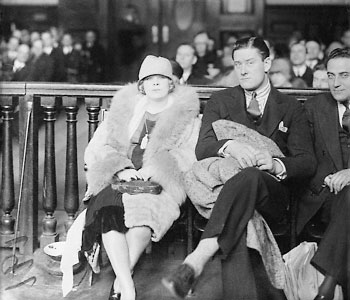
However its two most recognizable residents to the public at the time stand at either end of the justice scale; Boss Tweed served there for a year as the instigator of New York’s corruption woes, while comedian Mae West was locked up for eight days in 1927 on public obscenity charges, due to the ‘salacious’ nature of her Broadway show ‘Sex’. She received so much media attention that she was allowed to wear silk underpants at night and was eventually let off for good behavior. (The picture above is Mae in court, possibly on the day receiving her sentence.)
The celebrity element also helped shine spotlights on the prison’s squalid conditions — a sorry hall of overcrowding, drug addiction and corruption. By the 20th century, gangs of prisoners virtually ran the place. It would become the inspiration for dozens of pulp novels and films, including one actually called Blackwell’s Island.
After a few sorry reforms — including the name change to Welfare Island — produced few results, it was up to can-do mayor Fiorello Laguardia and his hire for corrections commissioner Austin H. MacCormick to raid the prison and transport its remaining inmates to the newly built Rikers Island. The Welfare Island prison was quickly torn down and replaced by Goldwater Hospital, today the Coler-Goldwater Memorial, which still serves the city in an environment far more inviting that anything that ever stood there before. has some of the best medical facilities in the city.
That’s it for Roosevelt Island this week! If you want to know more, the best online resources I could find include those at the Roosevelt Island Historical Society and a spectacular in-depth timeline at NY10044. (I know, I know, I didnt even get to the Blackwell house, fifth oldest building in all of New York City, or the ruins of old Strecker Laboratory.)
By the way, if you want to see what Blackwell Island might have been like, Roosevelt Island 360 has a video stream of the 1903 panoramic film reel that surveys the island in all its gloom and gray.