Categories
Gilded Age New York Podcasts

Boss Tweed’s House of Corruption: A Tale of Crooked Schemes and Unchecked Power

PODCAST: How the Tweed Courthouse became a symbol for everything rotten about 19th century American politics.

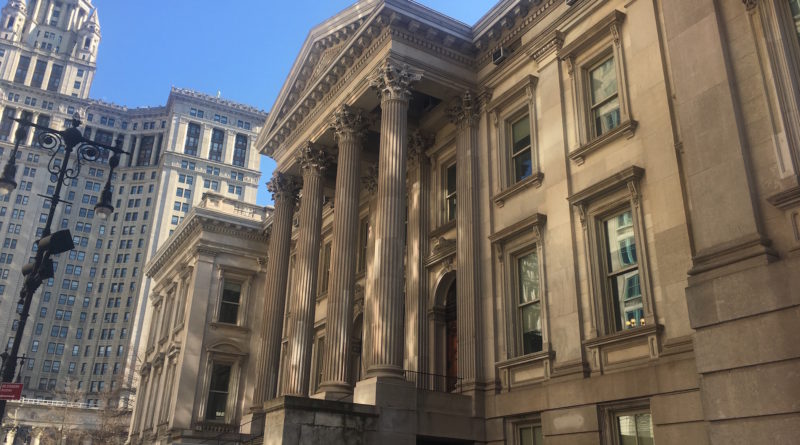
The roots of modern American corruption traces themselves back to a handsome — but not necessarily revolutionary — historic structure sitting behind New York City Hall.

The Tweed Courthouse is more than a mere landmark. Once called the New York County Courthouse, the Courthouse is better known for many traits that the concepts of law and order normally detest — greed, bribery, kickbacks and graft.

But Tammany Hall, the oft-maligned Democratic political machine, served a unique purpose in New York City in the 1850s and 60s, tending to the needs of newly arrived Irish immigrants who were being ignored by inadequate city services. But they required certain favors like the support of political candidates.

And that is how William ‘Boss’ Tweed rose through the ranks of city politics to become the most powerful man in New York City. And it was Tweed, through various government organizations and his trusty Tweed Ring, who transformed this new courthouse project into a cash cow for the greediest of the Gilded Age.

How did the graft function during the construction of the Tweed Courthouse? What led to Tweed’s downfall? And how did this literal temple to corruption become a beloved landmark in the 1980s?

Listen Now: Tweed Courthouse Podcast

_________________________________________________________

The Bowery Boys: New York City History podcast is brought to you …. by you!

We are now producing a new Bowery Boys podcast every other week. We’re also looking to improve the show in other ways and expand in other ways as well — through publishing, social media, live events and other forms of media. But we can only do this with your help!

We are now a member of Patreon, a patronage platform where you can support your favorite content creators for as little as a $1 a month.

Please visit our page on Patreon and watch a short video of us recording the show and talking about our expansion plans. If you’d like to help out, there are six different pledge levels (New Amsterdam, Five Points, Gilded Age, Jazz Age, Empire State and Greater New York). Check them out and consider being a sponsor.

And join us for the next episode of the Bowery Boys Movie Club, an exclusive podcast provided to our supporters on Patreon.

We greatly appreciate our listeners and readers and thank you for joining us on this journey so far.

_________________________________________________________

We’d like to thank Mary Beth Betts of the NYC Public Design Commission for giving us a tour of the Tweed Courthouse. Tours are not currently available of the courthouse, but Betts and her docents lead tours of New York City Hall next door. Visit their website to book a free tour.

Some images from our visit —
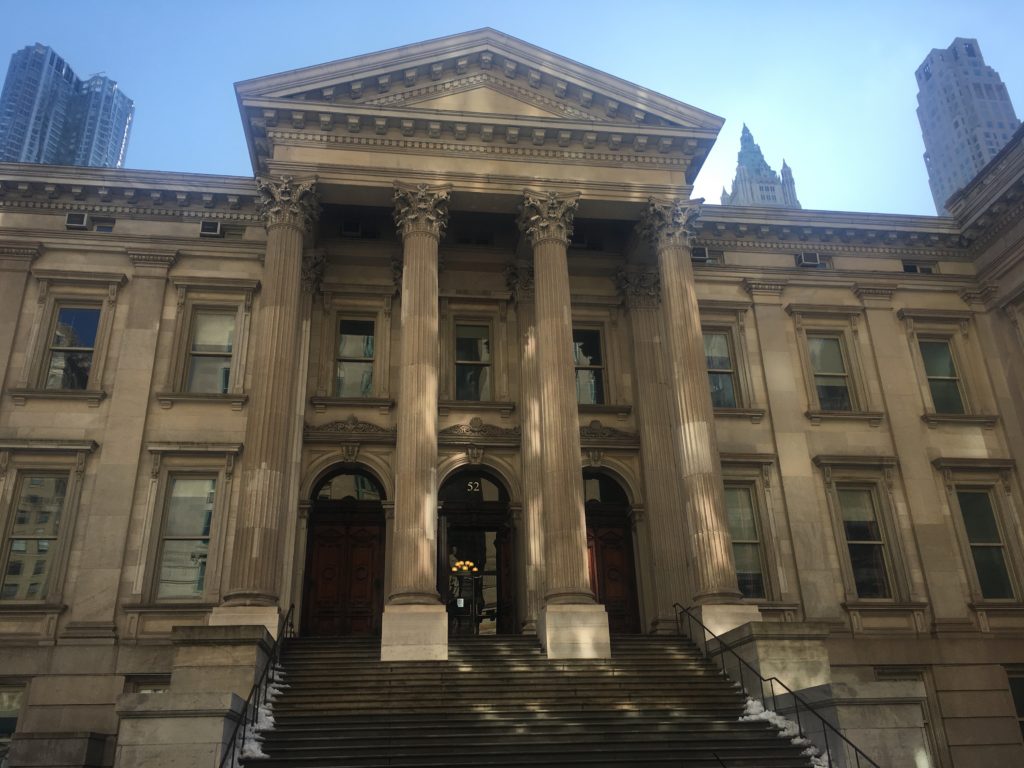
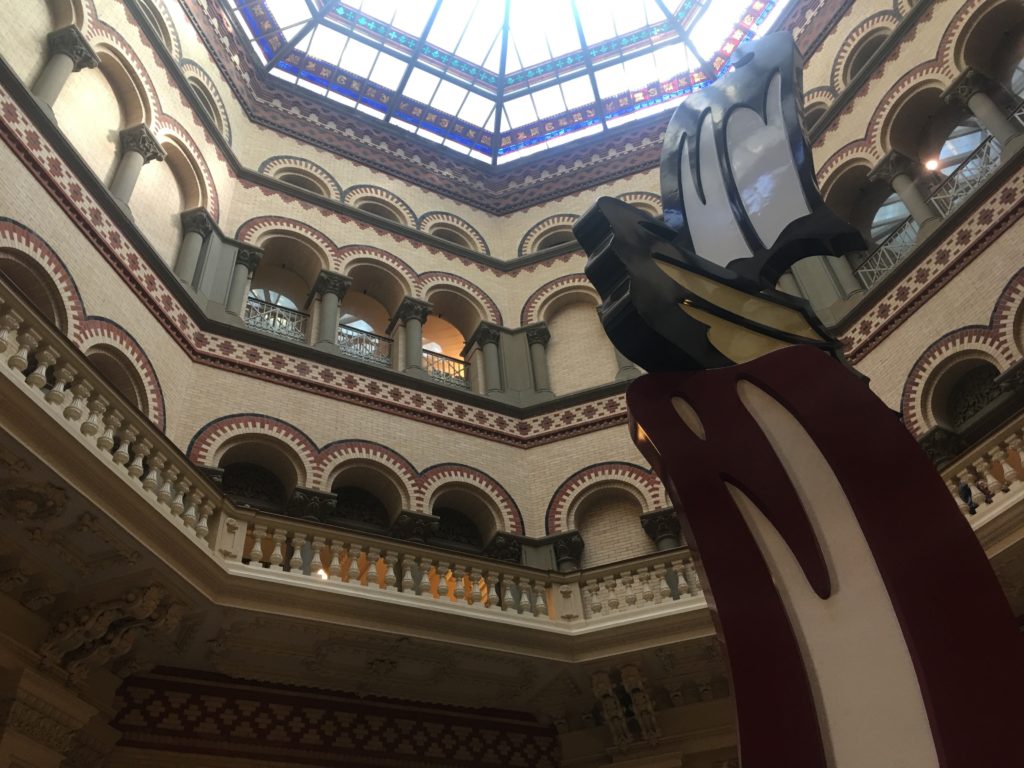
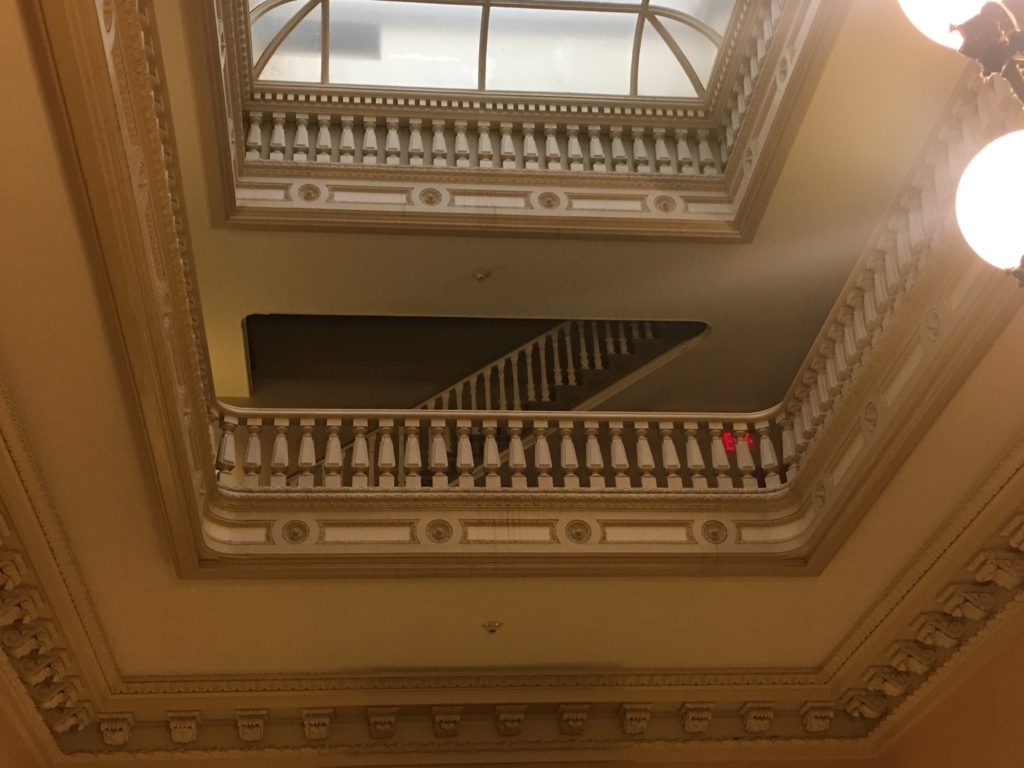
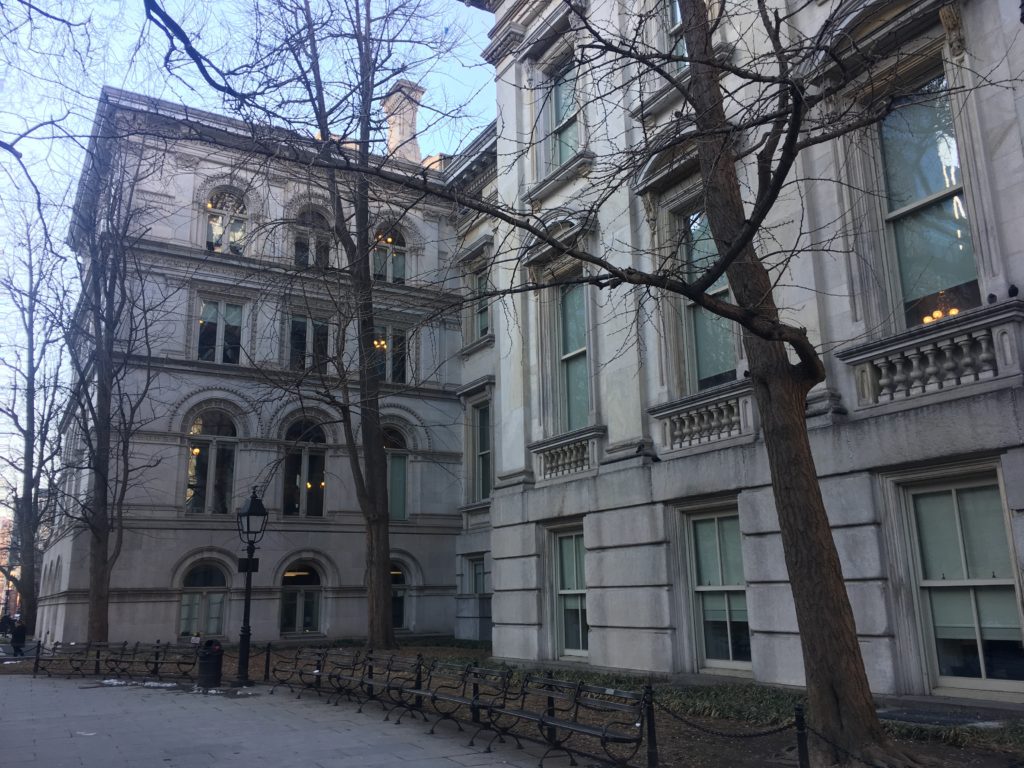
Leopold Eidlitz brought a million arches into the courthouse, his medieval inspirations playing an interesting contrast to the Romanesque Revival of architect John Kellum.
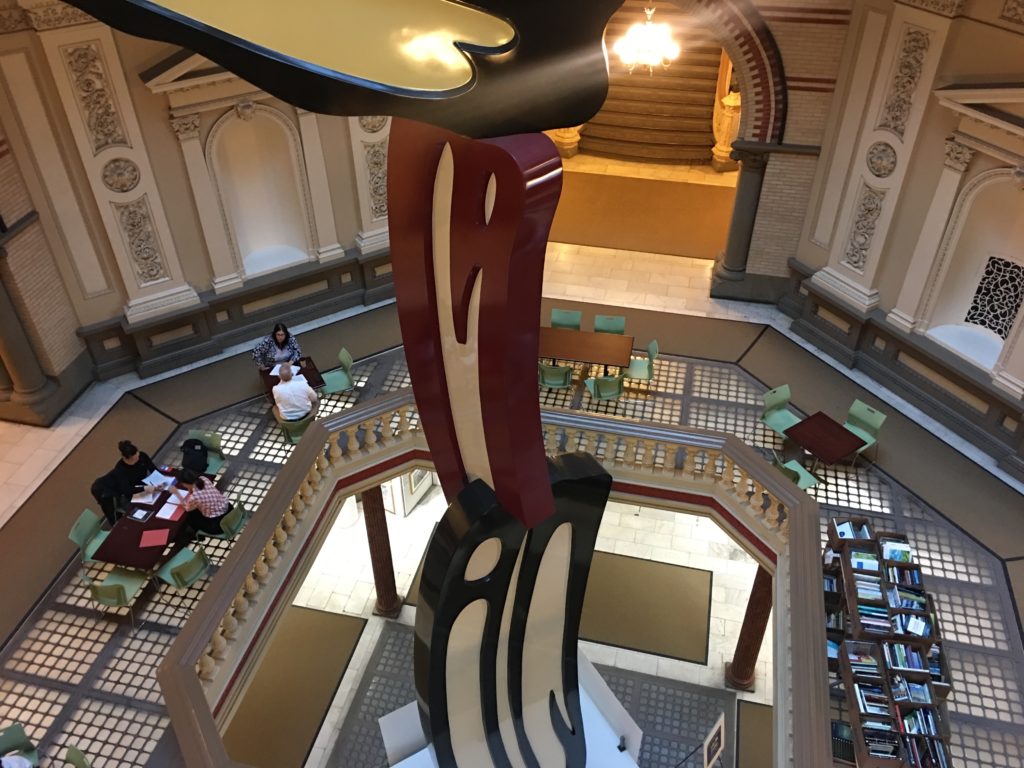
Roy Lichtenstein’s Element E now dominates the interior of the courthouse. Students, teachers and administrators work in the spaces surrounding the sculpture.
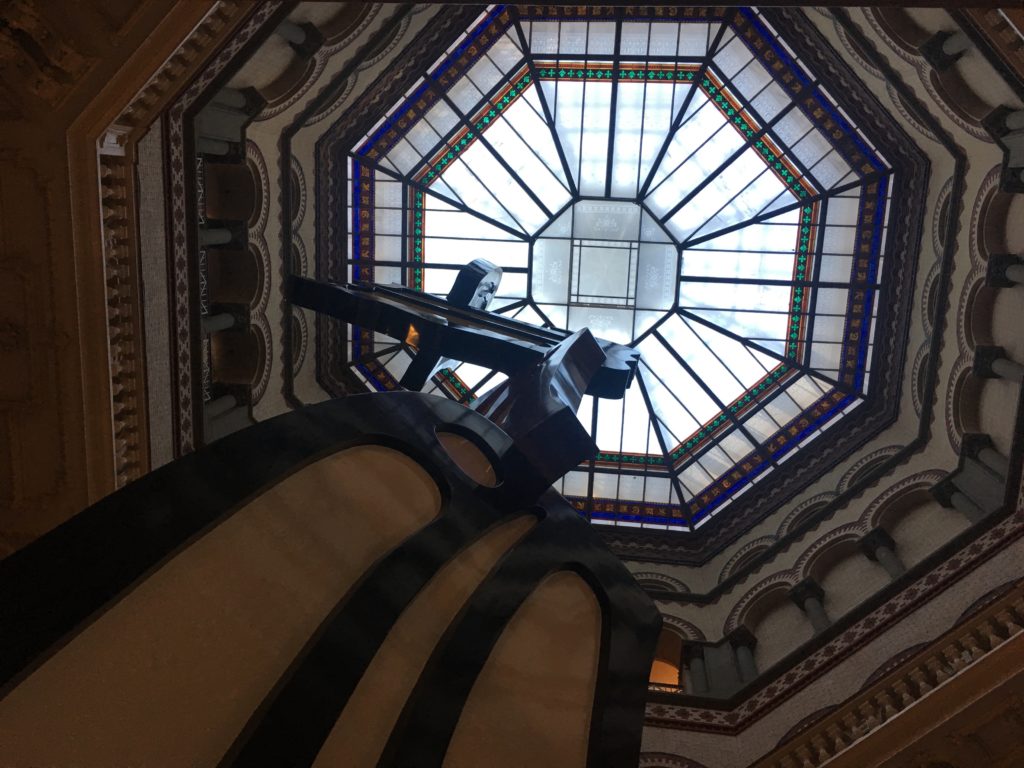
The infamous rotunda roof which remained incomplete even when courts began convening in the courthouse in the 1870s.
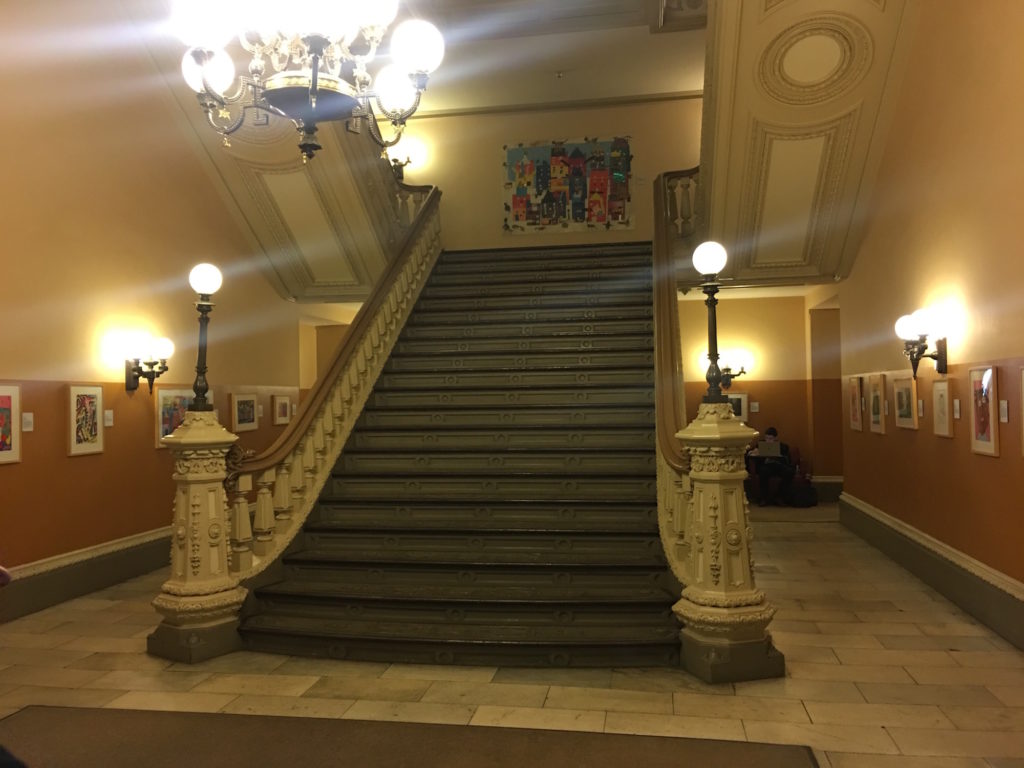
The sumptuous staircases are all made of cast iron.
The courthouse has many curious staircases, leading to smaller spaces on the upper floors.
You can actually view the two competing architectural styles on the exterior facades facing into City Hall Park. (Hint: Arches vs. no arches)

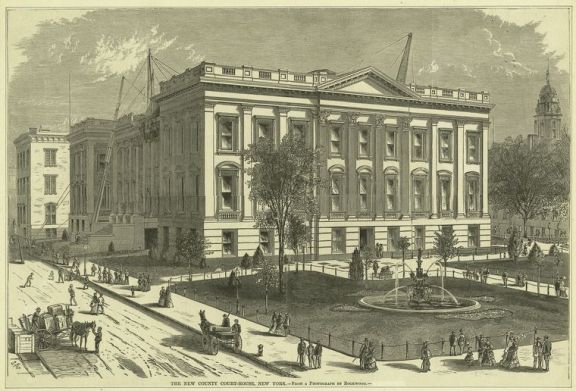
The Tweed Courthouse under construction, date unknown
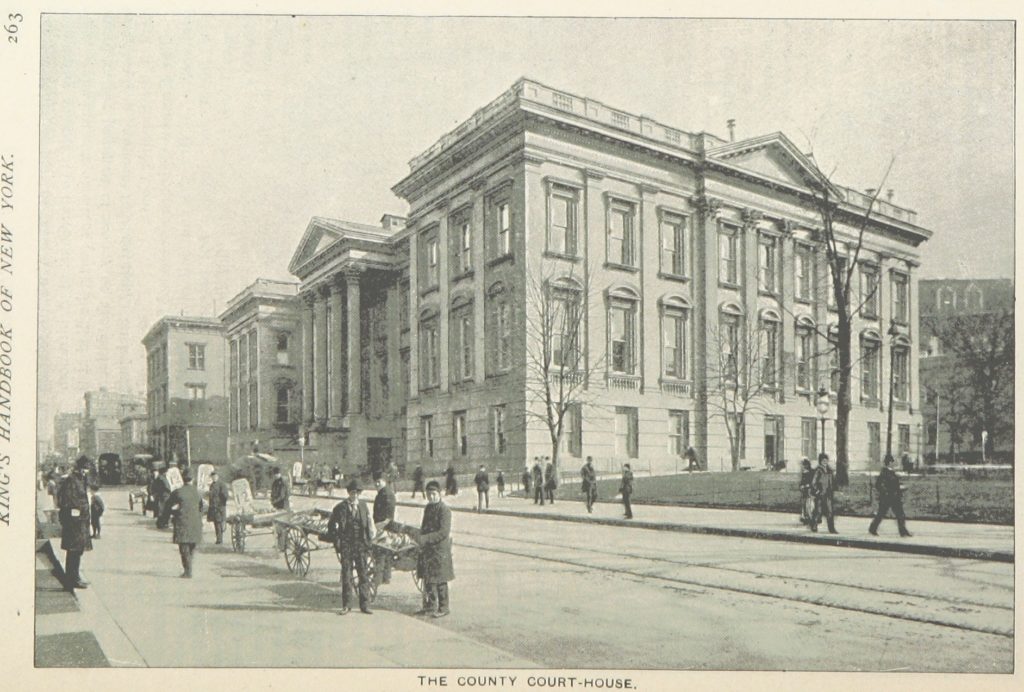
Image taken from page 269 of ‘King’s Handbook of New York City. An outline history and description of the American metropolis. With … illustrations, etc. (Second edition.)’ Courtesy the British Library
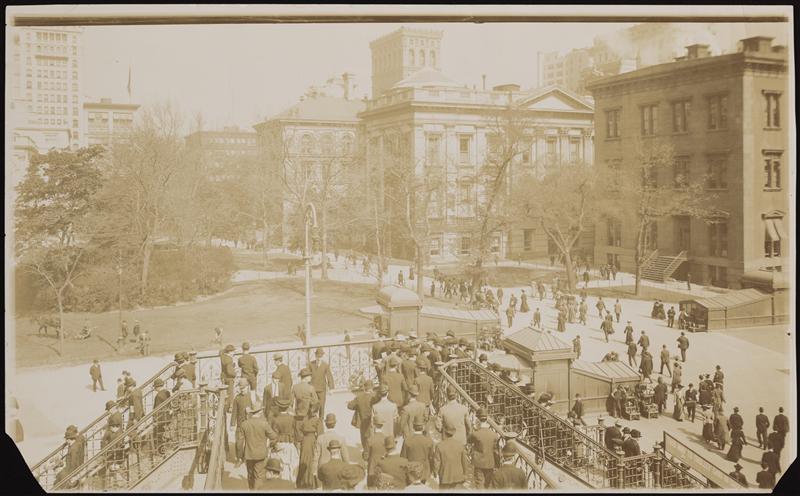
A view of the Tweed Courthouse as seen from the City Hall elevated train station, 1915. The brownstone structure to the right of the courthouse is no longer there.
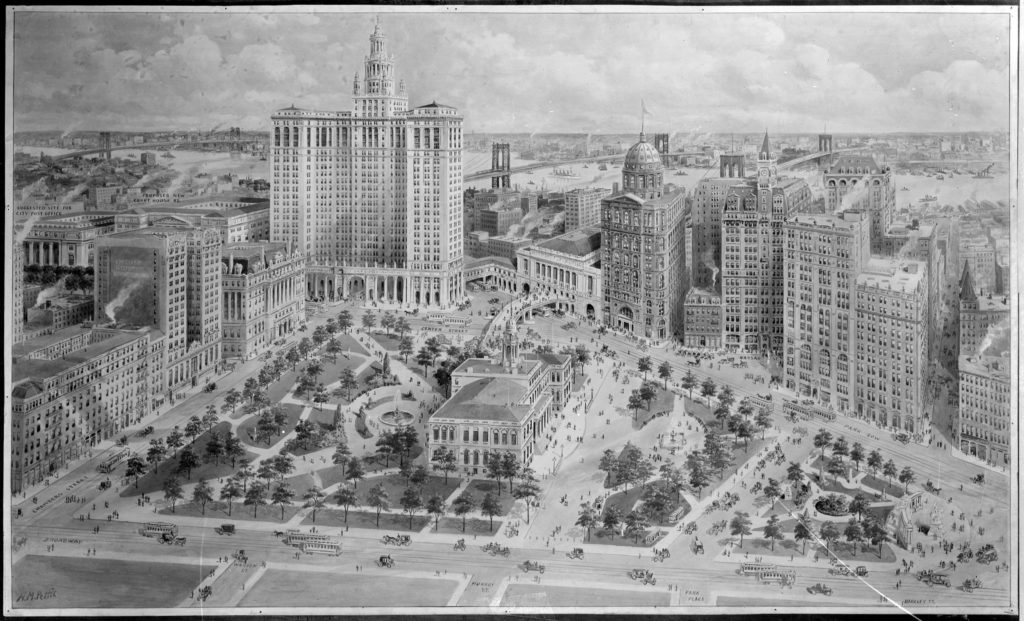
In 1915 the city planned to actually get rid of the Tweed Courthouse. This rendering creates a large park space surrounding City Hall.

H.M. Pettit. Department of Bridges/Plant & Structures collection, NYC Municipal Archives.

For an excellent look at Tweed’s 20th century fight for survival, read Kenneth R. Cobb’s excellent article (with tons of archival photography) on the Department of Records and Information Services website.
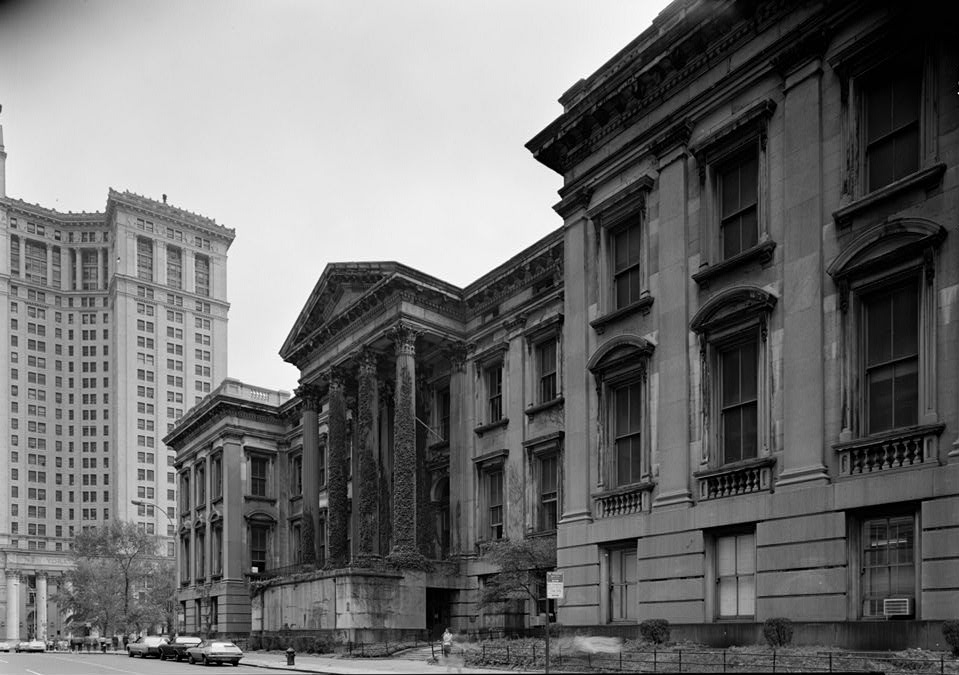
The courthouse in 1979 — in shoddy condition and without its famous staircase! Photo by Walter Snalling, Jr., Library of Congress
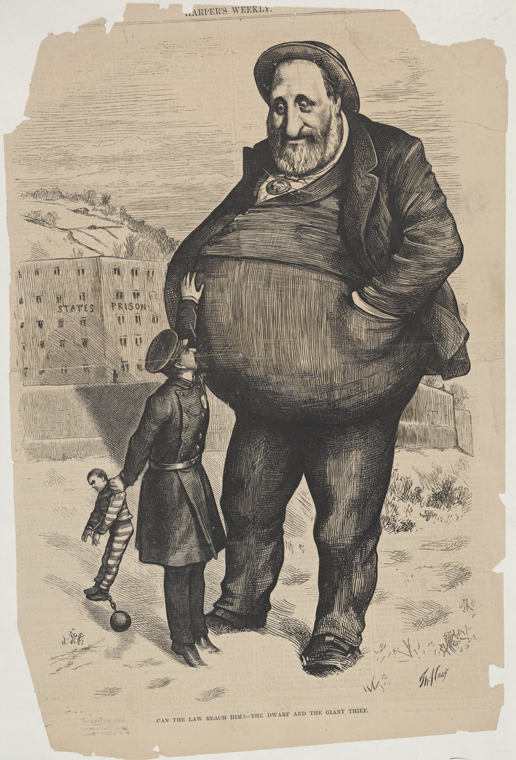
“Can the law reach him?–The dwarf and the giant thief.”
Thomas Nast/New York Public Library Digital Collection
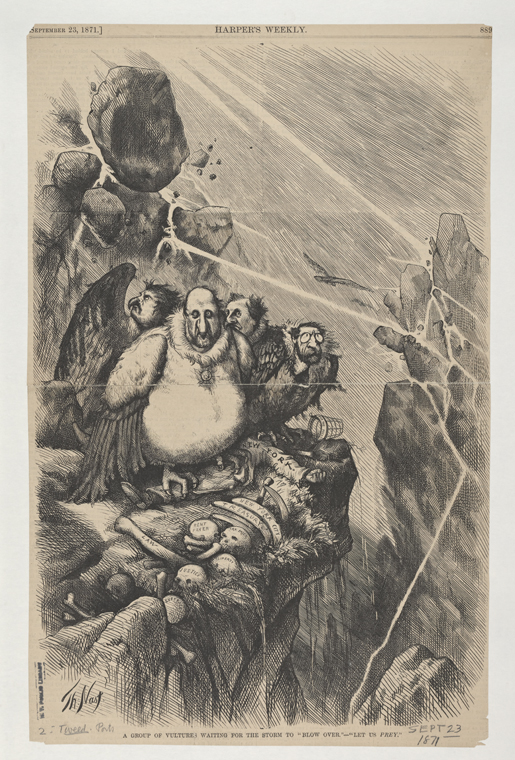
Agroup of vultures waiting for the storm to “blow over.”–“Let us prey.”
Thomas Nast/New York Public Library Digital Collection
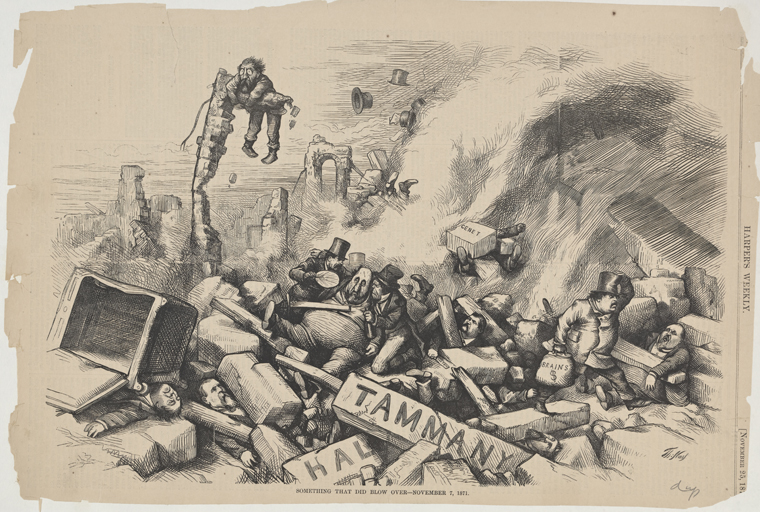
Something that did blow over–November 7, 1871.
Thomas Nast/New York Public Library Digital Collection

FURTHER READING:

Boss Tweed’s New York by Seymour J. Mandelbaum

Boss Tweed: The Rise and Fall of the Corrupt Pol Who Conceived the Soul of Modern New York by Kenneth D. Ackerman

Machine Made: Tammany Hall and the Creation of Modern American Politics by Terry Golway

The Tweed Ring by Alexander B. Callow Jr.

The Tiger: The Rise and Fall of Tammany Hall by Oliver E. Allen

FURTHER LISTENING:

Our original Boss Tweed show from 2009 — with a big news reference at the very beginning that echoes the story we’re about to tell

The massive waves of Irish immigrants who arrived in this country starting in the 1830s and 40s changed New York City forever. Here’s their story:

Fernando Wood was another major power broker in New York City politics in the 1860s.
Categories
Bowery Boys Bookshelf Landmarks

Courting New York’s Legal Landmarks

Civic buildings are often beautiful architecture in plain sight. Their uniformity — many rendered in classical styles — often finds them less appreciated than other forms of urban architecture.

In a city like New York, skyscrapers, hotels and brownstones are more likely to get the attention of camera-wielding tourists over courthouses. After all, doesn’t every town have a courthouse?

But in Robert Pigott‘s engrossing New York’s Legal Landmarks, an extraordinary world of New York’s civic architecture, past and present, comes alive. He focuses specifically on structures pertaining to legal work — courthouses, law schools, law firms, even jails — in a surprising array of architectural forms.

Not every courthouse has Roman columns or cavernous atriums. In New York City, you can find legal buildings in art deco, brutalist and post-modernist styles. In many cases, they fit so well into a city block that you’re hardly aware of their existence.

Here are five of my favorite details from the book which is currently available in bookstores.

Old City Hall

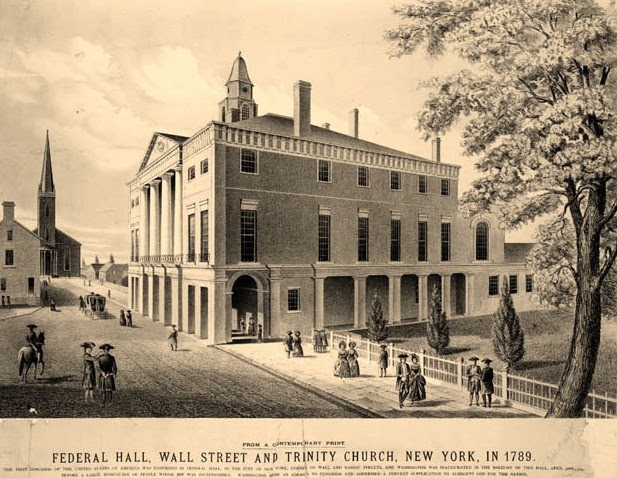
We know the building better today as Federal Hall, the place where the first Constitutional Congress first met in 1789. (The original building was demolished in the early 19th century replaced with this one in 1842.) But the structure was actually New York’s City Hall as well, serving a variety of purposes — it was a very crowded building — until the current City Hall was finally opened in 1812.

From Pigott’s book: “In 1800, four years before their fatal encounter, Alexander Hamilton and Aaron Burr actually served as part of the same defense team in a sensational murder trial held in Old City Hall. When his fiancé was found dead at the bottom of a well, Levi Weeks, a young carpenter, was charge with the murder. After a three-day trial in which 55 witnesses were called, Hamilton, burr and a third lawyer, Brockholst Livingston, secured Week’s acquittal, having succeeded in casting suspicion on another resident of the boardinghouse where Weeks lived.”

Courtesy MCNY

U.S. Realty Building

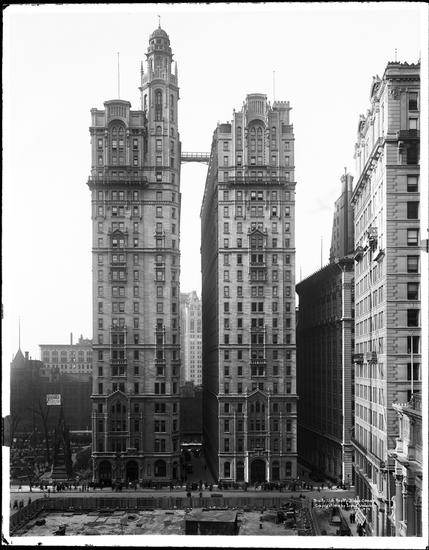
Linked to the Trinity Building with a tiny sky bridge, the U.S. Realty Building is a pre-zoning law skyscraper that casts a dark shadow over little Thames Street. For most of the 20th century it was the home of the Lawyer’s Club, a social club for the city’s most successful attorneys.

“In 1918, Thomas Masaryk was speaking at the Lawyer’s Club when he received a cable informing him that he had been elected president of the newly-created sate of Czechoslovakia.”

New York County Courthouse

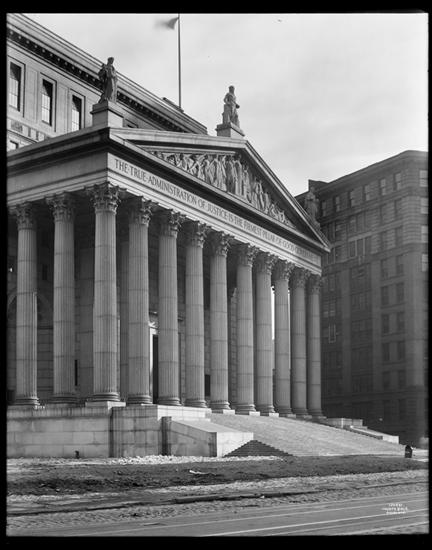
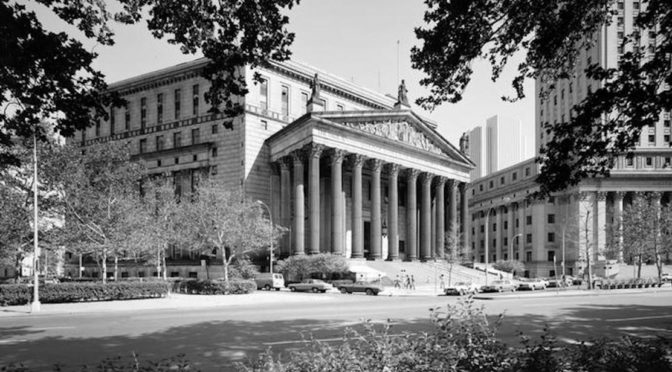
Probably the most recognizable of New York’s civic architecture, the courthouse was built to replace the extravagant Tweed Courthouse. It used to be known not only for its legal decisions, but for its cuisine!

“In its early years, the Justices lunched in a dining room on the seventh floor on meals prepared in a large on-site kitchen by chefs on the courthouse staff.”

The original Bronx Borough Courthouse

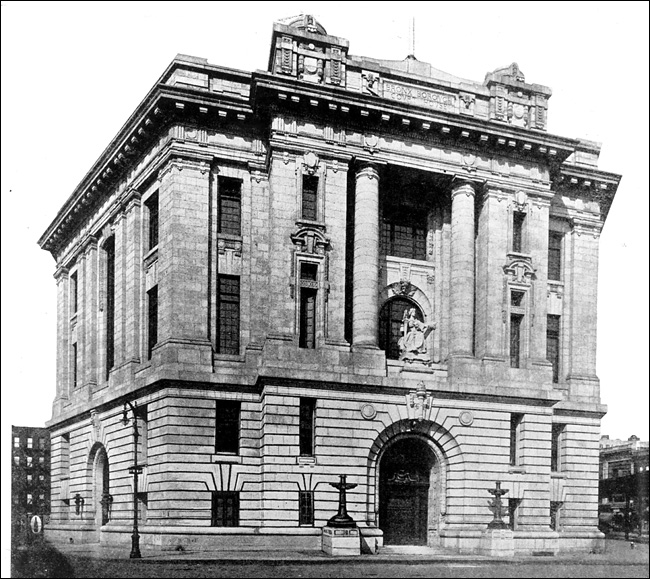
The Bronx has some truly dazzling civic architecture, but not all of it is employed in the services of the city today. This 1915 courthouse, now a New York City landmark, was abandoned in 1977.

“[B]y 1988 it had lain vacant for several years and was described by architectural historian Christopher Gray as a ‘large pigeon coop’. In 1998, the City of New York rejected a bit by comment group Nos Quedamos to acquire the building. Instead it was sold at public auction to a private developer, who continues to seek a suitable use for the structure.”

The book also features a few notable addresses including….

Courtesy Brooklyn Public Library

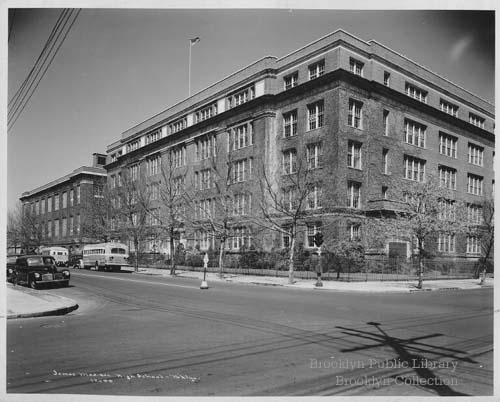
James Madison High School, Brooklyn

According to Pigott, “[f]rom the high school still located at this address, a future Supreme Court Justice graduated in 1950. Born Ruth Joan Bader in 1933, Justice Ruth Bader Ginsburg was raised in the Flatbush section of Brooklyn.”

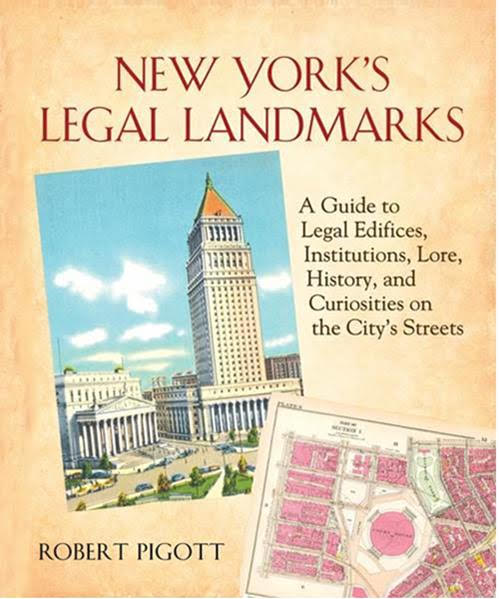
New York’s Legal Landmarks
A Guide to Legal Edifices, Institutions, Lore, History and Curiosities on the City’s Streets

By Robert Pigott
Attorney Street Editions