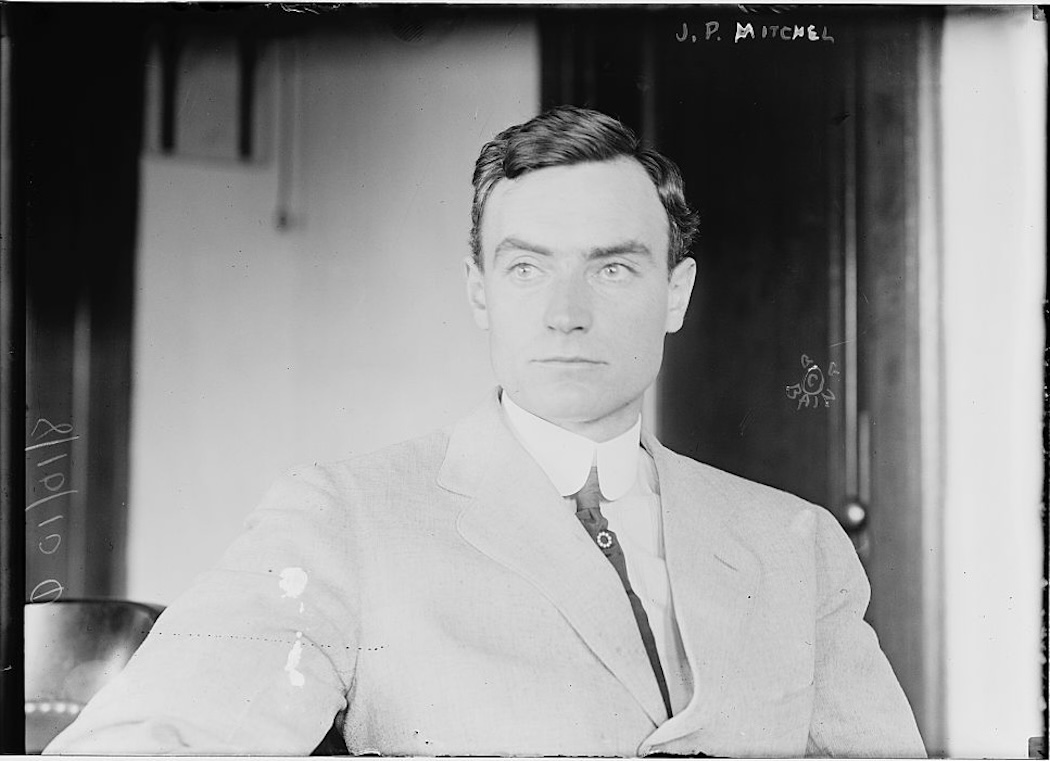
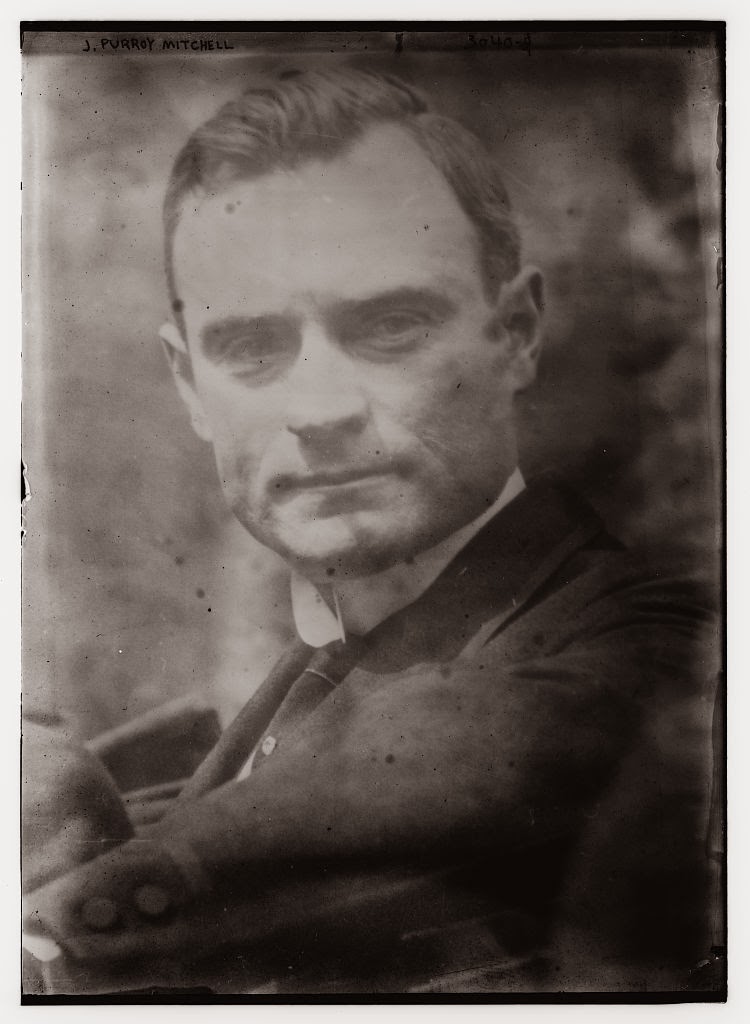
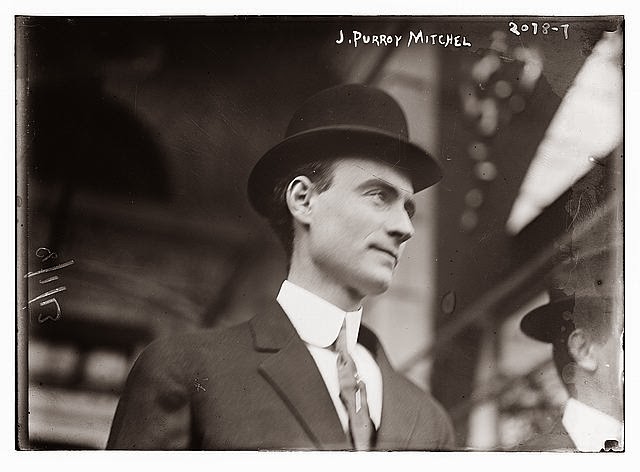
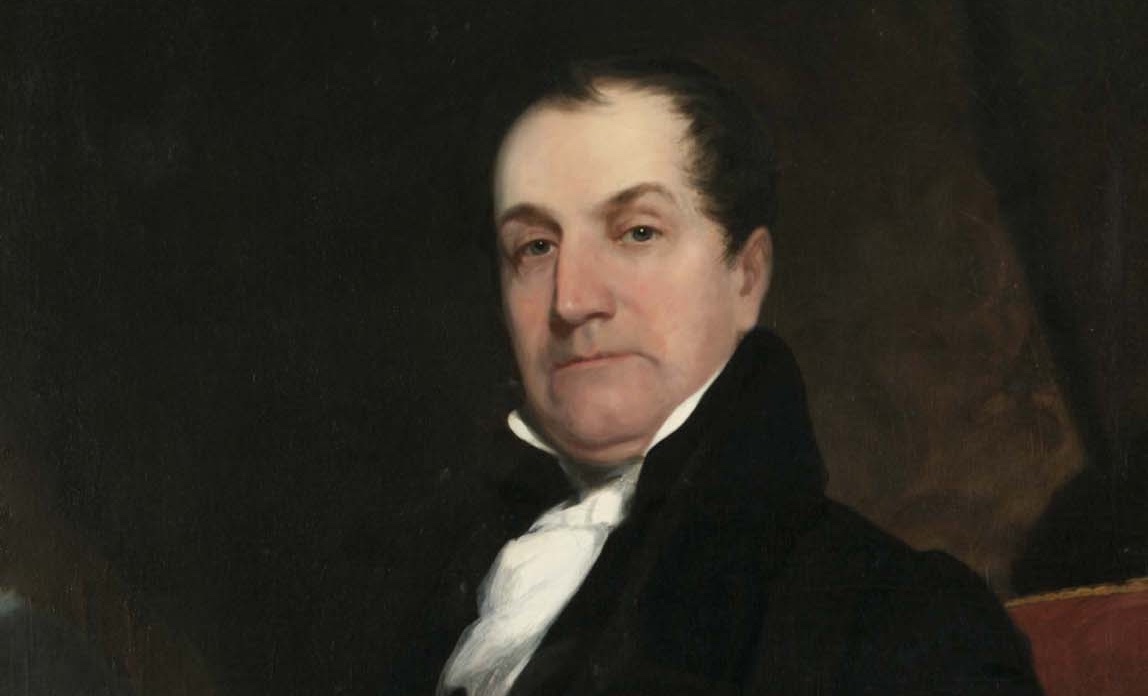
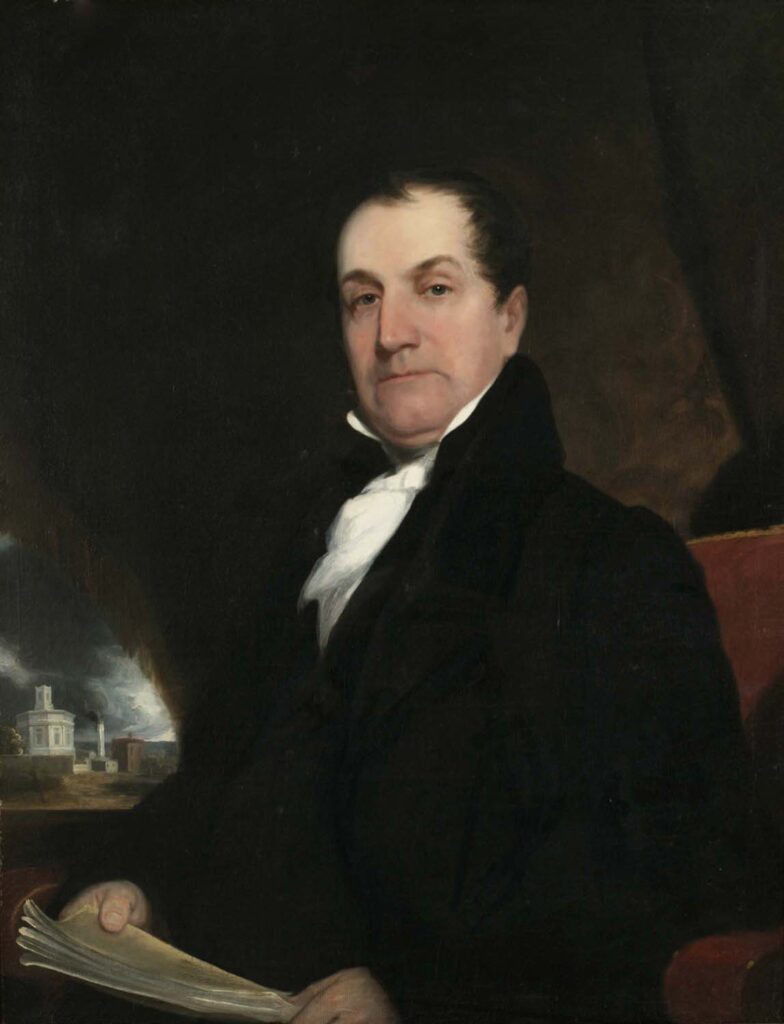
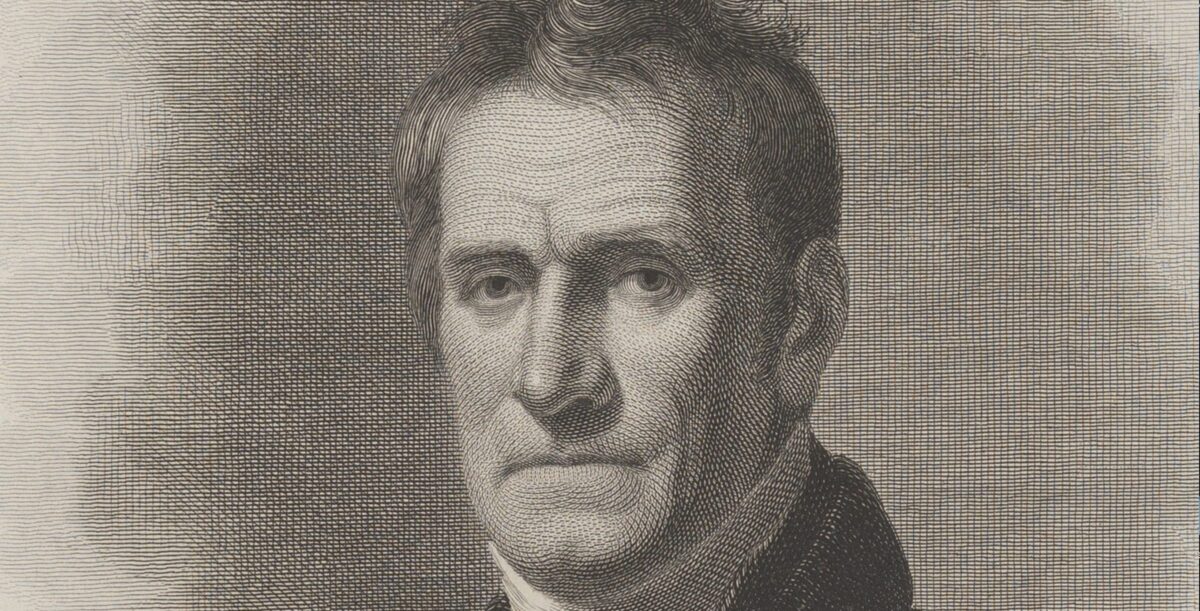
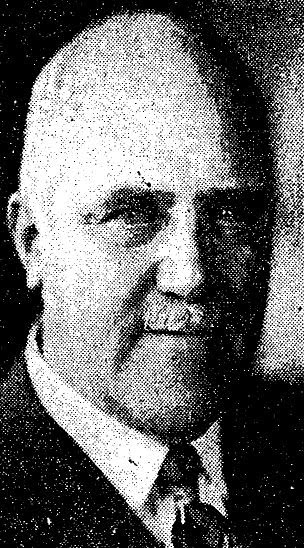
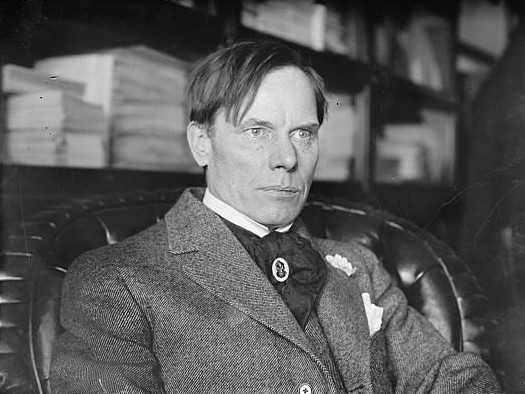
Above: John Purroy Mitchel, the ‘boy mayor’, in 1910 PODCAST As New York City enters the final stages of this year’s mayoral election, let’s look back on a decidedly more unusual contest 110 years ago, pitting Tammany Hall and their estranged ally (Mayor William Jay Gaynor) up against a baby-faced newcomer, the (second) youngest man to ever become the mayor of New York City.
John Purroy Mitchel, the Bronx-born grandson of an Irish revolutionary, was a rising star in New York City, aggressively sweeping away incompetence and snipping away at government excess.
Under his watch, two of New York’s borough presidents were fired, just for being ineffectual! Mitchel made an ideal candidate for mayor in an era where Tammany Hall cronyism still dominated the nature of New York City.
Nobody could predict the strange events which befell the city during the election of 1913, unfortunate and even bizarre incidents which catapulted this young man to City Hall and gave him the nickname “the Boy Mayor of New York“.
But things did not turn out as planned. He won his election with the greatest victory margin in New York City history. He left office four years later with an equally large margin of defeat.
Tune in to our tale of this oft-ignored figure in New York City history, an example of good intentions gone wrong and — due to his tragic end — the only mayor honored with a memorial in Central Park.
PLUS: The totally bizarre death in 1913 of Tammany Hall’s most popular leader
The Bowery Boys Podcast is proud to be sponsored by Founded By NYC, celebrating New York City’s 400th anniversary in 2025 and the 250th anniversary of the United States in 2026.
Read about all the exciting events and world class institutions commemorating the five boroughs legacy of groundbreaking achievements, and find ways to celebrate the city that’s always making history at Founded by NYC.
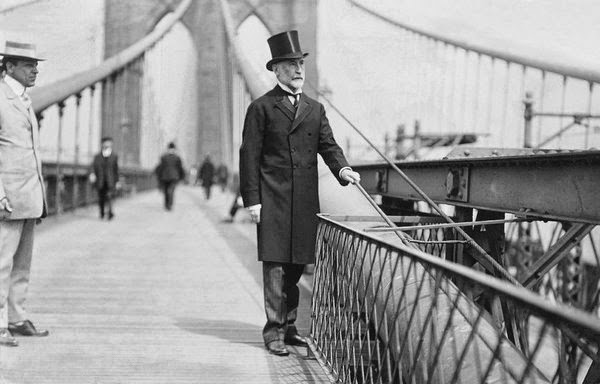
Mayor William Jay Gaynor on his inauguration day in 1909, walking across the Brooklyn Bridge to City Hall, from his home in Park Slope.
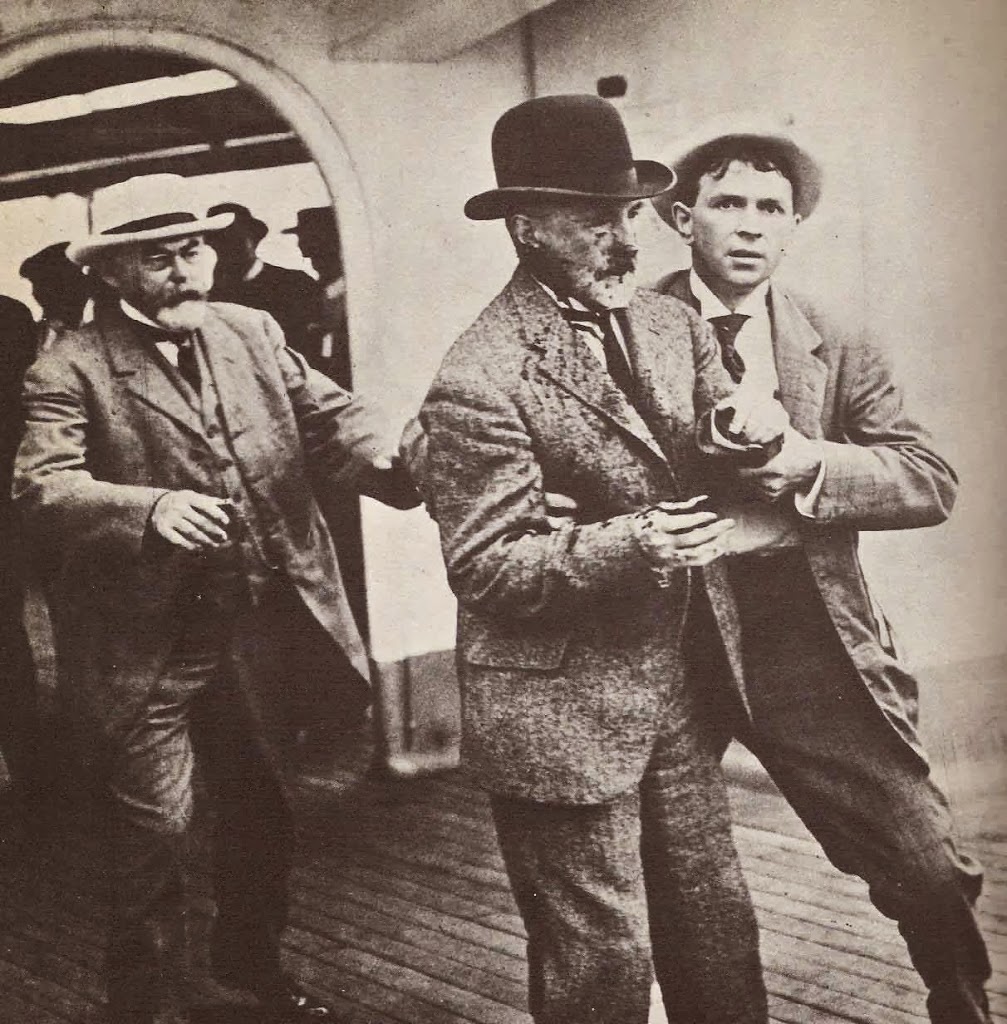
William Jay Gaynor at the very moment he was shot in 1910, on an ocean vessel docked in Hoboken. This picture was taken by a New York World photographer, one of the most famous works of early journalism photography.
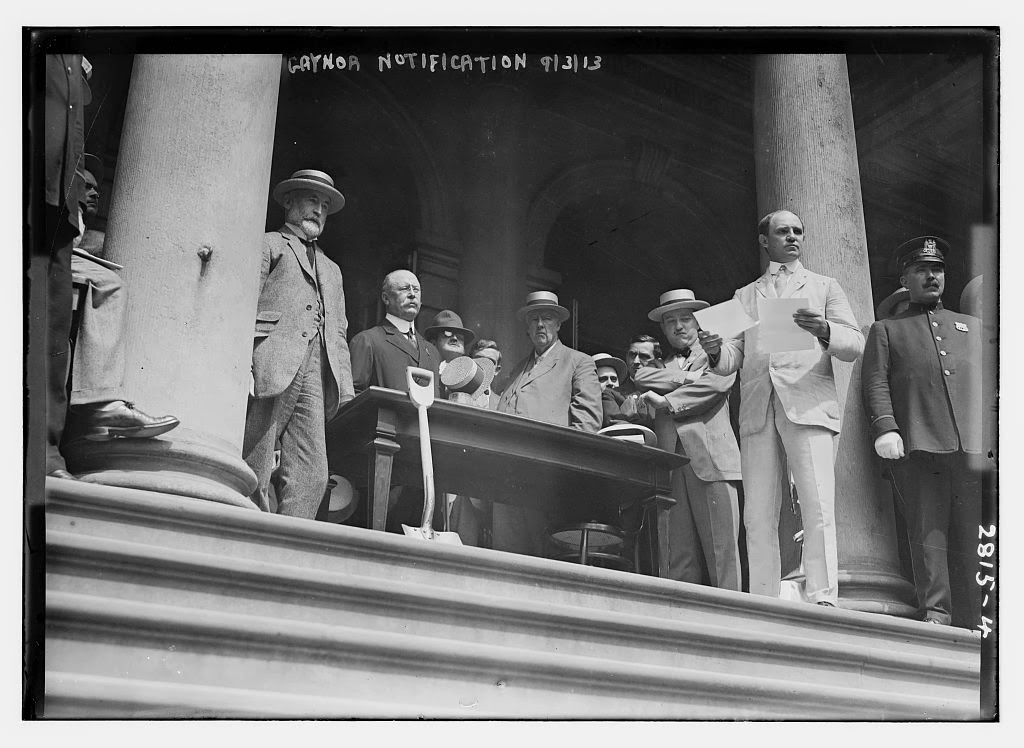
Gaynor (at left) attempted to stage a political comeback (after being by Tammany Hall) at the notification of his independent candidacy at City Hall in September 1913. The shovel in front of him was his campaign emblem.
Within a few days, he would be dead of the assassin’s bullet he received three years earlier.
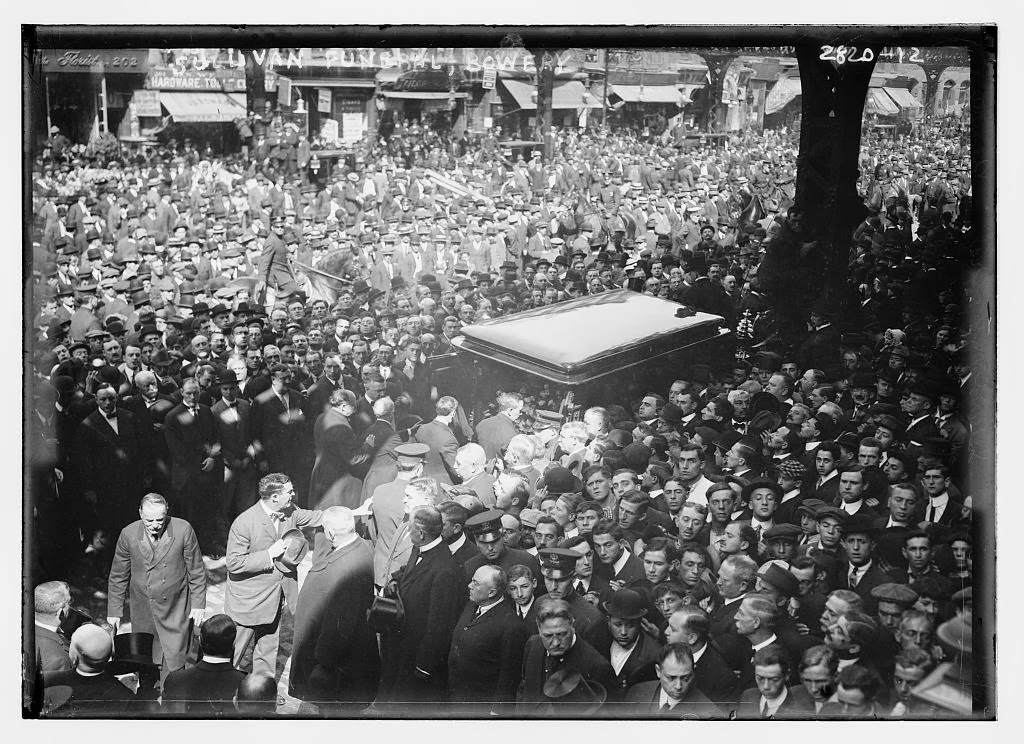
The death of Big Tim Sullivan also caused ripples in the mayoral election of 1913. The picture below is of the Bowery, overflowing with mourners.
While Sullivan was out of politics (and in an asylum) by 1913, his sudden and unusual passing had an effect on Tammany Hall supporters, throwing another strange event into an already tumultuous year.
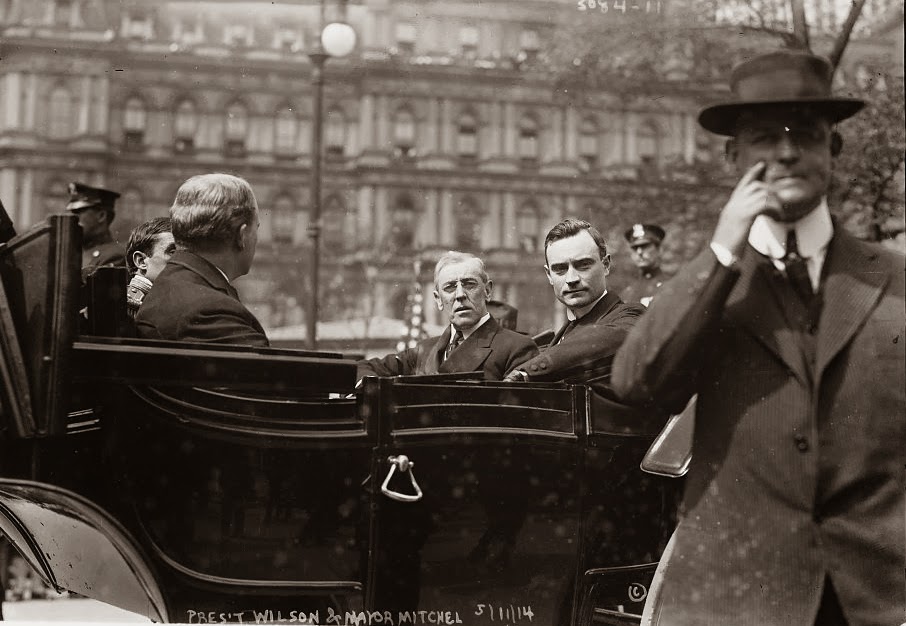
Mayor Mitchel with President Woodrow Wilson in May 1914, at a memorial service for American marines and seamen killed in Veracruz during the Mexican Revolution.
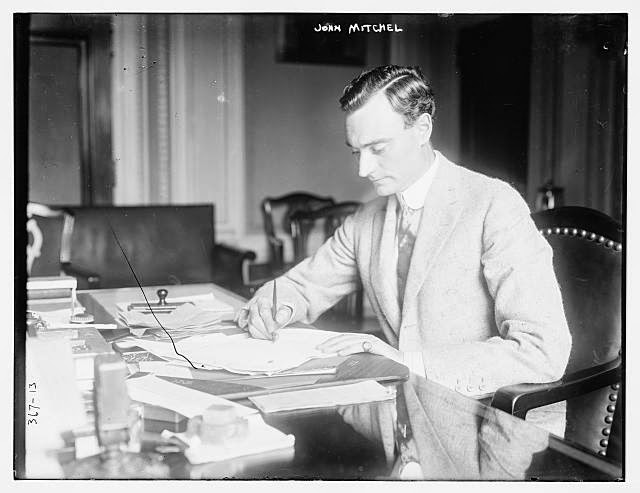
Mitchel at his desk at City Hall, presumably cracking down on some kind of over-expenditure or waste. Or possibly silently suffering from migraine headaches which plagued him during his entire term as mayor.
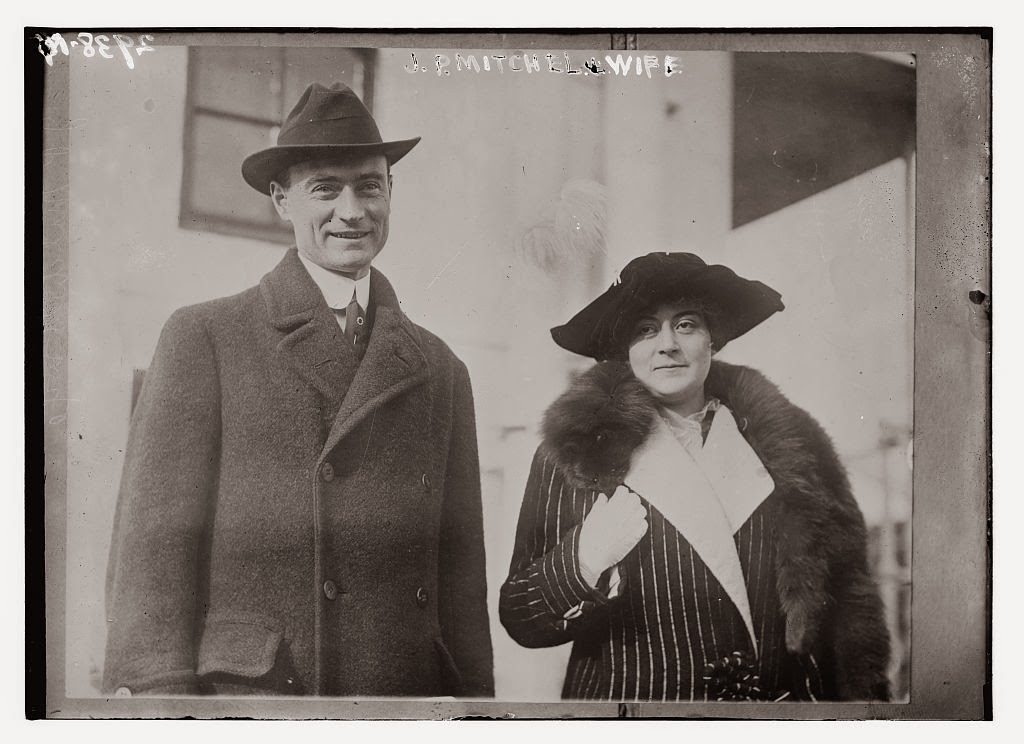
John with his wife Jane.
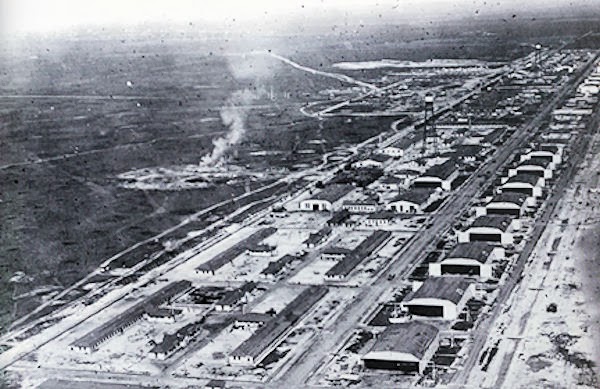
Gerstner Field in Louisiana, where Mitchel had his tragic airplane accident on July 6, 1918.
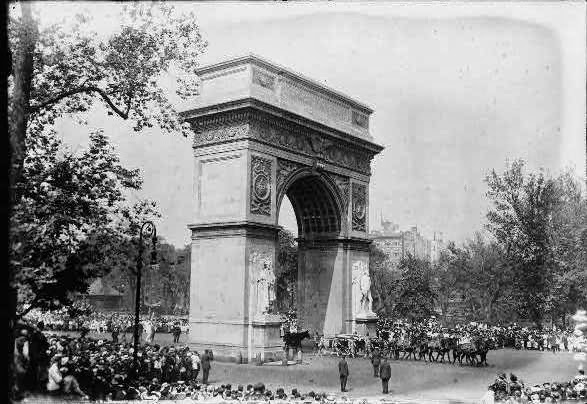
Another New York funeral: The body of John Purroy Mitchel is carried in a procession from City Hall, through the Washington Arch, and up to St. Patrick’s Cathedral.
Theodore Roosevelt, one of the pallbearers at Mitchel’s funeral, leaves St. Patrick’s in this short film by Edison.
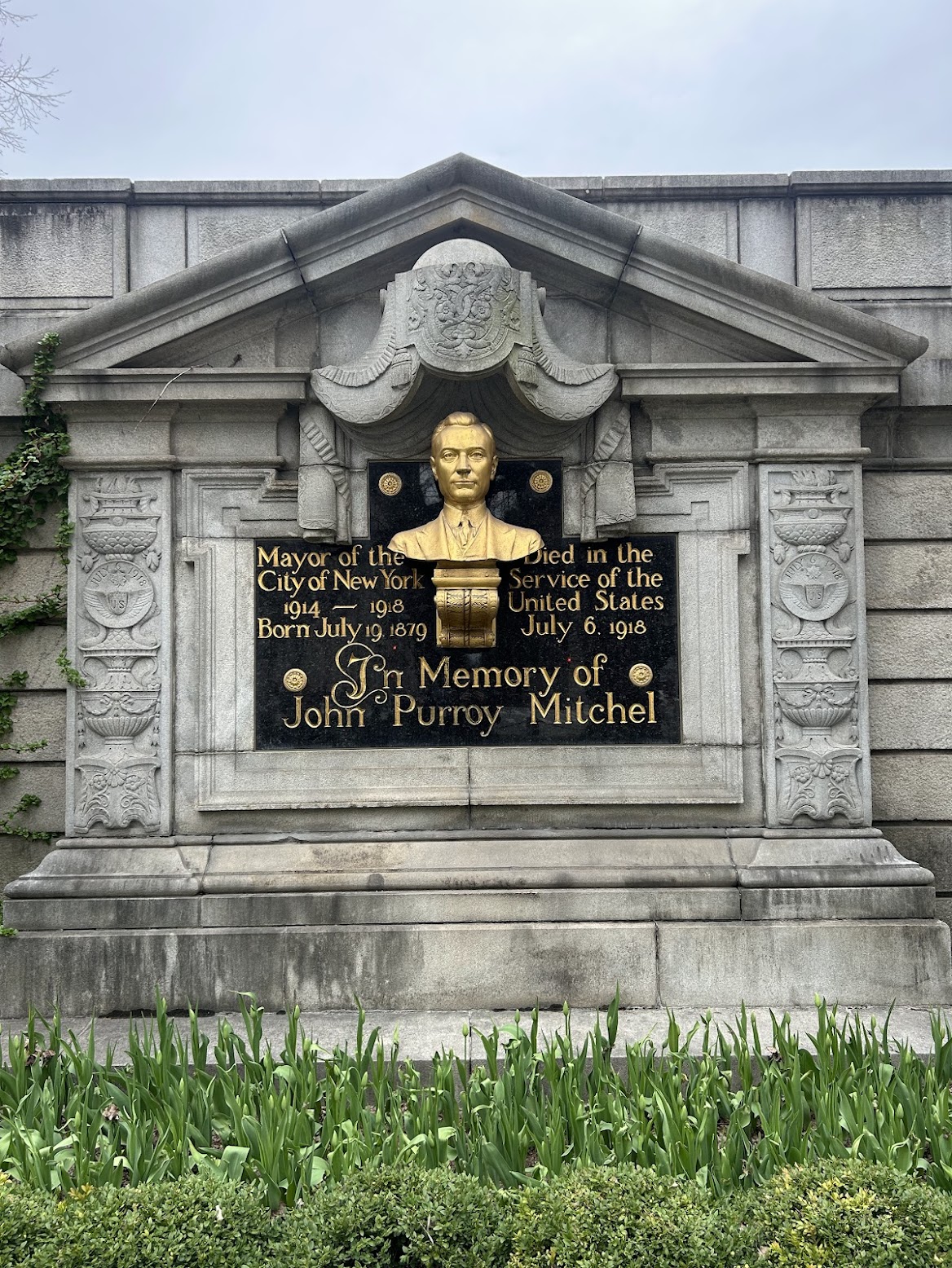
The John Purroy Mitchel memorial, near the reservoir in Central Park.
Most pictures above are public domain, courtesy of the Library of Congress
When the Academy of Music opened in 1854, New York City was just about to become the richest, most powerful city in the nation. It was, in fact, almost there.
With the construction of the Erie Canal (which opened in 1825), the port city at the mouth of the Hudson River benefited greatly from the proximity.
The city grew in marvelous ways in the three decades after its opening with a new Croton water system, expanding gaslighting, and a growing grid plan, pushing the city north up the island of Manhattan.
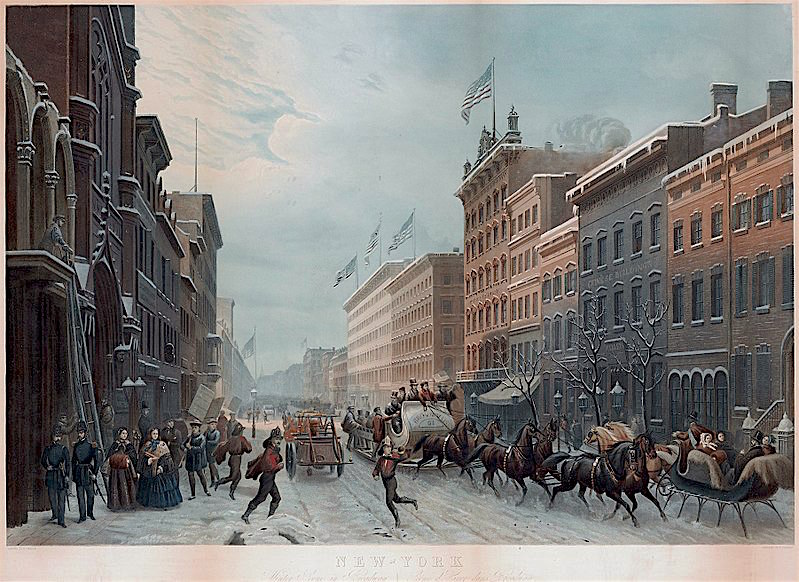
New York winter scene in Broadway, 1857 Eno, Amos F., 1836-1915 (Collector) Girardet, Paul, 1821-1893 (Engraver) Sebron, Hippolyte Victor Valentin, 1801-1879 (Artist); courtesy New York Public Library
The city’s old-money elites soon made room — with an upturned nose, naturally — for the new-money families enriched by both New York real estate and burgeoning American industries fueled by the growth of the railroad. The New York Stock Exchange, re-built after the Great Fire of 1835, was thriving with the nation’s booming (if often volitile) economy.
And so New York society, modeling itself after English and French elites, began importing high cultural venues in which to flaunt their love of the arts — and, more importantly, their money and station in the social pecking order.
The Astor Place Opera House, opening in 1847, had briefly been the center for upper-class entertainments, but the deadly Astor Place Riots a couple years later signaled the end of that venue.
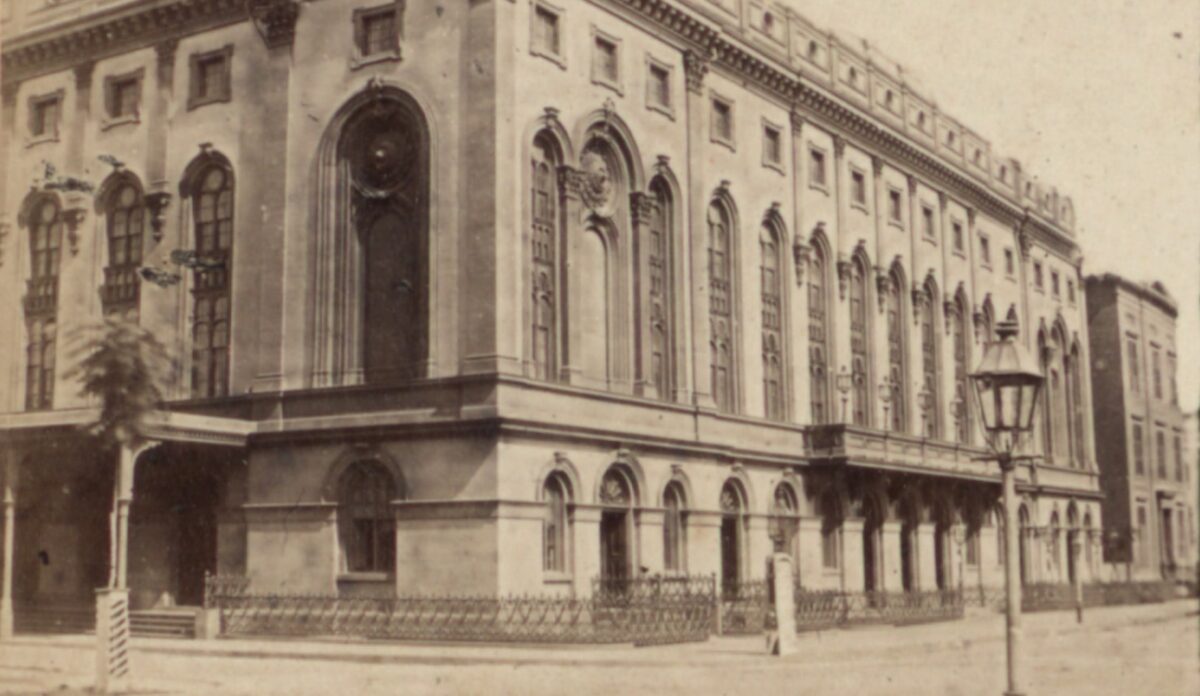
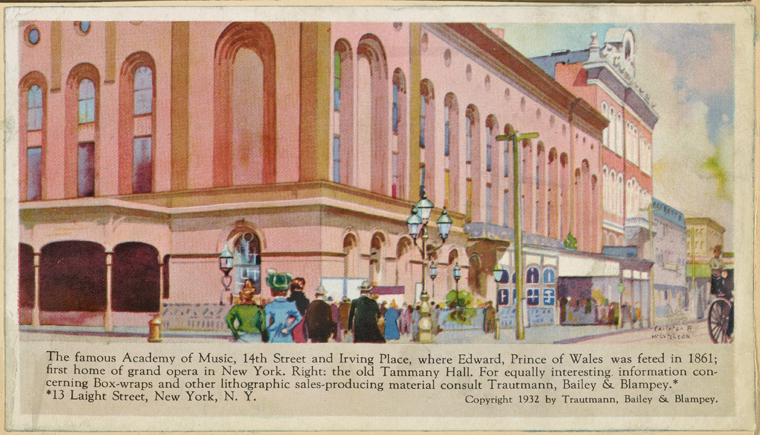
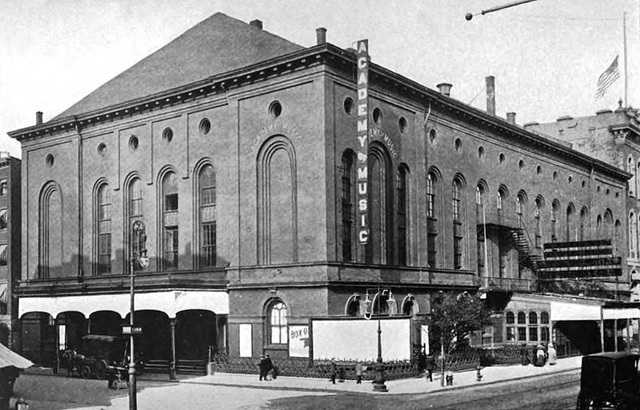
Early photograph of the Academy of Music, NYPL
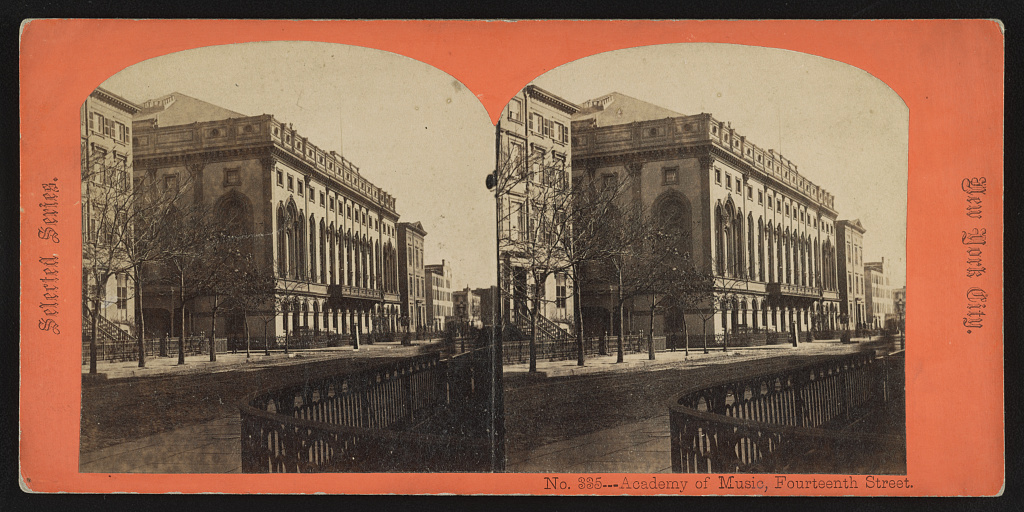
And thus New York got the Academy of Music in 1854. Located on 14th Street and Irving Place, the new music house was uniquely situated near both Gramercy Park and Union Square, both havens for the elite in the 1850s. (NOTE: The Academy of Music was only a few blocks north from the old Astor Place Opera House.)
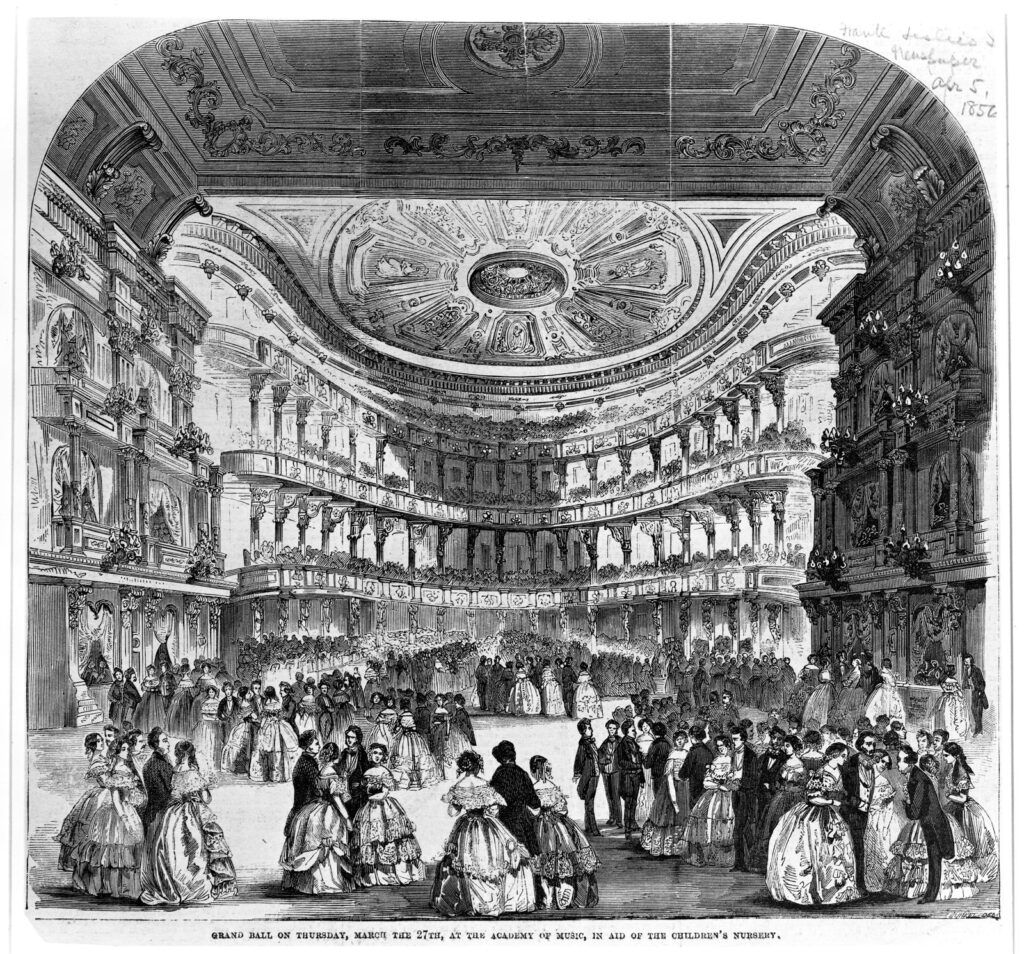
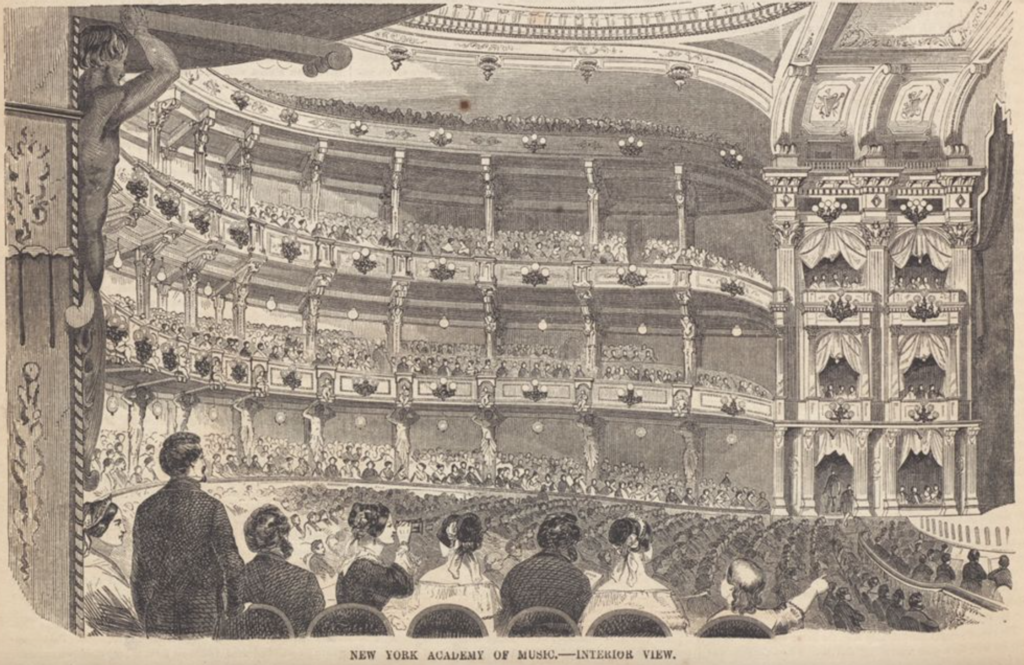
Inside the Academy of Music, 1856, NYPL
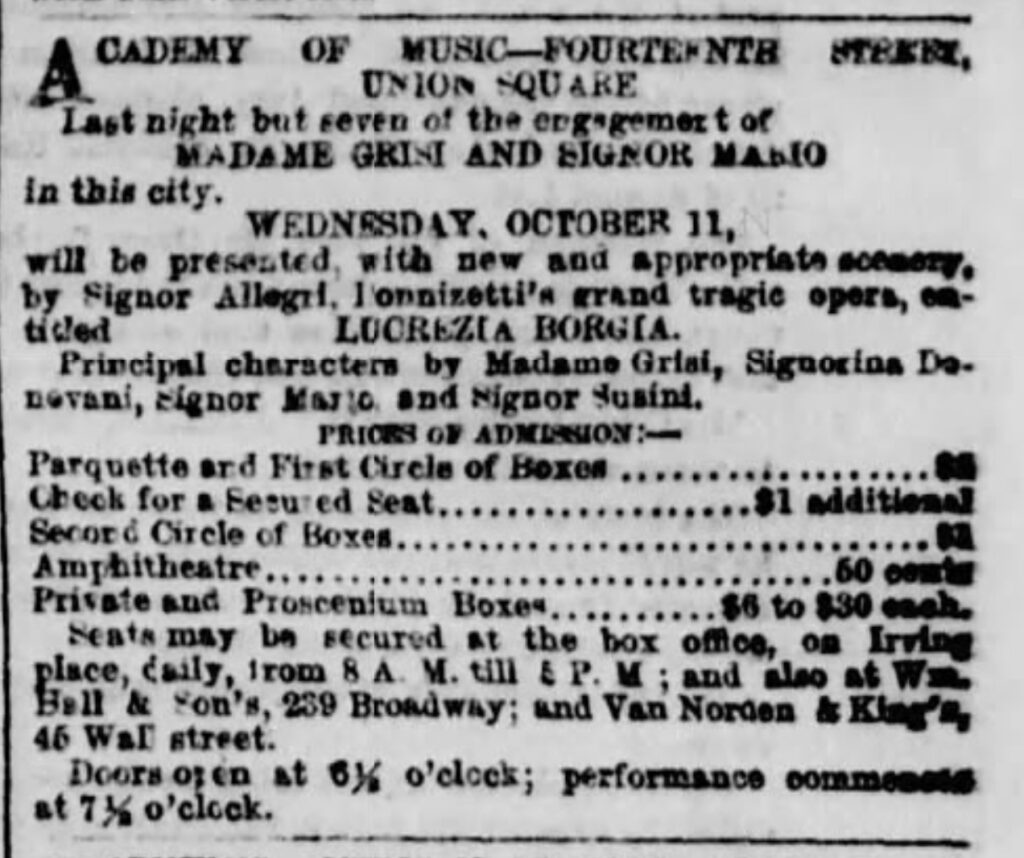
The opening bill on October 2 featured a performance of Vincenzo Bellini’s Norma featuring acclaimed Italian soprano Giulia Grisi. (America had very little homegrown talent in these days.) Underscoring its almost immediate dominance in the Americas cultural scene, the operas Rigoletto, La Traviata, Aida, Die Walküre and Carmen made their American debuts upon this stage.
The growing rival city of Brooklyn followed suit — had to follow suit, to satisfy its own elites who were situated mostly around the area of today’s Brooklyn Heights. The first Brooklyn Academy of Music opened there in 1861; after it was destroyed in fire in 1903, it moved to its present location. [More on its history here.]
Brooklyn’s original opera house was beautiful, sure, but it was no match in opulence for New York’s Academy of Music which was the largest opera venue in the world when it opened.
Interior of the Academy of Music 1856
But it designed to be so much more, a multi-purpose building which needed more space befitting the city’s growth. According to this announcement on August 28, 1854, “The New York Academy of Music will be used occasionally for concerts, balls, public meetings and theatrical performances.”
Perhaps due to its many purposes, the reputation of the Academy of Music became tainted by rowdy “French balls” which took place here off season.
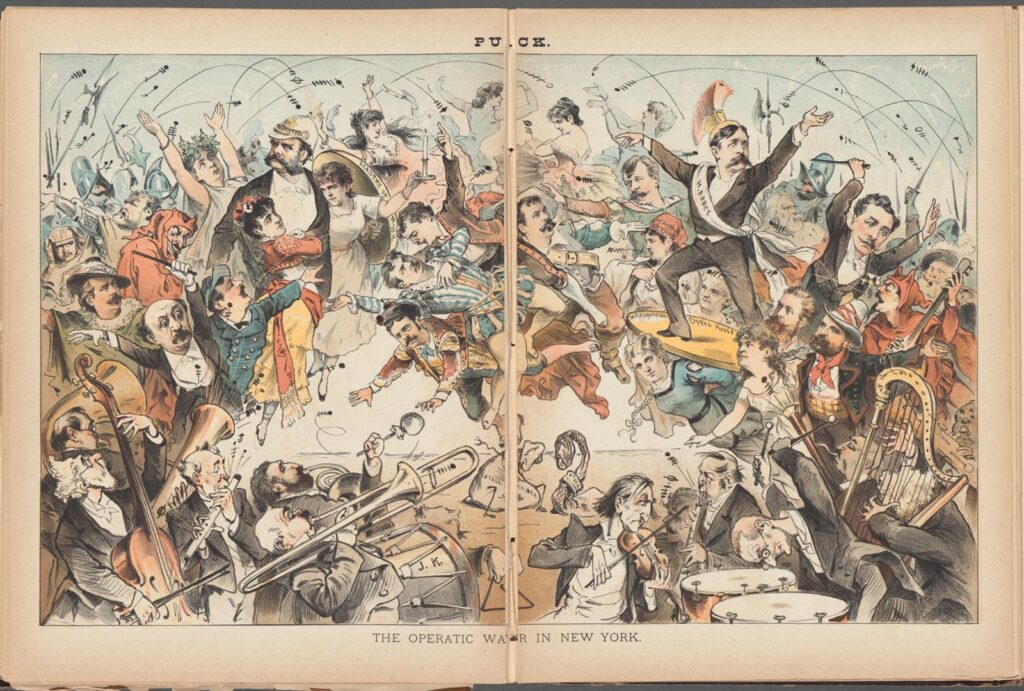
In 1883 Puck Magazine festively lampooned the ‘opera wars’ between the Academy of Music and the Met Opera house.
However it wasn’t until New York’s next wave of moneyed elites — its nouveau riche — opened the Metropolitan Opera House in 1883 further north that opera (and respectability) finally vacated the Academy of Music.
By that time, Union Square was the city’s destination for a more lowbrow entertainment — vaudeville! — and so the Academy welcomed that entertainment form onto its stage. But it could never recapture its glory, and the building was demolished to make way for a skyscraper owned by Consolidated Edison (which still remains).
The Academy of Music from the vaudeville years
But the name would not leave the neighborhood! A movie palace opened across the street (eventually owned by William Fox) with the name the Academy of Music. During the 1970s it hosted rock music performances and, by the 1980s, had transformed into the seminal dance club the Palladium.
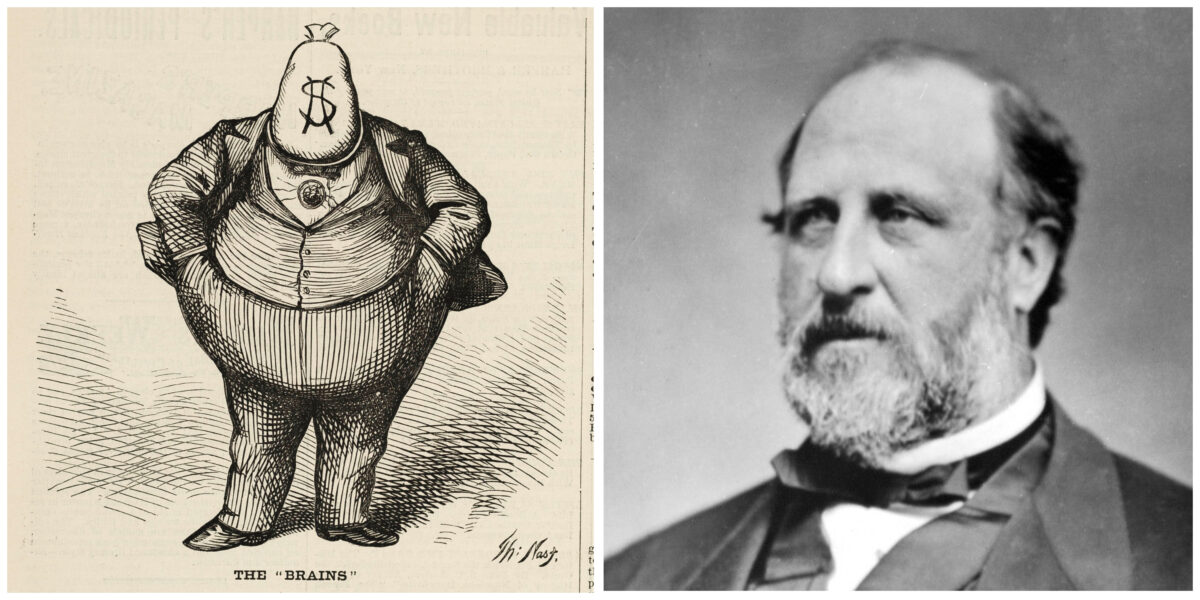
One of our great sources of inspiration here on the Bowery Boys Podcast was born 200 years ago today — William Tweed, otherwise known as Boss Tweed.
This doesn’t mean he was a great guy. In fact, as the boss of America’s most infamous political machine Tammany Hall, you could say he formalized all the very worst aspects about local politics.
Mark his birthday today by taking a dive into one of these top podcasts we’ve recorded over the years with Tweed as a central character, recounting his adventures and misdeeds
The tale of America’s most infamous political machine and the rise and fall of its flamboyant William ‘Boss’ Tweed.
You cannot understand New York without understanding its most corrupt politician — William ‘Boss’ Tweed, a larger than life personality with lofty ambitions to steal millions of dollars from the city.
With the help of his Tweed Ring’ the former chair-maker had complete control over the city — what was being built, how much it would cost and who was being paid.
How the Tweed Courthouse became a symbol for everything rotten about 19th century American politics.
The Tweed Courthouse is more than a mere landmark. Once called the New York County Courthouse, the Courthouse is better known for many traits that the concepts of law and order normally detest — greed, bribery, kickbacks and graft.
In this special episode, we look at the history of New York City as seen through one corner of the Lower East Side. Created by the intersections of several streets, this is a place that has gone by many names — in the past and even today.
And in one inconceivable historical moment, a statue was almost raised here to William ‘Boss’ Tweed!
And other Bowery Boys articles on this website about Boss Tweed that you might enjoy:
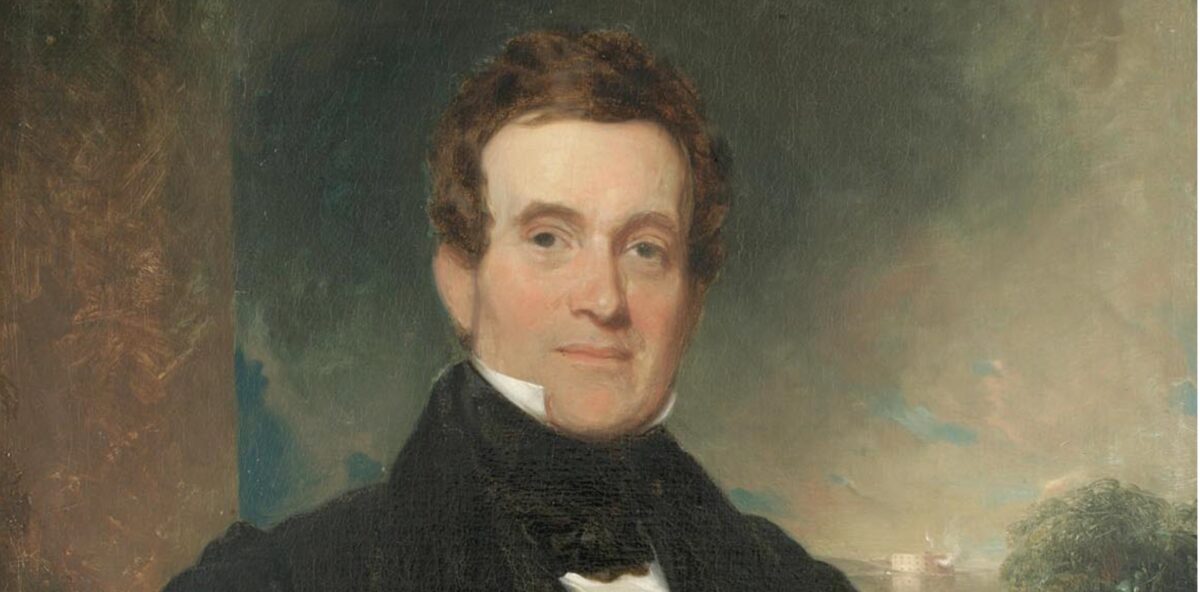
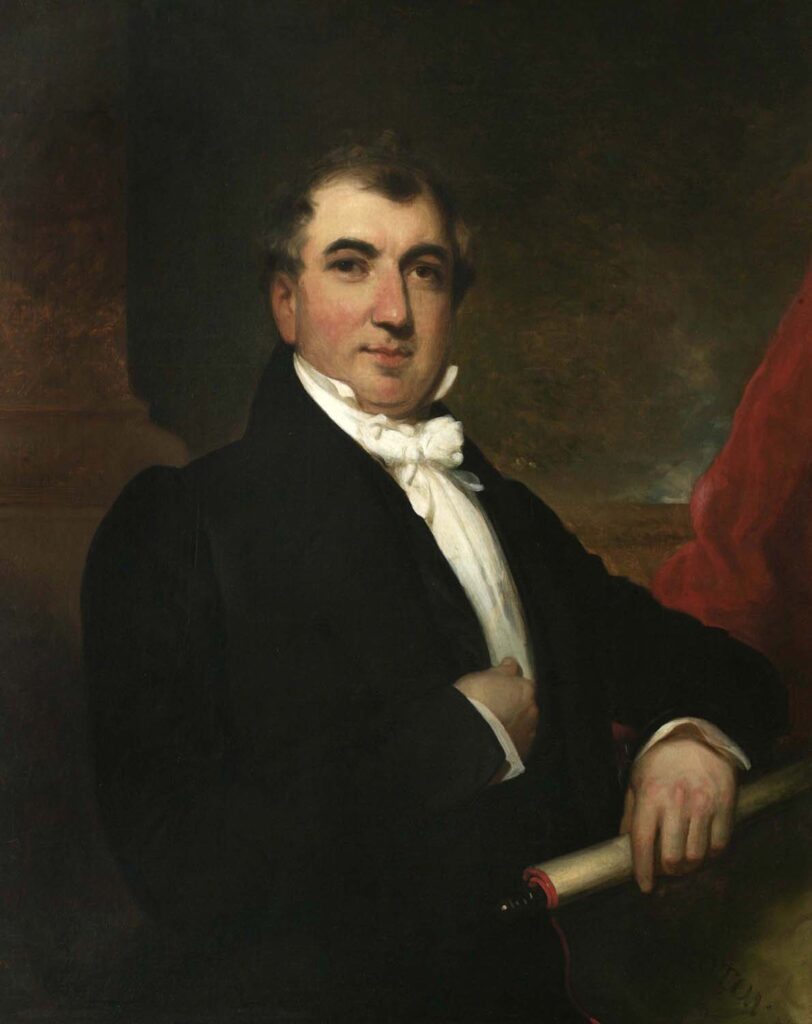
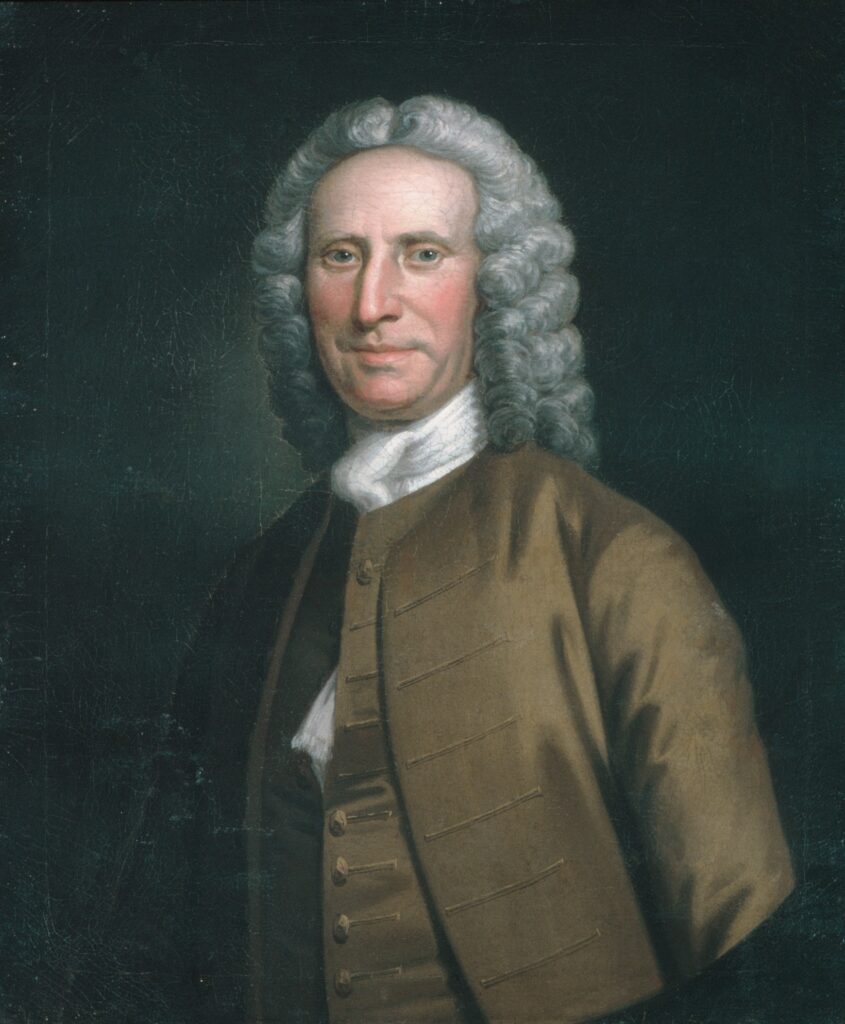
Aaron Clark, from his official City Hall portrait, painted by Henry Inman. Courtesy NYC City Hall
New York City has a new mayor — Eric Adams! So we think it is time that you Know Your Mayors, becoming familiar with other men who’ve held the job, from the ultra-powerful to the political puppets, the most effective to the most useless leaders in New York City history.
This longtime feature of this website is being rebooted with new articles and newly researched and refreshed earlier entries in this series. Check back every other week for a new installment. Read past articles here.
Mayor Aaron Clark 1837-1839 (two one-year terms)
Aaron Clark has many claims to fame in New York City history, none of them really things that recommend him as a defining leader of our city. His most defining characteristic was that he was often very lucky.
Clark is the first mayor ever elected representing the anti-Democrat, anti-Andrew Jackson Whig Party — a political party abolished less than 20 years after Clark’s victory.
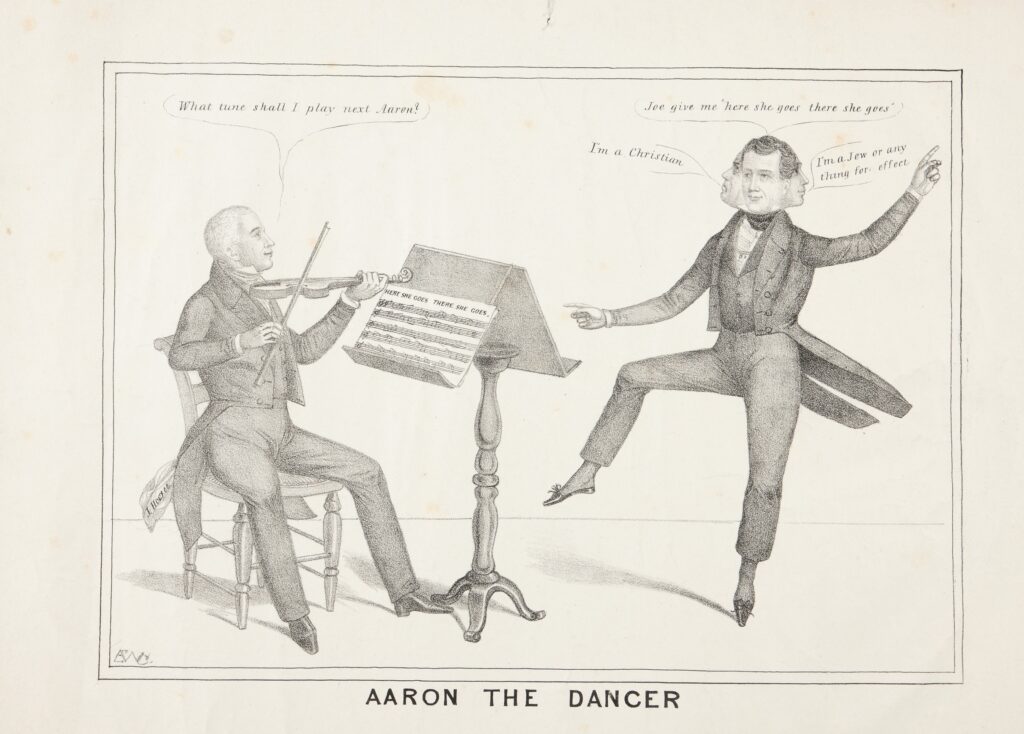
He was known as the ‘Dancing Mayor’, which was not an accomplishment but a mockery.
He called himself the New York’s most prestigious lottery operator, which he considered an accomplishment but was perceived by some as a disqualification.
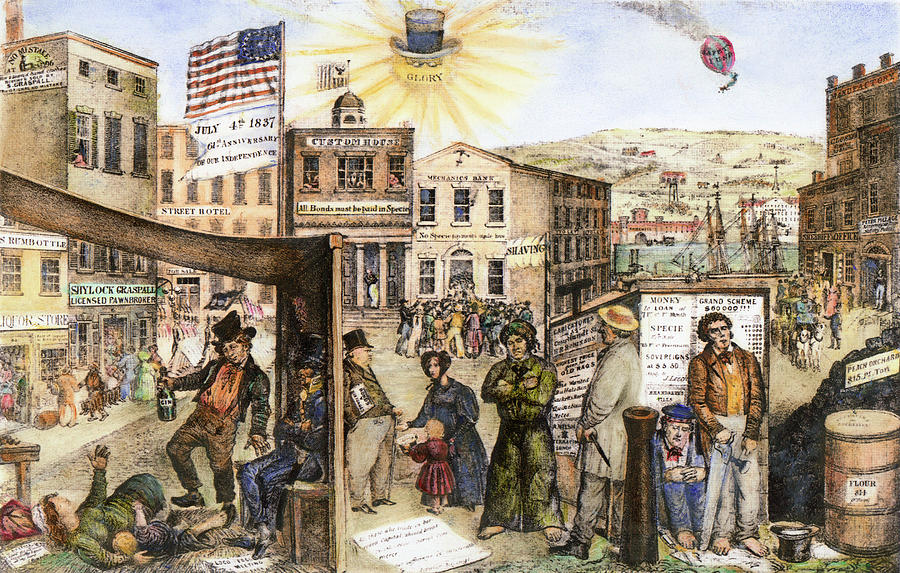
And finally he was elected amidst one of the worst financial crises in its history– the Panic of 1837.
Previously on ‘Know Your Mayors’
Clark, perhaps more honorably, was also the second man to ever be popularly elected as mayor of New York, i.e. chosen directly by the people of the city.
Previously, the position was selected by the Common Council (city council), district representatives who often chose men beholden to their whims.
When the state finally changed mayoral selection to one of popular election in 1834, the result caused violence at the polls and mass pandemonium. (See the last installment.) Cornelius Lawrence would come out ahead for three consecutive one-year terms.
Lawrence had been a candidate of Democratic machine Tammany Hall — with their influence, who else would be the first mayor? — but Democrats were facing strong opposition from an ascendent Whig party.
In fact, the Whig candidate in 1834, Gulian Verplanck, very nearly won; the animosity between the Democrats and Whigs was so contentious that right before the election, Tammany thugs stormed their opponents headquarters, destroyed everything inside and even killed a man.
During Lawrence’s tenure, the Whigs remained strong as the Democrats got weaker.
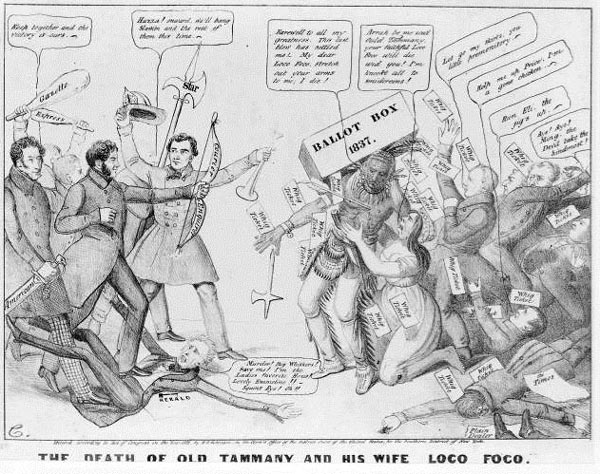
In a situation which certainly has some reflection in current national events, Tammany was split between conservative and liberal factions (an ‘Equal Rights’ faction, as they called themselves).
During a Tammany meeting in 1835, the Equal Righters stormed a Tammany committee meeting loaded with conservative members and threw them out.
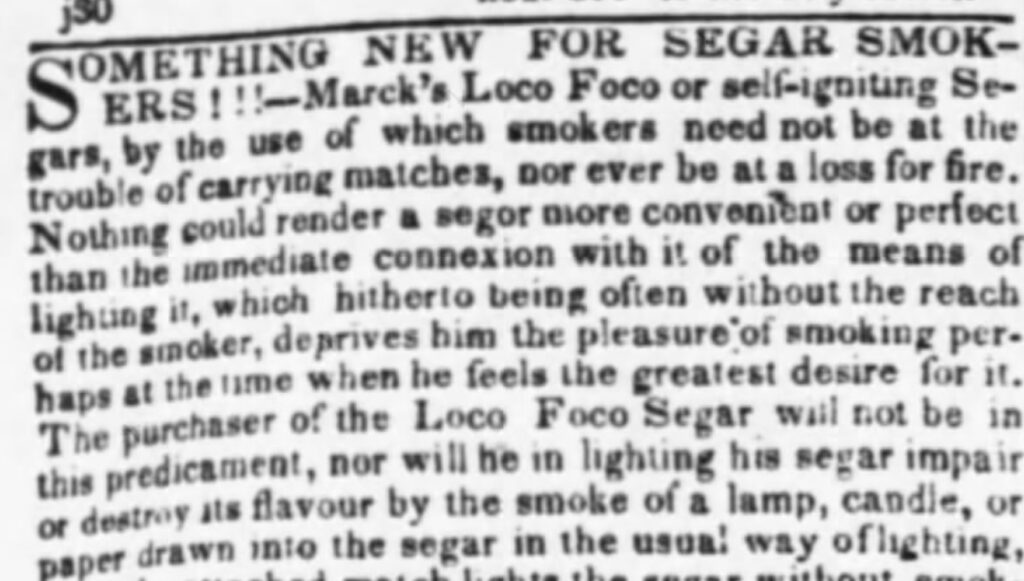
When the lights were turned out on the party-crashers, they lit Spanish matches or ‘loco-focos‘ and continued. The opposition, which would eventually run the conservatives right out of the party, would forever be known as the Locofocos. (For more on their particular beliefs, read here.)
How Luck Elected A Whig Mayor
So what does this have to do with Whig man Aaron Clark? At another period in history, Mr. Clark might never have gotten to experience life in City Hall.
But the dissention within the Democrats opened the door for the fleeting Whig party to reign briefly in New York. With that sort of luck, it’s no surprise to learn that Clark’s primary occupation up to then was as operator of a lottery business.
Privately-run lotteries were, believe it or not, quite common in early American history.
King’s College (today’s Columbia University) was founded with a lottery pool. A young P.T. Barnum operated one up in the 1820s. Benjamin Franklin and George Washington both held fund-raising lotteries in their day.
Even Alexander Hamilton opined that “everybody … will be willing to hazard a trifling sum for the chance of considerable gain.”
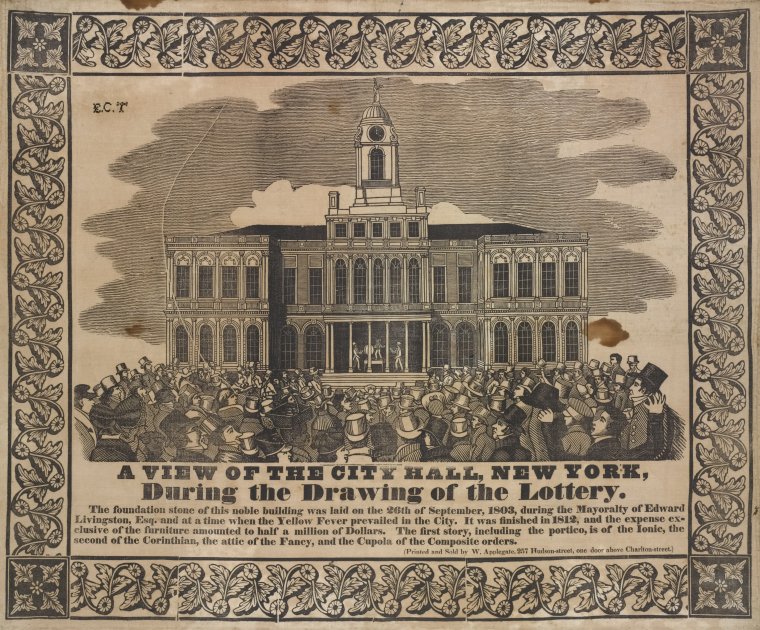
A view of the City Hall, New York, during the drawing of the lottery, New York Public Library
By the mid 19th century, private lotteries would be associated with more disreputable elements and would be abolished at the end of the century. Clark was thus a successful operator of an industry in the 1830s that would soon be looked upon as scandalous and unseemly.
“As lotteries, under certain regulations as to the drawings, which were had upon the esplanade in front of the City Hall, in the presence of an alderman, were authorized by law, there were many offices in the city, notably one at the southwest corner of Broadway and Park Place* kept by Aaron Clark, a much reputed citizen.”
*The Woolworth Building now stands on the spot where Clark’s business once stood.
“He was a great lottery seller and made a fortune of it,” says one source. A recollection from an 1890s New York Times article shortlists Clark as one of the “best known rich men” at the time.
Huzza for Clark, Fortune’s Favorite!
Clark was born in 1787 in Massachusetts, a veteran of the War of 1812, and spent his early years as a clerk of Albany state assembly.
He moved to New York to pursue banking and eventually fell into his lottery endeavors, becoming wealthy and, by extension, highly suitable for early 19th century public office. Clark was soon elected to an alderman’s seat, typically a neat launching pad into the mayor’s chair.
The Whigs announced him as their candidate in 1837 against the intensely split Democrats. Conservative Tammany ran John Jordan Morgan, while the Loco-Focos put up the interestingly named Moses Jacques, considered “the patriarchal leader of the Loco-Focos.”
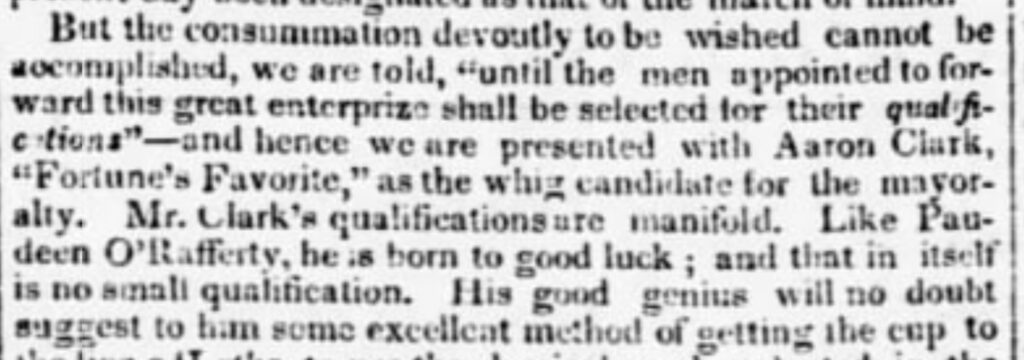
Clark’s opponents certainly tried to use his occupation against him. Wrote William Leggett : “If we elect Aaron Clark for Mayor who knows but he may get up some ‘splendid scheme’ and insure ‘a grand prize’ to everyman who assisted in making him manager of the municipal lottery. Huzza for Clark, Fortune’s Favorite!”
The Evening Post repeated this nickname — Fortune’s Favorite — March 1837.
However Morgan and Jacques cleaved the opposition in two, and for the first time in New York history, on April 11, 1837, a Whig became mayor.
He then would be re-elected in 1838 when Tammany’s conservatives threw their support to him out of spite towards their liberal LocoFoco brethren. (There was apparently a shocking amount of fraud going about that year, which also helped matters.)
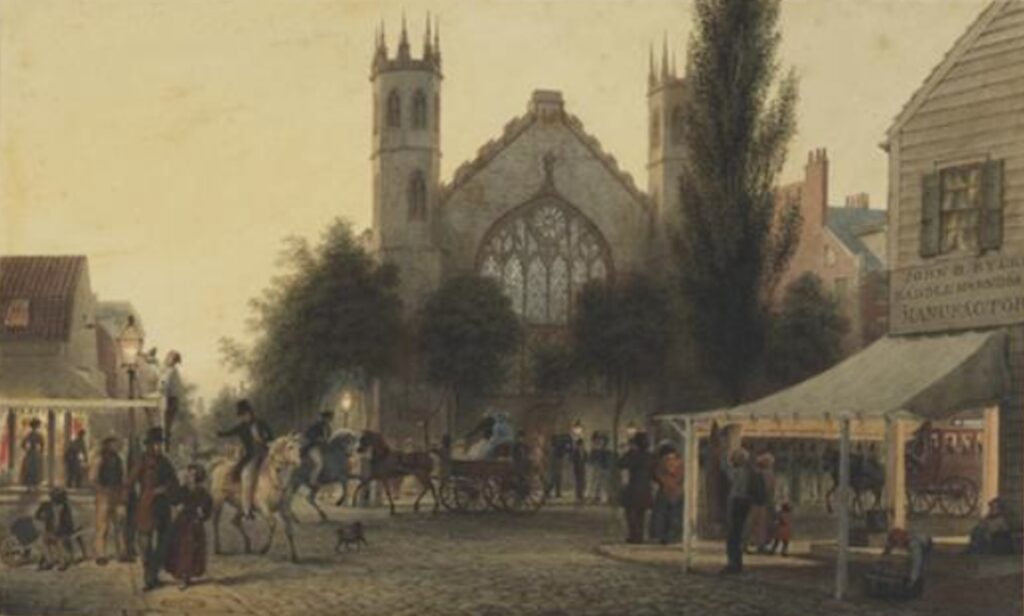
Night-fall. St. Thomas’ Church, Broadway, New York, a beautiful painting by George Harvey from 1837. (The Museum of the City of New York)
Fortune’s Favorite?
Clark was certainly the wrong mayor for the moment. He was an ardent Native American, meaning he generally despised the boatloads of Irish emptying into New York slums, driving “the native workmen to exile,” he said in a meeting to the Common Council.
His campaign was openly hostile to ‘clannish’, ‘untrustworthy’ Irishmen, and his tenure as mayor only stirred up xenophobic sentiments. He advocated for keeping new immigrants on ships, directing them away from city and charging them ‘commutation fees’ of $10.
Clark aimed his racial paranoia at the lower classes at large, fearing that the charity organizations already in place were turning the city “into a rendez-voux of beggars, paupers, vagrants and mischievous persons,” according to the book Gotham.
One general benefit of this alarming hysteria was an improvement to the system of nightwatchmen and security patrols throughout the city, a “military arm” to assuage rioting and general chaos. Clark was no light-weight; he would frequently lead these local militias through the city himself, breaking up rabble-rousing groups.
The Unfortunate Fop
Most unfortunately, however, Clark’s charms were limited. His attempts to woo over New York’s elite in a series of parties at his home on Broadway and Leonard Street fell flat.
This type of social governance was a winning recipe for mayors like the honorable Philip Hone. As mentioned in a prior installment of this column, Hone’s parlor “hosted a nightly gallery of political and foreign dignitaries mixing it up with New York’s social strata.”
Clark, however, was roundly ridiculed for attempting such grand ‘entertainments’. In fact, in an early form of political snark, Clark was ironically called ‘the Dancing Mayor’, not for his graces assumably or even the class of his “splendid patent leather pumps” but for his pretensions of trying too hard.
Also on his watch, the Croton Aqueductcontinued apace although its workers went on strike not once but twice in 1838 for better wages.
He also governed the city through the beginning of a grueling financial crisis, known today as the Panic of 1837.
Not even a month into Clark’s first term, on May 10, 1837, New York City banks ran out of gold and silver, having loaned out too much due to months of high inflation. President Jackson had hollowed out the central bank and refused to recharter it, leading to bank collapses across the country.
“During the Panic of 1837, approximately ten percent of U.S. workers were unemployed at any one time. Mobs in New York City raided warehouses to secure food to eat. Prominent businessmen, like Arthur Tappan, lost everything.” [source]
The Panic froze real estate developments across the city. Construction projects in Union Square and Gramercy Park sat unfinished.
“A deadly calm pervades this lately flourishing city,” wrote former mayor Philip Hone in his diary. “No goods are selling, no business stirring, no boxes encumber the sidewalks of Pearl Street.”
A Different Kind of Prize
It became clear that Clark was out of his depth. Two years of a Whig in office — with the tide of immigrants hardly abating — was quite enough.
In the election of 1839, Tammany put up Isaac Varian, who had been defeated the year previous by his political machine’s fractious split. Despite the usual cries of fraud, in this round Varian was the victor. Clark’s luck, if that’s ever what it was, had run out.
During its first year, The Clark Prize had eight competitors. “It is expected that the exercises will be unusually interesting and attractive,” claimed one article.
When Clark died in 1861, he was buried right here in the city, at the old New York Marble Cemetery in the East Village. The gates to this historic burial ground are occasionally opened to the public so I recommend bringing a lottery ticket to his headstone.
New York City has a new mayor — Eric Adams! So we think it is time that you Know Your Mayors, becoming familiar with other men who’ve held the job, from the ultra-powerful to the political puppets, the most effective to the most useless leaders in New York City history.
This longtime feature of this website is being rebooted with new articles and newly researched and refreshed earlier entries in this series. Check back every other week for a new installment. Read past articles here.
Mayor Walter Bowne 1829-1832 (four one-year terms)
Walter Bowne, mayor of New York City from 1829 to 1832, was born in Flushing in 1770, many years before the region would erupt into a revolutionary war.
But his story really begins well over a century before. Walter would not have been mayor if not for the distinguished reputation of his family name.
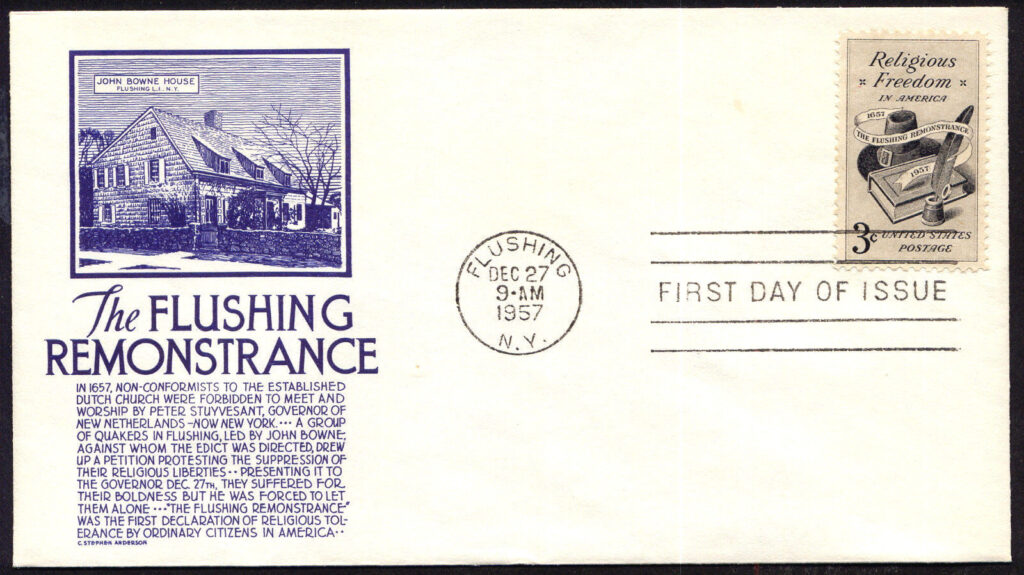
On the 300th anniversary of the Flushing Remonstrance, the US Postal Service issued a commemorative stamp.
A Flushing Revolution
The Bowne family first settled in Flushing (then Vlissingen or Vlishing), Long Island in the 1660s when the region was a part of the Dutch empire, an outpost of New Netherland.
Yet Thomas Bowne, his son John Bowne and their clan were English, and this area of Long Island had been long settled by Quakers.
The Bownes were entering into a religious powder keg. Already by 1657, director-general Peter Stuyvesant considered the religious enclave “a threat to the peace and stability of the colony and probably out of their minds as well,” writes Russell Shorto in The Island At the Center of the World.
The Long Island Quakers responded with an extraordinary document that year called the Flushing Remonstrance, asserting their freedom to worship under Dutch standards of tolerance and “the law of love, peace and liberty.” This only infuriated Stuyvesant further.
By 1662 the home of John Bowne had become a central meeting place for the area’s Quaker population. Stuyvesant had him arrested and deported to Amsterdam — despite the fact that he was English and Holland was not his country of origin.
However Bowne successfully petitioned the Dutch West India Company and in the end, by 1664, he was allowed to return to Long Island.
Stuyvesant, meanwhile, was severely reprimanded and ordered to be more tolerant. (Fortunately for Peter, the English took New Amsterdam that very year so he didn’t have to officially tolerate anybody anymore.)
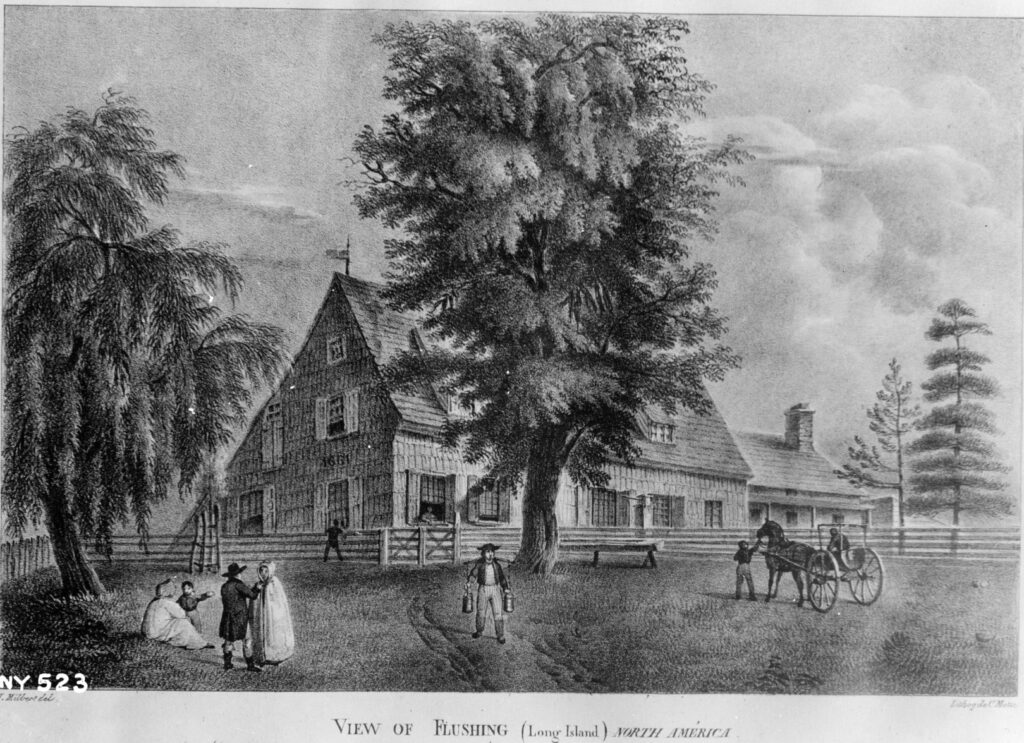
Bowne House, 37-01 Bowne Street, Flushing, Queens County, NY. Image courtesy Library of Congress
The Kings of Queens
The Bownes would become this region’s [i.e the region that would become Queens] most prosperous and politically important families. John Bowne’s home, built in 1661, still stands, one of New York’s oldest and most valuable historic places, a genuine treasure of preservation.
Thanks to John’s battle for religious freedom, the family name would also become a standard bearer for liberty in the years leading up to the American Revolution. Although applying that reputation more broadly is trickier. (For instance John Bowne “owned at least two slaves and an indentured servant.“)
Later descendants would become known as early American abolitionists including Robert Bowne, a contemporary of Alexander Hamilton and John Jay, who helped to form the Manumission Society of New York and later the African Free School.
But Robert would be better known for a publishing firm he established in 1775 — the financial printing house Bowne & Co, today New York’s oldest operating business under the same name.
All of this is to say — when Walter Bowne was appointed by the Common Council in 1839 to be the mayor of New York City, he brought with him the burden of high expectations.
Walter Bowne was of the genteel class which participated in politics during this period. He had also at one time been the Grand Sachem of Tammany Hall, the rising Democratic machine. So when he was first appointed mayor, serving in the year 1829, he was very much considered a machine politician.
But he was almost a one-and-done mayor. Tammany had narrowly lost the majority of Council members in 1829, placing a second year for Tammany’s leader as mayor in doubt. (Mayors were appointed for one-year terms at this time.)
But then Bowne made a controversial power move. According to Gustavus Myers’s A History of Tammany Hall:
“[In December 1829] Fourteen Aldermen and Assistants were opposed to Bowne and thirteen favored him. There was but one expedient calculated to re-elect him, and to this Tammany Hall resorted.
Bowne, as presiding officer of the Council, held that the Constitution permitted him to vote for the office of Mayor.“I will persist in this opinion even though the board decide against me,” he said.
To prevent a vote being taken, seven of Bowne’s opponents withdrew on December 28, 1829. They went back on January 6, 1830, when Tammany managed to re-elect Bowne by one vote. How this vote was obtained is a mystery.“
Bribery was almost certainly involved in this sudden reversal of Bowne’s fortune.
An investigating committee into the events of January 6 was formed to inquire about this mystery, but as the committee was comprised of those who favored Bowne, no proof was ever discovered of such bribery.
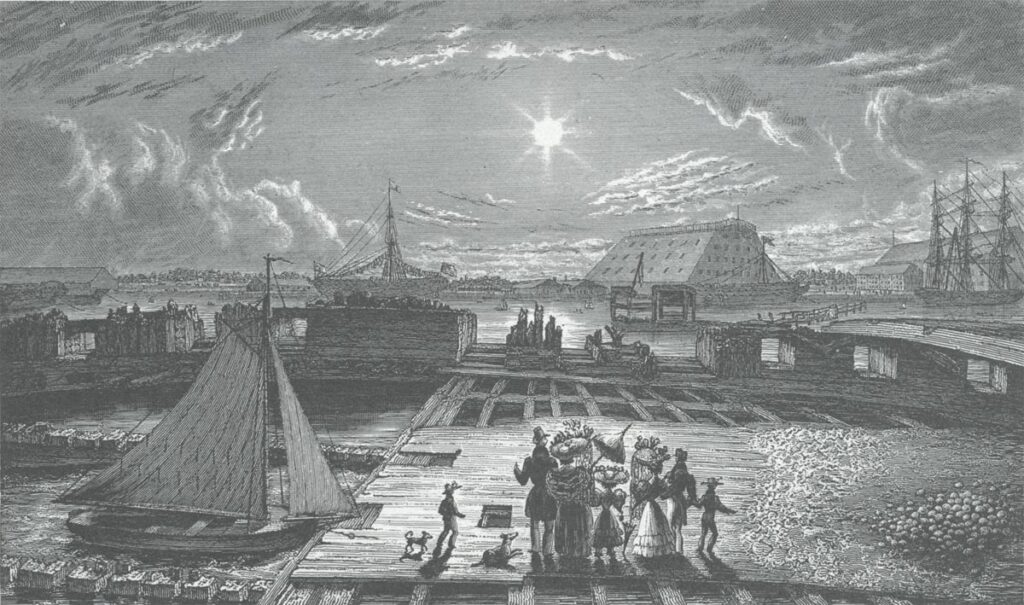
This image of the Brooklyn Navy Yard in the 1830s illustrates the types of pier infrastructure New York was using in these days. From the book Views in New York and its Environs, 1831.
Water and Docks
Bowne’s priorities were pure infrastructure. New York was in the middle of a water crisis with the growing city requiring more supply than its current local wells, cisterns and fresh water ponds could provide.
“We have the opinion of two prominent Civil Engineers that the Byram, Rye and Wompia Ponds will afford such supply,” the mayor declared, then casually mentioning the “Bronx, Saw Mill and Croton rivers” as other options.
But New York was waylaid by funding such a water project at this time, and Bowne was unable to get anything of immediate significance done by the time he left office in early 1833.
Two years later the Great Fire of 1835 underscored the urgency of an improved water system. The Croton Aqueduct system, bringing New York much needed water, finally opened in 1842.
New York’s other great priority was the Erie Canal which had opened in 1825.
Bowne was driven to action by the revered Henry Rutgers who died in Bowne’s first year in office. Rutgers had written to Bowne “expressing great anxiety lest our harbor, which has scarcely an equal in the world should be injured” by the continued building of wooden and dirt piers — ill-equipped to handle the growing international trade.
Under Bowne, work began on constructing an overall improvement of the waterfront for industrial use, with sturdier piers of stone and new warehouses.
This foresight would eventually benefit to growing steamship trade and another transportation revolution arriving soon — industrial railroad freight.
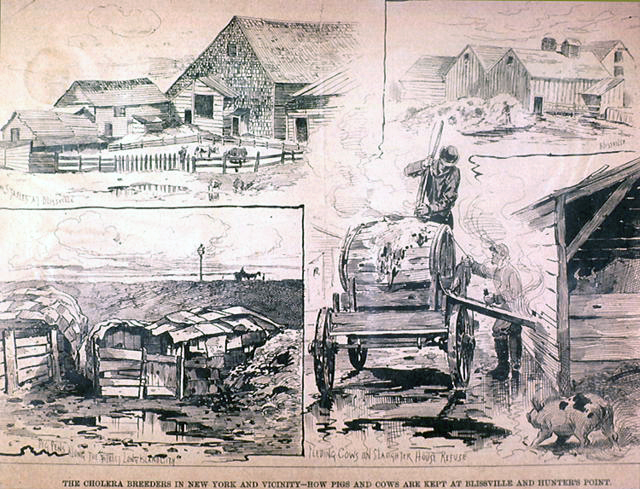
The Cholera Breeders in New York and Vicinity, n.d. (National Library of Medicine via the Merchant’s House)
Cholera Crisis
The ill-preparedness of New York for the full implications of trade were in full effect in 1832, when a major cholera epidemic came to the city.
The state of New York already had a quarantine hospital in Staten Island in place for arriving ships coming through the Narrows. But this did not prevent the disease from coming into the city from other directions.
According to Bowne House historian David Silvernail, “the [cholera] outbreak started in surrounding areas and to prevent it from reaching the city, Walter decided to enact a quarantine for all ships and carriages attempting to enter the city. This included all of the products and people on board.”
Bowne’s quarantine required that all ships keep at least 300 yards from the city’s ports. And carriages arriving from the north were stopped 1.5 miles from the city limits.
Under Bowne the city also engaged in a vigorous clean-up of its streets (although as Bowne House historian Silvernail reveals, the efforts were inadequate):
“Bowne’s well-meaning attempts to prevent a cholera outbreak failed, and hundreds of New Yorkers died of the disease,” according to NYC Parks. “It was not until 1883 that the German physician Robert Koch discovered that cholera spreads through contaminated water or food.”
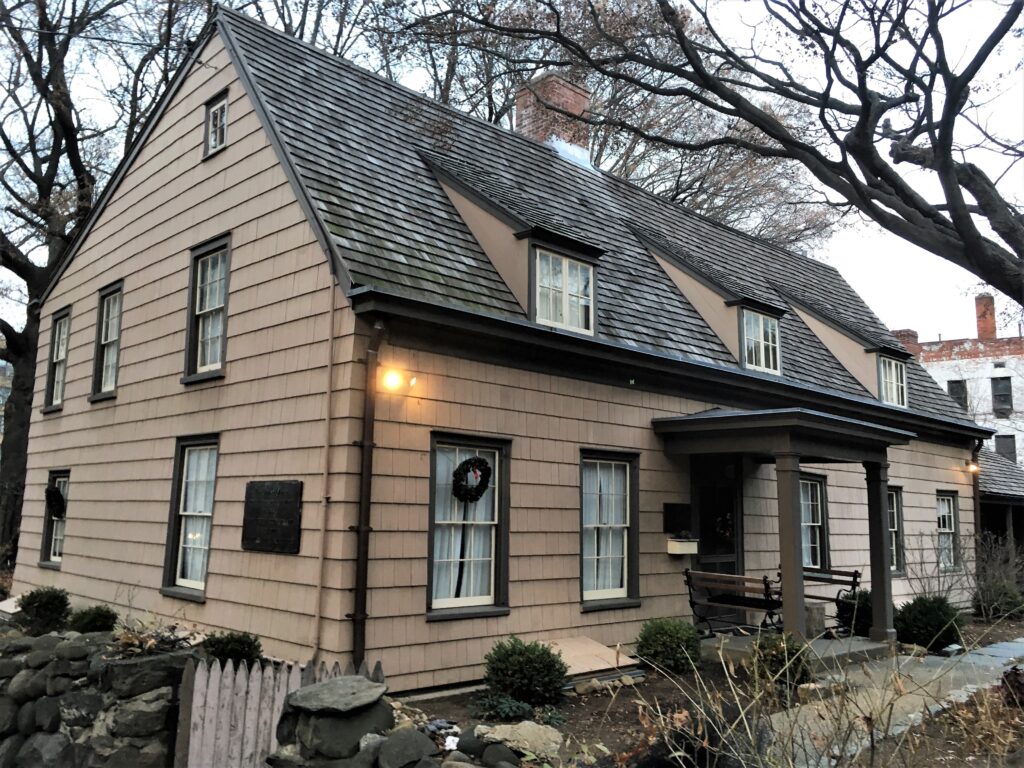
The Bowne House, photographed in 2018 (Station1, courtesy Wikimedia Commons)
A Lasting Landmark
Bowne left office in early January 1833 and, among other things, became the president of 7th Ward Bank of New York City. At times he also retired to his summer home in Flushing, the location of which is today’s Bowne Park. Bowne died in 1846.
New York enjoys many locations associated with the Bowne family. On top of Bowne Park and the Bowne House — both perfect places to visit this fall — Bowne & Co. Stationers provides a glimpse into America’s printing legacy in a rustic shop at the South Street Seaport.
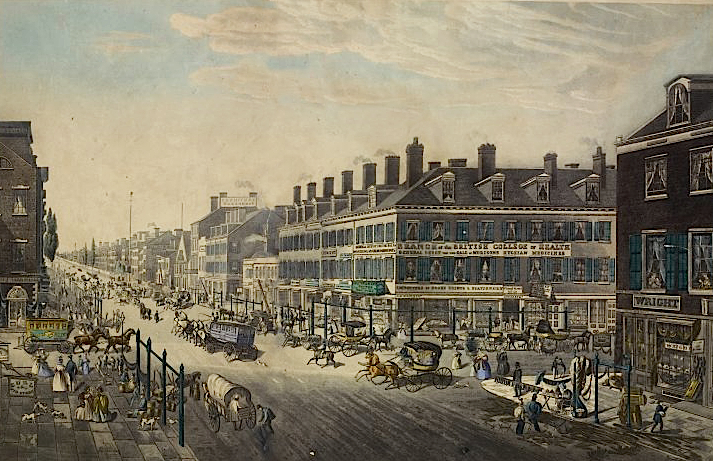
View of Broadway, 1834. Printmakers include P. Canot, G.R. Hall, H.B. Hall, George Hayward and W.S. Leney.
We’re getting a new mayor! So we think it is time that you Know Your Mayors. Become familiar with other men who’ve held the job, from the ultra-powerful to the political puppets, the most effective to the most useless leaders in New York City history.
This longtime feature of this website is being rebooted with new articles and newly researched and refreshed earlier entries in this series. Check back every other week for a new installment. Read past articles here.
Cornelius Van Wyck Lawrence Term: 1834-1837 (three terms)
When did New Yorkers first start electing mayors — directly? When did voters first go to the polls and select the new mayor themselves? The year was 1834 — and, oh boy, did it not go smoothly.
In the first few decades following the Revolutionary War, mayors were chosen by the governor and a state-side appointment committee. Then, from 1821 to 1834, the position was appointed by vote of the Common Council, an elected body equivalent today’s City Council.
The Council often chose prominent businessmen with high profiles — such as the sail-maker Stephen Allen or the well-connected attorney William Paulding.
Courtesy New York Public Library
But the city charter was amended in 1833 to allow the position of mayor — a lucrative post with rising visibility in a growing city — be directly chosen by New Yorkers.
Or rather, directly chosen by those who comprised the voting body — white male New Yorkers. (Black men could vote if they owned property; but as slavery in New York was only abolished in 1827, few men actually did, save for those in places like Seneca Village.)
But democracy in its purest form relies on a certain degree of faith. The direct election process — the collection and counting of ballots, the integrity of an honest count — has the potential to be quite chaotic.
And no election in New York City has been as chaotic — or as bloody — as that very first mayoral election in 1834.
Broadway and Canal Street, 1834. Courtesy Wikimedia Commons
In 1834, New Yorkers were thrilled with the real possibility of a city leader not beholden to the whims of its Council, a membership whose intentions were often deployed straight from the meetings of political machines and did not reflect the will of the people.
But local politics can become overshadowed by national concerns. As a result, direct election for the office may fail to correct this sort of favoritism. In fact, if the conditions are right, the will of the people can be bent to adhere to the most elitist of principles, using the sometimes benign instrument of populism.
Such was the case of the man who would become New York’s first democratically elected mayor in 1834 — Cornelius Van Wyck Lawrence.
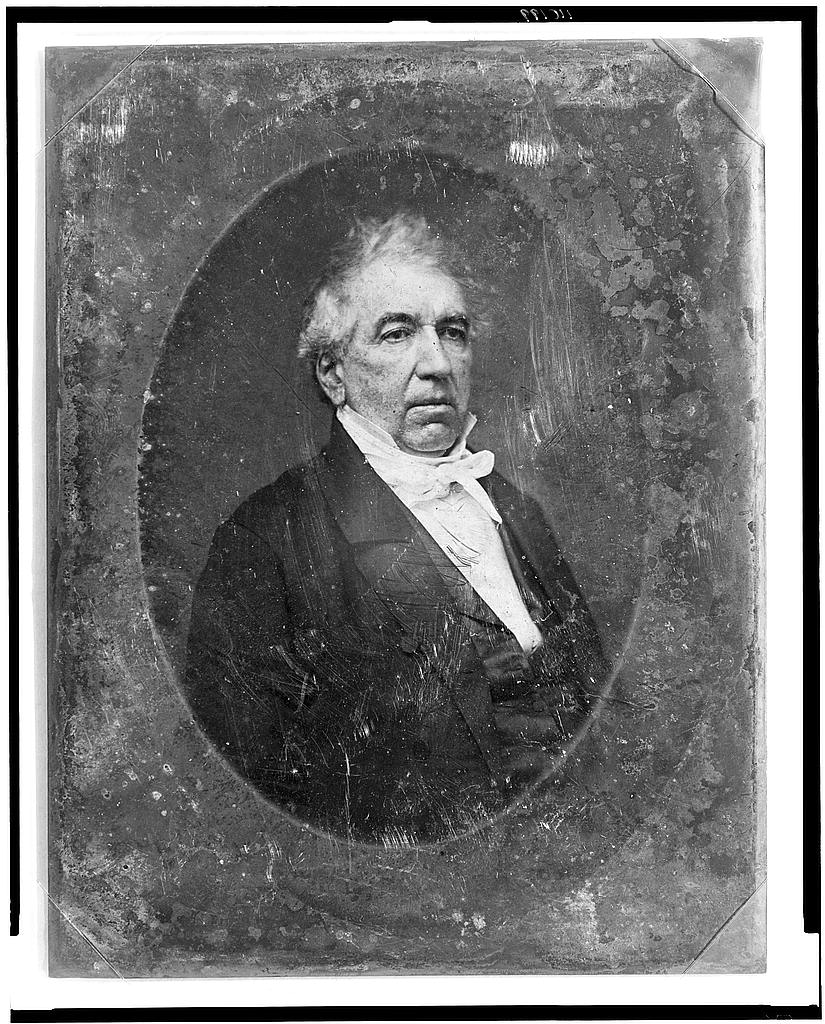
Painting of Lawrence by Henry Inman, 1837
Lawrence, a wealthy New York merchant, was born in 1791 in Flushing, Queens County, a member of the old Dutch Van Wycks. (His ancestor Cornelius Van Wyck built the historic Van Wyck Homestead in Fishkill, New York.)
In 1833, he became a Democratic state congressman known for believing one thing, and voting another, especially if it benefited himself financially. He was known to cry at the podium as he voted with his party.
From a biography on Martin Van Buren: “[Lawrence], the crying congressman, the weeping stock-jobber could have resigned had he disliked the party drill — but it brought him plunder, and he blubbered and held on, and afterwards he lent his name as a candidate for the mayoralty to uphold the gamblers he voted with in public…”
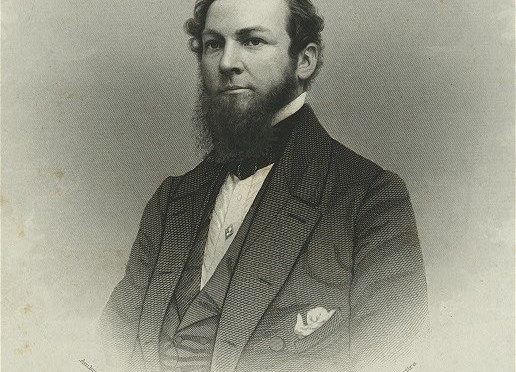
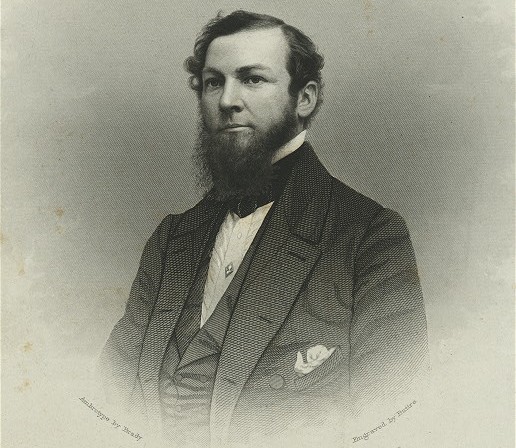
Lawrence was one of the first mayors to be photographed, sitting for Mathew Brady in 1852. Courtesy the Library of Congress
Yet the election was much larger than one man — it was about power at a time when New York was on the cutting edge of great expansion.
In fact the Whig Party was primarily formed in protest to Jackson’s policies. And they would make quite a first impression on their very first election ballot in New York.
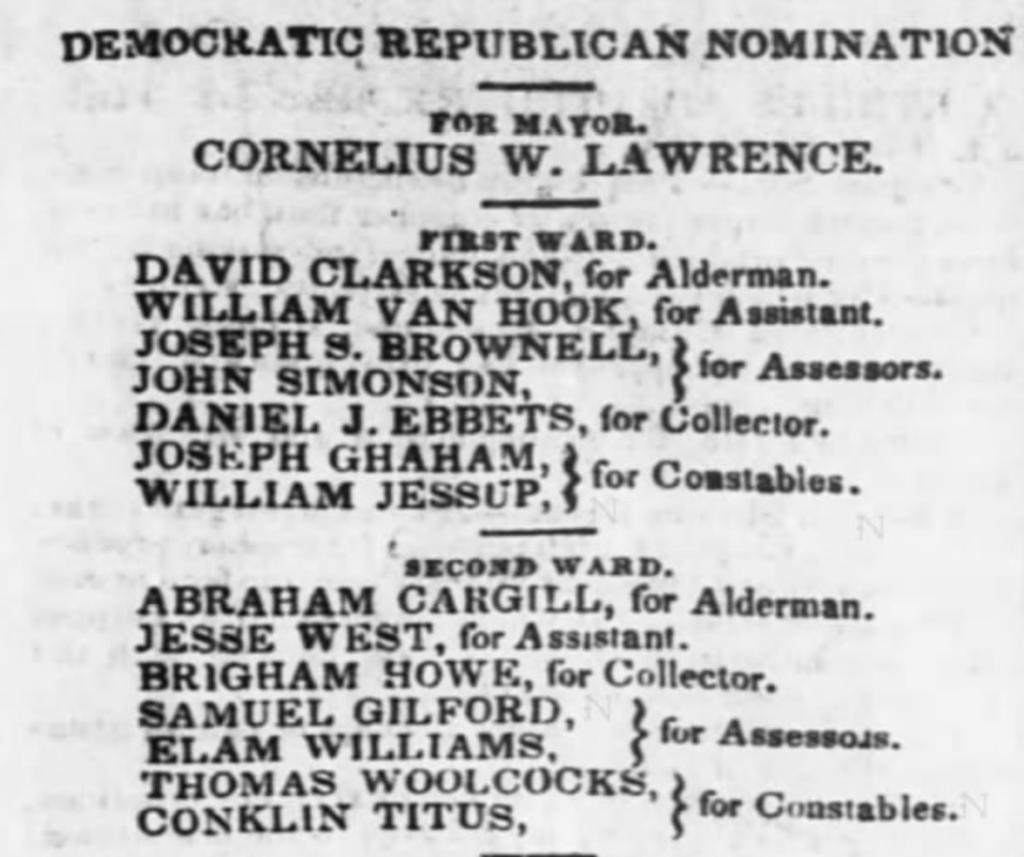
April 9, 1834, New York Evening Post
A proud New York tradition returned with that first election — rioting. The first electoral process lasted three days, as Democrats and Whigs attacked each other on the street in front of polling places.
On April 8, 1834, men fought with knives and clubs, destroying ballots and virtually shutting down the entire process. One man was killed, twenty others wounded.
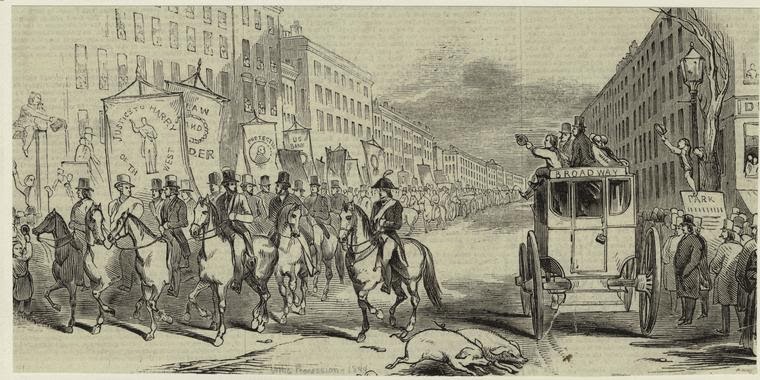
The Whigs were almost war-like in their determination to wrest power from Democrats, actually decorating a frigate with Whig banners, calling it the Constitution, and dragging it up Broadway in a violent and vitriolic parade.
A Whig procession from the. year 1844. Courtesy New York Public Library
Democrats were no better; the following day, acolytes headed down to Wall Street to destroy a pro-Whig newspaper office, its publisher armed and ready to shoot.
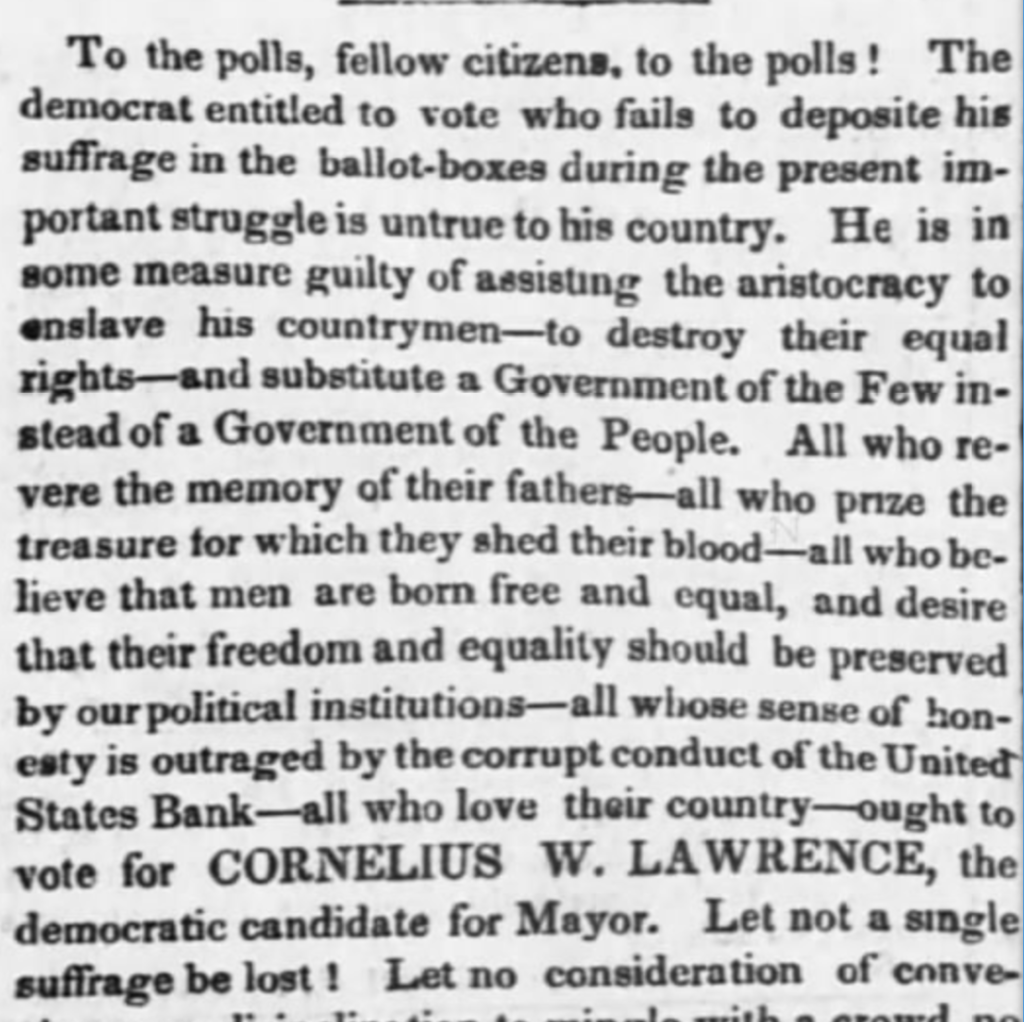
An entreaty to vote for Lawrence, published in the New York Evening Post, April 9, 1834
By April 10, the final day of voting, thousands filled the streets, ransacking gun shops and arsenals, preparing for all-out chaos.
“With Armageddon in the office, the mayor called out all troops — twelve hundred infantry and calvarymen — and order was restored,” according to Edwin G Burrows and Mike Wallace. But even that resolution was one-sided; most of the infantry was faithful to PresidentJackson— and by extension, Lawrence, the Democratic candidate.
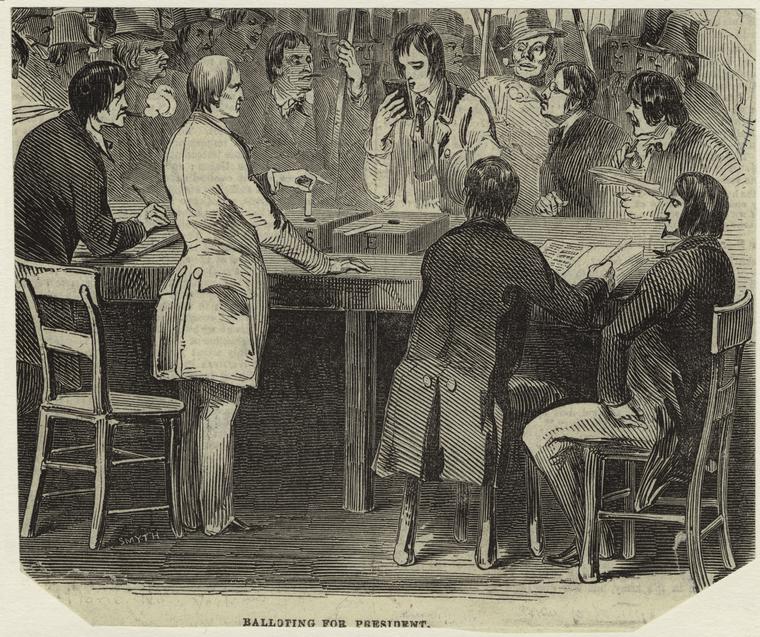
With thousands gathered outside City Hall, the election results were announced — Lawrence had defeated the Whig candidate Guilian Verplanck by less than 200 votes!
New Yorkers had at last exercised their direct right to vote for mayor. And in the end — after days of riots and tumult, an election process singular in its chaos — New Yorkers voted in “the crying congressman.”
We’re just months away from a new mayor in New York City so we think it is time that you Know Your Mayors! Become familiar with other men who’ve held the job, from the ultra-powerful to the political puppets, the most effective to the most useless leaders in New York City history.
This longtime feature of this website is being rebooted with new articles and newly researched and refreshed earlier entries in this series. Check back every other week for a new installment. Read past articles here.
Cadwallader D. Colden Terms: 1818-1821
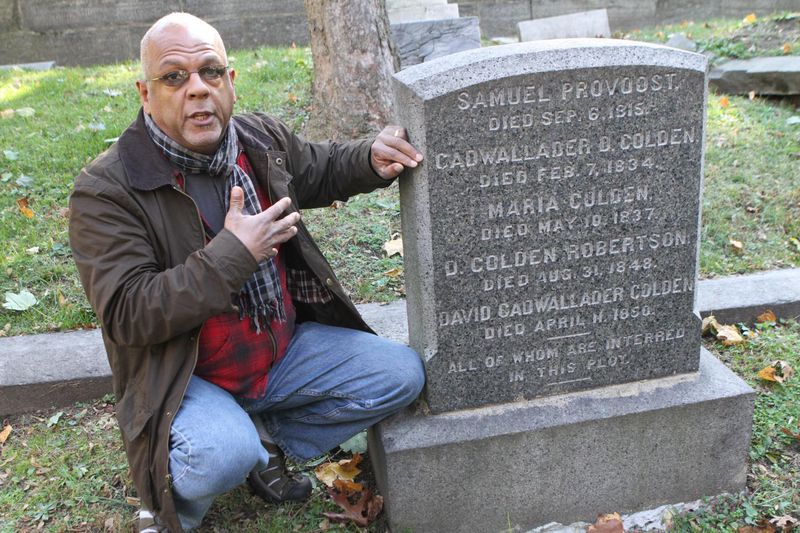
The most remarkable thing about New York City having a mayor named Cadwallader Colden is the fact that he was not even the most famous New Yorker named Cadwallader Colden.
That distinction goes to his grandfather, an altogether different Cadwallader Coldenthan his grandson and a rather fascinating Renaissance man.
Well, despite the fact that he was also pro-British, stridently hated among the American rebels and the type of man that would have thrown most of us in jail on sight.
Grandpa Colden
Ole Cadwallader was an Irish physician who came to the American colonies in 1710 (at age 22) to practice medicine.
Establishing his practice in Philadelphia, he later came to New York and in 1743 wrote a now seemingly obvious treatise drawing a connection between New York’s unsanitary conditions and its frequent outbreaks of yellow fever.
Painting of the Elder Colden by John Wollaston the Younger. Wikimedia Commons
Elder Colden became governor of the New York colony in 1760 and later sparked ire among beleaguered New Yorkers, who burned his effigy over enactment of the Stamp Act.
Colden ultimately represented the losing side of the American Revolution, and due to that, his other accomplishments are often overlooked. He was the first in America to write about Newtonian scientific theories and the first colonist to act as ambassador to the Iroquois Confederacy, the union of five Native American tribes.
Grandson in a New County
Perhaps it’s fitting that Colden died in September 1776, the year of the conflict that would run the British out forever.
He might be scandalized to know that his grandson, born in 1769 in Flushing, Queens County, would become a model American. (The child’s father Cadwallader Colden II was more concerned with governing the family’s lush 3,000 acre estate in Queens and remained essentially neutral during the Revolutionary War.)
Born in the trappings of wealth, Cadwallader David Colden III was shipped off to London for a proper education and returned to New York in 1785 to become a lawyer.
With his high class connections, he quickly acquired an impressive client roster, in particular Robert Fulton and Robert Livingston, assisting in their control of ferry services in New York harbor. He became New York district attorney twice, 1798 and 1810.
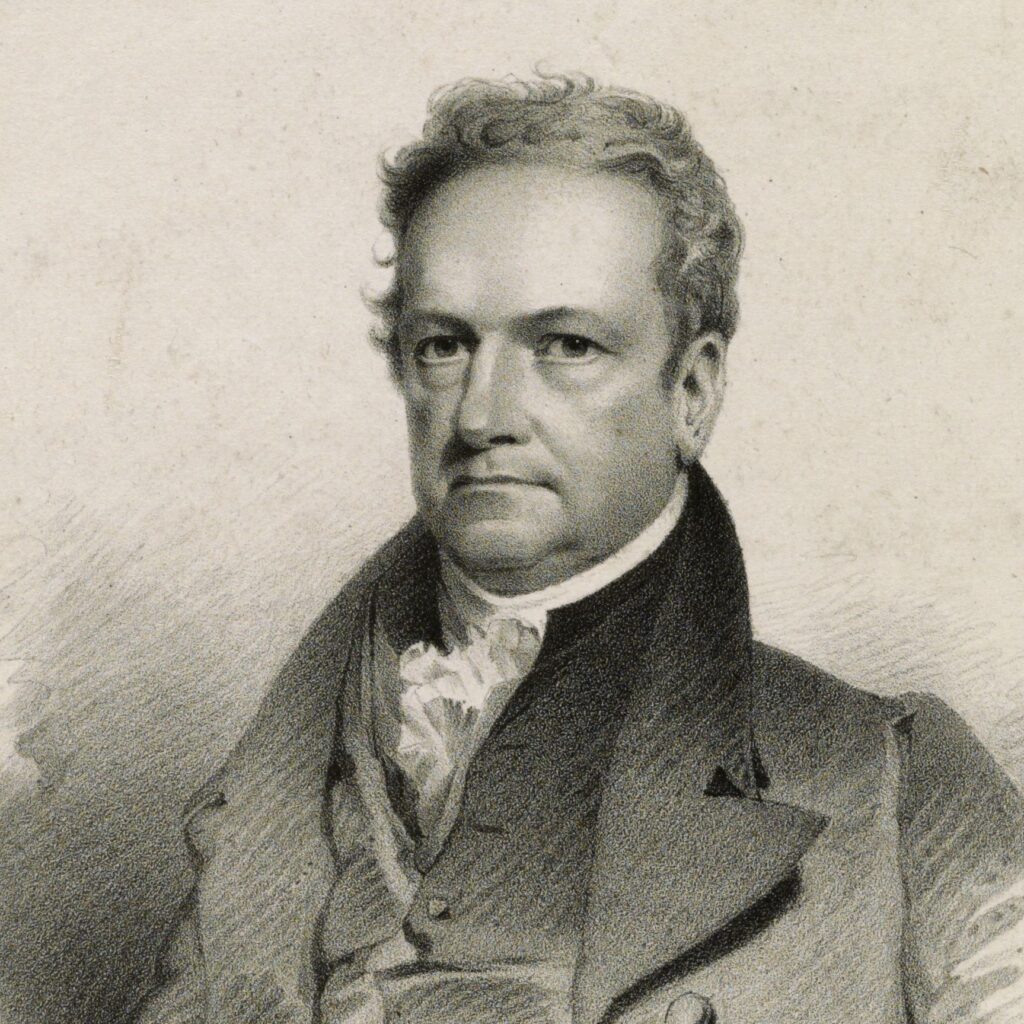
Colden’s good pal DeWitt Clinton
Advantageous Friendships
Colden was a different man from his ancestor; he even fought against the British as a colonel of volunteers in the War of 1812. Surprising given his lineage, Colden was for many years considered a Federalist, the party of Alexander Hamilton. However, he considered as one of his closest friends a rather unlikely ally — anti-Federalist DeWitt Clinton.
How they met probably had less to do with political alliances than membership of a rather notable society — the Freemasons.
In fact, Colden and Clinton were members of the city’s most influential — and still active — Holland Lodge. Within a few years, this affiliation would be political poison, with anti-Freemason candidates characterizing the secret organization as above the law and morally corrupt.
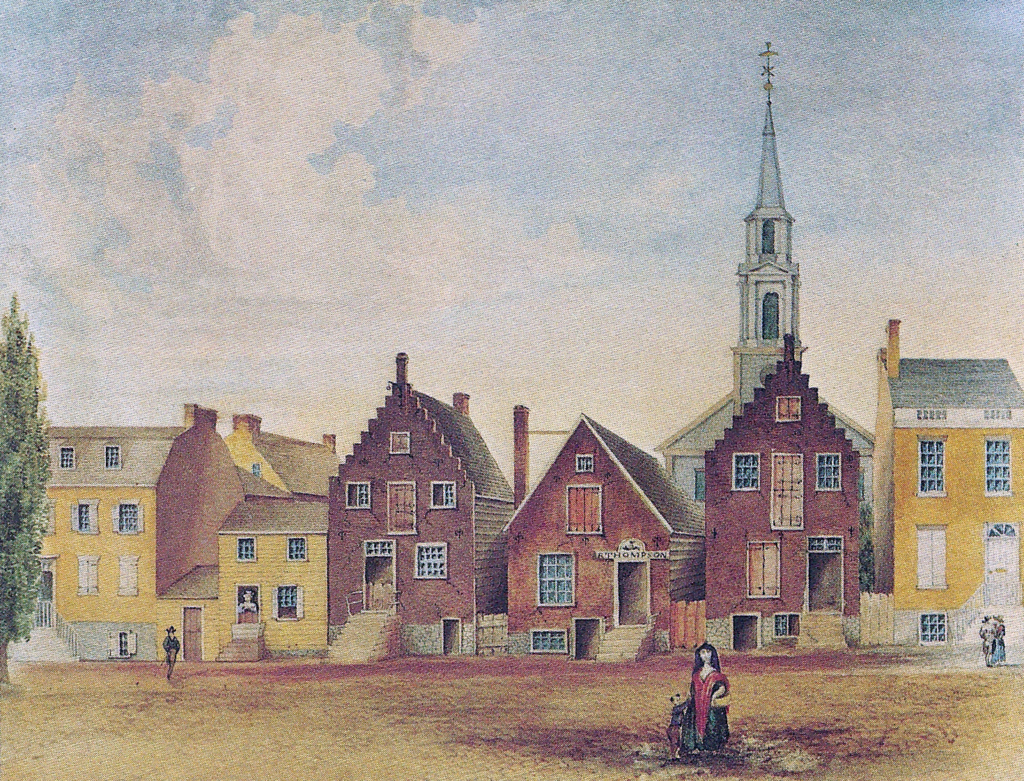
View of North Pearl Street just north of State Street in Albany (1800s), painting by James Eights
Clinton would use his influence to install his friend in the job in 1818, but not without Colden sustaining a little political injury.
One evening, Colden was in Albany and was invited inside a tavern for a glass of wine. He suddenly realized he was in a room filled with members of Tammany Hall, political enemies of the Federalists.
Immediately they pounced, urging him to not seek the mayor appointment. But no, he cried!
“He exclaimed energetically against the trickery, declaring that he had not asked for the office of Mayor, but would only accept it if offered.”
When Clinton did grant him the job, Tammany made sure to make life difficult for him. For the entirely of his three one-year terms, Colden became a pawn in the battle between Governor Clinton and the ascendant Democratic machine.
Colden began work in the spanking new City Hall, the fourth mayor for the new building after Jacob Radcliffe, John Ferguson and, of course, DeWitt Clinton.
Pigs and Prison Reform
First on Colden’s agenda: all those pigs running around.
He declared, “Our wives and daughters cannot walk through the streets of the city without encountering the most disgusting spectacles of these animals indulging the propensities of nature.”
Animals were penned up and steep fines charged to butchers who kept pigs unproperly supervised.
Colden also took a crack at the city’s deeper social problems. Indeed he was governing over a growing city, population 123,706 as of 1820. With a big city came big city problems — poverty, crime, homelessness.
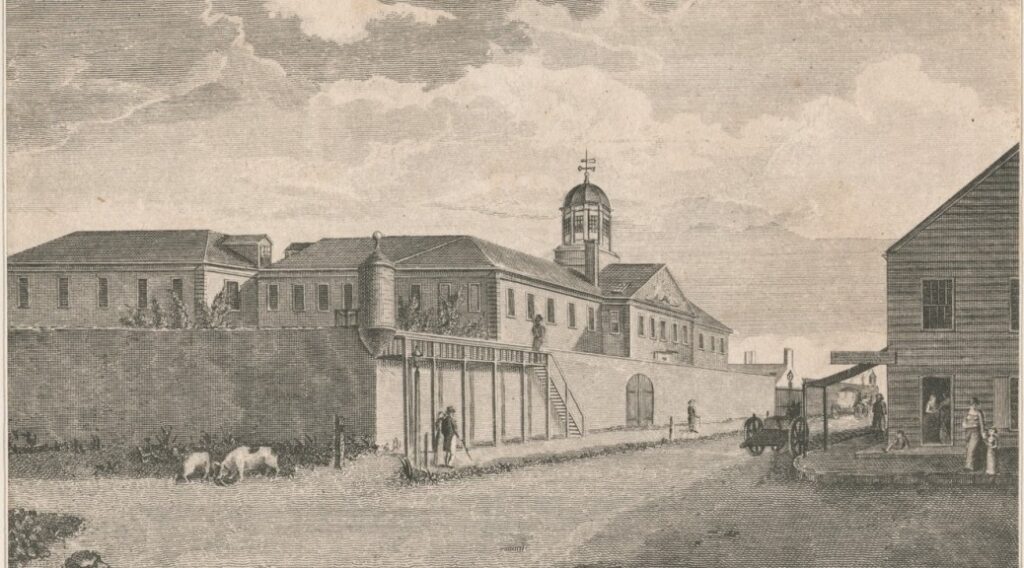
Newgate Prison. Image courtesy New York Public Library
The New York Society for the Prevention of Pauperism, led by the mayor himself, investigated prison conditions throughout the young nation to come up with a local solution.
Colden proclaimed, “It must be obvious that under such circumstances it would be in vain to expect that their punishment will improve their morals: it can hardly fail to have a contrary effect.”
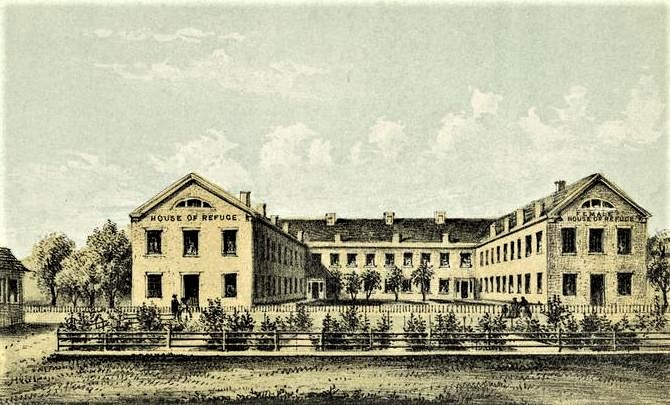
The mayor set the stage for an innovative experiment: New York’s House of Refuge, in an arsenal at Broadway and 23rd Street, essentially a reform school, built to incarcerate children age 16 and younger.
It later opened in 1825 (after Colden left office) with six boys and three girls as its pupils, many of them guilty only of homelessness and essentially kept here until adulthood. By the early 1830s, the House of Refuge would receive over 1,600 teenagers.
A ‘Kindly’ Anecdote
Like many mayors to follow, Colden also clamped down on liquor sales, even carrying around a ‘red book’ to notate violations and overheard complaints of local tavern owners.
Naturally, Colden would rally behind Clinton’s most ardent cause — the Erie Canal. It opened in 1825, after Colden left office, but his support did indeed pave the way for New York to become, in his own words, “one of the greatest commercial cities in the world.”
He was aristocratic, class-oriented but ultimately open hearted, they say. A reminiscence in the 1843 journal New Mirror quotes this certainly apocryphal story about the mayor’s ‘kindness’.
One rainy night on his way to a dinner party, Cadwallader stepped up to a ‘hackman’, a type of carriage taxi, for a ride.
The driver, “who had some old grudge against Mr. Colden,” rudely sped away, leaving the passenger on the curb. He jotted down the cab driver’s number and summoned him to City Hall.
“Poor Pat (for of course he was Irish)” as the article indicates, “went up the stairs, trembling at the fate which awaited him. When the mayor demanded to know why he was treated so rudely, the driver proclaimed,”you see I looked in your face, and, faith, you looked so like a jontleman I drove twice before that never paid me, I was afraid to thrust him agin!”
Colden laughed, exclaiming, “Your wit has saved you this time!” and excused the driver.
Aligning with Clinton eventually became a bad idea. When Clinton was turned out of the governor’s office, so too was Colden from the mayor’s office. But he still remained popular with New Yorkers, becoming a U.S. congressman, then a member of the New York state senate in 1825.
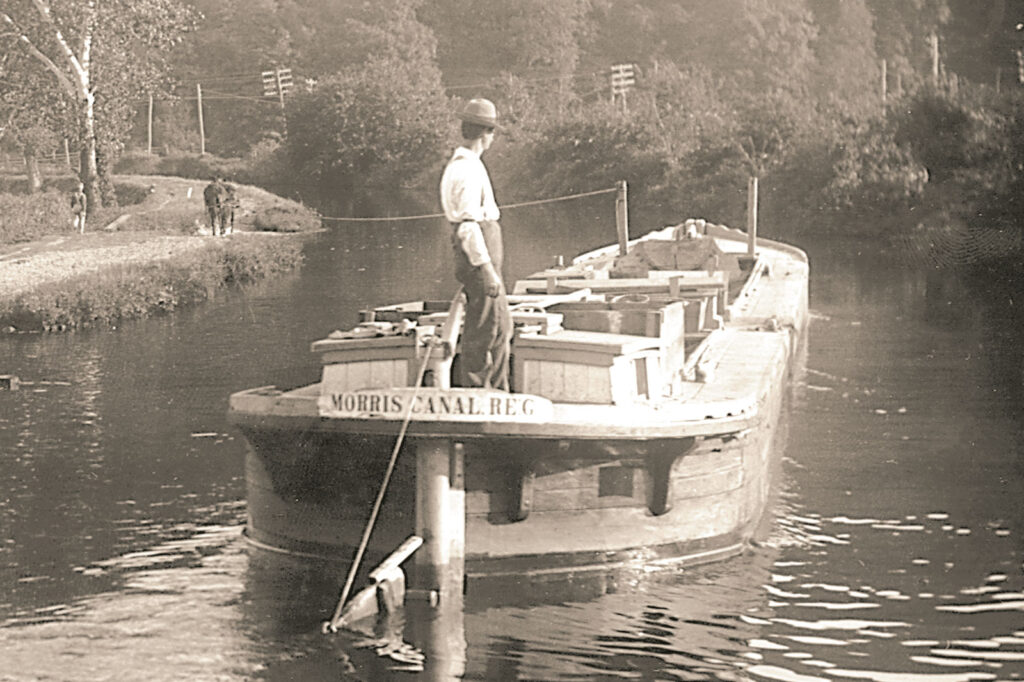
In later life, he engaged in a couple unusual endeavors. The first was the construction of the Morris Canal in northern New Jersey, a conveyor of coal that operated for over a century.
And in 1830, he briefly indulged in the hobby of horse racing, taking over the Union Course in Woodhaven, Queens. The closest you’ll get to visiting Colden’s racetrack is visiting Neir’s Tavern, the oldest tavern in the borough.
PODCAST: How the Tweed Courthouse became a symbol for everything rotten about 19th century American politics.
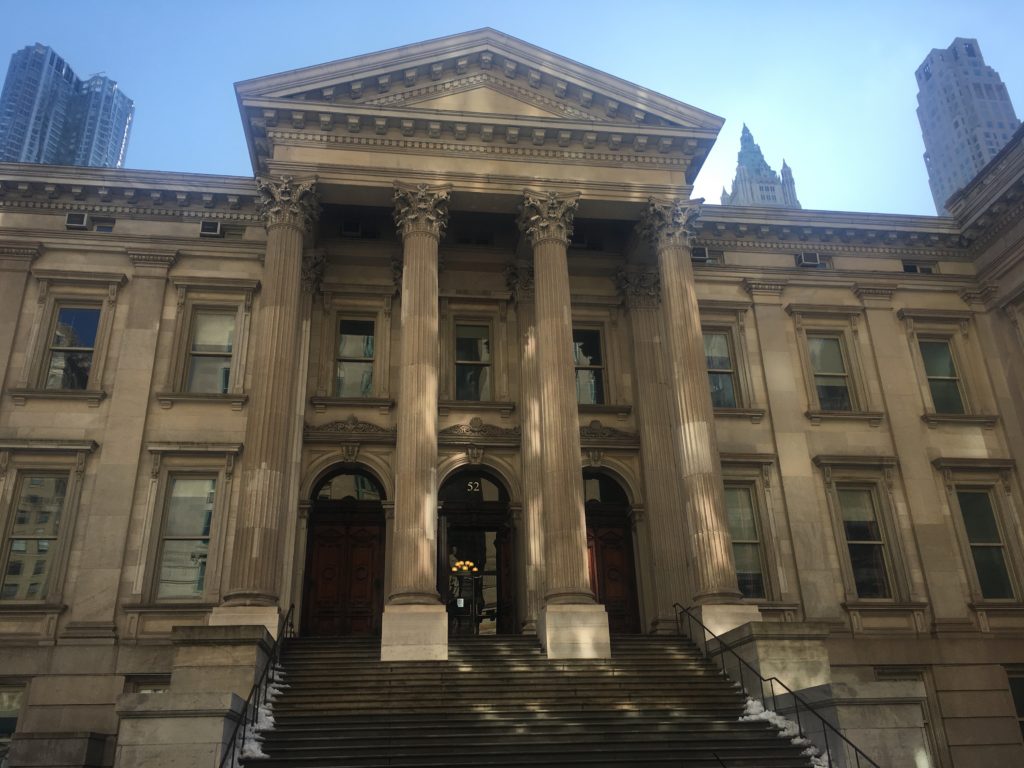
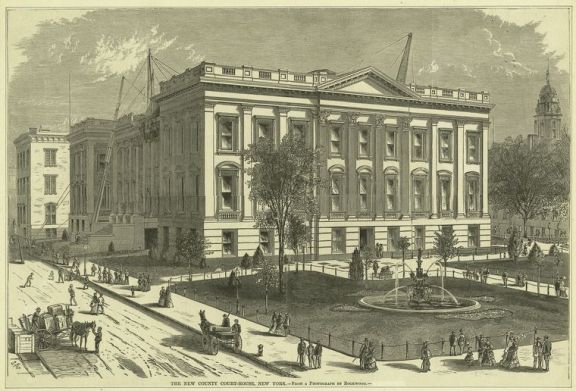
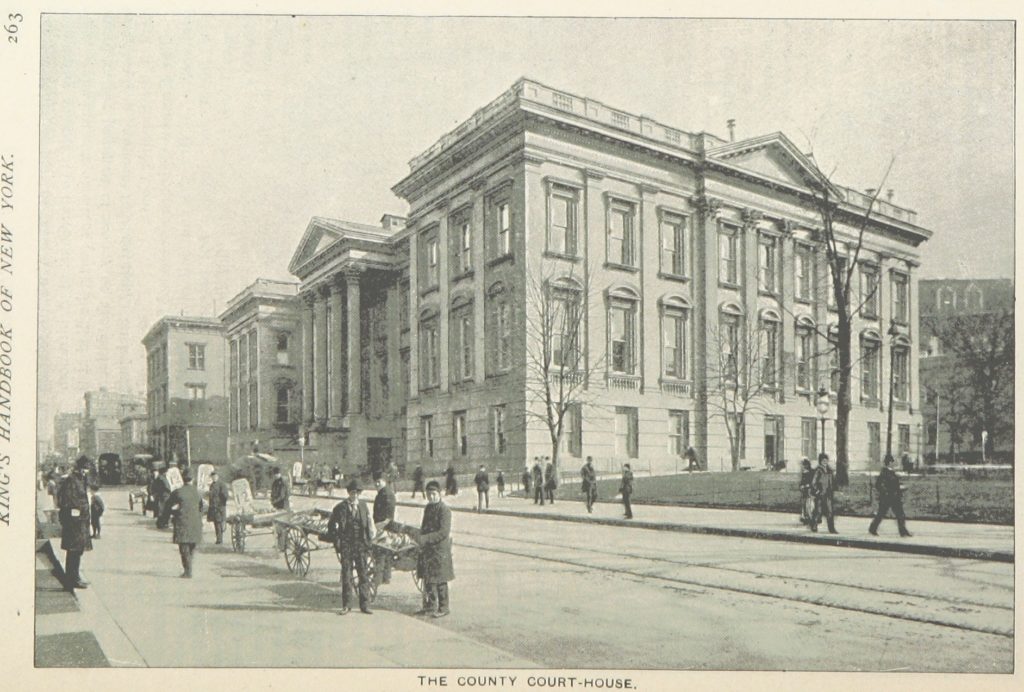
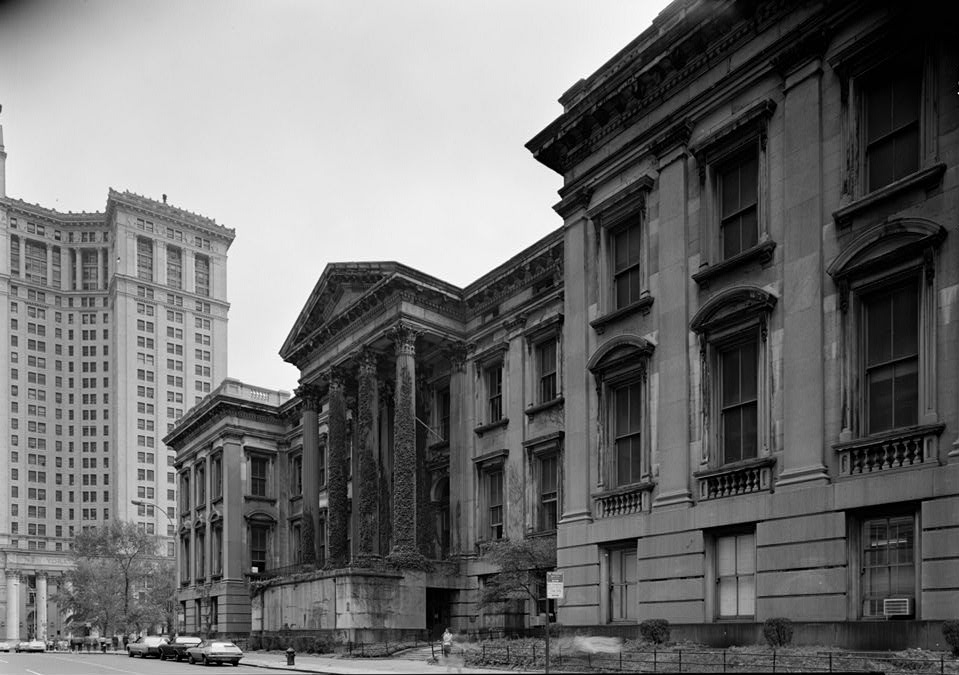
The roots of modern American corruption traces themselves back to a handsome — but not necessarily revolutionary — historic structure sitting behind New York City Hall.
The Tweed Courthouse is more than a mere landmark. Once called the New York County Courthouse, the Courthouse is better known for many traits that the concepts of law and order normally detest — greed, bribery, kickbacks and graft.
But Tammany Hall, the oft-maligned Democratic political machine, served a unique purpose in New York City in the 1850s and 60s, tending to the needs of newly arrived Irish immigrants who were being ignored by inadequate city services. But they required certain favors like the support of political candidates.
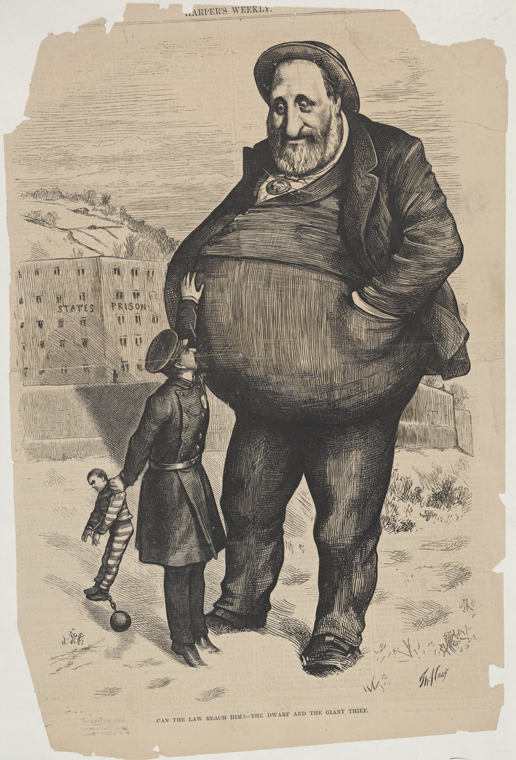
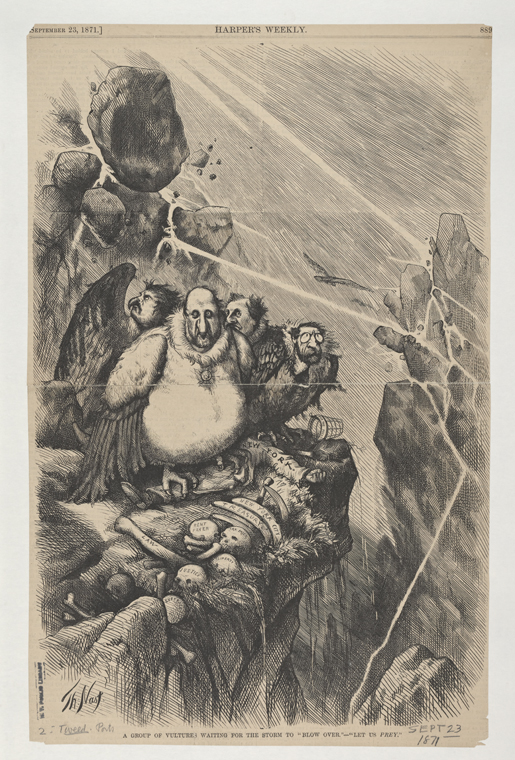
And that is how William ‘Boss’ Tweed rose through the ranks of city politics to become the most powerful man in New York City. And it was Tweed, through various government organizations and his trusty Tweed Ring, who transformed this new courthouse project into a cash cow for the greediest of the Gilded Age.
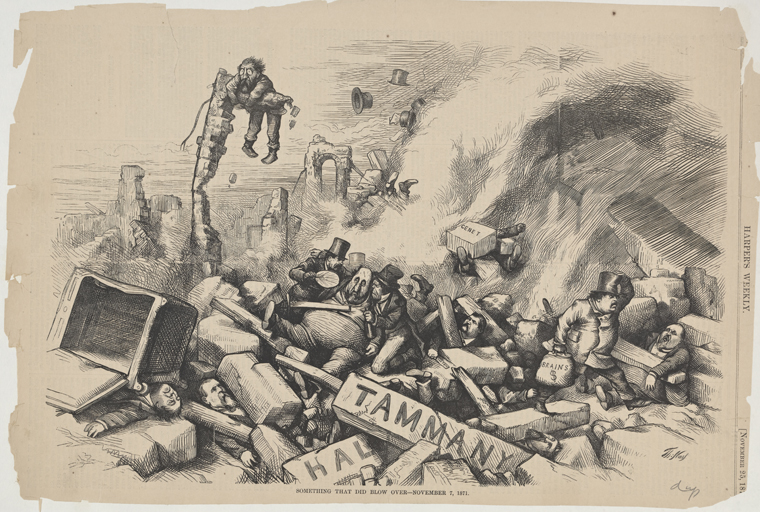
How did the graft function during the construction of the Tweed Courthouse? What led to Tweed’s downfall? And how did this literal temple to corruption become a beloved landmark in the 1980s?
The Bowery Boys: New York City History podcast is brought to you …. by you!
We are now producing a new Bowery Boys podcast every other week. We’re also looking to improve the show in other ways and expand in other ways as well — through publishing, social media, live events and other forms of media. But we can only do this with your help!
We are now a member of Patreon, a patronage platform where you can support your favorite content creators for as little as a $1 a month.
Please visit our page on Patreon and watch a short video of us recording the show and talking about our expansion plans. If you’d like to help out, there are six different pledge levels (New Amsterdam, Five Points, Gilded Age, Jazz Age, Empire State and Greater New York). Check them out and consider being a sponsor.
And join us for the next episode of the Bowery Boys Movie Club, an exclusive podcast provided to our supporters on Patreon.
We greatly appreciate our listeners and readers and thank you for joining us on this journey so far.
We’d like to thank Mary Beth Betts of the NYC Public Design Commission for giving us a tour of the Tweed Courthouse. Tours are not currently available of the courthouse, but Betts and her docents lead tours of New York City Hall next door. Visit their website to book a free tour.
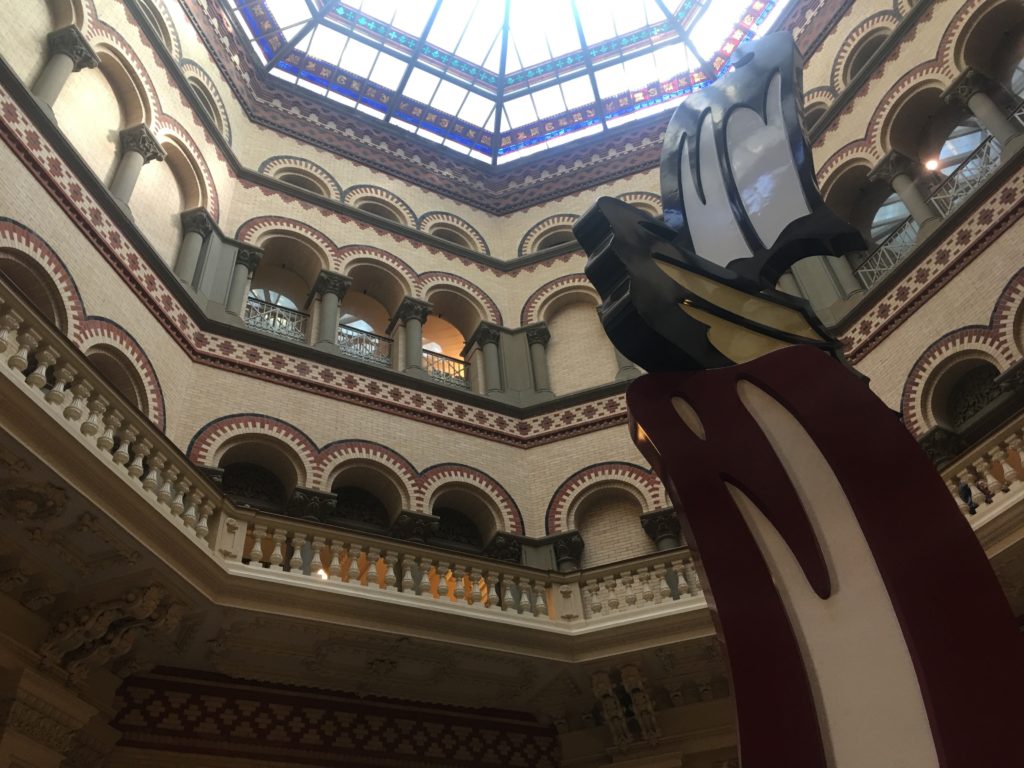
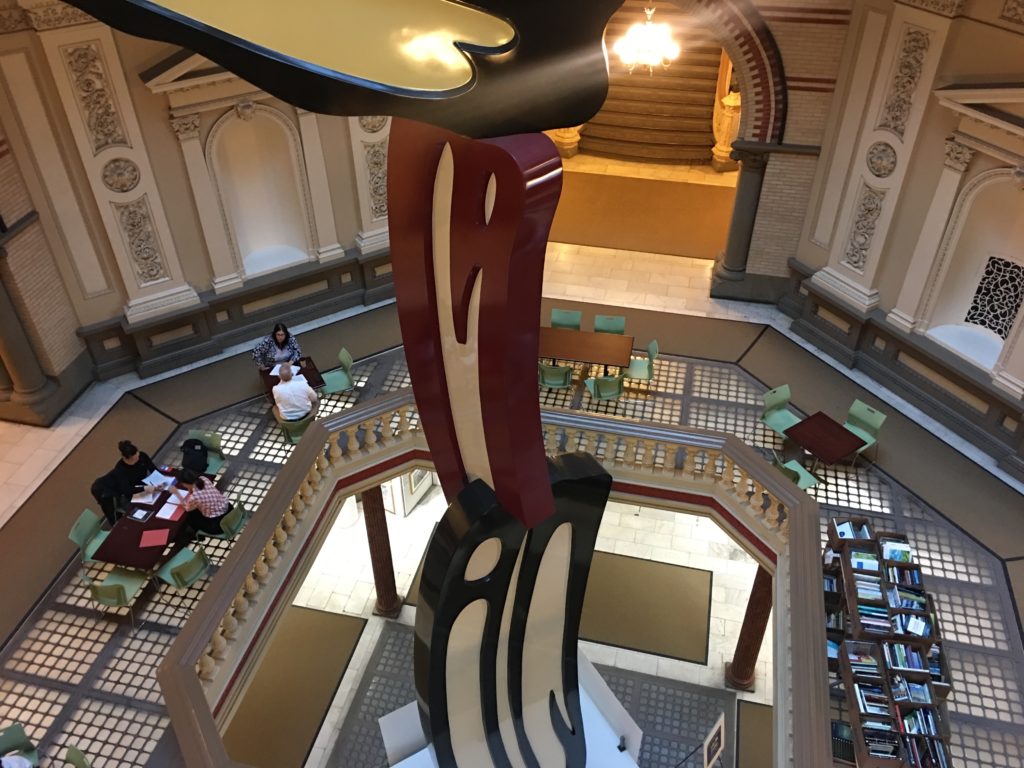
Some images from our visit —
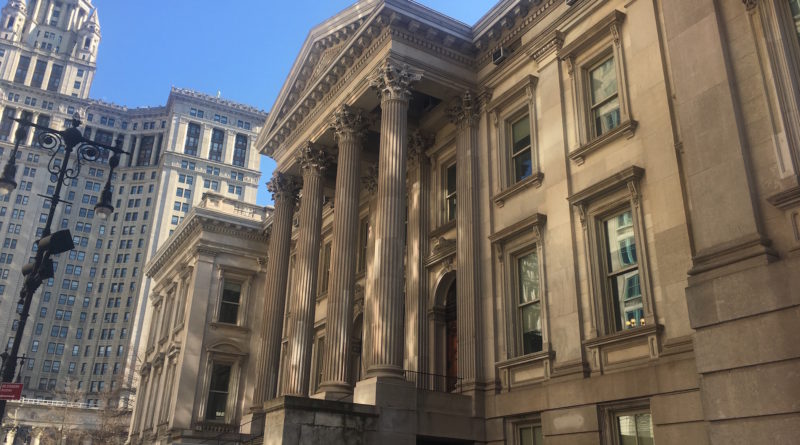
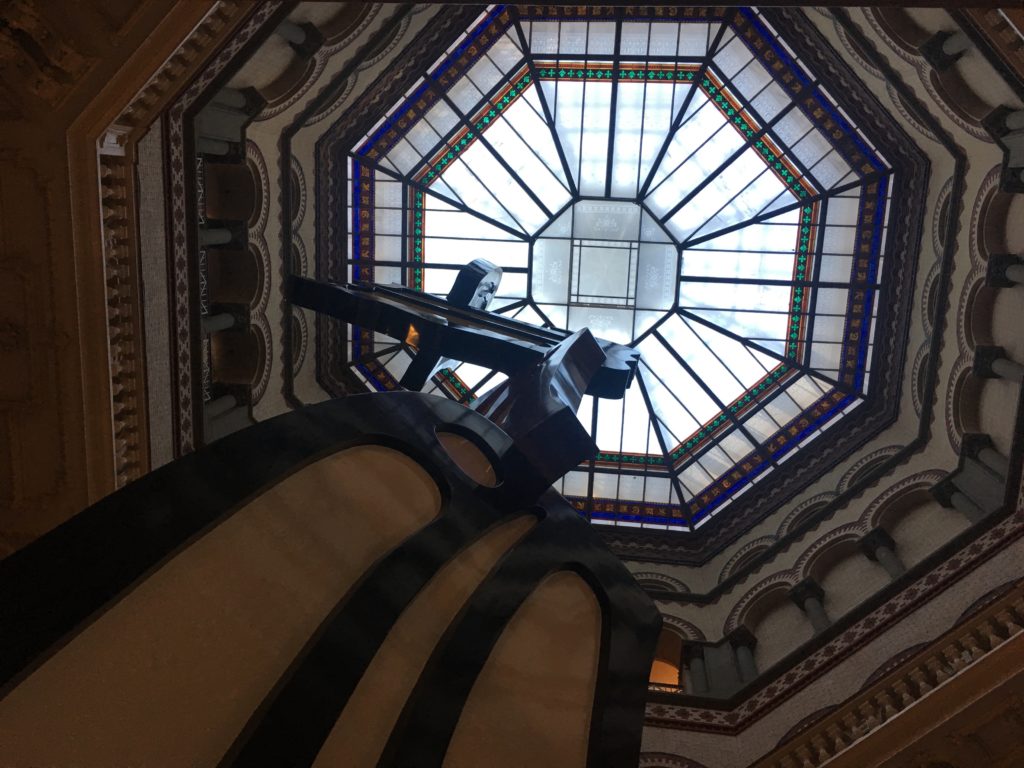
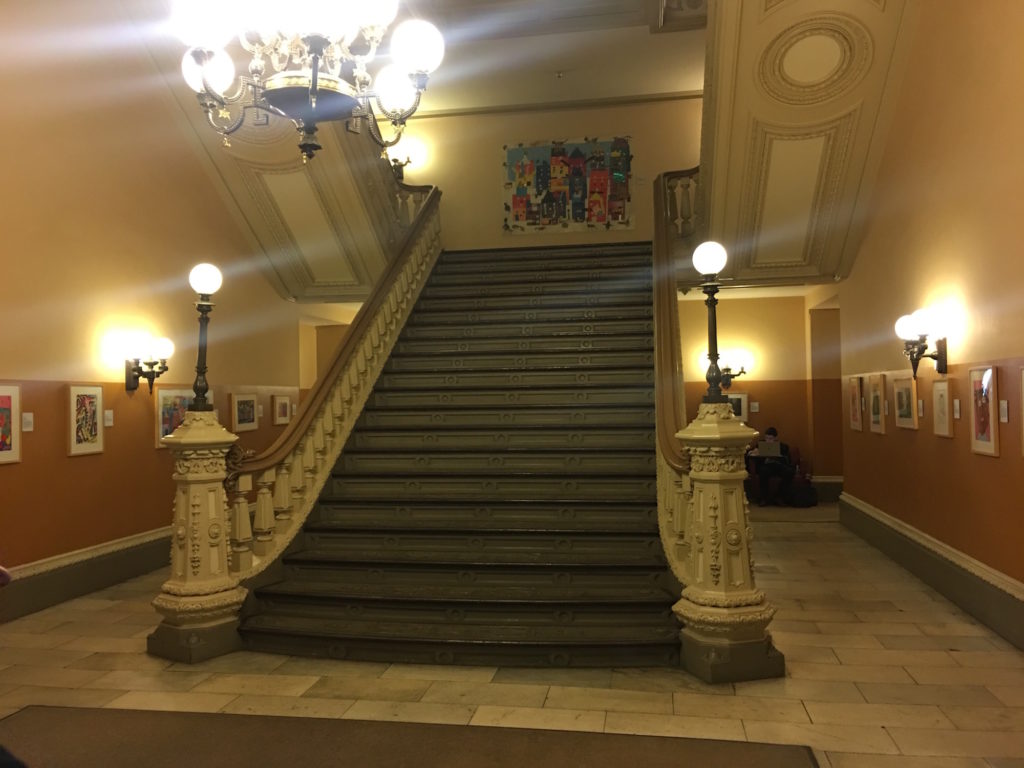
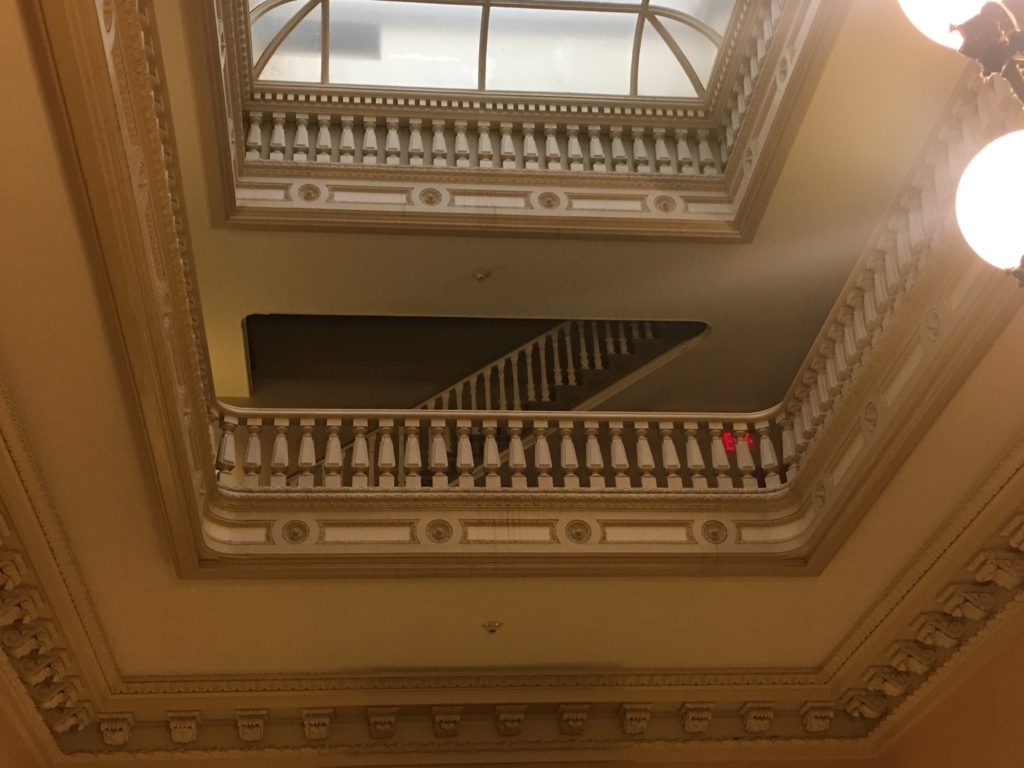
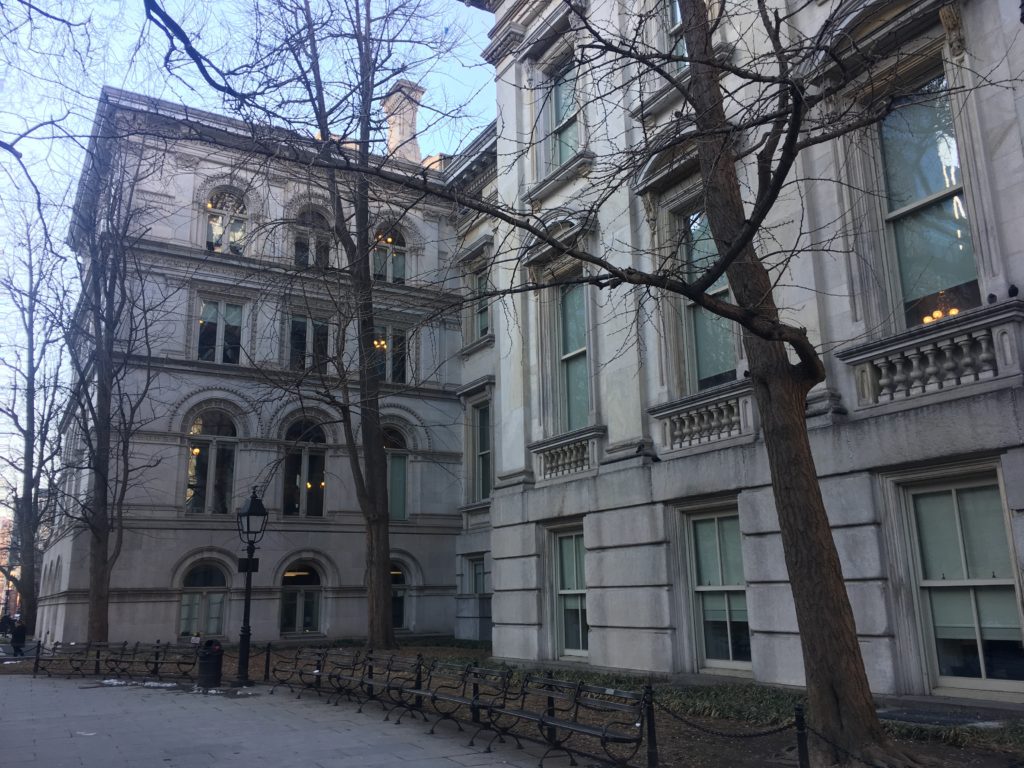
Leopold Eidlitz brought a million arches into the courthouse, his medieval inspirations playing an interesting contrast to the Romanesque Revival of architect John Kellum.Roy Lichtenstein’s Element E now dominates the interior of the courthouse. Students, teachers and administrators work in the spaces surrounding the sculpture.The infamous rotunda roof which remained incomplete even when courts began convening in the courthouse in the 1870s. The sumptuous staircases are all made of cast iron.The courthouse has many curious staircases, leading to smaller spaces on the upper floors. You can actually view the two competing architectural styles on the exterior facades facing into City Hall Park. (Hint: Arches vs. no arches)
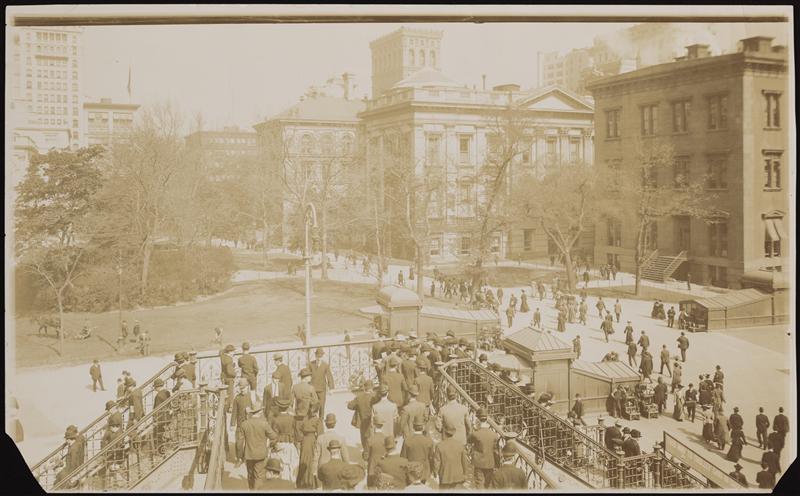
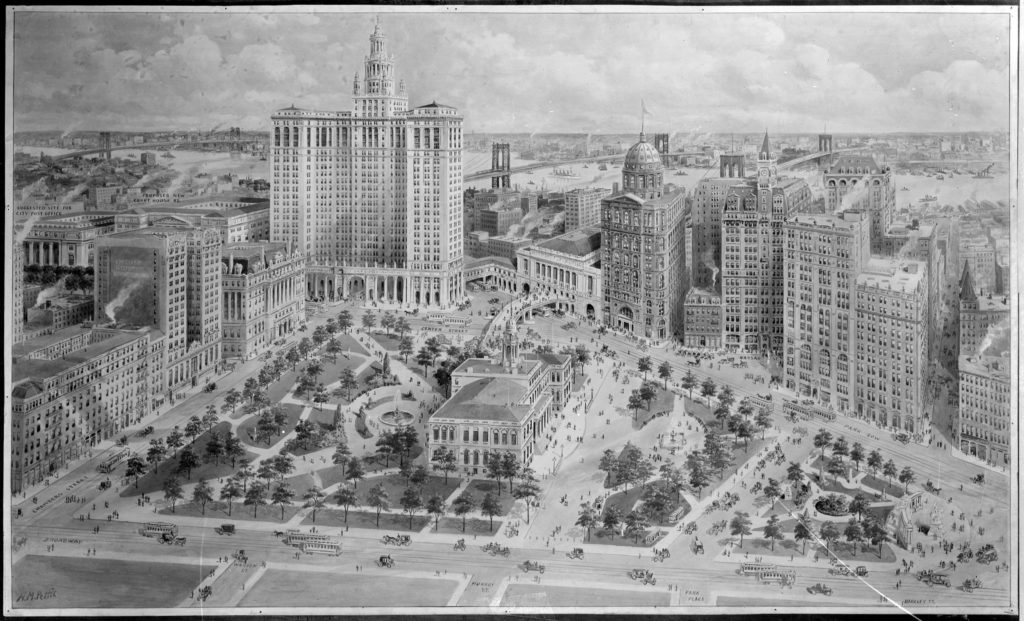
The Tweed Courthouse under construction, date unknown Image taken from page 269 of ‘King’s Handbook of New York City. An outline history and description of the American metropolis. With … illustrations, etc. (Second edition.)’ Courtesy the British LibraryA view of the Tweed Courthouse as seen from the City Hall elevated train station, 1915. The brownstone structure to the right of the courthouse is no longer there. In 1915 the city planned to actually get rid of the Tweed Courthouse. This rendering creates a large park space surrounding City Hall.
H.M. Pettit. Department of Bridges/Plant & Structures collection, NYC Municipal Archives.
The courthouse in 1979 — in shoddy condition and without its famous staircase! Photo by Walter Snalling, Jr., Library of Congress“Can the law reach him?–The dwarf and the giant thief.” Thomas Nast/New York Public Library Digital CollectionAgroup of vultures waiting for the storm to “blow over.”–“Let us prey.” Thomas Nast/New York Public Library Digital CollectionSomething that did blow over–November 7, 1871. Thomas Nast/New York Public Library Digital Collection
FURTHER READING:
Boss Tweed’s New York by Seymour J. Mandelbaum
Boss Tweed: The Rise and Fall of the Corrupt Pol Who Conceived the Soul of Modern New York by Kenneth D. Ackerman
Machine Made: Tammany Hall and the Creation of Modern American Politics by Terry Golway
The Tweed Ring by Alexander B. Callow Jr.
The Tiger: The Rise and Fall of Tammany Hall by Oliver E. Allen
FURTHER LISTENING:
Our original Boss Tweed show from 2009 — with a big news reference at the very beginning that echoes the story we’re about to tell
The massive waves of Irish immigrants who arrived in this country starting in the 1830s and 40s changed New York City forever. Here’s their story:
Fernando Wood was another major power broker in New York City politics in the 1860s.
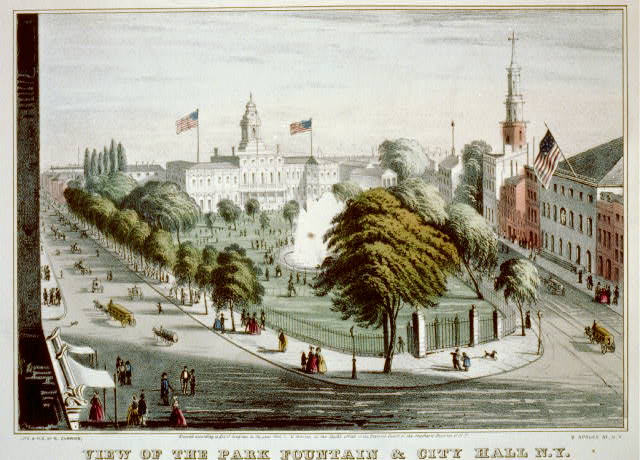
New York City Hall and its brand new water fountain, in 1846, courtesy Currier and Ives (LOC) KNOW YOUR MAYORS A modest little series about some of the greatest, notorious, most important, even most useless, mayors of New York City. Other entrants in the Bowery Boys mayoral survey can be found here. MayorAndrew H. Mickle In office: 1846-1847
New York City has had many useless and incompetent mayors. To be fair, that legion of forgettable and unspectacular men is bloated by the ways in which mayors were chosen in the early days.
Before 1783, mayors were assigned to the city by the governor of the New York colony. The hand-picked mayor presided over a board of aldermen that were elected by the people. He operated at the behest of the British crown, often overseeing a group very much opposed to British rule.
This curious arrangement carried on even after the Revolutionary War, with New York governors continuing to assign mayors to the city until 1821, when the Common Council (today’s City Council) received the authority to appoint mayors themselves.
The role of mayor was not powerful at this time. Before 1821, they were essentially a mouthpiece for the will of the state government. After 1821, mayors were beholden to the Common Council for their very existence. The job frequently went to well-liked merchants with unsullied reputations, uncontroversial men who rarely rocked the boat.
When the New York state charter was amended in 1834, mayors became popularly elected. (The first was Cornelius Lawrence, in a violent, chaotic election.) But this did not necessarily alter the quality of office holders. Mayors now became the puppets of both powerful council members and thriving political machines like Tammany Hall. Corruption ensured that the position of mayor be considered a valuable but neutered prize.
Further minimizing their role in 1834 was the reduction of the mayoral term to one year (until 1849, when they were given two). Even the most savvy and adroit politician would wither in frustration under these limitations. Men questing for substantive political power sought other prizes. The office of mayor became, in essence, a beauty pageant.
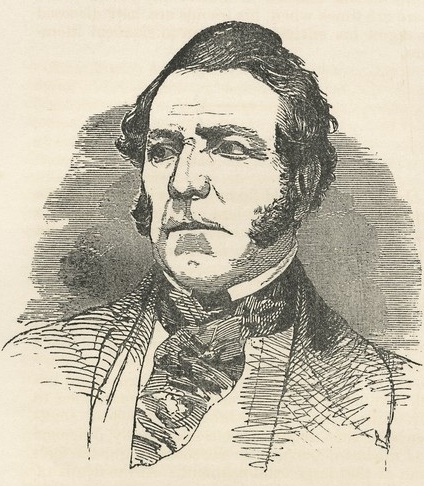
And thus enters into the picture one Andrew H. Mickle, tobacconist and mayor of New York City from 1846 to 1847.
Andrew was born in 1805 to a Scottish couple in New York’s Sixth Ward, the future Five Points. Of course, this was in the era when Collect Pond was being drained, and new residences around this area weren’t yet considered notorious slums. However it seems later biographers gave his back story a bit of that Five Points patina. “He was born in a shanty in the ‘bloody aude Sixth’, in the attic of which a dozen pigs made their habitation,” claimed Gustavus Myers.
As a young man, he began working for the tobacconist George B. Miller at Water and Wall Streets. He would eventually fall in love with Miller’s daughter, marry her, then take over the business entirely.
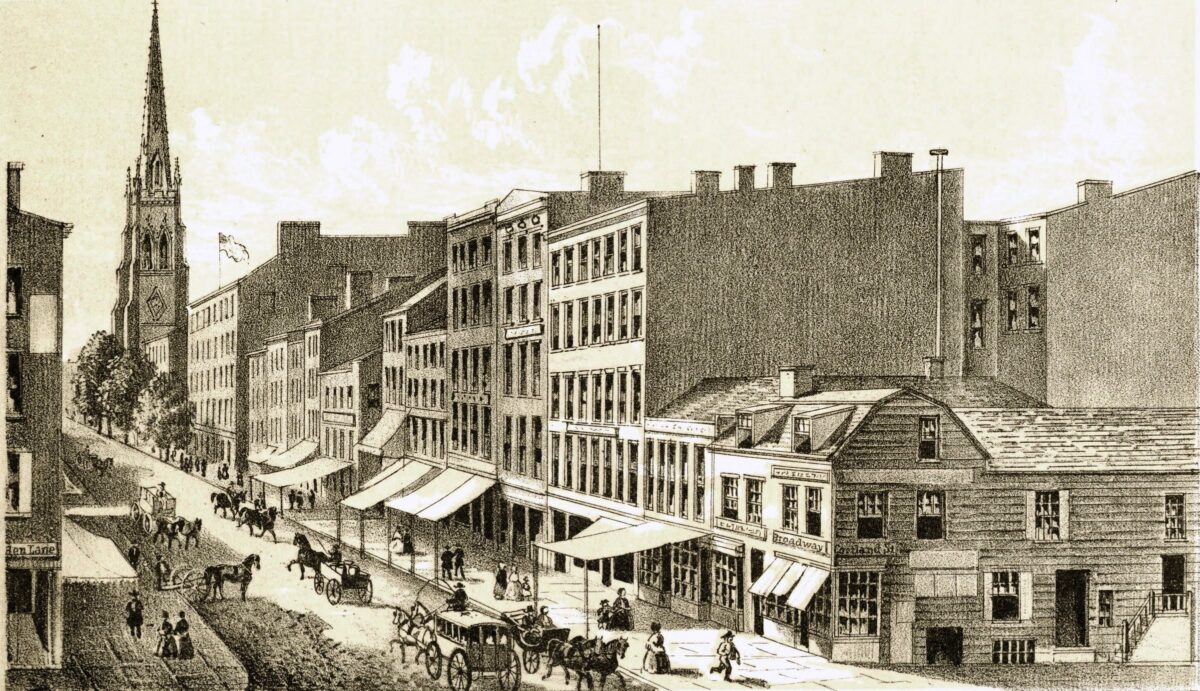
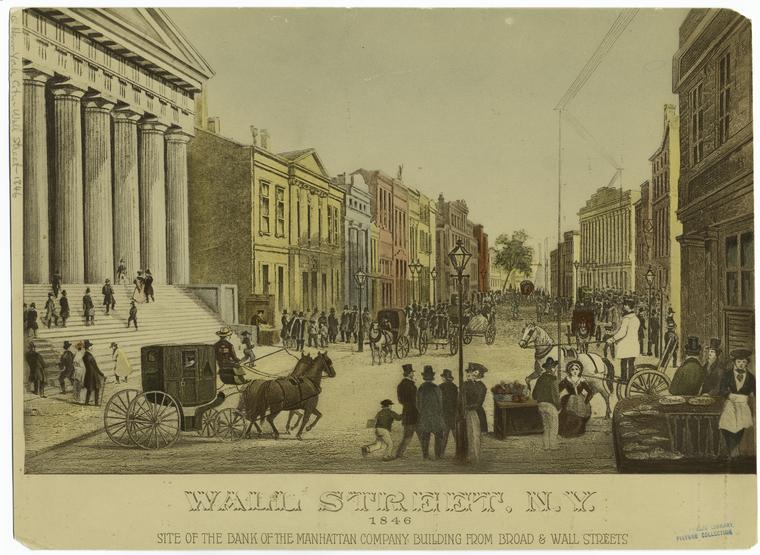
Below: Wall Street in 1846. Mickle’s tobacco shop would have been located in the distance, near the tree. (NYPL)
A 40-year-old tobacco seller might not fit the profile of mayoral candidate today, but it did in 1845. The mayor of New York at the time was sugar manufacturer William Havemeyer, who had actually tried doing something in office (namely, reforming the Common Council), to the consternation of Tammany.
With a surge of immigration adding new voters, Democratic leaders looked for a relatable candidate, somebody who was “one of the people,” but one with little political motivation. These were the years of the Native American party, a drive to flush America of the thousands of Irish immigrants who were arriving in New York. Mickle, though fully unsuited for a life of politics, represented the opposition, the surge of new voters and the core of the Democratic party.
It also helped that Andrew, with his modest upbringing, was known as the son-in-law of a popular tobacco concern, one that many political men visited on a weekly basis.
But if we are to believe the eyewitness of Nathaniel Hubbard, Mickle’s entry into city politics was engineered almost entirely by a different source — his mother-in-law.
Mrs. Russell* was one of the most powerful women in early Tammany Hall history. She was known, according to Hubbard, for giving her employees the day off at the tobacco counter, “a holiday for electioneering purposes,” the writer claims.
Desiring a bit of power for herself, Mrs.Russell essentially bribed Tammany Hall. “She sent a letter to the rulers of Tammany with a pledge to give them $5,000 on condition they would nominate and elect her son-in-law to the office of mayor of this city,” wrote Hubbard.
Perhaps it says something about the office of the mayor that Tammany Hall took the bait willingly, placing this non-entity Mickle at the top of the ticket. Political machines, especially in the early years, felt strongly about holding offices, with few concerns about who went into them.
Hubbard describes Mickle as “an uneducated man,” with abilities of “a very common order.” But in 1845, perhaps, a man of middling skills could properly govern, if he represented the right things. And so Andrew Mickle was resoundingly elected, receiving more votes than his competitors in the Whig and Native American parties combined.
For somebody accustomed mostly to cigars, Mickle did not embarrass himself in his new task. Tammany Hall was pleased with their purchase; Mickle would be considered a “tried and conservative Democrat.” Hubbard would only say that Mickle “passed through his duties … quite satisfactorily to the political party which elected him.” [source]
He exhibited no amount of political acumen, nor was any required of him. The city prospered of its own accord under Mickle. Telegraph poles began appearing in this city in 1846, connecting New York with Albany and Washington DC, and New York’s first great department store, owned by A.T Stewart, opened that year, just a block from City Hall. Richard Hoe‘s innovation of the rotary press that year revolutionized journalism.
Mickle encouraged the construction of a new workhouse and insane asylum, leading eventually to Blackwell’s Island becoming a sort of one-stop for all of New York’s undesirable industries. After the Great Explosion of 1845, Mickle also saw to developing New York’s fire-fighting infrastructure, although it would remain in the hands of private operators until the 1860s.
He announced his retirement at the end of his term in 1847 and retired once again to the world of tobacco, officially renaming the family business A. H. Mickle & Sons. He remained well-liked in Tammany circles up until his death in 1863.
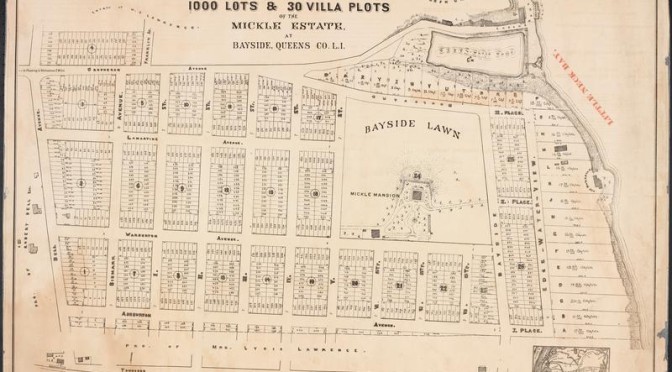
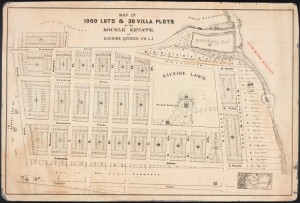
As a curious side note to his later life, Mickle took up residence in the area of Bayside (today, the neighborhood of Bayside, Queens), “situated on one of the most commanding elevations in that section of Long Island.” His spacious manor here was called Bayside Lawn. Many years after his death, in October 1890, the mansion was destroyed in a fire.
Many of you may remember New York’s sole Republican National Convention, held in 2004 at Madison Square Garden, celebrating the re-election bid of George W. Bush. Some may recall any one of New York’s three recent Democratic National Conventions — two (1976, 1980) for Jimmy Carter, and a rather memorable one in 1992 that placed Bill Clinton on the ticket.
Oh, but that’s modern politics! Conventions of the past — stodgy, contentious, male — are more fascinating artifacts, gentlemanly in tone, chaotic and raw in execution, and dominated by a mix of issues both eternal (war, debt, taxes) and outdated (slavery, territorial expansion).
Of New York’s five Democratic nominating conventions, the most infamous is certainly the 1924 gathering at Madison Square Garden — the old Garden, Stanford White’s palace on 26th Street — distinguished by rancor, the significant influence of an energized Ku Klux Klan and an exhaustive trek through 103 ballots only to settle upon a weak compromise candidate, West Virginian politician John W. Davis, who was crushed in the general election by Republican Calvin Coolidge. Within two years, the Garden would be closed and promptly demolished, as though in embarrassment.
But I findthe first national convention, held in 1868, to be the most intriguing and telling of New York life in the mid-19th century, a convention so unusual that the eventual presidential nominee actually recoiled from accepting the nomination.
Four years prior, in 1864, a splintered Democratic Party had tried to replace Abraham Lincoln in the White House with his former Union general George B. McClellan. In New York, former mayor and now-Congressman Fernando Wood led a drive for new national leadership — even though he loathed McClellan — and called for an end to the Civil War with their ‘Southern brethren’. But opposition quickly withered after a series of Union victories, and Lincoln was re-elected.
Flash forward to 1868. Lincoln was dead, the Civil War was over and slavery was abolished. The current president Andrew Johnson aligned with Democrats over Southern inclusion, eventually leading to his impeachment and a serious damaging of the national Democratic brand.
To bring glory back to the White House, the Republicans hoisted forth as their nominee the hero of the war, Ulysses S. Grant. Perhaps the most famous man in America, Grant would eventually prove to be a mediocre president. But his reputation and charm were so great in 1868 that the Democrats knew they stood little chance to defeating him.
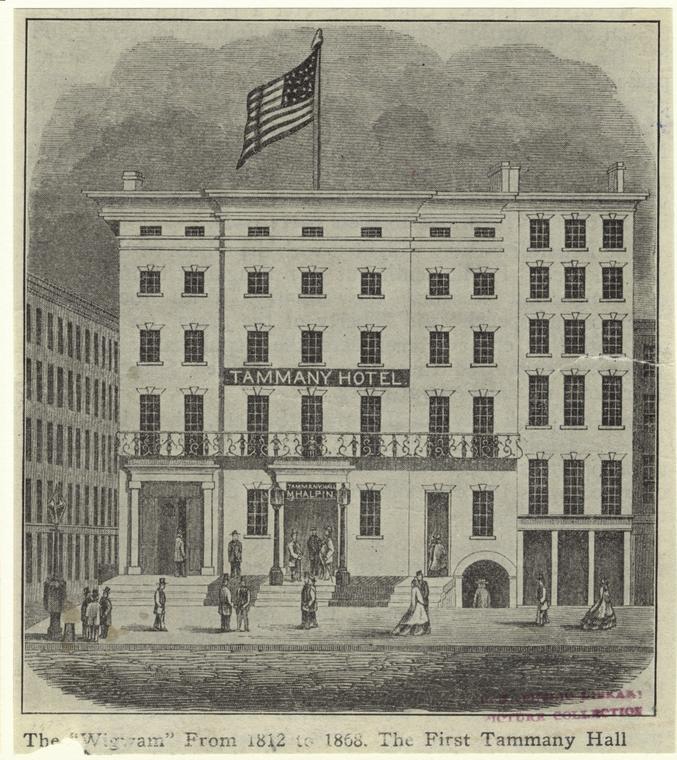
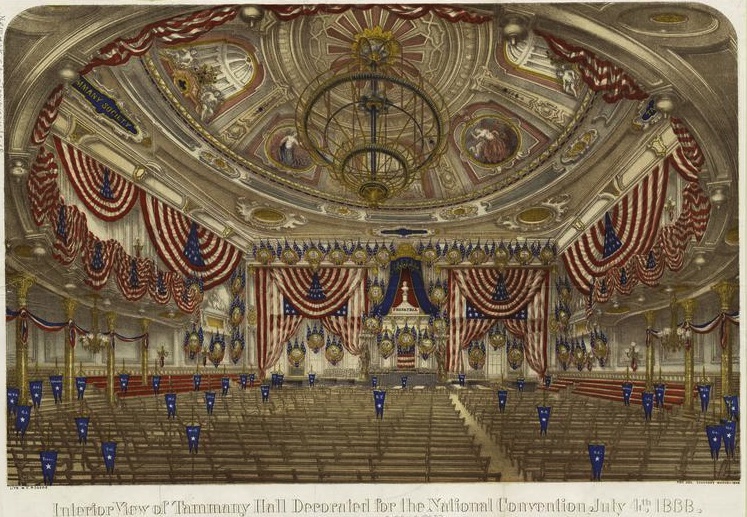
New York’s Democratic contingent — in particular, the political machine Tammany Hall and its leader William ‘Boss’ Tweed — controlled the national committee during this period and steered the convention to New York for the very first time in July 1868.
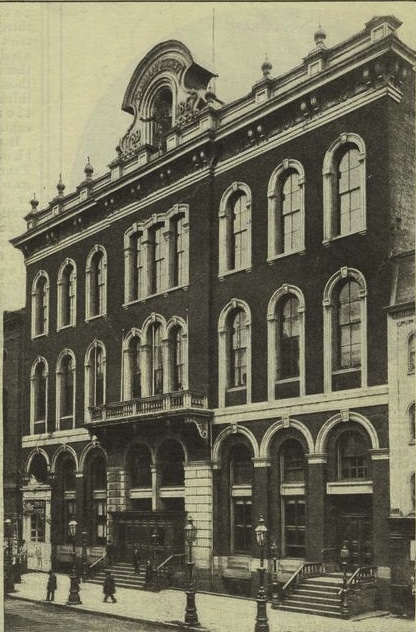
Their headquarters at 141 14th Street (at left) was sparkling new, ‘fresh from the builder’s hands,’ a lush multi-use venue with auditoriums, clubrooms and even a basement cafe, situated next door to New York’s poshest destination, the Academy of Music.
The convention was especially notable as it featured several Democrats from Southern states for the first time since the war.
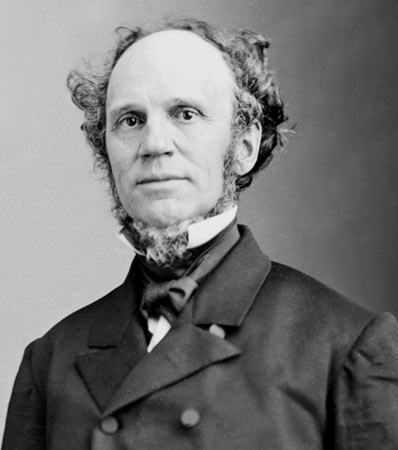
Delegates crowded into the main hall on July 4, and a roar of support greeted Democratic power player (and horse breeder) August Belmont, who gaveled in the proceedings. “I welcome you to this good city of New York,” Belmont declared, “the bulwark of Democracy.” Nearby smiled former New York governor Horatio Seymour (pictured below), president of the convention. Five days later, there were be far less formality and Seymour, in particular, would not be smiling.
On July 5th, the Democrats unfurled their official platform, embracing the return of the Southern states and harshly criticizing the Republican-dominated Congress: “Instead of restoring the Union, it has, so far as in its power, dissolved it, and subjected ten States, in time of profound peace, to military despotism and negro supremacy.” Certainly pleased with this particular inclusion was Tennessee delegate Nathan Bedford Forrest, grand wizard of the Ku Klux Klan.
But the Democrats made room for the consideration of progressive causes too, such as a call for women’s suffrage. Seymour read aloud a plank from the Women’s Suffrage Association written by Susan B. Anthony and co-signed by Elizabeth Cady Stanton.
Anthony appealed to their quest for dominance. “It was the Democratic party that fought most valiantly for the removal of the ‘property qualification’ from all white men, and thereby placed the poorest ditch-digger on a political level with the proudest millionaire. And now you have an opportunity to confer a similar boon on the women of the country … a new talisman that will ensure and perpetuate your political power for decades to come.”
The request was greeted warmly by the room before being respectfully dismissed altogether.
Things grew less harmonious when the balloting for president began. Several candidates were submitted, even the disgraced Andrew Johnson. For several arduous ballots, the leader was George H. Pendleton, who had been the vice presidential hopeful under General McClellan. But it immediately became clear that the factions within the party were in no mood to settle quickly.
Pendleton’s lead had weakened by the 13th or 14th ballot, leaving two key candidates — Thomas Hendricks, an Indiana politician, and Winfred Scott Hancock, a Union general that seemed an attractive challenger to Grant. But neither could approach the two-thirds needed to snatch the nomination.
A stalemate called for a third candidate, somebody that all could agree with, while at the same time, an individual that was absolutely nobody’s top choice. It was at the podium that delegates found their man — Horatio Seymour.
He was horrified. Seymour wanted to retire and had previously rejected calls to run for national office. Privately he must have considered the pitiful chances of running a lengthy campaign against Grant. But delegates greatly respected the former governor, a bastion of cool Democratic leadership who had been an opponent to the federal draft during the war. He had also been partly responsible for the Draft Riots, emptying the city of federal militia days before the draft was to begin that July.
Still, their were few ready options for the Democrats. When a delegate from Ohio suddenly declared “against his inclination, but no longer against his honor” to put forth Seymour as a suitable compromise, the room followed suit. On the 22nd ballot, Seymour was enthusiastically declared the Democratic nominee for president.
The only one not enthusiastic about it was Seymour. “I said to them that I could not be a candidate [and] I meant it.” [source] He left the convention in a huff, only to begrudgingly accept the nomination back at Tammany Hall the following day.
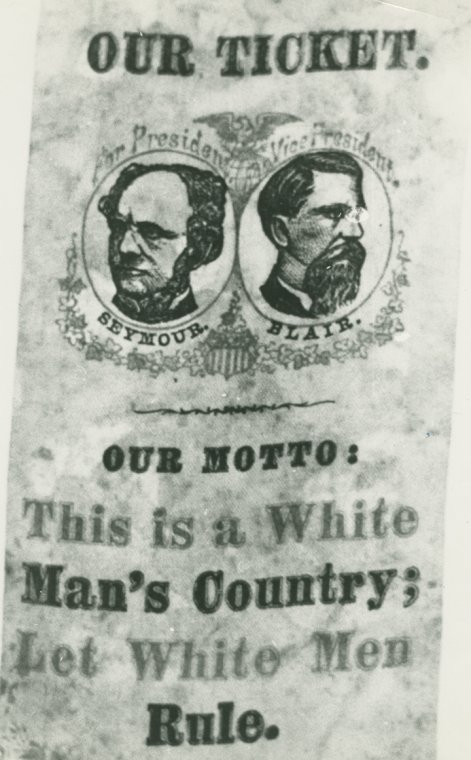
Seymour threw himself into the campaign with vice presidential choice Francis Blair Jr. (whom Seymour barely knew and hardly liked). As evidenced by the campaign poster above, they weren’t afraid to use the Southern racial divide to appeal to voters. But no matter; they lost soundly in the electoral vote to Grant and vice president Schuyler Colfax.
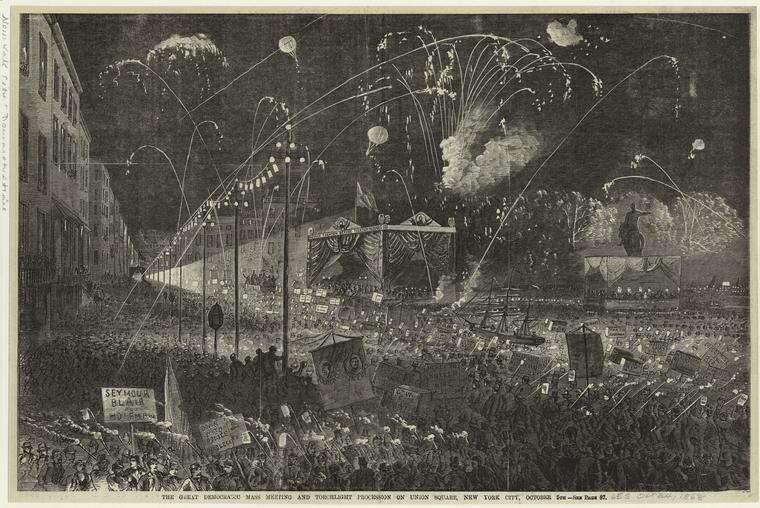
Perhaps the real objective of the convention wasn’t to sway a national crowd, but to energize New Yorkers. Democrats swept into local and state offices, including Boss Tweed’s own choice for governor John T. Hoffman.
Below: Democrats rally in Union Square in support of Seymour and other local candidates, October 5, 1868
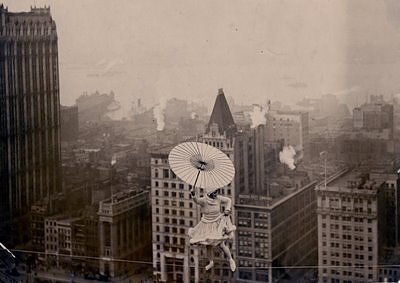
Bird in the sky: The delicate Ms. Millman makes it look easy
Last night on my walk home, I observed something you just don’t always see everyday — a renegade acrobat dangling from the top of the Williamsburg Bridge! The perilous pair, Seanna Sharpe and Savage Skinner, performed this foolhardy trapeze as traffic whizzed by below them, and the two were later apprehended by police. Will this stunt place them in the annals of great stuntwork performed by others who have used New York landmarks as their own personal stages?
1 Jules Leotard This young French performer, renown in his home country, performed at New York’s Academy of Music in 1868 where he essentially debuted the art of the flying trapeze to startled New Yorkers. While we would not consider his feats particularly compelling today, audiences went wild, with local papers calling him a ‘dazzling, plumed bird’ and the Tribute referred to him as ‘tremendous, as a son of thunder’. He would return to Europe, where his tight, one-piece uniform would be mass produced and eventually bear his name.
2 Hanlon Brothers The lofty endeavors of tightrope walking and trapeze acrobatics were forever changed on November 1, 1869, when an acrobatic troupe brought an aerial show to New York so ambitious for its time that it required one of its members to invent the aerial safety net! (William Hanlon eventually held the patent for it.) But here’s the odd part. The venue for that performance? Tammany Hall, at the time at 141 East 14th Street — and nearby the Academy of Music — making the block a sort of revolutionary spot for 19th century stuntwork. [source]
3 Steve Brodie A teenage newsie looked over at the Brooklyn Bridge as it slowly rose over the East River during its construction in the 1870s. He looked and thought, “I’m going to jump off that one day!” And so he did, on July 23, 1886 — or so he claimed — and the single event transformed him into a minor celebrity. He toured in a stage show recounting the event and opened a popular saloon at 114 Bowery (at Grand Street) in honor of his claim to fame. Today most people attempting such a ridiculous stunt are hardly considered heroic.
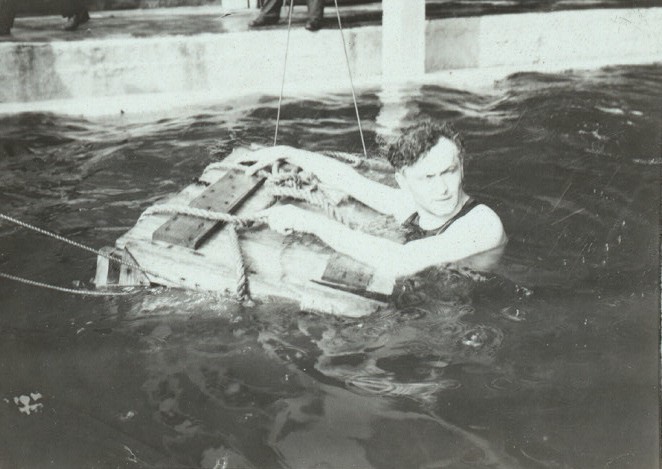
4 Harry Houdini The legendary magician moved to New York at an early age in the 1880s, and as he honed his crafts of illusion, he frequently used the city as a backdrop to heighten the drama. He was thrown into the East River on July 7, 1912, locked in a crate and bound in handcuffs and leg-irons. (Time it took him to escape: 57 seconds.) And in another rather famous trick in 1916, the escape artist, bound in a strait-jacket, hung precipitously from a crane over an excavation for the New York subway in the middle of Times Square. (Escape time: 2 minutes, 37 seconds.)
Below: Houdini, coming up for air (Pic courtesy NYPL)
5 Bird Millman The lovely queen of the tightrope (pictured at top) was a favorite of the Ringling Brothers and Barnum & Bailey Circus, not to mention a featured performer for Florenz Ziegfeld. She performed hundreds of times within vaudeville theaters in New York well into the late 1920s, but occasionally she performed outside, dancing across tightropes stretched between buildings.
6 Evel Knievel Garbed in his trademark patriotic colors, Knievel leapt over nine cars at Madison Square Garden during a series of shows in July of 1971 — his only major New York appearances. But the stuntman’s real dream never got off the ground: the desire to jump his motorcycle from one great skyscraper to another. The city wouldn’t have approved of something so dangerous….
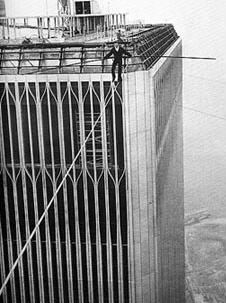
7 Philippe Petit
…which is why you don’t ask them. The eccentric French high-wire performer snuck into the World Trade Center several times to plan the specifics of an extraordinary display of daredevilry. And on August 13, 1974, this ‘Man on Wire’ walked a narrow cable from one tower to the other. A masterful display of personal courage, and a rather embarrassing on the Twin Towers’ lax security.
8 Alain Robert This modern daredevil — the ‘modern Spider-man’ as the press has dubbed him — has scaled all sorts of tall surfaces throughout the world, including the Empire State Building in 1994. When the new New York Times headquarters was completed in 2008, it was like a red cape to a charging bull, and Robert took to the building on June 5, 2008, and unfurled a banner about global warming.
ALSO: Coney Island has been the site of a great many deathdefying performances over the decades. An August 14, 1904 issue of the New York Tribune marvels at the amazing stunts at the theme park Dreamland — “Men Must Do Much to Thrill The Public Now” — and notes one performer who fell off a rusty 725-foot sliding cable, tumbling into the ‘Shoot the Chutes’ ride!
One hundred years ago today (June 23), the big news was the coronation of England’s King George at Westminster Abbey. Judging from the New York papers, American fascination with this event makes the recent royal nuptials of William and Kate seem like a forgettable folly. The June 23, 1911, issue of the New York Tribune is filled with illustrations of queens, crowns and processions.
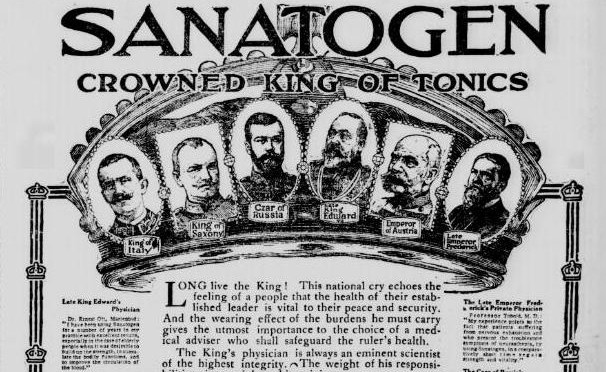
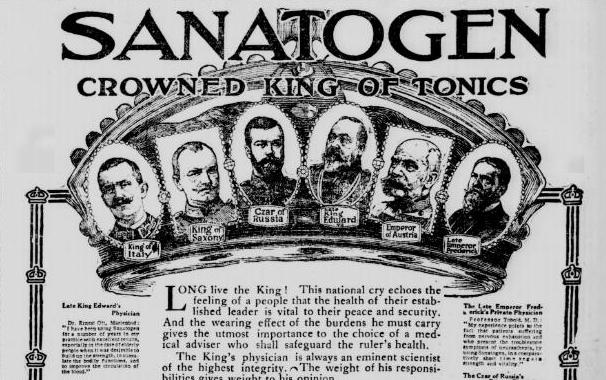
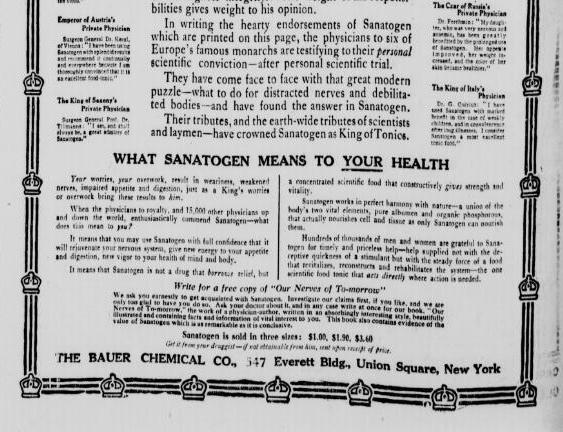
What grabbed my attention, however, was the king-themed advertisement that ran big and bold on the second page. Here are two sections of it (the original is here):
Sanatogen was a kind of vitamin water, “a concentrated scientific food that constructively gives strength and vitality.” According to this advertisement, most of the crowded heads of Europe swear by it!
What caught my interest, however, was the location of its American distributor — the Bauer Chemical Co. in Union Square. A chemical company in one of New York’s most bustling public spaces?
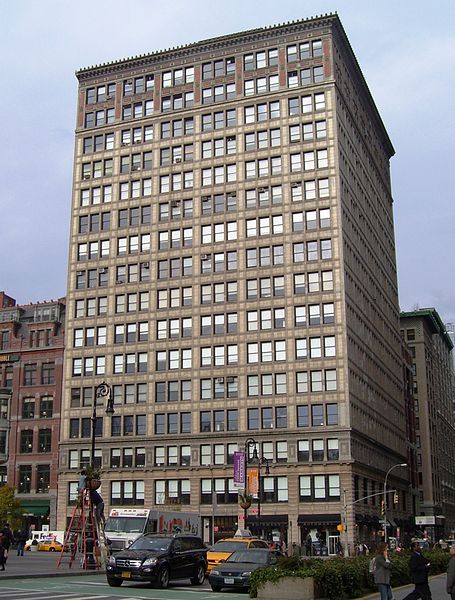
Bauer was located in the Everett Building*, at the northeast corner of the park, right across the street from the Germania Life Insurance Company Building and, back in 1911, catty-corner from the headquarters of Tammany Hall. The Everett, with its simple and rigid face, was designed by Starret & Van Vleck, famous for their department-store designs. Indeed, the uptown flagships of Lord & Taylor and Bloomingdale’s look like more elegant versions of the Everett.
Bauer moved in sometime after the Everett’s opening in 1908. They were the exclusive distributor of Sanatogen in the United States and seem to have done quite well by it. “Nerves have a Hunger of their Own,” said one ominous 1916 advertisement. “Sanatogen helps satisfy it.” It also cures “Neurasthenia” and “Cholera Infantum.” Remarkable!
The reason anybody really knows The Bauer Chemical Company is that it was a party in a landmark U.S. Supreme Court case, Bauer & Cie. v. O’Donnell, a case involving the sale of Sanatogen, essentially affirming that selling the product below the suggested price to customers, as one druggist O’Donnell attempted, did not violate the terms of license.
After the trial, it appears the company moved a block over to Irving Place by the mid 1910s. I’m not sure what happened to them after that. However, although King George is long gone, you can still buy Sanatogen in the U.K.! And their products seem to be labeled to accurately describe their recommended usage.
*The Everett Building is named for the Everett House, a luxury accommodation that once sat at this very corner. In its day, the Everett played host to many a Democratic bigwig — Tammany was across the street after all — and, since we’re on a British royal kick, once housed the Prince of Wales in 1860.
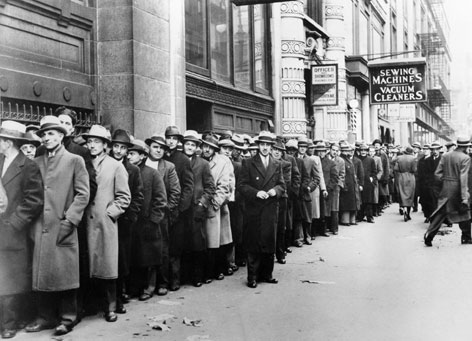
Above: An unemployment line in November 1933. The O’Brien administration offers no relief to the city.
KNOW YOUR MAYORS Our modest little series about some of the greatest, notorious, most important, even most useless, mayors of New York City. Other entrants in our mayoral survey can be found here.
MayorJohn Patrick O’Brien In office: 1933
There’s not much to say about New York mayor John P. O’Brien that’s very positive. He’s one of the most forgettable mayors of the 20th century. But I haven’t forgotten!
His obscurity is partially due to his length of term; he was mayor for only a year. But thank goodness. He was the last pure mayoral puppet of Tammany Hall. His blandness is further accentuated by the fact that his duration of mayor is sandwiched between that of the debonair Jimmy Walker (1926-1932) and the reformer Fiorello LaGuardia (1934-1945) — two men of great charm and strong personal narrative.
What makes his mediocrity less than humorous is the fact that O’Brien governed the city during the pitiful year of 1933, the last truly disastrous year of the country’s greatest depression, a year when the nation’s unemployment rate actually hit 25%.
His predecessor Walker was a political illusionist, known more for his style than his substance. He hypnotized the city while keeping its corrupt, ineffective infrastructure churning. When no-nonsense, progressive judge Samuel Seabury exposed widespread malfeasance in the New York legal system, all roads eventually led to ‘Beau James’, who resigned in September 1, 1932. [More in the Know Your Mayors entry on Jimmy Walker.]
In the wake, Walker’s deputy mayor Joseph V. McKee was declared temporary office holder until a special election could be hastily prepared to find someone to complete Walker’s term. Normally, such wholesale exposure of corrupt Democratic leadership would have assured their immediate ouster at the polls; however, the anti-Tammany forces had yet to properly gel when the special election took place two months later in November 1932 — and the political machine was able to squeeze in one more elected representative.
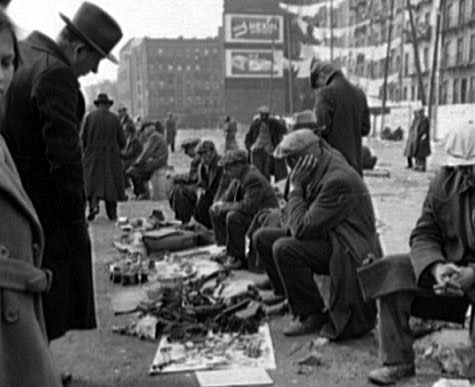
Below: New York in 1933, and it’s not pretty. Men selling their possessions on the street.
John O’Brien, a lawyer of some renown, was known as a quiet but obedient public servant. (“Loyal and industrious” according to Allan Raymond.) The man was stiffer than stiff, a devout Catholic who wore his holy medals everywhere, even on gym clothes. Born to Irish immigrants in Massachusetts in 1873, O’Brien graduated from Georgetown, moved to the city, and moved into and up through the ranks of the Democratic machine to become Corporation Counsel in the early 1920s. (A nice description of what the Counsel is can be found here.) He was later appointed a New York Surrogate Court judge.
As deputy mayor, McKee was merely a fill in. Even at veiled gestures that McKee would cut wasteful city jobs was too much for the liking of Tammany leaders, who often filled those very jobs. Also McKee was also from the Bronx. That will never do!, cried party leadership.
So they went hunting for a more malleable choice, and found O’Brien. With opposition scrambling for a real candidate for the full election a year later, O’Brien handily won the special election on December 1932, double the votes of his inept republican competitor, former Brooklyn borough president Lewis H. Pounds.
“Square jawed” O’Brien went right to work — doing virtually nothing. Despite being in the midst of the Great Depression, little was truly accomplished. Even if he had wanted to do something — and there is no evidence he did — he was so beholden to his Tammany Hall masters that he had little latitude for change. Those jobs he did eliminate were those least interesting to his Democratic overlords, namely school teachers.
He did secure a agreement with private banking firms to continue loaning to the city until 1937, so long as the city stopped raising real estate taxes. This balm merely disguised a rueful out-of-balance city budget that would weigh heavily upon his successor. Even worse, emergency relief funds from the federal government (what we would call ‘stimulus money’ today) was re-routed to the pockets of Tammany rank-and-file, dispersed almost at random instead of places in the city of greatest need.
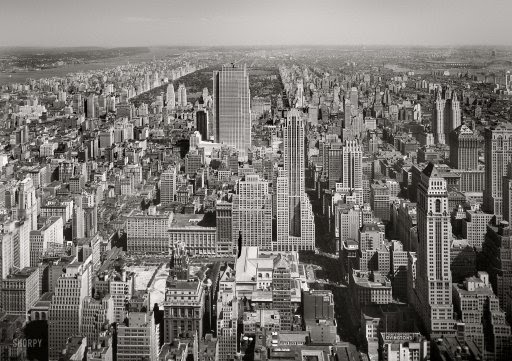
Below, midtown Manhattan in 1933 (Pic courtesy Shorpy) By design, O’Brien was selected in contrast to slick party hound Jimmy Walker. Unfortunately this also meant that the party was over, that “a pious, laborious dullard” occupied City Hall, “a hack given to malapropisms,” according to George J. Lankevich.
To African-American crowds in Harlem, O’Brien proclaimed proudly, “I may be white but my heart is as black as yours.” To Jewish constituents, he herald the talents of ‘that scientist of scientists, Albert Weinstein.”
Even worse, he was apparently not bright enough to disguise the Tammany strings affixed to his back. Famously (in fact, it’s the soundbite he’s most known for), O’Brien, when asked by the press who New York’s new police commissioner would be, replied, “I don’t know. They haven’t told me yet.” D’oh!
By the end of his term, O’Brien had wasted any shred of credibility he might have had. Yet Tammany stuck with him going into full election in November 1933. A fusion coalition of Republicans and anti-Tammany Democrats had the upper hand going into the election. Their first pick for mayor was young parks commissioner Robert Moses (who called O’Brien “a winded bull in a china shop.”) Moses was considered too divisive, even back then, so Samuel Seabury, revered voice of the fusion ticket, convinced party leadership to switch to a mayoral also-ran, former city alderman and house representative Fiorello La Guardia.
La Guardia had run for mayor before and lost — in 1929, to Jimmy Walker! The stock market crash had occurred two weeks before election day, and Walker was still charming. This time, however, La Guardia had the winds of reform carrying him.
O’Brien, naturally, stood no chance. In the final outcome, even former temp-mayor McKee, as a candidate for the hastily assembled Recovery Party, beat him. It was the most crushing defeat of a Democratic hopeful in decades.
The start of La Guardia’s term in 1934 would usher in the beginning of the end for Tammany Hall. O’Brien, for his part, remained faithful to his party to the end, even serving as a delegate to the Democratic National Convention a few times. Having rescued his reputation by returning to law in his later year, O’Brien lived in the Upper East Side until his death there in September 27, 1951.
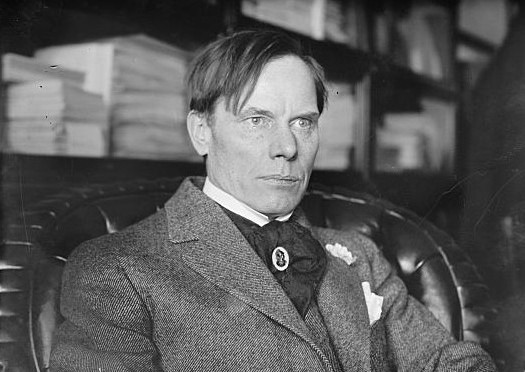
STRESSED: William Sulzer in 1911, a New York City representative on his way up…and out
*okay, technically he was removed in disgrace
As bloggers, newshawks and politicos wait to see what, if anything, comes of the latest New York Times supposed bombshell about current governor David Paterson — he’s already protesting “I DID NOT HAVE SEX WITH THAT WOMAN” in the Post — I thought I’d turn to state politics for a day and see how many of our state’s governors have been shamed into resigning. Certainly, in the wild-west days of state politics, there must have a been a few, right?
In fact, there’s only been two — the infamous Eliot Spitzer and of course, that dastardly William Sulzer.
Who?
Sulzer is a perfect example among many as to why you never trust Tammany Hall, especially if you’re one of them. Sulzer was a handchosen successor for the governor’s seat in 1913, a man of middling talents selected to do the Democratic machine’s bidding in state affairs. But like a bad gangster movie, you step outta line, you pay the price.
Sulzer was a practicing young lawyer during the 1880s who like many men worked his way into politics using the sticky graces of Tammany patronage. Sulzer more than paid his dues; in 1895, he served as representative of the various electoral districts in the U.S. House of Representatives, and served there up until the events described below.
They called him ‘Plain Bill’ Sulzer for entirely fictitious reasons; in fact, he was a “vain and self-important,” according to author Oliver Allen, miming the role of an elder statesman in dress and deed. He made grandiloquent statements about the public good but was mocked down in the Bowery saloons as a bit of a peacock. “When it comes to preserving our liberties, ” said one reporter, “Willliam is a whole canning factory.”
But he was subservient to Tammany, a loyal Freemason and, most important, well liked in an over-crowded district of potential voters. When governor John Dix, a Tammany Democrat who swiftly proved overwhelmed by the job, was nudged aside in 1912 by Tammany’s boss Charles Murphy, he was replaced by Sulzer on the ticket. Despite a challenge from a surging Progressive Party — led by former president Theodore Roosevelt — Sulzer was handily elected.
Perhaps it was the way in which his predecessor Dix was swept aside. Perhaps it was stupidity. Perhaps it was failed ingenuity. Whatever the case, Sulzer took office and immediately began ignoring Murphy’s requests for appointments. Even worse, he began calling for inquiries into questionable state construction contracts — always a hornet’s nest of illicit behavior by Democratic lawmakers. Looking to deeply here would expose dozens of legislators to accusations of graft and bribery.
Sulzer is not the first Tammany representative to turn his back on the corrupt organization. In fact, the same thing had been going on in New York with mayor William Jay Gaynor, a former golden boy of Murphy’s who proved difficult to control. Gaynor, however, was a deft, able politician who managed to step on Tammany’s toes without crushing them; Sulzer was simply too bold in his rebellion.
By the fall of 1913, Tammany would have neither Gaynor nor Sulzer to deal with. Gaynor would die that September during an overseas voyage of a latent bullet wound, received years earlier in a failed assassination attempt. Sulzer was felled in a more successful assassination, by Murphy, via accusations of improper allotment of campaign finances for personal use.
Sulzer did, in fact, dip into campaign money during the election; in 1910s politics, who didn’t? The investigation was created for the sole purpose of discrediting Sulzer, and its victim proofed feeble to the task of defending himself.
Perhaps sensing futility Sulzer didn’t even show up to trial to defend himself. He was hastily found guilty of “falsifying campaign documents,” impeached and removed from office in October 1913. Sulzer would die in November 1941 as the only governor of New York ever removed from office. And all for giving sass to the party politic.
KNOW YOUR MAYORS Our modest little series about some of the greatest, notorious, most important, even most useless, mayors of New York City. Other entrants in our mayoral survey can be found here.
MayorC. Godfrey Gunther In office: 1864-1865
His past glories were built on a mountain of fur pelts, and his future would wash up on the half-developed shores of Coney Island. But in 1961, it was Civil War that nearly derailed the political career of Charles Godfrey Gunther.
The groundwork was laid in 1857 by former mayor Fernando Wood, who rebelled against Tammany Hall, the Democratic machine he formerly led, to form his new political organization called Mozart Hall. This assembledge of working class reformers and Wood devotees elevated him back to City Hall in 1960, returning to the seat of power occupied by German paint mogul Daniel Tiemann, who had unseated Wood back in 1857.
Back in business, Wood heralded a feisty pro-South, anti-abolitionist stance, pitting himself against Albany and threatening to secede Manhattan from the state.
By the election of 1861 however, a swell of national support for the Union cause turned against Wood. The Democrats were in a precarious spot, splintered between rival Democratic groups. It’s here in our story where we introduce Charles Godfrey Gunther, Tammany’s official candidate for mayor in 1861.
Gunther was born at Maiden Lane and Liberty Street, on Feb 7, 1822 — into a German family that had made its fortunes in the fur trade, rivals of the city’s true fur king John Jacob Astor. Charles spent his youth in his father’s tutelage, taking over the family business C.G. Gunther & Co.
Like so many others before him, Charles’ business saavy and wealth caught the attentions of Tammany Hall. The furrier worked his way up through the political lodge, eventually becoming sachem in 1856.
He was Tammany’s candidate for mayor in 1861, against Wood, and it would have made for a fine contest between them. In fact, Gunther would have won. (He scored all of 600 more votes than Wood.)
But of course, there was another contestant, the Republican George Opdyke. With Wood and Gunther appealing to the same constituencies, they split the traditional Democratic vote, and Opdyke ascended to office.
Perhaps Charles should have been grateful. The years 1862 and 1863 were not gracious times to be mayor of a major city. Opdyke’s execution of military conscription upon the city’s immigrants and his fumbled handling of the ensuing draft riots permanently damaged his political reputation.
By the fall of 1863, New Yorkers craving a change in leadership were given a strange buffet of choices. The Republicans, shedding Opdyke and at a serious political disadvantage, brought forth alderman and gun-maker Orison Blunt, inventor of the ‘pepper box gun’. Tammany meanwhile offered up Francis I. A. Boole, a rather corrupt city official notable for heading the street cleaning department.
With these weak choices at such a pivotal period in history, rebels from both parties — and heavily peopled with disenfranchised former Wood supporters — split to form a temporary coalition of working class Irish and Germans.
With the strong support of the city’s surging German newspapers, Gunther was chosen as their candidate. That November he swept past Blunt and Boole to become New York’s 77th mayor. Boole took it especially hard; he “became insane and died shortly afterwards.”
Was the German furrier an effective mayor? I can’t quite figure out as original sources seem split. An “honest, pleasant gentleman, with frank and cordial manners,” he’s praised for his penny pinching tactics, at one time even cancelling a celebration of George Washington’s birthday as it was thought to be too extravagant. In 1964, on the verge of a national election, he clamped down on any serious city celebrations of Union victory as being too ‘political’ in nature.
In a parallel to Bloomberg’s recent efforts to relieve traffic congestion, Gunther also strived to clear the streets — with the removal of slaughterhouses and roaming herds of cattle.
However, he was also seen as a rather weak political figure, with little influence over other city offices. Perhaps this was because he was honest and the bureaucracies of city government dreadfully corrupted. Running for re-election in 1865, he was crushed in the polling, with three other candidates out voting him. The victor that year was true-blue Boss Tweed crony John Hoffman.
Above: the Coney Island terminal for the Brooklyn, Bath and Coney Island Railroad line
Gunther’s story doesn’t end here. He became a prominent leader in New York volunteer fire department and eventually even a partner in a very lucrative venture — the Brooklyn, Bath and Coney Island Railroad. It was this rail line that allowed thousands of New Yorkers to escape the city, eventually transforming Coney Island into a popular resort and amusement palace.
The train line, nicknamed Gunther’s Road, operated “six steam locomotives and 28 passenger cars” and “carried almost 400,000 passengers” in 1882 alone. Gunther would even own his own resort out on Coney Island, although it burned down a few years later.
And I end with a rather colorful anecdote from a 1906 article about Mr. Gunther and his railroad, from The Third Rail:
“There was one engineer who had served in the war of the rebellion, and who was particularly patriotic, who painted his engine red, white and blue.
Gunther saw it from a distance, on its first trip, tearing across the country, and he was frantic.
“For God’s sake, Drummond,” he said, when he overtook his engineer, “whatever possessed you to paint that engine red, white and blue?’
“You’re a true American, ain’t you?” said Drummond.
“Yes, but-but-“
“Well, so am I.”
“Yes, but that engine looks like a traveling barber shop.”
Gunther could not convince Drummond, however, and the latter quit his job rather than submit to any alterations.
The engine was afterwards painted according to Mr. Gunther’s ideas.
ADDED: One of our Facebook fans reminded me of an even more spectacular fact about Mr. Gunther — there was actually a short-lived Brooklyn neighborhood named after him. Guntherville was actually part of the pre-consolidation town of Gravesend and naturally featured many properties owned by C. Godfrey. The map below from 1873 illustrates its place along the Gravesend shore. Judging from comparing maps, it appears that part of Guntherville would later comprise the fleeting, beach side amusement venture Ulmer Park.