Categories
Know Your Mayors Podcasts

The Boy Mayor of New York: John Purroy Mitchel and the shocking election of 1913

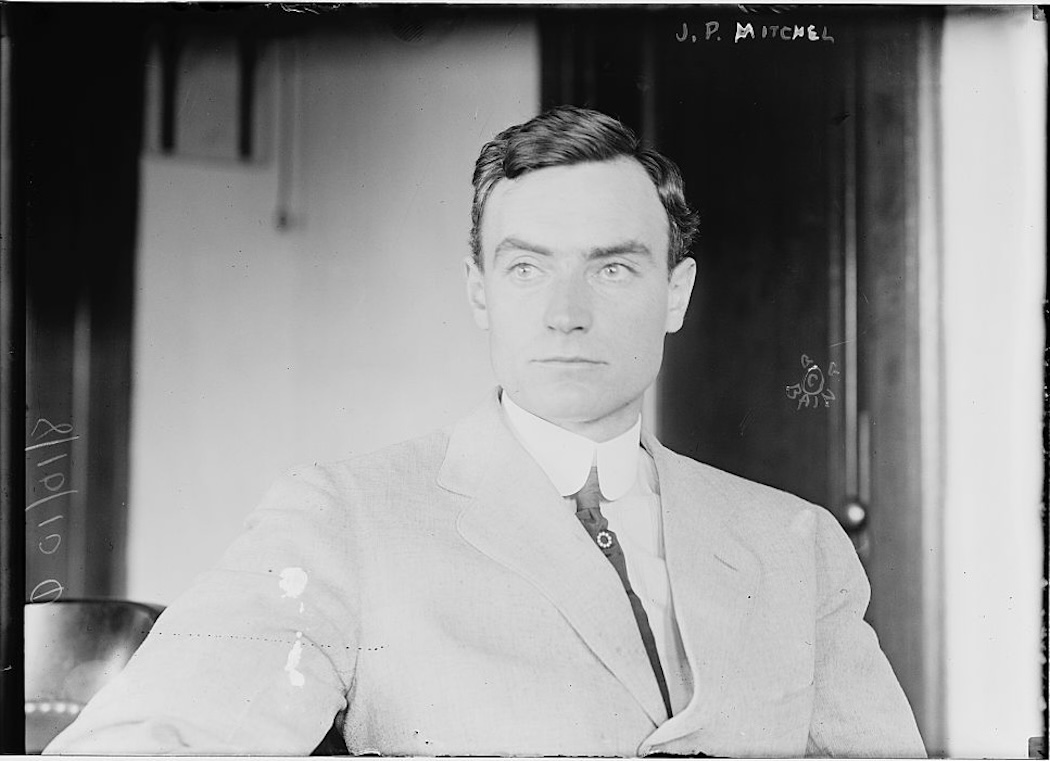
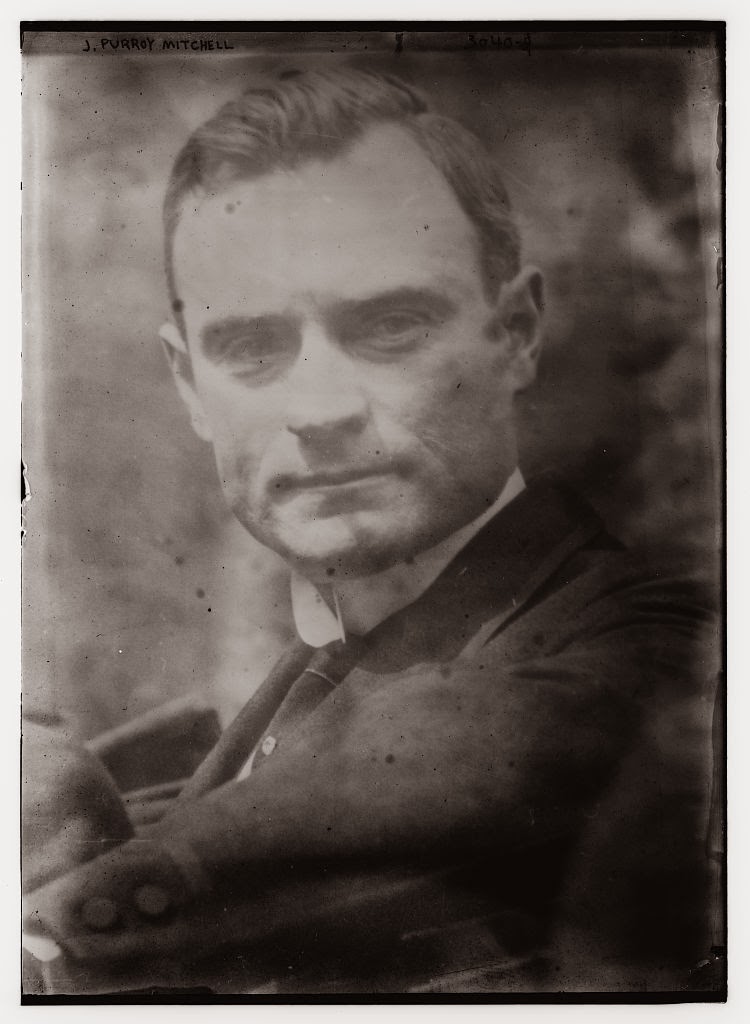
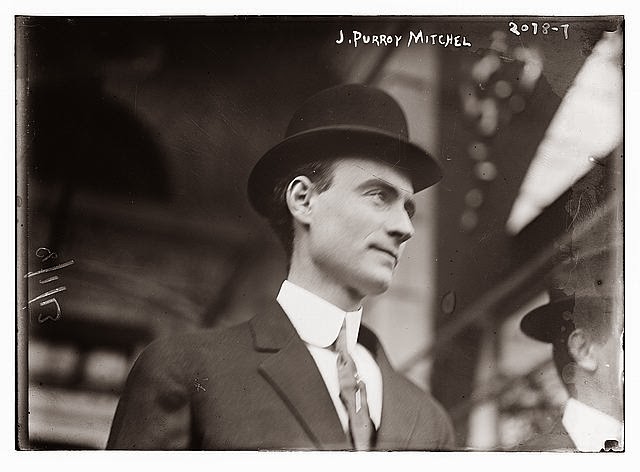
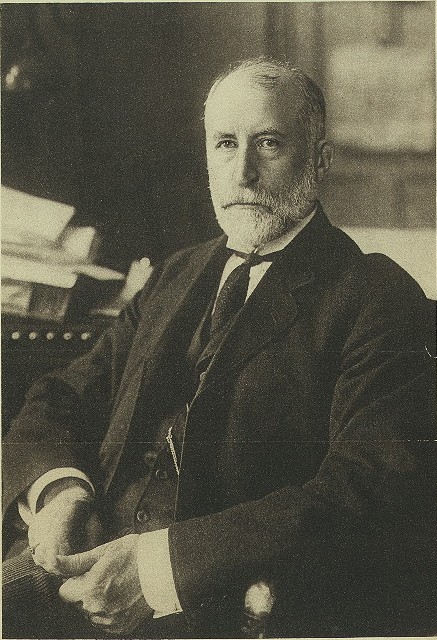
Above: John Purroy Mitchel, the ‘boy mayor’, in 1910

PODCAST
As New York City enters the final stages of this year’s mayoral election, let’s look back on a decidedly more unusual contest 110 years ago, pitting Tammany Hall and their estranged ally (Mayor William Jay Gaynor) up against a baby-faced newcomer, the (second) youngest man to ever become the mayor of New York City.

John Purroy Mitchel, the Bronx-born grandson of an Irish revolutionary, was a rising star in New York City, aggressively sweeping away incompetence and snipping away at government excess.  

Under his watch, two of New York’s borough presidents were fired, just for being ineffectual!  Mitchel made an ideal candidate for mayor in an era where Tammany Hall cronyism still dominated the nature of New York City.

Nobody could predict the strange events which befell the city during the election of 1913, unfortunate and even bizarre incidents which catapulted this young man to City Hall and gave him the nickname “the Boy Mayor of New York“.

But things did not turn out as planned.  He won his election with the greatest victory margin in New York City history.  He left office four years later with an equally large margin of defeat.  

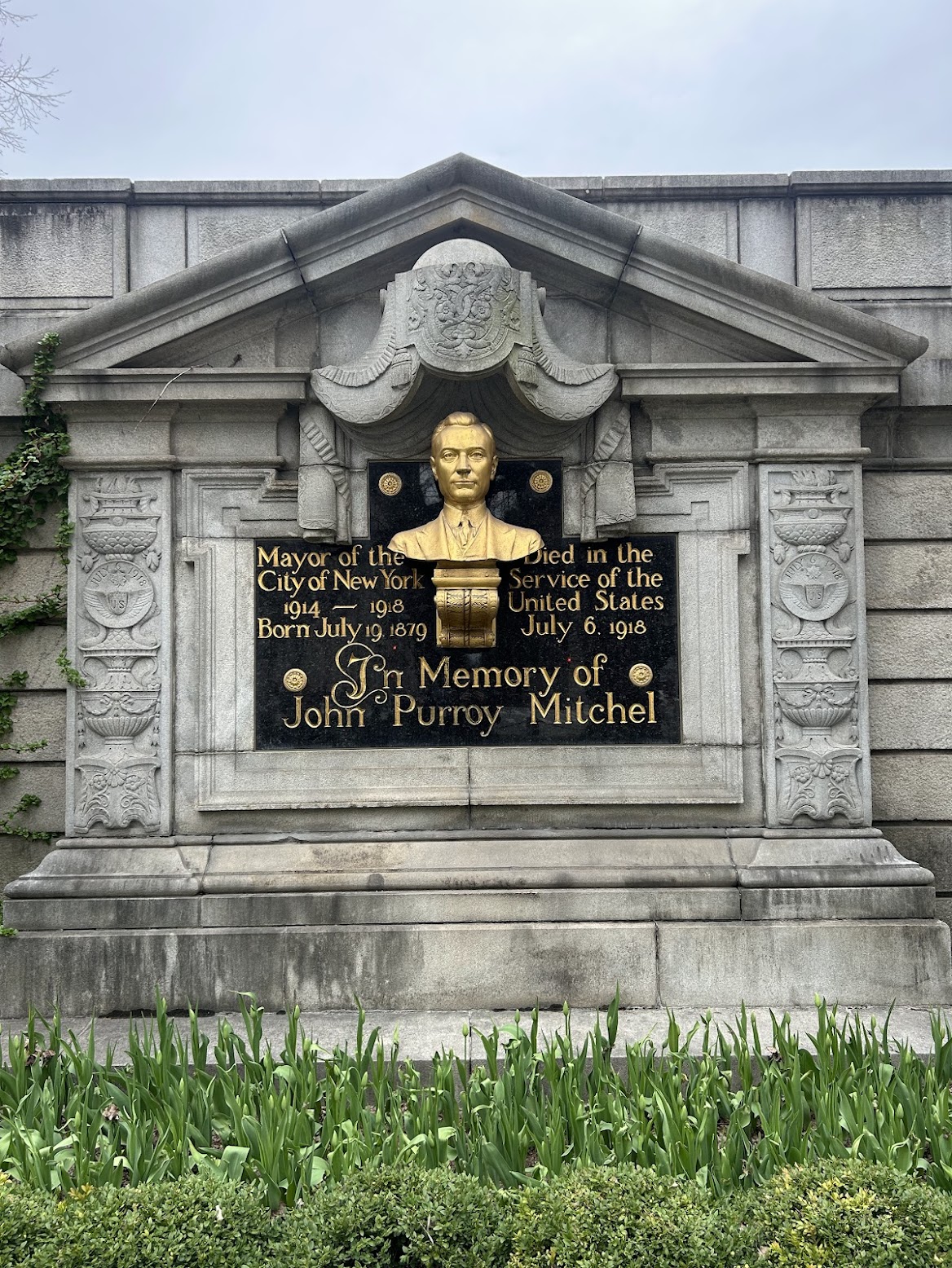
Tune in to our tale of this oft-ignored figure in New York City history, an example of good intentions gone wrong and — due to his tragic end — the only mayor honored with a memorial in Central Park.

PLUS: The totally bizarre death in 1913 of Tammany Hall’s most popular leader


The Bowery Boys Podcast is proud to be sponsored by Founded By NYC, celebrating New York City’s 400th anniversary in 2025 and the 250th anniversary of the United States in 2026.

Read about all the exciting events and world class institutions commemorating the five boroughs legacy of groundbreaking achievements, and find ways to celebrate the city that’s always making history at Founded by NYC.


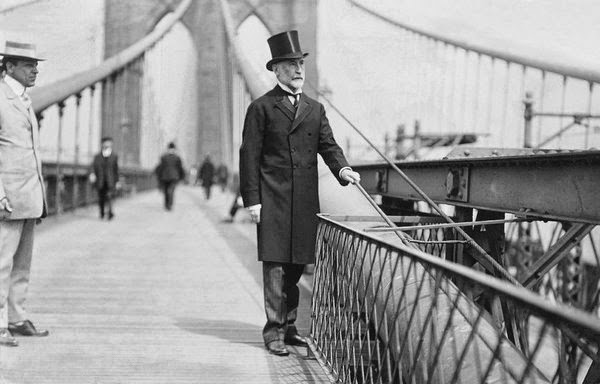
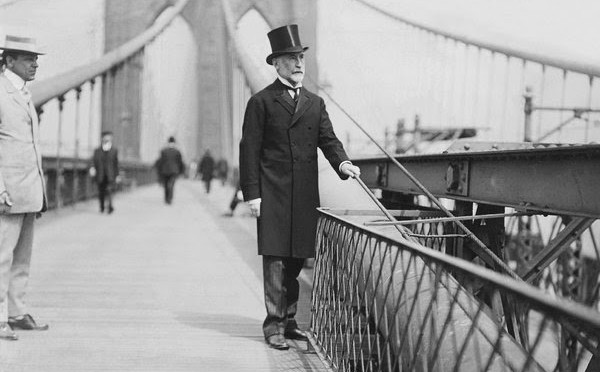
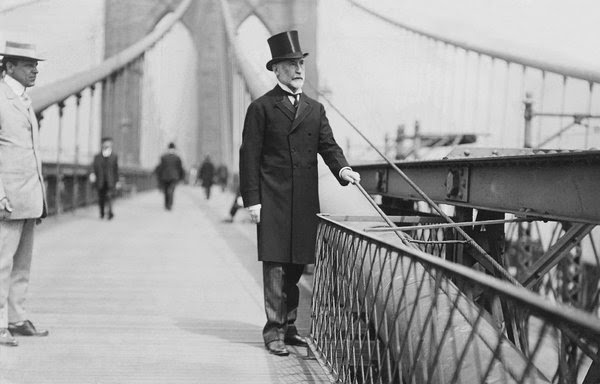
Mayor William Jay Gaynor on his inauguration day in 1909, walking across the Brooklyn Bridge to City Hall, from his home in Park Slope.

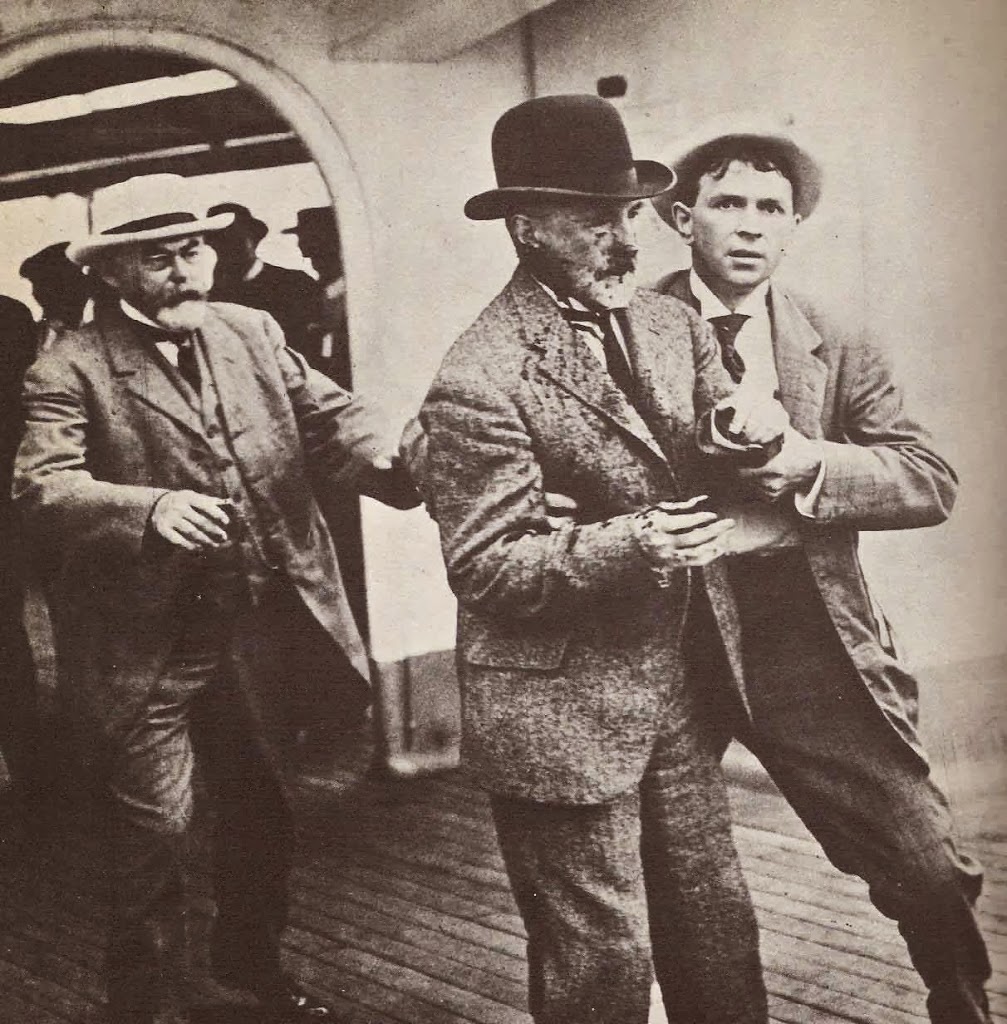
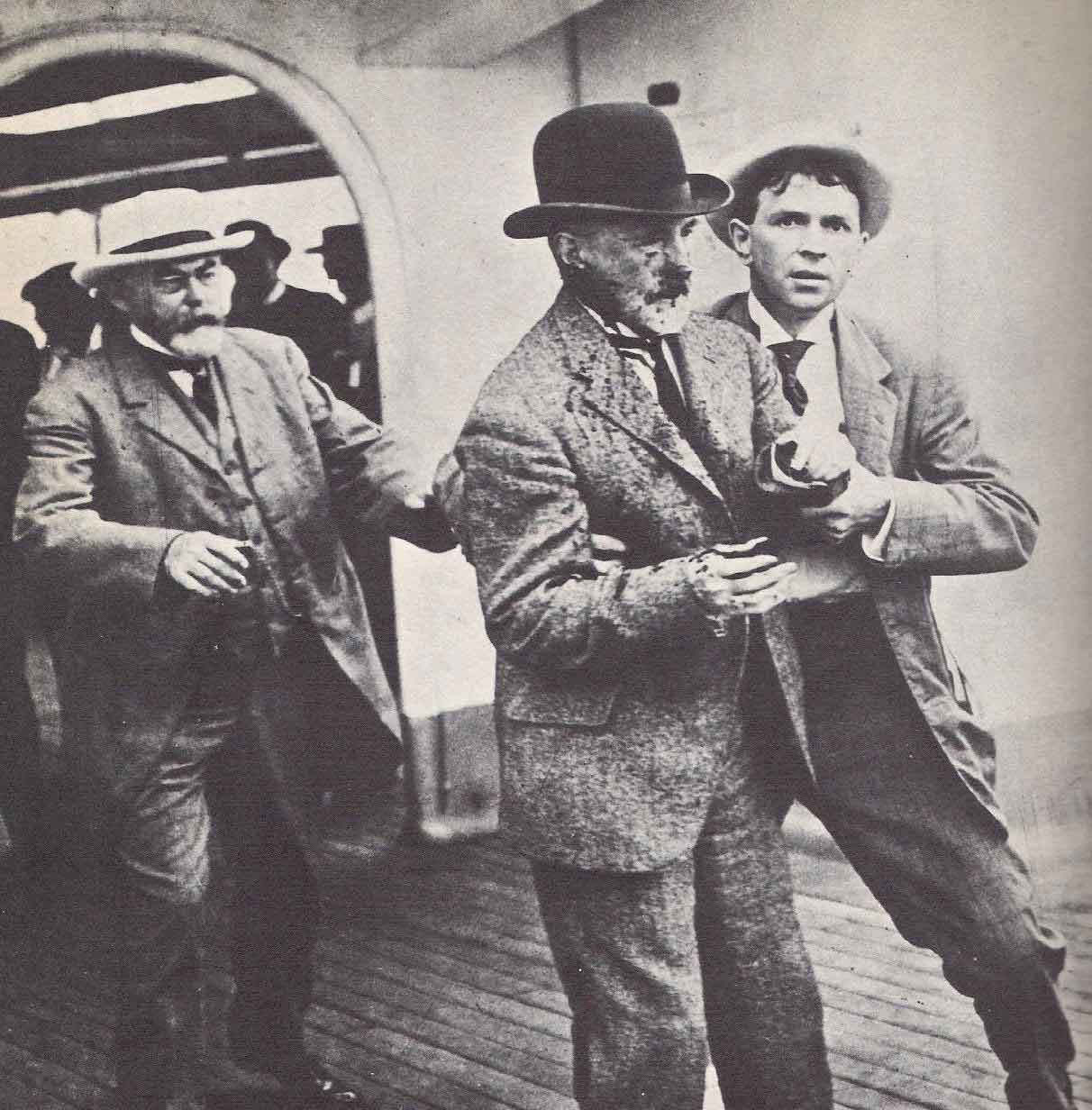
William Jay Gaynor at the very moment he was shot in 1910, on an ocean vessel docked in Hoboken.  This picture was taken by a New York World photographer, one of the most famous works of early journalism photography.

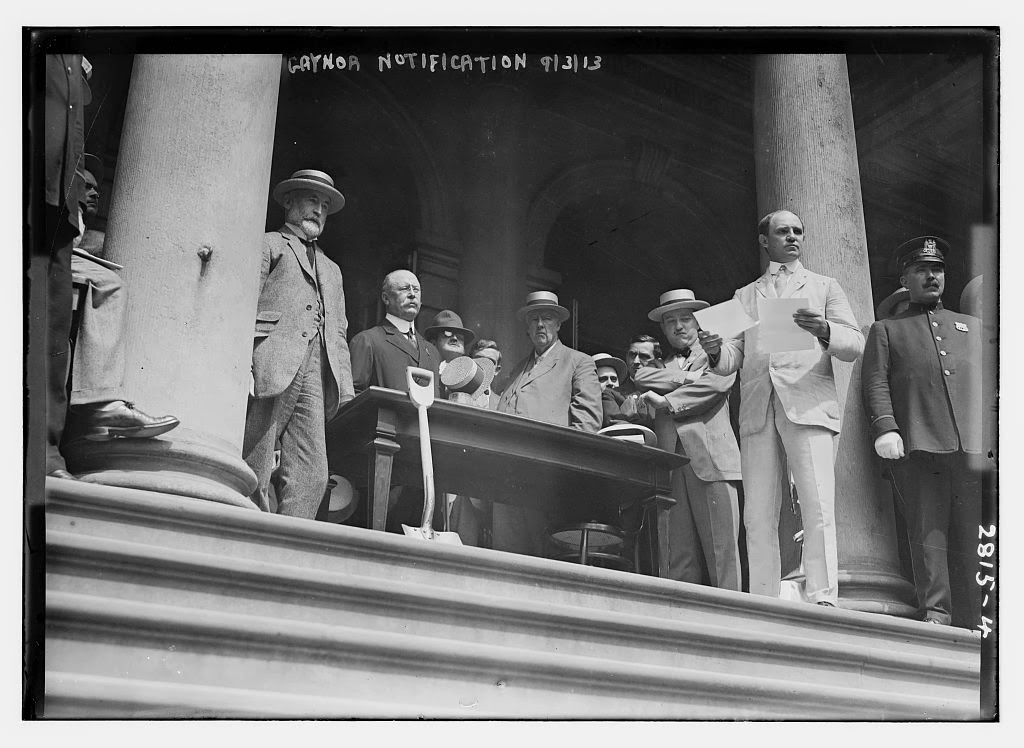
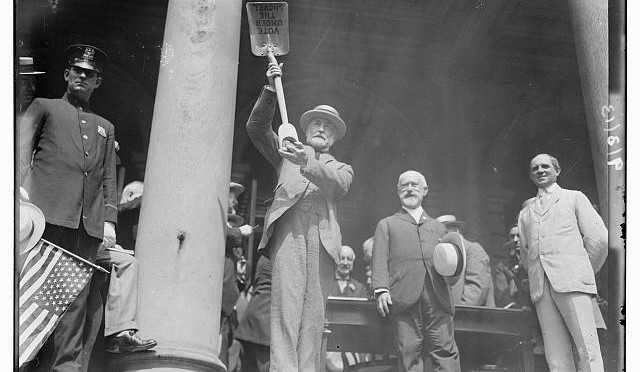
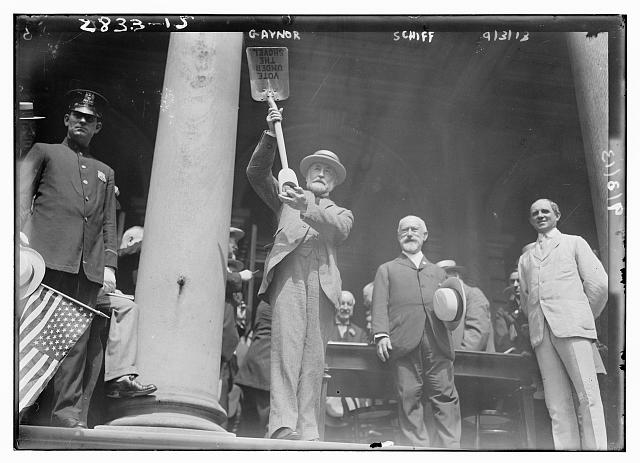
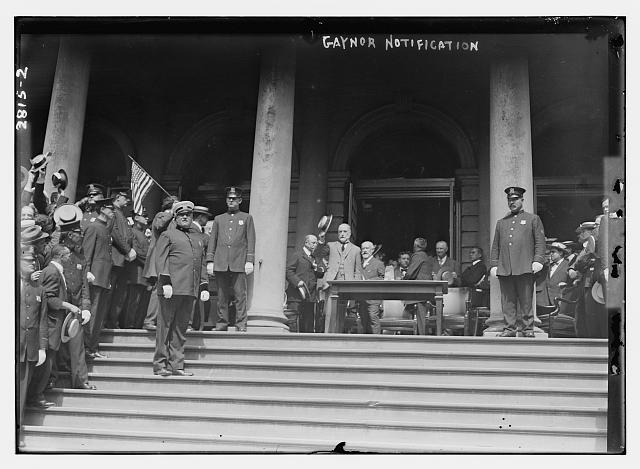
Gaynor (at left) attempted to stage a political comeback (after being by Tammany Hall) at the notification of his independent candidacy at City Hall in September 1913.  The shovel in front of him was his campaign emblem.  

Within a few days, he would be dead of the assassin’s bullet he received three years earlier.

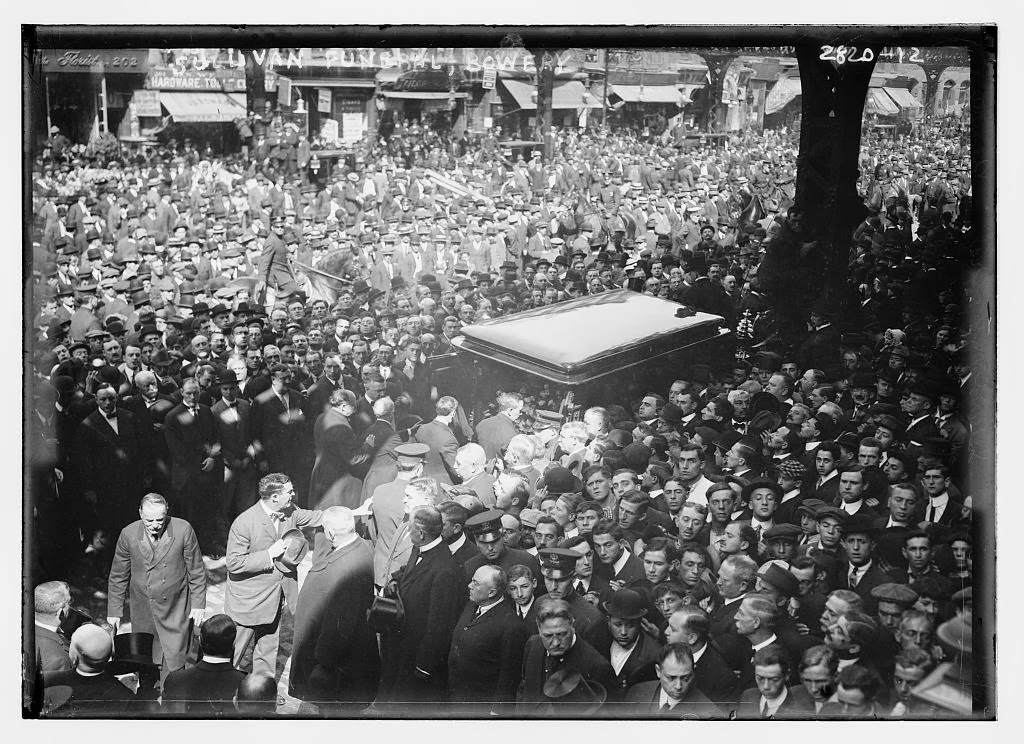
The death of Big Tim Sullivan also caused ripples in the mayoral election of 1913. The picture below is of the Bowery, overflowing with mourners.

While Sullivan was out of politics (and in an asylum) by 1913, his sudden and unusual passing had an effect on Tammany Hall supporters, throwing another strange event into an already tumultuous year.

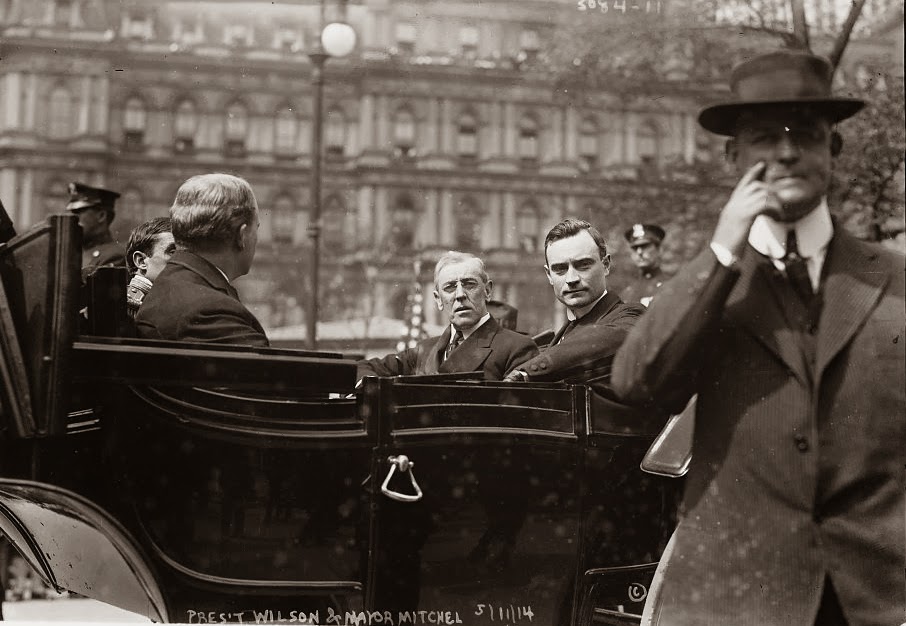
Mayor Mitchel with President Woodrow Wilson in May 1914, at a memorial service for American marines and seamen killed in Veracruz during the Mexican Revolution.

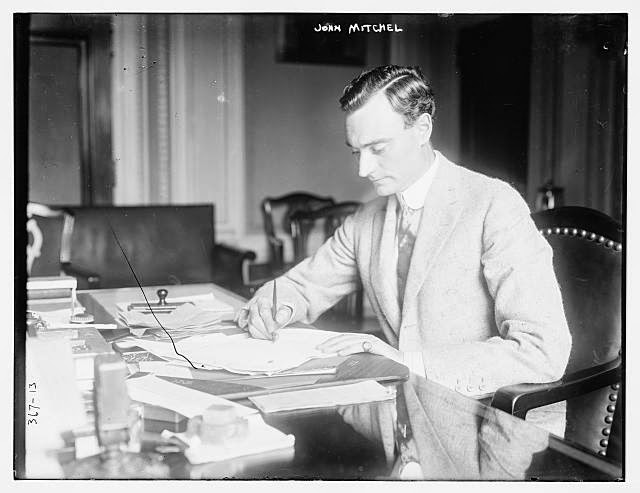
Mitchel at his desk at City Hall, presumably cracking down on some kind of over-expenditure or waste. Or possibly silently suffering from migraine headaches which plagued him during his entire term as mayor.

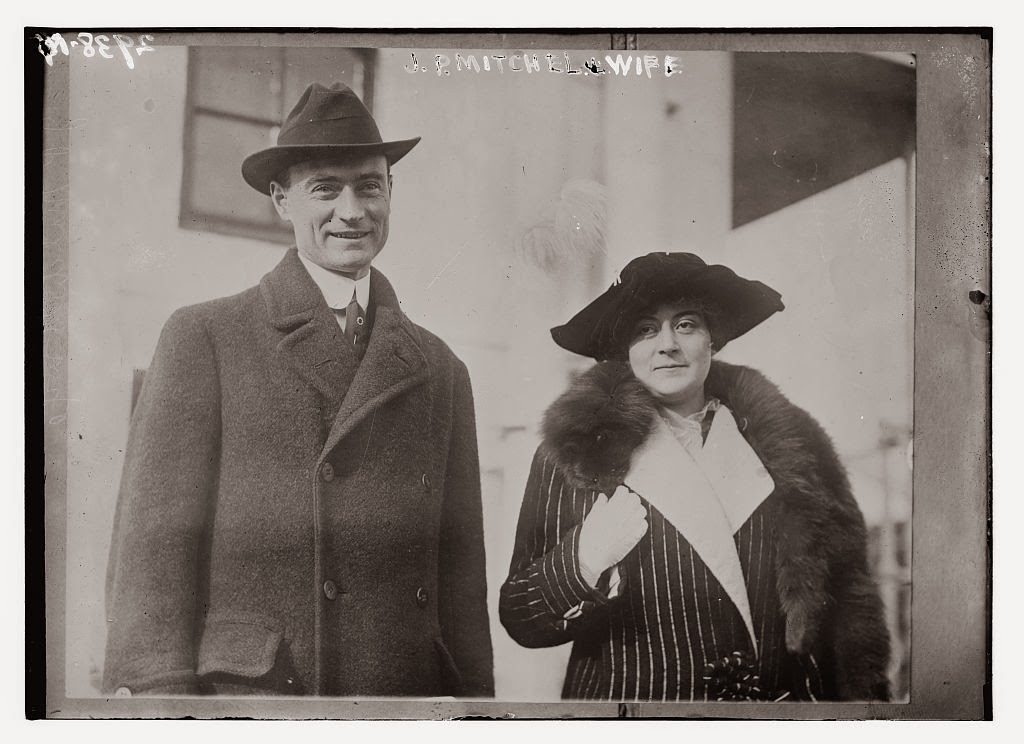
John with his wife Jane.

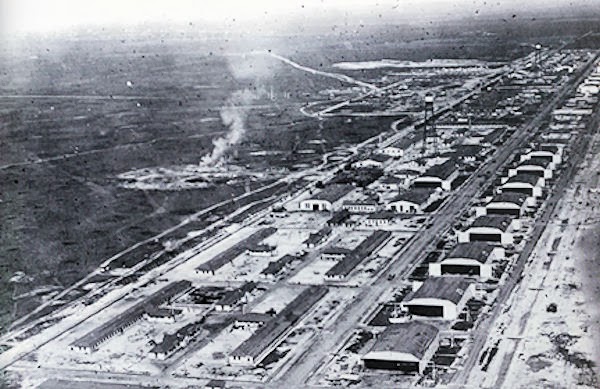
Gerstner Field in Louisiana, where Mitchel had his tragic airplane accident on July 6, 1918.

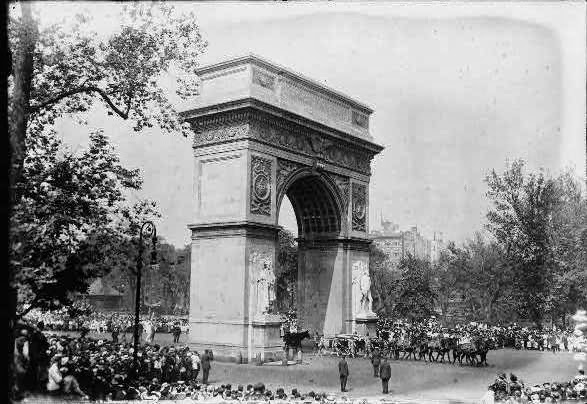
Another New York funeral: The body of John Purroy Mitchel is carried in a procession from City Hall, through the Washington Arch, and up to St. Patrick’s Cathedral.

Theodore Roosevelt, one of the pallbearers at Mitchel’s funeral, leaves St. Patrick’s in this short film by Edison.

The John Purroy Mitchel memorial, near the reservoir in Central Park.

Most pictures above are public domain, courtesy of the Library of Congress

Categories
Newspapers and Newsies Podcasts

The Trial of John Peter Zenger: New York and the Birth of the Freedom of the Press

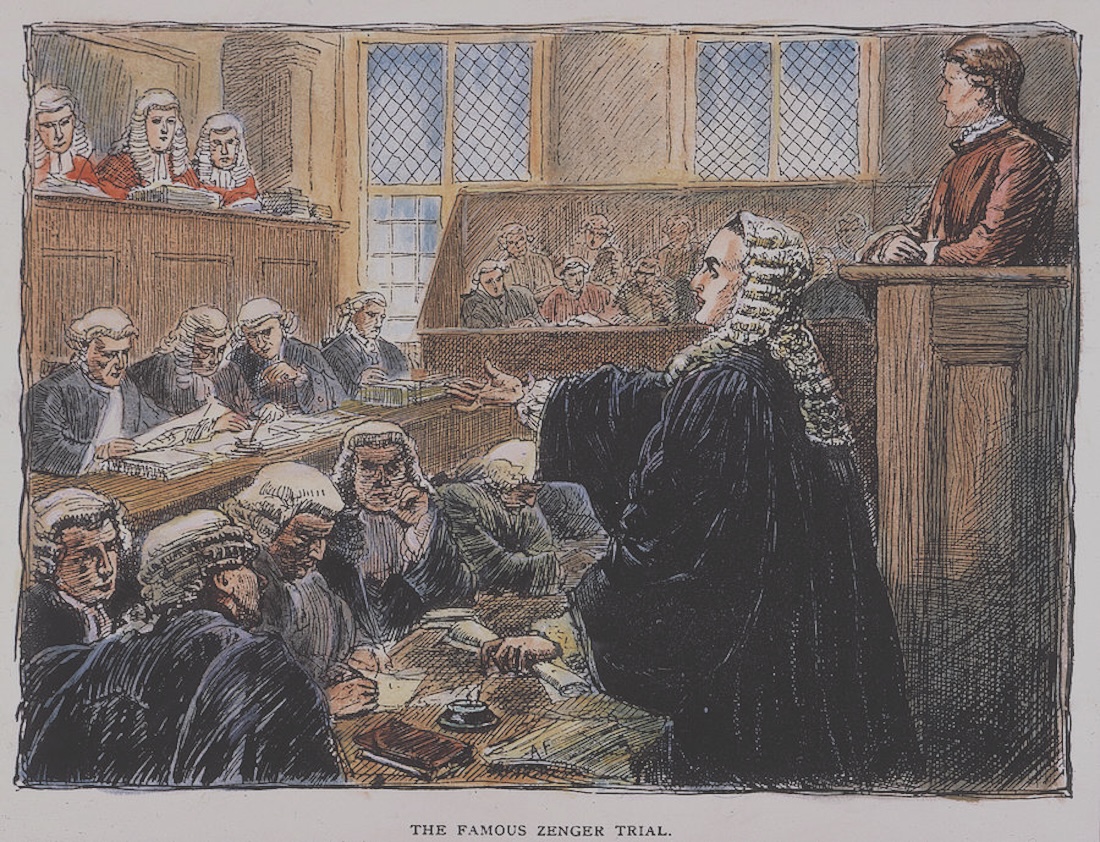
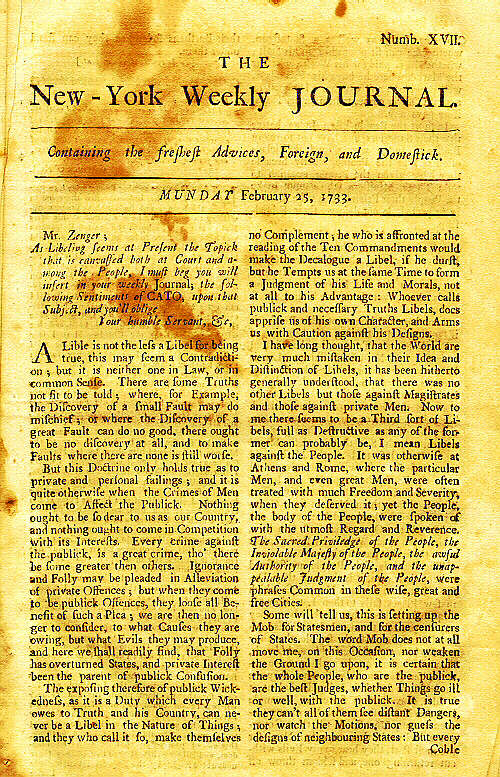
A long, long time ago in New York — in the 1730s, back when the city was a holding of the British, with a little over 10,000 inhabitants — a German printer named John Peter Zenger decided to print a four-page newspaper called the New York Weekly Journal.

 This is pretty remarkable in itself, as there was only one other newspaper in town called the New York Gazette, an organ of the British crown and the governor of the colony. (Equally remarkable: Benjamin Franklin almost worked there!)

But Zenger’s paper would call to question the actions of that governor, a virtual despot named William Cosby (at right), and in so doing, set in motion an historic trial that marked a triumph for liberty and modern democratic rights, including freedom of the press and the power of jury nullification.

This entire story takes place in lower Manhattan, and most of it on a couple floors of old New York City Hall at Wall Street and Nassau Street. Many years later, this spot would see the first American government and the inauguration of George Washington.

But many could argue that the trial that occurs here on August 4, 1735, is equally important to the causes of democracy and a free press.

LISTEN NOW: THE TRIAL OF JOHN PETER ZENGER


CORRECTION: I can’t read my Olde English very well.  In reading from a page of the New-York Weekly Journal, I inadvertently say ‘Fulgom Panagenics’ instead of ‘Fulsom Panagenics’. Fulgom is not a word, fulsom(e) is, meaning very complimentary or flattering.


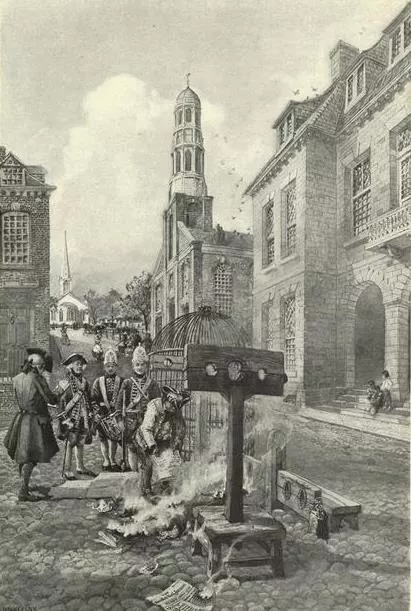
The burning of John Peter Zenger’s ‘New York Weekly Journal’ in Wall Street on November 6, 1734.

A stained copy of the New-York Weekly Journal from 1733

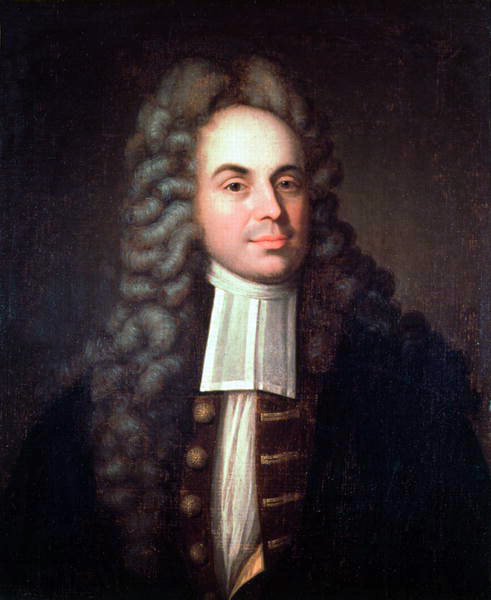
 Andrew Hamilton, the lawyer who saved the day in the John Peter Zenger trial. His eloquence and command of language helped win the day for lovers of free press.

Adolf Ulrik Wertmüller – Portrait of Andrew Hamilton (1808).

Categories
Adventures In Old New York

Firecracker Lane: New York’s explosive shopping district

Looking for a healthy assortment of fireworks to ignite for the Fourth of July holiday? In New York, from the late 19th century until the 1930s, one needed to look no further than one of the city’s most heavily trafficked areas near City Hall.

Firecracker Lane was a short row of fireworks dealerships that sat on Park Place between Broadway and Church Street, a couple blocks away from the old Astor House and the congregants of St. Paul’s Chapel.
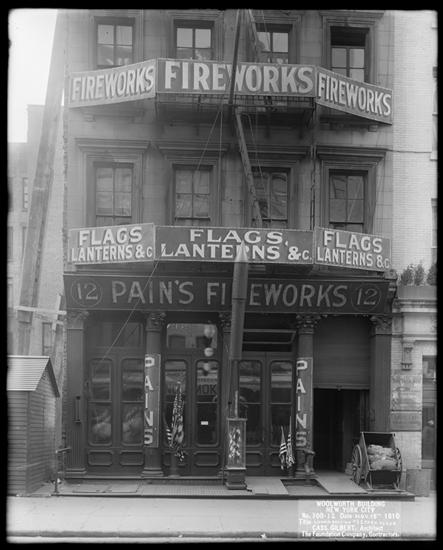
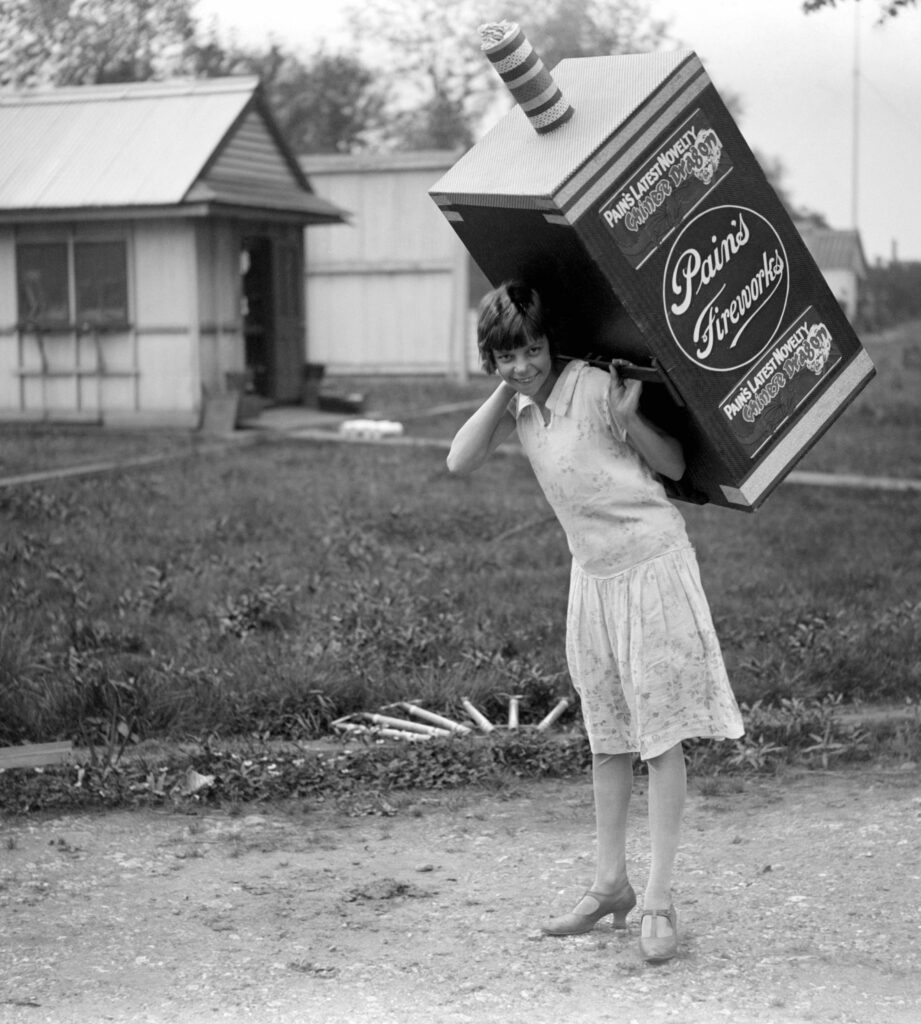
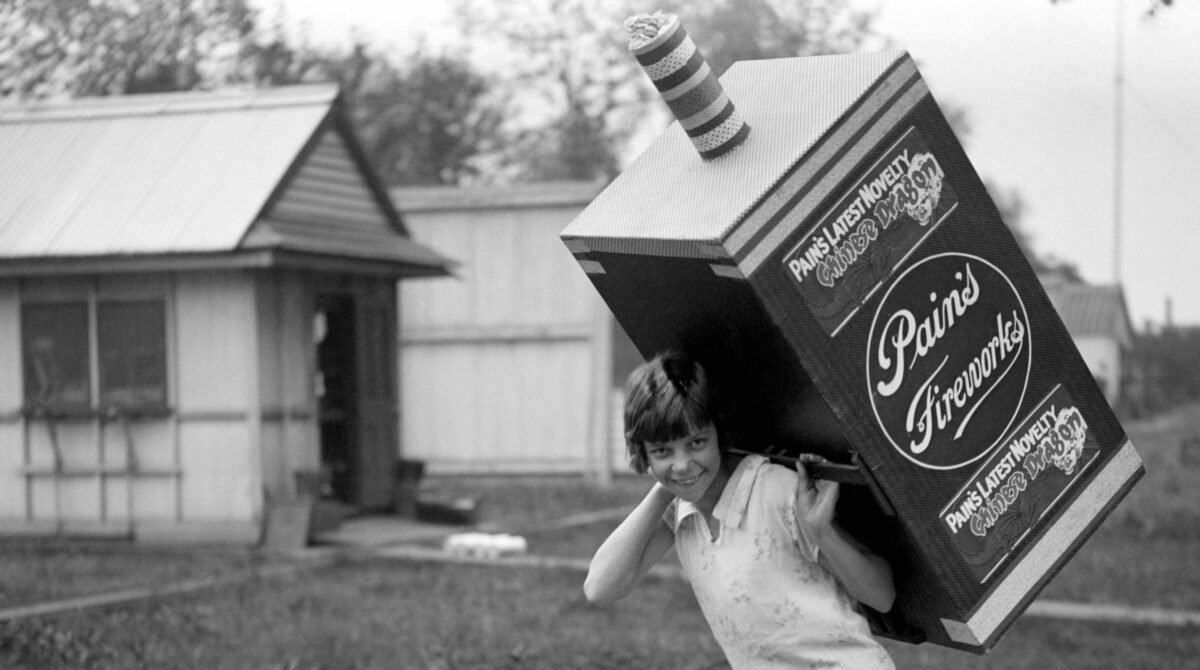
12 Park Place, one of the prominent retailers of explosives along ‘Firecracker Lane’.  James Pain was known as one of the world’s greatest pyrotechnists.  Today the Pain name lives on in a UK fireworks company. (Wurts Brothers, courtesy MCNY)

As questionable as that might sound,  fireworks were actually quite common on the streets of New York in the 19th century.  And Park Place was New York’s official ‘fireworks mart‘, specializing in “celebration goods,” even well into the years that its new neighbor, the Woolworth Building, towered over its shelves of fanciful explosives.
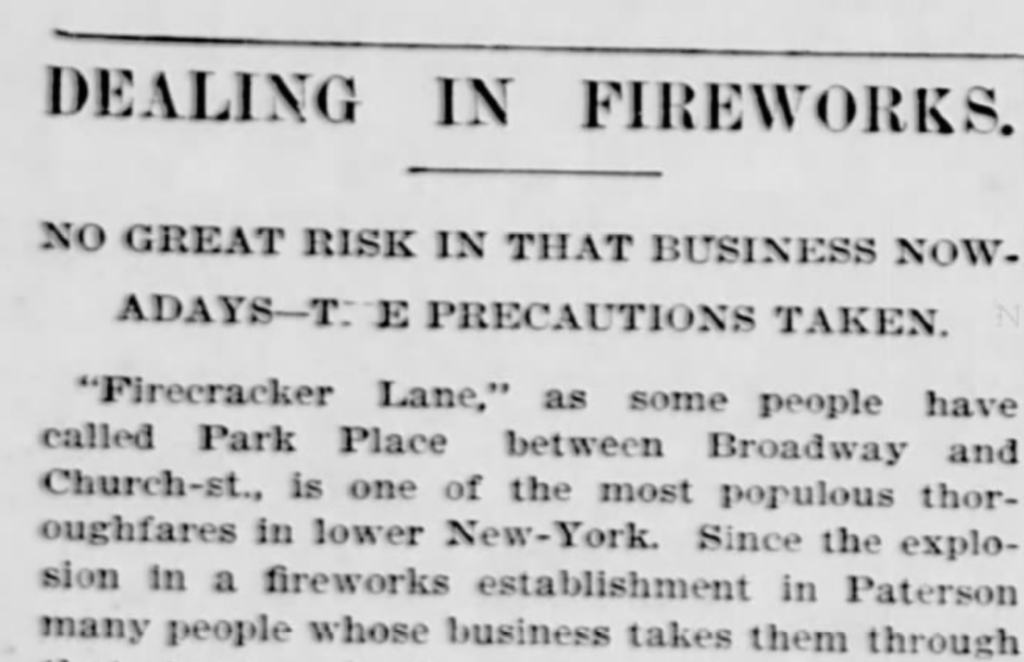
From the New York Tribune, June 30, 1901

The proprietors of Firecracker Lane could attest to their shops’ safety.

“Fireworks are not made now as they were years ago and for that reason there is little danger,” said one shop owner, adding, “A fire in a fireworks store when once started will make good headway in short order, but there will be no great explosion, no blowing down of walls, nor wiping out of buildings…” What a relief!

Coincidentally, both the Great Fire of 1835 and its modest cousin the Great Explosion of 1845 both ignited many decades before just south of this area.  So proprietors here made doubly sure to reassure people that such conflagrations could never happen because of their merchandise.
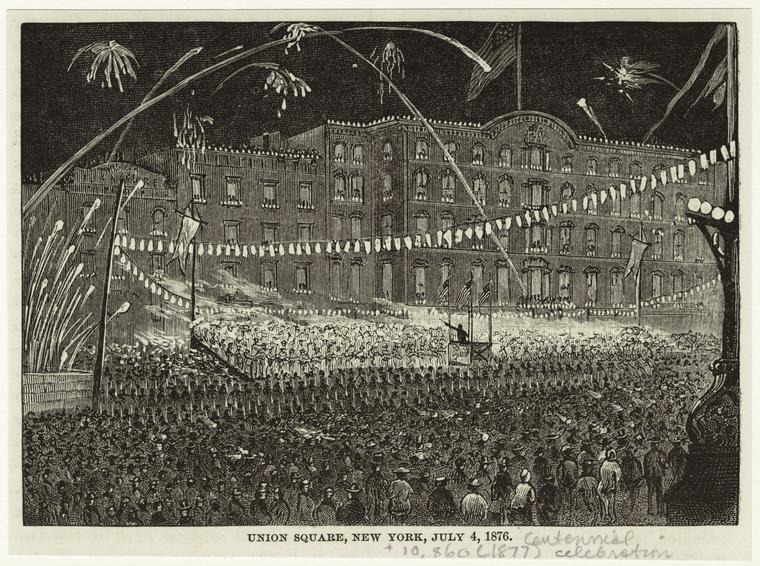
Below: Union Square under the sparkle of fireworks on July 4, 1876 (NYPL)

But it was another explosion that was on the minds of New Yorkers during the 4th of July 1901. Just a couple weeks before, across the water in Paterson, NJ, a fireworks factory exploded, killing 17 people who lived in the tenement above.

“So great was the force of the blast,” reported the New York Times, “that a boy playing in the street a half a block away was lifted from his feet and hurled against an iron fence, and had one of his legs broken.”
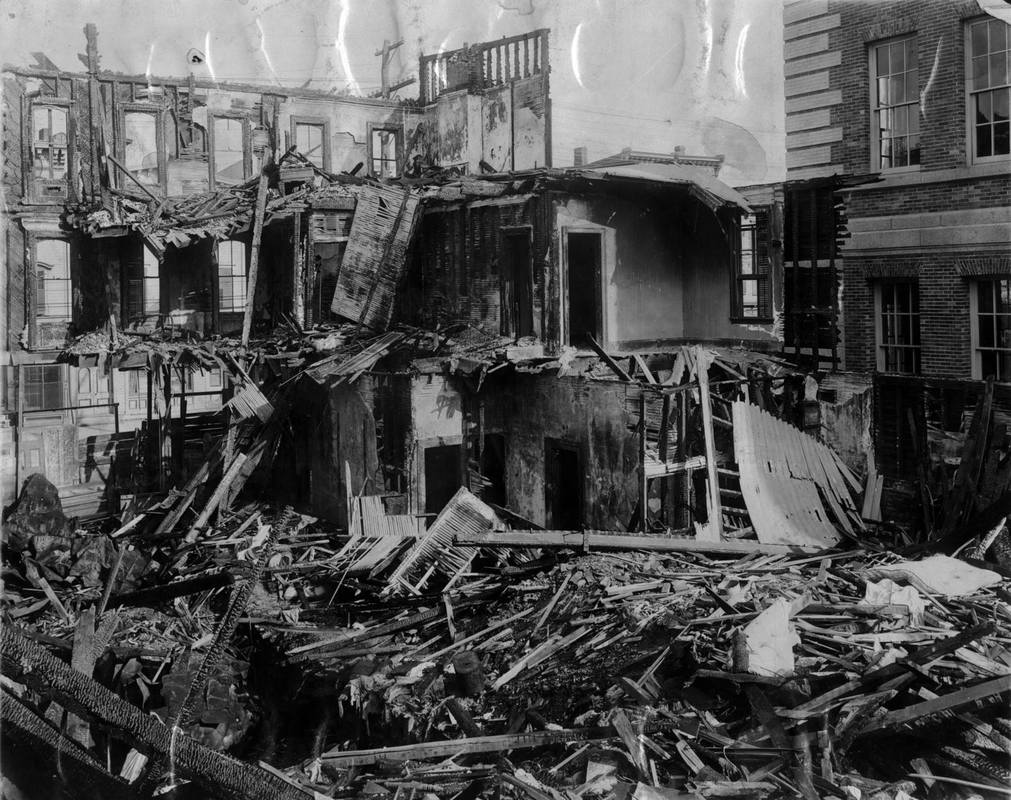
The Paterson tenement, destroyed by an explosion in the fireworks factory in the building. (Courtesy Paterson Fire History)

For this reason, people started avoiding Firecracker Lane, getting to the elevated train station by going the long way around, avoiding the boxes of potentially combustible merchandise stacked along the sidewalks.

Perhaps they were wise to do so. In July 1903, in front of one particular establishment, the Unexcelled Manufacturing Company, at 9 Park Place, a box ignited, showering the street with a terrifying display of rockets and smoke.  
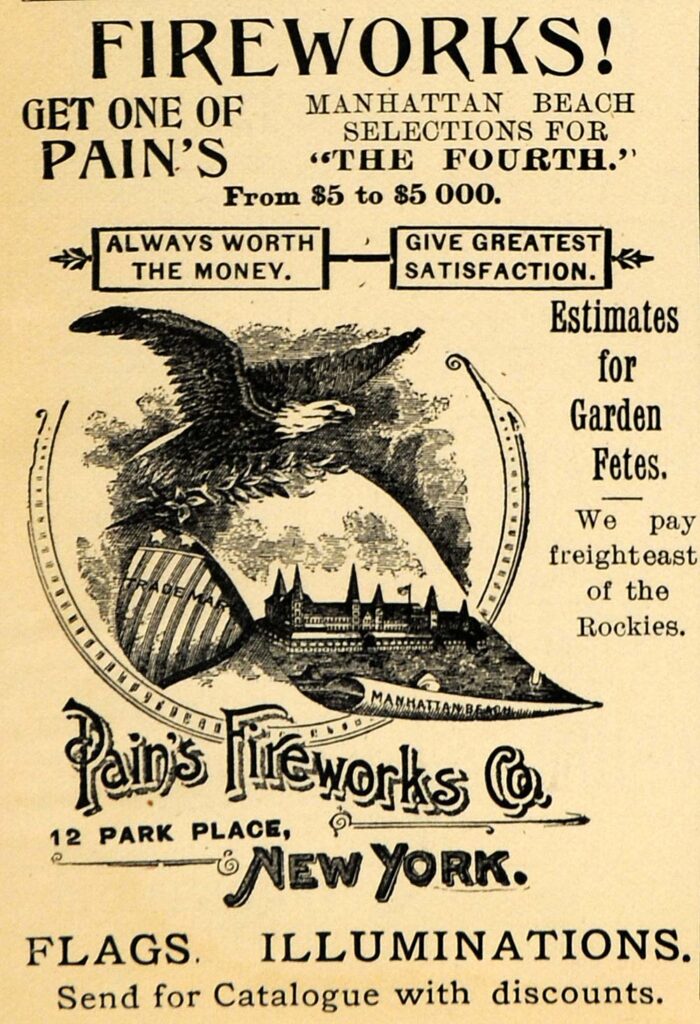
“[T]he contents, consisting of rockets, firecrackers and several small bombs, went off with a noise that almost equalled that made by Pain’s destroying of Pompeii [referencing a popular Manhattan Beach attraction].”

These Firecracker Lane establishment had larger plants in rural areas like Staten Island, but that did not minimize the danger. In 1907, the plant owned by one Park Place shop exploded in Graniteville, Staten Island, killing two children.
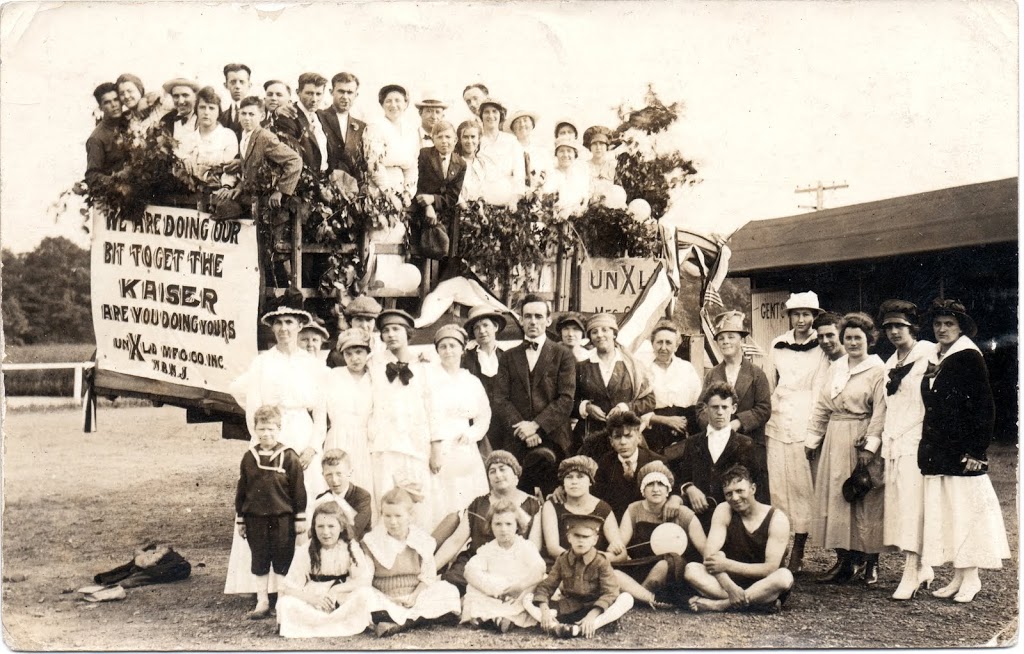
Workers (and their families) on a float in New Jersey, representing the Unexcelled Manufacturing Company. During World War I, the company also manufactured signal rockets, flares and other wartime equipment. (Courtesy Great War Postcards)

Believe it or not, you could still buy fireworks on Park Place as late as the 1930s.

However the once-bustling Firecracker Lane had been whittled down to just two shops — the Unexcelled Manufacturing Company and Pain’s Fireworks Display, owned by the very man who been responsible for the afore-mentioned Pompeii display, thirty years earlier!

By this time, the city began cracking down on the usage of fireworks, fueled by reports of hundreds of fireworks-related injuries filling city hospitals during Independence Day festivities.

 The old Park Place establishments, forced to sell to an ever decreasing number of small towns where fireworks remained legal, could not withstand the scrutiny and eventually closed.

The sale and possession of fireworks were officially prohibited in the state of New York in 1940. 

Who protested the loudest? The town of Graniteville, Staten Island!  

By 1940, it was a leader in American fireworks production;  it had even produced displays for the 1939-40 New York World’s Fair (pictured below).

But after another terrible explosion here in 1942 killed five people, the factory’s days were certainly numbered.  

By 1945, the last of New York’s fireworks factory shut for good.
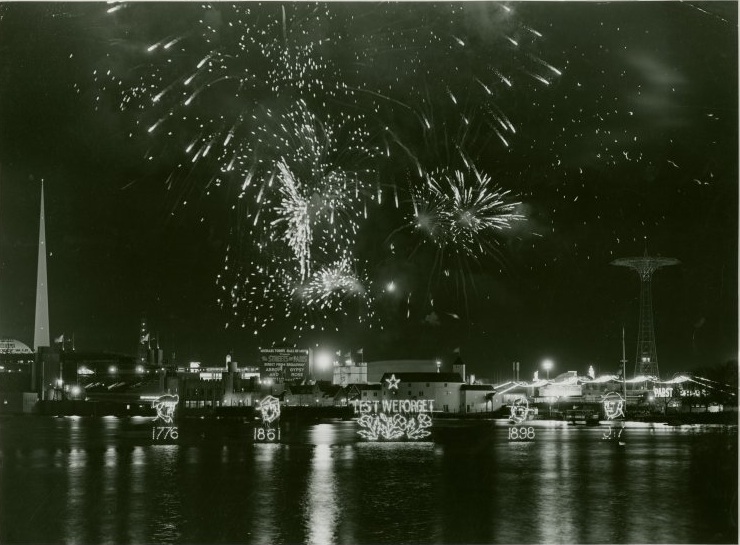
The World’s Fair of 1939-40 (NYPL)
Categories
Know Your Mayors

The mayoral inauguration 100 years ago was quite a headache — “the Most Cheerless Day Ever Known at City Hall”

On Wednesday, January 1, 2014, Bill de Blasio will be inaugurated at City Hall to become the 109th Mayor of New York City, sworn in by President Bill Clinton.  Mayoral inaugurations are never very exciting, but they’re often reflected upon later as setting the tone for an administration, a clue to a possible style of governance.

A fine, athletic example that Mayor-elect de Blasio might consider would be that of William J. Gaynor, who celebrated his inauguration on January 1, 1910, by walking from his home that day in Park Slope, over the Brooklyn Bridge to City Hall.  Brooklyn had been a part of Greater New York for only a decade by that point, and Gaynor one of its most esteemed residents.  Nobody doubted Gaynor’s pride that day in his home borough.  (De Blasio is also from Park Slope; his home is about ten minutes away from Gaynor’s residence on Eighth Avenue.)

Below: Mayor-elect Gaynor as he strolled across the bridge to City Hall

Four years later — after Gaynor died in office, from the internal injuries of an assassin’s bullet — New Yorkers elected the reformer John Purroy Mitchel.  He also made a bold statement during his inauguration on January 1, 1914, although one that cast a lingering pall over his subsequent accomplishments.

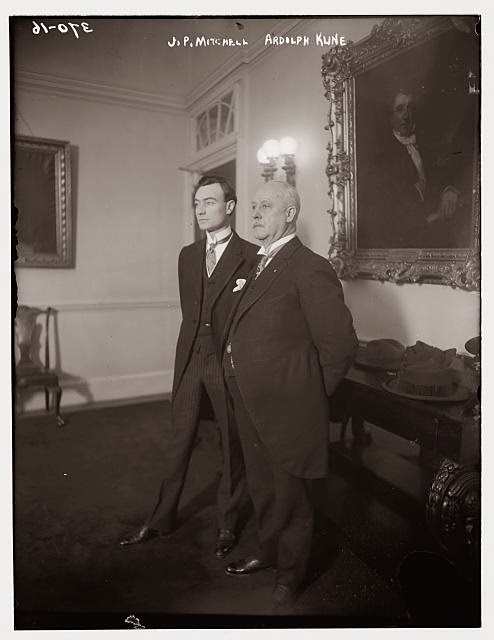
At right: Mayor-elect Mitchel with interim mayor Adolph Loges Kline, on inauguration day, 1914

Unfortunately for the young mayor-elect, he suffered from intensely painful headaches, and that morning, as he arrived at 9 a.m., Mitchel could barely withstand the pressure.

After greeting a few well-wishers and a brief meeting with reporters, he was sworn in during a private ceremony, made a five minute speech, then escaped into his private office, even as thousands lingered in the hallways and around City Hall for hopes of something — anything in the way of celebration — to occur.

Mitchel was noticeably aggravated and avoided any major announcements (such as the hotly contested job of Police Commissioner).

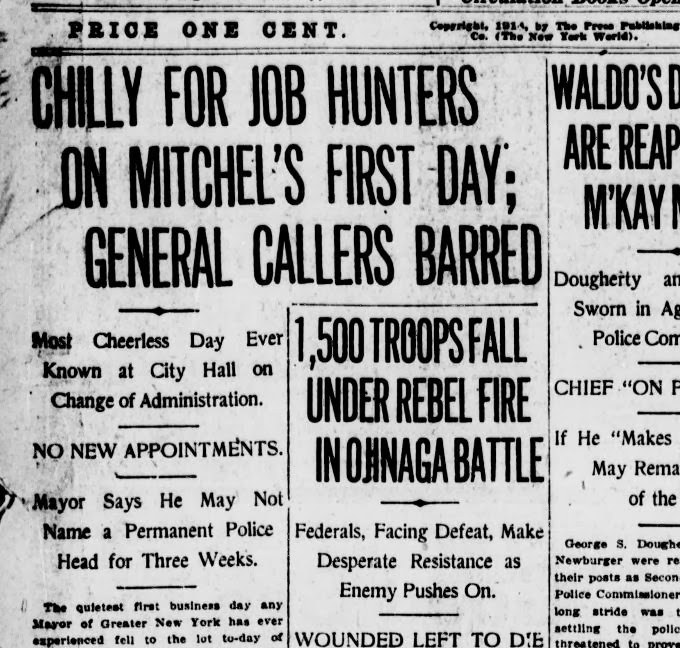
Early on, the police even dismissed the official receiving line of well-dressed politicians, the phalanx leaving with their hands unshaken.  This was a slight that many would never forget.  “[T]he reception room and corridor outside his office carried all the surging, bustling human exhilaration of Grant’s Tomb,” said the Evening World, who characterized the ceremony as “the most cheerless day ever known in City Hall.”

Many would consider this a hallmark of Mitchel’s style — distant and removed, hardly politic — a demeanor which would eventually label him as an elitist.

From the January 2, 1914, Evening World

For more on Gaynor, Mitchel and the tumultuous politics of 1914, check out our podcast on The Boy Mayor Of New York (Episode #156).

Categories
Wartime New York

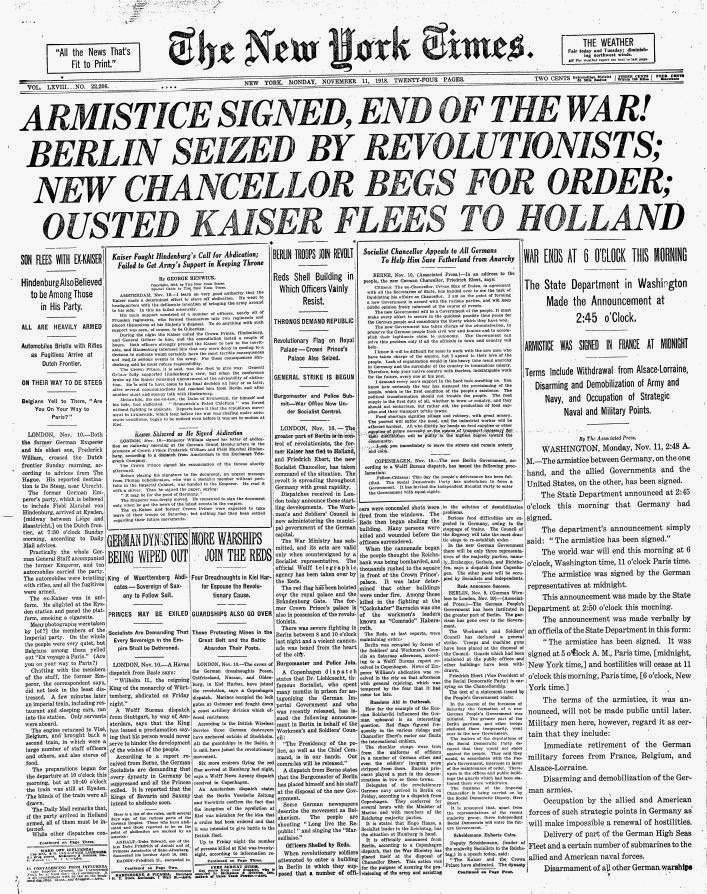
The end of war: New York newspapers celebrate Armistice Day and the end of World War I

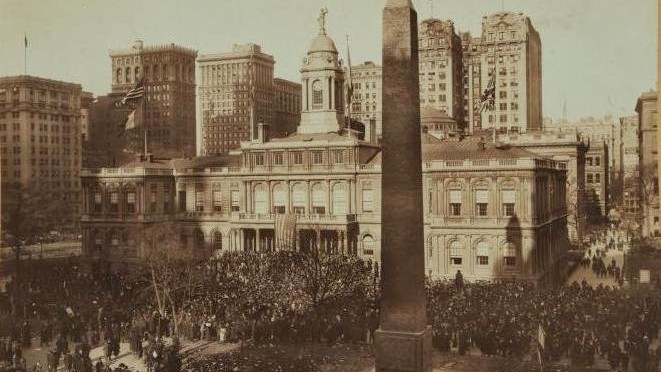
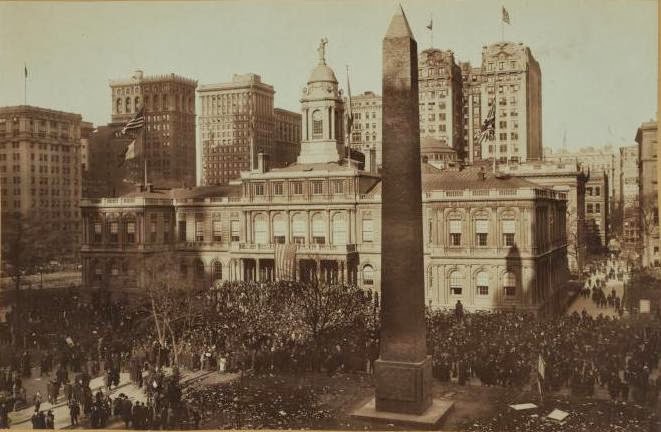
Armistice Day 1918: An impromptu gathering of New Yorkers gathered in front of City Hall. (NYPL)

Today is Veterans Day in the United States, a holiday devoted to the memory and service of those in the American armed forces.  While this is a commemoration of all men and woman who have served — during war and peace-time — the specific date of Veterans Day (November 11) derives from one particular moment — the end of World War I, on November 11, 1918.

By 1919, several individual states had already made Armistice Day a holiday.  According to the New York Tribune, the first Armistice Day parade that year took place at four in the morning, when Brooklyn post office workers and a thousand other well-wishers took to the streets in front of Brooklyn Borough Hall.

Armistice Day was declared a national holiday in 1938.  At the completion of World War II, the national holiday was expanded to include those who had served in that war, officially renamed Veterans Day in 1954.

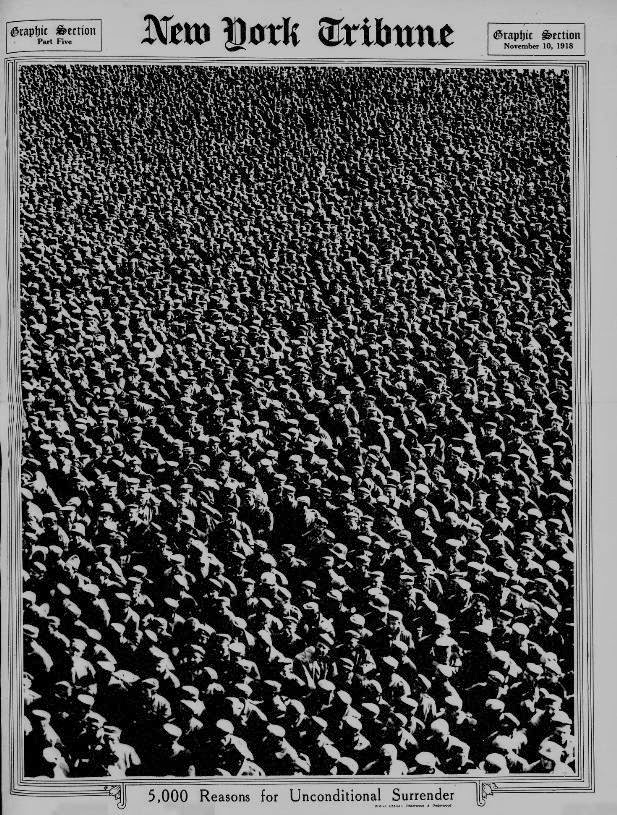
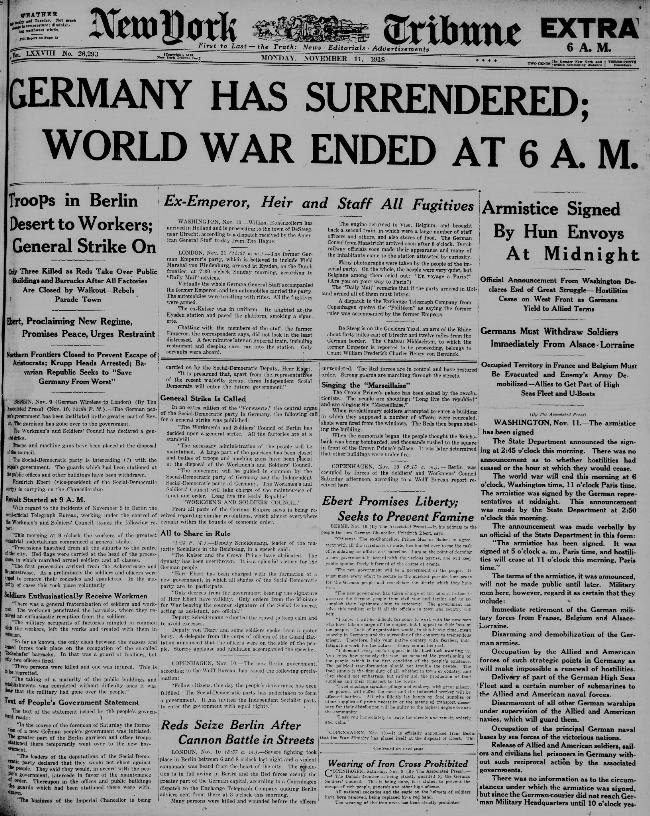
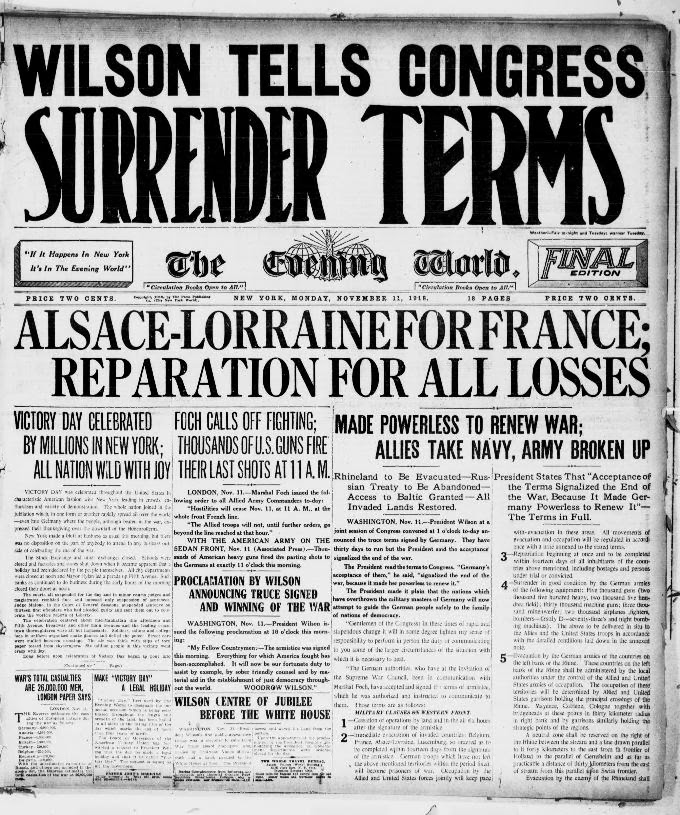
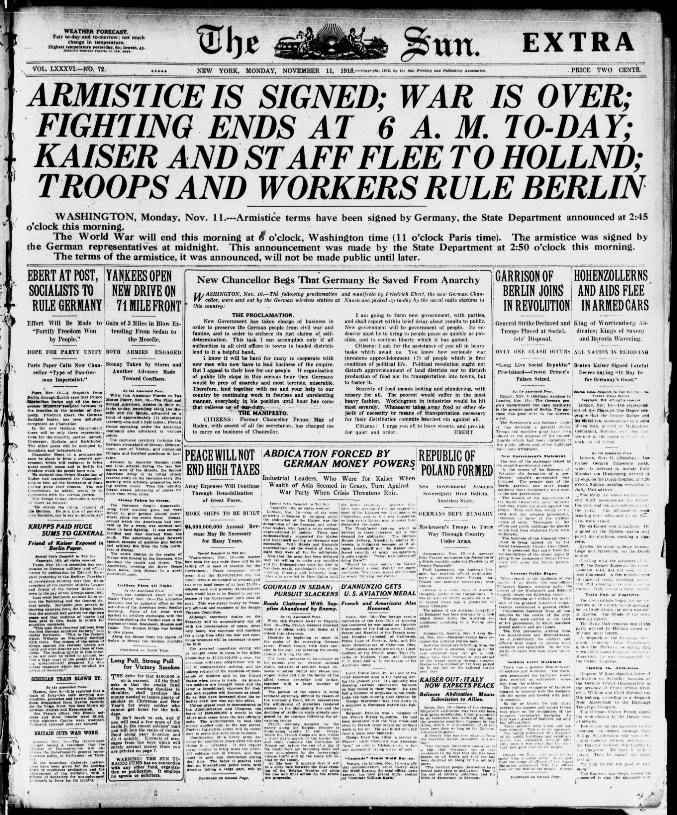
But I do find it interesting that the date itself commemorates a specific event, and one that brought a flood of relief and passion to millions of people around the world.  Here’s how the major New York City newspapers presented the event to their readers:
  The New York Tribune, November 10, 1918

The New York Tribune, November 11, 1918

 
A font-kerning nightmare! The New York Evening World, November 11, 1918:

Semi-colon heaven! The New York Sun, November 11, 1918

The New York Times, November 11, 1918

Categories
Know Your Mayors

One hundred years ago today, the mayor of New York died

Mayor William Jay Gaynor’s final appearance at City Hall was at a notification rally, declaring his independent candidacy.  He brandishes a shovel as a symbol of a new era of subway construction (the eventual fruits of the so-called ‘dual contracts’ which had finally be agreed to earlier that year.)
Today’s mayoral primary falls on a very grim anniversary in New York City political history.  One hundred years ago today, Mayor William Jay Gaynor collapsed and died while on a voyage to Europe, succumbing to an assassin’s bullet which had been lodged in his throat for over three years.

Gaynor was not in New York when he was shot, and he was not in New York when he finally succumbed to its effects years later.  On August 9, 1910, he boarded a German ocean liner in Hoboken, New Jersey, for a planned trip to Europe. A disgruntled dock worker James J. Gallagher approached and shot him through the neck.  The moment was gruesomely captured by a New York World photographer.

Although the injury derailed Gaynor’s presidential ambitions, it did not prevent him from leaving office.  The bullet remained stuck in his neck, slowly weakening his health and eventually deterioriating his ability to speak.

But he remained a feisty opponent of city corruption. So much so that corruption-fueled Democratic machine Tammany Hall refused to support his re-election bid in 1913, throwing their support to judge Edward E. McCall, a more pliant candidate to their whims.  McCall would run against Fusion candidate John Purroy Mitchel, the firebrand reformer and president of New York’s Board of Aldermen (city council).

Gaynor would not be sidelined.  On September 3, he announced an independent run for the mayor from the steps of City Hall.  To a crowd of 5,000 supporters, Gaynor’s secretary had to read his speech for him as he was unable to raise his voice due to his injuries.  At the very end, however, as his secretary declared the mayor’s intention to eradicate graft, Gaynor leaped to his feet and cried, “Yes, that is what we are going to do — shovel all those miserable grafters into the common dump!”

Gaynor at his candidacy announcement, buffered by supporters

The following day, he boarded another ocean liner with his son, intending to convalesce for two or three weeks.  It was unannounced voyage — Gaynor naturally wanted to keep his deteriorating condition quiet —  although the newspapers found out and splashed it upon their front pages.  “It was a feeble figure that went slowly up the gangplank leaning heavily on the arm of his son Rufus,” said the Evening World.

He was intending to return on September 21.  However, six days into his voyage, on September 10, the mayor finally succumbed to his wounds, aggravated by other afflictions in his stomach and lungs.

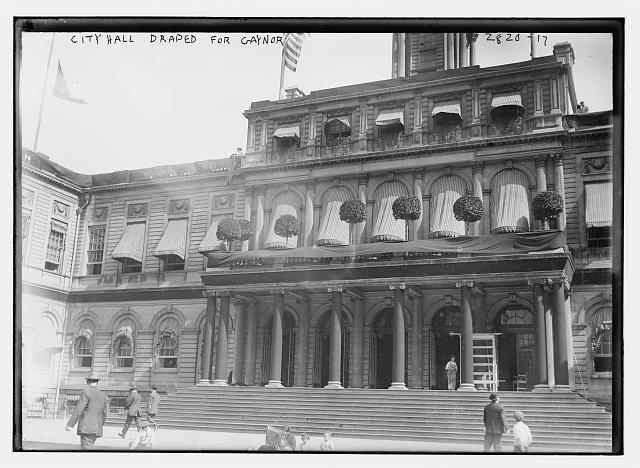
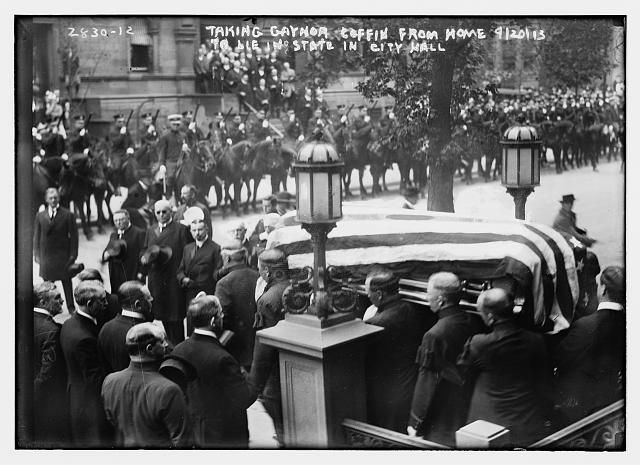
His body was returned to New York on the RMS Lusitania nine days later.  The following day, his body lay in state at City Hall as thousands of mourners paid their last respects.

Gaynor would be the second New York mayor to die in office — William Havemeyer died of a heart attack while in office in 1874 — and the fifth to die in office if you count those from before the Revolutionary War.

Gaynor’s passing turned the coming election into a free-for-all, with the remaining candidates scrambling to appeal to the former mayor’s moderate voting base.  In the end, Mitchel was elected that November, becoming the city’s second youngest mayor in history.

A memorial for Gaynor was placed in Cadman Plaza in Brooklyn in 1926, inscribed with the anti-corruption slogan “Ours is a government of laws not men.”  Gaynor lived in Park Slope at 20 Eighth Avenue.

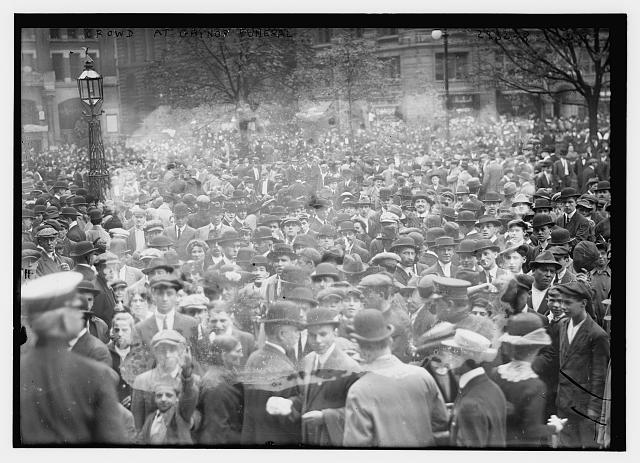
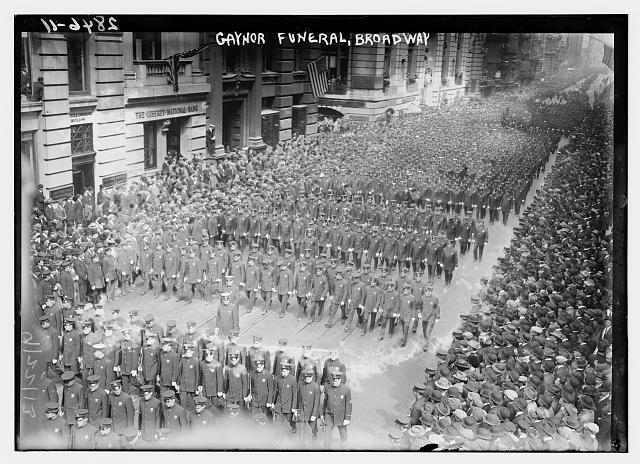
Below are some images from his funeral at City Hall, September 20, 1913

All images courtesy the Library of Congress

Mourners at City Hall (LOC)

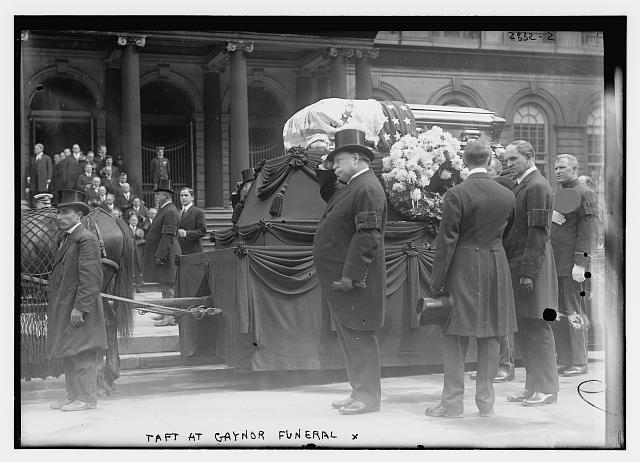
Former president William Howard Taft at Gaynor’s funeral (LOC)

Categories
Health and Living Podcasts

The startling history of Bellevue Hospital, beyond the horror stories, the last resort for the New York unwanted

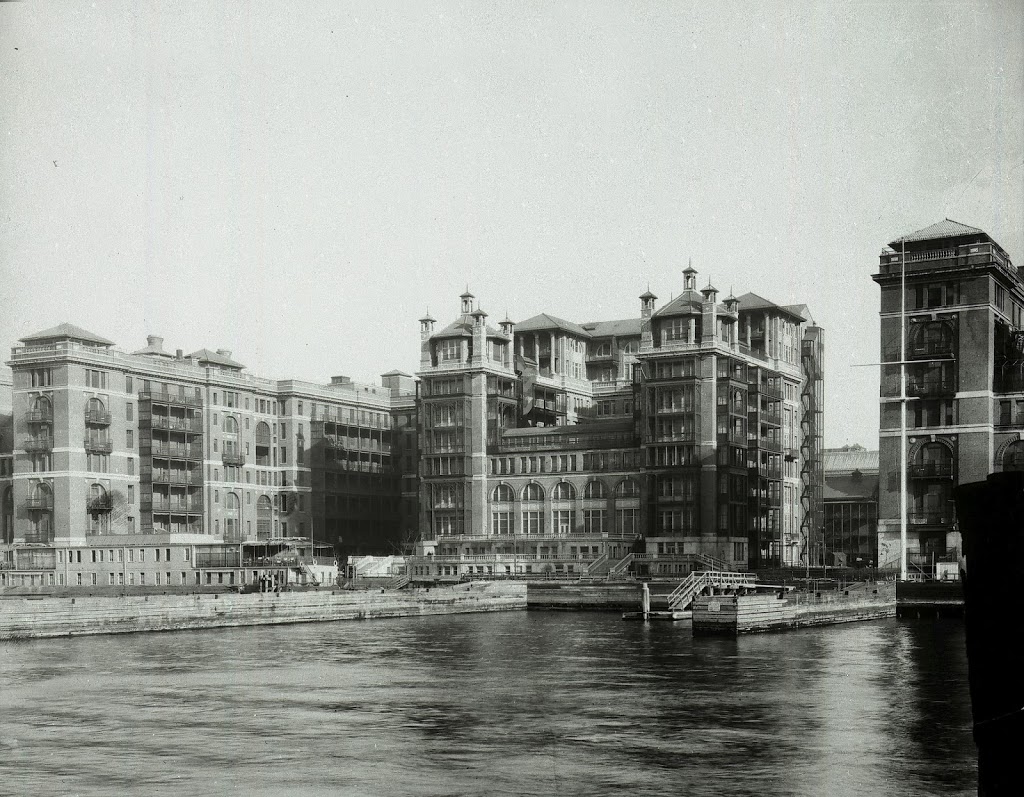
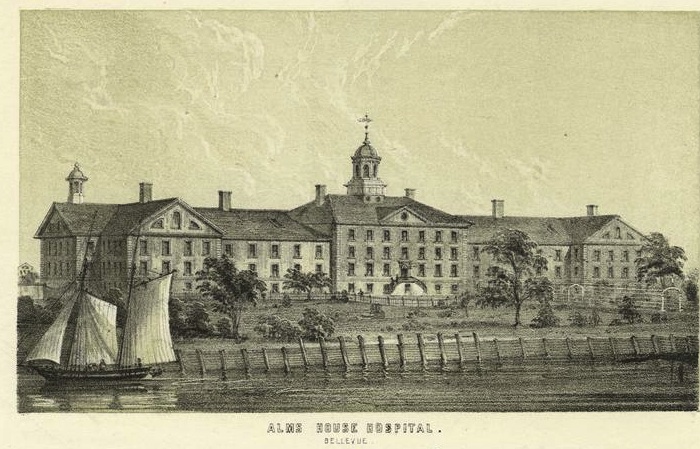
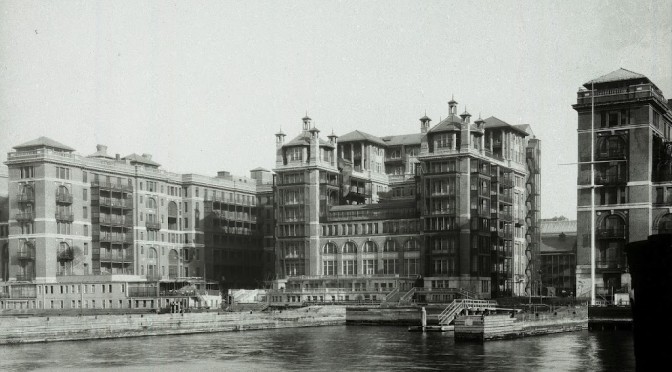
Bellevue from the waterfront, 1879.  Proximity to the shoreline — which once gave the original mansion here that ‘belle vue’ — was key in the early years of Bellevue, as sometimes it was the fastest way to get to the hospital when roads were less than ideal. (Courtesy NYC HHC)

PODCAST Bellevue Hospital, you might have heard, once had a very notorious psychiatric ward. But those horror stories have only distracted from the rather breathtaking — and heart-breaking — history of this historic institution, a lifeline not only for the sick, but for the poor, the incarcerated, the abandoned — even the dead!

The hospital traces its origins to a six-bed almshouse that once sat near the location of New York City Hall today. Despite its humble and (to the modern eye) confusing original purposes, the almshouse was miles better than the barbaric medical procedures of early New York, courtesy the ominous sounding ‘barber-surgeons‘.

A series of yellow fever epidemics moved care for the sick to a former mansion called Belle Vue near Murray Hill — and, in fact, with a strong connection to the Murray of said Hill.  Soon the institution fulfilled a variety of roles and in rather ghastly conditions, from ‘pest house’ to execution ground, from a Pathological Museum to New York’s first city morgue.

A great many medical advances came from Bellevue, not least of which the origins of the modern ambulance. But some of that progress has been obscured by the reputation of the Bellevue Psychiatric Hospital which opened in 1931 and ‘hosted’ a variety of famous people with disturbing issues.  And in the 1980s, Bellevue would take on another grim role — during the most distressing years of the AIDS crisis.

To get this week’s episode, simply download it for FREE from iTunes or other podcasting services, subscribe to our RSS feed or get it straight from our satellite site.

You can also listen to the show on Stitcher streaming radio and Player FM from your mobile devices.

Or listen to straight from here:

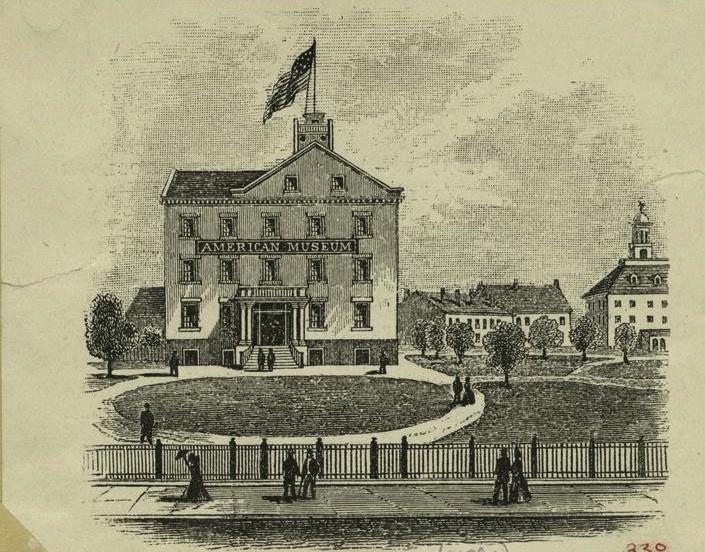
Bellevue traces its start to the original Almshouse which sat in the old common ground that is today City Hall and City Hall Park.  The first infirmary was on the second floor, a total of six beds and originally just one doctor.  When it moved to the Belle Vue mansion during the yellow fever years, this building became refashioned for several institutions, including (as seen below) Scudder’s American Museum, which became the basis for P. T. Barnum‘s museum of the same name. (Courtesy NYPL)

The first incarnation of the ‘almshouse hospital’ in 1852.  By this time, the city had expanded up to this area of Bellevue, and the hospital both farmed out services like its penitentiary and ‘pest-house’ to Blackwell’s Island and expanded its current site to serve the needs of thousands of newly arrived immigrants. (NYPL)

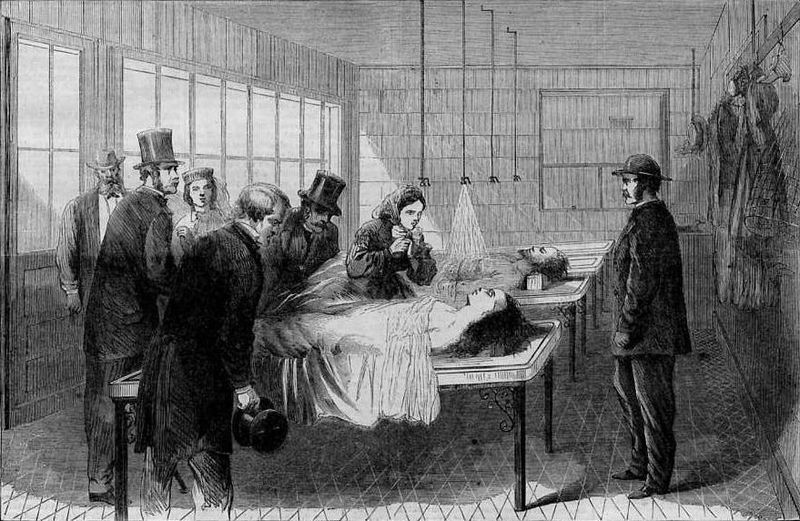
The hospital always had a morgue — its mortality rate, after all, was quite high in the 1830s-40s — but in 1866, it expanded to become New York City’s first city morgue.  Bodies had to be buried after a few days, but for identification and forensic purposes, clothing and other personal articles were kept on display for a month then put into storage.

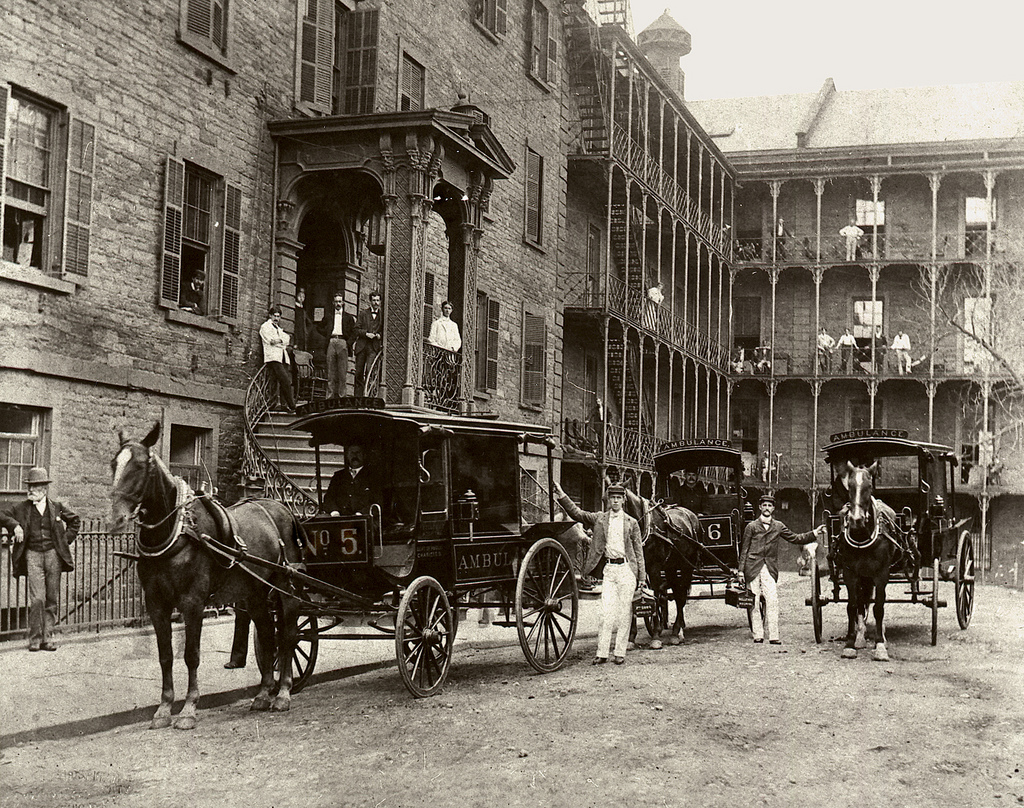
The first ambulance service ever started at Bellevue in 1869, thanks to the hospital’s connections to the Civil War. The fleet of horse-drawn ambulances features a gong to get through busy streets and a container of brandy as an early reliever of pain.

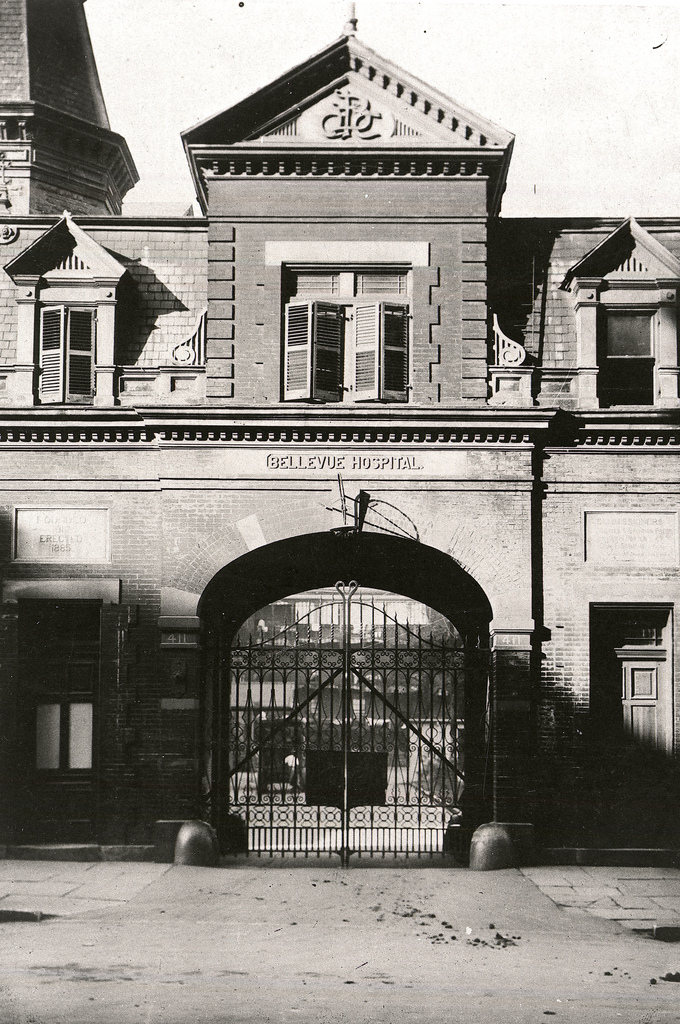
By the way, I read in one source that the railing of that spectacular entrance to the left was actually taken from the balcony of the demolished Federal Hall, where George Washington was sworn in as America’s first president! I’ll have to find out more about that…. (NYC HHC)

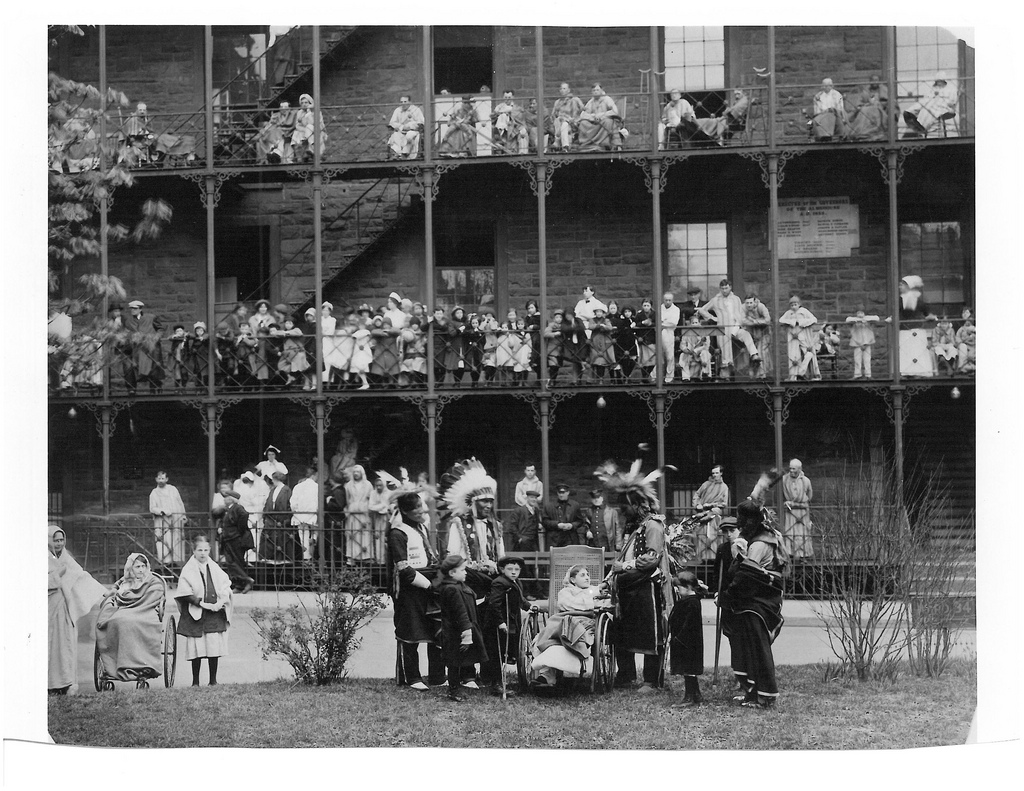
The circus of Barnum and Bailey annually visited the old hospital, entertaining the patients who watched from those glorious iron balconies.  This picture is from 1919 and featured some performers dresses as Indians. (Courtesy Bellevue Hospital Archives)

The hospital’s enduring reputation for treating alcoholics — and the less-than-glowing reputation of its psychiatric ward — were featured in the Billy Wilder film ‘The Lost Weekend‘, which won the Oscar for Best Picture.

Patients had to be evacuated in October 2012 during Hurricane Sandy and was only restored to full service in February of this year.

CORRECTION: In discussing early hospitals that moved into old mansions, I mention Long Island City Hospital, but meant Long Island College Hospital.

http://www.flickr.com/photos/hhcnyc/6507317011/