Categories
Amusements and Thrills

The fire at Barnum’s American Museum 155 years ago

One hundred and fifty-five years ago (on July 13, 1865), New York City lost one of its most famous, most imaginative and most politically incorrect attractions.

When P.T. Barnum opened his museum in 1841, the kooky curiosities contained within the building at the corner of Broadway and Ann Street — at the foot of Park Row — were simply reconstituted properties from other museums.

But he soon expanded the collection to include living spectacles, both human and animal, become both the greatest show and the greatest side-show on earth.

From his lilliputian stars Tom Thumb and Commodore Nutt to the unfortunate white whales contained in water tanks in the basement, Barnum’s American Museum was New York’s destination for the fascinating and the weird.

Millions would visit its corridors during its two and a half decades of operation. It was so renown that it was even a target of attempted sabotage during the Civil War.

Below: A rare photo of Barnum’s American Museum, taken in 1858
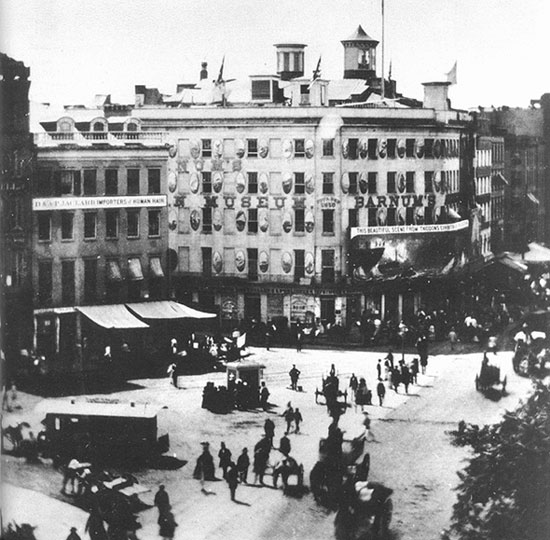
Taken 1858
Taken 1858

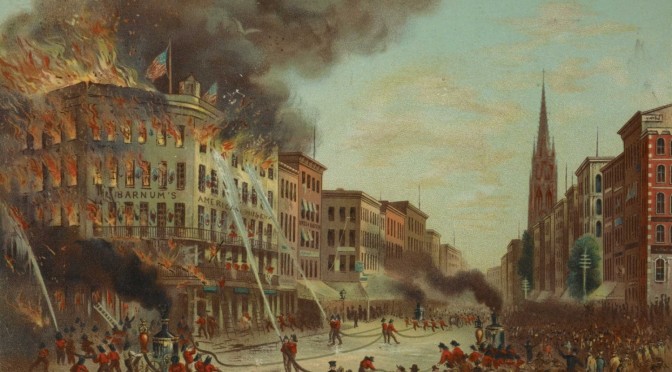
At around noon on July 13, 1865, the building quickly succumbed to “the fierce tooth of fire,” causing the greatest pandemonium that New York City had ever seen.  I must give way to some of the press reports of the day, as they best capture the drama:

New York Times: “Probably no building in New-York was better known, inside and out, to our citizens than the ill-looking ungainly, rambling structure on the corner of Broadway and Ann-streets, known as the American Museum, where for more than twenty years Mr. Barnum has furnished the public with a wonderful variety of amusements.”

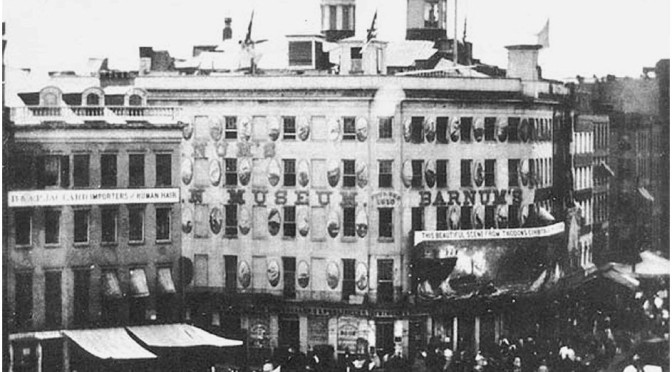
Below: The street scene at the cross-section of Broadway and Ann Street, in 1860. A sign advertising Barnum’s snake collection can be seen on the museum.
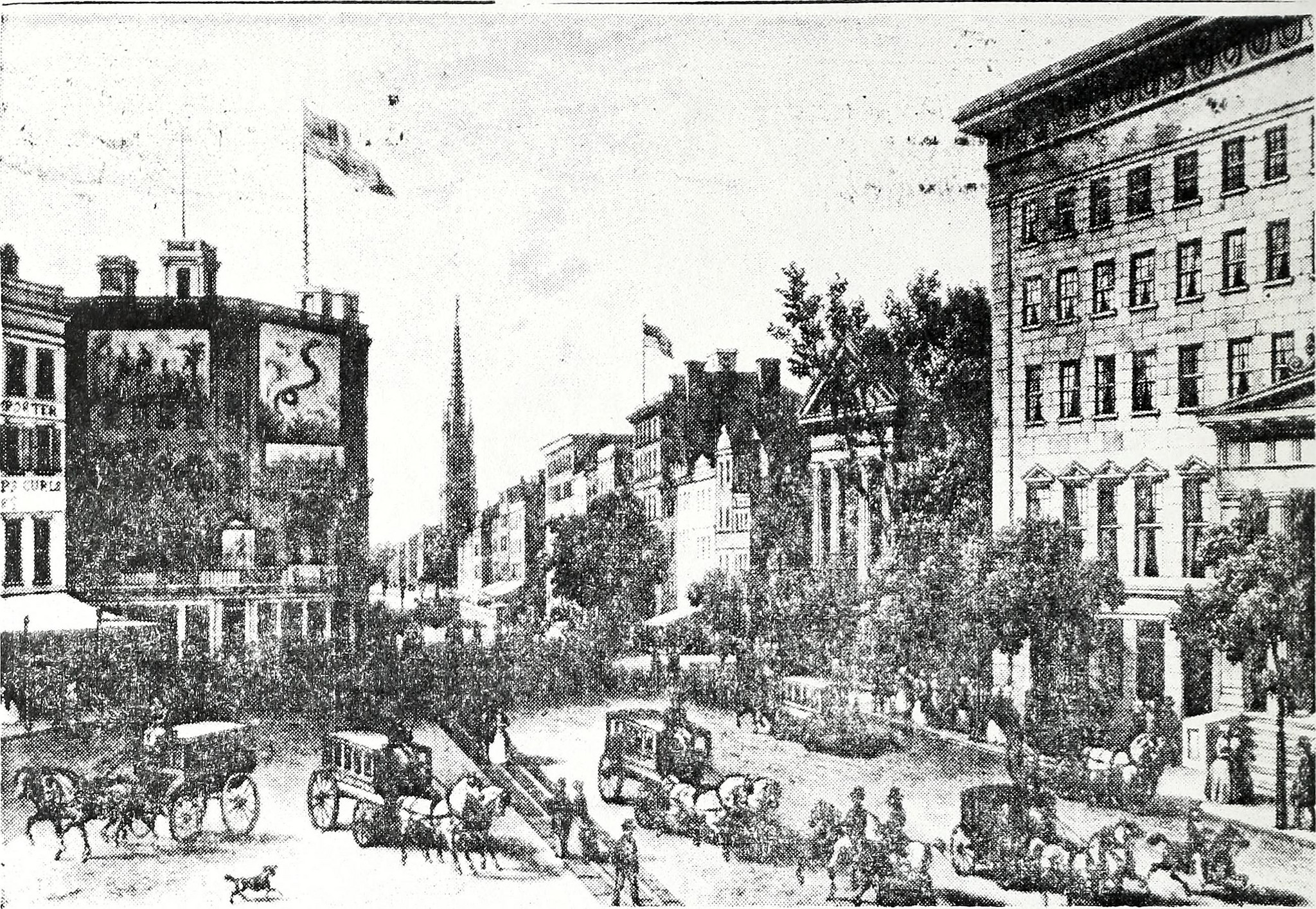
Courtesy Internet Book Archive

New York Sun: “About half past twelve o’clock yesterday the Engineer rushed up from below announcing that his room was on fire, and about the same time immense volumes of smoke permeated the Ann Street end of the building.  [K]nowing that the immense whale tank was directly over the spot where the fire had begun to make headway, attempted to knock a hole in the huge reservoir.”
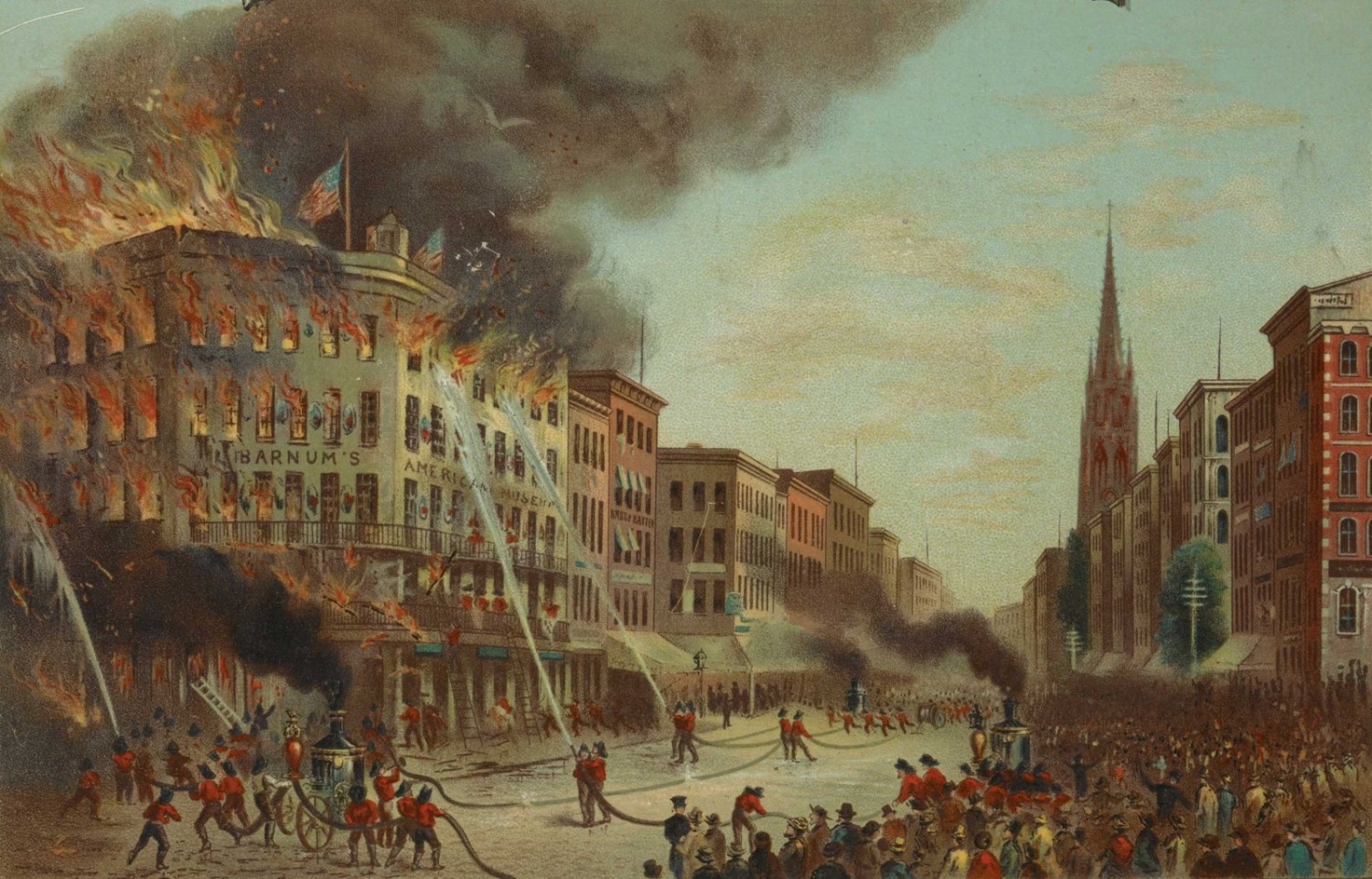
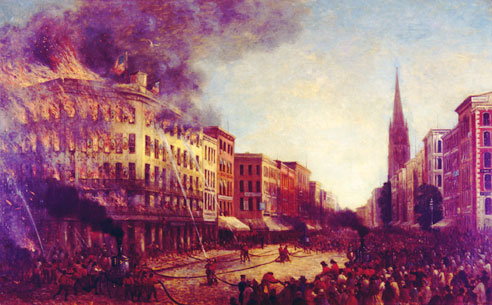
Christopher Pearse Cranch. Burning of Barnum's Museum, July 13th, 1865, 1865. Chromolithograph. Eno Collection Miriam and Ira D. Wallach Division of Art, Prints and Photographs, The New York Public Library
Christopher Pearse Cranch. Burning of Barnum’s Museum, July 13th, 1865, 1865. Chromolithograph. Eno Collection Miriam and Ira D. Wallach Division of Art, Prints and Photographs, The New York Public Library

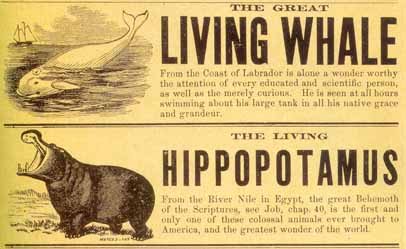
The occupants of the tanks were doomed.  “‘[T]wo whales, imported, at a cost of $7,000, from the coast of Labrador,’ whose sportive plunges and animated contests of affection afforded constant amusement to hundreds of spectators, [was] a pregnant contrast to the fearful death by roasting which they so soon thereafter met.”

The fire spread rapidly, quickly filling the upper floors with smoke.  Firemen burst in from the Ann Street side and quickly attended to patrons who had collapsed or were too confused in the immense labyrinth of bizarre objects to escape.
1

A fireman named William McNamara is credited with single-handedly evacuating many patrons of the museum, not to mention some of the performers who regularly lived there.

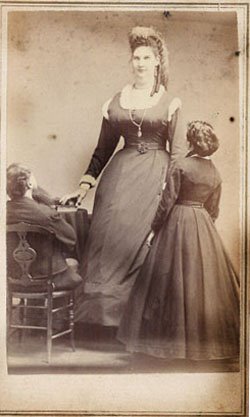
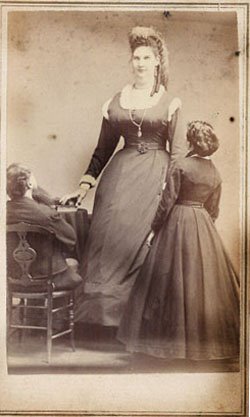
From the New York Sun: “Knowing that [some performers] occupied apartments on the third floor, he rushed thither and burst open the doors. Finding the rooms empty he ascended to the next floor and succeeded in bringing down the ladies assembled in the dressing rooms there — a Miss Swan, the Giantess, and Miss Zuruby Hannus, the Circassian girl.”

Below: Anna Swan, ‘the Giantess’ who lived at the museum, was successfully rescued
swan

Many of the wax figures from the third floor were hurled out the windows. One peculiar item captured the imagination of the crowd — the wax depiction of Jefferson Davis, dressed in a woman’s petticoat.  (It was rumored that the former president of the Confederacy has attempted to escape dressed as a lady.)

NYT:  “One [rescuer] had Jefferson Davis’ effigy in his arms and fought vigorously to preserve the worthless thing, as though it were a gem of rare value. On reaching the balcony the man, perceiving that either the inanimate Jefferson or himself must go by the board, hurled the scarecrow to the iconoclasts in the street. As Jefferson made his perilous descent, his petticoats again played him false, and as the wind blow them about, the imposture of the figure was exposed.”

NYS: “When the Jefferson Davis petticoated figure was recognized by the crowd, it was seized, kicked, knocked and finally hanged to an awning frame [in front of St. Paul’s Church], amid the derisive and contumelious epithets of the persons engaged in this pastime.”

More seriously a great number of artifacts from the Revolutionary War were incinerated in the fire. “Valuable mementos of Washington, Putnam, Greene, Marion, Andre, Cornwallis, Howe, Burr, Clinton, Jefferson, Adams, and other eminent men which should have been carefully stored in a fire-proof vault, yesterday smoldered in the heat….” [NYT]
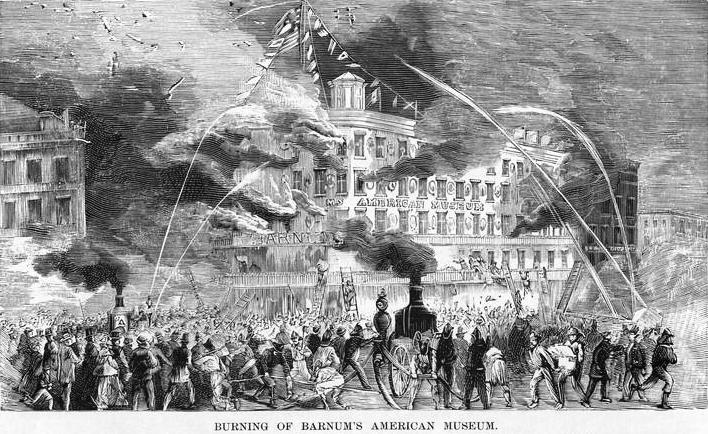
barnum's museum burns 1865

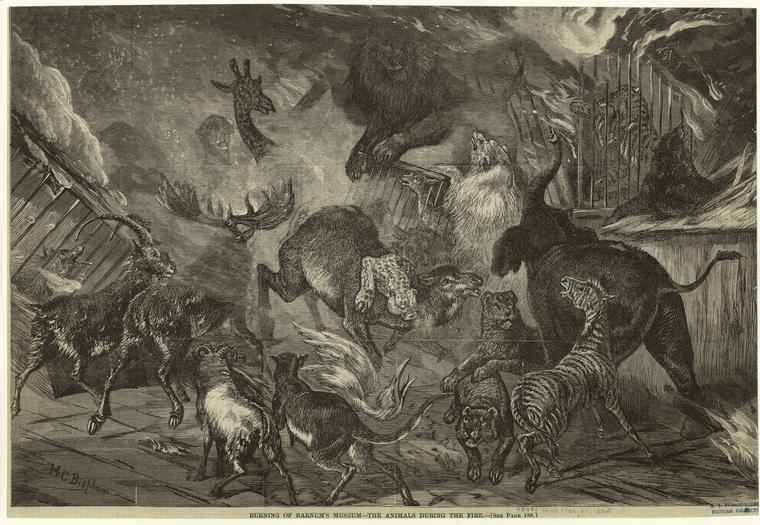
The museum’s impressive collection of taxidermy — monkeys, lions, elephants, zebras — were swallowed up by smoke and collapsed into the inferno.

But the museum also had a great many living animals — snakes, pigs, dogs, and even a kangaroo and an alligator. And, of course, a great many monkeys — “big monkeys, little monkeys, monkeys of every degree of tail, old, grave, gray monkeys, young, rascally, mischievous monkeys, middle-aged, scheming monkeys, and a great many miserable, angry monkeys.” Most perished in the flames although some escaped into the streets, some never to be found again.

Below: This is Harpers Weekly’s illustration of Barnum’s second fire — see below — but could have tragically captured the events on July 13, 1865.
Harpers Weekly
Harpers Weekly

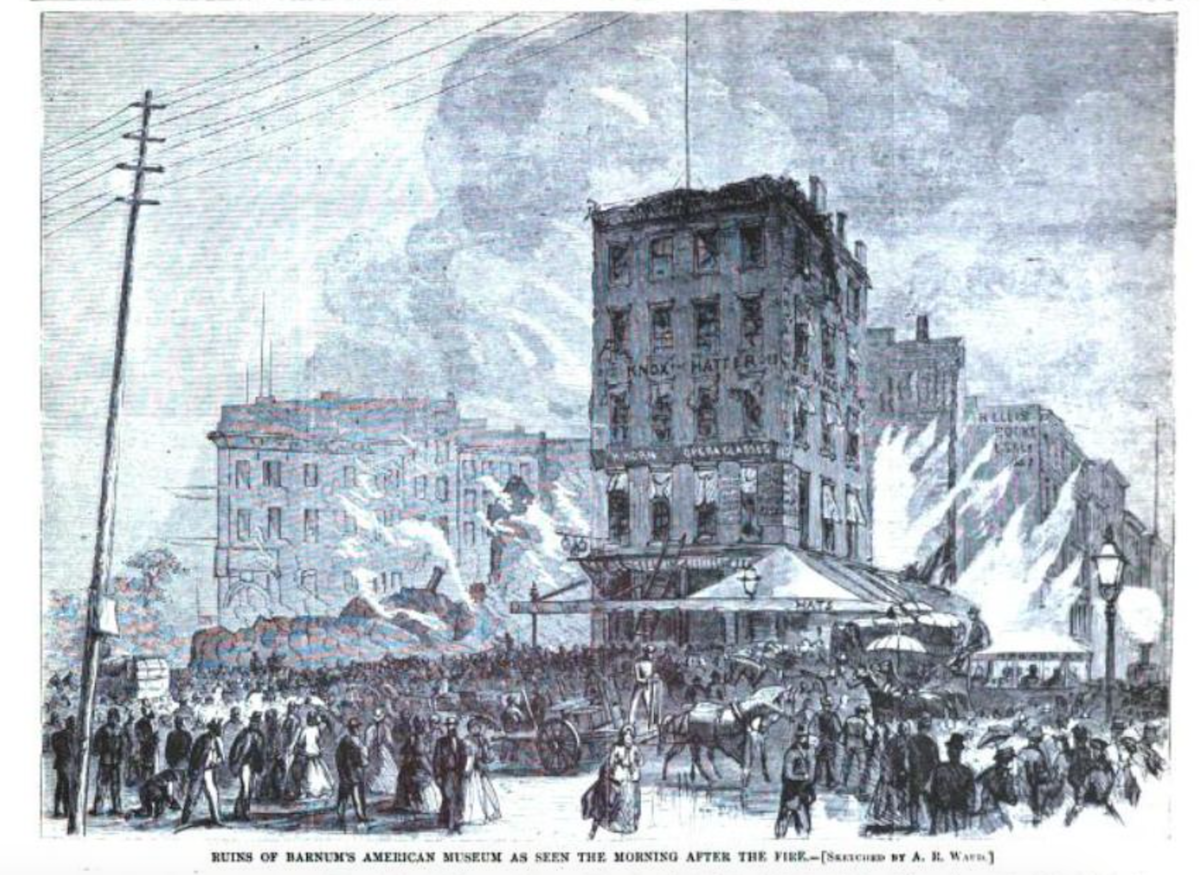
Remarkably, nobody humans died in the blaze. In fact, few wax depictions of humans perished as many took to rescuing wax figures thinking they were alive.  The fire spread to several surrounding buildings, and soon the entire block was engulfed in flame.

NYT:  “The roof of the Museum had now fallen, and the interior of the building was like the crater of a volcano. A stream of heated air issued from the top, and was borne eastward by the breeze directly over the block, carrying with it light articles, pieces of burning wood, shingles ….

At 1:30 came a crash resounding like the explosion of a powder magazine. The whole wall on the Ann-street side had fallen. A cloud of dust and smoke filled the air, making it dark as twilight, and rendering it impossible to descry objects at short distance.”
Harpers Weely
Harpers Weekly

Notable among the surrounding buildings that were damaged was the famous Knox the Hatter at 212 Broadway. Fortunately for the fate of New York,  the Croton Aqueduct water system had been installed two decades earlier, allowing the blaze to be put out with some speed, preventing a repeat of the Great Fire of 1835.

There was a bit a looting, including “two men dressed as soldiers [who] were seen coming out of the shoe-store in Ann Street, each with five or six pairs of shoes under their coats.” And there were false reports that the lion has escaped and was running through the streets.

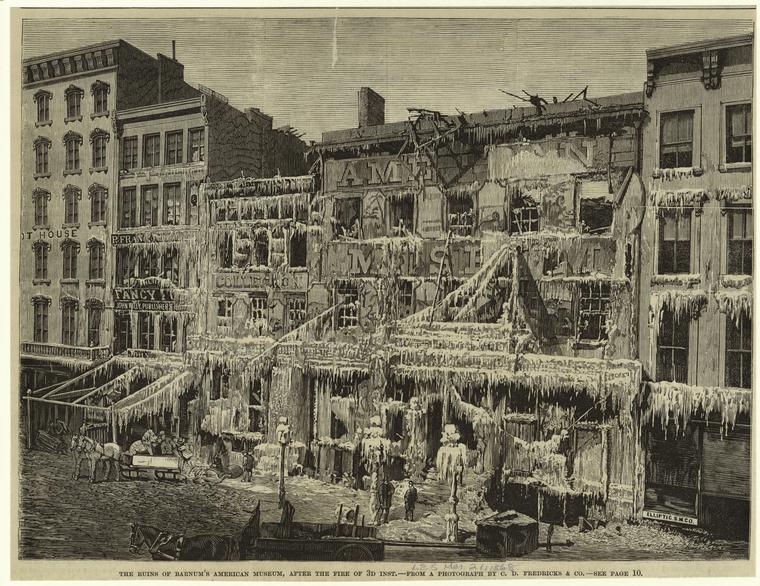
For years after, people mourned the loss of Barnum’s collection, truly among the greatest in New York City up until that time. Â Barnum attempted to relaunch the museum at 539-541 Broadway. but it, too, was destroyed in a fire (pictured below).

Then, in 1871, he leased a train depot and called it Barnum’s Monster Classical and Geological Hippodrome.  (It would later morph into the first Madison Square Garden.)

Finally he just decided to take his collection of acts on the road forming a traveling circus in 1881 with ringmaster James Anthony Bailey.

While the world of entertainment would be changed by their collaboration — Barnum and Bailey’s Circus — most would consider the old American Museum as Barnum’s greatest achievement.

Below: Barnum’s second museum destroyed by fire, which gutted the building on a cold day
Harpers Weekly
Harpers Weekly

For more information, we have a few Barnum-themed podcasts that you might enjoy:
Categories
Mysterious Stories

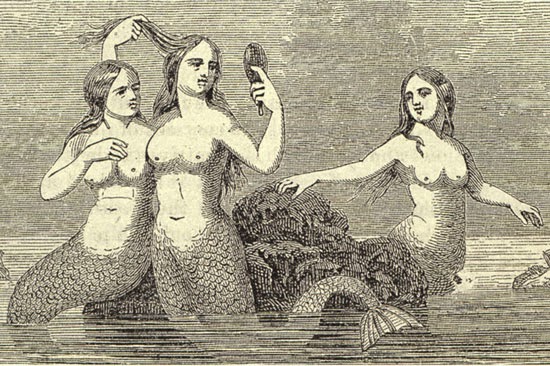
The Fejee Mermaid, New York’s original mermaid freak


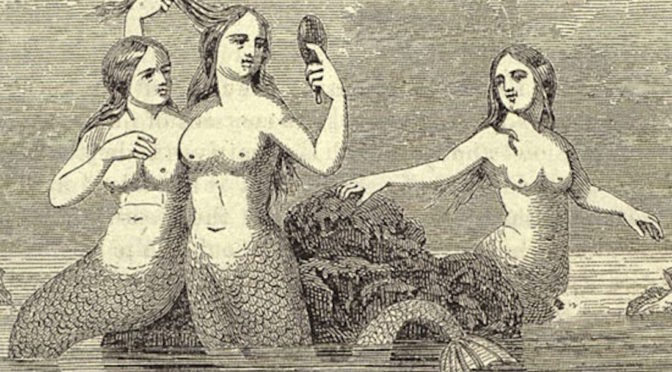
Today let’s give a little love to New York original mermaid queen — the hideous Fiji (Fejee) Mermaid!

This sickening Frankenstein monster — comprising a monkey’s head sewn onto a fish torso — was displayed in  PT Barnum’s American Museum off and on for almost twenty years.  Believe it or not, Barnum actually leased it from an owner who had bought it off of sailors.  It’s actual connection to the Fiji Islands remains tenuous at best.

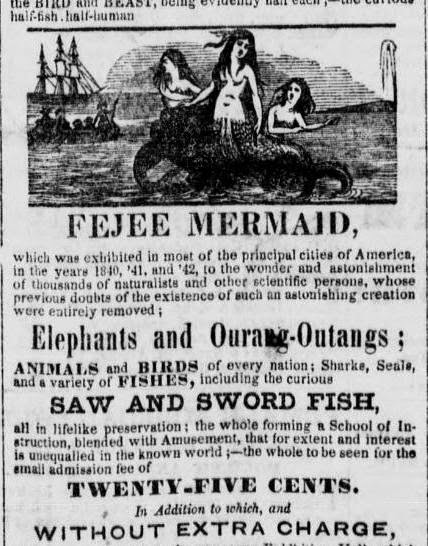
“[M]any naturalists and scientific men who have examined it assert that it is absolutely the work of Nature. Others however insist that its existence is a natural impossibility.  When doctors disagree, the PUBLIC must decide.”

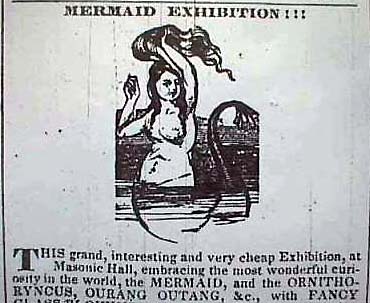
Here’s how the mermaid was advertised in the newspapers:

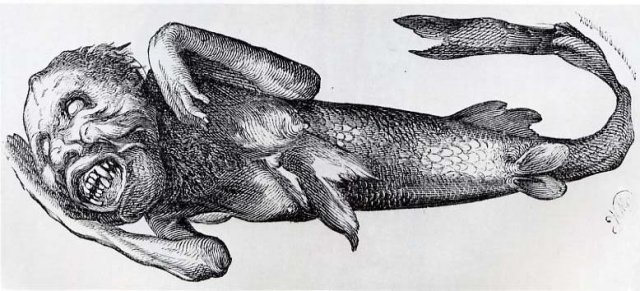
This is what it actually looked like:

This was classic Barnum bait-and-switch.  In fact, he relied on the artifact’s somewhat disappointing appearance to give it a bit of authenticity. See, why would I fake something that looked like this? was the implication.

The mermaid first arrived in New York in November 1842 after a smash debut in Boston,”where her ladyship [referring to the mermaid] has astonished thousands of visitors.”  Thousands flocked to Barnum’s display at a space called Concert Hall (at 404 Broadway) to take in a glimpse of this bizarre creature.  In its first week at the American Museum, Barnum raked in three times his average revenue.

From Barnum’s autobiography: “The public appeared to be satisfied, but as some persons always will take take things literally, and make no allowances for poetic license even in mermaids, an occasional visitor, after having seen the large transparency in front of the hall, representing a beautiful creature half woman and half fish, about eight feet in length, would be slightly surprised in finding that the reality was a specimen of dried monkey and fish that a boy a few years old could easily run away with under his arm.”

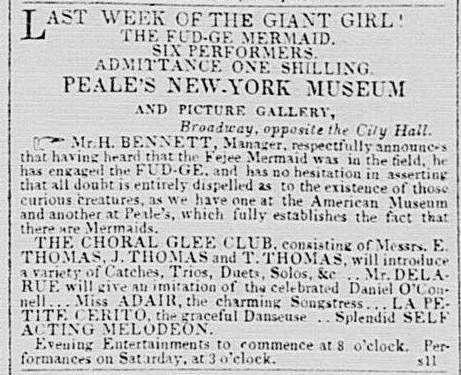
So popular was the exhibit that the old museum of Rubens Peale in today’s City Hall Park debuted its own mermaid, a parody monster called the Fud-Ge Mermaid:

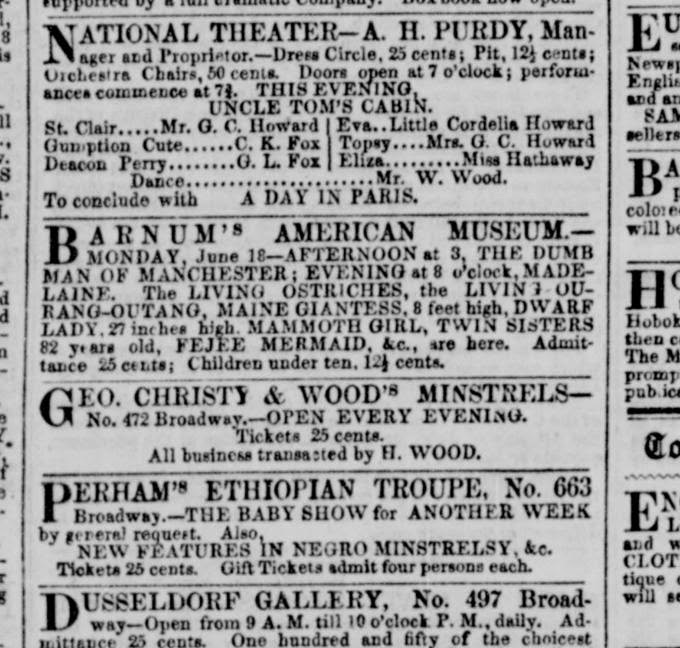
By the 1850s, the Fejee Mermaid was one of a cast of oddities featured at Barnum’s museum. By this point, the grotesque object was probably a commons sight for regular museum goers.  I imagine it, perhaps, with a light coating of dust, possibly a cobweb.  Below: An advertisement from the Daily Tribune, 1855:

Whatever became of the mermaid?  Some say she disappeared during a fire at the museum.  I’m not sure she was still there when Confederate spies attempted to burn down the museum on November 25, 1864.  But she lives on as an icon of fabulous hoax, “one of the most scientific fakes ever perpetrated upon the American public.” [source]

And she lives on in our hearts. How can you resist a face like that?

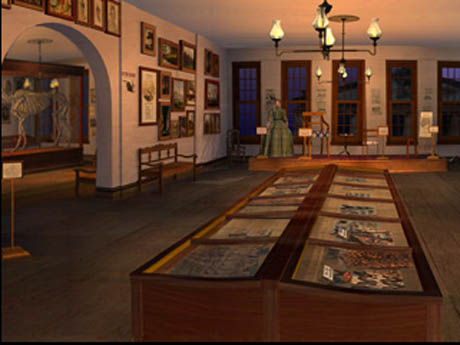
Top image courtesy the Lost Museum (CUNY), an excellent online resource about Barnum’s American Museum.

(This article originally ran on this blog in June 2014)

Categories
Health and Living Podcasts

The startling history of Bellevue Hospital, beyond the horror stories, the last resort for the New York unwanted

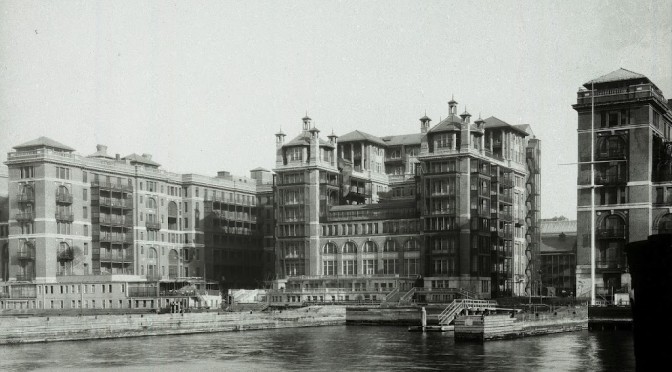
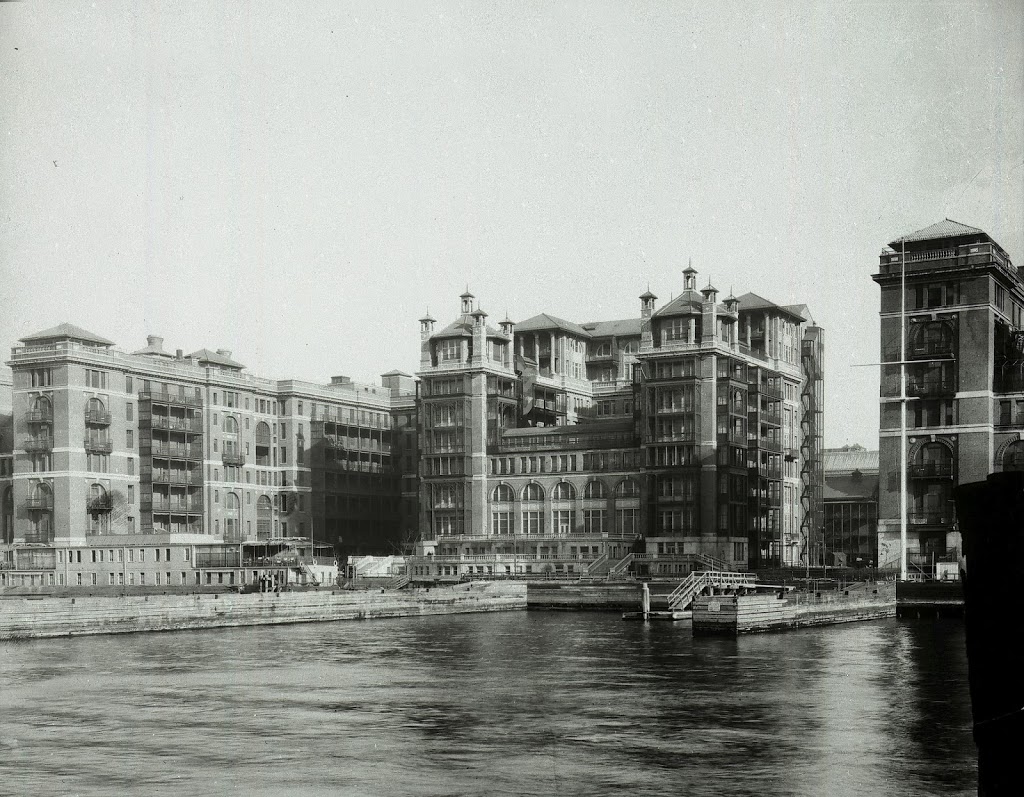
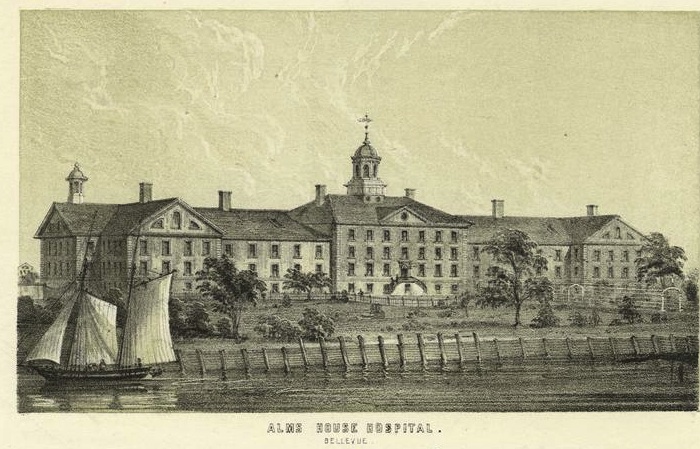
Bellevue from the waterfront, 1879.  Proximity to the shoreline — which once gave the original mansion here that ‘belle vue’ — was key in the early years of Bellevue, as sometimes it was the fastest way to get to the hospital when roads were less than ideal. (Courtesy NYC HHC)

PODCAST Bellevue Hospital, you might have heard, once had a very notorious psychiatric ward. But those horror stories have only distracted from the rather breathtaking — and heart-breaking — history of this historic institution, a lifeline not only for the sick, but for the poor, the incarcerated, the abandoned — even the dead!

The hospital traces its origins to a six-bed almshouse that once sat near the location of New York City Hall today. Despite its humble and (to the modern eye) confusing original purposes, the almshouse was miles better than the barbaric medical procedures of early New York, courtesy the ominous sounding ‘barber-surgeons‘.

A series of yellow fever epidemics moved care for the sick to a former mansion called Belle Vue near Murray Hill — and, in fact, with a strong connection to the Murray of said Hill.  Soon the institution fulfilled a variety of roles and in rather ghastly conditions, from ‘pest house’ to execution ground, from a Pathological Museum to New York’s first city morgue.

A great many medical advances came from Bellevue, not least of which the origins of the modern ambulance. But some of that progress has been obscured by the reputation of the Bellevue Psychiatric Hospital which opened in 1931 and ‘hosted’ a variety of famous people with disturbing issues.  And in the 1980s, Bellevue would take on another grim role — during the most distressing years of the AIDS crisis.

To get this week’s episode, simply download it for FREE from iTunes or other podcasting services, subscribe to our RSS feed or get it straight from our satellite site.

You can also listen to the show on Stitcher streaming radio and Player FM from your mobile devices.

Or listen to straight from here:

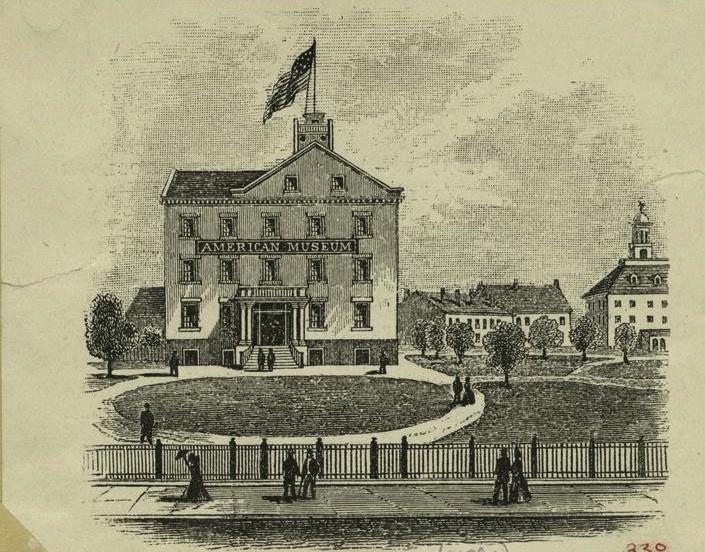
Bellevue traces its start to the original Almshouse which sat in the old common ground that is today City Hall and City Hall Park.  The first infirmary was on the second floor, a total of six beds and originally just one doctor.  When it moved to the Belle Vue mansion during the yellow fever years, this building became refashioned for several institutions, including (as seen below) Scudder’s American Museum, which became the basis for P. T. Barnum‘s museum of the same name. (Courtesy NYPL)

The first incarnation of the ‘almshouse hospital’ in 1852.  By this time, the city had expanded up to this area of Bellevue, and the hospital both farmed out services like its penitentiary and ‘pest-house’ to Blackwell’s Island and expanded its current site to serve the needs of thousands of newly arrived immigrants. (NYPL)

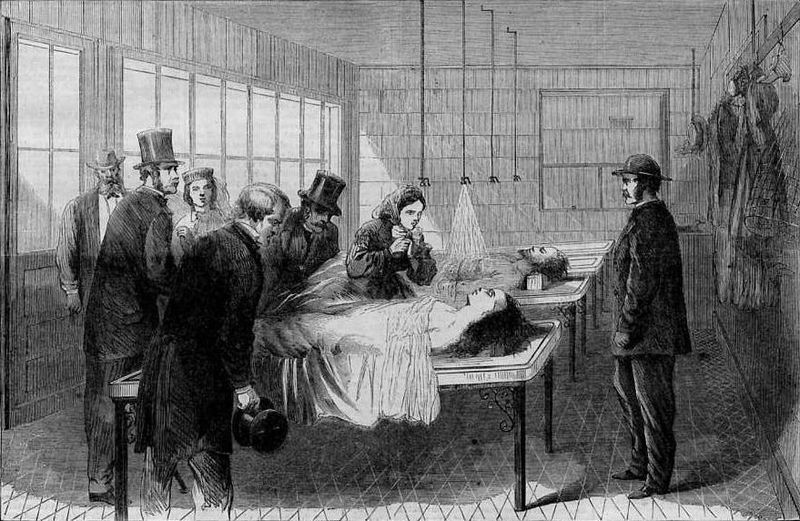
The hospital always had a morgue — its mortality rate, after all, was quite high in the 1830s-40s — but in 1866, it expanded to become New York City’s first city morgue.  Bodies had to be buried after a few days, but for identification and forensic purposes, clothing and other personal articles were kept on display for a month then put into storage.

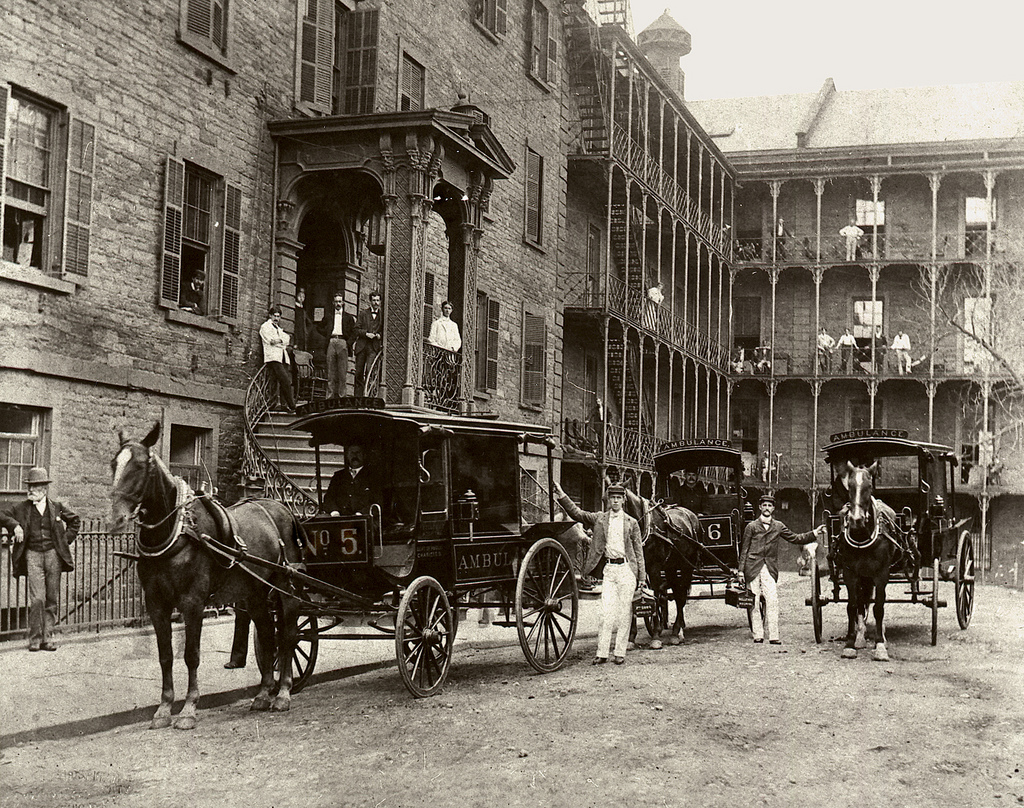
The first ambulance service ever started at Bellevue in 1869, thanks to the hospital’s connections to the Civil War. The fleet of horse-drawn ambulances features a gong to get through busy streets and a container of brandy as an early reliever of pain.

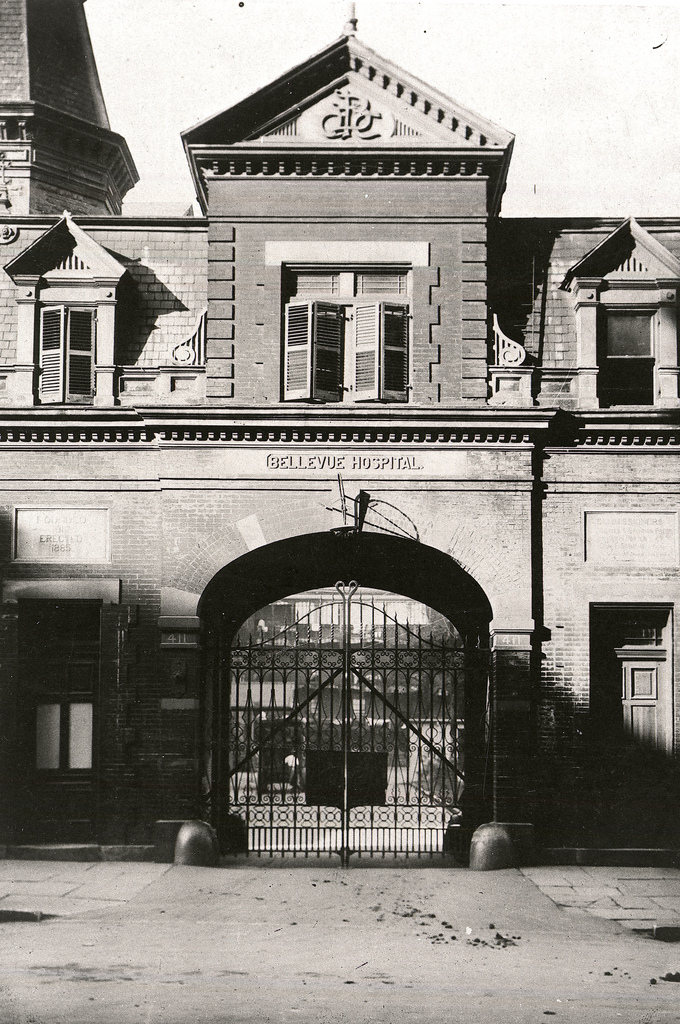
By the way, I read in one source that the railing of that spectacular entrance to the left was actually taken from the balcony of the demolished Federal Hall, where George Washington was sworn in as America’s first president! I’ll have to find out more about that…. (NYC HHC)

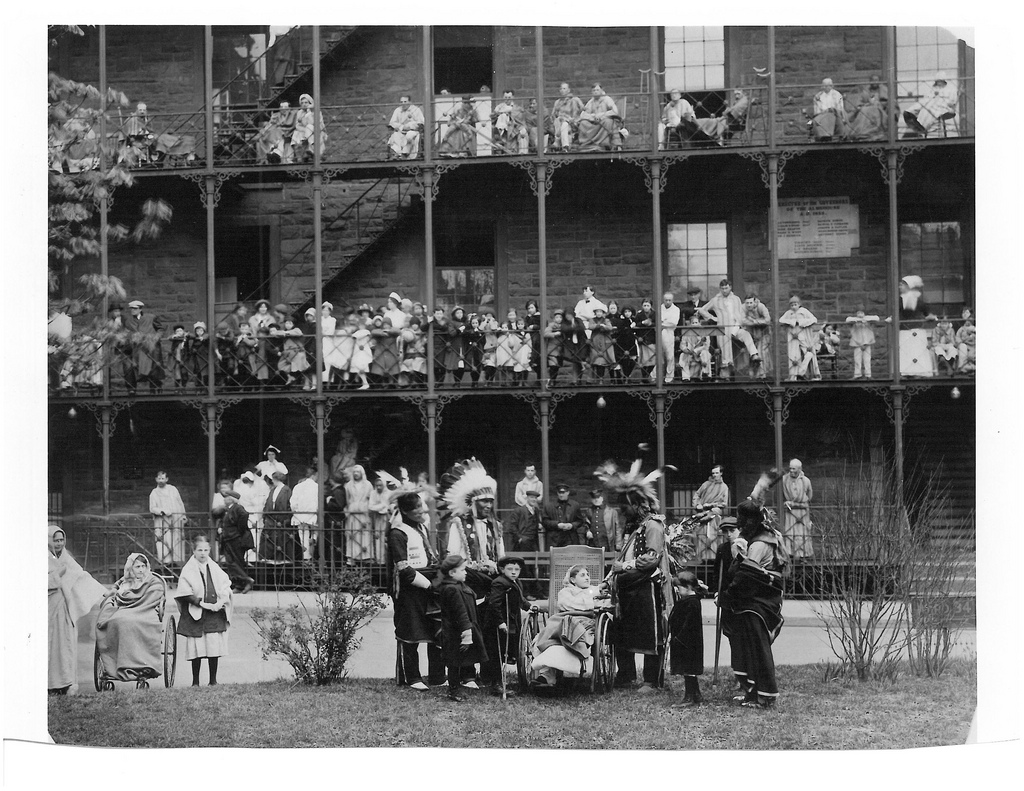
The circus of Barnum and Bailey annually visited the old hospital, entertaining the patients who watched from those glorious iron balconies.  This picture is from 1919 and featured some performers dresses as Indians. (Courtesy Bellevue Hospital Archives)

The hospital’s enduring reputation for treating alcoholics — and the less-than-glowing reputation of its psychiatric ward — were featured in the Billy Wilder film ‘The Lost Weekend‘, which won the Oscar for Best Picture.

Patients had to be evacuated in October 2012 during Hurricane Sandy and was only restored to full service in February of this year.

CORRECTION: In discussing early hospitals that moved into old mansions, I mention Long Island City Hospital, but meant Long Island College Hospital.

http://www.flickr.com/photos/hhcnyc/6507317011/

Categories
Amusements and Thrills

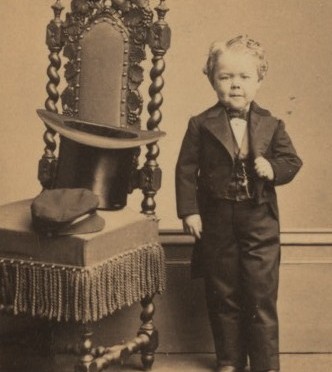
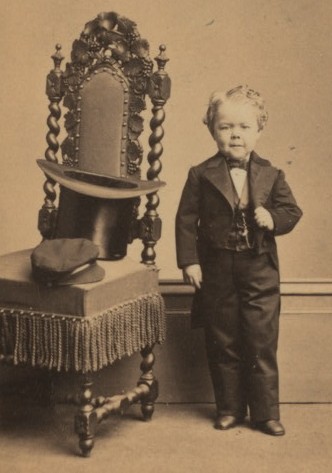
Commodore Nutt: Barnum’s dwarf star, NYC police officer

The attentions of most New Yorkers 150 years ago today were understandably occupied by the events of the Civil War. The general mood in April 1862 had turned cynical and grim. It had been one year since the first battle at Fort Sumter. The bloodiest skirmish yet, the Battle of Shiloh in northwestern Tennessee, left thousands dead on the battlefield just two weeks before, and attention now turned to the standoff at Fort Pulaski.

And yet the city in April 1862 was overflowing with distraction. The jewellers Ball Black & Co. displayed a framed personal letter from Queen Victoria, thanking New Yorkers for their well wishers following the death of her husband a few months earlier. Across the street, at Niblo’s Garden, theatergoers could delight in ‘The Enchantress’, featuring actor William Wheatley, who would later stage the world’s first Broadway musical, ‘The Black Crook’, on that very stage. Merry gentleman and naughty ladies drank up in lower Manhattan’s various concert saloons, bracing for the effects of a new law passed that month that would effectively close down such bawdy amusements. (Luckily, the law had little effect.)

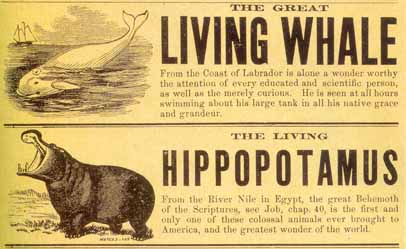
But New York’s merry king of showbiz in 1862 was P.T. Barnum, his American Museum still New York’s most popular attraction. That April, Barnum featured a ‘living hippopotamus’ and two beluga whale in its basement, and among the museum’s many shows at Broadway and Ann Street was the feature ‘Hop O’ My Thumb, or The Ogre And The Dwarf’ starring Barnum’s biggest small star General Tom Thumb.

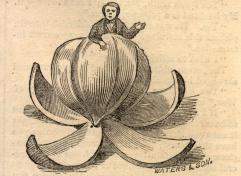
Thumb, however, was not Barnum’s only dwarf star in 1862. Earlier that year, Barnum unveiled a New Hampshire teenager afflicted with dwarfism and presented him with the stage name Commodore George Washington Nutt. Known as the ‘$30,000 Nutt’ due the amount of money he was supposedly paid (although later disproven), the young man was advertised as “the Smallest Man in Miniature in the known world” and “Most Attractive and Interesting human being ever known.”

At right: Nutt in an illustration from Harpers Weekly, February 1862, ‘bursting out of his shell’

Although Nutt would perform at the museum, he was frequently used as an instrument to promote Barnum’s many endeavors. He would serve as Tom Thumb’s friendly rival for the hand of diminutive actress Lavinia Warren (whom Thumb later married at Grace Church in 1863) and tour throughout Europe with Barnum. But on April 17, 1862, Nutt had a local duty to perform — at the headquarters of the New York Police Department.

According to the Daily Tribune, Nutt met with local police commissioners in an effort to get an officer specifically assigned to Barnum’s museum. And just in case the idea would be met with indifference, Nutt himself applied to become a New York police officer, although his height of three feet might have precluded him from such an occupation.

A uniform was immediately ordered for the young star, and by telegraph to the Ninth Precinct, he claimed he would hold ‘extraordinary powers to arrest’ troublemakers at the Museum. It appears, however, that Nutt held few responsibilities for the police force.

During his tour of the police facilities, including the famed Rogue’s Gallery, the charming performer even got in a rather dirty joke. According to the article, “Some one said that on the stage the Commodore had been seen to kiss a girl on the mouth. ‘Well, that was the right place, wasn’t it?’ was the reply.”

Top picture courtesy NYPL

Categories
Podcasts

PODCAST: Barnum’s American Museum

You know PT Barnum from his circus, but he was bringing the freakshow to New York long before then. Come take a tour with us of the craziest museum to ever hit New York City.

Listen to it for free on iTunes or other podcasting services. Or you can download or listen to it HERE

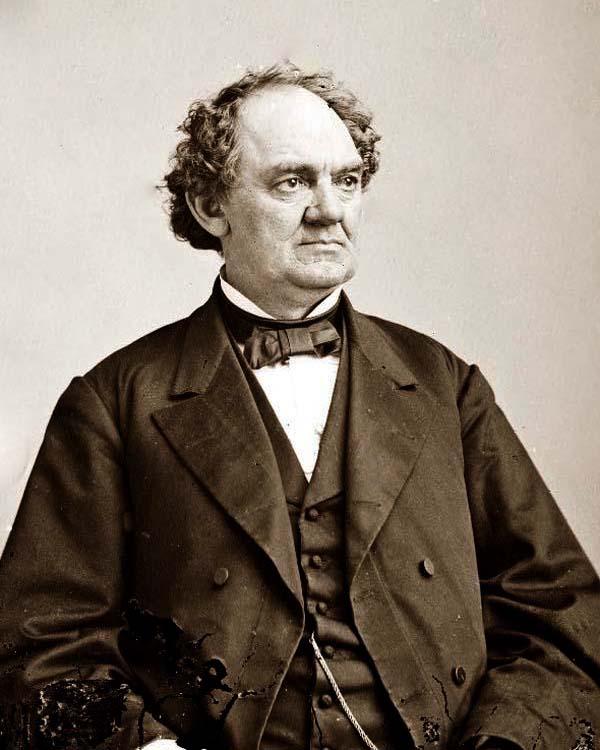
P.T. Barnum, godfather of the spectacle

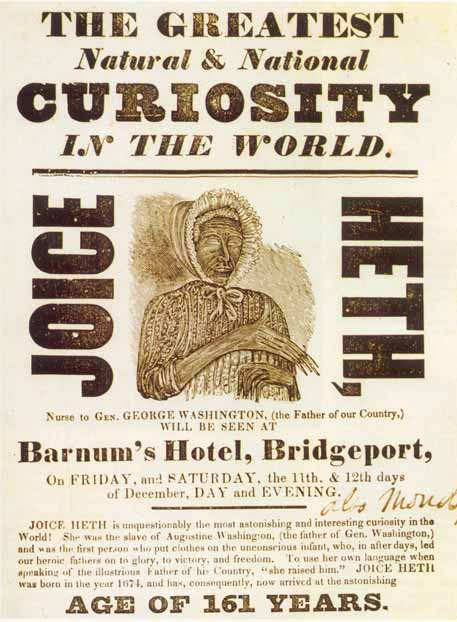
Barnum’s first hit, his ‘the 161 year old’ find

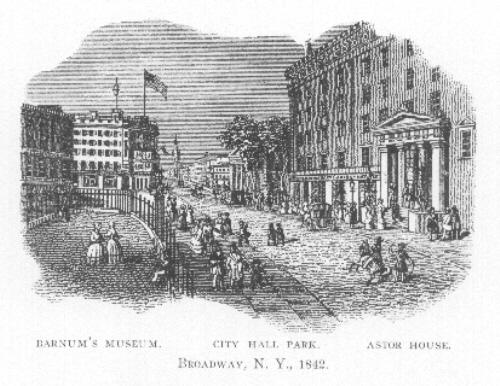
The scene around City Hall Park in 1842. The Barnum Museum is the building with the flag:

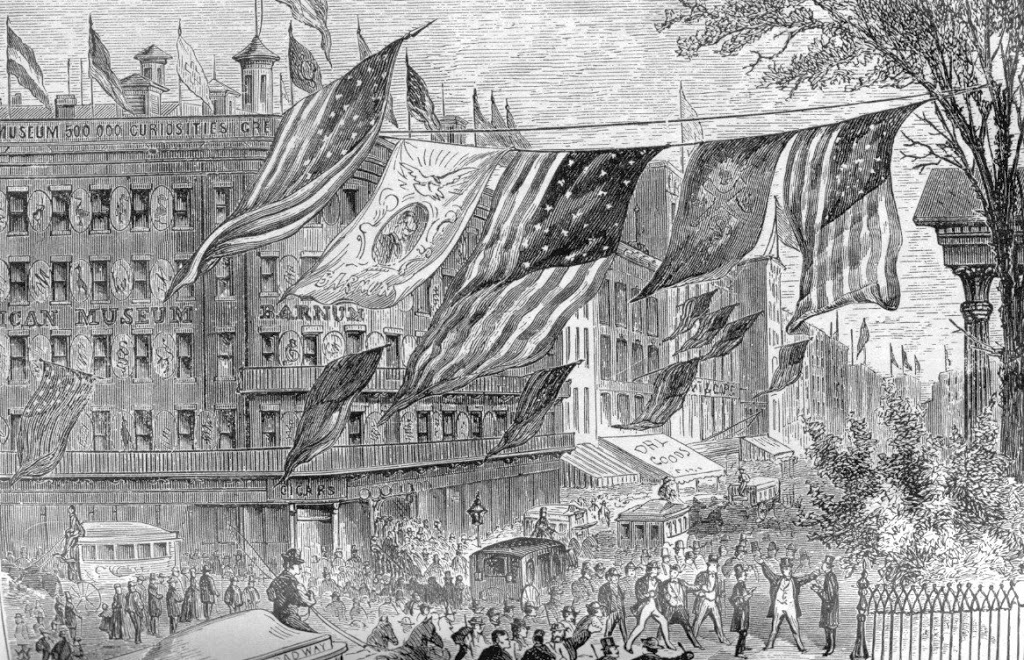
Another illustration of the wild scene in front of the museum

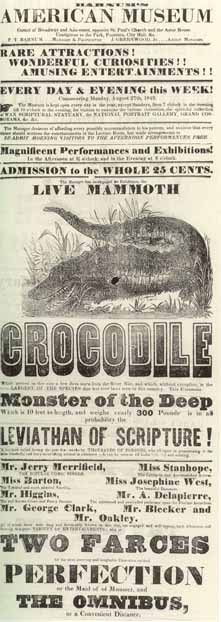
A typical Barnum advertisement:

Unbelievably, Barnum’s hosted a wide variety of aquatic creatures, including whales:

An advertisement for the Fejee Mermaid:

And the real thing:

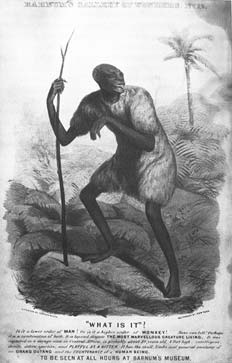
An illustration — by Currier and Ives, no less — of the ‘What Is It’

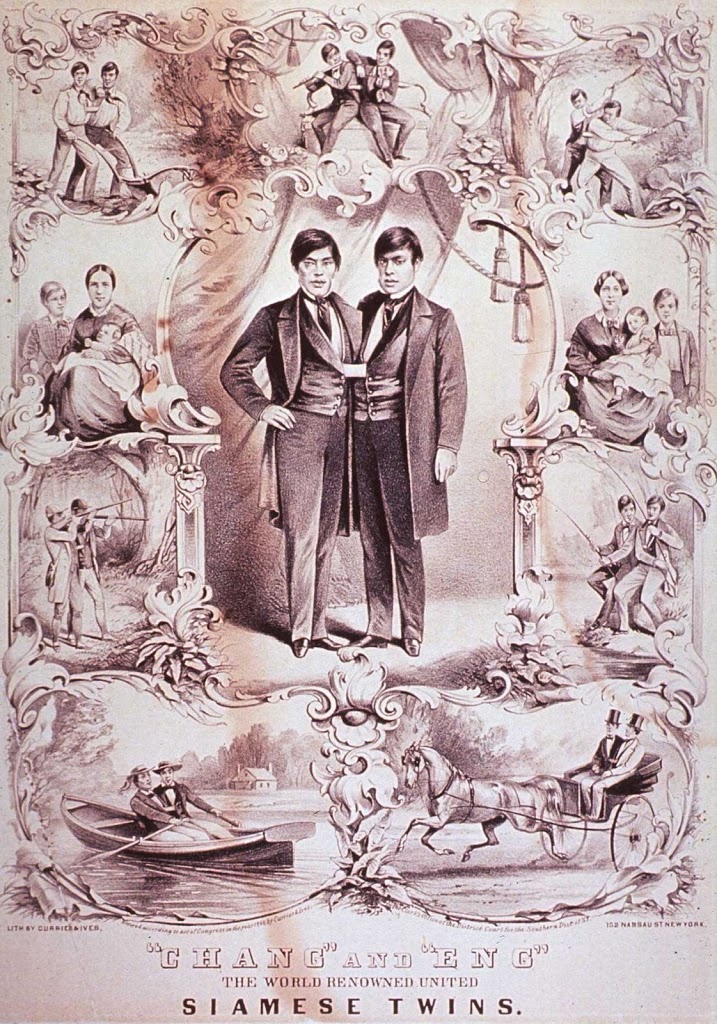
The Siamese Twins, Cheng and Eng

Another attraction: Anna Swan, the Nova Scotia giantess, who had to be rescued from the fire that burned the museum down in 1865

The museum burns, 1865

The City University of New York has an extraordinary website devoted to Barnums, which includes a very Myst-like simulated walkthrough of the American Museum and a thorough archive of information. I highly recommend you check it out.