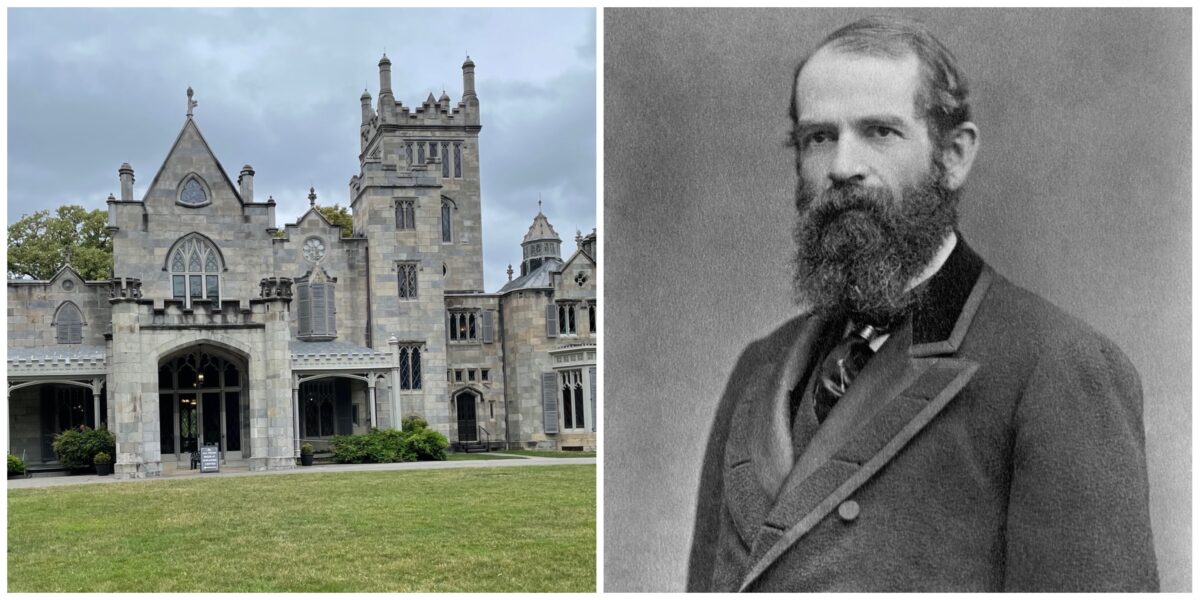
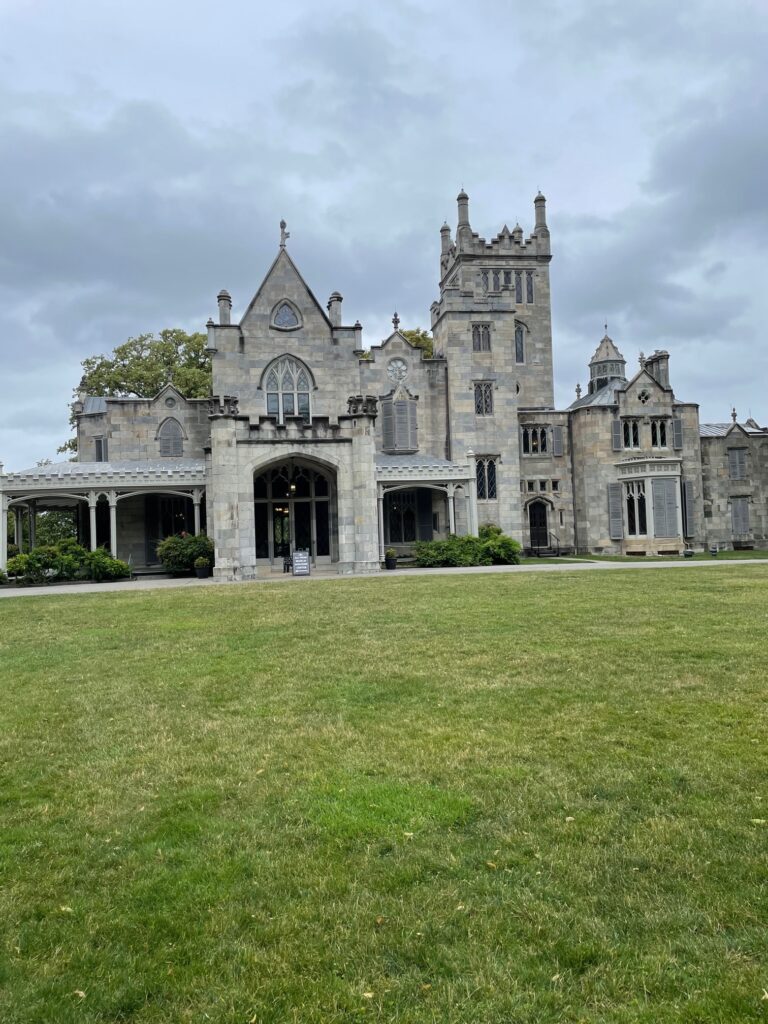
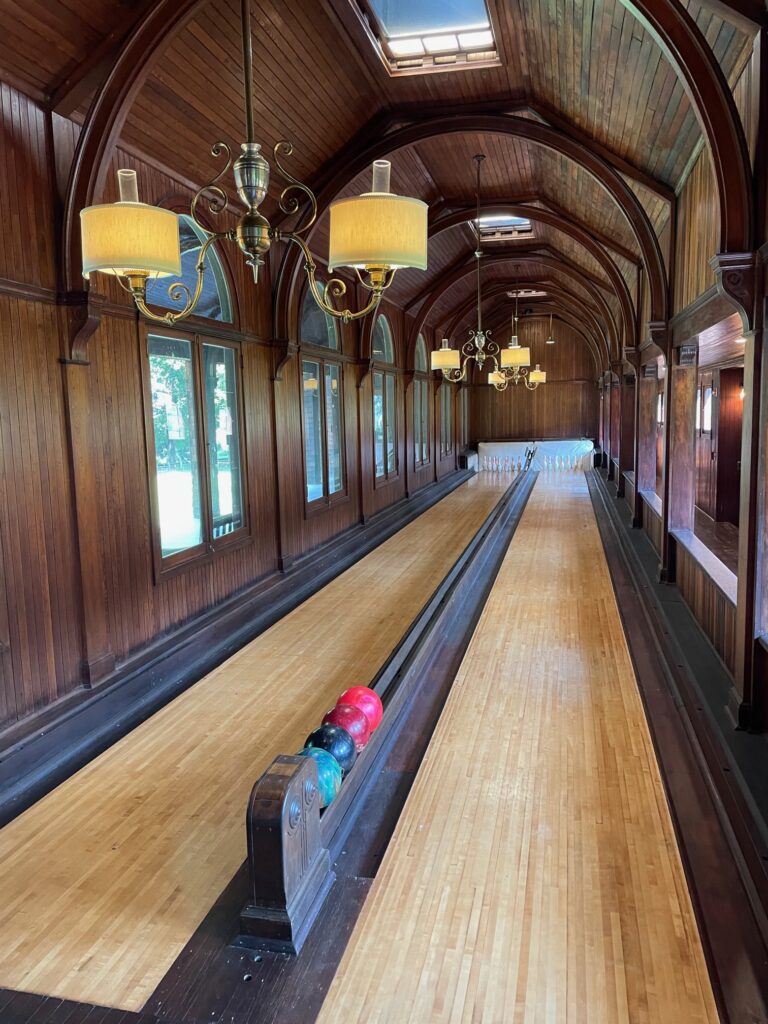
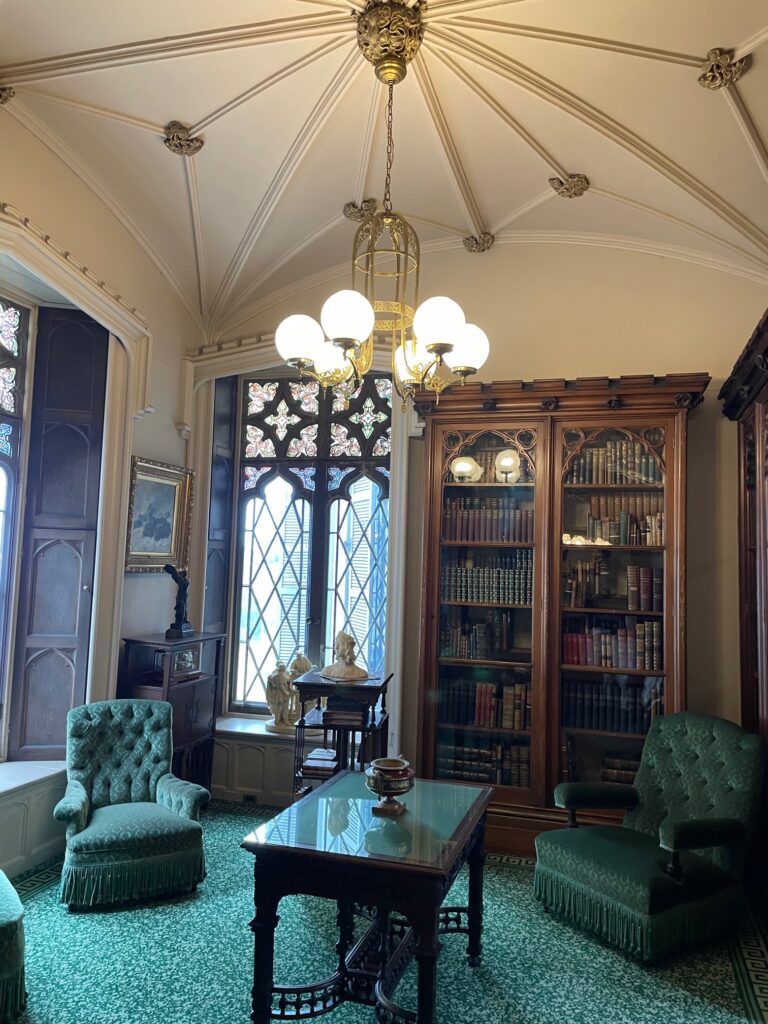
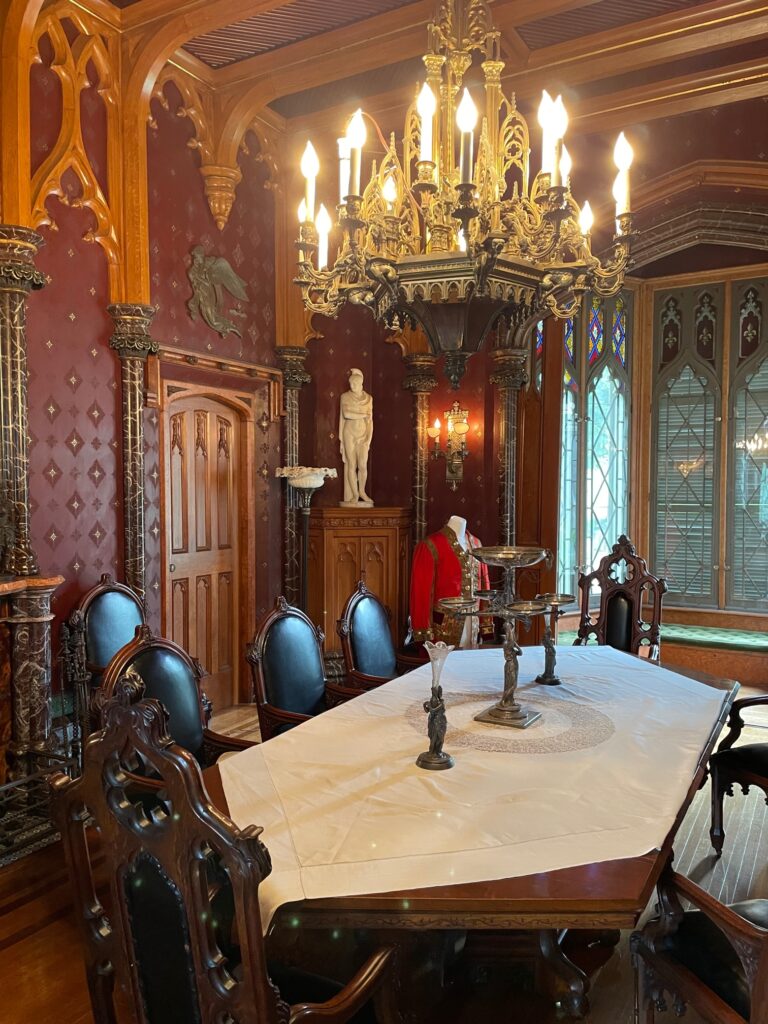
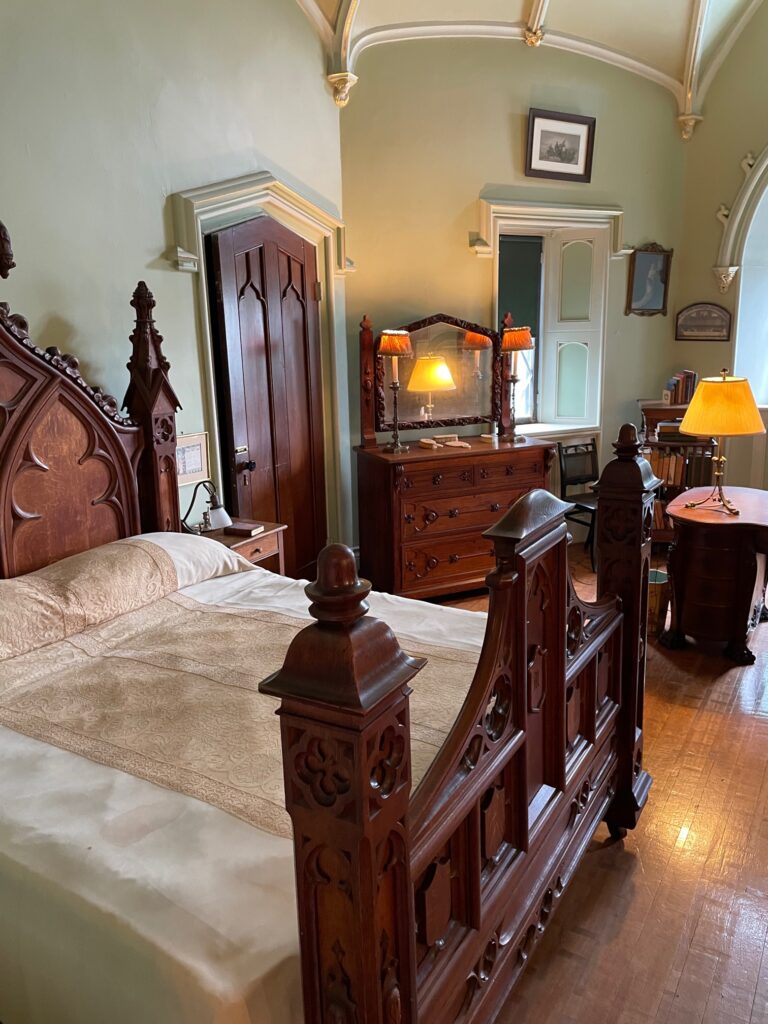
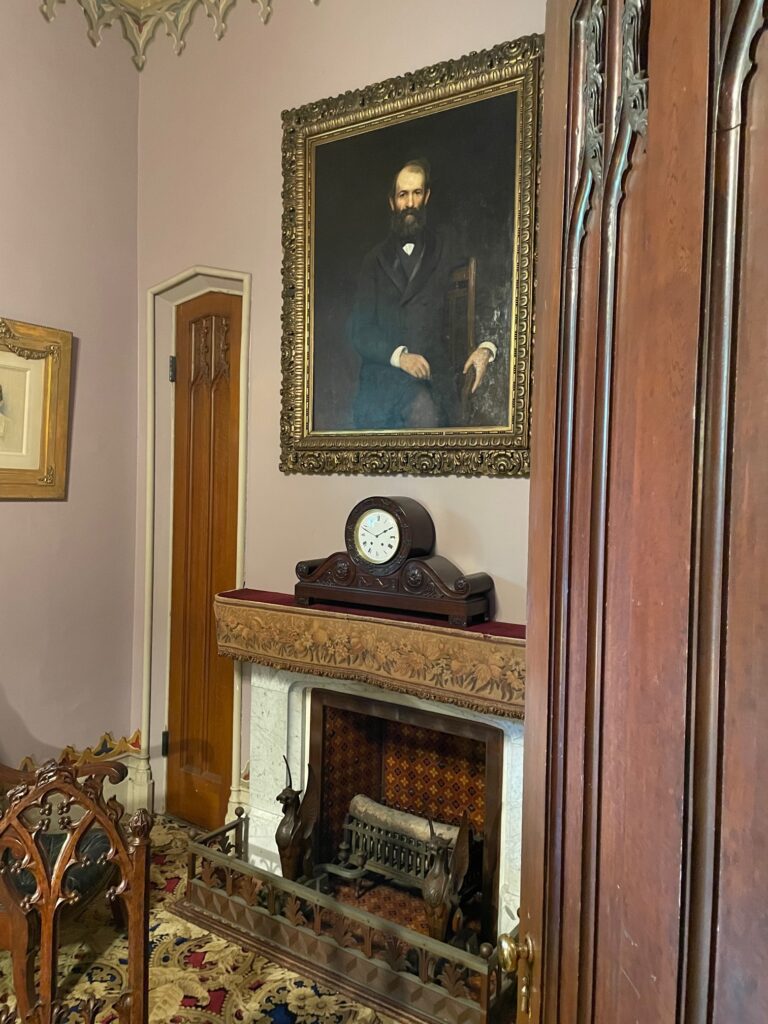
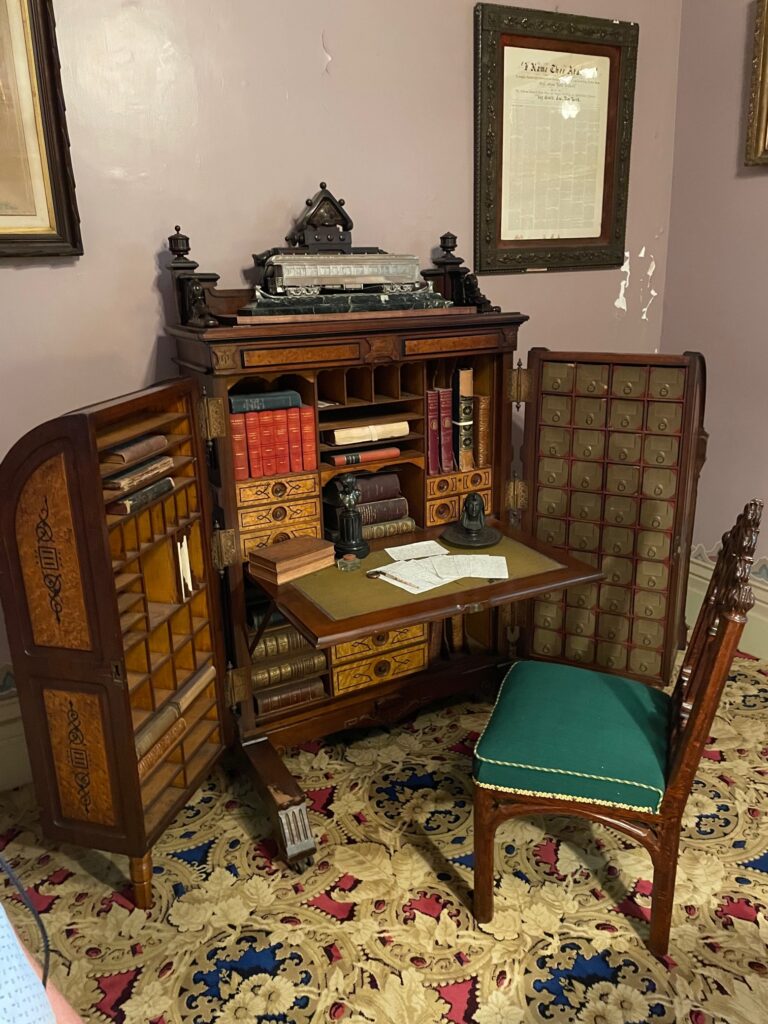
Lyndhurst Mansion may be familiar to viewers of the HBO series The Gilded Age since a number of this historic house’s rooms served as filming locations for the show.
And its former owner was one of the most notorious figures of the Gilded Age — Jay Gould.
He was known as the one of the era’s most ruthless robber barons. He tangled with the Vanderbilts for control of the railroads and fought battle after battle on Wall Street.
But there was a less contentious side to him as well. Gould sought respite from New York City with his family at his country home, Lyndhurst Mansion in Tarrytown, a rolling estate where he could transition from Wall Street warrior to father and husband.
Carl Raymond
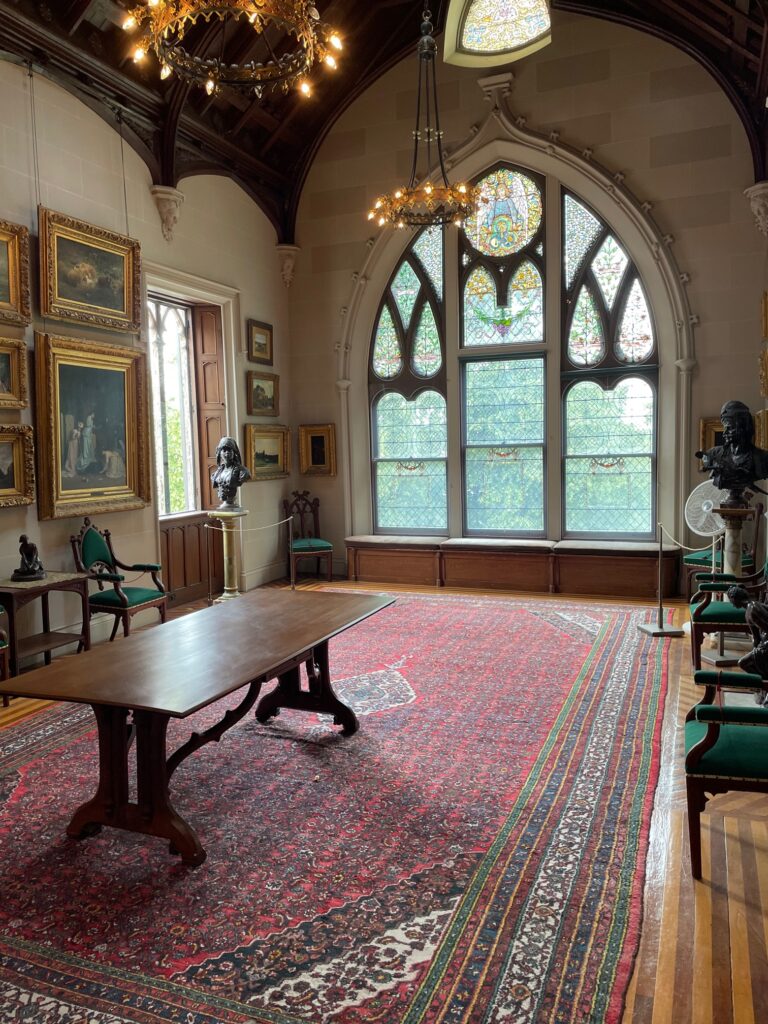
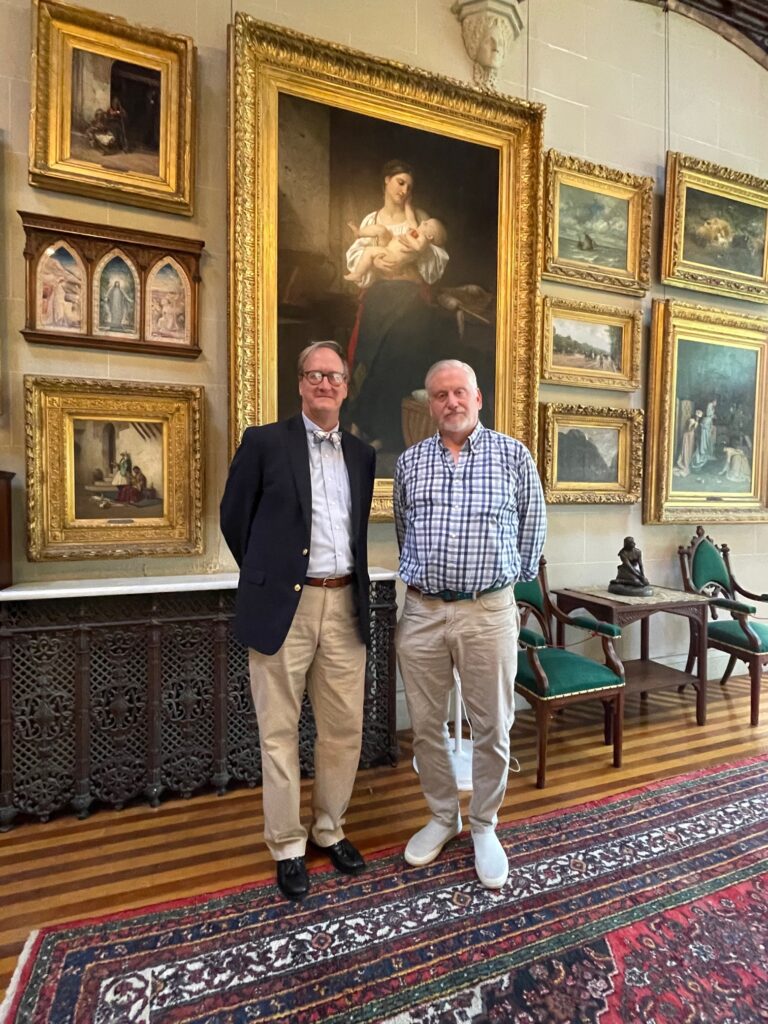
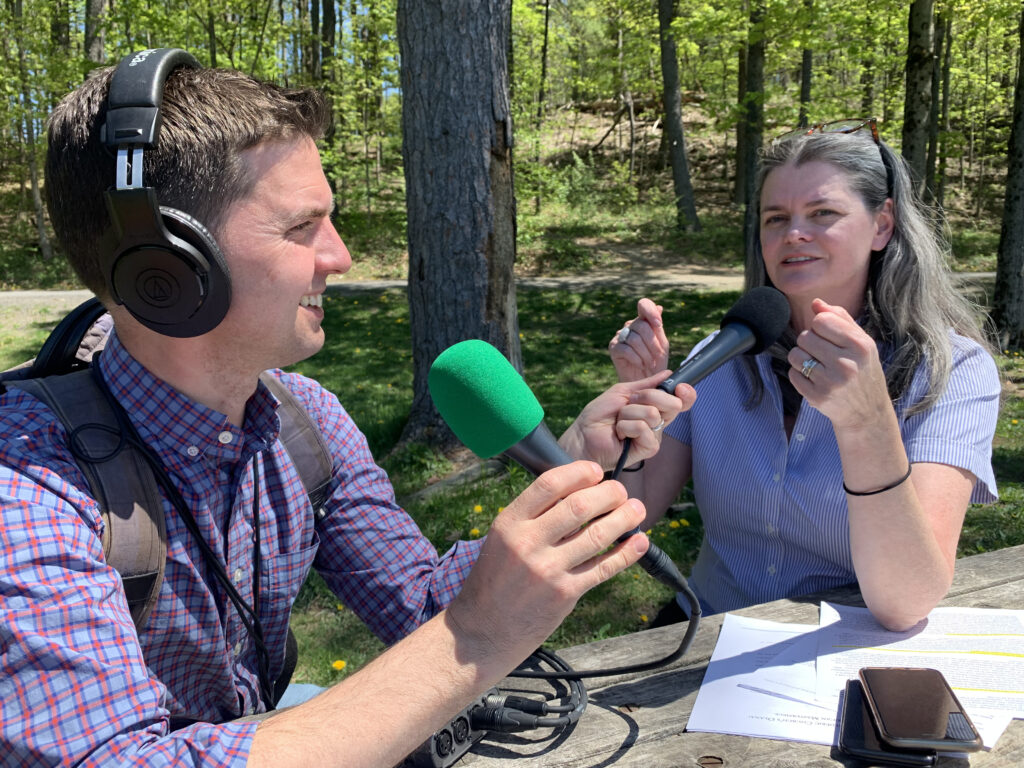
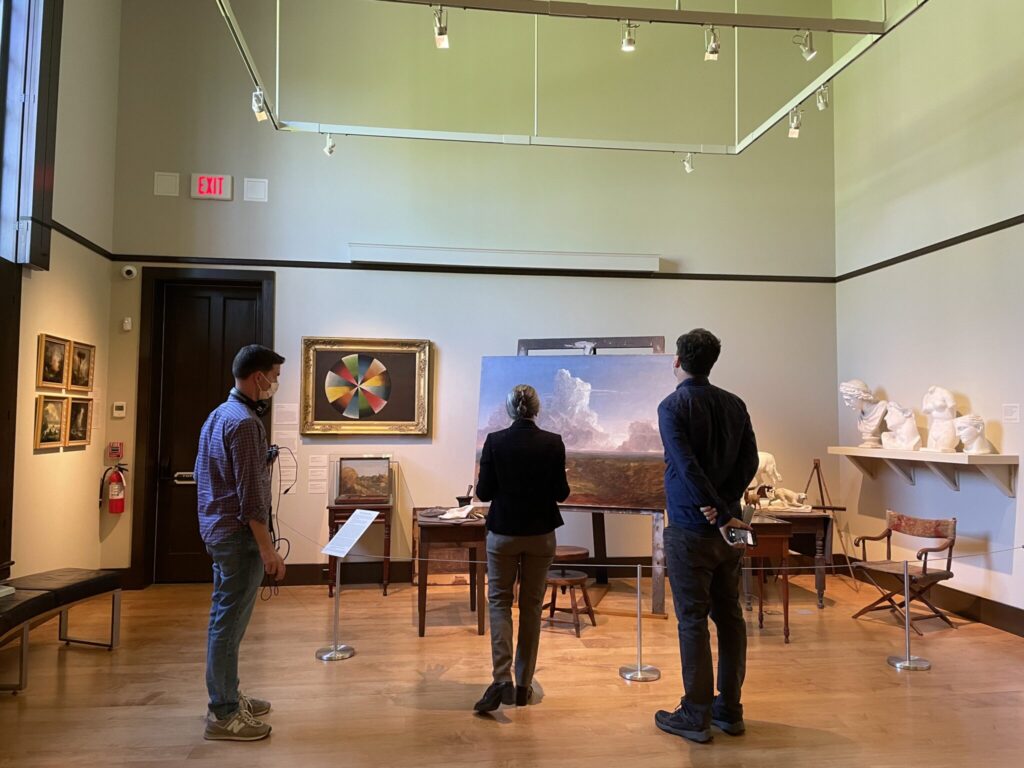
In this special episode,The Gilded Gentleman travels to Lyndhurst for a look inside both the mansion and the life of Jay Gould. Howard Zar, executive director of Lyndhurst, joins Carl for a fascinating interview recorded in the picture gallery in Jay Gould’s own mansion.
Carl Raymond
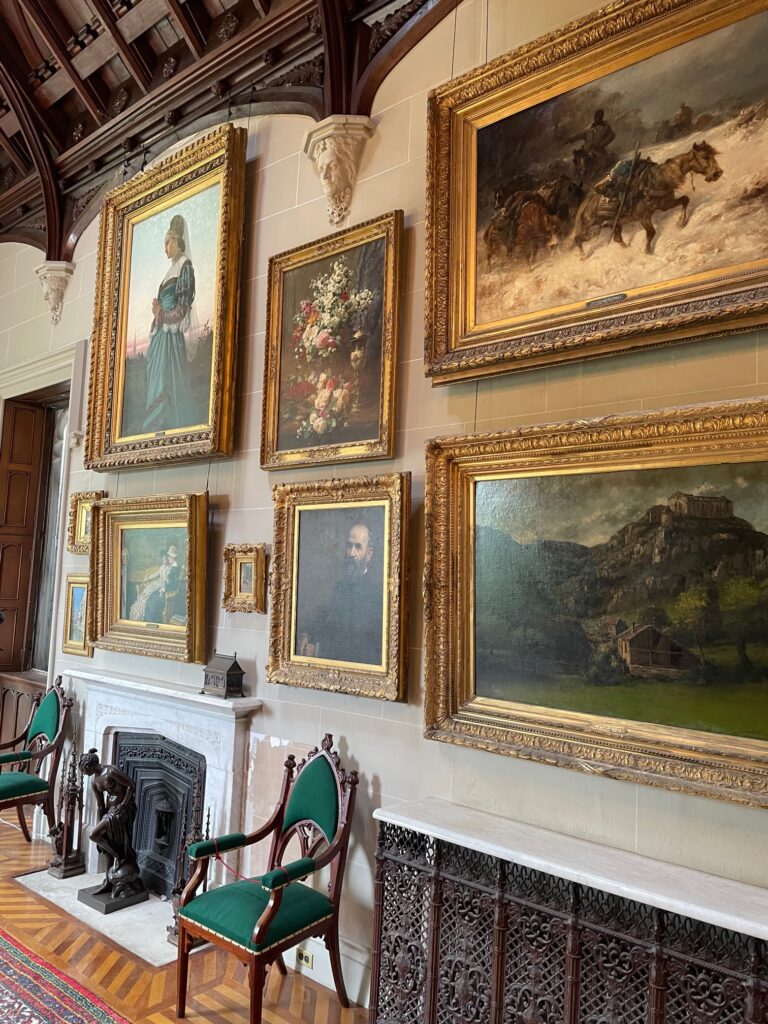
Surrounded by Gould’s precious hand-chosen art collection (still hung as Gould intended), Howard and Carl delve into what life was like at the Mansion and what visitors can see today.
As a special treat, follow along with Howard and Carl on a tour through the Mansion visiting Gould’s reception room, library, private office and dining room.
Download the latest episode of The Gilded Gentleman on Apple Podcasts, Spotify, Overcast or wherever you get your podcasts.
Or listen to it right here:
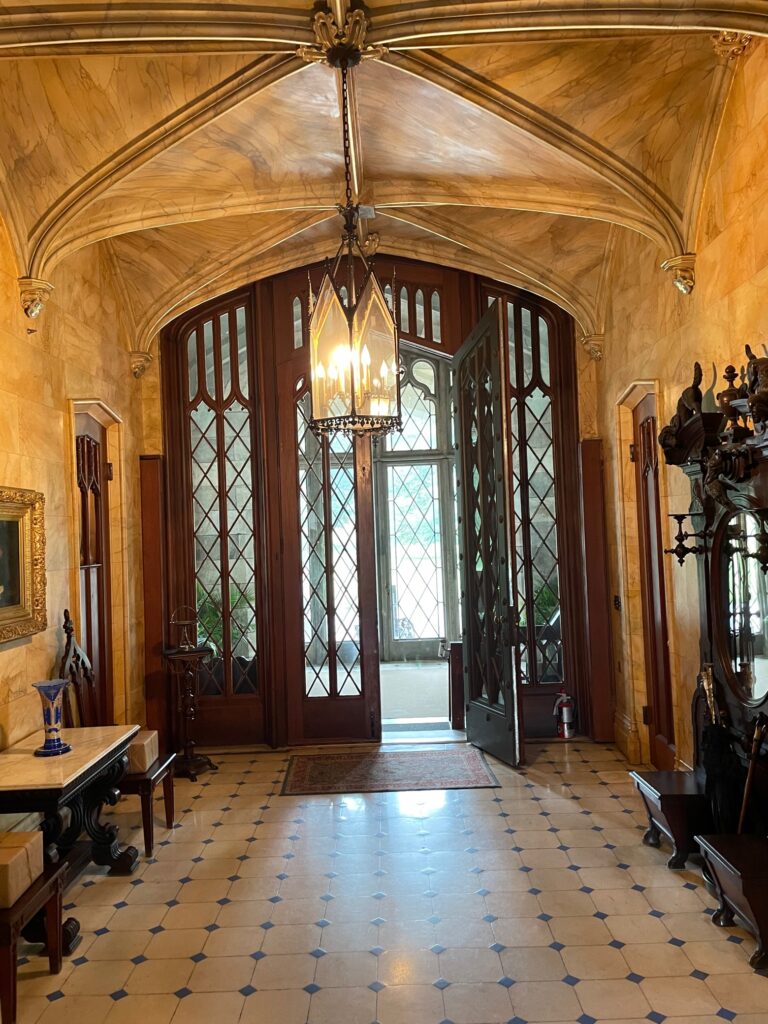
And check out these photos, all taken by Carl Raymond.
Carl RaymondCarl RaymondCarl RaymondCarl RaymondCarl RaymondCarl RaymondCarl RaymondCarl RaymondCarl Raymond
The Bowery Boys Road Trip to the Hudson Valley mini-series, exploring stories of American history along the Hudson River, is now complete. Catch up on all three episodes — and join us on Patreon for a special ‘behind the scenes’ episode:
On the Trail of the Croton Aqueduct
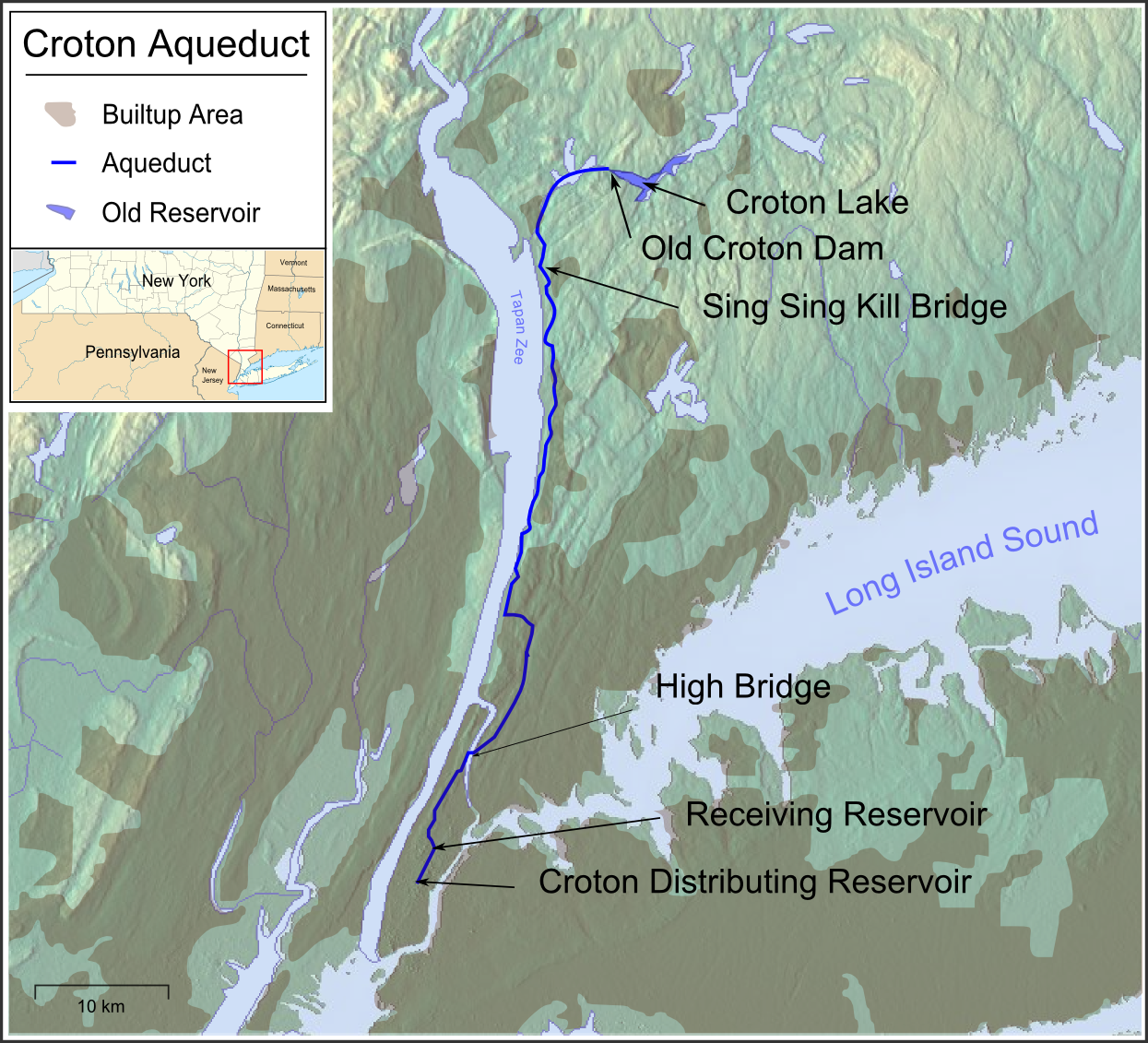
Welcome to the Old Croton Aqueduct Trail, 26.5 miles of dusty pathway through some of the most interesting and beautiful towns and villages of Westchester County.
But this is more than a linear park. The trail runs atop — and sometimes alongside — the original Croton Aqueduct, a sloping water system which opened in 1842, inspired by ancient Roman technology which delivered fresh water to the growing metropolis over three dozen miles south.
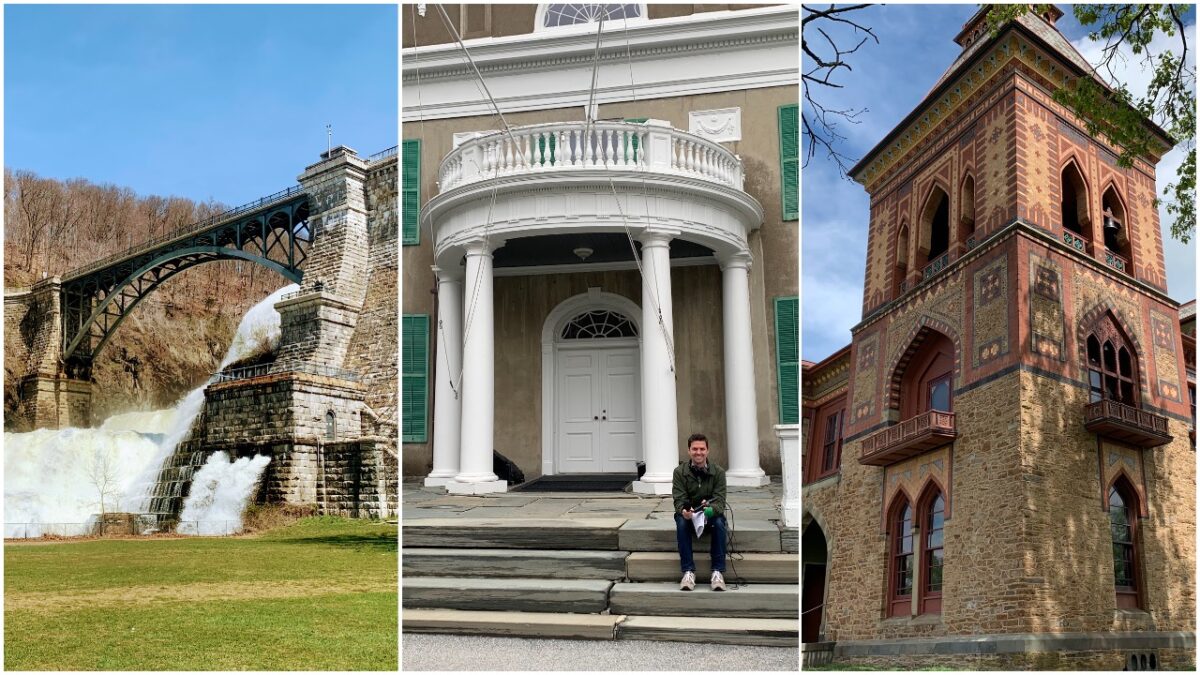
Locations featured: New Croton Dam, the Double Arch Bridge in Ossining, the Keeper’s House in Dobbs Ferry
Hyde Park: The Roosevelts on the Hudson
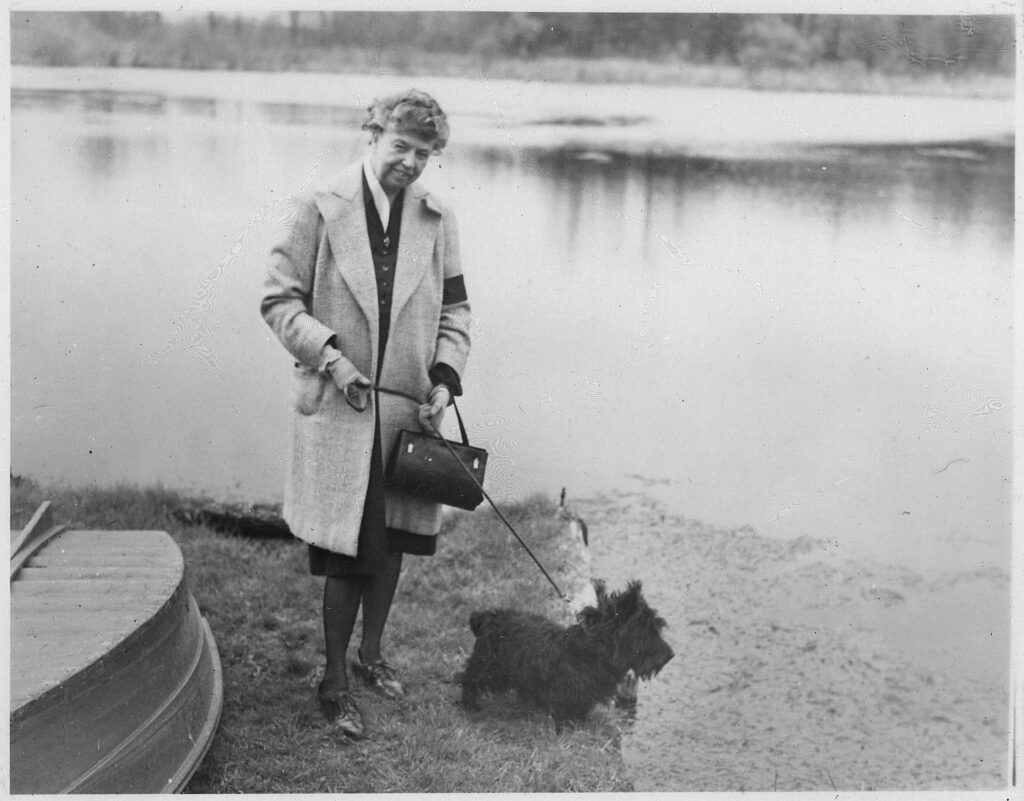
Hyde Park, New York was the home of Franklin Delano Roosevelt, the 32nd president of the United States. He was born here, he lived here throughout his life, and he’s buried here — alongside his wife Eleanor Roosevelt.
But it was more than simply a home.
The Hyde Park presence of the Roosevelts expands outwardly from the Roosevelt ancestral mansion of Springwood, over hundreds of forested acres from former farmlands on the eastern side to the shores of the Hudson River on the west.
Locations featured: Home of Franklin D. Roosevelt National Historic Site, FDR Presidential Library and Museum, Top Cottage, Val-Kill Cottage, all in Hyde Park
The Hudson River School: An American Art Revolution
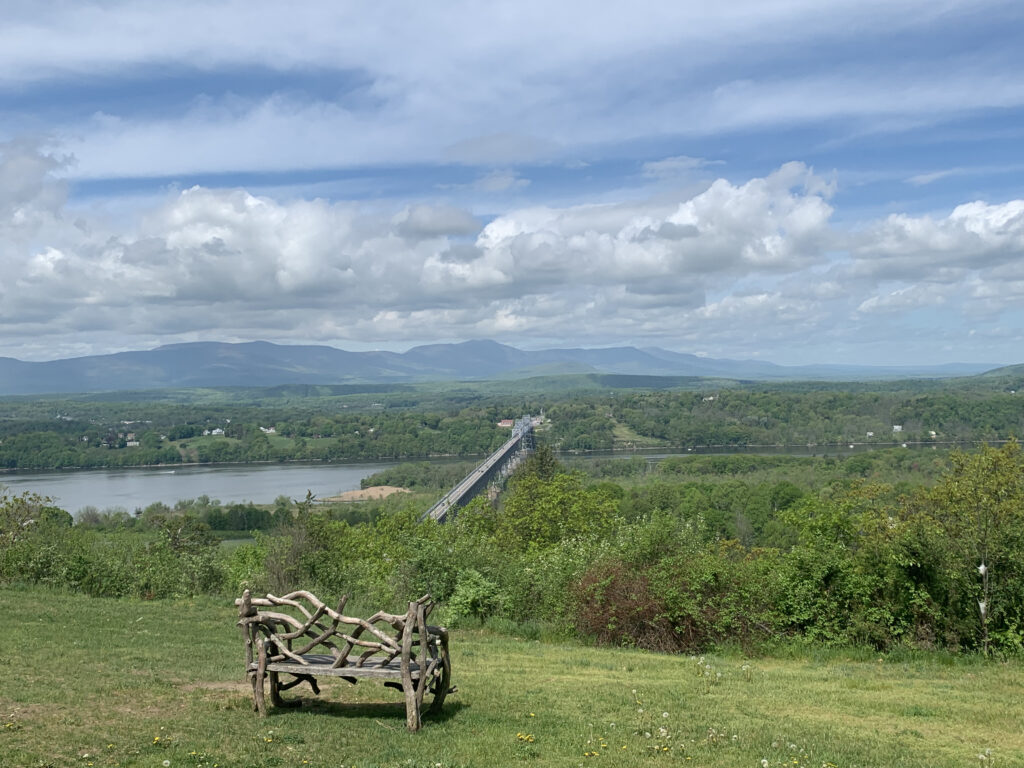
Two landmarks to American art history sit on either side of the Rip Van Winkle Bridge over the Hudson River — the homes of visionary artists Thomas Cole and Frederic Edwin Church.
Cole and Church were leaders of the Hudson River School, a collective of 19th century American painters captivated by natural beauty and wide-open spaces. Many of these paintings, often of a massive size, depicted fantastic views of the Hudson River Valley where many of the artists lived.
Locations featured: Thomas Cole National Historic Site in Catskill, Olana State Historic Site in Hudson
Tom interviewing Amy Hausmann of the Olana State Historic Site
Road Trip to the Hudson Valley: Aftermath
In this Patreon exclusive, Greg and Tom look back on their adventures in the Hudson Valley and give you a behind-the-scenes look at their journeys along the Croton Aqueduct Trail, Hyde Park and the towns of Catskill and Hudson.
PLUS: Some tips on how to make these trips yourself this year.
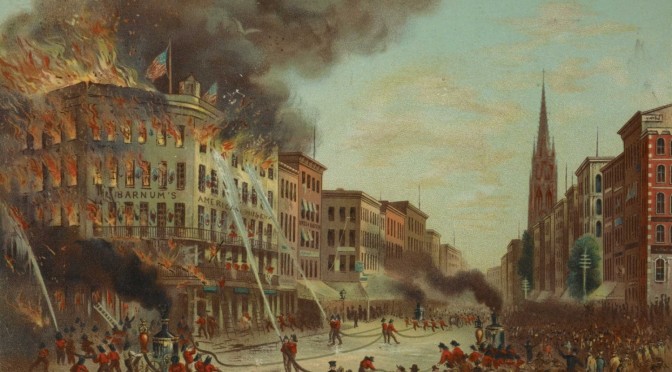
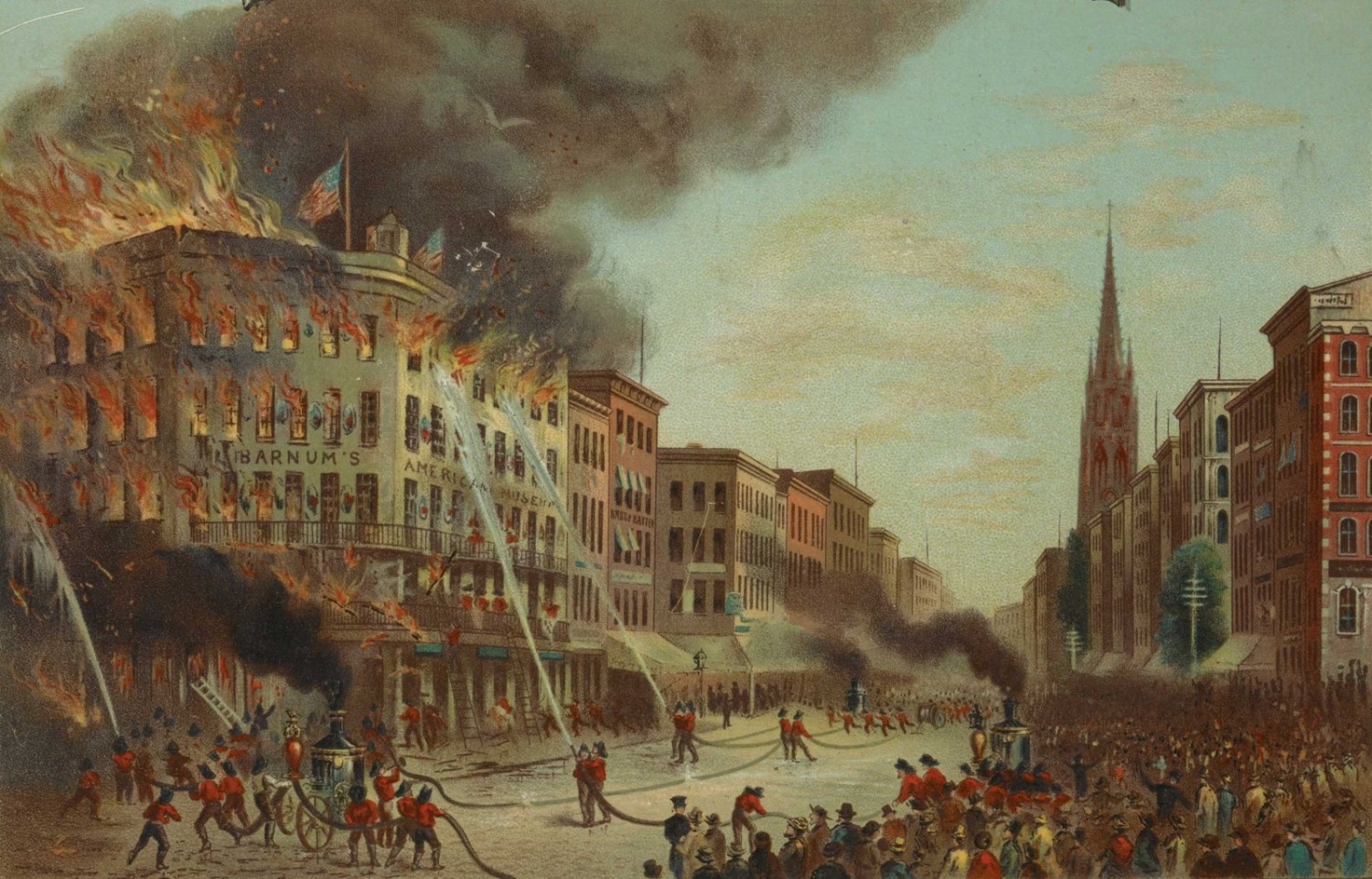
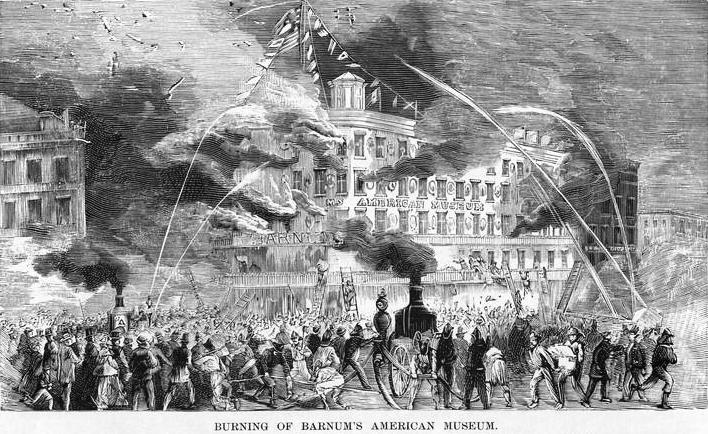
Christopher Pearse Cranch. Burning of Barnum's Museum, July 13th, 1865, 1865. Chromolithograph. Eno Collection Miriam and Ira D. Wallach Division of Art, Prints and Photographs, The New York Public Library
One hundred and fifty-five years ago (on July 13, 1865), New York City lost one of its most famous, most imaginative and most politically incorrect attractions.
When P.T. Barnum opened his museum in 1841, the kooky curiosities contained within the building at the corner of Broadway and Ann Street— at the foot of Park Row — were simply reconstituted properties from other museums.
But he soon expanded the collection to include living spectacles, both human and animal, become both the greatest show and the greatest side-show on earth.
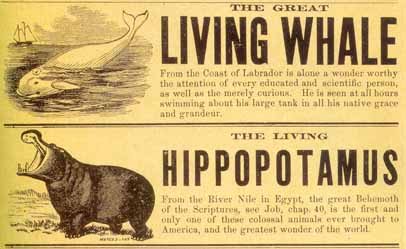
From his lilliputian stars Tom Thumband Commodore Nuttto the unfortunate white whales contained in water tanks in the basement, Barnum’s American Museum was New York’s destination for the fascinating and the weird.
Millions would visit its corridors during its two and a half decades of operation. It was so renown that it was even a target of attempted sabotageduring the Civil War.
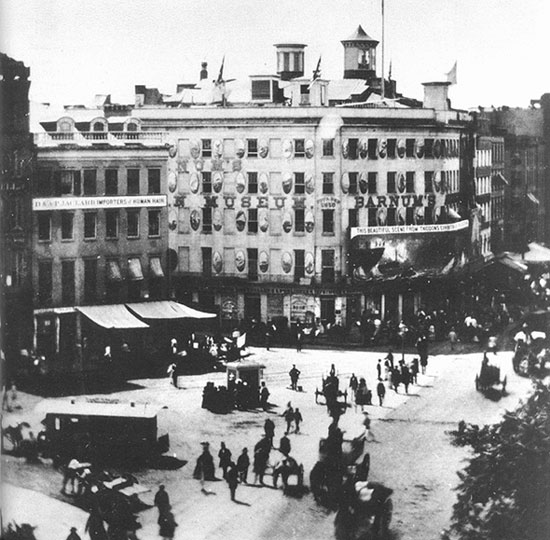
Below: A rare photo of Barnum’s American Museum, taken in 1858
Taken 1858
At around noon on July 13, 1865, the building quickly succumbed to “the fierce tooth of fire,” causing the greatest pandemonium that New York City had ever seen. I must give way to some of the press reports of the day, as they best capture the drama:
New York Times: “Probably no building in New-York was better known, inside and out, to our citizens than the ill-looking ungainly, rambling structure on the corner of Broadway and Ann-streets, known as the American Museum, where for more than twenty years Mr. Barnum has furnished the public with a wonderful variety of amusements.”
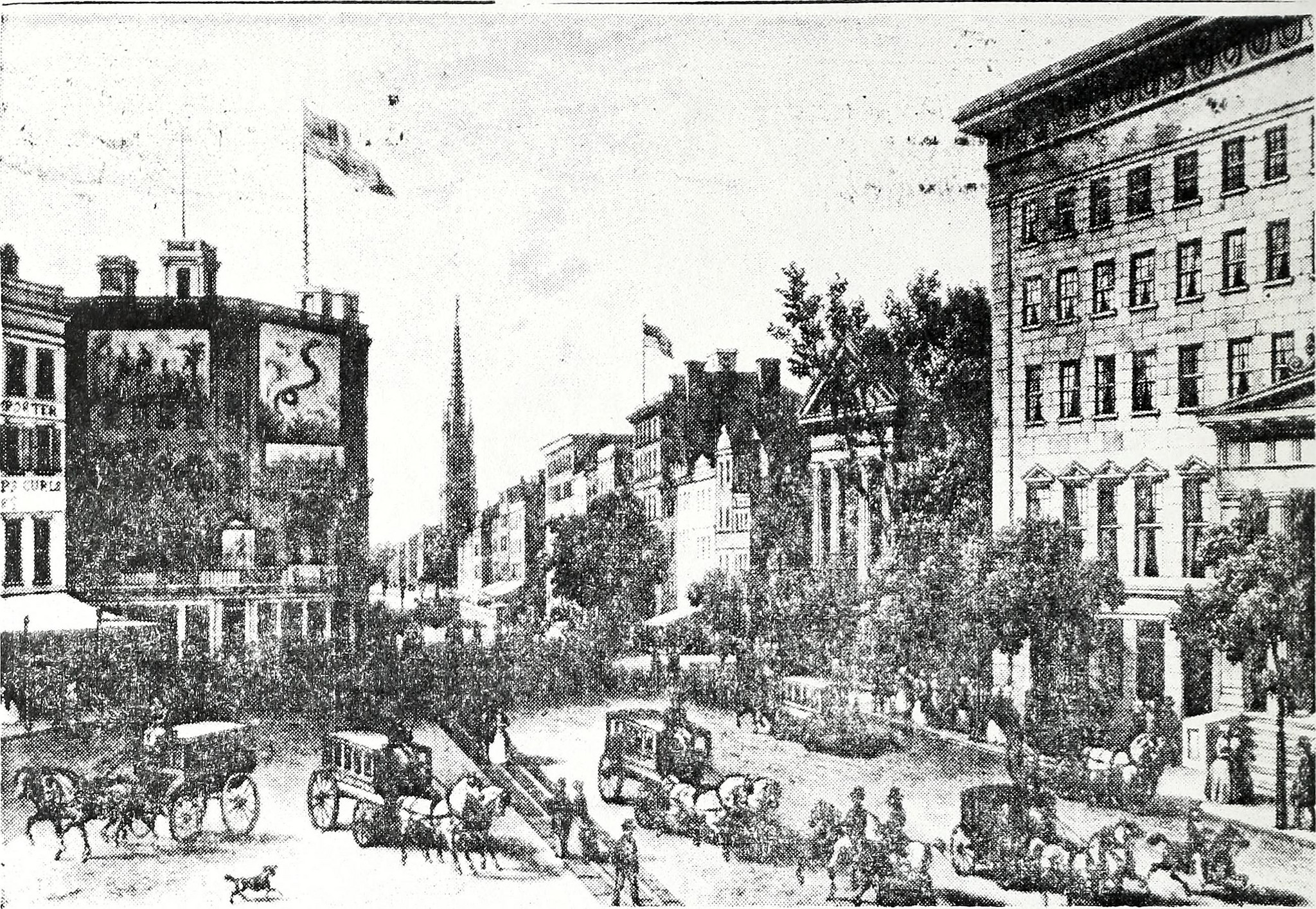
Below: The street scene at the cross-section of Broadway and Ann Street, in 1860. A sign advertising Barnum’s snake collection can be seen on the museum.
Courtesy Internet Book Archive
New York Sun: “About half past twelve o’clock yesterday the Engineer rushed up from below announcing that his room was on fire, and about the same time immense volumes of smoke permeated the Ann Street end of the building. [K]nowing that the immense whale tank was directly over the spot where the fire had begun to make headway, attempted to knock a hole in the huge reservoir.”
Christopher Pearse Cranch. Burning of Barnum’s Museum, July 13th, 1865, 1865. Chromolithograph. Eno Collection Miriam and Ira D. Wallach Division of Art, Prints and Photographs, The New York Public Library
The occupants of the tanks were doomed. “‘[T]wo whales, imported, at a cost of $7,000, from the coast of Labrador,’ whose sportive plunges and animated contests of affection afforded constant amusement to hundreds of spectators, [was] a pregnant contrast to the fearful death by roasting which they so soon thereafter met.”
The fire spread rapidly, quickly filling the upper floors with smoke. Â Firemen burst in from the Ann Street side and quickly attended to patrons who had collapsed or were too confused in the immense labyrinth of bizarre objects to escape.
A fireman named William McNamara is credited with single-handedly evacuating many patrons of the museum, not to mention some of the performers who regularly lived there.
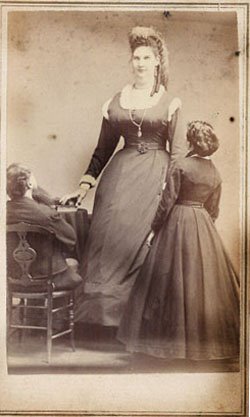
From the New York Sun: “Knowing that [some performers] occupied apartments on the third floor, he rushed thither and burst open the doors. Finding the rooms empty he ascended to the next floor and succeeded in bringing down the ladies assembled in the dressing rooms there — a Miss Swan, the Giantess, and Miss Zuruby Hannus, the Circassian girl.”
Below: Anna Swan, ‘the Giantess’ who lived at the museum, was successfully rescued
Many of the wax figures from the third floor were hurled out the windows. One peculiar item captured the imagination of the crowd — the wax depiction of Jefferson Davis, dressed in a woman’s petticoat. (It was rumored that the former president of the Confederacy has attempted to escape dressed as a lady.)
NYT: “One [rescuer] had Jefferson Davis’ effigy in his arms and fought vigorously to preserve the worthless thing, as though it were a gem of rare value. On reaching the balcony the man, perceiving that either the inanimate Jefferson or himself must go by the board, hurled the scarecrow to the iconoclasts in the street. As Jefferson made his perilous descent, his petticoats again played him false, and as the wind blow them about, the imposture of the figure was exposed.”
NYS: “When the Jefferson Davis petticoated figure was recognized by the crowd, it was seized, kicked, knocked and finally hanged to an awning frame [in front of St. Paul’s Church], amid the derisive and contumelious epithets of the persons engaged in this pastime.”
More seriously a great number of artifacts from the Revolutionary War were incinerated in the fire. “Valuable mementos of Washington, Putnam, Greene, Marion, Andre, Cornwallis, Howe, Burr, Clinton, Jefferson, Adams, and other eminent men which should have been carefully stored in a fire-proof vault, yesterday smoldered in the heat….” [NYT]
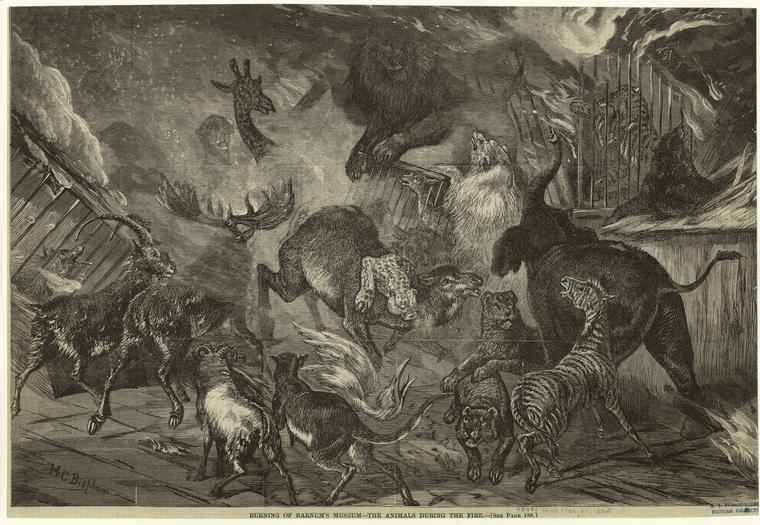
The museum’s impressive collection of taxidermy — monkeys, lions, elephants, zebras — were swallowed up by smoke and collapsed into the inferno.
But the museum also had a great many living animals — snakes, pigs, dogs, and even a kangaroo and an alligator. And, of course, a great many monkeys — “big monkeys, little monkeys, monkeys of every degree of tail, old, grave, gray monkeys, young, rascally, mischievous monkeys, middle-aged, scheming monkeys, and a great many miserable, angry monkeys.” Most perished in the flames although some escaped into the streets, some never to be found again.
Below: This is Harpers Weekly’s illustration of Barnum’s second fire — see below — but could have tragically captured the events on July 13, 1865.
Harpers Weekly
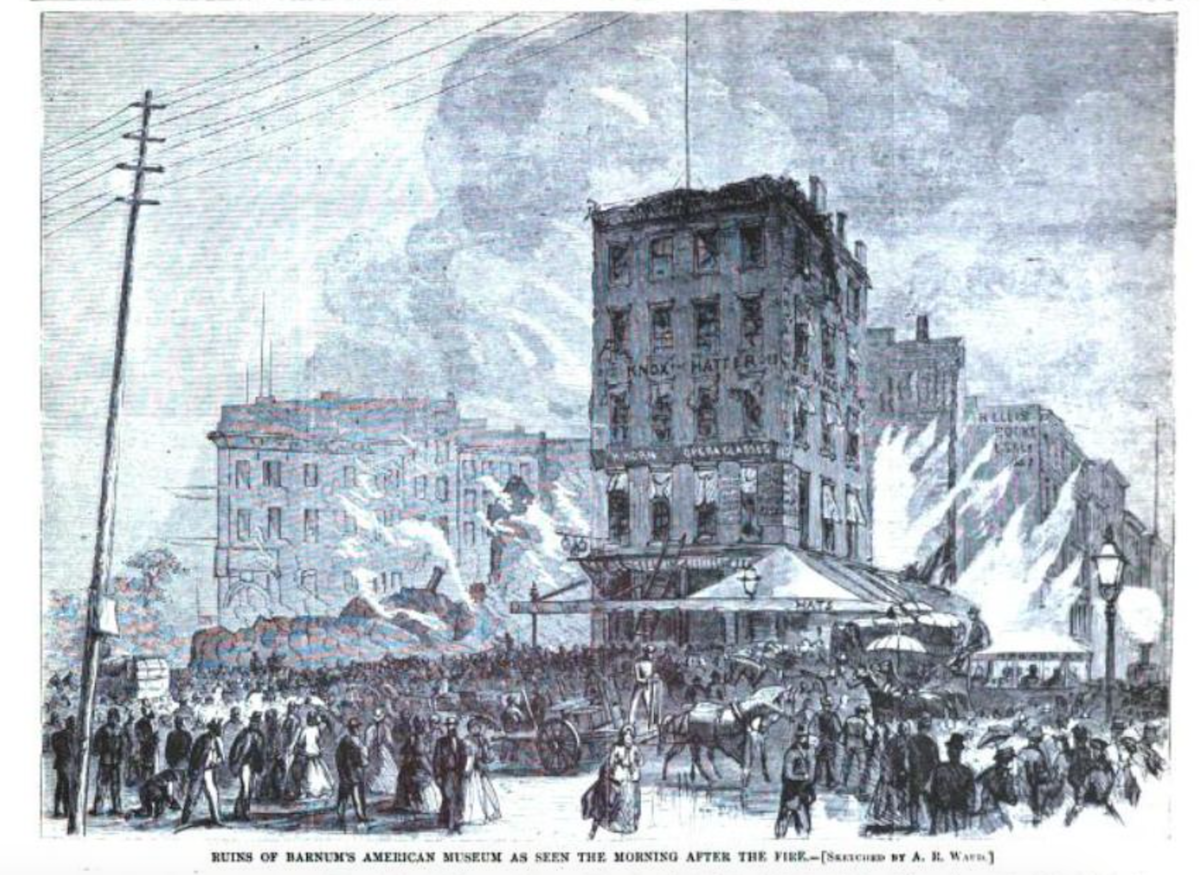
Remarkably, nobody humans died in the blaze. In fact, few wax depictions of humans perished as many took to rescuing wax figures thinking they were alive. The fire spread to several surrounding buildings, and soon the entire block was engulfed in flame.
NYT: “The roof of the Museum had now fallen, and the interior of the building was like the crater of a volcano. A stream of heated air issued from the top, and was borne eastward by the breeze directly over the block, carrying with it light articles, pieces of burning wood, shingles ….
At 1:30 came a crash resounding like the explosion of a powder magazine. The whole wall on the Ann-street side had fallen. A cloud of dust and smoke filled the air, making it dark as twilight, and rendering it impossible to descry objects at short distance.”
There was a bit a looting, including “two men dressed as soldiers [who] were seen coming out of the shoe-store in Ann Street, each with five or six pairs of shoes under their coats.” And there were false reports that the lion has escaped and was running through the streets.
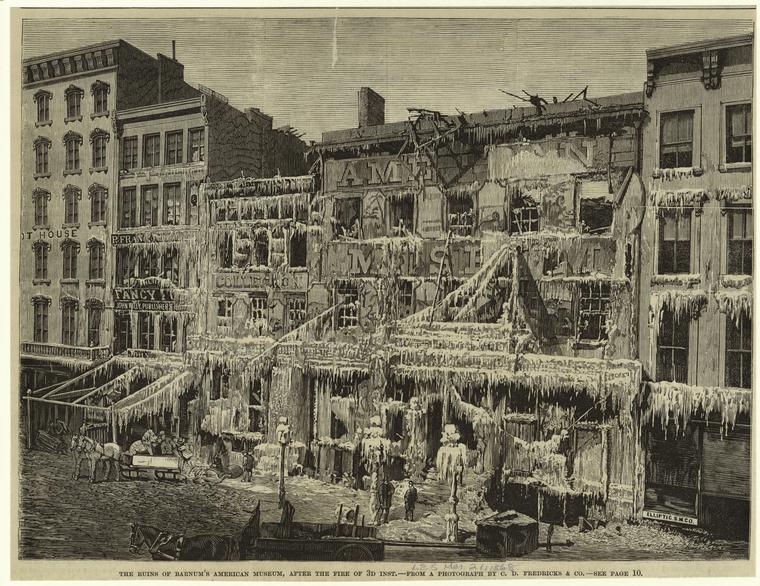
For years after, people mourned the loss of Barnum’s collection, truly among the greatest in New York City up until that time. Â Barnum attempted to relaunch the museum at 539-541 Broadway. but it, too, was destroyed in a fire (pictured below).
Then, in 1871, he leased a train depot and called it Barnum’s Monster Classical and Geological Hippodrome. (It would later morph into the first Madison Square Garden.)
Finally he just decided to take his collection of acts on the road forming a traveling circus in 1881 with ringmaster James Anthony Bailey.
While the world of entertainment would be changed by their collaboration — Barnum and Bailey’s Circus — most would consider the old American Museum as Barnum’s greatest achievement.
Below: Barnum’s second museum destroyed by fire, which gutted the building on a cold day
Harpers Weekly
For more information, we have a few Barnum-themed podcasts that you might enjoy:
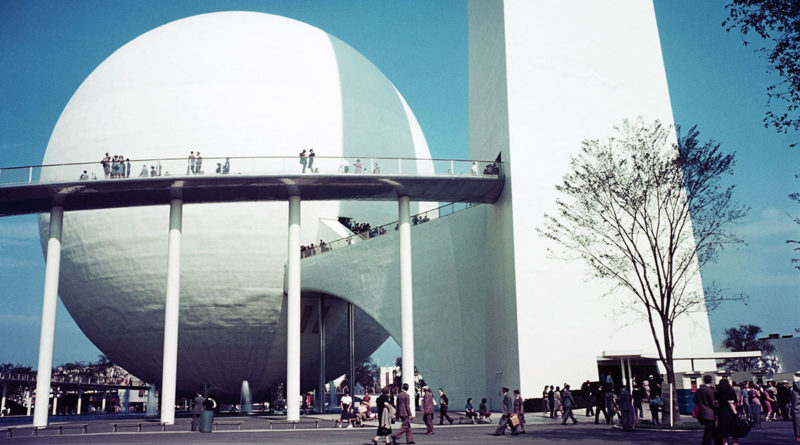
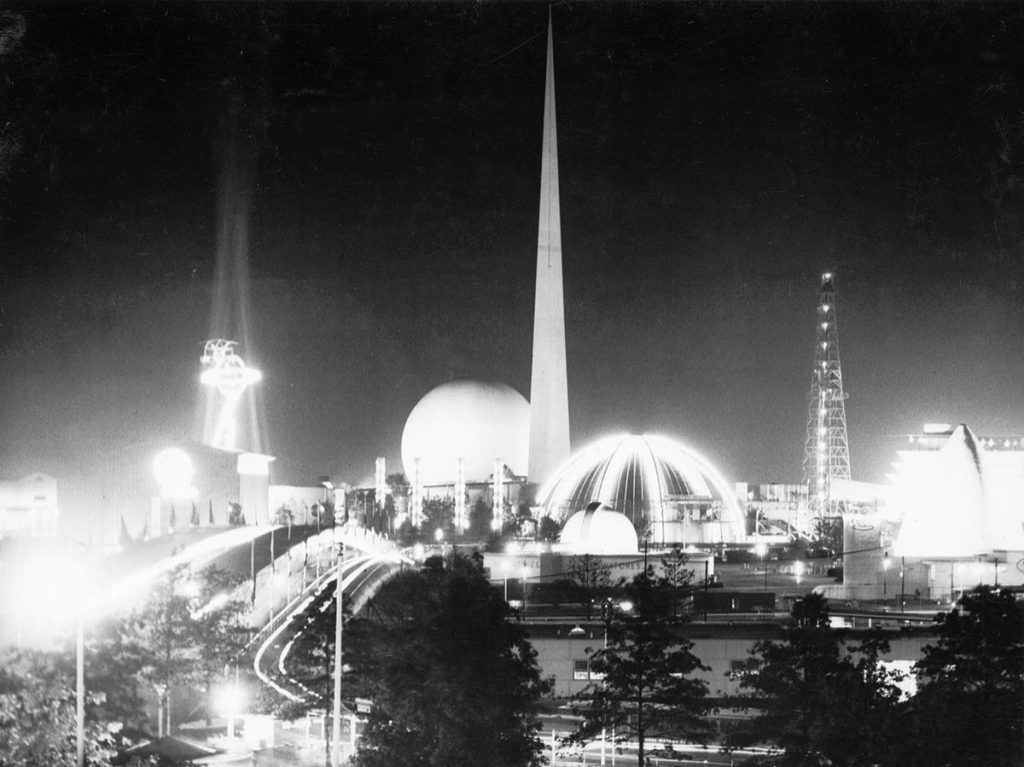
PODCAST Visiting the first World’s Fair at Flushing Meadows Corona Park, the unimaginable playground of the future, planted inescapably within the reality of the day.
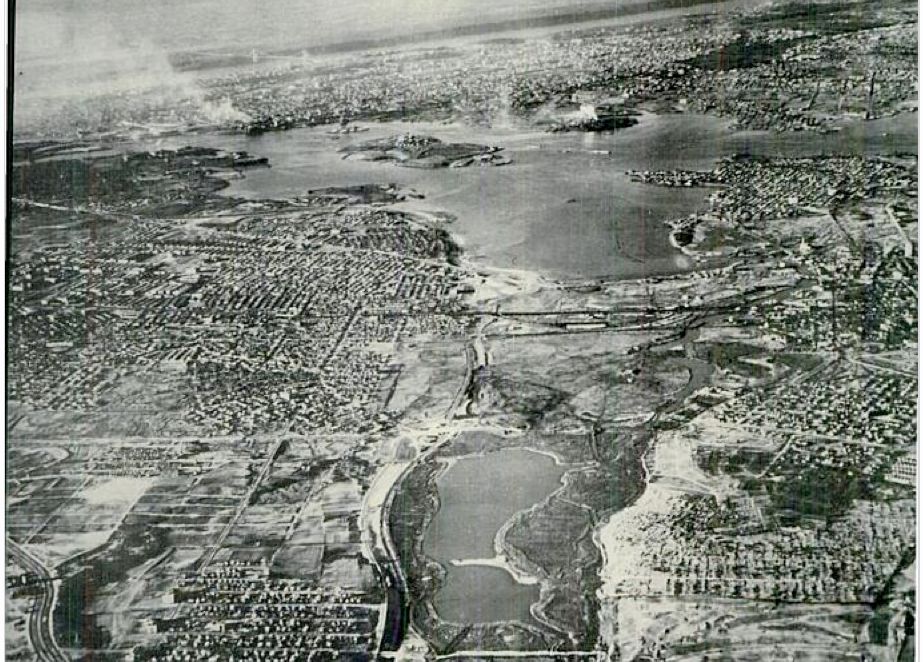
Flushing Meadows Corona Park, the fourth largest park in New York City and the pride of northern Queens, has twice been the doorway to the future.
Two world’s fairs have been held here, twenty-five years apart, both carefully guided by power broker Robert Moses. In this episode, we highlight the story of the first fair, held in 1939 and 1940, a visionary festival of patriotism and technological progress that earnestly sold a narrow view of American middle-class aspirations.
It was the World of Tomorrow! (Never mind the protests or the fact that many of the venues were incomplete.) A kitschy campus of themed zones and wacky architectural wonders, the fair provided visitors with speculative ideas of the future, governed by clean suburban landscapes, space-age appliances and flirtatious smoking robots.
The fair was a post-Depression excuse for corporations to rewrite the American lifestyle, introducing new inventions (television) and attractive new products (automobiles, refrigerators), all presented in dazzling venues along gleaming flag-lined avenues and courtyards.
But the year was 1939 and the world of tomorrow could not keep out the world of today. The Hall of Nations almost immediately bore evidence of the mounting war in Europe. Visitors who didn’t fit the white middle-American profile being sold at the fair found themselves excluded from the ‘future’ it was trying to sell.
And then, in July of 1940, there was a dreadful tragedy at the British Pavilion that proved the World of Tomorrow was still very much a part of the world of today.
PLUS: Where can you find traces of the fair in New York City today?
Listen Now: New York World’s Fair of 1939 Podcast
The Bowery Boys: New York City History podcast is brought to you …. by you!
We are now producing a new Bowery Boys podcast every other week. We’re also looking to improve the show in other ways and expand in other ways as well — through publishing, social media, live events and other forms of media. But we can only do this with your help!
We are now a member of Patreon, a patronage platform where you can support your favorite content creators.
Please visit our page on Patreon and watch a short video of us recording the show and talking about our expansion plans. If you’d like to help out, there are six different pledge levels (New Amsterdam, Five Points, Gilded Age, Jazz Age, Empire State and Greater New York). Check them out and consider being a sponsor.
And join us for the next episode of the Bowery Boys Movie Club, an exclusive podcast provided to our supporters on Patreon. This month’s movie — On The Town!
We greatly appreciate our listeners and readers and thank you for joining us on this journey so far.
AP Photo
Silent color video of the 1939 World’s Fair
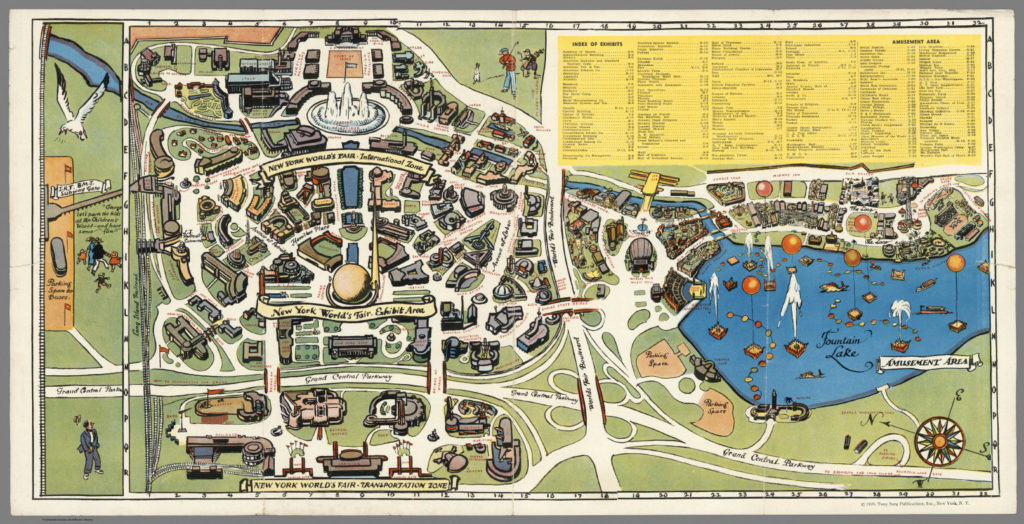
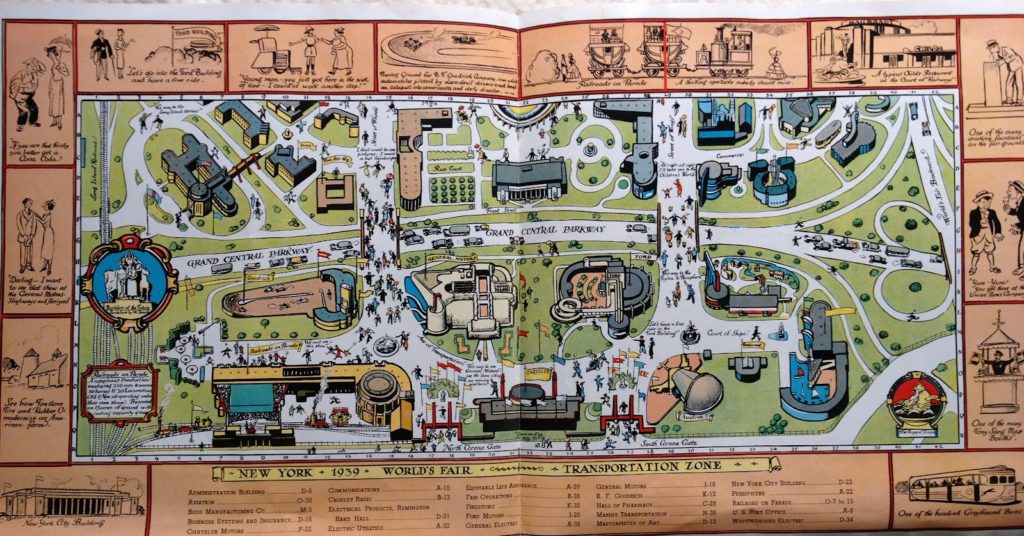
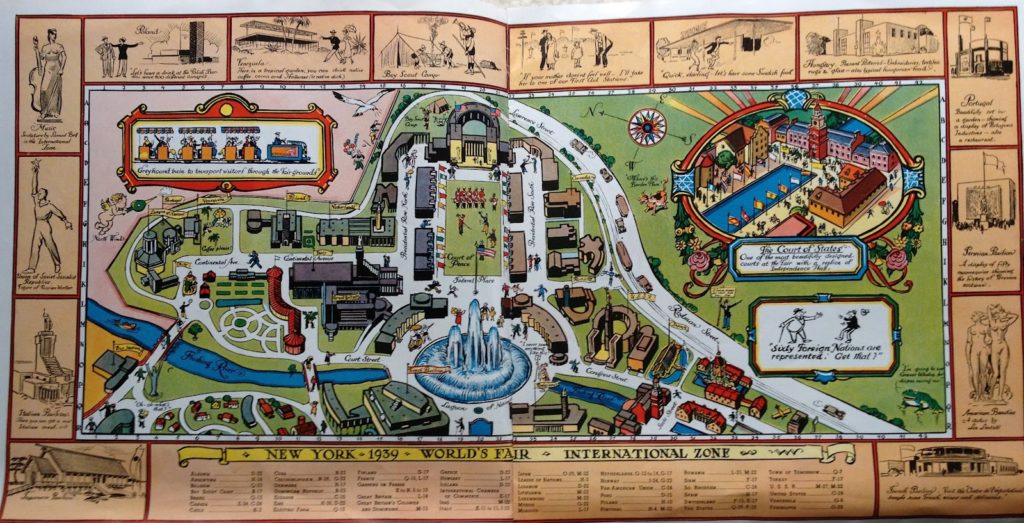
A map of the World’s Fair of 1939, courtesy the David Rumsey Map Collection. Click here to zoom in and get a closer look.
David Rumsey Map CollectionRenfusa/designer Tony SugaRenfusa/designer Tony Suga
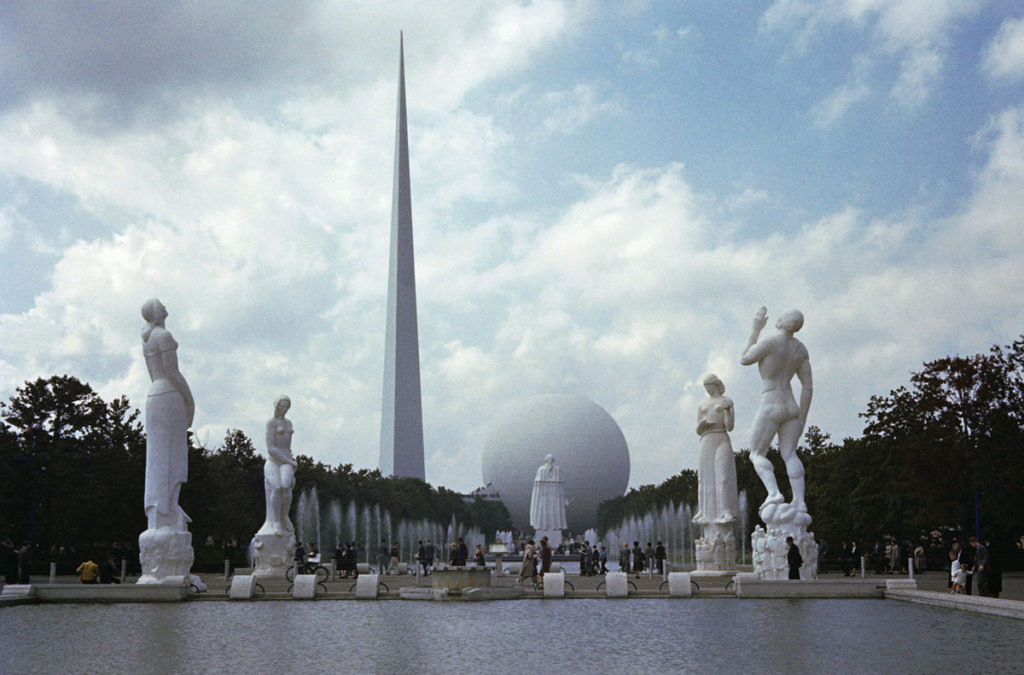
With the Trylon and Perisphere in the background, a statue of George Washington presides over the lagoon era and statues of the Four Freedoms. Read this for more information on the fair’s Washington inauguration connection.
Peter Campbell/CORBIS/Corbis via Getty Images
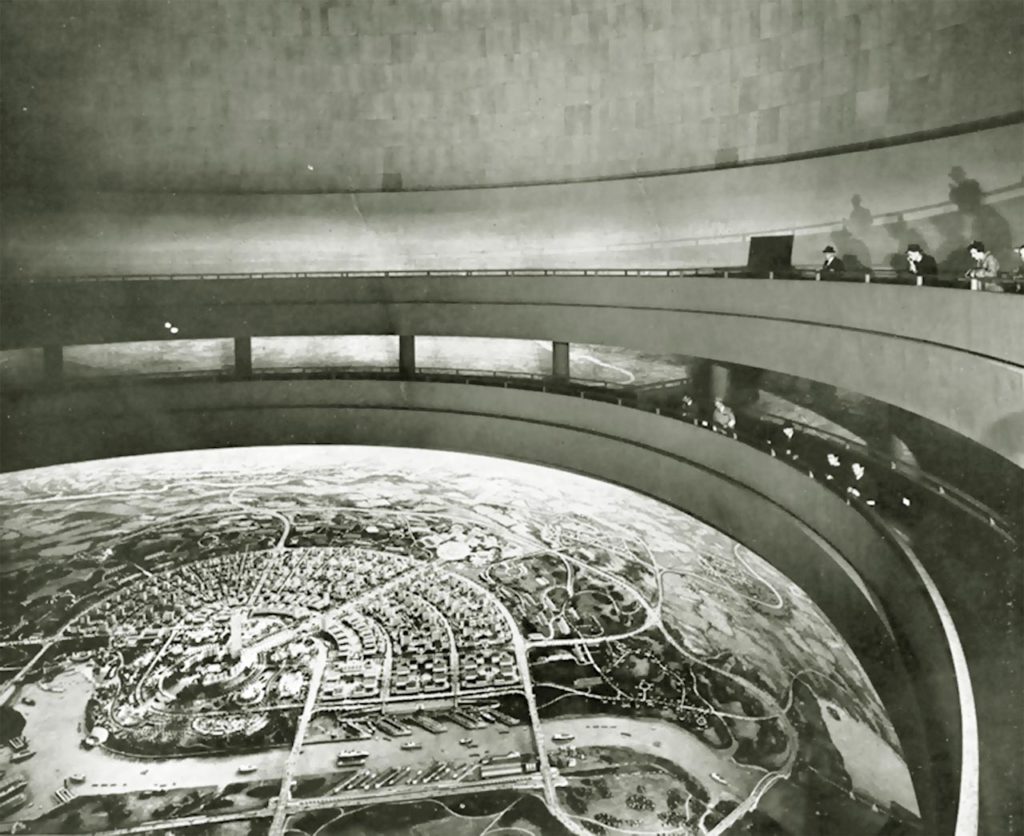
Gazing down at the wonder of Democracity within the Perisphere.
Worlds Fair Community
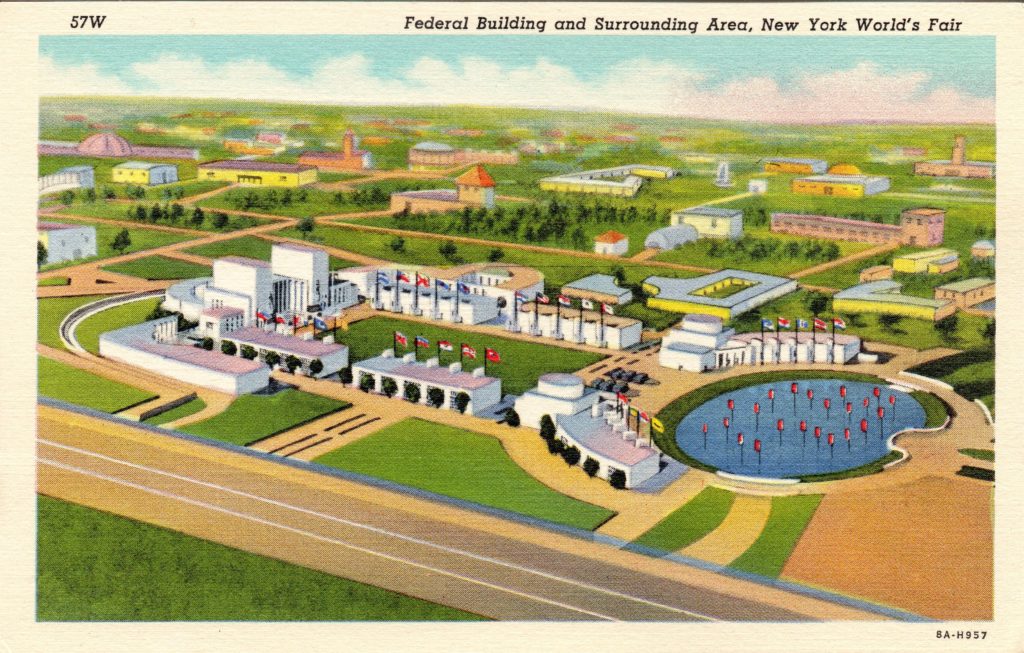
Starring into the gushing waters of the Lagoon of Nations with a view of the U.S. Federal Building.
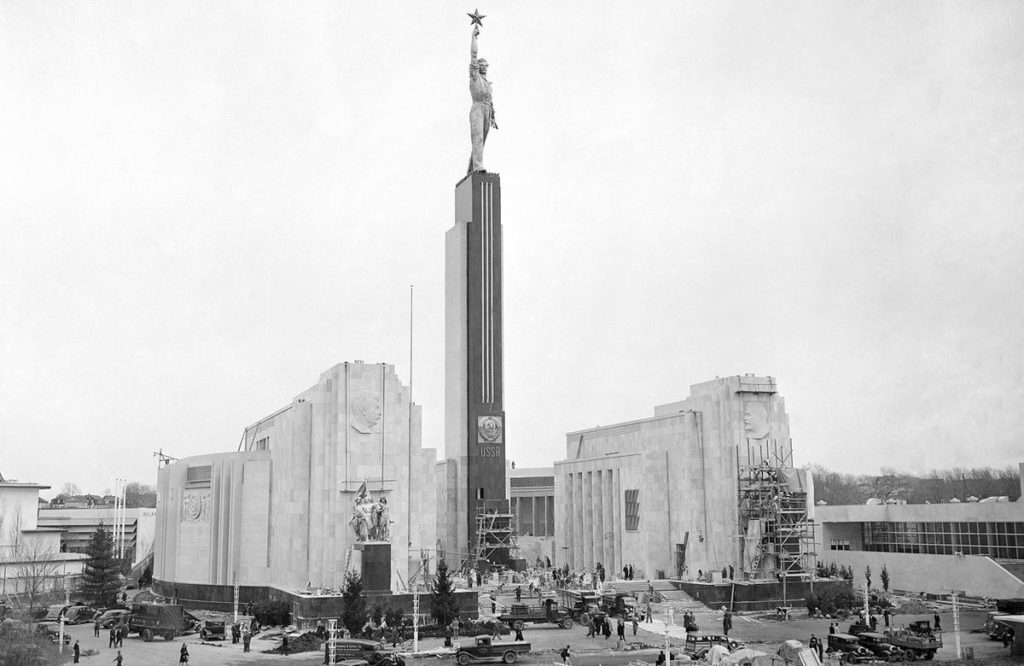
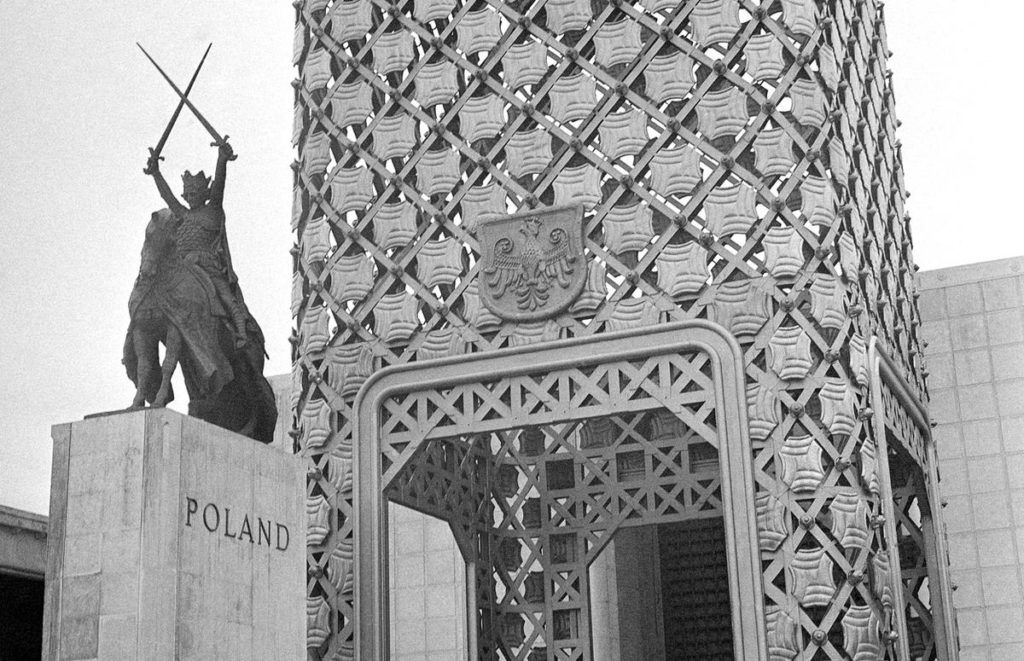
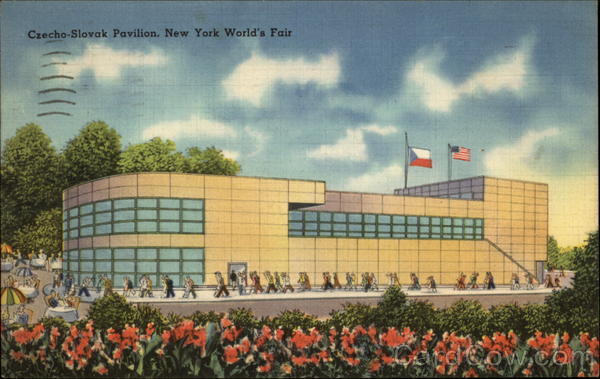
A few images of pavilions from the ‘Government Zone’ that were mentioned on the show:
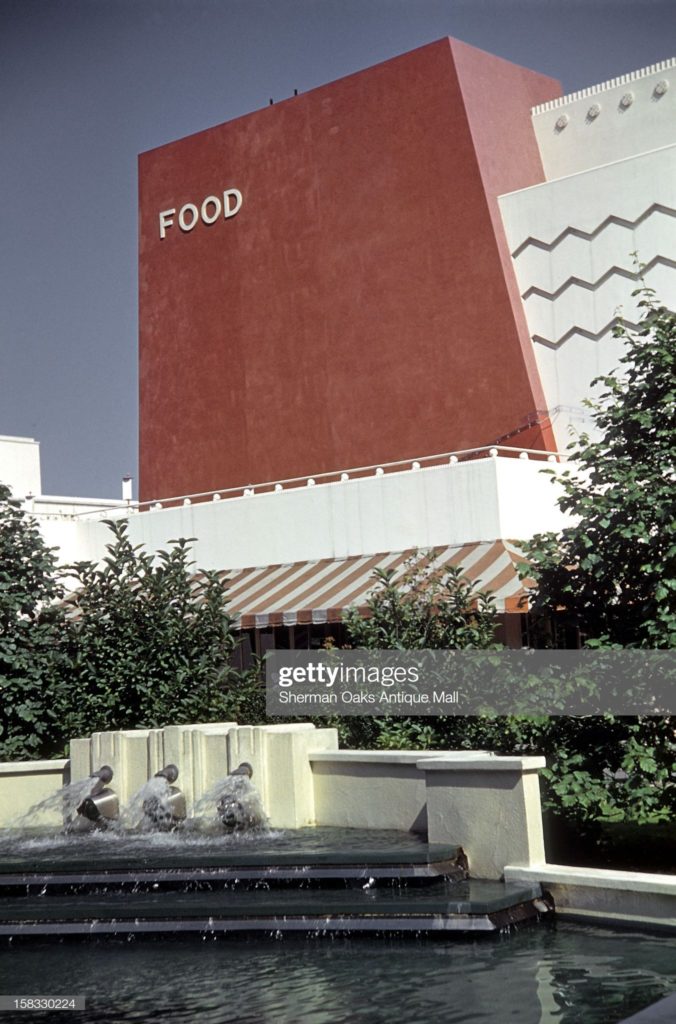
The Soviet Union pavilion/AP PhotoPoland pavilion/AP photoCzech-Slovak Pavilion, New York World’s Fair New York CityA view of the Food North Building at the 1939 New York World’s Fair in Flushing Meadows, Queens, New York City, New York. (Photo by Sherman Oaks Antique Mall/Getty Images)
The Mickey and Minnie Mouse cartoon which appeared at the National Biscuit Company (Nabisco) exhibition.
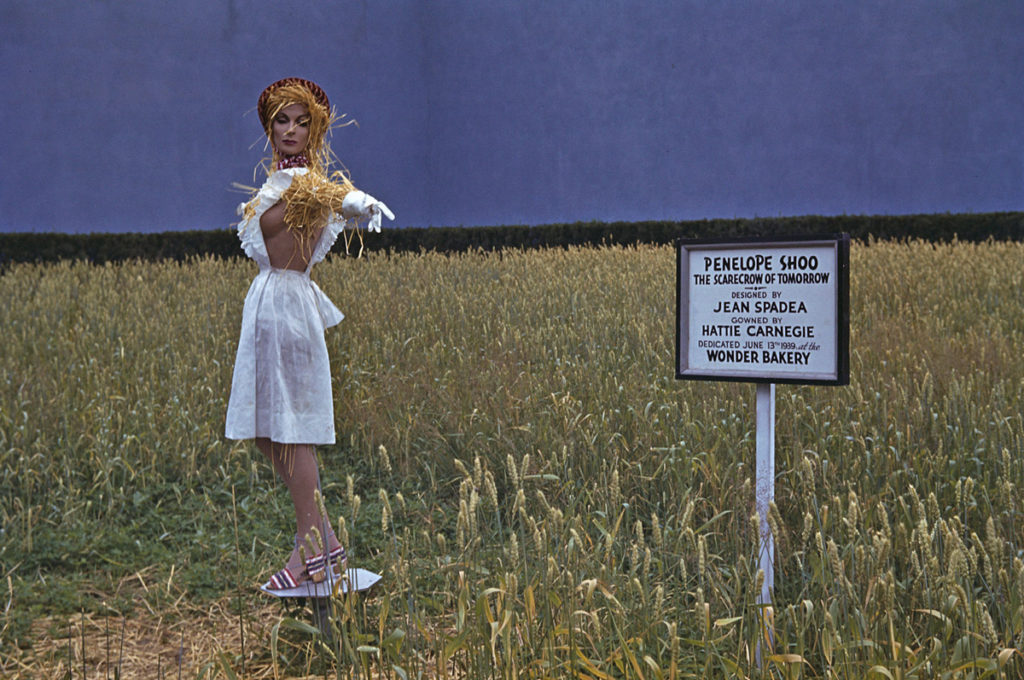
Wonder Bakery displays a wheat field exhibit at the 1939 World’s Fair. The model, Penelope Shoo, is wearing an outfit designed by Hattie Carnegie. The wheat field was billed as “the first planted in New York City since 1875.” (Peter Campbell//Corbis via Getty Images)
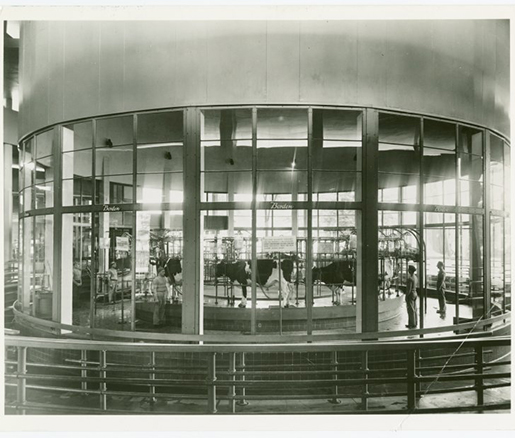
The ‘rotolactor’ in the Borden Company Exhibit
Courtesy James Beard
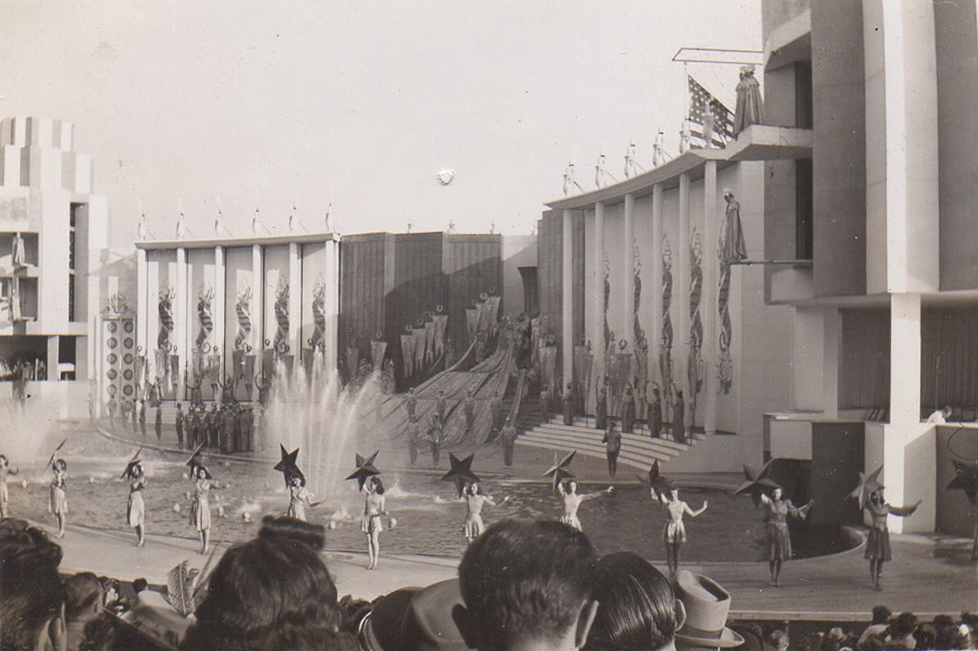
Billy Rose’s Aquacade — or if Aquaman were a musical!
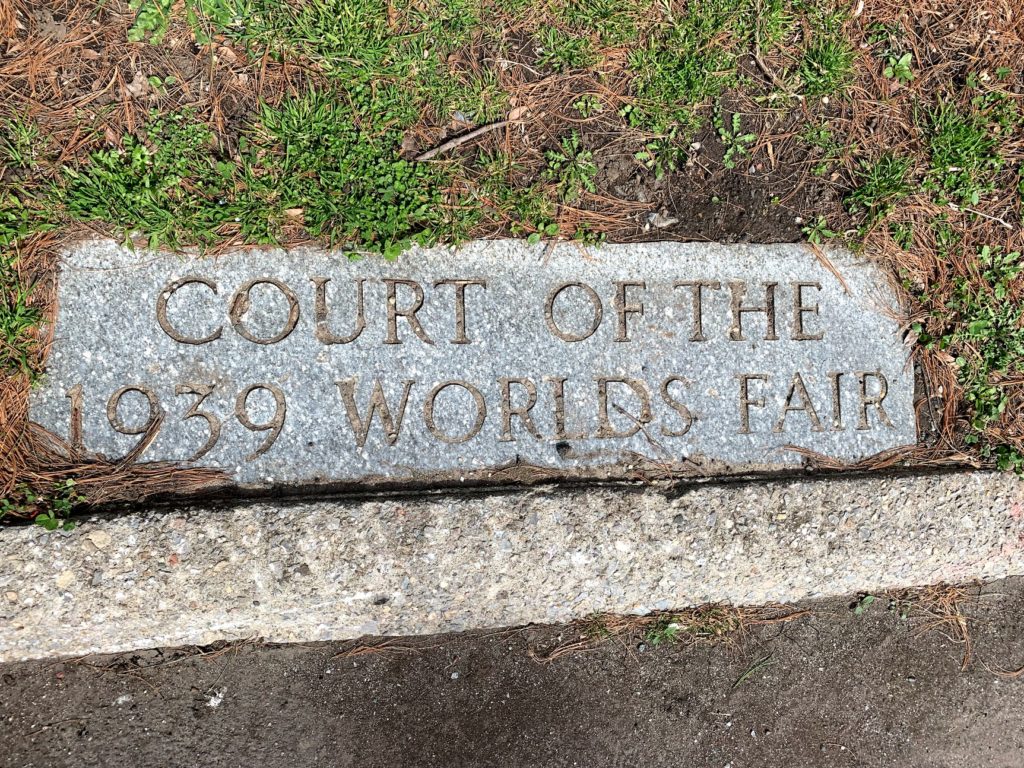
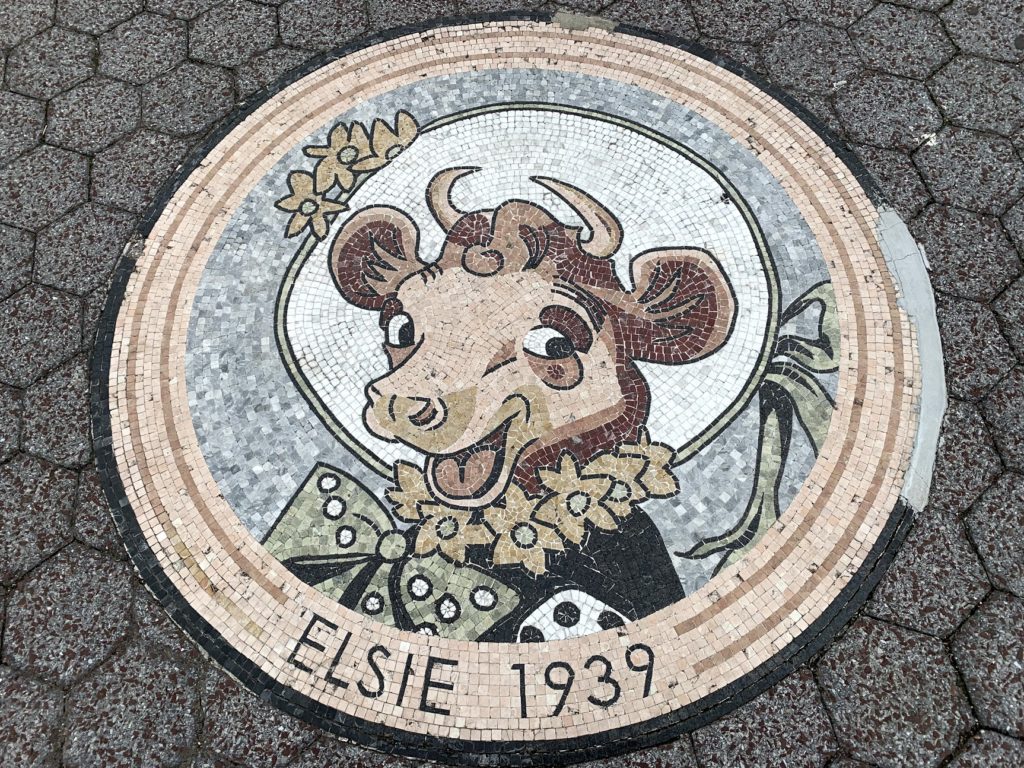
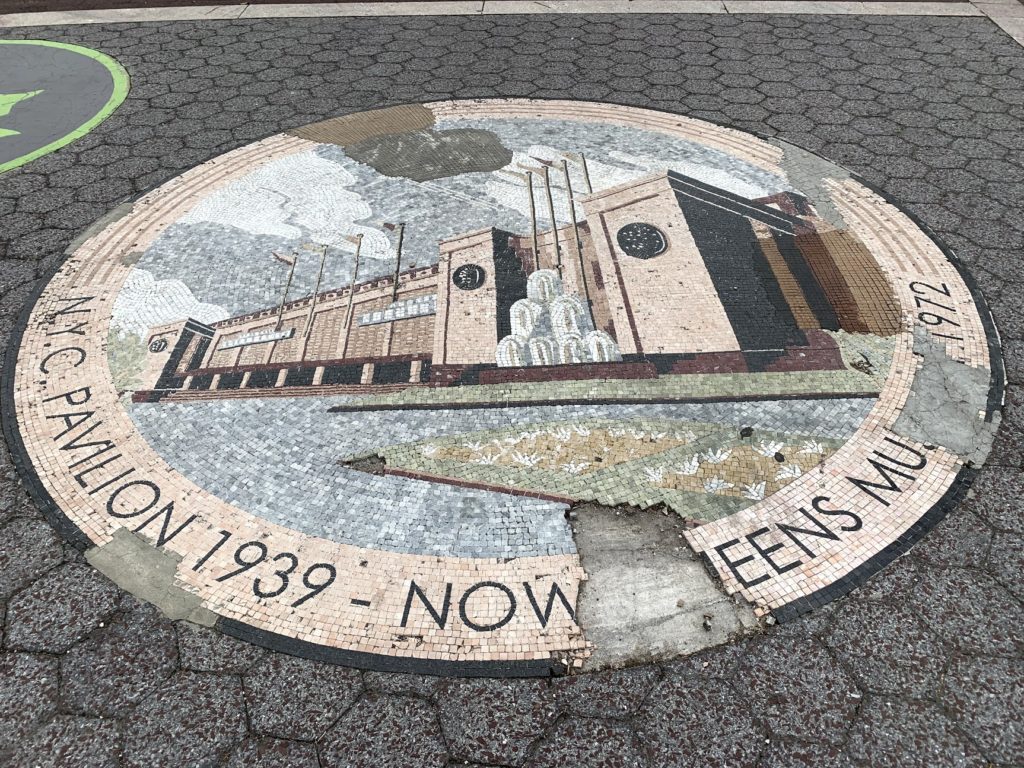
You can find evidence of the 1939 Worlds Fair all over the place in the park! Just a few examples (pictures by Greg Young):
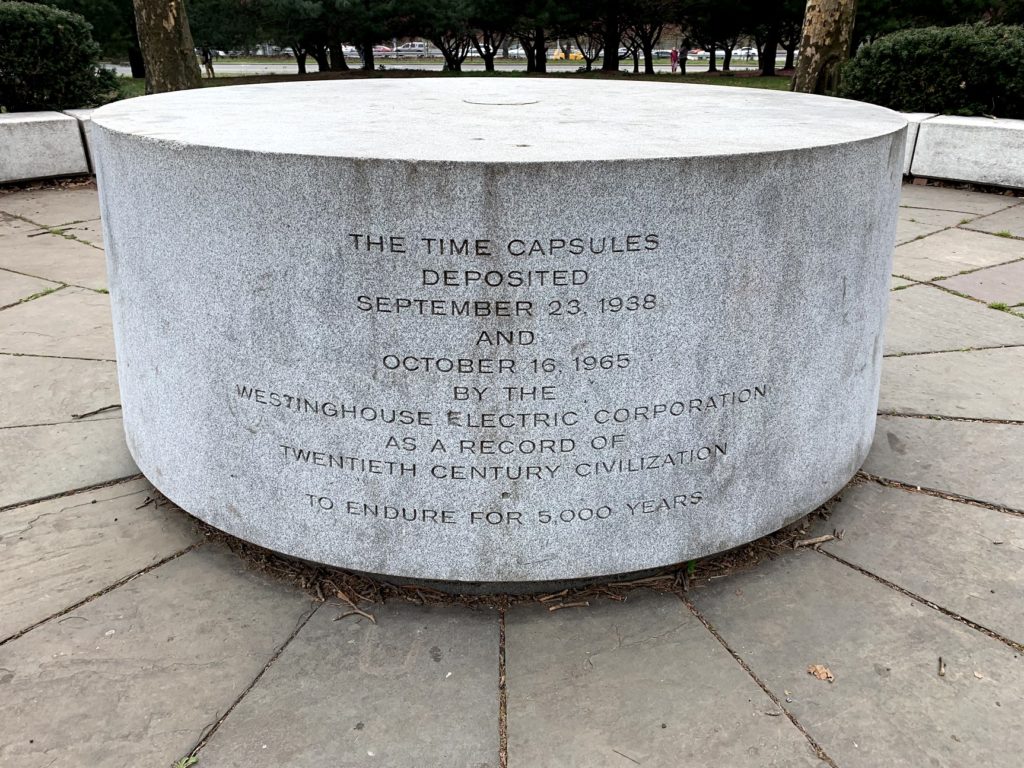
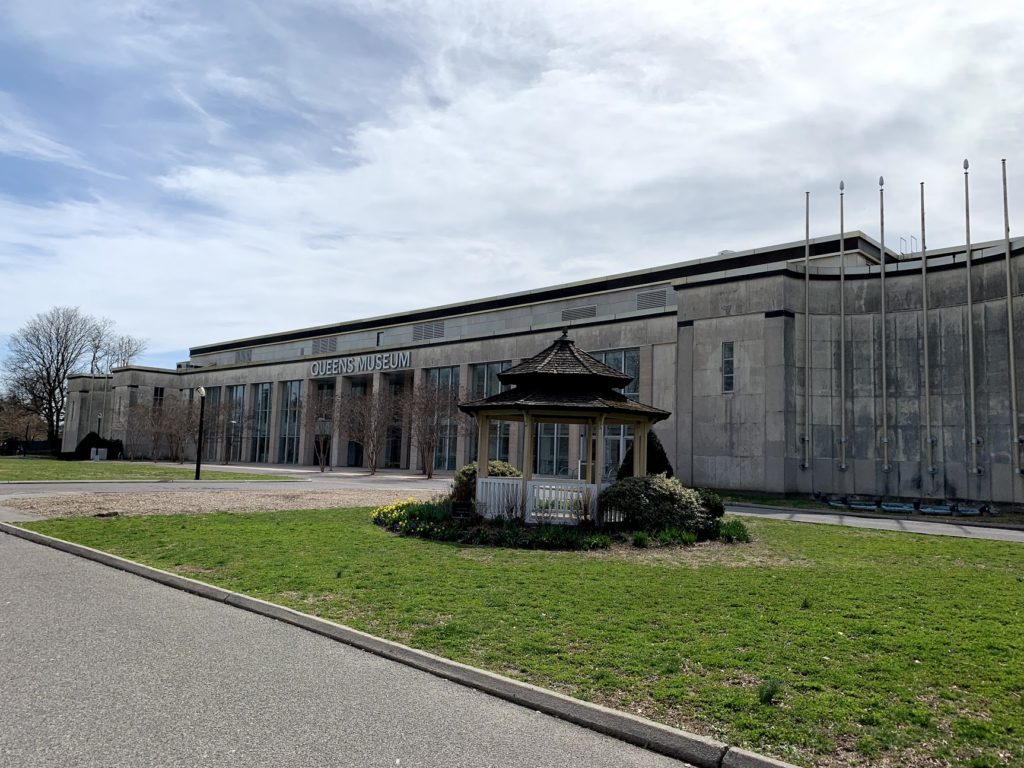
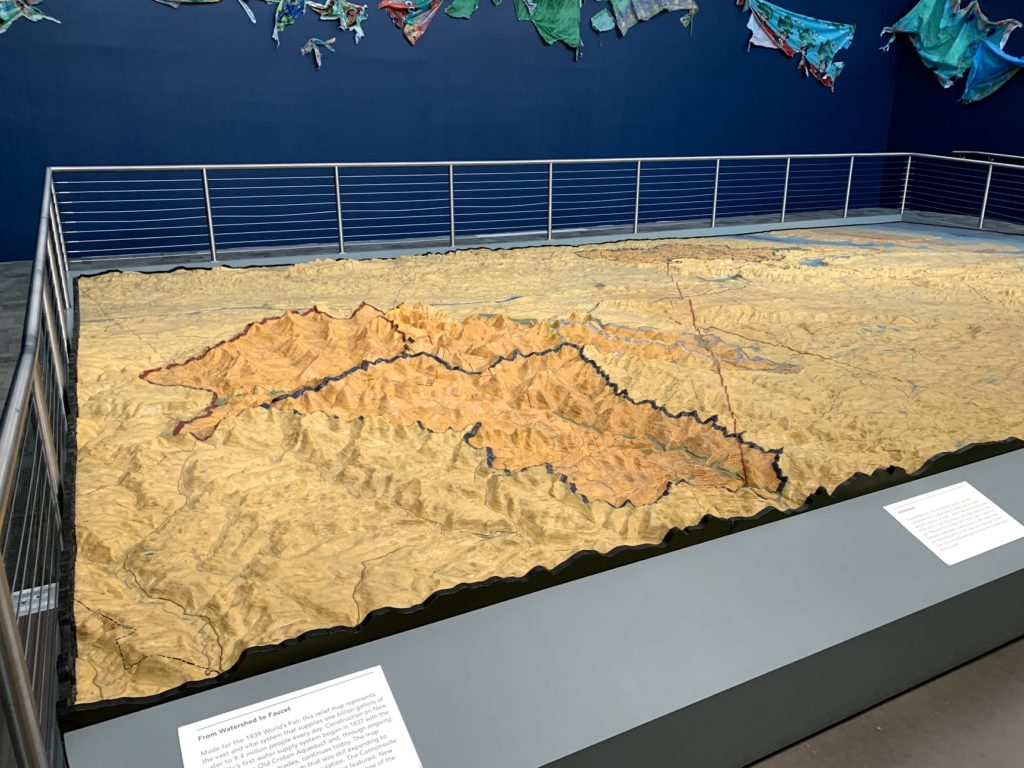
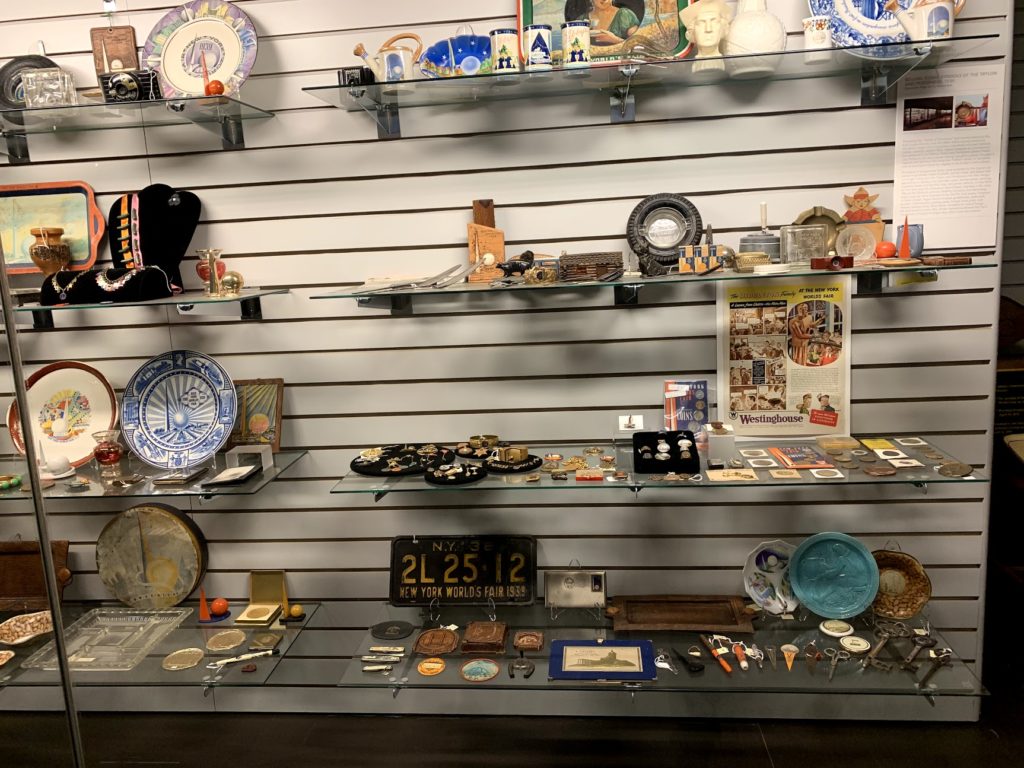
The former “New York City Building” which sat in the shadow of the Trylon and the Perisphere. Today it’s the Queens Museum….…where you can find the relief map of the New York City water supply, designed for the 1939 World’s Fair but never used.On the second floor, you’ll find a visible storage collection of World’s Fair memorabilia from both fairs.
Don’t just look up! At your feet are also some tributes and traces to the World’s Fair.
FURTHER READING
The website 1939 New York World’s Fair is a wonderful resource, breaking down the specifics of most pavilions and even offering scans of brochures and programs from the fair.
The Dutch were sold on the island’s placement in the harbor at the mouth of the mighty Hudson River, making it a convenient waypoint for explorers and traders. Soon its ports had built the foundation for New York’s and later America’s financial sector.
The city’s most influential nineteenth-century businessman, Cornelius Vanderbilt, got his feet wet in business first with ferries and steamships before building his mighty railroad empire. Manhattan is surrounded by water, and yet early New York would almost be undone due to a lack of it.
Traces of the city’s centuries-long quest for clean drinking water can be found from the island’s tip to its top from the site of spring water wells down in Bowling Green to the relics of old water systems..
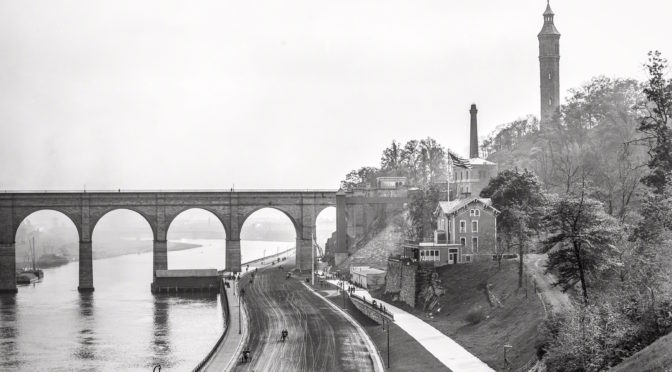
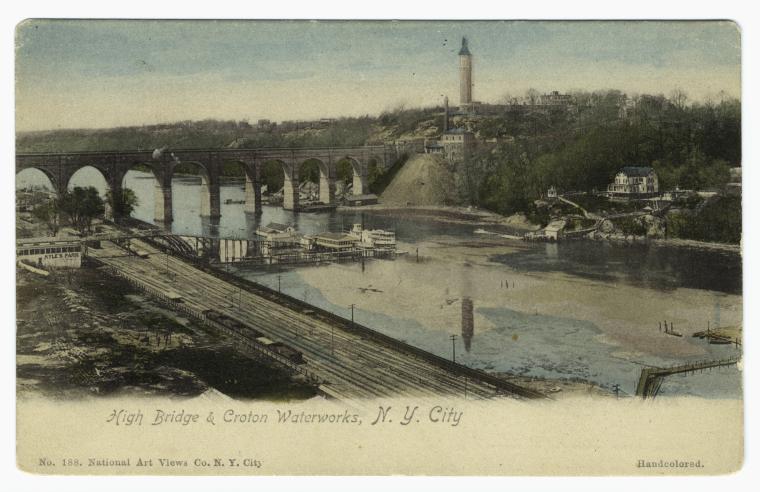
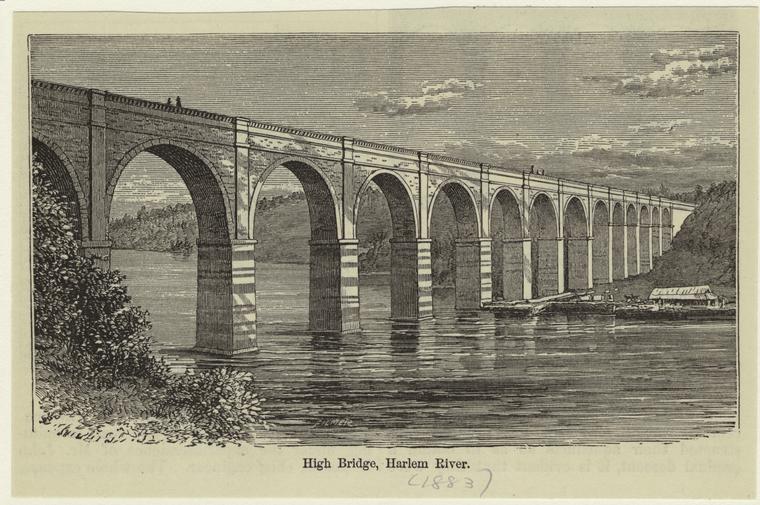
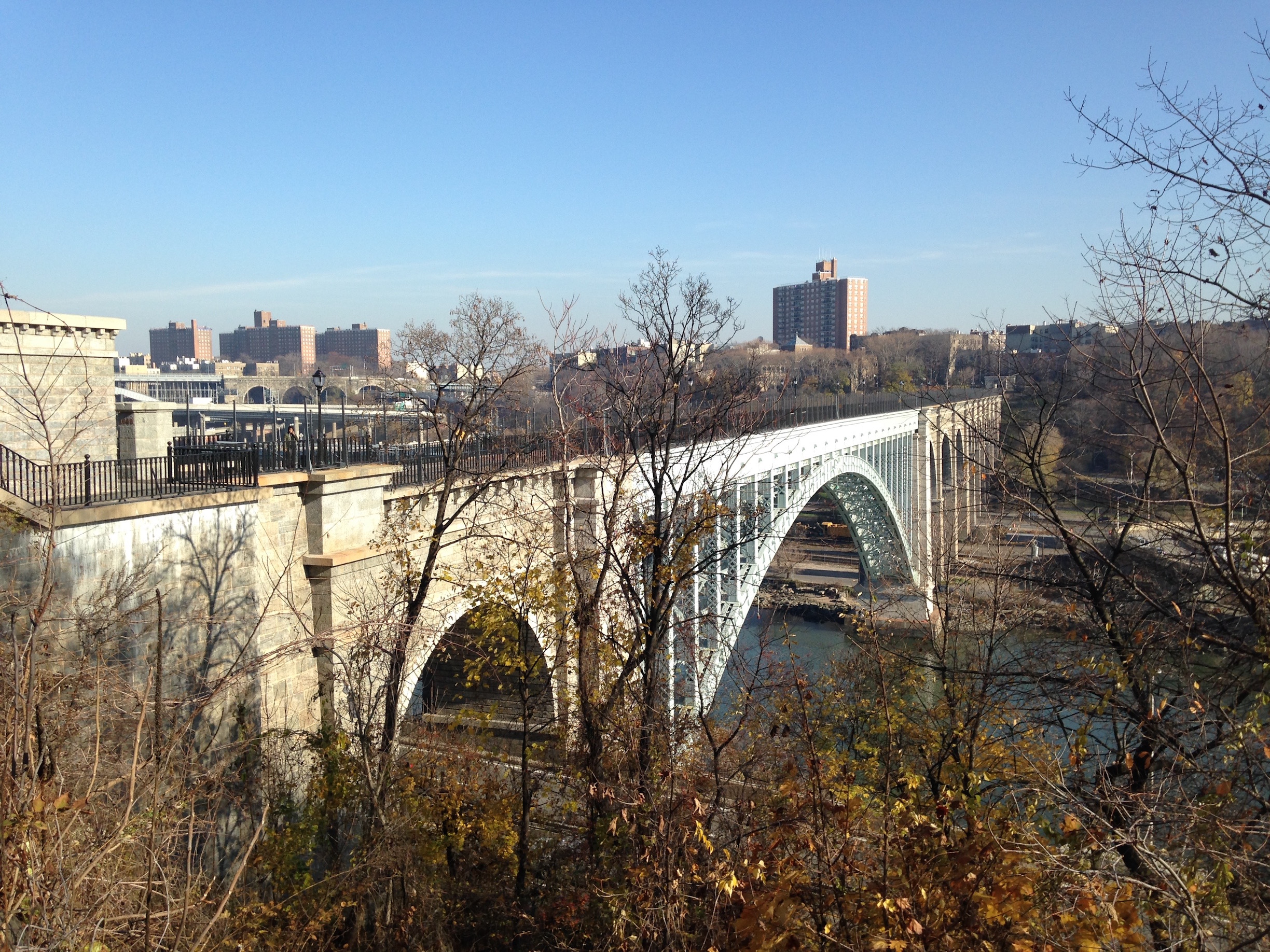
But no monument to freshwater dominates quite like the High Bridge, the Romanesque wonder linking Manhattan to the Bronx over the Harlem River.
Courtesy NYPL
For many decades this majestic artifact, seemingly plucked from the hills of ancient Gaul, was a vital link in that great engineering triumph: the Croton Aqueduct.
With the dense river traffic below and the icky-brackish composition of the surrounding rivers, early New Yorkers had to look beyond their waterways for drinking water. They dug cisterns and hunted down springs, but these couldn’t support the growing city.
By the late eighteenth century, Collect Pond, a so-called freshwater source located northeast of today’s City Hall, had become polluted by the industries that surrounded it, and valiant efforts to bring water from other sources during the Colonial era were dampened by debt and war.
Courtesy MCNY
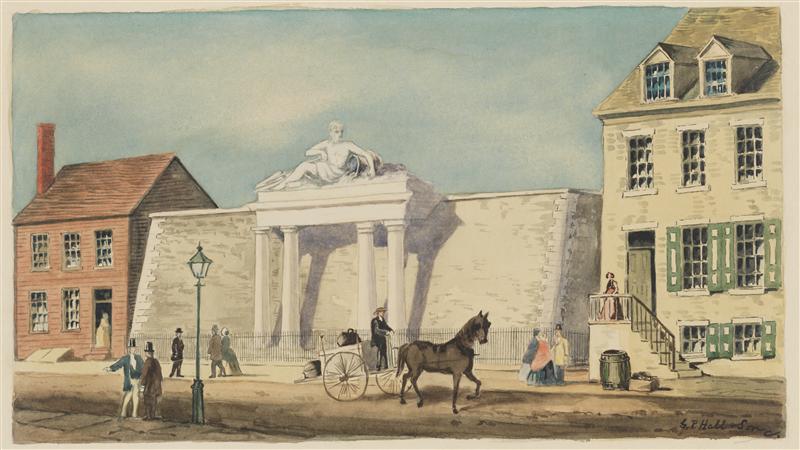
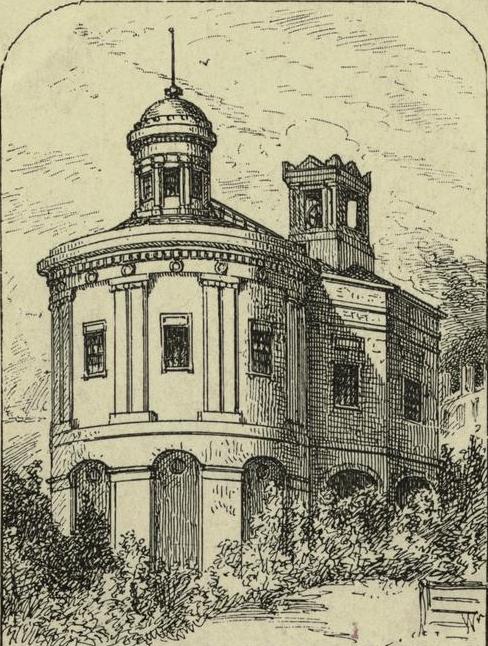
In 1799 future vice president/murderer Aaron Burr hatched a grand business plan to construct a reservoir system that would distribute water via an elaborate network of hollowed-out logs. (Above: The reservoir and grandest structure of the Manhattan Company system, pictured here in 1825.)
Unfortunately for parched New Yorkers, he ended up using most of the funding for his company to establish a successful bank instead. More than a century and a half later, Manhattan Company merged with Chase National Bank to become Chase Manhattan, known today simply as Chase, one of the largest banks in the world. But his water distribution efforts ended up being woefully inadequate, and left Manhattan high and dry.
NYPL
By the 1830s the city was on the verge of a health crisis, as putrid water, poor sanitation, and all-around squalid living conditions culminated in a series of health epidemics and breakouts—which only heightened the urgent need for clean water.
In April 1835 New Yorkers were so desperate for a freshwater supply that they voted in favor of a seemingly impossible plan: a pipeline that would bring the pure waters of the Croton River, forty miles north in Westchester County, down to city residents. Only underscoring the emergency, eight months later the Great Fire of 1835 would ravage the city. The aqueduct couldn’t be constructed quickly enough.
Wikipedia
The elaborate project employed thousands of mostly Irish immigrants for many years (1837-1842). They constructed a sophisticated system of iron piping and brick masonry, which drew upon gravity to run the water through pipes and over arches, across the lush terrain of Westchester, and through the small towns that would later form the nucleus of the Bronx.
But how would the water get into the island of Manhattan? The aqueduct’s architects would need to find a way to keep it flowing across the Harlem River. Drilling technologies were not advanced enough in the 1840s to allow for a tunnel, so planners thought bigger — and higher.
NYPL
The High Bridge, at an elegant 1,450 feet long, is the oldest surviving bridge in New York. Completed in 1848, it not only brought the Croton water into the city, but it also made one heck of a statement noticed around the world.
New Yorkers had pulled off a technological miracle, borrowing engineering and architecture principles not attempted, on this scale, since the glory days of the Roman Empire. They were changing the course of one river forty-one miles away and sending its waters high above another.
“Water! Water!” wrote diarist and former mayor Philip Hone on October 12, 1842, “is the universal note which is sounded through every part of the city, and infuses joy and exultation into the masses.”
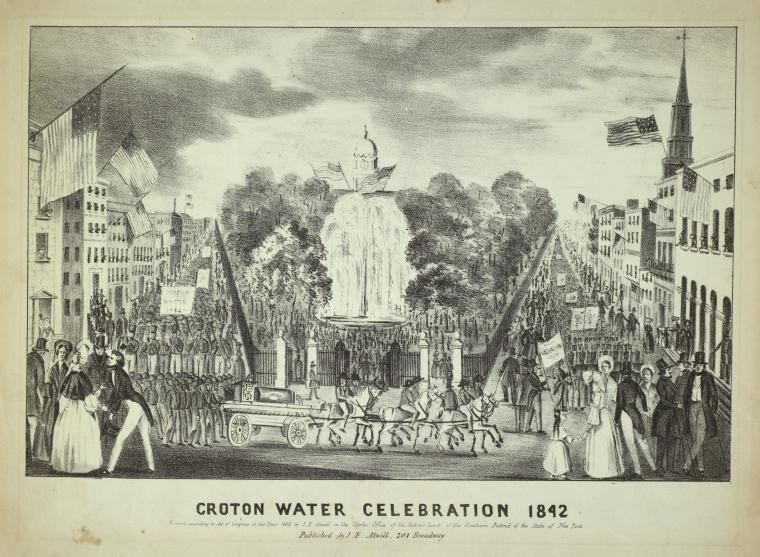
When the water was finally turned on — flowing on October 14, 1842 — the city threw a bash bigger than any since the expulsion of the British in 1783.
From there it moved through the city, eventually to City Hall Park, where good, clean water shot high into the air and down into the City Hall fountain, to the delight of the public. Imagine— enough water to waste in a fountain!
(At the time of the celebration, the High Bridge had not yet been completed, so Croton water crossed a temporary low bridge. The lofty span replaced the modest one a few years later.)
Below: New Yorkers gathering at City Hall in celebration at the completion of the Croton water system. For more information, check out our podcast on the construction of the Croton Aqueduct
NYPL
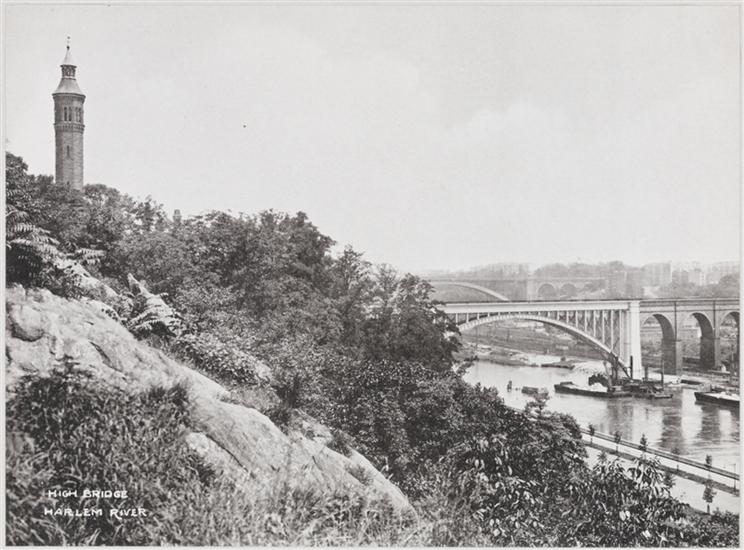
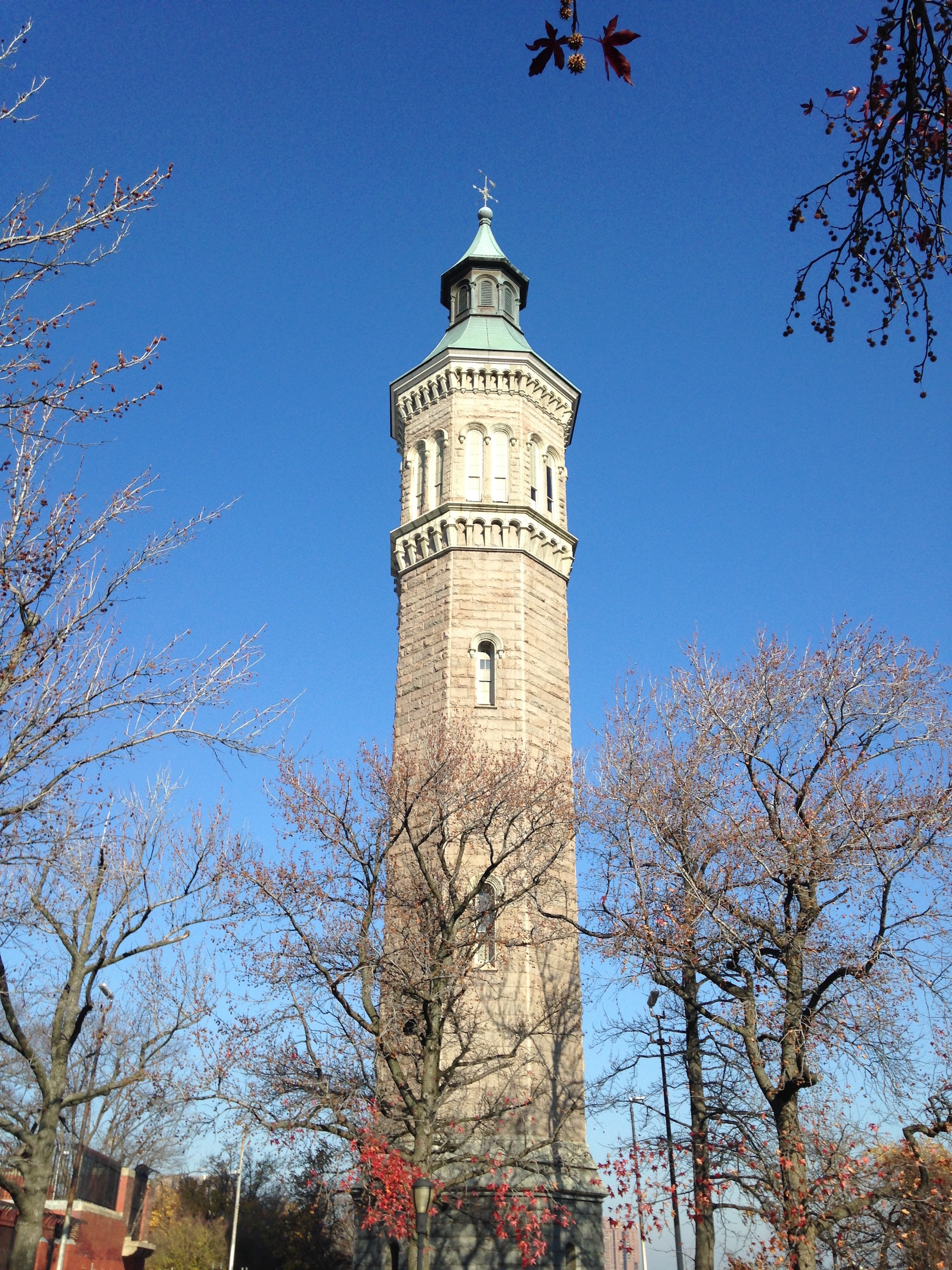
But the celebrated new system struggled to keep up with the demands of the growing city. In 1872, as masses of new arrivals from far-off lands crammed into tenements, an attractive water tower was constructed near the High Bridge to help increase the water pressure into the city.
The High Bridge and tower in 1915
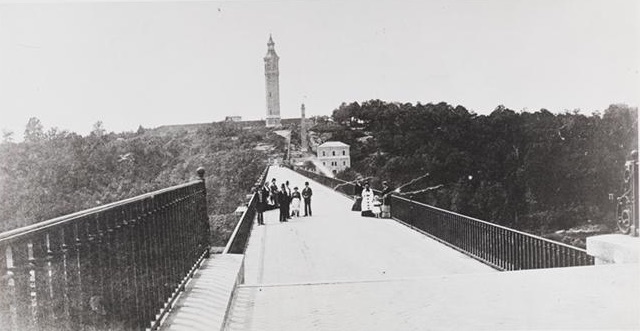
By this time the High Bridge itself had turned into an attraction, a festive promenade where young gentlemen and their parasol-clinging lady companions could stroll, taking in the striking views of the still-forested landscape that surrounded them, while millions of gallons of clean water coursed beneath their feet.
MCNY
But New York, growing larger every day, would need more water. Much, much more. The introduction of indoor plumbing would require an entirely new and much larger Croton system to be built, which opened in 1890 and employed the massive Jerome Park Reservoir in the Bronx to satisfy the demand.
But alas, with a million flushes came the end of the High Bridge as an active part of the water system. Its function replaced by unromantic pipes buried underground, the bridge and water tower were retired from service by 1949, and soon these structures modeled after antiquity became historical relics themselves.
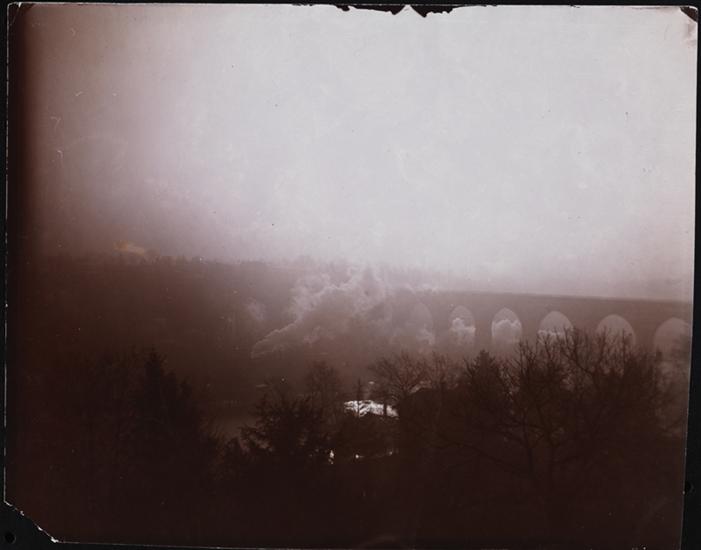
Below: The High Bridge, lost in a haze, photographed in 1920
MCNY
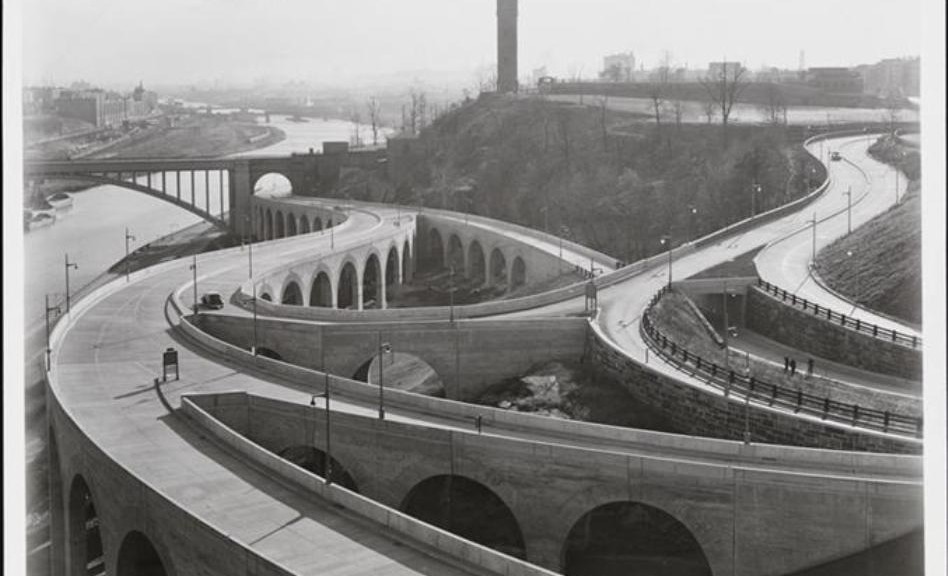
In a surprising twist given the unforgiving tendencies of city planners of the day, it was probably the beauty of the bridge and the tower that kept them from being ripped down in a bit of “progress.” Motorists along the Major Deegan Expressway took moments from their traffic jams to reflect on the possible story behind these strange and magnificent artifacts, which grew more incongruous as the modern highway system developed around them.
MCNY
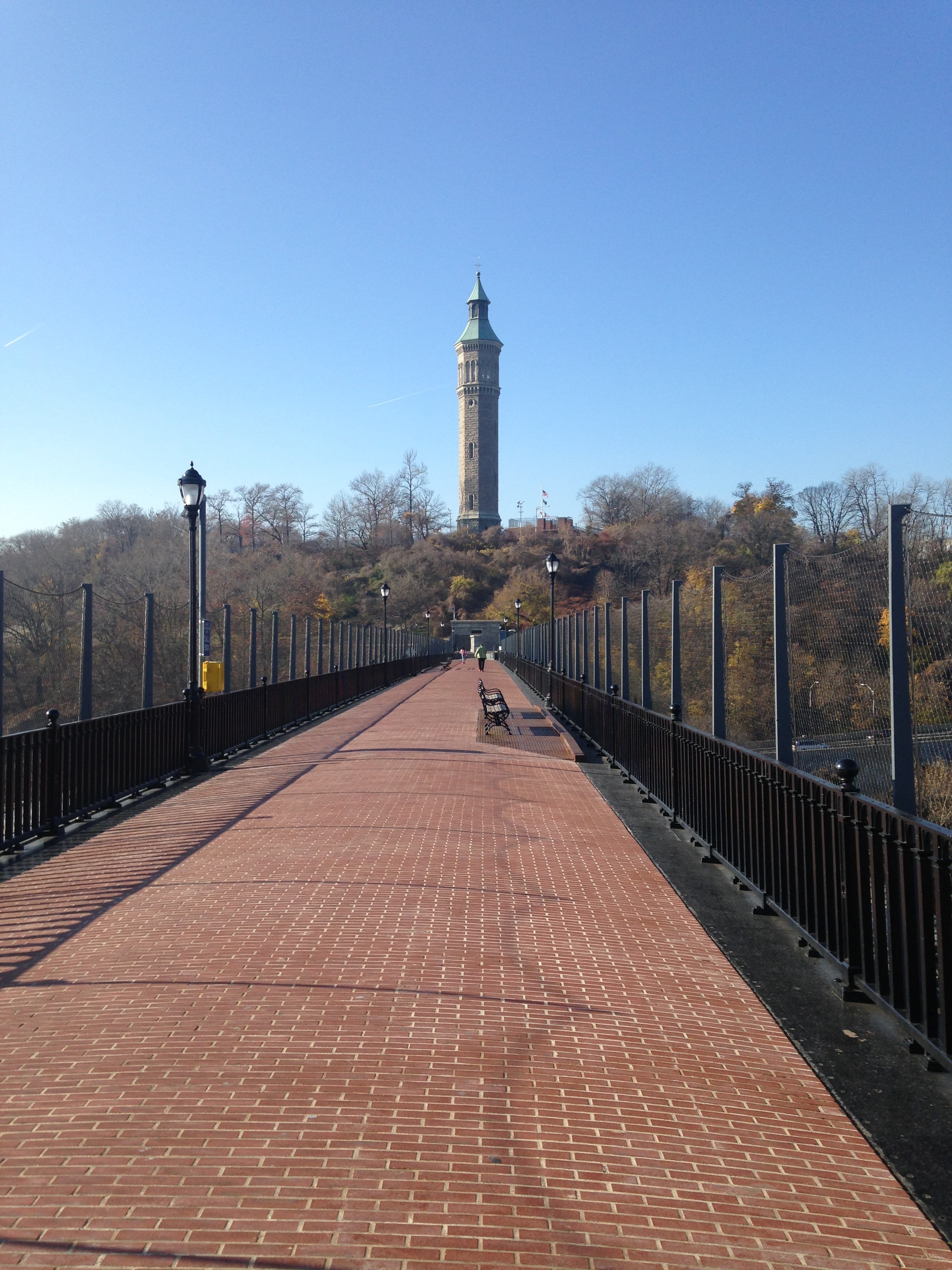
Two years ago this month, the High Bridge was restored, not for the movement of water but for those visitors and their parasols (replaced by headphones, we imagine) to enjoy a one-of-a-kind perspective on their buzzing metropolis.
If you go — or rather, when you go, because you really must see it — reflect upon the water that once passed below you. It helped this city grow.
HOW TO GET TO THE HIGH BRIDGE
Mass Transit: Take the A/C or the 1 train to 168th Street, get out and walk east. OR the M101 bus takes you right up to Highbridge Park
On the Bronx side, you can take the 4 train to Mt Eden Ave but it’s a bit of a walk west. Instead take the Bx11 or Bx13 bus
“If you are entering the High Bridge from the Manhattan side, please enter Highbridge Park at West 172nd Street and Amsterdam Avenue and walk east to the High Bridge Water Tower Terrace staircase down to the bridge level. If entering from the Bronx side, enter at University Avenue and 170th Street in Highbridge, Bronx.”
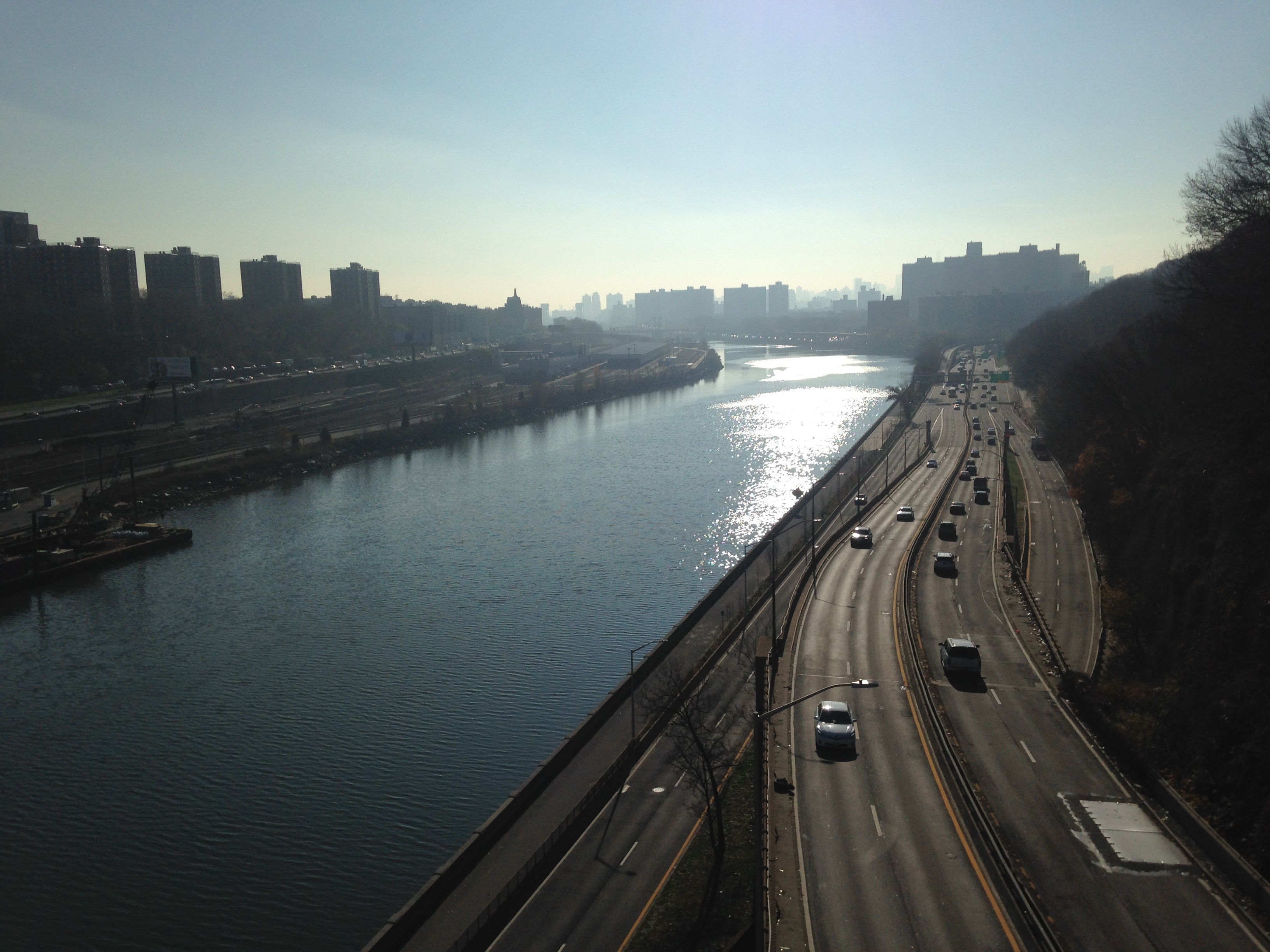
Some images from my trip there in November. It’s three times as beautiful now!
Above: The Croton Reservoir in 1850, in what would soon become Central Park. (NYPL) PODCAST One of the great challenges faced by a growing, 19th-century New York City was the need for a viable, clean water supply.
We take water for granted today. But before the 1830s, citizens relied on cisterns to collect rainwater, a series of city wells drilled down to bubbling, underground springs, and, of course, the infamously polluted Collect Pond. But these sources were spreading disease and clearly inadequate for a city whose international profile was raising thanks to the Erie Canal.
The solution lay miles north of the city in the Croton River. New York engineers embarked on one of the most ambitious projects in the city’s history — to tame the Croton, funnelling millions of gallons of waters through an aqueduct down to Manhattan, where it would be collected and stored in grand, Egyptian-style reservoirs to serve the city’s needs.
This is the story of both the old and new Croton Aqueducts, and of the many landmarks that are still with us — from New York’s oldest surviving bridge to a former Bronx racetrack that was turned into a gigantic reservoir.
FEATURING: An entire town moved on logs, a famous writer’s strange musings on Irish laborers, the birth of a banking titan, and guest appearances by Isaac Newton, DeWitt Clinton, and Gouverneur Morris (or, at least, men who share those names).
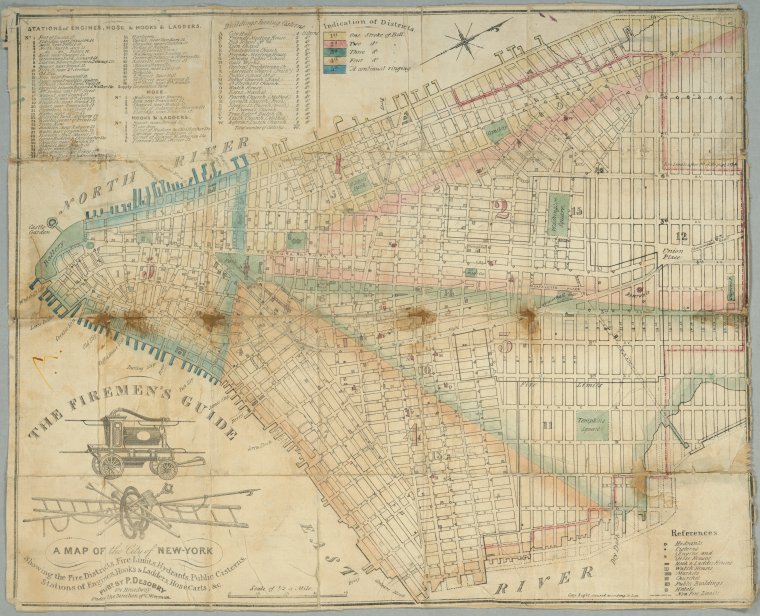
A fireman’s map of New York in 1834, detailing the location of the city water supply, in cisterns and hydrants fueled by the 13th Street Reservoir. (NYPL)
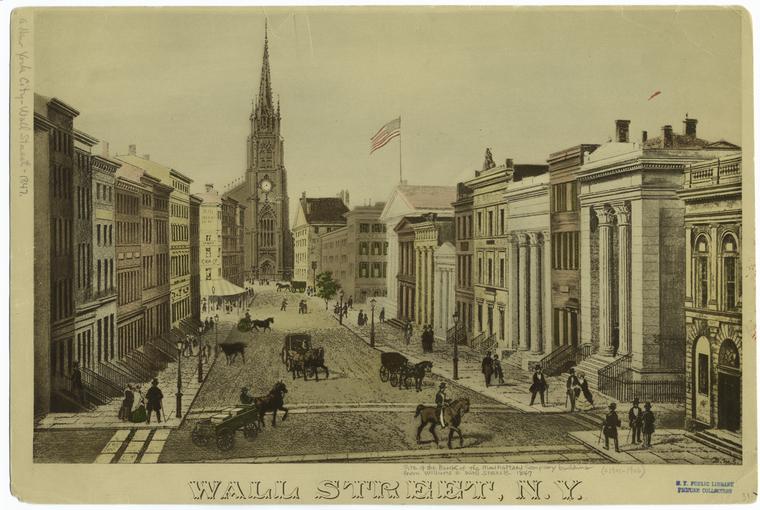
Wall Street in 1847. The Manhattan Company is at 40 Wall Street. Founded by Aaron Burr ostensibly as a public works to distribute water, the Company soon shed its water responsibilities to become a full-fledged financial institution.
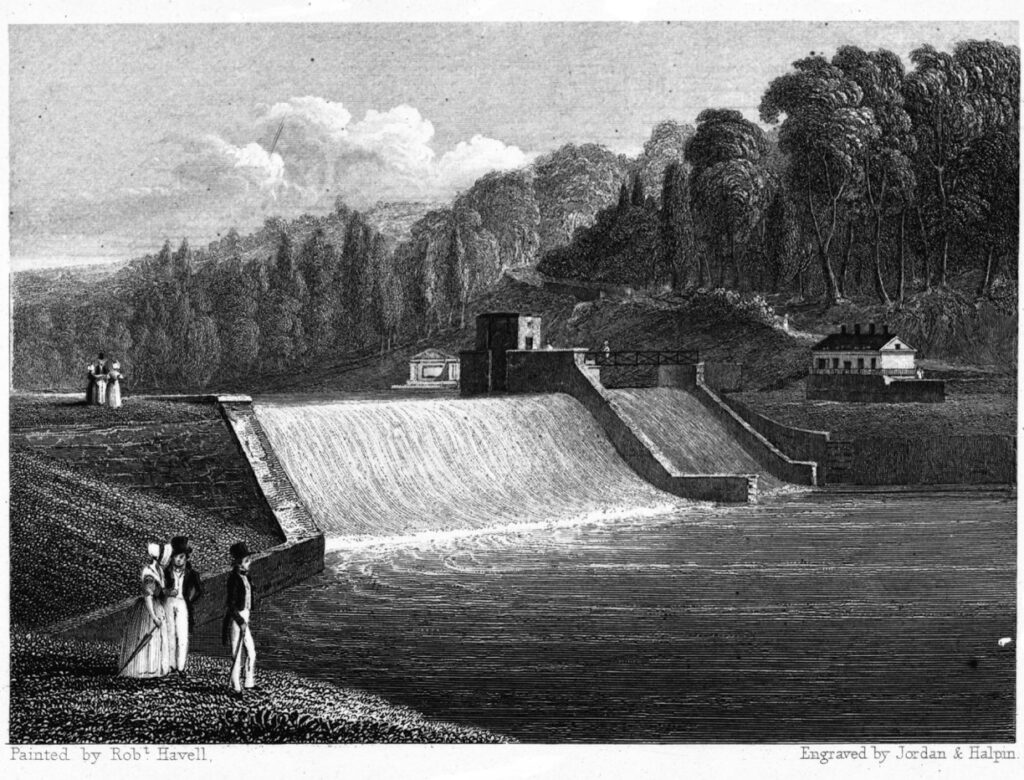
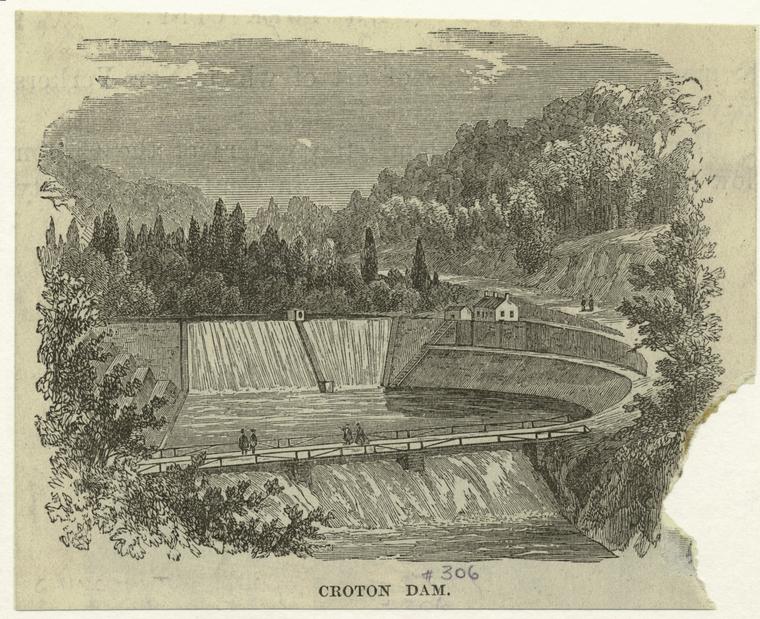
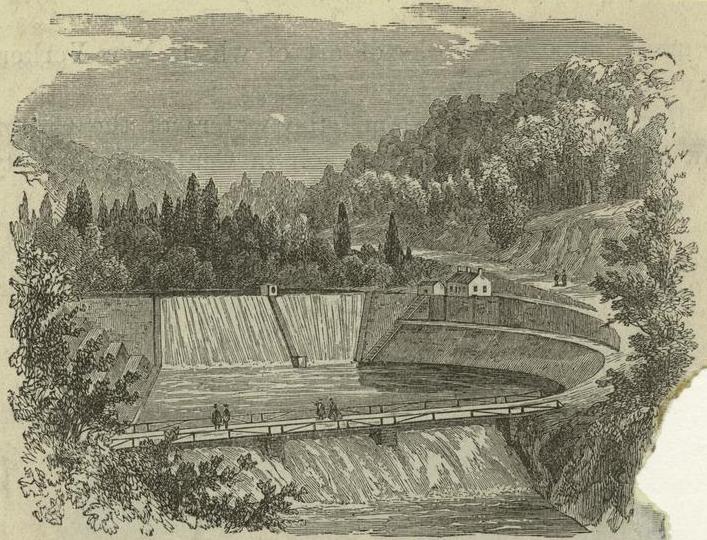
The Croton Dam and the start of the aqueduct system. After a partial collapse in 1841, the dam was quickly rebuilt for the opening of the entire system the following year. Today, the location of this dam is submerged under the current Croton. (NYPL)
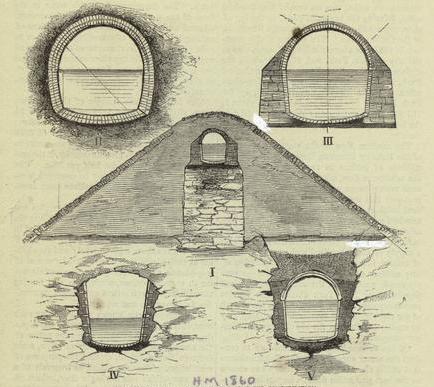
Examples of the various tunnels created to accommodate the various topographical challenges encountered during construction. Miles of these water tunnels were constructed by a team mostly comprised of Irish laborers. (NYPL)
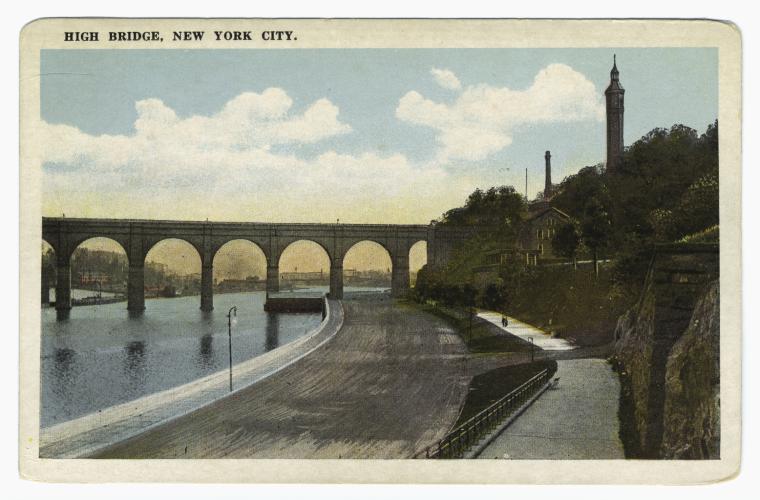
The glorious High Bridge, the oldest surviving bridge in New York — although much of it has been replaced and quite altered. (NYPL)
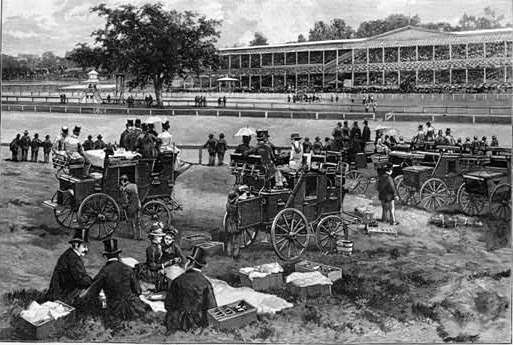
High society flocked to Jerome Park Racetrack on the weekends in the 19th century. But the park was turned into a reservoir at the beginning of the 1900s. (NYPL)
Also: please see my post from yesterday The Art of the Reservoir for pictures of some of the receiving and distributing reservoirs used in the Croton system and others through the New York region.
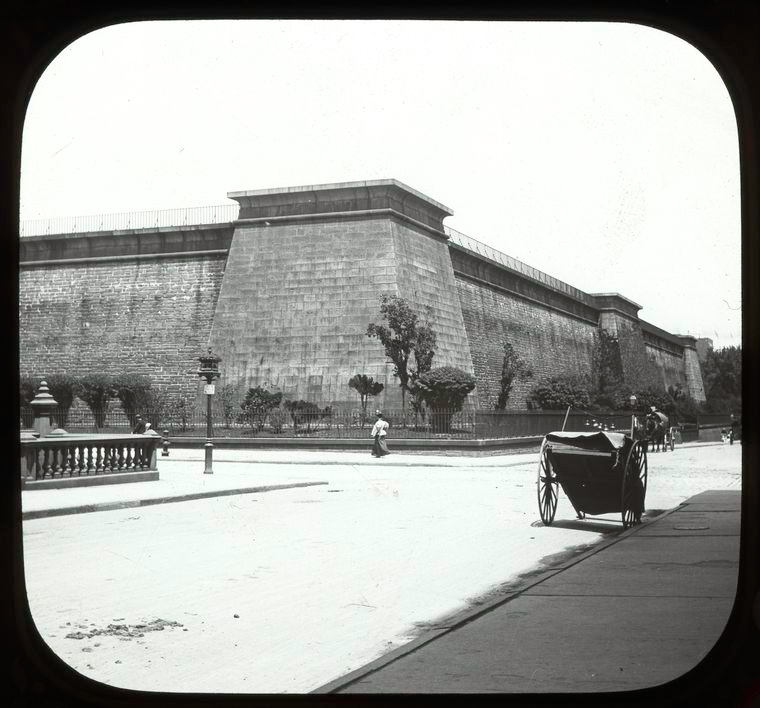
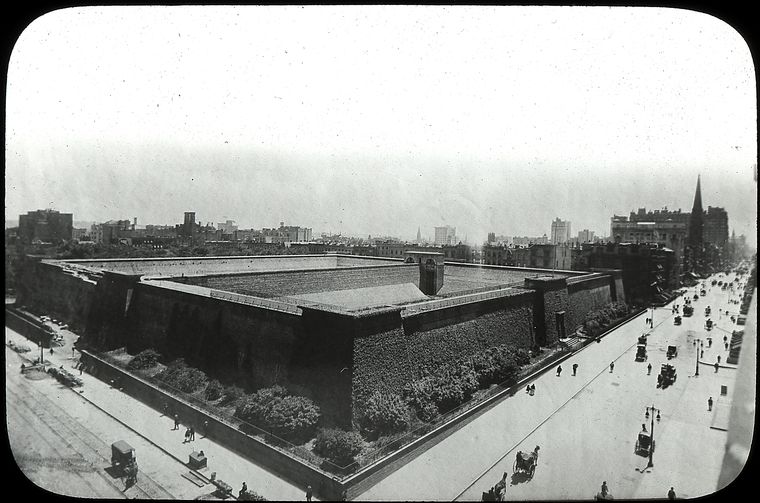
The Fortress of Fifth Avenue: the Murray Hill Reservoir
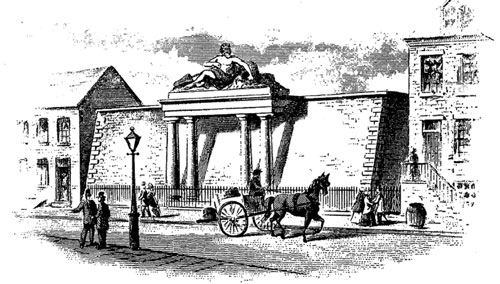
We share a lot of the same needs as New Yorkers of the past, but we’ve just gotten better at hiding the unpleasant ones. There are a great many mental institutions and specialized medical facilities in the city; they just aren’t in creepy, old Gothic buildings anymore. Prisons are out on islands or in nondescript beige towers flaunting only the barest hint of iron bars. We don’t dress them up in Egyptian morbidity like the famous Tombs prison of Five Points.
Our trains and our electricity reside underground, and so does our water, mostly. There are only a few places that seem to suggest that New York City’s water supply doesn’t just magically appear. Water towers dot the skyline, recalling romantic comic book landscapes, while water treatment plants, spread mostly through the outer boroughs, obviously do not. Then there are the reservoirs, the grandest of these, the Jerome Park Reservoir in the Bronx, is a landmarked structure of enormous, albeit hidden, beauty. It’s currently drained and sitting like the Earth’s largest off-season swimming pool.
But New Yorkers used to live with their water, contained in reservoirs meant to evoke might, sophistication and security. After all, New York only got fresh water from the Croton Aqueduct in 1842; before that, it was mostly obtained from wells, cisterns, and that nasty old Collect Pond. People were proud of their new water system, so why not show it off?
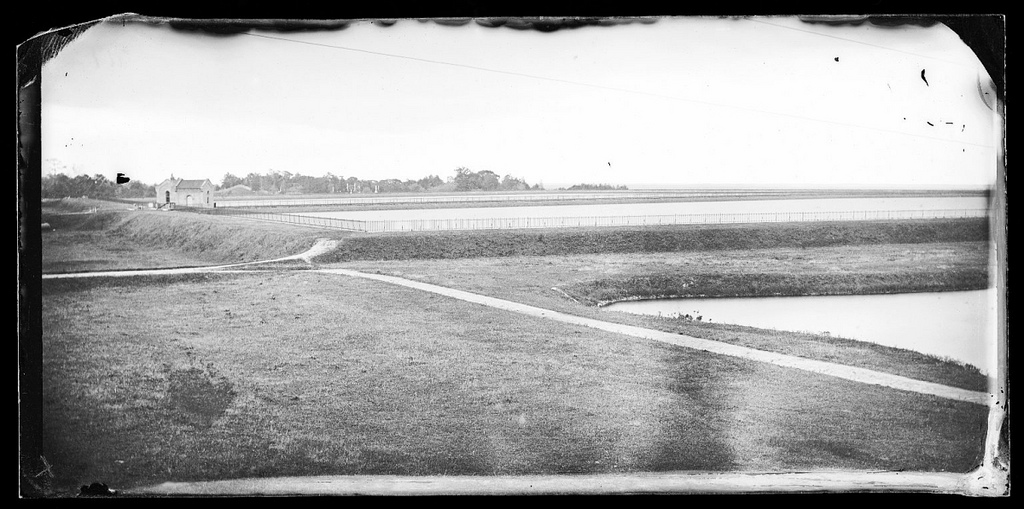
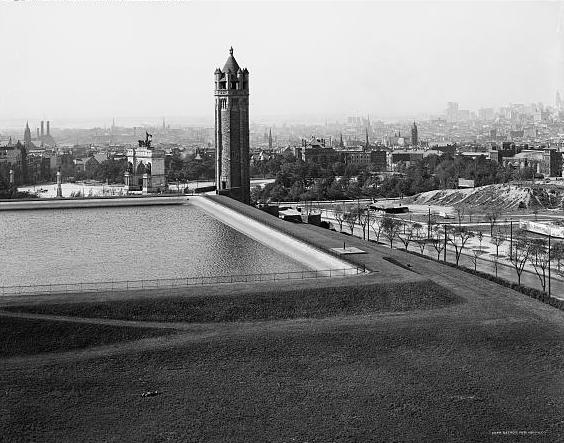
Here’s a gallery of New York’s old 19th century reservoirs. In tomorrow’s podcast, we’ll elaborate on the marvelous story on how the city got its water:
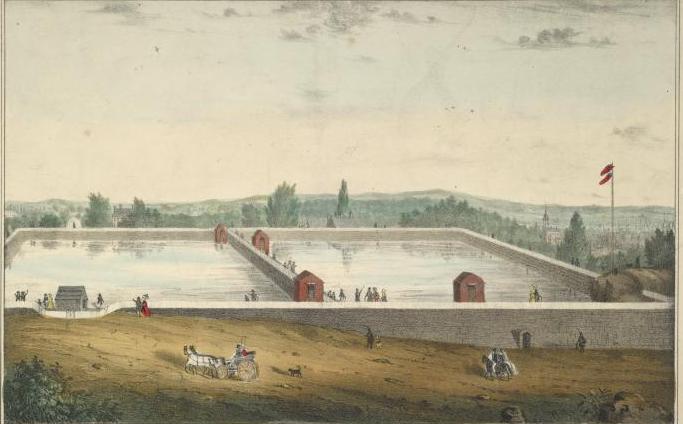
The Manhattan Company reservoir on Chambers Street was opened in 1801 and was quickly deemed inadequate. Looks lovely though. If it were still around — it was demolished in the early 1900’s — it would probably be a nightclub today.
13th Street Reservoir: Opened in 1830 as a water-pooling resource for fire fighting, it pumped water to hydrants on Broadway, the Bowery and other streets, but was little help in stopping the blazes of the Great Fire of 1835.
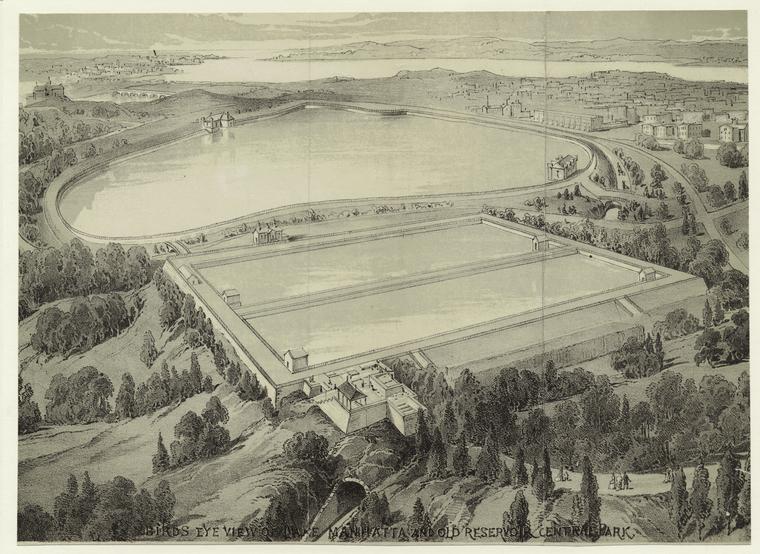
The Yorkville reservoir, how it looked on its opening in 1842. It was located between 79th and 86th Streets and between Sixth and Seventh Avenues. Many years later, was surrounded by Central Park and was later torn down to become the park’s Great Lawn. What does remain, however, is….
…the Central Park receiving reservoir, built in the 1850s and, unlike the Yorkville, incorporated into the park’s designs. Today it’s named for Jacqueline Kennedy Onassis, who lived nearby and frequently jogged around it.
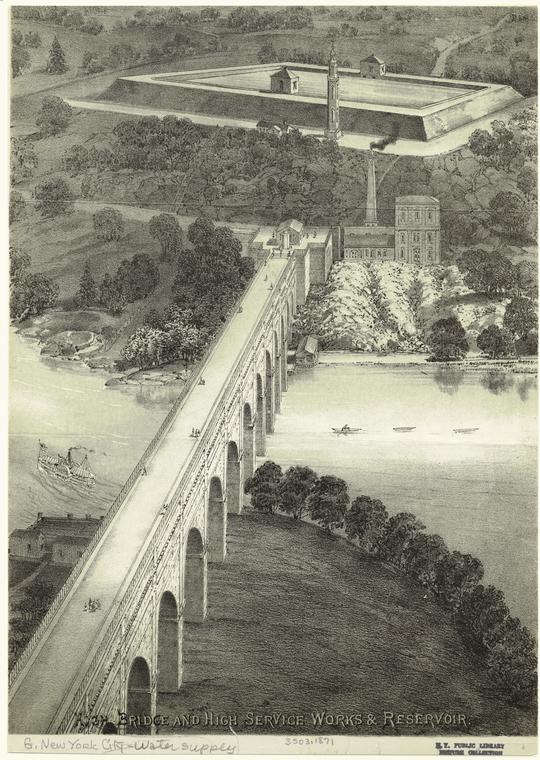
The spectacular High Bridge, part of the Croton system, with its adjoining smaller reservoir and water tower, serving the needs of residents of Manhattan’s higher elevations.
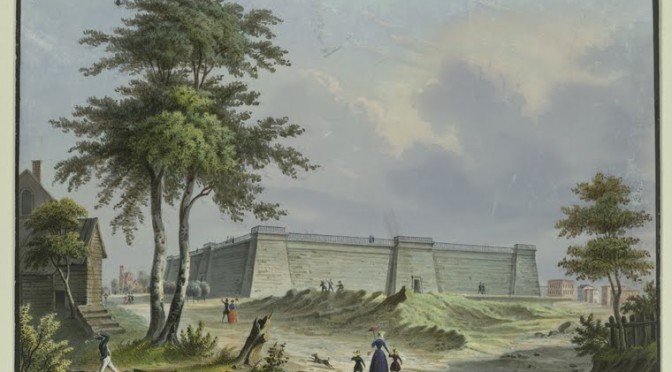
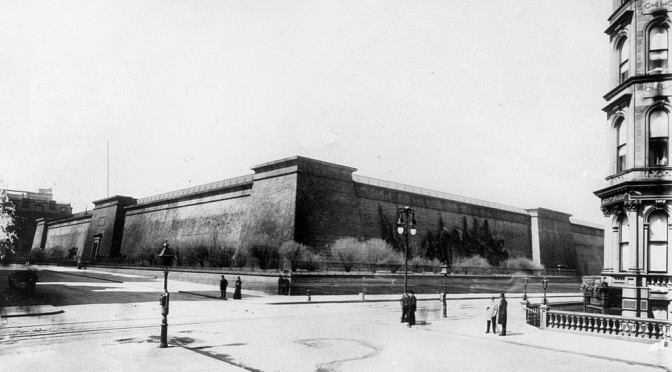
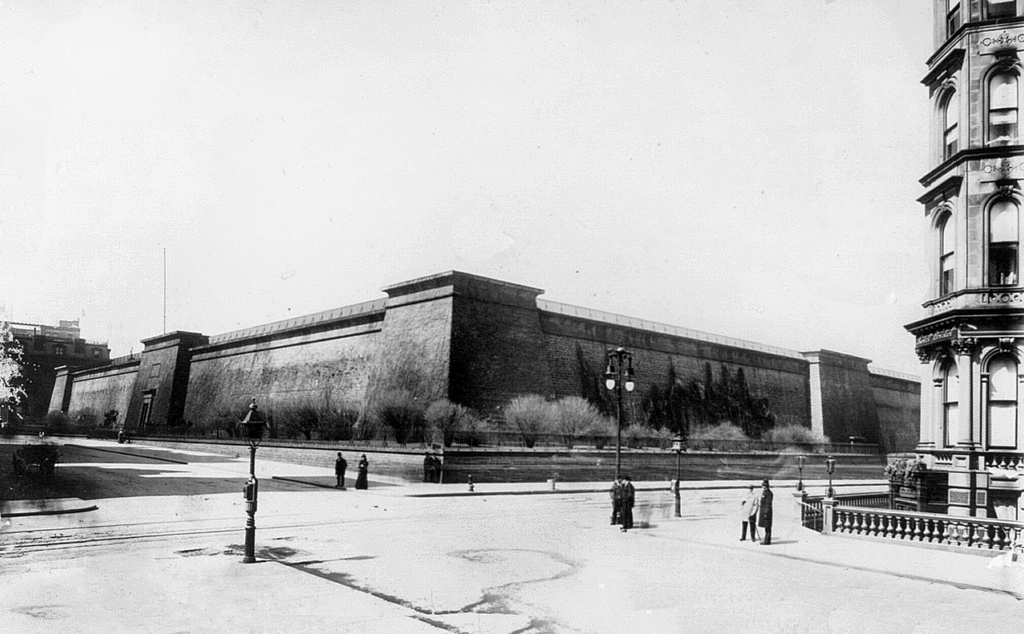
The grand Murray Hill Reservoir, probably the most popular of the reservoirs with 19th century tourists. Situated on land that had held the fabulous Crystal Palace (destroyed by fire in 1858), the reservoir was demolished in the 1890s to make room for Bryant Park and the New York Public Library.
Brooklyn was maintained in the 19th century in two reservoirs, one in Ridgewood and the other high atop Mount Prospect, although the ultimate source of the water came from a variety of places.
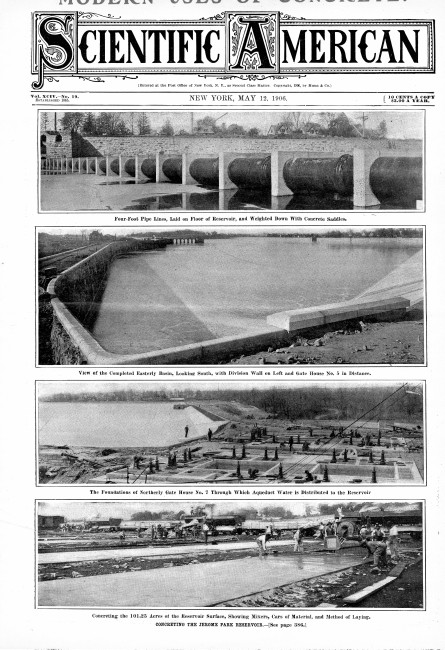
An issue of Scientific American in 1906, celebrating ‘the concreting’ of the Bronx’s Jerome Park Reservoir which opened that year and contained portions of both the old and new Croton Aqueduct systems.
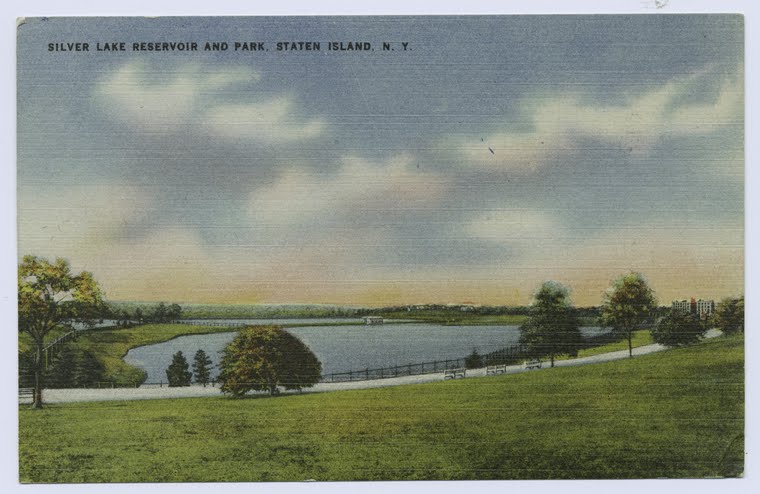
The 1917 Silver Lake reservoir in Staten Island was constructed, like the Central Park reservoir, to be a functional feature of a park setting.
Pictures courtesy the New York Public Library, the Brooklyn Museum and the Library of Congress. Thanks as always to these institutions. The Scientific American can be found here.