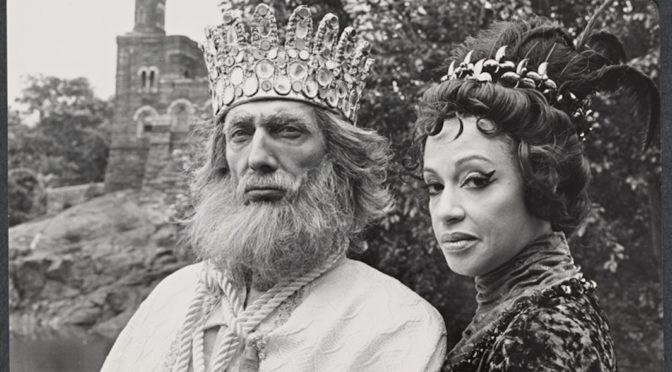
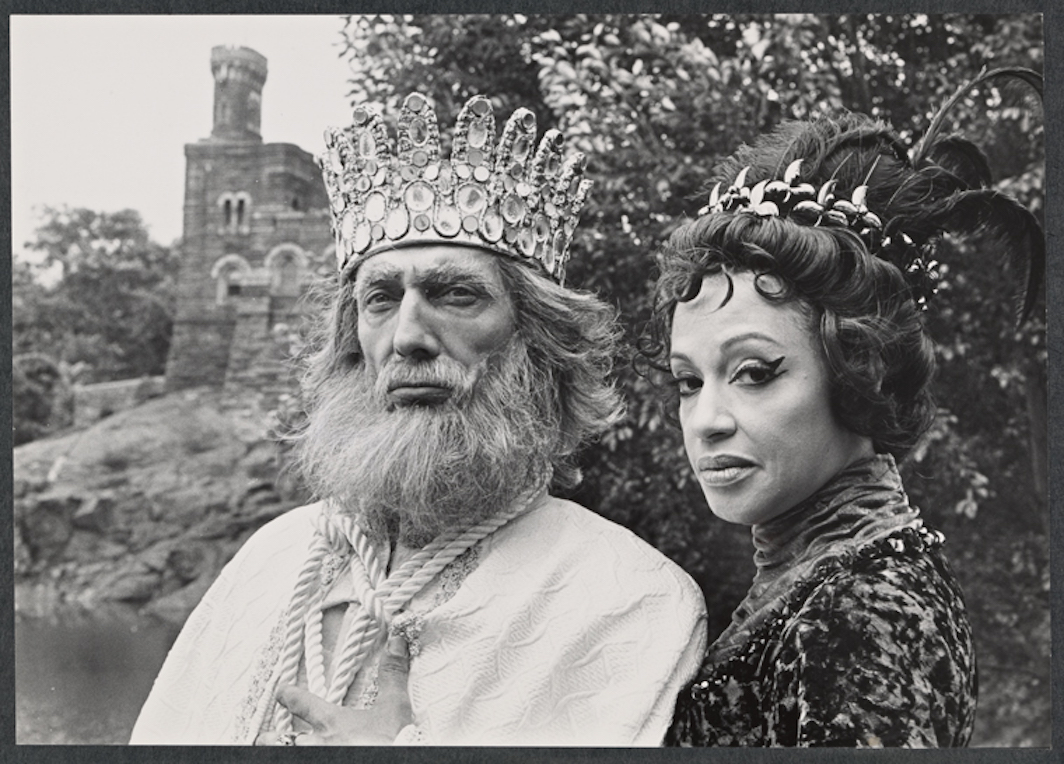
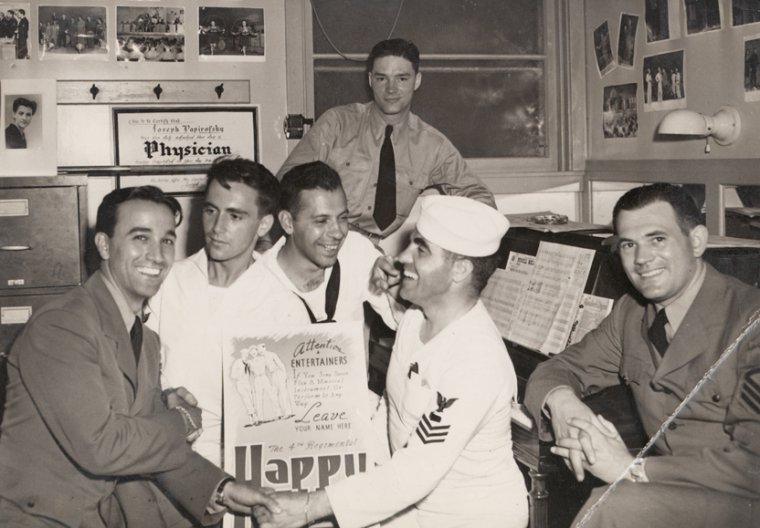
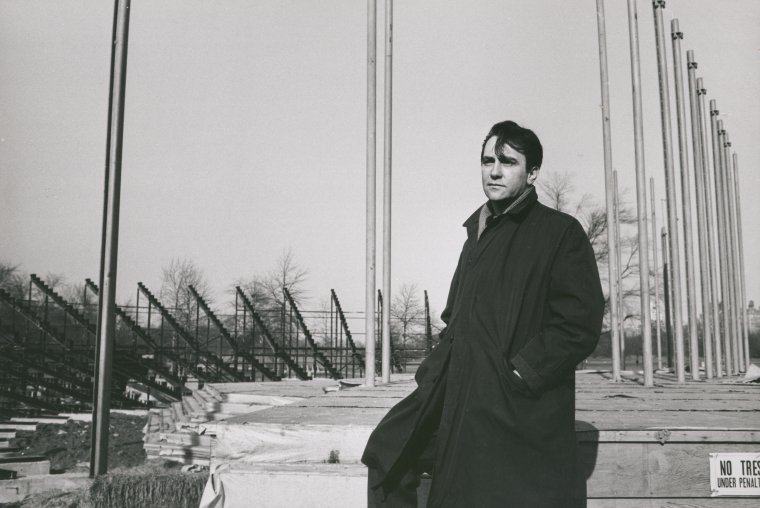
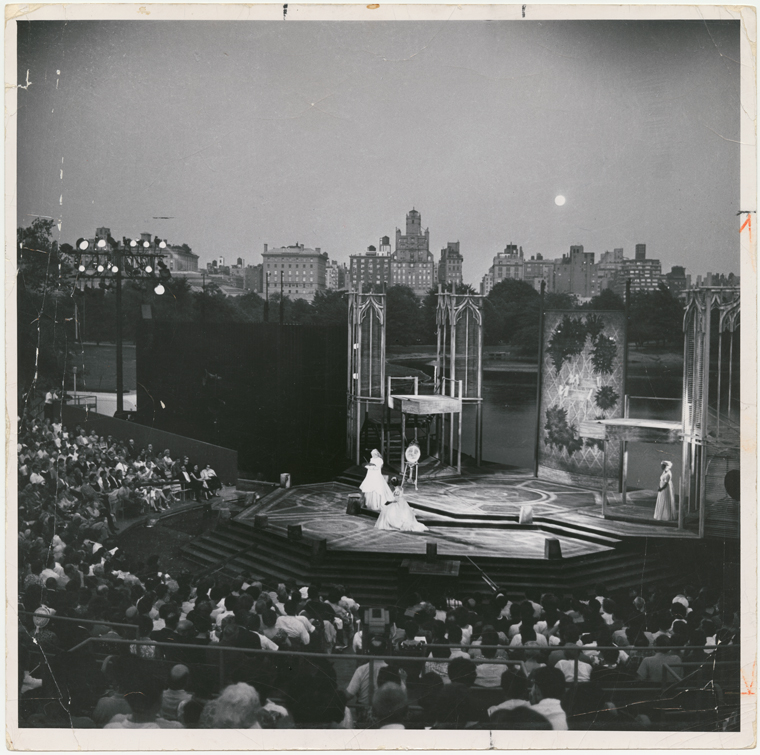
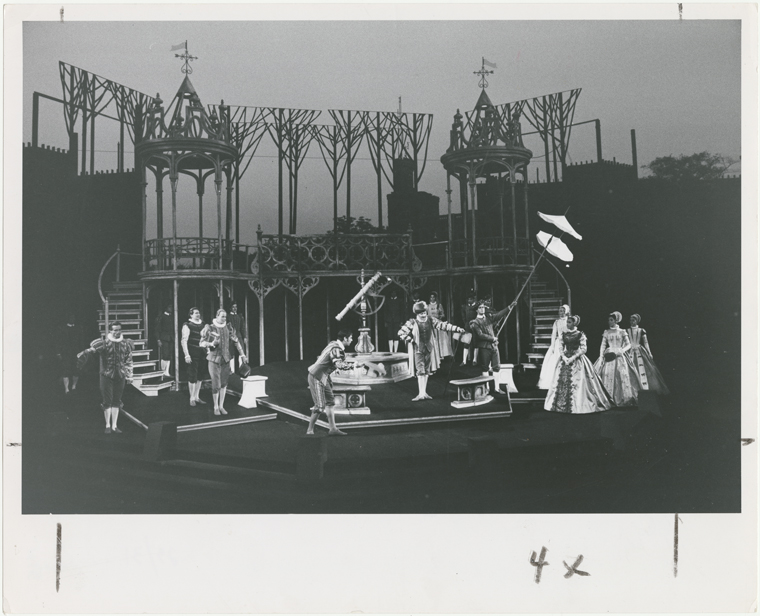
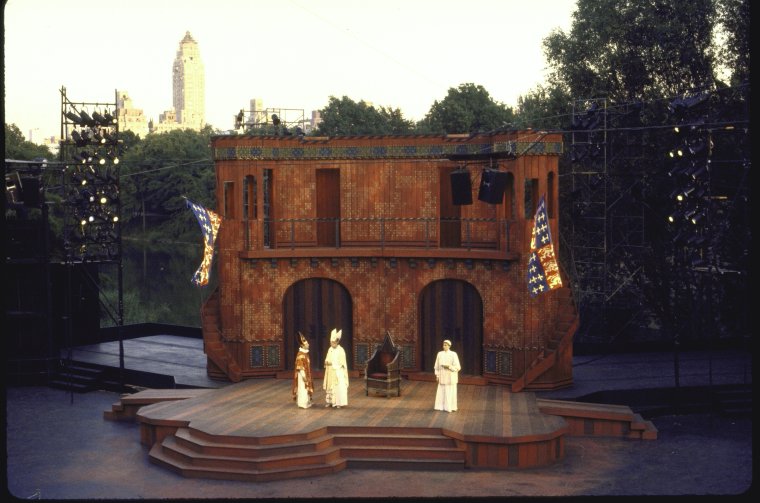
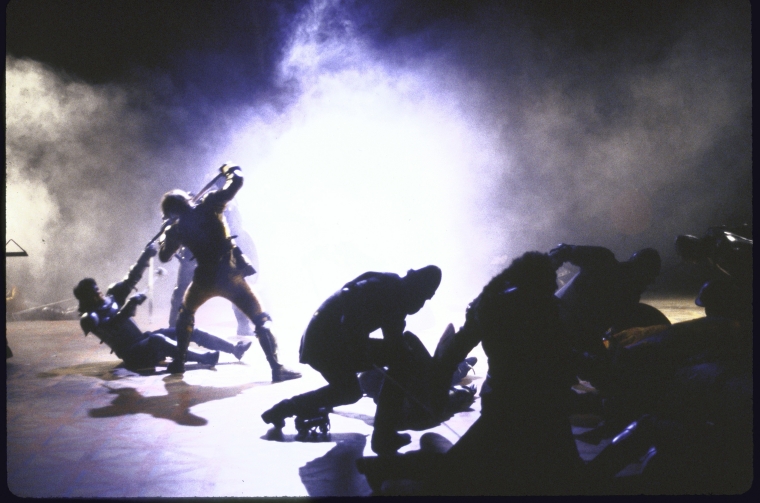
PODCAST The fascinating story of the Public Theater and Joseph Papp’s efforts to bring Shakespeare to the people. (Episode #88)
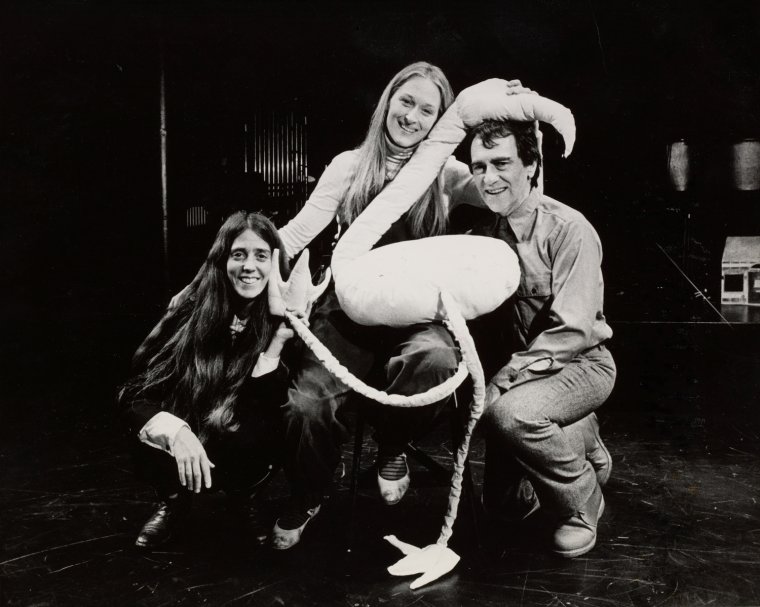
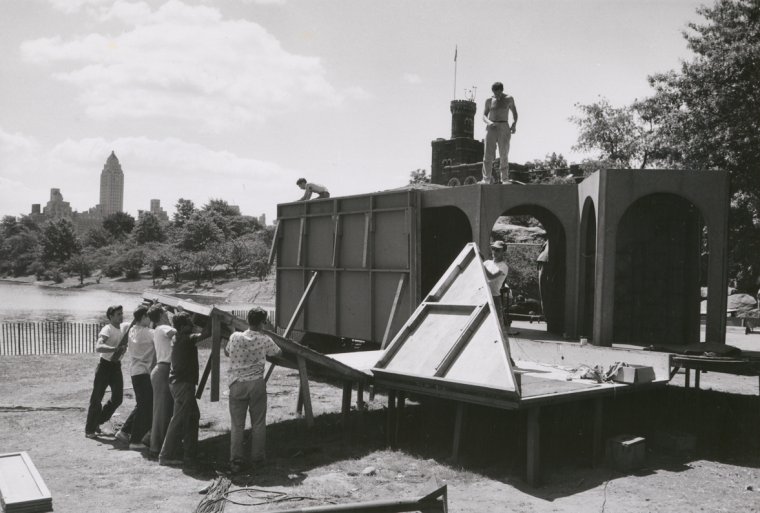
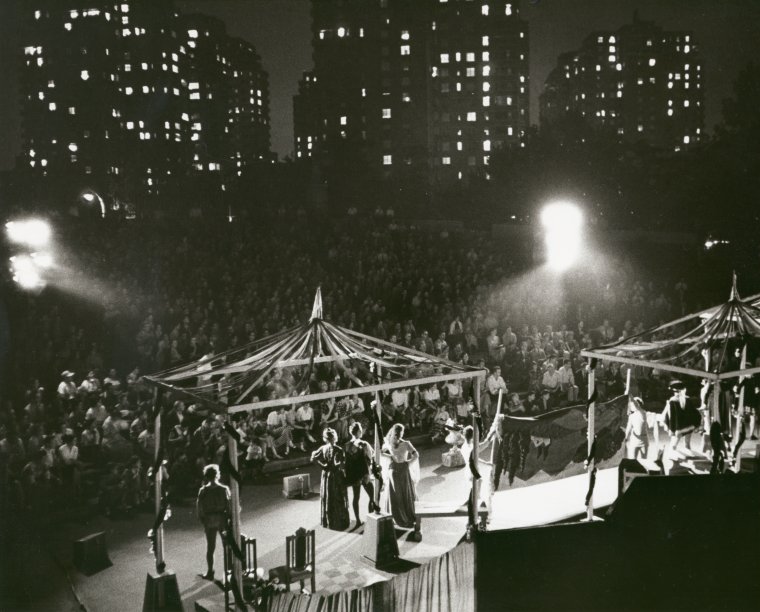
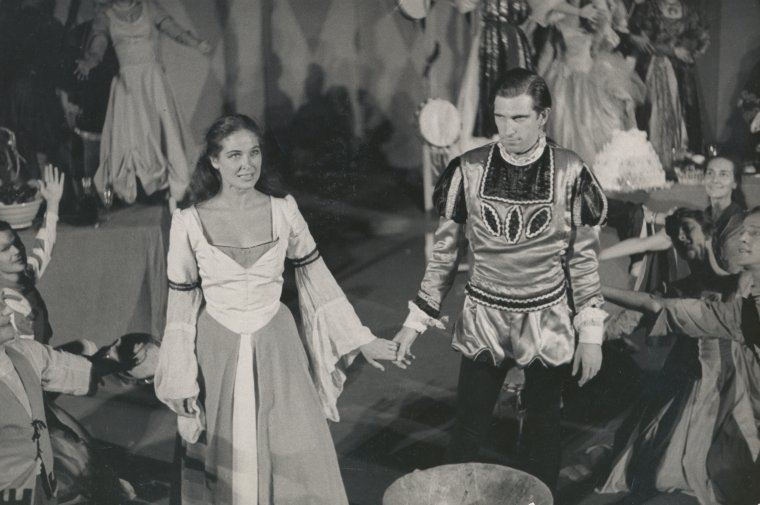
What started in a tiny East Village basement grew to become one of New York’s most enduring summer traditions, Shakespeare in the Park, featuring world class actors performing the greatest dramas of the age. But another drama was brewing just as things were getting started. It’s Robert Moses vs. Shakespeare! Joseph Papp vs. the city!
ALSO: Learn how the Public Theater got off the ground and helped save an Astor landmark in the process.
THIS SHOW WAS ORIGINALLY RELEASED ON JUNE 18, 2009 — MANY, MANY YEARS BEFORE LIN-MANUEL MIRANDA AND ‘HAMILTON’ HIT THE PUBLIC STAGE
The Bowery Boys: New York City History podcast is brought to you …. by you!
We are now producing a new Bowery Boys podcast every week. We’re also looking to improve and expand the show in other ways — publishing, social media, live events and other forms of media. But we can only do this with your help!
We are now a creator on Patreon, a patronage platform where you can support your favorite content creators.
Please visit our page on Patreon and watch a short video of us recording the show and talking about our expansion plans.
If you’d like to help out, there are six different pledge levels.Check them out and consider being a sponsor.
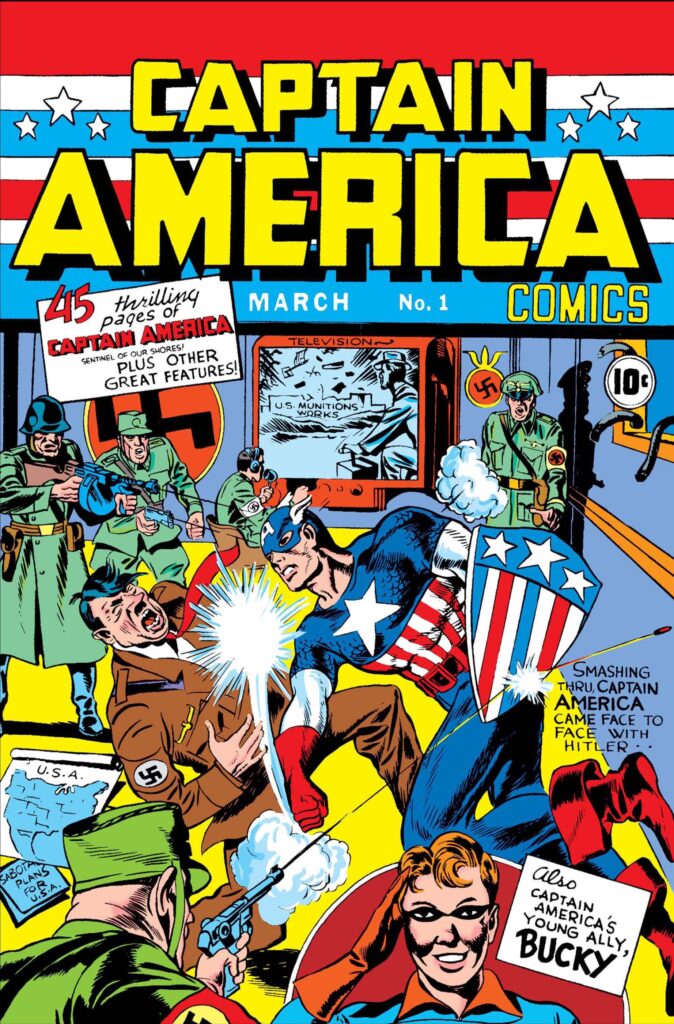
PODCASTA history of the comic book industry in New York City, how the energy and diversity of the city influenced the burgeoning medium in the 1930s and 40s and how New York’s history reflects out from the origins of its most popular characters.
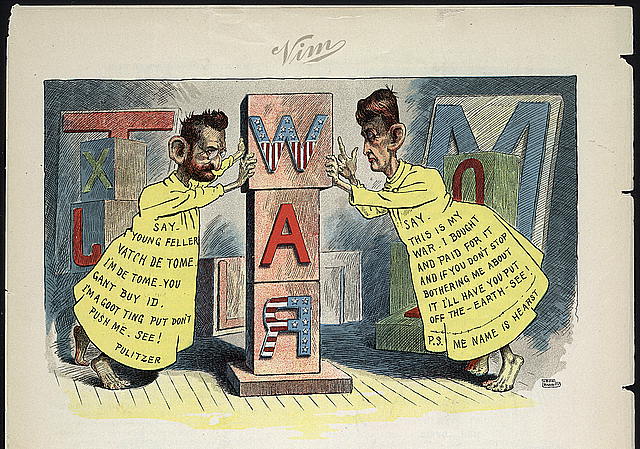
In the 1890s a newspaper rivalry between William Randolph Hearst and Joseph Pulitzer helped bring about the birth of the comic strip and, a few decades later, the comic book.
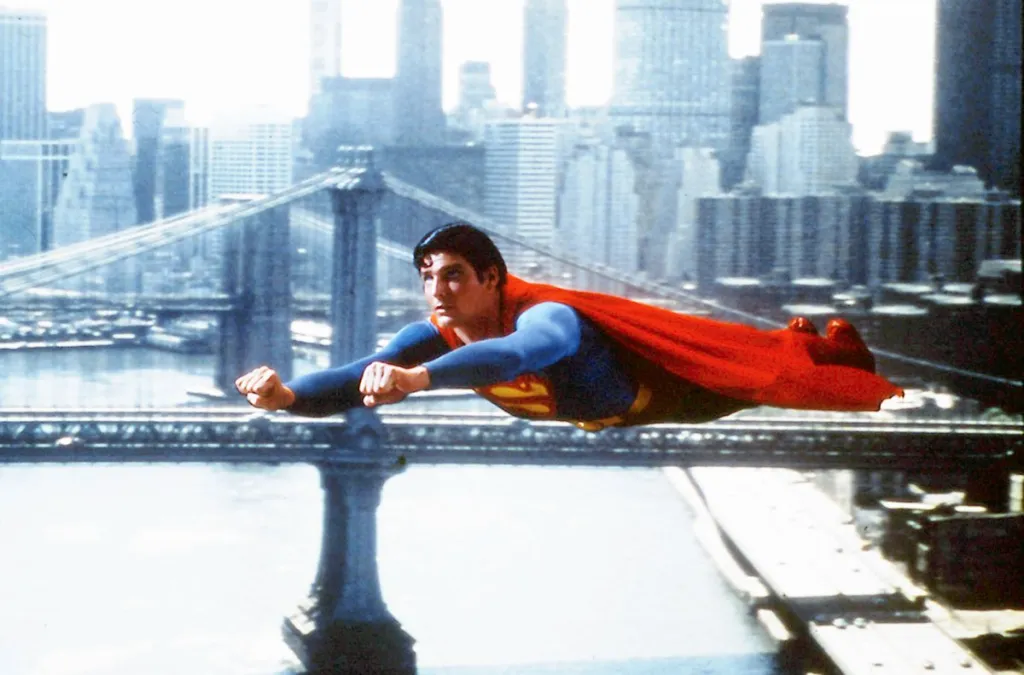
Today, comic book superheroes are bigger than ever — in blockbuster summer movies and television shows — and most of them still have an inseparable bond with New York City.
What’s Spider-Man without a tall building from which to swing? But not only are the comics often set here; the creators were often born here too.
Many of the greatest writers and artists actually came from Jewish communities in the Lower East Side, Brooklyn or the Bronx.
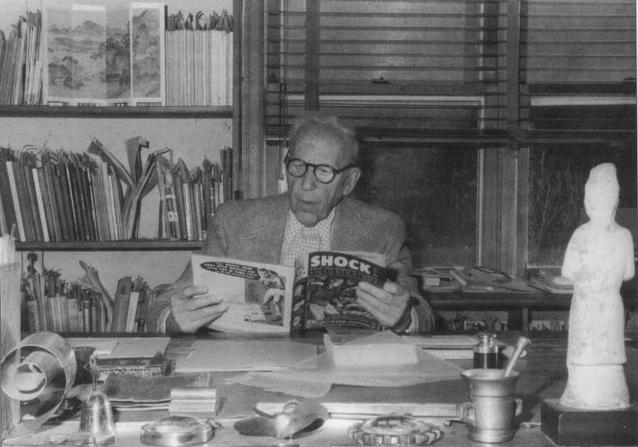
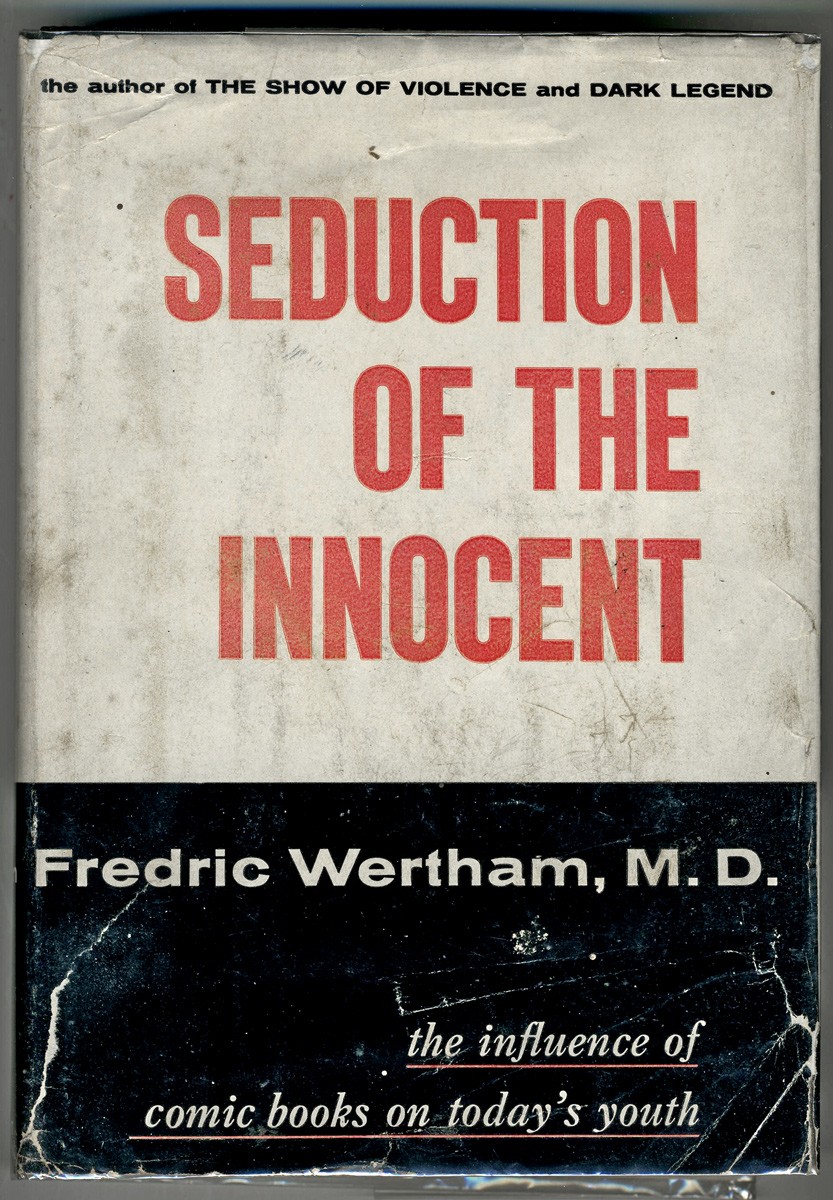
For many decades, nearly all of America’s comic books were produced here. Unfortunately that meant they were in certain danger of being eliminated entirely during a 1950s witch hunt by a crusading psychiatrist from Bellevue Hospital named Frederic Wertham.
FEATURING: The Yellow Kid, Little Orphan Annie, Batman, Doctor Strange, the Watchmen and the Teenage Mutant Ninja Turtles!
To get this week’s episode, download it for free from your preferred podcast player.
Or listen to it straight from here:
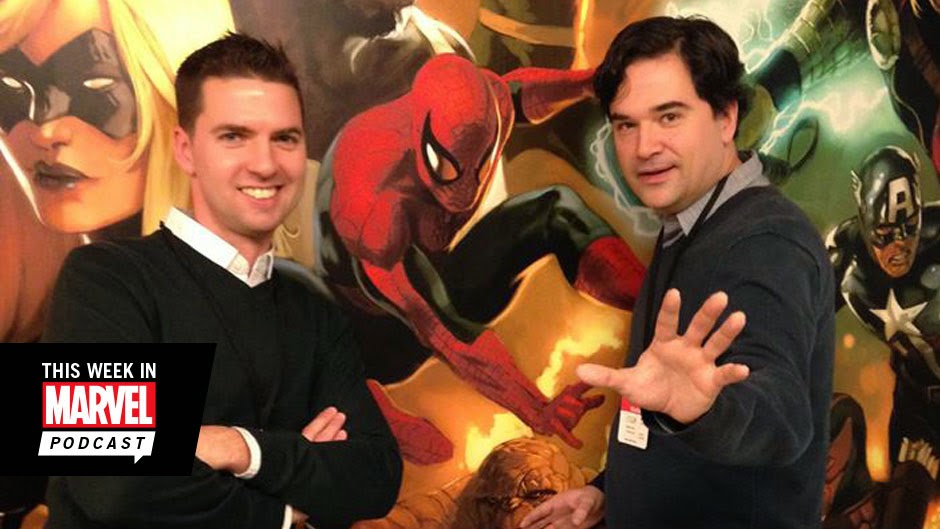
AND after you’re done listening to this history on comic books in New York City, check out Greg’s appearance on an episode of This Week In Marvel, the official Marvel Comics podcast hosted by Ryan “Agent M” Penagos, James Monroe Iglehart, and Lorraine Cink.
In this episode, Greg actually speaks about the Bowery Boys episode about comics and shares his own experiences with reading comic books as a kid.
Find this show here or on your favorite podcast player.
Tom and Greg from their 2014 visit to the Marvel Comics offices in Midtown.
The Bowery Boys: New York City History podcast is brought to you …. by you!
We are now producing a new Bowery Boys podcast every two weeks. We’re also looking to improve the show in other ways and expand in other ways as well — through publishing, social media, live events and other forms of media. But we can only do this with your help!
We are now a member of Patreon, a patronage platform where you can support your favorite content creators for as little as a $1 a month.
Please visitour page on Patreon and watch a short video of us recording the show and talking about our expansion plans. If you’d like to help out, there are five different pledge levels (and with clever names too — Mannahatta, New Amsterdam, Five Points, Gilded Age, Jazz Age and Empire State). Check them out and consider being a sponsor.
We greatly appreciate our listeners and readers and thank you for joining us on this journey so far. And the best is yet to come!
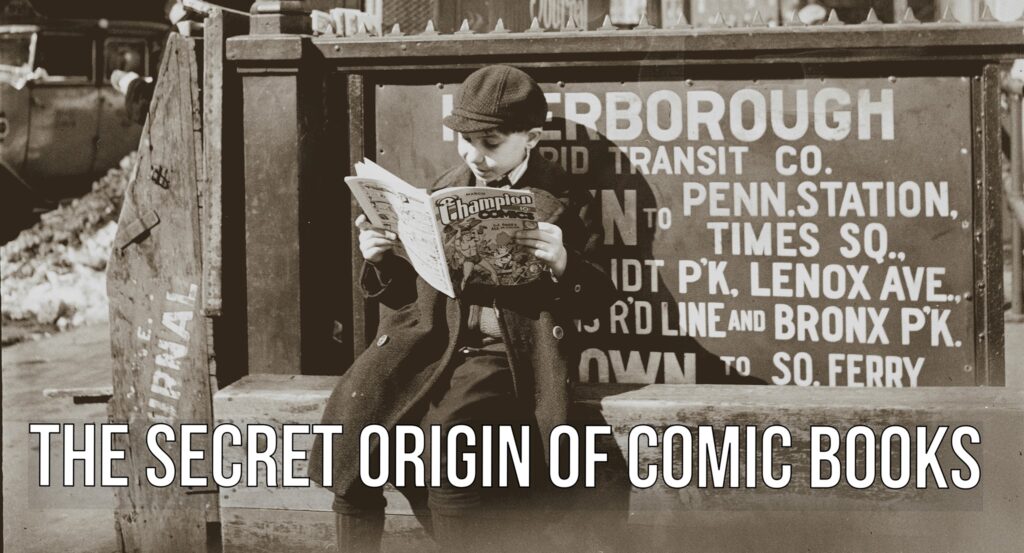
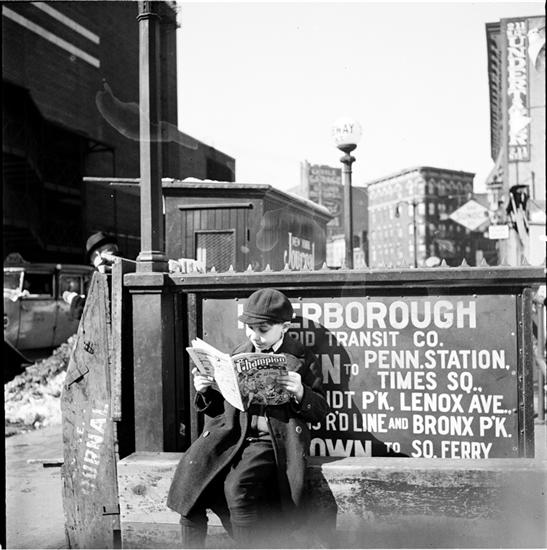
A young New York boy enjoys his comic book on the Bowery. Photo taken in 1940 by Andrew Herman.
Courtesy Museum of the City of New York
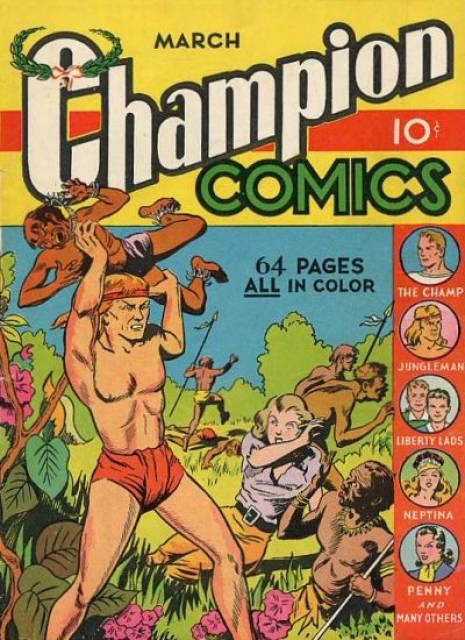
And here’s the comic book he’s reading from March 1940, illustrated by George Papp.
Courtesy Comic Vine
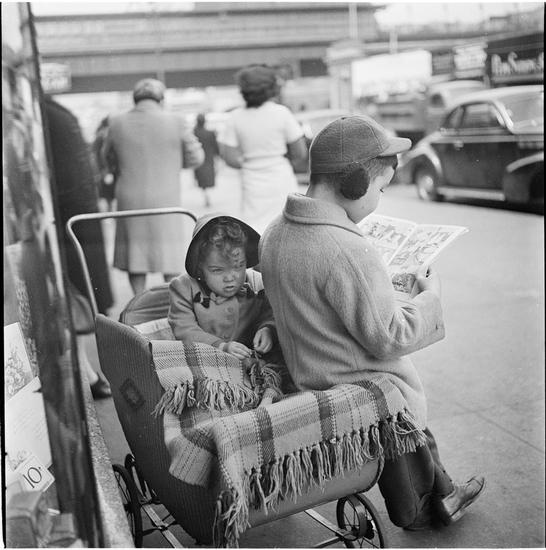
In this 1947 photograph taken by Stanley Kubrick, a boy watches his baby sister and enjoys a Superman comic book while his mother shops inside.
Courtesy the Museum of the City of New York
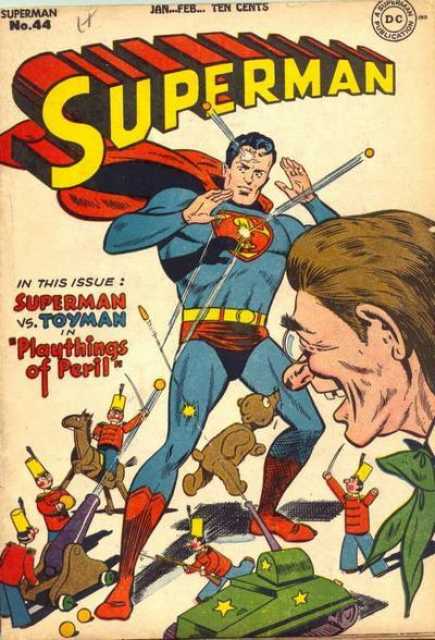
An issue of DC Comics’ Superman from March 1947, with a cover by George Roussos and Jack Burnley
Courtesy DC Comics / Comic Vine
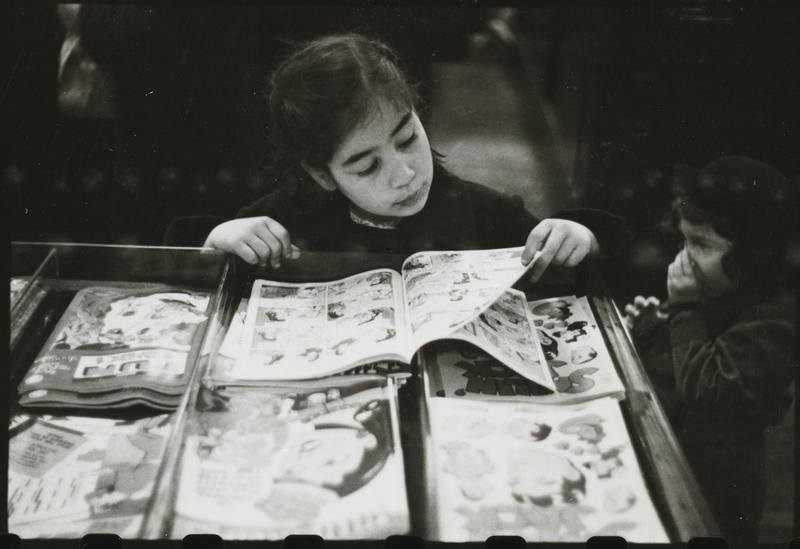
A girl takes a peek at some of the comic book offerings at Woolworth’s. Photograph by Stanley Kubrick taken in 1947.
Courtesy Museum of the City of New York
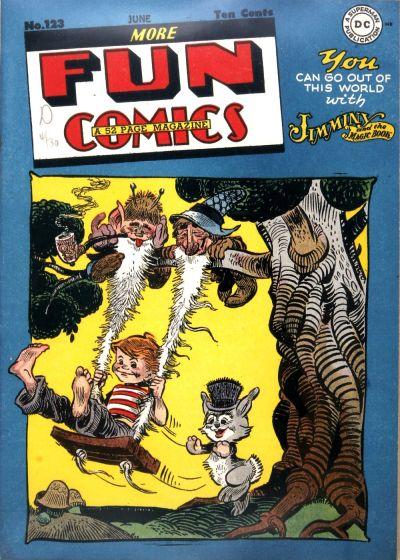
An issue of More Fun Comics from June 1947, produced by DC Comics:
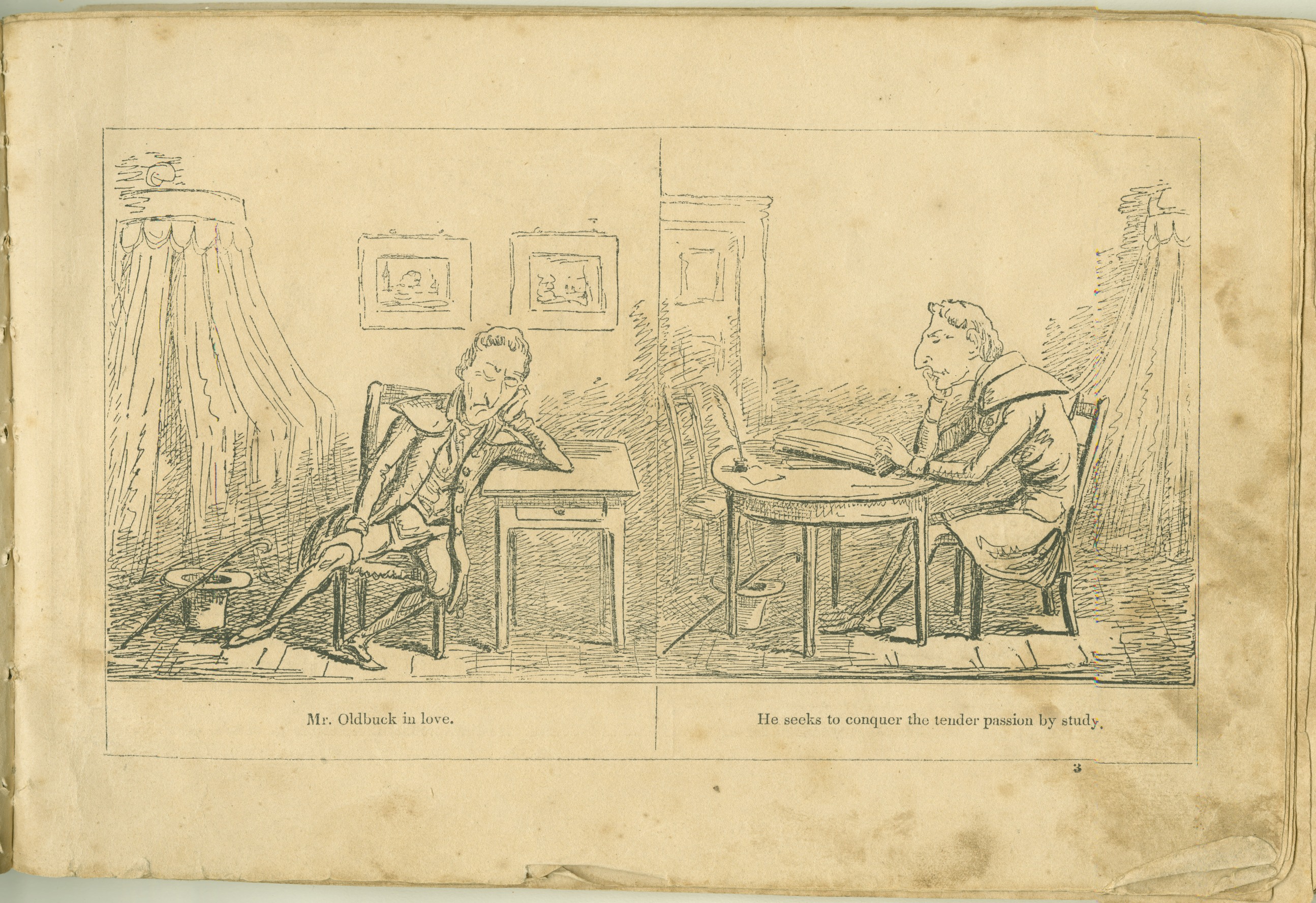
The Adventures of Obadiah Oldbuck, published in 1842, is considered by many to be the wellspring from which the comic medium derives. You can read the entire issue over at the Darmouth College Library website.
Courtesy Dartmouth College Library
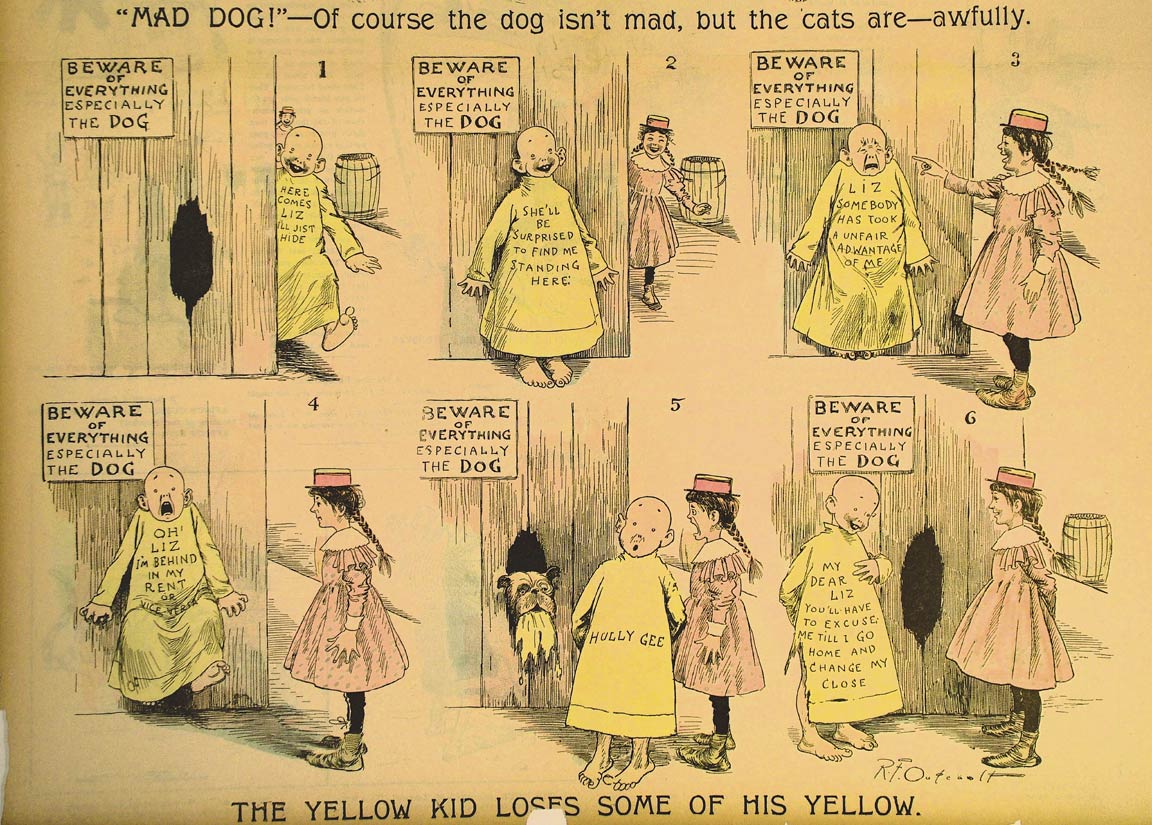
A Yellow Kid adventure which would have sprung out from the newspaper due to its vivid colors.
Image courtesy Comix Takoma; art by Richard Outcault
Both Hearst and Pulitzer ran versions of the Yellow Kid comic strip during the years that they were drumming up propaganda which lead to the Spanish-American War.
The unscrupulous nature of their efforts earned them the phrase ‘yellow journalism’, inspired by their war of the popular comic strip by Richard Outcault.
Courtesy the Library of Congress
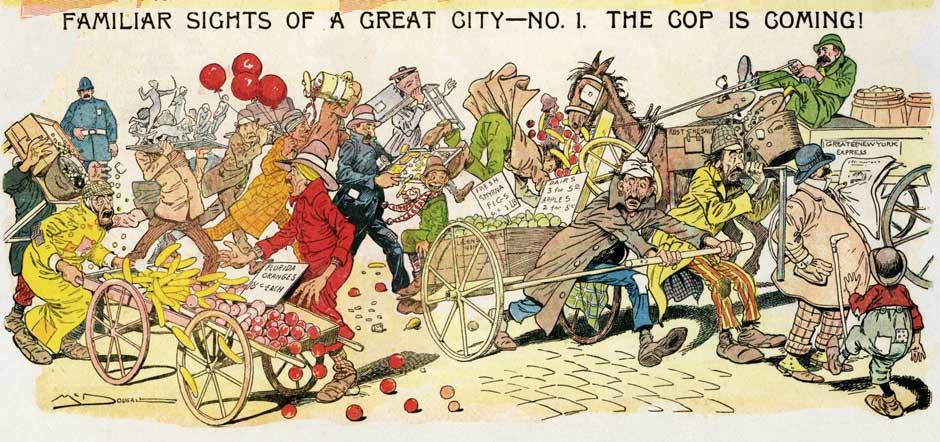
A section of the colorful comics section of the New York Journal, 1898.
“Familiar Sights of a Great City—No. 1 The Cop is Coming!†by Walt McDougall, New York Journal, Sunday, January 9, 1898 via New York Review of Books
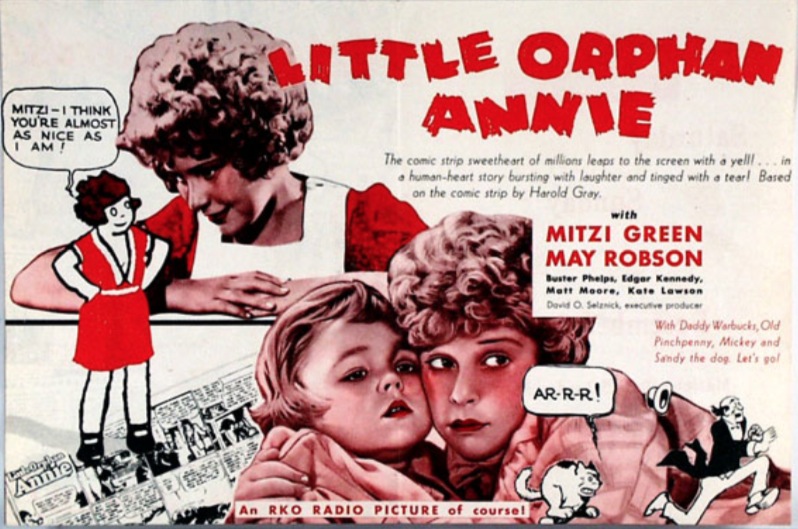
Little Orphan Annie became the biggest crossover star of the early comic strip era. Long before there was a musical, Annie starred in this 1932 melodrama, one of the earliest comic-to-movie crossovers.
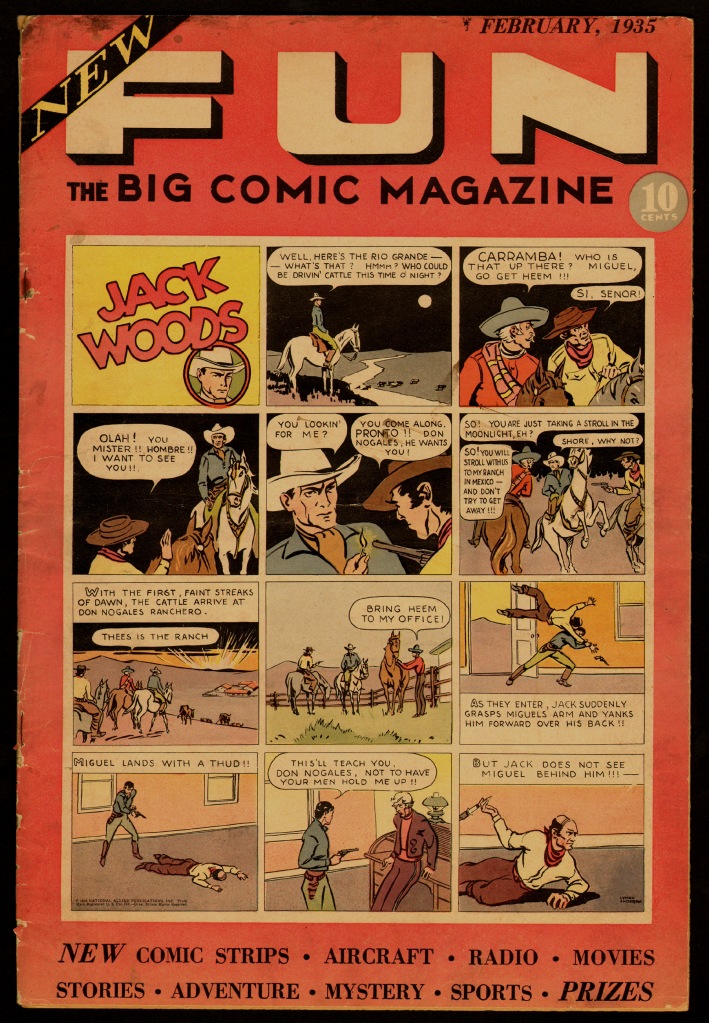
New Fun Comics #1, the very first comic book to contain all new material, and not merely reprints of newspaper comic strips.
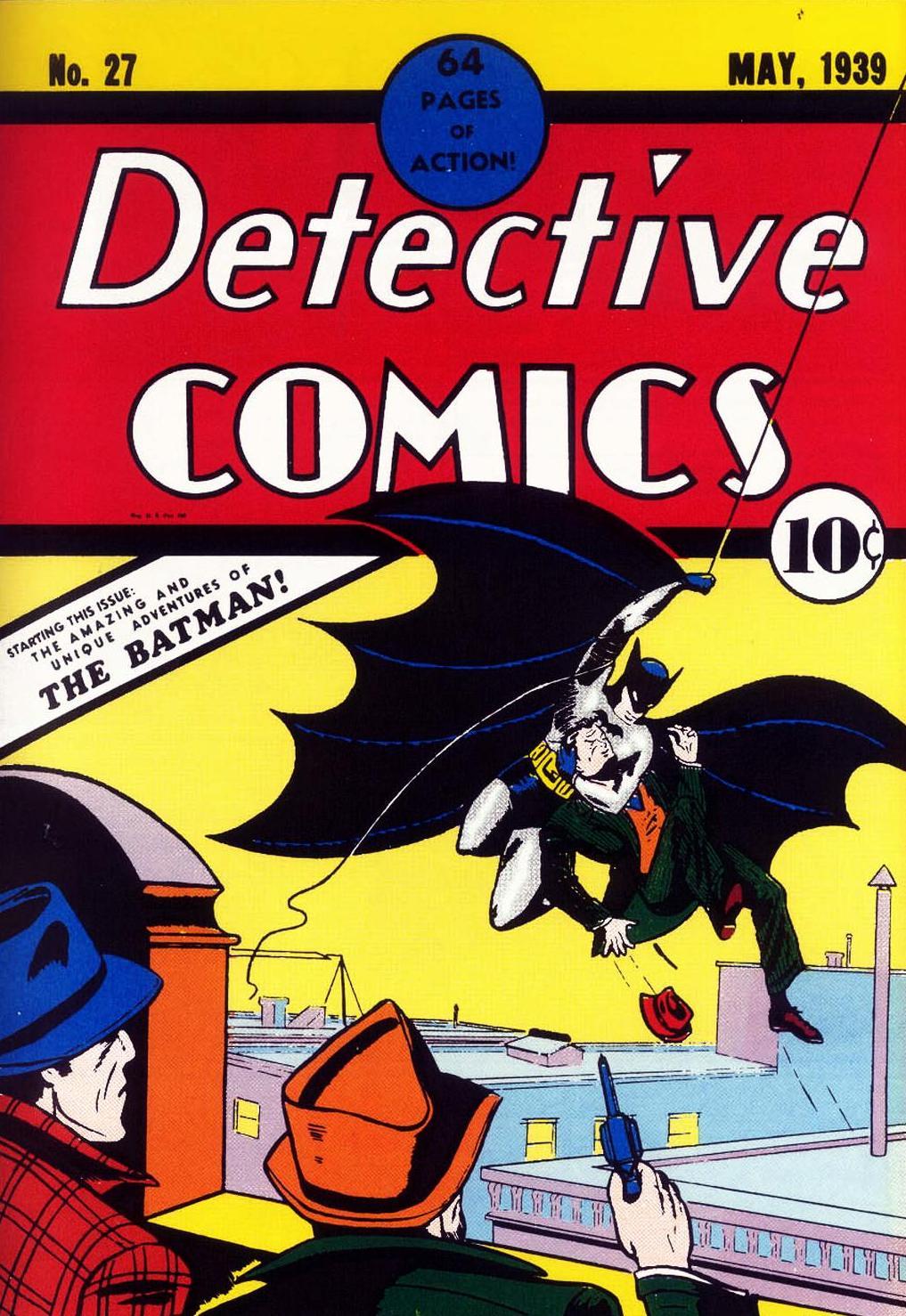
The Batman debuted in Detective Comics in 1939, created by Bob Kane and Bill Finger. The city features in these adventures was Gotham City, startlingly similar to the city outside the creators’ windows.
Courtesy DC Comics
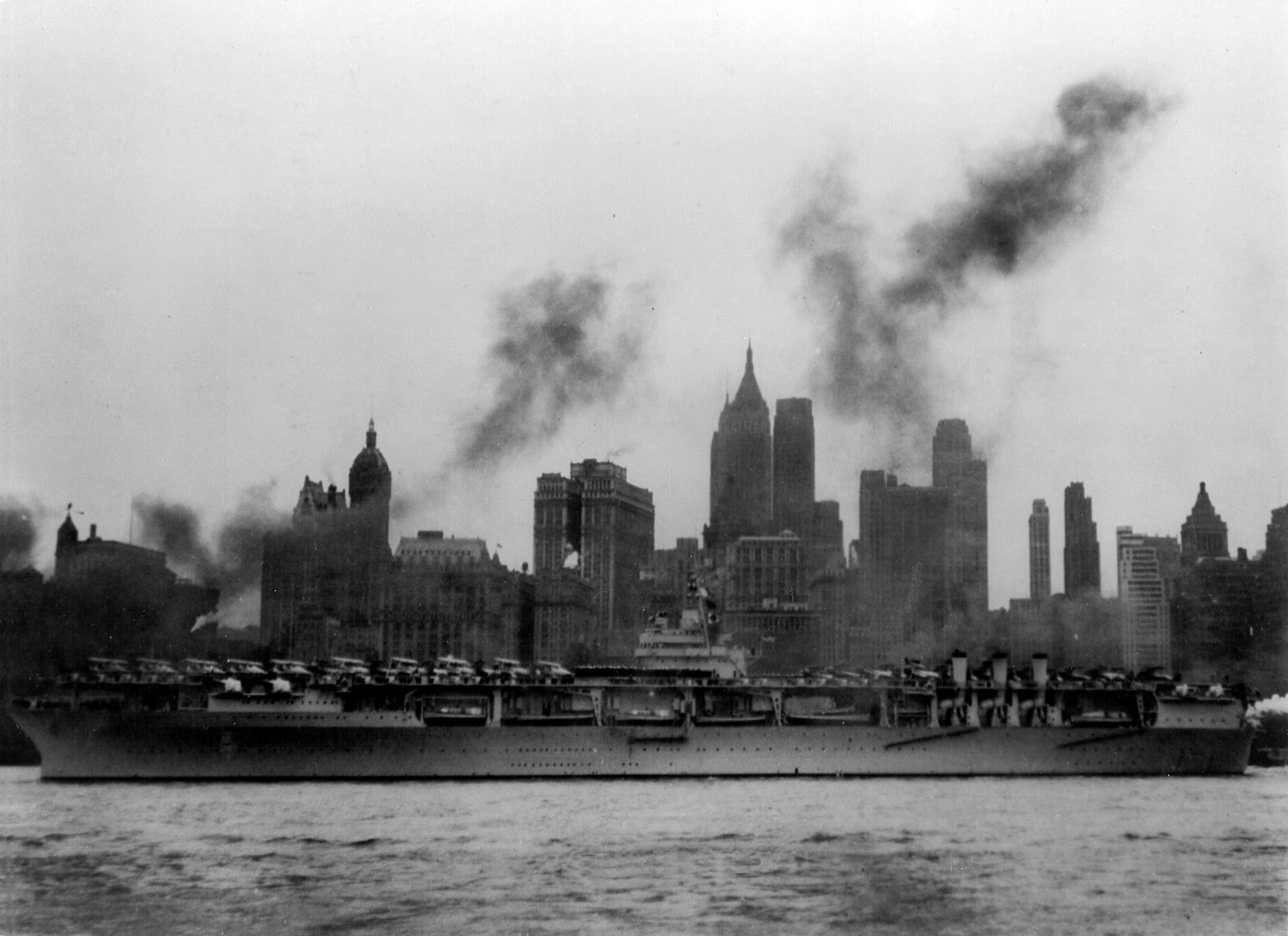
Gotham City, aka New York City, in 1939
Courtesy U.S. Navy National Museum of Naval Aviation
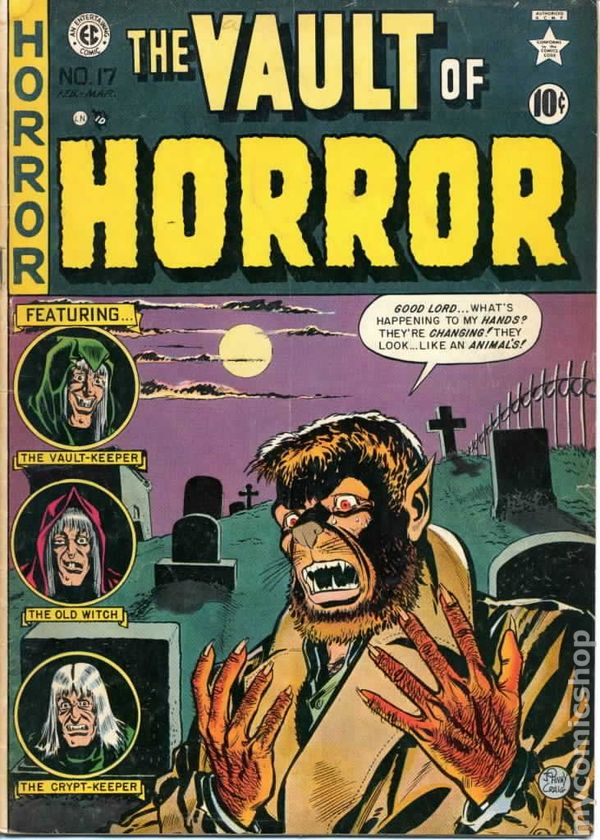
Vault of Horror, one of an assortment of shocking comic books produced by EC Comics in the early 1950s. The cover art is by Johnny Craig.
Courtesy EC Comics
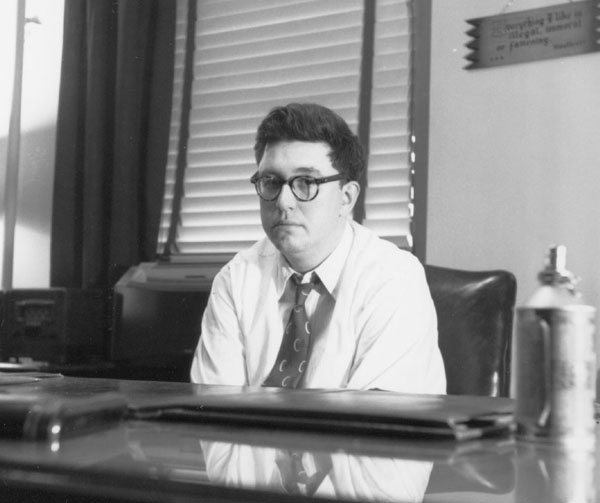
Bill Gaines, publisher of EC Comics, at his offices at 225 Lafayette Street.
Courtesy Tebeosfera
Dr. Fredrick Wertham, the writer of Seduction of the Innocent, who lead a charge against the comic book industry.
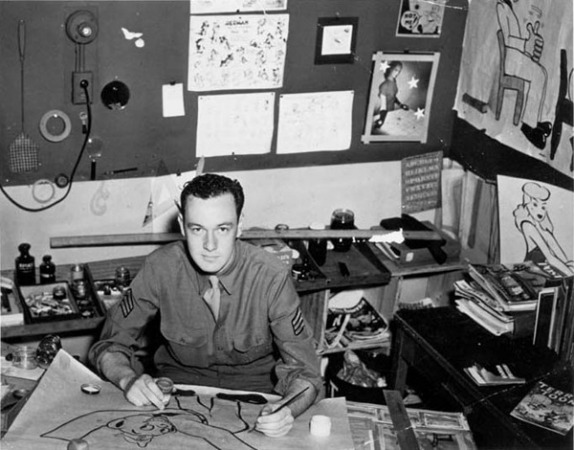
A young Stan Lee during the war as a member of the US Army’s Signal Corps. He even managed to do a bit of illustration for the cause!
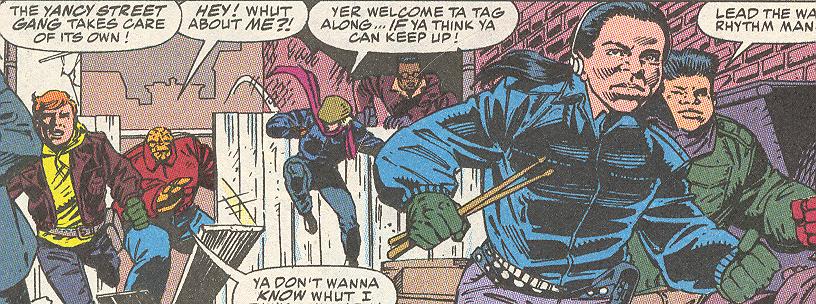
The Thing from the Fantastic Four with the Yancy Street Gang, a variation on Delancey Street in the Lower East Side.
Courtesy Marvel Comics via Comic Viine
Doctor Strange’s Sanctum Sanctorum is located on Bleecker Street in Greenwich Village
Courtesy Marvel Comics
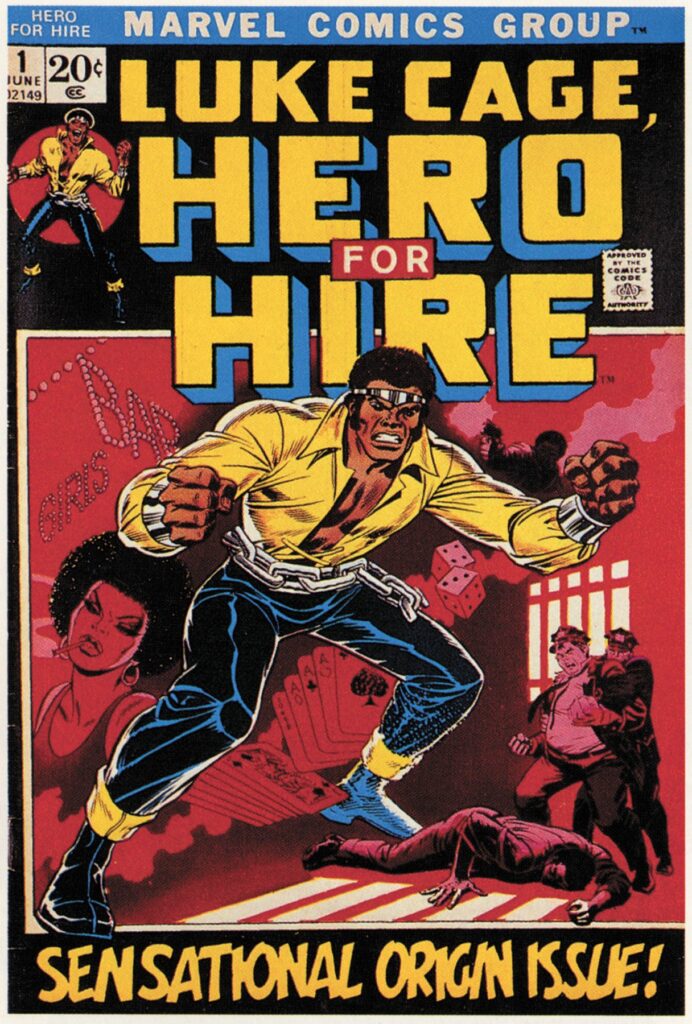
The adventures of Luke Cage, who debuted in his own Marvel Comics series in 1972, could be found mostly in Harlem. But he wasn’t the first African-American superhero from the neighborhood; in 1947 a character named Ace Harlem first appeared in a Philadelphia-published comic book called All-Negro Comics.
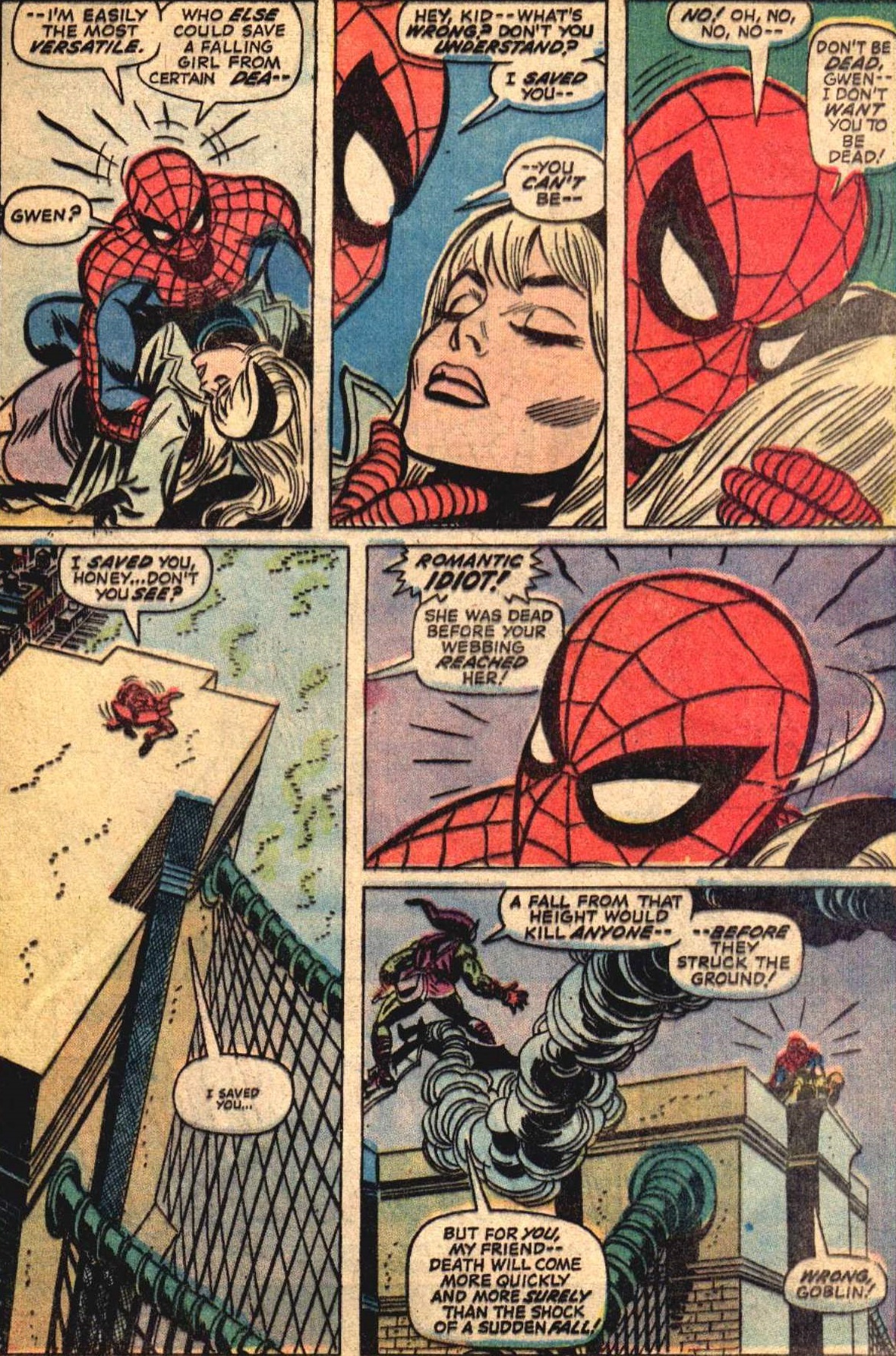
What would Spider-Man be without New York City? The image of the Brooklyn Bridge (called the George Washington Bridge in the story) is featured in a classic tale involving the death of his girlfriend Gwen Stacey, written by Gerry Conway and drawn by Gil Kane, John Romita and Tony Mortellaro.
Courtesy Marvel Comics
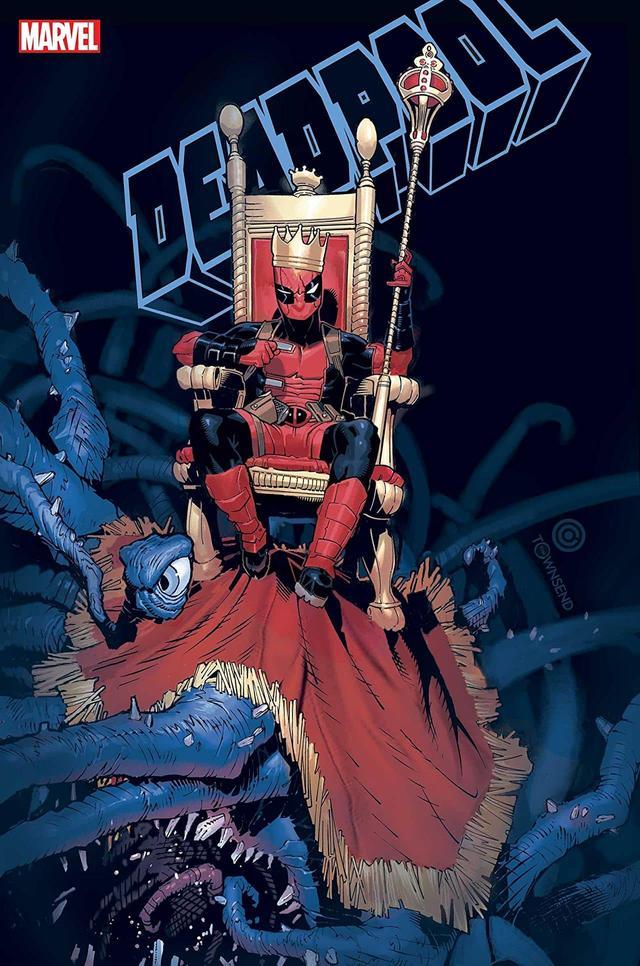
And — oddly enough — Staten Island in the world of Marvel Comics has become Monster Island, ruled by Deadpool. Yes, Deadpool. Haven’t they suffered enough? (Check here for more information.)
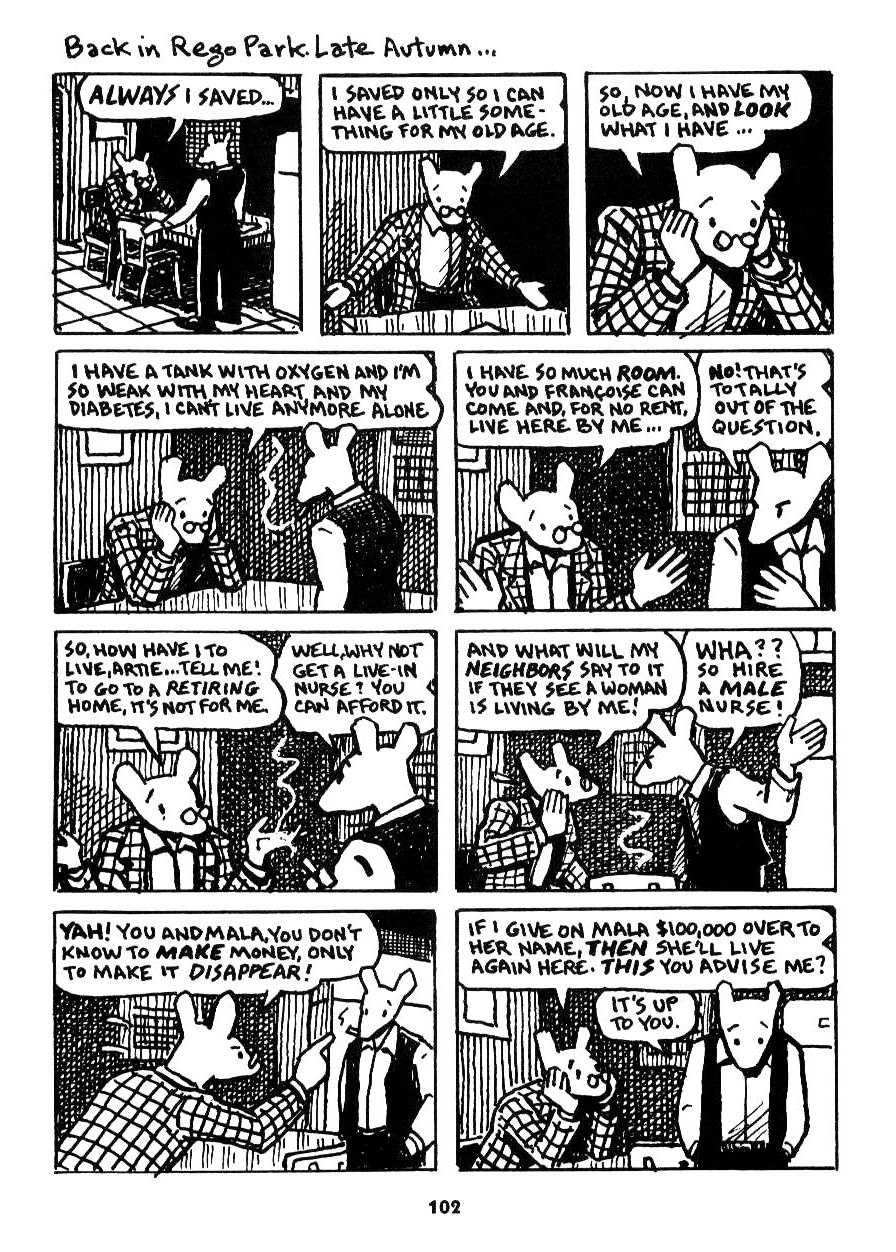
A page from Maus by Art Spiegelman, the graphic novel that brought the medium to a new level of respectability in literary circles.
Courtesy Art Spiegelman
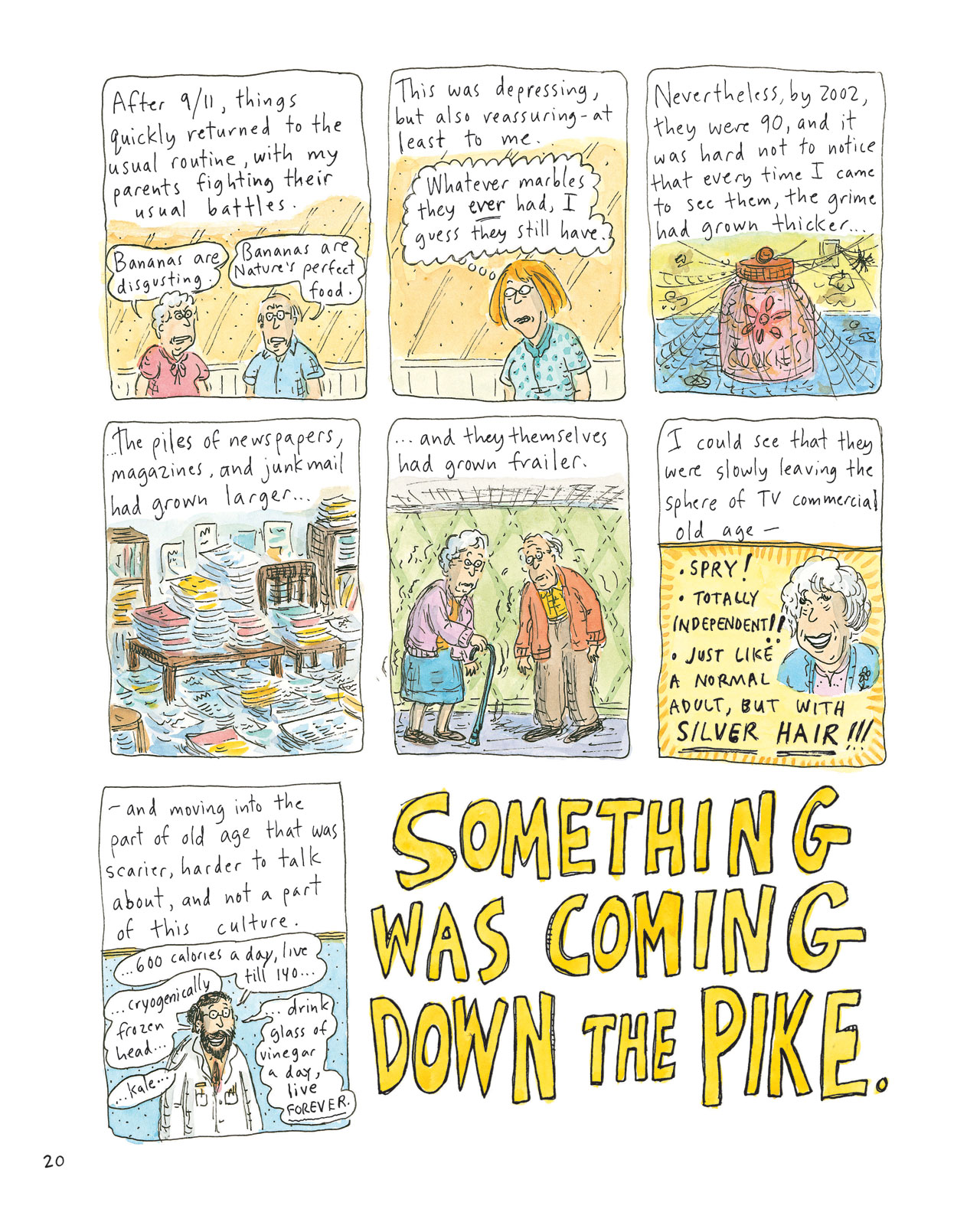
The comic book/graphic novel continues to evolve and reach new heights of success and respectability. Roz Chast’s Can’t We Talk About Something More Pleasant, published last year, won the National Book Critics Circle Award for best autobiography.
Courtesy Roz Chast/Bloomsbury
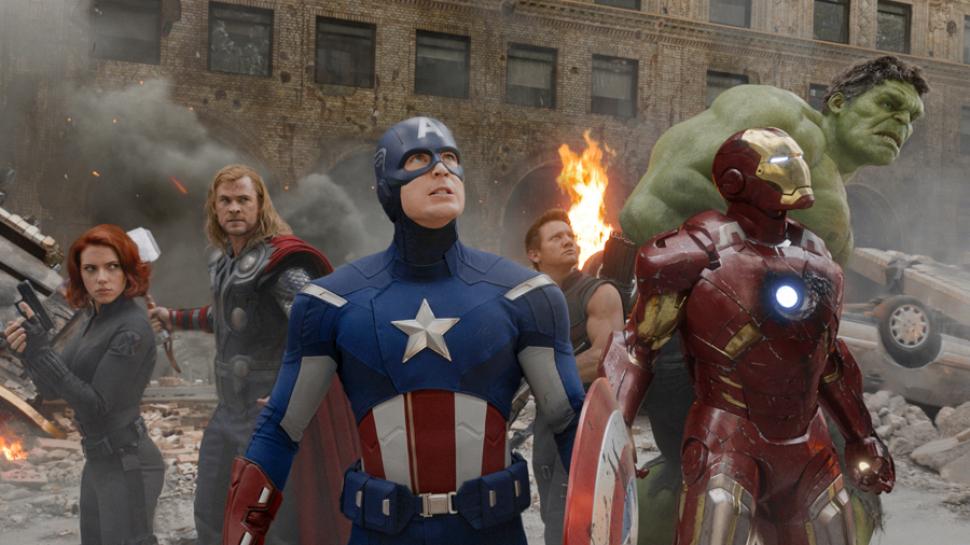
The Avengers defended New York during an alien attack in their blockbuster film in 2012
Courtesy Film Frame/Marvel
All images on this website are owned by the original comic book companies which produced them. Â Please see individual companies for more information.
RECOMMENDED READING:
If you’re into digging more into this subject, here are a few sources that I used for this podcast:
Jews and American Comics: An Illustrated History of An American Art Form, with written contributions by Paul Buhle
The Ten-Cent Plague: The Great Comic-Book Scare and How It Changed America by David Hadju
Men of Tomorrow: Geeks, Gangster and the Birth of the Comic Book by Gerard Jones
Comic Book Century: Â The History of American Comic Books by Stephen Krensky
Tales to Astonish: Jack Kirby, Stan Lee, and the American Comic Book Revolution by Ronin Ro
The Marvel Comics Guide to New York City by Peter Sanderson
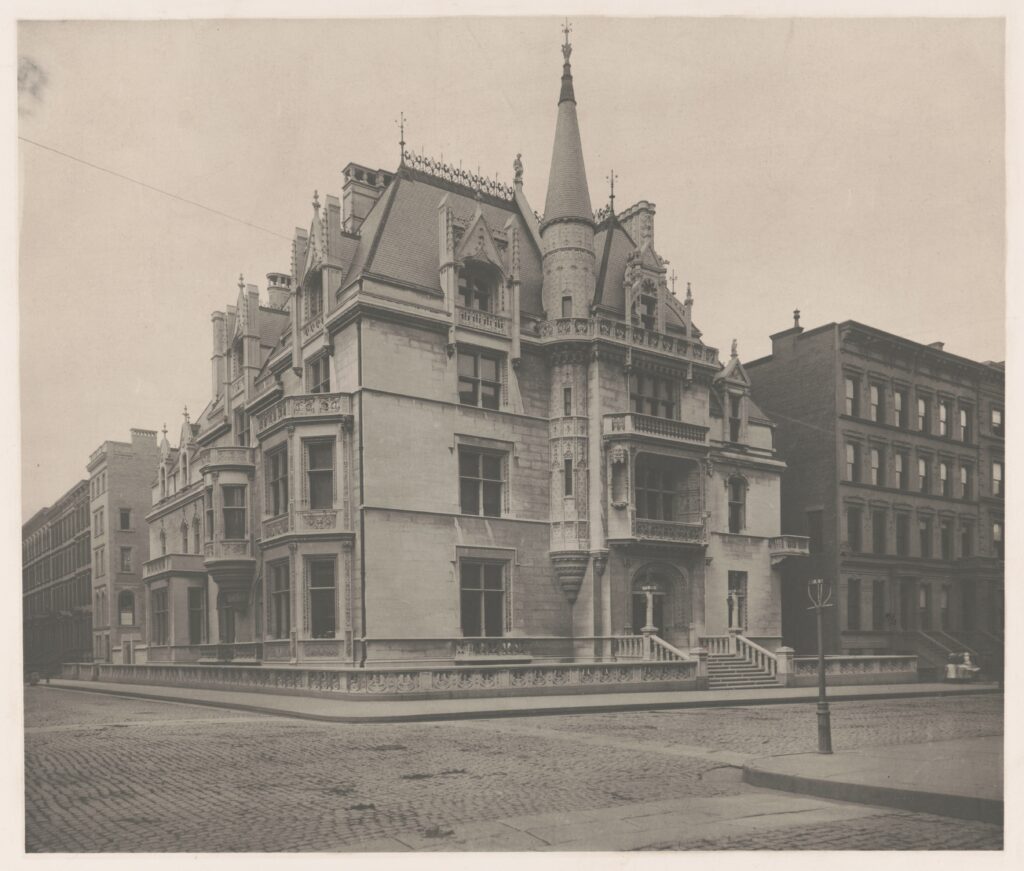
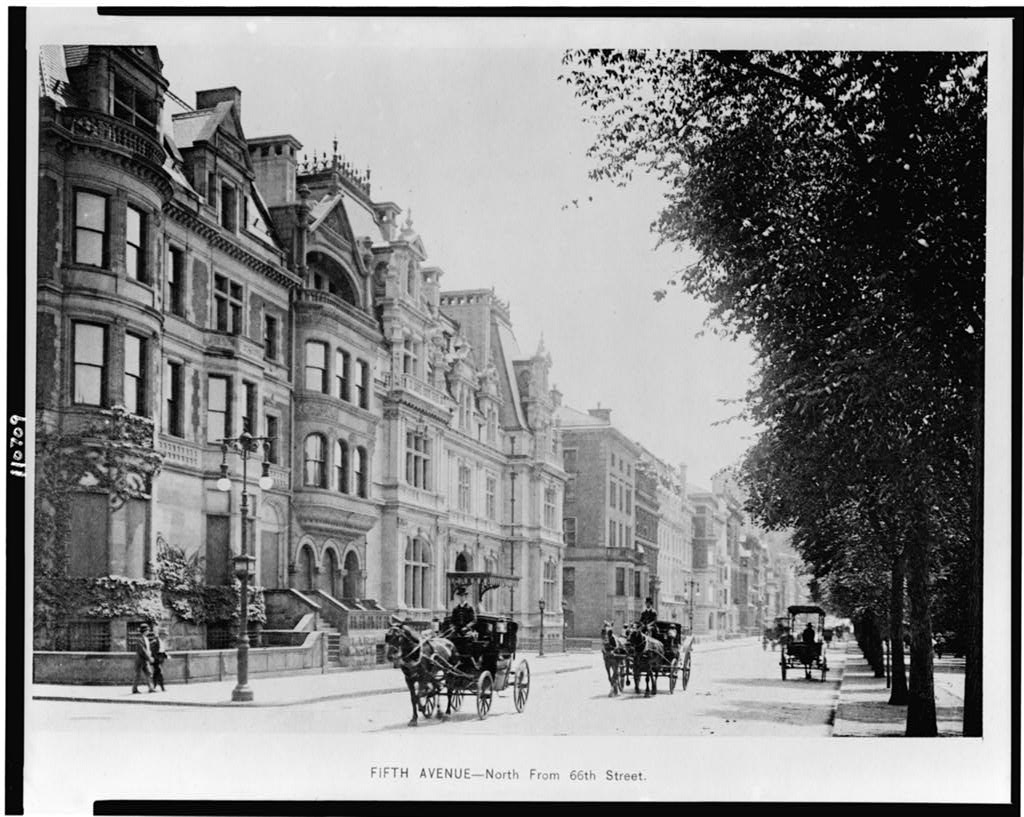
So we don’t know if you’ve heard, but New York City is an expensive place to live these days. So we thought it might be time to revisit the tale of the city’s most famous district of luxury — Fifth Avenue.
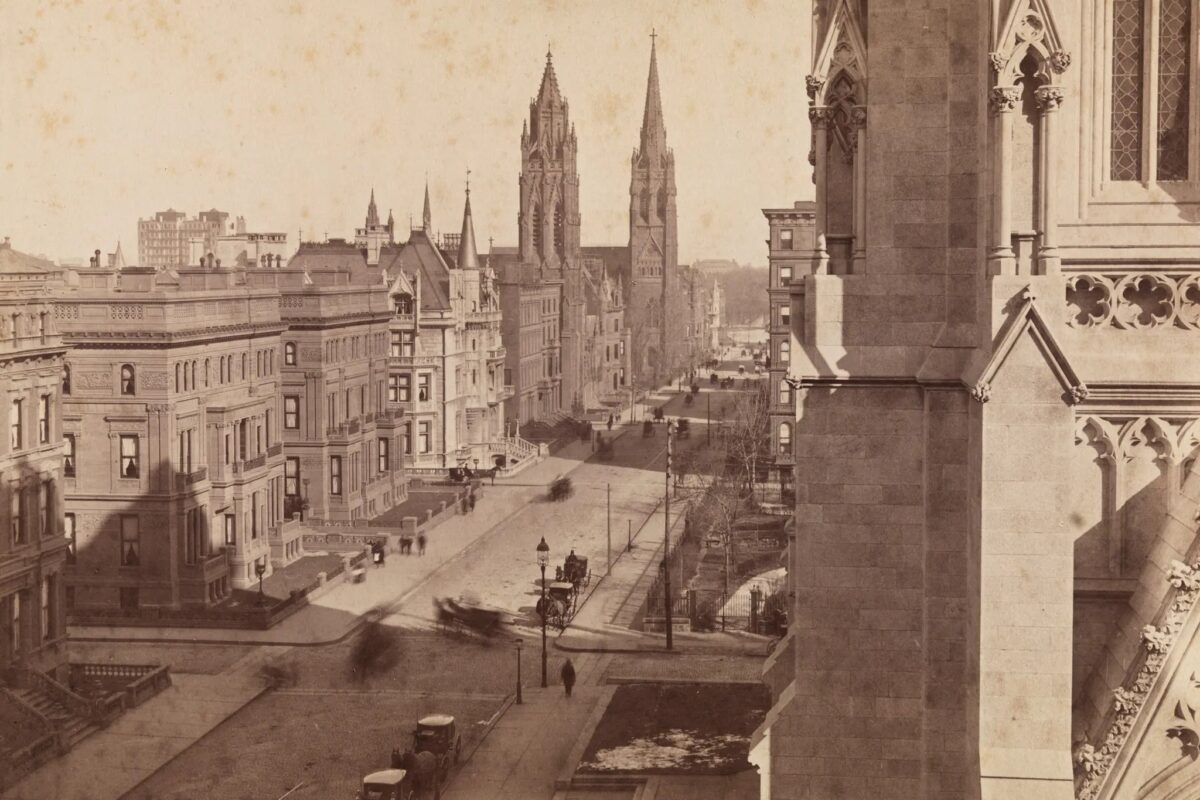
For about a hundred years, this avenue was mostly residential— but residences of the most extravagant kind.
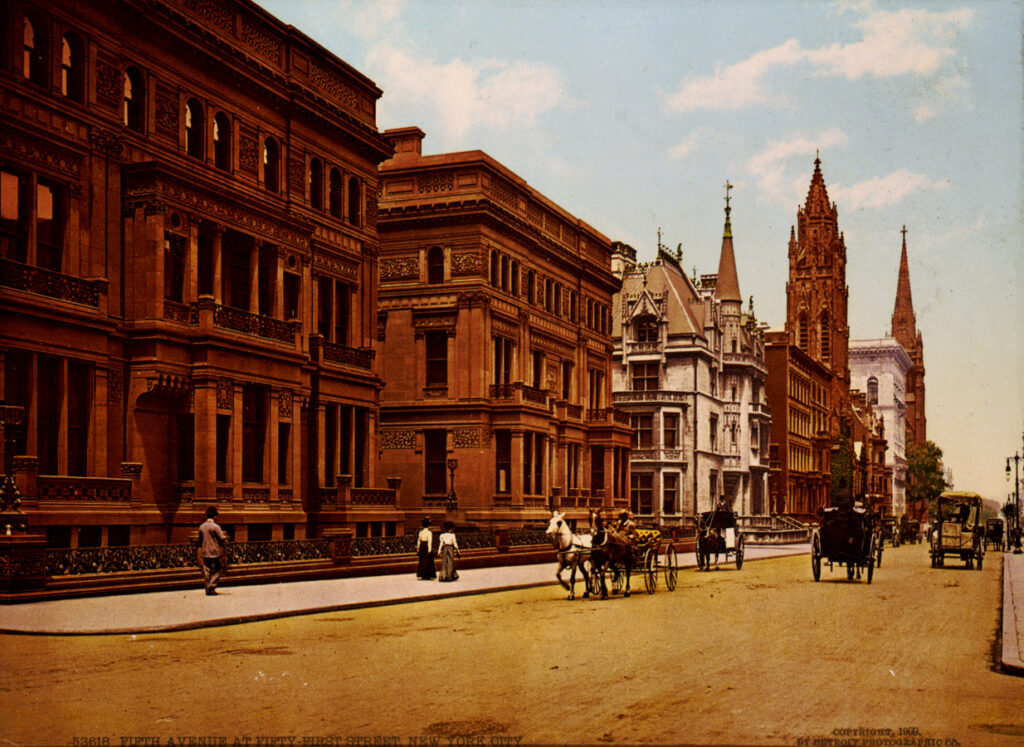
Fifth Avenue at Fifty-first Street in the year 1900. Image courtesy Library of Congress
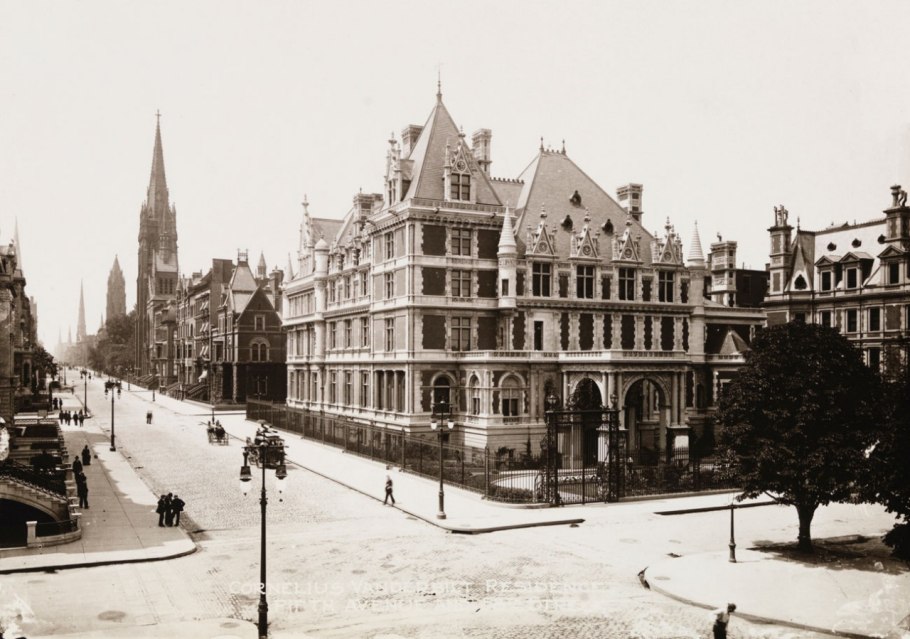
At the heart of New York’s Gilded Age — the late 19th-century era of unprecedented American wealth and excess — were families with the names Astor, Waldorf, Schermerhorn, and Vanderbilt, alongside power players like A.T. Stewart, Jay Gouldand William “Boss” Tweed.
They would all make their homes — and in the case of the Vanderbilts, their great many homes — on Manhattan’s Fifth Avenue.
The image of Fifth Avenue as a luxury retail destination today grew from the street’s aristocratic reputation in the 1800s. The rich were inextricably drawn to the avenue as early as the 1830s when rich merchants, anxious to be near the exquisite row houses of Washington Square Park, began turning it into an artery of expensive abodes.
The Vanderbilt Mansion at 660 Fifth Avenue in 1885, Library of Congress
In this podcast, Tom and Greg present a world that’s somewhat hard to imagine — free-standing mansions in an exclusive corridor running right through the center of Manhattan.
Why was Fifth Avenue fated to become the domain of the so-called “Upper Ten”? And what changed about the city in the 20th century to ensure the eventual destruction of most of them?
The following is a re-edited, remastered version of two past Bowery Boys shows — the Rise and Fall of the Fifth Avenue Mansion. Combined, this tells the whole story of Fifth Avenue, from the initial development of streets in the 1820s to its Midtown transformation into a mecca of high-end shopping in the 1930s.
LISTEN NOW: THE GILDED AGE MANSIONS OF FIFTH AVENUE
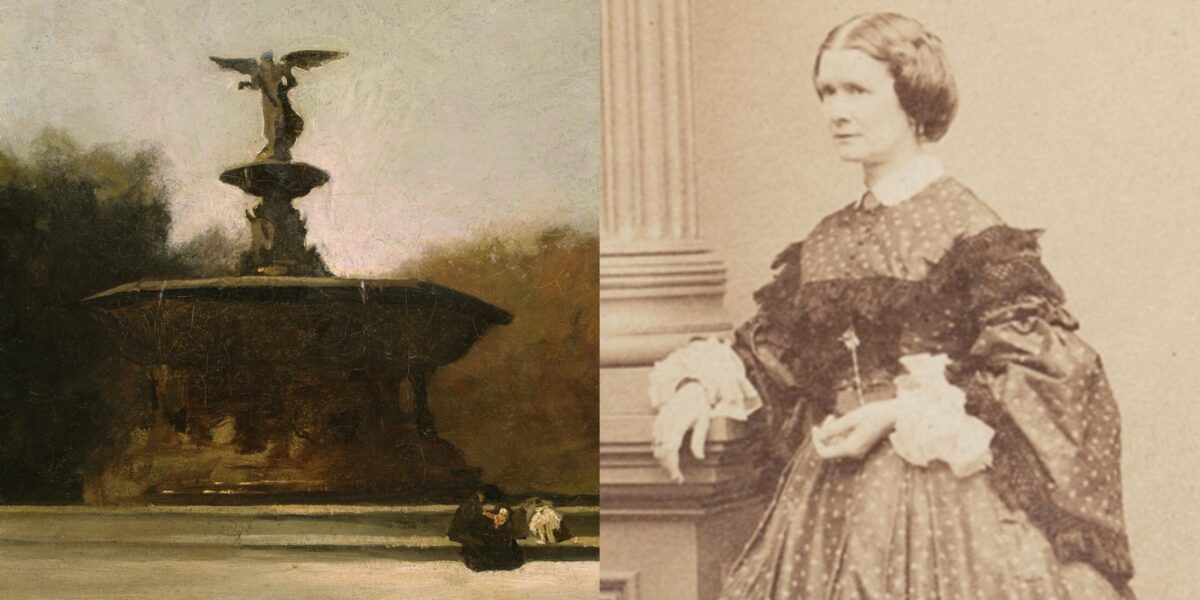
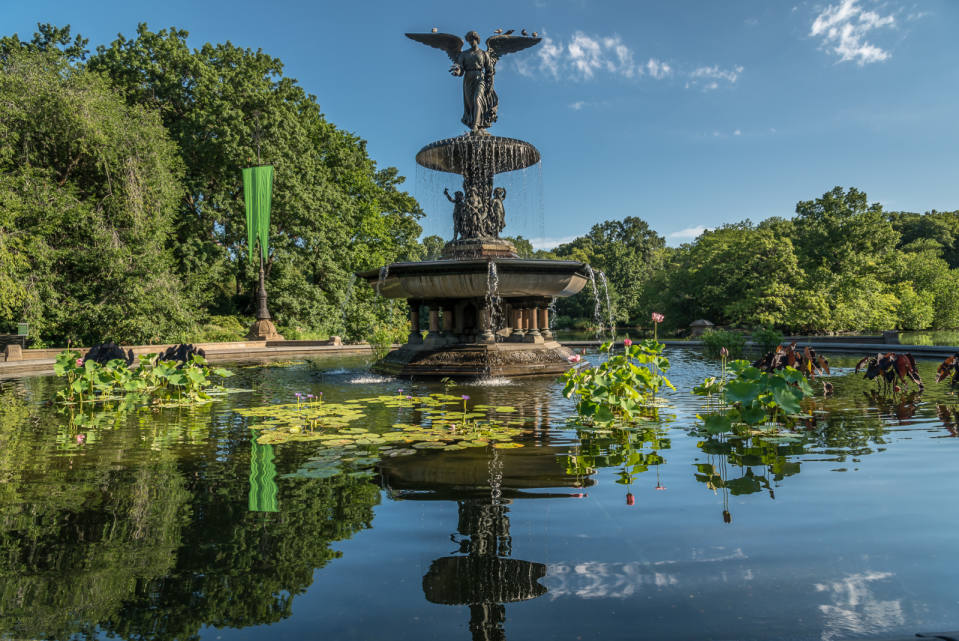
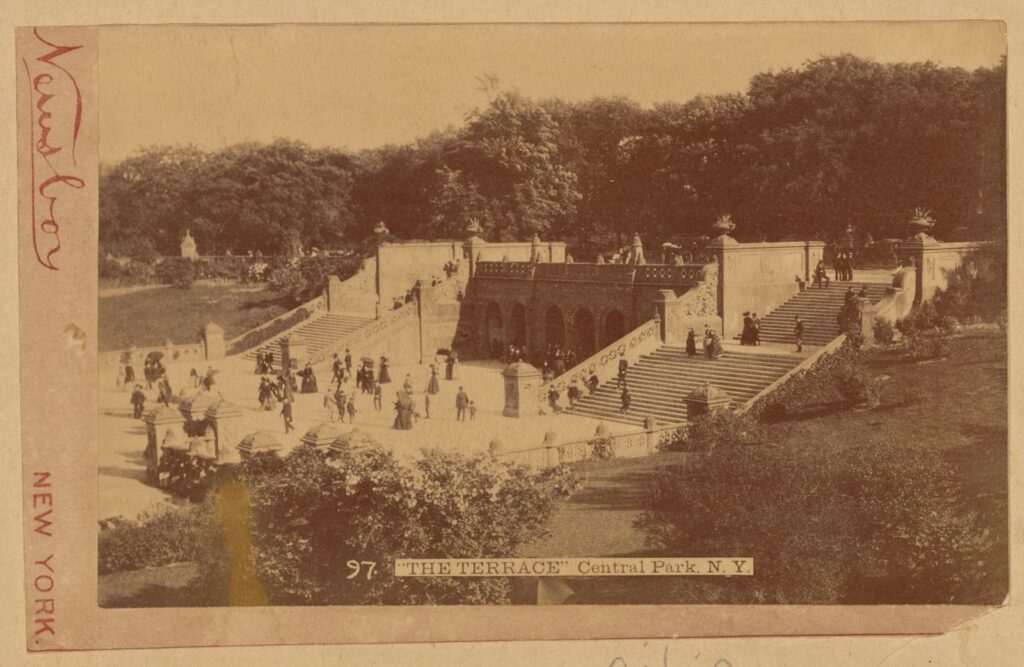
Emma Stebbins is most noted for her iconic bronze statue The Angel of the Waters which was placed on Central Park’s Bethesda Terrace in 1873.
You may be aware of parts of the Stebbins’ biography. Her Angel was the first public statue in New York produced by a woman and her life included a domestic partnership with another woman. But there is much more in the story.
This is the story of a creative artistic woman whose life, which began in early 19th-century New York, expanded and flourished in a community of fellow artists and sculptors in mid-century Rome.
Image courtesy Central Park
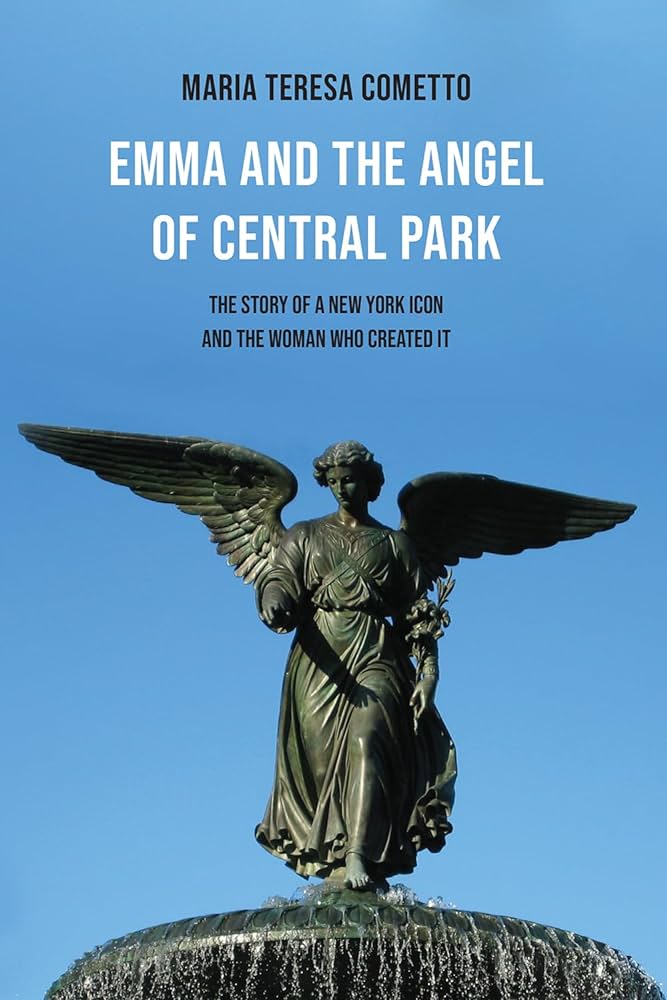
In this episode of The Gilded Gentleman podcast, journalist and biographer Maria Teresa Cometto — author of Emma and the Angel of Central Park — joins host Carl Raymond for a look into the life of this enigmatic woman.
This is a very Italian story in many ways, set against the backdrop of the ruins, museums, and palaces of classical Rome. Emma’s story includes love, betrayal, inspiration, tragedy, and even a bit of mystery.
LISTEN HERE: The Sculptor and the Angel: The Untold Story of Emma Stebbins
And subscribe to the Gilded Gentleman podcast so you don’t miss an episode.
Author Maria Teresa Cometto
And after you’ve listened to this episode of The Gilded Gentleman, revisit last year’s Bowery Boys podcast episode on the early years of Central Park. The show also features the history of Bethesda Fountain featuring historian Sara Cedar Miller.
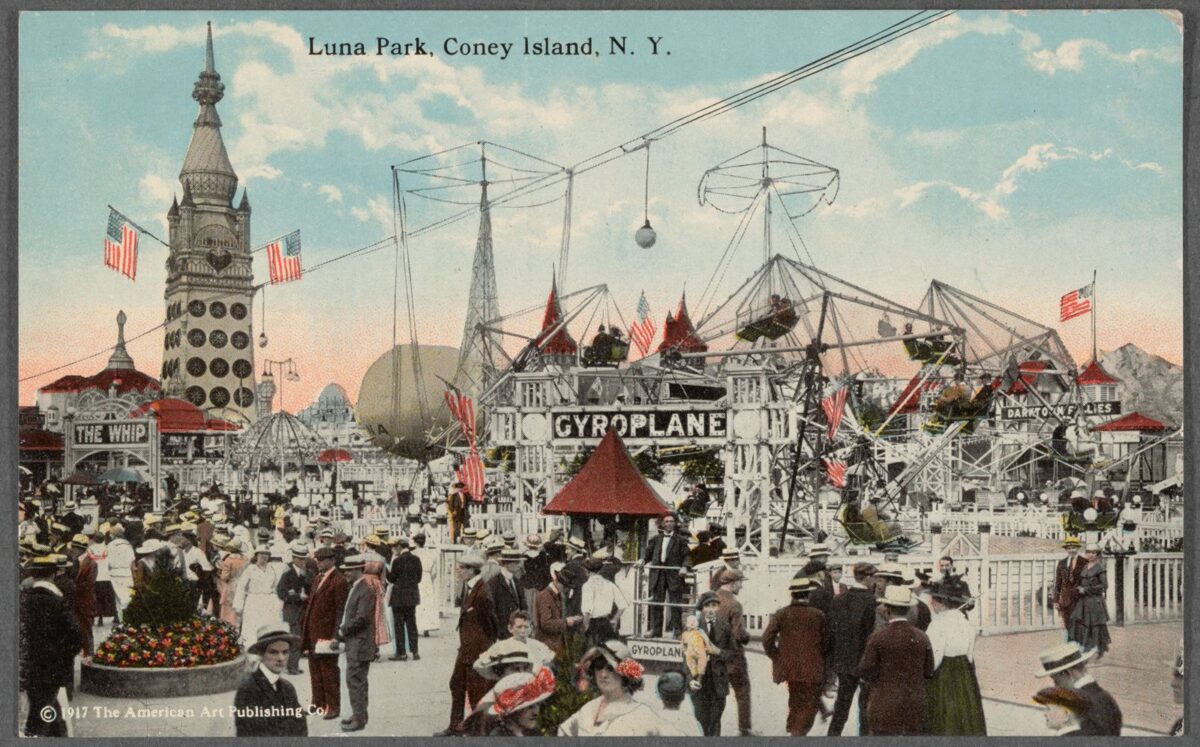
Luna Park, 1917. Courtesy New York Public Library, The Miriam and Ira D. Wallach Division of Art, Prints and Photographs: Picture Collection
On the latest episode of The Gilded Gentleman, returning guest Esther Crain, author and creator of Ephemeral New York, joins Carl for a look at how New Yorkers stayed cool on summer days in the Gilded Age.
As New York continued its march up the island of Manhattan, there were few places where New Yorkers that couldn’t escape to Newport could find somewhere to relax, play, stroll, and find some shade.
The development of the Central Park provided some much-needed relief but it took some time for it to become a place that was accessible and viable for all of New York’s social classes.
Meanwhile, out on the far coast of Brooklyn, the resort of Coney Island developed rapidly and became a truly great escape with its famous amusement parks where one could find adventure and perhaps a bit of romance.
Esther takes us on a journey to visit these spots and spaces where Gilded Age New Yorkers could cool off, forget the realities of life for just a bit and have a really good time.
LISTEN HERE OR ON YOUR FAVORITE PODCAST PLAYER:
And in two weeks on The Gilded Gentleman Podcast: Prepare for a history of the French Riviera
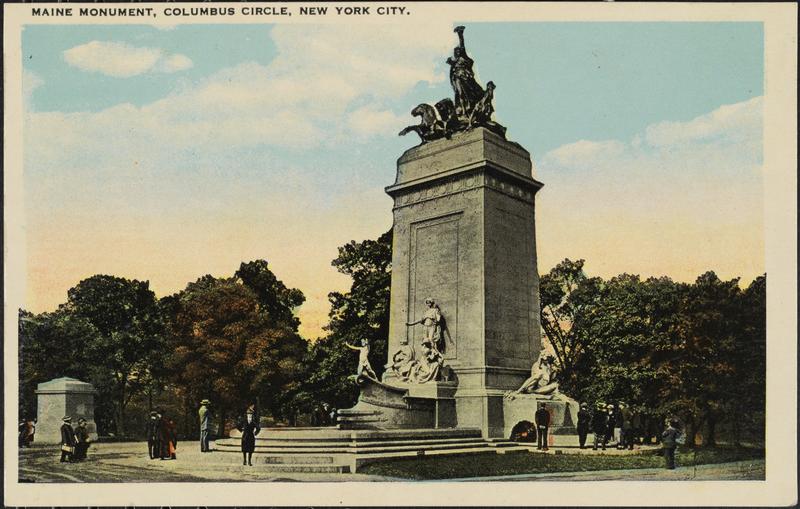
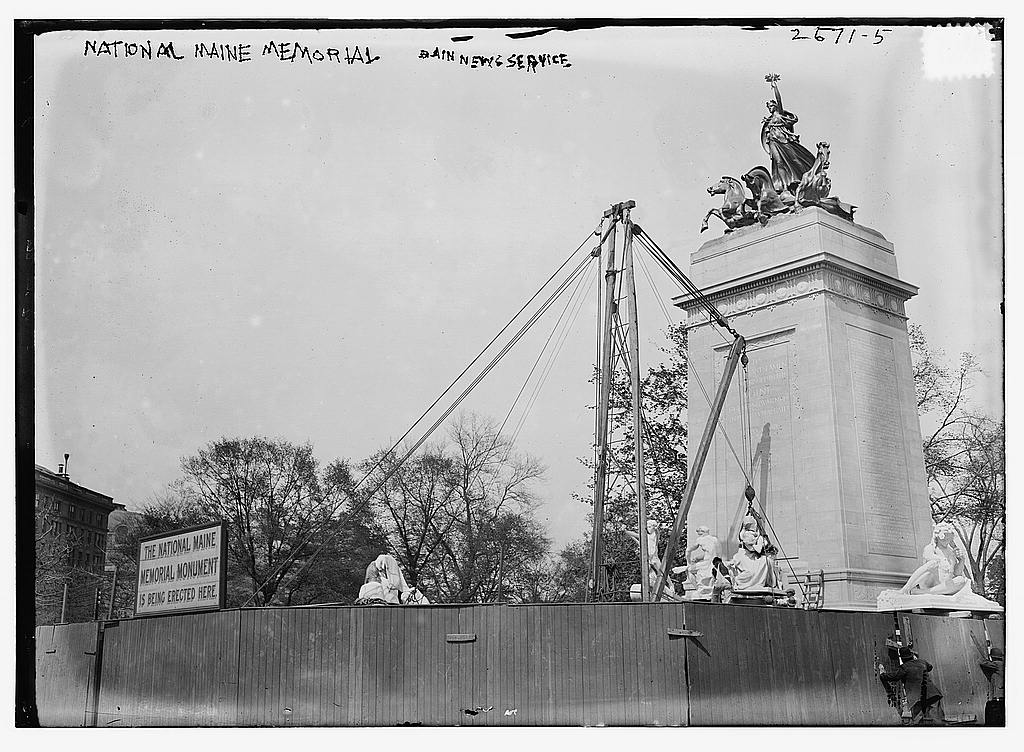
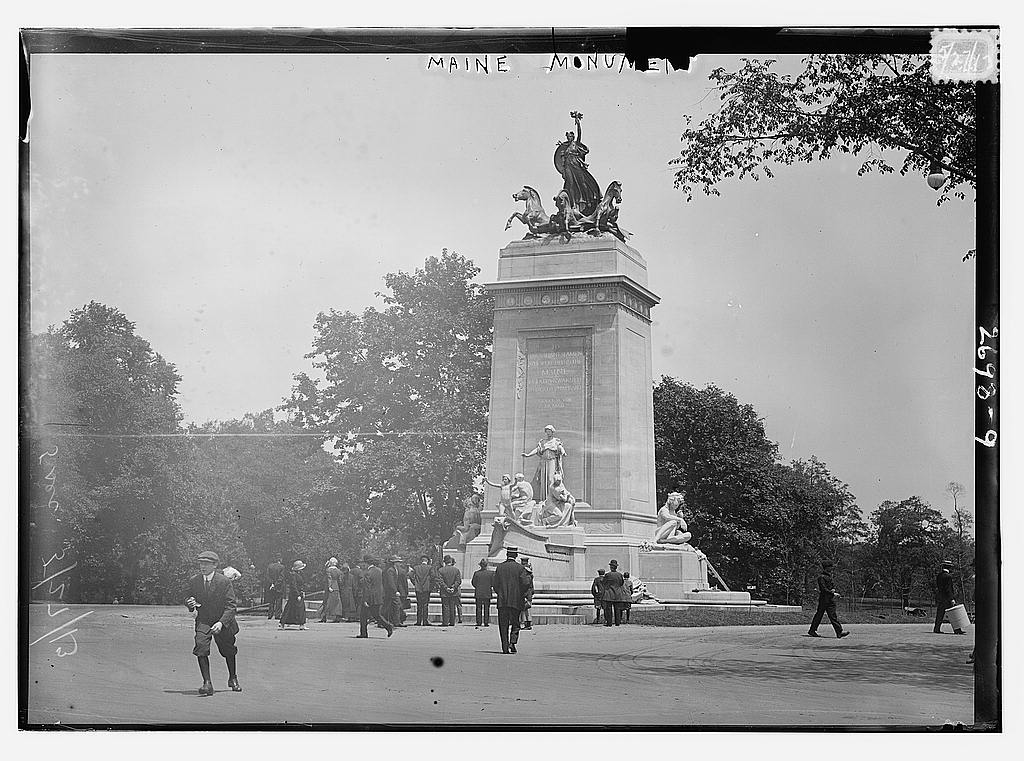
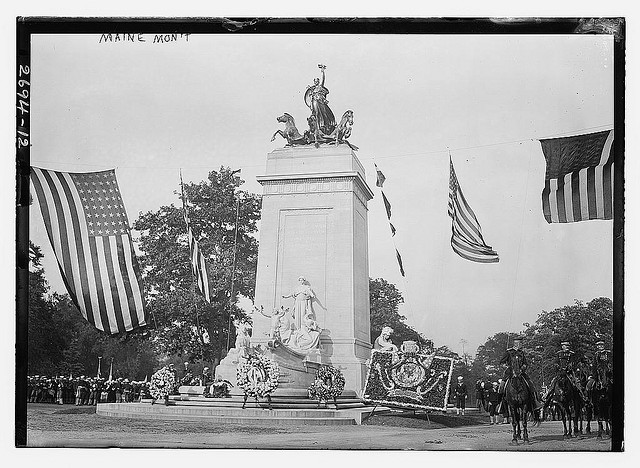
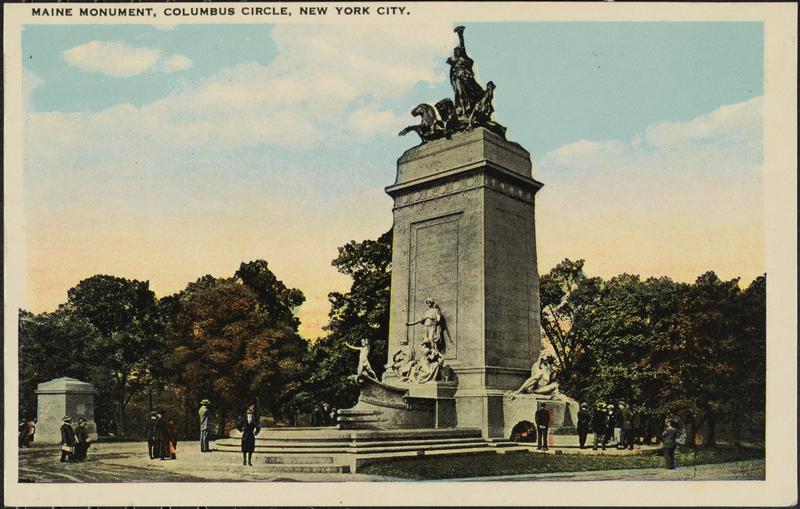
On Memorial Day in the year 1913, one of New York City’s great war memorials was finally unveiled — the Maine Monument, at the southwest corner entrance of Central Park.
The monument pays tribute to the 266 American soldiers who perished on the USS Maine, which exploded in Havana, Cuba, on February 15, 1898.
Given the various wars which have involved the United States since then, this event is sometimes overshadowed, but it so horrified and angered Americans that emotions helped fuel the conflict known as the Spanish-American War later that year.
This is often considered a war manufactured by New York publishers as anti-Spanish rhetoric in the papers — the seeds of so-called ‘yellow journalism’, featuring outlandish exaggeration or out-right fabrication to sell their product to New Yorkers — led directly into military engagement.
Newspapers were not only behind the causes of war; they were behind its monuments too. Within days of the explosion, William Randolph Hearst called for donations for a memorial to the Maine’s fallen crew.
Just as Joseph Pulitzer had done a decade earlier for the Statue of Liberty, Hearst went directly to its readers, young and old, to help fund a tribute to the Maine.
Given the wall-to-wall coverage of the war that year and the ample profits from newspaper sales, it’s strange that Hearst couldn’t just fund the whole thing himself.
Less than a month after the disaster, people around the country were fund-raising for the Maine Memorial.
In March 1898, a traveling comic opera crew was raising money in Oklahoma when its lead actress killed herself.
The following month, a vaudeville benefit at New York’s Koster & Bial in Herald Square was overtaken by sailors who took to singing patriotic songs from the balconies.
Hundreds of special benefits were hosted in theaters and stages across the country over the next decade.
It’s unclear how much of the proceeds ended up funding the monument, as it took well over a decade for money to be raised and its design — by New Jersey architect Harold Van Buren Magonigle, America’s go-to memorial designer of the Gilded Age — to be approved.
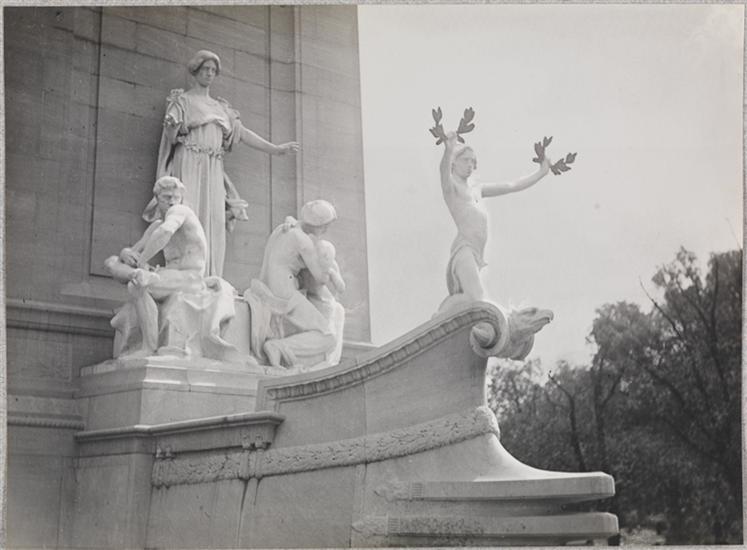
Magonigle enlisted his frequent collaborator Attilio Piccirilli to create the bronze and marble sculptures.
Some of that earnest enthusiasm seems to have disappeared when the memorial was finally dedicated on Memorial Day 1913.
According the New York Sun, leading New York artist erupted in “a storm of criticism” at the shiny, ostentatious design, with aesthetes calling the work a “misfit” and “a disgrace to the city.”
Many thought its relationship to the actual Maine was lost in vague theatrical symbolism.
“Architecturally and constructively the whole thing is cheap and bad.”[source]
Picture courtesy Museum of the City of New York
The memorial was unveiled with a grand military parade and the attendance of ten warships in the harbor, including one from Havana.
There was, of course, one great conflict on everybody’s mind that day when, in the official ceremony, sworn enemies Hearst and Mayor William Jay Gaynor met at the unveiling. (Among many grievances, Hearst had unsuccessfully run against Gaynor for mayor in 1909.)
With utmost restraint, Gaynor managed to shake Hearst’s hand without punching him in the face.
Two years later, a second memorial to the Maine was placed in Arlington National Cemetery in Washington, D.C. And in 1926, a lavish monument was placed in Havana, Cuba.
Taken 1920, courtesy Museum of the City of New York
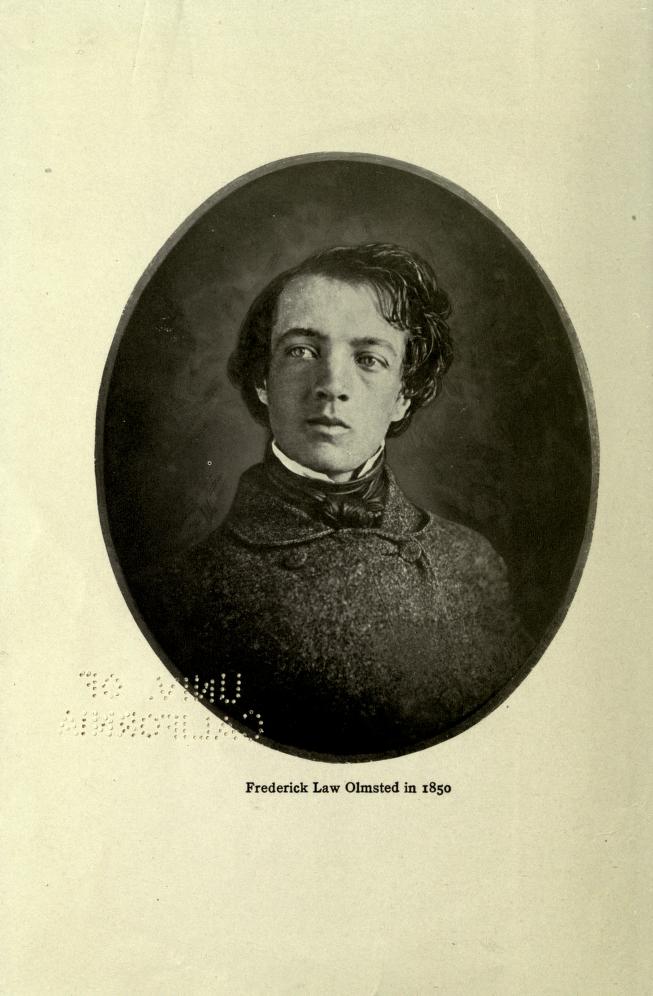
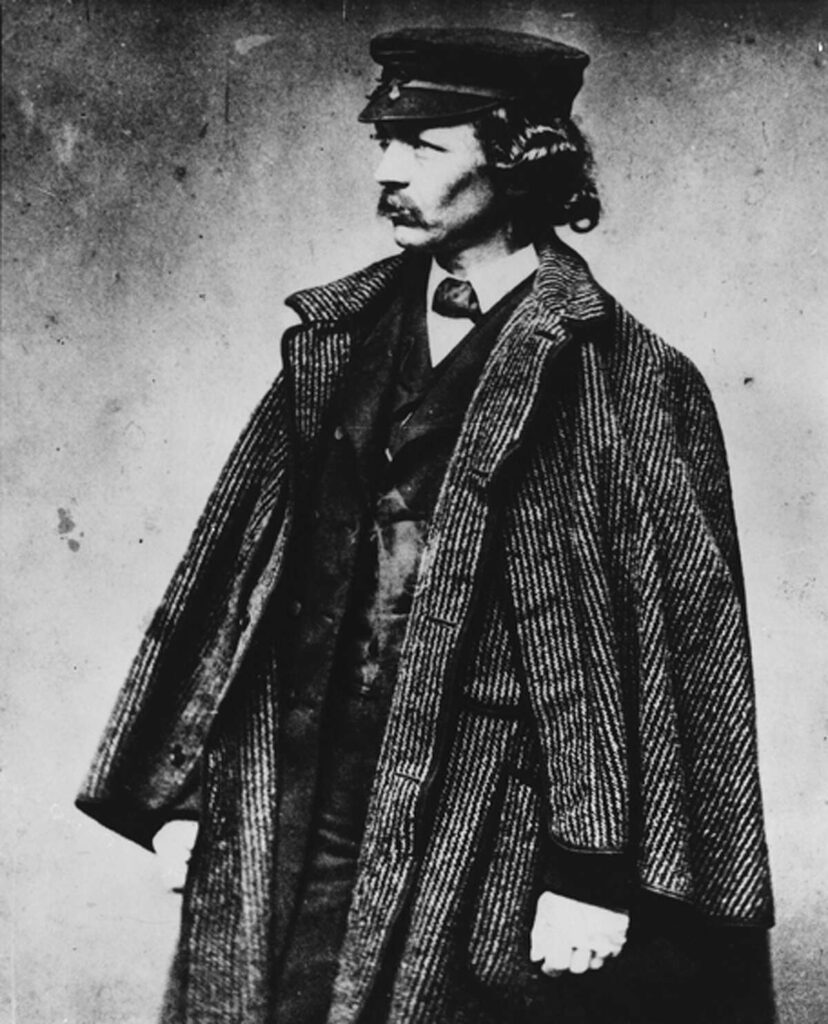
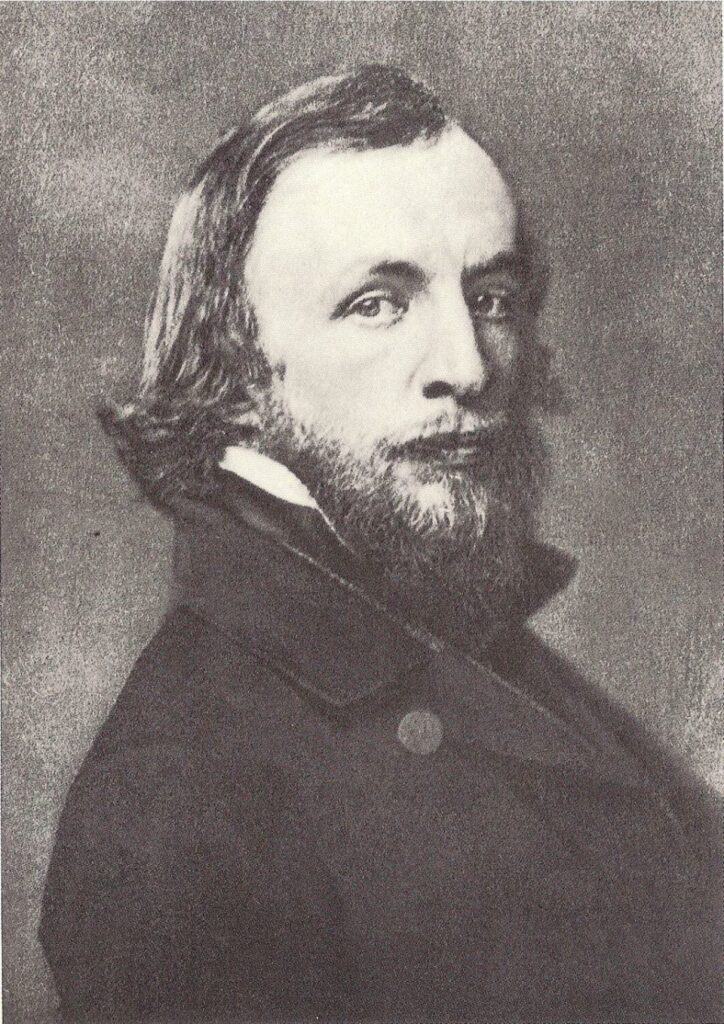
PODCASTFrederick Law Olmsted, America’s preeminent landscape architect of the 19th century, designed dozens of parks, parkways and college campuses across the country.
With Calvert Vaux, he created two of New York City’s greatest parks — Central Park and Prospect Park.
Yet before Central Park, he had never worked on any significant landscape project and he wasn’t formally trained in any kind of architecture.
In fact, Fred was a bit of a wandering soul, drifting from one occupation to the next, looking for fulfillment in farming, traveling and writing.
This is the remarkable story of how Olmsted found his true calling.
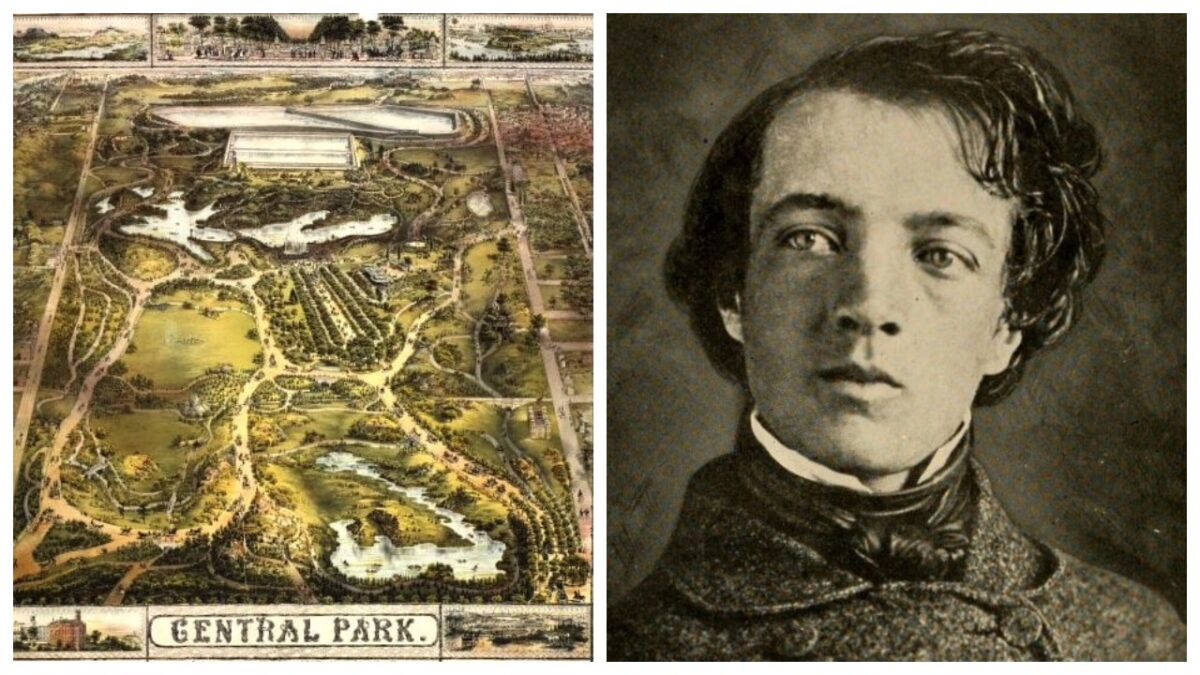
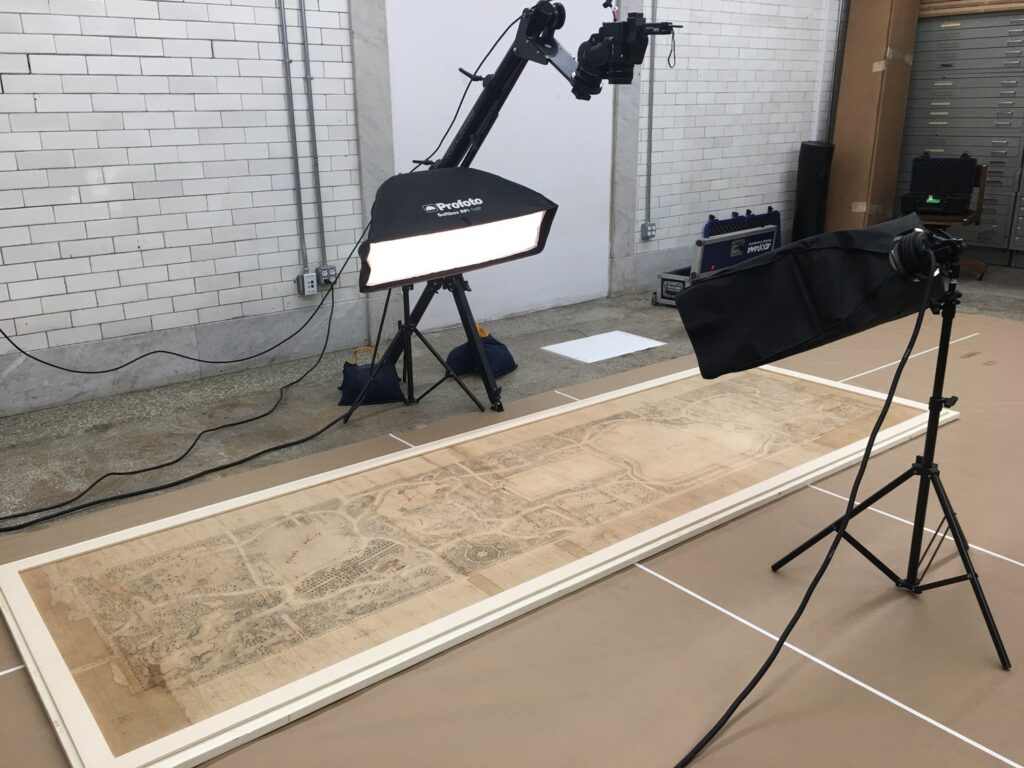
The Central Park proposal drafted by Olmsted and Vaux — called the Greensward Plan — drew from personal experiences, ideas of social reform and the romance of natural beauty (molded and manipulated, of course, by human imagination).
But for Olmsted, it was also created in the gloom of personal sadness. And for Vaux, in the reverence of a mentor who died much too young.
PLUS: In celebration of the 200th anniversary of Olmsted’s birth, Greg is joined on the show by Adrian Benepe, former New York City parks commissioner and president of Brooklyn Botanic Garden.
LISTEN NOW: FREDERICK LAW OLMSTED AND THE PLAN FOR CENTRAL PARK
Thank you Adrian Benepe for appearing on the show and to everybody over at the Brooklyn Botanic Garden for your help in putting things together.
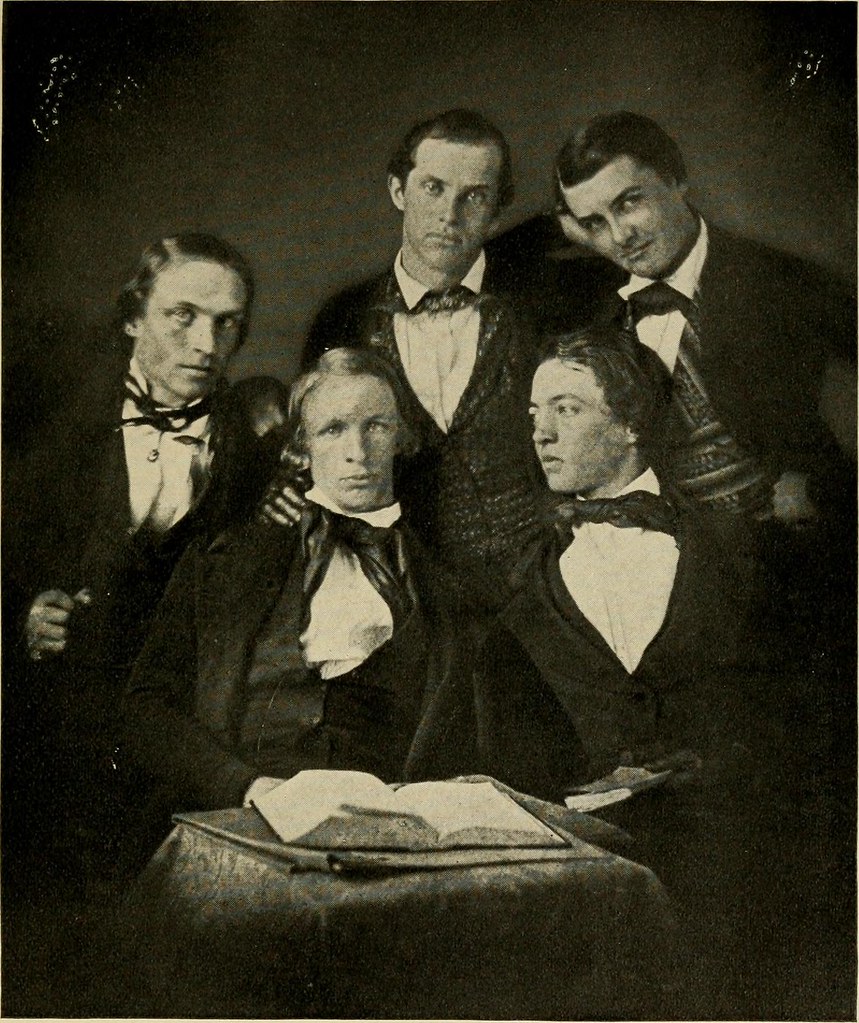
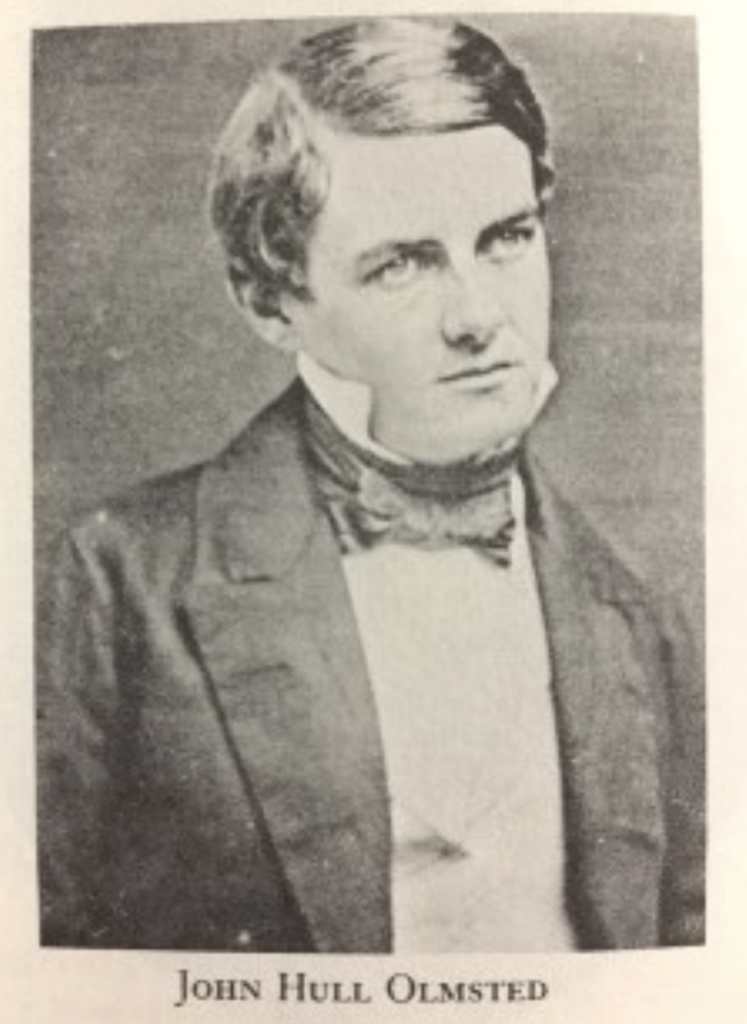
Charles Trask, Charles Loring Brace, Fred Kingsbury, Frederick Law Olmsted, John Hull Olmsted at 1846Forty Years of Landscape Architecture; being the Professional Papers of Frederick Law Olmsted, Senior. 1922-28. Contributed in BHL from the University of California Libraries.
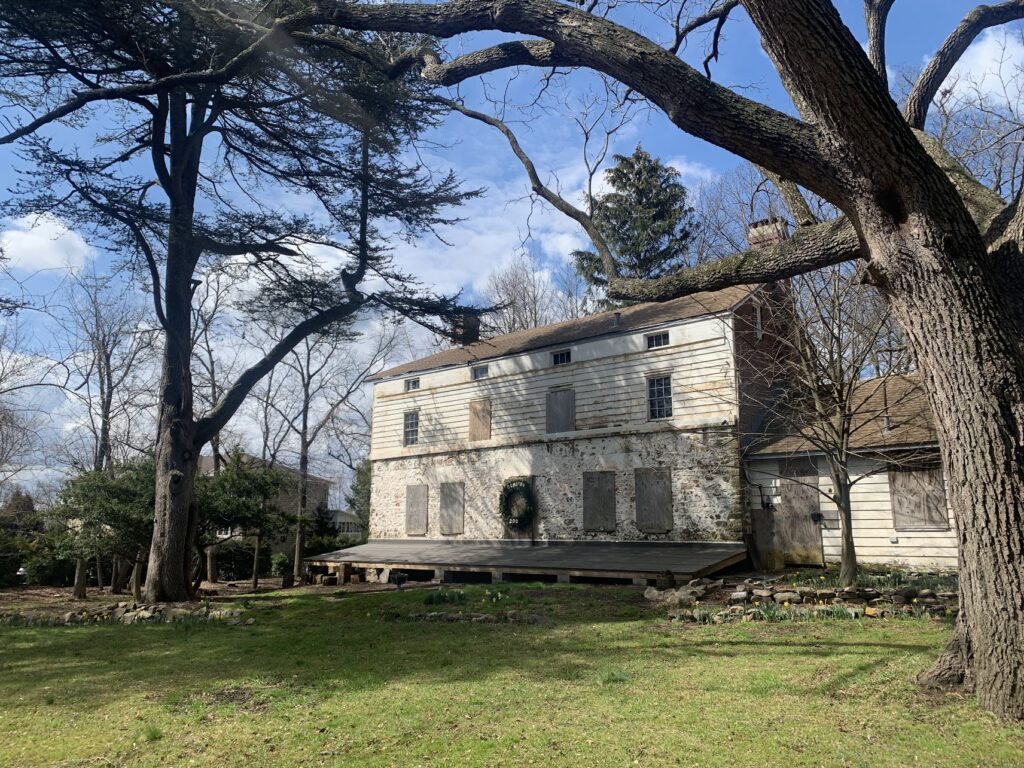
Fred’s brother John Olmsted
From Olmsted’s personal collection of photographs, The Society for the Preservation of New England Antiquities, Boston, Mass. Source
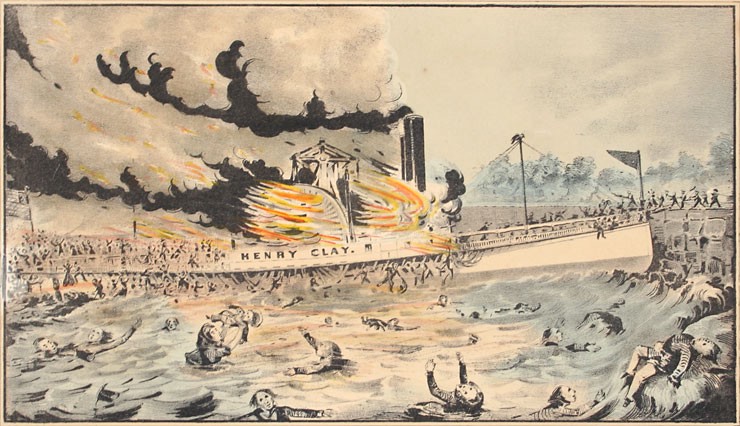
The Burning of the Henry Clay, in a lithograph by Nathaniel Currier, 1852
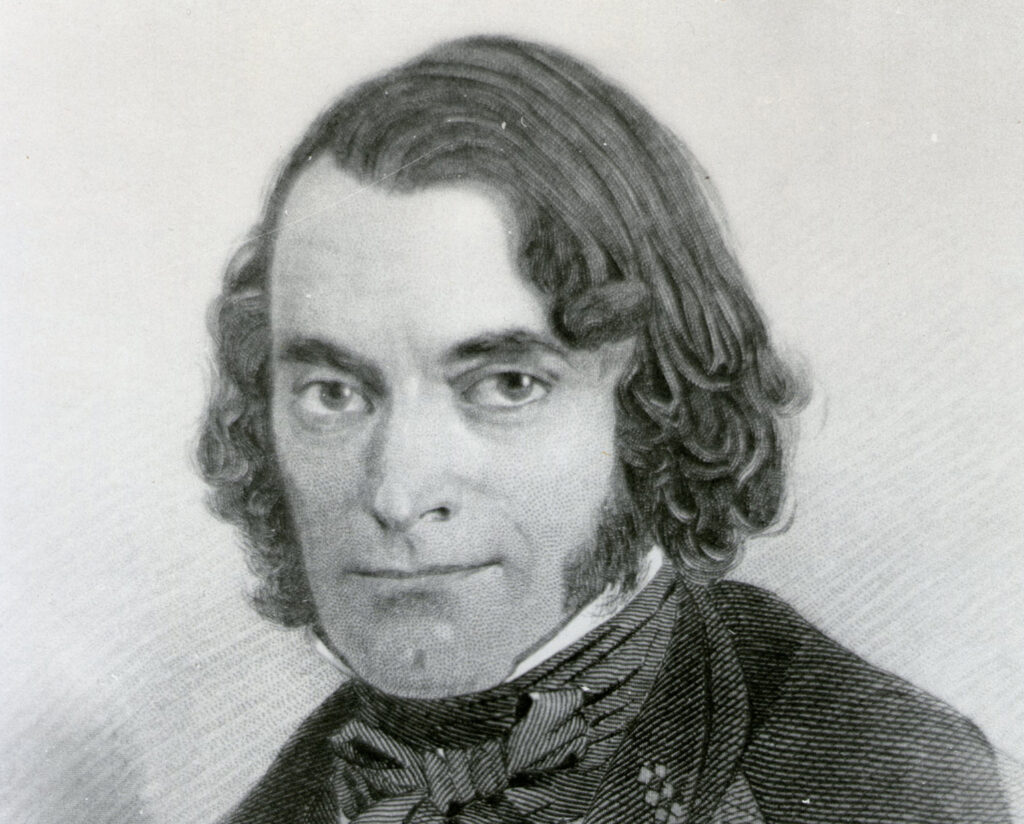
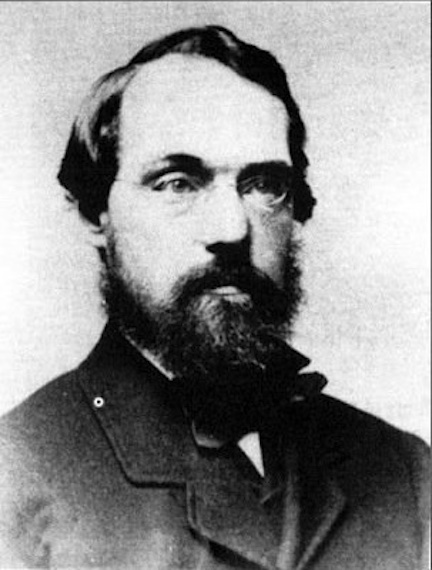
Calvert Vaux
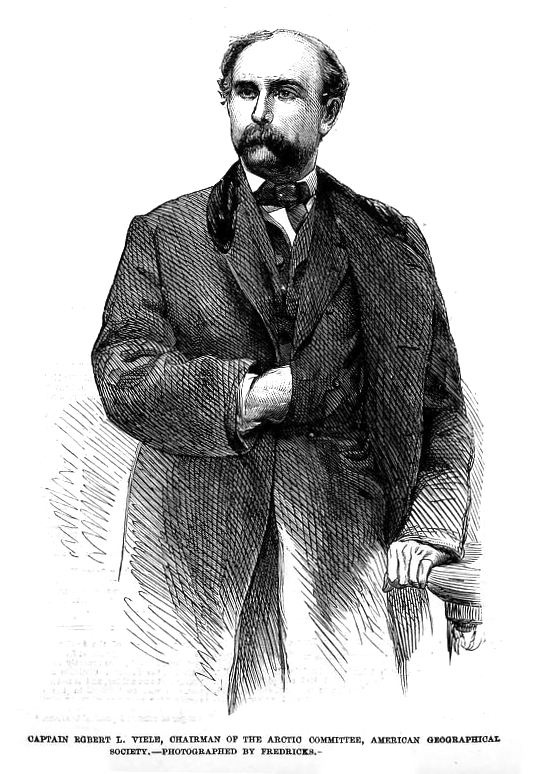
Egbert Ludovicus Viele
The Greensward Plan will be on display at The New York City Department of Records and Information Services/Municipal Archives Friday, April 22 and Saturday, April 23.
After listening to this episode of Frederick Law Olmsted, jump back into these earlier Bowery Boys Podcasts which discuss similar themes or situations from the show:
FURTHER READING
The Central Park: Original Designs for New York’s Greatest Treasure / Cynthia S. Brenwell, New York City Municipal Archives Central Park: The Birth, Decline and Renewal of a National Treasure / Eugene Kinkead A Clearing in the Distance: Frederick Law Olmsted and America in the 19th Century / Witold Rybczynski Creating Central Park / Morrison H. Hecksher Genius of Place: The Life of Frederick Law Olmsted / Justin Martin Parks for the People: The Life of Frederick Law Olmsted / Julie Dunlap The Power of Scenery: Frederick Law Olmsted and the Origin of National Parks / Dennis Drabelle
The Bowery Boys: New York City History podcast is brought to you …. by you!
We are producing a new Bowery Boys podcast every other week. We’re also looking to improve and expand the show in other ways — publishing, social media, live events and other forms of media. But we can only do this with your help!
We are now a creator on Patreon, a patronage platform where you can support your favorite content creators.
Please visit our page on Patreon and watch a short video of us recording the show and talking about our expansion plans. If you’d like to help out, there are several different pledge levels. Check them out and consider being a sponsor.
We greatly appreciate our listeners and readers and thank you for joining us on this journey so far
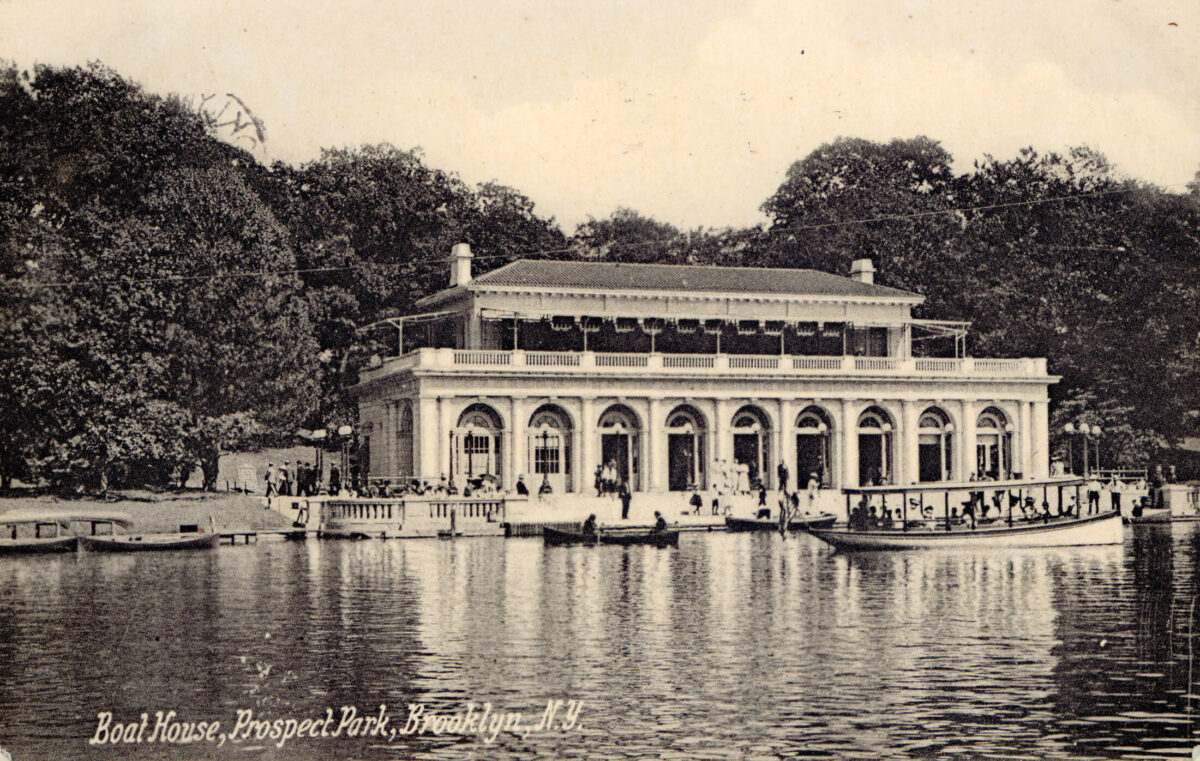
When park designers Frederick Law Olmsted and Calvert Vaux regrouped after the success of Central Park to design another great park for Brooklyn — encompassing Prospect Hill and the Revolutionary War site Battle Pass — they preserved a greater amount of natural topography than they had in Manhattan. But that doesn’t mean that Prospect Park hasn’t gone through a few radical changes of its own since it opened between the years 1867 and 1873.
Their Grand Army Plaza has experienced few changes since it opened in those years, but the structures around it have certainly changed, presenting some surprising views at the mighty war monuments.
New York Public LIbrary
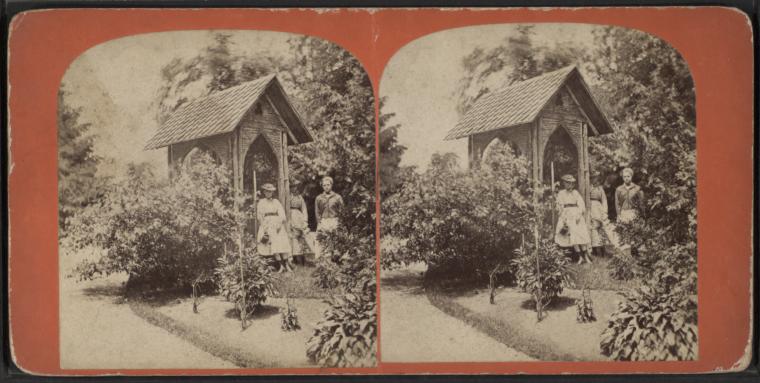
1. Women of the Wellhouse The caption for this stereoscopic view (taken sometime in the 1870s-80s) calls this a ‘well house’, although it may have also been a a coal storage shed or even an outhouse! Brooklyn’s main reservoir was on Prospect Hill, and the park was constructed partially to protect the water source from encroaching developers.
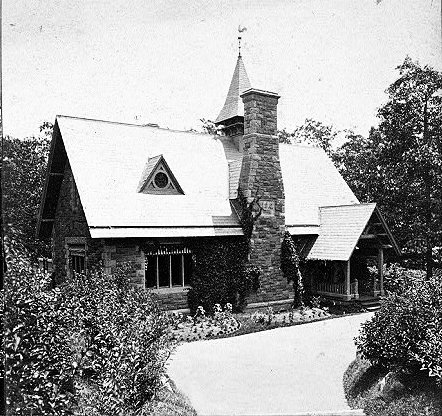
2. Prospect Park Dairy As they had done in Central Park, Olmsted and Vaux infused the landscape with various romantic, fairytale-like structures, including this dairy house, providing guests with milk straight from the cow. Central Park still has a version of their dairy, but Prospect Park’s was regrettably torn down in the 1930s to make way for the Prospect Park Zoo. (NYPL)
Library of Congress
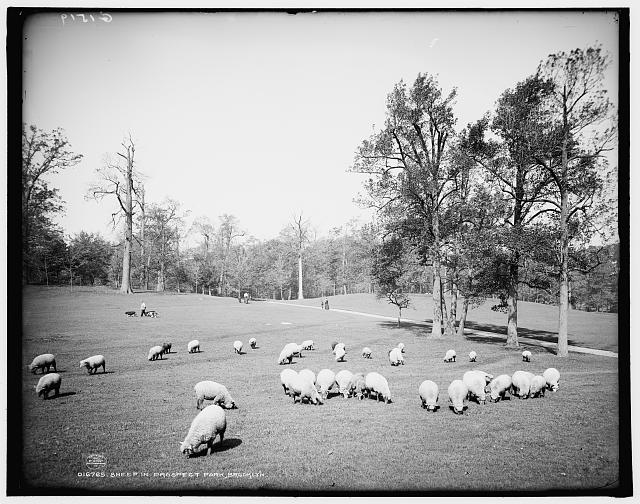
3. Brooklyn Sheep
Sure, you many know Sheep Meadow in Central Park once had actual sheep grazing — they were considered a rustic design ornament and a natural landscaper — but what happened to the animals after Robert Moses kicked them out in 1934? Like so many trendy things, they moved to Brooklyn! They joined Prospect Park’s already thriving sheep colony (pictured below, from 1903) before moving on to other pastures. (Courtesy LOC)
New York Public Library
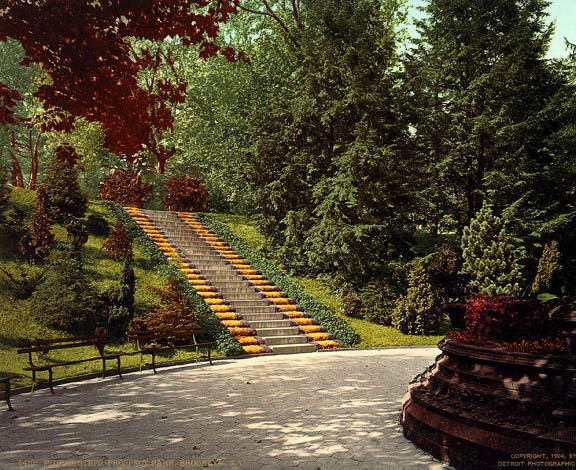
4. Floral Steps, 1904 The manicured flora that grace these steps predates the Brooklyn Botanic Garden by several years. The stairs are still there today, of course, though unadorned.
Courtesy Dept of Records
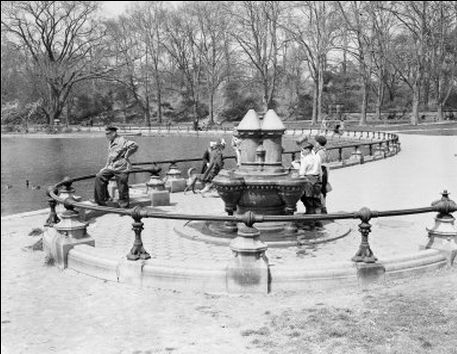
5. Drinking Fountains With water aplenty, Prospect Park has been dotted with drinking fountains since its inception. This rather unusual fountain, from 1938, may still be around, but I doubt you’ll see anybody drinking from it.
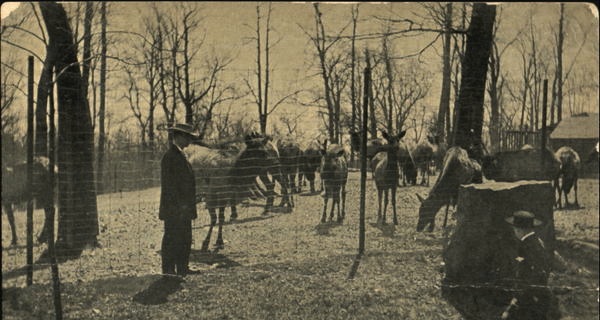
6. Deer Paddock The zoo also replaced the rather extraordinary Deer Paddock, where the sometimes docile creatures were allowed to wander around. This despite some of them occasionally escaping and running into the surrounding neighborhood (as one adventurous buck did in 1906).
NYPL
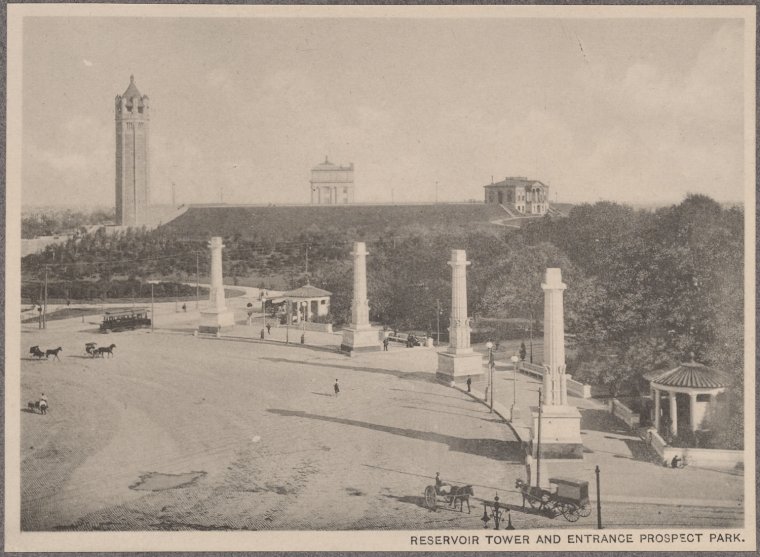
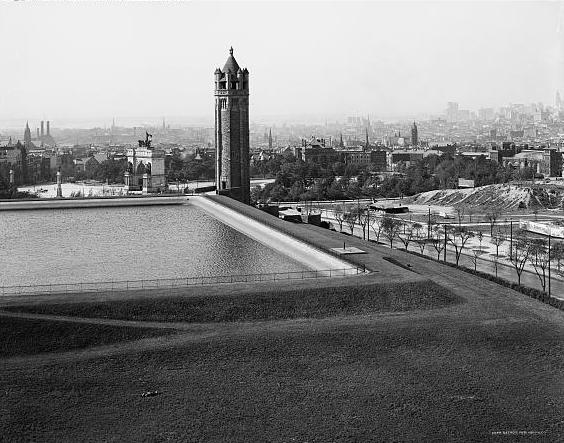
7. Stately Reservoir Tower High atop Brooklyn’s second highest point on Mount Prospect sits the reservoir tower, only a couple decades old (1893) but looking like a medieval ruin in this image. Date of this picture is unknown, although the ground for the Brooklyn Public Library main branch building was broken in 1912, so it was clearly sometime before then. The Brooklyn Museum is in the distance. [NYPL]
Library of Congress
8. And, yes, the Reservoir itself The reservoir was built here in 1856 and was meant to be included within the park designs. With Flatbush Avenue ultimately cleaving the hill from the rest of the proposal, Olmsted and Vaux left it out. This picture is from between 1910-1920. [LOC]
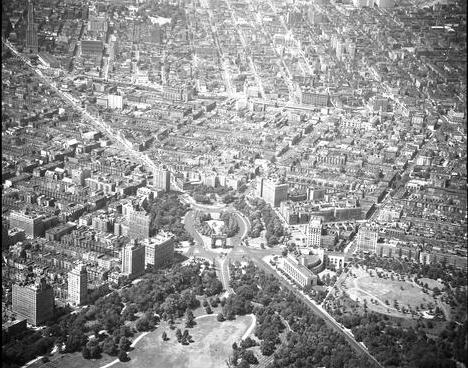
9. From high above This bird’s eye view from 1951 illustrates the plaza’s similarities to that of the Arc de Triomphe in Paris.
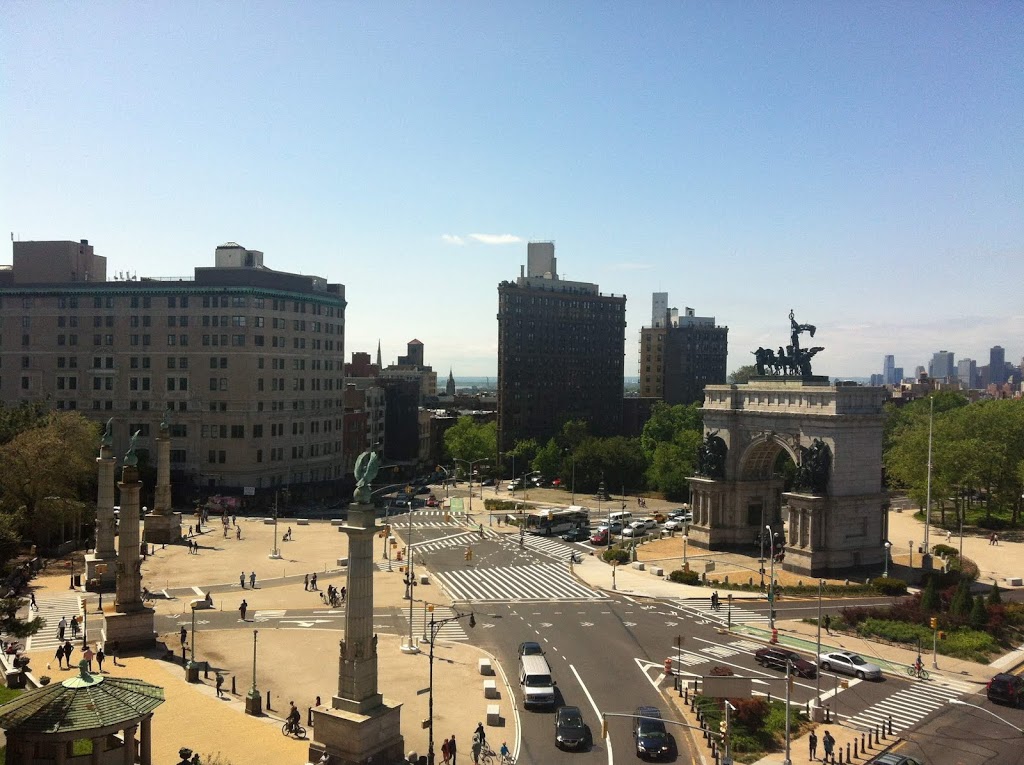
10. Library vista And this view is from two weeks ago! During the Partners In Preservation Open House, the staff at the Brooklyn Public Library main branch led guided tours to the rooftop, offering a very particular take on the plaza. And if my camera had been better, you would see off in the distance the Statue of Liberty, situated several miles away.
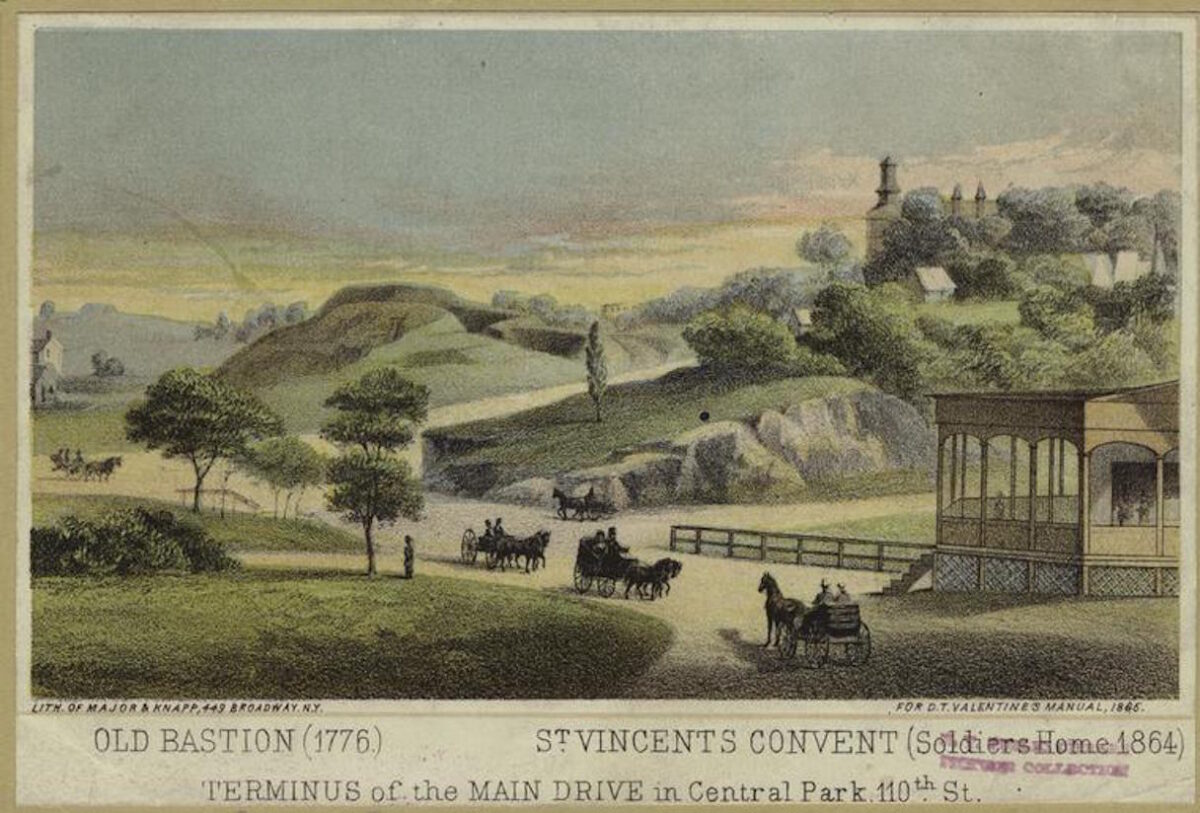
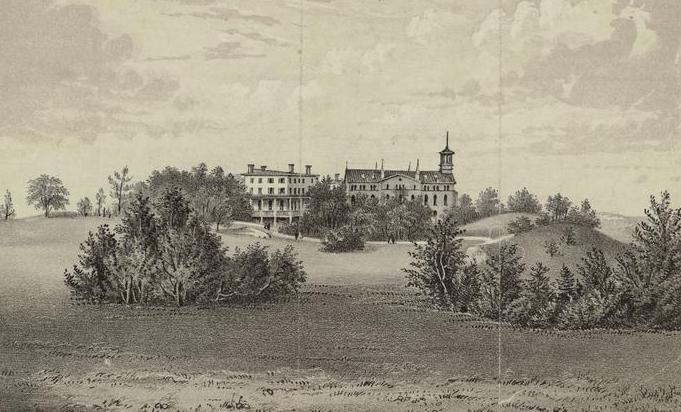
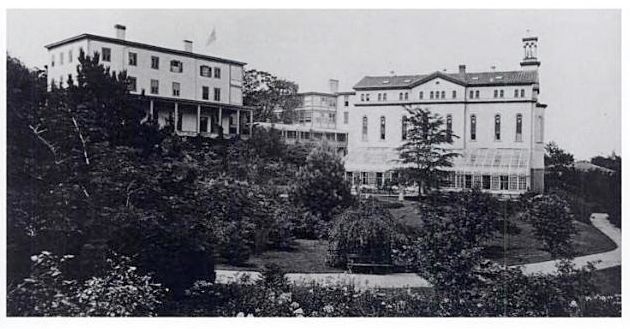
Pictured above is a remarkable structure that once dominated the scenery on the northern side of Central Park.
This was the Academy of Saint Vincent on a hill that bore its name. Located on the northern portion of the park, next to the charming Harlem Meer (and nearest 103rd Street), the Academy sat nestled amid a collection of hills and bluffs left over from its original pre-park topography.
Below: House on the hill: the stark and mysterious convent of Central Park, 1861
Washington Passes Through
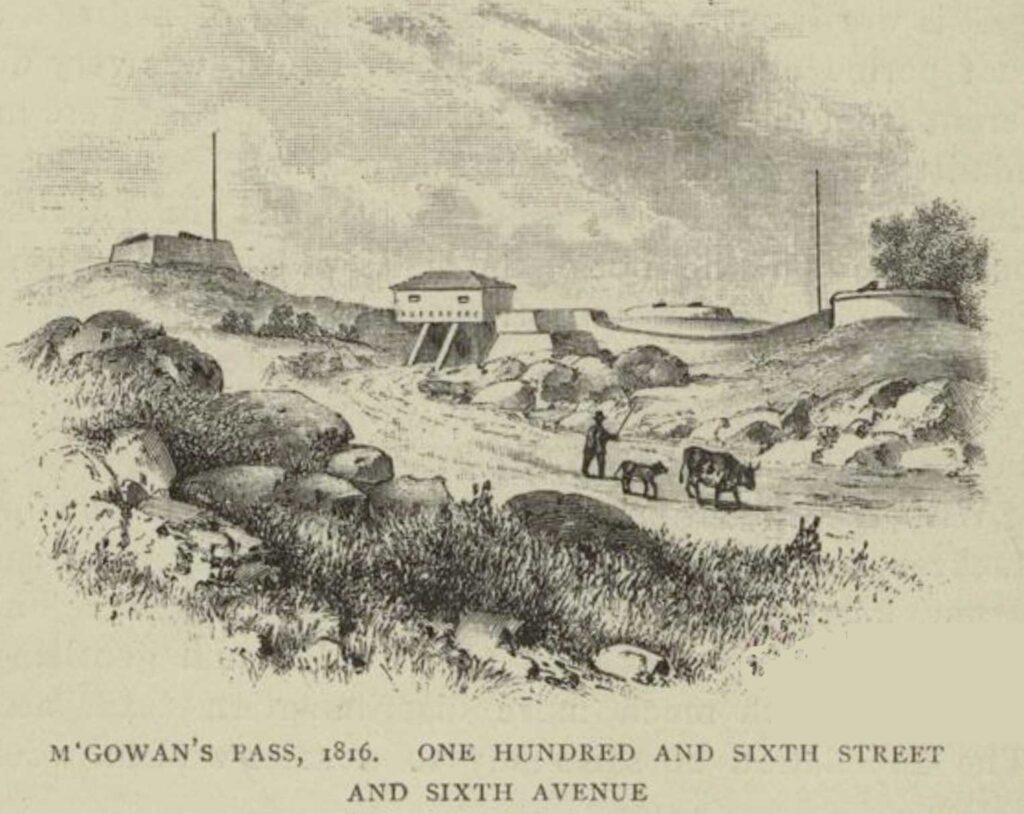
A narrow passage next to the convent was named McGowan’s Pass after Andrew McGowan, owner of a popular tavern that sat here called the Black Horse Tavern. (It is often spelled McGown.)
It was through McGowan’s Pass that George Washington traveled on September 15, 1776.
He and a portion of the Continental Army had escaped up to today’s Washington Heights area; when hearing that part of his army had been stopped by the British, Washington rode down the pass and led the remaining troops back up to their fortification in the Heights.
He rode back through the pass again seven years later, this time as the victor.
The British and their Hessian mercenaries built forts here to cut Manhattan off from the mainland. Later New Yorkers would seize upon this idea during the early days of the War of 1812.
Not willing to become property of the British once again, Manhattan mobilized for any potential battles, building forts all over the island and throughout the harbor.
The Ghost of Old Forts
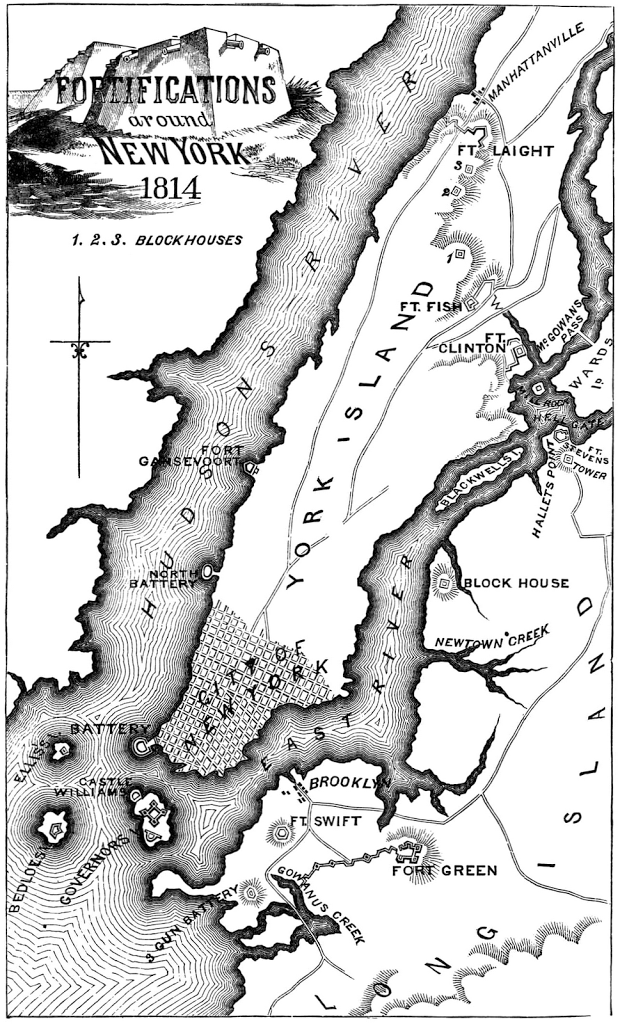
It was here at McGown’s Pass that a couple fortifications were built, including Fort Clinton (not to be confused with the fort in Battery Park, although both were named for DeWitt Clinton) and Fort Fish, named after Major Nicholas Fish, father of the New York senator Hamilton Fish.
Nothing much remains of these two old forts, which were never used as the war thankfully never made its way to the city. There are, however, two remaining structures from the early days.
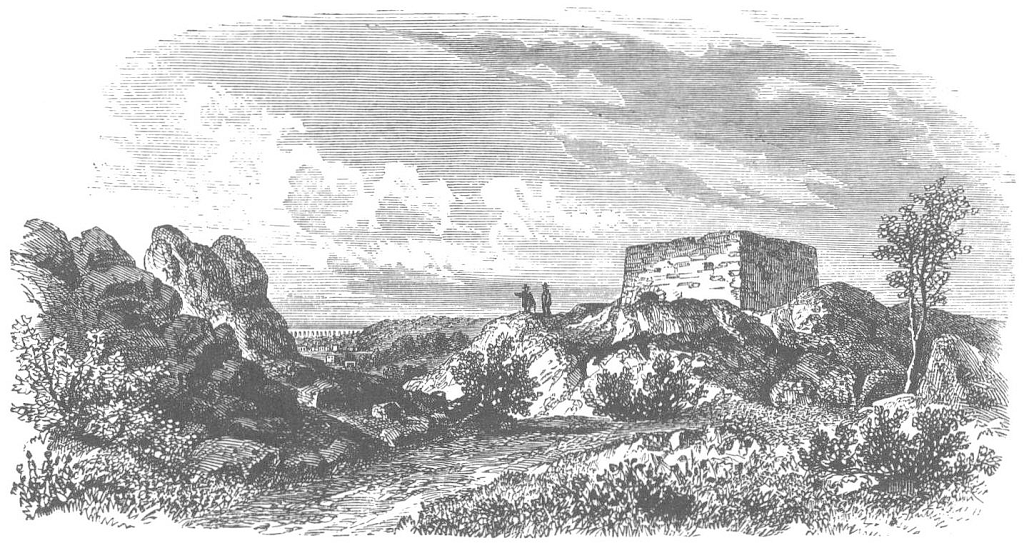
A stone ledge overlooking the meer is all that remains of Nutter’s Battery, named after a farmer who owned the property. And nearby stands the Block House, its stone face still fairly solid, once armed with cannons and used to hold ammunition — that were, of course, never needed.
The Block House was fairly intact when Frederick Law Olmstead and Calvert Vaux included it in their plans for the new park, incorporating the existing building as a ‘picturesque ruin’ covered in vines.
Here’s an illustration of how the Block House looked in 1860:
Holy Sanctuary
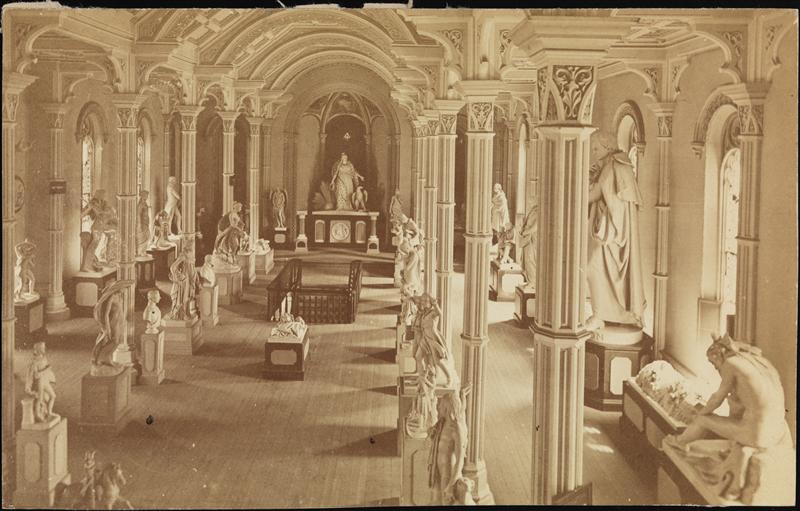
Before there was a park, however, there were nuns. In 1847 the Sisters of Charity of St. Vincent de Paul arrived at the still-bucolic region of Manhattan and opened the Academy of St. Vincent, a school and convent.
The nuns left when the area was incorportated into the park, however the building remained standing and utilized for several purposes. During the Civil War, it was briefly used as a hospital; later, it was a “restaurant and hostelry,” with some certainly spectacular views for guests.
Below: Some sculptured works of Thomas Crawford in the interior of Mount St. Vincent’s Convent, Central Park, north end.]
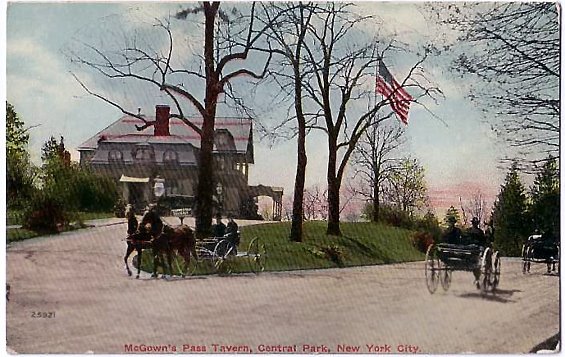
In 1895, McGowan’s was strangely granted its own election district as, being inside the park, it lay outside normal district boundaries. “There were four voters in this territory last year,” declared the New York Times. “They are four men employed at McGowan’s Pass Tavern.” The tavern was eventually torn down in the late 1910s.
Below: McGowan’s Pass Tavern (date unknown, but possibly around the early 1910s)
This is a bit tangental, but I love this story:
A plaque was erected at the old site of Fort Clinton in 1906 and unveiled in a publicized community event for children. It was apparently difficult for some people to find the location and “several chivalrous lads” guided people through the park to the unveiling.
However, the Times reports an incident that might be the only real battle that ever occured at this storied historical spot:
“Among the boys interested in the tablet unveiling were several whose spirit of mischief overcame their sense of the proprieties. These made misleading arrow signs …. and caused a number of persons to go far afield and arrive at the exercises late and angry. These mischievous youngsters were caught at their annoying trick by boys who were more sober and serious. Then there was a short scrimmage, and the mischievous lads scurried away through the Park.”
Its dimensions are greatly distorted of course, but it lists the forts and blockhouses that stood in this area as well as those such as Fort Gansevoort and Fort Greene (click on the image to look at it more closely):
**This story originally ran in 2011. All pictures courtesy the New York Public Library except where otherwise noted
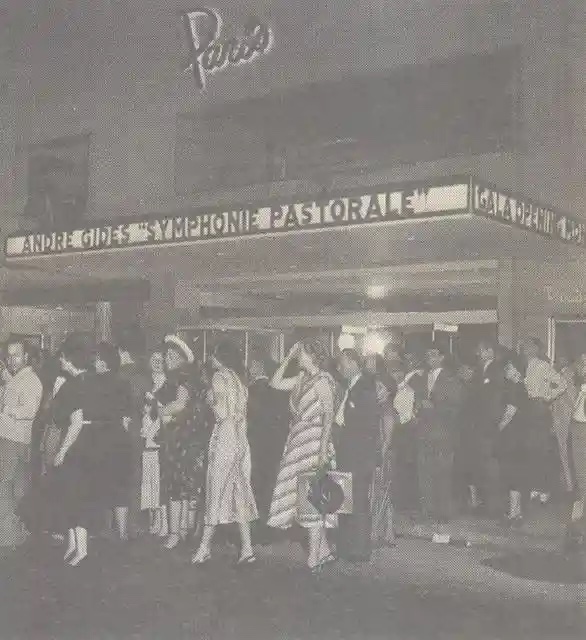
The Paris Theater, as glamorous and as eccentric as any film it’s ever played, has the benefit of having the Plaza Hotel and Central Park to ensure it never goes out of style.
But the history of this romantic and occasionally radical movie house, the longest running single-screen movie theater in New York, is as cinematic as its photo-friendly neighbors.
No less than Marlene Dietrich cut the ribbon on opening day of the Paris in September 13, 1948.
Gerald A. DeLuca
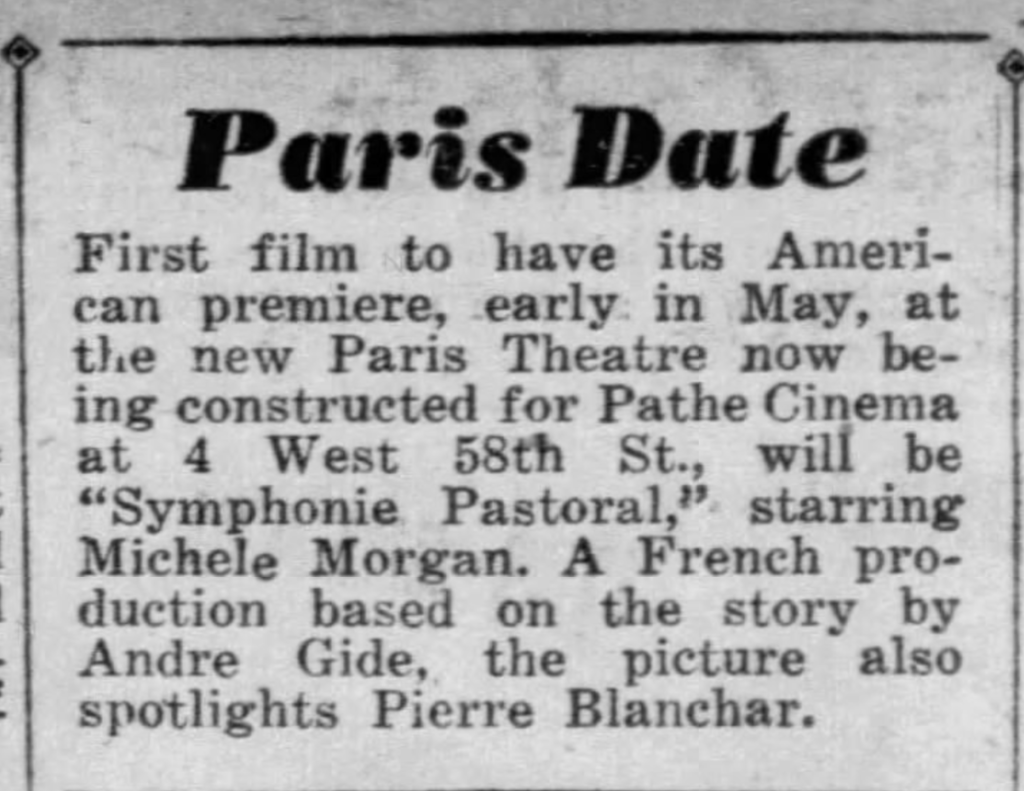
Opened by the French film distributor Pathè Cinema, the old-style 586 seat theatre with balcony — billed as “the first new moving picture theater to be built in New York since before the war” — was intended to debut significant achievements in foreign film, an ambition it still mostly retains today, along with re-issues of classic movies.
New York Daily News, April 11, 1948 (courtesy Newspapers.com)
Its first film was Symphonie Pastoraleby the almost-forgotten French director Jean Delannoy. And the cinema might have continued to enjoy quiet renown among foreign film aficionados if it wasn’t for Roberto Rossellini and Federico Fellini.
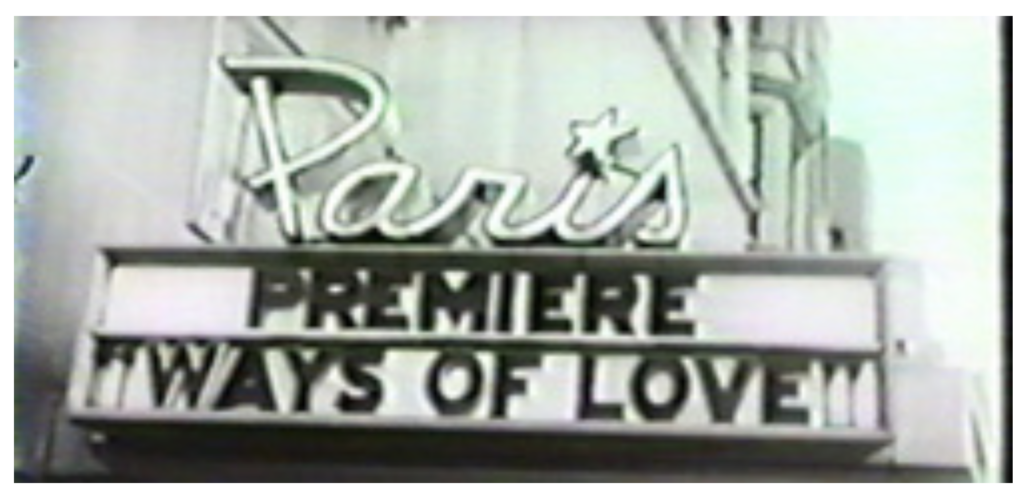
In December 1951, the Paris decided to show three films under an umbrella title Ways of Love.
One of these was a forty-minute piece entitled The Miracle, directed by Rossellini and starring Anna Magnani as a pregnant woman who’s convinced she’s carrying the Christ child after meeting a shepherd (played by Fellini) whom she believes is St. Joseph.
Its subject matter enraged the Catholic Church, and the theatre was assaulted with hundreds of protesters for weeks, orchestrated by Cardinal Spellman from his pulpit at St. Patrick’s Cathedral.
Eventually the Paris was ordered to stop showing the film, a decision Paris manager Lillian Gerard, along with the film’s distributor, appealed in court.
The case eventually went all the way to the U.S. Supreme Court who ruled the banning a violation of free speech.
No other film at the Paris would draw as much international attention, but the theater would affect cinema history in other ways, helping build the reputations of foreign directors on American soil.
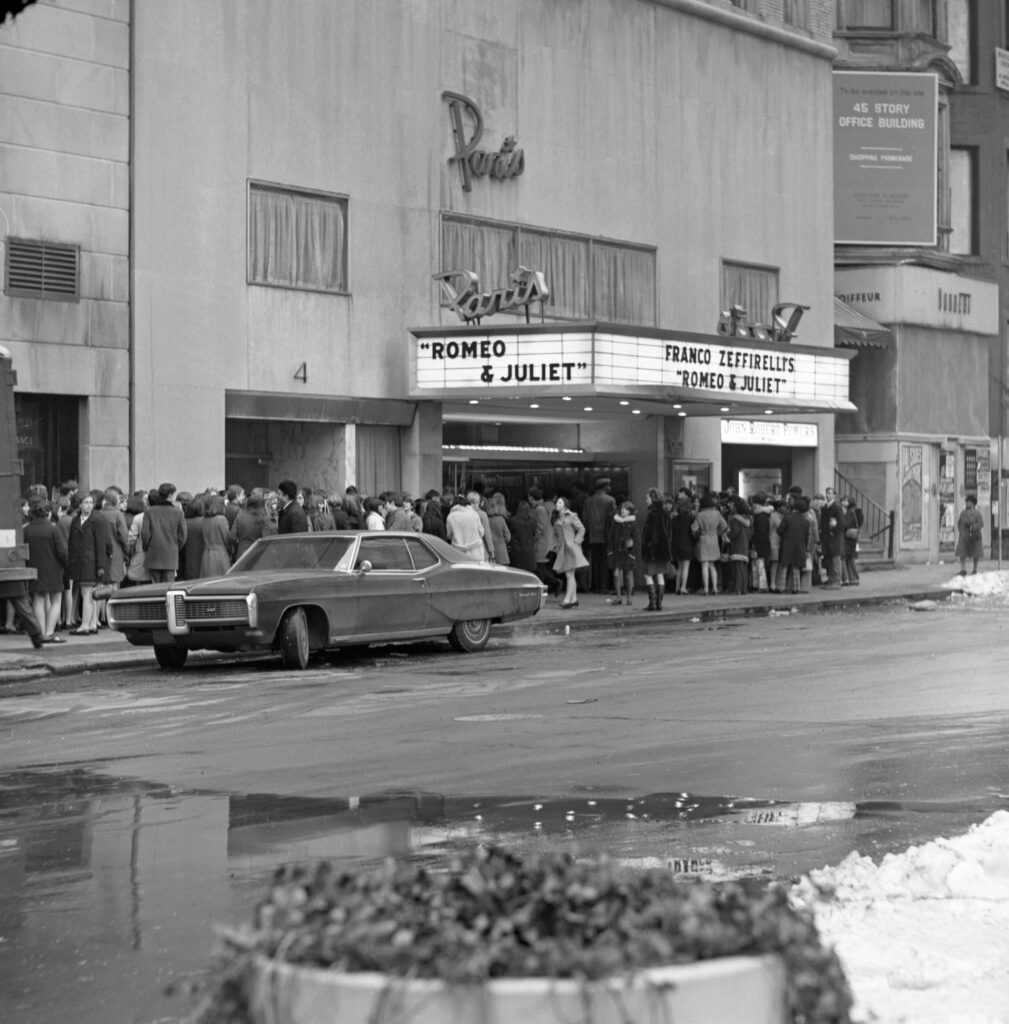
Courtesy the Paris Theatre
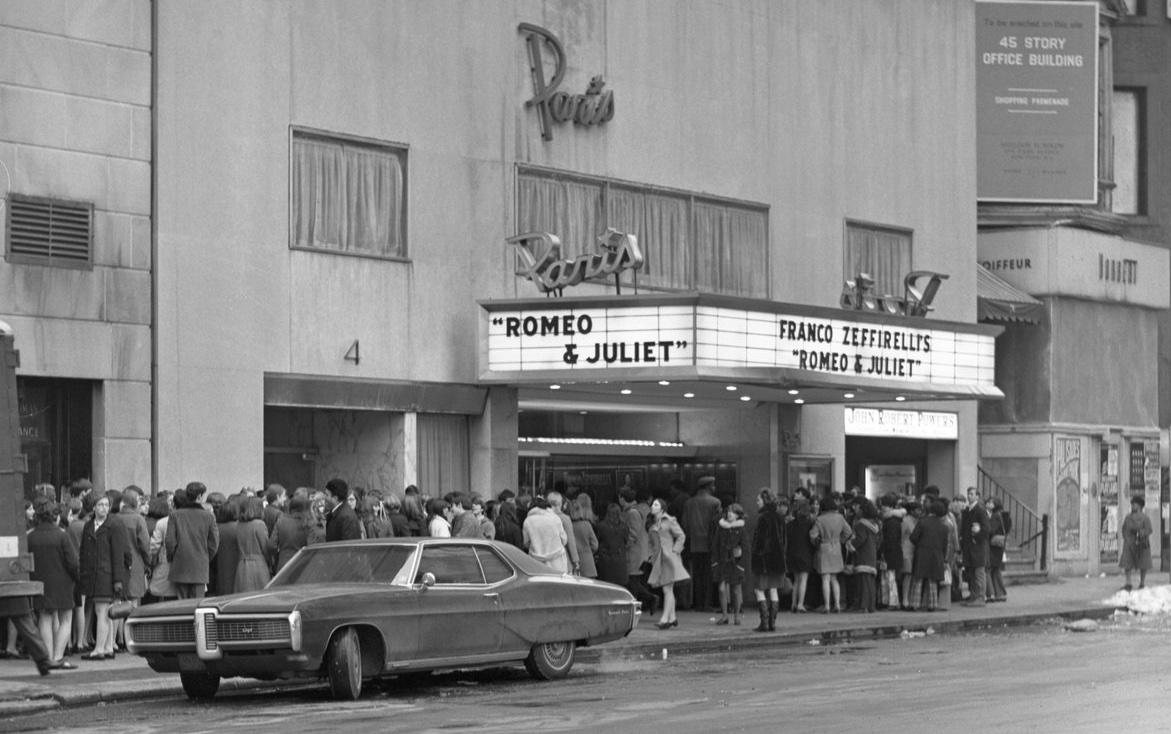
Franco Zeffirelli’s Romeo and Juliet ran for almost an entire year from 1968-69. Director Claude Lelouch’s A Man And A Woman and the Marcello Mastroianni comedy Divorce Italian Style would play for over a year.
Merchant and Ivory preferred to debut all their films here; A Room With A View played almost nine months, Howard’s End seven.
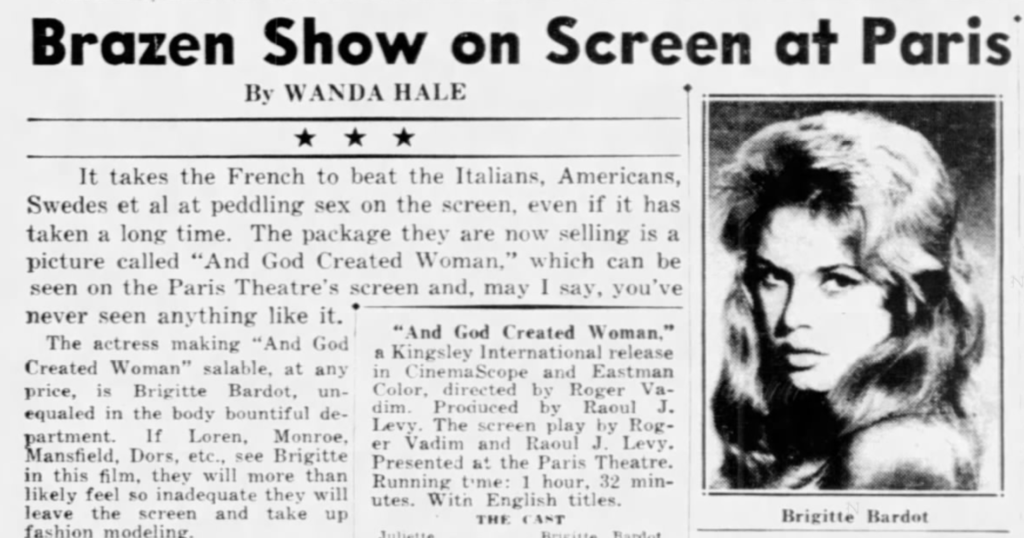
Below: The Paris, no stranger to sex and scandalous screenings
It’s had equally grand success with revival screenings as well, most notably Luis Buñuel’s 1968 drama Belle De Jour starring Catherine Deneuve which re-debuted in theaters in 1995 with the highest single-screen gross for a foreign film ever.
(I saw Lawrence of Arabia for the very first time here in 1997. Anytime the Paris shows a great film like that, I highly recommend you cancel all your plans and go.)
Pathe pulled out of the Paris Theatre in 1990 with intentions of opening another screen in New York. (It never did, but Pathe is still in business, and you can find their film on most art-house screens in New York.)
Loews operated the theater as the Fine Arts Theatre before the landlord bought them out and renamed it back to the Paris.
Courtesy Wikimedia Commons/DavidSchwartzNetflix
Cut to modern day and the threat movie theaters face from at-home streaming services.
Hundreds of theaters across the country have closed in the past ten years, and many have had upgrade interiors and food and drink offerings in order to survive.
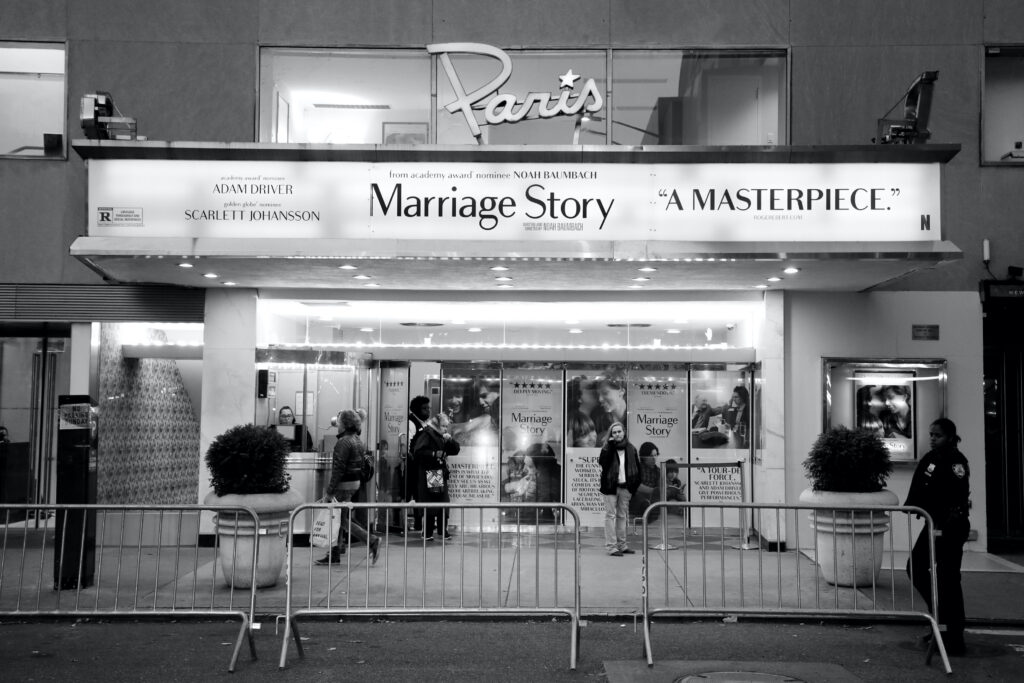
The Paris, however, was actually saved by a streaming service — Netflix. The popular streaming service purchased the theater in 2019 and began launching some of its films there — most with awards-season potential.
From the Paris’ website: “Since opening an engagement of Marriage Story on November 6, 2019, Netflix operates the theater, giving new life to a landmark of New York moviegoing. The Paris is New York’s movie palace, and Netflix will honor the theater’s history while offering the finest in contemporary cinema, introducing the theater to a new generation of film lovers.”
You can find a lot of fun personal recollections by former ushers and managers at Cinema Treasures.
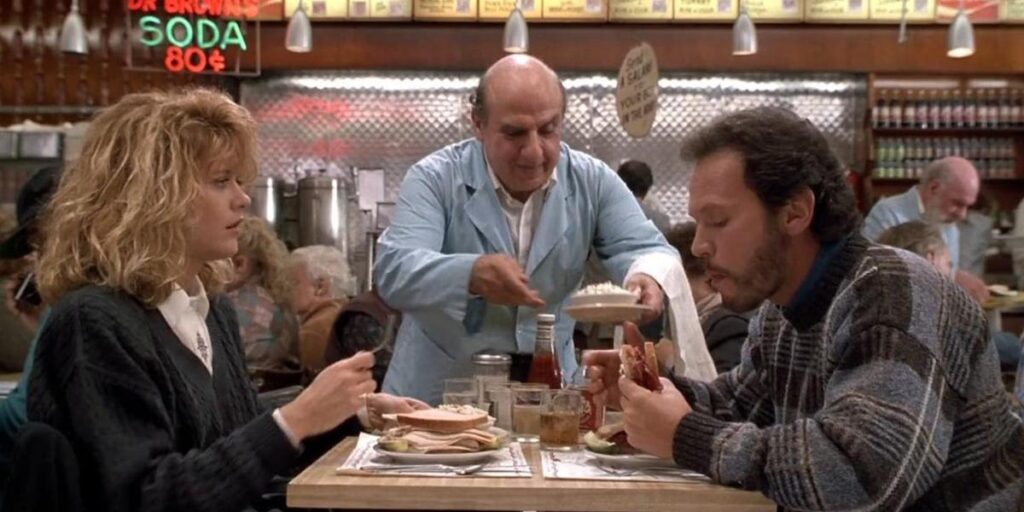
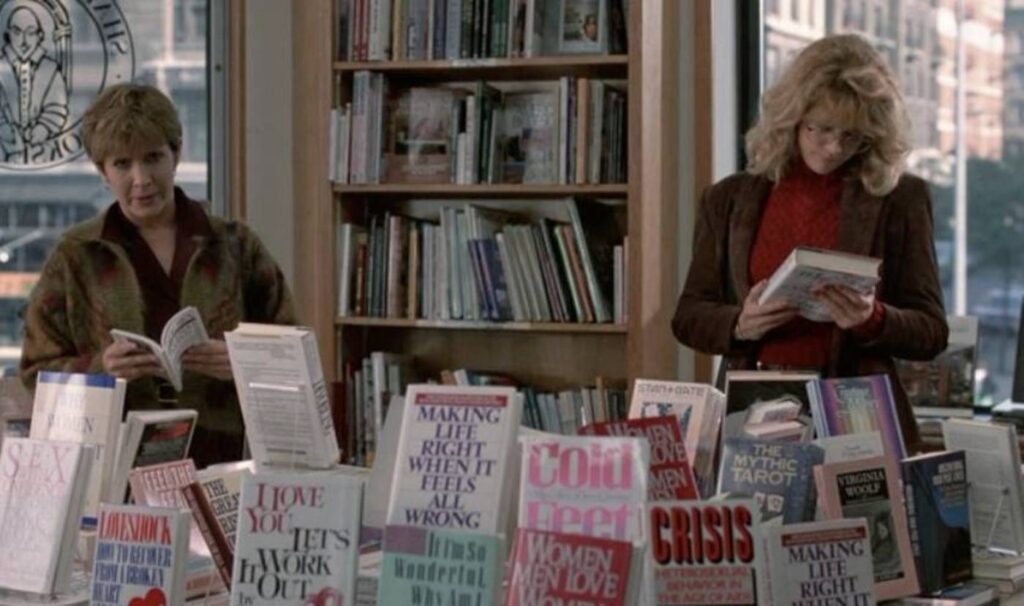
I’LL HAVE WHAT SHE’S HAVING.When Harry Met Sally, directed by Rob Reiner and written by Nora Ephron, is more than just a simple romantic comedy about opposites Harry (Billy Crystal) and Sally (Meg Ryan in a breakthrough performance).
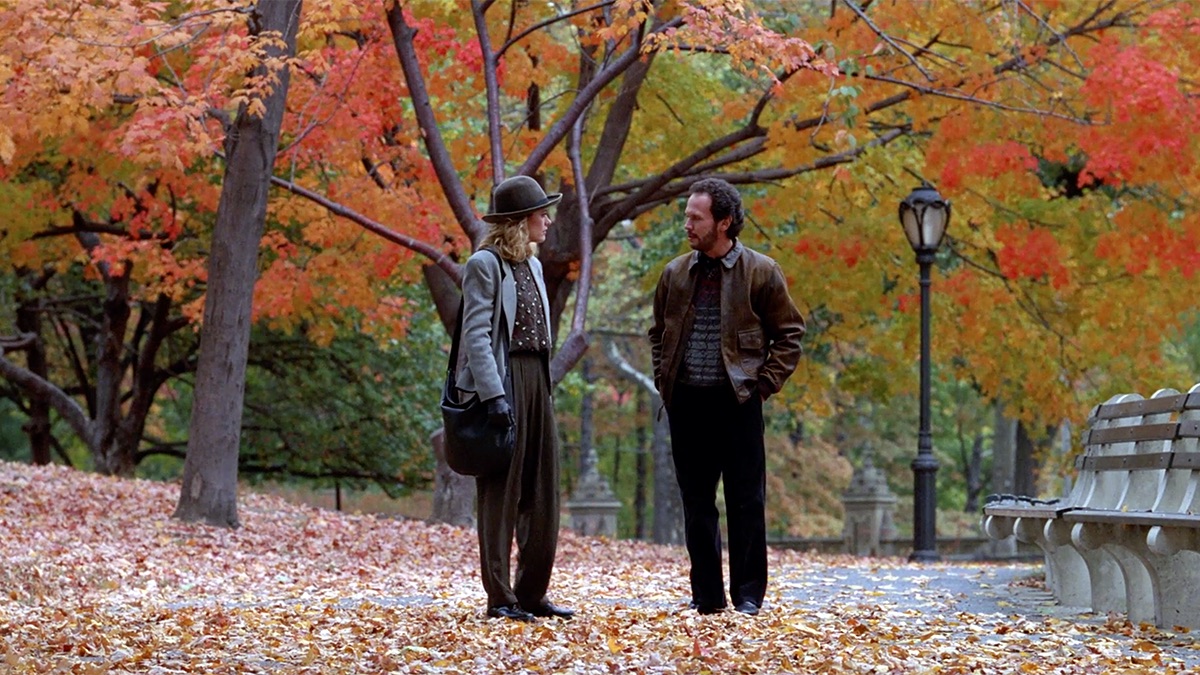
The film reinvents New York City for the screen. Its postcard-perfect scenes of autumn leaves in Central Parkand breathtaking walks through the Upper West Side would have been unheard of at the movies ten years before. When Harry Met Sally helped redefine the metropolis after almost two decades of dark, gritty depictions on screen.
Listen in as Greg and Tom recap the story and explore some of the historical context for the film. Featuring a glorious lineup of locations including the Central Park boathouse,the Metropolitan Museum of Art and the Puck Building.
HowdoIlistentheBoweryBoysMovieClub? Once you’re signed in on Patreon, you’ll see a private RSS link that can be put directly into your favorite podcast player. Even easier, it can also be played directly from the Patreonapp if you’re signed in.
Your support on Patreon assists us in producing our podcast and website and it helps as we endeavor to share our love of New York City history with the world.
Shouldyouwatchthemoviebeforeyoulistentothisepisode? This podcast can be enjoyed both by those who have seen the film and those who’ve never even heard of it.
We think our take on When Harry Met Sally might inspire you to look for the film’s many fascinating (but easy to overlook) historical details, so if you don’t mind being spoiled on the plot, give it a listen first, then watch the movie! Otherwise, come back to the show after you’ve watched it.
Where can you watch When Harry Met Sally? It’s available to rent on all movie streaming services and is free to watch on HBO Max.
EPISODE 344 We’ve now made our Bowery Boys Movie Club episode on the film Ghostbusters available for everyone. Listen to it today wherever you get your podcasts.
This episode is brought to you by those who support the Bowery Boys Podcast on Patreon. Join us there to get additional episodes of the new Patreon-only Bowery Boys Movie Club — including the latest episode on When Harry Met Sally.
This episode is partially based on this in-depth article on the New York City history moments featured in the film, originally written in 2013. Give it a read while you listen along!
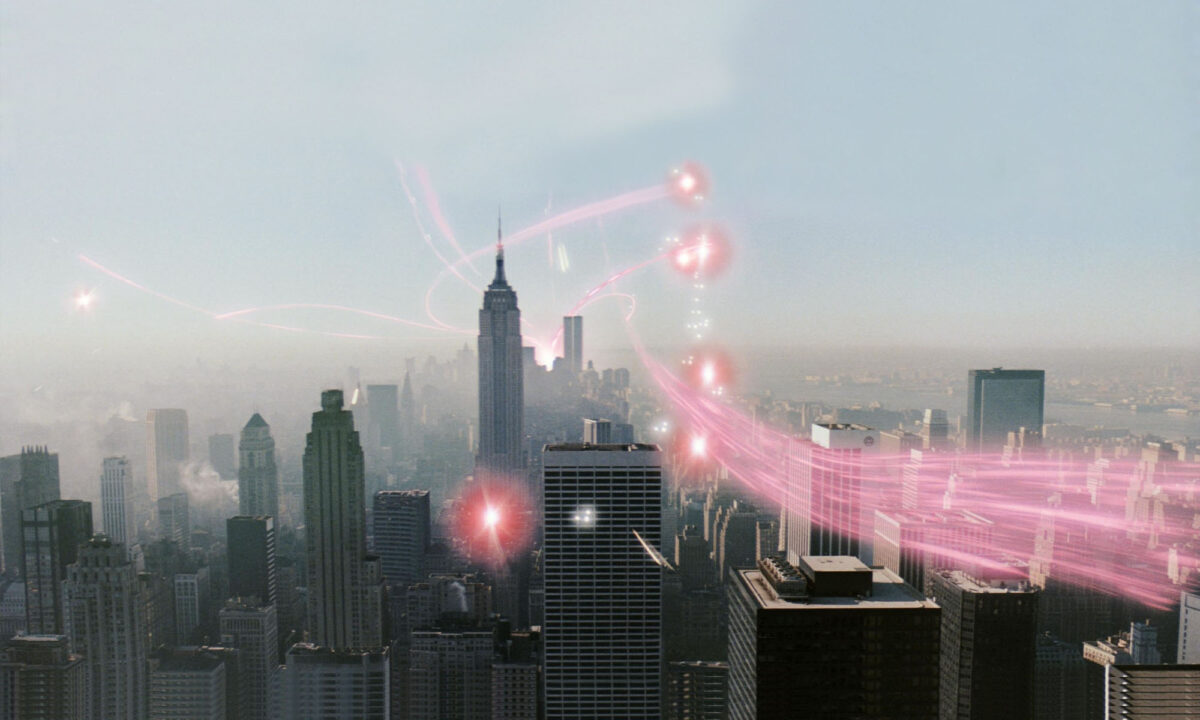
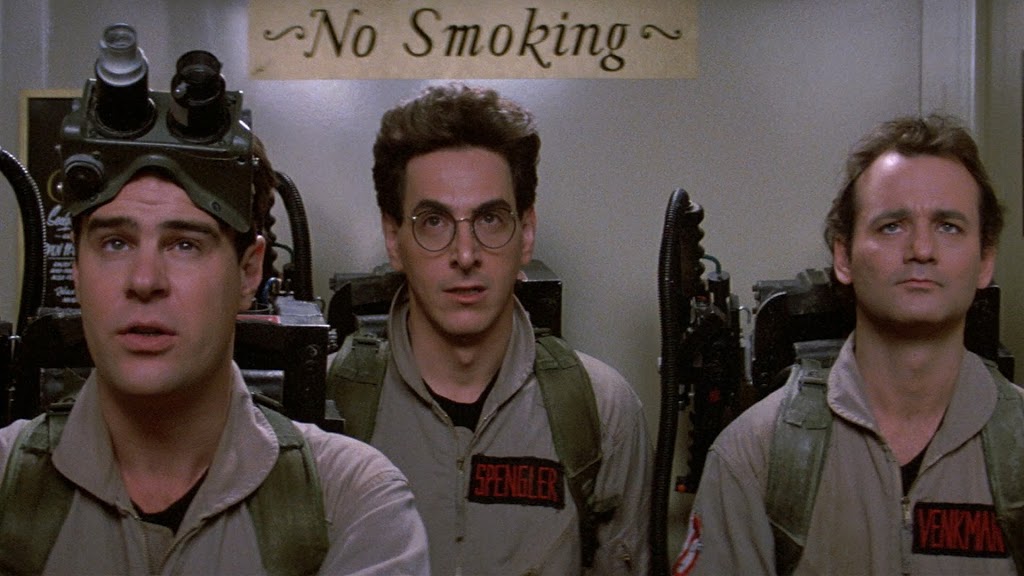
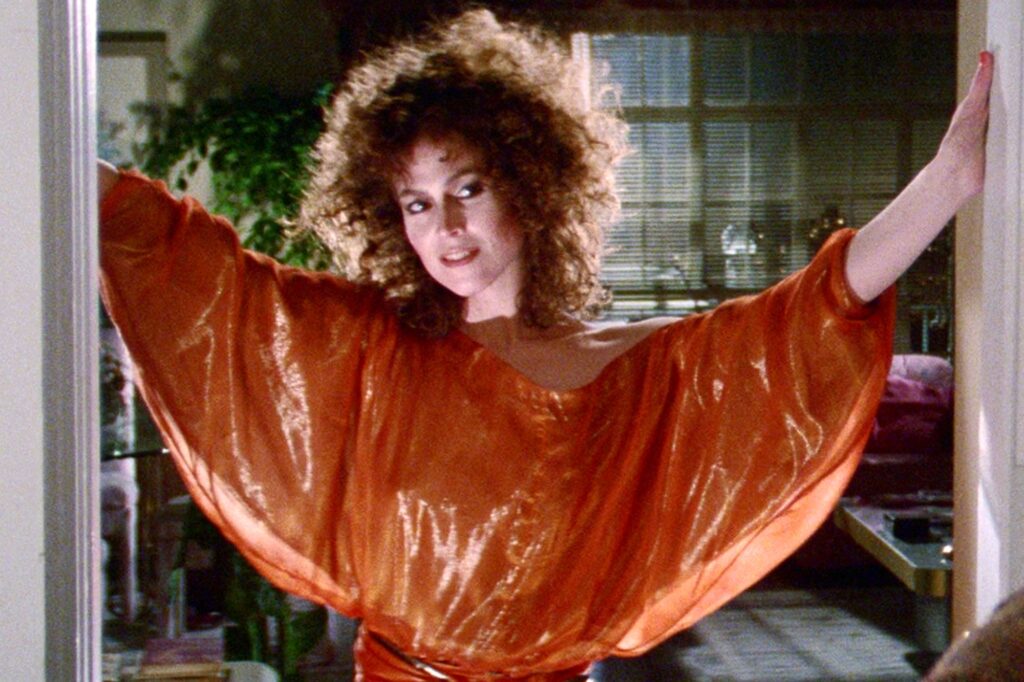
Ghostbusters, the goofy, supernatural tale starring Bill Murray, Dan Ackroyd, Harold Ramis, Ernie Hudson, and Sigourney Weaver, was one of the biggest hits of 1984, a rare blend of wry comedy, special effects and spectacular New York City landscapes.
Despite its preposterous premise — that ghosts look either like oozing fat blobs or Sheena Easton-ish supermodels — the film flawlessly displays the easy comic talents of its stars and reveals a New York City with only monsters as its greatest threat.
There have been both believers and cynics from New York history who have attempted to prove the existence of supernatural forces and have even tried to purge them from the city.
From there, I took a deeper look into the historical people, places and events depicted in the film, if not only to find evidence of New York’s ghostbusting forefathers, then at least to enjoy the pop culture references of the early 1980s.
Ghostbusters was a mainstream offering, so it goes very light on its urban commentary of a city picking itself up out of withering debt.
Its ghosts are quite democratic, in fact, terrorizing libraries, public places, ethnic neighborhoods and wealthy condominiums alike.
Here are 25 fascinating pieces of trivia about Ghostbusters, putting the film within the context of New York City history. Obviously there are a ton of spoilers here, in case you haven’t yet seen it.
But hopefully I’m giving you a good excuse to catch on television this Halloween!
1)Ghostbusters is set in 1984, late October-early November, judging from the dates on newspapers and magazines which appear midway through the film. But the film’s release date was in June 1984, so technically the film documents future events.
The appearance of Sumerian gods on the Upper West Side and a team of wise-cracking ghost exterminators certainly would have been the top story of the year.
Real life is not as magical. The big story in New York City that year came over a month later, when Bernhard Goetz shot four men who tried to mug him in the subway.
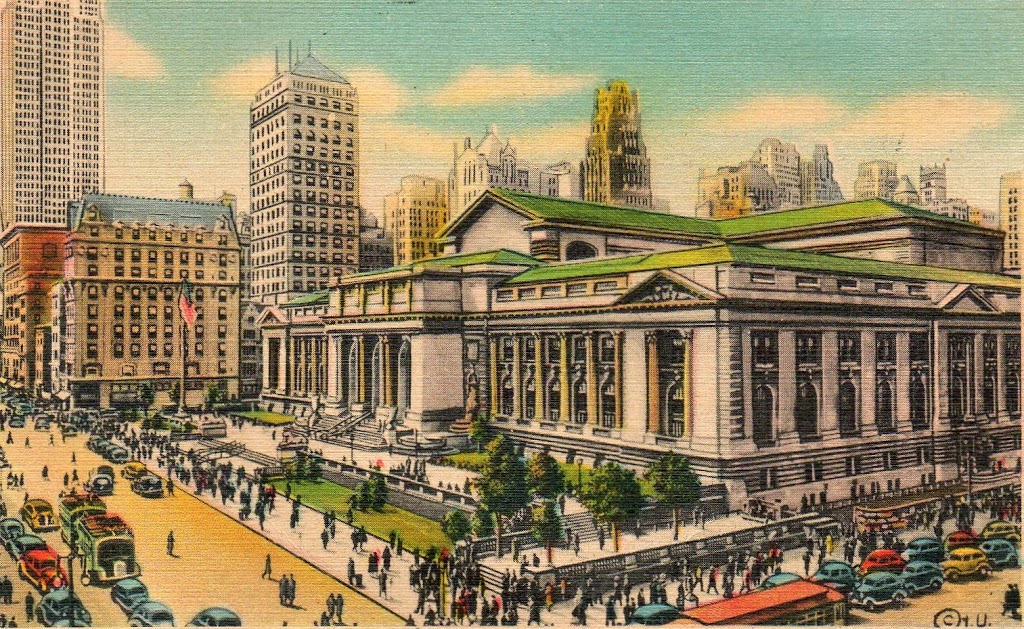
2) The New York Public Library, setting for the delightfully shushy spectre in the opening scene, may actually be haunted. After all, it sits on land that was once a burial ground.
According to historian Charles Hemstreet, writing in 1899, “The ground between Fifth and Sixth Avenues, Fortieth and Forty-second Streets, now occupied by Bryant Park and the old reservoir, was purchased by the city in 1822, and in 1823, a potter’s field was established there, the one in Washington Square having been abandoned in its favor.”
By the way, the two lions (named Patience and Fortitude) are prominently featured in the opening, a sly parallel to the stone monsters which will appear later.
Photo courtesy Bain News Service
3) Our ghostbusting heroes are originally located at Columbia University, in Weaver Hall (actually Havemeyer Hall). Although there is no actual department of paranormal psychology, Columbia does have a connection to one of New York’s earliest institutes of paranormal study.
The American Society for Psychical Research was founded in 1884 — exactly one century before Ghostbusters — as a legitimate organization looking to separate spiritualist quacks from actual supernatural phenomena.
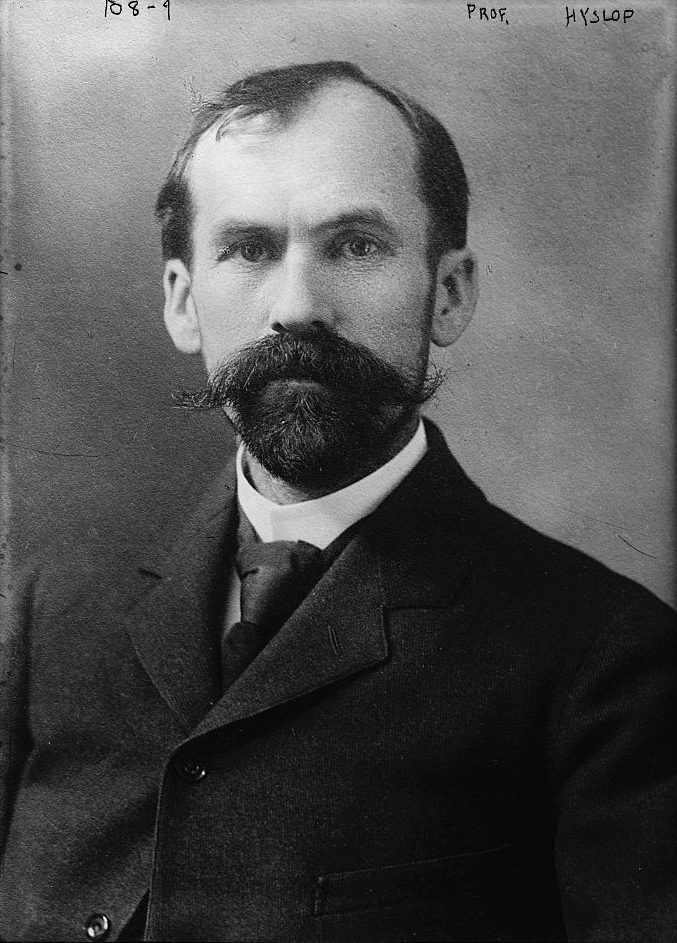
Its most prominent leader was James H. Hyslop (above), a former professor of ethics and logic at Columbia University. Â His early studies read like a jazz-age X-Files, investigating ghosts, spiritual possession and a strange variety of mental abilities. Â (We speak of Hyslop in two of our old ghost story podcasts, investigating a case of spiritual harassment and contact via a Ouija board.)
4) While no hauntings are actually displayed at Columbia University in the film, they certainly could have been.
The campus is located on the site of old Bloomingdale Insane Asylum, where more than a few mentally disturbed individuals met their end.
Columbia bought the facility in the 1880s and demolished most of it to make way for their McKim, Mead and White-designed campus. But one structure still remains — the Macy Villa, a home for mentally-troubled rich gentlemen, in today’s Buell Hall, home of La Maison Francaise.
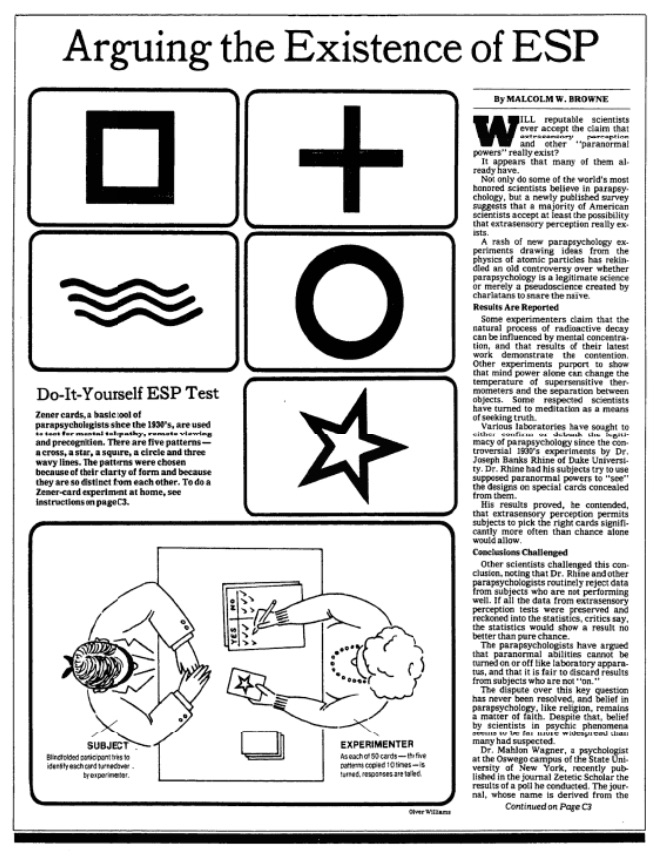
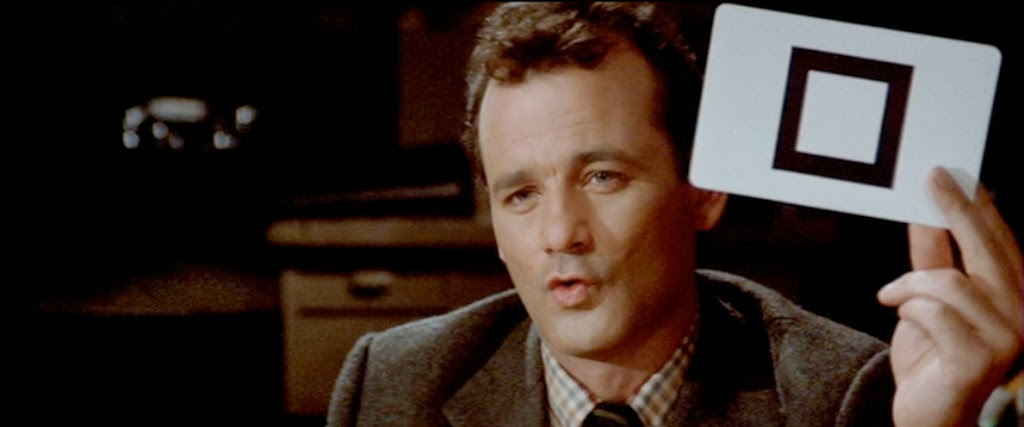
5)The deck of cards used by Dr. Venkman (Bill Murray) to test the telepathic abilities of his patients (and to flirt with the pretty blonde) are called Zener cards, invented by Karl Zener and J. B. Rhine, who was inspired to enter psychical research after listening to a lecture by author and paranormal cheerleader Sir Arthur Conan Doyle.
In 1980, the New York Times printed a set of Zener cards in its January 29, 1980 edition. “The reader may judge for themselves.”
6) Dr. Venkman’s continued skepticism gives Murray a host of excuses to stare at the camera and mug sardonic. But his character probably has the most in common with New York’s original ghostbusters, especially adventurer and conjurer Joseph Rinn.
He and his childhood friend Harry Houdini basked in debunking frauds while keeping alive the illusion of magic and mystery for their acts.
Rinn most famously held a demonstration at Carnegie Hall where he taunted mediums and mystics to exercise their powers for a prize pot of $10,000. Nobody ever won the money.
7)Manhattan City Bank, depicted in the film, is not real. Â Coincidentally, the scene was filmed at another bank directly across the street from the New York Public Library at Fifth Avenue/41st Street. In fact, you can see that the library is surrounded by scaffolding in the movie.
What was the scaffolding for? In 1982, the library embarked a $20 million renovation project. It’s difficult to imagine today, but this classic New York institution had been badly abused over the years.
The 1982 renovation was meant to return the building to its original glory. “It is a restoration in some ways, a modernization in others,” said the Times. “[T]his ambitious plan emerges out of the conviction that this building is as much a part of our cultural heritage as the billions of words that it contains.”
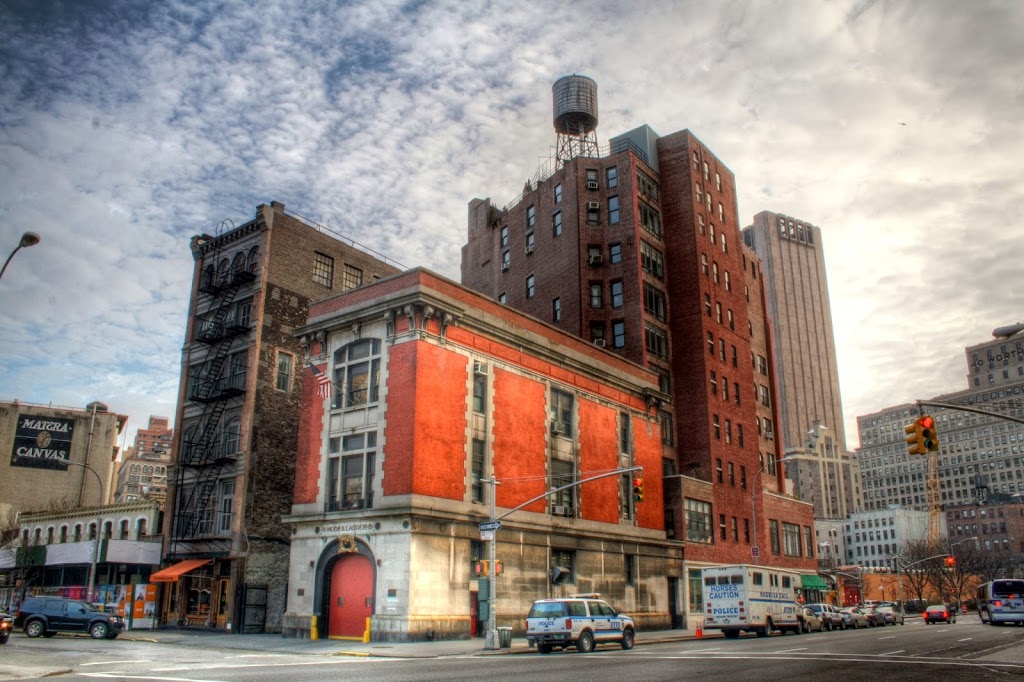
Ghostbusters headquarters — the TriBeCa fire house on North Moore. Pic courtesy Phillip Ritz
8) Perhaps the most beloved New York site from the film is Ghostbusters headquarters, the Hook and Ladder Company No. 8 fire station at the corner of North Moore Street and Varick Street.
If the building looks awkwardly slender to you, there’s a good reason — half the building was demolished in 1914 when Varick Street was widened. Several other buildings, including St. John’s Chapel, owned by Trinity Church, were not so lucky, wiped out entirely by Varick’s expansion.
Spengler (Harold Ramis) says of the firehouse. “I think this building should be condemned….The neighborhood is like a demilitarized zone.”
In fact, the converted lofts and warehouses of TriBeCa (Triangle Below Canal) — the name was slightly over a decade old in 1984 — were a haven for artists, designers and musicians by this time and probably deemed ‘gritty’ by the standards of 1980s American film goers.
9)Sigourney Weaver is probably the most New York-centric star of Ghostbusters and a perfect choice for the role of Dana, the sophisticated lady possessed by an ancient God. (Dana’s in the New York Philharmonic after all!)
Weaver was a regular on the off-Broadway stage, an offbeat star who once starred in a Christopher Durang play about the Titanic. Her first two film performances are in two 1970s New York film classics — Serpico and Annie Hall. 10) As Sigourney arrives at her apartment building, you can clearly identify Checker Cabs passing on the street, even though that were already a dying breed by this time, the last rolling out from its Michigan plant in 1982.
11) The Sedgewick Hotel, site of the Ghostbusters’ most conspicuous catch, is one of several Los Angeles locations pretending to be in New York.
However, if they wanted a haunted hotel near the New York Public Library, they could have looked no further than the Algonquin Hotel, two blocks north on West 44th Street, notoriously famous for the ghosts of the Round Table.
The Sedgewick is played in the film by L.A.’s Biltmore Hotel, site of several Academy Awards ceremonies and itself haunted by a famous ghost, that of Elizabeth Short, aka the Black Dahlia.
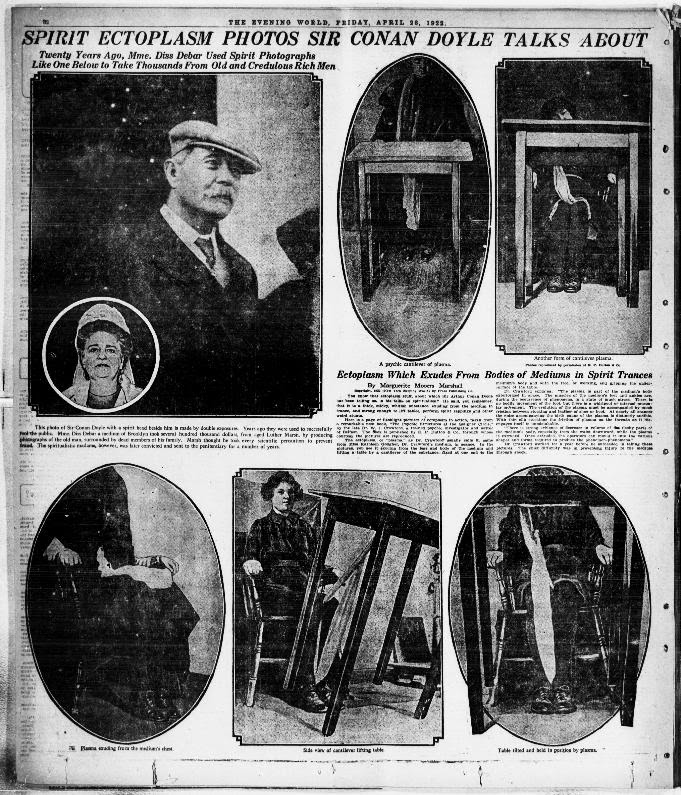
12) Ectoplasm isn’t just a cool word for ‘slime’. In 1922, the New York Evening World ran photographs of mediums coated in ectoplasm.
Sir Arthur Conan Doyle described it as “thick, sticky, whitish substance exuding from the medium in trance and strong enough to lift tables, perform spirit rappings and other weird stunts.”
13) A New Jersey high school student named Jeff Nichols found momentary fame when he accidentally appeared as an extra in the film, during the brief scene in which Bill Murray and Dan Ackroyd storm through Rockefeller Center. (Did they not sign release forms back then?) The scene appears in a montage of the crew’s many ghost-exterminating antics.
”I got a bunch of phone calls from friends who saw it, saying, ‘Hey, Jeff, you’re in the movie,’ ” said a surprised Jeff last week. ”It’s strange to think that I’m in a movie that’s playing all over the country…… I guess it’s like being part of history.”
No offense to Jeff, but I’m kinda more fascinated in another brief scene during this montage, when the Ghostmobile speeds past Umberto’s Clam House in its original location (the corner of Mulberry and Hester).
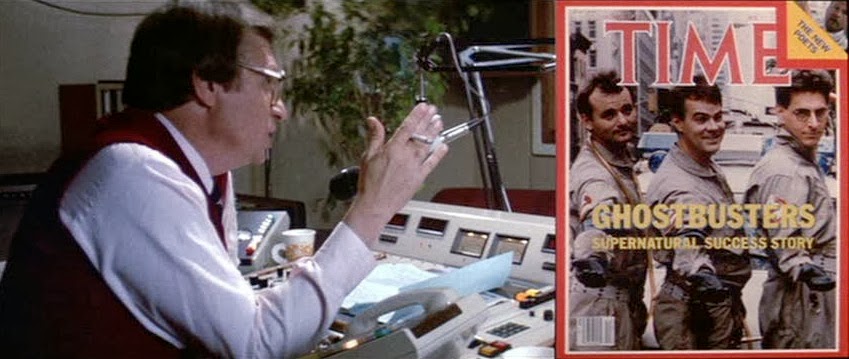
14)Larry King on the radio in Ghostbusters in 1984:
15) There’s a silly montage of 1984 publications that go swirling by. People Magazine touting the trio also reveals “Princess Di Expecting Again!” The magazine (supposedly from October 1984) is a little off — Prince Harry was born on September 15, 1984.
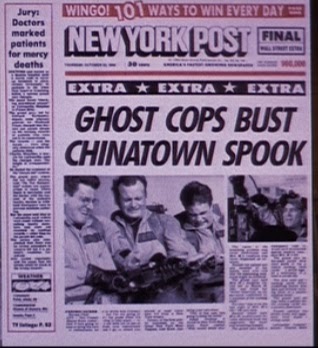
The New York Post also celebrates one off-screen Ghostbusters’ victory: GHOST COPS BUST CHINATOWN SPOOK.
In the early 1980s, the Post gave $50,000 a week in its WINGO! lottery promotion. According to author and former Post reporterCharlie Carillo, the contest illicited some rather mysterious winners:
“One Wingo winner showed up soaked in sweat and literally looking over both shoulders. He wouldn’t even tell me his real name, and he covered his face with his hands when the photographer lifted the camera. ‘No pictures!’ he cried through his fingers. ‘Can’t have my picture in the paper!'”
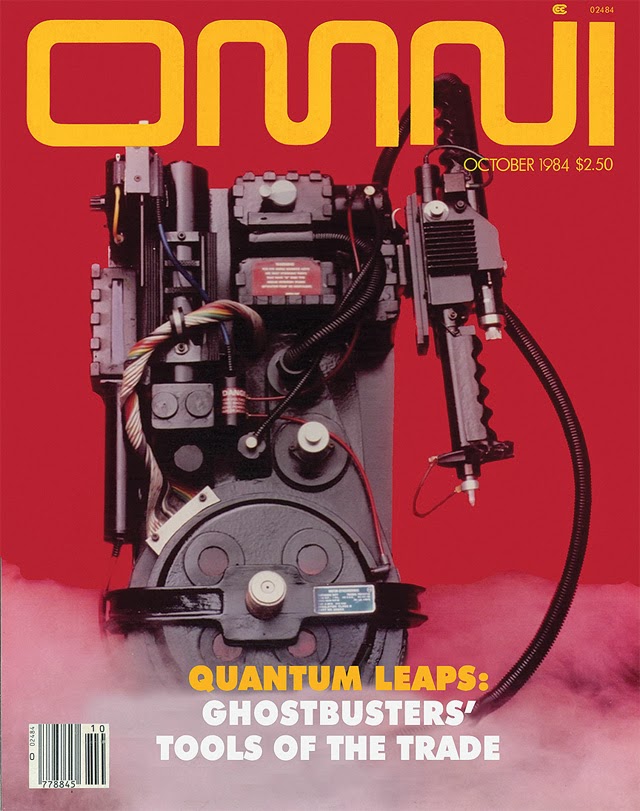
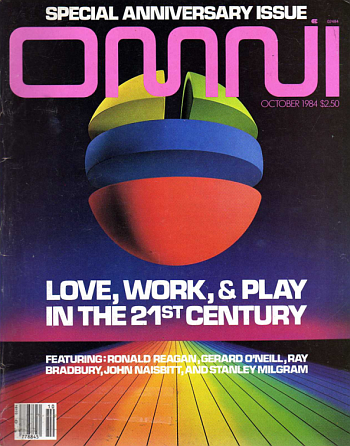
16) Also given credible prominence during this montage is the long-gone OMNI Magazine, a science publication with the unique distinction of being one of the first magazines to simultaneously publish a digital edition (in 1986).
Here’s a copy of the October 1984 issue from the movie, and the actual October 1984 issue:
17) Dana listens to Casey Kasem gab about the Ghostbusters during his Top 40 countdown show. His wife Jean Kasem appears later in the movie as Rick Moranis’ ditzy date.
Had we been privy to the entire broadcast, we would have heard that the top five songs that week were (in Kasem countdown order): 5) “Lucky Star” by Madonna, 4) “Purple Rain” by Prince, 3) “Hard Habit To Break” by Chicago, 2) “Caribbean Queen (No More Love On The Run)” by Billy Ocean, and 1) “I Just Called To Say I Love You” by Stevie Wonder.
18) Veteran New York broadcaster Joe Franklin appears on television, asking Murray, “I’m sure there’s one big question on everybody’s mind, and I imagine you are the man to answer that. How is Elvis, and have you seen him lately?”
Franklin, presumably recording from WWOR‘s brand-new studios in Secaucus, NJ, was touching on a hot-button issue in 1984. That year, some believers found proof that Elvis Presley was actually still alive, due to an infamous photograph that emerged in the press of Elvis with Muhammed Ali. A video of that investigation is below:
19) A supernatural upheaval of godlike forces emerges from Dana’s icebox, located in a penthouse at 55 Central Park West. In the film, this building, constructed in 1929, was made with cosmic connections in mind, with a super-conductive antenna, “pulling in and concentrating spiritual turbulence.” Stantz (Dan Ackroyd) adds, “The architect was either a certified genius or a pathetic wacko.”
In Ghostbusters lore, the architect is Ivo Shandor. In reality, the building was constructed by the less immortal architectural firm of Schwartz and Gross, best known before then for their building The Majestic on West 75th Street. 55 Central Park West has been home to Rudy Vallee, Ginger Rogers, Donna Karan and Calvin Klein.
There does appear to be something strange going on with the building. According to the latest AIA Guide: “[I]f the sun seems brighter at the top than the bottom, it is brighter. Â A flush of brick from red to yellow rises from the second floor to the sun.” Gozer is impressed.
20) Louis Tully (Rick Moranis) just wants somebody to like him. Although a “nerd” in the classic 1980s nerd style, he’s pretty much a prototype for the modern hipster. In a futile effort to get Dana to his party, he proclaims that they will “play some Twister, do some breakdancing.”
1984 was the year that this form of street dancing went mainstream, with films, fashion and music that year monopolizing on the trend. Breakin‘ was in theaters for a month already when Ghostbusters opened on June 8, 1984. It handily beat a competing film making its debut that same week — Beat Street (see below).
Believe it or not, Beat Street debuted on more screens than Ghostbusters, but lost in the box office battle.
21) Louis runs into Central Park to escapes Gozer’s demon minion but is cornered at Tavern On The Green. It would have been quite a party that Louis and the hellbeast were crashing, as the fancy restaurant was celebrating its 50th anniversary that very month.
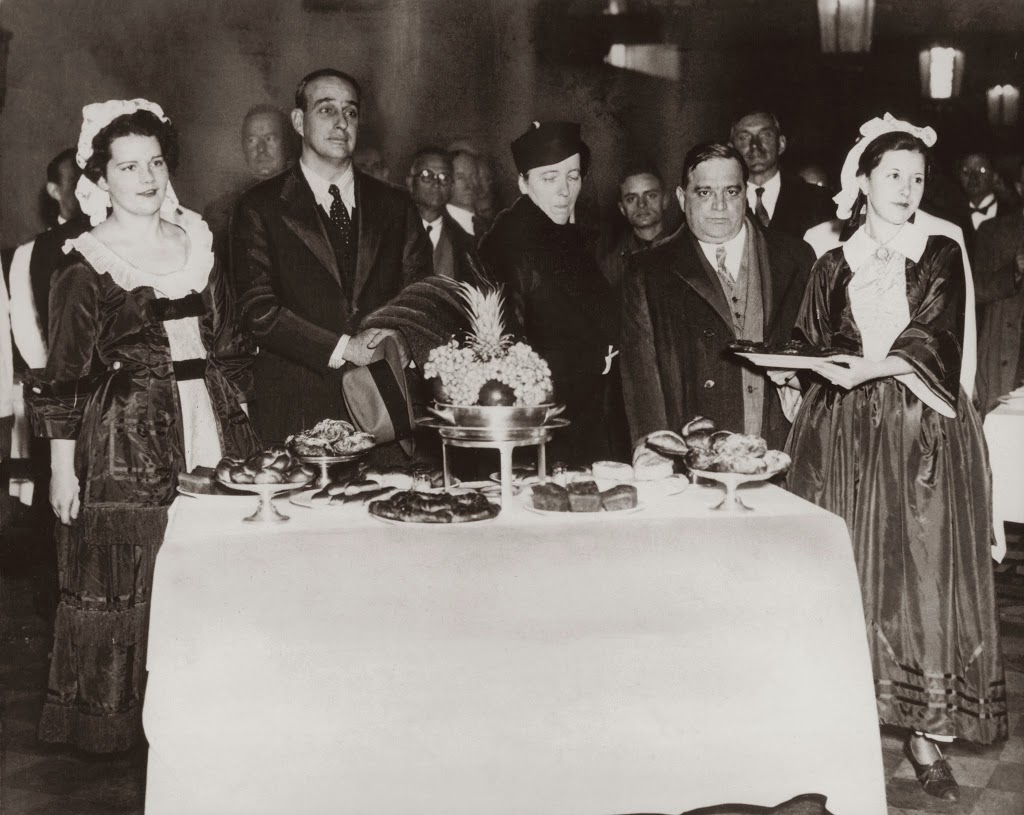
Tavern On The Green opened on October 20, 1934, with a lavish dinner attended by Mayor Fiorello LaGuardia and parks commissioner Robert Moses (pictured below, image courtesy New York Times)
22) Later, a possessed Louis (as the Key Master) streaks through Times Square in a demoniacal rage, looking for the Gate Keeper.
It’s a fairly nondescript early 80s midtown landscape, but look for the curious chain restaurant WienerWald in the background.
The German franchise had several locations throughout the United States but was unable to turn Americans on to its menu — mostly chicken, despite the name.
One intrepid Ghostbusters fan has successfully located the precise block on Seventh Avenue where this WienerWald was located.
23) With the city in crisis, the Ghostbusters are invited to City Hall for a meeting. As they enter the building, you can clearly see the banner for an exhibit in the rotunda called “Furnishing the Streets: 1902-1922.”
Because the banner could not be removed for some reason, the filmmakers cleverly obscure the exhibition’s date with a flagpole. However you can still make out that it says 1983.
24) The Stay Puft Marshmallow Man in his deliciously savage rage stomps up Central Park West from Columbus Circle. The most significant landmark destroyed by this sugary-sweet demon spawn is Holy Trinity Lutheran Church which sits next to 55 Central Park West.
The picturesque Gothic building has been a magnet for chaos from the very beginning. Over 3,000 people filled the street when its cornerstone was laid in November 1902, causing a traffic meltdown.
According to the New York Tribune, “It was as much as the police could do for a time to prevent people from being run down by trolley cars and automobiles, as many people were compelled to stand in the middle of the street.”
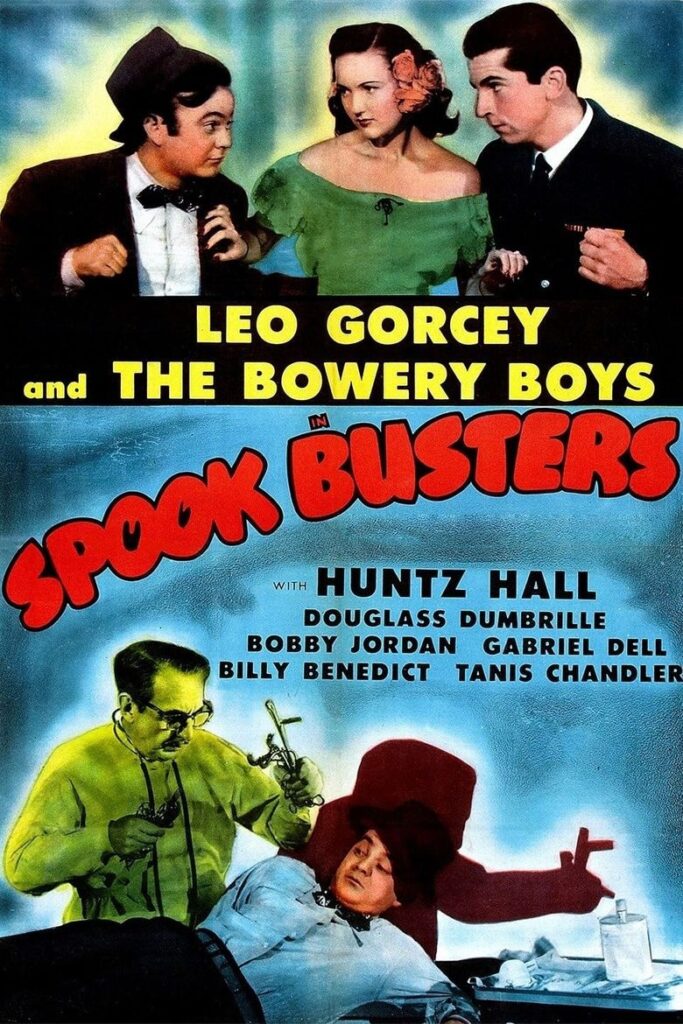
25) Our brave heroes vanquish Gozer and return to the street, greeted to the applause of grateful New Yorkers. I would be remiss, however, if I didn’t mention another set of Ghostbusters who once scoured Manhattan of its supernatural nuisances: the 1940s wacky Bowery Boys comedy troupe made a film in 1946 called Spook Busters.
Instead of a fire station, these exterminators of unwanted phantoms set up shop in a candy store.
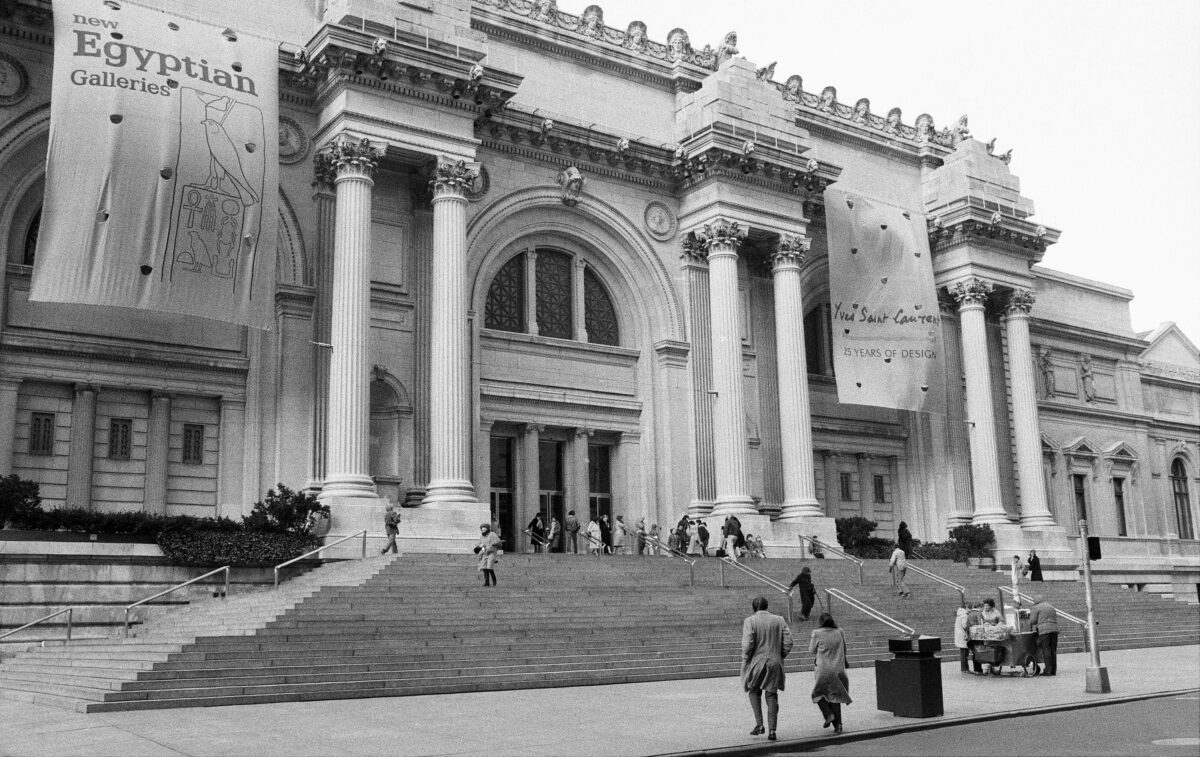
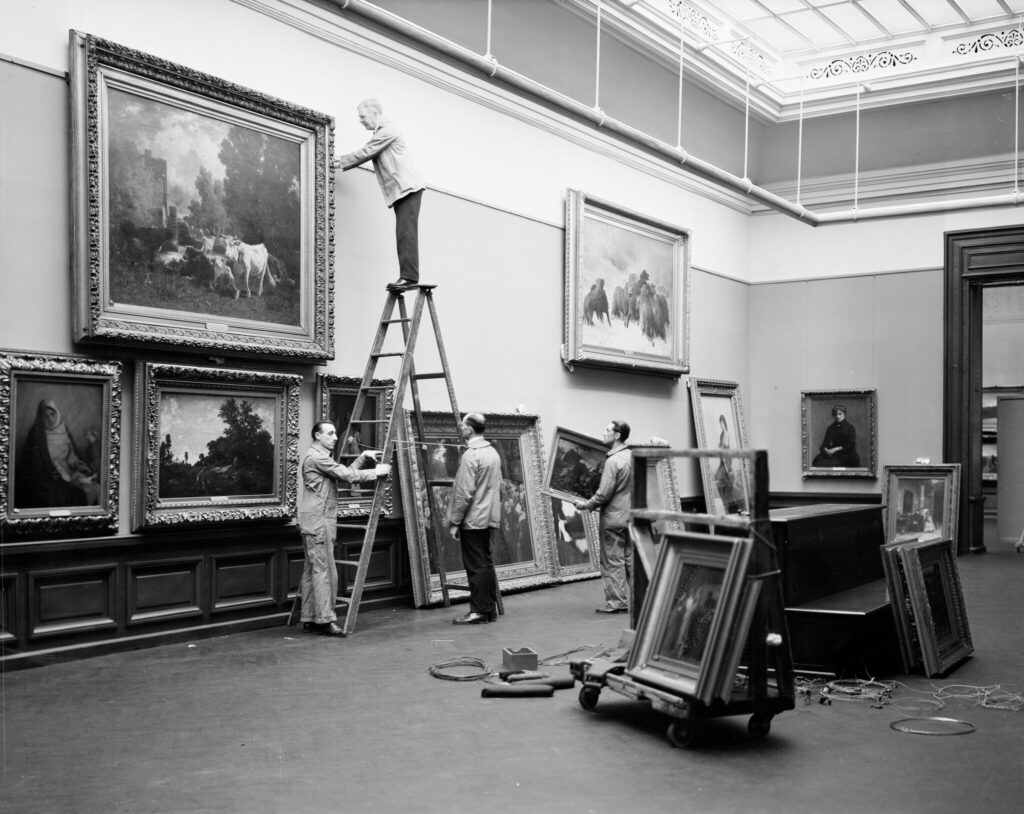
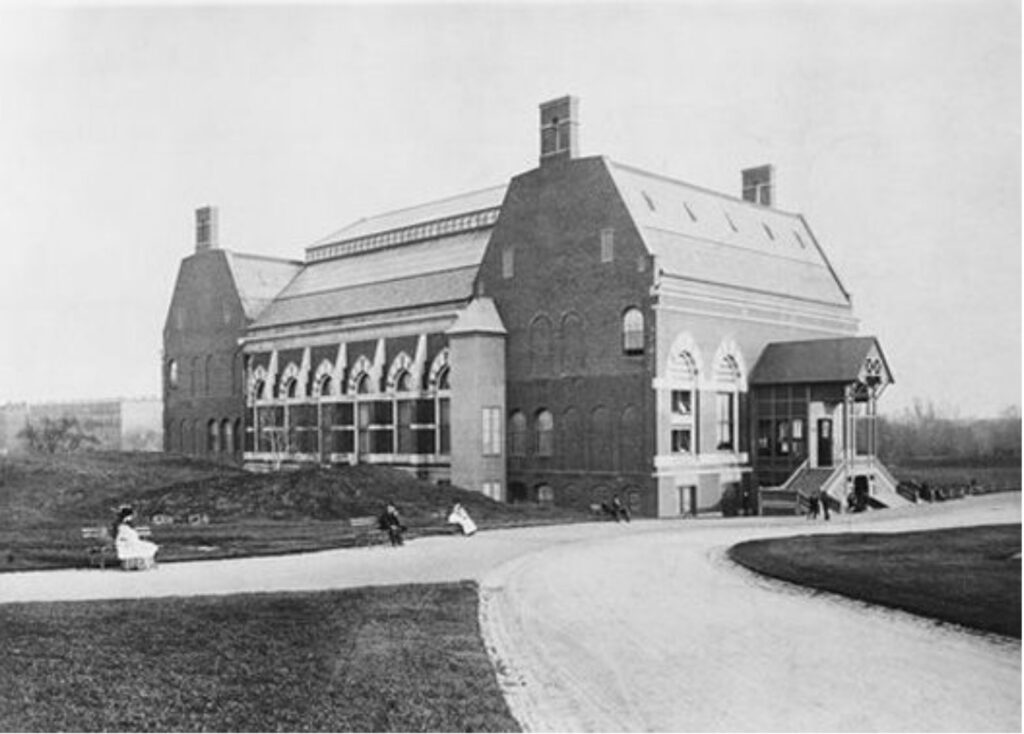
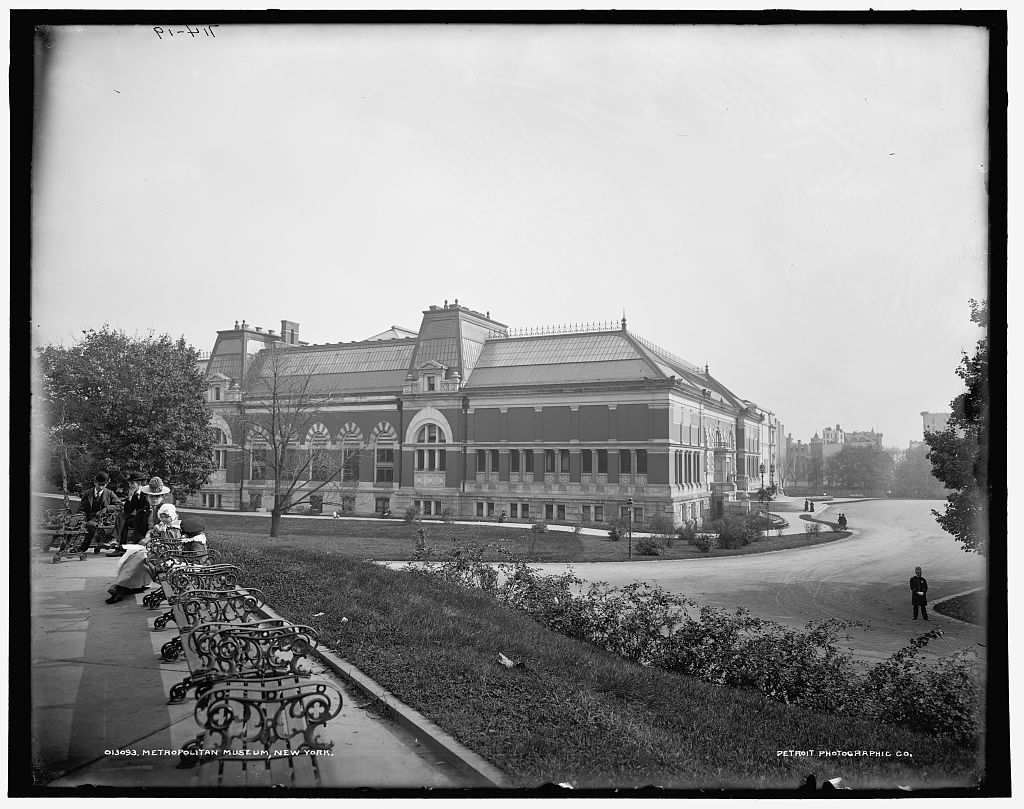
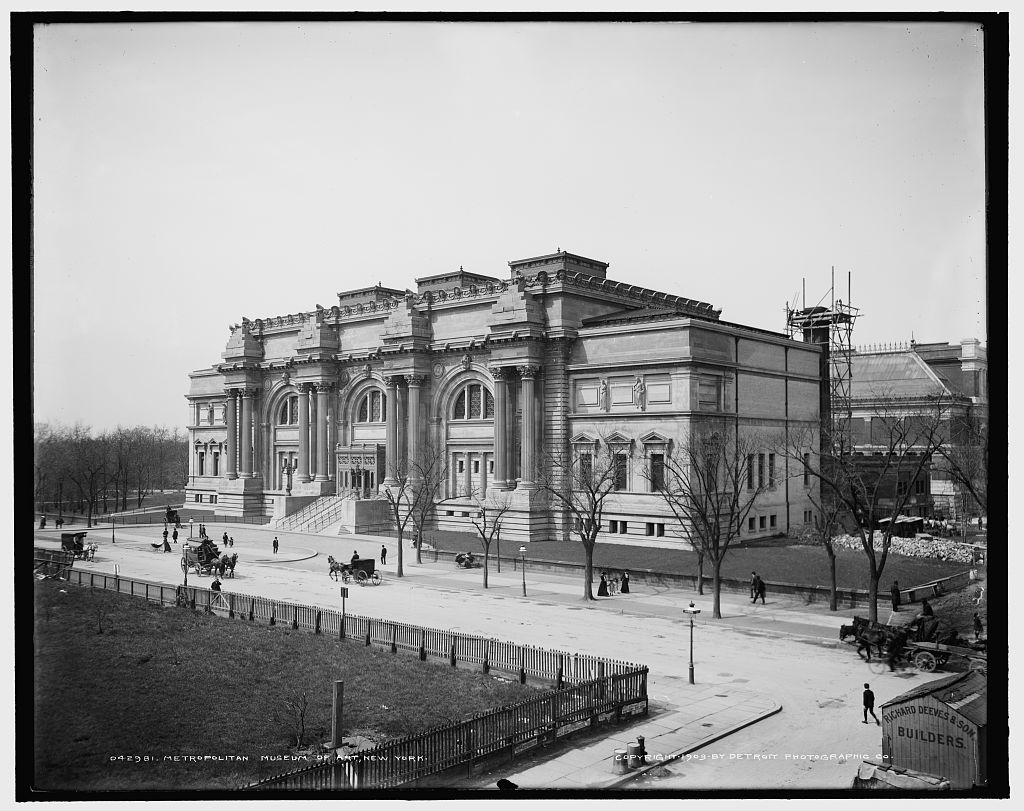
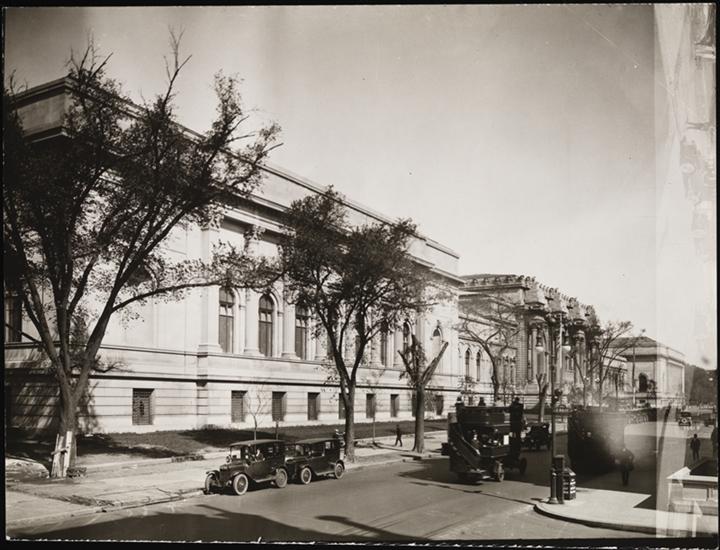
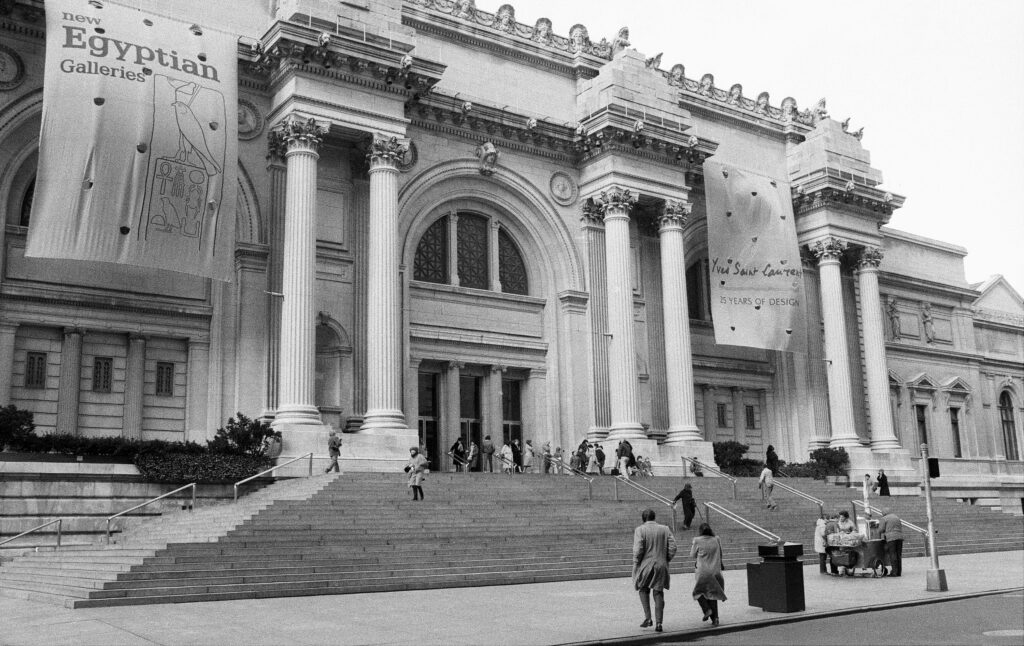
EPISODE 341 Celebrating the history of the Metropolitan Museum of Art in the 150th anniversary year of its founding — certainly one of the strangest years in its extraordinary existence.
The Met is really the king of New York attractions, with visitors heading up to Central Park and streaming through the doors by the millions to gasp at the latest blockbuster exhibitions and priceless works of art and history.
And who doesn’t love getting lost at the Met for an afternoon — wandering from the Greek and Roman galleries to the imposing artifacts within the Arms and Armor collection and the treasures of the Asian Art rooms?
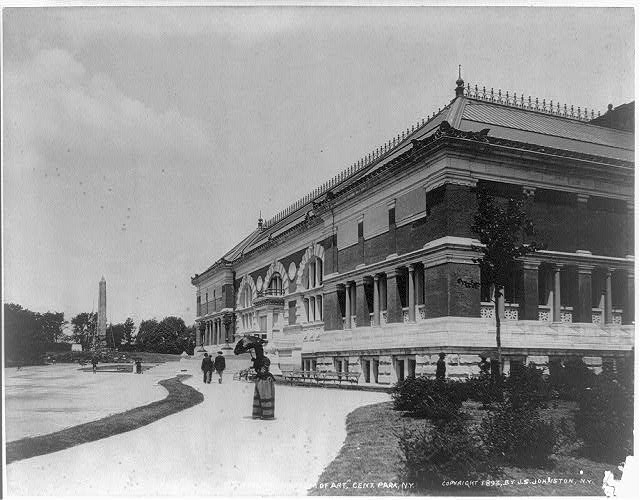
The Theodore Weston addition to the Met 1893, J.S. Johnston, Library of Congress
But this museum has a few surprising secrets in its history — and more than a few skeletons (or are those mummies?) in its closet.
WITH Ancient temples, fabulous fashions, classical relics, Dutch masters, controversial exhibitions and the decorative trappings of the Gilded Age.
November 1928, photo courtesy The Metropolitan Museum of Art
AND Find out how the museum building has evolved over the years, employing some of the greatest architects in American history.
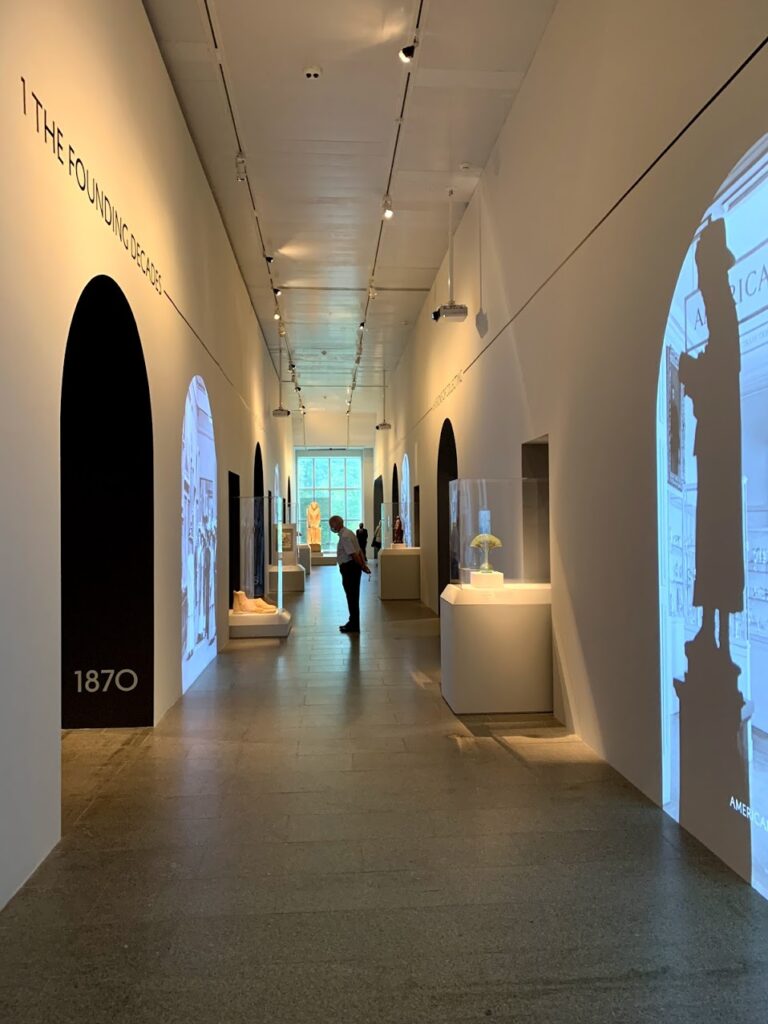
PLUS An interview with the Met’s Andrea Bayer, Deputy Director for Collections and Administration, on the museum’s celebratory exhibition Making the Met 1870-2020.
How do you launch an anniversary celebration during a pandemic and lockdown?
Listen today on your favorite podcast player:
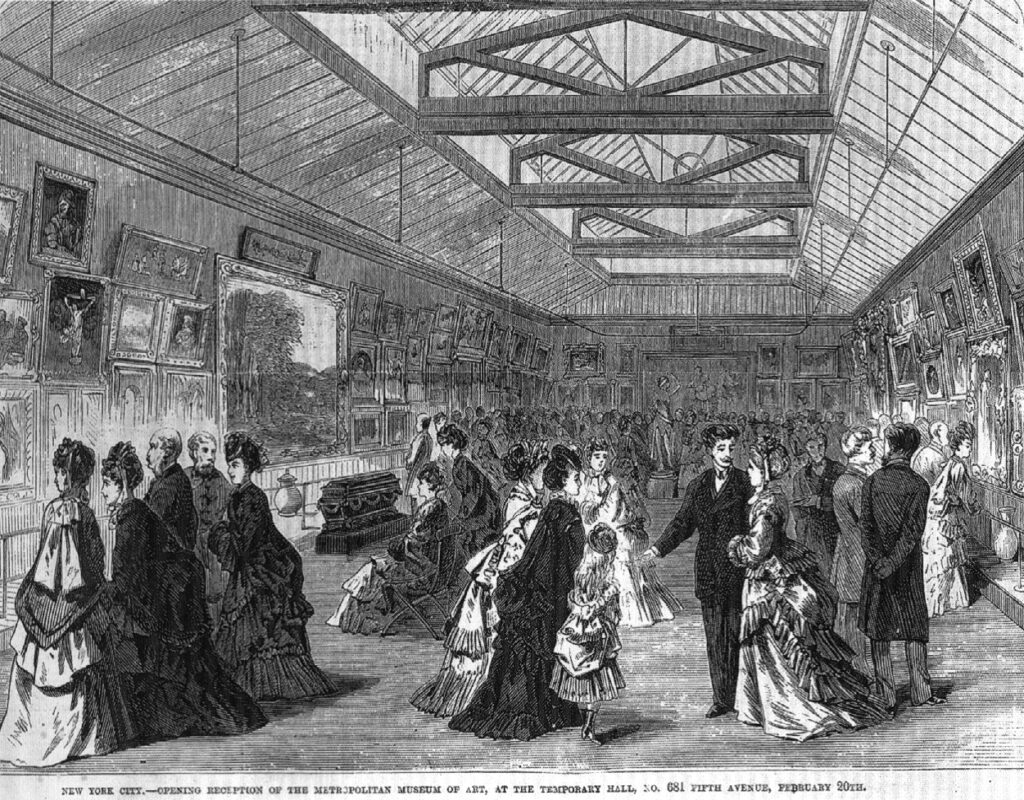
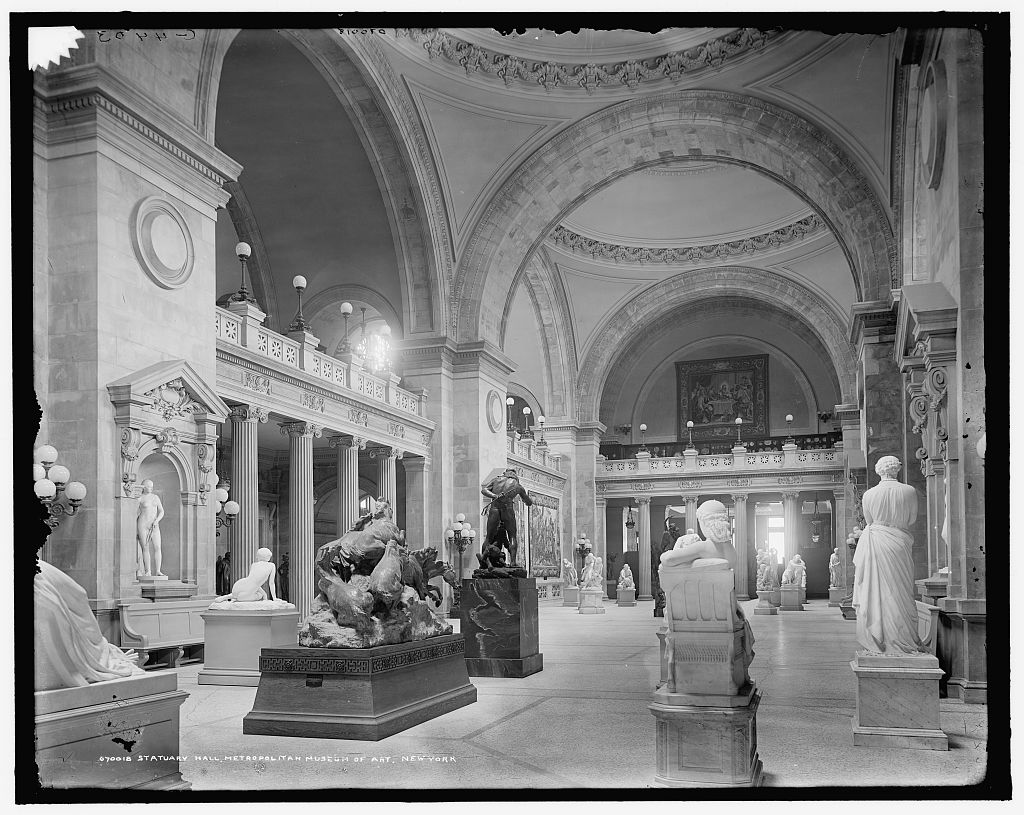
Opening reception in the picture gallery at 681 Fifth Avenue, February 20, 1872; wood-engraving published in Frank Leslie’s Weekly, March 9, 1872‘The Barn’, the original Met from Calvert Vaux and Jacob Wrey Mould, courtesy the Metropolitan Museum of Art1900, Detroit Pub Co, Library of CongressThe Richard Morris Hunt addition to the Met, 1903, Detroit Pub Co, Library of CongressThe Great Hall, 1907, Library of CongressThe Met in 1920, with the southern wing in place. Museum of the City of New YorkThe Met in 1983, Getty Images
Some excellent footage from the 1920s of the Met’s Egyptian excavations
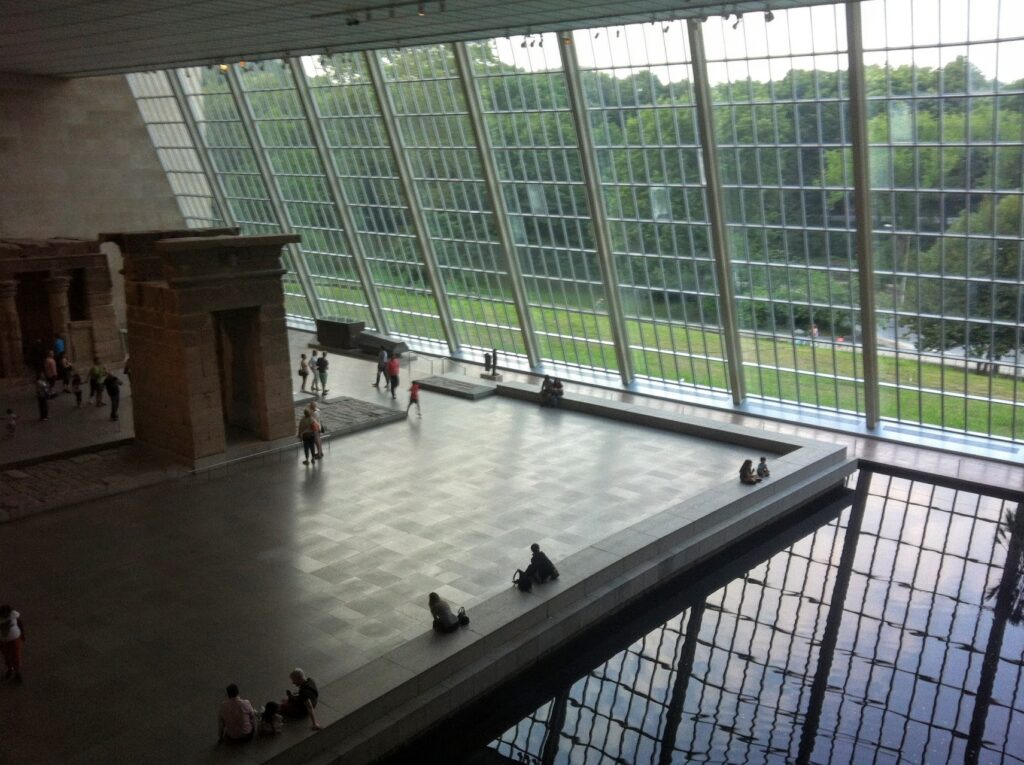
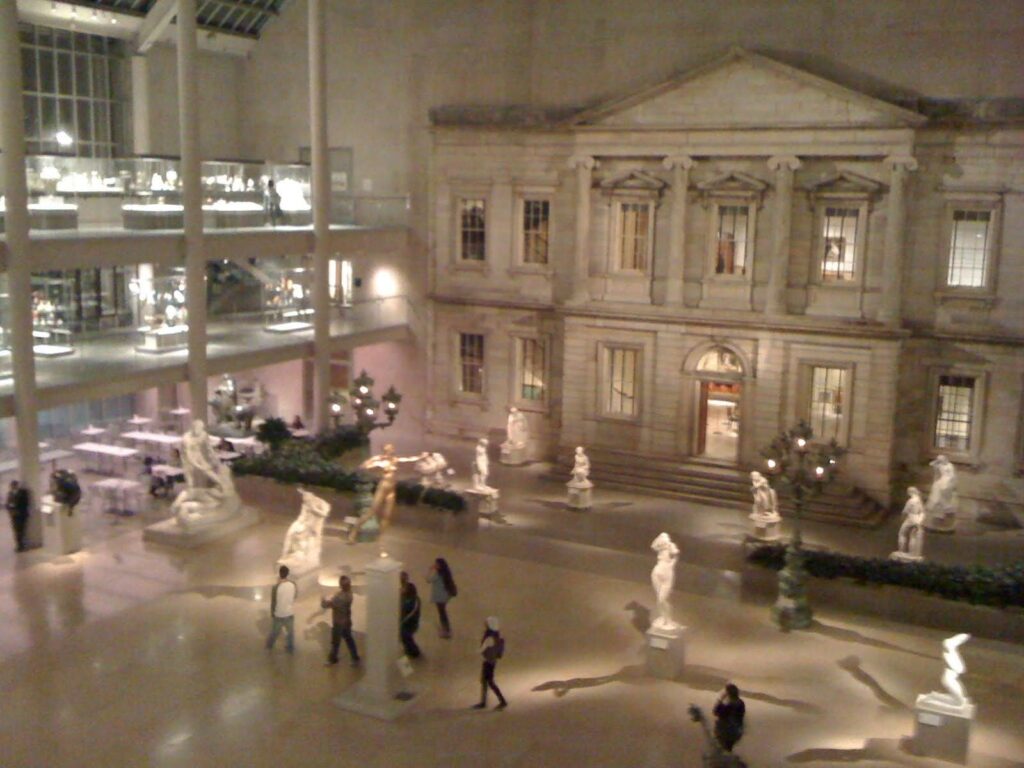
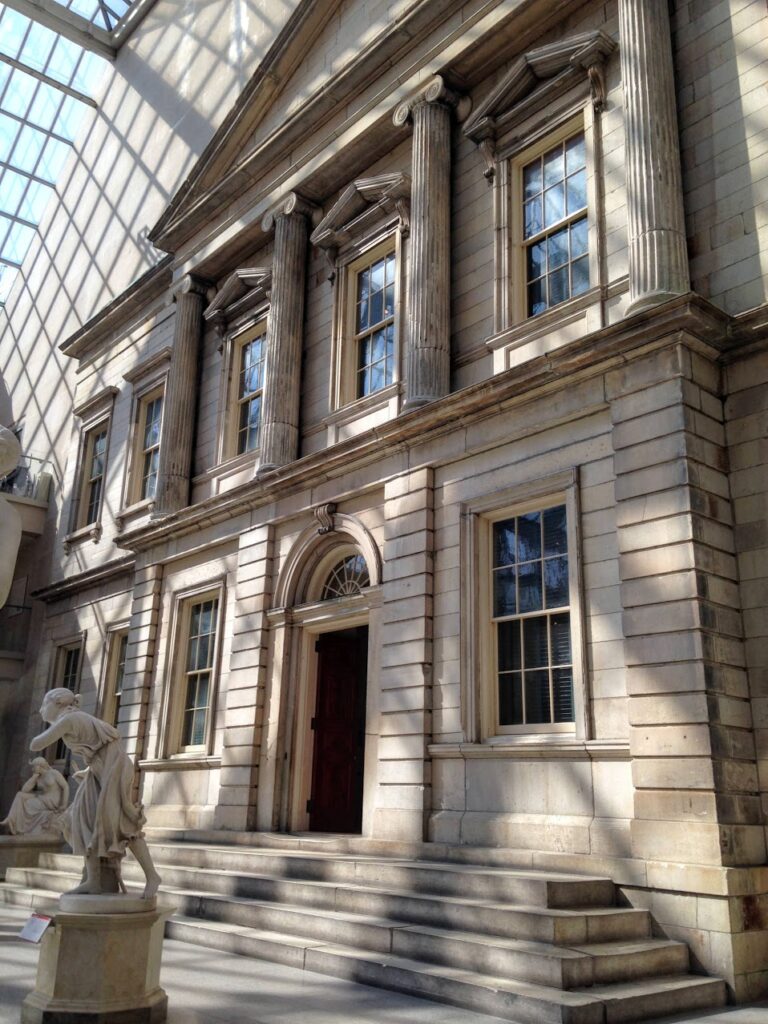
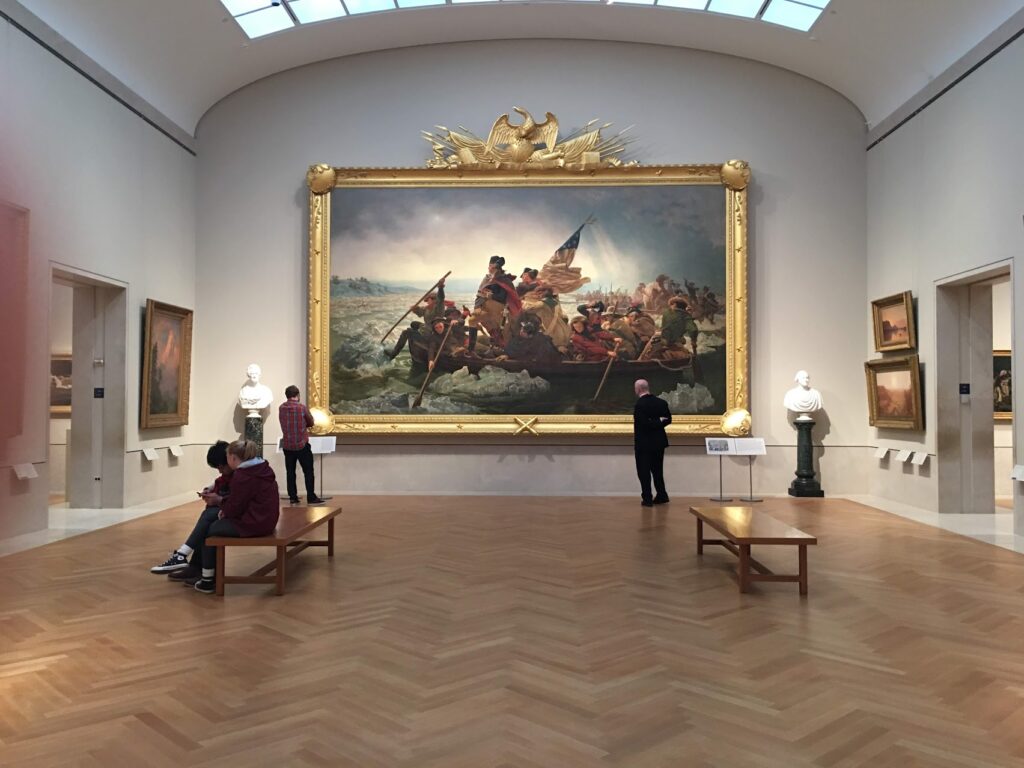
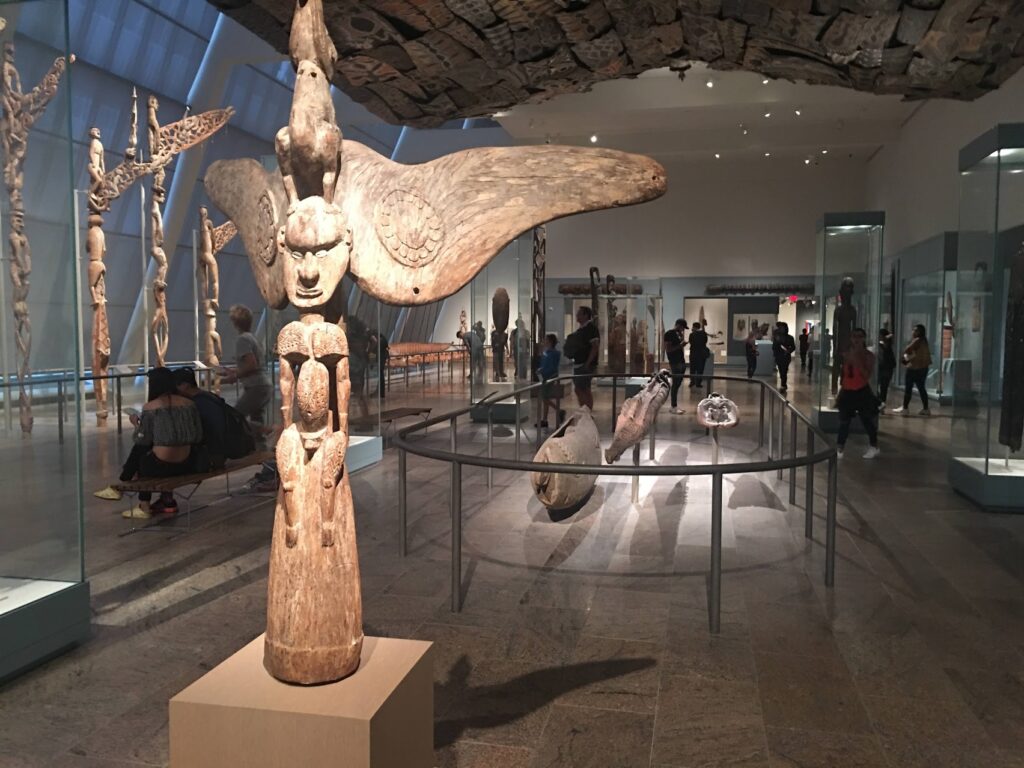
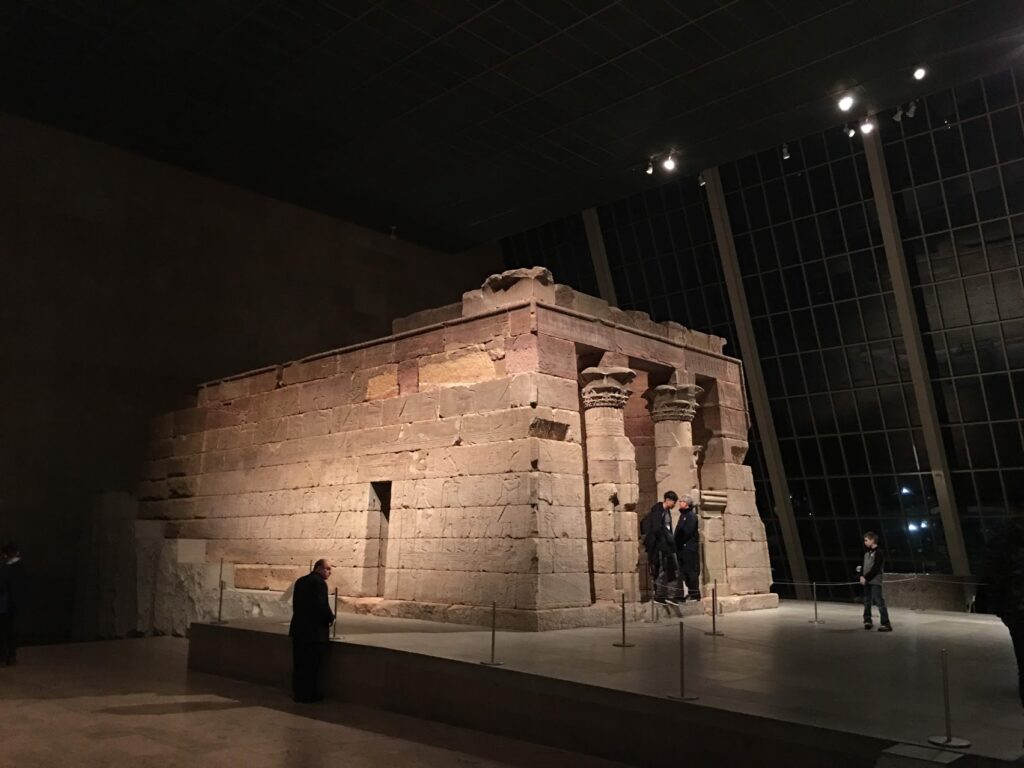
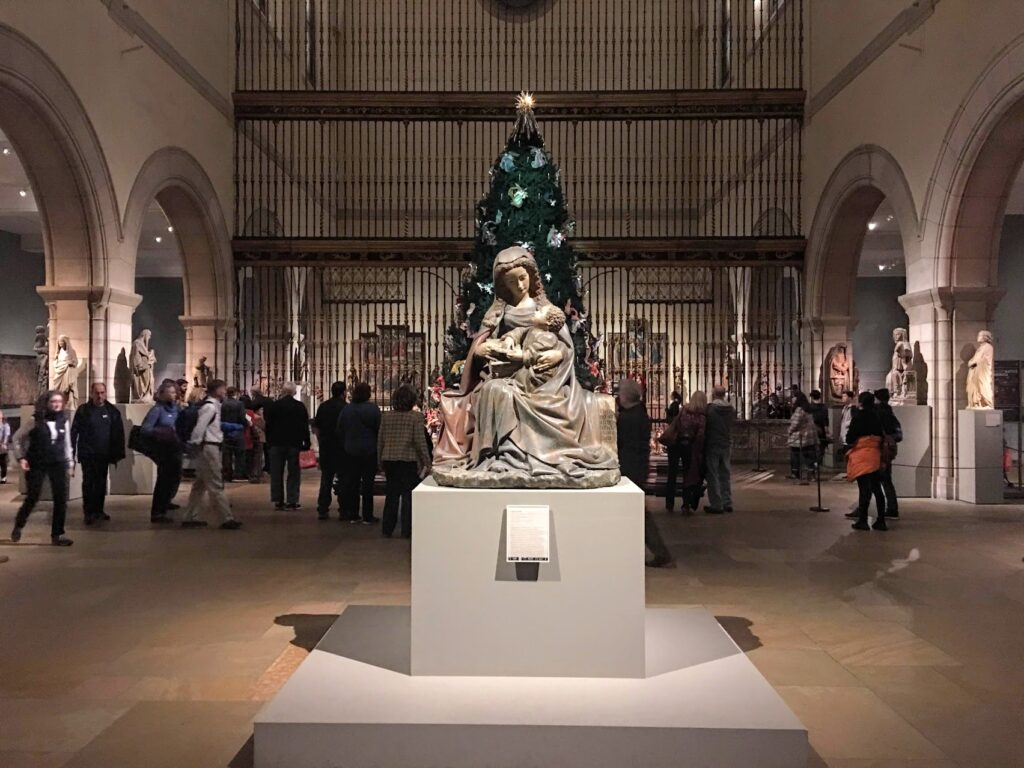
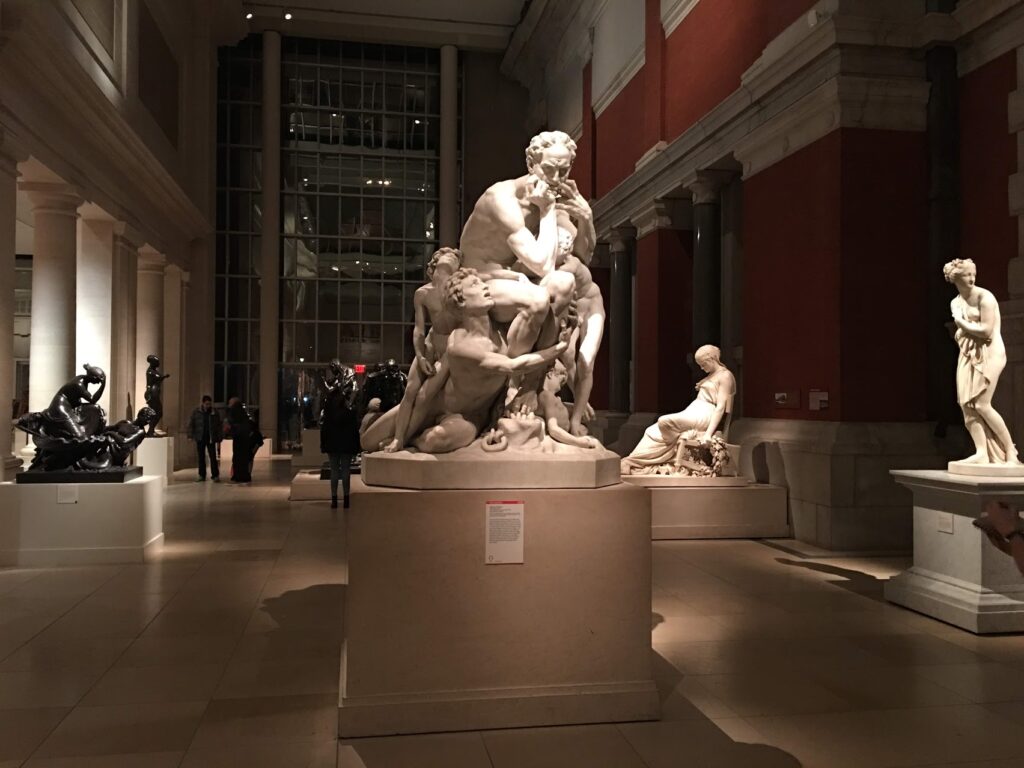
The Temple of Dendur. photo by Greg YoungThe American Wing sculpture garden at night, photo by Greg YoungBranch Bank entrance, 2012, photo by Greg YoungWashington Crossing the Delaware, taken 2017, photo by Greg YoungDendur at night, 2018, photo by Greg YoungThe Met at Christmas, 2018, photo by Greg YoungThe European sculpture garden at night, with views of the original 19th century facade in red brick. 2018, photo by Greg Young
Views from Making the Met (photos by Greg Young):
The Bowery Boys: New York City History podcast is brought to you …. by you!
We are now producing a new Bowery Boys podcast every week. We’re also looking to improve and expand the show in other ways — publishing, social media, live events and other forms of media. But we can only do this with your help!
We are now a creator on Patreon, a patronage platform where you can support your favorite content creators.
Please visit our page on Patreon and watch a short video of us recording the show and talking about our expansion plans.
If you’d like to help out, there are six different pledge levels.Check them out and consider being a sponsor.
We greatly appreciate our listeners and readers and thank you for joining us on this journey so far.
FURTHER LISTENING
The Met was a bit behind the times when it came to celebrating Impressionism but New Yorkers could take a gander at the ‘shocking’ output from Europe — as well as examples from the New York’ Ashcan School — at the Armory Show of 1913.
The Met is a twin institution to the American Museum of Natural History which shares a similar origin story.
In the second half of our Fifth Avenue Mansions series, we look at how the wealthy mansions of Fifth Avenue left midtown and headed to the Upper East Side.
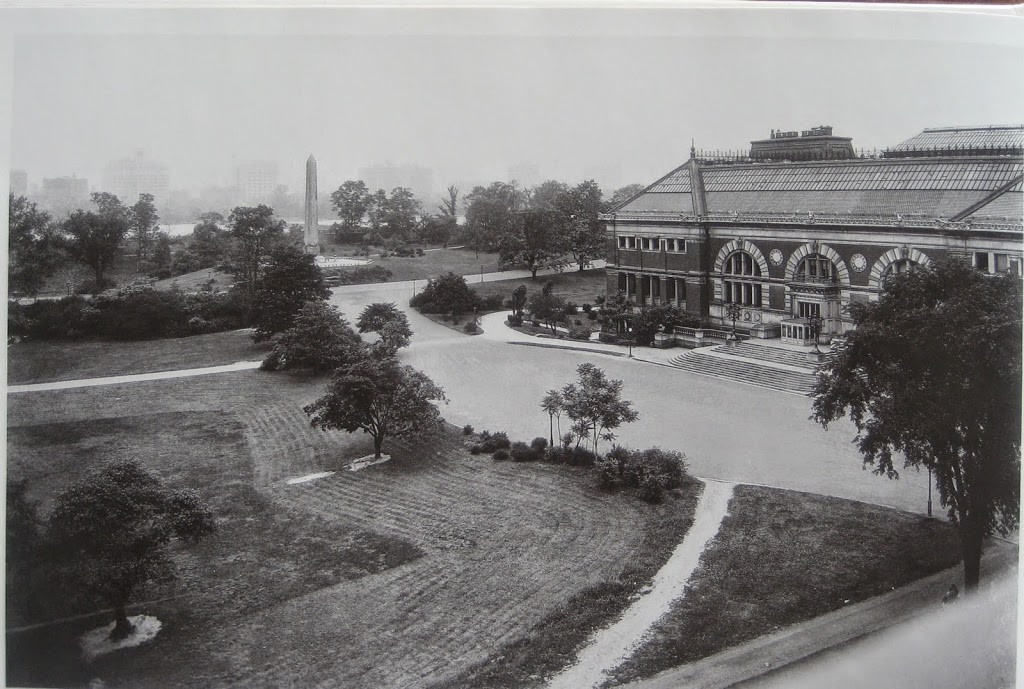
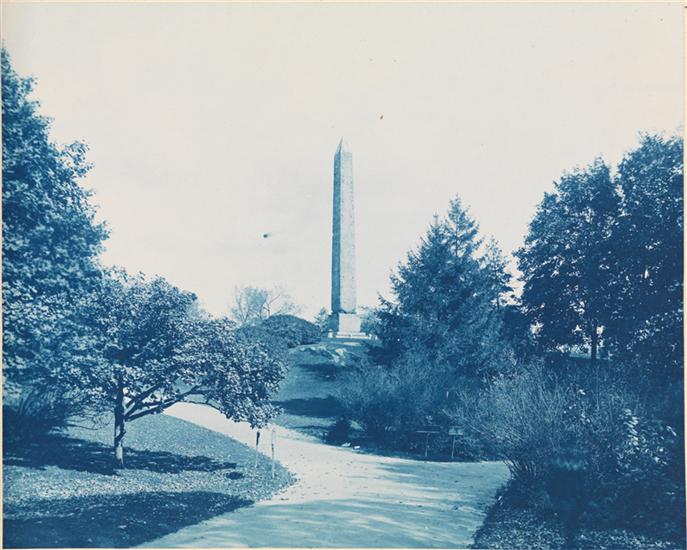
PODCAST Cleopatra’s Needle is the name given to the ancient Egyptian obelisk that sits in Central Park, right behind the Metropolitan Museum of Art.
This is the bizarre tale of how it arrived in New York and the unusual forces that went behind its transportation from Alexandra to a hill in the city’s most famous park.
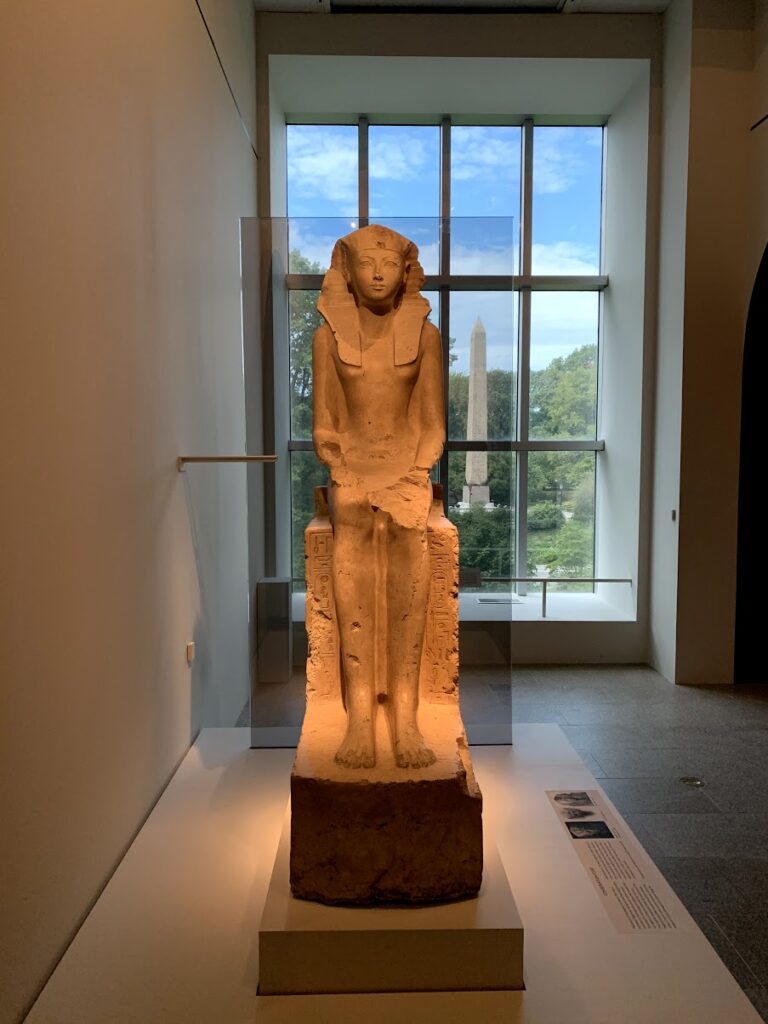
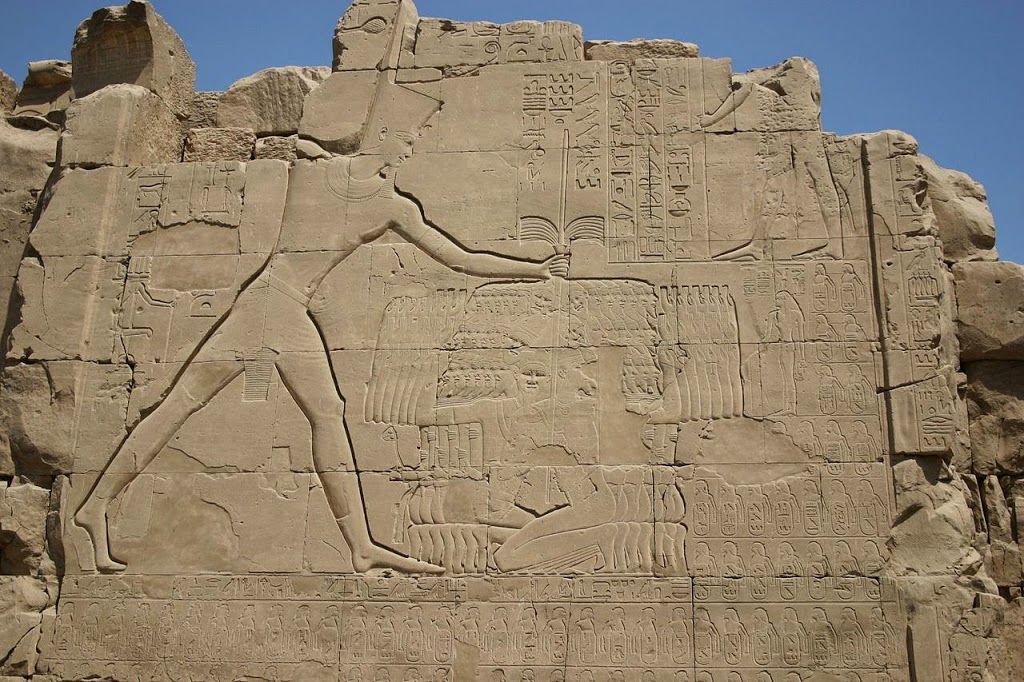
The weathered but elegant monolith known as Cleopatra’s Needle was created thousands of years ago by the pharaoh Thutmose III.
Thanks to the great interest in Egyptian objects in the 19th century — sometimes called Egyptomania — major cities soon wanted obelisks for their own, acquired as though they were trophies of world conquest.
France and England scooped up a couple but — at least in the case of the ill-fated vessel headed to London — not without great cost.
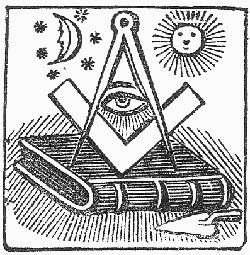
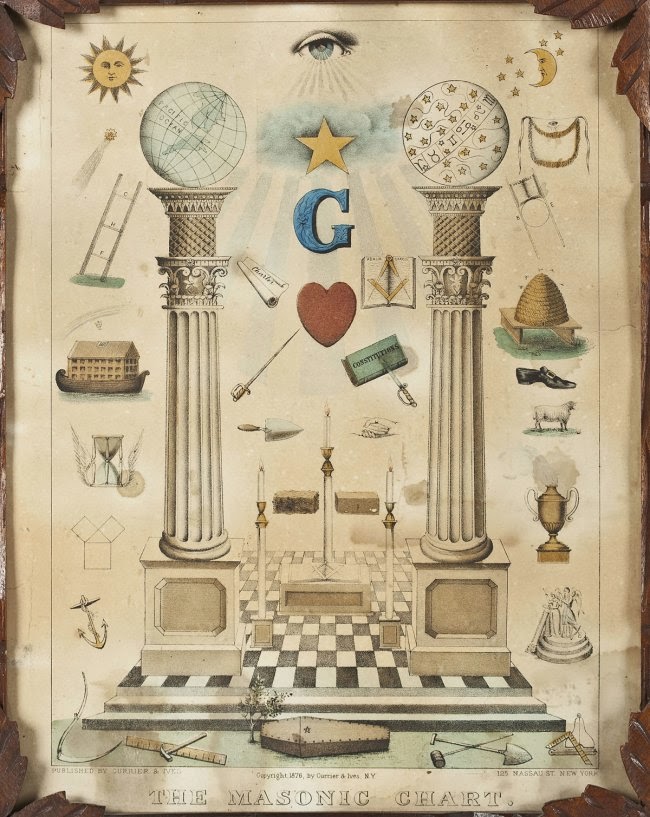
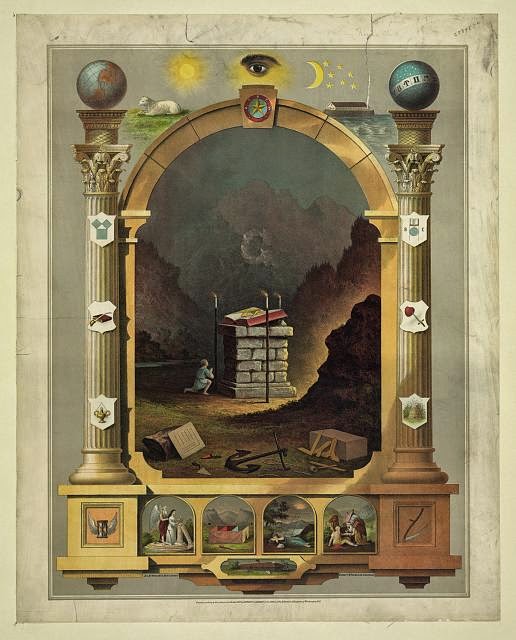
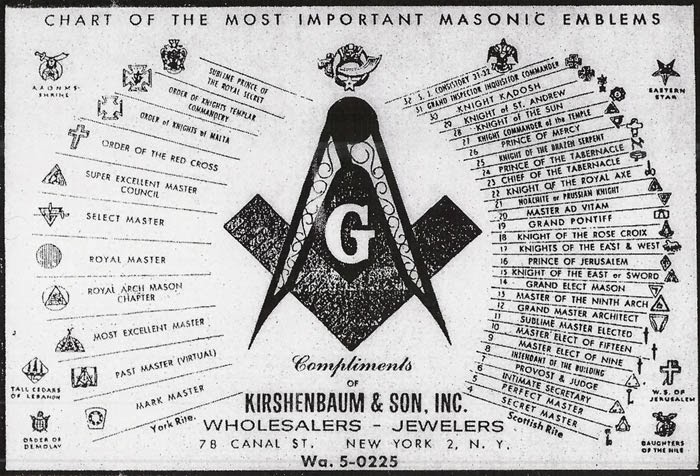
One group was especially fascinated in the Alexandrian obelisks. The Freemasons (their symbols at right) have been a mysterious and controversial fraternity who have been involved in several critical moments in American history (including the inauguration of fellow Mason George Washington.)
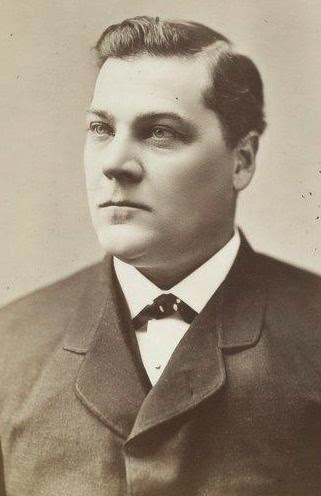
A Mason engineer and adventurer named Henry Honeychurch Gorringe discovered an incredible secret on the remaining Alexandria obelisk, a secret that might link the secretive organization to the beginning of human civilization.
Museum of the City of New York
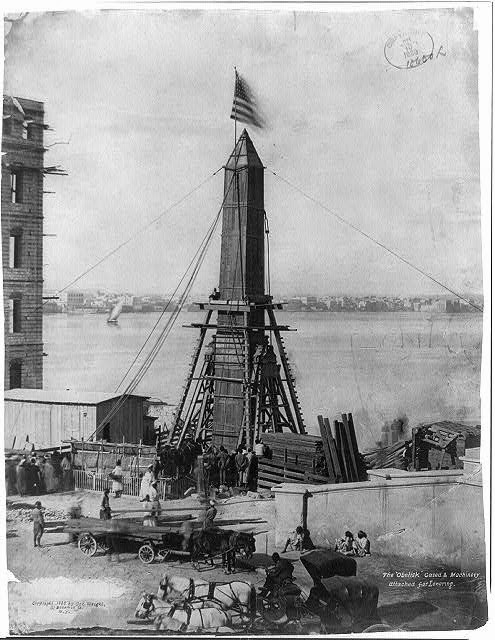
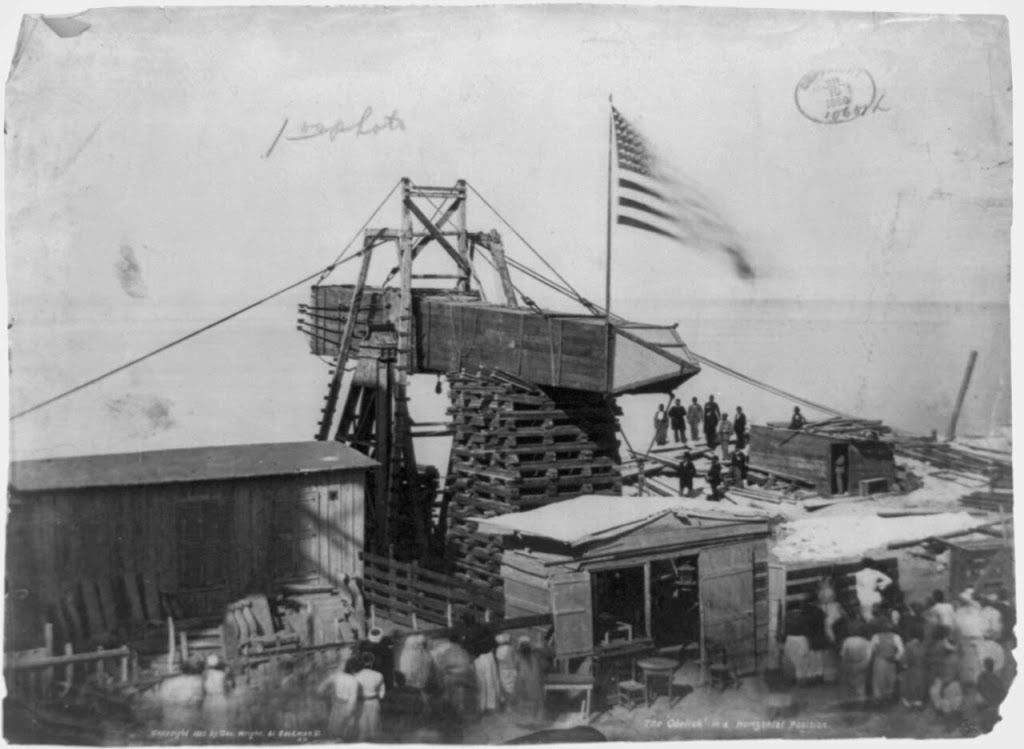
But how do you get a 240 ton object, the length of a 7-story building, across the Atlantic Ocean and propped up in New York’s new premier park?
We let you in on Gorringe’s technique and the curious Freemasons ceremony that accompanied the debut of the obelisk’s cornerstone.
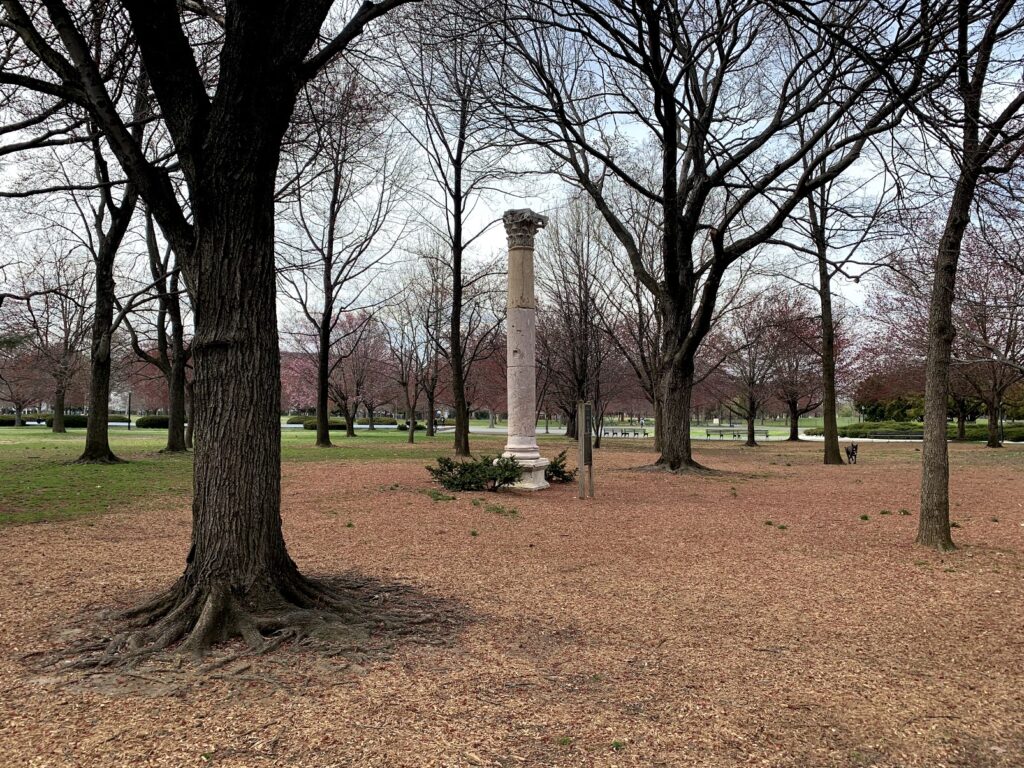
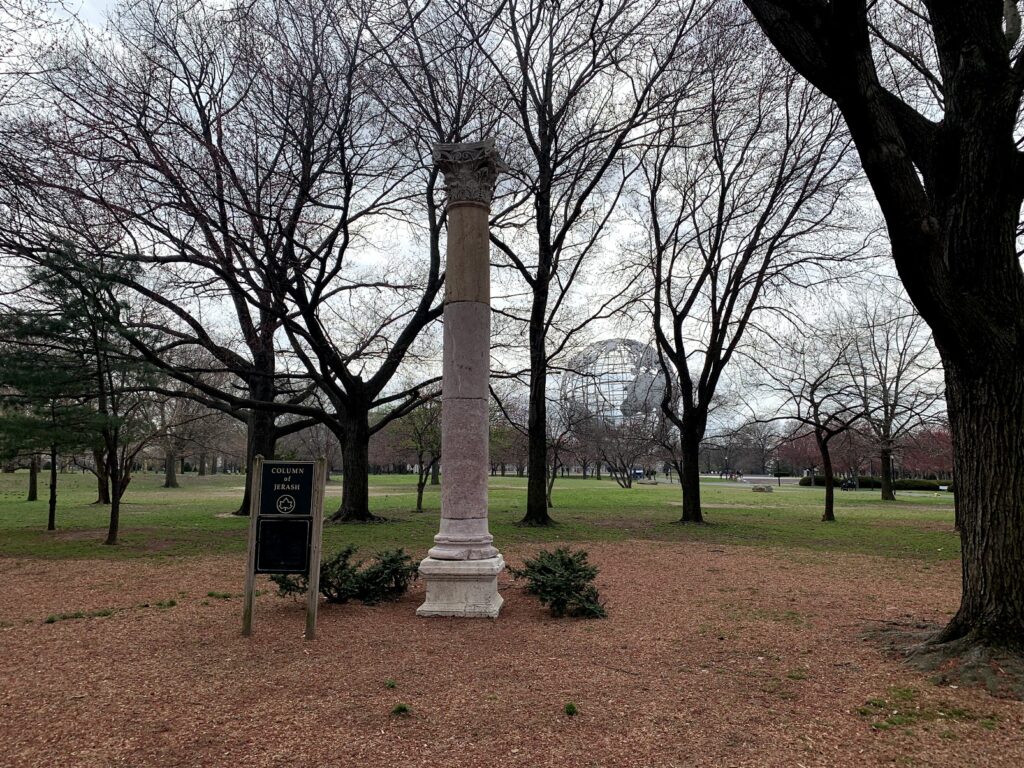
PLUS: A newly recorded tale about another ancient landmark that has made its way to New York City — a column from the ancient city of Jerash, brought here because of … Robert Moses?
This is a re-presentation of a show originally released on June 26, 2014 with new 2020 bonus material recorded for this episode.
Listen today on your favorite podcast player:
The Bowery Boys: New York City History podcast is brought to you …. by you!
We are now producing a new Bowery Boys podcast every week. We’re also looking to improve and expand the show in other ways — publishing, social media, live events and other forms of media. But we can only do this with your help!
We are now a creator on Patreon, a patronage platform where you can support your favorite content creators.
Please visit our page on Patreon and watch a short video of us recording the show and talking about our expansion plans.
If you’d like to help out, there are six different pledge levels.Check them out and consider being a sponsor.
We greatly appreciate our listeners and readers and thank you for joining us on this journey so far.
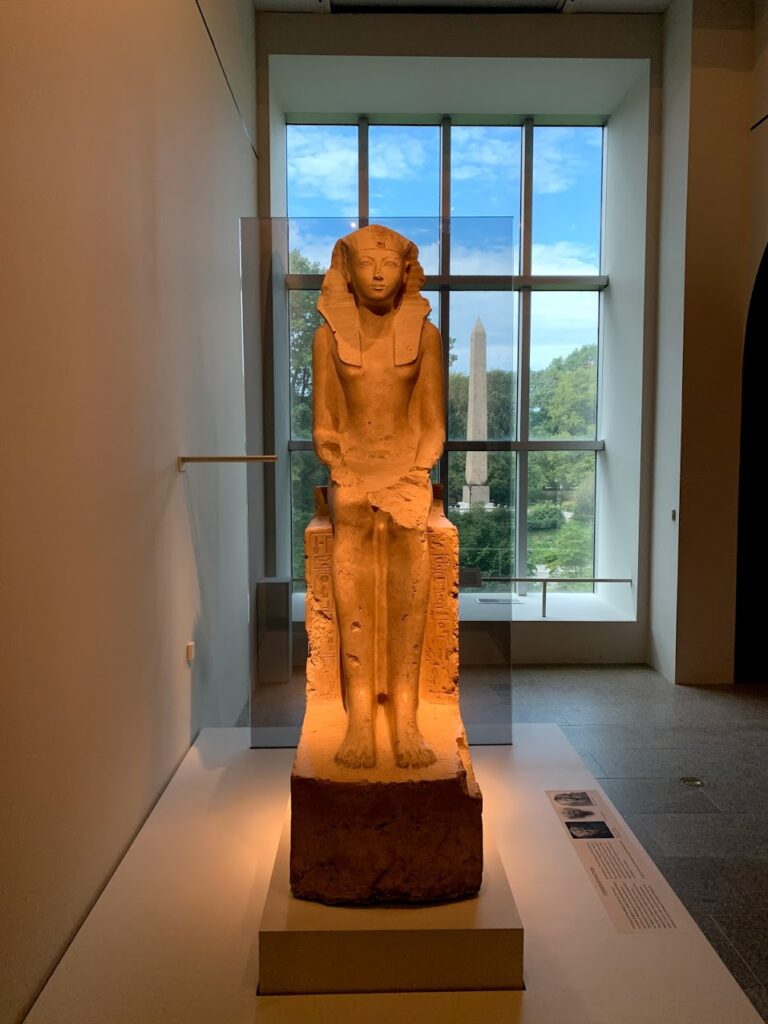
Cleopatra’s Needle as seen from the inside of the Metropolitan Museum of Art. Photo by Greg Young
Thutmose III, who commanded thousands to construct his obelisks, pictured in a relief in Karmac:
The Masonic Chart by Currier & Ives, 1876, created a few years before the arrival of the obelisk. And another below it, from 1872
From a jewelry advertisement, meant to clarify some of the levels and organizations within the Freemasons, although I’m sure this equally confused or frightened some people! [source]
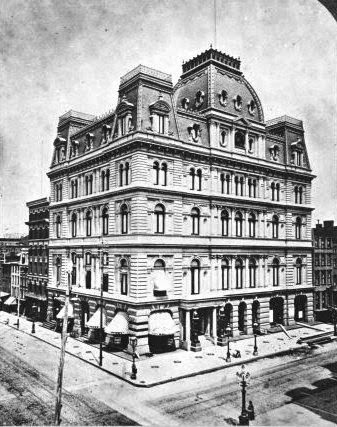
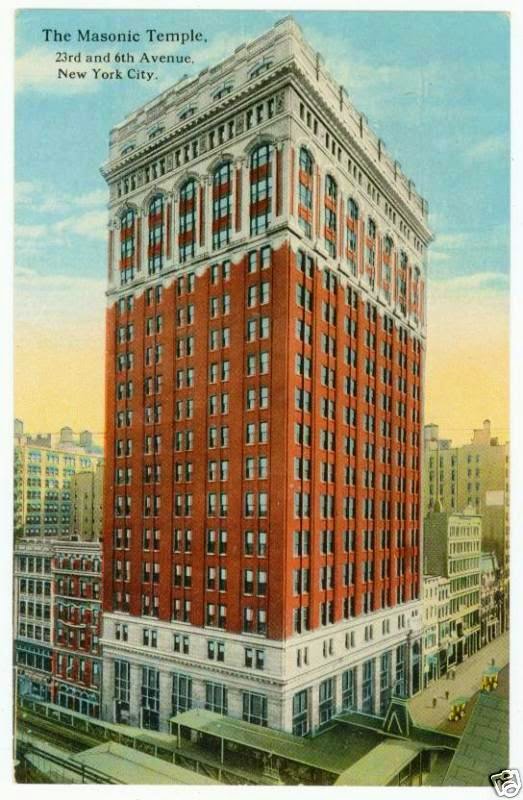
The New York Masonic Hall on 23rd Street and Sixth Avenue — the original hall (which stood at this corner during the retrieval of Cleopatra’s Needle) and the later 1911 structure which still stands there today. (Pictures courtesy NYPL)
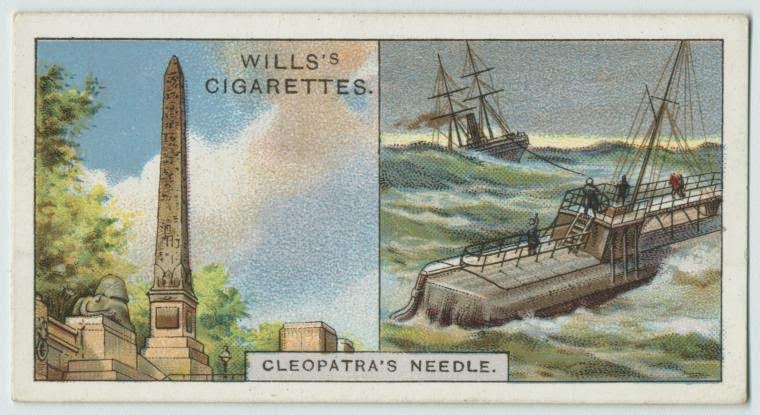
A cigarette card recounting the terrible tale of the London obelisk. (NYPL)
The hero of this episode — Henry Honychurch Gorringe
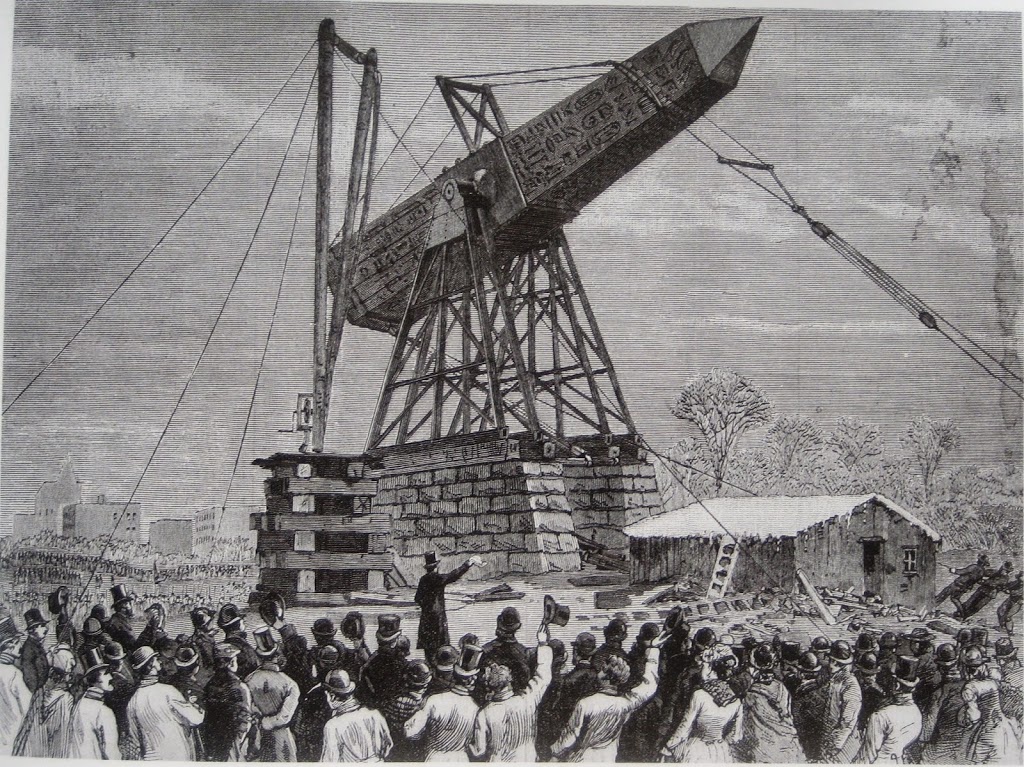
Gorringe prepares the obelisk for transportation. Even though it holds aloft an American flag, the treasure was actually a gift to the City of New York. (LOC)
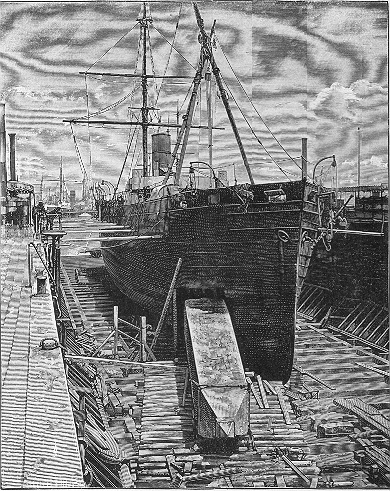
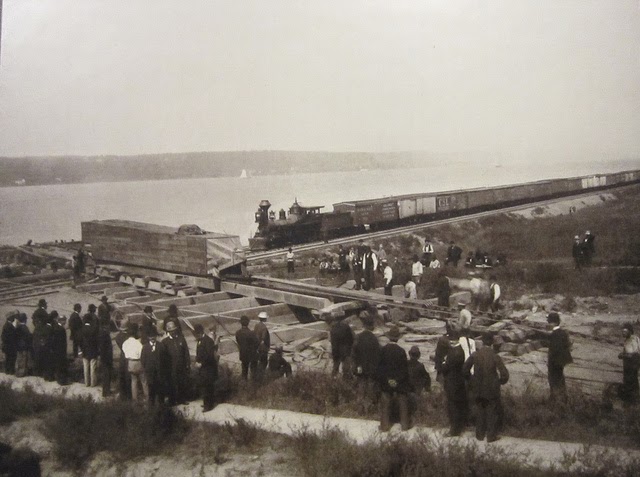
Sliding the obelisk into the hatch of a refitted Egyptian postal ship.
Getting the obelisk past the trains of the Hudson River Railroad! Thankfully, a Vanderbilt was in charge of both the tracks and the obelisk project.
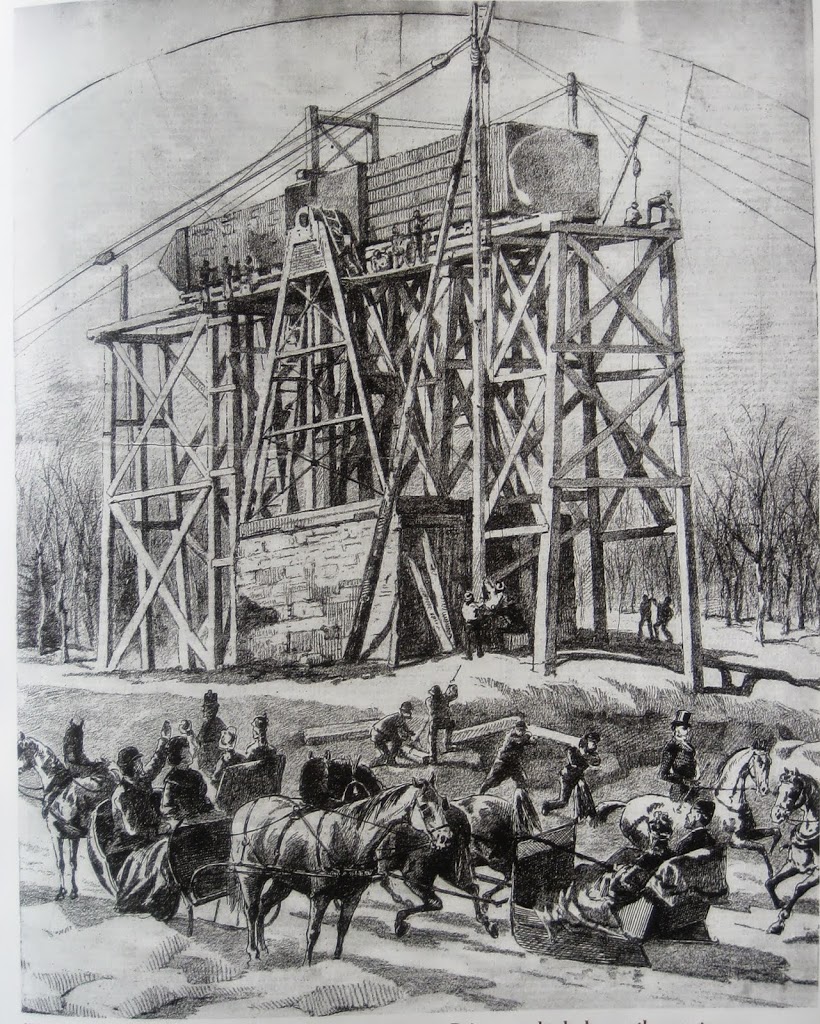
The ‘bridge’ which slowly took the obelisk across Manhattan, dismantled and rebuilt as the object moved eastward. (The following images are courtesy Torben Retboll)
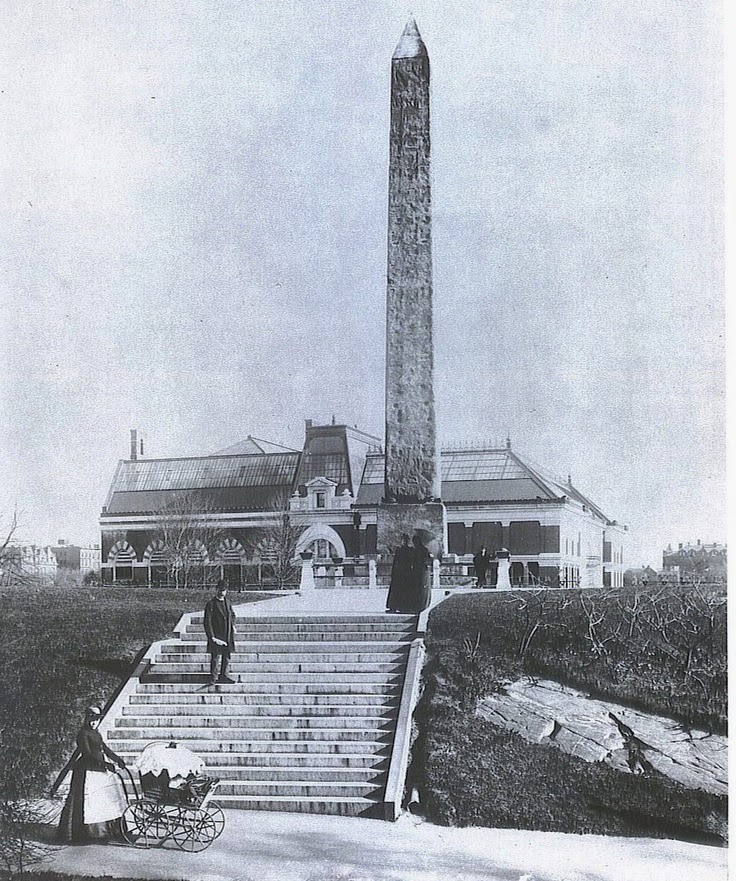
Both the obelisk and the Met were new features to Central Park in 1880.
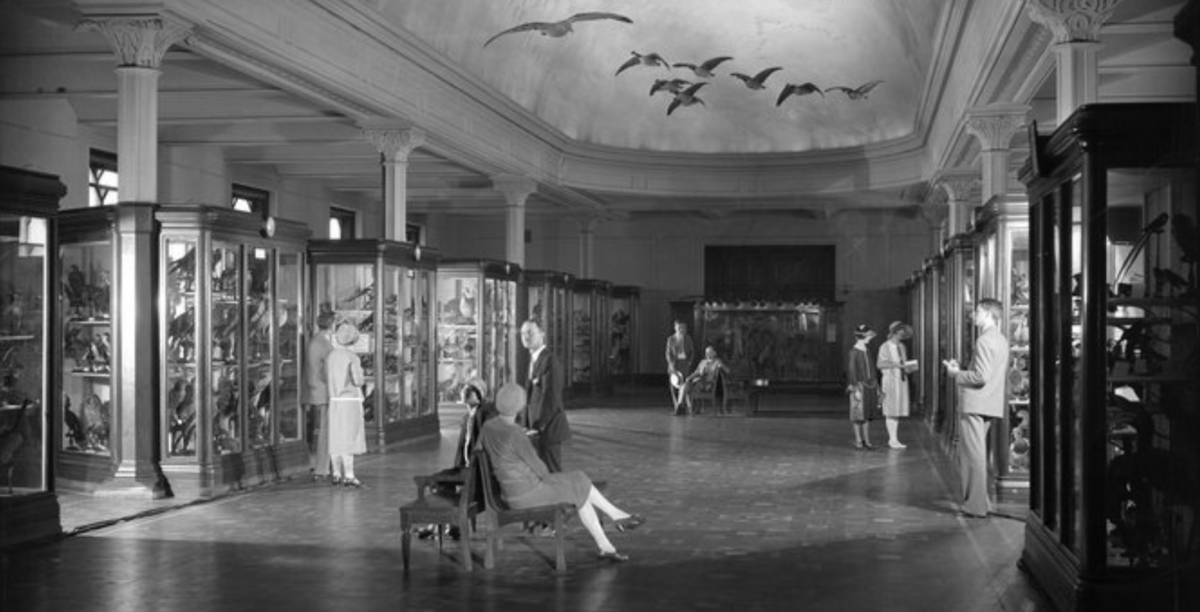
Birds of the World, 1927. Courtesy the American Museum of Natural History
PODCAST Ancient space rocks, dinosaur fossils, anthropological artifacts and biological specimens are housed in New York’s world famous natural history complex on the Upper West Side — the American Museum of Natural History!
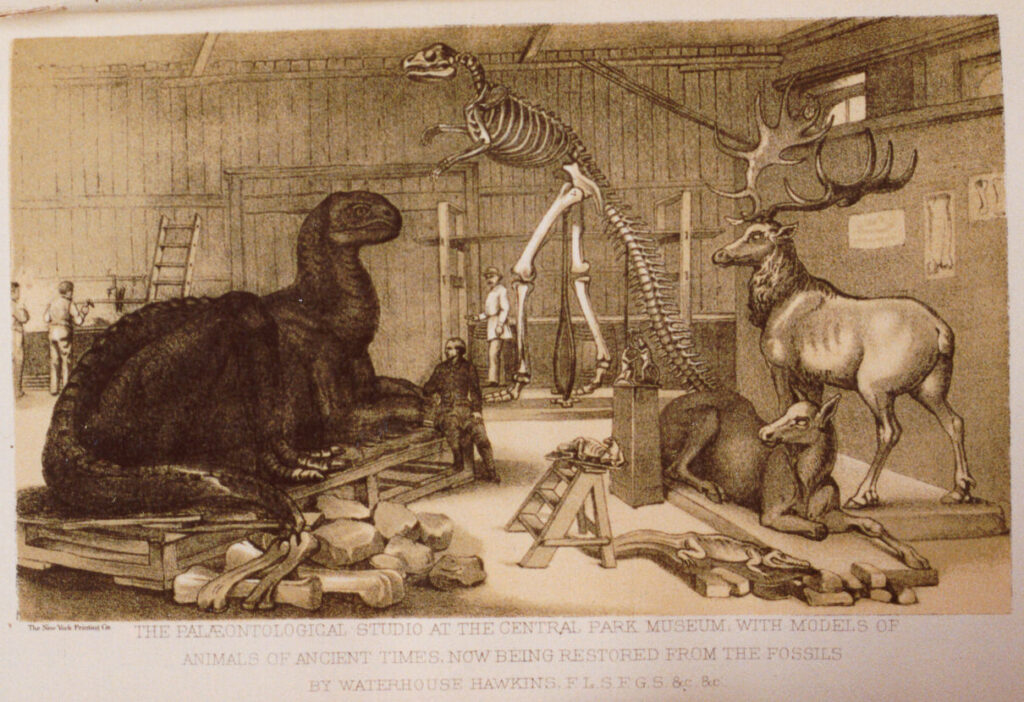
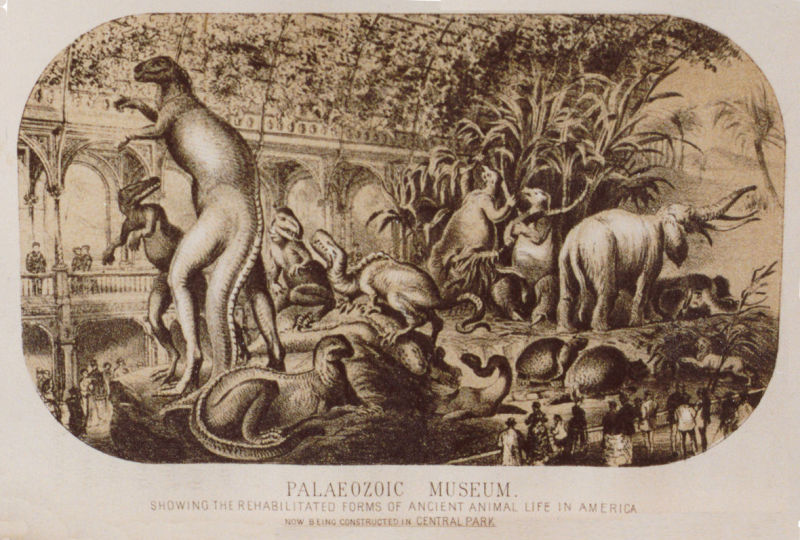
Throughout the 19th century, New Yorkers tried to establish a legitimate natural history venue in the city, including an aborted plan for a Central Park dinosaur pavilion.
With the creation of the American Museum of Natural History, the city finally had a premier institution that celebrated science and sent expeditions to the four corners of the earth.
Tune in to hear the stories of some of the museum’s most treasured artifacts and the fascinating folks behind the collection — including one explorer who might have inspired a famous movie hero.
But there’s also a dark side to the museum’s history, one that includes the tragic tale of Minik the Inughuit child, subject by museum directors to a bizarre and cruel lie.
PLUS: How exactly do you display a 68,100 lb meteorite?
AND: An update involving that rather controversial equestrian statue of Theodore Roosevelt.
This is a re-broadcast of a show originally released on November 24, 2010 with bonus material recorded in 2020.
Listen today on your favorite podcast player or just press play here:
The website of the American Museum of Natural History has all the details you need for your visit — including information on safety. On top of suggested admission, there are additional costs for the special exhibits, including the planetarium.
The Arsenal studio of Benjamin Waterhouse Hawkins, 1869.
A sketch of what the Paleozoic Museum might have looked like, had construction not been stopped by the cronies of Boss Tweed.
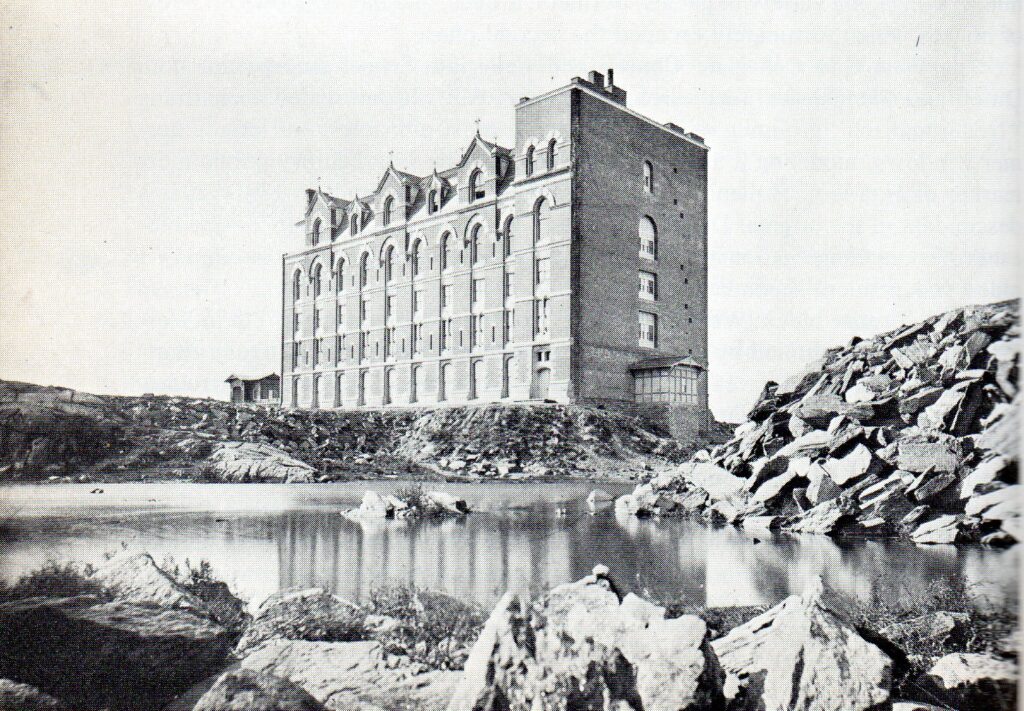
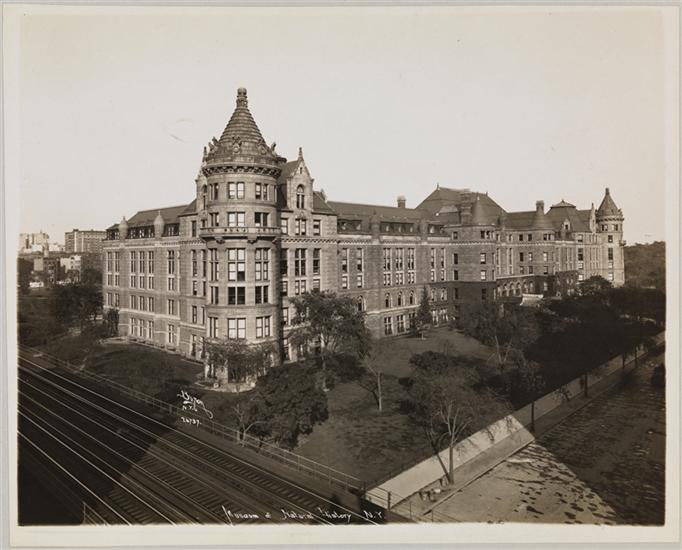
The lonely little first building of New York’s natural history museum, pictured in the early 1870s, placed on an unspectacular lot of land alongside Central Park called Manhattan Square.
New York Public Library
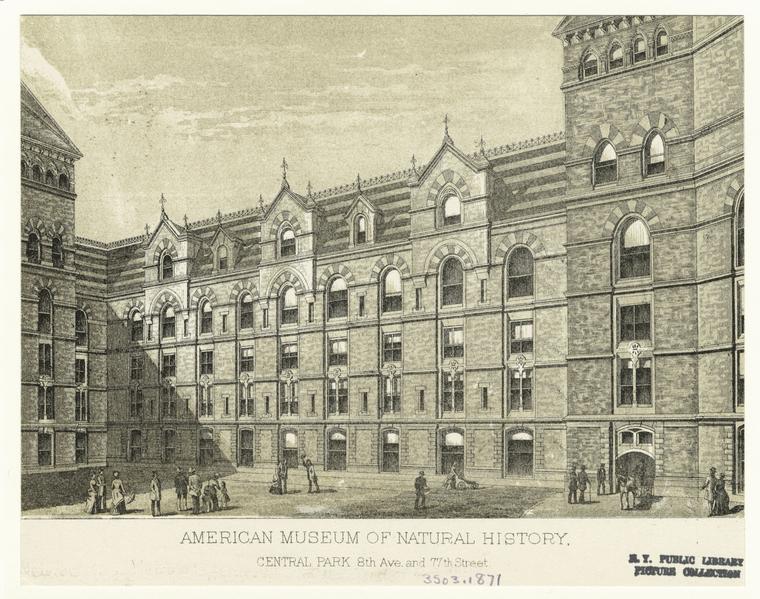
This illustration of the building from 1871 above displays the particular touches of Jacob Wray Mould, in the whimsical window design. What it doesn’t show is the vibrant, robust color of the building.
Although subsumed by later additions, some areas of the original walls are still peeking out within the larger structure today. [source NYPL}
The grandeur of the museum in 1908. Note the elevated tracks running along Columbus Avenue. (Museum of the City of New York)Library of Congress
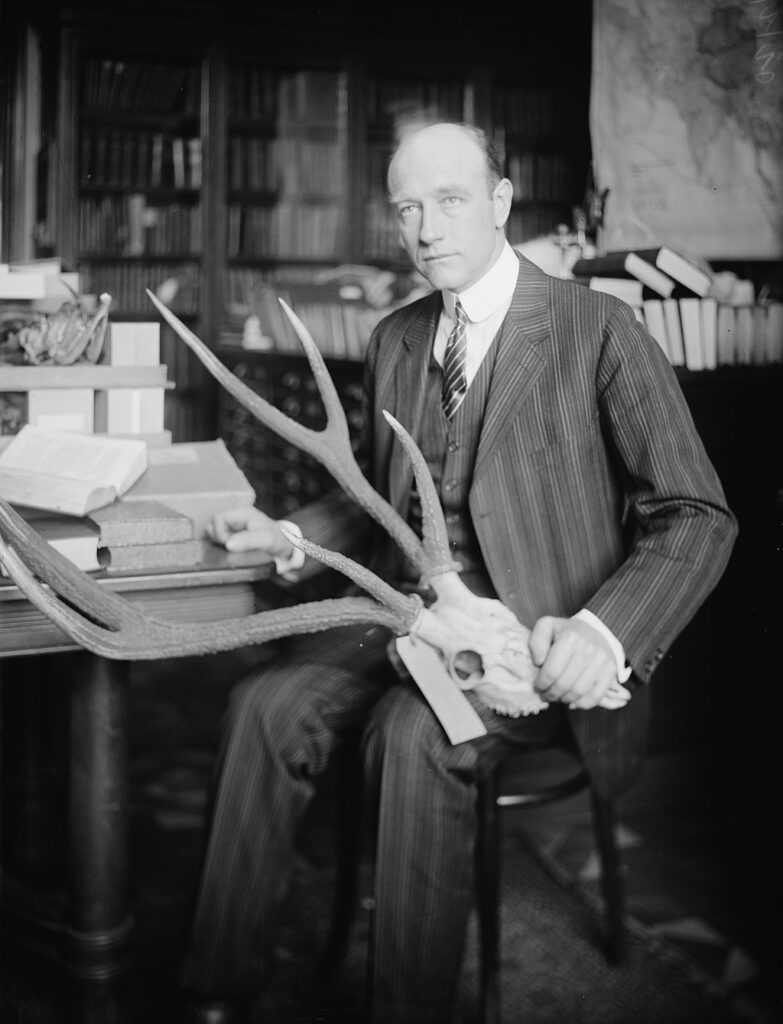
Roy Chapman Andrews, the dashing adventurer who became one of the museum’s most valuable explorers. It’s rumored that Andrews was the inspiration for the character of Indiana Jones.
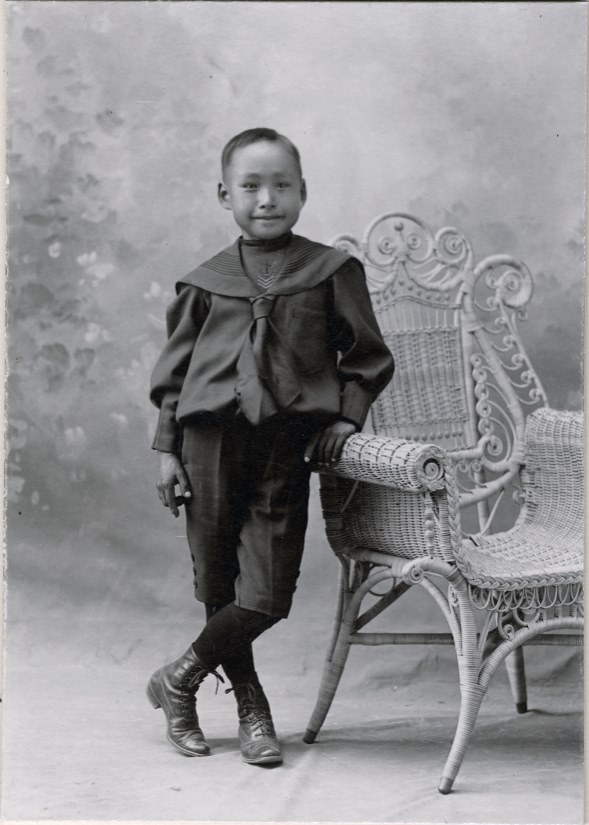
Minik Wallace, the Inuit boy brought to New York with his father in 1897. Minik was subject to one of the most bizarre and tragic cover ups in the museum’s history.
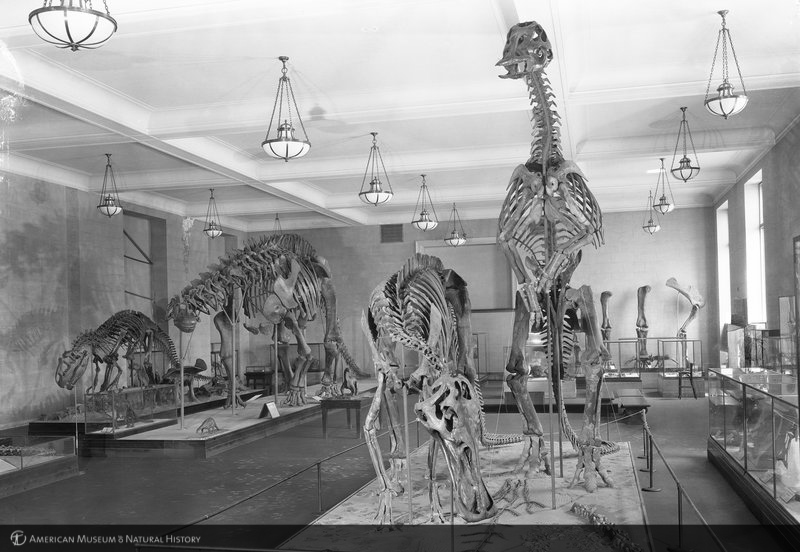
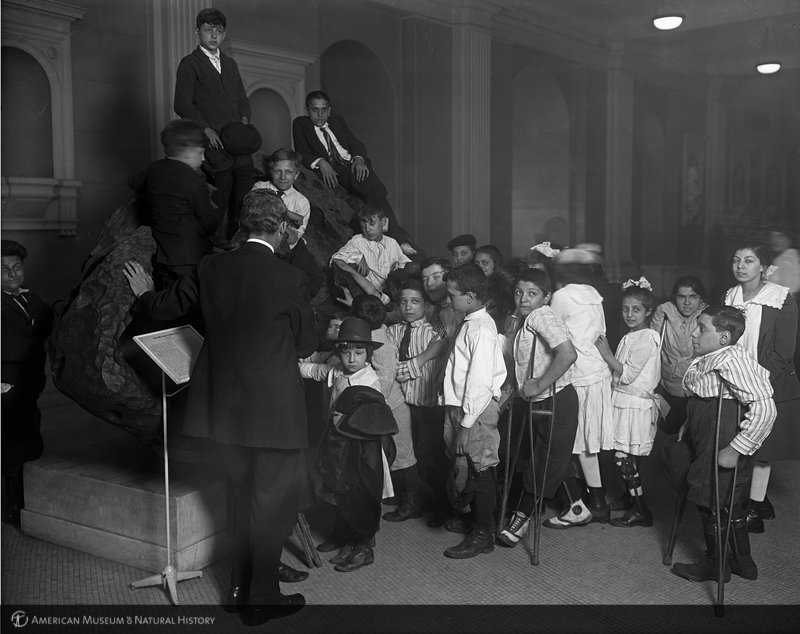
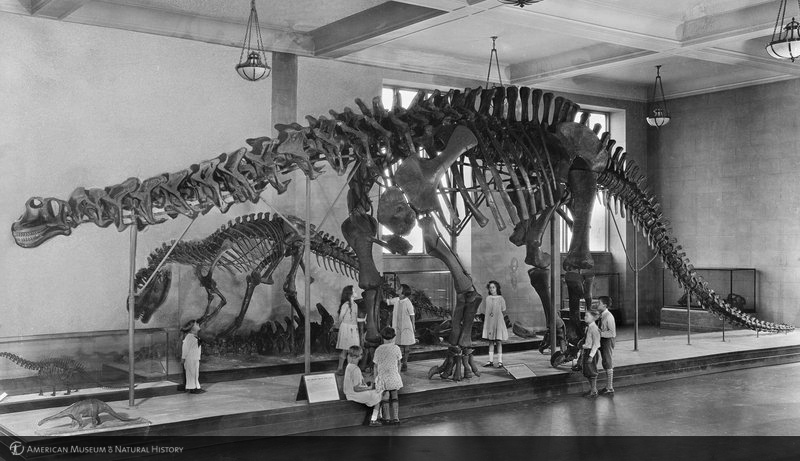
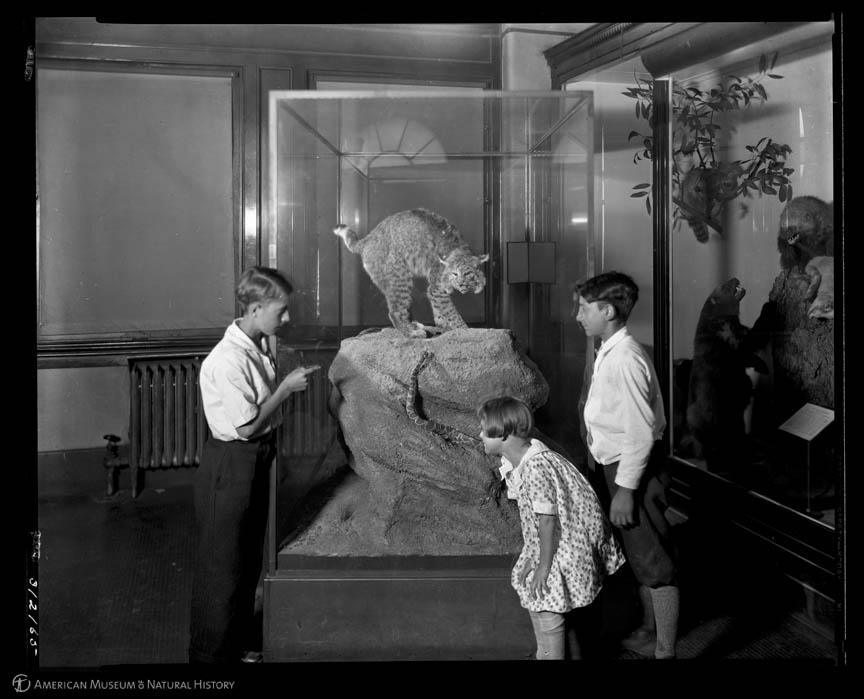
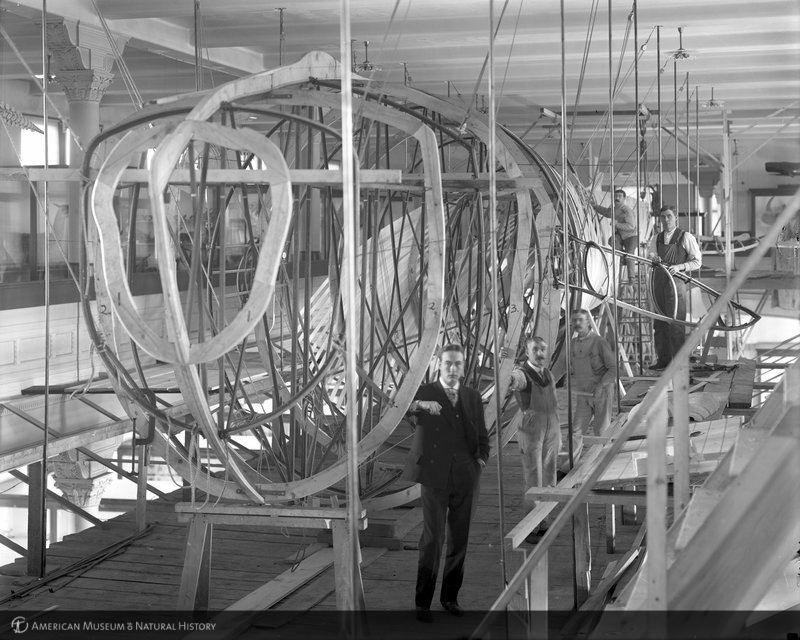
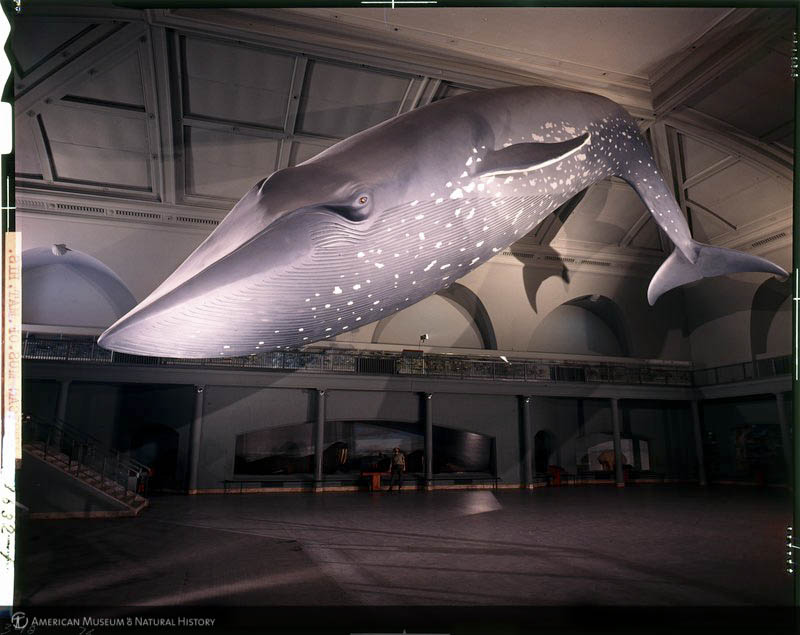
Children viewing the Williamette meteorite, 1920 (AMNH)Children viewing Brontosaurus (Apatosaurus) exhibit, 1927, courtesy the American Museum of Natural HistoryChildren viewing Wild Cat Group, 1927, courtesy AMNHRoy Chapman Andrews with frame for model of sulphur bottom [blue] whale, November, 1906. (Courtesy AMNH). But this is not the whale you know and love! According to the Museum: “The Museum’s iconic blue whale model, first constructed in the mid-1960s, was based on photographs of a female blue whale found dead in 1925 off the southern tip of South America.” It was resculpted in 2001 based on more modern research and made with foam and fiberglass.The Blue Whale as it appeared in 1969. (Courtesy AMNY)
A little song and dance while you’re marveling at the natural marvels:
The Bowery Boys: New York City History podcast is brought to you …. by you!
We are now producing a new Bowery Boys podcast every week. We’re also looking to improve and expand the show in other ways — publishing, social media, live events and other forms of media. But we can only do this with your help!
We are now a creator on Patreon, a patronage platform where you can support your favorite content creators.
Please visit our page on Patreon and watch a short video of us recording the show and talking about our expansion plans.
If you’d like to help out, there are six different pledge levels.Check them out and consider being a sponsor.
We greatly appreciate our listeners and readers and thank you for joining us on this journey so far.