Categories
Mysterious Stories Podcasts

The Bowery Boys Halloween Special: Ghosts of the Gilded Age

This newly edited edition of this episode of the Bowery Boys is now running on the The Gilded Gentleman podcast. Listen today:


PODCAST Four strange and spooky tales taken from New York City newspaper articles published during the Gilded Age

For this year’s 10th annual Bowery Boys Halloween special, we’re highlighting haunted tales from the period just after the Civil War when New York City became one of the richest cities in the world — rich in wealth and in ghosts!

We go to four boroughs in this one (sorry Brooklyn!):

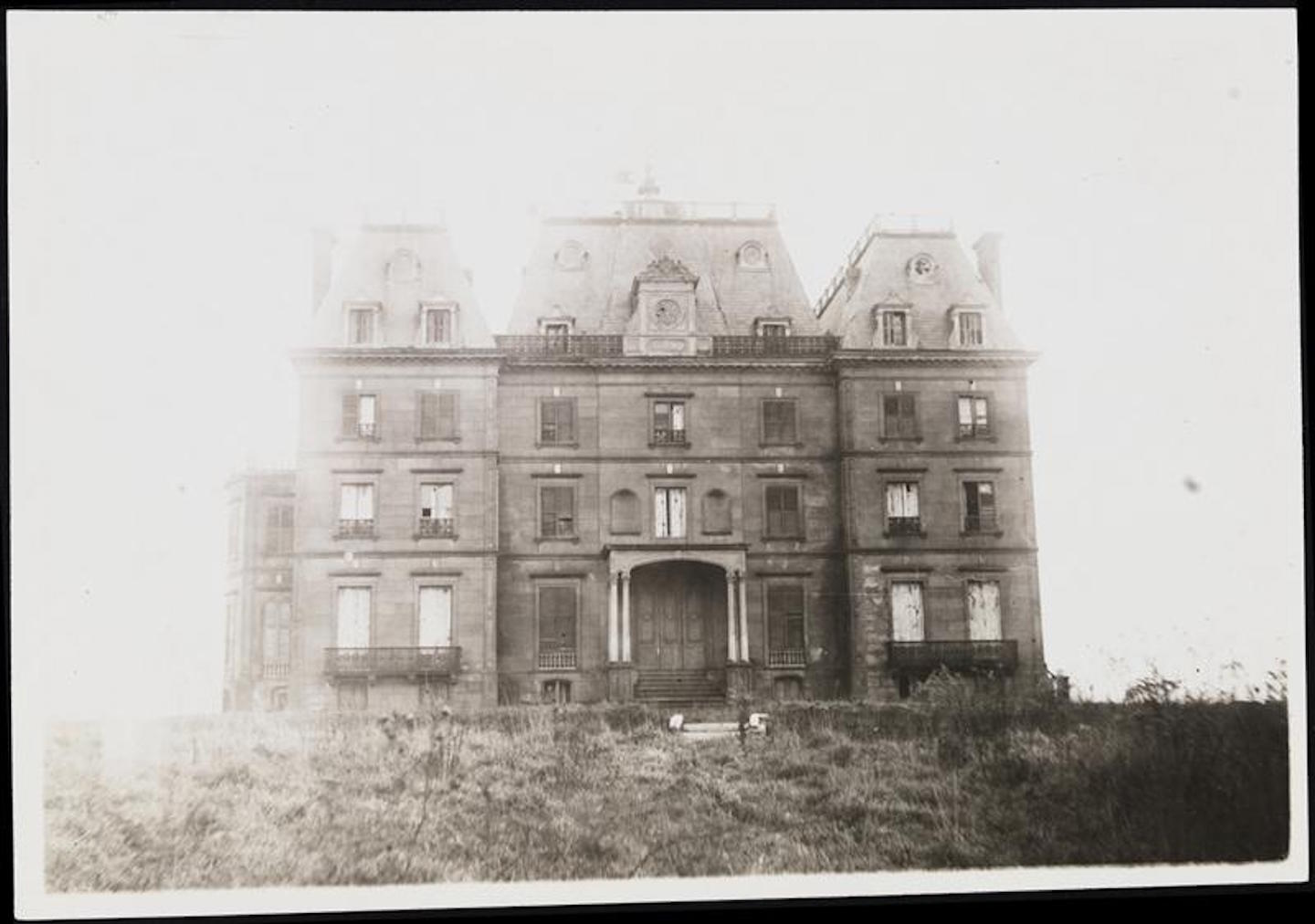
— In the Bronx we highlight a bizarre house that once stood in the area of Hunts Point, a mansion of malevolent and disturbing mysteries

— Then we turn to Manhattan to a rambunctious poltergeist on fashionable East 27th Street

— Over in Queens, a lonely farmhouse in the area of today’s Calvary Cemetery is witness to not one, but two unsettling and confounding deaths

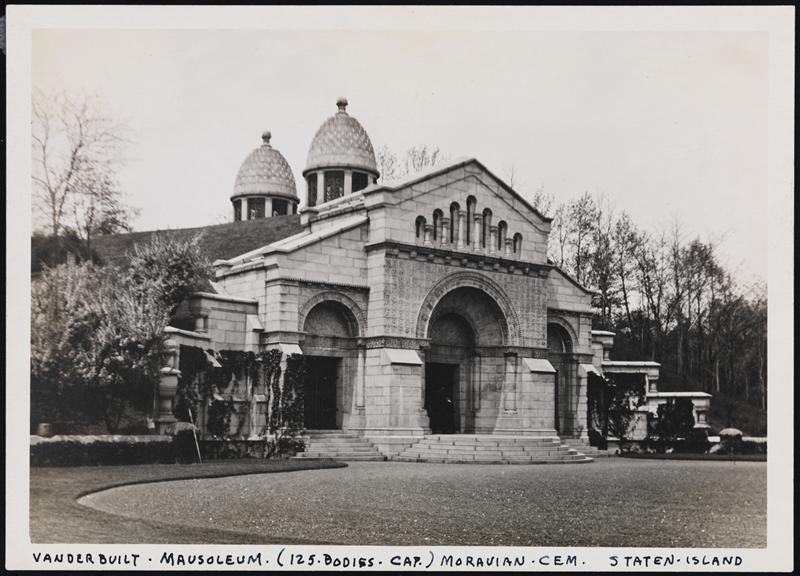
— Finally, in Staten Island, we take a visit to the glorious Vanderbilt Mausoleum, a historic landmark and a location with a few strange secrets of its own


The Bowery Boys: New York City History podcast is brought to you …. by you!

We are now producing a new Bowery Boys podcast every two weeks. We’re also looking to improve the show in other ways and expand in other ways as well — through publishing, social media, live events and other forms of media. But we can only do this with your help!

We are now a member of Patreon, a patronage platform where you can support your favorite content creators for as little as a $1 a month.

Please visit our page on Patreon and watch a short video of us recording the show and talking about our expansion plans. If you’d like to help out, there are five different pledge levels (and with clever names too — Mannahatta, New Amsterdam, Five Points, Gilded Age, Jazz Age and Empire State). Check them out and consider being a sponsor.

We greatly appreciate our listeners and readers and thank you for joining us on this journey so far. And the best is yet to come!


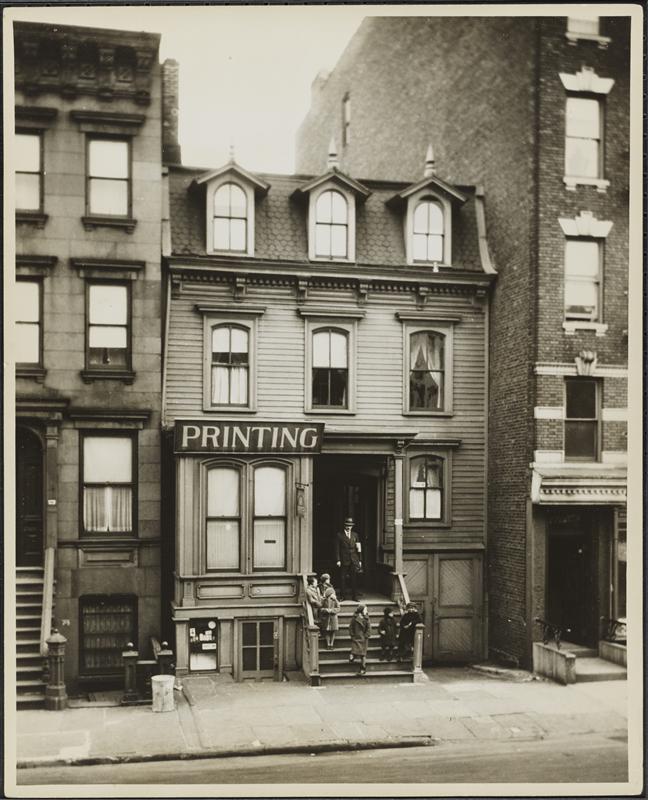
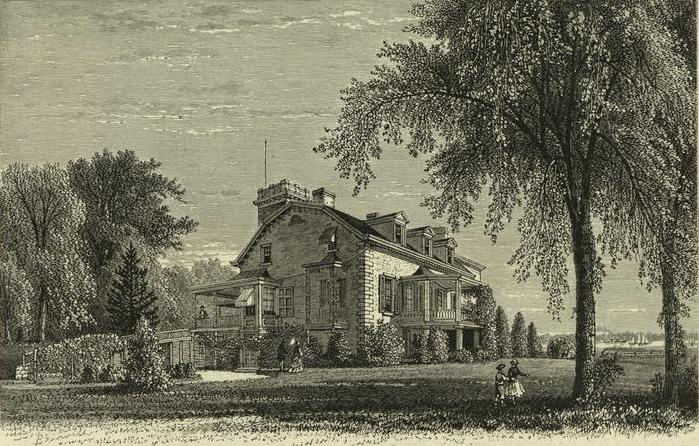
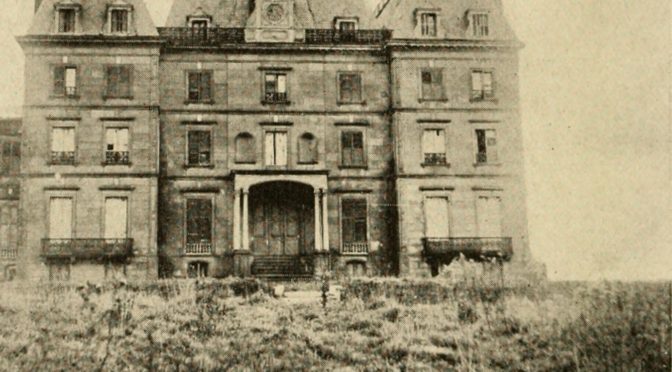
This is the Casanova Mansion aka “the house of many mysteries”
mny221052
Courtesy Museum of the City of New York

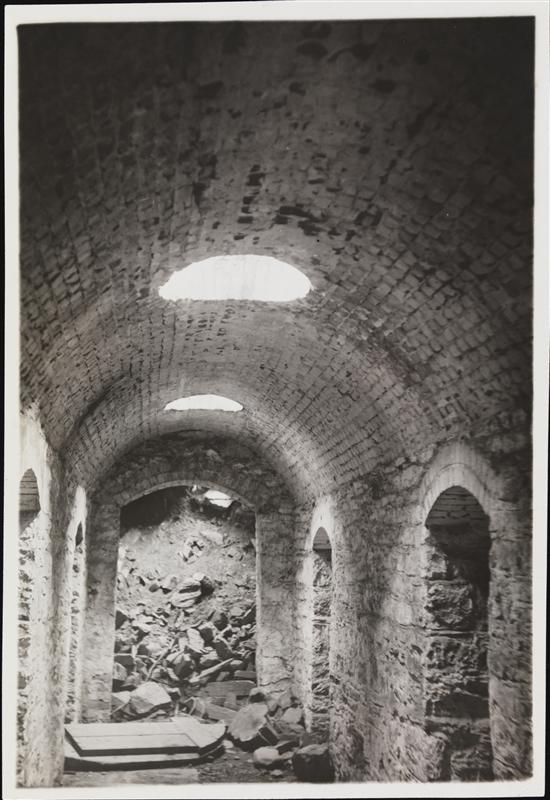
The subterranean tunnels under the Casanova mansion, as they appeared in 1910. Prison cells were discovered along the walls of the tunnels. What could they have been used for?
Courtesy MCNY
Courtesy MCNY

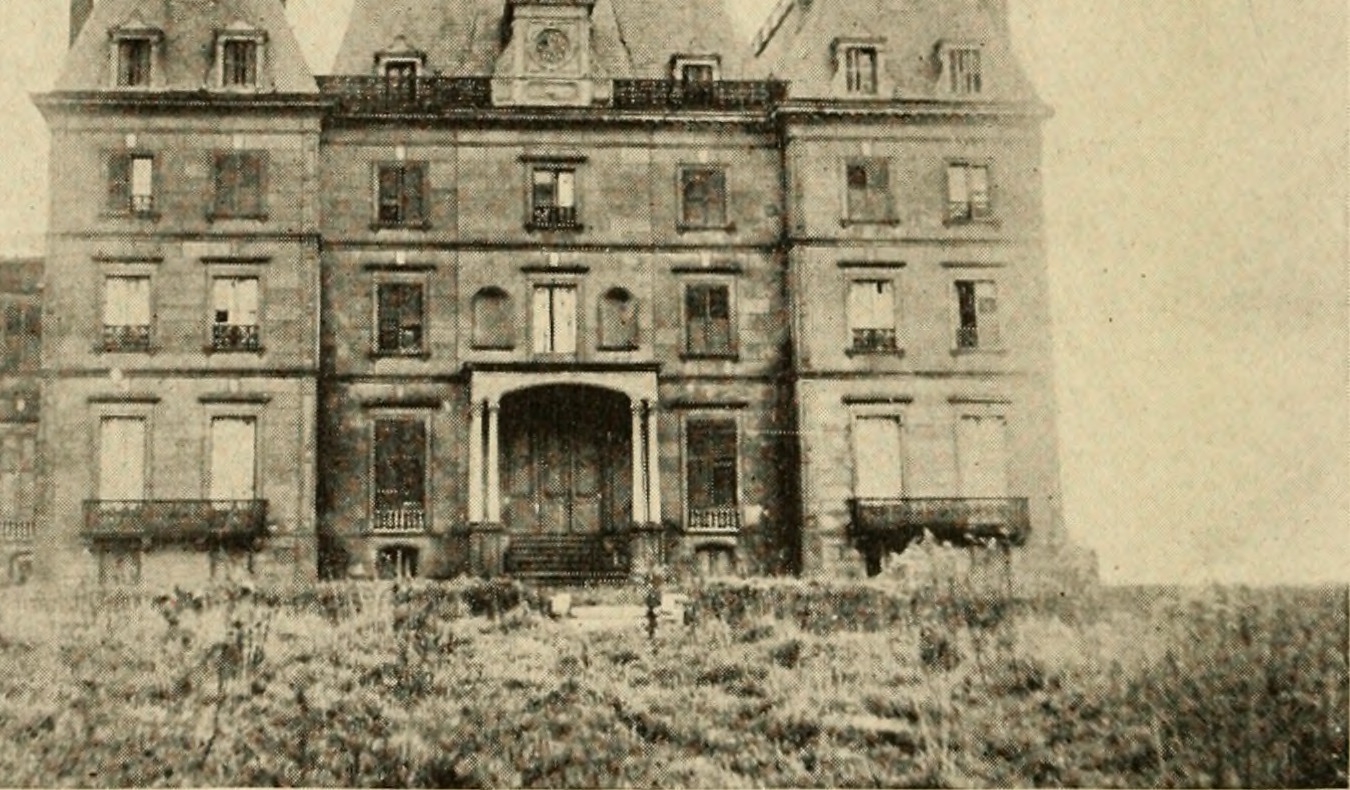
From the book “The borough of the Bronx, 1639-1913; its marvelous development and historical surroundings” (1913): “Casanova Mansion were stored with powder and rifles which eventually found their way into the hands of the patriots in Havana and other Cuban cities. An underground passage had been made, running from the house to the Sound, and under cover of darkness boats, which were undoubtedly filibusters, were occasionally seen to steal into the little cove that the mansion overlooked; and, after being freighted with ammunition and other implements of war, to creep out again as mysteriously as they had entered.”
20391932902_78d73ca50f_o

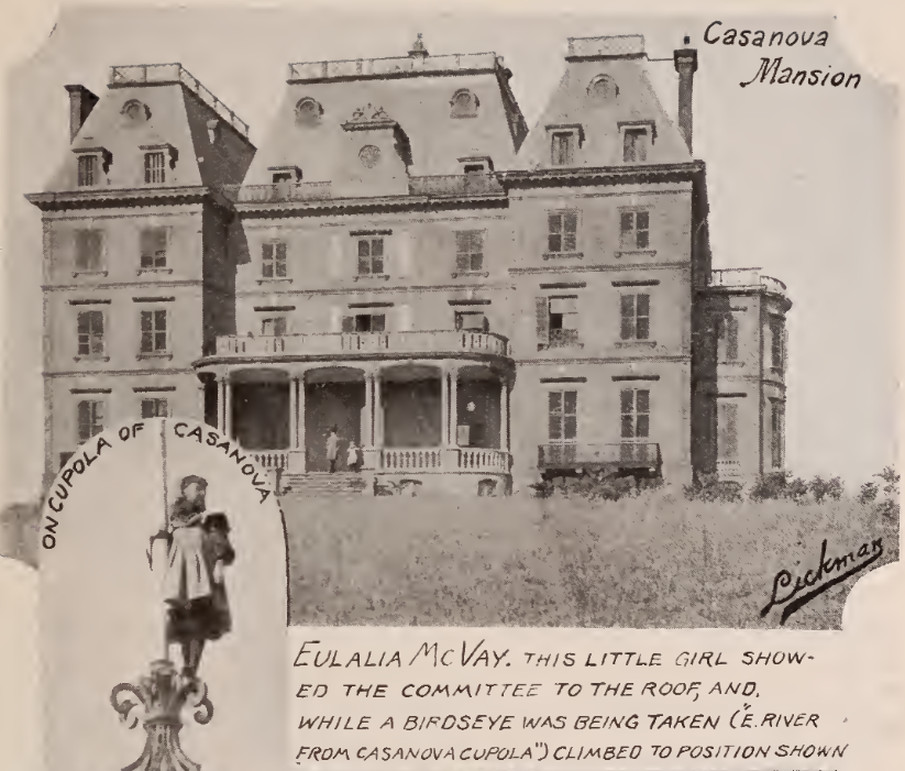
In 1902 a young girl made the news when she by climbing the the very top of the old mansion. Note that the porch is different than the picture above. This is probably the side of the house that faced the East River.
casanova-mansion-aka-whitlocks-folly-west-farms-bronx-1897
Courtesy Stuff Nobody Cares About

The Casanova Mansion makes one of its final appearances in the newspapers. This article is from 1902 although it appears that the mansion was not completely demolished until much later (the pictures above are from a later date)
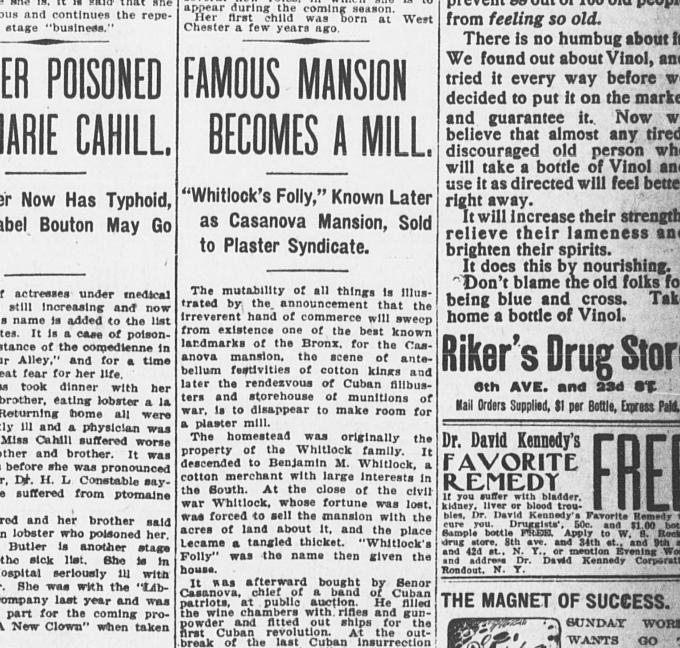
From the New York World, November 18, 1902

For more information on the Casanova Mansion, check out this exhaustive research from Paul DeRienzo.

From the New York Times, September 18, 1870, a thorough recounting of the strange story of possible ghosts on East 27th Street, with a thorough description of the police’s creative use of lighting and photography.
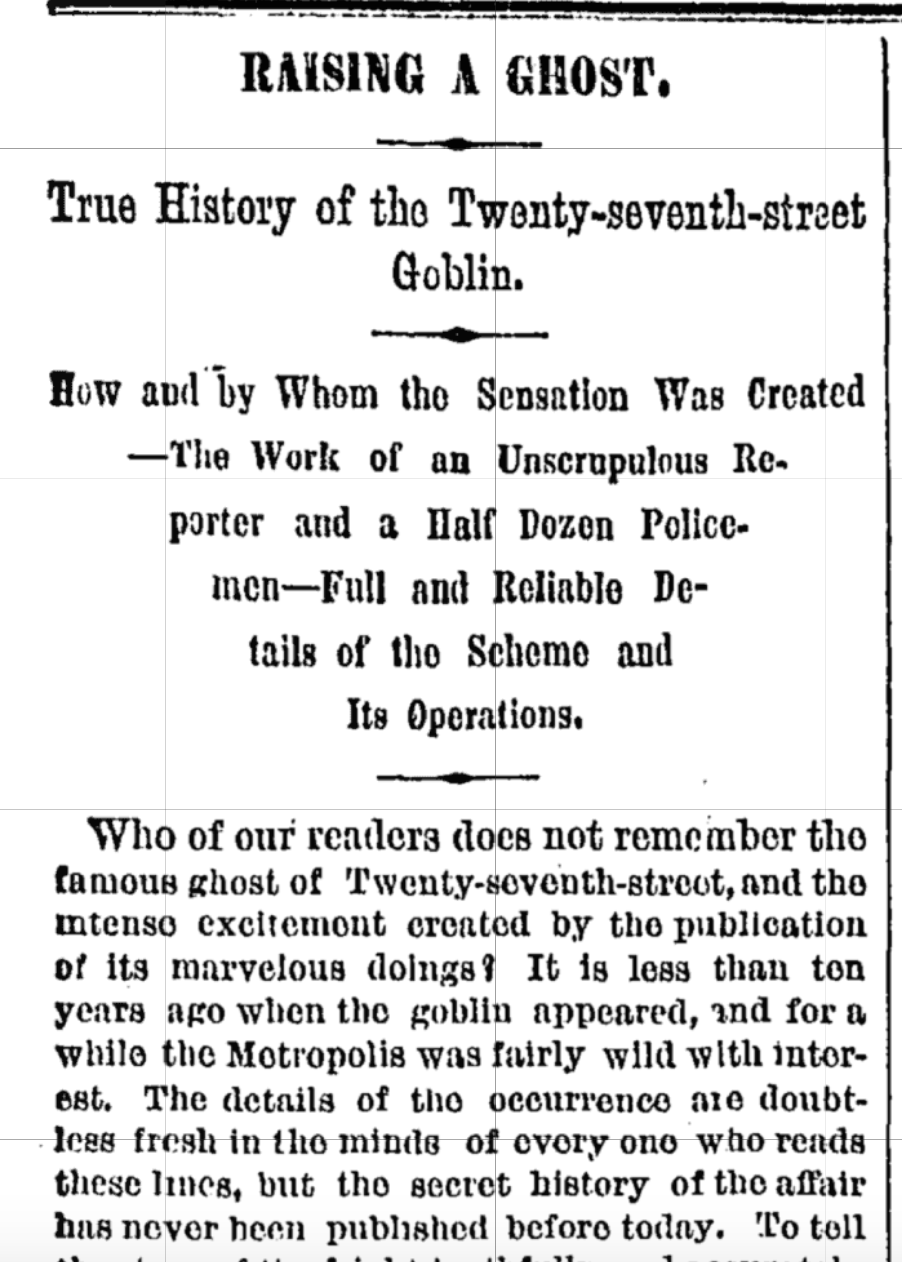
screen-shot-2016-10-14-at-10-38-23-am

A selection of houses along East 27th Street, photographs by Charles Von Urban, courtesy the Museum of the City of New York
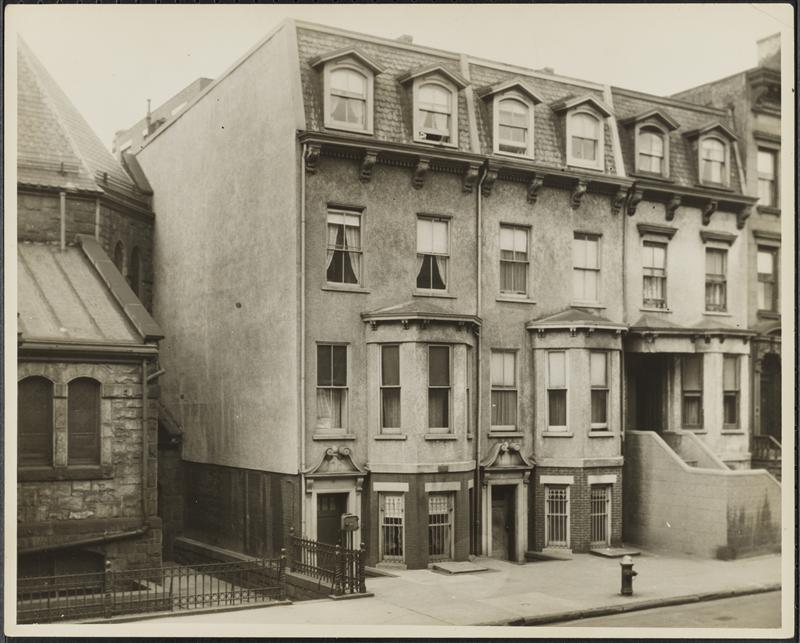
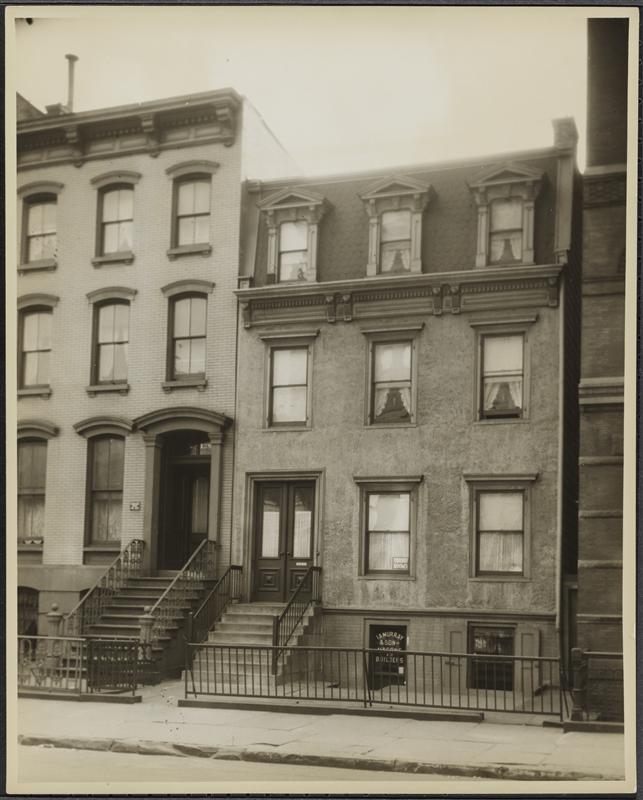
mny80444

mny80448

mny80445

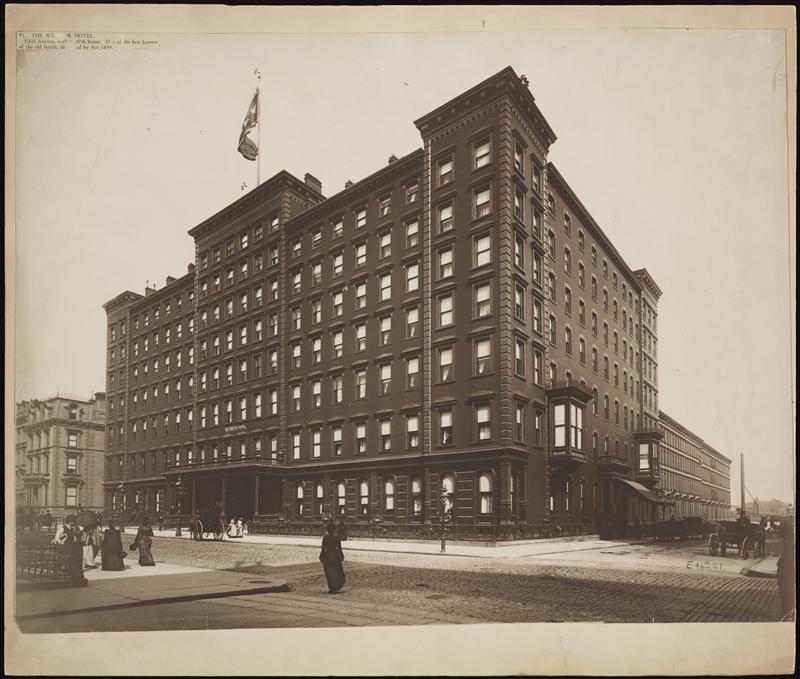
The spectacular Windsor Hotel on Fifth Avenue and 46th Street, pictured here in 1890, many years after the death of its proprietor John T. Daly. For more information on this forgotten hallmark of upper-class glamour, check out this article from Daytonian In Manhattan.
Museum of the City of New York

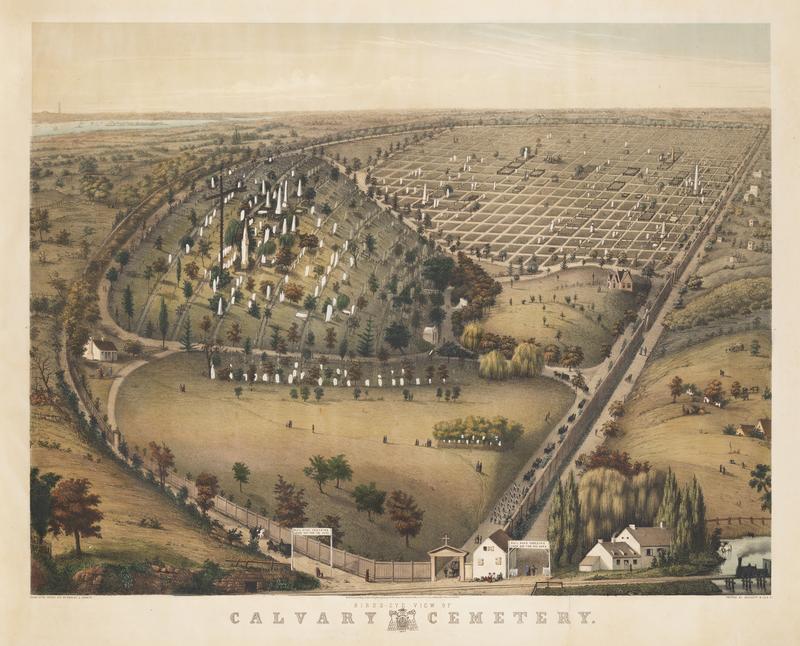
A ‘bird’s eye’ view of Calvary Cemetery in 1855, well before its expansion. Taking from clues from various newspaper, my guess is that the ‘cursed farmhouse’ lay somewhere to the far right of this image.
MCNY
MCNY

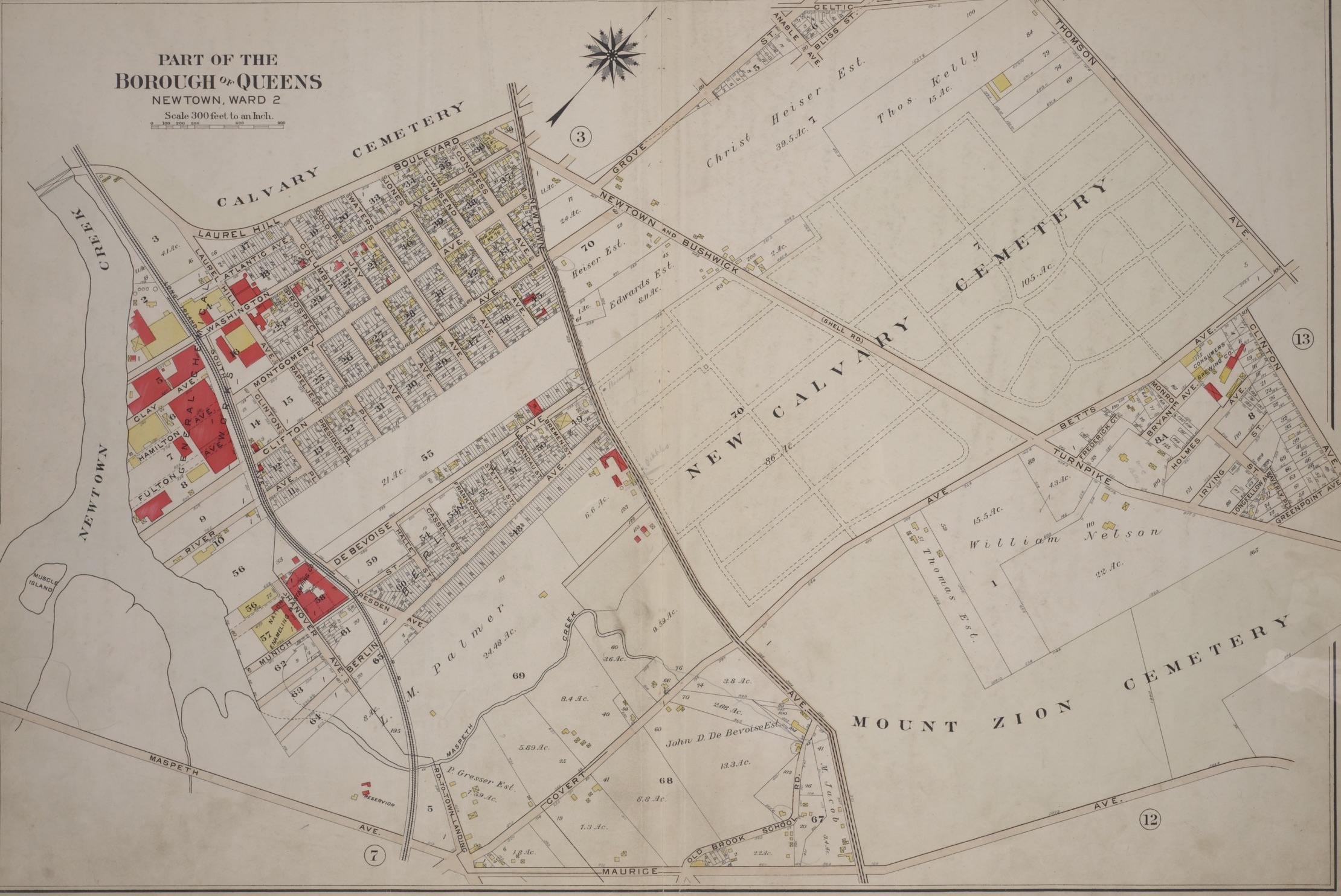
A map from 1909 detailing the expansion of Calvary Cemetery.
Courtesy NYPL
Courtesy NYPL

From the New York Tribune, May 3, 1877
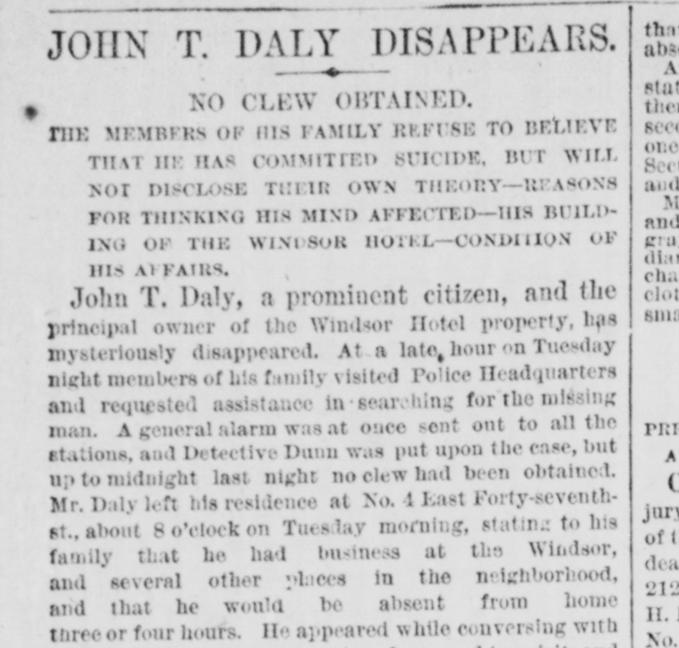
image_681x648_from_83236_to_12321331

A macabre diagram of the Daly crime scene at the farmhouse, published in the New York Herald, May 7, 1877.
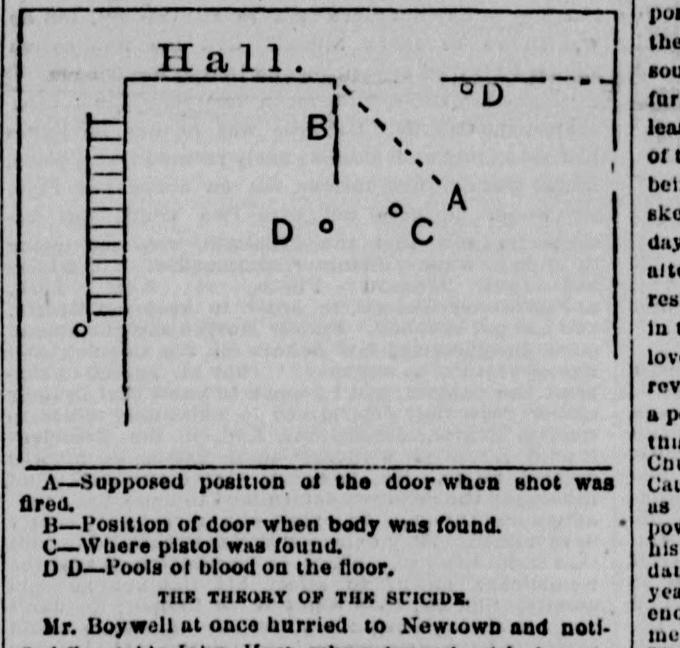
image_681x648_from_20504517_to_30945511

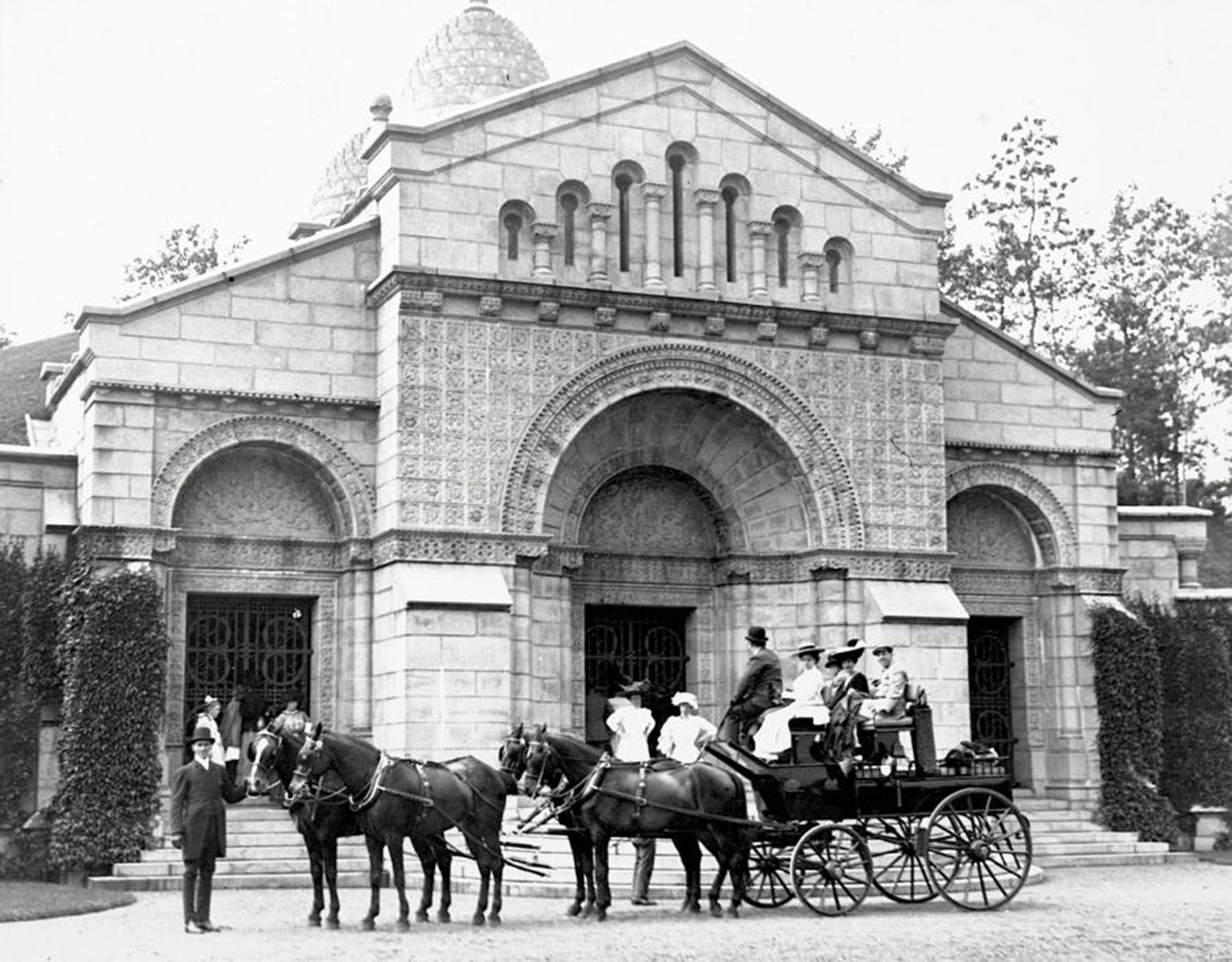
The Vanderbilt Mausoleum, pictured here in 1910
Museum of the City of New York

new-york-vanderbilt-mausoleum-2-1892-unknown

We hope you stuck around until the end of the show — to hear the official trailer for the new Bowery Boys podcast series called The First. Listen to it here:
Categories
Mysterious Stories Podcasts

The Mystery of the Central Park Obelisk

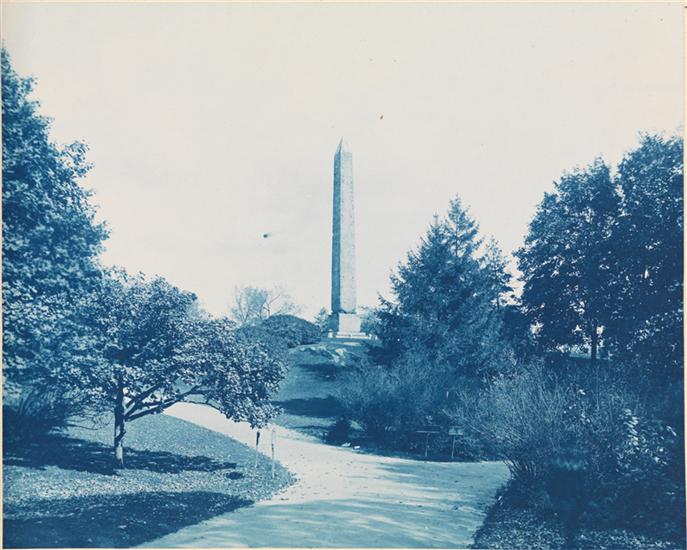
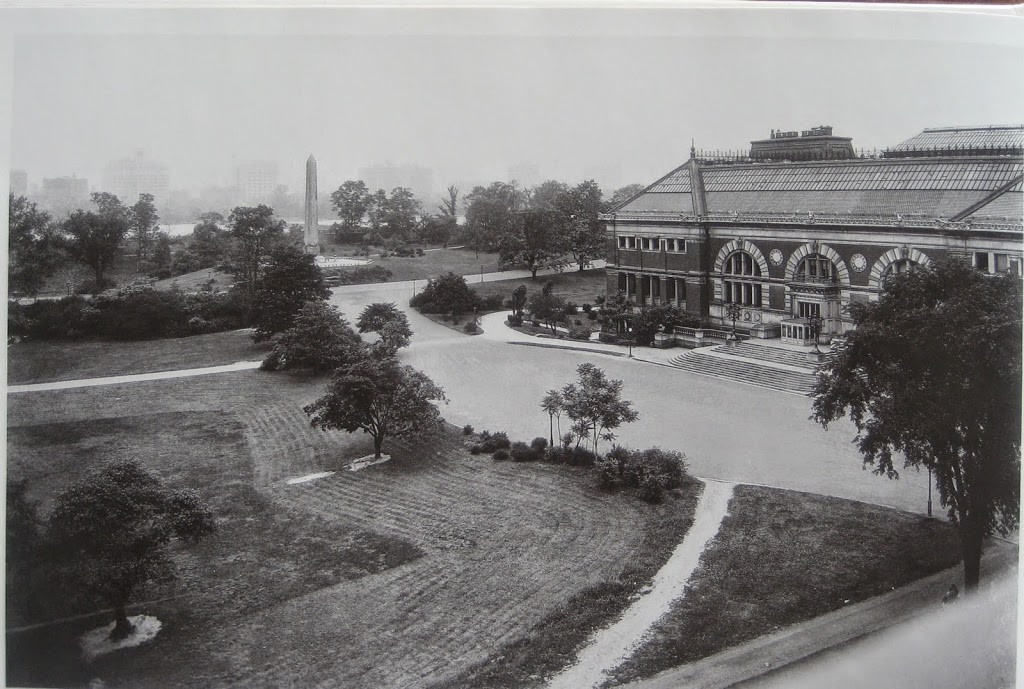
PODCAST Cleopatra’s Needle is the name given to the ancient Egyptian obelisk that sits in Central Park, right behind the Metropolitan Museum of Art.  

This is the bizarre tale of how it arrived in New York and the unusual forces that went behind its transportation from Alexandra to a hill in the city’s most famous park.

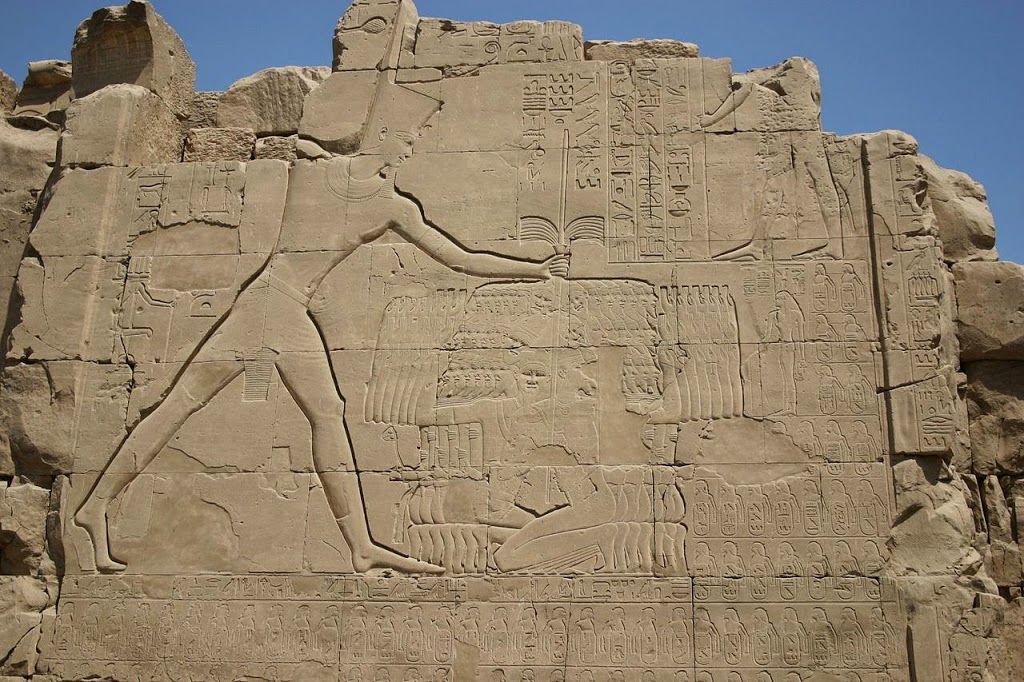
The weathered but elegant monolith known as Cleopatra’s Needle was created thousands of years ago by the pharaoh Thutmose III.  

Thanks to the great interest in Egyptian objects in the 19th century — sometimes called Egyptomania — major cities soon wanted obelisks for their own, acquired as though they were trophies of world conquest.

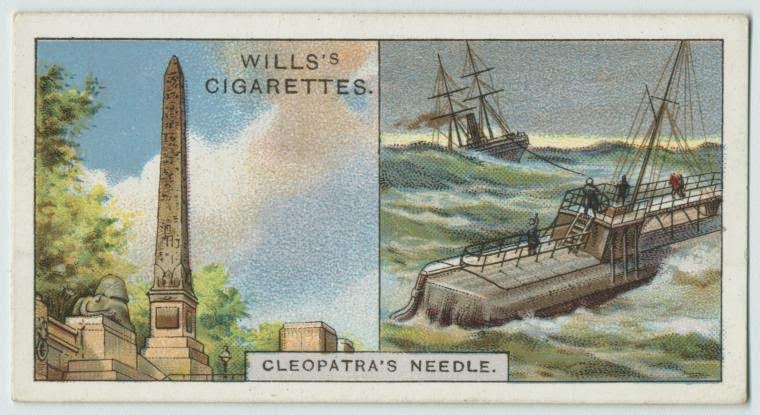
 France and England scooped up a couple but — at least in the case of the ill-fated vessel headed to London — not without great cost.

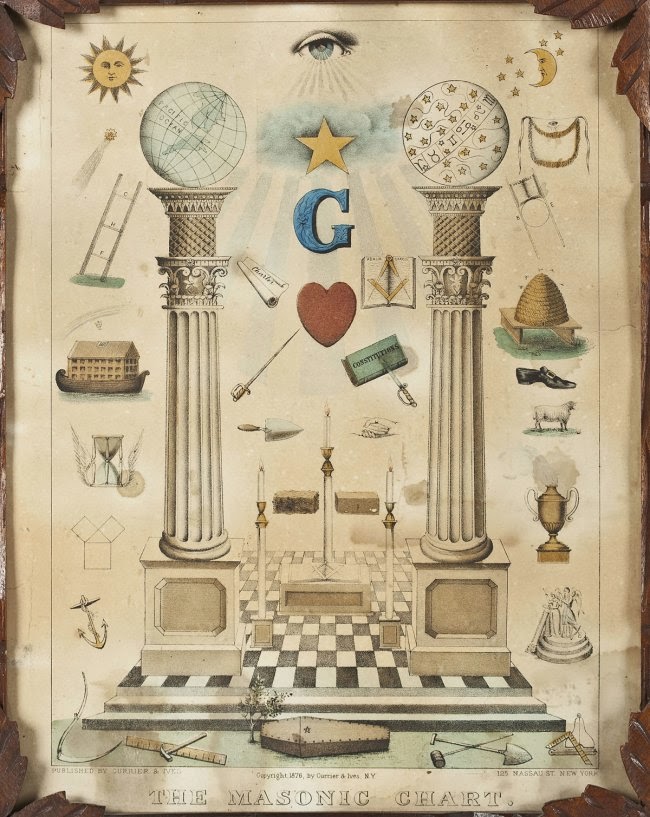
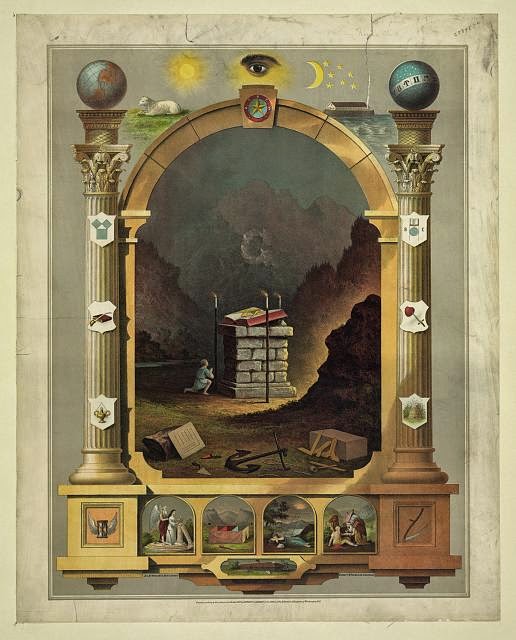
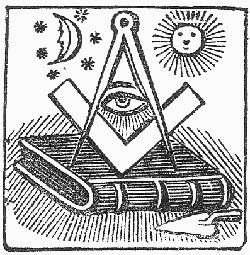
One group was especially fascinated in the Alexandrian obelisks.  The Freemasons (their symbols at right) have been a mysterious and controversial fraternity who have been involved in several critical moments in American history (including the inauguration of fellow Mason George Washington.)

A Mason engineer and adventurer named Henry Honeychurch Gorringe discovered an incredible secret on the remaining Alexandria obelisk, a secret that might link the secretive organization to the beginning of human civilization.

Museum of the City of New York

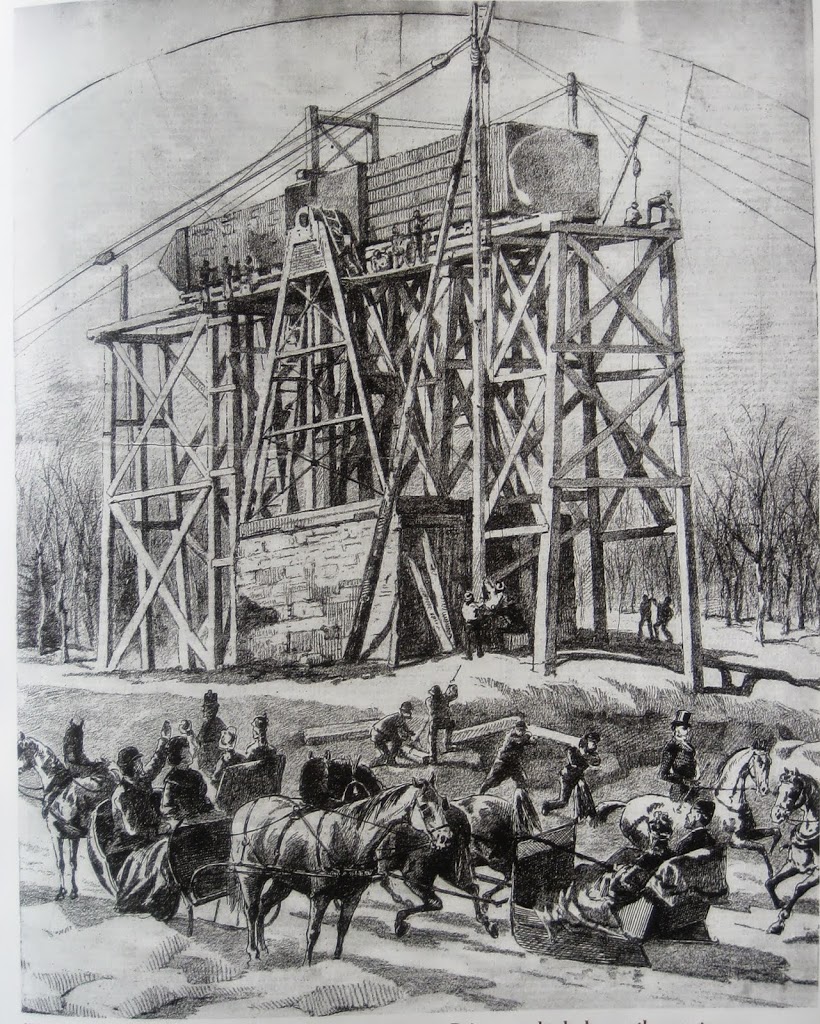
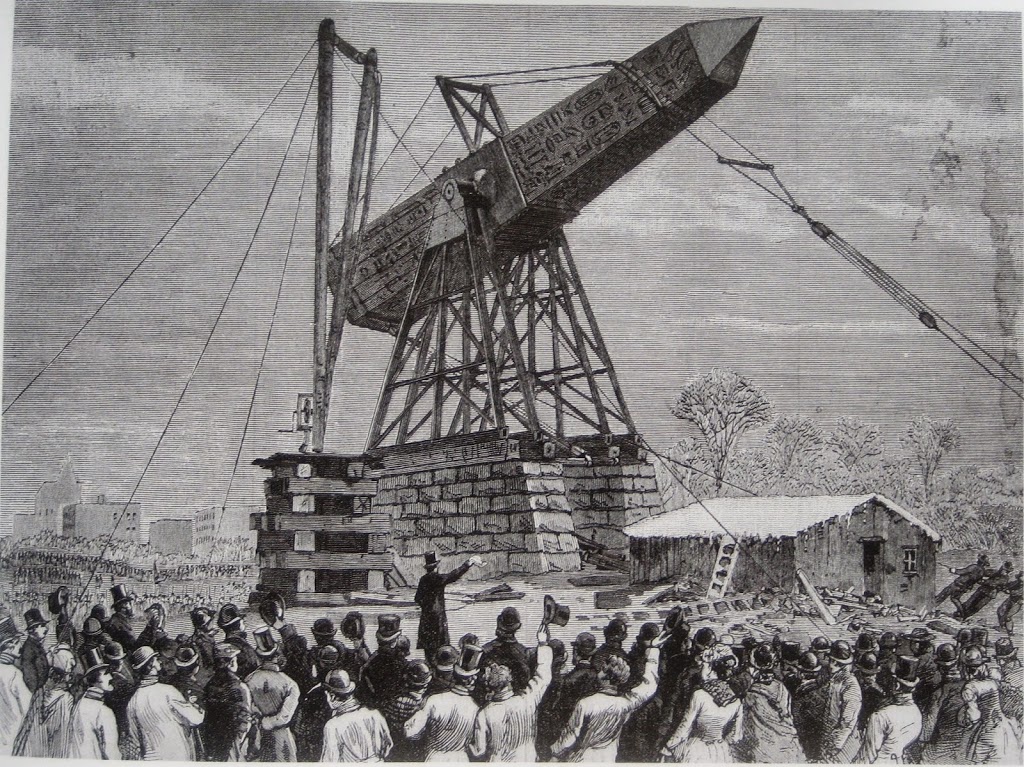
But how do you get a 240 ton object, the length of a 7-story building, across the Atlantic Ocean and propped up in New York’s new premier park?  

We let you in on Gorringe’s technique and the curious Freemasons ceremony that accompanied the debut of the obelisk’s cornerstone.

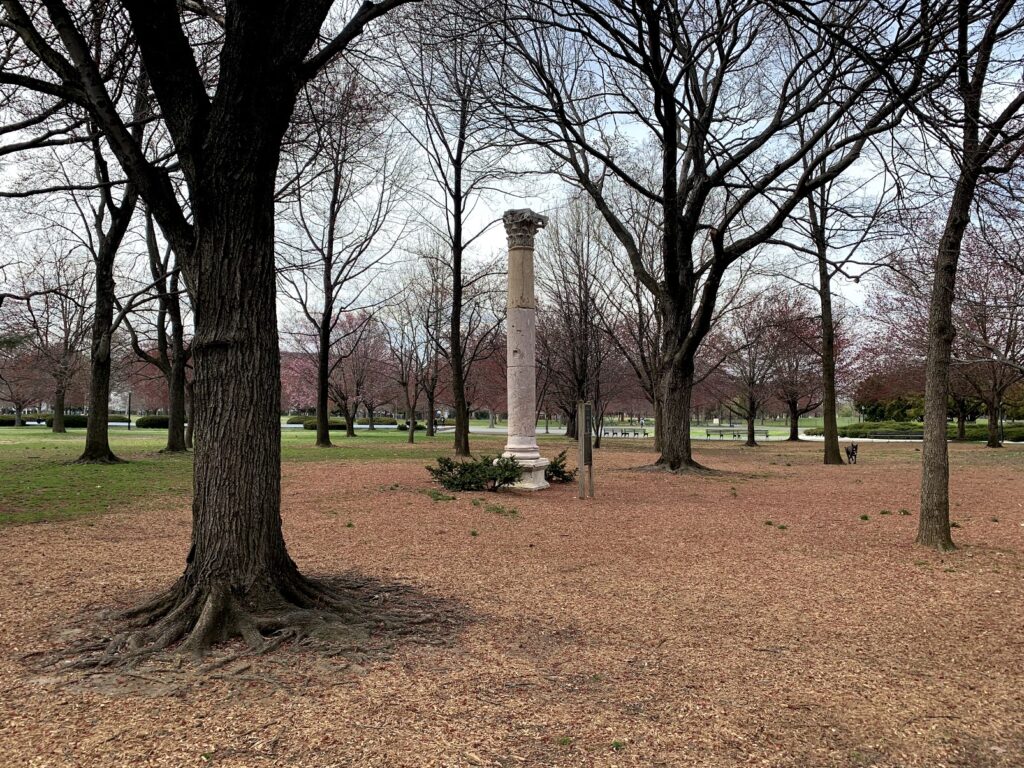
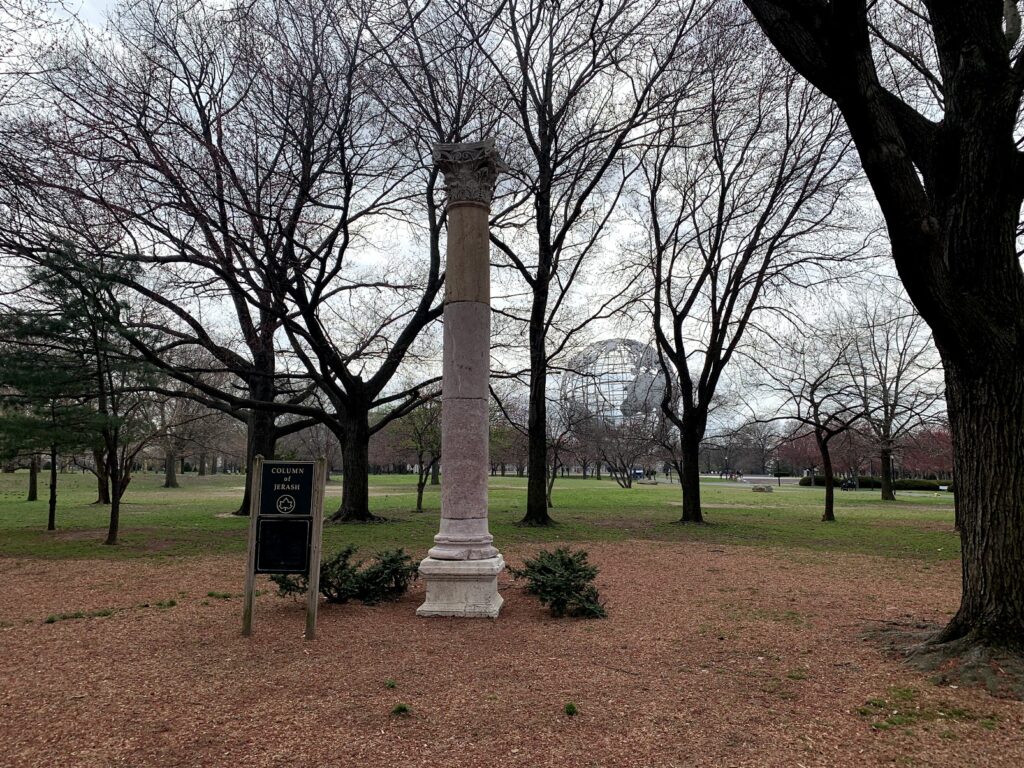
PLUS: A newly recorded tale about another ancient landmark that has made its way to New York City — a column from the ancient city of Jerash, brought here because of … Robert Moses?

This is a re-presentation of a show originally released on June 26, 2014 with new 2020 bonus material recorded for this episode. 

Listen today on your favorite podcast player:


The Bowery Boys: New York City History podcast is brought to you …. by you!

We are now producing a new Bowery Boys podcast every week. We’re also looking to improve and expand the show in other ways — publishing, social media, live events and other forms of media. But we can only do this with your help!

We are now a creator on Patreon, a patronage platform where you can support your favorite content creators.

Please visit our page on Patreon and watch a short video of us recording the show and talking about our expansion plans.

If you’d like to help out, there are six different pledge levels.Check them out and consider being a sponsor.

We greatly appreciate our listeners and readers and thank you for joining us on this journey so far.


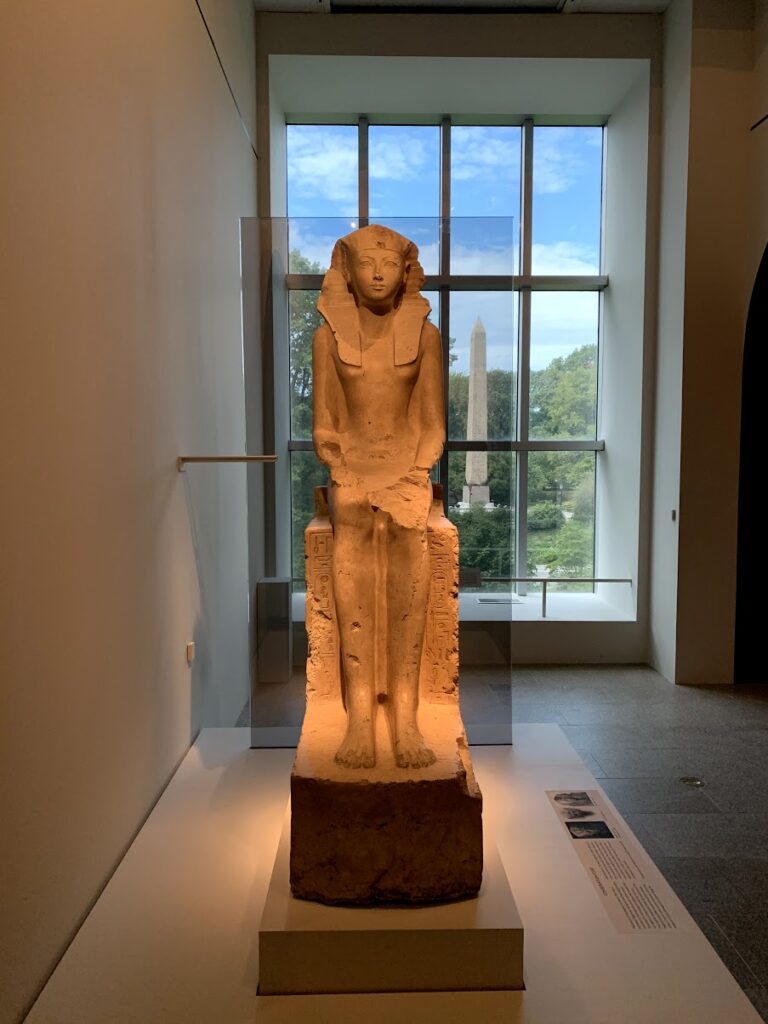
Cleopatra’s Needle as seen from the inside of the Metropolitan Museum of Art. Photo by Greg Young

Thutmose III, who commanded thousands to construct his obelisks, pictured in a relief in Karmac:

The Masonic Chart by Currier & Ives, 1876, created a few years before the arrival of the obelisk. And another below it, from 1872

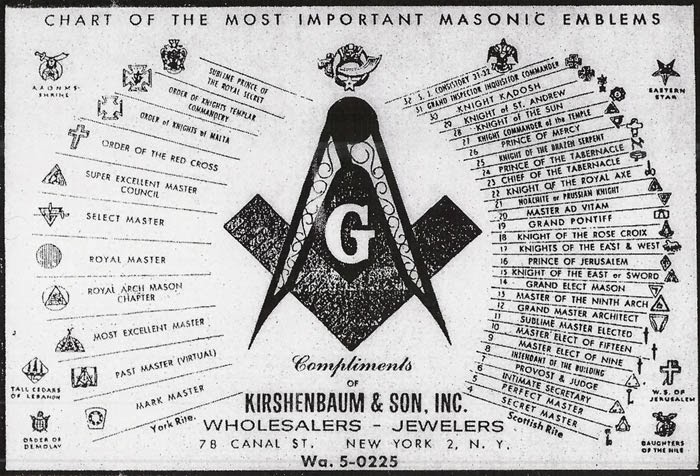
From a jewelry advertisement, meant to clarify some of the levels and organizations within the Freemasons, although I’m sure this equally confused or frightened some people! [source]

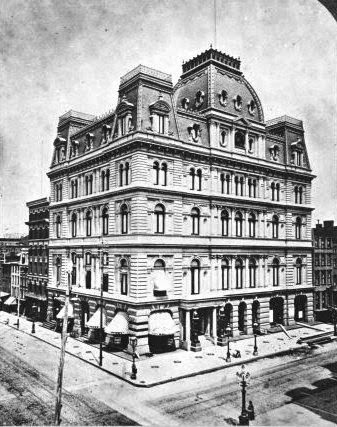
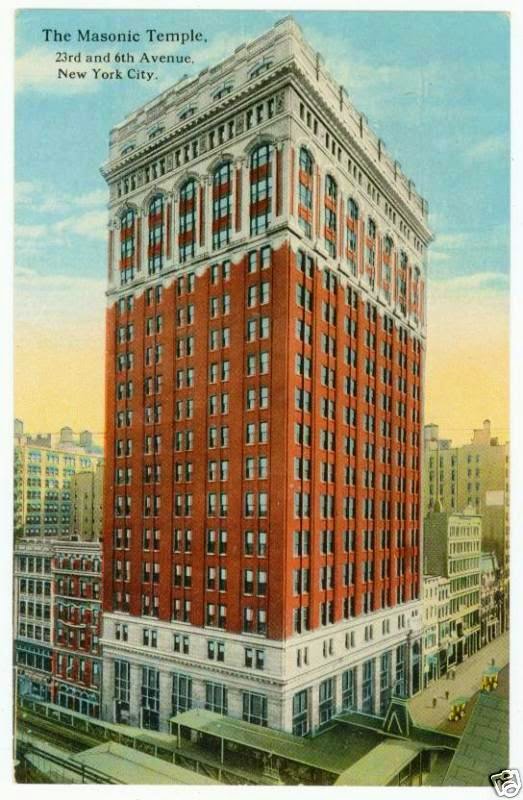
The New York Masonic Hall on 23rd Street and Sixth Avenue — the original hall (which stood at this corner during the retrieval of Cleopatra’s Needle) and the later 1911 structure which still stands there today. (Pictures courtesy NYPL)

A cigarette card recounting the terrible tale of the London obelisk. (NYPL)


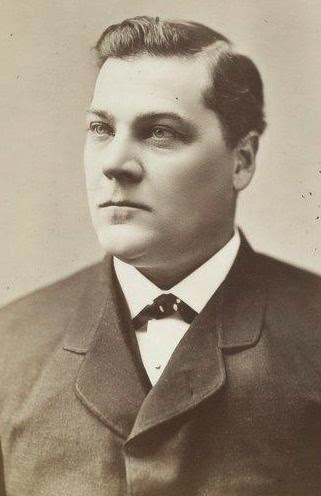
The hero of this episode — Henry Honychurch Gorringe

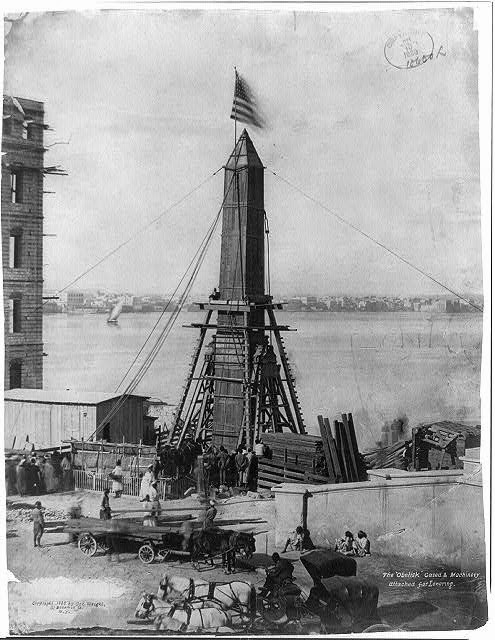
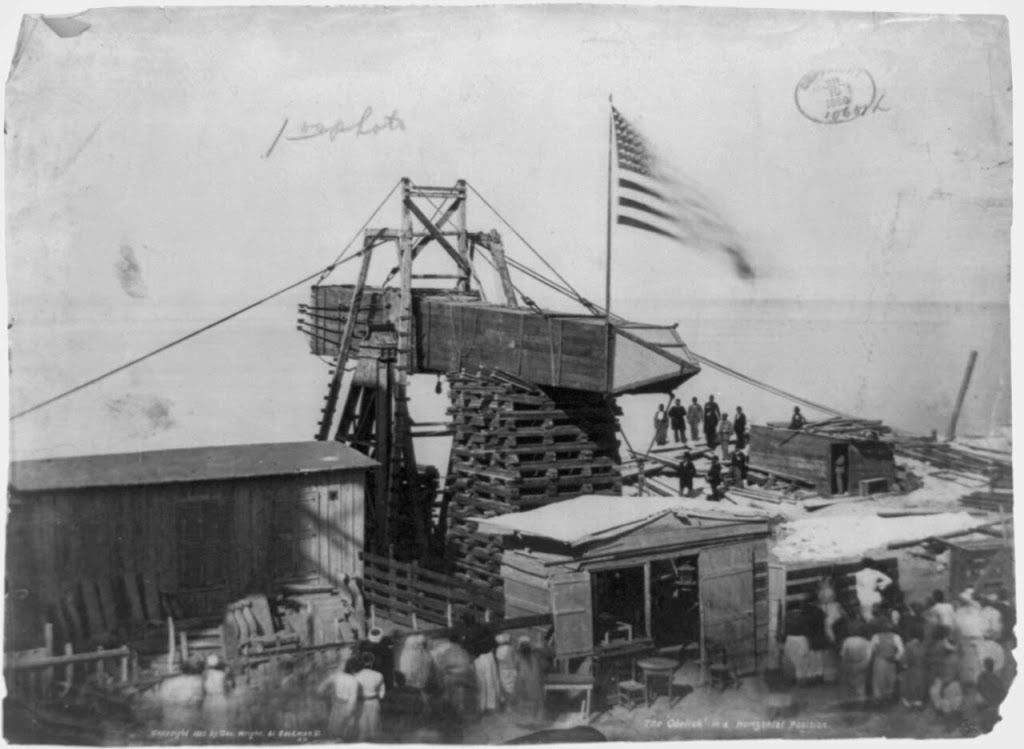
Gorringe prepares the obelisk for transportation. Even though it holds aloft an American flag, the treasure was actually a gift to the City of New York. (LOC)

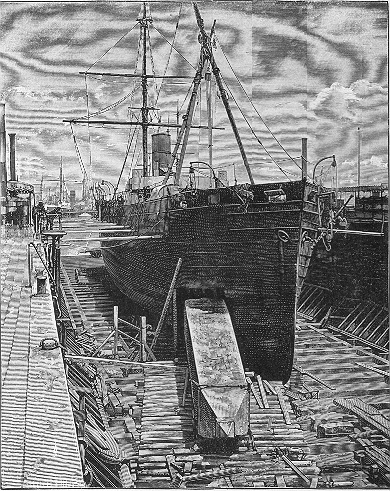
Sliding the obelisk into the hatch of a refitted Egyptian postal ship.

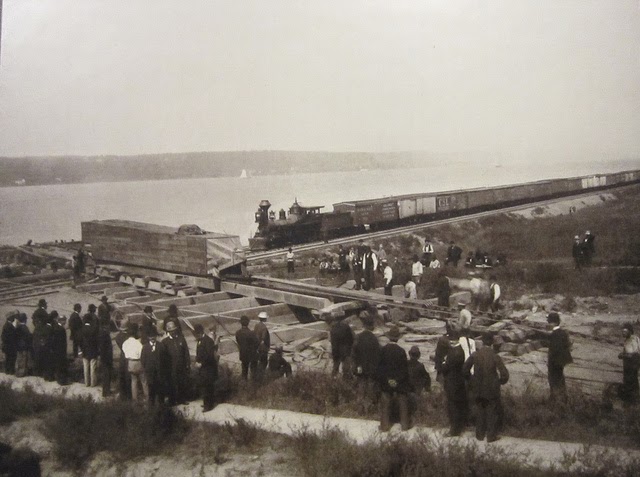
Getting the obelisk past the trains of the Hudson River Railroad! Thankfully, a Vanderbilt was in charge of both the tracks and the obelisk project.

The ‘bridge’ which slowly took the obelisk across Manhattan, dismantled and rebuilt as the object moved eastward. (The following images are courtesy Torben Retboll)

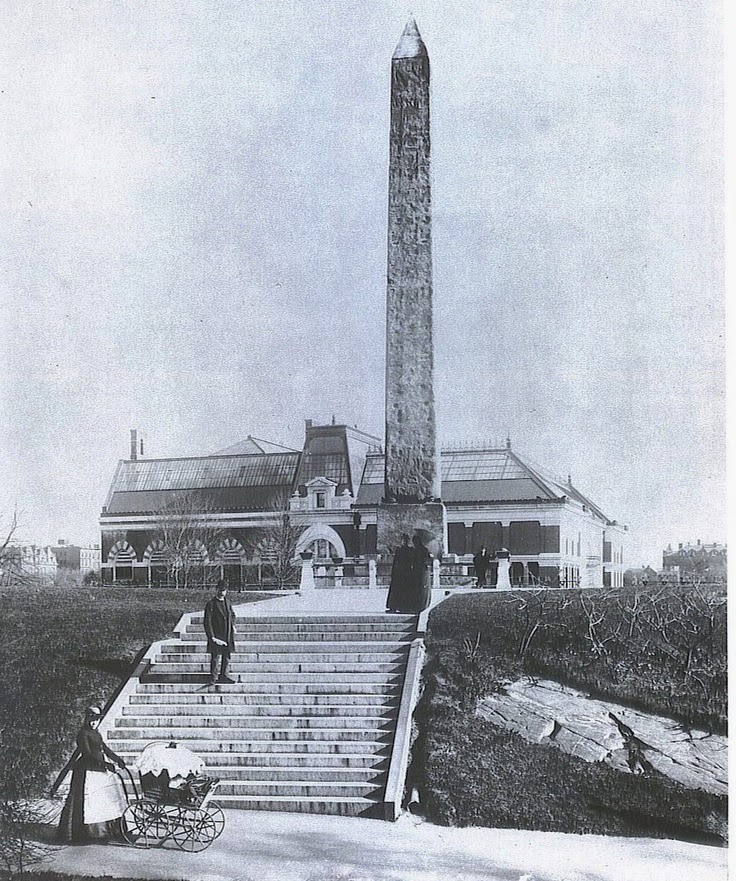
Both the obelisk and the Met were new features to Central Park in 1880.


The ‘Whispering’ Column of Jerash, located in Queens

Categories
Health and Living Podcasts Staten Island History

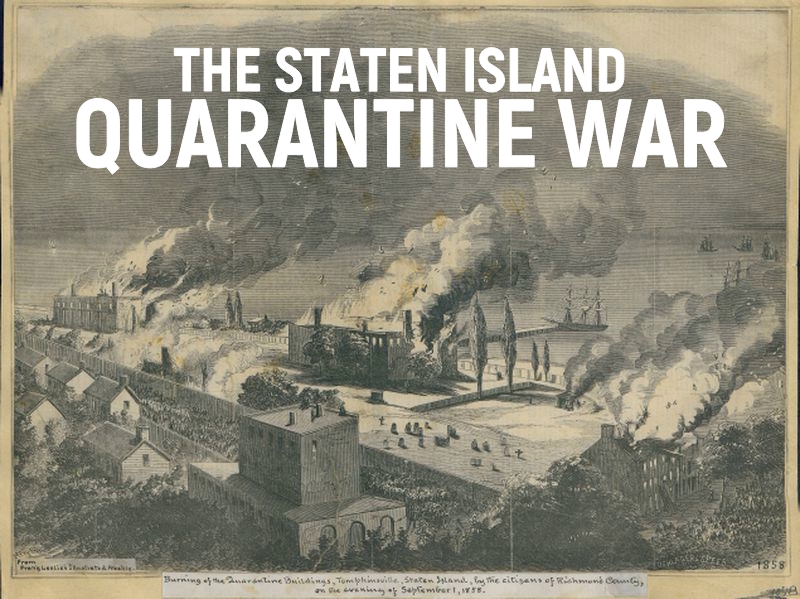
The Staten Island Quarantine War

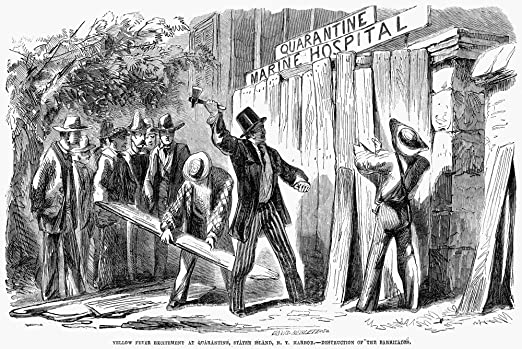
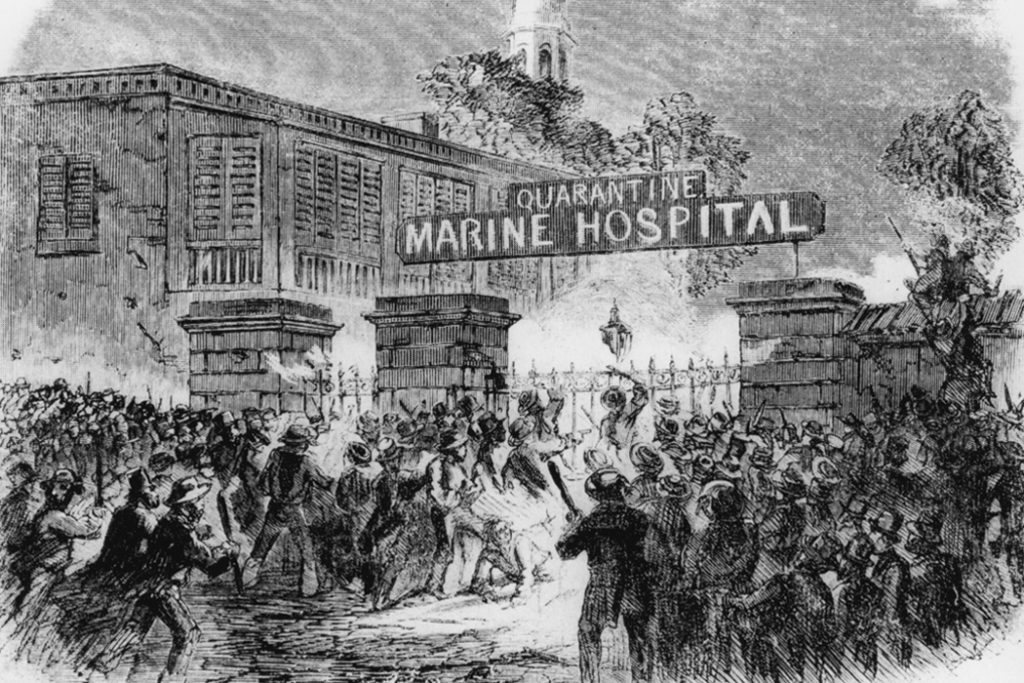
EPISODE 325 In 1858, during two terrible nights of violence, the needs of the few outweighed the needs of the many when a community, endangered for decades and ignored by the state, finally reached its breaking point.

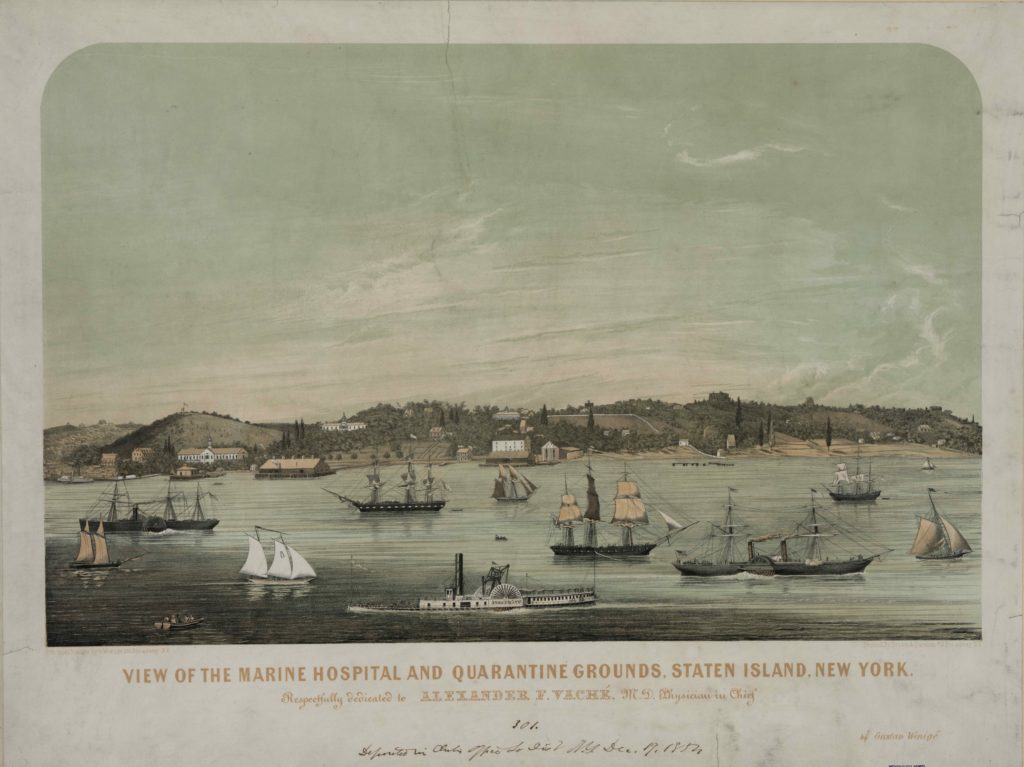
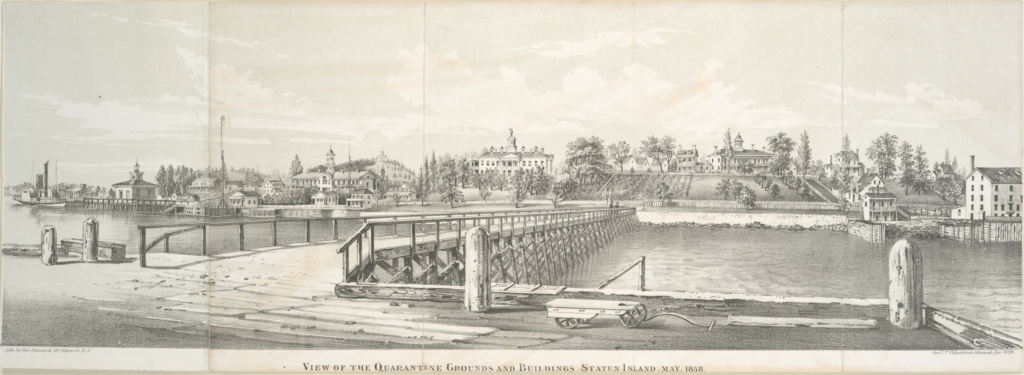
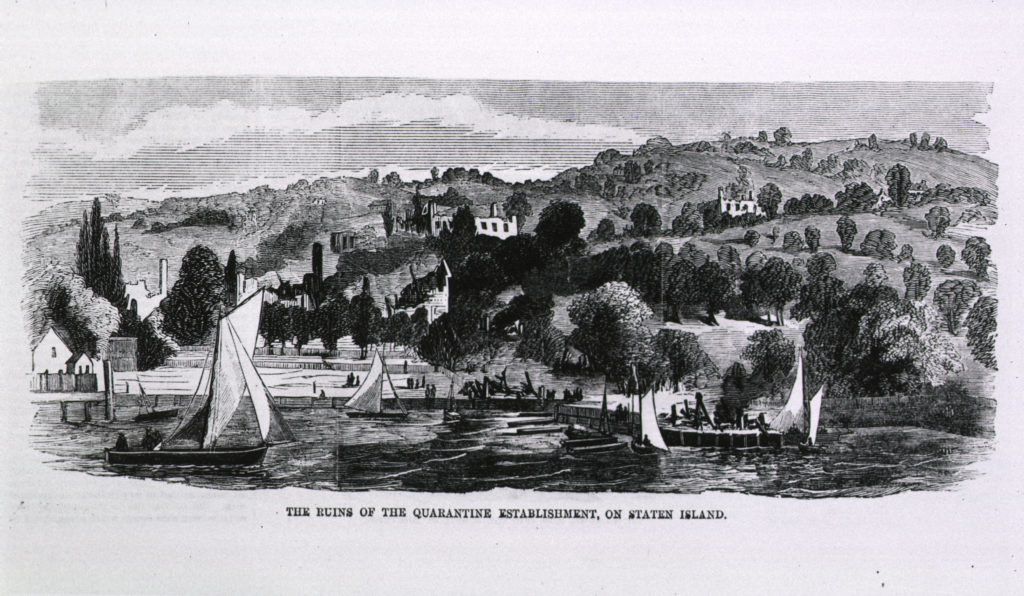
In Staten Island, just south the spot of today’s St. George Ferry Terminal, where thousands board and disembark the Staten Island Ferry everyday, was once America’s largest quarantine station – 30 acres of hospitals, medical facilities, shanties and homes, surrounded by a six-foot-tall brick wall.

Since its construction in the year 1799, Staten Islanders had fought the its removal of the Quarantine Ground, considered a menacing danger to the health of residents and a blight upon any possible development.

Yet the need for such an extensive facility at the Narrows — the gateway to the New York Upper Bay and the Hudson River — was so important that the state of New York mostly turned a blind eye to their wishes.

And so the residents of Staten Island took matters into their own hands.

Was this a case of righteous revolution in the service of safety and well-being against a tyrannical state? Or a grave and malicious act of terror?

To get this episode, simply stream or download it from your favorite podcast player.

Or listen to it straight from here: THE STATEN ISLAND QUARANTINE WAR

New York Public Library
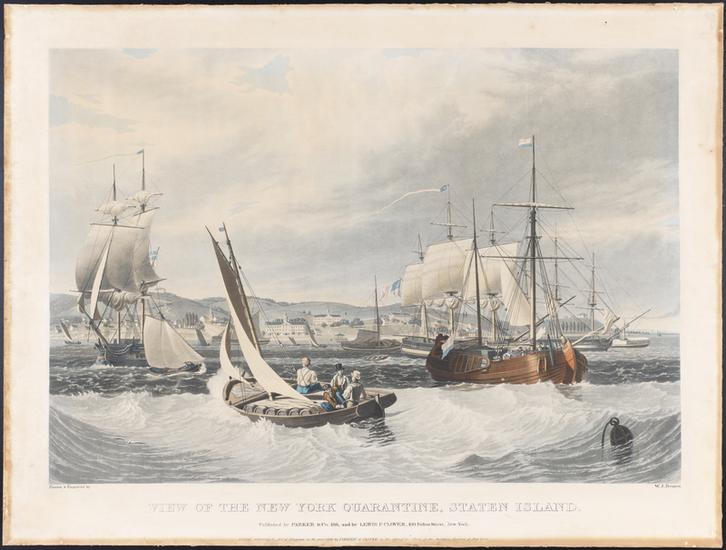
Published by Parker & Co. 186, and by Lewis P. Clover, 180 Fulton Street, New-York. Entered according to Act of Congress in the year 1833 by Parker & Clover in the office of the Clerk of the Southern District of New York. — Museum of the City of New York
The Quarantine Hospital on Staten Island, 1858 — New York Public Library
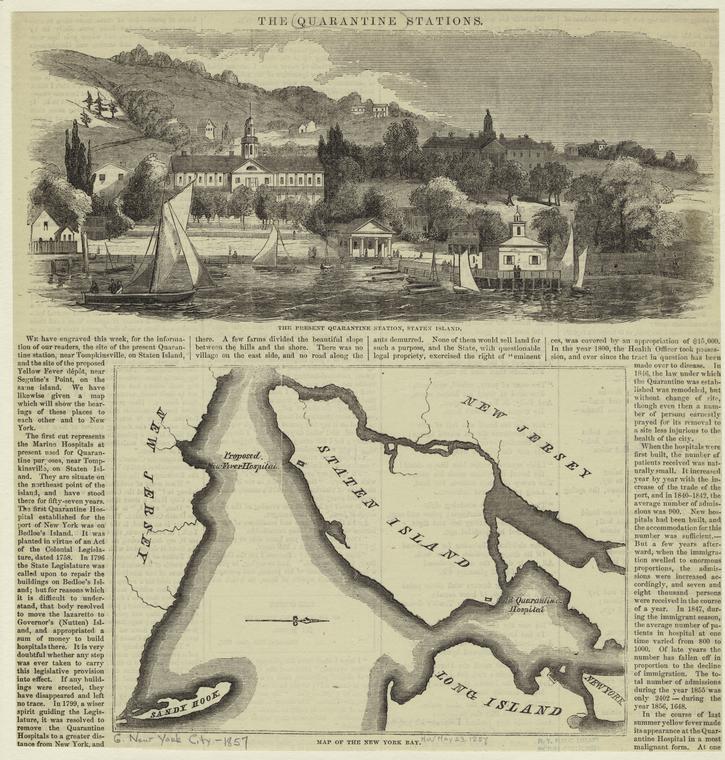
The present quarantine station, Staten Island ; Map of the New York Bay. 1857. Also marks the site of Sanguine’s Point, a proposed quarantine spot that was never constructed. New York Public Library
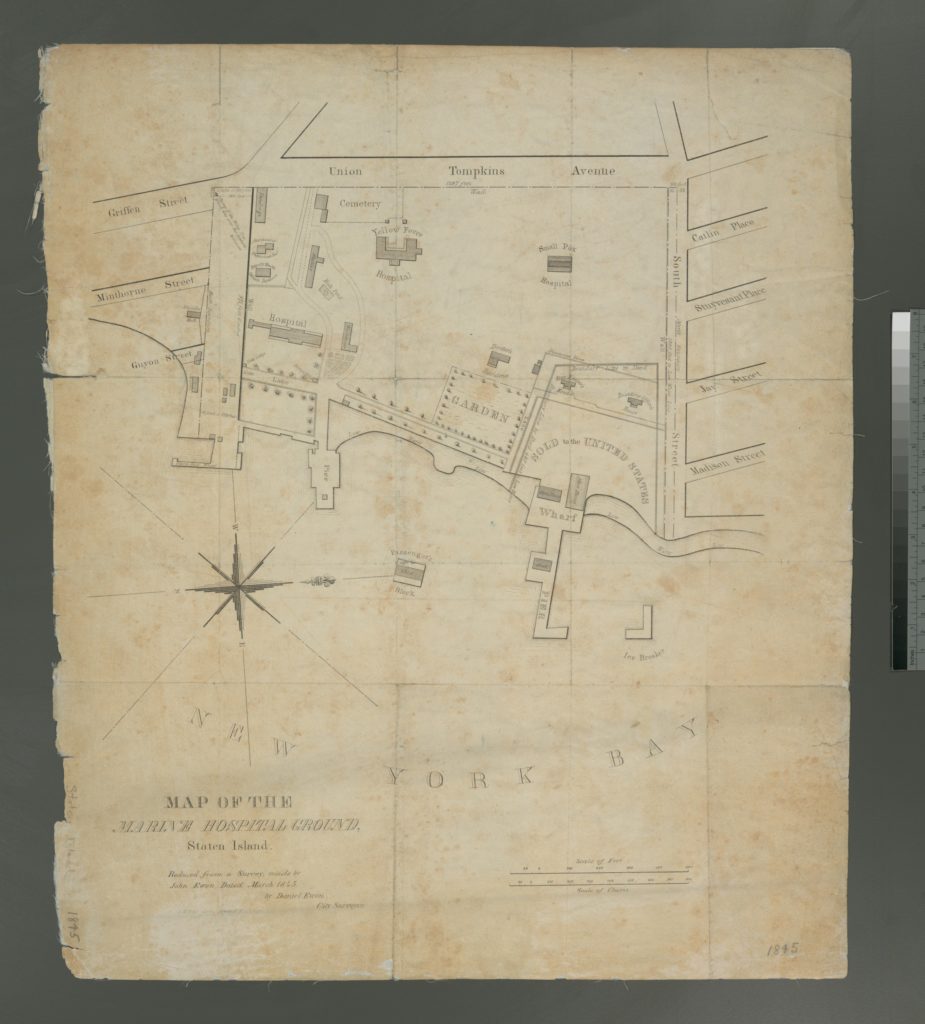
Map of the Quarantine Grounds, New York Public Library Digital Collections. 1845
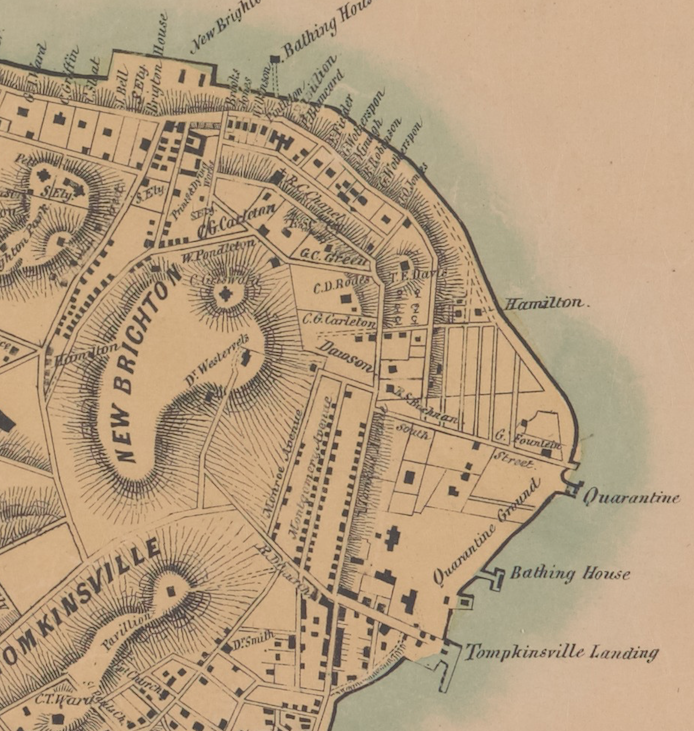
The Quarantine Grounds at Tompkinsville, Staten Island, in 1853 — courtesy the New York Cemeteries Project
Harper’s Weekly,1858/Getty Images
Harper’s Weekly / Sept. 11, 1858

FURTHER LISTENING

After listening to The Staten Island Quarantine War, check out these past Bowery Boys episodes on subjects featured in the latest show.


The Bowery Boys: New York City History podcast is brought to you …. by you!

We are now producing a new Bowery Boys podcast every week. We’re also looking to improve and expand the show in other ways — publishing, social media, live events and other forms of media. But we can only do this with your help!

We are now a creator on Patreon, a patronage platform where you can support your favorite content creators.

Please visit our page on Patreon and watch a short video of us recording the show and talking about our expansion plans. If you’d like to help out, there are six different pledge levels. Check them out and consider being a sponsor.

We greatly appreciate our listeners and readers and thank you for joining us on this journey so far.

Categories
Planes Trains and Automobiles Podcasts

The High Line: The wild, wild West Side, cowboys included, inspires an elevated railroad and a remarkable park
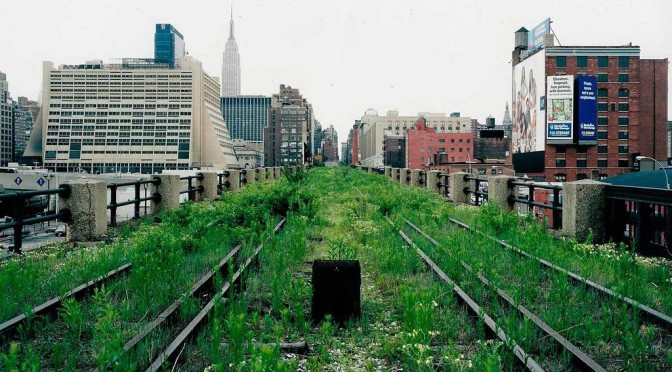
Joel Sternfeld’s extraordinary four-seasons photographs of the High Line — displayed in his 2002 show Walking The High Line — revealed a ribbon of nature surrounded by urbanity and presented a peek into forgotten history. These images greatly influenced the later design of the park, a mix of seamless design and tastefully untethered flora. Courtesy Joel Sternfeld

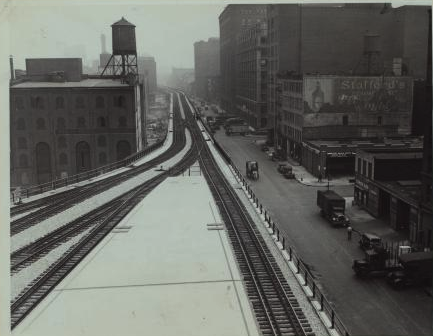
PODCAST  The High Line, which snakes up New York’s west side, is an ambitious park project refitting abandoned elevated train lines into a breathtaking contemporary park. This is the remnant of a raised freight-delivery track system that supported New York’s thriving meat, produce and refrigeration industries that have defined the city’s western edges.

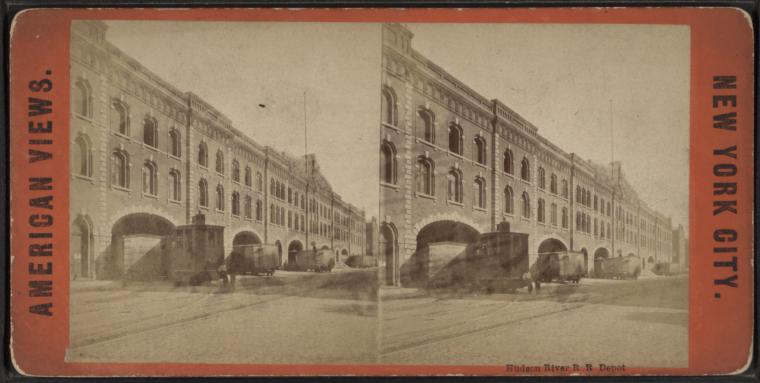
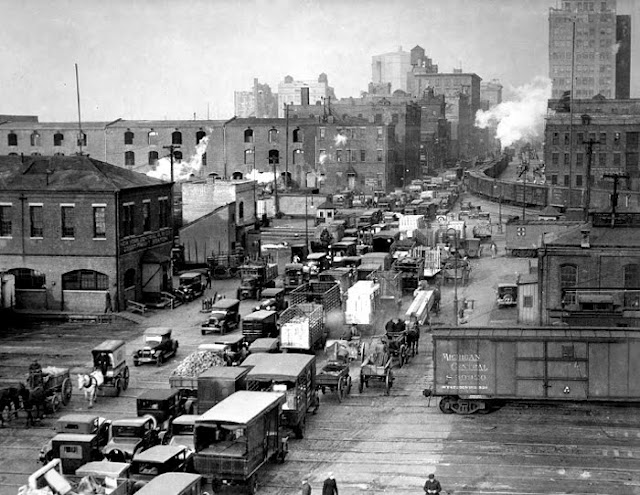
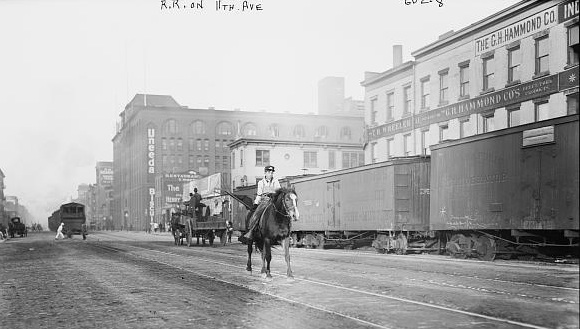
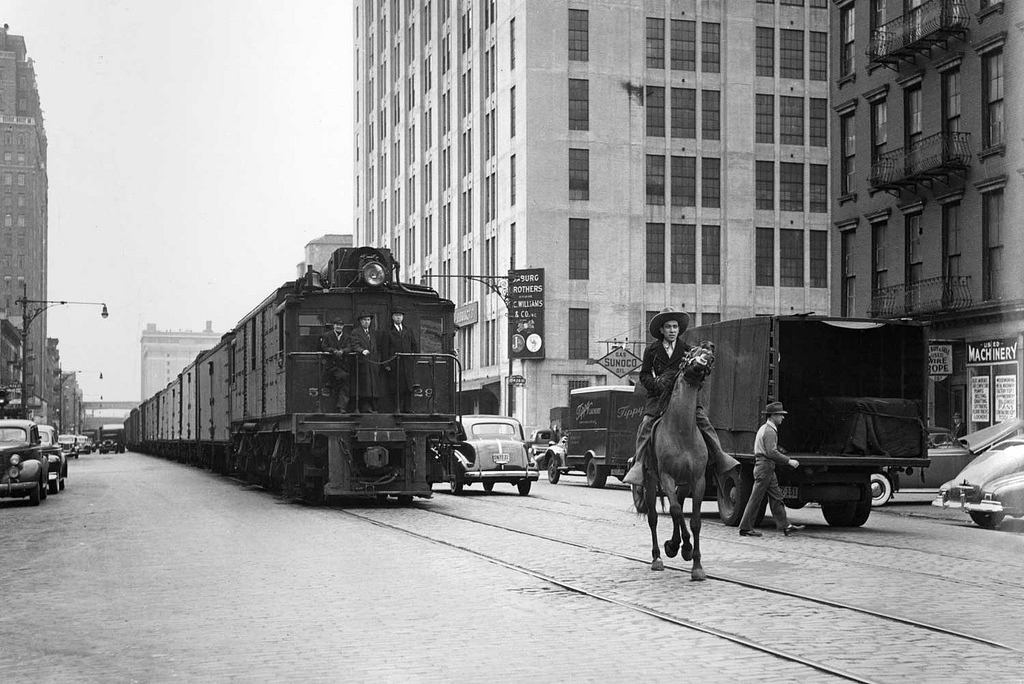
 You can trace the footprints of this area back almost 200 years, to the introduction of the Hudson River Railroad and Cornelius Vanderbilt, who transformed the streets along the Hudson River into ‘the lifeline of New York’, filled with warehouses, marketplaces and abattoirs. And, of course, lots of traffic, turning 10th Avenue and 11th Avenue into ‘death avenues’, requiring New York’s first ‘urban cowboys’.  The West Side Elevated Freight Railroad was meant to relieve some of trauma on the street. That’s not exactly how it worked out.

We’ll tell you about its downfall, its transformation during the 70s as a haven for counter-culture, and its reinterpretation as an innovative urban playground.

FEATURING: Cows, dining cars, Russian caviar and sex clubs!

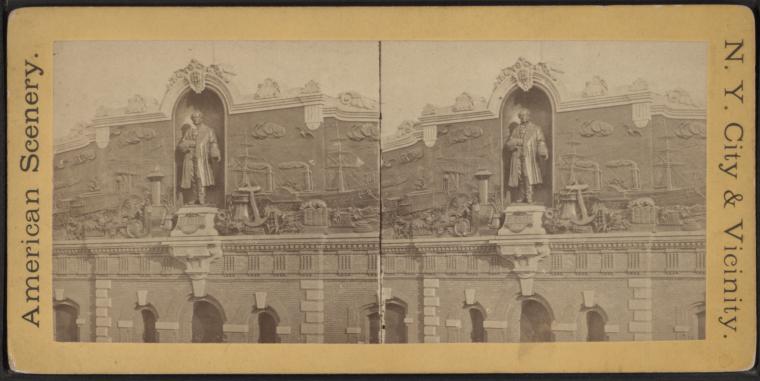
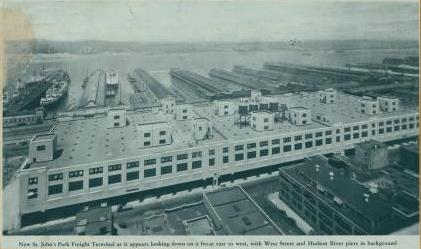
St. John’s Freight Depot, built in 1871. The Cornelius Vanderbilt statue stood watch over the bustling activity until the building was demolished in the 1930s. Mr. Vanderbilt was then moved to Grand Central Terminal, where he still stands today. Pictures courtesy NYPL digital images


The businesses, the trains and the marketplaces of the west side created a nightmare traffic situation along 10th and 11th Avenues, resulting in dozens of death and the sinister moniker ‘Death Avenue’. (Picture courtesy Friends of the High Line)

Rangers of Eleventh Avenue: A railroad cowboy marches ahead of an approaching train. Below that, many years later, another cowboy has his work cut out for him going up the avenue in 1922, the era of automobiles.


The relatively ‘modern’ St. Johns Terminal on Spring Street.

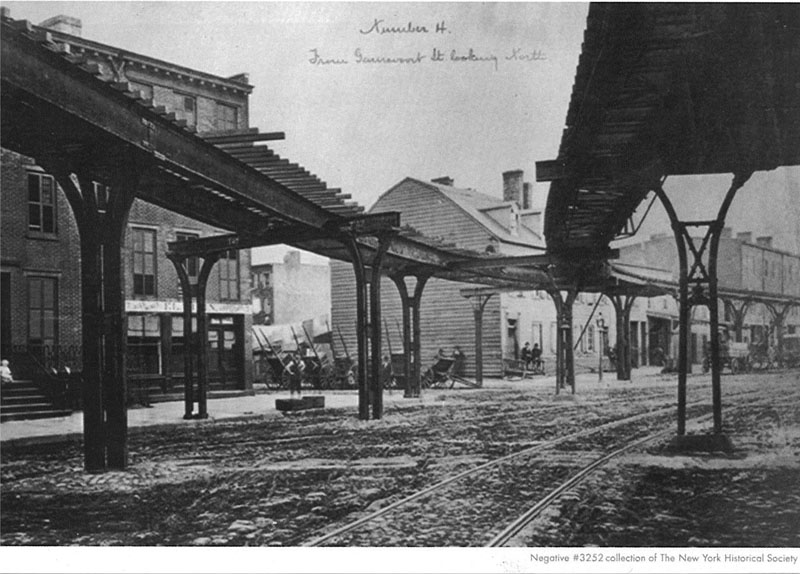
Building the elevated freight railroad: At Gansevoort Street, looking north. Picture courtesy the New York Historical Society

The elevated in 1934, West Street and Spring Street. This was one of the sections that was later ripped down. (Courtesy NYPL)

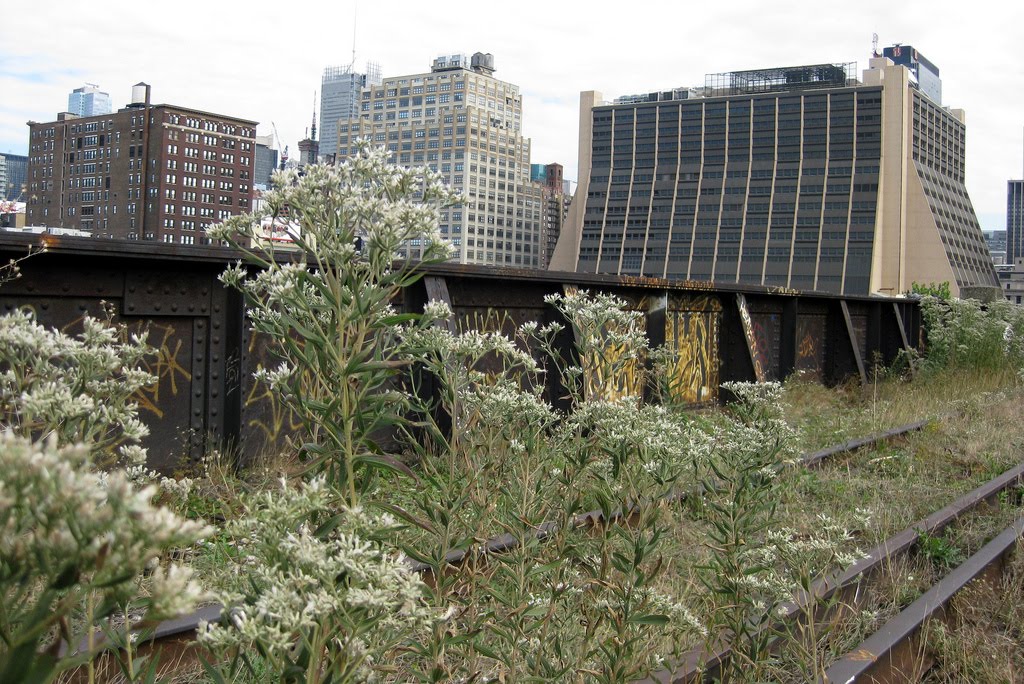
After the elevated railroad closed for good in 1980, the track sat abandoned, covered in natural overgrowth of the likes hardly seen anywhere else in Manhattan. ‘Urban explorers’ often traipsed along the mysterious rails, capturing the dichotomy between sudden natural landscape and metropolitan backdrop. (Photo courtesy wally g/Flickr)


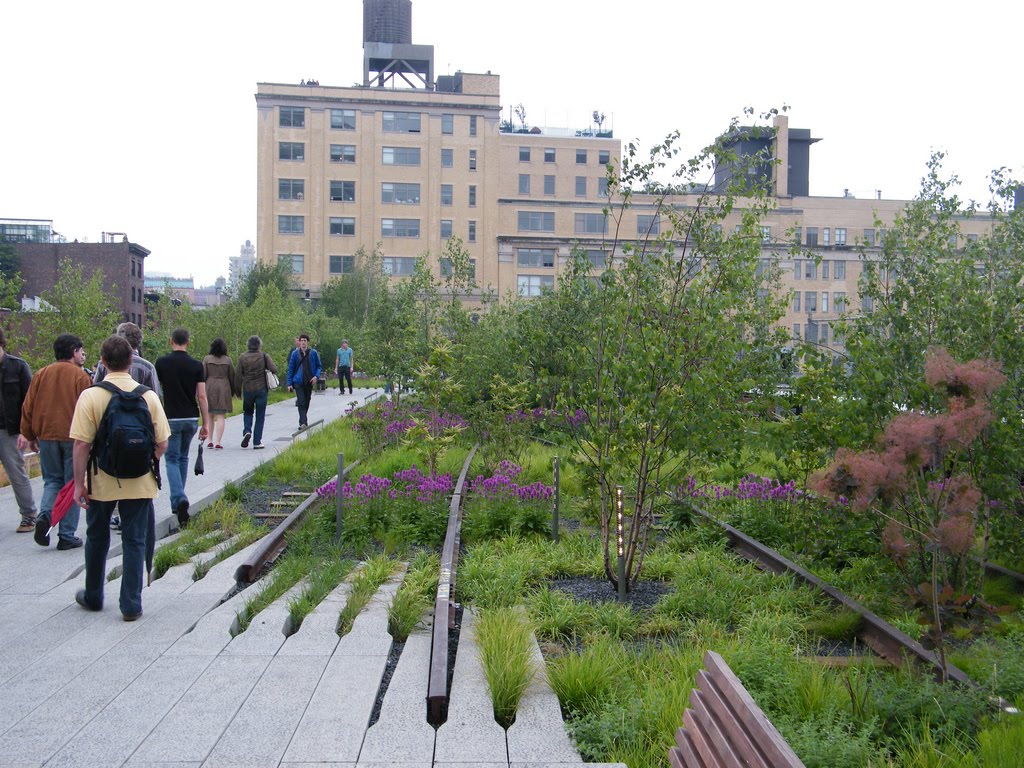
The High Line Park opened in 2009, after almost a decade of awareness and fundraising. The linear park has helped transform the neighborhoods below it and has created a new must-see destination for tourists. (Courtesy Friends of the High Line)

South Bronx and the days of new American aristocracy

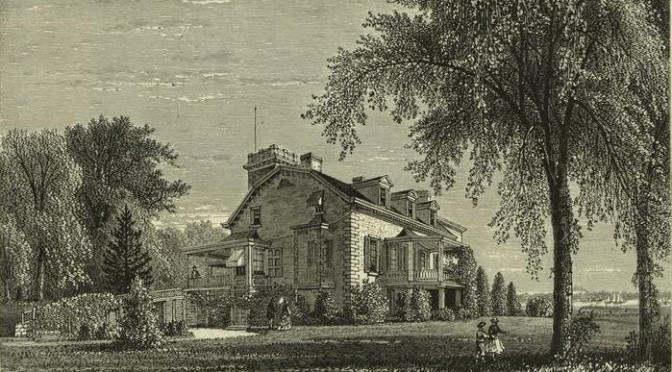
What you think about when you think about the South Bronx: the Morrisania estate built by Gouverneur Morris. (NYPL)

NAME THAT NEIGHBORHOOD Some New York neighborhoods are simply named for their location on a map (East Village, Midtown). Others are given prefabricated designations (SoHo, DUMBO). But a few retain names that link them intimately with their pasts. Other entries in this series can be found here.

NEIGHBORHOOD: Morrisania, the Bronx

Was there an estate in New York ever as beautiful as Morrisania, nearly 2,000 acres that hugged the Harlem River until it opened out into the turbulent East River as it coursed past small islands and flowed into the Long Island Sound? A property that varied from western hills looking over the river to the rolling spread of Manhattan below, to eastern marshes and flatlands suitable for farming.

Today’s Bronx neighborhood of Morrisania is only a small portion of the original property owned by the Morris family since the 1670s, during the dawning years of British dominance in the New York region. The original parcel, purchased by Welsh captain Richard Morris, was only 500 acres, a part of original land settled by Bronx namesake Jonas Bronck.

When Richard died, brother Lewis Morris (for reasons that will soon be evident, let’s call him Lewis 1) moved from the West Indies to claim the property. He would be one in a succession of Lewis Morrises to live here and place an imprint on what would some day contain much of the South Bronx.

The Morris family was feisty, business savvy, well connected, extremely aristocratic and entirely unoriginal with names. Another Lewis Morris (Richard’s son, or Lewis 2) became the governor, at separate times, of both New York and New Jersey. Yet another Lewis (Lewis 3) became a powerful New York justice. His son Lewis Morris (Lewis 4) was a signer of the Declaration of Independence.

If you haven’t gleaned it already, the clan carried themselves like some kind of royal family. They were, artificially at least, as were many families in the New World who quickly made fortunes here and staked claims in manners similar to what their forebears were accustomed to in Europe. Over the decades, the Lewises would blend by marriage into other elite, bold-faced families to form a tangled ball of interlinked faux American royalty.

Morrisania for most of the 18th century resembled a miniature British kingdom, with a spread of small farms, dairies and cattle pens operated by those leasing from the Morris family, a proper workaday serfdom common for the era. However, during the early decades, the land was even worked with slave labor, although the practice was phased out in later generations.

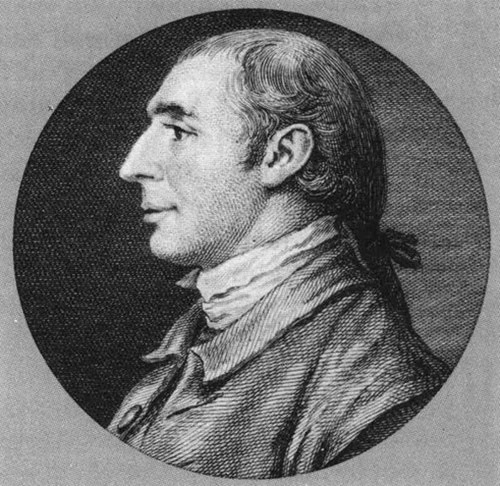
When Lewis 3 passed in 1762, this massive property was split in two. West of the small babbling Mill Brook (honored today with a playground and a housing development) belonged to Lewis 4 and his brothers, but the more bucolic eastern side fell to Lewis 3’s second wife Sarah and eventually her only son. That’s right, Gouverneur Morris (pictured below).

Gouverneur fled his home during the Revolutionary War, but his mother Sarah stayed behind. During this time, the rich farmland was vandalized and the family’s voluminous library, one of the largest collections in North America at the time, was ransacked.

Gouverneur was quite busy in the late 18th century doing things like penning the Constitution and being minister to France in the midst of their bloody revolution. But wherever he traveled, he always felt a closeness to Morrisania.

After the war, while Gouverneur in France, Lewis 4 offered up the family estate of Morrisania be used as the site for the new American capital. One can just imagine the history of New York had Congress taken him up on that offer!

In 1798, when Gouverneur returned from France and claimed the property for himself, he built a new home here and filled it with all his gathered French finery. Perhaps no household was more beautiful — or as pretentious — as Morris’ new manor.

Gouverneur, of course, facilitated the growth of New York with his roles in the development of both the Commissioners Plan of 1811 and the Erie Canal. His old farms, however, were technically part of Westchester Country. In the 1840s, his son Gouverneur Morris Jr. emulated New York’s former estate owners and began to develop his property for commercial and residential use.

Chief among these decisions was becoming vice president of the New York and Harlem Railroad (eventually to be owned by Cornelius Vanderbilt) and allowing the railroad to cut through the old property. Townships formed around the railroad station, include one small village named the old manor, Morrisania. That village is the root of today’s neighborhood of the same name.

Gouverneur Junior was cut from the visionary mold that would define many in the 19th Century. One pet project was the development of a port village along the old family property on the eastern shoreline, today’s Port Morris area.

Given that Gouverneur Senior was partially responsible for Manhattan’s grid, it’s no surprise that a different grid patterns were adhered to the old Morris properties over the years. In emulating Manhattan’s pattern, all traces of the area’s early farm existence was eradicated. The following years was hold many strange detours in the history of the South Bronx: opulent boulevards, the Yankees, 1970s crime sprees. But the Morrises live on, if in name only.

Categories
On The Waterfront Podcasts

The Staten Island Ferry: its story, from sail to steam

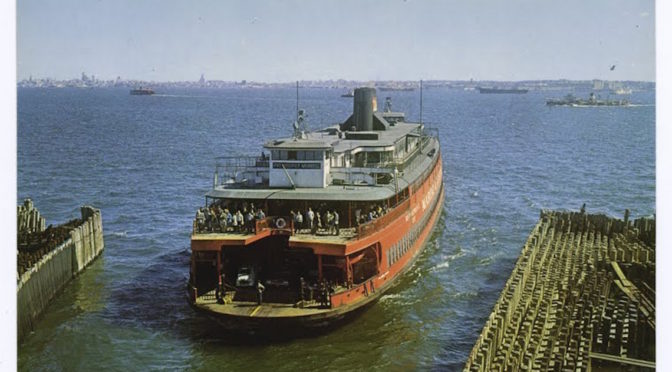
PODCAST The Staten Island Ferry is one of the last remaining vestiges of an entire ferry system in New York, taking people between Manhattan and its future boroughs long before any bridges were built. In Staten Island, the northern shores were spiked in piers, competing ferry operators braving the busy waters of New York harbor.

In the first of our summer-long podcasts BOWERY BOYS ON THE GO on New York public transportation, I look at the history of Staten Island’s famous ferry, its early precursors, its connection to Cornelius Vanderbilt and a Monopoly property, and its evolution when the city took it over in 1905.

ALSO: Find out the curious story behind the name of Victory Boulevard and the neighborhoods of St. George and Tompkinsville.

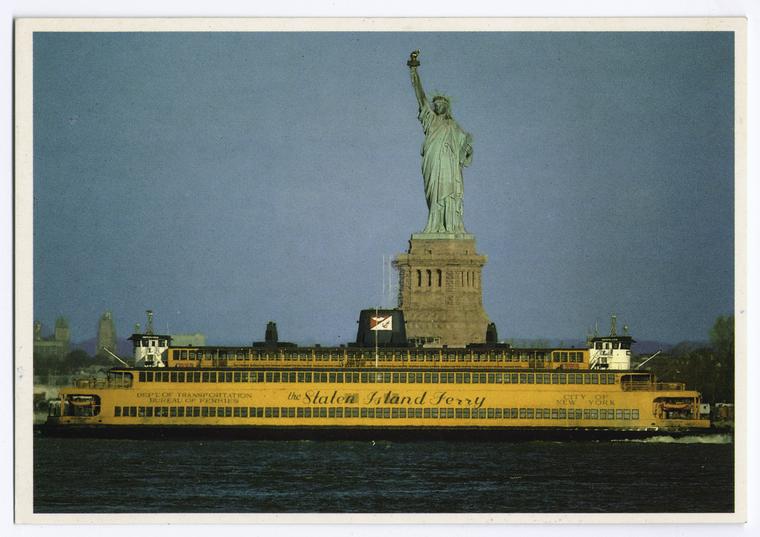
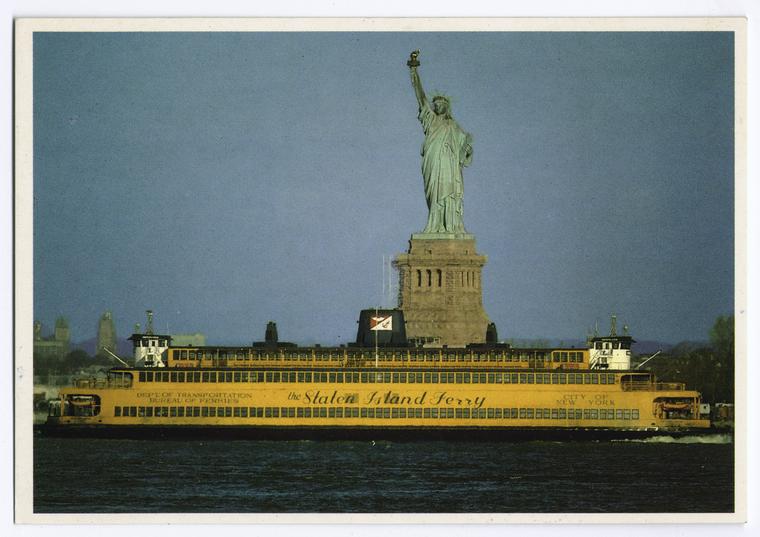
From an old postcard, illlustrating why the Staten Island Ferry has become more than just a way to get to and from work. [NYPL]

ferry2

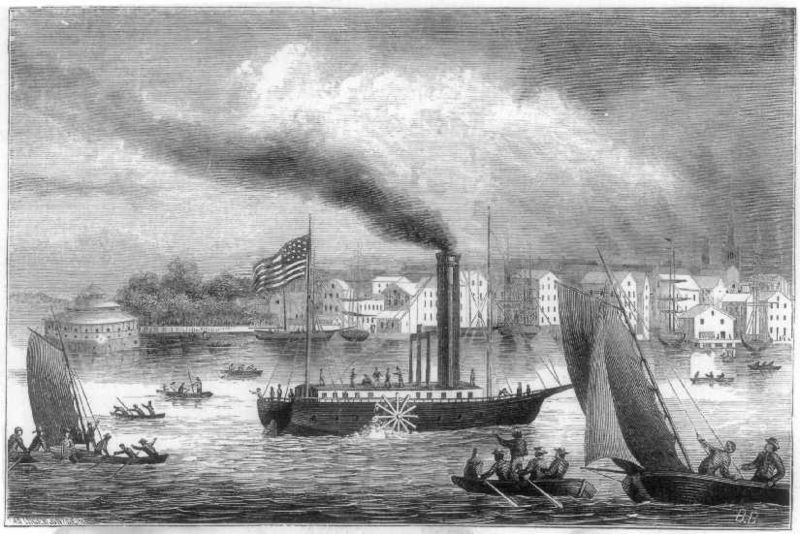
The Clermont in the waters of New York Harbor, 1807. Robert Fulton’s first steamship would revolutionize travel and change the rules of the ferry game. The first steamship off Staten Island waters would be the Nautilus in 1817, property of Daniel Tompkins. This Nautilus should not (obviously) be confused with Fulton’s famous submarine of the same name. Although the boat seems to have inspired a building, called Nautilus Hall, on Tompkins’ property. [Courtesy Gerald Massey]

clermont

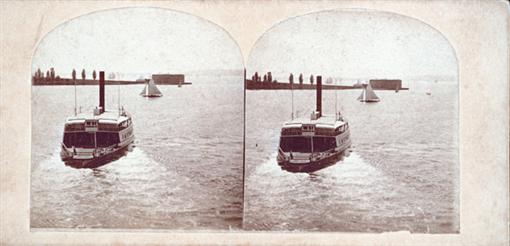
One of the earliest known photographs of a “Staten Island Steamboat”, taken in 1858 and about to chug by Castle William on Governor’s Island, one of “Anthony’s Instantaneous Views” from the George Eastman House archive.

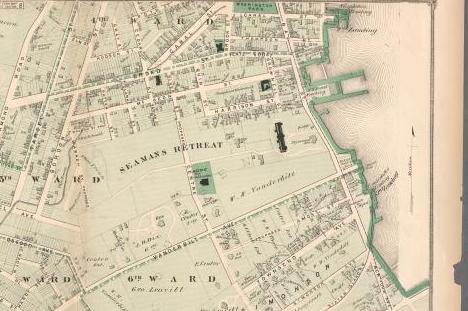
This is a detail from an 1874 map of Stapleton and Clifton along the northeast shore of Staten Island. The area in green along the waterfront is Vanderbilt’s Landing, at least the southern part of it. You can also find the Vanderbilt estate nearby. For a closer look, check out the map directly on the NYPL site and use the zoom in/out tools.

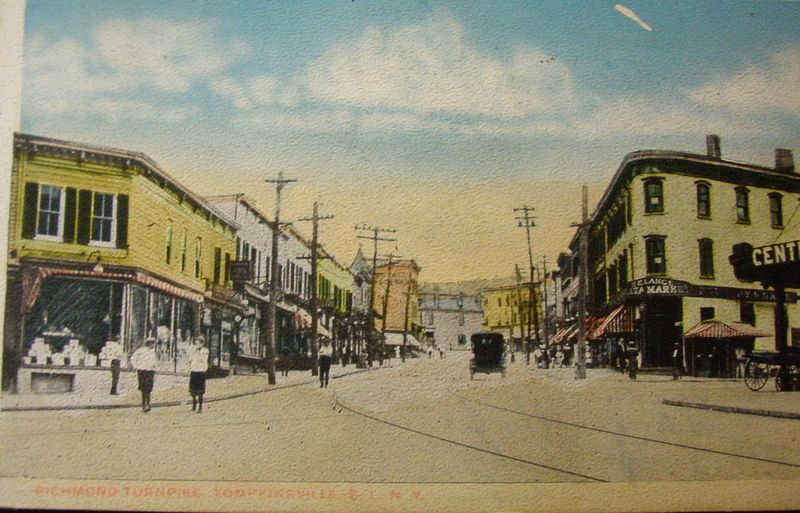
The Richmond Turnpike traveling through Tompkinsville, the town founded by Vice President Daniel D. Tompkins. The Turnpike, formerly a toll road and the basis of the Richmond Turnpike Company, would be renamed Victory Boulevard after World War I.

richmond

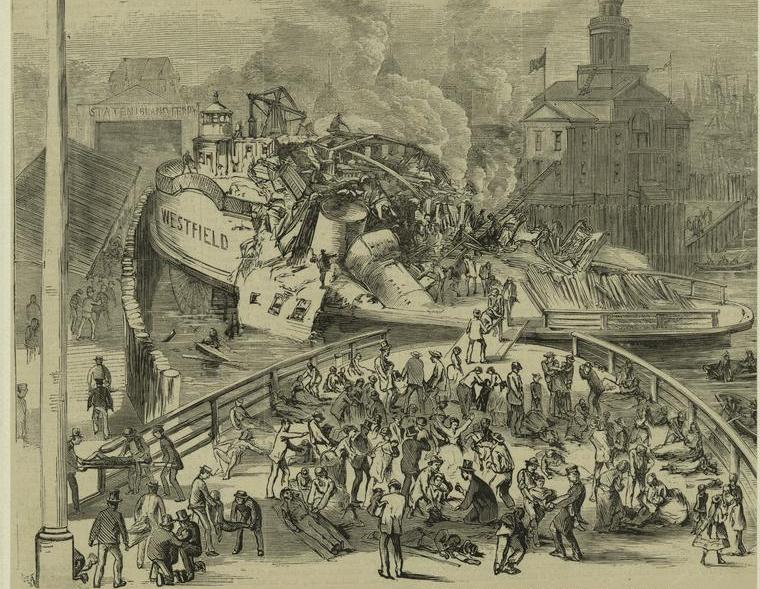
The Westfield disaster on July 1871, a boiler explosion that killed over 80 people, underscored the risks of early steam travel in the crowded waters of New York harbor. It remains the worst of several disasters in the Staten Island ferry’s long history.
westfield

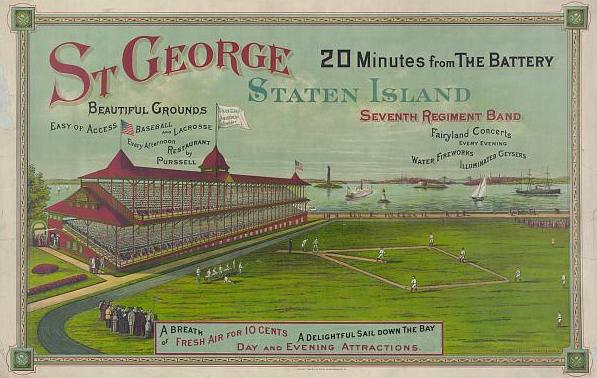
Named for George Law, the neighborhood of St. George was a bustling entertainment district, with hotels, light amusements and sports venues. This postcard is from 1886, illustrating the new St. George Cricket Grounds, built by developer Erastus Wiman.
1886

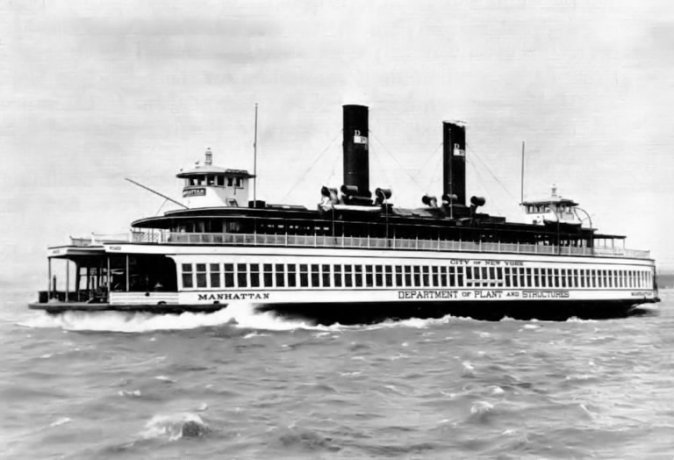
When the city took over operation of the Staten Island Ferry in 1905, they commissioned five new boats, each named for a borough. Here’s the Manhattan:
manhattan

If you want to thumb through a spread of old photographs of prior ferryboats, check out this great site.

And this Flickr picture might be one of my favorite pictures ever.

Bowery Boys Bookshelf: New York City writes about itself

No city has been more savaged and disparaged, more exalted and varnished, than New York City — and this from the very writers who lived here. The man who exclaimed “Manhattan crowds, with their turbulent musical chorus!” also wrote, “Silence? What can New York-noisy, roaring, rumbling, tumbling, bustling, story, turbulent New York-have to do with silence?” And Walt Whitman isn’t the only writer who loved to hate, and hated to love, growing New York.

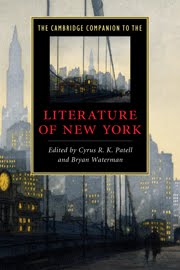
The Cambridge Companion, that staple of academic compendiums focusing on specific subjects, have finally and gratefully gotten around to the literature of New York City. (Although they did hit the Harlem Renaissance a couple years ago.) The editors of the volume, Cyrus R. K. Patell and Bryan Waterman, two associate professors at New York University, have been letting non-students in on their cultural inspirations via their regular site on New York City cultural history, Patell and Waterman’s A History of New York.

The “Cambridge Companion to the Literature of New York” (Cambridge University Press) takes a broad, thematic appreciation of New York’s written history, looking not merely at authors based in the city, but how those writers (and those looking in from elsewhere) viewed the city and its population.

Most of the essays are lovely, bite-sized ideas focusing on a handful of written works. For instance, Elizabeth Bradley distills her recent book ‘Knickerbocker: The Myth Behind New York” into a tale of New Yorkers perception of their Dutch New Amsterdam past and the devilish ways that Washington Irving distorted it. In other essays, you get sweet little snippets on the radical East Village beat scene and the ragged birth of gay and lesbian theater.

Whitman and Herman Melville get their very own takes, appropriately. Generally I preferred the narrowly defined essays to those of broader scope (like the totality of Brooklyn literary perceptions, in ten pages!), but they all work as a whole. Patell and Waterman tackle the introduction and closing essays and lead me to believe that a history of New York literature writtten by these two alone would be an even more satisfying read.

One form of literature curiously absent from the collection? The pulp and crime fiction of the 1930s and 40s. The grimy, simply written tales of gangsters, stewing the ingredients of film noir, were sold as cheaply produced paperbacks and are rarely considered true capital-L ‘literature’.

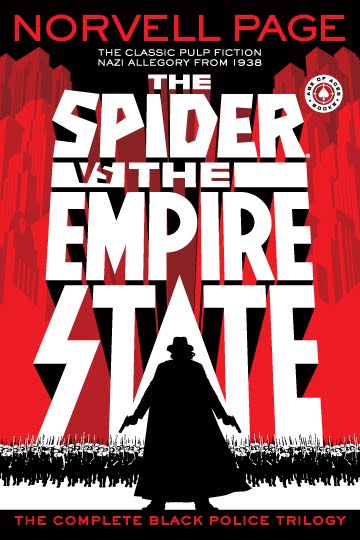
But you may rethink that after reading ‘The Spider vs. the Empire State’ (Age of Aces Books), a gorgeous reprint of three short novels by Norvell Page, exploring an alternate universe where New York is under siege by a vicious fascist regime.

Page wrote dozens of novels from 1933 to 1943 starring his cloaked protagonist The Spider, a crime fighter who straddled the edge of lawlessness, a character ideal that would go on to influence countless comic book writers. His novels were quick reads, set in a fictional New York state and soaked in cartoonish violence.

Most were insubstantial, breezy. But for three novels, the three collected in ‘The Spider vs. the Empire State’, Page created a more serious menace, a iron-handed regime called the Black Police who takes over the government of New York and wrings taxes (often by force) from the poorest citizens. Page’s creation would parallel the rise of Nazi Germany, employing dark political sentiment in a literature usually devoted to the glamour of the underworld.

The story is admittedly absurd — and deathly serious, with breathless scenes of narrow escapes, machine gun fire and midnight biplane getaways, a state run by monsters and a resistance movement centered in … the Catskills! Who wouldn’t want to read a book with scenes that take place at “Albany spy headquarters“? The new reprint by Age of Aces is beautifully designed and bound just in time for some beach reading.

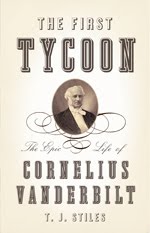
My beach reading was a tad heavier this past Memorial Day — The First Tycoon: The Epic Life of Cornelius Vanderbilt by T.J. Stiles. I’m only about halfway through but it’s an amazing accomplishment, well worthy of its accolades (including this years Pulitzer Prize for biography. It’s now out on paperback, so read along with me!

And finally : I don’t exactly recommend this book — in fact, I thought the whole thing was borderline idiotic — but if you’re an admirer of one Abby Aldrich Rockefeller, you might get a kick out of reading Angelology by Danielle Trussoni, a fantasy-tinged attempt at giving New York City its very own Da Vinci Code. Without spoiling too much, Abby decided to embed Rockefeller properties all over the city with valuable, supernatural items — items which must be reassembled to prevent menacing hoards of evil, vain and fabulously wealthy angels from getting their otherworldly hands on it!