Categories
Film History Mysterious Stories

Scream Time: Ten Fun Horror Films Set In New York City

Horror movies normally go for nameless suburbs, dark woods or remote Victorian-style haunted houses for their scary settings, so it’s a wonderful treat when New York City and its recognizable landmarks get to host a few cinematic monsters.

Ever since King Kong traipsed up the Empire State Building, filmmakers have used the city’s architecture as a way to heighten thrills and even comment on the real-life horrors of urban living. This week the Scream franchise brings its mix of murder mystery and slasher to New York City in Scream VI starring Melissa Barrera and Jenna Ortega.

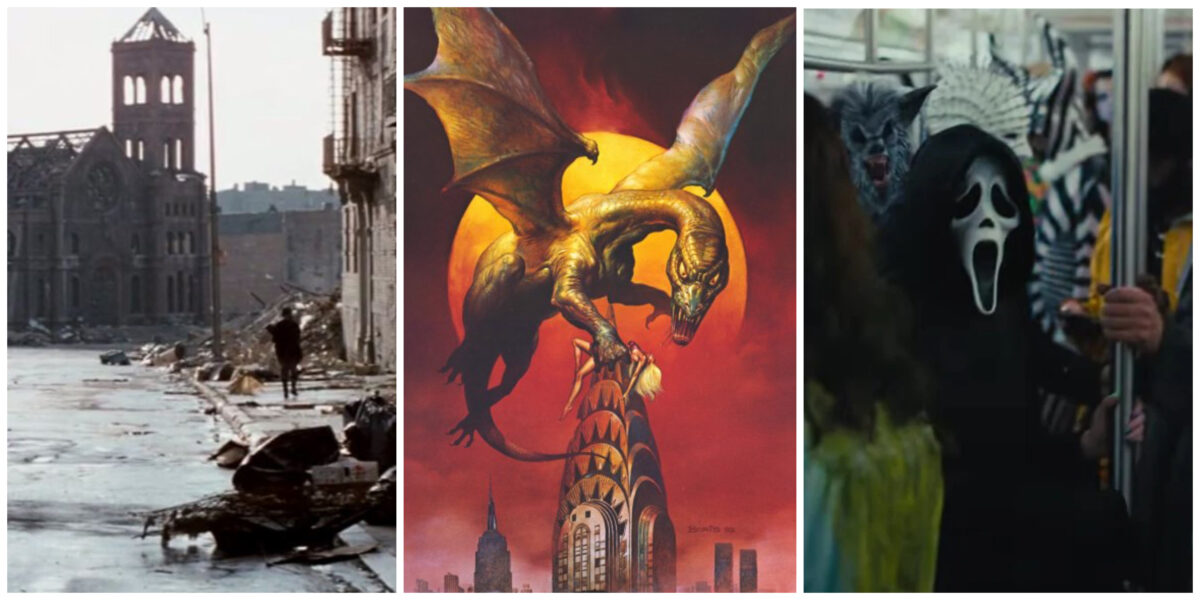
The latest film finds Ghostface walking the same streets once terrorized by Friday the 13th’s Jason, the creatures known as C.H.U.D. and a myriad of lesser known maniacs and monsters.

Want to make your own New York City horror film festival? Here are ten of my personal favorite movies set in the big city, from campy treats to genuine frights. Do you have any urban horror favorites? Leave them in the comments.
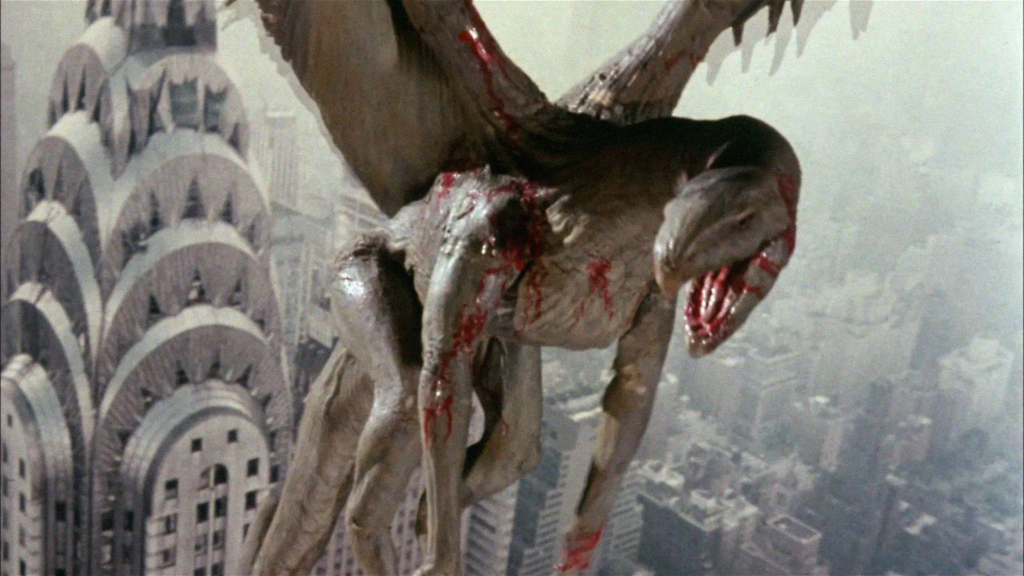
10 Q: The Winged Serpent (1982)

Before Q was a conspiracy theory, it was an ancient beast terrorizing the New York skyline. Chrysler Building architect William Van Alen would be horrified to learn that the graceful tapering top hat of his most famous building becomes home of a loathsome flying dragon and a gigantic nest of eggs.

This movie is one of my all-time favorite camp horror classics, Jaws if the shark were actually just a long, mean pigeon. (Way back in 2007 I wrote about my love of this movie on this website.)
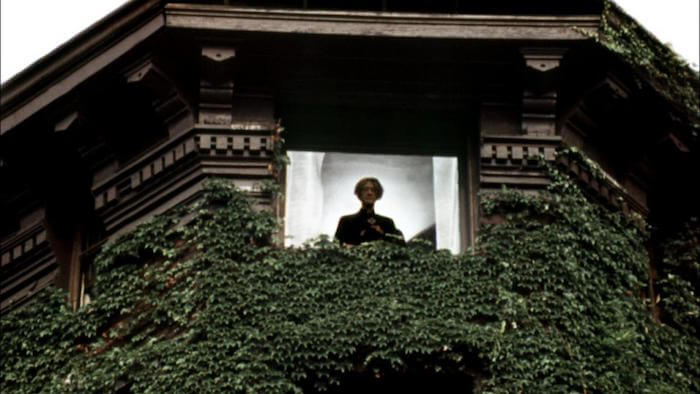

9 The Sentinel (1977)

Horror on the Brooklyn Promenade! A fashion model moves into a historic Brooklyn brownstone only to be tormented by the most peculiar set of neighbors to ever vex the borough. Sure it’s built upon the gateway to Hell, but given the state of real estate today, it might be worth the risk. (We talked a bit about this film in our Ghost Stories of Brooklyn podcast.)
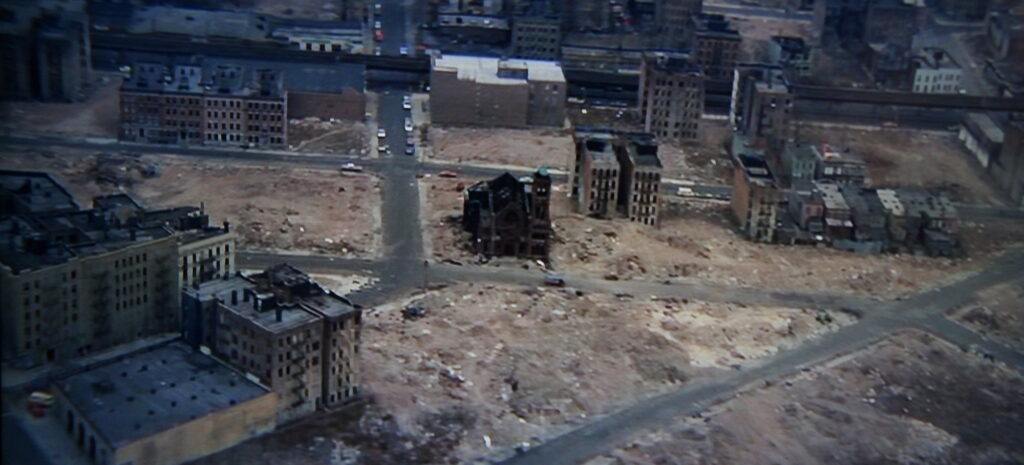

8 Wolfen (1981)

A murder mystery in early 80s New York City that uses both recognizable landmarks like the Brooklyn Bridge and the rubble of the Lower East Side to great chilling effect.

Something very wolf-like is killing people in gruesome ways, from Battery Park to the Central Park Zoo. There are literally wolves on Wall Street! There are also some definite cringe-worthy moments (using Native American mythology in the most trivial way) but seeing New York as an apocalyptic landscape is eye-opening. Bonus points for the bloody nod to New Amsterdam.
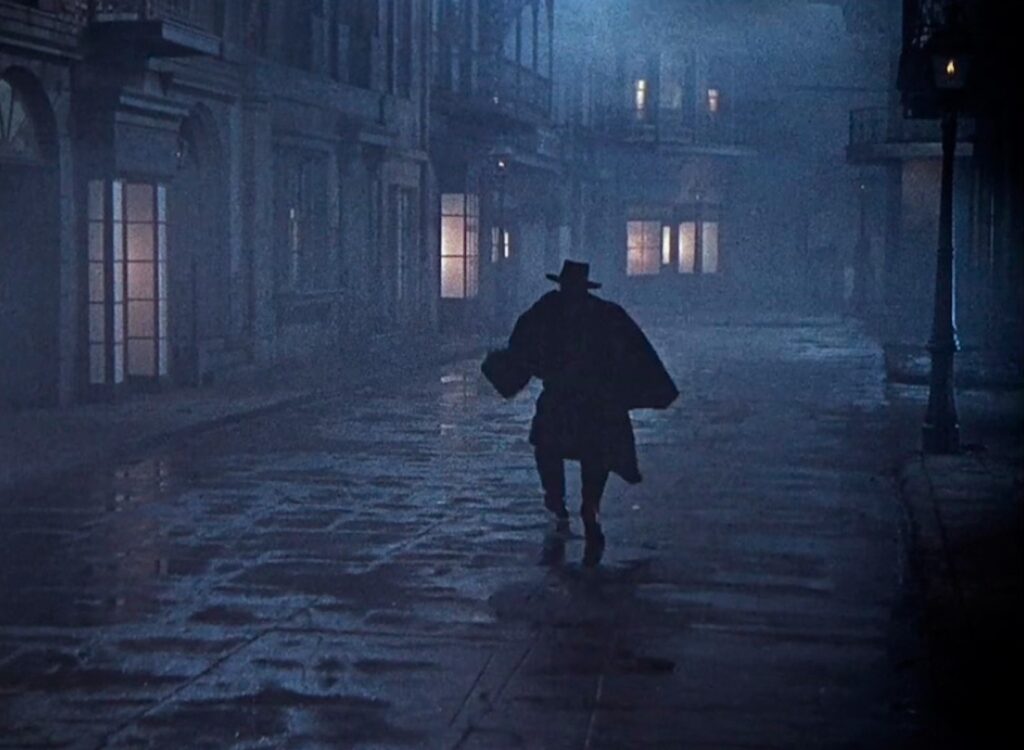

7 House of Wax (1953)

A rich and campy celebration of the city’s once ubiquitous wax museum scene — in particular a glorious nod to the Eden Musée — in a morbid mystery along the dark streets of turn-of-the-century New York. Vincent Price is at his very best as a sculptor with a dark method of creating new exhibitions.
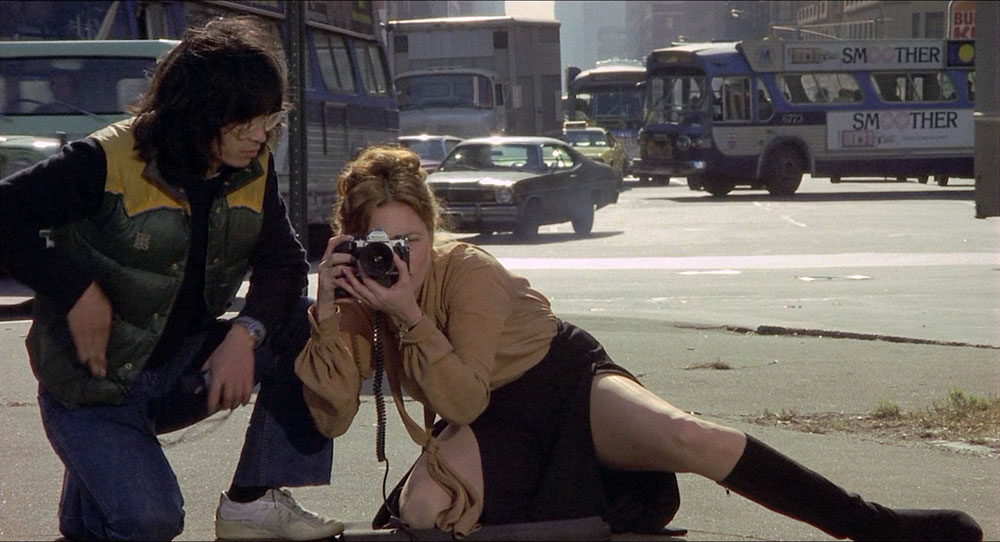

6 Eyes of Laura Mars (1978)

The world of high-fashion New York, set to soundtrack of disco and Barbra Streisand, is the backdrop for this serial killer thriller starring Faye Dunaway as an extremely macabre photographer who begins seeing horrifying visions. Absurd and sometimes silly, the film nonetheless features an exquisite look at 1970s SoHo. We loved it so much that we recorded a Bowery Boys Movie Club about it.
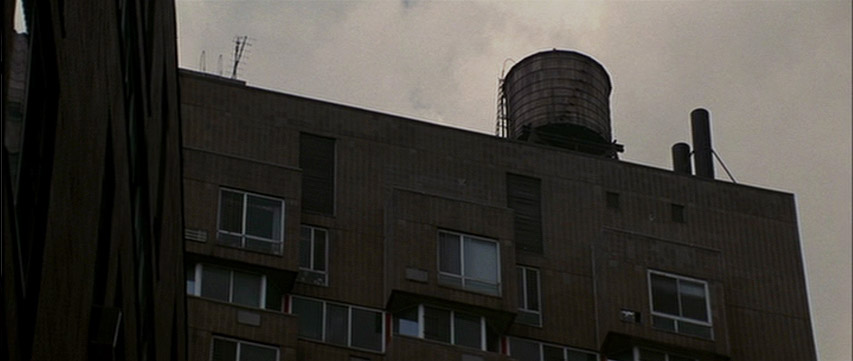

5 Dark Water (2005)

And now we turn to Roosevelt Island and a remake of a Japanese film, made during the height of the Western fascination with Japanese horror. (Think Ring; in fact Dark Water is a variation on a short story by Koji Suzuki, author of Ring.) Here Jennifer Connelly fights back against a leaky ceiling — haunted, of course — and a ghostly child. I kept wanting the movie to reach back further into the island’s dark history but it’s a fun, little jump-scare fest regardless.
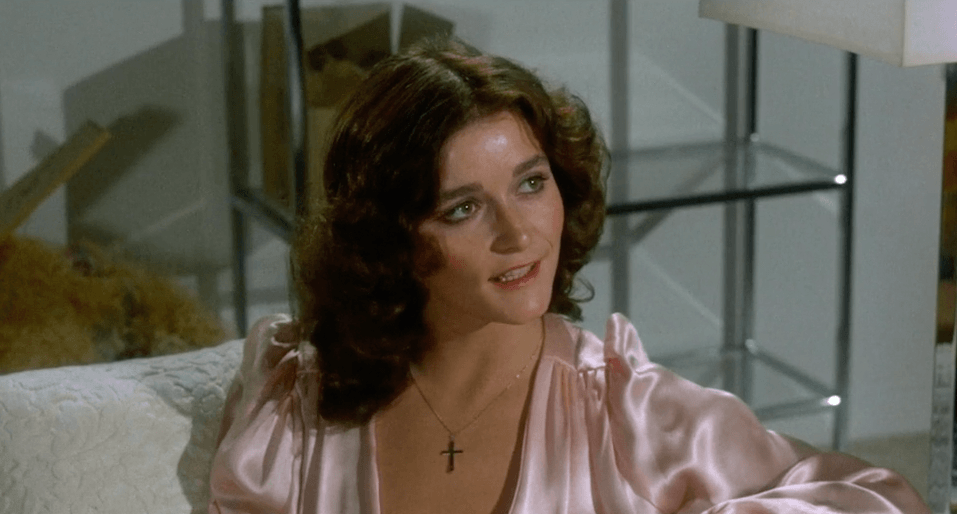

4 Sisters (1972)

Brian De Palma in Staten Island! Plus a very troubled Margot Kidder playing a fashion model and, well, something more. This strange little indie artifact is the first of many tributes to Alfred Hitchcock in De Palma’s career, a murder mystery and a psychosexual terror that may permanently change the way you see the neighborhood of St. George.
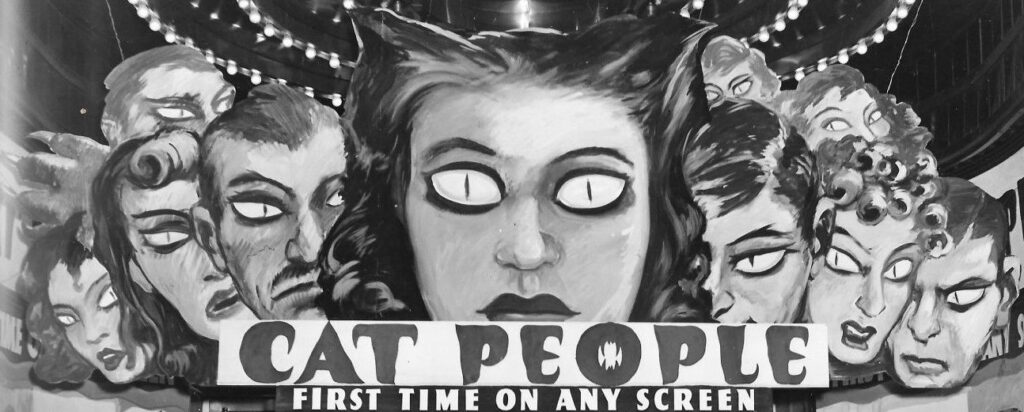

From the Rialto Theater premiere in New York, December 1942

3 Cat People

This sinister creeper actually has very little violence or gore, and it’s not even filmed in New York! But director Jacques Tourneur manages to turn Fifth Avenue interiors into shadowy horror landscapes and the brilliant Simone Simon perfectly embodies a glamorous international socialite who might also be the original catwoman. Central Park Zoo is the scene of much of the melodrama but the most terrifying scene is an effective trick of light-and-shadow at an apartment building swimming pool.
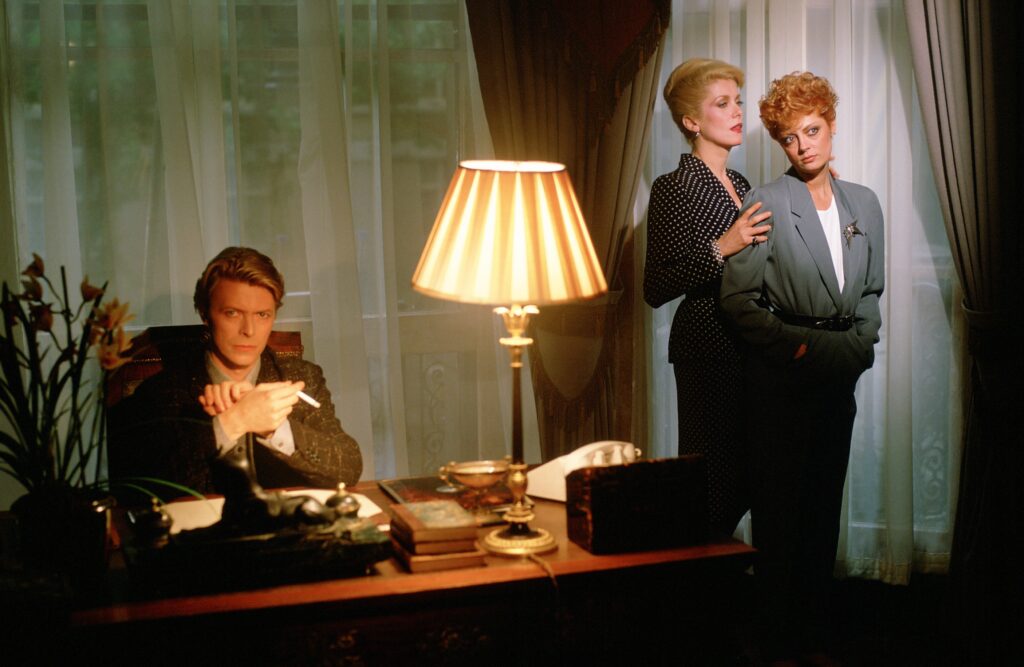

2 The Hunger

So dramatic, pretentious and beautiful. Two New Wave vampires (Catherine Deneuve and David Bowie) hit the town looking for new victims and eternal youth. When Bowie discovers the downsides of making an evil, immortal pact with the undead, Deneuve turns to Susan Sarandon as her new unholy companion.

Filled with so much eyeliner and a great many shoulder pads, this sexy horror melodrama spawned a million baby goths and still stands as an LGBT midnight classic. It also makes a perfect double feature with Martin Scorsese’s After Hours, both movies a celebration of New York City after dark.
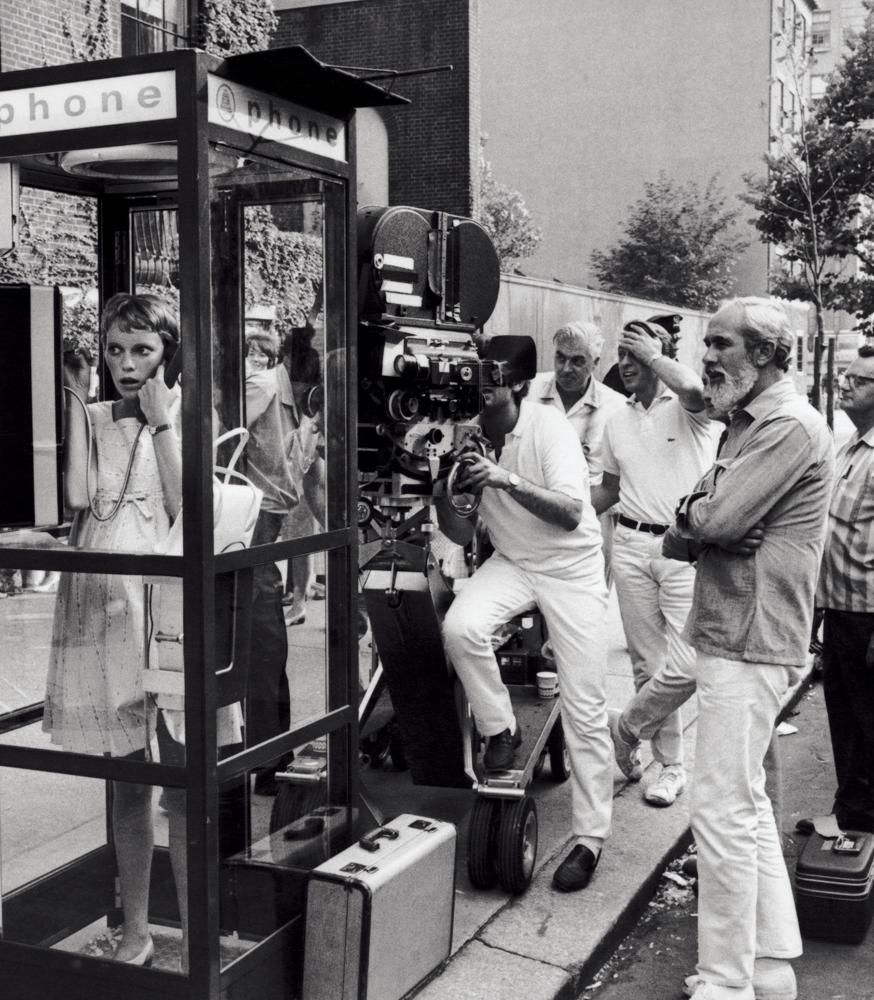

BOB WILLOUGHBY/MPTV IMAGES/REEL ART PRESS

1 Rosemary’s Baby

This is the ultimate marriage of story and location and essentially a horror movie about nosy neighbors and a co-op board. You’re certainly familiar with the story — a young woman (Mia Farrow) becomes impregnated under mysterious circumstances in her tony new home at the Dakota Apartments. But even if you don’t care for horror (or for director Roman Polanski), watch it just for the New York City locations, an embodiment of both the chic and unusual.

Also I want you to watch this movie knowing that Dakota resident Lauren Bacall, friends with producer William Castle, was often watching them film the movie here.
Categories
Gilded Age New York Podcasts

Birth of the Five Boroughs: 125 Years of Greater New York

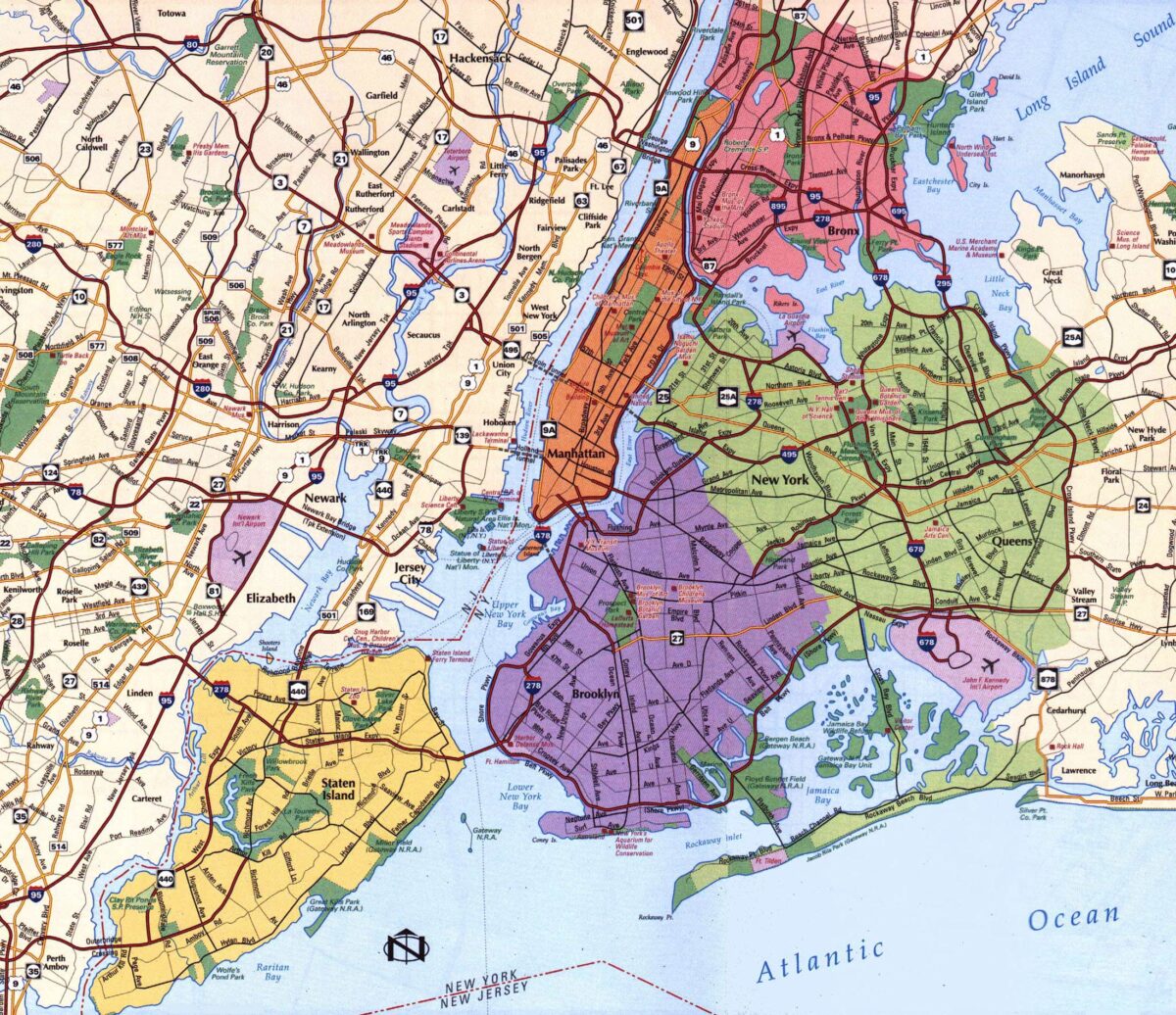
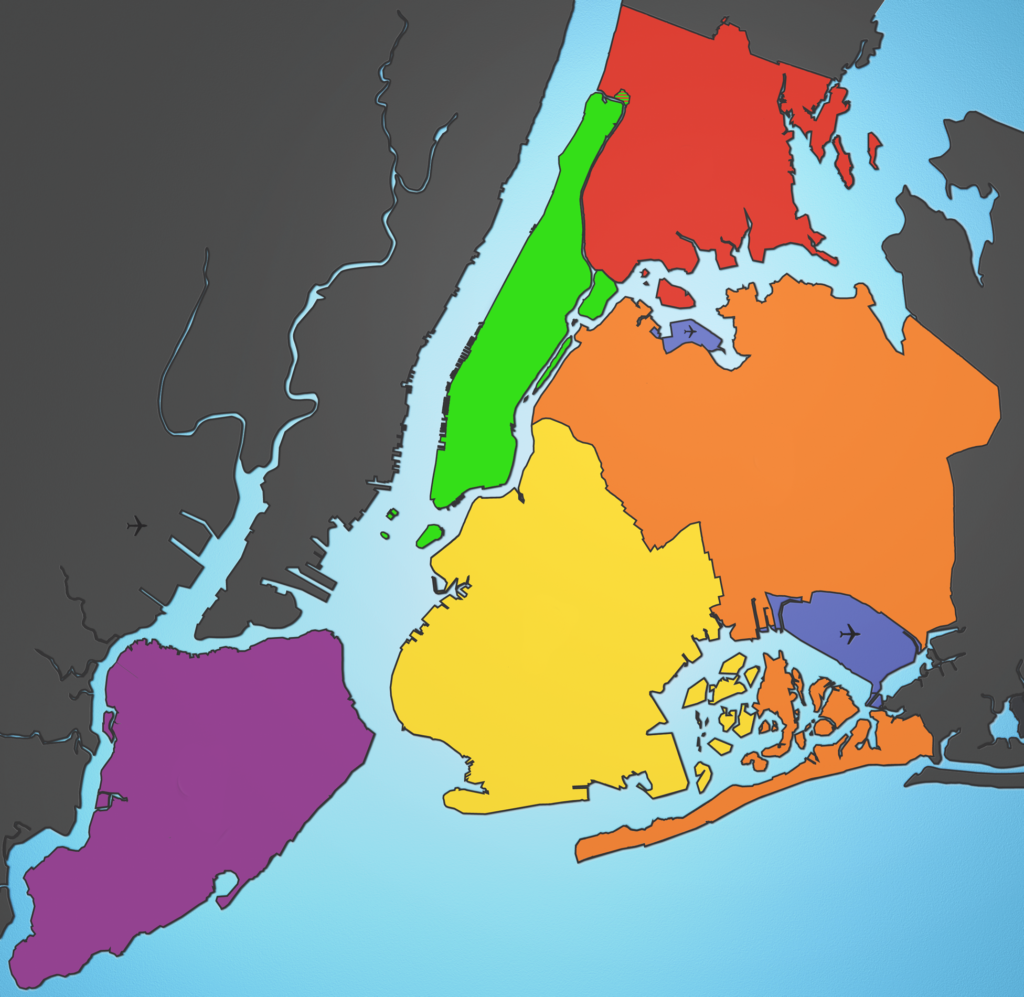
On January 1, 2023, New York City will celebrate a special moment, the 125th anniversary of the formation of Greater New York and the creation of the five boroughs — The Bronx, Brooklyn, Manhattan, Queens and Staten Island.

In honor of this special moment in New York City history, we are celebrating a bit early, reissuing our episode (originally #150) on the Consolidation and the formation of the boroughs, with a new introduction.

And stay tuned for new episodes of the Bowery Boys Podcast for the rest of the year!


Artwork Julius Schorzman; modified by Astuishin, courtesy Wikimedia Commons

Here’s the story of how two very big cities and a whole bunch of small towns and villages — completely different in nature, from farmland to skyscraper — became the greatest city in the world.

This is the tale of Greater New York, the forming of the five boroughs into one metropolis, a consolidation of massive civic interests which became official on January 1, 1898. But this is not a story of interested parties, united in a common goal.

In fact, Manhattan (comprising, with some areas north of the Harlem River, the city of New York) was in a bit of a battle with anti-consolidation forces, mostly in Brooklyn, who saw the merging of two biggest cities in America as the end of the noble autonomy for that former Dutch city on the western shore of Long Island. You’ll be stunned to hear how easily it could have all fallen apart!

In this podcast is the story of Manhattan, Brooklyn, the Bronx, Queens and Staten Island (or Richmond, if you will) and their journey to become one. And how, rather recently in fact, one of those boroughs would grow uncomfortable with the arrangement.

LISTEN NOW: BIRTH OF THE FIVE BOROUGHS


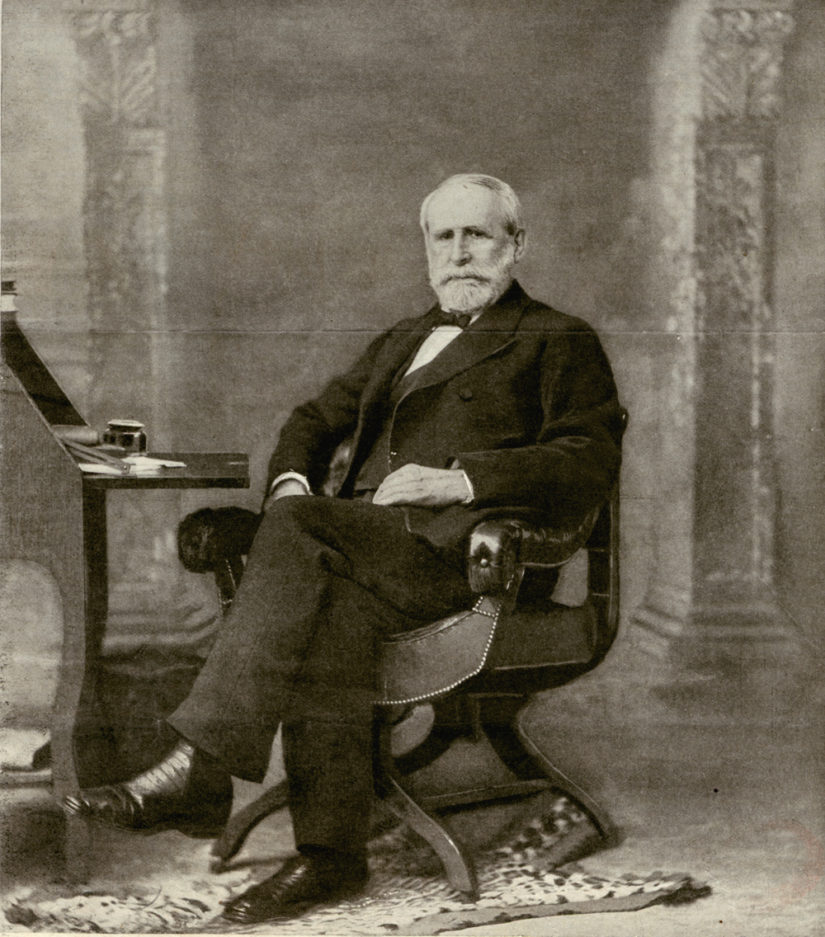
The hero of our story — Andrew Haswell Green

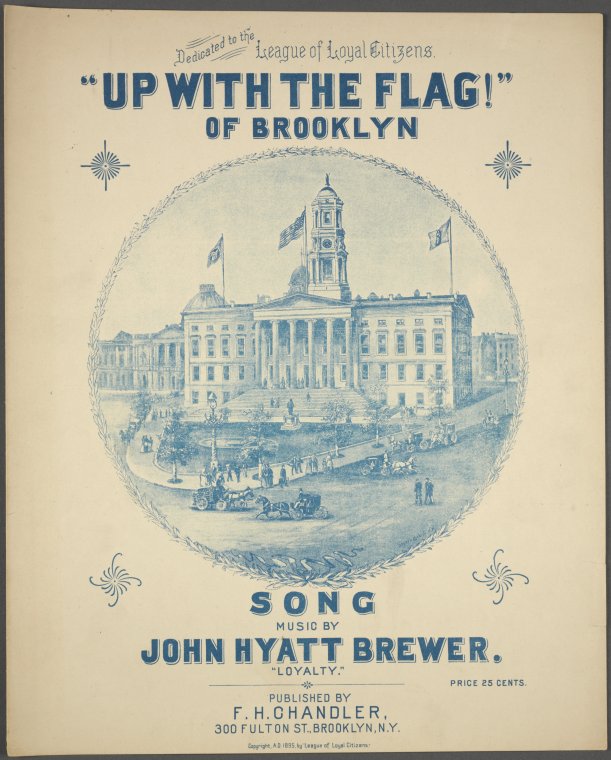
Below the prize-winning anti-Consolidation song mentioned in the podcast (courtesy NYPL):

Style: “Music_Sep4E”

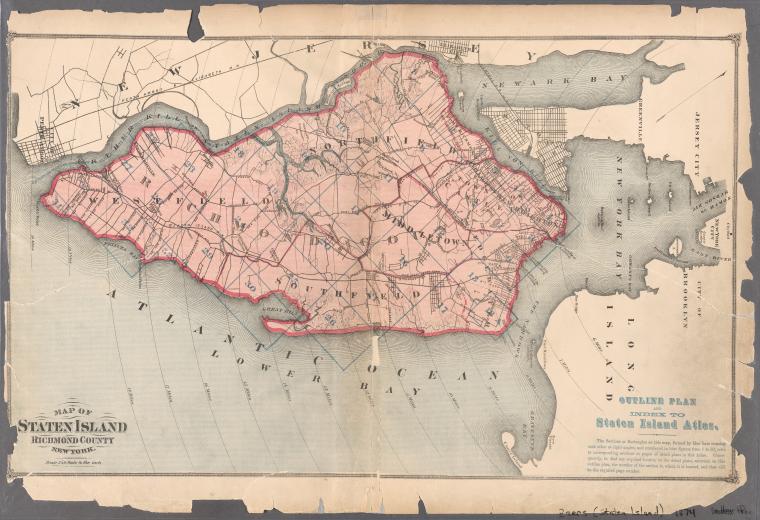
A map of Richmond from 1874


FURTHER LISTENING

This show was recorded in 2013 and since then, many aspects of this story have been turned into their own podcasts. After listening to this show, dive back into these episodes:

Categories
Health and Living Podcasts Staten Island History

The Staten Island Quarantine War

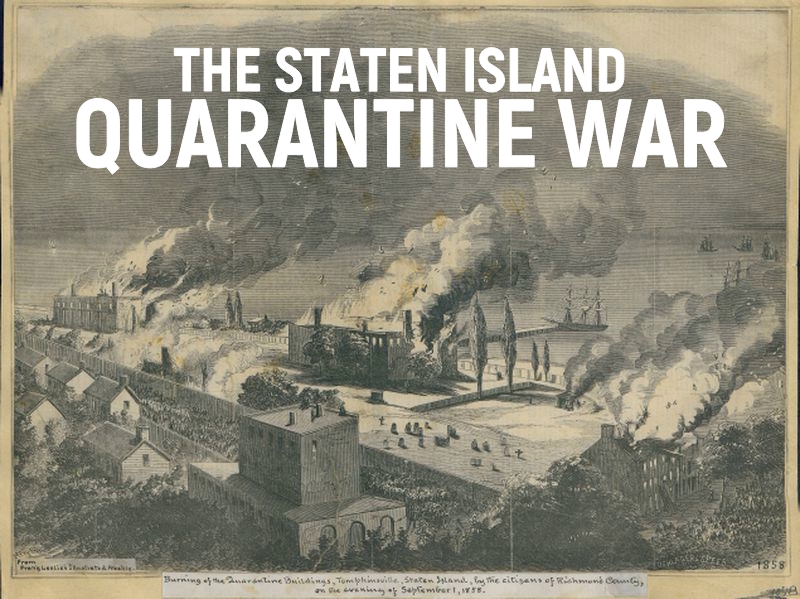
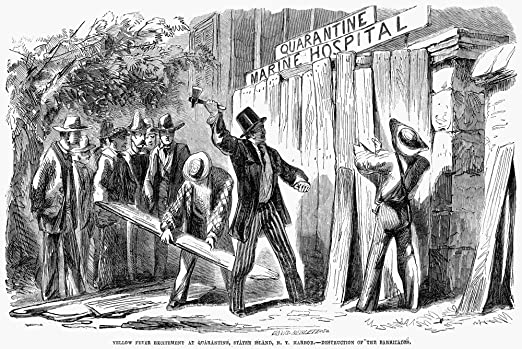
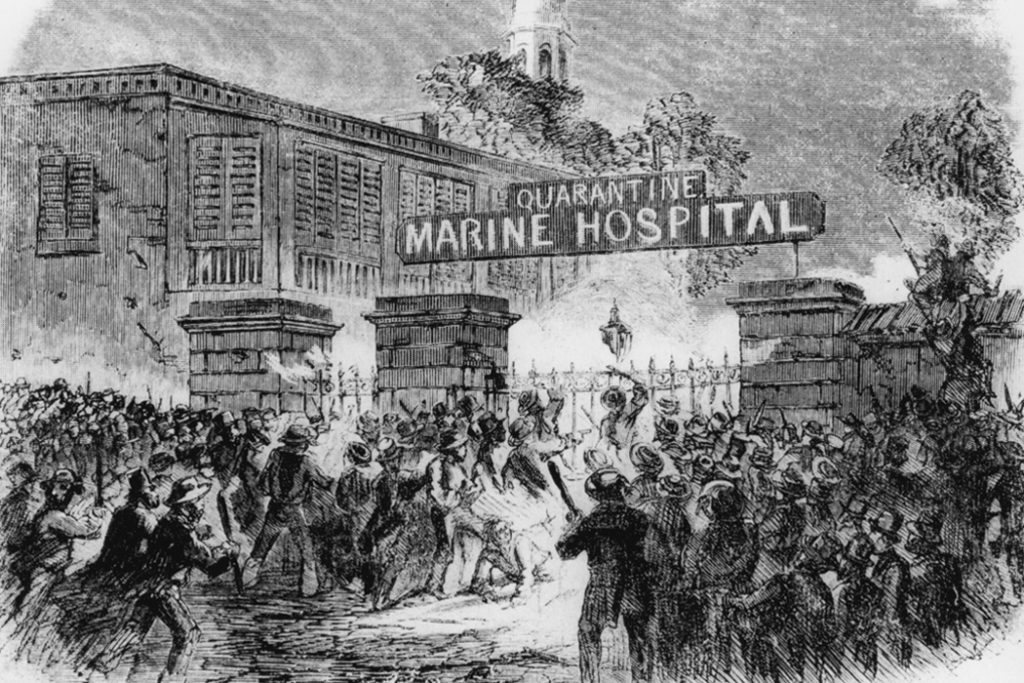
EPISODE 325 In 1858, during two terrible nights of violence, the needs of the few outweighed the needs of the many when a community, endangered for decades and ignored by the state, finally reached its breaking point.

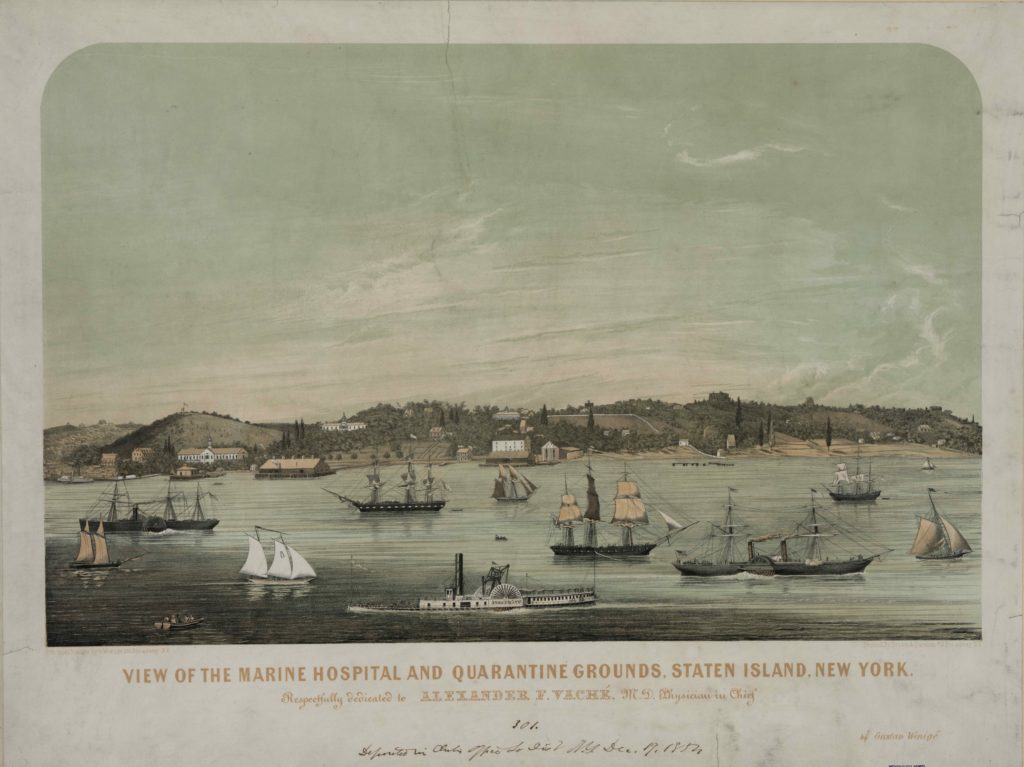
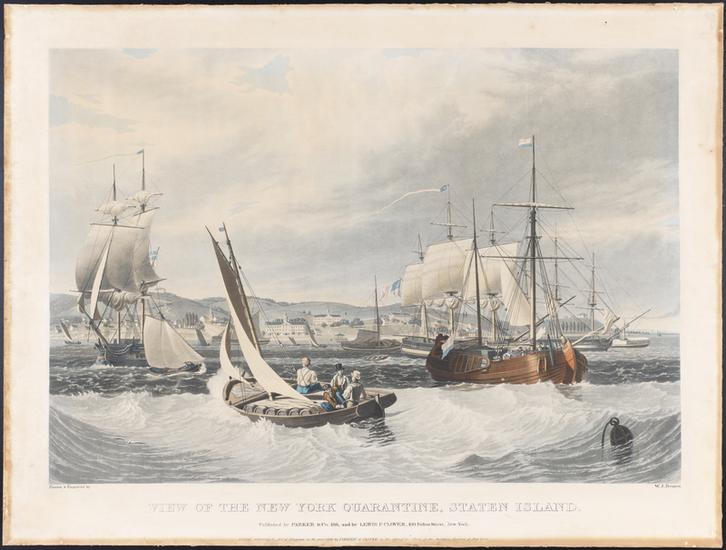
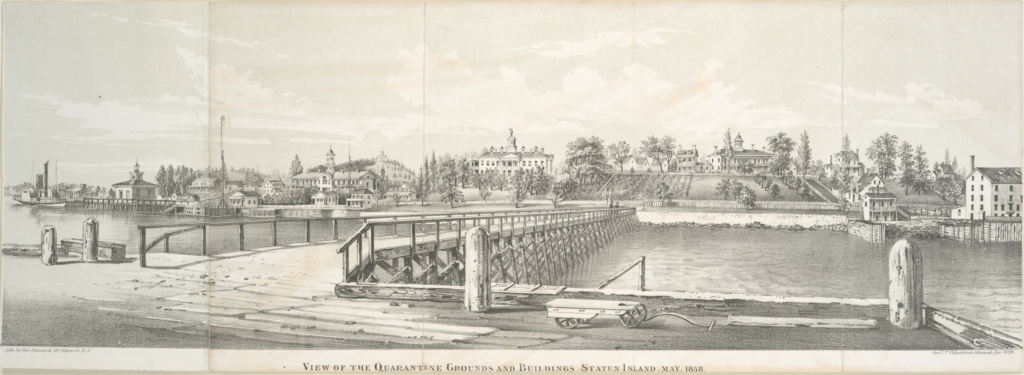
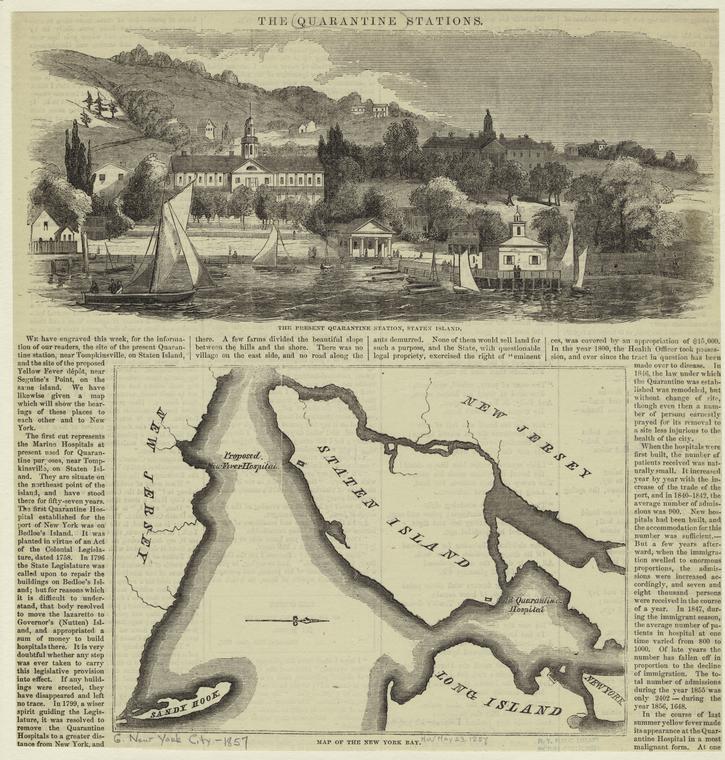
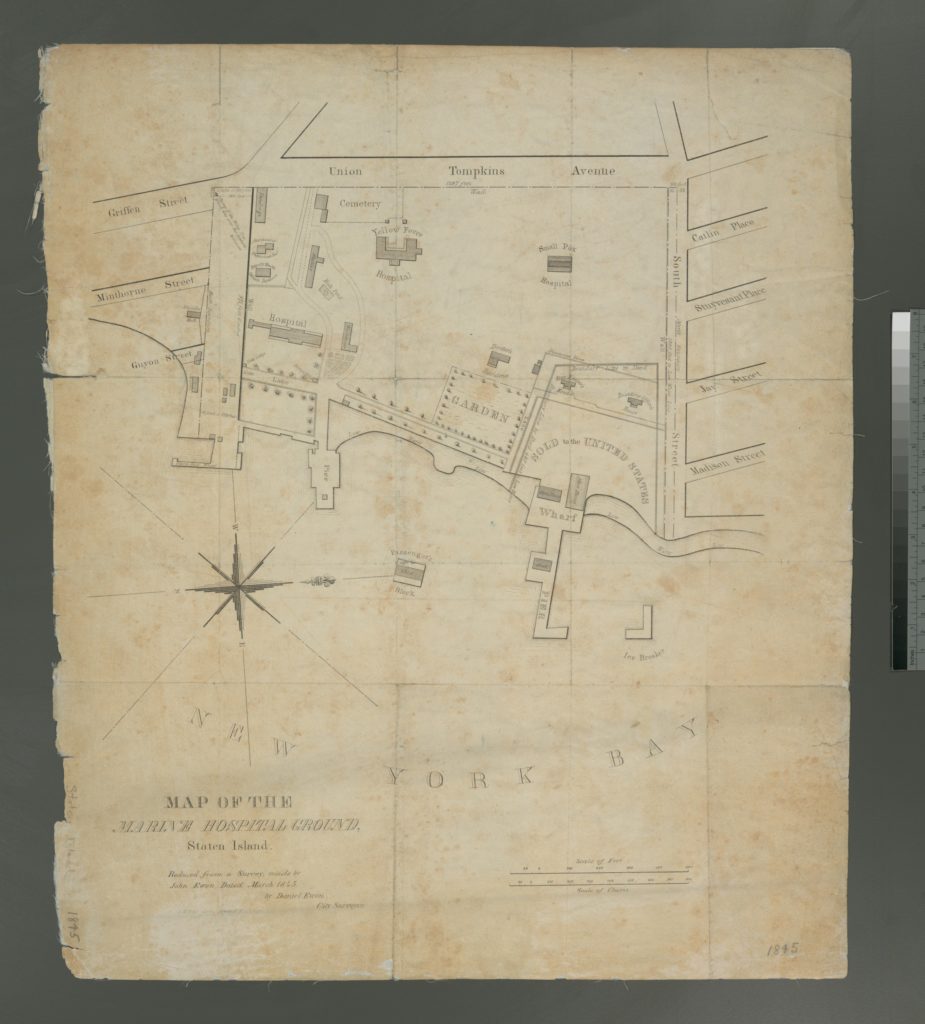
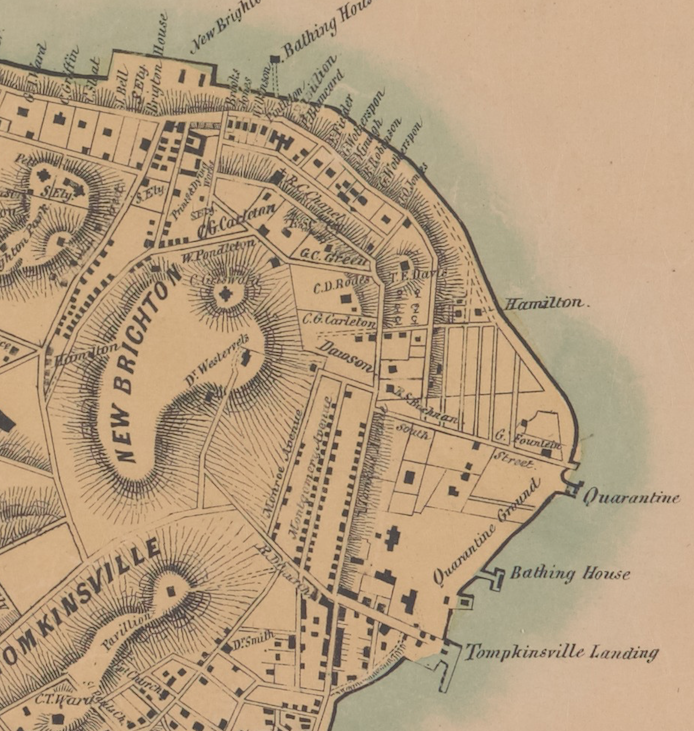
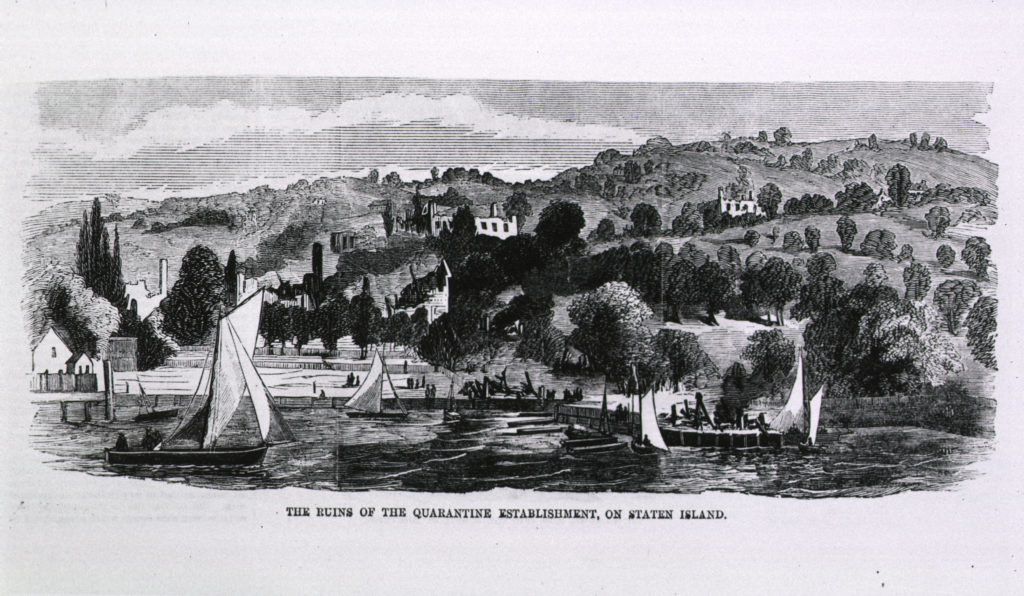
In Staten Island, just south the spot of today’s St. George Ferry Terminal, where thousands board and disembark the Staten Island Ferry everyday, was once America’s largest quarantine station – 30 acres of hospitals, medical facilities, shanties and homes, surrounded by a six-foot-tall brick wall.

Since its construction in the year 1799, Staten Islanders had fought the its removal of the Quarantine Ground, considered a menacing danger to the health of residents and a blight upon any possible development.

Yet the need for such an extensive facility at the Narrows — the gateway to the New York Upper Bay and the Hudson River — was so important that the state of New York mostly turned a blind eye to their wishes.

And so the residents of Staten Island took matters into their own hands.

Was this a case of righteous revolution in the service of safety and well-being against a tyrannical state? Or a grave and malicious act of terror?

To get this episode, simply stream or download it from your favorite podcast player.

Or listen to it straight from here: THE STATEN ISLAND QUARANTINE WAR


New York Public Library
Published by Parker & Co. 186, and by Lewis P. Clover, 180 Fulton Street, New-York. Entered according to Act of Congress in the year 1833 by Parker & Clover in the office of the Clerk of the Southern District of New York. — Museum of the City of New York
The Quarantine Hospital on Staten Island, 1858 — New York Public Library
The present quarantine station, Staten Island ; Map of the New York Bay. 1857. Also marks the site of Sanguine’s Point, a proposed quarantine spot that was never constructed. New York Public Library
Map of the Quarantine Grounds, New York Public Library Digital Collections. 1845
The Quarantine Grounds at Tompkinsville, Staten Island, in 1853 — courtesy the New York Cemeteries Project
Harper’s Weekly,1858/Getty Images
Harper’s Weekly / Sept. 11, 1858

FURTHER LISTENING

After listening to The Staten Island Quarantine War, check out these past Bowery Boys episodes on subjects featured in the latest show.


The Bowery Boys: New York City History podcast is brought to you …. by you!

We are now producing a new Bowery Boys podcast every week. We’re also looking to improve and expand the show in other ways — publishing, social media, live events and other forms of media. But we can only do this with your help!

We are now a creator on Patreon, a patronage platform where you can support your favorite content creators.

Please visit our page on Patreon and watch a short video of us recording the show and talking about our expansion plans. If you’d like to help out, there are six different pledge levels. Check them out and consider being a sponsor.

We greatly appreciate our listeners and readers and thank you for joining us on this journey so far.

Categories
Bridges

A very happy 50th birthday to the Verrazano–Narrows Bridge! Ten facts you may not know about the bridge’s origins

[Verrazano-Narrows Bridge.]

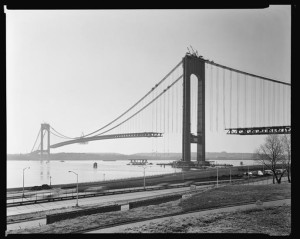
The new span in 1964, photographed by the Wurts Brothers (MCNY)

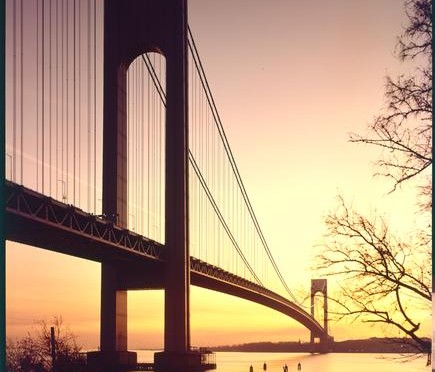
The Verrazano-Narrows Bridge — the first land crossing between Staten Island and the rest of New York City — officially opened for traffic fifty years ago today. It is one of America’s greatest bridges and a graceful monumental presence in New York Harbor.

Below is a list of ten things you may not have known about the bridge.

1)  The Tunnel to Staten Island
People have been dreaming of spanning the Narrows for several decades before the bridge was finally constructed. In New York’s subway fervor of the early 1920s, Mayor John Hylan authorized a tunnel be built to connect Staten Island to Brooklyn, ostensibly to link it to the city’s expanding subway network. Due to massive cost, however, the project was cancelled. For many years, the remnants of the aborted tunnels on either side of the Narrows were referred to as “Hylan’s Holes.”

2)  Verrazzano-on-Hudson
Giovanni da Verrazzano, who explored the shores of the North American continent in 1524, might have lent his name to the bridge which became the George Washington Bridge, a few decades before the Narrows Bridge was completed. The suggestion was made by a Newark resident and was at least passingly considered that the New York Times ran an article about it: “WOULD NAME NEW SPAN VERRAZANO BRIDGE.”  The article casts aspersions upon the notion that the explorer would ever be seriously considered enough to warrant his own bridge.

[Aerial view of Brooklyn, Staten Island and New York Harbor.]

Overlooking New York Harbor, Staten Island (and Fort Wadsworth) to the left. (MCNY)

3)  What’s In A Name? Tanto!
The Florentine explorer had much symbolic value to Italian New Yorkers, and in 1960, the Italian Historical Society of America managed to convince Governor Nelson Rockefeller to apply the name to the brand new bridge about to go under construction.

Some were not pleased with what many considered mere political appeasement. “I wouldn’t be surprised if the next move is to rename the Hudson River,” grumbled the vice president of the Staten Island chamber of commerce. [source]  Gripes over the name continued well up to its opening and beyond.  A couple weeks before its opening, one naysayer wrote the Times to propose alternate names: “Let’s call it Freedom Gate or Liberty Gate.” [source]

4) Spell Check
Even then, there was some debate about the proper spelling of the explorer’s last name — Verrazzano or Verrazano. (There was even a small, if vocal, group for Verazzano.) Official construction signs did say Verrazzano, in keeping with the traditional Italian spelling. However, despite strong support for the double Z version, the shorter spelling eventually won out.

Verrazano-Narrows Bridge

5) The Grand Builders
Although this would be one of the final great projects overseen by Robert Moses, it’s also the final project of New York’s great bridge and tunnel builder Ottmar Ammann.  He died on September 22, 1965, less than a year after the bridge’s opening.

Milton Brumer is sometimes overshadowed by those two great icons of city building, but the chief engineer of the Verrazano-Narrows had worked with Ammann on almost every one of his projects and was probably more involved in the day-to-day operations than his boss.  In total, there were 200 engineers employed on building the bridge, on top of the hundreds of construction workers employed to bridge the Narrows.

Verrazano Narrows Bridge, general view  from Ft. Hamilton S.E.
Courtesy Museum of City of New York

6) Curvature of the Earth
When it opened on November 21, 1962, the Verrazano-Narrows Bridge was the longest suspension bridge in the world, so long, in fact, that bridge engineers had to take the curvature of the planet into account in its design.  As a result the tops of the towers are slightly farther apart than the bases. Or to put it another way, if the Narrows were drained, the towers would appear to slightly lean away from each other.

7) A Big Boy, and Loud Too
The Verrazano-Narrows Bridge weighs 1,265,000 tons — the longest suspension bridge in the world at its completion, surpassing the Golden Gate Bridge — but was not the most welcomed neighbor to the areas of Bay Ridge and western Staten Island when ground was broken in August 1959.  Many residents railed against its necessity, the displacement of businesses, even the constant noise assault. “That bridge — who needs it?” [source]  Once construction began, however, many business owners benefited from the influx of hundreds of workers entering the area.

Three workers were killed during the construction of the bridge, including young Gerard McKee who fell to his death in an accident which could have been prevented.  His death sparked an improvement in safety procedures at the bridge.  He’s memorably commemorated by Gay Talese, who closely documented the construction of the span in his classic book The Bridge.

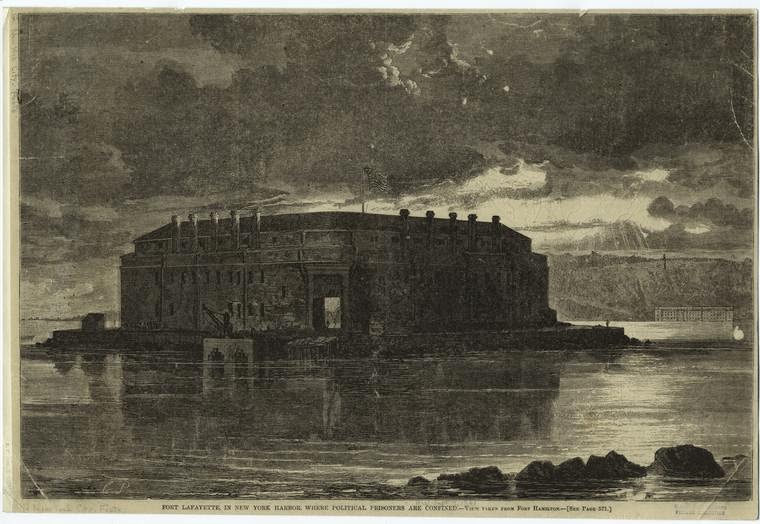
Fort Lafayette, 1861, from Harper’s Weekly (courtesy NYPL)

8) Goodbye Fort Lafayette
In building the Brooklyn anchorage, crews swept away the remainder of old Fort Lafayette, an entrenchment built during the War of 1812.  During the Civil War, Confederates were held prisoner here, including Robert Cobb Kennedy, who attempted to burn down New York during the Great Conspiracy of 1864. During the two World Wars, it held reserve ammunition. Moses personally fought an effort to turn the fort into a night club and now had a hand in dismantling it entirely.

Not only was the fort destroyed, the entire island on which it sat was virtually erased.  In addition, areas near Fort Hamilton and Fort Wadsworth were cleared away to make way for the bridge’s approaches. Perhaps to nobody’s surprise, the construction company tasked with clearing away the old fort employed the son-in-law of Robert Moses.

9) First Class Reception
The U.S. government did something a little different to honor the opening of the bridge — it issued a postage stamp featuring the bridge, to be sold on opening day.  For its 50 year anniversary this year, the Postal Service replicated the honor with an anniversary stamp.  The original stamp was for five cents.  The commemorative stamp is for $5.60 priority mail. (Times change.)

Photo NY Daily News/Leonard Detrick

10) Opening Day, First Traffic Jam
The opening of the bridge not only brought great pride to New York City, although a small number of protesters noted that the span did not have pedestrian walkways or bike paths (and it still doesn’t).  Among the dignitaries as the ribbon cutting ceremony were Governor Rockefeller, the Archbishop of New York Cardinal Spellman, Robert Moses and Mayor Robert Wagner.  They were all transported over the bridge in a somber 52-limousine procession.  The press of vehicles was poorly handled for it resulted in “a traffic jam … a half-mile beyond the point where the ribbon-cutting ceremony had been held.”

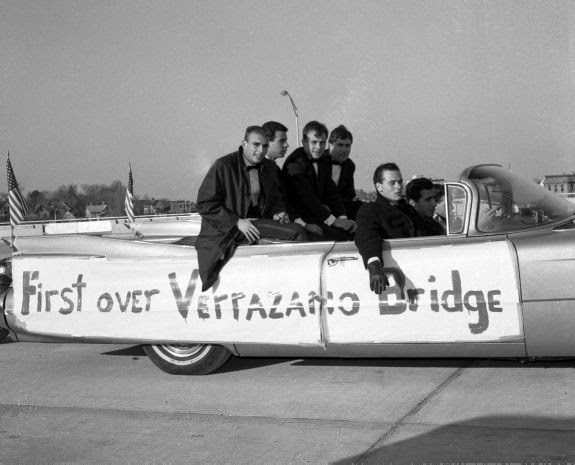
The first ‘regular’ toll-paying person over the Verrazano-Narrows Bridge was a carload of young men in rented tuxedos (pictured above), “driving a pale blue Cadillac convertible with flags flapping from the fenders,” who had parked behind the toll gate for an entire week to earn the special privilege.”

Below: The bridge’s most famous film appearance in Saturday Night Fever — but don’t watch if you haven’t yet seen the entire film!

Categories
True Crime Wartime New York

In 1914, a Jersey City fireworks and munitions plant exploded. Was it sabotage by the Germans?

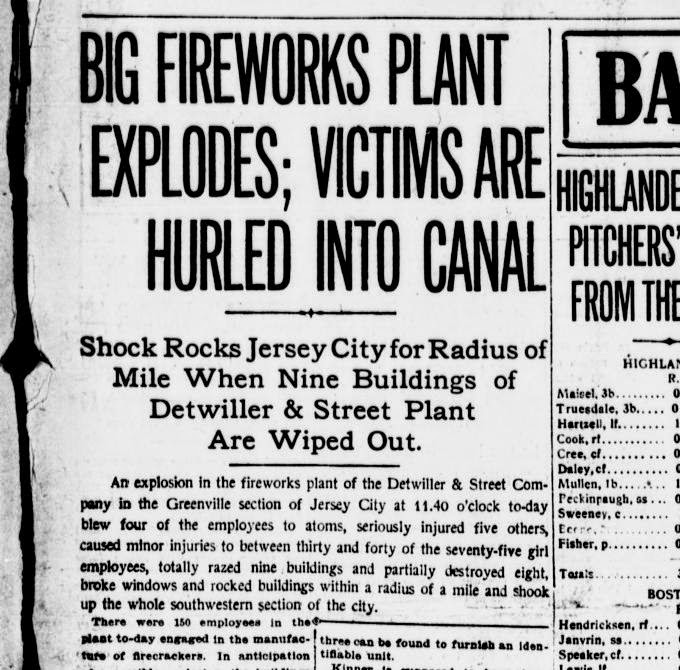
One hundred years ago today, the Detwiller & Street fireworks plant, located in the Greenville section of Jersey City, exploded in a horrible shower of fire and glass.  Four men were killed instantly and dozens of employees were injured.  Several surrounding buildings “fell to pieces like houses of cards.”   The rumble shook buildings throughout the city, up to Weehawken and even into Manhattan and Staten Island. [sources]

This was the sad, weird reality of munitions plants in the New York metropolitan area.  Staten Island was one of America’s largest producers of fireworks and saw its share of disasters, including a 1907 explosion in Graniteville.

But there was one huge difference between the 1907 Graniteville disaster and the 1914 Jersey City explosion — World War I.  Fireworks manufacturers during the war also produced munitions.  As the United States wasn’t yet engaged in the European conflict, some manufacturers were hired directly by the Allied nations.

The New York Tribune notes the unwillingness of executives to talk about the blast, and eventually the plant’s superintendent was eventually charged with “violations of the Crimes act, which makes it unlawful to store high explosives within 1,000 feet of a  highway unless in a fireproof vault.”

From the Evening World, October 3, 1914:

While the press reports of the day never explicitly mention Detwiller & Street’s munitions productions, it’s clear from later incidents that this was probably at least part of the plant’s output that year.  Another explosion at the very same plant in 1917 killed nine, all women.  A safety report clearly indicates then that “[t]he company is engaged in the manufacture of munitions for the Russian government.”  On hand to rescue some of the women was a Russian munitions inspector. [source]

This naturally leads to a more disturbing question — was the 1914 explosion sabotage by the German?

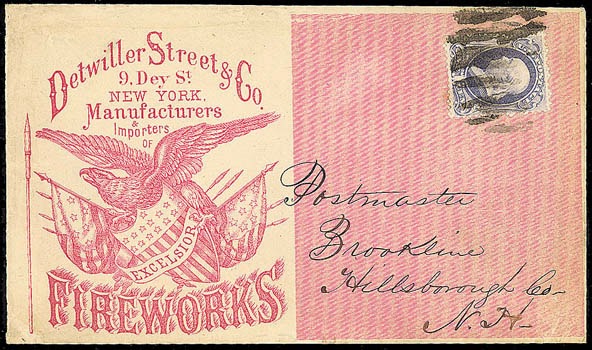
An early postcard from 1873.  The New York based Detwiller & Street specialized in “fireworks, time danger signals, railroad track torpedoes, etc.”  They were also responsible for the spectacular fireworks display at the opening of the Brooklyn Bridge.

That’s one suggestion according to a 1918 book The German Secret Service In America 1914-1918, listing a set of suspicious fireworks accidents in New Jersey before Oct. 3, 1914, Jersey City disaster. While these early accidents may have been due to increased munitions contracts in the hands of inexperienced employees, the authors admit ominously, “These explosions were the opening guns.”

German orders from that year make clear the focus on American targets.  From the German Secret Service book: “[A] circular dated November 18, issued by German Naval Headquarters to all naval agents throughout the world, ordered mobilized all ‘agents who are overseas and all destroying agents in ports where vessels carrying war material are loaded in England, France, Canada, the United States and Russia.”

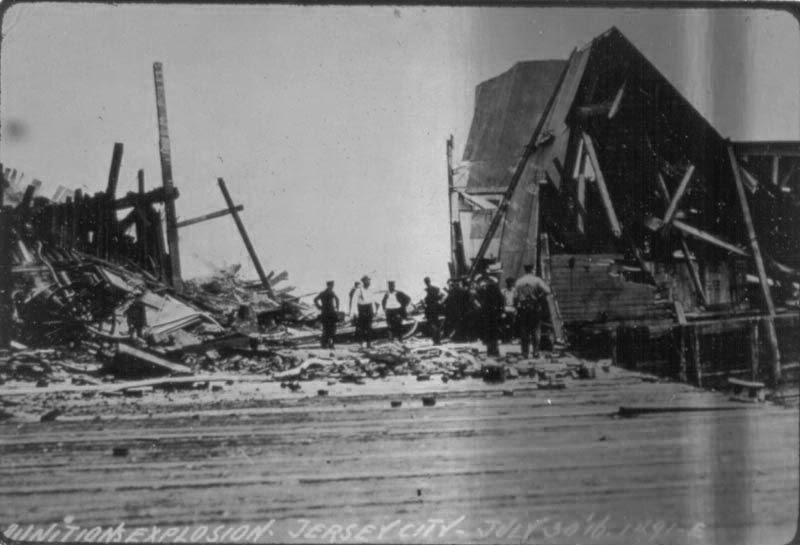
This had horrible consequence for the United States and those plants in New Jersey, New York and Pennsylvania in particular, leading to the greatest act of sabotage prior to America’s involvement in World War I — the Black Tom Explosion. (Pictured above: Aftermath of the Black Tom Explosion, courtesy Liberty State Park)

On July 30, 1916, a munitions depot on Black Tom pier in Jersey City was set ablaze by German agents.  The resulting explosion killed seven people on neighboring Ellis Island  in Jersey City and ricocheted through the metropolitan area, shattering windows in Times Square and over at St. Patrick’s Cathedral and shaking people from their beds in Brooklyn.  The Statue of Liberty also suffered damage from this act of sabotage.

And so it’s hard to read accounts of the Jersey City explosion from one hundred years ago and not imagine the possibility of sinister intention.


Categories
Staten Island History

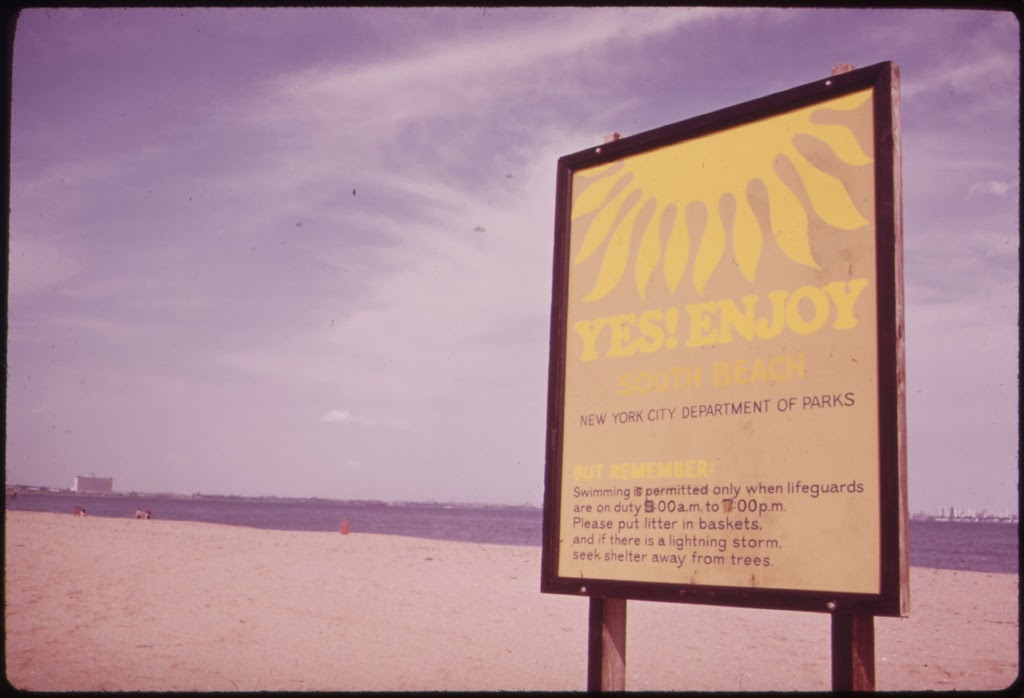
Forgotten paradise: Welcome to South Beach, Staten Island

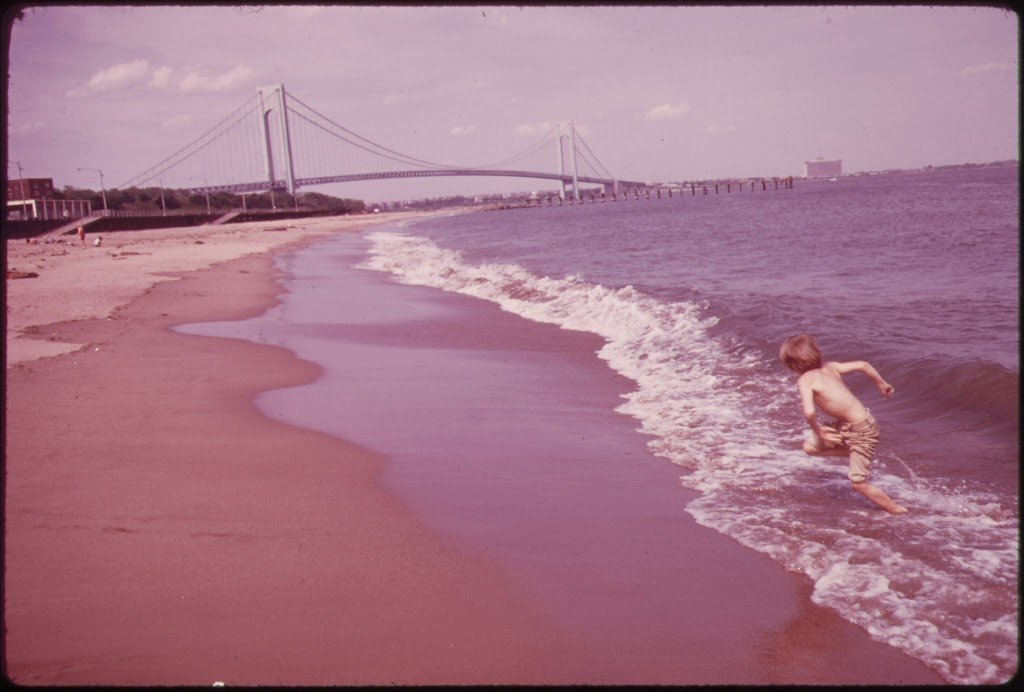
South Beach, Staten Island, 1973, photographed by Arthur Tress

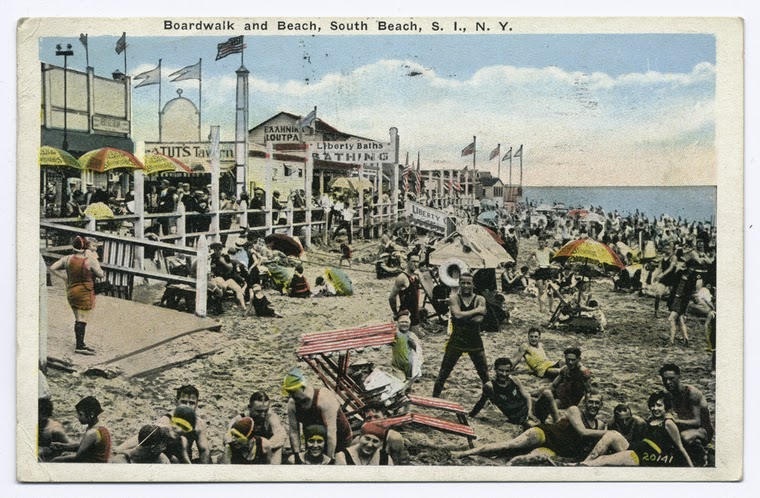
As a resort and amusement mecca, the time of Staten Island’s South Beach has come and gone.  The waterfront community south of the Verrazano-Narrows Bridge still has a classic old boardwalk, built in 1935 as New Deal project and appropriately called the Franklin Delano Roosevelt Boardwalk.  And there are still recreational facilities for baseball and hockey found just off its old boards.

But priorities have changed here. Similar to the fate of Rockaway Beach, most of the amusements were gone by the 1970s,  Several sections of neighborhoods along the shore were gravely damaged in 2012 by Hurricane Sandy.

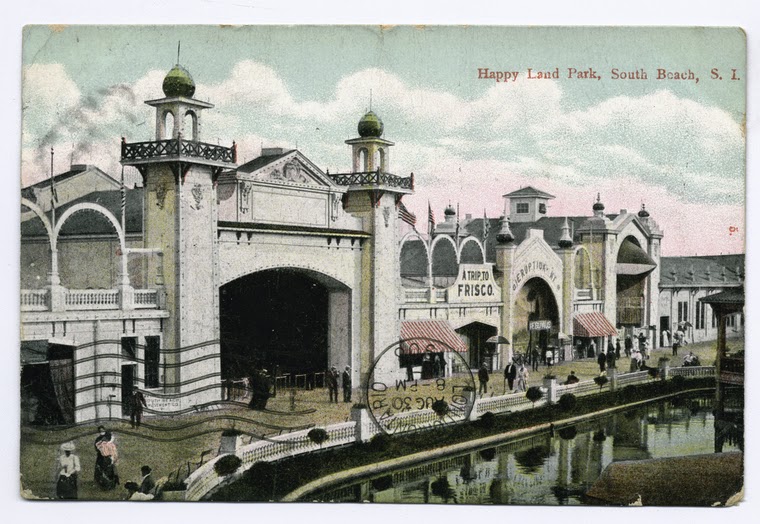
Its doubtful this area will ever return to its glory days of the early 20th century when Happyland Amusement Park brought a bit of Coney Island magic to the shore.  Further inland, real estate developers were changing the landscape with planned communities that eventually appealed to New Yorkers of Italian, Irish and Hispanic descent.

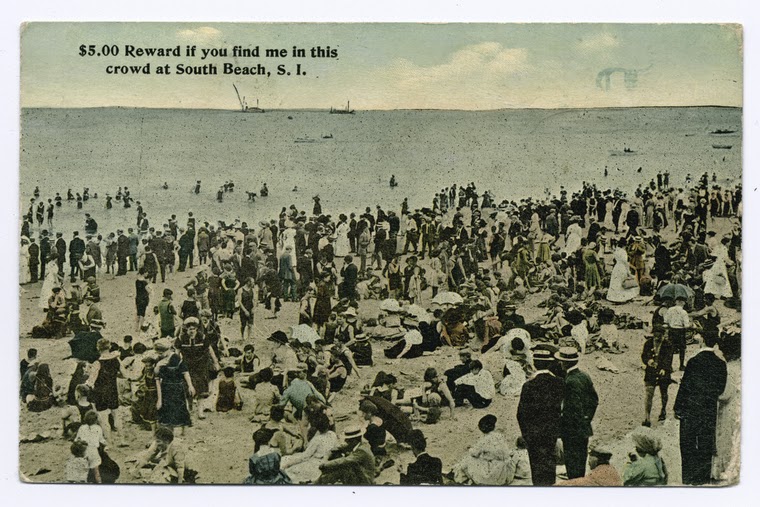
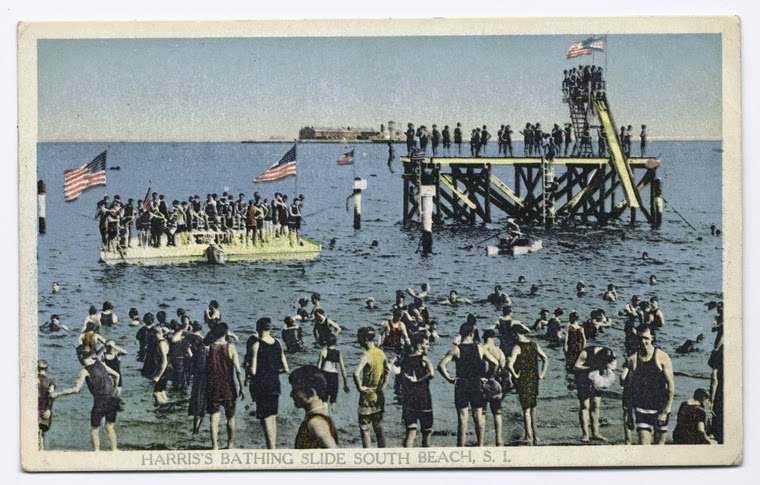
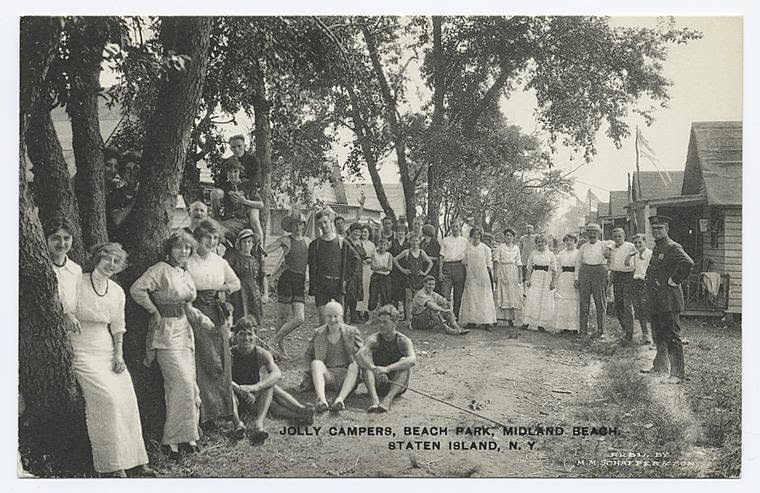
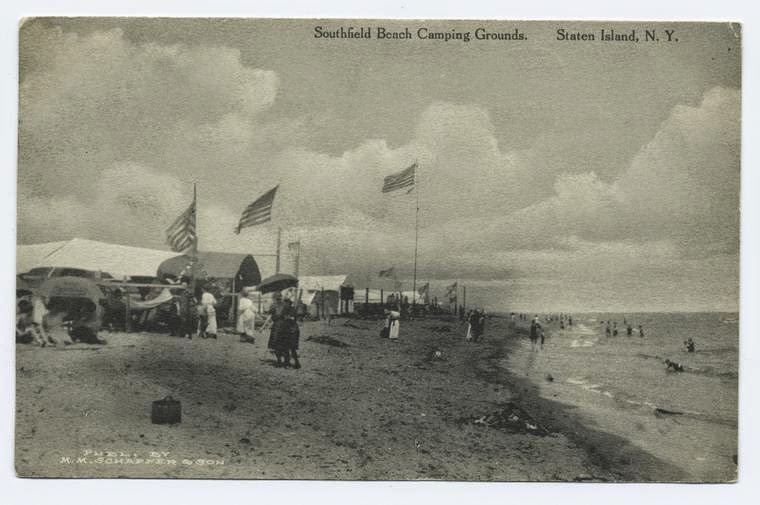
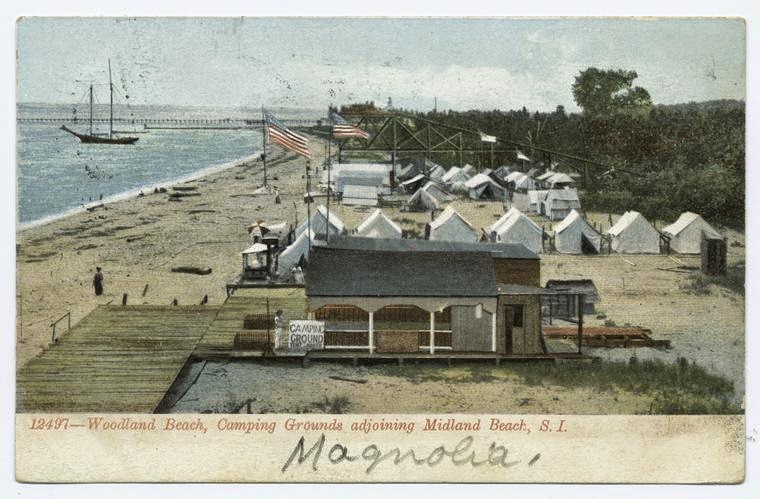
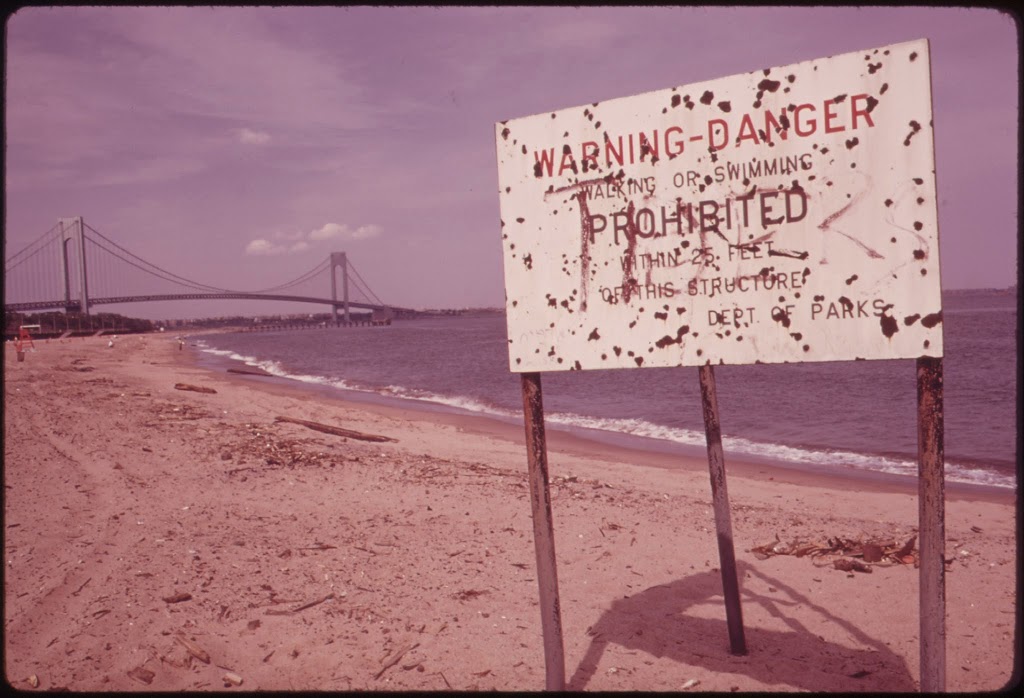
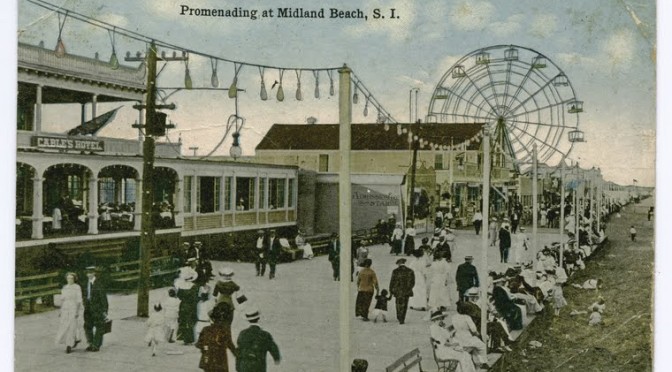
Here’s some views of South Beach and adjacent Midland Beach from early in the century and then some drastically different views from the 1970s. Photos are courtesy the Library of Congress and the New York Public Library:

From a 1908 advertisement: “A delightful ferry sail down the bay and trolley ride through Staten Island’s verdant hills will bring you to HAPPYLAND, on South Beach, looking out toward the ocean.  The new combination ticket feature provides, for a quarter, admission to the park, vaudeville, dancing pavilions, Bill’s Ladder, Paris by Night, Foolish House, Georgia Minstrels, Dib Dab Slide, Electric Slide, Hippodrome, Circle Swing, Fat Saidy and the Human Roulette Wheel.”

Brooklyn Daily Eagle ad from 1913 (courtesy the blog wagnerowitz)

Below the beaches in 1973, photographed by Arthur Tress

Categories
Neighborhoods

Why are there so many Henry Streets in New York City?

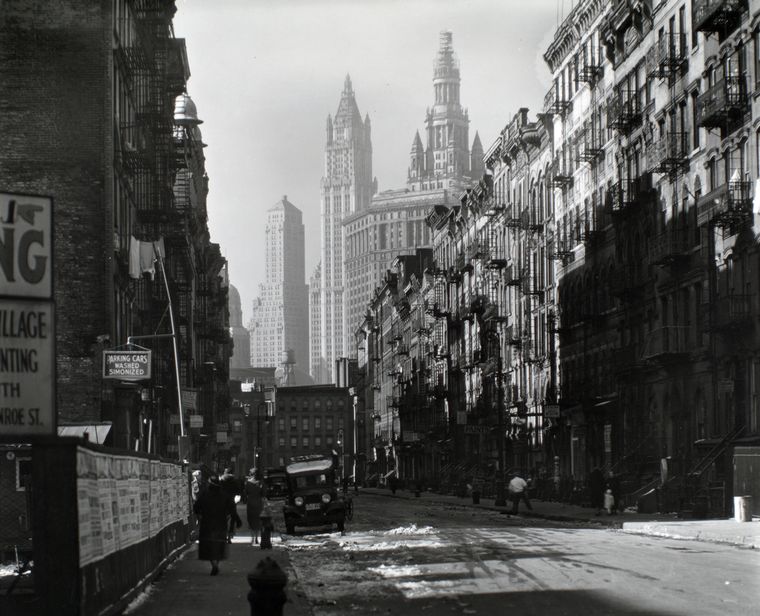
Manhattan’s Henry Street looking south, 1935, photo by Berenice Abbott (NYPL)

Since Manhattan and Brooklyn developed as two separate cities before they were intertwined within consolidated New York City in 1898, it’s not surprising to see similar street names in both boroughs, deriving from different origins.  But the Henrys being honored in these street names are quite different:

Henry Street (Manhattan) is named for Henry Rutgers, the Revolutionary War hero and the financial savior of Queen’s College in New Jersey, who thanked him by renaming themselves Rutgers College (later University).  You’ll find a Rutgers Street in the Lower East Side too; in fact, it intersects with Henry Street. I wonder if he had a middle name?

This of course the Henry Street of  Henry Street Settlement, the pivotal health and social services provider which opened on this street in 1895.

Henry Street (Brooklyn), however, is named for Dr. Thomas W. Henry, a prominent physician in the 1820s who treated the early aristocracy of Brooklyn Heights.  

Although Henry was president of the Medical Society of the County of Kings from 1831-32, it doesn’t seem like he was a name for the annals of medical history. The reason he got his own street has to do with one of the families he treated — the Middaghs.

Lady Middagh, as legend has it, wanted more colorful names for her neighborhood and led a movement to rename certain streets for pieces of fruit — which is why Brooklyn Heights has a Cranberry Street, an Orange Street and a Pineapple Street.

Despite her aversion to pompous street names, one street is actually named for her own family (Middagh Street) and, of course, one for her beloved doctor.

North Henry Street (Brooklyn) was just regular Henry Street in the independent town of Greenpoint.  But that changed in 1855, when Greenpoint — and its neighbors Williamsburg(h) and Bushwick — were annexed into the city of Brooklyn.  

Dozens of old street names were changed when the annexation took place. Here’s a lengthy list of other altered names.  Since the southern Henry Street was the ‘original’ Henry Street of Brooklyn, this one got a North stuck to it.

It’s not clear to me which Henry this is named after, but it’s possible that it took its name from Revolutionary War hero Patrick Henry.  

If so, it would have shared this trait with one of Brooklyn’s greatest politicians, Patrick Henry McCarren, who represented the Williamsburg(h) and Greenpoint areas during the years of the Gilded Age.

Interestingly, none of these Brooklyn Henry Streets are named after Henry Ward Beecher, although his pulpit at Plymouth Church sits near the ‘original’ Henry Street.

Henry Place (Staten Island) is in the neighborhood of South Beach.  I’m not sure of the origin of the name, but one possibility could be a farmer named Henry Bedell, whose mill gives its name to Mill Creek, or even Henry Hudson, who landed here in 1609 before heading over to Mannahatta.

But according to this census report from 1930, Staten Island had a great many more streets named for Henry!  As this borough was a collection of small villages — and still feels that way in some areas there today — there were various Henrys that had to be eliminated for the ease of mail delivery and mapping.

If you have any information on the more unknown Henry Streets, any speculation, or if I missed any Henry Streets, please leave a comment below or email me at greg@boweryboyspodcast.com.

Staten Island already had a gigantic Ferris wheel — in 1893!

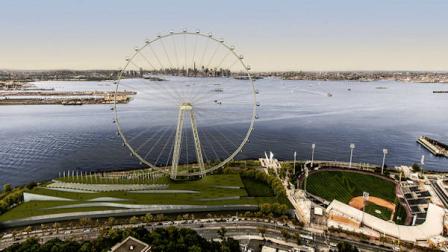
In the spirit of P.T. Barnum, Mayor Michael Bloomberg yesterday announced plans to build the world’s largest Ferris wheel next to the ferry terminal on Staten Island. The amusement, called the New York Wheel, will stand 84 feet higher than a similar Ferris wheel in Singapore and also nods towards the London Eye, a ride built in 1999 that quickly became a centerpiece of British tourism.

Obviously geared towards boosting tourism to Staten Island, the plan offers something for the residents of the borough in the form of a “retail outlet complex.” With the ballpark home of the Staten Island Yankees and the recently redesigned ferry terminal, the new projects will radically alter the face of the St. George neighborhood.

(At right: A rendering of the new wheel, courtesy ABC.)

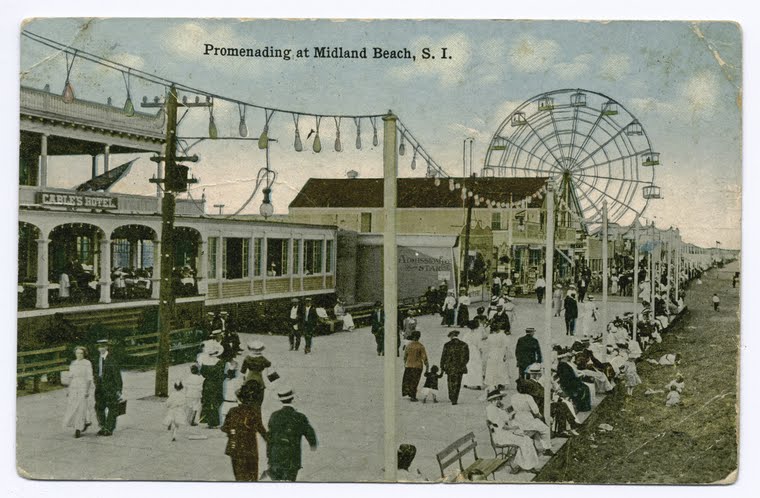
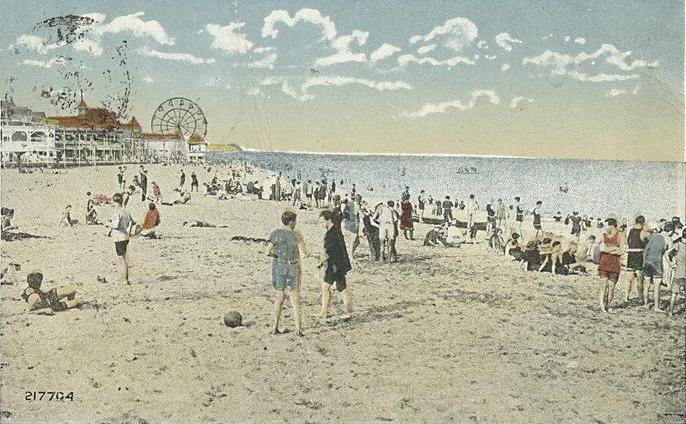
But the idea of a Ferris wheel drawing tourists to Staten Island isn’t a new one. The very first Ferris wheel in the borough was constructed back in 1893, on the opposite shore in the old Midland Beach resort area.

Midland Beach and adjacent South Beach were Staten Island’s answer to Coney Island and Rockaway Beach, back in the era before any of those amusement centers were officially a part of New York. The Staten Island resort area got its wheel the same year that George Washington Gale Ferris Jr. installed his most notable wheel — and thus giving the amusement its name — at the World’s Columbian Exposition in Chicago.

Staten Island’s ride — called an ‘observation roundabout’ — was built by Ferris’ rival William Somers after he was rejected a spot at the Chicago fair. It was probably similar to Somers over roundabouts built on Asbury Park and Rockaway Beach, of wooden construction, about 50 feet in diameter with approximately 16 passenger chambers. [Check out Norman Anderson’s history of Ferris wheels for more information.)

Thanks to Ferris and the fame of the Chicago World’s Fair, nobody was calling them roundabouts by the start of the 20th century. The Ferris wheel hovered over Midland’s rows of bathing pavilions and beer gardens along the boardwalk and was joined by the Happyland amusement park in 1906.

The New York Tribune sang praises of the amusement in 1904: “If they [the young of all ages] desire pleasure with an element of excitement, [they] may venture a ride in the great Ferris wheel, from the summit of whose broad circle they may enjoy an excelled view out over the broad bay to the open sea.”

The St. George Ferris Wheel is slated for completion in 2015. As for the old Midland Beach wheel, it appears to have been destroyed — along with a great many other amusements — in a devastating fire in 1924.

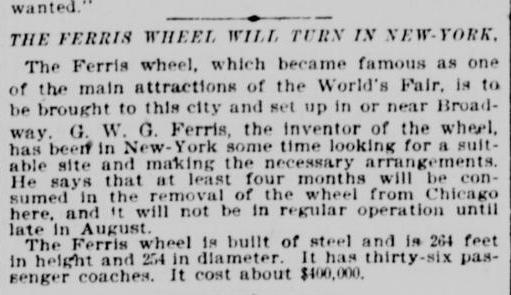
And by the way, Ferris’ original wheel, the one that was at the Chicago World’s Fair? There were actually plans to bring the wheel to Manhattan in 1894 and set it up — on Broadway! Sadly, these plans fell through.

Pictures courtesy NYPL

The art of the reservoir, New York’s forgotten architecture

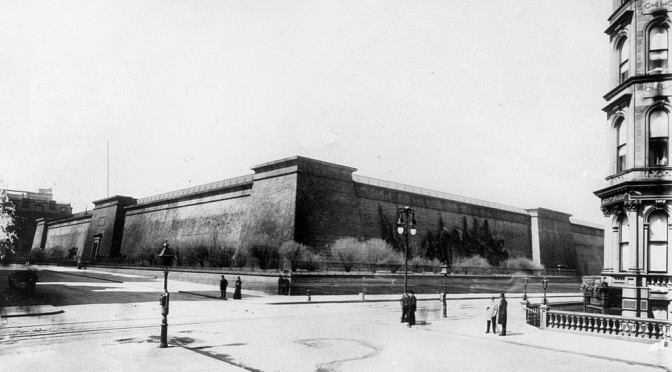
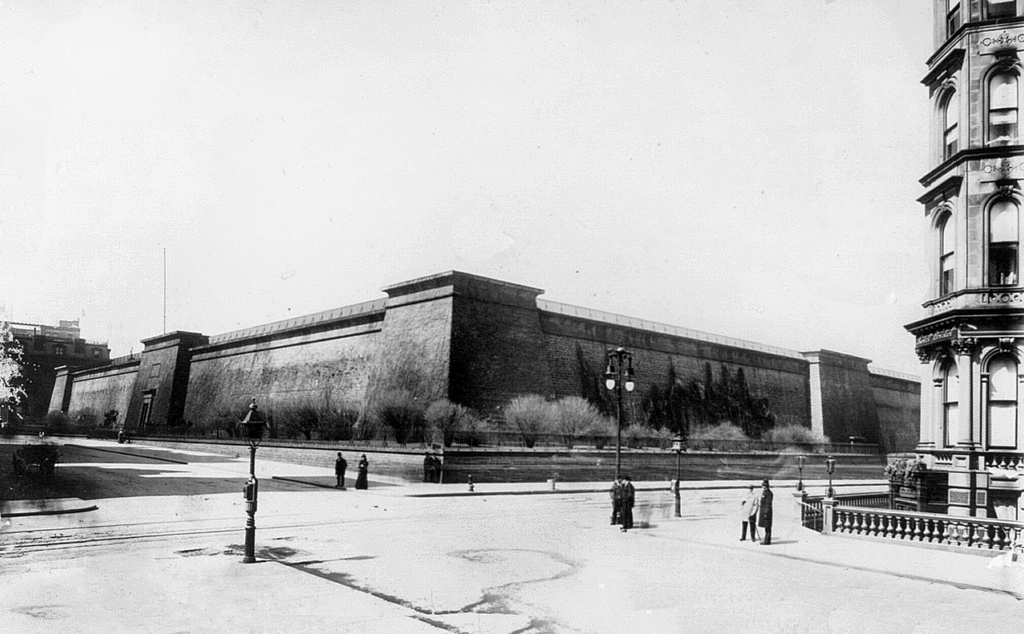
The Fortress of Fifth Avenue: the Murray Hill Reservoir

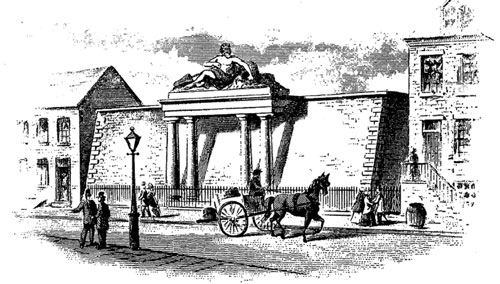
We share a lot of the same needs as New Yorkers of the past, but we’ve just gotten better at hiding the unpleasant ones.  There are a great many mental institutions and specialized medical facilities in the city; they just aren’t in creepy, old Gothic buildings anymore. Prisons are out on islands or in nondescript beige towers flaunting only the barest hint of iron bars. We don’t dress them up in Egyptian morbidity like the famous Tombs prison of Five Points.

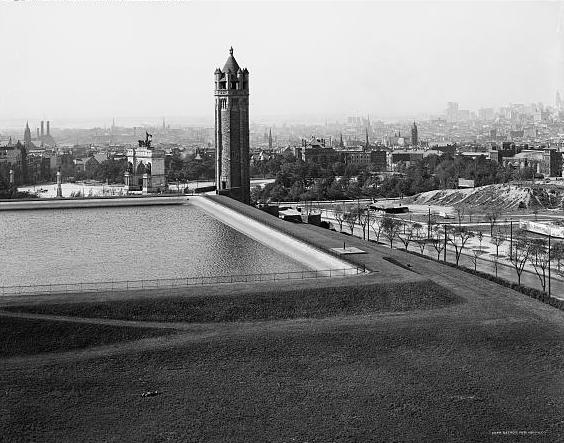
Our trains and our electricity reside underground, and so does our water, mostly. There are only a few places that seem to suggest that New York City’s water supply doesn’t just magically appear. Water towers dot the skyline, recalling romantic comic book landscapes, while water treatment plants, spread mostly through the outer boroughs, obviously do not. Then there are the reservoirs, the grandest of these, the Jerome Park Reservoir in the Bronx, is a landmarked structure of enormous, albeit hidden, beauty. It’s currently drained and sitting like the Earth’s largest off-season swimming pool.

But New Yorkers used to live with their water, contained in reservoirs meant to evoke might, sophistication and security. After all, New York only got fresh water from the Croton Aqueduct in 1842; before that, it was mostly obtained from wells, cisterns, and that nasty old Collect Pond. People were proud of their new water system, so why not show it off?

Here’s a gallery of New York’s old 19th century reservoirs. In tomorrow’s podcast, we’ll elaborate on the marvelous story on how the city got its water:

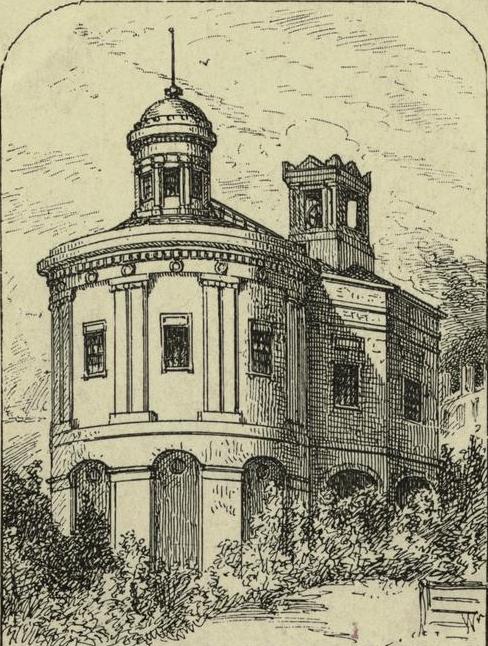
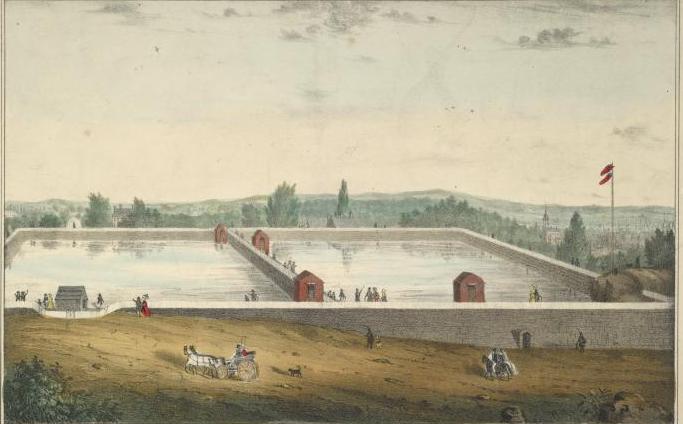
The Manhattan Company reservoir on Chambers Street was opened in 1801 and was quickly deemed inadequate. Looks lovely though. If it were still around — it was demolished in the early 1900’s — it would probably be a nightclub today.

13th Street ReservoirOpened in 1830 as a water-pooling resource for fire fighting, it pumped water to hydrants on Broadway, the Bowery and other streets, but was little help in stopping the blazes of the Great Fire of 1835.

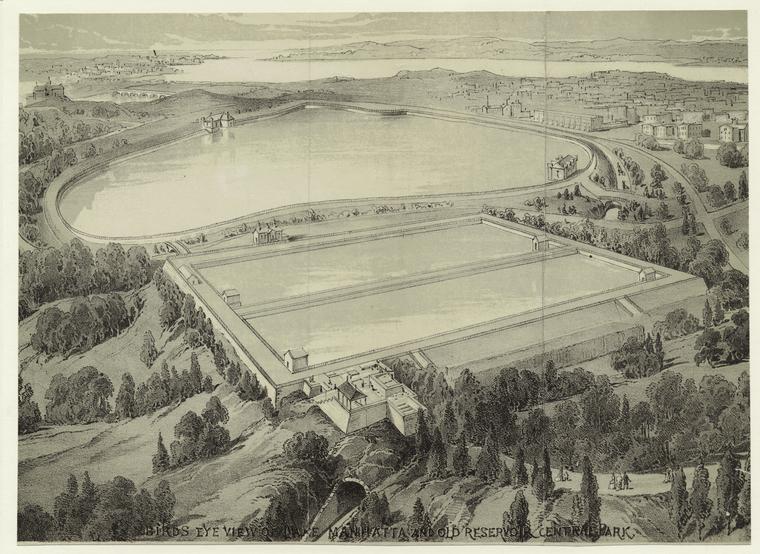
The Yorkville reservoir, how it looked on its opening in 1842. It was located between 79th and 86th Streets and between Sixth and Seventh Avenues. Many years later, was surrounded by Central Park and was later torn down to become the park’s Great Lawn. What does remain, however, is….

…the Central Park receiving reservoir, built in the 1850s and, unlike the Yorkville, incorporated into the park’s designs. Today it’s named for Jacqueline Kennedy Onassis, who lived nearby and frequently jogged around it.

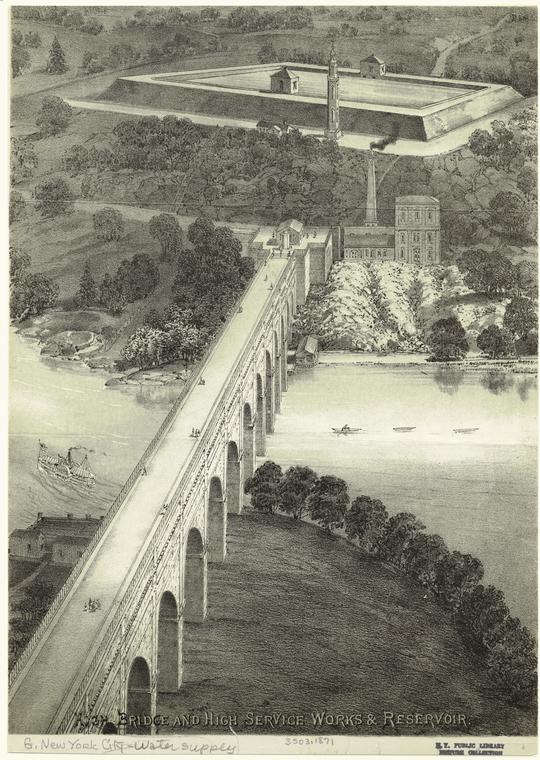
The spectacular High Bridge, part of the Croton system, with its adjoining smaller reservoir and water tower, serving the needs of residents of Manhattan’s higher elevations.

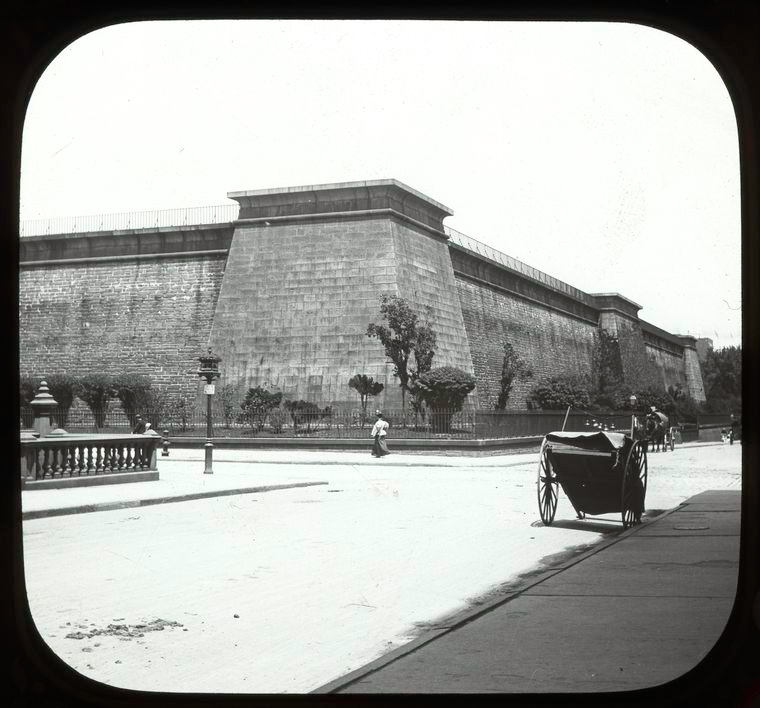
The grand Murray Hill Reservoir, probably the most popular of the reservoirs with 19th century tourists. Situated on land that had held the fabulous Crystal Palace (destroyed by fire in 1858), the reservoir was demolished in the 1890s to make room for Bryant Park and the New York Public Library.

Brooklyn was maintained in the 19th century in two reservoirs, one in Ridgewood and the other high atop Mount Prospect, although the ultimate source of the water came from a variety of places.

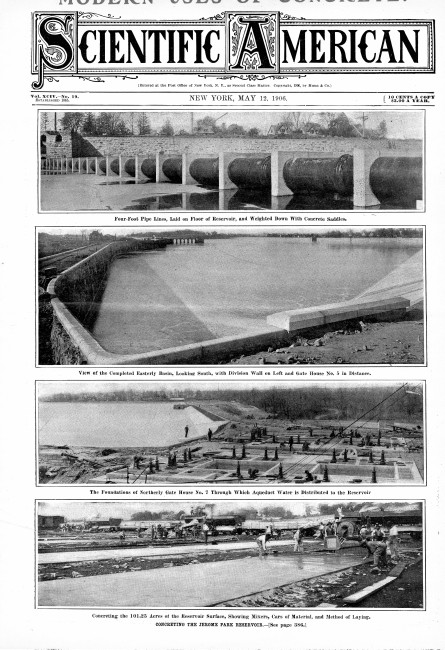
An issue of Scientific American in 1906, celebrating ‘the concreting’ of the Bronx’s Jerome Park Reservoir which opened that year and contained portions of both the old and new Croton Aqueduct systems.

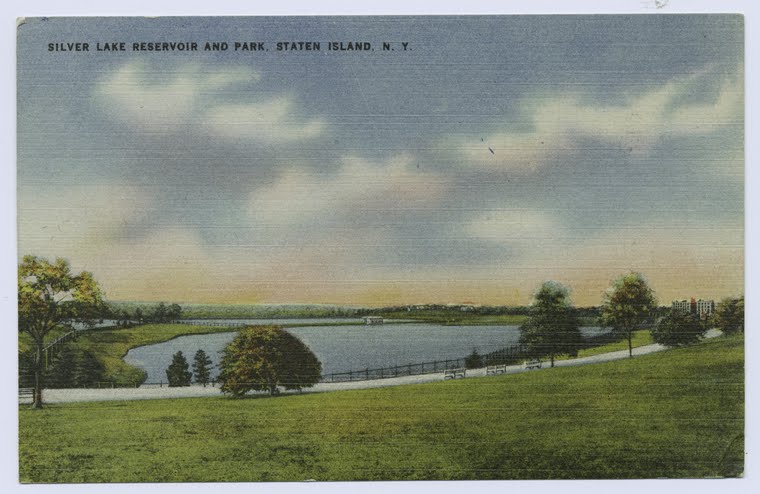
The 1917 Silver Lake reservoir in Staten Island was constructed, like the Central Park reservoir, to be a functional feature of a park setting.

Pictures courtesy the New York Public Library, the Brooklyn Museum and the Library of Congress. Thanks as always to these institutions. The Scientific American can be found here.

‘Staten Island Has Many Charms Worthy Of Consideration’: Ten ways to sell a borough (and a proposed subway) in 1912


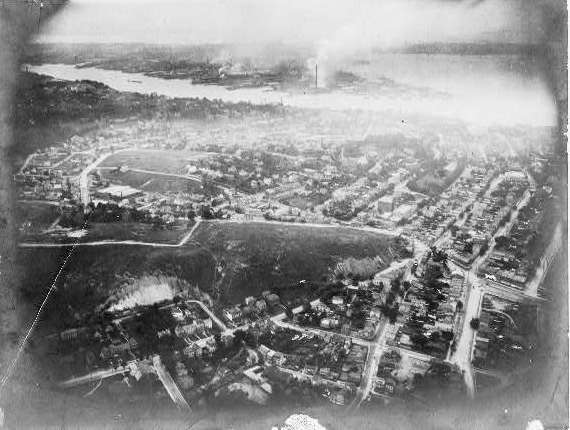
The sky’s the limit: Staten Island from the vantage of a hot air balloon, August 1906. (Courtesy LOC)


“God might have made a more beautiful place than Staten Island, but He never did.” — George William Curtis

If you’ve ever been slightly bemused by the newspaper profiles of trendy neighborhoods, presented as though the reporters were urban archaeologists ‘discovering’ heretofore hidden pockets of the city, then you’ll find amusement in this New York Tribune article from July 1912.

Hopefully to snag the attentions of Manhattan businessmen, the Tribune staff devoted an entire section in their Sunday section to extolling the many virtues of one of its more foreign corners — Staten Island.

The other island borough may have indeed been a mystery to many Tribune readers; the city had taken over ferry service just a few years previous, and there were no bridges yet linking Staten Island to Brooklyn. Many Manhattanites in 1912 harbored the impression that Staten Island, once known as a rural recreational getaway,  was now a dull and uncivilized farmland with a few scattered industries.

But this Tribune article was inspired by a promise that would finally draw Staten Island into the fold — the subway.


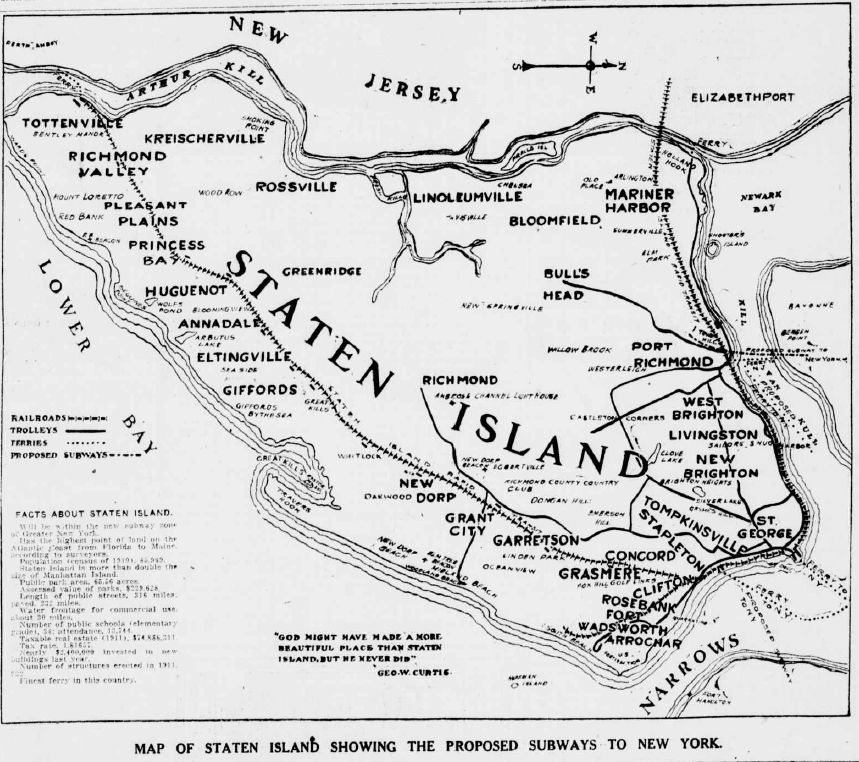
Below: A real estate map of Staten Island from the 1912 article. The dotted lines at the bottom denote where the proposed subway line would have been. 

Manhattan’s Interborough Rapid Transit Company (IRT) and the Brooklyn Rapid Transit Company (BRT) were nearing an agreement with the city to expand the present subway system and create new lines throughout the city. This plan, called the Dual Contracts, helped lay out most of the current New York subway routes today. However there were many potential lines that were never built (despite the efforts of a few future mayors). Among the most ambitious was a subway link to Staten Island.

It was with the anticipation of this underwater track (linking Stapleton to Bensonhurst, see map abovve) that the Tribune hoped to regale readers with the unspoiled wonders of New York City’s least populated borough.

Forget the fact that Staten Island already had an intimate, but thriving old-money scene, the vestiges of a genteel society formed among the mansions of tycoons along the north shore. Fast-paced urbanites would have considered them stubbornly charming but boorish. Society and recreation were not the appeal.

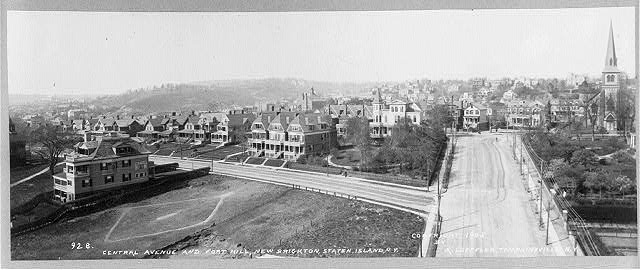
Below: New Brighton, at Central Avenue and Fort Hill, 1905 (LOC)

The Tribune focuses on Staten Island’s destiny as ‘one of the greatest shipping and manufacturing centres of the world’ and wonders deliriously at the delights of that great, underused waterfront. Some highlights from the article (which you may read in full here):

1) Staten Island’s terrific gas supply, the borough’s oldest public service supply, lives up to its motto to ‘Make Gas Service Good Service And Then Some’. Its most recent successes include a yard dyeing manufacturer, the gas engines of the Swift Beef Company, and soldiering furnaces for the U.S. Department of Lighthouses. And the price of gas is going down!, claim management.

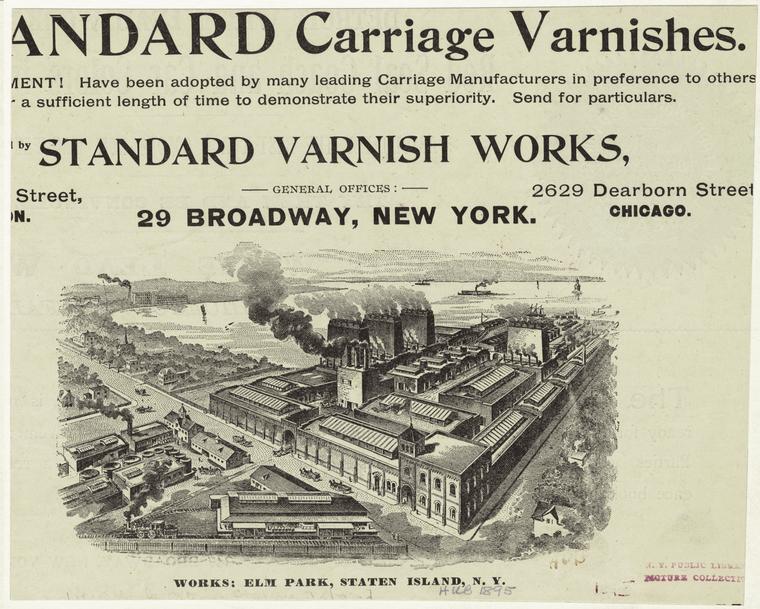
2) The Varnish Capital: One of Staten Island’s great success stories is its varnish industries, most notably Standard Varnish Works, which has miles of underground pipes that filter oil and turpentine from the docks to large storage tanks in the neighborhood of Elm Park. Sold around the globe, “the sun never sets on products manufactured by the Standard Varnish Works.”

3) ‘Country Life’, not ‘Lonely Life’: In New Dorp,  homes upon a ‘noble ranges of hills’ have access to a fine beach, according to the article. “The loneliness that so many people fear as the bane of country life has had in no chance to make itself felt in New Dorp.” A resident describes it as ‘earthly paradise’.

4) Building Innovation: One of Staten Island’s most successful builders is W. H. C. Russell, ‘the pioneer … of the famous asbestos ‘Century’ shingles’, used in the construction of public schools and government buildings.’

Below: The glory of varnish, Standard Varnish Works in Elm Park, that is. (NYPL)

5) Hot Development Opportunities (But Not Too Hot): A St. George realtor admits, “Do not think for a moment that I have been tearing up the earth or anything of that sort, but … I have been doing very satisfactory business.”

6) Great Subway Expectations: The report speculates that the new subway link will get commuters from Stapleton to lower Manhattan in about thirty minutes, bringing the borough’s ‘most entrancing’ residential areas into the subway’s five-cent-fare zone.

7) Don’t Let The Factories Bother You! ‘The man who prefers to live in a place with superb country features, where are green fields, towering shade trees, winding roadways inviting to autoists and owners of harness horses … should not turn his step away from Staten Island because bigger factory zones are going to be built there soon.’

8) There’s Always South Beach: Staten Island’s southern amusement area, rivaling Coney Island, remained a vital recreation center for the city in the 1910s, thanks to Staten Island’s present train services. “Rapid transit has converted an unknown and unused beach into a gay and popular resort, and today South Beach rightly claims to be Coney Island’s only rival.”

9) ‘The Garden Spot of Greater City Of New York‘: ‘Verily, extremes meet here. Already quaint and prosperous little villages have begun to take on new life and expand ……. [E]very day adds to the list of those who through out-of-door life and sunshine are ‘finding themselves’ and adding measurably to the pleasures as well as to the number of their days.’

10) ‘Spotless Town‘: But if you need to be around wealth, the old Vanderbilt estate is being chopped up into ‘high class lots’, near the Fox Hills Golf Course, ‘the finest course in America’!

Categories
Revolutionary History Staten Island History

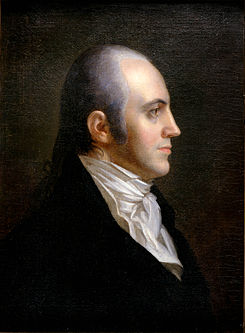
Aaron Burr, Staten Island, and the tale of his death mask

Yes, Hamilton fans, we are a proud people, judging from the many notes and supportive comments yesterday left on the Facebook page on the birthday of Alexander Hamilton, tinged with strong anti-Aaron Burr sentiment. But, from our comfortable vantage of the future, have we been too harsh on the killer Vice President?

Sure, he absolutely got away with murder. But it was, after all, a duel, willingly engaged by both participants, however misguided. Murder charges against Burr were eventually dropped, but he obviously avoided New York for many years.

His later misadventures out West — his failed, confusing efforts to infiltrate Spanish territory and allegedly form a new government in 1806 — just slathered on further scorn and distrust for the once respected lawyer. Three years after killing Alexander Hamilton, Burr was brought to federal trial for treason. He was eventually acquitted due to lack of credible evidence, much to Thomas Jefferson‘s chagrin.

After traveling through Europe and eventually going broke, Burr returned to New York and married the alleged ‘black widow’ Eliza Jumel. They divorced just four months later. The Morris-Jumel Mansion, his home during that time, is today less than two miles away from Alexander’s prized Hamilton Grange. They are two of the oldest homes still standing in northern Manhattan. (The Dyckman Farmhouse , in Inwood on 204th Street, is older than Hamilton’s house.)

Aaron Burr died in 1836 in Staten Island at a boardinghouse in the Port Richmond neighborhood, not far from the Bayonne Bridge.  The boardinghouse later became the St. James Hotel, where guests could specifically ask to stay in Burr’s room for an evening. And sleep in the same bed! A sign even hung over the mantel, “Aaron Burr died in this room.”

The former Vice President spent his last, lonely days in this particular room, shying away from curious locals and pouring over old love letters from Eliza. According to a 1895 New York Times article on the subject of his ‘deathbed’, Burr was hounded by pious ministers who wished to save his soul and release him from his crippling depression.

The article also highlights a very bizarre visitor. One guest at the boardinghouse had an unnatural fascination with Burr, but never spoke to him and kept quietly to himself. When the landlady discovered that Burr was died in his room, the stranger suddenly appeared at the door, opened his satchel and removed the materials to make a plaster death mask of the Vice President. I believe this may be the morbid mask in question!

The other Draft Riots: Brooklyn infernos, Queens bonfires

You probably know something about the Civil War draft riots that kept New York paralyzed during the week of July 13, 1863. But New York only meant Manhattan back then. What about the rest of the future boroughs?

The conscription act initiated draft lotteries throughout the area as, by 1863, the Union struggled to fill its quota of volunteers. Many thought the state of New York had contributed enough; hundreds were already dead after two years of bleak and depressing battle.

Then there was that troublesome little exemption clause. Those chosen in the ‘wheel of misfortune’ could either find a substitute or pay a $300 commutation fee. According to the Inflation Calculator, that’s about $5,250.00 today. Look at your bank account. Could you afford to pay that?

People revolted violently when the drafts were held in New York on July 13. There were also seismic reactions in the surrounding counties as well, chain reactions of the anger quelling in New York. In the surrounding regions, local law enforcement were often better prepared to handle disruptions amongst their less concentrated populations. Even still, the horror of New York’s draft riots did spread.

The homes of many black residents on Staten Island were torched. According to historian Richard Bayles, “From its proximity to New York City this county could not help but feel every pulsation of popular emotion that disturbed the bosom of the city.” Mobs attacked black shopowners in Factoryville, surrounded a black church in Stapleton and threatened parishioners inside, and burned down a railroad station owned by Republican and Union supporter Cornelius Vanderbilt.

Residents from the village of Astoria and the farmlands of Sunnyside and Ravenswood could see New York burning across the water. But Queens County caught the loathsome riot fever when the draft commenced in nearby Jamaica, on July 14. Riled crowds gathered at dusk and nearly torched the village but for the intervention of a few Democratic community leaders.

The draft office in Jamaica was eventually destroyed and number of buildings filled with government property were vandalized. Rioters stormed one building and stole piles of garments intended for the battlefield. According to an 1882 history of Queens County, it was an apparel Armageddon, the rioters “taking out some boxes of clothing which they broke open, piled in heaps and set on fire. The largest pile, which they derisively called ‘Mount Vesuvius’ was about ten feet high.”

In Westchester County, towns along the Bronx River reacted similarly to their own draft lotteries, with rioters in Morrisania and West Farms destroying telegraph offices and yanking railroad ties from the ground. However, other local towns, like Yonkers, were successfully insulated from violence, due to better living conditions and the entreaties of an especially popular local leader, the Rev. Edward Lynch. A mass gathering on July 15th in the village of Tremont eventually snuffed out violence in the region.

Although it was one of the country’s largest metropolises, the independent city of Brooklyn never saw the intensity of violence that New York did. Indeed, some black New Yorkers escaping violence in the city fled to the countryside in Kings County, to places like Weeksville. However the county did see a good share of bloodshed and destruction, particularly in the Eastern District (the areas of Williamsburg and Greenpoint).

The Brooklyn Eagle, solidly Democratic and in quiet support of the anti-draft agitators, had this to say in a July 16th article, “We could fill columns of the Eagle with exciting stories of anti-negro demonstrations, threatened outbreaks, etc.. So far no disturbance has occurred in Brooklyn which two or three policemen could not surprise [sic]. There has been nothing like any attempt to get up a mob, or create a riot.”

This is preposterous, but even through the Eagle’s glossy lens, it’s apparent that violence never fomented to the degree that it did in New York. This, of course, would be of cold comfort to the dozens of black Brooklynites who did have to flee their homes and businesses that week.

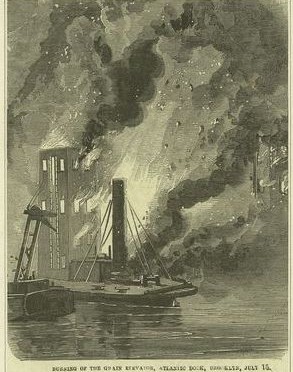
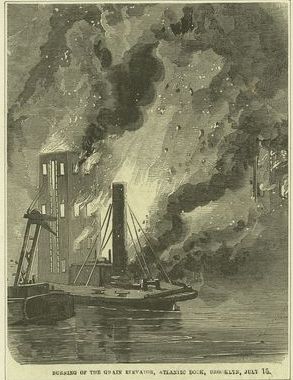
The most dramatic scene in Brooklyn took place before midnight on Wednesday, July 13, with the destruction of two large grain elevators in the Atlantic Basin, in Red Hook. (Pictured at top.)

The Eagle’s reasoning for the blaze demonstrates the reasonless chaos that typified violence in the latter days of the riots. It had nothing to do with racism or with drafts, but rather â€œ[t]he fire was the work of incendiaries, supposed to be grain shovellers who recently had some trouble about a raise on wages, and who have always looked with feelings of animosity on these elevators because they dispensed with a large amount of manual labor.”

The burning elevators, facing into the East River, made a grim bookend to the burning structures across the water in New York. Luckily, within 24 hours, the riots would be calmed throughout the region.

Was ‘Birth of a Nation’ really filmed in Staten Island?


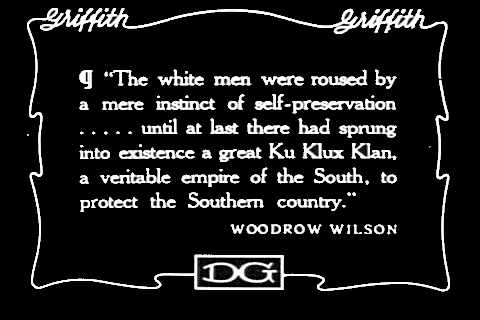
A rather startling title card from ‘Birth of a Nation’ [courtesy the Liberty Lamp]

The question posed in the headline is a fascinating urban legend I’ve been obsessed with proving (or disproving) for about a year. It pops up occasionally during discussions about New York film history. And I think I’ve come up with an answer.
D.W. Griffith’s 1915 landmark ‘The Birth of a Nation’ heralded the birth of the Hollywood blockbuster, becoming its first true sensation and inventing production techniques that would become standard issue for the industry. It’s also, of course, an incredibly slanted account of the Civil War and its aftermath, glorifying the Ku Klux Klan and presenting a demeaning and racist portrait of Southern blacks.

For all those reasons, the movie is a true archetype, singlehandedly displaying the power and influence, both good and bad, that motion pictures would one day possess. So I was quite surprised a couple years ago to find that the production of this staple of college film courses might have a New York City connection.

Many non-primary sources claim that some scenes depicting Civil War battle were filmed in Staten Island, in an area located around today’s Park Hill neighborhood. The New York City Department of Parks and Recreation pinpoints it further — “shooting [the] Civil War battles sequences” around the area of Eibs Pond in nearby Clifton.

One can perhaps imagine the calm, slight hills around the pond standing in for Southern battlefields. But I’m afraid to say this was probably not the case.

Local filming references mostly pop up in books and websites on New York or Staten Island history. The earliest reference I could find was in an AIA Guide from 1968. New York Magazine also trumpeted this tale in 1970, even visiting the alleged filming location.

But you won’t find these claims in film history books. Books specifically related to the ‘Birth of a Nation’ are clear that this was an all-California production: “Filmed at the Reliance-Majestic Studio, Sunset Boulevard, Los Angeles, California, and the various outdoor locations in the area, principally in the the San Fernando and Big Bear valleys and the open country in the Rio Honda.” [source]

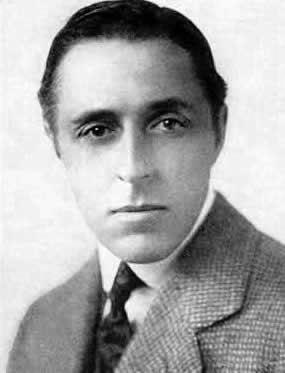
Staten Island does have an important place in early American cinema. Some of the first fiction shorts were made here, in the South Beach area, in the 1890s, and some consider the area the birth place of the movie western. And Griffith (at left) did indeed make dozens of films in the New York region for the American Mutoscope and Biograph Company, whose principal studios were in Manhattan.
But Griffith began filming ‘Birth of a Nation’ from July to September of 1914. He had left both Biograph and New York the year previous and drummed up the finances independently to make ‘Nation’ himself, as its length and subject matter was still an uncertain risk for a young Hollywood to take. Griffith would return to the New York area in 1919, setting up a short-lived studio in Mamaroneck, New York, a short drive from the Bronx.

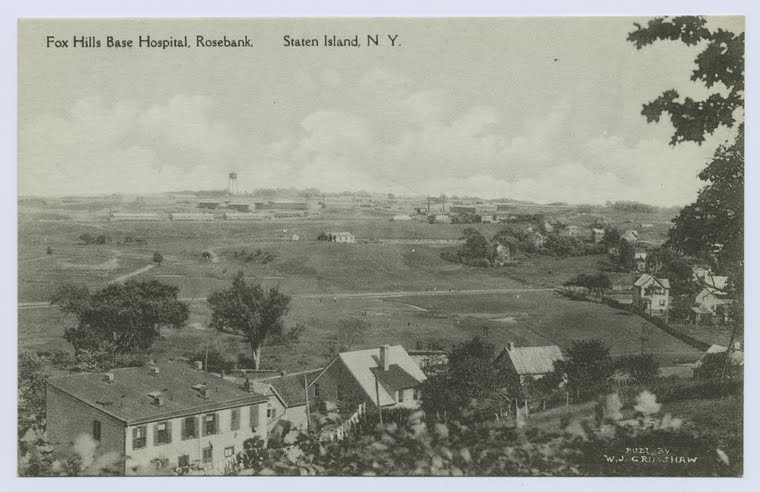
Below: Fox Hills, Staten Island, perhaps in the 1910s or 20s [NYPL]

Part of the location confusion may lie in the former name of the Park Hill and Clifton neighborhoods. Around the late 19th century, this area of Staten Island was called Fox Hills, known for its tony golf course and, during World War I, a noted hospital for wounded soldiers. The name is still occasionally used there by residents today.

Fox Hills is also the name of a small neighborhood in Culver City, California, and was also once known for its golf courses. Culver City would become an important home to film studios in the late 1910s, after ‘Nation’ was finished. But it would not be a stretch to think it was this area that was most likely used for certain shots of the Griffith picture, and not an area of New York thousands of miles away.

This is not to say that New York doesn’t have a role in the tumultuous history of ‘The Birth of A Nation’. The movie, “a feature film tracing the history of African slavery” according to a notice in the New York Times, made its debut in March 1915 at the Liberty Theatre* on 42nd Street, to both praise and outrage. The film was picketed by the NAACP on a daily basis, and one New York protester got themselves arrested by throwing eggs at the screen. [source]

But the film was a financial success in New York, running for most of the year — tickets were sold a month in advance, and at an outrageous price of $2.00! — and it soon swept across the country to similar accolades.

*The Liberty is still standing, in part; its facade has been absorbed that of Madame Toussaud’s Wax Museum complex.

**Seems that a commenter on the Staten Island Advance has had a similar idea!

The stagecoach ‘flying machines’ from New York to Philly: when it’s your only choice, who cares about comfort?


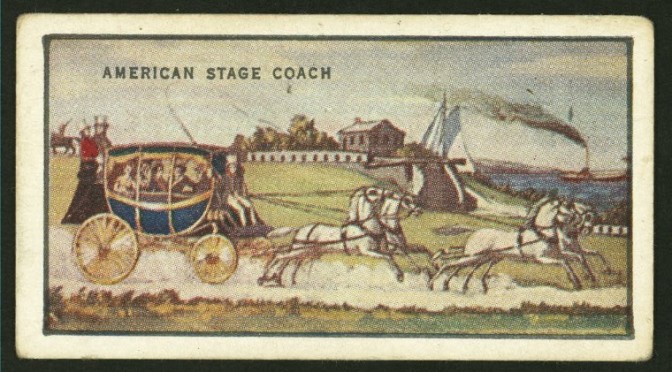
Pic Courtesy NYPL

Benjamin Franklin is, of course, awesome for many reasons. An often overlooked quality about Franklin in his early years was his ambition and fearlessness at solo traveling among the major cities along the eastern seaboard — from Boston to New York, then, in 1723, to Philadelphia. It can’t have been very easy; it certainly wasn’t comfortable.

Franklin was a stowaway on a sloop between Boston and New York, a trip that took three days. The later trip to Philadelphia required Franklin to maneuver, according to this source, from “Perth Amboy (the capitol of East Jersey) to Trenton and nearby Burlington (the capital of West Jersey), and then down the Delaware to Philadelphia.”

Travelling by land, although at times quicker, would have been dangerous and costly. Safe, dependable service between New York and Philadelphia via stagecoach would not be available for several years.

One source notes an irregular coach service between the two young cities, by way of Bordentown, NJ, starting in 1732. Passengers would sail from a New York ferry to a waiting coach on the New Jersey side — most likely at the township of Perth Amboy, south of Staten Island.

By 1756, there were a handful of regular stagecoach services between New York and Philly, each taking approximately three days. The coaches were frequently nicknamed ‘flying machines’, implying they constantly kept at top speeds, the better to thwart their competitors. Naturally, the trodden paths between each city were well lined with taverns catering to travelers eager to escape the uncomfortable coach rides.

Oh, did I mention that early stagecoaches did not have springs to cushion riders from a rocky ride? “It was not uncommon for a passenger, rendered insensible by the constant jarring, to be carried bodily from the coach to a bed in the inn after a day’s journey,” according to one genealogical site.

But despite the incomparable discomfort, demand for travel between the two cities naturally increased. Two Staten Island brothers, John and Joshua Mersereau, became reigning stagecoach operators, connecting the two cities along various routes through New Jersey, using docks at Paulus Hook (today’s Jersey City) and one in south Staten Island in a place charmingly called Old Blazing Star (today’s Rossville neighborhood) where the Mersereaus also conveniently owned a tavern.

A competitor of the Mersereau brothers, John Butler, discovered coach operation in a slightly more colorful way. Butler owned a Philadelphia kennel expressly reserved for the use of fox hunters — this was, after all, during British control — who steered course to stagecoach operation from his very own appropriately named tavern, the Death Of The Fox. (Although I have no evidence, I would not be surprised if Ben Franklin — age 50 in 1756 — had at some point become familiar with Butler’s establishment.)

It could be quite an elaborate ride. According to the old tome ‘Stage-Coach and Tavern-Days’ by Alice Morse Earle, Butler “with his waggon” would:

“…sets out on a Monday [from his tavern] and drives the same day to Trenton Ferry, where Francis Holman meets him, and the passengers and goods being shifted into the waggon of Isaac Fitzrandolph, he takes them to the New Blazing Star [different from Old Blazing Star and today’s Travis, Staten Island] to Jacob Fitzrandolph’s the same day, where Rubin Fitzrandolph, with a boat well suited will receive them and take them to New York that night.”

So many Fitzrandolphs! Remember the complexities of this journey the next time you happen to take one of those Chinatown buses between New York and Philadelphia.

Categories
On The Waterfront Podcasts

The Staten Island Ferry: its story, from sail to steam

PODCAST The Staten Island Ferry is one of the last remaining vestiges of an entire ferry system in New York, taking people between Manhattan and its future boroughs long before any bridges were built. In Staten Island, the northern shores were spiked in piers, competing ferry operators braving the busy waters of New York harbor.

In the first of our summer-long podcasts BOWERY BOYS ON THE GO on New York public transportation, I look at the history of Staten Island’s famous ferry, its early precursors, its connection to Cornelius Vanderbilt and a Monopoly property, and its evolution when the city took it over in 1905.

ALSO: Find out the curious story behind the name of Victory Boulevard and the neighborhoods of St. George and Tompkinsville.

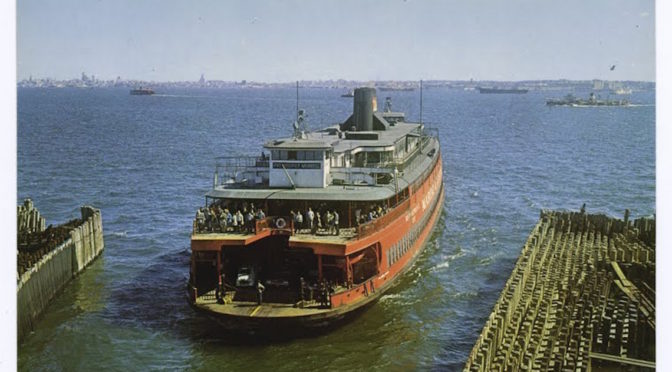
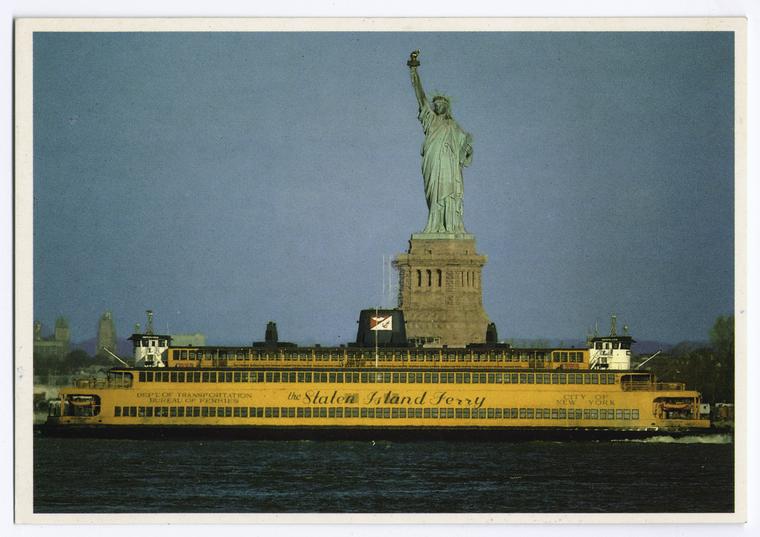
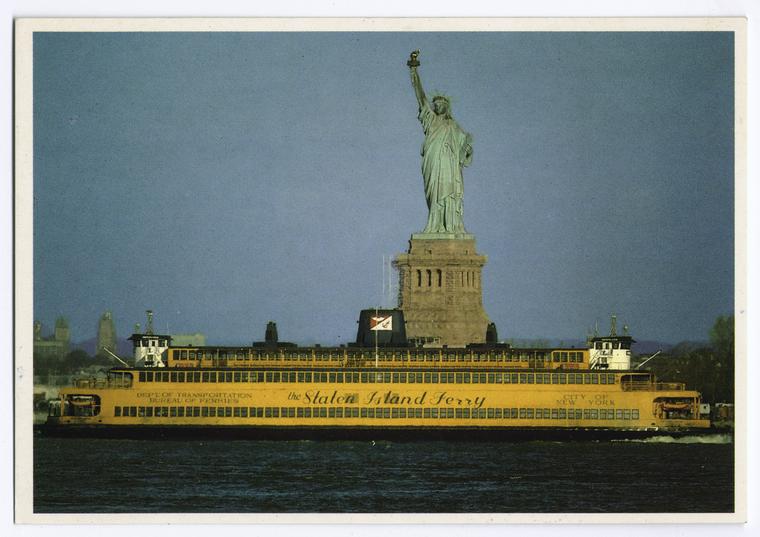
From an old postcard, illlustrating why the Staten Island Ferry has become more than just a way to get to and from work. [NYPL]

ferry2

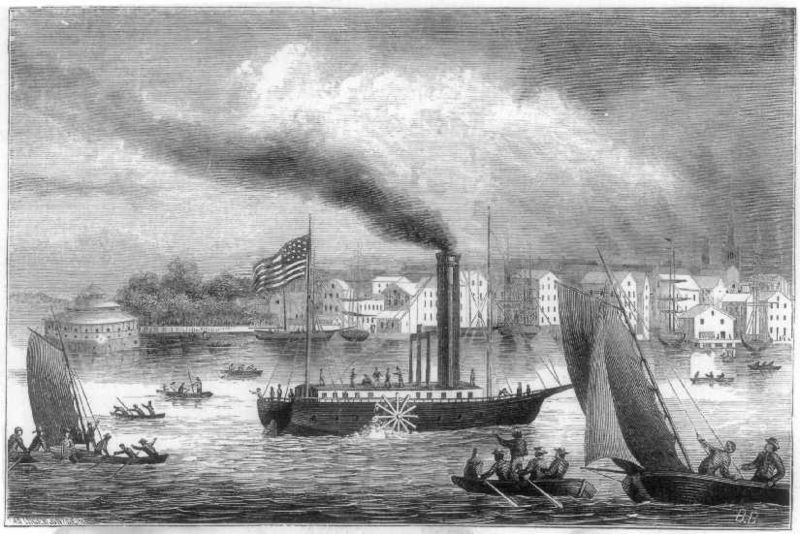
The Clermont in the waters of New York Harbor, 1807. Robert Fulton’s first steamship would revolutionize travel and change the rules of the ferry game. The first steamship off Staten Island waters would be the Nautilus in 1817, property of Daniel Tompkins. This Nautilus should not (obviously) be confused with Fulton’s famous submarine of the same name. Although the boat seems to have inspired a building, called Nautilus Hall, on Tompkins’ property. [Courtesy Gerald Massey]

clermont

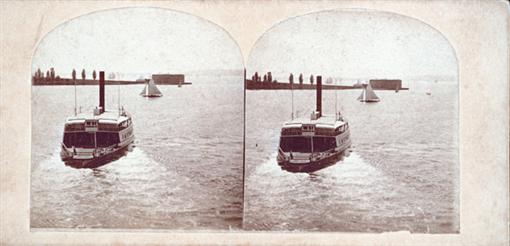
One of the earliest known photographs of a “Staten Island Steamboat”, taken in 1858 and about to chug by Castle William on Governor’s Island, one of “Anthony’s Instantaneous Views” from the George Eastman House archive.

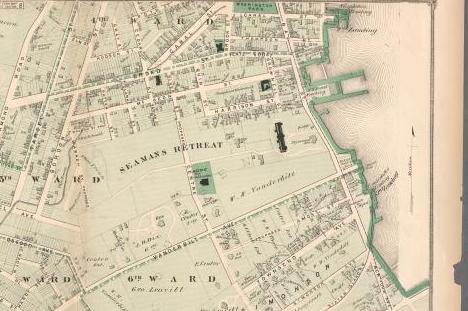
This is a detail from an 1874 map of Stapleton and Clifton along the northeast shore of Staten Island. The area in green along the waterfront is Vanderbilt’s Landing, at least the southern part of it. You can also find the Vanderbilt estate nearby. For a closer look, check out the map directly on the NYPL site and use the zoom in/out tools.

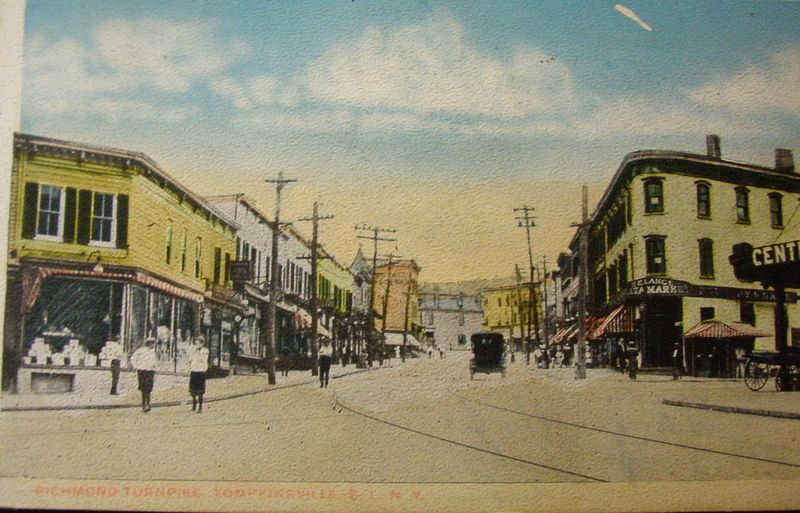
The Richmond Turnpike traveling through Tompkinsville, the town founded by Vice President Daniel D. Tompkins. The Turnpike, formerly a toll road and the basis of the Richmond Turnpike Company, would be renamed Victory Boulevard after World War I.

richmond

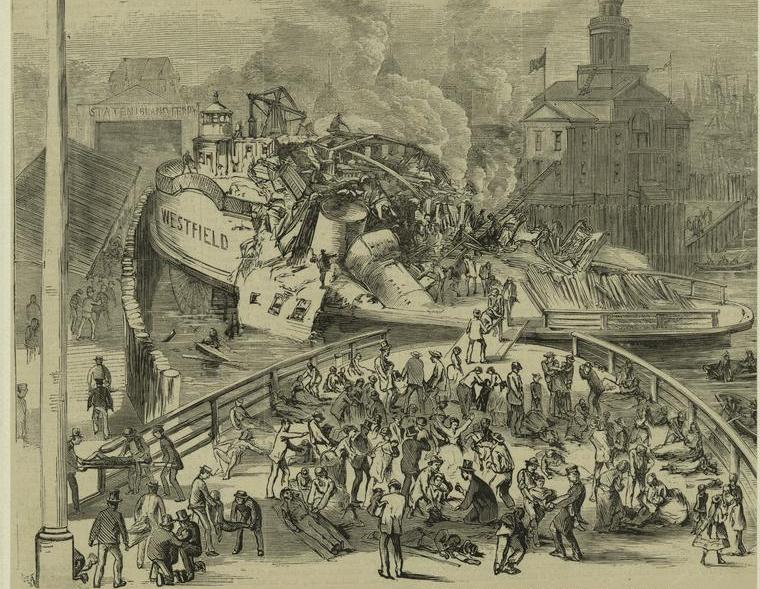
The Westfield disaster on July 1871, a boiler explosion that killed over 80 people, underscored the risks of early steam travel in the crowded waters of New York harbor. It remains the worst of several disasters in the Staten Island ferry’s long history.
westfield

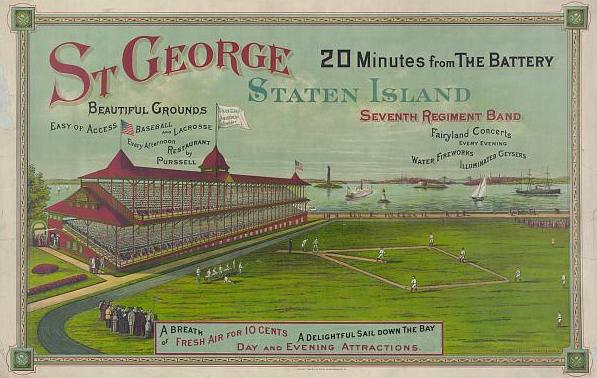
Named for George Law, the neighborhood of St. George was a bustling entertainment district, with hotels, light amusements and sports venues. This postcard is from 1886, illustrating the new St. George Cricket Grounds, built by developer Erastus Wiman.
1886

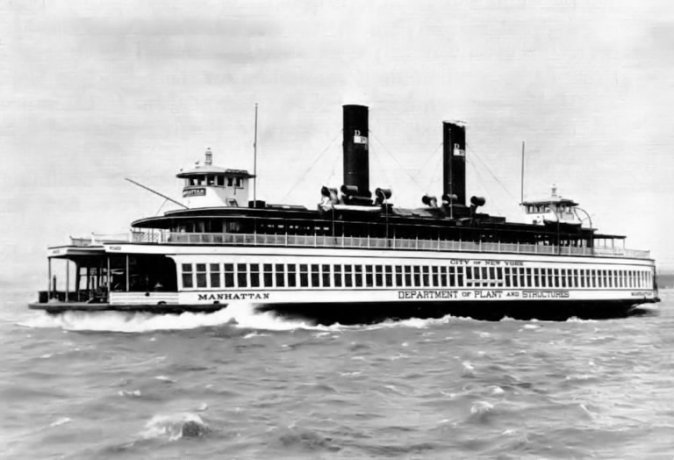
When the city took over operation of the Staten Island Ferry in 1905, they commissioned five new boats, each named for a borough. Here’s the Manhattan:
manhattan

If you want to thumb through a spread of old photographs of prior ferryboats, check out this great site.

And this Flickr picture might be one of my favorite pictures ever.