A few of the most memorable frenemies and catfights from American history — including the story of New York City’s longest lasting rivalry.
Alexander Hamilton vs Aaron Burr! Delmonico’s vs Sherry’s! John Adams vs everybody! Some of history’s most fascinating stories involve important figures who did not like each other very much.
In this edition of Bowery Boys History Live!, recorded at Manhattan’s City Winery on May 26, 2026, Greg Young from the Bowery Boys brings some of these stories to a live audience, featuring author Laurie Gwen Shapiro, tour guide Billy Nemec, and the Gilded Gentleman himself, Carl Raymond.
Featuring tales of Revolutionary War spite, obscene Gilded Age banquets, and Jazz Age flights of spite. PLUS: New York City’s longest-running rival.
NOTE: We performed at City Winery less than 24 hours after the Knicks clinched their place in the NBA Finals.
This episode for produced and cleaned up by Kieran Gannon.
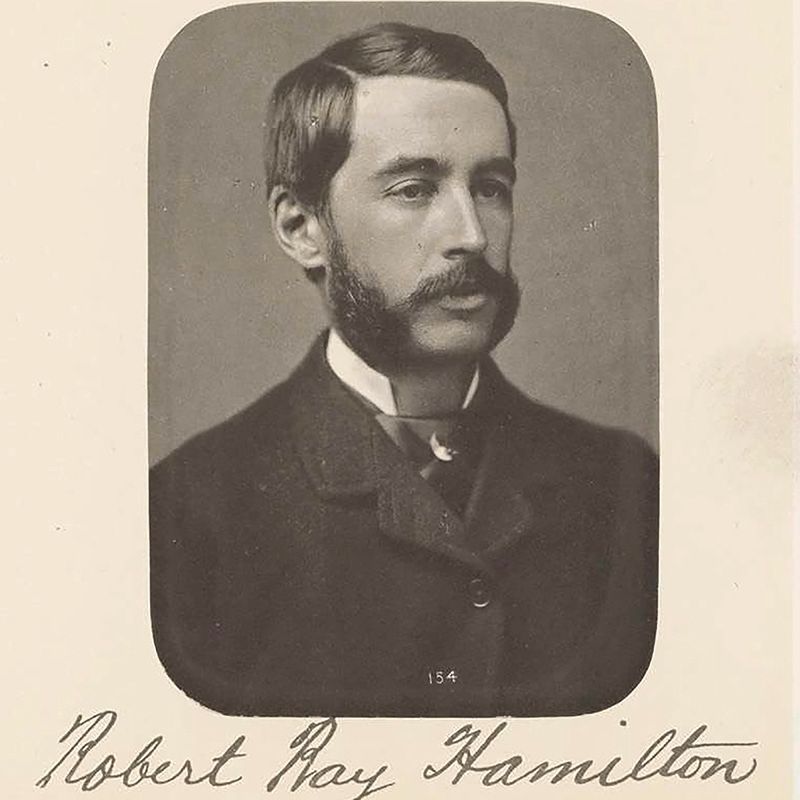
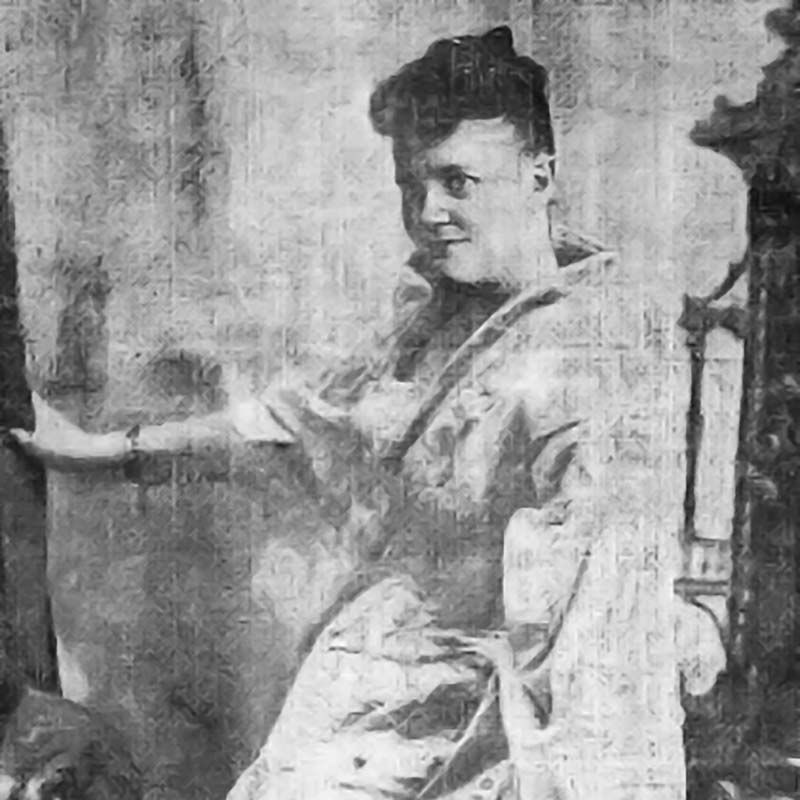
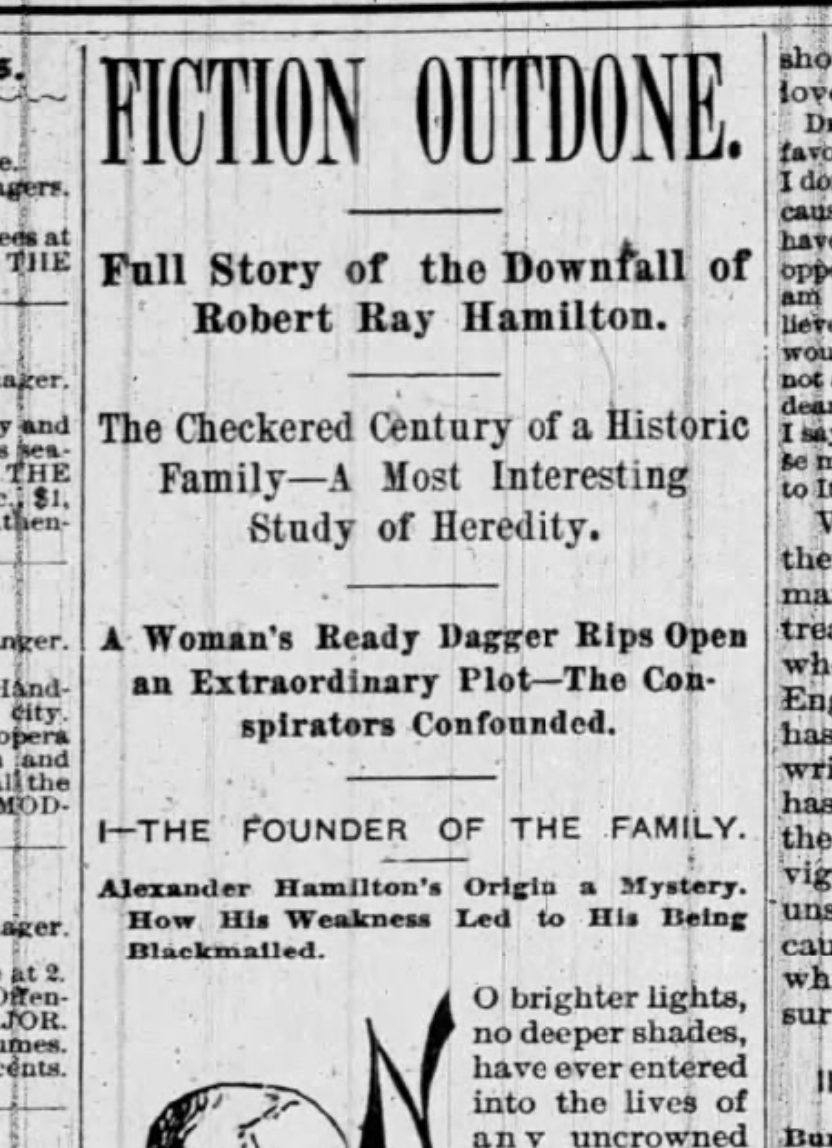
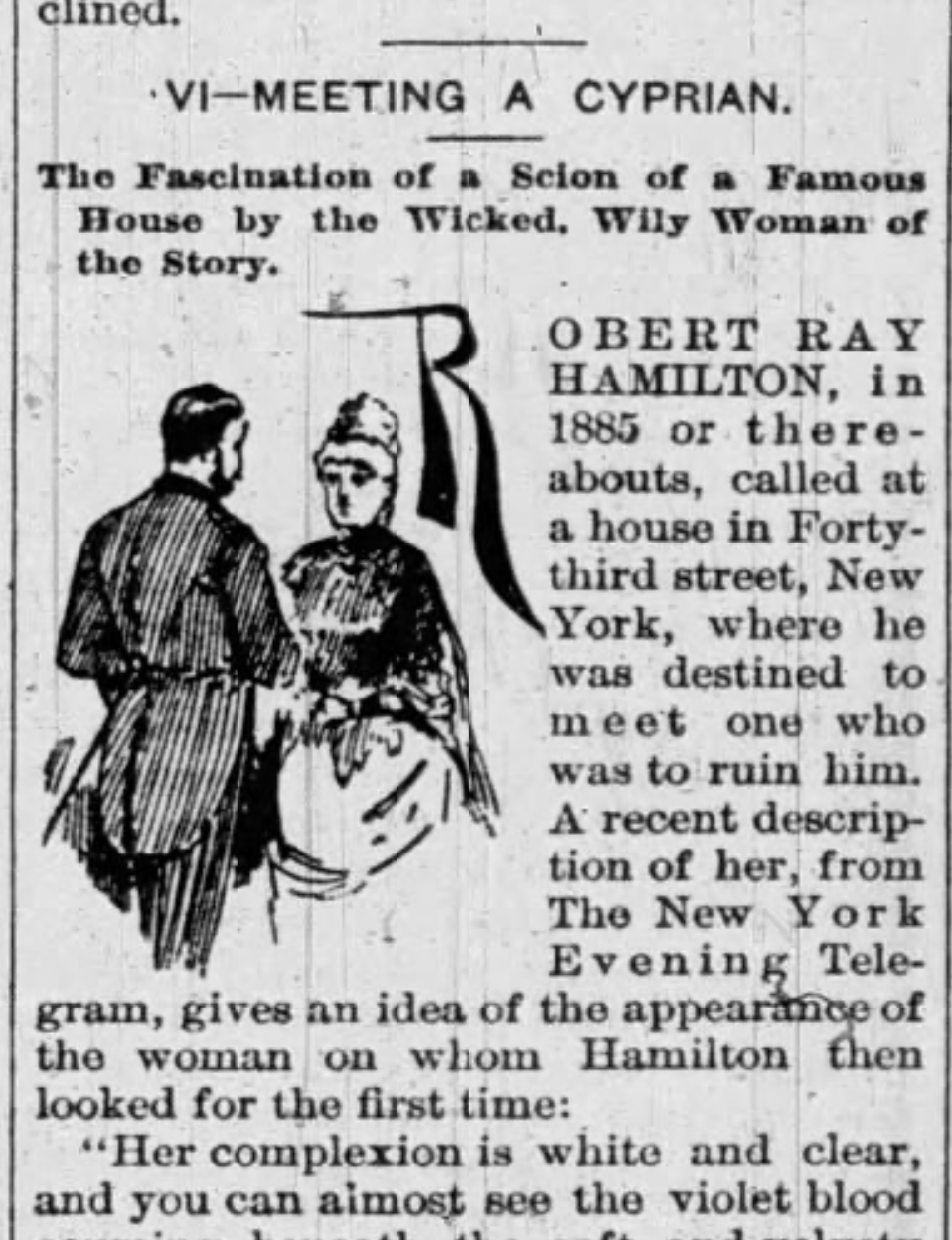
In 1889, Robert Ray Hamilton, great-grandson of Alexander Hamilton, became ensnared in a sensational web of deceit — forged identities, attempted murder, and brazen fraud that captured headlines across the country.
Although this gripping saga played out over a two-year period, it has largely faded from public memory.
Bill joins The Gilded Gentleman to unravel this astonishing true-crime drama, a story that shocked Gilded Age readers and is sure to raise eyebrows even today.
This show is brought to you by The Gilded Gentleman podcast, produced by the Bowery Boys and edited and produced by Kieran Gannon.
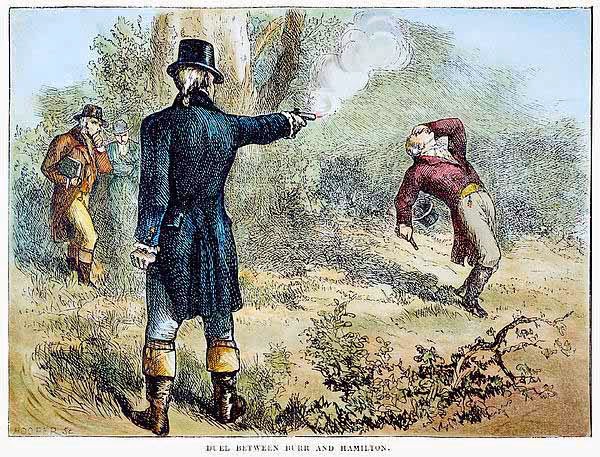
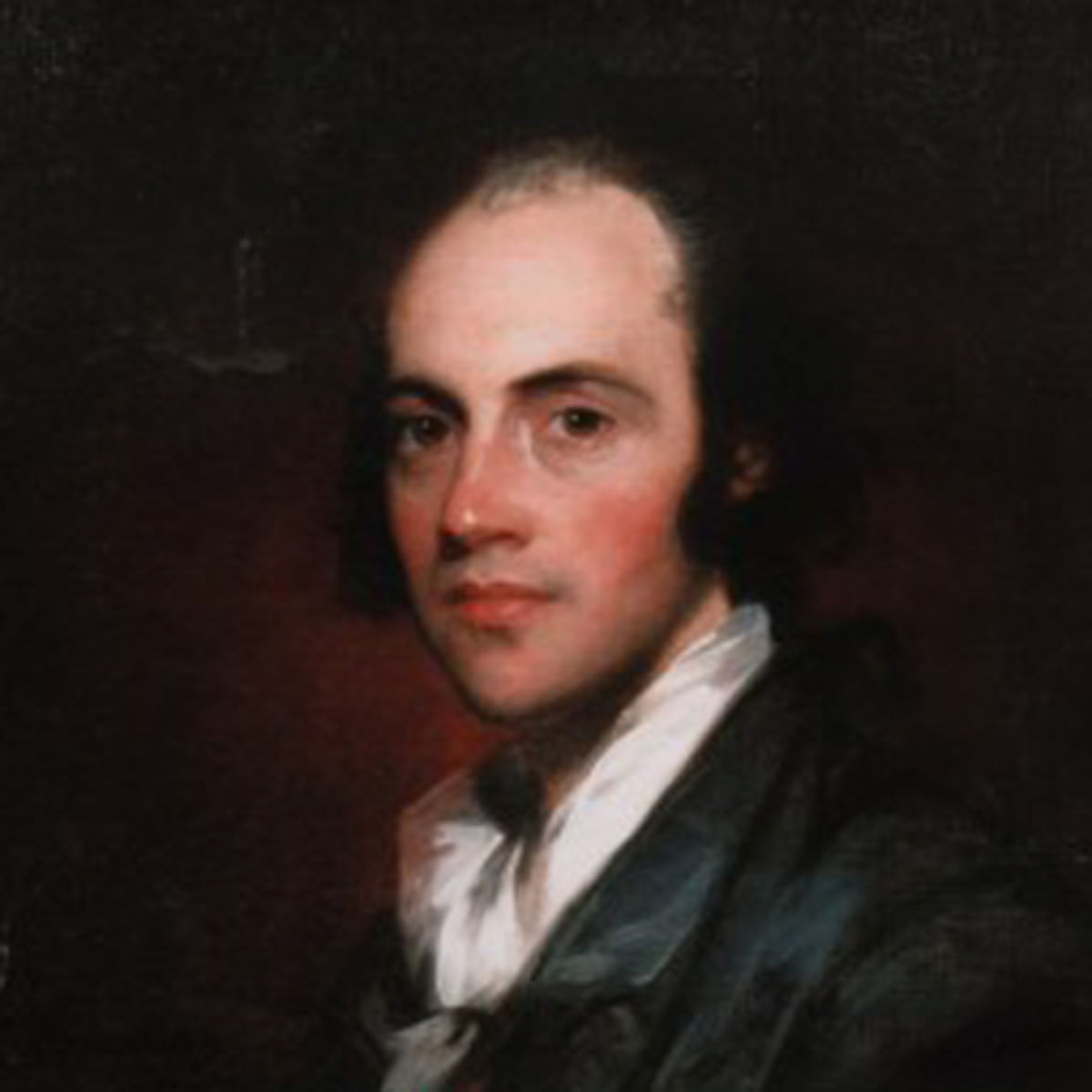
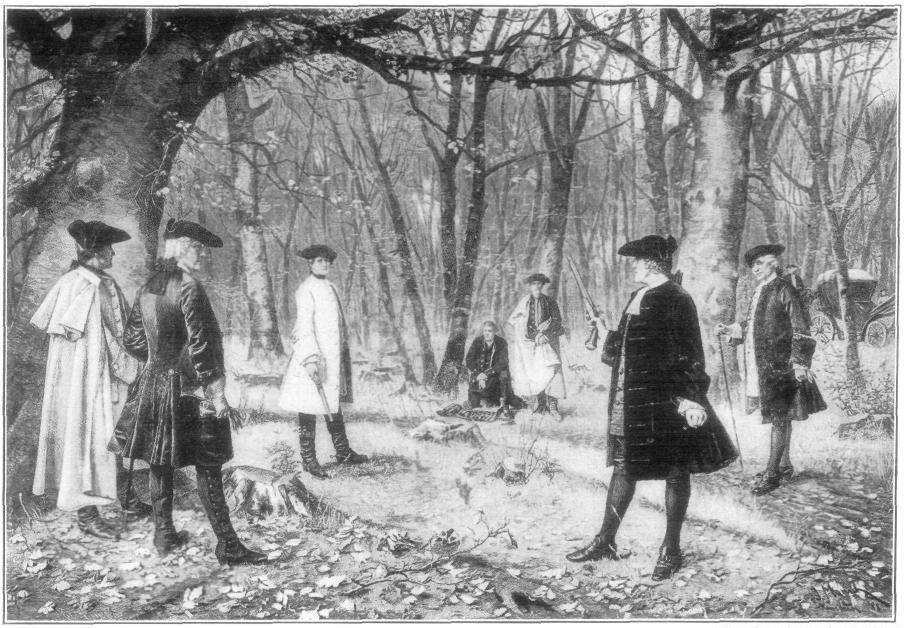
Alexander Hamilton and Aaron Burr met at a clearing in Weehawken, NJ, in the early morning on July 11, 1804, to mount the most famous duel in American history. But why did they do it?
This is the story of two New York lawyers — two Founding Fathers — that so detested each other that their vitriolic words (well, mostly Hamilton’s) led to these two grown men shooting each other out of honor and dignity, while robbing America of their brilliance, leadership and talent.
You may know the story of this duel from history class, but this podcast focuses on its proximity to New York City, to their homes Richmond Hilland Hamilton Grange and to the places they conducted their legal practices and political machinations.
Which side are you on?
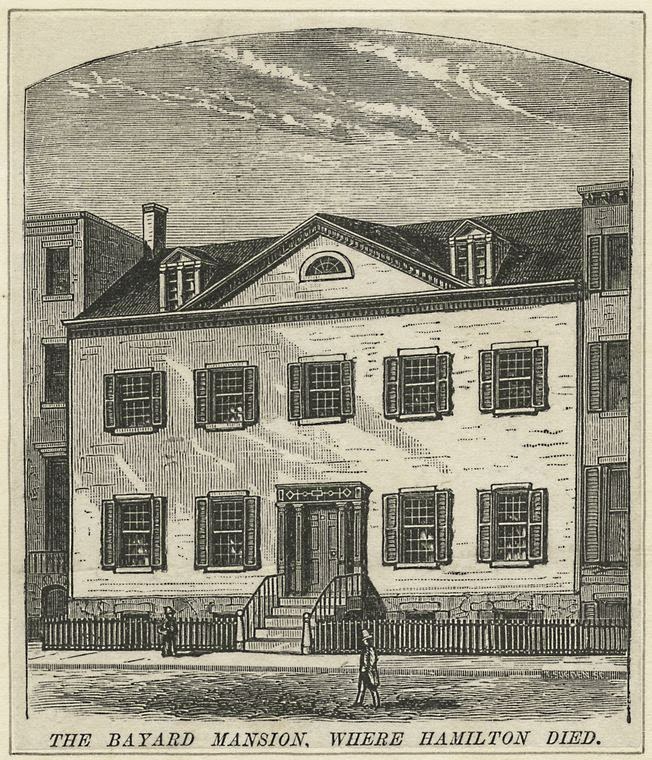
ALSO: Find out the fates of sites that are associated with the duel, including the place Hamilton died and the rather disrespectful journey of the dueling grounds in Weehawken.
CORRECTION: Alexander Hamilton had his fateful dinner as the house of Judge James Kent, not John Kent, as I state here.
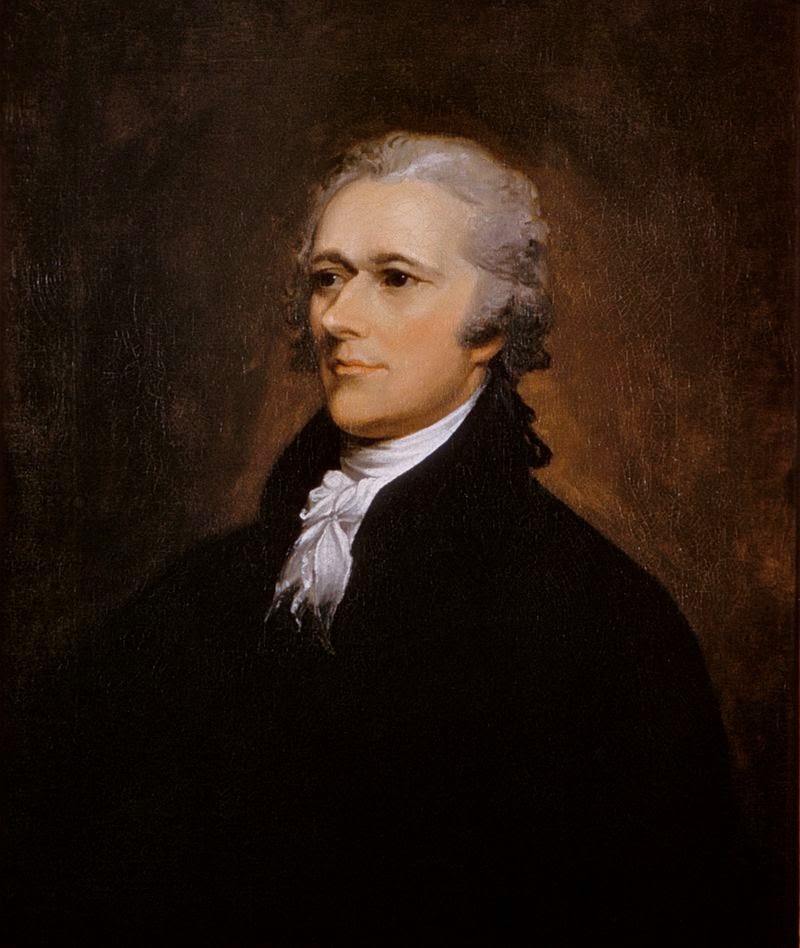
Alexander Hamilton, leader of the Federalists was a played out, stressed out, heavily in debt politician by June 1804. This is John Trumbull’s painting of Hamilton, completed almost over a year after the duel.
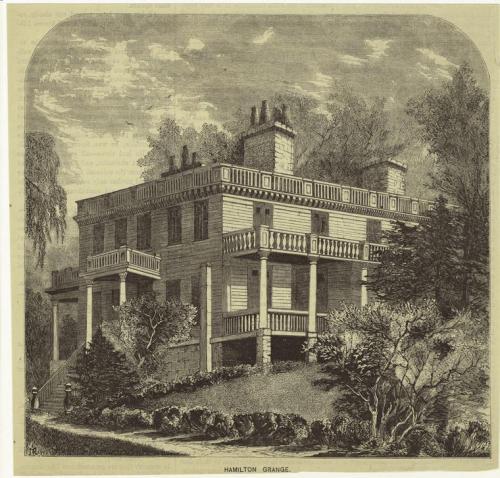
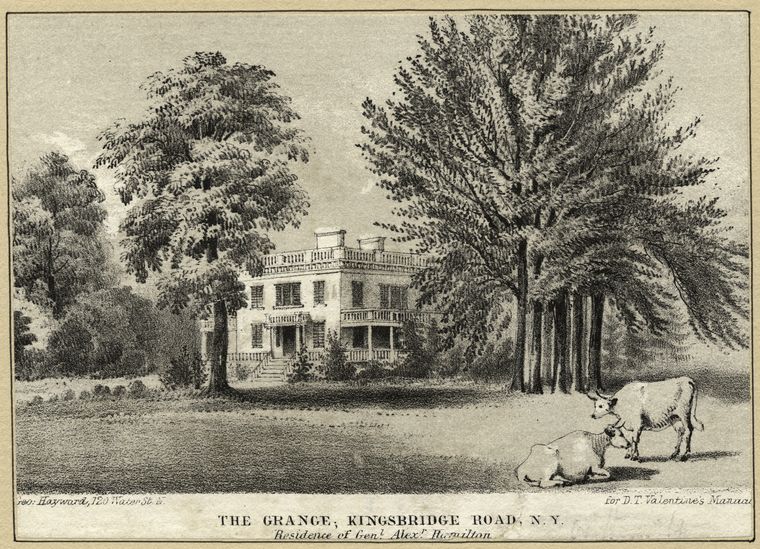
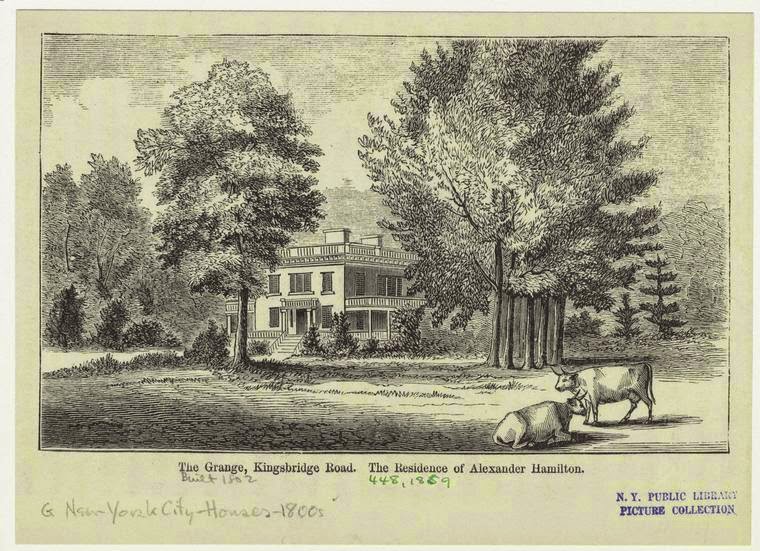
The Hamilton Grange, a beautiful home on the Hudson that Alexander only lived in for a couple years. (NYPL)
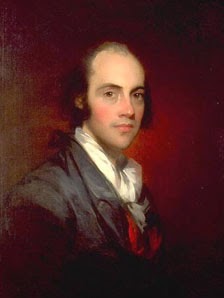
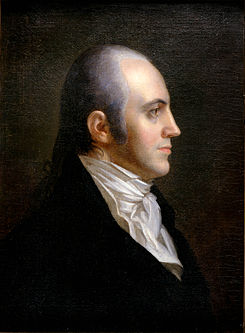
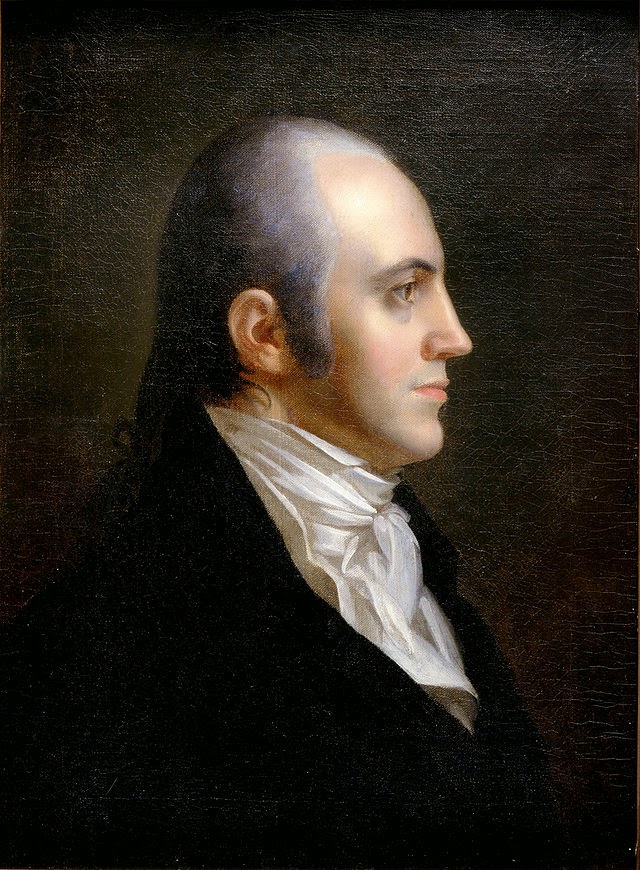
Aaron Burr, Vice President of the United States, was a played out, stressed out, heavily in debt politician by June 1804. This is John Vanderlyn’s portrait of Burr from 1802.
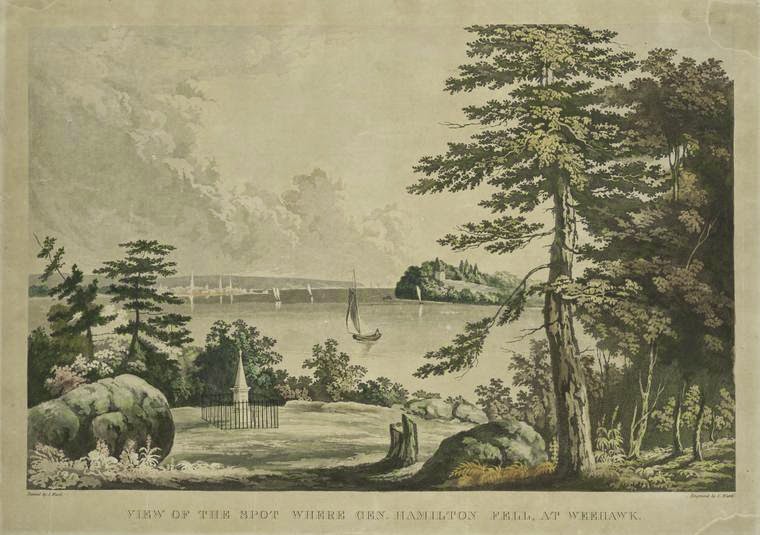
View of the Weekhawken dueling grounds in 1830s. This area most likely still saw some duels at this period. Note the small monument/obelisk marking the spot allegedly where Hamilton fell. (NYPL)
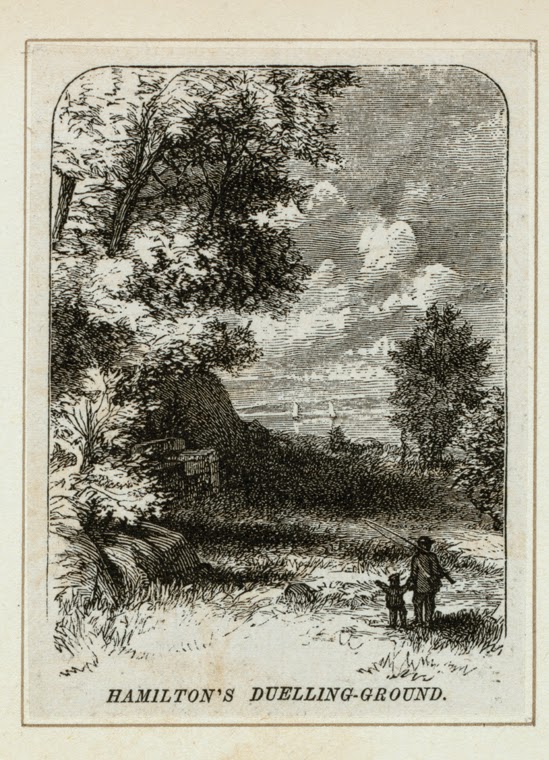
Thomas Addis Emmet’s quaint depiction of the dueling grounds was created in 1881, long after the actual grounds were destroyed by railroad construction. (NYPL)
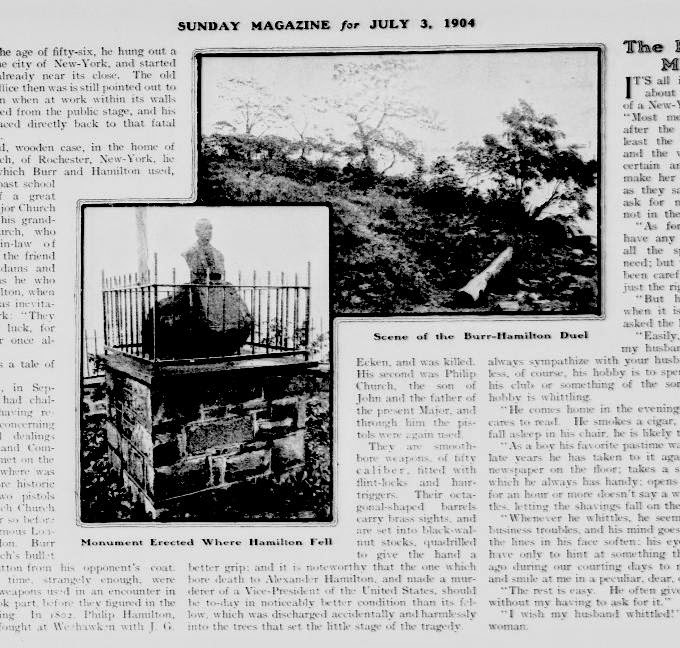
From the New York Tribune, July 1904, a look at the Hamilton bust that once sat in Weehawken. Several years later, vandals took the bust and hurled it off the cliff.
The William Bayard house in later years, with the lots surrounding it obviously sold and built up around it. (NYPL)
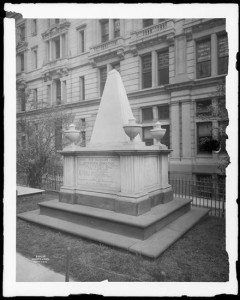
The Hamilton tomb at Trinity Church, picture taken in 1908, although it looks pretty much the same today! (Wurts Brothers, Courtesy MCNY)
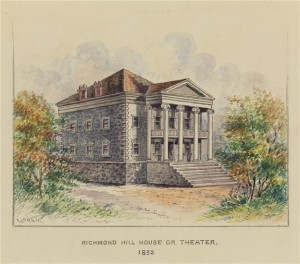
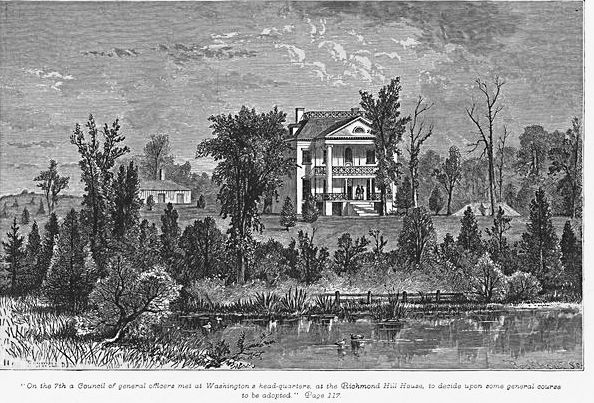
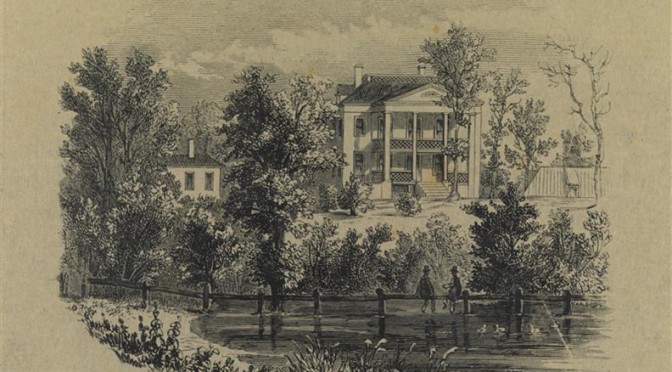
Richmond Hill, the spacious mansion and 26-acre estate on the outskirts of town that had once been George Washington‘s headquarters and later the home of John Adams, was also home to another vice president — Aaron Burr. This was the place he lived on that fateful day, July 11, 1804, when he entered into a duel with Alexander Hamilton. Here’s a lovely description of the home from an 1861 biography of Burr by author James Parton:
“[Burr’s] style of living kept pace with his increasing income. In a few years we find him master of Richmond Hill, the mansion where Washington had lived in 1776, with grounds reaching to the Hudson, with ample gardens, and a considerable extent of grove and farm. Here he maintained a liberal establishment and exercised the hospitality which was then in vogue.
The one particular in which Richmond Hill surpassed the other houses of equal pretensions, was its library. From his college days, Colonel Burr had been a zealous buyer of books, and his stock had gone on increasing till, on attaining to the dignity of householder, he was able to give to his miscellaneous collection something of the completeness of a library.
It is evident enough, from his correspondence, that his favorite ethos were still those whom the ‘well-constituted minds’ of that day regarded with admiring horror. The volumes of Gibbon’s History [The Decline And Fall of the Roman Empire] were appearing in those years, striking the orthodox world with wonder and dismay. They had a very hearty welcome in the circle at Richmond Hill.”
After the duel, Burr liquidated his assets, selling Richmond Hill to John Jacob Astor. With the grounds heavily cut up and sold, he had the mansion rolled on logs to the newly carved street corner and turned into a theater and opera house. At this time, he also moved the carriage house further north, where it was later re-purposed and today houses the romantic restaurant One If By Land, Two If By Sea.
It made for a very sumptuous opera house, it appears. According to author Eric Homberger, “Boxes at the Richmond Hill were furnished as though they were an extension of the elegant parlors of St. John’s Park, with ‘light blue hangings, gilded panels and cornice, arm-chairs, and a sofa.'”
It was parallel in style, perhaps, to the Astor Place Opera House across town. Eventually it deteriorated into a lowly roadhouse and saloon — but certainly, the most gorgeous one in town — called the Tivoli Saloon before being torn down in 1849.
Today the site of Richmond Hill and its former ground are occupied by this building, currently the home of WNYC, and the surrounding blocks of this area of the far West Village.
Top image courtesy the Museum of the City of New York
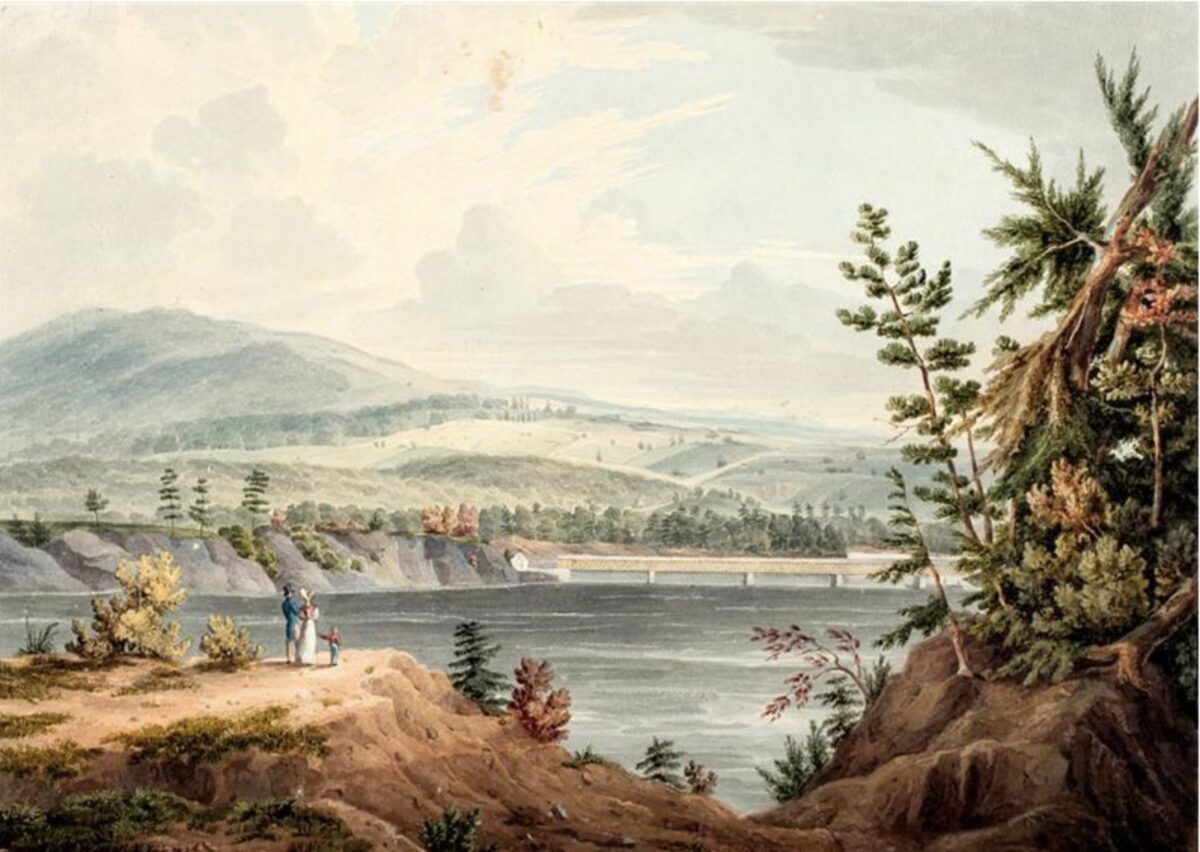
Hudson River Bridge near Waterford, New York, 1832. Courtesy New-York Historical Society
People have schemed to put a bridge over the Hudson River for well over two hundred years. That task would prove most difficult to those in Manhattan, given the distance between its shores and those of New Jersey.
After several failed proposals, the two were linked with the Pennsylvania Railroad tunnels (1910), the Holland Tunnel (1927), and finally, the George Washington Bridge (1931).
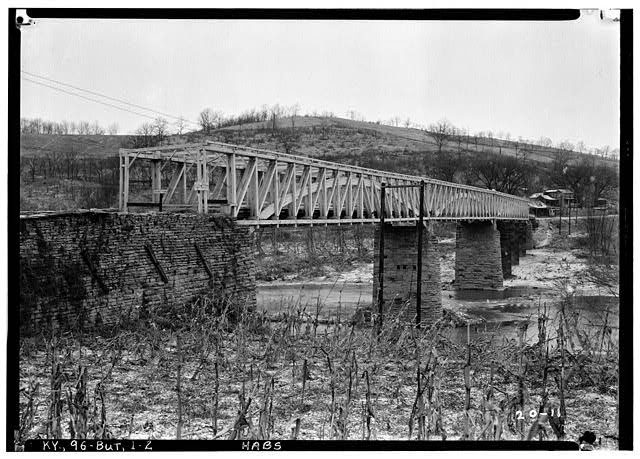
Above: A wooden bridge in Kentucky using the Burr truss, invented by Theodore Burr and first used over the Hudson River’s first bridge span. (Courtesy LOC)
But further upstate, industrious New Yorkers had an easier time of bridging the two sides, as the river became narrower in places and engineers could work upon sparsely populated lands.
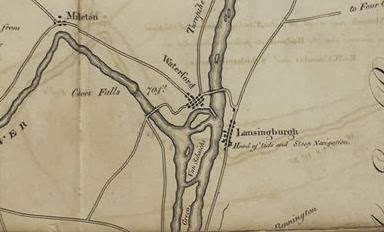
The first bridge over the Hudson River rose at the village of Waterford(near Albany) in 1804, the work of inventor Theodore Burr, the cousin of Vice President Aaron Burr.
From an 1820 map of the Hudson River. You can see where Burr’s bridge was located, situated over the Hudson until the 20th century (courtesy NYPL):
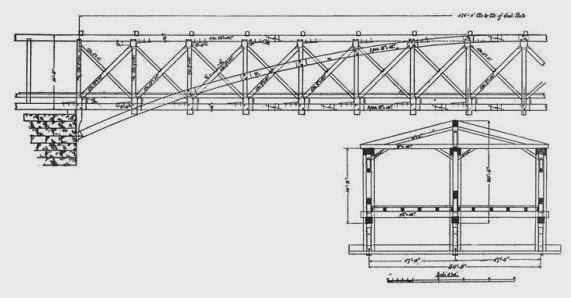
While Aaron was engaging in a vituperative war of words with Alexander Hamilton, his cousin Theodore was crafting an extraordinary bridge, described in a later history by his ancestor as “four combined arch and truss spans, one of 154 feet, one of 161 feet, one of 176 feet, and a fourth at 180 feet.”
By this point, he was already a well-known, even adventurous builder, but the Waterford bridge was truly something unique. He eventually patented his design, which became known as ‘a Burr Truss,’ used in the construction of covered bridges throughout the United States.
A sketch of the Waterford bridge, as illustrated by Thomas Cooper in 1889, and an excellent view of what became known as the Burr Truss:
The bridge was coming along nicely by the spring of 1804. The local paper noted that “the erection is proceeding rapidly, the abutments, (on shore sides) and one of three piers are already near finished, and the frames of the arches are in a state of equal preparedness.
Concerning the abutments and piers, there is not the least doubt that they will render the bridge secure from ice in spring seasons.”
I’m not sure where Theordore was in July, whether at the bridge site or back at his grist mill in Oxford. The bridge was over one-third completed that month when Theodore got word that his esteemed cousin had met Hamilton in a duel at Weehawken, 150 miles down river, leading to the death of Hamilton.
But while Aaron’s reputation would quickly deteriorate, Theodore’s would briefly flower, becoming America’s most prolific bridge engineer in the early 19th century. His most impressive span, the Susquehanna River Bridge in Pennsylvania, survived until 1857.
Strangely, however, Theodore’s eventual fate would eventually mirror his cousin’s. Many of his bridges fell apart, and his finances were ruefully mismanaged.
He actually disappears from the historical record; according to author Donald E. Wolf, “[h]is heirs report that he died in 1822, but they have been unable to say what caused his death or to identify the place of his burial.”
Originally exposed to the elements, the bridge was later sheathed in a covering. It held sturdy over the Hudson River until it was destroyed in a gas fire in 1909.
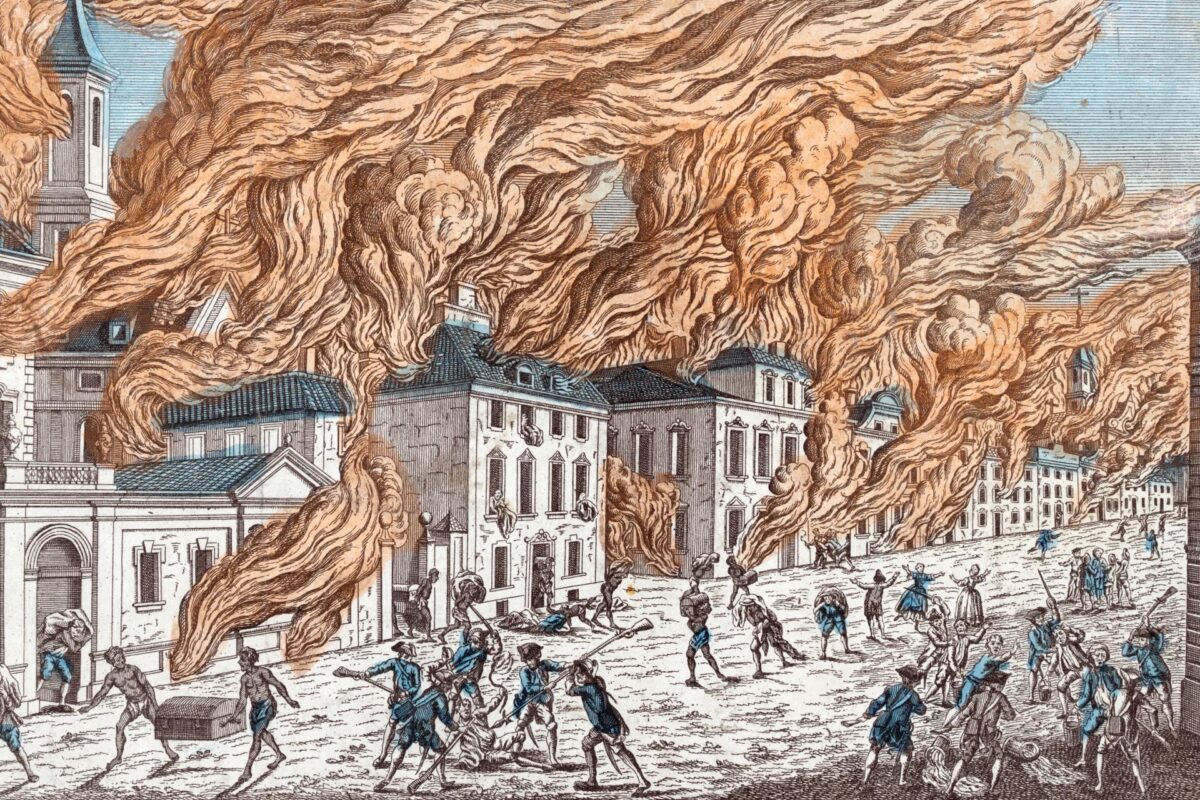
PODCAST We revisit the story of the Great Fire of 1776, the drumbeat of war leading up to the disaster, and the tragic story of the American patriot Nathan Hale.
On the occasion of the 245th anniversary of the Revolutionary War in New York City, we’re presenting a reedited, remastered version of an episode that we recorded in 2015.
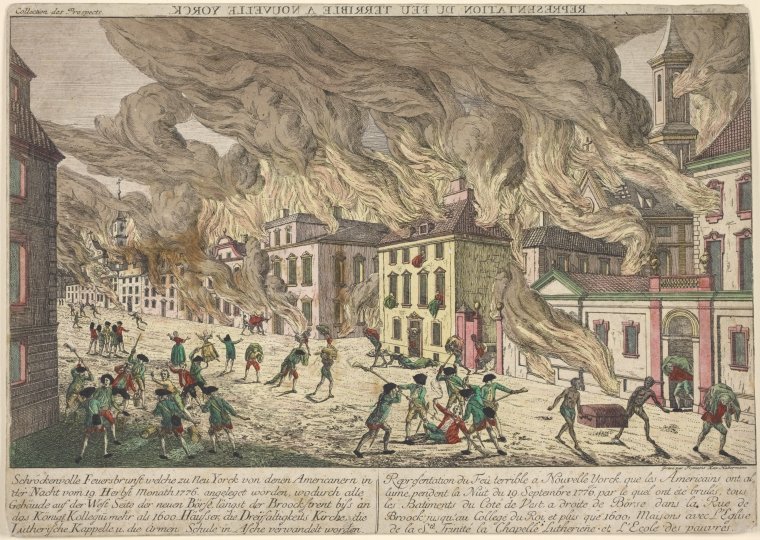
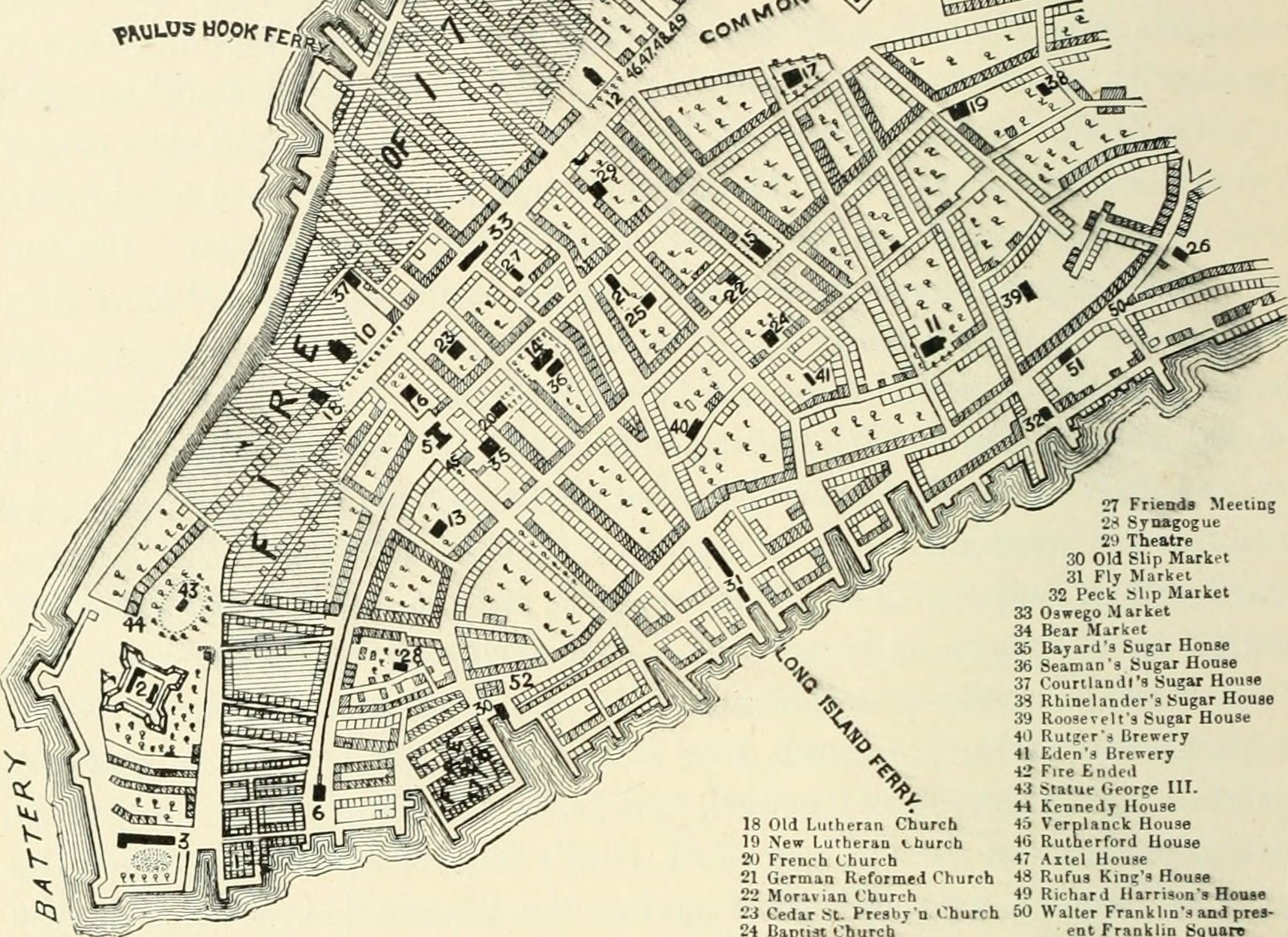
A little after midnight on September 21, 1776, the Fighting Cocks Tavern on Whitehall Street caught on fire. The drunken revelers inside the tavern were unable to stop the blaze, and it soon raged into a dangerous inferno, spreading up the west side of Manhattan.
Some reports state that the fire started accidentally in the tavern fireplace. But was it actually set on purpose — on the orders of George Washington?
To understand that damning speculation, we unfurl the events that lead up to that moment — from the first outrages against the British by American colonists to the first sparks of the Revolutionary War. Why did New York get caught up so early in the war and what were the circumstances that led to the city falling into British hands?
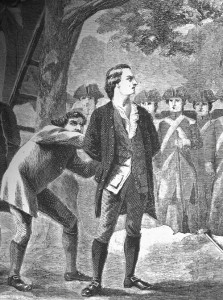
Underneath this expansive story is another, smaller story — that of a young man on a spy mission, sent by Washington into enemy territory. His name was Nathan Hale, and his fate would intersect with the disastrous events of September 21, 1776.
PLUS: The legacy of St. Paul’s Chapel, a lasting reminder not only of the Great Fire of 1776 but of an even greater disaster which occurred almost exactly 225 years later.
AND: Find out what Alexander Hamilton was up to in September 1776!
The Bowery Boys: New York City History podcast is brought to you …. by you!
We are now producing a new Bowery Boys podcast every other week. We’re also looking to improve and expand the show in other ways — publishing, social media, live events and other forms of media. But we can only do this with your help!
We are now a creator on Patreon, a patronage platform where you can support your favorite content creators.
Please visit our page on Patreon and watch a short video of us recording the show and talking about our expansion plans. If you’d like to help out, there are several different pledge levels. Check them out and consider being a sponsor.
We greatly appreciate our listeners and readers and thank you for joining us on this journey so far.
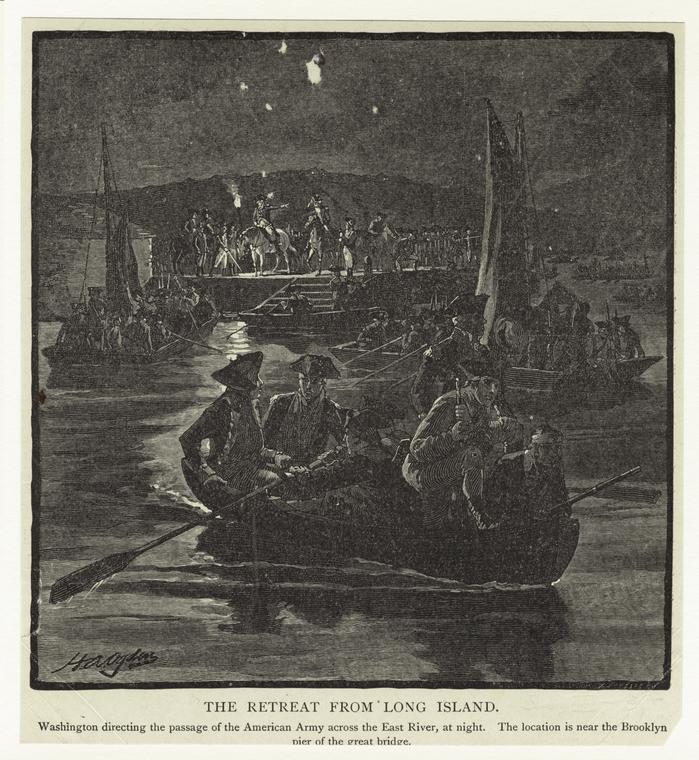
The escape of the Continental Army from Long Island under cover of night. This illustration by Henry Alexander Ogden is from 1897.
Courtesy New York Public Library
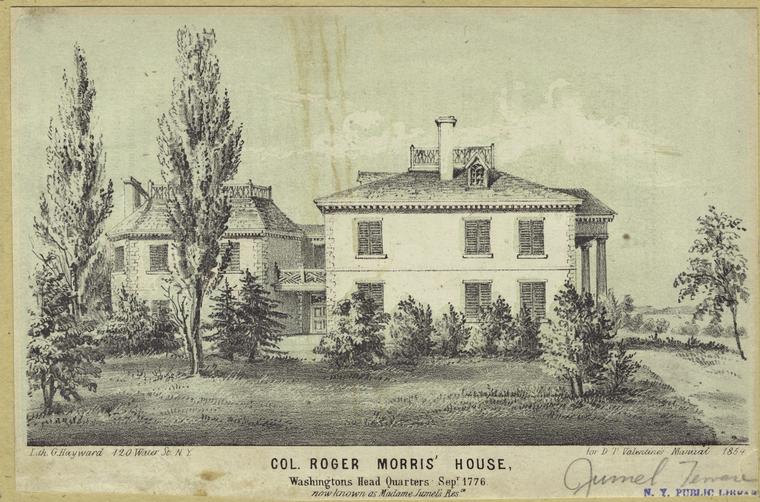
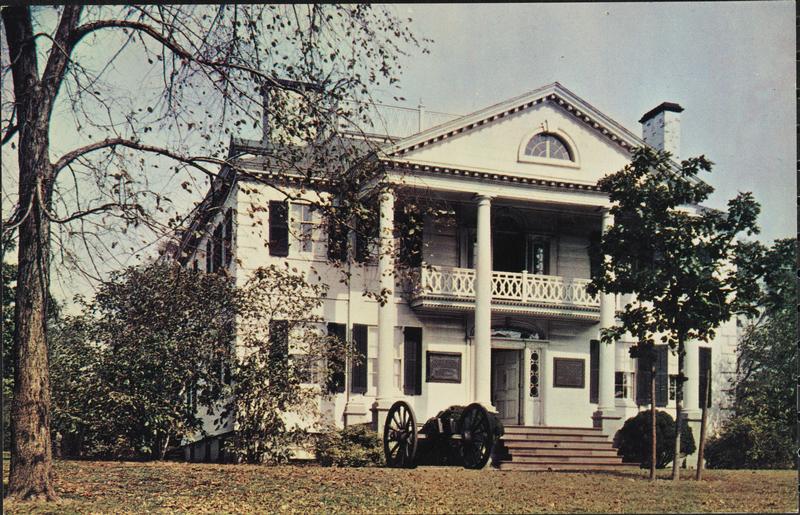
The house of Roger Morris which George Washington took over as his headquarters after fleeing New York.
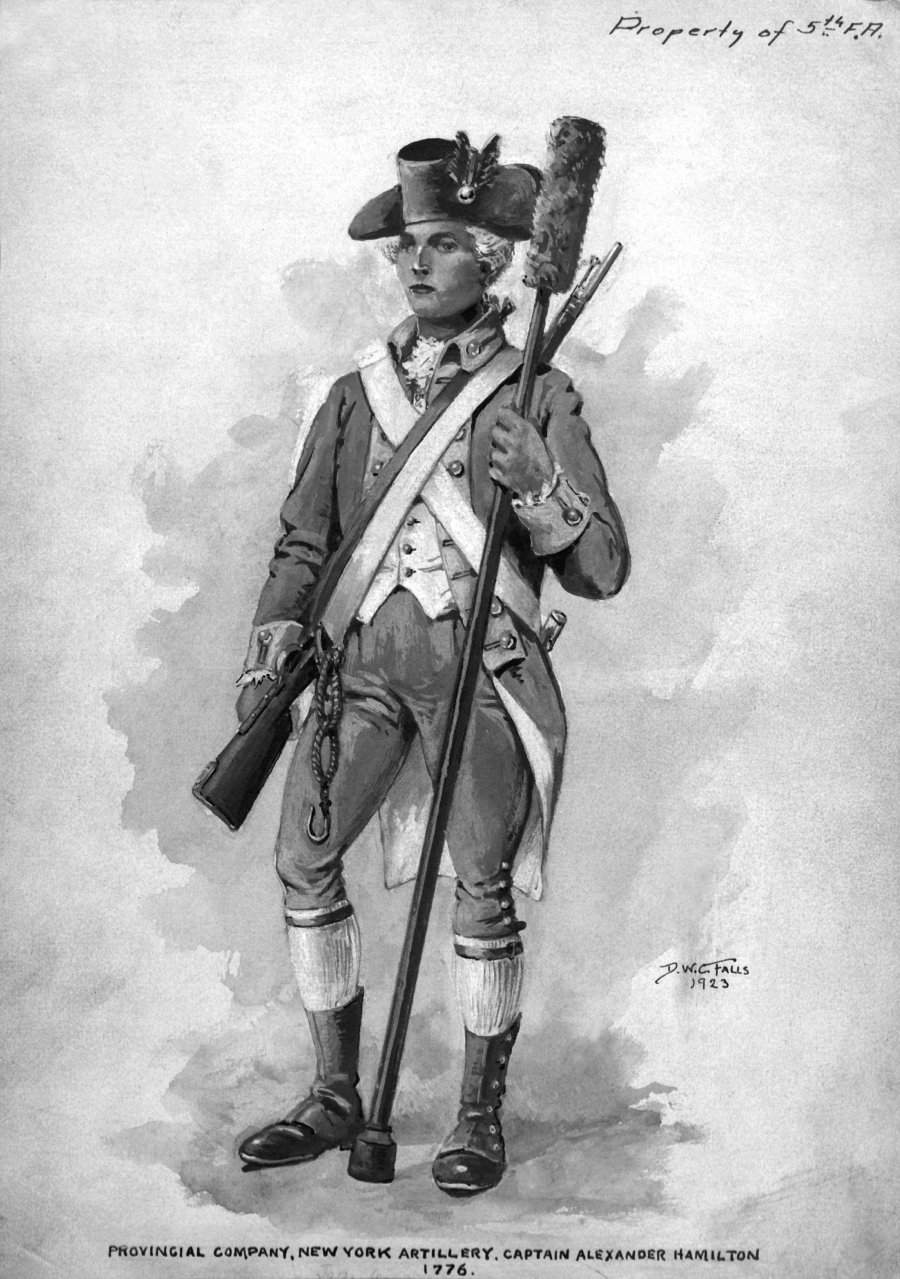
An imagining of young Alexander Hamilton in uniform in 1776
Courtesy the Department of Defense
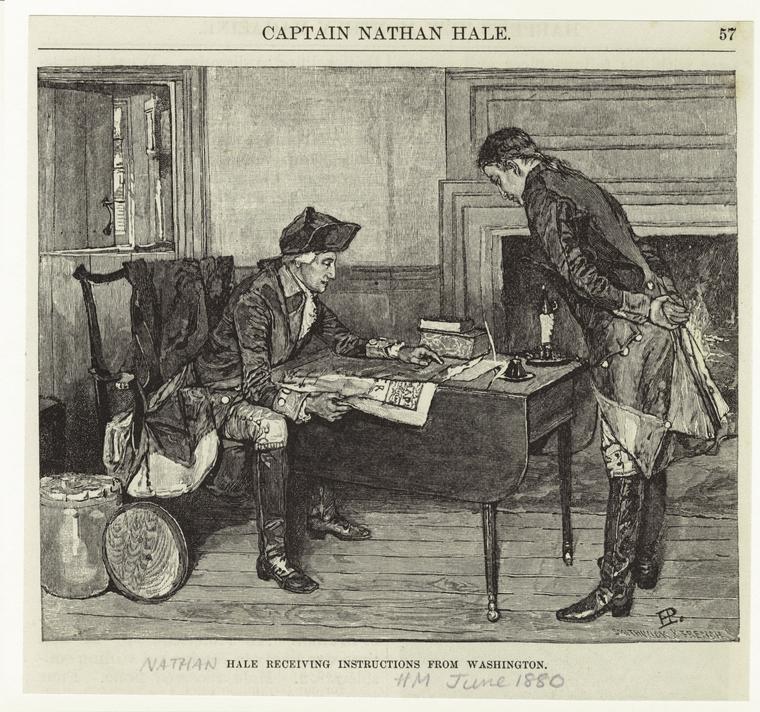
A Harpers Magazine illustration by Howard Pyle from 1880, depicting Nathan Hale receiving the details of his spy mission directly from General Washington.
Courtesy New York Public Library
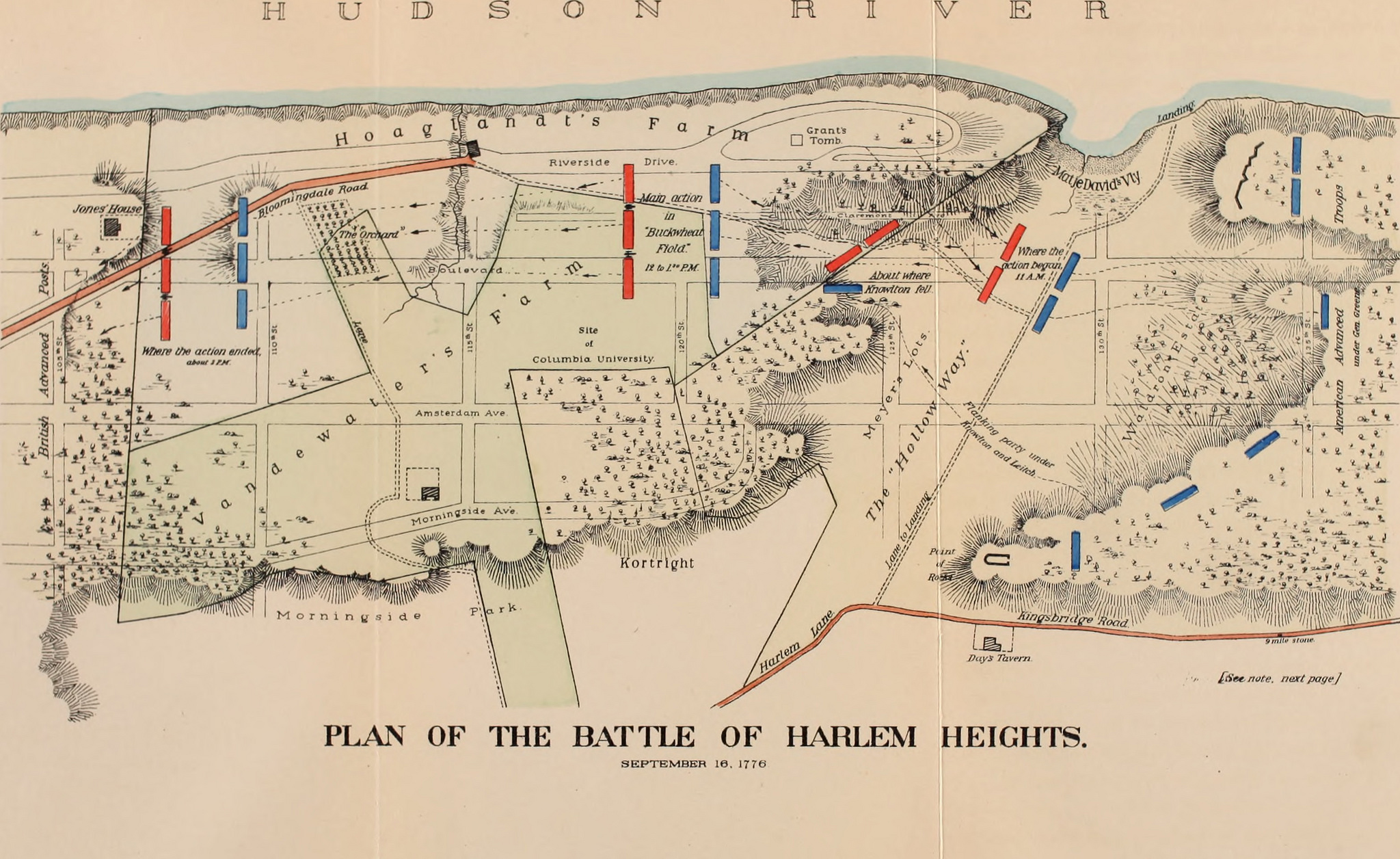
A beautiful map from 1897 laying out the events of the Battle of Harlem Heights on September 16, 1776.
Courtesy Internet Archives Book Imaging
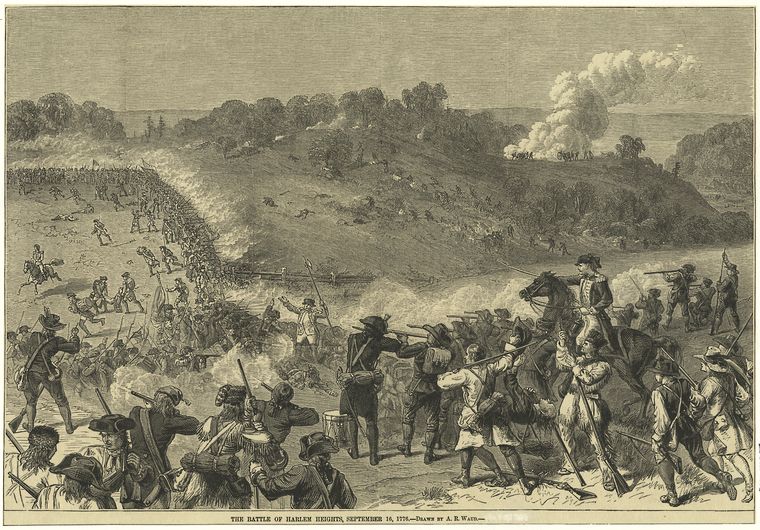
The Battle of Harlem Heights with a look into the valley called the Hollow Way.
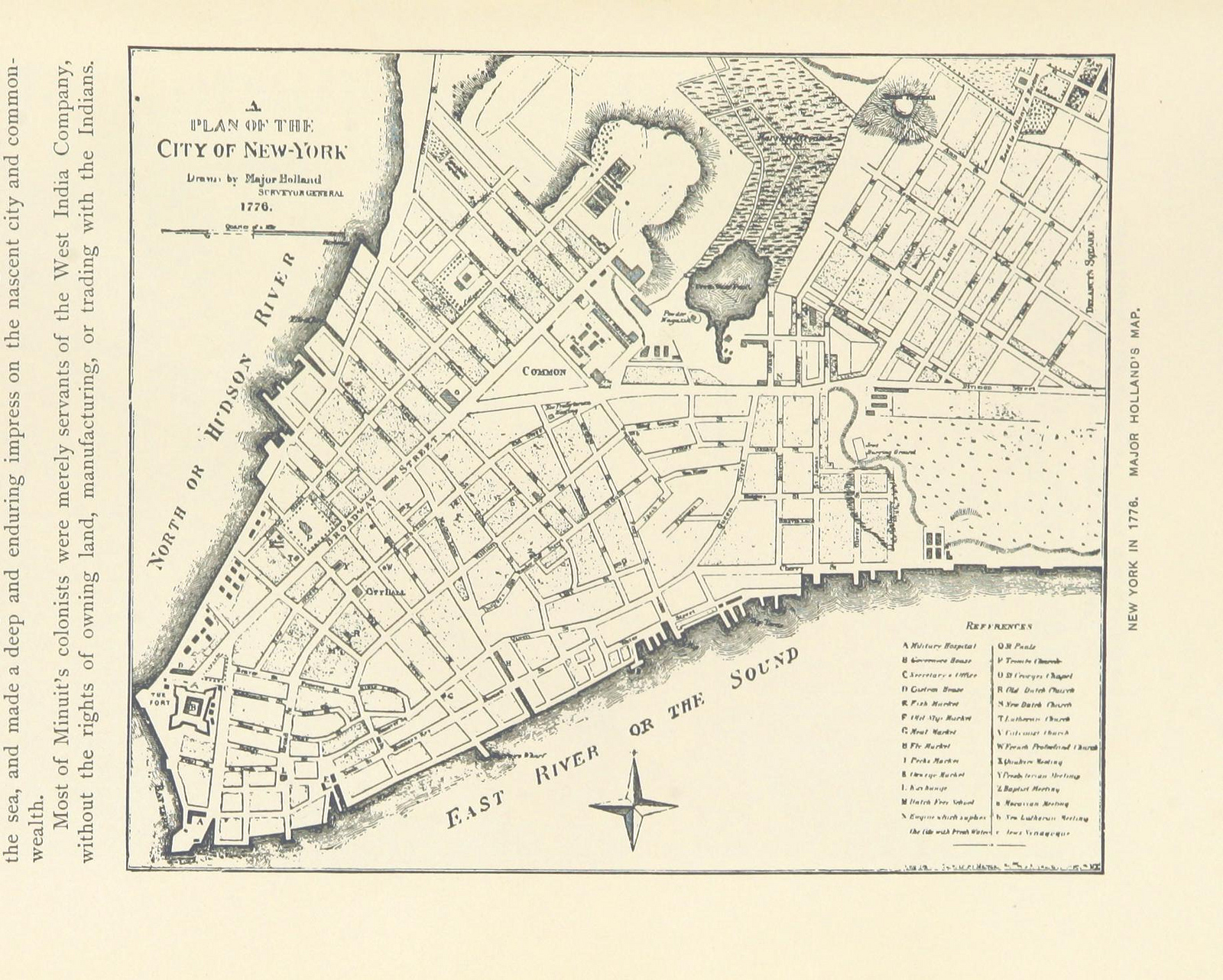
This is New York is 1776, the city that was captured in September 1776.
British Library
A grave illustration showing the severity of the fire, looking at the burning buildings on the west side of Broadway.
New York Public Library
A map delineating the path of the fire from Whitehall Street up the west side of the city.
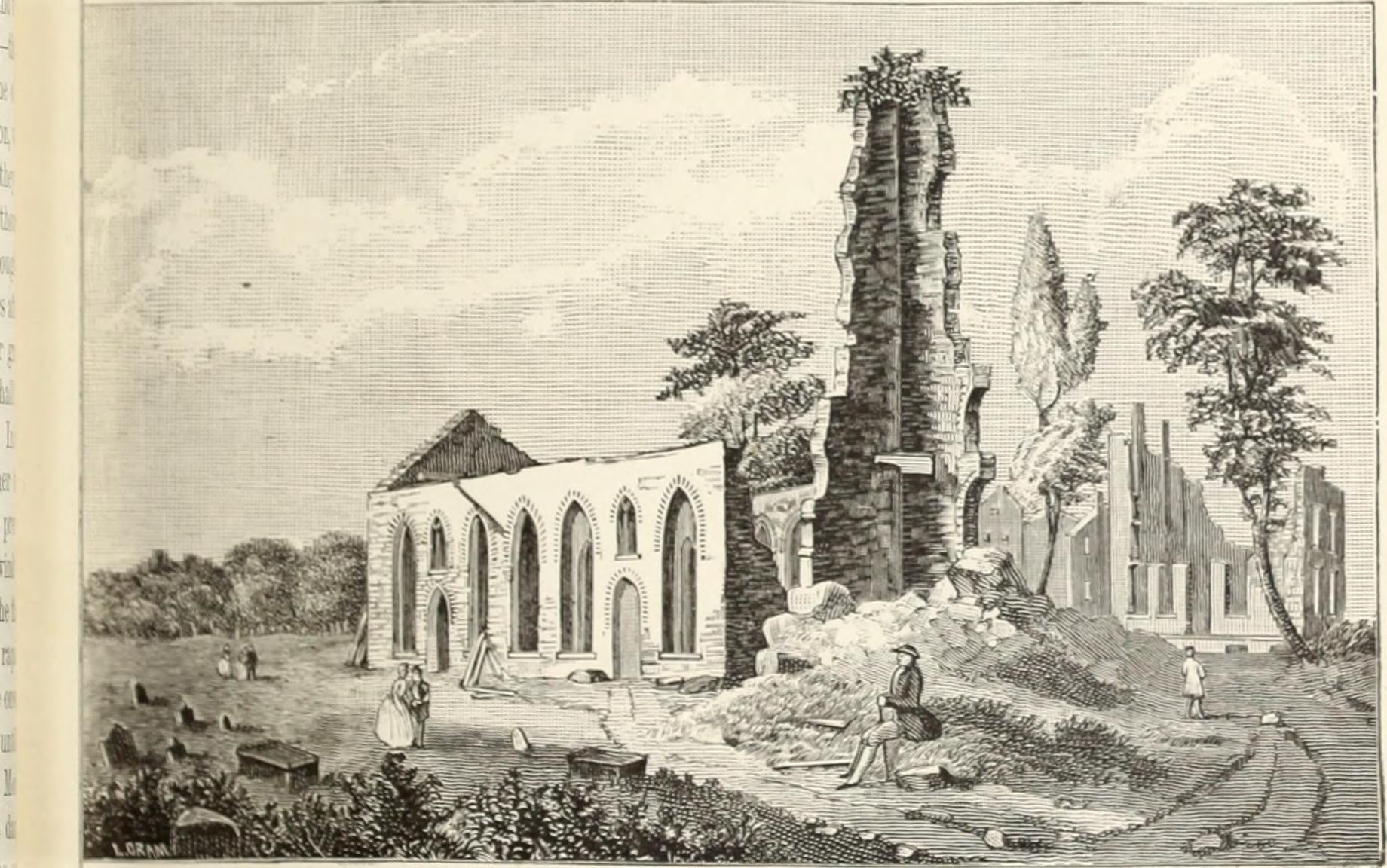
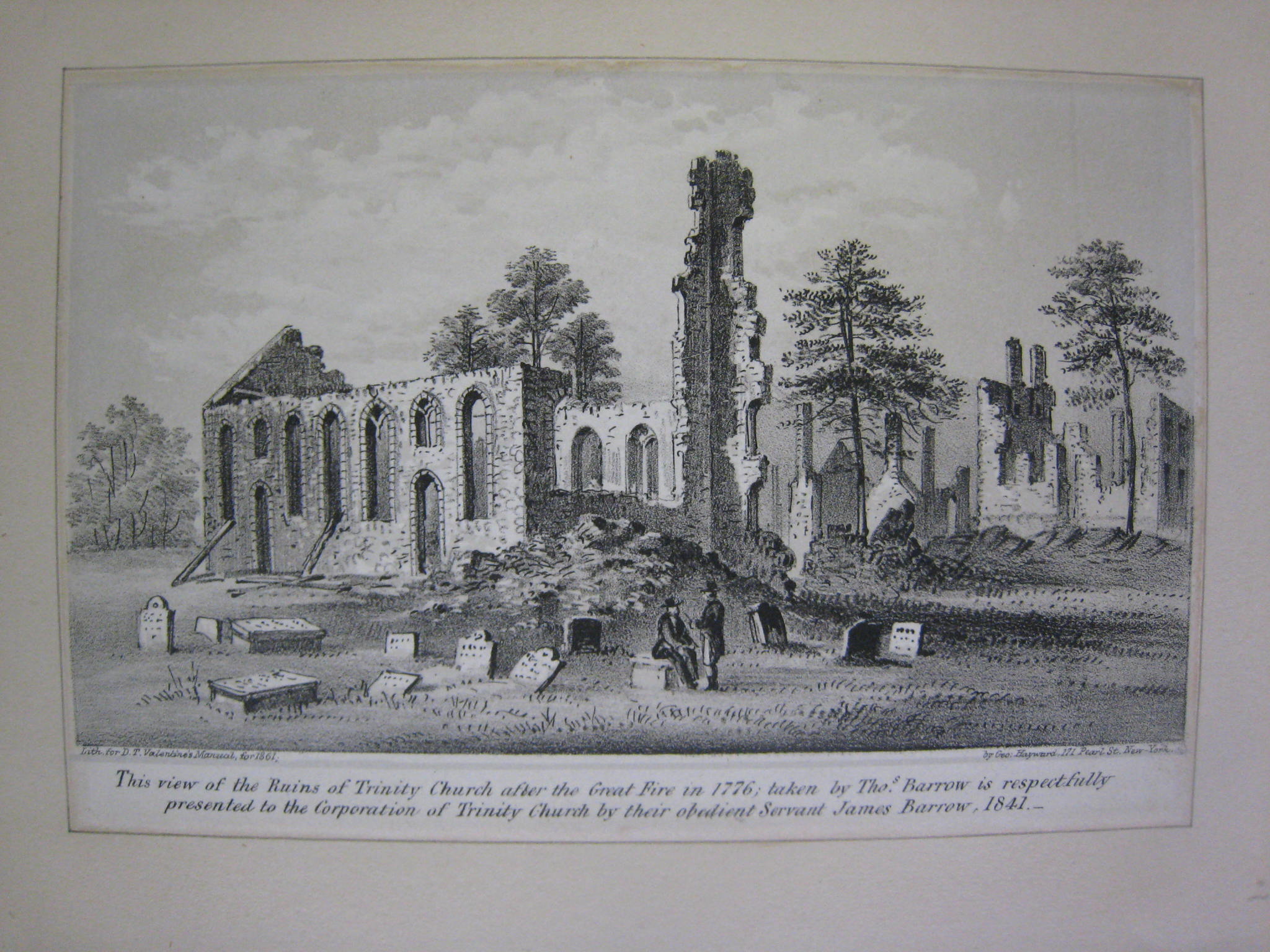
The ruins of Trinity Church stood for  years as evidenced by this image of people just strolling around it like nothing weird had happened.
Internet Archive Book Imaging
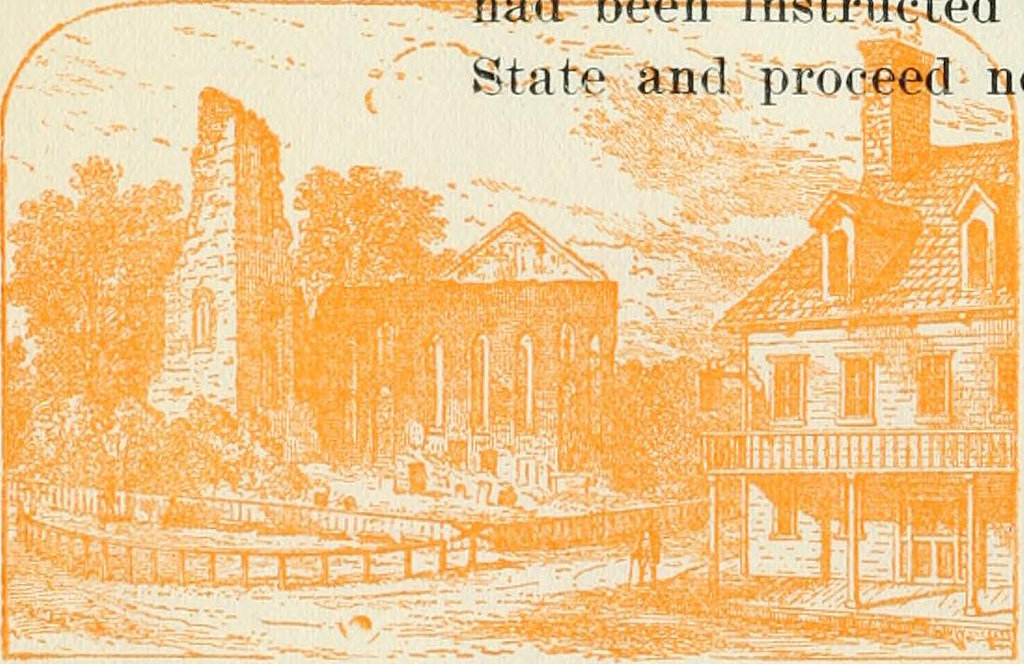
Another illustration (from a 1902 history) showing the cemetery in relation to the ruins.
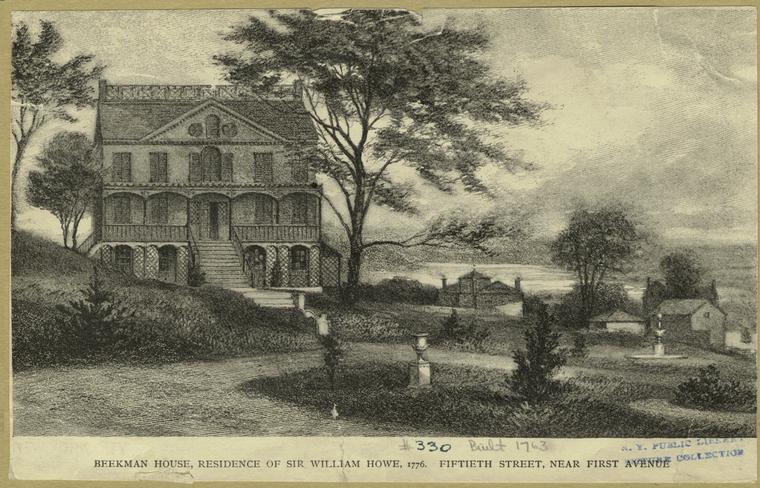
Mount Pleasant, where the British general William Howe set up headquarters and where Nathan Hale was taken after he was captured.
New York Public LIbrary
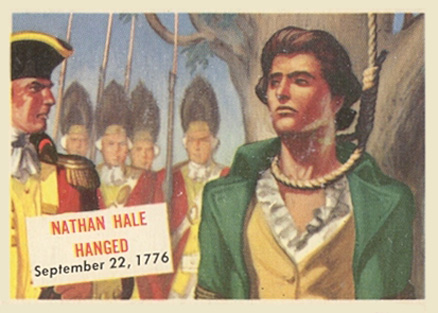
A vintage trading-card depiction of Nathan Hale’s hanging.
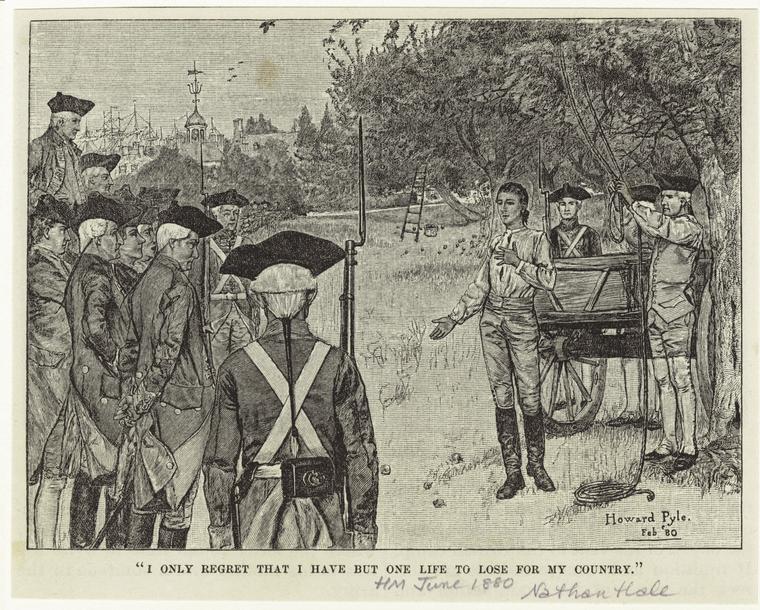
An 1880 illustration by Howard Pyle of the same event.
Courtesy New York Public LIbrary
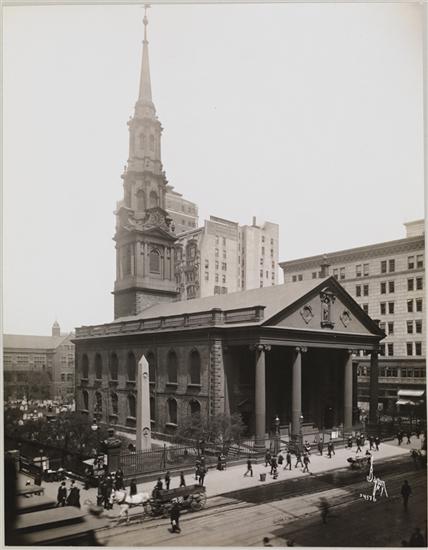
St Paul’s Chapel (pictured below in 19160, a survivor of the Great Fire of 1776, opened its doors to parishioners the day after the fire.
Courtesy Museum of the City of New York
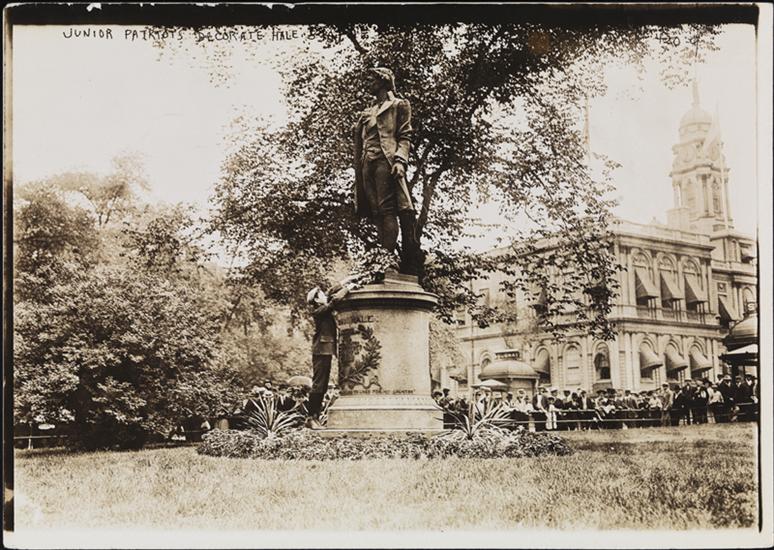
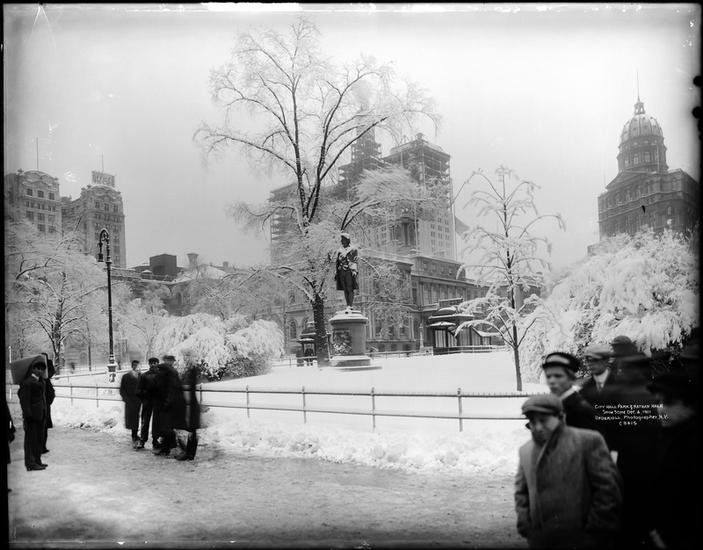
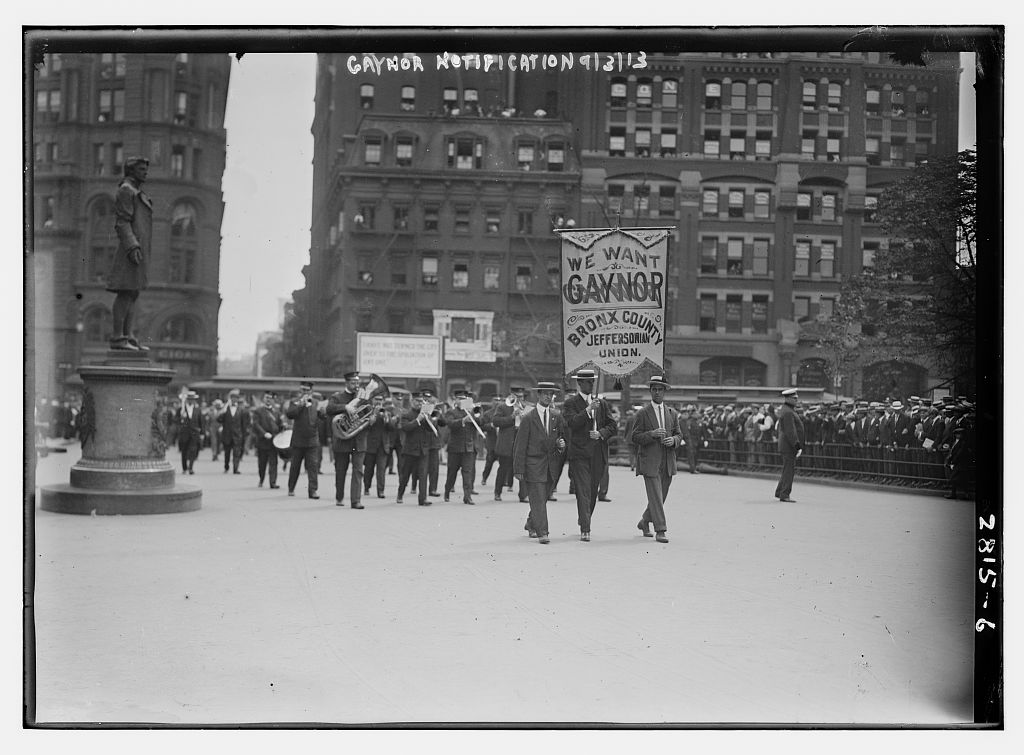
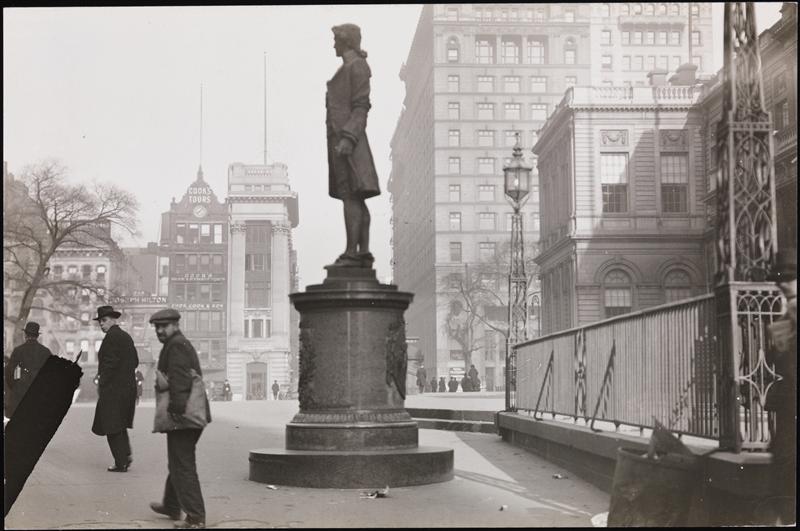
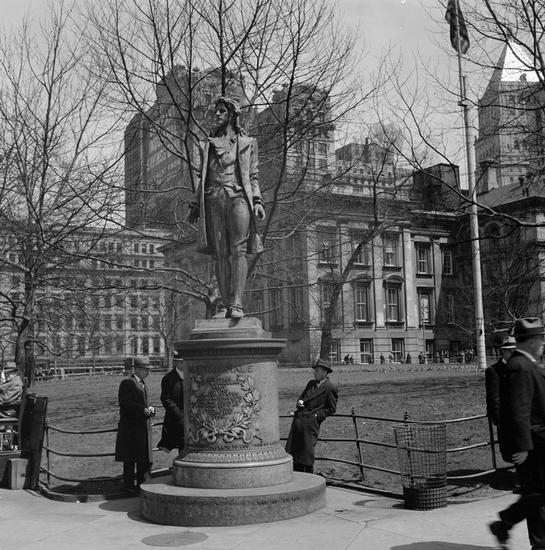
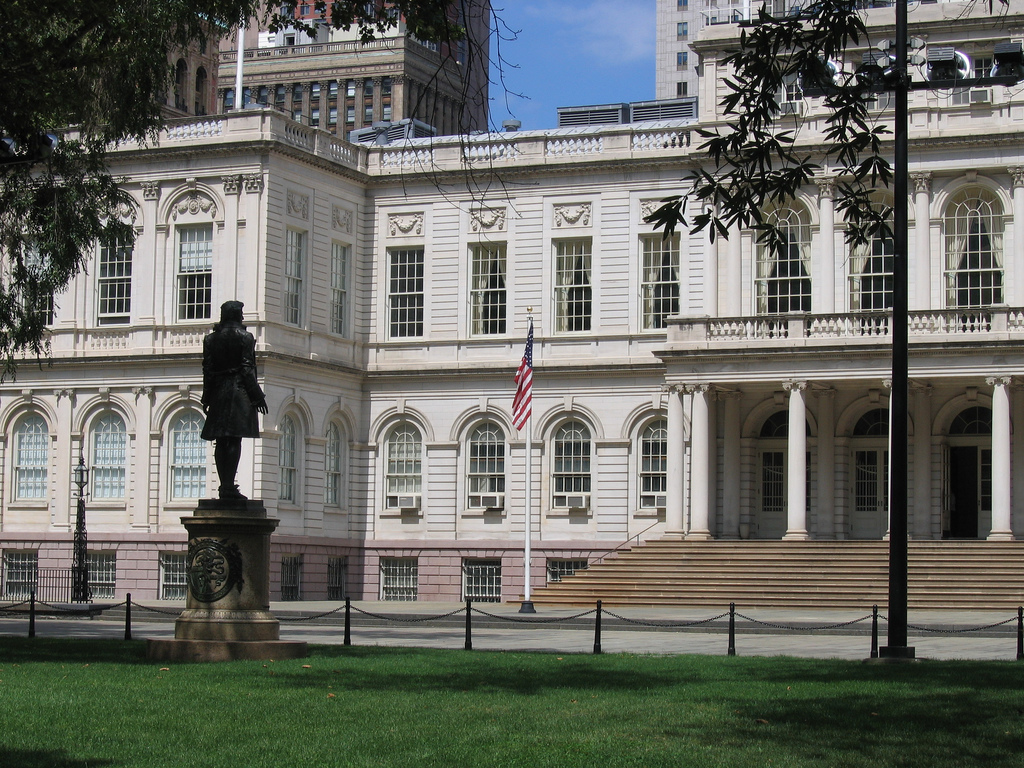
The statue of Nathan Hale which stands in front of City Hall. He’s been moved around quite a bit since his installation here on November 25, 1893, the anniversary of Evacuation Day.
With a new mayoral race on the horizon in New York City we think it is time that you Know Your Mayors! Become familiar with other men who’ve held the job, from the ultra-powerful to the political puppets, the most effective to the most useless leaders in New York City history.
This longtime feature of this website is being rebooted with new articles and newly researched and refreshed earlier entries in this series. Check back each week for a new installment.
Edward Livingston Term: 1801-1803 The Mayor Who Went On To Do Better Things
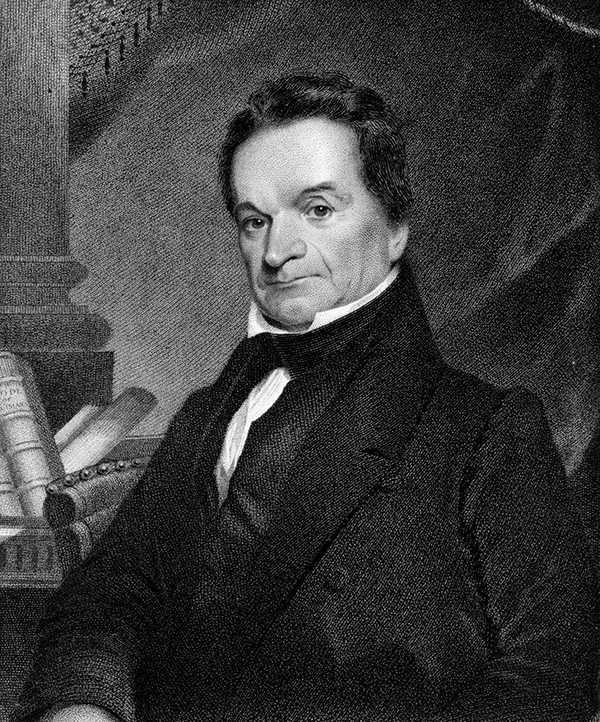
On the spectrum of interesting folks who have occupied the mayor’s seat, Edward Livingston must certainly be noted as the defining example of turning your life around.
In 1801Livingston became the mayor of New York City. Two years later, he left the job in total disgrace, run out of the city due to a financial scandal. He would never work in this town again.
And then things got really interesting.
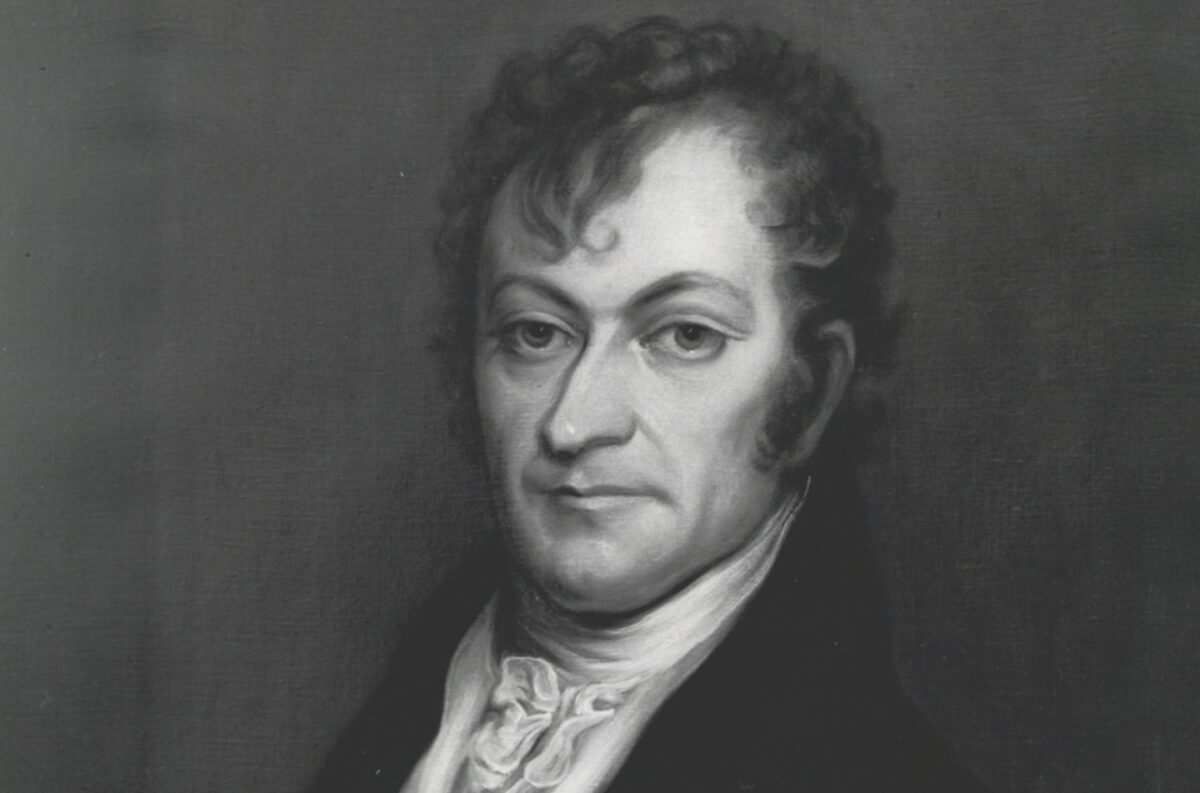
Edward Livingston. Wellmore, E (Engravor) &Longacre, J. L. (Illustrator) Courtesy Library of Congress
Life With The Livingstons
Livingston, born in 1764, was a member of the rich and powerful Livingston clan. There were Livingstons in all aspects of American life — political, social, financial. It was as close as you got to a brand name in the Colonial era.
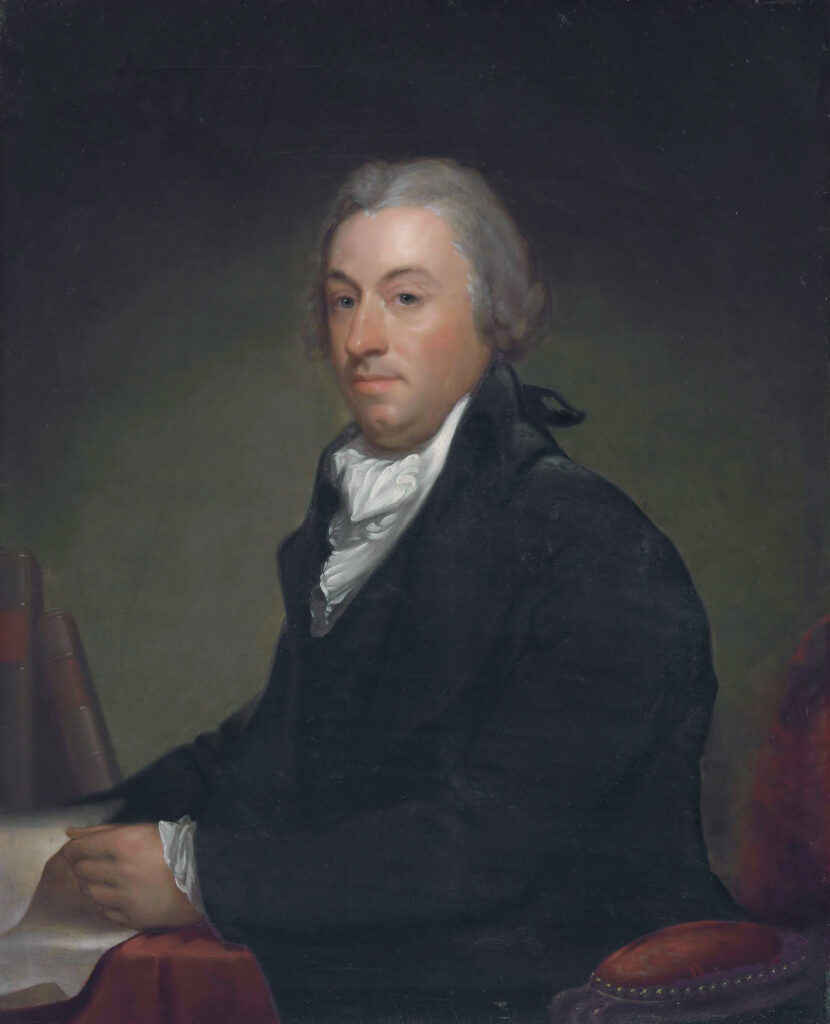
Edward benefited from this common ancestry. He was just eleven years old when his father Peter Van Brugh Livingston became president of New York’s First Provincial Congress in 1775. Another relation Philip Livingston signed the Declaration of Independence in 1776. And Edward’s older brother Robert Livingston (pictured below) would become New York chancellor.
Robert R. Livingston, in a painting by Gilbert Stuart
Young Edward barreled into his career, an ambitious lawyer who settled in New York following the Revolutionary War. Everybody knew his name; he was unsurprisingly a great success. What could go wrong?
Rising Star
In 1795, Beau Ned (as he was called) was elected to represent New York in the U.S. House of Representatives, aligned with the ascendent Democratic-Republican Party, putting him in good graces with Thomas Jefferson, New York Governor George Clinton and various politicians in opposition to the Federalists.
The mayor of New York at that time — Ricard Varick — was a Federalist.
WhenJeffersonwon the presidency in a hotly contested election in 1800, Edward Livingston found himself on the right side of many lucrative political appointments.
In 1801, the governor chose him for U.S district attorney and then, a few months later, Livingston was also appointed mayor. (See entries on Varick and James Duane to understand why these men were even allowed to hold multiple jobs.)
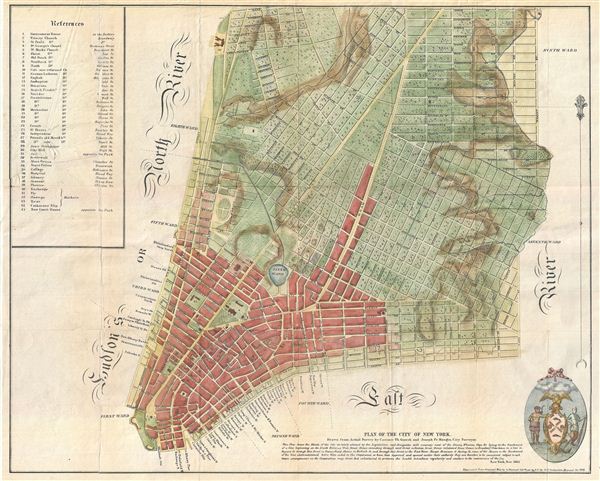
An 1801 map of New York, overlaid with a grid plan proposed by Casimir Goerck and Joseph-François Mangin. This plan was never carried out but it would inspire the Commissioners Plan of 1811.
A Hot Time In The Old Town
Suddenly, Livingston had become mayor of the biggest city in the new nation — a whopping 60,482 according to that year’s census. His opposition to the policies of former president John Adams served him well for a time under the new auspices of a Jefferson presidency.
But the year 1801 in New York was undeniably a volatile one and post-war optimism had given way to bitter skepticism and political chicanery.
New York senator Aaron Burr, Jefferson’s running mate, was nearly voted president in an electoral-college snafu.
Jefferson’s nemesis Alexander Hamilton— who would later be shot and killed by said running mate — would baste his thoughts in the newly created New York Evening Post.
Nearby, a young aide named Washington Irving worked in a law office.
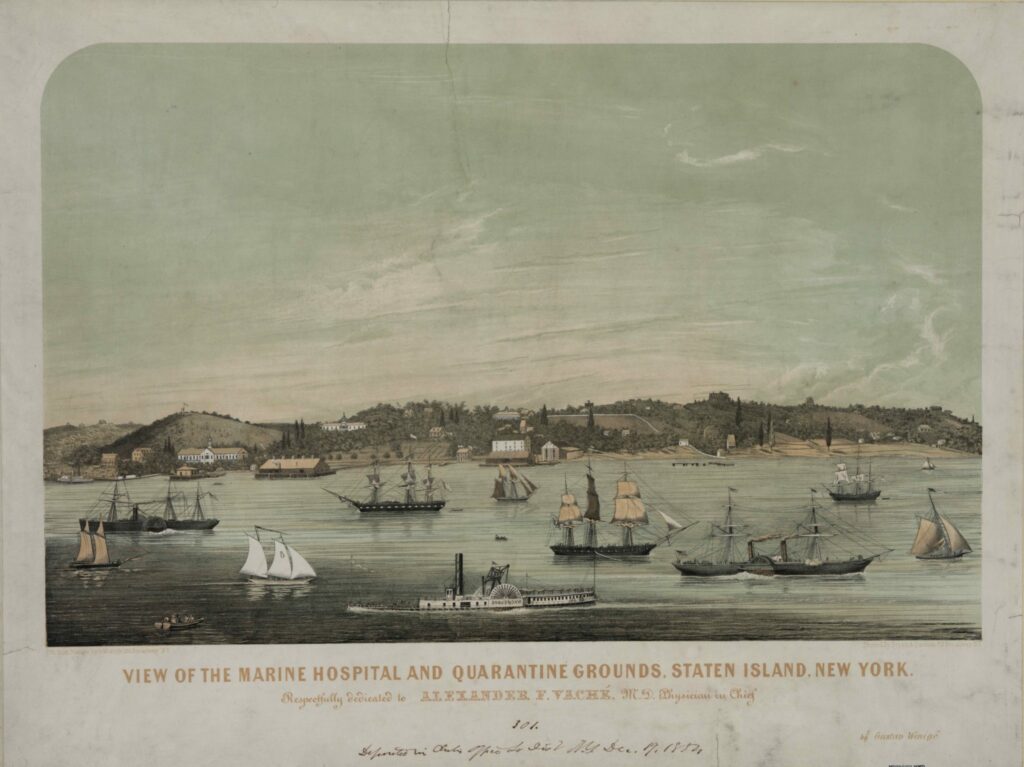
In 1799 New York City built a quarantine station in Staten Island for the treatment of people afflicted by yellow fever and other illnesses. (Image courtesy New York Public Library)
A City Sickness
Unfortunately for Livingston the early 1800s were simply not a great time to be living in New York City. In fact, during his tenure, Edward Livingston almost died of yellow fever.
In 1803, a second epidemic hits New York and hits hard. Hundreds would die, thousands would flee. The stoic Livingston would manage to keep the city operating, even as he himself would become sick and nearly die.
In Disgrace
He recovered only to meet with a scandal that would nearly ruin him.
In the summer of 1803, it was discovered that $45,000 had gone missing from the city’s custom-house fund. While it was determined that a clerk from the district attorney’s office had actually stolen the money, it was Edward Livingston who took the hit politically.
“Although his own integrity was not in question,” according to the book Gotham, the ensuing scandal not only forced Livingston to give up both the state attorney job and the mayor’s seat, but he actually had to sell his property to repay the government.
Livingston had disgraced the family name.
1803 view of New Orleans, looking upriver from the Marigny Plantation House, by J. L. Bouquet de Woiseri
The Ultimate Second Act
Nearly penniless and humiliated, Edward decided to leave New York for good in 1803.
Penniless but not, of course, without family connections.
In 1804 moved to New Orleans, recently purchased from the French by the federal government as part of the Louisiana Purchase. The team negotiating that deal included James Monroe — and Edward’s older brother Robert Livingston.
During the War of 1812, Edward was active in the defense of New Orleans and even served as the aide-de-camp to General Andrew Jackson. The two became close friends.
By 1826, Livingston was successful enough again with his own law practice in New Orleans that he was able to pay back the government all the money he owed plus interest — or almost $100,000, no petty sum back then.
Livingston in 1827. Painting by Anson Dickinson
That same year, Livingston would shape American civil policy with a series of influential penal and judiciary codes for the treatment of prisoners, now referred to as the Livingston Code. While rejected by the State of Louisiana, the legal reforms would live on to shape ideals about incarceration and the death penalty.
Because of these reform codes, Edward Livingston is considered one of the great American legal geniuses of the early 19th century.
After notable stints as representative and a Senator for the State of Louisiana, he became a persuasive Secretary of State for President Jackson from 1831-1833. Edward Livingston died on May 23, 1836.
The monumental events of America’s founding would be immortalized by the fair in some rather unusual ways 150 years later. Both April 30th events were occasions of great patriotic ceremony (and both even slightly kitschy) in their own ways.
Courtesy New York Public Library
April 1789 It took George seven entire days to get to New York from his home in Mount Vernon, as his procession was met every step of the way with throngs of patriotic crowds and flamboyant celebratory displays.
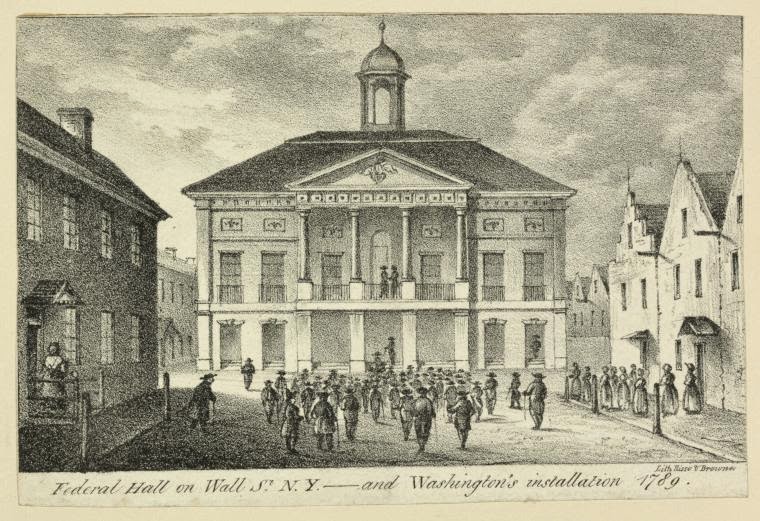
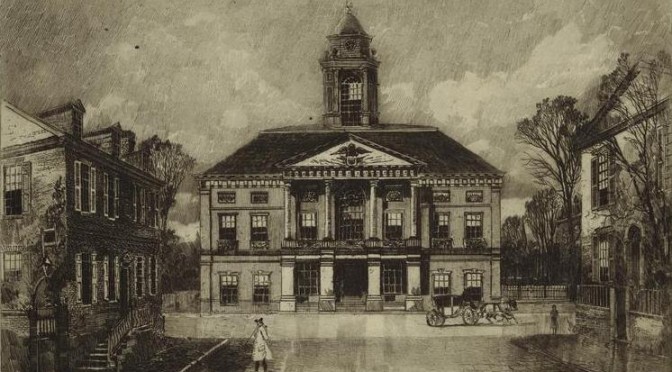
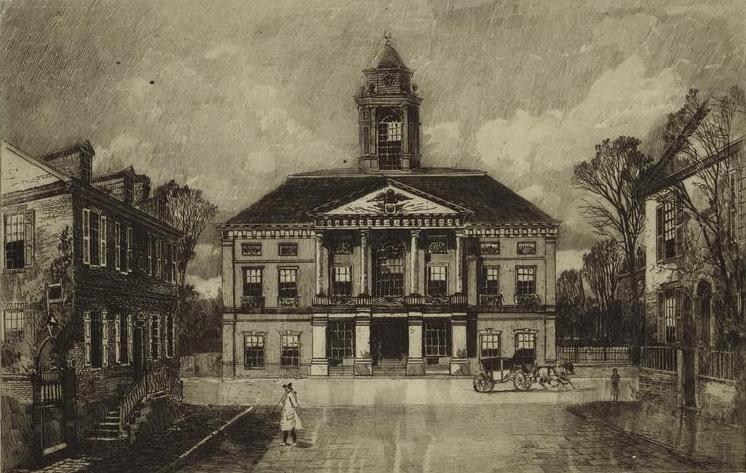
Washington’s vice president John Adams had already arrived in New York, on April 21st. The building which greeted him, the former City Hall building on Wall Street, had been the center of city’s government since 1699, when the British used materials from the city’s demolished north defense wall to construct it.
Courtesy New York Public Library
The heavily remodeled building which now stood in its place, later to be calledFederal Hall, was designed by successful city contractor and former Continental Army engineer Pierre Charles L’Enfant. According to author David McCullough, “it was the first building in America designed to exalt the national spirit, in what would come to be known as the Federal style.” (Sadly, this building was ripped down in 1812; the ‘Federal Hall’ which stands in the same spot today was built as a customs house in 1842.)
L’Enfant would later work on the creation of Washington DC out of Maryland swampland. He would ultimately be fired from that project — by George Washington.
George finally arrived in New York two days after Adams, April 23, via a barge from Elizabeth, New Jersey, and was met at the Wall Street pier by the current mayor of New YorkJames Duaneand the state’s governor George Clinton.
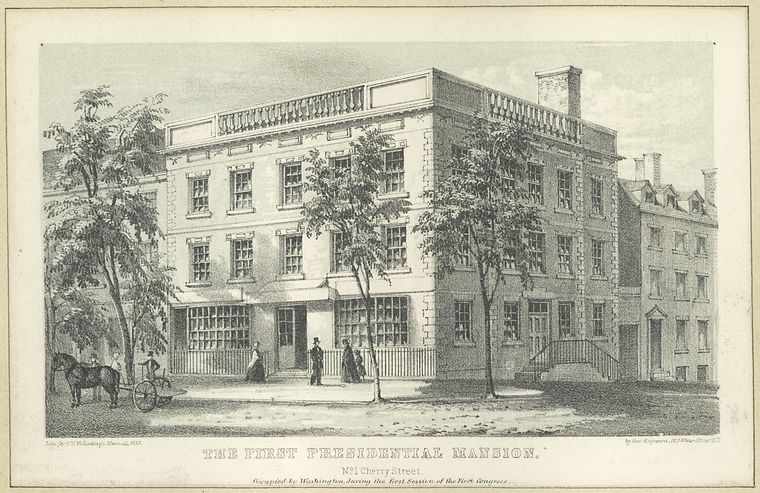
From there, he was taken to his new home on Cherry Street (long demolished, around near the Brooklyn Bridge anchorage today) and spent the day greeting dozens of well-wishers. That night, Governor Clinton hosted an elaborate dinner in his honor; the pomp and extravagance by this time were probably getting tiresome to the stately Virginian farmer.
Meanwhile Adams spent the week at Federal Hall in Senate chambers, hashing out such things we take for granted — such as how to even address the new president — until at last they were ready for the ceremony to begin, on April 30.
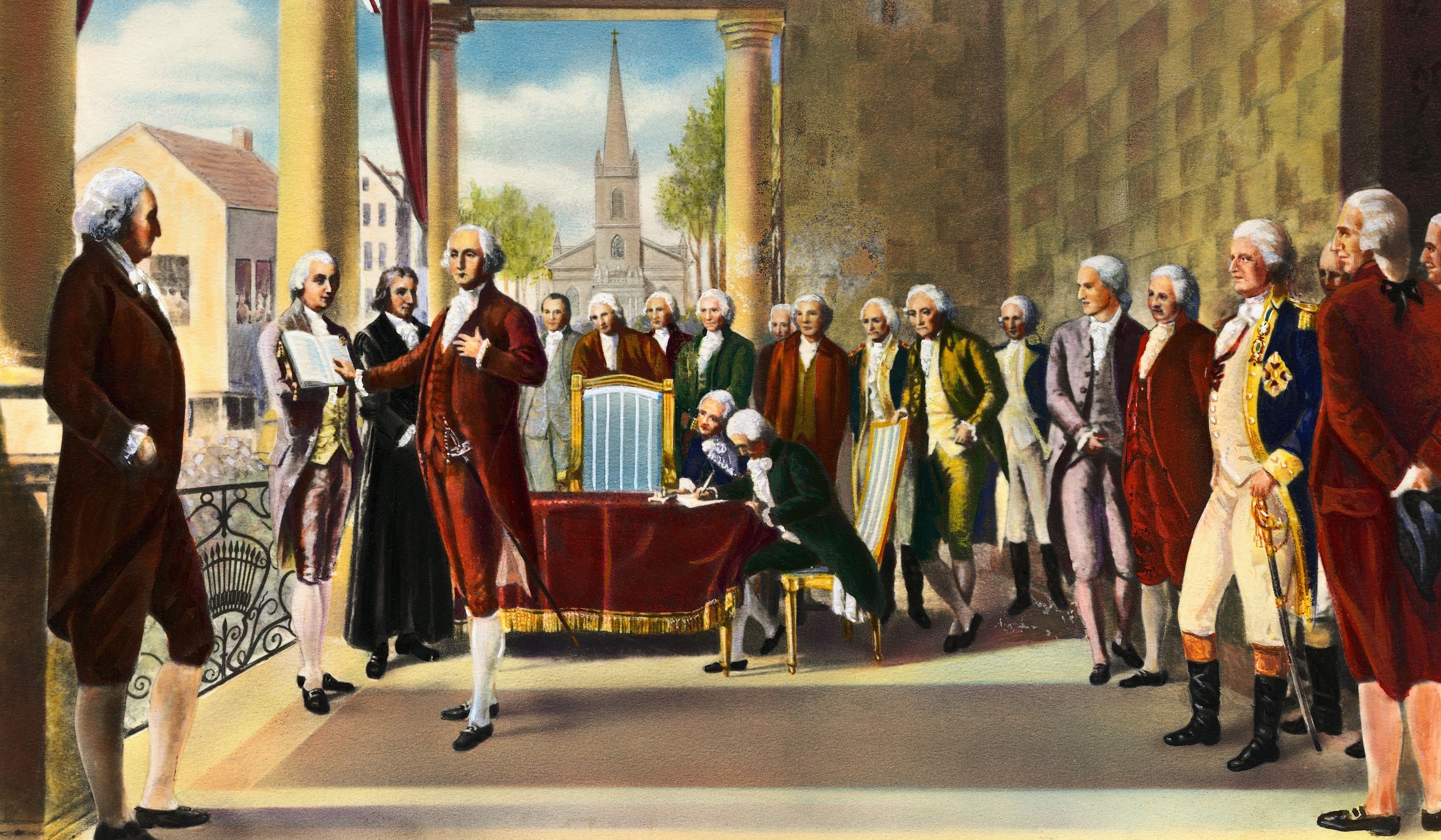
According to Ron Chernow: “Washington rose early, sprinkled powder in his hair, and prepared for his great day.” Like some detail from a fairy tale, Washington left his Cherry Street home at noon in a yellow carriage driven by white horses, legions of soldiers marching proudly behind him.
The streets of Manhattan were clogged with people, over ten thousand cramming Broad and Wall streets, as far as the eye could see both ways. Sitting on the balcony of his own home on Wall Street was Washington’s closest confidante Alexander Hamilton, certainly reveling in the moment.
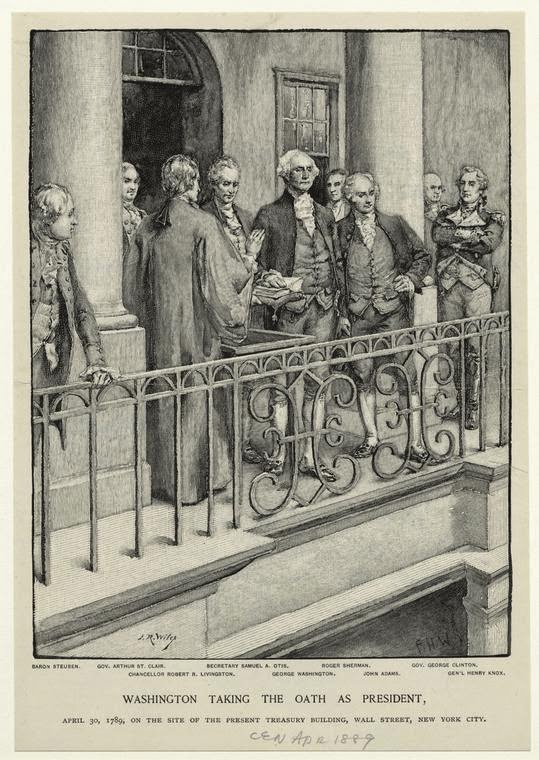
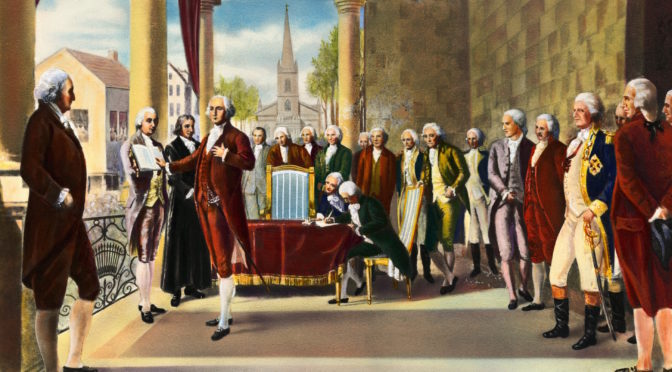
After greeting the Congress, Adams led Washington to the second floor balcony along with Robert Livingston, the Chancellor of New York (the highest judicial office in the state), who held out a bible owned by the St. John’s Lodge Freemasons and delivered the oath of office, probably not loud enough for anybody in the street to actually hear.
Washington, even less audibly than Livingston, swore to “faithfully execute the office of President of the United States, and will to the best of my ability, preserve, protect and defend the Constitution of the United States.” He then possibly threw in a ‘so help me God’ for good measure (although there are many doubts that this occurred).
Courtesy New York Public Library
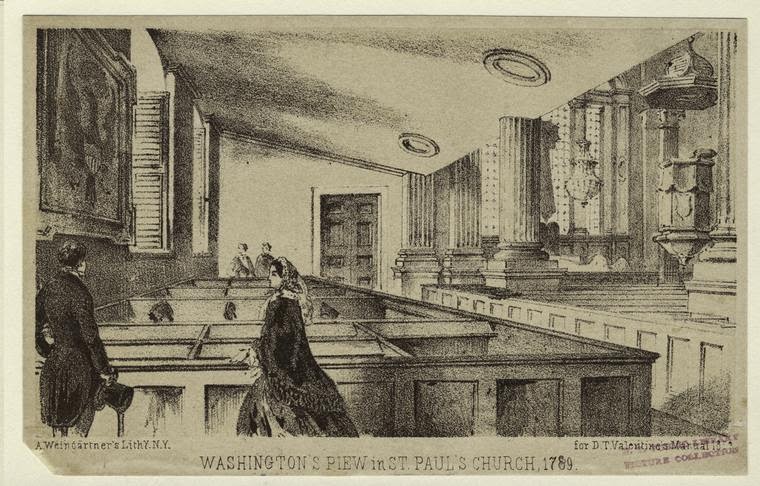
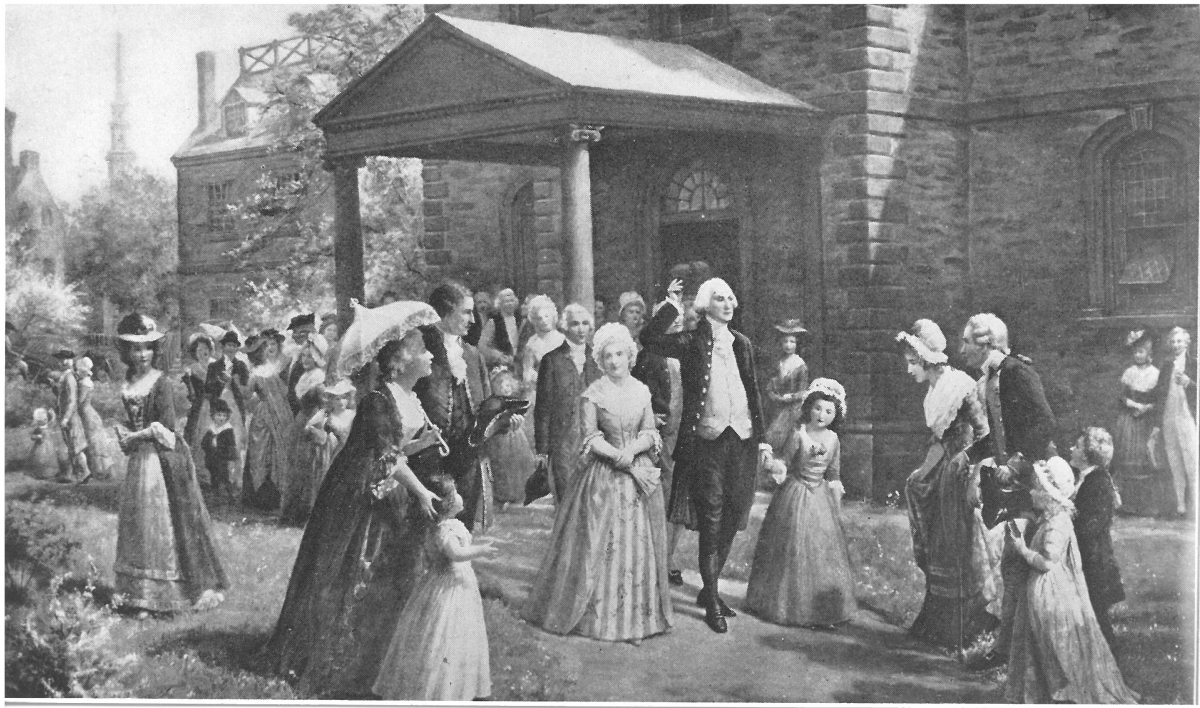
New Yorkers went crazy then, firing cannons, screaming and waving flags, playing music and dancing in the streets. After returning inside to address the new Congress — by this time with tears in his eyes — Washington and his entourage went up Broadway to receive on invocation at St. Paul’s Church, the scrappy survivor of the great fire the destroyed much of the city in 1776. Washington would be a regular here for his entire stay in New York; the pew where he planted himself for two years is still on display there (illustrated above).
Martha Washington would not arrive in town for another month, but that didn’t stop the parties. The official inauguration ball took place a week later, on May 7th, at the Assembly Rooms at 115 Broadway.
Although a bit stiff and silent, George was still popular with the ladies and danced “two cotillions and a minuet,” often seen with Alexander Hamilton’s young bride Eliza. When Martha arrived on May 17, landing at Peck Slip, she was greeted with similarly grand fanfare, and yet another ball was held in her honor.
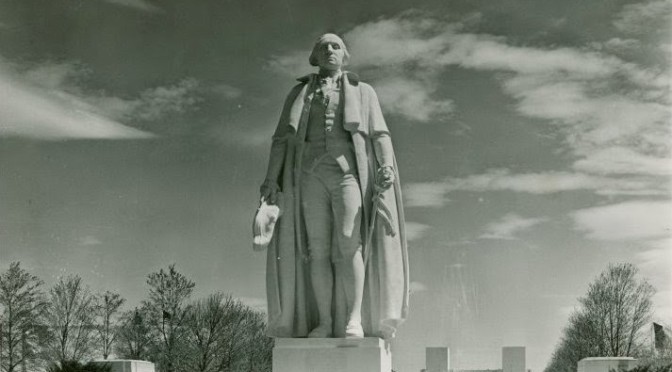
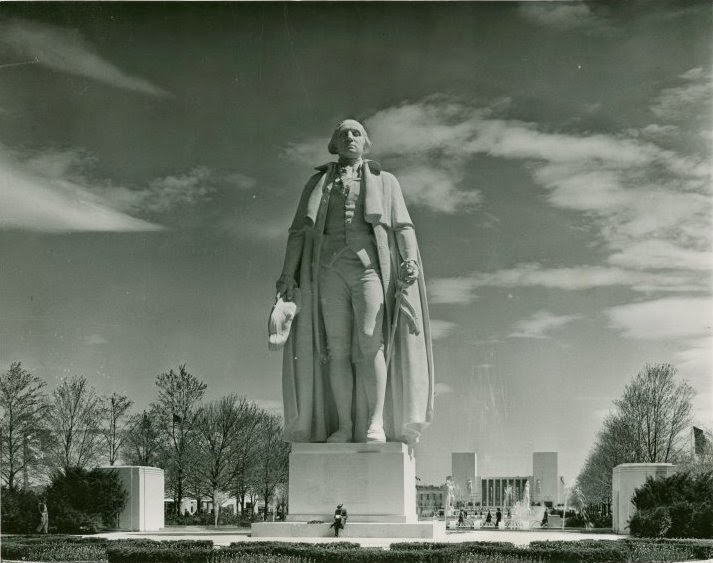
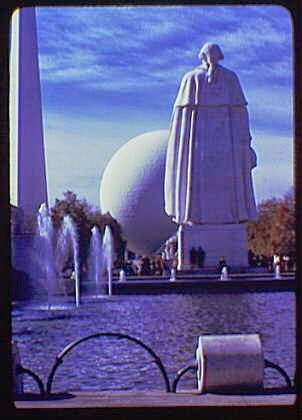
James Earle Fraser’s colossal Washington statue out in Queens. (NYPL)
April 1939 One hundred and fifty years later, the 1939 New York World’s Fair opened in Flushing Meadows-Corona Park, the second largest American fair up to that time (only St. Louis’ 1904 event was larger).
This celebration of human advancement — as demonstrated through miles of utopian kitsch and strikingly bizarre architecture — was a reason for Robert Moses to turn the unsightly Corona Ash Dumps into a Queens super-park. The fair was advertisement as entertainment, with hundreds of modern gadgets displayed as novelties and staples of the future.
Courtesy the Museum of the City of New York
But the celebration was planned with the past in mind as well. It opened on April 30, 1939, coinciding with another great day in New York City history — Washington’s inauguration. That’s how important the city thought the opening of the fair was. (Life Magazine was a little more cynical; in 1939, they refer to Washington as “the excuse” for the fair. The purpose, of course, was profits.)
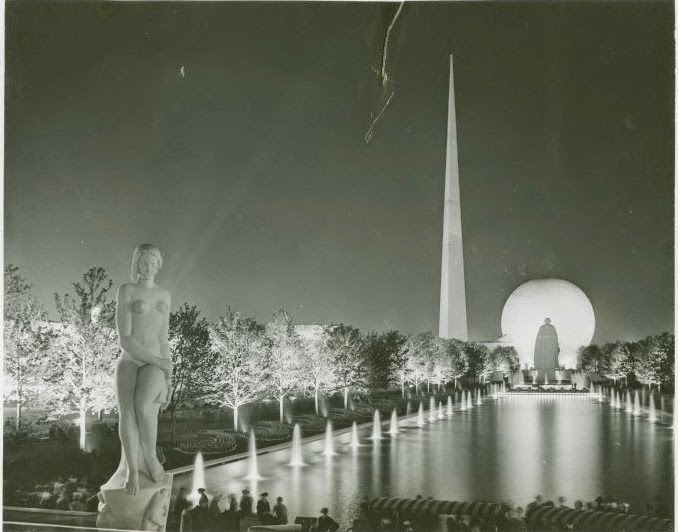
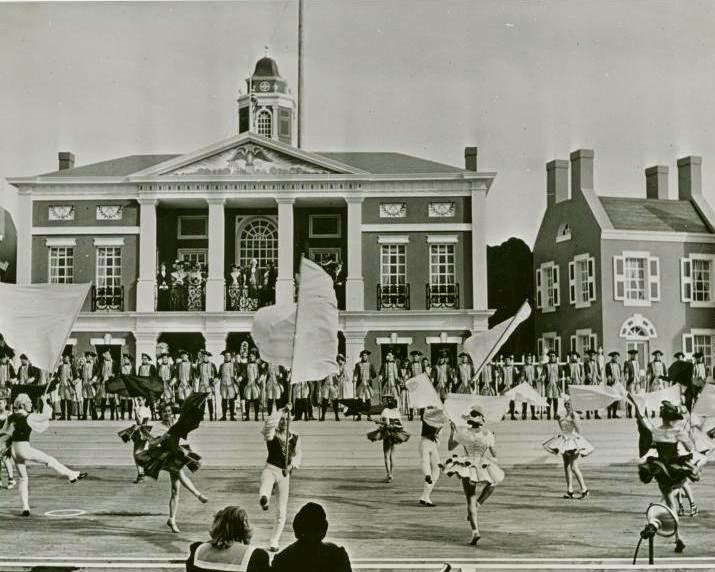
A 61-foot-tall statue of Washington by James Earle Fraser stood mightily over the fair’s Constitution Mall, peering perhaps quizzically at Paul Manship’s massive sundial sculpture. A cluster of buildings called the Court of States recalled the Colonial architecture of Washington’s day. Even Federal Hall was recreated.
Below: The World’s Fair presented a recreation of Washington’s inauguration, except with lots of flag dancing. (NYPL)
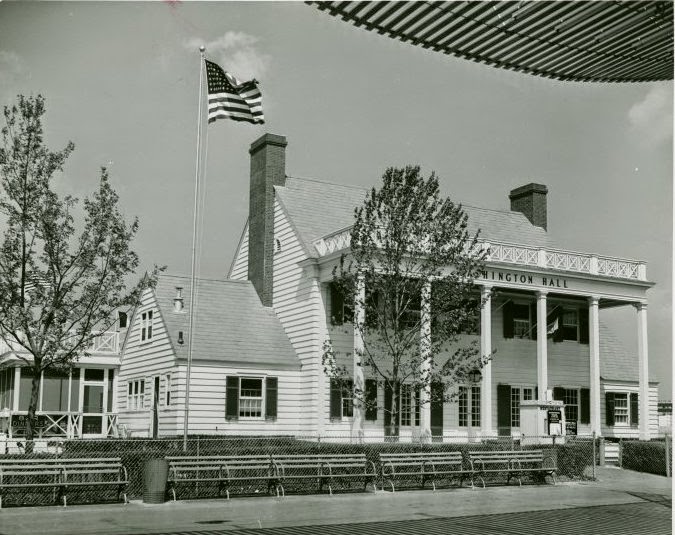
A replica of Mount Vernon (sort of) called Washington Hall was the pet project of a New Yorker with presidential ties.
Museum of the City of New York
According to the New Yorker, “Mr. Messmore Kendall, is responsible for the Hall. Mr. Kendall, president of Sons of the American Revolution and owner of the Capitol Theatre, [developed] plans for erecting, entirely at his own expense, a $28,000 building to house a collection of Washington relics. Before the Fair closes, he expects the whole thing will have cost him more than $50,000. He has given more than money to the project; he has given the family cook, so that whenever he wants a home-cooked meal, he has to go all the hell out to Flushing.”
The Hall received a host of reenactors who had made their way up from Mount Vernon in emulation of Washington’s own footsteps. On May 6th, a child named Robert E, Lee Williamson opened Washington Hall in a grand ceremony, bringing “three consecutive weeks of neo-Federal quaintness to a close.” [source]
The president also sits (sometimes awkwardly) upon a variety of World’s Fair merchandise. Light shows and fireworks unheard of in Washington’s time were dedicated in his honor throughout the fair. He even starred in a popular musical pageant at the fair called American Jubilee, with books and lyrics by Oscar Hammerstein.
It was another great president who kicked off the fair 75 years ago. With 200,000 people in attendance, Franklin Delano Roosevelt gave an opening speech extolling the virtues of American ingenuity as he became the first president to be broadcast to television audiences. Few had televisions in their homes at the time. But NBC founder David Sarnoff helpfully scattered a few dozen of them throughout the city in a clever publicity stunt.
Roosevelt starts off his speech referencing Washington. “[T]here have been preserved for us many generations later, accounts of his taking of the oath of office on April thirtieth on the balcony of the old Federal Hall. ….. And so we, in New York, have a very personal connection with that thirtieth of April, one hundred and fifty years ago.” [Read the whole speech here.]
Defined by the odd Trylon and Perisphere buildings, the fair seems like something truly dreamlike. The land where the fair once stood now contains the ruins of a New York’s other World’s Fair, the event from 1964-65.
TODAY
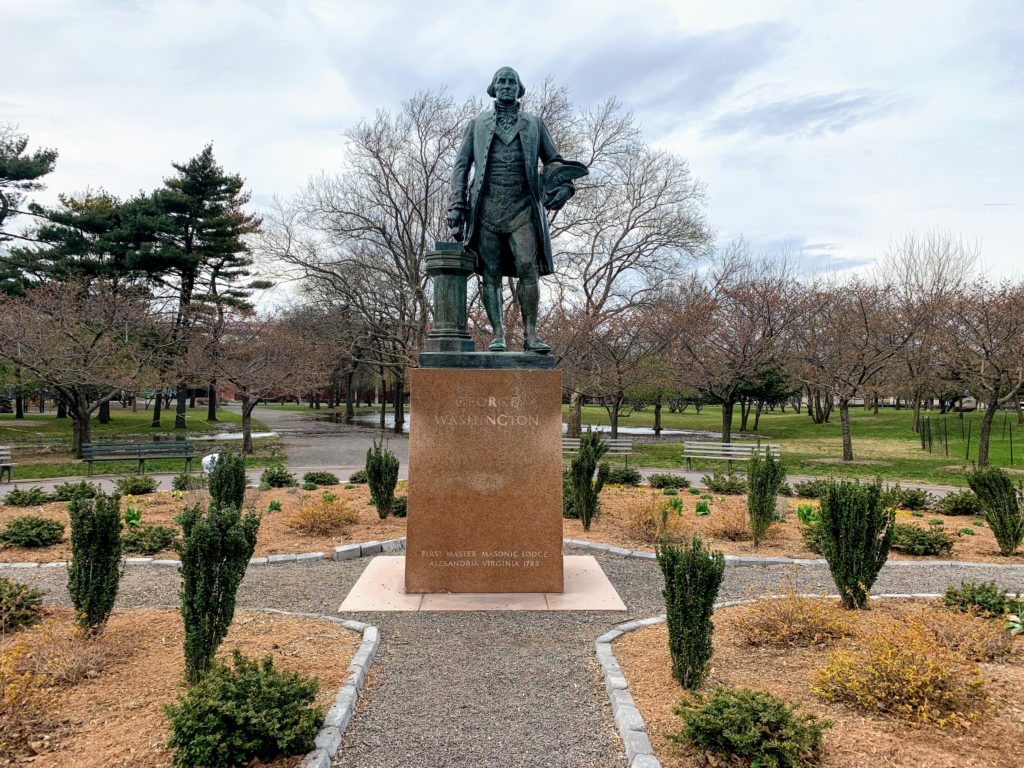
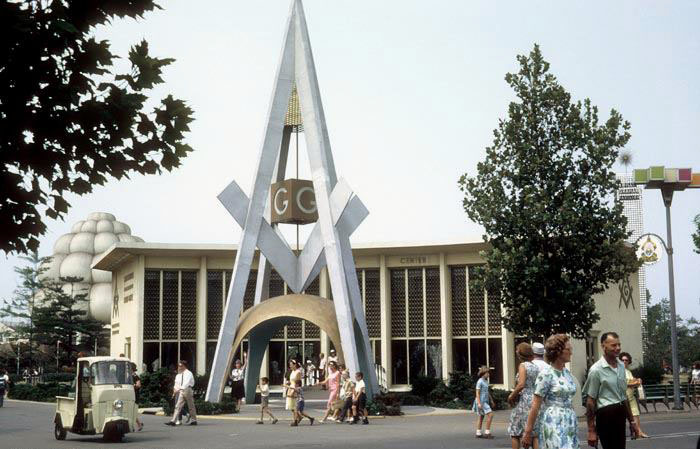
You can still find a tribute to George Washington in Flushing Meadow Corona Park today. George Washington as Master Mason by Donald De Lue was installed here in 1967, a replica of a much larger Washington statute, made of plaster, that stood at the New York World’s Fair of 1964-65 within the Masonic Pavilion. (That’s right; the Freemasons had a World’s Fair pavilion).
That 11-foot plaster statue of Washington stood next to the actual Masonic Bible on which Washington took his oath of office. Today the bible is on display — at Federal Hall.
For this article, I’ve re-purposed a couple pieces of writing I did on these events a few years ago. The original pieces can be found here and here.
PODCAST Part One of our two-part series on New York City in the years following the Revolutionary War.
The story of New York City’s role in the birth of American government is sometimes forgotten. Most of the buildings important to the first U.S. Congress, which met here from the spring of 1789 to the late summer of 1790, have long been demolished. There’s little to remind us that our modern form of government was, in part, invented here on these city streets.
Riding high on the victories of the Revolutionary War, the Founding Fathers organized a makeshift Congress under the Articles of Confederation. After an unfortunate crisis in Philadelphia, that early group of politicians from the 13 states eventually drifted up to New York (specifically to New York’s City Hall, to be called Federal Hall) to meet. But they were an organization without much power or respect.
The fate of the young nation lay on the shoulders of George Washington who arrived in New York in the spring of 1789 to be inaugurated as the first president of the United States. His swearing-in would finally unite Americans around their government and would imbue the port city of New York with a new urgency.
This is Part One of a two part celebration of these years, featuring cantankerous vice presidents, festive cannonades, and burning plumage! (Part Two arrives in two weeks.)
FEATURING Washington, Adams, Madison, Livingston and, of course, HAMILTON!
The Bowery Boys: New York City History podcast is brought to you …. by you!
We are now producing a new Bowery Boys podcast every two weeks. We’re also looking to improve the show in other ways and expand in other ways as well — through publishing, social media, live events and other forms of media. But we can only do this with your help!
We are now a member of Patreon, a patronage platform where you can support your favorite content creators for as little as a $1 a month.
Please visitour page on Patreon and watch a short video of us recording the show and talking about our expansion plans. If you’d like to help out, there are five different pledge levels (and with clever names too — Mannahatta, New Amsterdam, Five Points, Gilded Age, Jazz Age and Empire State). Check them out and consider being a sponsor.
We greatly appreciate our listeners and readers and thank you for joining us on this journey so far. And the best is yet to come!
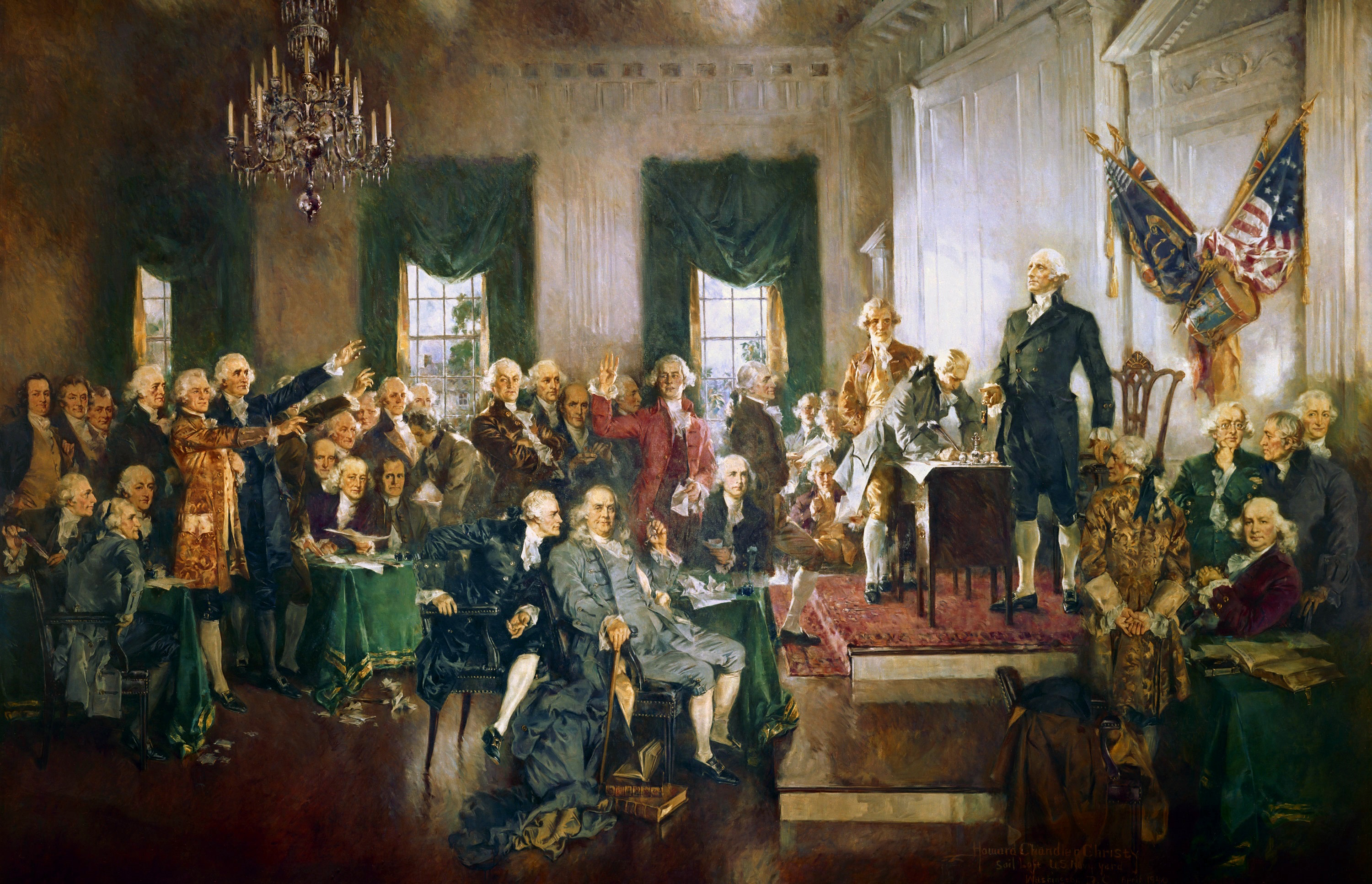
The signing of the Constitution, September 17, 1787.
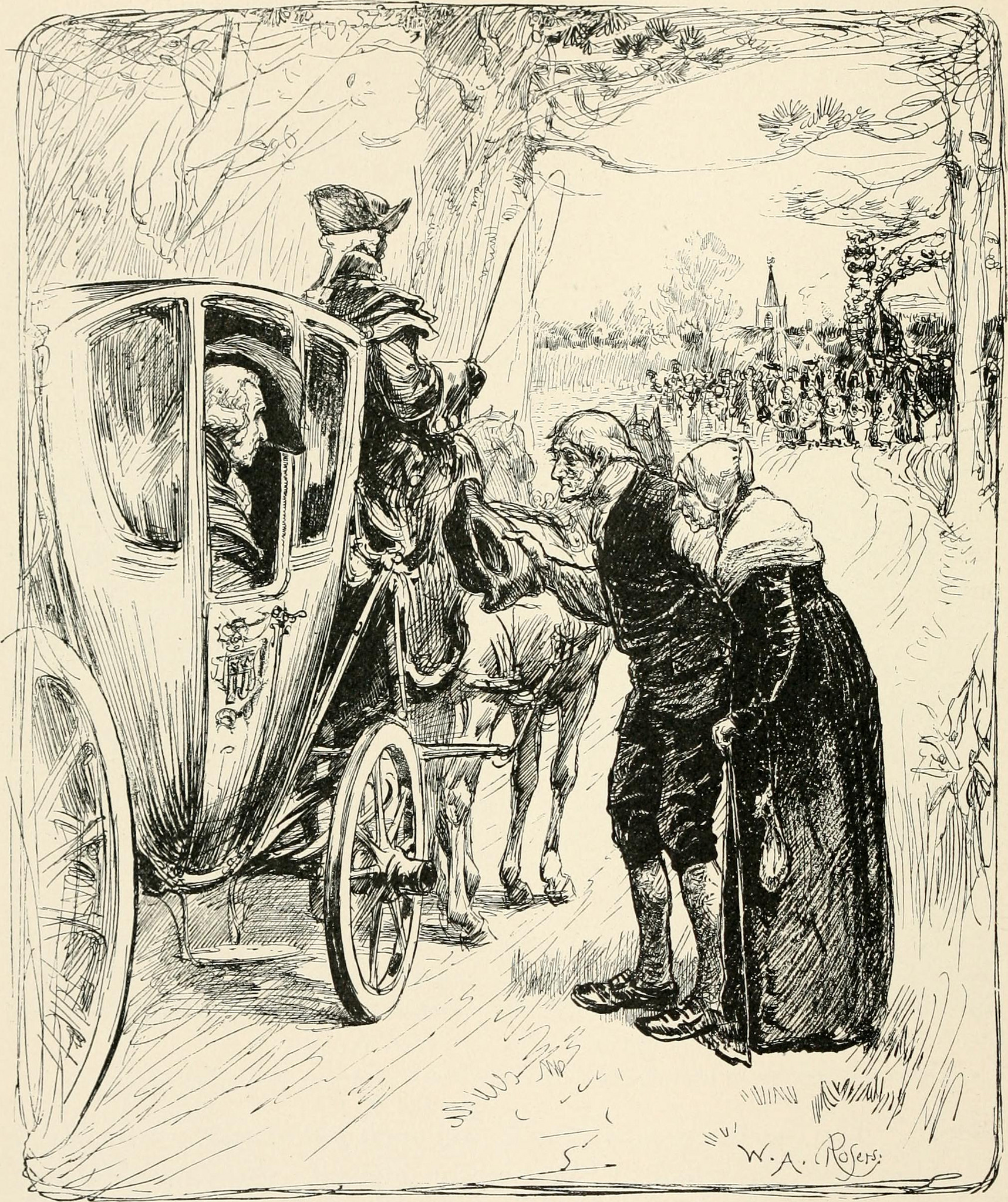
George traveling to his inauguration, as depicted in the 1896 book “The Century book of famous Americans : the story of a young people’s pilgrimage to historic homes”
Internet Archive Book Images
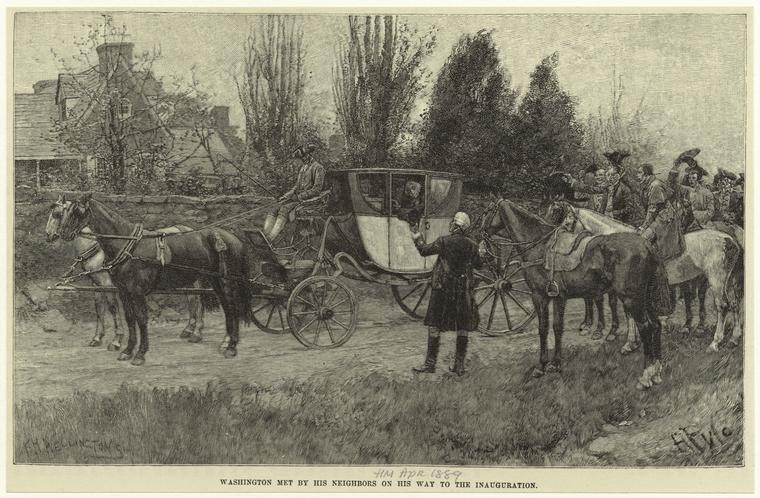
And from an 1889 illustration:
Courtesy NYPL
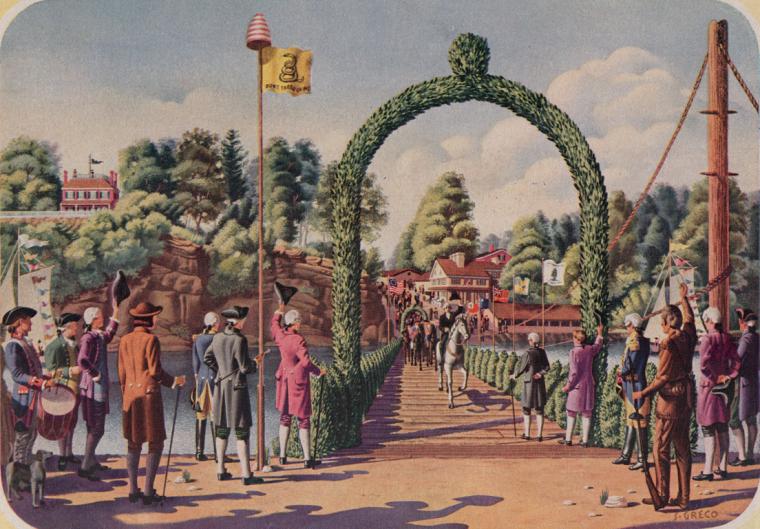
President-Elect Washington crosses floating bridge (Gray’s Ferry) — and through one of many triumphal arches — on his inaugural journey, Philadelphia, April 20, 1789
NYPL
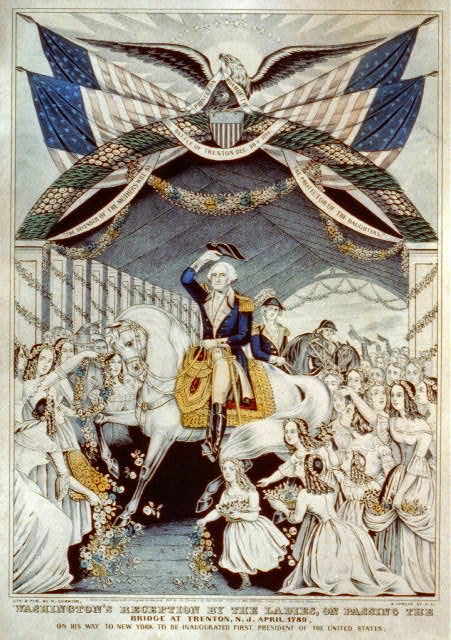
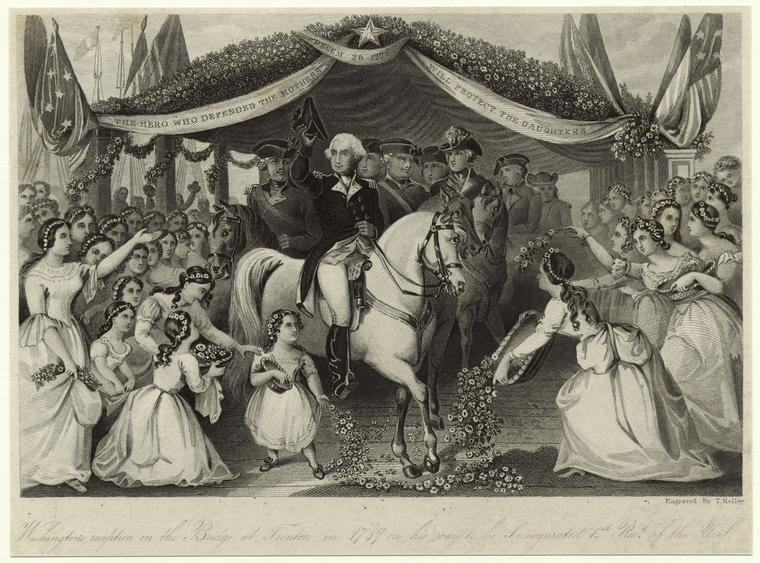
Washington’s reception on the bridge of Trenton in 1789 on his way to be inaugurated 1st president of the U. S.
NYPL
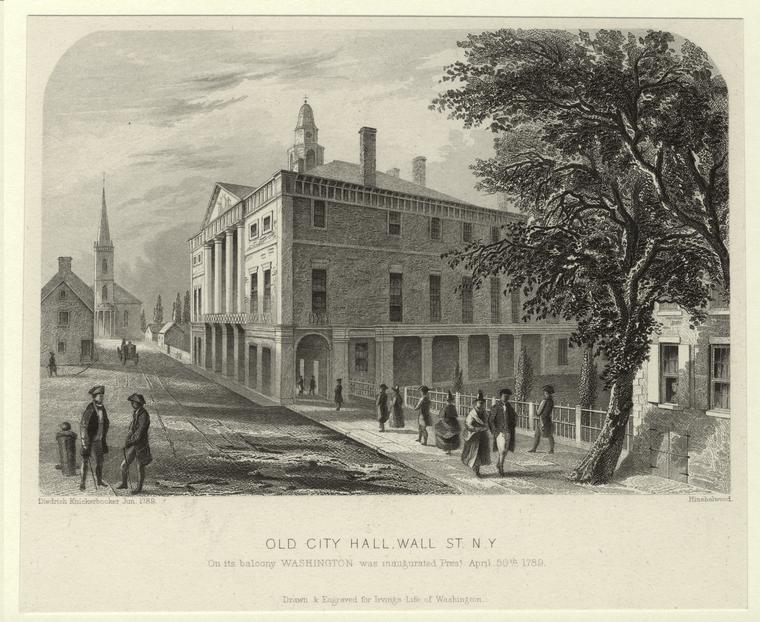
An illustration from 1855 depicts Old City Hall before it was renovated to house the new federal government.
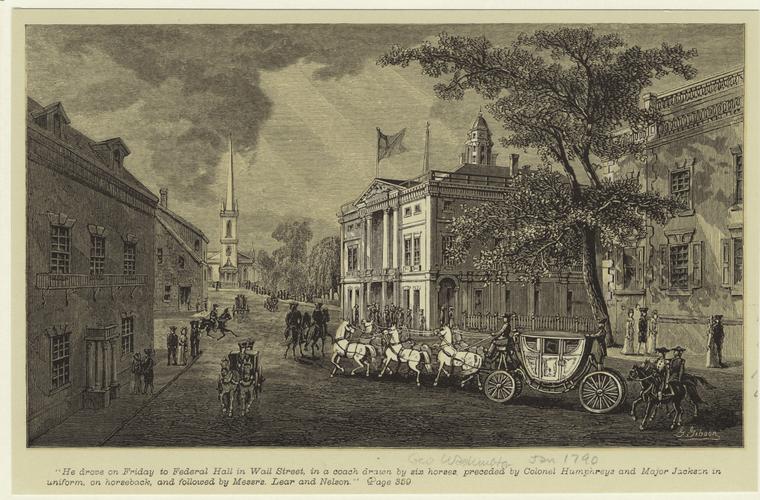
Another view, with Washington’s six-horse coach in the foreground.
NYPL
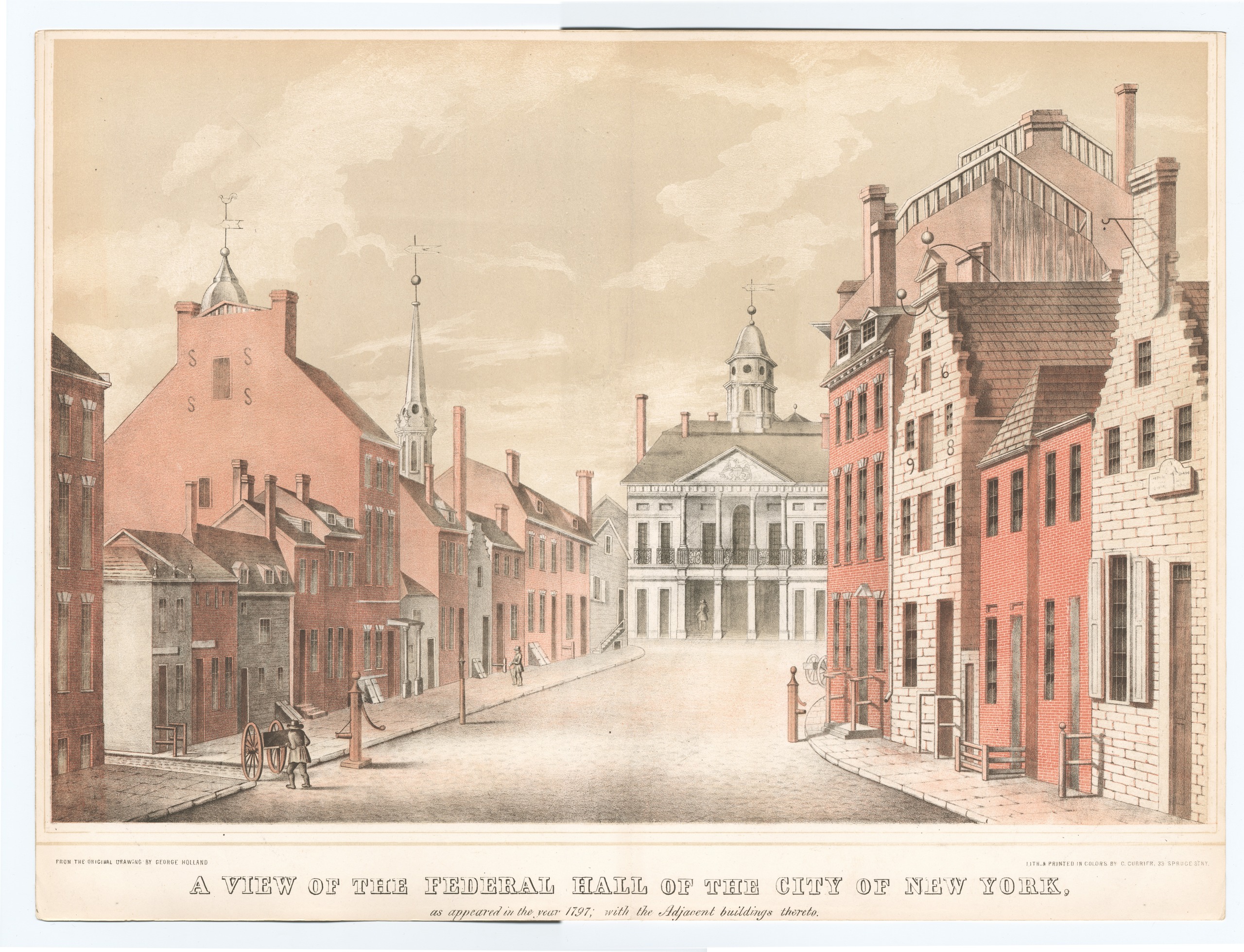
A depiction of Broad Street and Federal Hall as it looked in 1797, but you can easily picture how filled the streets would have been on Washington’s inauguration just eight years earlier.
NYPL
Here’s how it looked on the 2008 HBO mini-series John Adams:
From an 1899 oil painting (artist unknown)
The presidential mansion on Cherry Street:
NYPL
The lovely Richmond Hill, the vice presidential mansion home of John and Abigail Adams
St. Paul’s Chapel, where Washington worshipped in New York. Â More information at Trinity’s website.
This month America celebrates the 100th anniversary of the National Park Service, the organization which protects the great natural and historical treasures of the United States. There are a number of NPS locations in the five borough areas. Throughout the next few weeks, we will focus on a few of our favorites.  For more information, you can visit National Parks Centennial for a complete list of parks and monuments throughout the country.  For more blog posts in this series, click here.
HAMILTON GRANGE UPPER MANHATTAN. HAMILTON HEIGHTS. ST. NICHOLAS PARK.
I’m going to write a musical about Hamilton Grange.
This three-hour musical epic will be a complete survey of this historic home, which was built by Alexander Hamilton in an area of Manhattan a good hour and a half from town.
It will be a story of struggle, evolution, change, spirituality, love and melodrama.
And here’s the catch — this imagined musical would begin with the death of Hamilton in his duel with Aaron Burr. (Far from giving this scoundrel a Tony-winning sized role, Burr would not even make an appearance!)  Because in most ways, that’s when the story of Hamilton Grange really begins.
It will be Hamilton’s home until the cows come home.
Last week I took a free tour of this charming  National Park Service location, newly energized by musical appreciations of Hamilton and his life. My tour of Hamilton’s home was completely booked, and at least two people in the tour wore Hamilton: The Musical shirts. (Two other musical fans were turned away to join a later tour. My advice: Call ahead. Get on the list.)
You will ultimately visit only a small number of decorated rooms and in fact may have a richer educational experience in the Grange’s excellent gallery about Hamilton’s life.  But while several historic homes in the New York City area are larger and more spectacular, few have such an extraordinary tale of survival as Hamilton’s pet project.
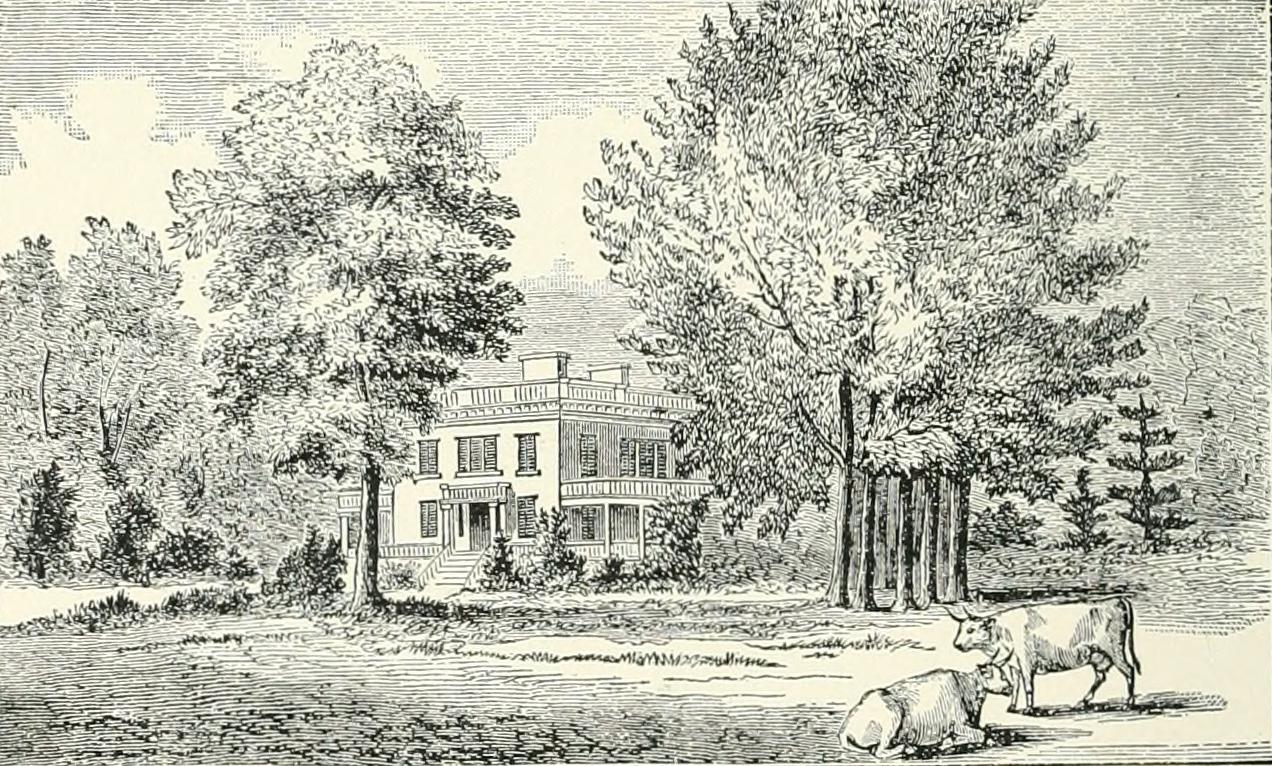
Hamilton purchased a set of upper Manhattan lots in 1800 in order construct a fine home for his family. Its name would be inspired by an ancestral Scottish mansion as well as his childhood home in St. Croix.  Designed by John Macomb Jr, (who was also commissioned for fellow NPS landmark Castle Clinton, as well as New York City Hall), the Hamilton Grange was completed in 1802, accompanied on the peaceful landscape by duck ponds, barns and an orchard.
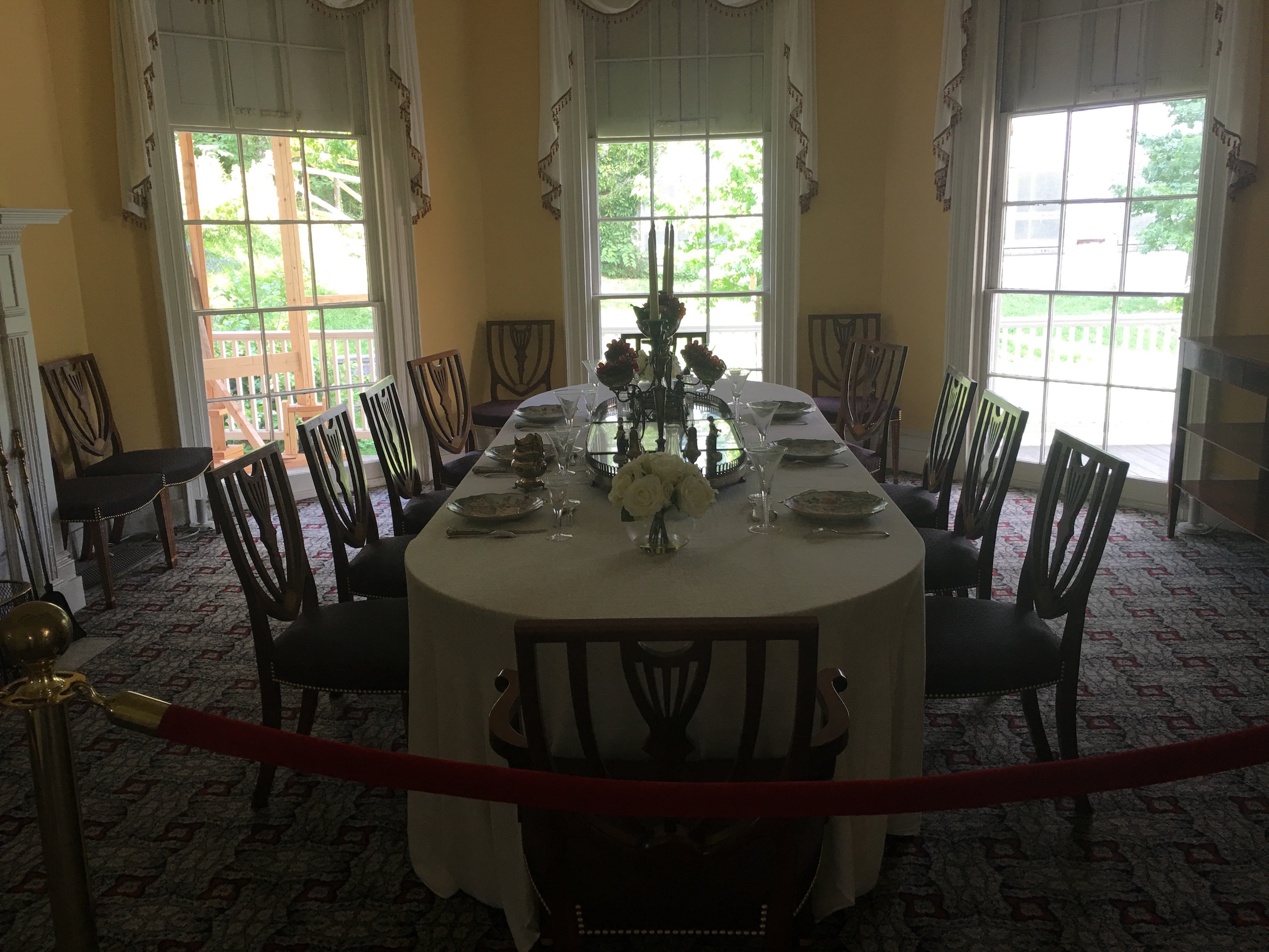
The house feted an extraordinary roster of politicians and dignitaries who ate and drank to their hearts’ content in the Hamiltons’ mirrored dining room (which you get to peek in on during the tour). Indeed, a week before the duel, the Hamiltons threw a lavish dinner party with the likes of John Trumbull and Nicholas Fish.
And like every good piece of New York City real estate, the Grange plunged the family into deep debt.
D’oh!
After Hamilton died in the summer of 1804, Hamilton’s widow Eliza Schuyler Hamilton struggled to maintain the family finances. Â Eventually a group of supporters (led by good ole Gouverneur Morris) bought the home and sold it back to her for half price. She managed to stay there until 1833, at which point she moved into her son’s new home on St. Mark’s Place.
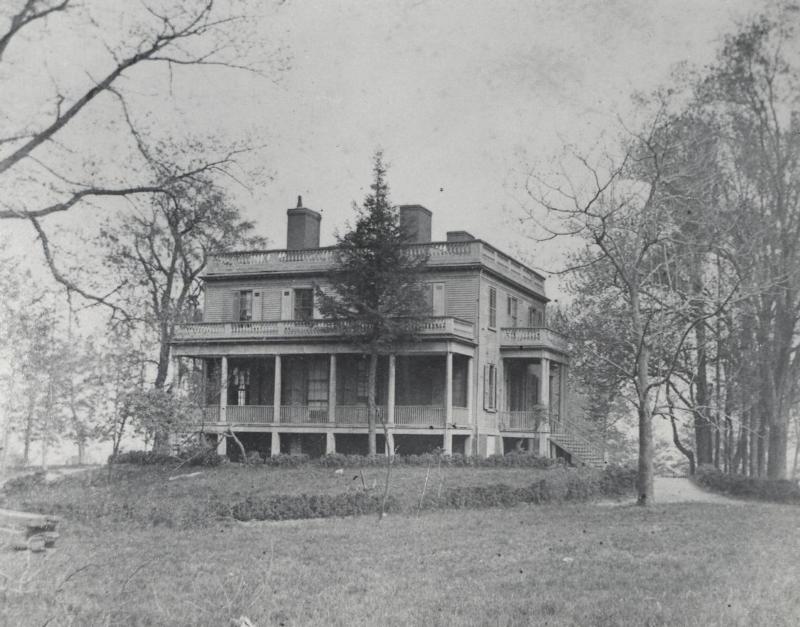
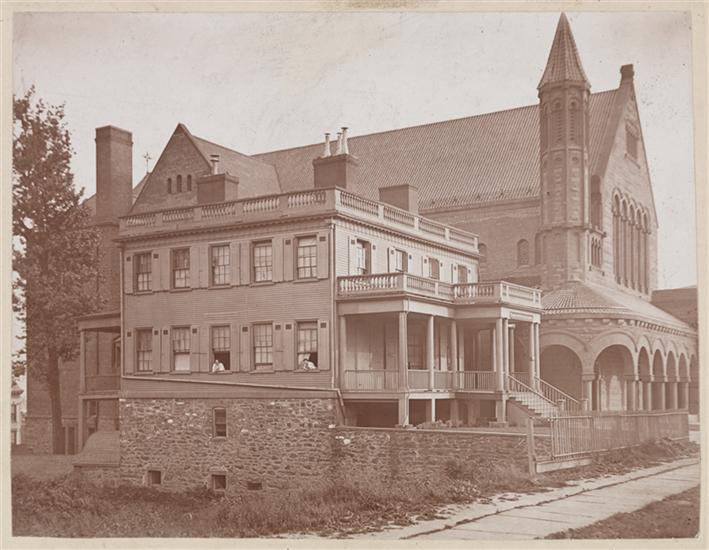
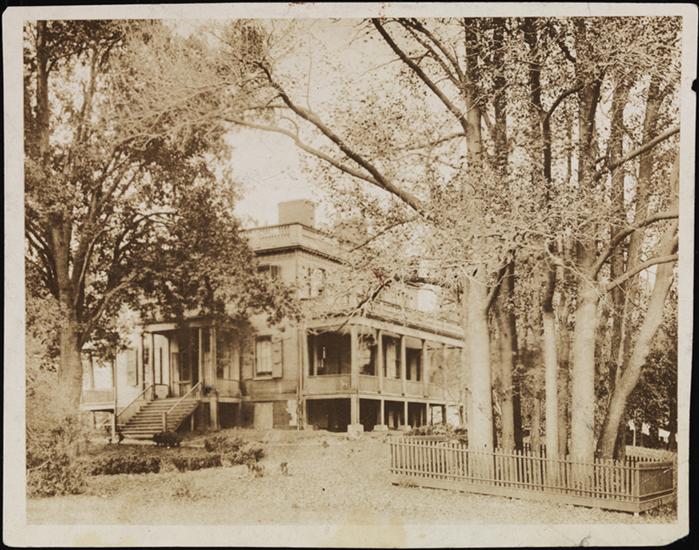
Below: The Grange, left adrift as the city moved up around it. Date of picture unknown, Â but most likely early 1880s.
Courtesy NPS
With the new grid plan eventually stretching up into upper Manhattan, farmhouses that were situated at all angles to maximize their glorious views now proved impossible to accommodate. Most were torn down with a few exceptions (such as the Dyckman Farmhouse, the oldest house in Manhattan).
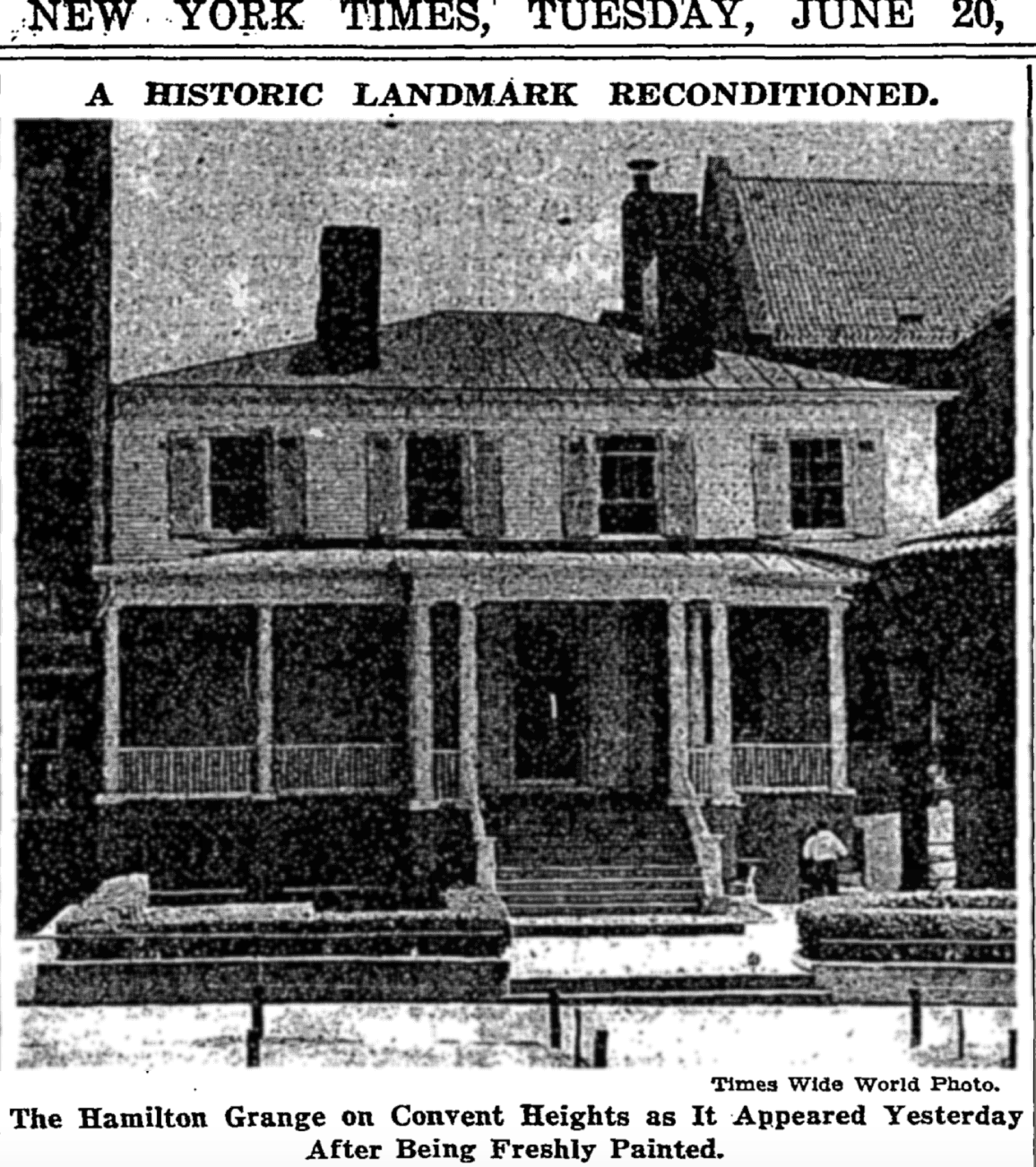
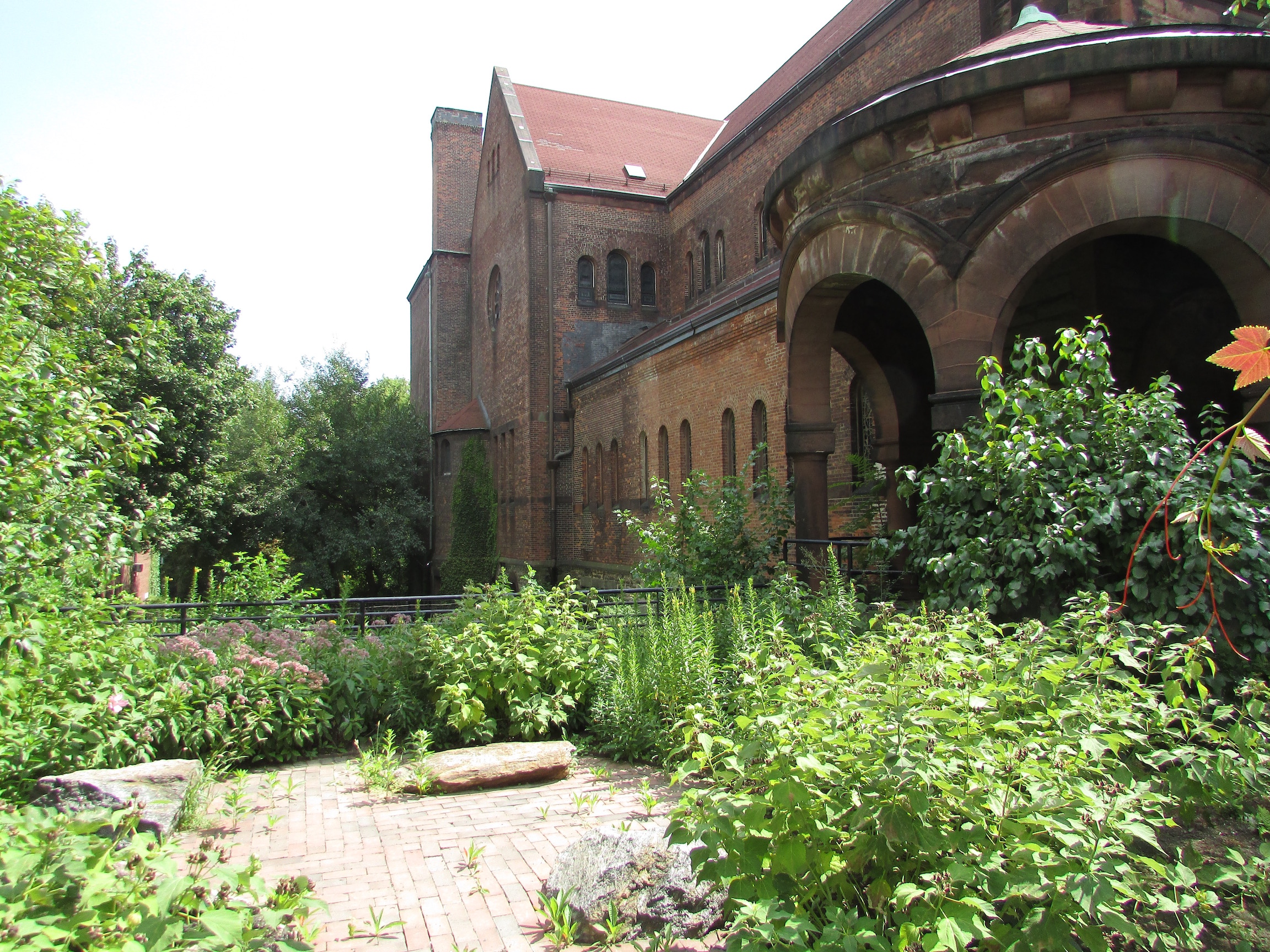
The battered old Grange would certainly have been erased from history if not for the congregation of St. Luke’s Episcopal Church who found use for the structure as an uptown chapel. The catch — it needed to move to their lot a block and a half away, conforming to Convent Avenue. By 1888 the house then became Hamilton Grange Reformed Church.
By the following year, the Grange was joined by a larger church structure which practically enfolded itself around the old house.
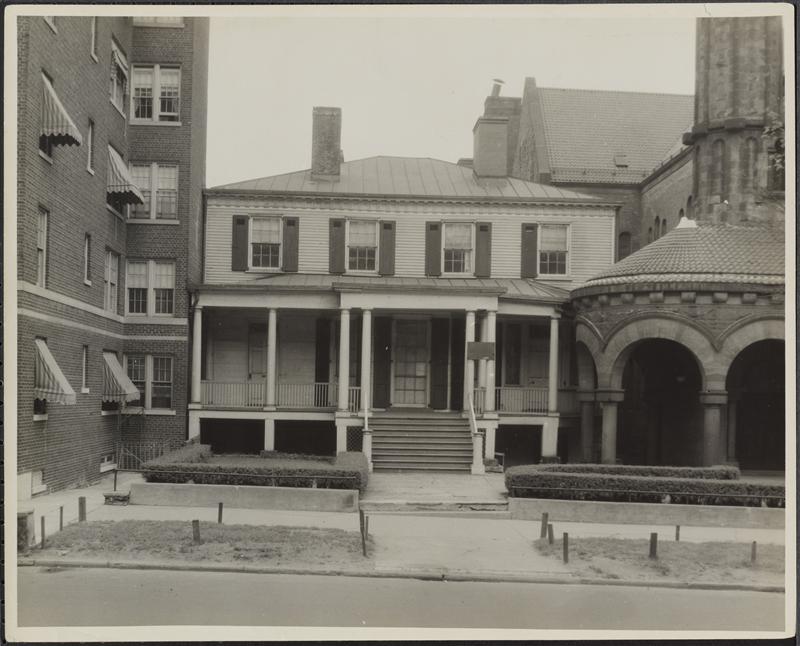
Further aesthetic travesties beset the house when an apartment complex was built onto the other side. Have you ever ridden a really, really packed subway? Now imagine riding that subway for almost a century. Thus was the fate of Hamilton Grange, a house-sized collectable artifact now shoved onto a tight shelf.
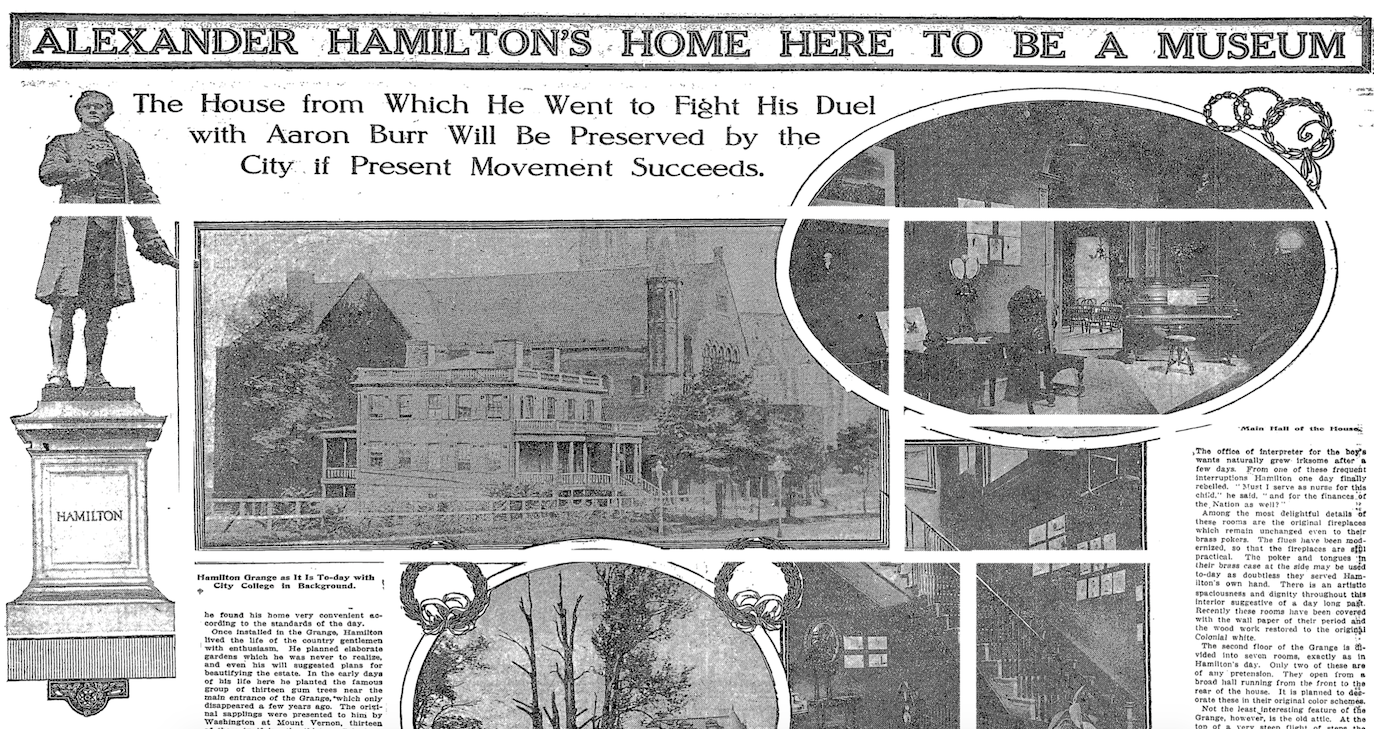
Almost immediately, concerned historians began discussing the rehabilitation of the house. “The Hamilton Grange is the oldest structure in this sector of the city, as it is assuredly the most historic,” observed the New York Times in a full-page spread in 1912. “In its present setting, hemmed in by rows of modern dwellings and apartments, its beautiful lines appear exceedingly incongruous.” Â Daughters of the American Revolution beseeched the city to purchase the property.
Curiously it was first proposed to move the Grange to St. Nicholas Park in 1915 as “it would not obstruct the landscape yet still stand on a portion of the Grange farm.” This prophesy would indeed come to pass almost 100 years later.
In the 1920s, plans were again picked up to transform the squished little house into a museum. Apparently there was some interest in moving the entire thing to Chicago when, in 1924, this glorious announcement was made: Â “The rivalry of New York and Chicago to possess Alexander Hamilton’s historic home has been ended by preserving the stately old mansion as a public museum near its original position on Manhattan Island. Hamilton Grange, as it is generally known, has become the property of the American Scenic and Historic Preservation Society, after some twenty-five years of unremitting effort.” Â In 1933 it finally reopened as a museum.
But even with the church congregation gone, even with the house filled with artifacts that were once owned by the Hamilton, the house’s placement robbed it of any context.
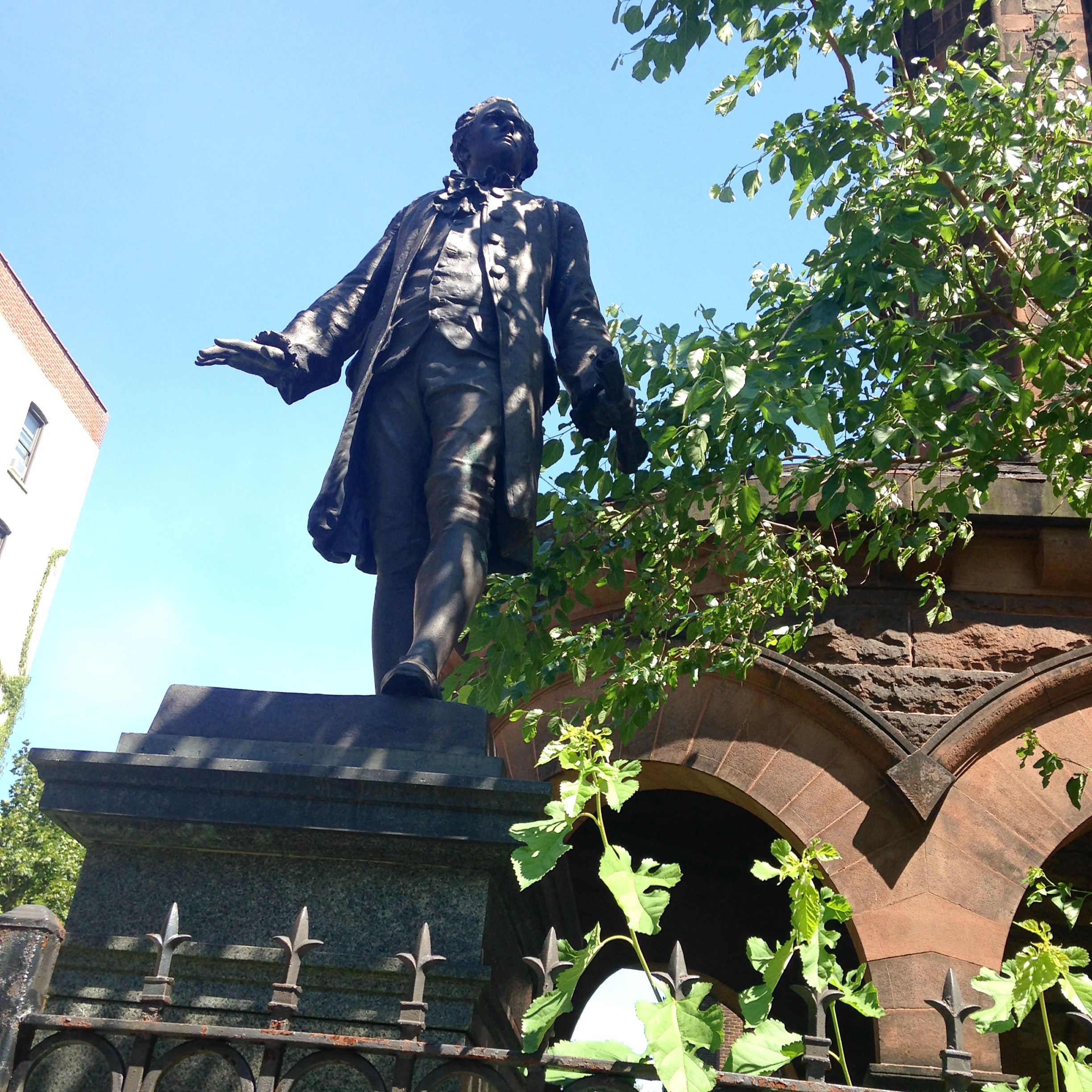
In 1936 a statue of Alexander Hamilton was mounted in front of the building. It was officially dedicated on the very same day that a statue of General Philip Sheridan was dedicated in a ceremony in Christopher Park. Â Today — thanks to Stonewall National Monument— the Sheridan statue now too stands on property operated by the National Park Service.
The statue remains in front of the church even as the house is now gone.
The NPS would finally get its hands on Hamilton Grange after it was declared a National Historic Landmark in 1960 and Congress declared it a National Monument in 1962. Â The house was to be moved to another location and fully restored.
But unfortunately the city’s financial upheaval of the 1960s and 70s threw off any serious work on the house. Or to quote a historic preservation graduate student from a New York Times 1988 article: Â ”’If the Grange were anywhere else, this would be a fait accompli,’ said Michael Adams, a Columbia University graduate student in historic preservation. ‘The only reason it has fallen into this deplorable condition is because it is in Harlem.’ ”
Finally in 2008, efforts were finally made to lift the house from its tucked-in spot near St. Luke’s to its new home in St. Nicholas Park. The newly revitalized house was opened to the public in 2011.
Here’s a dramatic video of its historic move:
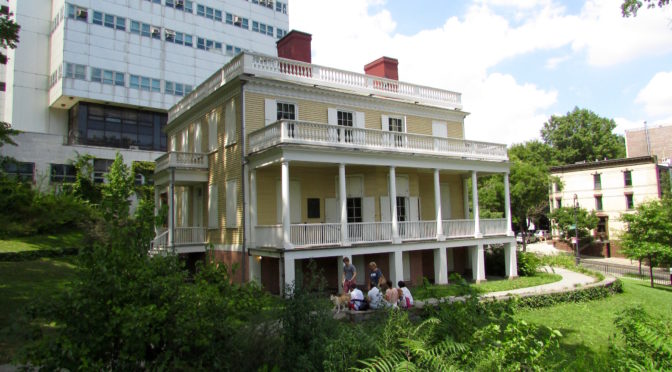
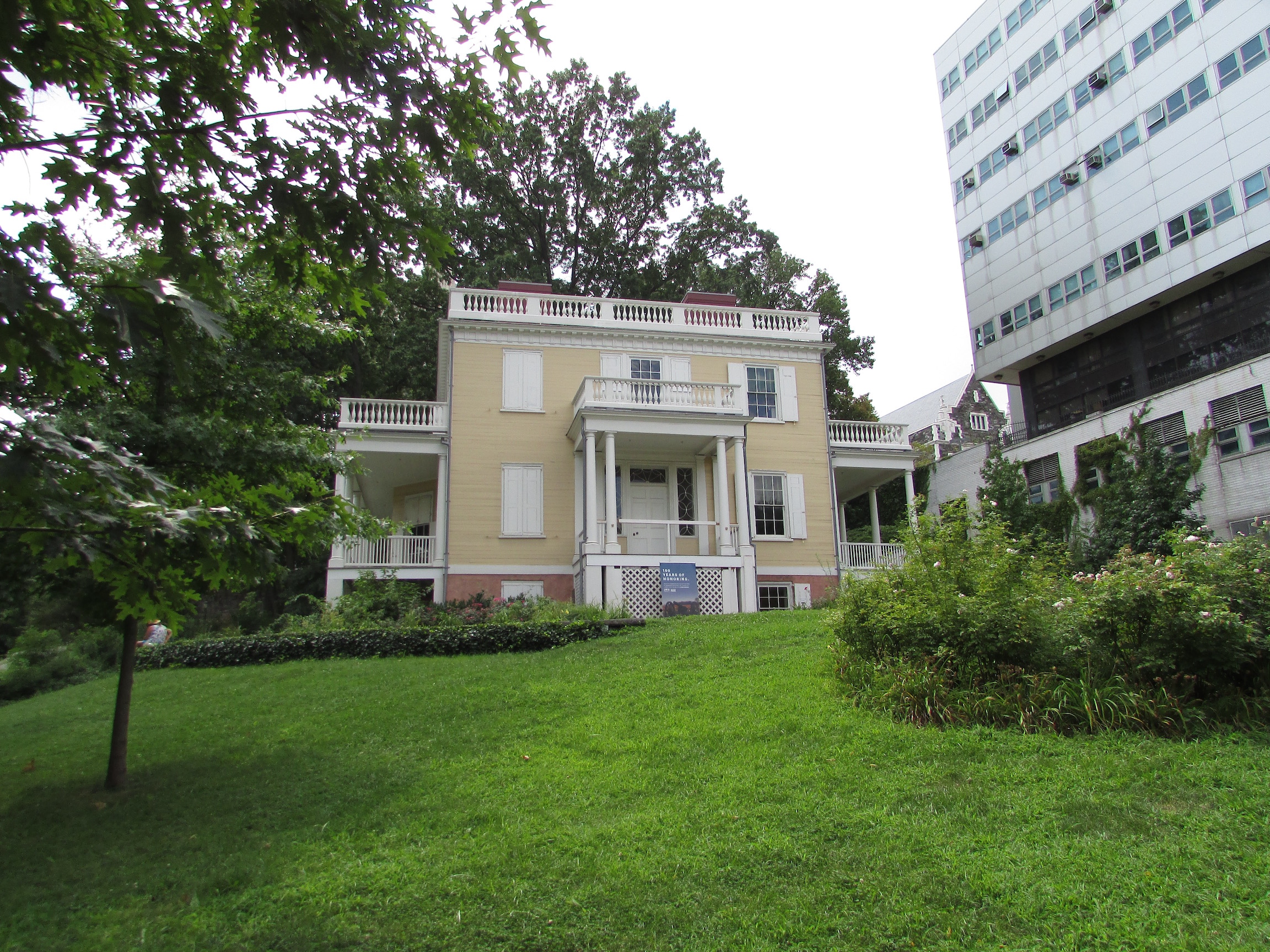
Today the Hamilton Grange feels out of place — but in the right way. Another tall structure hovers over it to the east, but at least it doesn’t smother the house’s natural beauty, restored in a bright canary yellow. Â Surrounded by the rocky terrain of the park, visitors can get a sense of the calm that Alexander and his family might have felt as they gazed out from the porches.
And almost 175 years after his family moved from the house, the Hamilton Grange has finally become a show-stopper.
PODCAST: The big, brash history of St. Mark’s Place, the East Village’s most interesting street.
St. Mark’s Place may be named for a saint but it’s been a street full of sinners for much of its history.
One of the most fascinating streets in the city, St. Mark’s traces its story back to Peter Stuyvesant, meets up with the wife of Alexander Hamilton in the 1830s, experiences the incredible influx of German and Polish immigrants in the late 19th century, then veers into the heart of counter-culture — from the political activism of Abbie Hoffman to the glamorously psychedelic parties of Andy Warhol.
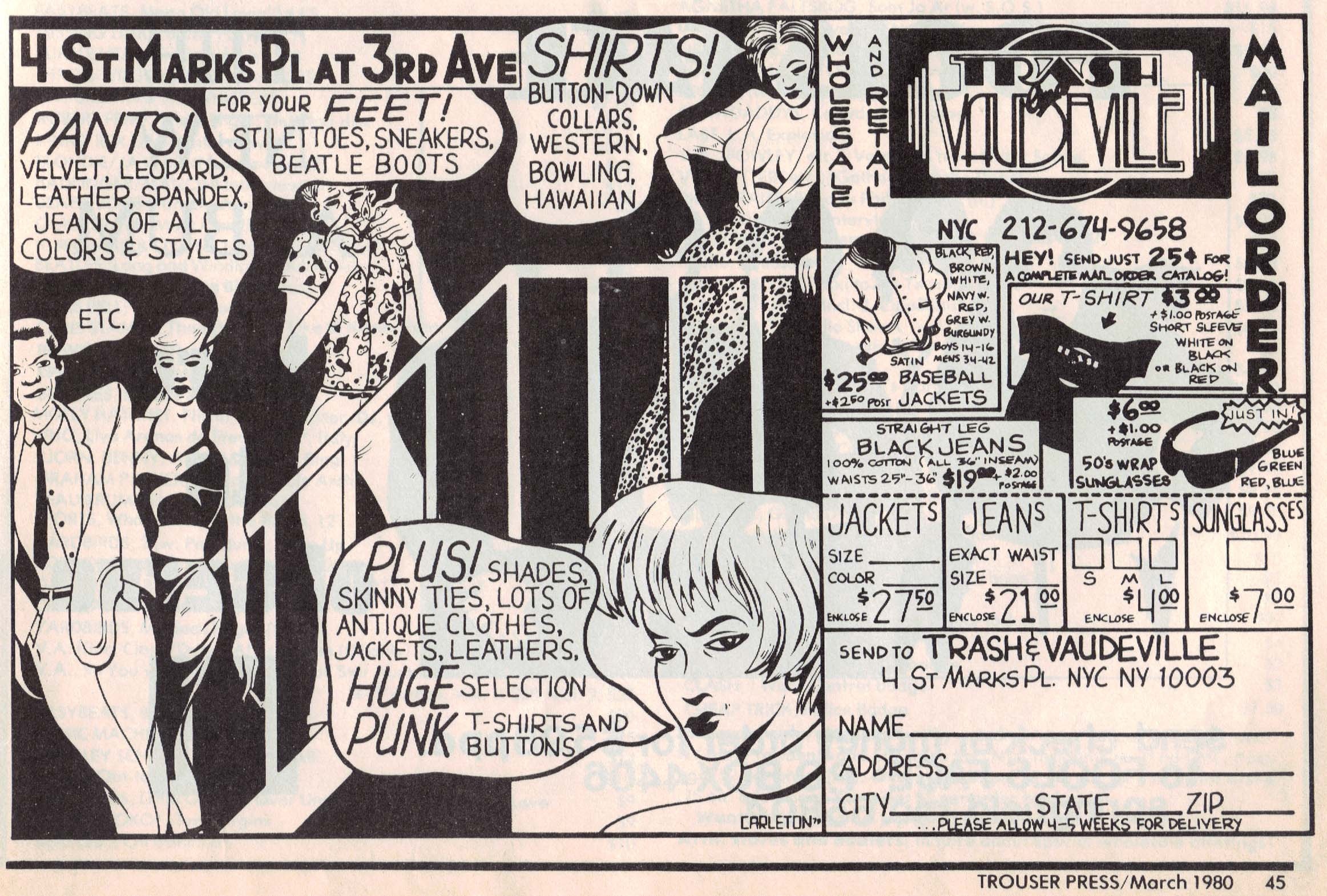
And that’s when the party really gets started! St. Mark’s is known for music, fashion, rebellion and pandemonium. In the 1970s and 80s, clothing stores like Limbo and club nights like Club 57 helped define its character — punk, new wave, alternative, raucous.
The Bowery Boys: New York City History podcast is brought to you …. by you!
We are now producing a new Bowery Boys podcast every two weeks. We’re also looking to improve the show in other ways and expand in other ways as well — through publishing, social media, live events and other forms of media. But we can only do this with your help!
We are now a member of Patreon, a patronage platform where you can support your favorite content creators for as little as a $1 a month.
Please visitour page on Patreon and watch a short video of us recording the show and talking about our expansion plans. If you’d like to help out, there are five different pledge levels (and with clever names too — Mannahatta, New Amsterdam, Five Points, Gilded Age, Jazz Age and Empire State). Check them out and consider being a sponsor.
We greatly appreciate our listeners and readers and thank you for joining us on this journey so far. And the best is yet to come!
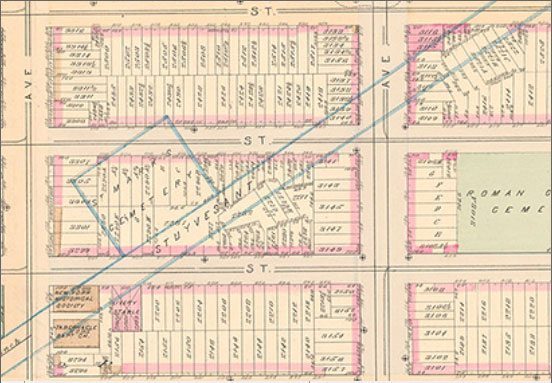
Stuyvesant Street superimposed over the planned grid. Ultimately the street was allowed to remain, breaking the grid. By the way, see that green patch at the far right? That was also a cemetery.
Courtesy EV Transitions
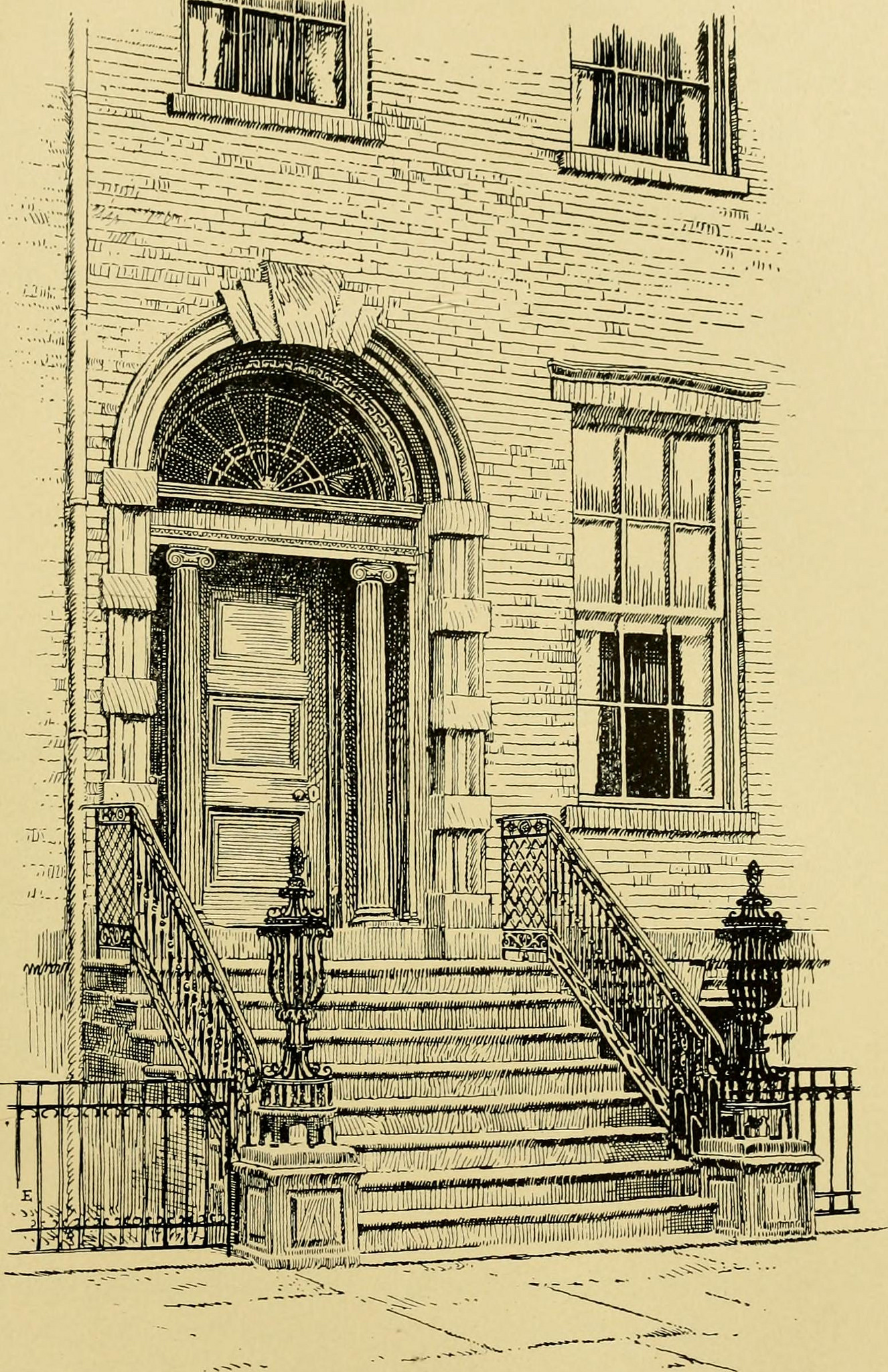
The front of 22 St. Mark’s Place from a 1914 history book. (It looks almost identical to 20 St. Mark’s, the old Daniel LeRoy House, which is still there.). “It had a tea room in the rear of the first floor, which [the tenant] altered into a library, constructing a bathroom in connection with it. A new bedroom was added above the library, and in the basement was installed a cook.” [source]
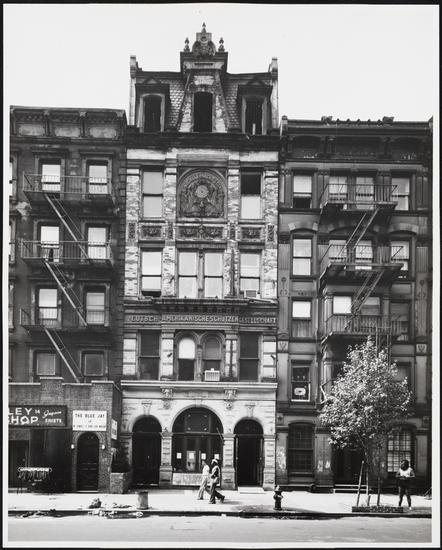
Deutsch-Amerikanische-Schützen Gesellschaft (German-American Shooting Society) building, 12 St. Mark’s Place, pictured here in 1975 in a photograph by Edmund Gillon
Courtesy Museum of the City of New York
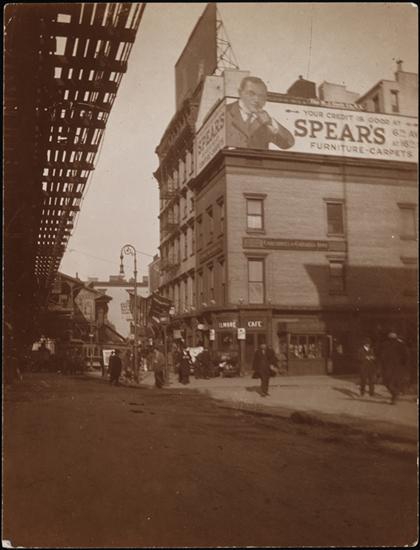
St. Mark’s Place and Third Avenue in 1914, the same year as the shootout at Arlington Hall! The Third Avenue elevated train framed St. Mark’s on the west end, the Second Avenue elevated (which actually ran along First Avenue in the East Village) to the east.
Courtesy Museum of the City of New York
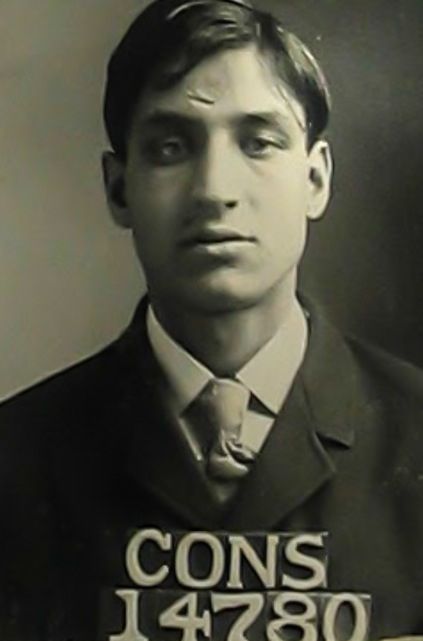
The mugshot of Dopey Benny whose gang was involved in the shootout which killed a city official.
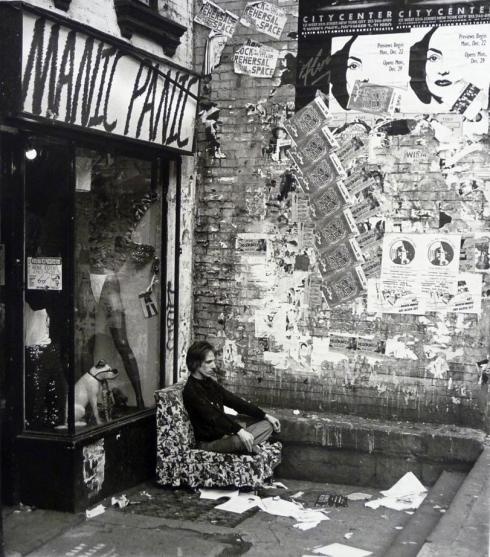
A photo by Victor George Macarol of the boutique Manic Panic (and a man in meditation), 1975
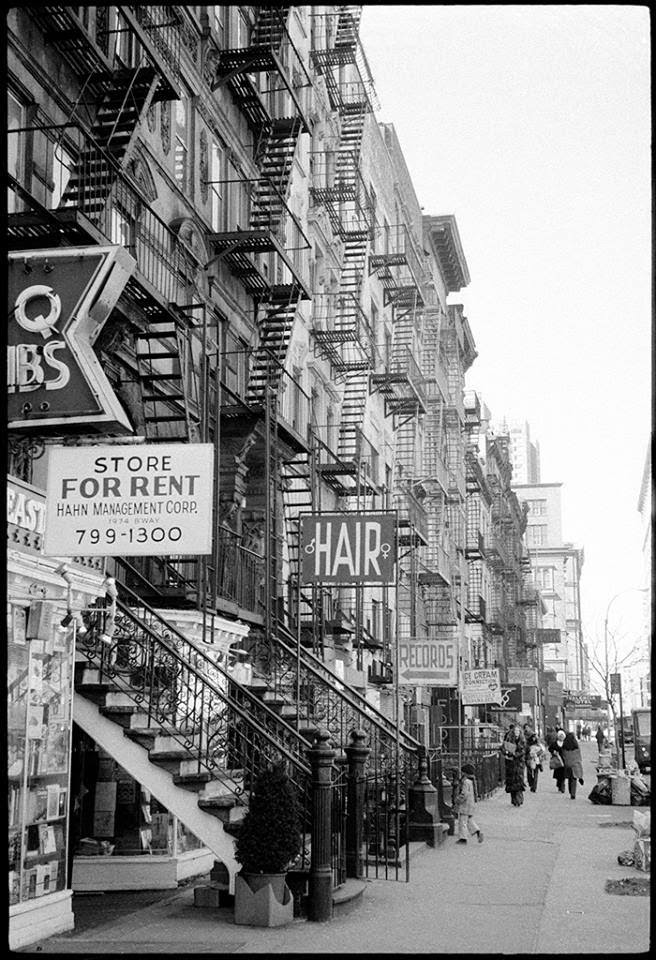
The south side of St. Mark’s Place, 1975
EV Grieve
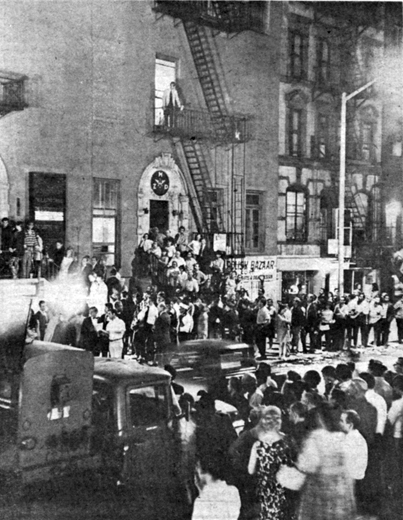
Crowds waiting to get into the Electric Circus
courtesy Alex Ross
A flyer for Trash and Vaudeville…
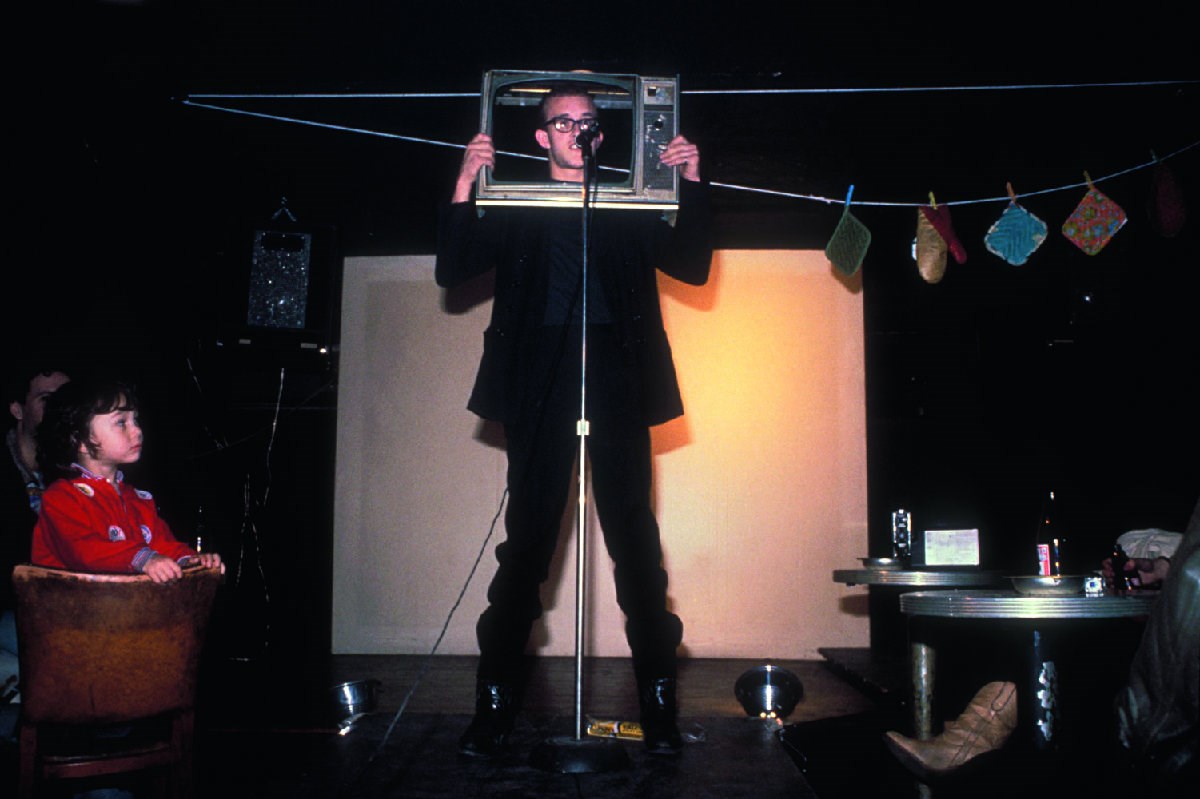
Keith Haring performing at Club 57 in a themed evening called Acts of Live Art. For more information on Club 57, you can read my earlier article about this extraordinary club here. Dazed has a pretty great article about the place here.
Photo by Joseph Szkodzinski
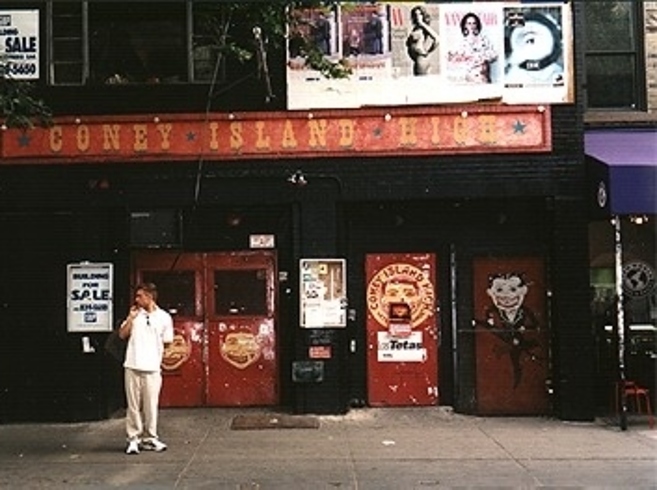
Coney Island High, a pivotal East Village venue during the 1990s.
Courtesy Buzzfeed
Top photo — St. Mark’s Place in 1978, Photos by Leonard Freed / Magnum Photos, care of Vintage Everyday
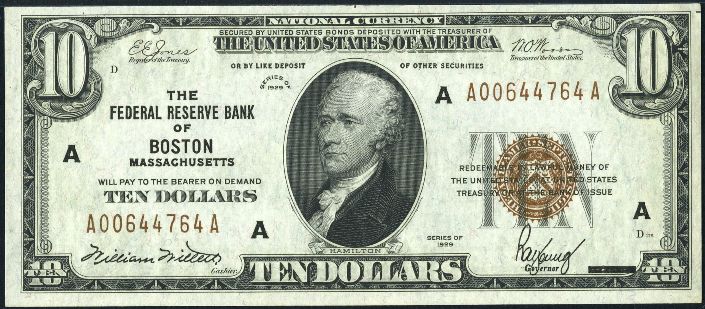
Big news in the world of numismatics — the U.S. Treasury Department has announced that Alexander Hamilton, long the solitary face on the $10 bill, will be joined by a woman. But who? His wife Eliza Schuyler? Harriet Tubman? Eleanor Roosevelt? And how will she featured?
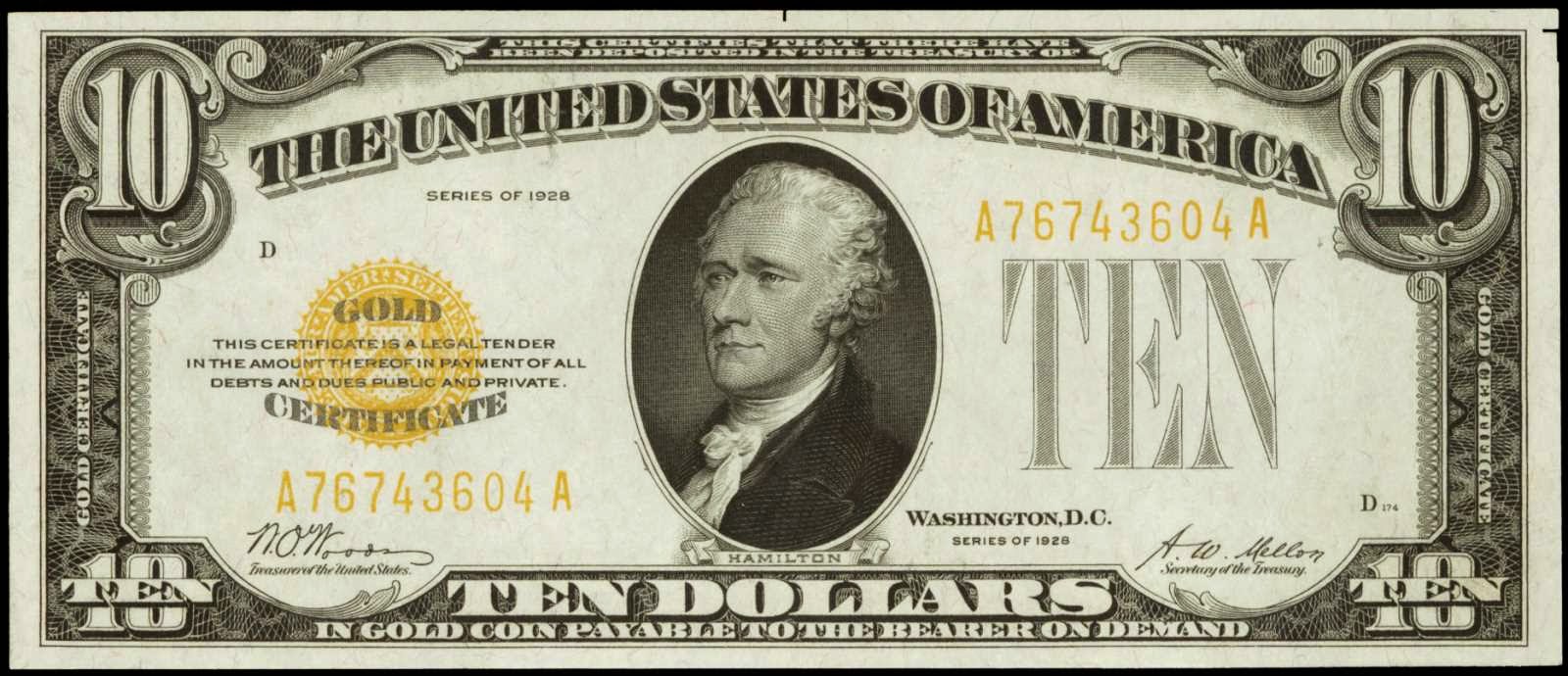
Thankfully he’s not leaving the bill which he has graced since 1928. Here’s a few other interesting tidbits about his appearance on currency:
1) Why is Hamilton, who was never a president, on money in the first place? He was America’s first treasury secretary, of course, from 1789 to 1795. But in many ways he’s also the inventor of American money!
According to Ron Chernow, Hamilton encouraged the use of the dollar bill as the basic unit of currency and called for a series of coins broken into smaller values, a new concept in an age when bartering was the preferred method of transaction. Â To encourage the new American spirit, he recommended putting presidential faces on the money. Since there was only one president at that time, this meant the basic unit currency went to Hamilton’s good friend George Washington.
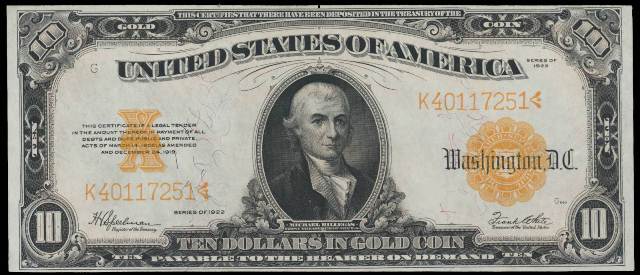
2) Hamilton was the first Secretary of the Treasury, but he was NOT the first Treasurer of the United States. That honor went to Michael Hillegas, a wealthy Philadelphian who led the treasury through the duration of the American Revolution. His face was actually on an early version of the $10 well before Hamilton’s.
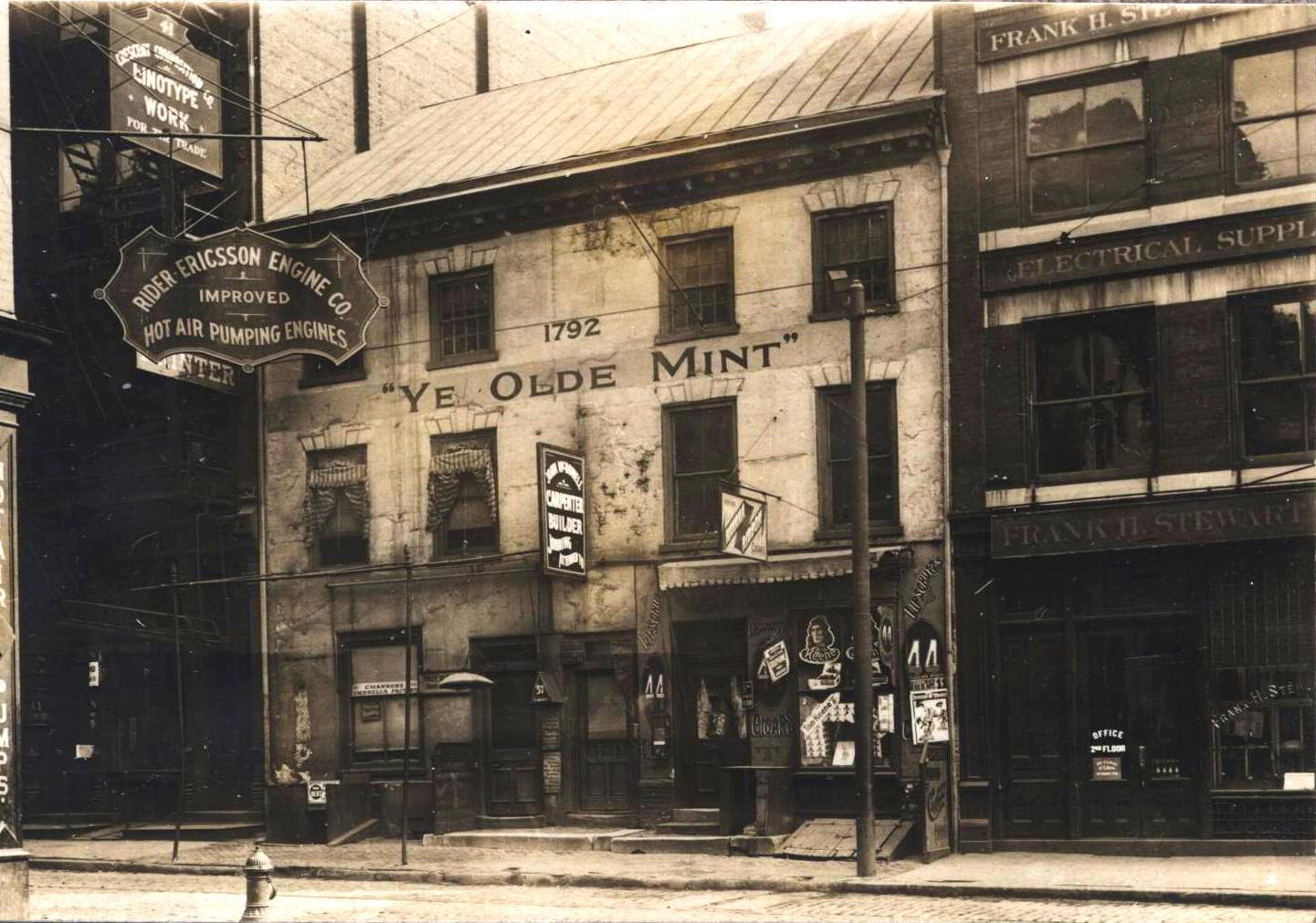
3) Hamilton was never in charge of actually making money. While Hamilton is partly responsible for the creation of the U.S. Mint (established in 1792), it was placed under the job of Secretary of State Thomas Jefferson.  Chernow: “Unfortunately, Jefferson ran the mint poorly.  Hamilton later tried, in vain, to arrange a swap whereby the post office would go to State in exchange for the mint coming under Treasury control, where it belonged.”
The first director of the U.S. Mint was David Rittenhouse, on which Philadelphia’s Rittenhouse Square is named.
Below: The first U.S. Mint building in Philadelphia
Courtesy 1794largecents.com
4) Hamilton is only one of only three non-Presidents to currently grace American paper money, the others being Benjamin Franklin ($100) and Salmon P. Chase ($10,000).  But non-presidents have lived upon paper money since its invention.  William Tecumseh Sherman, George Meade and Lewis and Clark have all been on U.S. printed currency.
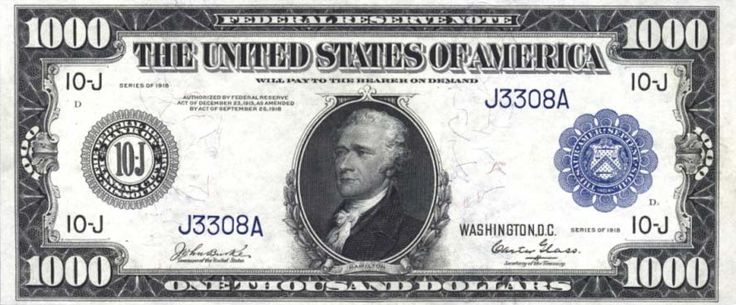
5)  For decades, Alexander Hamilton was actually the face of the $1,000 bill.
6) The current image of Hamilton on the $10 bill is based upon a portrait by John Trumbull which currently hangs in New York City Hall. That painting was completed posthumously in 1805; Hamilton had been shot and killed in a duel with Aaron Burr the year before.
7) Alexander faces left where the other members of the Faces On Money Club are turned right. There is a rarely used $100,000 bill with Woodrow Wilson which faces a similar direction but I doubt you will ever see that in your lifetime.
Hamilton Grange in 1895, courtesy Museum of the City of New York
8) Having your face on money doesn’t mean that you had much. At the end of his life, Hamilton overspent on his new home in upper Manhattan (Hamilton Grange) and was nearly broke.  To William Cooper, he wrote, “I have been building a fine house and am very low in Cash; so that it will be amazingly convenient to me to touch your money as soon as possible”
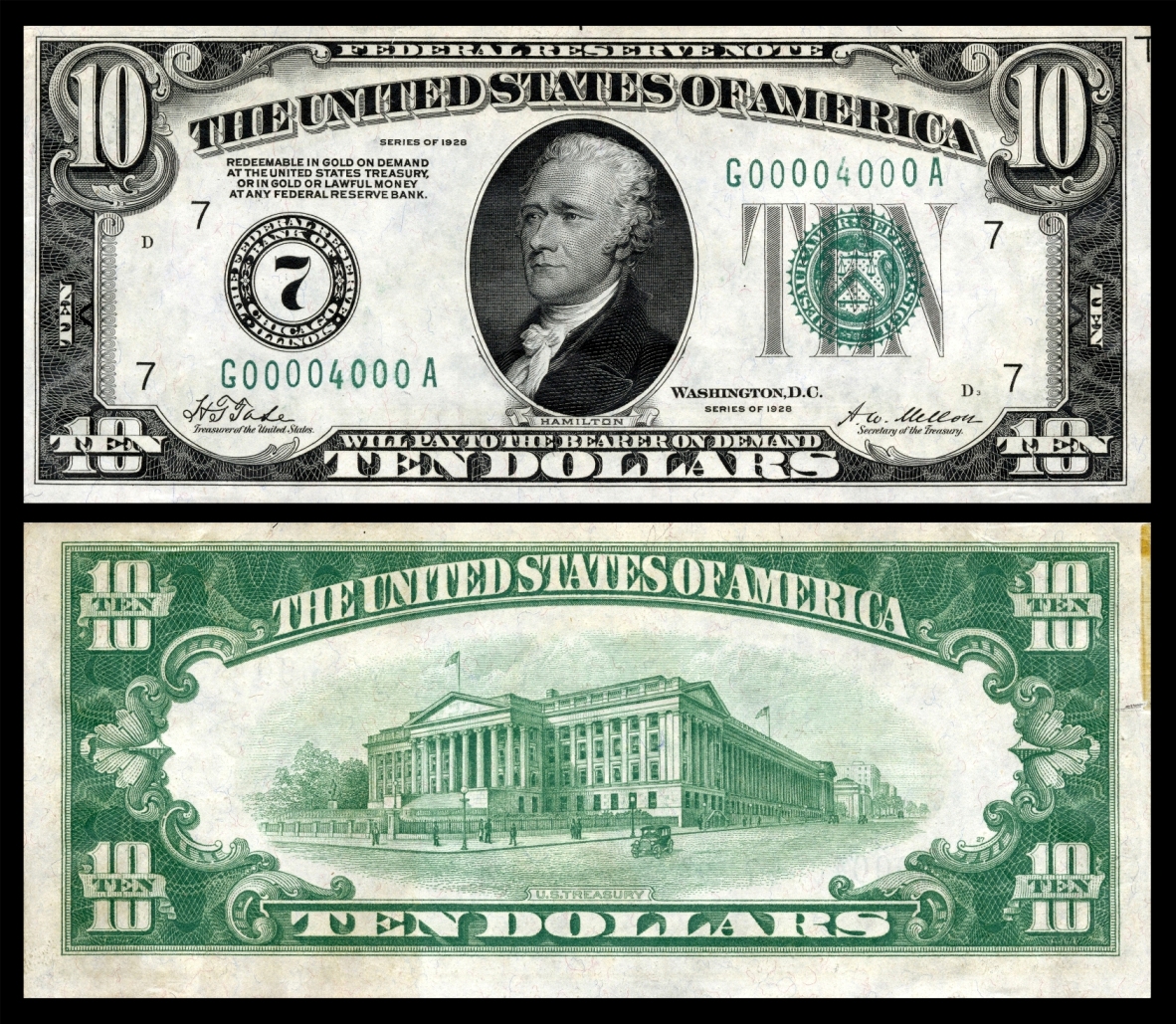
9) The most interesting thing about the that 1928Â $10 bill with Alexander Hamilton on the front is actually a small detail which appears on the back — a very small automobile. According to the blog US Dollar Bill: “The car parked outside of the Treasury Department building is based on a number of different cars manufactured at the time and was the creation of the Bureau designer who developed the artwork that served as a model for the engraving, because government agencies were prohibited from endorsing any specific manufacturer or product, according to a bureau of engraving and printing pamphlet.”
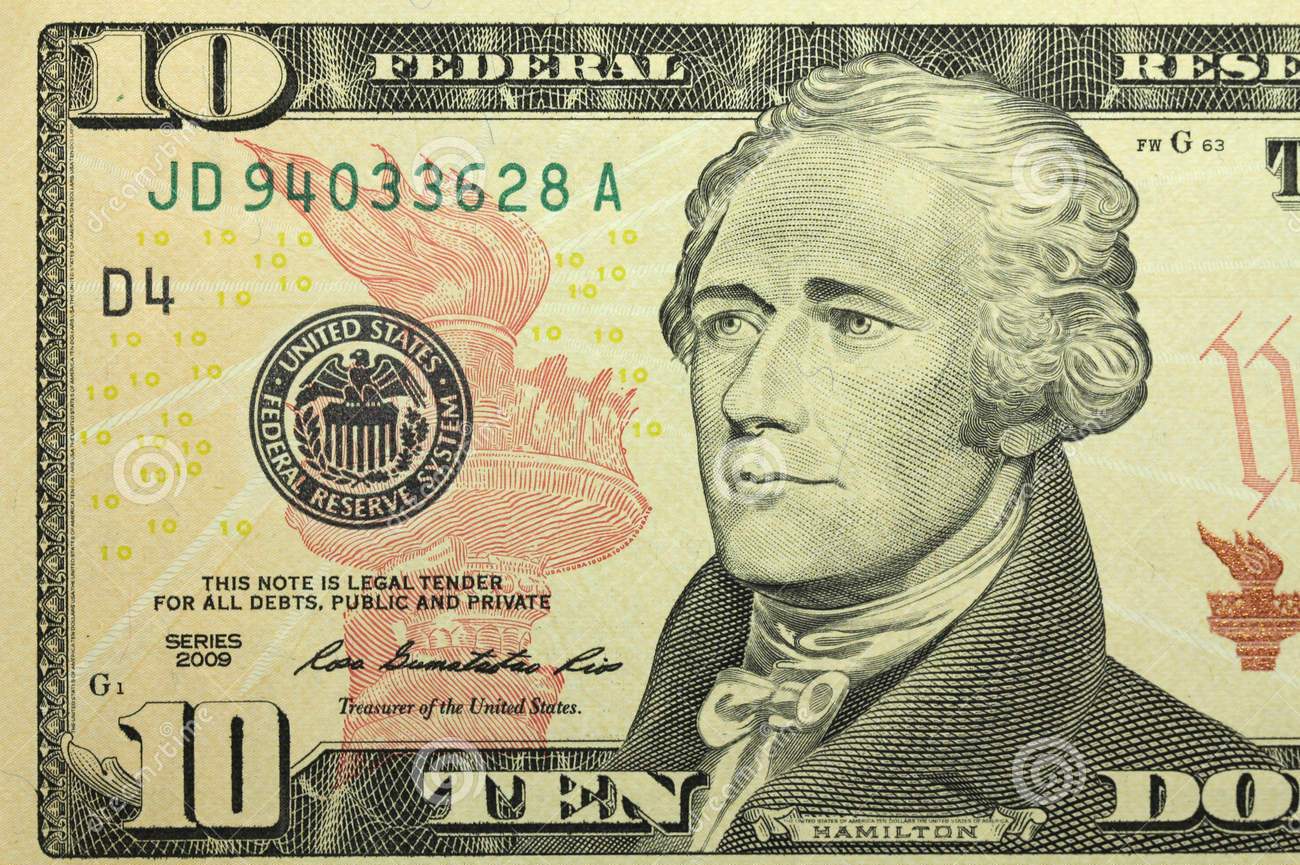
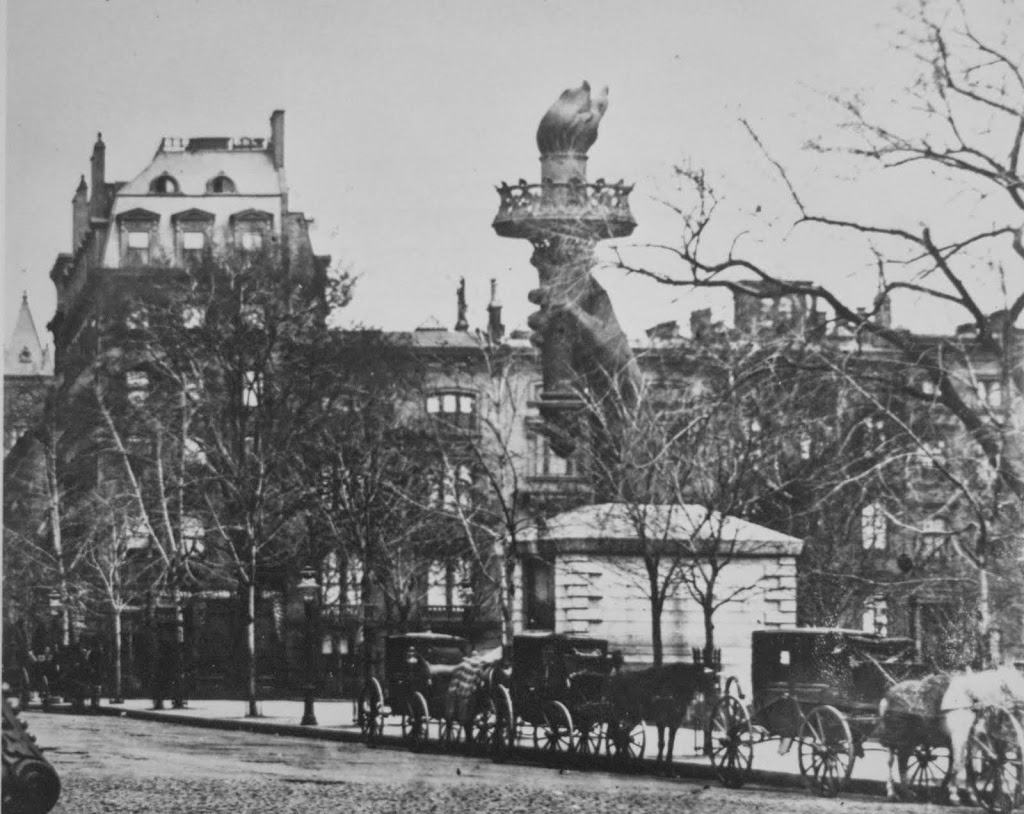
10)Â There is already a woman on the $10 bill, or at least, part of her. On the redesigned 2006 bill, Hamilton breaks free of the oval which has traditionally confined the portrait. He is looking left towards the hand and torch of the Statue of Liberty. Â Lady Liberty’s torch once sat in Madison Square Park for several yearsas a way to drum up funds for the statue’s pedestal. Â The park’s namesake, James Madison, wrote the Federalist Papers with Alexander Hamilton and John Jay.
And a bonus fact –Â Aaron Burr has never been on the face of any currency.Â
Below: Aaron Burr, to be found nowhere on money
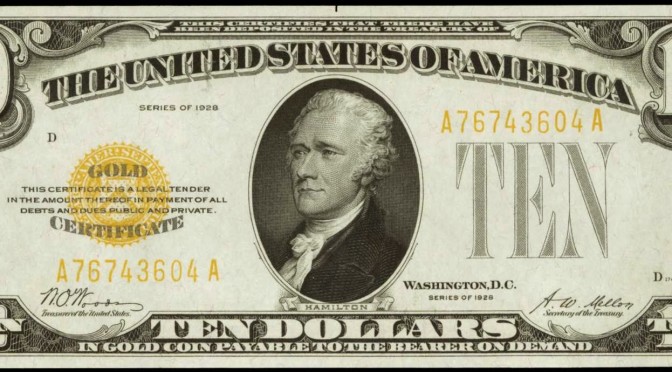
At top of this post — Alexander Hamilton’s first $10 bill, gold certificate edition, printed in 1928
Yes, Hamilton fans, we are a proud people, judging from the many notes and supportive comments yesterday left on the Facebook page on the birthday of Alexander Hamilton, tinged with strong anti-Aaron Burr sentiment. But, from our comfortable vantage of the future, have we been too harsh on the killer Vice President?
Sure, he absolutely got away with murder. But it was, after all, a duel, willingly engaged by both participants, however misguided. Murder charges against Burr were eventually dropped, but he obviously avoided New York for many years.
His later misadventures out West — his failed, confusing efforts to infiltrate Spanish territory and allegedly form a new government in 1806 — just slathered on further scorn and distrust for the once respected lawyer. Three years after killing Alexander Hamilton, Burr was brought to federal trial for treason. He was eventually acquitted due to lack of credible evidence, much to Thomas Jefferson‘s chagrin.
After traveling through Europe and eventually going broke, Burr returned to New York and married the alleged ‘black widow’ Eliza Jumel. They divorced just four months later. The Morris-Jumel Mansion, his home during that time, is today less than two miles away from Alexander’s prized Hamilton Grange. They are two of the oldest homes still standing in northern Manhattan. (The Dyckman Farmhouse , in Inwood on 204th Street, is older than Hamilton’s house.)
Aaron Burr died in 1836 in Staten Island at a boardinghouse in the Port Richmond neighborhood, not far from the Bayonne Bridge. The boardinghouse later became the St. James Hotel, where guests could specifically ask to stay in Burr’s room for an evening. And sleep in the same bed! A sign even hung over the mantel, “Aaron Burr died in this room.”
The former Vice President spent his last, lonely days in this particular room, shying away from curious locals and pouring over old love letters from Eliza. According to a 1895 New York Times article on the subject of his ‘deathbed’, Burr was hounded by pious ministers who wished to save his soul and release him from his crippling depression.
The article also highlights a very bizarre visitor. One guest at the boardinghouse had an unnatural fascination with Burr, but never spoke to him and kept quietly to himself. When the landlady discovered that Burr was died in his room, the stranger suddenly appeared at the door, opened his satchel and removed the materials to make a plaster death mask of the Vice President. I believe this may be the morbid mask in question!
After years of being planted in the wrong place and a lengthy moving process that literally plucked it out of a city block like a slice of cake, Alexander Hamilton’s home — known as Hamilton Grange — is finally ready for visitors at its new home in St. Nicolas Park. The last home of New York’s own Founding Father was opened this past weekend a few years after it was lifted from its old location near St. James Church. The house first moved four blocks in 1889 when the church purchased the famous house and squeezed it against St. James’ main church building.
Visit the National Park Service’s website for more information on tours and visiting hours. As an unabashed Alexander Hamilton fan-geek, I’m thrilled to see it back. You can read my original 2008 blog post about the move here.
Federal Hall, home to the first House of Representatives 1789 [NYPL]
This week the United States got a new Speaker of the House of Representatives, John Boehner, and its first female ex-Speaker, Nancy Pelosi. This changing of the guard got me to wondering how many politicians representing New York had ever held this powerful job.
Surprise! No House representatives from the City of New York have ever been Speaker. The closest we’ve gotten is the otherwise unremarkable John W. Taylor, an upstate New Yorker from the Saratoga region, who briefly held the job in 1820-21. A central New York representative, Theodore Medad Pomeroy, held the post for exactly one day in 1869.
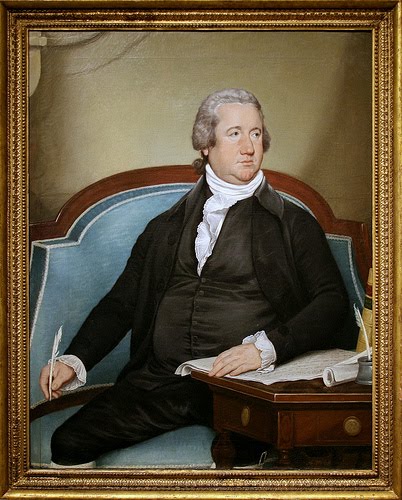
But never fear! America’s very first Speaker of the House, Frederick Muhlenberg, has a New York connection wholely unique and never to be repeated — he is the only Speaker to have served within that role in New York proper, in the months of 1789-1790 when the city was also the nation’s capital, and the center of government sat in Federal Hall on Wall Street.
And that was not Muhlenberg’s only tie to the city. Although he served in the House as a representative from Pennsylvania, he had previously lived in New York for two years during a truly volatile moment — the years before the Revolutionary War.
His name will probably sound familiar if you’re a Lutheran. His father Henry Melchior Muhlenberg is considered “the patriarch of the Lutheran Church in North America,” coming to the British colonies from Germany in 1742 by request of several American ministers in need of spiritual direction. Henry spread Lutheranism throughout the colonies, principally to German and Dutch settlers, and for a time in 1751 even lived in New York, uniting the Lutheran congregations here.
He spawned a true religious dynasty as three of his sons entered the ministry. Frederick (pictured below), born in 1750 in Trappe, Pennsylvania, trained at several small churches in the state before moving with his family to New York in 1774. Lutherans were by no means plentiful in New York during this period, but they worshipped in various small congregations throughout the city, including some services at Trinity Church.
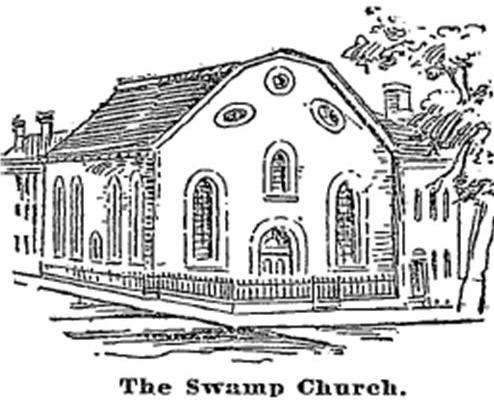
Young Muhlenberg, however, took up with a new church situated just east of the city commons, the newish stone Christs Church at the southeast corner of Frankfort and William streets, affectionately referred to as the Old Swamp Church.
When that house of worship was built in 1767, this area of the city, sparsely populated, was called the ‘swamp’, not so much for the topography perhaps as for the grim-smelling leather shops and tanneries that sat here. Collect Pond, which attracted these sorts of businesses, was but a stone’s throw away, and the area retained its air of industry even as the tanneries moved out and the presses (that would soon comprise Park Row’s newspaper district) moved in.
The congregation didn’t seem to mind however, especially now that they had a venerable Muhlenberg as their leader. And they certainly needed him by this time. In fact, he might had come to New York during this period specifically to reassure a tense congregation amid the tensions that were stewing within the city.
The city of over 22,000 inhabitants was being ripped apart with rebellion, as New Yorkers, caught in an increasing spirit of independence, fought back against British tyranny. From the steps of Old Swamp Church, members would have seen the ‘liberty poles’, hanging in the commons and festooned with banners, and heard (or participated in) regular rallies there. The clandestine Sons of Liberty would conduct secret meetings in nearby taverns, and services would have been interrupted with sounds of the Sons’ many retaliations against British officials.
Congregants felt the inevitability of war; it would surely dominate their prayers by 1774. Having the guidance of Muhlenberg, son of the colonies’ most prominent Lutheran, would certainly be of great relief.
It seems, though, that Muhlenberg himself was at odds with his role. He was not bold or rebellious himself and he initially believed the conflicts were none of his business. Even as his brother Peter Muhlenberg, a Virginian who embraced the rebel conflict, would join the fledgling Continental Army in 1775, Frederick himself was not yet convinced. He wrote his brother: “You have become too involved in matters with which, as a preacher, you have nothing whatsoever to do and which do not belong to your office.” [source]
Revolution was invitable. But Frederick was a theologian, cautious and steady, and he worried not only for his congregation but for his own family. This passivity would soon fall away. When actual bombs began reigning down on the city, he sent his pregnant wife and children away to Philadelphia. He remained for a few months to officiate over a dwindling flock but soon fled himself in the first months of 1776, looking over his shoulder at a city soon to be paralyzed by war.
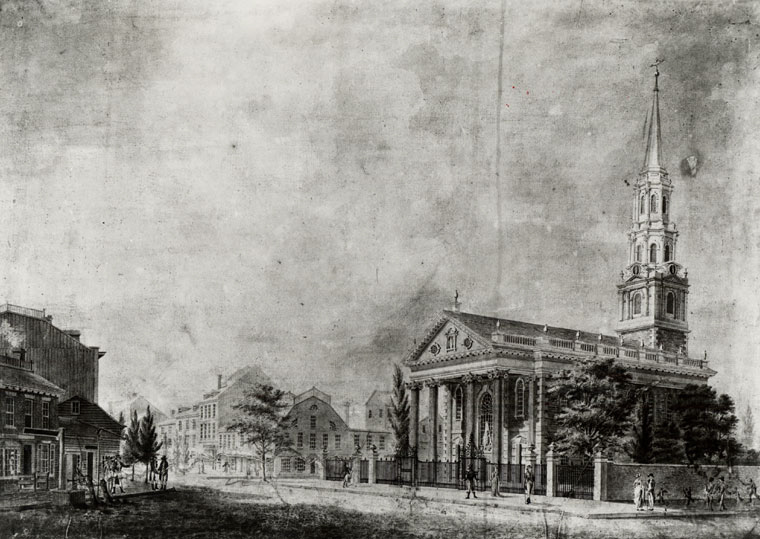
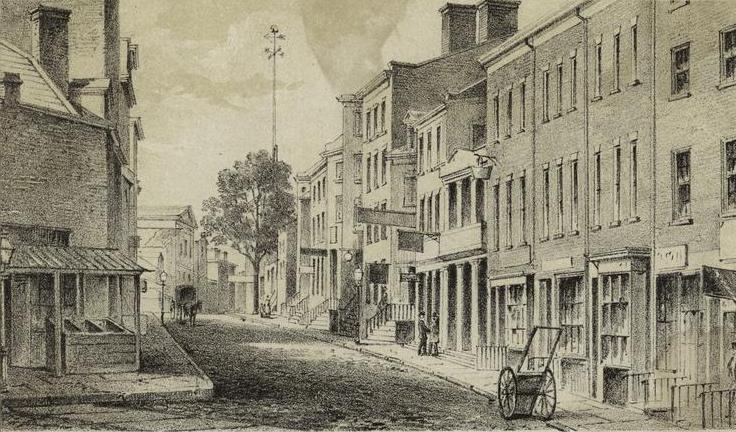
Below: An illustration from ‘D.T. Valentine’s Manual, 1859’, looking up from William Street from Frankfort. The building immediately to the left was the old Swamp Church, no longer in service and heavily redone by the mid-19th century.
He returned to New York in 1789 as one of the most powerful men in the new government of the United States. Muhlenberg spent the war in Pennsylvania and soon found his footing there as a political leader, becoming a member of the Continental Congress and later elected as speaker to Pennsylvania’s own state House of Representatives in 1780.
According to author Paul Wallace (in his excellent book ‘Muhlenbergs of Pennsylvania’), Frederick wasn’t merely heeding a patriotic call. He had grown a little exhausted of the pulpit and wanted to develop his new course, one of his very own.
Muhlenberg’s austere character and unblemished reputation served him well in politics. He led Pennsylvania’s ratification of the Constitution in 1787. When the first national Congress was formed, Muhlenberg represented his state at their first meeting in the new temporary capital and his old home — New York. His election as Speaker made perfect sense; he had a well-known last name that had helped define American spirituality, and he came from a state neatly between that of President George Washington (from Virginia) and Vice President John Adams (from Massachusetts).
The first House of Representatives met on April 1, 1789, at Federal Hall at the junction of Wall and Broad streets, just south of Old Swamp Church (which now thrived under new leadership). Muhlenberg would help shape the first traditions of the House and define the rules as dictated by the Constitution, its ink still dry and untested. Most notably, his was the first signature to grace the Bill of Rights.
He grew into a tolerant and jovial leader, best known for inviting fellow Congressmen over to his home for fairly elaborate ‘oyster suppers’. Muhlenberg would remain Speaker of the House for the entirety of the first Congress, even as they moved out of New York at the end of 1790. He stayed in the House through 1797, become Speaker again for the Third Congress in 1793.
Muhlenberg’s name has been attached to some rather scandalous events. He was one of three men brought into the confidence of Alexander Hamilton during a blackmail scandal involving his mistress Maria Reynolds. Muhlenberg was sympathetic to Hamilton’s predicament; one of the other three men, political enemy and future president James Monroe, was less so.
In 1796, during congressional battles over funding for the Jay Treaty, Muhlenberg broke a tie vote authorizing the highly controversial treaty to go forward. As a thank-you, his anti-treaty brother-in-law stabbed him in retaliation. He recovered, but family dinners must have been very awkward after that.
Muhlenberg retired shortly thereafter and died in his home in Lancaster, Pennsylvania, in 1801.
As for the Swamp Church, its members slowly drifted away, and the property was purchased by tobacco mogul George Lorillard. The Lorillards also have very deep scars due to the Revolutionary War, but that is another story.


![[Richmond Hill, residence of Aaron Burr.]](https://boweryboyshistory.com/wp-content/uploads/2014/07/M3Y29313-300x208.jpg)