Categories
Podcasts Revolutionary History

A Perilous Night in New York: The Great Fire of 1776

PODCAST We revisit the story of the Great Fire of 1776, the drumbeat of war leading up to the disaster, and the tragic story of the American patriot Nathan Hale.

On the occasion of the 245th anniversary of the Revolutionary War in New York City, we’re presenting a reedited, remastered version of an episode that we recorded in 2015.


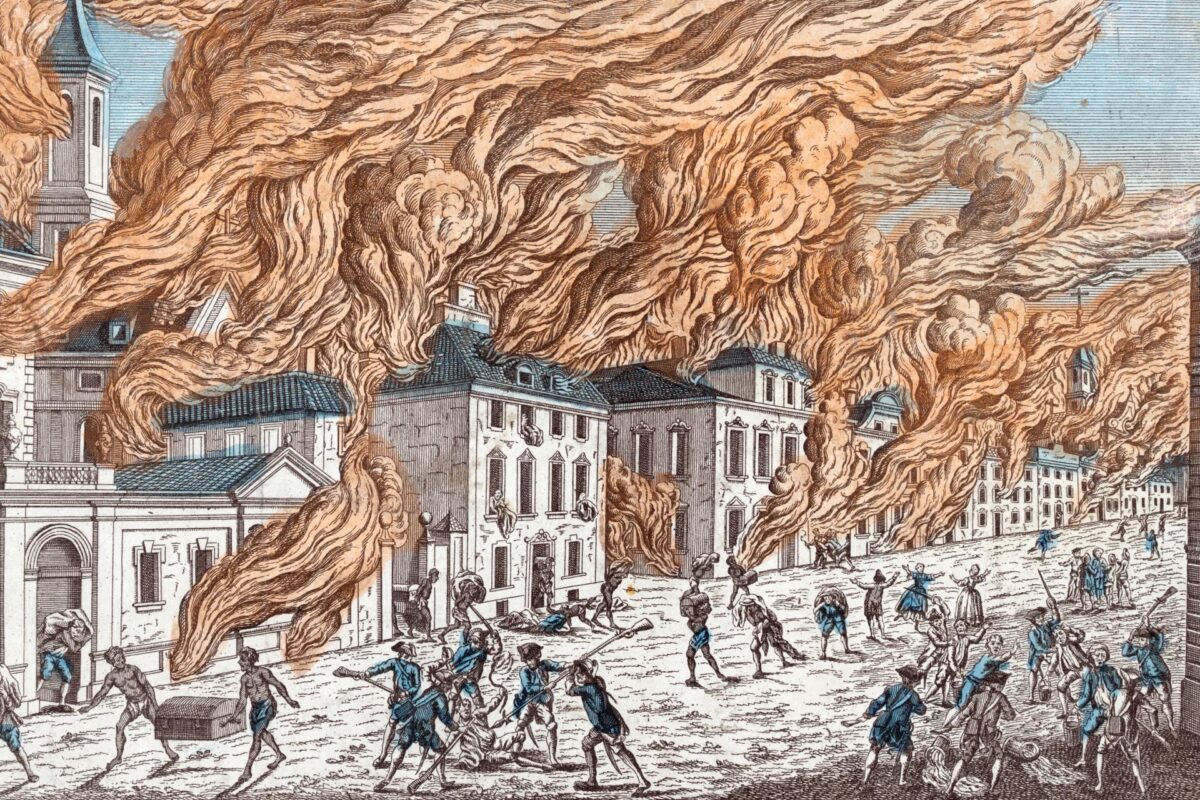
A little after midnight on September 21, 1776, the Fighting Cocks Tavern on Whitehall Street caught on fire. The drunken revelers inside the tavern were unable to stop the blaze, and it soon raged into a dangerous inferno, spreading up the west side of Manhattan.
spy

Some reports state that the fire started accidentally in the tavern fireplace. But was it actually set on purpose — on the orders of George Washington?

To understand that damning speculation, we unfurl the events that lead up to that moment — from the first outrages against the British by American colonists to the first sparks of the Revolutionary War. Why did New York get caught up so early in the war and what were the circumstances that led to the city falling into British hands?

Underneath this expansive story is another, smaller story — that of a young man on a spy mission, sent by Washington into enemy territory. His name was Nathan Hale, and his fate would intersect with the disastrous events of September 21, 1776.

PLUS: The legacy of St. Paul’s Chapel, a lasting reminder not only of the Great Fire of 1776 but of an even greater disaster which occurred almost exactly 225 years later.

AND: Find out what Alexander Hamilton was up to in September 1776!


The Bowery Boys: New York City History podcast is brought to you …. by you!

We are now producing a new Bowery Boys podcast every other week. We’re also looking to improve and expand the show in other ways — publishing, social media, live events and other forms of media. But we can only do this with your help!

We are now a creator on Patreon, a patronage platform where you can support your favorite content creators.

Please visit our page on Patreon and watch a short video of us recording the show and talking about our expansion plans. If you’d like to help out, there are several different pledge levels. Check them out and consider being a sponsor.

We greatly appreciate our listeners and readers and thank you for joining us on this journey so far.


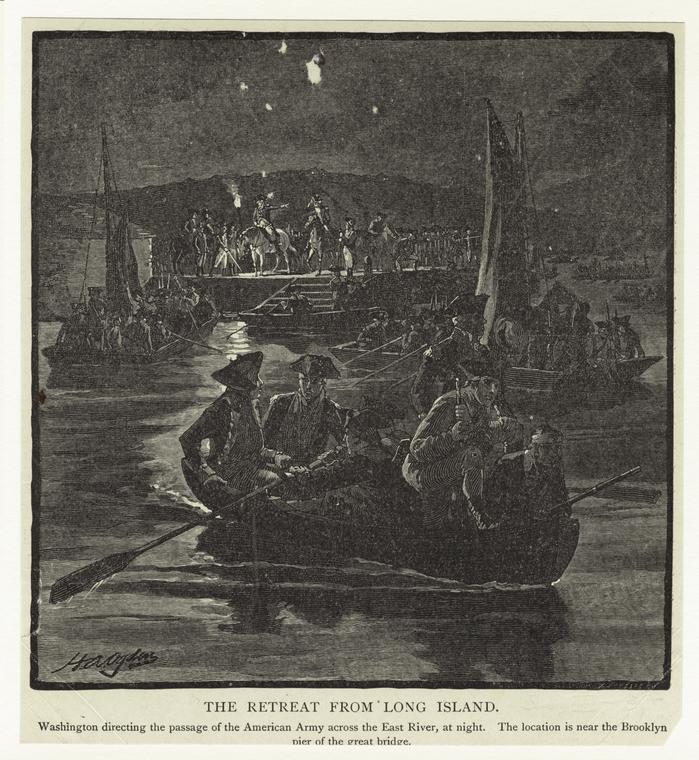
The escape of the Continental Army from Long Island under cover of night. This illustration by Henry Alexander Ogden is from 1897.
Courtesy New York Public Library

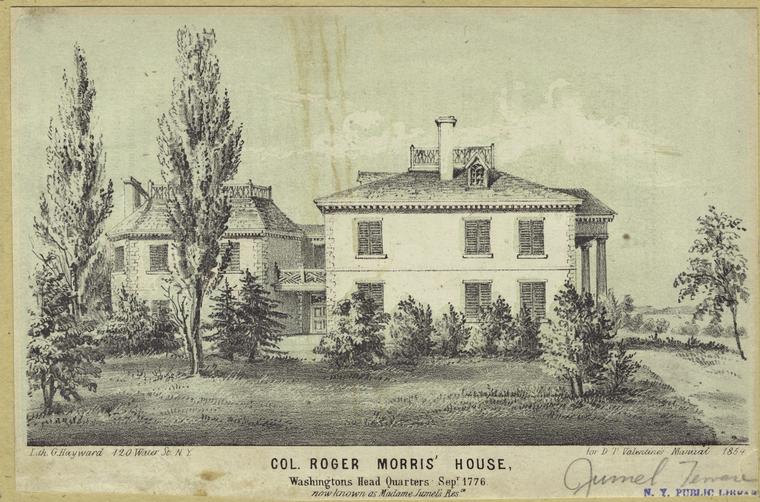
The house of Roger Morris which George Washington took over as his headquarters after fleeing New York.
New York Public Library

The Morris-Jumel Mansion, depicted in a postcard in 1965.
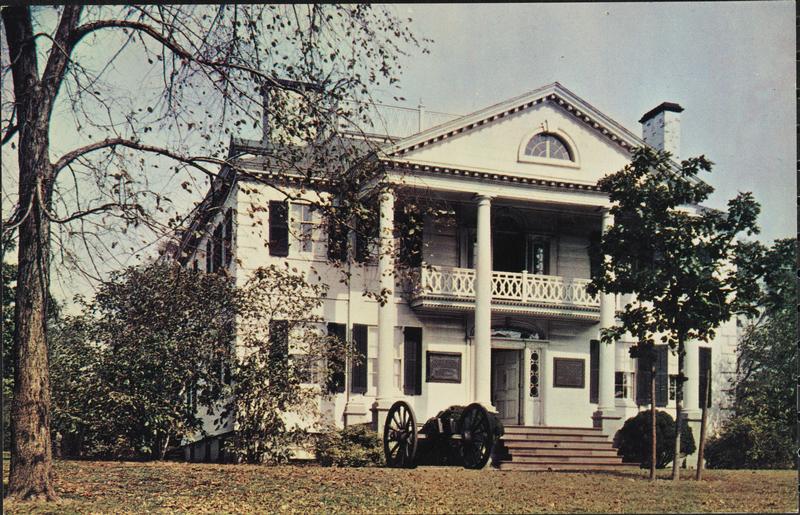
Museum of the City of New York

An imagining of young Alexander Hamilton in uniform in 1776
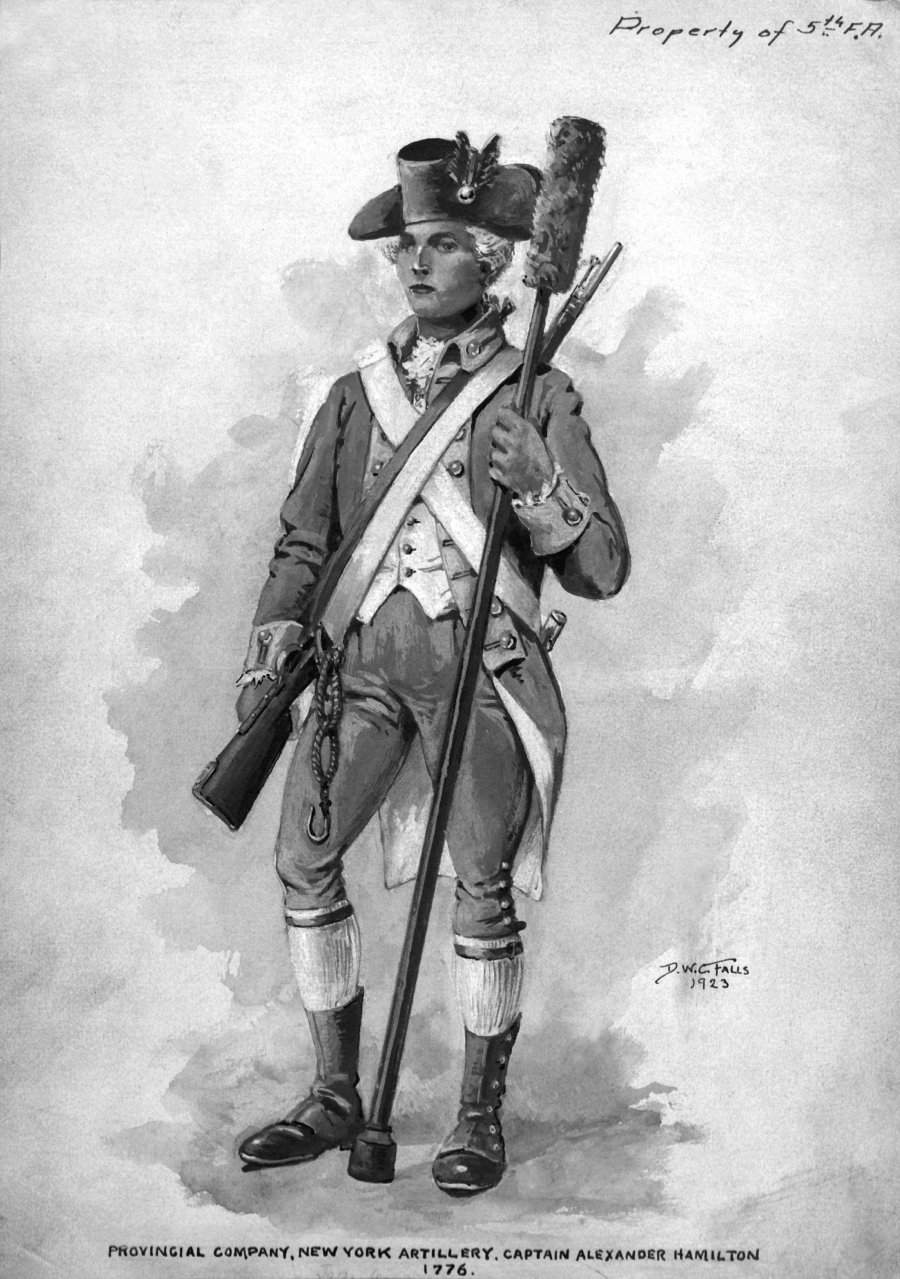
Courtesy the Department of Defense

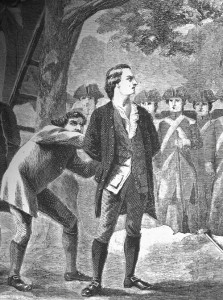
A Harpers Magazine illustration by Howard Pyle from 1880, depicting Nathan Hale receiving the details of his spy mission directly from General Washington.
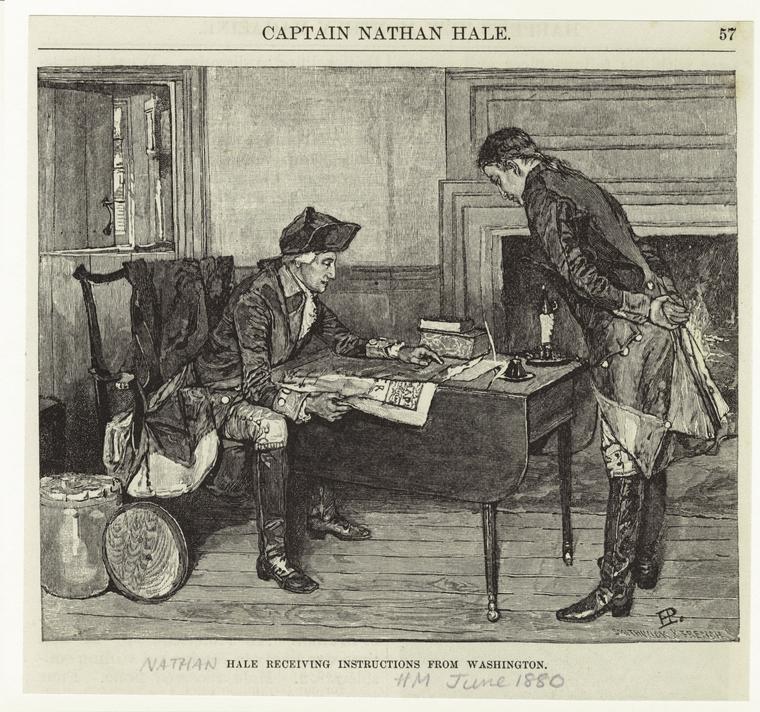
Courtesy New York Public Library

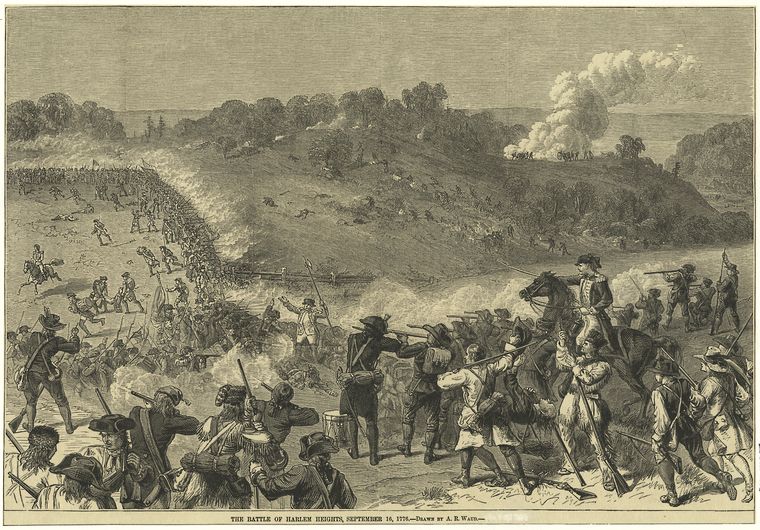
A beautiful map from 1897 laying out the events of the Battle of Harlem Heights on September 16, 1776.
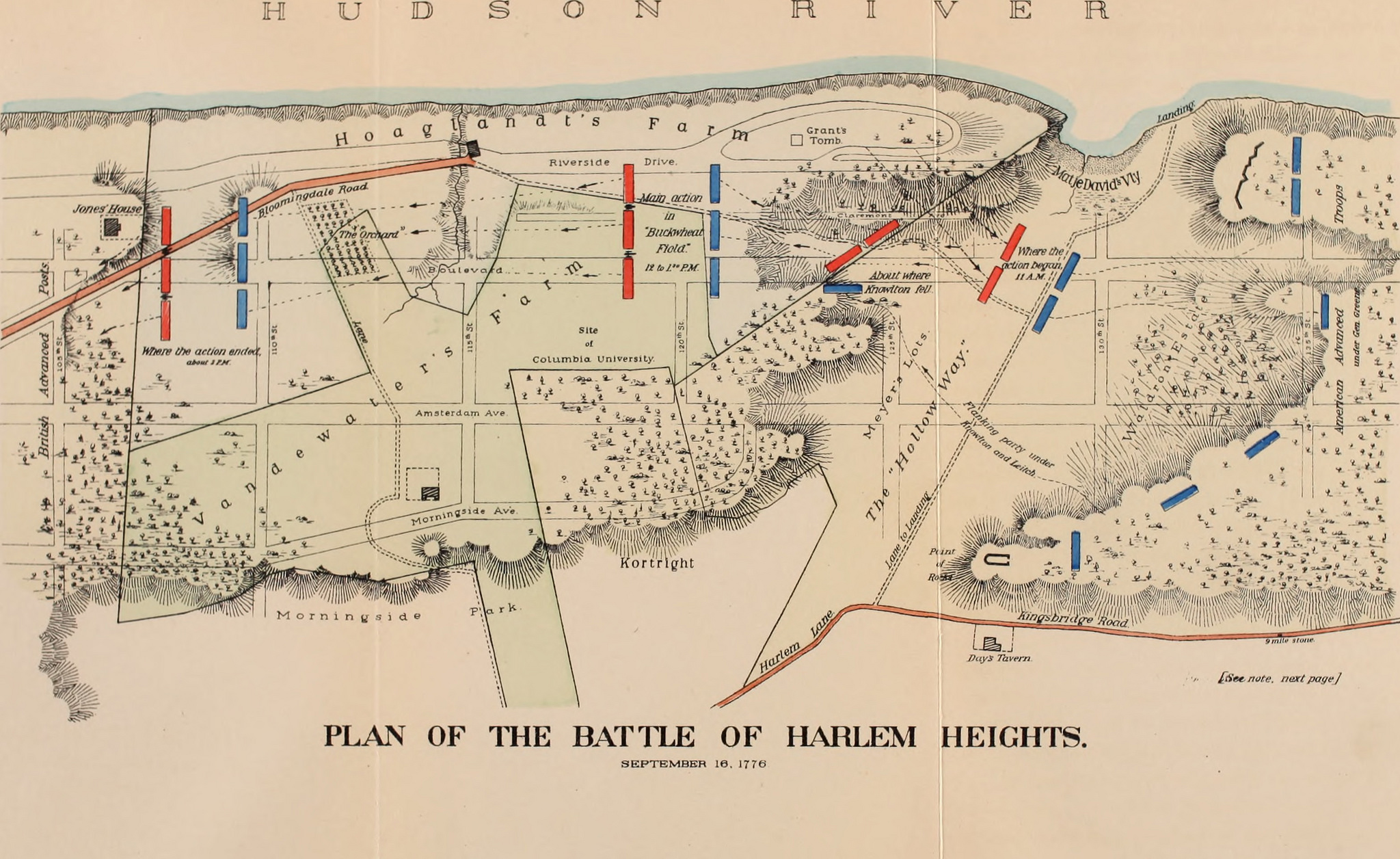
Courtesy Internet Archives Book Imaging

The Battle of Harlem Heights with a look into the valley called the Hollow Way.
harlem

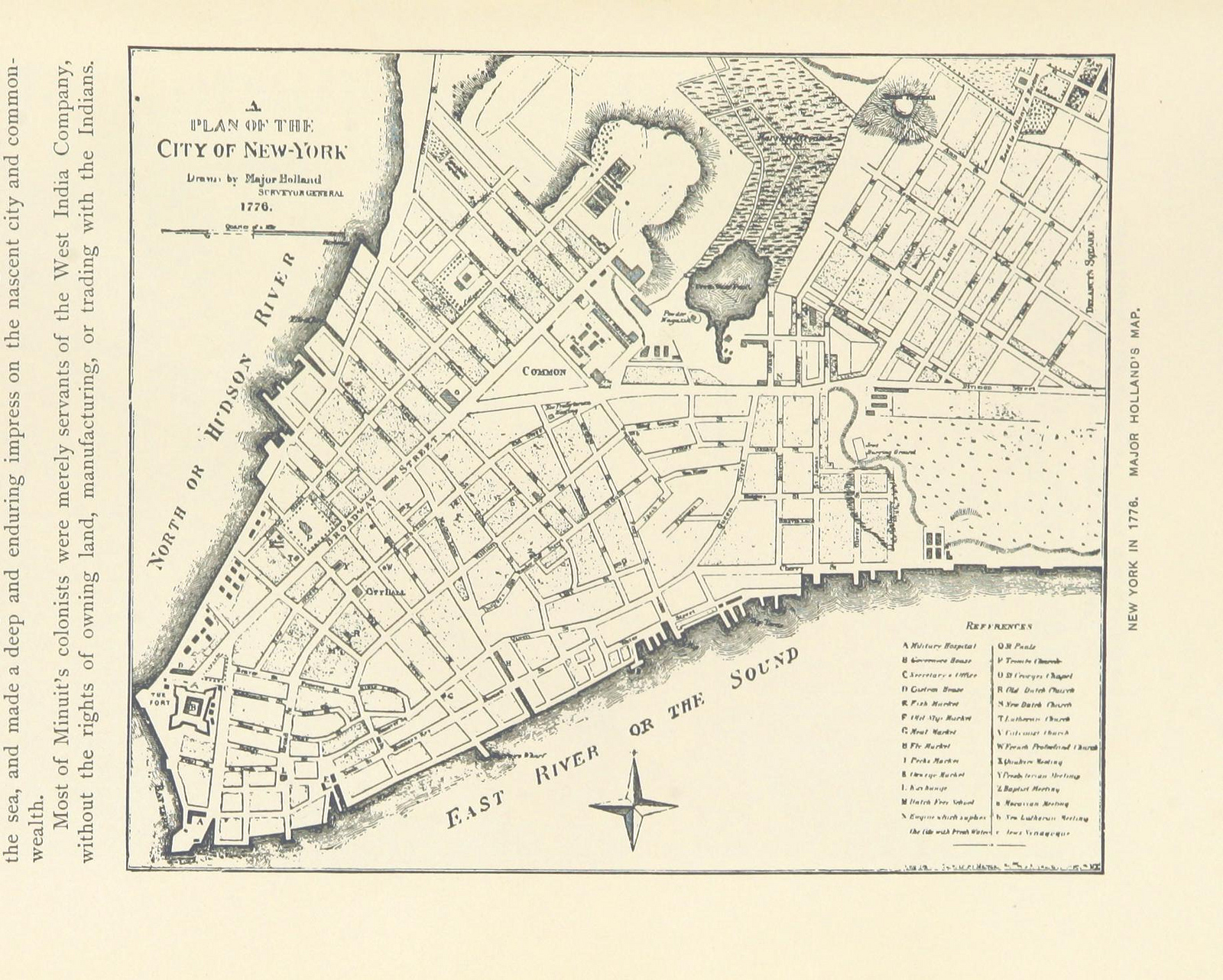
This is New York is 1776, the city that was captured in September 1776.
British Library
British Library

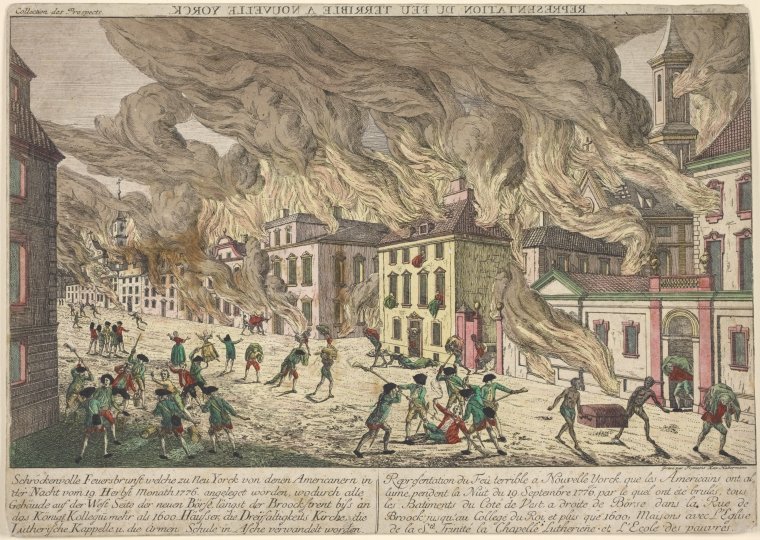
A grave illustration showing the severity of the fire, looking at the burning buildings on the west side of Broadway.
New York Public Library

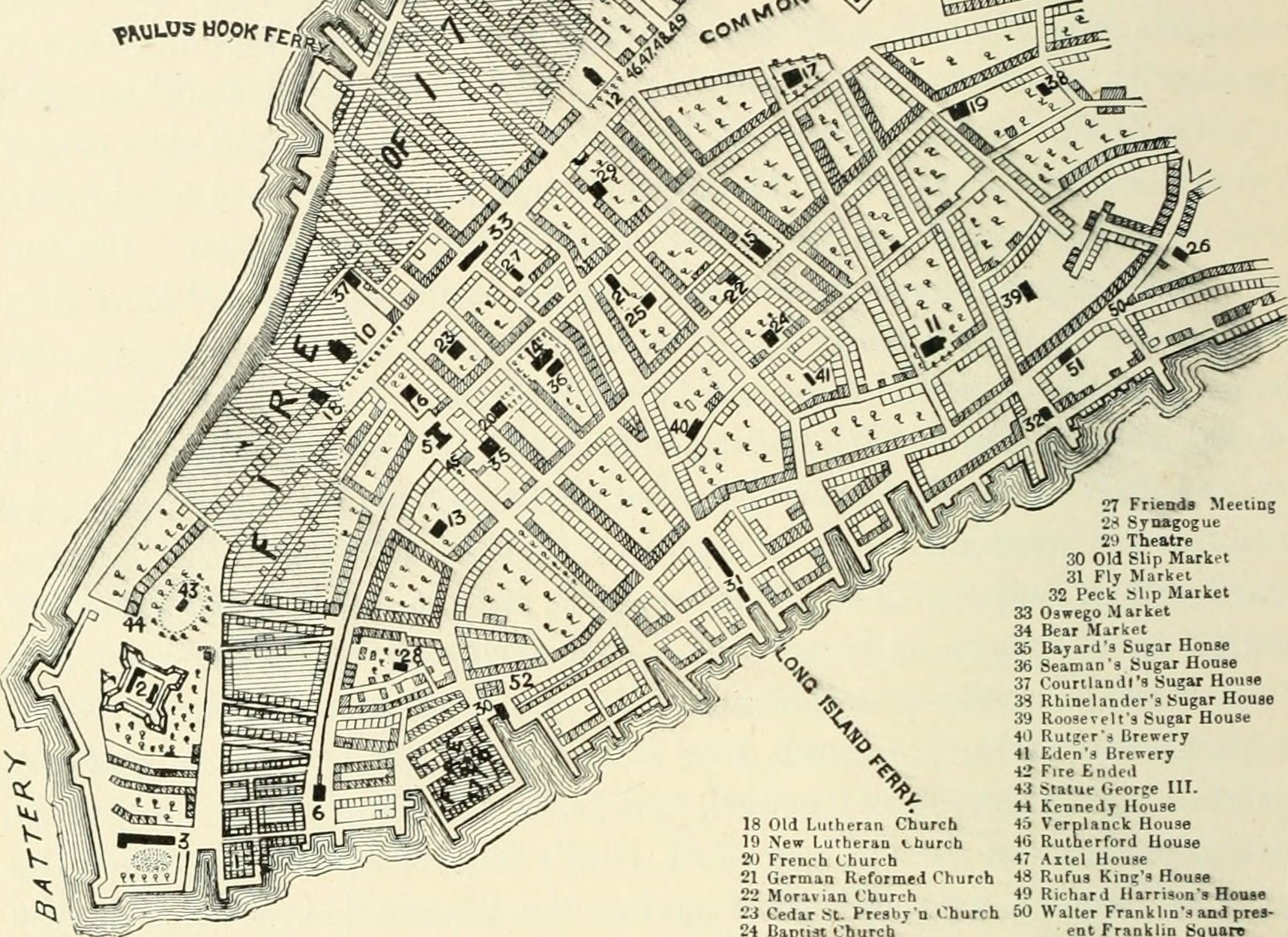
A map delineating the path of the fire from Whitehall Street up the west side of the city.
1

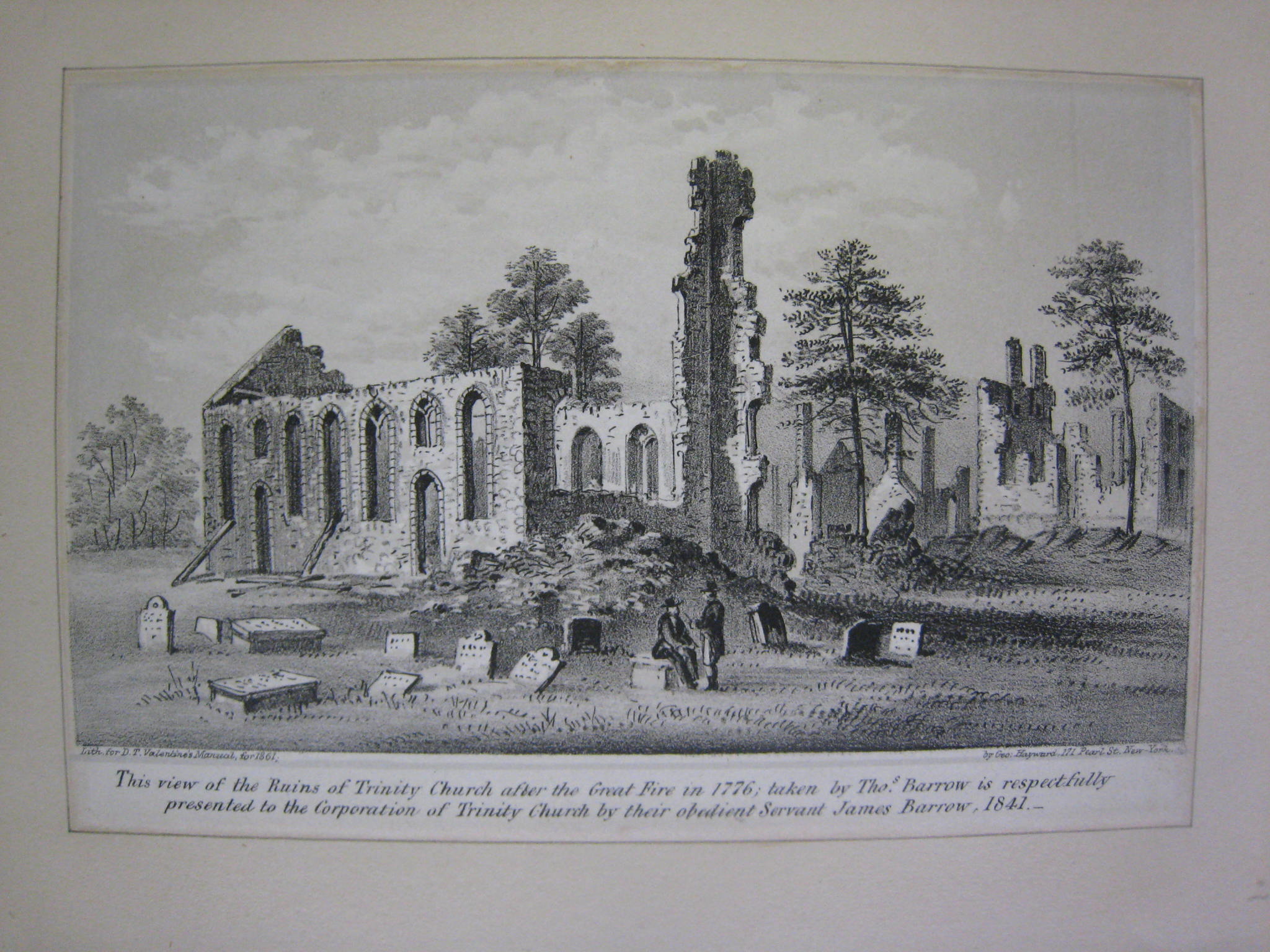
The ruins of Trinity Church stood for  years as evidenced by this image of people just strolling around it like nothing weird had happened.
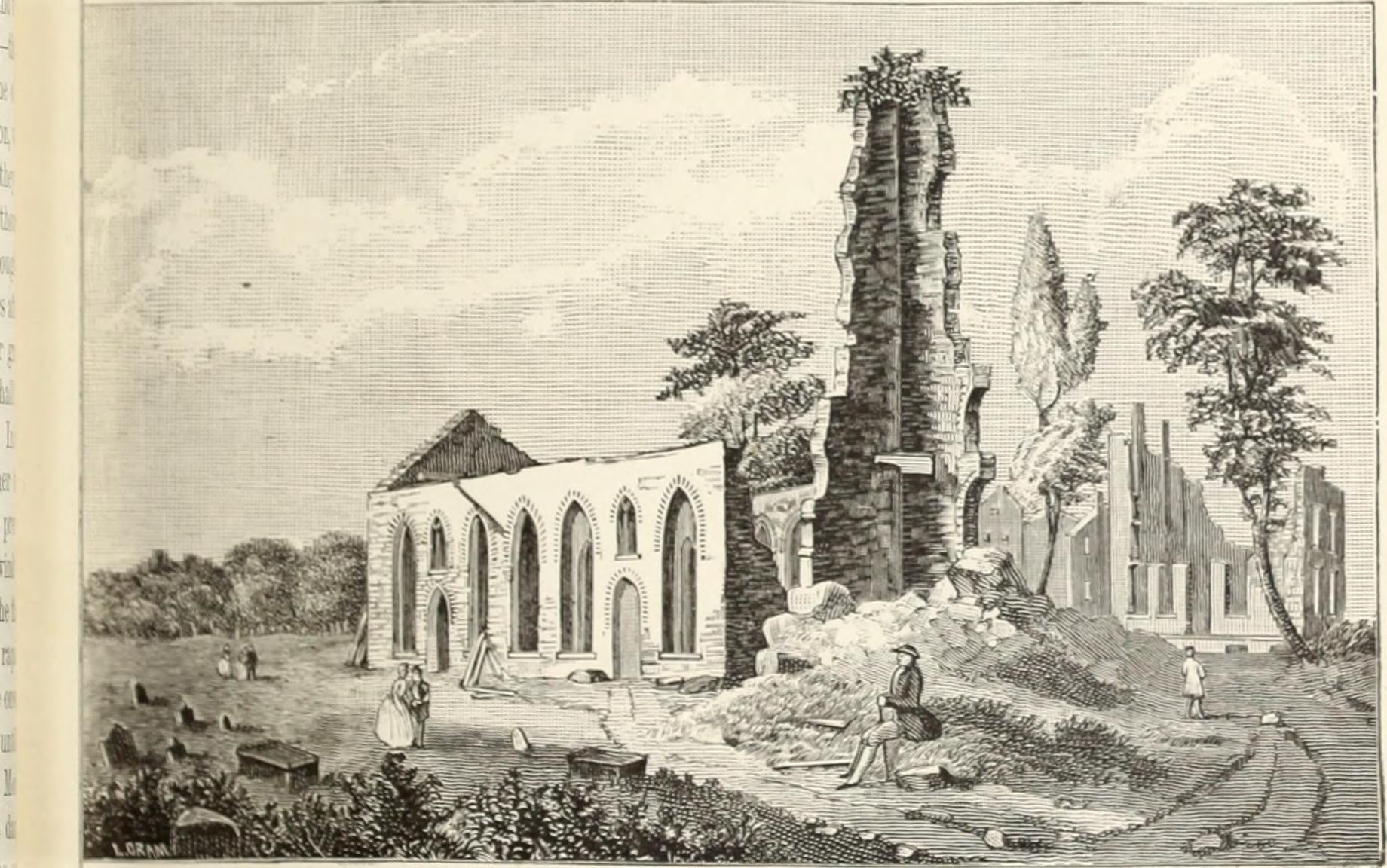
Internet Archive Book Imaging

Another illustration (from a 1902 history) showing the cemetery in relation to the ruins.
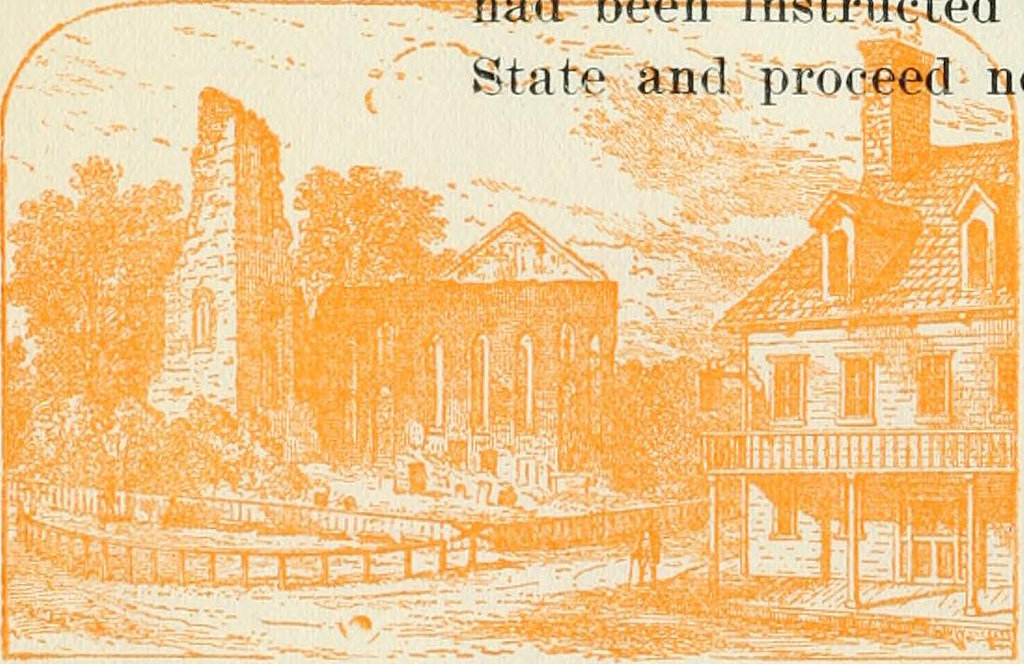
pic
ruin

Mount Pleasant, where the British general William Howe set up headquarters and where Nathan Hale was taken after he was captured.
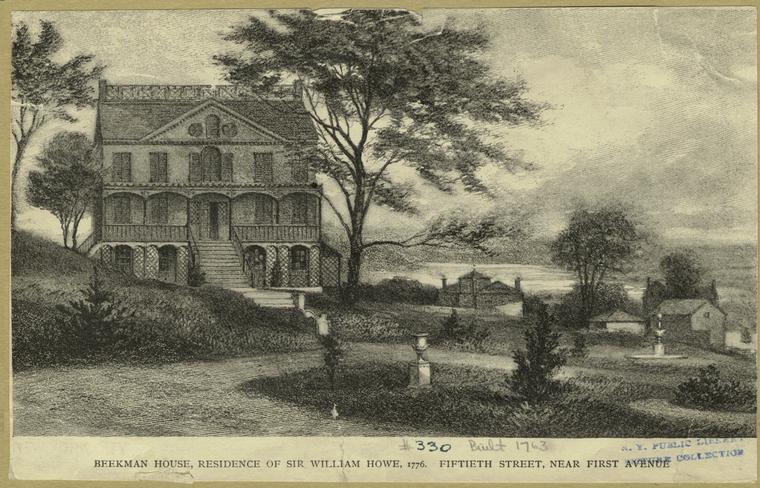
New York Public LIbrary

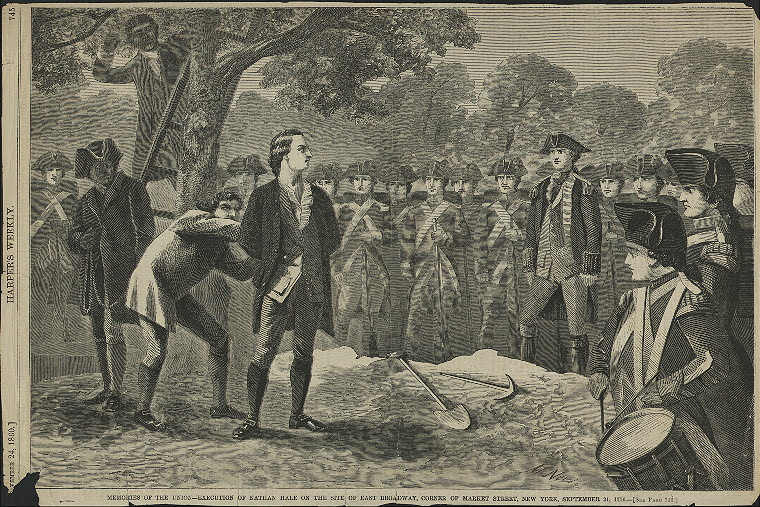
A vintage trading-card depiction of Nathan Hale’s hanging.
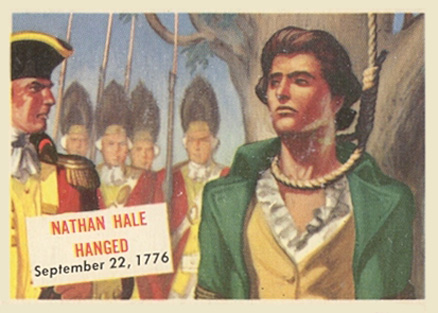
card

An 1880 illustration by Howard Pyle of the same event.
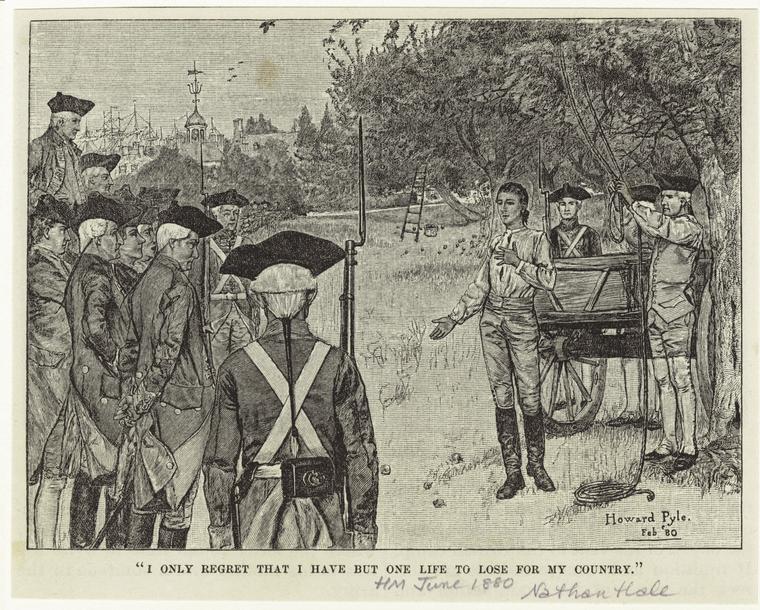
Courtesy New York Public LIbrary

St Paul’s Chapel (pictured below in 19160, a survivor of the Great Fire of 1776, opened its doors to parishioners the day after the fire.
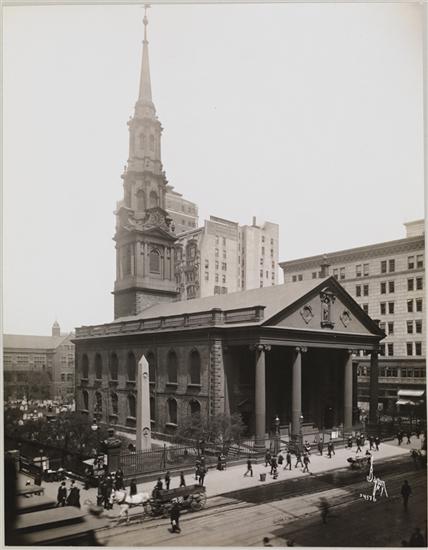
1916
Courtesy Museum of the City of New York

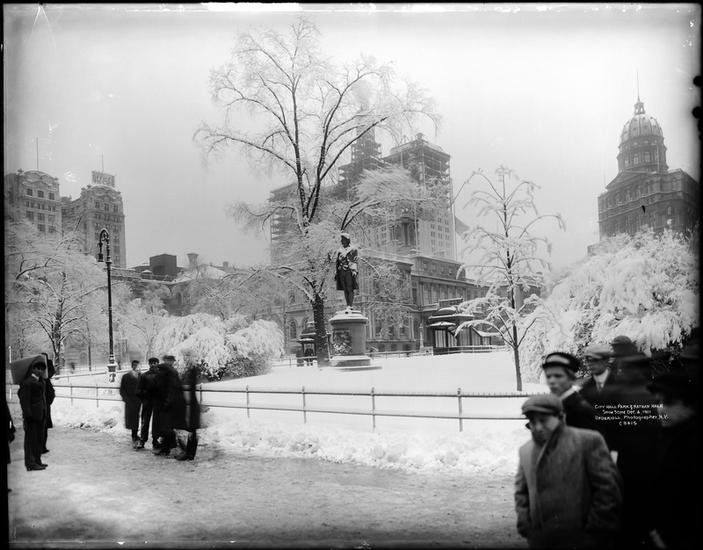
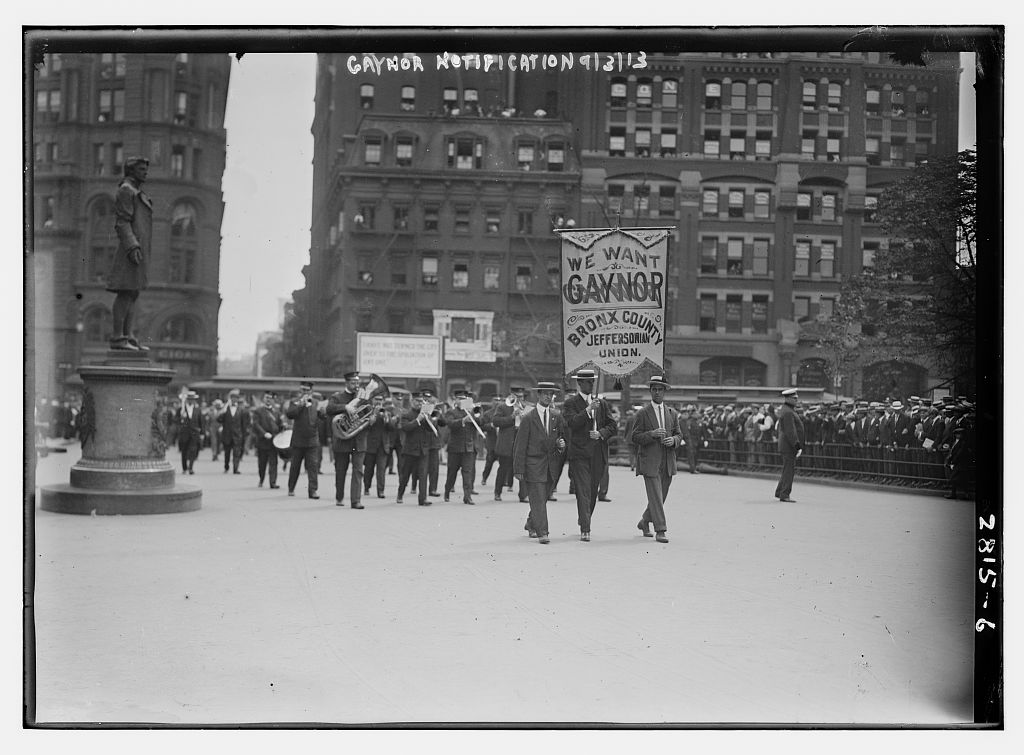
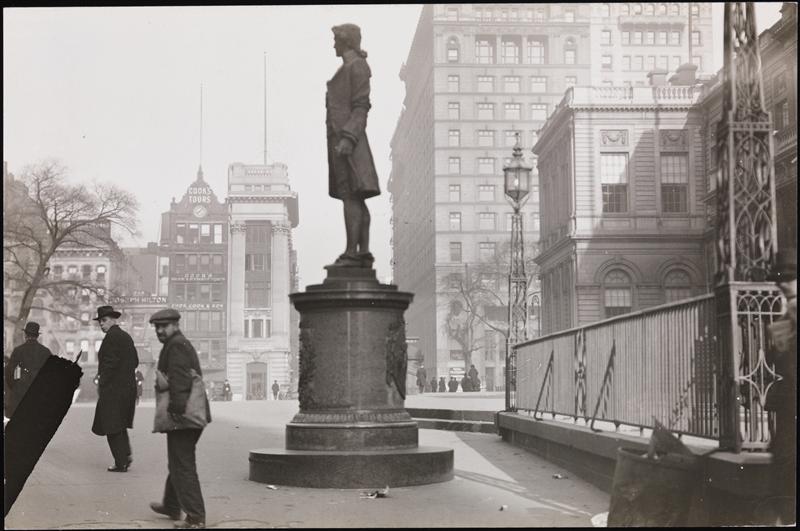
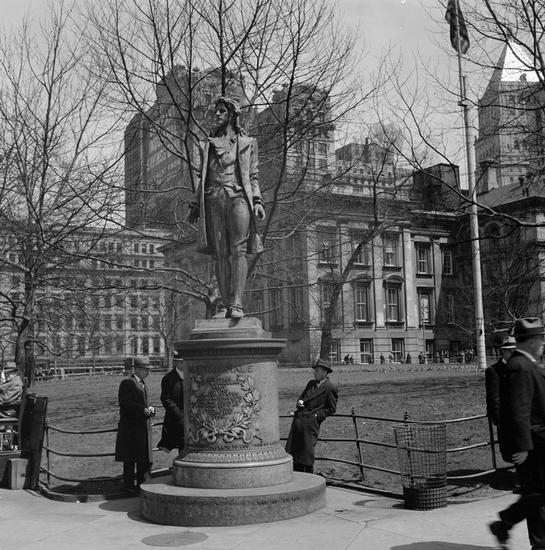
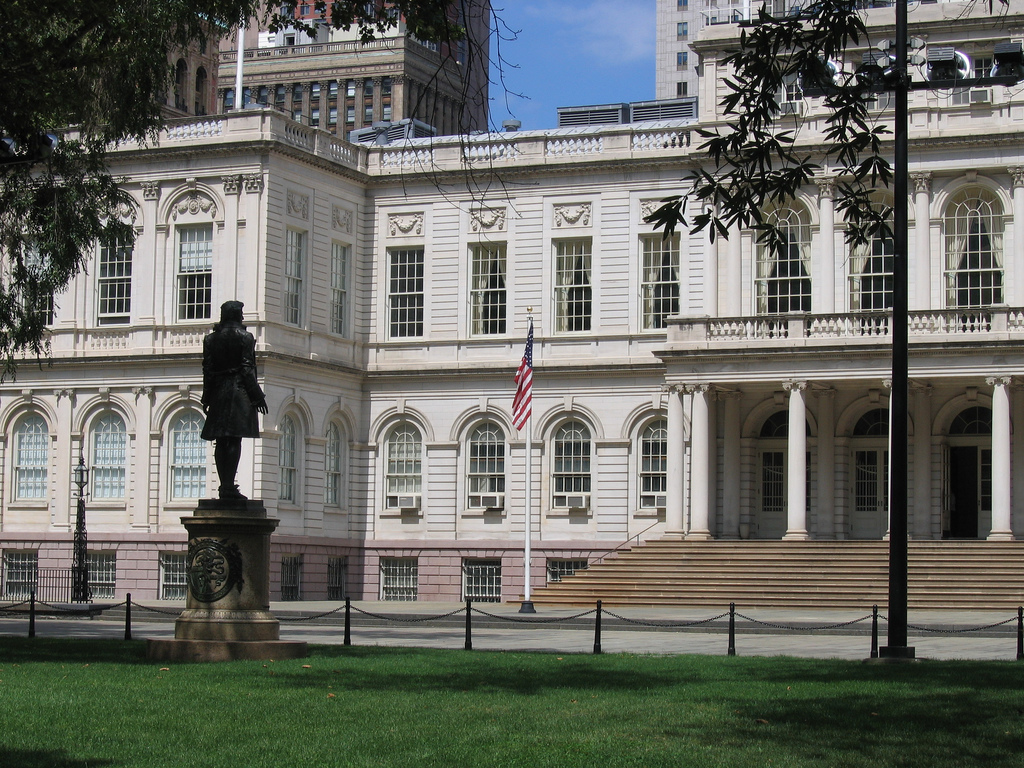
The statue of Nathan Hale which stands in front of City Hall. He’s been moved around quite a bit since his installation here on November 25, 1893, the anniversary of Evacuation Day.

From 1900:
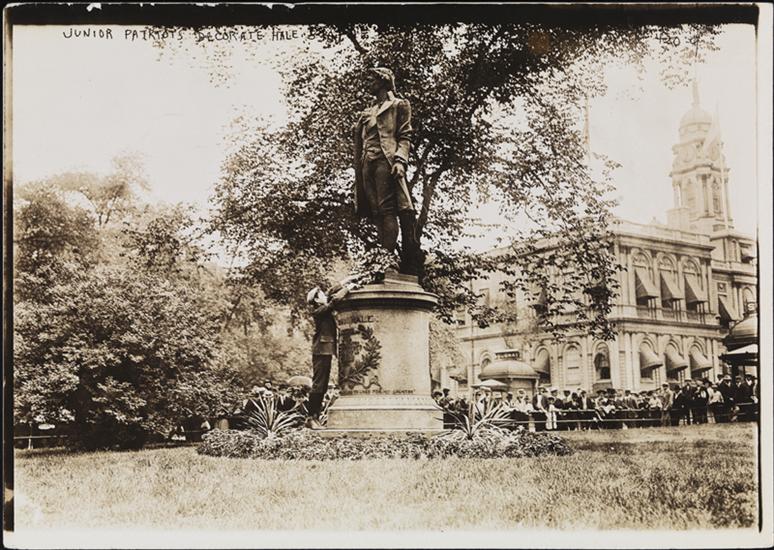
Courtesy Museum of the City of New York

From 1911:

Museum of the City of New York

From 1913:

Library of Congress
Library of Congress

From 1920:

Courtesy Museum of the City of New York

From 1939:

Courtesy Museum of City of New York

From 2006:

Courtesy Kris Long/Flickr
Categories
Revolutionary History

The Martyr and the Traitor: Choosing Sides In The Revolutionary War

You may know Nathan Hale well from history books or from New York’s numerous memorials as a symbol of American patriotism, dying for his country long before anybody actually thought it would ever be a country.

The British hanged him in New York as a spy in the aftermath of the Great Fire of 1776. He had performed no great deed for George Washington and his army — his intel never made it back to the general — except for volunteering for the spy mission in the first place.  His gift to the future United States was in believing it would exist.

Courtesy NYPL

But what if things had been a little different in the life of Mr. Hale as a young man? What if, Sliding Doors-style, decisions made by him and his loved ones had sent him down a different path? What if his ardent patriotism had, instead, been in support of the British cause?

In a captivating new book by Virginia DeJohn Anderson, a professor of history at the University of Colorado in Boulder, we are presented with an actual historical example — a contrasting figure nearly forgotten — to use for this thought experiment.

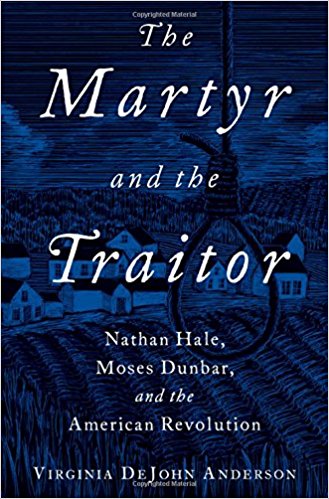
THE MARTYR AND THE TRAITOR
Nathan Hale, Moses Dunbar, and the American Revolution
by Virginia DeJohn Anderson
Oxford University Press

The story of Moses Dunbar is the flip-side to the Hale legend. The two Connecticut men were similar in a great many ways (although Dunbar was older) but circumstances led them to different causes.

Dunbar’s story is far less known than Hale’s of course. Hale was proclaimed a true patriot early in the Revolutionary conflict, and those with documents and information about the young schoolmaster proudly preserved them. His story is richly documented and well embroidered.

The opposite is true of Dunbar; he was hung in disgrace after returning home from a mission to recruit British sympathizers among his countrymen. It’s said that Dunbar’s own father offered to provide the rope.

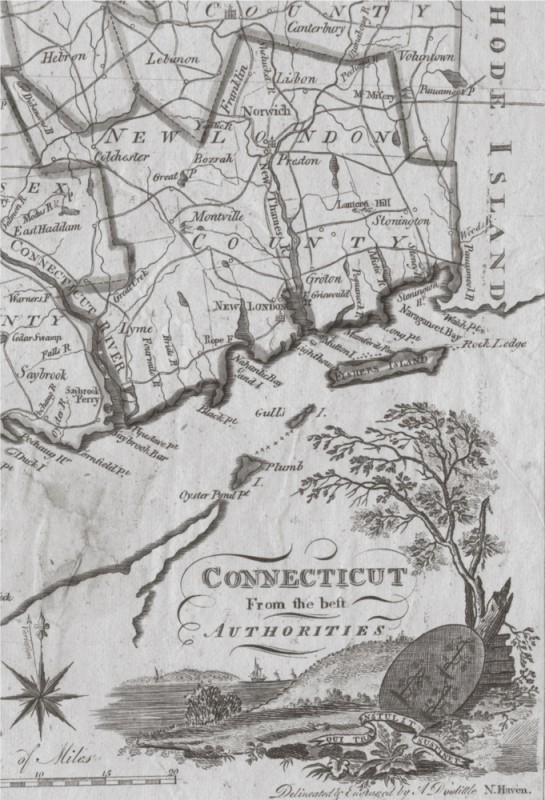
Detail of Amos Doolittle, Connecticut From the best Authorities, first printed by Matthew Carey, Philadelphia, Pennsylvania, 1795. (Courtesy, Connecticut Historical Society via Chipstone.)

Anderson tells both of their stories in parallel, and for a time, the reader can experience this book as an excellent social history of life in Connecticut in the mid 18th century — the degrees in which religion, marriage, education and land ownership play a defining role in an individual’s fate.

Dunbar became an Anglican, tied to the Church of England in a time with anti-British fervor was sweeping the countryside. In fact, there are moments when Dunbar seems far more radical than Hale (who, with his Yale education, is exposed to other feisty young men and books full of eye-opening revolutionary beliefs).

Courtesy Brown University Digital Repository

The most vivid portions of Anderson’s well-researched and excellently paced history involve violent attempts by anti-British mobs. Writes Anderson:

“As the weeks passed, Anglicans in general, not just clergy, became target of attacks if they did not announce their opposition to Britain. In East Haddam  a seventy-year-old Anglican parish clerk was yanked out of bed on a cold night, stripped, and beaten …… Rumors began circulating that Anglican clergy, in league with the detested Samuel Peters and with the approval of their congregations, were plotting to enslave the colony.”

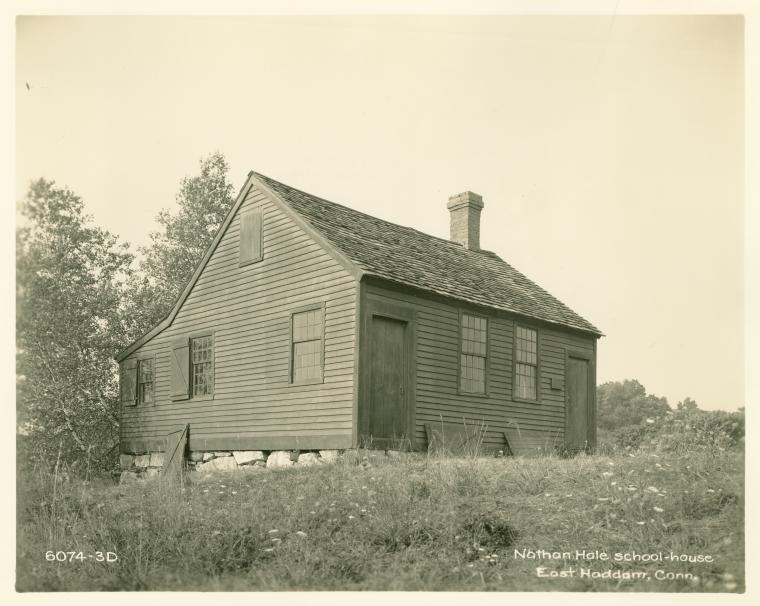
Below: Nathan Hale’s schoolhouse in East Haddam, CT

NYPL

Dunbar was radicalized by his environment and, observing such displays in his community, chose church (and, by extension, Great Britain) over country. His decision would destroy him and even lead his disgraced family into vigorously supporting the American cause.

In The Martyr and the Traitor, in putting Hale and Dunbar on equal footing, Anderson underscores the intensity of the moment and the uncertainty of its outcome. Hale’s patriotism seems all the more brave but so too does Dunbar’s intransigence.

Both men died on the noose away from loved ones; their ends embody the chaos and certain danger of the Revolutionary War.