Red Hook’s Proclaimation of Historical Significance Saturday, August 22, 6pm This is a free event. Please RSVPhere
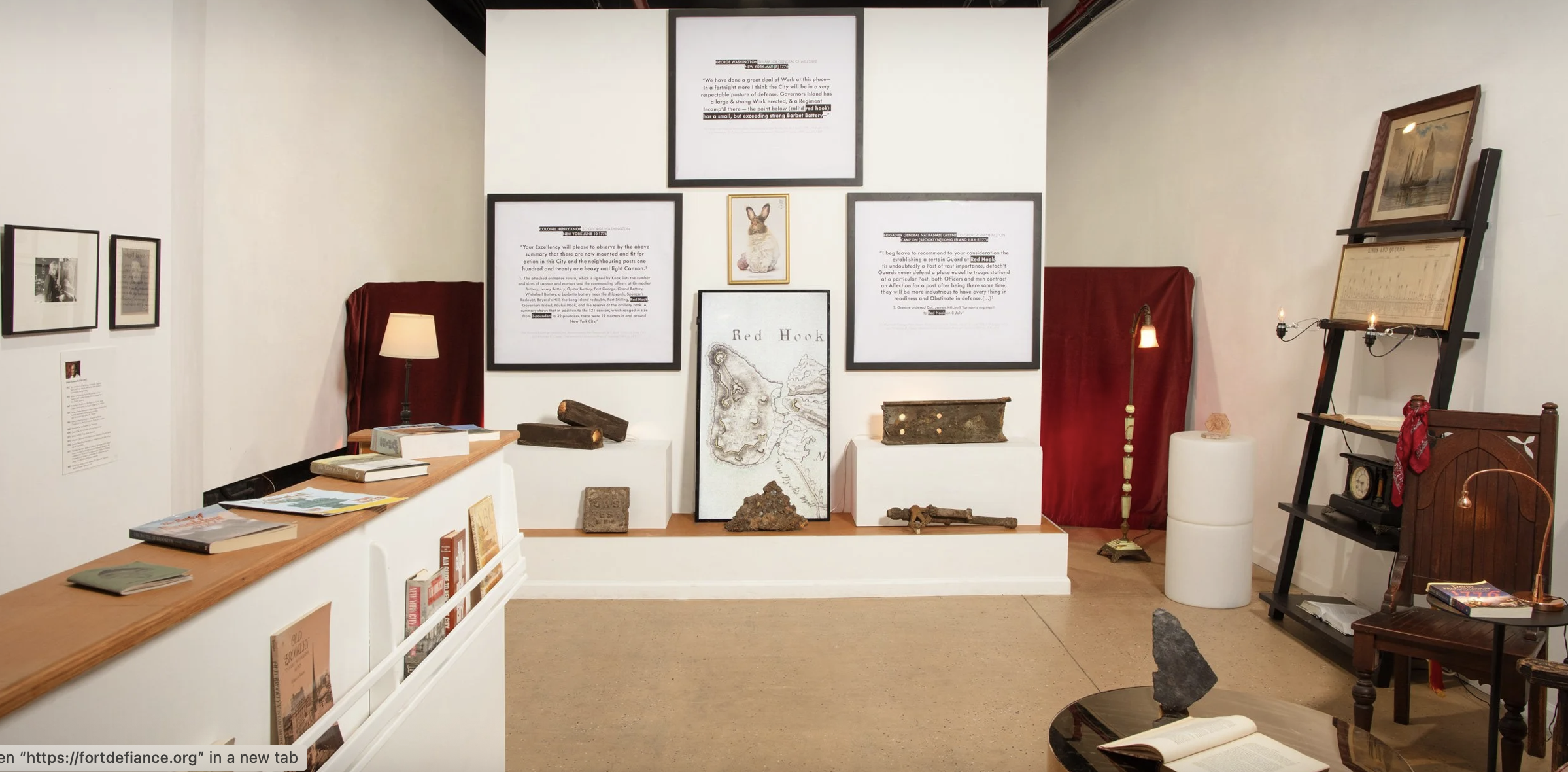
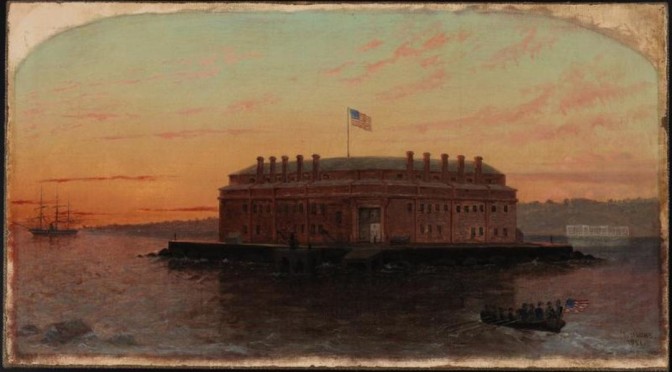
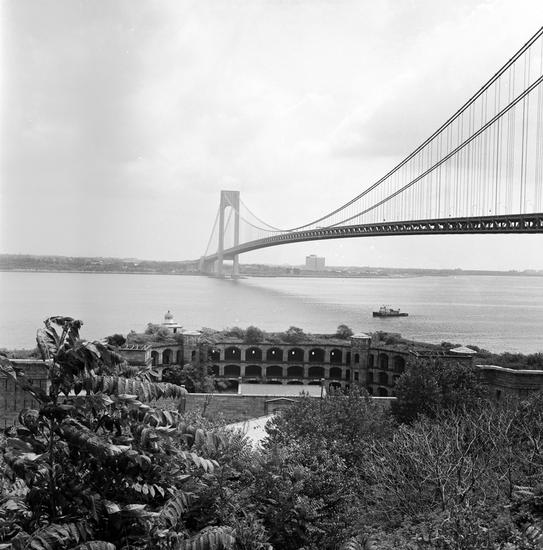
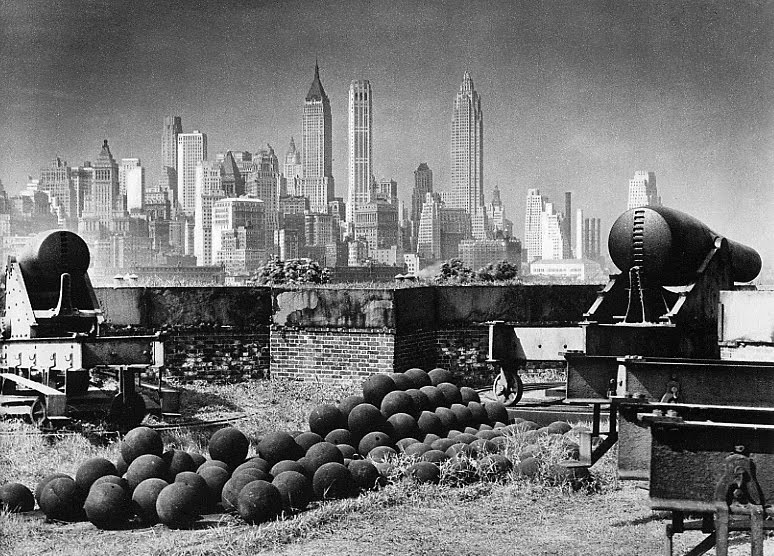
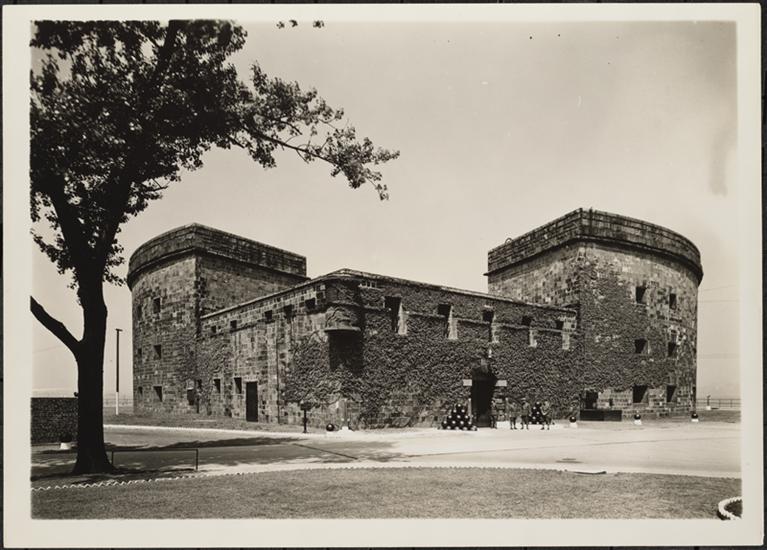
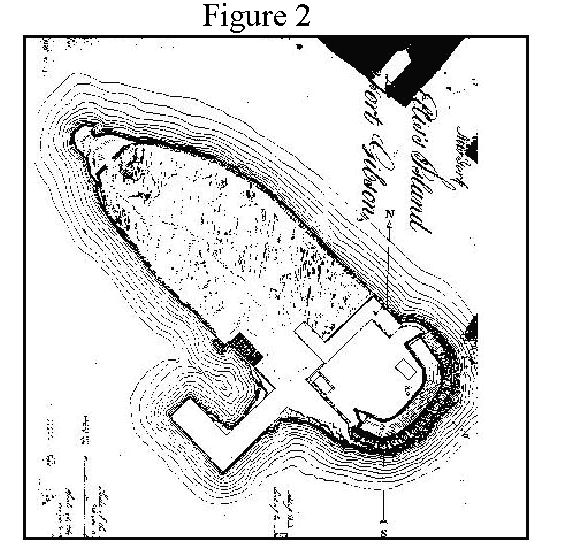
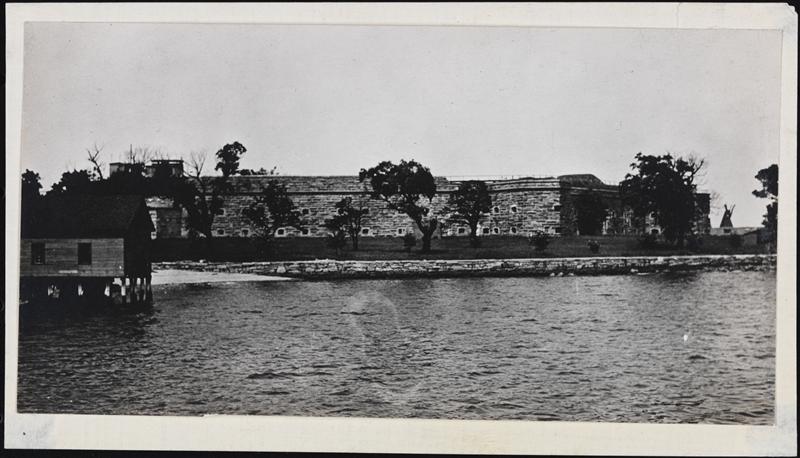
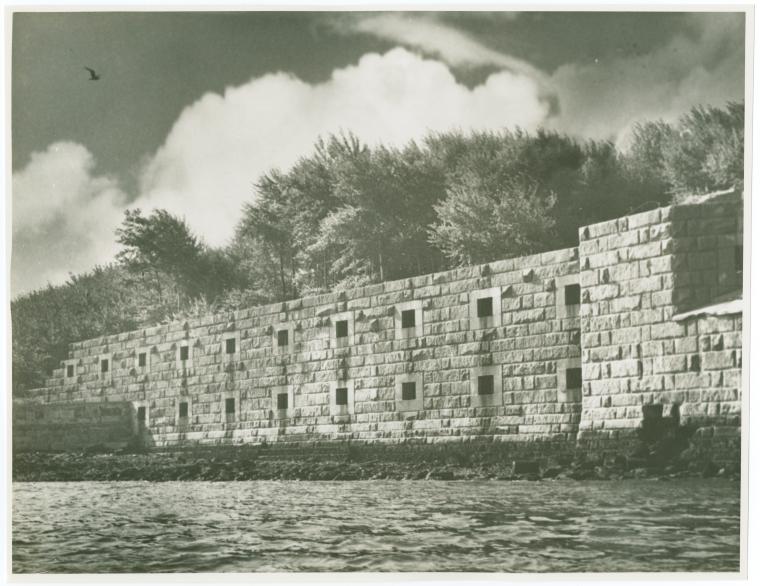
Fort Defiance Gallery (160 and 169 Coffey Street). Discover archaeological findings and significant source materials about Fort Defiance, Red Hook Lane and the defense of the New York Harbor in the campaign of 1776.
Brooklyn250 is a borough-wide commemoration of the 250th anniversary of the Battle of Brooklyn, supported by $350,000 in state funding.
Together, these programs invite New Yorkers to explore Brooklyn’s pivotal role in the fight for independence and reflect on the history, people, and ideals that continue to shape the nation today.
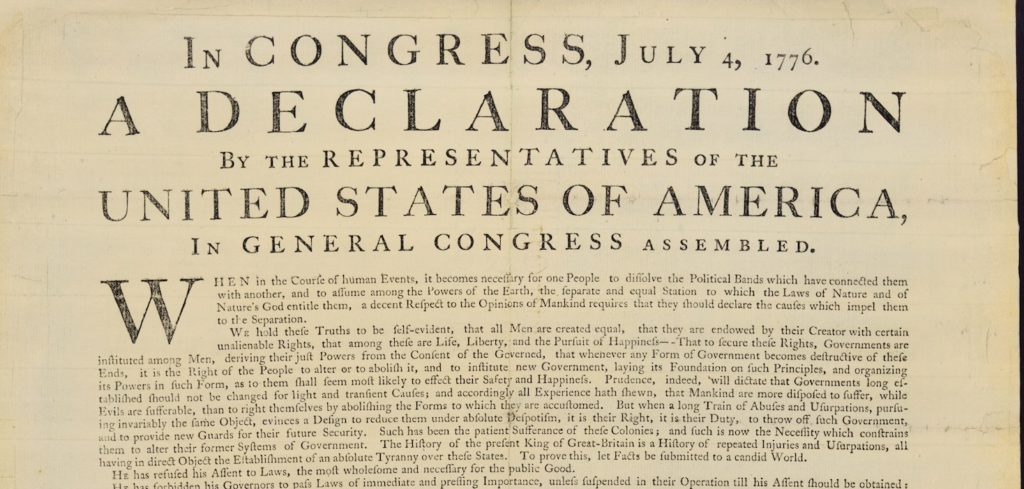
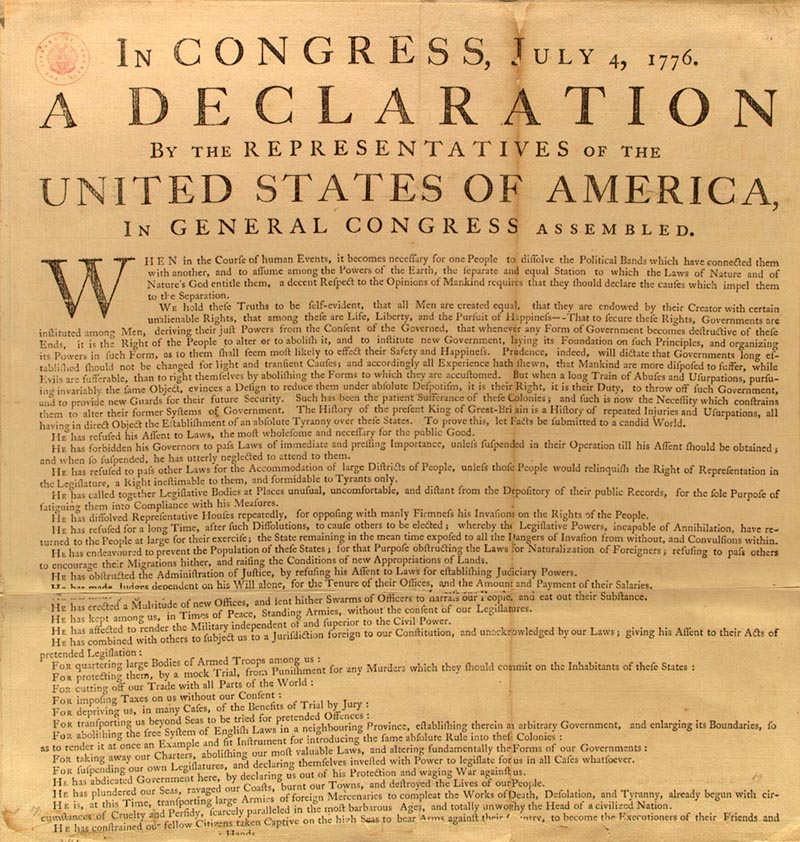
George Washington’s copy of the Declaration of Independence is perhaps the most well-known of the almost 200 copies first made of the document.
As a facsimile, it’s certainly not the the most valuable document held by the Library of Congress — after all, they have Thomas Jefferson’s actual rough draft of the Declaration, along with tens of thousands of his other papers — but it’s certainly an inspiring artifact in its own right.
Below: The document in question.
Because Washington wasn’t in Philadelphia at the time of the actual declaration on July 2 or the completion by Jefferson of the finished copy on July 4.
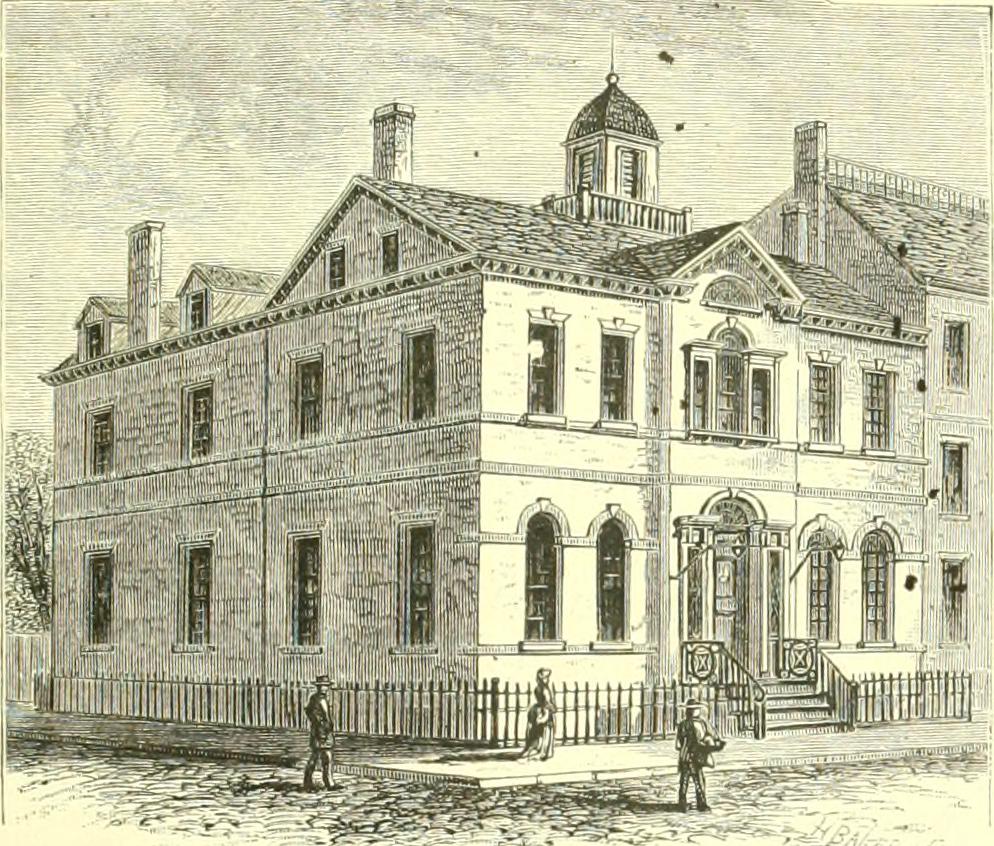
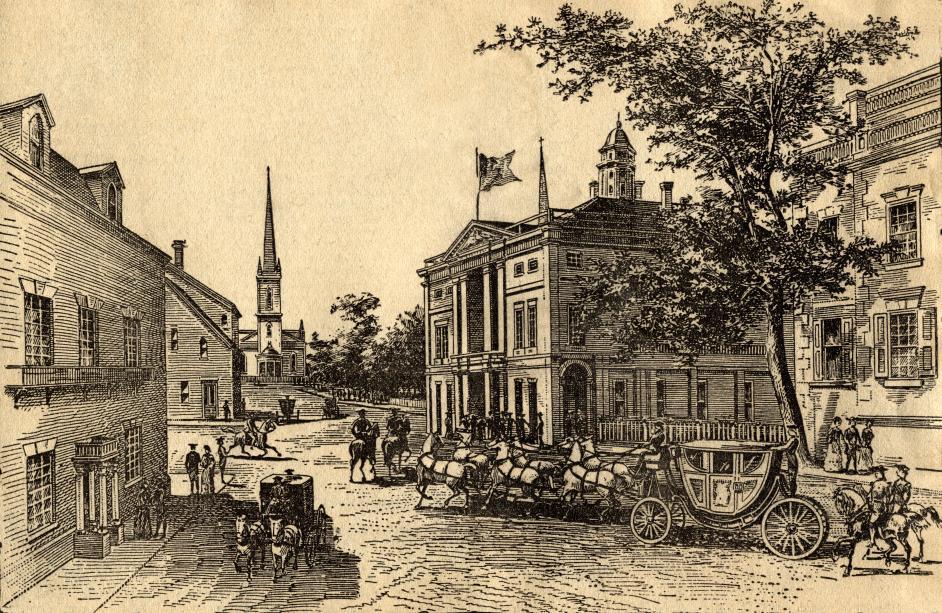
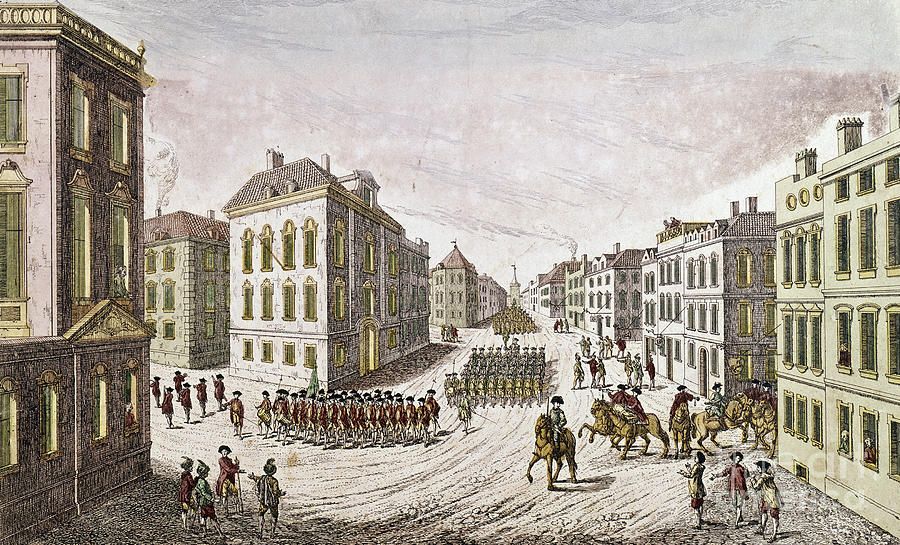
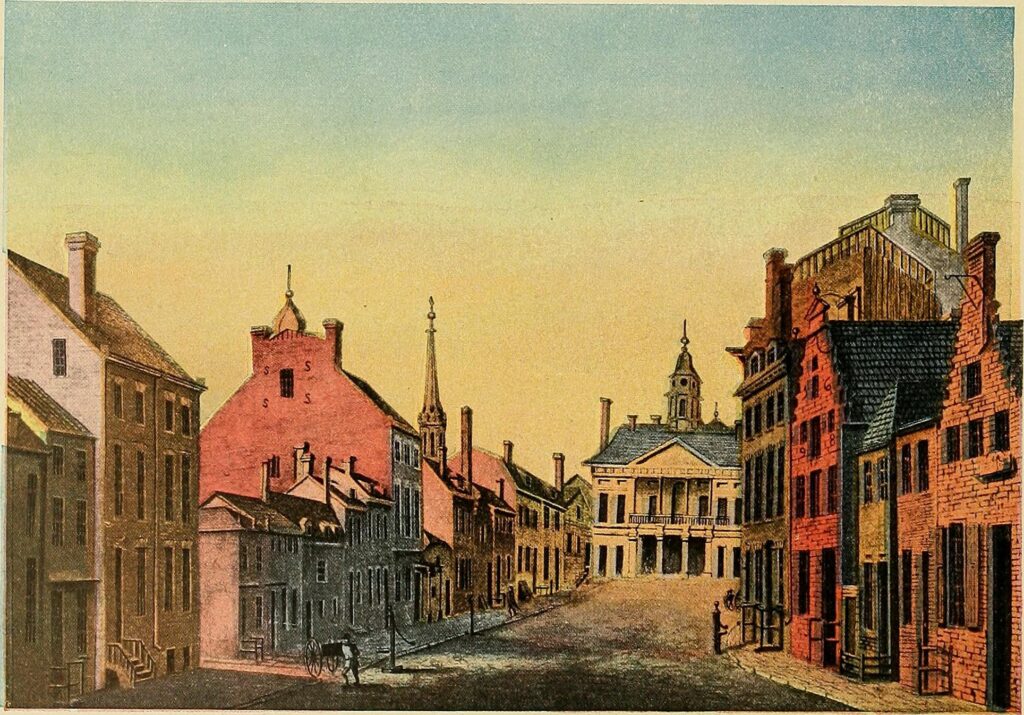
Later, as news of a British arrival to New York became evident, he moved his headquarters to City Hall, then on Wall Street and Broad Street.
Below: Washington’s two headquarters pre-July 1776:
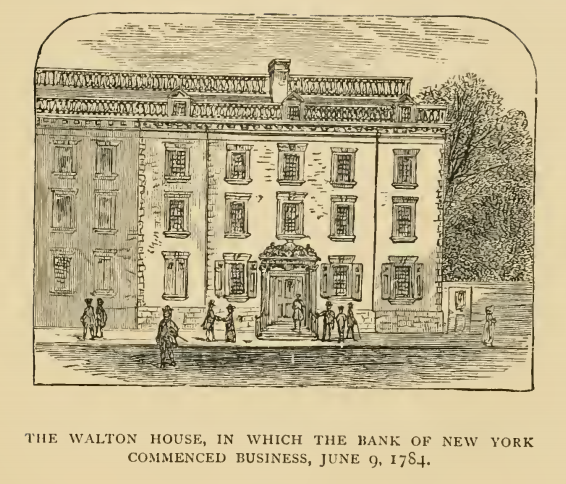
Internet Archive Book Images
Hundreds of British war vessels had stationed themselves off of Sandy Hook by the first of July, so fearful a presence that many of New York’s 20,000 residents had fled in fear.
By July 9, thousands of Continental Army soldiers had amassed in New York, turning the port town overnight into a military outpost. The key gathering point for Washington and his men was the Commons, a former livestock area that had been the scene of protests against the British for over a decade. Many a liberty pole had stood here, an age old protest against despotism.
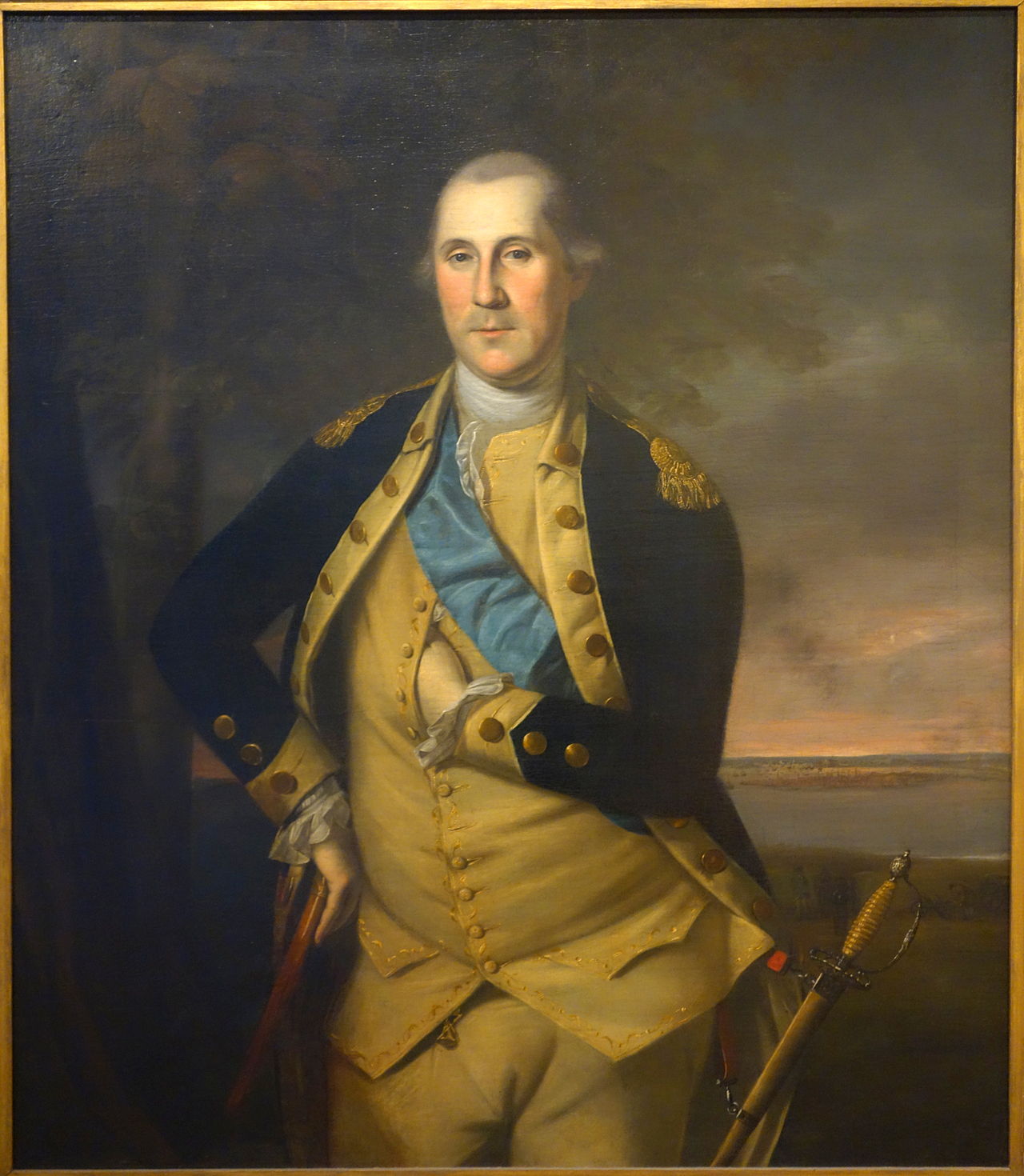
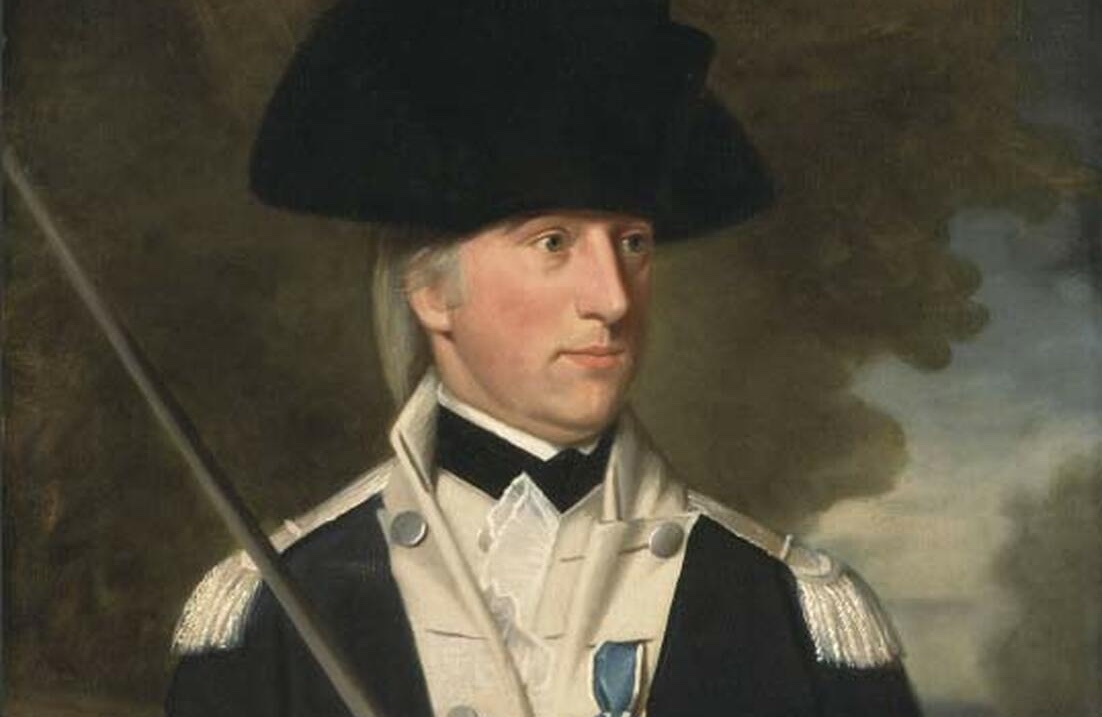
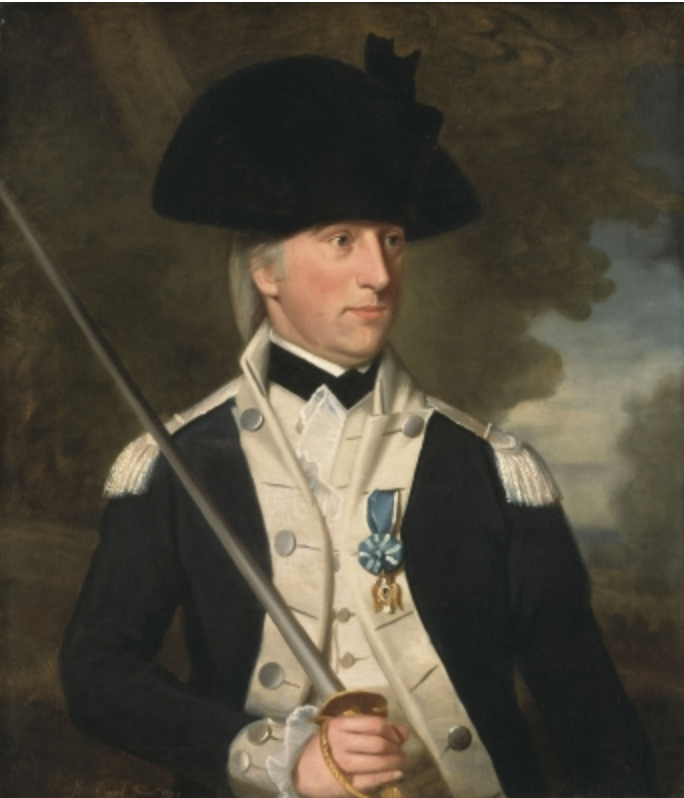
George Washington, painted by Charles Willson Peale in 1776
But on that day, July 9, there was not a single inanimate symbol of protest, but rather many thousands of animate ones, all summoned to gather by 6 p.m. to await Washington’s words.
From the text of Washington’s order that day:
“The several brigades are to be drawn up this evening on their respective Parades, at Six O’Clock, when the declaration of Congress, shewing the grounds and reasons of this measure, is to be read with an audible voice.
The General hopes this important Event will serve as a fresh incentive to every officer, and soldier, to act with Fidelity and Courage, as knowing that now the peace and safety of his Country depends (under God) solely on the success of our arms: And that he is now in the service of a State, possessed of sufficient power to reward his merit, and advance him to the highest Honors of a free Country.“
A copy of the Declaration — the one pictured above — had been hand-delivered to Washington on that very day. However the General himself did not read it aloud. Rather he had one of his aides read it to the gathered crowd.
“When in the Course of human events, it becomes necessary for one people to dissolve the political bands which have connected them with another, and to assume among the powers of the earth, the separate and equal station to which the Laws of Nature and of Nature’s God entitle them, a decent respect to the opinions of mankind requires that they should declare the causes which impel them to the separation….”
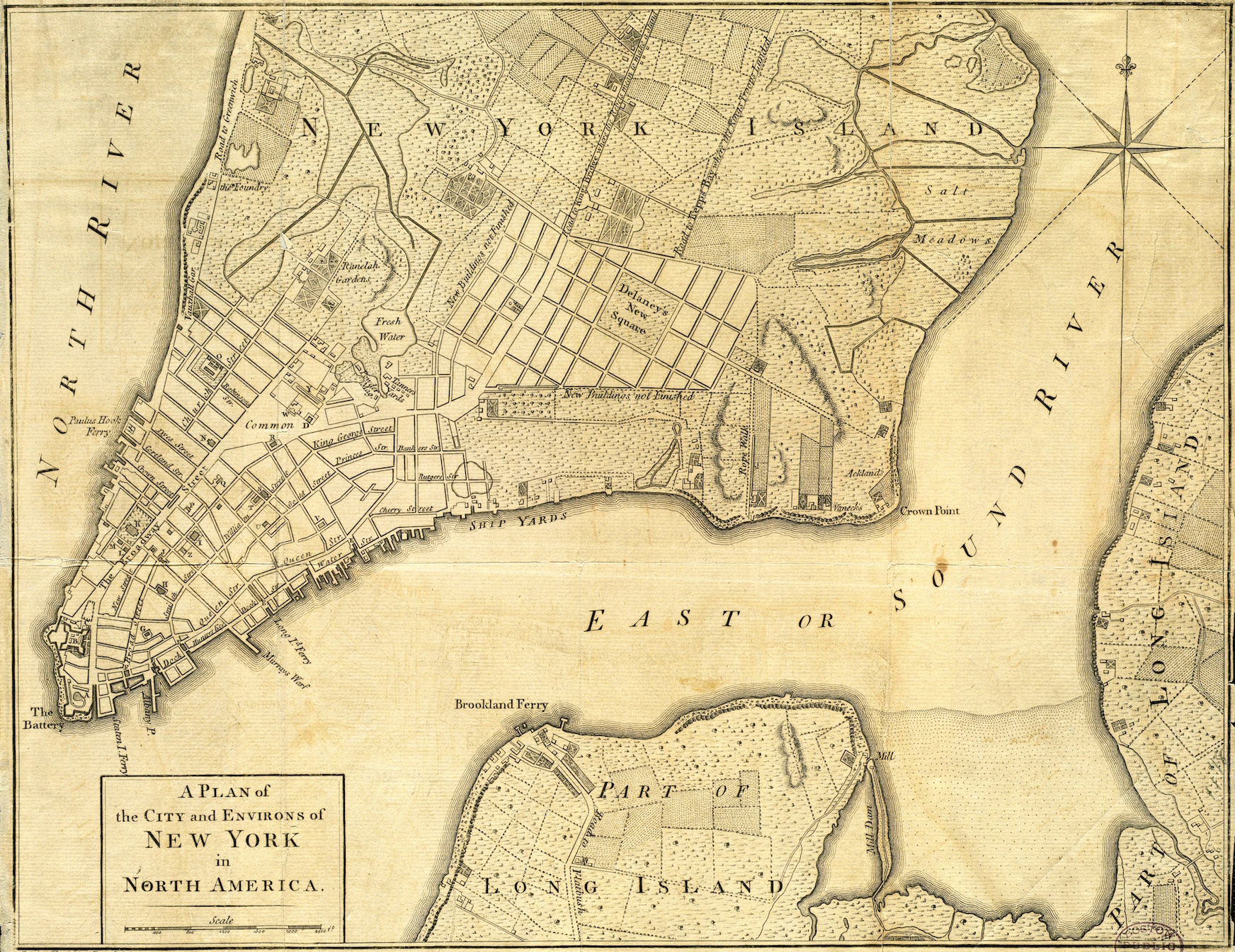
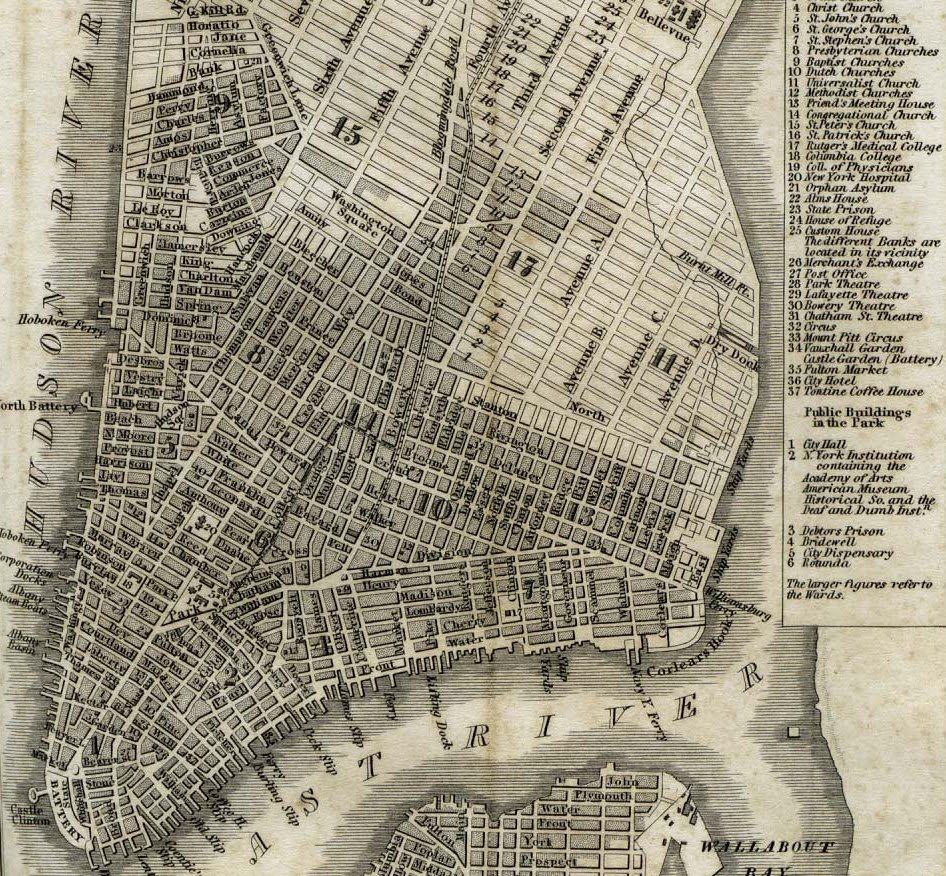
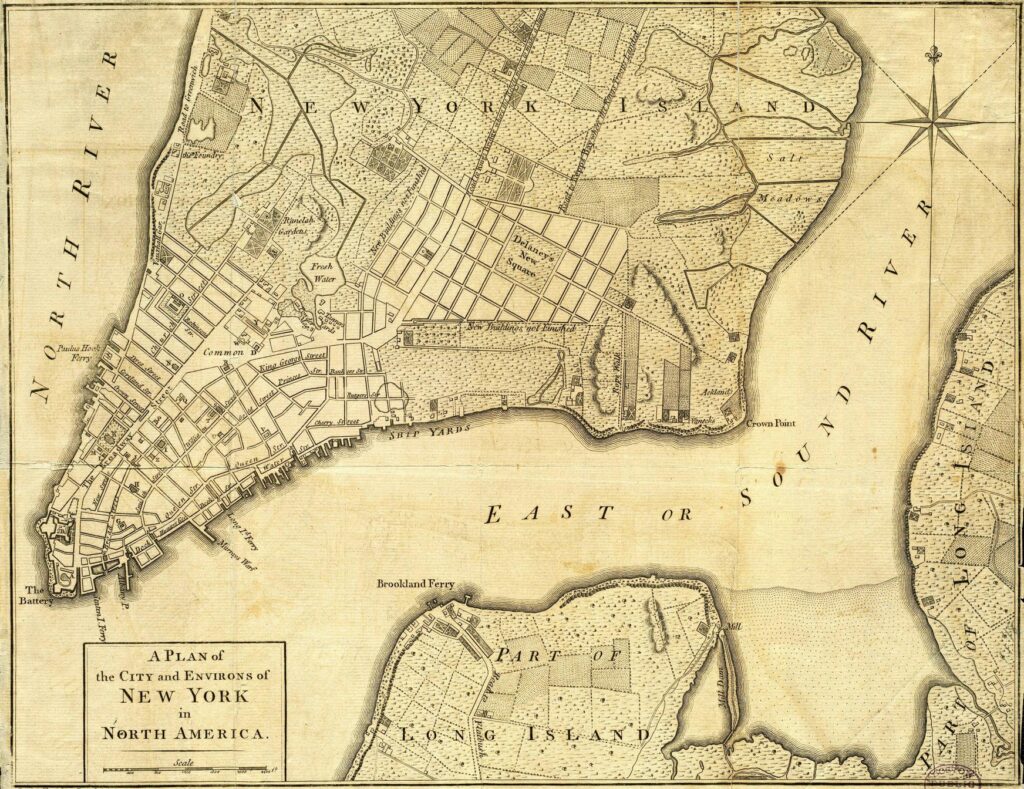
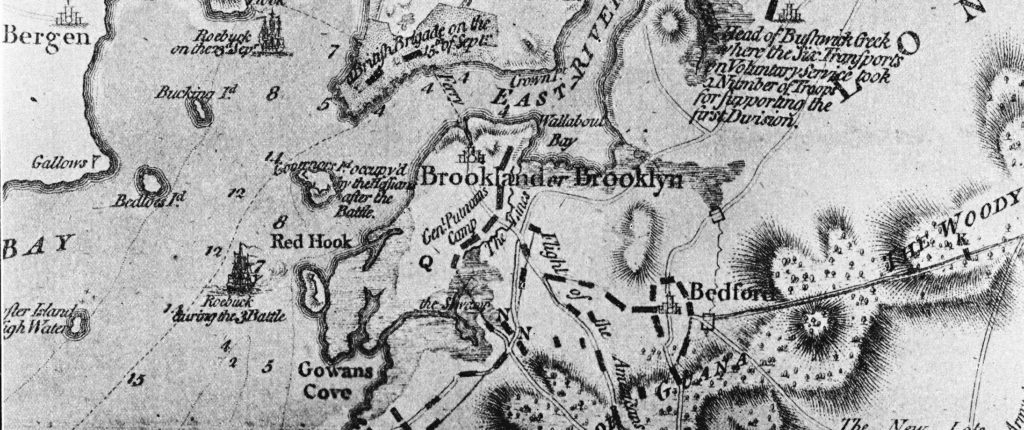
Below: A British map of New York as it was played out in 1776:
These weren’t empty phrases. Upon the completion of the reading, New Yorkers knew their city would be attacked. The men of Washington’s army knew they would fight and possibly die.
The words were greeted with joy, fear, anticipation and rage. The crowds surged with excitement. Most ran to their places — to Kings College, to the counting-houses of Hanover Square, to the ships docked along the East River — and prepared for the world to change.
Many people certainly ran to their local taverns to get wasted. (Samuel Fraunces must have hosted a lively crowd that night.) Some New Yorkers went to their homes, packed their belongings and fled.
Needless to say, the reading had gone off as intended. General Washington’s letter to the Continental Congress is an almost amusing example in understatement:
“Agreeable to the request of Congress I caused the Declaration to be proclaimed before all the Army under my immediate Command, and have the pleasure to inform them, that the measure seemed to have their most hearty assent; the Expressions and behaviour both of Officers and Men testifying their warmest approbation of it.”
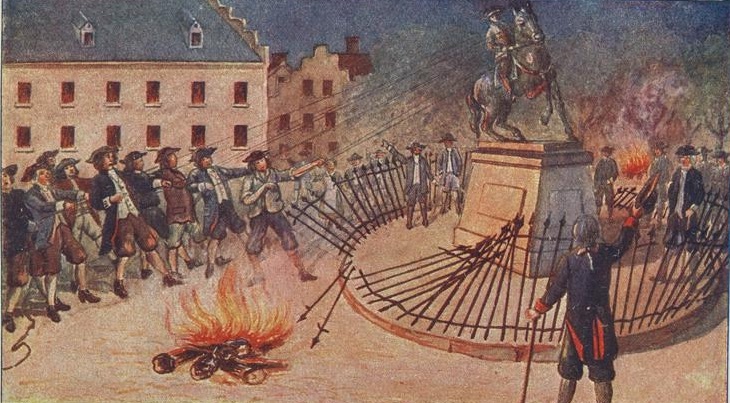
In fact, not only did his army and the gathered New Yorkers approve of the Declaration, but later that night, they actively demonstrated their approval by rushing down Broadway to Bowling Green, where they proceed to pull down the loathsome statue of King George!
Afterwards, Washington had his personal copy sent to Artemes Ward, his major general stationed in Massachusetts. Washington’s note to Ward also survives:
“The inclosed Declaration will shew you, that Congress at Length, impelled by Necessity, have dissolved the Connection between the American Colonies , and Great Britain, and declared them free and independent States; and in Compliance with their Order, I am to request you will cause this Declaration to be immediately proclaimed at the Head of the Continental Regiments in the Massachusetts Bay.”
Today the Washington Declaration — or rather, a fragment of it — is only one of 26 Dunlap copies that are still believed to exist. It lives, naturally, in Washington D.C. However three copies of the ‘Dunlap’ Declaration are in New York City — at the Morgan Library, at the New York Public Library and another, in the hands of an unknown private collector.
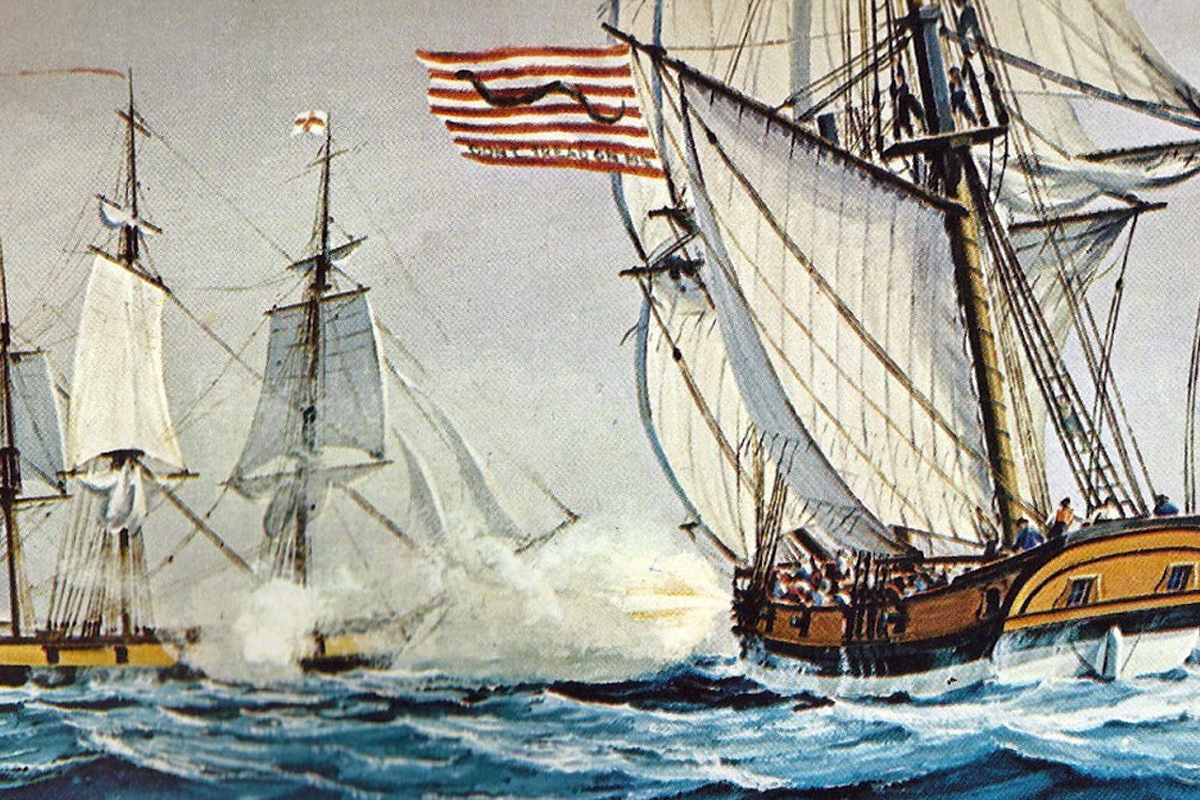
Privateers have been much maligned in history, so much so that perhaps you didn’t realize their important role in gaining America its independence from Great Britain.
If your first image of a privateer is a sinister, blood-thirsty madman with a knife in his teeth and a skull on his sails, you’re probably thinking of a culturally exaggerated version of a pirate.
But if your next image of a privateer is a tanned and tattooed sailor with a sword and a ship full of stolen treasure — well, now you’re getting closer to the reality of a privateer’s life.
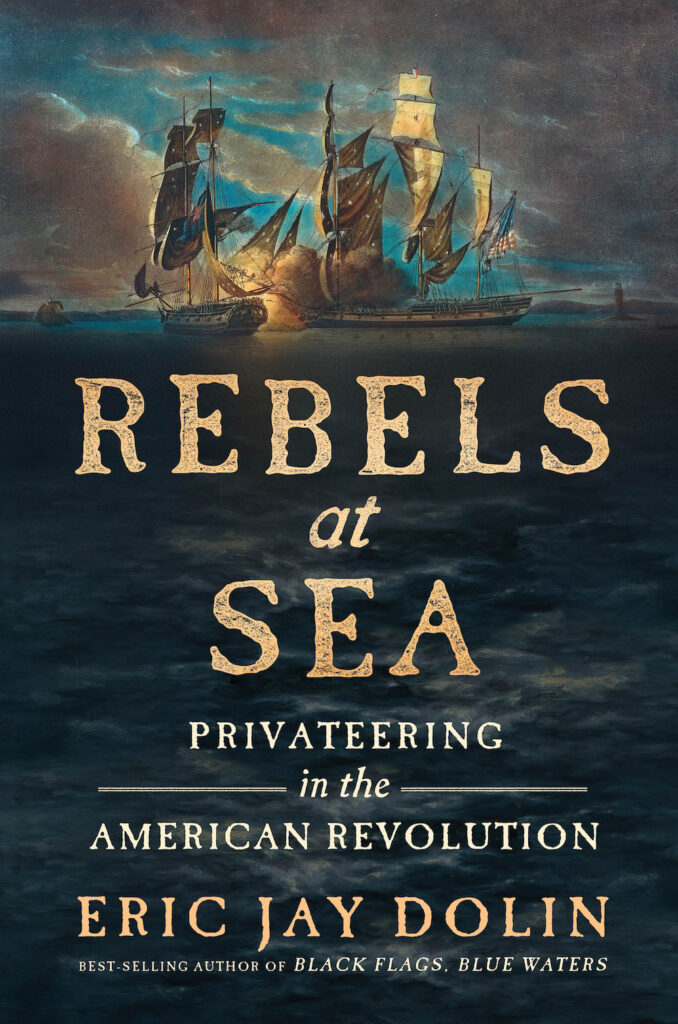
REBELS AT SEA Privateering in the American Revolution Eric Jay Dolin Liveright/WW Norton
There may be no better read for an American Revolution history lover this summer than Eric Jay Dolin‘s latest Rebel At Sea, a look at the forgotten role of the privateer during America’s battle for independence.
Because of their similarity with pirates — criminals who scoured the sea to pillage for personal and malevolent gain — privateers are often ignored in the annals of history, especially in events that have been heavily sanitized of uncomfortable truths like the American Revolution.
As Dolin reveals, privateers were a bit like a shadow navy; indeed they existed in the colonies before there was an actual American naval force.
What set them apart was an authorized letter of marque, a license from the government to capture vessels from enemy nations and take their possessions. The haul would then be sold and, generally speaking, split between the crew and the letter’s issuer.
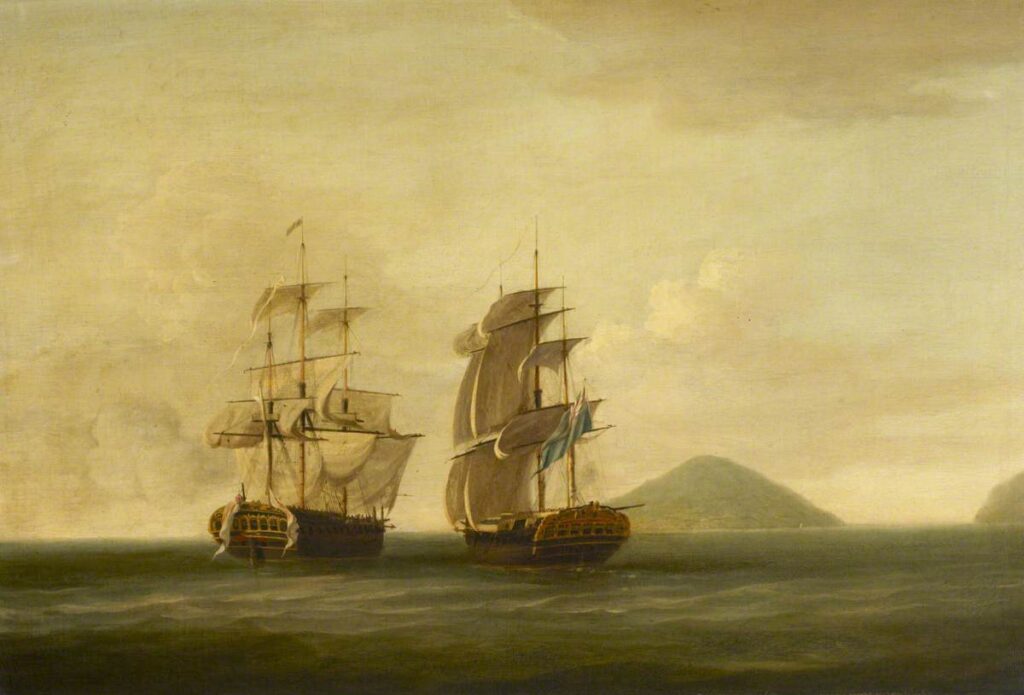
Dominic Serres; HMS ‘Pearl’ Capturing the ‘Esperance’, 30 September 1780; National Maritime Museum
At first a tool for defense by individual colonies, the American Congress soon passed a resolution employing privateers — months before the signing of the Declaration of Independence. “Privateers were free to capture any British vessel,” Dolan writes, “not just those that were delivering supplies to British forces in America. (Later, neutral ships carrying good bound for British use were also deemed acceptable targets).”
Revolutionaries like John Adams were enthusiastic proponents of privateering. “Thousands of schemes for privateering are afloat in American imaginations,” he wrote his wife Abigail. “Out of these speculations many fruitless and some profitable projects will grow.”
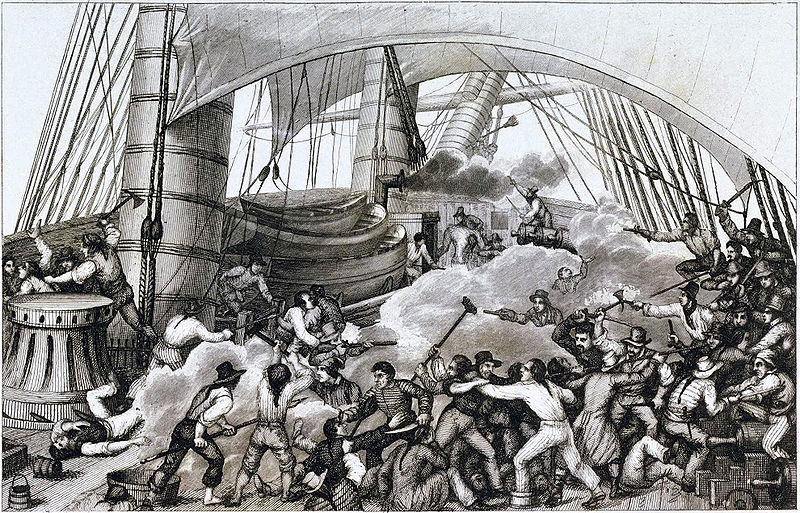
“Boarding of Triton by the privateer Hasard (ex British pilot ship Cartier), captained by Robert Surcouf” (by Ambroise Louis Garneray, 1783–1857)
Dolin describes the life of the average privateer as far less glamorous than that which we might normally prescribe a swashbuckler. Rebels at Sea does highlight some of the privateering triumphs of the Revolution — from John Greenwood, a young privateer who later became George Washington’s dentist, to the many privateering whaleboats.
In a dark local angle, British-occupied New York launched their own counter privateering vessels “with the most fervor and success” and thousands of captured American privateers were imprisoned in the loathesome holds of Wallabout Bay prison ships.
There are men whose sacrifices should also be remembered during Independence Day celebrations this year. And Dolan’s Rebels at Sea presents a great introduction to this hidden corner of American history
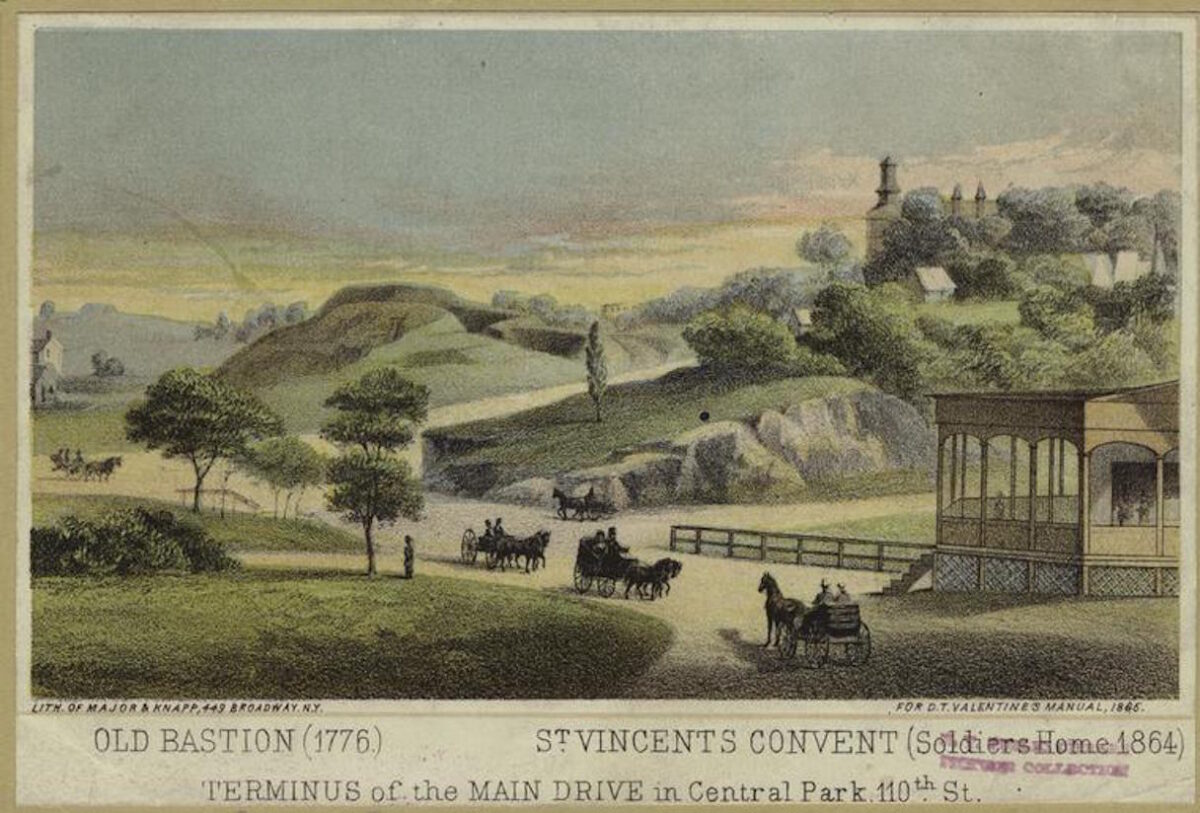
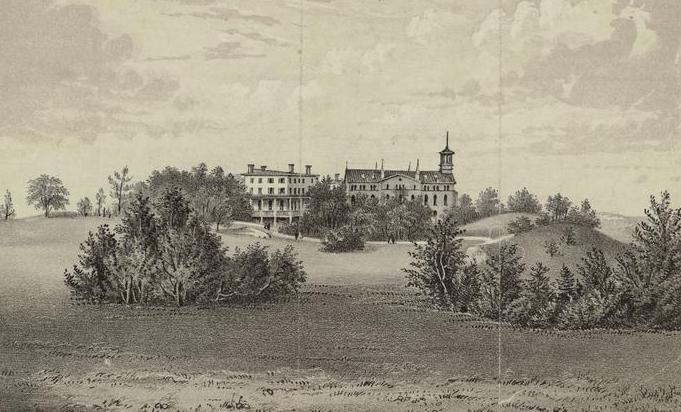
Pictured above is a remarkable structure that once dominated the scenery on the northern side of Central Park.
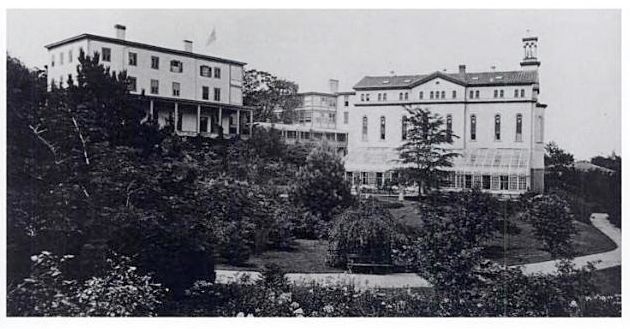
This was the Academy of Saint Vincent on a hill that bore its name. Located on the northern portion of the park, next to the charming Harlem Meer (and nearest 103rd Street), the Academy sat nestled amid a collection of hills and bluffs left over from its original pre-park topography.
Below: House on the hill: the stark and mysterious convent of Central Park, 1861
Washington Passes Through
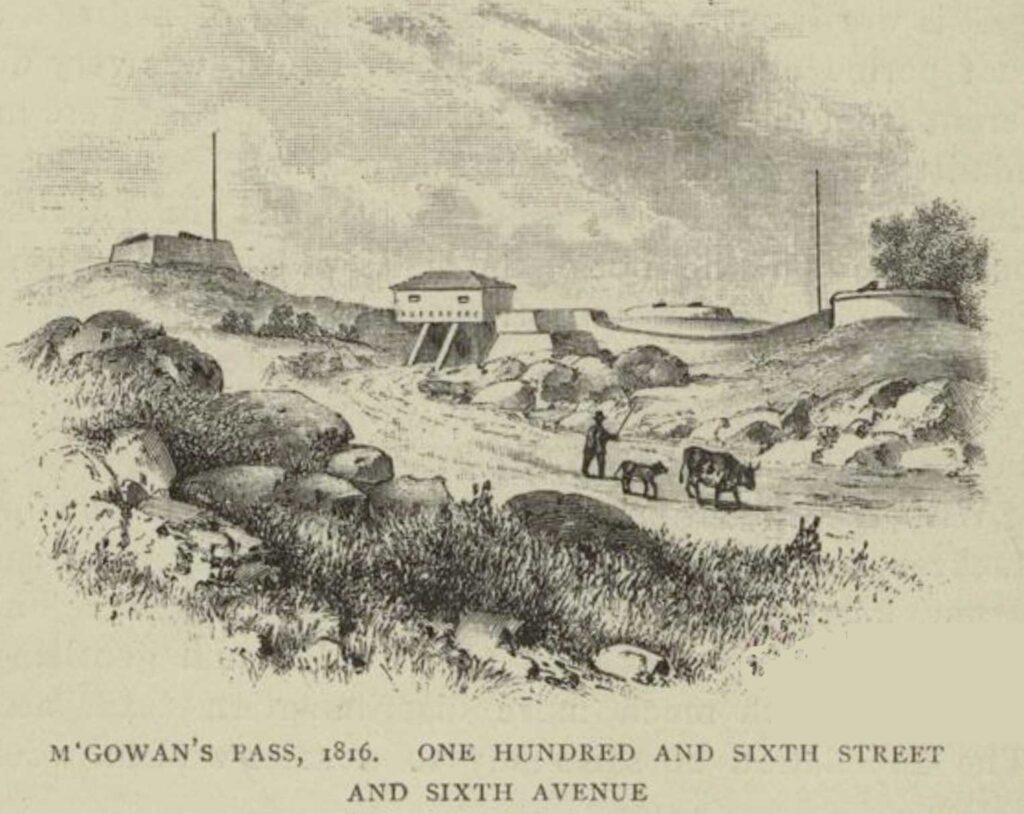
A narrow passage next to the convent was named McGowan’s Pass after Andrew McGowan, owner of a popular tavern that sat here called the Black Horse Tavern. (It is often spelled McGown.)
It was through McGowan’s Pass that George Washington traveled on September 15, 1776.
He and a portion of the Continental Army had escaped up to today’s Washington Heights area; when hearing that part of his army had been stopped by the British, Washington rode down the pass and led the remaining troops back up to their fortification in the Heights.
He rode back through the pass again seven years later, this time as the victor.
The British and their Hessian mercenaries built forts here to cut Manhattan off from the mainland. Later New Yorkers would seize upon this idea during the early days of the War of 1812.
Not willing to become property of the British once again, Manhattan mobilized for any potential battles, building forts all over the island and throughout the harbor.
The Ghost of Old Forts
It was here at McGown’s Pass that a couple fortifications were built, including Fort Clinton (not to be confused with the fort in Battery Park, although both were named for DeWitt Clinton) and Fort Fish, named after Major Nicholas Fish, father of the New York senator Hamilton Fish.
Nothing much remains of these two old forts, which were never used as the war thankfully never made its way to the city. There are, however, two remaining structures from the early days.
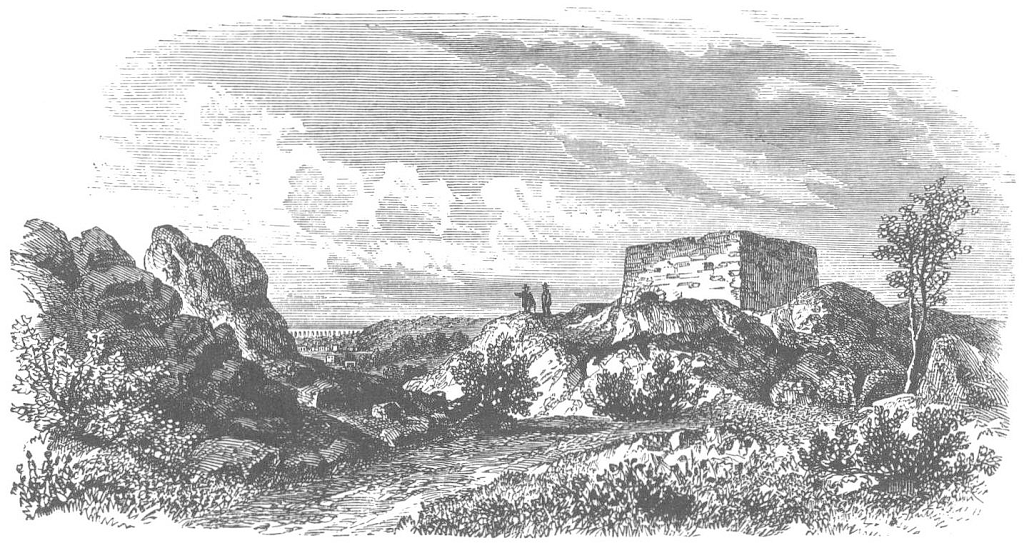
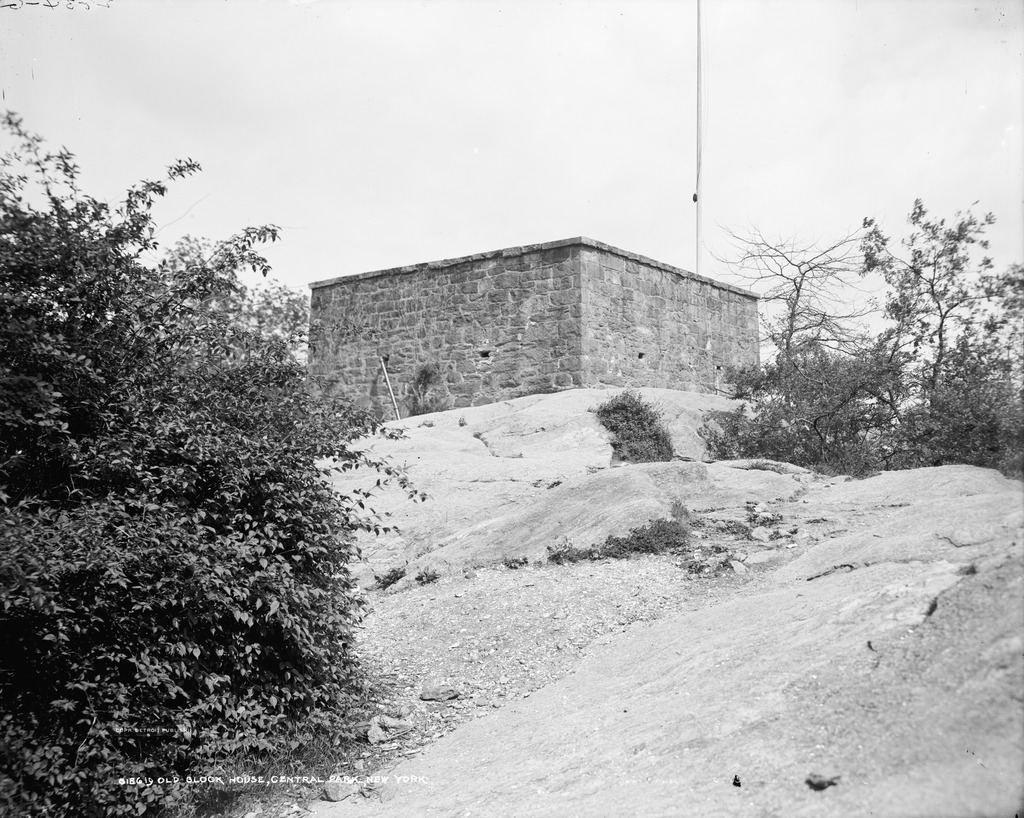
A stone ledge overlooking the meer is all that remains of Nutter’s Battery, named after a farmer who owned the property. And nearby stands the Block House, its stone face still fairly solid, once armed with cannons and used to hold ammunition — that were, of course, never needed.
The Block House was fairly intact when Frederick Law Olmstead and Calvert Vaux included it in their plans for the new park, incorporating the existing building as a ‘picturesque ruin’ covered in vines.
Here’s an illustration of how the Block House looked in 1860:
Holy Sanctuary
Before there was a park, however, there were nuns. In 1847 the Sisters of Charity of St. Vincent de Paul arrived at the still-bucolic region of Manhattan and opened the Academy of St. Vincent, a school and convent.
The nuns left when the area was incorportated into the park, however the building remained standing and utilized for several purposes. During the Civil War, it was briefly used as a hospital; later, it was a “restaurant and hostelry,” with some certainly spectacular views for guests.
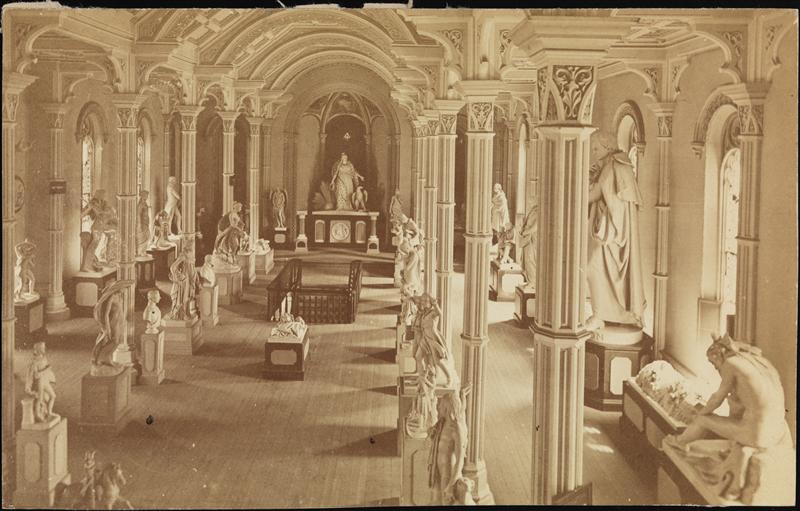
Below: Some sculptured works of Thomas Crawford in the interior of Mount St. Vincent’s Convent, Central Park, north end.]
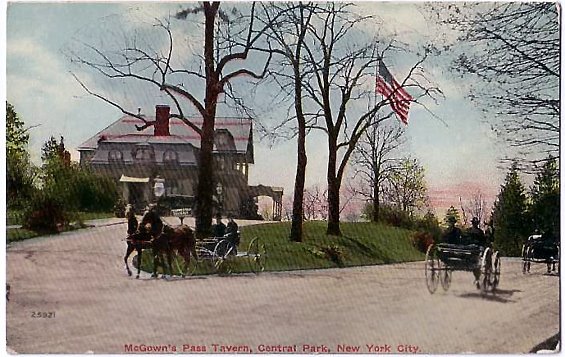
In 1895, McGowan’s was strangely granted its own election district as, being inside the park, it lay outside normal district boundaries. “There were four voters in this territory last year,” declared the New York Times. “They are four men employed at McGowan’s Pass Tavern.” The tavern was eventually torn down in the late 1910s.
Below: McGowan’s Pass Tavern (date unknown, but possibly around the early 1910s)
This is a bit tangental, but I love this story:
A plaque was erected at the old site of Fort Clinton in 1906 and unveiled in a publicized community event for children. It was apparently difficult for some people to find the location and “several chivalrous lads” guided people through the park to the unveiling.
However, the Times reports an incident that might be the only real battle that ever occured at this storied historical spot:
“Among the boys interested in the tablet unveiling were several whose spirit of mischief overcame their sense of the proprieties. These made misleading arrow signs …. and caused a number of persons to go far afield and arrive at the exercises late and angry. These mischievous youngsters were caught at their annoying trick by boys who were more sober and serious. Then there was a short scrimmage, and the mischievous lads scurried away through the Park.”
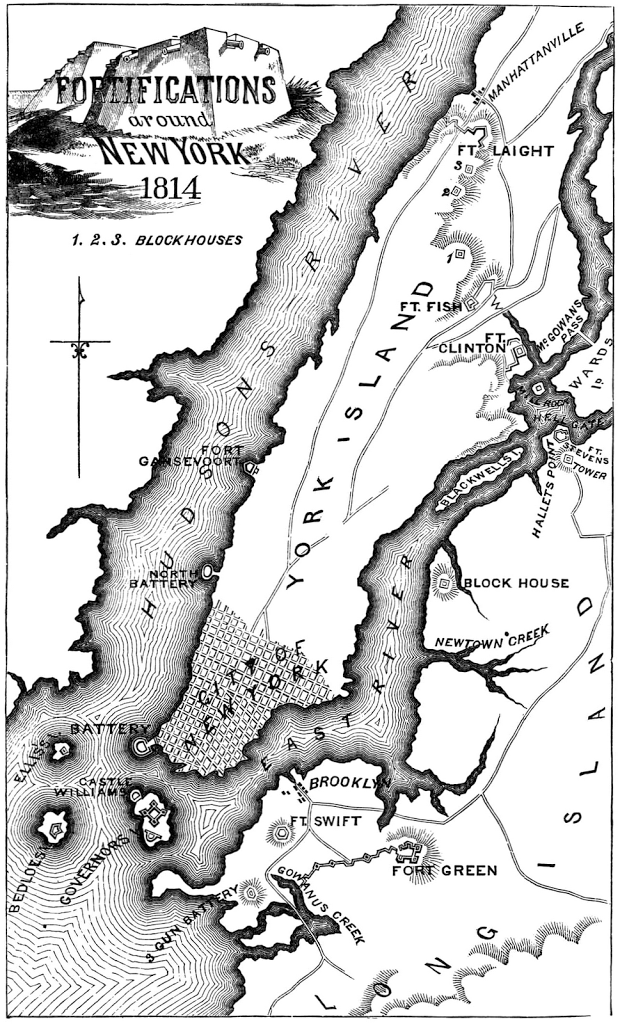
Its dimensions are greatly distorted of course, but it lists the forts and blockhouses that stood in this area as well as those such as Fort Gansevoort and Fort Greene (click on the image to look at it more closely):
**This story originally ran in 2011. All pictures courtesy the New York Public Library except where otherwise noted
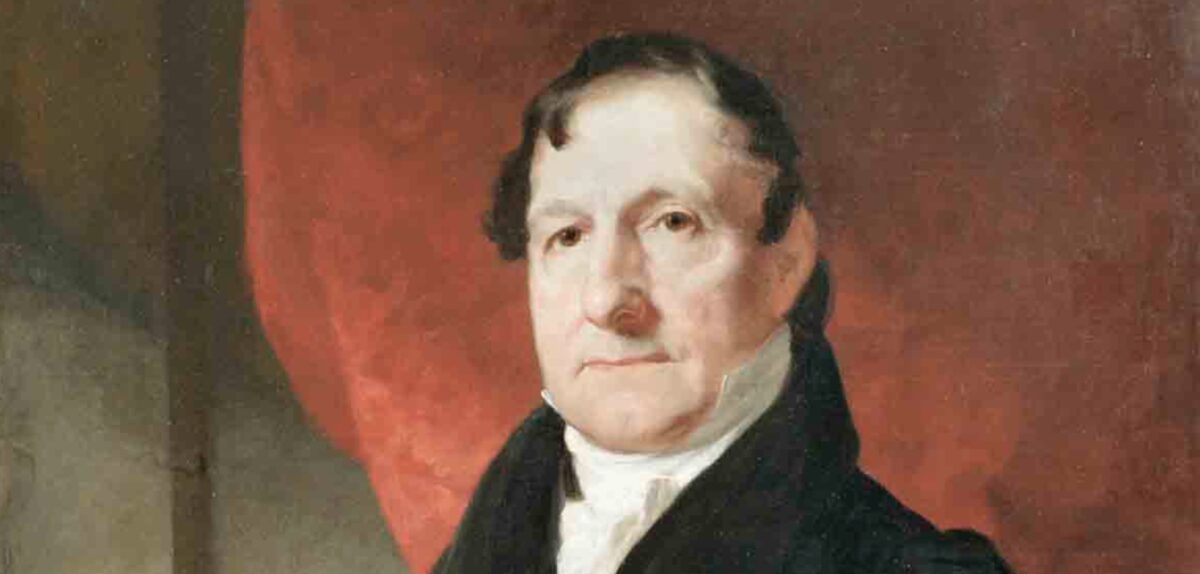
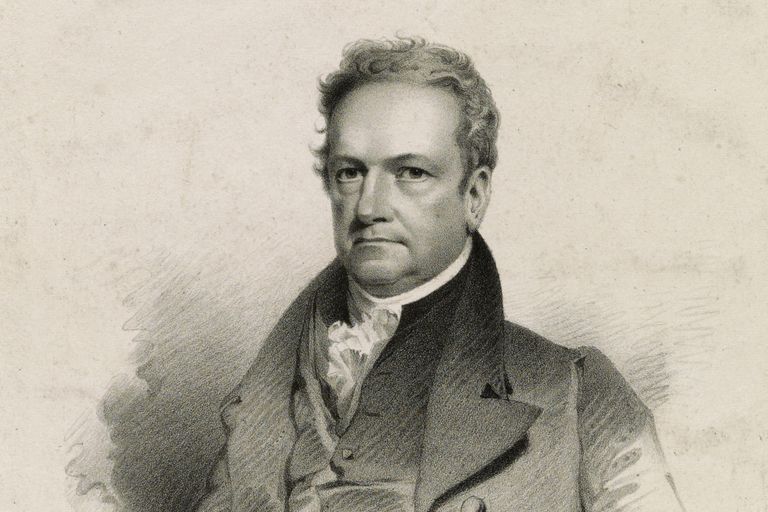
Detail from William Paulding's official portrait by Samuel Morse
We’re just a couple months away from a new mayor in New York City so we think it is time that you Know Your Mayors! Become familiar with other men who’ve held the job, from the ultra-powerful to the political puppets, the most effective to the most useless leaders in New York City history.
This longtime feature of this website is being rebooted with new articles and newly researched and refreshed earlier entries in this series. Check back every other week for a new installment. Read past articles here.
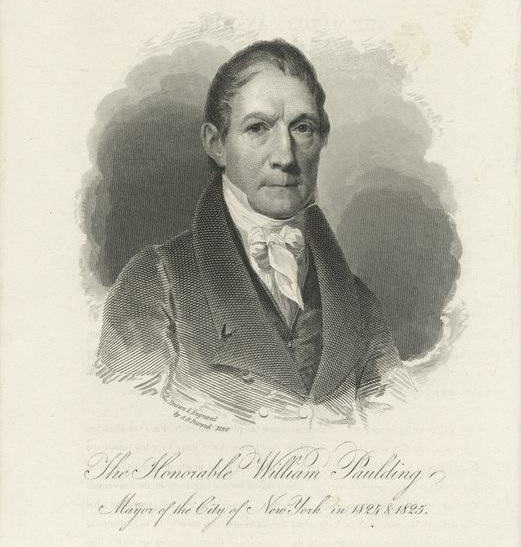
William Paulding Terms: 1824-1825; 1827-29
Despite the success of the occasional vanguard in early American politics — Alexander Hamilton, for instance — most leaders came from the most prominent families. The ‘elites’, if you will, the powerful and wealthy individuals who benefit most from the close connections to government.
In local politics, this is to be expected. In an age where mayors were appointed, not popularly elected (and thus influenced more by individualism and personal style), it would be family connections and reputation that would put them in position for such a post.
And yet, if they were truly of a distinguished character, they probably wouldn’t want to be mayor, a position that before 1834, was entirely beholden to city aldermen. You were merely a figurehead — albeit one that paid pretty well.
That’s not to say that Mayor William Paulding wasn’t a most respectable gentleman in many ways. It’s just that he’s somewhat forgettable compared to his younger brother.
The Paulding Story
The star of the Paulding family was his younger brotherJames Kirke Paulding. If you love New York City history, then you already admire James Paulding, even though you may not know his name.
William (born 1770) and James (born 1778) were from a litter of eight Paulding children, many born in New York City before the family permanently settled in Tarrytown.
Their father, once a wealthy shop owner, had been bankrupted by the Revolutionary War. However, even in misfortune, the Pauldings managed to raise a well-read lot of children.
James and William were quote close. When William moved to New York to become a lawyer, he secured James a job in “public office” (James’ bio is not forthcoming as to what kind), date uncertain, but probably by 1796-7.
The two would seek different paths. William would become a prominent attorney and mix with the learned men of New York. By 1811, he would be elected to the still-young House of Representatives and would even see action on the battlefield in the War of 1812. He returned with great reputation, achieving a level of respectability reserved for those of higher classes.
His More Famous Brother
Young James (above), however, would go an alternative route to fame.
Their sister married William Irving, and James became quite close to William’s brother Washington Irving. In James’ own words: “Thus I fell, as it were, among the Philistines; for the circle in which I moved … was composed of young men, many of whom have since made no inconsiderable figure in the world.”
Washington Irving and James Paulding grew close; their correspondence is among the boldest writing of the day. In 1807 the pair of writers created a wry, satirical experiment called Salmagundi — poking fun at the city politics of the day. (It was in Salmagundi that New York is first referred by the nickname ‘Gotham’.)
Along the way, the pair bolstered their reputations as superior wits and soon assembled a group of other young writers, creating one of New York’s first literary salons, unofficially called the Knickerbocker Group.
They would even attend their own version of the Algonquin Round Table, called the Bread and Cheese Club, founded by fellow penman James Fenimore Cooper (Last of the Mohicans). James Paulding would go on to be one of America’s most adventurous novelists of the early 19th century.
Brother as Mayor
Ah, but we’re here for William! If James was busy securing the family reputation for posterity, William was doing so for present high society.
As a brigadier-general of the war and a former member of Congress, William’s ascent into New York politics was an easy one, first as the governor-appointed Adjutant General (or leader of the state militia) then finally as mayor in 1824, replacing Stephen Allen. (See the last installment of Know Your Mayors for his story.)
Paulding would be only the second mayor appointed by Common Council (today’s City Council); they had previously been appointments by the governor.
Tied as he was to the favoritism of council members, it’s no surprise that Paulding had few official powers. He served mostly as an ambassador of New York, rolling out the welcome mat, even as many of the city’s most pressing decisions were left to others.
But during his non-consecutive years as mayor, New York witnessed some significant events.
In 1824, a house on Water Street becomes the first to be lit by gas power, and Paulding would see the entire city lit up by gaslight by the end of his mayoralty.
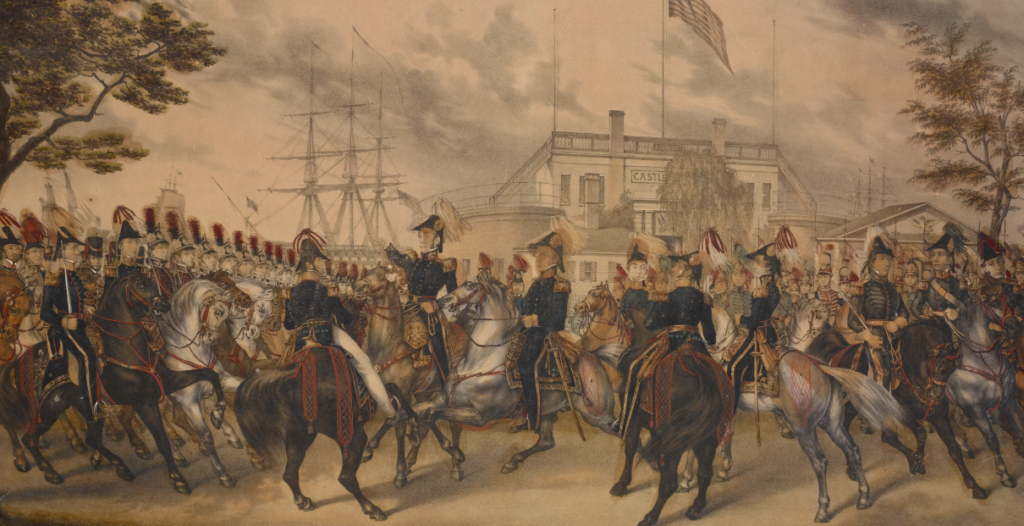
The military escort forms at Castle Clinton to await the arrival of Lafayette. From a painting by FJ Fritsch.
Welcoming the Marquis
Perhaps his most notable moment came early, and it was purely honorary. Paulding’s crisp appearance and military credential — “handsome, courtly” — made him a fine representative for the city in August when the Marquis de Lafayette made his triumphal tour of the United States in 1824.
The Marquis, a French general in the Continental Army and close confidante of George Washington, was a symbolic link to the country’s first president, who had died a quarter century previous.
Lafayette arrived on the ship Cadmus, greeted in Staten Island by a procession led by Paulding and accompanied by a no-holds-barred display of artillary bombast.
The next day, Lafayette, Paulding and a gathering of thousands made their way to City Hall for an official welcoming. The revered French ally would be in New York a number of times during his 13-month visit, and the mayor would be on hand for most events, including what may possibly be the greatest party ever thrown in New York — the September reception for Lafayette at Castle Garden.
New York City became a fundamentally different city under Paulding’s tenure, although he had little to do with the most important event — the opening of the Erie Canal, a project once overseen by former mayor Dewitt Clinton.
Once a cemetery, the area later to become Washington Square Park was bought as a military parade ground in 1827, and the celebrated homes of the elite soon crowded along its north end.
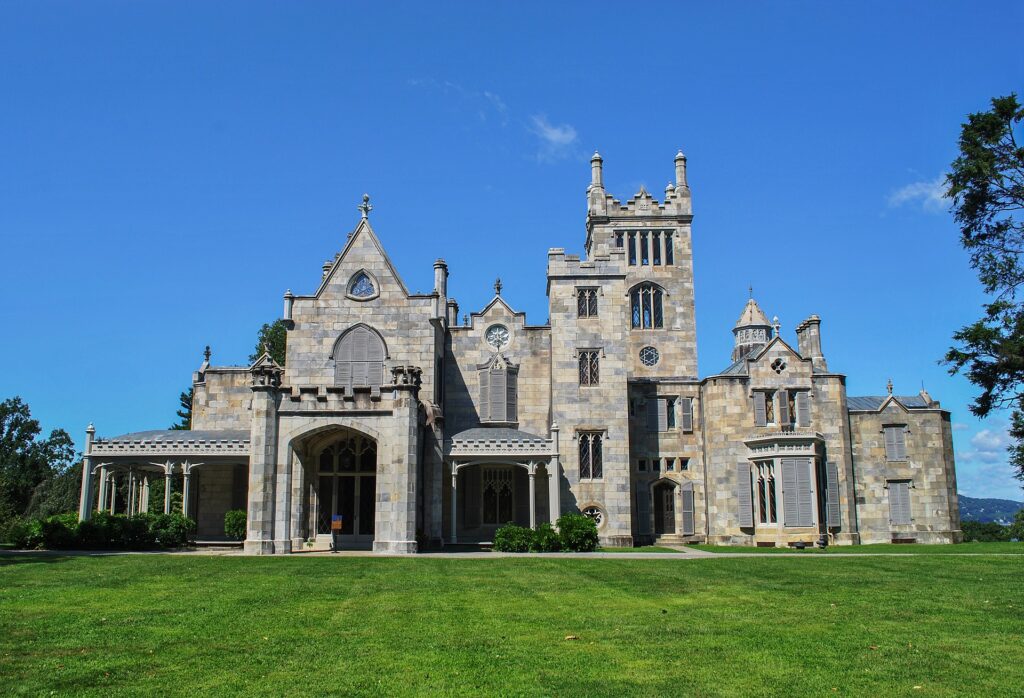
Lyndhurst today. Photo by Elisa Rolle/Wikimedia Commons
Lyndhurst
After leaving office, Paulding (and more importantly, Paulding’s son Phillip) would influence the fortunes of his hometown of Tarrytown, namely through the construction of a lavish mansion (above) as summer retirement villa, which would eventually be called Lyndhurst.
William was of such name and connection by this time (1838) that he was able to enlist noted architect Alexander Jackson Davis in its construction. (Davis designed Federal Hall, among other notable structures.)
Originally called the Knoll, the lavish home was roundly criticized for its outdated Gothic design, including by Philip Hone (who would become mayor), who referred to it as ‘Paulding’s folly.’
No folly, it turns out. The home would take on a life of its own in future generations, grandly expanded by later owner George Merritt. The railroad ‘robber baron’ Jay Gould also lived here. Today, Paulding’s old home is one of the most celebrated structures along the Hudson River and can be visited today.
William is currently buried in one of the most famous graveyard in all the Hudson River Valley — the Old Dutch Burying Ground in Sleepy Hollow. Washington Irving, incidentally, is buried nearby, in the Sleepy Hollow Cemetery.
James Kirke Paulding, however, is not buried near his brother nor his great literary friend. He died in 1860 and is interred at Green-Wood Cemetery.
The cemetery’s website provides this amazing piece of trivia — James Paulding coined the tongue-twister “Peter Piper picked a peck of pickled peppers.”
PODCAST We revisit the story of the Great Fire of 1776, the drumbeat of war leading up to the disaster, and the tragic story of the American patriot Nathan Hale.
On the occasion of the 245th anniversary of the Revolutionary War in New York City, we’re presenting a reedited, remastered version of an episode that we recorded in 2015.
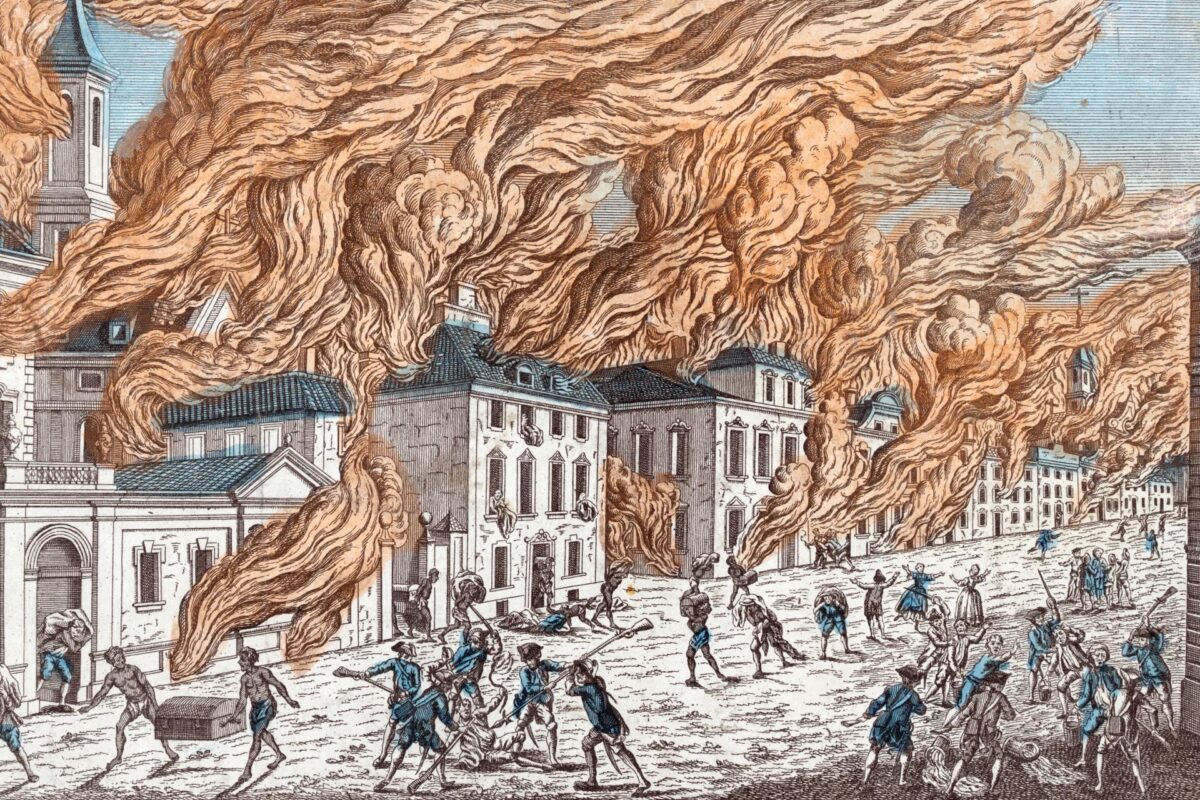
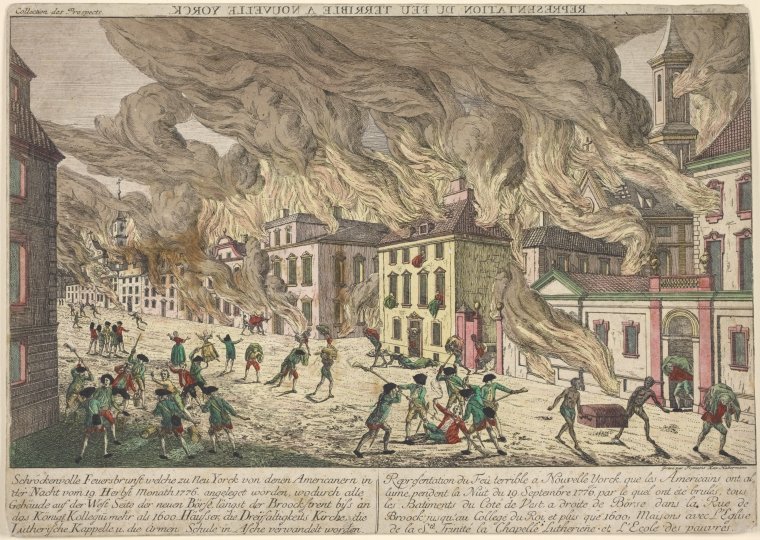
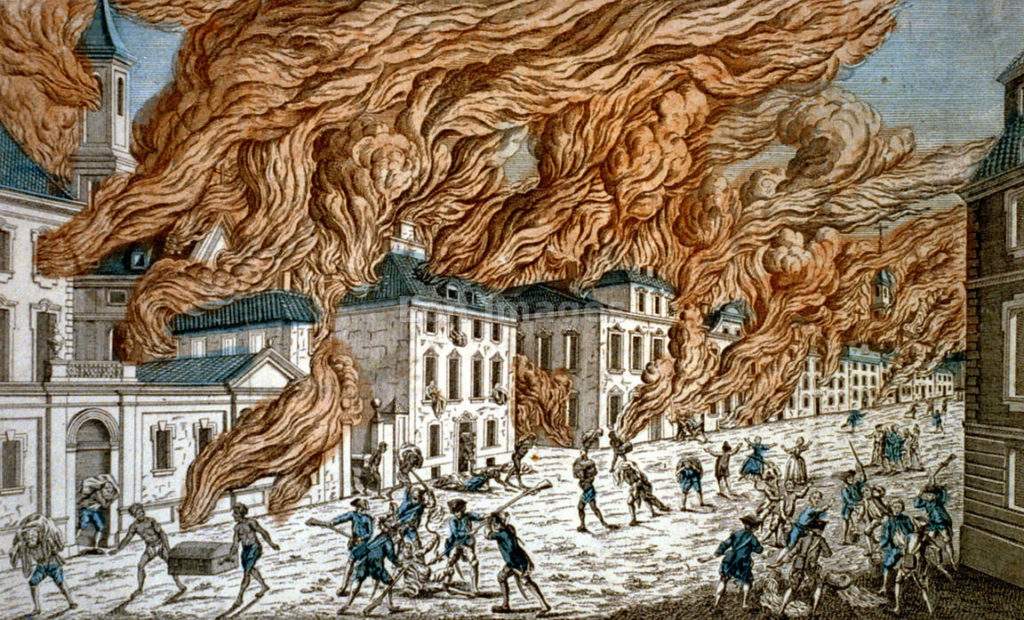
A little after midnight on September 21, 1776, the Fighting Cocks Tavern on Whitehall Street caught on fire. The drunken revelers inside the tavern were unable to stop the blaze, and it soon raged into a dangerous inferno, spreading up the west side of Manhattan.
Some reports state that the fire started accidentally in the tavern fireplace. But was it actually set on purpose — on the orders of George Washington?
To understand that damning speculation, we unfurl the events that lead up to that moment — from the first outrages against the British by American colonists to the first sparks of the Revolutionary War. Why did New York get caught up so early in the war and what were the circumstances that led to the city falling into British hands?
Underneath this expansive story is another, smaller story — that of a young man on a spy mission, sent by Washington into enemy territory. His name was Nathan Hale, and his fate would intersect with the disastrous events of September 21, 1776.
PLUS: The legacy of St. Paul’s Chapel, a lasting reminder not only of the Great Fire of 1776 but of an even greater disaster which occurred almost exactly 225 years later.
AND: Find out what Alexander Hamilton was up to in September 1776!
The Bowery Boys: New York City History podcast is brought to you …. by you!
We are now producing a new Bowery Boys podcast every other week. We’re also looking to improve and expand the show in other ways — publishing, social media, live events and other forms of media. But we can only do this with your help!
We are now a creator on Patreon, a patronage platform where you can support your favorite content creators.
Please visit our page on Patreon and watch a short video of us recording the show and talking about our expansion plans. If you’d like to help out, there are several different pledge levels. Check them out and consider being a sponsor.
We greatly appreciate our listeners and readers and thank you for joining us on this journey so far.
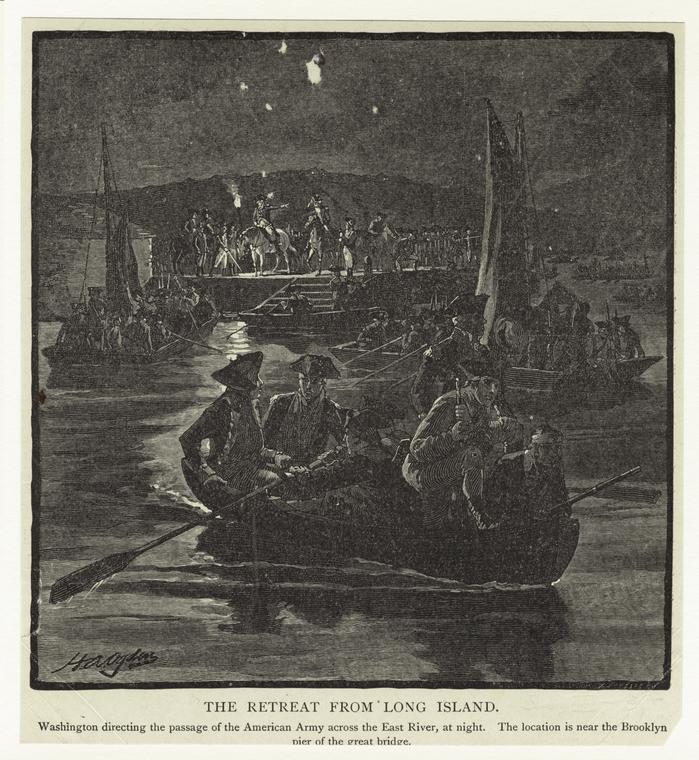
The escape of the Continental Army from Long Island under cover of night. This illustration by Henry Alexander Ogden is from 1897.
Courtesy New York Public Library
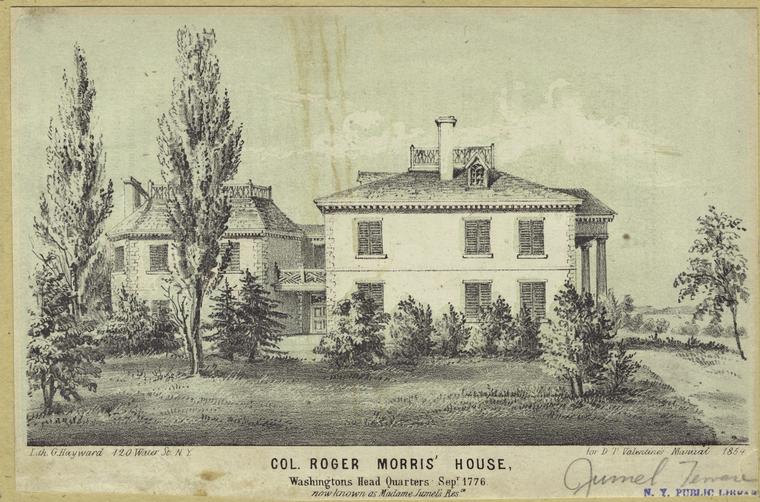
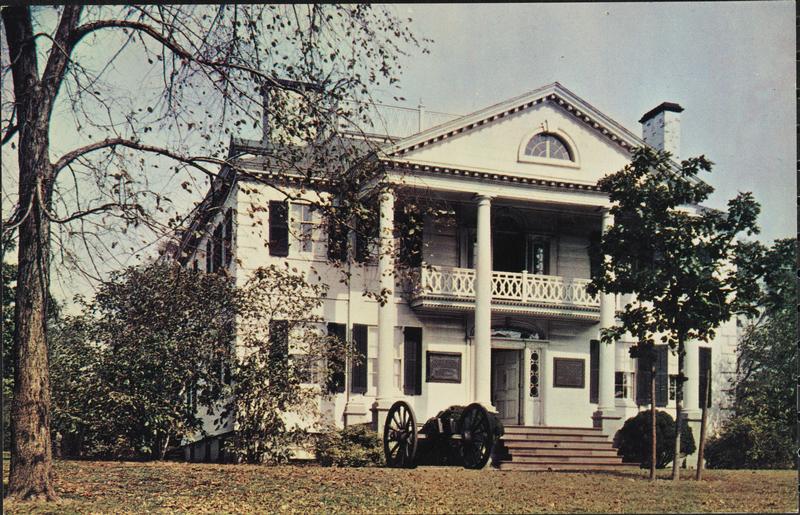
The house of Roger Morris which George Washington took over as his headquarters after fleeing New York.
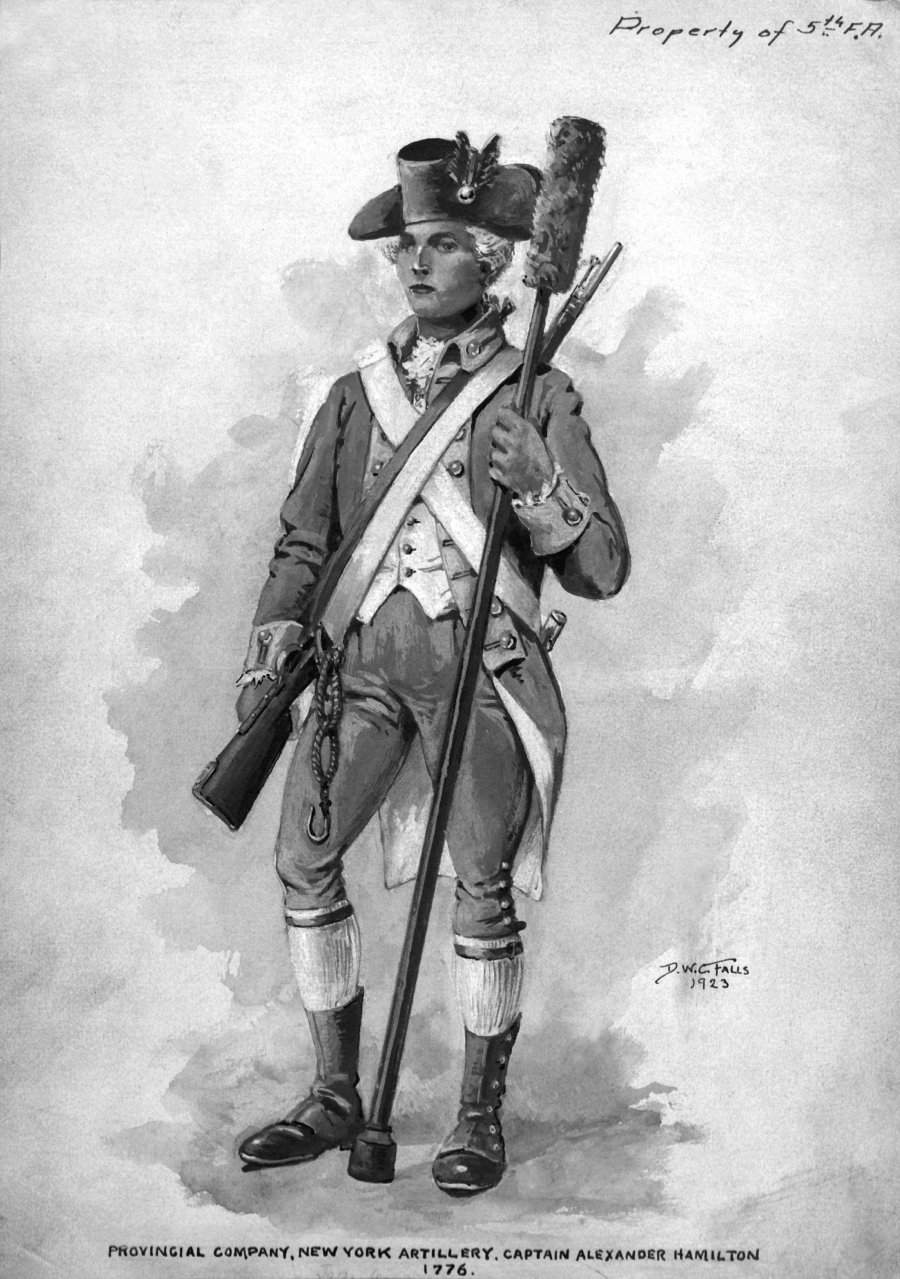
An imagining of young Alexander Hamilton in uniform in 1776
Courtesy the Department of Defense
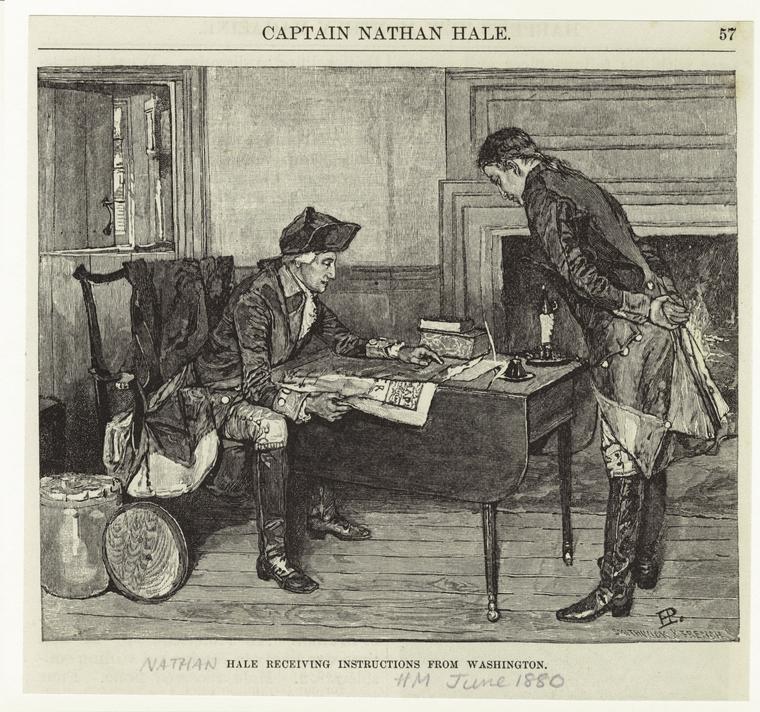
A Harpers Magazine illustration by Howard Pyle from 1880, depicting Nathan Hale receiving the details of his spy mission directly from General Washington.
Courtesy New York Public Library
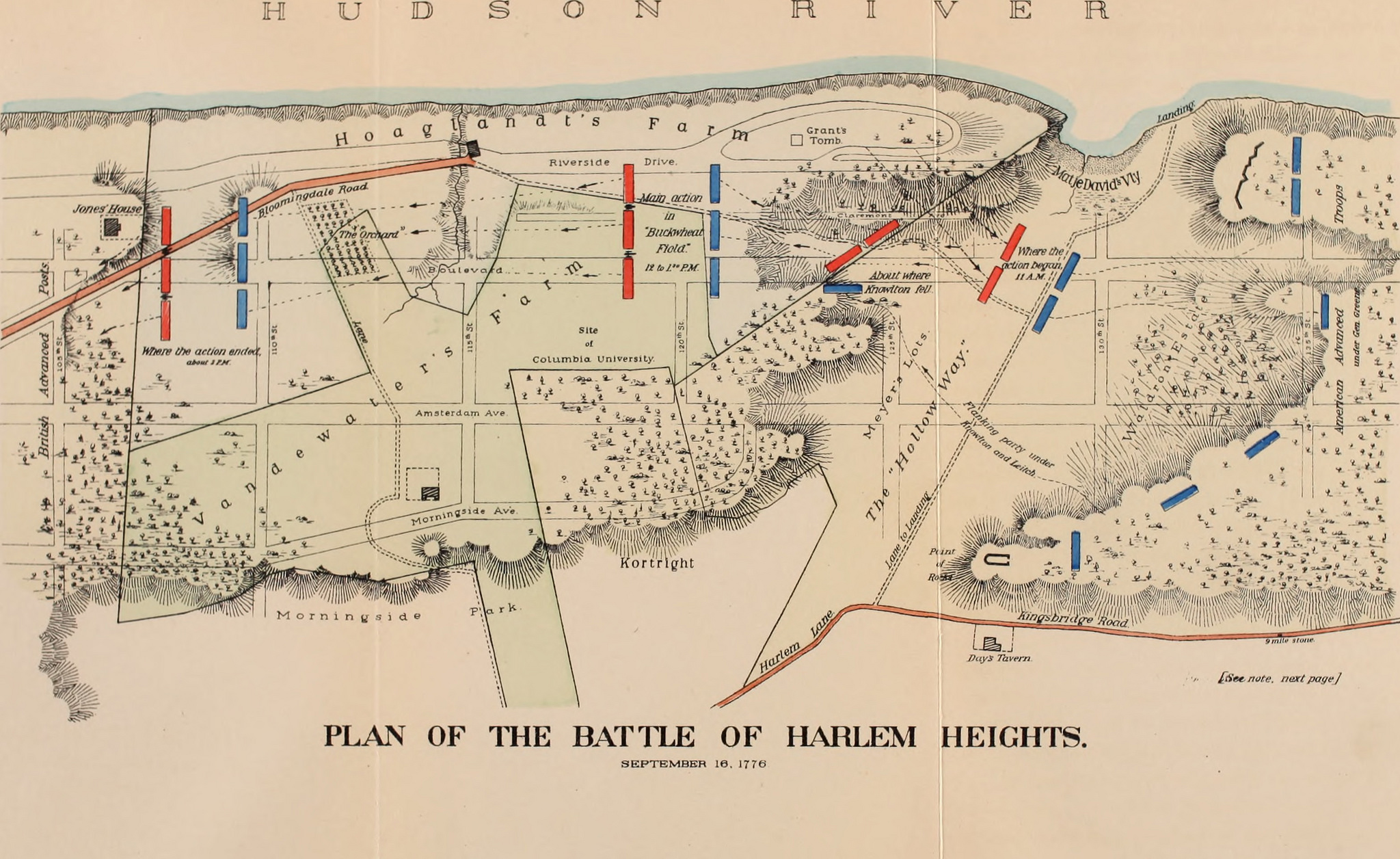
A beautiful map from 1897 laying out the events of the Battle of Harlem Heights on September 16, 1776.
Courtesy Internet Archives Book Imaging
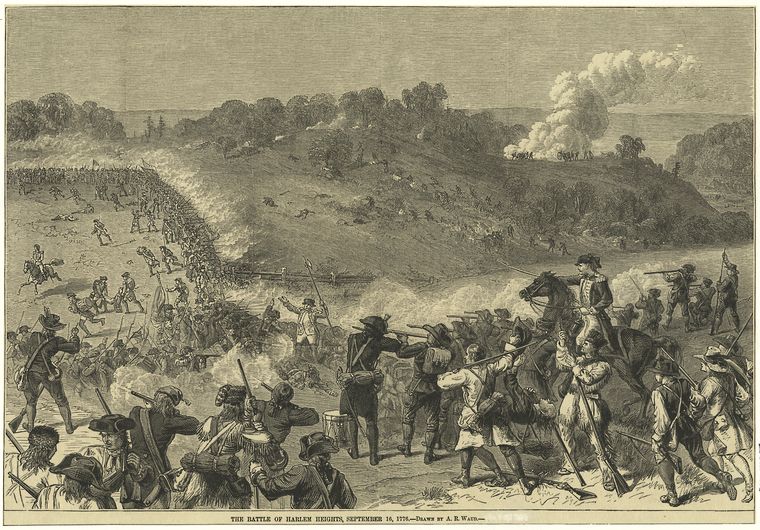
The Battle of Harlem Heights with a look into the valley called the Hollow Way.
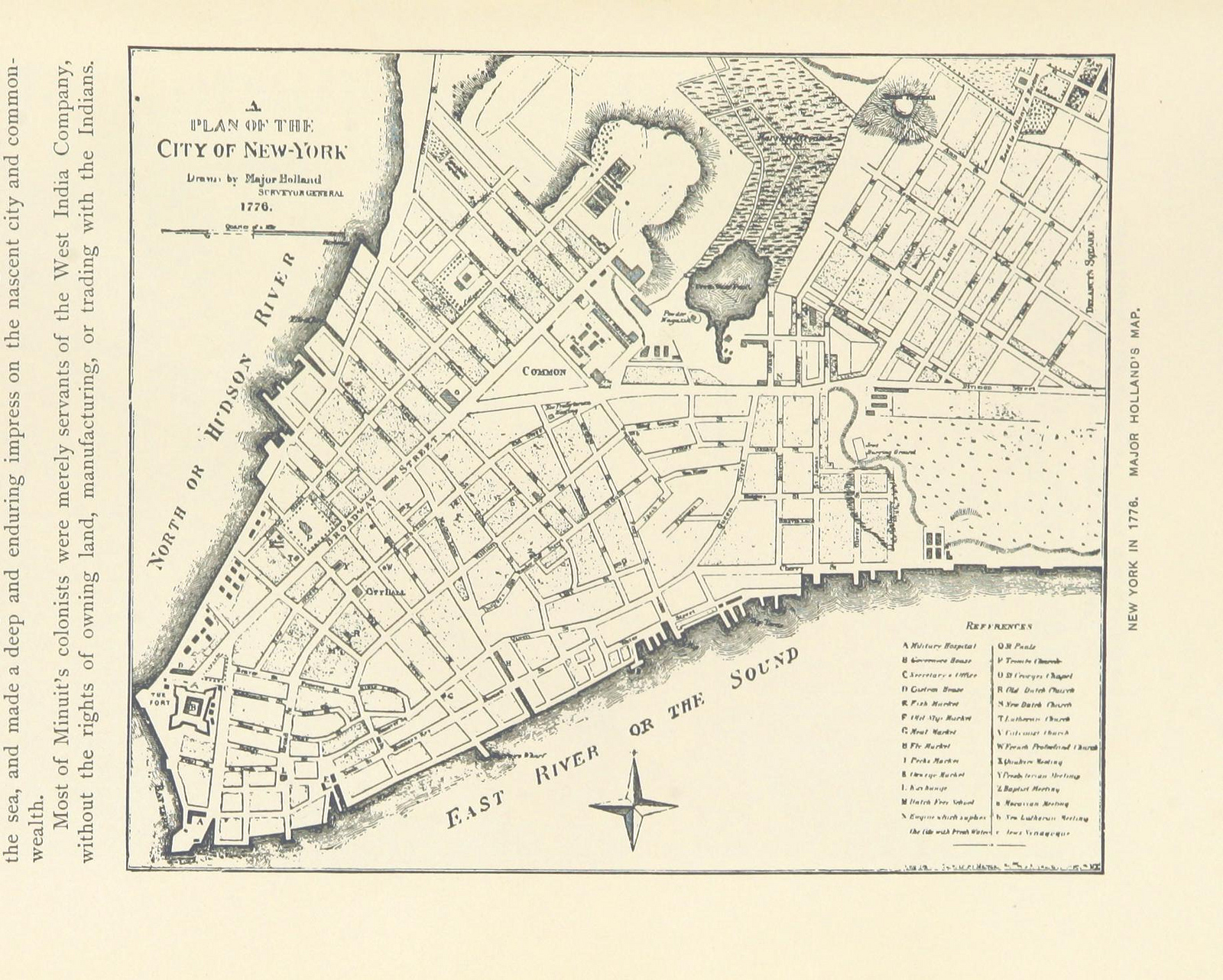
This is New York is 1776, the city that was captured in September 1776.
British Library
A grave illustration showing the severity of the fire, looking at the burning buildings on the west side of Broadway.
New York Public Library
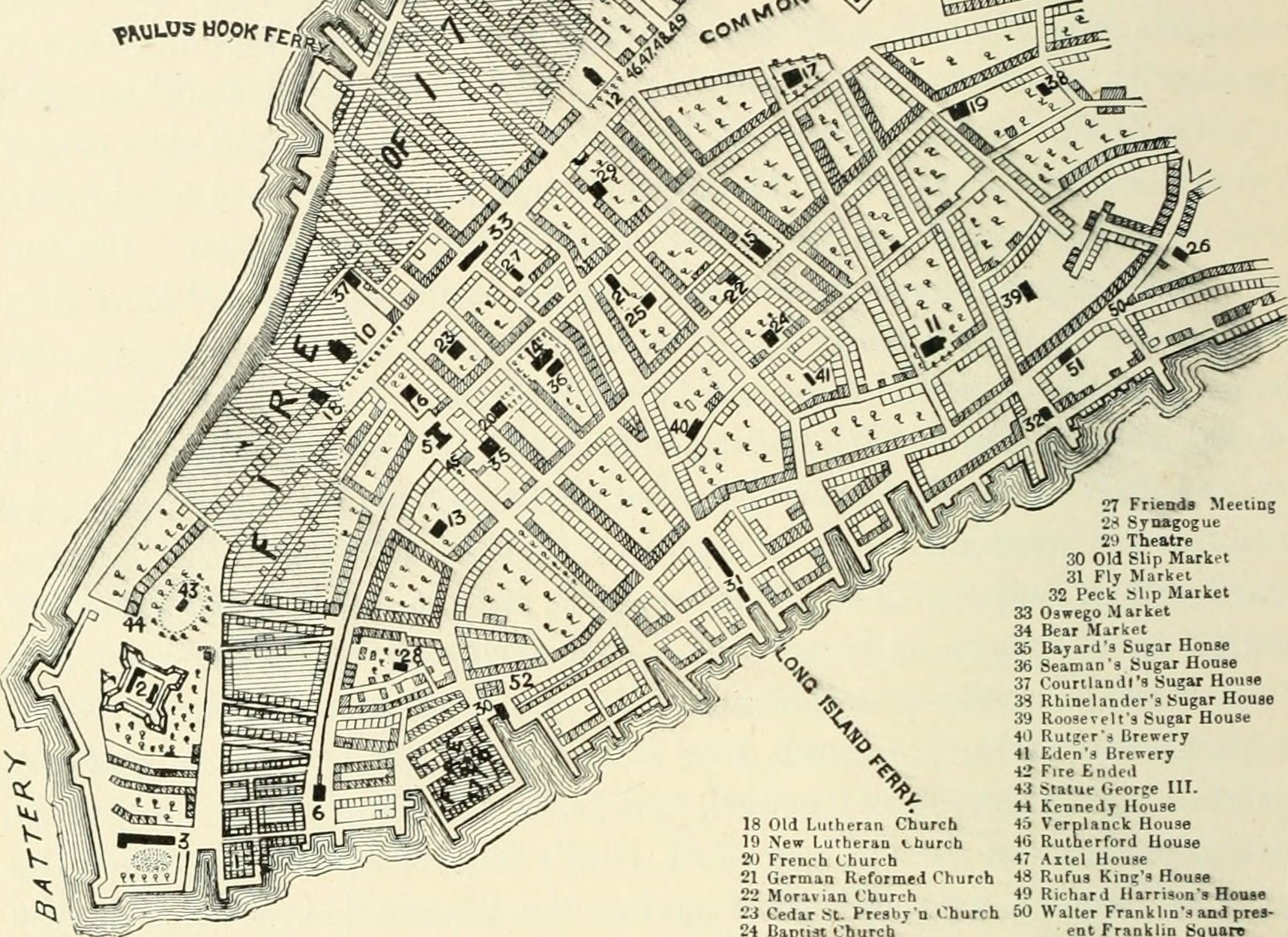
A map delineating the path of the fire from Whitehall Street up the west side of the city.
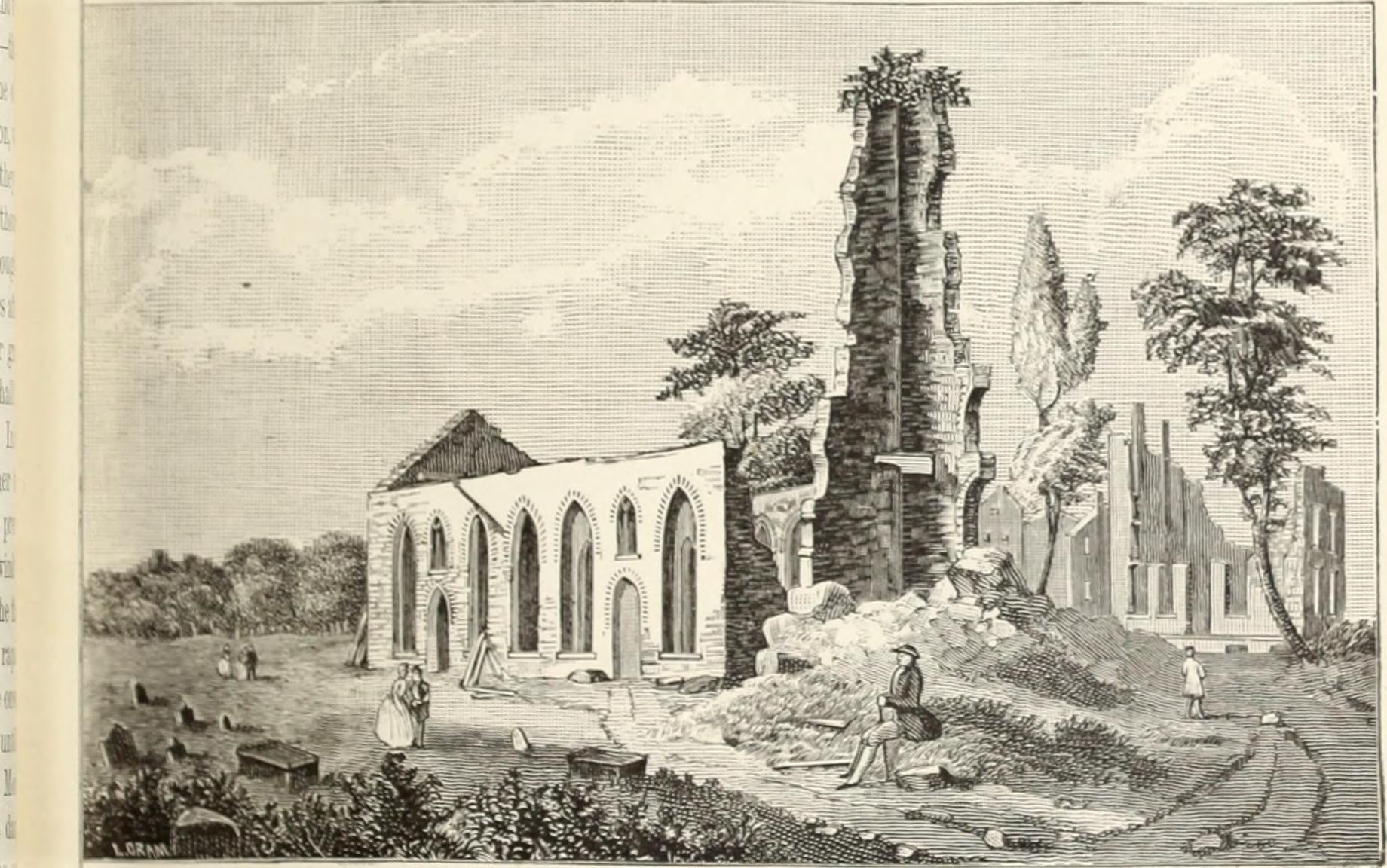
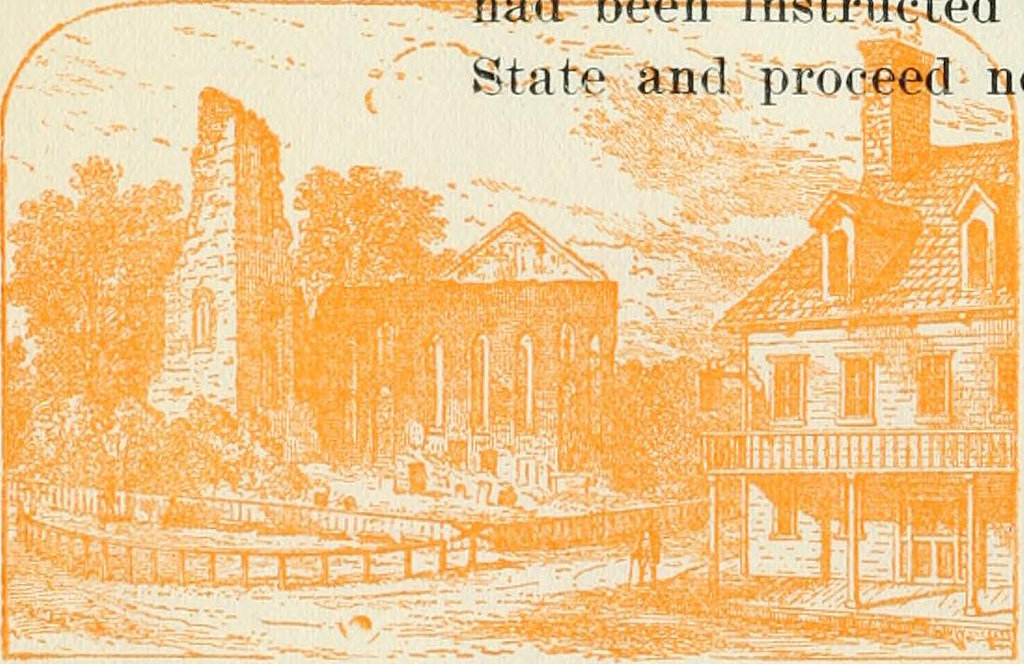
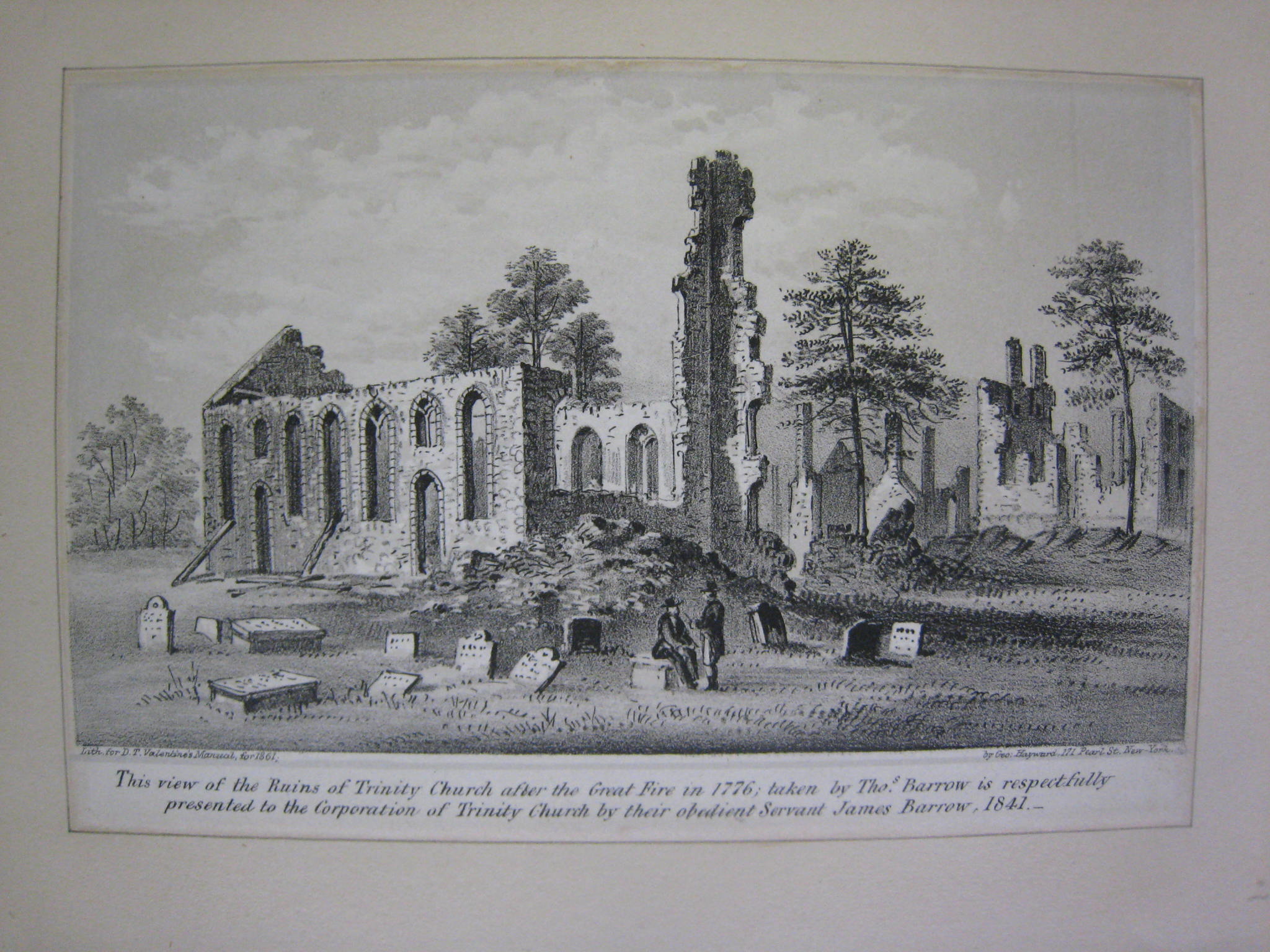
The ruins of Trinity Church stood for  years as evidenced by this image of people just strolling around it like nothing weird had happened.
Internet Archive Book Imaging
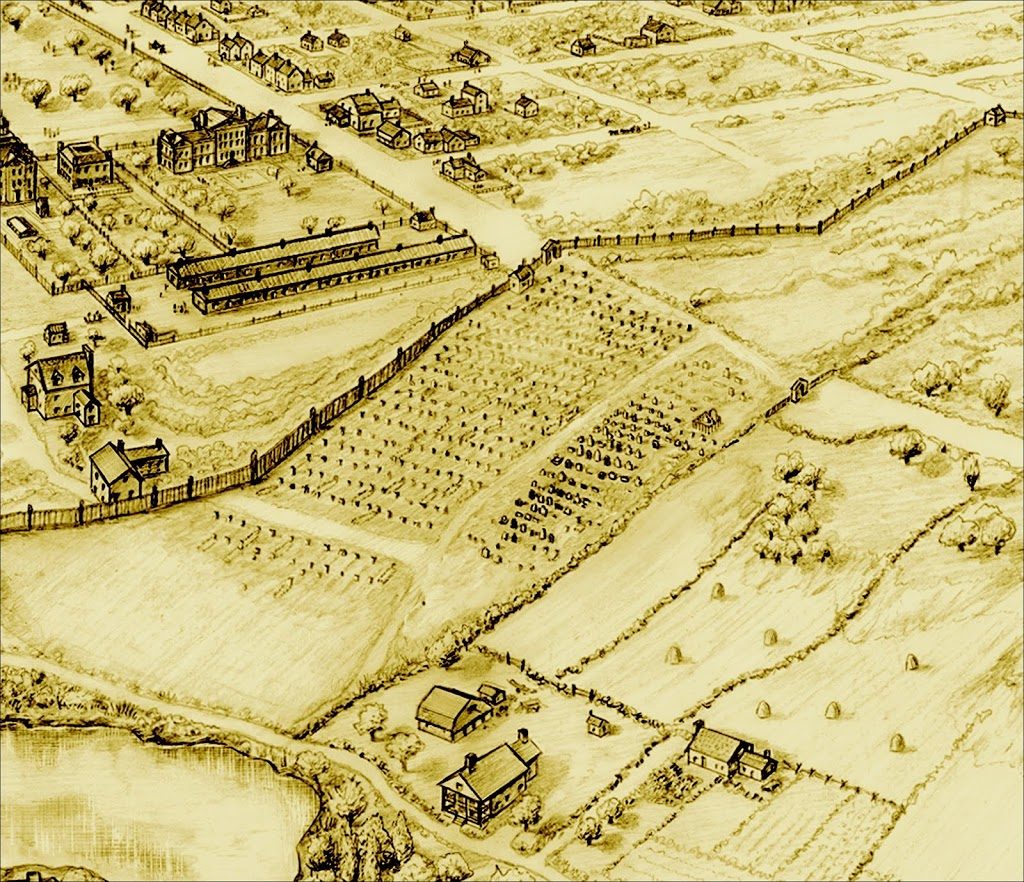
Another illustration (from a 1902 history) showing the cemetery in relation to the ruins.
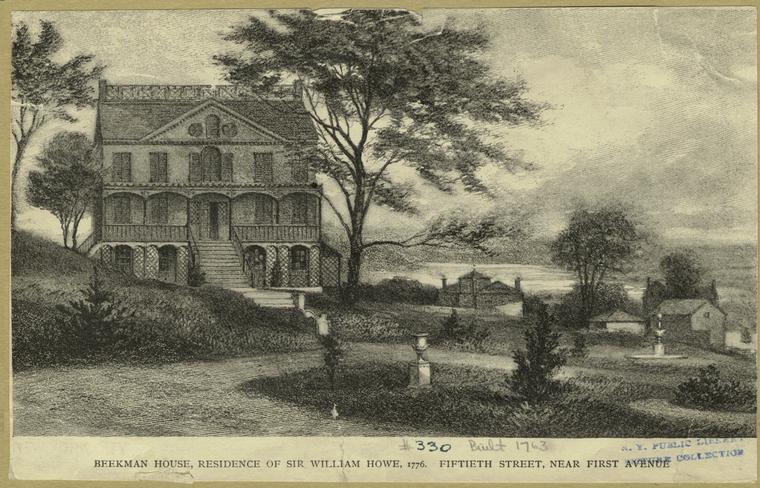
Mount Pleasant, where the British general William Howe set up headquarters and where Nathan Hale was taken after he was captured.
New York Public LIbrary
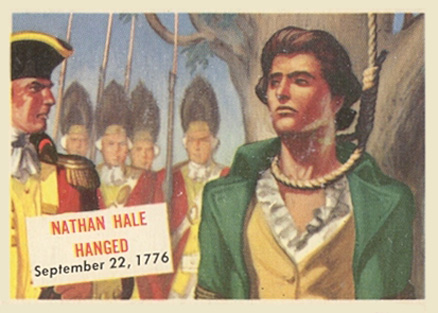
A vintage trading-card depiction of Nathan Hale’s hanging.
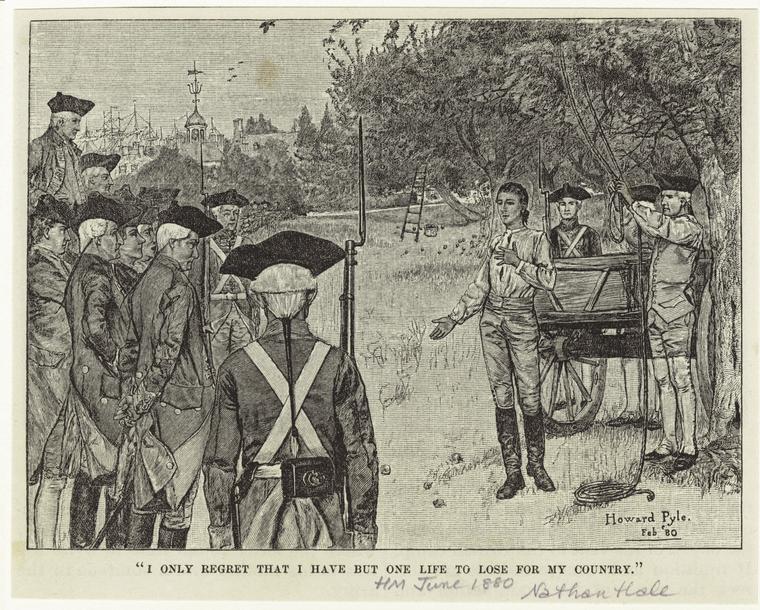
An 1880 illustration by Howard Pyle of the same event.
Courtesy New York Public LIbrary
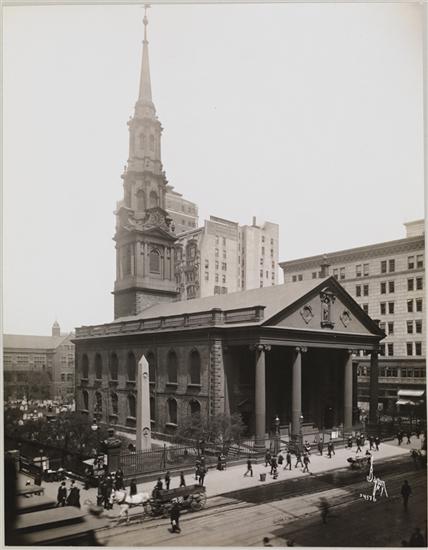
St Paul’s Chapel (pictured below in 19160, a survivor of the Great Fire of 1776, opened its doors to parishioners the day after the fire.
Courtesy Museum of the City of New York
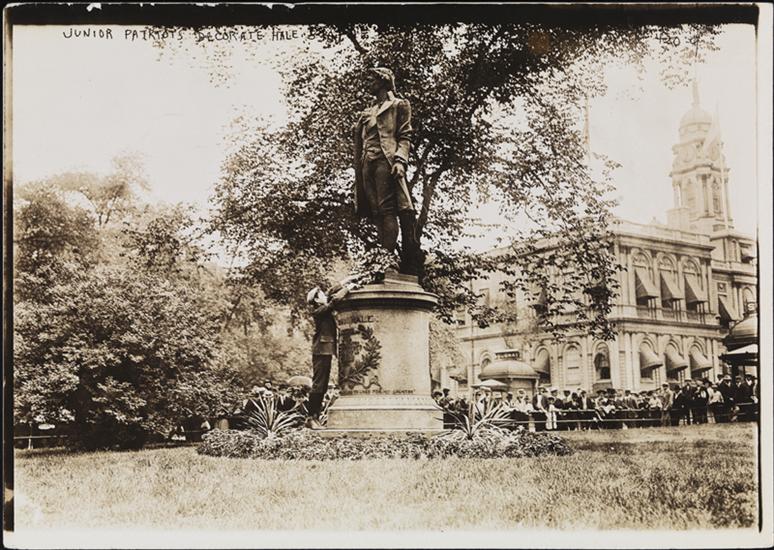
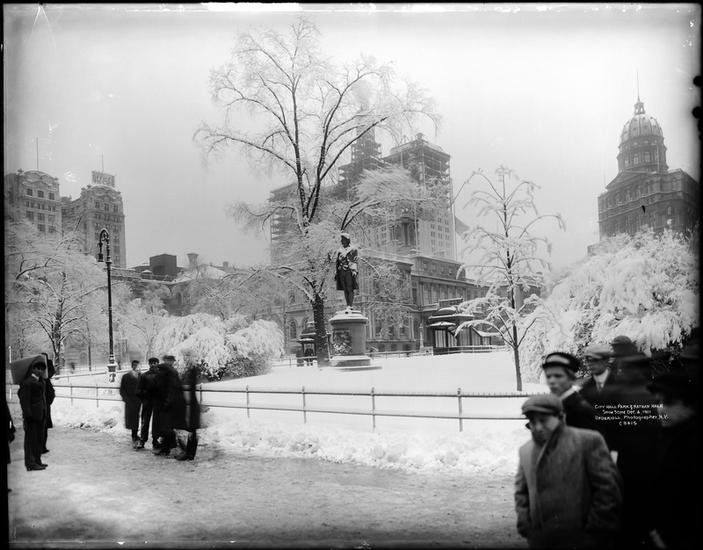
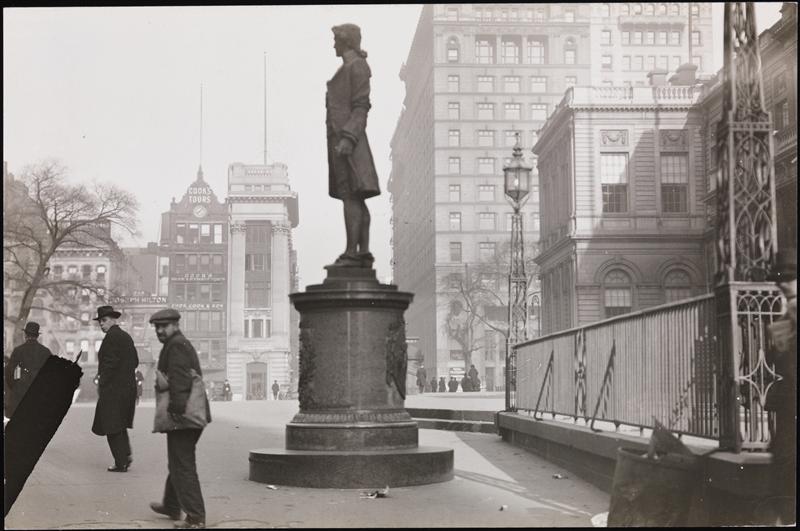
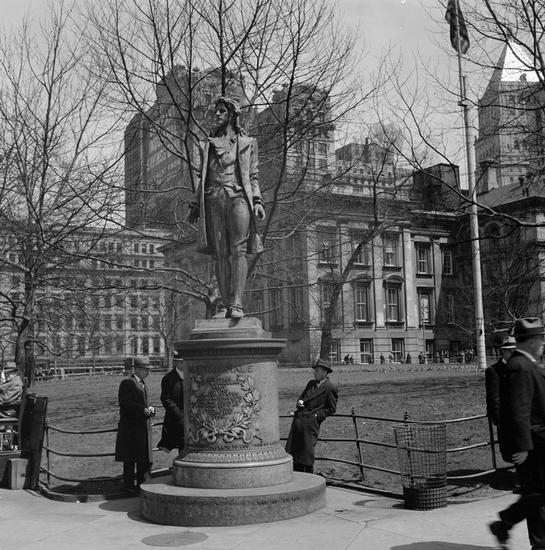
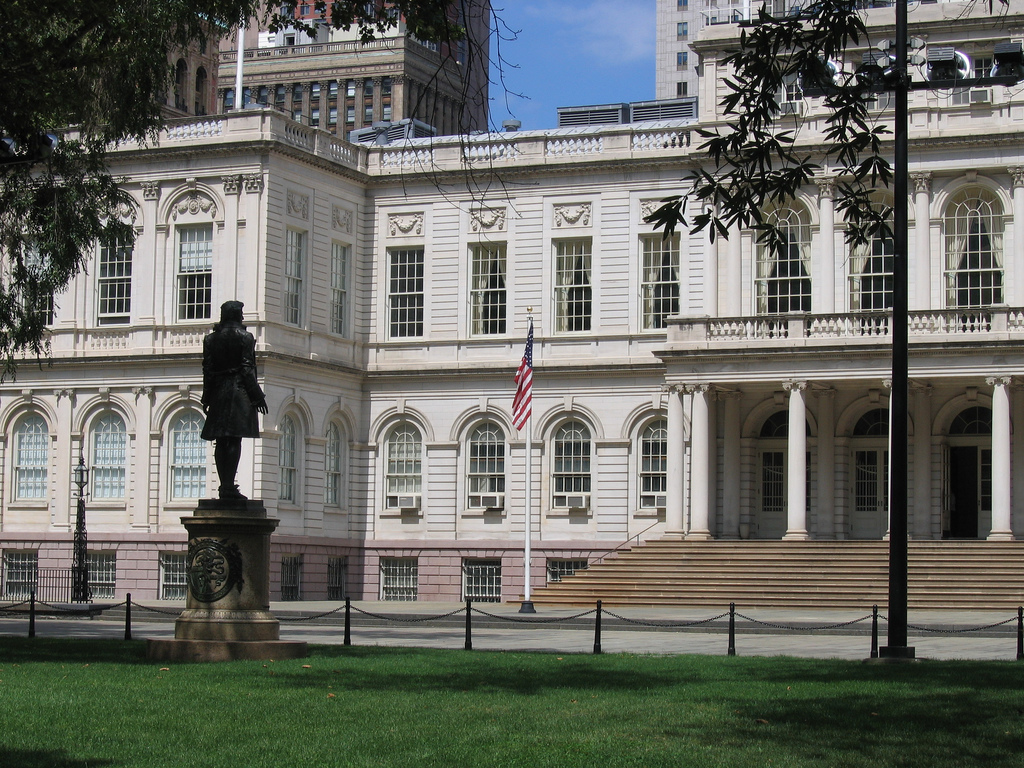
The statue of Nathan Hale which stands in front of City Hall. He’s been moved around quite a bit since his installation here on November 25, 1893, the anniversary of Evacuation Day.
With a new mayoral race on the horizon in New York City we think it is time that you Know Your Mayors! Become familiar with other men who’ve held the job, from the ultra-powerful to the political puppets, the most effective to the most useless leaders in New York City history.
This longtime feature of this website is being rebooted with new articles and newly researched and refreshed earlier entries in this series. Check back every other week for a new installment.
Dewitt Clinton was so much more than a mayor of New York City of course.
He also served as a two-term governor, ran for president against James Madison and helped oversee one of the greatest engineering projects in American history.
He negotiated the choppy waters of early American politics with dexterity, building upon the reputation of his family name to fuel economic and cultural growth in the state he called home.
His greatest achievement was the Erie Canal, the cross-state canal which linked the Hudson River and New York Harbor with the interior of the United States.
No other civic project — with the possible exception, at the start of the 20th century, of the subway system — would affect the fortunes of New York City in such a dramatic and unambiguous way.
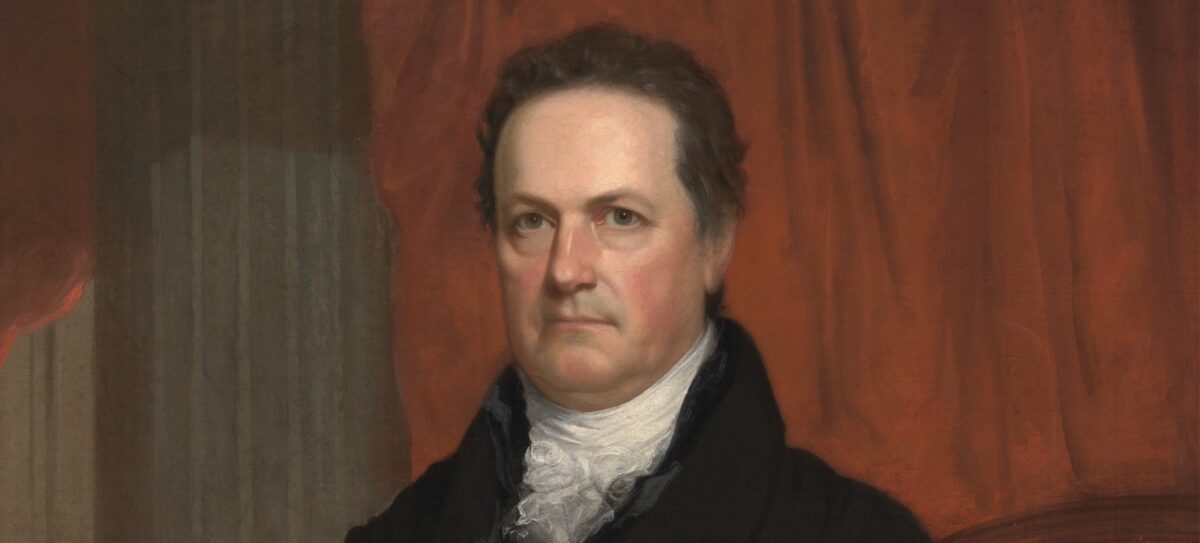
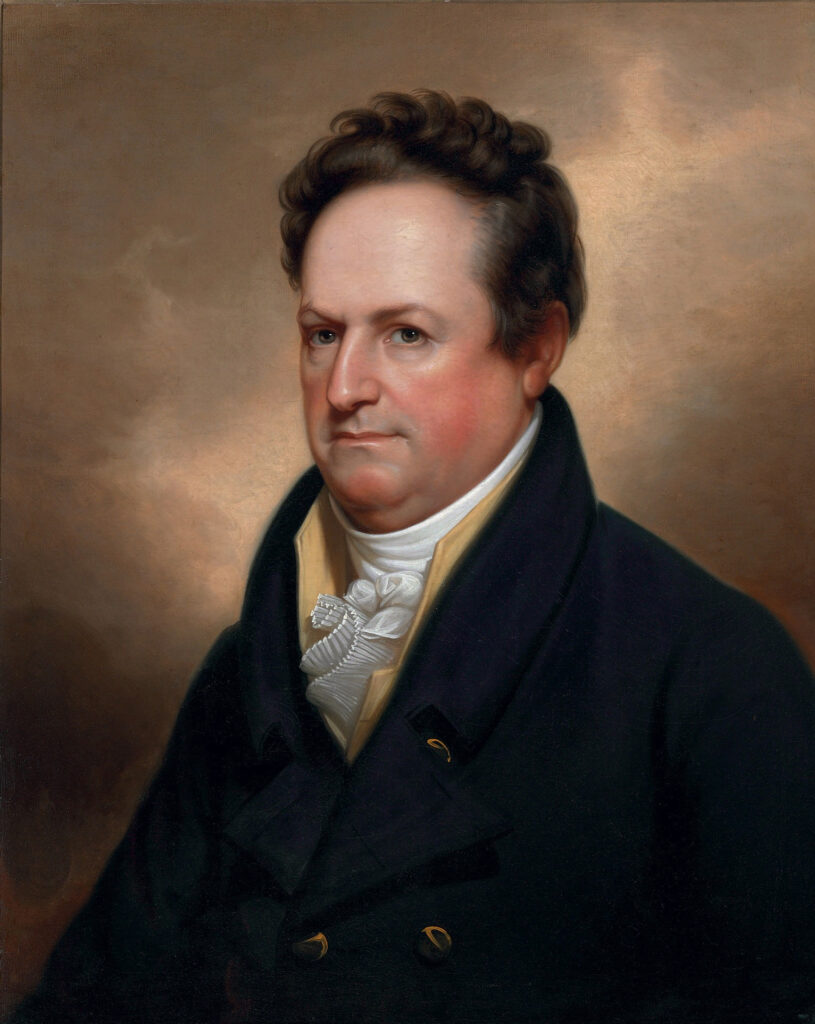
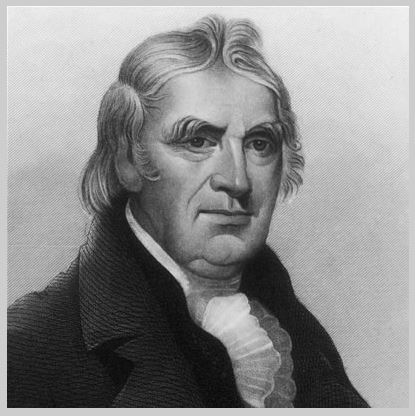
Clinton in a portrait made by Rembrandt Peale
So, yes, the many accomplishments in Clinton’s storied career tend to overshadow his work as the mayor of New York.
Yet most historians place him among the greatest mayors the city has ever employed. He might even be the greatest in terms of his long-term impact.
Clinton served ten one-year terms non-consecutively — 1803-1807, 1808-1810 and 1811-1815 — weaving together an extraordinary period of city growth during tumultuous political times and a potentially deadly foreign war. (Why not consecutive terms? I’ll explain in the next Know Your Mayors column.)
Clinton on the Rise
Dewitt Clinton was born in Little Britain, New York, on March 2, 1769, into one of the most politically important families in America.
Major-General James Clinton, DeWitt’s father, fought next to George Washington during the Revolutionary War (and brutally killed hundreds of Iroquois people during the 1779 Sullivan Expedition). DeWitt’s uncle George Clinton rose the political ranks following the war to become the governor of New York (from 1777-1795 and again from 1801-1804).
By the 1890s, according to author Evan Cornog, “three families presided over New York State politics — the Schuylers, the Clintons and the Livingston.”
So DeWitt Clinton had easy access to the corridors of power — Uncle George even made him his secretary in a bold gesture of nepotism — but he built upon that privilege, instead of resting on it. More importantly, he’s often considered to have the genuine needs of New Yorkers in mind in his accumulation of power, believing the city’s cultural and economic prosperity could be worn as a badge of honor for himself.
His most influential job during this period was as a member of the Council of Appointment, the body charged with appointing all the governmental positions that were not elected. This included the mayor of New York. In fact, he helped appoint the last mayor in our Know Your Mayors series — Edward Livingston.
While the Clintons were aligned with Thomas Jefferson and the Democratic-Republicans, DeWitt held personal animus towards his party’s Aaron Burr, the Vice President, who many believed had attempted to steal the 1800 election from the preordained Jefferson. When Burr killed Alexander Hamilton in 1804, Jefferson replaced him — with George Clinton, DeWitt’s uncle.
By then, DeWitt himself had dabbled in federal office, serving as the Senator from New York for almost two years from 1802 to 1803. But he hated Washington D.C. — which was an unpleasant and barely developed swamp then — and wanted to return to the comforts of New York.
So he resigned and took a new job which was then offered to him — the mayor of New York City.
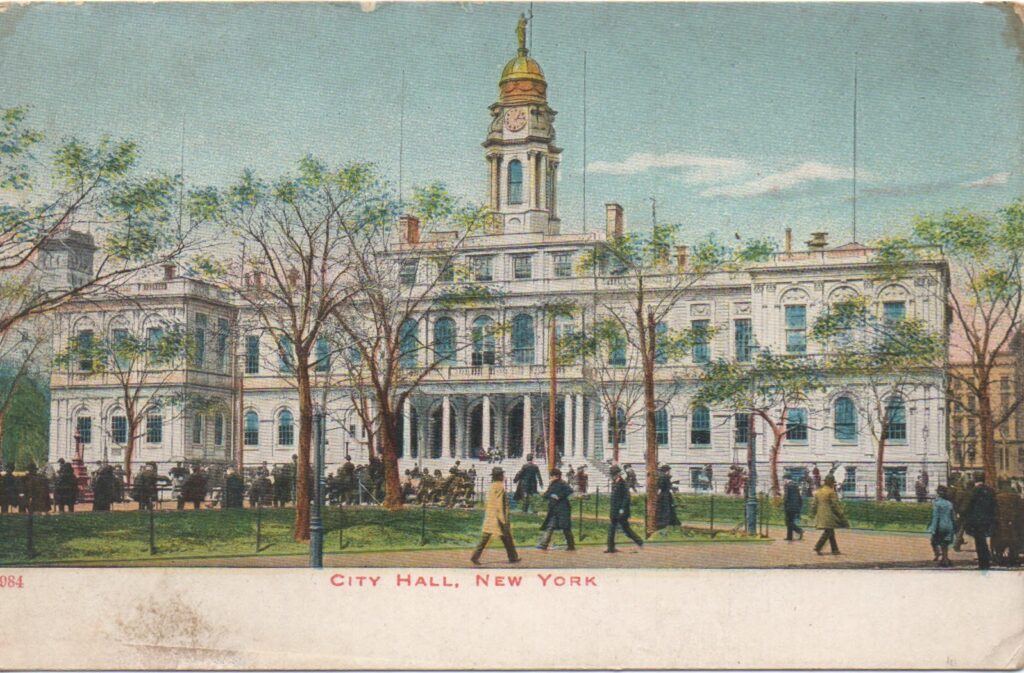
New York City Hall, dedicated in 1811 and opened for government business by 1812
Setting the Foundations
At first it appeared this was just another step in the political ladder for DeWitt. According to Gotham, Clinton told his uncle that “being mayor was the better job [than being a U.S. senator] because its influence in presidential elections made it ‘among the most important positions in the United States’.”
But he quickly fleshed out the mayor’s role in surprising ways, having the unique political connections that allowed him to expand local government’s role. In later years, these expanded powers would be reduced by the influence of political machines like Tammany Hall.
Among the fledgling organizations he either founded or vigorously supported during his time in office:
— New York Board of Health: Clinton entered office with yellow fever the city’s greatest enemy. According to NYC Health, “Led by Mayor De Witt Clinton, the board evacuated stricken neighborhoods and started collecting mortality statistics, to ‘furnish data for reflection and calculation.'”
From this department came a newly created role — city inspector — which expanded to collect data (births, marriages and deaths) on city residents.
— New-York Historical Society: Clinton believed in upgrading the city’s cultural life, and the Historical Society, essentially New York’s first museum, allowed the city to celebrate its role in the new American cause and exalt the New Yorkers who fought for independence (which naturally included Clinton’s family).
Clinton was a founding committee member in 1804 and even gave the institution some space at City Hall (then at Wall Street aka Federal Hall).
He also chaired both the American Academy of the Arts and the Literary and Philosophical Society in their early years.
— Free School Society: Clinton championed the social education model which eventually became the New York public school system.
According to Evan Cornog, “In 1805, two measures transformed primary education in New York. The first was the allotment by the legislature of 500,000 acres of state lands and three thousand shares of bank stock for the benefit of public school. The second was the establishment of the New York Free School Society, whose president, from its inception to his death, was DeWitt Clinton.”
— The Grid Plan: Seeing a need to plan the city’s growth as it galloped up Manhattan island, the city’s Common Council formed a committee — “doubtless at DeWitt Clinton’s instigation” — that would draft up ideas for a possible grid of streets and avenues.
— A System of Fortifications: In addition, Clinton faced the impending crisis of a new war with Great Britain. Although the War of 1812 never came to New York City, Clinton oversaw the construction of new fortifications through the city, including a new fort at the Battery which eventually bore his name — Castle Clinton.
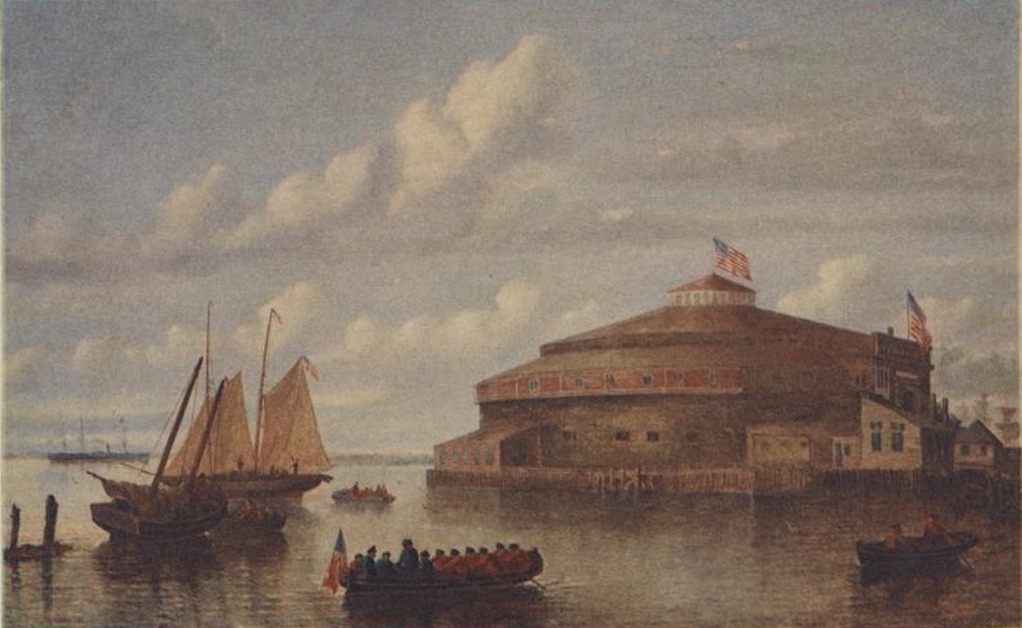
Castle Garden (within the old Castle Clinton) courtesy the Museum of the City of New York
A Complicated Record
Clinton innovated a form of governance which can be seen either as forward thinking or incredibly opportunistic (and quite possibly both) — the improved rights of immigrants.
Christian Luswanger, a member of the city’s night watch, became the first officer killed in the line of duty in New York during a Christmas Day anti-Catholic riot in 1806, the most violent of a series of skirmishes aimed at immigrants. New Irish arrivals faced Nativist backlash in a heavily Protestant city.
DeWitt Clinton. Library of Congress
The mayor, however, was a supporter of the Irish, laying the groundwork for one of the most successful collaborations in 19th century New York City politics.
As a U.S. senator, Clinton had supported liberal immigration laws. As mayor he also supported the elimination of a citizenship test oath for Catholics. As a result, his opponents quickly painted Clinton as a puppet of foreign influence.
But Clinton was no paragon of human rights reform. While he earlier supported the Gradual Emancipation Act of 1799 — and a second Emancipation Act passed in his first year as governor in 1817 — his family had kept enslaved people for decades. And DeWitt himself owned at least a couple people during his years as mayor, including a coachman named Henry.
And many decisions Clinton made did seem more bluntly opportunistic.
He directed that the city’s funds be held by the banks of Manhattan Company, formed in 1799 — by his foe Aaron Burr, no less — to build a water system for the city. But the Company never did fund a truly adequate system, existing only as a bank. (Clinton, by the way, was also a company director. Seems like a conflict of interest!)
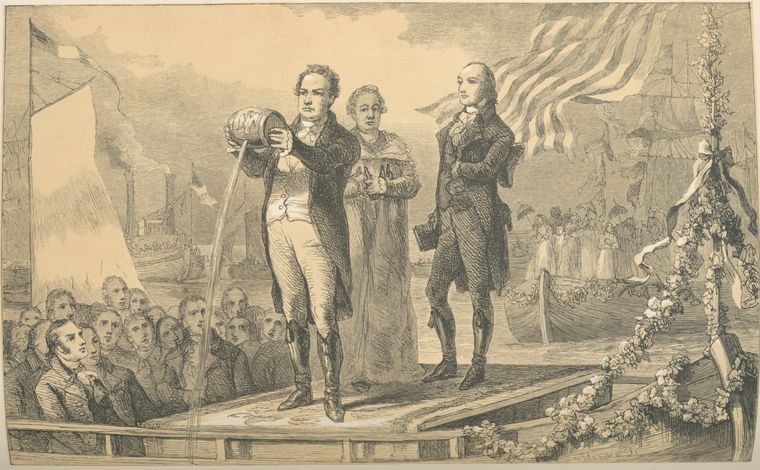
Clinton ceremonially pours water from Lake Erie into the Atlantic Ocean, 1825
The Billion Dollar Idea
For decades, prominent New Yorkers had pondered the idea of an upstate canal system, and even Clinton had considered canal making schemes years before reaching any significant prominence, extending back to his days as a student at Columbia College.
His interest in a massive canal project was renewed during his tenure as mayor (and those years in between his non-consecutive terms). By the time he became the governor of New York in 1817, he was so associated with the canal project that it became known by detractors as Clinton’s Folly.
No folly at all. When the Erie Canal finally opened in 1825, the engineering marvel — one of America’s greatest early achievements — proved genius. It not only created new wealth of New York City, it boosted the economic strength of the entire country.
Clinton had created new opportunities for New York City. The rise of the city as an economic and cultural power begins with him.
DeWitt Clinton Park in Hell’s Kitchen, photography by Greg Young
For more information on DeWitt Clinton, we have an older show in our catalog on Clinton and his role in creating the Erie Canal:
With a new mayoral race on the horizon in New York City we think its time that you Know Your Mayors! Become familiar with other men who’ve held the job, from the ultra-powerful to the political puppets, the most effective to the most useless leaders in New York City history.
This longtime feature of this website is being rebooted with new articles and newly researched and refreshed earlier entries in this series. Check back each week for a new installment.
Richard Varick Term: 1789-1801 The Federalist Mayor
La Guardia Airport. Van Wyck Expressway.The Ed Koch Queensboro Bridge. Duane Street.
While most old mayors of New York City fade into obscurity, a few leave their legacies on landmarks and street names.
In Lower Manhattan lies little Varick Street, linking the West Village to Tribeca. Drivers entering the Holland Tunnel are very familiar with Varick Street. It’s named for the man who once owned property here — Richard Varick.
He served as mayor of New York City for eleven consecutive terms — one year terms, from the fall of 1789 to 1801, making him the first New York mayor of the 19th century.
Biographer Paul Cushman calls Varick a “forgotten Founding Father” of the United States, an officer in the Continental Army and confidante of George Washington.
But perhaps his legacy had been slightly tarnished by another close association — with Benedict Arnold.
Richard Varick, born in Hackensack, NJ, on March 15, 1753, was the descendent of Dutch settlers, and his family history is deeply intertwined with that of early colonial New Jersey.
Richard’s fate would lie in New York where he would get his law degree in 1774 at King’s College (Columbia University), naturally becoming compatriots with those who would become revolutionaries against the British Crown.
Varick had a virtually unblemished military record during the Revolutionary War but for one unfortunate association.
During the early days of battle he served as secretary to General Philip Schuyler, later father-in-law to Varick’s friend Alexander Hamilton. He swiftly moved on as inspector-general of the newly formed military base at West Point (it wouldn’t become a military academy until 1802) where he would become entangled with a potential political albatross — Benedict Arnold.
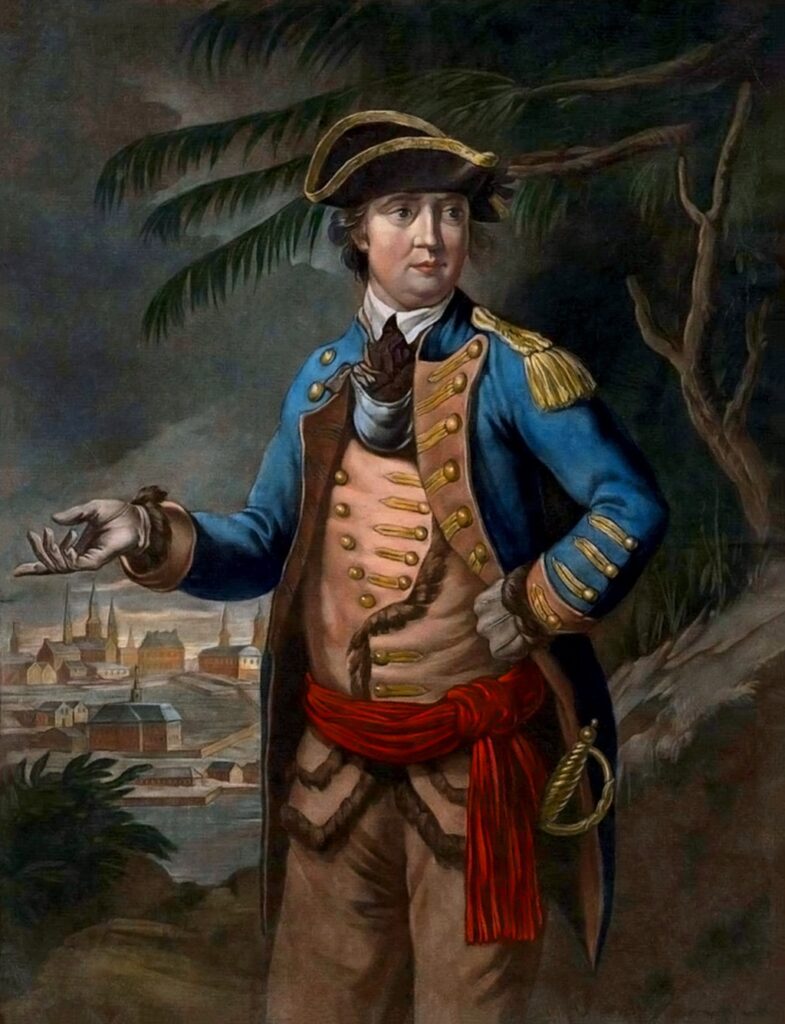
Arnold in a 1776 painting by Thomas Hart
Serving as Arnold’s loyal aide-de-camp, he was unaware that his friend was selling West Point — and the American cause — down the river, plotting to trade the base’s secrets to the British.
Arnold’s treachery was found out, and it comes as no surprise that Varick too was suspected of treason, but was later exonerated. The stench of rumored betrayal was alleviated when Varick was appointed Washington’s personal secretary in the later days of the Revolutionary War.
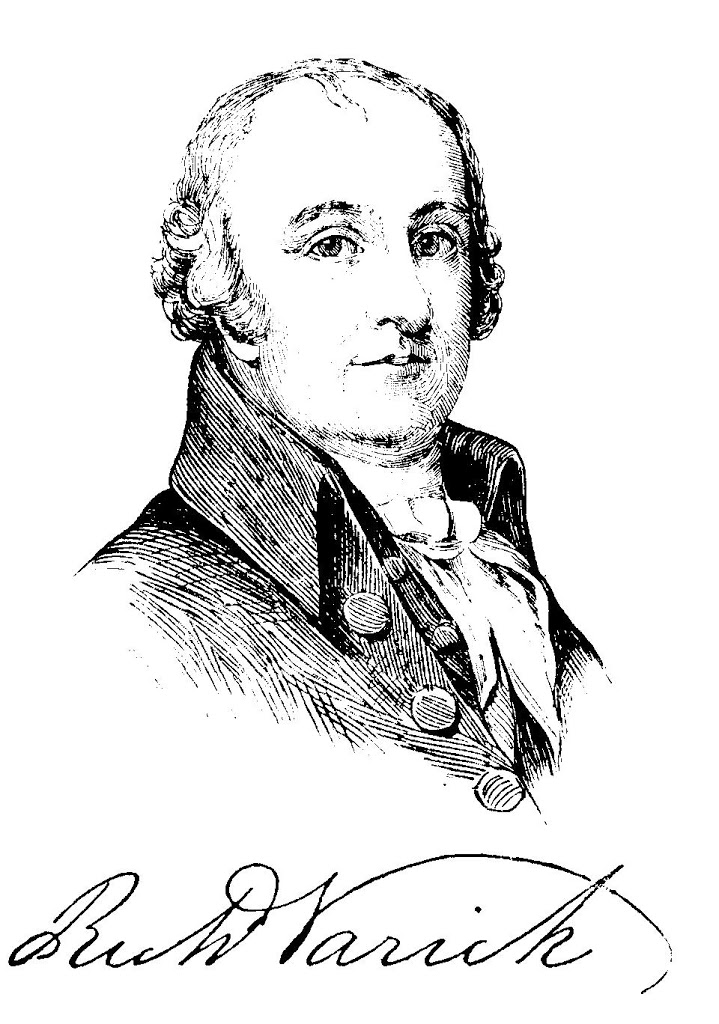
Varick and his signature
The Ultimate Multi-tasker
Not one to let one sticky political association bog him down, Varick was appointed a recorder of New York City once the British were swept out of town. But that’s not all.
In those days, with so many positions in the newly formed government and so few men with experience, Varick soon held other jobs concurrently — including speaker of the New York State assembly and even the state attorney general!
“A simple explanation of the prevalence of a few public-spirited civic servants holding multiple offices in these times,” writes Paul Cushman, “might relate to the fact that these were unusual and non-recurring moments in the development of government. The offices in the evolving government were still quite malleable. “
The amount of ink and parchment used by Varick in these various jobs — not to mention his wartime correspondence — must have been astounding. Indeed forty-four folio volumes known as the Varick Transcripts, collecting his various papers from 1775 to 1785 (including his correspondence with Washington), are housed at the Library of Congress.
But in 1789 came his most intriguing government appointment — mayor of New York, a role in which he was appointed eleven consecutive times by the Council of Appointment. (Previous mayor James Duane stepped down to become a judge. See the previous article of Duane for a breakdown on the appointment process.)
How could one man with so many jobs take on this responsibility as well? Cushman explains: “A part-time occupant as mayor, not yet burdened with a host of defined civic duties or a subordinate staff to manage, could carry out several tasks simultaneously, with the mayoral duties being just one of many.“
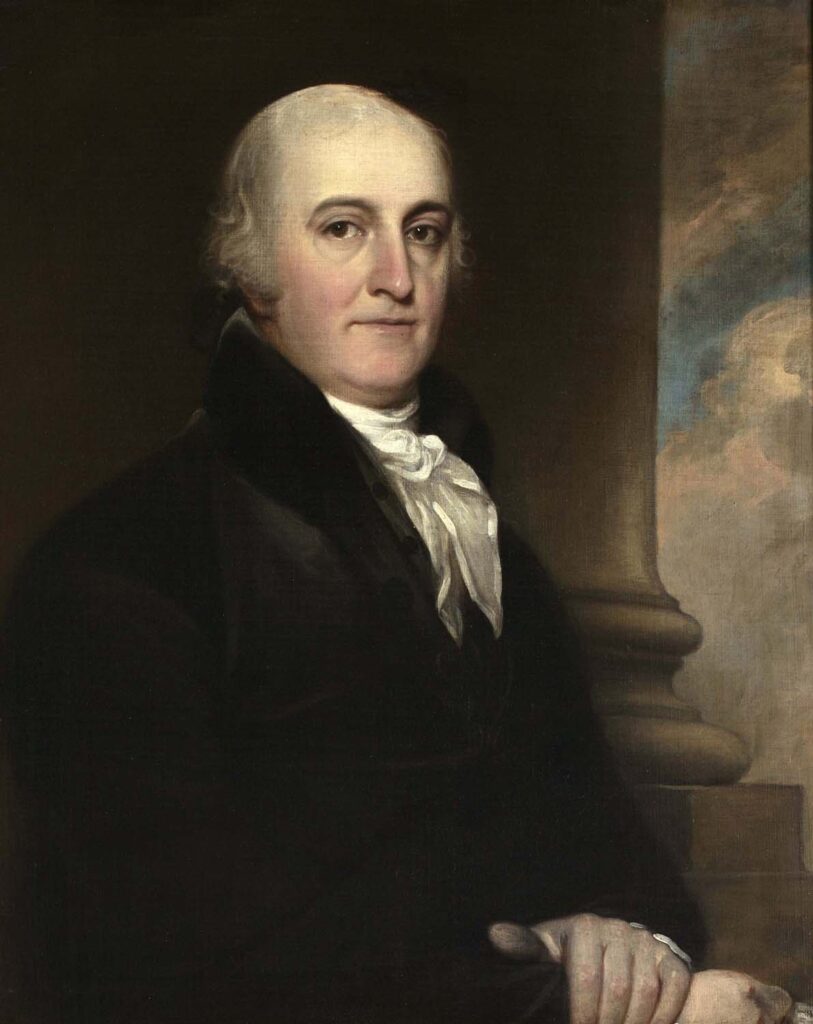
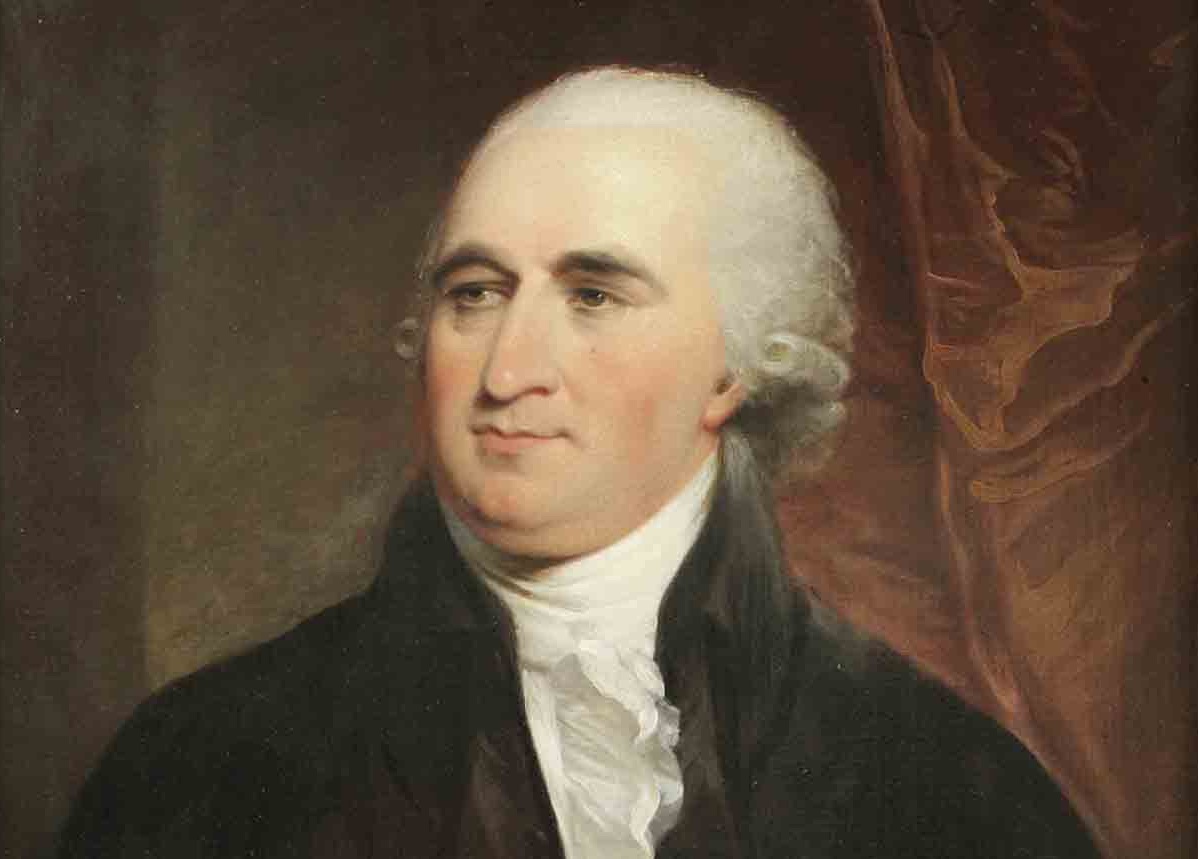
Richard Varick, in an 1805 painting by John Trumbull
A City In Crisis
The city population doubled under his administration, so naturally basic civic neccessities like water and disease control became the focus of his attentions. So what were his governing views?
Like Hamilton and John Jay, Varick was a staunch Federalist, believing in a strong centralized government and a robust national banking system. Federalists were also aristocratic and often elitist, and Varick was frequently at odds with the city’s rising artisan class who favored the more democratic leanings of national politicians like Thomas Jefferson and James Madison.
Varick used his position to punish anti-Federalist New Yorkers. In 1791 he threatened to revoke the licenses of any cartmen who voted against Federalist candidates in future elections.
In fact, due to his support of the quite unpopular Jay Treaty in 1794, the “arrogant and elitist” Varick was almost literally driven out of City Hall by a mad riot.
His political posturing insured that New Yorkers would never really like Varick. Still he continued to be appointed to the job year after year — by both Republican governors (George Clinton) and Federal ones (John Jay), most likely based on his reputation during the war.
The political bickering between factions failed to stunt the growth of the city, both in terms of its physical size and its prominence as the financial center of the new nation, of which Varick played no small part. (He was the director of a few small fledgling banks, including Alexander Hamilton’s special project the Bank of New York.)
Another change during Varick’s term would alter the course of New York politics forever.
In 1797, New York state government responsibilities moved out of the city to Albany, allowing the city bureaucracy to grow but setting the stage for future animosities between state and local leaders. In other words, the roots of Andrew Cuomo vs. Bill De Blasio begin here.
Painting by Henry Inman
Founding Father of Jersey City
With the ascent of the Democratic-Republican Thomas Jefferson to nationwide office, Federalists were on the wane, and Varick was replaced by the more amenable Edward Livingston.
Varick, on the outs in New York, returned to New Jersey where he helped found Jersey City. Varick died there on July 30, 1831. For the residents of NJ’s second-largest city, Varick is most certainly not forgotten.
And thousands everyday take lower Manhattan’s Varick Street to the Holland Tunnel which arrives on its New Jersey side into the city which Varick founded.
This article is newly written and expanded from an earlier version published in 2007.
With a new mayoral race on the horizon in New York City we think its time that you Know Your Mayors! Become familiar with other men who’ve held the job, from the ultra-powerful to the political puppets, the most effective to the most useless leaders in New York City history.
This longtime feature of this website is being rebooted with new articles and newly researched and refreshed earlier entries in this series. Check back each week for a new installment.
James Duane Term: 1784-1789 The First Post-War Mayor
New York officially had 44 men prior to James Duane filling the seat of city mayor in 1784. So why do I consider Duane New York City’s official first mayor?
Although America declared its independence from England in 1776, England did not declare its independence from New York City until 1783, when they were driven out at the end of the Revolutionary War.
British appointed mayor David Mathews governed Manhattan throughout the entire war until he and other Loyalists fled to Canada in the conflict’s waning days. Which is probably a good thing since he was implicated in a specific attempt to kidnap and murder the commander of the Continental Army George Washington.
Duane is the first American New York mayor, the first to lead the city newly broken from its colonial shackles.
However, it should be noted that he is not New York’s first elected mayor. Like the many mayors of the Colonial era before him — and the many men who would hold this office well into the 19th century — James Duane was appointed to the job.
James Duane, born in New York in 1733, was destined for great things, a respected attorney and statesman who would become what we might call a minor Founding Father.
Orphaned as a teen, young Duane became the charge of Robert Livingston, a prominent lawyer in a socially important New York family. Naturally he pursued a career in law as well, his natural skills bolstered by his social privilege.
In 1759 Duane married Robert’s daughter Mary Livingston and would grow up alongside Robert Jr. who would go on to draft the Declaration of Independence. Through tenacity, family wealth and de facto family influence through the Livingstons, Duane became New York state attorney general at age 34.
Duane was also part of New York’s delegation to the First Congressional Congress in 1774, alongside John Jay and another Livingston, Philip, who would eventually sign the Declaration of Independence. (Duane, alas, was serving in New York’s Provincial Congress in the summer of 1776 or else he too would have John Hancock’d the founding document.)
Duane had originally agreed with general notions of appeasement with the British, not favoring a separation from England.
In fact author Edward P. Alexander calls him a ‘moderate rebel‘. “Duane strove with common sense and moderation to cling to the golden mean which would protect gentlemen of his station from both British taxation and domestic social upheaval.”
In other words he was for the cause of American liberty but not all that rabblerousing.
James Duane’s New York City, 1776
Regardless, he would be a member of Second Continental Congress all the way through the end of the war and on behalf of New York would even be a signer of the Articles of Confederation, precursor to the Constitution.
During the British occupation of New York, Duane lived at Livingston Manor, a vast estate which today includes modern-day Livingston, New York.
New York during British occupation 1776
Its Loyalists freshly evacuated, the city needed a new leader.
In 1784 Duane was appointed Mayor of New York by a slate of state officials called the Council of Appointment, led by Governor George Clinton.
This council didn’t just select the city’s mayors; it selected every office in the state. It would be decades before mayors were actually elected into office by the people.
Duane moved his family to a family estate right outside the city — a farm that would become Gramercy Park thirty years after his death.
“In a letter of James Duane to his wife, after the Revolution, he alludes to this farm and the beautiful grounds with the fish pond and fountains. The house having been occupied by British officers during the War the letter says ‘you will find the cellars in most excellent condition and the wine bins in good repair, the house has suffered but little.’“
City Hall became Federal Hall.
The new mayor oversaw a massive shift in Manhattan’s well-being; while the evacuation of the British and their sympathizers left a serious economic vacuum, the city also took its first steps win defining its urban character.
In fact Duane’s legacy as mayor would be largely overshadowed as the foundations of the United States were built around him.
City Hall would become Federal Hall in these years and the overcrowded government building — over 75 years old already by the time Duane took office — was hastily enlarged in 1788 to accommodate these extra politicians.
Angry New Yorkers storm the hospital. Wood engraving by William Allen Rogers
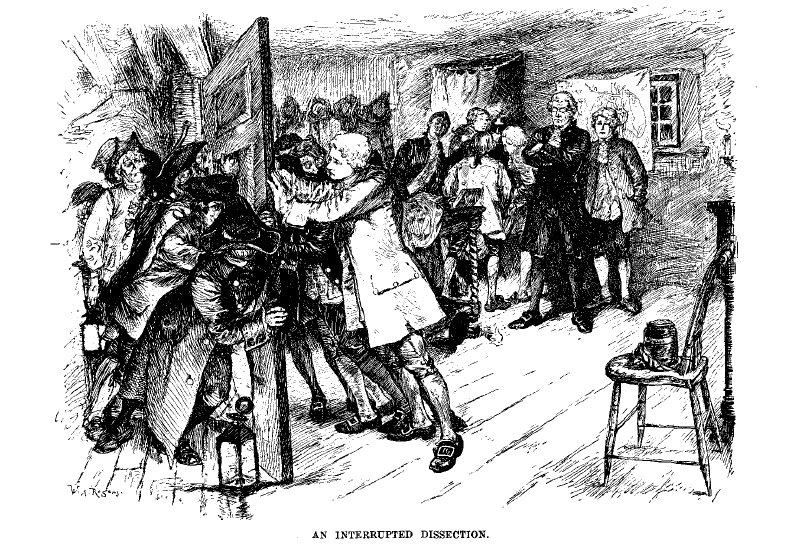
Meanwhile in the spring of that year, Duane intervened in one chilling incident involving grave robbers and medical students at New York Hospital, an incident today known as the Doctor’s Riot.
An angry mob, enraged that the local cemetery had been pillaged for cadavers, stormed the hospital and, eventually, Columbia College. Several officials, including Duane, urged restraint. When the mob attacked the officials — injuring John Jay in the process — Duane took action.
According to Gotham by Edwin G. Burrows and Mike Wallace, “Duane summoned a troop of militia to disperse the crowd and was met with another shower of missiles. Baron von Steuben, also struck in the head and bleeding profusely, shouted, ‘Fire, Duane! Fire!’ Duane, or perhaps [Governor] Clinton, gave the order. The first volley killed three rioters outright and wounded many others. Before a second could be fired, the crowd had scattered.“
Governor George Clinton who possessed most of the power in post-Colonial New York.
While Duane threw himself into the job — he was praised by his critics for his charity and “good judgement” — his power was limited. Governor Clinton and his Common Council (an early version of City Council) controlled his salary and could veto his decisions on a whim.
In 1785 he was also a founding member of the New-York Manumission Society, an abolition organization headed by John Jay that eventually included Alexander Hamilton and Governor Clinton.
This despite the fact that Duane would own at least one enslaved person after this date:
“His 1790 census record, in New York City, shows his family consisting of 2 Free White Males aged 16 and older, 2 FWM under 16, 6 Free White Females, and 1 slave.” [wiki]
(Most of the members were slaveholders including Jay and Clinton. In 1799, Jay, as governor of New York, would sign the Act for the Gradual Abolition of Slavery into law.)
James Duane — February 6, 1773 – February 1, 1797
By the end of administration in 1789, Duane was governing over a city of 25,000 citizens. After the wounds of war, New York was at last recovering.
After Duane’s five one-year terms, the mayor’s seat went to another attorney with even greater ties to the Revolutionary War — Richard Varick.
Duane’s next appointment was more prestigious — one of the nation’s first federal judges on US Circuit Court in New York, nominated for the position by President George Washington himself. (It helped to rub elbows with the new president in the cramped quarters of Federal Hall.)
Duane died on February 1, 1797, on an inherited land grant in upstate New York that he had developed into a township and where he spent his final years. Its name, appropriately, is Duanesburg.
Most New Yorkers are familiar with James Duane today — not for his accomplishments but for the street named after him. Duane Street runs through lower Manhattan today just a couple blocks north of today’s City Hall.
The drug store Duane Reade takes its name from Duane Street.
This article is based on an original post from December 2007.
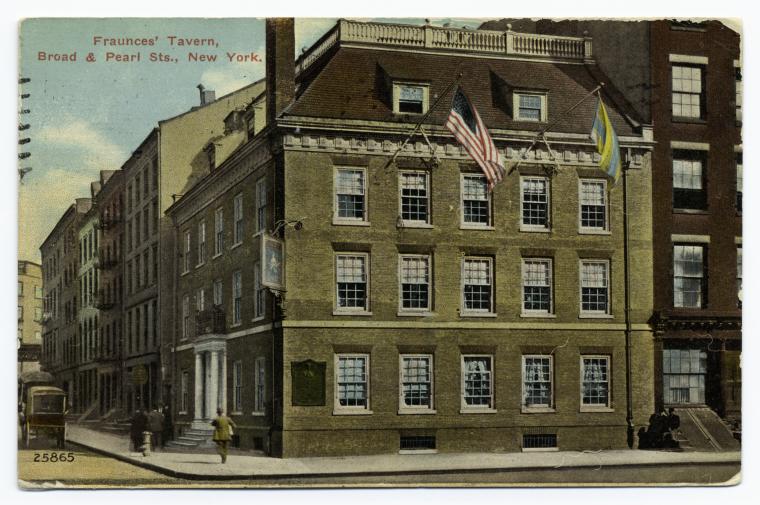
PODCASTFraunces Tavern is one of America’s most important historical sites of the Revolutionary War and a reminder of the great importance of taverns on the New York way of life during the Colonial era.
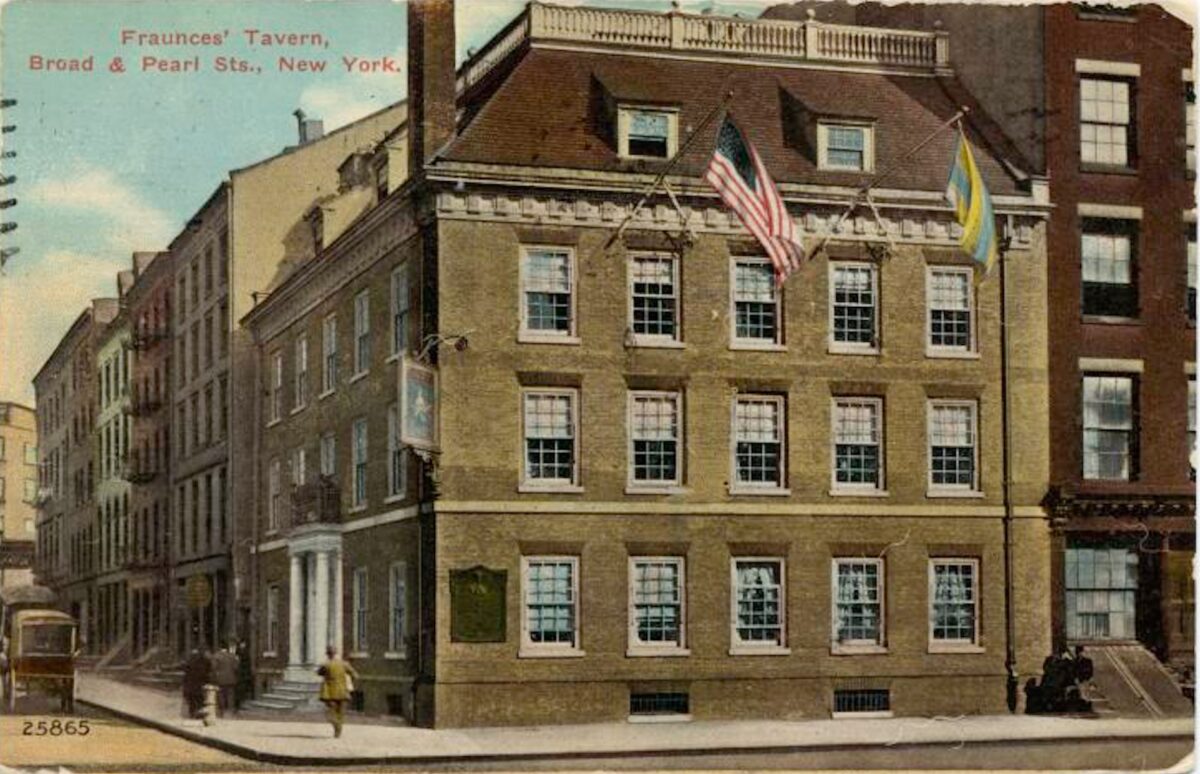
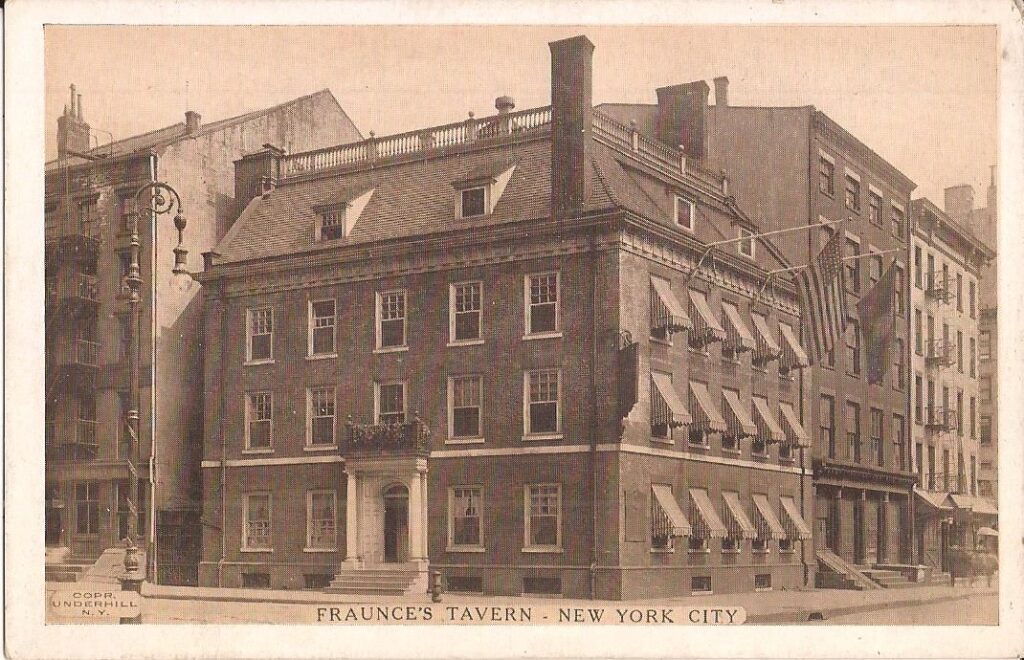
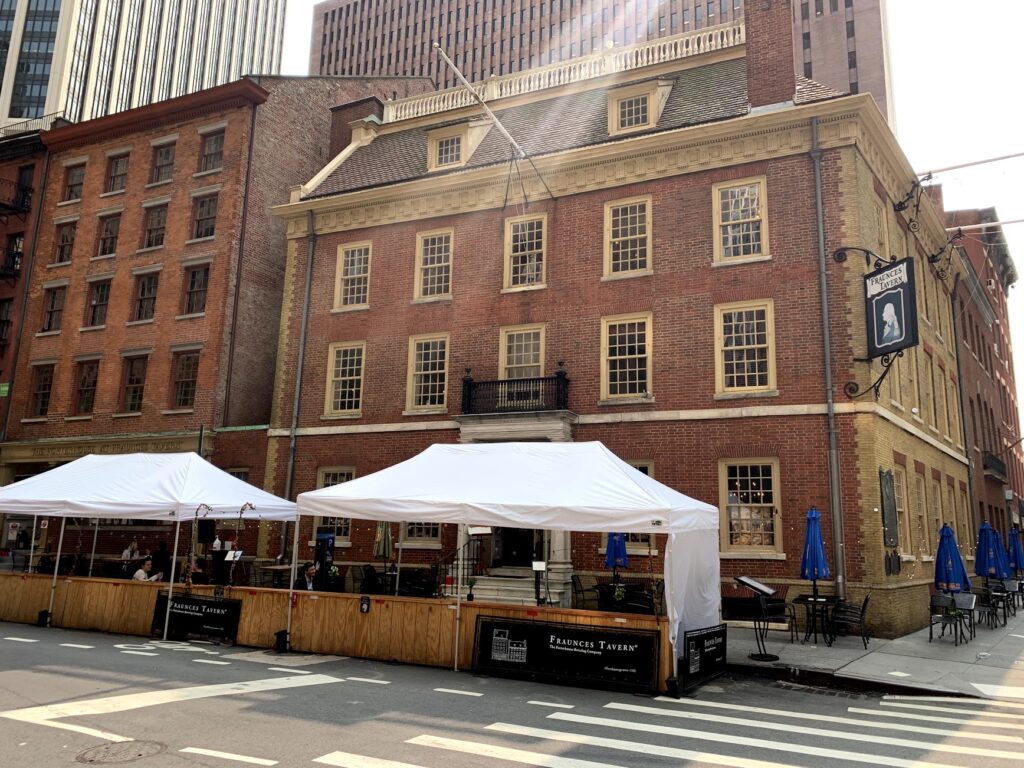
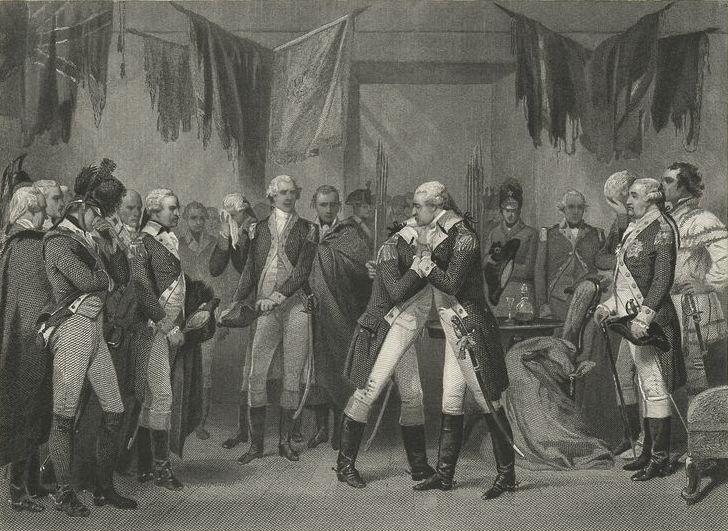
This revered building at the corner of Pearl and Broad Street was the location of George Washington‘s farewell address to his Continental Army officers and one of the first government buildings of the young United States of America.
John Jay and Alexander Hamilton both used Fraunces as an office in their first official capacities with the new federal government.
As with many places connected to the country’s birth — where fact and legend intermingle — many mysteries still remain.
Was the tavern owner Samuel Fraunces one of America’s first great black patriots? Did Samuel use his position here to spy upon the British during the years of occupation between 1776 and 1783?
Was his daughter on hand to prevent an assassination attempt on the life of Washington? And is it possible that the basement of Fraunces Tavern could have once housed … a dungeon?
Fraunces Tavern in 2020
ALSO: Learn about the two deadly attacks on Fraunces Tavern — one by a British war vessel in the 1770s, and another, more violent act of terror that occurred in its doorway 200 years later!
PLUS: Where to find the ruins of Lovelace’s Tavern, dating back to the days of New Amsterdam.
This is a re-presentation of a show originally released on March 18, 2011 with bonus material recorded in 2020.
Listen today on your favorite podcast player or just press play here:
Listen to Fraunces Tavern’s new podcast Tavern Talks, hosted by Allie Delyanis and Mary Tsaltas-Ottomanelli. This week’s episode come features the Queens classic Neirs Tavern, in honor of Tavern Week.
The museum also has special virtual lecture coming up in October called Preserving the Past: The Restoration of Fraunces Tavern, in conjunction with Archtober. The presentation will feature rarely seen artifacts from the collection. Get your tickets here!
The museum encourage visitors to make reservations online, however they will accept walk-ins if not at capacity.
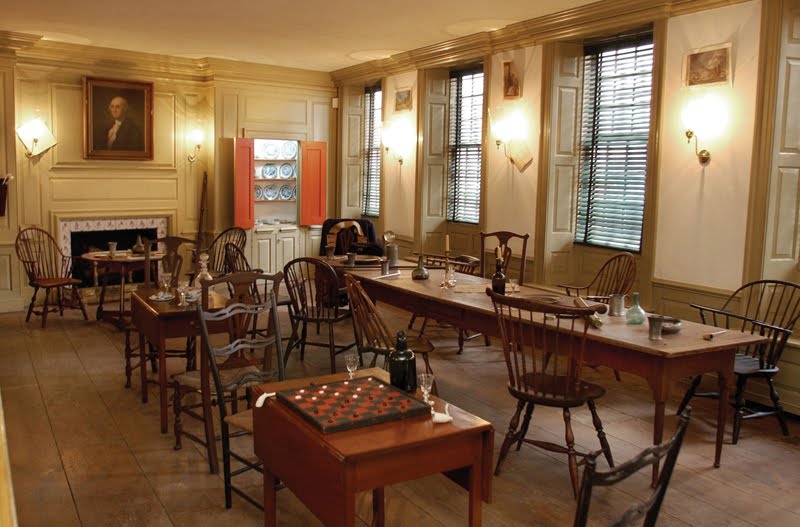
One of the oldest, diverse and historic rooms in New York City, the Long Room played host to Colonial Era dance classes, George Washington’s farewell speech (pictured below), decades of guests as a boardinghouse, and now a replica of tavern life in early America. [Columbia U]
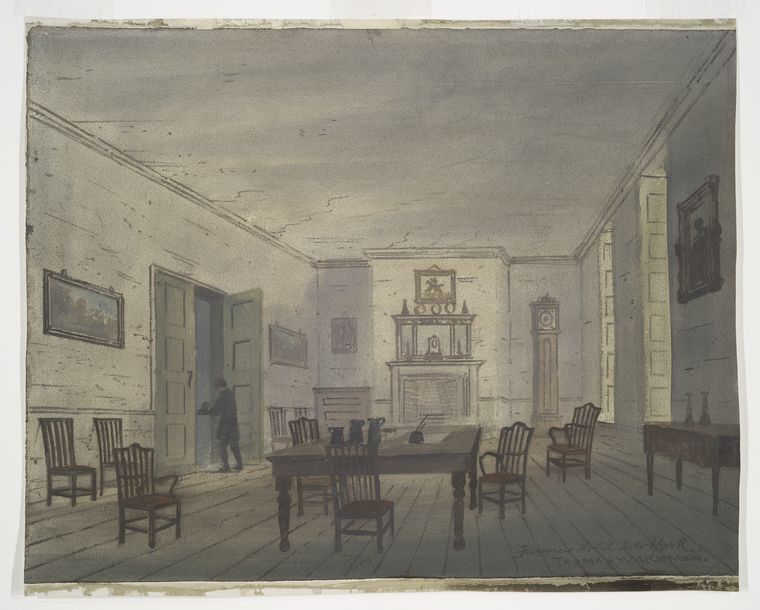
How the interior may have looked in the 19th century, as Fraunces became more a lodging house frequented by longshoremen, sailors and dock workers. [NYPL]
NYPL
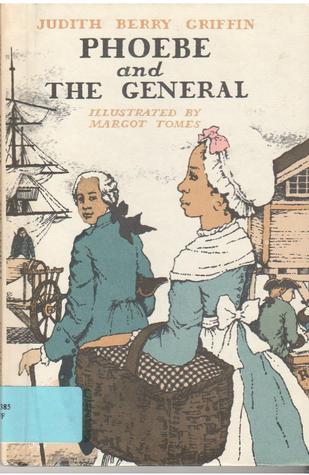
A 1977 children’s book about Phoebe Fraunces, furthering the popularity of this intriguing story.
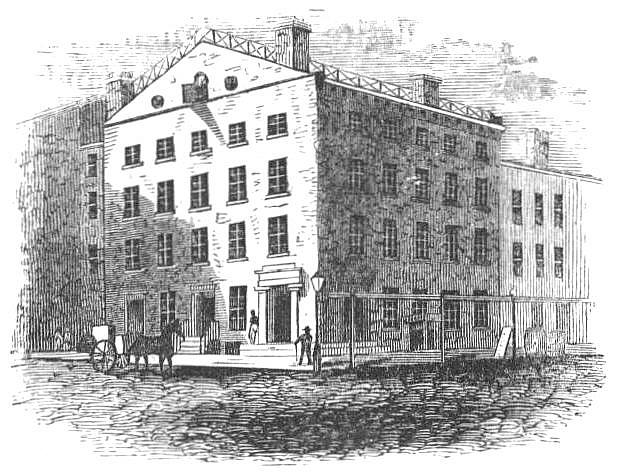
The changing facades of Fraunces: this sketch is from some point in the 19th century, when additional floors were added to the original structure. You can see the difficulty architect William Merserau might have faced in the 1900s when trying to reconstruct the building to reflect its original condition.
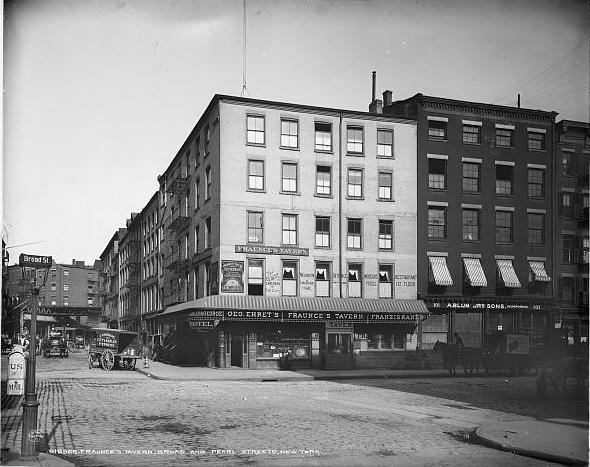
This doesn’t seem like it could even be the same building, and yet, there’s the sign for the tavern hanging over the second floor and a street sign for Broad Street to the left. This picture is between 1890 and 1904, before the structural changes. [LOC]
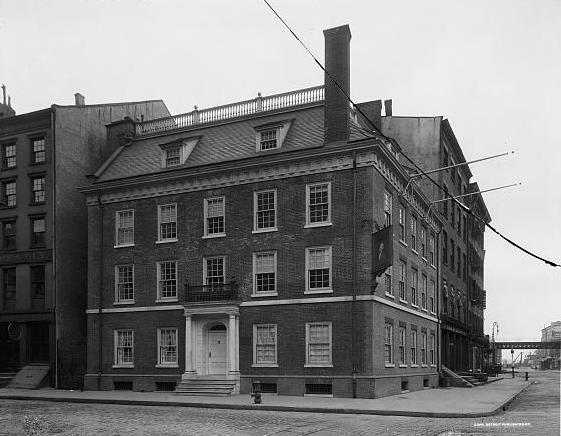
After reconstruction, somewhere between 1910-1920, looking almost as it does today. In the distance to the right you’ll see a bit of the elevated train line. [LOC]
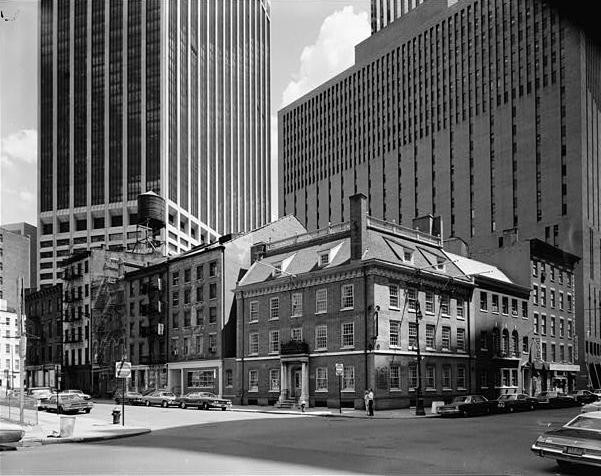
By the 1970s, modern skyscrapers permanently change the feel of the Financial District, but Fraunces holds firm.
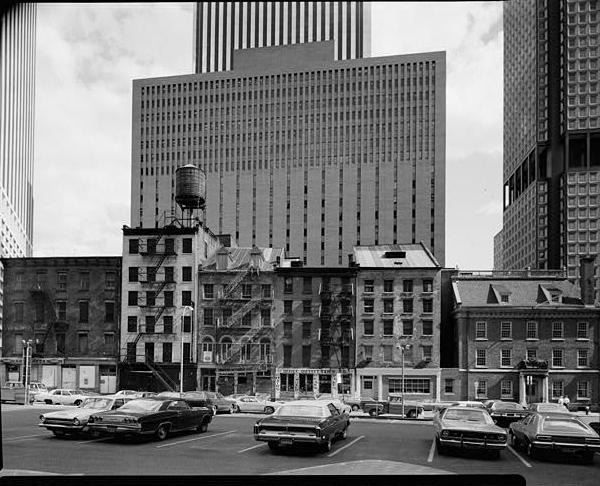
The parking lot across the street would soon be replaced by the towering 85 Broad Street (the former Goldman Sachs building). Interestingly, underneath these cars lies the remnants of Dutch New Amsterdam, including the earlier Lovelace’s Tavern. [LOC]
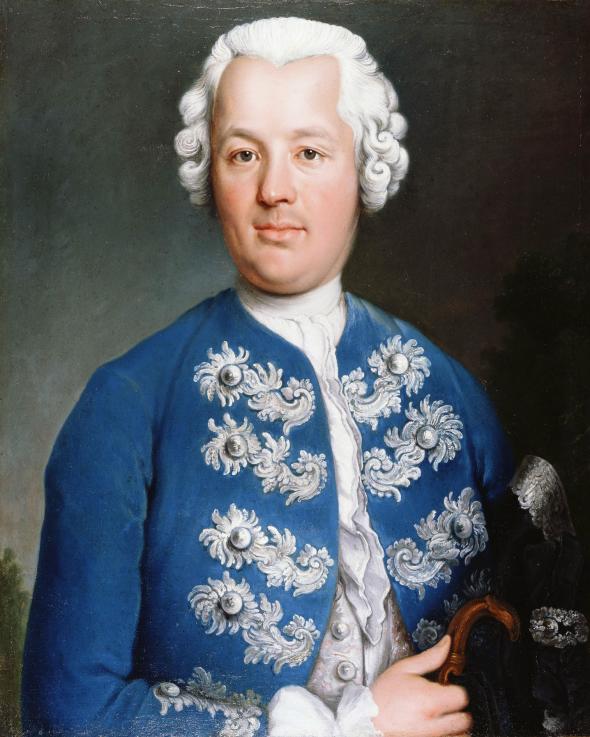
Samuel Fraunces, in a portrait of the tavern owner painted between 1770-1785, giving little clue to what many consider to be his real racial identity. The lineage of the man nicknamed ‘Black Sam’ continues to be debated to this day.
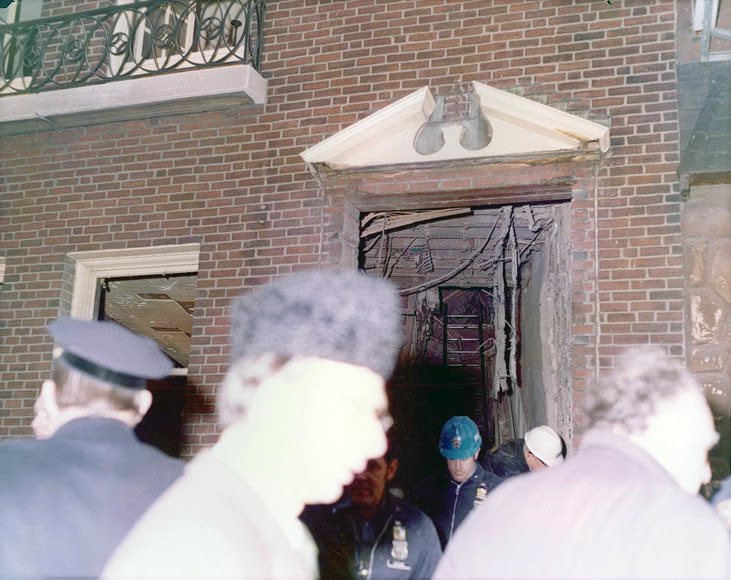
Fraunces was the scene of a relatively recent attack in 1975 when members of the Puerto Rican nationalist group Fuerzas Armadas de Liberación Nacional Puertorriqueña (FALN) placed a bomb in one of the tavern’s doorways, killing 4 people and seriously injuring many others.
You can find the picture below and many others — including the note left at the scene taking responsibility for the attack — at this Latin American studies website.
The Bowery Boys: New York City History podcast is brought to you …. by you!
We are now producing a new Bowery Boys podcast every week. We’re also looking to improve and expand the show in other ways — publishing, social media, live events and other forms of media. But we can only do this with your help!
We are now a creator on Patreon, a patronage platform where you can support your favorite content creators.
Please visit our page on Patreon and watch a short video of us recording the show and talking about our expansion plans.
If you’d like to help out, there are six different pledge levels. Check them out and consider being a sponsor.
We greatly appreciate our listeners and readers and thank you for joining us on this journey so far.
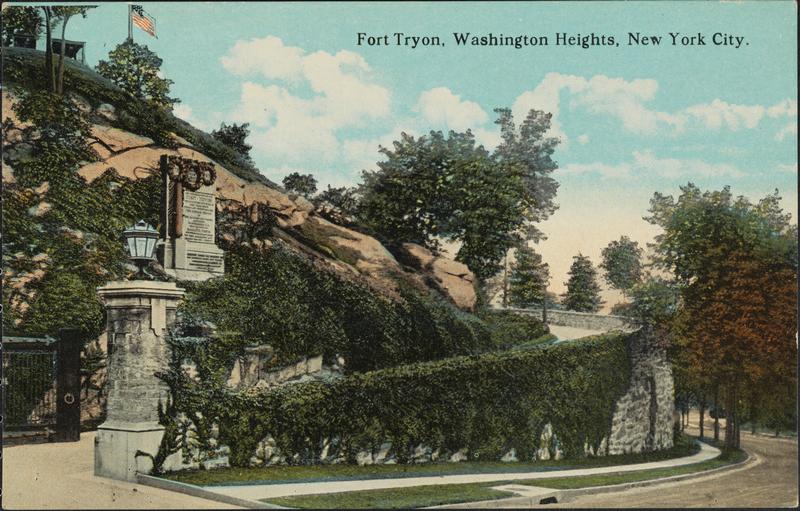
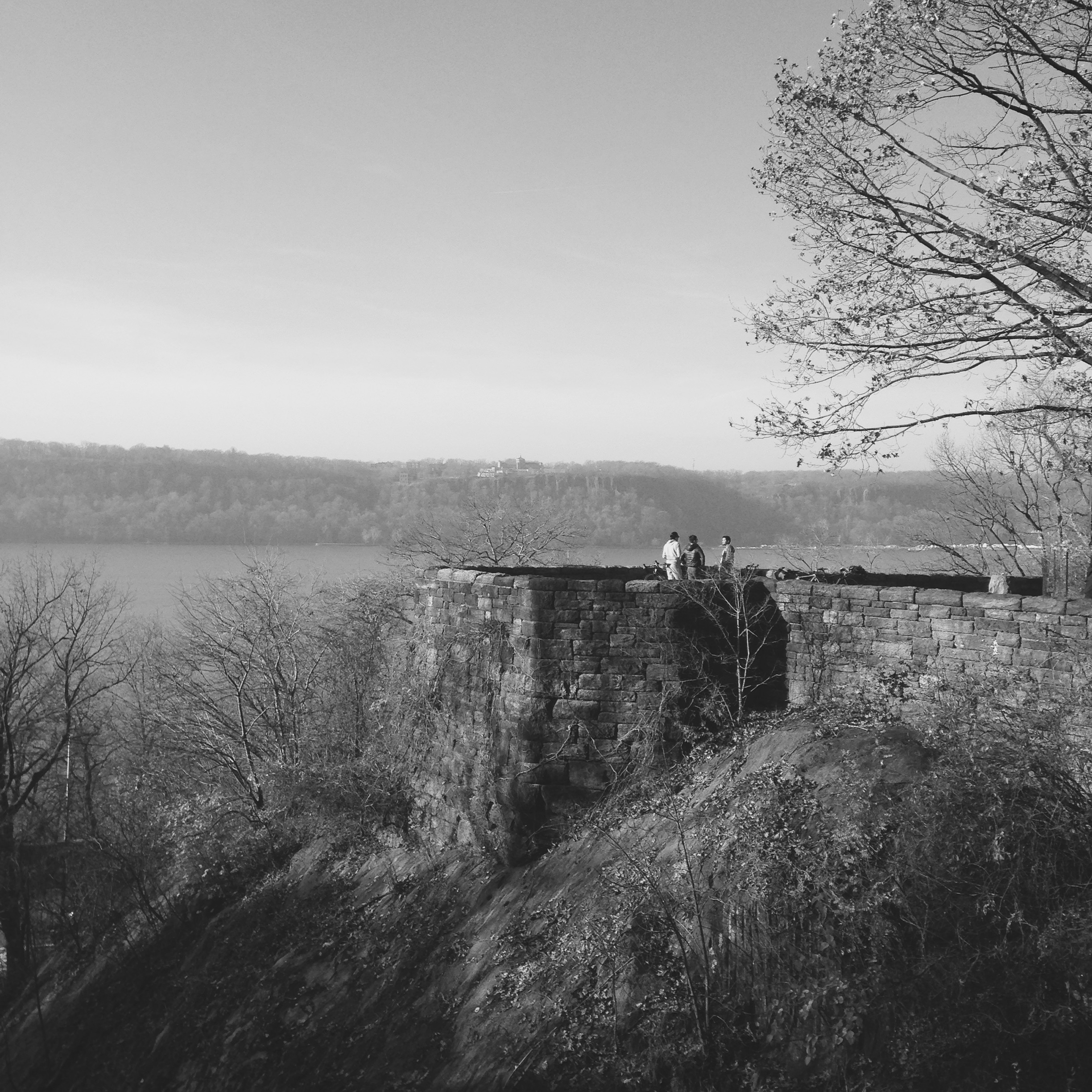
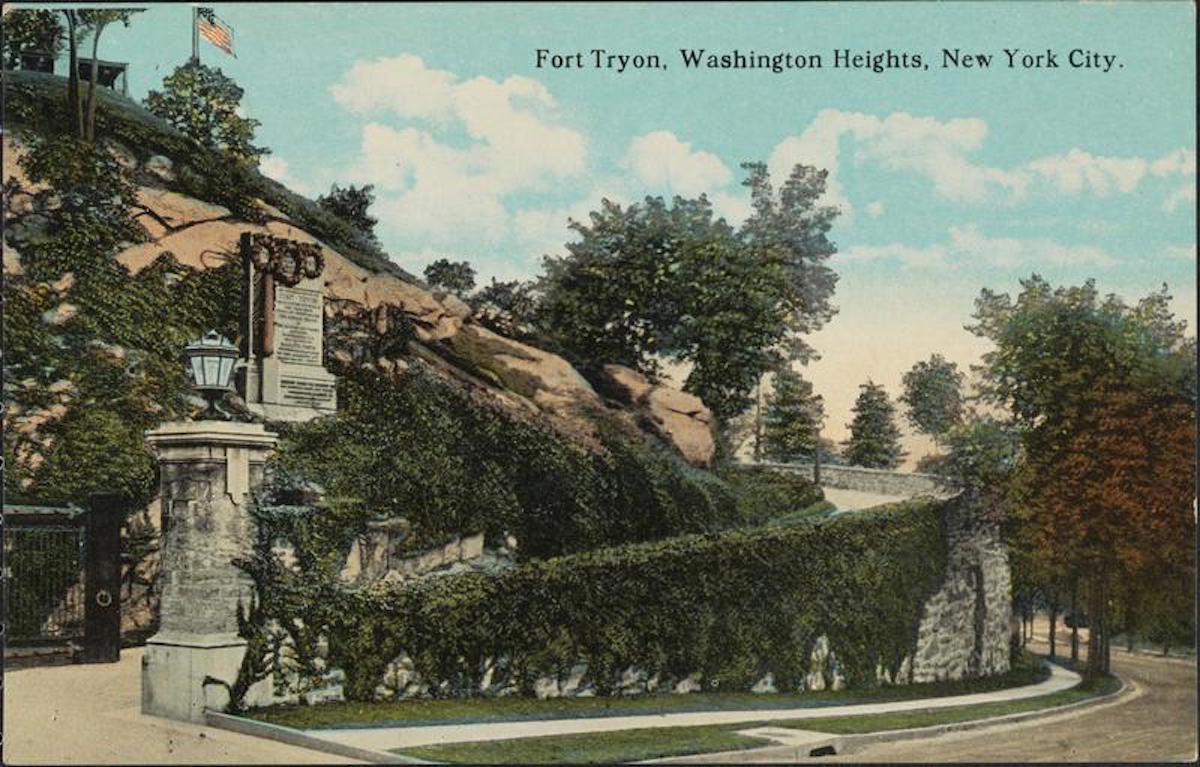
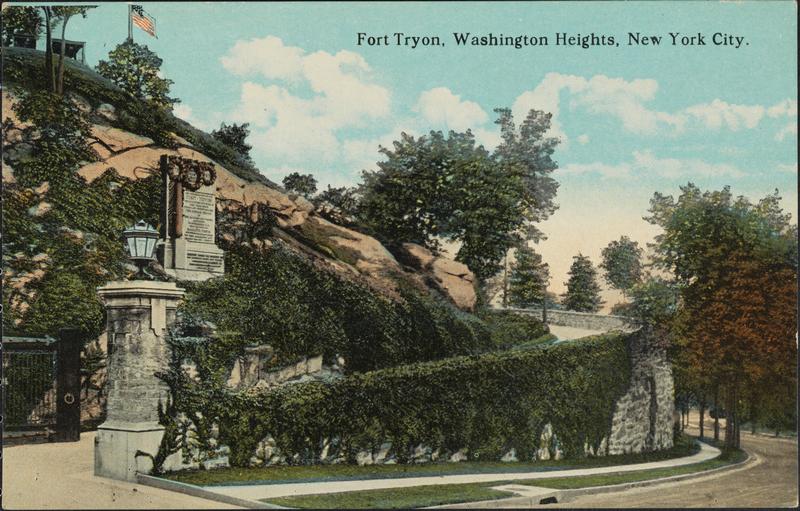
Ask any New Yorker at random where the site of Fort Washington once stood, and chances are your query will be met with a furrowed brow, followed by frantic tapping on a smartphone. (ANSWER: It was located on the site of today’s Bennett Park in Washington Heights.)
But ask about Fort Tryon, and chances are better that they could point it out on a map.
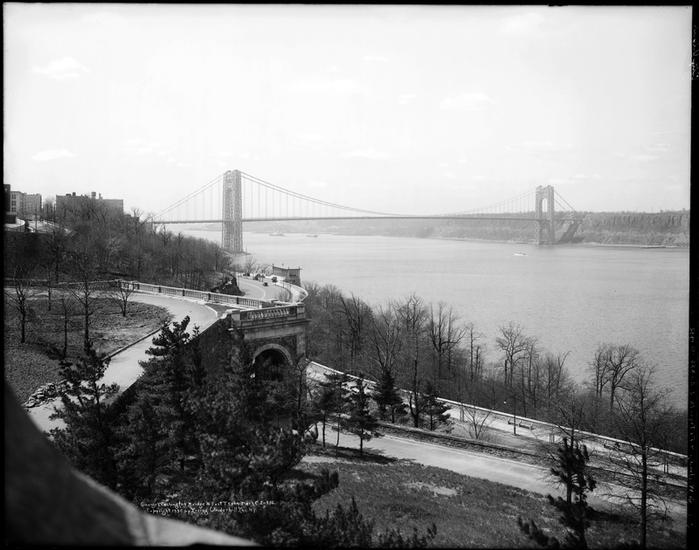
Fort Tryon Park not only hosts the renowned Cloisters museum, but it’s also one of the lushest and most romantic spots in Manhattan, with dramatic outlooks over the Hudson River and sweeping views of the Palisades.
Photo/Greg Young
This breathtaking view is no accident. Along with buying the Cloisters and the land that would become Fort Tryon Park, J. D. Rockefeller, Jr., also bought hundreds of acres along the New Jersey waterfront to preserve them and the view.
This is America the Beautiful at its finest.
Curious thing though.
The park is named for a vicious British general who fought against George Washington and the Continental Army.
Museum of City of New York
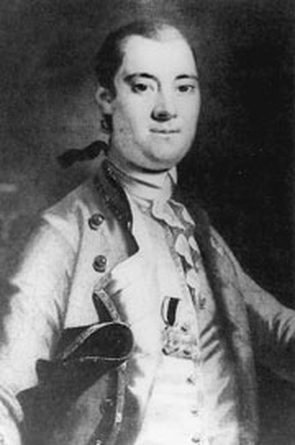
Its name is taken from Sir William Tryon (1729-1788), the last governor of the Province of New York, who led British forces to burn and plunder civilian outposts throughout New England during the Revolutionary War.
He was a debonair monster, perhaps best known, as major general of the British army, for authorizing vicious raids against civilians in Connecticut in 1779.
“The work of pillage and destruction now commenced in earnest, and large quantities of public stores were removed to the street and burned. The Soliders drank so freely of liquor which they found in one of the buildings that many of them were in a condition of beastly intoxication. The next morning was the sabbath but Tryon gave orders to continue the work of firing the dwellings and business places of all persons except those who were know to be loyal to the king.
Having finished the work of destruction they left innocent women and children without food or shelter….”
Below: More peaceful views courtesy the park, 1932
MCNY
And yet the name has, by tradition, stuck to Fort Tryon Park, a haunting reminder of the violence of 1776 which once marred this land. It is here that one can best imagine the absolute chaos of those early revolutionary days, nestled in scenes of picturesque natural beauty.
Wander the meandering paths and you’ll come across several other mementos of long-ago times, including a bronze plaque to the memory of Margaret Corbin (1751-1800), considered the first woman to see active battle in the Revolutionary War and the first to receive a military pension after the war.
PODCAST What was life like in New York City from the summer of 1776 to the fall of 1783 — the years of British occupation during the Revolutionary War?
New York plays a very intriguing role in the story of American independence. The city and the surrounding area were successfully taken by the British by the end of 1776 — George Washington and the Continental Army forced to escape for the good of the cause — and the port city became the central base for British operations during the conflict.
While British officers dined and enjoy a newly revitalized theater scene, Washington’s spies on the streets of New York collected valuable intelligence. As thousands of soldiers and sympathizing Loyalists arrived in the city, hunger and overcrowding put the residents of the city in peril. When the sugar houses and churches became too filled with captured rebels, the British employed prison ships along the Brooklyn waterfront to hold their enemies.
This is a very, very special episode, a newly edited combination of two older shows from our back catalog. PLUS several minutes of brand new material, featuring stories that we overlooked the first time.
The Bowery Boys: New York City History podcast is brought to you …. by you!
We are now producing a new Bowery Boys podcast every other week. We’re also looking to improve the show in other ways and expand in other ways as well — through publishing, social media, live events and other forms of media. But we can only do this with your help!
We are now a member of Patreon, a patronage platform where you can support your favorite content creators for as little as a $1 a month.
Please visit our page on Patreon and watch a short video of us recording the show and talking about our expansion plans. If you’d like to help out, there are five different pledge levels (and with clever names too — Mannahatta, New Amsterdam, Five Points, Gilded Age, Jazz Age and Empire State). Check them out and consider being a sponsor.
We greatly appreciate our listeners and readers and thank you for joining us on this journey so far.
Since 2008, we’ve taken a deep dive into New York’s Revolutionary years with several shows focusing on many different aspects of these trying times. For more information, check out these shows from our back catalog:
FRAUNCES TAVERN Fraunces Tavern is one of America’s most important historical sites of the Revolutionary War and a reminder of the great importance of taverns on the New York way of life during the Colonial era.
Van Cortlandt House Museum
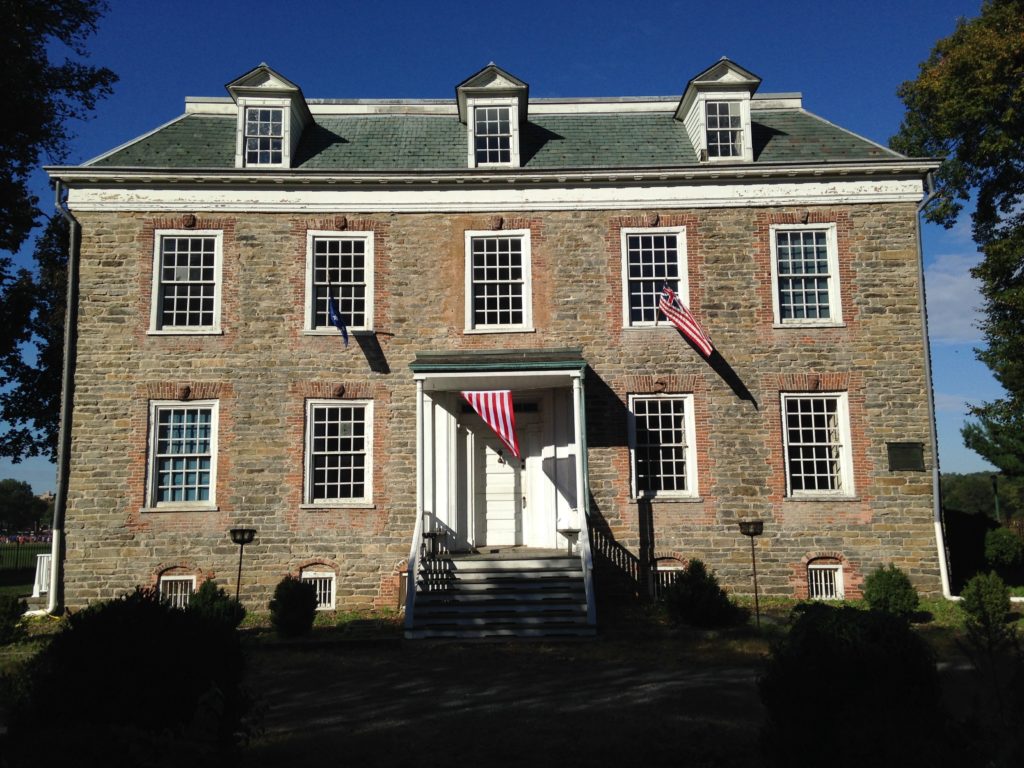
BRONX TRILOGY (PART ONE): THE BRONX IS BORN Before it was the borough of the Bronx, the southern portion of Westchester County was populated with wealthy, prominent British families who faced a tough choice during the Revolutionary War? Remain loyal to the Crown or support the rebels?
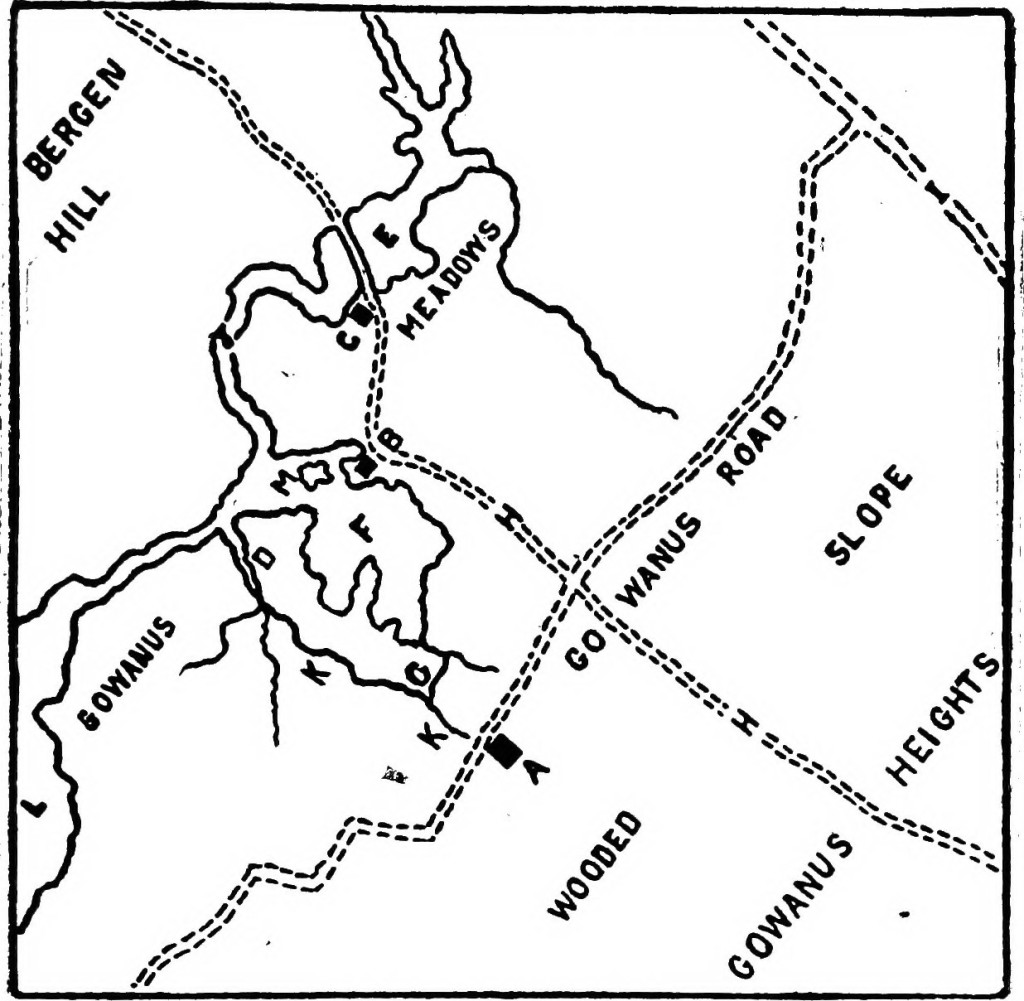
GOWANUS! Brooklyn’s Troubled Waters Back when the Gowanus was a marshy creek, an early battle in the quest for American independence was fought here. The Old Stone House today pays homage to this pivotal skirmish.
THE GREAT FIRE OF 1776 The circumstances surrounding the Great Fire of 1776, the events of the Revolutionary War leading up to the disaster, and the tragic tale of the American patriot Nathan Hale.
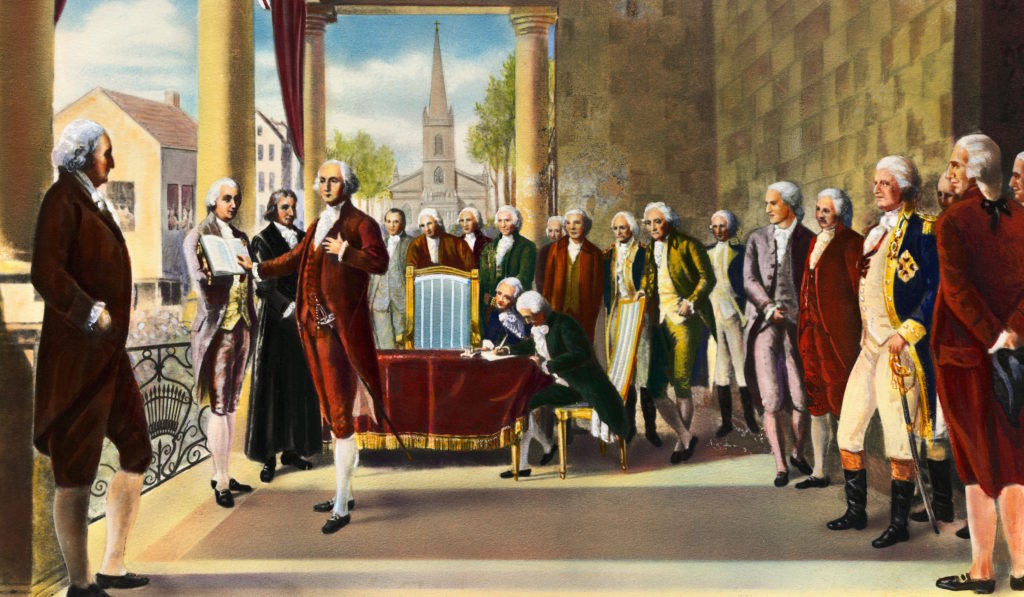
GEORGE WASHINGTON’S NEW YORK INAUGURATION After Washington resigned as head of the Continental Army in 1783, many did not ever expect to see him back in New York. But providence — and a new nation — called.
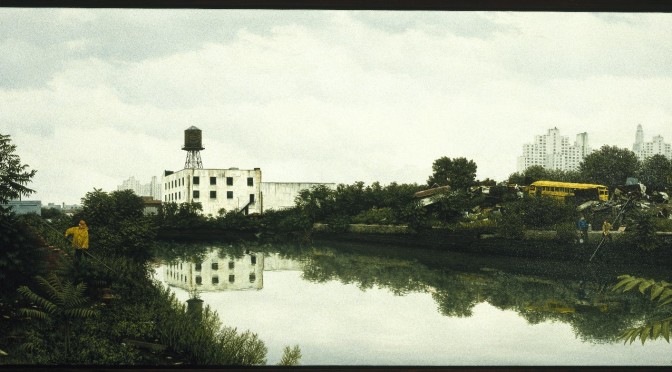
The Brooklyn Navy Yard, no longer a bustling shipyard, lives on as a vibrant commercial compound of movie studios, bourbon distilleries and organic rooftop farms. Its waterfront, facing into Wallabout Bay, is relatively peaceful today. There are no remnants of its genuinely disturbing past.
During the Revolutionary War, New York was a British stronghold, and prisoners associated with George Washington and the Continental Army were often sent here for detainment. Soon the city’s make-shift prisons — sugar houses turned into decrepit jails — became too crowded, and the British needed to look for alternatives.
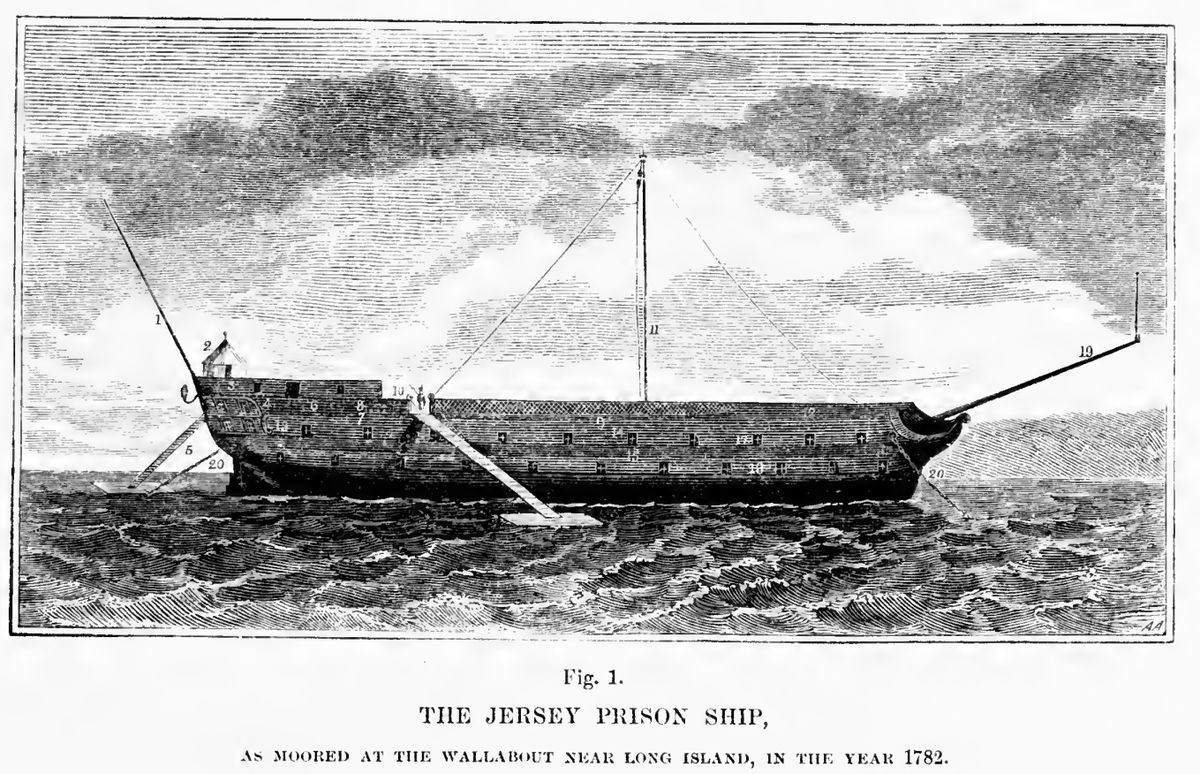
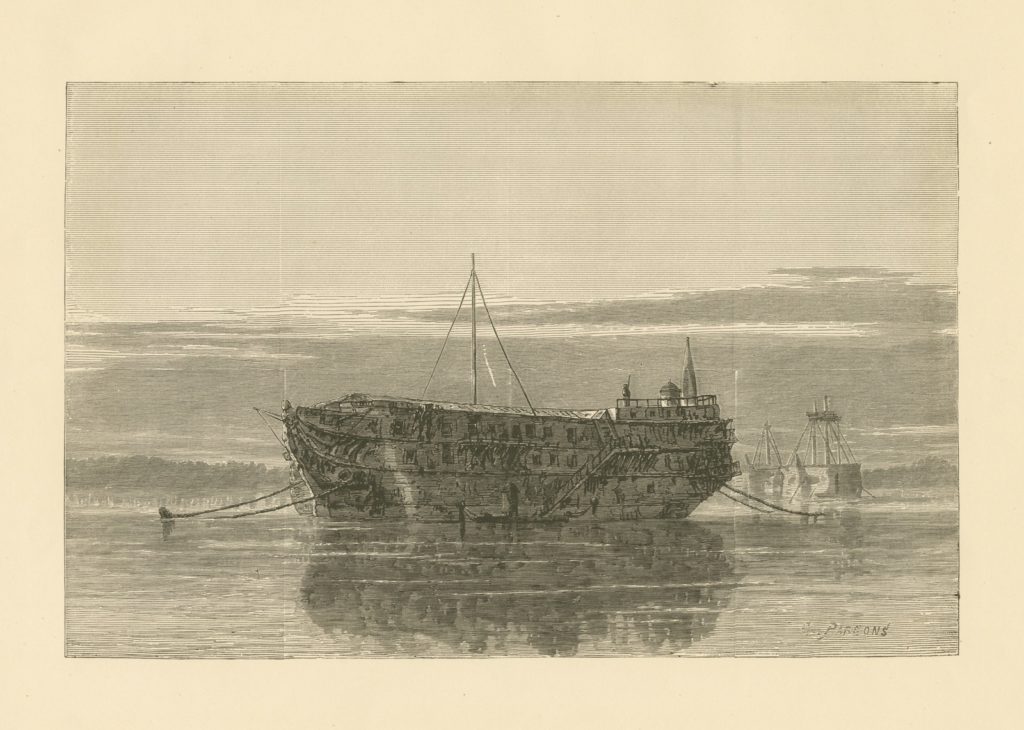
The answer arrived in the form of old naval vessels, previously used to transport supplies, that were moored off the coast of Brooklyn and turned into prison ships. For the duration of the war, hundreds of men and boys were thrown onto these wretched ships, forced to endure a litany of conditions so brutal and dire that they seem like tortures designed for a modern horror film.
And the worst of all of these was the HMS Jersey.
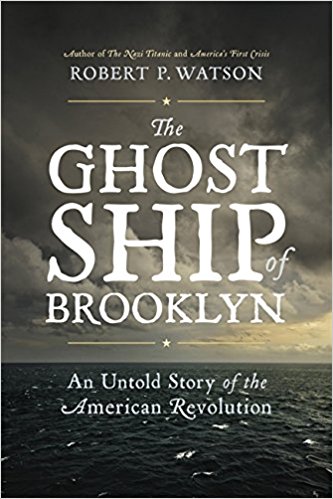
THE GHOST SHIP OF BROOKLYN An Untold Story of the American Revolution
by Robert P. Watson
Da Capo Press
In Robert P. Watson‘s sharp and incisive new book, the author isolates the grim tale of the prison ships, often deemed a footnote in most Revolutionary War histories, from the actions of the conflict at large. It’s vividly narrow in scope, allowing the reader to experience the ship’s macabre trials in a sort of narrative entrapment. The prisoners themselves experienced the Jersey in such a way, trapped below deck with only the fleeting glimpse of New York across the water. For the damned, Wallabout Bay became an inescapable hell.
Watson weaves several first-hand accounts into the narrative, the tales of the lucky few who managed to escape. There’s a dash of Robert Louis Stevenson in the stories, plights regularly associated with swashbuckling tales of pirates. Except these horrid events took place just meters from the Brooklyn shoreline.
In fact, most prisoners who perished aboard the ship were buried on that shoreline, placed into the shallow ground by fellow prisoners, volunteering for burial duty as a way to say a final goodbye. Many days later, those bodies would be caught in the tide to eventually float out into the river.
But perhaps like a good swashbuckler, Ghost Ship of Brooklyn showcases several stories of impossible survival, daring prison breaks and even a couple surprising rescues. For every grim statistic, there’s a moment of desperate bravery. One of the most inspiring feats comes from the recollections of prisoner Thomas Dring who, seeing men around him dying of smallpox, decides to self-inoculate himself and others.
Several men managed to flee the death holds of the Jersey to later recount these thrilling escapes in memoirs. They were the lucky ones; according to reports of the day, 11,500 people died aboard the Jersey. As Watson notes, “over twice as many Americans were lost on that single, cursed than died in combat during the entirety of the long war!”
Brooklyn gentrification has reached a curious impasse — the Gowanus Canal.
The neighborhood surrounding it thrives with new housing developments, trendy restaurants and bars, music venues, shuffleboard clubs and even a Whole Foods. Curbed just named it neighborhood of the year. It’s now a destination for foodies. Pity about that fetid and uniquely aromatic body of water then, a SuperFund site since 2010 and a problem that has vexed Brooklyn for decades. (Black mayonnaise anyone?)
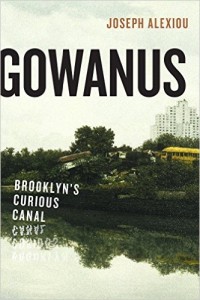
The Gowanus is also pivotal to the history of Brooklyn — and all of New  York City — as enjoyably laid out by author Joseph Alexiou in his new book Gowanus: Brooklyn’s Curious Canal.
The shores of Gowanus Creek have been critical to Brooklyn’s growth since the early Dutch days.  Its story is surprisingly thrilling and robust, from the bloody Revolutionary War battle fought on its shores to its transformation into an artery for industry.  Residents  have struggled with the Gowanus’ toxic qualities — both in the water itself and the criminal life it seems to regularly attract — for over a century and a half.
I wish there was a book like this for every foul, troublesome thing in New York.  Gowanus feels like a biography with an engaging protagonist — plucked from innocence and slowly corrupted — that you want to help save by the end.
Given the current situation in the neighborhood — anybody looking for a cheap apartment? — Gowanus is an important and urgent read.  Plus the book is nominated for a GANYC Apple Award for outstanding achievement in non-fiction book writing! (Check out the full list of nominees here.) On the eve of the awards ceremony this Monday, I asked Alexiou a few questions about his experiences researching this curious creek:
Greg Young: What’s your particular connection to the Gowanus? How did you decide to develop this as a book subject?
Joseph Alexiou: I lived in Gowanus from 2006–2011, and happened upon the canal quite by accident, but it was love at first sight. I spent  several years  in the neighborhood  before making my foray into freelance writing, when I realized the area was a goldmine of funny stories and and weird characters.
The pollution was also so extreme and kind of surprising, which I learned about thanks to the appearance of Sludgie the Whale in 2007. Eventually, I ended up in journalism school, where my obsessions and nerdish love of history became the subject for a book proposal class.
Â
GY: Since your book is really arranged like a biography of the Gowanus, what would say has been its personality over the decades?
JA: The Gowanus has always been stubborn and dependable, and muddy. Definitely thoughtful— a calm, earthly reminder of the powers of nature with that occasional tendency to overflow. But the beginning it was a lot more crunchy and pastoral, full of wildlife and pleasant breezes. But as industry arrived, the Gowanus became stinky, smelly, exciting and unsavory—perhaps just a little bit dangerous. The foreboding sense of doom was its personality for a long time. But with the dynamic nature of cities and waterways, that grittiness is evolving yet again.
GY: Were you surprised to find how important the Gowanus has been to the overall history of Brooklyn? It seems like its story reflects many of the changes that have happening to the city (and borough) over the decades?
JA: When I discovered that the name “Gowanus” appeared in some of the oldest documented history of New York—dating back to 1636—that’s how I knew there was a particular history to be told. It was a surprise, but also a relief when I discovered how often the name “Gowanus” appeared across newspaper pages and old documents, once I had started really researching the book. So many people used it for business, pleasure, crossed its banks, complained about the traffic, fell into it!
It’s a really unique kind of New York waterway—naturally occurring, then industrialized, then neglected. It’s difficult to move and get around, and often caused much trouble because of the flooding. So many people have invested in it, cursed it, pondered its existence, and written about Gowanus throughout history because it was weird and offbeat, a wrinkle in the map. That proved to be quite a boon, and a great vantage point from which to observe the history of Brooklyn.
GY: Is there anything truly ‘natural’ about the Gowanus anymore? I confess to strolling around it sometimes, trying to picture it as a natural body of water. Is there anything about it at all that remotely resembles the creek that you introduce us to at the beginning?
JA: Well, the rise and fall of the tide is one of the remaining original aspects of the canal. There’s no real wetland left around the canal, although if the walls were knocked down it would start to rebuild itself. Perhaps I should give a nod to little snippets of nature that pop up at street ends (Second Avenue comes to mind) that sort of mimic the original landscape. But imagination is helpful!
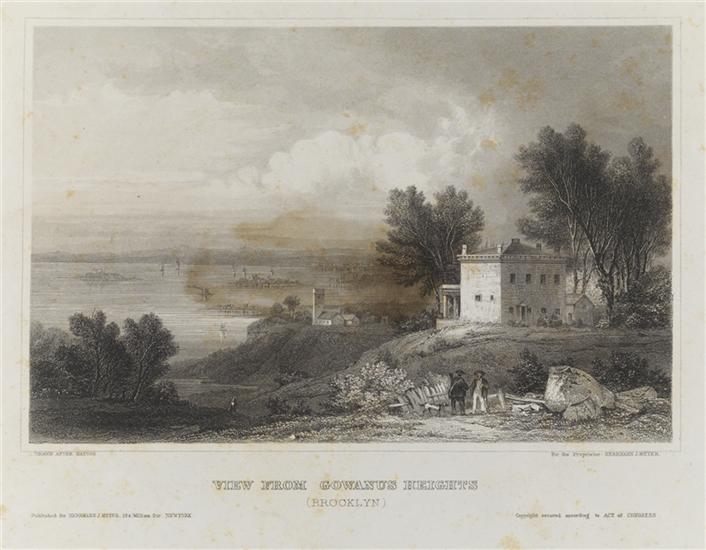
View from Gowanus Heights, Brooklyn, 1840, painted by Herrmann Julius Meyer (courtesy Museum of the City of New York)
GY: The community has a fondness and love for the Gowanus, even considering the health concerns that have vexed it for decades. What do you think is the specific appeal to living near here?
JA: For a very long time it was simply that it didn’t cost very much. But lately, for the more visually-minded, the neighborhood has a unique shape apart from the grid. The industrial architecture, bridges, funny signs, graffiti—all of this gives the neighborhood great character and personality. A soaring warehouse building or an unusual edifice gives a break from the monotony of endless streets. It’s very Jane Jacobsian, but strange breaks in the city grid, or old buildings repurposed, allow for newly creative use and exploration. This particular appeal has long existed in contemporary Gowanus.
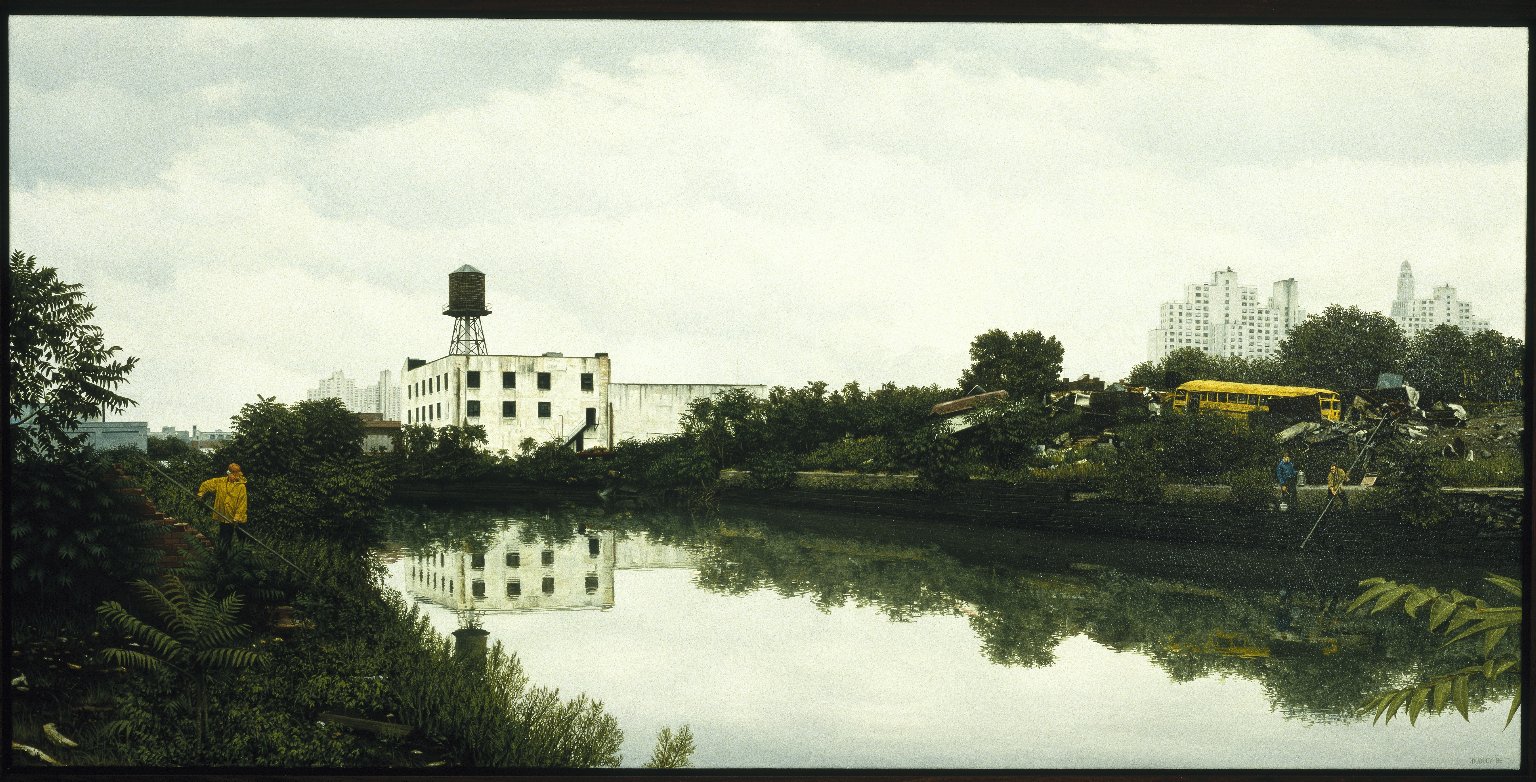
 Gowanus Canal from Second Street, 1986, Randy Dudley, from the Brooklyn Museum collection
GY: Your book explores the struggles to clean up the Gowanus over the decades. There’s obviously a great urgency now due to the residential boom in the neighborhood. Do you think it’s really possible to rehabilitate the Gowanus at this point, at least in a cost effective way? Do you think it will ever be considered ‘safe’ in our lifetimes?
JA: “Safe” is a relative term, and within the next two decades I do believe it will become much cleaner, and safer. I don’t know if the canal will ever be swimmable though, as raw sewage will always be in danger of spilling into the water (albeit much less than now, if the EPA plans go accordingly)—some problems are just too immense to totally solve.
GY: And, out of concern for your safety – just how much time did you actually have to spend near the Gowanus itself? God forbid you didn’t actually go anywhere close to the water?!
JA: I’ve been down to the Gowanus quite a bit, and gone out on a boat, no less than three times! I can’t say I felt totally safe during any of the voyages, but it was exhilarating! It’s a fantastic and totally unique way of seeing Brooklyn, and the city!
The vestiges of America’s oldest wars surround us to this day.
New York City has had more military fortifications contained within it than perhaps any other major American city. Part of this has to do with its roots in the American Revolution and the subsequent fears of a return invasion in the early 19th century.
Today’s existing forts — and those that remain in part or in ruin — make for a stark architectural contrast to the modern city. Their walls of stone and brick may conjure up a history far older than New York’s or images of a made-up fantasy world. You could pretend, for a few moments, to be a character on Game of Thrones while exploring places like Fort Wadsworth or Castle Williams on Governors Island
Here’s a list of some of the best known forts in the New York City area. Most are still around in some form. Some exist only in commemorative markers.  Others are completely gone but they leave their names as a reminder of their existence.  How many of these have you seen in person?
1 Fort Wadsworth
Location: Staten Island
Placed at a strategic site on the Narrows, Wadsworth and its associated defense buildings are perhaps the most dramatic military remains in New York City. It traces to an old Revolutionary War-era fort called Flagstaff Fort.  While it serves minor military functions to this day, Wadsworth has become a popular Staten Island attraction.
1979, photographed by Edmund V. Gillon, Museum of the City of New York
2 Fort Jay (formerly Fort Columbus)Â Location: Governor Island
A star fort constructed from an original 1776 earthen defense. In 1806 its name was changed to Fort Columbus and changed back in the 20th century.
3 Castle Williams Location: Governors Island
Specifically designed in 1807-1811 to defend the harbor from probable British invasion. While the British did invade America during the battles of the War of 1812, New York was spared. Today, its maintained by the National Park Service, as is Fort Jay.
1936, by Samuel Gottscho, courtesy Museum of the City of New York
4 Fort Gibson (or Crown Fort) Location: Ellis Island
Built by the Army in 1795 and greatly upgraded in 1809 as part of the beefing up of harbor defenses. It was dismantled by the 1860s although the island was used to hold naval munitions for decades before its transformation into Ellis Island Immigration Station.  Today you can find exposed ruins outside the main building.
Courtesy NPS
5 Fort Wood
Location: Liberty Island
This too was completed during the 1810s and was later named for Eleazer Derby Wood, an officer killed at a battle at the Battle of Lake Erie in 1814. Today the Statue of Liberty and her pedestal are affixed atop of the old fort. You can see a trace of the original brickwork on an exposed wall near the exit.
New York Public Library
6 Castle Clinton Location: Manhattan (Battery Park)
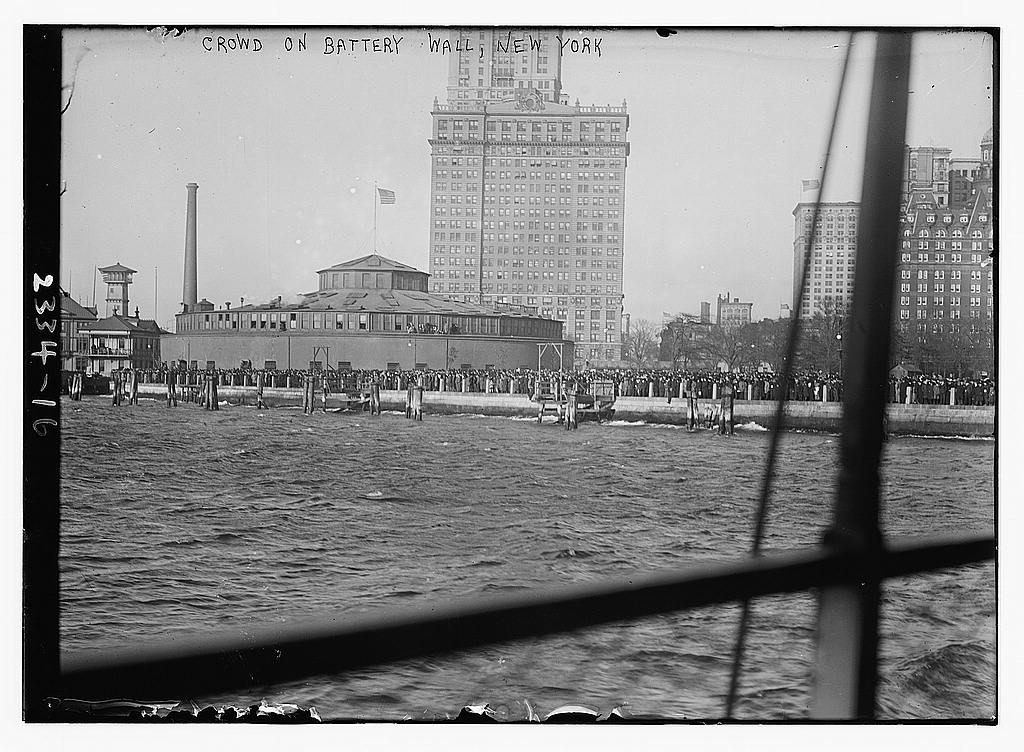
Lower Manhattan was formerly guarded by Fort Amsterdam/Fort George, but that had been dismantled in 1790. (It stood where the Alexander Hamilton U.S. Custom House is today.) Castle Clinton — named for Governor DeWitt Clinton — was built in 1808-1811 to protect lower Manhattan.  It was originally set into the water and connected with a footbridge.  After stints as the performance hall Castle Garden, New York’s pre-Ellis Island immigration station and New  York Aquarium, it sits today as a national monument in its own right.
Library of Congress
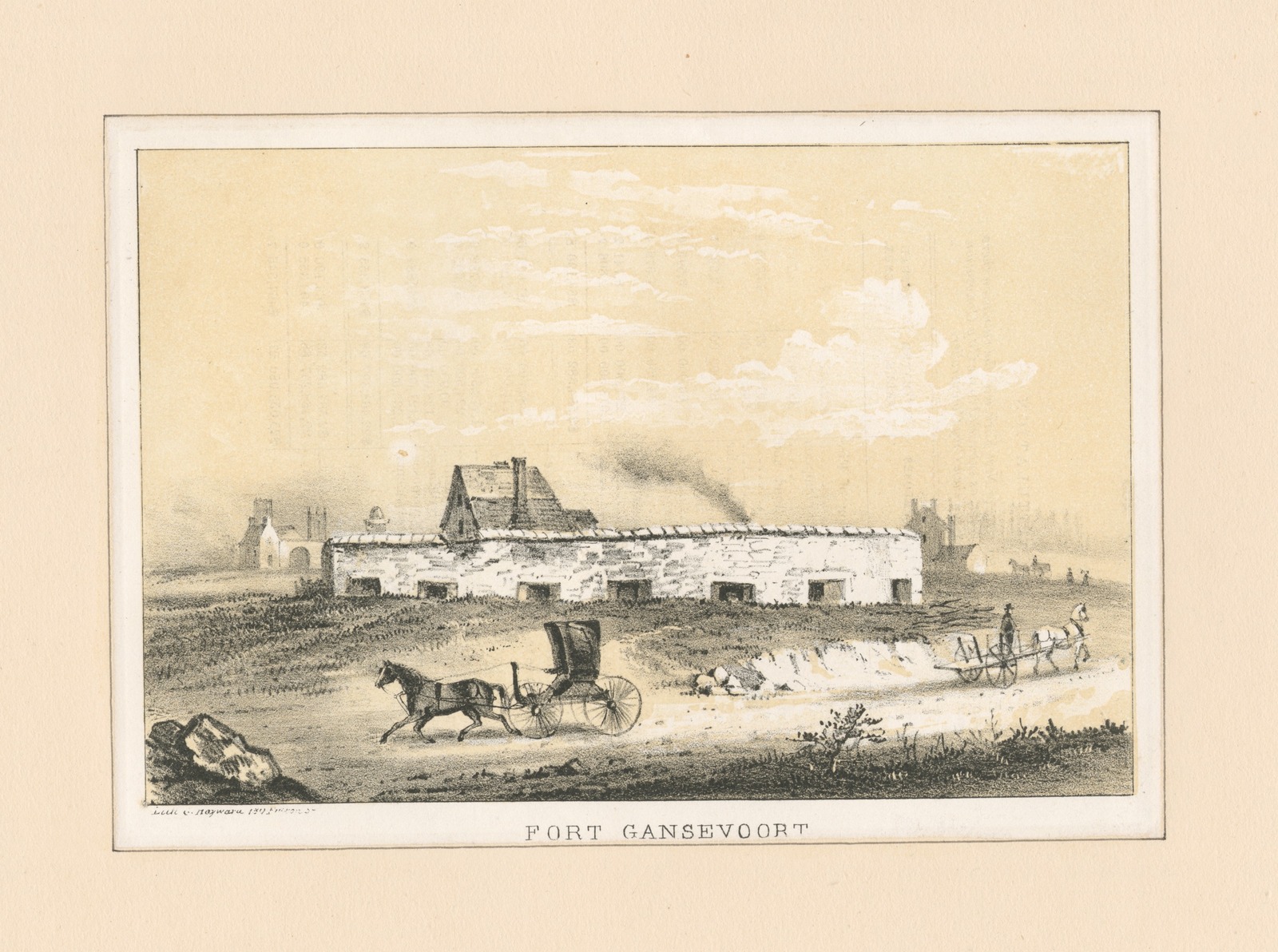
7 Fort Gansevoort Location: Manhattan (Meat-Packing District)
Also called the White Fort, this forgotten redoubt once flanked the western waterfront, built at the same time as the harbor forts. It was named for General Peter Gansevoort (the grandfather of Herman Melville) and stood here until the 1850s. Nothing remains of this fort today but its name, found on the street which cuts through that area — Gansevoort Street.
New York Public Library
8 Blockhouse No. 1 Location: Manhattan (Central Park)
This curious little structure stands on the northern end of Central Park, a fortification almost two hundred years old.  Its the oldest structure contained within Central Park (although obviously Cleopatra’s Needle, which was moved here, is much, much older.)
Library of Congress
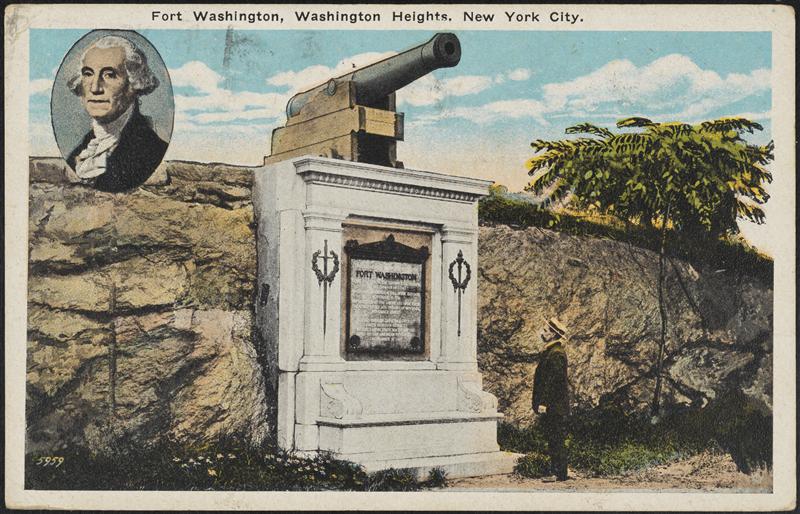
9 Fort Washington
Location: Manhattan (Washington Heights)
This fort predates most of the rest, built as a companion for Fort Lee on the New Jersey side. It was here that the Battle of Washington Heights was fought on November 16, 1776, and the fort was captured by the British. While this particular fort is no longer there, some stone walls and a plaque mark its former location. Fort Washington Avenue also pays tribute.
10 Fort Tryon
Location: Washington Heights
This was actually a northern redoubt that was an extension of Fort Washington. When the British took it over, they renamed it for William Tryon, New York’s last British governor. For some reason, the name just stuck! Its location in preserved in the breathtaking Fort Tryon Park, completed in 1935 and designed by the son of Frederick Law Olmsted.
11 Fort Sterling
Location: Brooklyn (Brooklyn Heights)
This fort, tracing to the Revolutionary Era, is unique it that it was almost immediately dismantled once the British left.  There was another fort nearby called Fort Brooklyn that lasted a bit longer,demolished by the 1820s to allow for the growth of Brooklyn’s first wealthy neighborhood. Today, near the Brooklyn Heights Promenade, stands small Fort Sterling Park, with a plaque and a flagpole commemorating the location of this critical defense.
12Â Cobble Hill Fort
Location: Brooklyn (Cobble Hill neighborhood)
This unusual corkscrew shaped fort — which we talked about in one of our previous ghost story podcasts — is notable for receiving George Washington as he observed his troops during the Battle of Long Island in 1776. Â A handsome plaque on the old bank-turned-Trader-Joe’s at Atlantic Avenue and Court Street marks the location of this forgotten fortification.
Courtesy the blog South Brooklyn
13 Fort Greene
Location: Brooklyn (Fort Greene neighborhood)
There really was a fort here in the area of Fort Greene Park today, on the highest point of the hill, a traditional five-point fortification similar to that on Governors Island. In the 1840s it was torn down to construct one of Brooklyn’s oldest parks — called Washington Park. Oddly enough, the original fort here was called Fort Putnam. There was a Fort Greene (named for Nathaniel Greene) but it was in another area of Brooklyn, closer to today’s area of Boerum Hill.
Museum of the City of New York
14 Fort Hamilton Location: Brooklyn (Bay Ridge)
This is the last active military headquarters in the New York City area. Built in the late 1820s-30s, it was named for Alexander Hamilton who was an officer in the Revolutionary War. Although an active site, you can visit the Harbor Defense Museum which is housed here.
Robert Bracklow, Museum of the City of New York
15 Fort Lafayette
Location: Off the coast of Brooklyn (Bay Ridge)
This imposing island fort was built in the 1810s and named for the Marquis De Lafayette. Like many of New York’s forts, it held Confederate and enemy prisoners during the Civil War. The fort was later dismantled for the construction of the Verrazano-Narrows Bridge. You can see where it would have stood as the bridge’s Brooklyn-side tower stands on the location today.
16 Fort Tilden Location: Brooklyn (Rockaway Beach)
While defenses of various kinds have sat out on Rockaway Beach since the early 19th century, Fort Tilden was fully built up during World War I, named for Samuel J. Tilden. Today its ruins peering through overgrowth can be found near the beach as part of the Gateway National Recreation Area.
17 Fort Schuyler
Location: Bronx
Completed in the 1850s, this unique fortification protected New York for any possible attack from enemies approaching along the Long Island Sound. Abandoned for strictly military use in the 1920s, today it houses the State University of New York Maritime College and a maritime museum.
Museum of the City of New York
18 Fort Totten
Location: Queens
This fortification traces to worries relating to the Civil War. It was constructed in 1862 to protect the East River with its companion across the water Fort Schuyler.  You can still visit Fort Totten today as the area has been opened up as a public park with regular tours of the old buildings.
New York Public Library
At top: Fort Lafayette in a painting by Thomas Hicks (1861)