So we don’t know if you’ve heard, but New York City is an expensive place to live these days. So we thought it might be time to revisit the tale of the city’s most famous district of luxury — Fifth Avenue.
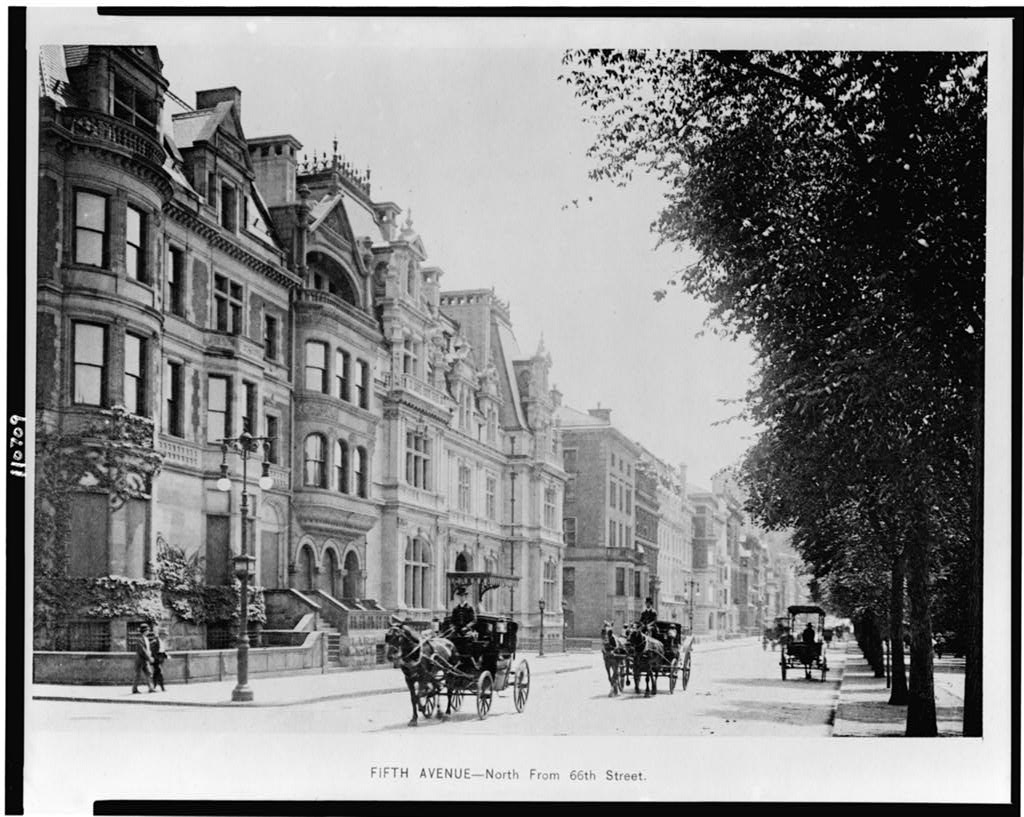
For about a hundred years, this avenue was mostly residential— but residences of the most extravagant kind.
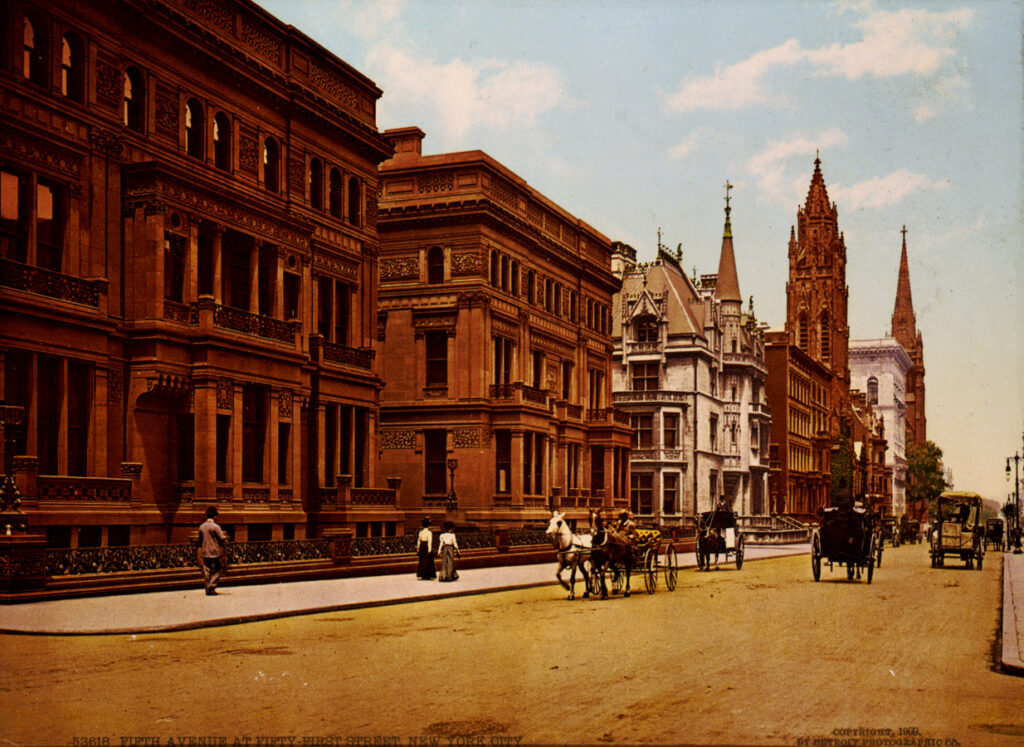
Fifth Avenue at Fifty-first Street in the year 1900. Image courtesy Library of Congress
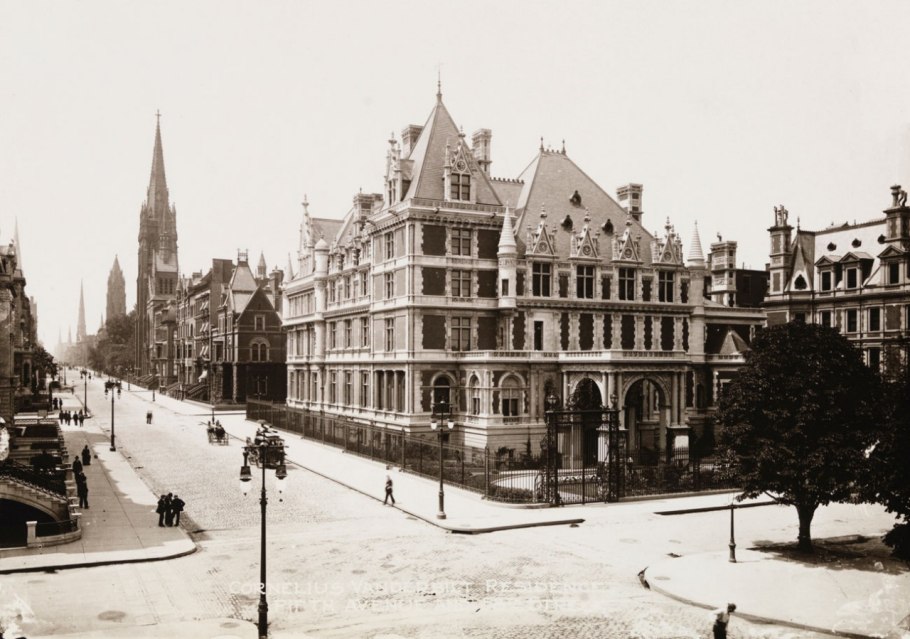
At the heart of New York’s Gilded Age — the late 19th-century era of unprecedented American wealth and excess — were families with the names Astor, Waldorf, Schermerhorn, and Vanderbilt, alongside power players like A.T. Stewart, Jay Gouldand William “Boss” Tweed.
They would all make their homes — and in the case of the Vanderbilts, their great many homes — on Manhattan’s Fifth Avenue.
The image of Fifth Avenue as a luxury retail destination today grew from the street’s aristocratic reputation in the 1800s. The rich were inextricably drawn to the avenue as early as the 1830s when rich merchants, anxious to be near the exquisite row houses of Washington Square Park, began turning it into an artery of expensive abodes.
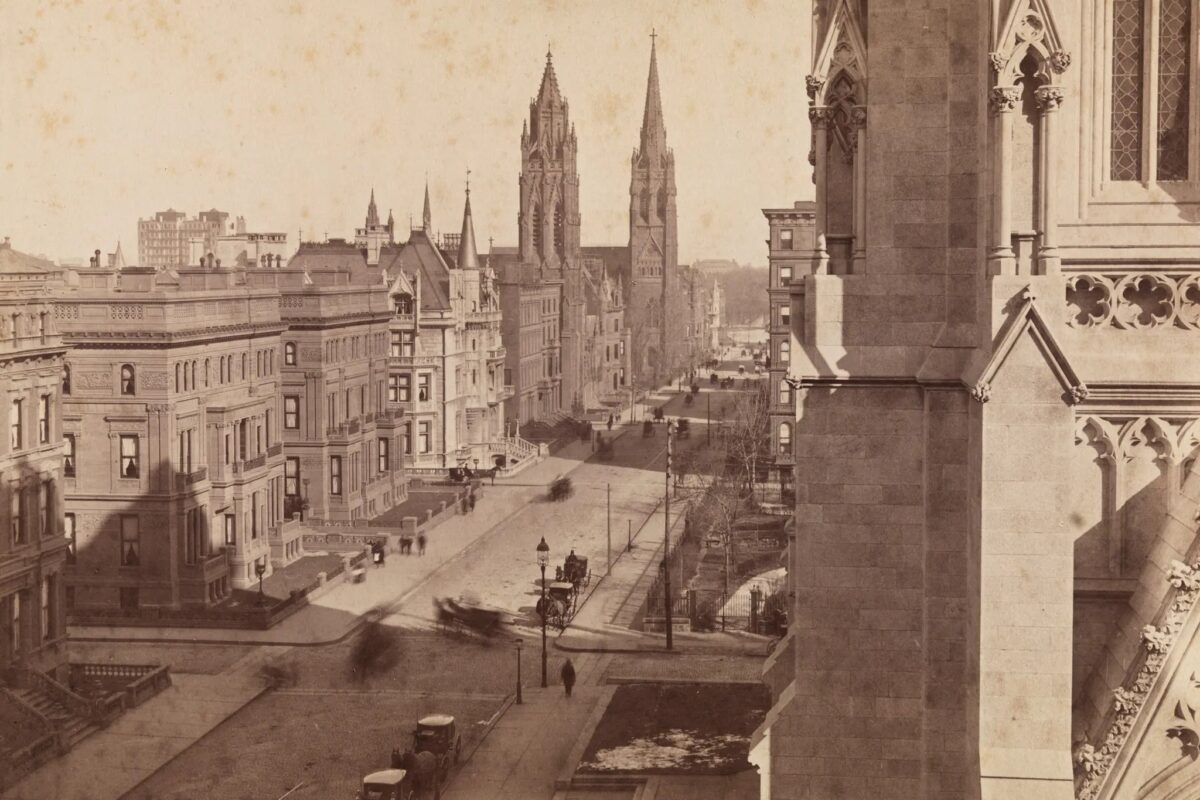
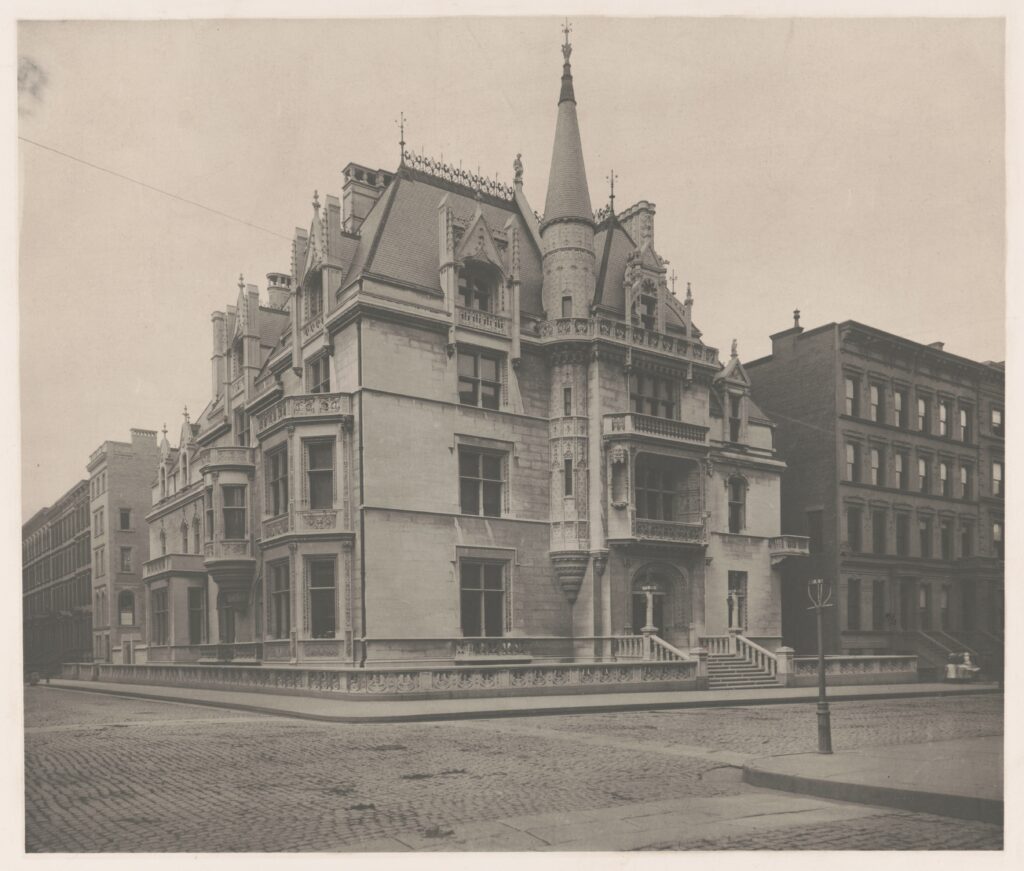
The Vanderbilt Mansion at 660 Fifth Avenue in 1885, Library of Congress
In this podcast, Tom and Greg present a world that’s somewhat hard to imagine — free-standing mansions in an exclusive corridor running right through the center of Manhattan.
Why was Fifth Avenue fated to become the domain of the so-called “Upper Ten”? And what changed about the city in the 20th century to ensure the eventual destruction of most of them?
The following is a re-edited, remastered version of two past Bowery Boys shows — the Rise and Fall of the Fifth Avenue Mansion. Combined, this tells the whole story of Fifth Avenue, from the initial development of streets in the 1820s to its Midtown transformation into a mecca of high-end shopping in the 1930s.
LISTEN NOW: THE GILDED AGE MANSIONS OF FIFTH AVENUE
Today marks the 114th anniversary of the Triangle Factory Fire. For information on commemorations and other activities, visit Remember the Triangle Coalition.
For stories of the struggles faced by employees of the shirtwaist industry, check out our 2020 show on the Shirtwaist Strike of 1909:
And for more information on the Triangle Factory Fire itself, return again to one of our earliest shows:
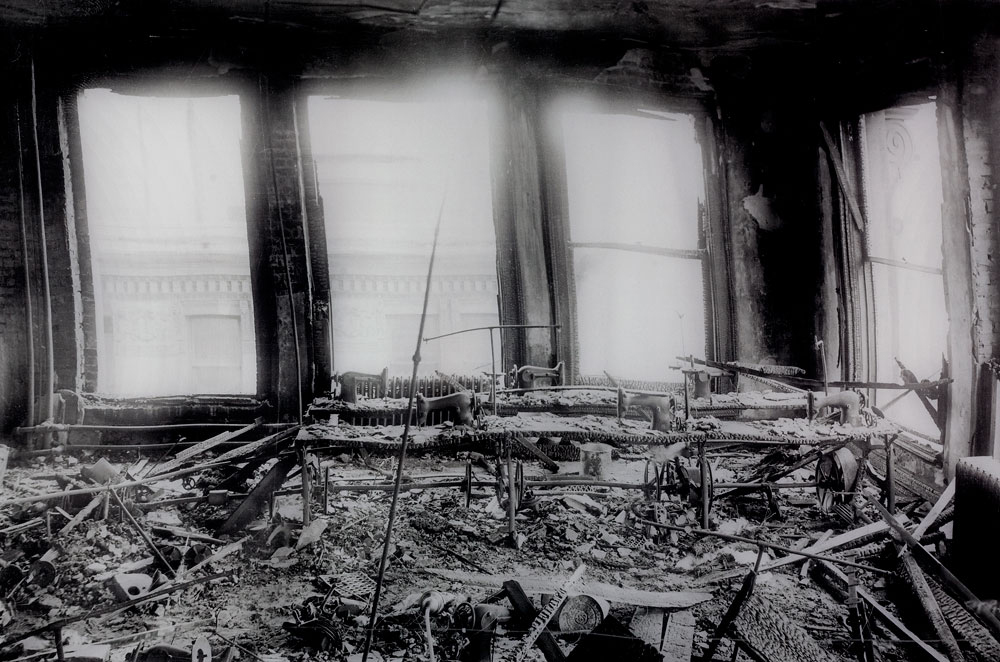
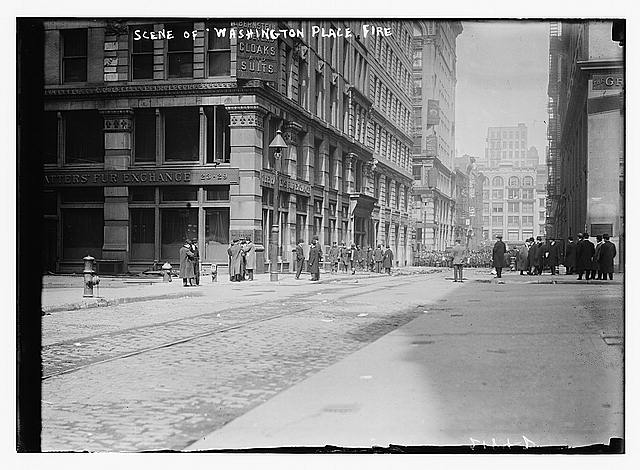
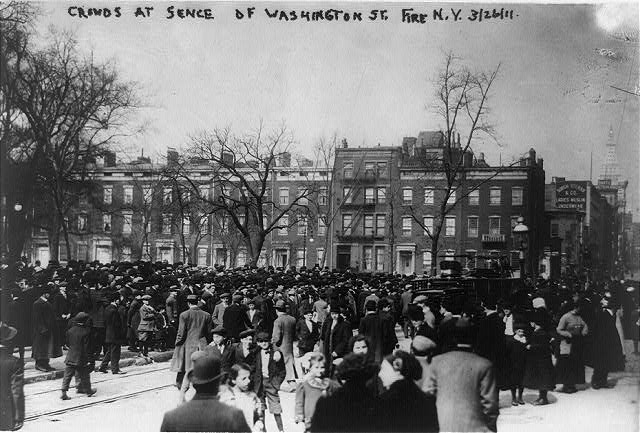
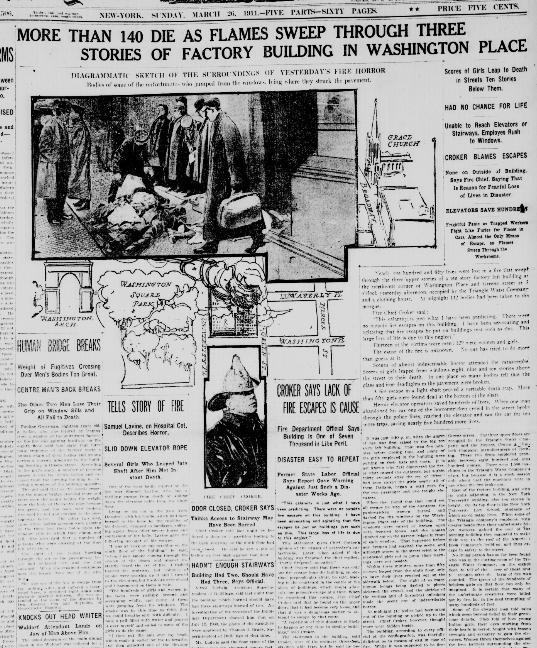
On this day in 1911, late in the afternoon, fire swept through the Triangle Shirtwaist Factory, located on the upper floors of a ten-story building near Washington Square Park.
Due to odious practices by the factory’s supervisors, the doorways were blocked and the fire escapes were in poor shape.
Library of Congress/Bain Collection
Hundreds of employees, mostly young immigrant women, scrambled to escape by any means necessary.
When the fire was finally extinguished, 146 workers had been killed in the blaze. Many, fearing death by the flames, leaped to the street below to the horror of onlookers who had stumbled over from the park.
Library of Congress/Bain Collection
The Triangle Shirtwaist Factory Fire is one of the most horrible tragedies in American history, both an indictment on New York sweatshop industries and the lack of any oversight about safety in high rise buildings. Many building regulations that keep us safe today were directly put in place due to these events.
From the New York Tribune the following day:
——–
Remembering Them
But on this anniversary I wanted to focus on the people who died at the Triangle Factory that day. Can we imagine something about them by looking at where they lived?
Thanks to the research of Michael Hirsch and the Kheel Center at Cornell University [found here], it’s possible to actually come up with a map of the homes of all 146 victims of the Triangle fire.
It would look something like the map below. Just zoom into it to look at the individual sites and take a look at which neighborhoods and boroughs that were most affected:
NOTE: The addresses are accurate, but a few of the points are approximately placed. In a few cases, the streets no longer exist, so I placed the points in close vicinity.
A Lower East Side Tragedy
To nobody’s surprise, the neighborhood most devastated by the tragedy is the Lower East Side (The east side above Houston Street — i.e. today’s East Village — didn’t take that new designation until the late 1950s.) There doesn’t seem to be a block in the neighborhood with an empty home that day one hundred years ago.
A few years before the Triangle fire, the Lower East Side had experienced an even more ghastly tragedy — the explosion of the General Slocum paddle steamer on June 15, 1904.
Among the 1,021 victims of that horrific event, most lived in this neighborhood and specifically in the German area of Kleindeutschland. As the victims were mostly women and children, the disaster effectively marked the end of the German enclave here.
The deaths of the 146 garment workers on March 25, 1911, did not produce the same effect to the neighborhood, but certainly the loss was gravely felt in tenements and houses throughout the city. The map shows that the disaster’s immediate impact reverberated even into the other boroughs.
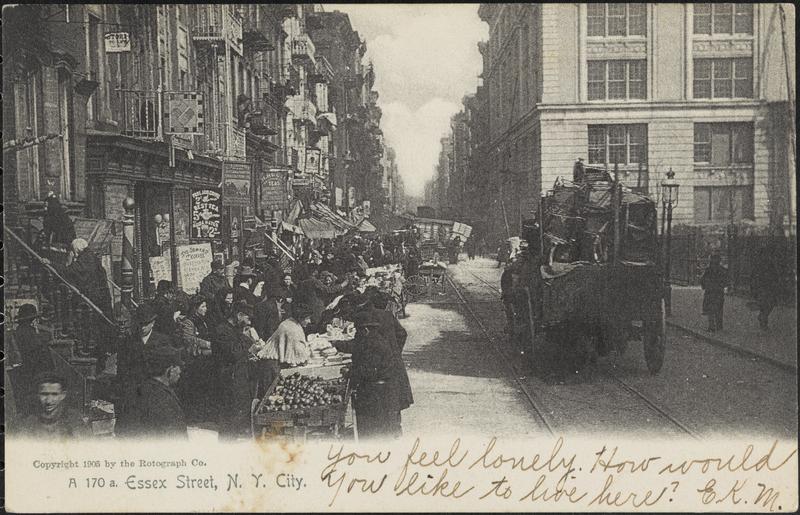
Essex Street in 1905. “You feel lonely. How would you like to live here?” Museum of the City of New York
East vs. West
Of the 146, most all of them were born in three countries — Italy, Russia or Austria. A handful were born in the United States, presumably the children of first generation immigrants.
So it’s no surprise most of them found homes in the Lower East Side, still the heart of immigrant life in the early 20th century. But I really didn’t expect it to be so decisive.
Outside of a small cluster of people who lived in Greenwich Village close to the factory, there were no victims who listed addresses anywhere on Manhattan’s west side — not in Hell’s Kitchen, the Upper West Side, or anywhere else.
I’m fascinated by those who lived further out, near the growing German neighborhood of Yorkville on the Upper East Side, for instance.
A great many took streetcars and elevated trains into work from Brooklyn and the Bronx, and some might even have taken advantage of the new subway (although in 1911, its route was very limited).
No surprise that none of them lived in Queens; the ethnic neighborhoods of that borough would really flourish after the 1920s.
And then there’s young Vincenza Billota, a 16 year old girl who lived out with her uncle in Hoboken, NJ — the only one of the victims to commute into the city.
Her uncle came in from New Jersey that night to identify Vincenza who burned alive inside the factory. He identified her because her shoes had recently been repaired; he recognized the cobbler’s work.
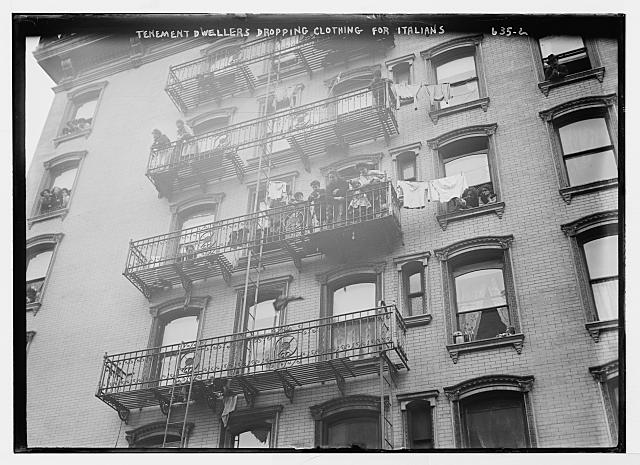
From 1909, the caption reads “Tenement dwellers dropping clothes from fire escape for Italians on East side.” Library of Congress
Missing Tenements
There’s something moving about finding and identifying the homes of the victims.
Most of these people had no solid roots, no property they owned. Only an address, a home they most likely shared with family members and other tenants.
Every year on the anniversary of the fire, the sidewalks outside these addresses are marked with chalk, the names and ages written on the ground as a yearly reminder. You can look at a photo array from the 2011 chalk excursions here.
They didn’t live in fabulous Beaux-Arts mansions or apartment buildings.
Their homes were tenements, most overcrowded and poorly maintained.
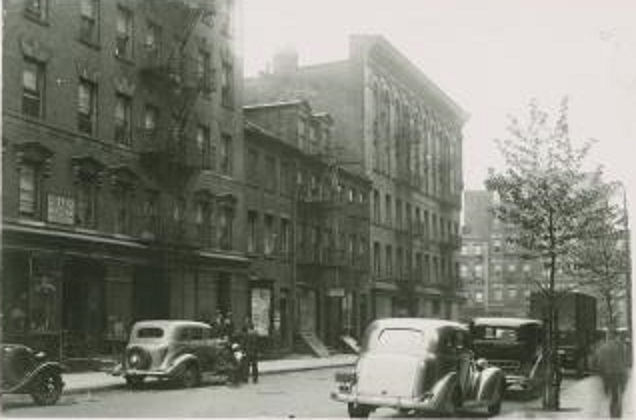
Thus, many of the actual buildings themselves are gone. In the cases of the victim’s homes on Monroe Street, even most of the street itself is gone, replaced with more modern housing projects.
135 Cherry Street, the home of fire victim Rose Cirrito. The photo is from 1939 (courtesy NYPL); the entire row of buildings was later demolished.
509 East 13th Street was the home to two Italian girls, Antonietta Pasqualicchio and Annie L’Abate, and an older Italian woman Annina Ardito, who all lost their lives that day. But that building has been replaced with a modern apartment.
Family and Friends
To grasp a disaster of this magnitude — at a vantage over one century later — you have to deal with it in generalities.
The victims were mostly girls, mostly immigrants, mostly uneducated.
However, by singling out a particular address, the individual tragedies come into focus. And oddly, you get to place that person’s life next to what inhabits that address today.
In the case of the Lower East Side, some of these places are now restaurants, bars and luxury condos.
143 Essex Street was the home of two victims — two teenage brothers Max and Sam Lehrer from Austria. Both had arrived in the United States via Ellis Island in 1909; another Austrian,Sigmund Freud, also arrived at Ellis Island that year.
Young Jennie Stellino had lived in New York since she was 12 years old; she died in the blaze at age 16. She walked to the factory every day from her home at 315 Bowery, one of the few with a fairly easy commute.
Jennie survived the blaze but died from her burns three days later. Decades later, the building at that address became internationally renown for the tenant at its ground floor, CBGB’s.
I’m not sure there’s even a 35 Second Avenue anymore. The street is inhabited by a diner and a few bars today; the Anthology Film Archives sits across the street.
But it was the home to three women who lost their lives that day — Catherine Malteseand her two daughters.
Within the New York City of Edward Hopper‘s imagination, the skyscrapers have vanished, the sidewalks are mysteriously wide and all the diners and Chop Suey restaurants are sparsely populated with well-dressed lonely people.
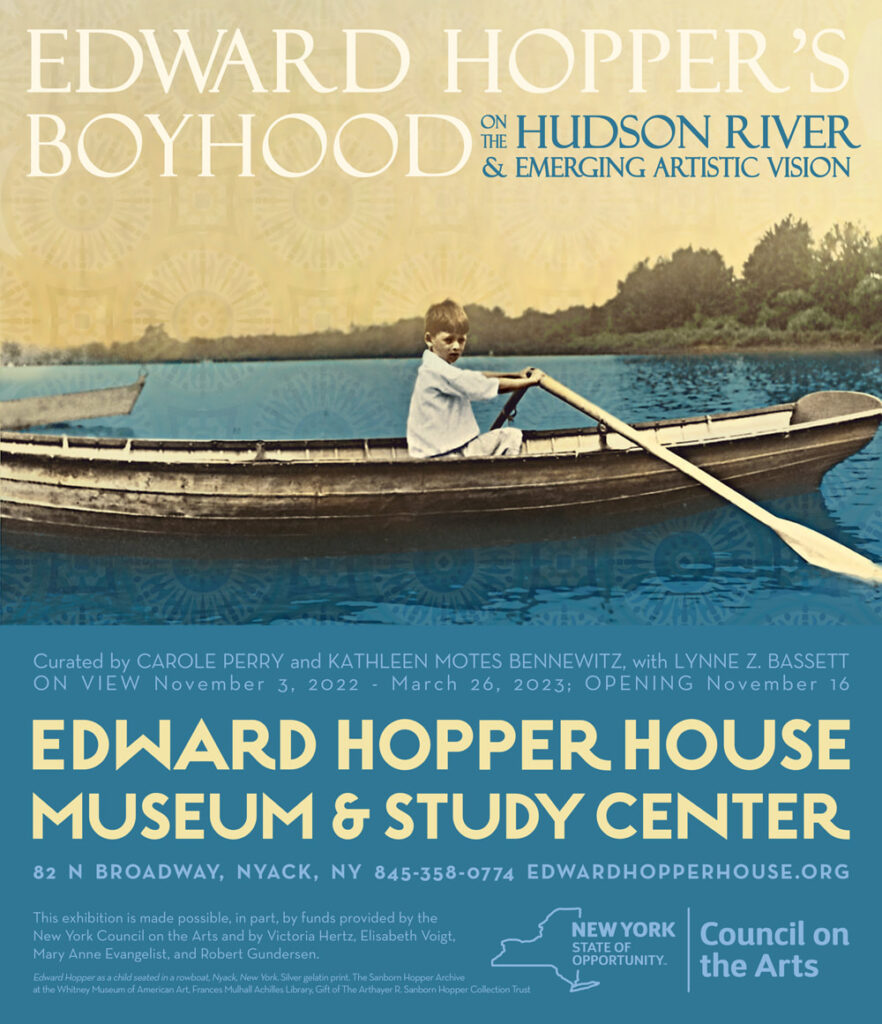
In this art-filled episode of the Bowery Boys, Tom and Greg look at Hopper’s life, influence and specific fascination with the city, inspired by the recent show Edward Hopper’s New Yorkat the Whitney Museum of American Art.
Hopper, a native of the Hudson River town of Nyack, painted New York City for over half a decade. In reality, the city experienced Prohibition and the Jazz Age, two world wars and the arrival of automobiles. But not in Hopper’s world.
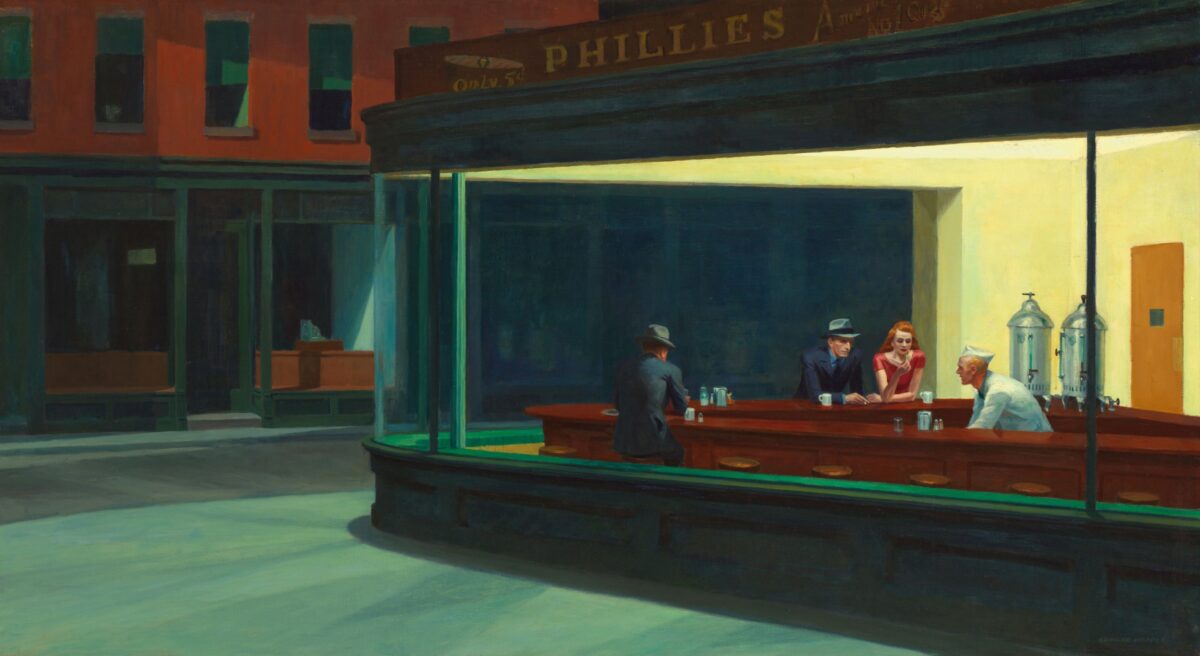
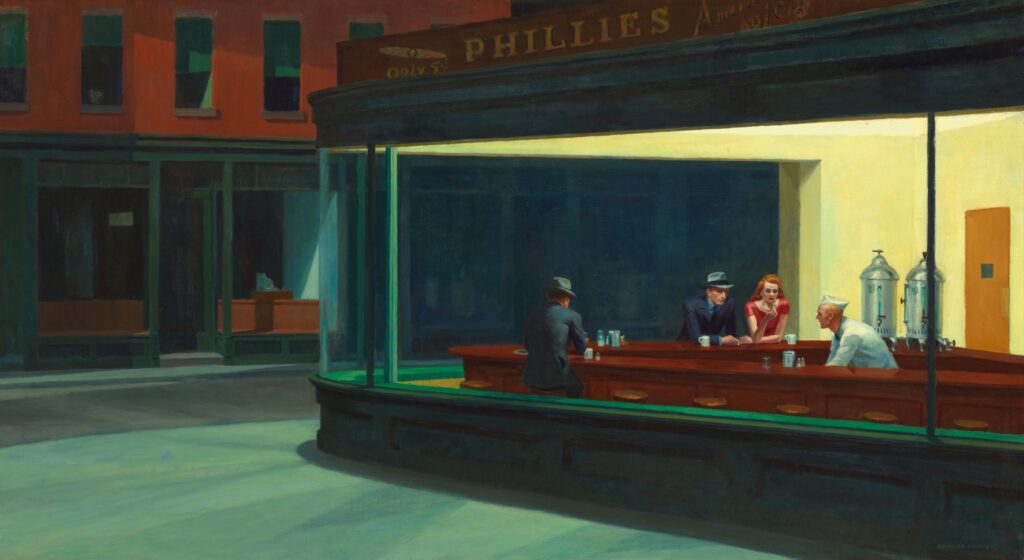
In his most famous work Nighthawks (1942), figures from a dreamlike film appear trapped in an aquarium-shaped diner. But Hopper has captured something else in this iconic painting: fear and paranoia. No wonder he’s considered a huge influence on Hollywood film noir and detective stories.
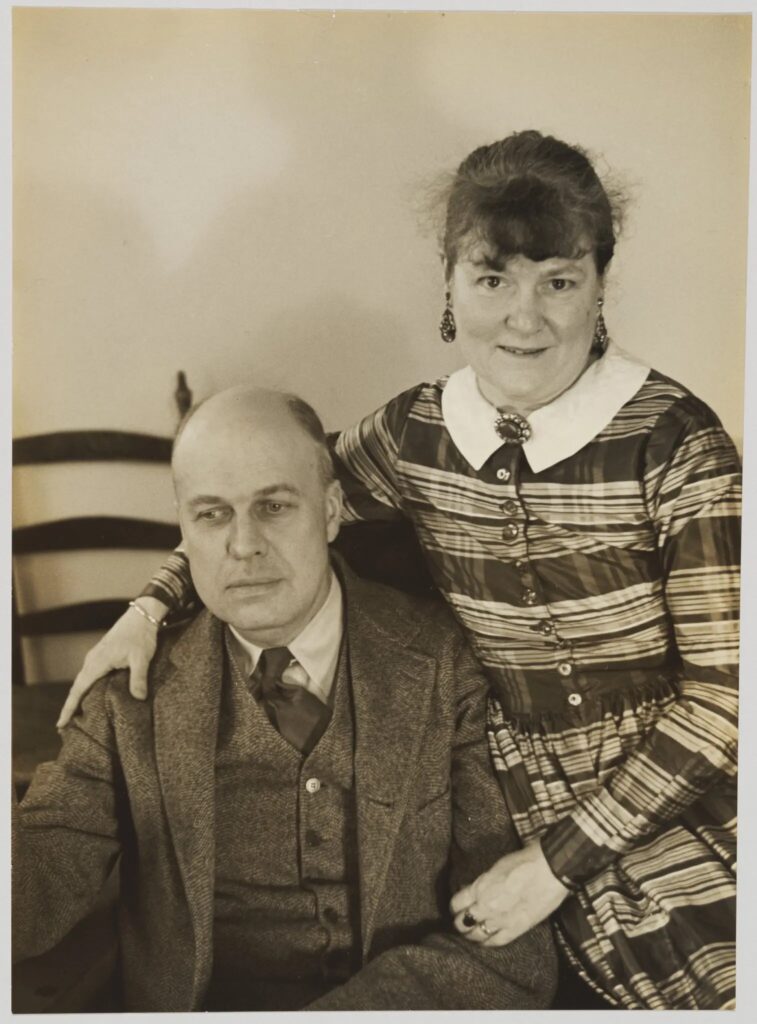
Hopper painted New York from his studio overlooking Washington Square Park, and both he and his wife Josephine Nivison Hopper would become true fixtures of the Greenwich Village scene.
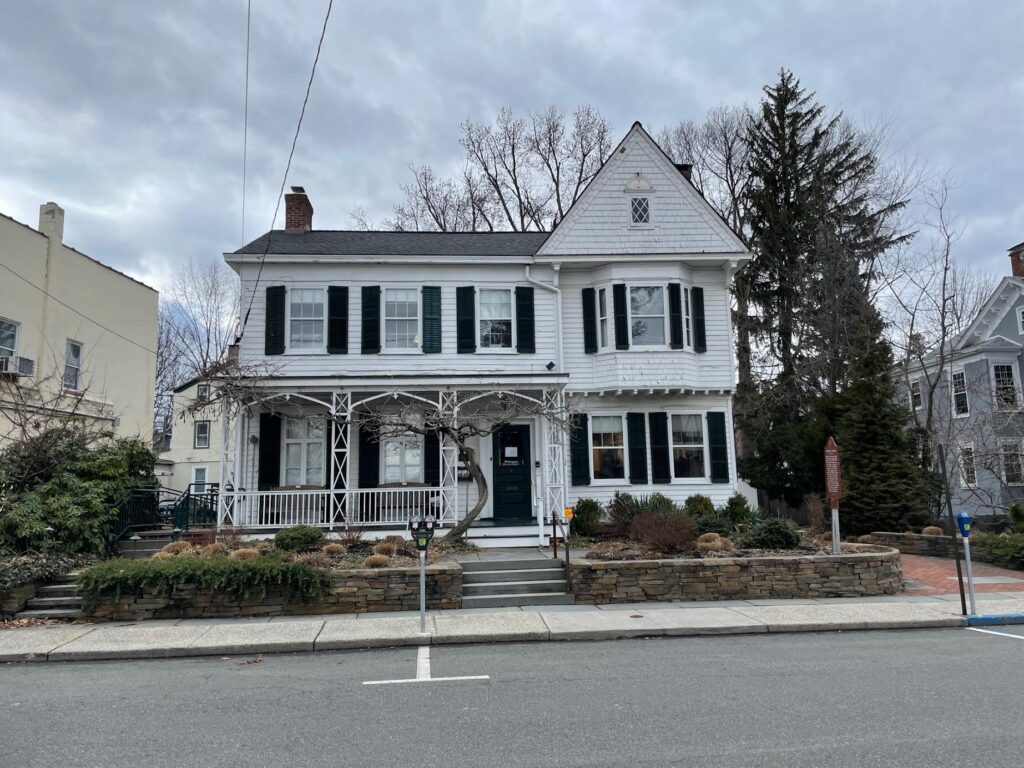
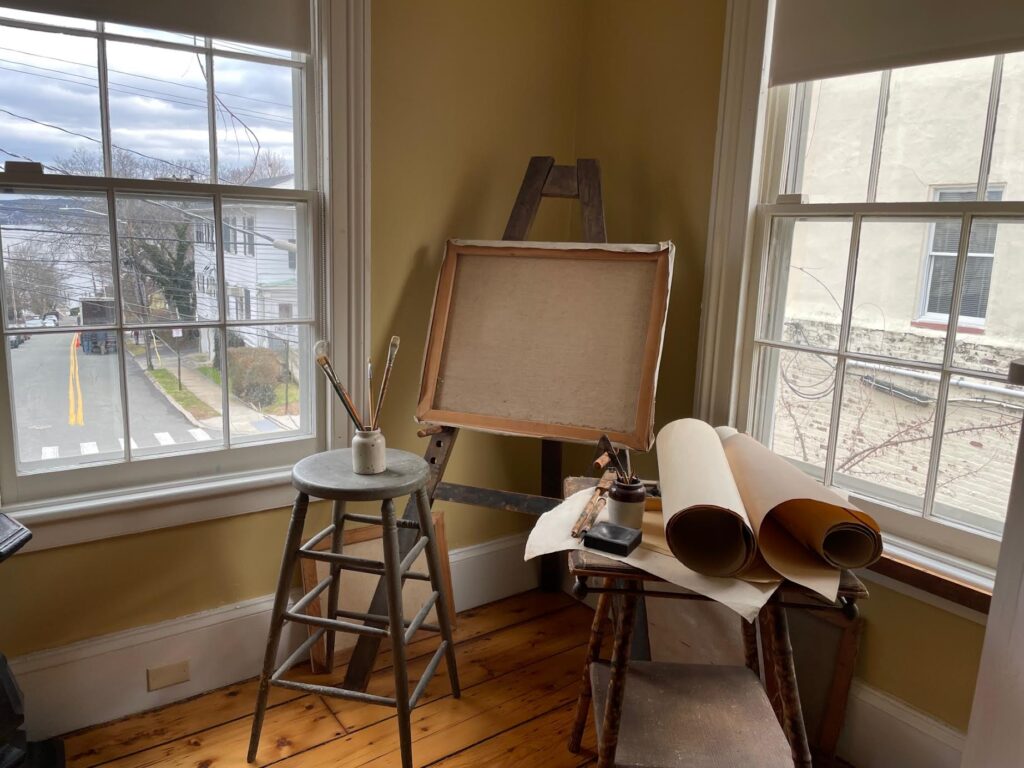
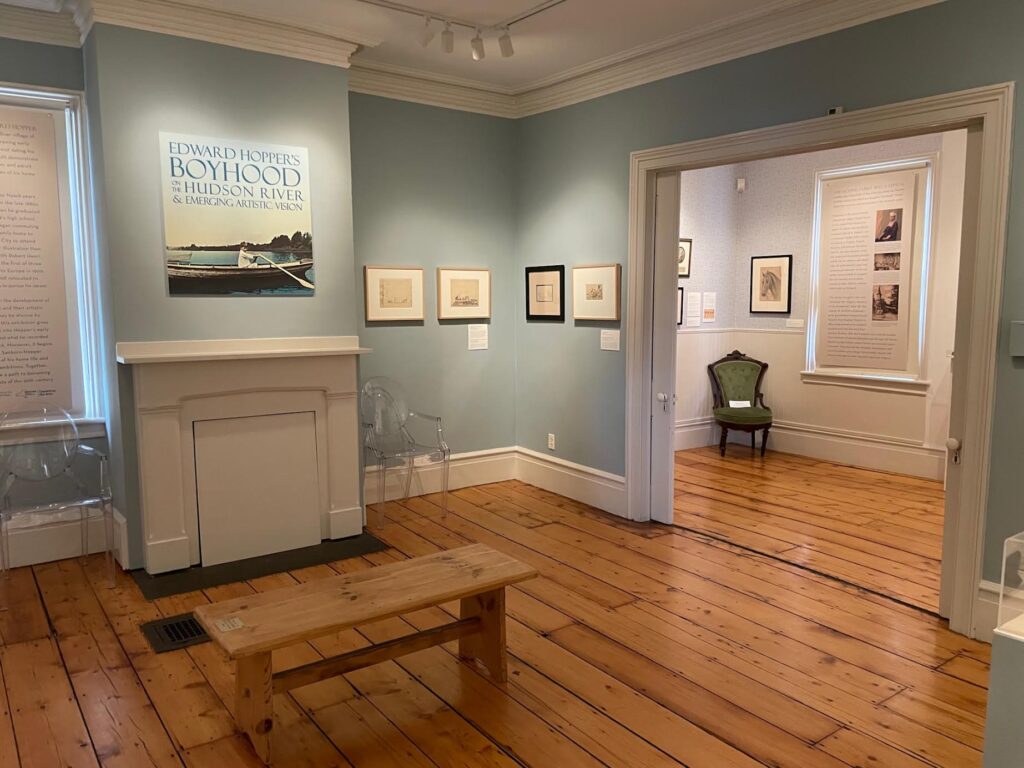
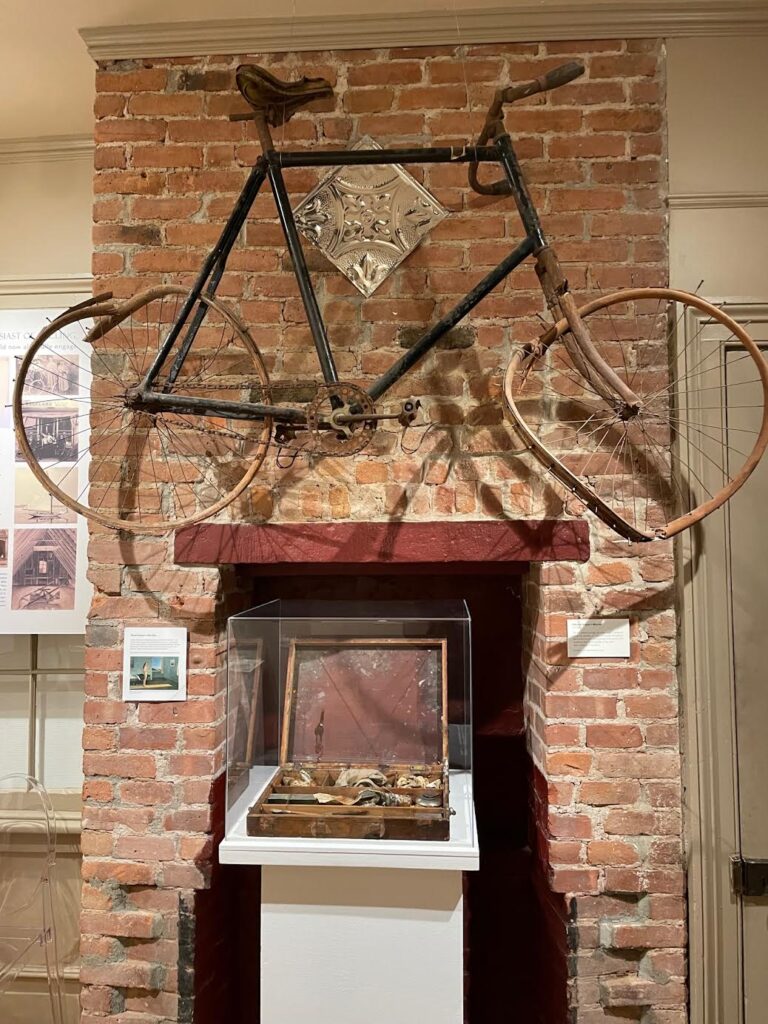
PLUS: Tom visits the Edward Hopper House Museumin Nyack, New York, to talk the artist’s early life with executive director Kathleen Motes Bennewitz. And Greg finds some of the hidden meanings in Hopper’s paintings thanks to American art historian Rena Tobey.
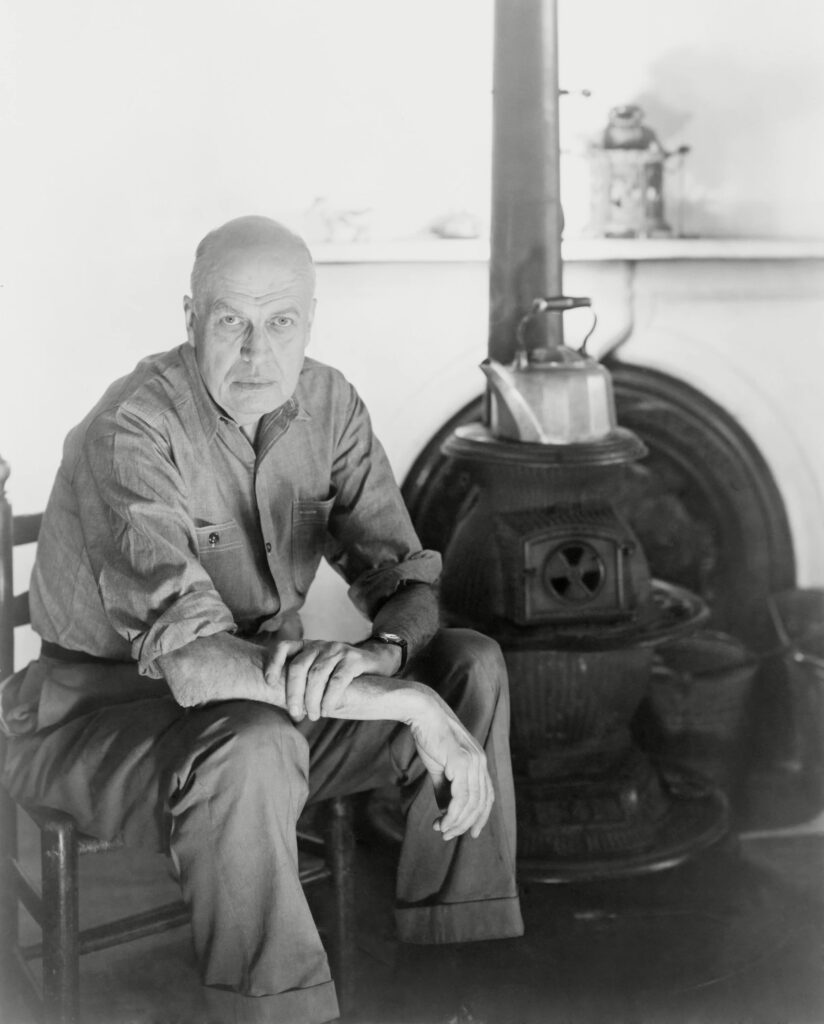
Edward Hopper in his studio. Courtesy Everett/ShutterstockCirca 1947. Photo courtesy Whitney Museum of American Art
From the Edward Hopper House Museum in Nyack, NY:
Photos by Tom Meyers
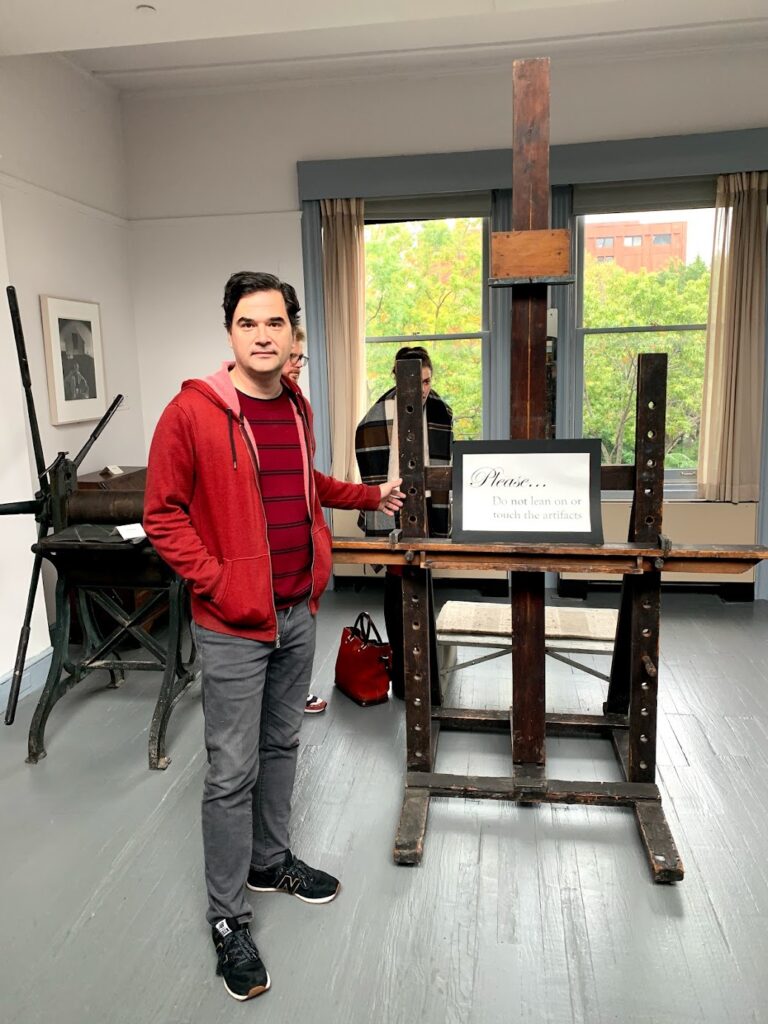
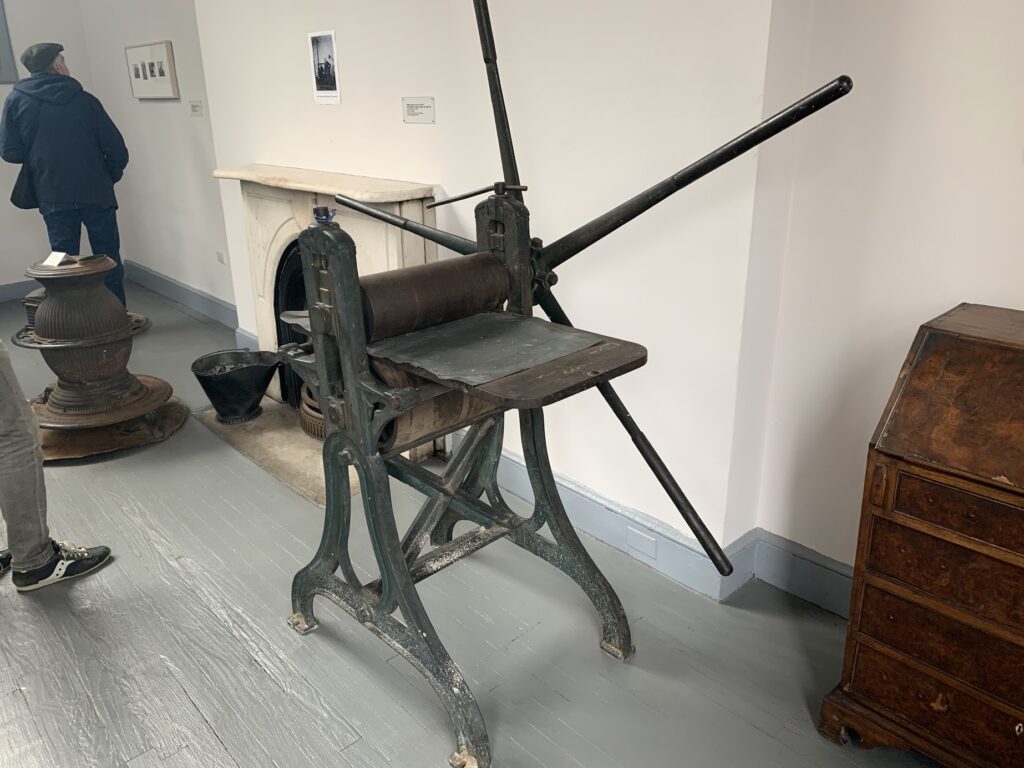
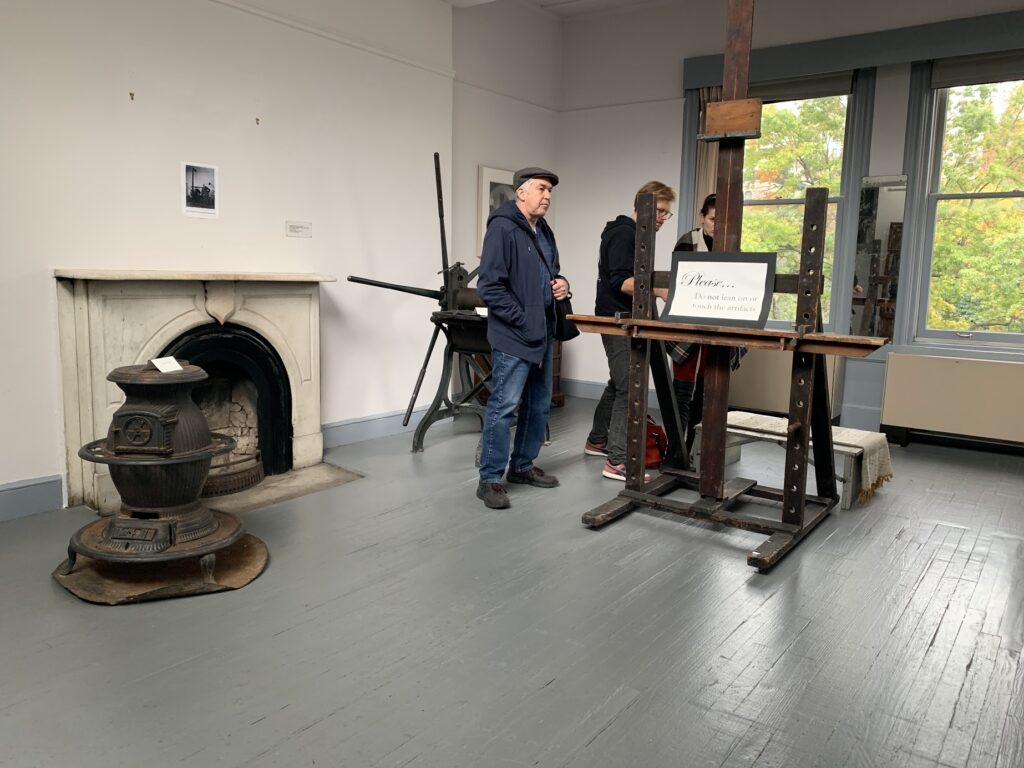
From inside Edward Hopper’s studio at 3 Washington Square North (from Open House NY 2019). Information on the studio here.
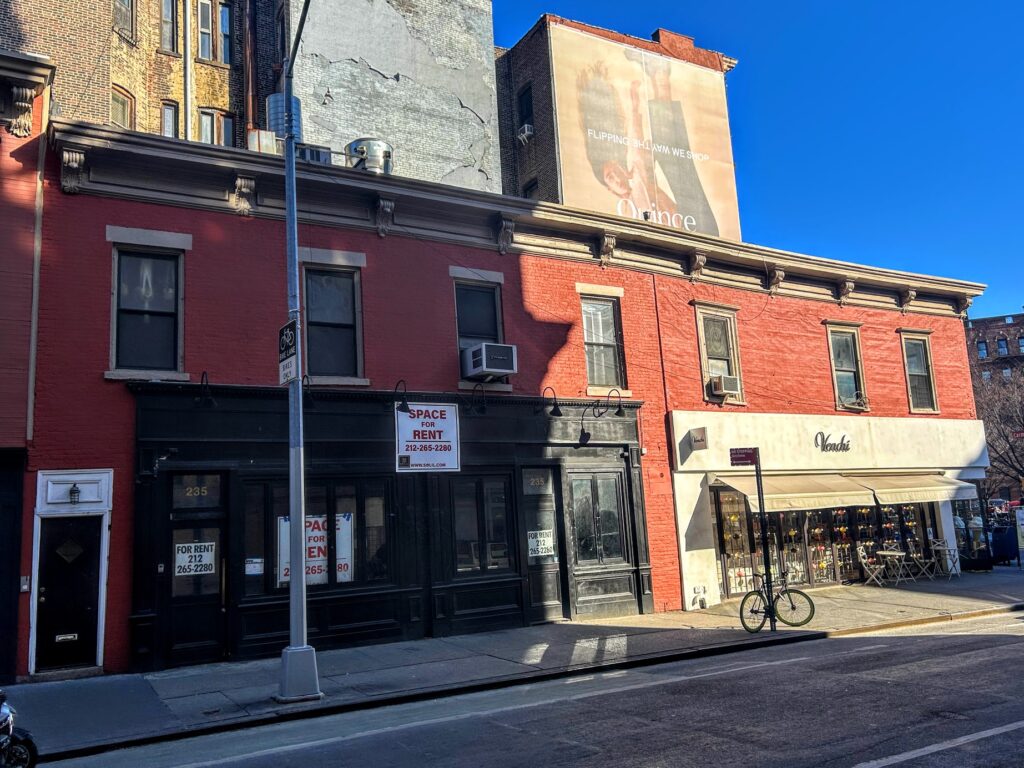
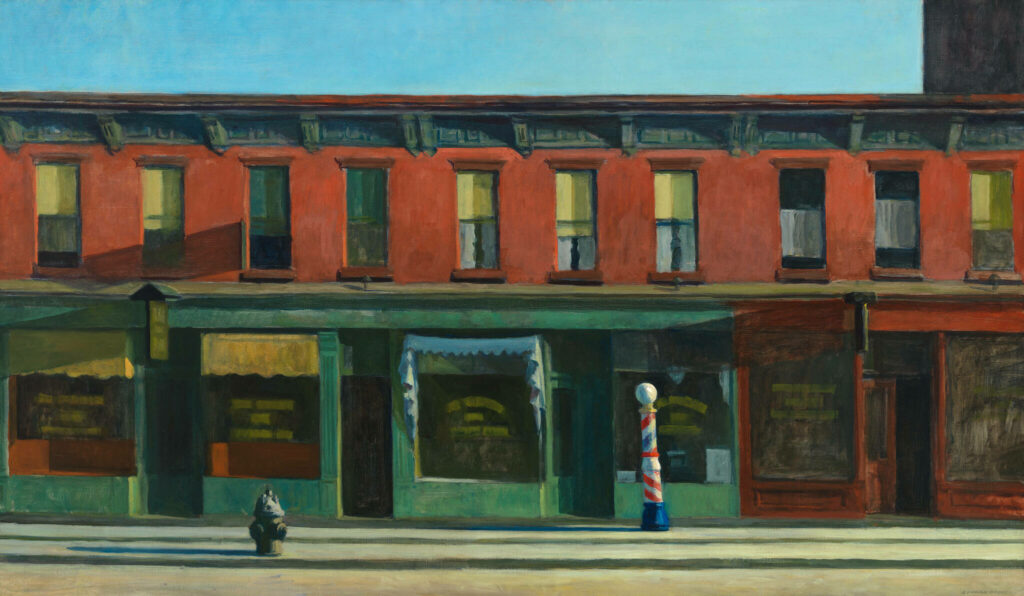
Although Hopper’s painting are mostly from the domain of his imagination, you can see some of his architectural subjects on the streets today. For more information, visit this interesting article posted at Village Preservation.
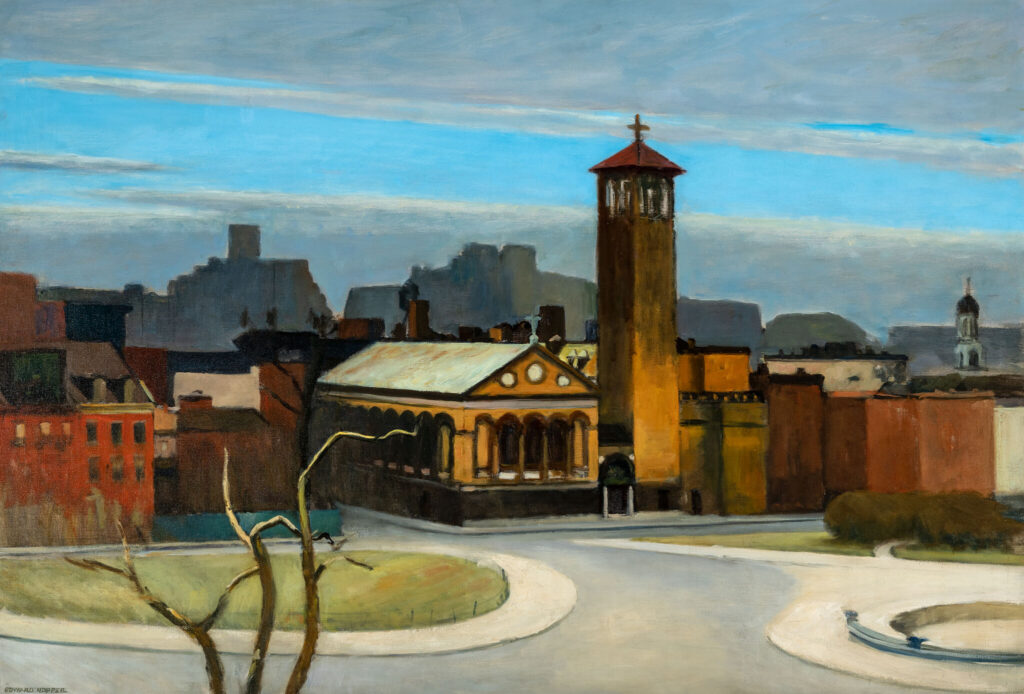
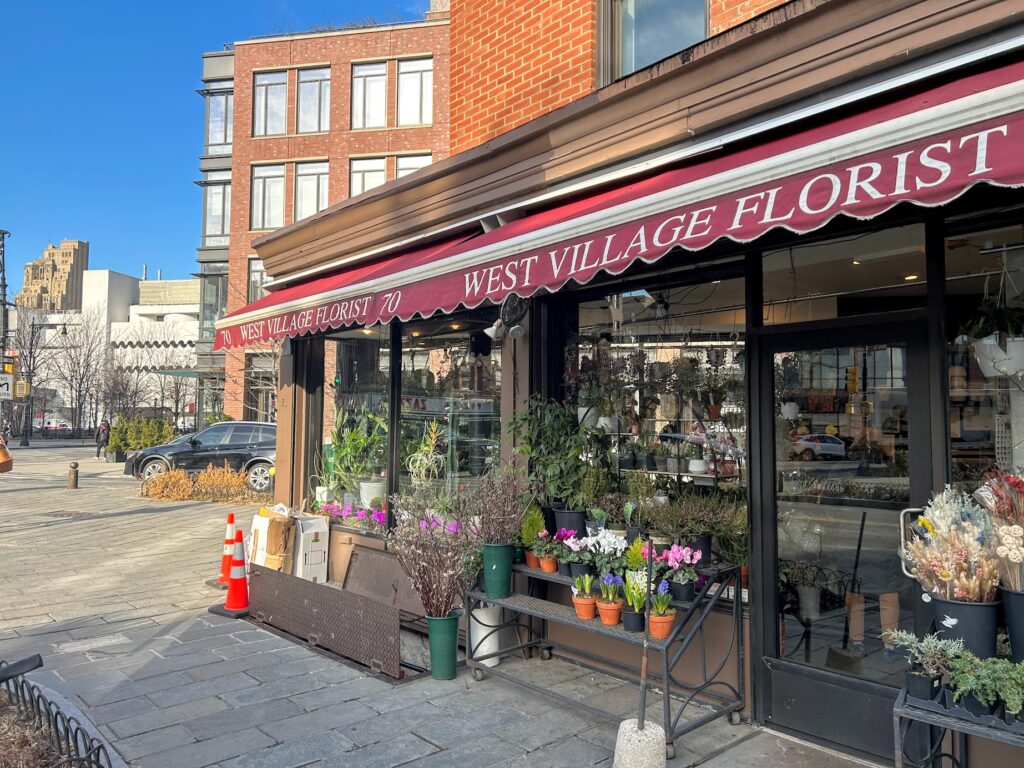
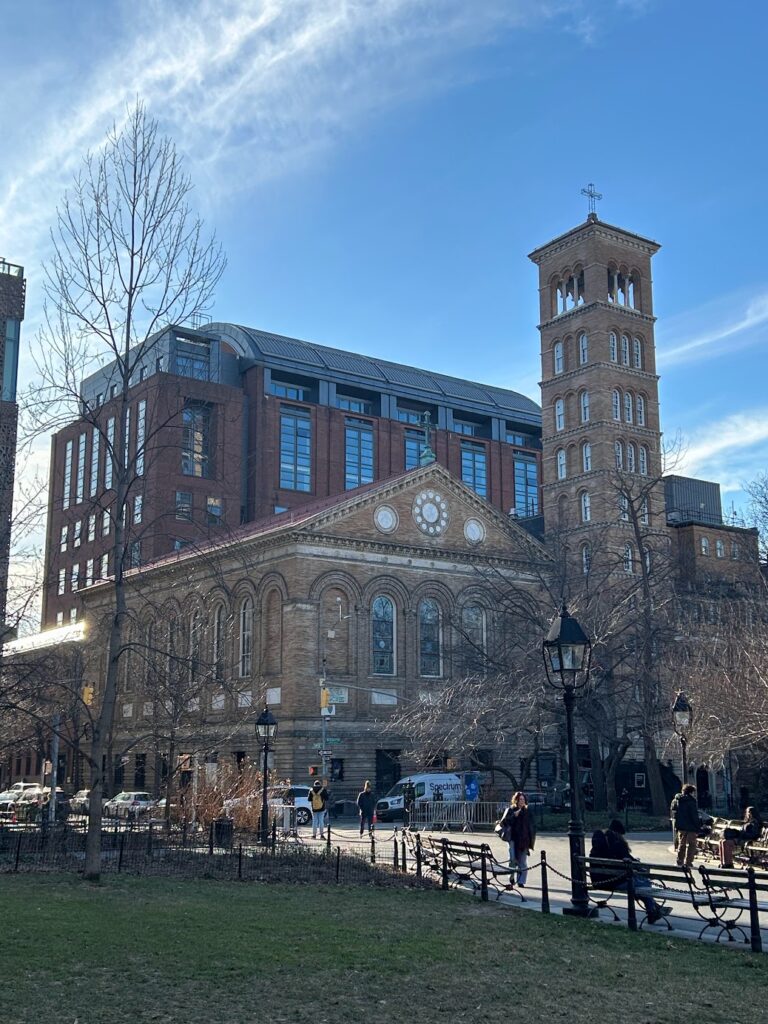
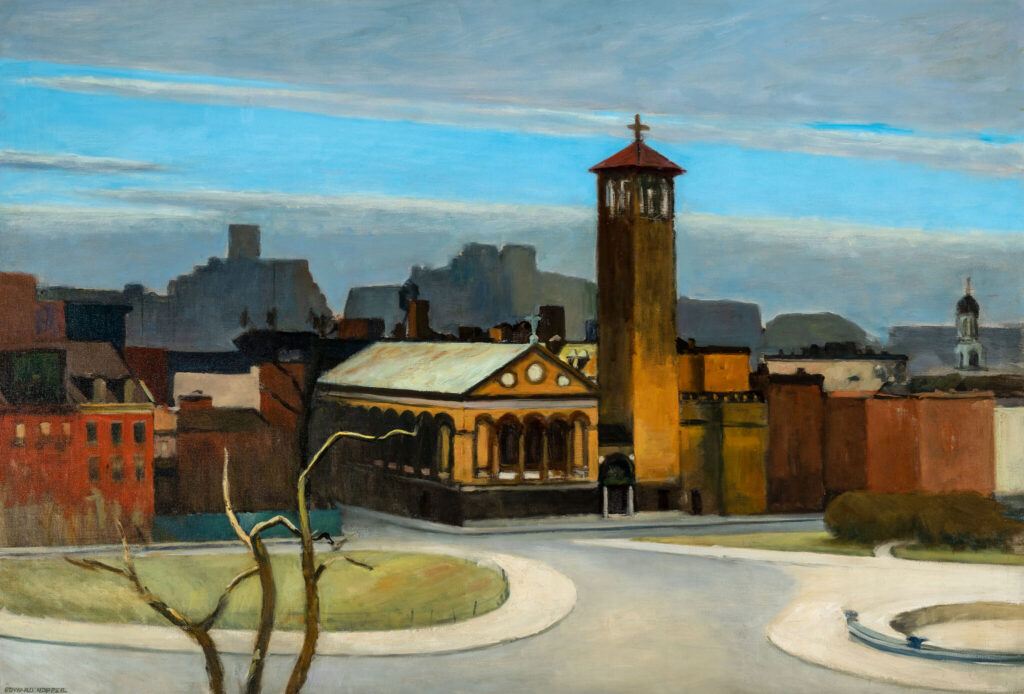
Bleecker and Carmine StreetEarly Sunday Morning, 1930Greenwich Avenue and Seventh AvenueNighthawks, 1942Judson Memorial ChurchNovember, Washington Square
FURTHER LISTENING
After finishing this show on Edward Hopper, dive back into our back catalog and experience other shows related to Hopper and his subjects:
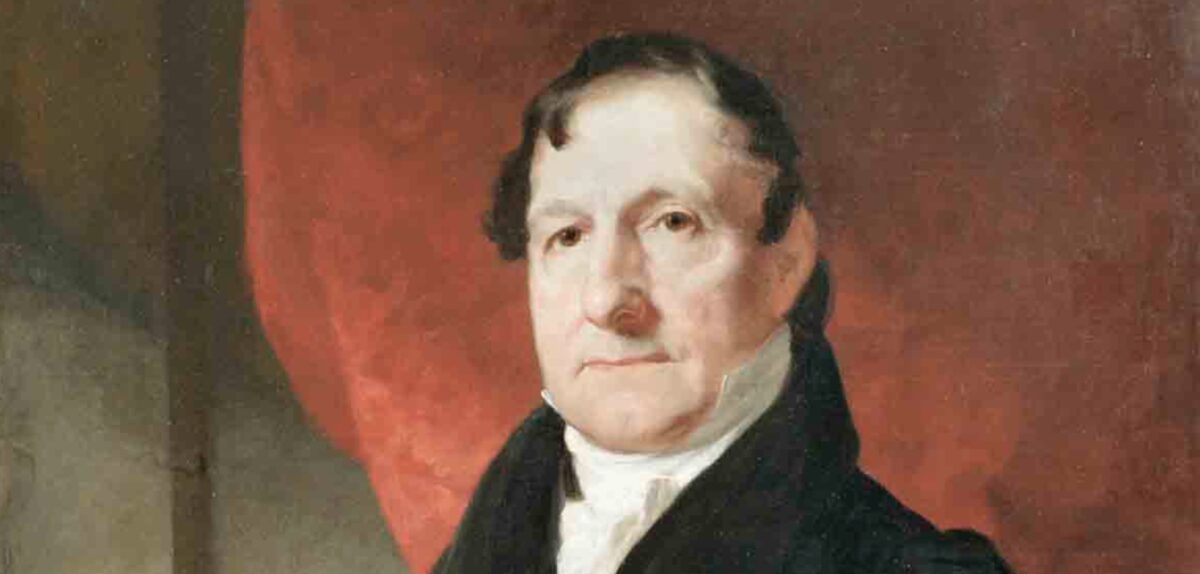
Detail from William Paulding's official portrait by Samuel Morse
We’re just a couple months away from a new mayor in New York City so we think it is time that you Know Your Mayors! Become familiar with other men who’ve held the job, from the ultra-powerful to the political puppets, the most effective to the most useless leaders in New York City history.
This longtime feature of this website is being rebooted with new articles and newly researched and refreshed earlier entries in this series. Check back every other week for a new installment. Read past articles here.
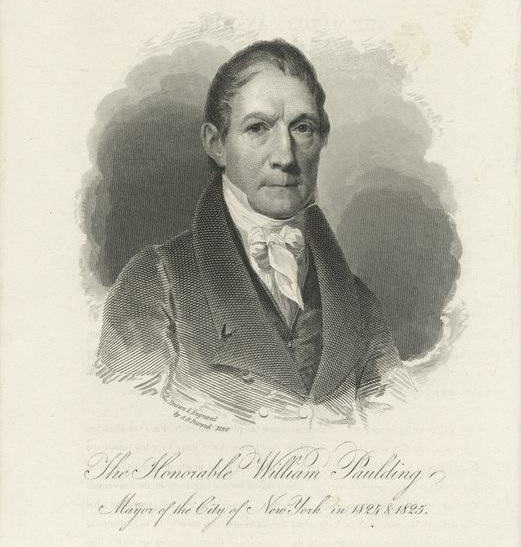
William Paulding Terms: 1824-1825; 1827-29
Despite the success of the occasional vanguard in early American politics — Alexander Hamilton, for instance — most leaders came from the most prominent families. The ‘elites’, if you will, the powerful and wealthy individuals who benefit most from the close connections to government.
In local politics, this is to be expected. In an age where mayors were appointed, not popularly elected (and thus influenced more by individualism and personal style), it would be family connections and reputation that would put them in position for such a post.
And yet, if they were truly of a distinguished character, they probably wouldn’t want to be mayor, a position that before 1834, was entirely beholden to city aldermen. You were merely a figurehead — albeit one that paid pretty well.
That’s not to say that Mayor William Paulding wasn’t a most respectable gentleman in many ways. It’s just that he’s somewhat forgettable compared to his younger brother.
The Paulding Story
The star of the Paulding family was his younger brotherJames Kirke Paulding. If you love New York City history, then you already admire James Paulding, even though you may not know his name.
William (born 1770) and James (born 1778) were from a litter of eight Paulding children, many born in New York City before the family permanently settled in Tarrytown.
Their father, once a wealthy shop owner, had been bankrupted by the Revolutionary War. However, even in misfortune, the Pauldings managed to raise a well-read lot of children.
James and William were quote close. When William moved to New York to become a lawyer, he secured James a job in “public office” (James’ bio is not forthcoming as to what kind), date uncertain, but probably by 1796-7.
The two would seek different paths. William would become a prominent attorney and mix with the learned men of New York. By 1811, he would be elected to the still-young House of Representatives and would even see action on the battlefield in the War of 1812. He returned with great reputation, achieving a level of respectability reserved for those of higher classes.
His More Famous Brother
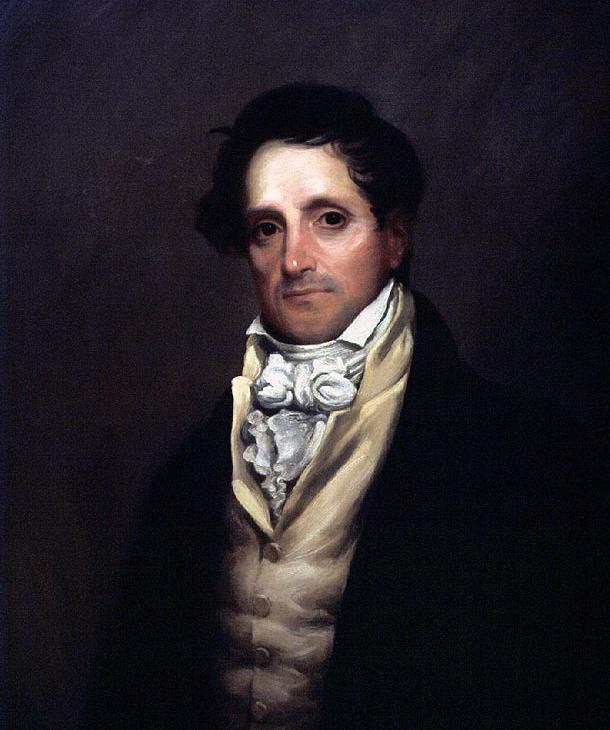
Young James (above), however, would go an alternative route to fame.
Their sister married William Irving, and James became quite close to William’s brother Washington Irving. In James’ own words: “Thus I fell, as it were, among the Philistines; for the circle in which I moved … was composed of young men, many of whom have since made no inconsiderable figure in the world.”
Washington Irving and James Paulding grew close; their correspondence is among the boldest writing of the day. In 1807 the pair of writers created a wry, satirical experiment called Salmagundi — poking fun at the city politics of the day. (It was in Salmagundi that New York is first referred by the nickname ‘Gotham’.)
Along the way, the pair bolstered their reputations as superior wits and soon assembled a group of other young writers, creating one of New York’s first literary salons, unofficially called the Knickerbocker Group.
They would even attend their own version of the Algonquin Round Table, called the Bread and Cheese Club, founded by fellow penman James Fenimore Cooper (Last of the Mohicans). James Paulding would go on to be one of America’s most adventurous novelists of the early 19th century.
Brother as Mayor
Ah, but we’re here for William! If James was busy securing the family reputation for posterity, William was doing so for present high society.
As a brigadier-general of the war and a former member of Congress, William’s ascent into New York politics was an easy one, first as the governor-appointed Adjutant General (or leader of the state militia) then finally as mayor in 1824, replacing Stephen Allen. (See the last installment of Know Your Mayors for his story.)
Paulding would be only the second mayor appointed by Common Council (today’s City Council); they had previously been appointments by the governor.
Tied as he was to the favoritism of council members, it’s no surprise that Paulding had few official powers. He served mostly as an ambassador of New York, rolling out the welcome mat, even as many of the city’s most pressing decisions were left to others.
But during his non-consecutive years as mayor, New York witnessed some significant events.
In 1824, a house on Water Street becomes the first to be lit by gas power, and Paulding would see the entire city lit up by gaslight by the end of his mayoralty.
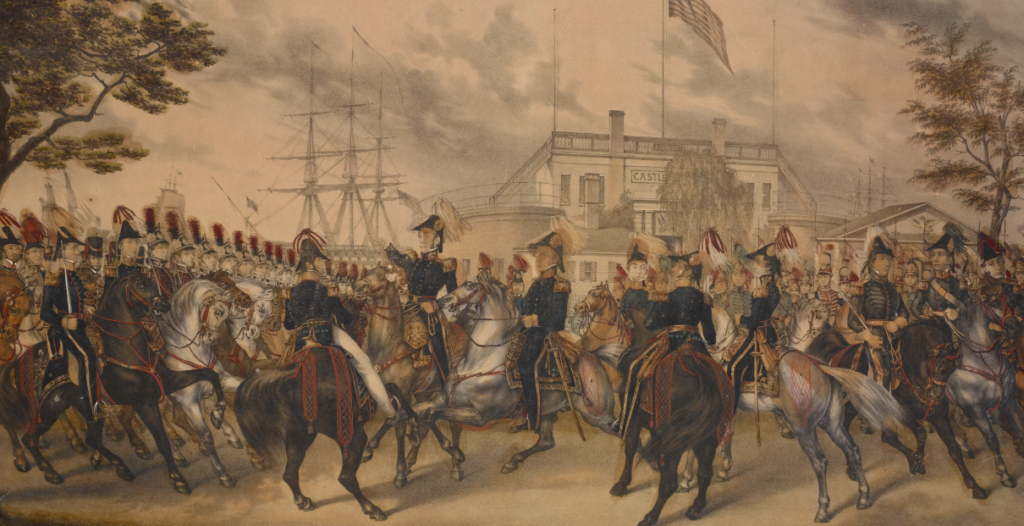
The military escort forms at Castle Clinton to await the arrival of Lafayette. From a painting by FJ Fritsch.
Welcoming the Marquis
Perhaps his most notable moment came early, and it was purely honorary. Paulding’s crisp appearance and military credential — “handsome, courtly” — made him a fine representative for the city in August when the Marquis de Lafayette made his triumphal tour of the United States in 1824.
The Marquis, a French general in the Continental Army and close confidante of George Washington, was a symbolic link to the country’s first president, who had died a quarter century previous.
Lafayette arrived on the ship Cadmus, greeted in Staten Island by a procession led by Paulding and accompanied by a no-holds-barred display of artillary bombast.
The next day, Lafayette, Paulding and a gathering of thousands made their way to City Hall for an official welcoming. The revered French ally would be in New York a number of times during his 13-month visit, and the mayor would be on hand for most events, including what may possibly be the greatest party ever thrown in New York — the September reception for Lafayette at Castle Garden.
New York City became a fundamentally different city under Paulding’s tenure, although he had little to do with the most important event — the opening of the Erie Canal, a project once overseen by former mayor Dewitt Clinton.
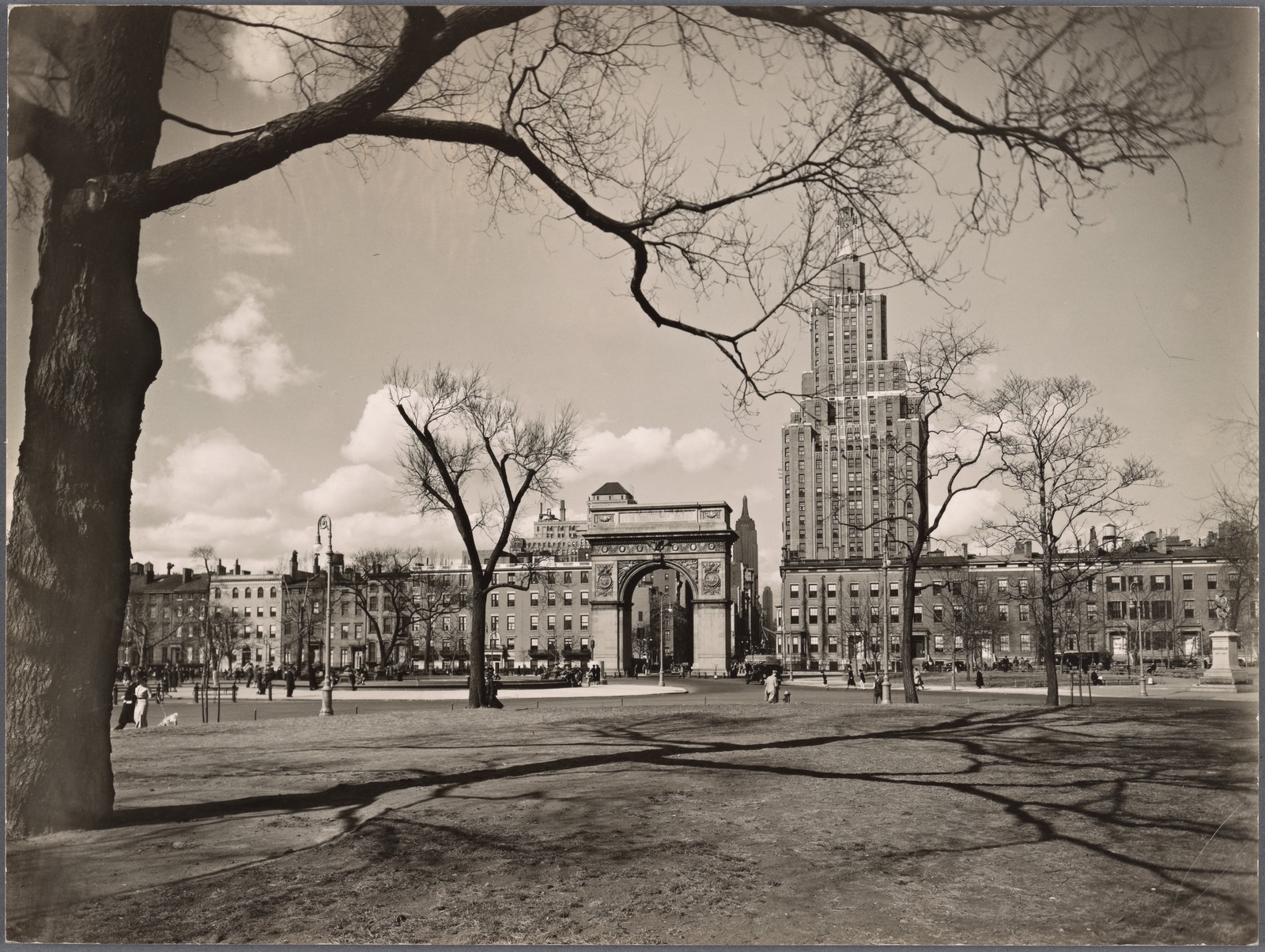
Once a cemetery, the area later to become Washington Square Park was bought as a military parade ground in 1827, and the celebrated homes of the elite soon crowded along its north end.
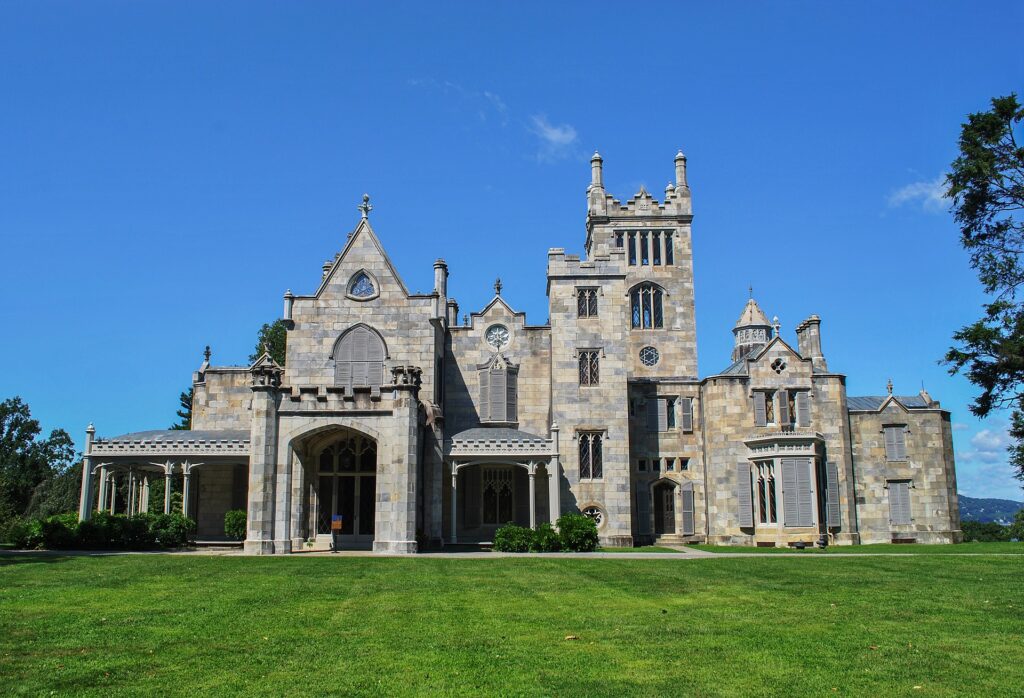
Lyndhurst today. Photo by Elisa Rolle/Wikimedia Commons
Lyndhurst
After leaving office, Paulding (and more importantly, Paulding’s son Phillip) would influence the fortunes of his hometown of Tarrytown, namely through the construction of a lavish mansion (above) as summer retirement villa, which would eventually be called Lyndhurst.
William was of such name and connection by this time (1838) that he was able to enlist noted architect Alexander Jackson Davis in its construction. (Davis designed Federal Hall, among other notable structures.)
Originally called the Knoll, the lavish home was roundly criticized for its outdated Gothic design, including by Philip Hone (who would become mayor), who referred to it as ‘Paulding’s folly.’
No folly, it turns out. The home would take on a life of its own in future generations, grandly expanded by later owner George Merritt. The railroad ‘robber baron’ Jay Gould also lived here. Today, Paulding’s old home is one of the most celebrated structures along the Hudson River and can be visited today.
William is currently buried in one of the most famous graveyard in all the Hudson River Valley — the Old Dutch Burying Ground in Sleepy Hollow. Washington Irving, incidentally, is buried nearby, in the Sleepy Hollow Cemetery.
James Kirke Paulding, however, is not buried near his brother nor his great literary friend. He died in 1860 and is interred at Green-Wood Cemetery.
The cemetery’s website provides this amazing piece of trivia — James Paulding coined the tongue-twister “Peter Piper picked a peck of pickled peppers.”
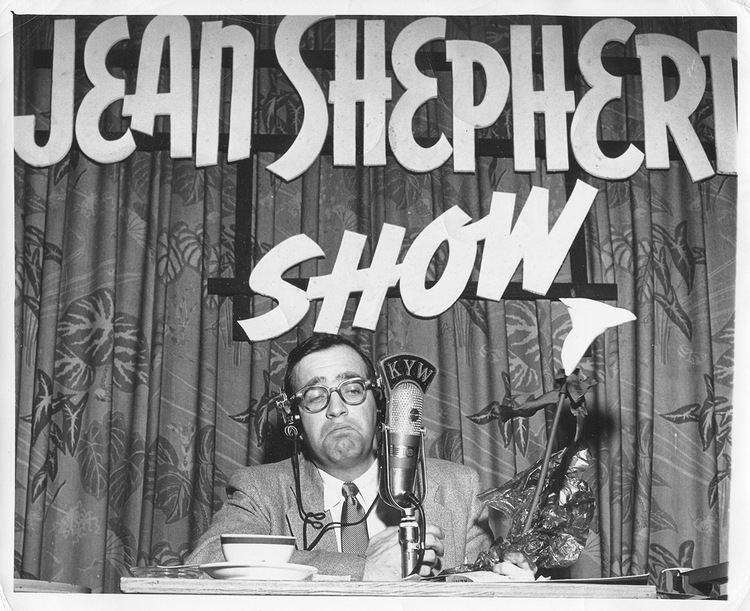
Jean Shepherd was born 100 years ago today in Chicago, so I’m bumping up this older post in tribute to this wonderful New Yorker.
Jean Shepherd, probably best known today as the voice of ‘A Christmas Story‘, was a regular presence on New York radio in the 1950s and 60s thanks to his memorable program for the AM station WOR.
Although you might associate his voice with nostalgic tales from suburban Indiana, he was very much a Village raconteur for much of his professional career. Some of his radio programs were broadcast live from the Limelight Coffee House at 91 7th Avenue, and he spent his last years in New York in a West Village apartment at West 10th Street.
In this 1960 short film ‘Village Sunday‘, Shepherd describes life in the Village and around Washington Square Park. Its pretty much a light advertisement for the entirely neighborhood, a pretty lovely thing to behold considering the conflicts the area would face with encroaching development later that decade.
He then wanders over to the Festival of San Gennaro which seems to have changed very little. You can compare it yourself when this year’s festival begins in a couple weeks!
For this year’s annual Bowery Boys Halloween ghost stories podcast, we cautiously approach the dark secrets of Greenwich Village, best known for bohemians, shady and winding streets and a deeply unexpected history. You will never look at its parks and townhouses again after this show!
The stories featured on this year’s show:
— The hidden history of Washington Square Park featuring the oldest tree in New York — nicknamed the Hangman’s Elm — and some truly grave secrets beneath its lovely walkways
— The Brittany Residence Hall for New York University students has a very famous ghost, a child who experienced a horrible death and continued to haunt the halls of this former hotel, looking for friends to play with
— Mayor Jimmy Walker once lived across from an old burial ground in the West Village. But when its ancient plots were replaced with a city park (later renamed after the former nightlife mayor), the bodies and the tombstones were mostly paved over. To this day, a single grave marker sits astride the baseball field, a sole reminder of the area’s macabre past.
— And finally the ceiling of a old Bank Street townhouse reveals an unusual object. This is an epic ghost tale that stretches from the mid 1920s to the early 1980s. And from the haunted streets of the West Village to a peaceful respite in Northern California.
The Bowery Boys: New York City History podcast is brought to you …. by you!
We are now producing a new Bowery Boys podcast every week. We’re also looking to improve the show in other ways and expand in other ways as well — through publishing, social media, live events and other forms of media. But we can only do this with your help!
We are now a member of Patreon, a patronage platform where you can support your favorite content creators for as little as a $1 a month.
Please visitour page on Patreon and watch a short video of us recording the show and talking about our expansion plans. If you’d like to help out, there are five different pledge levels (and with clever names too — Mannahatta, New Amsterdam, Five Points, Gilded Age, Jazz Age and Empire State). Check them out and consider being a sponsor.
We greatly appreciate our listeners and readers and thank you for joining us on this journey so far.
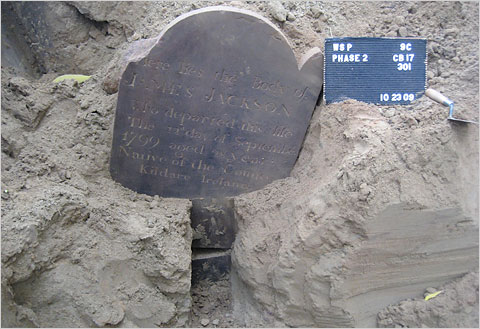
In 2009 a complete headstone was found in Washington Square Park, near the area of the dog park.
Washington Square Park Blog
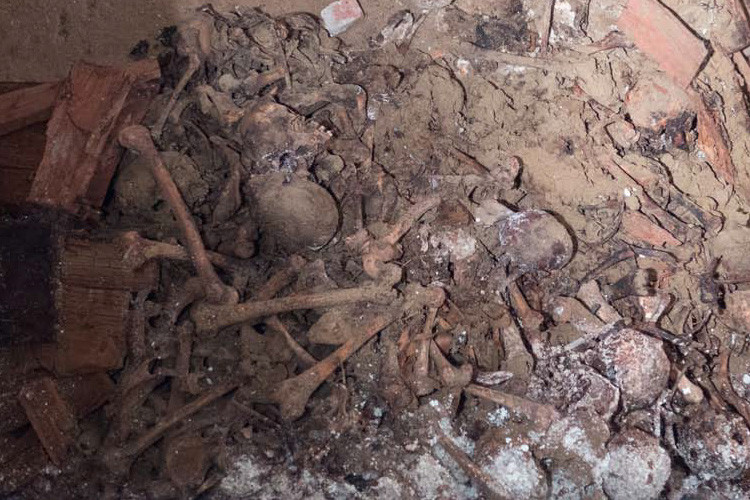
In 2015, while working on the water pipes underneath the park, workers discovered this grisly find.
Department of Design and Construction
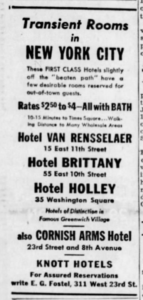
A 1945 advertisement for the Hotel Brittany and a couple other ‘off the beaten path’ hotels.
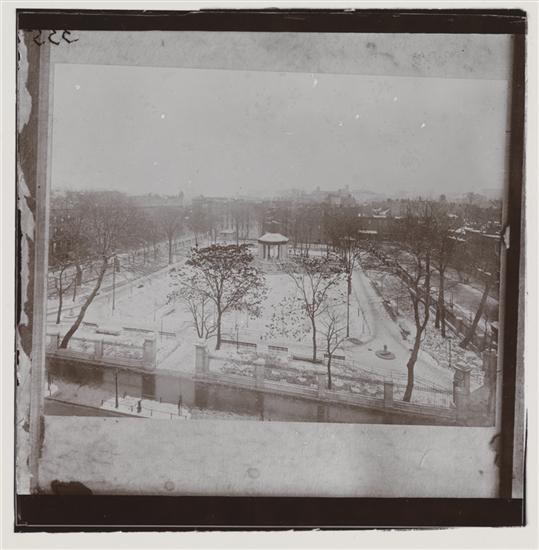
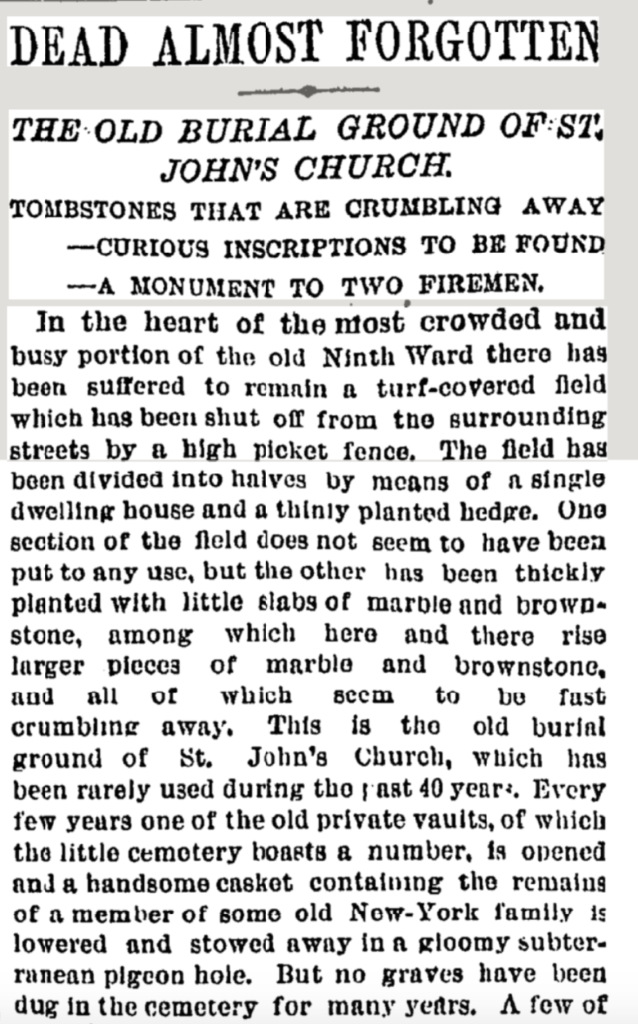
The former St. John’s burial ground was turned into a park in the 1890s. “One Door that has been opened: St. John’s Park in Hudson Street, — once a graveyard,” says Jacob Riis in the caption for his image of the park.
This show joins our growing collection of Bowery Boys Halloween specials. Creep yourself out while listening to these spooky legends of New York City. From the haunted woods of Van Cortlandt Park to spirits haunting Captain Kidd’s treasure on Liberty Island. Psychics at Carnegie Hall, unsettling spirits in Cobble Hill, undead party animals at Grand Central!
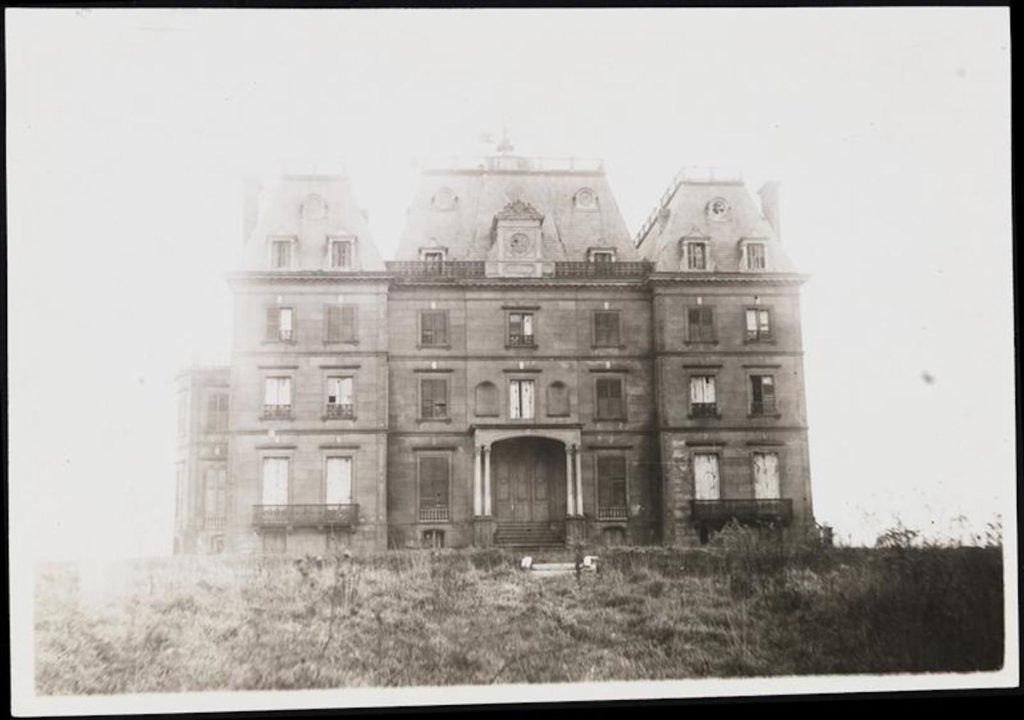
Highlighting haunted tales from the period just after the Civil War when New York City became one of the richest cities in the world — rich in wealth and in ghosts! In the Bronx once stood a haunted house in the area of Hunts Point, a mansion of malevolent and disturbing mysteries. Then we turn to Manhattan to a rambunctious poltergeist on fashionable East 27th Street. Over in Queens, a lonely farmhouse in the area of today’s Calvary Cemetery is witness to not one, but two unsettling and confounding deaths. And finally, in Staten Island, we take a visit to the glorious Vanderbilt Mausoleum, a historic landmark and a location with a few strange secrets of its own.
2015Haunted Landmarks of New York Ghost stories associated with the city’s most popular and recognizable places from baby-faced spooks at the Dakota Apartments to spirited revelers at Grand Central Terminal. What’s still lurking in the hallways of the Chelsea Hotel? And whatever you do tonight, do not linger too long on the Brooklyn Bridge at night! A figure from the bridge’s past may still be looking for his head.
2014 Ghost Stories of Brooklyn Four tales of spirits haunting Brooklyn back in the 19th century when it was still an independent city. A horrific gangly ghost on the railroad tracks, a historic Clinton Hill home with an invisible hand that would not stop knocking, a Coney Island hotel in 1894 with a secret in room 30, and the wacky wraiths of Bushwick’s Evergreens Cemetery.
Tales set mostly before the 1840s featuring sinister stories of murder, shipwreck and death by fright! Spirits of dead Lenape Indians may haunt the forest of Van Cortlandt Park. A romantic West Village restaurant finds its home inside the former carriage house of Aaron Burr. Might the vice president still be visiting? We bring you the legend of an old Brooklyn fort that once sat in Cobble Hill and terrified those who traveled along on old Red Hook Lane. And finally, over at St Paul’s Chapel, a respected old actor wanders the churchyard, looking for his body parts.
Grab a drink at the Ear Inn, one of New York’s most historically interesting bars, and you might meet Mickey, the drunken sailor-ghost. A frightening story of secret love at old Melrose Hall conjures up one of Brooklyn’s most popular ghostly legends. A woman is possessed through a Ouija board, but while she accept the challenge by one of New York’s first ghostbusters? And a tale of Harry Houdini,Sir Arthur Conan Doyle, and the line between the supernatural and mere sleight of hand.
What’s horrors are buried at the foot of the Statue of Liberty? What’s below a Brooklyn Catholic church that makes it so dreadfully haunted? What ghost performs above the heads of theatergoers at The Palace? And what is it about the Kreischer Mansion that makes it Staten Island’s most haunted home?
2010 Supernatural Stories of New  York The scary revelations of a New York medium, married Midtown ghosts who fight beyond the grave, a horrific haunting at a 14th Street boardinghouse, and the creepy tale of New York’s Hart Island.
2009 Haunted Tales of New York: Urban Phantoms The secrets of the restless spinster of the Merchants House, the jovial fright of the Gay Street Phantom, the legend of the devil at Spuyten Duyvil Creek, and the spirit of a dead folk singer.
2008 Spooky Stories of New York The drunken spirits of the Algonquin, the mysteries of a hidden well in SoHo, the fires of the Witch of Staten Island, and ‘the most haunted brownstone in New York.’
2007 Ghost Stories of New York The ghosts of a tragic Ziegfeld girl, a scandalous doyenne of old New York, a bossy theater impresario and the ghoulish bell-ringer of St. Mark’s-in-the-Bowery.
Here are the locations mentioned in all of our ghost podcasts:
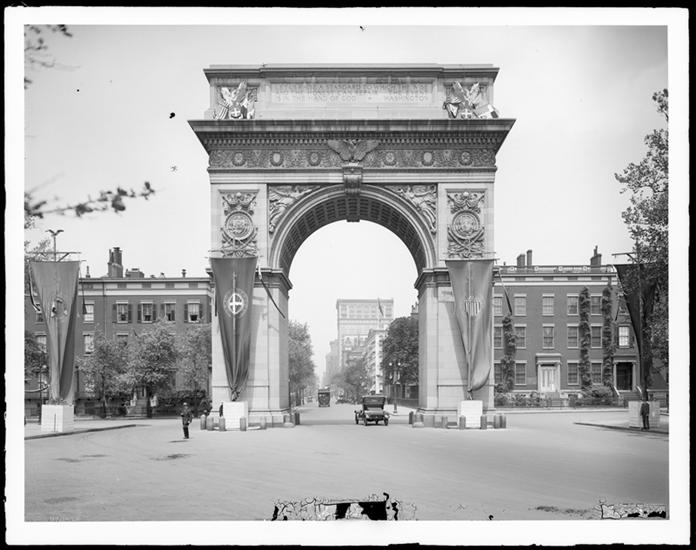
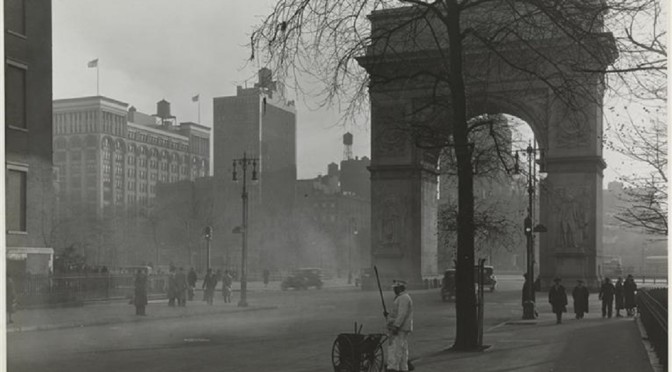
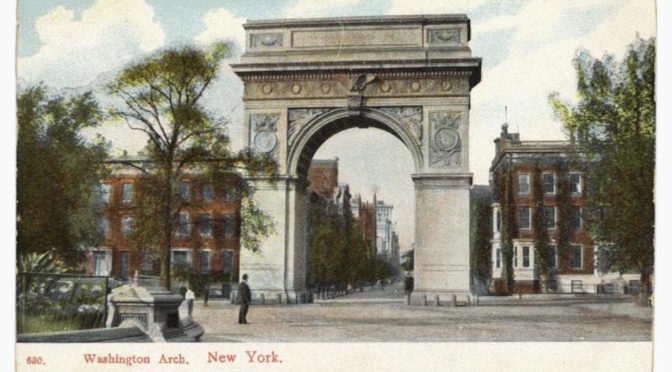
There’s a spiral staircase inside the western half of the Washington Square Arch, which grants access to the rooftop and fabulous views straight up Fifth Avenue.
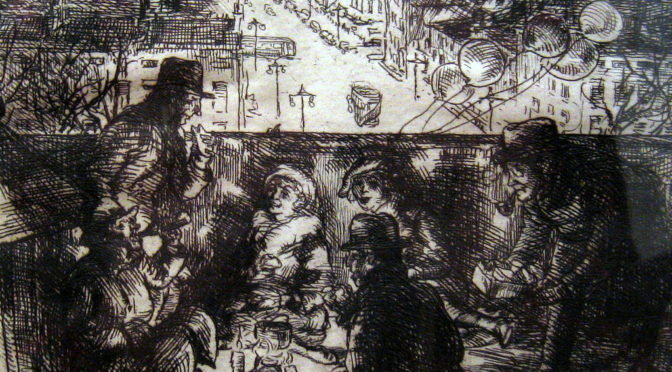
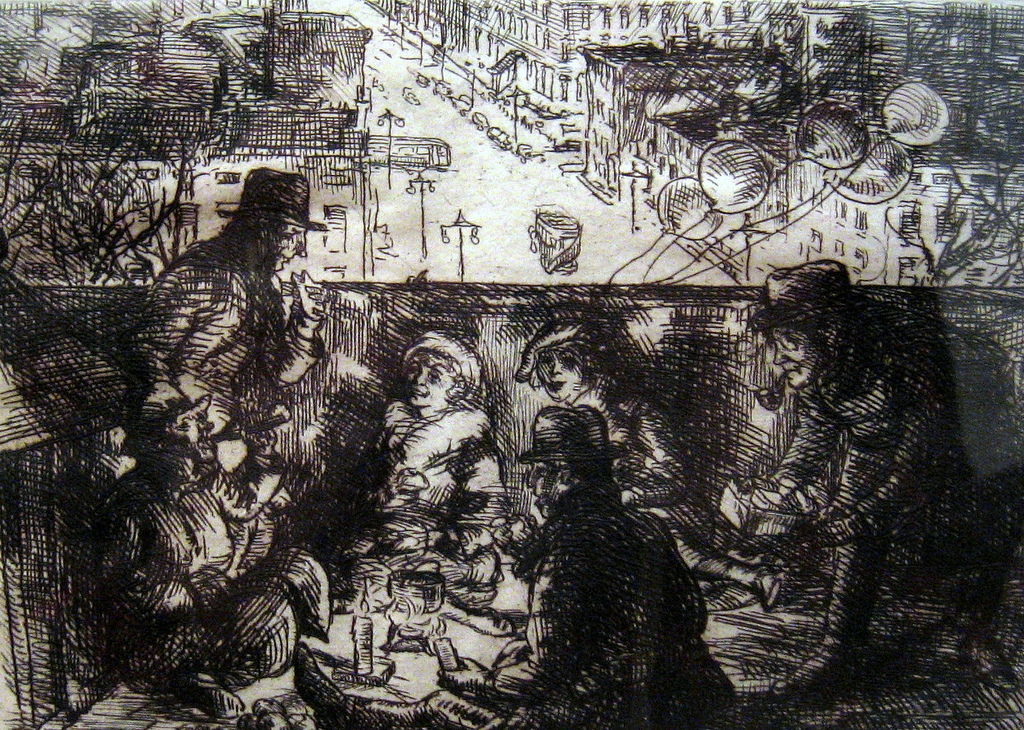
Public entrance is prohibited, of course, although that didn’t stop six fearless malcontents (including the artists Marcel Duchamp and John Sloan) from breaking in to declare a bohemian revolution late in the evening of January 23, 1917.
Below: A few months after our art revolutionaries take to the arch, it was decorated in support of America’s involvement in World War I.
MCNY
The escapade was organized by Gertrude Drick, a poet mostly forgotten today but known at the time by the name Woe (as in Woe is me).
“One night [Drick] discovered the blind, unlocked door of the passage and stairway which leads to the top of the arch. A few nights later she had made all the arrangements, invitations, Chinese lanterns, balloons and refreshments for her privately conducted picnics.”
Once atop the Arch, the group decorated the outdoor space with lanterns and balloons, and spent the entire night around a fire, drinking wine and tea (the beverage of revolution). They shot off cap pistols into the wintry night air.
Below: John Sloan’s classic etching depicting the event. The original is at the Met.
A radical shift in the art scene had already begun in New York, emanating from the streets around Washington Square.
Gertrude Vanderbilt Whitney‘s Studio Club was nearby, as were the apartments of many artists associated with the Ashcan School, including Sloan himself.
Greenwich Village, long a magnet for the unconventional, energized this new wave of painters and playwrights as they bonded in nearby cafes and studios.
It was in this spirit that the so-called Arch Conspirators, shielding their candles from the wind, unfurled an unusual parchment late that night that declared a Free and Independent Republic of Greenwich Village.
The only evidence of this grand proclamation the following morning was the balloons that still clung to the Arch’s violated rooftop. But the Village did become free and independent to an extent, a pocket universe of creativity for the rebellious musicians, artists, and writers of the twentieth century.
The above is an excerpt from the book The Bowery Boys: Adventures In Old New York, now available in bookstores everywhere
The Bowery Boys Obsessive Guides look very, very closely at a classic movie filmed in New York City, finding buried history, additional context and a few secrets within various scenes and plot points. Filled with film spoilers so read this after you’ve seen the movie — or use it to follow along as you watch it! Check out my previous guides forMiracle on 34th Street, Midnight Cowboy, and The Muppets Take Manhattan.
In 1989 the ghosts returned to New York City streets. Both above and beneath them.
The 1984 blockbuster Ghostbusters holds a unique place in Hollywood cinema, the rare sci-fi comedy to become a genuine classic, due mostly to its terrific cast (Bill Murray, Harold Ramis, Dan Ackroyd, Sigourney Weaver, Ernie Hudson, Rick Moranis, Annie Potts, among others) and to the unique alchemy of theme and location.
The characters run through New York City like kids in a haunted house. In 1984, New York’s reputation was still greatly tarnished by the economic and social crises of the previous decade. Ghostbusters plays upon those perceptions, its heroes battling metaphorical ghosts and demons in historic locations.
The 1989 sequel Ghostbusters 2 takes place in the same city but at the end of an era.  Ed Koch is in his final year as mayor of New York. He had been unseated in the primaries by David Dinkins who, in November, would then defeat  Rudy Giuliani for the office.
Many elements of the city have been ‘cleaned up’ by this time (the once ubiquitous subway graffiti being one casualty) but the high crime rate was still very much the pivotal concern. New Yorkers didn’t need to go to the movies to find terrors in their backyard. The sequel opened less than two months after a jogger was beaten, raped and left for dead in Central Park. According to the New York Daily News, “On a typical day in 1989, New Yorkers reported nine rapes, five murders, 255 robberies and 194 aggravated assaults. Fear wasn’t a knee-jerk reaction; it was a matter of self-preservation. ”
It’s easy to watch Ghostbusters 2 today, disengaged from its historical context. But watch with a close eye and you’ll see bits of a familiar city in the background and hints of the era embedded into the story. Here’s a list of New York historical facts and trivia to watch out for:
CLEARLY THIS ARTICLE CONTAINS SPOILERS. WATCH THIS FILM BEFORE READING OR, BETTER YET, READ ALONG AS YOU’RE WATCHING IT:
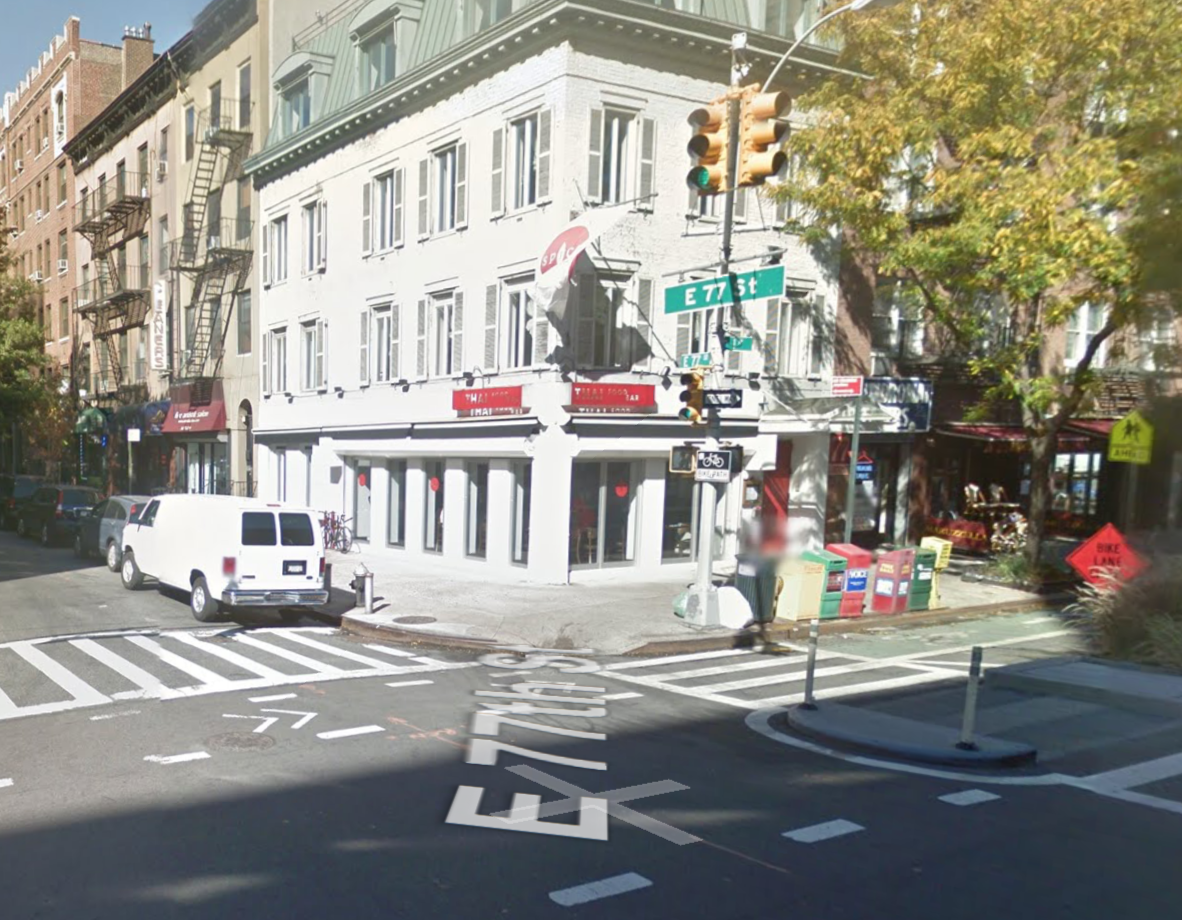
1) The opening scene works as a pastiche of New York City life — arguing neighbors, jogger on the sidewalk, a cop giving a parking ticket — along East 77th Street. Dana, played by Weaver, has arrived with a gigantic baby carriage and her bundle of joy Oscar. Her place, at 325 East 77th Street, built in 1940, is your typical co-op of the neighborhood, a far cry from her last home on 55 Central Park West, which became a demonic portal in the last film.
Interestingly, at Dana’s apartment building, Google Map lists one business — Psychic Works — which would have come in handy had it been there in 1989.
Screen capture courtesy The Raffon
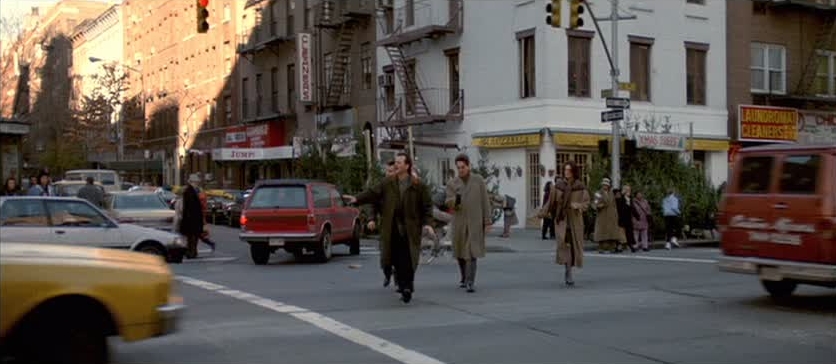
2) Baby Oscar is whisked away by a spiritual presence and hurled into traffic at the corner of East 77th Street and First Avenue. While that corner has been much transformed today — note the placement of the diner in the movie, today’s Green Kitchen  — one business is exactly the same — the signage for the cleaners on the northwest corner.
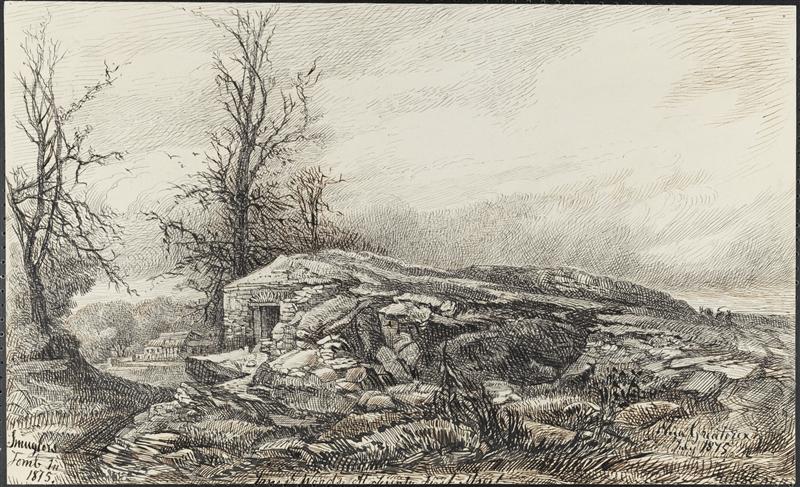
3) Why would this particular corner be haunted? Well, we’ll see what lies beneath in a second. But this particular corner would have been part of old Jones Wood, a 90-acre forest which attracted picnickers and day trippers (including many early German immigrants) long before Central Park was invented.  It was the sight of early ghost stories as the forest contained crypts of prominent families.
Below: The so-called ‘Smuggler’s Tomb’ located at the spot of today’s First Avenue and 71st Street.
Courtesy Museum of the City of New York
In fact, there’s a bar called Jones Wood Foundry on First and 76th Street today.
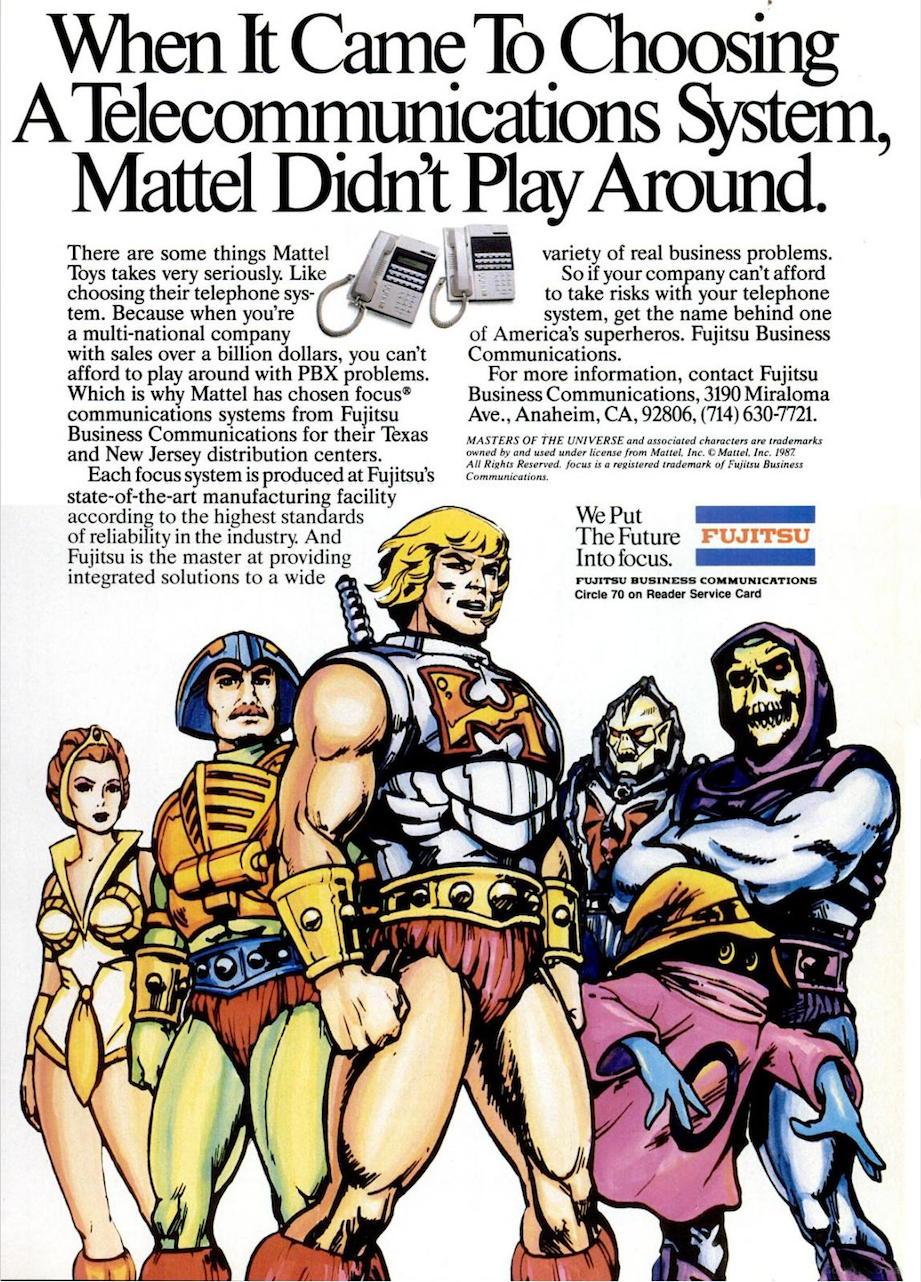
4) Ghost busting has died down in New York City, and our old friends Ray and Winston must demean themselves by entertaining at children’s birthday parties. All the children greet their guests with “I thought it was gonna be He Man!†and a chant “He-Man! He-Man! He-Man!”
The reference in the film is a bit odd. He-Man and the Masters Of the Universe debuted on television in 1983 and had been the subject of a feature film in 1987 starring Dolph Lungren. But the film was a flop, and the animated series had been off the air by then. Perhaps these were young hipsters, already reveling in their childhood past.
“Ungrateful little yuppie larva!â€
Incidentally, Ghostbusters 2 did spawn a toy line, albeit less successful than He-Man and might have been greeted by children with similar enthusiasm.
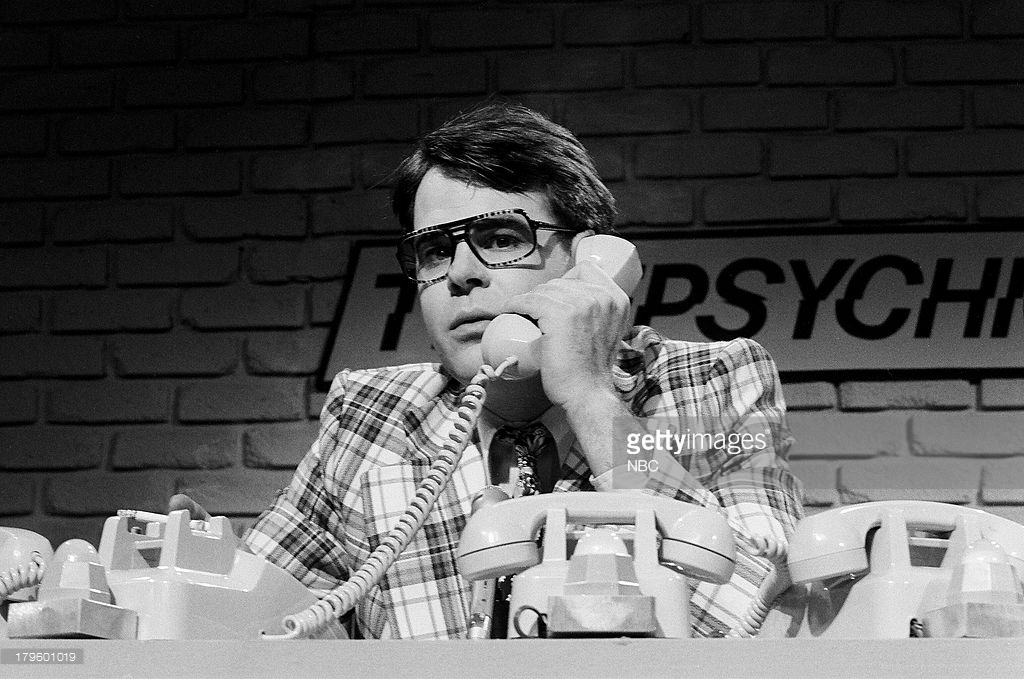
5) Venkman has moved on to his own television chat show called World of the Psychic, broadcast on the fictional WKRR-TV Studio.  While this seems like a legitimate television station in the Ghostbusters world, Venkman’s show is very much influenced by ’80s public access television. The zany underground medium started in the early 1970s and reached a sort of ‘golden age‘ by the 1980s. Shows like Telepsychic certainly inspired this. The Saturday Night Live’s send-up of Telepsychic — starring Dan Ackroyd — most certainly did.
SATURDAY NIGHT LIVE — Episode 8 — Pictured: Dan Aykroyd as Ray during the “Telepsychic” skit on December 9, 1978 — (Photo by: NBC/NBCU Photo Bank)
 Just two years after Ghostbusters 2, Dionne Warwick debuted her Psychic Friends Network.
6) On Venkman’s program, there are two guests who predict the end of the world. Â The first predicts the end of the world “at the stroke of midnight on New Years Eve.”
Well, New York survived. Here’s the actual stroke of midnight, ringing in 1990 in Times Square. Many would certainly consider this hellish, if not apocalyptic. “Goodbye to the ’80s!”
Venkman’s second guest believes the end of the world will be on February 14, 2016!
“Valentine’s Day, bummer.â€
She received the information from an alien at the Paramus, New Jersey, Holiday Inn which is a real place.
7) Ghostbusters New York is still led by Mayor Lenny Clotch (played by David Margulies), an obvious stand-in for Mayor Ed Koch.  In Ghostbusters 2, Clotch is running for governor of New York. Koch did indeed attempt that very feat in 1982, but lost in the primary to Mario Cuomo.  Sadly, Margulies, a regular on the New York stage, died earlier this year.
Courtesy Ghostbusters Wikia
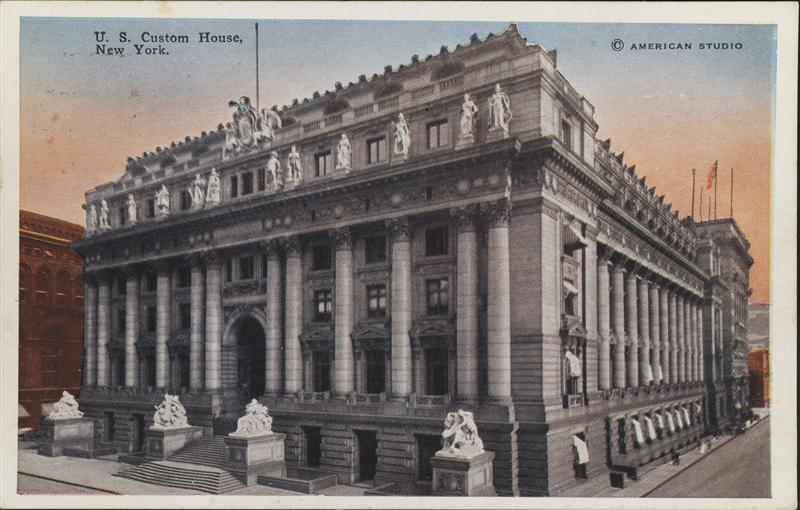
8)  One of New York’s finest works of architecture appears in Ghostbusters 2 — but moved uptown.  The Alexander Hamilton U.S. Custom House stands in for the Metropolitan Museum of Art who apparently didn’t give them permission to use their facade — or their name.  The faux museum is called the Manhattan Museum of Art, and both the Custom House and nearby Bowling Green are magically shifted to Central Park.
Courtesy Museum of the City of New York
The Custom House had just gone through some truly thorough preservation work in 1987. It had already become a gallery for traveling exhibitions, such as in 1988 with “Paris Grands Projets 1979-1989.” Several months after the opening of Ghostbusters 2, plans were underway to move a museum to Native Americans (today’s Smithsonian National Museum of the American Indian) into the building.
The Custom House was renamed for Alexander Hamilton in 1990, a year after the structure’s triumphant and central appearance in Ghostbusters 2.
Courtesy The Reffon
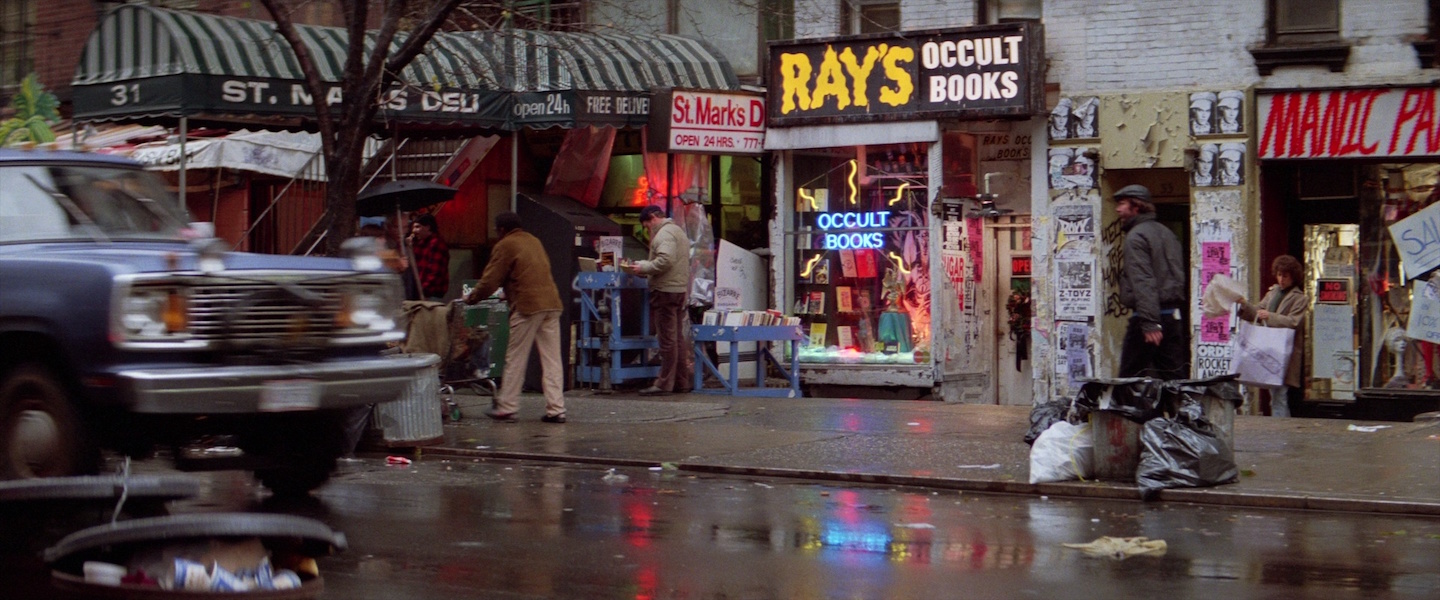
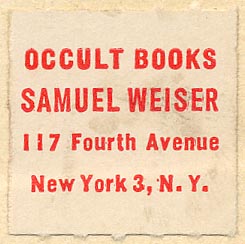
9) What have the Ghostbusters been up to since business has been down? Well, Ray has his occult book store on St. Mark’s Place, still a place of vibrant counter-culture in 1989.  Perhaps this a nod to New York’s most famous occult book store owned by Samuel Weisner which originally opened on ‘Book Row’ at 117 4th Avenue. (By the time of the film, it had moved to 132 East 24th Street. It’s been closed for many years.)
At the right of the screen, you can see Manic Panic, the original boutique which spawned the flamboyant hair-color company. (More information in our St. Mark’s Place podcast.)
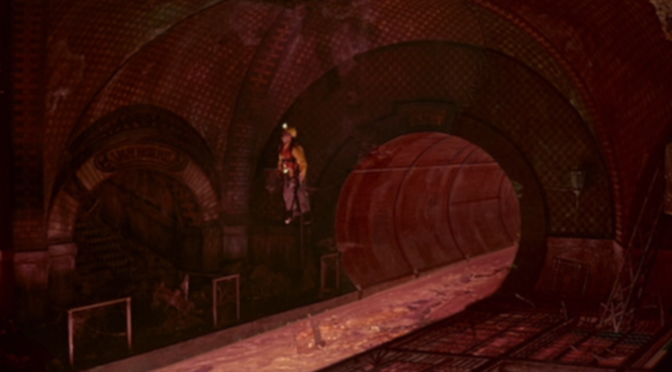
10) The Ghostbusters regroup to investigate the mysterious street corner on the Upper East Side. While the daytime scenes are clearly filmed at the corner of First Avenue and 77th, the nighttime scenes — as they’re drilling into the street — are clearly not even in New York City at all. (Note the red subway poles).
Residents of the Upper East Side have become quite familiar with nighttime drilling in the street due to the construction of the Second Avenue Subway.  The project began back in the 1970s but had been placed on a (what seemed like a) permanent hold by the 1980s.
Quoting from the September 1989 New York Times: “There are curiously empty spaces in this cluttered city. The Second Avenue Subway tunnel, dug at great expense and never to be finished.”
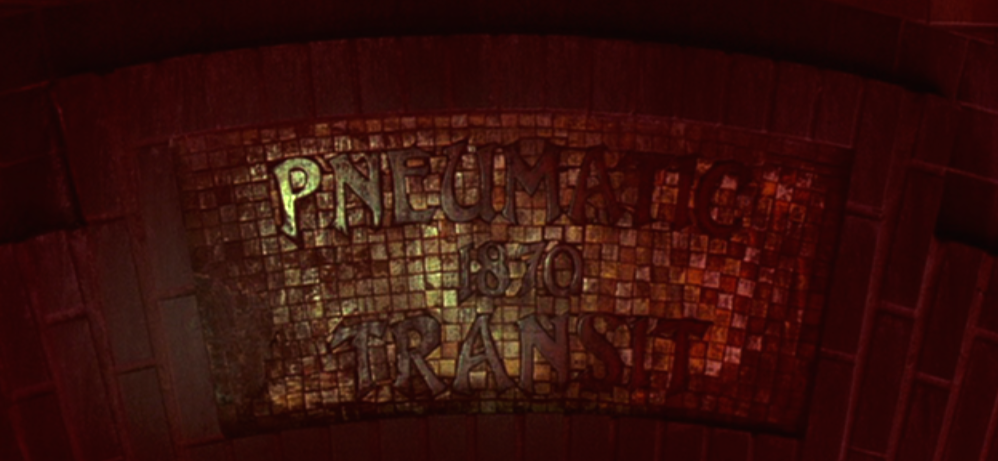
11) Ah but there is a completed tunnel under the street, now filled with a pink, ghostly ooze — at least in the world of the Ghostbusters. Or, as Ray declares, “It’s the old pneumatic tube tunnel!”
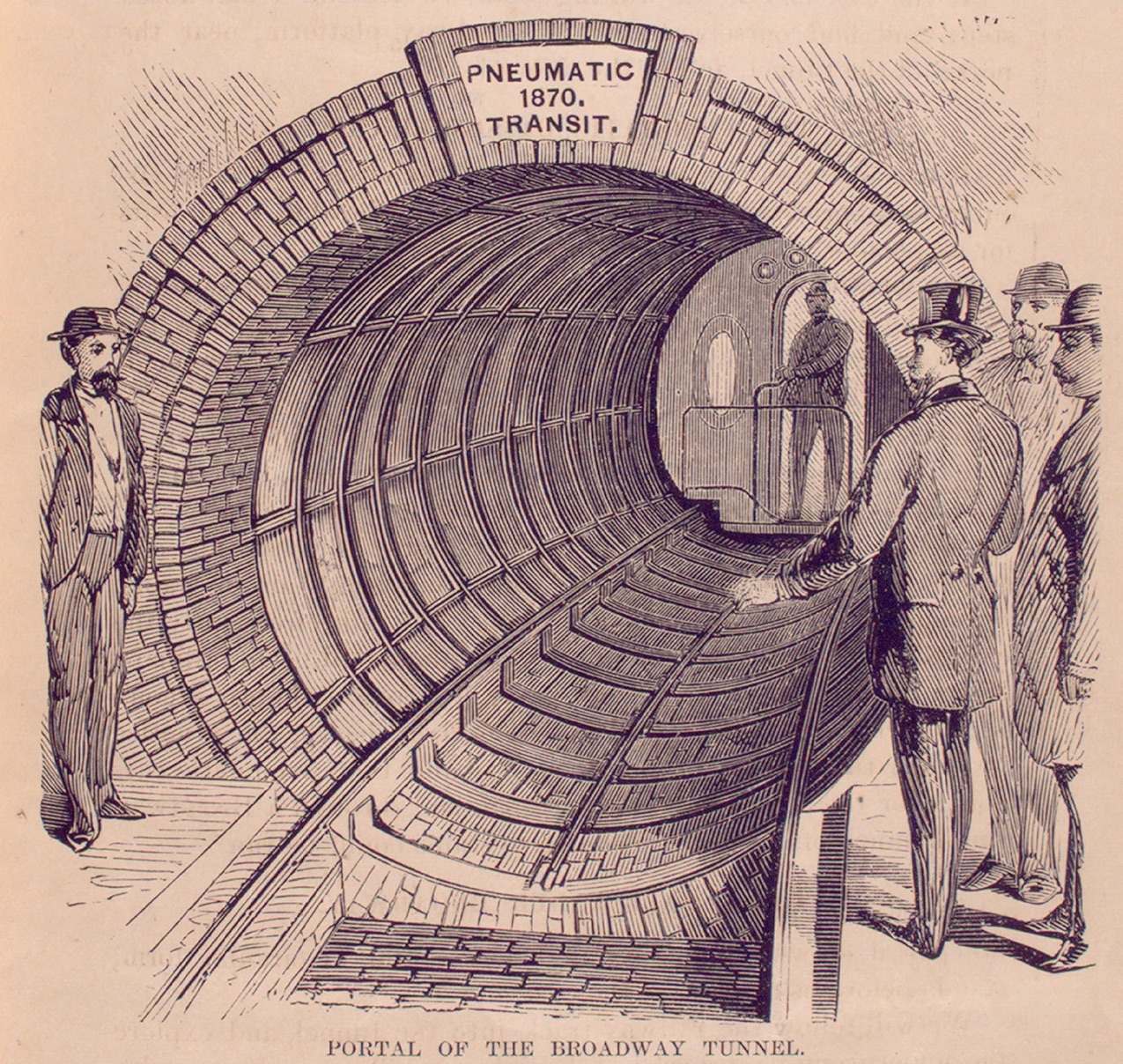
As we spoke about in our recent podcast on Alfred Ely Beach’s Pneumatic Tube, the original tunnel was only carved underground for a single block — near City Hall — in 1870. There were plans to send the pneumatic tube up the entire length of the island (albeit under Madison Avenue, not First Avenue). This is my favorite bit of history from the film and displays a loving nod by the writers to Old New York:
Our gang accidentally takes out some wires which manages to cause a blackout throughout all of New York. The Blackout of 1977 had only occurred a dozen years before, so many audience members might have flinched a bit at that scene.
12) The Ghostbusters are hastily taken to court. Venkman’s defense for the hole in the street: “Well, there are so many holes in First Avenue, we really didn’t think anyone would notice.”
Potholes in the street were a potent symbol for the city’s deterioration and also a way to appease the neighborhood when they were eventually fixed. In 1990, the Times reported in an article ‘Gaining in the Battle on Potholes: “The Department of Transportation claims that the number of potholes in New York City streets dropped 23 percent this year, and the new Commissioner, Lucius J. Riccio, suggested yesterday that potholes ”might have to be put on the endangered-species list.”
The city even opened a phone line for New Yorkers to call in about potholes. From the article: “The pothole hot line – 212-POT-HOLE – expects its 25,000th call this week. The caller will receive a Highway Bureau T-shirt and the dubious honor of filling the pothole of his or her choice.”
13) The sequel features a new version of the Ray Parker Jr. theme song, this time recorded by New York City icons Run-DMC. The rap trio formed in 1981 in Hollis, Queens, and quickly helped develop the basis for modern hip hop music. Â In 1989, they were coming off the success of their massive and mainstream Tougher Than Leather album, produced by Rick Rubin (much later to win a Grammy for producing Adele’s 21).
https://www.youtube.com/watch?v=2Cc5Ikwsg08
Another song from the film actually became a minor hit –Â “On Our Own” by Bobby Brown (who makes a terribly awkward appearance in the film).
14) In a montage of scenes demonstrating the Ghostbusters’ return, we see one ghost running around the Central Park reservoir and another haunting Orrefors fine glassware boutique at  58 E. 57th Street.  Orrefors is no longer there today, but the building sits next to New York’s tallest residential tower — the infamous ‘needle’ building 432 Park Avenue. To quote Wikipedia here: “The building has been much maligned by many city denizens who find it an eyesore and believe it represents New York’s increasing cost of living and ostentatious wealth.”
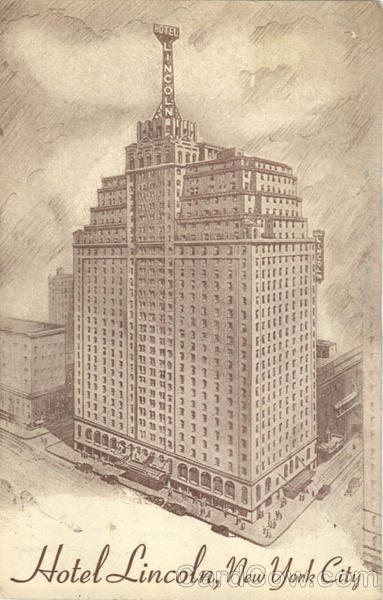
15) Look closely during the ‘haunted toaster’ scene and you will see a marvelous and obscure site on the wall — a vintage poster for the Hotel Lincoln, a glamorous midtown destination which opened in 1928.  This was the hotel mentioned in our Billie Holiday’s New York podcast as the place she began a (controversial) residency with Artie Shaw in 1938. She was forced to enter through the kitchen as a black woman couldn’t be seen coming in the front door.
Hotel Lincoln, 44th to 45th Street at 8th Avenue New York City
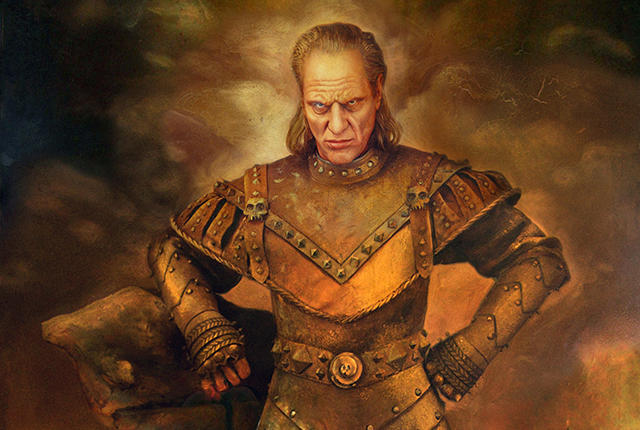
16) This has nothing to do with New York City history, but you must read this extraordinary Deadspin article on Norbert Grupe, the actor depicted in the Prince Vigo painting. Keep in mind Venkman’s words while you read it — “Vigo? He’s a bit of a sissy isn’t he?”
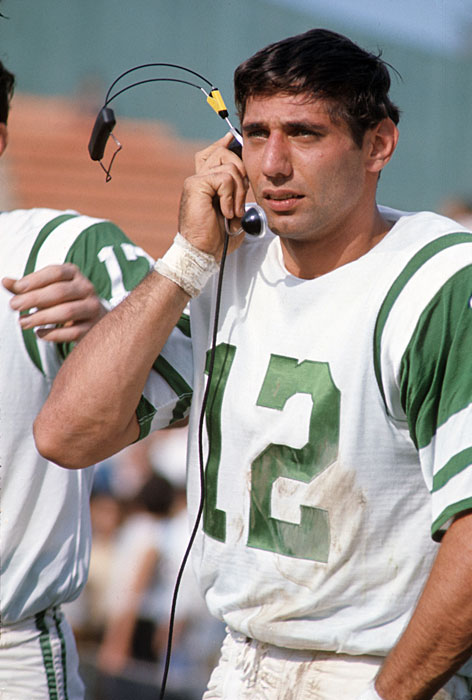
17) Venkman wraps little Oscar in one of his prized possessions — a New York Jets sweatshirt, #12. Â This number, now retired, belonged to Joe Namath, who played with the Jets from 1965 to 1976.
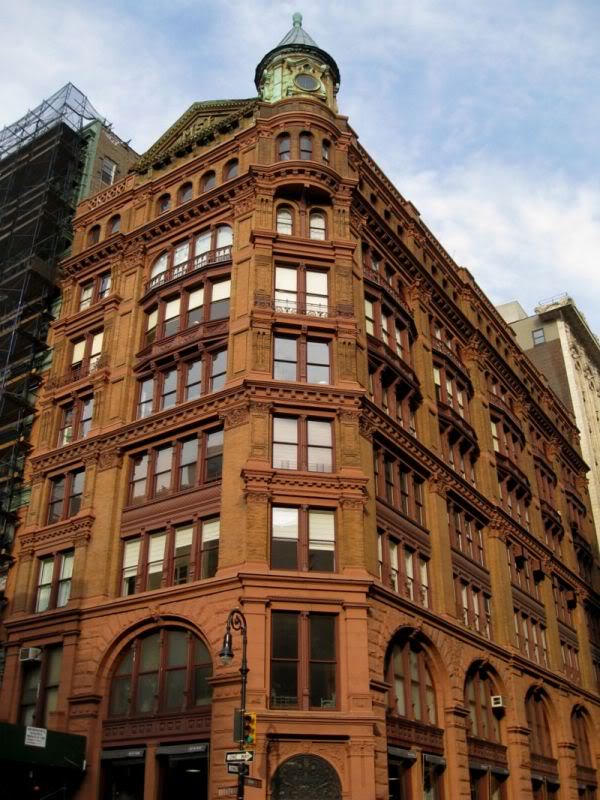
18) Dana and Oscar take shelter in Venkman’s apartment, which just happens to be one of the most glorious apartment buildings north of Houston.  Built in 1891 for the Manhattan Savings Institution Bank Building, 644 Broadway formerly featured the Atrium clothing store on the ground floor. (Read more about this lovely building at Daytonian In Manhattan.)
Photo courtesy Wired NYC
Catch this line: “I’ve got some Laura Antonelli tapes you can watch.” Laura Antonelli was a beautiful Italian sex symbol of the 1970s.
19) As Louis (Rick Moranis) and Janine (Annie Potts) leave Ghostbusters headquarters — the old fire station on North Moore Street — observe the unusual business that sits across the street:Â Hongkong Kowloon Docks Import Inc., a typical example of the sort of business that used to reside in Tribeca during the 1970s and 80s. Â Coincidentally, in China, there was a program called Hong Kong Ghostbusters which took place in a housing development called Kowloon.
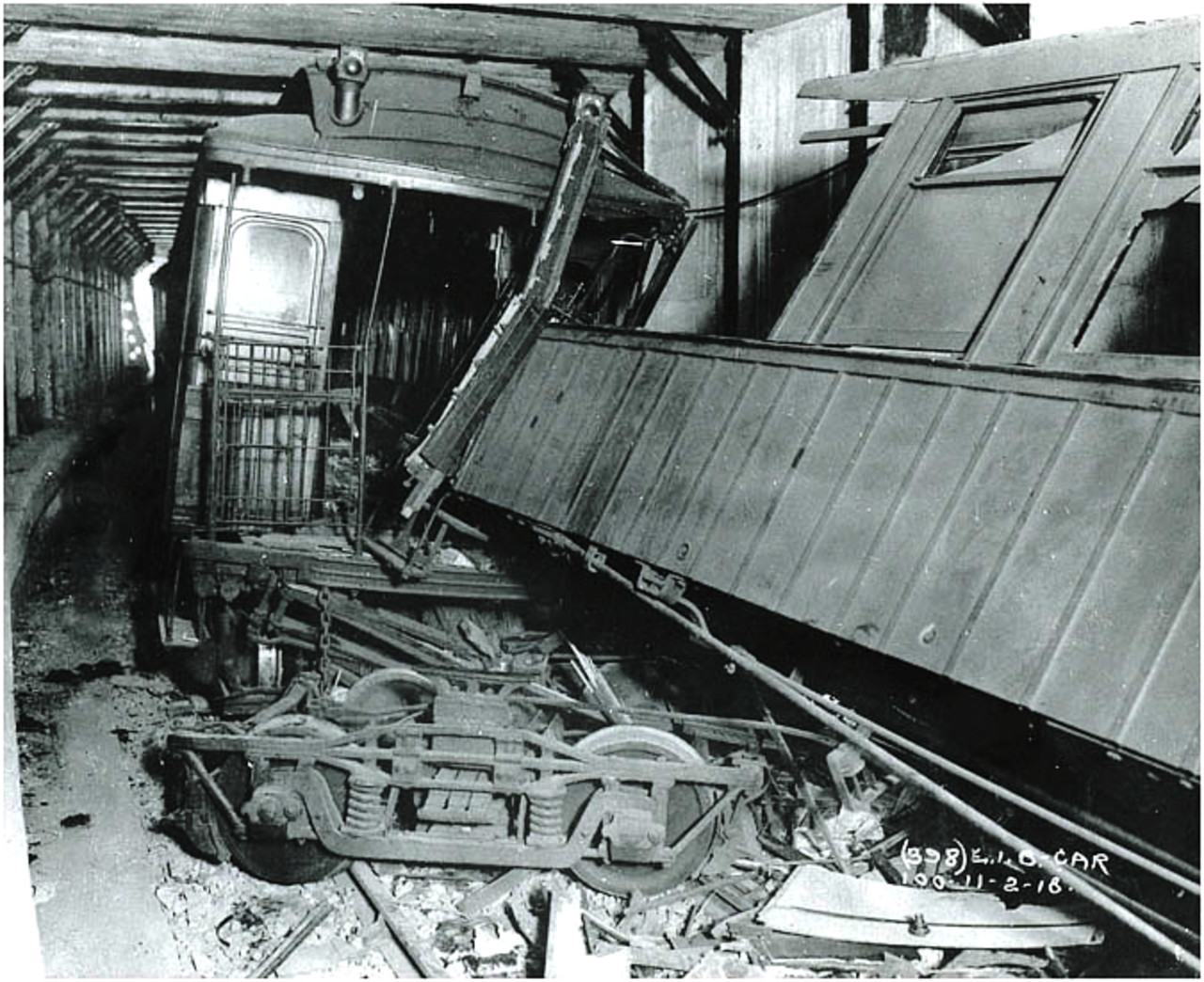
20) The Ghostbusters investigate an abandoned subway track whose “lines have been abandoned for 50 years.” They are immediately beset by ghostly figures of all types, from severed heads on sticks to a phantom stream train, the supposed haunted visage of the “New York Central to Albany” which derailed in 1920, killing hundreds.
That disaster, of course, didn’t exist. However they could have chosen to use another tragedy from around that same time period — and much closer to  home.  The Malbone Street Wreck in Brooklyn involved two trains colliding underground, killing 93 people.
21) Our heroes are thrown into the Parkview Psychiatric Hospital in order to get them out of the way. This fictional institution is most likely based upon Manhattan Psychiatric Center on Ward’s Island. Timely news the very summer of Ghostbusters 2? New York City’s psychiatric wards were too crowded.
During a thrilling montage of ghost attacks throughout the city, Â three particular things of historical interest pop out:
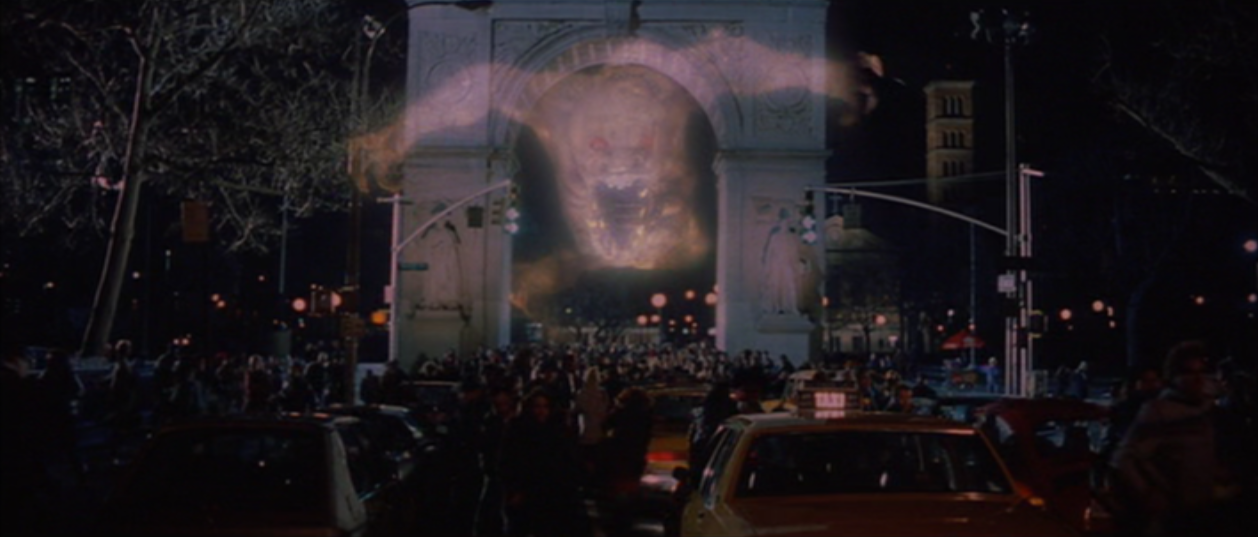
22) Massive Ghost in Washington Square Park — The park is notoriously the site of an old potter’s field, and bodies to this day are often discovered during excavations. “Where now are asphalt walks, flowers, fountains, the Washington arch, and aristocratic homes, the poor were once buried by the thousands in nameless graves.†(Kings Handbook of New York, 1893) Read more on Washington Square’s unusual backstory here.
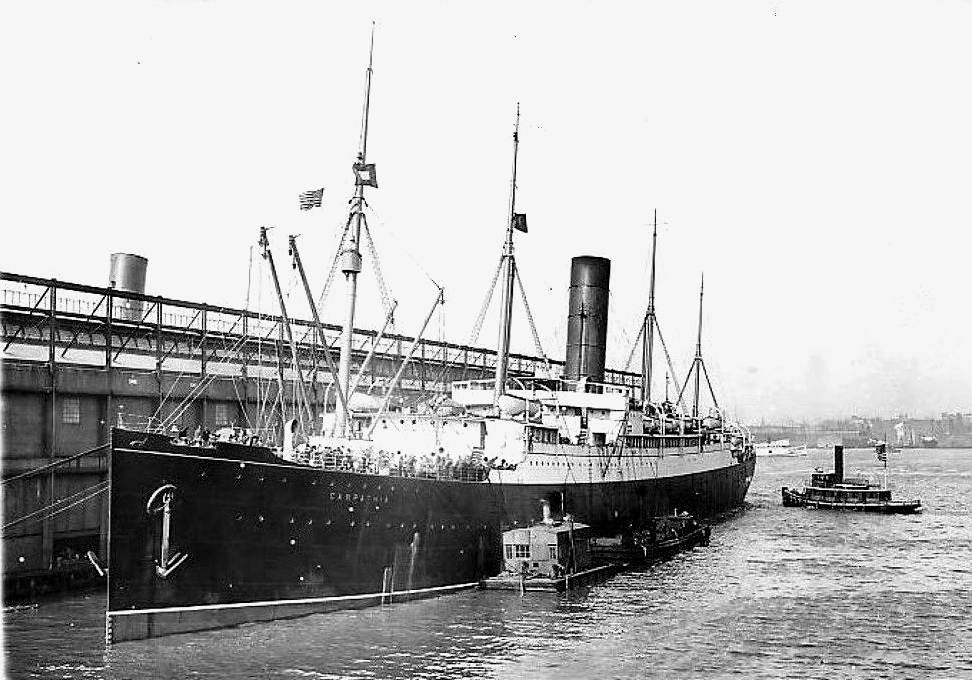
23) Titanic Finally Arrives —  The Titanic was originally supposed to have docked at the White Star Pier 59 (parallel to West 18th Street); instead, the survivors of the shipwreck disembarked from the Carpathia at Pier 54. The framework of the pier still existed today (pictured in 1912 below)
The ghostly passengers actually let out at Pier 34 in the film, to the horror of Cheech Marin in a cameo appearance.
24) The Spirit of Fiorello La Guardia (off screen) — The mayor claims he’s been seeing the ghost of the former mayor “and he’s been dead for 40 years.” Since the events of this scene take place on December 31, 1989, La Guardia would have been gone over 42 years.  He died in his Bronx home of Riverdale. Here’s how the New York Times broke the announcement.
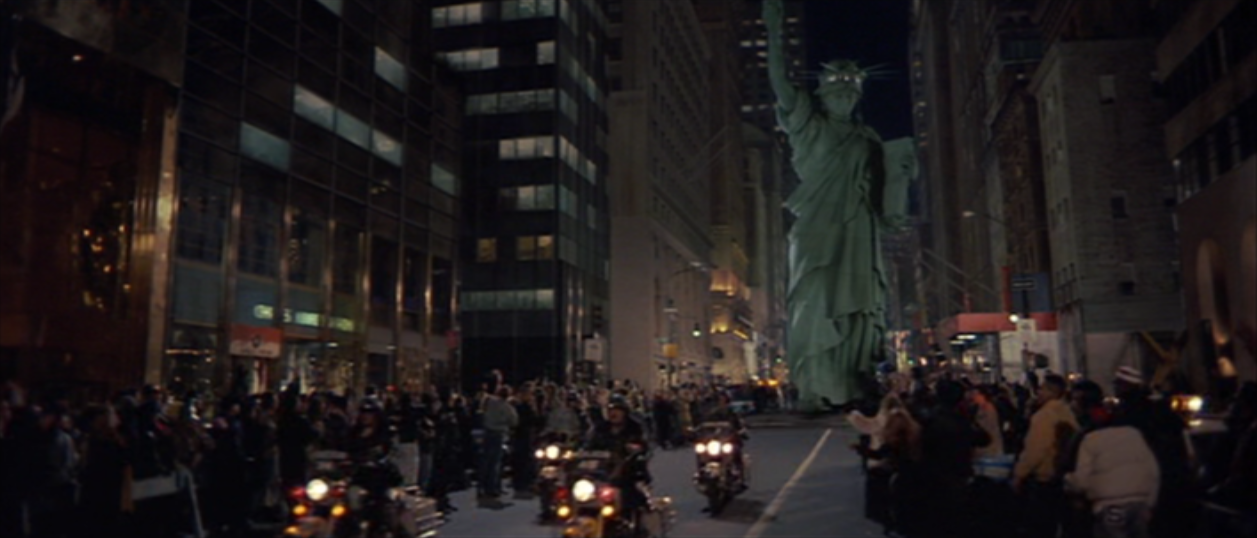
25) The grand finale features the Statue of Liberty pulling a Stay Puft Marshmallow Men, delivering the Ghostbusters to a goo-covered Custom House, er, I mean art museum and saving the day.
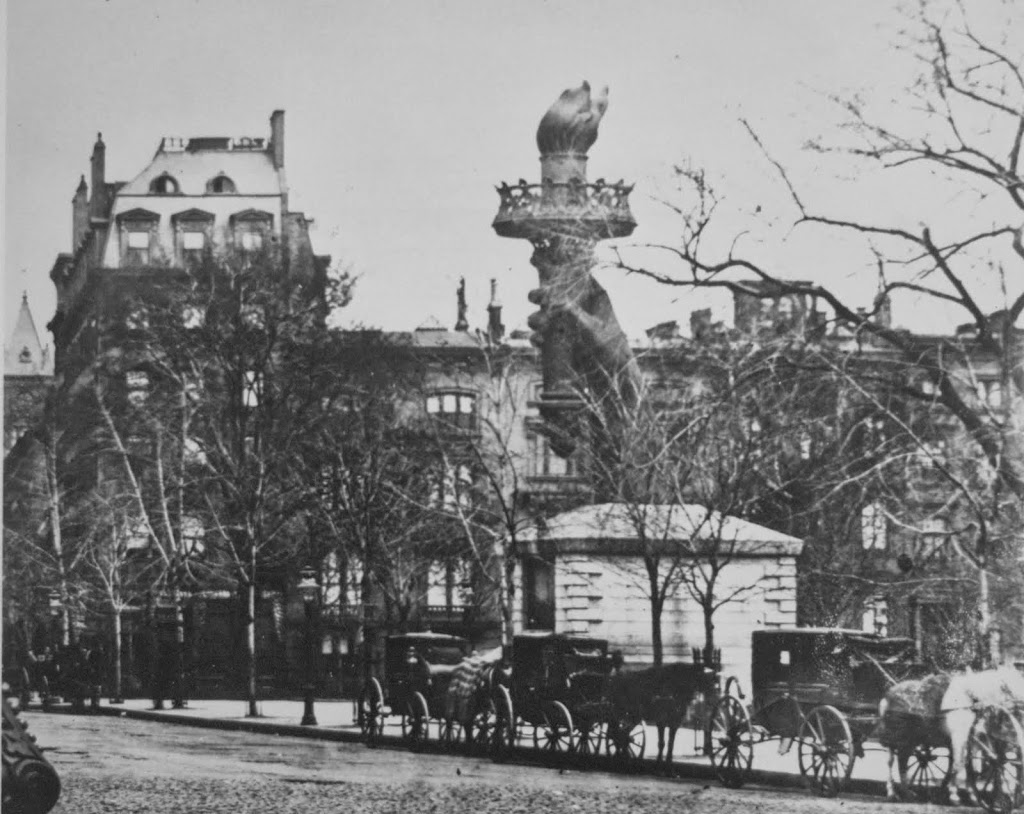
This marks the first time that the entire statue has made it to Manhattan. However her arm spent many, many years in New York, well before it was ever attached to the rest of herself.
From a Bowery Boys 2014 article: “….the arm and torch would be displayed in the northwest corner of Madison Square Park, from 1876 to 1882.  On July 4th, 1876, a gigantic painting by Jean-Baptiste Lavastre of the completed statue was displayed on a building across the street from the arm.”
We hope you enjoyed our 200th Bowery Boys podcast on Jane Jacobs. For further reading on her life, philosophy and work, we recommend the following books, most of which we used as source material for this show.
The Death and Life of Great American Cities by Jane Jacobs — Obviously you should start with Jacobs’ opus on how the American city works (well, at least the city of the 1960s). Â She has a clear, approachable and pragmatic way of looking at urban problems. You’ll also notice immediately how modern city planners have used some of the ideas she’s described.
Wrestling With Moses by Anthony Flint — Perhaps the most succinct book on the specific crises which pitted Robert Moses with Jacobs, a breezy and engaging tale of New York City in the 1950s and ’60s.
Jane Jacobs: Urban Visionary by Alice Sparberg Alexiou — If you’d like a good biography on Jacobs, try this enjoyable read (published in 2006, the year of Jacobs’ death) that gives an overview of her life and career.
Becoming Jane Jacobs by Peter Laurence — If you’re looking for something more recent, this brand new biography uniquely explores the origins of how she developed her ideas of urban places. Even if you’ve read any of the books listed above, Laurence’s book goes more deeply into her many influences.
The Battle For Gotham by Roberta Brandes Gratz — For even more expansive look at the legacies of both Moses and Jacobs, especially in the proceeding decades. Gratz takes specific aim at more recent projects in New York in a very personalized way.
The Village by John Strausbaugh — A wide-lens history of Greenwich Village, Strausbaugh spends a great amount of time looking at how Jacobs assisted in the salvation of her neighborhood, and how these preservation battles interlocked with the culture of the day.
The Power Broker by Robert Caro — Jacobs famously doesn’t even make an appearance in Caro’s legendary, barn-burning biography, but the book remains essential reading for anybody interested in mid-century America.
————–
Or burrow your way through the New York Times archives of material on the battles waged by Jane Jacobs and Village community activists against the city. Â Start with these:
Shopping Scarce In City Projects “Most of the 350,000 New Yorkers living in public housing must go outside the projects for the loaf of bread, the quart of milk, the daily newspaper and the sociability of the candy store, coffee shop or tavern.” (June 16, 1957)
To celebrate the 100th anniversary of her birth (May 4), the Municipal Art Society, with funding by the Rockefeller Foundation, has been hosting a series of events this year. From the website #JJ100:
“The celebration will pay tribute to Jane Jacobs on the 100-year anniversary of her birth by highlighting self-organized activities and events that embody Jane’s lasting legacy in cities around the world.”
Starting with Jane’s Walk in May, and culminating at the Habitat III Conference in Quito, Ecuador, Jane Jacobs at 100 will promote self-organized Jacobsian programming and projects taking place in New York and in cities around the world.” Â Keep checking in at their website for more information. And of course Jane’s Walk arrives in May!
————–
Meanwhile The Center for the Living City is taking a fascinating approach to their celebration of Jacobs’ legacy. Check out their dedicated page Jane’s 100th for a list of events and unique objectives. Including getting Jane Jacobs on a postage stamp! (How is she not on a postage stamp? Harry Potter has a postage stamp!)  Author Peter Laurence has set up a petition for this that you obviously must sign.
You also may be interested in their new project being launched as part of their Jacobs celebrations —the Urban Acupuncture Network.
————–
By the way, if you’re interested in hearing the entire 1962 chat by Jane Jacobs that we featured in our show, you can hear it here.
Or perhaps you’d like to catch the new Robert Moses/Jane Jacobs opera — A Marvelous Order!
PODCAST The story of Jane Jacobs, the urban activist and writer who changed the way we live in cities and her fights to preserve Greenwich Village in the 1950s and ’60s.
Washington Square Park torn in two. The West Village erased and re-written. Soho, Little Italy and the Lower East Side ripped asunder by an elevated highway. This is what would have happened in New York City in the 1950s and 60s if not for enraged residents and community activists, lead and inspired by a woman from Scranton, Pennsylvania.
Jane Jacobs is one of the most important urban thinkers of the 20th century. As a young woman, she fell in love with Greenwich Village (and met her husband there) which contained a unique alchemy of life and culture that one could only find in an urban area. As an adroit and intuitive architectural writer, she formed ideas about urban development that flew in the face of mainstream city planning. As a community activist, she fought for her own neighborhood and set an example for other embattled districts in New York City.
Her legacy is fascinating, often radical and not always positive for cities in 2016. But she is an extraordinary New Yorker, and for our 200th episode, we had to celebrate this remarkable woman on the 100th anniversary of her birth.
FEATURING: Mrs. Jacobs herself in clips interspersed through the show.
PLUS: ROOOOBERT MOOOOSES!
The Bowery Boys: New York City History podcast is brought to you …. by you!
We are now producing a new Bowery Boys podcast every two weeks. We’re also looking to improve the show in other ways and expand in other ways as well — through publishing, social media, live events and other forms of media. But we can only do this with your help!
We are now a member of Patreon, a patronage platform where you can support your favorite content creators for as little as a $1 a month.
Please visitour page on Patreon and watch a short video of us recording the show and talking about our expansion plans. If you’d like to help out, there are five different pledge levels (and with clever names too — Mannahatta, New Amsterdam, Five Points, Gilded Age, Jazz Age and Empire State). Check them out and consider being a sponsor.
We greatly appreciate our listeners and readers and thank you for joining us on this journey so far. And the best is yet to come!
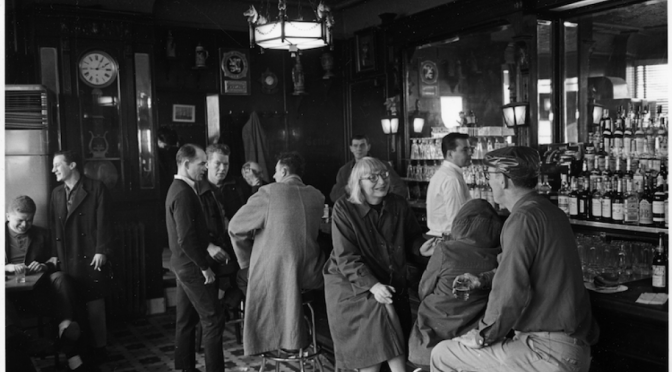
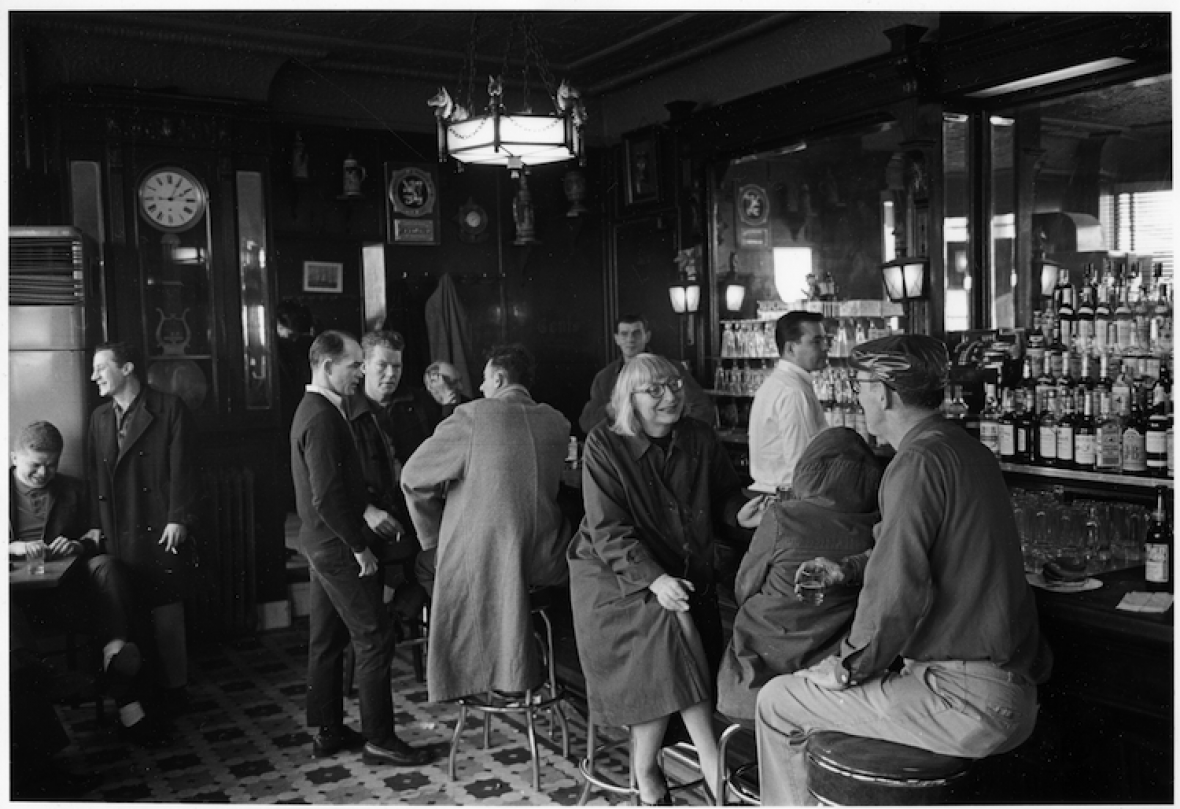
Jacobs at the White Horse Tavern, sometime in the 1960s. Jane lived on the block!
Photography by Cervin Robinson/New York Times. Visit his website for more extraordinary images of New York City (http://cervinrobinson.com/)
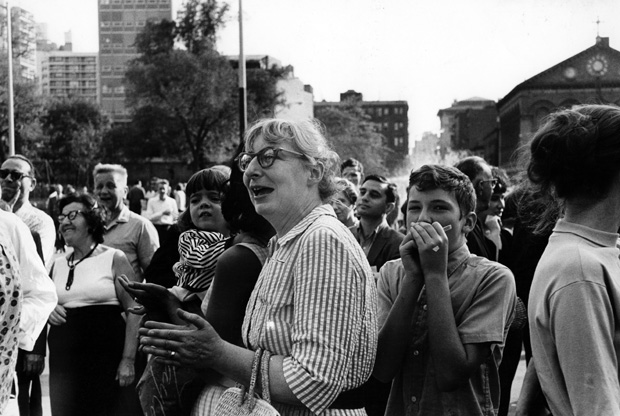
Jacobs in Washington Square Park (though I believe this is 1963 and not during the 1958 protest).
Fred W. McDarrah/Getty Images
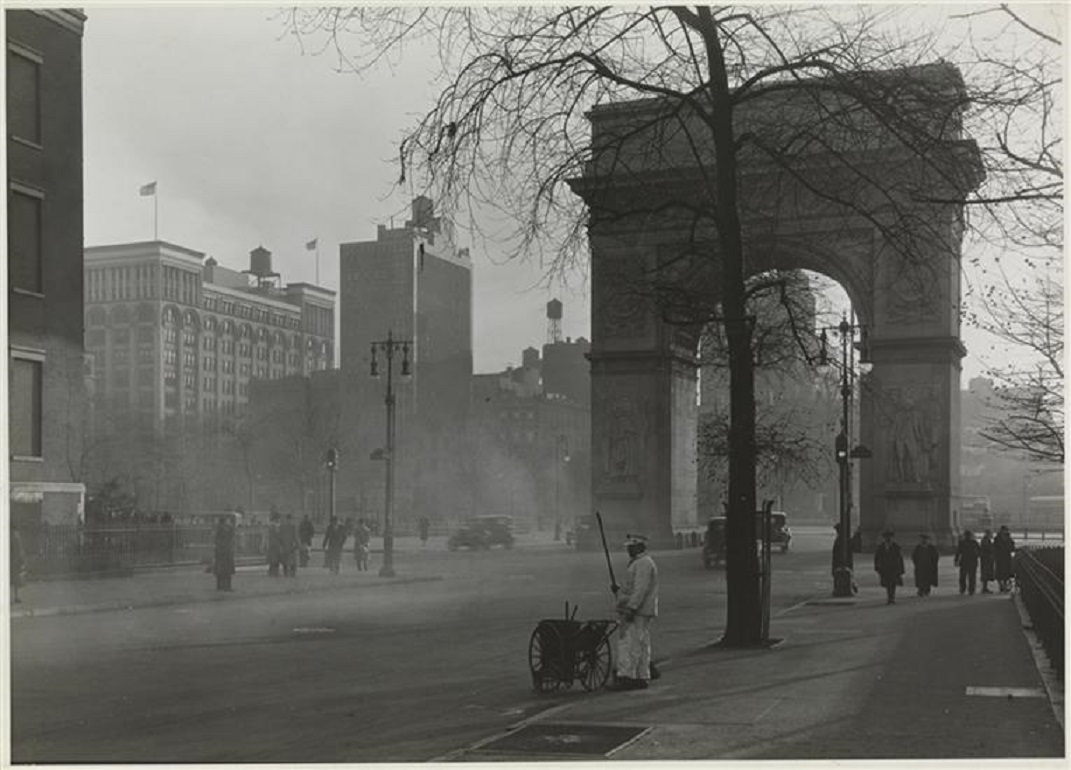
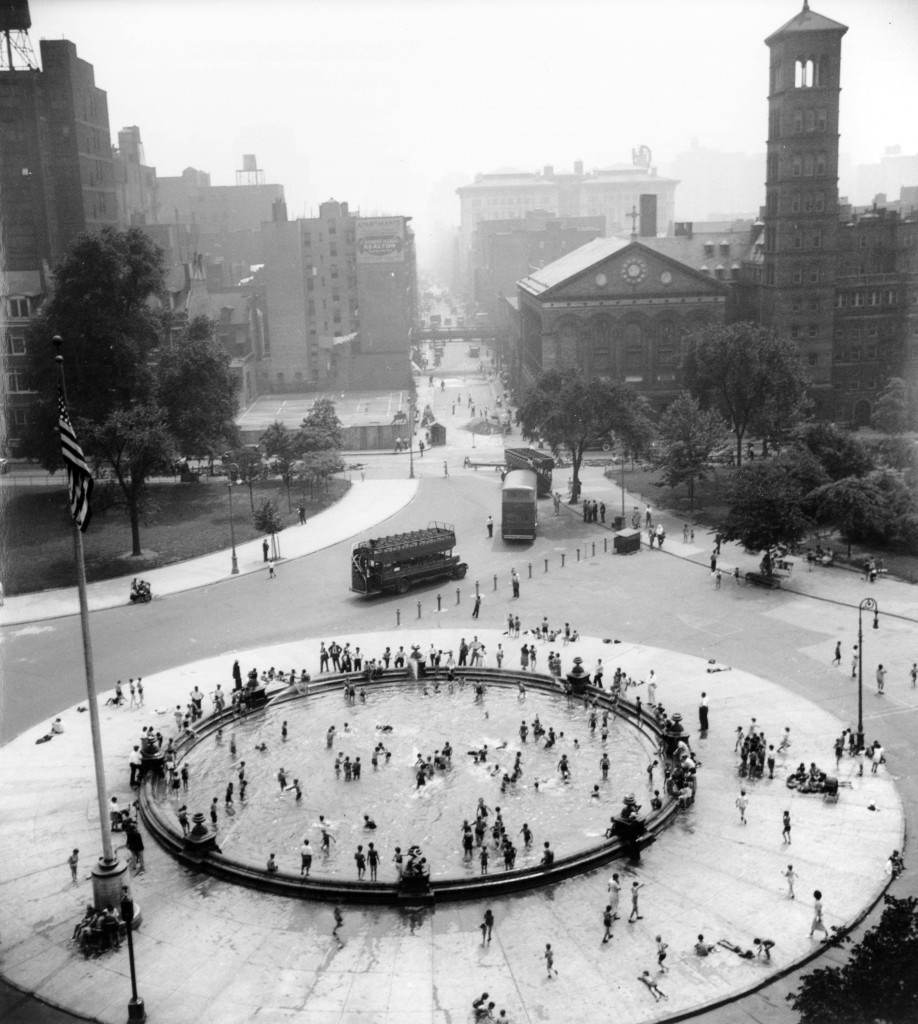
Washington Square Park in 1935. The 1958 activists were so successful in their goal of saving the park that they were able to banish automobile traffic from it entirely.
New York Parks Department
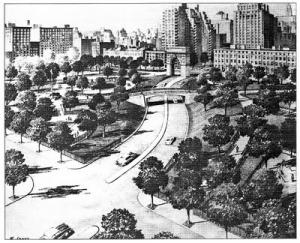
What Moses had planned for the park:
NYPL
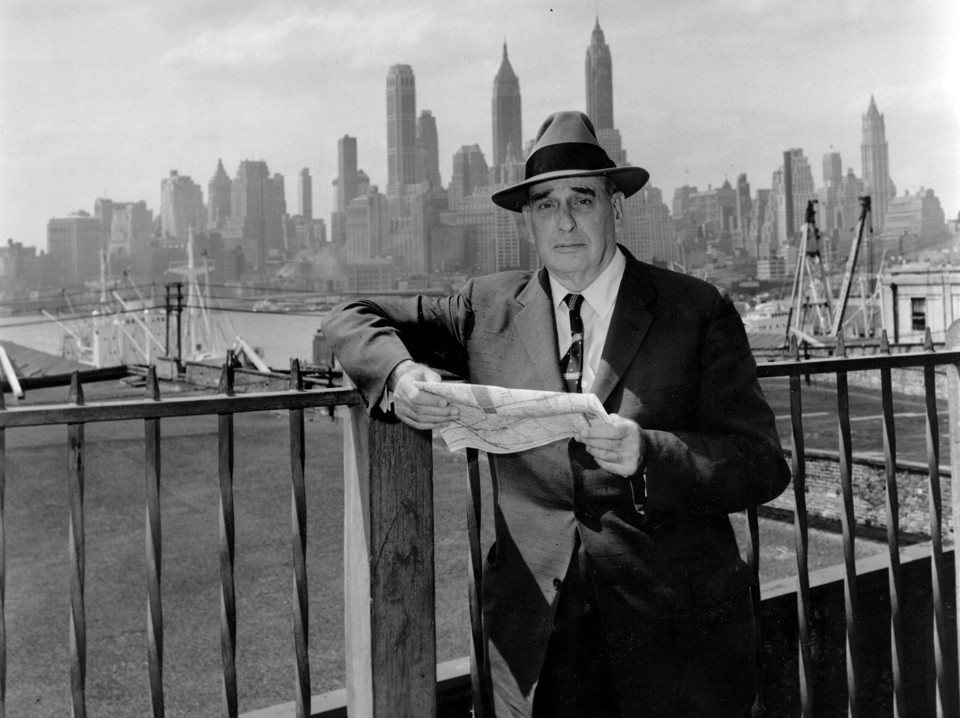
Robert Moses, pictured here in Brooklyn in 1956. Although he frequently situated as the arch-nemesis to Jane Jacobs, in fact they were rarely in the same room together. Their battles were fought in the press and in City Hall.
AP
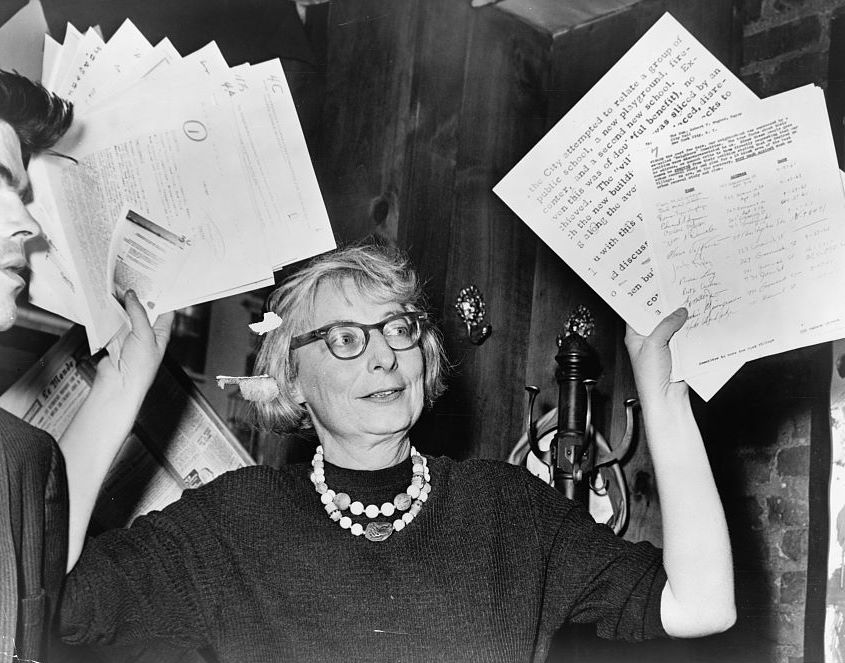
Jacobs presenting damning evidence about the proposed West Village demolition, taken at their main headquarters the Lion’s Head, in 1961 at the corner of Hudson and Charles Streets.
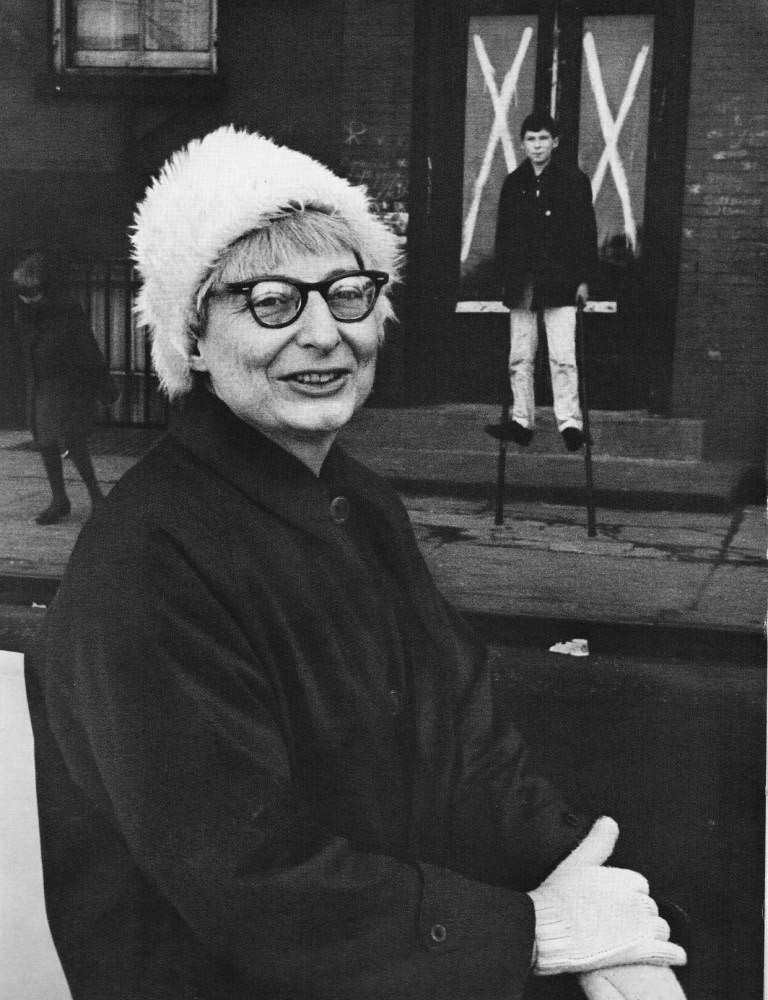
Jane Jacobs and her son Ned in 1961, during the West Village protests. The Xs were placed on buildings to be condemned. Activists wore sunglasses with Xs on the lenses in protest.
Photo courtesy Aesthetic Realism
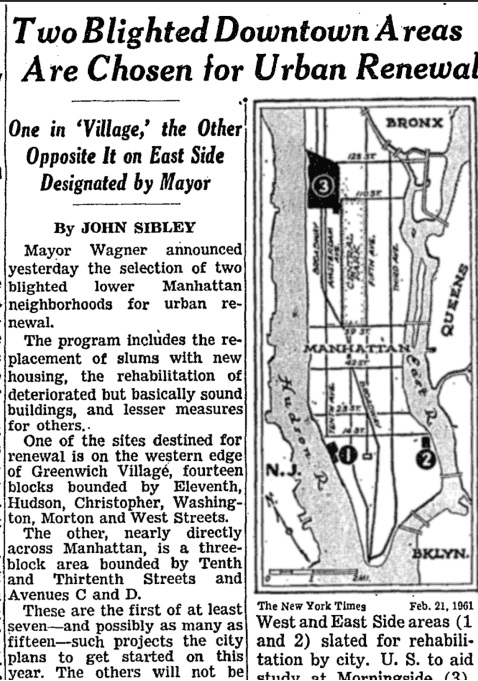
The February 21, 1961, article from the New York Times which riled up the West Village. The East Side project would eventually become Haven Plaza Apartments, but residents would fight off the designation in the West Village.
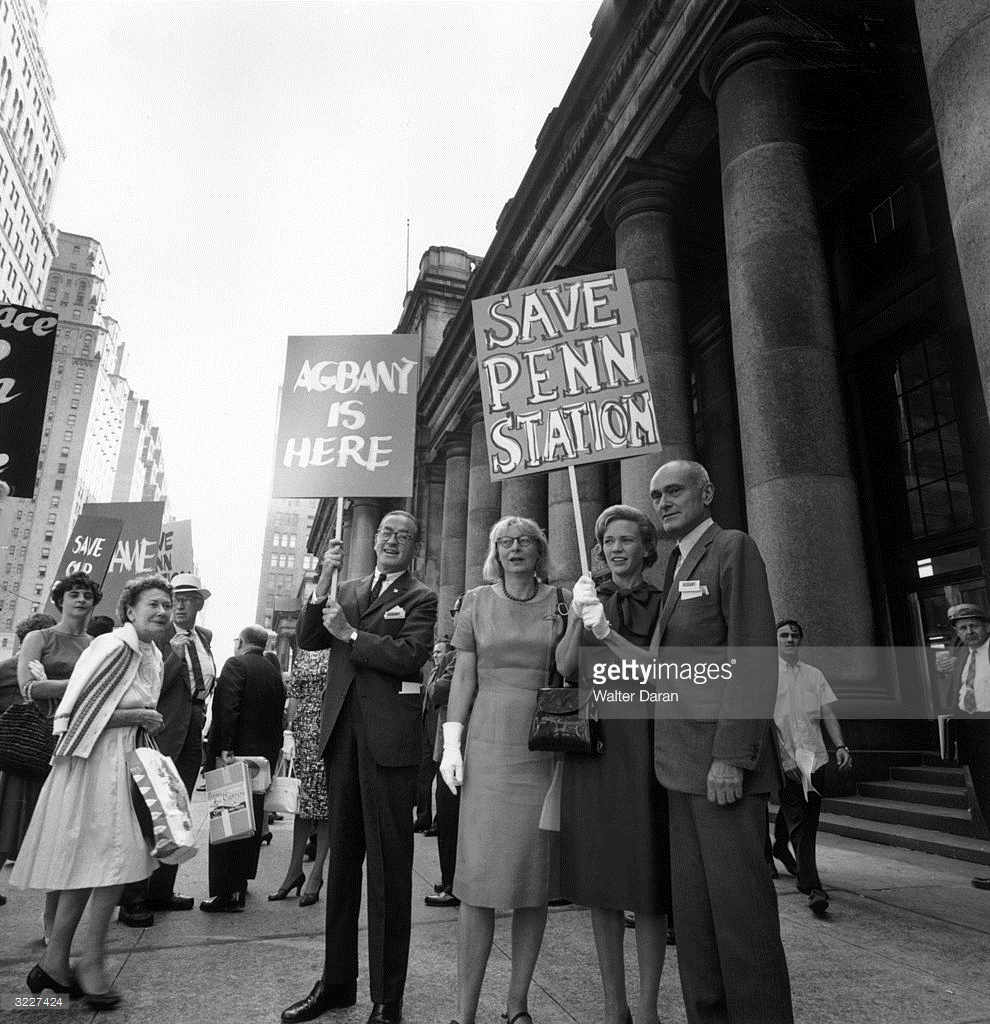
January 01, 1963 — Jacobs protests the destruction of Pennsylvania Station with architect Philip Johnson.
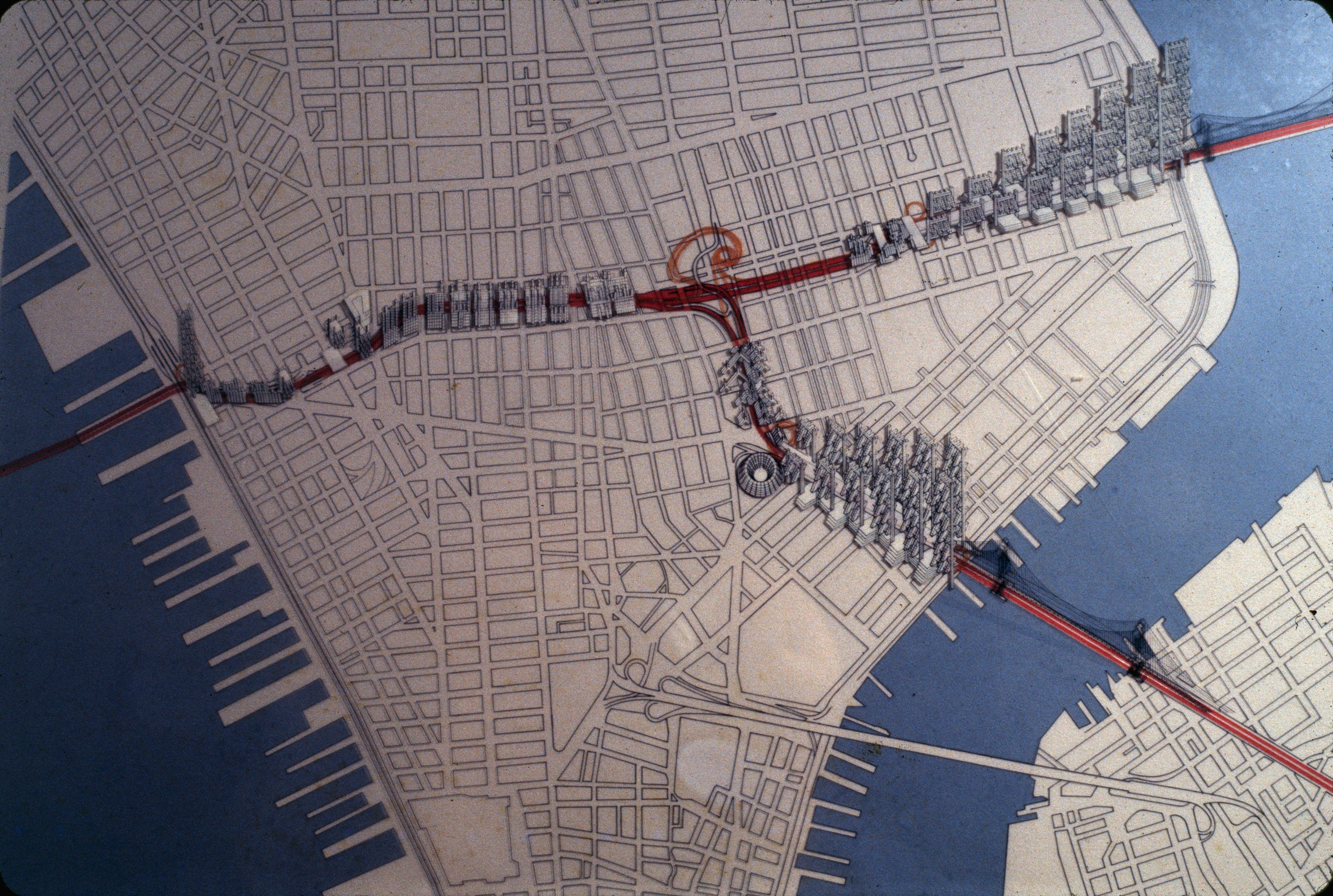
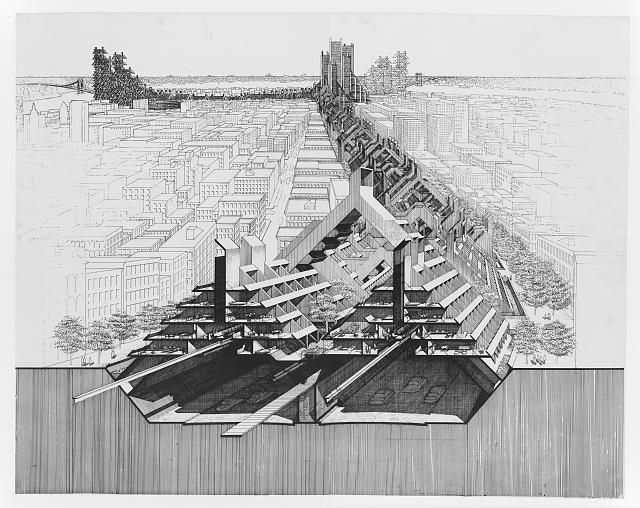
A map of the Lower Manhattan Expressway. Although this plan never came to fruition, the stack of buildings near the bridges seems to be coming to pass — on the Brooklyn side!
Library of Congress
Another sketch by Paul Rudolph of the Lower Manhattan Expressway, showing the new construction from the Holland Tunnel as it enters through Manhattan.
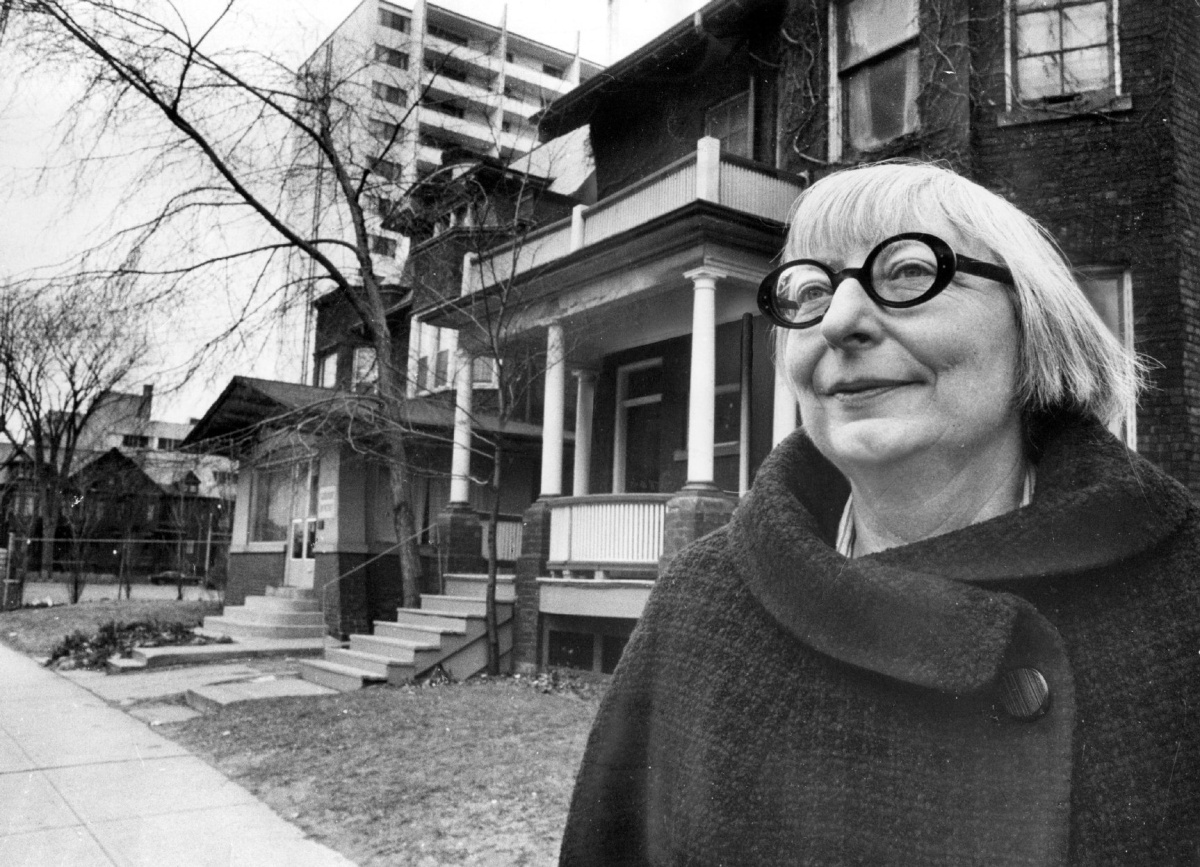
Jane Jacobs in Toronto, Dec. 21, 1968. She would continue her activism there, helping other community activists in foiling plans to build the Spadina Expressway.
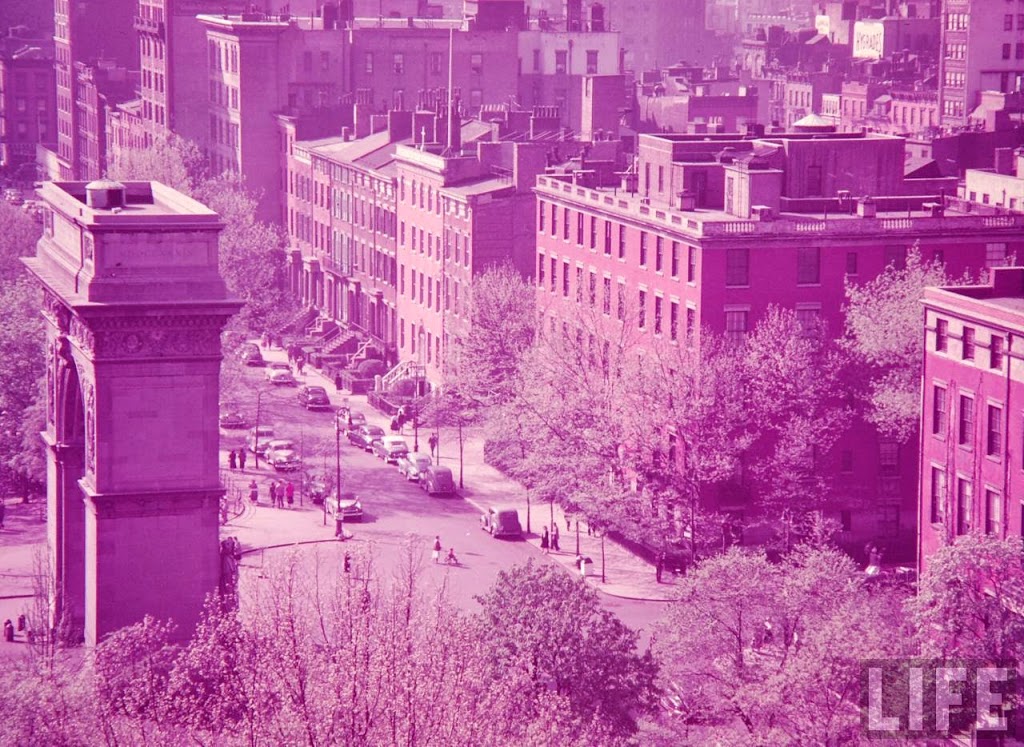
Washington Square North, looking west, 1950, photo by Walter Sanders, Life Magazine
The entire back catalog of the Village Voice, New York’s original alternative weekly, is available online through Google News. The early issues are especially full of character, a scrappy counter-culture organ which provides an interesting window into downtown Manhattan. Here are some highlights from an issue which came out fifty years ago this week:
1) Washington Square Park, both the physical epicenter of Greenwich Village and the gathering place for the Village’s various cultural factions, faced a possible makeover by the city in 1964. “This plan has two objectives. The first is to clean up the park, which is now physically run-down and neglected. The second, in response to complaints by adjacent property-owners, is to discourage beatniks and other ‘undesirable elements’ from congregating there.” [source]
The park had been a magnet for the beatnik scene since the early 1950s. The folk singers who would gather on Sunday afternoons had won a major victory in 1961 after a so-called “beatnik riot” convinced the city to allow musical crowds to congregate there
The park was eventually altered that year, but one major change would have been applauded by all — the traffic lane that cut under the Washington Square Arch and through the park was officially closed.
2) Sara D. Roosevelt Park in the Lower East Side, meanwhile, remained a disheveled dump, and the Voice clearly saw it as a symbol of the city’s neglect of the poor. “While the Parks Department is champing at the bit to pour $750,000 into Washington Square …. Sara Delano Roosevelt playground resembles a post-war Berlin. The latter, at Forsyth and Chrystie Streets, has been the scene of unrelieved wreckage for almost six years. It was torn up to make way for a subway and no one one thought to put it back together again.
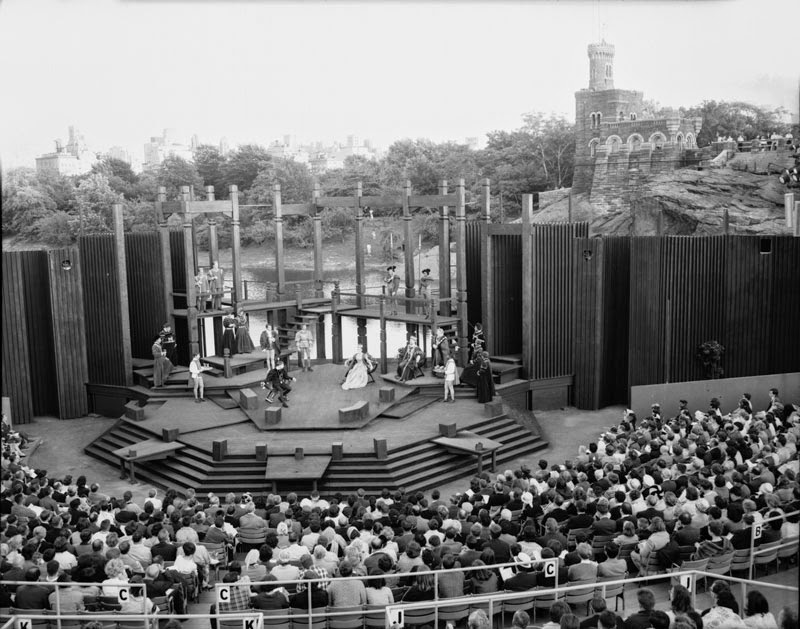
The Delacourte Theater, June 1964, a performance of Hamlet (courtesy NYC Parks)
3) The New York Shakespeare Festival has a new home at the Delacourte Theater in Central Park, but writer John Wilcock, author of the Village Square column, pines for the festival’s shaggier, less respectable days. Respectability has rendered it commonplace, according to Wilcock. Now you have to line up to grab a seat! “This is an improvement?”
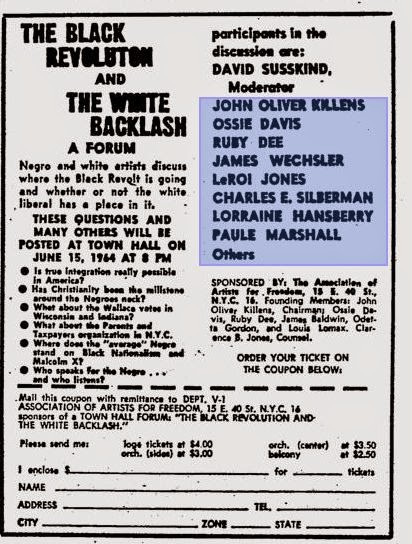
4) The Black Revolution and The White Backlash, a lecture at Town Hall, featured an interesting group of guests, including LeRio Jones (aka Amiri Baraka):
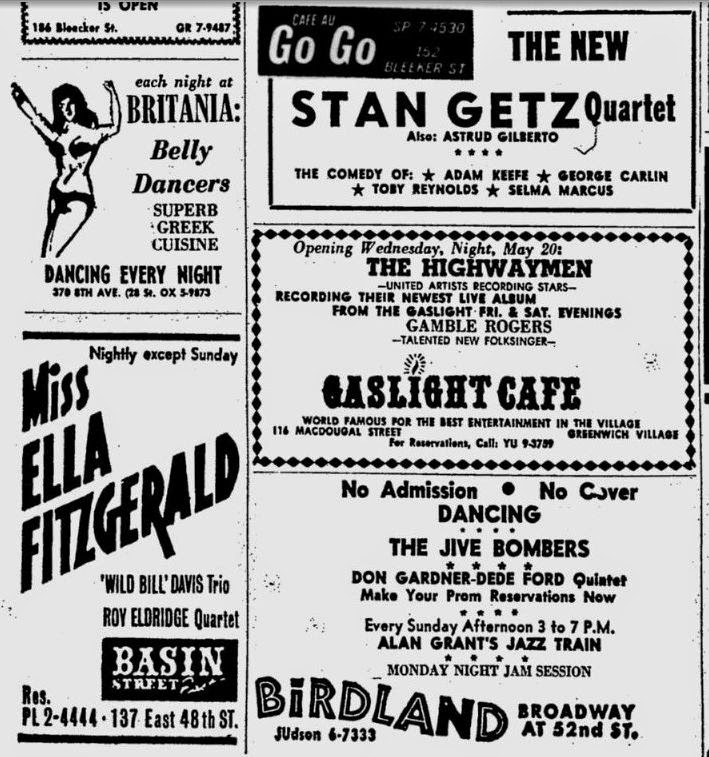
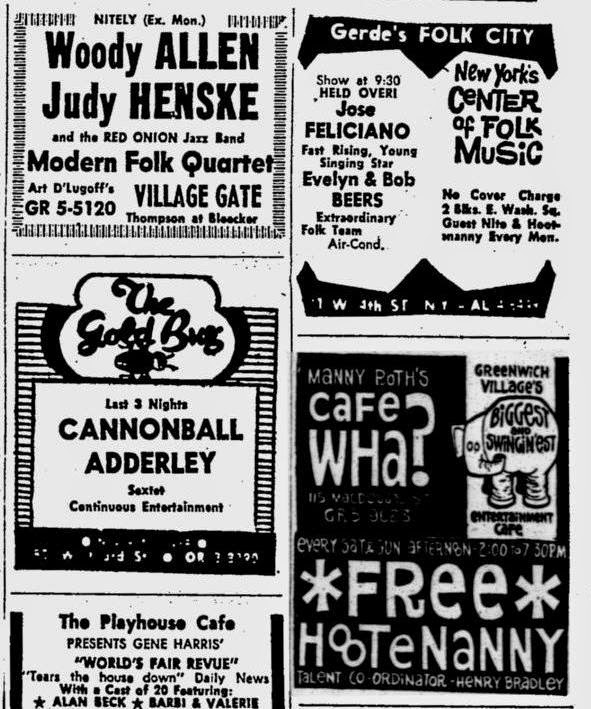
5) The jazz and folk clubs: A glorious sampling of musical icons that week — Ella Fitzgerald, Stan Getz, George Carlin, the Highwaymen, Woody Allen, Jose Feliciano, Cannonball Adderley
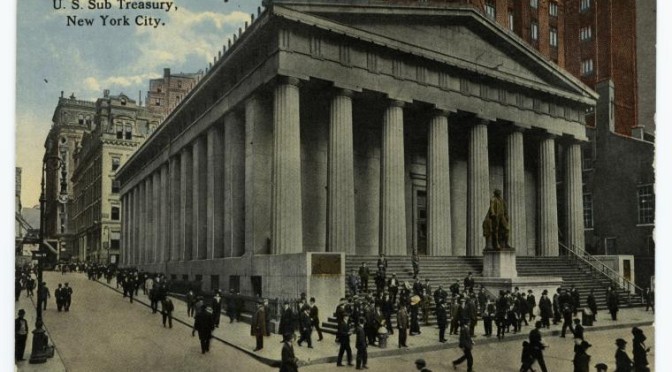
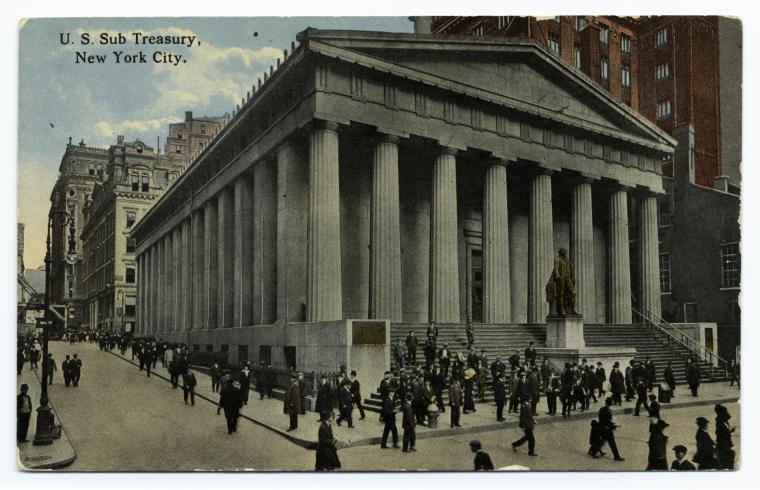
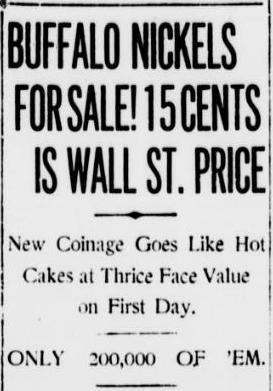
The U.S. Sub Treasury Building — today’s Federal Hall — as it appeared in a colorized postcard in the 1900s (courtesy NYPL) “Hey! Getcha buffalo nickels here. Only 15 cents!”
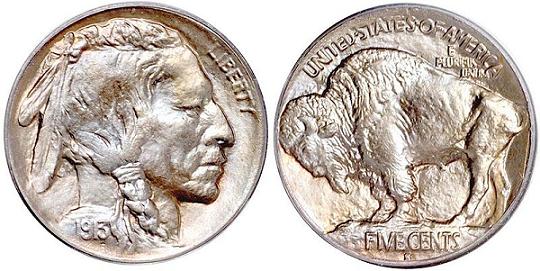
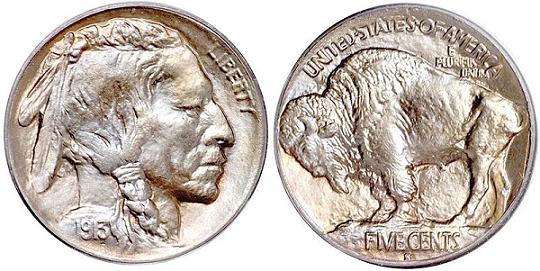
On March 1, 1913, the usual bustle of Wall Street was enlivened with the voices of young men — mostly messenger boys, bank runners and peddlers, according the Evening World — with handfuls of shiny new nickels, the first run of what would become known as the Indian Head nickel or the Buffalo nickel. And in these heady morning hours, many managed to sell the five-cent piece for triple its value.
“The down-at-the-heels men, who sell picture postcards and neckties from pushcarts on Ann Street, scented a bargain and hurried to the Pine Street El Dorado to sink their little capital in nickels.” The “Pine Street El Dorado” in that quote refers the New York Sub Treasury building, later referred to as Federal Hall. (It’s second entrance is on Pine Street.) The Sub Treasury received $10,000 worth of new nickels in ten wooden kegs.
Unfortunately for these budding young nickel entrepreneurs, the novelty wore off by noon and the Buffalo nickel sunk back down to its original face-value cost.
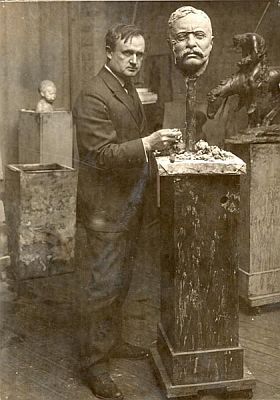
The new nickels were designed by the sculptor James Earle Fraser, a former assistant of the estimable Augustus Saint-Gaudens and best known in New York perhaps for his equestrian statue of Theodore Roosevelt outside the American Museum of Natural History.
Fraser, a professor at the Art Students League, designed the new coin from a studio at 3 MacDougal Alley, off of Washington Square Park. An admirer of Western and Native American imagery, Fraser used a series of models for the noble Indian profile on the front of the coin. For the buffalo on the reverse side, Fraser reportedly went to Central Park Zoo and used their old buffalo Black Diamond for a model.
At right: James Earle Fraser in 1912 with a clay model of a Theodore Roosevelt bust (courtesy National Cowboy Museum)
Or at least, Black Diamond has always been considered the model for the buffalo nickel. In fact, Fraser may also have used specimens from the Bronx Zoo including a fiesty beast named, appropriately, Bronx. Given the renown of the Bronx Zoo collection — the institution essentially saved the buffalo from extinction — it might have made more sense to use their animals as models.
Despite outcries from manufacturers of coin operated devices — who claimed the new five-cent piece would not fit in their machines — the buffalo nickel was minted in February 1913, replacing the Liberty Head nickel that year. (A small handful of Liberty Heads were made in 1913, becoming some of the most prized coinage among the numismatic set.) Americans got a preview of the new coin when a small number were distributed by President William Howard Taft at the groundbreaking for the National American Indian Memorial in Staten Island, a monument that was ultimately never built.
A week later, on the first day of March, rolls of the new buffalo nickels were distributed to New Yorkers on Wall Street, and millions more sent across the country for distribution.
Perhaps Fraser’s design was a tad too whimsical for some. The term ‘buffalo nickel’ soon became slang for something nearly worthless. Just a month later, the New York Sun reported, “[T]he $1,500 mathematical job didn’t mean anymore to him yesterday afternoon than a buffalo nickel.”
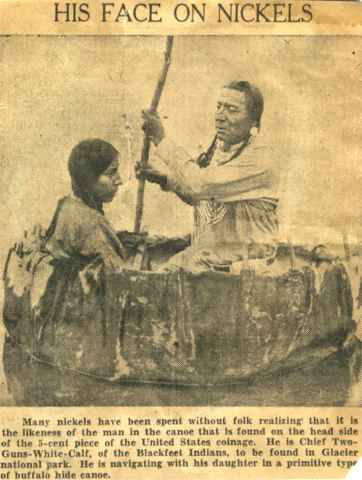
In 1921, one of Fraser’s human models, the chieftain Two Guns White Calf, pitched his teepee atop the luxury Hotel Commodore next door to Grand Central Terminal in a publicity stunt.
The buffalo nickel was replaced in 1938 by the more familiar Thomas Jefferson model.
Below: A news clipping featuring an image of Two Guns White Calf with his daughter. (Courtesy Flickr/sharknose)
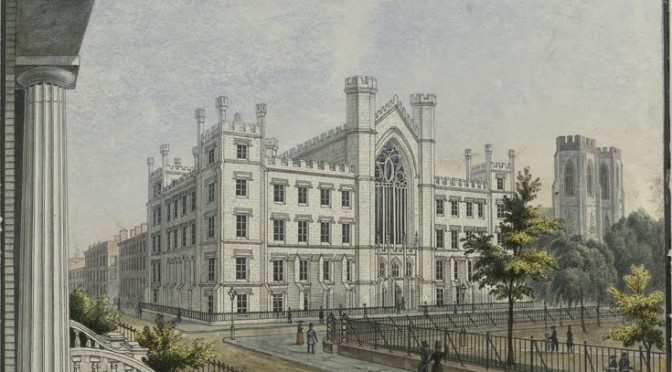
Hogwarts of Washington Square: The beautiful and supremely ostentatious University Hall at the northeast corner of the park, circa 1850. [NYPL]
PODCAST They once called it the University of the City of New York, an innovative, non-denominational school located in a intellectual castle on the northeast corner of the Washington military parade ground. Today it’s better known as New York University, one of America’s largest private schools of higher education, inhabiting dozens of buildings throughout the city.
Find out more about its spectacular and sometimes strange history, from the inventors among its early faculty to some of the more curious customs among its 19th century student body. But the story of NYU is often defined by its growth, the need for expansion, and conflicts with the community.
Featuring: The prisoners of Sing Sing Prison, the Hall of Fame for Great Americans, the usual controversial plans of Robert Moses, and a strange custom known simply as The Bun.
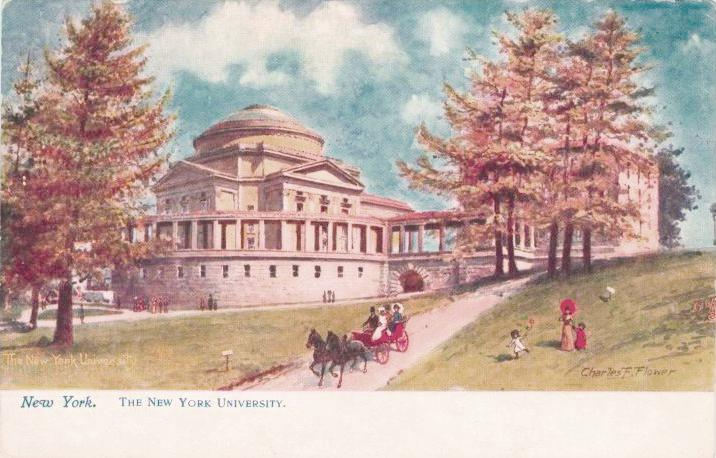
The Bronx campus of New York University was an attempt to affix the school into a more traditional campus. And a bucolic one too, from the looks of this postcard. [NYPL]
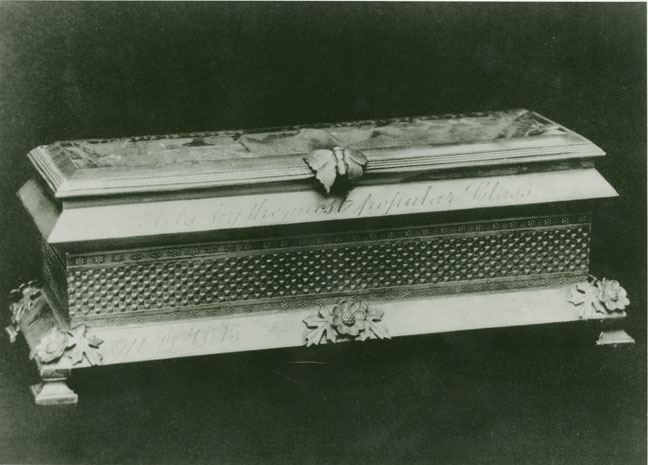
The silver casket (pictured here in 1915) which contained the remains of the coveted ‘Bun’. Who holds the Bun today? [Courtesy the NYU archives]
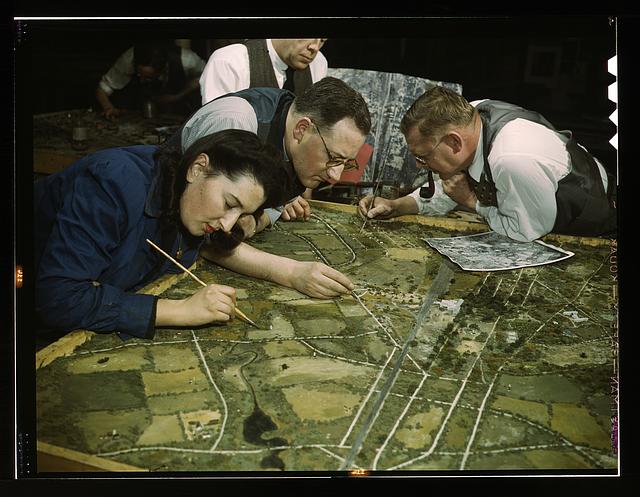
New York University’s Bronx campus became a critical training facility during the World Wars. According to the caption, this is a picture from 1943 of a ‘camouflage class’, with “men and women are preparing for jobs in the Army or in industry.” [LOC]
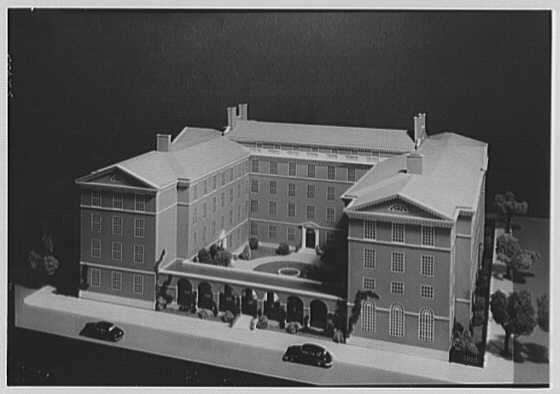
A 1948 model of the building that would become Vanderbilt Hall. Its construction on the northwest corner of Washington Square Park created tensions with the residents and activists of the neighborhood, one of many such conflicts NYU face in its expansion plans. [LOC]
“There are no lower outcasts in New York than the women who nightly creep out of the darkness and swarm the pavement of Bleecker Street…” L. Hereward, Eclectic Magazine, 1893
Sure, the Bowerywas a rough and rowdy avenue, but one looking for more alternative adventures in the late 19th century might have found themselves somewhere along Bleecker Street. The college bars and cafes which inhabit the street now seem practically chaste compared to some of the dives once housed there.
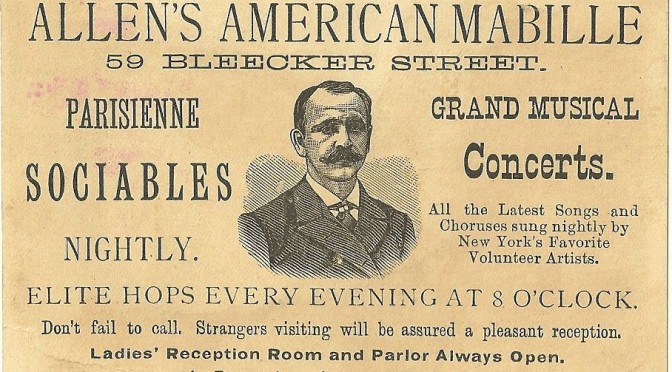
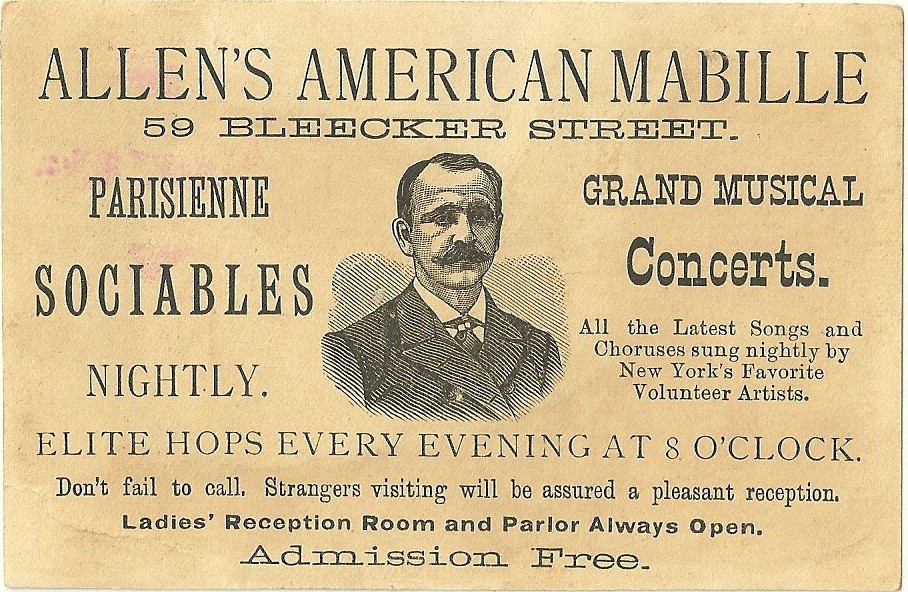
At 59 Bleecker Street, for instance, one could find The Allen’s American Mabille, a ‘Parisienne’ style dance hall and den of prostitution that survived several dozen police raids — police headquarters was literally a block away — and made Allen one of the infamous proprietors in Manhattan, responsible for “the ruin of more young girls then all the dive keepers in New York.” [source]
It joined a collection of prostitution houses along Bleecker and east of Washington Square Park, so many that the neighborhood was sometimes known as Frenchtown, and not because of the fine cooking.
But American Mabille and the other ‘Paris’ houses, from all appearances, specialized in heterosexual couplings. A few places on Bleecker catered to male encounters and often of the most flamboyant kind, if accounts are to be believed. (Keep in mind the hysteria of the late 19th century press!)
The most famous of these was The Slide at 157 Bleecker Street, a basement dive filled with men in drag, horrifying proper New Yorkers with clientele “effeminate, degraded, and addicted to vices which are inhuman and unnatural” according to contemporary scandal sheet descriptions.
The Slide is somewhat well-known today as it shares the same address as rock venue Kenny’s Castaways.
Down the street from The Slide was the Black Rabbit at 183 Bleecker Street, another dive with a mixed clientele, known for scandalous sex shows, from the likes of the ‘Jarbean fairy’ and a female ‘sodomite for pay’. Like many of the others, it survived with sizable bribes to the police. The bar even scandalized thieves. In 1901, a reporter from McClure’s Magazine entered the Black Rabbit with a pickpocket who replied, “[T]his is dead tough. I wouldn’t allow this, ‘f I was the chief….I like an open town where everything goes all right enough, but I’d douse the glim here.” (douse the glim = turn out the lights)
Today, the historically themed 1849 Restaurant occupies the Black Rabbit’s address.
Nearby The Slide was Frank Stephenson’s Black And Tan at 153 Bleecker, “a place of bad repute“, specializing in mixed race heterosexual encounters, something most likely frowned upon even in many low-class Bowery dives. The phrase black-and-tan was used to describe other halls where people of different races drank and caroused together.
Here’s a chilling thought for the Halloween season: if you’re visiting one of New York’s many amazing parks and squares, most likely you’re standing on land that was formerly used as a cemetery or potter’s field. And in some cases they even left the bodies behind!
If you’re fluent in your New York history, you probably know a couple of these. Most of these burial plots date from before 1851, when the city passed an ordinance forbidding further burials (without explicit permission) below 86th Street. Historical cemeteries (like those at Trinity Church and Old St. Patrick’s) and land with private vaults (such as the East Village marble cemeteries) were allowed to remain, and unique exceptions have been made, such as the singular grave of William Jenkins Worth at Madison Square.
Washington Square Park, Manhattan 1797-1825
“Where now are asphalt walks, flowers, fountains, the Washington arch, and aristocratic homes, the poor were once buried by the thousands in nameless graves.” (Kings Handbook of New York, 1893) When fashionable New Yorkers moved from the confines of lower Manhattan to the area of Greenwich Village, the burial ground was closed for business and a lovely park placed on top of it.
While this might seem truly morbid, in fact the city considered this a preventative and sanitary option. According to city records, a recommendation was made that “the present burial ground might serve extremely well for plantations of grove and forest trees, and thereby, instead of remaining receptacles of putrefying matter and hot beds of miasmata.”
Today, that ‘hot bed of miasmata’ serves as one of New York’s most bustling and vibrant outdoor spaces. But the city simply built over the burial ground. It was claimed during the 19th century that a blue mist could be seen hanging over the park at night, the creepy vapor of the remains underground.
Leverish Street and 71st Street, Queens
1765-1818?
A private cemetery once used by the Leverish family, a prosperous Long Island clan descended from English minister, the Rev. William Leverich. According to a family genealogy site: “The contemporary location of the burial ground is a rectangular plot located immediately behind the rear yards of several private residences that face on Leverich Street, and on the other side immediately behind a parking lot behind several apartment buildings that face on 35th Avenue at the intersection of 71st Street.”
Are the bodies still there? According to author Carolee Inskeep, “there is no evidence to suggest that the bodies were removed.” How many? Unknown
Liberty Place (at Maiden Lane), Manhattan
1700-1823
This burial ground served New York’s first Quaker congregation, formerly called the Little Green Street Burial Ground of the Society of Friends (Liberty Place was once known as Little Green Street). Its location is currently in the shadow of the New York Federal Reserve.
Are the bodies still there? Probably not, but the city gave them only six short months to move all the remains to a new location, so you never know what they might have left behind.
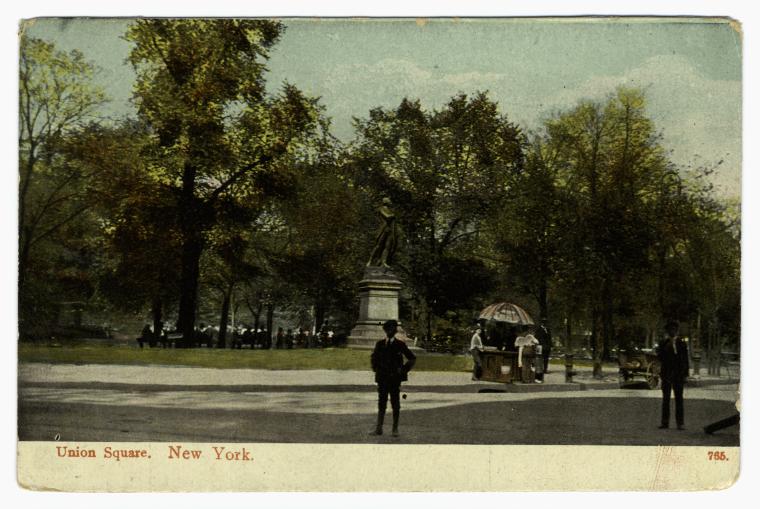
Union Square, Manhattan (above)
?-1807
Potter’s fields — where the poor or unclaimed were buried — moved frequently around the city as land values improved with the city’s growth. This particular area at 14th Street was once comfortably outside of town, but its proximity near Bloomingdale Road (the future Broadway) soon required its functions as a burial plot be transferred to other usable fields, like Washingon Square. The land here was transformed into the ellipse-shaped Union Place, a strolling park surrounded by an iron fence. By the 1830s, Samuel Ruggles would modify it further into New York’s toniest park Union Square, luring the wealthy who quickly built homes of ‘costly magnificence’ around it.
Are the bodies still there? Certainly not, given the park’s frequent renovations and the subway station right underneath.
Madison Square Cemetery, Manhattan
1794-1797
The short duration of this burial ground stems from the fact that it was used only to inter those who died at nearby Bellevue Hospital and the local almshouse during a devastating yellow fever epidemic. Later, with fears of a new war with England looming, the land was given to the U.S. Army as an arsenal, and the land that was later Washington Square became the official place to bury the dead.
Are the bodies still there? There’s some evidence to suggest that some of the remains were never moved.
How many? Unknown, although the epidemic took hundreds in the 1790s, and according to my estimation, there could be up to 1,000 buried here.
New York City Farm Colony Cemetery (Castleton Corners), Staten Island
1830-1910
This land served New York’s Farm Colony, an occupational asylum for the elderly and orphaned, and later a convalescent home for those with tuberculosis. The cemetery was once well kept, but today most of the tombstones are gone, and the land is virtually unmarked. Part of the farm colony has become part of the Greenbelt. The ruins of the Farm Colony are, frankly, unbelievable.
Are the bodies still there? Yes, the plots simply stopped being maintained How many? Hundreds
Old Newtown Cemetery (92th Street and 56th Avenue), Queens
Off and on between 1652-1880
A family cemetery that became a horse pasture in the 19th century, cut through with cross streets, then designated a New York city park in 1932. Today, it’s the Newtown Playground.
Are the bodies still there? Many (notably from reputable families) were moved piecemeal to family plots or to Hart Island, but it’s not clear that the city ever methodically moved all the bodies. But something else is definitely there. A Queens Annual Report from 1927, as referenced by the parks department, claims “[a]ll the old headstones, which stuck up like eyesores, were laid flat and covered with soil.” So enjoy that swing set, kids!
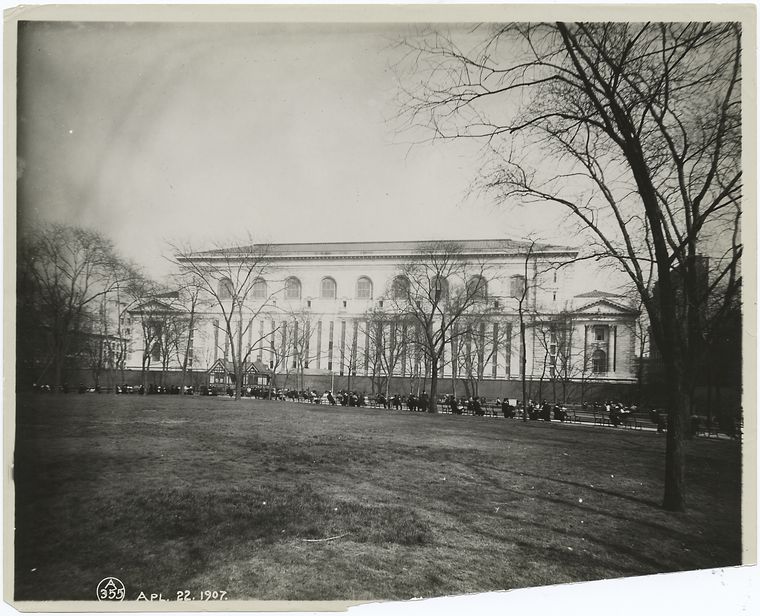
Bryant Park, Manhattan (above, from 1907)
1823-40 but possibly used as late as 1847
Yet another burial plot for paupers, still further north of city center. Soon however the adjoining land became an ideal spot to put the Croton Reservoir, supplying the city with drinking water. And it wouldn’t do to have a bunch of gravaes next to it, right? Following a short time as the location of the Crystal Palace, the land was turned into a park, named after William Cullen Bryant.
Are the bodies still there? The only thing you’re going to find under Bryant Park are miles and miles of library books, in tunnels owned by the New York Public Library.
Park Avenue and 49th Street, Manhattan
1822-1859
In the early 18th century, the area soon to become known as the richest street in America was home to railroad tracks, cattle yards, various grim asylums and, yes, Manhattan’s last potter’s field. When Columbia University moved uptown, it sat near the shoddy field, so decrepitly maintained that “the ends of coffins still protruded from the ground,” according to Edward Sandford Martin “a malodorous neighbor much in evidence and disrepute.”
In the late 1850s, the city forced the potter’s field off the island entirely and the bodies were slated for removal to Ward’s Island. Given municipal corruption and delays, however, the project took years, with train passengers often greeted with the sight of coffin stacks and grisly open pits.
Today, that former burial plot is occupied by the Waldorf=Astoria Hotel, built on the property in 1929, long since transformed by the Central Railroad and burial of tracks into Grand Central Station.
Are the bodies still there? Given the deep excavations underneath Park Avenue to accommodate trains and skyscrapers, I don’t imagine anything remains.
NOTE: Some of the dates above are estimates as record keeping for these kinds of things were hit and miss. Many dates are from Carolee Inskeep’s exhaustive survey of old New York burial grounds The Graveyard Shift.