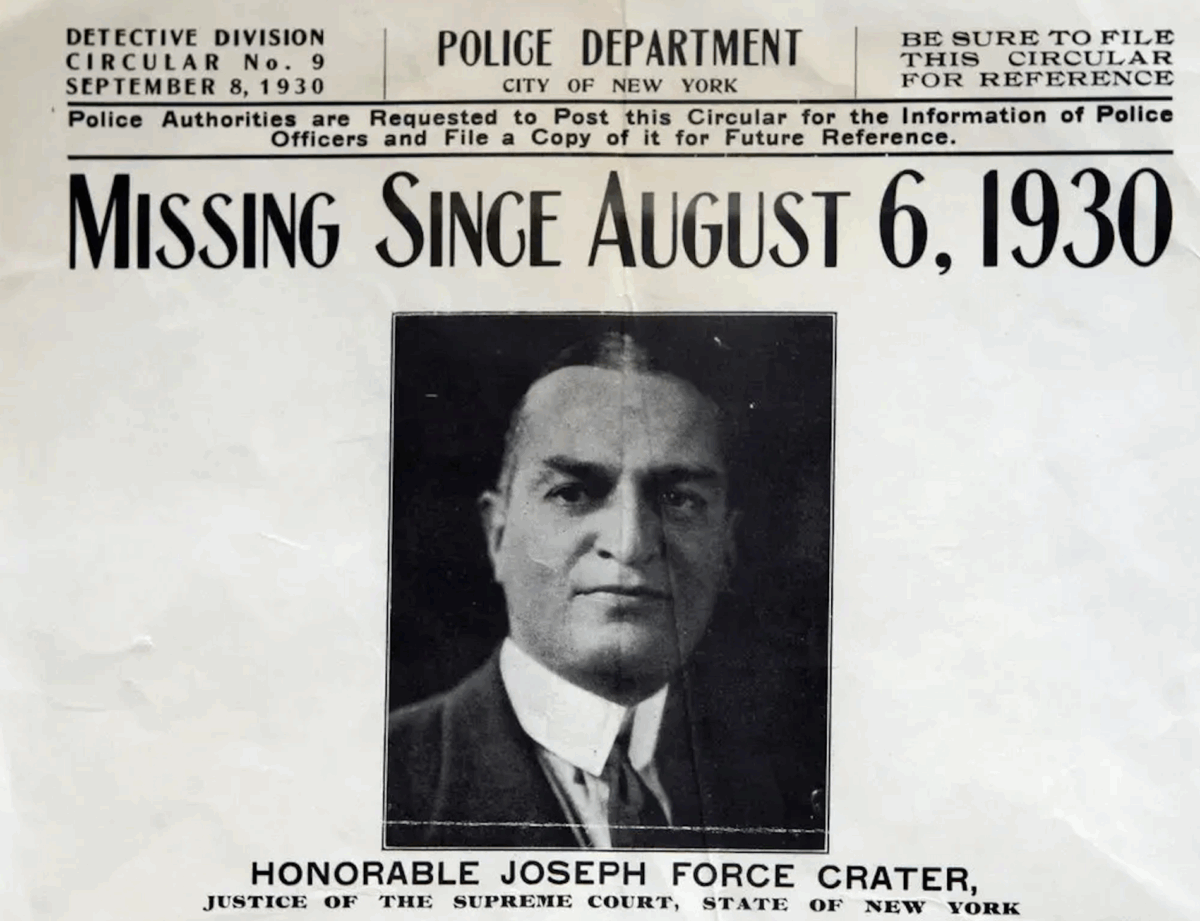
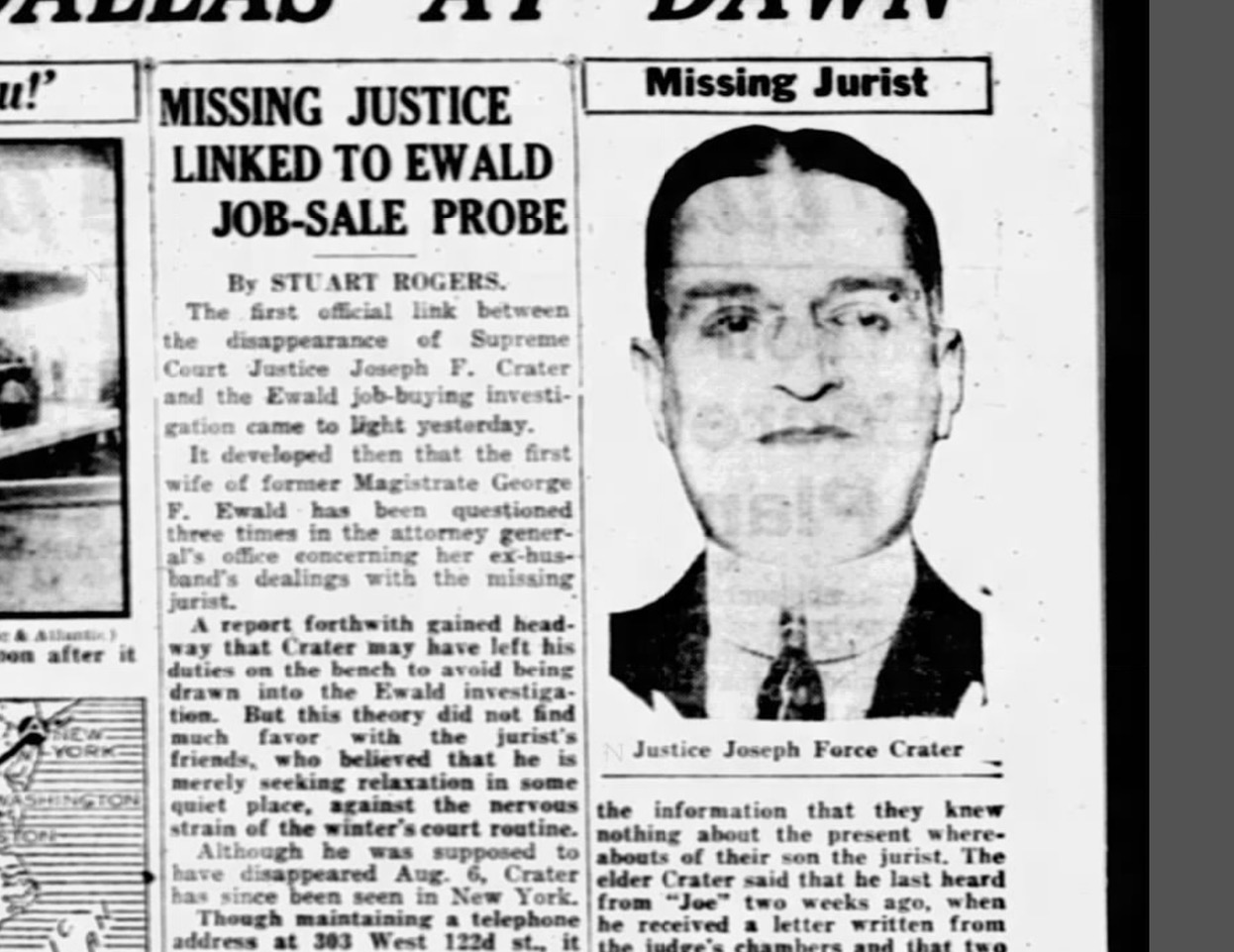
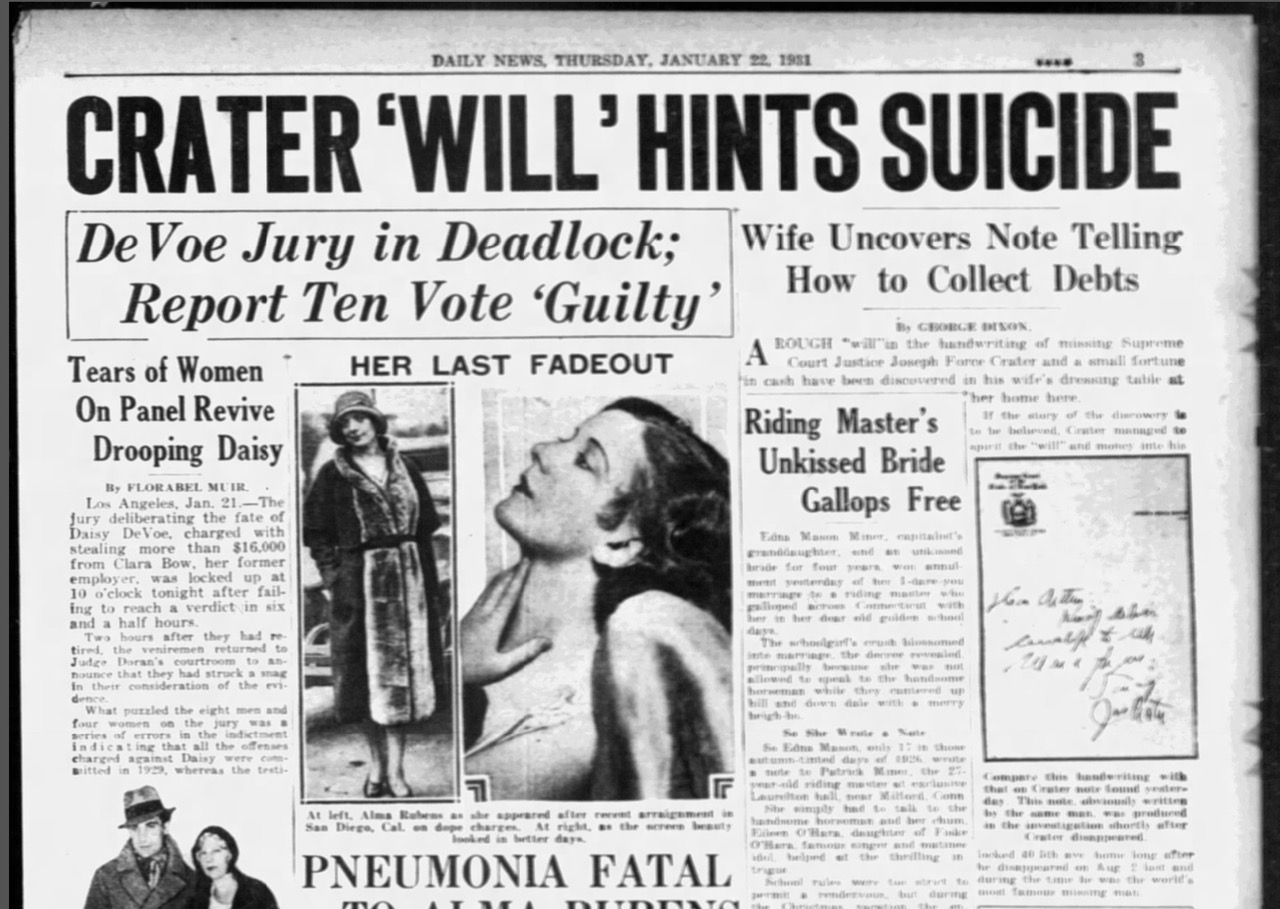
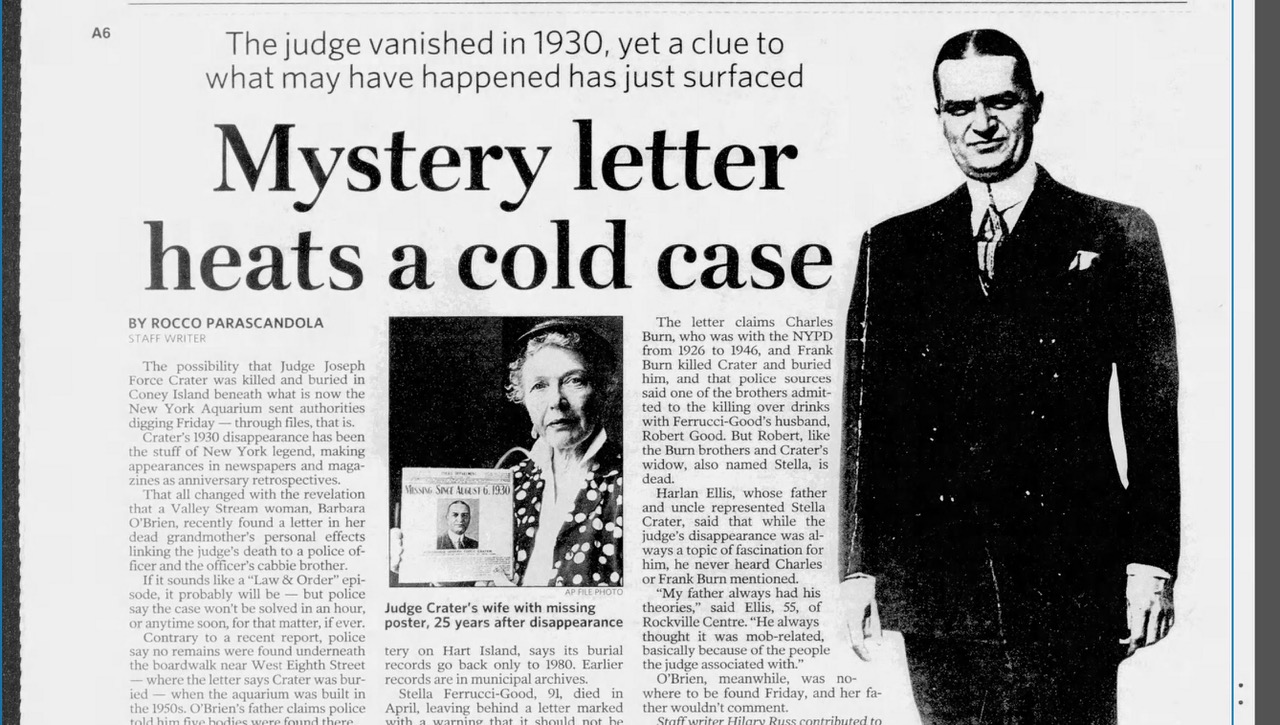
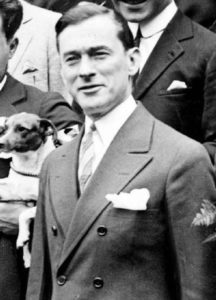
On August 6, 1930, Supreme Court Justice Joseph Force Crater stepped into a taxi on West 45th Street and vanished without a trace.
For 27 days, nobody reported him missing—not his wife waiting in Maine, not his Tammany Hall cronies, not the courts. When the story finally broke, it became the most famous missing persons case in New York history.
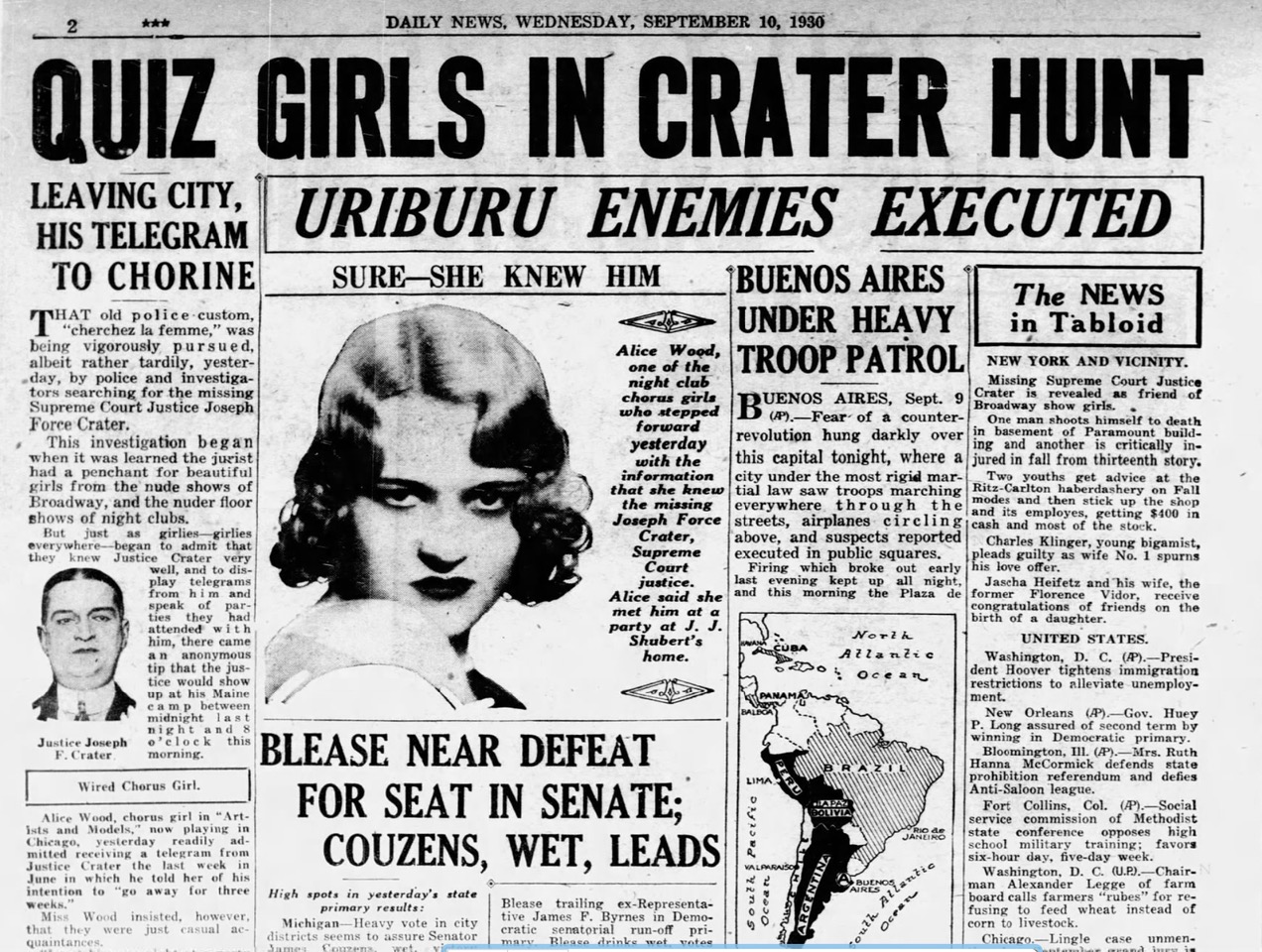
Judge Crater was a rising star in the city’s legal world—a Tammany Hall insider who’d just landed a prestigious judgeship paying $23,000 a year (about $450,000 today). But he was also tangled up in corruption, office-buying schemes, and shady real estate deals. He had a taste for Broadway chorus girls, speakeasies run by gangsters, and envelopes stuffed with cash.
His disappearance rocked the city and captivated the nation for decades. The phrase “to pull a Crater” entered the popular lexicon. Psychics came forward with tips. Grand juries investigated. Deathbed confessions emerged decades later.
This week, Tom takes you through one of the city’s greatest unsolved mysteries—a story of Tammany corruption, Broadway nightlife, and Depression-era New York. What happened on that hot August night? Was it murder? Blackmail? A carefully planned escape?
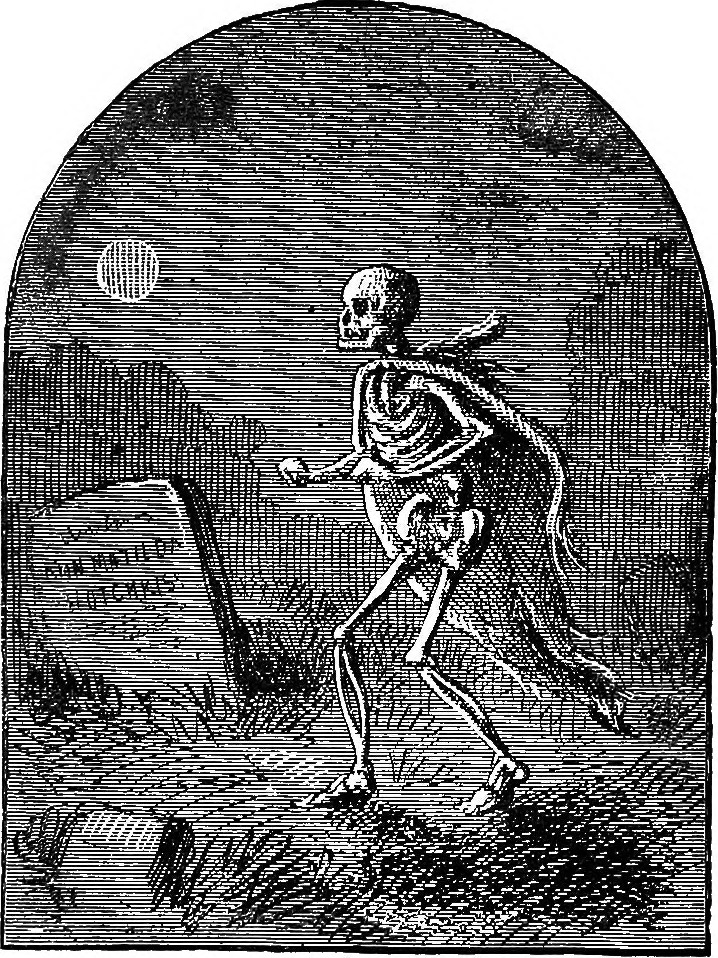
For this year’s annual Bowery Boys Halloween ghost stories podcast, we cautiously approach the dark secrets of Greenwich Village, best known for bohemians, shady and winding streets and a deeply unexpected history. You will never look at its parks and townhouses again after this show!
The stories featured on this year’s show:
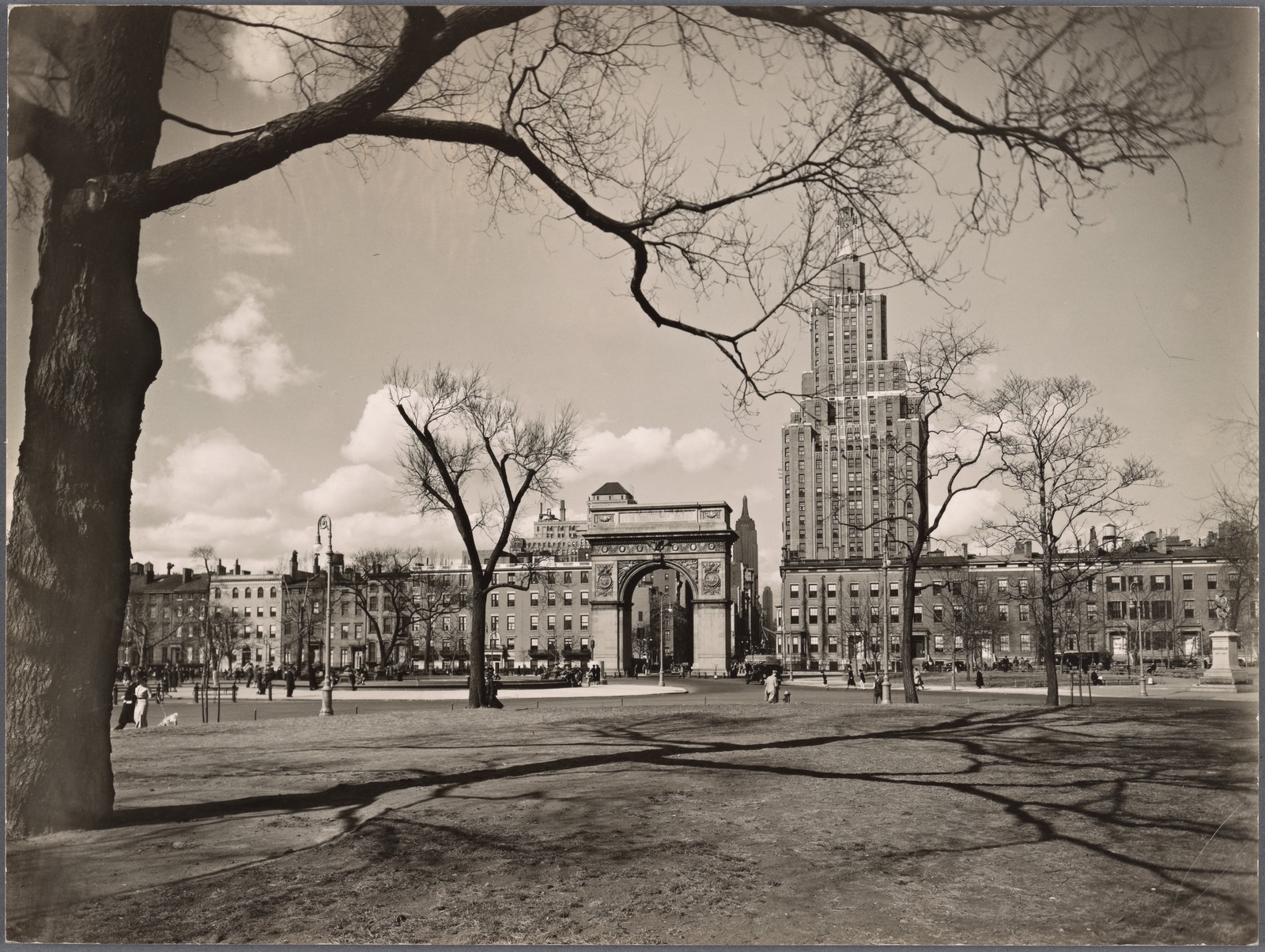
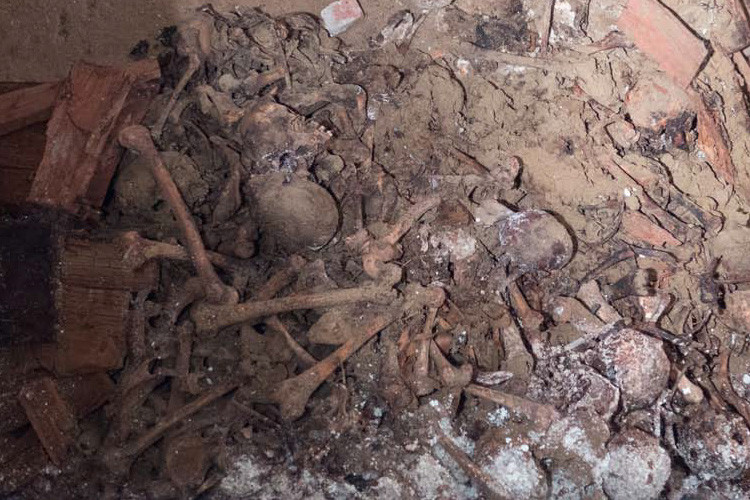
— The hidden history of Washington Square Park featuring the oldest tree in New York — nicknamed the Hangman’s Elm — and some truly grave secrets beneath its lovely walkways
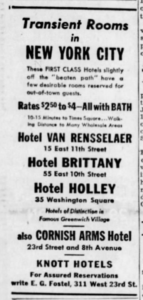
— The Brittany Residence Hall for New York University students has a very famous ghost, a child who experienced a horrible death and continued to haunt the halls of this former hotel, looking for friends to play with
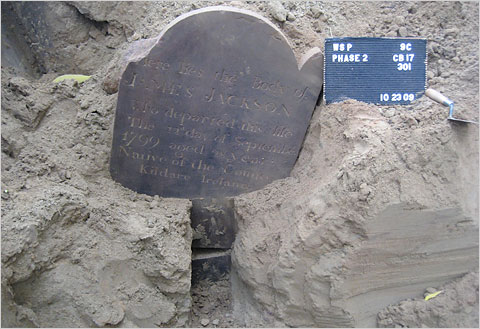
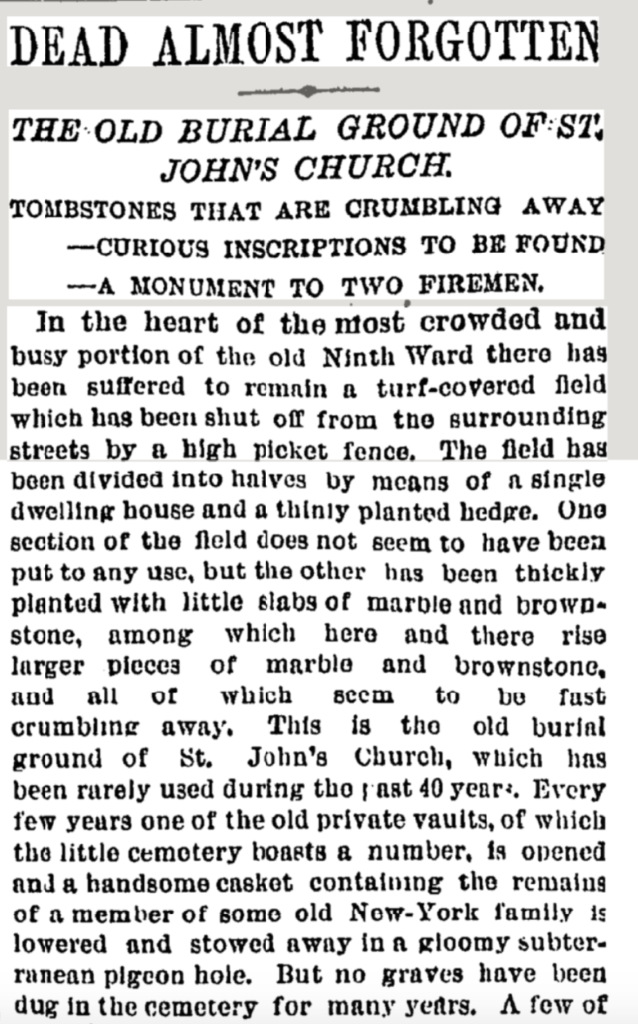
— Mayor Jimmy Walker once lived across from an old burial ground in the West Village. But when its ancient plots were replaced with a city park (later renamed after the former nightlife mayor), the bodies and the tombstones were mostly paved over. To this day, a single grave marker sits astride the baseball field, a sole reminder of the area’s macabre past.
— And finally the ceiling of a old Bank Street townhouse reveals an unusual object. This is an epic ghost tale that stretches from the mid 1920s to the early 1980s. And from the haunted streets of the West Village to a peaceful respite in Northern California.
The Bowery Boys: New York City History podcast is brought to you …. by you!
We are now producing a new Bowery Boys podcast every week. We’re also looking to improve the show in other ways and expand in other ways as well — through publishing, social media, live events and other forms of media. But we can only do this with your help!
We are now a member of Patreon, a patronage platform where you can support your favorite content creators for as little as a $1 a month.
Please visitour page on Patreon and watch a short video of us recording the show and talking about our expansion plans. If you’d like to help out, there are five different pledge levels (and with clever names too — Mannahatta, New Amsterdam, Five Points, Gilded Age, Jazz Age and Empire State). Check them out and consider being a sponsor.
We greatly appreciate our listeners and readers and thank you for joining us on this journey so far.
In 2009 a complete headstone was found in Washington Square Park, near the area of the dog park.
Washington Square Park Blog
In 2015, while working on the water pipes underneath the park, workers discovered this grisly find.
Department of Design and Construction
A 1945 advertisement for the Hotel Brittany and a couple other ‘off the beaten path’ hotels.
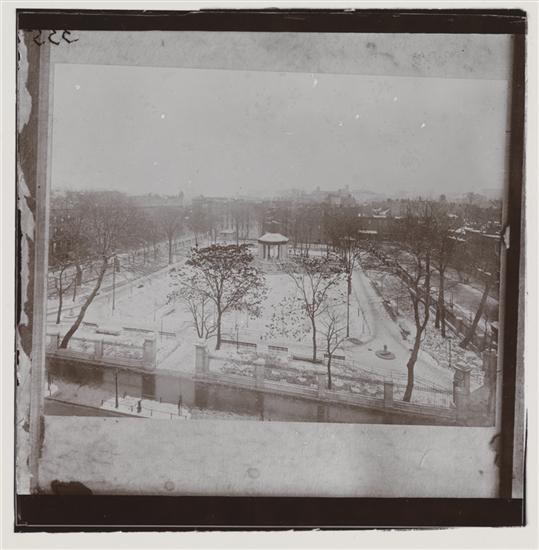
The former St. John’s burial ground was turned into a park in the 1890s. “One Door that has been opened: St. John’s Park in Hudson Street, — once a graveyard,” says Jacob Riis in the caption for his image of the park.
This show joins our growing collection of Bowery Boys Halloween specials. Creep yourself out while listening to these spooky legends of New York City. From the haunted woods of Van Cortlandt Park to spirits haunting Captain Kidd’s treasure on Liberty Island. Psychics at Carnegie Hall, unsettling spirits in Cobble Hill, undead party animals at Grand Central!
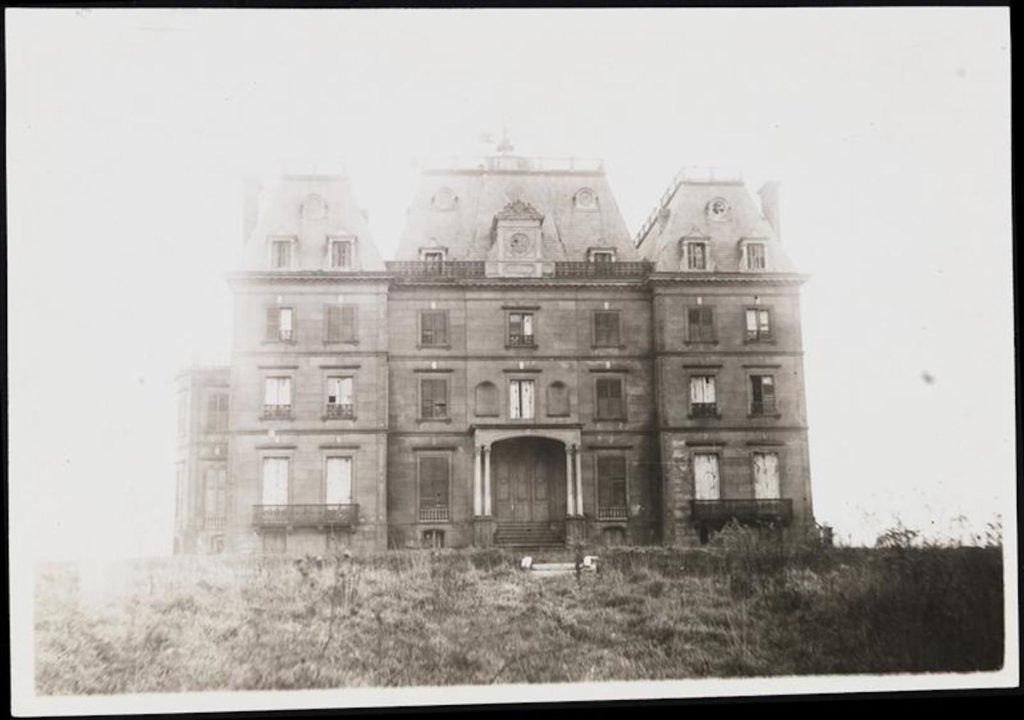
Highlighting haunted tales from the period just after the Civil War when New York City became one of the richest cities in the world — rich in wealth and in ghosts! In the Bronx once stood a haunted house in the area of Hunts Point, a mansion of malevolent and disturbing mysteries. Then we turn to Manhattan to a rambunctious poltergeist on fashionable East 27th Street. Over in Queens, a lonely farmhouse in the area of today’s Calvary Cemetery is witness to not one, but two unsettling and confounding deaths. And finally, in Staten Island, we take a visit to the glorious Vanderbilt Mausoleum, a historic landmark and a location with a few strange secrets of its own.
2015Haunted Landmarks of New York Ghost stories associated with the city’s most popular and recognizable places from baby-faced spooks at the Dakota Apartments to spirited revelers at Grand Central Terminal. What’s still lurking in the hallways of the Chelsea Hotel? And whatever you do tonight, do not linger too long on the Brooklyn Bridge at night! A figure from the bridge’s past may still be looking for his head.
2014 Ghost Stories of Brooklyn Four tales of spirits haunting Brooklyn back in the 19th century when it was still an independent city. A horrific gangly ghost on the railroad tracks, a historic Clinton Hill home with an invisible hand that would not stop knocking, a Coney Island hotel in 1894 with a secret in room 30, and the wacky wraiths of Bushwick’s Evergreens Cemetery.
Tales set mostly before the 1840s featuring sinister stories of murder, shipwreck and death by fright! Spirits of dead Lenape Indians may haunt the forest of Van Cortlandt Park. A romantic West Village restaurant finds its home inside the former carriage house of Aaron Burr. Might the vice president still be visiting? We bring you the legend of an old Brooklyn fort that once sat in Cobble Hill and terrified those who traveled along on old Red Hook Lane. And finally, over at St Paul’s Chapel, a respected old actor wanders the churchyard, looking for his body parts.
Grab a drink at the Ear Inn, one of New York’s most historically interesting bars, and you might meet Mickey, the drunken sailor-ghost. A frightening story of secret love at old Melrose Hall conjures up one of Brooklyn’s most popular ghostly legends. A woman is possessed through a Ouija board, but while she accept the challenge by one of New York’s first ghostbusters? And a tale of Harry Houdini,Sir Arthur Conan Doyle, and the line between the supernatural and mere sleight of hand.
What’s horrors are buried at the foot of the Statue of Liberty? What’s below a Brooklyn Catholic church that makes it so dreadfully haunted? What ghost performs above the heads of theatergoers at The Palace? And what is it about the Kreischer Mansion that makes it Staten Island’s most haunted home?
2010 Supernatural Stories of New  York The scary revelations of a New York medium, married Midtown ghosts who fight beyond the grave, a horrific haunting at a 14th Street boardinghouse, and the creepy tale of New York’s Hart Island.
2009 Haunted Tales of New York: Urban Phantoms The secrets of the restless spinster of the Merchants House, the jovial fright of the Gay Street Phantom, the legend of the devil at Spuyten Duyvil Creek, and the spirit of a dead folk singer.
2008 Spooky Stories of New York The drunken spirits of the Algonquin, the mysteries of a hidden well in SoHo, the fires of the Witch of Staten Island, and ‘the most haunted brownstone in New York.’
2007 Ghost Stories of New York The ghosts of a tragic Ziegfeld girl, a scandalous doyenne of old New York, a bossy theater impresario and the ghoulish bell-ringer of St. Mark’s-in-the-Bowery.
Here are the locations mentioned in all of our ghost podcasts:
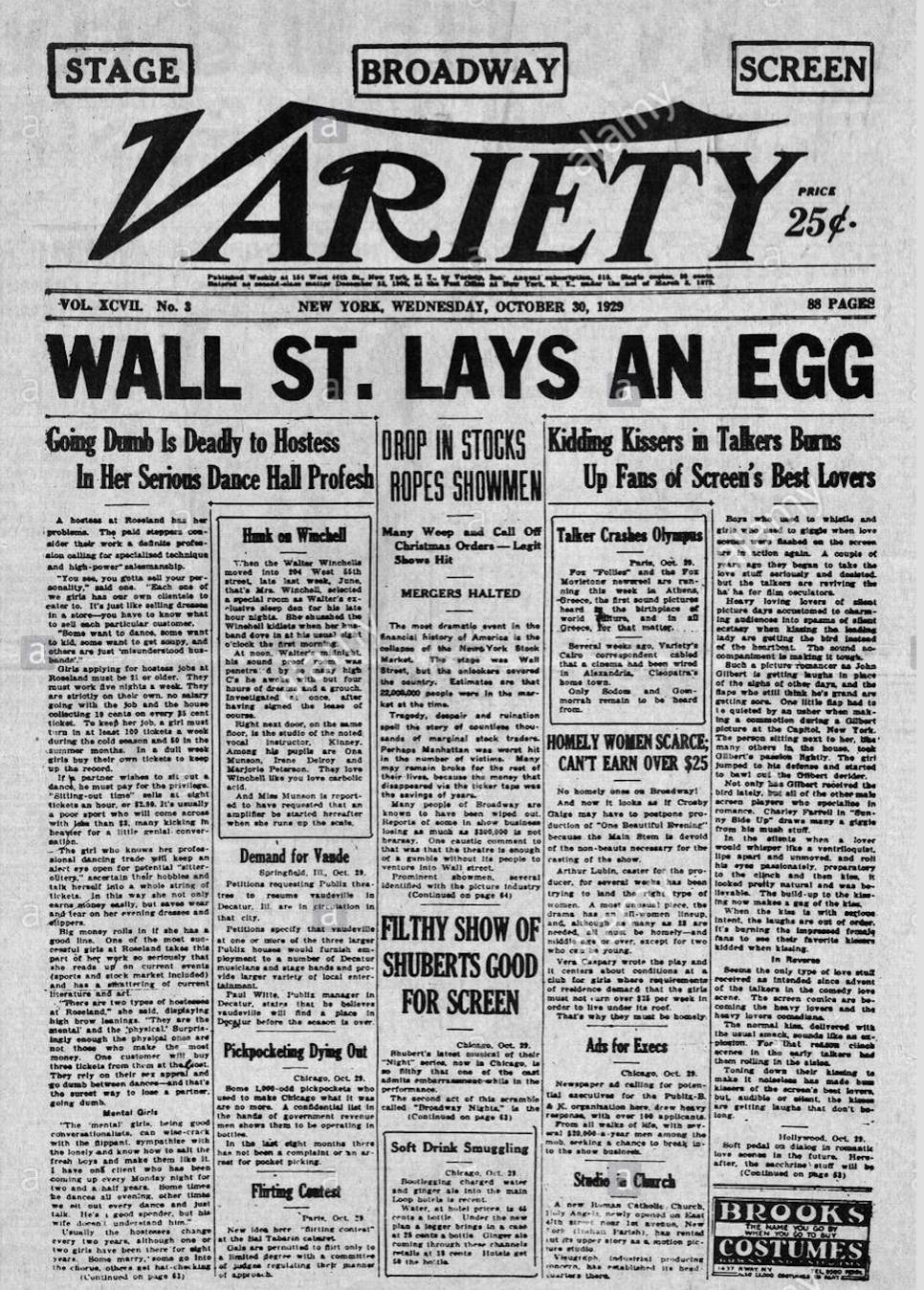
Something so giddy and wild as New York City in the Jazz Age would have to burn out at some point. But nobody expected the double catastrophe of a paralyzing financial crash and a wide-ranging government corruption scandal.
Mayor Jimmy Walker, in a race for a second term against a rising congressman named Fiorello La Guardia, might have had a few cocktails at the Central Park Casino after hearing of the pandemonium on Wall Street in late October 1929.
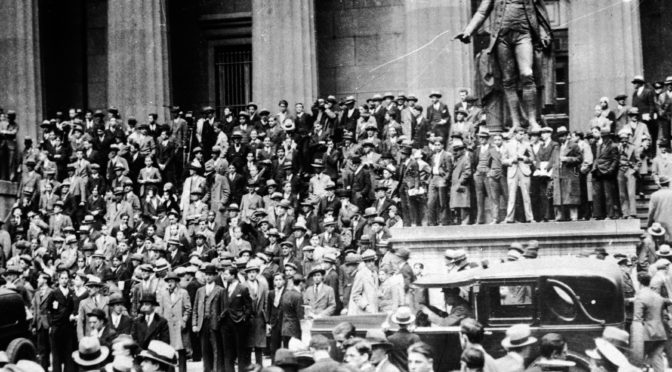
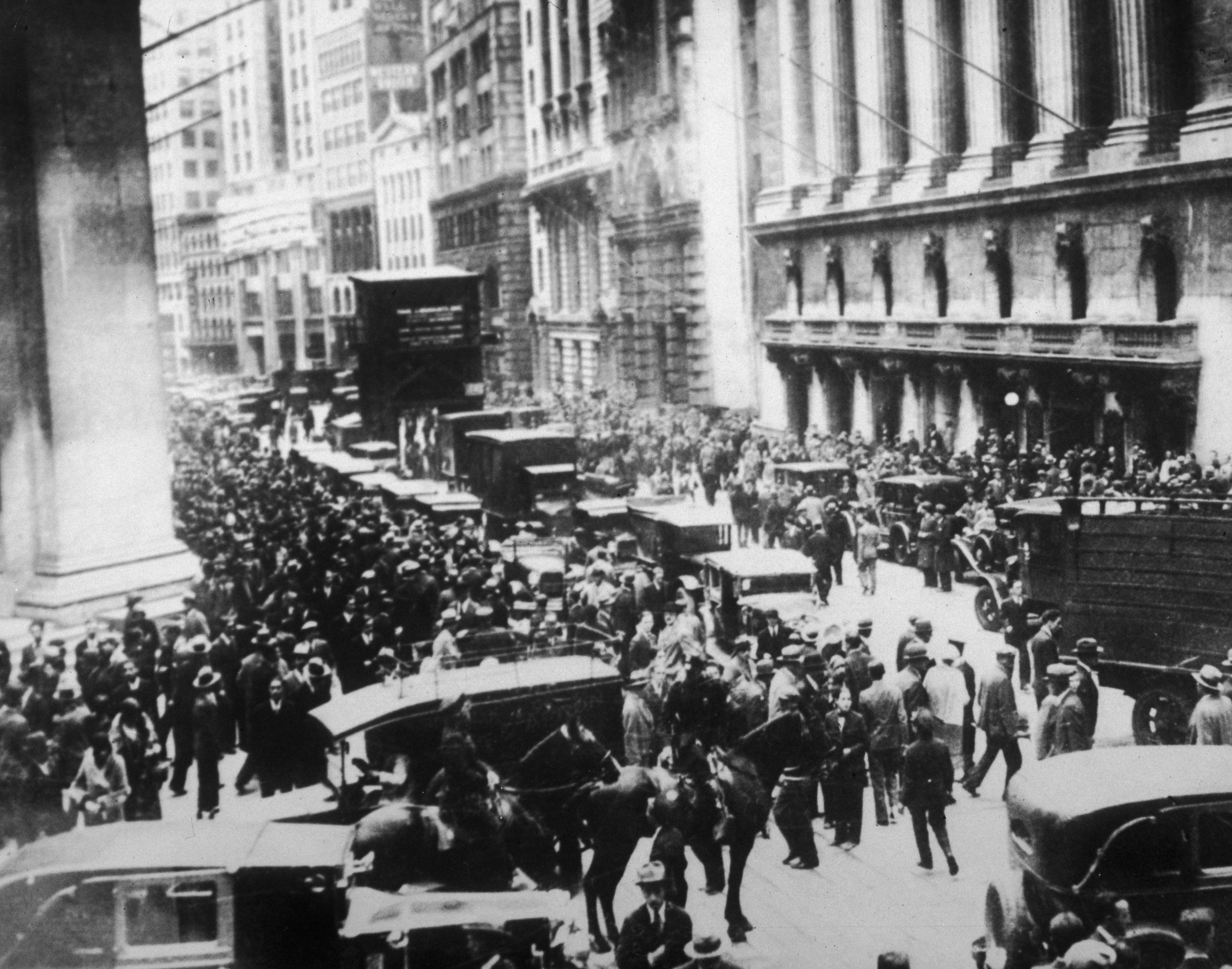
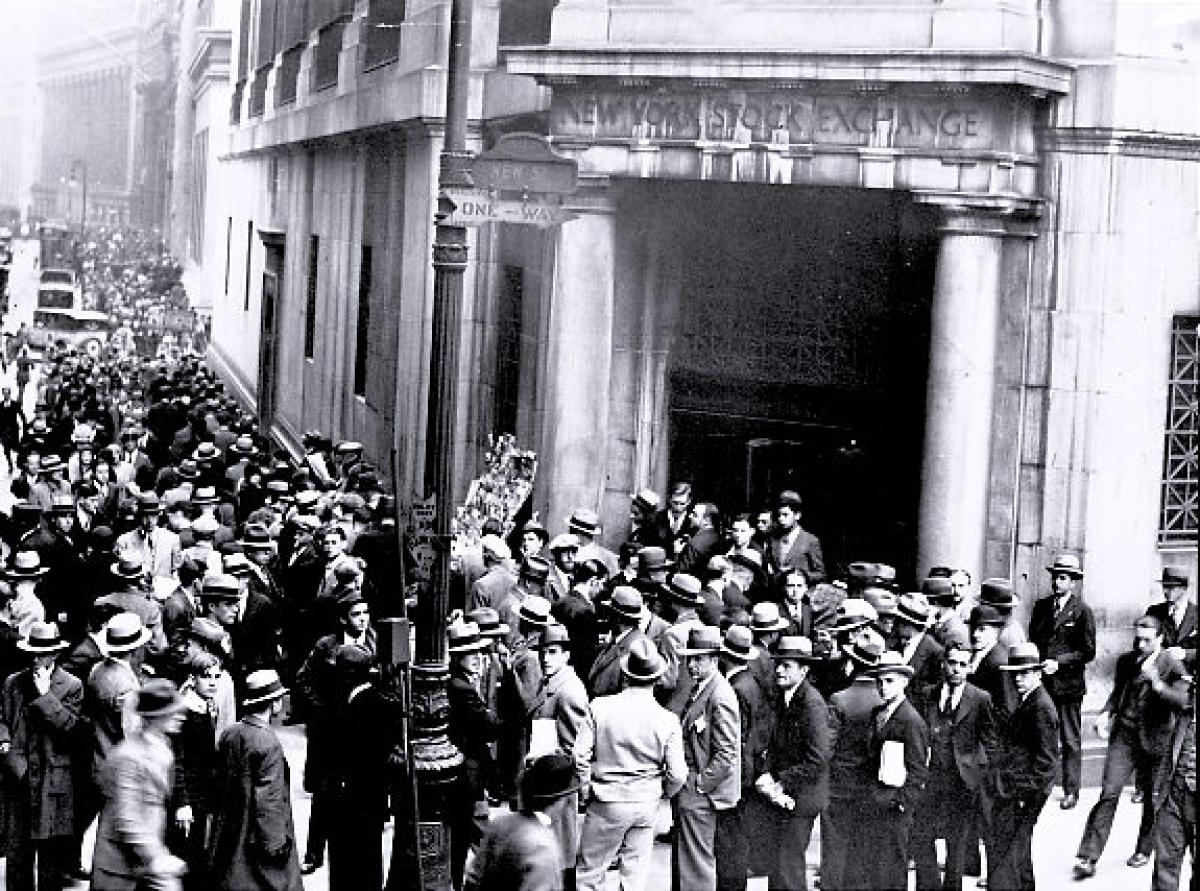
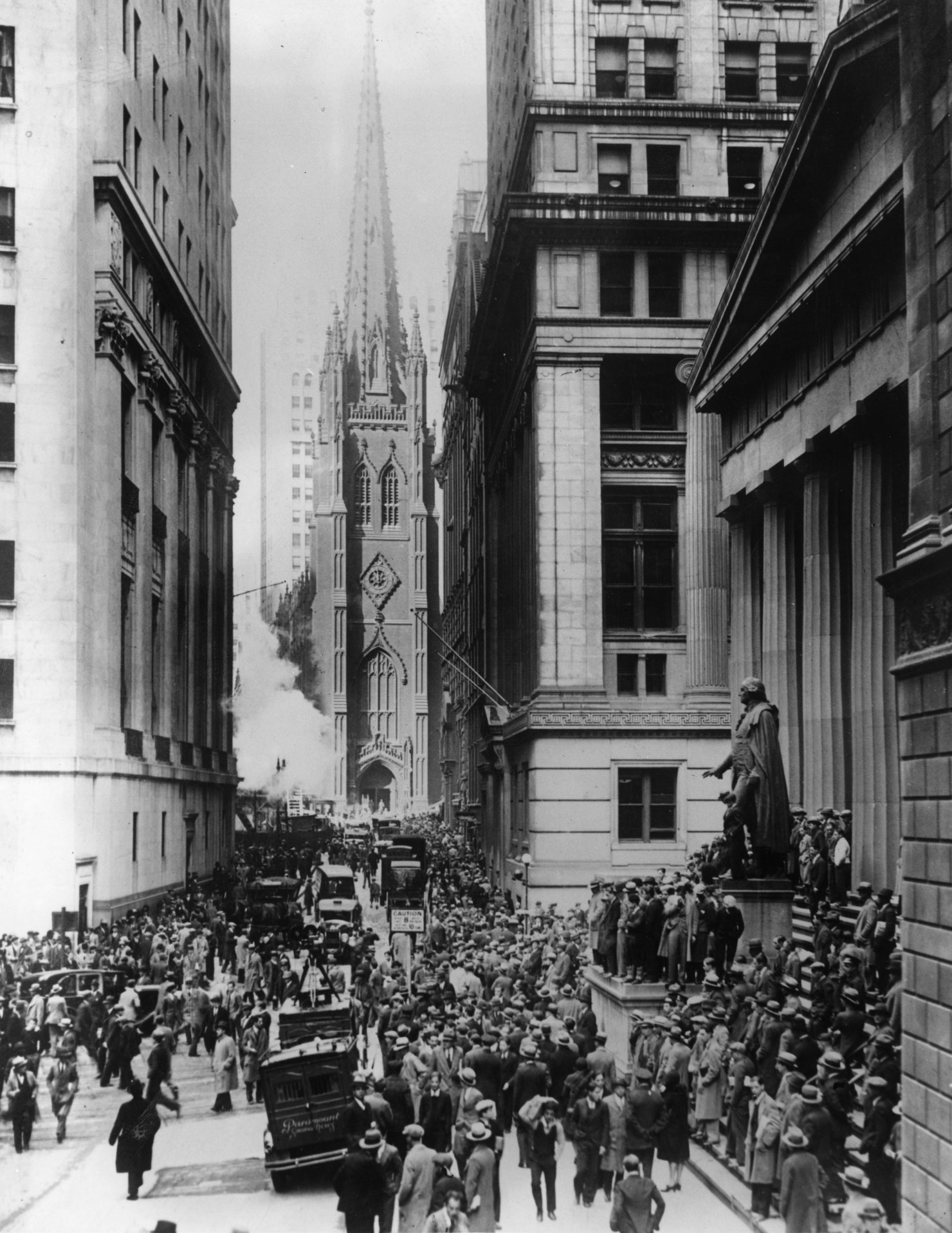
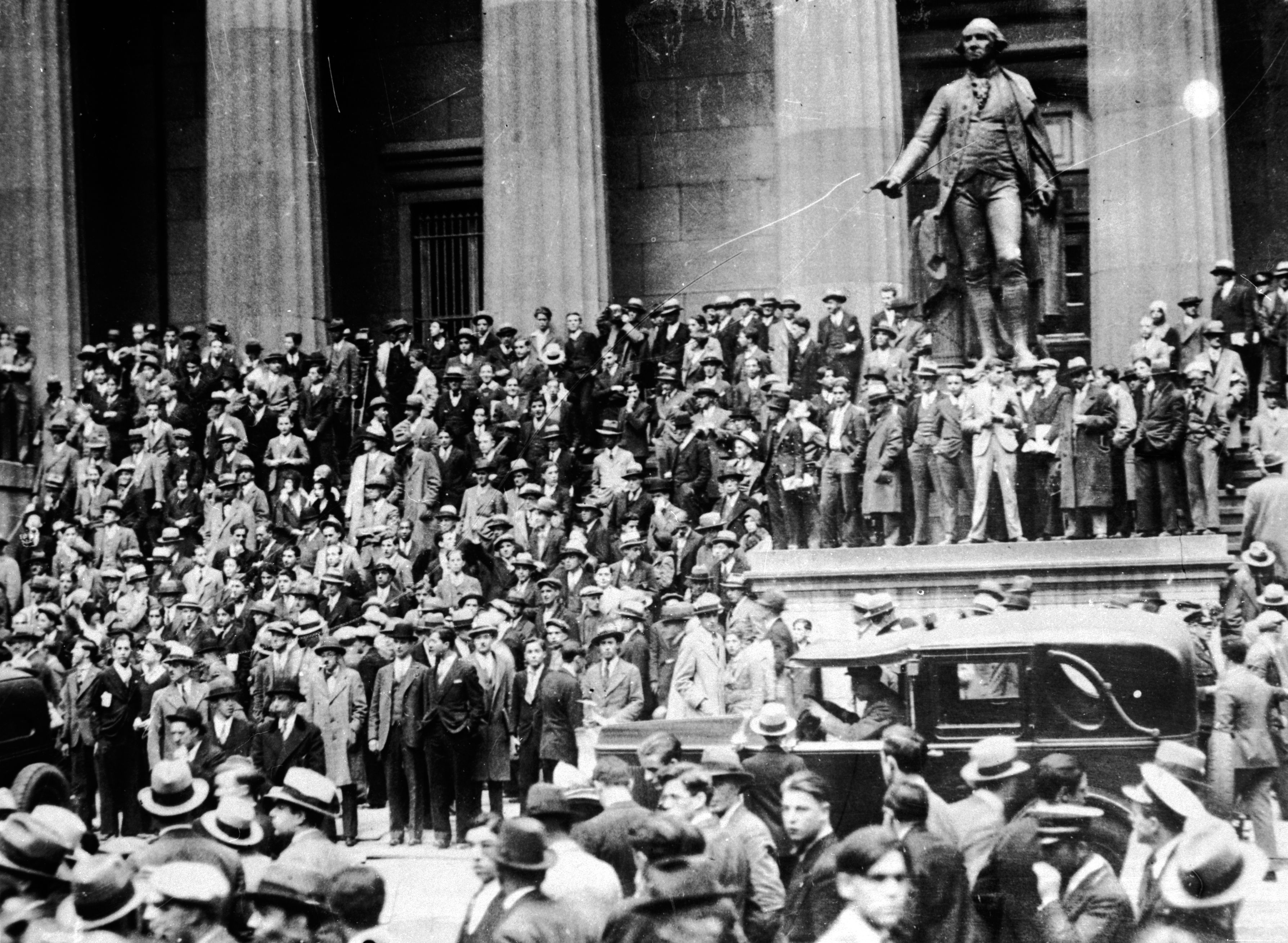
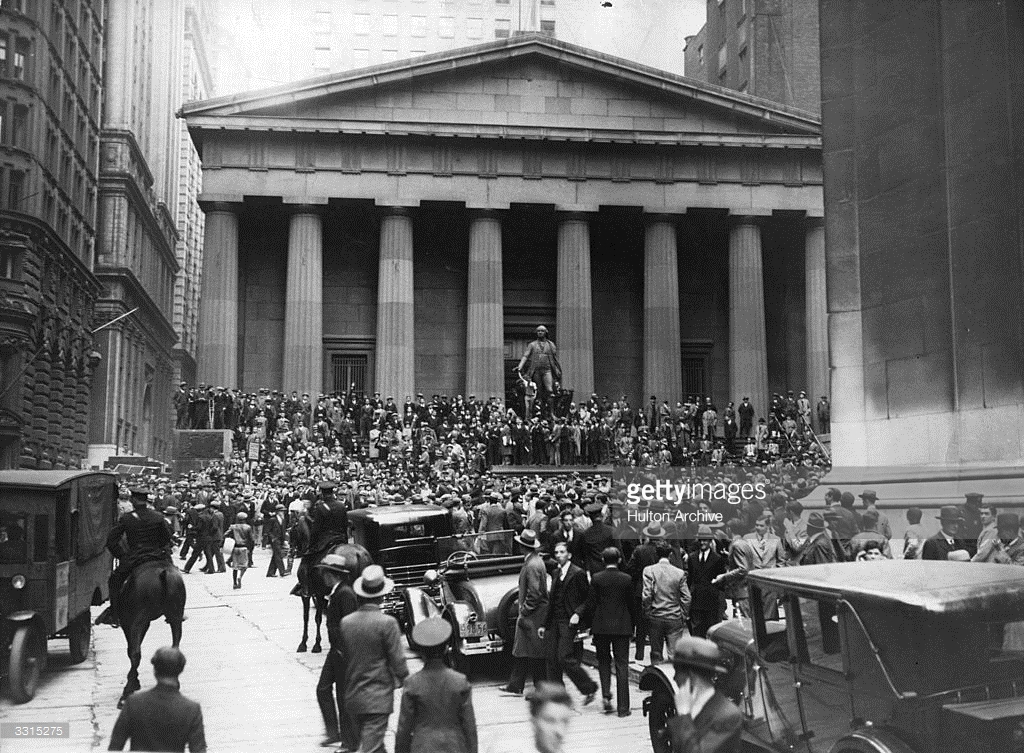
The irresponsible speculation fueling the stock market of the Roaring 20’s suddenly fell apart, turning princes into paupers overnight. Rumors spread among gathering crowds in front of the New York Stock Exchange of distraught traders throwing themselves out windows.
And yet a more immediate crisis was awaiting the Night Mayor of New York — the investigations of Judge Samuel Seabury, steering a crackdown authorized by governor Franklin Delano Roosevelt to rid New York City of its deeply embedded, Tammany Hall-fueled corruption.
With the American economy in free fall and hundreds of New York politicians, police officers and judges falling to corruption revelations, the world needed a drink! Counting down to the last days of Prohibition….
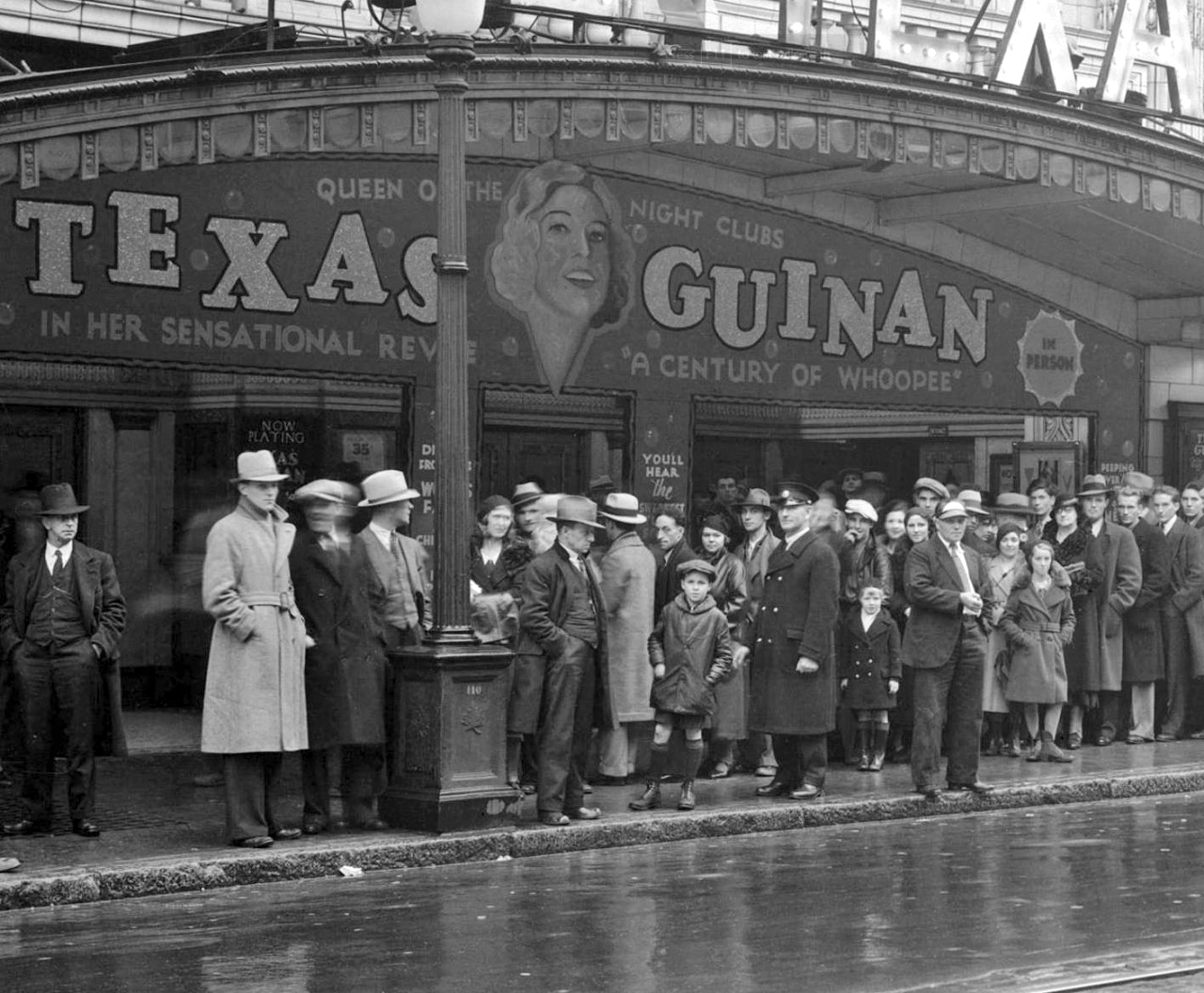
PLUS: The fate of Texas Guinan, the movie star turned Prohibition hostess who hit the road with a bawdy new burlesque — that led to a tragic end.
The song featured in this week’s episode was Bessie Smith’s “Nobody Knows You When You’re Down and Out”
The Bowery Boys: New York City History podcast is brought to you …. by you!
We are now producing a new Bowery Boys podcast every two weeks. We’re also looking to improve the show in other ways and expand in other ways as well — through publishing, social media, live events and other forms of media. But we can only do this with your help!
We are now a member of Patreon, a patronage platform where you can support your favorite content creators for as little as a $1 a month.
Please visitour page on Patreon and watch a short video of us recording the show and talking about our expansion plans.If you’d like to help out, there are five different pledge levels (and with clever names too — Mannahatta, New Amsterdam, Five Points, Gilded Age, Jazz Age and Empire State). Check them out and consider being a sponsor.
We greatly appreciate our listeners and readers and thank you for joining us on this journey so far. And the best is yet to come!
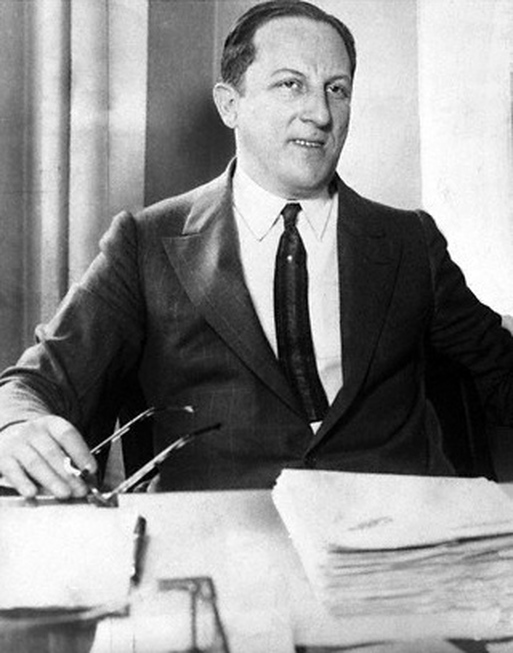
Arnold Rothstein — His murder would kick off a frenzy in New York’s organized crime syndicates and lead to an in-depth investigation into the police and local government
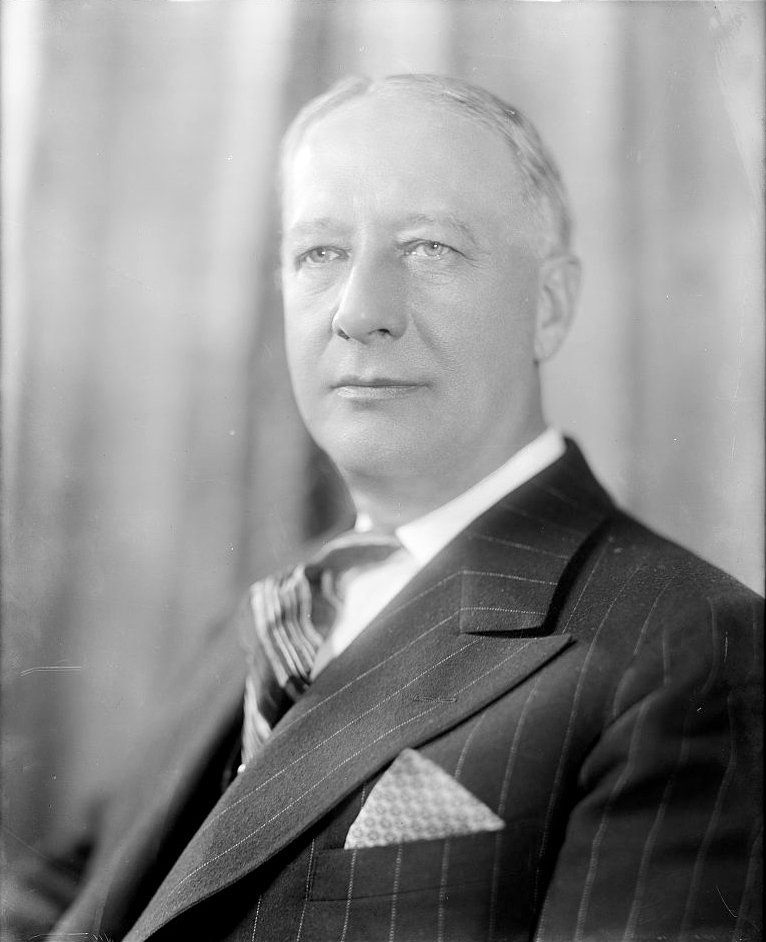
Al Smith — His unsuccessful bid for the presidency in 1928 led him to pursue more business-related projects, including the construction of the Empire State Building.
Harris & Ewing collection at the Library of Congress.
Mayor Jimmy Walker felt invincible at the start of his second term
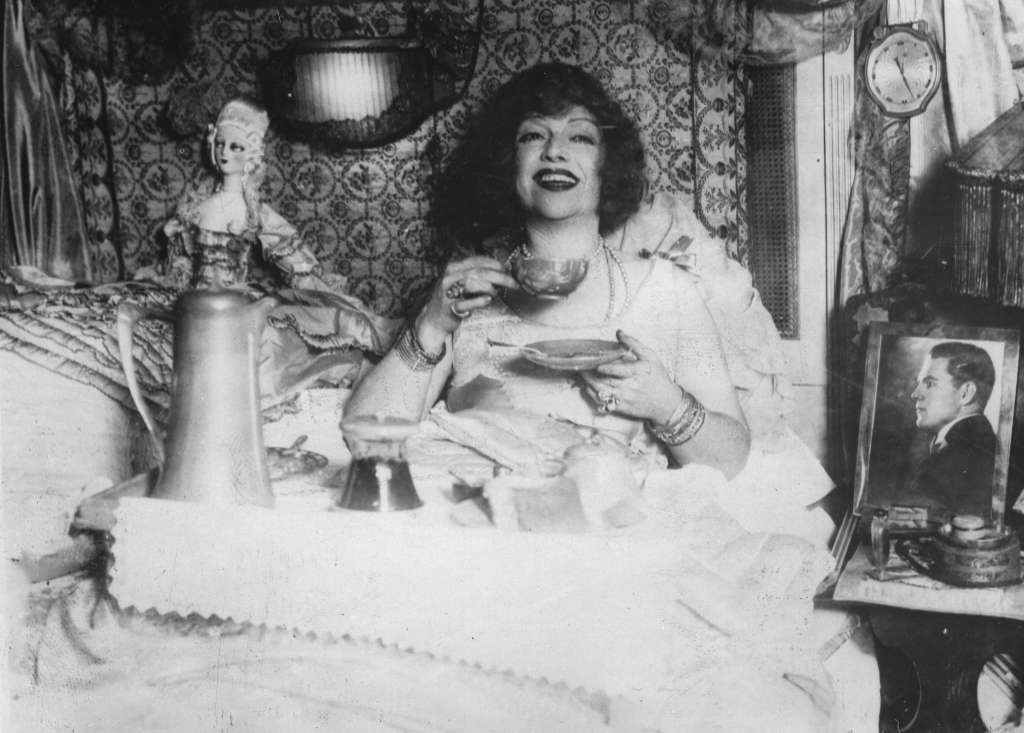
Texas Guinan eventually left the nightclub scene and returned to film and stage work. She’s pictured here in 1931 in Paris. She would later be denied entry into the country for her bawdy performances (at least, that’s what she claimed).
Getty Images
Betty Compton waited patiently for Walker from the sidelines, watching as his political fortunes collapsed in 1932.
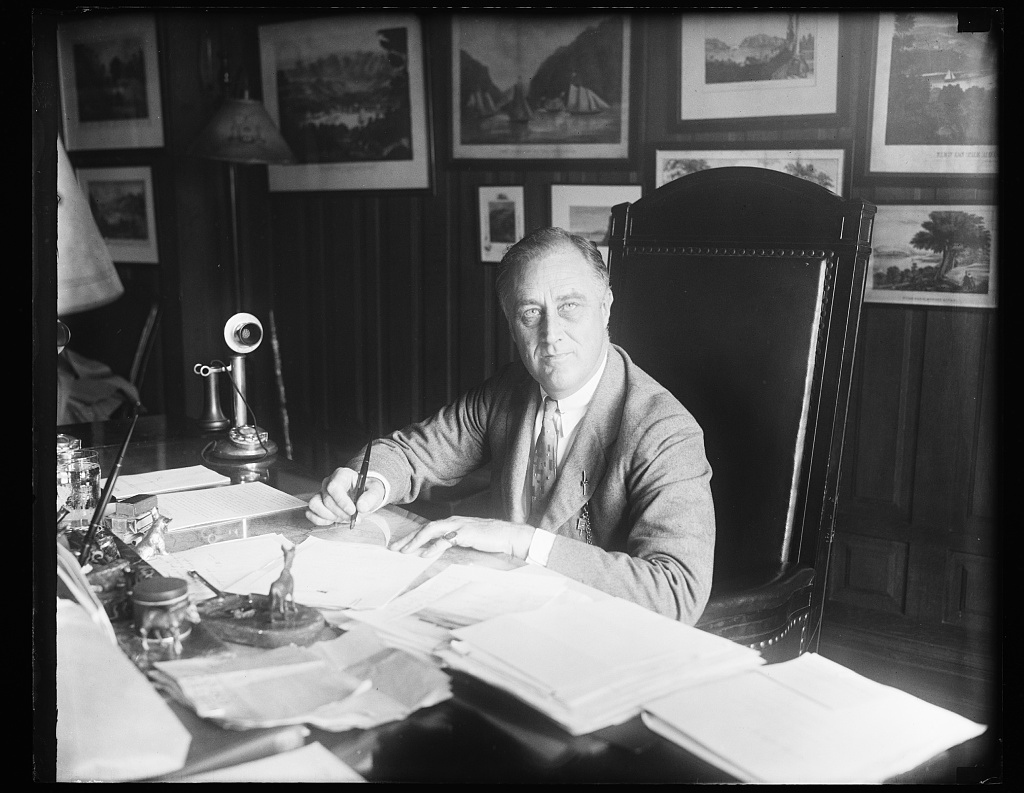
Franklin Delano Roosevelt — The governor of New York (and soon president of the United States) went after corruption during a busy campaign season.
Library of Congress
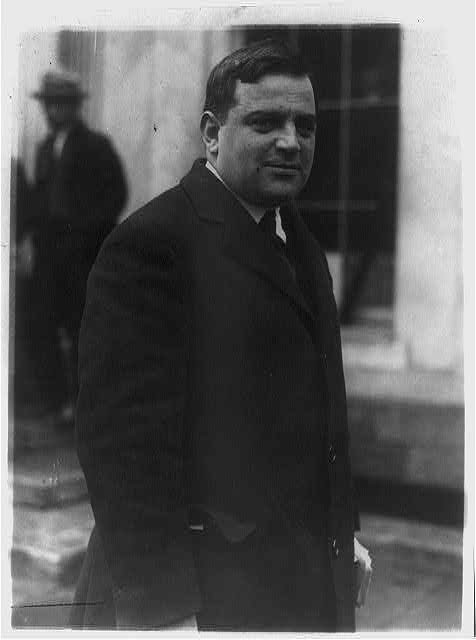
Fiorello La Guardia (pictured here in 1929) was an early supporter of Prohibition repeal and ran for mayor in 1929, losing to Walker.
Library of Congress
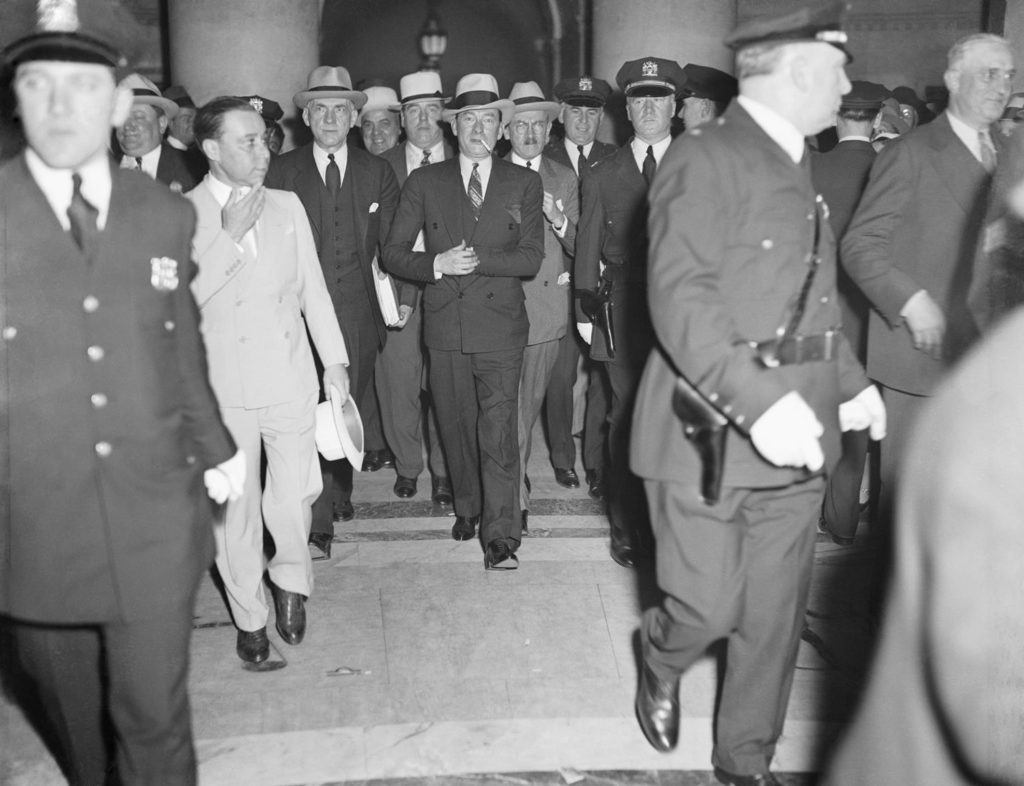
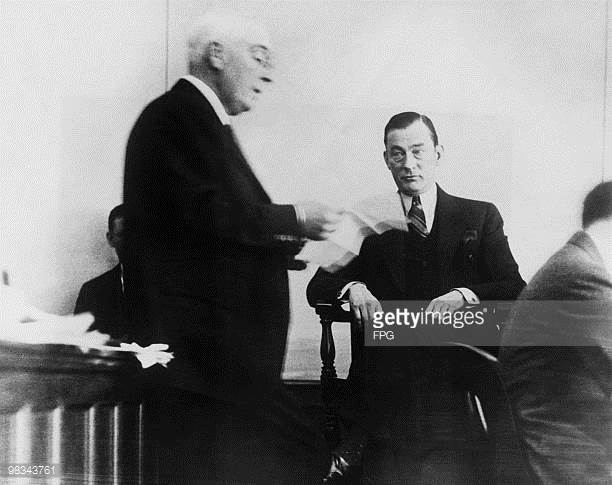
Samuel Seabury, questioning a nonplussed Jimmy Walker on the stand, succeeded in rooting out corrupt officials in public offices. With Roosevelt’s help, he even brought down the Night Mayor himself.
Getty Images
The Central Park Casino transformed into a swanky nightclub in 1929, a favored spot for Jimmy Walker
Courtesy New York Times
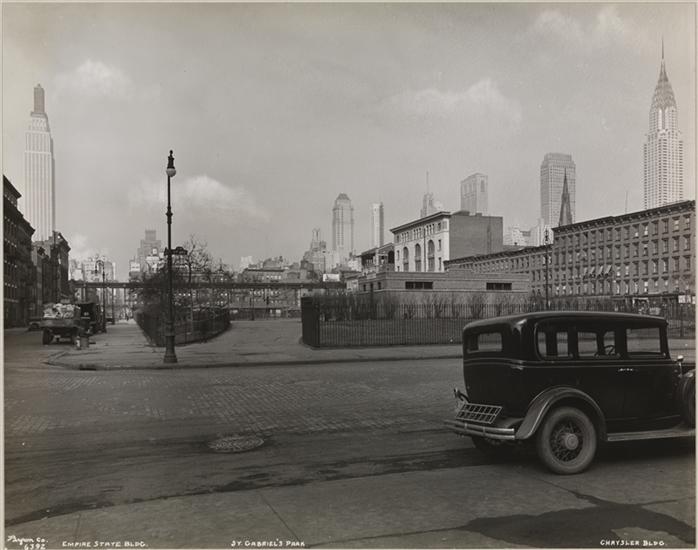
An interesting view of mid-Manhattan in 1931 (from St. Gabriel’s Park at First Avenue and 35th Street) with the newly completed Chrysler Building and the Empire State Building nearly completed.
MCNY/Byron Company
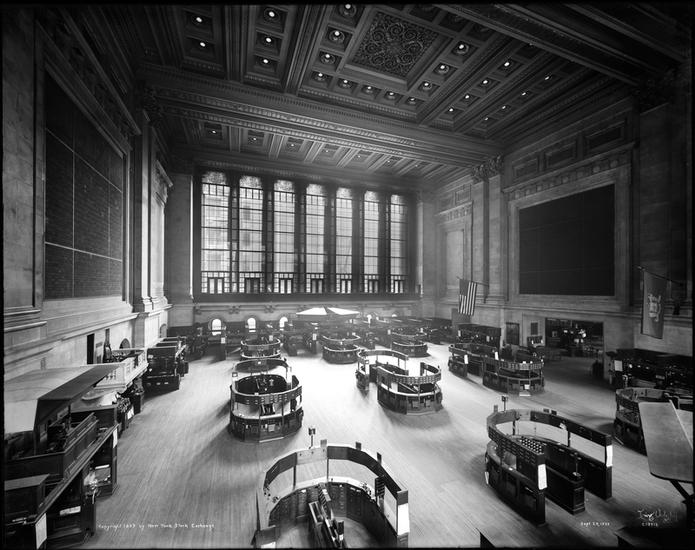
An ominous image of the New York Stock Exchange from September 1929, weeks before the crash.
Irving Underhill/MCNY
The streets outside the New York Stock Exchange were clogged with people for days, frantic scenes of anger, panic and heartbreak.
29th October 1929. (Photo by Hulton Archive/Getty Images)
New York Daily News
(Photo by Keystone/Getty Images)
A graphic look at the Wall Street Crash of 1929.
Wikicommons
Outside Vancouver’s Beacon Theatre on October 28, 1933, just a week before her death here in this city.
CORRECTION: Jimmy Walker’s second term began on January 1, not January 3.
For more information, check out the following books:
Dry Manhattan: Prohibition in New York City by Michael A. Lerner
The Great Crash by John Kenneth Galbraith
Once Upon A Time In New York by Herbert Mitgang
The Man Who Rode The Tiger: The Life and Times of Judge Samuel Seabury by Herbert Mitgang
Rothstein: The Life, Times, and Murder of the Criminal Genius Who Fixed the 1919 World Series by David Pietrusza
Jimmy Walker, the man who would become the mayor of New York during one of its most prosperous periods, was famously cavalier about politics. [Listen to our podcast onMr. Walker for more information.] But in the years before he became mayor, he actually spearheaded two laws that would change New York City and the state of New York forever.
The first brought one of America’s great pastimes back into vogue: boxing. The sport was technically illegal for much of the 19th century — which didn’t stop New York from becoming the boxing capital of the United States — until a 1911 law briefly brought back.
Reformers banned it again in 1917 only to be met head-on by a powerful and well-connected member of the New York state senate who also just happened to be a boxing enthusiast — Jimmy Walker. The 1920’s Walker Law would bring back the sport for good.
His second great legislative contribution would set the stage for civil rights laws across the country.
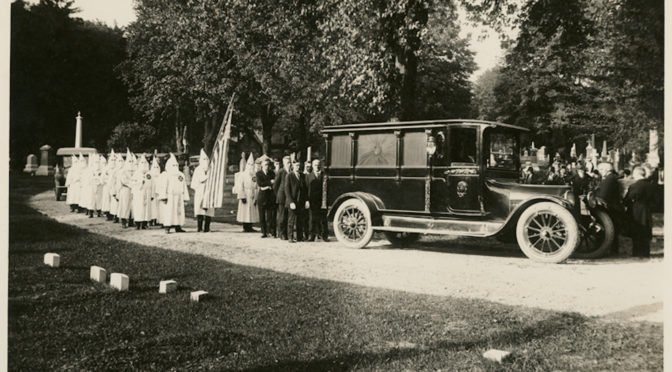
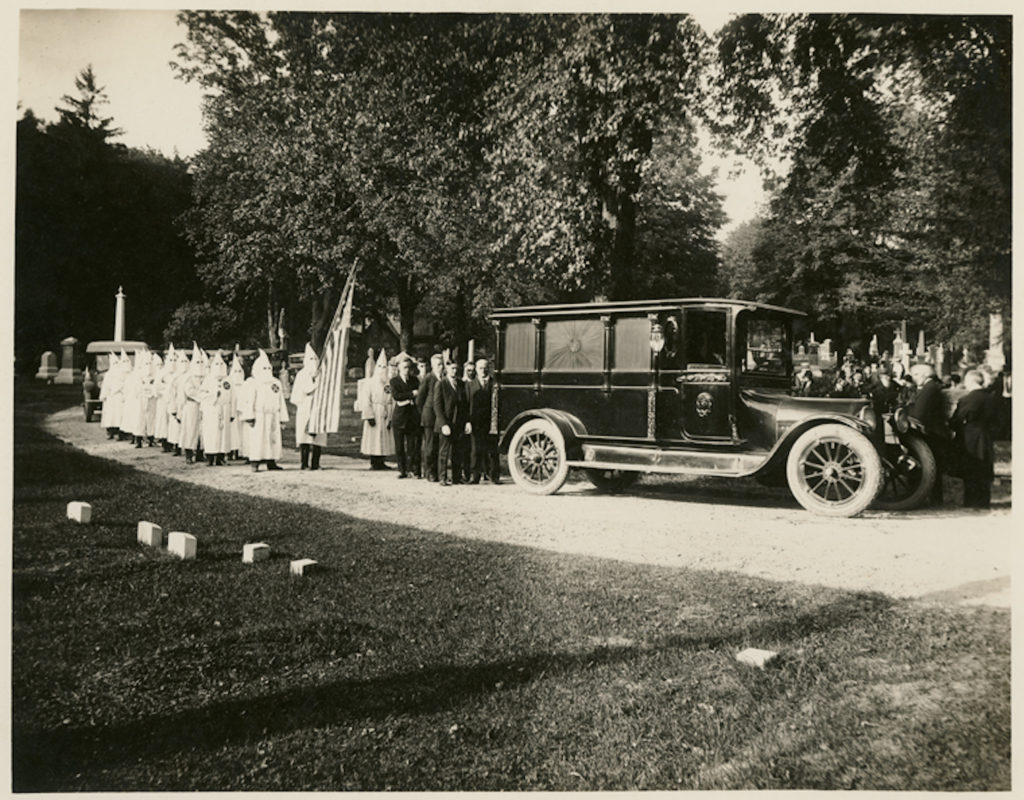
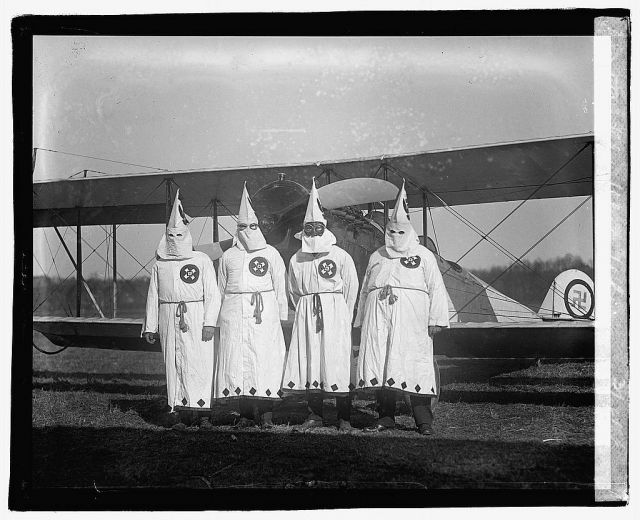
Below: Funeral procession for a Ku Klux Klan member, held in Cold Spring, Putnam County, New York, 1920s.
Courtesy NYPL
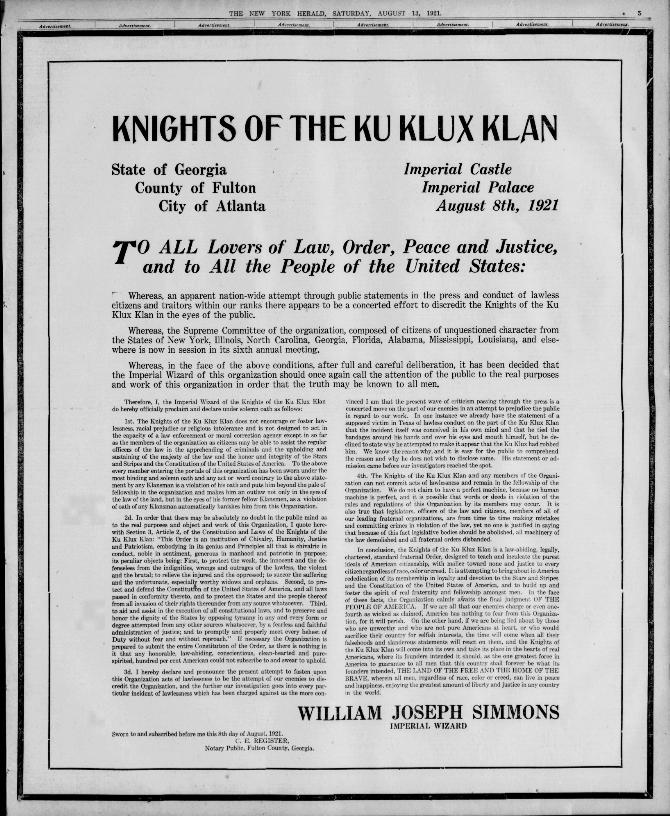
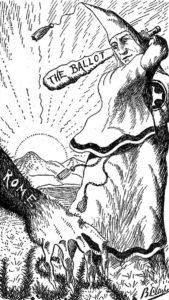
The Ku Klux Klan, a racist vigilante organization formed in the Reconstruction South, gained new prominence in the mid-1910s thanks to the popularity of the film The Birth of a Nation.
Feeding off anti-black, anti-Catholic and anti-immigrant fervor, the newly reinvigorated organization rose to power in the early 1920s in many big American cities. By 1922 there were 21 distinct klaverns in New York City alone.
But in a city full of powerful Catholics, immigrant groups of all types, and an empowered African-American population rising in Harlem, one might have expected a reactionary force like the KKK to be even bigger in New York City. That’s where Walker comes in.
Walker, born an Irish Catholic, was closely associated with Al Smith, the new governor of New York who was also Catholic. Both were Democrats and also aligned with the needs of the city’s Irish community. (Not to mention Tammany Hall, the political organization whose power had diminished since its Gilded Age glory days.)
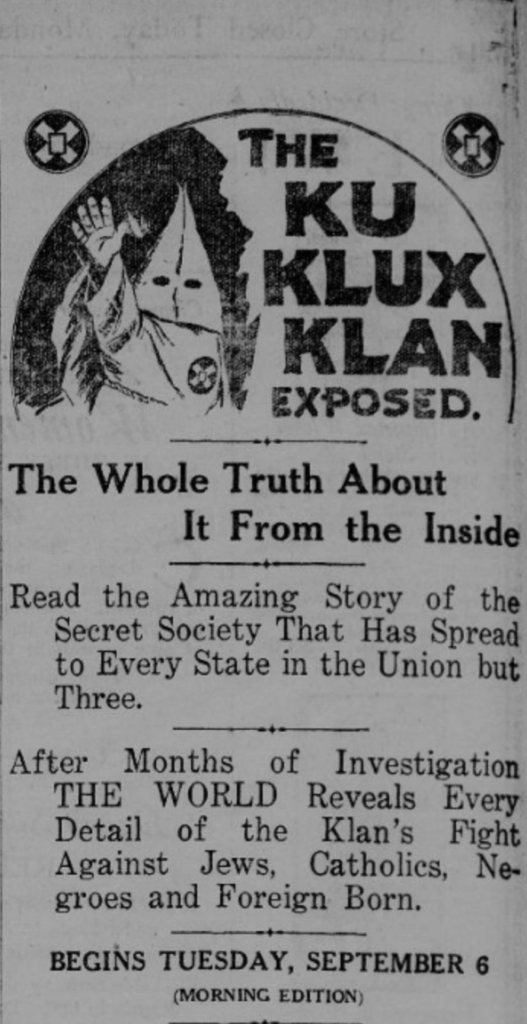
A rising swell of anti-KKK sentiment in New York City came in 1921 with the publication of a series ofdamning articles in the New York World, effectively neutralizing the klan’s influence in denser portions of the city. Mayor John Hylan “launchedan all-outwar” on the KKK, throwing them out of Manhattan wherever possible.
In no uncertain terms, Hylandeclared, “Do not leave a stone unturned to ferret out these despicable, disloyal persons who are attempting to organize a society the aims and purposes of which are of such a character that were they to prevail, the foundation of our country would be destroyed.”
But targeting the KKK was not merely a moral mission for Walker, the future mayor of New York City.
Nationally the KKK were a rising political power within the Democratic party of the 1920s. In fact the the 1924 Democratic National Convention, held at Madison Square Garden to select a presidential candidate, was almostderailed by their inclusion.
Smith, Walker’s ally, was planning on running for president in 1924. (He was overlooked that year but eventually became the party’s candidate in 1928). Limiting a hate group like the Ku Klux Klan — a hate group with rising power — within the state would certainly lessen their impact within the party.
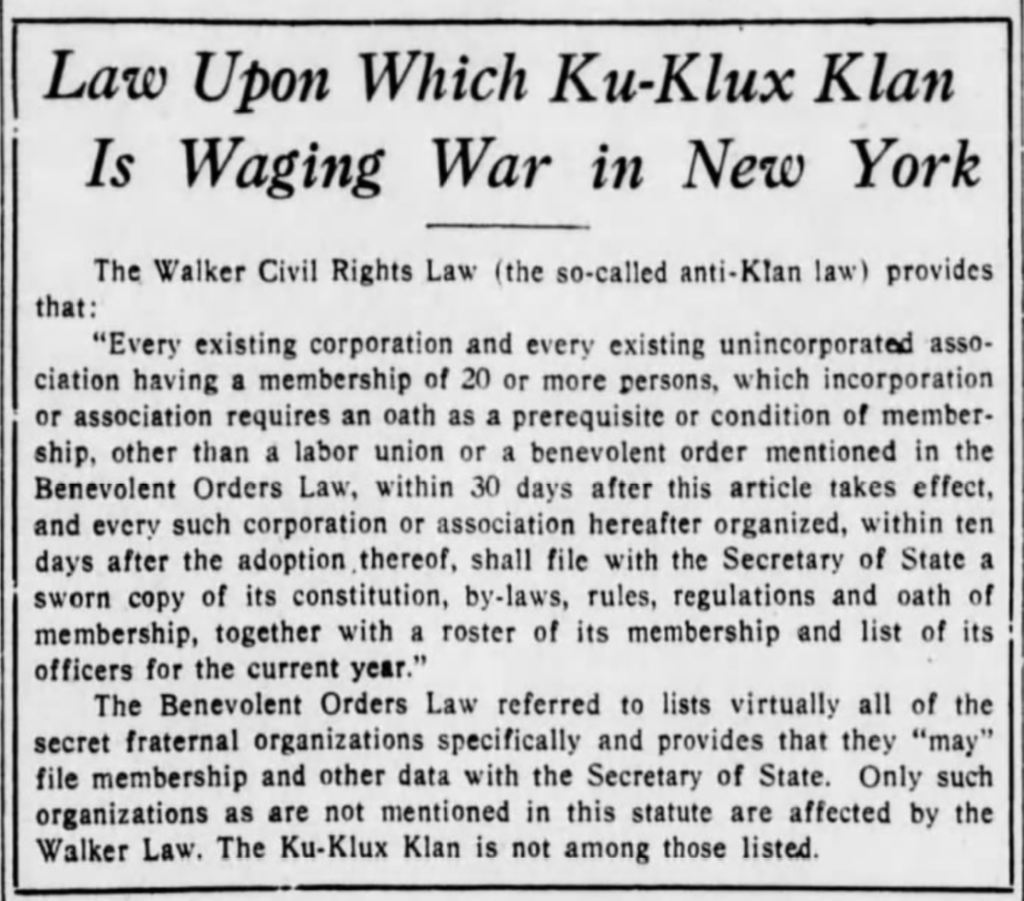
By early 1923, Walker was the state senate leader and introduced a bill into the chamber, placing limits on ‘oath-based associations’ that would require them to file a list of their membership with the state. The Klan were essentially being unmasked; the names of their members would become public record.
From the Brooklyn Daily Eagle:
*The bill exempted labor unions and, “officially chartered benevolent orders” like the Elks Lodge.
The bill swept through the state senate, (barely) made it through the assembly, before landing on Governor Smith’s desk for a swift passage.
Even with the ‘anti-masking’ law in place, the klan found receptive crowds in the region.
Thousands of Klan members marched in protests immediately following the law’s implementation.
“The demonstrations by tens of thousands of Ku Kux Klansmen on Long Island, in New Jersey and in various parts of New York State yesterday and Saturday were staged as a spectacular defiance of the Klan’s enemies.” [Eagle, 5/28/1923]
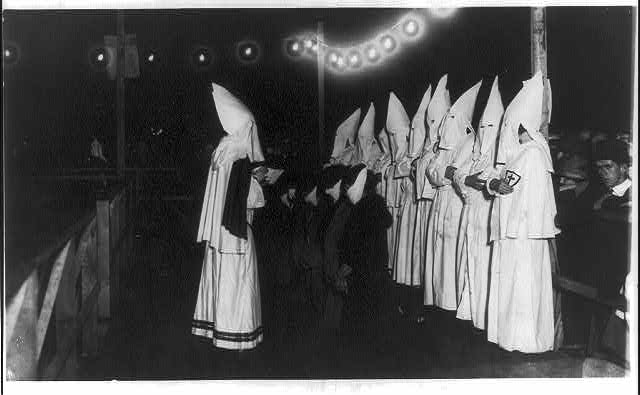
Below: A scene from Long Island, 1925. “Four women kneeling in front of strouded Klansman reading from a book; other Klansmen stand behind them on the platform; spectators watch initiation.”
Library of Congress
The spirit of the law was more powerful than its specifics. The Ku Klux Klan was effectively turned into an illegal organization that day. Many states would use Walker’s tactics in crafting their own anti-Klan laws.
PODCAST For the first part in our New York City in the Roaring Twenties summer mini-series, we’re hitting the town with “Beau James,” New York’s lively and fun-loving mayor Jimmy Walker.
And the king of it all was Jimmy Walker, elected mayor of New York City just as its prospects were at their highest. The Tin Pan Alley songwriter-turned-Tammany Hall politician was always known more for his grace and style than his accomplishments. His wit and character embodied the spirit (and the spirits) of the Roaring ’20s.
The 1920s were a transformational decade for New York, evolving from a Gilded Age capital to the ideal of the modern international city. Art deco skyscrapers reinvented the skyline, reorienting the center of gravity from downtown to a newly invigorated Midtown Manhattan. Cultural influences, projected to the world via radio and the silent screen, helped create a new American style.
Join us for an after-midnight romp with the Night Mayor of New York as he ascends to the most powerful seat in the city and spends his first term in the lap of luxury. What could possibly go wrong?
LISTEN NOW: KING OF THE JAZZ AGE
The Bowery Boys: New York City History podcast is brought to you …. by you!
We are now producing a new Bowery Boys podcast every two weeks. We’re also looking to improve the show in other ways and expand in other ways as well — through publishing, social media, live events and other forms of media. But we can only do this with your help!
We are now a member of Patreon, a patronage platform where you can support your favorite content creators for as little as a $1 a month.
Please visitour page on Patreon and watch a short video of us recording the show and talking about our expansion plans. If you’d like to help out, there are five different pledge levels (and with clever names too — Mannahatta, New Amsterdam, Five Points, Gilded Age, Jazz Age and Empire State). Check them out and consider being a sponsor.
We greatly appreciate our listeners and readers and thank you for joining us on this journey so far. And the best is yet to come!
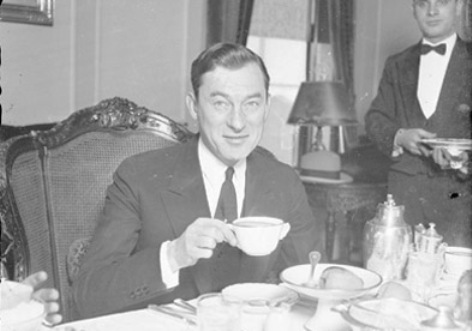
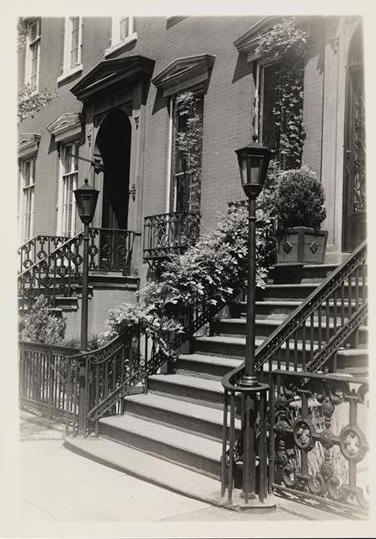
Walker having his morning coffee at his home on 6 St. Lukes Place (pictured below)
Courtesy MCNY
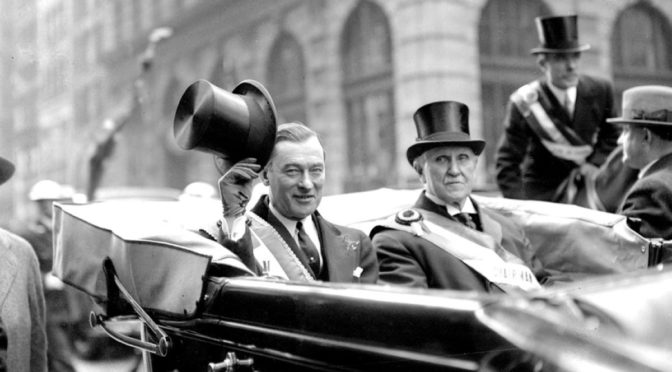
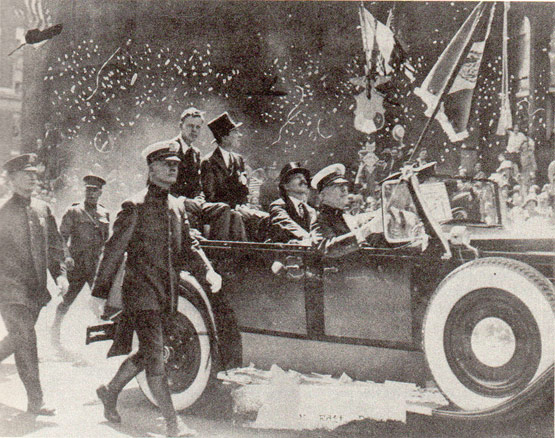
Jimmy Walker with Charles Lindbergh in 1927, in the midst of a ticker tape parade after his non-stop ride from Long Island to Paris.
Courtesy New York Social Diary
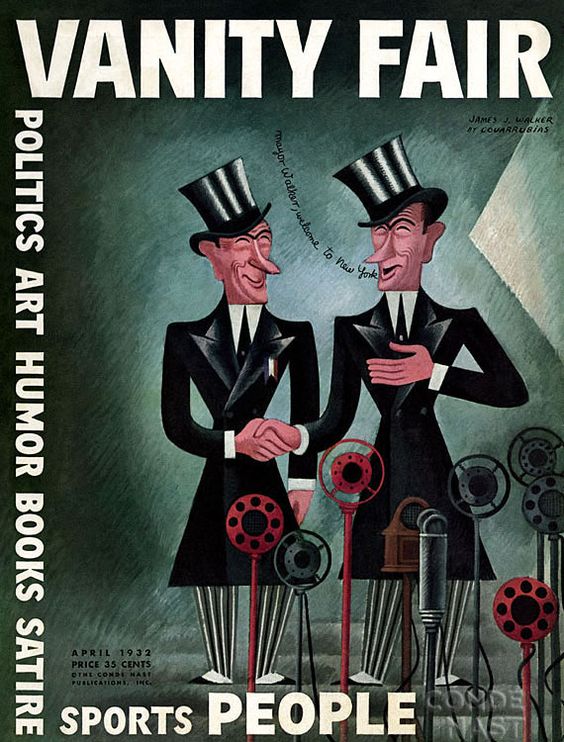
Walker so enjoyed throwing public events for famous people that he was frequently parodied for it. In 1932 Vanity Fair pictured him giving a lavish welcome — to himself.
Conde Nast
Harry McDonough with The Elysian Singers from 1905, singing Walker’s big hit “Will You Love Me In December As You Do In May.”
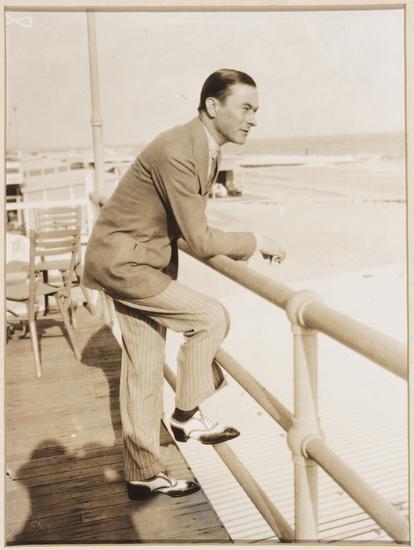
The dashing fashion plate, pictured here most certainly on his way to yet another vacation…..
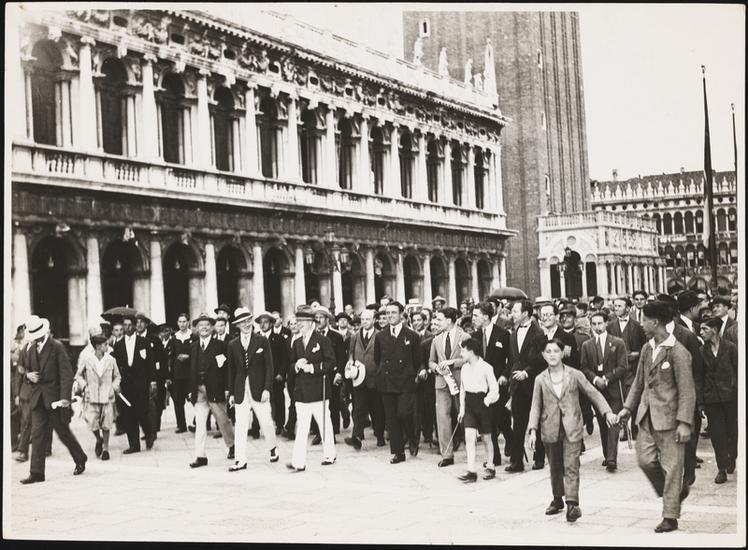
….perhaps his European vacation! He’s pictured here in 1927, strolling the streets of Venice with a few hundred people behind him.
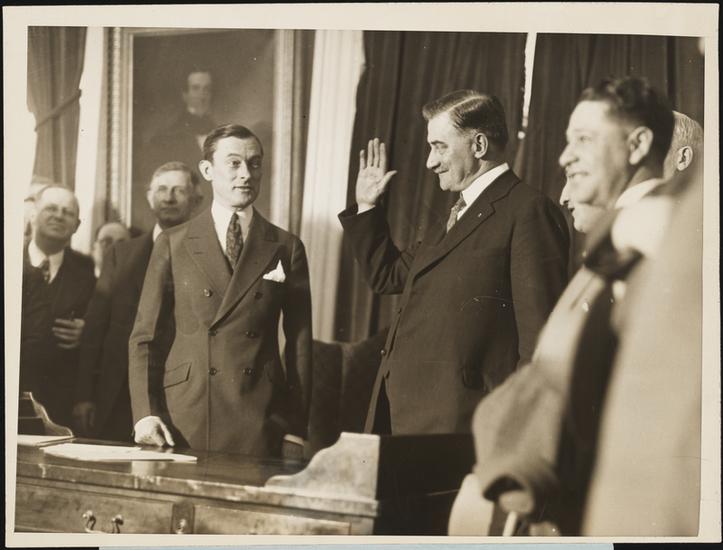
A picture of Jimmy, actually at work! He’s swearing in the new fire commissioner James J. Dorman in 1926.
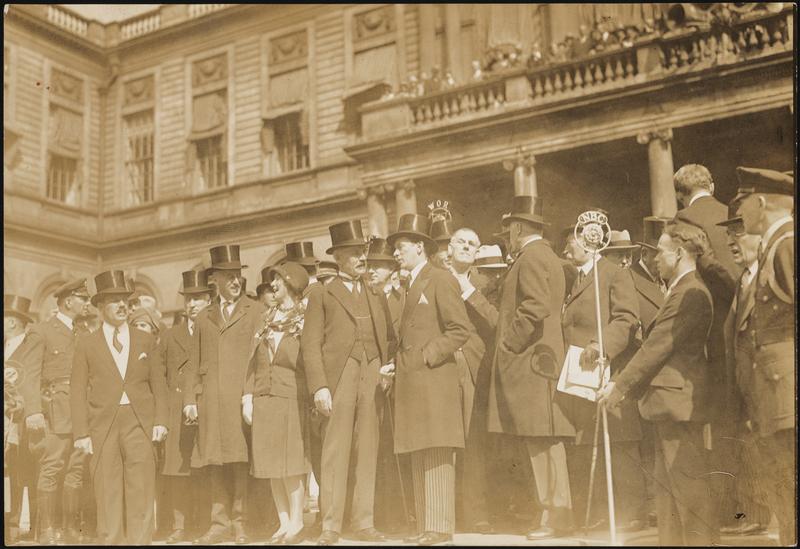
Mayor Jimmy Walker with British Prime Minister Ramsay MacDonald at yet another welcoming ceremony, broadcast on the radio.
MCNY
Another British visit, this time from Mrs Foster Welch, Mayor of Southampton.
In another Pathe video, Jimmy Walker visits Ireland and the former home of his father.
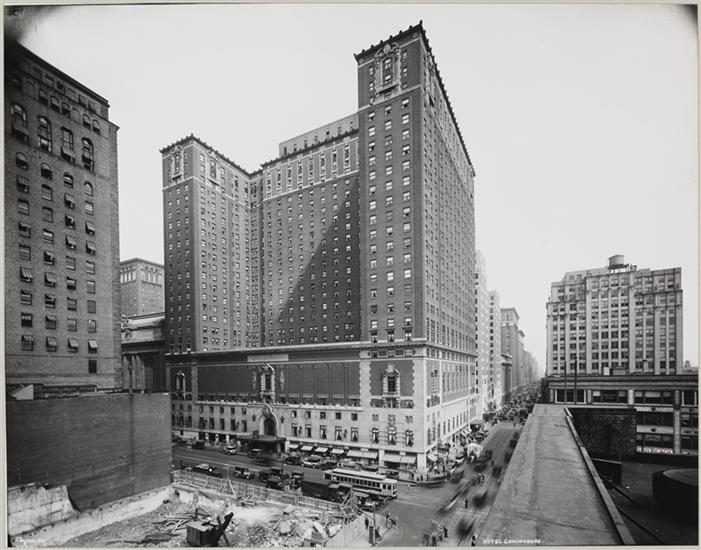
During Walker’s extraordinary rise, New York was becoming an entirely new city in the 1920s with construction projects on virtually on every block. Even in front of the Hotel Commodore (pictured here in 1927), which was, for a time, the home of Jimmy Walker.
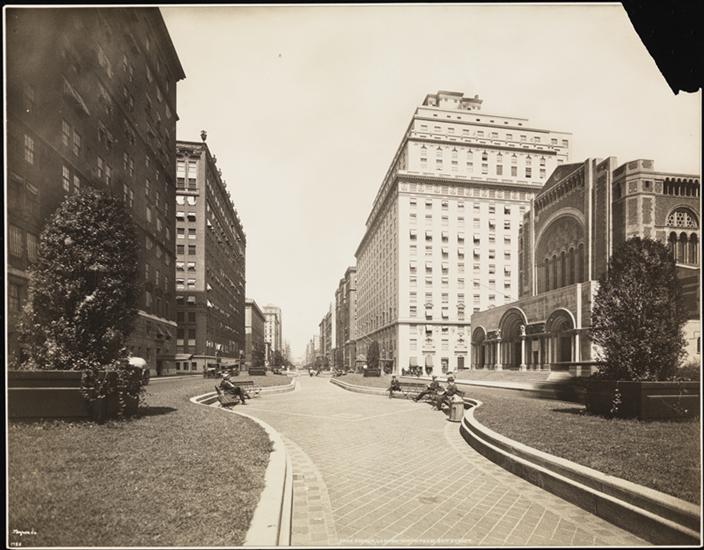
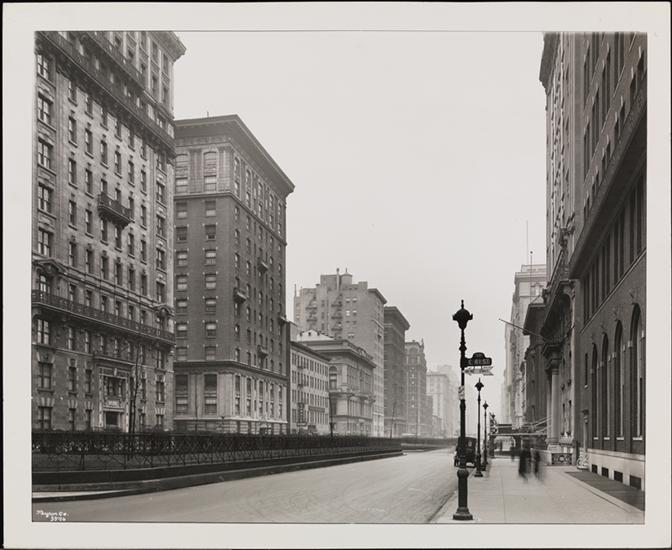
Park Avenue (at 50th Street) in 1922.
MCNY
Park Avenue at 61st Street in 1922. The rich flocked to this newly developed street of apartment complexes, making it the new center of wealth.
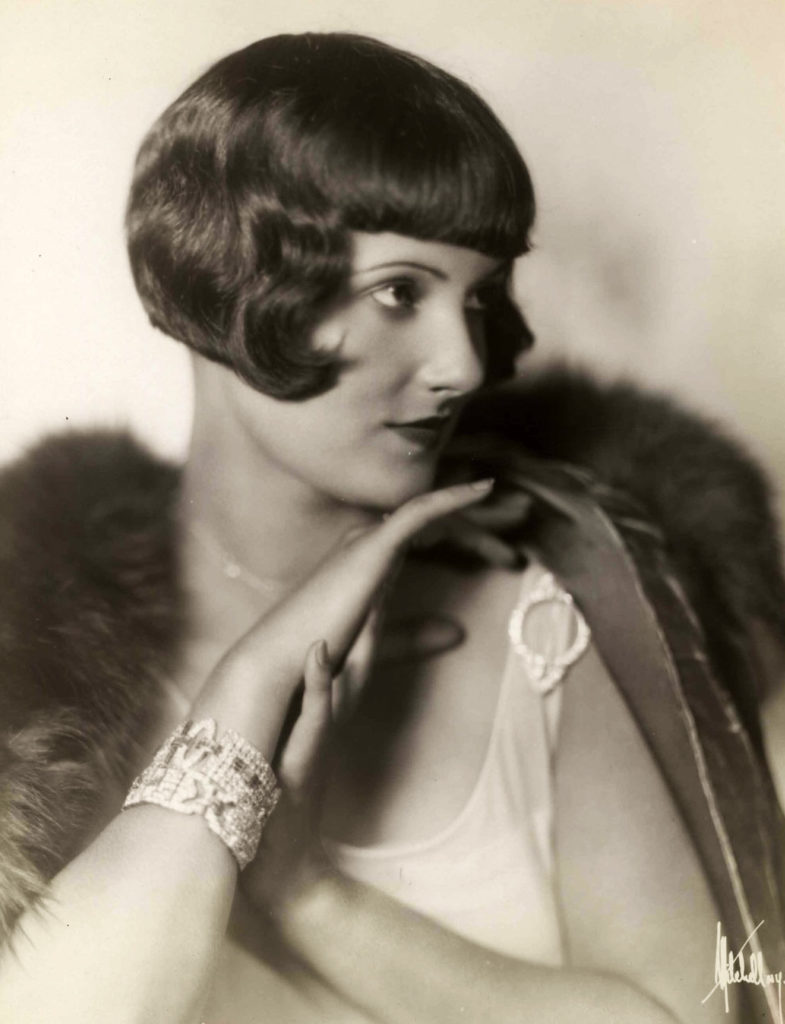
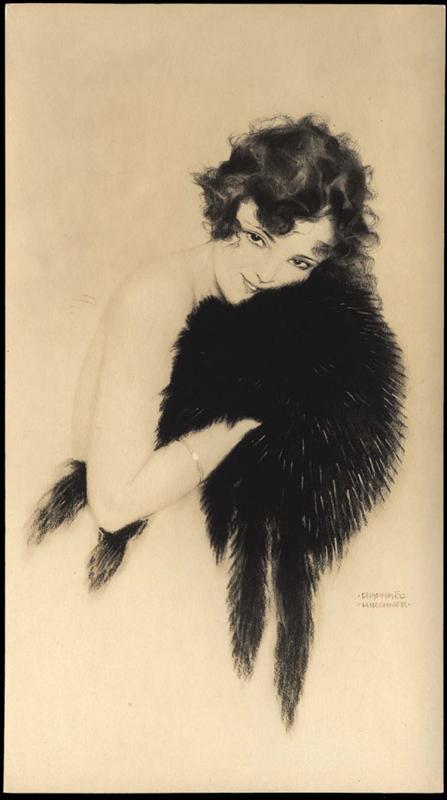
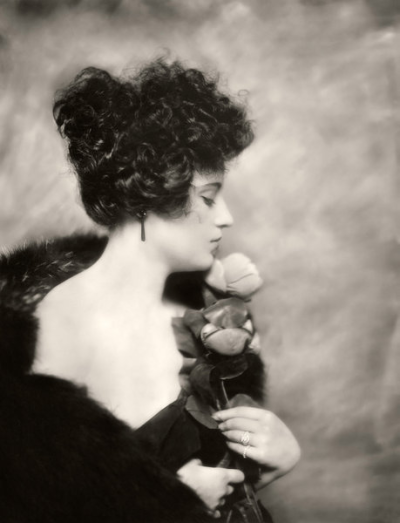
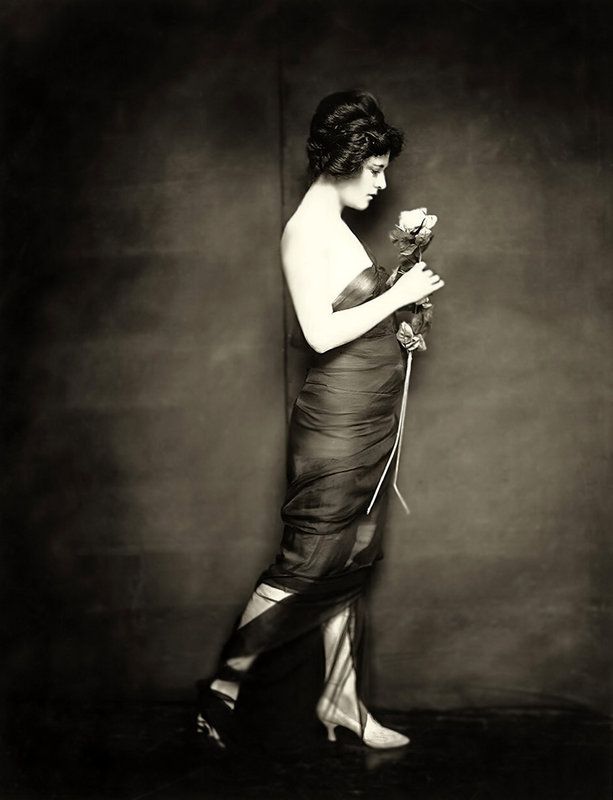
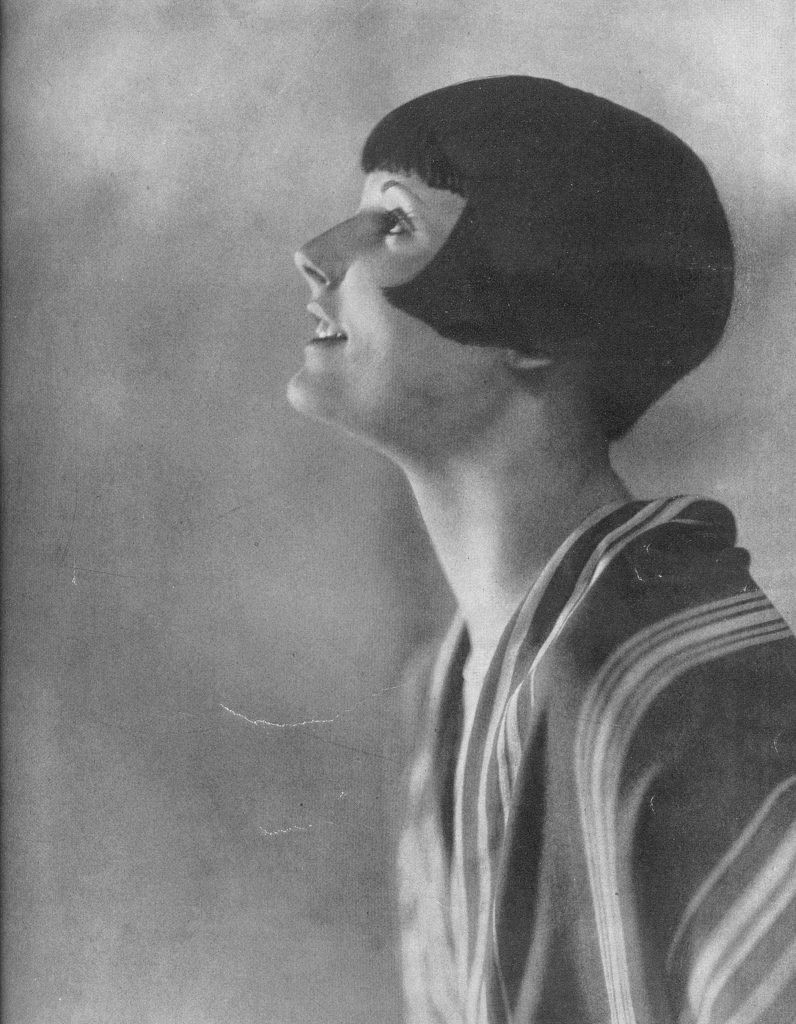
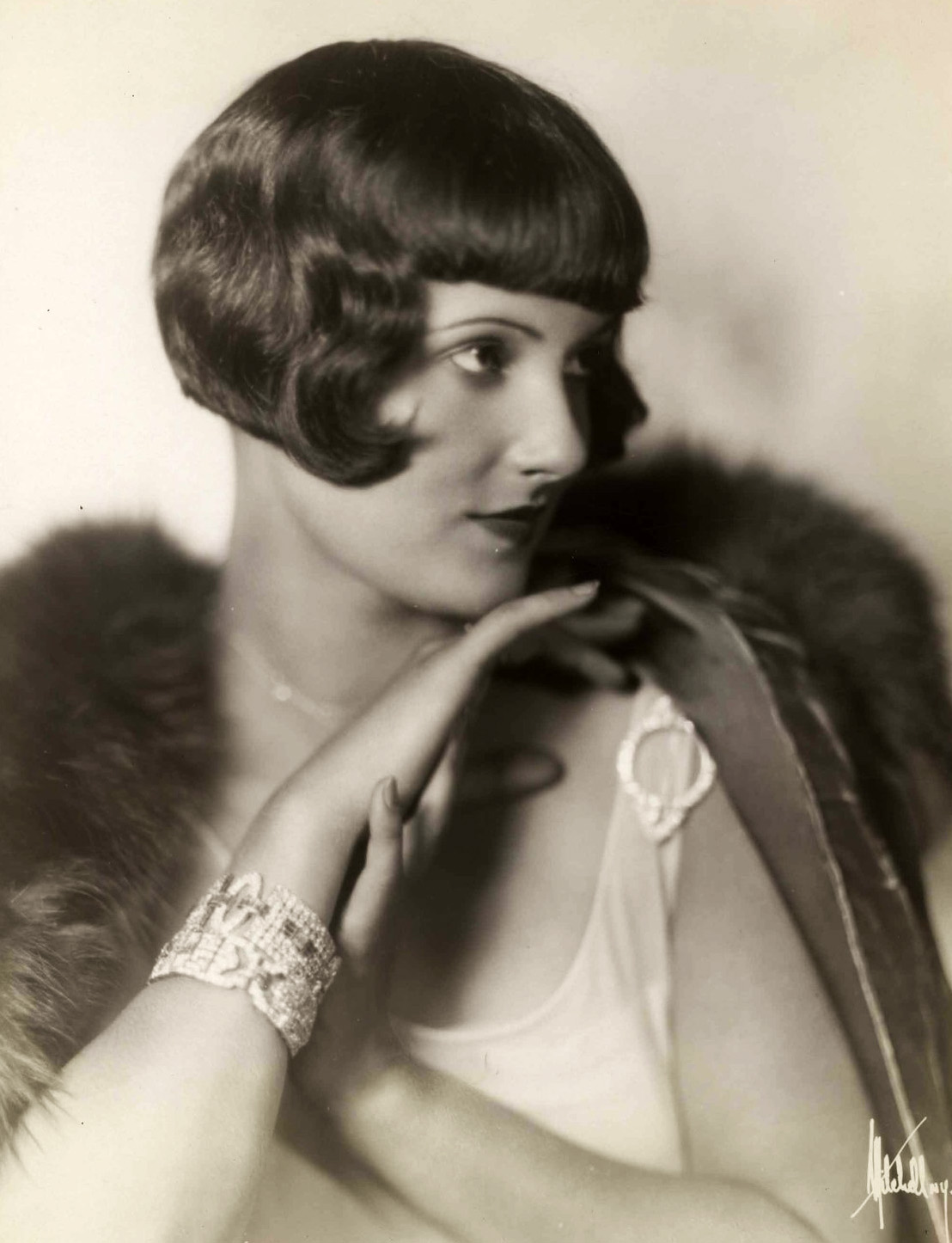
And now, for a little glamour, a few shots of Yvonne Shelton, then Betty Compton, Walker’s two most famous girlfriends (who he wooed while married to wife Janet).
wikiart
Courtesy Historial Ziegfeld
Photographs above by Alfred Cheney Johnston.
She most famously starred in 1927’s Broadway production of Oh Kay! starring Gertrude Lawrence. Here’s Lawrence singing a famous song from that show:
IN TWO WEEKS: Chapter Two of our series on the Roaring ’20s, rewinding back to the beginning of the decade and introducing you to another icon of the Jazz Age. Who will it be?