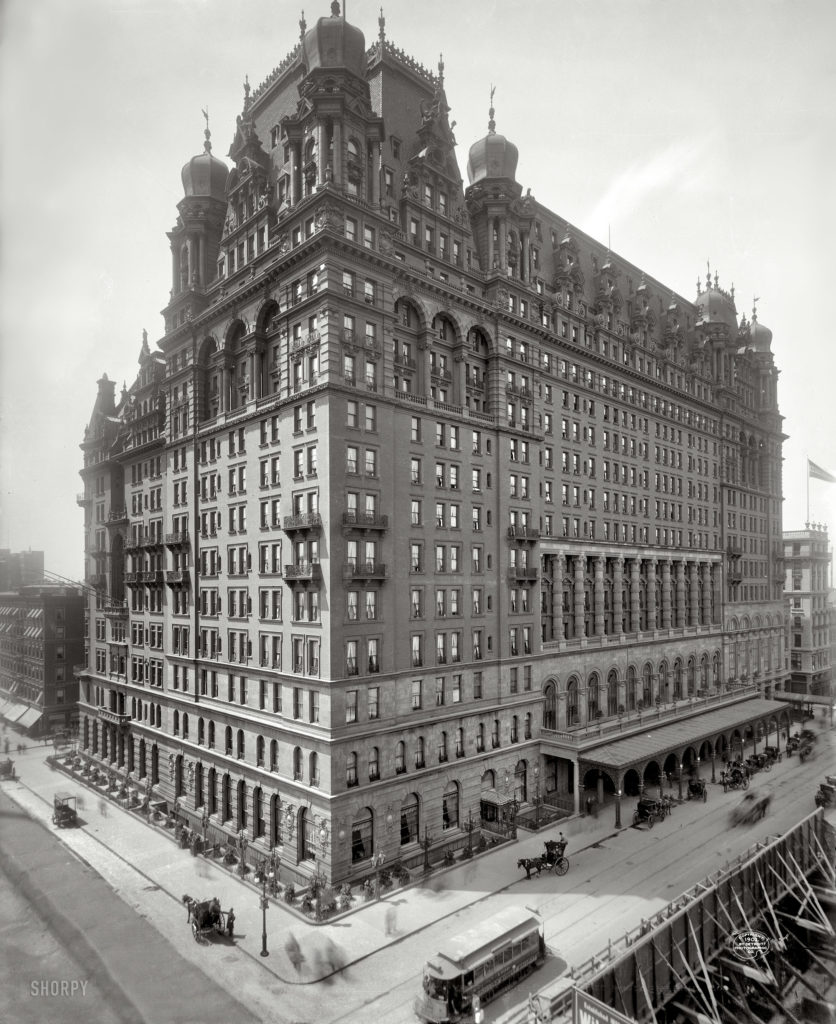
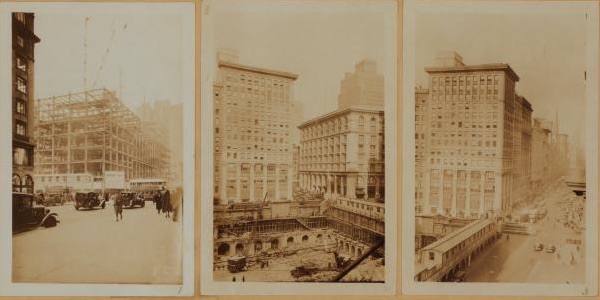
The original Waldorf-Astoria Hotel, the ultimate symbol of the Gilded Age, was demolished in the fall and early winter of 1929 to make way for a new building project.
That the building project in question happened to be the Empire State Building does not make the loss of the Waldorf-Astoria any less regretful. The storied hotel, borne from the rivalry of two factions of the Astor family, was the delight of New York’s upper crust from the moment the Waldorf Hotel opened in 1893. (The Astoria side opened four years later.)
Cleaned-up version of public domain photo courtesy Shorpy
But the fashions of New York had passed the Waldorf-Astoria by in the 1920s, and the land was sold to a collective of businessmen — led by former New York governor Al Smith — who wished to build the world’s tallest office building on the spot.
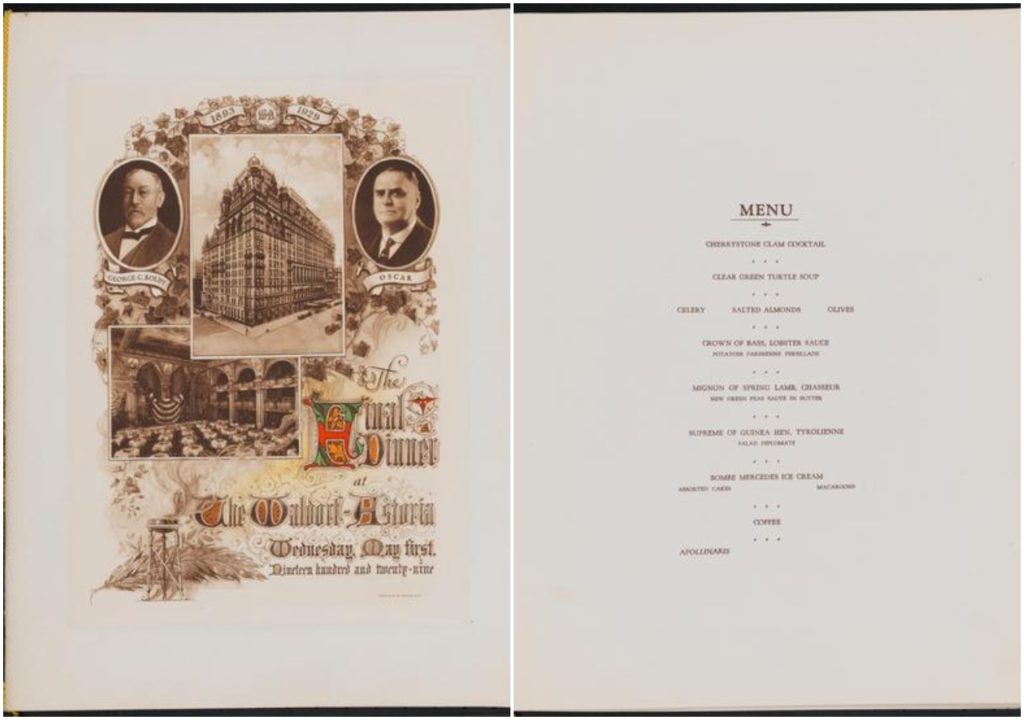
Below: The final menu served at the Waldorf-Astoria — May 1, 1929
Museum of the City of New York
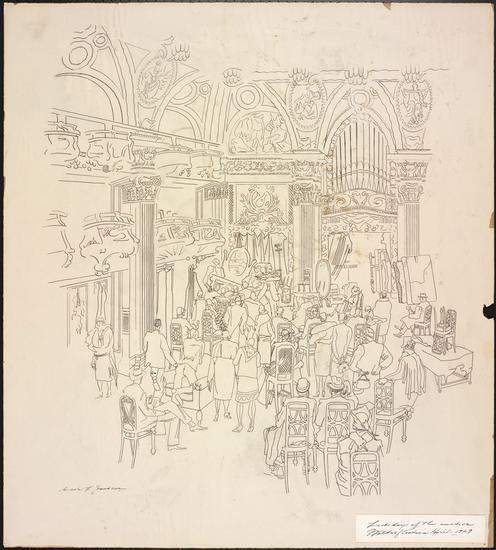
Following a final dinner party on May 1, objects from the hotel were sold at auction. The relinquishing of the hotel’s possession was so captivating that the auction was even broadcast on the radio, a fairly revolutionary idea for its day. “The famed bronze pair [of statues], a large bull and a big bear, which stood on the bar in the hotel for so many years, went to Charles Gutradt & Son, art dealers, for $225 each.” [source]
This was not a building that was dispensed with lightly. The year 1929 was crammed with newspaper and magazine reminders of the hotel’s greatness. “Histories will keep its fame and name alive, for it marked an epoch in the development of an empire city. In its day it gathered together a remarkable clientele; at its banquets the wit and wisdom of the New World and the Old intermingled, stimulated by savory viands and sparkling winds (in pre-prohibition days) from a well-stocked cellar.” [source]
An illustration of one auction of Waldorf-Astoria objects from 1929:
Museum of the City of New York
Demolition of the Waldorf-Astoria would take a couple months, owing to difficulties of dismantling the especially sturdy materials holding up the hotel. The process began on October 1st with a somber ceremony on the rooftop, officiated by Smith and his business partners.
He was quoted as saying. “This historic building, known all over the world, must come down in the northward march of progress.”
From the New York Times: “Yawning holes mark the doorways where livered attendants greeted distinguished guests. Men in overall bustle about amid dust and debris in Peacock Alley. The men’s cafe, once a favorite haunt of millionaires, and the giant ballrooms are bare.”
Work began on the Empire State Building on March 17, 1930, despite the fact that America (following the stock market crash of 1929) was on the precipice of the Great Depression. Meanwhile a new Waldorf-Astoria would open uptown, on Park Avenue, on October 1, 1931. The Empire State Building had opened (in record time, it must be said) exactly five months before, on May 1, 1931. New York City had itself two new impressive landmarks.
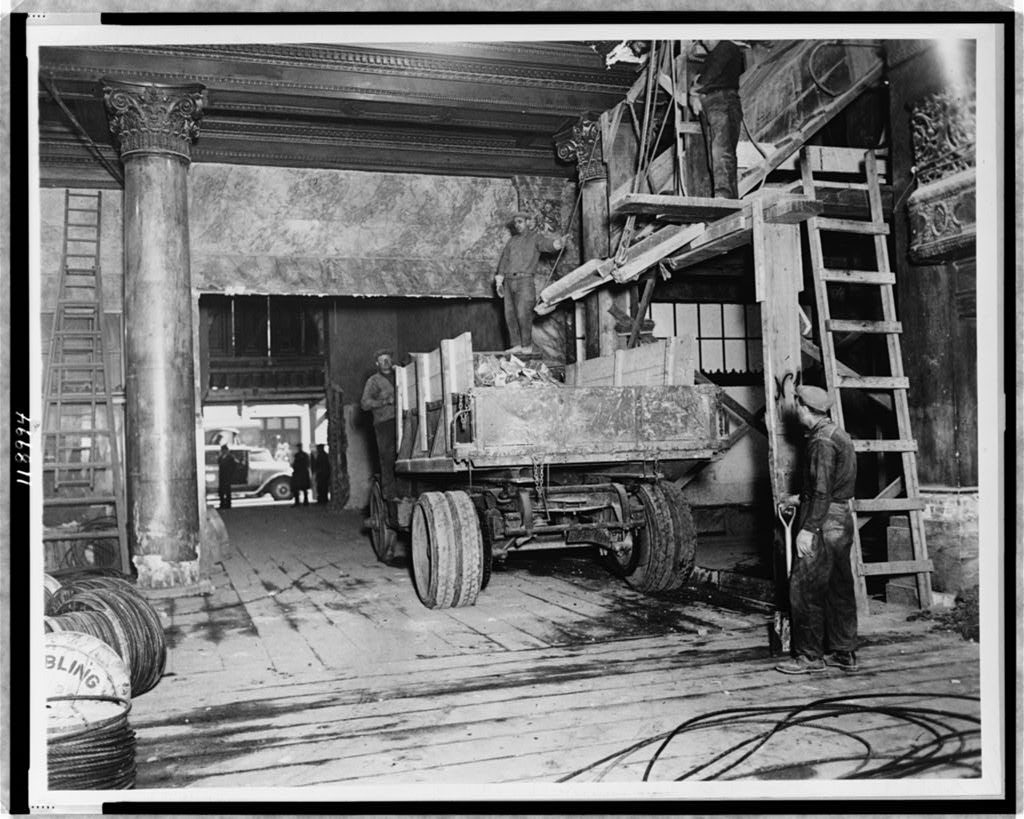
Trucks emptying the Waldorf-Astoria ballroom:
Library of Congress
NYPL
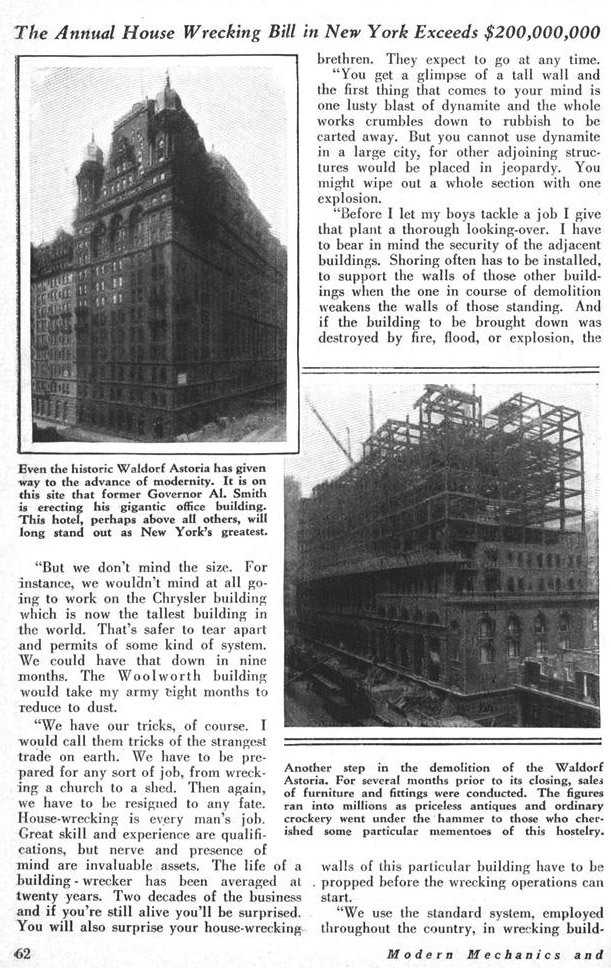
From Modern Mechanics magazine:
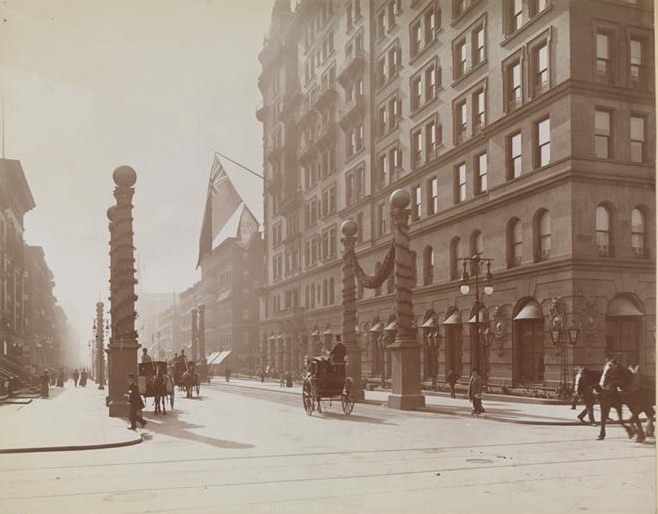
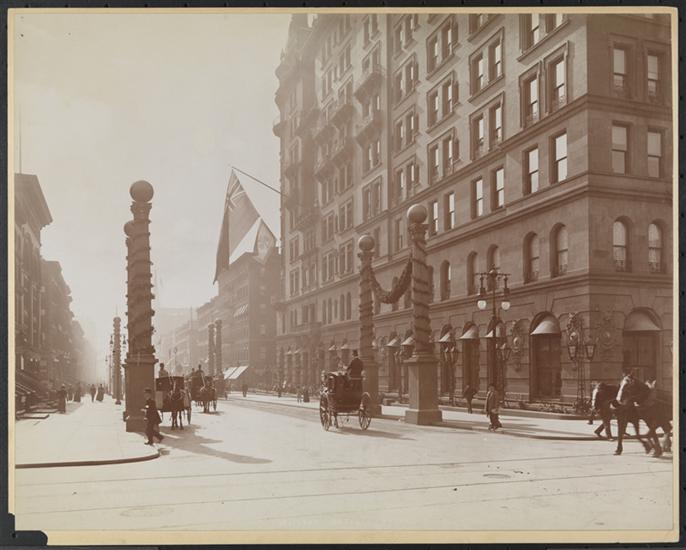
At top: The decorations for the Dewey Parade in front of the Waldorf-Astoria Hotel at 33rd Street and 5th Avenue, 1899.
MCNY
For more information on the new Waldorf-Astoria hotel, listen to our 2016 show:
Something so giddy and wild as New York City in the Jazz Age would have to burn out at some point. But nobody expected the double catastrophe of a paralyzing financial crash and a wide-ranging government corruption scandal.
Mayor Jimmy Walker, in a race for a second term against a rising congressman named Fiorello La Guardia, might have had a few cocktails at the Central Park Casino after hearing of the pandemonium on Wall Street in late October 1929.
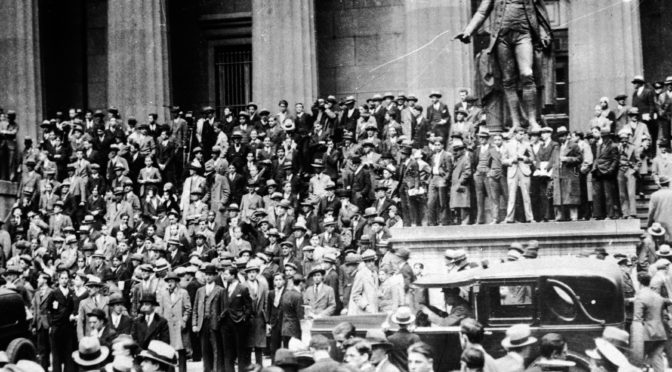
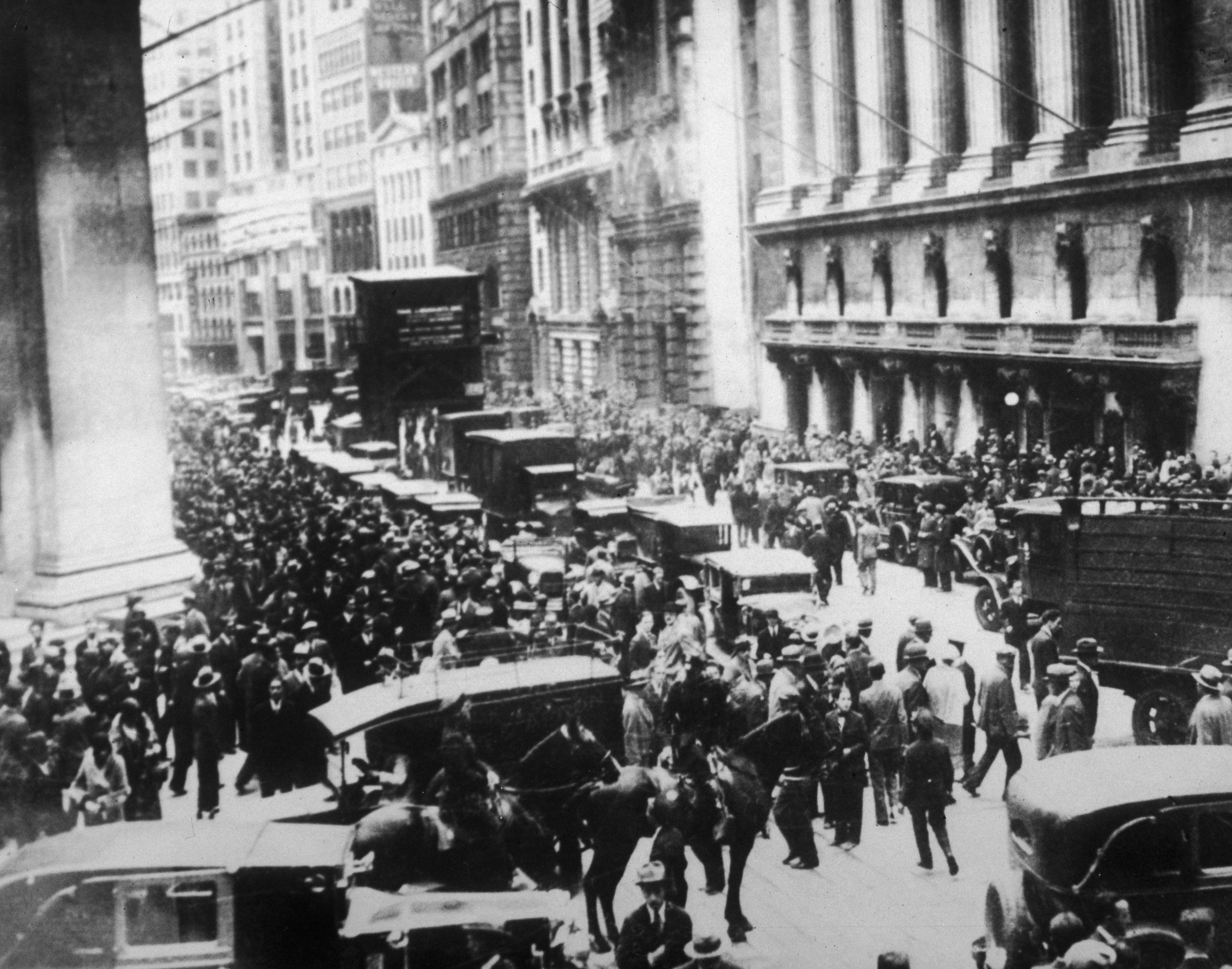
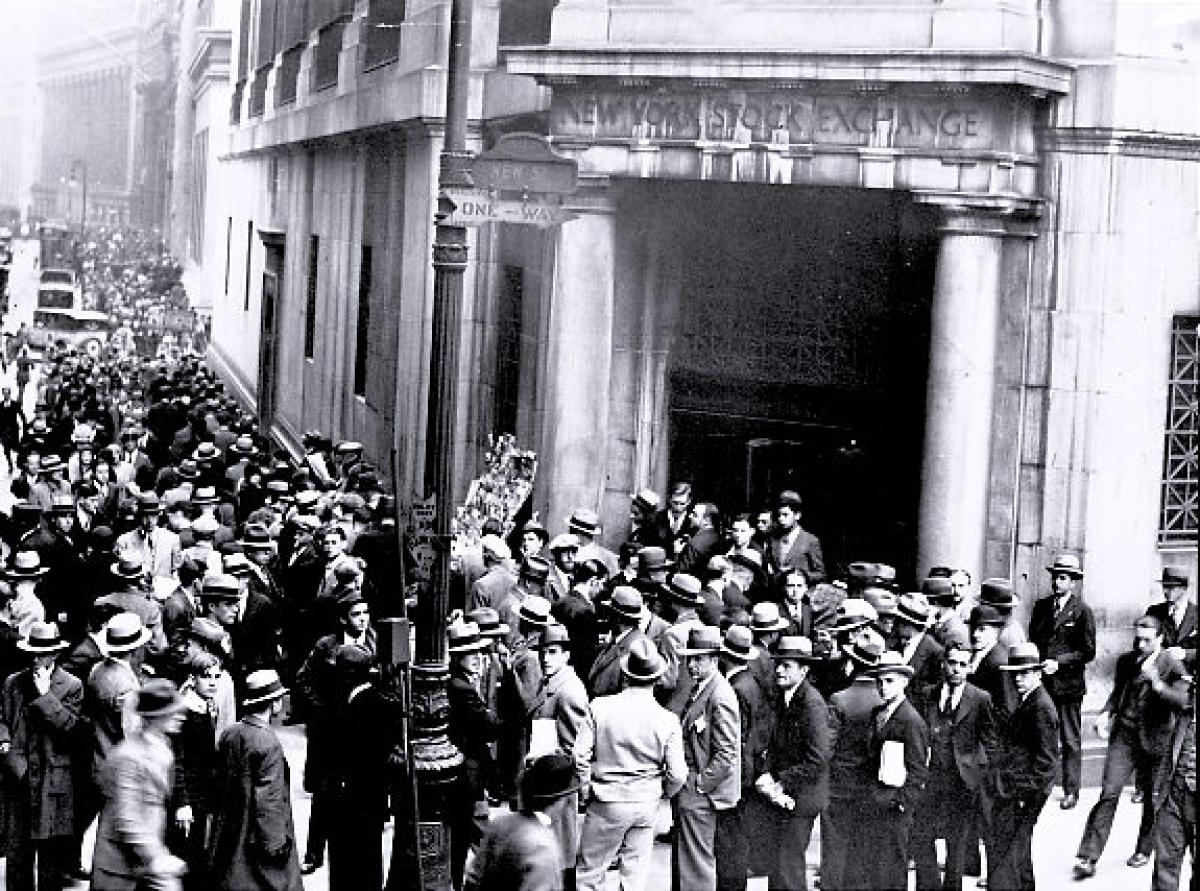
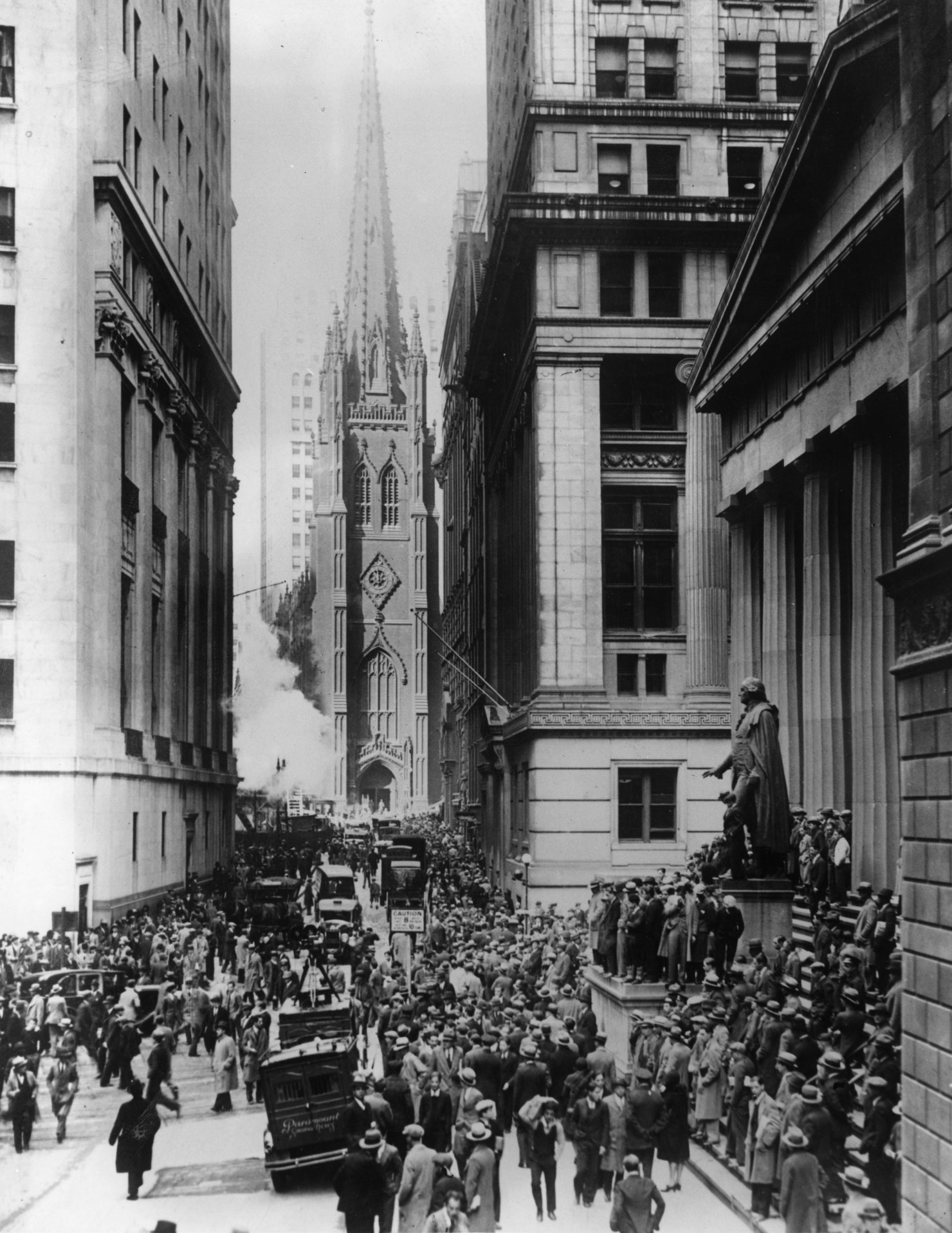
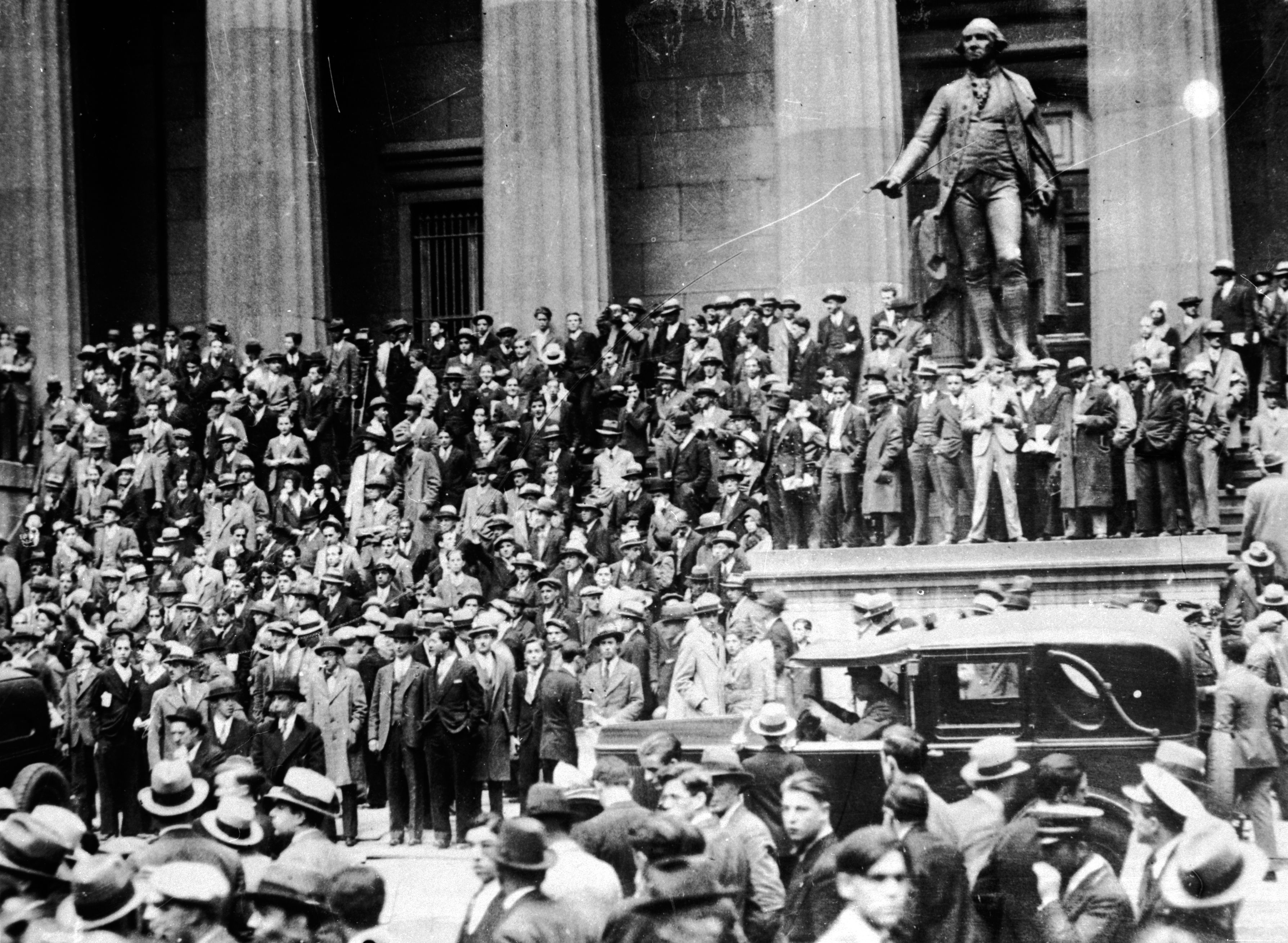
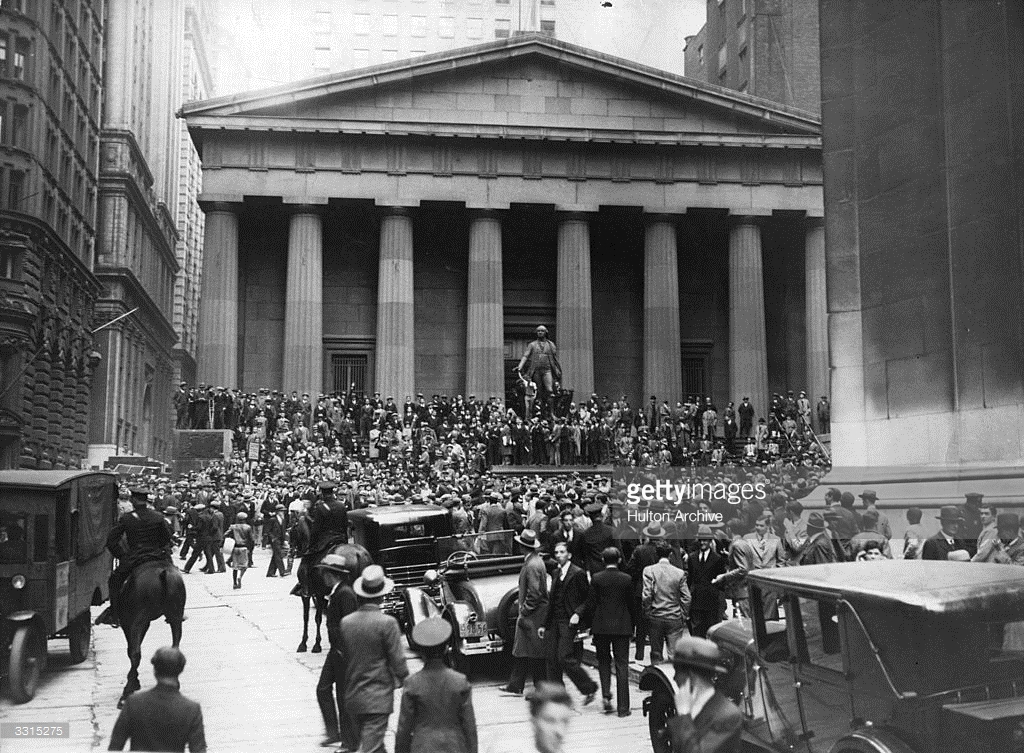
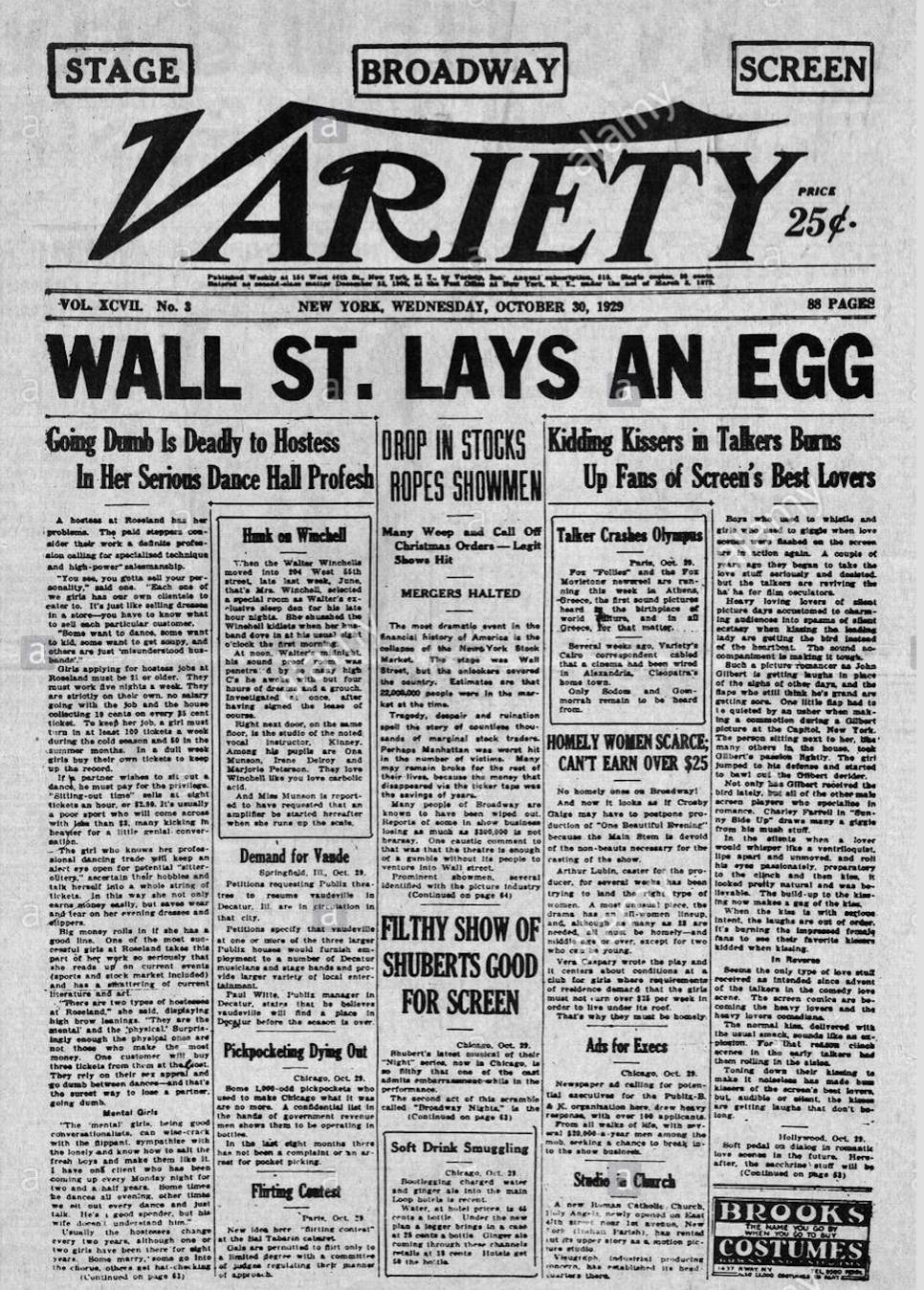
The irresponsible speculation fueling the stock market of the Roaring 20’s suddenly fell apart, turning princes into paupers overnight. Rumors spread among gathering crowds in front of the New York Stock Exchange of distraught traders throwing themselves out windows.
And yet a more immediate crisis was awaiting the Night Mayor of New York — the investigations of Judge Samuel Seabury, steering a crackdown authorized by governor Franklin Delano Roosevelt to rid New York City of its deeply embedded, Tammany Hall-fueled corruption.
With the American economy in free fall and hundreds of New York politicians, police officers and judges falling to corruption revelations, the world needed a drink! Counting down to the last days of Prohibition….
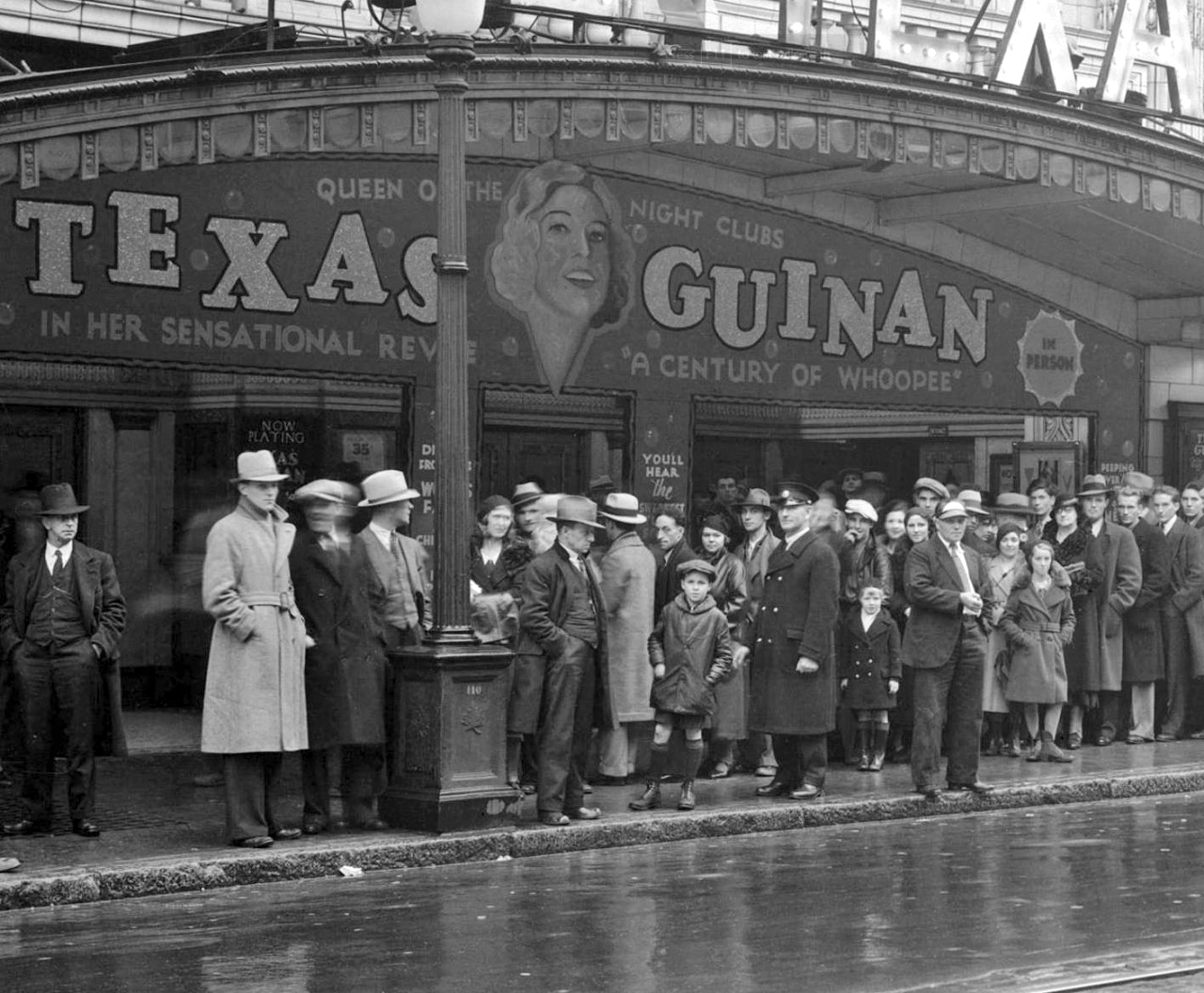
PLUS: The fate of Texas Guinan, the movie star turned Prohibition hostess who hit the road with a bawdy new burlesque — that led to a tragic end.
The song featured in this week’s episode was Bessie Smith’s “Nobody Knows You When You’re Down and Out”
The Bowery Boys: New York City History podcast is brought to you …. by you!
We are now producing a new Bowery Boys podcast every two weeks. We’re also looking to improve the show in other ways and expand in other ways as well — through publishing, social media, live events and other forms of media. But we can only do this with your help!
We are now a member of Patreon, a patronage platform where you can support your favorite content creators for as little as a $1 a month.
Please visitour page on Patreon and watch a short video of us recording the show and talking about our expansion plans.If you’d like to help out, there are five different pledge levels (and with clever names too — Mannahatta, New Amsterdam, Five Points, Gilded Age, Jazz Age and Empire State). Check them out and consider being a sponsor.
We greatly appreciate our listeners and readers and thank you for joining us on this journey so far. And the best is yet to come!
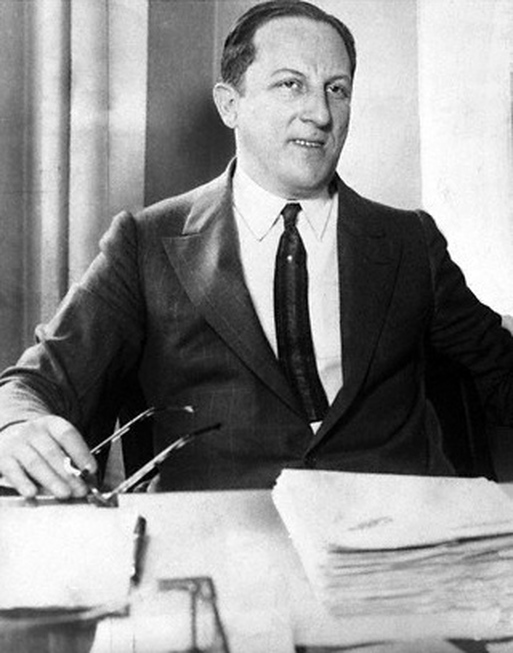
Arnold Rothstein — His murder would kick off a frenzy in New York’s organized crime syndicates and lead to an in-depth investigation into the police and local government
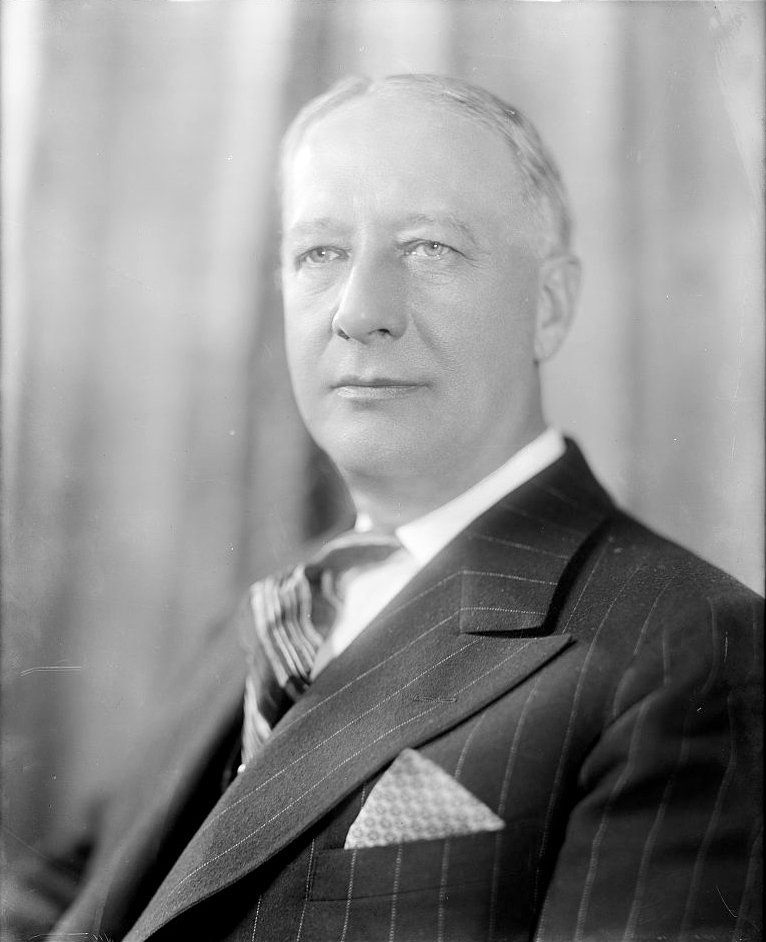
Al Smith — His unsuccessful bid for the presidency in 1928 led him to pursue more business-related projects, including the construction of the Empire State Building.
Harris & Ewing collection at the Library of Congress.
Mayor Jimmy Walker felt invincible at the start of his second term
Texas Guinan eventually left the nightclub scene and returned to film and stage work. She’s pictured here in 1931 in Paris. She would later be denied entry into the country for her bawdy performances (at least, that’s what she claimed).
Getty Images
Betty Compton waited patiently for Walker from the sidelines, watching as his political fortunes collapsed in 1932.
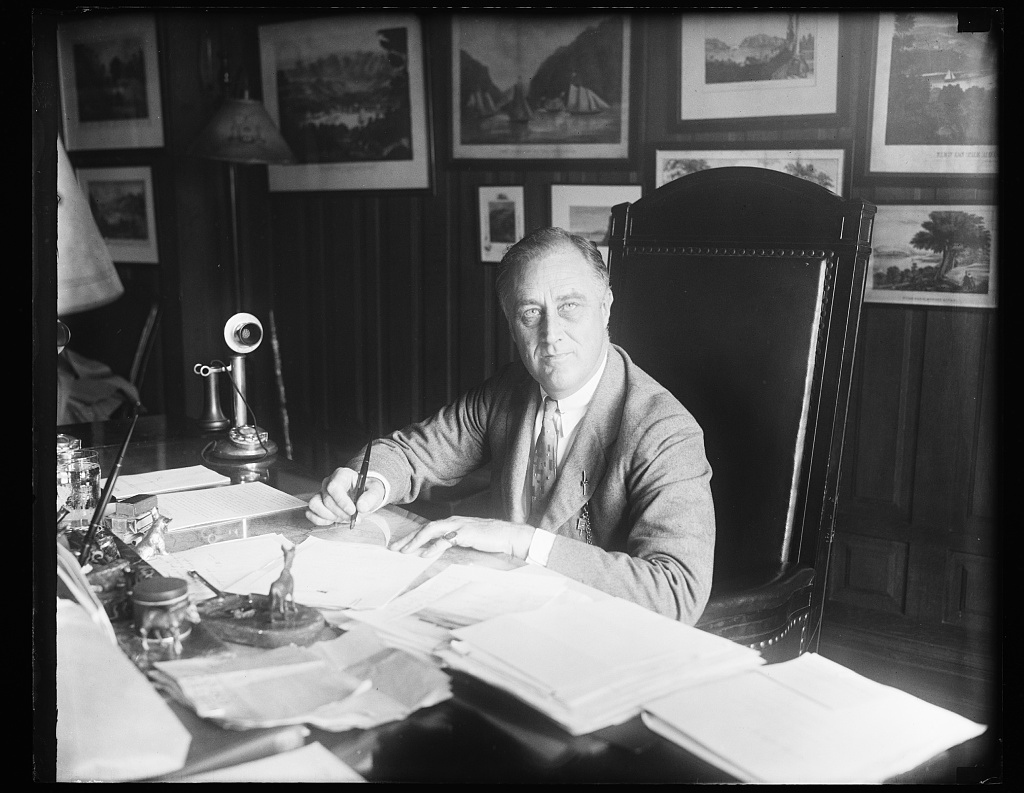
Franklin Delano Roosevelt — The governor of New York (and soon president of the United States) went after corruption during a busy campaign season.
Library of Congress
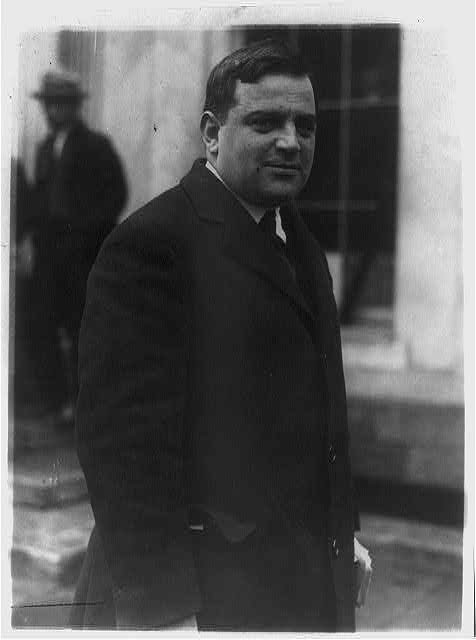
Fiorello La Guardia (pictured here in 1929) was an early supporter of Prohibition repeal and ran for mayor in 1929, losing to Walker.
Library of Congress
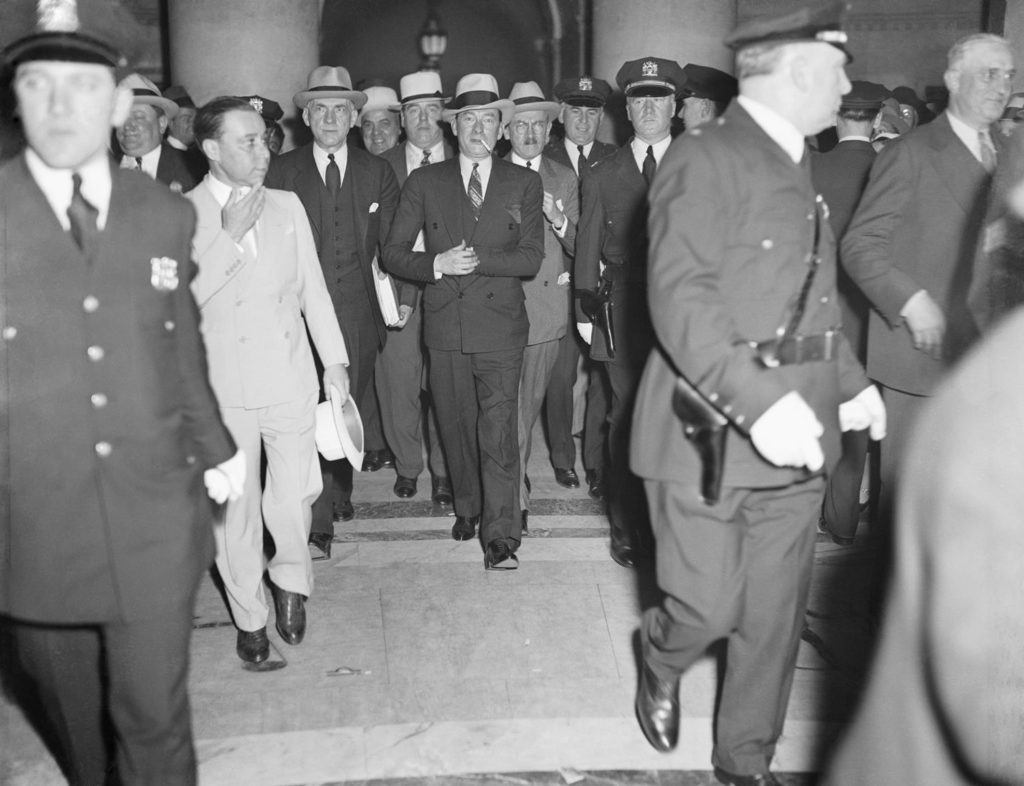
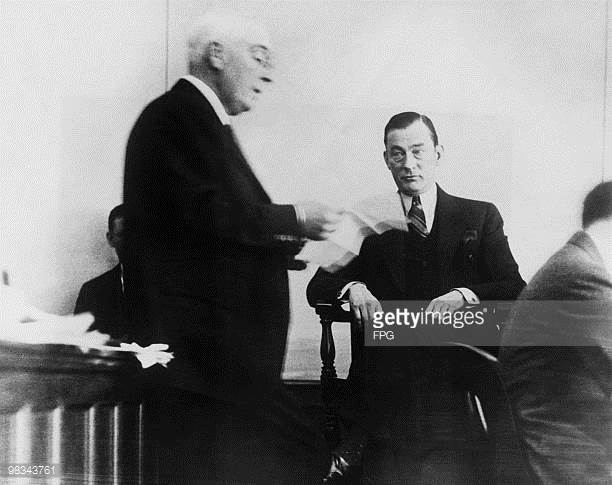
Samuel Seabury, questioning a nonplussed Jimmy Walker on the stand, succeeded in rooting out corrupt officials in public offices. With Roosevelt’s help, he even brought down the Night Mayor himself.
Getty Images
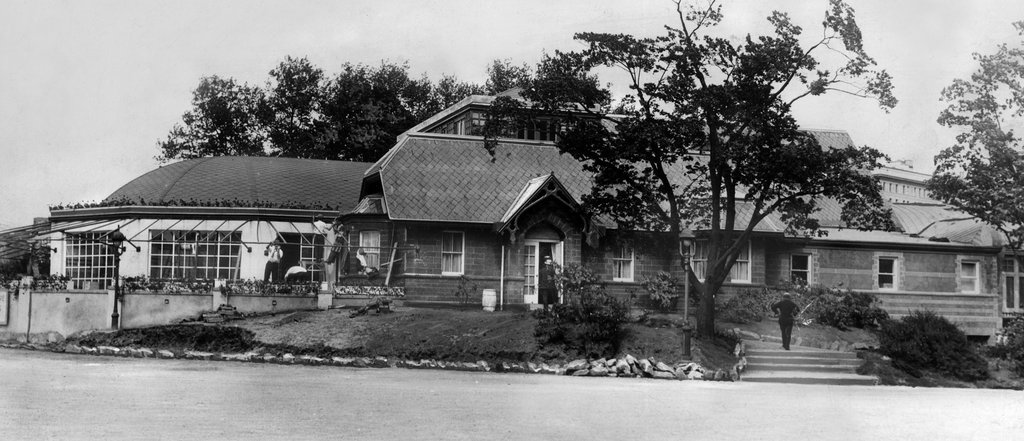
The Central Park Casino transformed into a swanky nightclub in 1929, a favored spot for Jimmy Walker
Courtesy New York Times
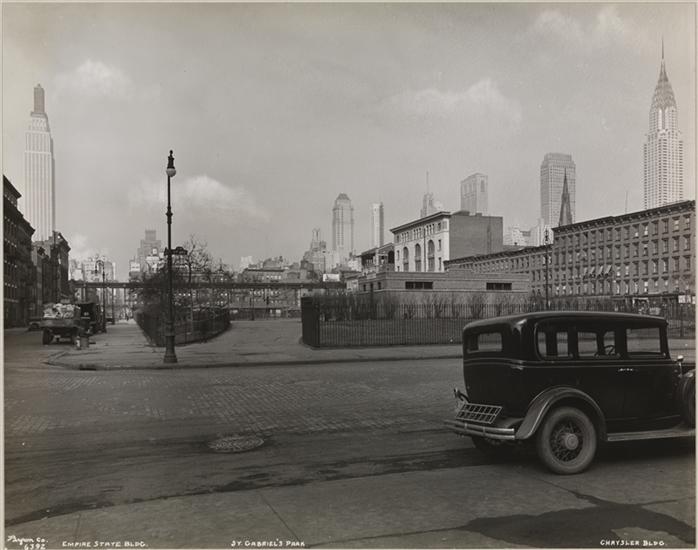
An interesting view of mid-Manhattan in 1931 (from St. Gabriel’s Park at First Avenue and 35th Street) with the newly completed Chrysler Building and the Empire State Building nearly completed.
MCNY/Byron Company
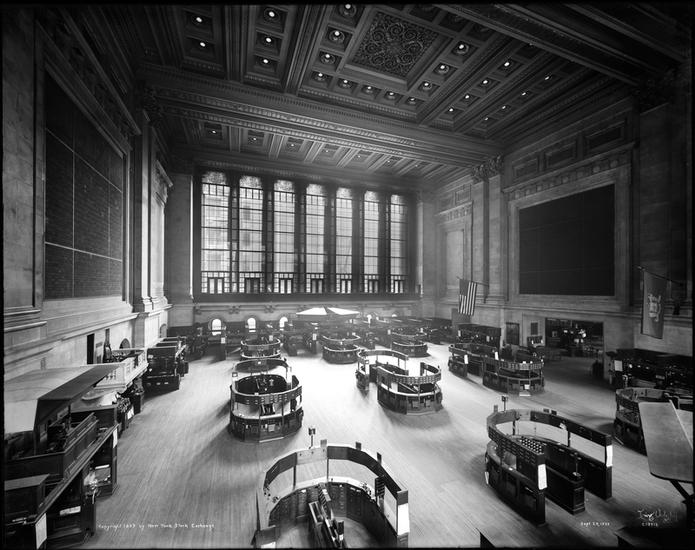
An ominous image of the New York Stock Exchange from September 1929, weeks before the crash.
Irving Underhill/MCNY
The streets outside the New York Stock Exchange were clogged with people for days, frantic scenes of anger, panic and heartbreak.
29th October 1929. (Photo by Hulton Archive/Getty Images)
New York Daily News
(Photo by Keystone/Getty Images)
A graphic look at the Wall Street Crash of 1929.
Wikicommons
Outside Vancouver’s Beacon Theatre on October 28, 1933, just a week before her death here in this city.
CORRECTION: Jimmy Walker’s second term began on January 1, not January 3.
For more information, check out the following books:
Dry Manhattan: Prohibition in New York City by Michael A. Lerner
The Great Crash by John Kenneth Galbraith
Once Upon A Time In New York by Herbert Mitgang
The Man Who Rode The Tiger: The Life and Times of Judge Samuel Seabury by Herbert Mitgang
Rothstein: The Life, Times, and Murder of the Criminal Genius Who Fixed the 1919 World Series by David Pietrusza
PODCAST For the first part in our New York City in the Roaring Twenties summer mini-series, we’re hitting the town with “Beau James,” New York’s lively and fun-loving mayor Jimmy Walker.
And the king of it all was Jimmy Walker, elected mayor of New York City just as its prospects were at their highest. The Tin Pan Alley songwriter-turned-Tammany Hall politician was always known more for his grace and style than his accomplishments. His wit and character embodied the spirit (and the spirits) of the Roaring ’20s.
The 1920s were a transformational decade for New York, evolving from a Gilded Age capital to the ideal of the modern international city. Art deco skyscrapers reinvented the skyline, reorienting the center of gravity from downtown to a newly invigorated Midtown Manhattan. Cultural influences, projected to the world via radio and the silent screen, helped create a new American style.
Join us for an after-midnight romp with the Night Mayor of New York as he ascends to the most powerful seat in the city and spends his first term in the lap of luxury. What could possibly go wrong?
LISTEN NOW: KING OF THE JAZZ AGE
The Bowery Boys: New York City History podcast is brought to you …. by you!
We are now producing a new Bowery Boys podcast every two weeks. We’re also looking to improve the show in other ways and expand in other ways as well — through publishing, social media, live events and other forms of media. But we can only do this with your help!
We are now a member of Patreon, a patronage platform where you can support your favorite content creators for as little as a $1 a month.
Please visitour page on Patreon and watch a short video of us recording the show and talking about our expansion plans. If you’d like to help out, there are five different pledge levels (and with clever names too — Mannahatta, New Amsterdam, Five Points, Gilded Age, Jazz Age and Empire State). Check them out and consider being a sponsor.
We greatly appreciate our listeners and readers and thank you for joining us on this journey so far. And the best is yet to come!
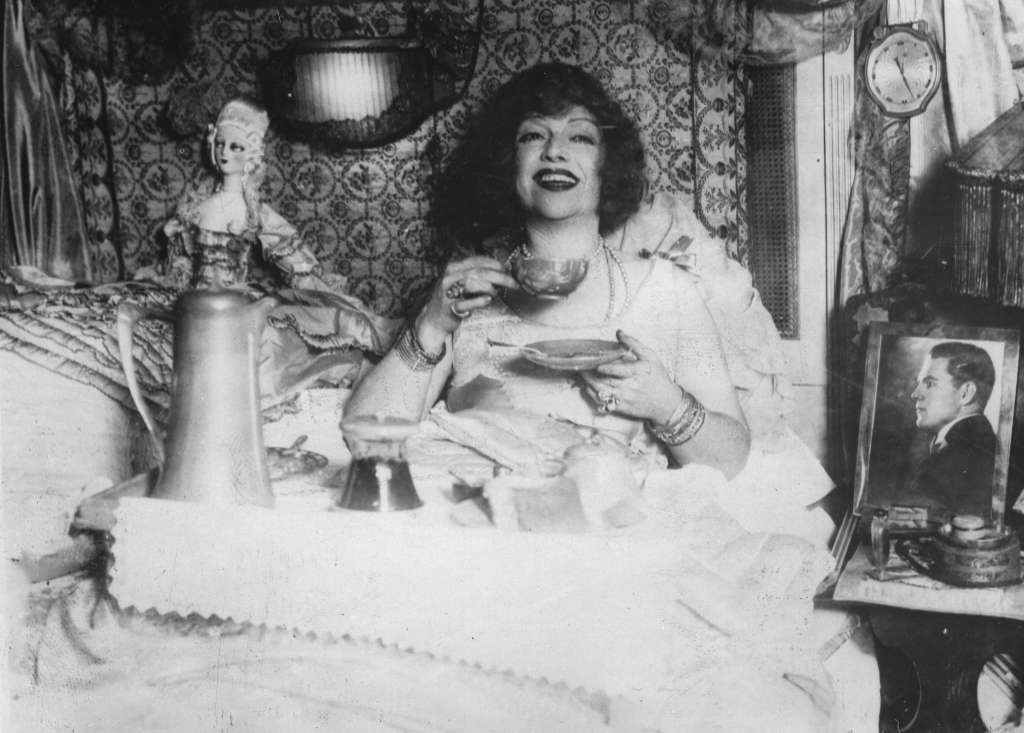
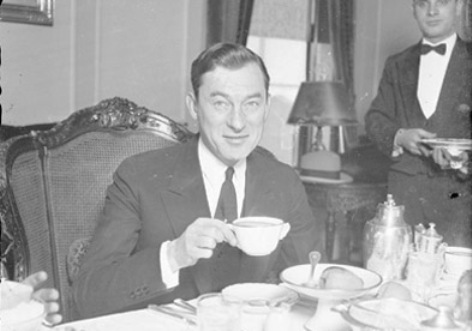
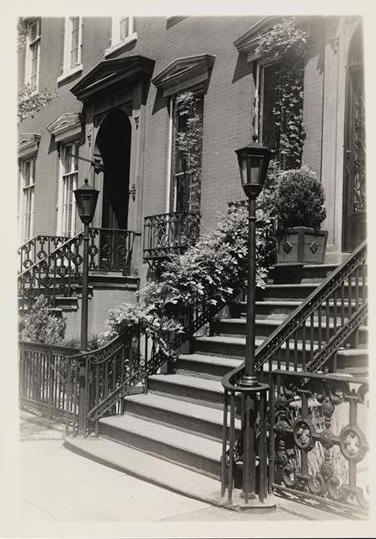
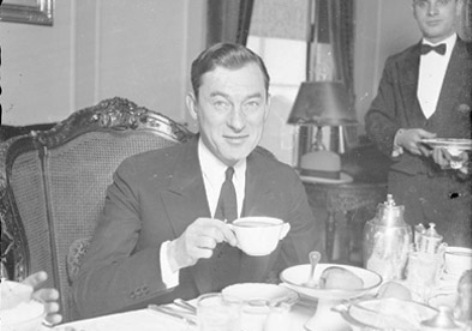
Walker having his morning coffee at his home on 6 St. Lukes Place (pictured below)
Courtesy MCNY
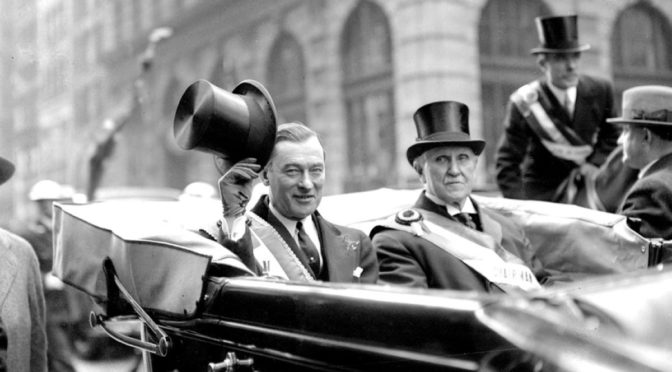
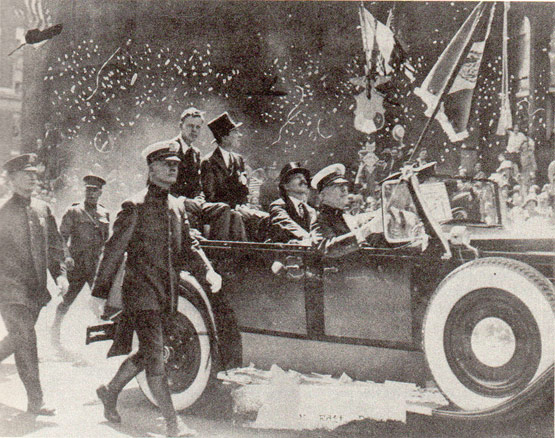
Jimmy Walker with Charles Lindbergh in 1927, in the midst of a ticker tape parade after his non-stop ride from Long Island to Paris.
Courtesy New York Social Diary
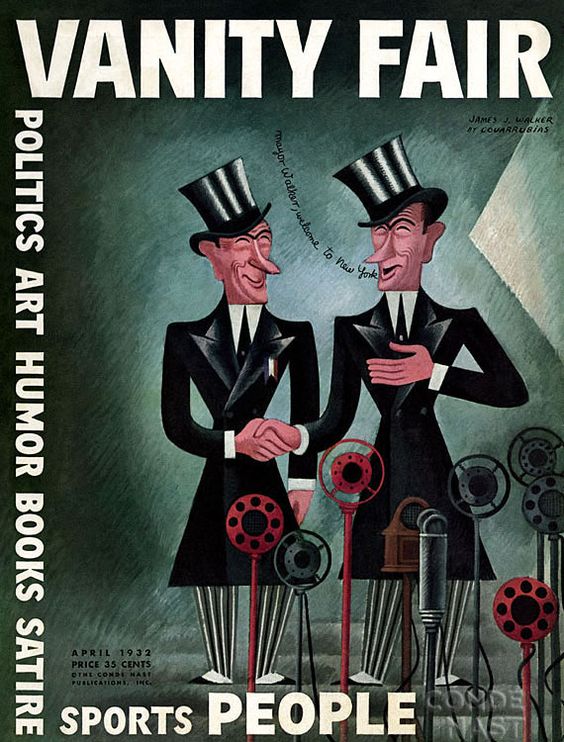
Walker so enjoyed throwing public events for famous people that he was frequently parodied for it. In 1932 Vanity Fair pictured him giving a lavish welcome — to himself.
Conde Nast
Harry McDonough with The Elysian Singers from 1905, singing Walker’s big hit “Will You Love Me In December As You Do In May.”
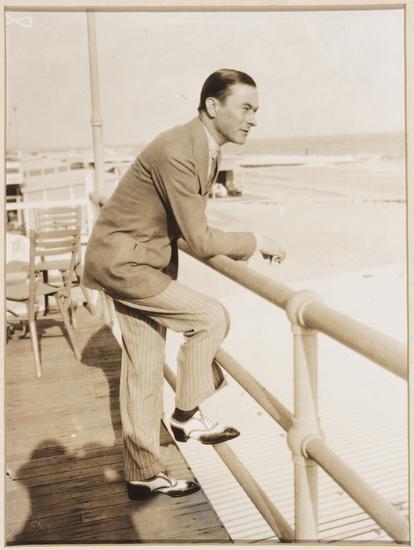
The dashing fashion plate, pictured here most certainly on his way to yet another vacation…..
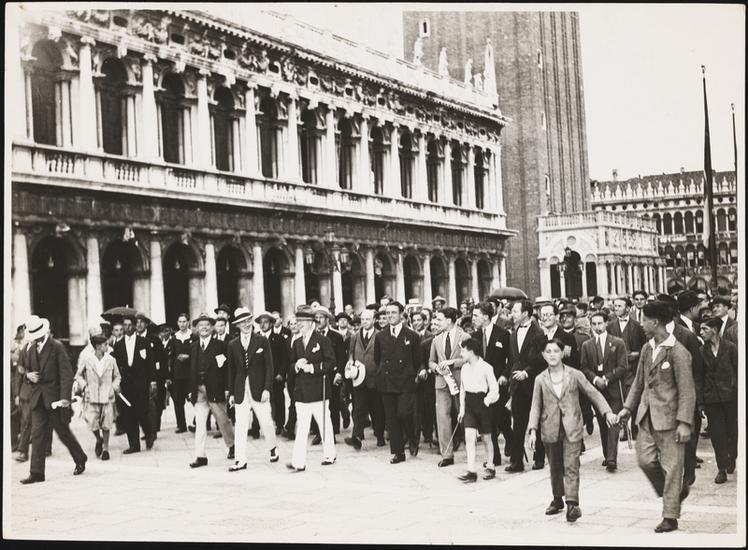
….perhaps his European vacation! He’s pictured here in 1927, strolling the streets of Venice with a few hundred people behind him.
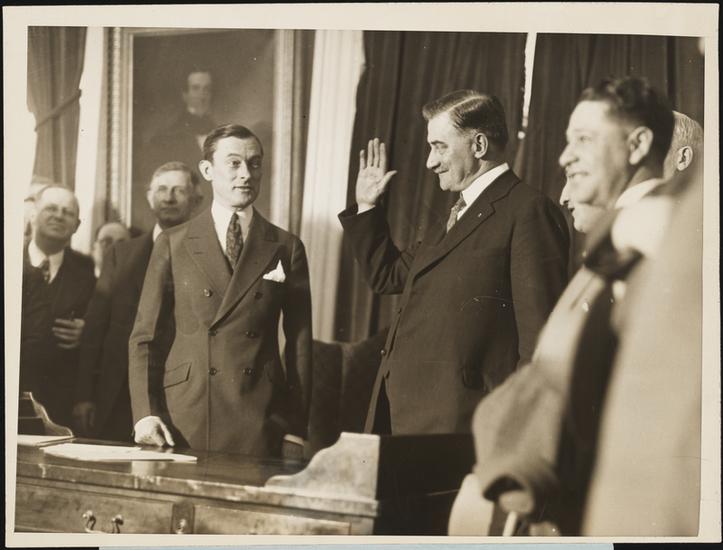
A picture of Jimmy, actually at work! He’s swearing in the new fire commissioner James J. Dorman in 1926.
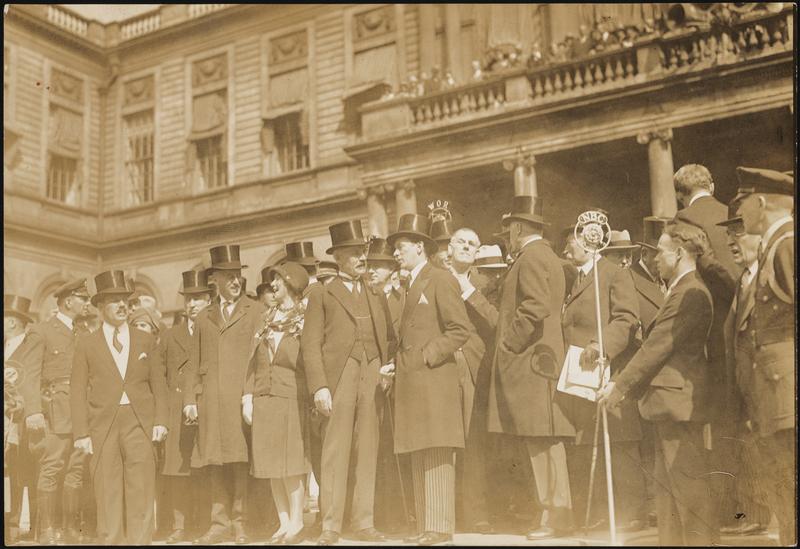
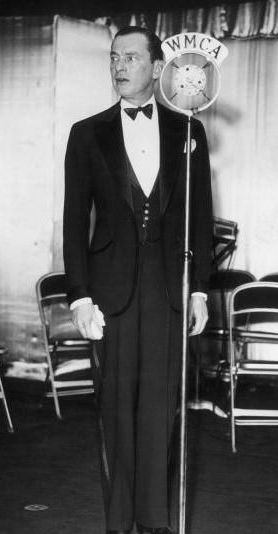
Mayor Jimmy Walker with British Prime Minister Ramsay MacDonald at yet another welcoming ceremony, broadcast on the radio.
MCNY
Another British visit, this time from Mrs Foster Welch, Mayor of Southampton.
In another Pathe video, Jimmy Walker visits Ireland and the former home of his father.
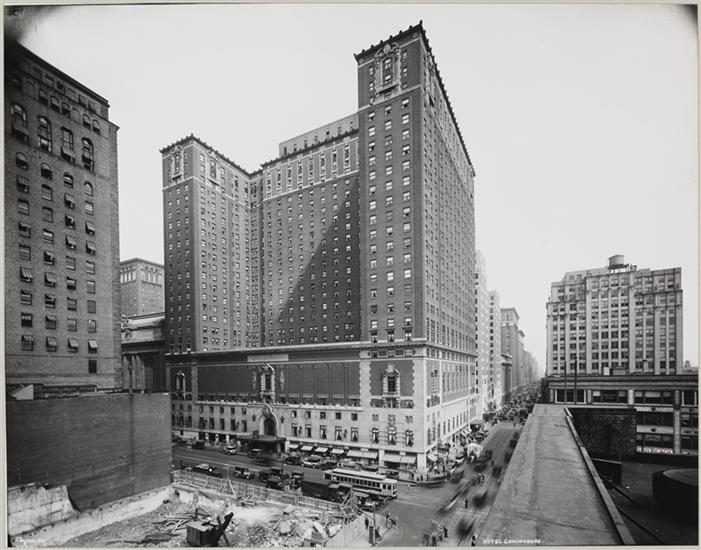
During Walker’s extraordinary rise, New York was becoming an entirely new city in the 1920s with construction projects on virtually on every block. Even in front of the Hotel Commodore (pictured here in 1927), which was, for a time, the home of Jimmy Walker.
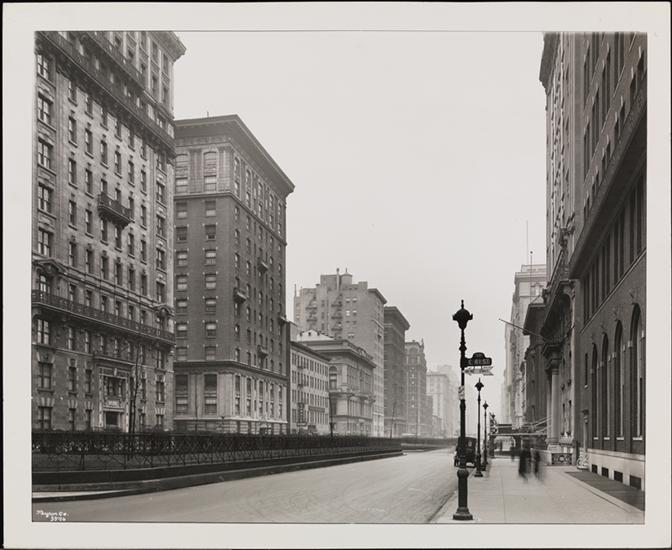
Park Avenue (at 50th Street) in 1922.
MCNY
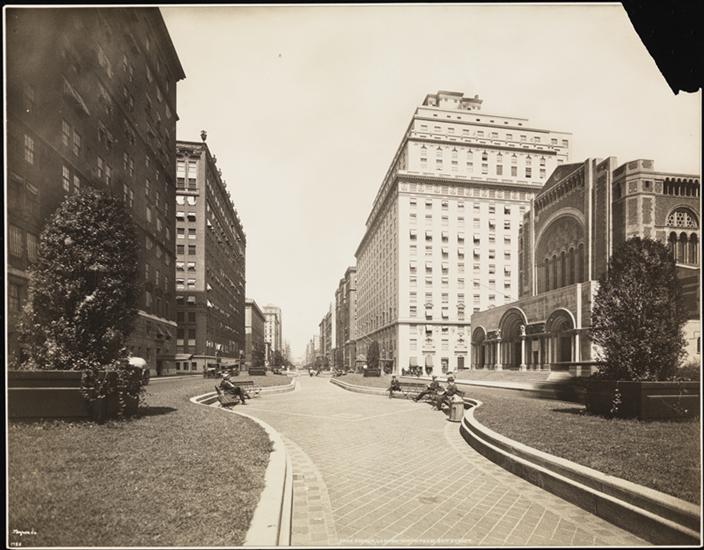
Park Avenue at 61st Street in 1922. The rich flocked to this newly developed street of apartment complexes, making it the new center of wealth.
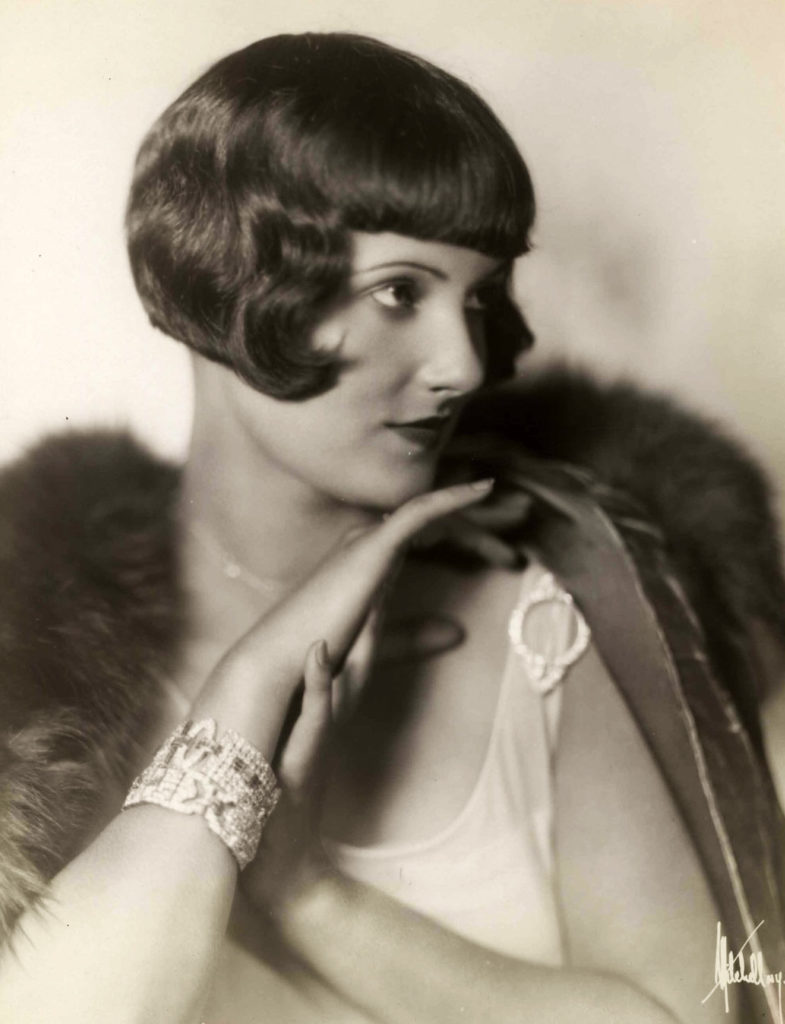
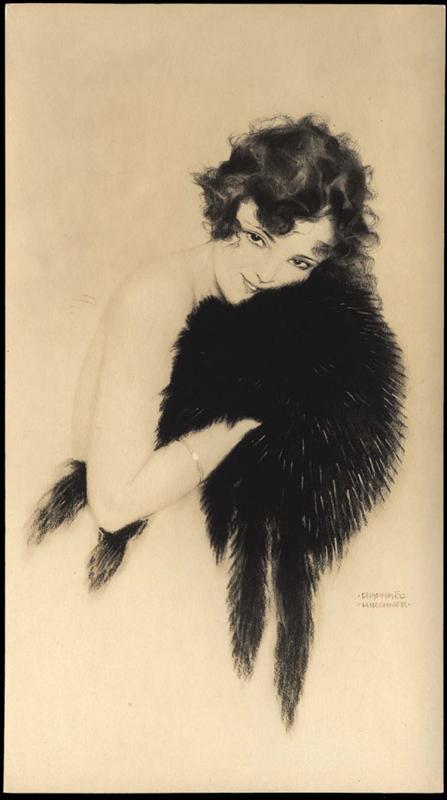
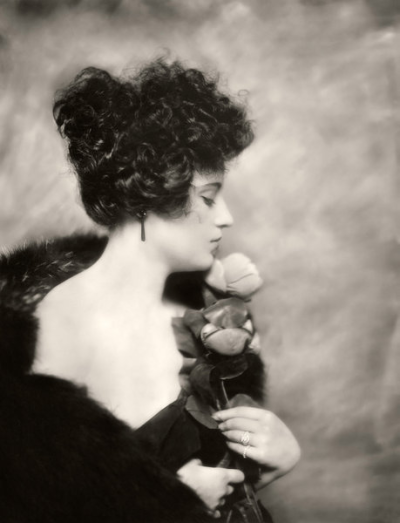
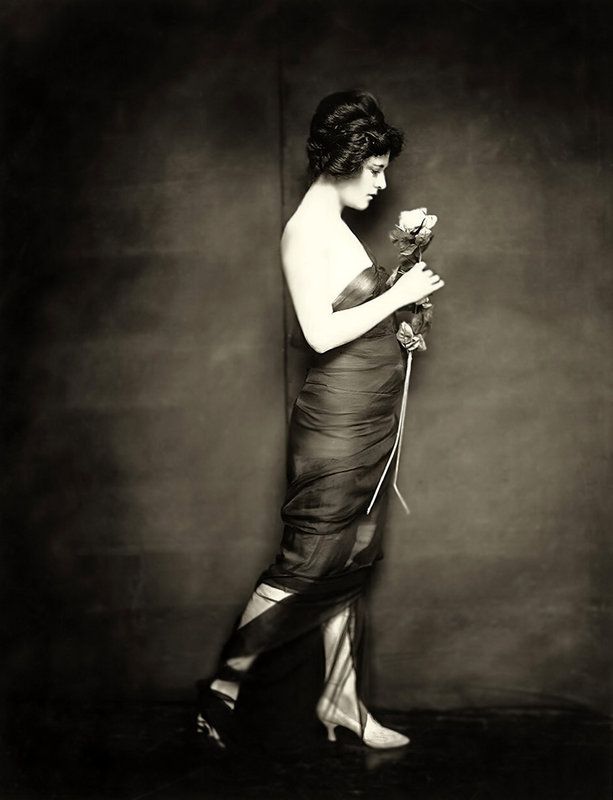
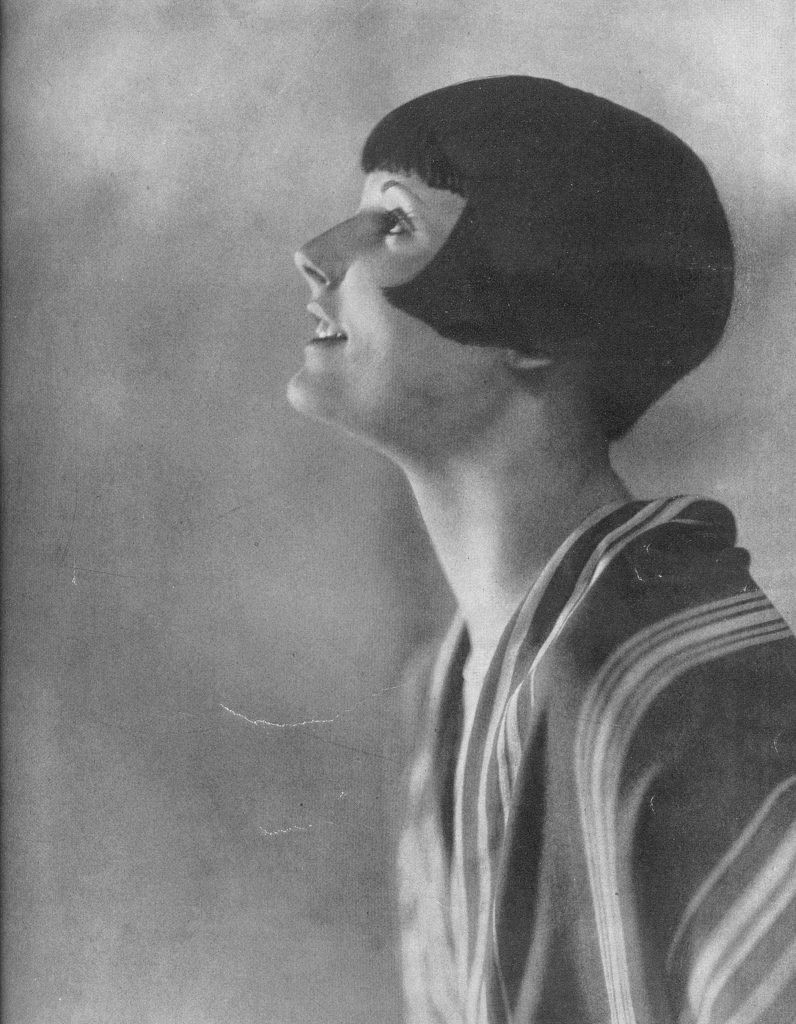
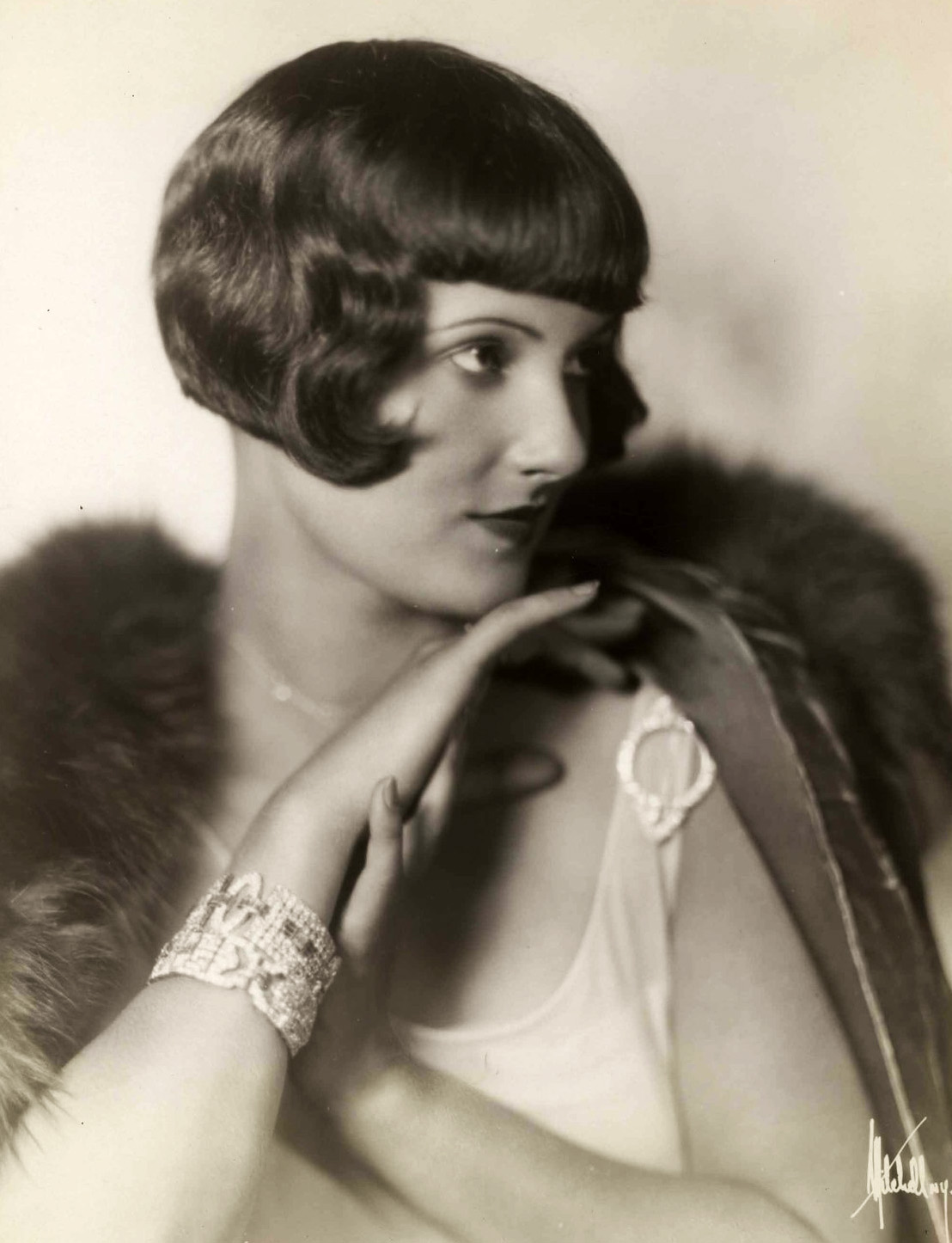
And now, for a little glamour, a few shots of Yvonne Shelton, then Betty Compton, Walker’s two most famous girlfriends (who he wooed while married to wife Janet).
wikiart
Courtesy Historial Ziegfeld
Photographs above by Alfred Cheney Johnston.
She most famously starred in 1927’s Broadway production of Oh Kay! starring Gertrude Lawrence. Here’s Lawrence singing a famous song from that show:
IN TWO WEEKS: Chapter Two of our series on the Roaring ’20s, rewinding back to the beginning of the decade and introducing you to another icon of the Jazz Age. Who will it be?
Yesterday I went searching for remnants of the old Cherry Hill neighborhood. There are none, as far as I could tell.
It’s not the first New York City neighborhood to entirely vanish in the rush of progress — is it, Robert Moses ? — however it may be the one that began with the most impressive pedigree.
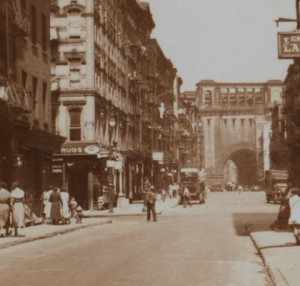
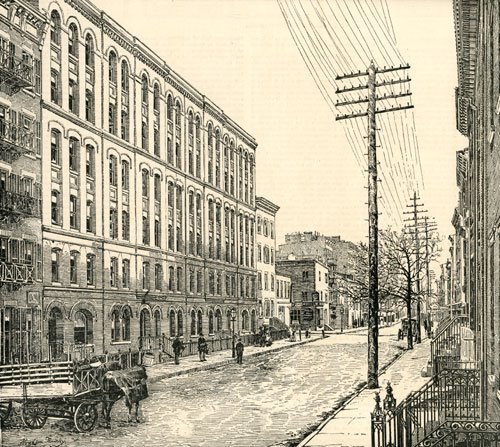
Cherry and Catherine streets, looking towards the Manhattan Bridge anchorage, in the once glorious Cherry Hill neighborhood. Pic courtesy Knickerbocker Village, who guesses photo to be from 1920s)
I’m not referring to the part of Central Park called Cherry Hill or even the upstate farm of Cherry Hill, best known for the prominent New York family the Van Rensselaers.
Downtown Manhattan’s Cherry Hill once lay near the waterfront in the area more literally called Two Bridges today, between the Brooklyn Bridge and the area just northeast of the Manhattan Bridge.
The Two Bridges Historical District was created in 2003, just to the north of the site of old Cherry Hill. Indeed there is nothing much left of the Cherry Hill neighborhood at all.
In 1890 Jacob Riis, in documenting what the neighborhood had become, referred to its early days as the “proud and fashionable Cherry Hill.” (pictured below)
Although he later moved to 39 Broadway, the neighborhood remained high on the list of the rich and important, including John Hancock (at 5 Cherry Street) and DeWitt Clinton (who moved into Washington’s old home).
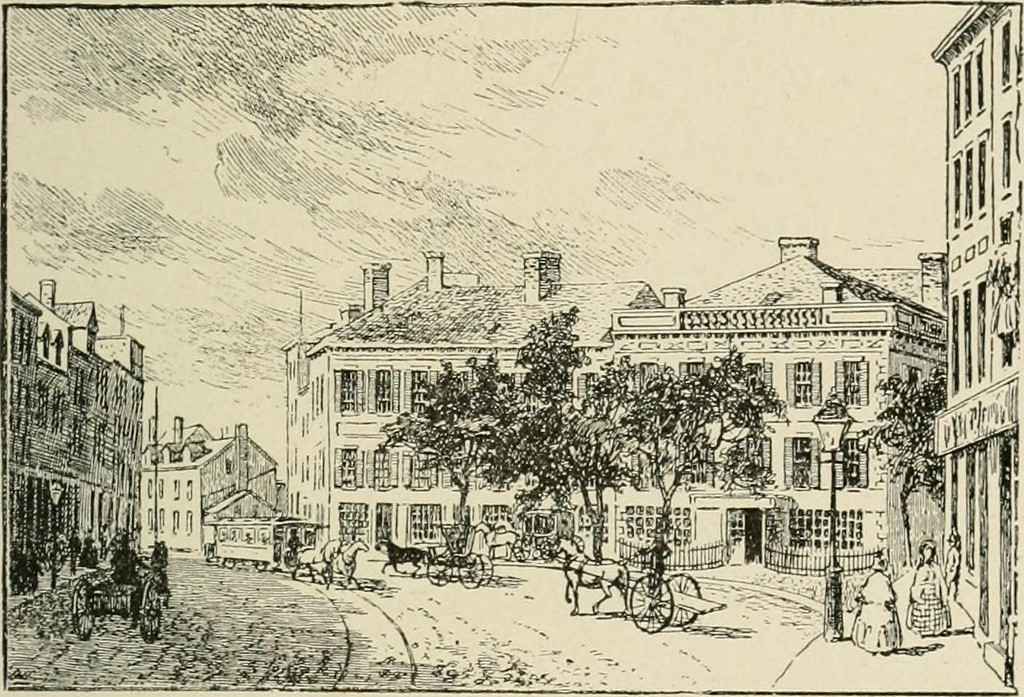
Below: An illustration of the more genteel days of Cherry Hill, taken from the book When Old New York Was Young (written in 1902)
Courtesy Internet Archives Book Images
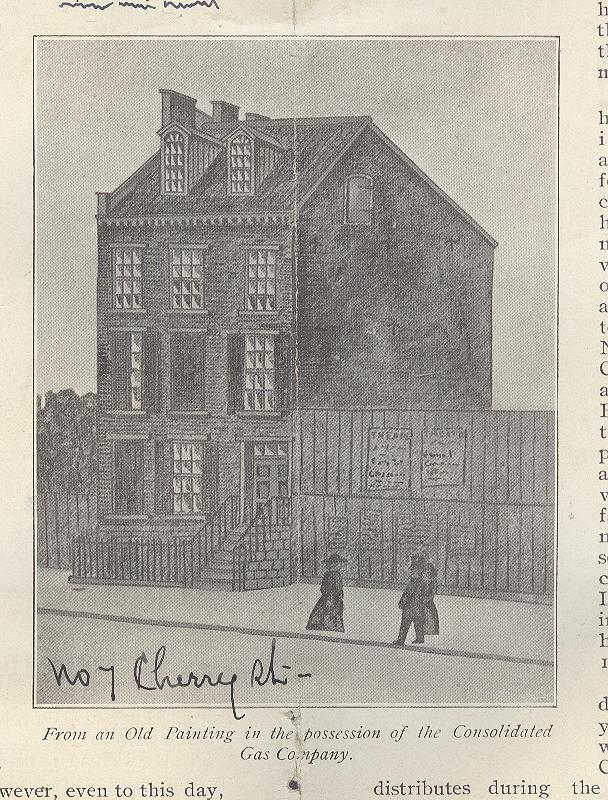
Even as late as the 1824, the area featured fine homes such as that of Samuel Leggett, founder of the New York Gas Light Company (later Con Edison), who enjoyed New York’s first interior gas lighting.
Here’s a picture of the first gas-lit home at 7 Cherry Street. (More information here)
If you’re looking for a symbolic date of Cherry Hill’s demise, look no further than April 3, 1823, birth date of William ‘Boss’ Tweed, who was born here and worked at a Cherry Hill chair shop in his early years.
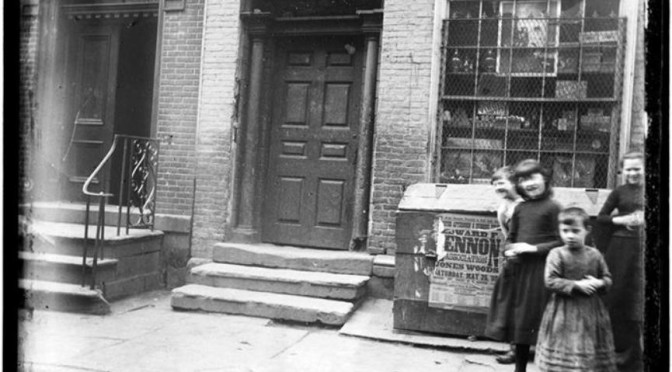
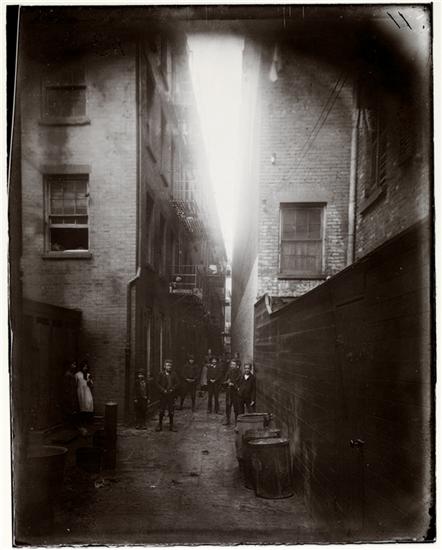
Below: Mullen’s Alley in Cherry Hill, picture taken by Jacob Riis in 1890. Courtesy the Museum of the City of New York
As many well-to-do neighborhoods would later do, Cherry Hill devolved into a slum, paralleling the decline of nearby Five Points. Its well-intentioned tenements soon became the worst in the city.
Located in the Fourth Ward, Cherry Hill abutted the saloons, boarding houses and brothels along Water Street, including the legendary Hole In The Wall (the former Bridge Cafe).
None of this would assist the neighborhood in escaping its fate.
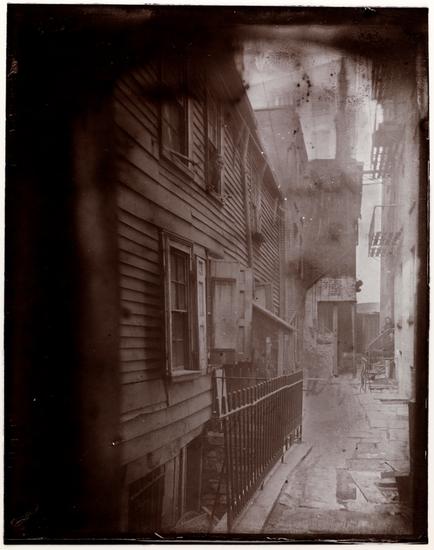
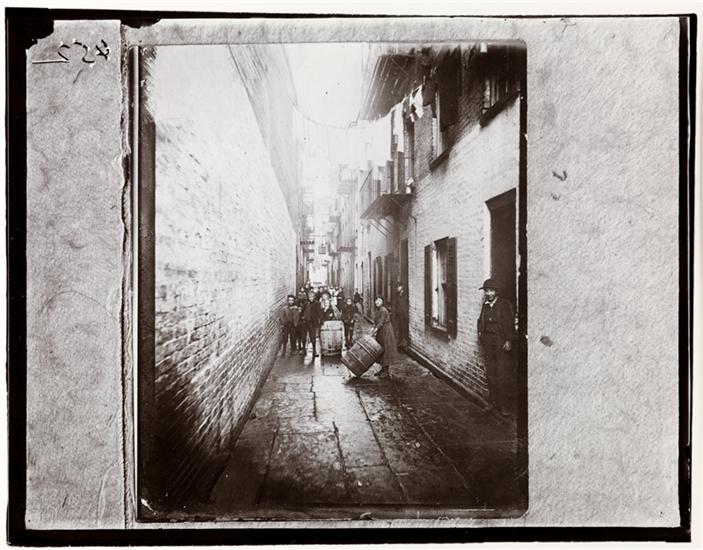
Below: Blindman’s Alley at 22 Cherry Street, taken by Jacob Riis
It would later be made infamous in Jacob Riis’ renown 1890 blistering survey of How The Other Half Lives. Â According to Riis:
“It is curious to find that this notorious block, whose name was so long synonymous with all that was desperately bad, was originally built (in 1851) by a benevolent Quaker for the express purpose of rescuing the poor people from the dreadful rookeries they were then living in.”
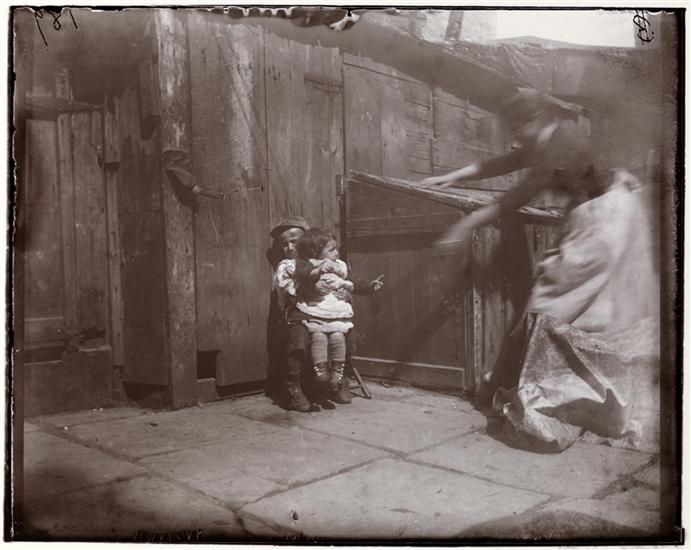
Below: photo from Gotham Court by Jacob Riis, 1890. “Minding the baby; Baby yells a Whirlwind Scream, Gotham Court.”
How long Gotham Court continued to be a so-called model tenement is not on record. It could not have been very long, for already in 1862, ten years after it was finished, a sanitary official counted 146 cases of sickness in the court, including “all kinds of infectious disease from small-pox down.”
Courtesy Museum of the City of New York
In 1894, the New York Tribune went as far as to make several attempts to describe Gotham Court as a prison. From the piece ‘Life in Gotham Court’:
The side alleys are narrower. They are not more than three or four feet wide. In order to enter either of these alleys one has to pass through an iron arch. The gate has been taken away, but enough remains to give unpleasant suggestions of a penitentiary..
The idea is not dissipated by the appearance of the houses inside the alley. The small windows with tiny panes of glass, the low, dark doors, through which iron gratings can be seen, and the bare brick walls are like those of a prison. The people move about free, as the prisoners do during exercise hour at the Tombs. All the doors are alike, all the windows are alike, and all are dilapidated, forlorn and forbidding.
Gotham Court and the rest of Cherry Hill were not long for this world. In the wake of Riis expose, Gotham Court was demolished in 1897.
By that time, efforts were made to construct more amenable tenements, including those built at 340, 342 and 344 Cherry Street in 1888. (See below, courtesy of Maggie Blanck)
By that time, the anchorage to the Brooklyn Bridge — and in 1909, with the Manhattan Bridge anchorage — would block in the neighborhood from the circulation of the city. The construction of traffic ramps to the Brooklyn Bridge and the downtown section of the FDR Drive (opened in 1942) obliterated much of what remained.
In its place would be more ambitious housing “super projects,” most notably one in the form of the Alfred E. Smith Houses, built in 1953and named for the governor and saavy politico born very close by, at 25 Oliver Street.
His old street and a couple around it may give you the closest idea of what some areas of Cherry Hill may have looked like in earlier years.
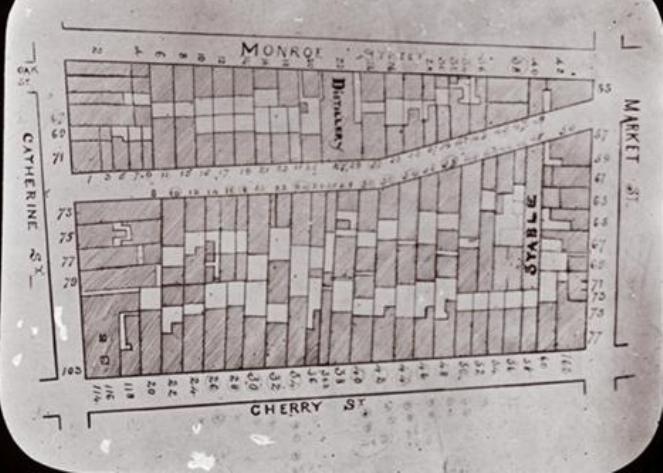
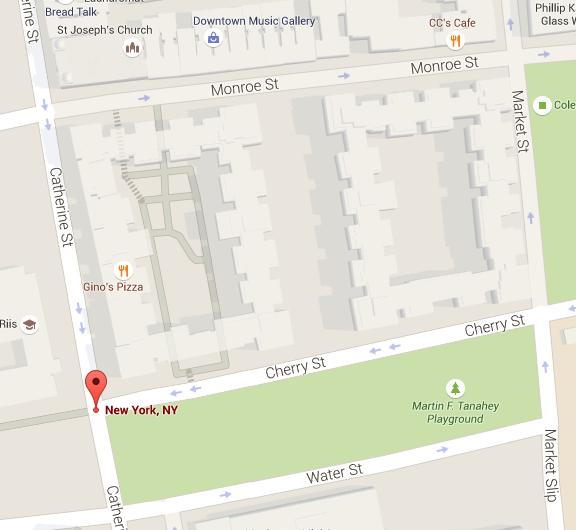
Two maps — one block of tenements in Cherry Hill in 1890 (from a map by Jacob Riis) and a Google map of the same block today:
Given its rather uniform appearance, I found it quite impossible to picture Cherry Hill’s early days here.
A shortened version of this article originally ran August 18, 2008. I’ve left the comments from that original run as they relate to the history.
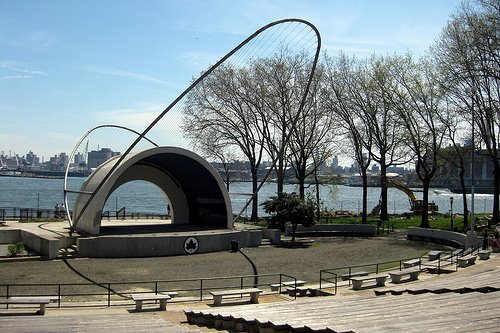
I’ve always been a little fascinated by that small ampitheatre that’s located in Manhattan’s East River Park (near Corlear’s Hook). For years it just seemed so hopelessly abandoned. In the past few years though it’s been making a comeback, featuring the occasional live concert and offering a unique, leafy respite for joggers.
The East River Park is a rather unusual thing, a Robert Moses original from 1939 that features 20 blocks of artificial concrete extension to connect the original land purchase (too narrow to be a useful park) with the East River shore. It’s the largest park in downtown Manhattan, larger in acreage than Battery, Thompkins Square or Washington Square parks.
Among its many Moses staples — ball fields, paved playgrounds and paved picnic areas — is the amphitheater constructed in 1941 as a nod to the neighborhood’s most famous former resident, New York governor Al Smith, who had pursued acting in his youth.
However, nothing much exciting blossomed from its curiously designed proscenium until the late 1950s, which Joseph Papp first launched his series of free Shakespeare performances. That’s right, the Public Theatre’s annual outdoor tradition of Shakespeare In the Park began here — at East River Park, not Central Park.
Once they left uptown for their permanent home, however, things became quite grim for the ampitheatre. By 1973, the city couldn’t even afford to keep it open. It was fenced up, closed down and heavily vandalized. For those living in the city at the time who came upon it, it did in fact seem like a modern ruin, Robert Moses’ very own Acropolis.
The park itself was slowly renovated throughout the 1990s, but relief finally came to the beleaguered stage in December 2001 thanks to, curiously enough, to reality television and Erin Brockovich — the real Brockovich, not the Julia Roberts version.
In the months following 9/11, many restorative projects began popping up throughout downtown. Brockovich, rising to national prominence thanks to the Roberts film, was filming an urban makeover program Challenge America for ABC. Brockovich and her producers chose the amphitheater for renovation, done over the course of a week, using the donated services of Tishman Construction and HLW Architects. Why this place exactly? I’m not sure, but Rudy Guiliani assigned the project to the program during a telecast of Good Morning America.
I didn’t catch the one-shot show, but I’m picturing Ms. Brockovich in one of her signature ensembles directing workman while standing on the stage. Truly one of the stranger stories of renovation that I’ve ever heard.
KNOW YOUR MAYORSOur modest little series about some of the greatest, notorious, most important, even most useless, mayors of New York City. Other entrants in our mayoral survey can be found here.
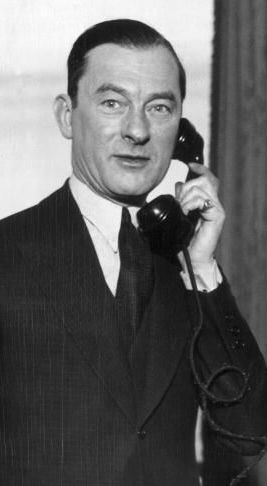
MayorJimmy Walker
In office: 1926-1932
Has a New York mayor ever reflected the decade he governed more perfectly than Jimmy Walker? Although John Hylan was actually the 1920s more effective mayor, it was Walker who embodied the Jazz Age spirit in his style, and the tragic Depression-era change of fortune in his downfall. He glamours us today because he’s both movie star and rebel; but the corruption of his regime is equally as striking and even disturbing in its grandiosity.
Walker is easily one of the most notorious mayors of New York, but today we can appreciate his brashness, his independence and class, just as we can lament his subservience to diabolic Tammany-era politics. He wasn’t the last disgraced mayor the city would see in the 20th century, but his abdication neatly defines the modern era’s defining fall from grace.
Jimmy, born June 19, 1881, was a New York boy and a golden one at that, raised in Greenwich Village among the bohemians, the son of an Irish immigrant who became a well connected Democratic assemblyman. Walker’s first passion seems to be music; in 1905 he stormed Tin Pan Alley writing songs such as “There’s Music In The Rustle Of A Skirt” and “Will You Love Me in December As You Do in May?” with its melancholy refrain:
Will you love me in December as do in May, Will you love in the good old fashioned way? When my hair has all turned gray, Will you kiss me then, and say, That you love me in December as do in May?
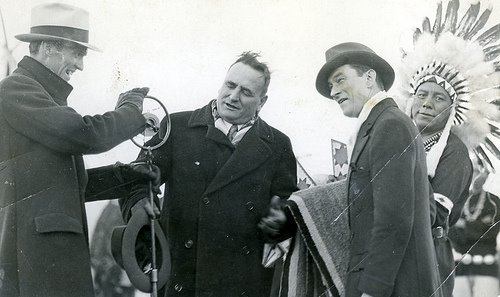
Below: In an odd ceremony with the mayor of Albuquerque
He had even less hesitation in announcing a political career, especially as Father had connections to a certain Al Smith, governor of New York. An adopted son of Tammany Hall, elected first to the state assembly in 1910 then to the state senate in 1914, young Walker sought Smith’s guidance and the governor soon took a fancy to the smooth, impeccably dressed young man, who shone like a new penny on the Senate floor. As he was described by Robert Caro:
“Pinch-waisted, one-button suit, slenderest of cravats, a shirt from a collection of hundreds, pearl-gray spats buttoned around silk-hosed ankles, toes of the toothpick shoes peeking out from the spats polished to a gleam. Pixie smile, the ‘vivacity of a song and dance man,’ a charm that made him arrive n the Senate Chamber like a glad breeze’ The Prince Charming of Politics…..slicing through the ponderous arguments of the ponderous men who sat around him with a wit that flashed like a rapier. Beau James.”
Smith took him under wing, maneuvering him through the entanglements of state politics, shielding Walker when his excesses got the better of him. He was a philandering cad and a boozer, even then. When opportunity arose to challenge the successful John Hylan for mayor of New York, Smith wanted Walker to run, but only if he would change his ways. Walker changed them all right; instead of partying out at speakeasies with chorus girls, he moved the whole production to a private penthouse funded by Tammany favors.
That election in 1925 was fierce. First, Smith had to dispense of Hylan in the Democratic primary — and in the halls of Tammany. The two split the storied political machine, but eventually Walker won out. Next, he faced the Republican-Fusion candidate Frank Waterman in the general election, who cried of potential Tammany corruption to the new subway system if Walker were elected. (Waterman would, of course, be right.) Beau James, however, went unabated. He ran as a people’s mayor, somebody who enjoys and the same pleasures as those voting for him:
“I like the company of my fellow human beings. I like the theatre and am devoted to healthy outdoor sports. Because I like these things, I have reflected my attitude in some of my legislation I have sponsored — 2.75 percent beer, Sunday baseball, Sunday movies, and legalized boxing. But let me allay any fear there may be that, because I believe in personal liberty, wholesome amusement and healthy professional sport, I will countenance for a moment any indecency or vice in New York.”
Right! Walker was one of the people. Everybody bought it but nobody believed it. He swept into office because New York, in 1925, was prosperous, a Jazz Age mayor for a Jazz Age city.
Once elected, of course, Walker countenanced all sorts of indecency and vice. He was frequently in Europe on vacation. When he was in town, it was rarely at City Hall. The lavish new Casino nightclub in Central Park became his unofficial headquarters, with Ziegfield dancer Betty Compton at his side. (Walker’s wife was out of town, frequently.) City business was often discussed with the pop of champagne cork.
Some things got done that first term: the New York hospital system was consolidated on his watch, he purchased thousands of acres for park land (including Great Kills in Staten Island), and grew the municipal bus system — greatly benefiting more than a few friends who happened to own the bus company given the exclusive franchise.
He managed to turn on his old ally the governor, scrubbing City Hall of any Smith loyalists, granting more jobs to his type of Tammany men, filling their own pockets but allied to the charming man in charge.
How did he stay so popular? This was the late ’20s and people wanted the mayor to reflect prosperity and confidence. He also gave back, in symbolic gestures. Even as the new subway system became clogged with corruption, he staved off a strike while keeping the fare at five cents, thought at the time to be an incredible concession.
He easily won election in 1929 against a largely outmatched Fiorello LaGuardia. Tammany was in place and unstoppable; but the voters still chose not to look askance at Walker’s dalliances, and even the newspapers were charmed. The New York Times wrote of his “great personal charm, his talent for friendship, his broad sympathies embracing all sorts of conditions of men,” then recommended him under the guise that “the Mayor that he has been gives only a hint of the Mayor that he might be.”
That hinted-at mayor never materialized, because the Stock Market crash did, plunging the city’s fortunes into ruin and exposing the weaknesses of a government consumed with greed. Suddenly, having an extravagant, indecent mayor didn’t seem like such a good idea.
Archbishop of New York Cardinal Hayes, once dazzled, now condemned the mayor’s amoral ways, opening the flood doors for others to lay the city’s problems was Walker’s feet. Eventually the accusations reached the ear of governor Franklin D. Roosevelt.
A commission lead by Justice Samuel Seabury exposed deep veins of corruption throughout the city’s legal system and police force. Innocent citizens, often women, would be charged with crimes and forced to pay steep fines to get out of jail time. (Many times they couldn’t pay, and off they went, dozens at a time.) Neighborhoods, most often Harlem, would be routinely raided and its residents taken in, wild charges conjured for maximum penalty.
This would line the pockets of dozens of judges and vice squad officers. Newspapers dubbed it the Tin Box Parade, “after one testified that he had found $360,000 in his home in a ‘tin box…a wonderful tin box'” (Caro).
Walker himself was brought to the stand to testify, the judge warning those in the court room not to look the mayor in the eye, lest they succumb to Walker’s sensational charm.
After months of epic battles on the stand — Walker eluding hot button questions about his personal bank accounts, delaying appearances until after Roosevelt’s nomination for president was assured — the embattled mayor could fight no longer. With Roosevelt mere months from his national election, he needed to be rid of Walker. Walker obliged in the classiest way possible: he resigned on September 1, 1932, and went on a grand tour of Europe with his Ziegfeld girl.
He was never charged with a crime. He was barely even held accountable for anything. Back in New York three years later, he held a series of smaller posts, including one for the New York garment industry that was assigned to him by new mayor LaGuardia, his former rival.
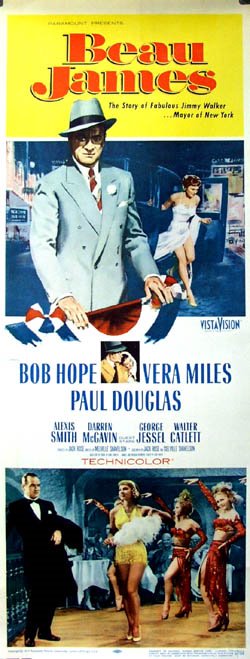
Nothing stuck to him. He died in November 1946 of a brain hemorrhage, just two years after returning to his first love as the head of a big-band record label with a stable of artists that included Louis Prima and Bud Freeman. Ten years later, Hollywood decided to do something very redundant and make a movie of his life, starring Bob Hope as Beau James. It would follow a screenplay only slightly less glamorous than the real thing.