Categories
On The Waterfront Women's History

The Deep Sea Hotel: A nautical housing solution for independent women

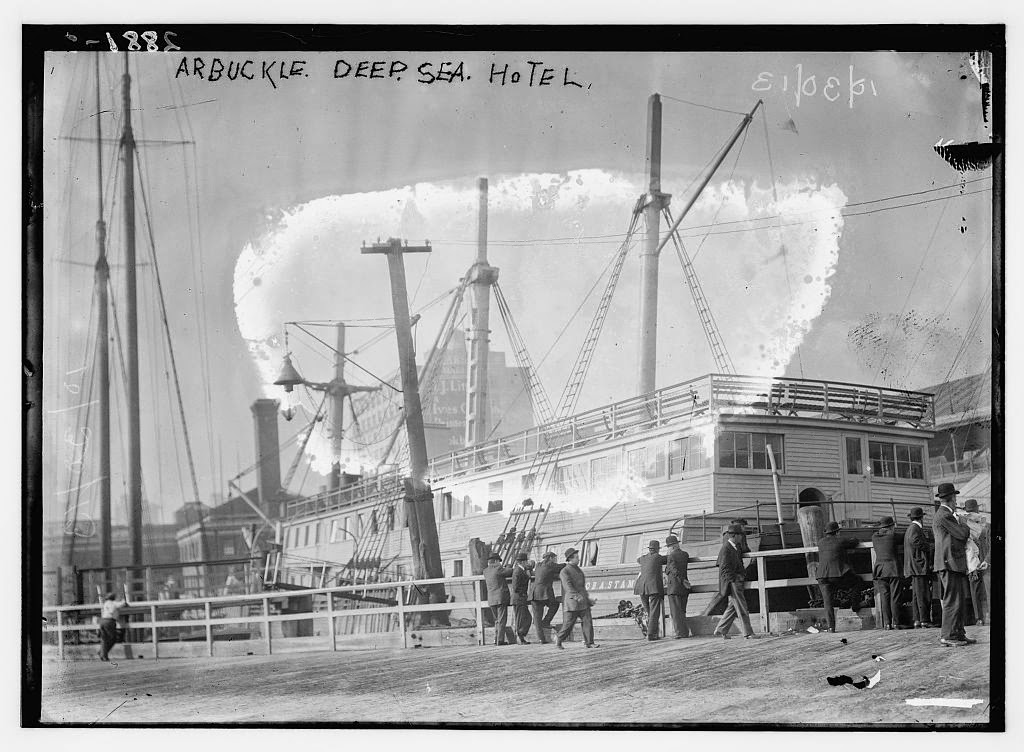
Arbuckle’s Deep Sea Hotel was neither in the deep sea, nor was it a hotel.  But for hundreds of young, single women at the end of the Gilded Age, it was home.
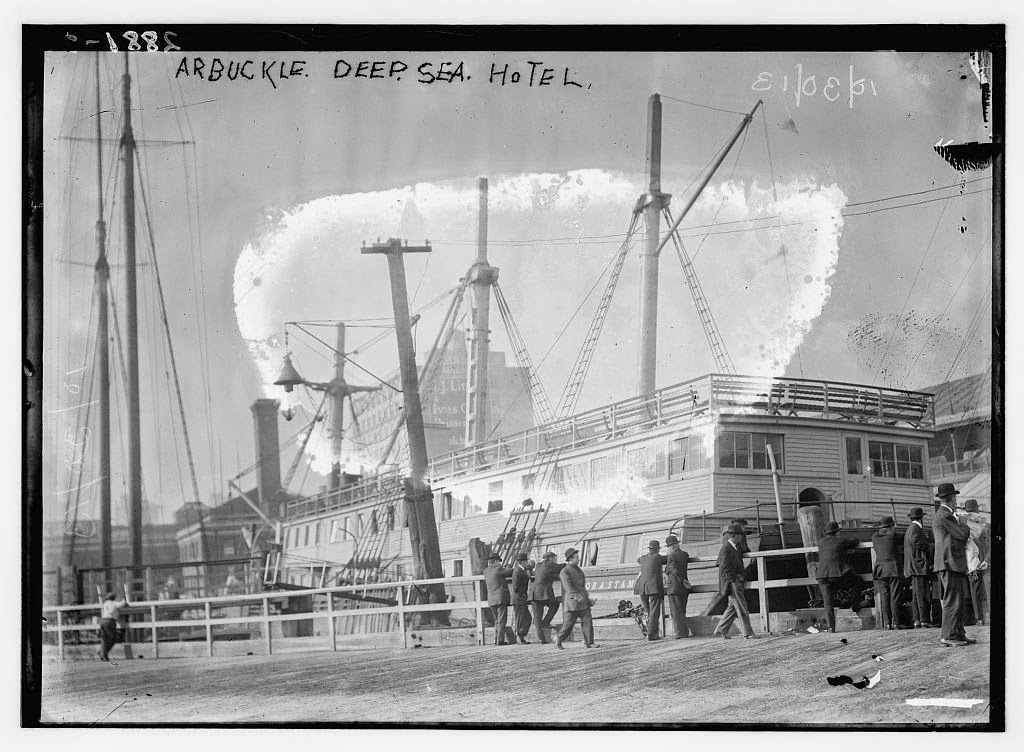
The boat hotel built by a coffee manufacturer, photo from January 1913 (Library of Congress)
The Challenges of Living Single

Accommodations were indeed limited for the thousands of young single women who arrived in New York City at the start of the 20th century.  

Wealthier single ladies could enjoy a degree of independence by indulging in fashionable apartment living. Affordable options like boarding houses were often socially binding.  

For instance, the morality-minded YWCA housed hundreds of New York women by the 1890s. It was often too expensive to rent on your own place, even with roommates, and the neighborhoods where such housing was available would not have been too desirable.

Enter Brooklyn coffee millionaire John Arbuckle.

A Caffeine Jolt

The sugar manufacturer, already a chief competitor of William Havemayer, innovated the mass production of coffee by the 1890s, making himself extremely wealthy and jumpstarting America’s love affair with coffee in the process.  

His Jay Street plants and Water Street warehouses dominated the Brooklyn waterfront in the area of today’s DUMBO.
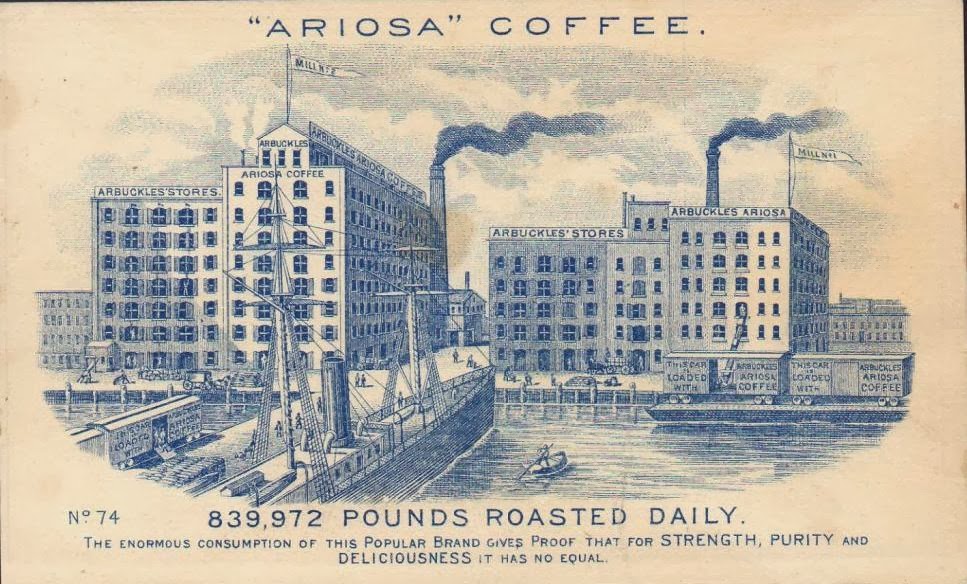
In emulation of other progressive-minded New York philanthropists, Arbuckle commissioned free water-bound excursions for the overcrowded poor of the Lower East Side.

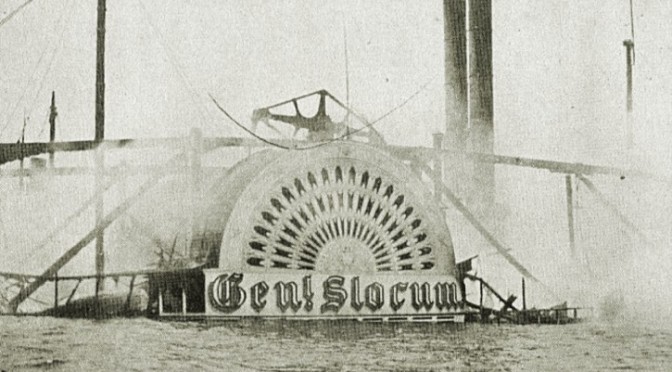
However, when a steamboat owned by another company — the PS General Slocum — exploded during one such excursion in 1904, killing over 1,000 people, such trips quickly went out of fashion.  

Arbuckle then decided to use one of his ships in a more unconventional way — a long-term hotel for single women.

The Floating Hotel

His ship the Jacob A. Stampler was turned into a floating hotel for one hundred women, with a smaller ship nearby for young working men. It was docked at West 21 Street on the Hudson River, near the massive piers for passengers liners.

“The fundamental idea of this hotel scheme,” according the New York Tribune in 1905, “is to benefit young men and young women who are receiving low wages and are striving to live respectable lives.”  

In 1905, its first year of operation, women paid “40 cents a day, or $2.80 a week, while the young men pay 50 cents a day or $3.50 a week.” [source]

From the Tribune profile:
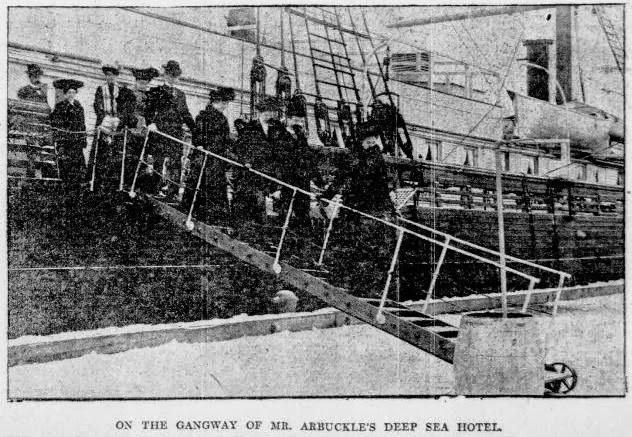
While both genders benefited from the unusual hotel idea, Arbuckle’s focus was in the assistance of women.  

“A young fellow can fight for himself and get along his own way,” said the millionaire, “but it is different with a woman or girl confronted with problem of keeping herself respectable while working for low wages.”

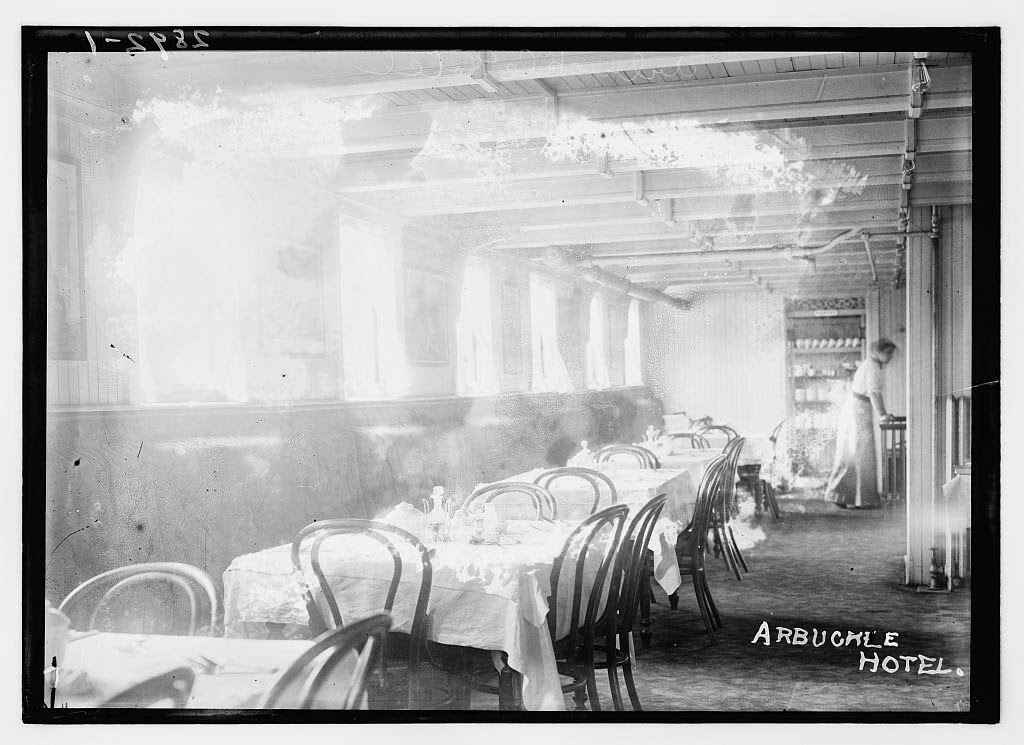
The women were fed well and provided a selection of magazines and newspapers, not to mention a piano for Sunday evening sing-alongs. They were also given sewing machines and laundry facilities.

The rocking of the boat and the relative bustle of a busy pier seems not to have bothered Arbuckle’s early tenants.  

“It’s so quiet here. No rattle and roar from the streets,” said one young woman. [source]  Ladies could receive gentlemen callers, but men had to vacate by 10 pm. As many women worked quite late in the day, this probably didn’t amount to much socializing.

A House and a Vacation Home

During the summer, the boat actually did take regular trips to various places in the region, from Coney Island to the shore of Staten Island.  

In July, the two floating hotels would head out to Coney Island every day, docking for a couple hours at Dreamland amusement park.

Surmising from its frequent journeys, I imagine Arbuckle’s floating hotels had few long-term summer tenants in these early days.

Below: The dining room and the sleeping quarters of the Deep Sea Hotel, circa 1913 (LOC)
The Final Days

Over the next ten years, the Deep Sea Hotel took fewer trips, becoming more or less a semi-permanent, floating apartment complex.

It was referred to by this point as the Working Girls Hotel.  

At some point, perhaps due to overwhelming traffic at the Chelsea piers, the Stampler made the east side its home, regularly docking at East 23rd Street.

The floating hotel never really made a profit, and after Arbuckle died in 1912, his inheritors attempted to shut it down.  

I should also note that the Stampler was a very, very old boat.

“[The] ship was beginning to rot and soon would be unsafe,” said the New York Sun.  The women who lived there, however, fought successfully to keep it open until 1915, when they were finally told to permanently disembark.
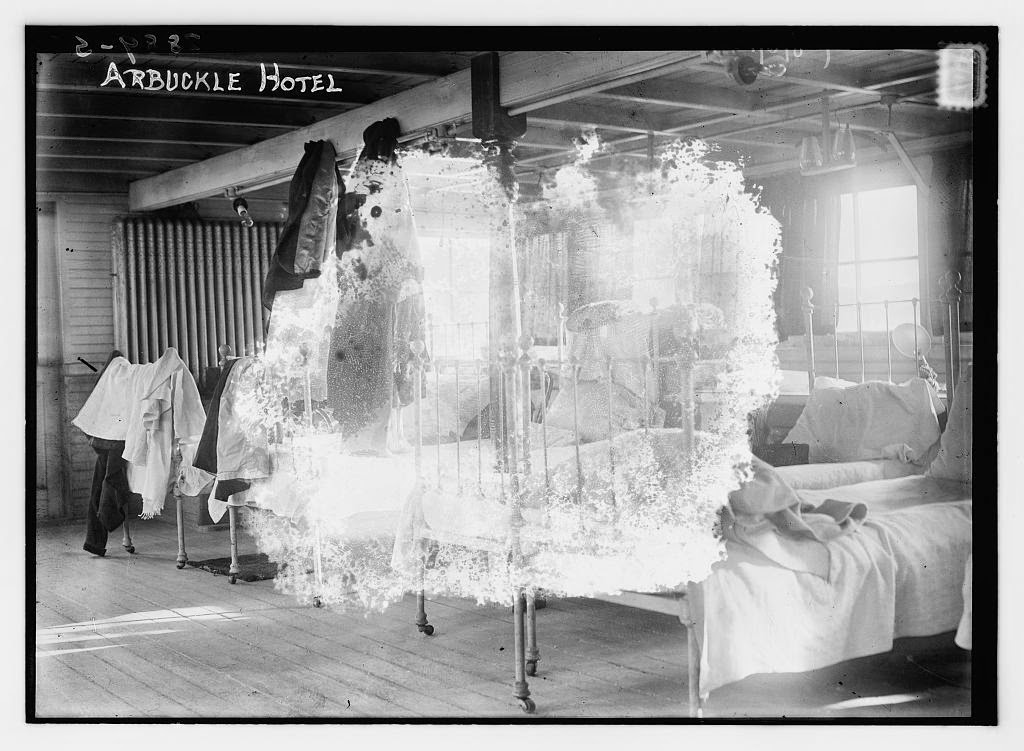
Interesting fact to note about its final days — both single men and women lived aboard the boat by 1915.  

Its last documented population was 50 girls and 16 boys, according to the Sun. (Most likely teenagers or adults in their early twenties.) The ship rarely sailed to Coney Island in the summer, but had become a destination in itself.  

“One of the five decks is fitted up as a dance hall,” “crowded every night with dancers” when music from a nearby pier begins to play.

The price of rent these days!

The last tenants finally left on September 1, 1915, with many unable to find further housing.  “There isn’t a girl on this boat that makes $9 a week,” said one mournful tenant, “and you know how far that goes in this city.” [source]

By 1917, the Stampler was a rotted breakwater off of Bayville Beach in Oyster Bay.  To this day, perhaps, some remnant of the ship still sits in the water off the coast of Long Island.

By the way, Arbuckle may no longer sponsor floating housing accommodations for working people, but they still make coffee.
For more information on Arbuckle and the New York coffee scene, check out our podcast on the history of DUMBO:
Categories
Bridges Podcasts Queens History

The Queensboro Bridge and the Rise of a Borough

“The city seen from the Queensboro Bridge is always the city seen for the first time, in its first wild promise of all the mystery and the beauty in the world.” — F. Scott Fitzgerald

EPISODE 349 This is the story of a borough with great potential and the curious brown-tannish cantilever bridge which helped it achieve greatness.

The Ed Koch Queensboro Bridge (sometimes known as the 59th Street Bridge) connects Manhattan with Queens by lifting over the East River and Roosevelt Island, an impressive landmark that changed the fate of the borough enshrined in its curious name.
In 1898, before the Consolidation of 1898, which created Greater New York and the five boroughs, much of Queens was sparsely populated — a farm haven connected by dusty roads — with most residents living in a few key towns, villages and one actual city — Long Island City.
With Brooklyn and Manhattan already well developed (and overcrowded in some sectors) by the early 20th century, developers and civic leader looked to Queens as a new place for expansion. But in 1900 it had no quick and convenient connections to areas off of Long Island.

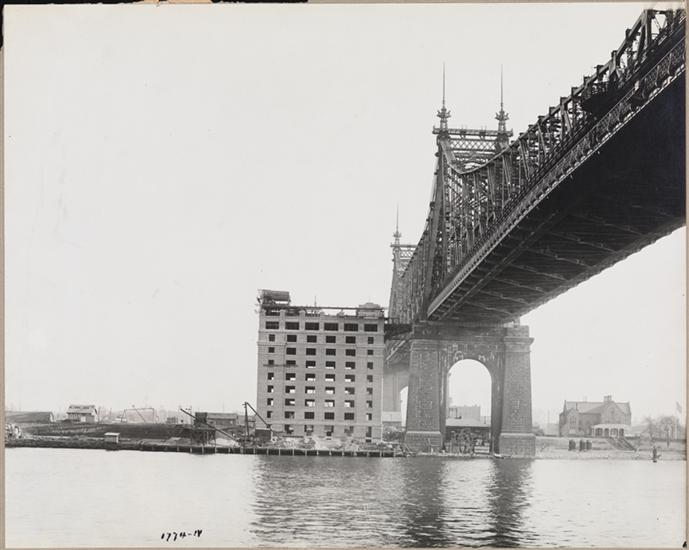
The bridge in 1917 with the elevator storehouse, Museum of the City of New York

With the opening of the bridge in 1909, rich new opportunities for Queens awaited. Communities from Astoria to Bayside, Jackson Heights, Flushing and Jamaica all experienced an unprecedented burst of new development.

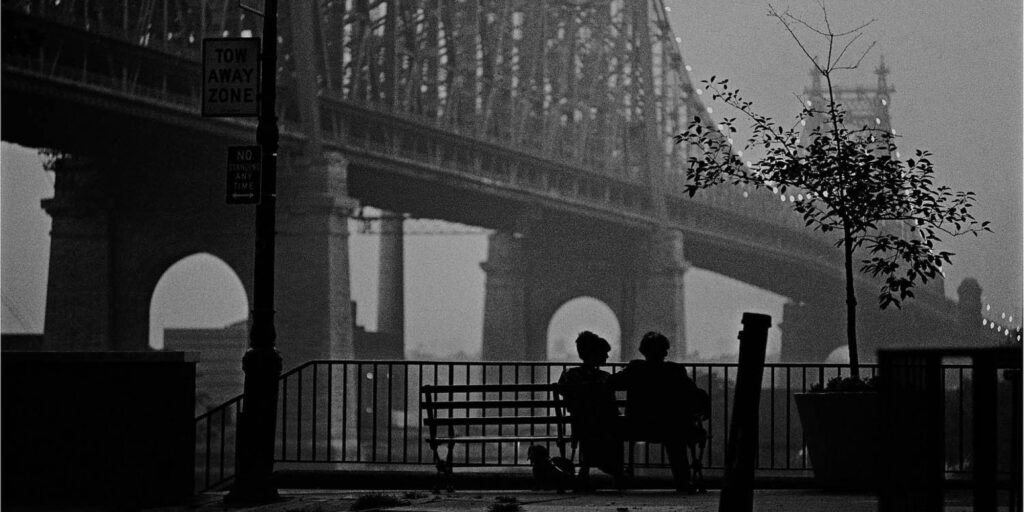
Thanks in small part to the bridge so famous that it inspired a classic folk song and became the cinematic backdrop of a 1970s film classic.

Listen here or from your favorite podcast player:


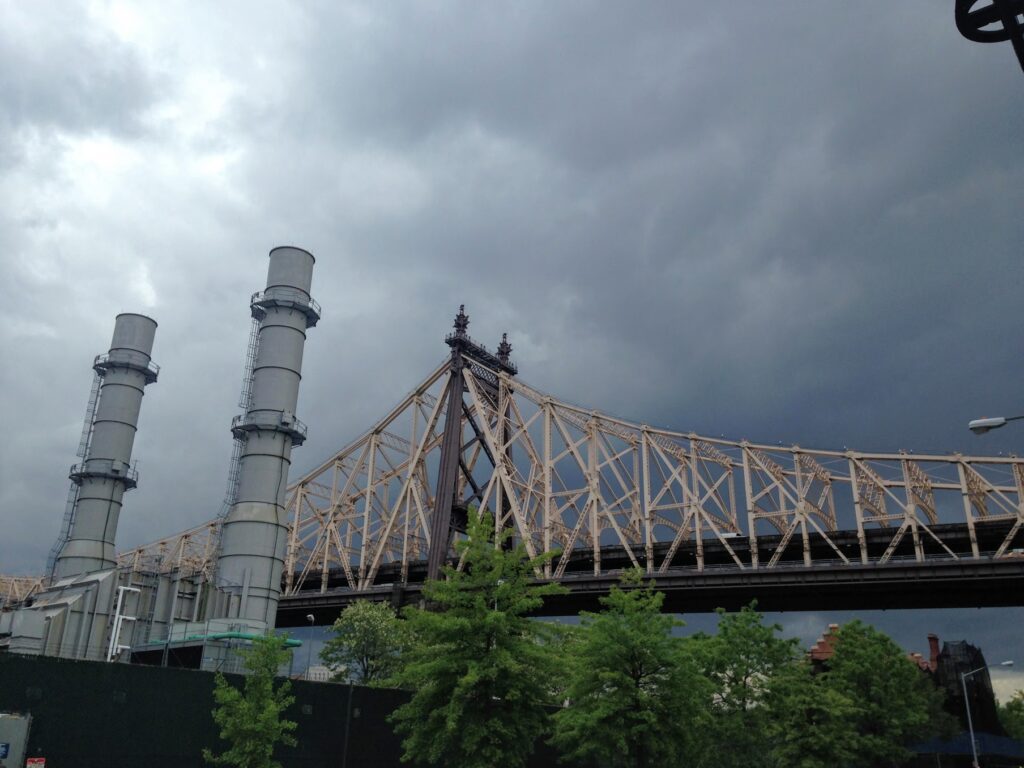
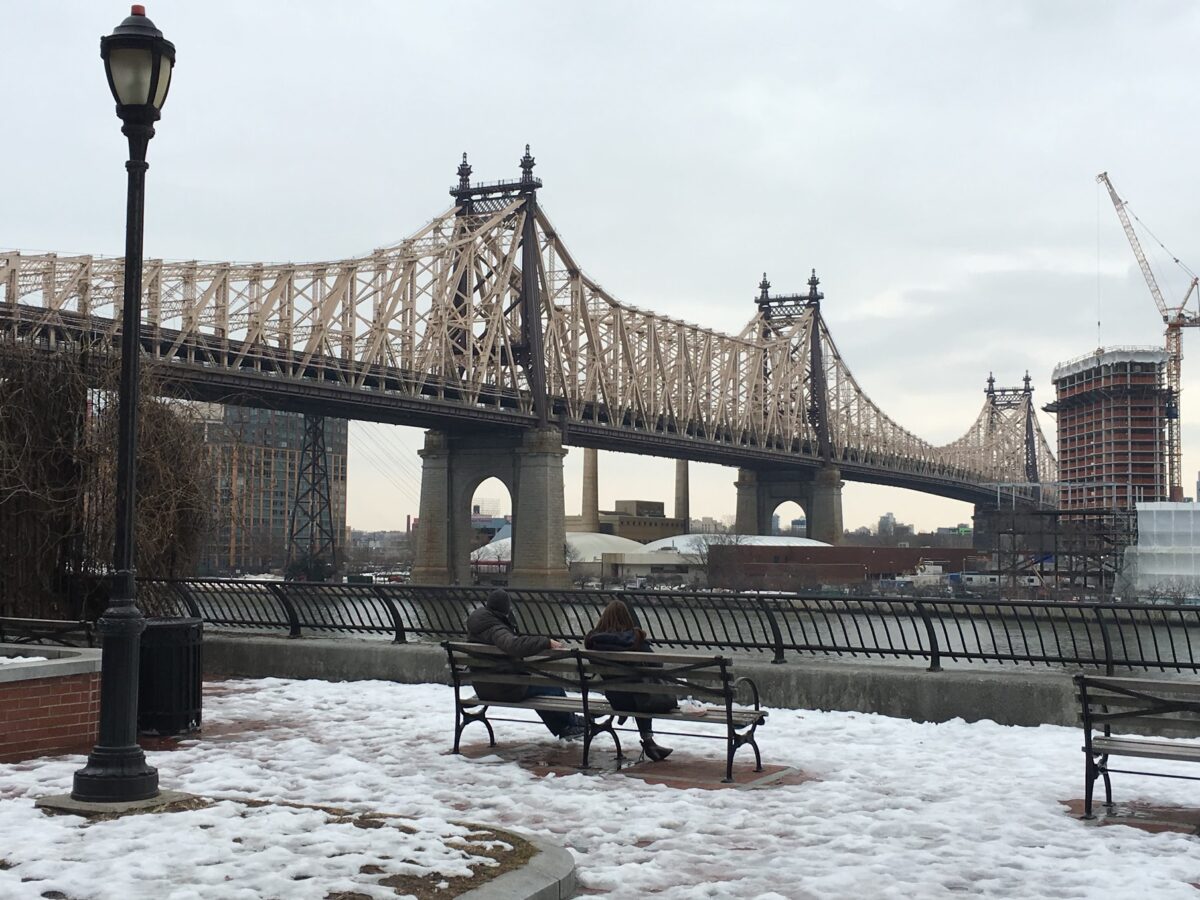
From a stormy Spring day in 2014. Photo by Greg Young
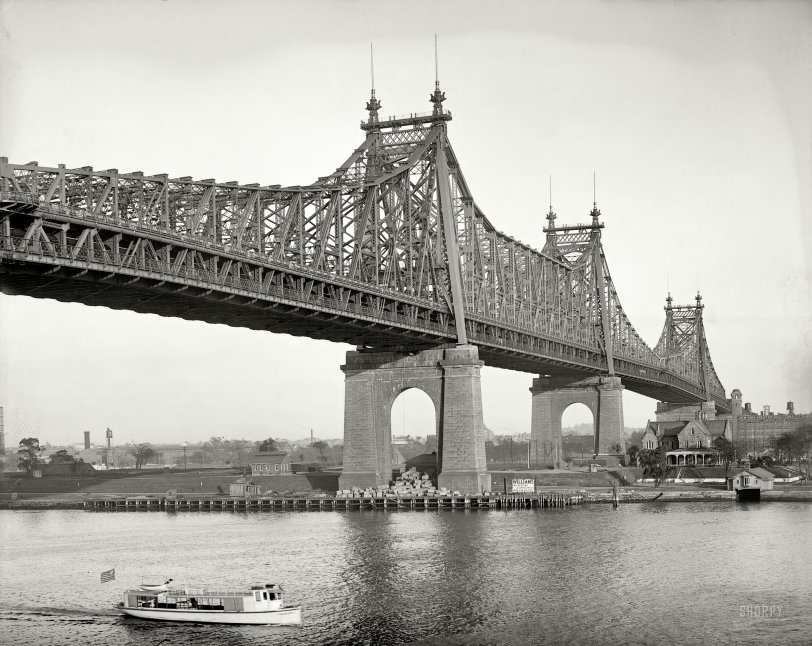
(Courtesy Shorpy)
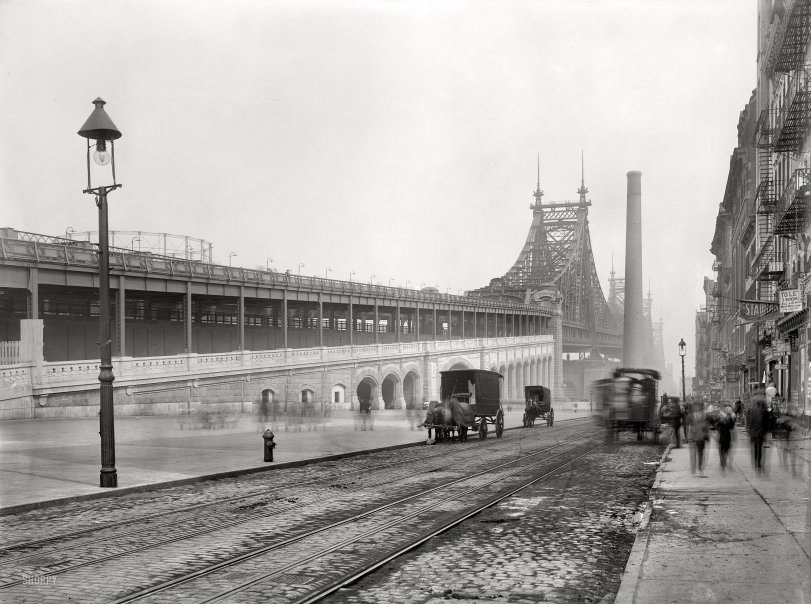
Courtesy Shorpy)
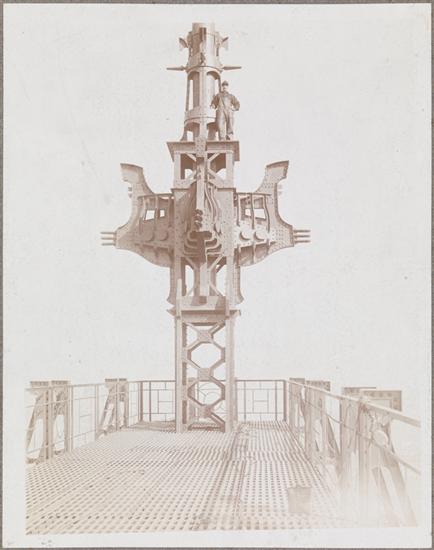
The unique finials at the top of the bridge, 1905. Courtesy Museum of the City of New York
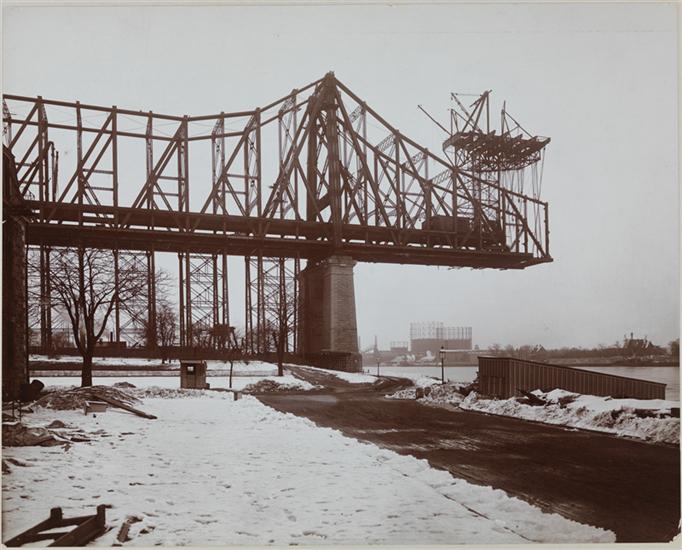
The bridge near complete, 1908. Courtesy the Museum of the City of New York
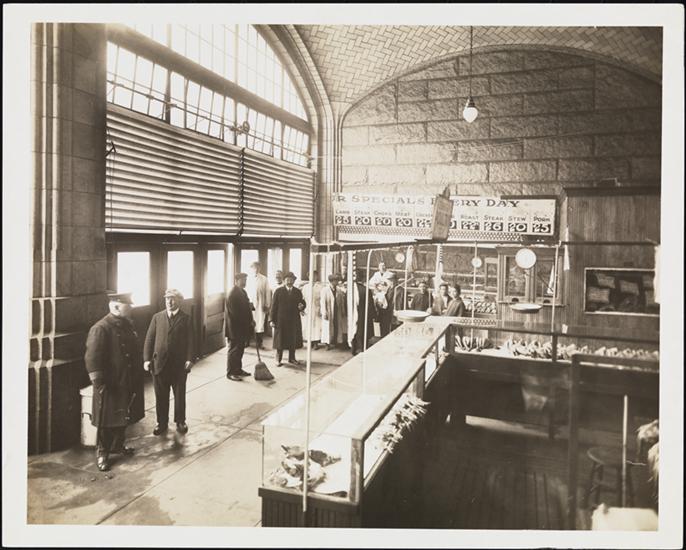
The marketplace with Guastavino tile, 1915. Courtesy Museum of the City of New York

The Bowery Boys: New York City History podcast is brought to you …. by you!

We are now producing a new Bowery Boys podcast every other week. We’re also looking to improve and expand the show in other ways — publishing, social media, live events and other forms of media. But we can only do this with your help!

We are now a creator on Patreon, a patronage platform where you can support your favorite content creators.

Please visit our page on Patreon and watch a short video of us recording the show and talking about our expansion plans. If you’d like to help out, there are six different pledge levels. Check them outand consider being a sponsor.

We greatly appreciate our listeners and readers and thank you for joining us on this journey so far.


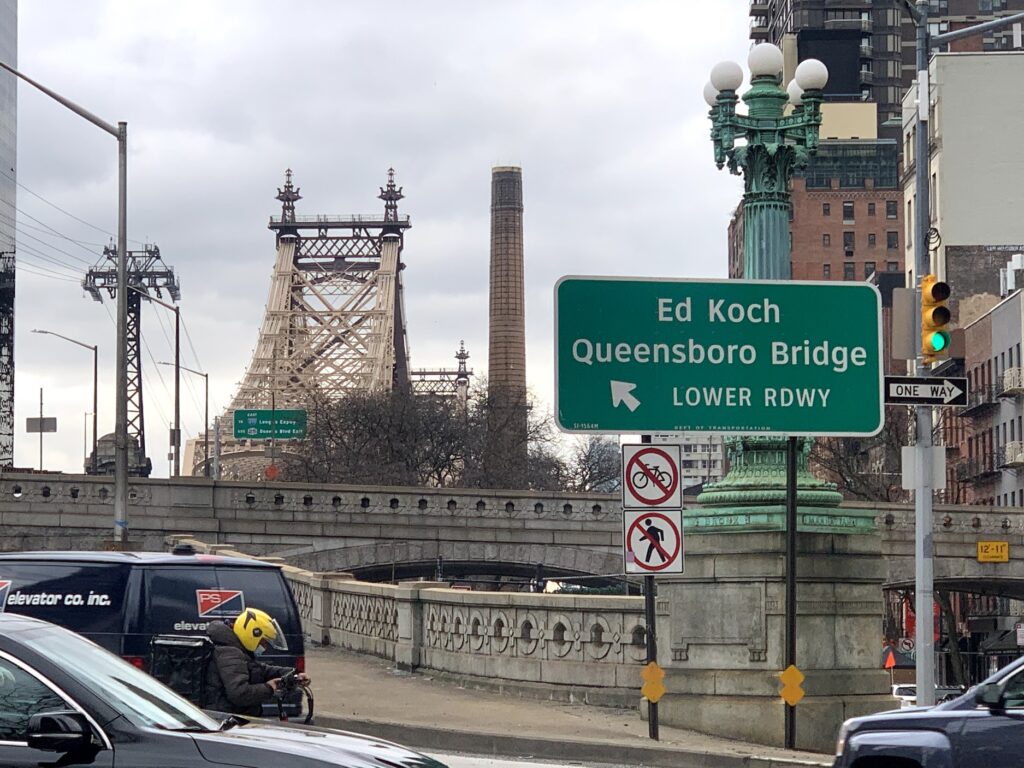
Approaching the bridge at street level on the Manhattan side. Photo Greg Young
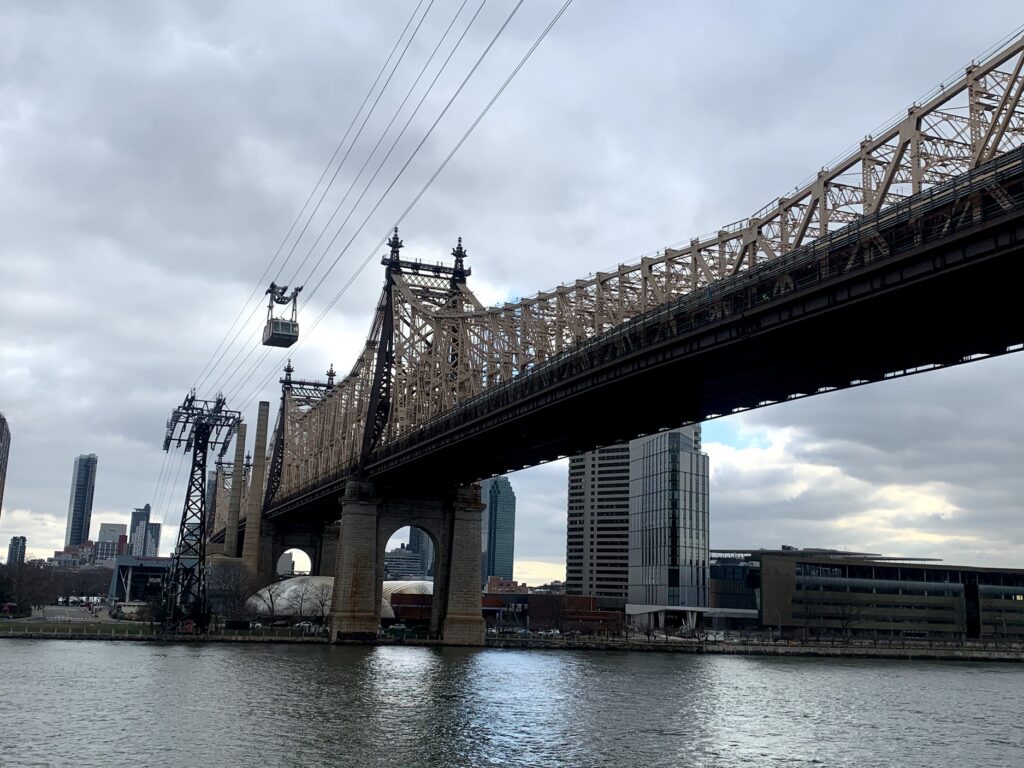
The bridge as the Roosevelt Island Tramway crosses. (GY)
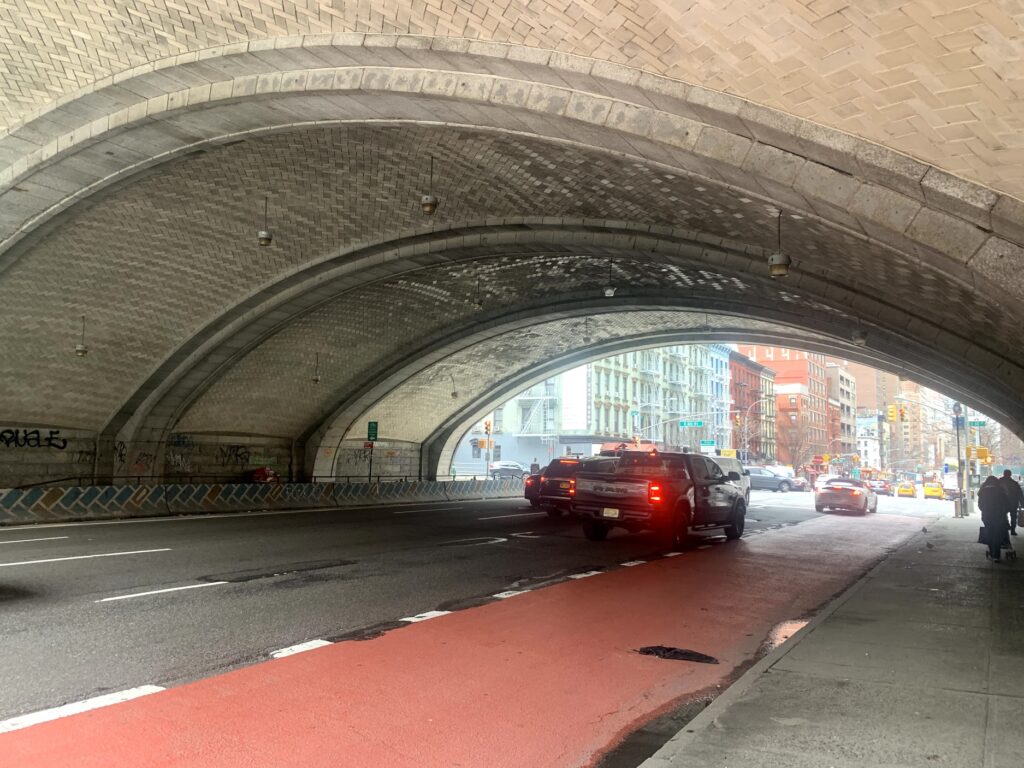
Guastivino tile on the First Avenue archway beneath the bridge. (GY)
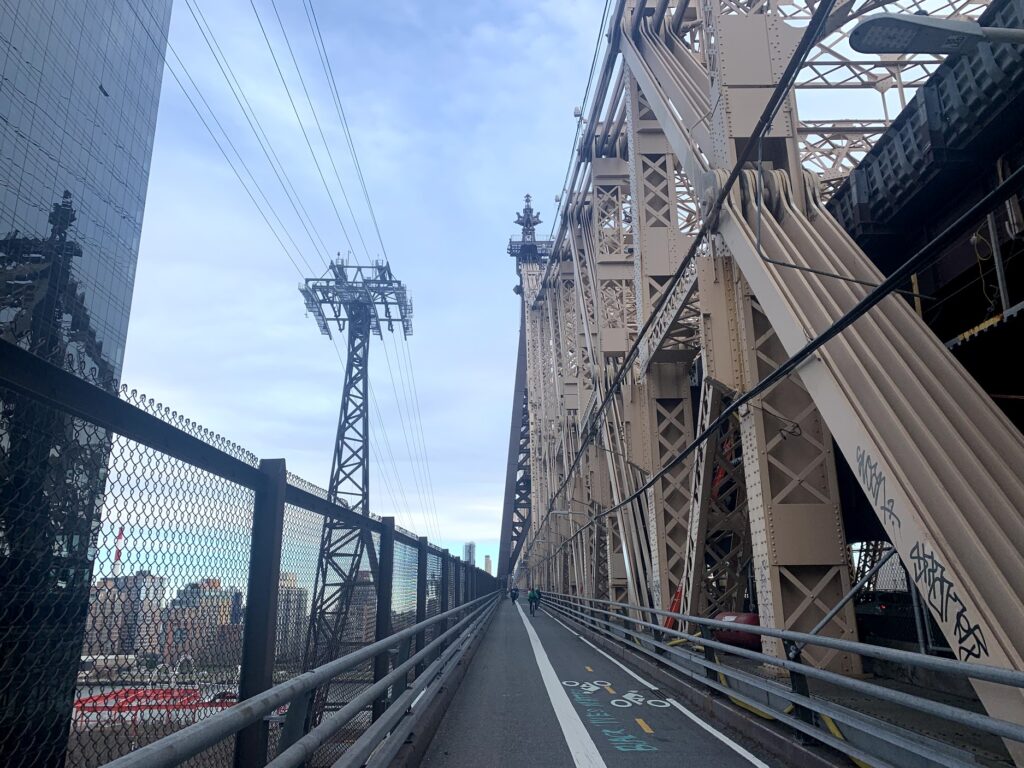
Across the bridge….. (GY)
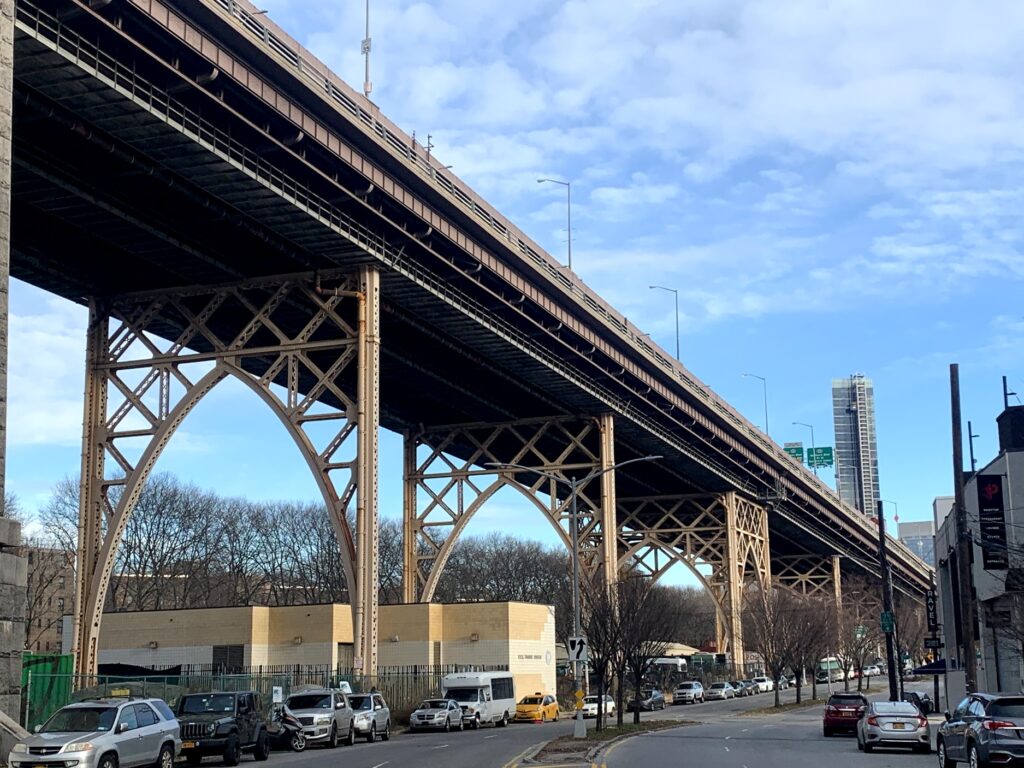
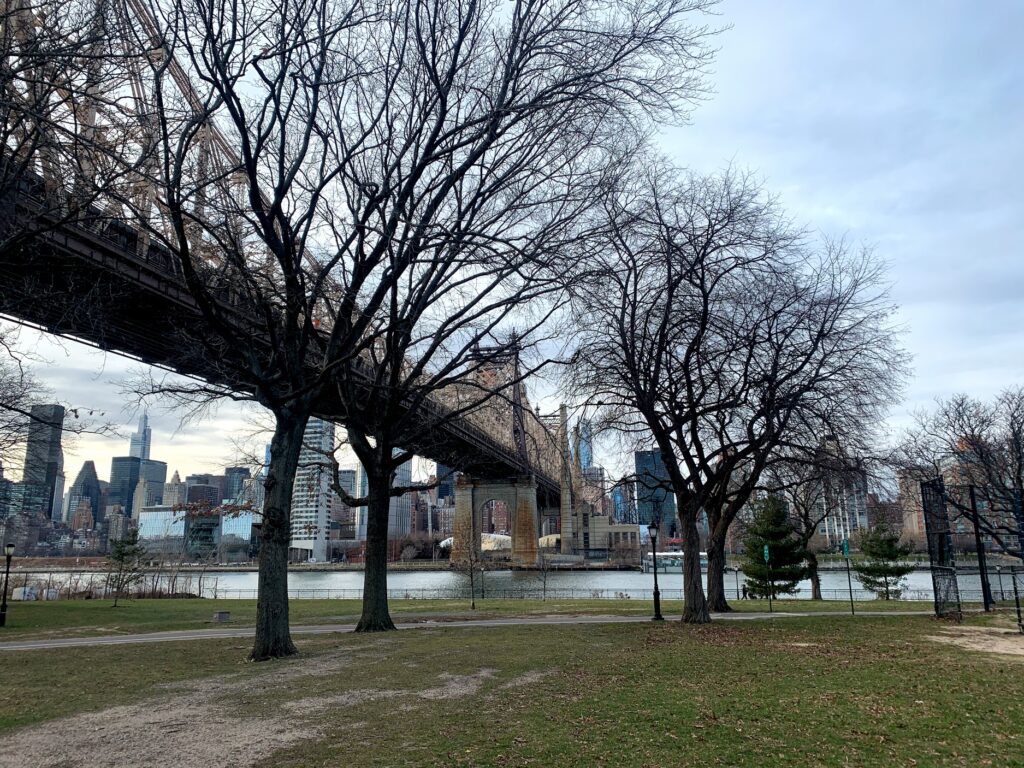
On the Queens side, the bridge takes on a different character, dominating the waterfront blocks. (GY)
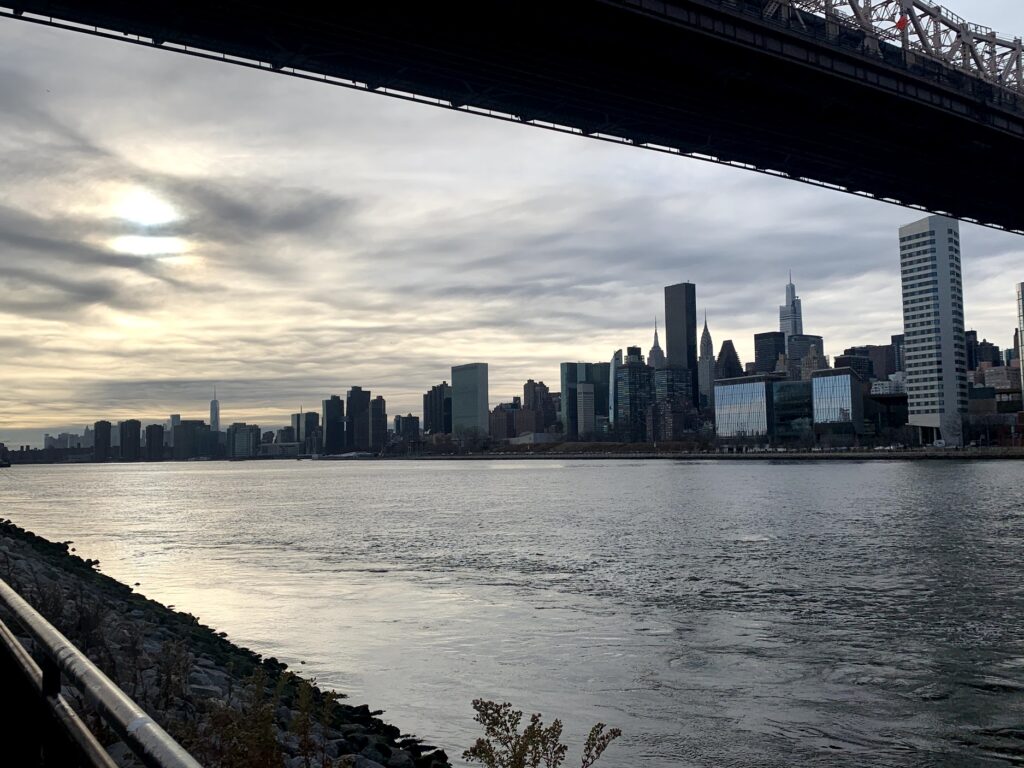
Views from Queensbridge Park. (GY)

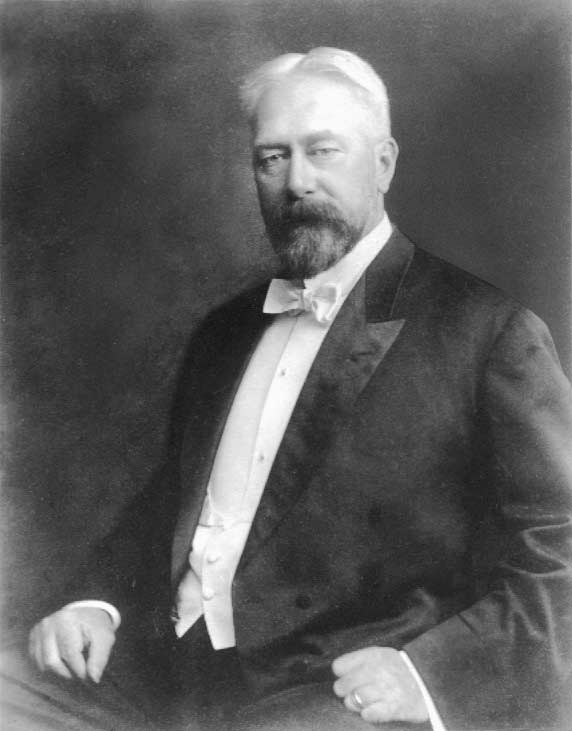
Gustav Lindenthal in 1909, the year the bridge opens.
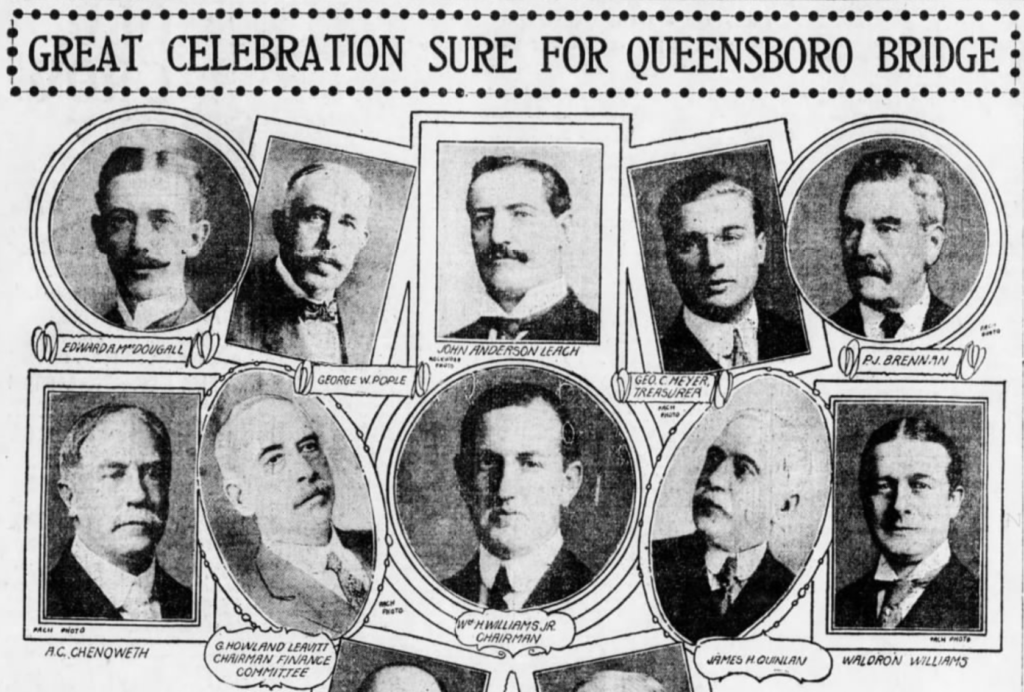
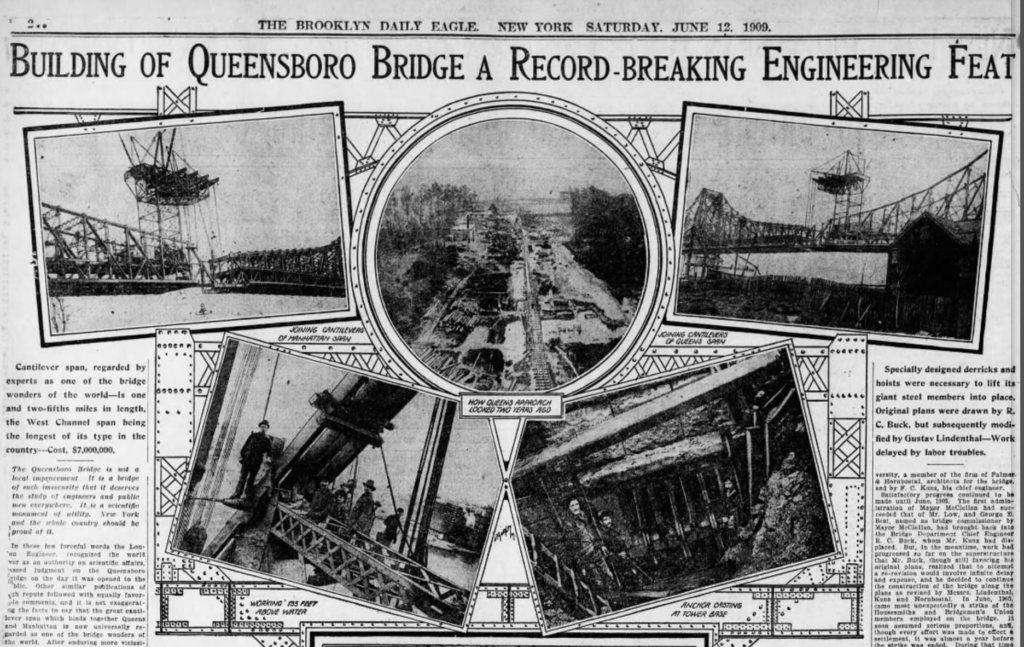
From the June 12, 1909 Brooklyn Daily Eagle

RELATED LISTENING

Categories
Health and Living Newspapers and Newsies Podcasts

Nellie Bly: Undercover in New York’s Notorious Asylum for the Insane

The story of New York World reporter Nellie Bly as she poses as a mental patient to report on the abuses of Blackwell’s Island’s Lunatic Asylum.

PODCAST Nellie Bly was a determined and fearless journalist ahead of her time, known for the spectacular lengths she would go to get a good story. Her reputation was built on the events of late September-early October 1887 — the ten days she spent in New York’s most notorious insane asylum.

Since the 1830s Blackwell’s Island had been the destination for New York’s public institutions of an undesirable nature — hospitals for grave diseases, a penitentiary, an almshouse, even a quarantine for smallpox. There was also a mental institution — an insane or lunatic asylum — rumored to treat its patients most cruelly.

51

The ambitious young reporter decided to see for herself — by acting like a woman who had lost her mind. Her ten days in this particular madhouse — the basis of her newspaper articles and a book — would expose the world to the sinister treatment of the mentally ill and the loathsome conditions of New York institutions meant to care for the most needy.

But would the process of getting this important story lead Nellie herself to go a little mad? And once she got inside the asylum, how would she get out?

ALSO: Not only is a vestige of the asylum still around today, you can live in it!


The Bowery Boys: New York City History podcast is brought to you …. by you!

We are now producing a new Bowery Boys podcast every two weeks. We’re also looking to improve the show in other ways and expand in other ways as well — through publishing, social media, live events and other forms of media. But we can only do this with your help!

We are now a member of Patreon, a patronage platform where you can support your favorite content creators for as little as a $1 a month.

Please visit our page on Patreon and watch a short video of us recording the show and talking about our expansion plans. If you’d like to help out, there are five different pledge levels (and with clever names too — Mannahatta, New Amsterdam, Five Points, Gilded Age, Jazz Age and Empire State). Check them out and consider being a sponsor.

We greatly appreciate our listeners and readers and thank you for joining us on this journey so far. And the best is yet to come!


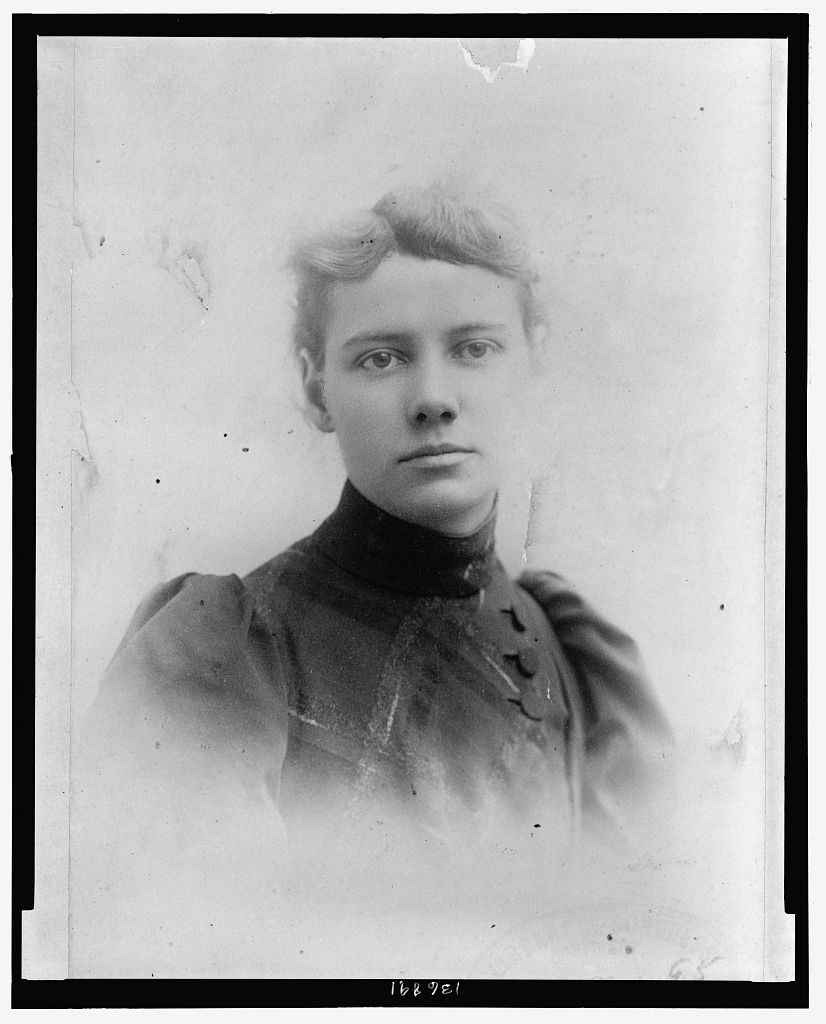
Nellie Bly, the bold journalist with extraordinary will and panache, tackled a number of strange assignments in her life, starting with her virtuoso performance getting into the Blackwell’s Island insane asylum.

7f5ab10e286c50902324b51b1b1a3a51

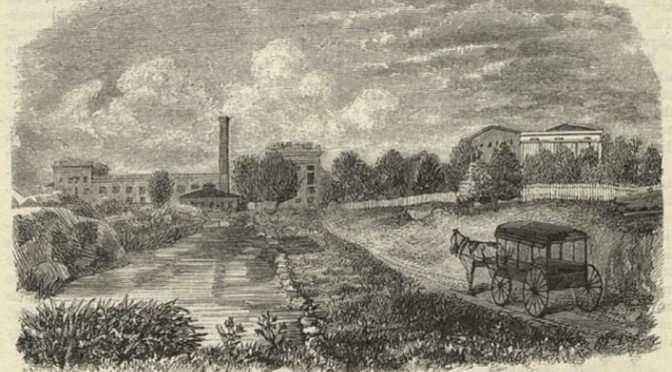
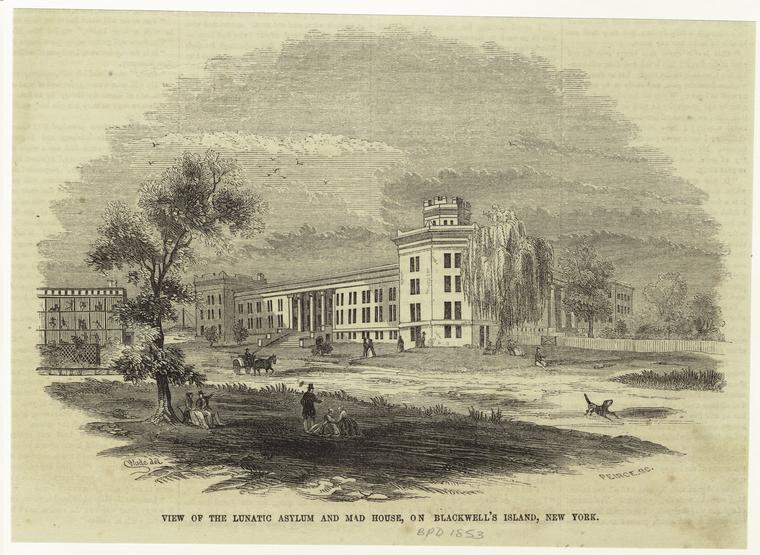
Blackwell’s Island Lunatic Asylum from 1853, rendered by William Wade

Courtesy NYPL
Courtesy NYPL

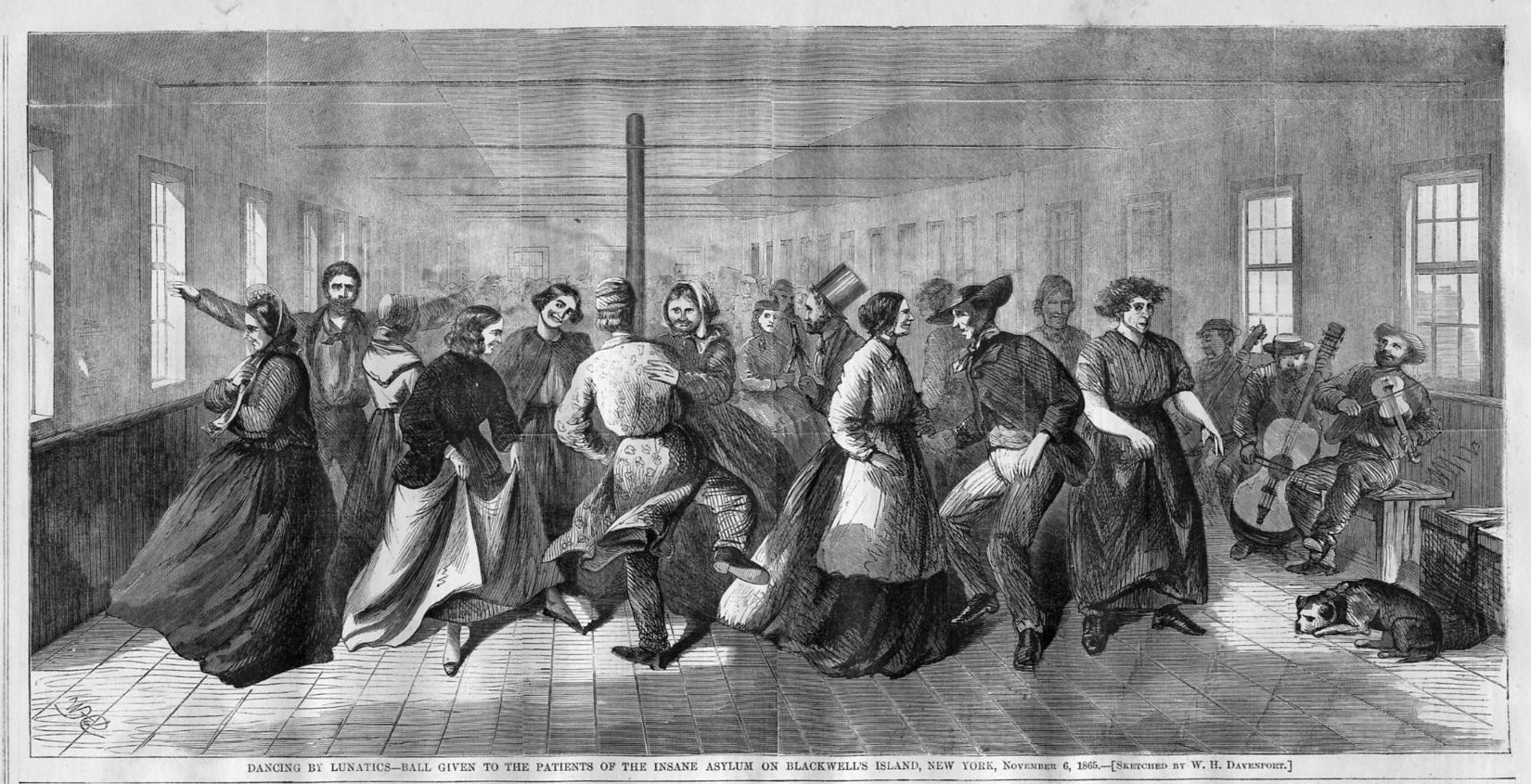
A newspaper clipping from 1865 — “Dancing by lunatics — Ball given to the patients of the Insane Asylum on Blackwell’s Island”

1

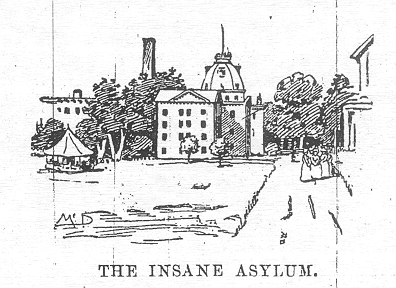
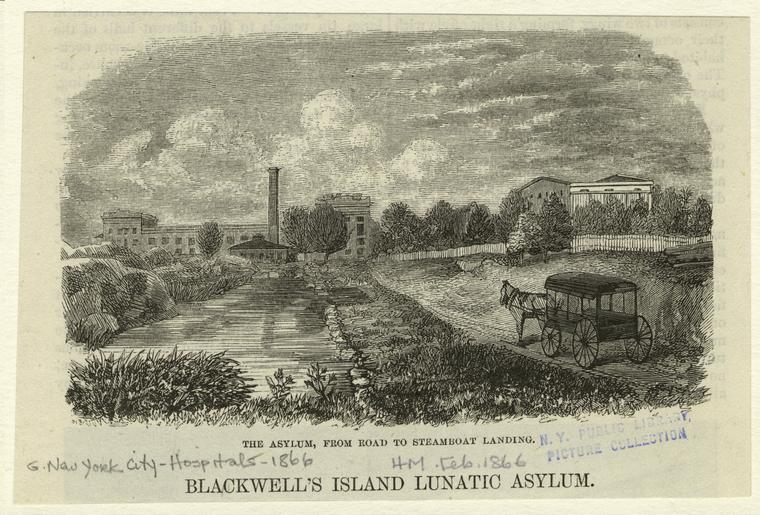
Another view of Blackwell’s Island Lunatic Asylum, pictured here in 1866 “from road to steamboat landing.”

Courtesy NYPL
Courtesy NYPL

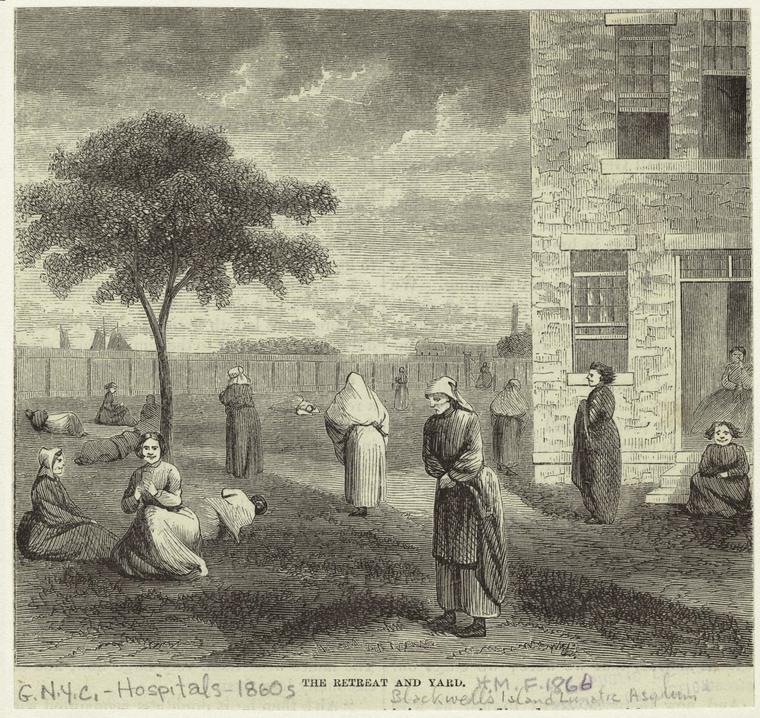
On the grounds of the asylum the ‘Retreat and Yard’, where Nellie would later roam with the other patients.

Courtesy NYPL
Courtesy NYPL

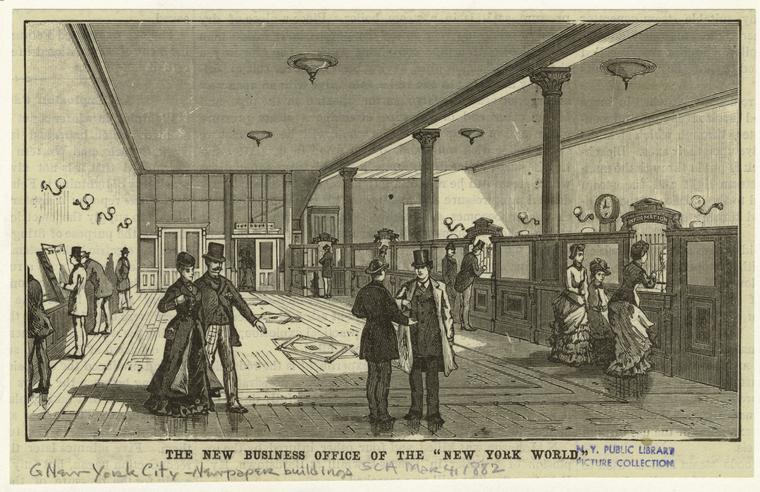
Inside of the offices of the New York World in 1882

Courtesy NYPL
Courtesy NYPL

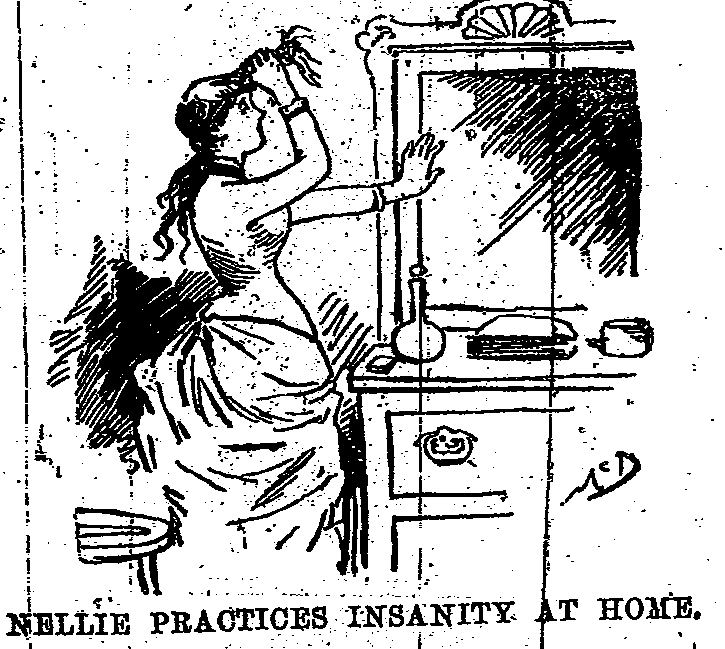
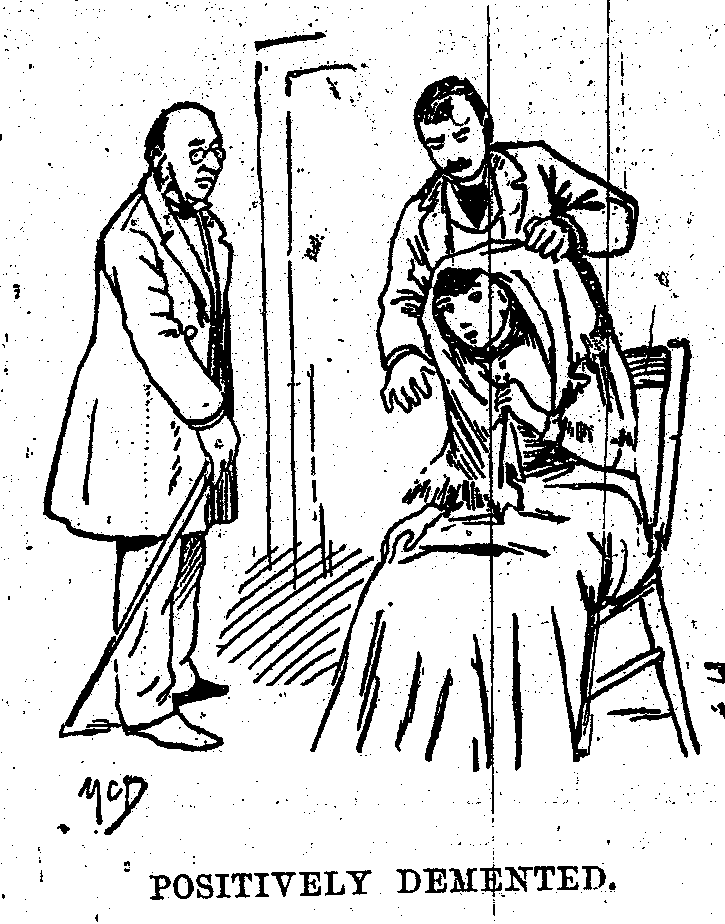
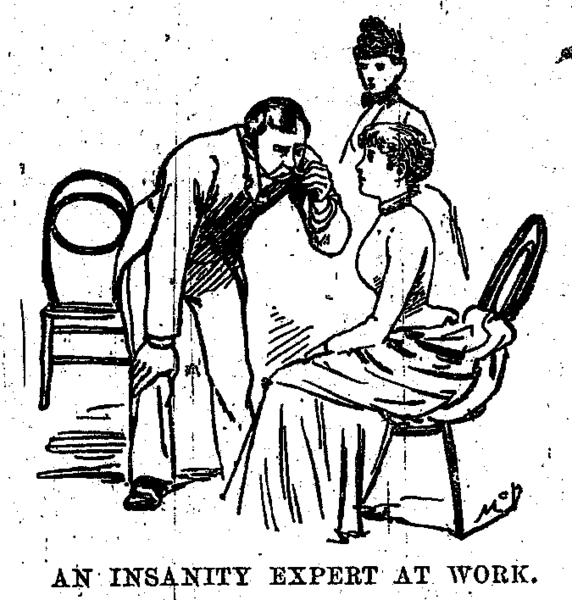
Some images from the New York World and the book Ten Days In A Madhouse

1

2

3

From the first article which ran on October 9, 1887

1

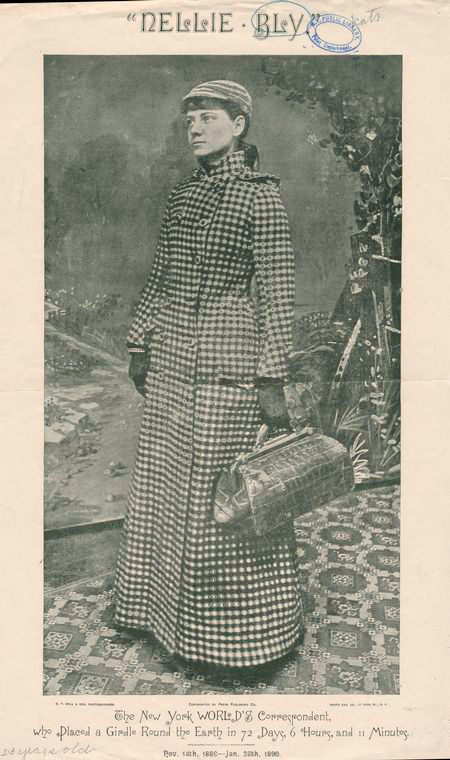
A famous photo of Nellie Bly taken during her trip around the world.

Courtesy New York Public Library

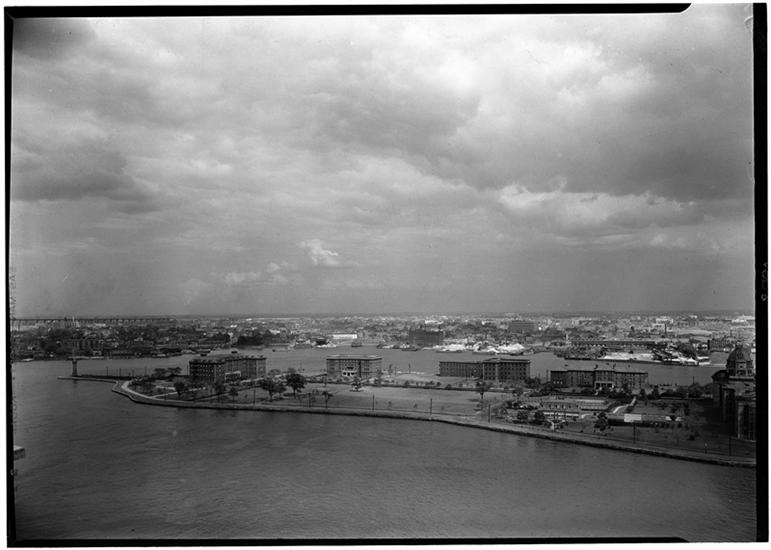
Blackwell’s Island was later named Welfare Island (before its following name change to Roosevelt Island in the 1970s). Below you can see the Octagon at the far right of this image.

Samuel H. (Samuel Herman) Gottscho, photographer, Courtesy Museum of the City of New York

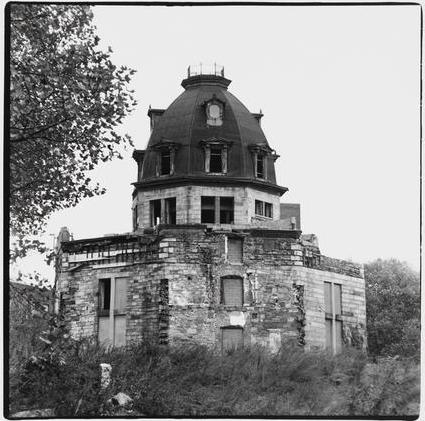
The remaining ruins of the mental asylum. It was later turned into a condominium and apartment building.

ruin
Edmund Gillon photographer. Courtesy Museum of the City of New York
Categories
Mysterious Stories

The Mystery on North Brother Island: A story told in news clippings

A thousand unsolved mysteries live within a newspaper’s archives, little forgotten events that have faded into history. Sometimes you can search deeper, and the answers to those mysteries may emerge.

This is what happened in a series of three articles I found the other day while doing some research on North Brother Island (the fruits of which will be revealed in tomorrow’s new podcast!)

I present to you the three complete clippings as they provide a tragic tale told in a methodical manner. I have been able to find no further information about the central figure other than these three articles.

1
Courtesy Museum of the City of New York

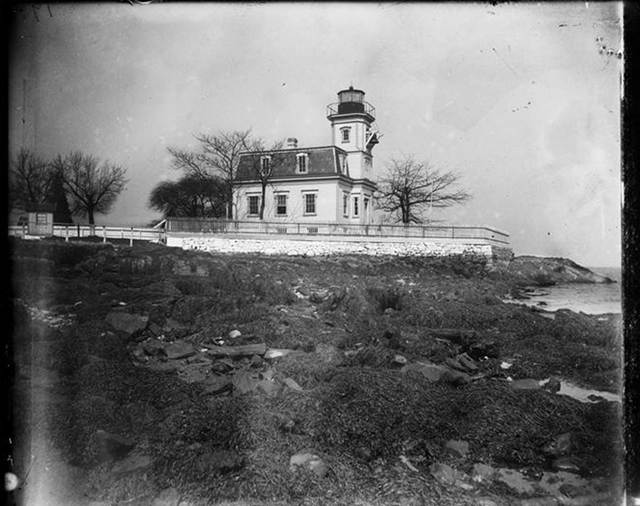
The Lighthouse

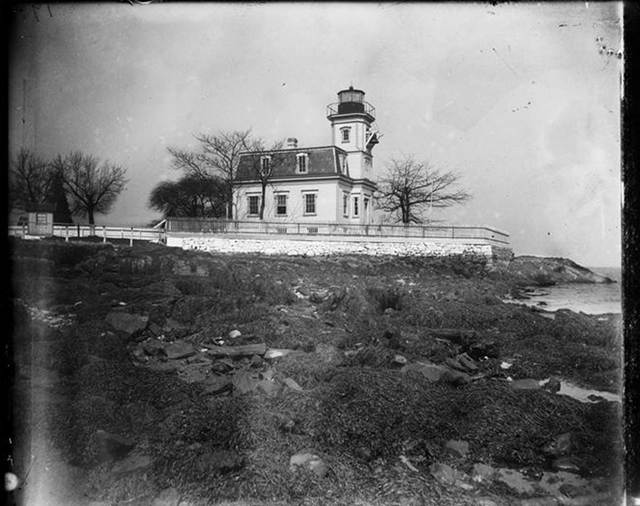
But first — Some context on North Brother Island, that little area of land (with its companion South Brother Island) between the Bronx and Riker’s Island. The island was uninhabited until 1869 when a lighthouse was built here to help navigate the traffic of the East River and Long Island Sound past the treacherous waters known as Hell’s Gate.

According to the book Lost Lighthouses, “The square, wooden residence contained a kitchen, pantry, dining room and sitting room as well as four bedrooms and an oil storage area. The 50-foot tower rose from the front of the building and was equipped with a fourth-order Fresnel lens.”

Courtesy Museum of the City of New York

The Quarantine Station

The lonely lighthouse would soon be joined by a hospital specializing in smallpox and other serious diseases. It was to become, in essence, a quarantine station, operated by Riverside Hospital. “The reconstructed smallpox pavilion, on North Brother Island, is ready to receive about forty patients,” reported the New York Tribune in February 1881.

That August, as city officials visited the island to plan the construction, the Tribune reported on its present occupants. “[North Brother Island] has a surface area of about of about thirteen acres. It is at present occupied only by a lighthouse-keeper and his assistant, and by a woman who entertains occasional picnic parties.”

Courtesy Museum of the City of New York

The Lighthouse Operator

Flash forward to the cold winter of 1884 — January 2, 1884, in fact. The picnic woman was undoubtedly gone, and the hospital pavilions were newly completed. Administrators and patients may have just moved in by this time.  We do know, however, that the lighthouse operator was at his helm — a man named Daniel Kelly. I’ll let the news clippings now take over:

From the New York Sun, January 3, 1884:

1

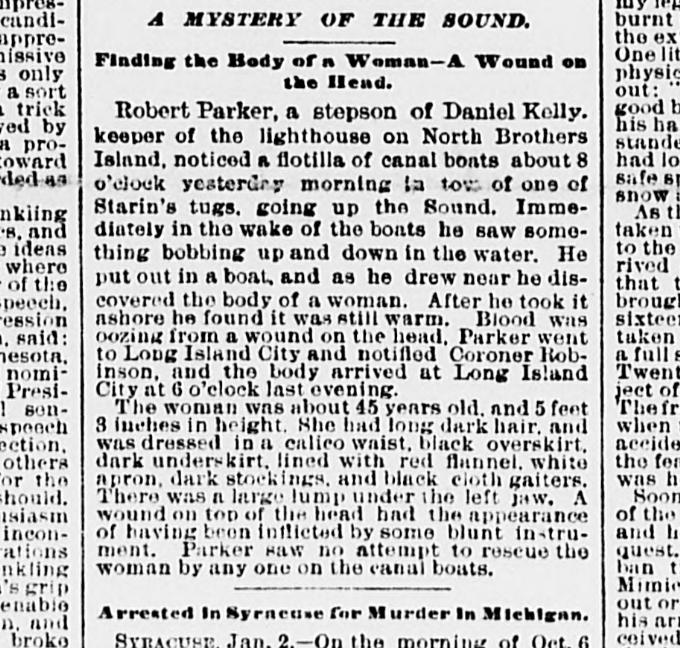
A MYSTERY OF THE SOUND

Finding the Body of a Woman — A Wound on the Head

“Robert Parker, a stepson of Daniel Kelly*, keeper of the lighthouse on North Brother Island, noticed a flotilla of canal boats about 8 o’clock yesterday morning in tow of one of Starin’s tugs**, going up the Sound.  Immediately in the wake of the boats he saw something bobbing up and down in the water.  He put out in a boat, and as he drew near he discovered the body of a woman.  After he took it ashore he found it was still warm.  Blood was oozing from a wound on the head.

Parker went to Long Island City*** and notified Coroner Robinson, and the body arrived at Long Island City at 6 o’clock last evening.

The woman was about 45 years old, and 5 feet 3 inches in height. She had long dark hair, and was dressed in a calico waist, black overskirt, dark underskirt, lined with red flannel, white apron, dark stockings, and black cloth gaiters.

There was a large lump under her left jaw. A wound on top of the head had the appearance of having been inflicted by some blunt instrument.  Parker saw no attempt to rescure the woman by any one on the canal boats.”

*Not sure who this Daniel Kelly is. Any guesses?

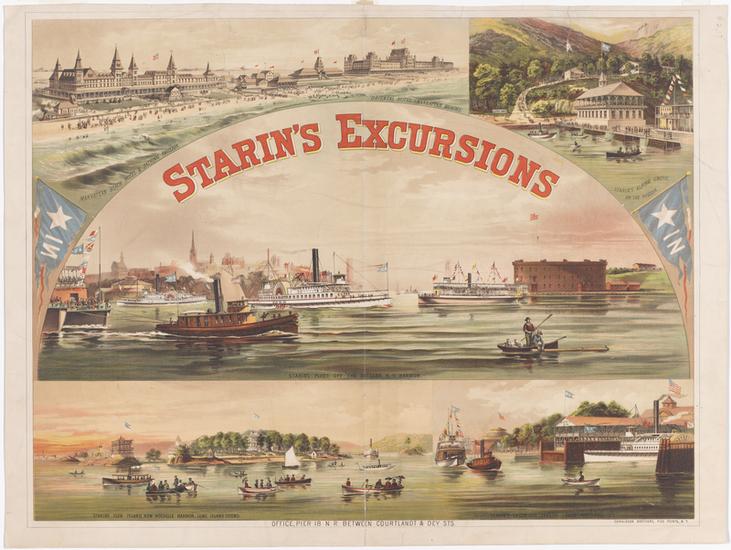
**The tug boat concern of John Henry Starin, a “leading marine operator in the United States,” owning everything from excursion boats to industrial barges. (Pictured above)

***Still an independent city within Queens County as the Queens borough was not yet created

1

Foul Play?

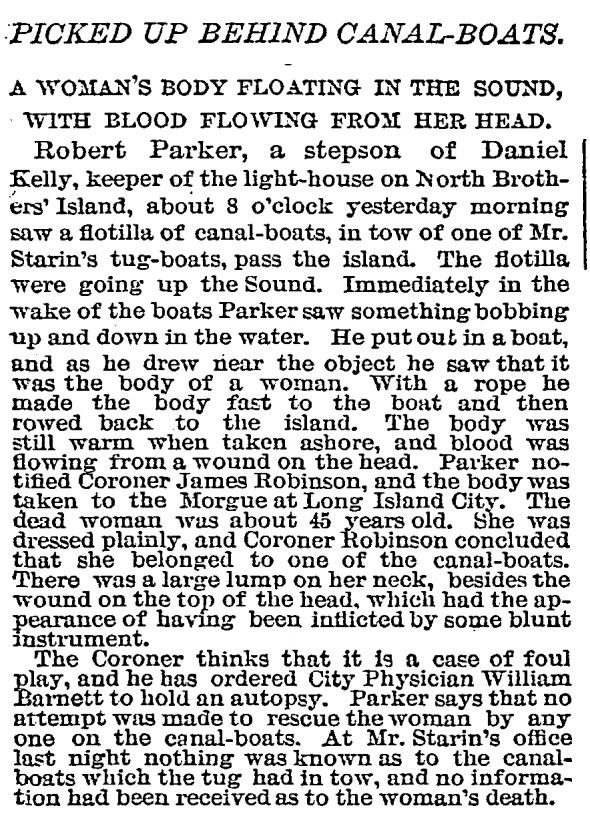
An article in the New York Times from the same day repeats most of the same information — including that thing about Daniel Kelly — but brings up the opinion of the coroner:

1

“The Coroner thinks that it is a case of foul play, and he has ordered City Physician William Barnett to hold an autopsy.  Parker says that no attempt was made to rescue the woman by any one of the canal-boats.  At Mr. Starin’s office last night nothing was known as to the canal-boats which the tug had in tow, and no information had been received as to the woman’s death.”

The Story of Matilda

By the following day, the woman had been identified. Here is an excerpt from the article. (You can find the original here.) The entirety of the text is below.

1

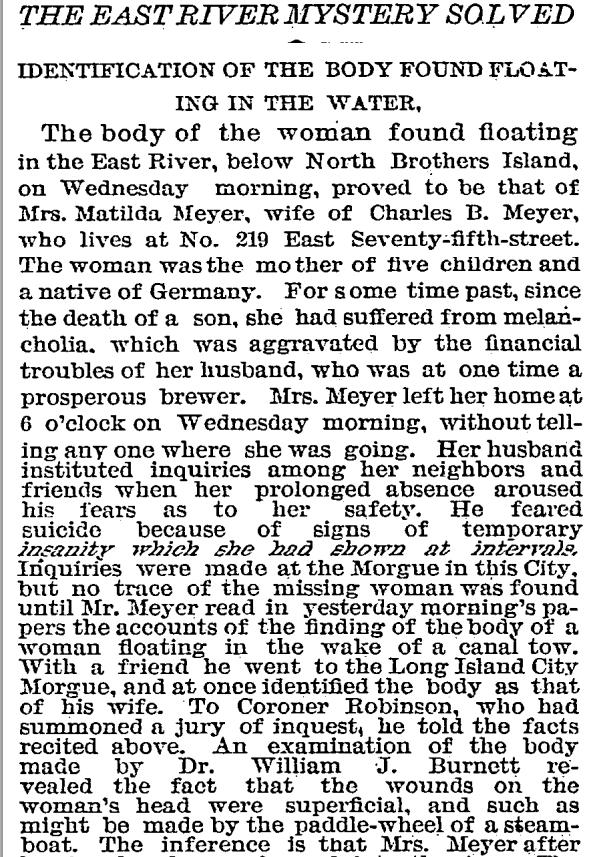
THE EAST RIVER MYSTERY SOLVED

IDENTIFICATION OF THE BODY FOUND FLOATING IN THE WATER

“The body of a woman found floating in the East River, below North Brothers Island, on Wednesday morning, proved to be that of Mrs. Matilda Meyer, wife of Charles B. Meyer, who lives at No. 219 East 75th Street.*

The woman was a mother of five children and a native of Germany.  For some time past, since the death of a son, she had suffered from melancholia, which was aggravated by the financial troubles of her husband, who was at one time a prosperous brewer.

Mrs. Meyer left her home at 6 o’clock on Wednesday morning, without telling anyone where she was going.

Her husband instituted inquiries among her neighbors and friends when her prolonged absence aroused his fears as to her safety. He feared suicide because of signs of temporary insanity which she had shown at intervals.  Inquiries were made at the Morgue in this City., but no trace of the missing woman was found until Mr. Meyer read in yesterday morning’s papers the accounts of the finding of the body of a woman floating in the wake of a canal tow.

With a friend he went to the Long Island City Morgue, and at once identified the body as that of his wife. To Coroner Robinson, who had summoned a jury of inquest, he told the facts recited above.

An examination of the body made by Dr. William J. Burnett revealed the fact that the wounds on the woman’s head were superficial and such as might be made by the paddle-wheel of a steamboat.  The inference is that Mrs. Meyer after leaving her home plunged into the river.  The tide was running at the flood, and was about full flood when she was discovered.

Her clothing had served to buoy her up, and so she had floated out to the point where she was discovered by Robert Parker.”

*The building at that address is no longer there.

While the story deems the ‘mystery solved’, to me it opens so many more. Did Matilda really kill herself? What were the circumstances surround her husband’s failed financial fortunes, and those of her son’s death? What of the fate of the other children?

Unfortunately, the answer of these mysteries from the tragic tale of Matilda Meyers may forever be unanswered.

Fun on the ice: Party time atop the frozen East River

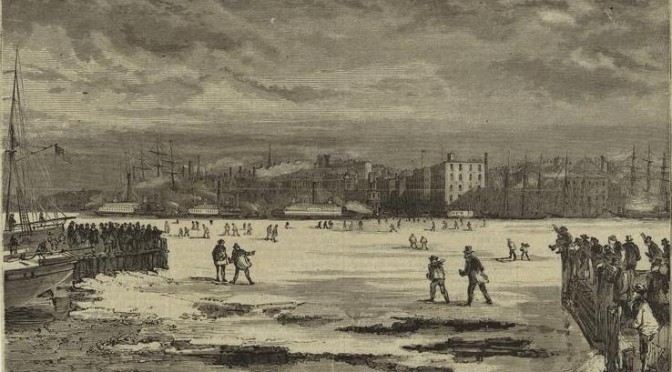
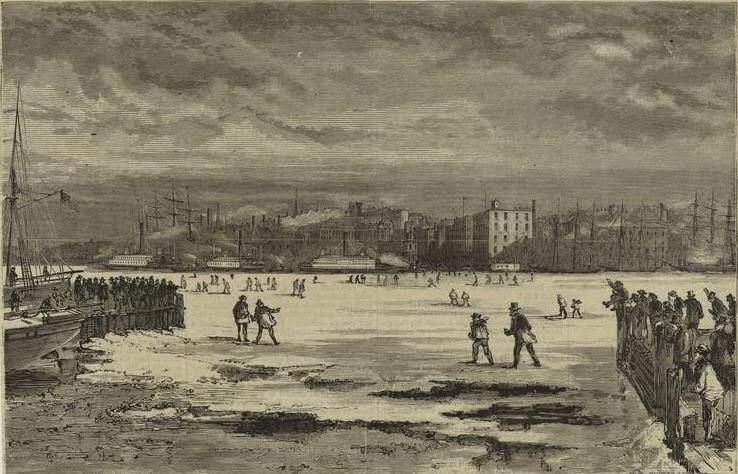
Daredevils trespassing the ice between New York and Brooklyn in 1871.

I spent much of New York’s Christmas blizzard nightmare in various airports throughout the country, unable to get back to La Guardia Airport, where it appears I would have just been stranded anyway.

With all the transportation fiascoes, the unplowed streets and the mounting piles of garbage, it seems like it was certainly the messiest of storms. But ranking in ranking it among the worst storms in New York City history, it doesn’t even make the top five! According to the city’s own ‘hazard mitigation plan’, “Since 1798, New York City has experienced 23 snowstorms with 16 inch or greater snowfall totals.” They also include a list of the most frightening blizzards in the city’s history, including the worst in 2006 and one from 1805 that doesn’t sound like so much fun (“48 hours of continuous snow”).

As horrible as it certainly was, however, imagine it paired with that most peculiar of natural interruptions — the freezing of the East River.

Having a key waterway turned into a veritable skating rink would be inconvenient today, though not the catastrophe it would have been in the 19th and early 20th centuries, when New York’s seaport was one of America’s centers of trade. Hundreds of vessels sat paralyzed along the waterfront, dozens more prevented from entering.

Before the railroad, New York relied solely on its ferry system to get people from Manhattan to neighboring towns like Brooklyn and Williamsburgh. These were clearly not functional when the East River froze, as it did on several occasions throughout its history, before heat-generating over development on both shores assured such events would happen less frequently.

Contemporary reports from one freeze in 1857 describe dozens of ferry cancellations in ways that hearken to the scenes in airports just a few days ago, with boats making their way across the river and returning to pick up new passengers — twelve hours later.

But just as people made the most of the late December blizzard fiasco — doing wacky things like skiing down Park Avenue at 40 mph — New Yorkers in the 1850s did not let something like a gigantic ice sheet go to waste. In 1852, “It is estimated that 20,000 persons must have taken advantage of the circumstance to walk, instead of sail from New York to Brooklyn and back.”

The thick ice sheet that accumulated over the East River in 1857 seems to have encouraged jovial behavior. Regaling the hundreds of walkers braving the temporary walkway, “the shores of either side were lined with people shouting, hurrahing and having a good time of it generally, and the utmost hilarity prevailed.” Among those that crossed the ice in the spirit of fun: the Reverend Henry Ward Beecher, “asserting that the trip was made to prove that it was not the wicked alone who could stand in slippery places.” [source]

It’s all fun and games, of course, until the ice starts melting. During an 1888 freeze, fish sellers at the Fulton Market lowered ladders down to the ice, allowing hundreds to cross. Unfortunately some got caught in the middle, trapped on ice floes, and had to be rescued by passing tugboats.

The year 1875 was an especially cold year, with the East River sitting frozen for almost four days. But an even rarer occurrence happened that year: the freezing of the Hudson River between Manhattan and New Jersey. While other parts of the Hudson regularly froze solid — indeed, the river was the principal supplier of ice for New Yorkers in the late 19th century — it was rare to have that span between New York and the shore to the west freeze to the point that people could cross with little difficulty.

It’s impossible to know the most severe freeze in the history of New York Harbor, but a leading candidate must certainly be the winter of late 1779-early 1780, which locked British-occupied New York in a sheath of solid ice and kept ships and ferries immobile for over a month. According to historian David Ludlum, “Judge Jones, who lived at Fort Neck (now Massapequa), wrote in his book that 200 provision-laden sleighs, pulled by two horses each, escorted by 200 light cavalry, made the five-mile trip from New York to Staten Island.”

June 15, 1904: Remembering the General Slocum disaster

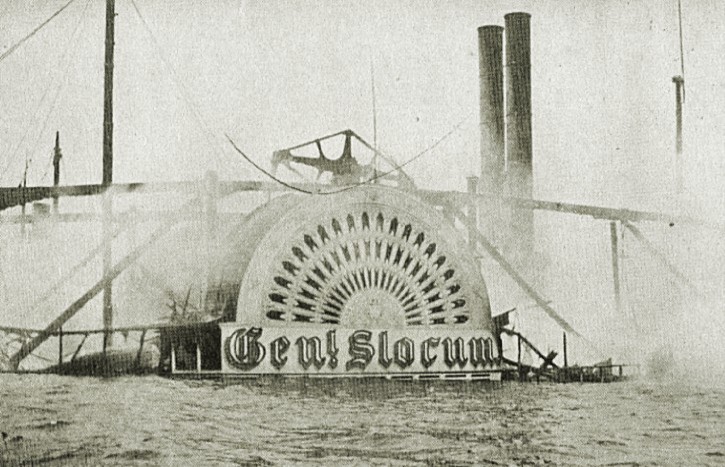
The morning of June 15 — The steamboat smolders off of North Brother Island

Today is the anniversary of undoubtedly one of New York’s most tragic events, a disaster that famously eradicated a neighborhood and became the city’s single largest loss of life in the 20th century — the explosion of the steamboat General Slocum.

SInce the invention of the steamboat, New York Harbor has seen its share of steamboat disasters, often by technical malfunctions like exploding boilers or sometimes by collision. But what took the Slocum on the morning of Wednesday, June 15, was a problem that faced many tenements at the time — inflammatory materials catching fire with little to almost no preventions in place. The blaze began in a room full of kerosene and hay, its initial discovery by a child was ignored by the captain himself, and, when it was taken seriously, all available tools to fight the blaze — hoses and buckets — were rotted through and virtually useless.

When passengers tried to flee, they discovered that the life vests were old and disintegrating and rafts were merely decorative. Regular inspections of the boat’s safety equipment had in the past been paid off in bribes; the result now manifest itself in a fast-burning ship with 1,342 passengers unable to escape.

The unlucky were the mostly women and children congregants of St. Marks Lutheran Church, in New York’s Kleindeutschland (today, the heart of the East Village), the vibrant destination for new German immigrants, seeking solidarity and a friendly, recognizable culture in the new, foreign city.

Being a day excursion, most of the men were off at work, and their families were off to enjoy a daytrip picnic at Eatons Neck along Long Island’s north shore. The Slocum never made it out of the East River however. The fire spread with such horrifying speed that I can only illustrate it the following way — the boat left the 3rd Street Pier at 9:30 and less than an hour later, its smoldering hull ran ashore at North Brother Island, most of its passengers either burned alive, choking from smoke inhalation along the shores or drowned in the waters of the East River. According to author Edward O’Donnell, “At 10:55 a.m., even before the news of the disaster became general, the burning hulk that had been the General Slocum was raised by the incoming tide and set adrift.”

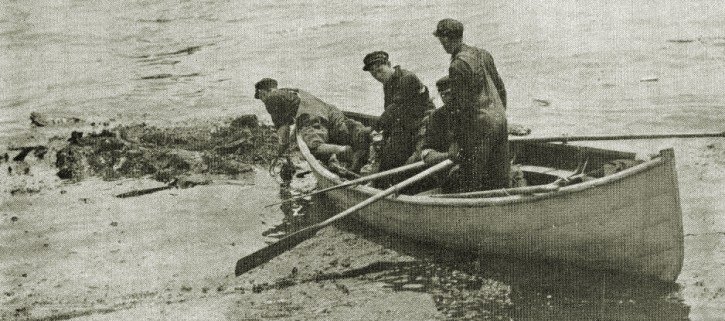
Below: Recovery workers scour the banks of the East River for days afterwards, looking for additional bodies

The tragedy sent the city into mourning. For the residents of Kleindeutschland, the disaster was simply too much to recover from. Of the 1,021 women and children who died, most lived in the German district of the Lower East Side. Their husbands and other family members moved on to other German neighborhoods, up to Yorkville or out to thriving districts in Queens and Brooklyn, or out of New York entirely.

Remnants of Little Germany can be found all throughout the East Village and Lower East Side, but for a memorial to the Slocum disaster, visit the original St. Mark’s Evangelical Lutheran Church on East Sixth Street.

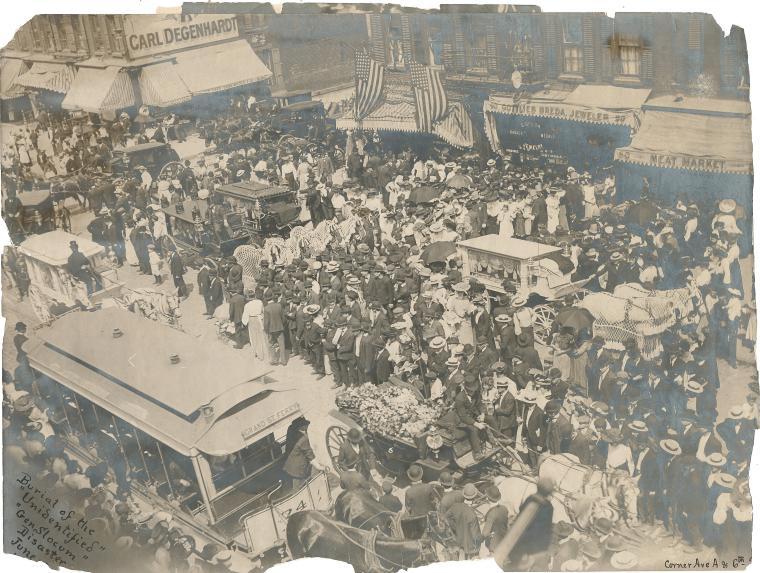
Below: A funeral procession passes Avenue A and Sixth Street, the ‘burial of the unidentified’ according to the caption

[Pic from LESHP]

Categories
Podcasts

Corlears Hook and the Pirate Gangs of the East River

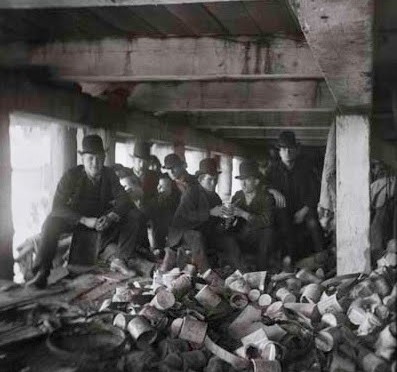
The Short Tail Gang sit underneath a pier at Corlears Hook, picture taken in 1890, long after all the great pirate gangs of the area had disbanded, been eaten by rats, or joined the Confederate army (listen to podcast for explanation!)

___________________________________
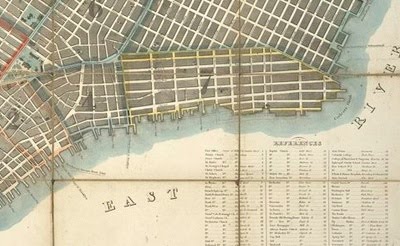
An illustrated map of the ward system of New York in 1817 highlights the Corlears Hook shorefront area of the Seventh Ward and the even more notorious Fourth Ward further down the coast. Much of the Seventh Ward was owned by the Rutgers family, who slowly parcelled out the neighborhood to shipbuilders, business owners and, eventually, tenements.

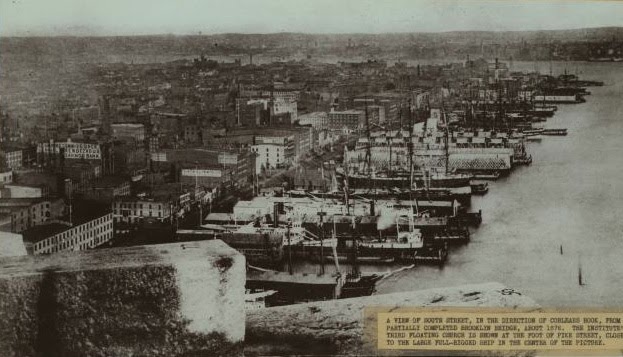
The East River shore in 1876, looking northeast from the uncompleted Brooklyn Bridge, all the way to Corlears Hook

___________________________________
Patsy Conroy, leader of one of the East River’s most ruthless and ambitious gangs, terrorizing shipping vessels throughout New York Harbor.

___________________________________
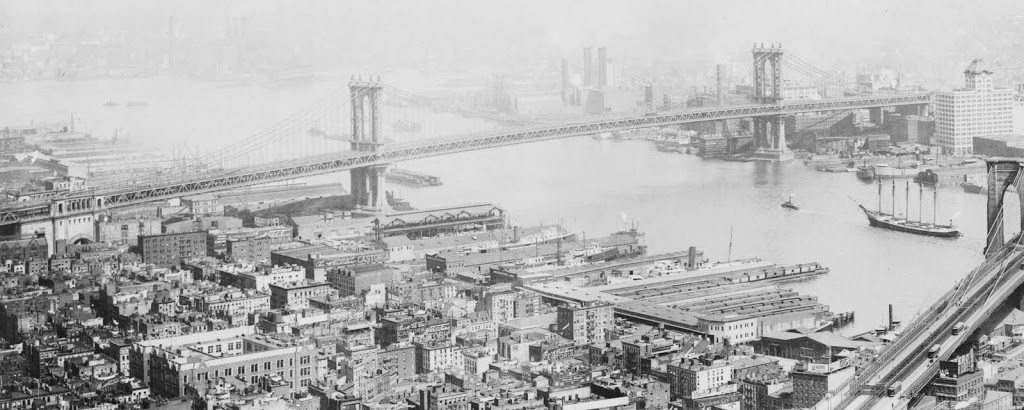
The shore between the Manhattan and Brooklyn bridges, early 20th century.

Corlears Hook Park was one of the first municipal parks, opening in 1905. This Lewis Wickes Hine photograph is from 1905 (courtesy of NYPL)

And finally, here’s a film from 1903 depicting the entire East River waterfront at that time. This is more lower Manhattan than Corlears Hook, but it should give you some idea of how clotted and bustling the shoreline was.

Mayor Westervelt: “Police officers must wear uniforms!”


KNOW YOUR MAYORS Our modest little series about some of the greatest, notorious, most important, even most useless, mayors of New York City. Other entrants in our mayoral survey can be found here.

Mayor Jacob Westervelt
In office: 1853-1855

Dutch-blooded Jacob Aaron Westervelt, 24th man to become mayor of New York since the British evacuation of 1783, lived in a two-family home at 308 East Broadway near Grand Street. This seems like a rather odd spot for a mayoral residence today, and perhaps even then. Today there is no 308 East Broadway, there’s only a grim-looking public school and a barren traffic island.

But there are some surviving row houses just down the block — preserved Federal-style buildings at 247-249 East Broadway — so just imagine a fancier version of these on the spot that Westervelt’s residence once stood, many years before this neighborhood would become associated with squalor and overcrowding.

Now image this: an angry mob of 5,000 men with torches, surrounding this very home in the winter of 1853, painting a cross on the doorway and crying for his head. His crime: he sides with Catholics. Scandal! What would a mayor have to do garner that sort of reception today?

Westervelt is better known today for his original profession as master ship-builder. Few men who served as mayor of New York were better regarded internationally as Westervelt, who once received an honor from the king of Spain for making them some of the fastest ships in the sea.

Jacob was born twenty days into the year 1800 in Tenefly, New Jersey, but moved with his family into New York when he was only four years old. His father was a builder and constructed several new homes along Franklin Street, near the area being drained of that marshy, polluted mess known as Collect Pond.

By age 14, Jacob was apprenticing with famed shipbuilder Christian Bergh at his shipyard off Corlear’s Hook — not coincidentally more than a few blocks from Westervelt’s later residence as mayor.

Bergh would spawn one of New York’s wealthiest families, although incongruently his son Henry Bergh would become the best known member — as the founder of the American Society for the Prevention of Cruelty to Animals. Henry is also known for this weird mausoleum at Green-wood Cemetery.

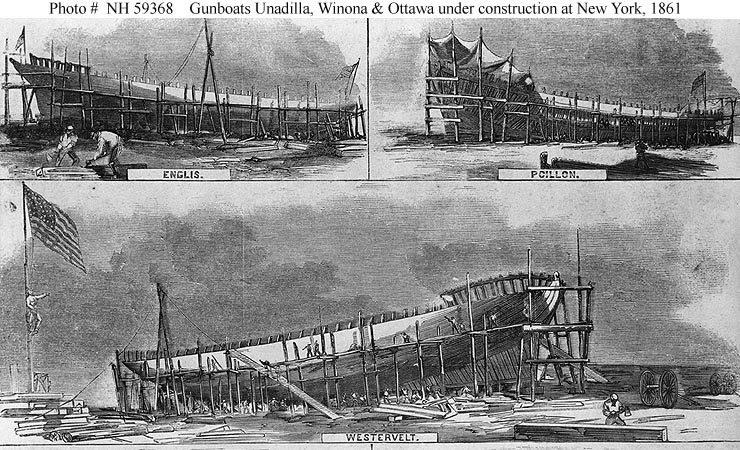
The Berghs would eventually abandon shipbuilding after Christian’s death. His young apprentice Jacob would carry the torch for him, eventually taking over Bergh’s shipyards, expanding with other business partners up and down the East River shore, and using southern American and European connections to soon dominate the shipbuilding business. By 1845, Westervelt had overseen the construction of dozens of clippers, schooners and steamships, among the fastest and most reliable on the Atlantic Ocean.

Below: an illustration of various boatbuilders in 1861, including Westervelt at bottom

As a pioneer of reliable and innovative shipping vessels, Westervelt’s influence was felt internationally. In the world of mid-19th century politics, that made him an ideal candidate for public office, and especially to Democratic machine Tammany Hall. As one of Manhattan’s most visible men of industry, Jacob employed hundreds of new Irish immigrants, Tammany’s prime voting bloc. In fact, Westervelt had already briefly served as council alderman for his district in 1840.

In 1852, Tammany could use a man of relatively unblemished character. The stench of corruption was already swirling around the powerful, entrenched Democrats in office — and this was in the years before Boss Tweed! Derisively known as the Forty Thieves**, the Democratic aldermen in City Hall were easily and openly bought, by everyone it seems but the mayor at the time, anti-Tammany reformer Ambrose Kingsland. City expenditures swelled, the elaborate web of political kickbacks and bribery gelling during this period.

But Tammany was looking to start fresh — or at least strike the apperances of doing so — choosing Westervelt as their reform-lite candidate in 1853, a symbol of prosperity in a wobbly New York economy. Westervelt, on the surface, looked like somebody who could quell the city’s massive over-expenditure. On the strength of a surging Democratic national ticket with presidential candidate Franklin Pierce, Westervelt was easily elected by the largest margin yet during a mayoral race, defeating the now-forgotten Whig Morgan Morgans.

Although, this being the 1850s, one can assume that total to be highly suspicious. “No registry law was in force to hinder men from voting…as often as twenty times,” claimed one early history.

Westervelt inherited several massive projects which were bloating the city budgets, including Central Park. Already a done deal when Westervelt entered office, the mayor sought to cut the park space in half due a bloated, overwhelmed city budget. Had Westervelt ruled the day, Central Park would have started on 72nd Street! His plans would be reversed a few years later by Mayor Fernando Wood.

More appropriately, Westervelt became president of a world’s fair in 1853, more specifically called the Great Exhibition of the Industry of All Nations and housed in the glorious Crystal Palace in the area of today’s Bryant Park. Having a man of industry preside over a fair of industry was both fortuous and apt; certainly examples of his own creations were displayed with other technological marvels of the age like the elevator.

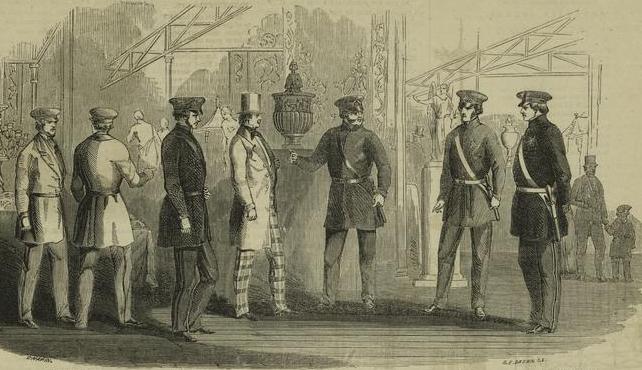
Below: the well-uniformed Crystal Palace police officers (pic courtesy NYPL)

One of the mayor’s lasting contributions was in New York police reform, creating a Board of Police Commissioners with himself in charge to apply a strict code of ethics to an already chaotic, corrupted body. In doing so, he wrangled away from his more corrupt Democratic brethren their ability to buy and sell police jobs as a form of political patronage.

But his most radical idea is today the most obvious: he mandated that every police officer should wear a uniform, an “expensive and fantastical” requirement according to his opponents who believed it “unrepublican to put the servants of the City in livery.”

Westervelt managed to make himself with one very unpopular with one group: the Know-Nothings, a ‘native American’ group who feared the swelling hordes of Irish and Catholic immigrants and the Catholicism they brought with them. The group would reach peak influence across the country in the mid-1850s, and they would actually gain significant political traction in other cities. In New York, they more often showed their moxie in the form of rioting.

The mayor earned their ire on December 11, 1853, when he ordered a street preacher arrested for gathering a group of 10,000 to listen to his frothing Know-Nothing spiel. It probably didn’t help matters that said preacher had organized on Westervelt’s own wharfs on the East River!

At the beginning of this article, I mentioned Jacob’s address — 308 East Broadway. A bit out-of-way of New York’s high society, sure, but Westervelt wished to be close to his ships. In fact, he and his partner Robert Connelly both built adjoining houses on this spot, facing Grand Street. According to Harper’s, “Over the door was a large stone cap on which was carved the representation of a ships taffrail.” (Taffrail is nautical for “the upper part of the ship’s stern“)

Thus, the angered Know-Nothing crowds were scant blocks from the mayors door. A reported 5,000 men gathered outside Westervelt’s home, demanding retribution and the release of the arrested preacher. To remind the mayor what this argument was all about, they painted a gigantic cross upon the door.

This story outlines Westervelt’s uneasy dual role as city leader and businessman. In 1855, the ships won out. Jacob bowed out, allowing Wood to finally ascend to the mayor’s desk for the first time. His best work as a shipbuilder was indeed ahead of him, though he would make brief returns into the political fray, first as a state senator, then in a newly created job in which he was most qualified — the New York commissioner for docks and ferries, from 1870 until his death in 1879. He died at his home on 63 West 48th Street, in the area of Rockefeller Center today.

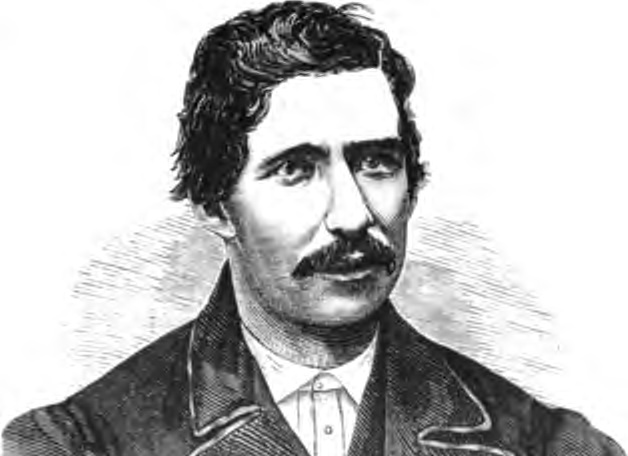
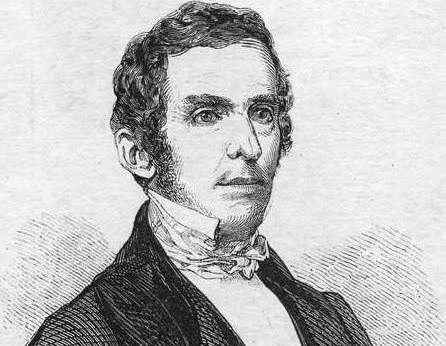
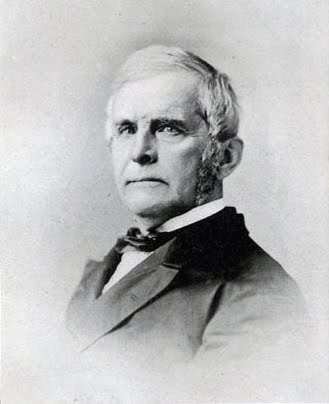
Pictured at right: Westervelt at age 70

** Not to be confused with New York’s first gang, also called The Forty Thieves

How Erin Brockovich saved the East River ampitheater

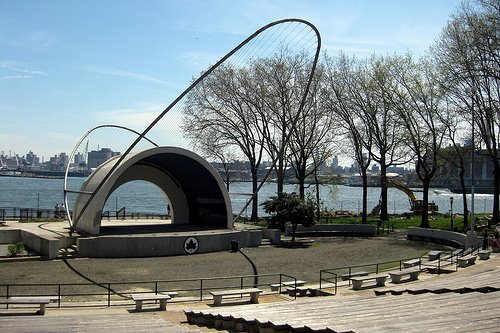
I’ve always been a little fascinated by that small ampitheatre that’s located in Manhattan’s East River Park (near Corlear’s Hook). For years it just seemed so hopelessly abandoned. In the past few years though it’s been making a comeback, featuring the occasional live concert and offering a unique, leafy respite for joggers.

The East River Park is a rather unusual thing, a Robert Moses original from 1939 that features 20 blocks of artificial concrete extension to connect the original land purchase (too narrow to be a useful park) with the East River shore. It’s the largest park in downtown Manhattan, larger in acreage than Battery, Thompkins Square or Washington Square parks.

Among its many Moses staples — ball fields, paved playgrounds and paved picnic areas — is the amphitheater constructed in 1941 as a nod to the neighborhood’s most famous former resident, New York governor Al Smith, who had pursued acting in his youth.

However, nothing much exciting blossomed from its curiously designed proscenium until the late 1950s, which Joseph Papp first launched his series of free Shakespeare performances. That’s right, the Public Theatre’s annual outdoor tradition of Shakespeare In the Park began here — at East River Park, not Central Park.

Once they left uptown for their permanent home, however, things became quite grim for the ampitheatre. By 1973, the city couldn’t even afford to keep it open. It was fenced up, closed down and heavily vandalized. For those living in the city at the time who came upon it, it did in fact seem like a modern ruin, Robert Moses’ very own Acropolis.

The park itself was slowly renovated throughout the 1990s, but relief finally came to the beleaguered stage in December 2001 thanks to, curiously enough, to reality television and Erin Brockovich — the real Brockovich, not the Julia Roberts version.

In the months following 9/11, many restorative projects began popping up throughout downtown. Brockovich, rising to national prominence thanks to the Roberts film, was filming an urban makeover program Challenge America for ABC. Brockovich and her producers chose the amphitheater for renovation, done over the course of a week, using the donated services of Tishman Construction and HLW Architects. Why this place exactly? I’m not sure, but Rudy Guiliani assigned the project to the program during a telecast of Good Morning America.

I didn’t catch the one-shot show, but I’m picturing Ms. Brockovich in one of her signature ensembles directing workman while standing on the stage. Truly one of the stranger stories of renovation that I’ve ever heard.