Categories
Neighborhoods

Gotham Court and the lost neighborhood of Cherry Hill

Yesterday I went searching for remnants of the old Cherry Hill neighborhood. There are none, as far as I could tell.

It’s not the first New York City neighborhood to entirely vanish in the rush of progress — is it, Robert Moses ? — however it may be the one that began with the most impressive pedigree.

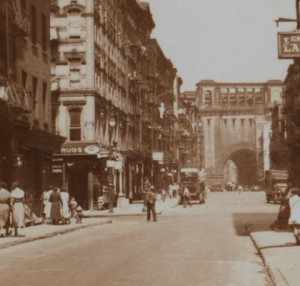
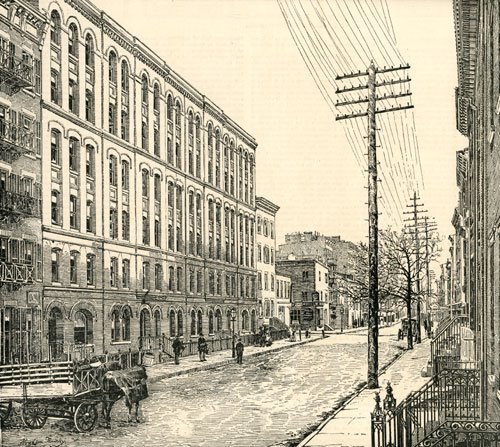
Cherry and Catherine streets, looking towards the Manhattan Bridge anchorage, in the once glorious Cherry Hill neighborhood. Pic courtesy Knickerbocker Village, who guesses photo to be from 1920s)

I’m not referring to the part of Central Park called Cherry Hill or even the upstate farm of Cherry Hill, best known for the prominent New York family the Van Rensselaers.

Downtown Manhattan’s Cherry Hill once lay near the waterfront in the area more literally called Two Bridges today, between the Brooklyn Bridge and the area just northeast of the Manhattan Bridge.

The Two Bridges Historical District was created in 2003, just to the north of the site of old Cherry Hill. Indeed there is nothing much left of the Cherry Hill neighborhood at all.

In 1890 Jacob Riis, in documenting what the neighborhood had become, referred to its early days as the “proud and fashionable Cherry Hill.” (pictured below)

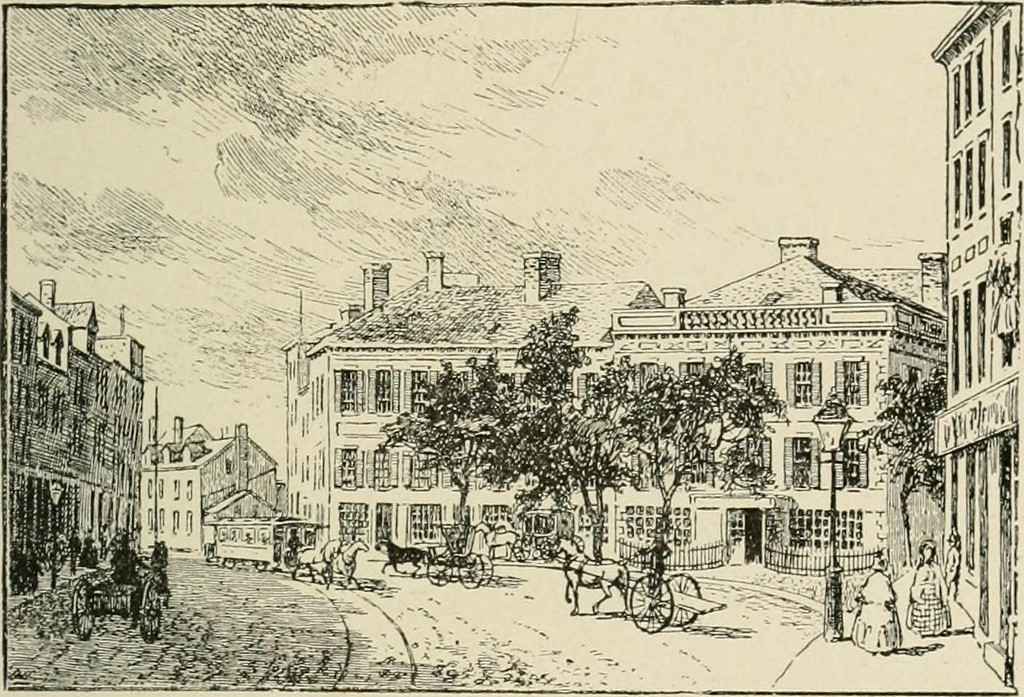
Named for a Dutch cherry orchard, Cherry Hill featured a row of homes with a beautiful vista of the East River and hosted no less than George Washington‘s during his first term as president, at 1 Cherry Street.

Although he later moved to 39 Broadway, the neighborhood remained high on the list of the rich and important, including John Hancock (at 5 Cherry Street) and DeWitt Clinton (who moved into Washington’s old home).

Below: An illustration of the more genteel days of Cherry Hill, taken from the book When Old New York Was Young (written in 1902)

Courtesy Internet Archives Book Images

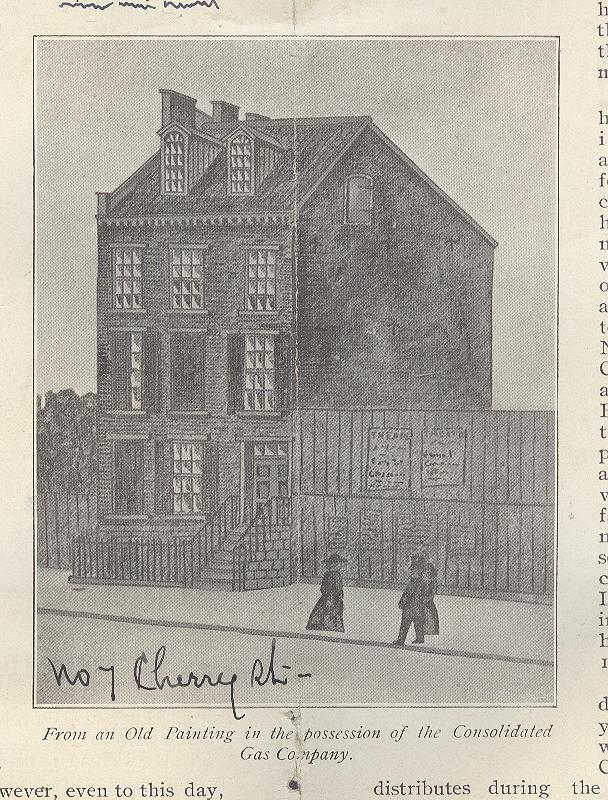
Even as late as the 1824, the area featured fine homes such as that of Samuel Leggett, founder of the New York Gas Light Company (later Con Edison), who enjoyed New York’s first interior gas lighting.

Here’s a picture of the first gas-lit home at 7 Cherry Street. (More information here)

louisa-leggett-001

If you’re looking for a symbolic date of Cherry Hill’s demise, look no further than April 3, 1823, birth date of William ‘Boss’ Tweed, who was born here and worked at a Cherry Hill chair shop in his early years.

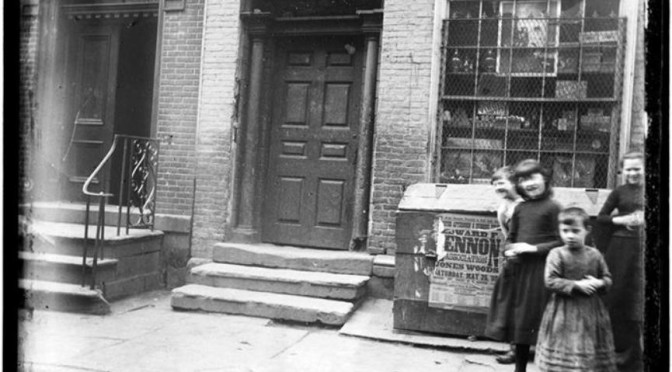
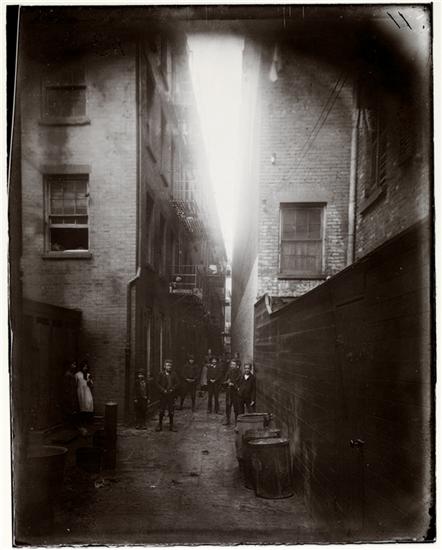
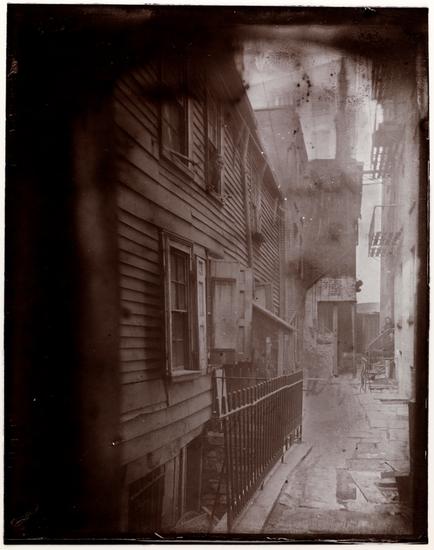
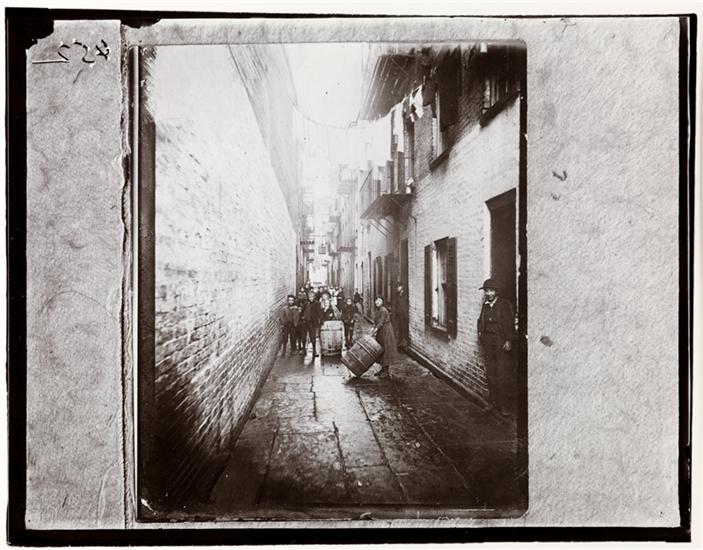
Below: Mullen’s Alley in Cherry Hill, picture taken by Jacob Riis in 1890. Courtesy the Museum of the City of New York

1

As many well-to-do neighborhoods would later do, Cherry Hill devolved into a slum, paralleling the decline of nearby Five Points. Its well-intentioned tenements soon became the worst in the city.

Located in the Fourth Ward, Cherry Hill abutted the saloons, boarding houses and brothels along Water Street, including the legendary Hole In The Wall (the former Bridge Cafe).

None of this would assist the neighborhood in escaping its fate.

Below: Blindman’s Alley at 22 Cherry Street, taken by Jacob Riis

Courtesy Museum of the City of New York

Cherry Hill is most unfortunately known for its most horrific slum — Gotham Court, “one of the worst tenements along the East River.”

It would later be made infamous in Jacob Riis’ renown 1890 blistering survey of How The Other Half Lives.  According to Riis:

“It is curious to find that this notorious block, whose name was so long synonymous with all that was desperately bad, was originally built (in 1851) by a benevolent Quaker for the express purpose of rescuing the poor people from the dreadful rookeries they were then living in.”

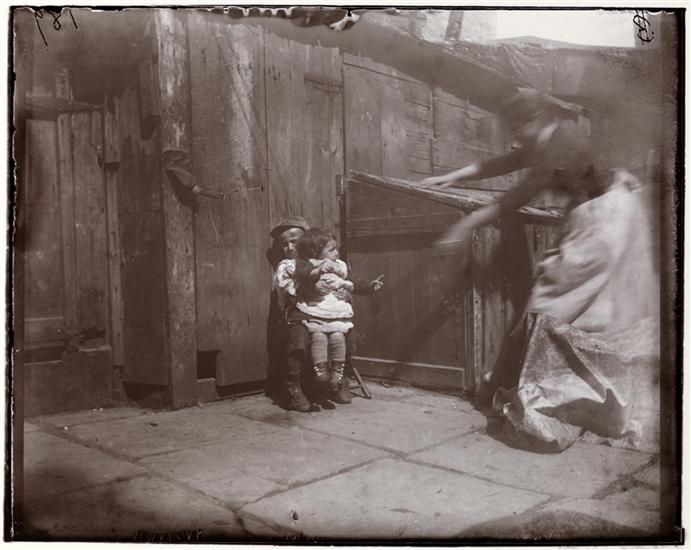
Below: photo from Gotham Court by Jacob Riis, 1890. “Minding the baby; Baby yells a Whirlwind Scream, Gotham Court.”

MNY200983

How long Gotham Court continued to be a so-called model tenement is not on record. It could not have been very long, for already in 1862, ten years after it was finished, a sanitary official counted 146 cases of sickness in the court, including “all kinds of infectious disease from small-pox down.”

Courtesy Museum of the City of New York

In 1894, the New York Tribune went as far as to make several attempts to describe Gotham Court as a prison. From the piece ‘Life in Gotham Court’:

The side alleys are narrower. They are not more than three or four feet wide. In order to enter either of these alleys one has to pass through an iron arch. The gate has been taken away, but enough remains to give unpleasant suggestions of a penitentiary..

The idea is not dissipated by the appearance of the houses inside the alley. The small windows with tiny panes of glass, the low, dark doors, through which iron gratings can be seen, and the bare brick walls are like those of a prison. The people move about free, as the prisoners do during exercise hour at the Tombs. All the doors are alike, all the windows are alike, and all are dilapidated, forlorn and forbidding.

Gotham Court and the rest of Cherry Hill were not long for this world. In the wake of Riis expose, Gotham Court was demolished in 1897.

By that time, efforts were made to construct more amenable tenements, including those built at 340, 342 and 344 Cherry Street in 1888. (See below, courtesy of Maggie Blanck)

By that time, the anchorage to the Brooklyn Bridge — and in 1909, with the Manhattan Bridge anchorage — would block in the neighborhood from the circulation of the city. The construction of traffic ramps to the Brooklyn Bridge and the downtown section of the FDR Drive (opened in 1942) obliterated much of what remained.

In its place would be more ambitious housing “super projects,” most notably one in the form of the Alfred E. Smith Houses, built in 1953 and named for the governor and saavy politico born very close by, at 25 Oliver Street.

His old street and a couple around it may give you the closest idea of what some areas of Cherry Hill may have looked like in earlier years.

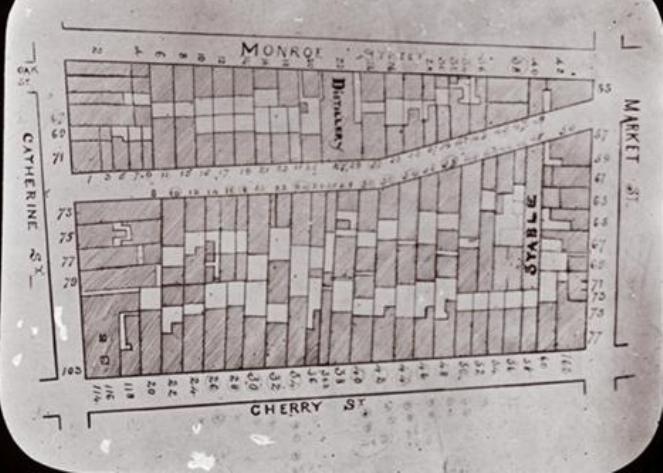
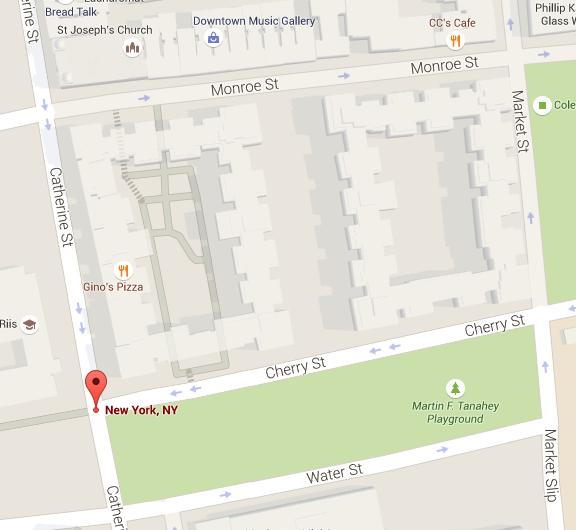
Two maps — one block of tenements in Cherry Hill in 1890 (from a map by Jacob Riis) and a Google map of the same block today:

2
1

Given its rather uniform appearance, I found it quite impossible to picture Cherry Hill’s early days here.

A shortened version of this article originally ran August 18, 2008. I’ve left the comments from that original run as they relate to the history.

Categories
Gangs of New York

Who were the Short Tails? The crazy, violent habits of the real Lower East Side gang

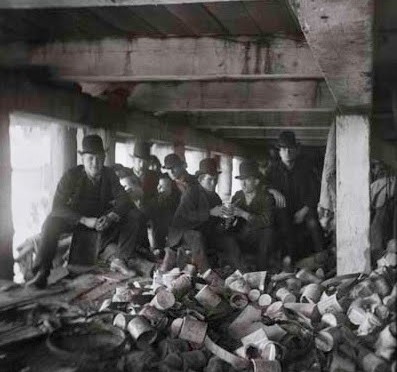
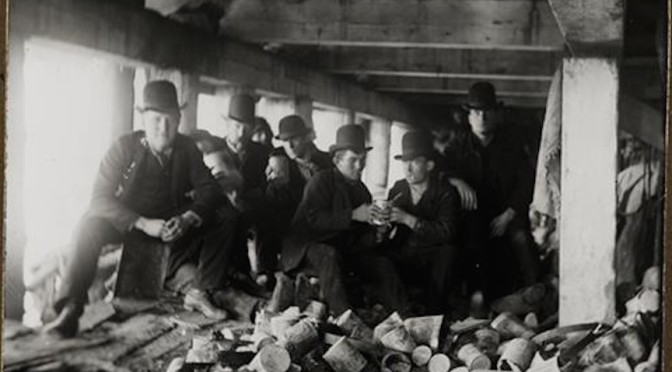
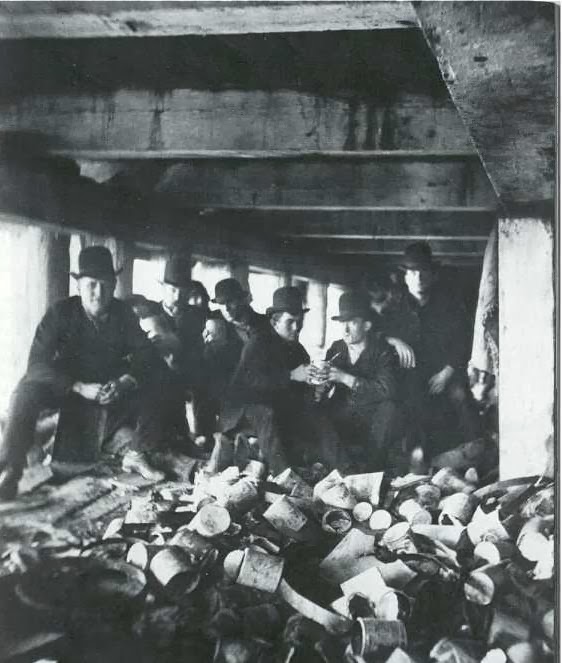
One of the few photos ever taken of any New York street gang was this image shot in 1887 by Jacob Riis of the Short Tails  under a pier in Corlears Hook. 

The Short Tails were a particularly nasty gang of criminals who terrorized the Lower East Side and the docks of Corlears Hook roughly during the period of the Gilded Age.

By the 1910s, this sinister assemblage had been absorbed into other street gangs — some say Monk Eastman‘s criminal organization is an off-shoot — and largely disappeared as a physical threat to innocent New Yorkers.

Then Herbert Asbury‘s Gangs of New York happened, vaulting a number of once-forgotten street gangs into a realm of historic romanticism. Even here, the Short Tails play second fiddle to more organized and mythic groups of young men such as the Dead Rabbits, the Whyos and, ahem, the Bowery Boys.

Confusingly, there was once a gang called the Shirt Tails who coexisted with other Five Points gangs, but this group of ruffians was long gone by the time the Short Tails terrorized neighborhoods to the east of their turf.**

The Short Tails feature as the principal villains in Mark Helprin’s New York fable Winter’s Tale, the film version of which opens today in movie theaters.

Their fictional leader, Pearly Soames (played by Russell Crowe), is a maniac with a penchant for gold and dangerous hideaways. He and his mob pursue the narrative’s hero Peter Lake (played by Colin Farrell) through the streets of a tinted-postcard New York that seems to shift like a kaleidoscope.
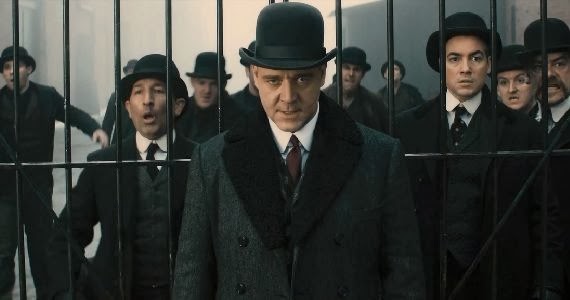
The original Short Tails were less romantic in nature, and less oppressive. (Helprin’s version: “Pearly and sixty of the Short Tails went marching through the street like a Florentine army.”)  Still, their scant appearance in newspapers of the era reveal a most malevolent group of men and boys. What were some of the traits of this menacing band?

They were headquartered at the corner of Rivington and Goerck Street. That’s around the area of Baruch Playground today. Back then, it was a stone yard. In 1882, these ‘East Side desperadoes‘ began terrorizing a German-owned saloon in the area, attacking the proprietor with a broken beer glass. In August, the leader of the Short Tails, Frank Nixon, was seriously injured in a shoot-out here and later arrested. [source]

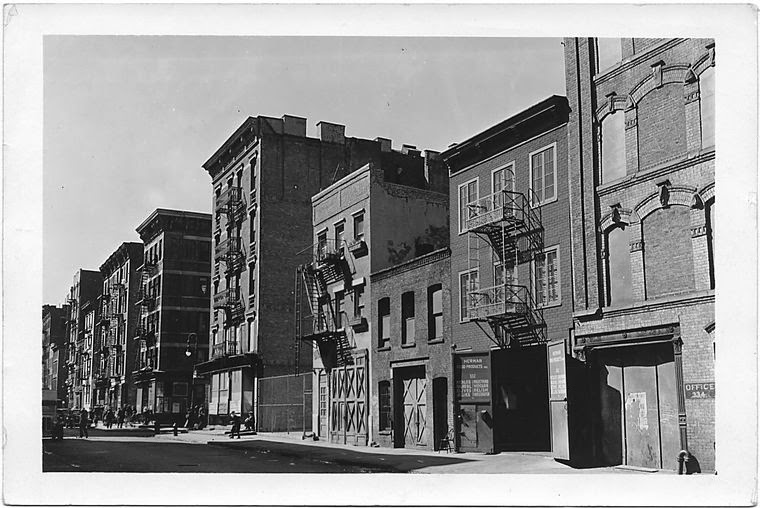
Goerck Street from a much later period (1939) at Stanton Street, just a block from the gang’s headquarters. (NYPL)
They were an outgrowth of another gang called the Border Gang, so named because they were on the border of two police precincts.

They loved beer. They loved it so much they were known for their habit of “rushing the growler,” filling up buckets of beer from local saloons and taking it back to headquarters. “The man who went for it would simply march out of the saloon with the filled receptacle [without paying for it], and if the barkeeper attempted to stop him, he would make a few remarks of a maledictory sort, interlarded with profanity and obscenity” and threaten to bring the wrath of the entire gang down on the saloon if he didn’t “hold his yawp.”  [source]

They were unrelenting murderers and thieves. The gang’s loathsome crimes seem especially brutal, even today.  From a report in 1884: “The members of the gang are known to the police as hard drinkers, thieves, pickpockets and highwaymen.” [source]

They were skilled at boat-related crimes. The Short Tails, being stationed near the piers along Corlears Hook, often committed crimes upon vessels along the water front. The unfortunate members of the Young Men’s Cathedral Association learned this the hard way during an river outing in 1886. “Some members of a notorious gang of desperadoes, calling themselves the Short Tails, smuggled themselves on the boat, got drunk and began to fight.” [source]

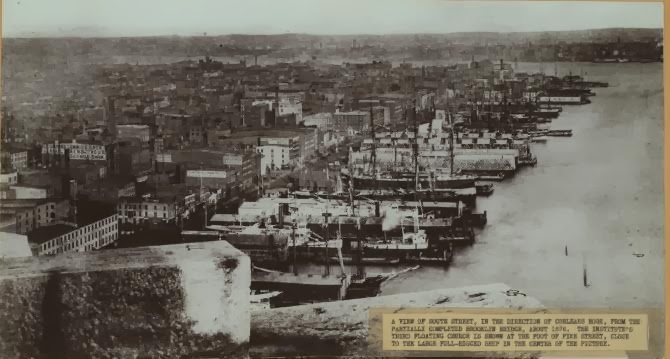
Corlears Hook in the 1870s, right before the era of the Short Tails. (NYPL)
Their schemes could sometimes be quite dastardly and clever. They perfected a naughty little trick in 1896 involving wagons which lined up along the water’s edge. As some Short Tails pushed the wagons into the river, others would run to the owners and offer to rescue their drowning wagons for a fee of $3. This money would be used almost entirely on buying beer. (I guess saloon owners got a bit more aggressive by the 1890s!) “When the money was spent they returned and pushed two more trucks into the water.”

Some of them loved music. In fact, the earliest record (from 1881) that I could find of Short Tail-related violence involved an accordion! “Policeman Philip F. Mahoney … observed a crowd of forty young men last night … standing at the corner of Delancey and Sheriff Streets. One of the gang was playing an accordion and Mahoney directed them to move on, as it was 11:30 o’clock. The accordion player refused to stop playing, whereupon Mahoney attempted to arrest him. The gang set upon him and took his club away.” The accordion player and other members were later arrested. [source]

Delancey Street required extra police duty because of them. Officers of the NYPD wised up after the accordion incident, patrolling the area in pairs of two — “one to protect the other.” The gang was certainly no match for the most hearty of souls in the police force.

One officer in the 1880s, avenging a friend killed by a Short Tail, stormed right into their headquarters “without club or firearm of any kind” and personally throttled a great number of them, “grab[bing] two of the more notorious by their coat collars” and dragging them to jail.  [source]

** Neither the Short Tails nor the Shirt Tails are related to this group. (Courtesy Rob Starobin on Twitter )

Categories
Podcasts

Corlears Hook and the Pirate Gangs of the East River

The Short Tail Gang sit underneath a pier at Corlears Hook, picture taken in 1890, long after all the great pirate gangs of the area had disbanded, been eaten by rats, or joined the Confederate army (listen to podcast for explanation!)

___________________________________
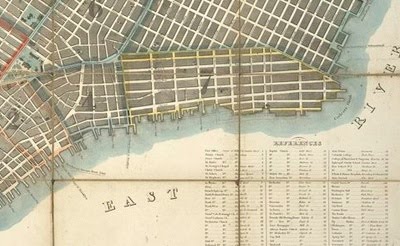
An illustrated map of the ward system of New York in 1817 highlights the Corlears Hook shorefront area of the Seventh Ward and the even more notorious Fourth Ward further down the coast. Much of the Seventh Ward was owned by the Rutgers family, who slowly parcelled out the neighborhood to shipbuilders, business owners and, eventually, tenements.

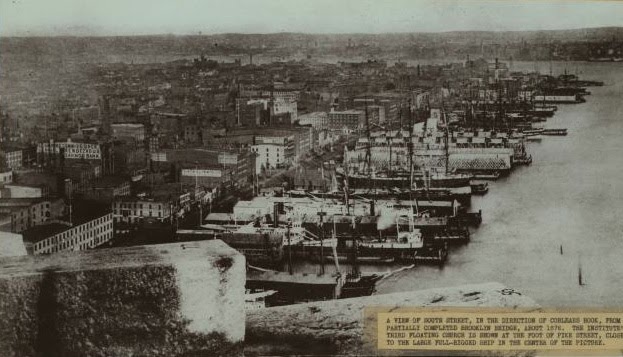
The East River shore in 1876, looking northeast from the uncompleted Brooklyn Bridge, all the way to Corlears Hook

___________________________________
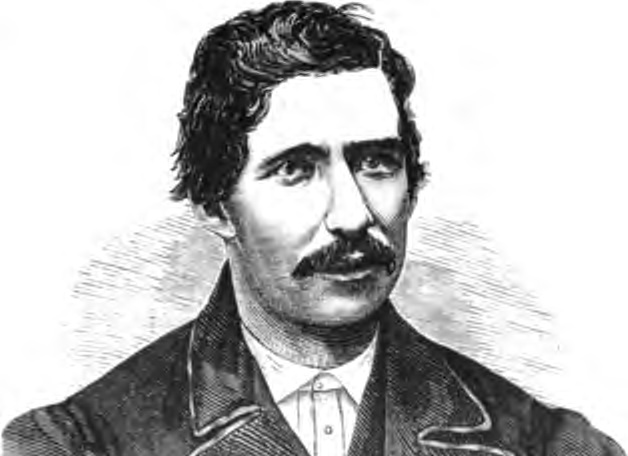
Patsy Conroy, leader of one of the East River’s most ruthless and ambitious gangs, terrorizing shipping vessels throughout New York Harbor.

___________________________________
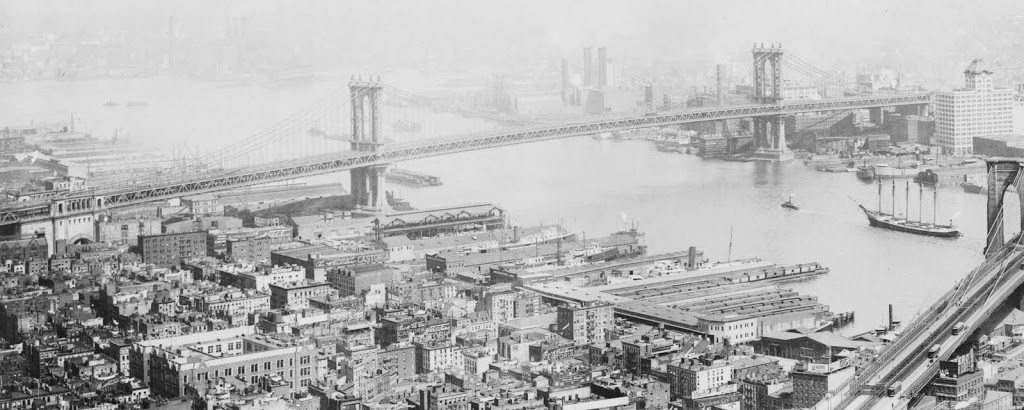
The shore between the Manhattan and Brooklyn bridges, early 20th century.

Corlears Hook Park was one of the first municipal parks, opening in 1905. This Lewis Wickes Hine photograph is from 1905 (courtesy of NYPL)

And finally, here’s a film from 1903 depicting the entire East River waterfront at that time. This is more lower Manhattan than Corlears Hook, but it should give you some idea of how clotted and bustling the shoreline was.