Categories
On The Waterfront

A short history of New York City’s various Titanic memorials

The South Street Seaport is the home for a great many nautical treasures. It’s also the location of a memorial to nautical tragedy.

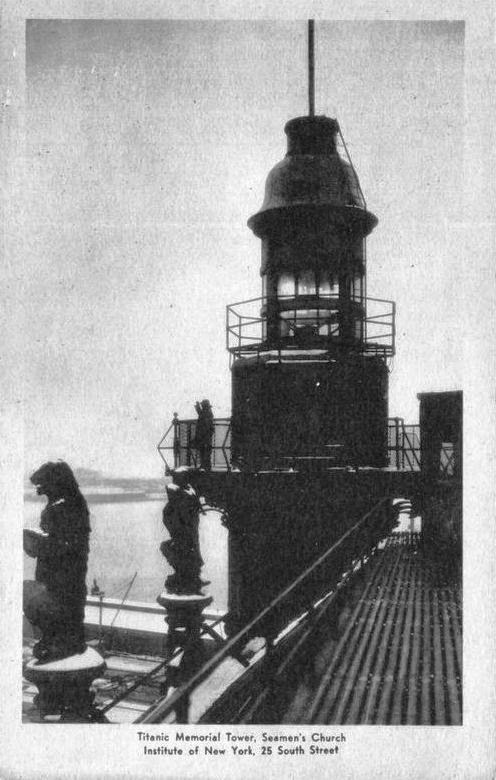
The Titanic Memorial, a 60-foot white lighthouse, sits in the little plaza at Fulton and Water Streets.

This was no mere decorative lighthouse as it seems today.

For much of its history, it was an operational light source, a beacon over the East River.

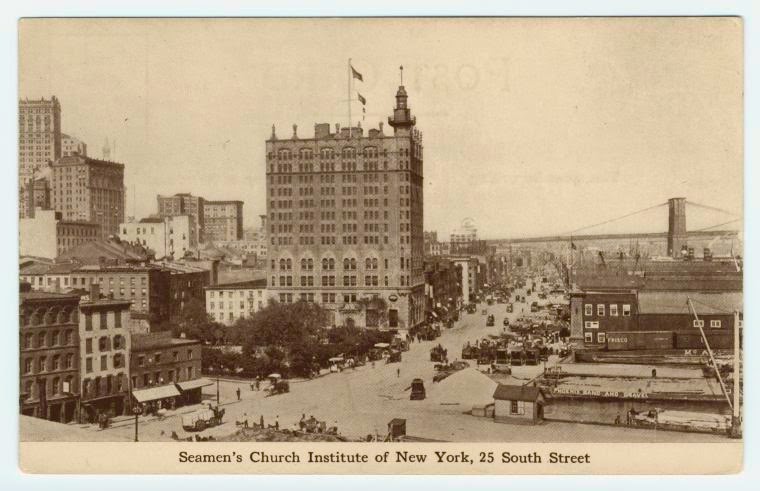
The memorial’s first home, atop the Seamen’s Church Institute (Courtesy NYPL)

The Titanic sank on April 15, 1912, killing more than 1,500 people from all social classes.

The loss shook society to its core. Among the victims were prominent New York businessmen and benefactors such as John Jacob Astor IV and Benjamin Guggenheim.

As New Yorkers mourned the loss of loved ones, they immediately funneled their grief into the building of memorials, the physical remembrance of a disaster that left virtually no trace behind.

Mayor William Jay Gaynor gathered community leaders to City Hall in May 1912 to solicit ambitious ideas of the new memorial.

The Evening World attributes one idea for a lighthouse to engineer Carroll Livingston Riker, who suggested “the lighthouse should be located at some perilous point on the coast, illuminated by a most powerful light and with a great fog horn that may be heard many miles as part of its equipment.”

Meanwhile, a less dramatic lighthouse memorial (pictured above) was funded by J.P. Morgan and planned for the top of the new Seamen’s Church Institute at 25 South Street.

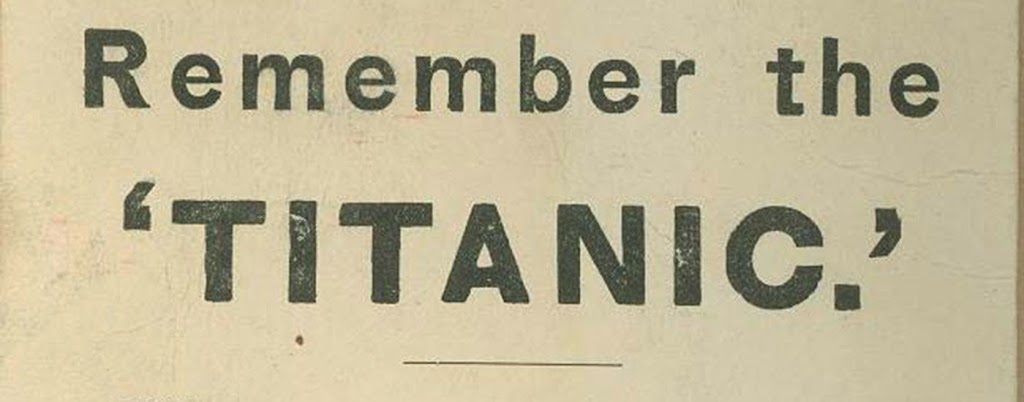
From a 1912 handbill, drumming up support for a proper memorial. (Courtesy Seaman’s Institute)

The lighthouse was equipped with a time ball which was lowered at noon to help distant sailors adjust their equipment. (This same sort of ball is affixed to the top of One Times Square in 1908, dropped every year at ring in the new year.)

The lighthouse memorial was dedicated on the first anniversary of the disaster with many family and friends of victims in attendance.

The New York Times claims the lighthouse and ball drop atop the Institute “were simply features of the existing plan, relabeled as a memorial.” [source]

However it became New York’s most prominent remembrance of the Titanic disaster after all when, over at City Hall, nobody could make up their mind on a truly grand memorial. (All you need to know about the city’s failed efforts is illustrated in this 1912 headline on one meeting — “One Man Made 18 Speeches.”)

Meanwhile, there were other Titanic memorials being planned in other parts of the city.

In Greenwich Village, in the Washington Square studios of Gertrude Vanderbilt Whitney, the artist began work on a sculpture for a national memorial in Washington D.C.

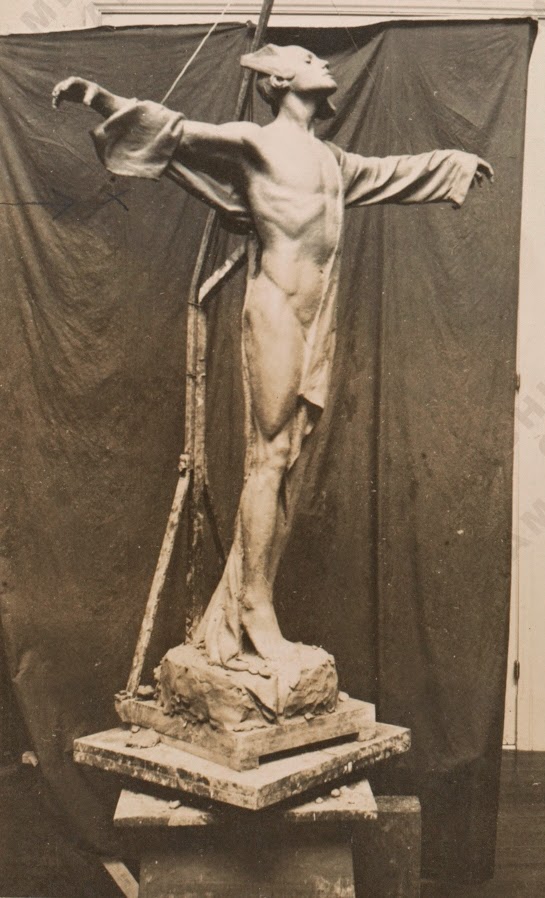
She displayed a model for the memorial in February 1916 that drew gasps from society women.

“[T]he present figure with its pedestal extends from floor to ceiling and catches interesting lights that add to the highly dramatic conceptions.” [source]

A study of the Titanic memorial which was displayed at Whitney’s Village studio. (Courtesy AAA/Whitney Museum)

Whitney’s triumphant statue –of a figure with arms outstretched (not unlike Kate Winslet’s pose in the film Titanic) — was completed in 1918 but not installed in Washington until 1930 due to waterfront construction delays

Yet another Titanic memorial was planned in June 1912 to honor philanthropists Isador and Ida Straus near their home on the Upper West Side. A competition was held in 1913 for aspiring sculptors, with Augustus Lukeman’s pondering nymph the eventual winner.

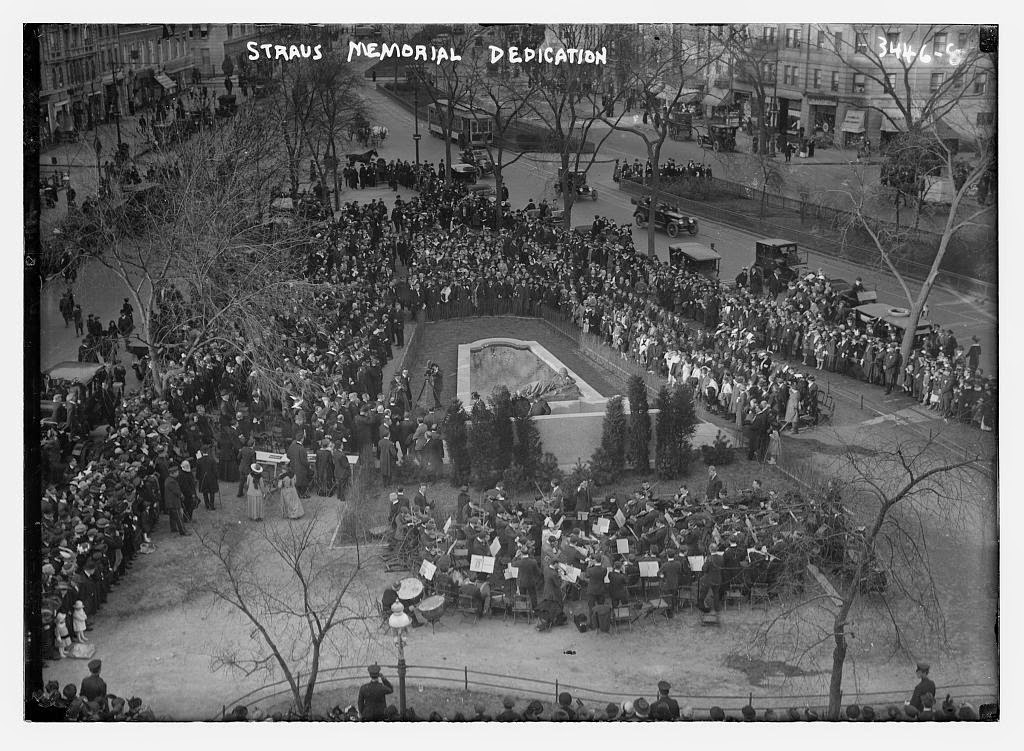
The statue and the newly named Straus Park were formally dedicated on April 15, 1915.

Featured at the dedication ceremony were 800 children who had been helped by Straus’ Educational Alliance on the Lower East Side.

Below: Dedication of Straus Square and its curious monument. (Courtesy Library of Congress)

As for the Titanic Lighthouse Memorial?

It sat dutifully atop the Seamen’s Institute for decades, its green light a welcome beacon to those entering the harbor.

By the 1950s, shipping no longer came through the area of New York’s waterfront, and the Institute eventually sold its building.

The lighthouse was donated to the South Street Seaport Museum in 1968, then a budding institution formed just a couple years prior to protect the historic structures of the area.

For a time, the lighthouse actually sat on the waterfront before relocating back to its present home in 1976, in a park partially funded by Exxon Oil.

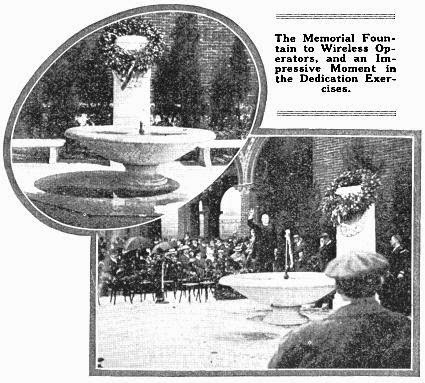
There was one other memorial to the Titanic disaster — the Wireless Operators Memorial at Battery Park. This bronze cenotaph and fountain was dedicated in 1915 to nine intrepid employees — “wireless heroes” — who died on the Titanic and in other ocean disasters.

Wrote J. Andrew White in 1915: “It is an eloquent reminder of a tradition that has grown out of the brand of courage which seeks no precedent, which, founded on the heroic action of a mere boy, has been written in the indelible annals of the men who go down to the sea in ships.”

After sitting in storage for many years, the memorial can once again be found in Battery Park. 

Categories
Gilded Age New York Podcasts

Electric New York: Illuminating the shadows, re-visualizing the night

This classic episode of the Bowery Boys: New York City History podcast (originally released in December of 2021) is featured in this week’s episode of the History Channel podcast HISTORY This Week.

Since 2011 the Bowery Boys Podcast has revisited a few of the themes featured in this show. After listening to this episode, give these installments a try:

A more in-depth look at the life of Nikola Tesla:
Edison’s role in the creation of the moving picture:
The second half of this show features the history of Christmas lights:

PODCAST The streets of New York have been lit in various ways through the decades, from the wisps of whale-oil flame to the modern comfort of gas lighting. With the discovery of electricity, it seemed possible to illuminate the world with a more dependable, potentially inexhaustible energy source.

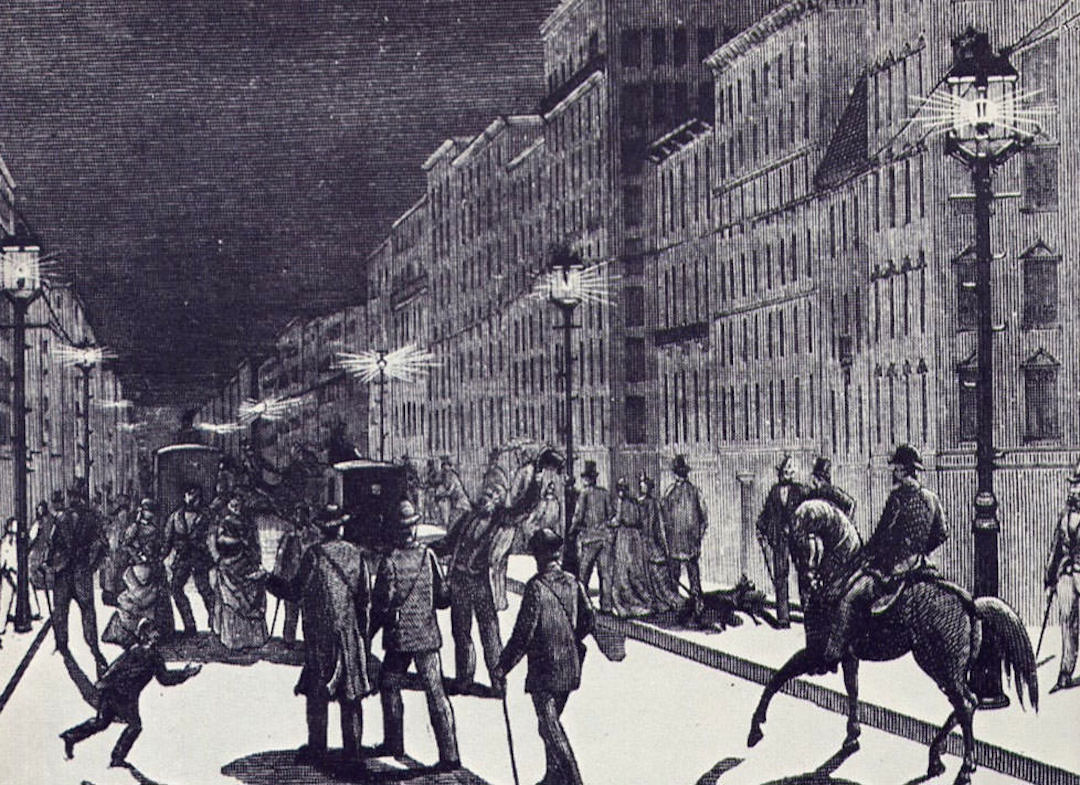
First came arc light and ‘sun towers’ with their brilliant beams of white-hot light casting shadows down among the holiday shoppers of Ladies Mile in 1880.

But the genius of Menlo Park, Thomas Edison, envisioned an entire city grid wired for electricity. From Edison’s Pearl Street station, the inventor turned a handful of blocks north of Wall Street into America’s first area entirely lit with the newly invented incandescent bulbs.

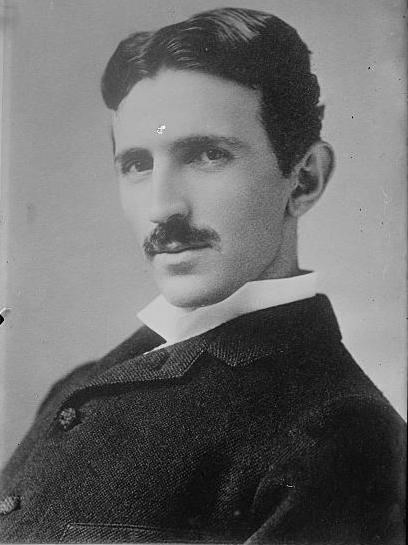
ALSO: It’s the War of Currents, the enigmatic Nicola Tesla and the world’s first electric Christmas lights.


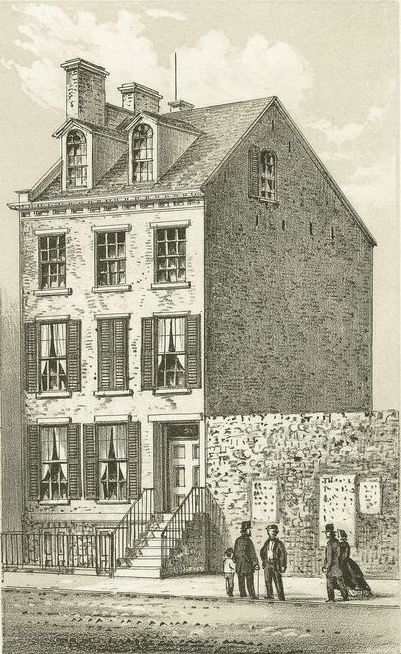
The home of Samuel Leggett, the first to be illuminated with gas lighting, at 7 Cherry Street. This home stood  just a few blocks from the location of Edison’s Pearl Street Station (255-7 Pearl Street), which would also change the way people consider lighting their city. (NYPL)

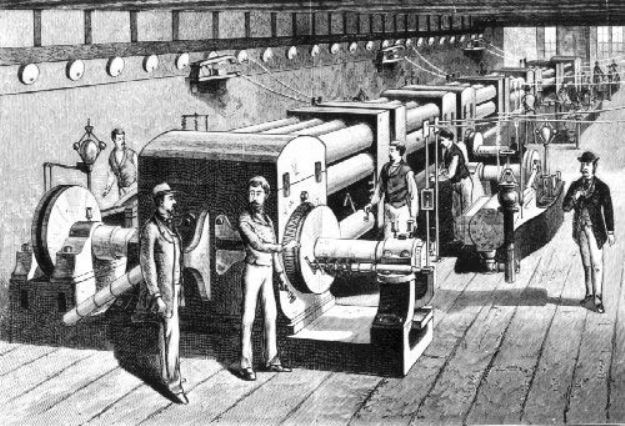
Inside the Pearl Street Station: Direct current surged through Edison’s generators to the neighboring blocks.

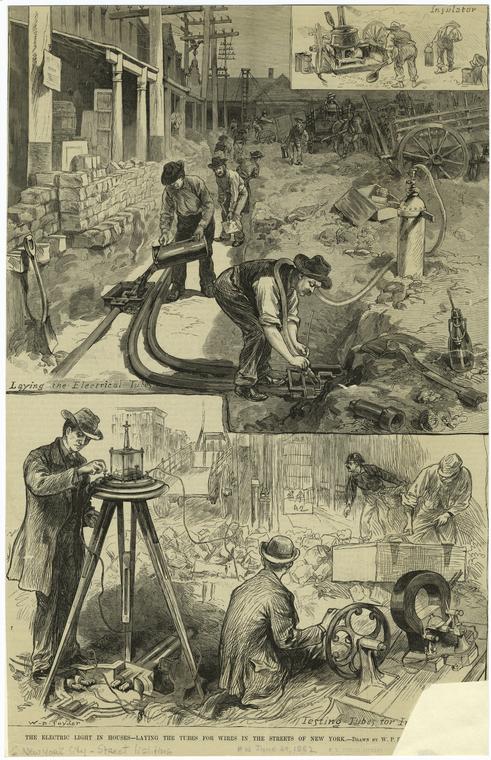
Laying the electrical wires under the streets of the blocks surrounding the Pearl Street station was an arduous, potential dangerous task. It took well over a year to complete the job. (Courtesy NYPL)  

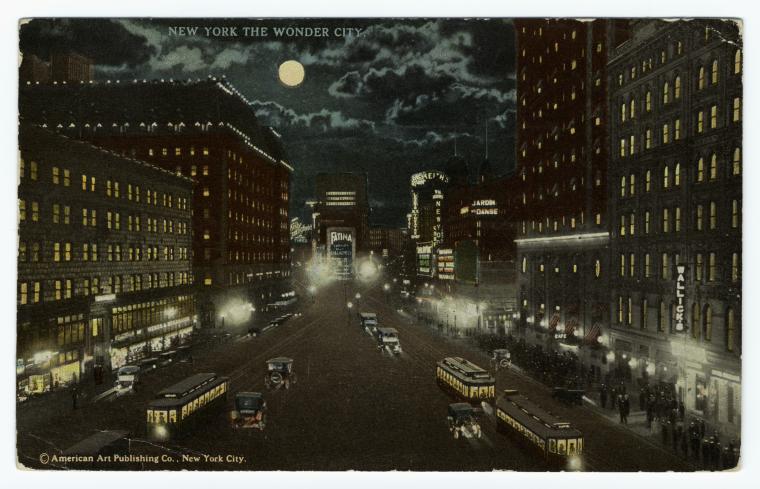
‘New York The Wonder City‘, and indeed it was, thanks to electricity. Whole neighborhoods, like Times Square and Coney Island, were defined by it. Landmarks like the Brooklyn Bridge, thoroughfares like the Bronx’s Grand Concourse and even Broadway itself were transformed at night by electric power. (NYPL)

Nikola Tesla, the brilliant Serbian inventor who spent his final decades in New York living at the Hotel New Yorker.

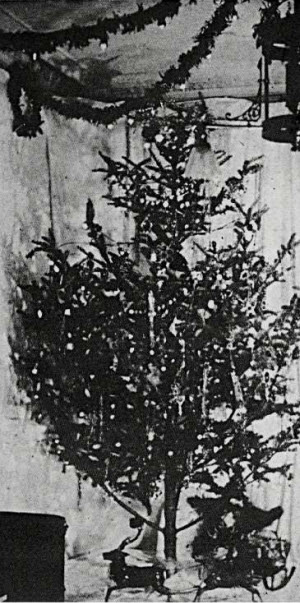
Behold! The first Christmas tree with electrical lighting, courtesy Edison employee Edward Hibberd Johnson. This tree glittered and twirled from Johnson’s home in Murray Hill. (Courtesy Jim on Light)

On the fiftieth anniversary of the invention of the lightbulb, an elderly Thomas Edison ‘reinvents’ it in 1929 at a reconstructed laboratory in Dearborn, Michigan, to the delight of Henry Ford and newly elected President Herbert Hoover.

Categories
Museums On The Waterfront

The South Street Seaport Museum, at 50 years old, has gotten some tattoos

The under appreciated South Street Seaport Museum has always had a daunting mission to fulfill — preserving a piece of New York City history on the edge of a volatile and ever-changing waterway. Established fifty years ago this year, the museum has been the guiding presence to this remaining vestige of New York’s 19th century waterfront.

But while the mighty vessels maintained by the museum and the collection inside old Schermerhorn Row provide a true flavor of the past, the present has oftentimes disrupted their objective.

Construction on the waterfront — and the uncertainty of its use — has made the area rather unpleasant to visit in past years. And natural disasters like Hurricane Sandy have gravely endangered the neighborhood’s repertoire of classic structures.

So consider this our official request to you — go down to the Seaport! The ships are now open for tours, the rustic Bowne Print Shops are still a treasure to visit, and a scaled-back version of the museum is open on Schermerhorn Row. And some decent shops and restaurants have returns to the area. (The Paris Cafe, one of our favorite places in all of New York City, has remained a reliable stalwart through all of it.)

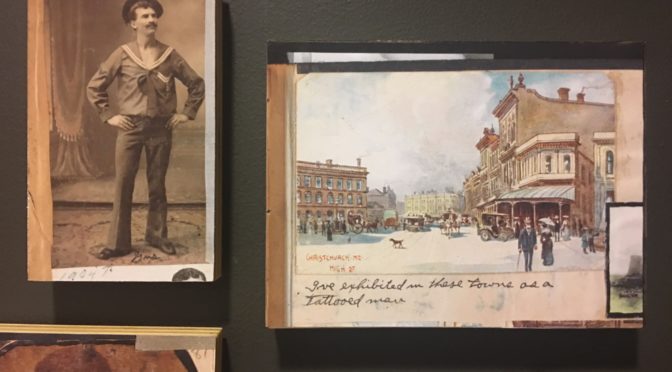
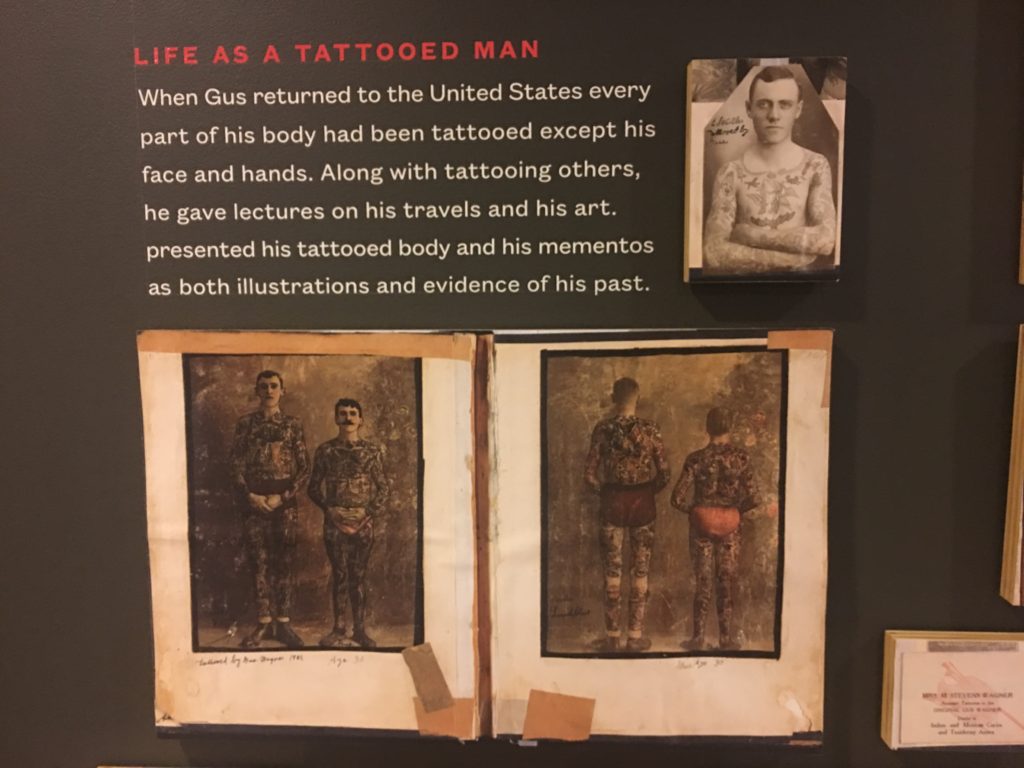
And at the museum an interesting surprise awaits you. A small second-floor gallery presents the curious work of one of America’s greatest tattoo artists — Gus Wagner.

Tattooing has long been a part of seaport life — and a critical rite of passage for many 19th century seamen.  The Original Gus Wagner: The Maritime Roots of Modern Tattoo presents the art of the tattoo in this larger context, following Wagner, a well-traveled sailor, around the world, his body like a passport, stamped with mementos of his various journeys.

Tattoo artists were often called professors, and indeed Wagner’s own devotion to the art form, lecturing about his work and travels during his life time, helped develop its prominence among mainstream audiences. The exhibit also contains a look at some pages from his scrapbook of tattoo designs.

Take a trip down to the Seaport and visit this small but pleasurable exhibit. And my pre-emptive thanks to the South Street Seaport for inspiring the next episode of the Bowery Boys spin-off The First: Stories of Inventions and their Consequences. It comes out tomorrow and its all about the tattooing life in New York City in the late 19th century.  (The show is available wherever you find podcasts. Just search for The First Stories. More information here.)

And if you’re headed over to the Seaport, take our podcast on the history of South Street Seaport down with you! It’s episode #163. Download it now or listen to it here:


Categories
Adventures In Old New York On The Waterfront Podcasts

The Pirate of Pearl Street: The All-True New York Adventures of Captain Kidd

PODCAST The tale of Captain William Kidd, a respectable New York citizen and landowner, and his transformation into the ruthless pirate of legend.

The area of Lower Manhattan below Wall Street is today filled with investment bankers, business people and tourists. But did you know, over 300 years ago, that the same streets were once crawling with pirates?

In the early decades of the British colony of New York, the city was quite an appealing destination for pirates and their ships filled with stolen treasure. After all, the port of New York was far away from the supervision of the crown, providing local merchants with ample temptations to do business with the high sea’s most notorious criminals.

Captain William Kidd is a figure of legend, the most ruthless and bloodthirsty pirate on the planet. And yet, for many years, he was a respectable New York gentleman, with connected friends, a wealthy wife and a sumptuous home on Pearl Street near the original wall of Wall Street.

But Kidd sought adventure as a privateer and made a deal with prominent New Yorkers to scour British trading routes for pirates. This is the tale of how a dashing New York sea captain became branded (perhaps unfairly) as one of the most evil men of the ocean.

PLUS: Captain Kidd’s startling connection to New York’s Trinity Church! And where in New York City might one find some of Captain Kidd’s fabled treasure today?


The Bowery Boys: New York City History podcast is brought to you …. by you!

We are now producing a new Bowery Boys podcast every two weeks. We’re also looking to improve the show in other ways and expand in other ways as well — through publishing, social media, live events and other forms of media. But we can only do this with your help!

We are now a member of Patreon, a patronage platform where you can support your favorite content creators for as little as a $1 a month.

Please visit our page on Patreon and watch a short video of us recording the show and talking about our expansion plans. If you’d like to help out, there are five different pledge levels (and with clever names too — Mannahatta, New Amsterdam, Five Points, Gilded Age, Jazz Age and Empire State). Check them out and consider being a sponsor.

We greatly appreciate our listeners and readers and thank you for joining us on this journey so far. And the best is yet to come!


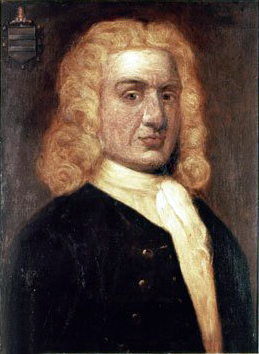
The Captain William Kidd of real life (painted by Sir James Thornhill), a respectable gentleman using his years in New York who hobnobbed with the wealthiest families in town.

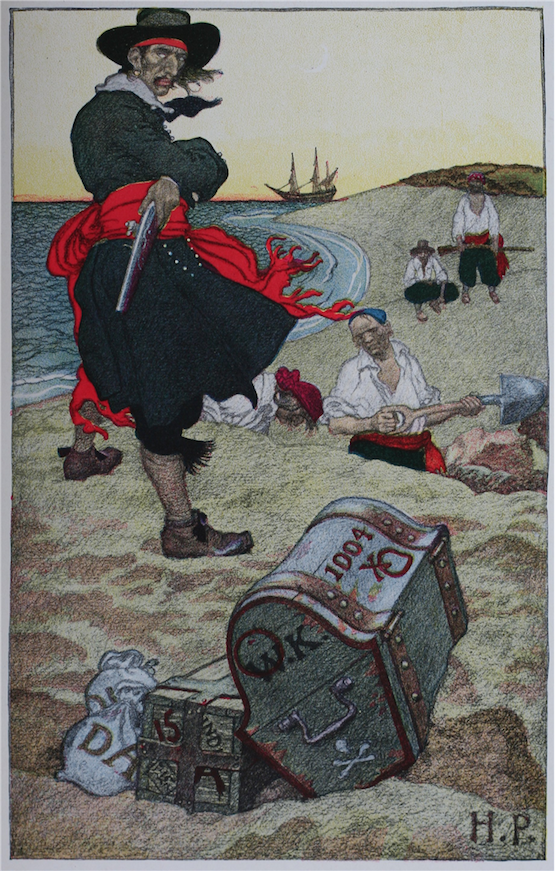
The Captain Kidd of legend, a figure whose not-so-noble exploits on the seas have helped masked the real story of this would-be privateer.

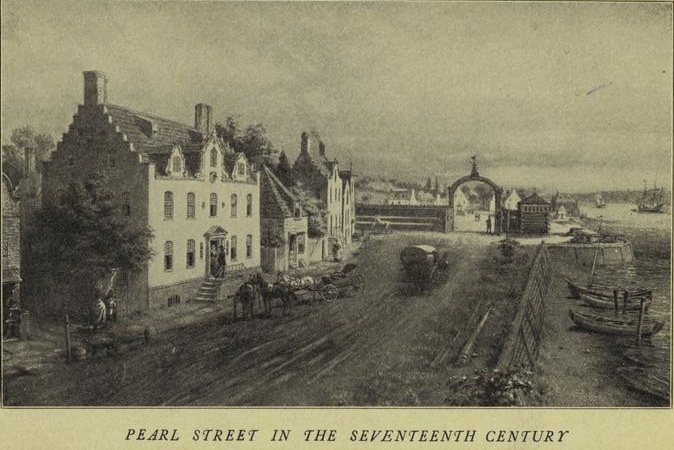
The residence of Captain William Kidd and his wife Sarah Oort Bradley Cox Kidd, at the corner of Pearl Street and Hanover Square. It was built during the Dutch period and located just a few steps from the gate to the city.

Kidd also owned several other New York properties according to the New York Times, including “56 Wall Street, 86-90 and 119-21 Pearl Street, 52-56 Water Street and 25, 27 and 29 Pine Street.”

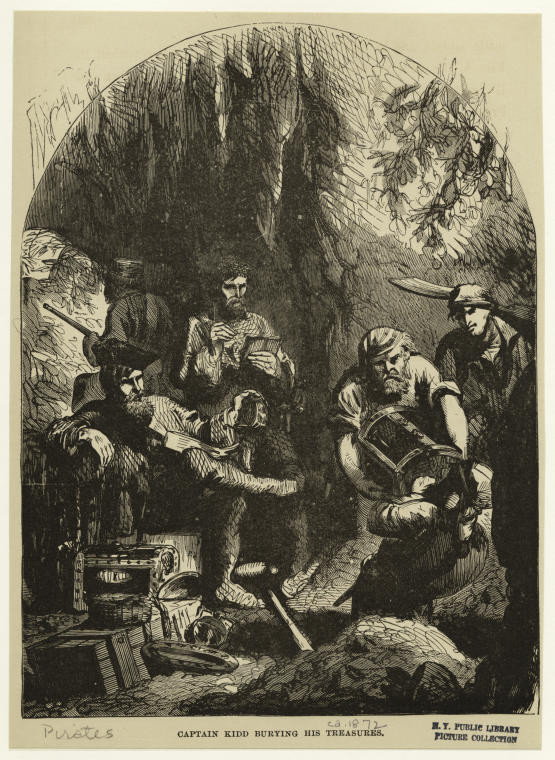
Captain Kidd, burying his treasure (from an illustration circa 1872)

Courtesy NYPL

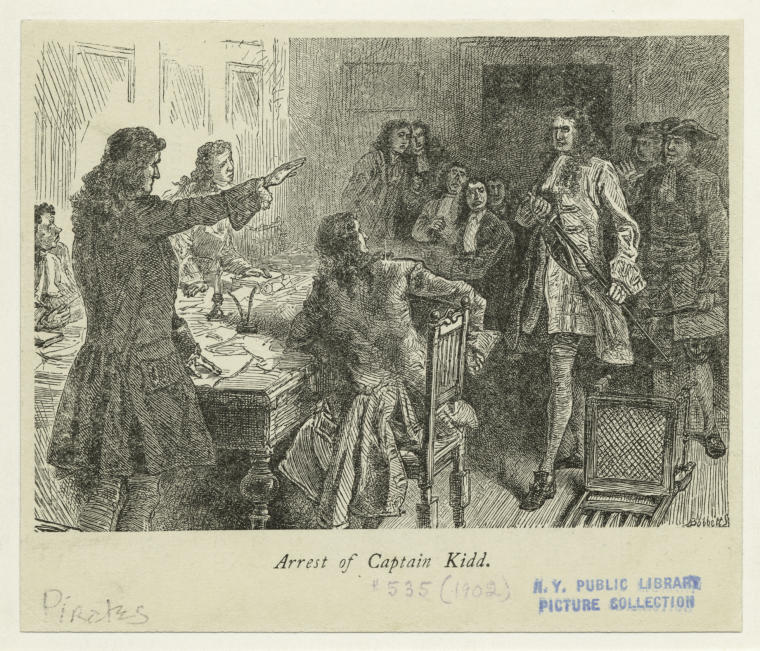
The arrest of Captain Kidd in Boston (from an 1872 illustration)

NYPL

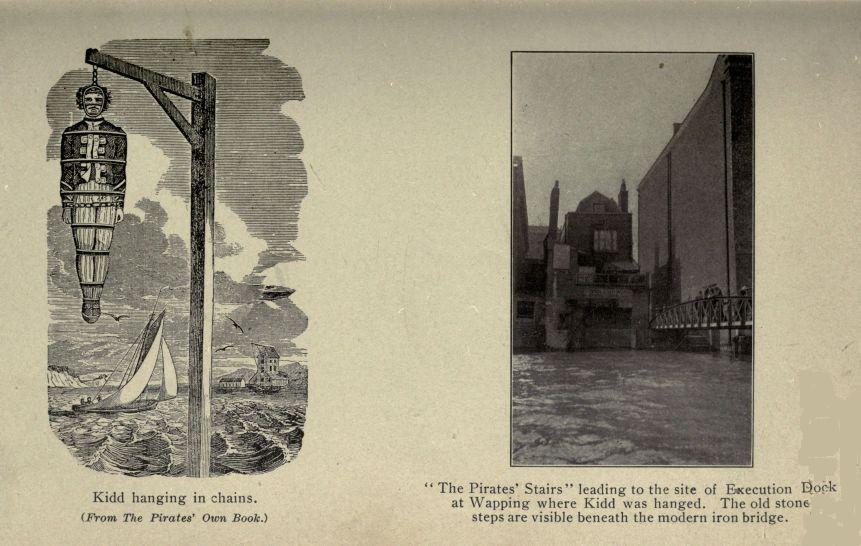
A horrifying image of Kidd gibbeted and displayed along the River Thames and the site of the ‘pirates’ stairs.’

NYPL

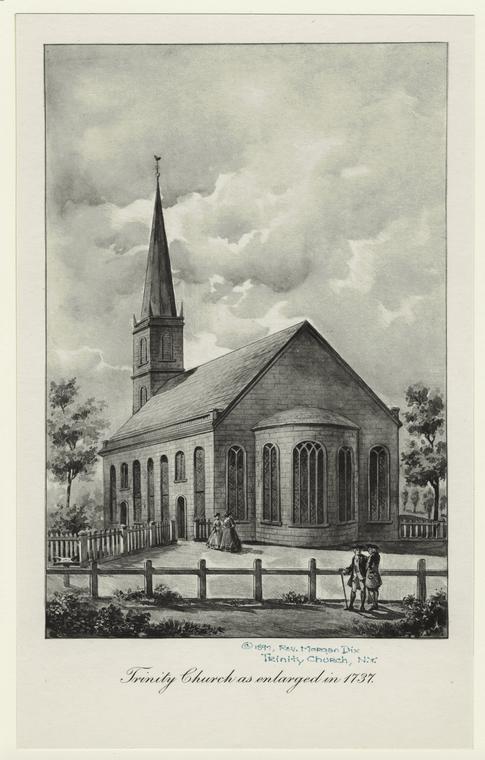
Kidd had a hand in the construction of Trinity Church as he was in New York at the time.

From the Trinity Church website: “In 1696, a small group of Anglicans (members of the Church of England) petitioned the Royal Governor Benjamin Fletcher of New York, then a mercantile colony, for a charter granting the church legal status. Fletcher granted the charter in 1697 and the first Trinity Church was erected at the head of Wall Street facing the Hudson River. Although Anglican services had been held in the colony’s fort chapel, the building was the first Anglican Church on the island of Manhattan.”

NYPL

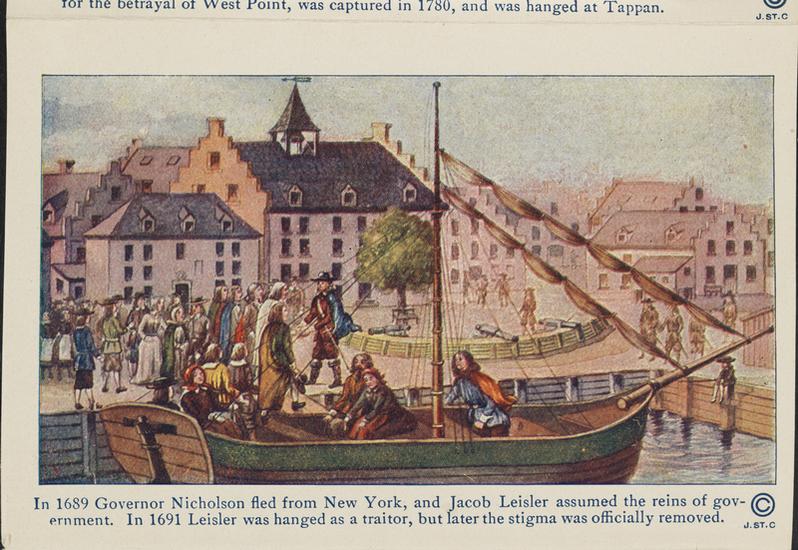
The Leisler Rebellion — Drama in 1689 as Jacob Leisler and his followers sweep supporters of King James out of power. Kidd would contribute in overthrowing Leisler just a couple years later.

Courtesy Museum of City of New York

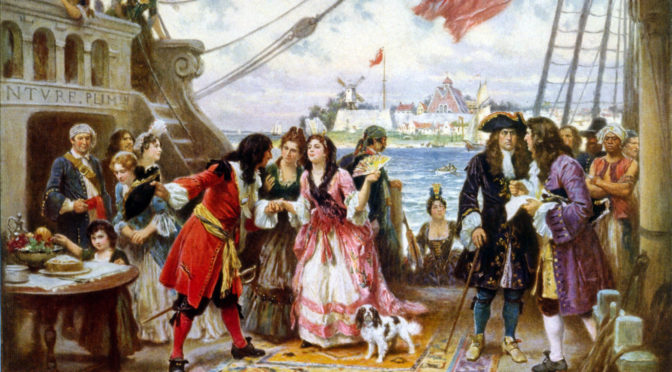
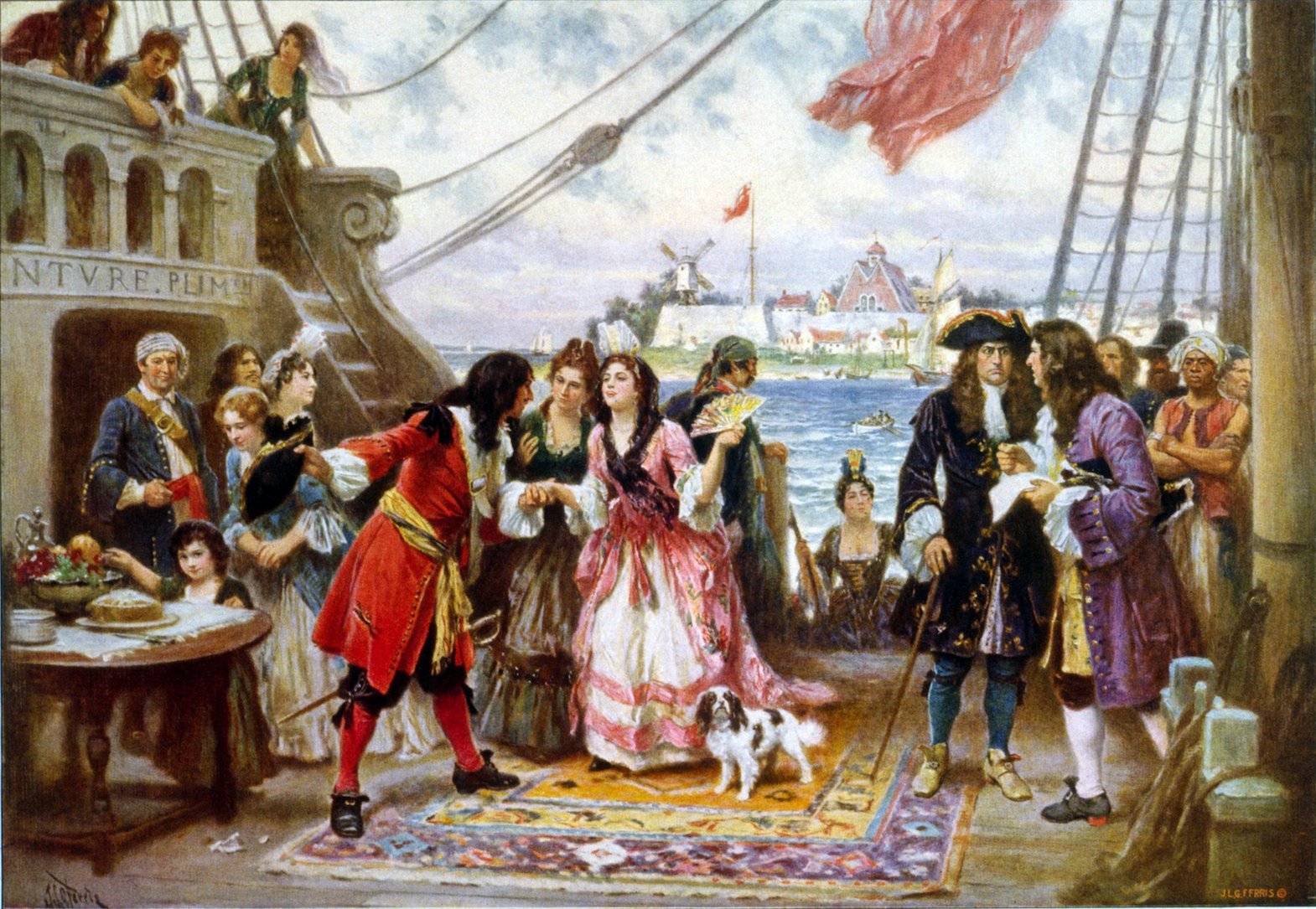
A fanciful reimagining of Captain Kidd in New York Harbor, presumably following the expulsion of Leisler, painted by Jean Leon Gerome Ferris.

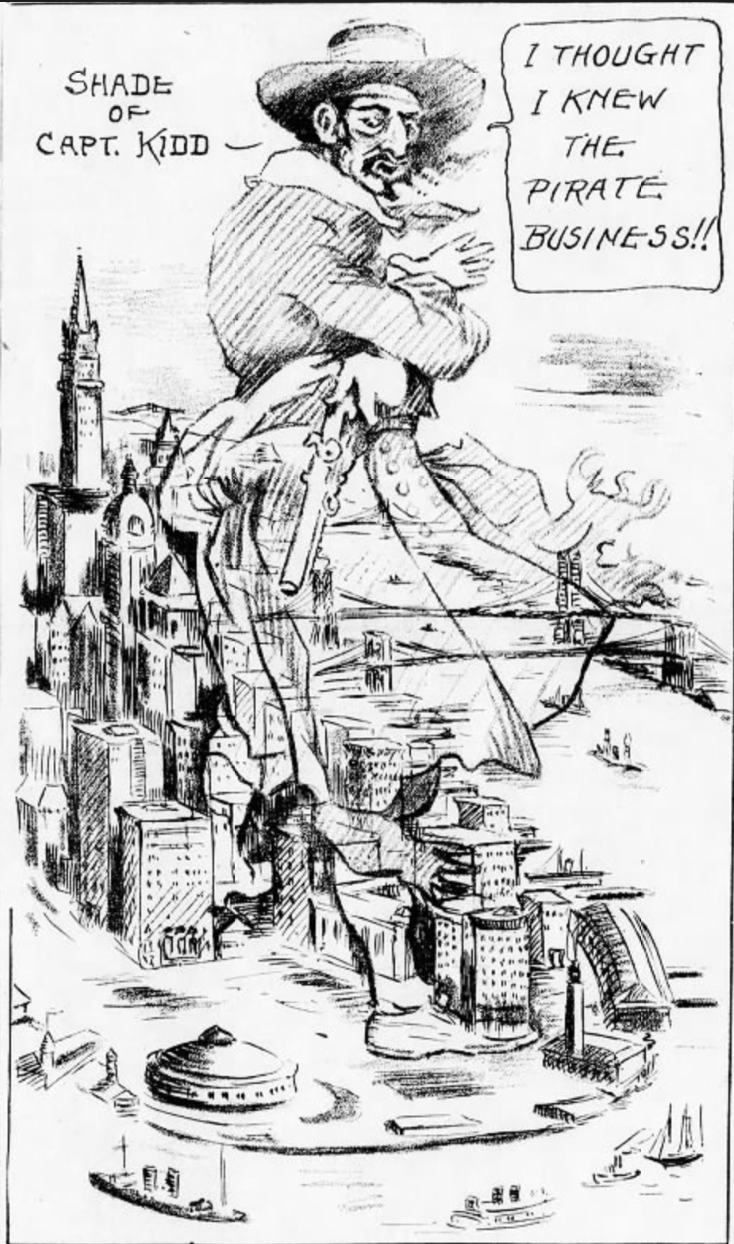
Courtesy NYPLThe Brooklyn Daily Eagle has been quite enamored of Captain Kidd over the years. Here’s an illustration of Kidd’s ghost hovering over New York (a city still filled with ‘modern’ pirates, or so claims the article).

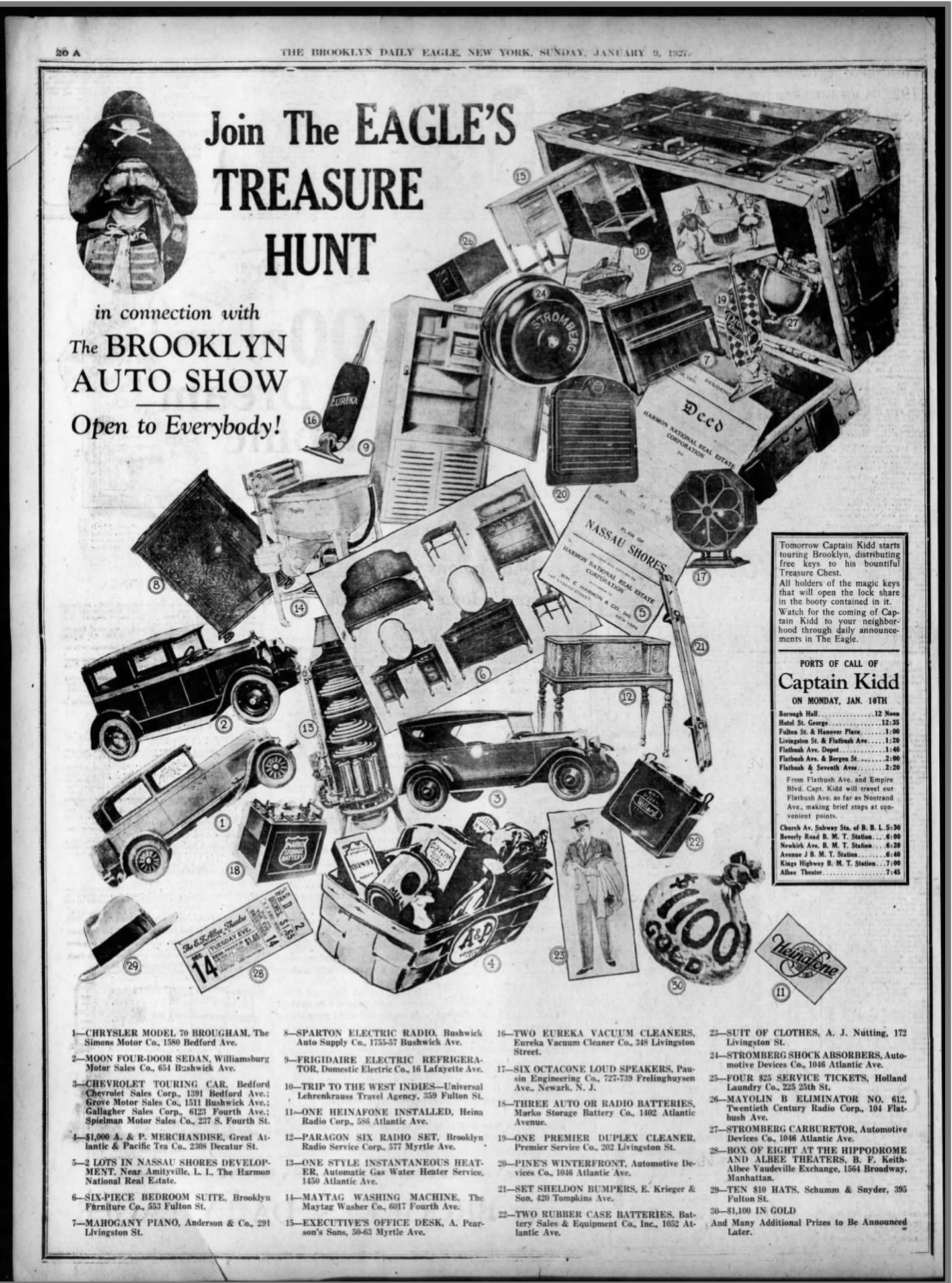
From the Brooklyn Daily Eagle’s ‘Treasure Hunt’ for its readers, a promotion of the Brooklyn Auto Show.


Captain Kidd has been dramatized in several Hollywood films over the years. Here’s one with Abbott and Costello!

Captain Kidd in a Saturday matinee serial:

And the well-regarded film version with Charles Laughton as Captain Kidd:

CORRECTION: My misspeaking strikes again! From the final section — it is Blackbeard the pirate, not Bluebeard the pirate, who is made an example of by the English in 1718. (This has been changed in new versions of the show.

Categories
On The Waterfront Podcasts

The history of the South Street Seaport: A robust story of economic power, historic preservation, rat fights and fish guts

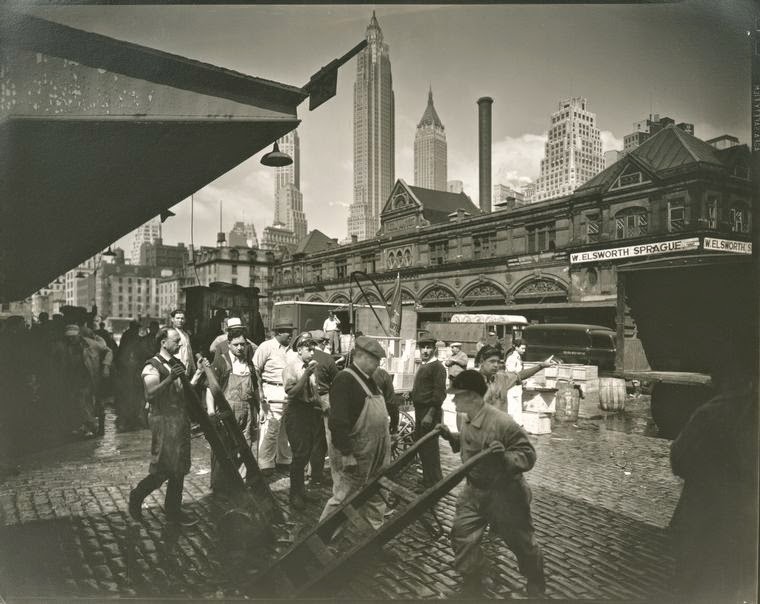
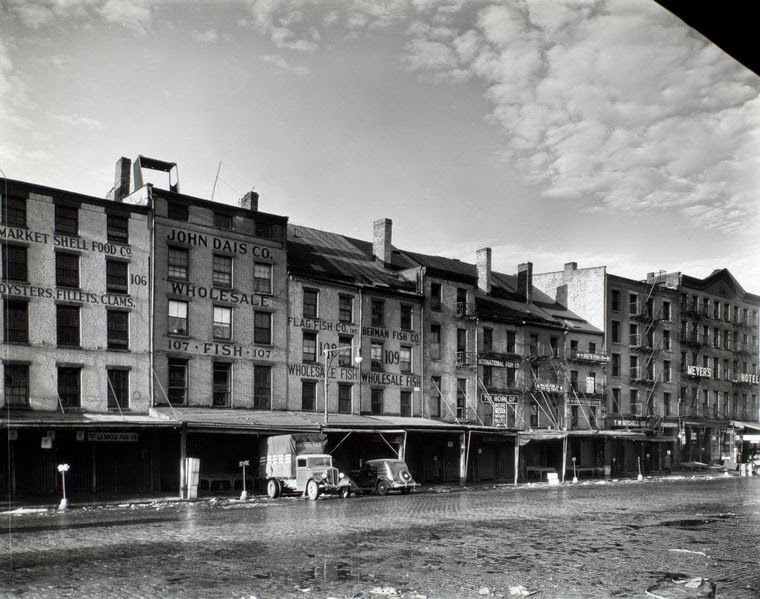
The daily bustle at the Fulton Fish Market, 1936, photographed by Berenice Abbott (NYPL)

PODCAST  The glory of early New York came from its role as one of the world’s great ports.  Today the South Street Seaport is a lasting tribute to that seafaring heritage, a historical district beneath the Brooklyn Bridge that contains some of New York City’s oldest buildings.

But there are many secrets here along the cobblestone streets.  Schermerhorn Row, the grand avenue of counting houses more than two centuries old, is built atop of landfill.  Historic Water Street once held a seedy concentration of brothels and saloons. Not to mention a very vibrant rat pit! And the Fulton Fish Market, the neighborhood’s oldest customer tradition, once fell into the river.

The modern South Street Seaport, a preservation construct of concerned citizens, become popular with tourists during the 1980s but saw severe damage during Hurricane Sandy.  It’s now the subject of some potentially dramatic changes.  How much of an adherence to the traditions of the past will determine the Seaport’s future?

ALSO: The FDR Drive — How it almost went below the Seaport!


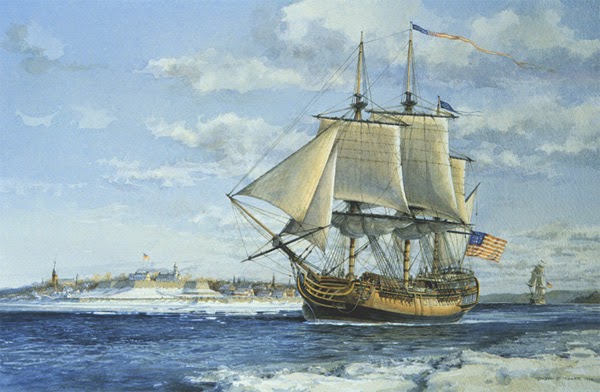
A painting of the Empress of China, the vessel probably most responsible for the growth of New York’s trading power. (Courtesy nyhistorywalks)

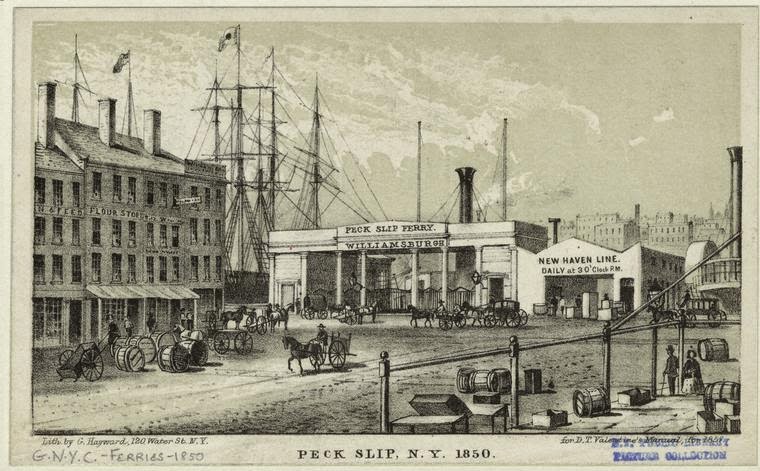
Peck Slip, providing ferry service to Brooklyn. The very first ferry service to Brooklyn was launched from this spot over two hundred years before the era depicted in this image. (NYPL)

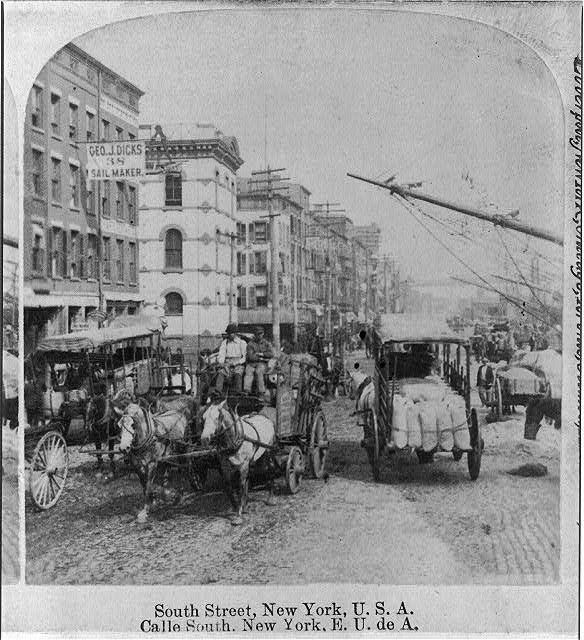
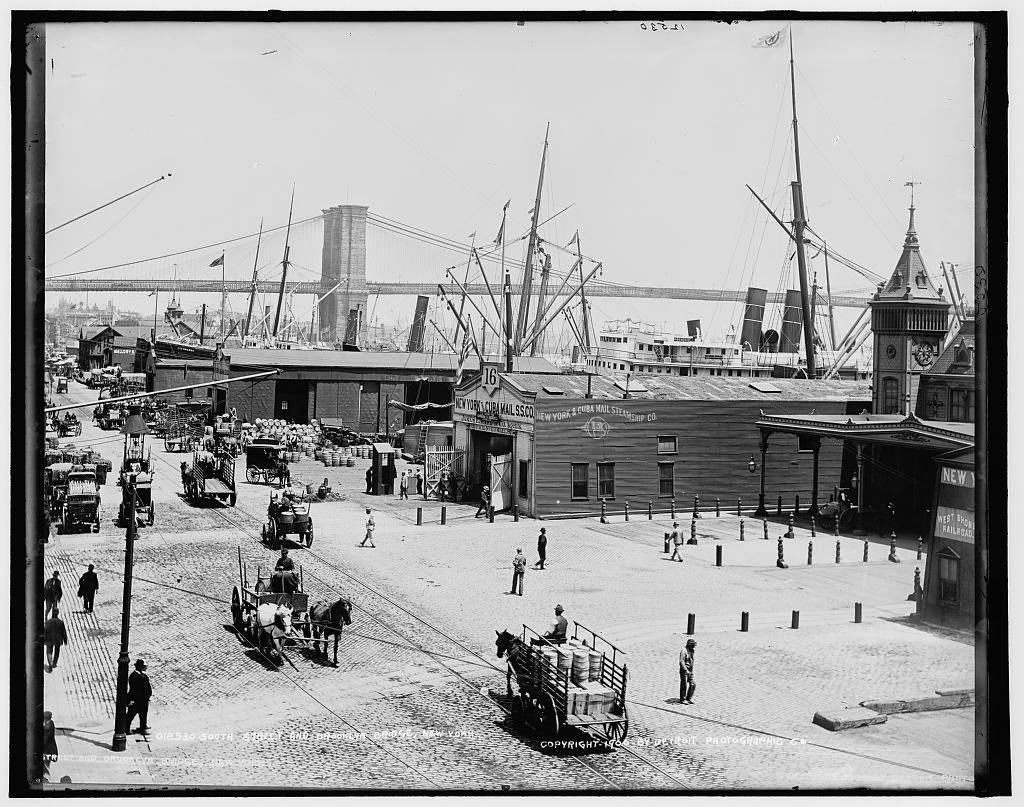
South Street, circa 1892, via stereograph (courtesy Library of Congress)

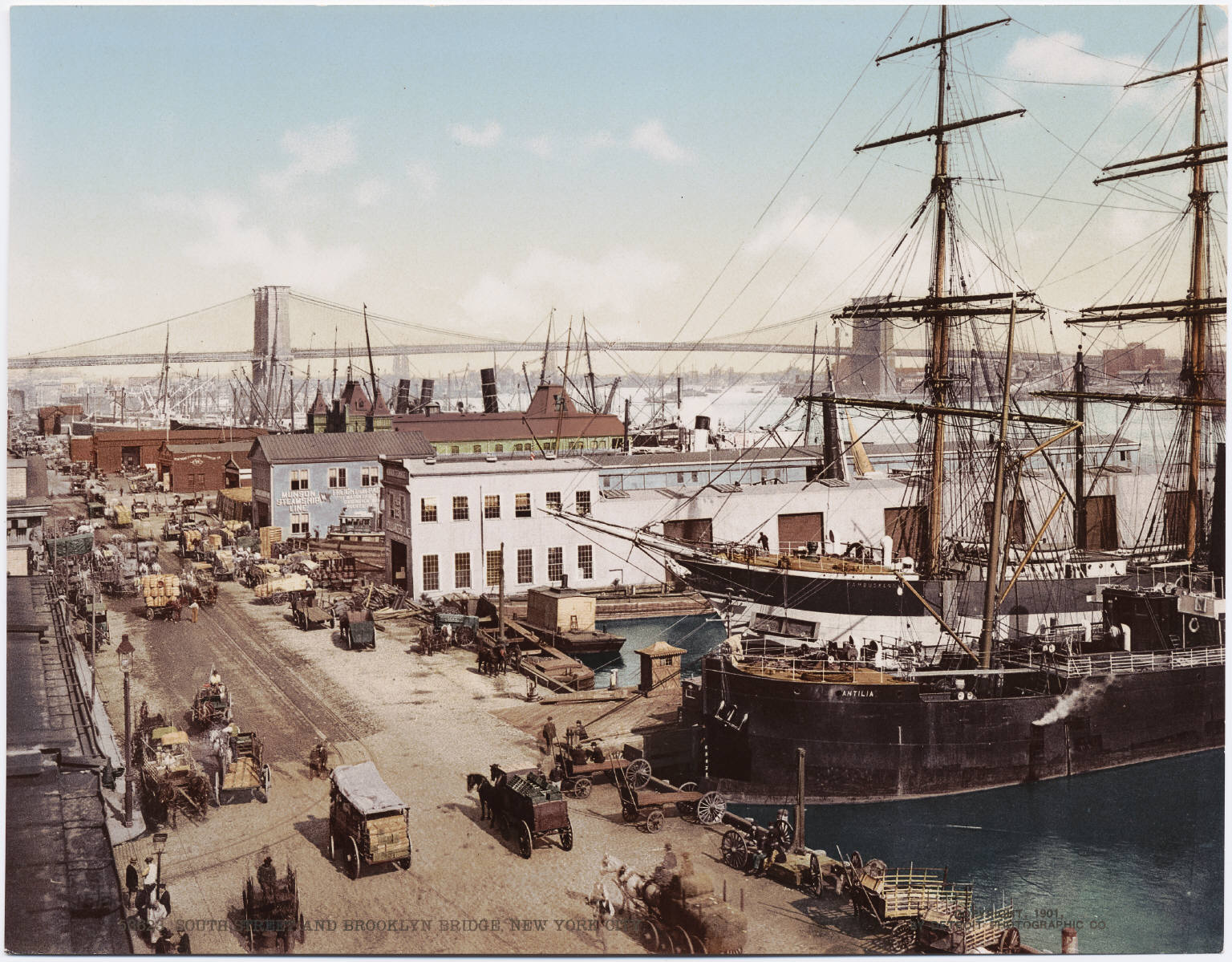
A different world: The glory of South Street in 1890 and 1900, respectively, still a non-stop churn of unloading, delivering and transport, even as the Brooklyn Bridge in the distance marks big changes to come for the neighborhood. (courtesy NYPL and Library of Congress)

The Fulton Fish Market, as photographed by Berenice Abbot, November 26, 1935 (NYPL)

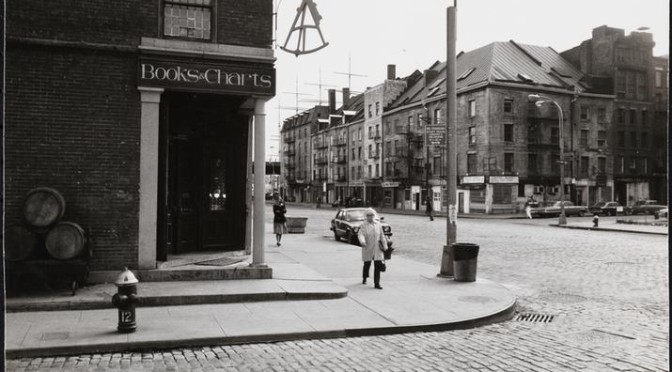
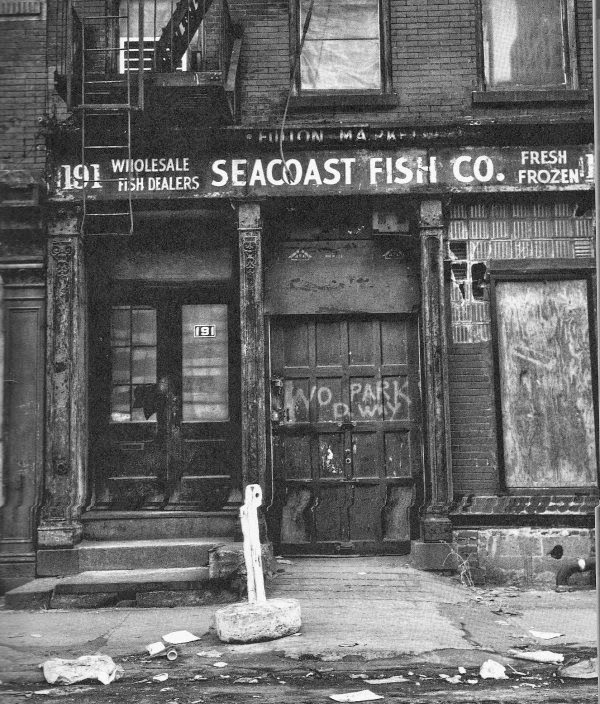
Fulton and Water Streets, 1975 (Courtesy the Museum of the City of New York)

[Fulton and Water Streets.]

Richard Haas’ trompe l’oeil excellently masking a Con Edision substation. (Museum of City of New York)

[Trompe l'oeil concealing a Con Ed substation at 237-257 Front Street, and the Jasper Ward house, 45 Peck Slip.]
 
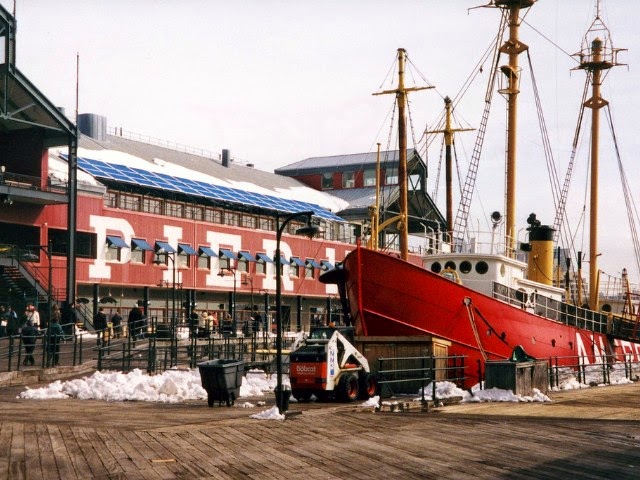
Pier 17, the ambitious 1980s project that transformed this once-vital economic center into a viable tourist attraction.  But it didn’t exactly appeal to large masses of regular New Yorkers. (Pic courtesy Wired New York)
 
 
Categories
On The Waterfront

The South Street kidnappings: During Prohibition, did ‘shanghai gangs’ really lurk in the shadow of the ports?

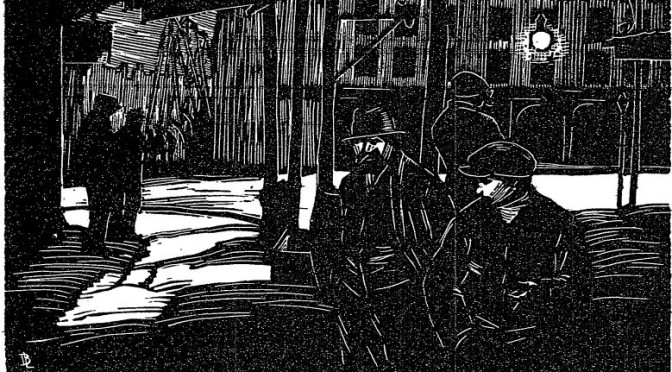
The old port at night was no place to be.

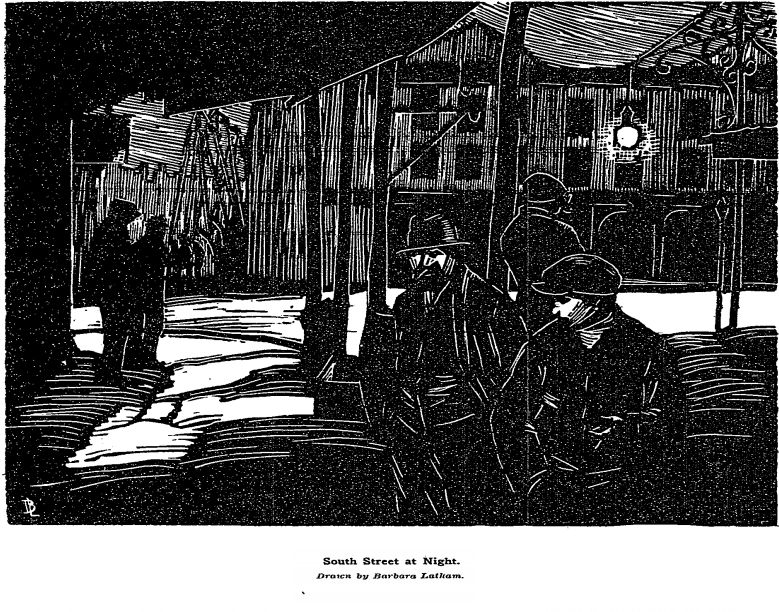
Weathered taverns and boardinghouses sit next to uninhabited warehouses, separated by dimly lit South Street from the shadow of rocking masts and creaking piers that sank into the black water of the East River.

A lonely sailor, soused from the wares of the cheapest Water Street saloon, stumbles down the cobblestone. A figure emerges from the corner. A whistle. Another man steps from behind. And the lonely sailor has vanished.
The fear of ‘disappearing’ in New York kept many awake at night in the 19th century. In a world where everybody was essentially ‘unplugged’ and ‘off the grid’, there was a sense that people could simply vanish, almost as if absorbed into the urban environment without a trace.

Moral crusaders, in a tirade against personal independence, warned parents to keep close watch on their daughters for fear they would be snatched from the street, plied against their will with opium and turned into prostitutes.

Some thought this might have been the fate of ‘cigar girl’ Mary Rogers back in 1841. And as late as 1911, some speculated this was the fate of the socialite Dorothy Arnold, one of the most prominent disappearances of the Gilded Age. [Hear more about her story in our podcast from last May.)

But it was men who were often the victims of street kidnapping. The transient nature of the New York port world mixed with the influx of new immigrants — many of them younger men — fostered a disturbing cottage industry of so-called impressment (or ‘shanghaing’ in the old vernacular), where drunken men were either forcibly taken off the street or taken advantage of in their inebriated state and put to work on a sailing ship.

In 1870, a sailor ‘under the influence of liquor’ was tied up and dragged onto a boat. A Fort Hamilton soldier in 1882 was kidnapped and placed aboard a ship off Staten Island. While his message, thrown overboard in a bottle, was received, officials were unable to rescue him as the boat sailed for its destination: Hamburg, Germany.

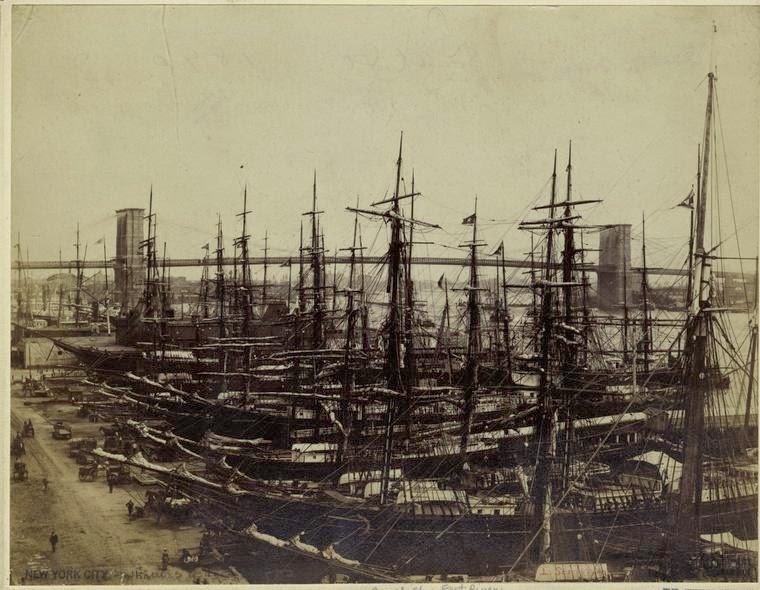
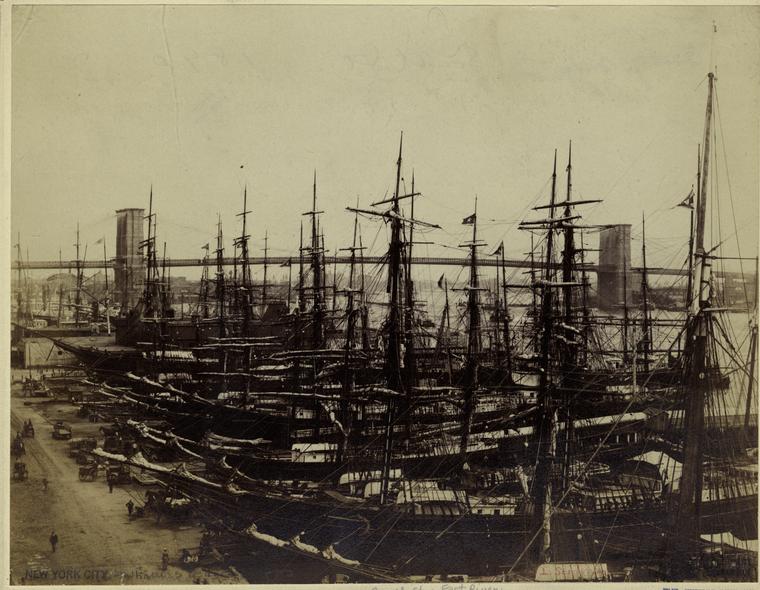
Below: The forest of masts along South Street, 1890

It’s impossible to know exactly how many men were forced onto boats along New York’s port, as the victims were frequently drunk, thrown onto boats that embarked on long voyages and then failed to press charges when they returned. An article in 1910 claims that ‘[h]undreds of sailors were captured [in New York Harbor], usually in the saloons, beaten into insensibility, to awake when the ship was at sea and the Captain an absolute tyrant.”

There would be an actual, near legal version of shanghaiing called crimping where the sailors, still taken at will, would be forced to sign an agreement, paid for their services but not allowed to leave. They would embark on often long voyages, and by the time they got back, “his anger is likely to have died out.”

By the late 1910s, federal laws protected the rights of seamen, and most shanghaiing and crimping practices were abolished. Except, of course, for those in illegal industries, and especially a brand new one created by the advent of Prohibition in 1920.

This type of kidnapping was perhaps the most frightening of all. “South Street Whispers of Shanghaing” announced a rather in-depth New York Times article in 1925. Now, instead of ‘crimps’, who lurked in sailor’s boarding houses, looking for possible captives, it was whole ‘shanghai gangs’ that ruled the shadows of the seaport.

“I have been drugged and held captive on a ship,” claimed one note found in a bottle and mailed to the police. An anonymous shipping master reported hearing of a victim “drugged in one of these newfangled speakeasies that are run as drug stores. They said along the street that a shanghai gang had got him, stole his money and shipped him to sea….The man is gone, and who can trace him?”

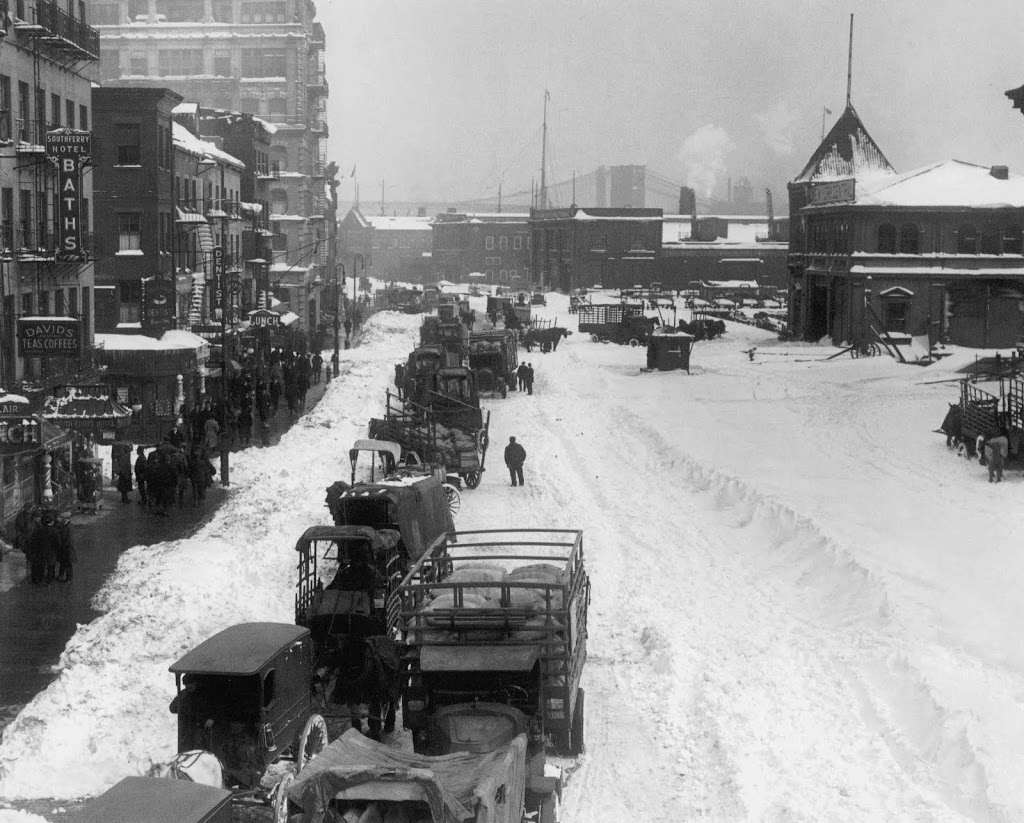
Below: South Street in 1920 in a snowstorm during the first year of Prohibition (Courtesy Flickr/wavz13)

The destination for these unlucky men wasn’t a long-distance voyage but rather a line of near-invisible vessels permanently moored off the American coast. ‘Rum Row‘ facilitated the distribution of alcohol into the United States, with product passing to smaller boats and shady, midnight deals made between mobsters and smugglers. It was an unpleasant and dangerous job, constantly under the fear of capture, betrayal and accident. In an illegal industry with few rules, unwilling men could be discarded.

This also made Prohibition-era impressment a mystery and something of an urban legend. How much forced capture really went on? The Times report interviews several sailors and even a salty South Street bartender, but their names are kept out of the story. Two men, thrown aboard a Rum Row schooner, “were made to work, starve and suffer for water, under threats,” only escaping when the vessel was captured by authorities.

South Street’s changing fortunes may have prevented a widespread problem of the sort which occurred in the 19th century.  The old pubs and grog houses were closed or turned to speakeasies, and heavy shipping had moved on to other ports throughout the harbor, on the Hudson River side, and in Brooklyn and New Jersey. The ports themselves were heavily controlled by mob bosses — and the promise of mob money — which perhaps made such forced recruitment unnecessary. And of course the success of illegal Prohibition industries relied on knowing which laws to abide and which to skirt.

Yet the fear of vanishing kept men on their toes at night as they passed through the neighborhood, keeping in the light as they stumbled down South Street.

At top: Drawing by Barbara Latham courtesy New York Times.  It accompanied the article mentioned above.

Categories
Podcasts

Corlears Hook and the Pirate Gangs of the East River

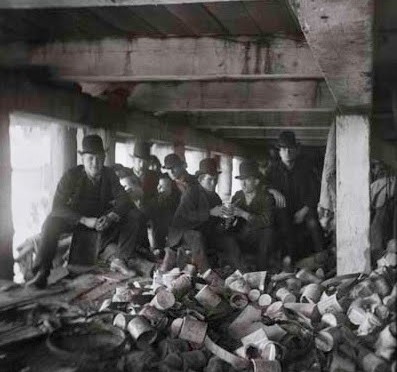
The Short Tail Gang sit underneath a pier at Corlears Hook, picture taken in 1890, long after all the great pirate gangs of the area had disbanded, been eaten by rats, or joined the Confederate army (listen to podcast for explanation!)

___________________________________
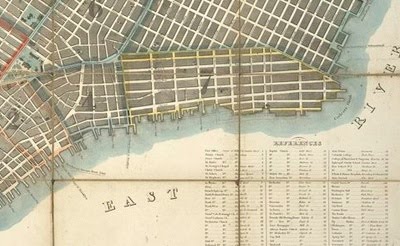
An illustrated map of the ward system of New York in 1817 highlights the Corlears Hook shorefront area of the Seventh Ward and the even more notorious Fourth Ward further down the coast. Much of the Seventh Ward was owned by the Rutgers family, who slowly parcelled out the neighborhood to shipbuilders, business owners and, eventually, tenements.

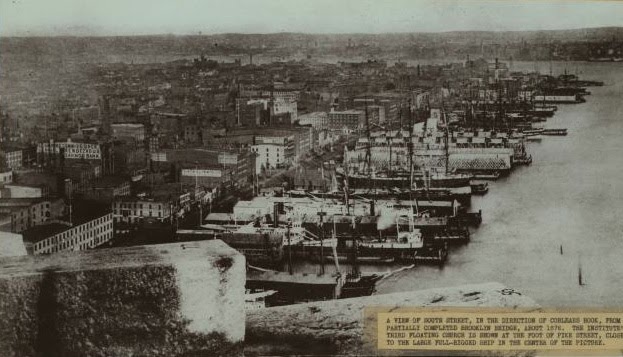
The East River shore in 1876, looking northeast from the uncompleted Brooklyn Bridge, all the way to Corlears Hook

___________________________________
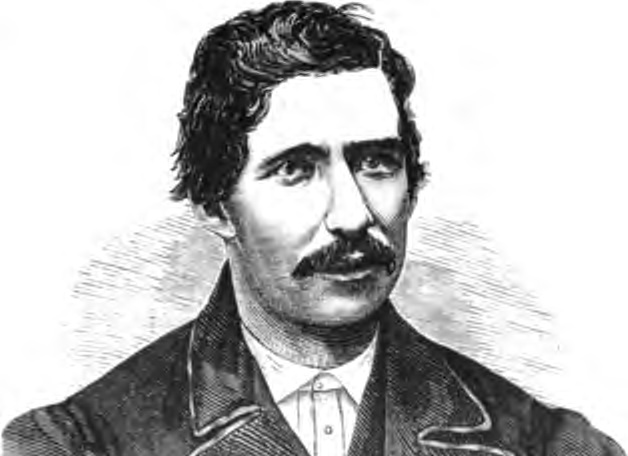
Patsy Conroy, leader of one of the East River’s most ruthless and ambitious gangs, terrorizing shipping vessels throughout New York Harbor.

___________________________________
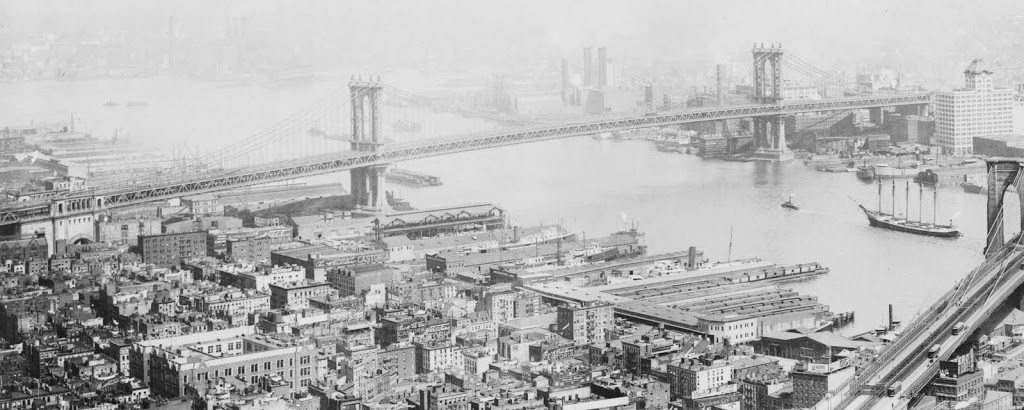
The shore between the Manhattan and Brooklyn bridges, early 20th century.

Corlears Hook Park was one of the first municipal parks, opening in 1905. This Lewis Wickes Hine photograph is from 1905 (courtesy of NYPL)

And finally, here’s a film from 1903 depicting the entire East River waterfront at that time. This is more lower Manhattan than Corlears Hook, but it should give you some idea of how clotted and bustling the shoreline was.