Categories
Neighborhoods Podcasts

Hell’s Kitchen: New York’s Wild West

PODCAST Hell’s Kitchen, on the far west side of Midtown Manhattan, is a neighborhood of many secrets. The unique history of this working class district veers into many tales of New York’s criminal underworld and violent riots which have shaken the streets for over 150 years.

This sprawling tenement area was home to some of the most notorious slums in the city, and sinister streets like Battle Row were frequent sites of vice and unrest. The streets were ruled by such gangs as the Gophers and the Westies, leaving their bloody fingerprints in subtle ways today in gentrified buildings which at one time contained the most infamous speakeasies and taverns.

We break down this rip-roaring history and try to get to the real reason for its unusual name!


The Bowery Boys: New York City History podcast is brought to you …. by you!

Starting this month, we are doubling our number of episodes per month. Now you’ll hear a new Bowery Boys podcast every two weeks. We’re also looking to improve the show in other ways and expand in other ways as well — through publishing, social media, live events and other forms of media. But we can only do this with your help!

We are now a member of Patreon, a patronage platform where you can support your favorite content creators for as little as a $1 a month.

Please visit our page on Patreon and watch a short video of us recording the show and talking about our expansion plans. If you’d like to help out, there are five different pledge levels (and with clever names too — Mannahatta, New Amsterdam, Five Points, Gilded Age, Jazz Age and Empire State). Check them out and consider being a sponsor.

We greatly appreciate our listeners and readers and thank you for joining us on this journey so far. And the best is yet to come!


The mysteries begin over 200 years ago when ordered avenues and streets could scarcely be imagined, and the shoreline was a ragged coast.

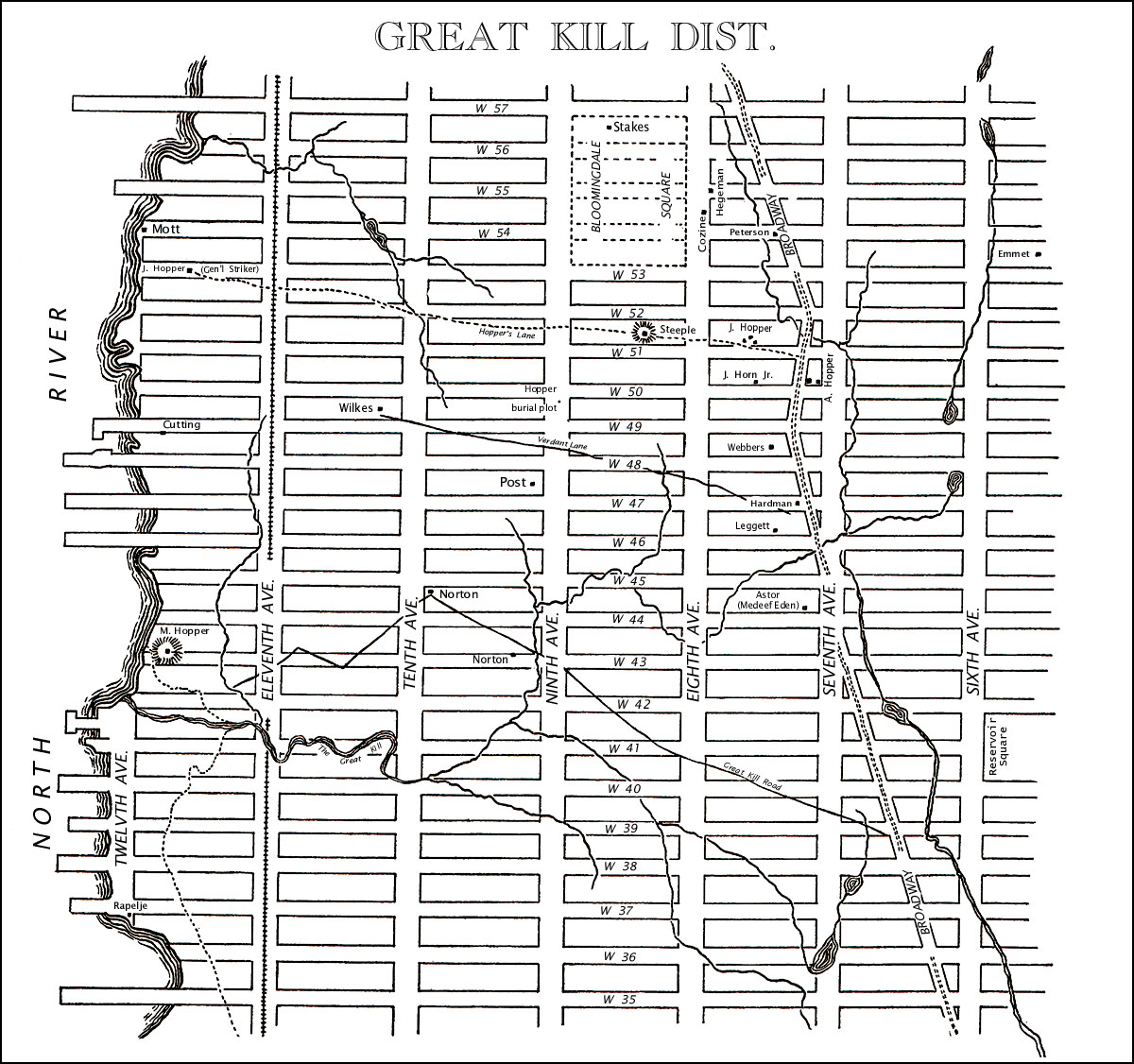
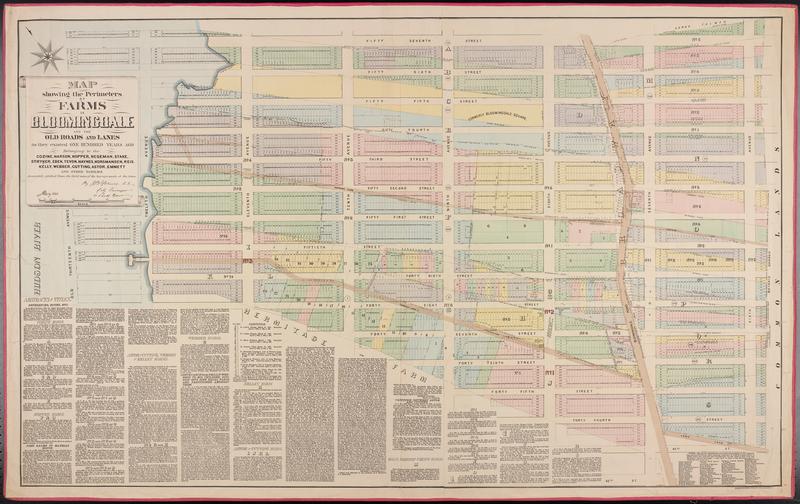
The Dutch later called it the Great Kill District, for the creek which emptied into the Hudson River (North River) at 42nd Street. As you can see from this diagram the shore was evened out with landfill to create 12th Avenue although the inward dip at 43rd Street is still visible on a modern map.

map

A map (drawn by John Bute Holmes) of the original estate borders of Bloomingdale from the late 18th century. The jagged shore line would later be filled in to make the blocks between 11th and 12th Avenues.

Courtesy Museum of the City of New York

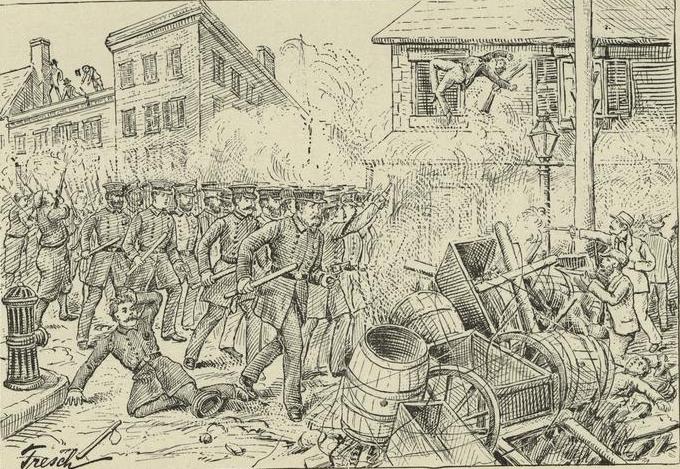
The Ninth Avenue barricades made by rioters in the area of Hell’s Kitchen during the Civil War Draft Riots.

barricades

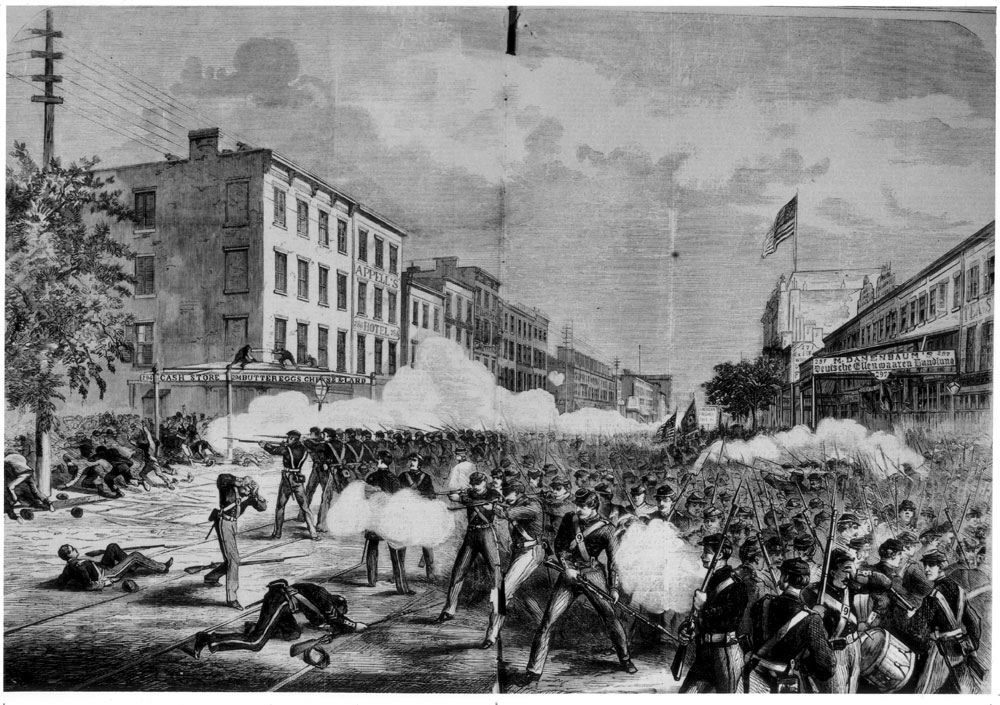
The Orange Riot of July 12 from Eighth Avenue south from 25th street, an 1871 image from Frank Leslie’s Illustrated Newspaper.

orange

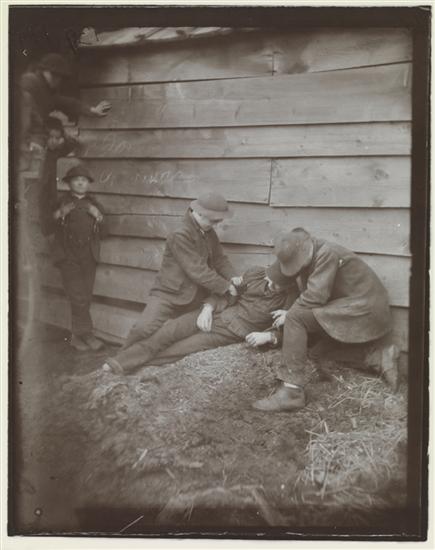
Bad boys: Some Hell’s Kitchen ruffians show Jacob Riis how to rob people who have passed out.

Jacob Riis
Jacob Riis

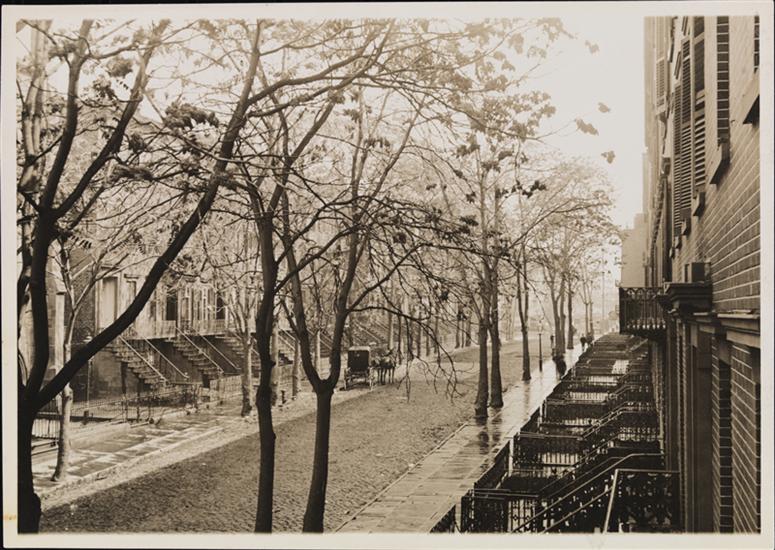
An intriguing shot of 58th Street between 8th and 9th Avenues

Museum of the City of New York

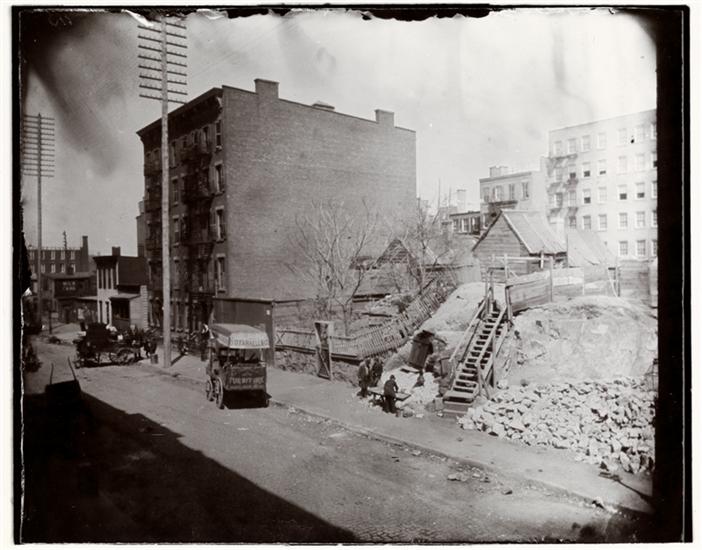
Jacob Riis’ photograph of the Hell’s Kitchen tenement and the remains of Sebastopol (the rocks), 1890

Photo by Jacob Riis
Photo by Jacob Riis

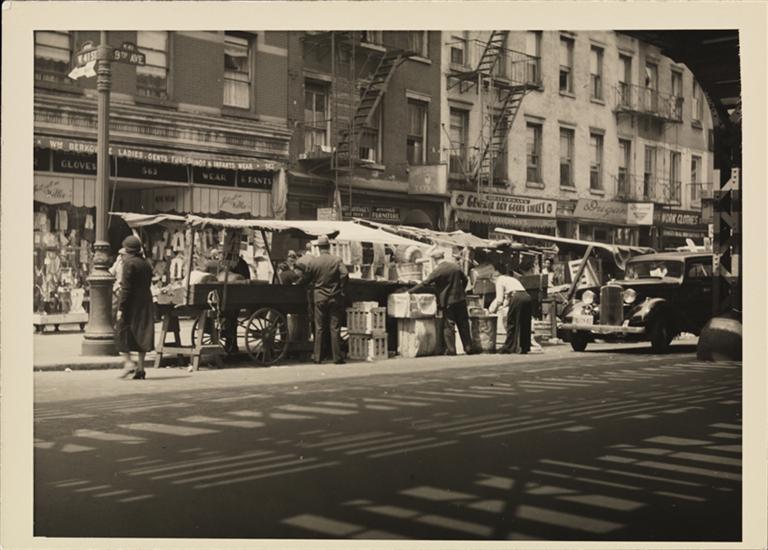
Street vendors under the 9th Avenue Elevated Railroad

Museum of City of New York

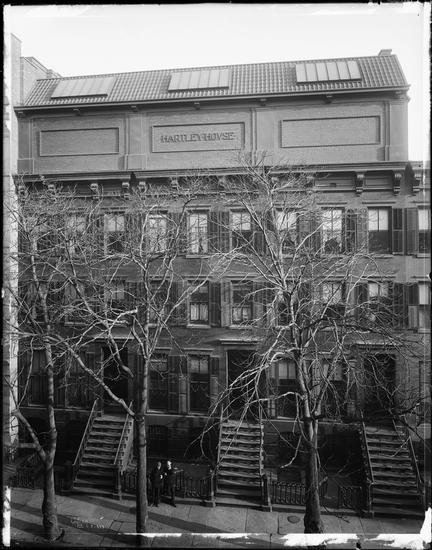
The Hartley House, a settlement house for the Hell’s Kitchen community. on West 46th Street

Museum of the City of New York

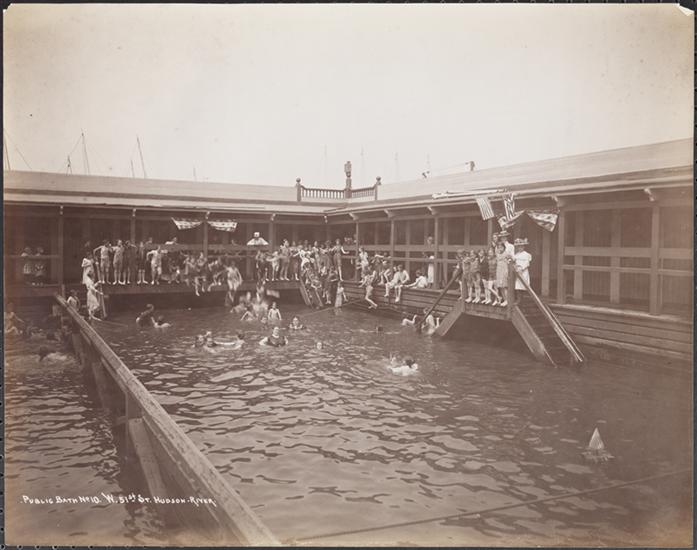
At the recreation pier — a public swimming hole at West 51st Street and the Hudson River.

Museum of the City of New York

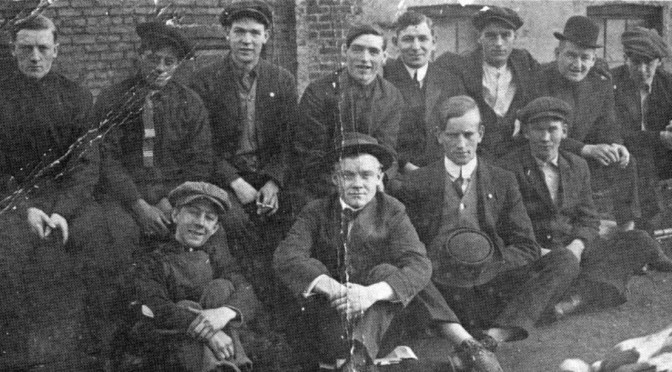
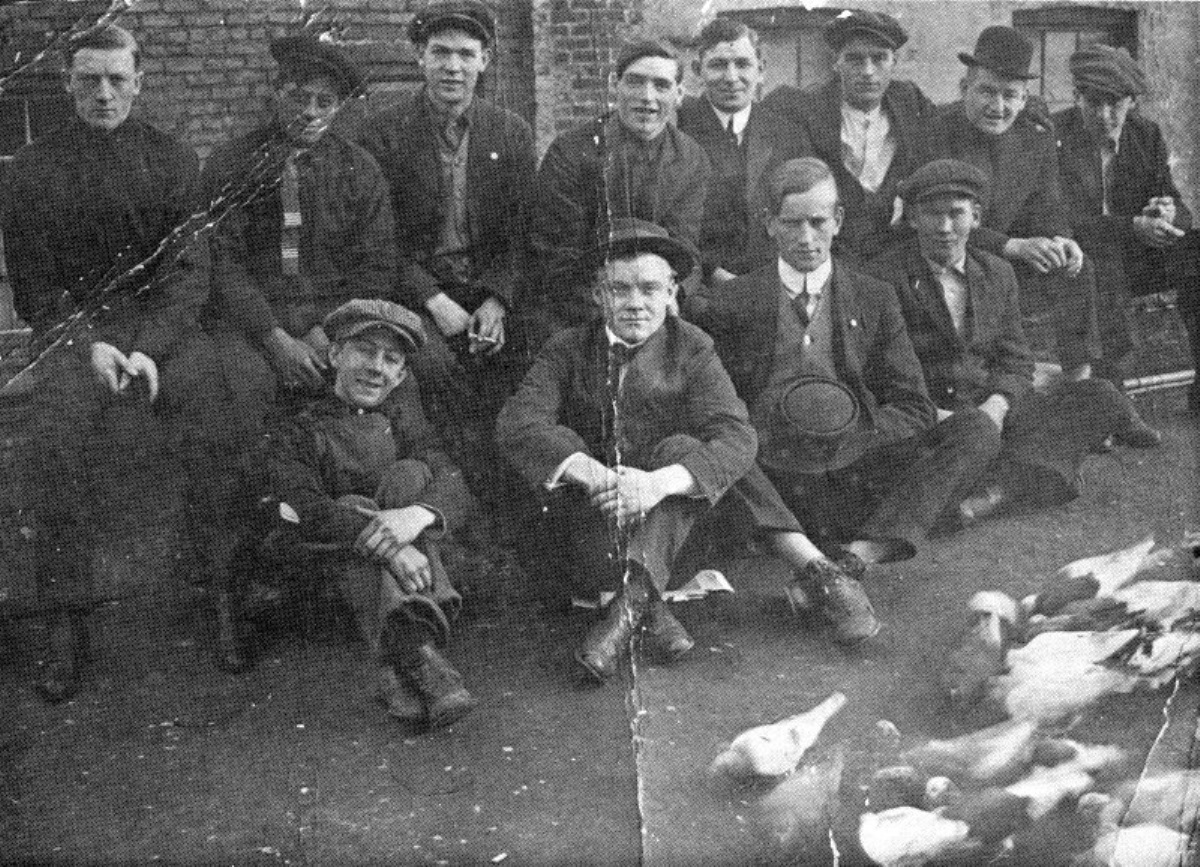
The later configuration of the Gophers. Owney Madden is on the back row, fourth from the left. A very rough and dangerous gang, but don’t they clean up nice?

Courtesy of Garland County Historical Society and Butler Center Books

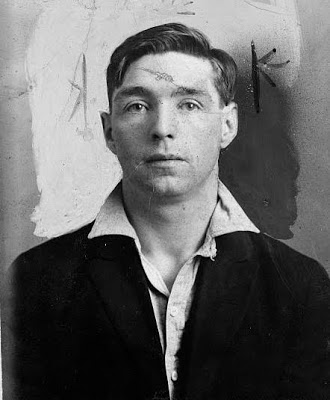
Owney Madden, the king of the Hell’s Kitchen speakeasy racket.

owney

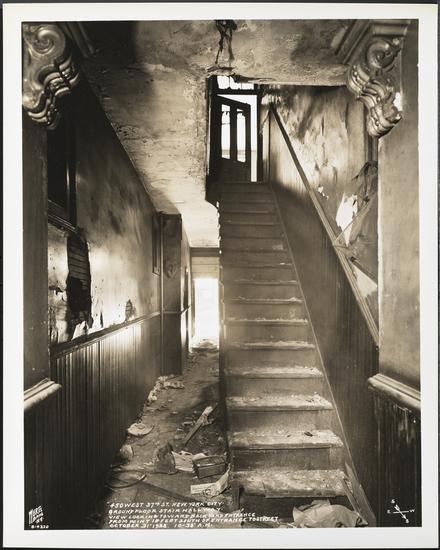
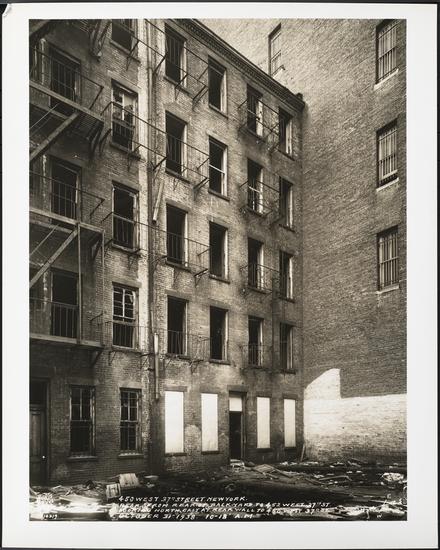
A couple spectacular shots of 1938 slum clearance — eliminating the tenements of 37th Street.

Wurts Brothers. Museum of the City of New York

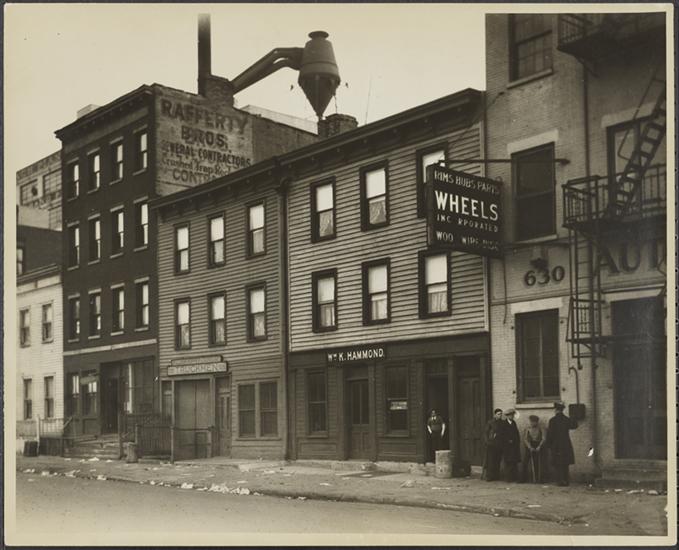
Businesses on West 52nd Street, facing into DeWitt Clinton Park. It’s likely that William Hopper & Sons Truckmen at no. 626 probably traces itself back to the original Hopper land owners. Photograph by Charles von Urban

Courtesy Museum of the City of New York

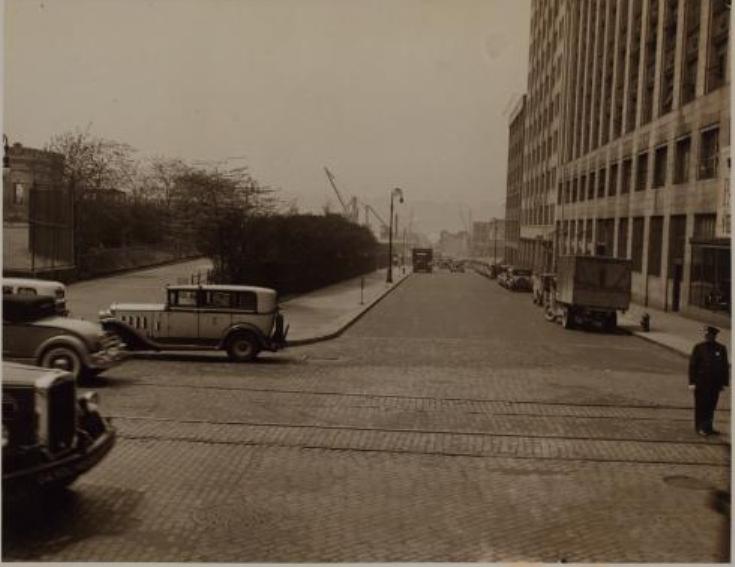
The entrance to DeWitt Clinton Park (at 54th Street) in 1936

New York Public Library

Most of the pressures faced by the Hell’s Kitchen neighborhood came from its perimeter with dramatic changes to the waterfront to its west, Port Authority/Lincoln Tunnel to its south, Madison Square Garden/Times Square to its east and Lincoln Center/Columbus Circle to its north.

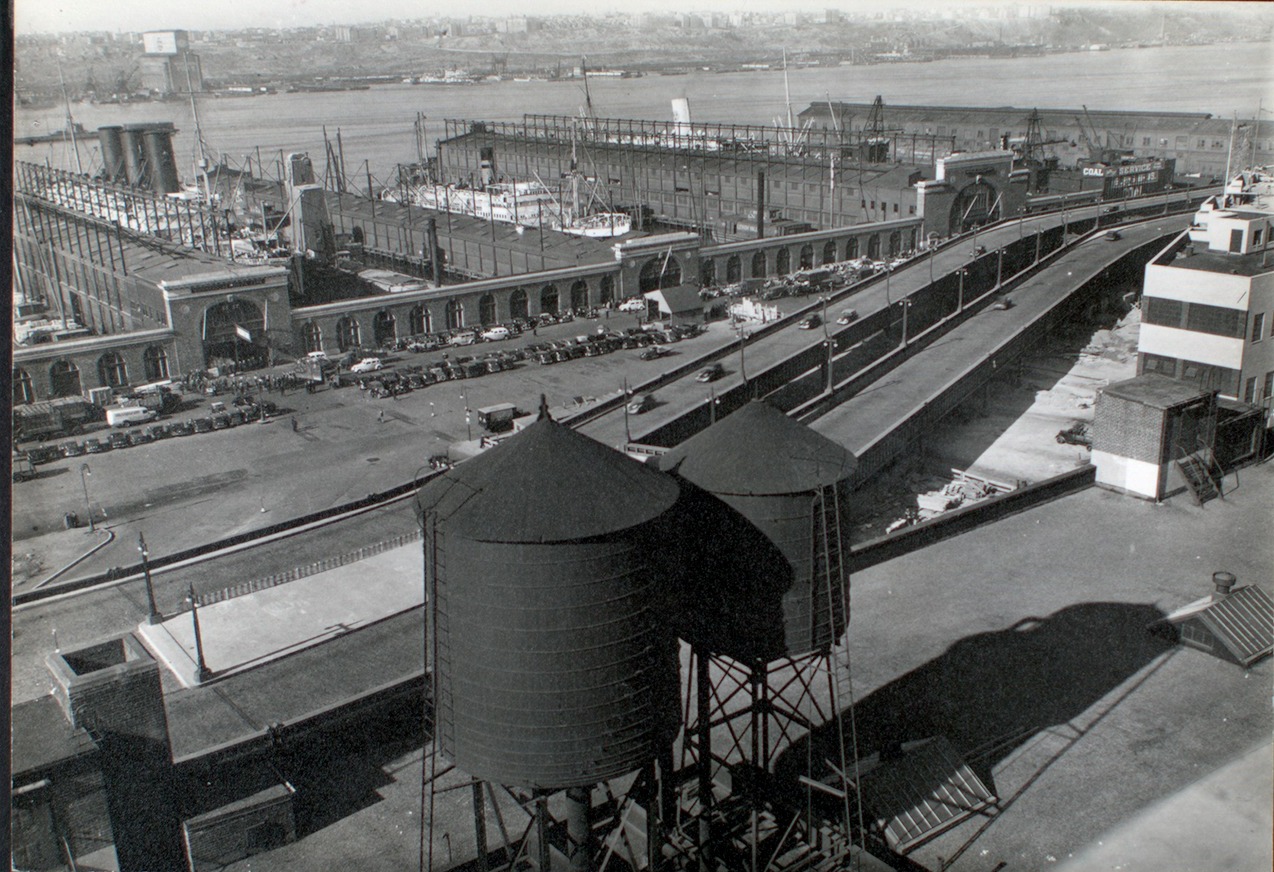
Below: The West Side Highway and piers 95-98, looking west from a roof on West 54th Street

New York Public Library

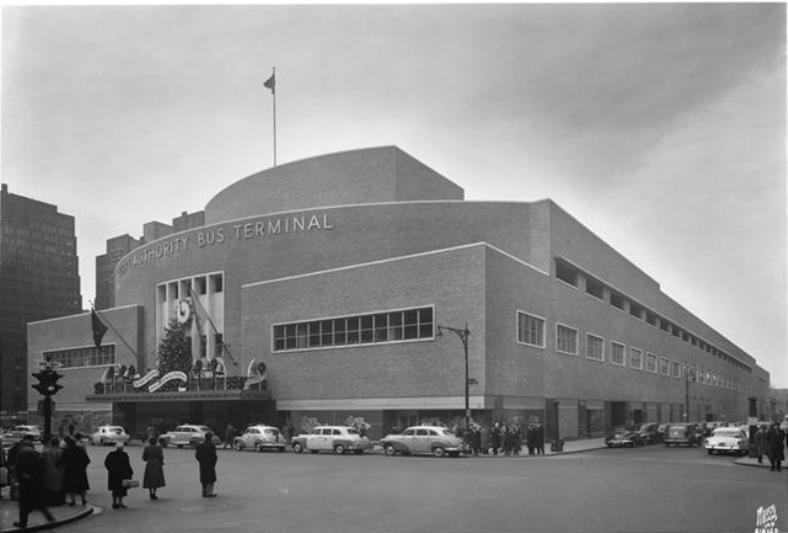
The Port Authority Bus Terminal in 1950, at West 40th and 41st Streets and 8th Avenue.

Wurts Brothers, courtesy Museum of the City of New York

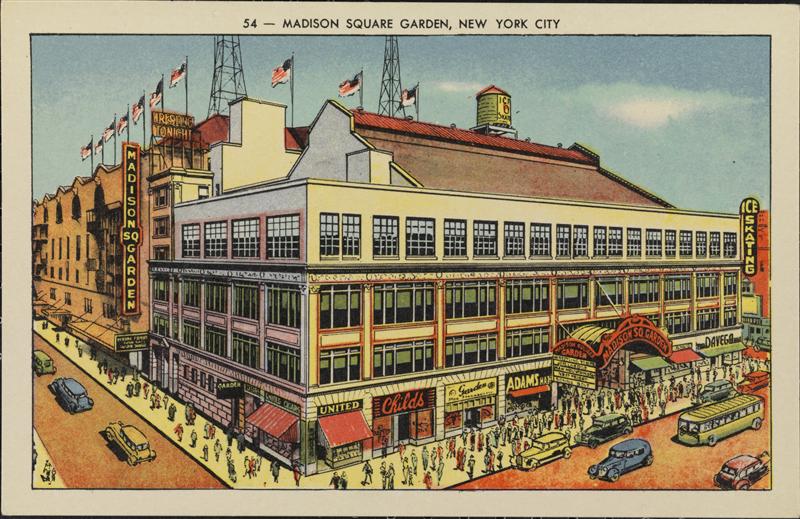
The 8th Avenue Madison Square Garden, as seen in 1935.

Courtesy Museum of the City of New York

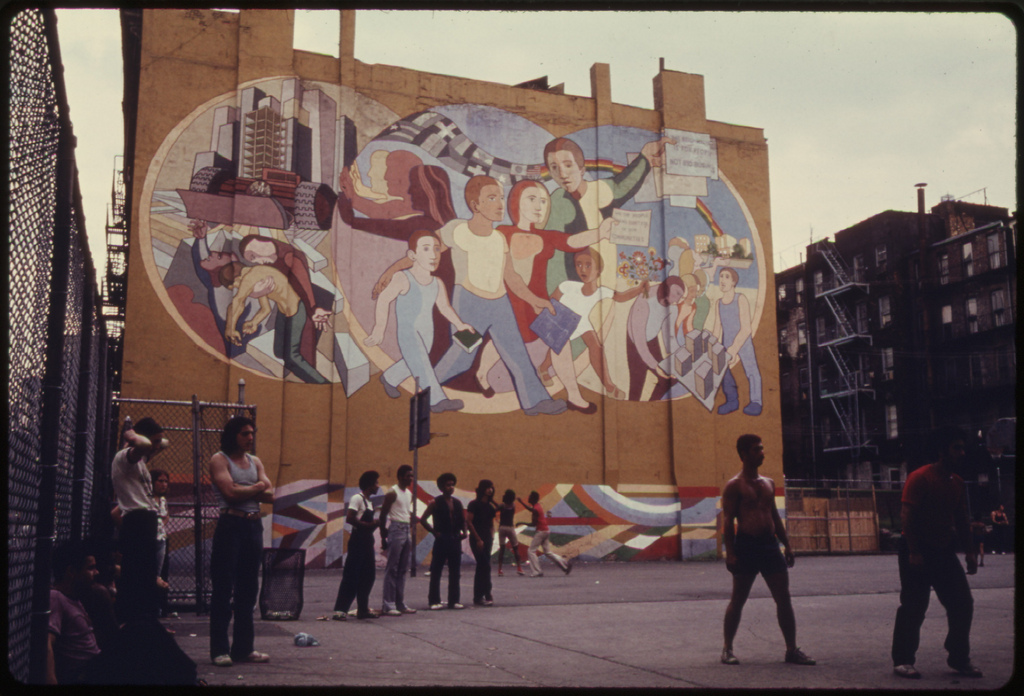
A mural from 1974 — “The Neighborhood Belongs to the People Not Big Business.”

Courtesy US National Archives
Categories
Brooklyn History Gangs of New York

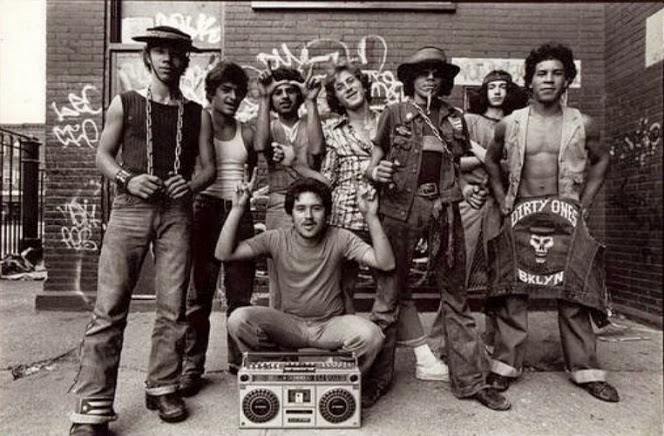
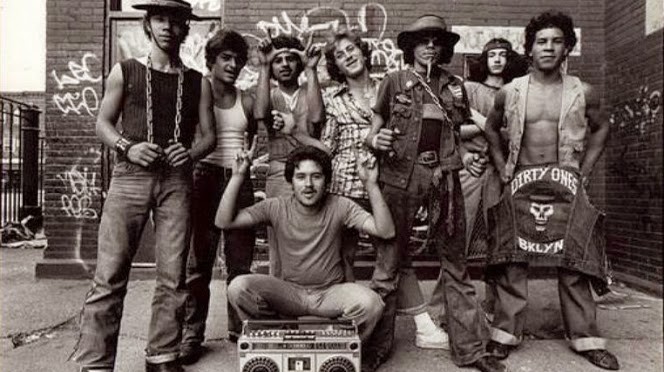
Screaming Phantoms, Tomahawks, Phantom Lords, Dirty Ones and other gangs of 1970s Williamsburg, Brooklyn

The Dirty Ones, a notorious gang from Williamsburg.

My new column for A24 Films (a tie-in to the new movie A Most Violent Year) is up on their site devoted to culture and events from 1981.

For this article, I look at what some of the dangerous undercurrents to life in Williamsburg, Brooklyn, in 1981. “By the 1970s, Williamsburg was best known for its steeply rising crime rate, harboring both violent street-gang activity and organized crime.” You can read the whole article here.

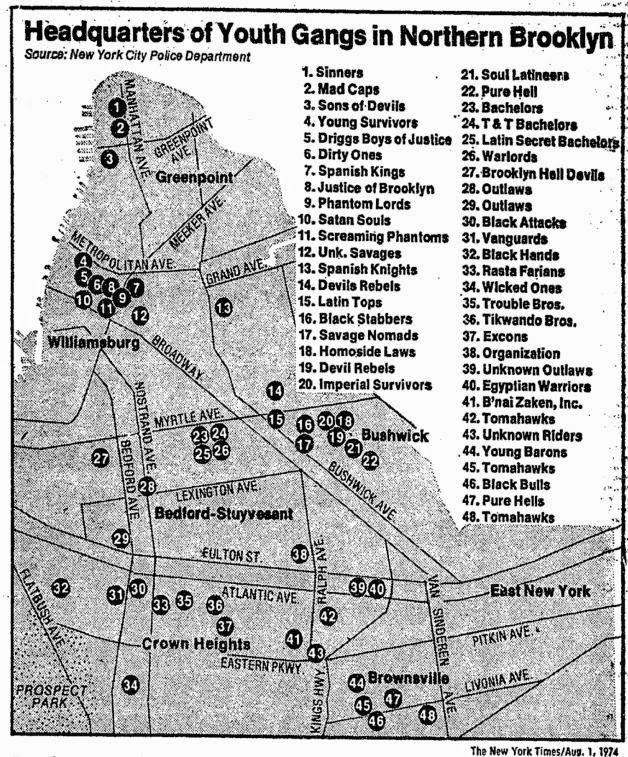
During my research for this piece, I found this rather startling map in the New York Times, August 1, 1974, charting out the various turfs of northern Brooklyn street gangs.

This is not a souvenir from the film The Warriors, but an actual list of the many violent gangs which kept Brooklyn a very dangerous place to walk around in during the 1970s.


Gang activity was so especially vicious at this time — particularly gang-vs-gang violence — that Luis Garten Acosta, the founder of El Puente youth outreach program, called northern Brooklyn ‘the killing fields’ in 1981.

I dug a little further to find some specific incidents which involved some of these gangs.  I’ve put numbers by the gangs so you can find their dedicated turf on the map above:

September 16, 1972 — A gang altercation among the members of the Young Barons (44) resulted in the death of one young man and another whose nose was cut off.Â

— August 21, 1973 — Several members of the Devils Rebels (19) were walking around Bushwick when they were accosted by the Screaming Phantoms (11). Two boys associated with the Devils Rebels were stabbed and killed. Police report “the Screaming Phantoms operated out of the Williamsburg area and had been ‘way out of their area’ at the scene of yesterday’s gang fight.”

— October 12, 1973 — Several gangs have been cast as extras in a new film called The Education of Sonny Carson, including the Tomahawks (48), Pure Hell (22) and the Unknown Riders (43).

— February 25, 1974 — The Times reports on the extortion schemes of various northern Brooklyn gangs, mentioning the Outlaws (28,29), the Tomahawks (48), the Jolly Stompers (not listed) and B’Nai Zaken (41).

Categories
Bowery Boys Bookshelf

‘The Big Crowd’: Kevin Baker takes on an unsolved mystery, the murder of Kid Twist and the secrets of a fallen mayor

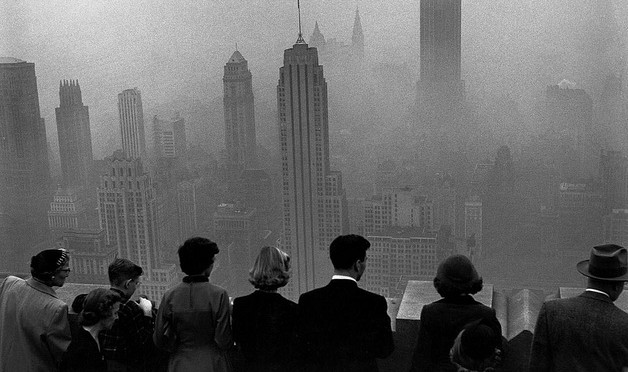
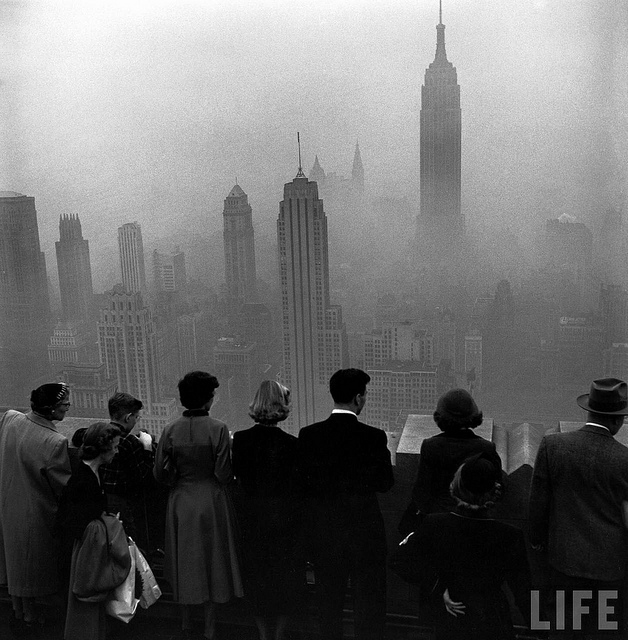
New York City, 1953, the setting for Kevin Baker’s The Big Crowd. Photo by Eliot Elisofen, courtesy Life/Google images

BOWERY BOYS BOOK OF THE MONTH Each month I’ll pick a book — either brand new or old, fiction or non-fiction — that offers an intriguing take on New York City history, something that uses history in a way that’s uniquely unconventional or exposes a previously unseen corner of our city’s complicated past.  You can find some our past selections here and links to purchase them from Amazon at the bottom of this post.

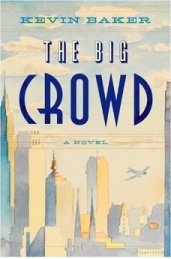
The Big Crowd: A Novel
by Kevin Baker
Houghton Mifflin Harcourt

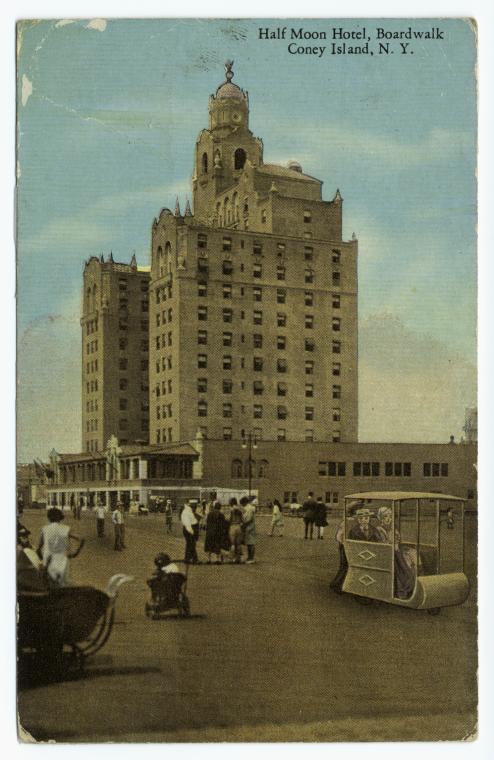
The Half Moon Hotel (pictured at left), named for Henry Hudson’s ship, was Coney Island’s most glamorous accommodation when it was built in 1927.

In the fall of 1941, the mob informer Abraham Reles, nicknamed Kid Twist, was being held here, heavily guarded by police officers.  Reles had information on dozens of murders, putting away some of Brooklyn’s most notorious gangsters.

Next on his list was Albert Anastasia, better known in the press as the leader of Murder Inc.  On November 12, Reles plummeted out the window to his death.  Was Reles trying to escape?  Or was he murdered?

This real life mystery is at the heart of Kevin Baker’s new historical novel The Big Crowd, a brassy noir of New York City in the post-LaGuardia era.

Baker is one of the more thrilling historical novelists working today, latching colorfully and with epic flourish into specific New York eras, obsessed with the seedier elements which make the city tick.  He is unafraid of embracing real-life characters and emboldened by difficult, abrasive eras.  In Paradise Alley, his imagination ran wild through the Civil War Draft Riots.  In my favorite Baker novel, Dreamland, gangsters and freaks collide amid famous Coney Island landmarks.  He somehow even fits in Carl Jung and Sigmund Freud along the way.

He’s written about the life of Kid Twist, too, in Dreamland.  But it’s his death that sits in the smoldering center of The Big Crowd, exposing the connection between waterfront gangland activity and the upper reaches of New York government, reaching, in fact, all the way to the very top.

While Baker has fictionalized the lives of real-life people in the past (a young Malcolm X being the most ambitious, in his novel Strivers Row), for his latest, he’s transformed Mayor William O’Dwyer into Mayor Charlie O’Kane.

While their biographies are nearly the same — an Irish mayor brought down by scandal — O’Kane is a lustier, more mysterious figure, escaping America and becoming an almost godlike figure in Mexico City.  His brother Tom works for the New York district attorney’s office, attempting to clear his brother’s name while solving the mystery of Reles’ death.

The Big Crowd often feels like an unmade gangster film, its beat cops and waterfront roughs rendered from a world of cinematic grays.  At the core is Baker’s relentless attention to historical detail, even when it seems impossible to believe, manifesting into occasional weirdness.

For instance, O’Kane’s lascivious wife, who incidentally sleeps with his brother, fancies herself a bull-fighter. (O’Dwyer’s real wife Sloan Simpson did become a bull-fighter in Mexico.)

Some of my favorite 20th century figures are successfully evoked, including Toots Shor and racketeer Joe Ryan.  Robert Moses is glimpsed without apology as a menace;  a powerful passage late in the book envisions the wreckage of a demolished Bronx neighborhood, “the cityscape melted into a pile of pure, mindless wreckage.”

Like other Baker adventures, The Big Crowd rewards history buffs with dozens of recognizable signposts, but not so many as to seem like an over-researched theme park.

The underlying story of Reles’ murder languidly ebbs and flows through the book, unspooling gradually, via interrogations and in few eloquent monologues.  (In real life, the mystery was never solved.)  But The Big Crowd is the type of book where the distractions are often the most entertaining.  Baker has once again created a magnificent alternate New York of exacting, glamorous detail.

PAST BOWERY BOYS FEATURED BOOKS:


Categories
Gangs of New York

A very strange coincidence surrounds New York’s most famous gangsters and ‘Boardwalk Empire’ inspirations

Many of the early 20th century’s most renown gangsters were born in late January!

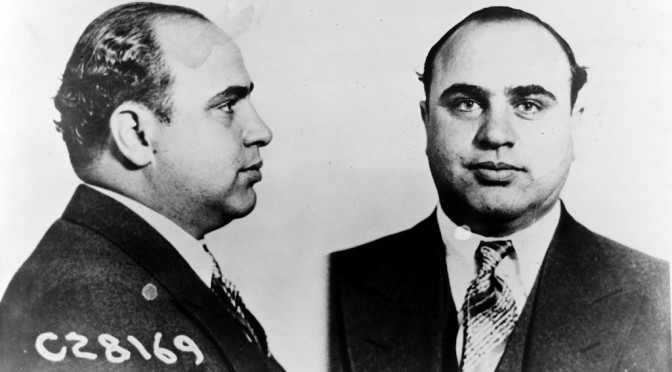
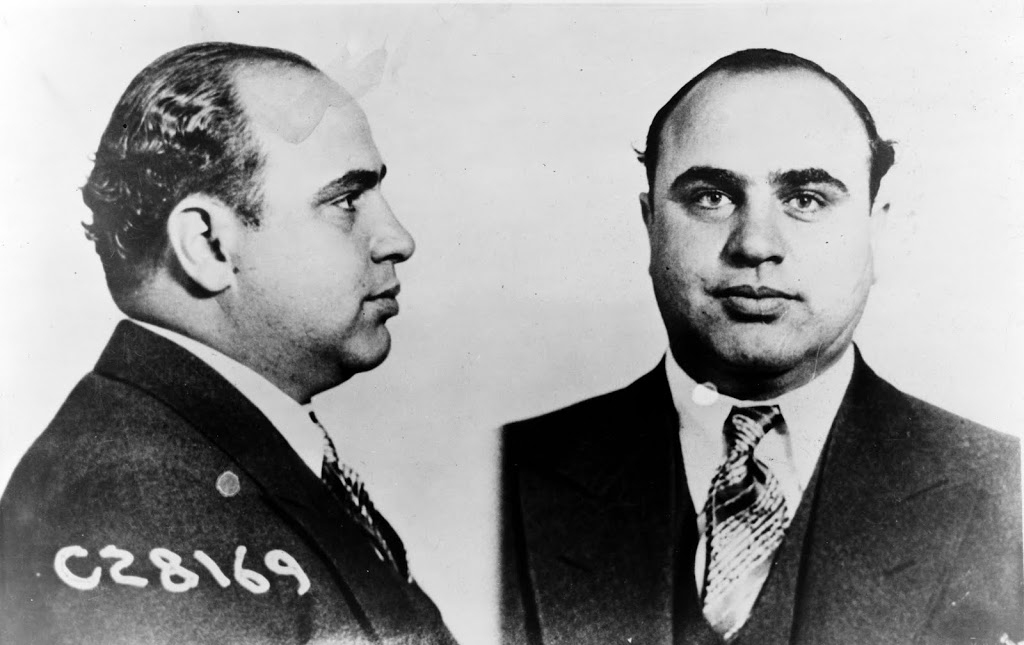
Today is Al Capone‘s birthday. (He’s pictured above in his infamous mugshot.) It’s also the birthday of gambler/ Jewish mobster Arnold Rothstein.  Joe Masseria, early New York Mafia leader, was also born on this date — January 17, 1886.

Enoch ‘Nucky’ Johnson — the inspiration for Steve Buscemi’s Nucky Thompson — was born January 20, 1883.  Frank Costello, leader of the Luciano crime family post-Prohibition, was born January 26th.

Papa Johnny Torrio, Capone Chicago mentor, was born on January 20, 1882.  Frankie Yale, another of Capone’s gangster employers, was born January 22, 1893.

And if we extend the coincidence even further to times of death, Lucky Luciano died of a heart attack on January 26, 1962.  Meyer Lansky died in Florida on January 15, 1983.  The bootlegger George Remus died on January 20, 1952.

Most of the men above are depicted in some form or another on HBO’s Boardwalk Empire. In fact most of the characters from that show appear to have late January birthdays.

I’m not too knowledgable about astrology, but is there something about the gangster way of life that appeals to those that reside on the Capricorn-Aquarius cusp?

Perhaps I should be afraid. My birthday was a few days ago. (Ack.)

Pic courtesy NYPL

Categories
Brooklyn History On The Waterfront Podcasts

Notes from the podcast (#133): Red Hook, Brooklyn

A haunting snapshot of the Atlantic Docks, circa 1870-80s (possibly as early as 1872) photo by George Bradford Brainerd (courtesy the Brooklyn Museum

Quite a few notes on the podcast this week! There were a lot of little details I found interesting that didn’t make the cut:

Before the Water Taxi: One of the more enlightening tales left on the cutting-room floor was that of the Hamilton Avenue Ferry, the 1846 Atlantic Docks ferry line that linked Red Hook with downtown Manhattan in much the same way the IKEA Water Taxi does today. As the ferry made “the shortest and most direct route from New York” to the newly constructed Green-Wood Cemetery, it also became the method by which many bodies were transported there.

Fiery renovation: A stalwart of the old community is Visitation of the Blessed Virgin Mary Roman Catholic Church (built in 1896) right off of Coffey Park, the third incarnation after the congregation grew out of the first building (originally built in 1855) and fire destroyed the second. That fire, incidentally, was allegedly caused by combustible materials workers were using to renovate the structure.

Goodbye Vienna: A vestige of World War I hysteria exists within the name of Red Hook’s Lorraine Street. According to Brooklyn By Name, the street was once named Vienna Street but was deemed ‘offensive’ during the war and was changed to reflect the area of Alsace-Lorraine, which entered French possession after the war.

What’s My Name?: I mentioned a couple facts about the neighborhood of Carroll Gardens (once considered a part of Red Hook), although we hope to elaborate further one day on a show on South Brooklyn. The name Carroll Gardens, like that of its neighbors Cobble Hill and Boerum Hill, was a real-estate invention which the community quickly embraced. (Contrast this with modern failures of real-estate re-branding, like ChumboBelDel and LoDel.) You might be interested in reading Carroll Garden’s original 1973 historic designation.

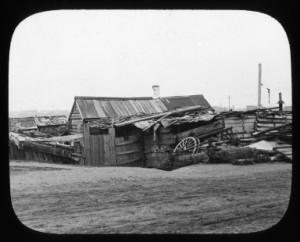
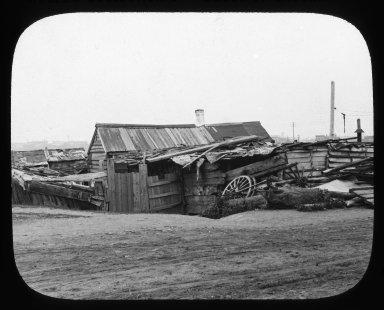
Below: I’m not quite sure of the story behind this sunken squatters home, taken on Van Brunt Street from the year 1900 (courtesy the Brooklyn Museum

Brooklyn Museum: Brooklyn scenes; buildings


Further reading: For more information on the corruption of the  New York and Brooklyn waterfronts , I highly endorse Nathan Ward‘s ‘Dark Harbor’. It’s brilliantly lucid and immediate. In particular, he focuses some attention on the disappearance of Columbia Street longshoreman Pietro Panto and vividly describes a mob hit that took place in a building in Manhattan’s West Village, in a building next door to the treasured piano bar Marie’s Crisis. There are several books that feature chapters on Red Hook history, but a dedicated book on the subject is sorely needed. In the meantime, I recommend the short essay by Jerry Nachman that appears in “Brooklyn: A State of Mind,” about, of all things, an air conditioning crisis!

Maggie Blanck has an extraordinary web resource that begins as a genealogy of her family and elaborates into a history of Red Hook’s industrial giants. And for those of you who are fascinated by late-century street-gang history, the website Stone Greasers has an exhaustive list of gang names, many more unusual than anything you’d find in the movie The Warriors.

Red Hook as inspiration: Several sources, both on Brooklyn history and film history, discuss Red Hook’s impact on the work of both Arthur Miller and Budd Schulberg, the screenwriter of ‘On The Waterfront’.

 In 2009, a unique restaging of ‘On The Waterfront’ took place aboard the Waterfront Barge Museum in Red Hook, a production that then floated to Manhattan and Hoboken waterfronts for further performances, “all places whose dock wars echoed in Terry [Malloy’s] story,” according to Ward.

Elia Kazan’s Oscar-winning film is embedded with influences from the entire New York waterfront struggle. For instance, Karl Malden‘s Father Barry is transparently inspired by Father Corridan, an activist waterfront priest from Manhattan’s west side. (Author J.T. Fisher focuses on Corridan’s contribution in his new book ‘On The Irish Waterfront’.) Of course no inspiration was greater than Malcolm Johnson‘s now classic series of articles for the New York Sun in the late 1940s, a series which won the Pulitzer Prize in 1949 — coincidentally the same year that Miller won for ‘Death of A Salesman’!

I suppose there is some controversy in some circles regarding whether Schulberg and Kazan ‘stole’ the idea of ‘Waterfront’ from Miller’s ‘The Hook’, but I’m not touching that. However you can read about it yourself in Stephen Schwartz’s argumentative 2005 article.

Thanks to commenter Rob Hill who calls to attention another fascinating literary Red Hook reference. In 1957, Harlon Ellison, one of America’s great science fiction and crime novelists, literally went undercover with a Red Hook street gang called The Barons to find inspiration for his book ‘Web of the City’ and, later, in the non-fictional account Memos From Purgatory. Ellison’s entire life would probably make a good subject for a podcast one day. Thanks Rob!

Further listening: This show shares many similar themes with our past shows on Williamsburg, Brooklyn and Corlears Hook and the Pirates of the East River. Hmm, and let’s just say, we’re probably coming back to the waterfront sooner than later this year….

Community vs Neighborhood: One listener Carolina from PortSide NY had some strong objections to my characterization of Red Hook, particularly my focus on the neighborhood’s crime and gang activity. I’m excerpting part of her letter, as it highlights a challenge that Tom and I often tackle with our podcast:

“Red Hook housed great poverty, but for decades was more mixed economically than your focus on gangland stories describes. Personally, I find what is most distinctive about Red Hook over the years is the capacity of this small place to hold AT THE SAME TIME a striking economic range in its residents and a striking range of land use from major industry to residences.

That is an undoubtedly true statement, especially when you compare it to the fate of other dockside neighborhoods, like Corlears Hook and Water Street in Manhattan. I find there are two ways to accurately tell a story of a place like Red Hook — from an organic, street-level or ‘ground up’ perspective (what I call ‘a community history’) and from a macro-view, as a component of the larger forces of the city which contain it (or ‘a neighborhood history’).

As the creators of a New York City history podcast, we opt to recount neighborhood histories, as New Yorkers and those who love this city are familiar with the mechanisms of change that have influenced it. In this decision, we understand that the normalcy of a place can get sometimes overlooked. (After all, not every person in Five Points was a gang member or a prostitute either.)

However, the sad truth is, Red Hook was for many years nationally known as a blighted neighborhood, and it was important to inspect both how it got that way and how that condition demanded some very unique revitalization plans.  I hope I have shown how essential Red Hook was to New York, and continues to be.  We encourage you to wander around the waterfront on a sunny afternoon sometime and, in particular, check out places like the Waterfront Barge Museum.

The Summer Blockbuster of 1928

On this day, 79 years ago in 1928…

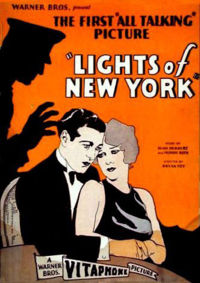
The first ever all-talking movie, “The Lights of New York” debuted in New York’s Strand Theatre at midnight, to an enrapt audience. (It would release nationally on July 28)

“Lights of New York” was a precursor to the great crime films of the 30s that would make Edward G Robinson and James Cagney into huge stars. The plot involves Broadway speakeasies, chorus girls and ‘toughies’, featuring a cast of vaudevillian entertainers.

The film was a box office smash (grossing $2 million dollars, or what Tom Cruise makes for a single day of work today) and presaged the death of the silent era.

Of course, they hadnt quite got the art of editing down, and the film still included ‘transition’ placards.

The Brooklyn Eagle has a few charming anecdotes about the filming:

“In one scene in a barbershop, a character began a speech at one end of the room, walked across the room, and started talking again only when he had come to a complete rest at the other end. He could not speak until he had parked himself under the mike.”

The Eagle also notes the film’s other contribution to the world of cinema: it’s the first of many, many, many gangster films to feature the line “Take him for a ride.” Martin Scorcese and The Sopranos thank you kindly.

Oh, and you might be asking — where’s the Strand Theatre? A premier auditorium for film and Big Band shows for over 70 years, The Strand was demolished in 1978. But you can go see where it used to be; the former address is 1579 Broadway. There’s a Hershey’s Chocolate Super Store there now.

Cinema Treasures, one of our favorite websites, has an elaborate write up on the fate of the Strand.