Categories
Neighborhoods Podcasts

Hell’s Kitchen: New York’s Wild West

PODCAST Hell’s Kitchen, on the far west side of Midtown Manhattan, is a neighborhood of many secrets. The unique history of this working class district veers into many tales of New York’s criminal underworld and violent riots which have shaken the streets for over 150 years.

This sprawling tenement area was home to some of the most notorious slums in the city, and sinister streets like Battle Row were frequent sites of vice and unrest. The streets were ruled by such gangs as the Gophers and the Westies, leaving their bloody fingerprints in subtle ways today in gentrified buildings which at one time contained the most infamous speakeasies and taverns.

We break down this rip-roaring history and try to get to the real reason for its unusual name!


The Bowery Boys: New York City History podcast is brought to you …. by you!

Starting this month, we are doubling our number of episodes per month. Now you’ll hear a new Bowery Boys podcast every two weeks. We’re also looking to improve the show in other ways and expand in other ways as well — through publishing, social media, live events and other forms of media. But we can only do this with your help!

We are now a member of Patreon, a patronage platform where you can support your favorite content creators for as little as a $1 a month.

Please visit our page on Patreon and watch a short video of us recording the show and talking about our expansion plans. If you’d like to help out, there are five different pledge levels (and with clever names too — Mannahatta, New Amsterdam, Five Points, Gilded Age, Jazz Age and Empire State). Check them out and consider being a sponsor.

We greatly appreciate our listeners and readers and thank you for joining us on this journey so far. And the best is yet to come!


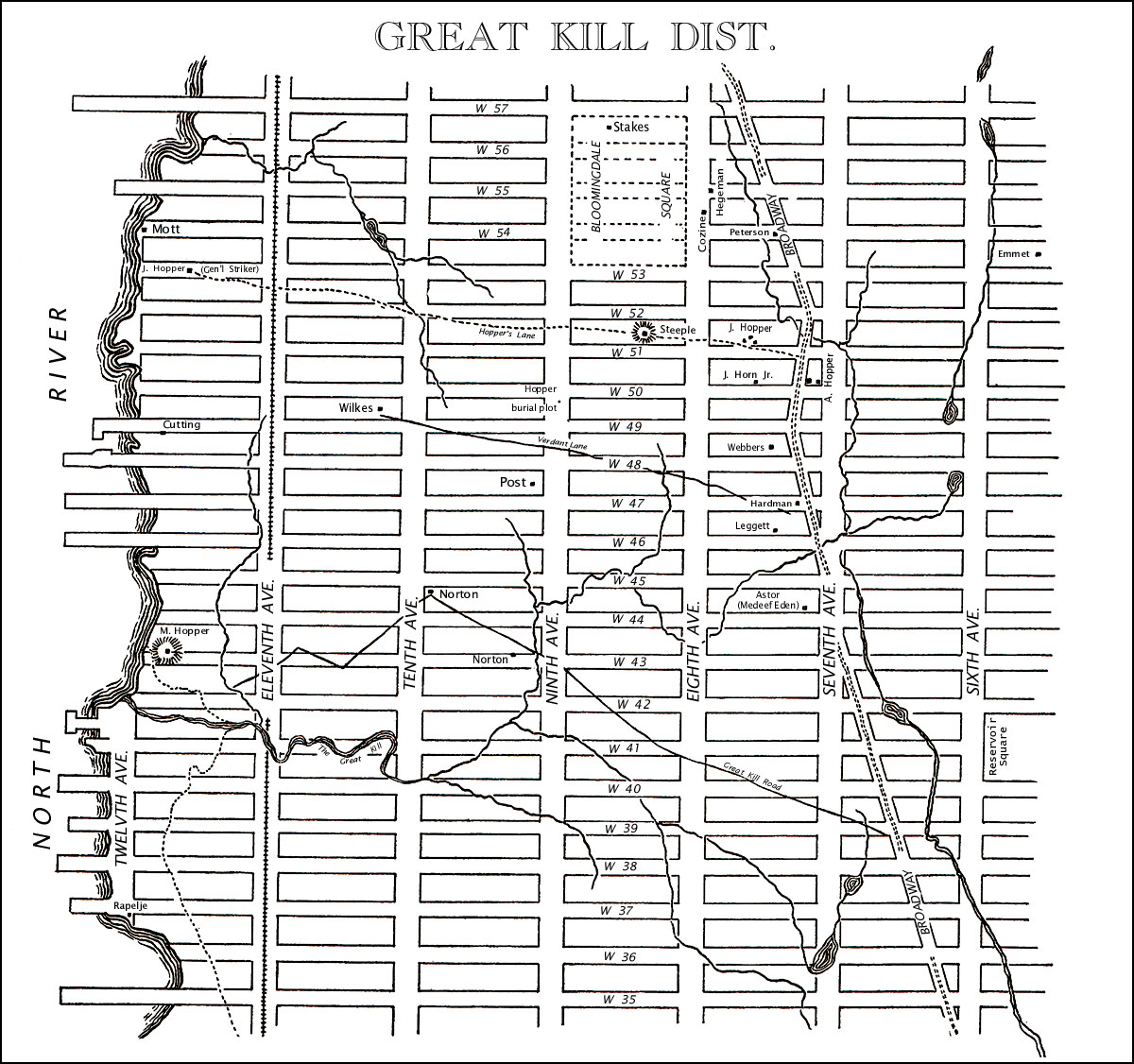
The mysteries begin over 200 years ago when ordered avenues and streets could scarcely be imagined, and the shoreline was a ragged coast.

The Dutch later called it the Great Kill District, for the creek which emptied into the Hudson River (North River) at 42nd Street. As you can see from this diagram the shore was evened out with landfill to create 12th Avenue although the inward dip at 43rd Street is still visible on a modern map.
map

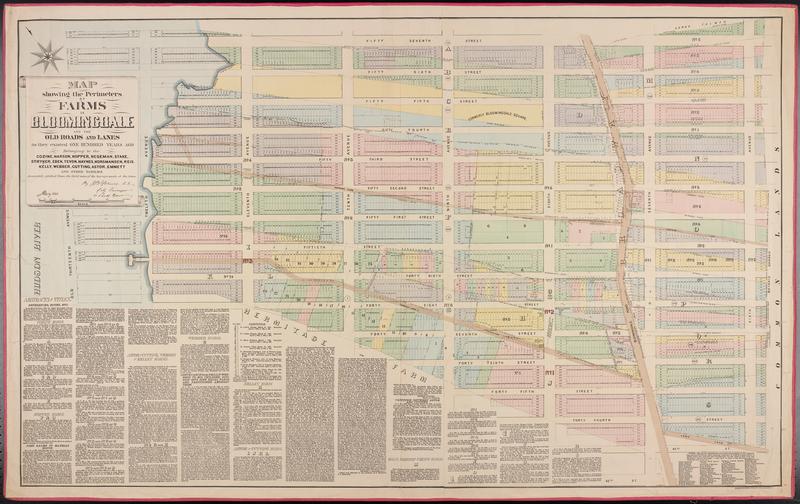
A map (drawn by John Bute Holmes) of the original estate borders of Bloomingdale from the late 18th century. The jagged shore line would later be filled in to make the blocks between 11th and 12th Avenues.
Courtesy Museum of the City of New York

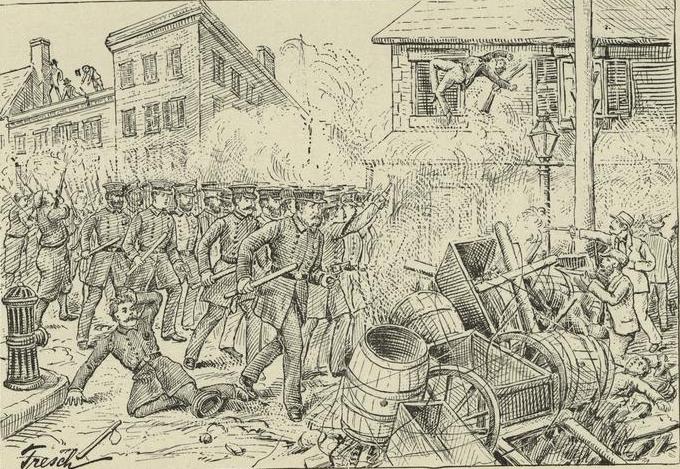
The Ninth Avenue barricades made by rioters in the area of Hell’s Kitchen during the Civil War Draft Riots.
barricades

The Orange Riot of July 12 from Eighth Avenue south from 25th street, an 1871 image from Frank Leslie’s Illustrated Newspaper.
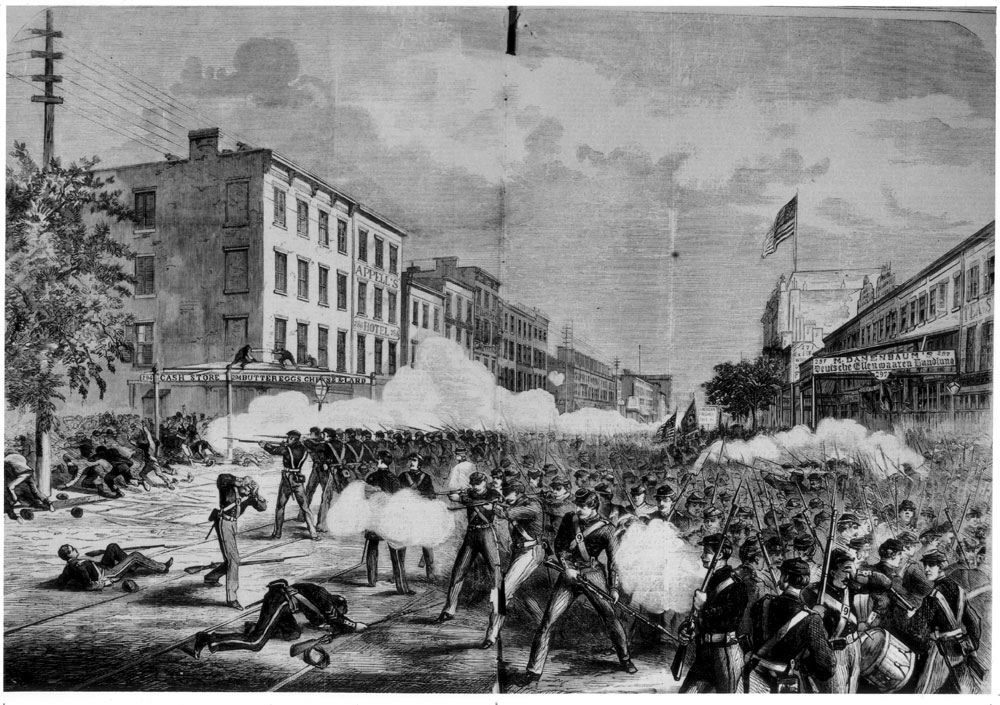
orange

Bad boys: Some Hell’s Kitchen ruffians show Jacob Riis how to rob people who have passed out.
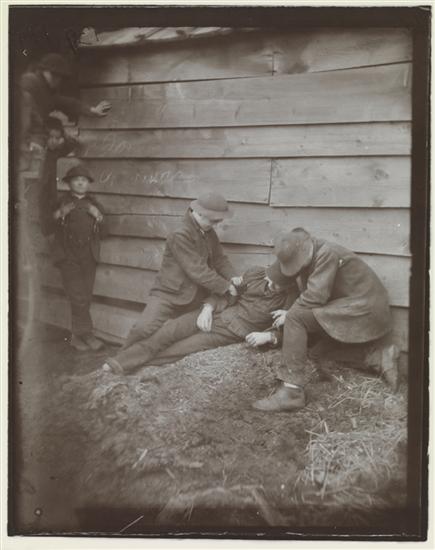
Jacob Riis
Jacob Riis

An intriguing shot of 58th Street between 8th and 9th Avenues
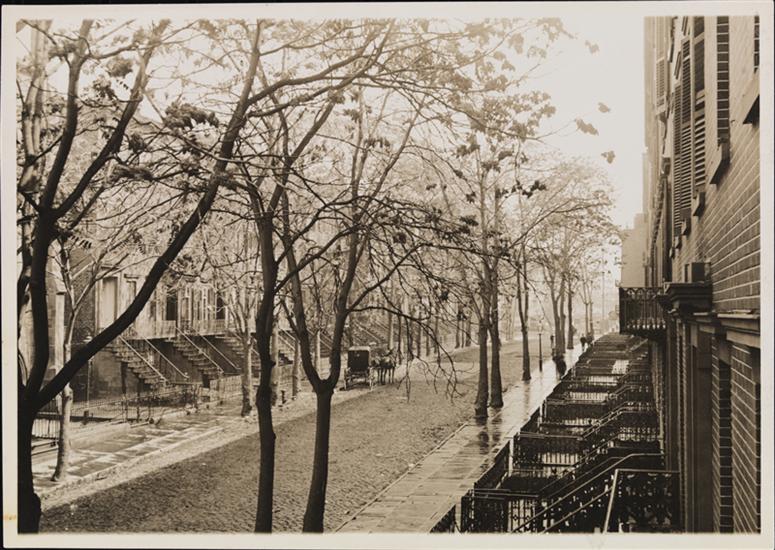
Museum of the City of New York

Jacob Riis’ photograph of the Hell’s Kitchen tenement and the remains of Sebastopol (the rocks), 1890
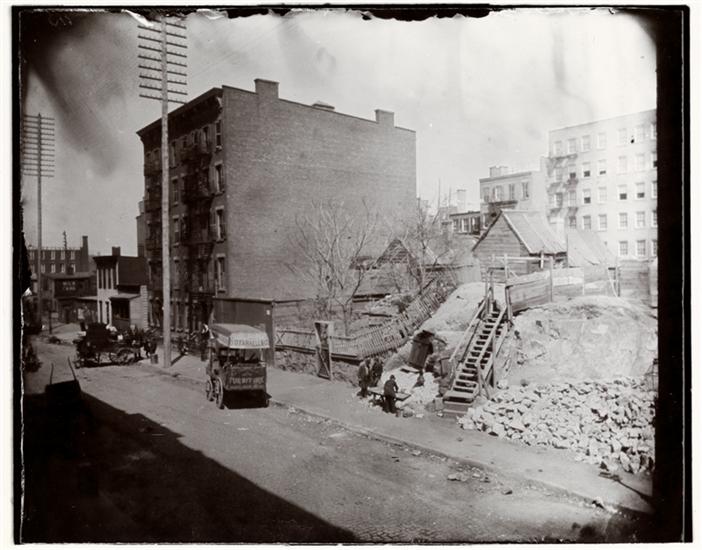
Photo by Jacob Riis
Photo by Jacob Riis

Street vendors under the 9th Avenue Elevated Railroad
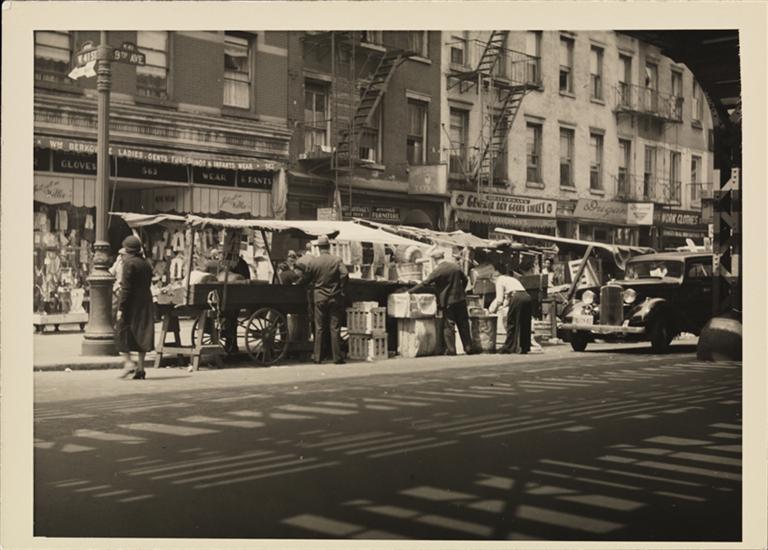
Museum of City of New York

The Hartley House, a settlement house for the Hell’s Kitchen community. on West 46th Street
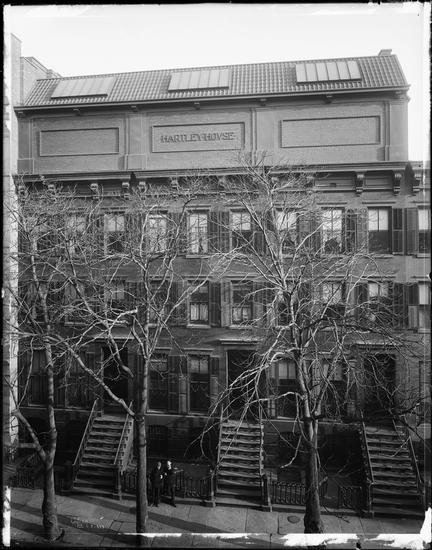
Museum of the City of New York

At the recreation pier — a public swimming hole at West 51st Street and the Hudson River.
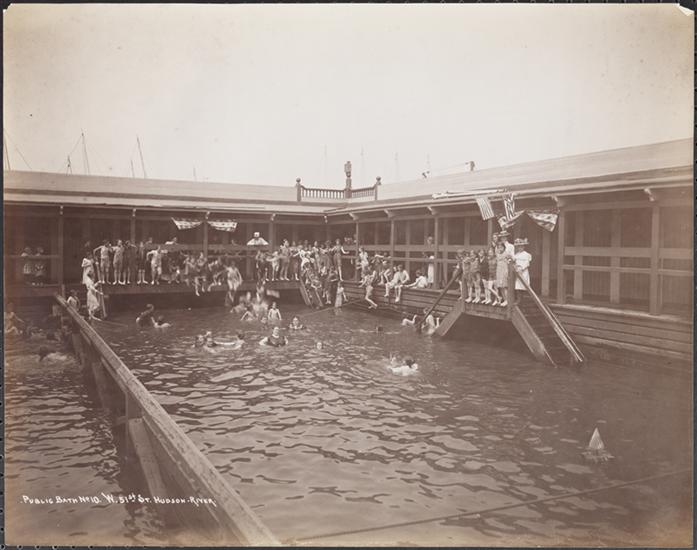
Museum of the City of New York

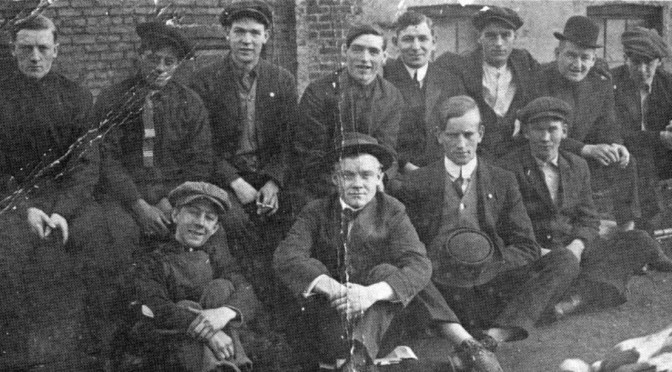
The later configuration of the Gophers. Owney Madden is on the back row, fourth from the left. A very rough and dangerous gang, but don’t they clean up nice?
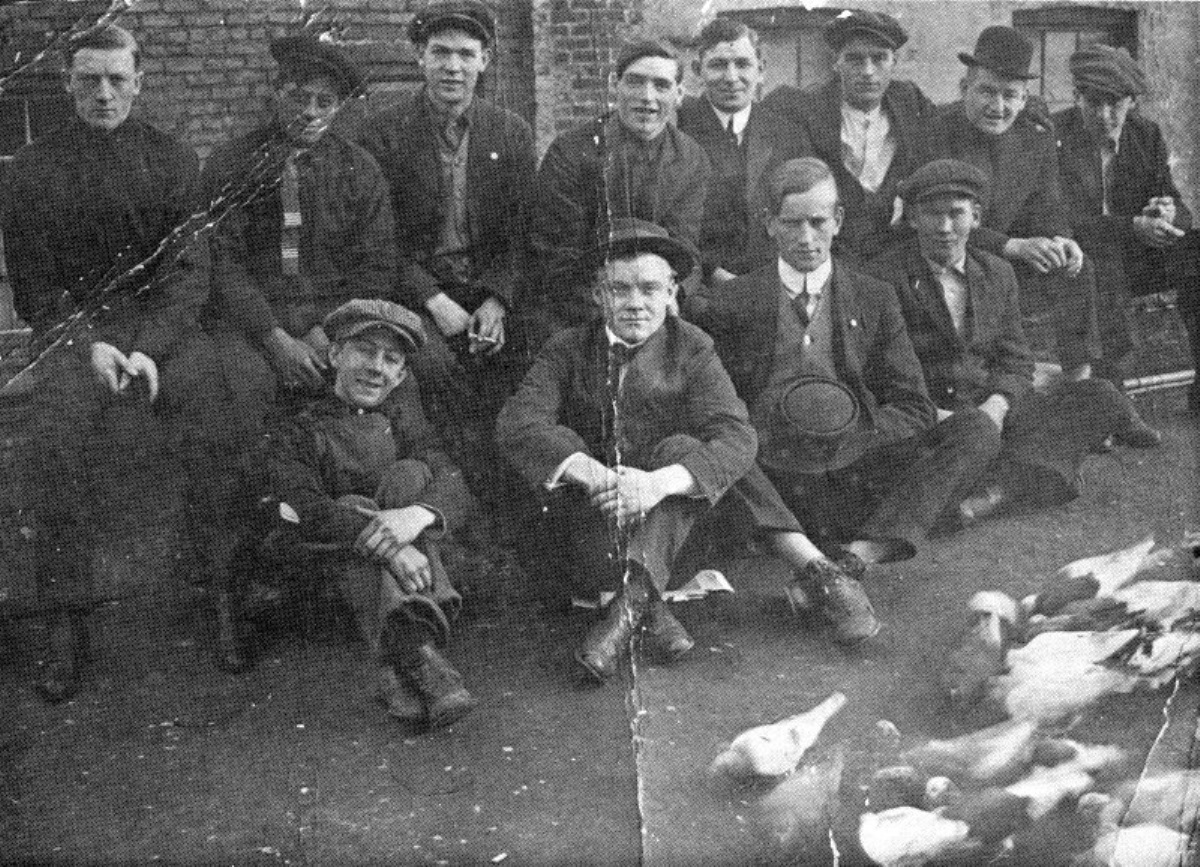
Courtesy of Garland County Historical Society and Butler Center Books

Owney Madden, the king of the Hell’s Kitchen speakeasy racket.
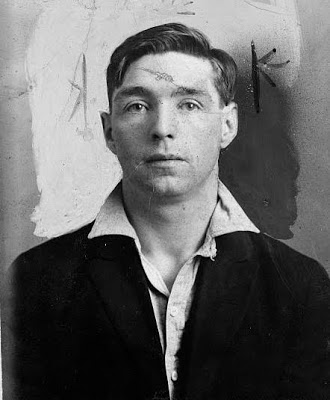
owney

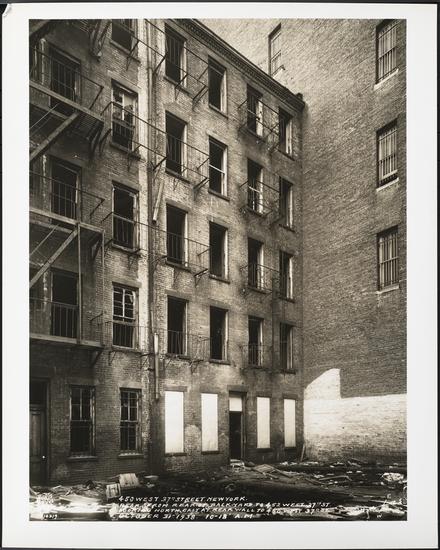
A couple spectacular shots of 1938 slum clearance — eliminating the tenements of 37th Street.
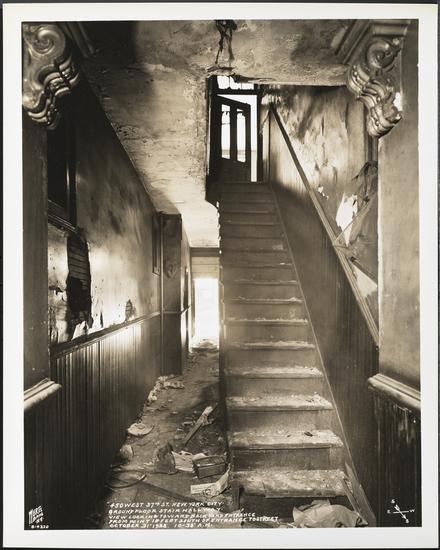
Wurts Brothers. Museum of the City of New York

Businesses on West 52nd Street, facing into DeWitt Clinton Park. It’s likely that William Hopper & Sons Truckmen at no. 626 probably traces itself back to the original Hopper land owners. Photograph by Charles von Urban
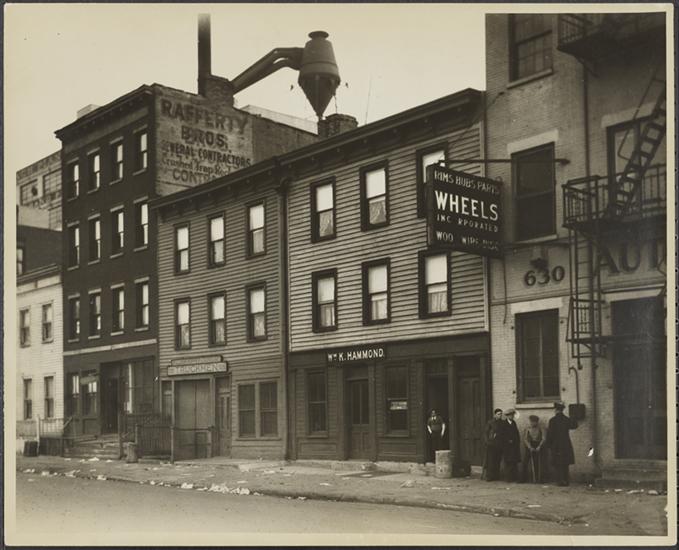
Courtesy Museum of the City of New York

The entrance to DeWitt Clinton Park (at 54th Street) in 1936
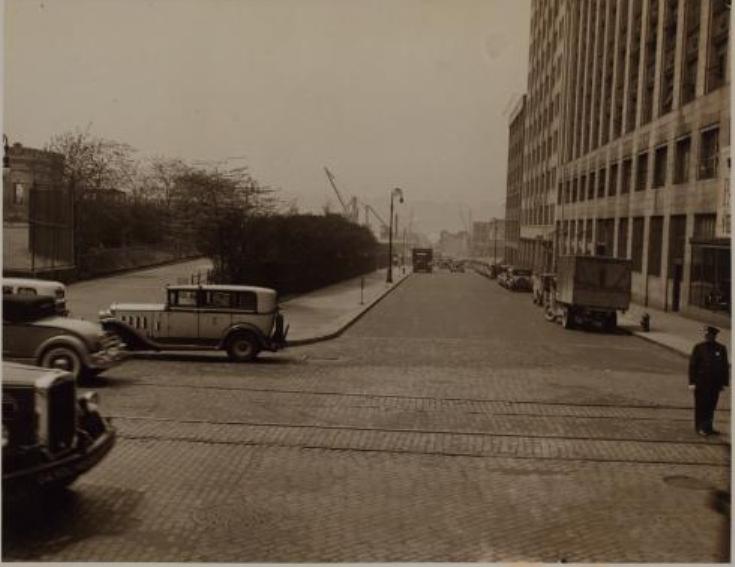
New York Public Library

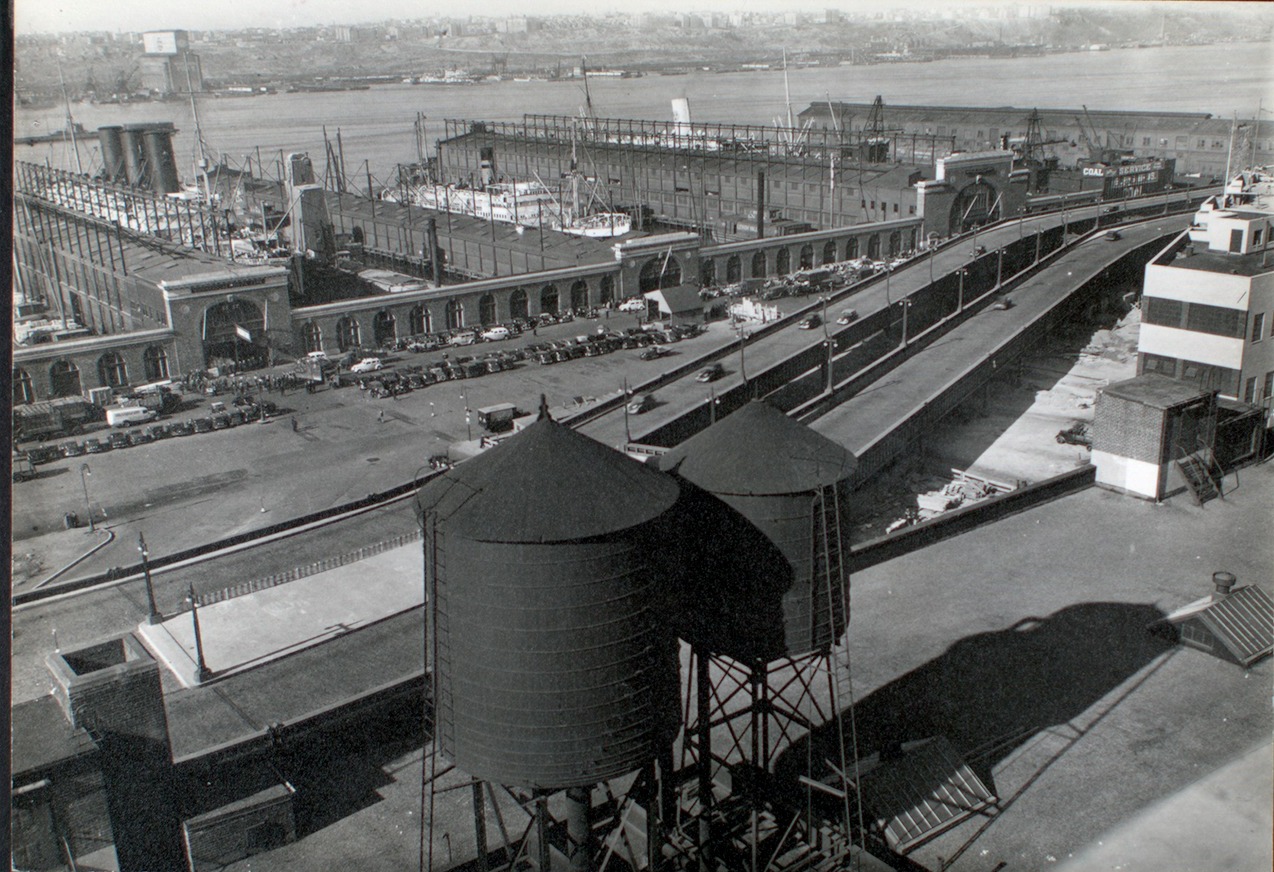
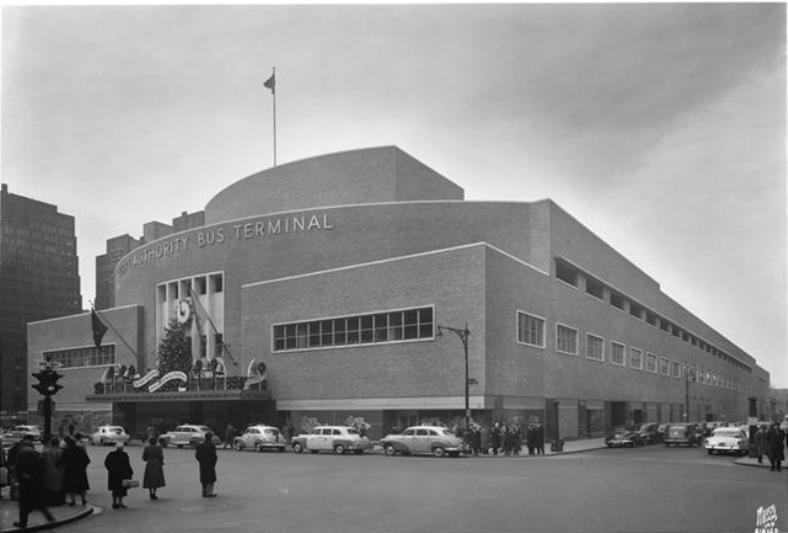
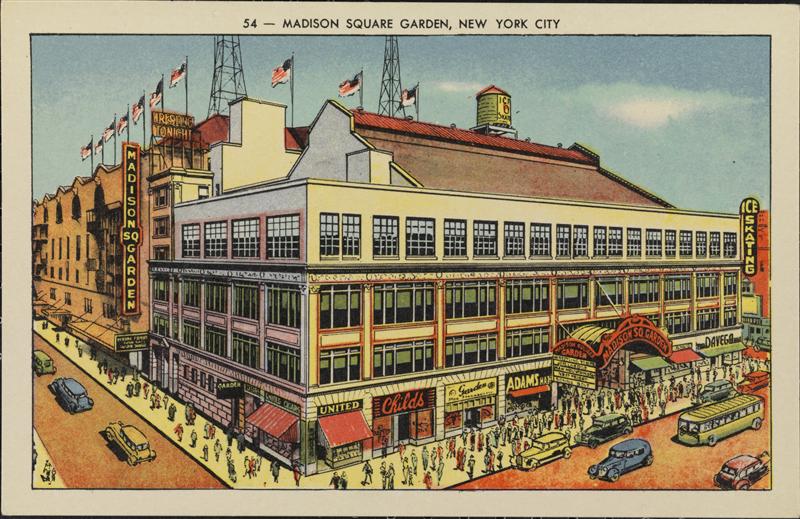
Most of the pressures faced by the Hell’s Kitchen neighborhood came from its perimeter with dramatic changes to the waterfront to its west, Port Authority/Lincoln Tunnel to its south, Madison Square Garden/Times Square to its east and Lincoln Center/Columbus Circle to its north.

Below: The West Side Highway and piers 95-98, looking west from a roof on West 54th Street
New York Public Library

The Port Authority Bus Terminal in 1950, at West 40th and 41st Streets and 8th Avenue.
Wurts Brothers, courtesy Museum of the City of New York

The 8th Avenue Madison Square Garden, as seen in 1935.
Courtesy Museum of the City of New York

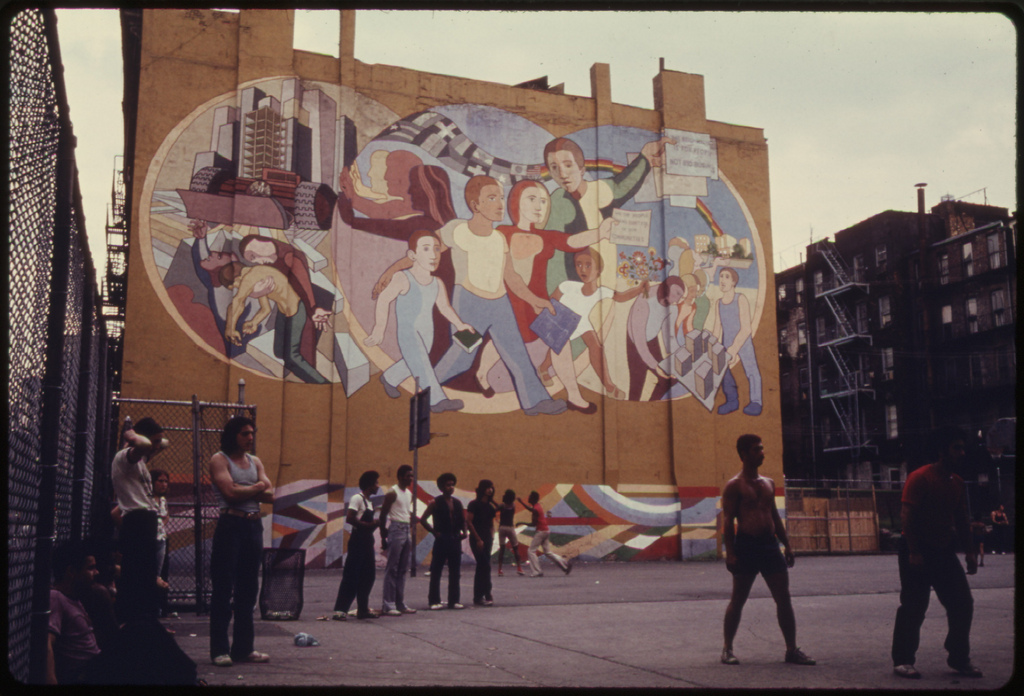
A mural from 1974 — “The Neighborhood Belongs to the People Not Big Business.”
Courtesy US National Archives
Categories
Bowery Boys Movie Club

Eyes of Laura Mars: The glamour of 1970s SoHo

Join the Bowery Boys Movie Club! Support us on Patreon at any level and get these Patreon-exclusive, full-length and ad-free podcast. Each month we talk about one classic (or cult-classic) film that says something interesting about New York City.

In the new Bowery Boys Movie Club, Tom and Greg visit the year 1978 and a cult classic thriller starring Faye DunawayTommy Lee Jones and Raul Julia.

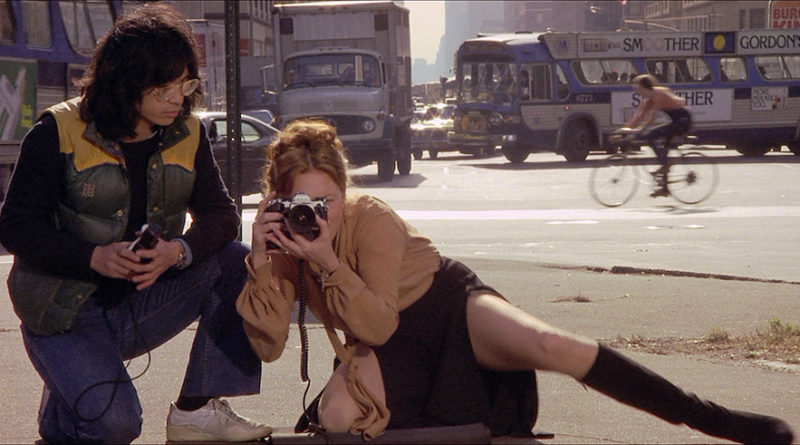
Eyes of Laura Mars presents the chic downtown art world of 1970s SoHo within a supernatural thriller involving a famed fashion photographer (played by Dunaway) and her psychic connection to a menacing killer. The thriller also takes us on a ride to Columbus Circle, the Christopher Street Pier and Hell’s Kitchen

Listen in as Greg and Tom set up the film’s backstory — Barbra Streisand was almost the star — then give a suspenseful synopsis through the film’s fun but implausible story line. And there’s disco music too!

Should you watch the movie before you listen to this episode? This podcast can be enjoyed both by those who have seen the film and those who’ve never even heard of it.  

We think our take on Eyes on Laura Mars might inspire you to look for the film’s many fascinating (but easy to overlook) historical details, so if you don’t mind being spoiled on the plot, give it a listen first, then watch the movie! Otherwise come back to the show after you’ve watched it. 

The film is available on Amazon Prime, among other services.

To get the episode, simply head to Patreon and sign up to support the Bowery Boys podcast at any level.

Categories
Mysterious Stories Podcasts

Ghost Stories of Hell’s Kitchen: Tales of haunted houses, creepy courtyards and spirited taverns

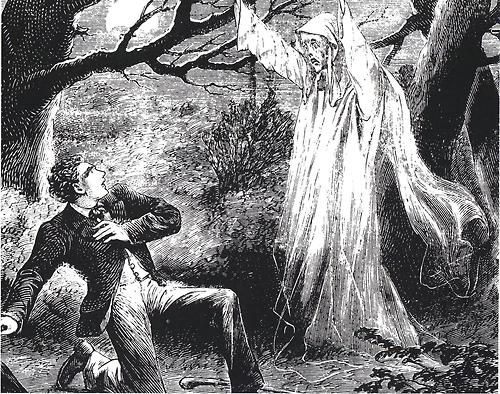
PODCAST The Manhattan neighborhood of Hell’s Kitchen has a mysterious, troubling past. So what happens when you throw a few ghosts into the mix? Greg and Tom find out the hard way in this year’s ghost stories podcast, featuring tales of mystery and mayhem situated in the townhouses, courtyards and taverns of this trendy area of Midtown West.

This year’s Ghost Stories of Old New York show features:

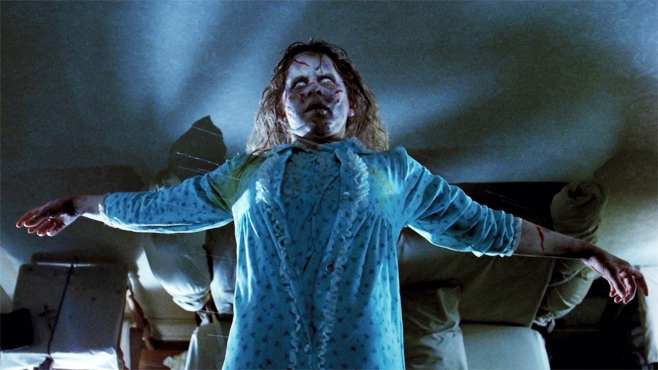
— The troubling tale of a 1970s motion picture classic that may have left a sinister mark on West 54th Street

— The haunted home of a popular film and TV actress, possessed with very hungry ghost

— An enchanting courtyard layered with several horrifying ghost stories

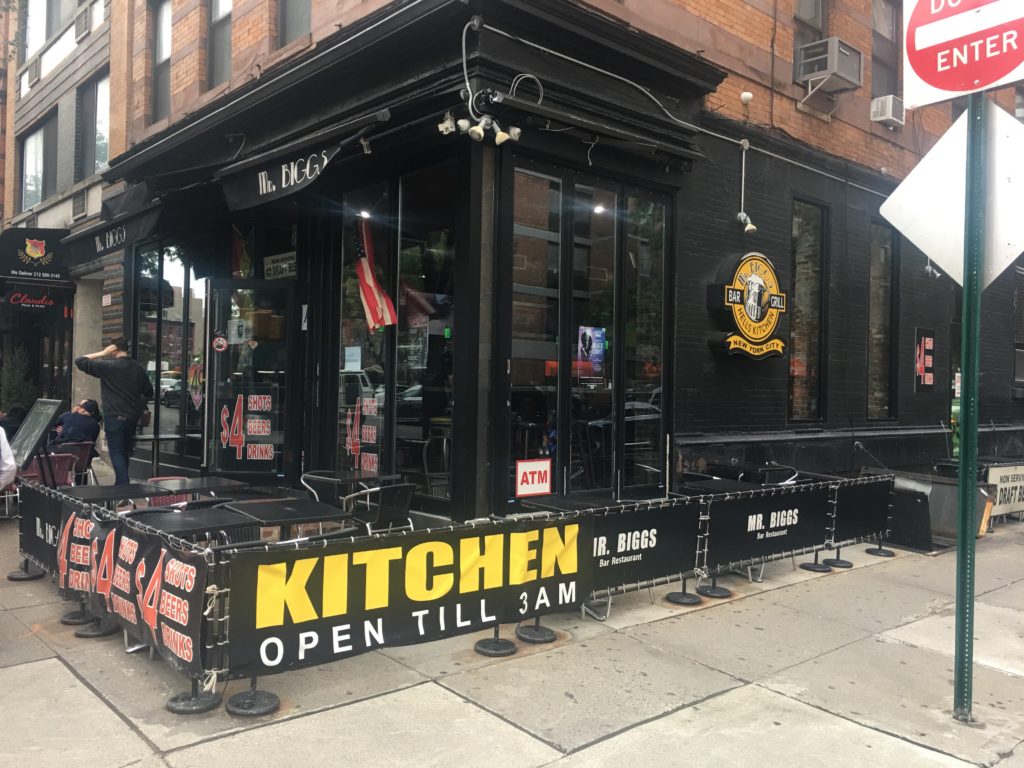
— And the shenanigans at a 150-year-old tavern where the beer and the spirits flow freely.

Listen Now: Hell’s Kitchen Ghosts Podcast

To download this episode and subscribe to our show for free, visit iTunes or other podcasting services or get it straight from our satellite site.

You can also listen to the show on OvercastGoogle Music and Stitcher streaming radio.

Or listen to it straight from here:

___________________________________________________________

The Bowery Boys: New York City History podcast is brought to you …. by you!

We are now producing a new Bowery Boys podcast every other week. We’re also looking to improve the show in other ways and expand in other ways as well — through publishing, social media, live events and other forms of media. But we can only do this with your help!

We are now a member of Patreon, a patronage platform where you can support your favorite content creators for as little as a $1 a month.

Please visit our page on Patreon and watch a short video of us recording the show and talking about our expansion plans. If you’d like to help out, there are five different pledge levels (and with clever names too — Mannahatta, New Amsterdam, Five Points, Gilded Age, Jazz Age and Empire State). Check them out and consider being a sponsor.

And join us for the next episode of the Bowery Boys Movie Club, an exclusive podcast provided to our supporters on Patreon. This month’s selection — Ghostbusters!

We greatly appreciate our listeners and readers and thank you for joining us on this journey so far.

_________________________________________________________

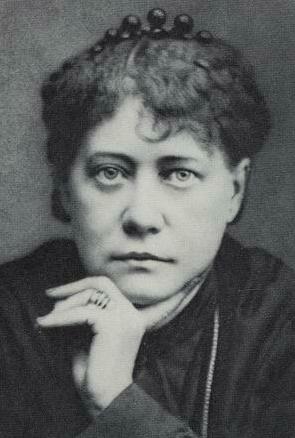
The location of Madame Blavatsky’s home off Eighth Avenue.

The former site of the 596 Club, a notorious hangout for the Westies.

Some of the Exorcist‘s most frightening scenes were filmed in Hell’s Kitchen.

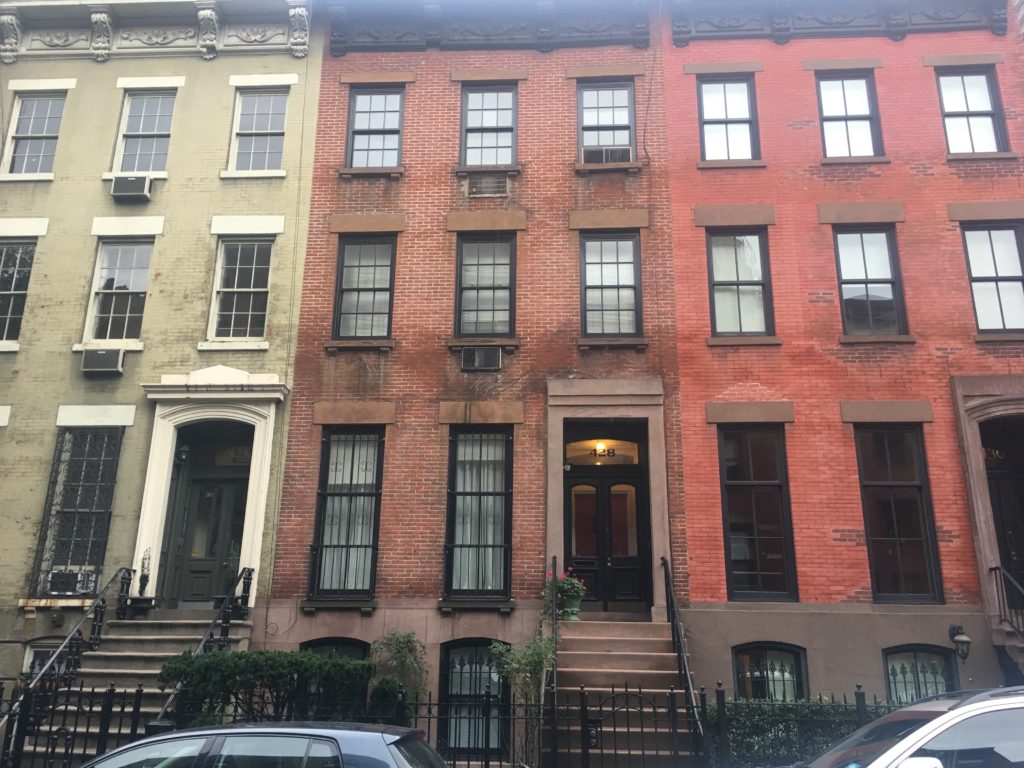
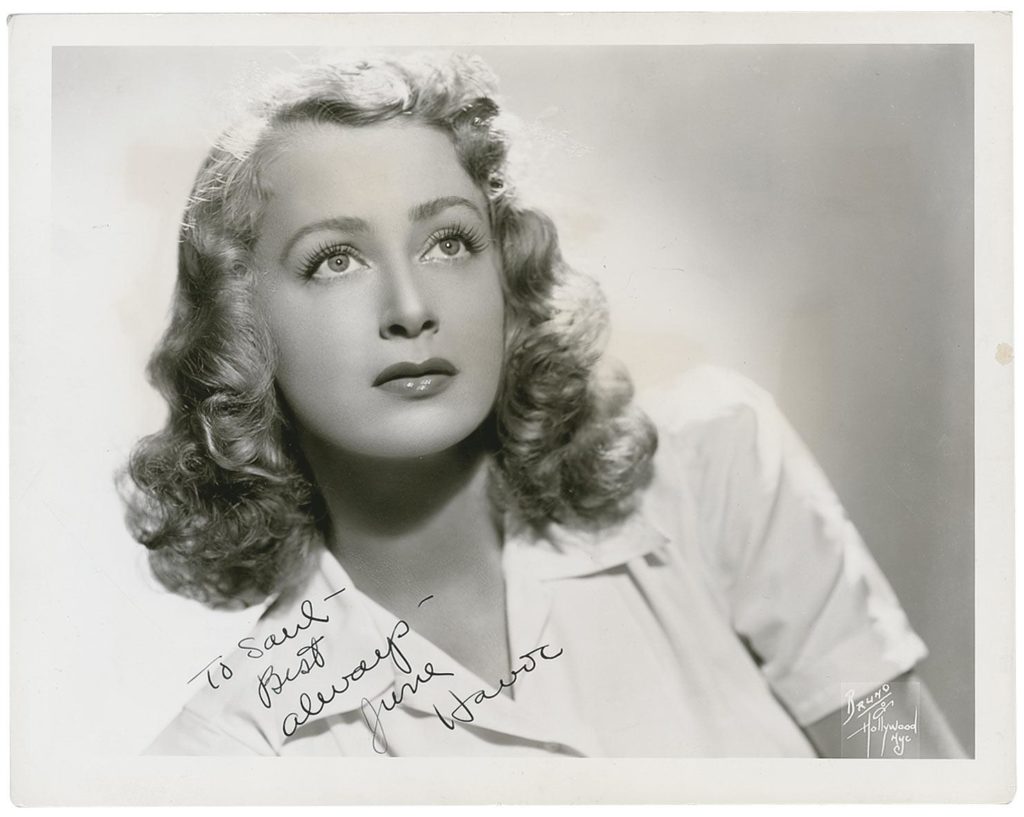
The former home of both film star June Havoc — and a restless spirit named Lucy.

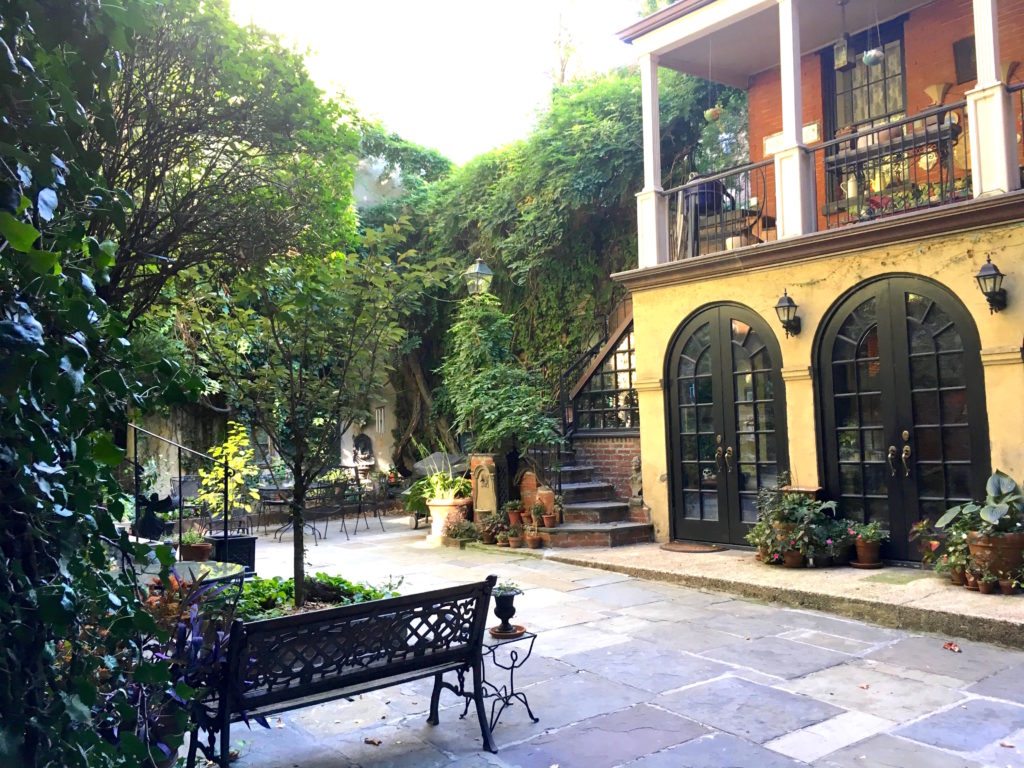
The mysterious, tucked-away oasis known as Clinton Court.

Courtesy Ephemeral New York

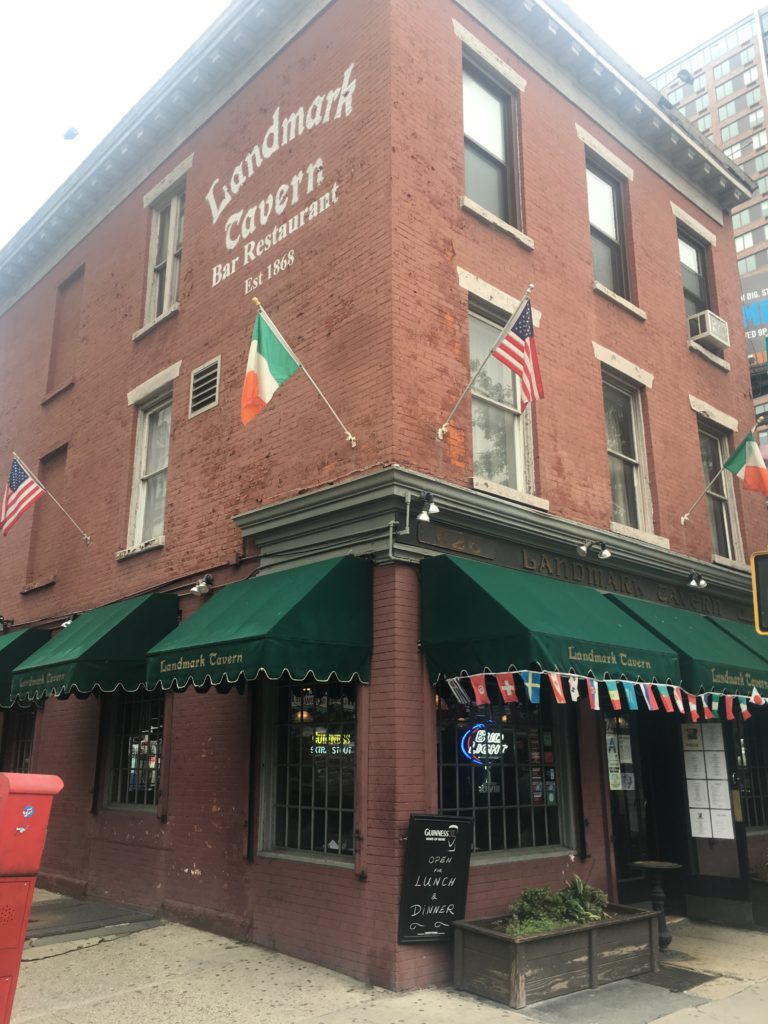
The neighborhood institution known as the Landmark Tavern today, a tavern which has been in business since 1868.

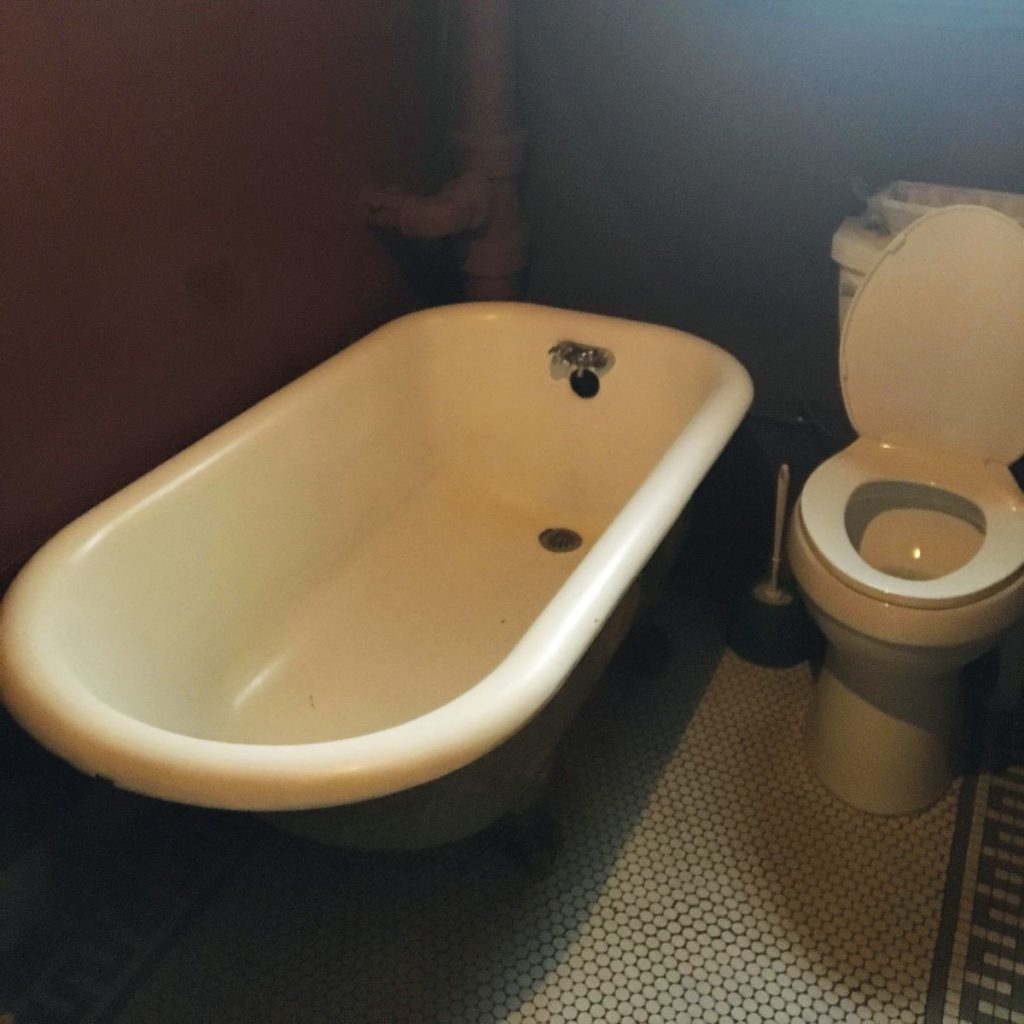
The infamous bathtub. Does the ghost of a Confederate veteran still rub-a-dub in this tub?

Courtesy W42ST

The film star George Raft, a regular at the Landmark Tavern …. to this day.

FURTHER LISTENING:

For a ‘regular’ look at the history of Hell’s Kitchen, listen to this show:

Last year’s ghost story episode on Greenwich Village plays a small role in this year’s episode as well.

Categories
Amusements and Thrills

Hey gang, let’s go down to the Recreation Pier!

The end of the 19th century saw many new ways to get people out of New York City’s over-crowded tenement districts, with trains to beach havens like Coney Island and Rockaway Beach and steamers making day-trips up the Hudson River and to spots in Long Island.

For those who didn’t have the luxury of a free afternoon,  some relief was provided in the form of new community parks such as Columbus Park (1897), Seward Park (1903) and DeWitt Clinton Park (1906).

But what if you wanted some fresh ocean breezes? The piers of the East River and the Hudson River were clotted with industry and hardly suitable for relaxation.   But the city did attempt to make the waterfront available with the introduction of so-called ‘recreation piers’.

There were a great many industrial piers redesigned in the 1890s for public use. By 1905, the New York Times reports recreation piers on the East River side (at Market Street, 3rd Street, 24th Street and 112th Street) and a couple facing the Hudson River (Christopher/Barrow Street and 50th Street).

Below: Mothers and their children on the Harlem pier, 1901

Courtesy the Museum of the City of New York

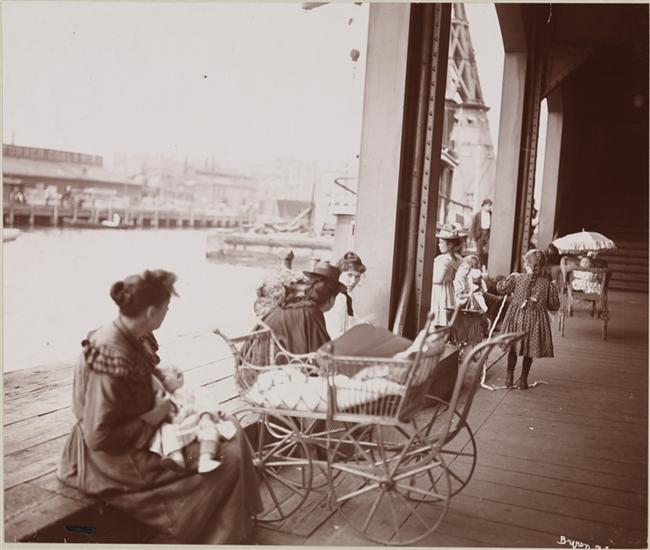
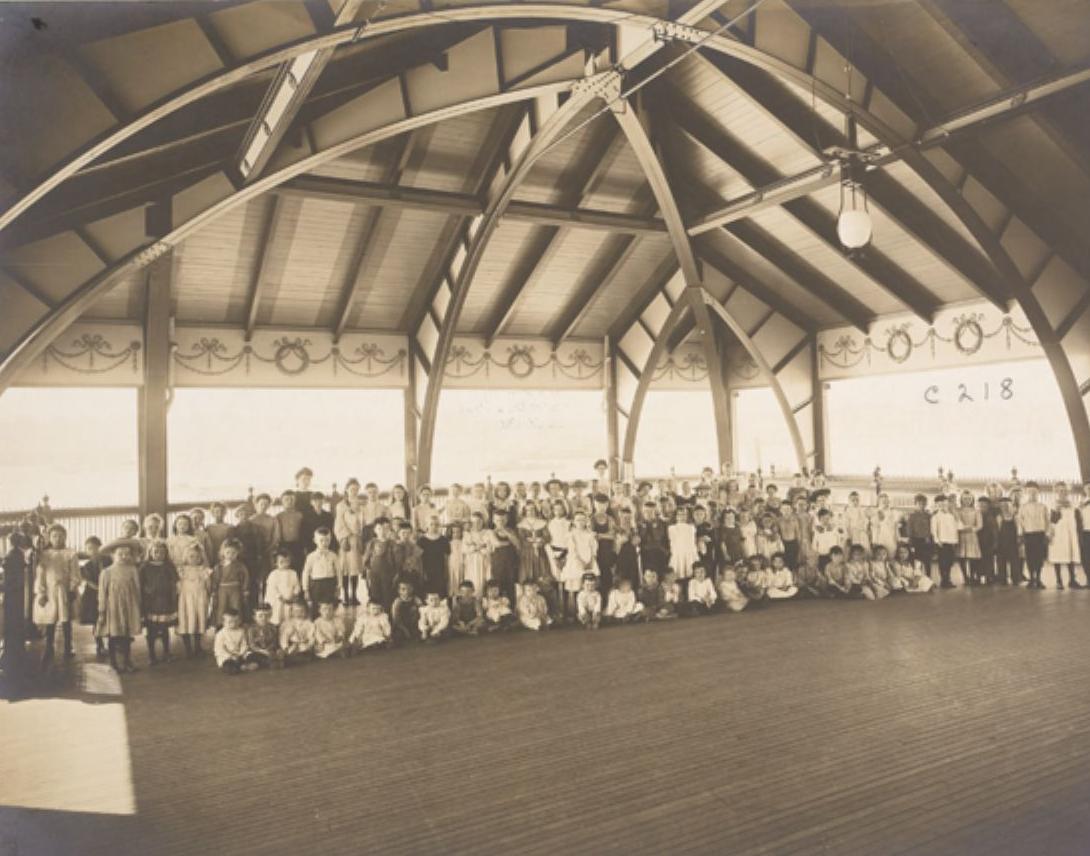
By noon, during the summer months, the piers were packed with mothers and their babies, groups of young women off work, and scores of children darting through the crowds.

From the Times article: “The average for the pier at the East River and 24th Street alone is 10,000 persons a day. Almost directly across town, at 50th Street and the North River, which the police call the ‘mad dog’ pier, the daily attendance is nearly as large.”

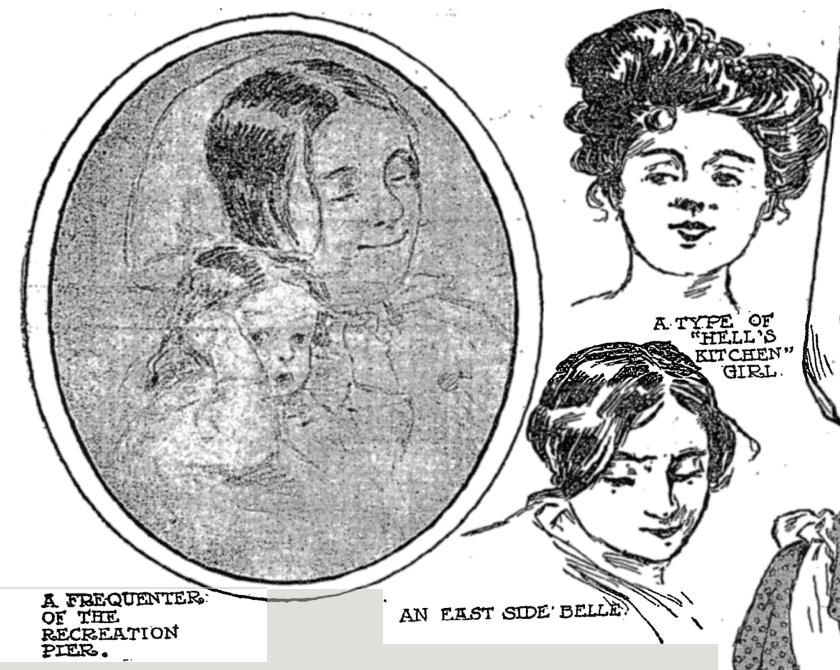
An illustration from the New York Times, June 25, 1905:

times


The piers provided a well-policed safe space for poor families, abundant cross breezes, and floating pools and swimming holes for those looking to escape the heat. Many of them regularly provided food vendors, musicians and even street performers, allowing city dwellers to enjoy the illusion of a short vacation getaway.

While no liquor was sold at the pier, many did their best to smuggle it past the watchful eye of the police officers.  “Flirting and open love making are prohibited,” warned the Times, “Smoking is not. A youth may puff away on his cigarettes, and a man may smoke as vile a cigar as he pleases, anywhere he pleases.”

Below: Children on the Hell’s Kitchen pier, 1903

Courtesy Harvard Libraries


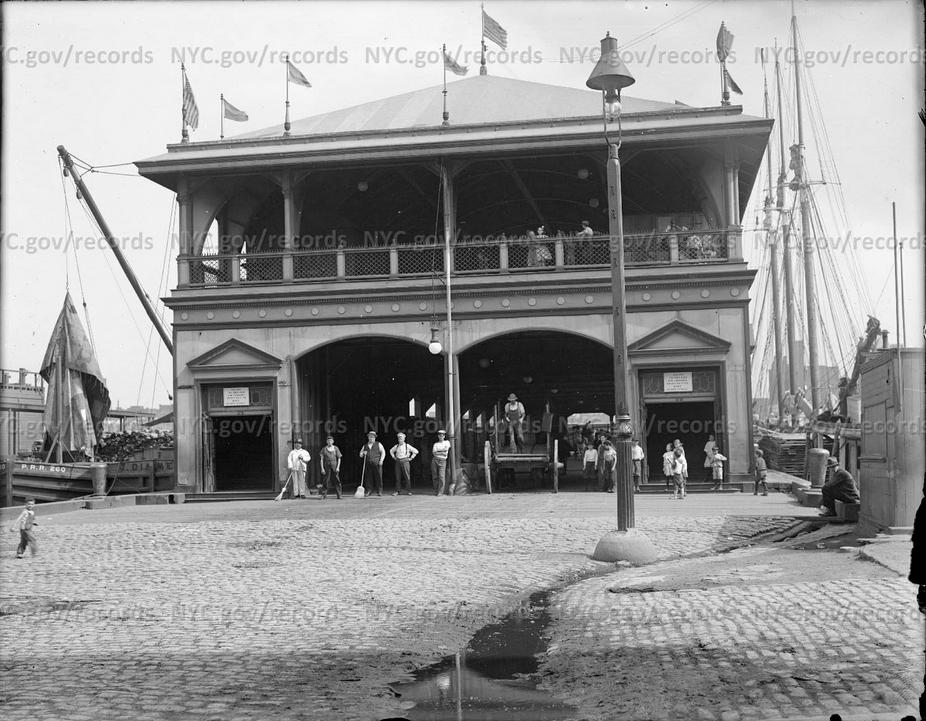
The Third Street pier provided immediate relief for residents of the Lower East Side.

“That long, low building jutting out into the water changed the ending of Third Street from a sandy, ugly refuge for crap playing boys into a breathing place for thousands of dwellers in the tall tenements all around.  It is still sandy and ugly, away from the pier itelf, but there is lots of fun going on, and when you are tired of looking shoreward there is the river, with its endless excitement.” [New  York Tribune, 1901]

Below: The Third Street pier. According to the signs over the door: “Dancing on this Pier for Children from 3 to 5pm Daily Except Sunday”

Department of Records


The piers were also popular spots for young lovers at night, the open air and the river traffic providing a bit of romance and mystery. The Harlem pier at 129th Street seems particularly enchanting as it was far from the center of the city and its bright, distracting lights.

“When the moon is shining the scene along this garden spot of the Hudson is not to be equaled anywhere around New York. There is nothing of the bustle of the city up here.” [source]

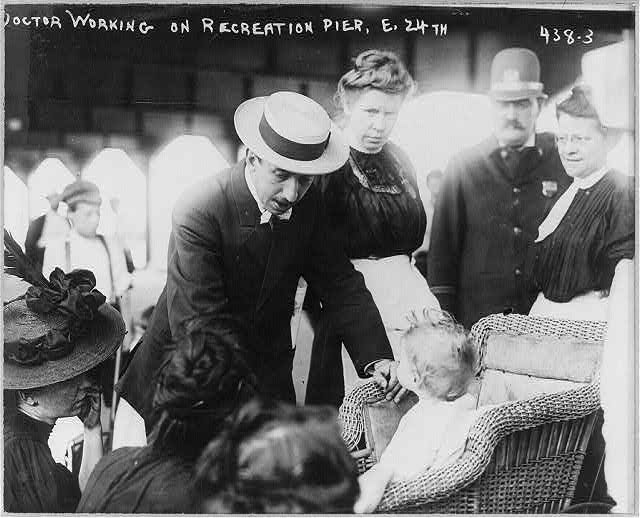
The city took advantage of the piers’ popularity with tenement dwellers in order to provide medical and social services. In 1912 ‘clean milk dispensaries’ provided mothers with free milk for their babies.  Below: a doctor inspects a young baby at the East 24th Street pier.

Library of Congress
Library of Congress

Not to be a buzzkill, however, but most of the piers were hardly secluded from the regular activities of the busy city. The Hell’s Kitchen pier, which opened in 1900, was perfumed with smells from the trash dump two piers away, not to mention flecks of filth from the neighboring ash dump. And crossing the busy avenue just to get to the pier was somewhat of a task.

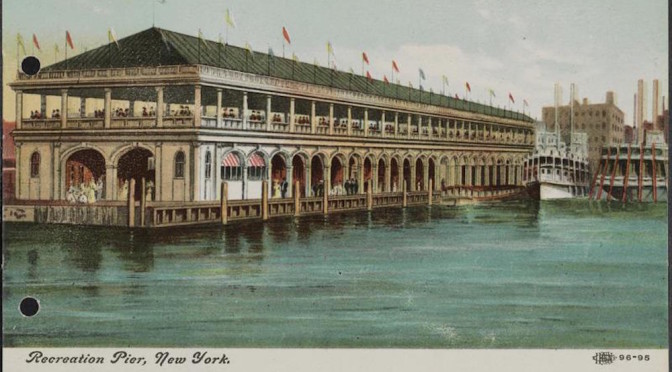
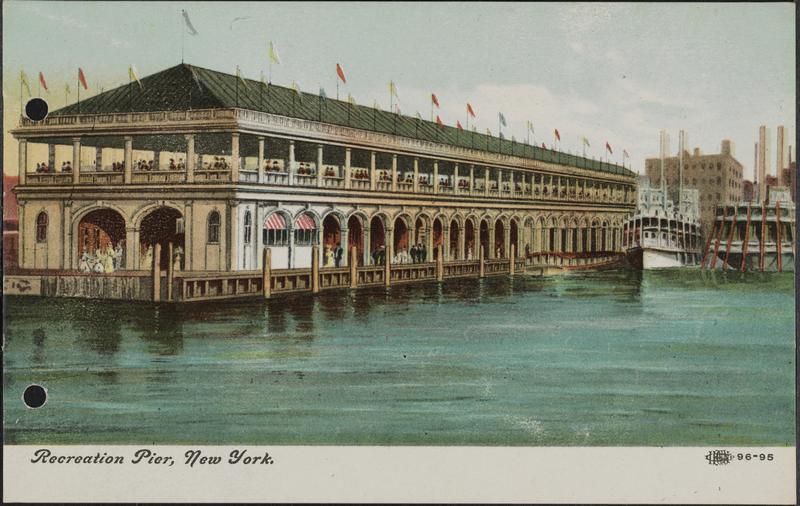
Today’s network of waterfront spaces in New York City are certainly more accommodating and convenient than these old piers, but I can’t help but wish one or two were still around, especially if they looked like this:

Courtesy the Museum of the city of New York