Categories
Brooklyn History Parks and Recreation

The disappearance and mysterious death of Calvert Vaux

On November 19, 1895,  Calvert Vaux went for a morning walk from his son’s home in Brooklyn. He never returned.

The 70 year old architect had helped to create the greatest parks in the cities of New York and Brooklyn.

His landscape collaborations with Frederick Law Olmsted had given Manhattan its Central Park and Brooklyn its Prospect Park and Fort Greene Park.

His own architectural work could be seen at Jefferson Market Courthouse, the American Museum of Natural History and the Metropolitan Museum of Art. In 1895 he still retained an honorary role as the parks department’s landscape adviser, although he had mostly retired from public life.

Calvert Vaux, circa 1865-1871
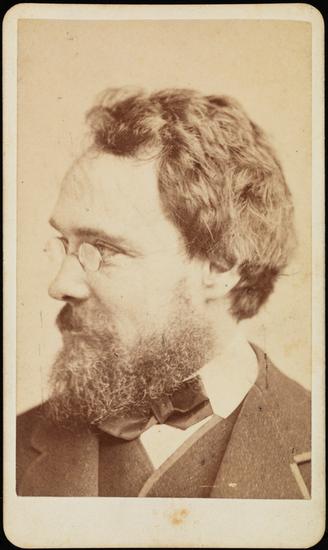
Courtesy Museum of the City of New York

His son Calvert Bowyer Vaux lived in a house on Twentieth Avenue between Bath and Benson Avenues in today’s neighborhood of Bath Beach. The elder Vaux often stayed with his son and was known for taking morning walks along the waterfront

On November 19, 1895, it was gray and foggy on the morning that Vaux departed his son’s home, leaving behind “a gold watch and chain and his vest” with about two dollars in his pocket.

Below: The New York Tribune made a brief mention of Vaux’s vanishing in the following one-sentence bulletin:

Trib Nov 21

At some point during the day he was spotted by a “Captain Ditmar” — possibly Captain Walter Earl Ditmar — on a pier near the water, and the two briefly spoke. Vaux is reported to have said to the captain, “I’m admiring the improvements you’ve made hereabouts.”

The two briefly talked about methods in which to make the beach area more amenable to visitors before Vaux proceeded to walk the piers by himself.

Ditmar was the last person to see Vaux alive.

The architect must have been known for taking very long walks for he was only discovered missing in the late afternoon. 

By the evening his family became worried; the police were called the following morning. All the local hospitals and hotels were checked. While it was well-known that Vaux was a frail man, he was often known to walk up to Prospect Park, several miles from his son’s home. But fears that he may have fallen into the bay were already present.

Below: An 1889 map of the district Vaux’s son lived in. The elder Vaux was last seen along the shoreline depicted here.
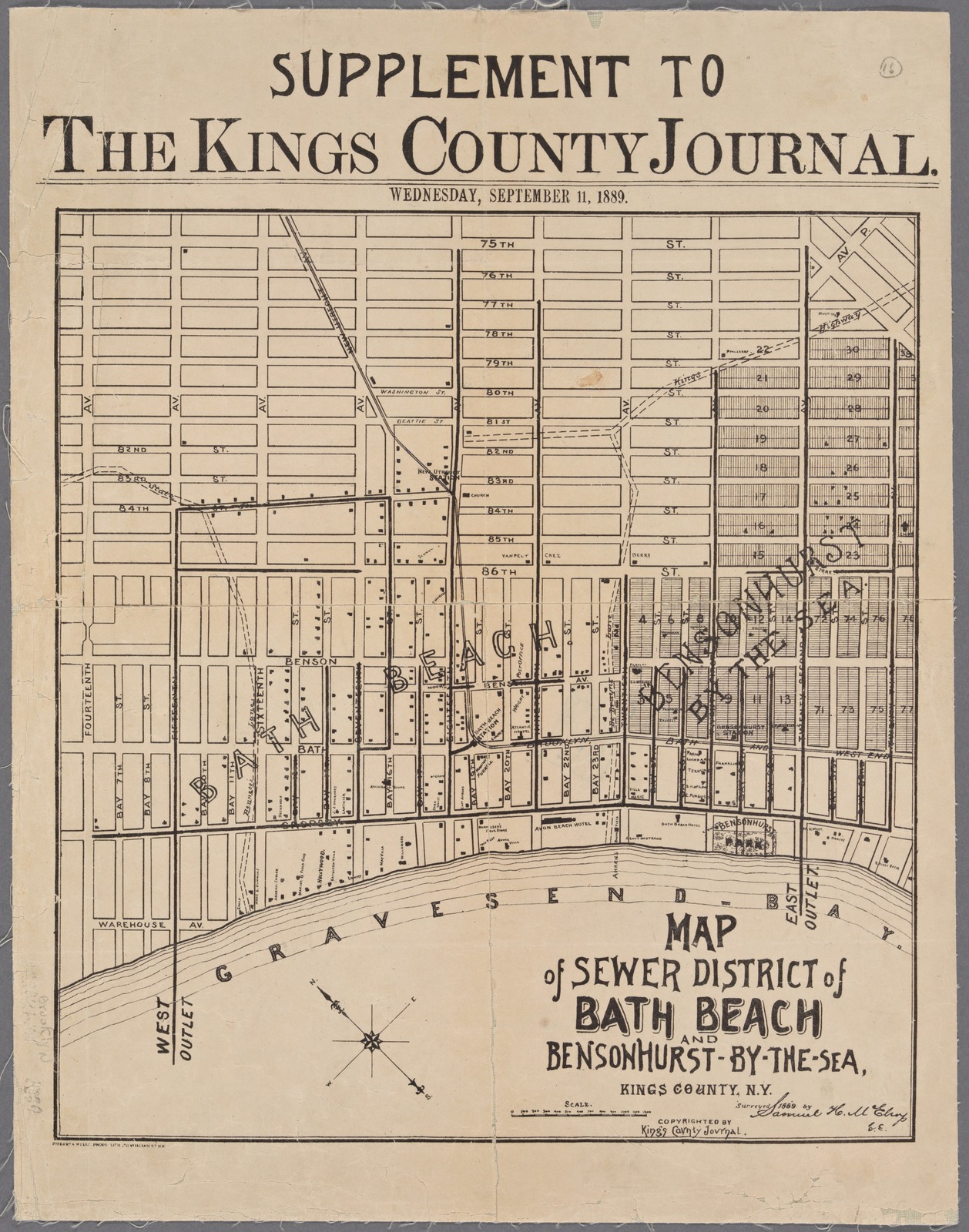
1

The following day the body of Calvert Vaux was indeed found in Gravesend Bay at the foot of Bay 17th Street, very close to the site of today’s Bath Beach Park.

As described by the Brooklyn Daily Eagle:

“A workman on Fry’s coal dock [later identified as Benjamin Butler] first saw the body being tossed about in the rough water, but when he rushed to the shore to secure the corpse it disappeared. It was some minutes later before Mr. Fry himself saw it drifting alongside the bulkhead out to sea again. With a boat hook he succeeded in bringing it close to shore.”

Below: Headline from the New York Sun
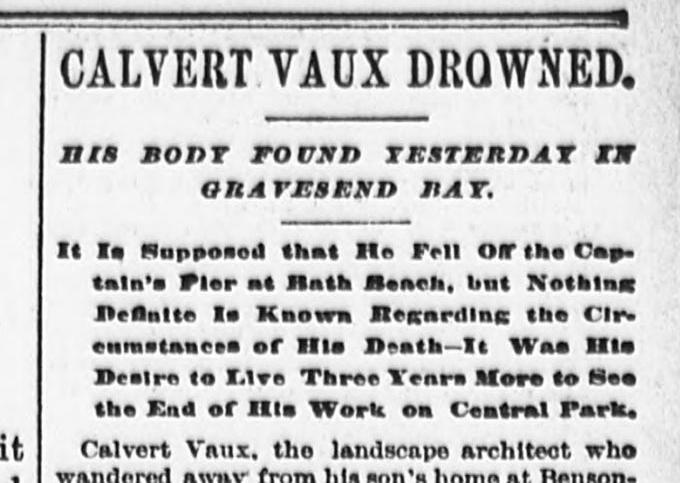
1

The police were called, bringing Vaux’s son down to the shore to identify the body. He could scarcely bring himself to look into his father’s face, recognizing his father’s well-worn suit before looking away.

“There was a bruise on the head, a slight cut over the eye, and the hat, spectacles and left shoe were missing,” reported the Times.

Given the circumstantial evidence, it seems clear as to what may have happened to Mr. Vaux. While on a walk along the shore, he may have fainted or tripped, falling into the water and drowning in the waves.

Below: An engraving from the New York Tribune:
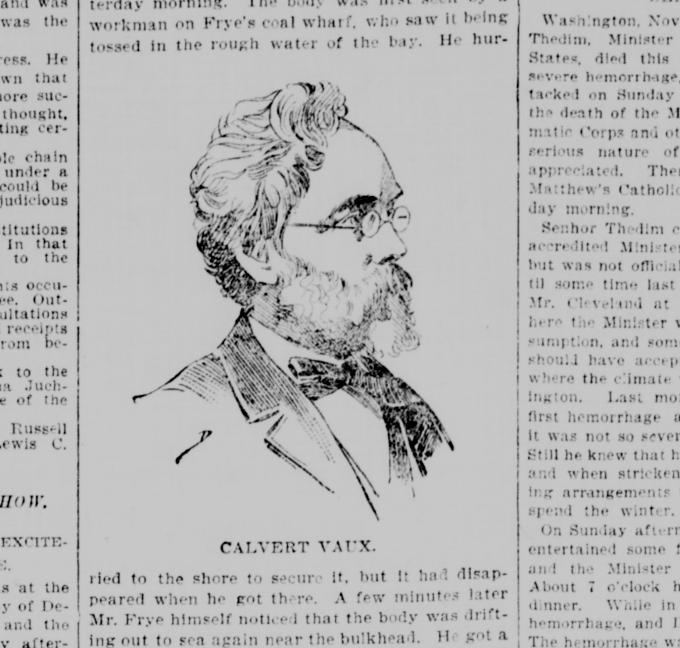
tribune

The Sun further speculated: “As he was interested in the construction of the pier, it may be that he leaned over the stringpiece to examine the foundation piles. In doing so he may have fallen into the water, as he was ill and feeble, being 70 years old.”

Most press reports of the day made it clear no foul play was suspected. Vaux Jr. brushed away any suggestions of suicide on his father’s part. “The theory of suicide has been disclaimed by his relatives who said that [Vaux] had been cheerful and mentally able the evening before he disappeared.” [source]

But not everybody was convinced, and the Tribune reported that the “theory [of suicide] prevails with some people.”

Weeks earlier Vaux had told his daughter that he wanted to live long enough to see the completion of his plans in Central Park. “If I can only manage to live until 1898, my plans for the improvement of Central Park will be completed, and I won’t worry about any other work.”

Sadly Vaux’s death did have a certain impact on Central Park. Without the dutiful eye of its co-creator, maintenance on the park gradually deteriorated, and it would not be until the installation of Parks Commissioner Robert Moses that the condition of the park would be improved.

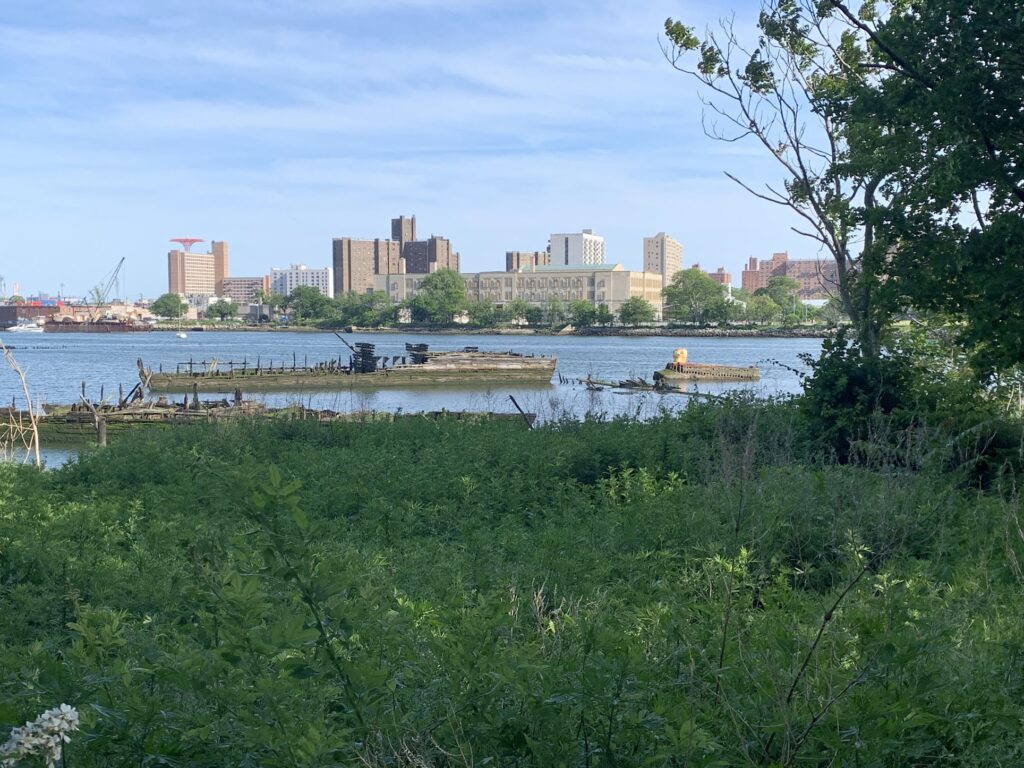
Today, nearby the place where Vaux’s body was discovered, you may enjoy a picnic and a sunset at Calvert Vaux Park in Gravesend.

Below: Calvert Vaux Park (the former Dreier-Offerman Park) has greatly improved since the 1960s when it was essentially an undeveloped mess, linked by a pedestrian bridge. Picture courtesy the New York City Parks Archives
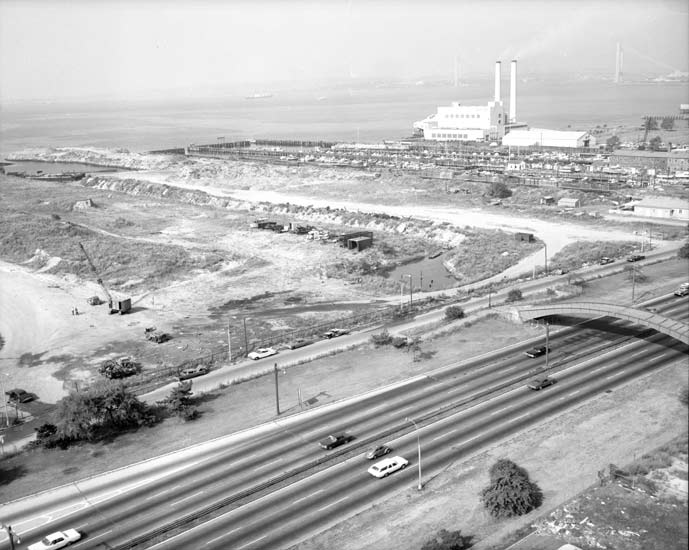
1968

It was once called Dreier-Offerman Park for the former home for unwed mothers which once sat here. It was changed to honor the architect in 1998 when it was radically re-landscaped and improved. Knowing that he died close to here, I kind of think being named after an unwed mother’s home is the less depressing name.

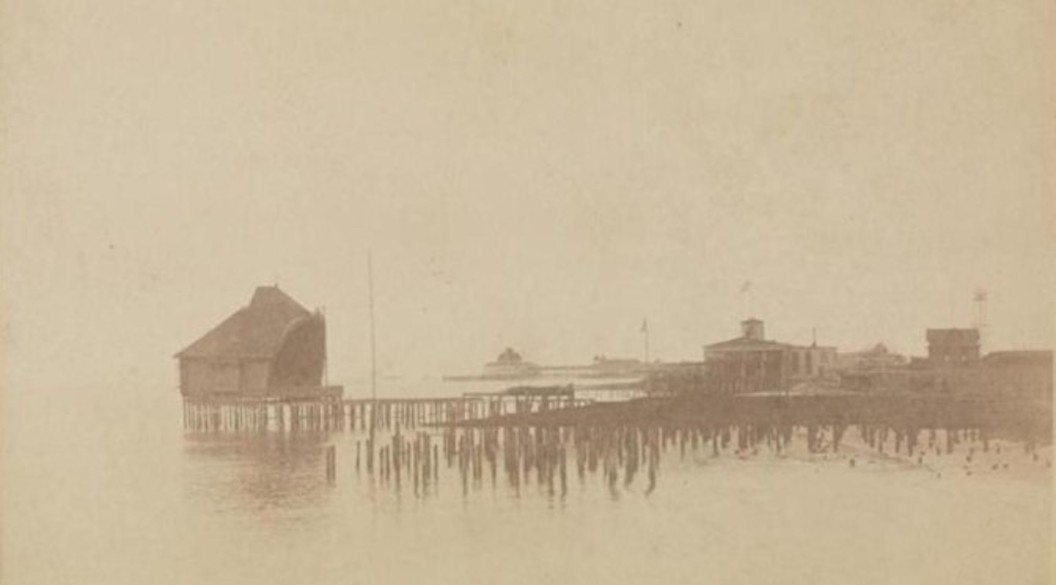
Picture at top: A forlorn pier from 1890, located at West Brighton Beach, Brooklyn.
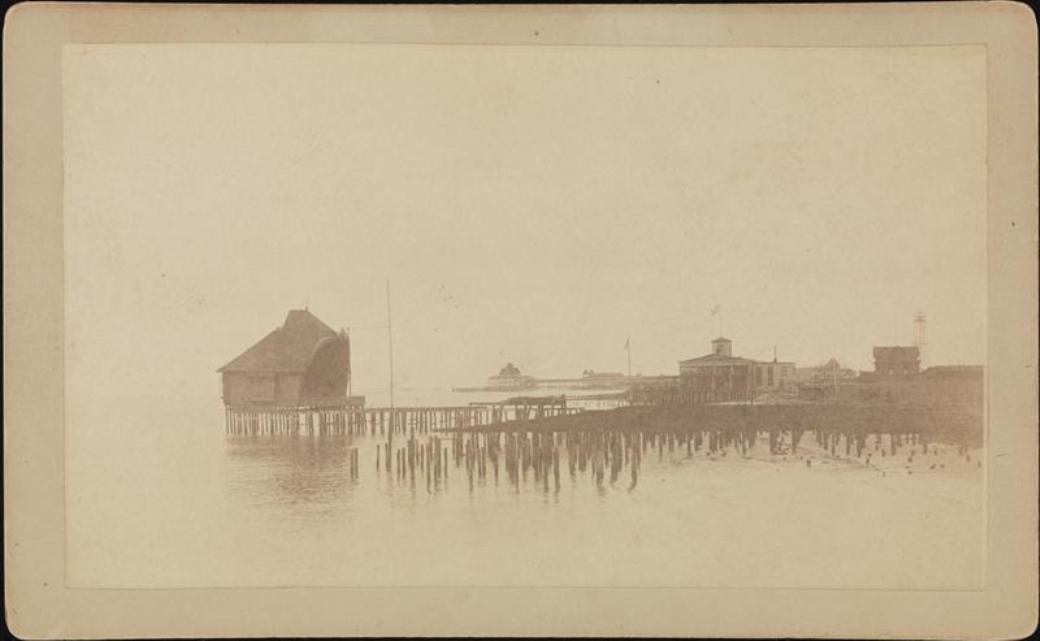
Photograph by Robert Bracklow. Courtesy Museum of the City of New York

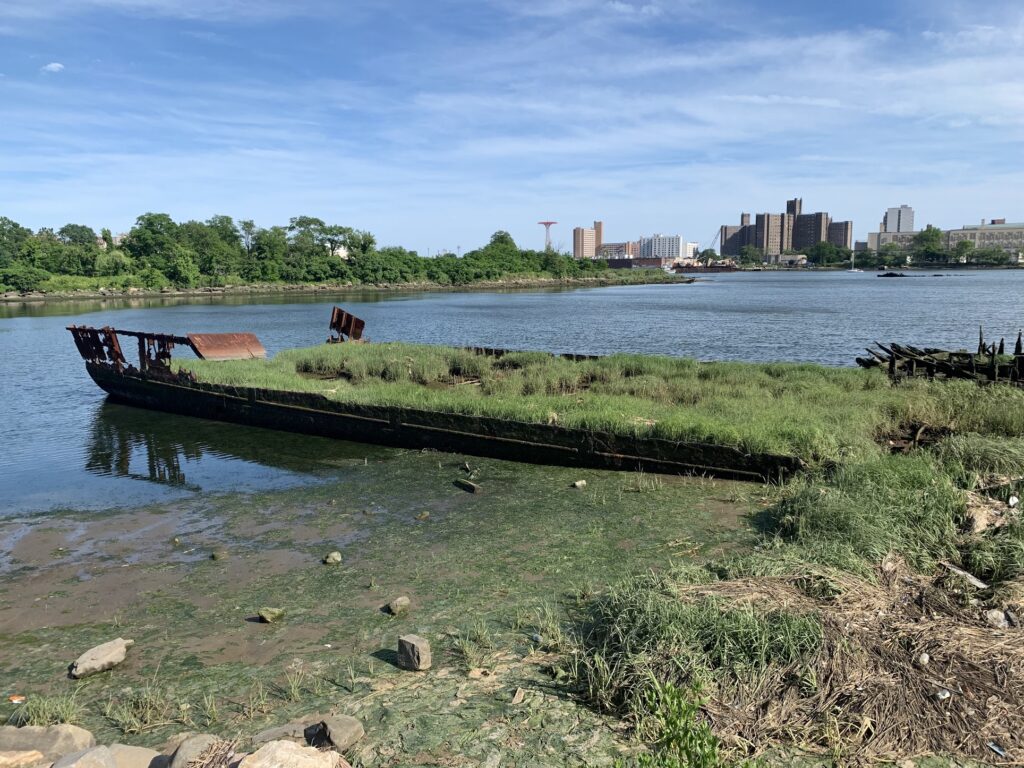
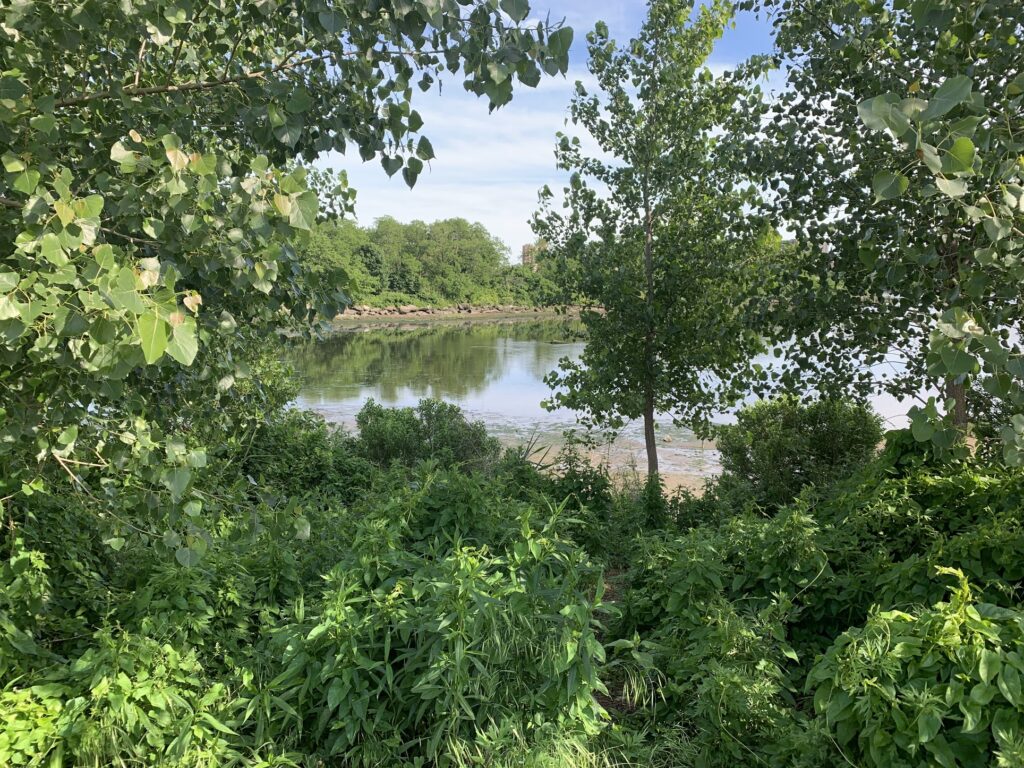
And here are some photographs I took in Calvert Vaux Park from a couple years ago:
This article originally ran in 2015.
Categories
Bowery Boys Movie Club

Eyes of Laura Mars: The glamour of 1970s SoHo

Join the Bowery Boys Movie Club! Support us on Patreon at any level and get these Patreon-exclusive, full-length and ad-free podcast. Each month we talk about one classic (or cult-classic) film that says something interesting about New York City.

In the new Bowery Boys Movie Club, Tom and Greg visit the year 1978 and a cult classic thriller starring Faye DunawayTommy Lee Jones and Raul Julia.

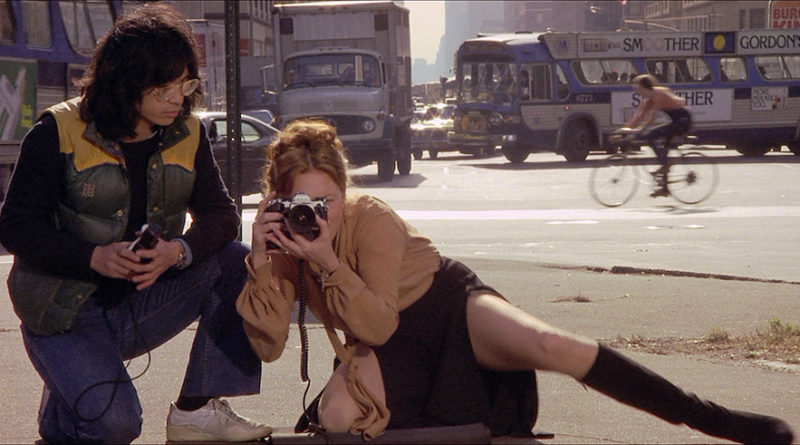
Eyes of Laura Mars presents the chic downtown art world of 1970s SoHo within a supernatural thriller involving a famed fashion photographer (played by Dunaway) and her psychic connection to a menacing killer. The thriller also takes us on a ride to Columbus Circle, the Christopher Street Pier and Hell’s Kitchen

Listen in as Greg and Tom set up the film’s backstory — Barbra Streisand was almost the star — then give a suspenseful synopsis through the film’s fun but implausible story line. And there’s disco music too!

Should you watch the movie before you listen to this episode? This podcast can be enjoyed both by those who have seen the film and those who’ve never even heard of it.  

We think our take on Eyes on Laura Mars might inspire you to look for the film’s many fascinating (but easy to overlook) historical details, so if you don’t mind being spoiled on the plot, give it a listen first, then watch the movie! Otherwise come back to the show after you’ve watched it. 

The film is available on Amazon Prime, among other services.

To get the episode, simply head to Patreon and sign up to support the Bowery Boys podcast at any level.

Categories
Amusements and Thrills

Hey gang, let’s go down to the Recreation Pier!

The end of the 19th century saw many new ways to get people out of New York City’s over-crowded tenement districts, with trains to beach havens like Coney Island and Rockaway Beach and steamers making day-trips up the Hudson River and to spots in Long Island.

For those who didn’t have the luxury of a free afternoon,  some relief was provided in the form of new community parks such as Columbus Park (1897), Seward Park (1903) and DeWitt Clinton Park (1906).

But what if you wanted some fresh ocean breezes? The piers of the East River and the Hudson River were clotted with industry and hardly suitable for relaxation.   But the city did attempt to make the waterfront available with the introduction of so-called ‘recreation piers’.

There were a great many industrial piers redesigned in the 1890s for public use. By 1905, the New York Times reports recreation piers on the East River side (at Market Street, 3rd Street, 24th Street and 112th Street) and a couple facing the Hudson River (Christopher/Barrow Street and 50th Street).

Below: Mothers and their children on the Harlem pier, 1901

Courtesy the Museum of the City of New York

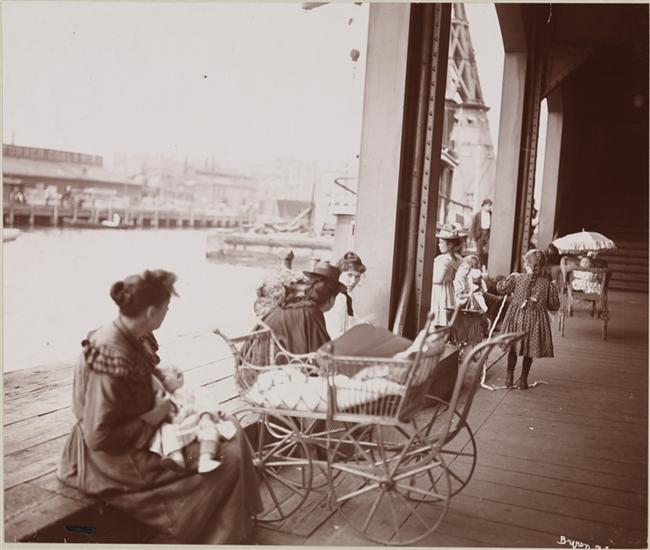
By noon, during the summer months, the piers were packed with mothers and their babies, groups of young women off work, and scores of children darting through the crowds.

From the Times article: “The average for the pier at the East River and 24th Street alone is 10,000 persons a day. Almost directly across town, at 50th Street and the North River, which the police call the ‘mad dog’ pier, the daily attendance is nearly as large.”

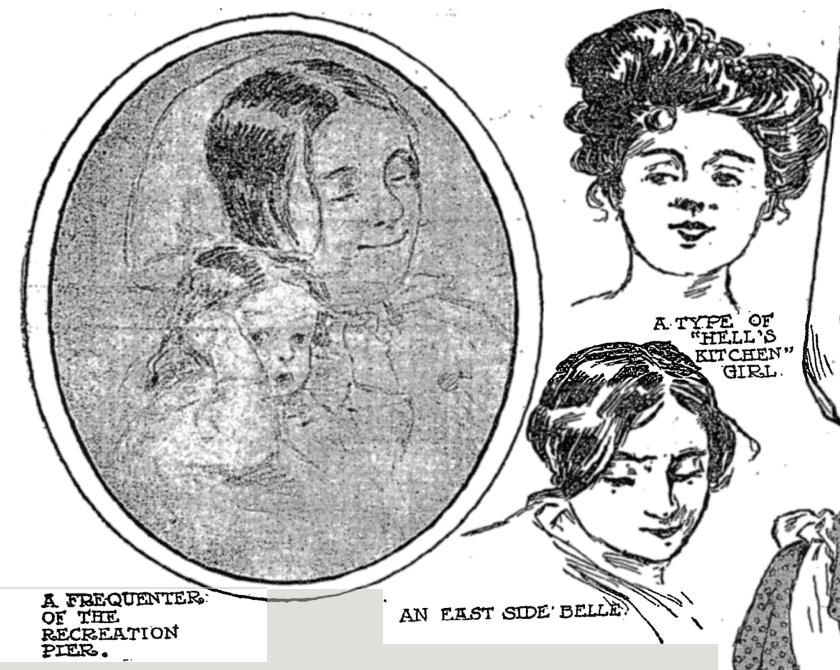
An illustration from the New York Times, June 25, 1905:

times


The piers provided a well-policed safe space for poor families, abundant cross breezes, and floating pools and swimming holes for those looking to escape the heat. Many of them regularly provided food vendors, musicians and even street performers, allowing city dwellers to enjoy the illusion of a short vacation getaway.

While no liquor was sold at the pier, many did their best to smuggle it past the watchful eye of the police officers.  “Flirting and open love making are prohibited,” warned the Times, “Smoking is not. A youth may puff away on his cigarettes, and a man may smoke as vile a cigar as he pleases, anywhere he pleases.”

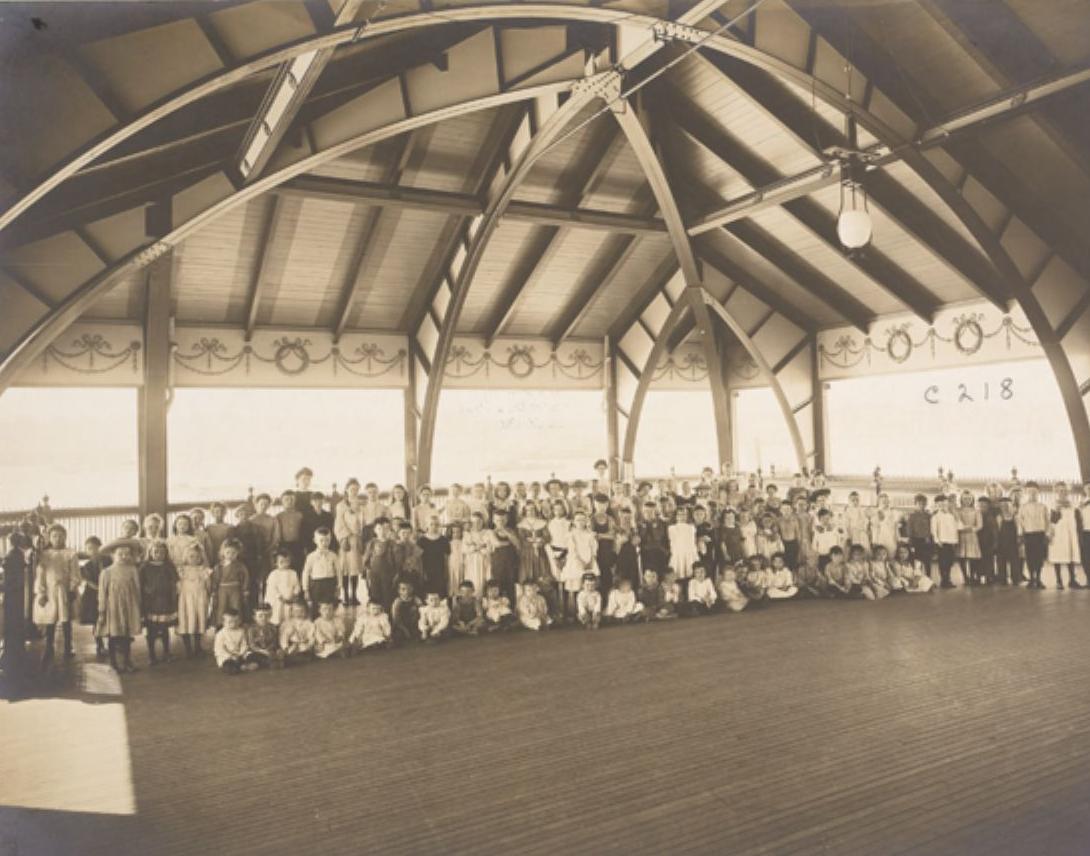
Below: Children on the Hell’s Kitchen pier, 1903

Courtesy Harvard Libraries


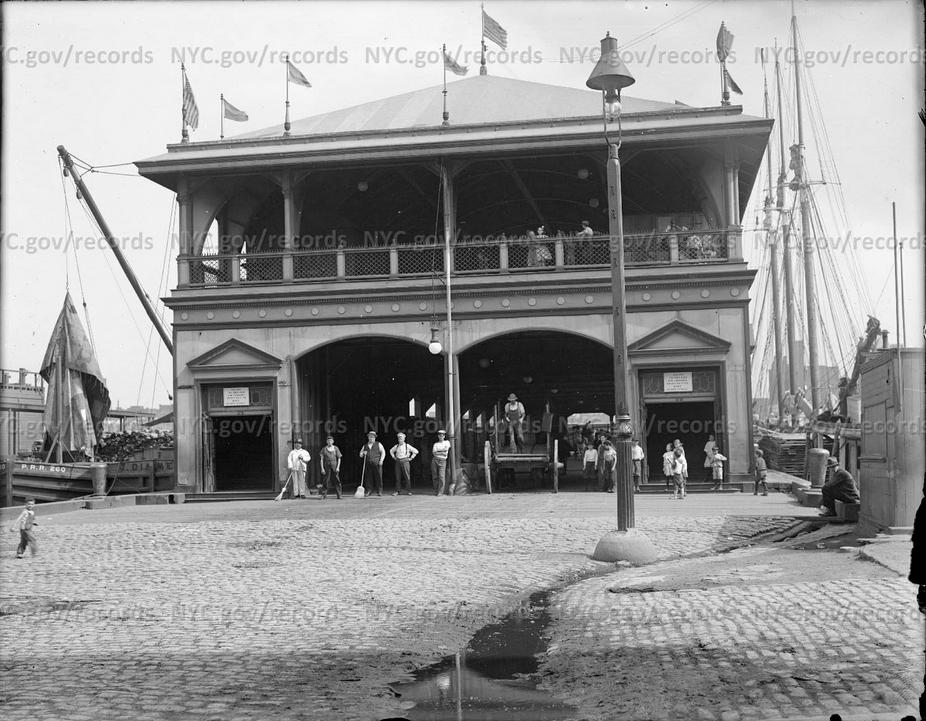
The Third Street pier provided immediate relief for residents of the Lower East Side.

“That long, low building jutting out into the water changed the ending of Third Street from a sandy, ugly refuge for crap playing boys into a breathing place for thousands of dwellers in the tall tenements all around.  It is still sandy and ugly, away from the pier itelf, but there is lots of fun going on, and when you are tired of looking shoreward there is the river, with its endless excitement.” [New  York Tribune, 1901]

Below: The Third Street pier. According to the signs over the door: “Dancing on this Pier for Children from 3 to 5pm Daily Except Sunday”

Department of Records


The piers were also popular spots for young lovers at night, the open air and the river traffic providing a bit of romance and mystery. The Harlem pier at 129th Street seems particularly enchanting as it was far from the center of the city and its bright, distracting lights.

“When the moon is shining the scene along this garden spot of the Hudson is not to be equaled anywhere around New York. There is nothing of the bustle of the city up here.” [source]

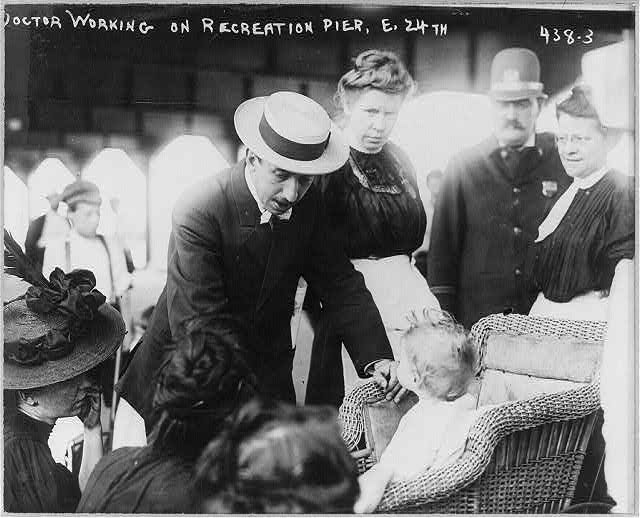
The city took advantage of the piers’ popularity with tenement dwellers in order to provide medical and social services. In 1912 ‘clean milk dispensaries’ provided mothers with free milk for their babies.  Below: a doctor inspects a young baby at the East 24th Street pier.

Library of Congress
Library of Congress

Not to be a buzzkill, however, but most of the piers were hardly secluded from the regular activities of the busy city. The Hell’s Kitchen pier, which opened in 1900, was perfumed with smells from the trash dump two piers away, not to mention flecks of filth from the neighboring ash dump. And crossing the busy avenue just to get to the pier was somewhat of a task.

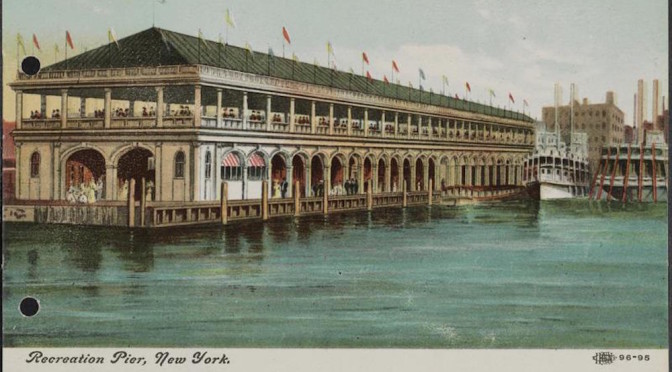
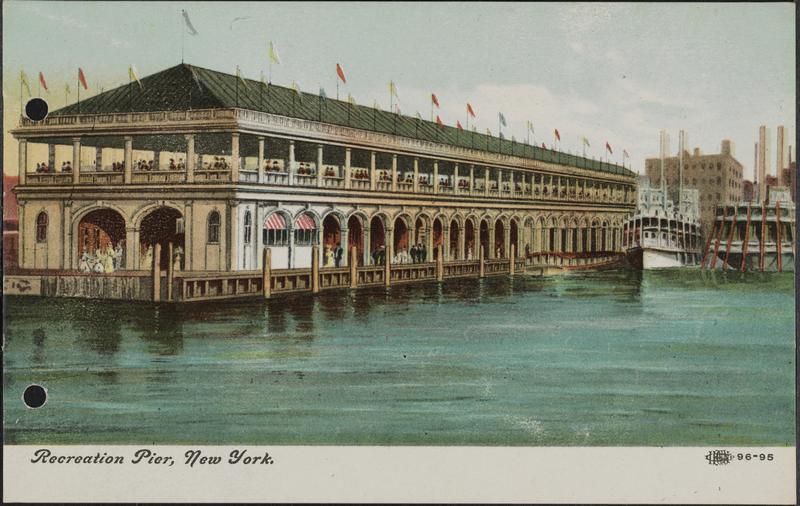
Today’s network of waterfront spaces in New York City are certainly more accommodating and convenient than these old piers, but I can’t help but wish one or two were still around, especially if they looked like this:

Courtesy the Museum of the city of New York