Categories
Landmarks Pop Culture Side Streets

The New Storytellers: Landmarks, Diners and Everyday New Yorkers

Instead of looking back to the history of New York City in this episode, we are looking forward to the future — to the new generation of creators who are celebrating New York and telling its story through mediums that are not podcasts or books.

Today we are honoring all the historians, journalists and photographers who bring New York City to life on social media platforms like Instagram. 

There are a million different ways to tell a good story and the guests on today’s show are doing it with photography and short films, exposing new audiences to the best of New York City – its landmarks, its people, even its diners.

Featuring interviews with three of our favorite creators:

Nicolas Heller, aka New York Nico, the “unofficial talent scout of New York City,” the filmmaker and photographer who manages to capture the magic of the city’s most interesting and colorful characters

Riley Arthur, aka Diners of NYC, who explores the world of New York City diners, great and small, in hopes to bring awareness to many struggling local businesses

Tommy Silk, aka Landmarks of NY, who shares illuminating photos and videos featuring the city’s most interesting and sometimes overlooked architectural gems

Featuring stories of the Neptune Diner, the Green Lady, the Little Red Lighthouse, Junior’s Cheesecake, Tiger Hood and City Island

LISTEN NOW: THE STORYTELLERS OF INSTAGRAM


… and a short film featuring Tiger Hood!


Categories
Bridges

The story of ‘Painters On The Brooklyn Bridge’

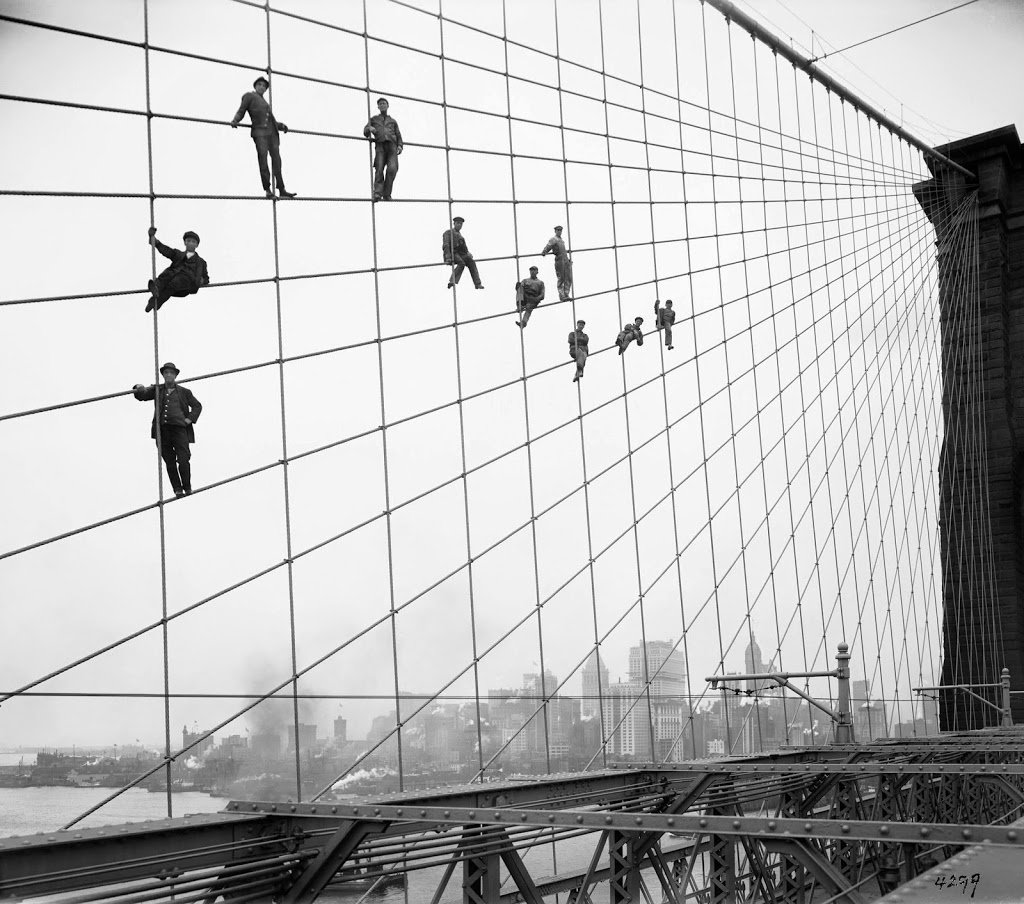
The photograph above (officially called “Brooklyn Bridge showing painters on suspenders”) is perhaps the best-known image taken by Eugene de Salignac, a city employee who took municipal photography of most major New York structures during the early 20th century.

His work had never appeared in a gallery until 2007, almost 65 years after his death.

His exquisite eye rendered otherwise ordinary shots with a captivating grandeur; this was certainly beyond the call of duty of his responsibilities for the Department of Bridges (later named the Department of Plant and Structures) for which he worked from 1906 to 1934.  

In all, it’s estimated the city owns about 20,000 glass-plate negatives taken by de Salignac.

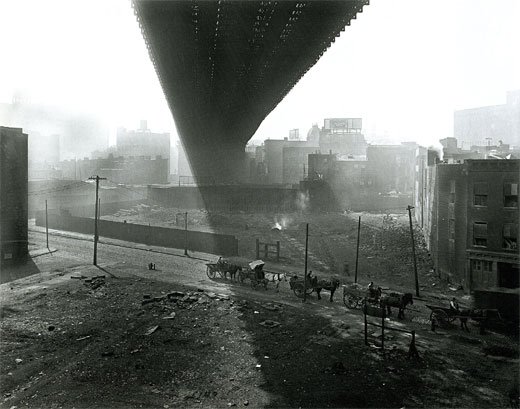
Another striking view of the Brooklyn Bridge, taken by de Salignac on May 6, 1918. / Municipal Archives of the City of New York

On September 22, 1914, de Salignac headed to the Brooklyn Bridge to observe workers painting the bridge’s steel-wire suspension. Perhaps a bit inspired by modern artistic photography of the day, the normally workaday photographer returned to the bridge a couple weeks later, on October 7.

To quote Aperture: “The image was obviously planned, as evidenced by the relaxed nature of these fearless men who appear without their equipment and are joined, uncustomarily, by their supervisor.”

It was, generally speaking, an unspectacular day for the 31-year-old bridge.

It’s believed that the original color of the Brooklyn Bridge was ‘Rawlins Red’ although by this time, the vibrant color might have been replaced with the less dramatic ‘Brooklyn Bridge Tan.’  

Can you imagine what this image would have looked like in color?

I would like to think de Salignac took some inspiration from photographers like Paul Strand who were beginning to see New York City as a set of geometric abstracts.  

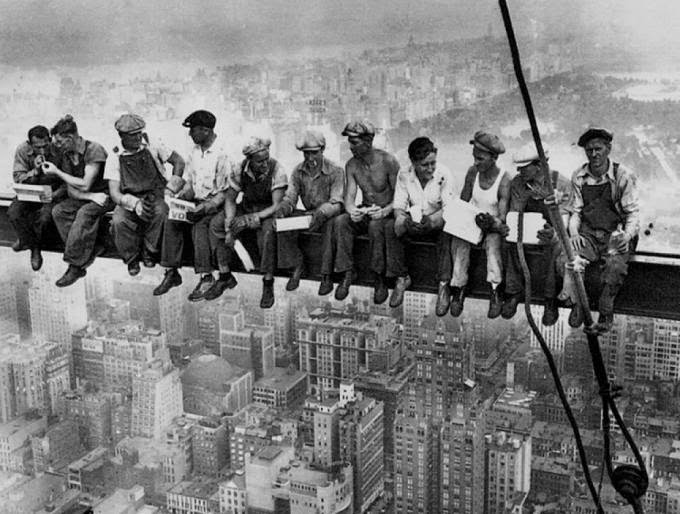
The spirit of this photograph echoes into the work of Berenice Abbott and especially Charles C Ebbets. In 1932, while de Salignac was still employed by the city, Ebbets was hired by Rockefeller Center to document the construction of the RCA Building.

In one photo, workers were posed in a way that eventually became quite iconic:

Most likely, none of those other photographers saw de Salignac’s Brooklyn Bridge picture.  It was essentially lost among the thousands of archives pictures until the 1980s.  

For his first film for PBS, Ken Burns used the photograph  in his Brooklyn Bridge documentary which went on to snag an Academy Award nomination.  In 2007, de Salignac was belatedly honored with an exhibition at the Museum of the City of New York.

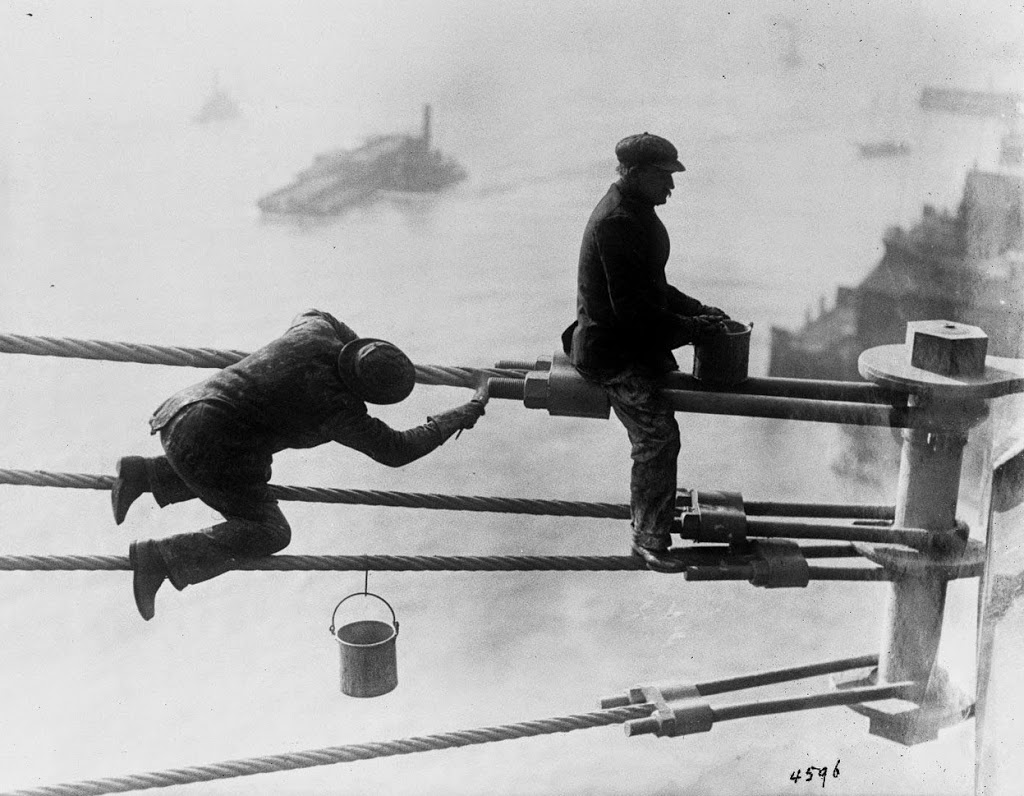
 De Salignac returned to the bridge to several times to catch more workers in the act of maintaining the bridge. Such as this photograph the following year:

Want to get lost for an hour or so? Check on the New York Municipal Archives vast trove of Eugene de Salignac photographs directly.

**This famous picture Lunch atop a Skyscraper was attributed first to Lewis Hine, then to Charles C Ebbets. Thank you to Michael Lorenzini for pointing this out!

Top photo courtesy New York Municipal Archives. Hine photo courtesy the George Eastman House

Categories
Podcasts Science

The First Woman Ever Photographed: Light and Magic in Greenwich Village

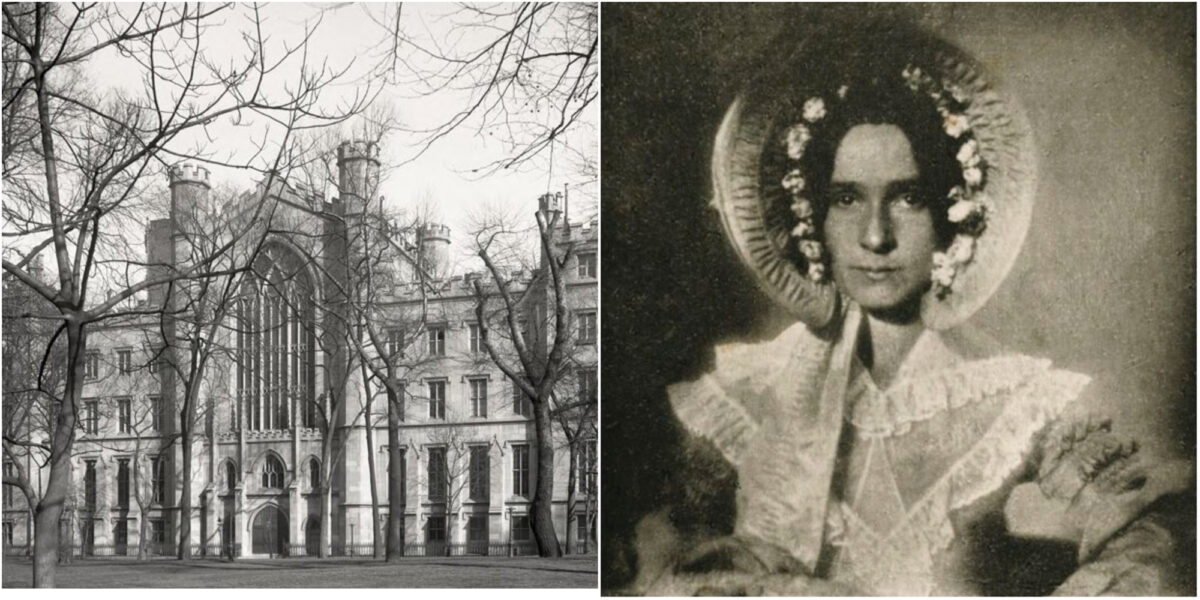
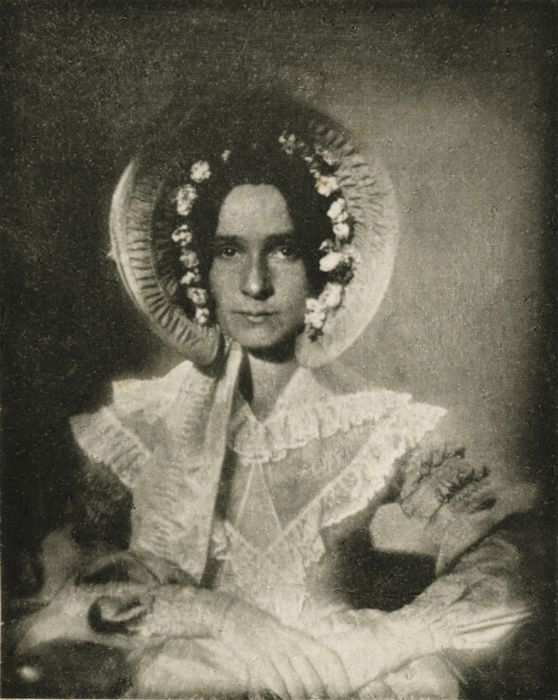
Dorothy Catherine Draper is a truly forgotten figure in American history. She was the first woman to ever sit for a photograph — a daguerrotype, actually, in the year 1840, upon the rooftop of the school which would become New York University.

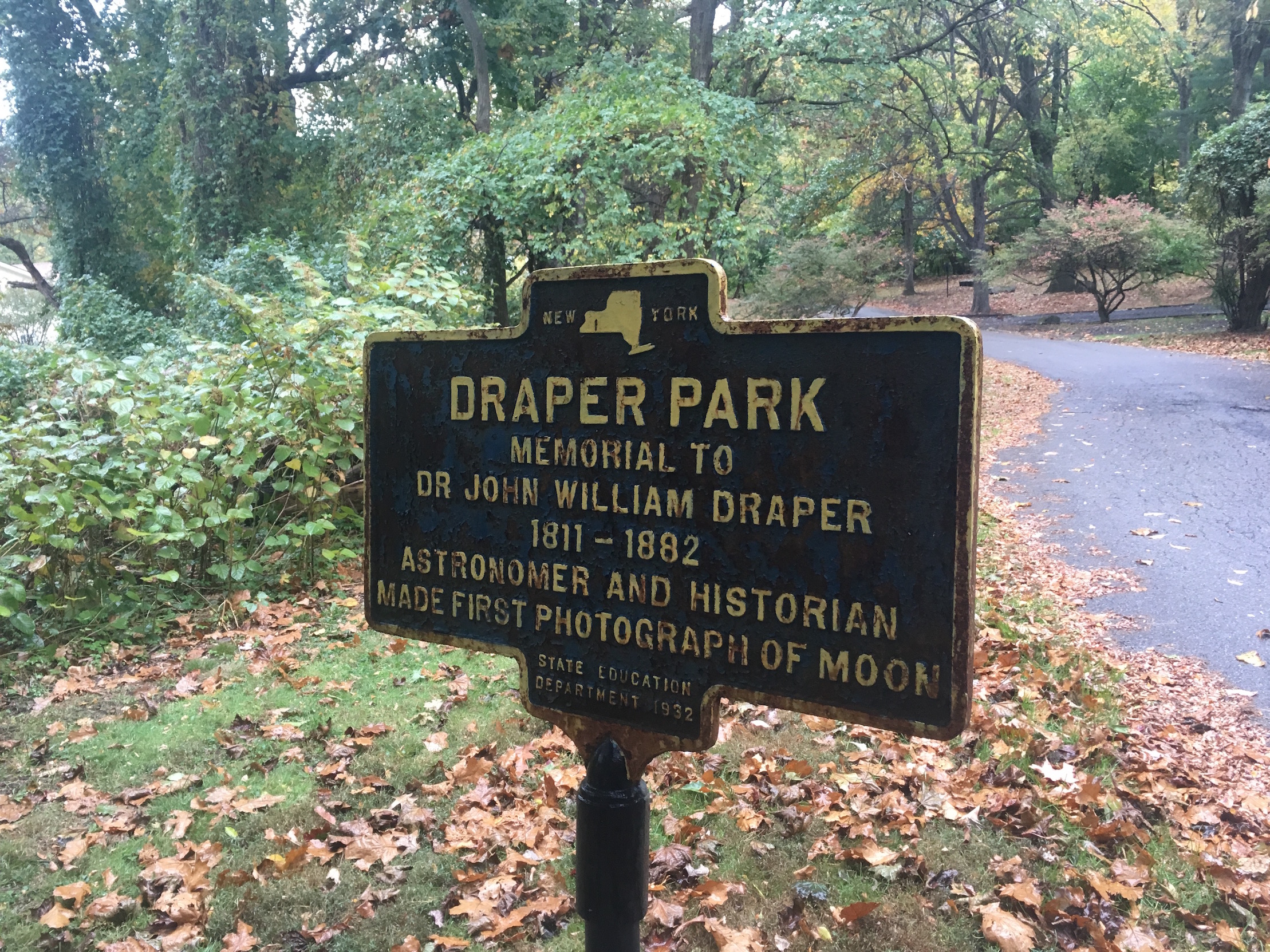
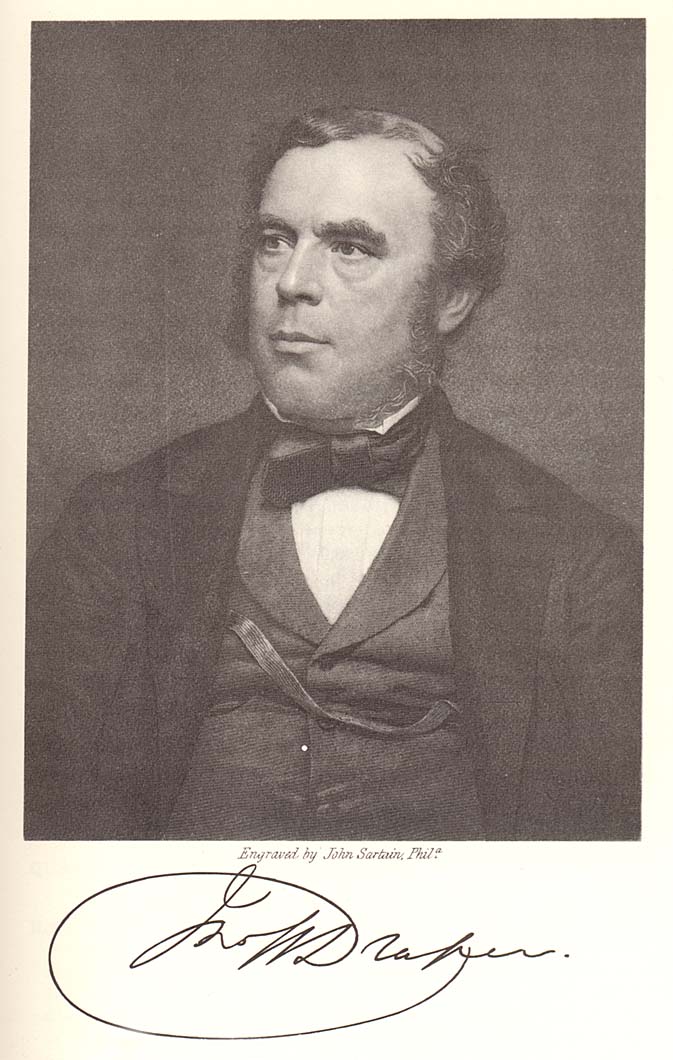
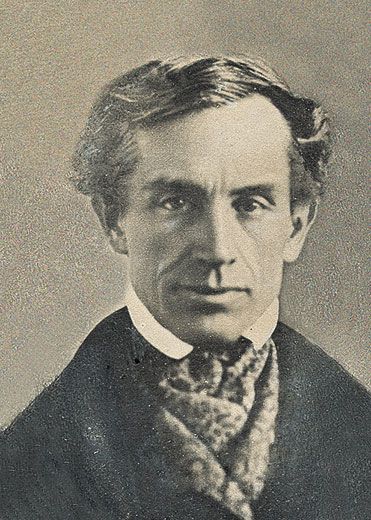
The circumstances that got her to this position were rather unique. She was the older sister of a professor named John William Draper, and she assisted him in his success and fame even when it seemed a detriment to her. The Drapers worked alongside Samuel Morse in the period following his invention of the telegraph.

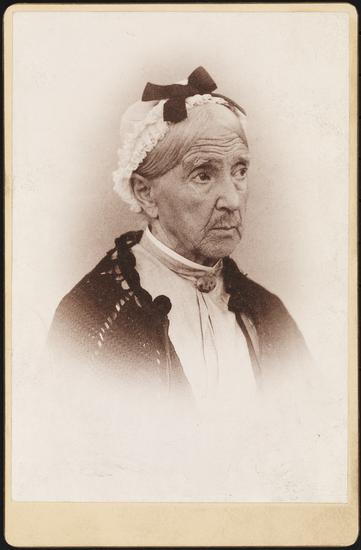
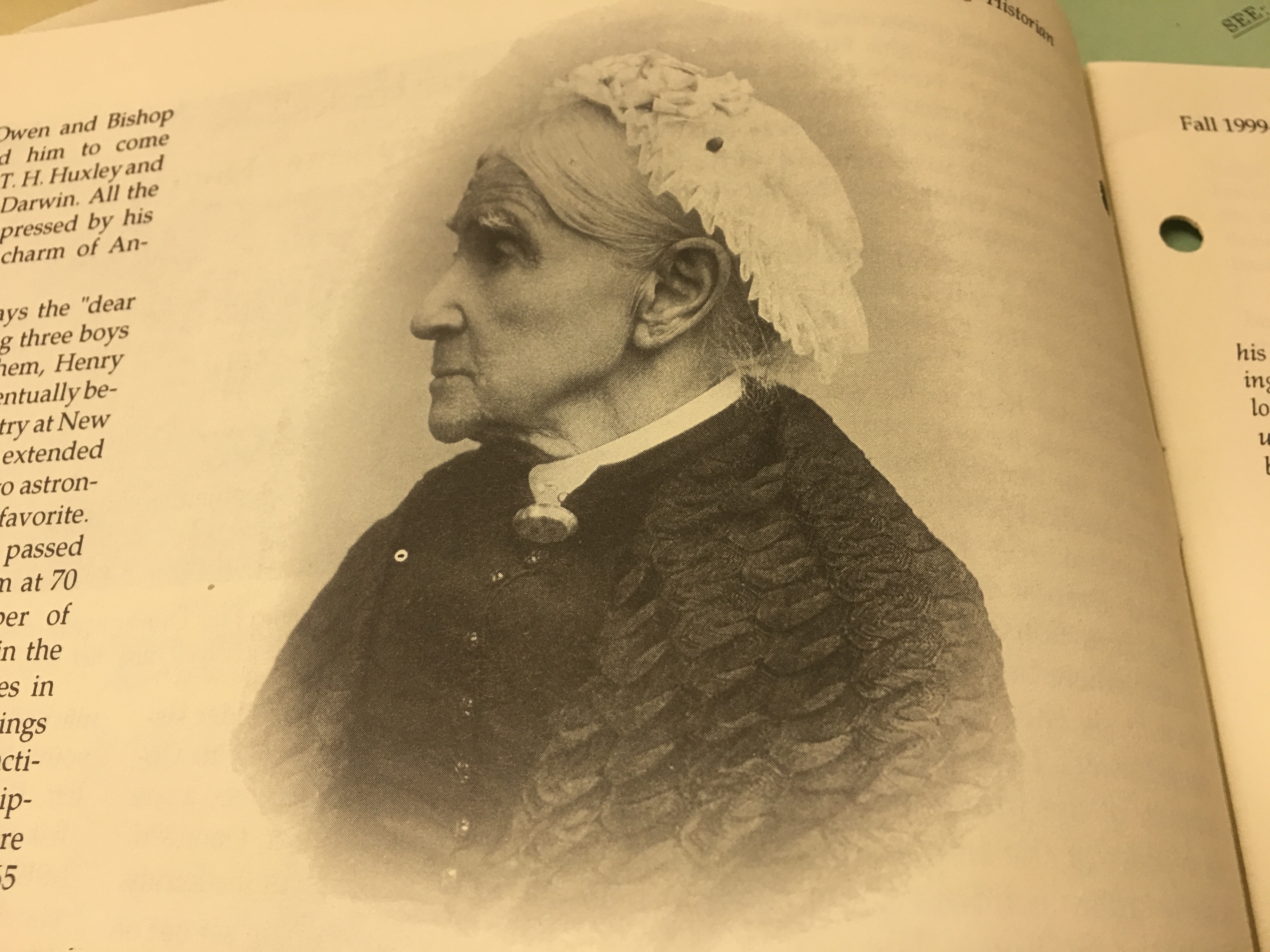
The legendary portrait was taken when Miss Draper was a young woman but a renewed interest in the image in the 1890s brought the now elderly matron a bit of late-in-life recognition.

LISTEN NOW: THE FIRST WOMAN EVER PHOTOGRAPHED

This episode originally appeared on Greg’s podcast called The First which had a respectable run a few years ago. The feed for that show will be going away soon so we wanted to present some of that show’s greatest hits over the next few months, in between regular episodes of the Bowery Boys as bonus stories about American history. 


For information on how to visit the Draper homestead, head over to the website for the Hastings Historical Society. And the site is right off the Old Croton Aqueduct Trail which we visited in a show last year. So why not make a day of it?


Dorothy Catherine Draper in the first portrait photograph ever taken (no previous test examples survive) and the first photograph of a female face.

0be0180aa76e52586e67797680b89ee5

Draper in the 1890s, in a photograph taken by her nephew.

Courtesy MCNY
Courtesy MCNY
img_0525

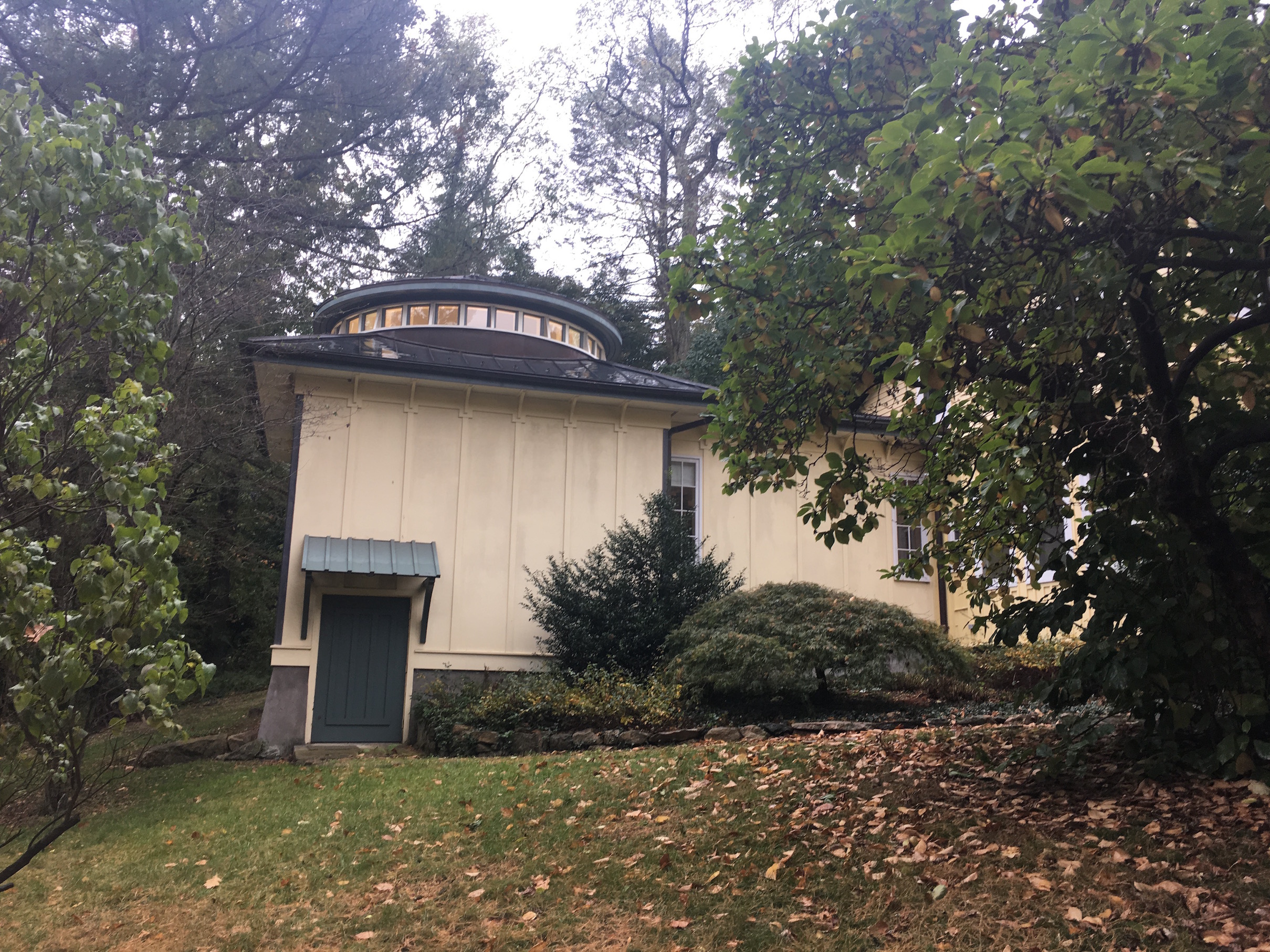
The observatory attached to the Draper house in Hastings-on-Hudson.

img_0594
img_0518

John William Draper

p9110001_draper_wilsons_1911-06

Samuel Morse from an image taken of him in Paris.

da142b45203a85238f92290d1938f560
Categories
Planes Trains and Automobiles

New York City from the sky: The first aerial photographs

One hundred and nine years ago this month, a tiny airplane made history over the waterways of New York City.

These weren’t the first flights over the city — those had occured in the fall of 1909, during the Hudson-Fulton Celebration — or even the most daring or most publicized. (Aerial competitions like the Great Gimbels Air Race of 1911 might take those titles.)

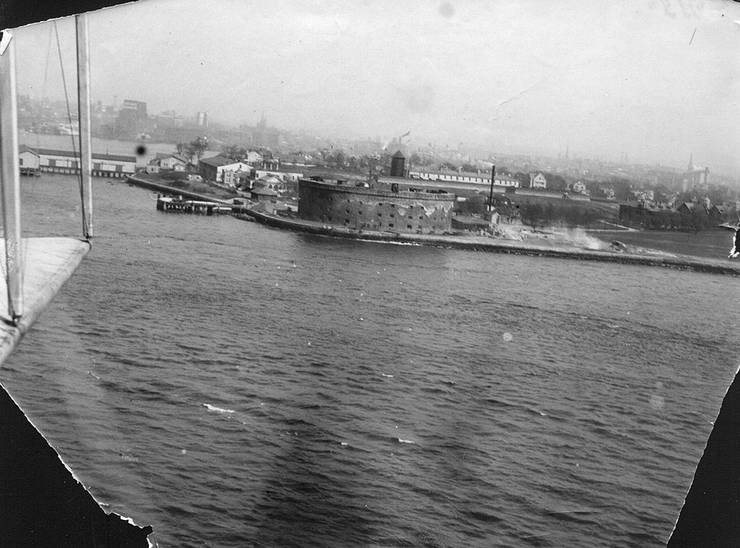
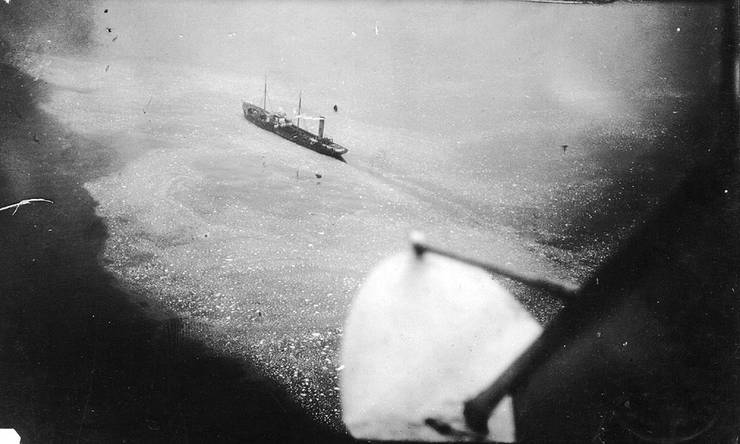
These flights, which took place in February and March of 1912, were important not only due to the bravery and braggadocio of the pilot, derring-do Frank Coffyn, but because of his companion — American Press Association photographer Adrien C. Duff.

Duff is responsible the very first photographs and the first ever film of New York City — from overhead, taken by an airplane.*

And in taking these photographs, this also makes Duff the very first airplane passenger over New York Harbor.

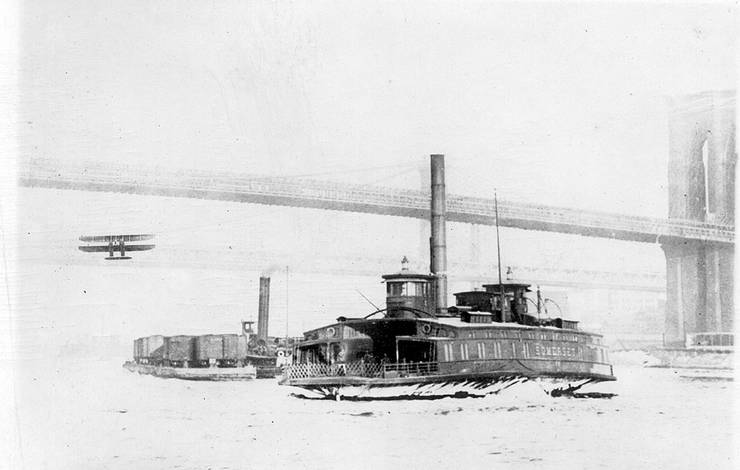
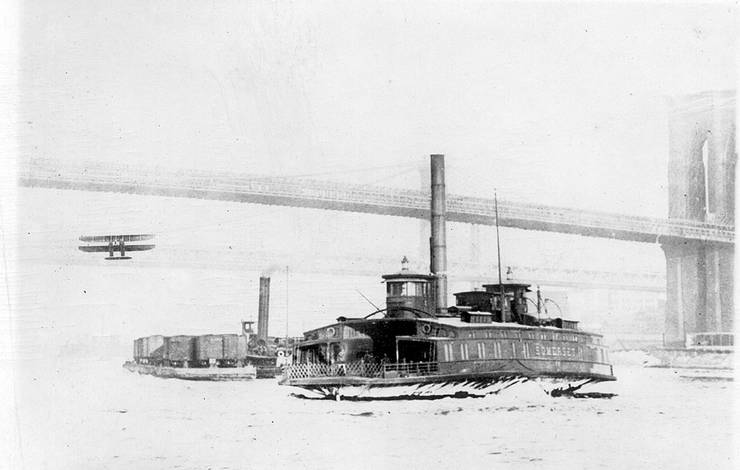
Frozen flight: Frank Coffyn sails underneath the Brooklyn Bridge and above the East River during the dead of winter. 

First In Flight

Coffyn, a former Wright Brothers employee, accepted the offer of Brooklyn film studio American Vitagraph to figure out a way of snapping images of New York from above.

This was a tricky task to be sure in 1912. Manned flights had only been invented by his former employers a few years previous. Planes had to be very light and until that moment could only carry the pilot and necessary equipment.

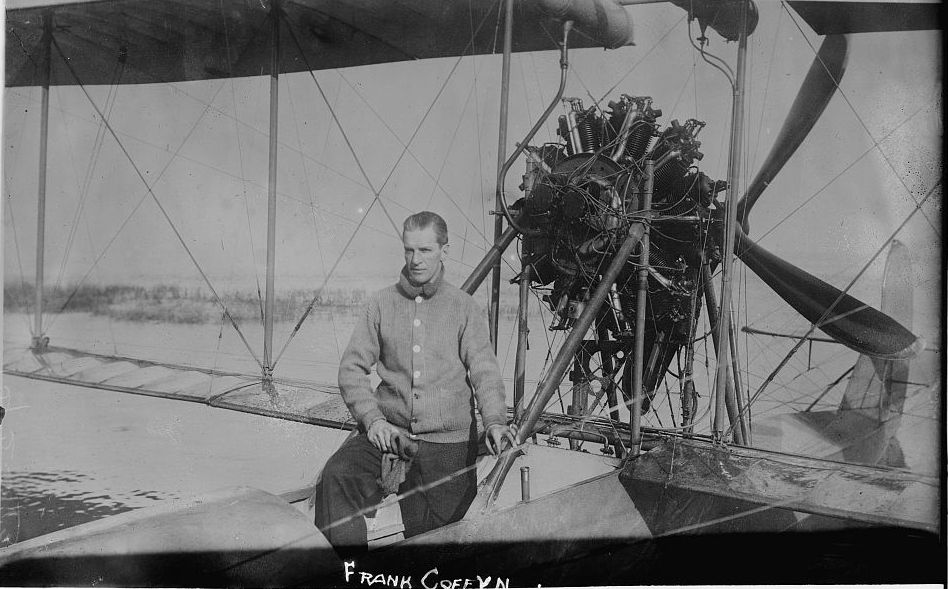
Below: Frank Coffyn, in a picture with a Wright Bros plane in 1911 (Photos courtesy Library of Congress)

Even trickier, Coffyn wanted to lift off from the harbor directly and not from the icy landing strip based on Governors Island. To that effect, he furnished his plane with pontoons, allowing it to float upon the unfrozen shoreline.

The Sky’s The Limit

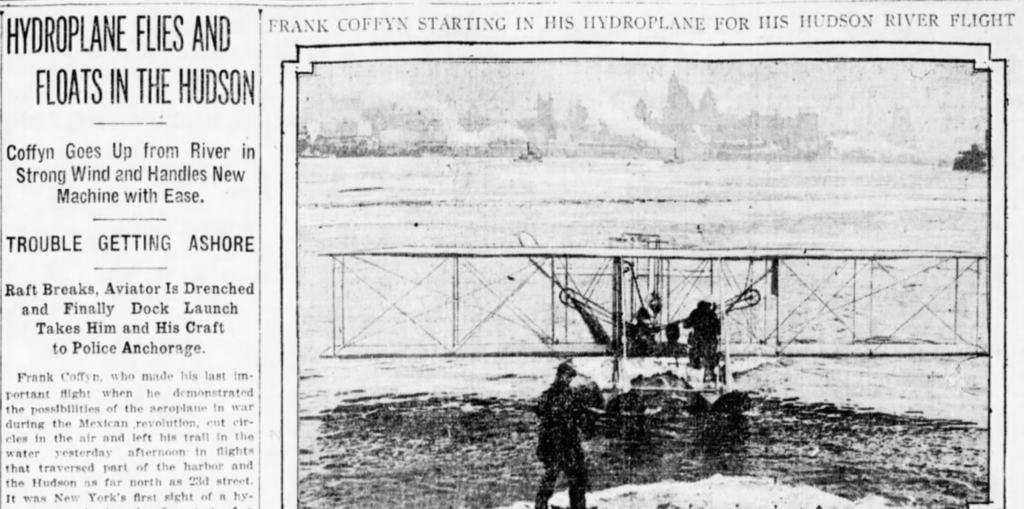
His first successful flight skimming off, and then above, the Hudson River was on February 6, 1912, “proving that the aeroplane …is also a near cousin of the mudhen or the duck,” according to the New York Times.

New York Tribune, Feb 7, 1912

He continued to make successive flights over the next few weeks, this time from the shore of the Battery and up the East River.

On February 13, 1912, he became the first pilot to fly underneath the Brooklyn Bridge, so low that he reportedly felt the smoke from a passing tugboat.

As a May 1912 edition of Metropolitan Magazine put it: “In February New Yorkers saw Frank T. Coffyn with his Wright hydro aero-plane travel over the surface of the half-frozen river, maneuvering in the water like a motor-boat, skating on the ice at top speed — then rise in the air over the ferryboats, under and over the bridges and around the Statue of Liberty.

Better Than A Postcard

But it was one particular flight on February 8th that is of historic significance.

For he was joined on this flight this time by Duff, the ‘swashbuckler of the camera’.

During the short flight, Coffyn took Duff from the Battery past Governors Island, over the ships of the harbor, around the Statue of Liberty, then back to Manhattan.

Duff was actually strapped onto the lower wing, with his legs dangling off the side of the plane! Both Coffyn and Duff were frozen to the bone by the time they landed.

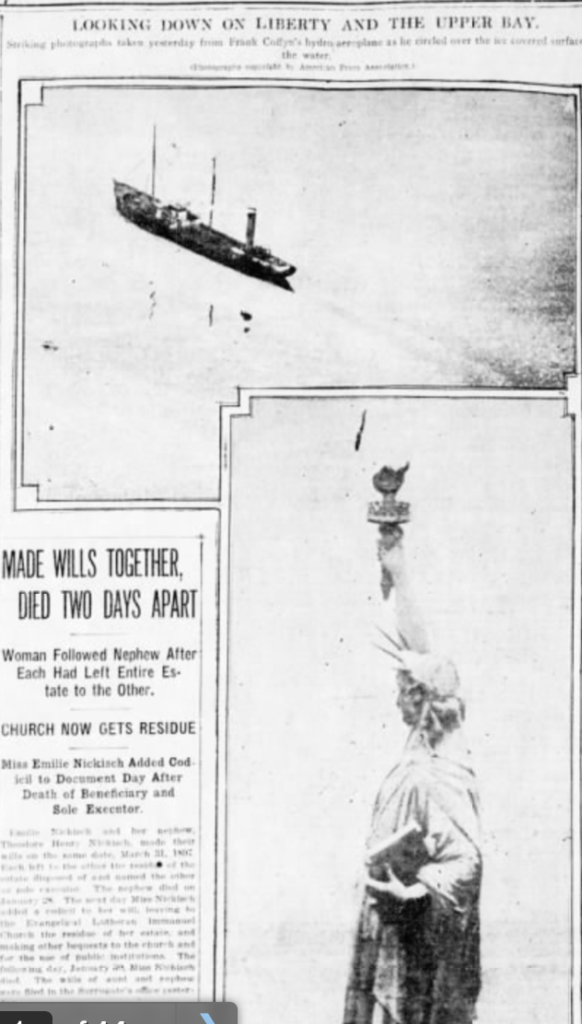
Duff took nine photographs in all, of which only a few were usable. This article features the best of Duff’s pictures, and the first ever taken of New York from the sky.

Below: The first appearance of the photo above in a newspaper, the New York Tribune, Feb 8, 1912. (courtesy Newspapers.com)

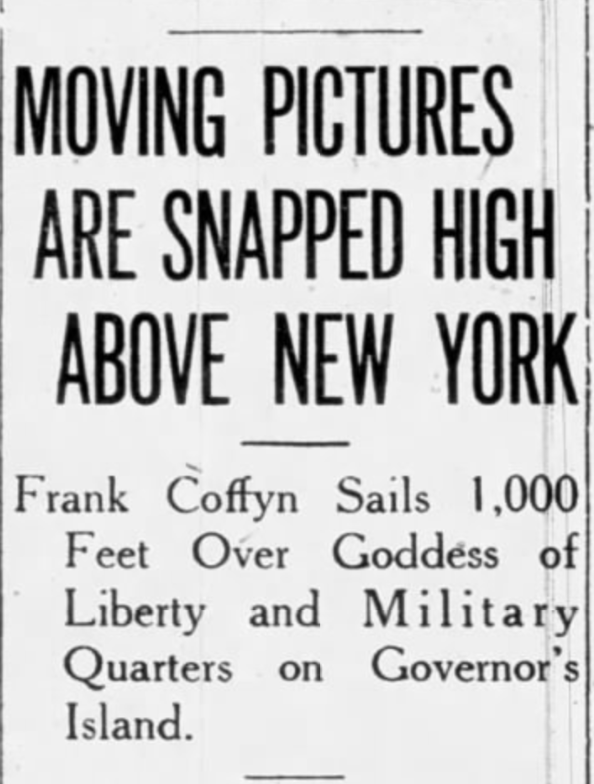
Coffyn eventually fulfilled his original mission with Vitagraph, bringing Duff back on his plane on February 12th to operate the moving-picture camera and making the very first film overhead New York.

The footage is not the most vivid, partially because Duff’s hands became so cold that he could barely operate the crank-operated camera.

From the Buffalo Courier, Feb 13, 1912

Later on, Coffyn attempted to operate the camera himself. This proved to be less successful, as a couple days later, he dropped the camera into the East River. Vitagraph released the usable footage to theaters in April.

Here’s a newsreel incorporating some of Coffyn’s own footage and some great shots of him taking off from the Battery shore.

And whatever happened to Adrian C. Duff?

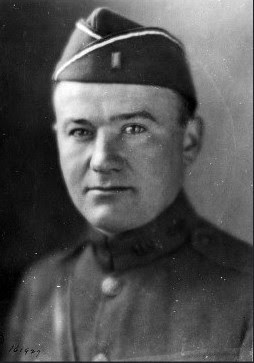
He took that sense of adventure, enlisted in the U.S. Army, and became a noted photographer during World War I. Here’s one of his more famous images.

Duff in 1918

He wrote of his exploits in a 1918 article for the Fulton Evening News. 

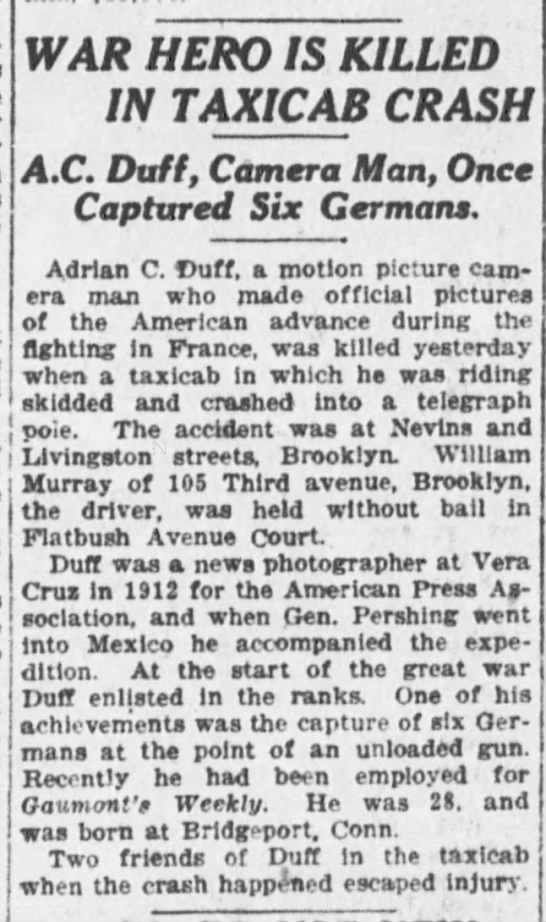
He survived the rigors of war only to die in a grim taxicab accident in Brooklyn on March 7, 1920. From the New York Times:

*There is actually ONE photograph older than 1912, taken from a hot air balloon in 1906. More about that here.

Read more about Duff’s life at Shooting The Great War. This article was originally published on this website on February 13, 2012.

Categories
Bowery Boys Movie Club

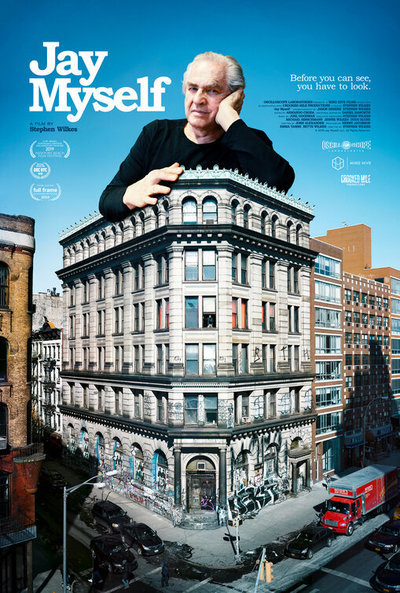
‘Jay Myself’: A new documentary invites you into the most magical address on the Bowery

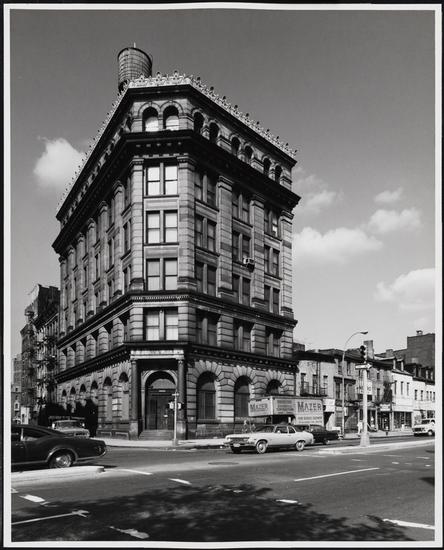
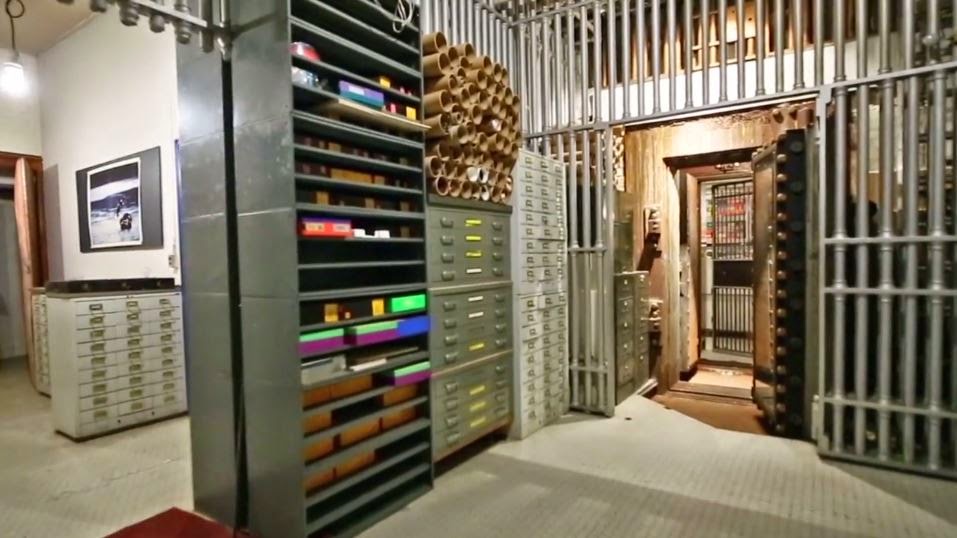
The allure surrounding the building at 190 Bowery has captivated me from the first moment I laid eye upon it, a century-old bank sealed off from the trendy streets surrounding it. Very few people ever saw the interior. Nobody could have imagined the strange treasures which collected on every floor, in every room, of the building.

Jay Myself
Directed by Stephen Wilkes
Oscilloscope Laboratories
Currently playing at the Film Forum

In the terrific documentary Jay Myself, the public is finally allowed in, at the very moment when its special charms are forced to vacate the building.

190 Bowery has been the home of renowned photographer Jay Maisel since 1966. During the period when artists began seeking unfinished lofts in the cast-iron districts that became SoHo and Tribeca, Maisel was instead made a most unusual offer — an empty six-story bank along a street famously known as ‘Skid Row’.

The Germania Bank Building in 1975. Courtesy Museum of the City of New York

For decades, Maisel filled each rooms with items he might use in his lush, colorful photographs. It wasn’t quite hoarding; rooms were meticulously arranged, lined with beautiful bottles, dye transfer prints and even a collection of porcelain hands from a rubber glove factory.

Few were allowed in to Maisel’s strange castle. Maisel’s former associate Stephen Wilkes, an acclaimed photographer in his own right and the director of Jay Myself, finally convinced Maisel to let him film the interiors of the home — but at a bittersweet moment.

An artist’s wonderland inside a former bank. Courtesy ISO1200

In 2015, Maisel sold the building due to mounting maintenance costs. (In 1966 he purchased the bank for $102,000; he sold it $55 million!) Jay Myself documents Maisel in the process of disentangling himself from an artist’s paradise.

If this were merely a film about mourning the past, it would work better as a photo essay. But almost immediately the film becomes a celebration of Maisel himself, both his incredible body of work — drenched in fascinating experiments in color — and his irascible personality.

Imagine the luxury of expanding yourself physically into a space, filling every corner with whims and potential visions. Then imagine dismantling it all, an era of imagination — if not quite over – at least reduced. (Even Maisel might admit that a healthy back account does offset the disappointment.)

It’s no surprise that he keeps working even as the final boxes were being removed. You’ll not want to leave either.

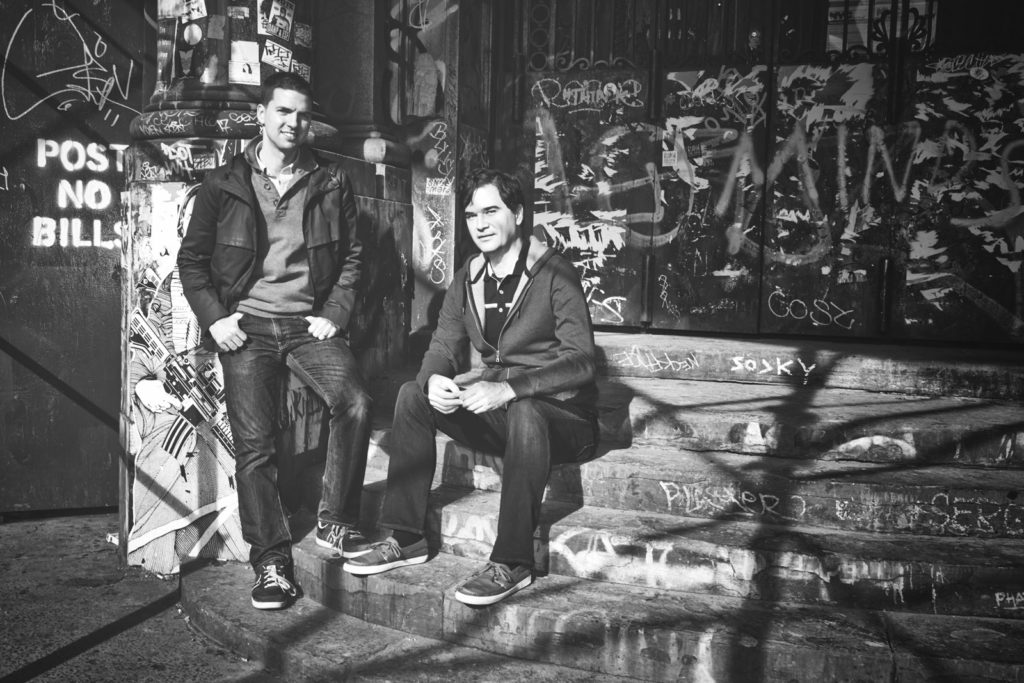
When Maisel still lived there, we took one of our old publicity photos on the steps of 190 Bowery!

Categories
Bowery Boys Movie Club

Eyes of Laura Mars: The glamour of 1970s SoHo

Join the Bowery Boys Movie Club! Support us on Patreon at any level and get these Patreon-exclusive, full-length and ad-free podcast. Each month we talk about one classic (or cult-classic) film that says something interesting about New York City.

In the new Bowery Boys Movie Club, Tom and Greg visit the year 1978 and a cult classic thriller starring Faye DunawayTommy Lee Jones and Raul Julia.

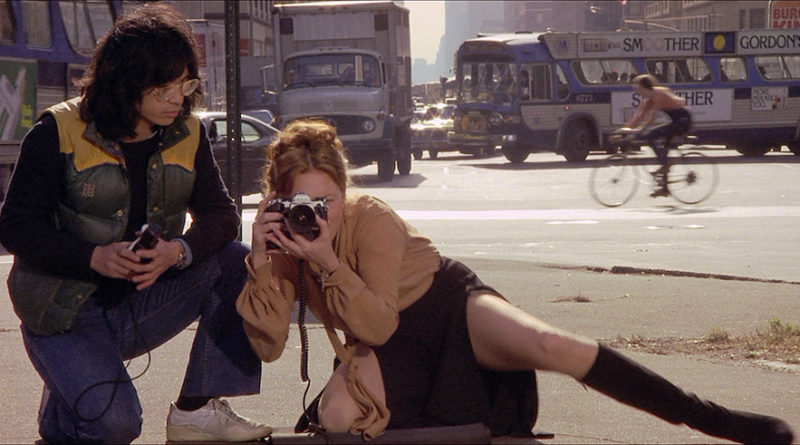
Eyes of Laura Mars presents the chic downtown art world of 1970s SoHo within a supernatural thriller involving a famed fashion photographer (played by Dunaway) and her psychic connection to a menacing killer. The thriller also takes us on a ride to Columbus Circle, the Christopher Street Pier and Hell’s Kitchen

Listen in as Greg and Tom set up the film’s backstory — Barbra Streisand was almost the star — then give a suspenseful synopsis through the film’s fun but implausible story line. And there’s disco music too!

Should you watch the movie before you listen to this episode? This podcast can be enjoyed both by those who have seen the film and those who’ve never even heard of it.  

We think our take on Eyes on Laura Mars might inspire you to look for the film’s many fascinating (but easy to overlook) historical details, so if you don’t mind being spoiled on the plot, give it a listen first, then watch the movie! Otherwise come back to the show after you’ve watched it. 

The film is available on Amazon Prime, among other services.

To get the episode, simply head to Patreon and sign up to support the Bowery Boys podcast at any level.

Categories
Bowery Boys Bookshelf Wartime New York

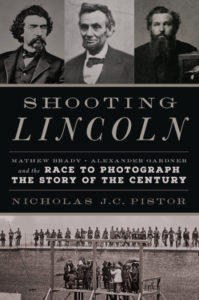
‘Shooting Lincoln’: The Complicated Story Behind America’s First Wartime Photographs

Alexander Gardner is a bit of a Nikola Tesla-like figure in American history in that his contributions were largely overlooked in his day, concealed within a partnership with a famous business titan.

That titan was Mathew Brady, the most famous photographer of the 19th century, with studios in New York and Washington D.C. that captured the nation’s most prominent figures in daguerrotype galleries and propelled the popularity of photographic images as the successor to painting and illustration.

SHOOTING LINCOLN
Mathew Brady, Alexander Gardner and the Race to Photograph the Story of the Century
by Nicholas J.C. Pistor
Da Capo Press

In Shooting Lincoln, the interesting if unusually titled new book by Nicholas J.C. Pistor, we see their partnership, developed in the tasteful parlors of respectable 1850s New York portrait galleries, wither and eventually dissolve during the American Civil War. And yet the pair, along with a legion of other intrepid young photographers, brought the realities of war into the rings of sheltered American society.

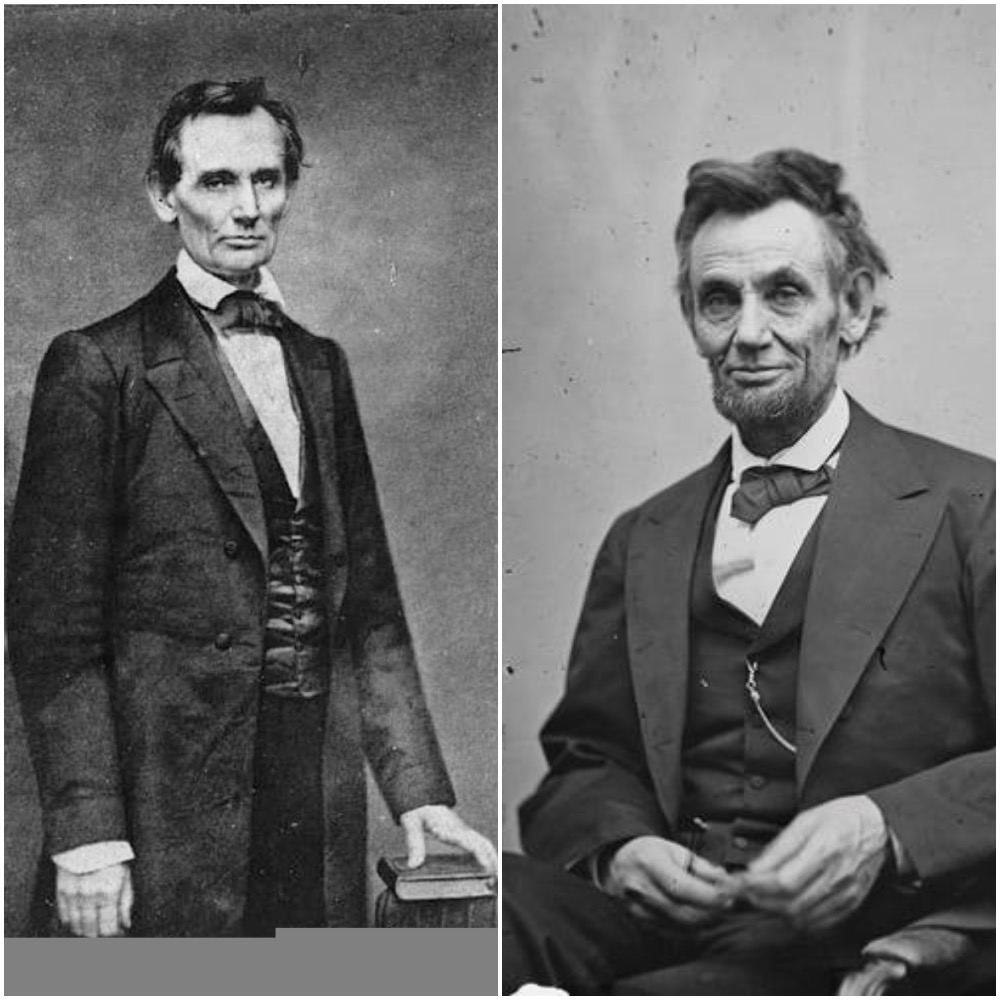
Abraham Lincoln first visited a Brady studio during the winter of 1860, posing for the famous portraitist hours before the seminal Cooper Union speech that would catapult him to his party’s nomination for the presidency. And yet the most famous images of Lincoln (including the Gettysburg portrait) were actually taken by Gardner years later, working first from Brady’s studio in Washington D.C., then from his own.

While Lincoln was not the first president to pose for portraits, he was the first to have his image defined by them — his face resolute, weary, wise. These images would be reproduced for sale and redrawn for newspapers, making the Lincoln the most recognizable human being on the planet.

Both Brady and Gardner took to the carnage-strewn backroads of America to photograph the scenes of war. Their images — a great many posed, a few even doctored — essentially created photojournalism as a defining method for distributing information.

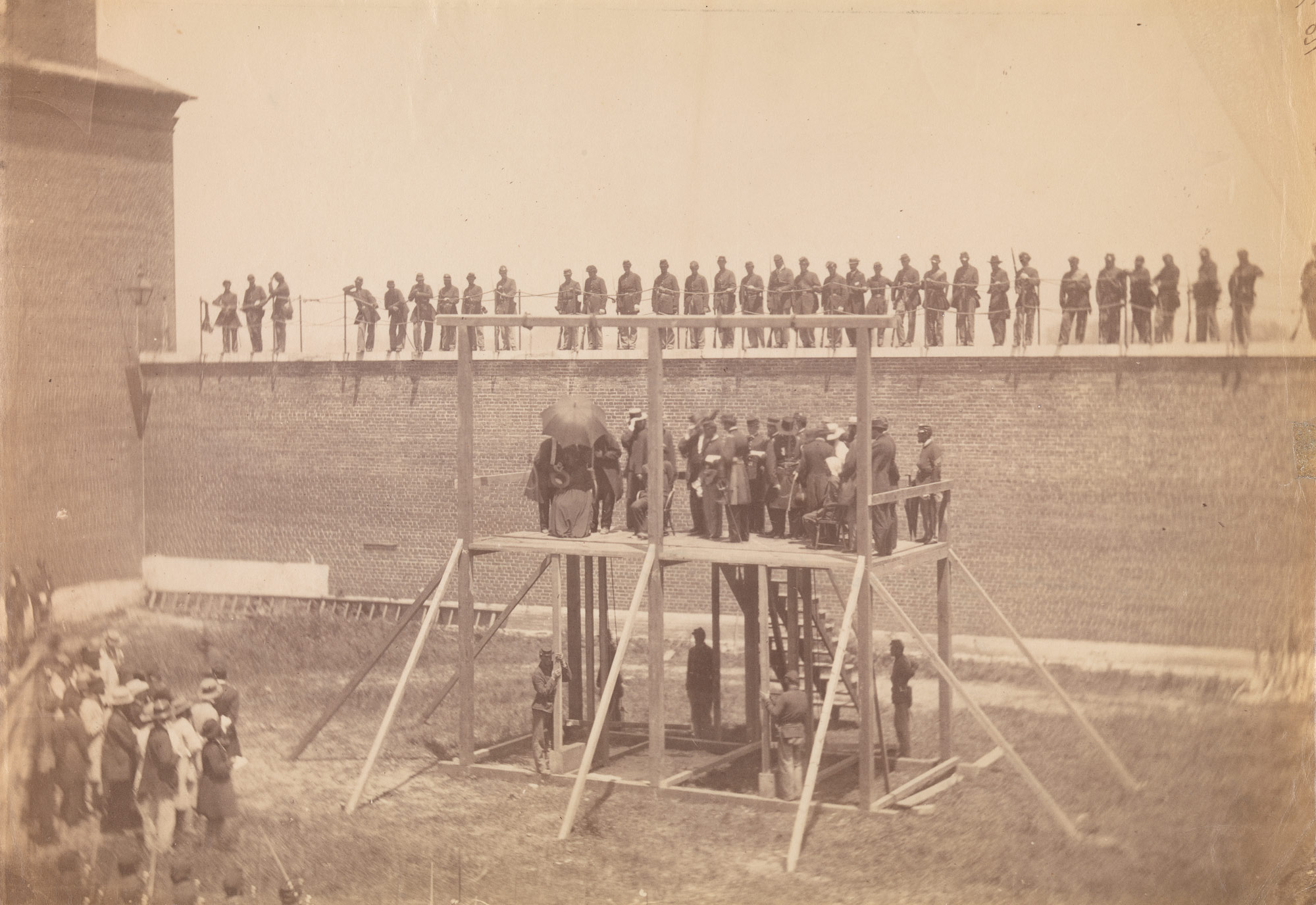
But it’s Gardner who was uniquely situated to photograph the tragic final strains of the war — the aftermath of Lincoln’s assassination and the execution of the conspirators (pictured at the top of this post).  Pistor reveals the many controversies in capturing these important images. These men were capturing history as none had done before.

Below: Lincoln by Brady and by Gardner

Categories
Newspapers and Newsies

Jacob A. Riis: The Power of the Flash

The daredevil antics of Nellie Bly (subject of our last podcast) proved that investigative journalism could prove a benefit to society while also selling stacks of newspapers (specifically, those of Joseph Pullitzer’s New York World).

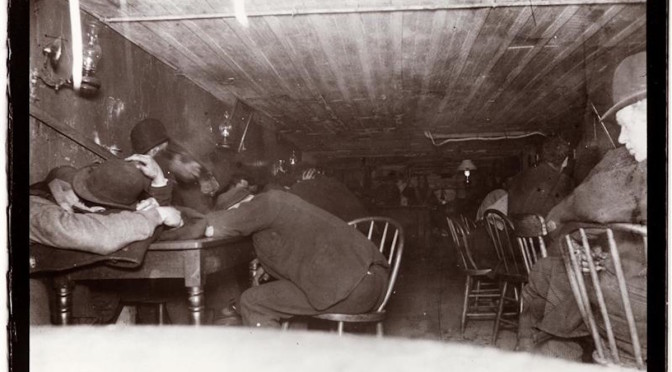
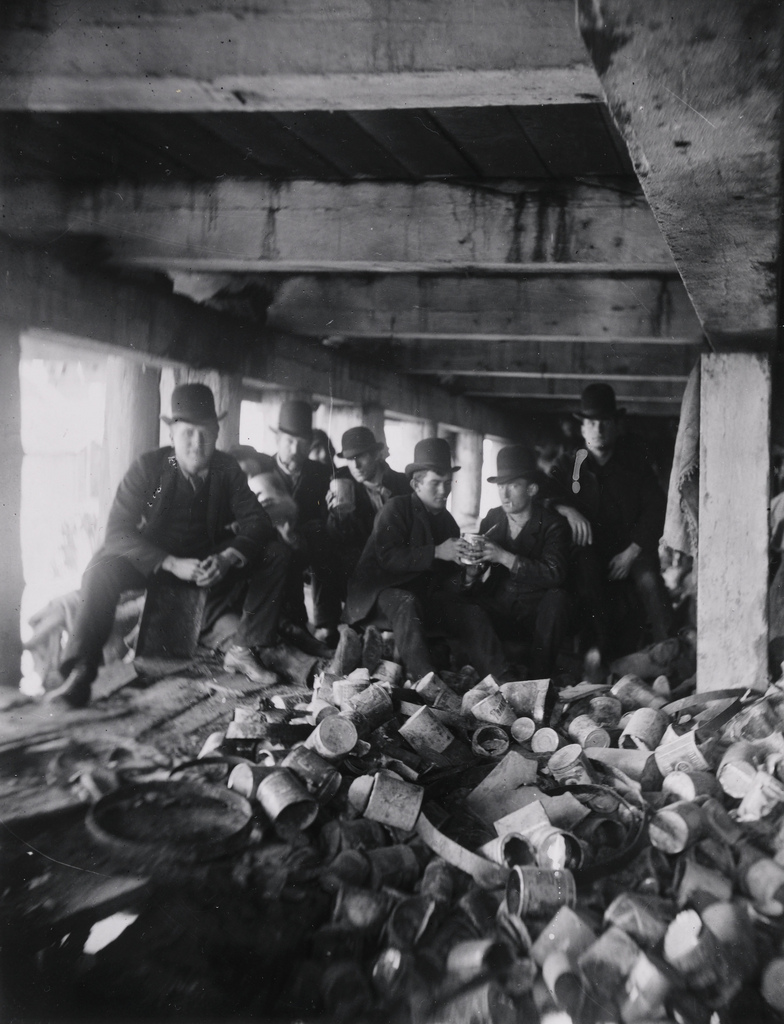
A few months after Bly’s trip to Blackwell’s Island, Jacob Riis published his first investigation for the New York Sun, revealing the wretched conditions of New York’s worst slum neighborhoods by employing an experimental technology — flash photography.  The startling pictures, by Riis and a team of other photographers, were at first rendered in line drawings, but the effect was nevertheless profound.

In the Museum of the City of New York’s fascinating new show on Riis — Jacob A. Riis: Revealing New York’s Other Half (on view until March 20, 2016) — we get to see his photos on an intimate scale, in original prints, stereographs and glass negatives, their subjects trapped forever in meager situations.

The pictures are more than social activism; they’re history themselves, the first flash photography ever to be used in this fashion. Riis was showing New Yorkers a vivid glimpse of poverty — orphans in the gutter, street gangs in the alleyway — using a technique that few were regularly exposed to apart from portraiture.

5389943368_0d7affb02e_b

Riis never considered himself a professional photographer. Later in his career, he even farmed out the photographic work to others as he focused on writing and social activism. And yet modern photojournalism wouldn’t really be what it was today without his first forays into slums, opium dens and beer halls with his bulky and costly equipment.  His early work influenced an entire field of social photographers seeking to prove the adage “a picture is worth a thousand words” (a phrase which debuted near the end of Riis’ lifetime),

With that in mind, it seems shocking that Revealing New York’s Other Half is the first museum retrospective of Riis’ work in over fifty years, culling from their own massive collection of photographs and papers from the Library of Congress and New York Public Library.  The show is complete but not over-crowded, starting with artifacts from his private life, then methodically spanning his career.

5389336131_c4873359a7_b

The Museum’s show also pays tribute to the 125th anniversary of Riis’ How The Other Half Lives, a landmark examination of New York’s lower classes which provoked many city improvements in housing and labor.

I was particularly taken with the original books and newspaper clippings of Riis’ work. We’re used to engaging closely with older photography, presented relatively largely and with the ability to study detail. But his first impactful images weren’t actual photos at all, but pencil engravings of his photos.  It would take many years after Riis’ debut for newspaper printing processes to effectively reproduce photographic images.

MNY31478

One very useful feature of the exhibit is a large map indicating the many locations in Manhattan from Riis’ photographs. He’s principally associated with the old Five Points neighborhood (mostly demolished due to work), but his work spans the entire island. In fact many of his most famous photographs were actually taken a short distance south of Five Points in the slum called Gotham Court.

You may be tempted to skip the exhibit’s final section — a slide-show lecture with a stern Jacob Riis-style voiceover — because it seems at first rather unpleasant. But in many ways, this is the best part of Revealing New York’s Other Half, a reenactment of Riis’ magic lantern show, the first illustrated TED Talks if you will, and the method in which he brought his messaging closest to the audience. The presentations were stark and eye-opening, not to mention stilted at times. But you can’t deny their effectiveness.


Jacob A. Riis: Revealing New York’s Other Half
October 14, 2015 – March 20, 2016
Museum of the City of New York
1220 Fifth Avenue (at 103rd Street)


Categories
American History

Life in New York City 1935-1945: Heavenly images from Yale University

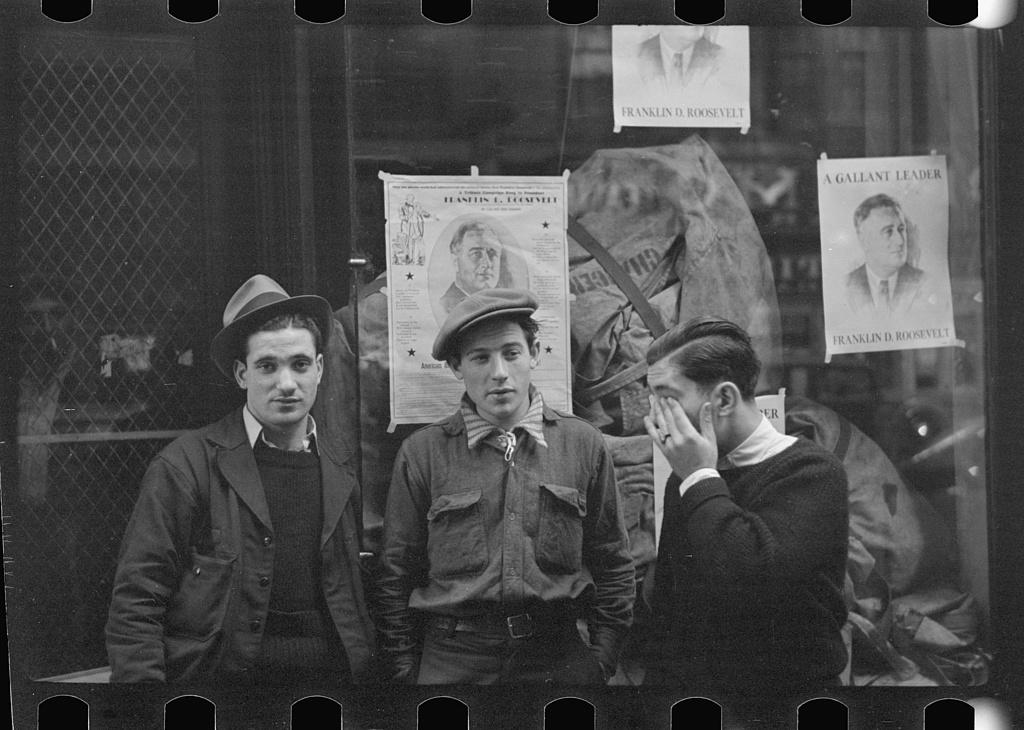
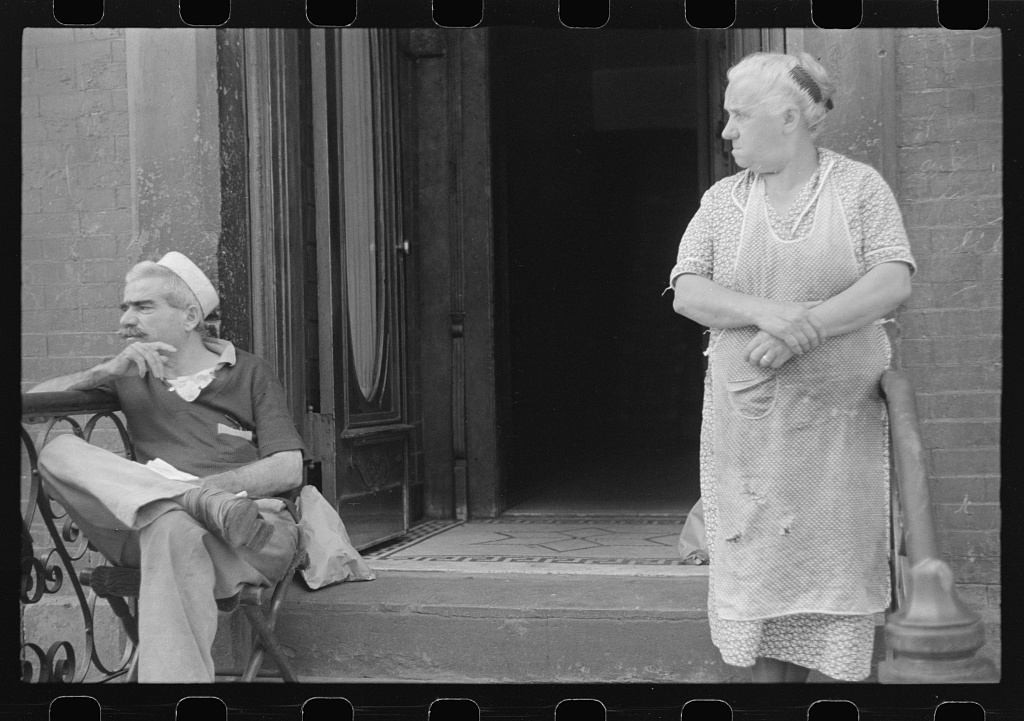
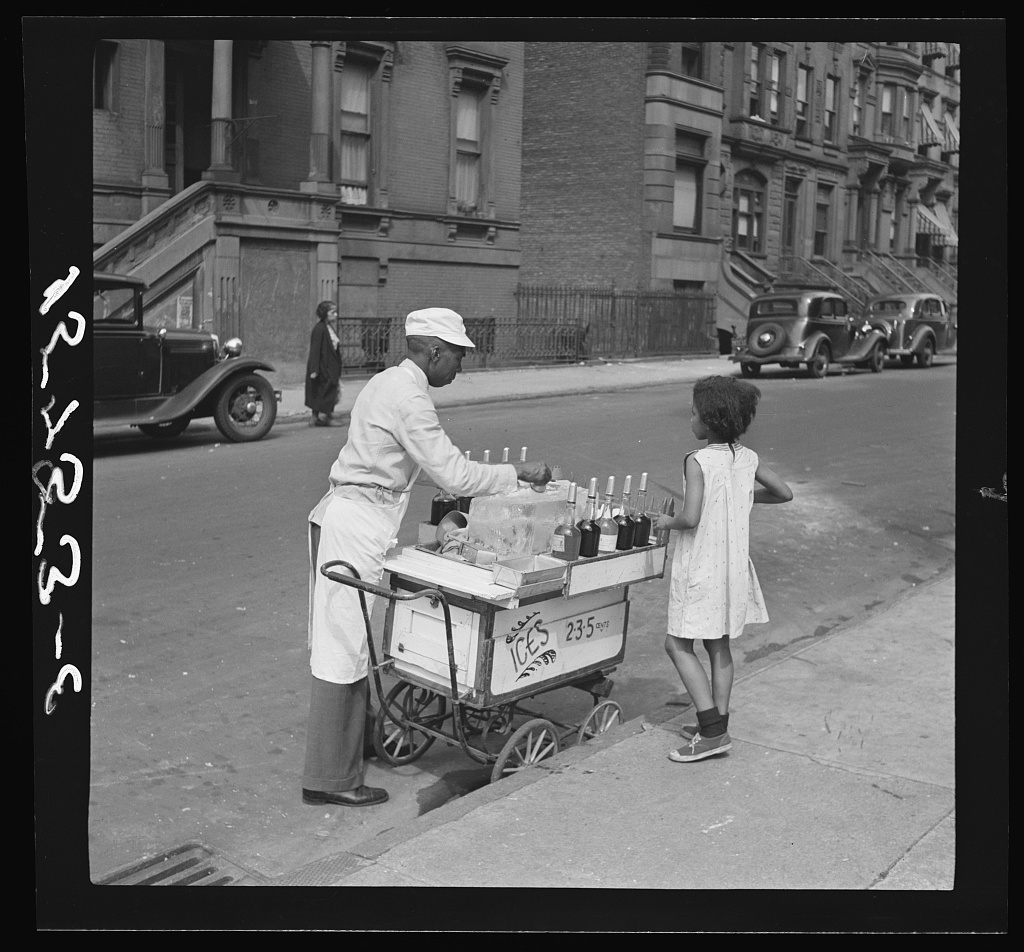
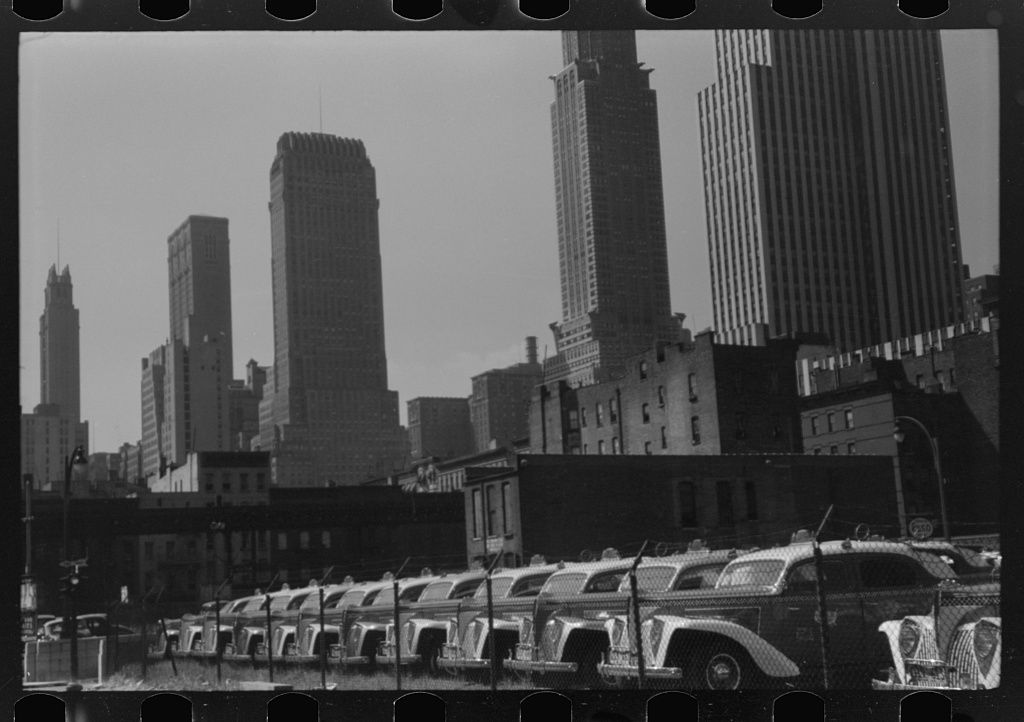
Yale University has sprung a beautiful present onto the Internet — a searchable database of over 170,000 public-domain photographs created by the United States Farm Security Administration and Office of War Information, documenting the aftermath of America of the Great Depression and World War II. The photos, dating from between the years 1935 to 1945, include of the greatest American photographers from the period (such as Gordon Parks, Walker Evans and Dorothea Lange).

These images aren’t really new; they’ve been available at the Library of Congress for many years. I’ve even ran a couple of these on the blog before.  But Yale has done an outstanding job of sorting and cataloging. Their site even comes with a map if you want to look at images from a particular area of the country.

Take a look at this particular images from New York City during this period, then head over to the database and lose yourself inside these captivating, sometimes harrowing pictures. Thank you Yale!


3

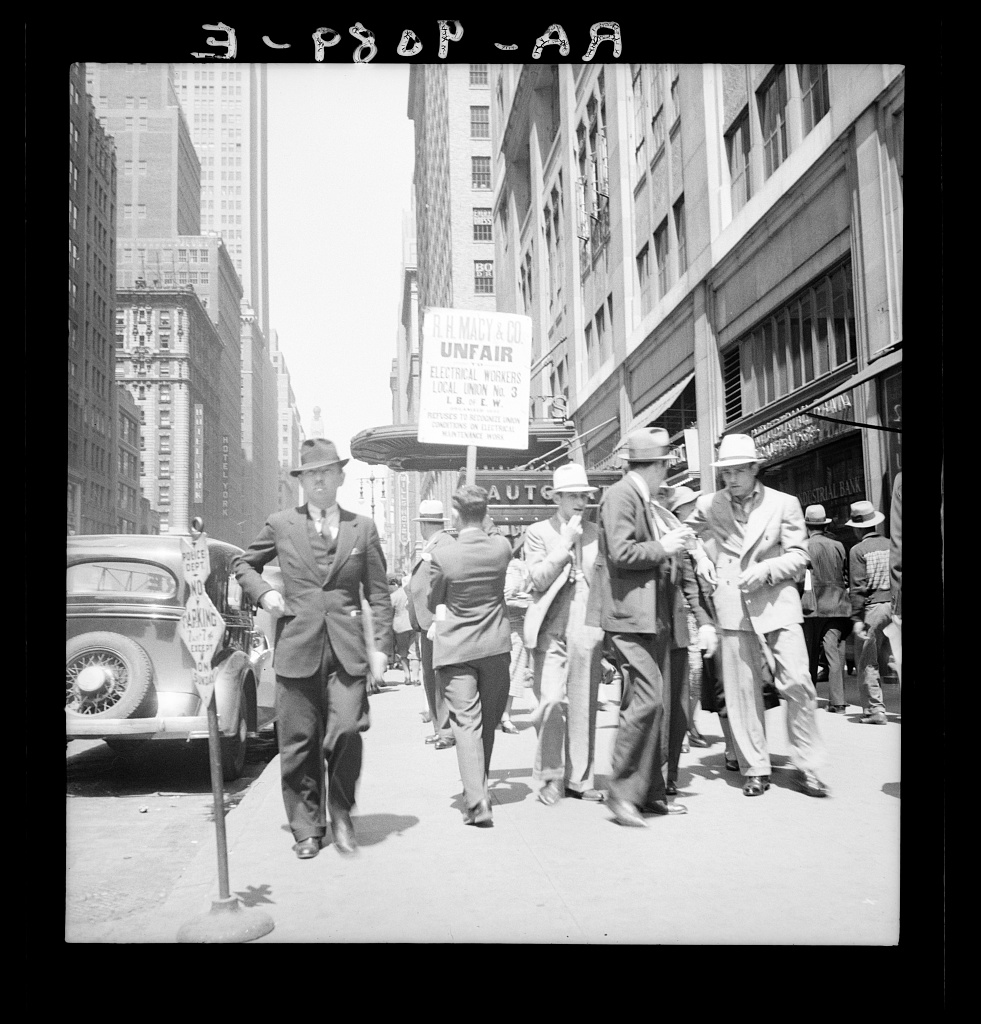
June 1936 “New York street scene: striking in front of Macy’s” Photographer Dorothea Lange


4

November 1936 “Street scene at 38th Street and 7th Avenue” Photographer Russell Lee


5

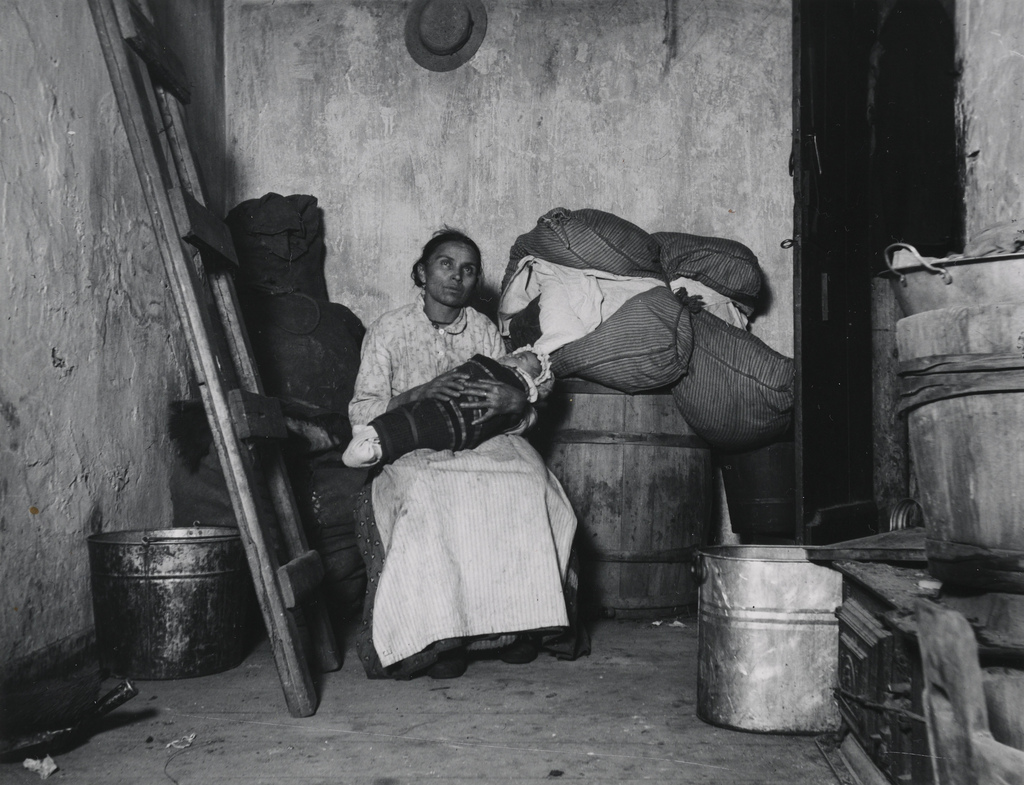
1938 “New York, New York. 61st Street between 1st and 3rd Avenues. Tenants” Photographs by Walker Evans


6

1938 Photographer Jack Allison (no caption on photo)


7

June 1941 New York City, East Side, Sunday morning, photographer Marion Post Walcott


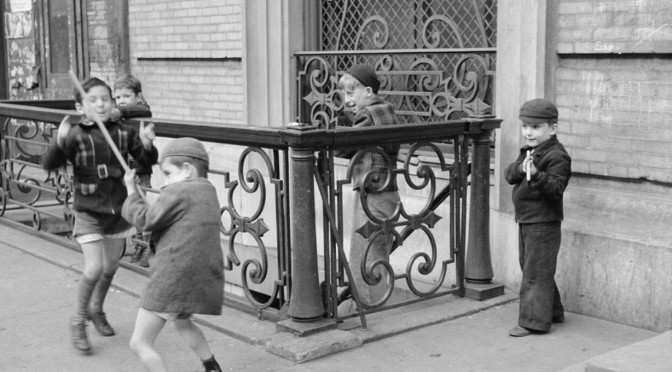
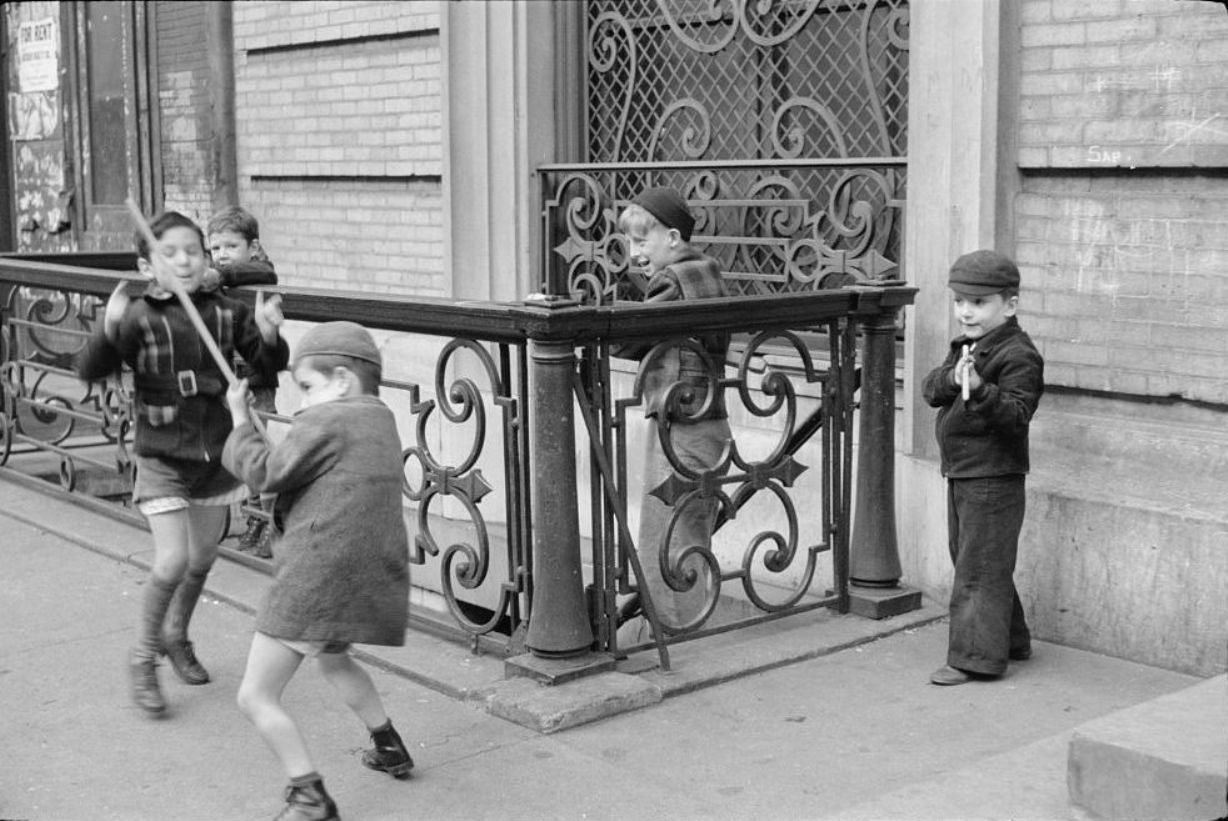
picDecember 1941 :Children playing, New York City: Photographer Arthur Rothstein


1

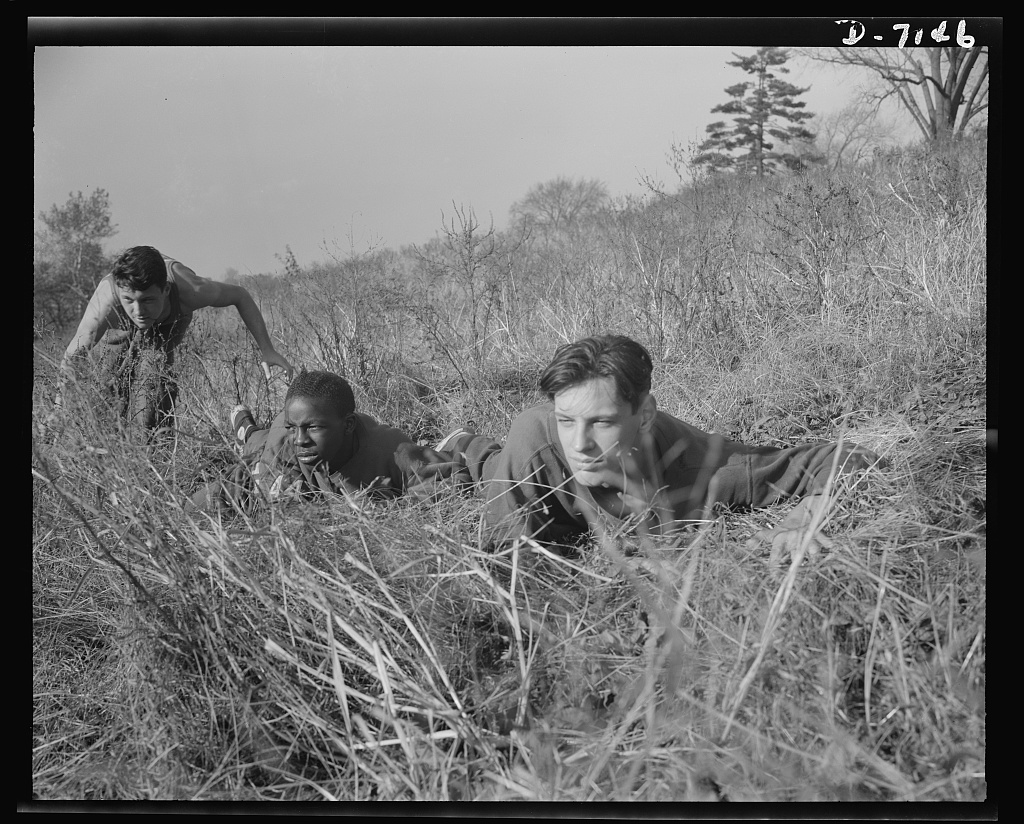
October 1942 “High school Victory Corps. Learning the rudiments of advancing on an enemy will prove valuable to these boys if they are called to join their older brothers in the armed forces. This is part of the “commando” training given in physical education courses at Flushing High School, Queens, New York” Photographer William Perlitch


2

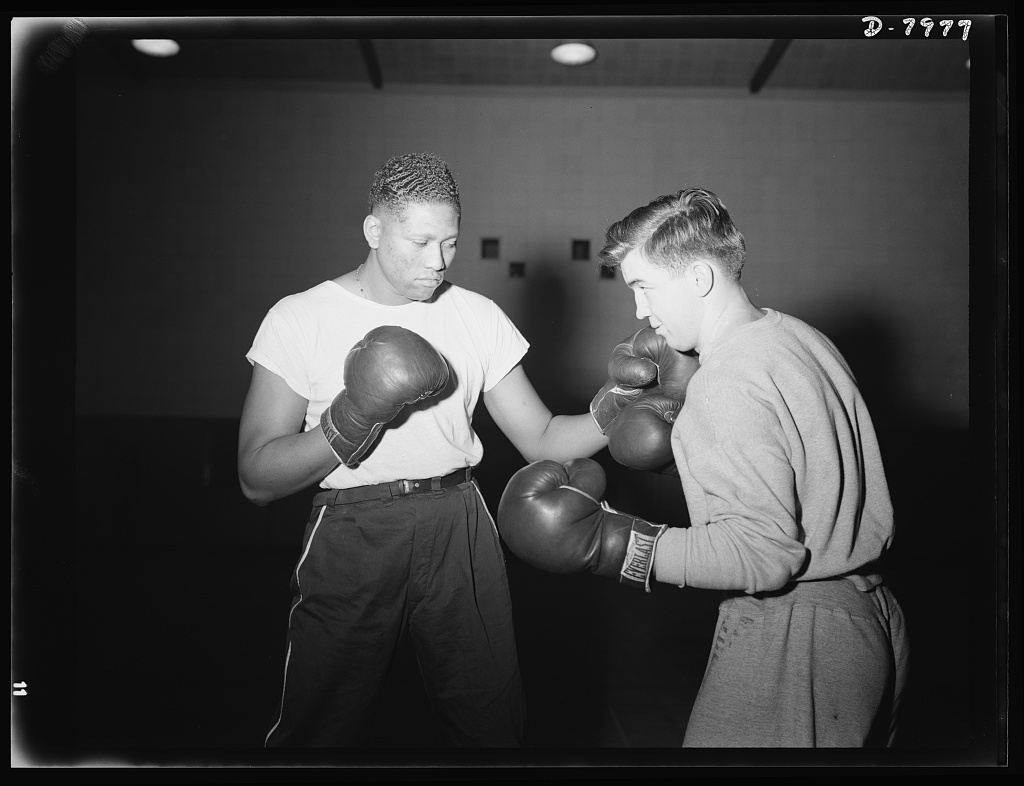
January 1943 “Manhattan Beach Coast Guard training station. The gymnasium is one of the busiest places at Manhattan Beach Coast Guard training station. The physical education program is handled by many noted exponents of boxing, wrestling, track and judo. Paul (Tiny) Wyatt, one-time leading contender for heavyweight boxing honors, is shown sparring with Hart Kraeten, former Golden Gloves champ.” Photographer Roger Smith


mott

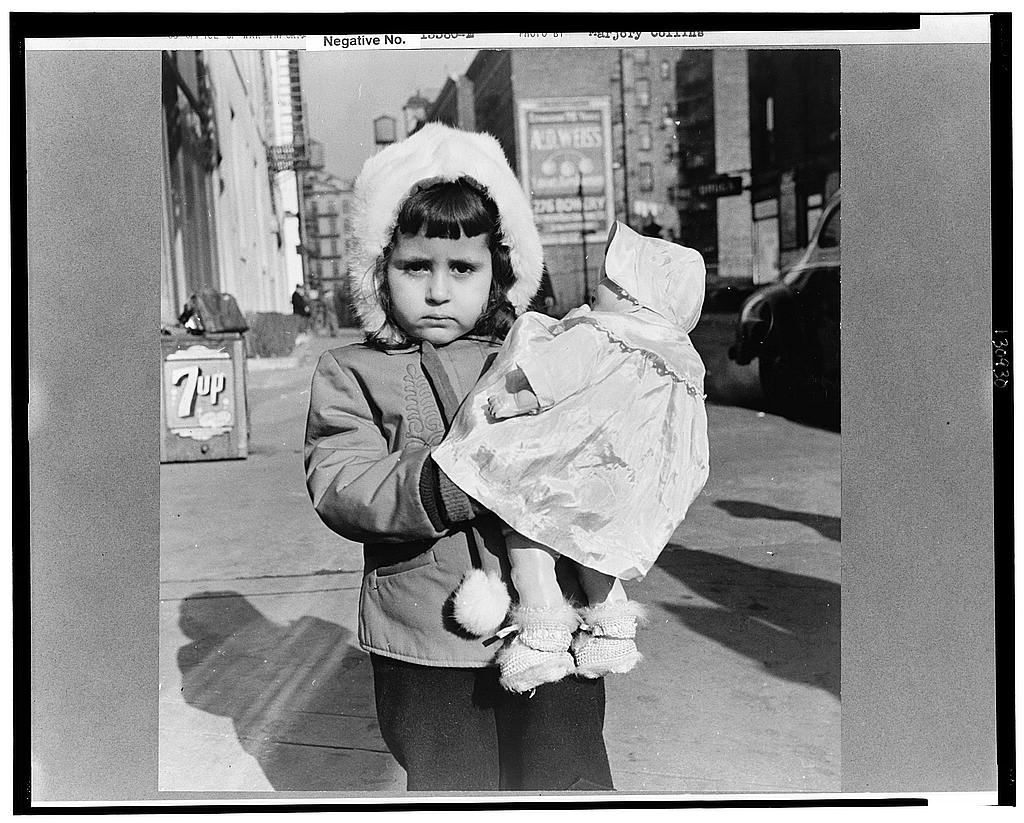
January 1943 “New York, New York. Child on Mott Street on Sunday” Photograph by Marjory Collins


8


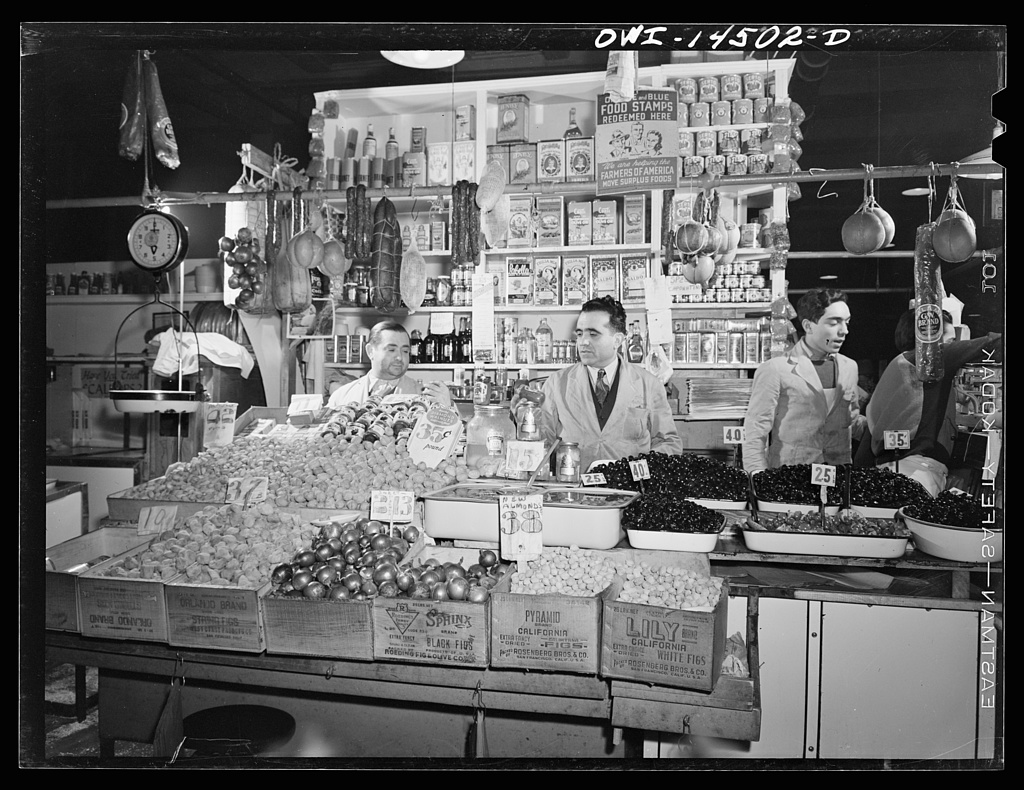
January 1943  “Italian grocer in the First Avenue market at Tenth Street” Photograph by Marjory Collins

10


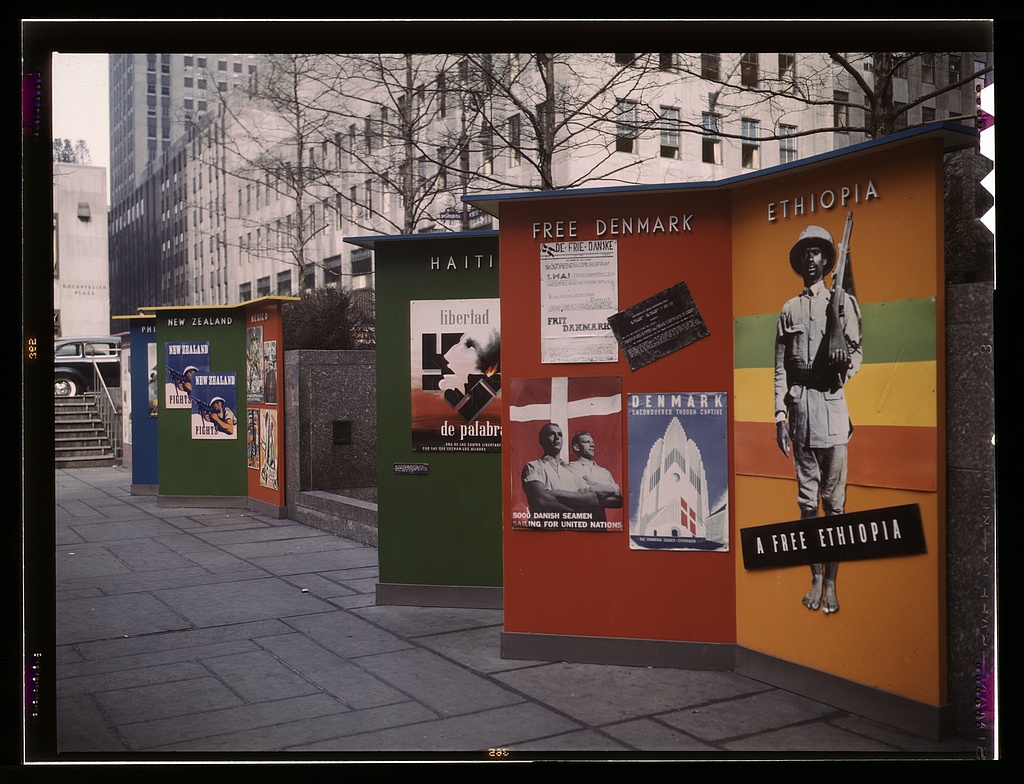
March 1943 “Rockefeller Plaza, exhibit [for] United Nations by OWI, New York, N.Y. Between photographic displays is [the] Atlantic charter in frame with transmitters at each end and where voices of Roosevelt, Churchill and Chiang Kai-Shek are heard each half hour; surrounded by statues of the four freedoms.” Photograph by Marjory Collins

times


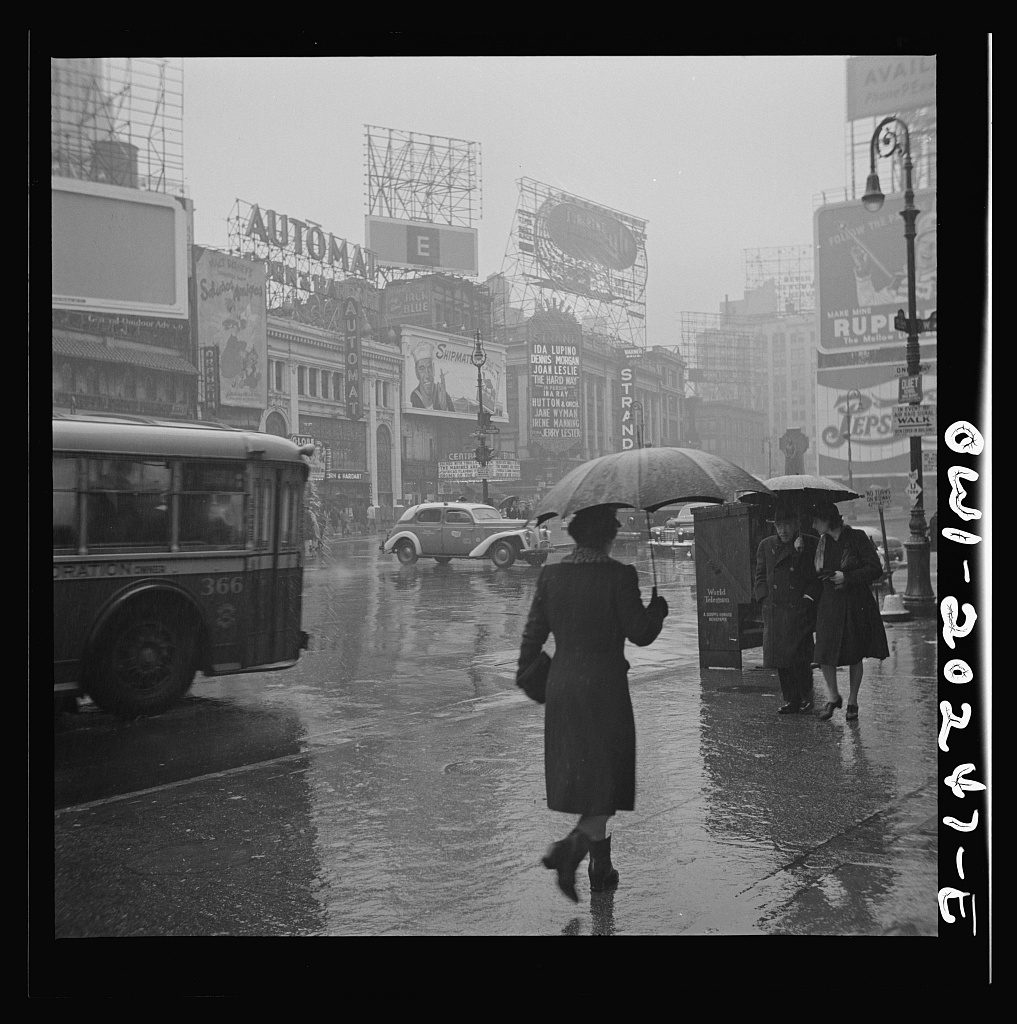
March 1943 “New York, New York. Times Square on a rainy day” Photographer John Vachon

last


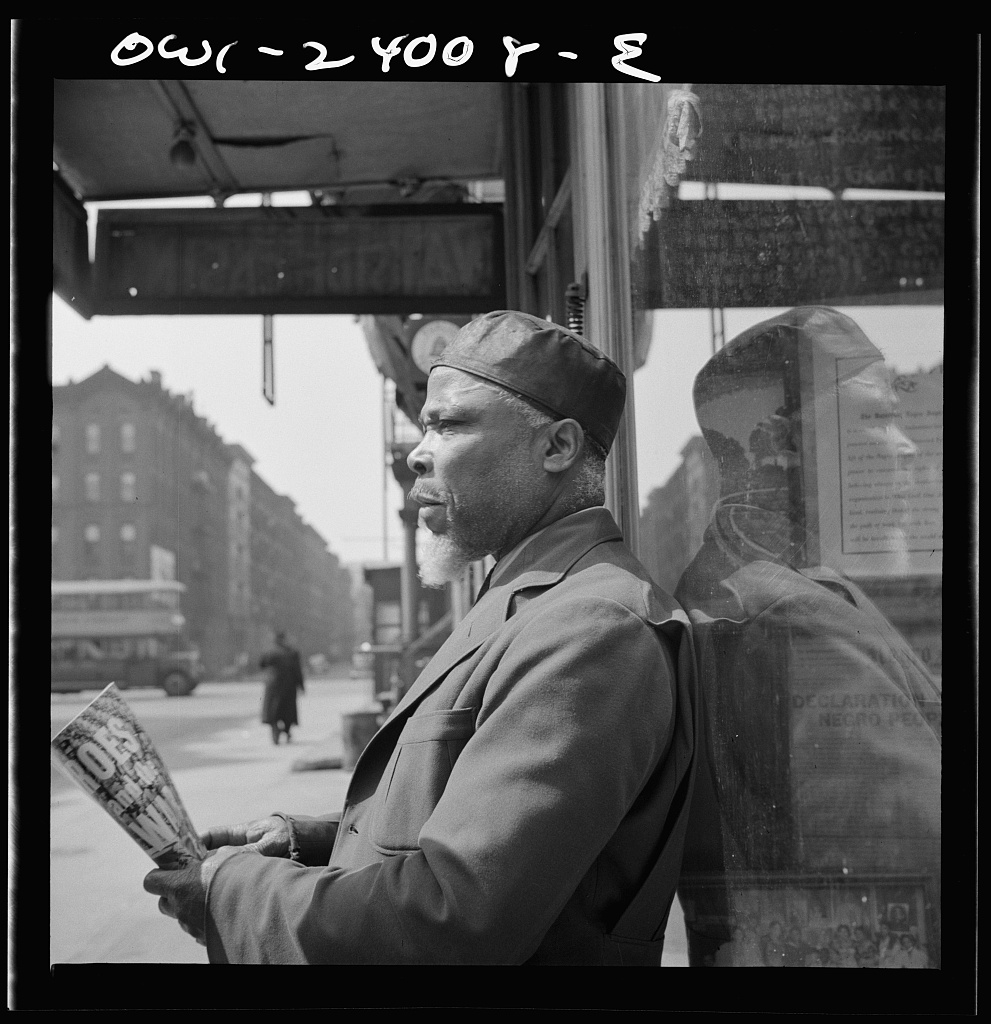
April 1943 “A follower of the late Marcus Garvey who started the “Back to Africa” movement” Photographer Gordon Parks

eye


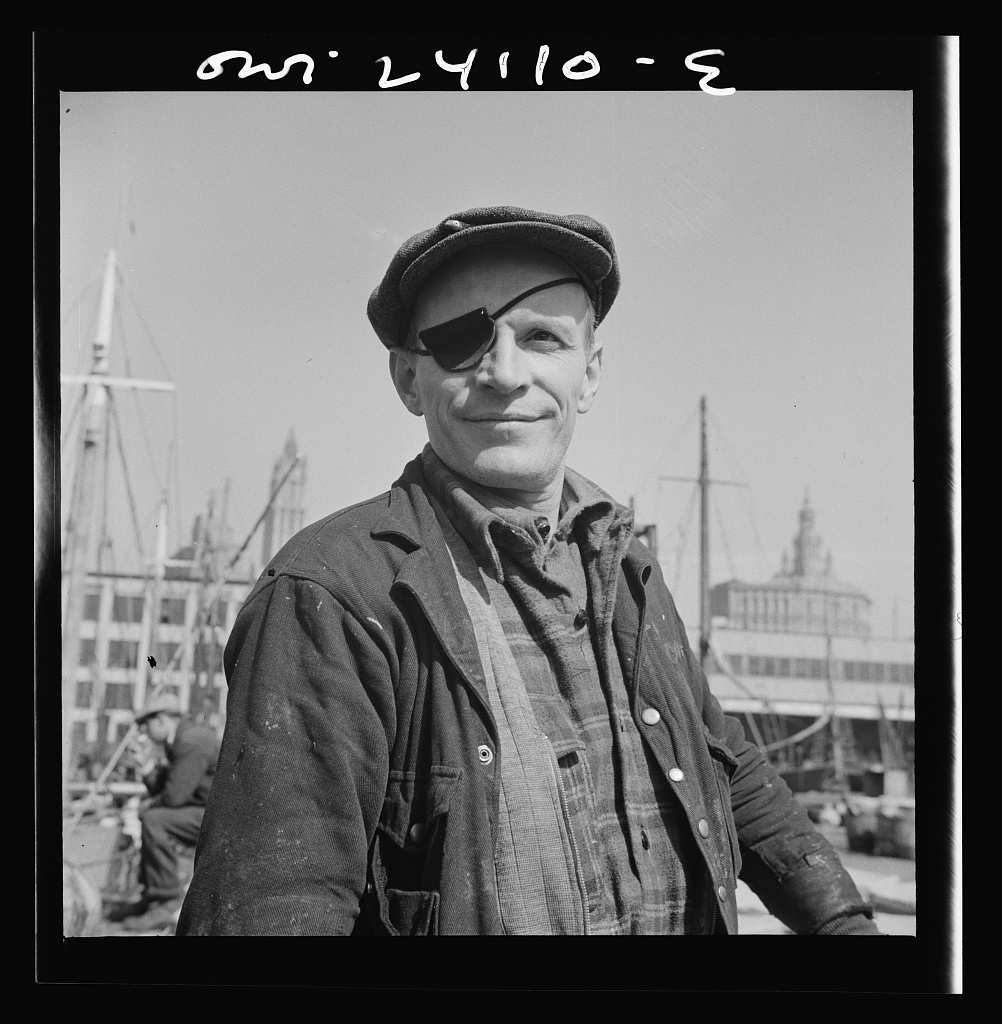
June 1943 “New York, New York. Dock stevedore at the Fulton fish market” Photographer Gordon Parks

victory


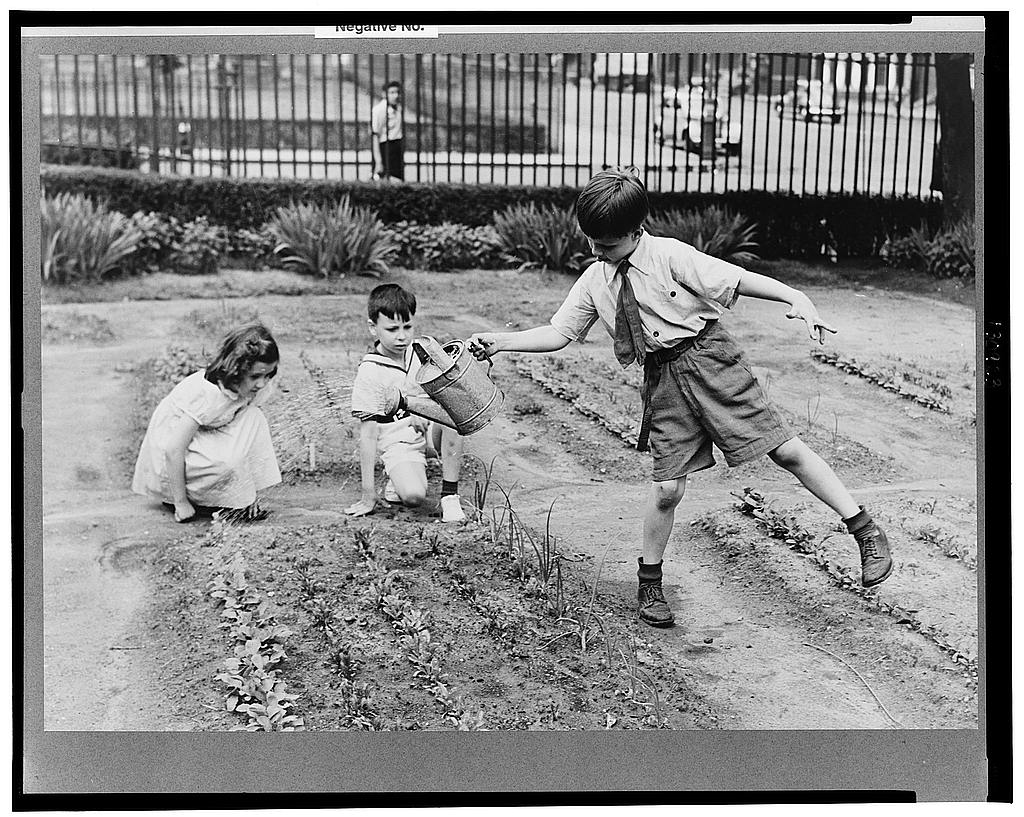
June 1944 “Children’s school victory gardens on First Avenue between Thirty-fifth and Thirty-sixth Streets” Photographer Edward Meyer


d-day

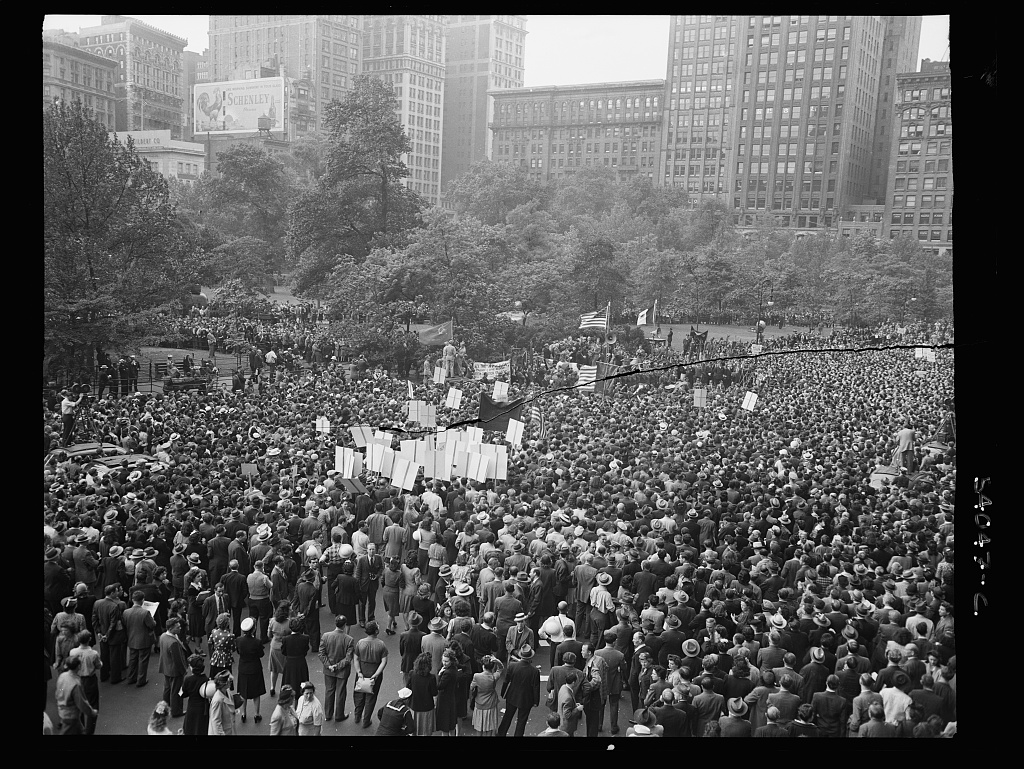
June 1944 “A crowd on D-Day in Madison Square” Photographer unknown

Categories
Staten Island History

Camera Ready: The Alice Austen House, a rustic reminder of an uncommon artist and a cottage shrine to a life in pictures

DSC00654


FOR YOUR CONSIDERATION Until May 21st, you can vote every day in the Partners In Preservation initiative, which will award grant money to certain New York cultural and historical sites among 40 nominees. Having trouble deciding which site to support? I’ll be featuring on a few select sites here on the blog, providing you with a window into their history and hopefully giving you many reasons to visit these places, long after this competition is done. 


Historic Site: The Alice Austen House
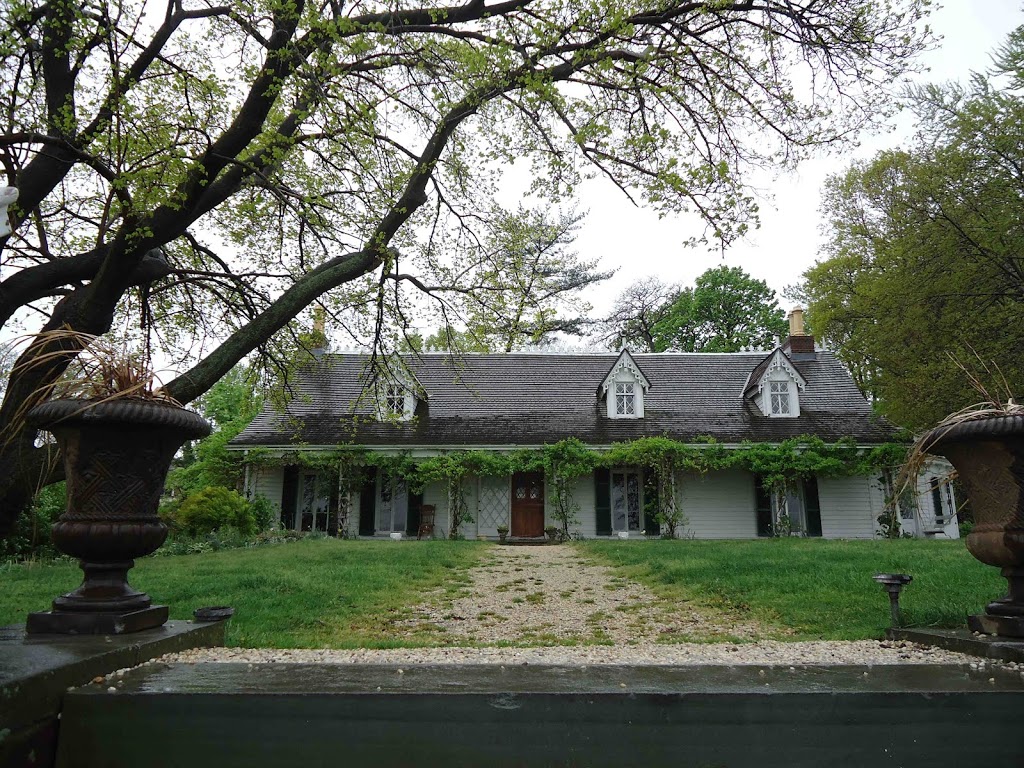
On the banks of Staten Island’s eastern shore sits a worn but elegant cottage, where once lived a woman of modern artistic gifts that just a few decades earlier would have been considered magical.

Alice Austen was a photographer of sublime ability, in an era when the artistic potential of photography was still being assessed. She’s the sort of historical figure whose life could easily be overlooked. In fact, it was, for almost half a century. Her existence at times seems sequestered, in a habitat of old wealth, her universe principally residing in a borough that itself sometimes gets unfairly disregarded. In some ways, it’s the Alice Austen House, in Rosebank, Staten Island. that keeps her legacy in the conversation — as a revolutionary artist, an enigmatic social eccentric and a famous New Yorker.

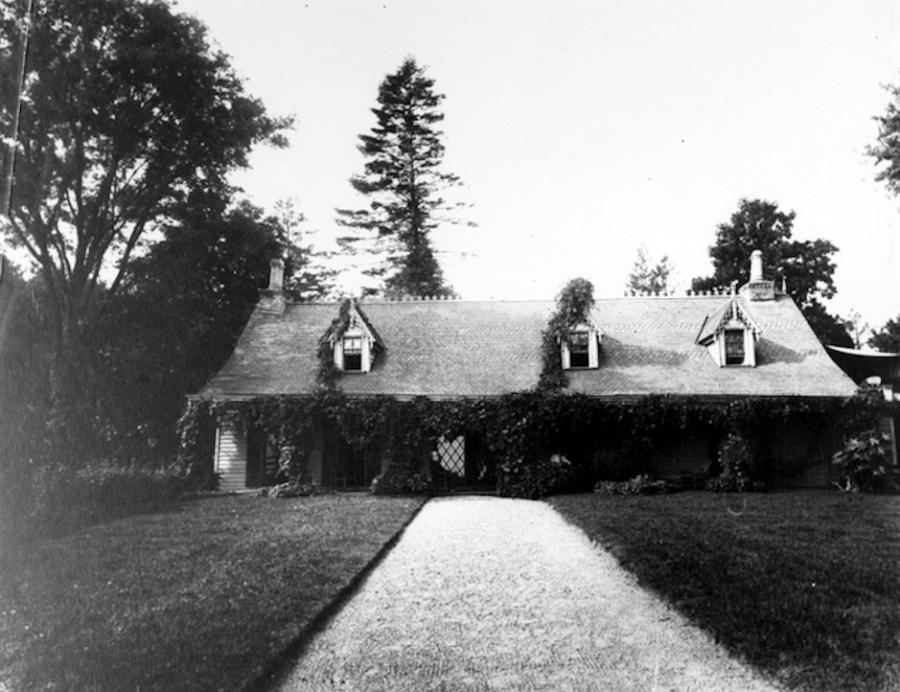
Portions of this curious house — named Clear Comfort, but readily known today as the Alice Austen House, after its most famous resident — can be traced to a modest one-room structure built in the 1690s, when Staten Island (or, as the British preferred to call it, Richmond County) had only about 1,000 residents, mostly Dutch farmers.  From the windows of the original farmhouse, the residents might have seen the British, using Richmond as a base, attacking Washington’s forces on the opposite shore in Brooklyn in August 1776.

18951

Above: Alice’s photo of her home, 1895

By the early 19th century, the house shared the northeastern shore with a smattering of ferry docks, including one owned by an ambitious young periauger operator named Cornelius Vanderbilt.  As New York grew to become a busy port city and a capital of wealth, some prominent residents flocked to the Staten Island shore for respite. Moguls, businessmen, socialites, even Vice Presidents (Daniel D. Tompkins) built lavish homes a short carriage ride away.

That this shoreside Dutch farmhouse survived to even this point in history– hogging a view of the Narrrows that any mansion builder might envy — is extraordinary. As a later history of Staten Island dramatically put it, “[I]t is a relief to the more conservatively inclined to find in Greater New York a house that still defied the sword of the destroying angel….One of these, which for centuries has defied destruction, is the Austen homestead.”

In 1844, a lower Manhattan dry goods merchant John Haggerty Austen purchased the old Dutch house, dilapidated but still desirable due to its view of a harbor clogged with ships. Austen greatly expanded the property into a Gothic revival summer cottage worthy of an old European fairytale. Soon, several members of the Austen clan lived here year-round. And in 1866 they were joined by Austen’s unmarried daughter and her small infant Alice.

The pair had been abandoned by Alice’s father, a situation one might normally consider dire in the mid-19th century. However the Austen family doted upon the child, and their wealth provided a cushion for the girl to pursue her ever bolder ambitions in comfort.

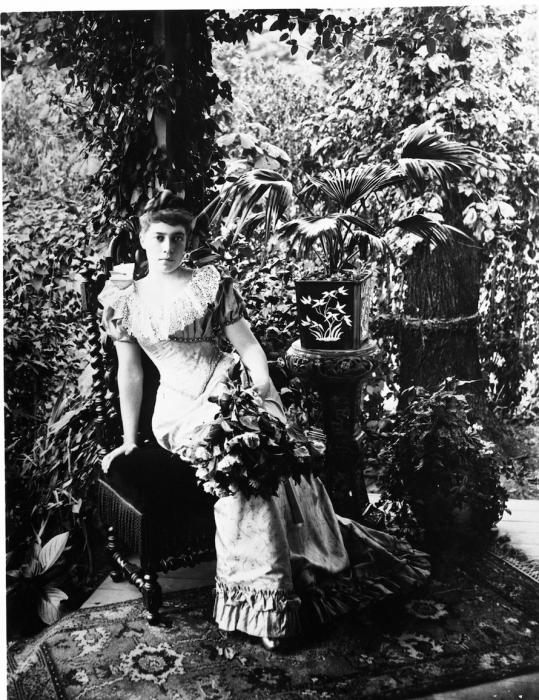
Above: Alice Austen in a self portrait on the porch of Clear Comfort, 1892 [source]

The first camera came to Clear Comfort in 1876, the present of Alice’s uncle, Oswald Muller, a Danish sea captain who demonstrated the bulky, wooden device in the Austen garden. Alice became immediately fascinated, and, although it was certainly unladylike in the Victorian era for a young woman to hunch in front of a large wooden tripod, her talents soon became evident. Another uncle, a chemistry professor, guided her through the development process, and an upstairs closet was eventually transformed into her own personal darkroom. In this dank, inconspicuous room, Austen patiently developed some of the most beautiful pictures of old New York ever taken.

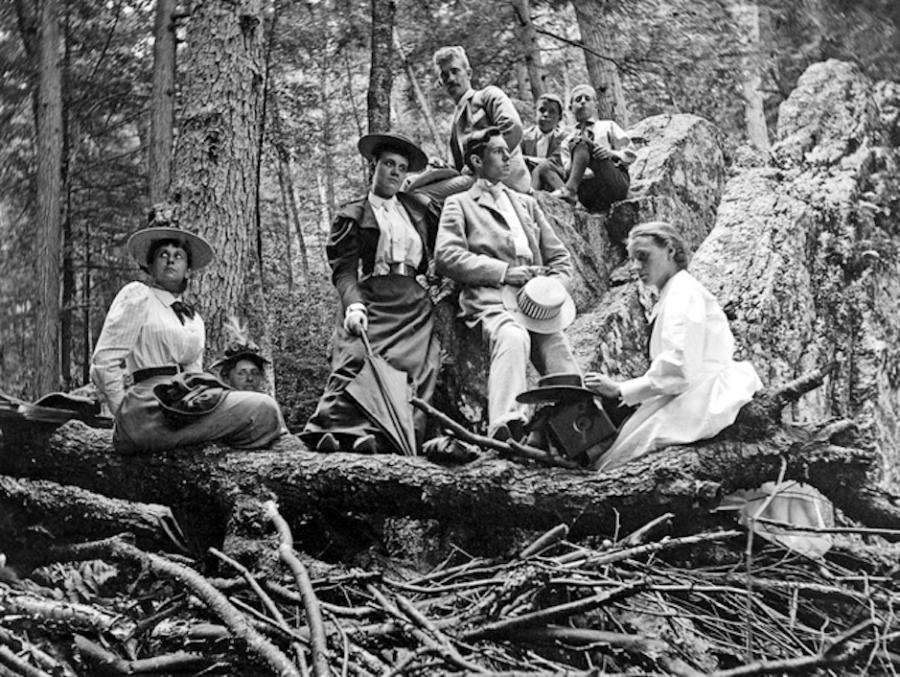
mountains

Above: Lounging in the woods, 1893


A THOUSAND WORDS
Alice Austen was not a professional photographer. She did not get paid to document the world or to hover over developing chemicals. She took pictures because she loved it.

The photographic process before the 1890s — before the introduction of camera film — was a complex and frustrating production. The pursuit of leisure photography, capturing casual, outdoor scenes using a portable camera, was a relatively recent phenomenon. And a camera was only ‘portable’ in the sense it could be used outside a studio. A wooden-box camera with a tripod and a satchel of delicate lens and exposed plates would have been difficult to transport.

Below: The Staten Island Cricket Club in St. George, in 1893, employing the sort of subject framing that would typify art deco photography a couple decades later.

tennisjpg

Alice’s first images were taken at home, on the grounds of Clear Comfort.  From here she developed the poise, the skill and the guts to take the camera on the road — around Staten Island, along rocky mountainous areas and winding trails. And eventually, to Manhattan itself. What a sight it would have been to behold young Alice Austen on her bike, weaving through the streets of Manhattan with her equipment strapped to the back.

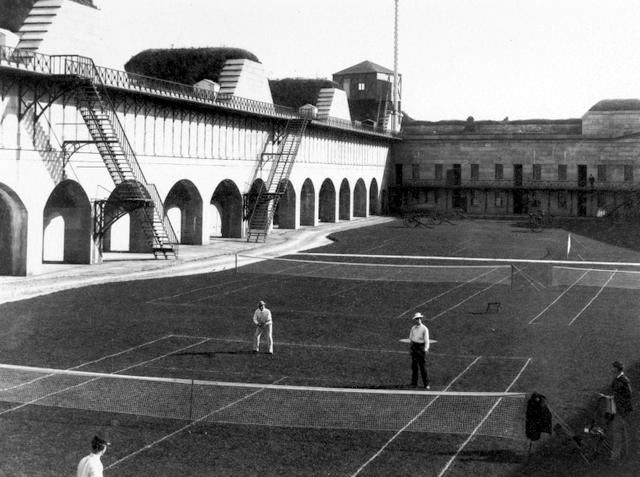
What comes through from her photography is a zest for life rarely documented in images of the era. Due to the conventions of the photographic process, subjects had to stand still or risk being rendered a ghostly blur. Equally important, people rarely knew how to pose. But in the world of Alice Austen, frivolity overrides stiffness. Austen documented her social circle with a provocative candidness, allowing her subjects to goof around, create visual gags, even cross dress.

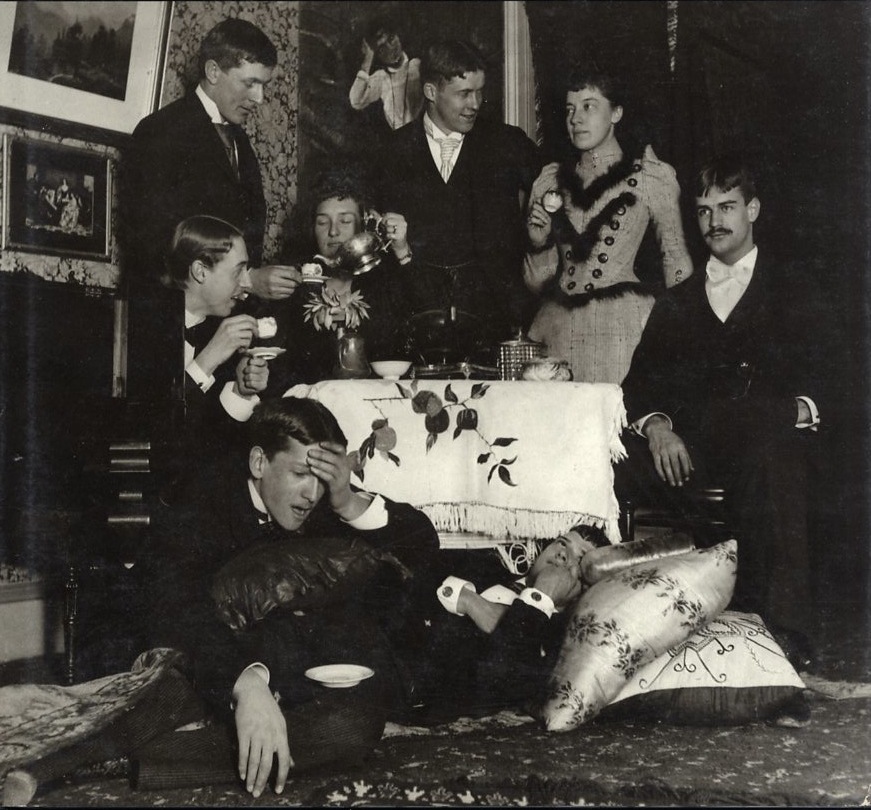
My favorite of all her images finds Alice herself posing awkwardly with a group of men at a mock tea party. What are they doing? This picture presages a billion future Facebook photographs of people acting in a nonsensical fashion.

alices

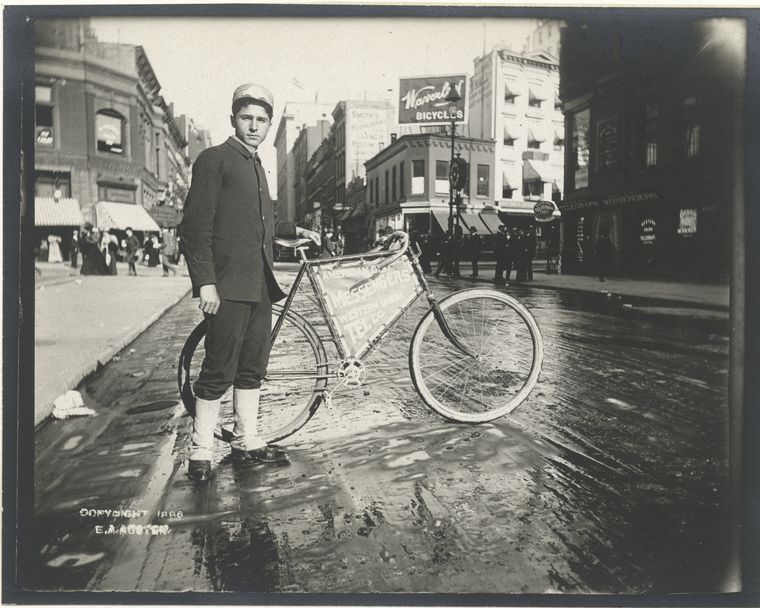
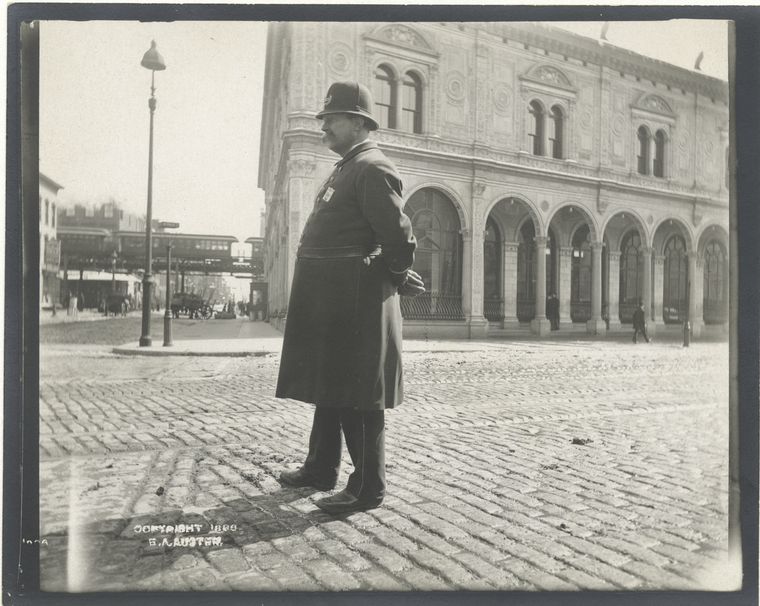
On the streets of New York, Austen found composure and beauty in common situations. More stunningly, she found it among lower class subjects — bike messengers and street urchins, rag pickers and fishmongers. Most likely, she knew ‘proper’ New Yorkers would never have posed so spontaneously for her. Perhaps her choices were informed by contemporary New York photographers of the day, people like Lewis Hine and Jacob Riis, who chose the same subjects but for more social reformist purposes.

In 1896, Alice stopped a messenger boy on the street to create a masterpiece of composition and form. She would do the same with policemen, postmen, even street sweepers. (NYPL)

1896
police

Her travels took her around New England and even to Europe, but she always returned home to Clear Comfort, and her house and the Narrows framed beautifully in front would remain her most popular subjects.

ALICE AND GERTRUDE
Alice Austen is also an important figure in gay and lesbian history, although she might have recoiled from the word ‘lesbian’, a term which seemed to apply more to the debauched female bohemians of Greenwich Village than an old-money doyenne living in a seaside cottage. In 1899, she met Brooklyn school teacher and dance instructor Gertrude Tate and began a companionship that culminated in 1917 when Gertrude, over objections from her family, moved into Clear Comfort with Alice.

Yes, another female power couple named Alice and Gertrude. Although unlike the Parisian bon vivants of the day, the true relationship led by Austen and Tate continues to remain closed to the world. They were companions for the rest of their lives, even through the troubling trials that would soon befall the residents of Clear Comfort

She had survived this many years quite comfortably on the interest from her grandfather’s wealth. But the Great Depression wiped out most of the family finances. Austen resorted to opening her front yard as a tea room, and when that failed, she mortgaged the house and sold off most of her possessions. Fortunately in 1945 she confided her glass plate negatives to Loring McMillan at the Staten Island Historical Society — although she expected to get them back! (McMillan would later be instrumental in the creation of Historic Richmond Town as a repository of some of the borough’s oldest, most famous structures.)

19511

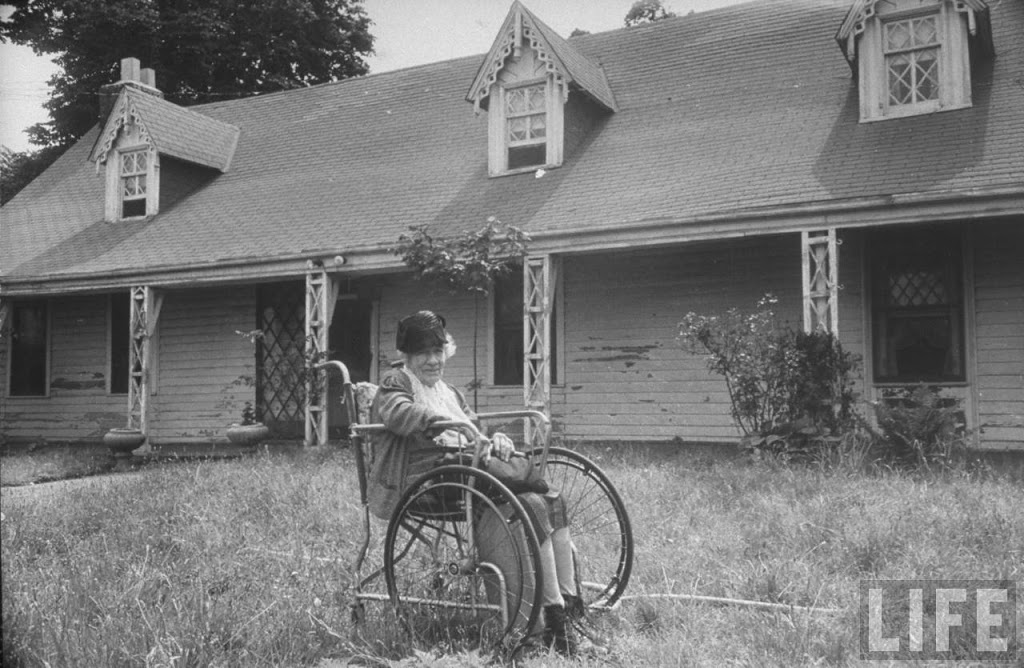
Above: For a Life Magazine article in 1951, Austen was reunited with her tattered old home.

Alice Austen has the rare distinction of being rescued herself by a historical preservation society.  Even as situations became so dire for her in 1950 that she moved into the Staten Island Farm Colony, a pauper’s retreat in Sea View, the Staten Island Historical Society began work with a publisher to publish her photos, most seeing light for the first time in decades. From the proceeds she was able to spend her final years in a private nursing home, the subject of magazine articles and belated tributes. She died in on June 2, 1952.

Gertrude outlived her by ten years. Her request to be buried next to Alice was not honored by her family.

PRESERVING THE IMAGE
Alice Austen’s home was rescued by the community in the 1960s, designated a New York City landmark in 1971 and exhaustively renovated in the 1980s. Today it’s one of Staten Island’s most unusual treasures, close to industry and a heavily developed residential area, but serene as though kept under glass.

The house is as reverent to the craft of photography as it was when Alice was alive. On the blustery afternoon I spent at the Alice Austen House, the rooms were buzzing with children arriving for a workship on how to make and use pinhole cameras. Replicas of her equipment are featured in exhibits fashioned from Alice’s old drawing room.

While the home is in remarkable shape for a building over three centuries old, standing on the shores of the Narrows provides a special challenge for preservation, and the grant it has placed with the Partners In Preservation program would help weatherproof the structure, with additional repairs to the chimney and roof.

The Alice Austen House is digitizing many of her 3,500 existing photographs, available on their newly launched website. You can also go there for information on how to visit.

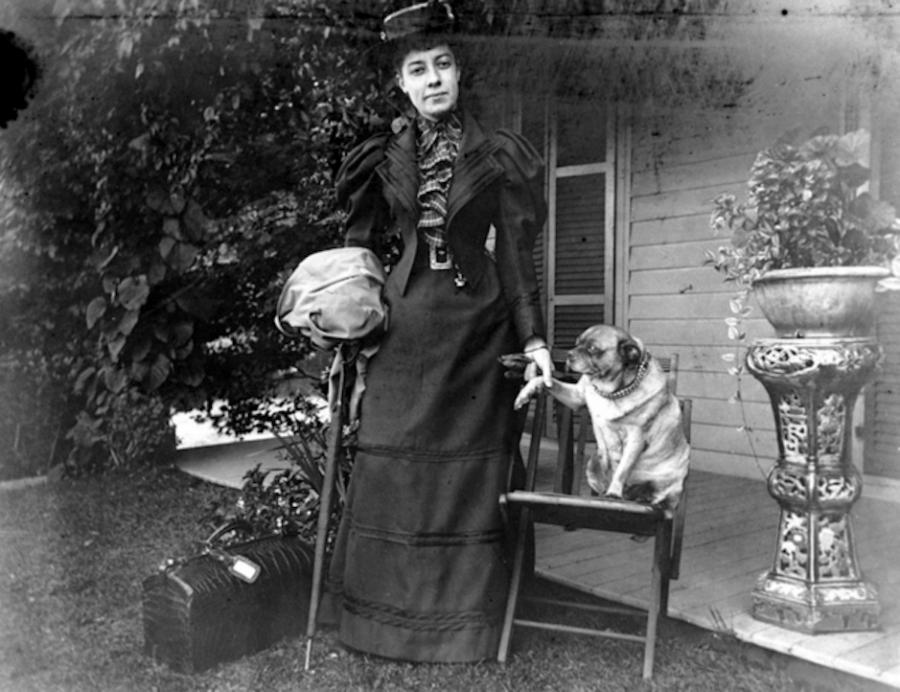
Below: Alice in a self-portrait with her dog Punch, 1893 [source]

punch

Disclosure: I have partnered up with Partners in Preservation as a blog ambassador to help spread the word and raise awareness of select historical sites throughout the tri-state area. Though I am compensated for my time, I have not been instructed to express any particular point of view. All opinions expressed here are strictly my own. And since writing about New York landmarks is kinda my thing anyway, I’m thrilled to share my love of these places!

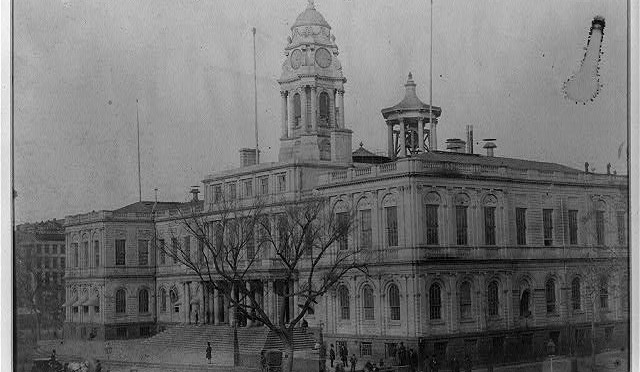
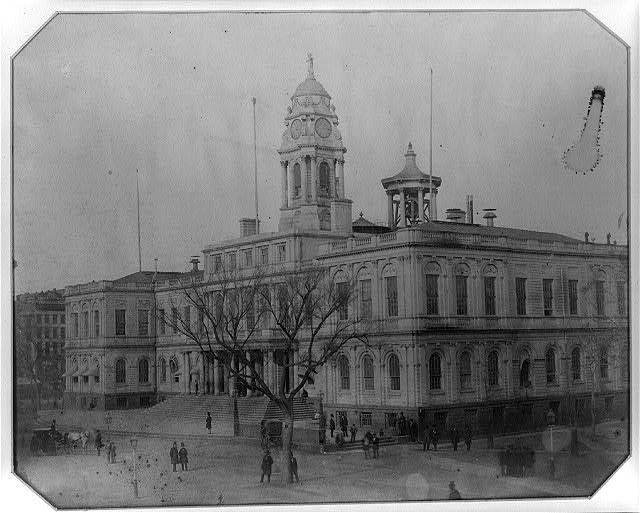
1855 New York City Hall: the Earliest View

The picture above, taken in 1855, may be the oldest existent photograph of New York’s City Hall building. This is three years before the famous fire, caused by celebratory fireworks, destroyed the cupola and crown. The year this picture was taken, Fernando Wood became mayor of New York’s, beginning a dominance of Tammany Hall that would last for generations.

Other major events in 1855: the city of Brooklyn absorbs Williamburgh and Bushwick, Castle Clinton opens as a immigrant processing center, and Walt Whitman would publish his first version of “Leaves of Grass.”

The photo was shot by Silas A. Holmes, using a process involving salted paper, invented in 1833. Holmes had a photography studio in what would became New York’s ‘photography district’, on Broadway in today’s SoHo area. Like so many in this budding new field, Holmes made his living as a maker of daguerreotypes, a trendy fashion for New Yorkers and quite the novelty of the day.
Not too much is known of Silas, whose claim to fame is apparently patenting a now-forgotten photography process involving a two-lensed camera box.
Although his studio was among the “most popular of the New York photographers,” he made some rather unwise investments “in property that finally swallowed up his earnings”. He abandoned his profession entirely, ending up running a boardinghouse until his death in 1886.

I found the picture above while perusing the Library of Congress archives, but some of Holmes other works can be found in other places, including, oddly enough, in Los Angeles’s Getty Museum. The Metropolitan Museum of Art has another 1855 photograph taken by Holmes, depicting Niagara Falls.

Picture Perfect: Irving Underhill captures New York style

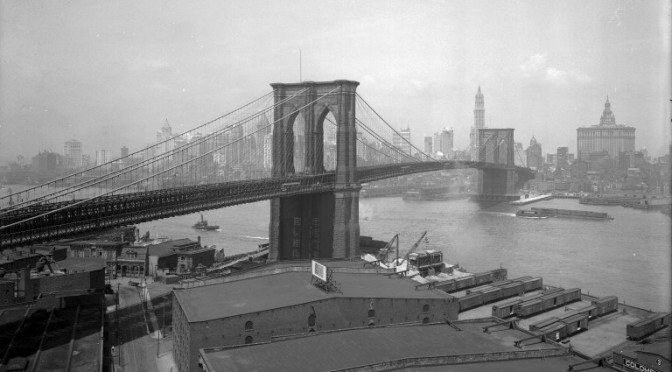
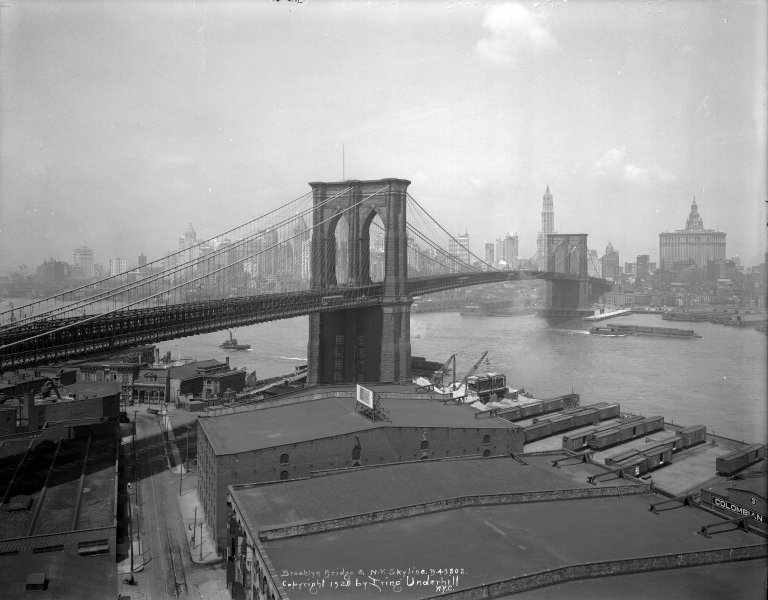
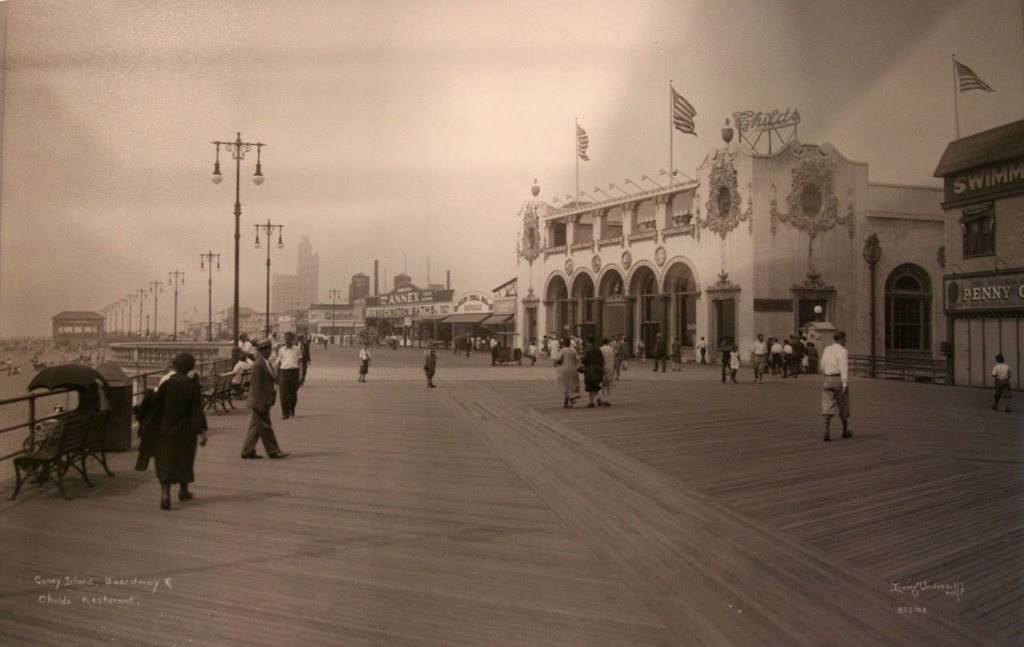
Top: the Brooklyn Bridge in 1925. Bottom: Underhill on the boardwalk: the photographer captures a seemingly meloncholy day in Coney Island, with Childs Restaurant at right

Nobody in New York’s early history captures the romance of early city life more than the first photographers — the men and women who wiled away with expensive, limited and time-consuming photographic processes, bulky and decidedly unportable cameras, and a medium that was still struggling to find purpose.

New York’s first master photographer Matthew Brady, famous for his Civil War battle images and unappreciated in his time, chose the city for the location of his studio but turned his camera over mostly to intimate subjects. Jacob Riis used his lense to expose social disparity in lower Manhattan. And the social fabric of the city was documented by Alice Austen, who balanced intimate images of neighborhood life with candids of big city bustle.

But the real glamour shots of the city most often came from big studio photographers, working not to present any kind of social illumination but for a profit. One of these was Irving Underhill (1872-1960), a successful photographer who also took pictures to be rendered as colored postcards or “souvenir cards”.

More of his postcards can be found here. They’re certainly pretty, with their saturated color turns regular New York scenes into unusual and cartoonish pastel paintings. The real beauty of New York comes alive in Underhill’s regular, clean photographic documentation of basic city structures.

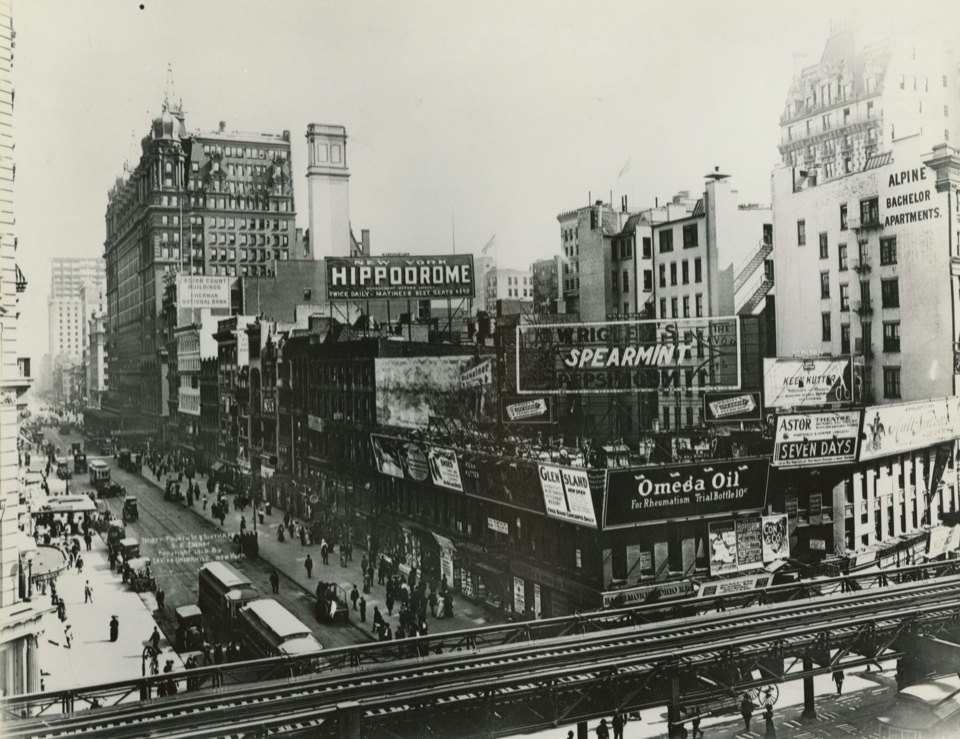
1910: 34th Street and 6th Avenue, shot from the roof of Macy’s, looking east

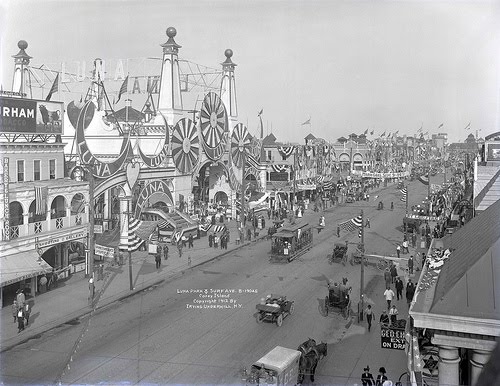
1912: Luna Park along Surf Avenue in Coney Island

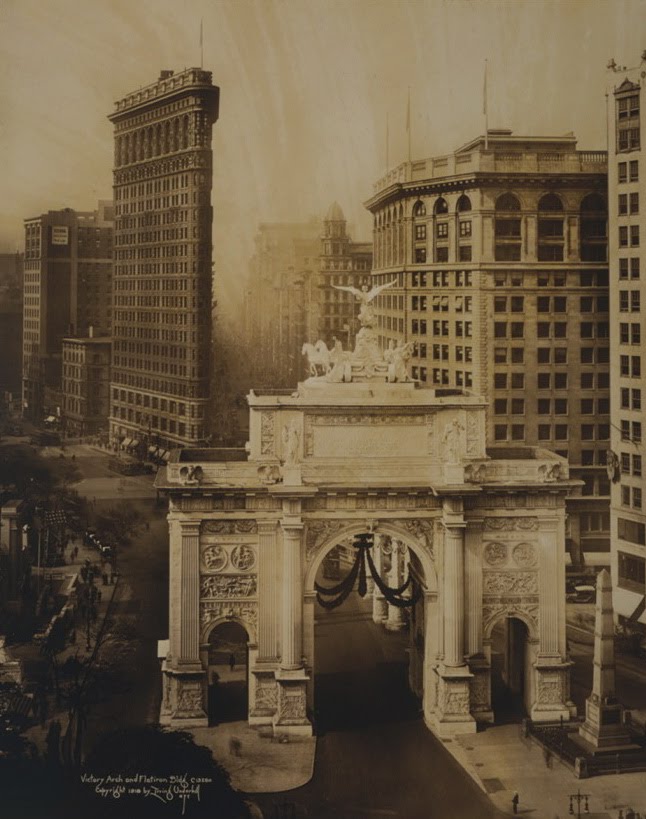
1919: Madison Square Park and the Flatiron Building, with the newly erected ‘Victory Arch’ celebrating the end of World War I

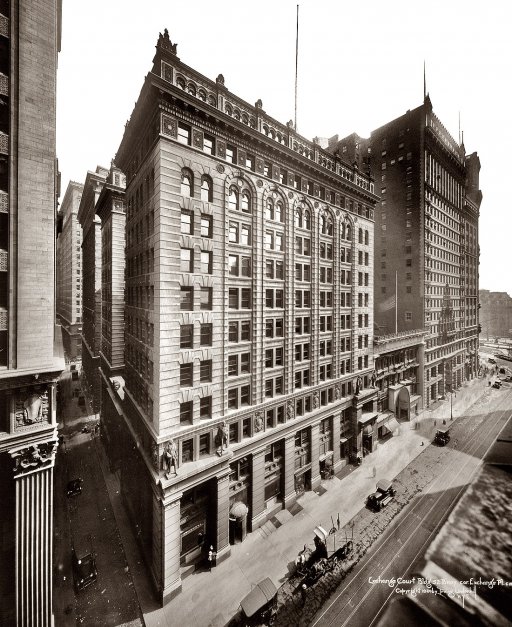
1920: Exchange Court building at 52 Broadway, one of dozens of Underhill subjects either radically revamped or demolished completely

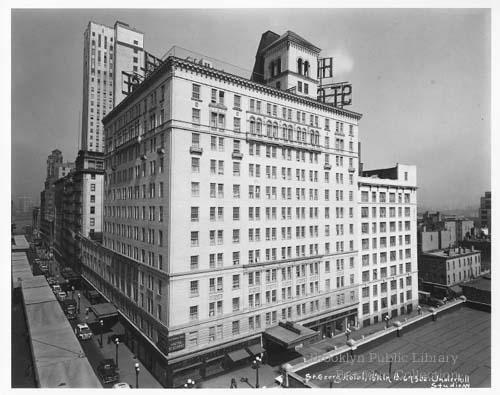
The Hotel St. George in Brooklyn Heights, date of photograph unknown

Underhill opened his studio in 1896, specializing in “artistic portraits, city views and panoramas, group photographs, marine, legal and machinery photography.”

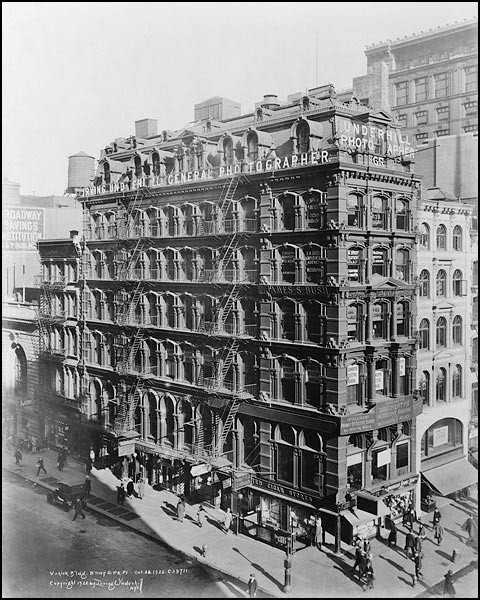
He was so successful that his agency received exclusive commissions to photograph and promote new buildings like the Woolworth Building, which he would capture in timed intervals to track the construction process. Many years later, his name could be seen from blocks away, plastered along the top of his studios at Broadway and Park Place. You can see the words ‘Irving Underhill, General Photographer’ along the top of the image here, taken in 1922.

Underhill’s early portfolio was printed in the 1904 book One Hundred And Sixty Glimpses of Greater New York, an incredible array of black and white images detailing city architecture in the midst of the gilded era. Each page is cleanly labeled and visual detectives will enjoy matching the images to what stands in these places today. You can look at most of the book on Google Books.

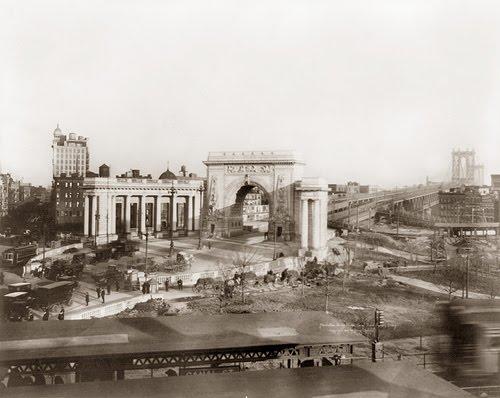
Below: the Manhattan Bridge plaza, 1917