Categories
Bowery Boys Movie Club

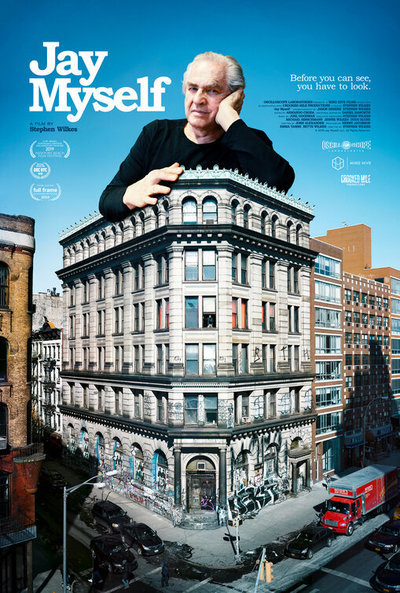
‘Jay Myself’: A new documentary invites you into the most magical address on the Bowery

The allure surrounding the building at 190 Bowery has captivated me from the first moment I laid eye upon it, a century-old bank sealed off from the trendy streets surrounding it. Very few people ever saw the interior. Nobody could have imagined the strange treasures which collected on every floor, in every room, of the building.

Jay Myself
Directed by Stephen Wilkes
Oscilloscope Laboratories
Currently playing at the Film Forum

In the terrific documentary Jay Myself, the public is finally allowed in, at the very moment when its special charms are forced to vacate the building.

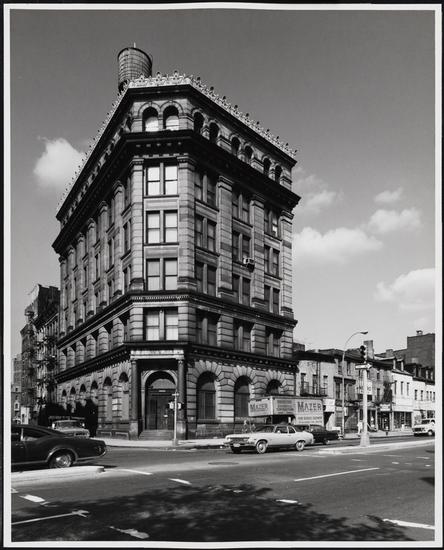
190 Bowery has been the home of renowned photographer Jay Maisel since 1966. During the period when artists began seeking unfinished lofts in the cast-iron districts that became SoHo and Tribeca, Maisel was instead made a most unusual offer — an empty six-story bank along a street famously known as ‘Skid Row’.

The Germania Bank Building in 1975. Courtesy Museum of the City of New York

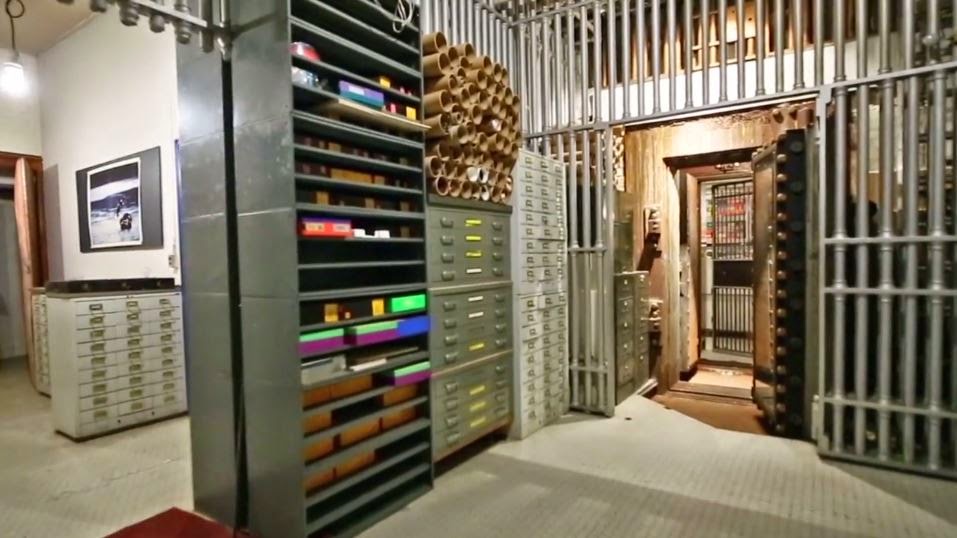
For decades, Maisel filled each rooms with items he might use in his lush, colorful photographs. It wasn’t quite hoarding; rooms were meticulously arranged, lined with beautiful bottles, dye transfer prints and even a collection of porcelain hands from a rubber glove factory.

Few were allowed in to Maisel’s strange castle. Maisel’s former associate Stephen Wilkes, an acclaimed photographer in his own right and the director of Jay Myself, finally convinced Maisel to let him film the interiors of the home — but at a bittersweet moment.

An artist’s wonderland inside a former bank. Courtesy ISO1200

In 2015, Maisel sold the building due to mounting maintenance costs. (In 1966 he purchased the bank for $102,000; he sold it $55 million!) Jay Myself documents Maisel in the process of disentangling himself from an artist’s paradise.

If this were merely a film about mourning the past, it would work better as a photo essay. But almost immediately the film becomes a celebration of Maisel himself, both his incredible body of work — drenched in fascinating experiments in color — and his irascible personality.

Imagine the luxury of expanding yourself physically into a space, filling every corner with whims and potential visions. Then imagine dismantling it all, an era of imagination — if not quite over – at least reduced. (Even Maisel might admit that a healthy back account does offset the disappointment.)

It’s no surprise that he keeps working even as the final boxes were being removed. You’ll not want to leave either.

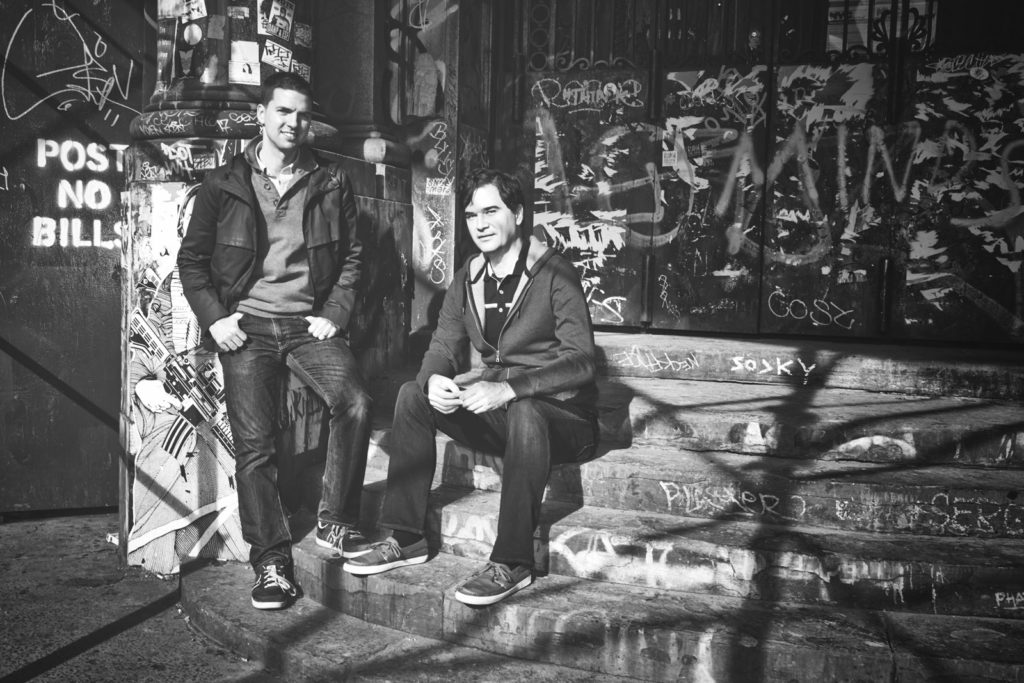
When Maisel still lived there, we took one of our old publicity photos on the steps of 190 Bowery!

Categories
Neighborhoods Podcasts

The Astor Place Riot of 1849: Bloodshed and Shakespeare splits New York at a busy crossroads

“By the pricking of my thumbs / something wicked this way comes” — Macbeth

PODCAST In old New York, one hundred and seventy years ago, a theatrical rivalry between two leading actors of the day sparked a terrible night of violence — one of the most horrible moments in New York City history.

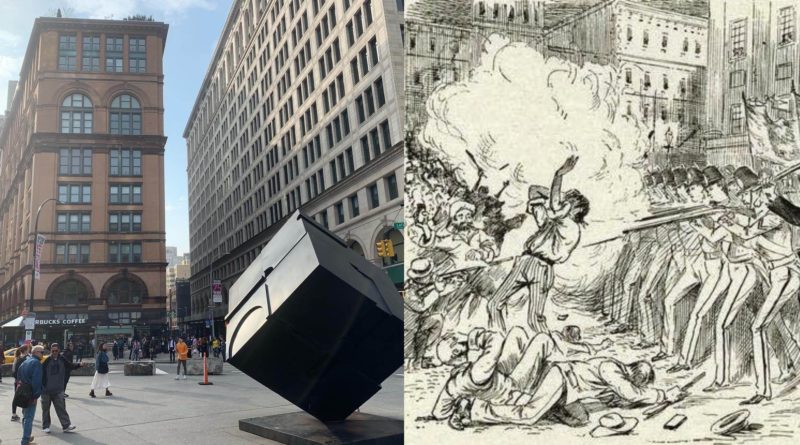
England’s great thespian William Macready mounted the stage of the Astor Place Opera House on May 10, 1849, to perform Shakespeare’s Macbeth, just as he had done hundreds of times before.  But this performance would become infamous in later years as the trigger for one of New York City’s most violent events — the Astor Place Riot.

The theater, being America’s prime form of public entertainment in the early 19th century, was often home to great disturbances and riots.  It was still seen as a British import and often suffered anti-British sentiments that often vexed early New Yorkers.

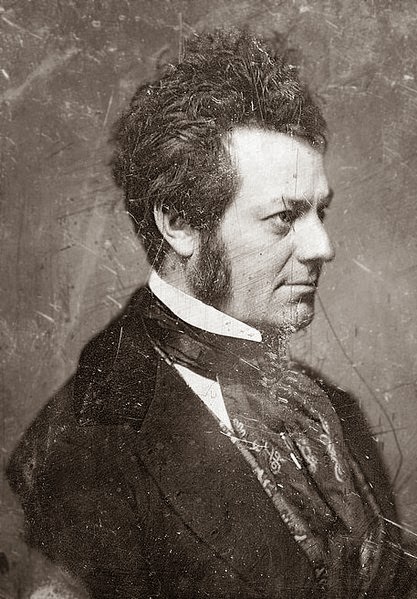
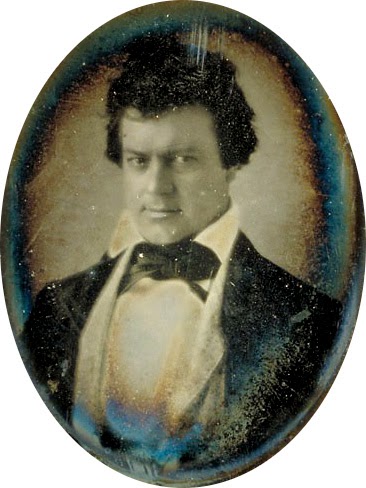
Macready, known as one of the world’s greatest Shakespearean stars, was soon rivaled by American actor Edwin Forrest, whose brawny, ragged style of performance endeared the audiences of the Bowery.  To many, these two actors embodied many of America’s deepest divides — rich vs. poor, British vs. American, Whig vs. Democrat.

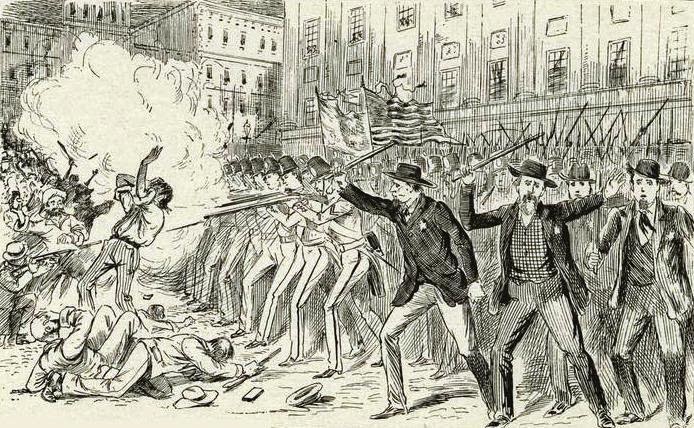
On May 10th, these emotions overflowed into an evening of stark, horrifying violence as armed militia shot indiscriminately into an angry mob gathering outside theater at Astor Place.  By the end of this story, over two dozen New Yorkers would be murdered, dozens more wounded, and the culture of the city irrevocably changed.

Listen Now: The Astor Place Riot Podcast


______________________________________________________

RIOT OR RIOTS?  You may have noticed in our podcast that we go from calling it the Astor Place Riot and the Astor Place Riots.  We both saw primary references to both the singular and the plural.  Though it was just one riot which occurred on May 10, the incidents on May 7 and May 11 constitute smaller riots or disturbances that lead up or were the result of the May 10 event.  The word ‘riot’ is not perfect either as it starts as a riot and ends as a massacre.

CORRECTION: In the podcast, I mention that John Jacob Astor lived in the line of stately buildings today known as Colonnade Row.  Although he built them, he never lived here.  However he moved his family into them, including his grandson John Jacob Astor III.  Cornelius Vanderbilt and Washington Irving also lived here.
__________________________________________________________

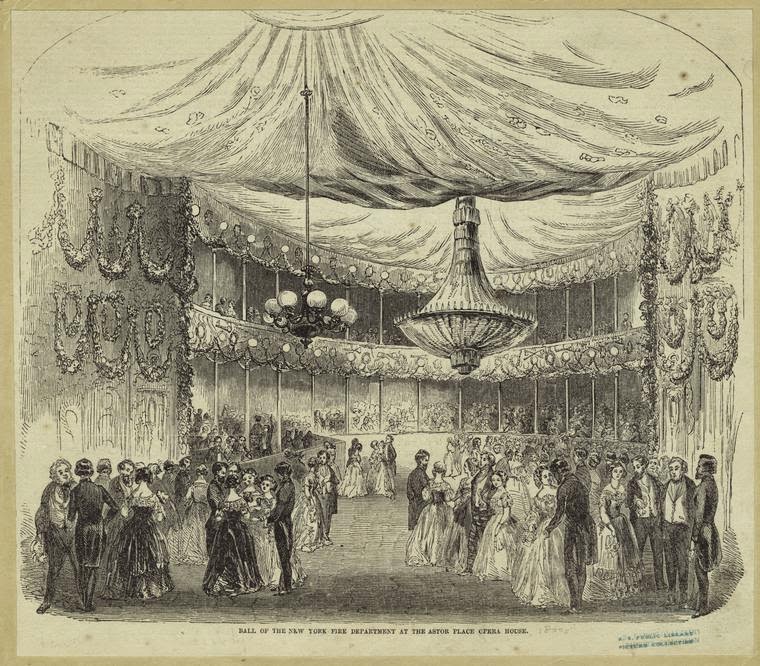
The Astor Place Opera House in 1850:

Inside the Astor Opera House, one of the most lavish spaces in all of New York in the 1840s.  Curiously, this illustration depicts a ball for the New York Fire Department.  Many members of the volunteer fire departments  actually set upon the opera house as part of the angry mob.

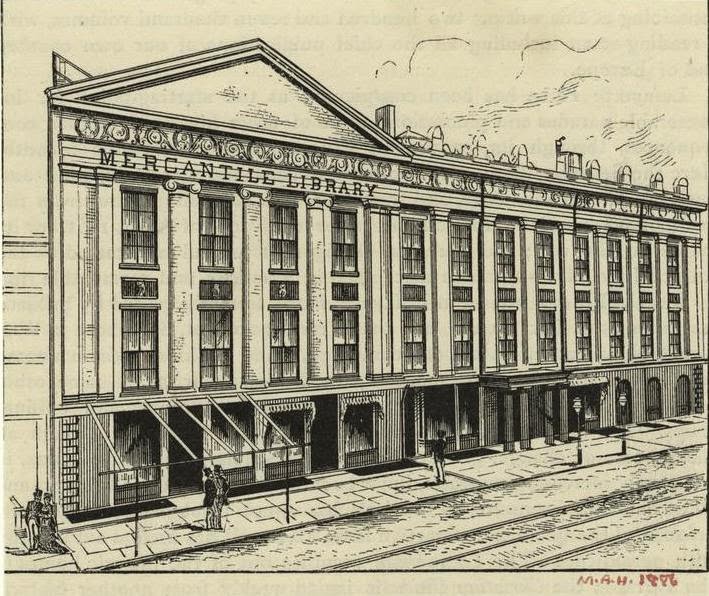
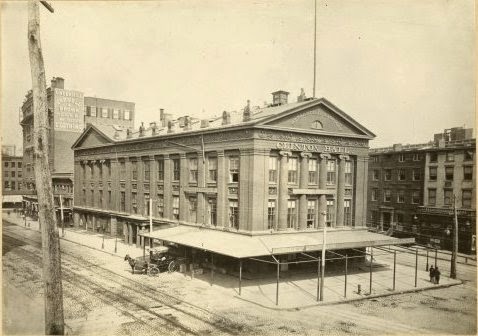
After the riots, the opera house quickly lost its cache. High society moved uptown to the Academy of Music (not so far away actually, on 14th Street, near Union Square).  The interior of the theater was eventually demolished and sold to the New York Mercantile Library and renamed Clinton Hall.

This was torn down in 1890 and replaced with the 11-story structure that stands there today.

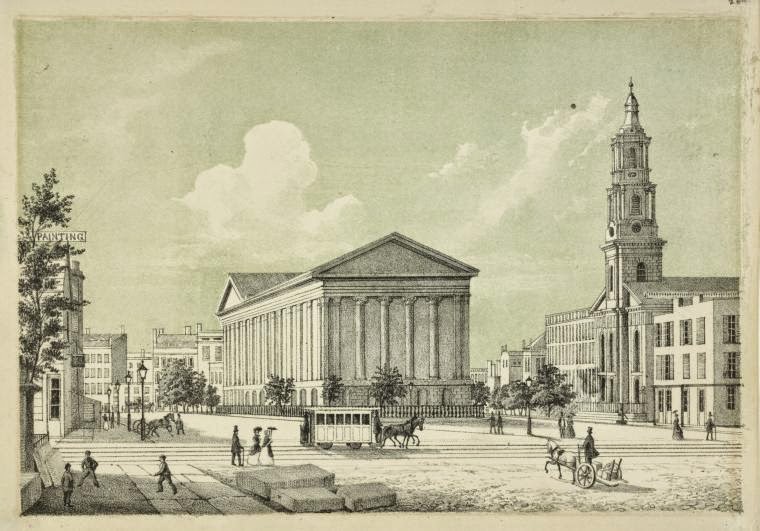
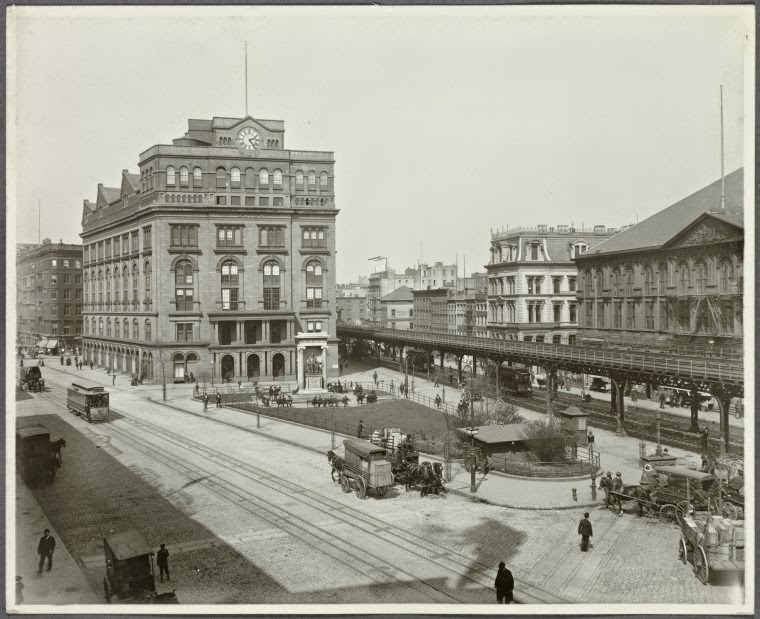
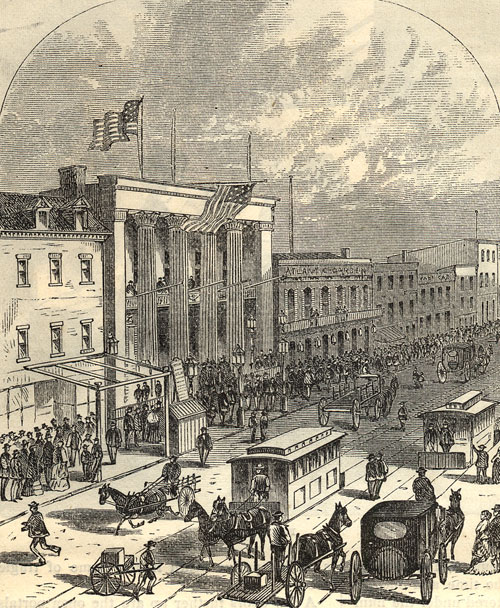
Many considered the demons of Astor Place purged when Cooper Union was finally constructed in 1859, a decade after the riots.  In this image, we’re looking up Third Avenue and the final remnant of the Bowery.  The Third Avenue Elevated has already been built here:

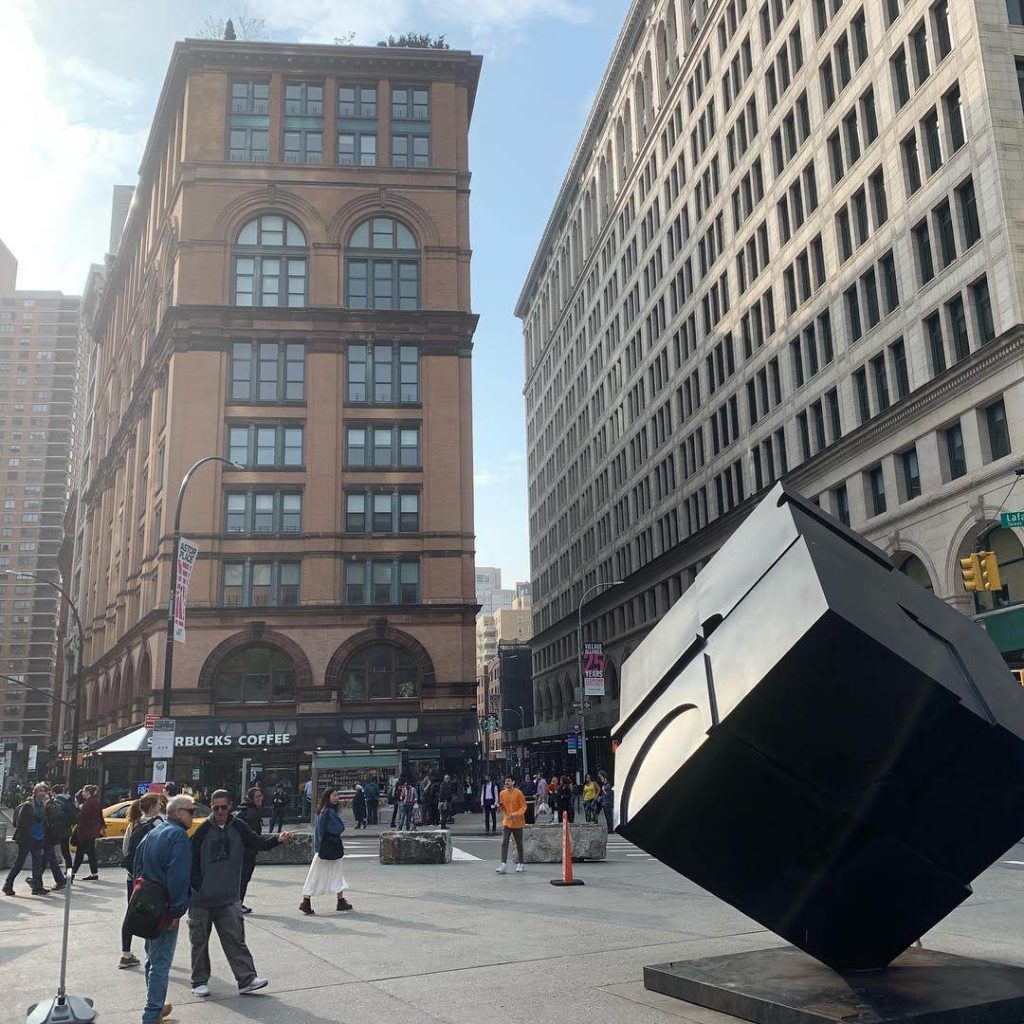
Astor Place in 2019:

William Macready:

From the New York Evening Post, May 1, 1849, advertising his May 7th show (which was interrupted by protesters).

Edwin Forrest: In portrait and in daguerreotype

Images above courtesy the New York Public Library (except where otherwise noted).

FURTHER LISTENING:

We’ve been doing this for so long that we have MANY podcasts about historical landmarks in and around Astor Place. After you listen to this show, check out these older shows from our catalog:

Categories
Mysterious Stories Podcasts The Alienist

The Sinister Story of McGurk’s Suicide Hall: The Bowery’s Most Notorious Dive

PODCAST The unbelievable story of the most infamous dance hall in New York City.

The old saloons and dance halls of the Bowery are familiar to anyone with a love of New York City history, their debauched and surly reputations appealing in a prurient way, a reminder of a time of great abandon. The Bowery bars and lounges of today often try to emulate the past in demeanor and decor. (Although nobody was drinking expensive cocktails back in the day.)

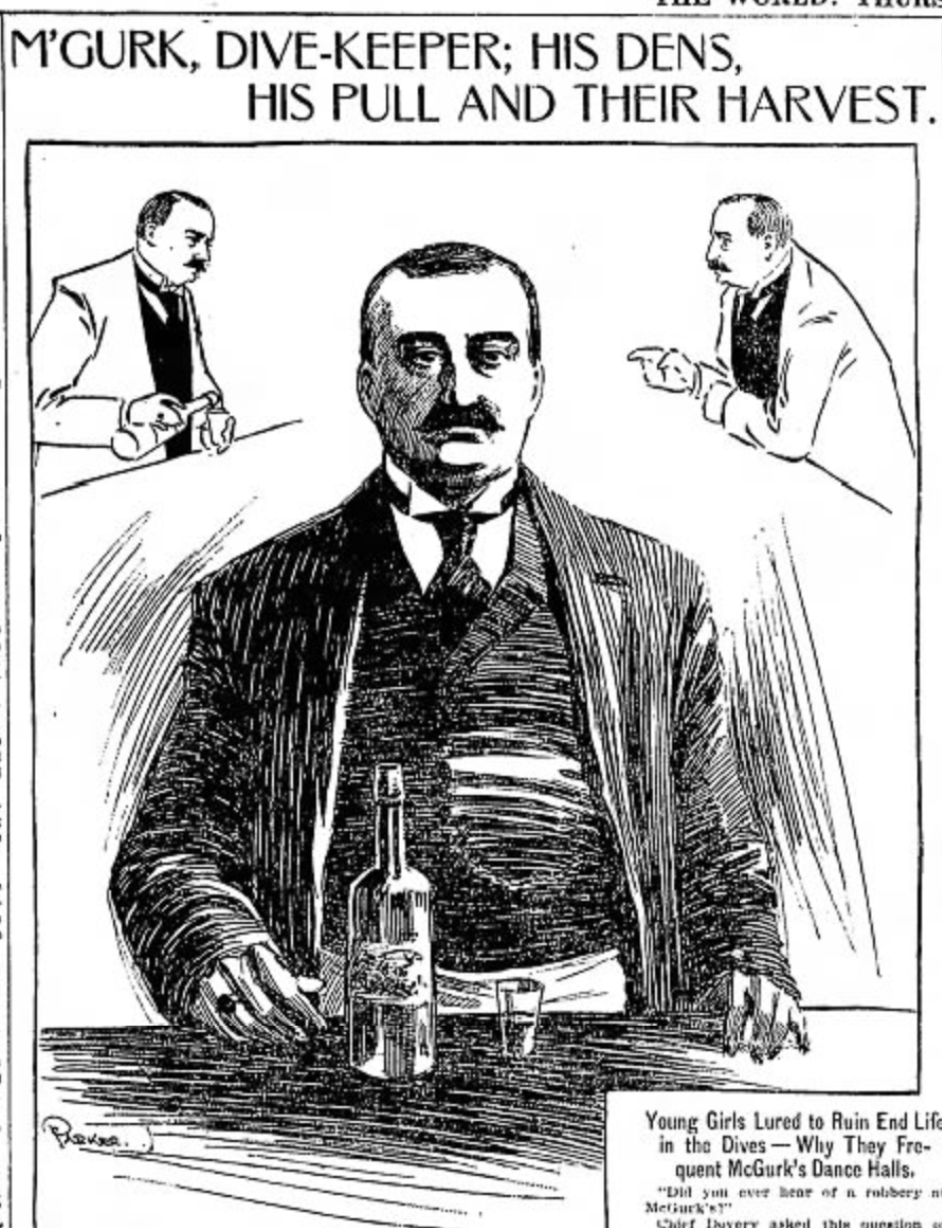
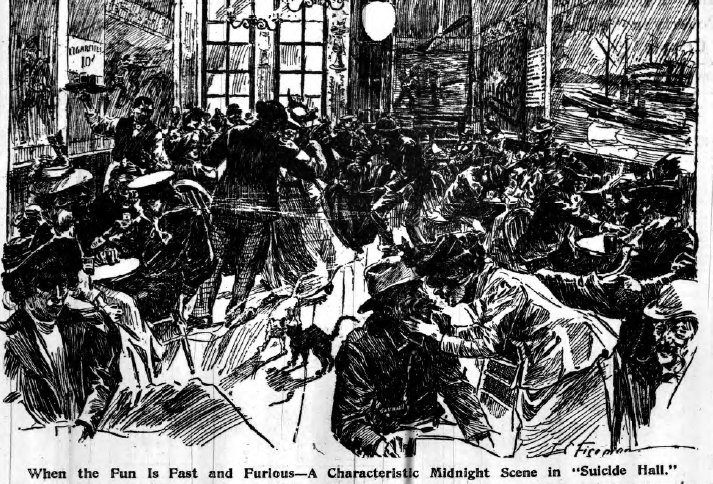
But the dance hall at 295 Bowery, the loathsome establishment owned by John McGurk, was not a place to admire. It was the worst of the worst, a dive where criminal activity thrived alongside bawdy can-can dancers and endless pours of putrid booze.

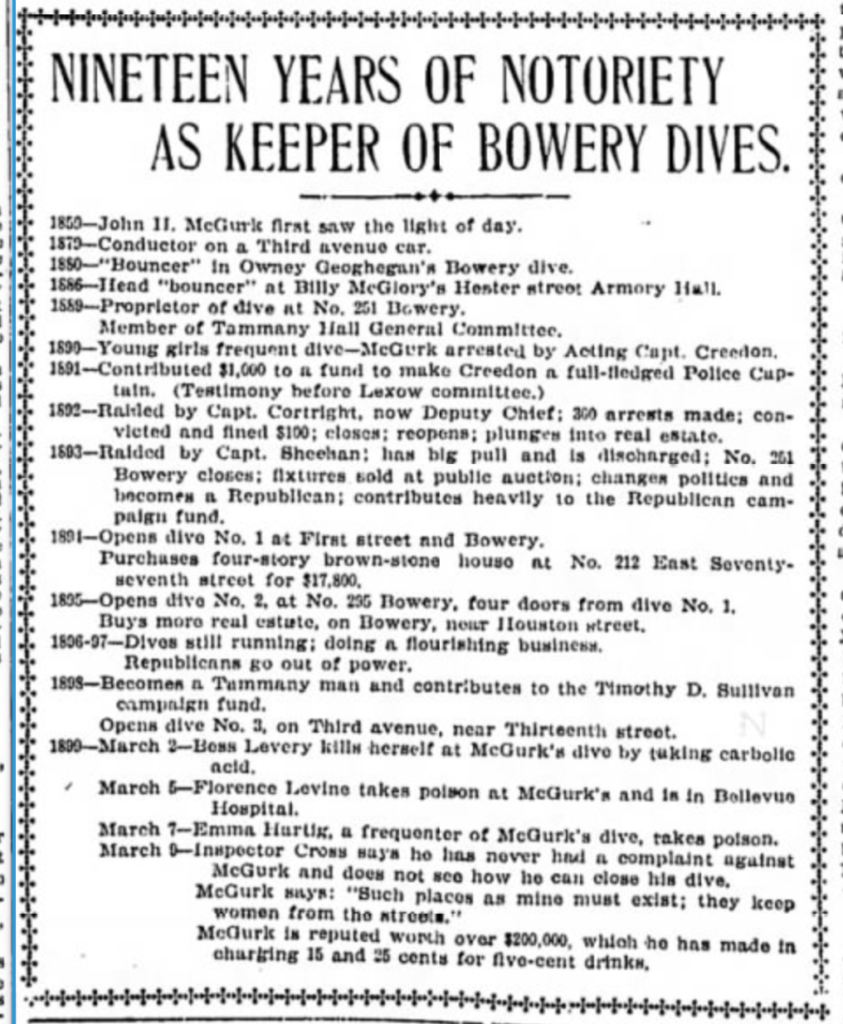
In early March of 1899, a woman named Bess Levery climbed to one of the top floors of McGurk’s — floors given over to illegal behavior — and killed herself by drinking carbolic acid. Within a week, two more women had ventured to McGurk’s, attempting the same dire deed.

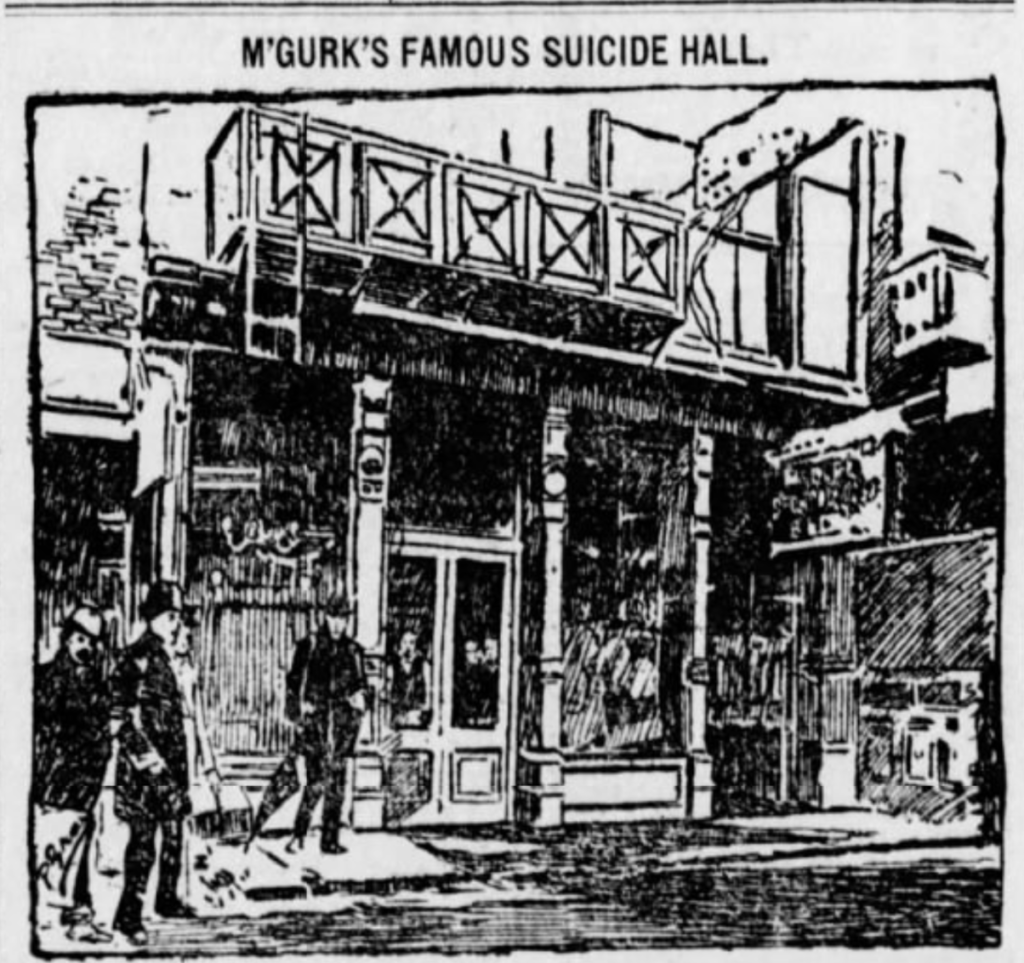
By the end of 1899, the dance hall had received a truly grim reputation, and its proprietor, capitalizing on its reputation, began calling his joint McGurk’s Suicide Hall.

What happened to the Bowery, once the location of fashionable homes and theaters, that such a despicable place could thrive — mere blocks from police headquarters? This is the history of a truly dark place and the forces of reform that managed to finally shut it down.

FEATURING: Theodore Roosevelt, Jacob Riis and some rowdy fellows by the names of Eat Em Up McManus and Short Change Charley.

This episode is sponsored by TNTs new limited series The Alienist.
LISTEN HERE:

________________________________________________________

The Bowery Boys: New York City History podcast is brought to you …. by you!

We are now producing a new Bowery Boys podcast every week.  We’re also looking to improve the show in other ways and expand in other ways as well — through publishing, social media, live events and other forms of media.  But we can only do this with your help!

We are now a member of Patreon, a patronage platform where you can support your favorite content creators for as little as a $1 a month.

Please visit our page on Patreon and watch a short video of us recording the show and talking about our expansion plans. If you’d like to help out, there are five different pledge levels (and with clever names too — Mannahatta, New Amsterdam, Five Points, Gilded Age, Jazz Age and Empire State). Check them out and consider being a sponsor.

We greatly appreciate our listeners and readers and thank you for joining us on this journey so far.

_________________________________________________________

In March 1899, New York Herald ran a comprehensive timeline of McGurk’s whereabouts.

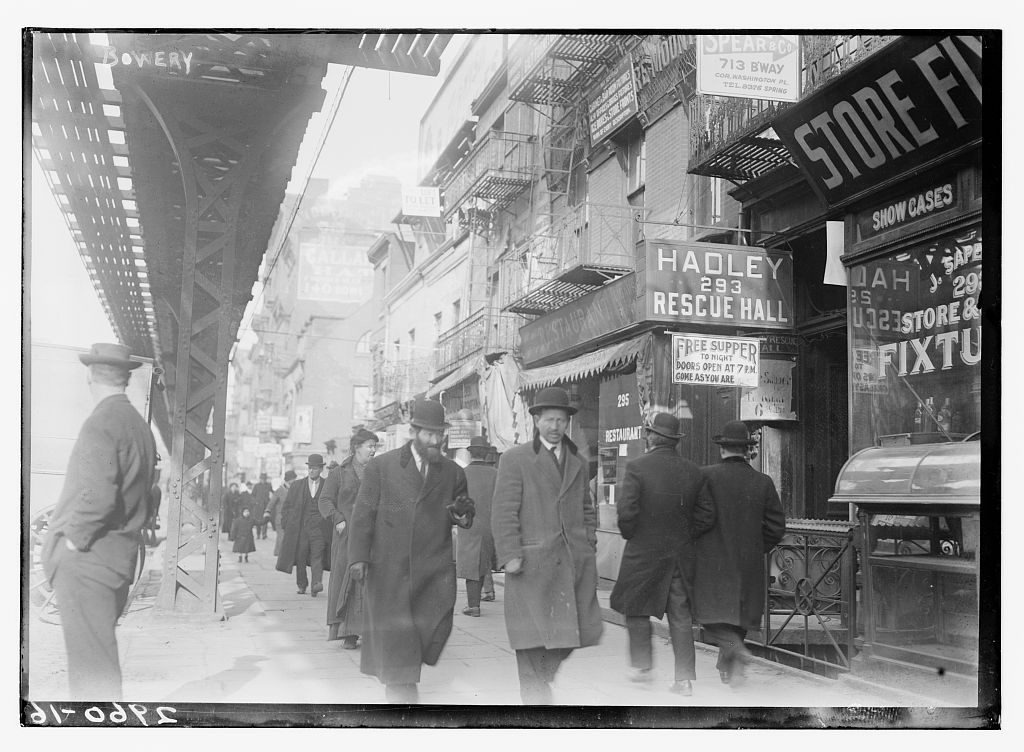
The location of McGurk’s dance hall (295 Bowery), circa 1910 or so. By this point, its neighbor would be a church outreach spot — Hadley Rescue Hall. (Read this fascinating post from Greenwich Village History for more information.)

Library of Congress

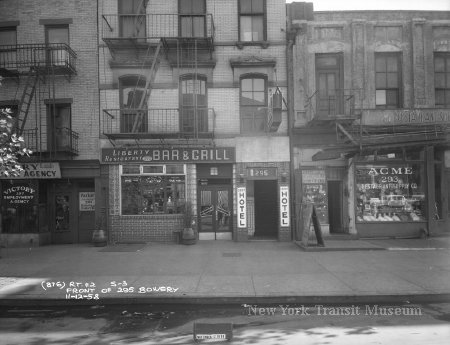
The building became a flophouse called the Liberty Hotel with a restaurant and bar on the ground floor.

New York Transit Museum

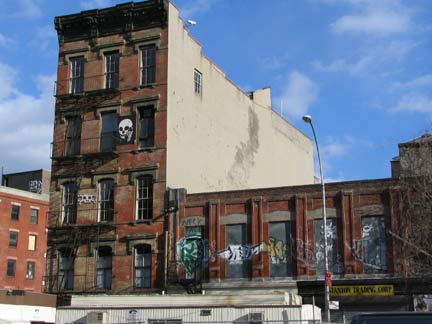
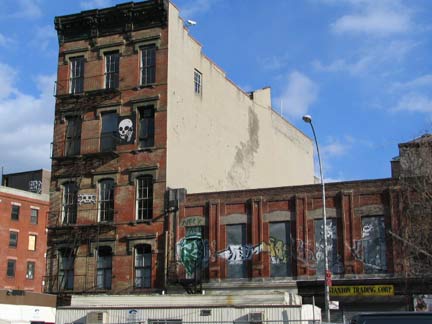
Here’s what 295 Bowery looked like before it was razed in 2005:

Global Graphica

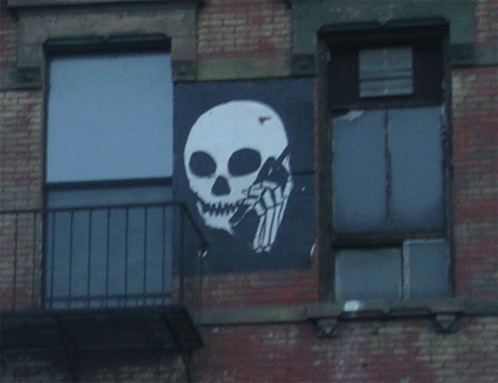
An ominous piece of graphic art on one of the floors above McGurk’s.

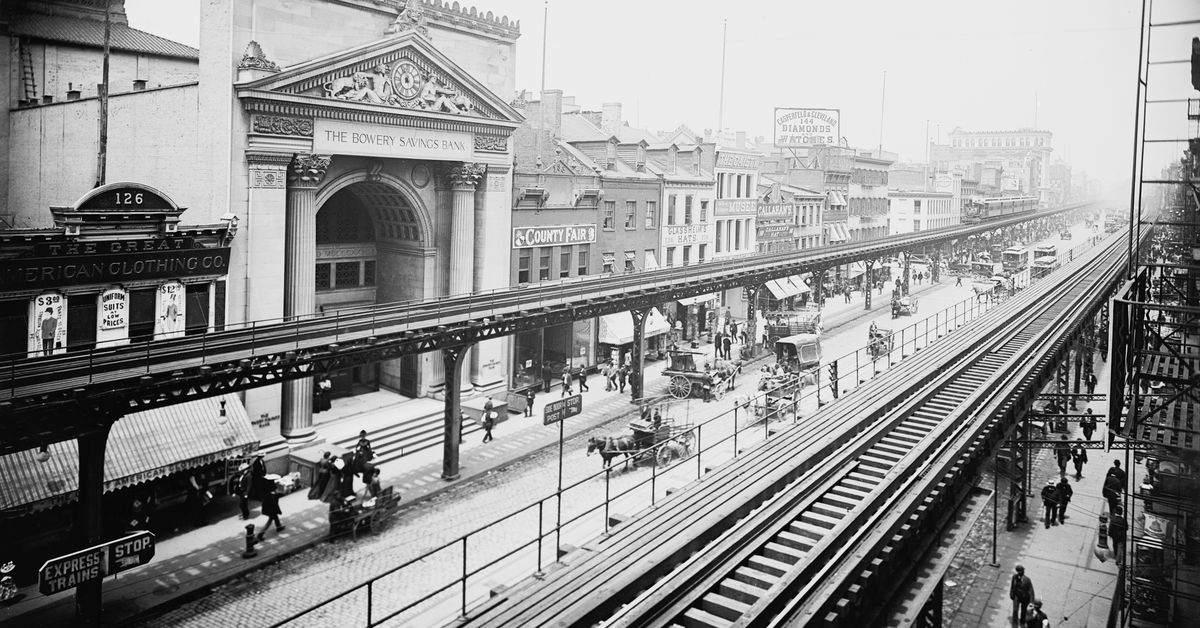
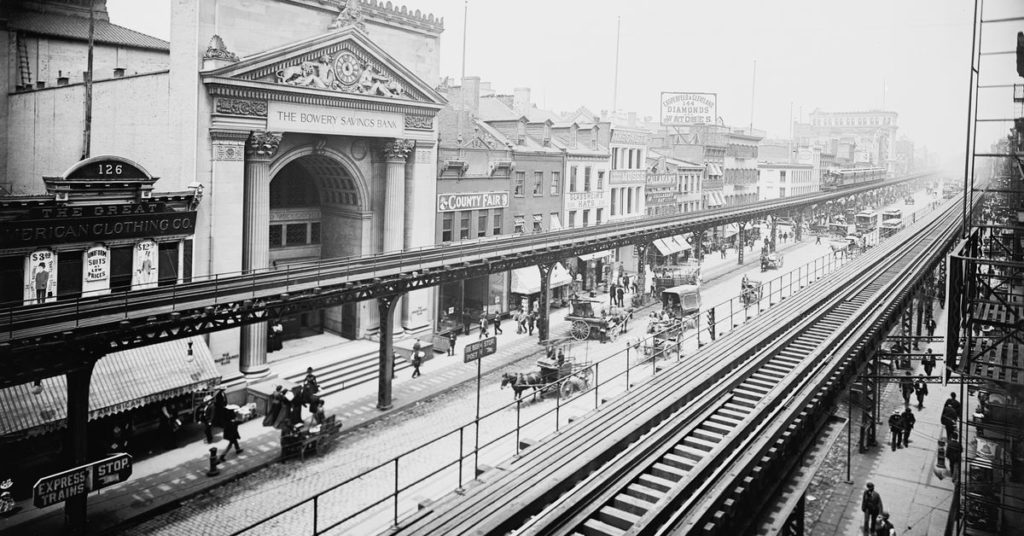
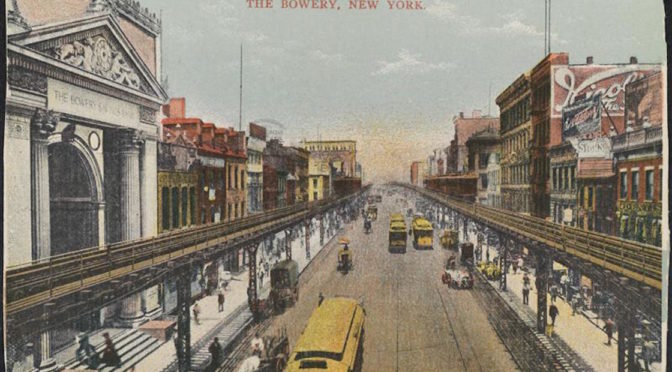
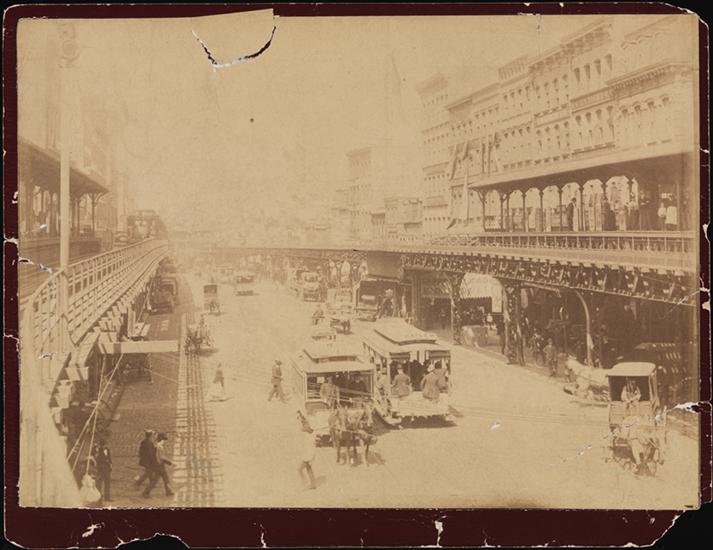
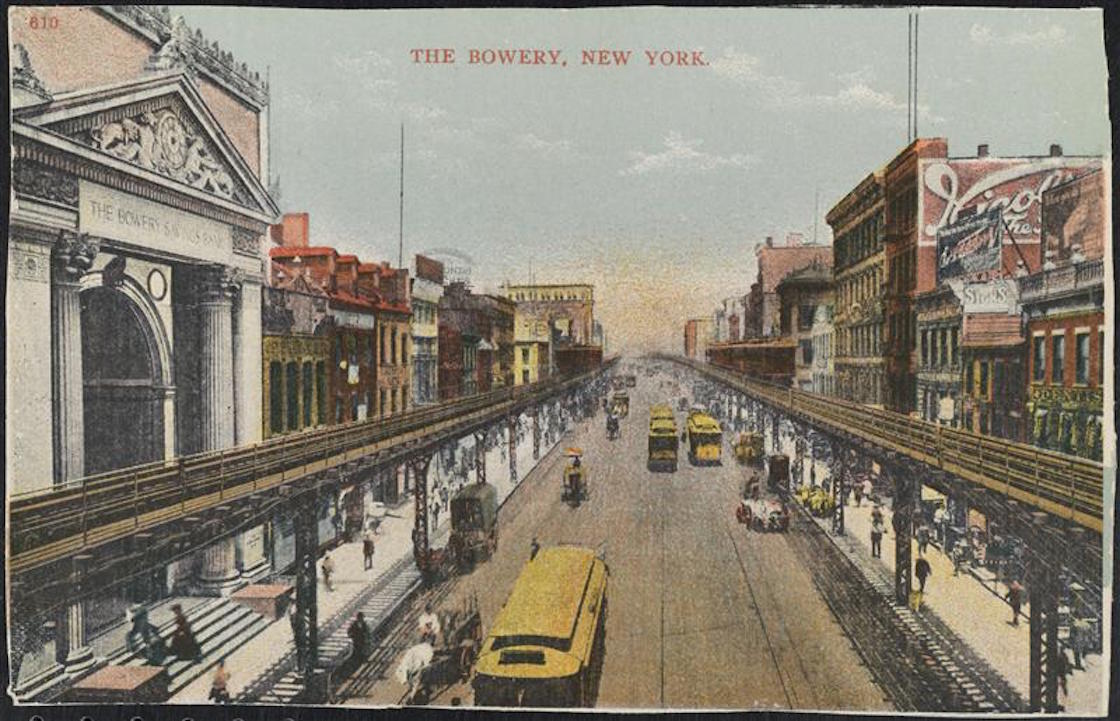
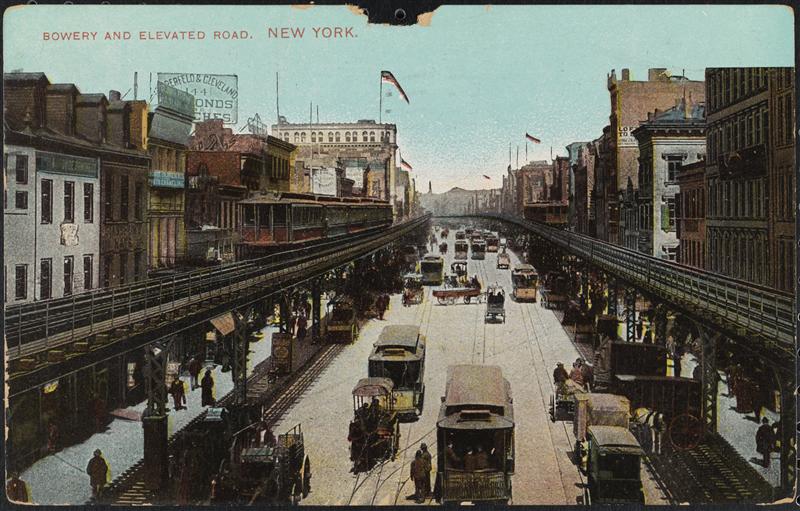
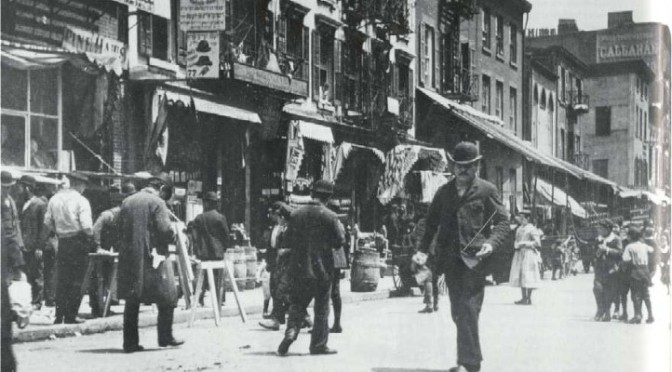
Pictured at top: The Bowery as it looked in 1900. The Bowery Savings Bank is still there (today it’s the nightclub event space Capitale) as are some of the buildings to its right which are part of the Bowery’s lighting district. McGurk’s was located a few blocks uptown.

Library of Congress

RECOMMENDED READING:
OLD BOWERY DAYS: The Chronicles of a Famous Street by Alvin F Harlow
LOW LIFE: Lures and Snares of Old New York by Luc Sante
THE BOWERY: The Strange History of New York’s Oldest Street by Stephen Paul DeVillo
THE GANGS OF NEW YORK: An Informal History of the Underworld by Herbert Asbury

Listen to the other shows in The Alienist ‘podcast takeover’, other podcasts inspired by the TNT limited series including new episodes from Criminal, Casefile, Serial Killers, Thinking Sideways, Unsolved Murders: True Crime Stories, Generation Why and Last Podcast on the Left. Full listing here.

If you liked this episode of the Bowery Boys, check out these following shows in our catalog with subjects that featured into this show:

TIMES SQUARE IN THE 1970s
The dangers street prostitutes faced in the 1890s didn’t fade away with reforms. Those who walked 42nd Street in the 1970s faced similar perils — including corrupt cops.

NEW YORK’S ELEVATED RAILROADS
The street life of Manhattan was inexorably altered with the arrival of railroads overhead.

A HISTORY OF THE SOUTH STREET SEAPORT
The rowdy nightlife of the Bowery was fueled by the sailors and seamen coming from New York’s vast port waterfront. But by the 1880s, the area that would become the South Street Seaport district had devolved into something truly decrepit.

Categories
Amusements and Thrills

Subway Tavern: ‘greasy’ church-operated bar alternative


LOCATION: Subway Tavern
Bleecker and Mulberry, Manhattan
In operation 1904-05

The early planners of the New York City subway negotiated that very first route through some of the city’s mostly heavily populated areas, those obviously in need of rapid transit. The locations of the first underground stations were based on the amount of available space at key cross streets. If you happened to own property along the route and specifically near a planned station, you would have hit the proverbial jackpot in 1904, the year the subway opened.

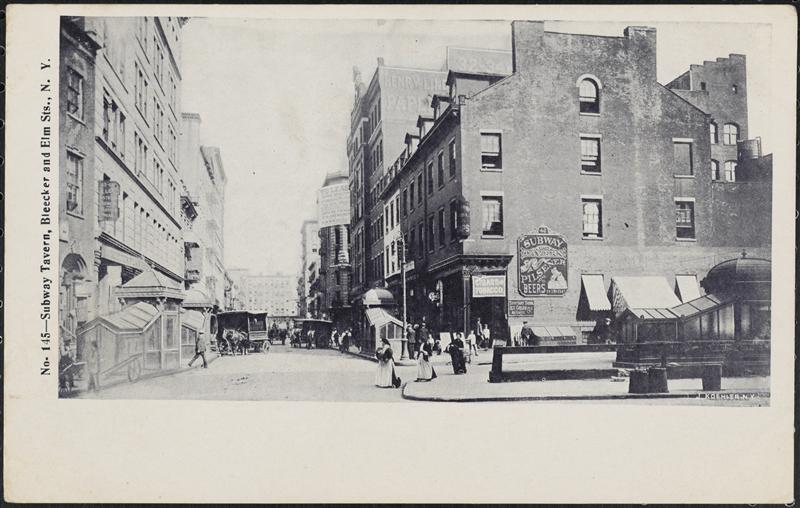
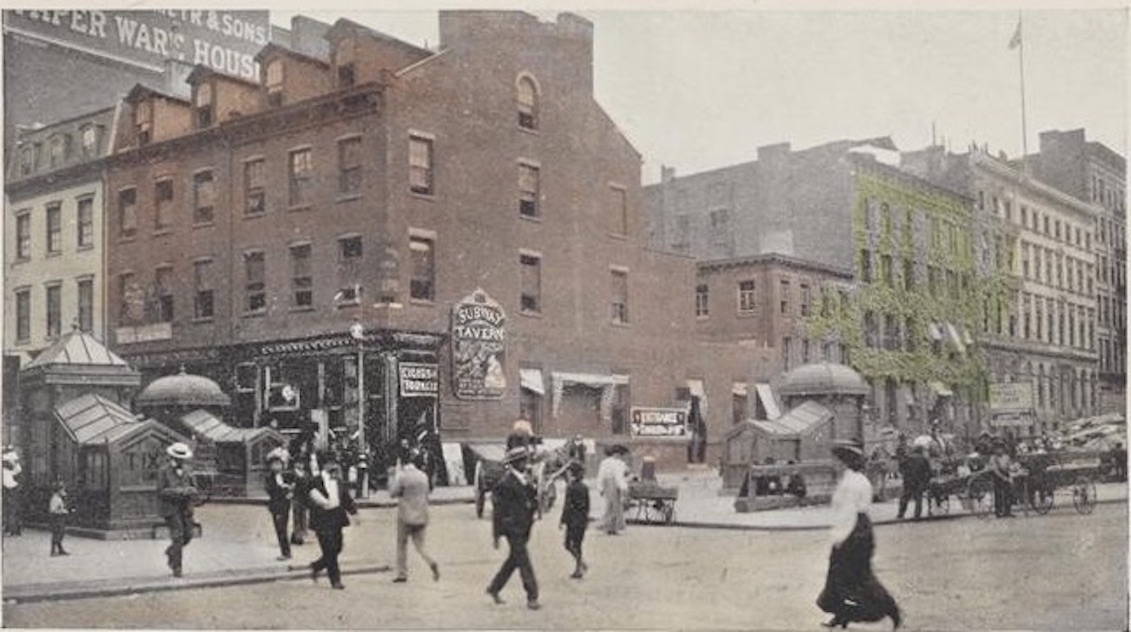
And so begins the tale of the Subway Tavern, at the corner of Bleecker and Mulberry, which tried to monopolize on this lottery of suddenly-valuable real estate with the worst idea in the history of New York City nightlife — a moral tavern.

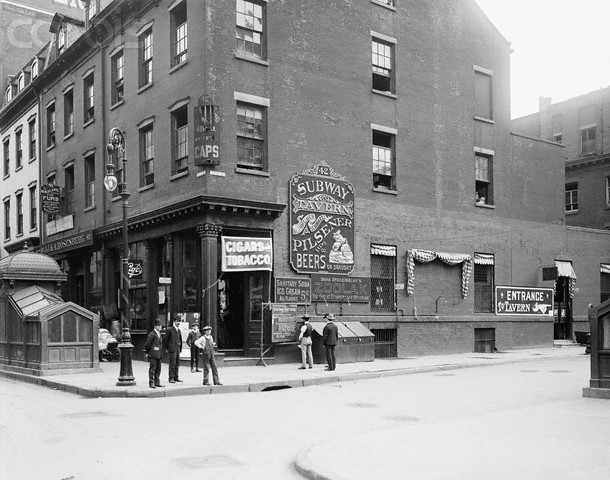
1905, Greenwich Village, Manhattan, New York, New York, USA — Subway Tavern 47 Bleeker Street. — Image by © Bettmann/CORBIS

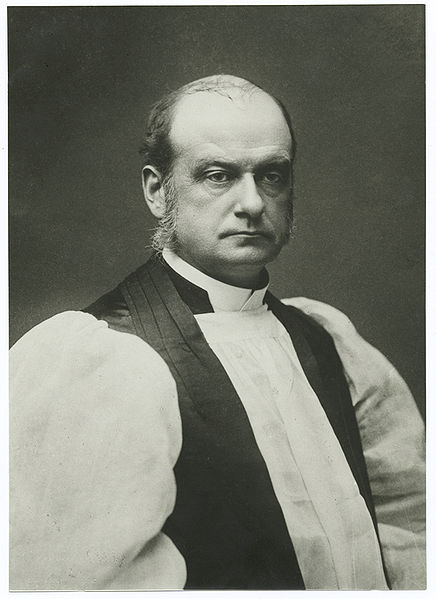
Like all religious leaders, the Bishop Henry Codman Potter of the Episcopal Diocese of New York was gravely concerned with the evils of alcohol upon the poorest classes and the newest arrivals from Ellis Island. Most of the temperance stripe preferred to hit areas most soaked in booze — particularly the Bowery — with bibles in hand and moral example on display. Often to no avail and to the occasional danger to the proselytizers themselves.

Potter (pictured below), a rector at Grace Church, thought outside the box. His own ideas for social reform were radical for the time but some (like daycare in churches) seem standard and even obvious today. Although he lived rather luxuriously — his stately home at 89th and Riverside Drive is still standing — he made a point, even after his ascension to bishop, to work regularly in poor neighborhoods.

He was often a voice for labor groups and consistently berated Tammany Hall for its abuses. Nobody could say the man’s heart was not in the right place. Which made it all the more shocking when he decided one day that the Episcopal Church should open a tavern.

Since it seemed unlikely that people would stop drinking entirely, went his theory, why not found an establishment where proper and gentlemanly drinking would be encouraged? A place where the staff could monitor and guide patrons to more responsible imbibing.

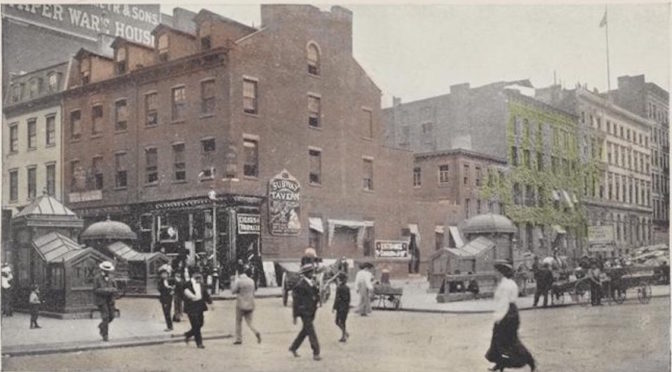
Potter found the perfect location, a former saloon owned by future Fire Commissioner Joseph ‘Oak’ Johnson, at the corner of Bleecker and Mulberry streets and sitting right in front of a new subway entrance. Although the trains would not run for another few months, the new experiment was dubbed the Subway Tavern.

Potter christened the new tavern on August 2, 1904, opened with $10,000 in funds from distinguished citizens, including money from U.S. representative Herbert Parsons and former lacrosse star Elgin Gould. In case anybody was unclear of the intentions of the unusual establishment, a holy doxology was performed to an enrapt, standing-room-only audience.

Courtesy Museum of the City of New York

The Subway Tavern was to operate like a respectable upper-class club, except for poorer folks. “I belong to many clubs which I can go,” remarked the bishop, “but where can the toiler go?” Where, indeed!

Potter honestly believed the Subway Tavern could be jovial and free-spirited without becoming debaucherous. The front room, adored with a sign ‘To The Water Wagon’ playfully overhead, would be open to both sexes “with a ‘sanitary’ soda water fountain where beer will be served to women.” [source] Men would have a private room behind some swinging saloon doors in the back.

As the bar was funded by donations, the ‘evils’ of profit were eliminated. And thus, reasoned Potter, bartenders would not encourage patrons to drink. Men and women could come to converse, read a newspaper and have one — maybe two — drinks. Employees were to closely watch the intoxication levels of customers; if one even looked tipsy — if say, somebody appeared to be enjoying their drink a wee too much — they would be cut off. Healthy food would also be on hand downstairs to soak up any amoral toxins in the belly.

As the New York Times lightly mocked, “The benevolent bartenders … are anguished when they are compelled to serve whisky, and … dimple with joy when sarsaparilla pop is ordered.”

Naturally, many Episcopalians were not too thrilled having their church associated with a tavern just a couple blocks from the Bowery. Many dubbed it ‘The Bishop’s Inn’. The experiment made national headlines and was greeted with remarks like those from Pittsburgh pastor J.T. McCrory: “I supposed the ‘Subway Tavern’ was called that because it is an underground way to hell.” (Several accounts I read seemed to believe the tavern was actually in the subway.)

Another preacher called it a “low down, greasy Bowery saloon.” Shocked clergy flocked from other cities to gander at this oddity and register their opinion to the press. “I do not think it will turn the tide of drunkenness,” said one stunned clergyman, “nor will it solve or diminish the curse of rum.”

The naysayers were right. The Subway Tavern turned out to be a horribly ill-conceived idea, and its flaws were magnified several months after the subway opened in October 1904. When a reporter for the Advance visited the pub in September 1905, they found the exterior covered in ‘tattered’, ‘stained’ advertisements, a main barroom empty and most surfaces covered in flies.

Presumably, patrons quickly grew tired of being stately. As the Advance so plainly stated, “The liquor sold at the Subway does not make men sober. There is no method by which a young man learning the drink habit may not go elsewhere to complete his ruin.”

Within days of the Advance’s visit to the Subway Tavern, the holy drinking establishment closed up and reopened as a no-pretenses ‘out and out saloon’. Bishop Potter died just a few years later with a mostly unblemished record.

Many years later, the structure that once housed the Subway Tavern was ingraciously replaced with this building.


This article originally ran as part of our FRIDAY NIGHT FEVER series entry. Past entries can be found here.

Categories
Adventures In Old New York

The Story of Bayard’s Mount, Lower Manhattan’s Missing Mountain

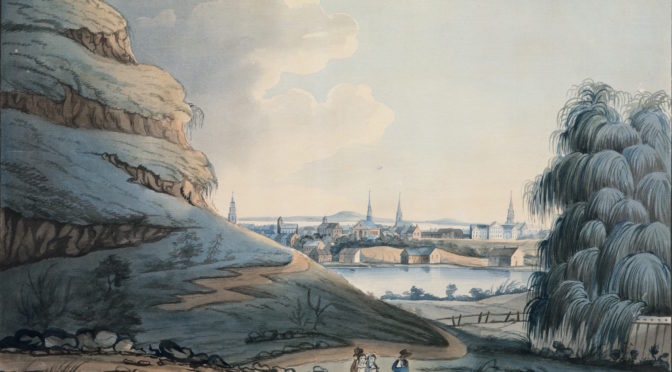
Bayard’s Mount, one of the highest points in Manhattan, has been gone for more than two hundred years. Where other hills and high points have been incorporated into the modern topography New York, this old hill was wiped from the map.

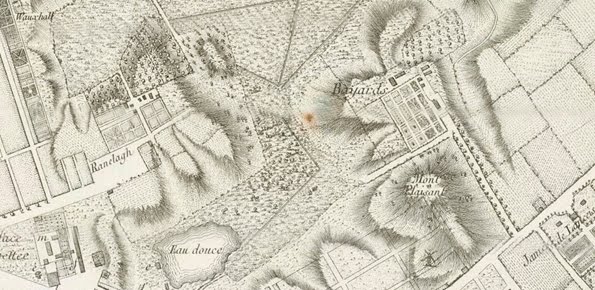
Bayard’s Mount used to sit at around where Mott and Grand Streets meet today, in today’s Little Italy. Indeed, back when nearby SoHo was but a dense thicket of oak and tulip trees, the Mount was the best place to view the waters of Collect Pond, the wild northern orchards, and the flat tidal creeks to the west.

A smaller hilltop, called Mount Pleasant, sat to its east and, with the introduction of Europeans, a farm road (Bowery) ran along it. Sitting atop Bayard’s Mount, a person could wile away the day watching travelers going along the Bowery, to and from the city.

A watercolor by artist Archibald Robertson in 1798, looking south, with Bayard’s Mount/Bunker Hill to the left and Collect Pond dead center.
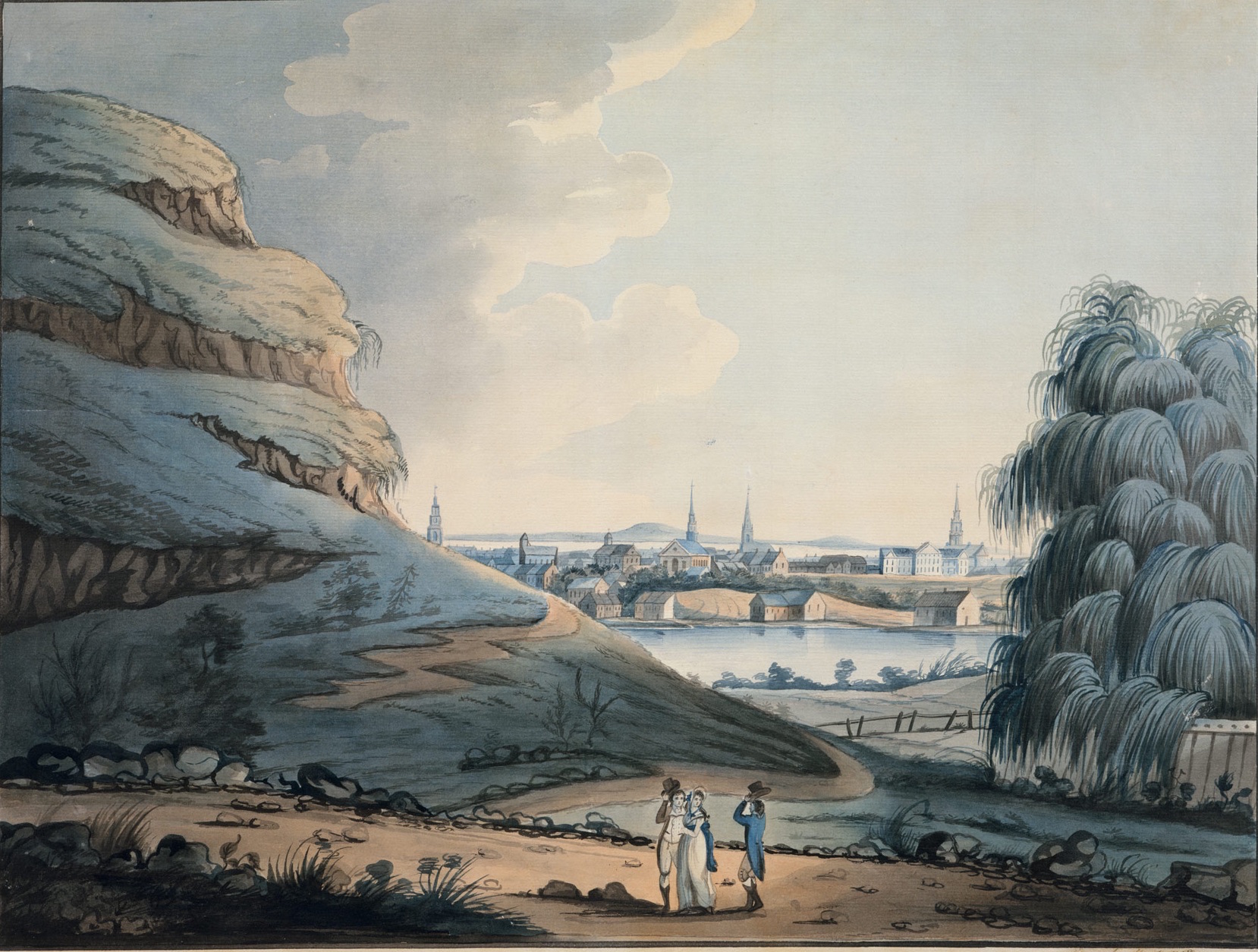
Some reminiscences refer to Bayard’s Mount and Mount Pleasant as the same hill, and they were close enough they seem to be part of the same ridge.

After the territory went from Dutch to British hands in the mid-17th century, most of this property fell into the hands of Nicholas Bayard, and the “small, cone-shaped mount” took on the name of its landowner, who built his sturdy estate just to its north. Even by the early 18th century, Bayard’s family would still have few neighbors; swampy ground prevented much development west, while property to the east eventually belonged to James DeLancey, the governor of the colony.

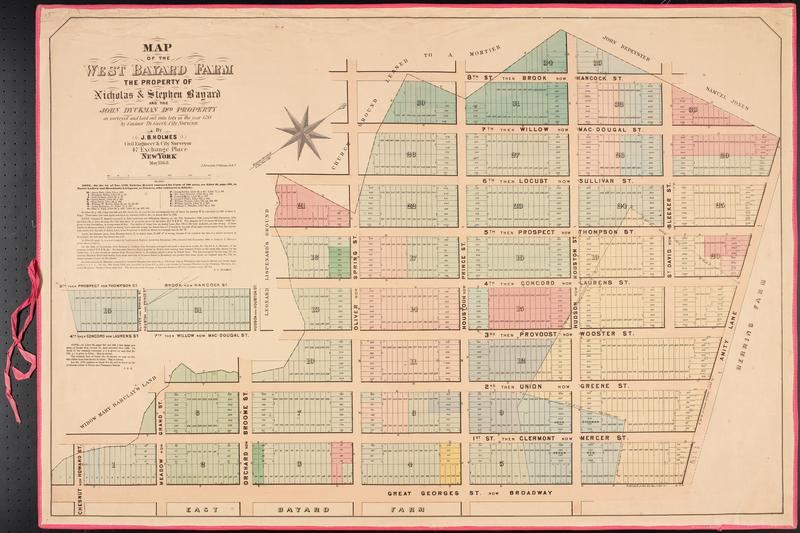
Below: A later 19th century property map highlights the broken western border of Bayard’s farm. The wetlands known as Lispenard’s Meadow prevented the estate from developing further westward.
The mount took on a more serious purpose with the onset of the Revolutionary War. In March of 1776, “One third of the citizens were ordered out to erect new works; they began a fort upon Mr. Bayard’s Mount near the Bowery.” [source]

This fortification, built in anticipation of a messy battle with the British, was named after a critical battle the year previous at Bunker Hill in Boston; soon, the hill itself took on the name, and in most histories after 1776, this place at today’s Mott and Grand Streets is officially known as Bunker Hill. Notably stationed here at Bunker Hill was Nathan Hale.

There would be no significant altercations here between British troops and the Continental Army. No, in fact, the bloodshed would wait until after the war, when the hilltop would be known as a fashionable place to host your duel.

For instance, in 1787, a disagreement between two French men ended in a duel here and the death of one of them, a “Monsieur Chevalier de Longchamps” who was apparently no stranger to offense and violent response.

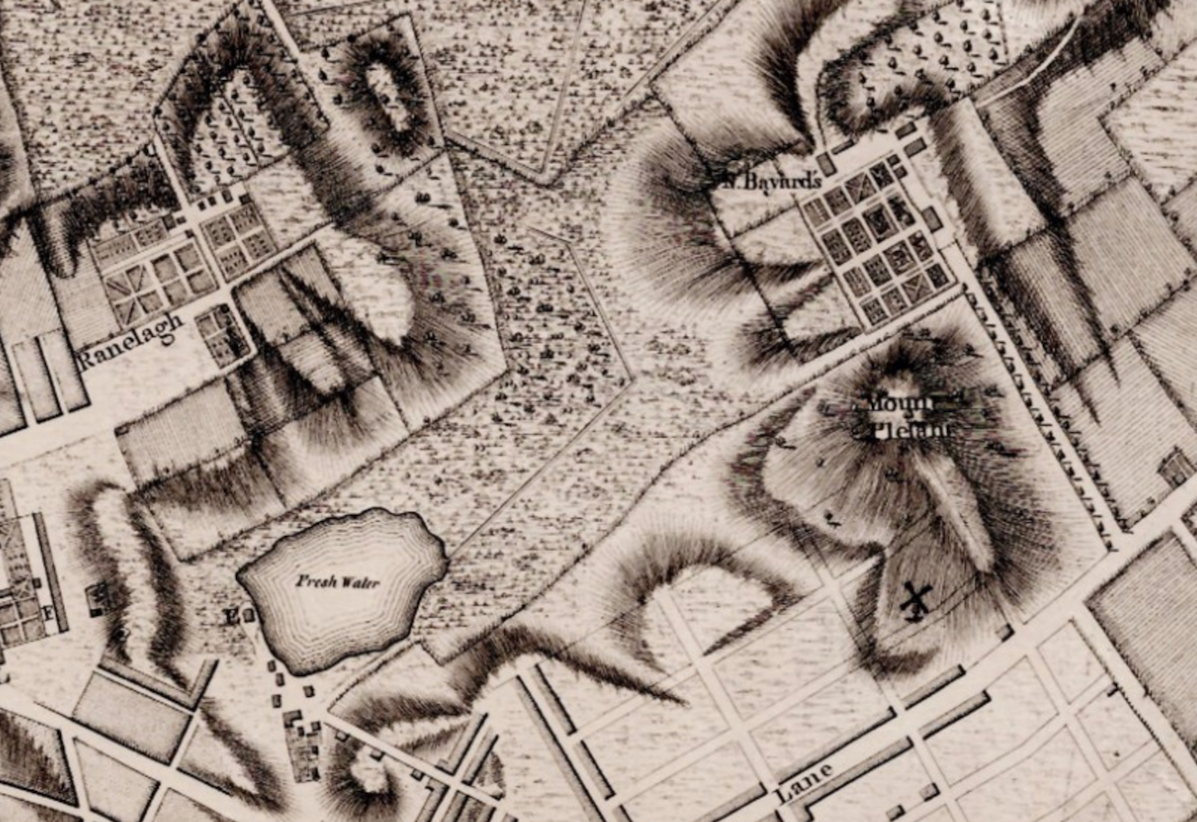
Below: From Montressor’s map of Manhattan, 1755, you can see Bayard’s property and both hills — Bayard’s Mount and Mount Pleasant, the elongated hill. The Bowery runs along the bottom right hand of the illustration, with Collect Pond in the bottom left corner. You can also see the grid plan of Bayard’s farm (which was ultimately adapted for the modern street plan of SoHo).

In July 1788, to celebrate the federal ratification of the Constitution, a procession marched through the city and ended its revelry at Bayard’s Mount/Bunker Hill, where “ten enormous tables laden with provisions” and hundreds of pounds of roasted ox were served to hungry patriots. Several years later, in 1795, a different gathering, angered by their governor John Jay over his (perceived) treasonous treaty with the British, burned his portrait in a bonfire here.

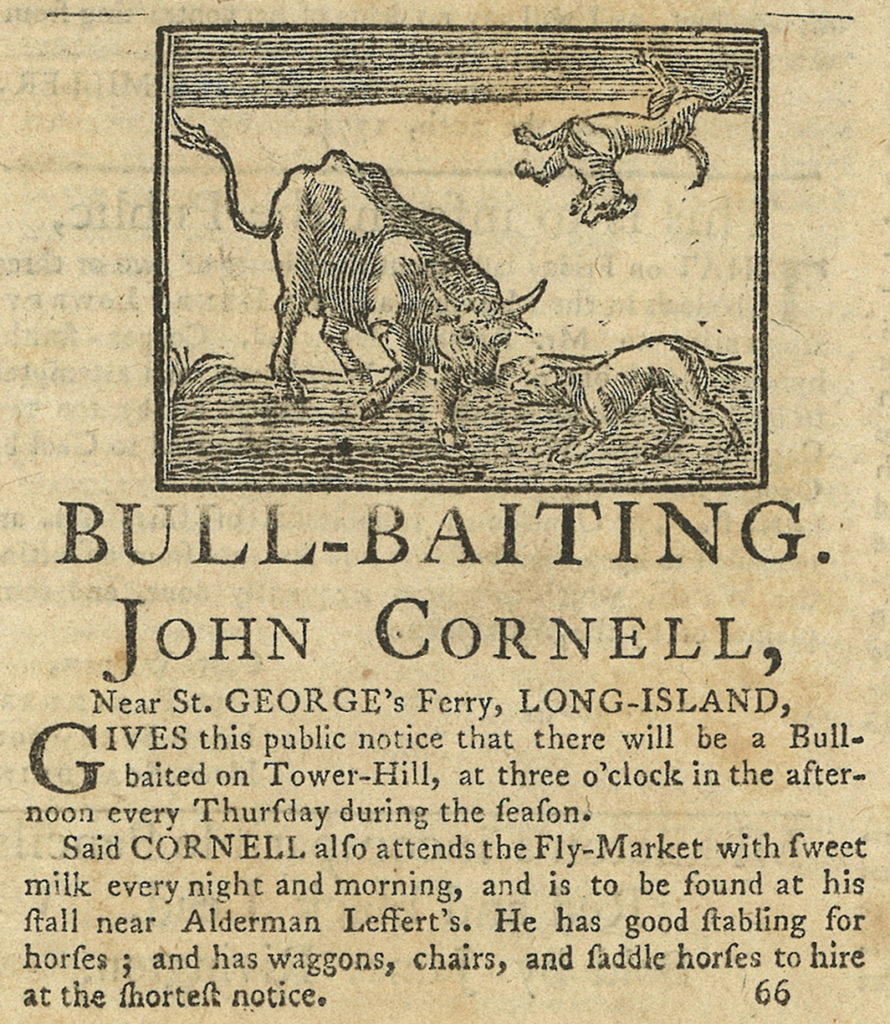
Another curious pastime at the hilltop was the British sport of ‘bull baiting’, where a bull would be tied to a stake and slowly tortured by angry dogs. Why this is of any visible amusement is beyond me, although its cousin ‘bear baiting’ is still sometimes practiced in Pakistan.

Below: A bit of this nasty little pastime out in Long Island as it was advertised in 1774
New York was outgrowing the southern point of Manhattan, and former deterrents for expansion — the marshes of Lispinard’s Meadow, polluted Collect Pond, and of course, Bayard’s Mount — were slated for elimination. The ponds and marshes would soon be drained, creating Canal Street, and Broadway expanded further north. (Listen to our podcast on Collect Pond and Canal Street for more information.) By then, Bayard’s was but a memory.

Beginning in 1802, workmen began levelling Bayard’s Mount and Mount Pleasant which also included moving the old Bayard family crypt which had its entrance at the bottom of the hill. Unfortunately, it was discovered that a “hermit or ragman” had moved into the vault and turned it into his very own macabre home. Remarkably, the man was allowed to live there — “he was somewhat feared and not much troubled by visitors” — until he was found one day dead in the vault.

By the time Collect Pond was completely drained (around 1811), the hills to its north had gone, replaced with land lots and the first hints of townhouses and new businesses.

Below: From an 1821 New York Evening Post, an advertisement for plots on the old Bayard farm — at Bayard Street and Mott Street, just a couple blocks south of the location of the Mount
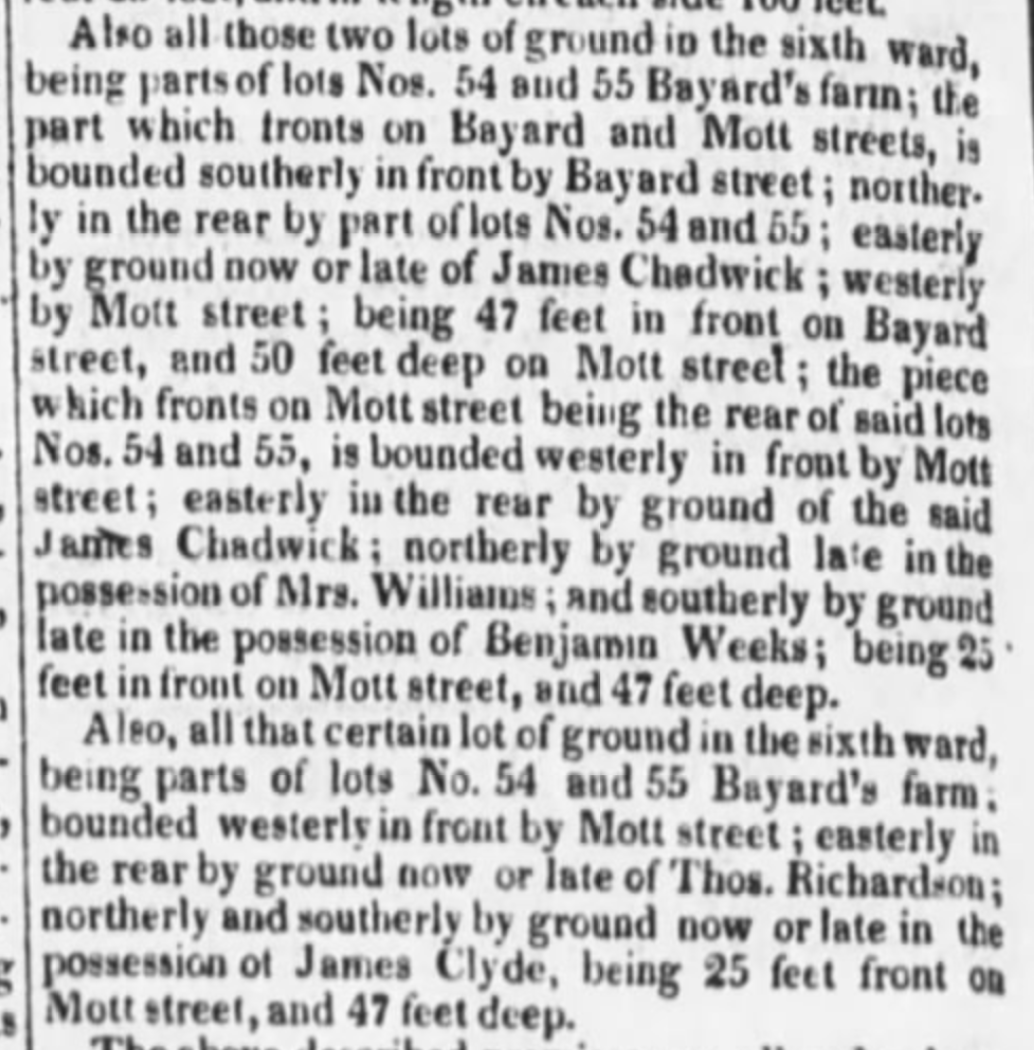
Another clipping from an 1888 New York Evening World, recalling the landscape here:
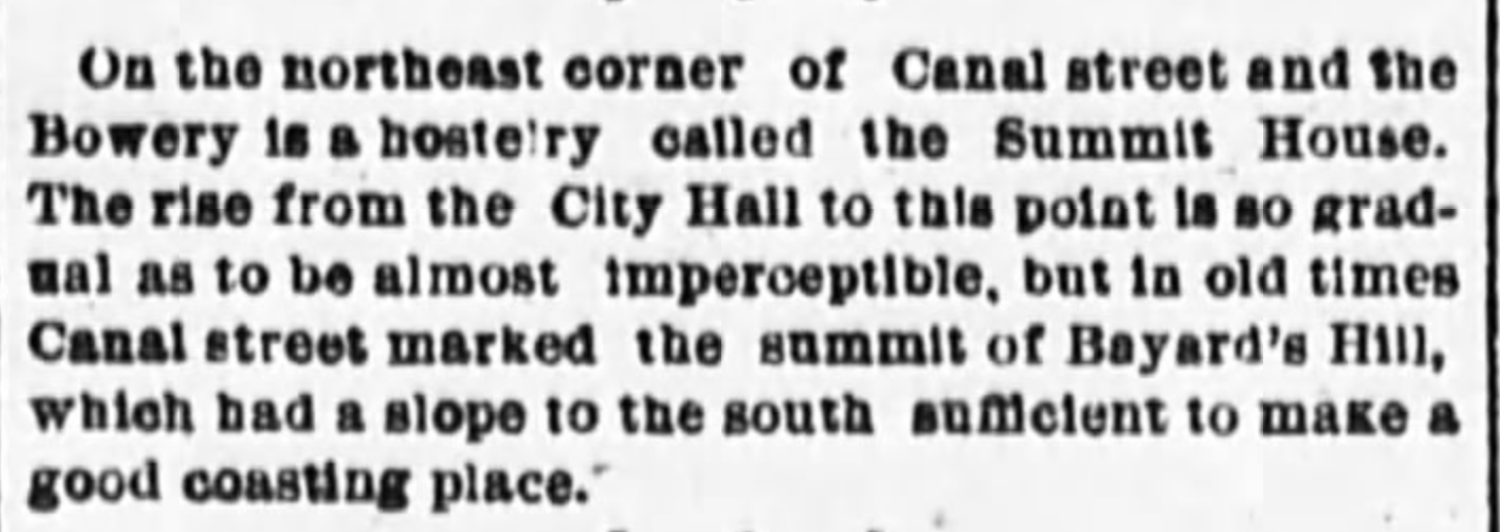
 

Below: The approximate position of where Bayard’s Mount would have been:


View Larger Map


A version of this article originally ran in October 2010

Categories
True Crime

A handy guide to the most loathsome saloons on the Bowery in 1903

Many of the bars and taverns found on the Bowery today are unfortunately clean, friendly and even trendy establishments, wonderful safe places to meet with friends and family. Not a ruffian or scoundrel in sight. Where’s the fun in that?!

Of course, for most of its history, the Bowery was one of the most notorious places in America, the location of great vice and debauchery — gambling dens, brothels, dance halls, dime museums, saloons full of soused drinkers hovering around a boxing ring. For many decades, an elevated train line turned the Bowery into a shadowy haven for illicit shenanigans of all sorts.

And so may I turn your attention to an article which ran in the New York Tribune, on April 12, 1903, that touted New York’s reform efforts along the Bowery. This report proudly lists the Bowery’s most “evil resorts” which were successfully wiped away thanks to efforts by Mayor Seth Low.

While these would surely be dangerous places to visit, you can’t deny that these lurid newspaper descriptions make even the most lowly of dives seem rather interesting.

With each address, I’ve put a link to Google Maps, revealing what stands on that spot today. In many cases, the building itself is still standing:

15 Bowery “Known to the criminal ‘under world’ as Spanish Mamie’s. Took its name from the presence of a Spanish girl, the associate of many crooks. This was a dive of the lowest sort.”

19 Bowery “A back room ‘ginmill,’ the headquarters of ‘Boston Charlie,’ a well known character, and his even more notorious woman pal ‘Boston Clara.’ Boston Charlie was known as a ‘first rate cane man’, that is, a beggar who pretended to be a cripple. He served many terms in the workhouse and gave this place a reputation in his now line. It was the resort of ‘panhandlers’.”

Below: An 1880 photograph of the Bowery at Canal Street

MCNY

25 Bowery “The New-York Tavern.  Here was  planned a brutal robbery and assault on a Brooklyn jeweler. A low order of ‘crooks’ made this their ‘hang out.’”

101 Bowery “A common backroom resort, a place of assignation and the gathering place of ‘crooks’ of an inferior order.”

Below: The Bowery in 1915. The establishments listed below would have been on this block

Courtesy MCNY

114 Bowery “A resort of cheap pugilists, where obscene pictures were exhibited on a screen, best known as Steve Brodie’s” [Read more about Brodie’s dive bar here]

115 Bowery “Little Jumbo. This was a notorious resort and the scene of a brutal murder. Criminals and ‘panhandlers’ made it their headquarters, and sailors were the victims of all sorts of crime, from robbery to murder. It was run for the proprietor by an Italian who was discharged and replaced by an Irishman; soon after the Irishman and the Italian had a fight and the former was killed.”

MCNY

119 Bowery Flynn’s ‘Black Hole.’ This notorious resort is mentioned by Josiah Flynt as a resort of all sorts of crooks. It had a wide reputation, and went out of business soon after its proprietor, Flynn, was arrested for illegal registration in the last campaign.”

Also* — “‘Eat ’Em Up Jack’ McManus’s Rapid Transit House. This was a well known dive kept by McManus, who was formerly head bouncer for McGurk [most known for the morbid McGurk’s Suicide Hall, see below]. The assertion that no ‘touch’, that is, robbery, was ever made in McGurk’s and that such business was barred there, is somewhat justified by the fact that this place was started by a former employee of McGurk, and was famous for the ‘touches’ made there. McManus was known to his ‘pals’ as a ‘strong arm’ man, one who garrotes victims he is about to rob with his crooked arm.”

287 Bowery “The Tivoli — A concert hall where women in indecent costumes sang indecent songs on the stage; where assignation was carried on openly, and solders and sailors were dragged in and later taken to disorderly houses.”

The Bowery in 1905

MCNY

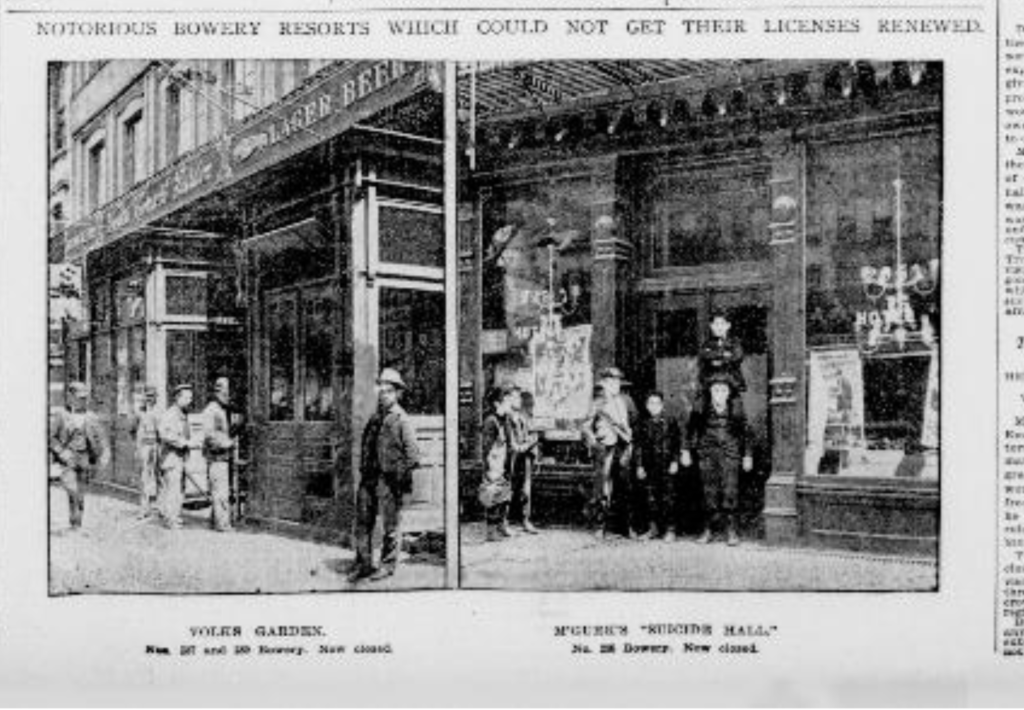
291 Bowery “The Volks Garden — The most notorious concert hall in the Bowery, and, like the Tivoli, a resort for prostitutes, a place of indecent stage exhibitions and the largest of its sort on the Bowery. As many as fifty women were attached to this place, and the business was carried on brazenly, numbers of ‘barkers’ and ‘pullers in’ being stationed at the door to drag people in by main force.”

295 BoweryMcGurk’s ‘Suicide Hall’ The most notorious resort in the Bowery, the ‘hangout’ of a large number of young girls. Solders and sailors frequented the place in large numbers. Carbolic acid suicies were the special of the place and gave it its name.” [Read more about it in my piece on Suicide Hall.]

*Address not specifically listed. May have shared the building with Flynn’s Black Hole

The above is an expanded excerpt from our book The Bowery Boys Adventures In Old New York, now available at bookstores everywhere.
Categories
Friday Night Fever

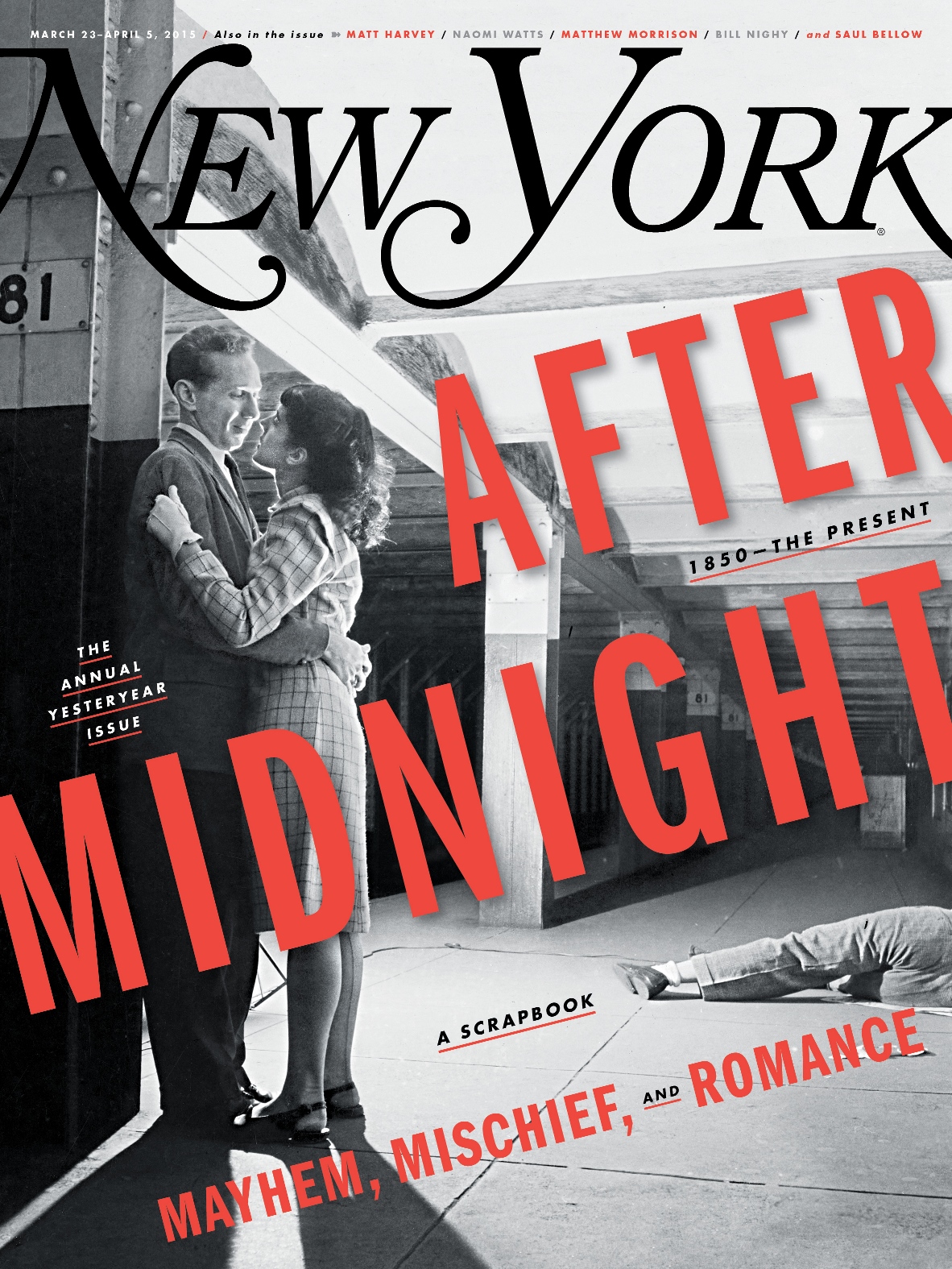
The Wildest Era In New York History: My New York Magazine Investigation

New York Magazine produces an annual buffet of New York City history each year called the Yesteryear Issue.  It’s probably the biggest celebration of the city’s past in print and usually corrals some of New York’s finest writers and celebrities.  Last year’s issue featured eight entertainers from New York’s past including Barbra Streisand, Bob Dylan and the Notorious B.I.G.
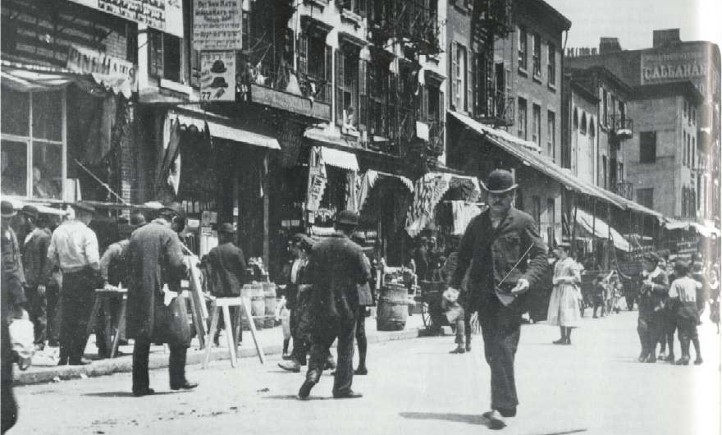
This year’s fabulous issue is no exception. The theme is After Midnight, a look at history through the years (from the 1850s to today) as it played out in the late-night hours.   You can read it all right here or go to your newsstand and pick up one of the three gorgeous covers.

3

This issue features tales, interviews, reminiscences and asides by the likes of Jay McInerney, Bebe Buell, Sloane Crosley, Colin Quinn, Alec Baldwin, Sarah Jessica Parker and Matthew Broderick, Laurie Anderson, J.B. Smooth, Sarah Silverman, Lydia Lunch, Isaac Mizrahi, Laurie Anderson — and the Bowery Boys!

That’s right, I have a fun little article in the issue, a thought experiment called “Which New  York Was the Wildest New York? An Inquiry.”

It’s an absurd argument — how do you really quantify debauchery? — but a wonderful thought experiment and a fine excuse to wallow in genuine New York wickedness.  It was fun to pour over the decades and identify four particular eras of rampant bacchanalian excess — the 1970s, the 1920s, the 1880s-90s and the 1850s.  You can read the article to discover which era I crown the wildest.

Disagree?  Have a favorite era you’d love to visit? Leave a comment and tell me about it!

And here are a few images of people and places that I mention in the article.

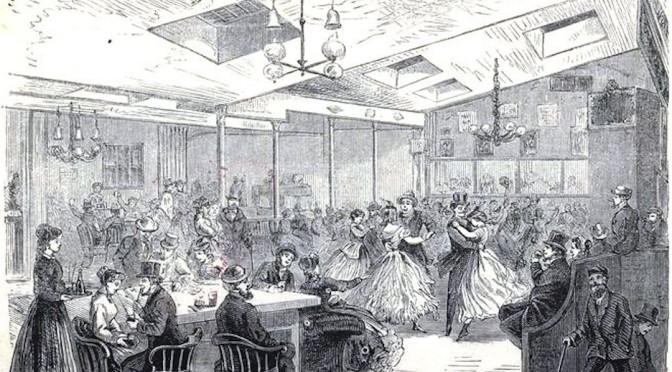
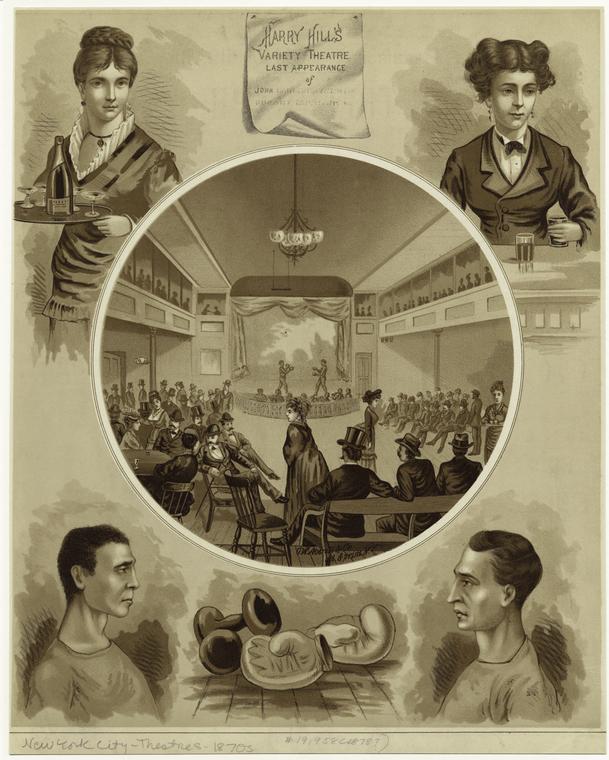
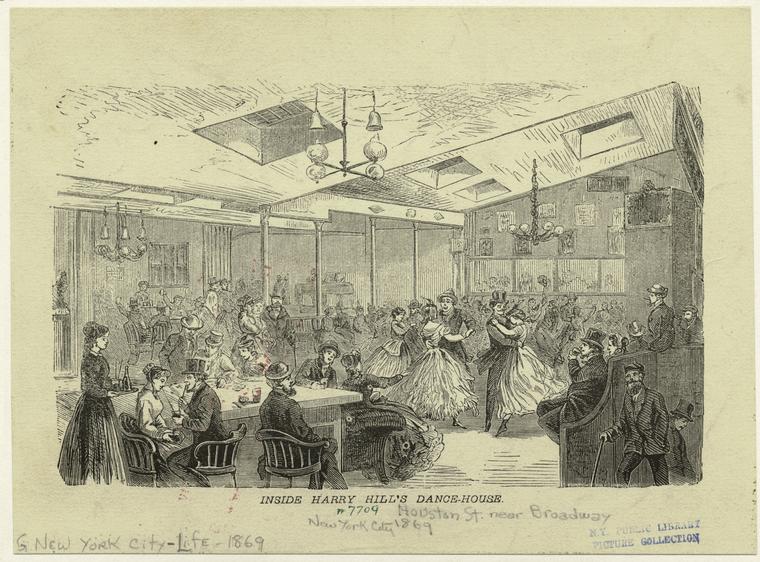
Harry Hill’s Concert Saloon 

2

1.w

For more information on Harry Hill’s check out my Bowery Boys article Purging Evil: New York vs. the Concert Saloon.


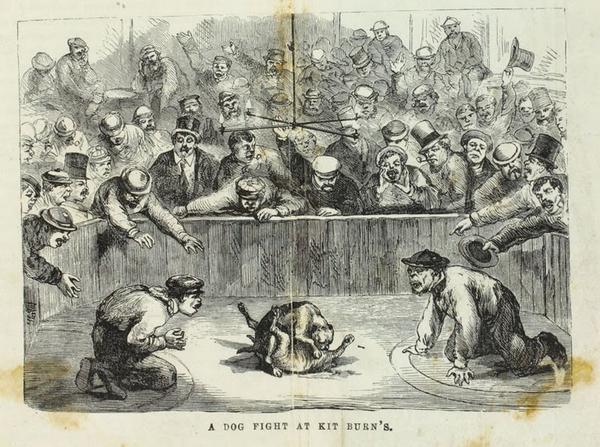
 Kit Burns Rat Pit (or, in this case, Dog Pit)

2

For more information on Kit Burn’s Water Street saloon, check our our podcast on the South Street Seaport.


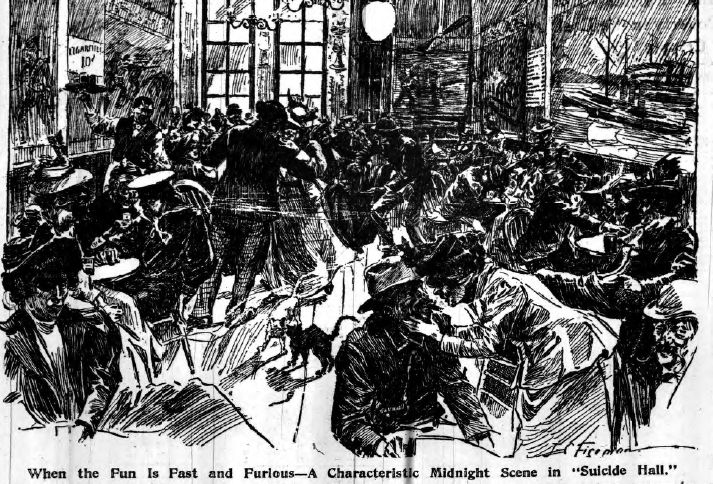
McGurk’s Suicide Hall

4

For more information on McGurk’s Suicide Hall check out my Bowery Boys profile on this sad and dangerous place on the Bowery. (The article was written all the way in 2007 so the neighborhood has changed greatly since then!)


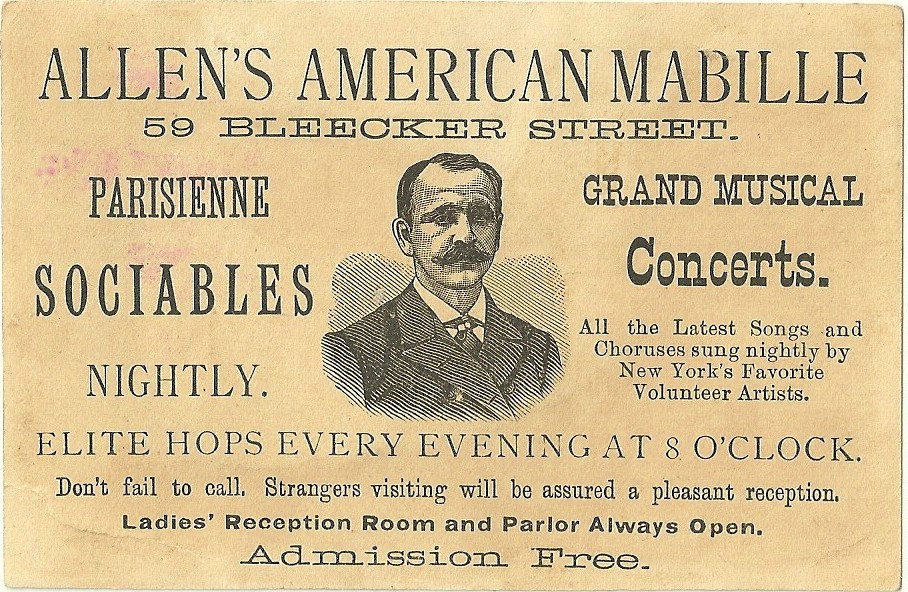
“Parisian-style dance  halls”

2

For more information on the Bleecker Street ‘distractions, check out my Bowery Boys article called Don’t Douse! The Glim! Four Infamous Dancehalls and Dives

And for particular information on The Slide, you can read my profile from back in 2007. (Kennys Castaways has since closed.)


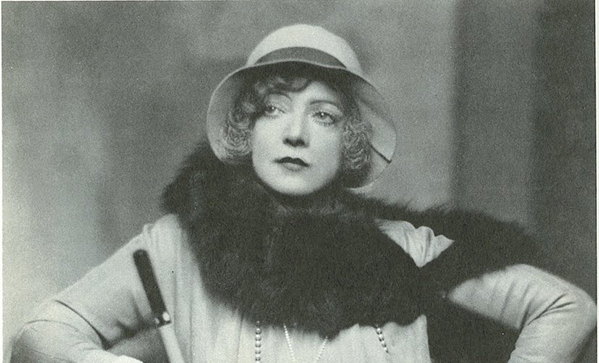
Texas Guinan

4

For more information on Guinan, read my profile of her notorious speakeasy The 300 Club.


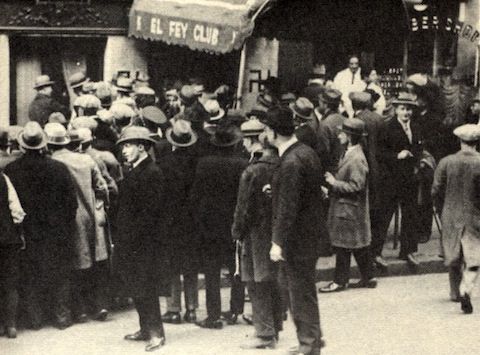
Larry Fay and the El Fay nightclub

4

Categories
Neighborhoods Those Were The Days

When the Bowery Ballroom was a shoe store and other scenes from Delancey Street in the 1930s

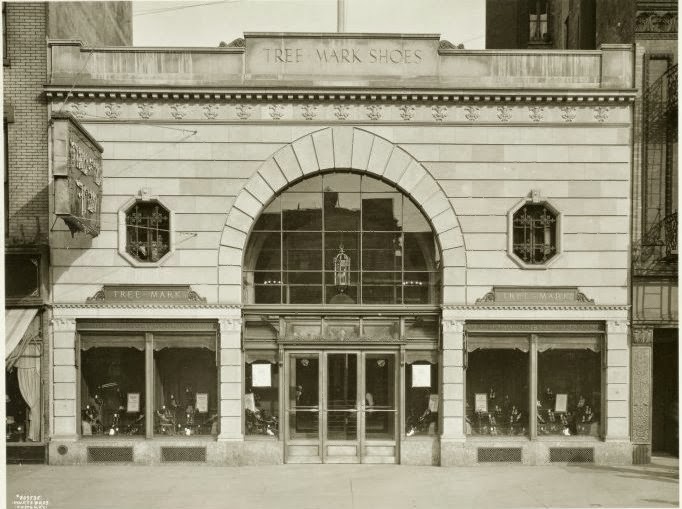
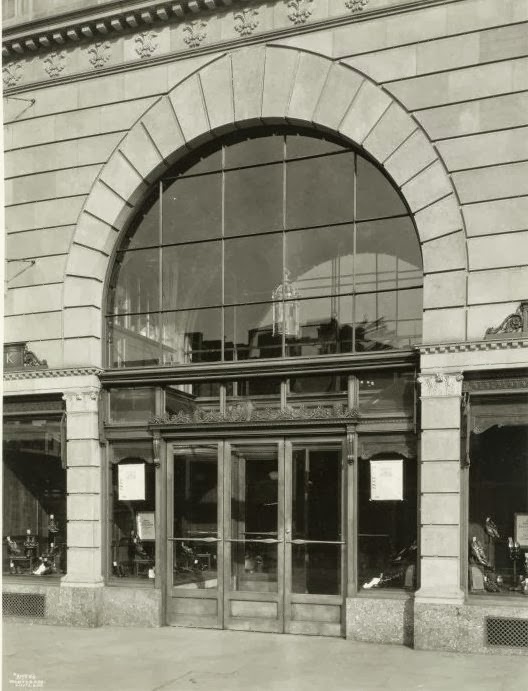
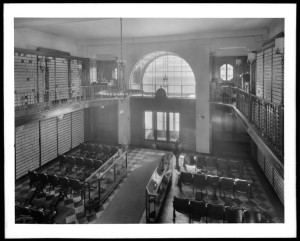
The Tree-Mark Shoe Store at 6-8 Delancey Street. You may know this building today as the Bowery Ballroom, a music venue since 1997. (Wurts Brothers, date unknown, both courtesy NYPL)

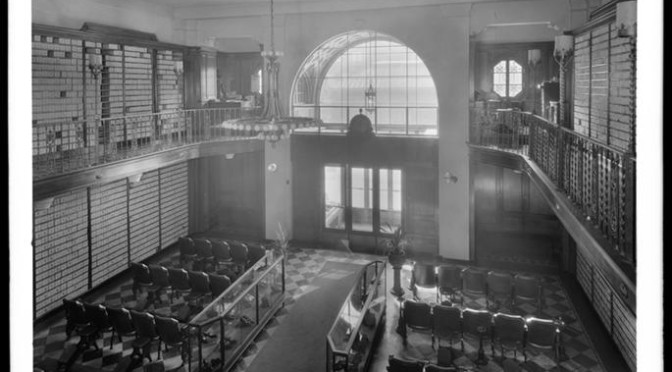
The interior of the shoe store, 1930 (Pic courtesy MCNY)

8 Delancey Street. Tree-Mark shoe store, interior.

This building has had a rocky history, according to historian Matthew Postal.  Using remnants of an old theater at this spot, the current building was constructed in 1928 as a retail store, but the stock market crash the following year ensured tenants never stayed for long.  Tree-Mark was home here the longest, almost thirty years.

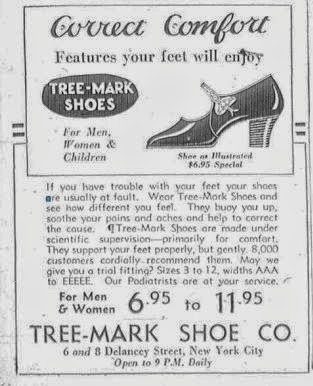
Tree-Mark Shoe Stores, a family-owned establishment since 1919, was an affordable shoe outlet with three locations in New York by the late 1950s — the original Delancey Street location, one off Herald Square and another on Kingsbridge Road n the Bronx.

“Comfort, rather than high style, is the goal,” the New York Times mentioned in a fashion write-up of the shoe franchise.  “However, it is possible to get a good-looking pump with a stacked heel for as little as $13.95.”  In a later article about the popularity of boots, Tree-Mark is mentioned as “specializ[ing] in boots for women with larger than average calves.”

The advertisement, at right, is from a 1934 issue of the Brooklyn Daily Eagle.  “8,000 customers cordially recommend them.”

On an unrelated note, in 1971, employees at the Herald Square location all chipped in to buy a lottery ticket and won $100,000.
_________________________________

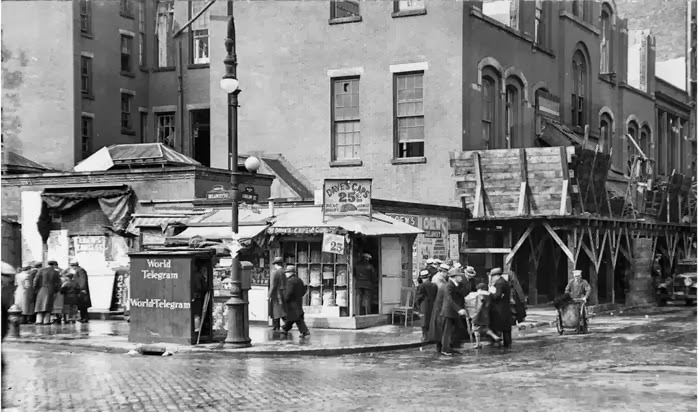
Here’s a couple bonus photos of life along Delancey Street in the 1930s. The first captures the southwest corner of Delancey and Ludlow. Judging from this 1929 picture of the same corner, that building being torn down is a public school.  Today that is the location of the swanky lounge The DL.

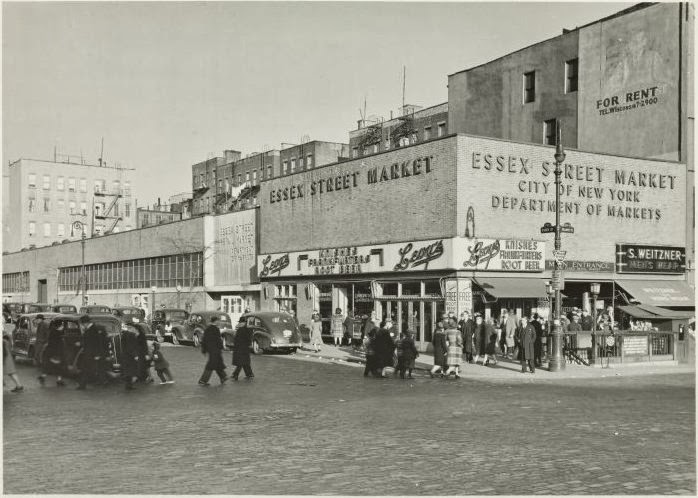
And here’s the northeast corner of Delancey and Essex, Wurts Brothers, date unknown (NYPL)  Outside of the Blue Building towering over it all, this street corner isn’t that much different today.

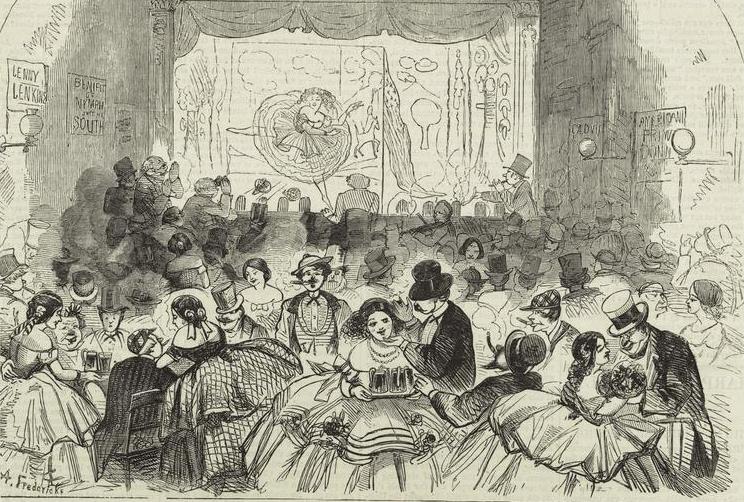
Santa Claus: a Broadway concert saloon from the 1850s

A Broadway saloon in 1859 during a ‘Sunday sacred concert’, as in, not very sacred at all. The Santa Claus probably looked like this on a good night. [Courtesy NYPL]

I’m doing some research on a couple upcoming entries for the How New York Saved Christmas feature which I started last year and came across something rather odd and Christmas-related that didn’t save anything at all.

Broadway was becoming New York’s de facto entertainment district after the 1830s, ushered in by luxury shops, pleasure gardens, and grand theatrical palaces like the Olympic (at Grand Street) and the Chambers Street Theatre. The Bowery, pretender to that title, would stoop (or elevate, depending on your tastes) to tawdrier amusements, starting with horse shows and comedic theater and degenerating into that infamous row of saloons and dance halls.

But the line was never precisely drawn and, anyway, weren’t the bawdier establishments more fun anyway? And so it was that saloons with musical acts seeped over to the more fashionable street, which explains how Santa Claus came to Broadway.

Not the bearded heavy-set gentlemen from north of Canada, but a place named in his honor. Santa Claus was a dance hall originally located at 596 Broadway, placing it adjacent to the newly built Metropolitan Hotel (on the Niblo’s Garden property).

Little is known about the ‘concert saloon’, as it was billed by its owner R. W. Williams. Opening in 1858, it may have attracted mixed clientele just below the line of New York respectability, but its bill of entertainment pretended otherwise. The unadorned long hall had a sawdust floor, a smattering of billiard tables and a high stage for performances from an odd mix of “opera, ballet, concerts, minstrels and gymnasts,” according to advertisements.
It’s not clear why such a place would be named Santa Claus who, as far as we know, is not a drinker. Enjoying the delights of an ‘uncommonly stocked bar’, patrons could enjoy German acrobats, ‘singing and dancing gypsies’, dog tricks, Irish comedians or, for a more somber occasion, the sounds of Dodworth’s Military Band and Cornet Corps. And all for a door charge of twelve cents.

The only review of the place I could find (a fussy, otherwise condescending review from a Dec 1858 issue of the New York Times) paints a dour scene, a ‘cheerless-looking hall’ with ‘a very dingy and forlorn aspect’. Interestingly, the place appears to cater to both white and black patrons, which the Times reviewer did not particular care for.

Santa Claus lost its lease and in 1859 moved a bit south to 72 Prince Street. At its new home, you could hear the talents of ‘pleasing concert singer’ Julia Barton, Spanish dancer Josephine West or minstral comedian Jerry Merrifield.

One source I found calls the Santa Claus “the first recognizable New York variety theater,” although few were recognizing anything here, and it appears that the new Santa Claus never made it to another Christmas.

Before CBGB’s, parties at 315 Bowery were for the birds

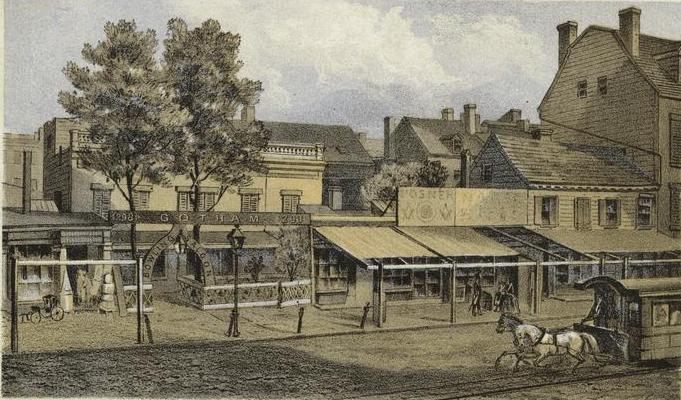
Above: The first of hundreds of Bowery hotels — the old Gotham Inn in 1862. The inn, which dated from the 1790s, sat quite close to where 315 Bowery is today, just north of Houston Street. (Pic courtesy NYPL)

The early history of buildings at 315 Bowery — the address that would later become the club CBGB’s — is spotty indeed, but some early references to the address reveal some rather odd events that took place here.

In the 1860s, the Bowery neighborhood would still have been a de facto theatrical district for the lower classes, “New York’s primary locale for down-market entertainment – saloons, beer gardens, amusement halls, dime museums, street vendors and oyster houses,” according to David Levinson. Not quite given over to the truly seedier elements which would define the street for over 100 years.

In the early 1860s, it appears a pet shop or bird supplier resided at the address 315 Bowery. One William F. Messenger, with profession listed only as ‘birds’, lived at this address in May 1861.

On January 31, 1862, the New York Times reported on a strange gathering at 315 Bowery and presumably at Messenger’s shop — the Bird Fanciers’ Third Annual Exhibition of prized fowl. Little is known of the group, which had reportedly been in existence over a decade by this time.

Prizes were awarded to bird lovers who kept roosters and hens, with a gentleman by the name of William Manson really cleaning up:

“First prize, yellow cock, WM. MANSON; second prize, yellow cock, JOHN WILLIAMSON; third prize, yellow cock, JOHN HIGGINBOTHAM. First prize, mealy cock and best bird exhibited, WM. MANSON; second prize, mealy cock, —- BAKER; third prize, mealy cock, —– BAKER. First prize, yellow hen, WM. MANSON; second prize, yellow hen, WM. MANSON; third prize, yellow hen, —-MURRAY. First prize, mealy hen, JOHN HIGGINBOTHAM; second prize, mealy hen, JOHN HIGGINBOTHAM; third prize, mealy hen, WM. MANSON.”

However, despite its avian beginnings, I was able to find mention of the address’s musical heritage during this period: a John Bogan is listed as living or working at the address in 1867-68 as a “banjoist”, a teaching instructor (and possible manufacturer) of banjos.

Murder unearthed at a condemned Bowery building

Old Hester Street: Could that gentlemen be the murderer*?

Grim news today from the Lower East Side: the residents of 128 Hester Street have been forced to evacuate their home due to the structure being declared ‘unsafe’ by the Department of Buildings. And boy, is it. The terribly dilapidated tenement suffered “cracks on the wall, holes in the ceiling, termites on the floor, holes in the floor” according to one tenant.

The building, right off the Bowery, was erected in 1910, and looks every bit of it; however the building it replaced at the same address had long before achieved a bit of notoriety itself. Like many buildings in the area, 128 Hester Street housed a former saloon, called The Old Stand, finding itself in the headlines one October 1906.

Across the street was another saloon called The Star. Early one morning, officers discovered a man slumped in the doorway with a knife wound to the heart. The victim, one ‘Yaller’ Wilson (nicknamed for his yellowish complexion), died of his injuries shortly after.

Who killed Yaller? Inconclusive from the records I’ve found, but one suspect is a former employee and bartender at the Old Stand, Joseph Coyne, who was taken in for questioning. He claimed he attempted to stop the altercation between Wilson and an unknown man, receiving a “cut across the back of the hand.”

Also suspiciously on hand was Wilson’s own wife Emma who provides the police with an odd story in which she seems to have entered the Star saloon with the same ‘unknown man’ and suspected murderer, who then go into an argument with her husband. This is truly a rough and tumble group; the events all seem to take place between the two saloons in the wee hours of the morning.

Enjoy reading the original report in the New York Times to see if you can make sense of this strange, mysterious murder.

Police believe Yaller was extorting money from the stranger, who met the threat by killing Wilson. But is the unknown man the real murderer, or are our two suspects hiding something? The suspect is “45 years old…had a dark complexion and a sandy mustache, and wore a brown suit and a black derby hat.”

*No, probably not. This picture was taken a good ten years before the murder took place. Plus, everybody wore black derby hats back then.

Bowery Boys Recommend: Belle of New York

BOWERY BOYS RECOMMEND is an occasional feature where we find an unusual movie or TV show that — whether by accident or design — uniquely captures an era of New York City better than any reference or history book. Other entrants in this particular film festival can be found HERE.
Sometimes a movie can tell you all about an era in New York City history just by what it willfully avoids.
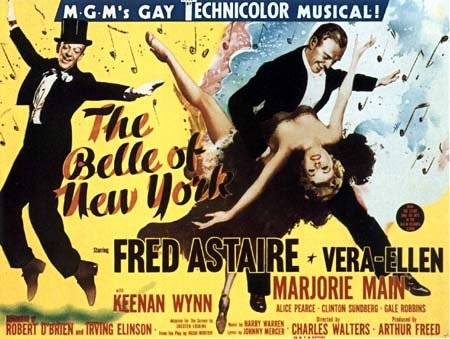
With the exception of one truly remarkable scene (which I’ll describe below), turn-of-the-century ‘The Belle of New York’ could be set in any city, or rather, no real city. It exists in a poor neighborhood with no poor people, in the cleanest version of the Bowery ever devised for cinema. This place looks too spotless, even for a backlot.

Musicals shouldn’t be realistic, and ‘Belle’ certainly isn’t. Fred Astaire stars as Charlie Hill, an uptown playboy literally awash in beautiful girls, most of him he’s broken off engagements with. In real life, a person of this nature would be reviled, thrown on the cover of the New York Post and labeled a loathsome cad. But because he’s Astaire — and because this is bubbly, champagne New York — he’s allowed to dance down a boulevard of broken hearts.
One day he ends up in Washington Square Park and overhears the singing voice of Angela (played by Vera-Ellen), a beautiful volunteer from the Bowery Mission. Angela rejects Charlie’s advances until he can prove to have a charitable heart. In the next scene, Astaire begins dutifully cleaning the Bowery in a crisp white uniform, dancing past pushcart sellers and card games. In real life, he would be beaten to a pulp and left for dead within five minutes. (Or maybe not. The opening title number features dozens of Bowery dandies singing up to Angela in the mission window.)

In the next scene, Charlie’s driving a streetcar. “Up the Bowery, across Cherry, into Grand, down Rivington and through Mulberry,” is how he describes his impossible route.

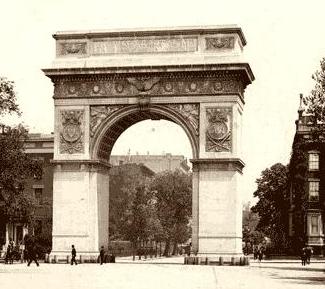
The hilarity comes in knowing your history and observing everything that ‘Belle’ cheerfully avoids. Overall, it’s not Astaire’s greatest moment. However, I’m recommending this for one single scene, using a New York landmark in one of the most surreal ways I’ve ever seen. In a fit of love-struck delirium, Astaire suddenly floats to the top of the Washington Square Arch to perform an elaborate solo dance number.
The McKim, Mead and White-designed arch would have been less ten years old in 1900, remade in marble after an earlier version was met with community approval. Certainly nobody would have approved of a drunken playboy hopping upon its delicate marble carvings. Although I have to say it looks awfully fun.

ABOVE: The Washington Square arch as it would have looked in 1900

Categories
Podcasts

PODCAST: The Bowery Files

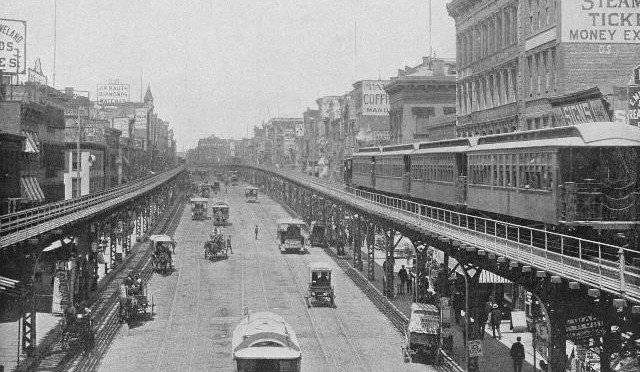
The Bowery of 1923, its livelihood segregated from the street by elevated railways.

This is our “potpourri” episode with a little bit of everything in it.

We open up some of our favorite readers mail, we take you behind the scenes of how we put together an episode, and we describe three of our very favorite history-related websites that you should check out.

But it wouldn’t be a podcast without some history, right? So we take a brief stroll down the Bowery, with over 200 years of history along this famous street. But has anything really changed?
Listen to it for free on iTunes or other podcasting services. Or you can download or listen to it HERE

Since we’re in listeners and readers appreciation mode, here’s a few odds and ends that people have emailed us about that you might be interested in:

The New York Public Library just recently uploaded a new video featuring great footage from the 1939-40 World’s Fair. Organizers from the fair donated all documentation to the library and is the first place to start for anybody fascinated in its history.
Last year on the blog I spotlighted that massive Douglas Leigh-designed snowflake that hung over Fifth Avenue and 57th Street. One of those who helped Leigh with the design, Hans Clausen, sent me a link to his website with more information. The snowflake will be going up soon!

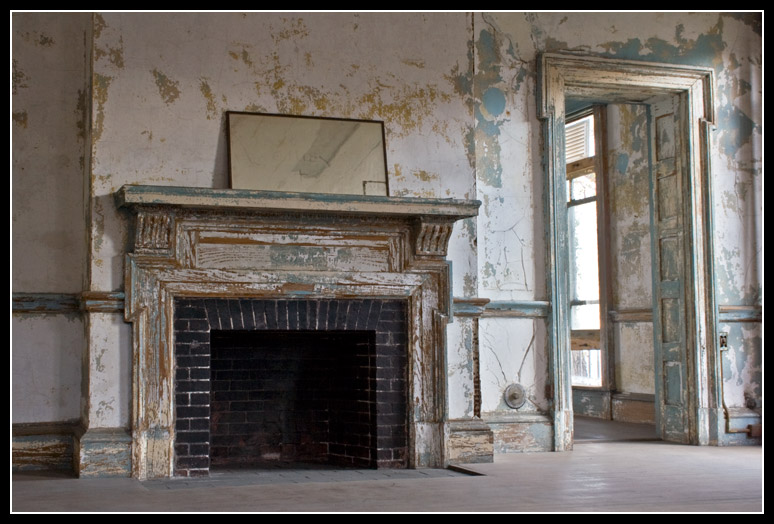
Jacques Pasilalinic-Sympathetic Compass(quite a name!) sent me a New York centric link from his blog, featuring some great pictures from the little-seen south side of Ellis Island, mostly off-limits and hauntingly abandoned. Including this shot:
And not that I need to plug that little old paper called the New York Times, but did you see that remarkable before-after sliding thingy they did with Grand Central Terminal, contrasting a 1978 picture of the Concourse with a view of it today?
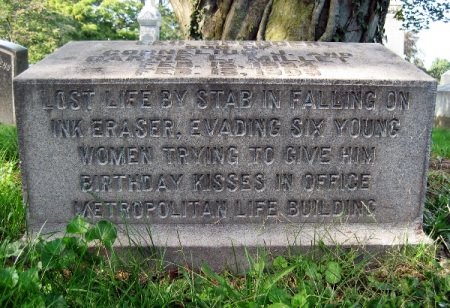
And finally, thanks once again to Amid and Cartoon Brew for sending us this tale about one of the strangest tombstones in New York City:
Categories
Podcasts

PODCAST: The Original Bowery Boys / B’hoys

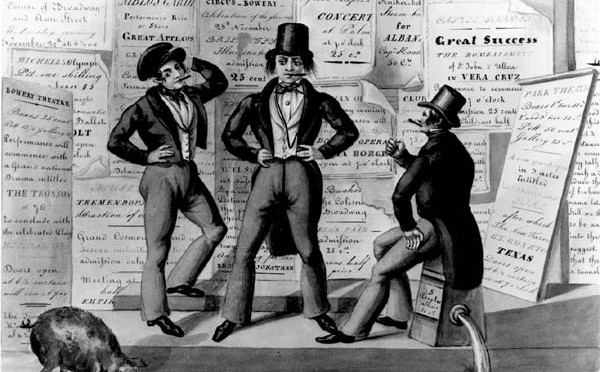
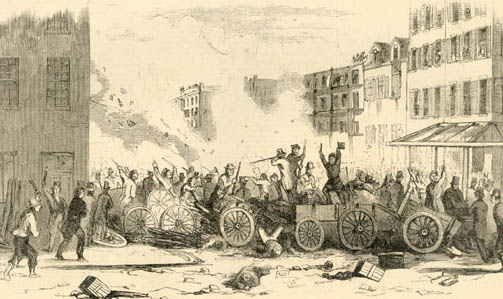
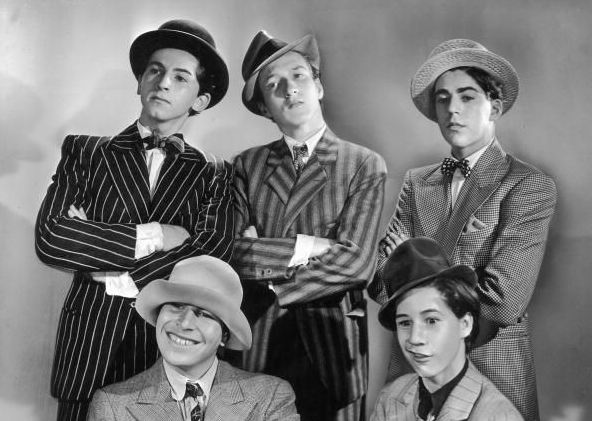
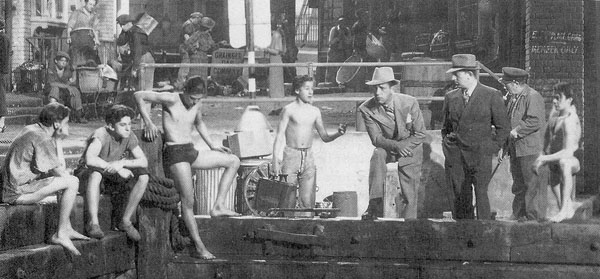
For our very special 25th episode, we give you all sorts of Bowery boys — the cultural and fashion trend of the 1840s, the notorious enemy of the Five Points gangs, and that slapstick bunch of New York actors from the 1930s and 1940s. And of course, a little bit about us!

LISTEN HERE:

The Bowery Boys, on their way to battle the Dead Rabbits (or is that the Roach Guards?)

The ‘Dead End Kids’, circa 1938, fresh from their fame in ‘Dead End’ and ‘Angels With Dirty Faces’

From the film ‘Dead End’

FRIDAY NIGHT FEVER: McGurk’s Suicide Hall

To get you in the mood for the weekend, every Friday we’ll be celebrating ‘FRIDAY NIGHT FEVER’, featuring an old New York nightlife haunt, from the dance halls of 19th Century Bowery, to the massive warehouse spaces of the mid-90s. Past entries can be found here .

To stick with our morbid spooky theme this week, I thought I’d turn the spotlight briefly on literally the deadliest venue in New York nightlife history — McGurk’s Suicide Hall, formerly at 295 Bowery.

Prostitution was the Bowery’s oldest profession, drawing thousands of women and girls with often the only form of making money they could find. It was so prevalent that even the theaters there on certain nights of performances permitted prostitution in the uppermost tier of seats. “‘Public prostitution [in the theater] is not noticed by law,’ admitted one observer.” (Below is a picture of the old Bowery Theater, where such seamy occurances would happen in the top balcony.)

One had to have fallen pretty low to even enter John McGurk’s tawdry establishment, opened in 1895, in a space once used as a hotel for returning Civil War veterans. And even lower — much, much lower — to attempt to sell your body at McGurk’s. It was considered the worst and most squalid dive bar in the Bowery. “McGurk’s was nearly the lowest rung for prostitutes” according to Luc Sante’s book Low Life. It would not be surprising then to find that those that found themselves draped within the doorways of such a wretched place would be prime candidates for depression and suicide.

The bar became the destination of a great number of suicides, either from carbolic acid or a leap from its fifth story. According to Forgotton NY, six girls killed themselves in 1899. Most were teenagers who believed they had few options in life; I can painfully imagine a few experiencing something particularly rancorous at McGurk’s and taking a improvised leap in grief and horror.

McGurk, turning lemons into a morbid lemonade, actually renamed his place ‘Suicide Hall’ as a marketing ploy. And the reputation of the dive did draw its share of curiousity seekers, often from the upper class after a night at the theatre, looking for a bit of macabre excitement.

McGurk eventually closed the Suicide Hall and moved to California. The building saw nothing but flophouses and ruin for the most part of the 20th century until an artist couple took over and turned into a workspace. They were in turn forced out by the power of gentrification; it has now been transformed into the sleek glass condominium Avalon Bowery Place. 

The resident of the building at the time of demolition, sculptor Kate Millet, sums it up nicely: “If McGurk’s is turned to dust and supplanted with blank high rise market housing, official power will have buried its past in order to expunge it. Then it will be as if it never happened. No one will ever have to notice these deaths, mysterious folk reason that this building has stubbornly remained notorious for a hundred years, a landmark of gossip and legend repeated in every nook about the city of New York, an eerie and appalling specter never dealt with, formally and publicly never acknowledged.”

Well, they certainly tried to warn the Avalon people. If people start seeing the ghosts of women plummeting to their deaths, don’t blame us.

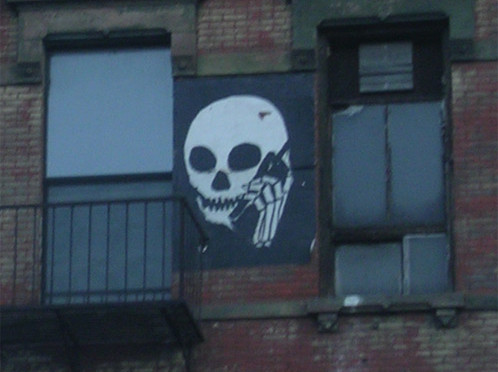
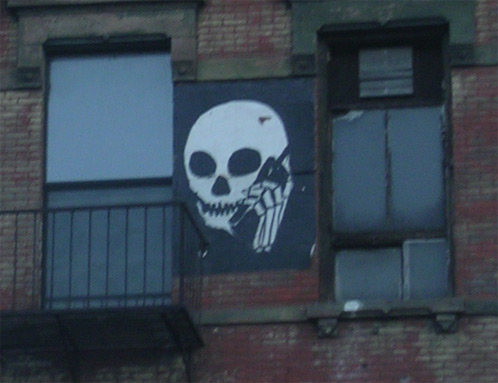
Below: what the building looked like in its final days (the skull is a nice touch).

Site photographs courtesy of Global Graphica.