‘Shadows’: Improv, jazz and a squint at midtown Manhattan

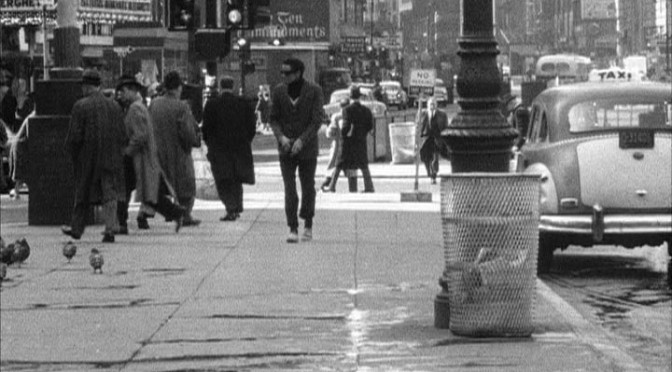
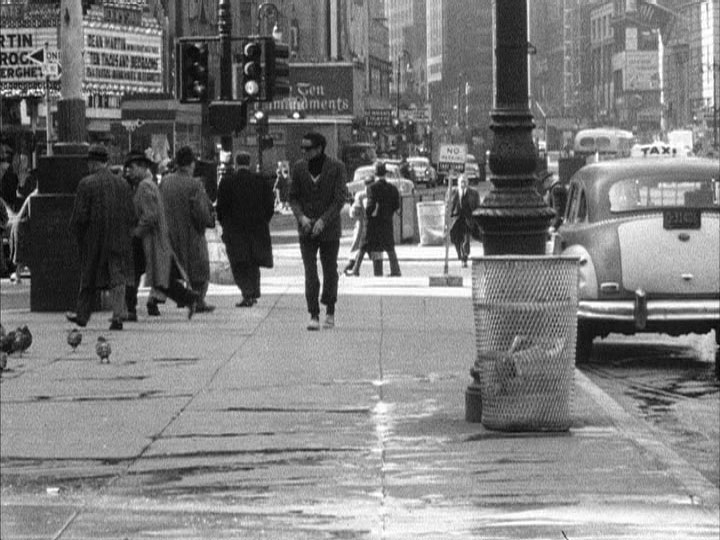
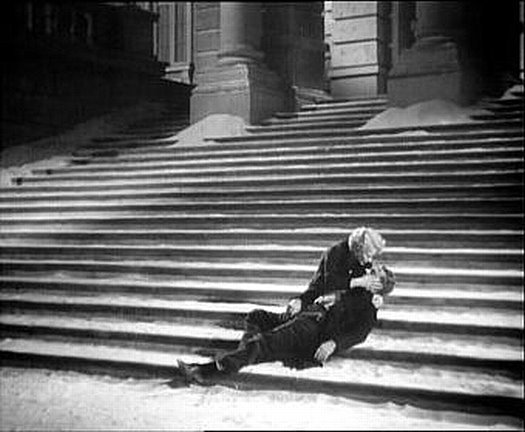
A beat in Times Square: Ben Carruthers drifts through the city in ‘Shadows’

BOWERY BOYS RECOMMEND is an occasional feature where we find an unusual movie or TV show that — whether by accident or design — uniquely captures an era of New York City better than any reference or history book. Other entrants in this particular film festival can be found HERE.

When we did our Times Square podcast a few weeks ago, I went looking for photographs that captured its mid-century transition, when the balance between glamour and sleaze began tipping from one extreme to the other. When was the moment that 42nd Street went from meaning one thing, to the other? Had I seen John Cassavetes’ ‘Shadows’ then, I wouldn’t have needed to look much further.

‘Shadows’ is a revolutionary moment in film, displaying a loose, on-the-fly vocabulary and a casual, bebop storytelling style completely foreign to movies of the day. Cassavetes, a young acting teacher and soon-to-be film star in his own right, assembled production funds and the film’s cast from among his friends and acquaintances. Its largest supporter was radio deejay and writer Jean Shephard, years before writing short stories that would form the basis of the film ‘A Christmas Story’.
The film was finished in 1959 after Cassavetes had initially completed one version in 1957 and sent the actors on their merry way. He recalled the cast and inserted new scenes which are easily identified. The plot is largely improvised and feels it. The somewhat central plot — a romance between a young black woman and a white jazz musician she meets at a party — was provocative for its time, but feels little wooden today. The acting is all over the place. (Cassavetes’ wife Gena Rowlands, later to become his greatest star, appears only fleetingly as an extra.)
But I’m recommending this film for its style and electricity, its cool depiction of downtown beatniks afloat in midtown Manhattan. The images and sounds seem to fly together, with an airy jazz score accompanying a broad number of New York locations rising from a grainy black-and-white haze.

Its most famous scene depicts the lovely Lelia Goldini strolling down 42nd Street after dropping off her brother at Port Authority. He wants her to take a cab home; she wants to enjoy a walk. 42nd Street isn’t the seedy corridor it would become, but it isn’t safe either. Outside a movie theater, aflame with the glowing lights of surrounding marquees she’s harassed by a stranger. But this is a street in transition; Lelia is rescued by strangers, and the harasser is himself harassed. (See if you can recognize one of the strangers.)

The movie is strongest when it’s drifting along with rebels, three hapless hipsters led by the magnetic Ben Carruthers. They invade a countless number of dive bars and diners, looking for street smart ladies. That’s how they look at the entire world which makes their visit to the sculpture garden at the Museum of Modern Art strangely compelling. I’m sure you’ve never looked at art the way these three do.
In a cramped and dank nightclub, smoke and whiskey filled, a jazz vocalist, played by Hugh Hurd, is forced to become an emcee to a bunch of talentless dancing girls, the humiliation on his face a sure representation of the changing tastes of New York nightlife. In the variety shows of yore, his somber talents would have fit in; by the late 1950s, moody jazz was merely a distraction.
‘Shadows’ has a wonderful mood of melancholy that would go on to exemplify the great New York independent movies of the 1960s and 70s. The long procession of cabs zooming down the avenue, past the Colony Records and the Thom McAn’s, past the titillating neon ‘FASCINATION’ of a 42nd Street theater, would go on to influence the dreams of New York lovers for years after.

Here’s the trailer:

Categories
Staten Island History

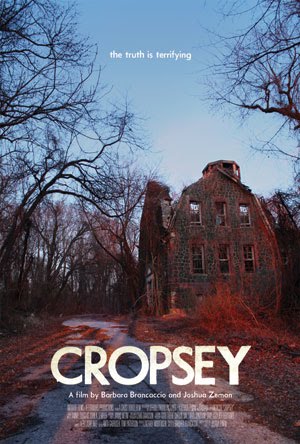
‘Cropsey’: urban legend intersects with unspeakable crime at an abandoned Staten Island children’s institution


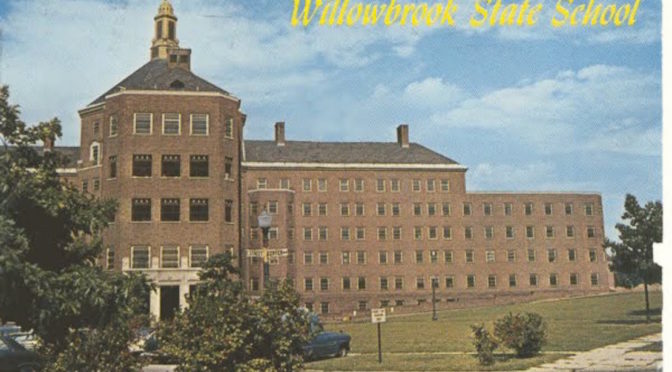
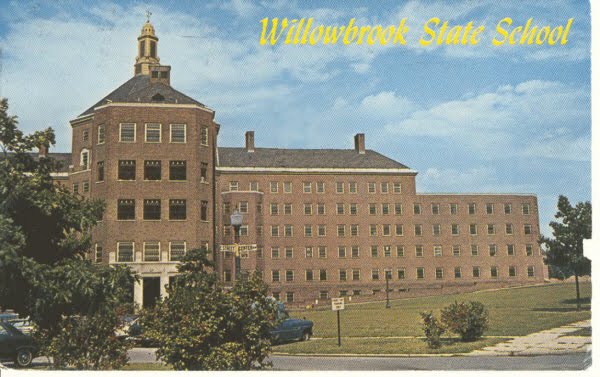
Above: Willowbrook State School in central Staten Island. Looks innocent enough….

BOWERY BOYS RECOMMEND is an occasional feature where we find an unusual movie or TV show that — whether by accident or design — uniquely captures an era of New York City as well as any reference or history book. Other entries in this series can be found here.

Mix a dangerous, fenced-in set of crumbling ruins with the imaginations of children, and the result is an urban legend. Throw in a series of real-life events more horrifying than anything a child would ever dare to conjure, and you have ‘Cropsey’.

A chilling glimpse into some horrific Staten Island history, the documentary ‘Cropsey’, which briefly played at IFC Center earlier this month, is now available on Video On Demand on Time-Warner Cable. The film looks at a series of vile murders on Staten Island during the ’70s and ’80s and how they may relate to the closing of a disturbing old medical institution and at least one ghastly crime that may have occurred in its abandoned underground tunnels.

Cranking up the tinkling piano and effective Blair-Witch style photography of rotted buildings and dark forests, directors and Staten Island natives Barbara Brancaccio and Joshua Zeman present the murders and the subsequent capture of the suspect Andrew Rand through a veil of collected memory. Cropsey was the name of a generic killer figure — wielding an ax, or a hook hand, take your pick — woven by slumber-party storytellers and recounted to children. A basic urban legend, but rendered all the stranger for the events that actually did occur near the site of the Willowbrook State School, an institution for children with mental retardation in central Staten Island that was closed in 1987 due to wicked abuses to patients.

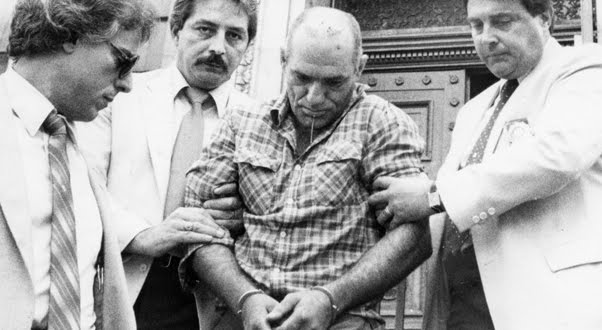
Below: Andre Rand in custody

Today the ruins of Willowbrook stand as part of the Staten Island Greenbelt, fenced away and inaccessible. Rand was a former Willowbrook employee who lived on the grounds of the institution after it was closed, and was apparently not alone there. In 1987 when a young girl Jennifer Schweiger goes missing, Rand is taken into custody. Then investigators make a grisly discovery on the grounds of Willowbrook, leading to a host of unsolved cases of child abduction.

The film links together these disappearances from several neighborhoods and attempts to place them into the larger context of Staten Island history — the idea of the borough as ‘dumping ground’ for most of its modern existence, and a place developing against the grain from the rest of New York City.

Along the way you get allusions to the Son of Sam murders and Satanic cults, accusations of necrophilia (!), bizarre handwritten letters from Rand to the filmmakers, and dated New York news footage with Ernie Anastos and Geraldo Rivera, all utilized to give you the serious creeps. “For my safety, I will not go on camera,” says a nun interviewed about a crazy Satanic cult. Like other assertions made in the film, the interview has little bearing on the case and is used primarily to concoct a spooky atmosphere.

The film brought back a lot of my own childhood fears; who didn’t grow up with similar ghost stories about an abandoned house in their neighborhood, a building left in ruin ripe for a fiction told by flash light? ‘Cropsey’ recounts true historical events — several disappearances unsolved to this day — with that same sense of chilling seriousness.

Catherine on our Facebook page had this review: “I saw a screening of this film… it’s a great topic that deserved a better treatment. They do a great injustice to the residents of the institution by repeatedly referring to them as mental patients, and do nothing to shed any light of fact on the urban legend. But if it piques anyone’s interest in the topic, then I guess it did a service.”

Look for ‘Cropsey’ on your cable’s Video On Demand listings. Click here for further information or on the official film website. Visit Forgotten New York to take a snow-covered tour of the Farm Colony ruins along side the main building at Willowbrook.

Categories
Uncategorized

Bowery Boys Recommend: Sex and death in 1970s Soho


Laura is disturbed “I’m completely out of control!”

BOWERY BOYS RECOMMEND is an occasional feature where we find an unusual movie or TV show that — whether by accident or design — uniquely captures an era of New York City better than any reference or history book. Other entrants in this particular film festival can be found HERE.

The New York Times had an intriguing piece last Sunday on modern “fetishizing” of New York in the 1970s, as popularly depicted in the TV show “Life on Mars.” This blog is probably as guilty as any at looking at this crime-riddled, bankrupt period of New York’s history and seeing only a glossier rendition. The article suggests people may fear this view as the economic crisis begins to transform the city; I personally suggest it appeals to people as a flipside to New York’s current crawl towards homogeny and total gentrification.

Two vastly different 1970s movies I recently re-watched suggest that the city’s combination of grit and glamour were already being analyzed and parodied before the decade was even finished.

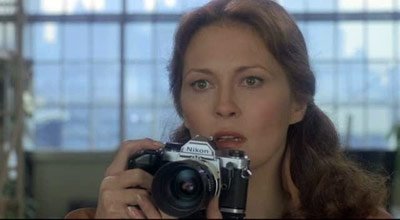
In the silly thriller The Eyes of Laura Mars, Faye Dunaway stars as a downtown fashion photographer who can somehow see through the eyes of a serial killer who wrecks havoc among New York’s stylistas. The plot is preposterous, aching for some legitimacy, either a setting at the Mudd Club or a cameo from Halston or Bianca Jagger maybe. Or Andy Warhol: the idea of framing death for pop photography was nothing new to him.

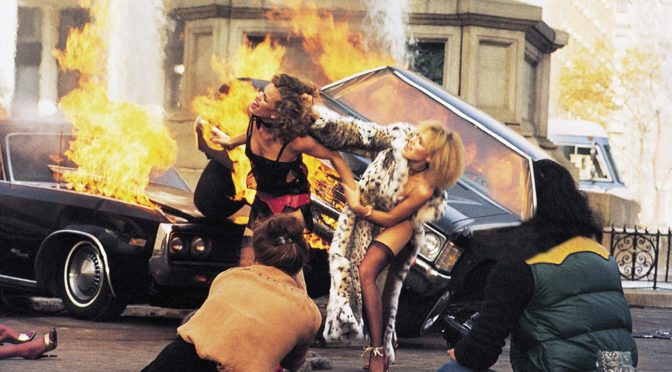
As such, it seems a thin but playful satire of downtown New York decadence. Manhattan looks unusually great for such a commonplace horror flick. The best set is easily Mars’ studio, in one of the Chelsea warehouses piers overlooking the Hudson River, just steps from the West Side elevated highway. The most notable — and campy scene — erupts at Columbus Circle, at a ridiculous fashion shoot involving burning cars and models in lingerie and fur coats. Oh Columbus Circle! Were you ever so fun?

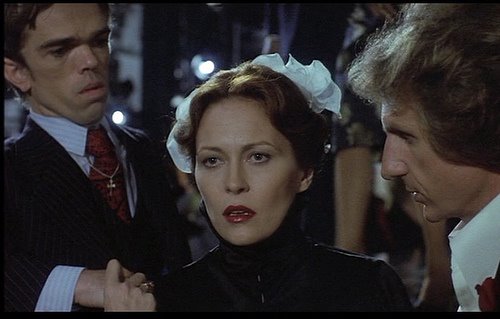
You get a taste of Hell’s Kitchen in a brisk chase scene involving Tommy Lee Jones’ cop character, his feathered hair flapping in the wind. But seeing Soho was more striking to me, devoid of shopfronts, mysterious flat warehouses during the day that open to become large, disco-thumping galleries at night. There are still galleries in Soho, of course, but the one in ‘Laura Mars’ is a big, hokey circus. (The director even condescendingly throws in a dwarf, to get the point across.)

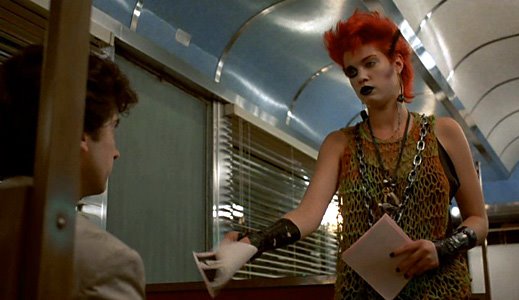
The secrets of late 70s Soho art and fashion worlds are expanded and distorted in Martin Scorsese’s masterpiece After Hours, one of my absolute favorite New York movies ever. The director doesn’t intend reality, but his movie shaped the perspective of Soho culture for those of us who weren’t in it.

Like ‘Laura Mars’, but far more intentional, the plot conceit involves absurd artwork — in this case a “Plaster of Paris bagel and cream cheese” sought out by hapless computer geek Paul (Griffin Dunne). He is an uptown exaggeration, even though he works at the not-too-uptown Metropolitan Life Tower. No matter; he descends into Soho and its late-night collection of kooks almost get him killed.

Did New Yorkers really see Soho as otherworldly like this? Despite the surreal plot and vast, empty streets, ‘After Hours’ is filled with identifiable places, including the Emerald Pub (subbing as the ‘Terminal Bar’) and the Spring Street subway station. But the Moondance Diner (seen below) is long gone. From Scorsese to Wyoming.

Both are on DVD, both are must-sees for New York lovers. I wouldn’t exactly call ‘Laura Mars’ a conventional ‘classic’ unless you love thrillers you can also laugh unintentionally at.

Bowery Boys Recommend: Belle of New York


BOWERY BOYS RECOMMEND is an occasional feature where we find an unusual movie or TV show that — whether by accident or design — uniquely captures an era of New York City better than any reference or history book. Other entrants in this particular film festival can be found HERE.

Sometimes a movie can tell you all about an era in New York City history just by what it willfully avoids.

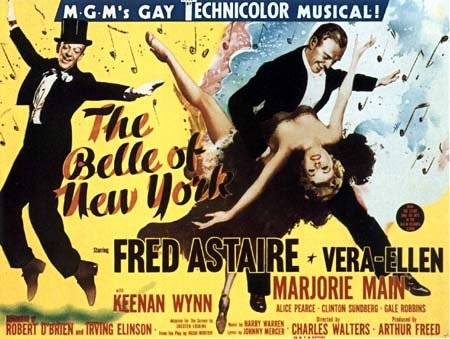
With the exception of one truly remarkable scene (which I’ll describe below), turn-of-the-century ‘The Belle of New York’ could be set in any city, or rather, no real city. It exists in a poor neighborhood with no poor people, in the cleanest version of the Bowery ever devised for cinema. This place looks too spotless, even for a backlot.

Musicals shouldn’t be realistic, and ‘Belle’ certainly isn’t. Fred Astaire stars as Charlie Hill, an uptown playboy literally awash in beautiful girls, most of him he’s broken off engagements with. In real life, a person of this nature would be reviled, thrown on the cover of the New York Post and labeled a loathsome cad. But because he’s Astaire — and because this is bubbly, champagne New York — he’s allowed to dance down a boulevard of broken hearts.

One day he ends up in Washington Square Park and overhears the singing voice of Angela (played by Vera-Ellen), a beautiful volunteer from the Bowery Mission. Angela rejects Charlie’s advances until he can prove to have a charitable heart. In the next scene, Astaire begins dutifully cleaning the Bowery in a crisp white uniform, dancing past pushcart sellers and card games. In real life, he would be beaten to a pulp and left for dead within five minutes. (Or maybe not. The opening title number features dozens of Bowery dandies singing up to Angela in the mission window.)

In the next scene, Charlie’s driving a streetcar. “Up the Bowery, across Cherry, into Grand, down Rivington and through Mulberry,” is how he describes his impossible route.

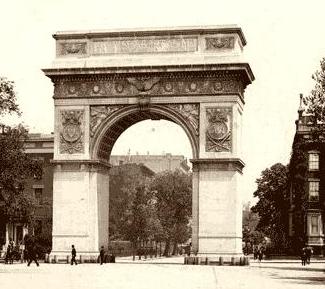
The hilarity comes in knowing your history and observing everything that ‘Belle’ cheerfully avoids. Overall, it’s not Astaire’s greatest moment. However, I’m recommending this for one single scene, using a New York landmark in one of the most surreal ways I’ve ever seen. In a fit of love-struck delirium, Astaire suddenly floats to the top of the Washington Square Arch to perform an elaborate solo dance number.

The McKim, Mead and White-designed arch would have been less ten years old in 1900, remade in marble after an earlier version was met with community approval. Certainly nobody would have approved of a drunken playboy hopping upon its delicate marble carvings. Although I have to say it looks awfully fun.

ABOVE: The Washington Square arch as it would have looked in 1900

Soylent Green: New Yorkers taste the best!

BOWERY BOYS RECOMMEND is an occasional feature where we find an unusual movie or TV show that — whether by accident or design — uniquely captures an era of New York City better than any reference or history book. Other entrants in this particular film festival can be found HERE.

Thirty-five years ago, the future of New York City was bleak indeed.

“Soylent Green” is a noir mystery like so many staged on Manhattan city streets, but its nuances are clearly reflections of its time. The 70s would see a catastrophic financial crisis for the city, with energy shortages and surges of crime and pollution. This film, back in 1973, seems a bit like a dour prediction, albeit overdramatic and cheesy.

The film estimates that by the year 2022, the population of New York City will reach 40 million, which is five times our current population. At least “20 million are outta work,” according to grizzled man’s-man detective Scotch (Charlton Heston), who takes to the streets to solve the murder of a wealthy businessman. (Ugh, is that really Joseph Cotten?)

As Jeremiah’s Vanishing New York has noted, this schlock Charlton Heston vehicle manages to nail one prediction, the naming of “Chelsea West” as an exclusive high-rise-clogged neighborhood for those remaining few with money. Of course, in the film’s vision, the High Line is nowhere to be seen and the unrecognizable buildings are surrounded by what looks like some kind of moat or canal.

What these new condos lack in neighborhood charm, they make up for with a rather beguiling feature — free women. Apparently over the next decade, women will revert back to a pre-19th century notion of becoming the property of men, to be installed in a condominium unit like an appliance, even when the prior owner dies. One night, the women decide to have a party, draping themselves over bear-skin rugs, brushing each others hair. When the building manager/pimp finds out, he gets so mad.

This high-rise brothel condo, an unrealized dream of Eliot Spitzer’s, also comes furnished by an East Village vintage store, high-tech Asteroids video game included.
In stark contrast, Scotch visits his buddy Sol in a walk-up tenement straight out some Five Points nightmare, with dozens of people sleeping in the stairwells. Sol is played by that most New York of actors Edward G. Robinson, who might have been familiar with such snug living environment as a young Romanian immigrant who arrived at Ellis Island in 1903. (Said Robinson: “At Ellis Island I was born again. Life for me began when I was 10 years old.”)

This schlock Charlton Heston vehicle and moralistic clarion call actually foretells our current state of rampant over-development, as well as environmental concerns (lamented here as ‘the greenhouse effect’) and a worldwide food shortage.

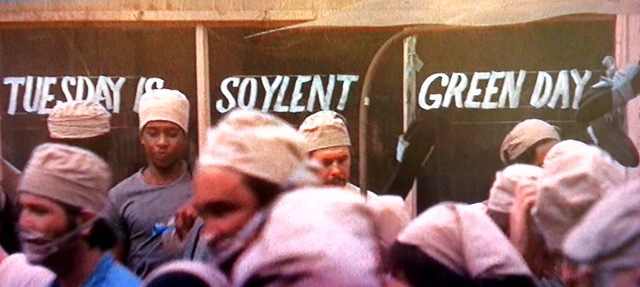
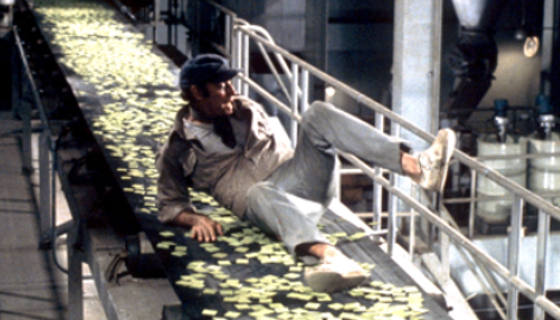
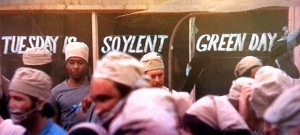
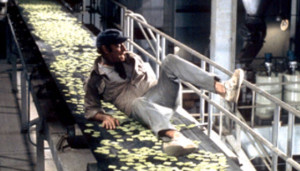
Sol waxes poetic for the days of excess and cries when he sees a real celery stick and a slab of beef. New York’s supply of artificial foodstuff called ‘Soylent’ — the least attractive food ever to be associated with New York City — is particularly taxed on Tuesday, when there’s a shortage of the most popular supplement, Soylent Green. Looking at bit like a Post-it Note, Soylent Green is, well, you probably know what it is. But it’s a gas to watch Sol and Scotch uncover the mystery.

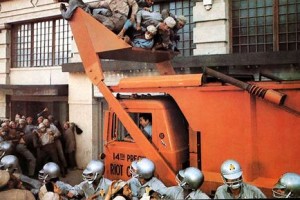
Directed by Richard Fleischer (of “20,000 Leagues Under the Sea” fame), “Soylent Green” won’t remind you of New York at all, but its fun when they try and shock you with recognizable things. For instance, Gramercy Park has now become the city’s only haven for trees — and wan, sad looking trees at that. And I’m sure you’ll never look at trucks from the Department of Sanitation the same way again.

The Roaring Twenties: a boozy old Hollywood bio

BOWERY BOYS RECOMMEND is an occasional feature where we find an unusual movie or TV show that — whether by accident or design — uniquely captures an era of New York City better than any reference or history book. Other entrants in this particular film festival can be found HERE.

New York during the Prohibition was a lot more difficult and less glamorous than the movies have portrayed. But why go there? In The Roaring Twenties, every element of the New York underworld is portrayed in pitch-perfect movie fantasy. What you wouldn’t realize is that this Hollywood gem is based on the true story of Manhattan’s speakeasy king and queen, Larry Fay and Texas Guinan.

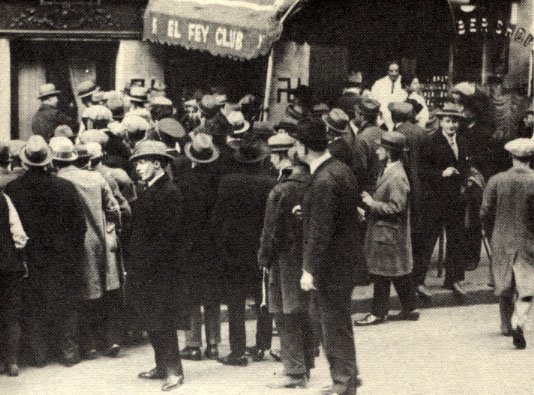
The real Fay was a “taxi racketeer” (runner of several illegal cabs) turned lucrative speakeasy owner during the Jazz Age. His club El Fey, at 105 W. 45th Street (below), with its swastika-adorned doorway, moved poorly made champagne at premium prices, thanks to hiring the personable and sexy Guinan, a former Hollywood Western star turned nightlife doyenne. (I elaborated about her and her 300 Club in an article last year.)

Below: the real El Fey

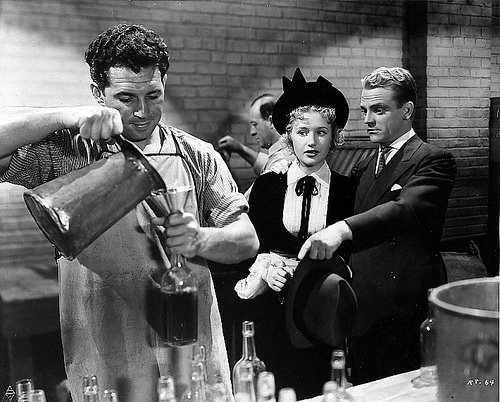
Fay was a notorious enough name that by 1934, the year after his death by the hands of a disgruntled employee, news of the auction of his bullet-proof Excelsior limousine made Time Magazine. Its no surprise that the 1939 big screen adaptation of his life, then, would attract two of Hollywood’s biggest stars — James Cagney and Humphrey Bogart. (In classic early movie tradition, the story is loosely based and all the names are changed.)

Cagney plays Eddie Bartlett (the stand-in for Fay), out-of-luck after returning from World War I and virtually forced into the gangster business. Thankfully he finds that his foxhole partner George Hally (Bogart) has also entered the illegal booze smuggling business. The two uneasily join forces but soon learn that in the New York underground, your friend one day is your enemy the next.

Notable in the cast is Gladys George as Panama Smith the saucy, barely disguised avatar for Guinan. As this is a moralist film, Panama is punished for being a saavy independent business-owner by slowly deteriorating into a needy, washed-up lounge singer that nobody wants.

The director Raoul Walsh would later bring Cagney his most defining screen moments in White Heat, and Bogart a few of his in High Sierra. Six years prior to ‘Twenties’, Walsh directed a film called ‘The Bowery’ about the rough and tumble saloon-clogged street during the 1890s.

Meanwhile, Cagney and Bogart had teamed two years previous in ‘Dead End’, the movie about a New York slum that brought the world the first appearance of the Dead End Kids, later to rename themselves the Bowery Boys.

The Roaring Twenties is currently out on DVD and is probably played on Turner Classic Movies about once a month.

Grand Central Murder: Glamour on the third rail!

BOWERY BOYS RECOMMEND is an occasional feature where we find an unusual movie or TV show that — whether by accident or design — uniquely captures an era of New York City better than any reference or history book. Other entrants in this particular film festival can be found HERE.

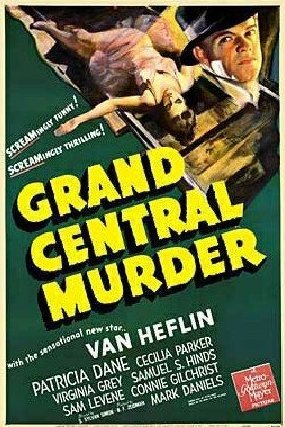
During research for our Grand Central podcast, I had seen several references to the 20th Century Limited, the ultra-deluxe passenger train that terminated at Grand Central, as being the best known train behind the Orient Express, host to an Agatha Christie whodunit. In the totally glamorous and ridiculous ‘Grand Central Murder’, we get to imagine them all wrapped up in one.

First, I should get out of the way the fact that not a single scene (except for the titles) is actually filmed at Grand Central, or in New York for that matter. With American soldiers on their way to Europe joining the thousands of commuters, Grand Central hardly had any room for a studio film filled with B-list stars. But although its filmed entirely on an MGM lot, this zany mystery spectacle does give you an interesting insight of what people might have thought of Grand Central in 1942.

A two-timing, arrogant Broadway star Mida King is found murdered in her private train car before the train can leave its platform. Coincidentally her convicted ex-boyfriend just happened to have escaped his captors who were also in Grand Central; in fact, a multitude of people with motives to kill the little shrew all managed to somehow find themselves around Grand Central at this odd hour of the night.

Sassy private eye Rocky Custer (Van Heflin) and his wife just happened to also be around, and they assist in the interrogation of the suspects, which include Mida’s occultist uncle, her dim-bulbed millionaire boyfriend and a gum-smacking dancer named Baby Delroy (“of the South Brooklyn Delroys.”)

Everybody is dressed to the nines, and ‘Murder’ features scene after scene of men in tuxes darting over Grand Central’s underground tracks, not a rat or homeless person in sight. In fact, most of the action takes place with trains coming and going underground. One suspect happens to be an employee of Grand Central; our brief look at the control room consoles reveals an operation equally designed and no more complex than the set of an old game show.

Grand Central’s labyrinthine track system does figure into the solving of the murder, as the detectives hover over a diagram of system rails with flashing lights (again, like game show buzzers) indicating the car with the murdered starlet.

You get a sense of how luxurious these private train cars are, with liquor cabinets and running showers figuring into the plotline. And in the gruesome finale, Grand Central’s deadly third rail makes an appearance!

I don’t believe ‘Grand Central Murder’ is on DVD quite yet, but its frequently shown on Turner Classic Movies and seems custom-made for late night television.

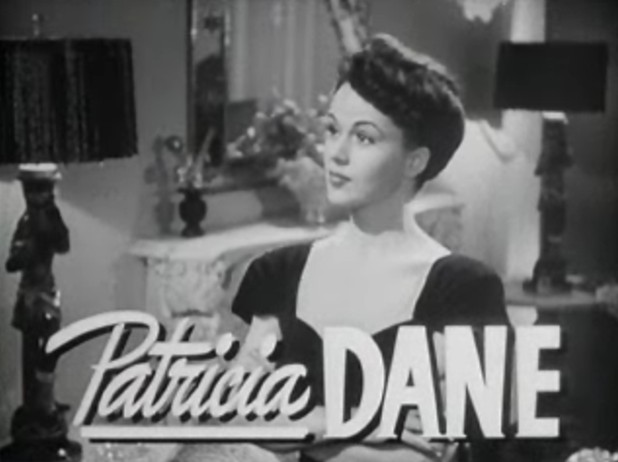
By the way, Patricia Dane, the actress playing Mida, was a renown New York party girl and would go on the next year to marry bandleader Tommy Dorsey.

Still ‘Burning’ after all these years

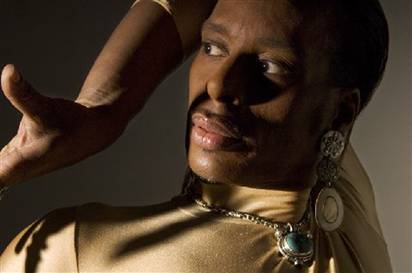
Above: the phenomenal Willi Ninja

BOWERY BOYS RECOMMEND is an occasional feature whereby we find an unusual movie or TV show that — whether by accident or design — uniquely captures an era of New York City better than any reference or history book. Other entrants in this particular film festival can be found HERE.

The Savoy Ballroom in Harlem saw the birth of the Swing-era ‘Lindy hop’ during the late 20s, a hip-swiveling dance named after Charles Lindburgh which became a regular move on dance floors. The Savoy would see a more radical mix of dance styles — and a decidedly more adventurous clientele — in the late 70s with the Harlem drag balls. The rest of the world was let in on this little secret in the cult classic 1990 documentary Paris Is Burning by Jennie Livingston.

‘Paris’ woke up many open-minded Americans — and rankled just about everybody else — to a community even further out of the spotlight than the ‘mainstream’ gay and lesbian community of that time. (Mainstream, of course, being relative in 1990.) Here were groups of primarily young black and Latino gay men and transgenders, with little evidence of stable home environment, enjoying the freedom of glamour and high fashion, elegance and performance on display on dancefloors in late 80s Harlem.

‘Paris Is Burning’ displayed the New York ‘house’ culture, groups of men under the aegis of various fashion houses — featured in the movie are the houses of LaBeija, Ninja and Xtravaganza — that serve practically as unofficial families. They meet on the dancefloor in competitions to emulate feminine and masculine stereotypes with just that extra added component of glamour. Fashion models, banji boys, military. Watching the competitions of ‘realness’ — the ability to pass ones self in the real world as ‘normal’ — has almost amusing relevance filmed as it was before the era of hyper-masculine gay appearances and culture of the ‘down low’.

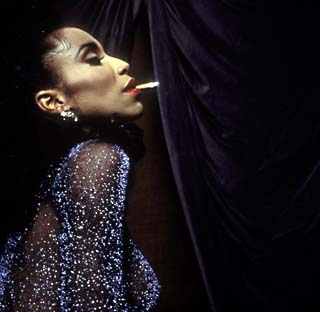
New York City looks drab next to the colorful and fabulous personalities. You can catch a glimpse of how the West Village piers once looked, but who’s paying attention when Venus Extravaganza is talking? She’s the most heartbreaking character — I won’t spoil why — and has always been my favorite; faced with insurmountable obstacles, you still root for her as she describes her fantasy life to be a kept housewife and a fashion model. Livingston cleverly intercuts with pictures of at-the-time current models, images which are even more strikingly absurd now. Venus might be happy to know she looks more like a model of today than any of those women.

Many of the greatest personalities in ‘Paris’ are no longer with us, giving the movie an even more depressing weight. However, one of the featured stars Octavia St. Laurent (pictured above) is still looking great — although she now calls herself Heavenly Angel Octavia St. Laurent. Like the Lindy hop, another dance borne from the floors of the Savoy, voguing, as infiltrated modern pop music, from Madonna to Britney Spears.

And some members of the houses have gone on to mainstream success. Willi Ninji, who passed away last year, became a recording artist and dance coach, notably to Paris Hilton. Another member of the house of Ninja, Benny Ninja, is a frequent guest on America’s Next Top Model.

And while the visibility of the Harlem ballroom danceoffs may have peeked with ‘Paris Is Burning’, they’re still going strong, particularly in other cities like Atlanta and Los Angeles. The House of Ultra-Omni recently celebrated their 25th anniversary. While the younger generation now ‘perform’ as modern stars like Jay Z, there’s still plenty of glamour and confidence to go around.

If you haven’t seen ‘Paris Is Burning’ in a few years, I highly recommend another viewing and maybe a little private voguing in your living room.

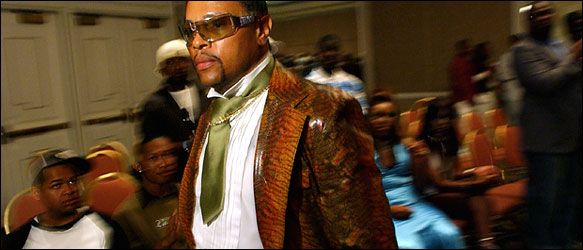
Below: The style of Kevin Ultra-Omni, at his house’s anniversary party

Above photo: Ann Johansson for The New York Times

Ah, the bad ole days of Needle Park

BOWERY BOYS RECOMMEND is an occasional feature whereby we find an unusual movie or TV show that — whether by accident or design — uniquely captures an era of New York City better than any reference or history book.

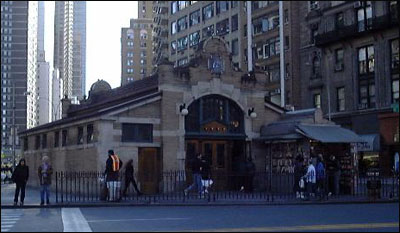
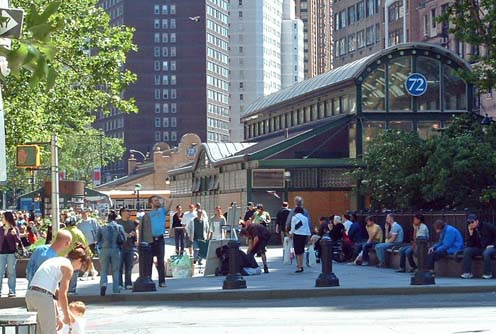
The traffic island at 72nd and Broadway has always been one of the Upper West Side’s most distinctive, with its vintage subway control houses on either side of the street sitting in two distinct ‘parks’ — Verdi Square with its lovely shady patches and statue of composer Giuseppe Fortunino Francesco Verdi; and Sherman Square, a virtually barren traffic triangle that honors nothing in the way of its namesake, Civil War hero William Tecumseh Sherman.

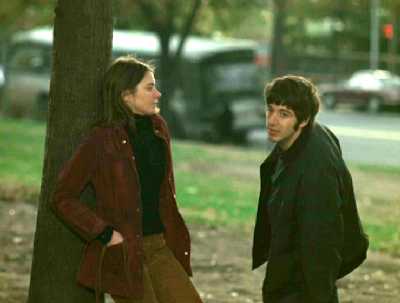
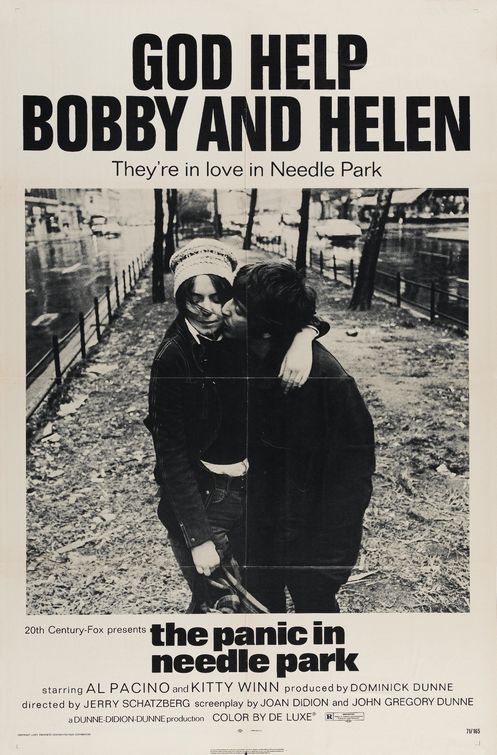
It was a different world 35 years ago, when this area was known by another name — Needle Park, your friendly uptown destination for junkies and dope fiends. The 1972 docudrama Panic In Needle Park vividly depicts this.

The film is primarily known as the breakthrough role of Al Pacino — it’s actually his second film — and its easy to see why. He plays Bobby, a deal who continually fails to break the habit, and even lures his innocent sweet girlfriend Helen (Kitty Winn) into a world of dope scores and prostitution.

More surprising than finding Pacino here is the film’s other contributors — Joan Didion and John Gregory Dunne wrote the screenplay, Dominic Dunne produced it, and showing up in early roles are Raul Julia and Paul Sorvino (as Helen’s hapless john!)

The film is seen through Helen’s eyes who clearly has a few opportunities to escape via a handsome police detective who has seemingly been assigned exclusively to her.

It’s fascinating to see this now-clean stretch of Broadway through a lens of grit, a depiction of New York as a hopeless metropolis sinking into ever-stewing pools of urban decay. Most striking is the scene where Pacino attempts to score from a dealing in front of the Museum of Natural History*.

The raw, early indie style of director Jerry Schatzberg would go on to influence other films, although some of its techniques have been rendered into cliche. However, for lovers of 1970s New York cinema, this sobering and rather exhausting film is a must-see.

Below: a picture of the Sherman Square subway station today:

And Verdi Square:

*One could write an entire book about the depiction of the Natural History museum in film. See the last Bowery Boys Recommends article about Q: the Winged Serpent.

Monster madness at the Chrysler Building

BOWERY BOYS RECOMMEND is an occasional feature whereby we find an unusual movie or TV show that — whether by accident or design — uniquely captures an era of New York City better than any reference or history book.

By the early 80s, New York City has already seen its absolute nadir as a fiscally and morally bankrupt urban center and was fully comfortable with its place in the gutter. The crime rate wouldn’t improve for another decade, but at least Wall Street was picking up the city’s financial fortunes by the lapels. Punk is strangling disco in the back alley, the city struggles through transit strikes, smog and a sudden rise in homelessness.

So it is in that light in which the piece of glorious grade-A schlock “Q: The Winged Serpent,” released in 1982, must be judged.

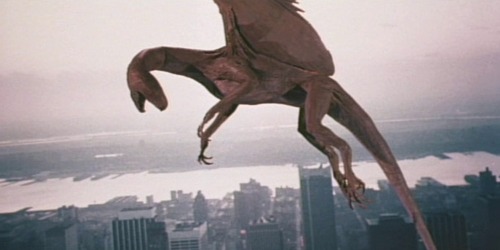
Chrysler Building architect William Van Alen would be horrified to learn that the graceful tapering top hat of his most famous building becomes home of a loathsome flying dragon and a gigantic nest of eggs. As if possessed with a little of Van Alen’s spite at being quickly overtaken in less than a year by the taller Empire State Building, the first scene of “Q” involves the dragon popping over and snatching off the head of an Empire State window washer.

Q swiftly makes a go at New Yorkers sunning themselves on rooftops or in private swimming pools, an inverted Jaws scenario. As such, her victims are mostly upper class, young and rich. There’s a perverse joy at seeing a montage of New Yorkers staring into the sky and being slathered in fake looking blood.

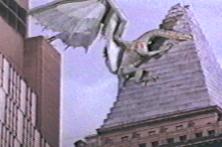
Q also has a ball hanging around the pyramid-topped Bankers Trust building in the financial district. Curiously, few New Yorkers notice this massive monster jetting between uptown and down.

Just how did a winged serpent (it really looks like a dinosaur from Land of the Lost) get to Manhattan? According to the ham-fisted plot, it involves an ancient sacrificial cult, located at the Museum of Natural History, who have summoned the Aztek god Quetzlcoatl via a trail of skinned, sacrificial bodies.

David Carradine and Richard Roundtree (Kung Fu and Shaft) lead the investigation, in a depiction of the New York police force that is hardly flattering. Michael Moriarty is a sad-sack conman — roughed up down by South Street Seaport — who discovers the serpent hideaway during a completely superfluous chase scene through the Chrysler.

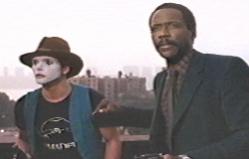
And, oh, did I mention the cop dressed as a mime who stays in makeup for the whole film? Whatever happened to the good old fashioned New York mime, I ask you?

By sheer function of the story, “Q” happens to be one of the best depictions of New York City in the early 1980s. That’s because the ‘serpent’, in all its cheesy stop-motion glory, frequently soars over New York midtown, allowing the viewer to soak in its former splendor. I had a blast freezeframing these scenes and trying to figure out what I was looking at; given the swift makeover of midtown Manhattan, its harder than you think.

Director Larry Cohen, known for other B-movie fare like ‘Black Caesar’ and ‘It’s Alive’, supposedly got the entire idea for the film by looking up at the Chrysler and thinking, “That’d be the coolest place to have a nest.” Probably not the reaction Walter Chrysler wanted when he first commissioned it.

“Q: the Winged Serpent” is currently available on DVD and is probably shamelessly gathering dust at your local video store.

By the way, should we be surprised that the Natural History museum is currently hosting an exhibit called Mythic Creatures that actually features Quetzlcoatl?