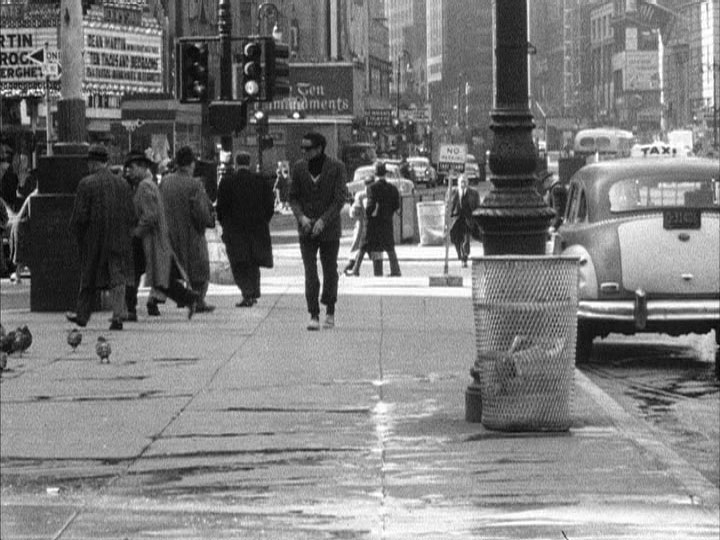
A beat in Times Square: Ben Carruthers drifts through the city in ‘Shadows’
BOWERY BOYS RECOMMEND is an occasional feature where we find an unusual movie or TV show that — whether by accident or design — uniquely captures an era of New York City better than any reference or history book. Other entrants in this particular film festival can be found HERE.
When we did our Times Square podcast a few weeks ago, I went looking for photographs that captured its mid-century transition, when the balance between glamour and sleaze began tipping from one extreme to the other. When was the moment that 42nd Street went from meaning one thing, to the other? Had I seen John Cassavetes’ ‘Shadows’ then, I wouldn’t have needed to look much further.
‘Shadows’ is a revolutionary moment in film, displaying a loose, on-the-fly vocabulary and a casual, bebop storytelling style completely foreign to movies of the day. Cassavetes, a young acting teacher and soon-to-be film star in his own right, assembled production funds and the film’s cast from among his friends and acquaintances. Its largest supporter was radio deejay and writer Jean Shephard, years before writing short stories that would form the basis of the film ‘A Christmas Story’.
The film was finished in 1959 after Cassavetes had initially completed one version in 1957 and sent the actors on their merry way. He recalled the cast and inserted new scenes which are easily identified. The plot is largely improvised and feels it. The somewhat central plot — a romance between a young black woman and a white jazz musician she meets at a party — was provocative for its time, but feels little wooden today. The acting is all over the place. (Cassavetes’ wife Gena Rowlands, later to become his greatest star, appears only fleetingly as an extra.)
But I’m recommending this film for its style and electricity, its cool depiction of downtown beatniks afloat in midtown Manhattan. The images and sounds seem to fly together, with an airy jazz score accompanying a broad number of New York locations rising from a grainy black-and-white haze.
Its most famous scene depicts the lovely Lelia Goldini strolling down 42nd Street after dropping off her brother at Port Authority. He wants her to take a cab home; she wants to enjoy a walk. 42nd Street isn’t the seedy corridor it would become, but it isn’t safe either. Outside a movie theater, aflame with the glowing lights of surrounding marquees she’s harassed by a stranger. But this is a street in transition; Lelia is rescued by strangers, and the harasser is himself harassed. (See if you can recognize one of the strangers.)
The movie is strongest when it’s drifting along with rebels, three hapless hipsters led by the magnetic Ben Carruthers. They invade a countless number of dive bars and diners, looking for street smart ladies. That’s how they look at the entire world which makes their visit to the sculpture garden at the Museum of Modern Art strangely compelling. I’m sure you’ve never looked at art the way these three do.
In a cramped and dank nightclub, smoke and whiskey filled, a jazz vocalist, played by Hugh Hurd, is forced to become an emcee to a bunch of talentless dancing girls, the humiliation on his face a sure representation of the changing tastes of New York nightlife. In the variety shows of yore, his somber talents would have fit in; by the late 1950s, moody jazz was merely a distraction.
‘Shadows’ has a wonderful mood of melancholy that would go on to exemplify the great New York independent movies of the 1960s and 70s. The long procession of cabs zooming down the avenue, past the Colony Records and the Thom McAn’s, past the titillating neon ‘FASCINATION’ of a 42nd Street theater, would go on to influence the dreams of New York lovers for years after.
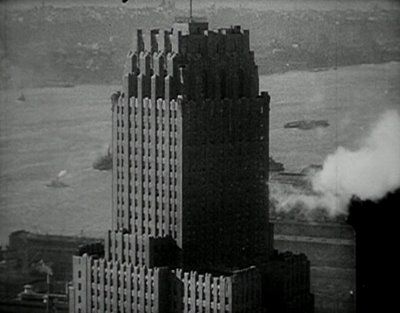
The Sunday New York Times had an excellent article on the restoration of the film Manhatta, purported to be the ‘first avant garde film’ ever made and one of silent film’s great sightseeing tours of New York City.
The film was a collaboration between photographers Paul Strand and Charles Sheeler, with a little help from Brooklyn-ite Walt Whitman, long dead but represented with pertinent works of poetry on title cards between the images.
Although the restored movie is a whopping ten minutes long, the program, hosted by the Museum of Modern Art, will feature other archival New York footage from the early days, as well as a chat with the restorer and curator Bruce Posner. More details on the viewings of this and other films in the To Save and Project series can be found on their website.
If you plan to go, you’ll probably want to check out what the film looked like pre-restoration:
And since I’m at it, here’s a few views of New York City courtesy of the silent era.
Thomas Edison’s early experiments with film resulted in several shorts capturing New York at the turn of the century, including this one, Skyscrapers of New York
One of my personal favorites from 1903 gives us a look at ‘The Eighth Wonder’, a panorama of the Flatiron Building and its surroundings 105 years ago:
Seven years older and just up the street is this brief glimpse of ‘Herald Square 1986’
And for a little sappy melodrama, why not try this 1912 Mary Pickford weeper, the New York Hat directed by DW Griffith, showing the soothing powers of New York fashion decades before Carrie Bradshaw
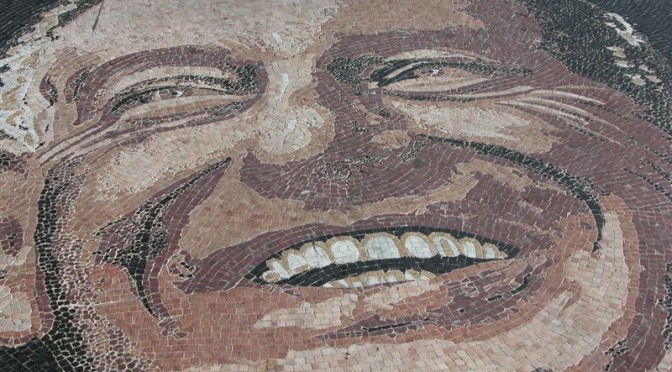
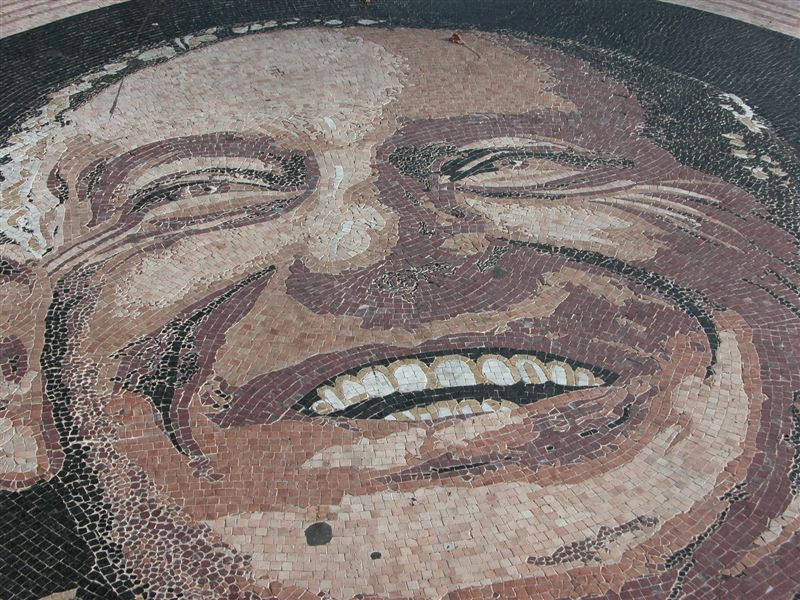
Above: a hilariously hideous Robert Moses mosaic, on the sidewalk at Flushing Meadows
Robert Moses wanted the World’s Fair of 1964 in Flushing Meadows to be a family affair with little controversial material. Not surprisingly this meant few displays for American art.
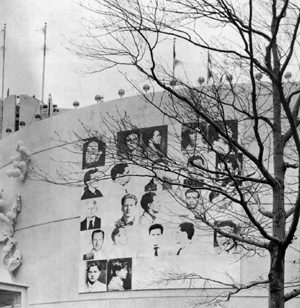
So how did an Andy Warhol mural get plastered on the New York State Pavilion, one of the most conspicuous buildings at the fair?
The Pavilion was designed by Philip Johnson, also the designer of Museum of Modern Art’s midtown galleries and also the head of architecture and design there. Johnson was an admirer of Warhol’s ever since the Museum of Modern Art’s pivotal December 1962 show on pop art, where its very merits were dissected by critics.
Johnson commissioned Warhol and other pop artists to create work for the exterior of the pavilion, and the result was ‘Thirteen Most Wanted Men’, blown-up mugshots of the FBI’s most wanted list.
One week before opening to the public, Johnson informed Warhol that the governor objected to the piece, because it just happened to feature mostly Italians and officials feared it would offend Italian visitors.
Warhol, however, knew very well that Moses was behind the objection. And it may not have been anything to do with the content. Andy was becoming a polarizing figure by this time. This was the year Warhol would make his move from artist to icon, the year he opened the Factory, the year he filmed such provocative movies as ‘Blow Job’ and ‘Taylor Mead’s Ass’, and the year his studios were raided by police and his work confiscated for its offensive content. Andy Warhol was anything but family friendly in 1964.
So his mural was literally whitewashed. Warhol intended to replace it with a new design: 25 silkscreen panels of Robert Moses’ face in a Joker-like grin. Unsurprisingly, Johnson did not think this appropriate for the main pavilion of Moses’ fair.
A vestige of Warhol’s Moses can be found in a mosaic in Flushing Meadows.
By the way, Warhol later claimed in his biography that he was happy that his art was painted over at the pavilion: “Now I wouldn’t have to feel responsible if one of the criminals ever got turned in to t he FBI because someone had recognized him from my pictures.”
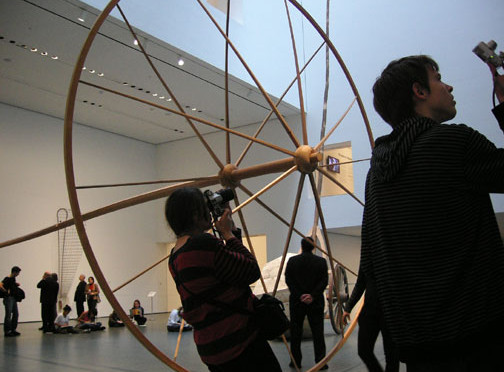
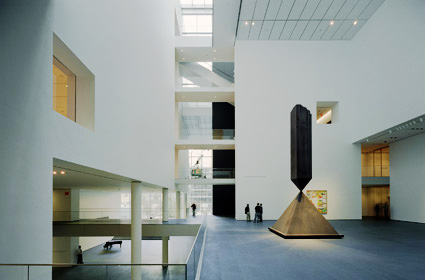
Above: Guests admire a strange piece by Martin Puryear
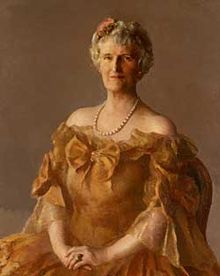
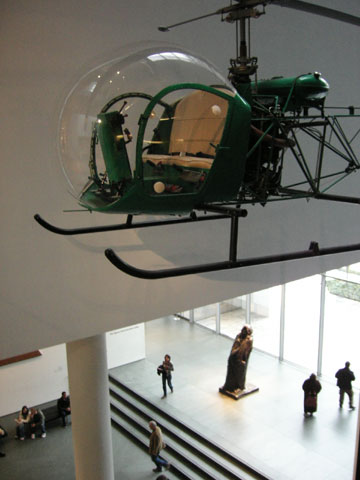
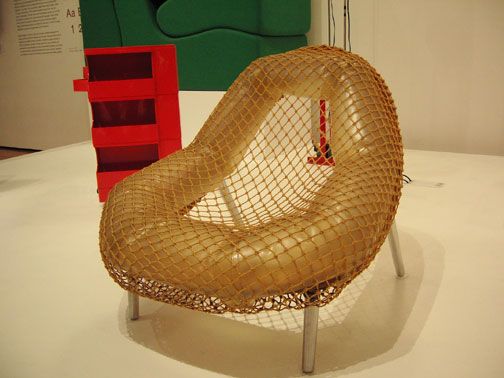
The biggest surprise behind the revolutionary creation of the Museum of Modern Art is that the characters who put it together were almost as colorful as the modern art they championed. Tag along as we peek behind the canvas of New York’s oldest temple of avant garde. PLUS: we debut our first Bowery Girl!
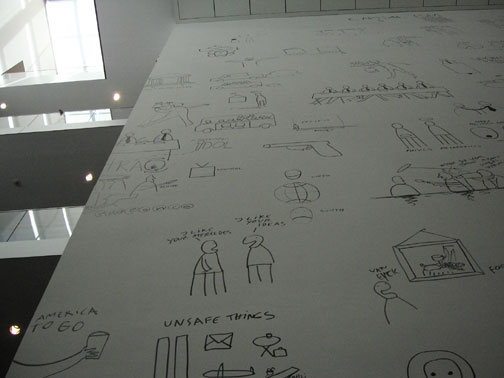
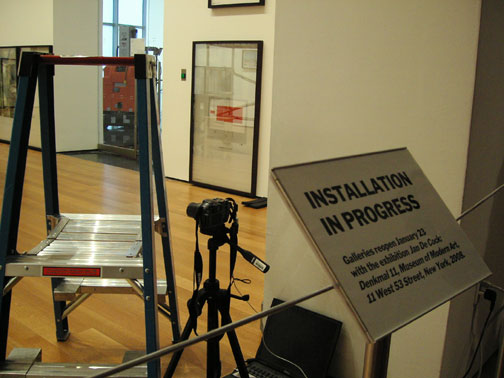
…And a wider view of the large exhibit space he doodled in
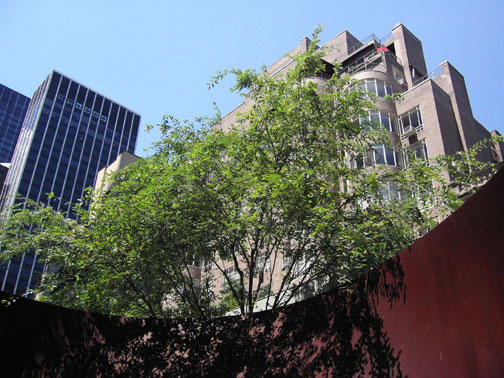
A view of Richard Serra, from the Abby Aldrich Rockefeller Sculpture Garden
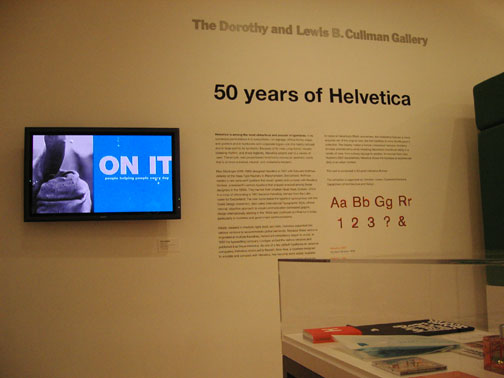
Still on exhibit — Helvetica
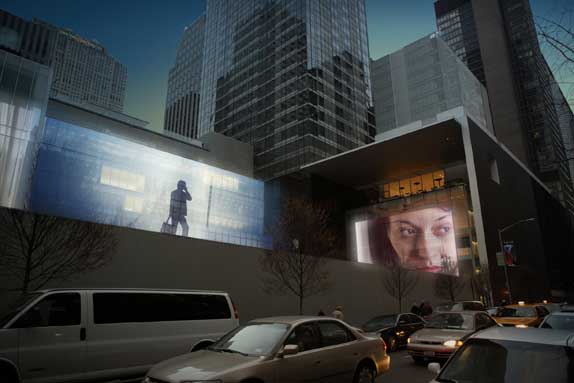
An outdoor film exhibition in the sculpture garden, as seen from the street outside, from 2007
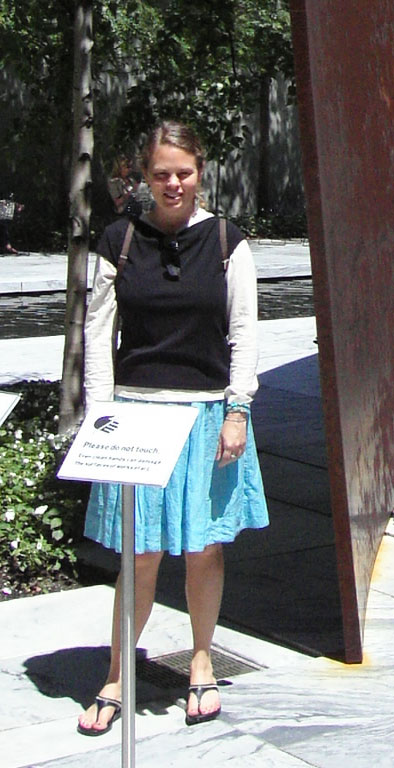
Thanks to our special guest, correspondent and Bowery G’hal Kari Hoerchler. Here’s her bio:
On November 6, 1985, during a class trip to the Art Institute of Chicago, Kari Hoerchler had an up close and personal opportunity to ask Andy Warhol to name his favorite artist. The plaid-clad schoolgirl was ceremoniously snubbed. Scarred for life, Kari became obsessed with solving the mysteries contemporary artists present both in fiction and reality. Today, she supports friendlier artists with frequent trips to New York studios, Chelsea galleries and MoMA museum membership. Kari also enjoys visiting European art museums. In spring 2007, she wrote a city guide to Budapest for eurocheapo.com and has written hundreds of hotel reviews for the site since 2003. Kari is currently writing a science-fiction farce including a fictional representation of a female Rockefeller of the future.

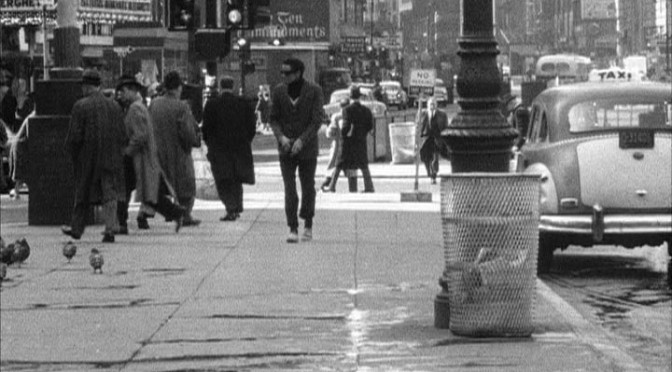
 A beat in Times Square: Ben Carruthers drifts through the city in ‘Shadows’