Categories
Podcasts

PODCAST: Rockefeller Center

Listen or download it from HERE

You can also download it for free from iTunes and other podcasting services
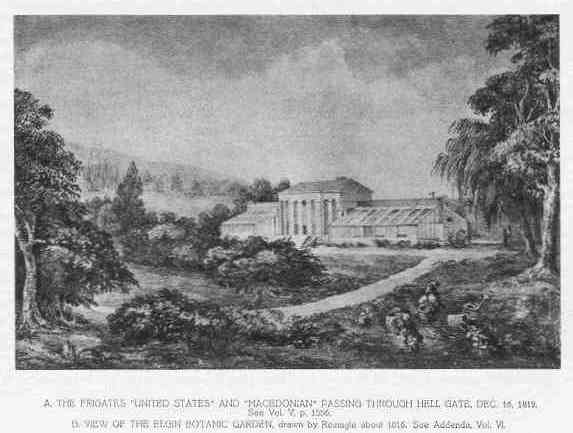
In the veritable wilderness that would become midtown Manhattan, Dr. David Hosack opens his Elgin Botanic Garden, the city’s first collection of exotic plant species that’s eventually sold to the state, who then passes the land fatefully over to Columbia University.
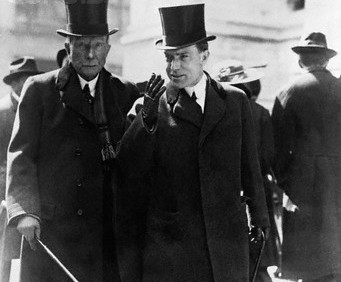
The John D.’s, Senior and Junior, the two richest men on the planet
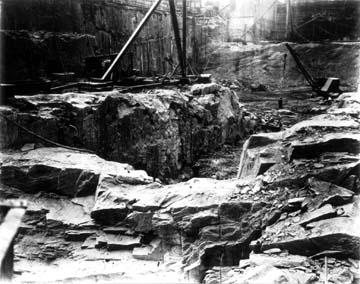
Excavation of the Rockefeller Center site, photo by Berenice Abbot taken in 1931. Materials taken from the site were used to fill in Central Park’s South Reservoir (making the Great Lawn) and helped create landfill for Brooklyn’s Shore Parkway.
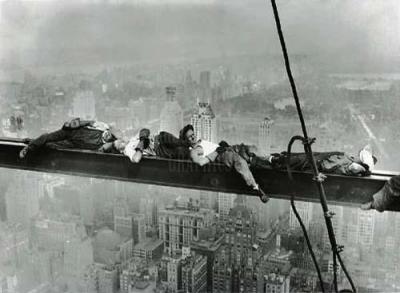
One of the most famous photographs ever taken, in 1932 by Charles Ebbets, features some nonchalant construction workers taking a break from work on the RCA Building.
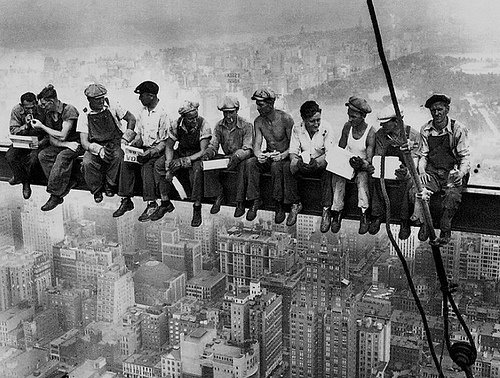
I get sick just from looking at this picture.
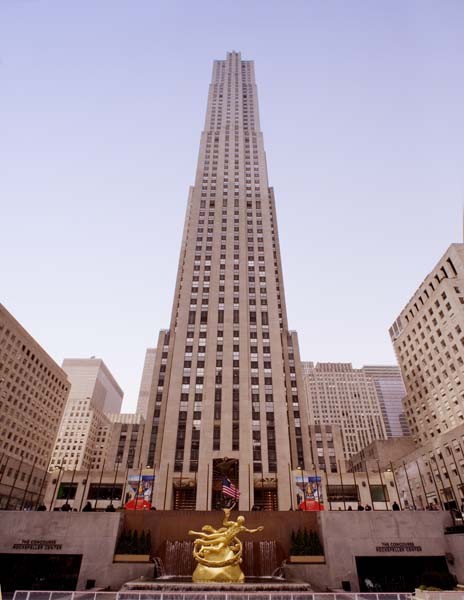
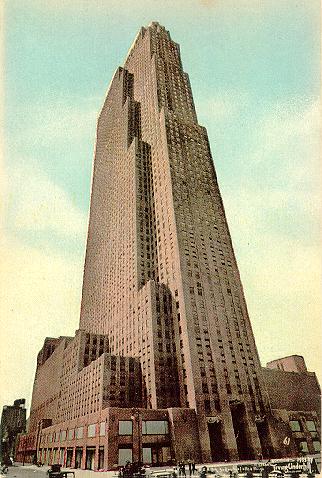
The majestic RCA Building (later the GE Building) was perfectly proportioned so that natural light would reach every square foot of office space
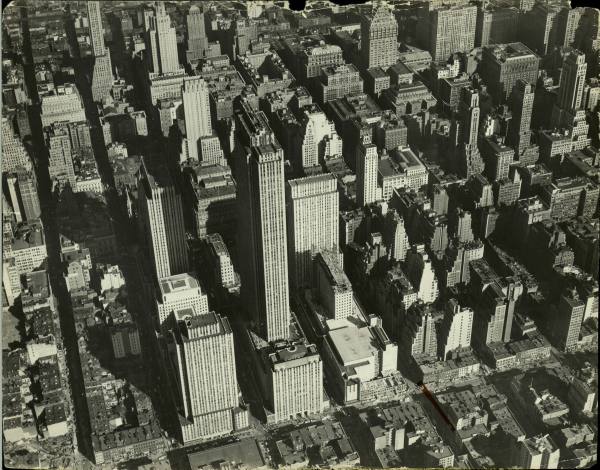
From this image, it’s easy to see how Rockefeller Center radically transformed midtown.
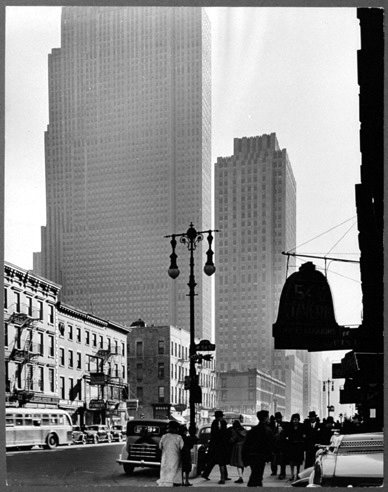
The plaza, seen in a view from 1937, allowed architect Raymond Hood much leeway in his design of the RCA Building
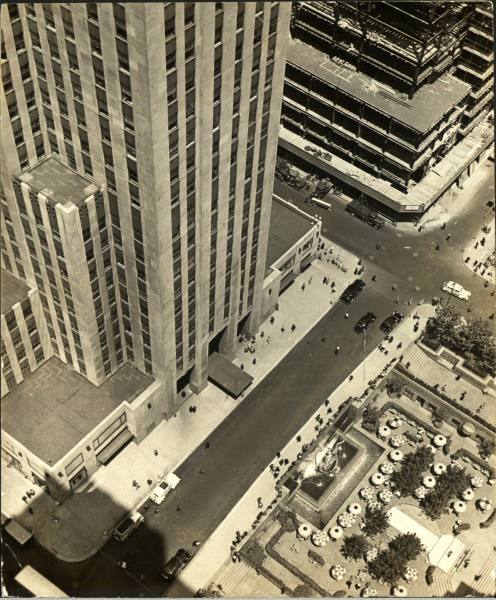
A classic overhead shot by Margaret Bourke-White taken in 1939
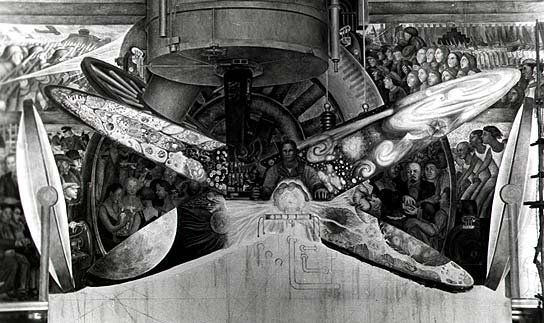
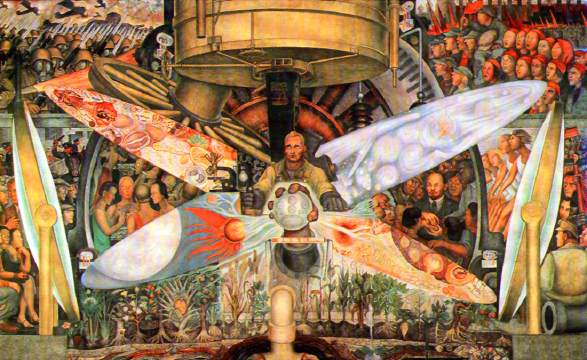
The offending Diego Rivera mural that briefly adorned the lobby of the RCA Building
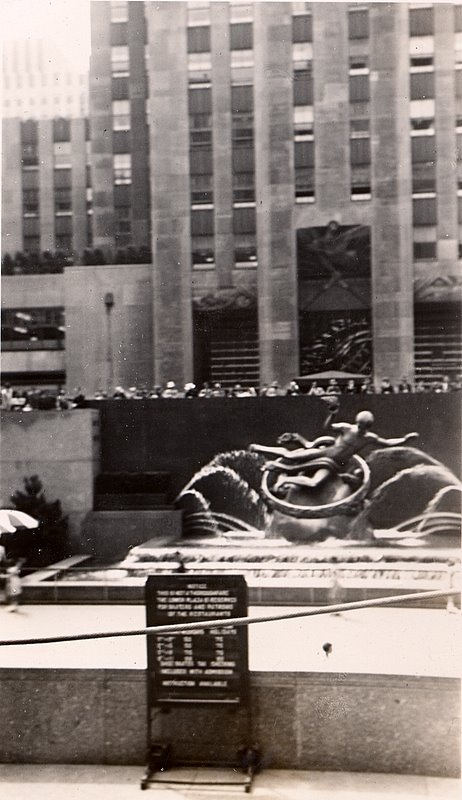
Prometheus in 1941 (courtesy of Flickr)
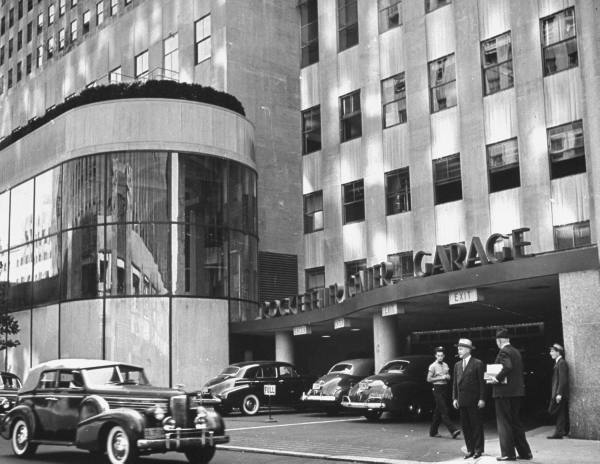
Also from 1941, a look at the Center’s new garage
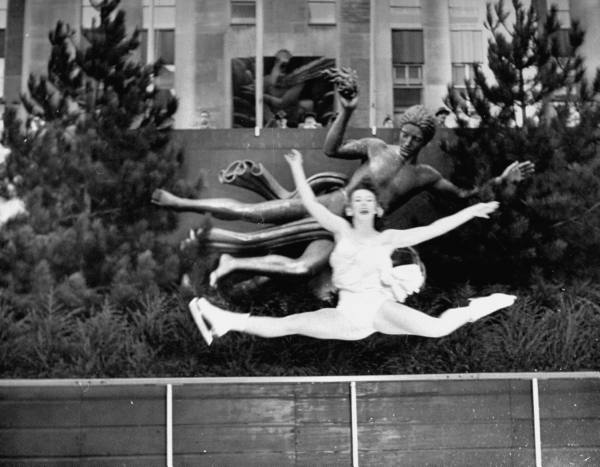
A spry ice skater in 1942 (photo by Wallace Kirkland, Life archives). The rink was not an original feature of the plaza, but soon became one of its most popular attractions.
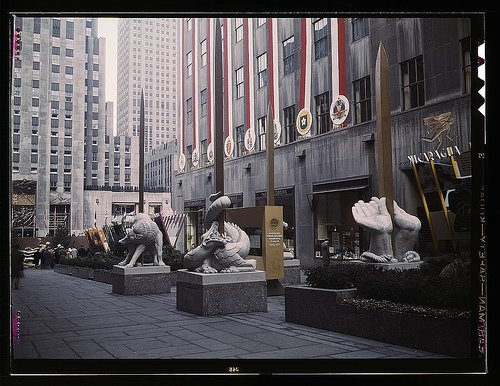
In 1943, the Channel garden features an unusual wartime exhibit. Speakers on either end continually broadcast speeches by President Roosevelt, Winston Churchill and Chiang Kai-Shek. Fun! (Photo courtesy Library of Congress)
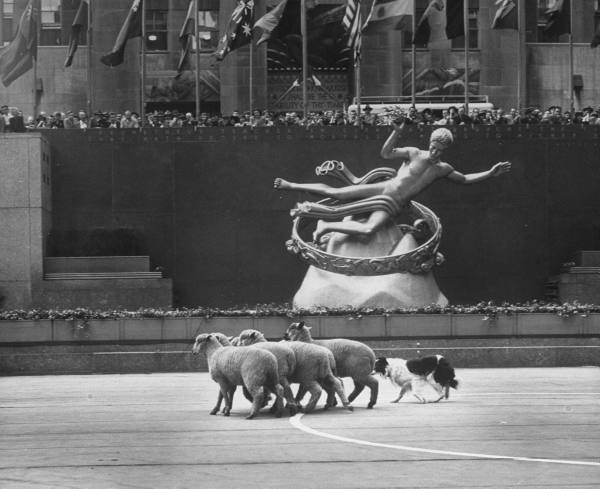
1948 — for some reason, ice skating and dining takes a backseat this day for a sheepherding demonstration
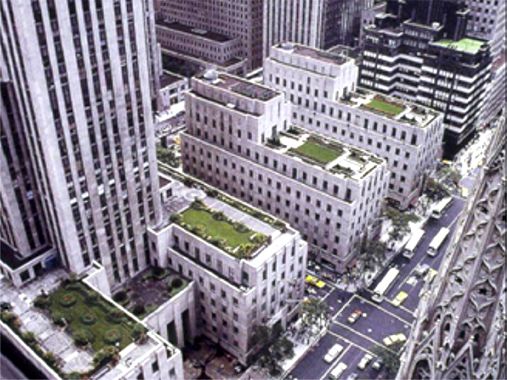
The roof gardens, now closed to the public, were originally a top tourist draw to Rockefeller Center and even enabled Rockefeller to raise rents on any offices that benefits from views that overlooked them.
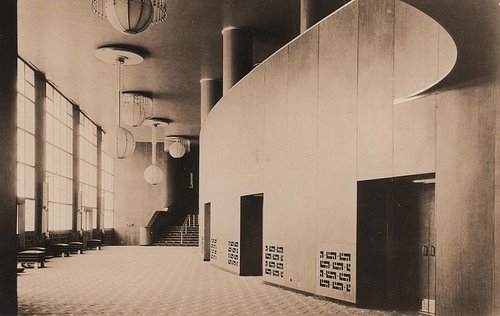
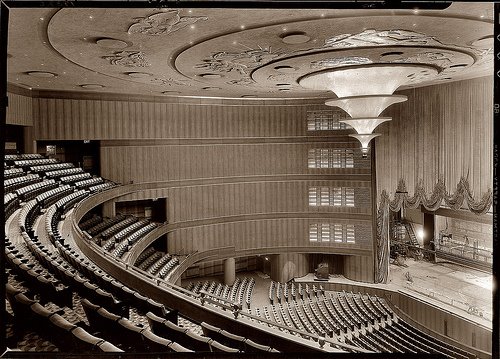
Two interior shots of the Center Theatre, formerly the RKO Roxy, Rock Center’s other big stage. It changed it named because of a lawsuit with the Roxy Theatre and changed its entertainment from films to ice spectacles in the 1940s. It was torn down in 1958 to make room for what is today the Simon & Schuster Building, also part of the Rockefeller Center complex.
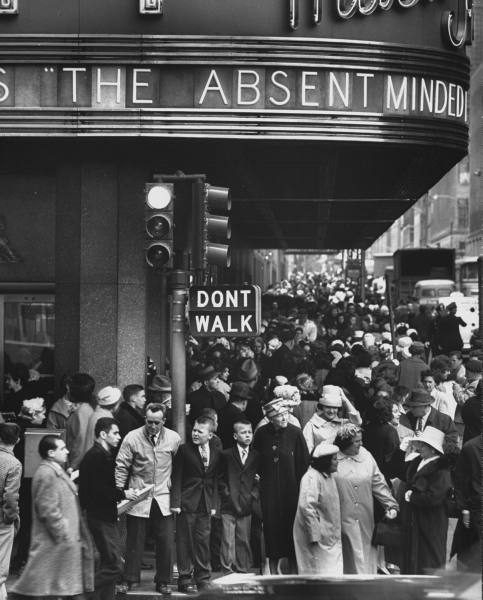
Wild crowds gather for Radio City Music Hall’s Easter show in 1961, and not, I’m assuming, to get into to see the Absent Minded Professor
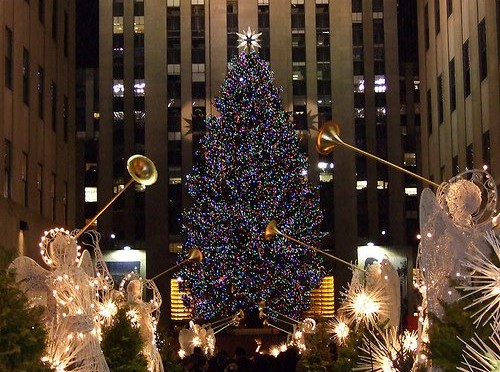
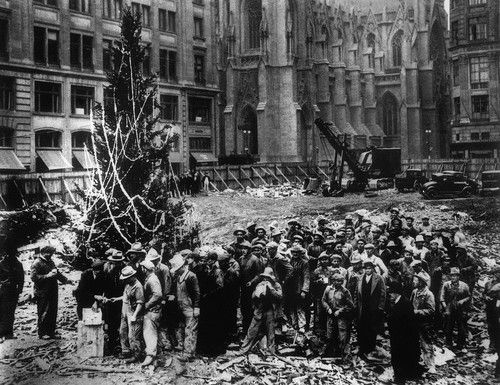
The first Rockefeller Center Christmas tree, in 1931, with Saks Fifth Avenue and St. Patrick’s Cathedral right across the street
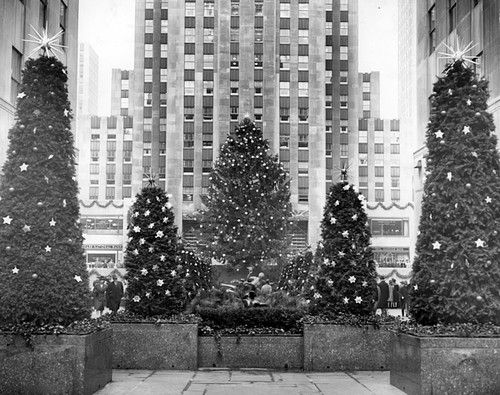
The tree in 1943
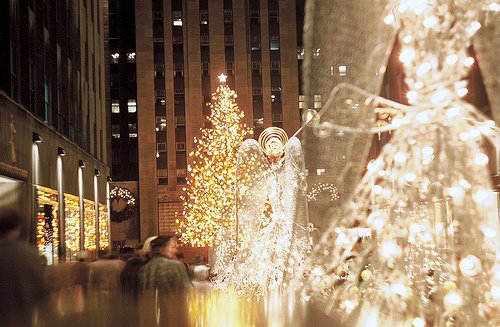
And in 1954, one of the first years that featured the illuminated angels (courtesy of PLCjr)
CHRISTMAS GIFT ALERT: One of my favorite New York City history books ever is actually about Rockefeller Center — Daniel Okrent’s Great Fortune: The Epic of Rockefeller Center. The writing is as stout and witty as many of its principal characters. Extremely readable.
Categories
Podcasts

PODCAST: The Museum of Modern Art

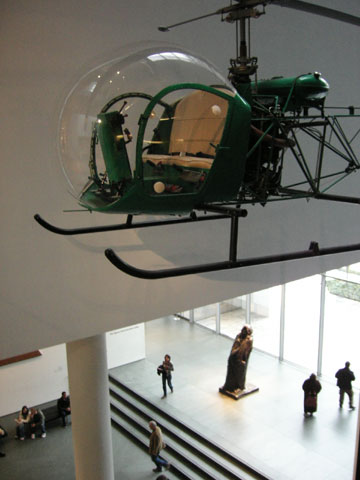
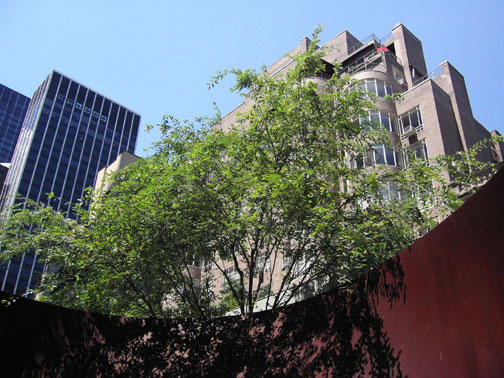
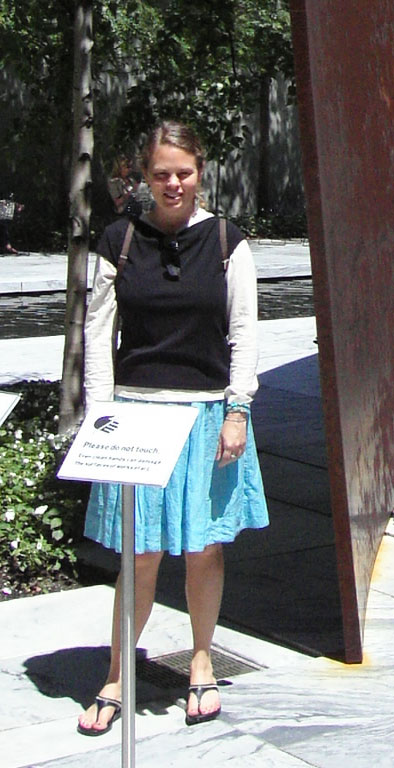
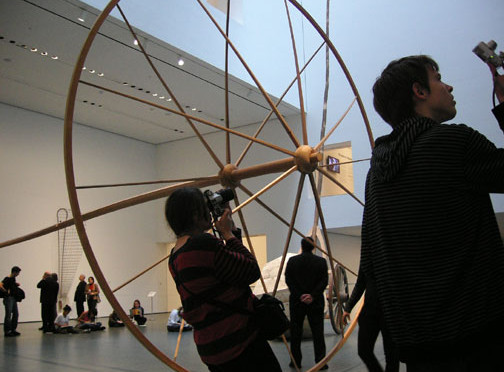
Above: Guests admire a strange piece by Martin Puryear

The biggest surprise behind the revolutionary creation of the Museum of Modern Art is that the characters who put it together were almost as colorful as the modern art they championed. Tag along as we peek behind the canvas of New York’s oldest temple of avant garde. PLUS: we debut our first Bowery Girl!

Listen to it for free on iTunes or other podcasting services. Or you can download or listen to it HERE

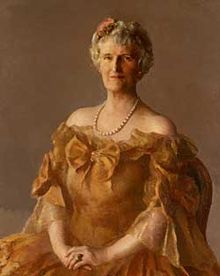
The star of our show, Abby Aldrich Rockefeller

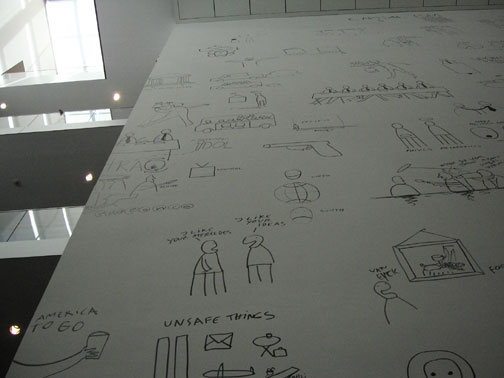
The playful — and temporary — Dan Perjovschi….

…And a wider view of the large exhibit space he doodled in

A view of Richard Serra, from the Abby Aldrich Rockefeller Sculpture Garden

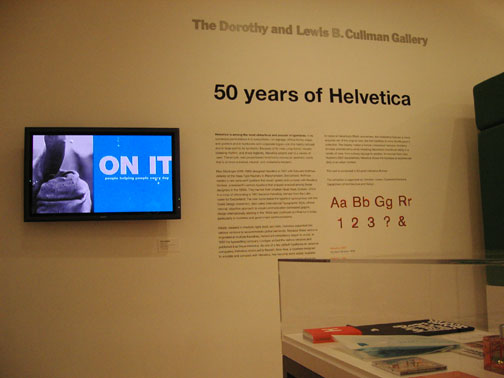
Still on exhibit — Helvetica

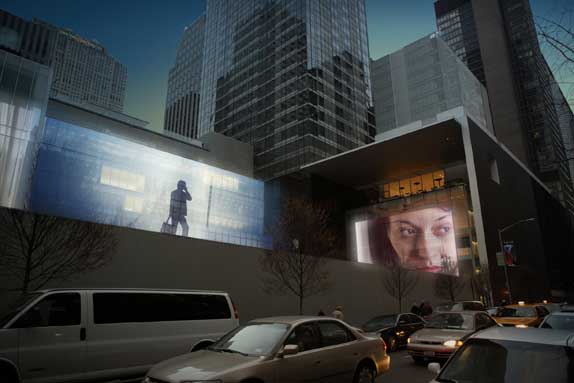
An outdoor film exhibition in the sculpture garden, as seen from the street outside, from 2007

Thanks to our special guest, correspondent and Bowery G’hal Kari Hoerchler. Here’s her bio:

On November 6, 1985, during a class trip to the Art Institute of Chicago, Kari Hoerchler had an up close and personal opportunity to ask Andy Warhol to name his favorite artist. The plaid-clad schoolgirl was ceremoniously snubbed. Scarred for life, Kari became obsessed with solving the mysteries contemporary artists present both in fiction and reality. Today, she supports friendlier artists with frequent trips to New York studios, Chelsea galleries and MoMA museum membership. Kari also enjoys visiting European art museums. In spring 2007, she wrote a city guide to Budapest for eurocheapo.com and has written hundreds of hotel reviews for the site since 2003. Kari is currently writing a science-fiction farce including a fictional representation of a female Rockefeller of the future.

Kari at MoMA:

Tom returns to the podcast next week!

Rockefeller Center’s greatest art scandals!

Above: Diego Rivera’s contentious creation

Despite JD Rockefeller Jr’s aversion to the ‘impropriety’ of modern art, Rockefeller Center has always been bursting with it, from the large outdoor installations sprouting up in the plaza to the gorgeous art deco blazing from its walls.

As with modern art for public display however, the Rock has sometimes riled the community with challenging and occasionally offensive art pieces.

The most famous of course is Diego Rivera’s Man at the Crossroads (pictured above), his epic mural created in 1933 with the supposed theme of ‘new frontiers’. Rivera was a favorite of Rockefeller’s wife Abby, having feted the artist in a show at the Museum of Modern Art in 1931. Rivera, however, was no tool of the rich. Amongst the many May Day figures depicted in Rivera’s expressive narrative mural is one Vladimir Lenin, communist leader and Marxist icon.

He was asked to repaint the Lenin figure but Rivera staunchly refused. The press had a field day, finding the depiction insulting and pressuring the Rockefellers to completely cover the mural, then a few months later, destroying it entirely. One photograph of the mural remains — and of course, a near exact copy that Rivera later painted in Mexico.

Yet another depiction of another controversial leader was allowed to stay.

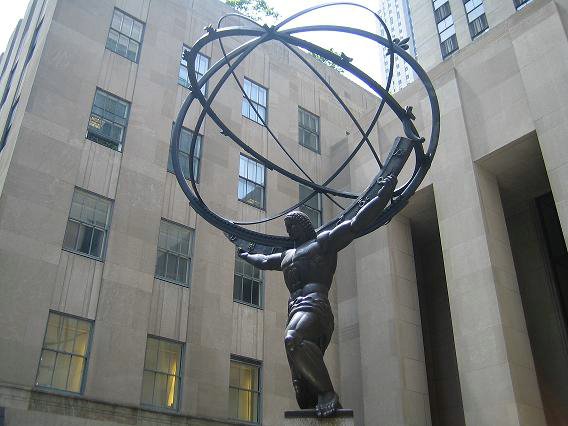
Just a few years later in 1936, art deco master Lee Lawrie created his mighty two-ton Atlas, probably one of the most recognizable pieces of artwork in the city of New York.

He currently stands directly in front of St. Patrick’s Cathedral, so you can imagine the surprise of many when it was rumored the face of Atlas was modelled after Italian dictator and all around bad guy Benito Mussolini. Although protestors picketed the statue, good Atlas was allowed to stay.

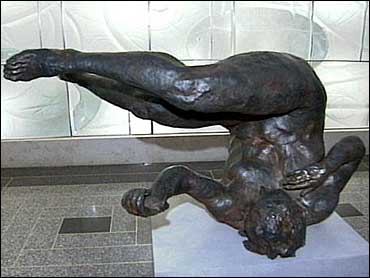
Flash forward a few decades to 2002 and a more modest piece that sat briefly in the Rockefeller Center concourse, not far from the skating rink — Erik Fischl’s Tumbling Woman. A bronze figure in the style of Rodin, this image of a falling woman installed as a Sept. 11 memorial on its first anniverary greatly disturbed passers-by.

After the New York Post threw the controversy on its front page, the figure was removed. Interestingly, the artist never intended the sculpture to be displayed publicly at all.

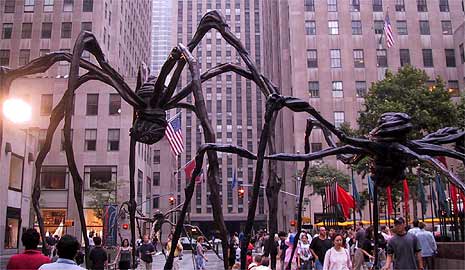
Then there were Louise Bourgeois’ gigantic spiders, which stood commanding the plaza for the entire summer in 2001.

As illustrated with all the previous art pieces discussed, timing (or rather, bad timing) is everything. These pieces might have been too disturbing for people had they been standing just a few months later, in the wake of Sept. 11. As they were only around for the summer, however, the only real controversy were several mild cases of nausea and probably a few panicked children.

Categories
Podcasts

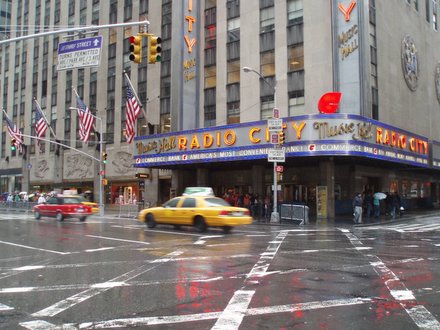
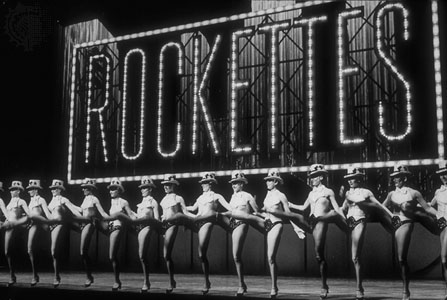
PODCAST: Radio City Music Hall & the Rockettes

Behind the glamour of New York’s greatest stage Radio City Music Hall is a story involving a toothpaste tube designer, an allergy to Brazil nuts, a hydraulic lift protected from the Nazis, and a man named Roxy. PLUS: The Bowery Boys go backstage (well, figuratively) with the Rockettes.

Listen to it for free on iTunes or other podcasting services. Or you can download or listen to it HERE

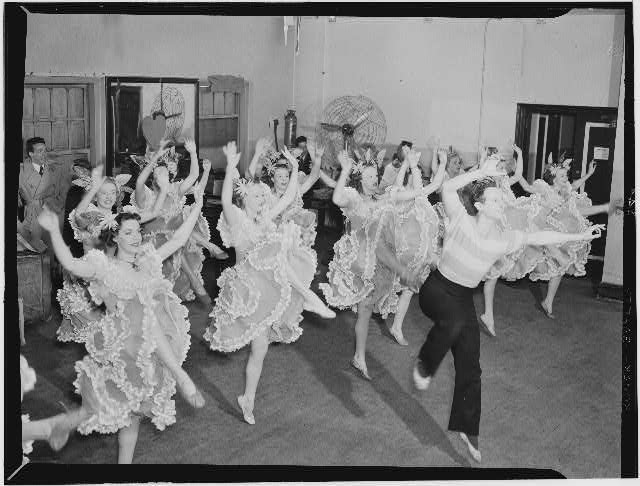
The Rockettes in practice:

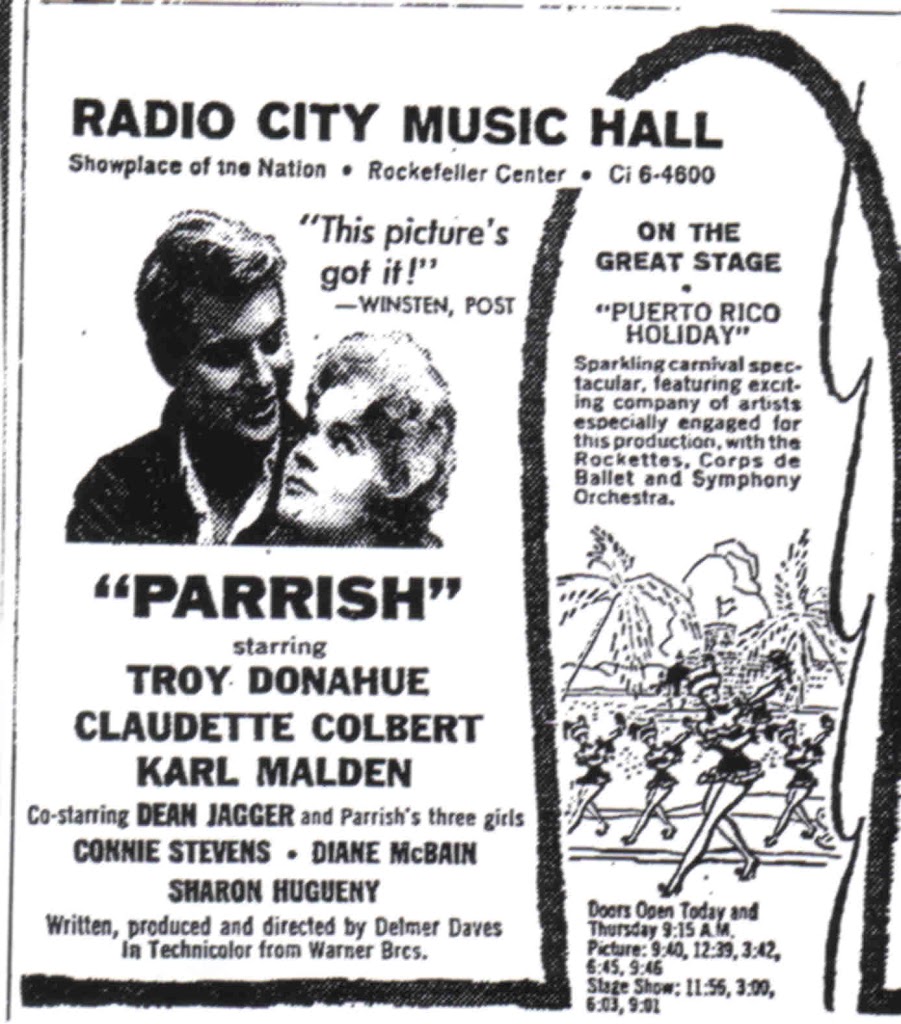
Radio City’s movie / stage extravaganza combo:

By the way, a couple of our richer anecdotes are from one of my favorite books about New York City — Great Fortune: the Epic of Rockefeller Center by Daniel Okrent. On top of being well written, Okrent gives delicious insight and lush description to a story that could have been bogged down in uninteresting details.

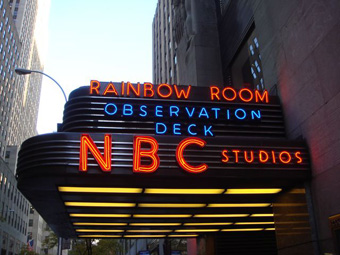
FRIDAY NIGHT FEVER: The Rainbow Room


To get you in the mood for the weekend, every Friday we’ll be celebrating ‘FRIDAY NIGHT FEVER’, featuring an old New York nightlife haunt, from the dance halls of 19th Century Bowery, to the massive warehouse spaces of the mid-90s. Past entries can be found here .

For a change, I thought I’d feature a place that is actually, you know, still open. Although it’s pricey enough that most of us won’t see it much in our lifetimes.

The Rainbow Room offers quite a stark contrast to the Apollo Theater. The Room opened in the same year (1934) as the Apollo opened its doors to black audiences for the first time. Both elicit images of heavenly bodies. Its similarities naturally end there.

Where the Apollo rose from the site of a sleazy burlesque joint, the Rainbow Room was literally the crown on J.D. Rockefeller Jr.’s newly built palace to commercial welfare, Rockefeller Center. Rockefeller, a clean, moral gentleman who preferred warm milk to champagne, was virtually forced to open the place due to social pressures. Rooftop nightclubs were sprouting up all over the city — and in all the society pages — and Rockefeller simply had to have best of everything. 

And thus the man who supported Prohibition opened in Oct 3, 1934 what would become the acme of champagne New York life. And all of it, sixty-five floors above the city, atop what was then the RCA Building.

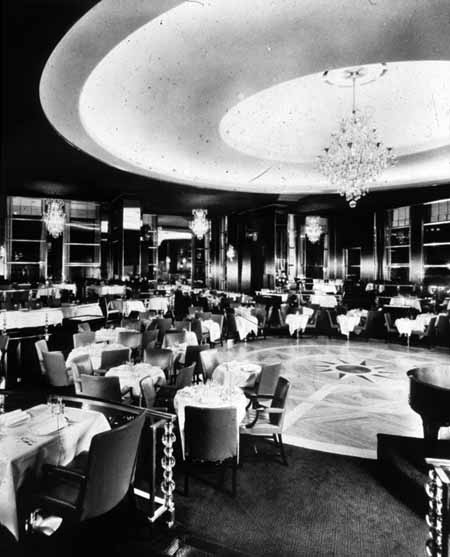
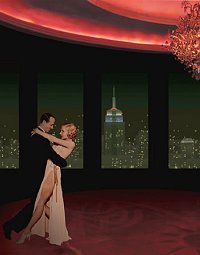
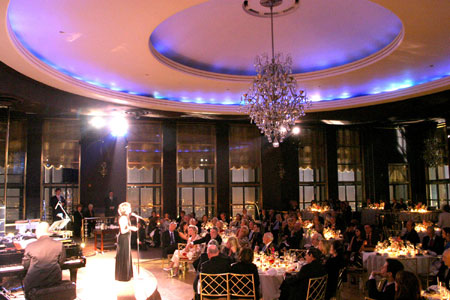
Its design by Elena Bachman Schmidt, with her assistant Vincent Minnelli (yes, Liza’s dad), encapsulated Art Deco luxury while never overshadowing either the clientele or those two-story windows. In fact, faceted mirrors near the bar created an illusion that that gorgeous skyline outside was literally seeping into the room. Perhaps it was, striking a waltz on that impressive dance floor that would have made John Travolta salivate — a slowly rotating plate glowing with dazzling colors that changed moodily to the music.

However it was the well-coiffed and tuxedoed birds atop the floor that gave the Room its polish. The Rainbow Room was strictly high society; for a time, it was ‘white tie’ only, until that was relaxed to ‘merely’ regular tuxedo styles. Its opening night was, as one journalist proclaimed, filled with “five or six hundred of New York’s Four Hundred.” It was considered the ‘upper crust’ of nightclubs, and eventually the well-dressed society families were joined by America’s unofficial royals — Broadway and movie stars. Jean Harlow, Cole Porter, Douglas Fairbanks Jr, Noel Coward, Bette Davis, Laurence Olivier. The hoity-toity club was no match for Marlene Dietrich, who wanted the band to stop playing waltzes and give her a tango. And they obliged.

(It should be noted, just to keep the Apollo in the back of your mind, that at least for a few years, it was not only ‘white tie’, it was strictly, entirely white. Blacks were neither admitted nor even allowed to perform. Contrast this to last week’s Friday Night Fever feature, Cafe Society, which was in a basement, sure, but whose integrated politics ensured truly world class entertainment.)

The Rainbow Grill soon opened down the hall. A more ‘informal’ place — still out of the price range of most New Yorkers — the Grill was considered a junior edition and attracted the college-age trust-funders.

When they weren’t dancing, patrons of the The Rainbow Room dined to the entertainments of a variety of acts, from the hi-lites of the big band era, to a mixture of almost carnival like acts — trained horses, ping pong champions, magicians, palm readers. In fact, Edgar Bergen and his wooden puppet Charlie McCarthy became national celebrities stemming from just a few performances there.

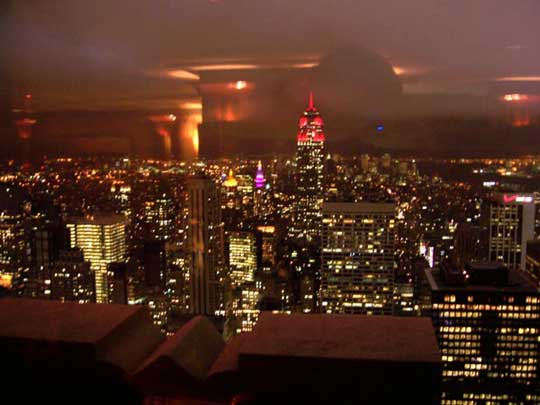
The Room has seen a couple renovations and a downgrade to ‘mere’ suit and tie. And the era of high-society nightclubbing itself has transformed into a more Paris Hilton-like debauchery. But it still holds its charms — as long as you’re dressed correctly — primarily because of that gorgeous view. Have a couple glasses of champagne, gaze out at New York’s perfect skyline, and you can’t help but feel romantic.

I should add here that down the hall there used to be a fantastic cabaret room called ‘Rainbow and Stars’ where out of sheer luck (and a regular columnist position as a theater writer, back when I could only afford mac-and-cheese for dinner) I had the privilege to go to write reviews. Imagine that beautiful New York backdrop, in a more intimate setting, with only the world’s best cabaret performers plopped in front, singing their hearts out.

 I wore the same (the only) suit jacket each time, I had to scrape up coins just to buy a martini or two. But for a couple hours, like the time I got to watch Rosemary Clooney, I could pretend to understand what it was like to be fabulous and Rockerfellian.

(I gleaned a few facts for this article from the excellent, excellent book Great Fortune by Daniel Okrent, about the building of Rockefeller Center. I love this book so much that I’m actually posting its link at Amazon.)