Categories
Podcasts Those Were The Days

On the Radio: An early history of the airwaves, from the first broadcasts to ‘War of the Worlds’

Our latest podcast explores the early history of radio in celebration of the 100th anniversary of the first commercial radio station (KDKA in Pennsylvania) and its first broadcast — the announcement of presidential election results. (Harding wins!)

Amateur radio operators at the 92nd Street Y on the Upper East Side, 1940. Courtesy the Milstein Archives

PODCAST The discovery of radio changed the world, and New York City was often front and center for its creation and development as America’s prime entertainment source during the 1930s and 40s.

In this show, we take you on a 50-year journey, from Marconi’s newsmaking tests aboard a yacht in New York Harbor to remarkable experiments atop the Empire State Building.

Two of the medium’s great innovators grew up on the streets of New York, one a fearless inventor born in the neighborhood of Chelsea, the other an immigrant’s son from the Lower East Side who grew up to run America’s first radio broadcasting company (RCA).

Another pioneer with a more complicated history made the first broadcasts that featured the human voice, the ‘angelic’ tones of a Swedish soprano heard by a wireless operator at the Brooklyn Navy Yard.

What indispensable station got its start as a department-store radio channel? What borough was touted in the very first radio advertisement? What former Ziegfeld Follies star strapped on a bonnet to become Baby Snooks?

 Featuring tales of the Titanic, the rogue adventures of amateur operators, and a truly scary invasion from outer space!

Listen today on your favorite podcast player:

This episode was originally released in April 2012.


MINOR CORRECTION: The radio show of yore was obviously called Everready Hour, not Everready House!


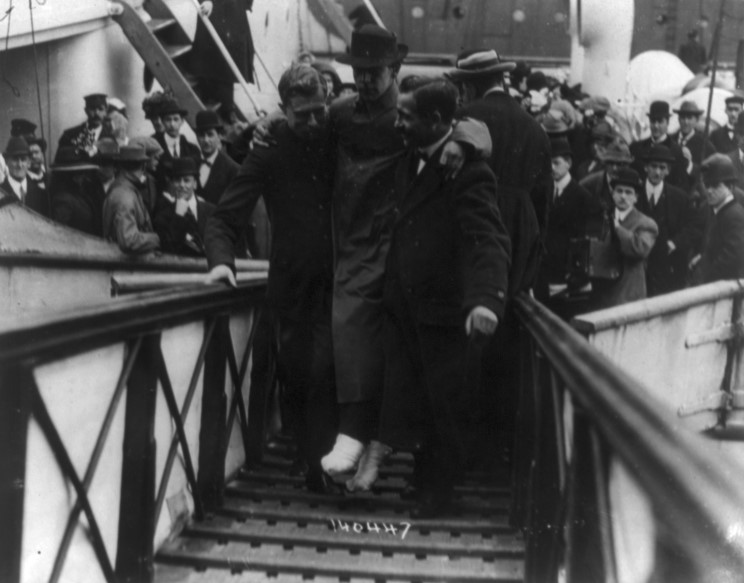
Harold Bride, the only surviving wireless operator from the Titanic, is escorted off the rescue vessel Carpathia.
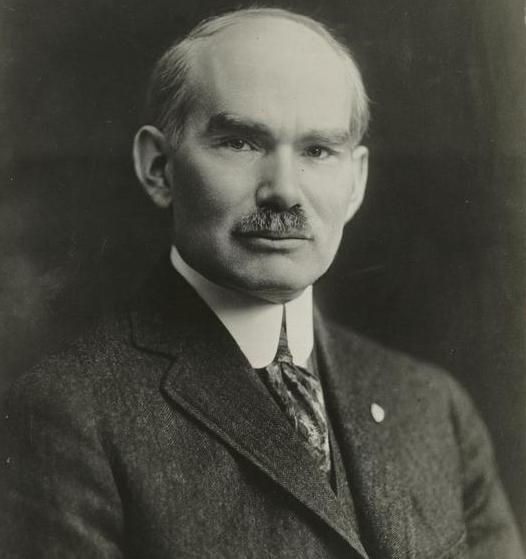
Lee de Forest, one of the first inventors in New York to practice with broadcasting human voices. He eventually set up an experimental station in the Bronx. (NYPL)
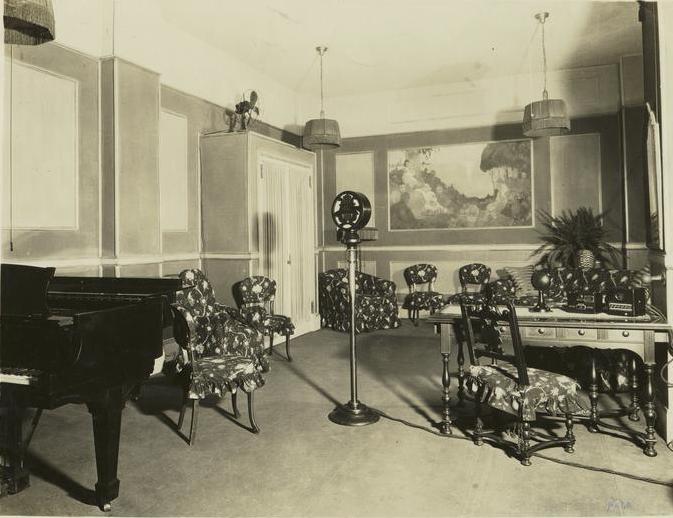
The rather cozy studios of WJZ, date unknown. WJZ, originally a Newark station (notice the JZ for Jersey), moved to New York by the mid-1920s and became the anchor station for the NBC Blue network.
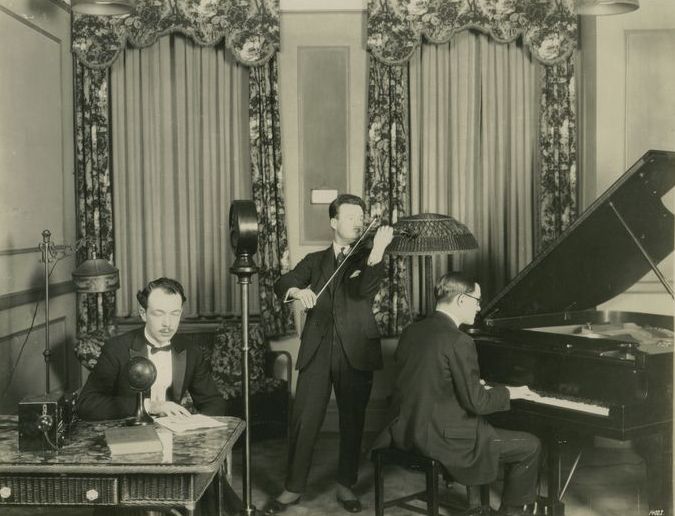
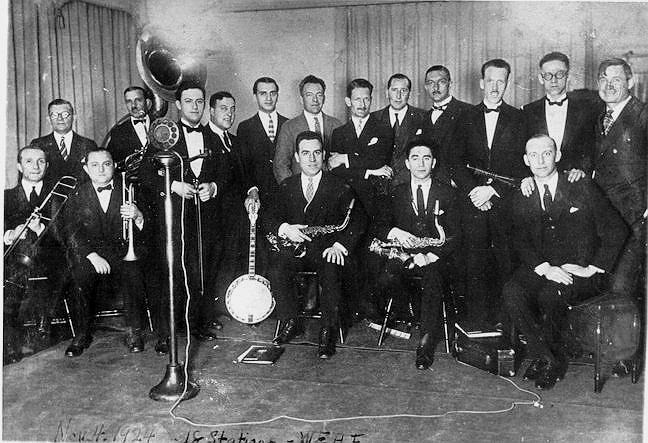
Stars of the Eveready Hour, broadcast on WEAF, featuring Will Rogers and the Waldorf-Astoria Orchestra. (Courtesy PDX Retro)
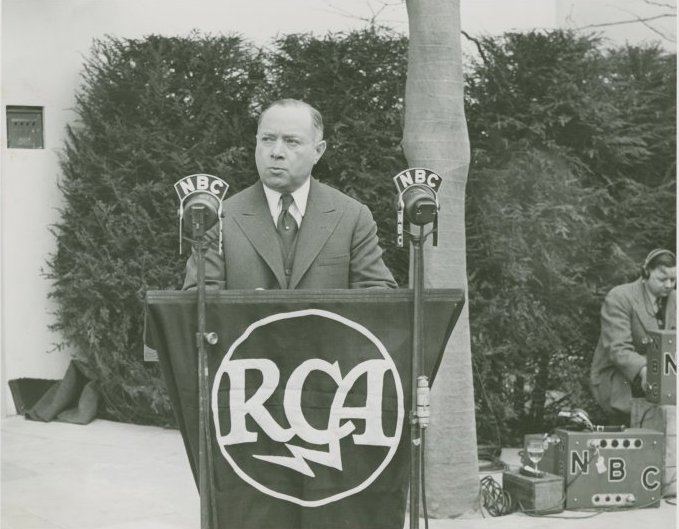
David Sarnoff at the World’s Fair in 1939 out in Flushing Meadows. (NYPL)
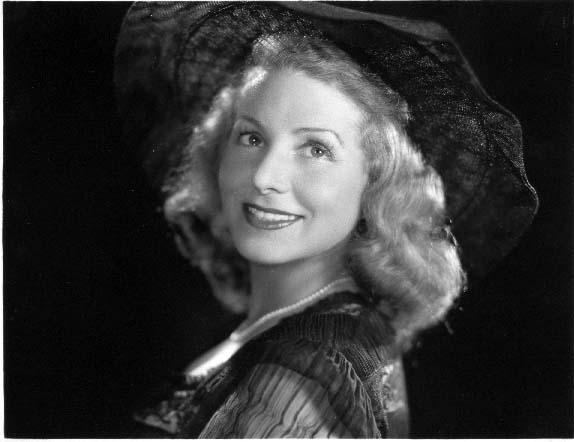
Songstress Jessica Dragonette, one of the most successful stars of the NBC stable during the 1930s, and one of many stars who struggle to find fame once television came along.
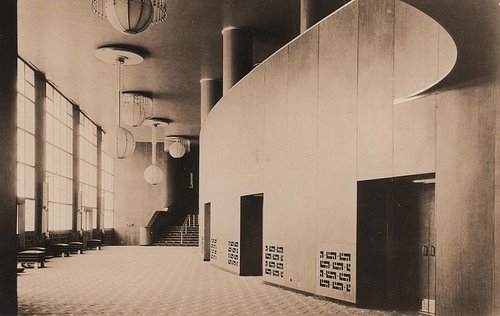
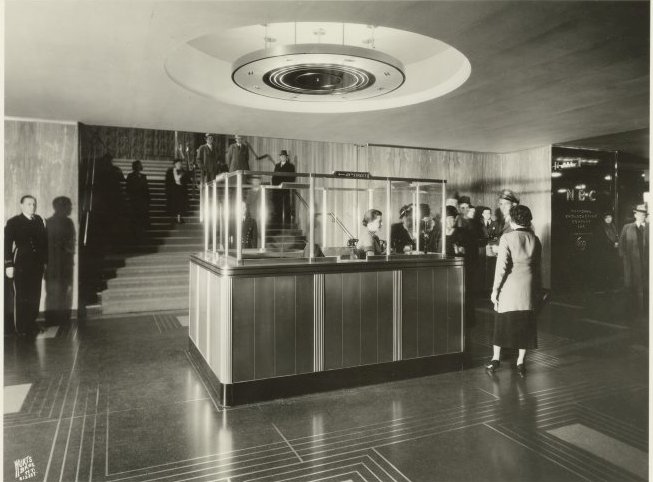
The lobby of 30 Rockefeller Plaza, the home of studios for the National Broadcasting Company. Photo by the Wurts Brothers
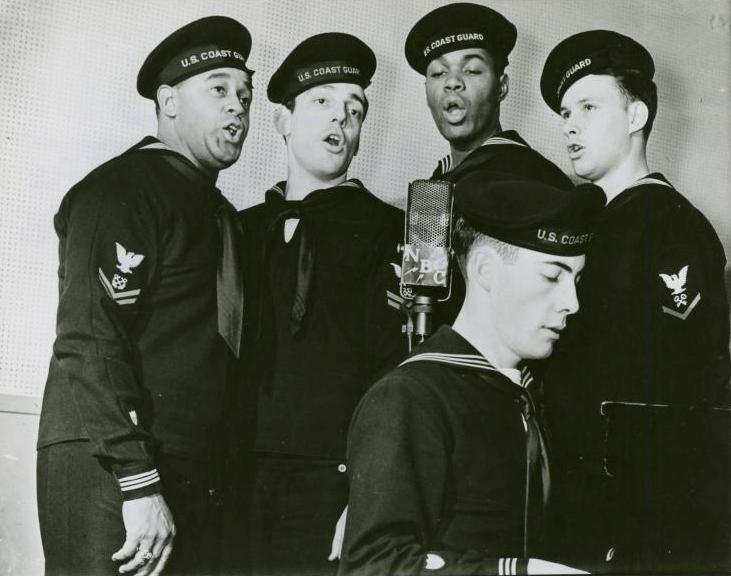
Manly music: The robust tones of U.S. Coast Guard Quartet, recording at an NBC affiliate station in New York
The complete broadcast of ‘War of the Worlds’, broadcast by the Mercury Theater on the Air from the CBS Studios at 485 Madison Avenue.


The Bowery Boys: New York City History podcast is brought to you …. by you!

We are now producing a new Bowery Boys podcast every week. We’re also looking to improve and expand the show in other ways — publishing, social media, live events and other forms of media. But we can only do this with your help!

We are now a creator on Patreon, a patronage platform where you can support your favorite content creators.

Please visit our page on Patreon and watch a short video of us recording the show and talking about our expansion plans.

If you’d like to help out, there are six different pledge levels.Check them out and consider being a sponsor.

We greatly appreciate our listeners and readers and thank you for joining us on this journey so far.
Categories
Christmas

The wildest Rockefeller Center Christmas display ever also caused an equally insane traffic jam

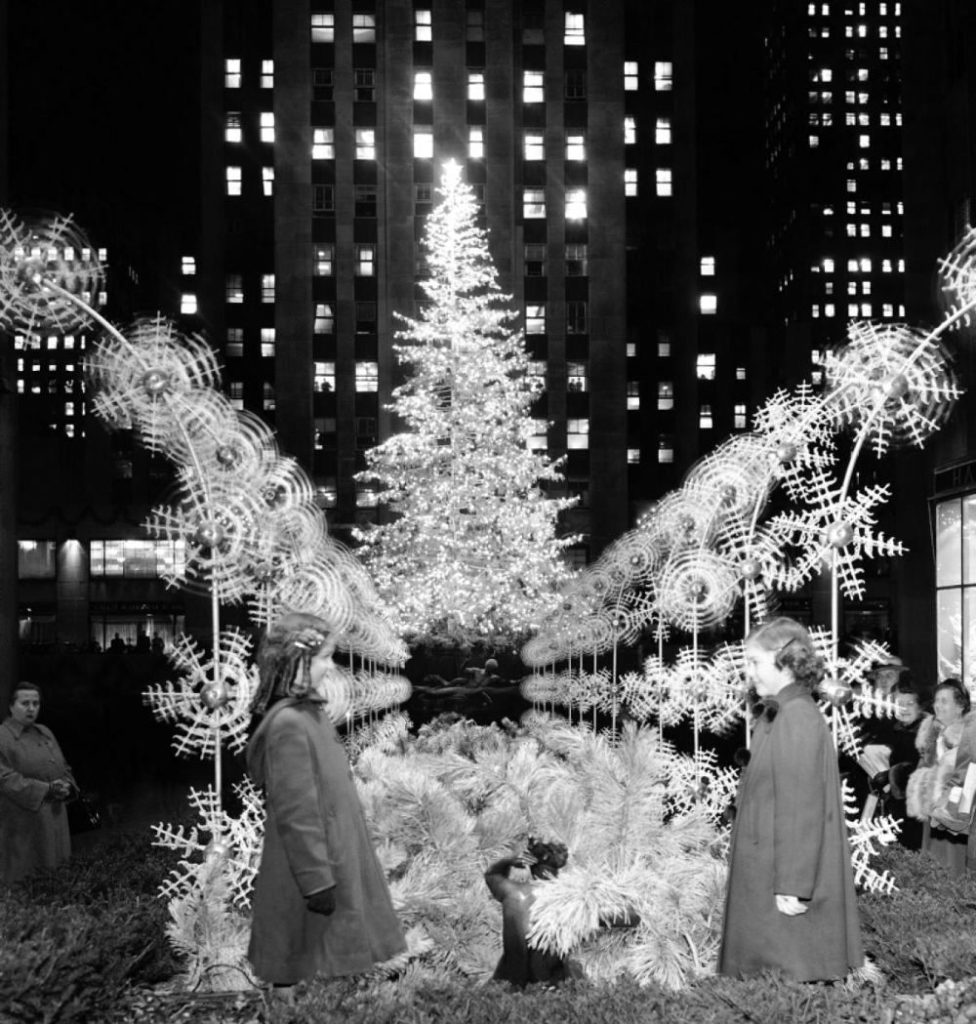
For the 1949 season, the caretakers of the Rockefeller Center Christmas tree decided to go fantastically over the top.

Just a few years earlier, New Yorkers were served up a plainly adorned tree with no electric lights, a reminder of the war in Europe and a nod to energy preservation.  

But the war was over now; it was time to get delightfully gaudy.

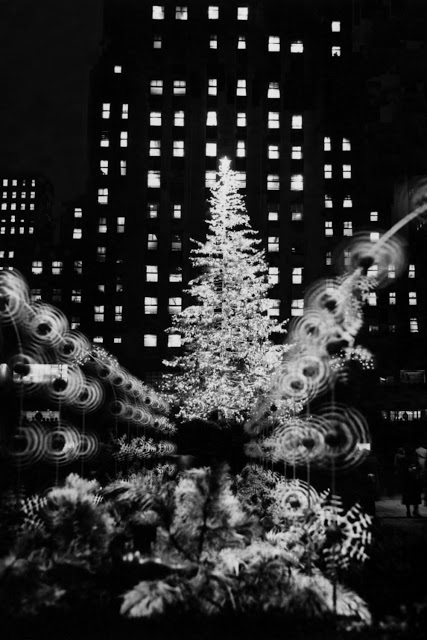
Perhaps knowing the mild temperatures that awaited that season — it would only snow two inches between November 1949 and January 1950 — the Rockefeller Center holiday designers decided to spray paint the gigantic 75-foot tree in hundreds of gallons of whimsical camouflage paint.  

It was then engulfed in 7,500 electric lights in pastel colors — pink, blue, yellow, green and orange, described as “plucked from a sky in fairyland.”

The lighting of the tree on Dec. 9, 1949, was a truly hallucinogenic event.

This Easter-like hue, bouncing off the silver-painted branches, reflected out from behind dozens of glass ornaments, leading up to the brilliant white star on top, which, according to the New York Times, “seemed to send glints of fire almost to the top of the seventy-seventh floor RCA Building in back of the tree.”

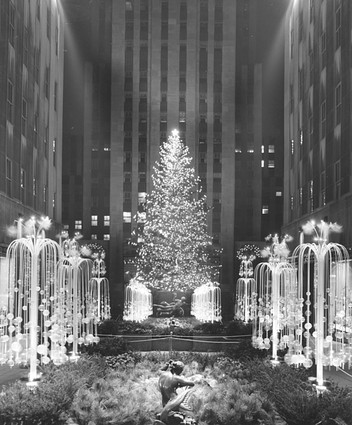
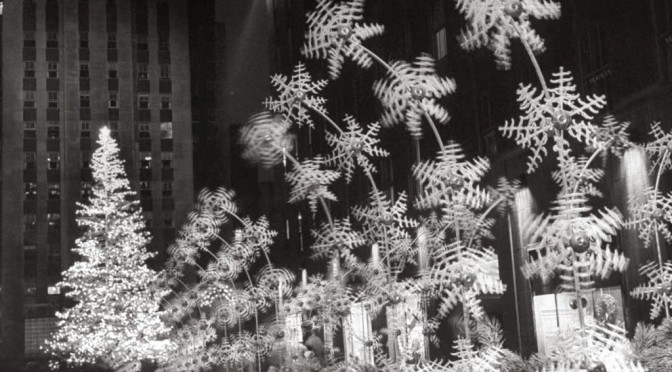
As if that didn’t grab your attention, the promenade leading up to the tree and the skating rink was adorned with a most dizzying decoration — rapidly whirling plastic snowflakes, 576 of them, “each as big as a dinner plate,” illuminated for hypnotic effect.

The rapidly spinning snowflakes and flamboyant tree literally stopped traffic.

Is it any surprise then that this insane display would later create, on December 19, 1949, “one of the worst traffic jams Fifth Avenue traffic jams in recent years“?

Due to shocked motorists trying to catch a glimpse at this electric wonderland, Fifth Avenue became a rush hour nightmare for several hours. “Cars were pinned bumper to bumper from 72nd south to 41st Street along Fifth Avenue, making cross-traffic an impossibility and imprisoning automobiles in side streets.”

Even through police were called out to enforce emergency traffic rules, Midtown was essentially in a state of vehicular trauma until 10 pm that evening.

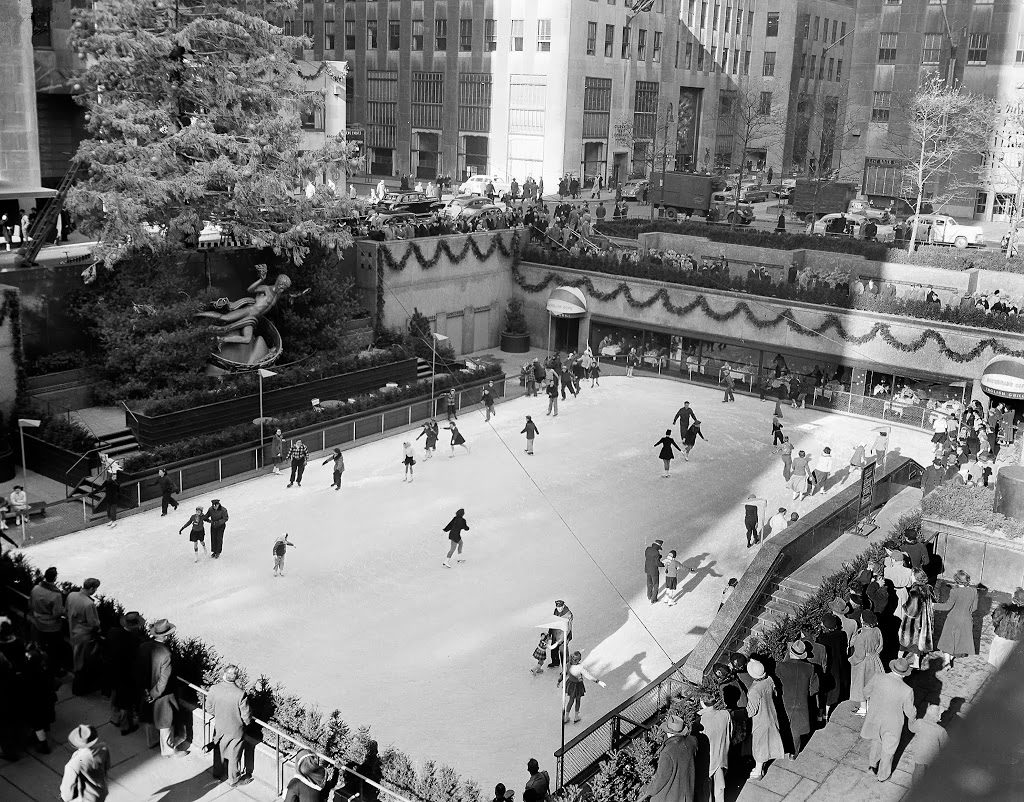
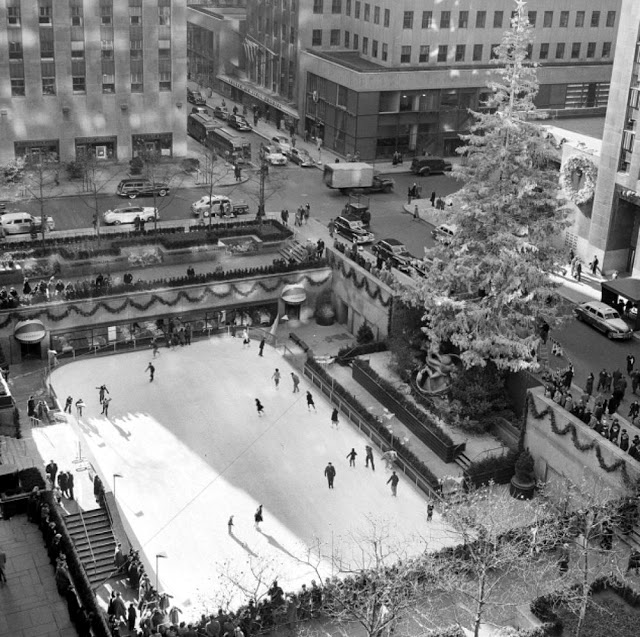
Below: During the day, the silver-painted branches, adorned with heavy glass ornaments, cast a particular glow upon the ice skating pond and the surrounding buildings. Picture courtesy Flickr/lighthousenewsus

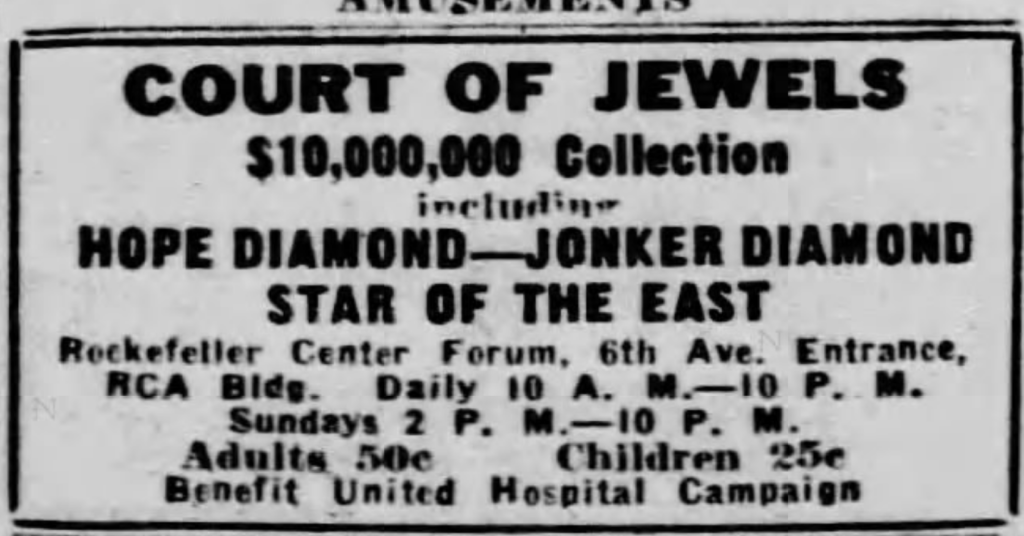
For visitors to Rockefeller Center, if even that wasn’t enough bedazzlement, you could head inside into the forum to see the so-called Court of Jewels:

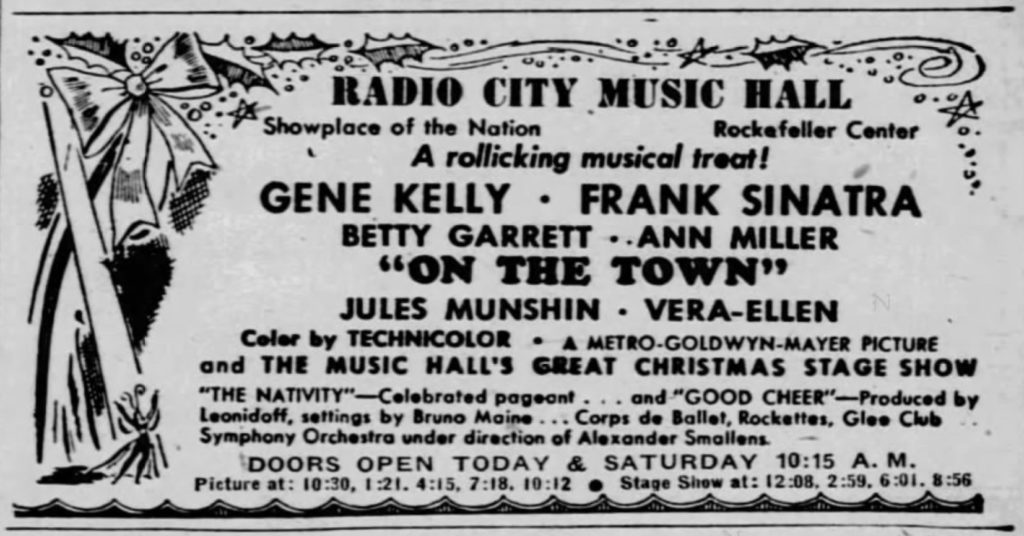
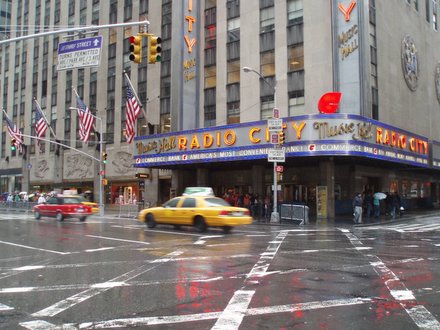
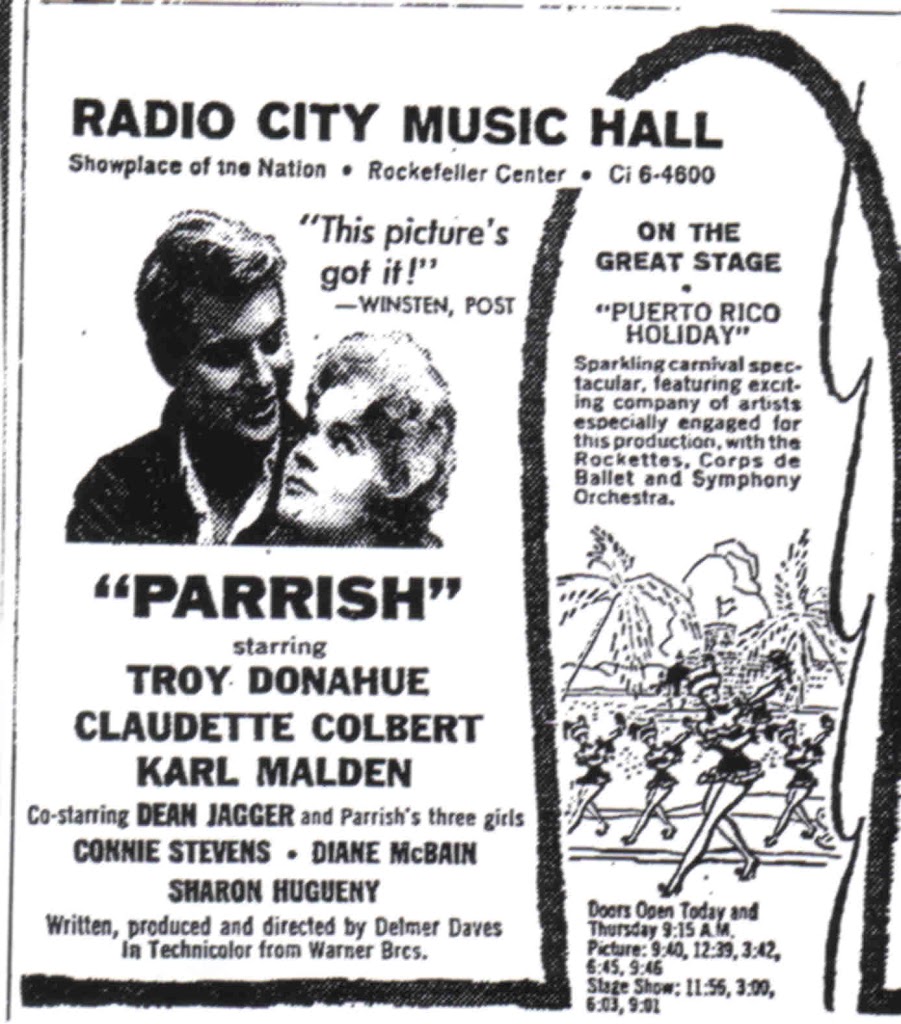
Then of course there was the annual Radio City Music Christmas Spectacular which often prefaced a splashy film premiere. And for that Christmas in 1949, audiences experienced a real treat (and a movie you know we love):

Picture courtesy Life Magazine/Andreas Feninger

Categories
American History

Life in New York City 1935-1945: Heavenly images from Yale University

Yale University has sprung a beautiful present onto the Internet — a searchable database of over 170,000 public-domain photographs created by the United States Farm Security Administration and Office of War Information, documenting the aftermath of America of the Great Depression and World War II. The photos, dating from between the years 1935 to 1945, include of the greatest American photographers from the period (such as Gordon Parks, Walker Evans and Dorothea Lange).

These images aren’t really new; they’ve been available at the Library of Congress for many years. I’ve even ran a couple of these on the blog before.  But Yale has done an outstanding job of sorting and cataloging. Their site even comes with a map if you want to look at images from a particular area of the country.

Take a look at this particular images from New York City during this period, then head over to the database and lose yourself inside these captivating, sometimes harrowing pictures. Thank you Yale!


3

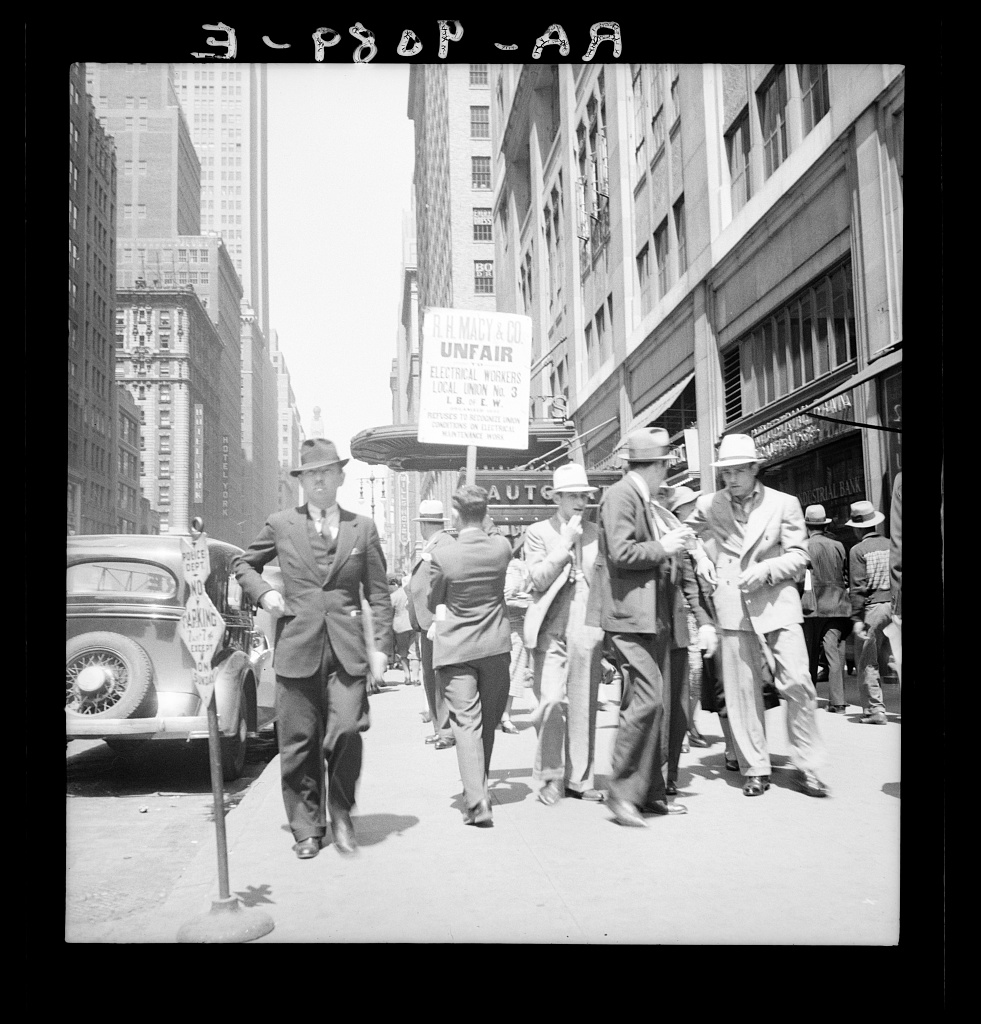
June 1936 “New York street scene: striking in front of Macy’s” Photographer Dorothea Lange


4

November 1936 “Street scene at 38th Street and 7th Avenue” Photographer Russell Lee


5

1938 “New York, New York. 61st Street between 1st and 3rd Avenues. Tenants” Photographs by Walker Evans


6

1938 Photographer Jack Allison (no caption on photo)


7

June 1941 New York City, East Side, Sunday morning, photographer Marion Post Walcott


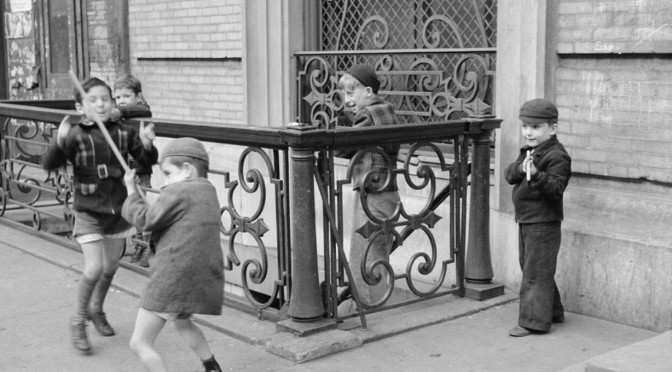
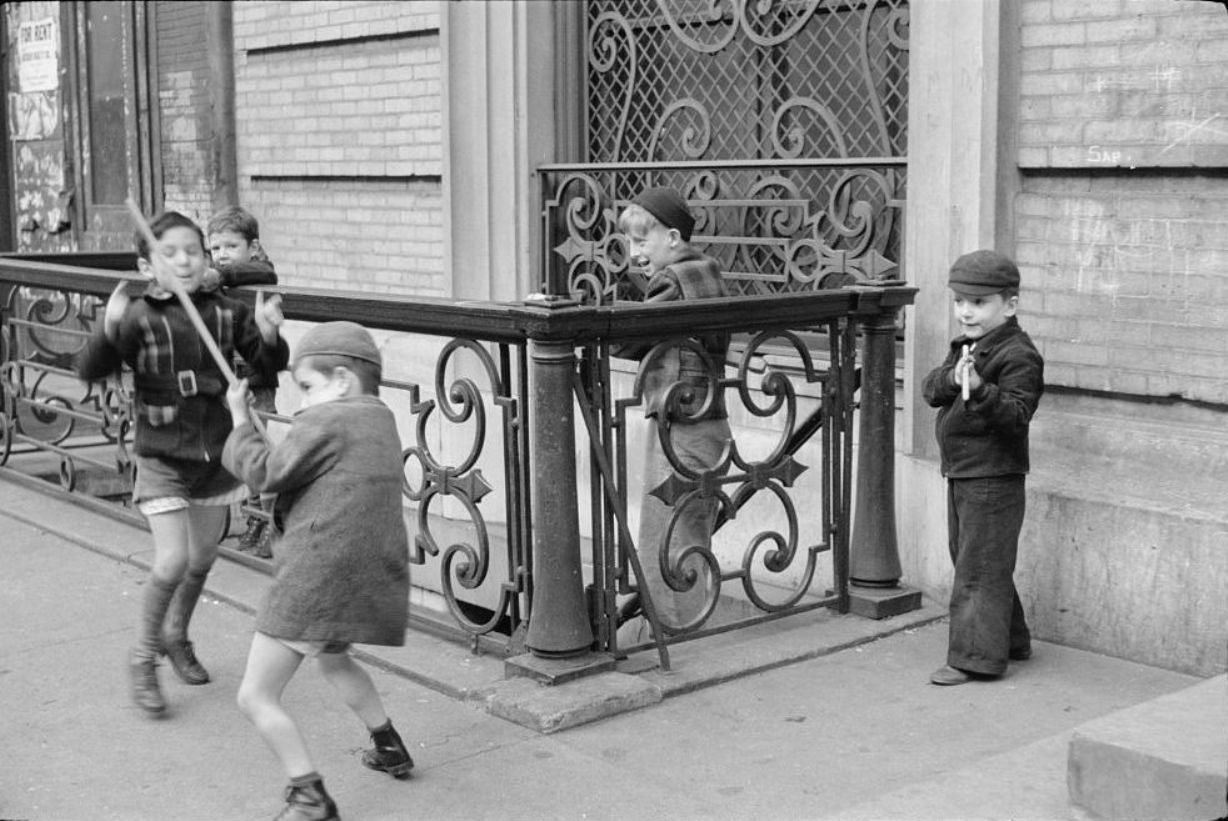
picDecember 1941 :Children playing, New York City: Photographer Arthur Rothstein


1

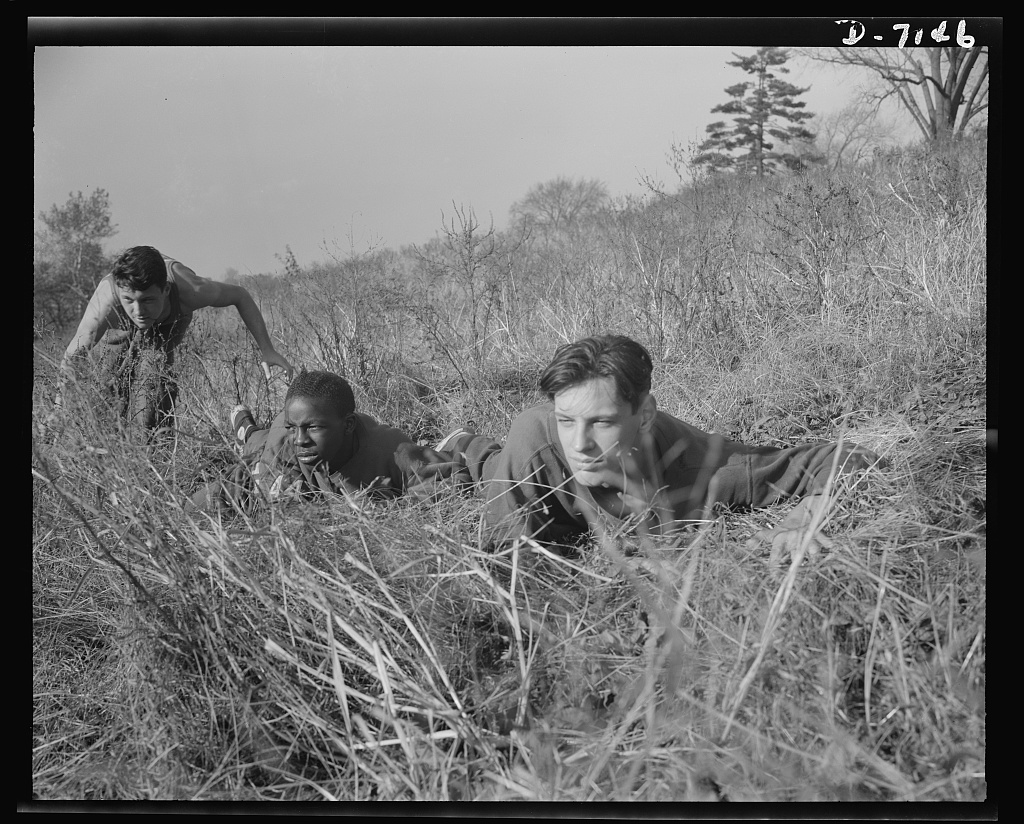
October 1942 “High school Victory Corps. Learning the rudiments of advancing on an enemy will prove valuable to these boys if they are called to join their older brothers in the armed forces. This is part of the “commando” training given in physical education courses at Flushing High School, Queens, New York” Photographer William Perlitch


2

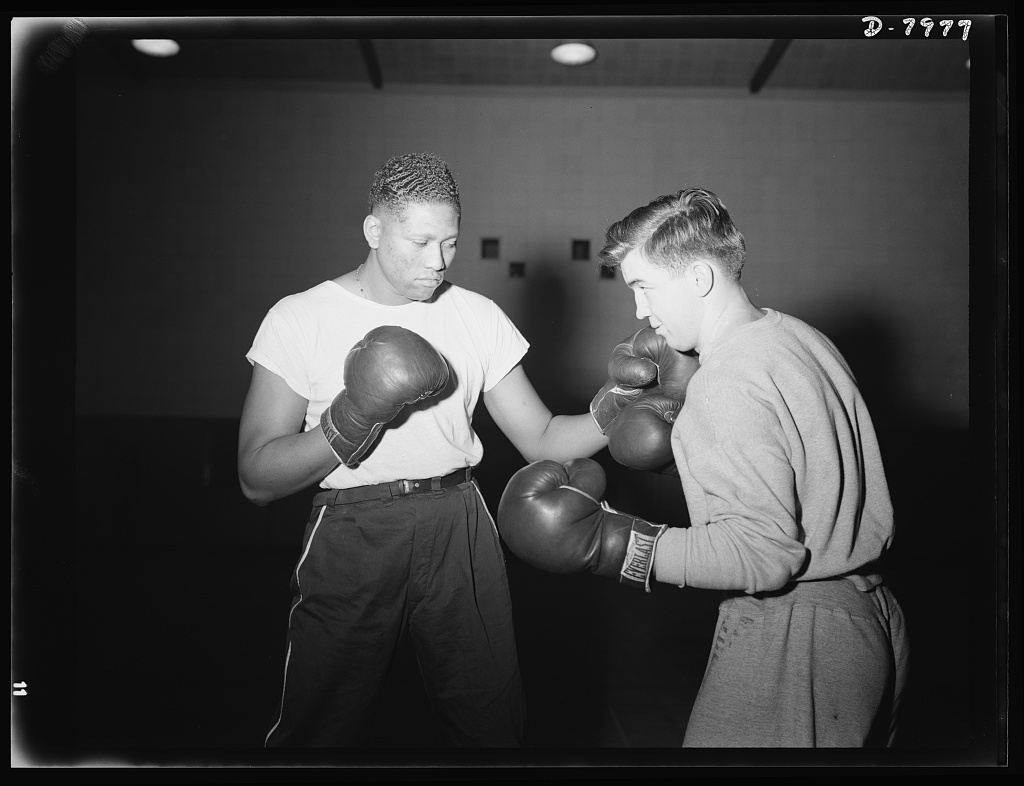
January 1943 “Manhattan Beach Coast Guard training station. The gymnasium is one of the busiest places at Manhattan Beach Coast Guard training station. The physical education program is handled by many noted exponents of boxing, wrestling, track and judo. Paul (Tiny) Wyatt, one-time leading contender for heavyweight boxing honors, is shown sparring with Hart Kraeten, former Golden Gloves champ.” Photographer Roger Smith


mott

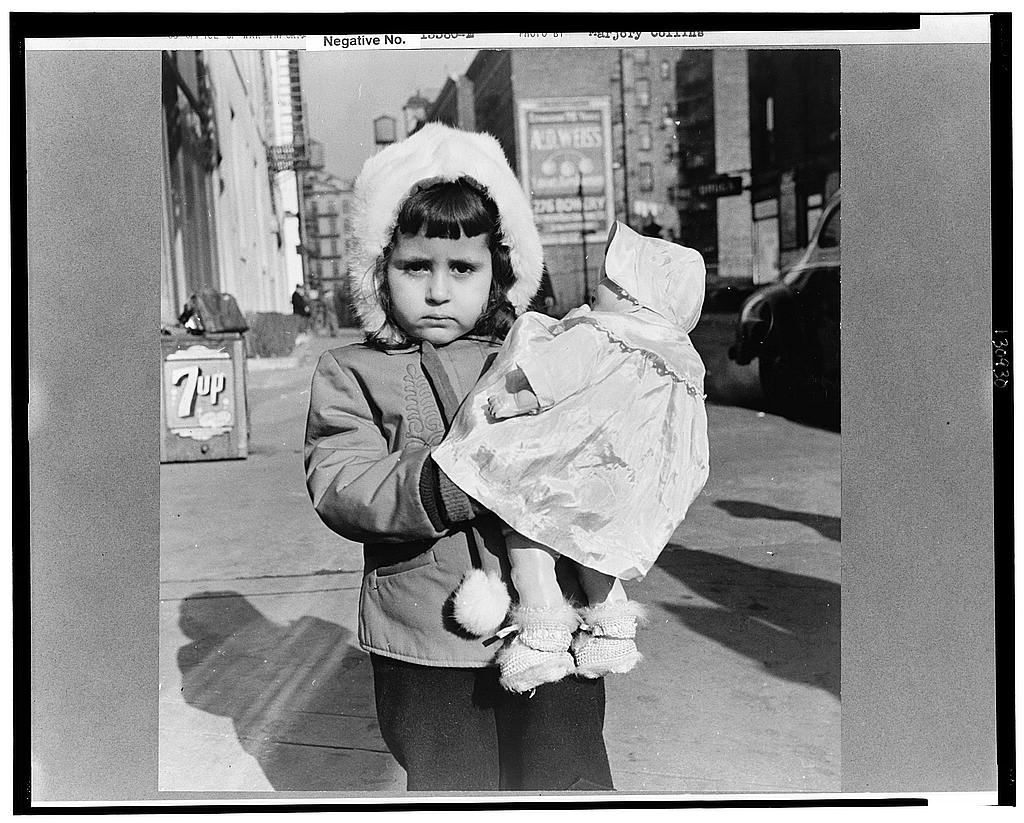
January 1943 “New York, New York. Child on Mott Street on Sunday” Photograph by Marjory Collins


8


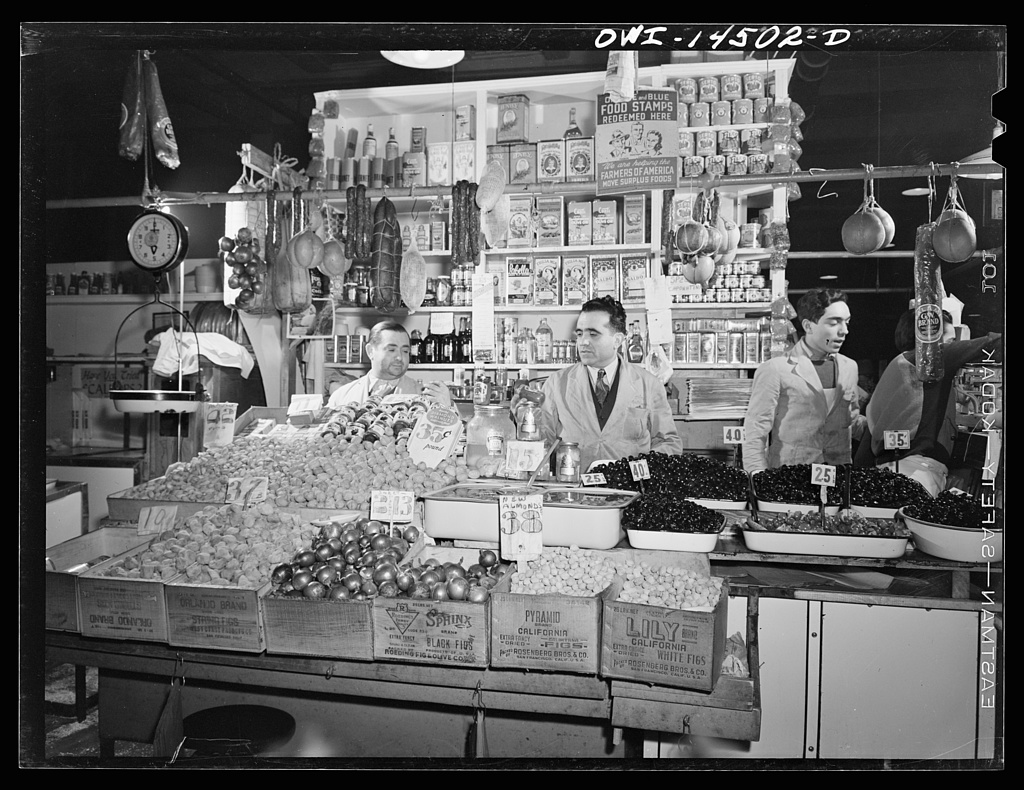
January 1943  “Italian grocer in the First Avenue market at Tenth Street” Photograph by Marjory Collins

10


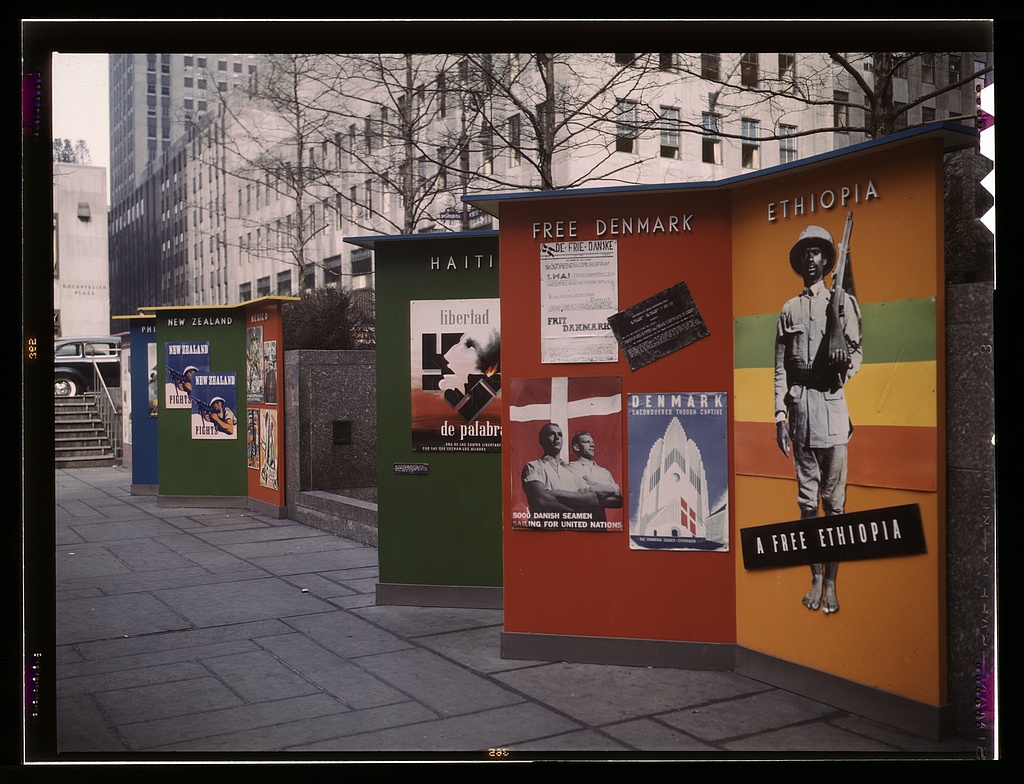
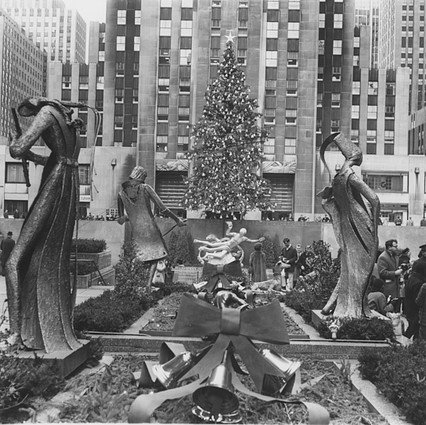
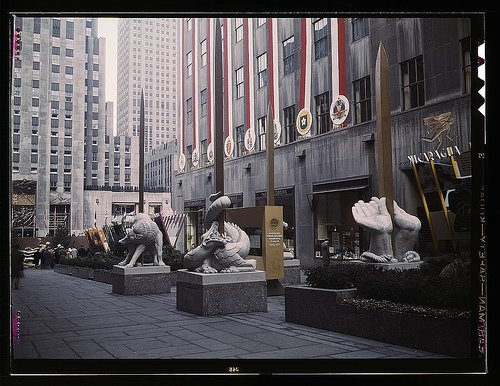
March 1943 “Rockefeller Plaza, exhibit [for] United Nations by OWI, New York, N.Y. Between photographic displays is [the] Atlantic charter in frame with transmitters at each end and where voices of Roosevelt, Churchill and Chiang Kai-Shek are heard each half hour; surrounded by statues of the four freedoms.” Photograph by Marjory Collins

times


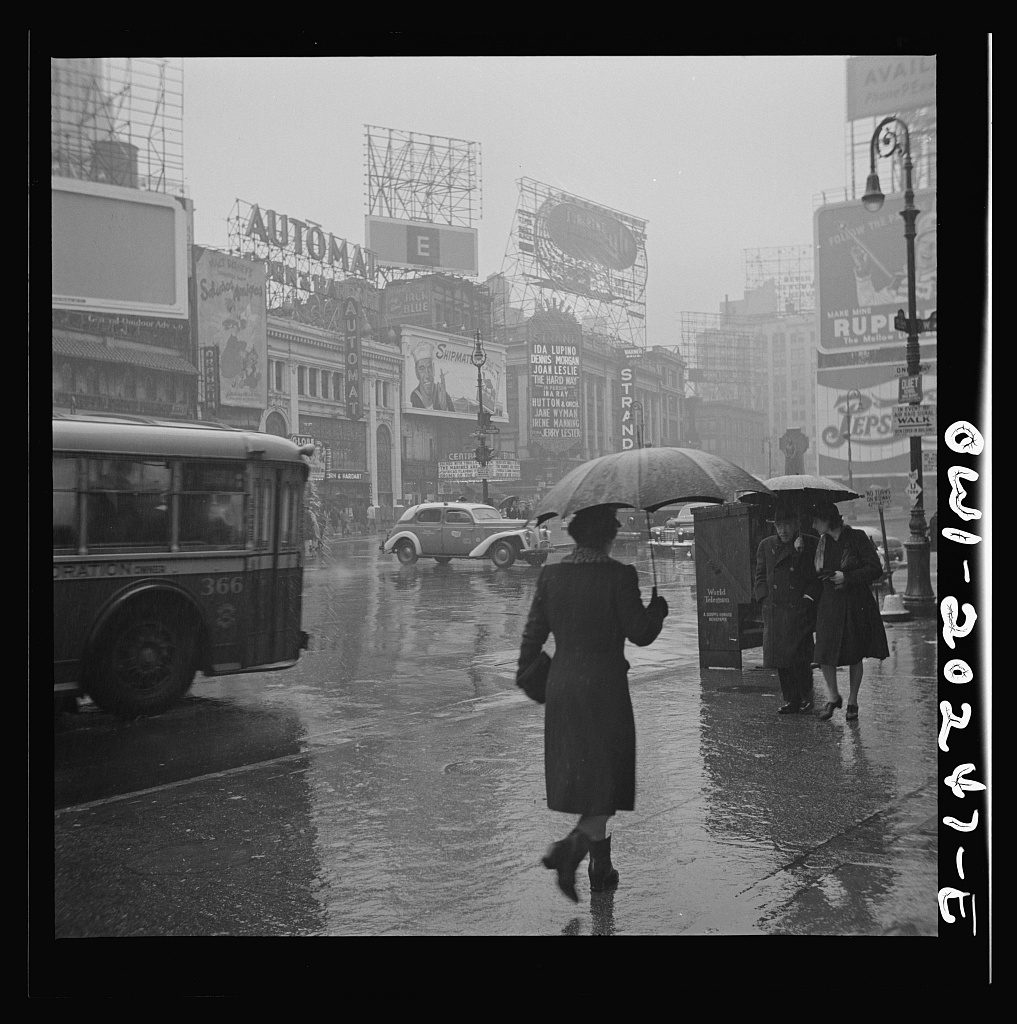
March 1943 “New York, New York. Times Square on a rainy day” Photographer John Vachon

last


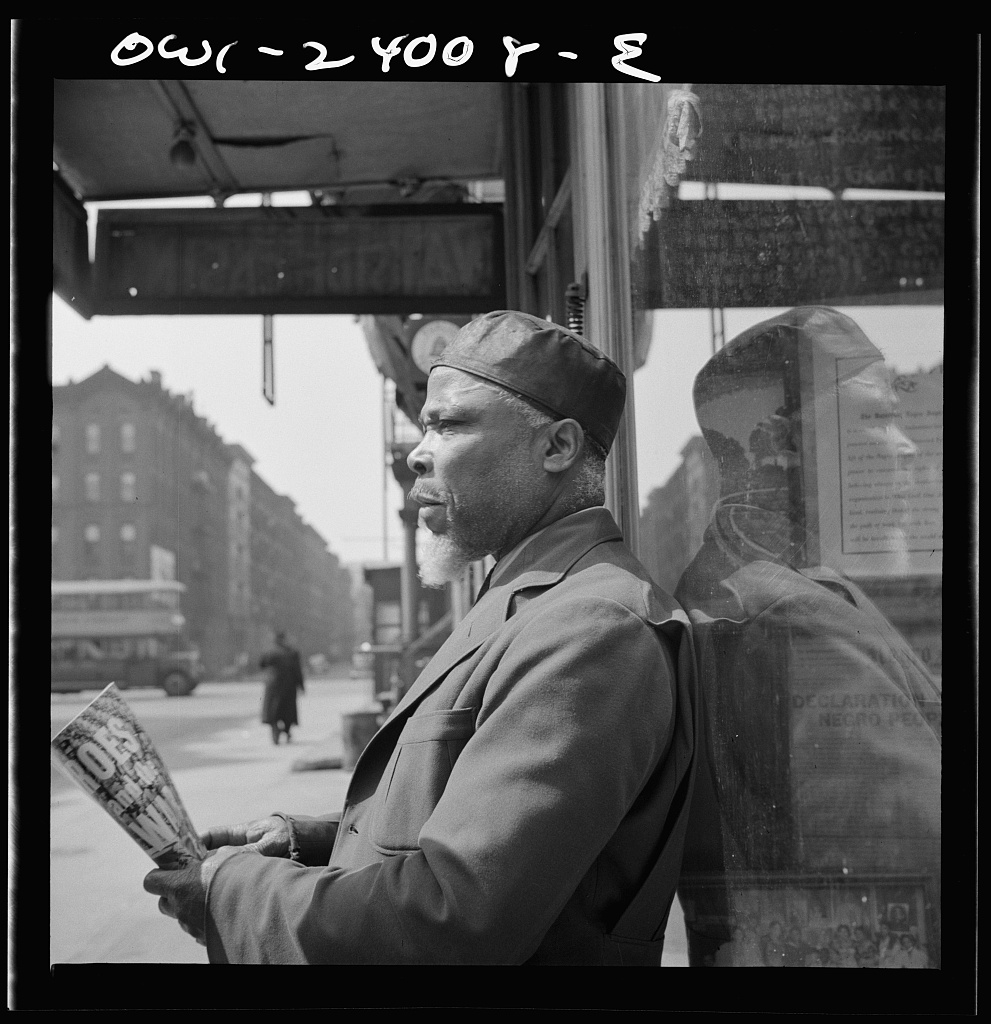
April 1943 “A follower of the late Marcus Garvey who started the “Back to Africa” movement” Photographer Gordon Parks

eye


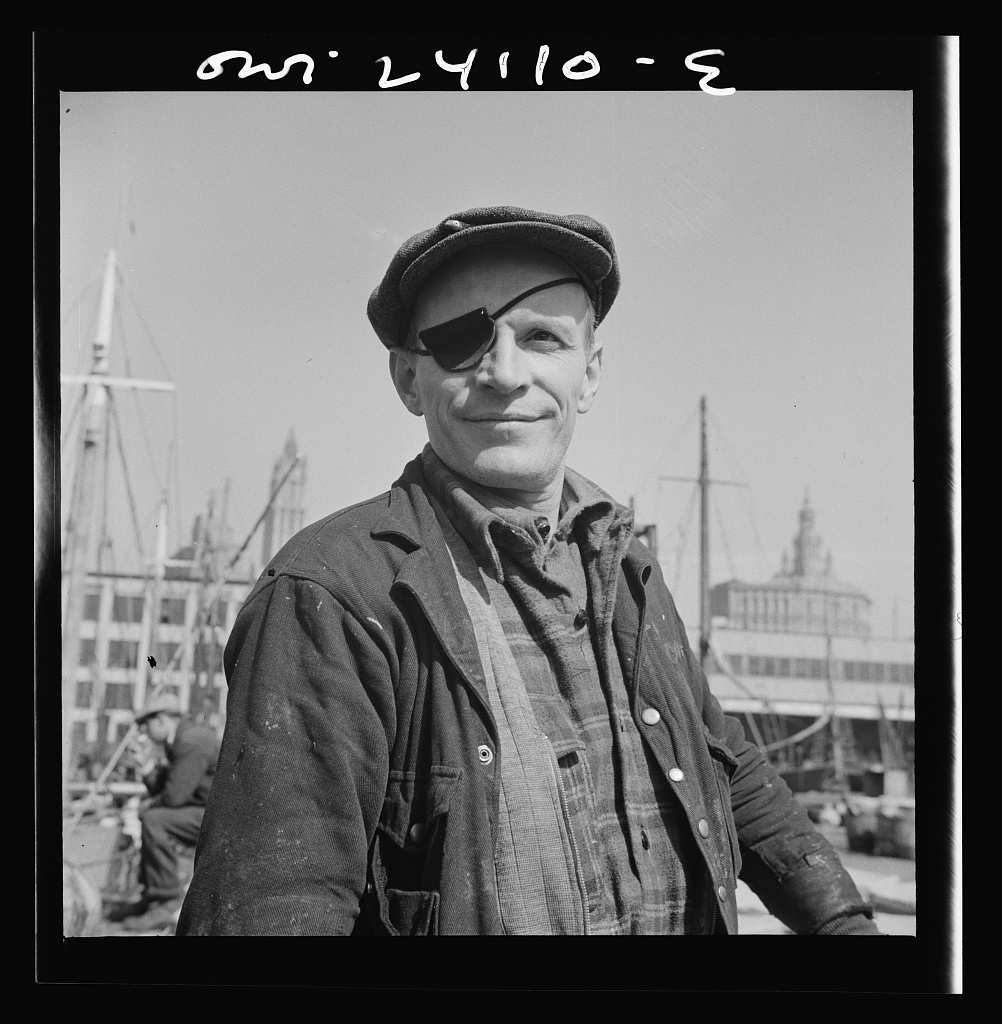
June 1943 “New York, New York. Dock stevedore at the Fulton fish market” Photographer Gordon Parks

victory


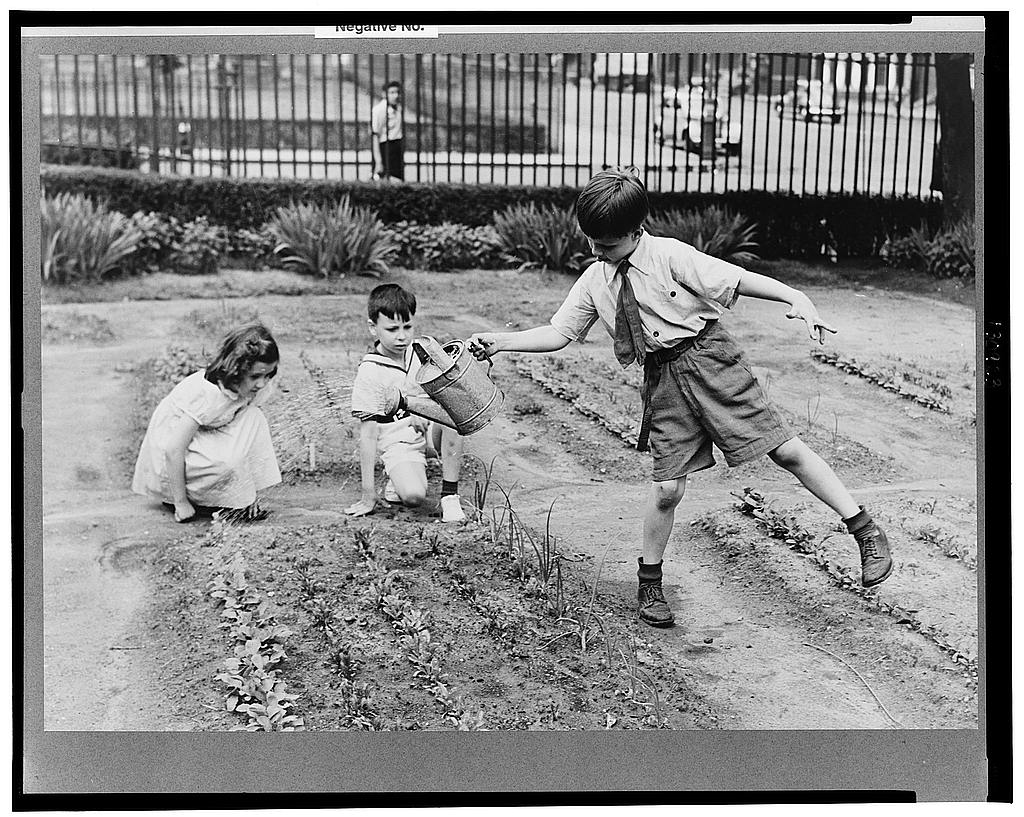
June 1944 “Children’s school victory gardens on First Avenue between Thirty-fifth and Thirty-sixth Streets” Photographer Edward Meyer


d-day

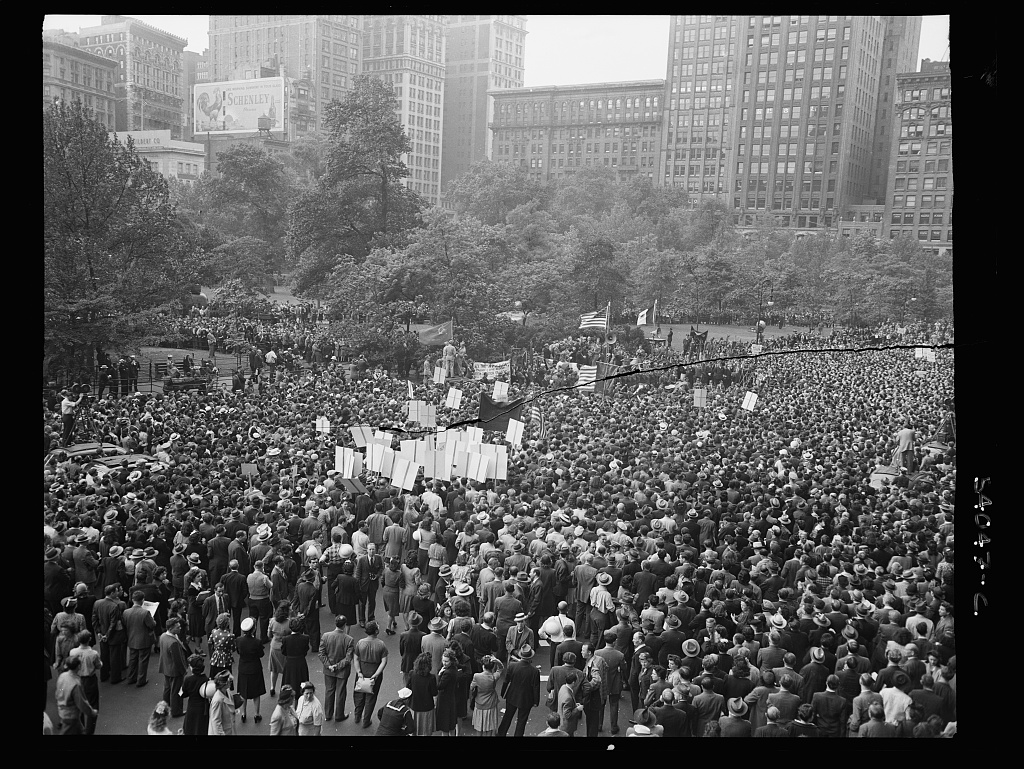
June 1944 “A crowd on D-Day in Madison Square” Photographer unknown

Categories
Podcasts Pop Culture

New York City in the Golden Age of Television: Behind the scenes with nine classic TV shows filmed in the city


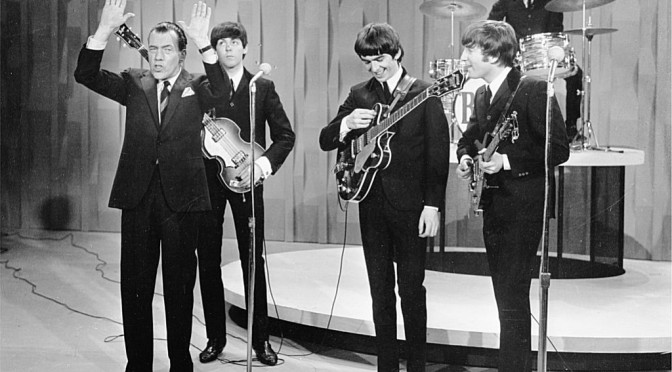
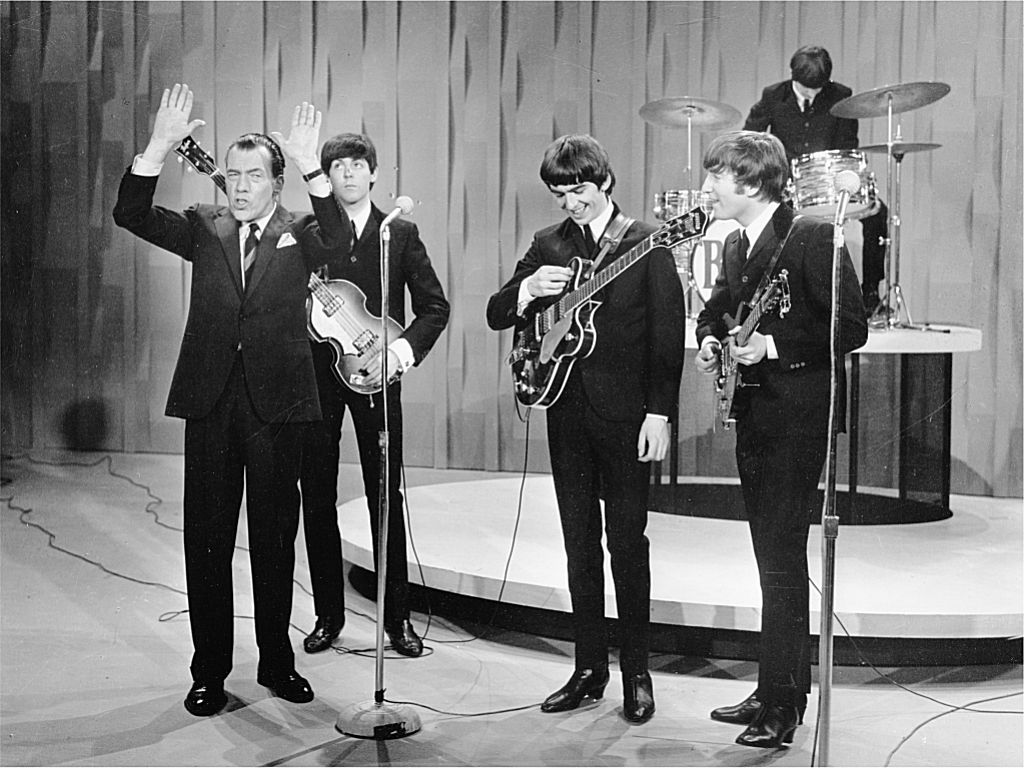
The Beatles in one of their many appearances on the Ed Sullivan Show. [source]

PODCAST This is the second part of the Bowery Boys TV Mini-Series, covering the years of New York City television production from the late 1940s to the 1960s.  Some of the most classic television shows ever made — and many still around today — were filmed from various locations in midtown Manhattan.

The insatiable appetite for television programming in the United States after the war created a new industry out of the roots of radio, with the television networks NBC, CBS, Dumont and ABC trying out almost every conceivable form of entertainment.  Their efforts in the late 40s and 1950s created many standard forms of programming — the morning show, the late show, the situation comedy and the game show.

This podcast is arranged a little bit like a leisurely Midtown walking tour, taking you past four of the greatest locations in NYC television history.  We give you the back story behind nine television shows that were filmed in New York City in this period — Howdy Doody, Texaco Star Theater, the Today Show, the Tonight Show, What’s My Line?, The $64,000 Question, Life Is Worth Living, The Honeymooners and the Ed Sullivan Show.

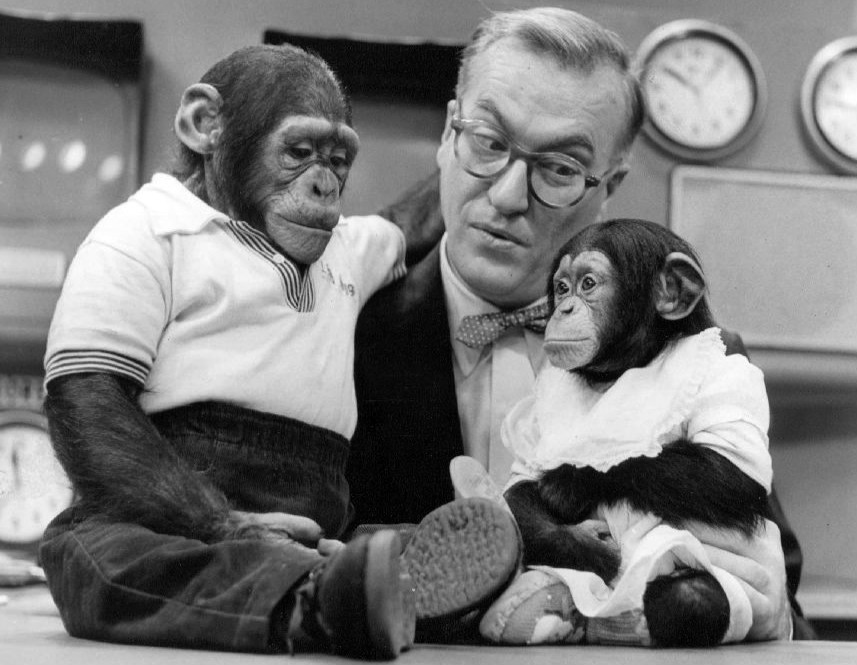
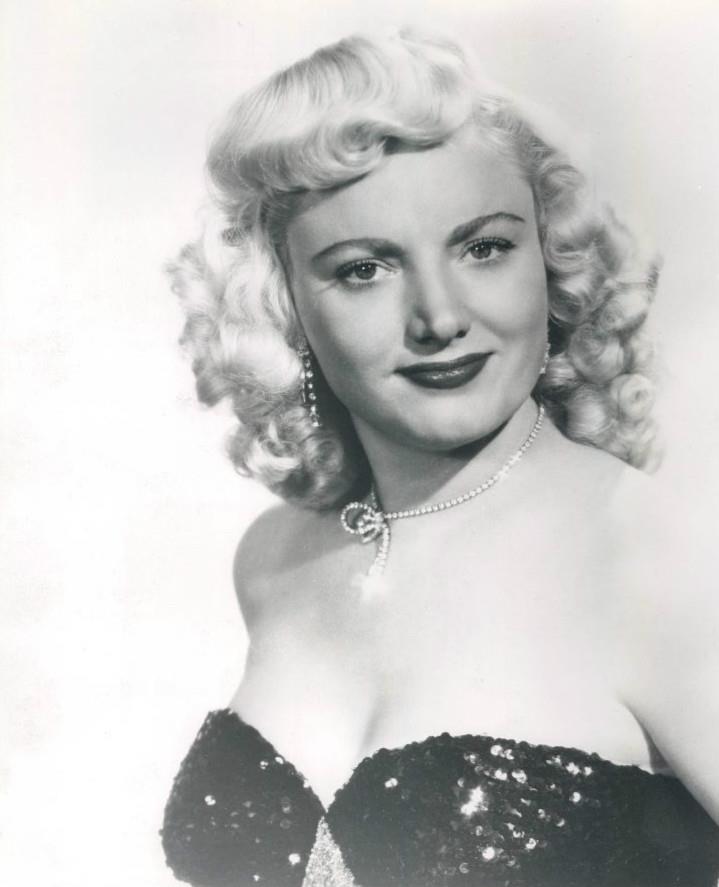
This show definitely features the strangest cast of characters we have ever discussed — television’s most influential chimpanzee, a regal bishop superstar, a freckled marionette, a buxom blonde, and the father of Sigourney Weaver!

LISTEN HERE: THE GOLDEN AGE OF TELEVISION

 _____________
  CORRECTION: In this week’s show, I say that the Blizzard of 1947 occurred on the exact date as the debut of Howdy Doody (December 27, 1957). The storm actually hit in the two days before that date — December 25-25. But the city was a total mess for days after.
_____________

J. Fred Muggs, Dave Garroway and Phoebe B. Beebe on the Today Show. Courtesy NBC Television
The glorious Dagmar from ‘Broadway Open House’! [source]

A few episodes of some of the show’s we talked about in the podcast:

 The $64,000 Question

 Life Is Worth Living with the Bishop Fulton Sheen

 Texaco Star Theater from November 1949

What’s My Line? — with an episode featuring Eleanor Roosevelt!

The Honeymooners — the episode called “The Bensonhurst Bomber”

Categories
Podcasts Pop Culture

New York City and the birth of the television industry, experimental broadcasts from the city’s greatest landmarks


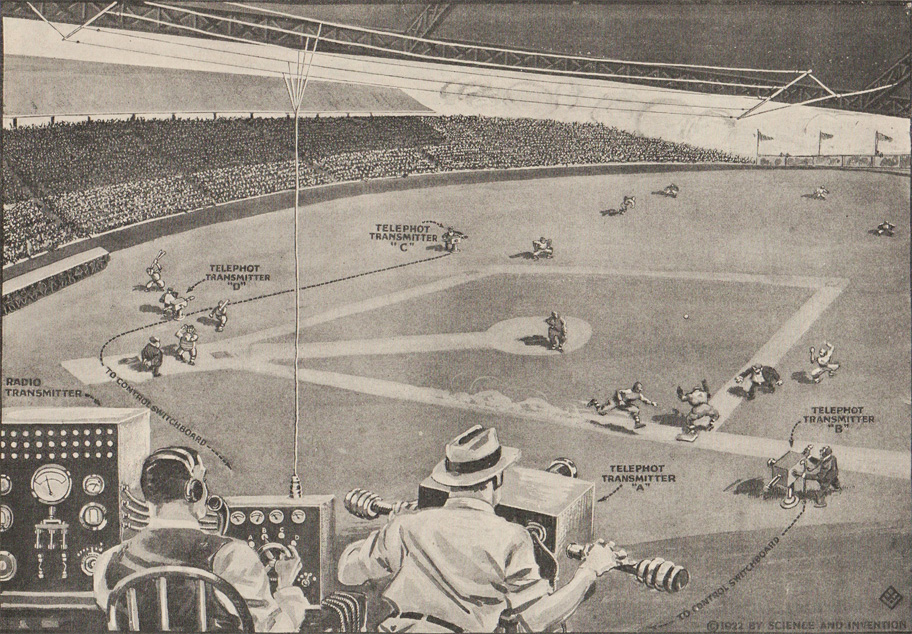
An illustration from Science & Invention, one of Hugo Gernsback’s many technology journals, demonstrating the possibilities of his ‘telephot’ system. (Courtesy The Verge)

PODCAST It’s the beginning of The Bowery Boys Summer TV Mini-Series, three podcasts devoted to New York City’s illustrious history with broadcast television — from Sarnoff to Seinfeld!

 In our first show, we go back to the start of the invention of the television and the city’s role in both the creation of the complicated technology and the early formation of programming.

We begin with the Electro Importing Co. and the imagination of one of the greatest names in science fiction.  Then head into scientific realities — the failures of mechanical televisions and the brutal patent wars between RCA’s David Sarnoff and one of the great inventors of television, Philo Farnsworth.

 In victory, Sarnoff claimed the mantel of ‘father of television’ at the 1939 World’s Fair in Flushing Meadows-Corona Park, Queens.  It’s but one of many great New York City’s beloved landmarks with ties to television’s early history, from the heights of the Empire State Building to even a floor at Wanamaker’s Department Store.

Video telephones in the West Village. Spectacularly strange television displays at Madison Square Garden. News broadcasts in Grand Central Terminal.  And we even go drinking with a few stars at McSorley’s Old Ale House!

ALSO: Why is Greg singing Cole Porter?

To get this week’s episode, simply download it for free from your favorite podcast player

Or listen to straight from here:
The Bowery Boys: New York City and the Birth of Television 1909-48

—–
A couple clarifications: Hugo Gernsback‘s experimental station WRNY at the Hotel Roosevelt operated radio frequencies in 1925 and tried out television broadcasts in August 1928.  I use both dates inter-changeably at one point.

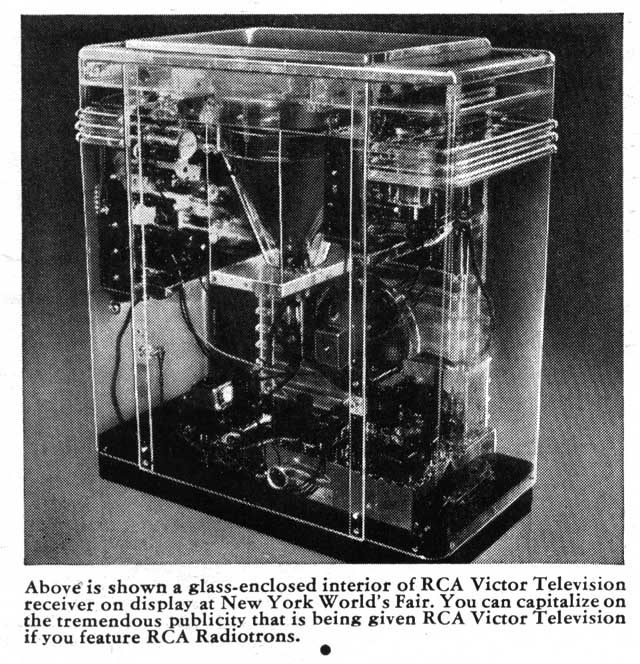
RCA had 13 sets from 4 different models of televisions at their World’s Fair pavilion.  I think Tom said 12 sets. Maybe one of them was that plastic see-thru version (see below)?

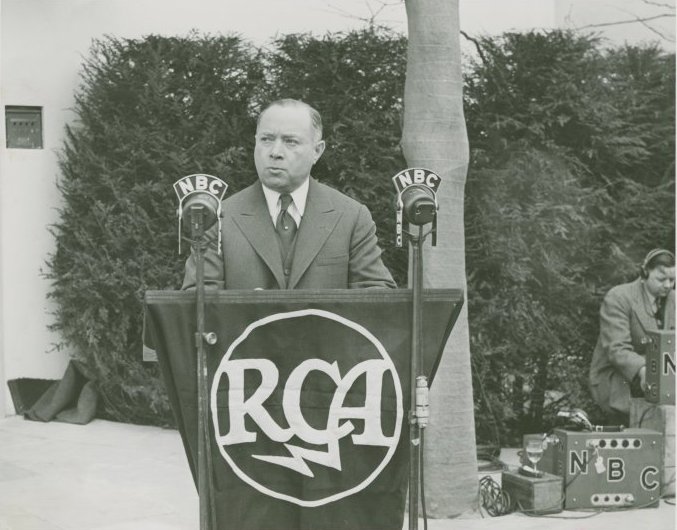
David Sarnoff speaking at the 1939 World’s Fair, presenting the ‘debut’ of television. Although, of course, television had been around in some form or another in New York for over ten years by that time.

 
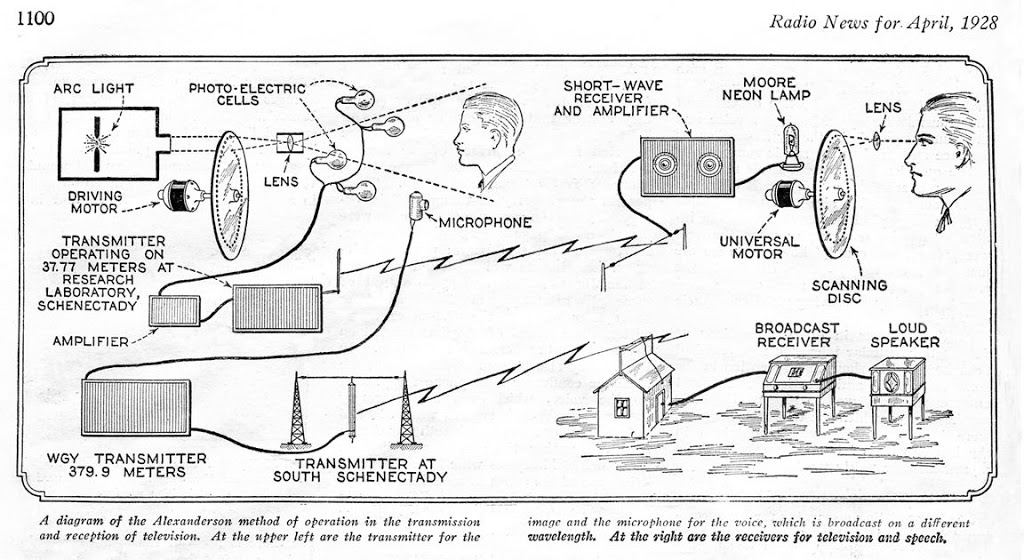
A diagram from 1928 outlining the mechanical television process, as described in the Hugh Gernsback-owned journal Radio News:
 

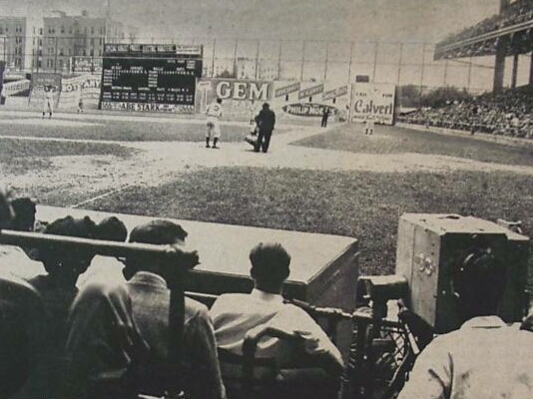
The first televised Major League baseball was broadcast by W2XBS on August 26, 1939, a game at Ebbets Field between the Brooklyn Dodgers and the Cincinnati Reds.  It would also be the first television broadcast of the Dodgers losing a game! (source)

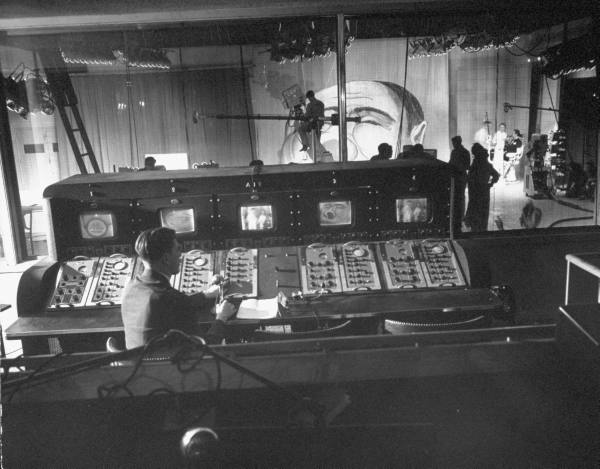
From the Dumont studios in the Wanamaker’s Department Store, 1946 (courtesy Eyes of a Generation):

Categories
Holidays

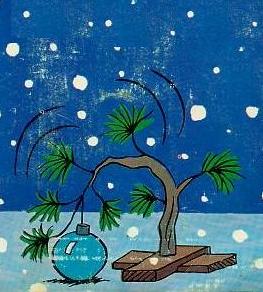
Good grief! Madison Avenue’s connection to ‘A Charlie Brown Christmas’

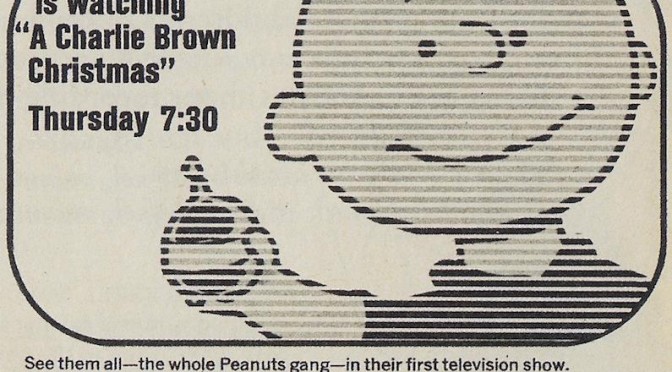
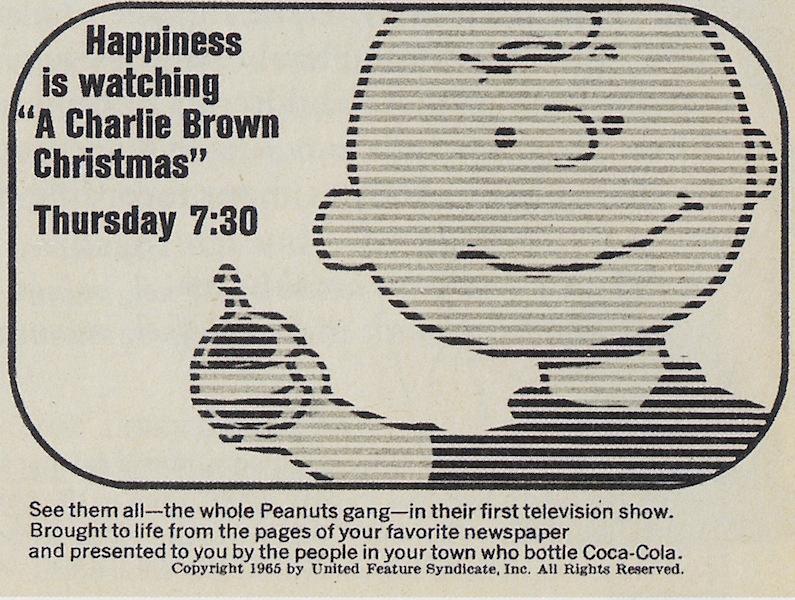
The first time: A TV Guide advertisement from 1965 announcing the upcoming Charlie Brown special, “presented … by the people in your town who bottle Coca-Cola.” [source]

A Charlie Brown Christmas, the holiday special to end all holiday specials, needed a little encouragement from the Madison Avenue advertising world in 1965 to spring into existence.  In fact, Peanuts’ creator Charles Schulz wasn’t exactly clamoring for any kind of television version of his classic characters.

The Minnesota cartoonist’s first fateful encounter in New York came in June 1950, when he met with editors at United Feature Syndicate, located in the Daily News Building on 42nd Street, to form the strip which eventually became Peanuts.  The syndicate initially restricted the size of Schultz’s cartoon panels to flexibly adhere to the various column sizes of their partner newspapers. This forced simplicity into Schultz eventual designs for his characters — the bulbous head of Charlie Brown, the dash of black ears on an all-white beagle.

The syndicate unveiled Schulz’s creation a few months later, on October 2, 1950. Within a decade, it would be one of America’s most famous comic strips.

Flash-forward to another spring in New York, April 1965, and to the bustling offices of advertising agency McCann Erickson, at 485 Lexington Avenue.  They were Madison Avenue’s most successful agency and held among their clients the defining product of post-war America — Coca-Cola.

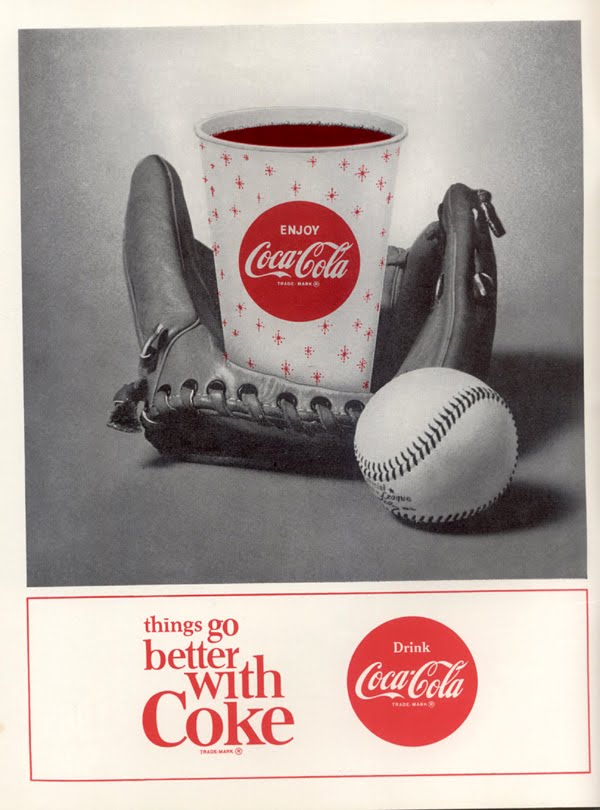
McCann Erickson would be responsible for some of Coke’s most recognizable advertising campaigns during a decade when the beverage would reach international popularity.  In 1971, agency efforts would underscore Coke’s world domination with ‘I’d Like To Buy The World A Coke’.  At left: A McCann-Erickson Coke ad from 1965, courtesy the blog Beautiful Life

Coke was looking for a television show to sponsor for the holiday season of 1965, one that could be developed from scratch, with a Coca-Cola audience in mind — namely, families with children.

(If you’re a ‘Mad Men‘ fan, you may also be familiar with McCann Erickson as the agency from Season 3 who bought out Sterling Cooper, forcing Don Draper and the gang to quit and form a new, fledgling agency. The events of Season 4 — with Ken Cosgrove still in McCann’s employ — play out during 1965, the same year as A Charlie Brown Christmas.)

One of McCann Erickson’s lead executives John Allen had an idea in mind.  He had seen a documentary on Schulz, called A Boy Named Charlie Brown, and that film contained some crudely animated versions of Charlie Brown and Lucy by animator Bill Melendez.  Allen called up Melendez and asked if Schulz had ever been interested in developing a full-length television special.

He had not, actually.  In fact he had turned down many previous offers to produce animated specials. Schulz said at the time, “There are some greater things in the world than TV animated cartoons.”  Yet, perhaps contradictory to this, Schulz seemed open to licensing and merchandising opportunities.  In 1960, Charlie Brown and Lucy made their first animated appearance on television hawking cars for Ford:

But you couldn’t turn down an offer by the world’s biggest sugary beverage, could you?  Melendez agreed, brought the offer to Schulz at his northern California home, and from his studio there, he and a team of animators frantically put together a program in time for the holidays.

Schulz wanted lots of snow and ice skating and talk of “the true meaning of Christmas,” inspiring the special’s lengthy Biblical monologue by Linus.  They auditioned Hollywood children and kids from Schulz’s neighborhood for the voiceovers and called up San Francisco-based musician Vince Guaraldi, who had recently cracked the Billboard charts with the song ‘Cast Your Fate To The Wind‘, to score the special.

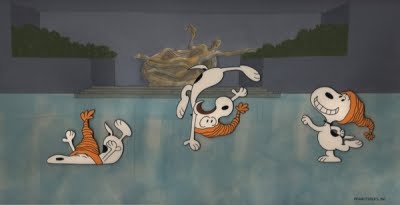
Below: Snoopy careens around the Rockefeller Center ice skating rink in the 1969 film A Boy Named Charlie Brown.

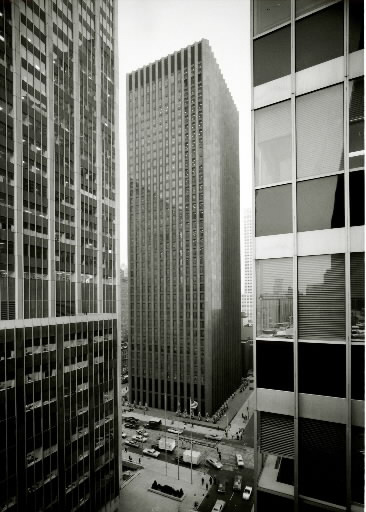
The half-hour feature was finished just a few days before broadcast. TV Guide and newspapers were already advertising the airing when Melendez sped to CBS’s brand new corporate offices at 51 West 52nd Street; the Eero Saarinen-designed building was nicknamed Black Rock for its monolithic design. (Pictured below, pic courtesy Skyscraper.org.)

Melendez screened the special for executives who were greatly underwhelmed with the final product.  “It seems a little flat … a little slow,” said one executive, assuring Melendez that CBS would not be ordering any future Peanuts specials.  According to producer Lee Mendelson, “If the show hadn’t already been scheduled to air in six days, it might never have been broadcast.”

Fortunately, a Time Magazine reviewer was allowed to screen A Charlie Brown Christmas and wrote a rave review that ran a couple days before showtime. From the review: “For one thing, the program is unpretentious; for another, it is unprolonged (30 minutes).”

But television audiences would have the final say and, upon broadcast on Thursday, December 9, it became the week’s second biggest show behind Bonanza.  Popular acclaim was soon joined by critical plaudits; a few months later, Schulz, Melendez and Mendelson arrived back in New York to receive an Emmy Award for Best Animated Special.

The original version of A Charlie Brown Christmas included a short shot of Linus being flung by Snoopy into a Coca-Cola sign. It was later edited to say Danger, which was then edited out entirely, because, well, it’s a bit disturbing. (See below.)  No remnant exists today within A Charlie Brown Christmas of its Coca-Cola advertising reason for being.

Four years later, Charlie Brown, Snoopy and Linus would head to New York themselves, in the 1969 feature length film A Boy Named Charlie Brown (title similar to the 1962 documentary) in which Charlie would nervously compete in the Scripps Spelling Bee competition.

Schulz’s Manhattan is as abstract as any of his landscapes, but he does depict both the New York Public Library and Rockefeller Center.  It’s here that Snoopy reprises his ice skating routine to the music of Guaraldi.

There’s also several scenes of a cracked-out Linus stumbling through the city at night, looking for his blanket, which he has unwisely loaned to Charlie. An excerpt of the film:

A Boy Named Charlie Brown made its premiere at Radio City Music Hall on December 11, 1969. You can check out the original film program here.

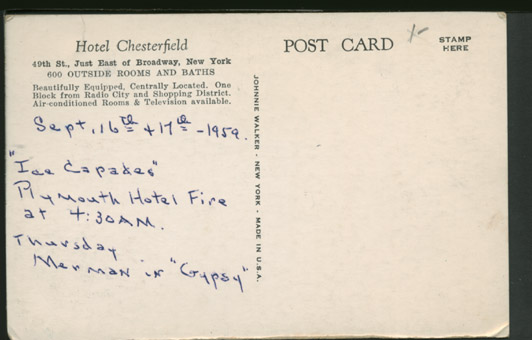
Postcard from the Past: New York, September 1959

TEXT: “Sept 16th and 17th 1959
‘Ice Capades’
Plymouth Hotel Fire at 4:30 AM
Thursday
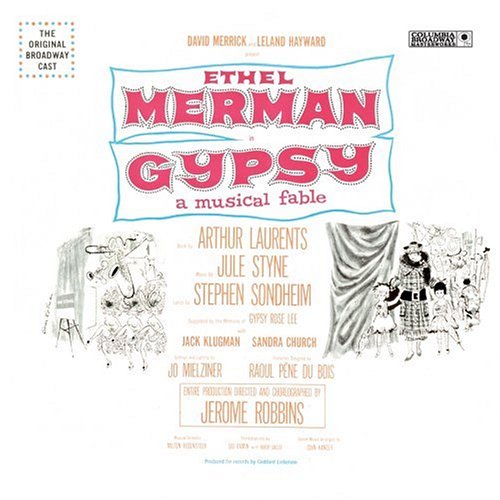
Merman in ‘Gypsy'”

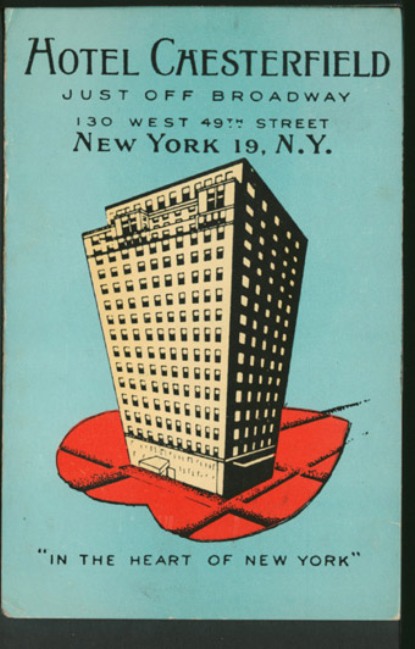
The Hotel Chesterfield (130-136 West 49th Street), built in 1927, was a luxury accommodation conveniently near Rockefeller Center and various Broadway theaters.

The Ice Capades referred to in this card are the well-reviewed Ice Capades program launched at Madison Square Garden. The Capades were a colossally cheesy ice extravaganza featuring music and elaborate production numbers staged upon a skating rink. The Capades played the Garden for decades, eventually dying out by the early 1990s.

The fire at the building across the street, the 18-floor Hotel Plymouth (137-143 West 49th Street), probably wasn’t severe. It was built in 1929 and often hosted stars from nearby Radio City Music Hall. Neither the Plymouth nor the Chesterfield are still standing today — demolished, in fact, to make way for a couple severe, International Style structures owned by Rockefeller Center.

At least this visitor got to see something truly historic, at least in the annals of Broadway history — Ethel Merman in her classic performance in ‘Gypsy.

This postcard and many others can be found at the Old York Library

Categories
Christmas

The Best Rockefeller Center Christmas Trees EVER

Not all Rockefeller Center Christmas trees are born alike. Once removed from their serene forest habitats, each winner of New York’s annual arboreal beauty pageant finds itself in a different set of circumstances, thanks to world circumstances and fashions of the day. The following trees deserve special commendation:

1931 The Original Tree By Although the first ‘official’ tree would get its launch in 1933, in a lavish lighting ceremony orchestrated by Rockefeller Center publicist Merle Crowell, nothing seems more heartfelt than the 50-foot tree planted in an excavation hole by construction workers, months before any building would even be completed

1934 The Singing Tree It was apparently in vogue at the time to install speakers inside Christmas tree to somehow give it the appearance ‘singing’. The White House Christmas tree tries it two years before, and Rockefeller Center follows suit. I’m sure nobody was fooled. If a tree can sing, what’s to stop it from getting up and walking around? (By the way, isn’t it a Christmas miracle that the tree has never fallen over into the skating rink?)

1936 The Twin Trees Speaking of skating, the rink below opens this year, and to honor what would soon be one of the most popular features of Rockefeller Center, organizers get two 70-foot trees. (They do the same thing in 1937 and 1938.) If you’re being technical — and let’s be technical, it’s the holidays! — at a combined 140 feet, that’s the largest amount of footage ever utilized for the annual display.

1941-1944 The Dark Trees The annual trees remain unlit throughout the war and are decorated with “unessential” materials, with all those twinkly lights and garland apparently donated to the war effort.

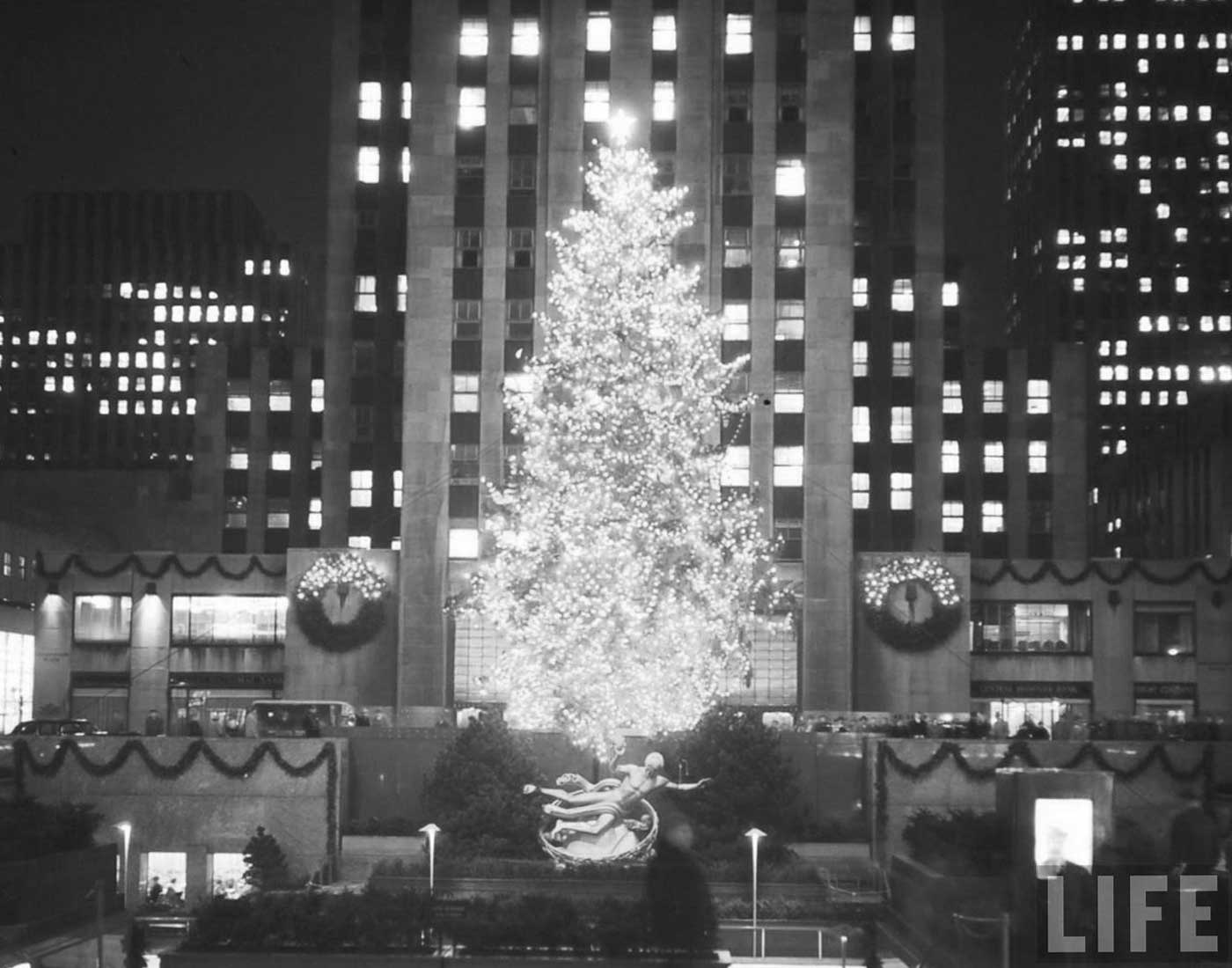
1949 The White Tree In what was certainly the most ridiculous, plastic-looking yet utterly fantastic tree ever created, a 76-foot Norway spruce is actually spray painted white to give it the appearance of looking covered with snow or else to publicly humiliate it for some unknown offense.

1951 The Televised Tree (above) Songstress Kate Smith turns on the lights in the first broadcast celebration of the Center’s annual tradition, setting the stage for this year’s ultimate celebrity appearance by the Jonas Brothers. (My 10-year-old niece told me to write that.)

1966 The Foreign Tree (below) For the first time, a handsome 64-foot specimen is brought in from Canada. Another country! This would never happen had George W. Bush been president!

1971 The Zombie Tree The Balsam Fir at the center of this year’s celebration, already severed from its native forest and gussied up like a cheap Christmas harlot, has the unusual distinction of being mutilated, mulched and recycled for other purposes the very first time. The 1970s have arrived!

1980 The Daredevil Tree Something about the thick, brawny branches of this year’s 65-foot tree drew a man to attempt to climb to the top. The nimble climber was promptly arrested and security inevitably doubled after that.

1993 The Flamboyant Tree For the first time, the number of lights embracing the Christmas tree exceed 30,000, possibly making it the most energy-wasting tree up to this point. And they were proud of that back then! (The ‘green trees’ of the past two years look to reverse this unfortunate side effect of holiday cheer.)

1995 The Holy Tree This year’s selection isn’t just from any forest. The 75-foot Norway spruce used for this year’s ceremony was donated by a convent. Hallelujah!

1999 The Tallest Tree The monstrous creature towering over obviously frightened skaters this year chimes in at an astonishing 100 feet tall.

2004 The Blingy Tree The tree goes truly upscale when its topped for the first time with that hefty Swarovski crystal star, comprised of 25,000 crystals, making it the most decorated lady on Fifth Avenue.

Categories
Podcasts

PODCAST: Rockefeller Center

Listen or download it from HERE

You can also download it for free from iTunes and other podcasting services

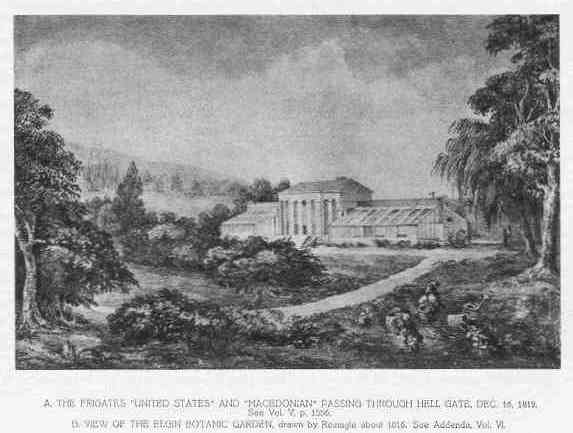
In the veritable wilderness that would become midtown Manhattan, Dr. David Hosack opens his Elgin Botanic Garden, the city’s first collection of exotic plant species that’s eventually sold to the state, who then passes the land fatefully over to Columbia University.

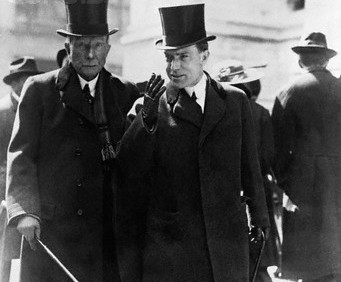
The John D.’s, Senior and Junior, the two richest men on the planet

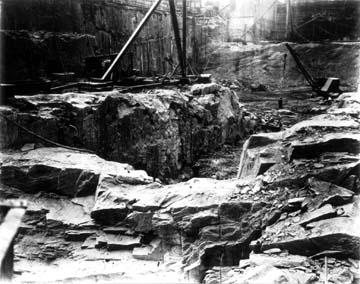
Excavation of the Rockefeller Center site, photo by Berenice Abbot taken in 1931. Materials taken from the site were used to fill in Central Park’s South Reservoir (making the Great Lawn) and helped create landfill for Brooklyn’s Shore Parkway.

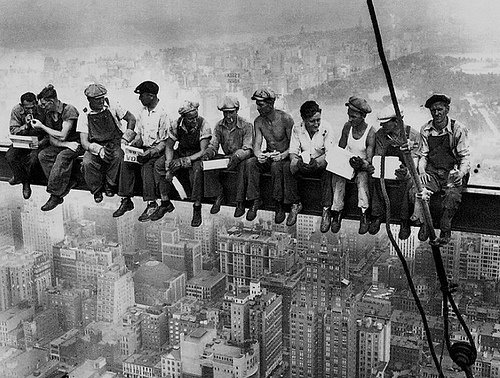
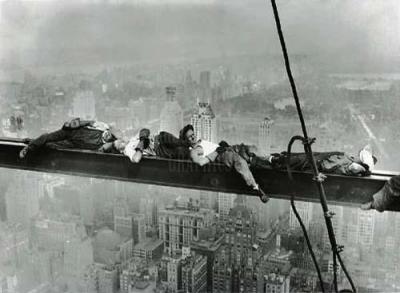
One of the most famous photographs ever taken, in 1932 by Charles Ebbets, features some nonchalant construction workers taking a break from work on the RCA Building.

I get sick just from looking at this picture.

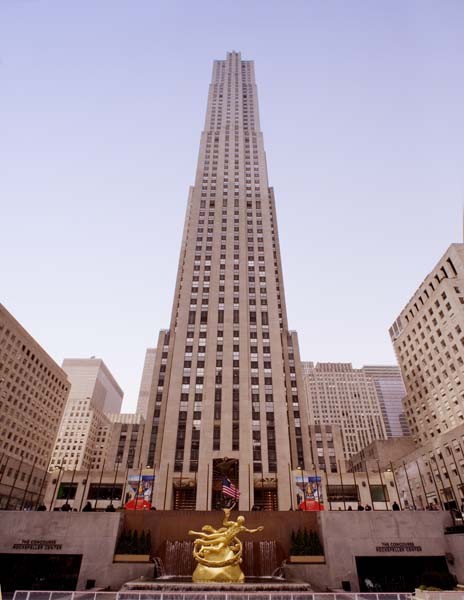
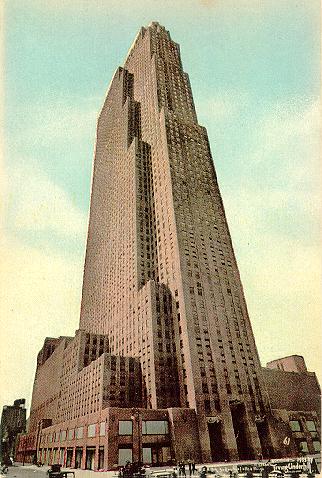
The majestic RCA Building (later the GE Building) was perfectly proportioned so that natural light would reach every square foot of office space

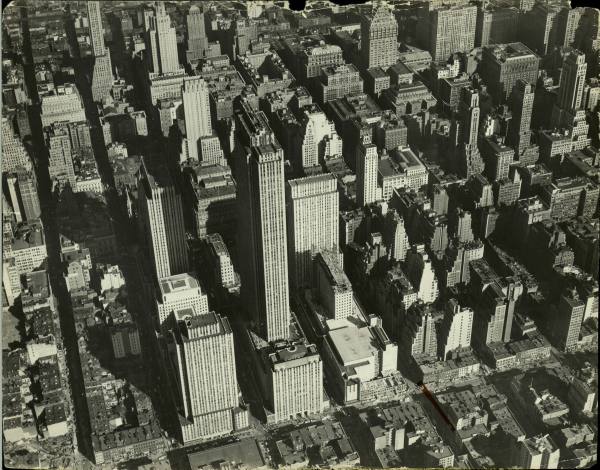
From this image, it’s easy to see how Rockefeller Center radically transformed midtown.

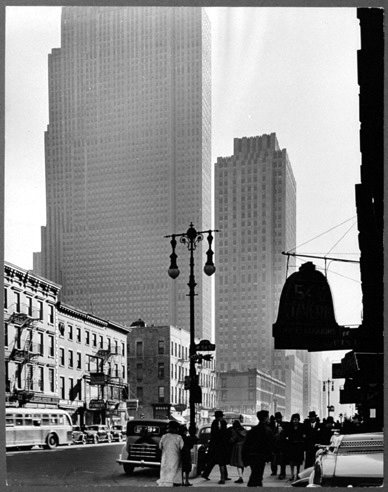
The plaza, seen in a view from 1937, allowed architect Raymond Hood much leeway in his design of the RCA Building

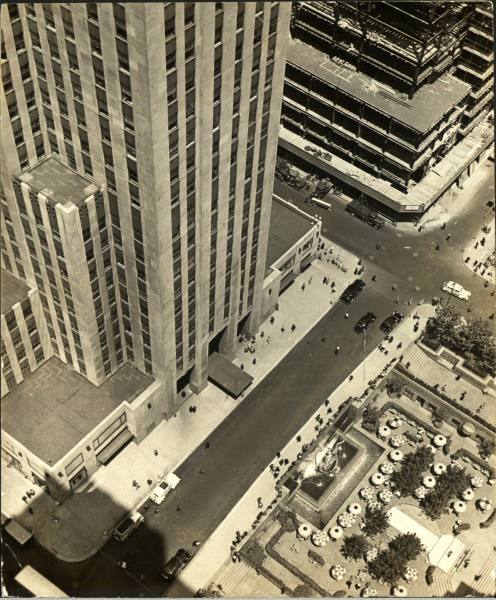
A classic overhead shot by Margaret Bourke-White taken in 1939

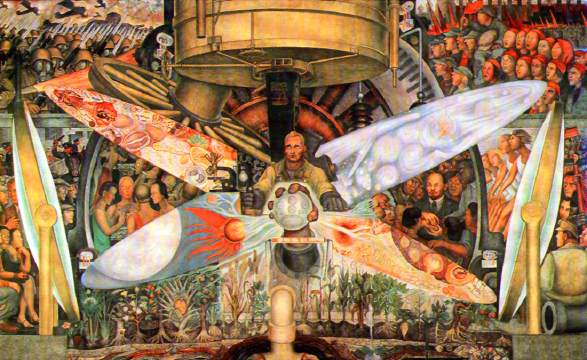
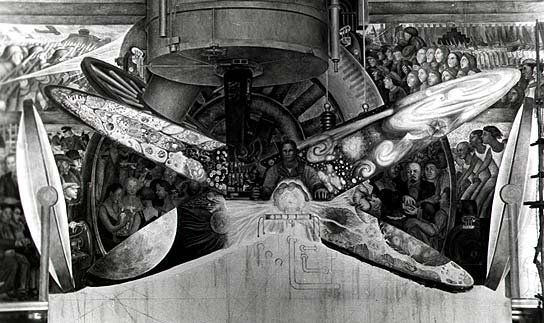
The offending Diego Rivera mural that briefly adorned the lobby of the RCA Building

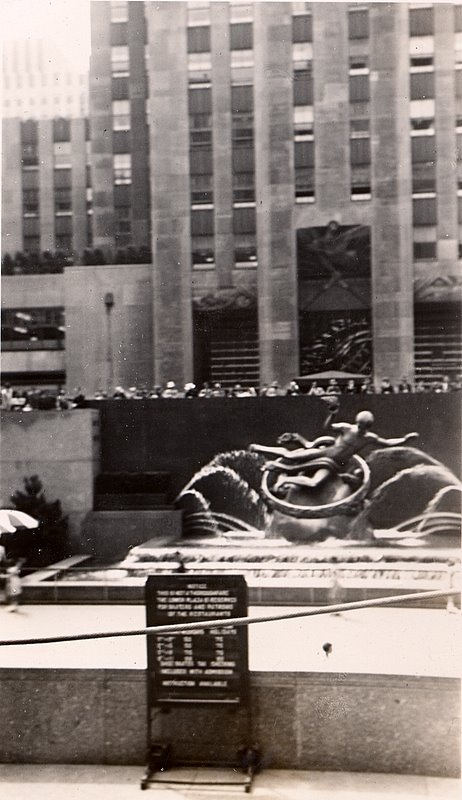
Prometheus in 1941 (courtesy of Flickr)

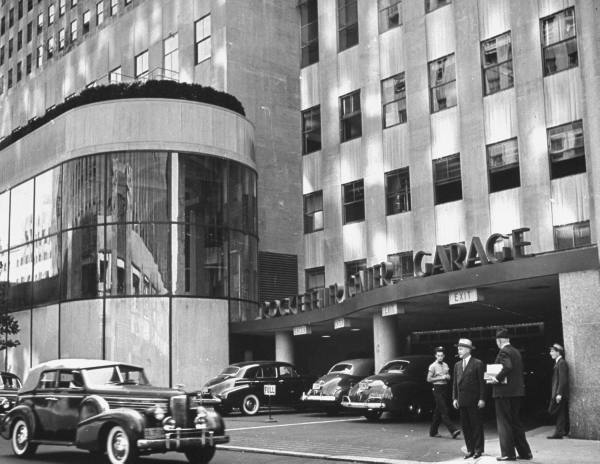
Also from 1941, a look at the Center’s new garage

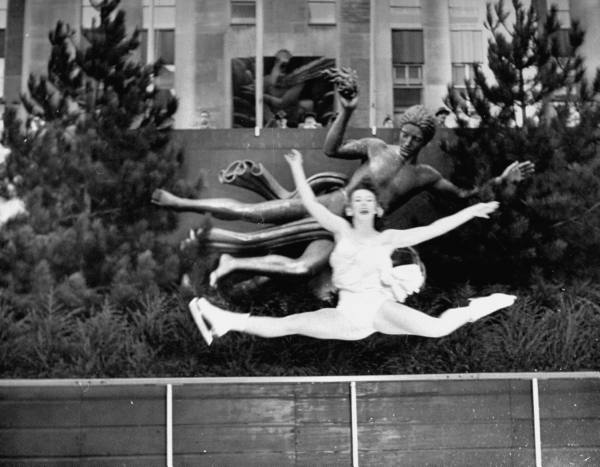
A spry ice skater in 1942 (photo by Wallace Kirkland, Life archives). The rink was not an original feature of the plaza, but soon became one of its most popular attractions.

In 1943, the Channel garden features an unusual wartime exhibit. Speakers on either end continually broadcast speeches by President Roosevelt, Winston Churchill and Chiang Kai-Shek. Fun! (Photo courtesy Library of Congress)

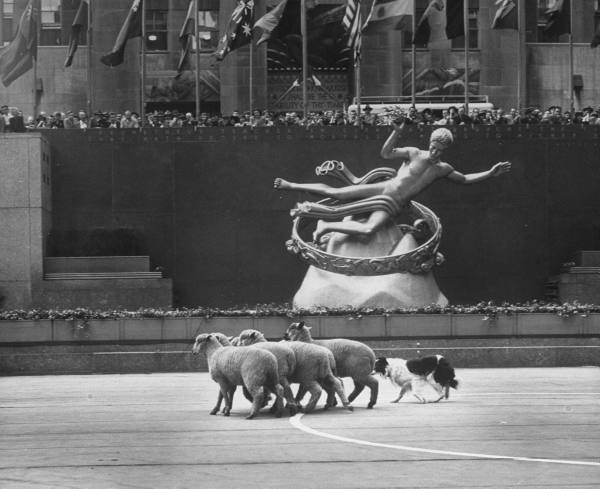
1948 — for some reason, ice skating and dining takes a backseat this day for a sheepherding demonstration

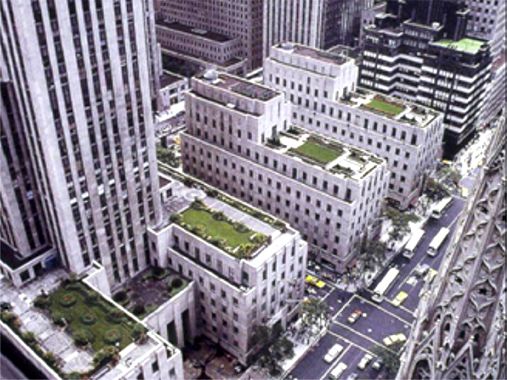
The roof gardens, now closed to the public, were originally a top tourist draw to Rockefeller Center and even enabled Rockefeller to raise rents on any offices that benefits from views that overlooked them.

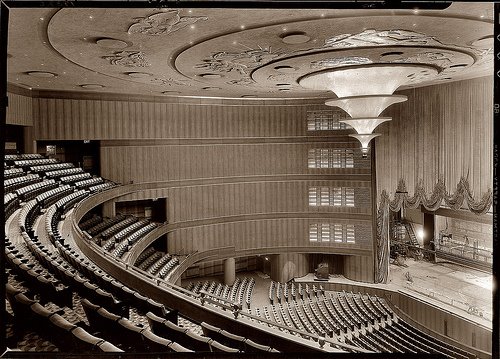
Two interior shots of the Center Theatre, formerly the RKO Roxy, Rock Center’s other big stage. It changed it named because of a lawsuit with the Roxy Theatre and changed its entertainment from films to ice spectacles in the 1940s. It was torn down in 1958 to make room for what is today the Simon & Schuster Building, also part of the Rockefeller Center complex.

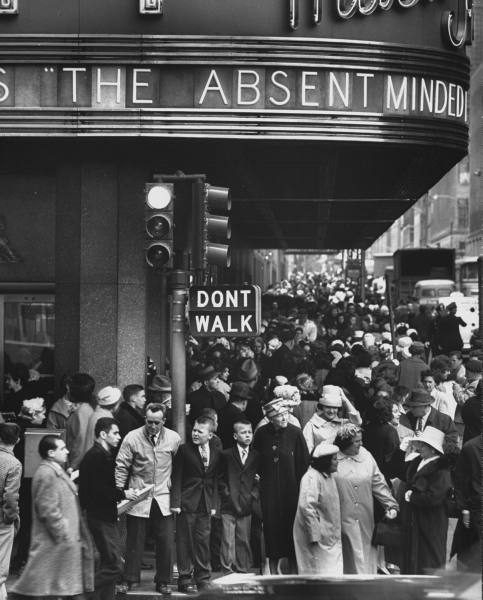
Wild crowds gather for Radio City Music Hall’s Easter show in 1961, and not, I’m assuming, to get into to see the Absent Minded Professor

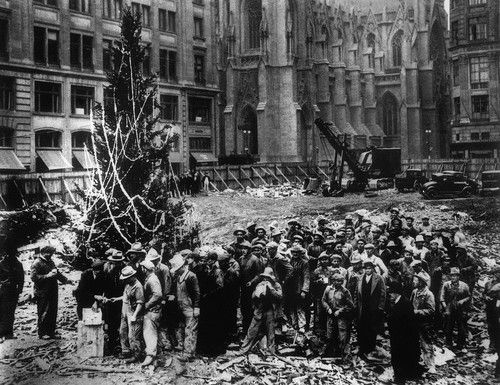
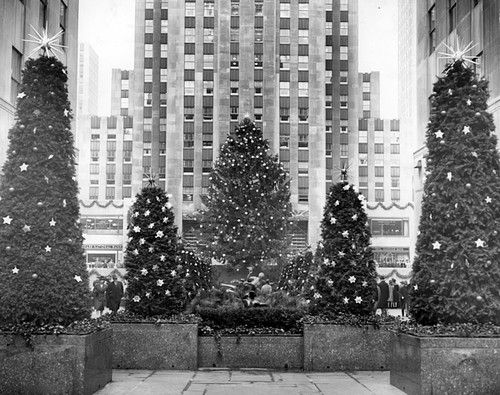
The first Rockefeller Center Christmas tree, in 1931, with Saks Fifth Avenue and St. Patrick’s Cathedral right across the street

The tree in 1943

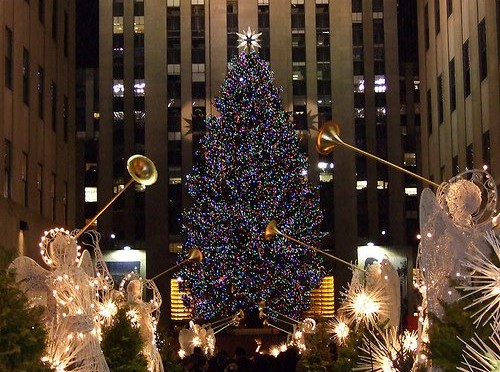
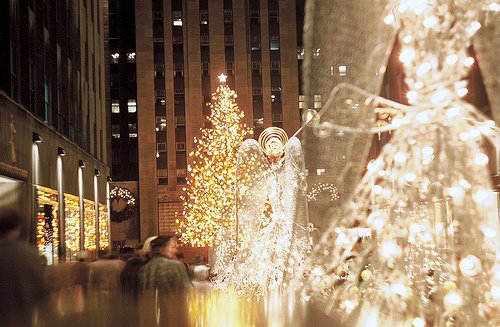
And in 1954, one of the first years that featured the illuminated angels (courtesy of PLCjr)

CHRISTMAS GIFT ALERT: One of my favorite New York City history books ever is actually about Rockefeller Center — Daniel Okrent’s Great Fortune: The Epic of Rockefeller Center. The writing is as stout and witty as many of its principal characters. Extremely readable.

Rockefeller Center’s greatest art scandals!

Above: Diego Rivera’s contentious creation

Despite JD Rockefeller Jr’s aversion to the ‘impropriety’ of modern art, Rockefeller Center has always been bursting with it, from the large outdoor installations sprouting up in the plaza to the gorgeous art deco blazing from its walls.

As with modern art for public display however, the Rock has sometimes riled the community with challenging and occasionally offensive art pieces.

The most famous of course is Diego Rivera’s Man at the Crossroads (pictured above), his epic mural created in 1933 with the supposed theme of ‘new frontiers’. Rivera was a favorite of Rockefeller’s wife Abby, having feted the artist in a show at the Museum of Modern Art in 1931. Rivera, however, was no tool of the rich. Amongst the many May Day figures depicted in Rivera’s expressive narrative mural is one Vladimir Lenin, communist leader and Marxist icon.

He was asked to repaint the Lenin figure but Rivera staunchly refused. The press had a field day, finding the depiction insulting and pressuring the Rockefellers to completely cover the mural, then a few months later, destroying it entirely. One photograph of the mural remains — and of course, a near exact copy that Rivera later painted in Mexico.

Yet another depiction of another controversial leader was allowed to stay.

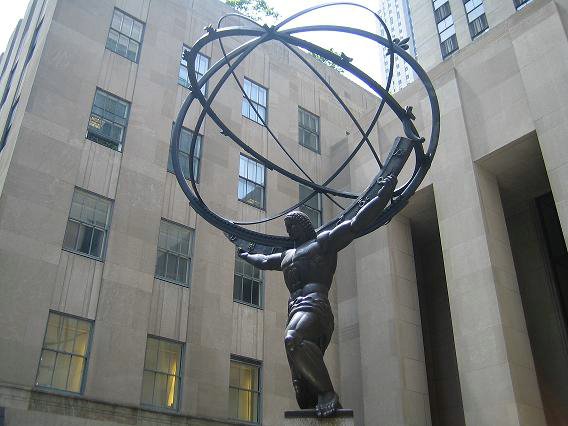
Just a few years later in 1936, art deco master Lee Lawrie created his mighty two-ton Atlas, probably one of the most recognizable pieces of artwork in the city of New York.

He currently stands directly in front of St. Patrick’s Cathedral, so you can imagine the surprise of many when it was rumored the face of Atlas was modelled after Italian dictator and all around bad guy Benito Mussolini. Although protestors picketed the statue, good Atlas was allowed to stay.

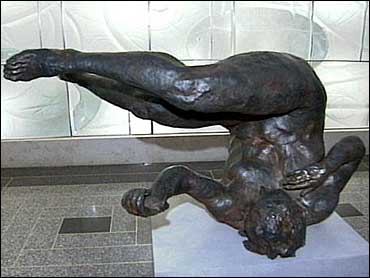
Flash forward a few decades to 2002 and a more modest piece that sat briefly in the Rockefeller Center concourse, not far from the skating rink — Erik Fischl’s Tumbling Woman. A bronze figure in the style of Rodin, this image of a falling woman installed as a Sept. 11 memorial on its first anniverary greatly disturbed passers-by.

After the New York Post threw the controversy on its front page, the figure was removed. Interestingly, the artist never intended the sculpture to be displayed publicly at all.

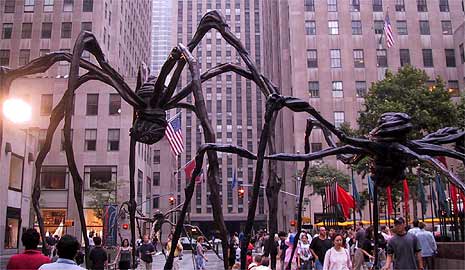
Then there were Louise Bourgeois’ gigantic spiders, which stood commanding the plaza for the entire summer in 2001.

As illustrated with all the previous art pieces discussed, timing (or rather, bad timing) is everything. These pieces might have been too disturbing for people had they been standing just a few months later, in the wake of Sept. 11. As they were only around for the summer, however, the only real controversy were several mild cases of nausea and probably a few panicked children.

Categories
Podcasts

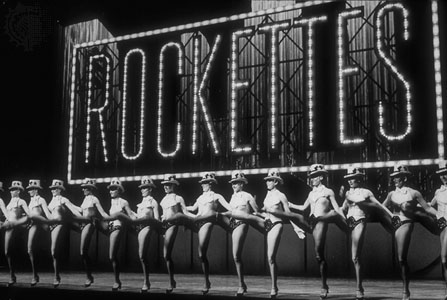
PODCAST: Radio City Music Hall & the Rockettes

Behind the glamour of New York’s greatest stage Radio City Music Hall is a story involving a toothpaste tube designer, an allergy to Brazil nuts, a hydraulic lift protected from the Nazis, and a man named Roxy. PLUS: The Bowery Boys go backstage (well, figuratively) with the Rockettes.

Listen to it for free on iTunes or other podcasting services. Or you can download or listen to it HERE

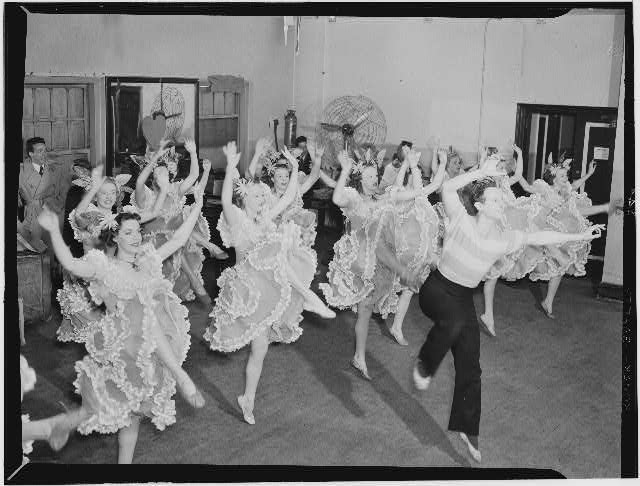
The Rockettes in practice:

Radio City’s movie / stage extravaganza combo:

By the way, a couple of our richer anecdotes are from one of my favorite books about New York City — Great Fortune: the Epic of Rockefeller Center by Daniel Okrent. On top of being well written, Okrent gives delicious insight and lush description to a story that could have been bogged down in uninteresting details.

FRIDAY NIGHT FEVER: The Rainbow Room


To get you in the mood for the weekend, every Friday we’ll be celebrating ‘FRIDAY NIGHT FEVER’, featuring an old New York nightlife haunt, from the dance halls of 19th Century Bowery, to the massive warehouse spaces of the mid-90s. Past entries can be found here .

For a change, I thought I’d feature a place that is actually, you know, still open. Although it’s pricey enough that most of us won’t see it much in our lifetimes.

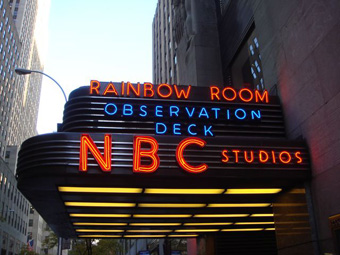
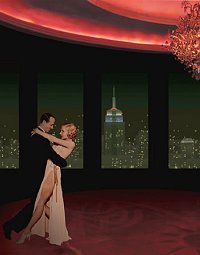
The Rainbow Room offers quite a stark contrast to the Apollo Theater. The Room opened in the same year (1934) as the Apollo opened its doors to black audiences for the first time. Both elicit images of heavenly bodies. Its similarities naturally end there.

Where the Apollo rose from the site of a sleazy burlesque joint, the Rainbow Room was literally the crown on J.D. Rockefeller Jr.’s newly built palace to commercial welfare, Rockefeller Center. Rockefeller, a clean, moral gentleman who preferred warm milk to champagne, was virtually forced to open the place due to social pressures. Rooftop nightclubs were sprouting up all over the city — and in all the society pages — and Rockefeller simply had to have best of everything. 

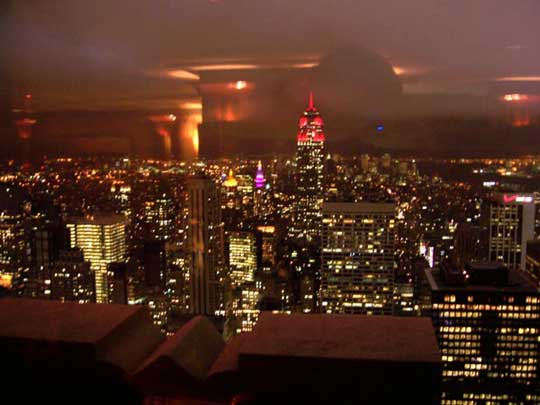
And thus the man who supported Prohibition opened in Oct 3, 1934 what would become the acme of champagne New York life. And all of it, sixty-five floors above the city, atop what was then the RCA Building.

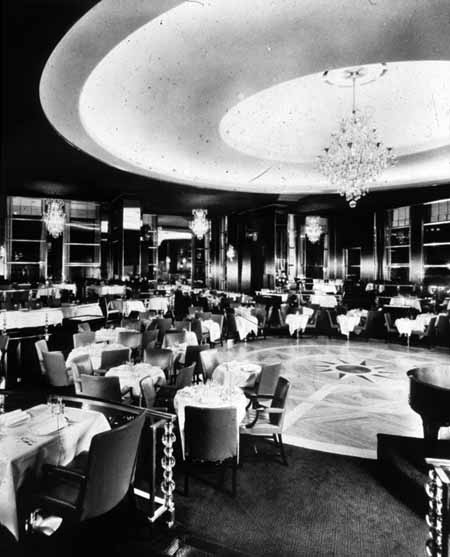
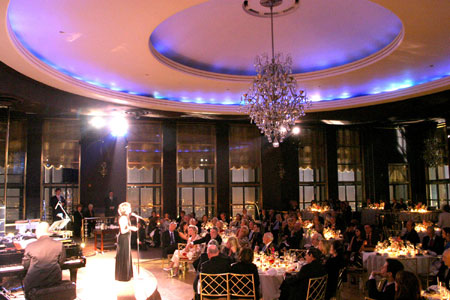
Its design by Elena Bachman Schmidt, with her assistant Vincent Minnelli (yes, Liza’s dad), encapsulated Art Deco luxury while never overshadowing either the clientele or those two-story windows. In fact, faceted mirrors near the bar created an illusion that that gorgeous skyline outside was literally seeping into the room. Perhaps it was, striking a waltz on that impressive dance floor that would have made John Travolta salivate — a slowly rotating plate glowing with dazzling colors that changed moodily to the music.

However it was the well-coiffed and tuxedoed birds atop the floor that gave the Room its polish. The Rainbow Room was strictly high society; for a time, it was ‘white tie’ only, until that was relaxed to ‘merely’ regular tuxedo styles. Its opening night was, as one journalist proclaimed, filled with “five or six hundred of New York’s Four Hundred.” It was considered the ‘upper crust’ of nightclubs, and eventually the well-dressed society families were joined by America’s unofficial royals — Broadway and movie stars. Jean Harlow, Cole Porter, Douglas Fairbanks Jr, Noel Coward, Bette Davis, Laurence Olivier. The hoity-toity club was no match for Marlene Dietrich, who wanted the band to stop playing waltzes and give her a tango. And they obliged.

(It should be noted, just to keep the Apollo in the back of your mind, that at least for a few years, it was not only ‘white tie’, it was strictly, entirely white. Blacks were neither admitted nor even allowed to perform. Contrast this to last week’s Friday Night Fever feature, Cafe Society, which was in a basement, sure, but whose integrated politics ensured truly world class entertainment.)

The Rainbow Grill soon opened down the hall. A more ‘informal’ place — still out of the price range of most New Yorkers — the Grill was considered a junior edition and attracted the college-age trust-funders.

When they weren’t dancing, patrons of the The Rainbow Room dined to the entertainments of a variety of acts, from the hi-lites of the big band era, to a mixture of almost carnival like acts — trained horses, ping pong champions, magicians, palm readers. In fact, Edgar Bergen and his wooden puppet Charlie McCarthy became national celebrities stemming from just a few performances there.

The Room has seen a couple renovations and a downgrade to ‘mere’ suit and tie. And the era of high-society nightclubbing itself has transformed into a more Paris Hilton-like debauchery. But it still holds its charms — as long as you’re dressed correctly — primarily because of that gorgeous view. Have a couple glasses of champagne, gaze out at New York’s perfect skyline, and you can’t help but feel romantic.

I should add here that down the hall there used to be a fantastic cabaret room called ‘Rainbow and Stars’ where out of sheer luck (and a regular columnist position as a theater writer, back when I could only afford mac-and-cheese for dinner) I had the privilege to go to write reviews. Imagine that beautiful New York backdrop, in a more intimate setting, with only the world’s best cabaret performers plopped in front, singing their hearts out.

 I wore the same (the only) suit jacket each time, I had to scrape up coins just to buy a martini or two. But for a couple hours, like the time I got to watch Rosemary Clooney, I could pretend to understand what it was like to be fabulous and Rockerfellian.

(I gleaned a few facts for this article from the excellent, excellent book Great Fortune by Daniel Okrent, about the building of Rockefeller Center. I love this book so much that I’m actually posting its link at Amazon.)