Categories
Christmas Podcasts

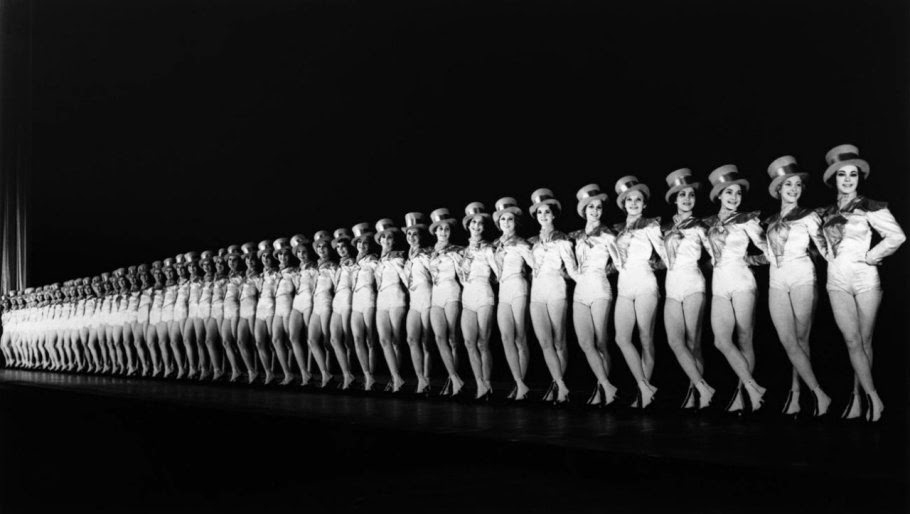
The Radio City Rockettes: New York City’s Dancing Queens

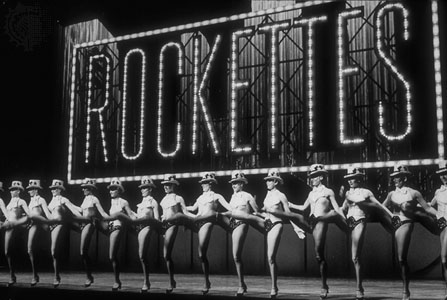
The Rockettes are America’s best known dance troupe — and a staple of the holiday season — but you may not know the origin of this iconic New York City symbol. For one, they’re not even from the Big Apple!

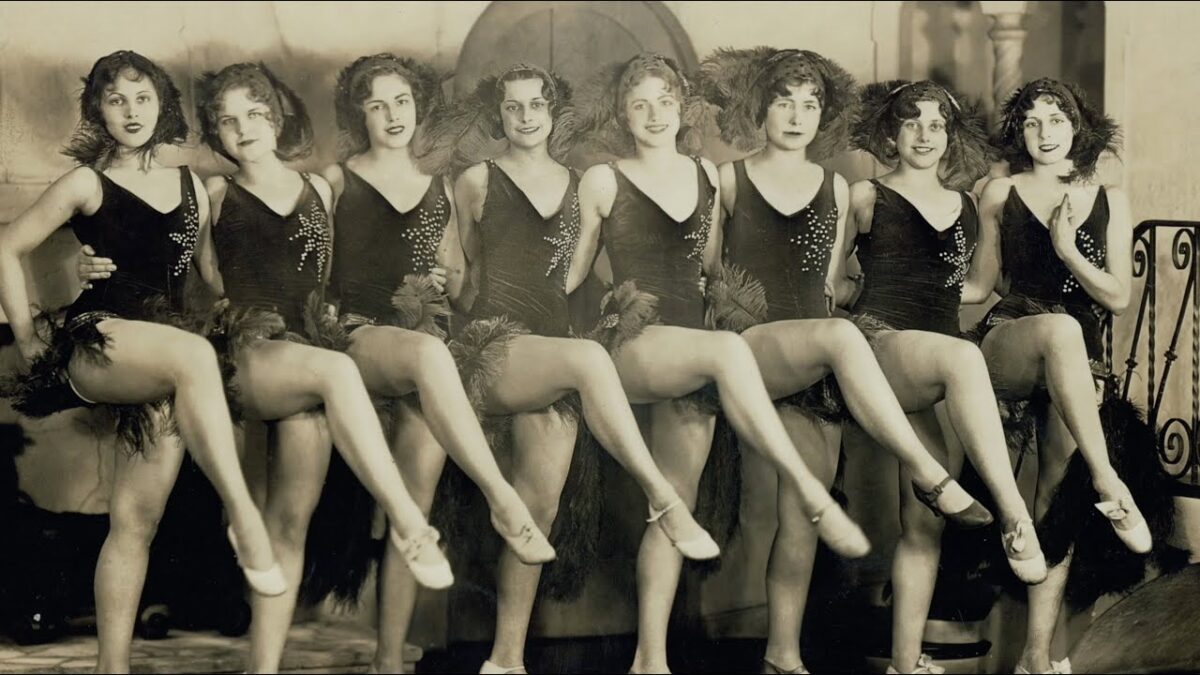
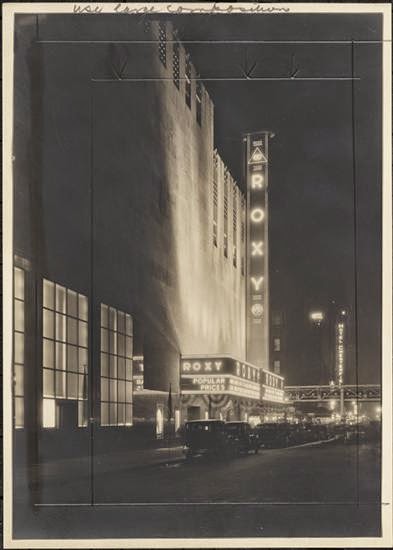
Formerly the Missouri Rockets, the dancers and their famed choreographer Russell Markert were noticed by theater impresario Samuel Rothafel, who installed them first as his theater The Roxy, then at one of the largest theaters in the world — Radio City Music Hall.

The life of a Rockettes dancer was glamorous, but grueling; for many decades dancing not in isolated shows, but before the screenings of movies, several times a day, a different program each week.

There was a very, very specific look to the Rockettes, a look that changed — and that was forced to change by cultural shifts — over the decades.

This show is dedicated to the many thousands of women who have shuffled and kicked with the Rockettes over their many decades of entertainment, on the stage, the picket line or the Super Bowl halftime show.

This show is a re-edited and remastered version of our 2014 show with a new introduction — in honor of the upcoming 100th anniversary celebration of the dance troupe which would become the Rockettes.

LISTEN NOW: THE RADIO CITY ROCKETTES


Join us on Patreon for extra podcasts and lots of other goodies

Share your love of the city’s history with a Bowery Boys Walks gift certificate! Our digital gift cards let your loved ones choose their perfect tour and date.

Grab a Bowery Boys tee-shirt, mug or water bottle at our merchandise store.


The first New York home of the Rockettes (as the Roxyettes) was the Roxy Theatre, almost as large as Radio City Music Hall and located just nearby. (MCNY)

MCNY

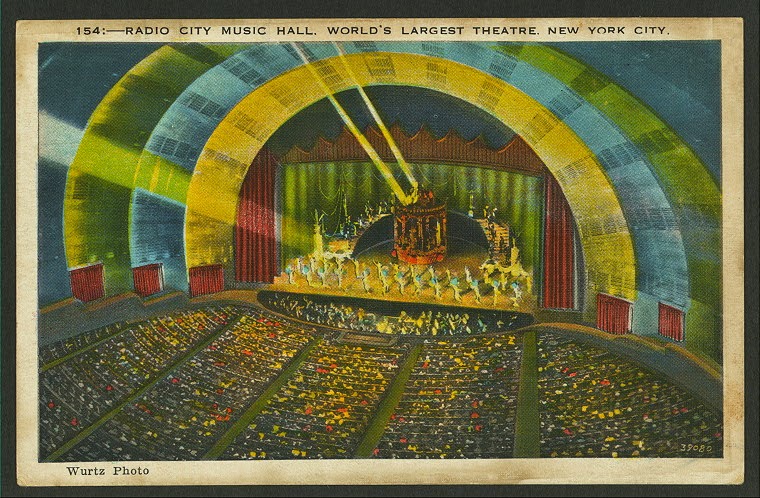
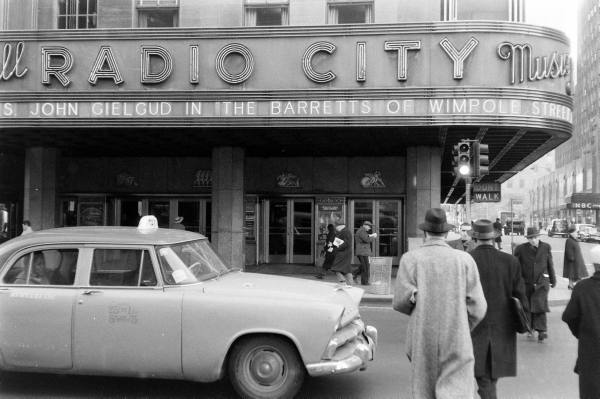
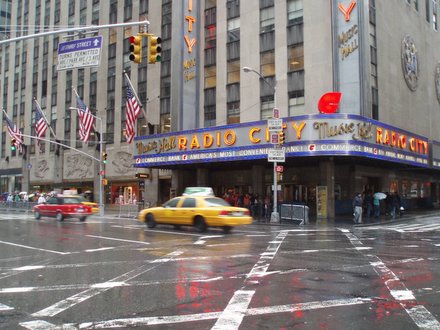
Radio City Music Hall, which opened in 1932, was quickly transformed into the world’s largest movie house after a notorious opening night. It would be here that the Rockettes would perform a few times a day, seven days a week, for over fifty years. (NYPL)

NYPL

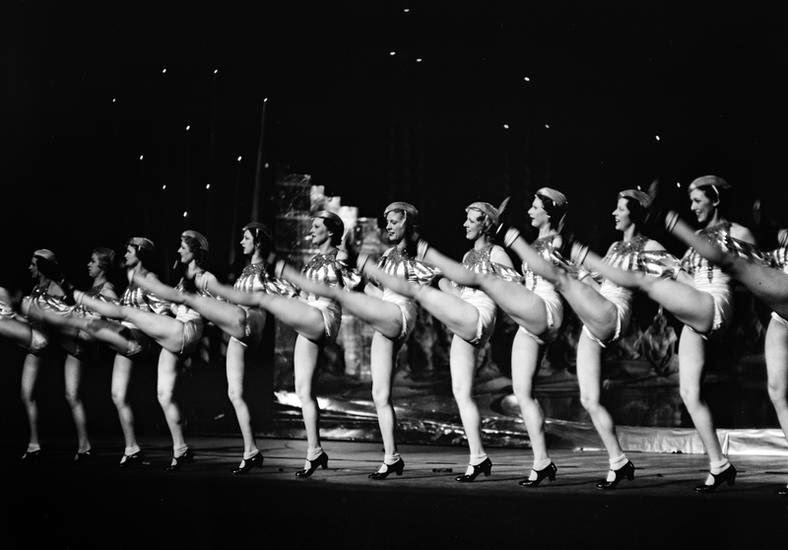
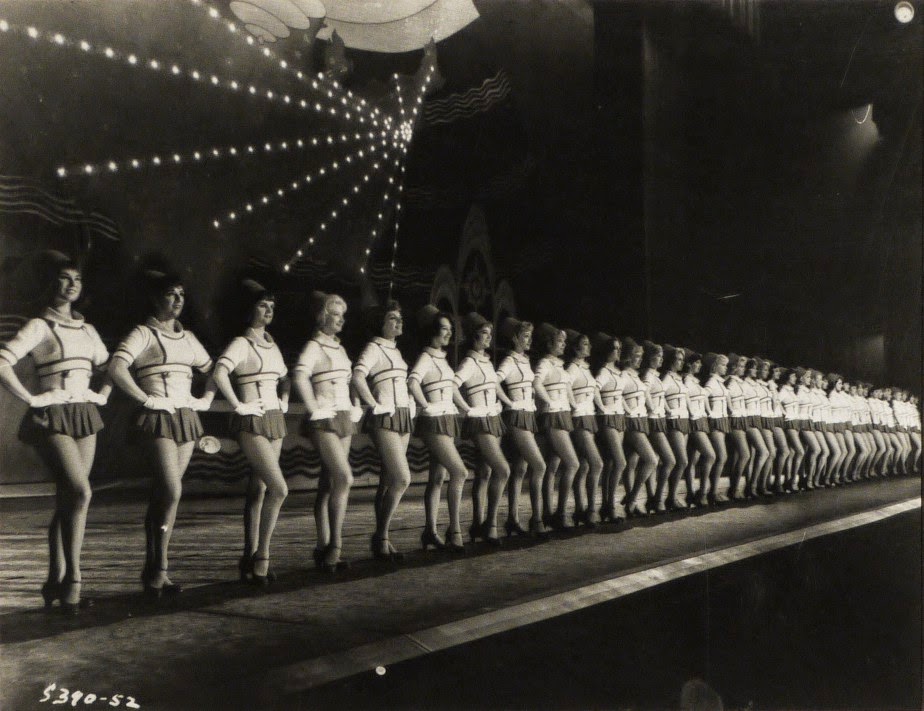
The Rockettes, 1935, in a ‘Cavalcade of Color,’ choreographed and directed by Leon Leonidoff. The constant high-kicking routines required great athleticism, precision and balance. (MCNY)

MCNY

The Rockettes in 1937, beauty in duplication. (Courtesy the Rockettes)

In 1939, the Rockettes gave salute to the Gay Nineties in these extravagant costumes. (Courtesy the Rockettes)

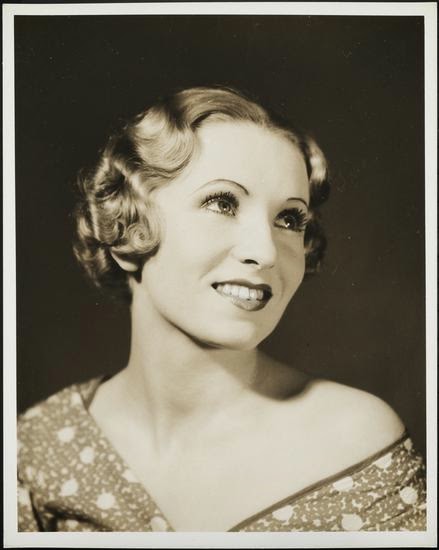
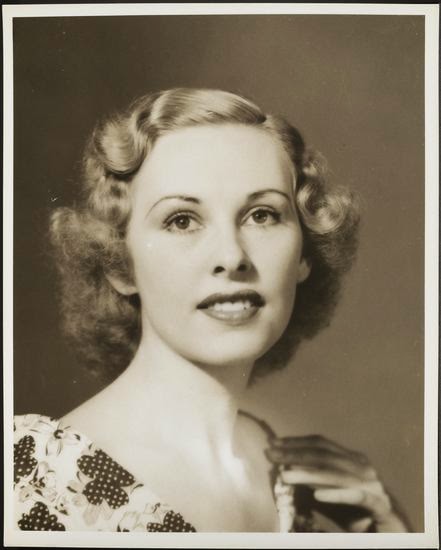
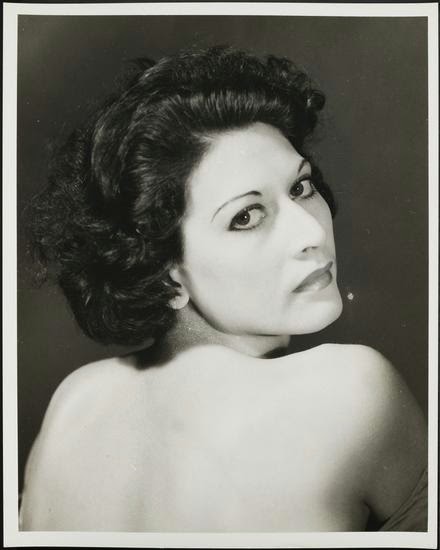
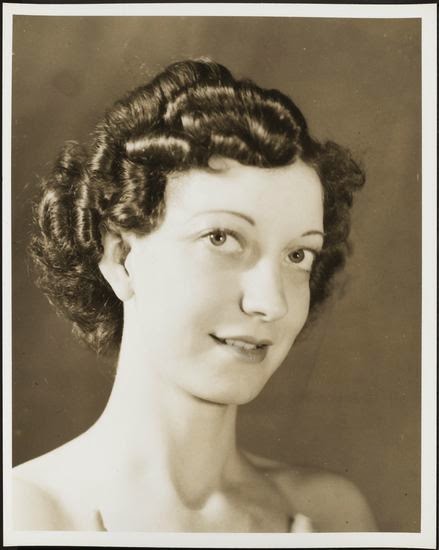
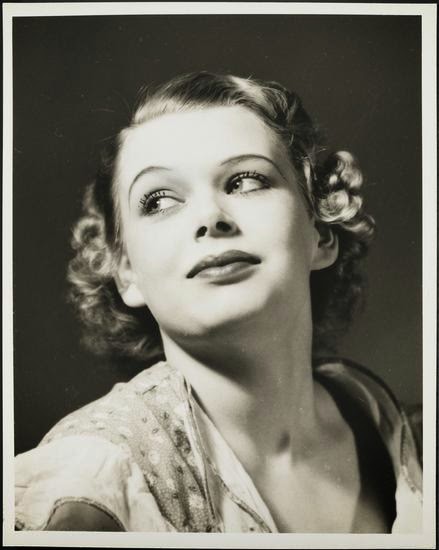
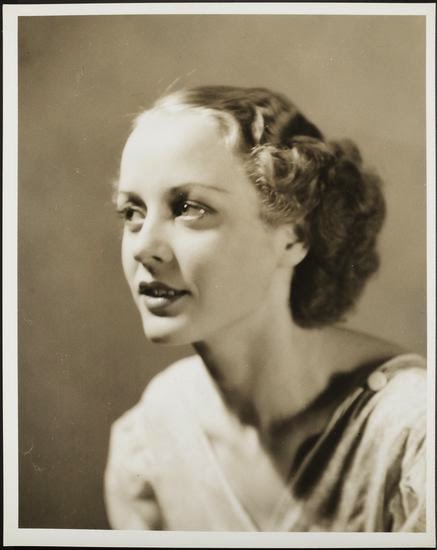
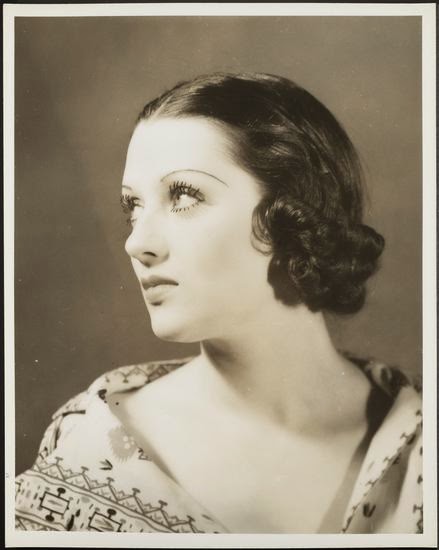
Faces of the Rockettes: A few of the dancers from the 1935 configuration.. These photos are by the Wurts Brothers, from the Museum of the City of New York Collection. You can see the complete group here. Unfortunately there are no names attached to the portraits but if any of these women look familiar, drop me their names in the comments section!

The Rockettes in the 1950s

Courtesy the Rockettes

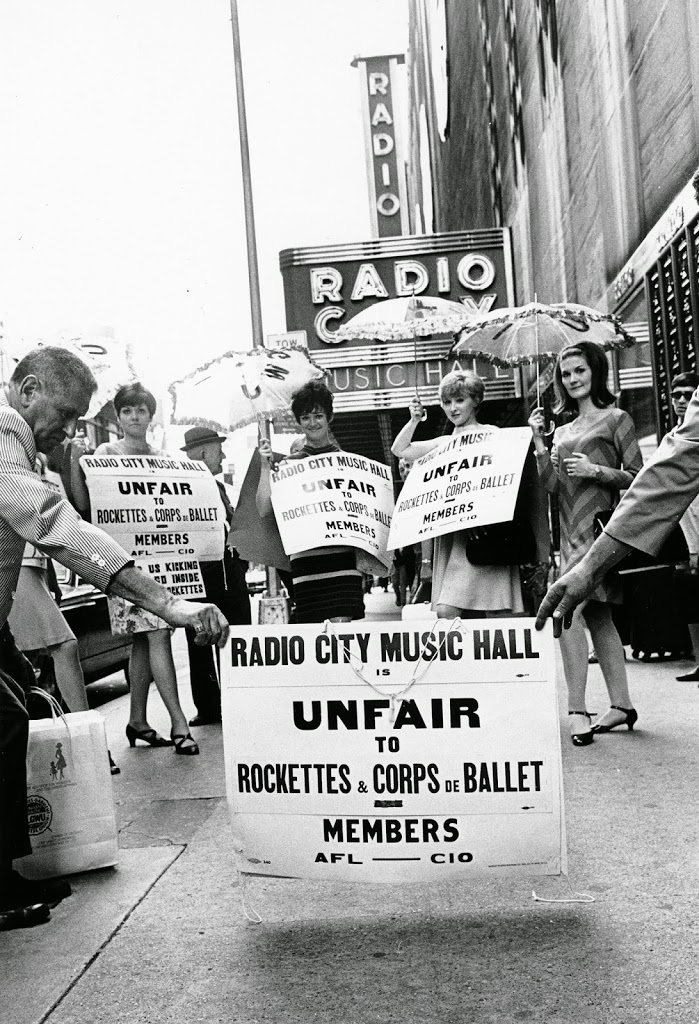
In 1967, many Rockettes went on strike for a month to demand better wages to compensate for their vigorous schedule and unpaid rehearsal time. Needless to say, they got everybody’s attention.

Kheel Center

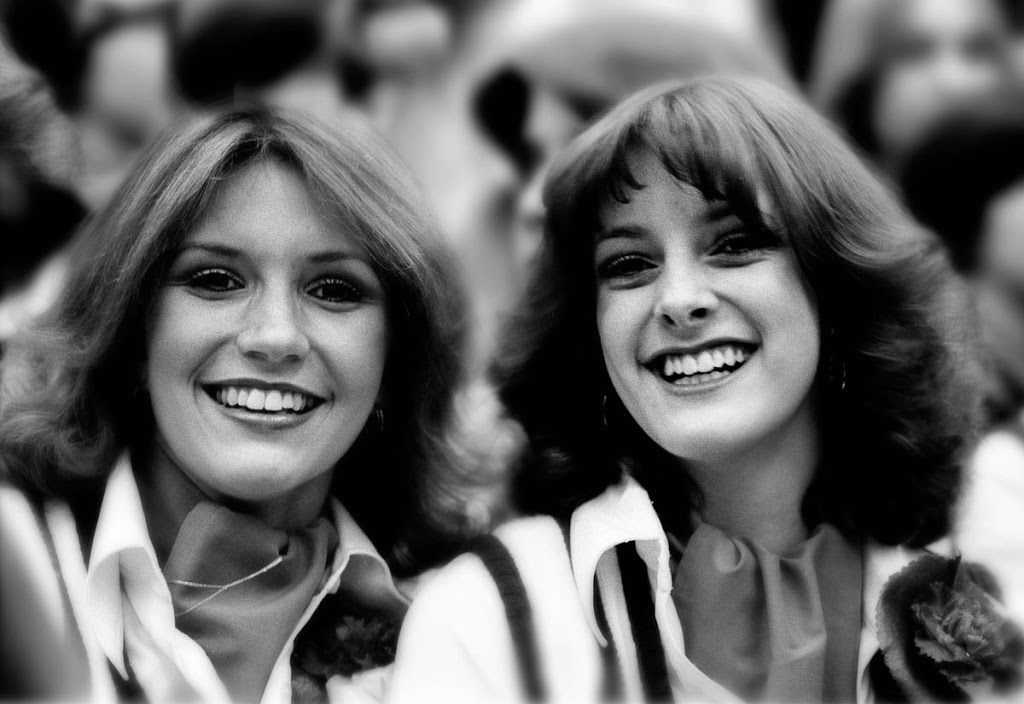
Pam Palmer and Kim Heil, two Rockettes from the late 1970s. (Photo by Jay Heiser)

Photo by Jay Heiser

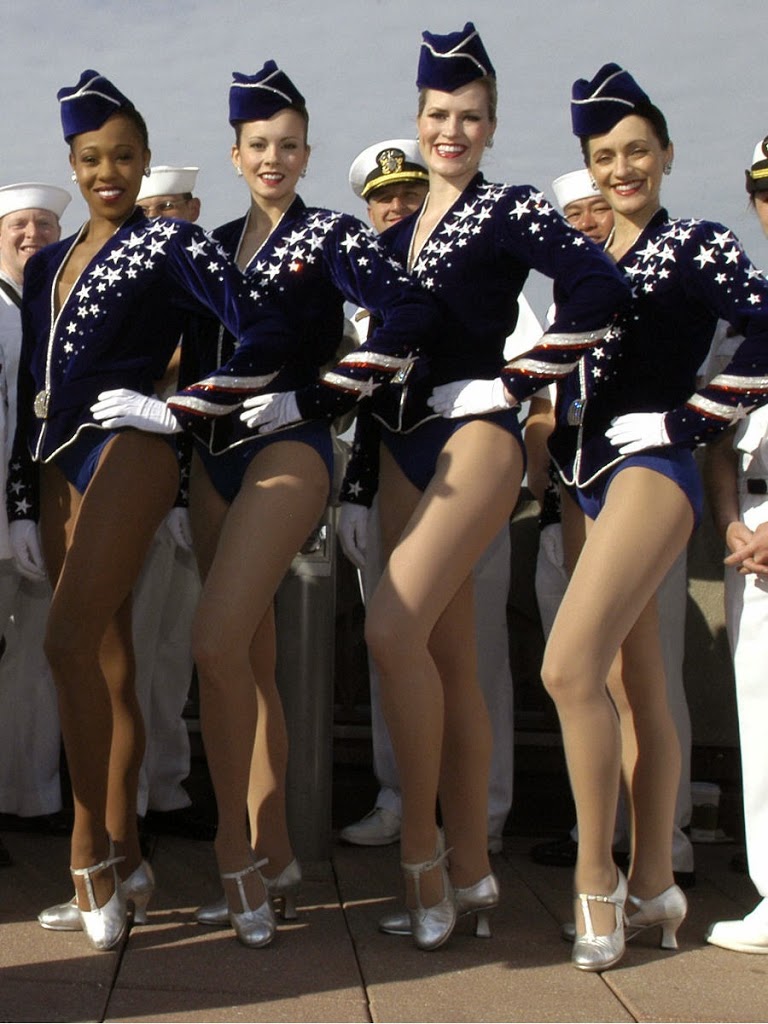
The Rockettes at a Fleet Week event in 2006. (Photo by Gabriela Hurtado)

Photo by Gabriela Hurtado

Various newsreel footage of the Rockettes, including images of the troupe rehearsing on the roof of Radio City!

The Rockettes at the 1988 Super Bowl halftime show:

Categories
True Crime

When The Mad Bomber Terrorized New York City

A ticking bomb goes off at Grand Central Terminal.

The seats at Radio City Music Hall, rigged with explosive devices planted inside the upholstery. Bombs found at the Empire State Building, others detonating at movie theaters and in phone booths, at the New York Public Library and in subway stations. An explosion inside Macy’s.

Chaos, panic, anonymous letters to the police, copycat bombers. Some of the most sustained levels of domestic terrorism to hit an American city in the 20th century.

It may sound like the plot of a dastardly comic book film. But it actually happened in New York City.

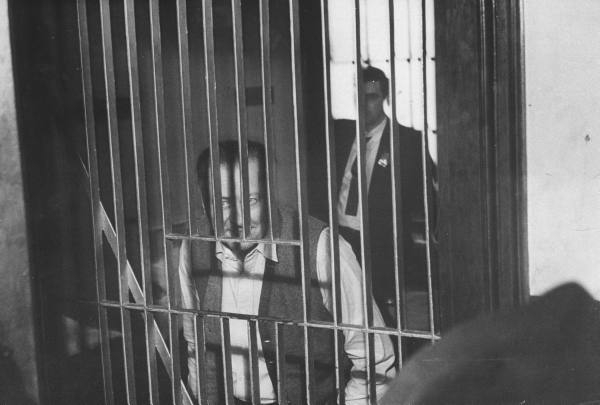
The man in the center, the one who looks like a kind grocer? That’s George Metesky, the insane “Mad Bomber” who terrorized New York for years with crudely made bombs placed in public places. (Photo by Peter Stackpole)

Through two decades, from 1940 to the mid 1950s, the city was under siege by a violent, greatly disturbed ex-Marine dubbed the Mad Bomber by the press.

George Metesky planted dozens of pipe bombs in New York City before he was finally apprehended in January 1957 at his home in Waterbury, Conn. He sheepishly met his captors at the door with the phrase, “I know why you fellows are here. You think I’m the Mad Bomber.”

Metesky’s beef wasn’t with the city per se, but with his former employer Consolidated Edison. (Or more exactly, the United Electric Light and Power Company, which was later absorbed by Con Ed.) For a time, his rage was specifically focused at the corporation he believed treated him with extraordinary indifference.

George had been employed by the utility company until 1931, when a boiler explosion at uptown Manhattan plant left him permanently disabled and in the care of his two sisters in Connecticut.

He claimed the company refused to compensate him for his work-related hardship, fighting in vain with the corporation for five years. “My medical bills and care have cost thousands — I did not get a single penny for a lifetime of misery and suffering,” he would claim in one of his many letters to the press, after the bombings began.

For Con Ed’s part, they claimed Metesky had taken too long to file for disability benefits. Eventually, the truth didn’t matter. Metesky, later to be diagnosed a paranoid schizophrenic, decided to get comeuppance in a more sinister manner.

New York Daily News, November 19, 1940

The first explosive, ultimately a dud (as many were), was placed at Con Ed’s 64th Street office on November 18th, 1940, accompanied by a carefully constructed note, “CON EDISON CROOKS, THIS IS FOR YOU.

One year later, another device, wrapped in a woolen sock, was hastily dropped in front of Con Ed’s 19th Street offices, without a missive this time. In both cases, investigators were befuddled: were the bombs even meant to go off or was it a scare tactic?

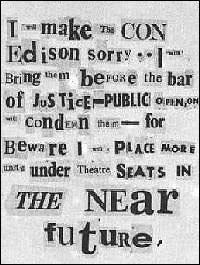
Metesky was feeling ignored yet again by Con Ed. Whether out of frustration or some kind of twisted, legitimate patriotic duty, however, he decided to call off future bombings due to World War II and sent a ‘kidnapper-style’ note (left, one such example), made from cut newspaper letters, to the press informing them so.

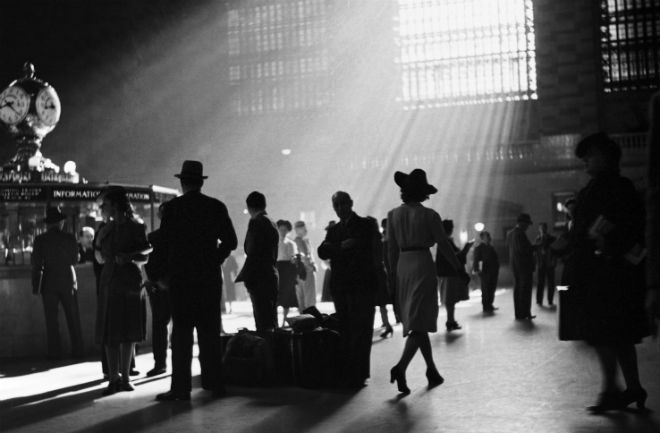
Feeling some acceptable amount of time had passed, Metesky decided on a different tactic on March 29th, 1950, planting a bomb at crowded Grand Central Terminal. Another note from George warned of an explosion there, and police were able to locate and defuse the device in time.

Thus began a bizarre game of cat-and-mouse as Metesky laid dozens of bombs throughout the city, unbelievably without detection. (The “see something, say something” mantra was clearly not in effect in the 1950s.)

A fourth device, in front of the New York Public Library, was the first to actually detonate, but it injured no one, the fortunate outcome of many of Metesky’s oddly made devices.

Despite dropping off pipe bombs in such places as Penn Station and the Port Authority Bus Terminal, despite targeting movie houses by scooping out the seats and implanting bombs there — despite some of these weapons actually exploding, nobody had been hurt. He had even thrown a pipe bomb into the Oyster Bar at Grand Central Terminal, with no serious harm.

Photo by James Burke, Google Life images

His devices in 1954, however, began to hurt people — minor injuries in a detonation at a Grand Central men’s room, then during a November screening of White Christmas at Radio City Music hall, where five people were hurt. (You can find pictures of the aftermath of one such bombing at Radio City in this Life Magazine article.) Amazingly, Metesky set off three bombs in total at Radio City. Once, a bomb went off with the bomber still in the theater; an usher stopped him as he was escaping but merely “apologized for the disturbance” and let him go.

He also sent a series of letters to the New York Herald Tribune, all in that same exact block-letter styling. Stating in these letters that he was seriously disturbed, George apologized for any potential injuries he might cause but proclaimed, “IT CANNOT BE HELPED—FOR JUSTICE WILL BE SERVED.” Metesky would sign his letters F.P., which investigators would later learn meant ‘Fair Play.’

Two explosions in 1956 ramped up the intensity and urgency of stopping Metesky. One device planted in a Penn Station bathroom seriously injured an elderly attendant. And Metesky left a Christmastime bomb in the Paramount Theatre in Brooklyn that detonated and injured six people, three seriously. (The film playing? War and Peace with Audrey Hepburn.)

The police were frantically piecing together a profile of Metesky, and dozens of people were apprehended and questioned, including one man who frequently drove into the city with a suspicious trunk in his backseat. It was not Metesky; the trunk contained a pair of sexy fetish boots that the man paid prostitutes to wear.

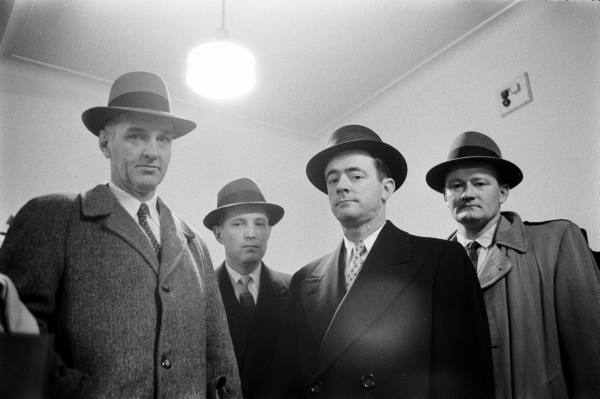
Detectives on the case, 1957 (Google Life)

During this time, dozens of bomb scares were called in throughout the city and there were even other copycat bombers like Frederick Eberhardt who sent a sugar bomb in the mail to Con Edison. He too was a former employee….and mentally disturbed.

It’s a bit difficult to get a grasp on the true on-the-street reaction to these bombings, which were numerous but rarely deadly. Slight panic may have passed through the thoughts of commuters passing through Grand Central or riding the subway, but over time, most people seem to have dismissed the danger. These events are sometimes brought up in comparison to the Son of Sam killings of the 1970s, which held the city in a far greater hysteria.

But, as they’re well equipped to do, the newspapers kept reminding New Yorkers of the danger. According to a 1957 Time Magazine article: “Hearst’s Journal-American thoughtfully provided a do-it-yourself spread on how to make a pipe-bomb…..The papers, thirsty and cunning in a news-dry holiday period, were still going strong.”

The Mad Bomber case is a textbook example of early profiling techniques of the day, and the first with a forensics psychologist (Dr. James Brussel) at its forefront.

The home of George Metesky and the garage housing many of his supplies Photography Peter Stackpole

In January 1957, a Con Edison secretary discovered similarities between letters from ‘F.P.’ published in newspapers and wording in Metesky’s old personnel files. Police were at Metesky’s doorstep in Waterbury a couple days later, where he almost readily spilled the beans about his identity.

Even after his arrest, devices he had previously planted were still being discovered, such as one at the Lexington Avenue movie theater (at 51st Street) that had been buried in a seat cushion years before.

The creepy George Metesky peers from his jail cell:

(Photo by Peter Stackpole, Google Life images)

Metesky was declared insane and sent to upstate’s Matteawan Hospital for the Criminally Insane. Believe it or not, he was freed on December 13, 1973, and lived for twenty more years back at his home in Waterbury. He claimed to the end that he designed his bombs not to hurt people. And yet, of course, many did.

Categories
Queens History Robert Moses

Assorted mishaps from the 1964 New York World’s Fair — in its first month and before it even opened

Certainly Robert Moses expected there to be a few little problems to arise at the opening of the 1964 World’s Fair on April 22, 1964.  And for the most part, the most popular attractions launched without a hitch.  But a host of bad press on opening day and a litter of minor issues created a sense of unease among some organizers.

The fair was already a controversial venture by Moses — unsanctioned by the official World’s Fair organizers and sold wholesale to a bevy of corporations as a way to fund the hugely expensive endeavor.  Moses’ own reputation was on the wane by 1964; the fair would further tarnish it.

Whatever enthusiasm New Yorkers had for the fair in 1964 evaporated with its completion in the fall of 1965, with reports of ludicrous financial mismanagement and a gradual indifference by fair-goers to its line-up of generally un-amusing amusements.

So these first few mishaps from the months before and after opening, in retrospect, seem to be a harbinger for the greater fiascoes which followed.

Money issues, faulty machinery, injuries, lack of planning — welcome to the World’s Fair of 1964!

1) The World of Food never opens
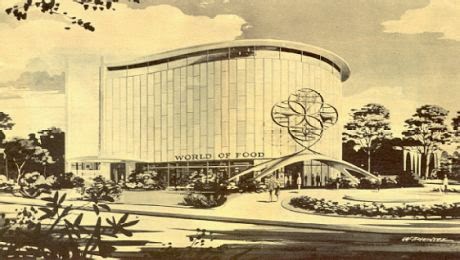
With hundreds of new temporary structures going up, you wouldn’t think that a single building lagging behind would be much of an issue.  But the prominently placed World of Food  — standing 75 feet from the fair’s entrance — was one of the largest pavilions on the fair, and little work had been done on it since ground-breaking in January.

The building was to celebrate cooking and gardening, with weekly festivals devoted to a particular food (shrimp, apples), a rooftop ‘edible garden’ and a model kitchen with the most innovative home appliances.  A teen center on the ground floor would host cook-outs and clam-bakes with appearances by the hottest young stars of film and television.

It would have, that is, except the organizers ran out of money, and a large gaping construction site sat like an open sore marring the fairgrounds.

Moses and fair organizers wanted to level the site immediately, fighting it out in court with the World of Food organizers.  Finally, two weeks before the opening, the uncompleted venue was finally torn down.

But there was no time to fill the lot, so on opening day, an odd gap in an otherwise tightly organized grounds greeted visitors.  Gift shops sold World of Food souvenirs anyway.  Meanwhile, the fair paid thousands of dollars to store the unused construction materials off site. [More information at Bill Young’s excellent World’s Fair site. Image above is also from there.]

2) Ceramic catastrophe
The most spectacular displays were often at the pavilions hosted by foreign countries. The Pieta at the Vatican Pavilion, for instance, would become one of the most popular attractions.

The organizers from Spain, however, would have to scramble when they opened crates containing a 50-foot ceramic relief by Antonio Cumella called ‘Homage to Gaudi,” only to discover that much of it had been crushed in transport.

Welders furiously labored to repair the work before the fair opened. Some semblance of the work was eventually displayed.

Courtesy New York Daily News

3) Rain on Opening Day
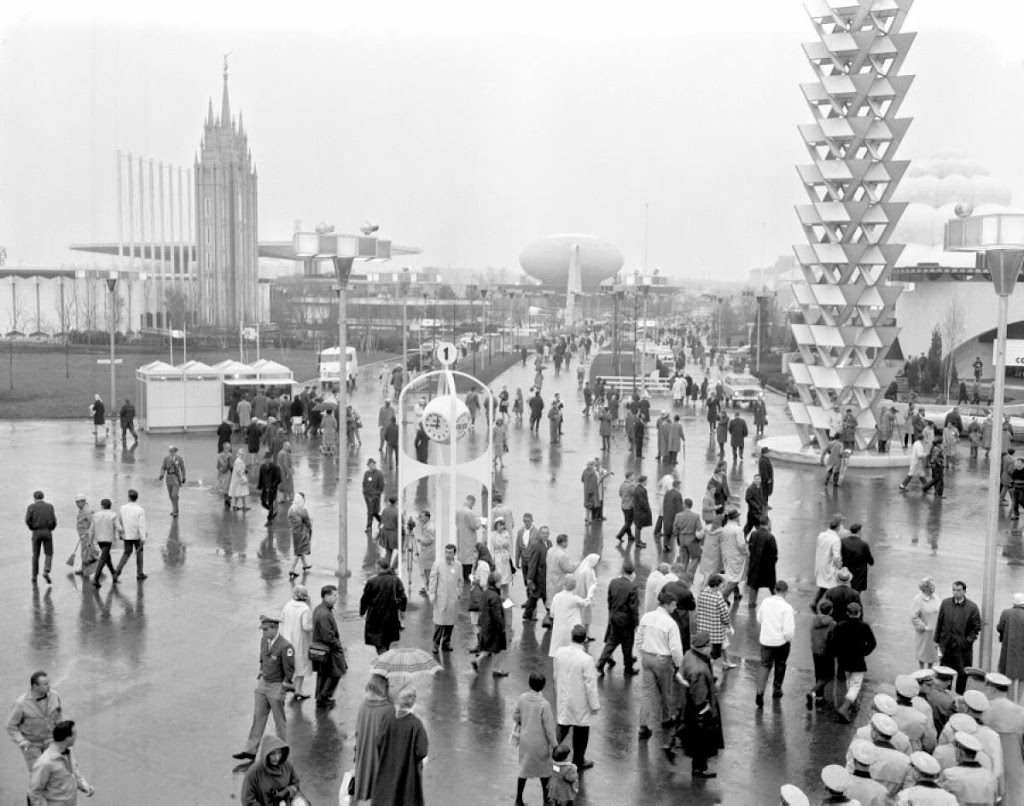
The April 22nd opening was to be one of the greatest events in New York City history, and in volume, it certainly was. Ten of thousands clogged the highways in one of New York’s ugliest traffic days. Over 90,000 made it to the fairgrounds to witness opening ceremonies that included a speech by president Lyndon B. Johnson, president for only a few months after the assassination of John F. Kennedy.

But fair organized had planned for 250,000 attendees. Â Keeping people away was the “November-like weather,” torrential morning rain and a chilly, cloudy afternoon.

The New York Times reported: “The World’s Fair opened yesterday morning with a parade that had everything. But mostly it had rain, and 4,000 sodden marchers outnumbered the hundreds of sodden bystanders.”

4) Protesters and arrests
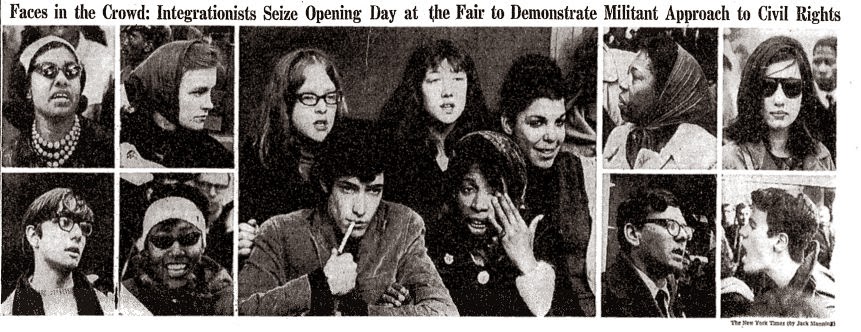
President Johnson and fair organizers were met with picketers and sit-ins, mostly civil rights organizers. They managed to heckle Johnson through his entire speech at the Federal Pavilion and sit in at several fair venues.

In particular, protesters camped out in shrubbery outside the pavilion and had to be forcibly removed. Â “It was dreadful, dreadful,” said one state official.

By the end of the day, over 300 people had been arrested by police. What had particularly incensed protesters was a variety show at the fair called “America, Be Seated,” a “minstrel-style” show that meant to turn the derogatory stereotypes of old into something fun and jazzy for the 1960s.

“I think we’ll start a whole new wave of minstrel shows,” hoped producer Michael Todd Jr, (stepson of Elizabeth Taylor), promising no “burnt cork” and that every performer in the integrated cast would be wearing “his own face.”

It was still deemed too offensive for many and quickly closed within two days, raking in a grand total of $300.

Below: From the New York Times, April 23, 1964

5) City locked down
If you weren’t at the fair, you were probably cursing it out. Â A planned “stall-in” by demonstrators to stop traffic throughout the city failed to materialize, but the city planned for it anyway, created a veritable police state that day.  “Police cars and tow trucks waited sometimes as close as every half mile along Grand Central Parkway.”

This tension led to a near-disaster at one subway station, when four protesters and three police officers were injured “when a crowd tried to stop one morning subway train.” [source]

6) No hospital
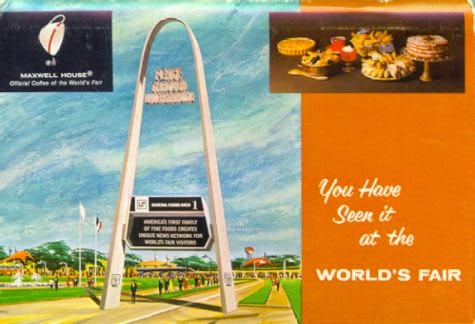
Five days after opening, seven fair goers were injured inside fair transportation sponsored by Greyhound Bus Lines. One of these “Glide-a-Ride” vehicles hit one of the eleven General Foods arches (pictured above), causing minor injuries.

But there was no hospital facility on the fairgrounds — “[T]he hospital was expected to open late next month” — so the injured were treated at the employee’s dispensary and advised to see their own doctors at once. [source]

Leonidoff’s Wonder World. Pic courtesy Randy Treadway at World Fair Community. There are many more rare photos of this event there.)

7) Water and Ice Catastrophes
Two big-name entertainments at the fair were plagued with constant accidents and delays before they opened.  Leon Leonidoff, famed producer at Radio City Music Hall, watched as his “Leonidoff’s Wonder World” befell perpetual mishaps, mostly associated with a faulty mechanical swimming pool.  The show was hugely expensive and not a big draw (see photo above).  It closed within two months.

Meanwhile, Olympic champion Dick Button was having similar issues over at Dick Button’s Ice-Travaganza. His woes involved transportation costs and salaries associated with his mostly European cast. This show, too, was considered a failure, closing a few weeks after its opening opening.

However it did have a skating chimpanzee in a dress, so that’s something to celebrate.

8) Elephant Attack
Six days after the fair opened, a trainer was “stepped on” by a chained elephant named Anna Mae.  Again, as no fair hospital had been opened, the trainer was rushed to Elmhurst Hospital.

You can imagine what the conditions for this poor animal were probably like.  The animal, known for “her erratic temperament,” was chained to two other elephants at the time of the attack.

Above: the Ford Pavilion (NYPL)

9) Ford Pavilion Smoked Out
Nine days after it opened, a transformer at the Ford Pavilion — featuring Walt Disney’s Magic Skyway — caught fire, issuing smoke into the attraction and causing 2,000 people to be evacuated.  The conveyor belt Skyway was also prone in its early days to malfunctions, leaving fair-goers trapped in late-model Ford vehicles in front of caveman and space-age dioramas. [source]

10) The World’s Fair Bus “Riot”
May 16 was a day of record attendance at the fair, so it should be assumed that it was also a day of high tensions and long lines.

People were especially impatient that evening while waiting to board shuttles back to the parking lot.

“A shoving, yelling crowd of 15,000 persons went into near panic,” creating four blocks of mayhem as people attempted to squeeze into an inadequete number of vehicles. A “riot call” was made on the fairgrounds, with additional police and several ambulances called to treat minor injuries and several women who had fainted.

“They acted like animals,” commented one bus inspector. Said another, who had been grabbed and lifted by his tie:  “If we lived through [Saturday] night, we can live through anything.” [source]

Top image courtesy Flickr Marsmett Tallahassee

Categories
It's Showtime

The Evangelist of Kitsch: Liberace’s final performances, with the Rockettes, at Radio City Music Hall 1986

Liberace is the embodiment of a certain California flamboyance, but New Yorkers were as susceptible to his allure as anyone.

In fact, for this brightly-painted musical showman, Radio City Music Hall was a second home.  He continued to smash box office records here year after year as late as the 1980s, well past his prime as anything more than a jewel-encrusted artifact.  In 1985, his stint here grossed more than $2 million.

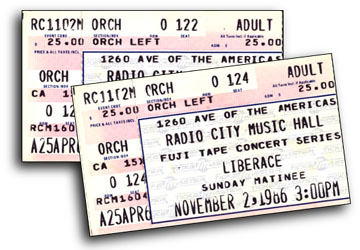
He went out, of course, in a blaze of glory and sequins.  His final live show anywhere was at Radio City on November 2, 1986, capping two weeks of consecutive shows at the venue. (Most stars have a hard time packing the house one night!)

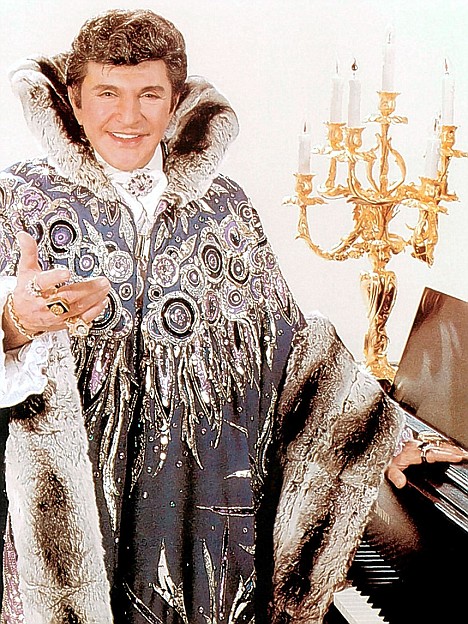
The entertainer, with his flowing robes, acres of feathered frippery, furs and wires and “dancing waters,” was enough spectacle for any stage, but for this series of shows, he was also joined by the Rockettes and a gigantic simulation of the Statue of Liberty holding a candelabra. Photo of the tickets courtesy Bob’s Liberace

Time Magazine’s Richard Corliss, in a 1986 article called ‘The Evangelist of Kitsch, sets this scene:  “The lights go down in Manhattan’s deco dream palace, Radio City Music Hall, and Mr. Showmanship makes his entrance, flying across the huge stage in a cocoon of feathers, enough for a whole flock of purple ostriches.”

That’s right;  in a move that would inspire future boy bands, Liberace flew in, “attached to a wire like a puffed-up Peter Pan, in a hundred pounds of purple and white feathers,” according to the New York Times.

The audience lapped up every bon mot of coy comedy.  Corliss: “They laughed as he sat down on his studded coattails and remarked, ‘If the rhinestones are turned the wrong way it’ll kill ya.'”

Liberace was assisted on stage by his new handsome assistant Lee;  his last assistant and chauffeur — and not-so-secret lover — Scott Thorson had settled his palimony lawsuit out of court just earlier that year for $95,000. (This is the subject of Sunday night’s Behind the Candelabra with Michael Douglas and Matt Damon.)

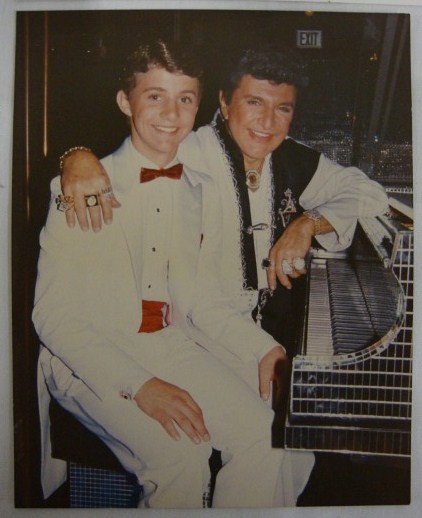
Believe it or not, it wasn’t Lee or the Rockettes that got the most stage time with Liberace during the Radio City Music Hall performances.  That honor belonged to 14-year old child pianist and “Liberace protege” Eric Hamelin, who performed a piano duet with the feather-frocked superstar (“Slaughter on Tenth Avenue”) and a couple other numbers. At right: the star and his protege (source)

Stephen Holden at the Times was understandably critical of the actual performance.  “His heavy-miked pianism is at once metallic sounding, exaggeratedly florid in ornamentation and unbendingly rigid in tone and phrasing,” said the critic.

But the audience lapped it up, as he buoyantly hopped from classic to classic with jokey classical trills linking the songs together.  His tribute to Chopin led right into “Mack the Knife.”  His mournful, dripping “Send In The Clowns” spiraled into the silly ’60s novelty song “Bumble Boogie.”

His final song that final evening was “I’ll Be Seeing You”.  The audience leaped to their feet as Liberace in his sumptuous robes and dazzling bejeweled rings gave his final bow.  Three months later, Liberace would be found dead of AIDS-related pneumonia in his Palm Springs home.

He left the stage with his personal charms intact even as his engineered facade had practically disintegrated.    “Too many young performers have forgotten that the most important part of show business is not the second word, it’s the first,” he was quoted as saying . “Without the show there’s no business.”

Believe it or not, video footage from those final Radio City Music Hall concerts.   While this footage is poor quality, the fact that it exists at all is extraordinary.  Pop open the champagne and enjoy!

Courtesy showmanlee on YouTube.

:

Top picture courtesy NBC/wire image

Wonderland: Walt Disney’s seven Big Apple moments

Yesterday’s news about a new Times Square flagship store for Disney had me wondering what influence if any New York had on the career of Walt Disney, arguably one of the most successful men in history to make his name on the West Coast. Come to find out, the world might never have had Mickey Mouse and the rest without one New Yorker in particular.

Here’s seven of the most significant New York moments for Walt Disney and the Disney empire:

1) Disney Discovered
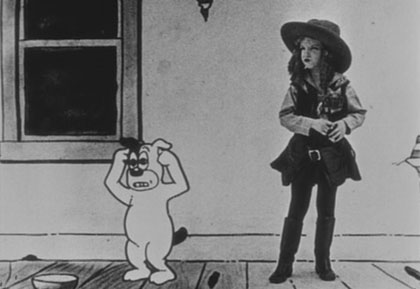
Small-time Kansas City animator Walt Disney spent much of 1923 writing New York film distributor Margaret Winkler, hoping she’d take a look at a new film he was creating, Alice’s Wonderland — a coy, self-reflexive mix of animation and live-action. He was lucky; Winkler was looking to put pressure on her biggest star Pat Sullivan (creator of Felix The Cat), and Disney’s strange little picture did the trick. She signed him and brother Roy, but retained editing control on the early ‘Alice Comedies’, inserting a Felix the Cat-like character named Julius, the first of hundreds of human-like animals in Disney films.

Winkler, by the way, was the first female film distributor in the United States and briefly one of the most powerful women in silent film — at a time when the film industry was centered on the east coast.

Below:one of the Alice Comedies

2) Steamboat Willie
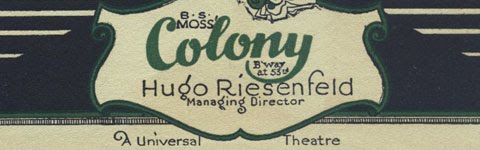
Disney would return to New York with his revolutionary ‘Steamboat Willie’, the first sound appearance of Mickey Mouse. On November 18, 1928, it quietly made its world premiere at the Colony Theatre (Broadway and 53rd Street, still around today as the Broadway Theatre). Sitting in the audience for everyone of its two-week performances was Walt himself.

Steamboat Willie was the opener on a bill of entertainment that also featured the film Gang War, starring Mary Pickford’s brother Jack, an alcoholic mess who once dated Olive Thomas who allegedly haunts the New Amsterdam Theatre. ‘Gang War’ would be his final movie role.

3) Snow White and The Seven Dwarfs
Almost ten years later, Disney’s first feature-length animated spectacle would have a far more grandiose reception — a five-week run at Radio City Music Hall starting in January 1938. The New York Times exclaimed, “They’re gay and friendly and pleasant, all of them, and so is the picture. Thank you very much, Mr. Disney, and come again soon.” As legend goes, the upholstery of several Radio City Music Hall chairs had to be replaced, as children wet their pants as the first sight of the Wicked Witch.

Strangely, the film was later paired with an ice-themed short, Ski Flight, because during winter there’s nothing people like to do more than sit and watch ski movies.

4) Fantasia
Disney’s trippy concept film closed the loop; as one of Disney’s first self-distributed films, it premiered November 13, 1940 at the same theatre that had once shown Steamboat Willie, only this time it was called the Broadway Theatre. (Today it’s a mainstream musical stage featuring Shrek the Musical).)

There was more drama behind the screen than in front. One scene (“Ave Maria”) had to be redeveloped, flown to New York and was literally spliced in with four hours to go before showtime.

5) The Worlds Fair 1964-65
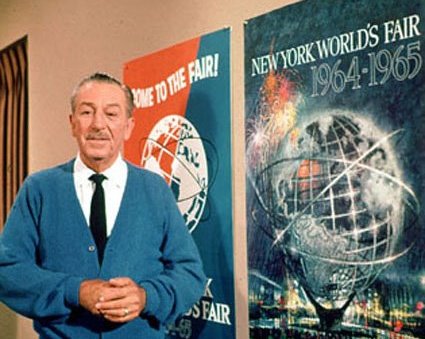
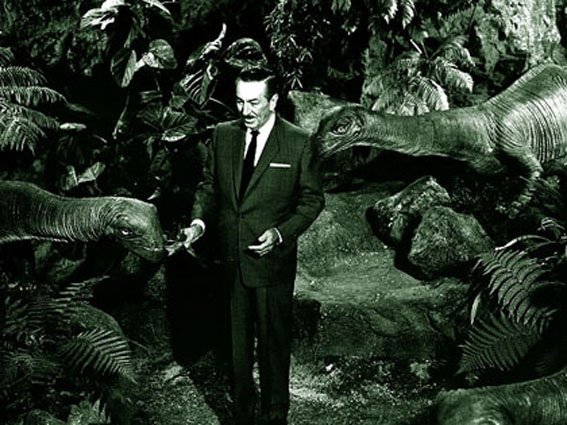
The Worlds Fair of 1939 had clearly had its influences on Disney’s future theme parks. So it was only natural to bring him in as a consultant for Robert Moses’ crowning concrete spectacle of 1964. Disney Studios brought animatronic dinosaurs to life in the “Magic Skyway” for the Ford Motor Company pavilion (see picture below), a talking Abraham Lincoln, and of course ‘It’s A Small World’. Many more pictures of Walt behind the scenes at Disney and More.

6) Disney rewrites Broadway
Less than thirty years after Walt’s death, the company enters — and promptly conquers — a new frontier: Broadway. Beauty And The Beast became its first permanent Broadway production when it opened in April 18, 1994. The swirling gala of dancing utensils and candelabras won the Tony for Best Musical, fueling a run that would make it the sixth longest running show in Broadway history and opening the flood gates of Disney-themed shows.

By the time ‘Beauty and the Beast’ closed in 2007, Disney had changed the rules of the Broadway musical and the actual physical makeup of 42nd Street itself, leading to the sanitation (i.e. ‘Disney-fication’) of the once-seedy boulevard

7) And hits Fifth Avenue, too
The invasion wasn’t just on popular entertainment, but on the heart of New York retail. The first Disney store opened on Fifth Avenue on May 22, 1996. Ushered in by mayor Rudy Giuliani and Disney CEO Michael D. Eisner, thousands of shoppers flocked to the retailer, at the time setting the record for single-day sales at a Disney store. That’s an awful lot of mouse-eared Statue of Libertys.

The company just announced that this ‘World of Disney’ location, at 55th Street, would be permanently closing next year, to make way for Disney’s Time Square plans.

I should end by adding that when Disney moved in during the 1990s, it had kicked out a New York City institution — the famous French restaurant La Côte Basque, a “high-society temple” and favorite of Jacqueline Kennedy Onassis. The eatery moved around the corner but only lasted a few more years.

Categories
Podcasts

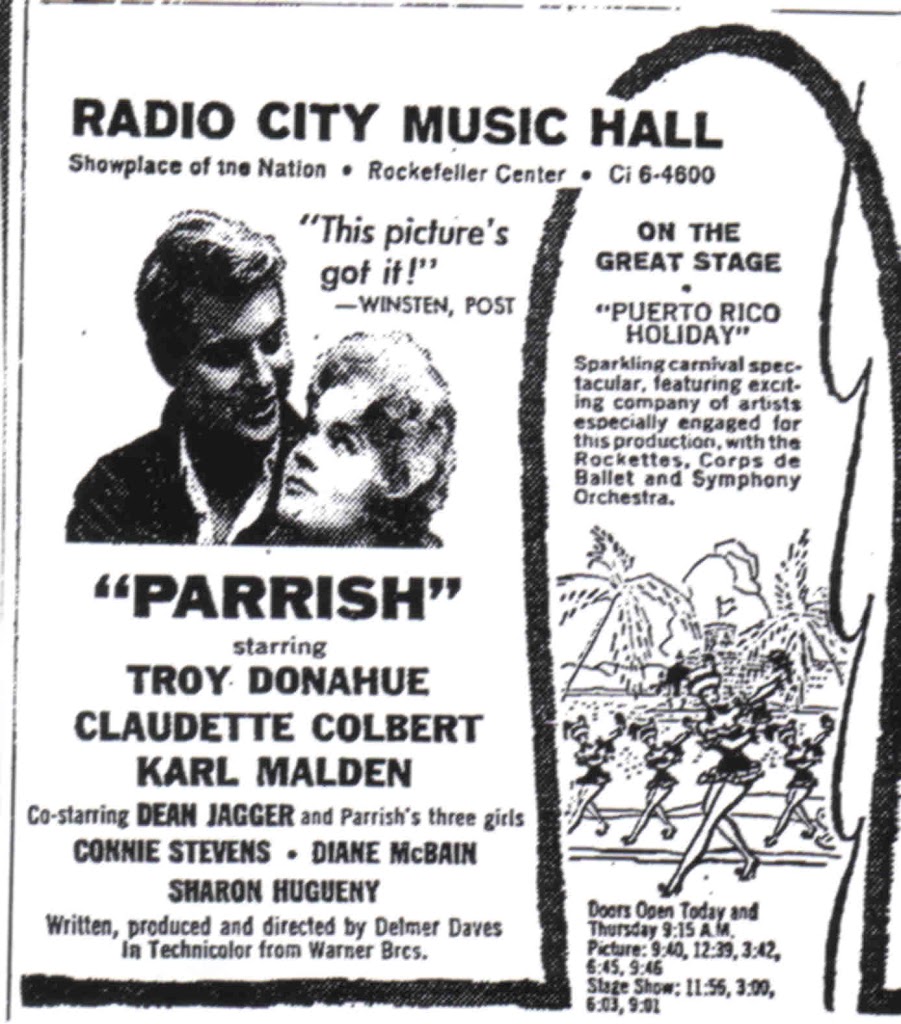
PODCAST: Radio City Music Hall & the Rockettes

Behind the glamour of New York’s greatest stage Radio City Music Hall is a story involving a toothpaste tube designer, an allergy to Brazil nuts, a hydraulic lift protected from the Nazis, and a man named Roxy. PLUS: The Bowery Boys go backstage (well, figuratively) with the Rockettes.

Listen to it for free on iTunes or other podcasting services. Or you can download or listen to it HERE

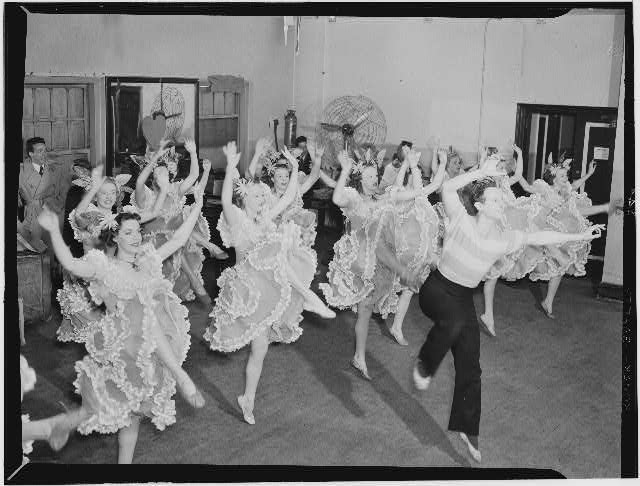
The Rockettes in practice:
Radio City’s movie / stage extravaganza combo:

By the way, a couple of our richer anecdotes are from one of my favorite books about New York City — Great Fortune: the Epic of Rockefeller Center by Daniel Okrent. On top of being well written, Okrent gives delicious insight and lush description to a story that could have been bogged down in uninteresting details.