Categories
Christmas Podcasts

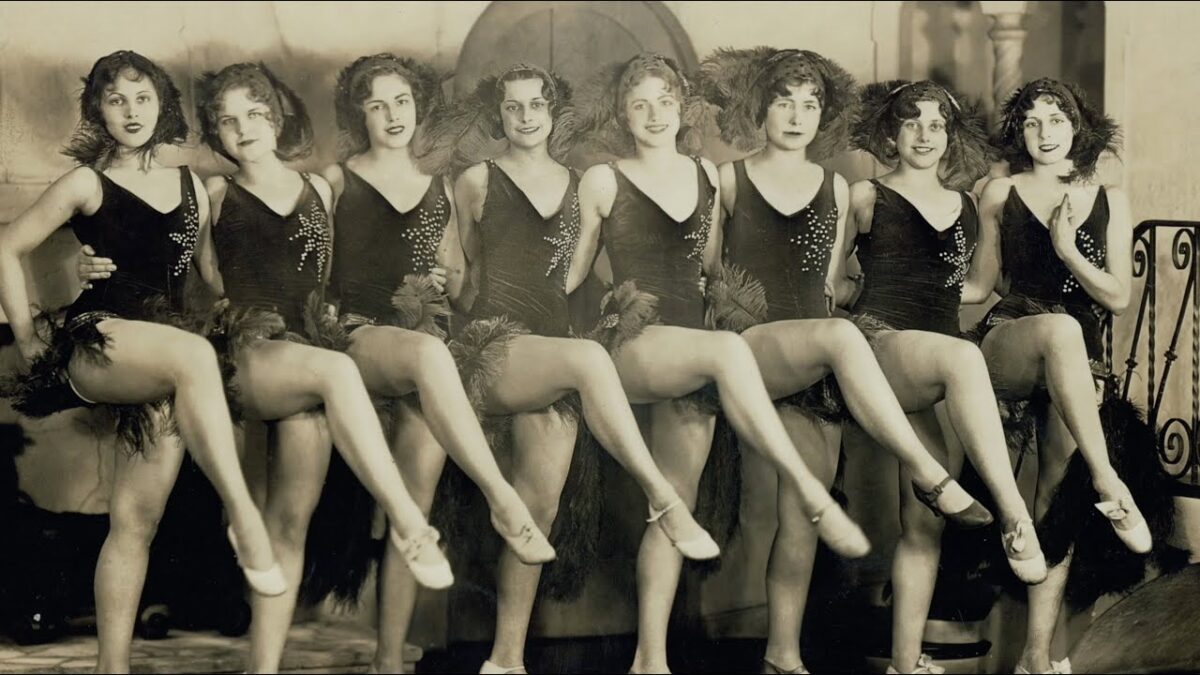
The Radio City Rockettes: New York City’s Dancing Queens

The Rockettes are America’s best known dance troupe — and a staple of the holiday season — but you may not know the origin of this iconic New York City symbol. For one, they’re not even from the Big Apple!

Formerly the Missouri Rockets, the dancers and their famed choreographer Russell Markert were noticed by theater impresario Samuel Rothafel, who installed them first as his theater The Roxy, then at one of the largest theaters in the world — Radio City Music Hall.

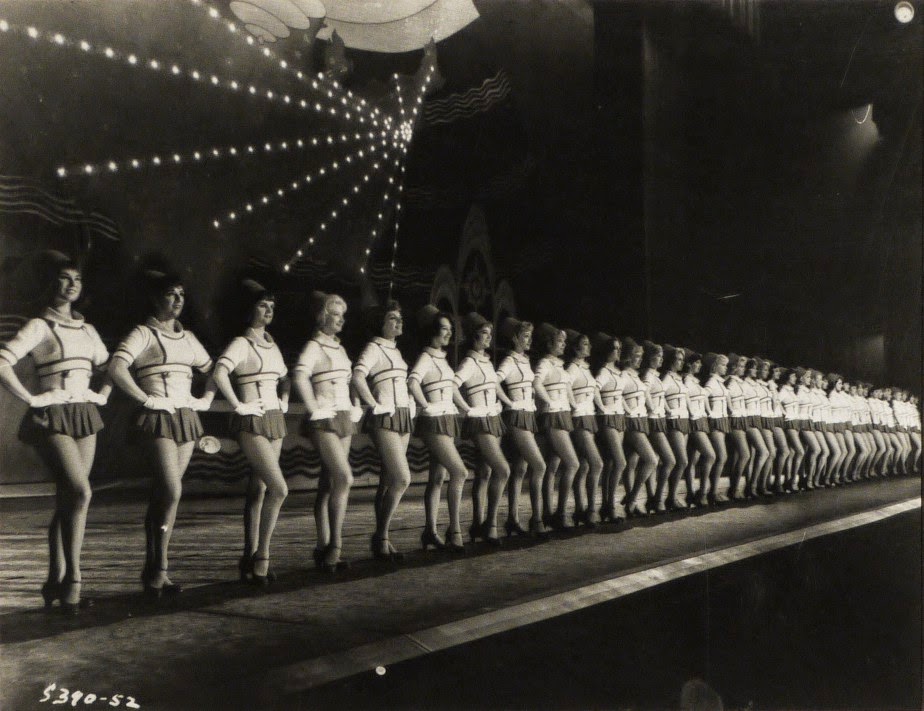
The life of a Rockettes dancer was glamorous, but grueling; for many decades dancing not in isolated shows, but before the screenings of movies, several times a day, a different program each week.

There was a very, very specific look to the Rockettes, a look that changed — and that was forced to change by cultural shifts — over the decades.

This show is dedicated to the many thousands of women who have shuffled and kicked with the Rockettes over their many decades of entertainment, on the stage, the picket line or the Super Bowl halftime show.

This show is a re-edited and remastered version of our 2014 show with a new introduction — in honor of the upcoming 100th anniversary celebration of the dance troupe which would become the Rockettes.

LISTEN NOW: THE RADIO CITY ROCKETTES


Join us on Patreon for extra podcasts and lots of other goodies

Share your love of the city’s history with a Bowery Boys Walks gift certificate! Our digital gift cards let your loved ones choose their perfect tour and date.

Grab a Bowery Boys tee-shirt, mug or water bottle at our merchandise store.


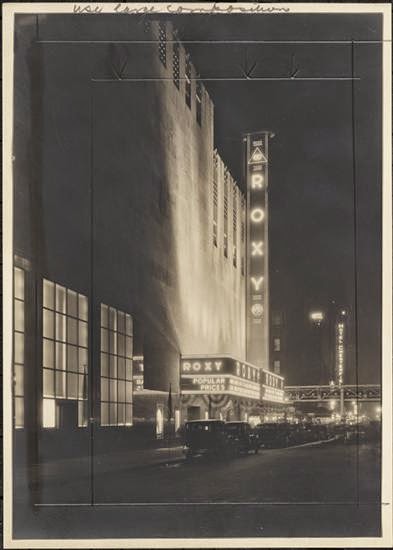
The first New York home of the Rockettes (as the Roxyettes) was the Roxy Theatre, almost as large as Radio City Music Hall and located just nearby. (MCNY)

MCNY

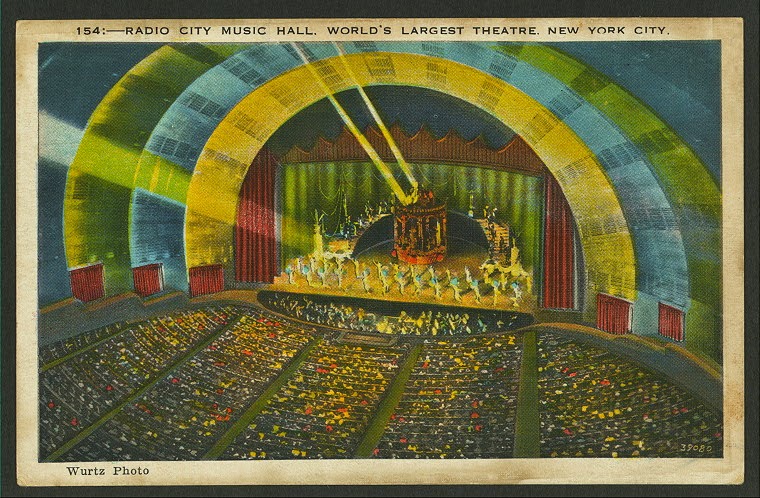
Radio City Music Hall, which opened in 1932, was quickly transformed into the world’s largest movie house after a notorious opening night. It would be here that the Rockettes would perform a few times a day, seven days a week, for over fifty years. (NYPL)

NYPL

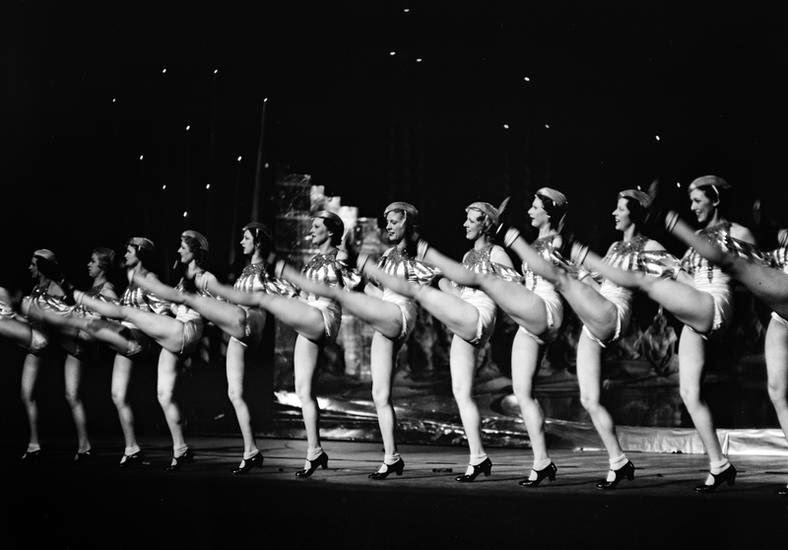
The Rockettes, 1935, in a ‘Cavalcade of Color,’ choreographed and directed by Leon Leonidoff. The constant high-kicking routines required great athleticism, precision and balance. (MCNY)

MCNY

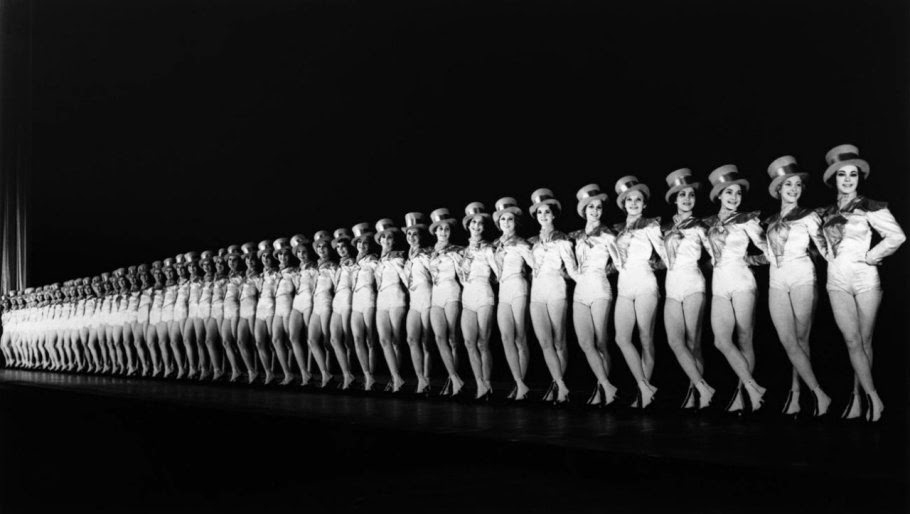
The Rockettes in 1937, beauty in duplication. (Courtesy the Rockettes)

In 1939, the Rockettes gave salute to the Gay Nineties in these extravagant costumes. (Courtesy the Rockettes)

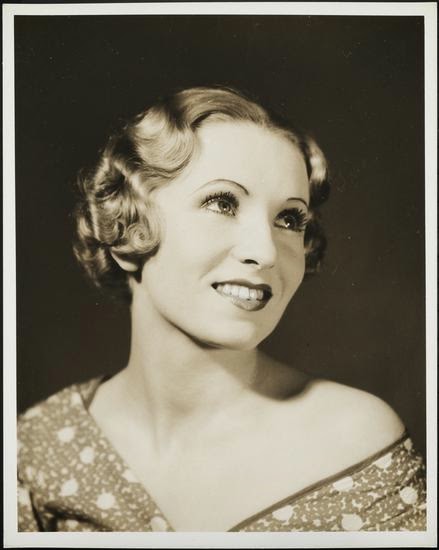
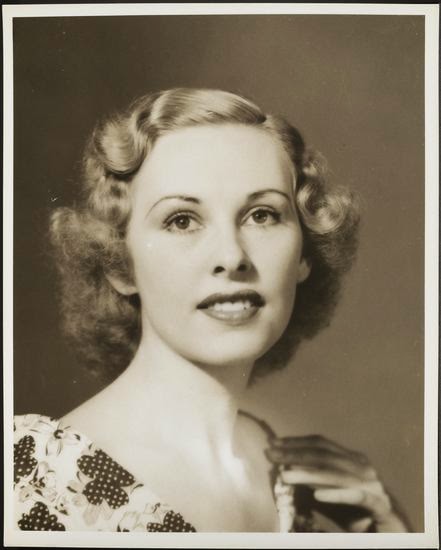
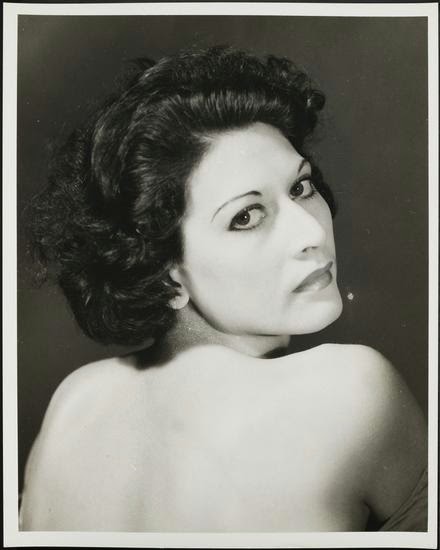
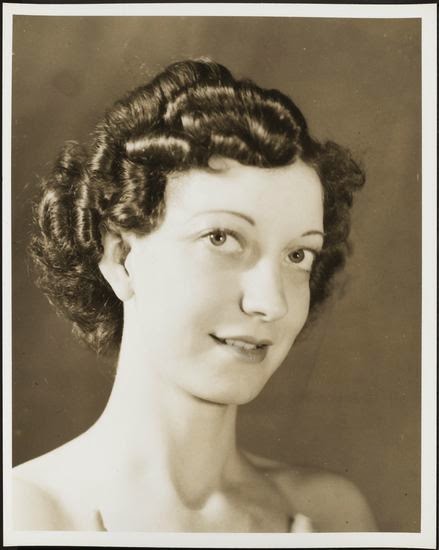
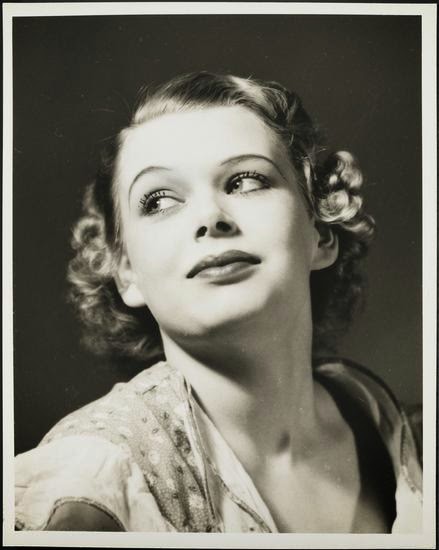
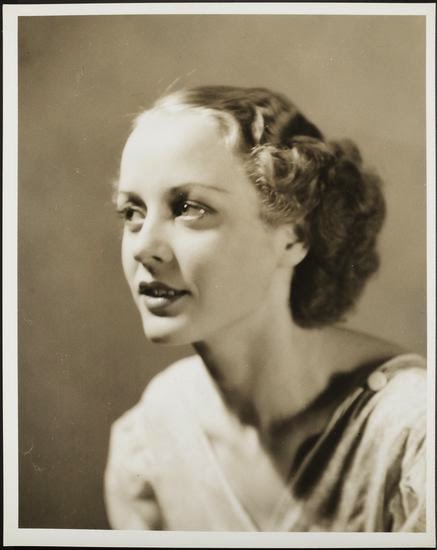
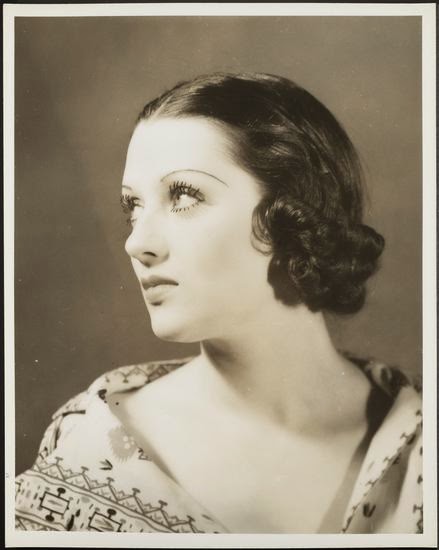
Faces of the Rockettes: A few of the dancers from the 1935 configuration.. These photos are by the Wurts Brothers, from the Museum of the City of New York Collection. You can see the complete group here. Unfortunately there are no names attached to the portraits but if any of these women look familiar, drop me their names in the comments section!

The Rockettes in the 1950s

Courtesy the Rockettes

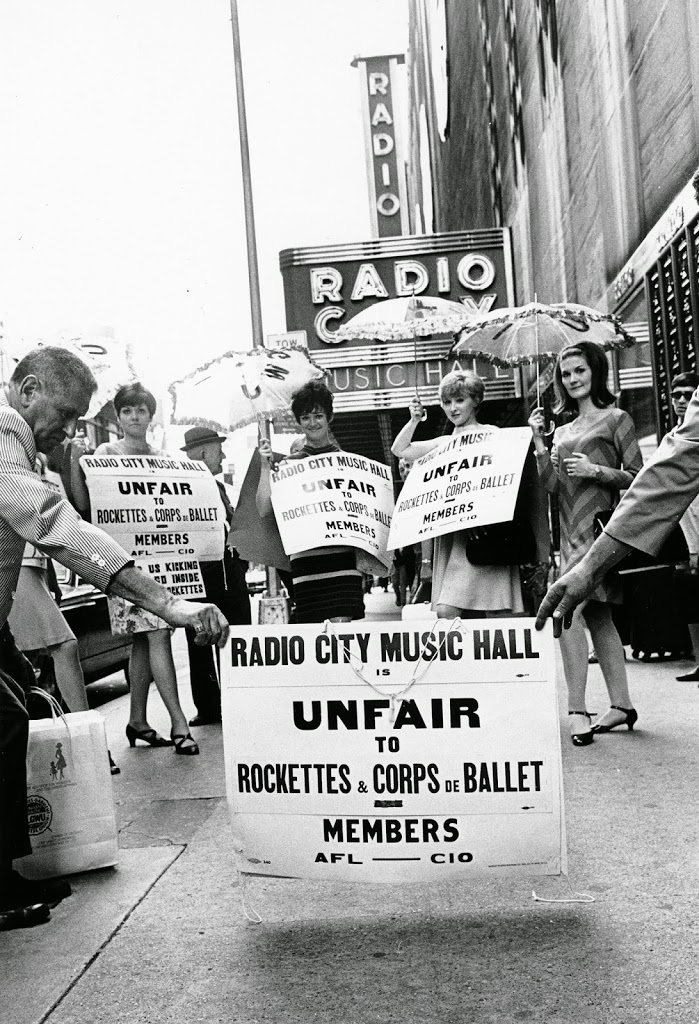
In 1967, many Rockettes went on strike for a month to demand better wages to compensate for their vigorous schedule and unpaid rehearsal time. Needless to say, they got everybody’s attention.

Kheel Center

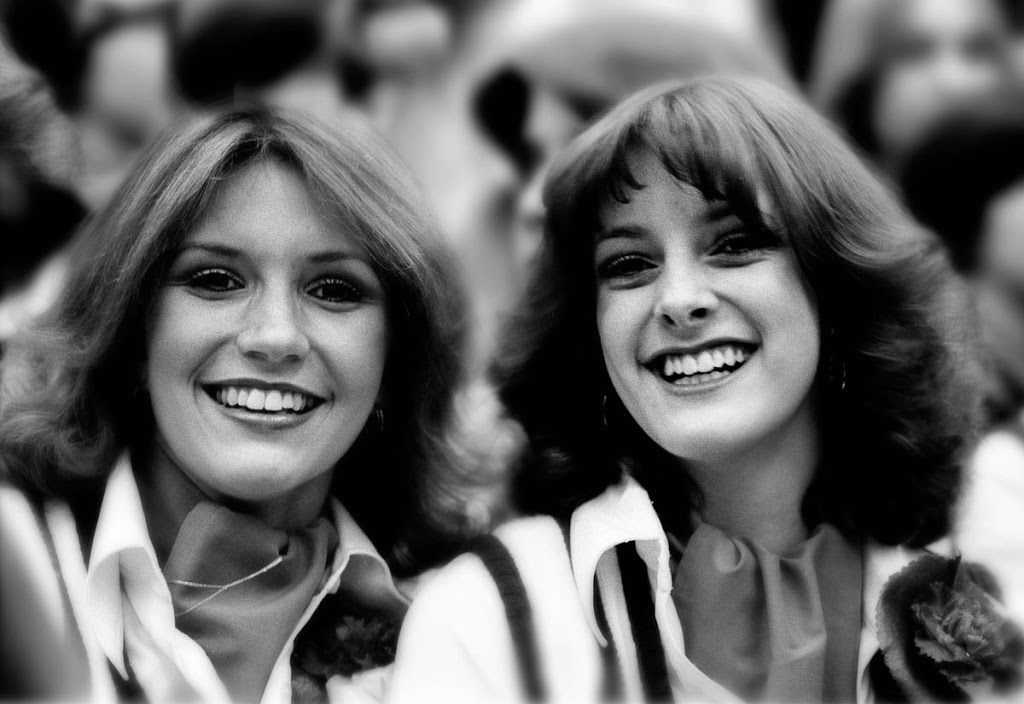
Pam Palmer and Kim Heil, two Rockettes from the late 1970s. (Photo by Jay Heiser)

Photo by Jay Heiser

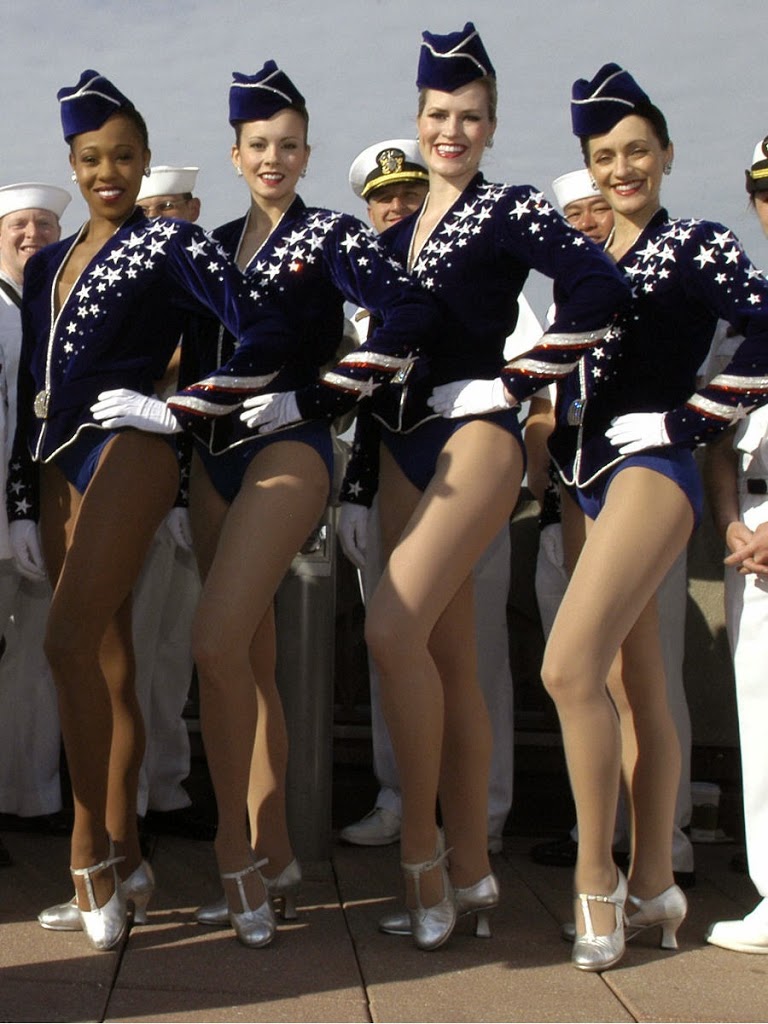
The Rockettes at a Fleet Week event in 2006. (Photo by Gabriela Hurtado)

Photo by Gabriela Hurtado

Various newsreel footage of the Rockettes, including images of the troupe rehearsing on the roof of Radio City!

The Rockettes at the 1988 Super Bowl halftime show:

Categories
Christmas Writers and Artists

Sacred Santa: How a self-proclaimed Messiah became a popular Santa Claus model

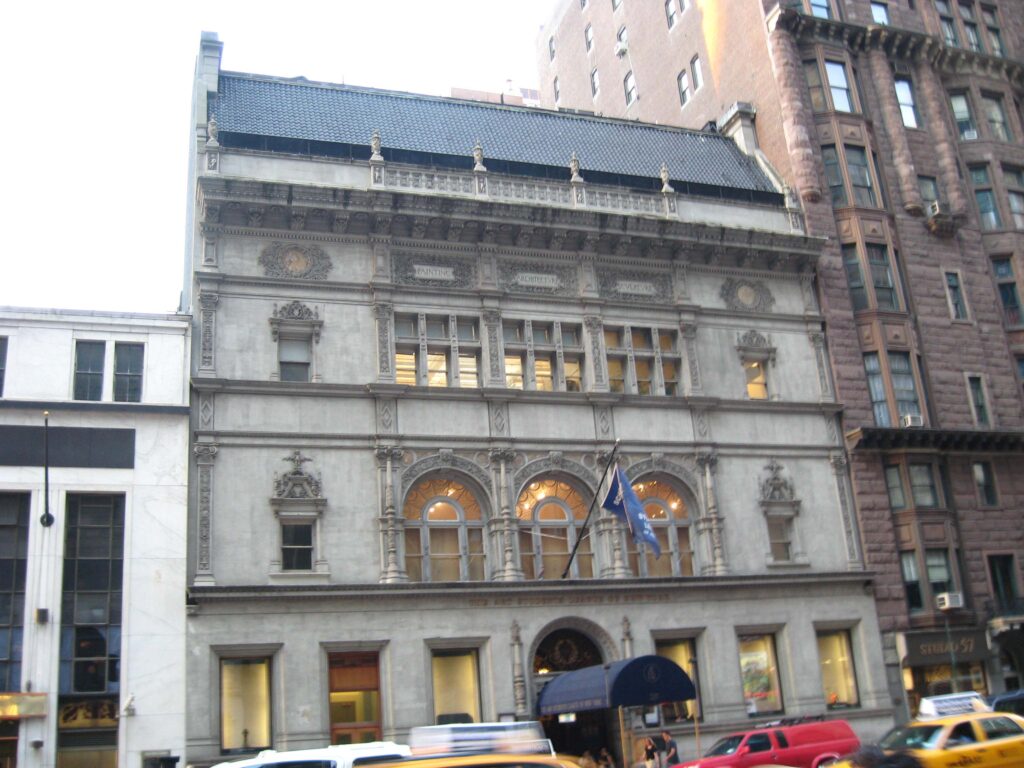
Early one spring day in 1922, while dutifully posing at the Art Students League on West 57th Street, Santa Claus had a fatal heart attack in front of a classroom of students.

6526295831_8529740d1a_b

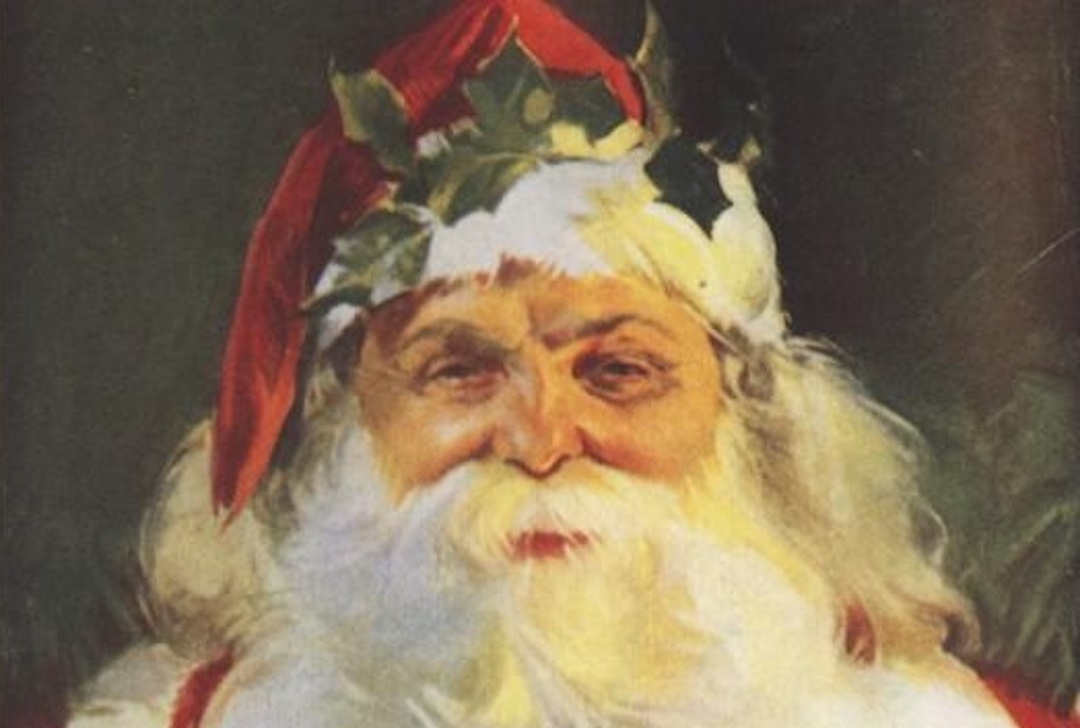
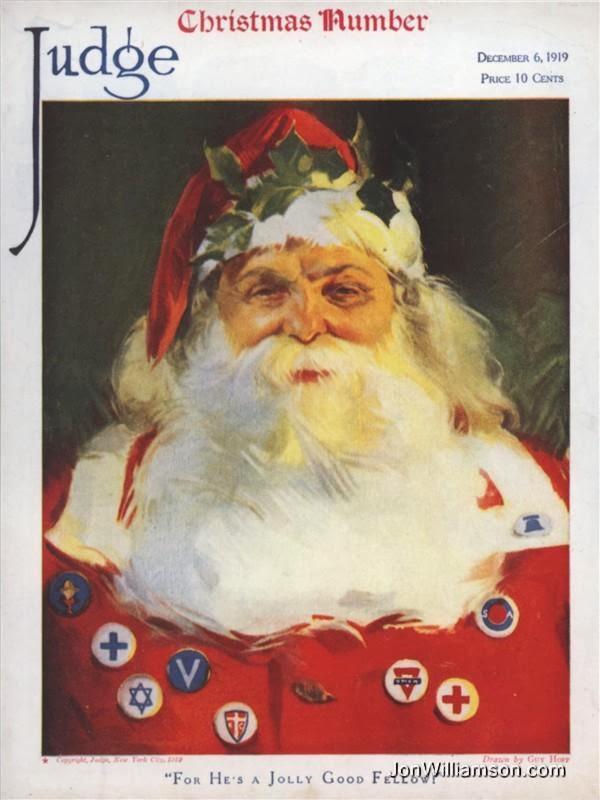
Above — He knows when you’ve been bad or good: A Christmas issue of Judge Magazine from 1919 by Guy Lowy, who studied at the Art Students League and very likely used Mnason for his model. (Courtesy Jon Williamson)

“The man who was Santa Claus is dead,” said the New York Tribune. “He was a man of many names, but at the Art Students League, where he posed for beginners, and in the studios of the best known artists, where he was sent for when a ‘Santa Claus type’ was needed, he was known as Mnason, the first ‘n’ being silent.”

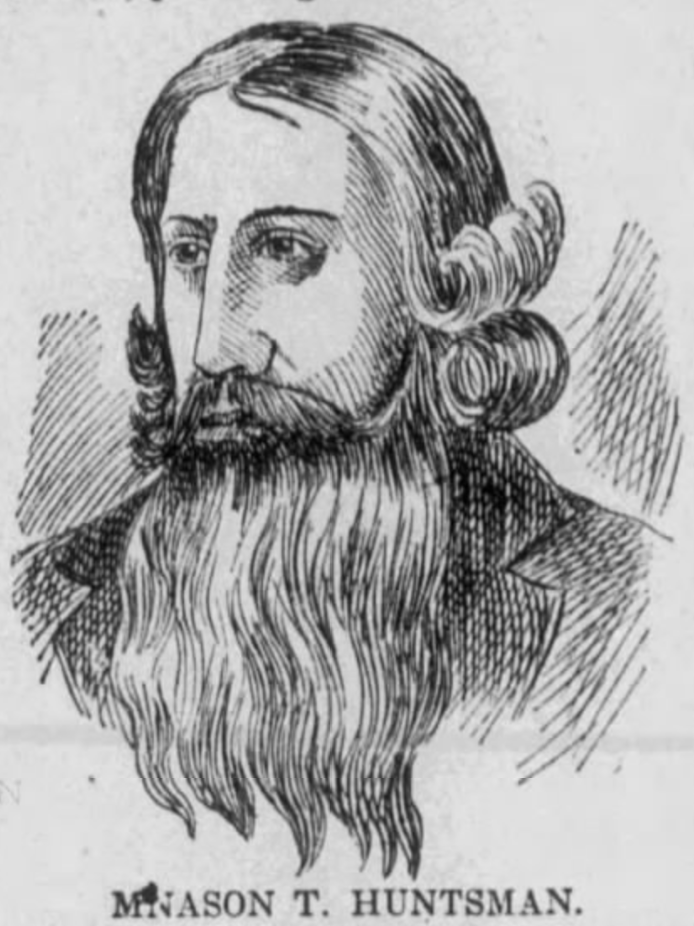
They called him Mnason, although his full name was even more spectacular — Mnason T. Huntsman. (Or Huntsman T. Mnason or even Paul Mnason. His aliases were legion.)

Man of Mystery

The burly artists model lent his body to the ages; thanks to the scores of influential artists who hired him for Christmas projects, today’s modern Santa Claus probably looks more like Mnason than perhaps any other actual human being in history.*

The poet Arthur Chapman declared:  “It’s no exaggeration to say that Mnason posed for most of the Santa Claus pictures that have been made in recent years. And he figured in a good many for which he did not actually pose — as such pictures have been copied from originals for which Mnason was the model.

“Probably there isn’t a man today whose picture has been cut out more times and is treasured in more scrapbooks.”

Mnason, the definitive Santa Claus of the 1910s and early 1920s, was a true “man of mystery” for many who painted and drew him. A few knew the details of his past; perhaps it held the secret to his magnetic allure, to the deep, ancient gleam in his eye.

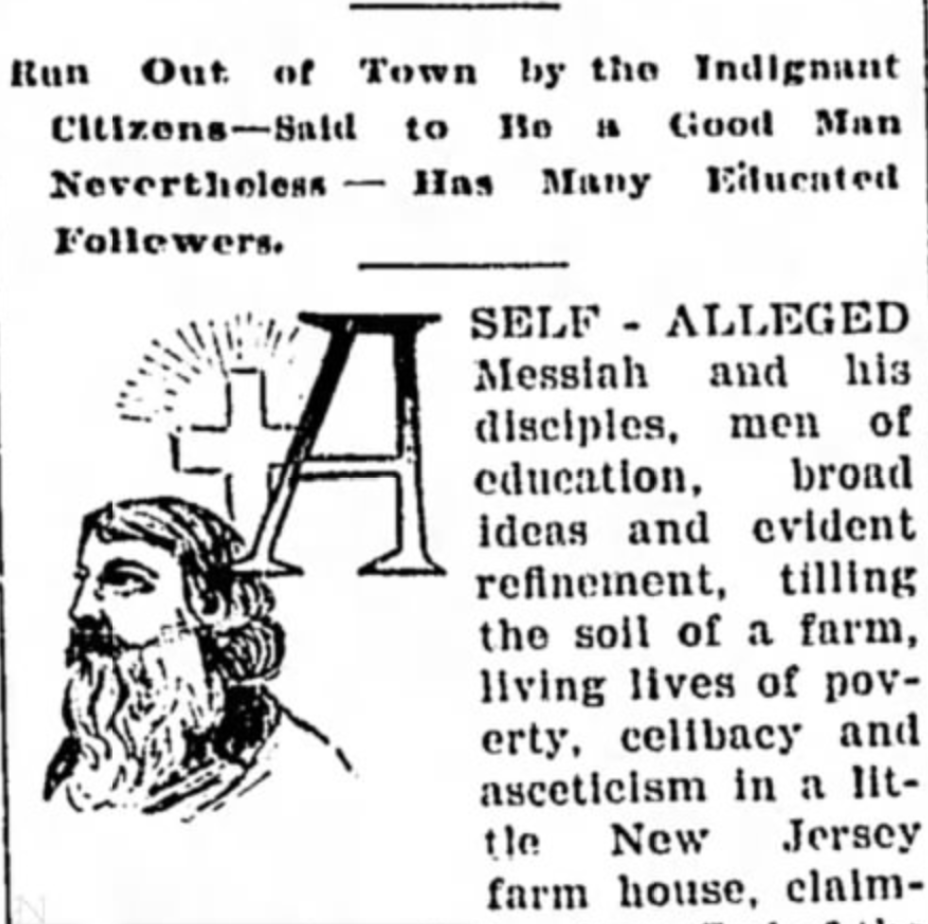
For Mnason was a former religious cult leader and proselytizer who had served time in jail for child abduction and religious blasphemy, and once he was actually tarred and feathered by an angry mob. He was a charismatic to some, a psychotic to many others.

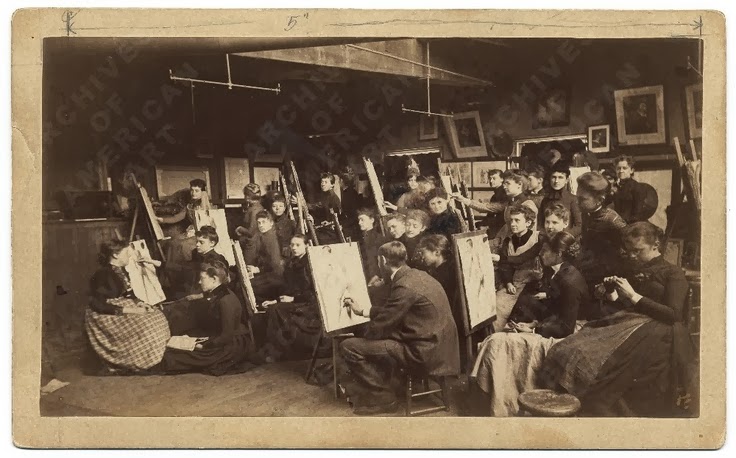
Below: Painter Kenyon Cox and his students at the Art Students League in 1887, a couple decades before the arrival of Mnason (Courtesy aaa.si.edu)

Making A Cult Leader

Mnason was born in Pennsylvania sometime in the 1850s, orphaned at eight years old. His early religious teachings were strict but conventional for the period.

In the 1880s, he worked for New York’s Sunday Closing League, visiting New York shops and saloons to ensure they were not selling anything too amoral on church day. In 1883, he testified that one shop owner illegally sold cigarettes to young boys, but not before the judge excoriated Mnason for lying on the stand.

At some point between that moment and 1888, Mnason was “inspired and bidden by God” to become a preacher. His message was not well received; at one point, the “wild and absurd behavior” of this “obstreperous” man of God got him thrown into jail for disorderly conduct.

By then, he had started a religious commune called the Lord’s Farm in Pascack Valley in New Jersey, where he began to attract (or lure) a young, impressionable flock.

He called himself “The Holy One” or “The Modern Christ” and granted bizarre nicknames to his most loyal followers.  Collectively, they were called the Angel Dancers, or the Church of the Living God.

In 1888, Mnason was arrested “on the charge of blasphemy,” and of enticing two young women who claimed they “were obliged to do anything he required.” He was reportedly tarred and feathered by irate residents. (It is at this point that you might notice the odd coincidence of the name Mnason and ‘Manson’, as in Charles.)

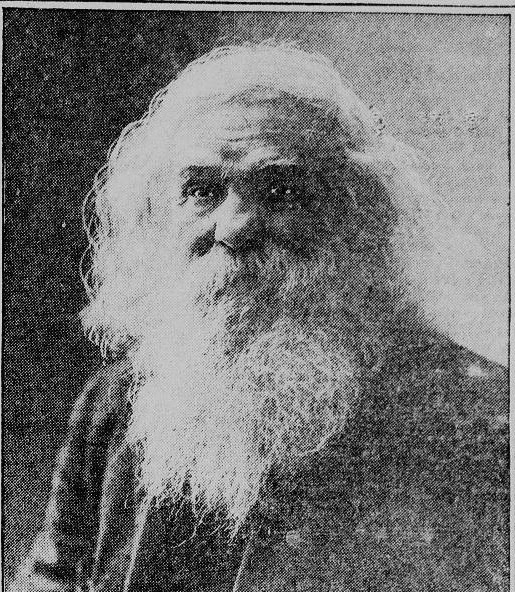
Mnason T. Huntsman, from an image used in the New York Tribune

The Angel Dancers

Even still, the Angel Dancers managed to attract on oddball list of adherents, including a local farmer’s wife and her two children. Eventually, according to a 1893 New York Times article, “the band was increased by two long-haired men, who called themselves ‘Silas’ and ‘John the Baptist’.

This fanatical cult would reportedly practice ‘angel dancing’, “scantily robed and waving a huge blanket with which to drive away the devil.”

Also notable to the press of the day: Mnason and his flock were all vegetarians.  “Nothing save what grows in or on the ground may be eaten.” [source]

From The Times in Philadelphia, November 25, 1895

The entire lot were arrested in April 1893 for attempting to swindle the aforementioned farmer, although it’s obvious that some religious intolerance was embedded within the charge as well.

The affidavit read: “The conspirators deny, ridicule and curse all regular religion and religious customs, recognize no Sabbath, and set up a false god of their own, declaring the said Mnason to be the only and living God.”

From a syndicated article which ran in the Ironwood News-Record in Michigan, January 11, 1896, courtesy Newspapers.com
The Compound

A few years later, the Angel Dancers had taken over the farmhouse and had grown to a membership of nine males and nineteen females, with two children.

After the reported death of a child in 1897, the Times intoned, “No physician was called to be of any service. Mnason is ‘the Christ’. The dancers are vegetarians.”

Another ugly abduction case reared its head in 1900, when two “little girls” were taken from the compound and then kept in jail for months in order to testify against Mnason. The cult leader seemed to survive these charges, too

From the same article as above.

The Lord’s Farm became so notorious that by 1909, the state found a good excuse to evict Mnason and his followers. The charismatic moved to New York City and briefly opened a church for black parishioners.

It is then that former ‘Modern Christ’ then disappears, for a time, from public view. But the Times in 1909 noted the following:  “Mnason is a man of many aliases.”

The Art Students Leave, photo by Jim Henderson, Wikimedia Commons

Finally, he popped up again, in 1916, at the Art Students League, and not unnoticed.

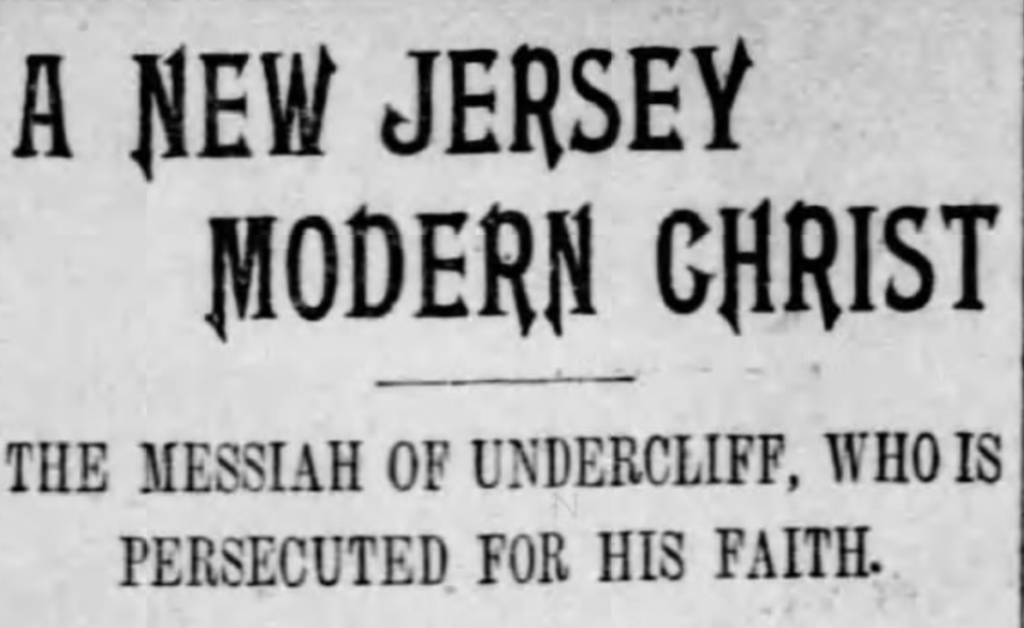
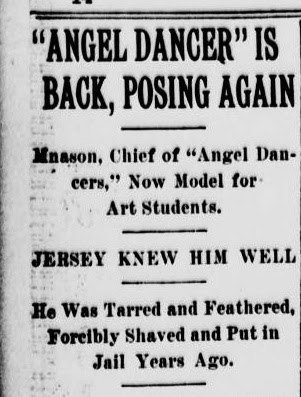
The New York Sun mocked his new profession (headline pictured below):  “[R]ecently he had turned himself into Santa Claus or King Lear or any other whiskered person that the embryo John Sargents of the Art Students League wish him to be¦.”

It’s no surprise he would find his way into an art collective — he was a vegetarian, after all — and his timing was rather perfect, given his particular look and body size.

Making Santa Claus

The character of Santa Claus had gone through a major style makeover in the late 19th century.

His annual routine already immortalized in the popular verse A Visit From St. Nicholas — penned by the godfather of the Chelsea neighborhood Clement Clarke Moore — magazine and postcard illustrators began morphing the popular Christmas figure from a thickly robed saint to a child-friendly, candy-colored superhero.

This change came about through the hands of American artists and illustrators, led by Harper’s Weekly artist Thomas Nast in New York. Some of the modern look and mythos is credited to Nast, his influential pen elaborating on Santa’s girth (eventually to rest on near-corpulency) and placing his residence in the North Pole.

By the early 20th century, Santa’s physical characteristics were locked in place, but his spirit and personality were still very much uncertain. Should Santa be energetic or world weary? Wise or playful? Approachable like a parent, or unfathomable like a god?

Perfect Pose

Many of New York’s great illustrators of the period were associated with the prestigious Art Students League, and it was here that Mnason contributed his own sparkle to the characters, as artists recommended the man for his poise, mystery and sparkle.

“They found in him the ideal type, on account of his snowy beard, his bearing, the jolly twinkle in his eye, his fine color and his intelligence.”

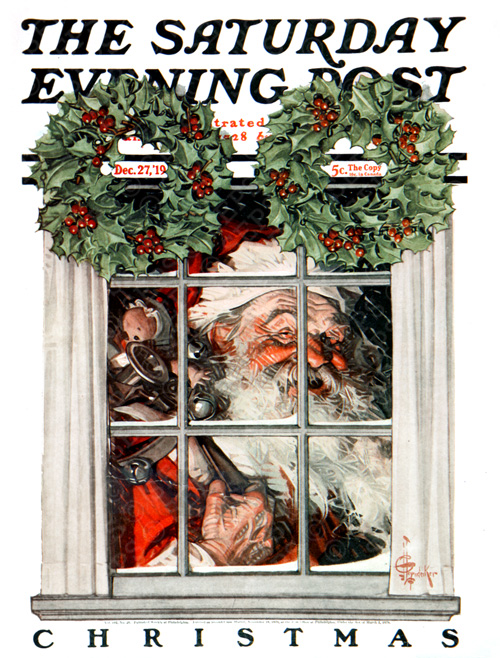
Blow: J.C Leyendecker‘s 1919 cover for the Saturday Evening Post.  You can easily tell Leyendecker’s influence on later Evening Post artist Norman Rockwell. Given the artist’s connection to the ASL, Mnason very likely posed for this painting.

It’s clear that many of these legendary artists were aware of some version of their Santa’s past.  “Mnason would hint to his artists friends regarding certain experiences in his life in which his pronounced and individualistic religious views played a part.” [source]

One year, he was even hired as a department store Santa where he notably espoused his religious views to the children who had come to present their Christmas wishes.

And To All A Good Night

His days of Lord’s Farm were behind him, but Mnason kept writing religious verse while living suitably on his artist-model wages. For years, he was passed among New York’s most renown illustrators, who claimed him the iconic visage of the holiday’s most jolly proponent.

“Nothing could dampen his cheerfulness, but behind his smile there was an element of mystery which the embodiment of Santa Claus maintained to the last.”

When he died in 1922, Mnason had been drawn and painted as Santa Claus dozens of times.

Eventually, Santa Claus would go through his final evolution in the 1930s, thanks to artist Haddon Sondblum, hired by Coca-Cola for their colorful advertising campaigns.

Sondblum’s iconic depiction is directly influenced by Moore’s famous poem, and but equally so by the dozens of artists and magazine illustrators before him, most of which who had used Mnason as their inspiration.

*A retired salesman named Lou Prentice was used by Haddon to create early versions of his Coca-Cola Santa and so might lay claim to being the most important physical inspiration. But Mnason was used by more artists and within several pivotal publications of the day.

Categories
Holidays

‘Twas The Night: A New York Christmas tradition in an uptown cemetery

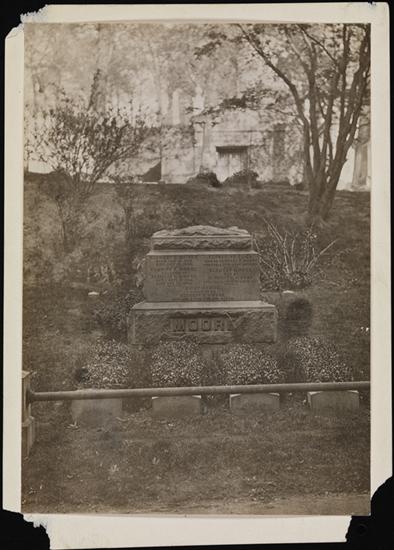
Clement Clarke Moore, the lord of Chelsea (the manor for which the neighborhood is named), lived a long and distinguished life as an educator and land developer, dying in 1863 at his home in Newport, Rhode Island.

He was originally buried in the churchyard of St. Luke-in-the-Field (pictured below) in the area of today’s West Village.

In 1891 the cemetery was redeveloped and the remains were transferred to Trinity Church’s graveyard in Washington Heights.

What does all this have to do with Christmas you ask?

Moore was a revered scholar, former president of Columbia College (later Columbia University) and the developer of the General Theological Seminary on his old Chelsea property.

But most everybody knows him better as the author of “A Visit from St. Nicholas” or “Twas the Night Before Christmas,” a verse of holiday anticipation penned for his children.

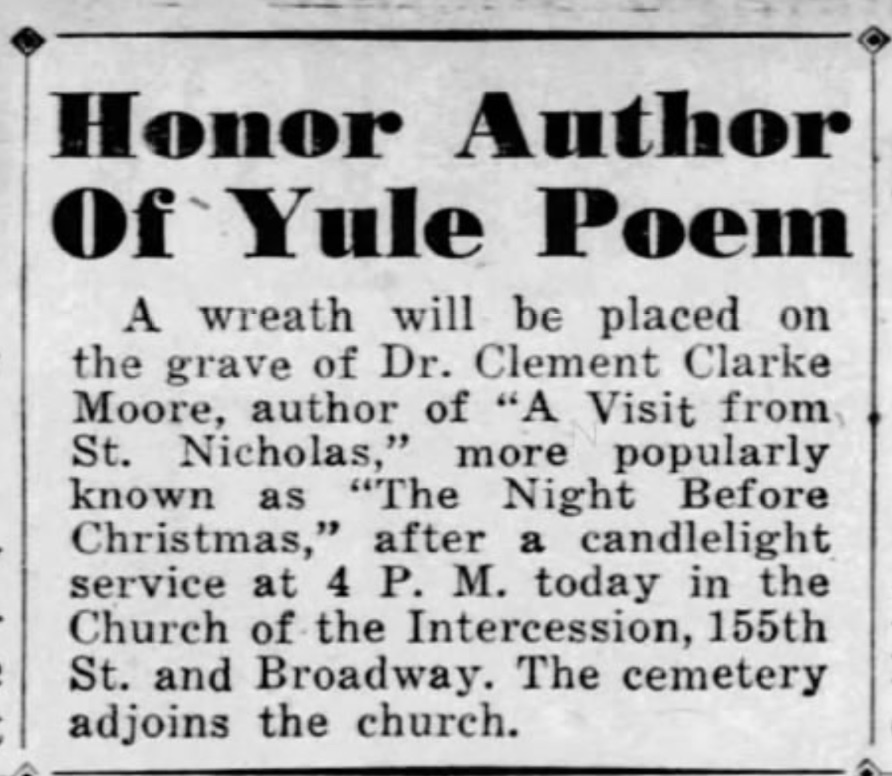
For well over one hundred years an unusual and special ceremony has taken place at Church of the Intercession, the house of worship which sits upon the grounds of Trinity Church Cemetery.

Church of the Intercession

The tradition was apparently initiated by a vicar at the chapel named Milo Hudson Gates.

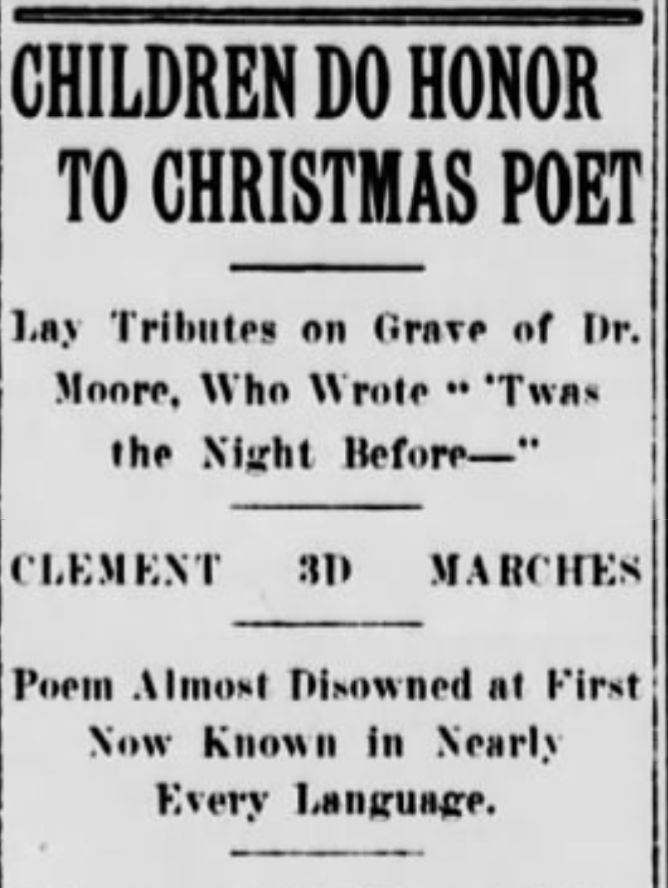
First initiated in 1911, Gates, according to a 1933 New York Daily News report, “and his child parishioners trouped across to Trinity Cemetery to pray and sing at the grave where Dr. Moore’s bones have rested since they were removed from the vault in St. Luke’s Church on Hudson Street.”

From the 1914 New York Sun

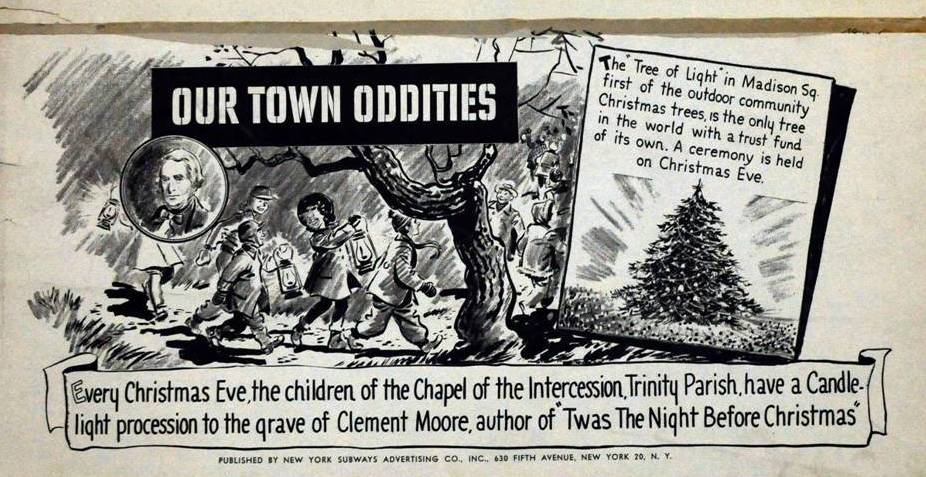
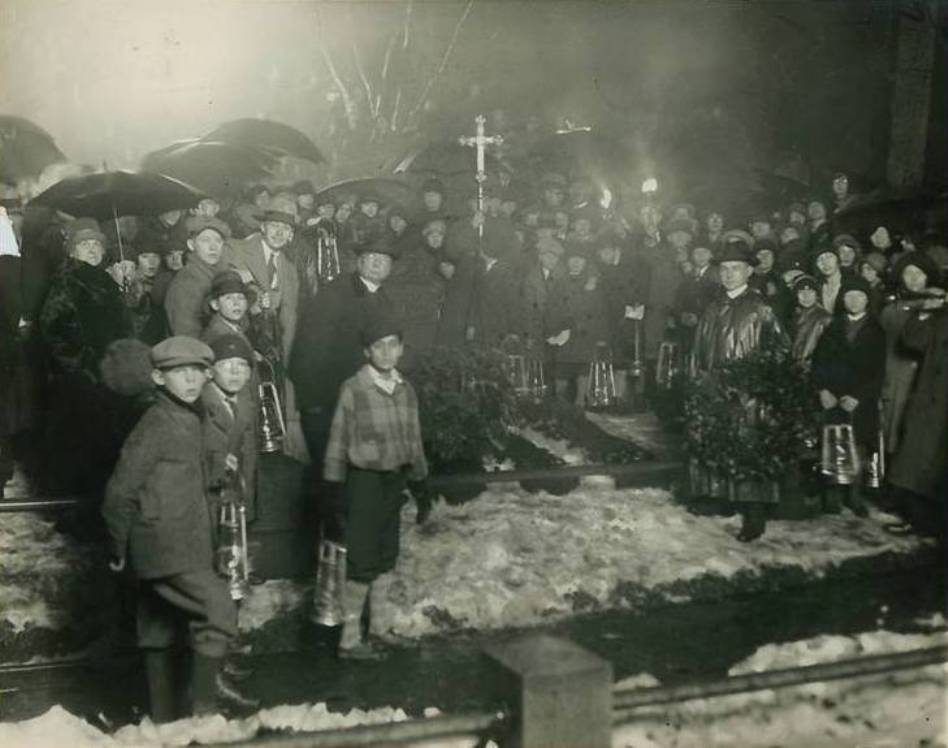
Hundreds of children, carrying lanterns and torches in the old days, have gathered around Moore’s gravestone and sang Christmas songs over the years.

“Carols were sung and wreaths placed on the grave,” according to a 1919 report. The famous poem by Moore was then recited.

“His name was Clement C. Moore. His body sleeps beneath the Christmas trees that grow in Trinity Cemetery.” [December 23, 1918]

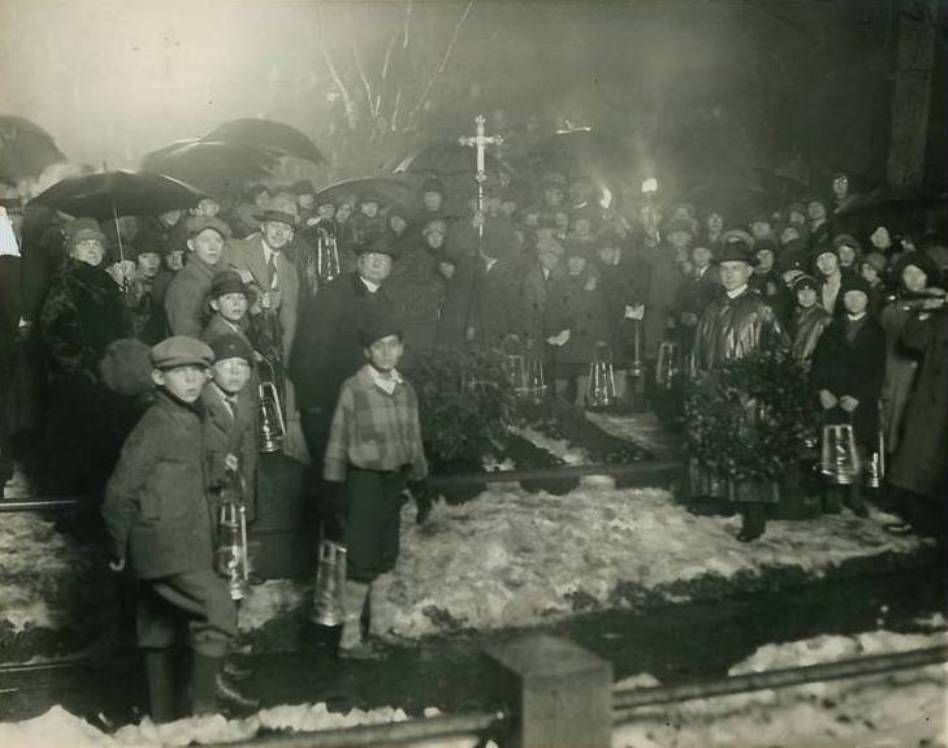
Below: Children surrounding the grave of Moore’s, sometime in the 1920s or 1930s (according the church website).

This tradition has survived into modern day with some interesting variations.

New York Daily News 1944

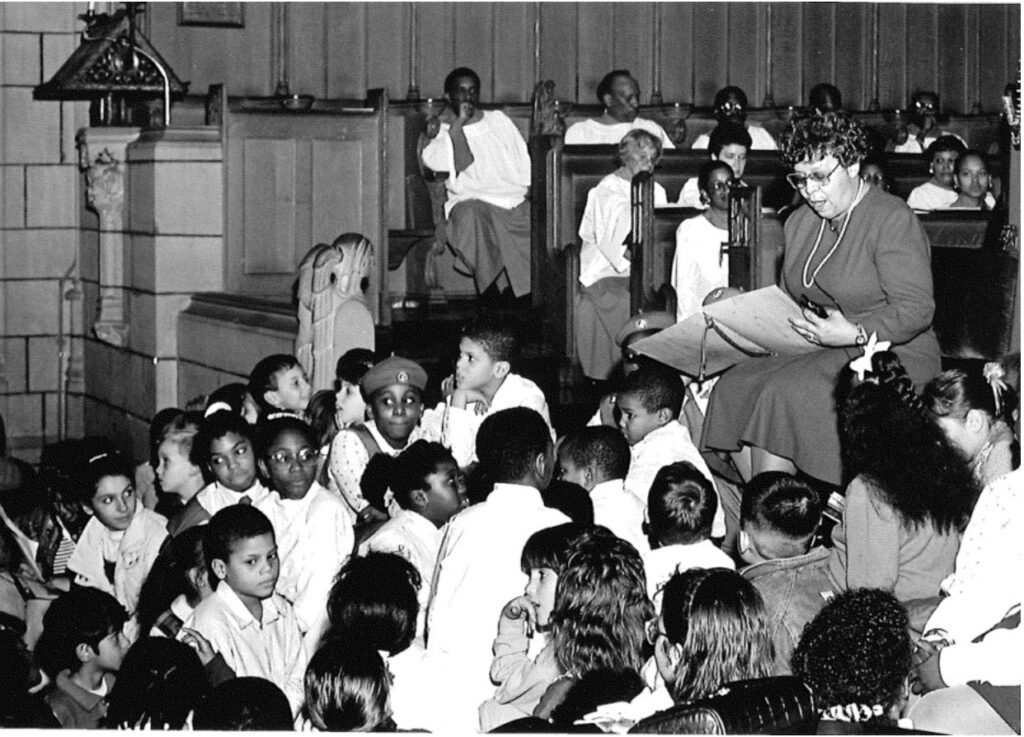
Frequently a person dressed as Saint Nicholas (the saint, not the Santa) leads the procession. In recent decades, a person of some renown reads the poem such as in 2003 when basketball great Isiah Thomas brought Moore’s words to life.

Below: In 1990, Joyce Dinkins, wife of the mayor David Dinkins, was invited to read the poem.

Courtesy Trinity Church

Details of this year’s event from their website:

THE 112TH CLEMENT CLARKE MOORE
MEMORIAL CANDLELIGHT SERVICE
WILL BE HELD ON
DECEMBER 18, 2022 AT 3:00PM

This year, the poem will be read by The Rt. Rev. Catherine S. Roskam, former Suffragan Bishop of New York.

Following the service, we will process out to Trinity Cemetery to lay the wreath on Clement Clarke Moore’s grave and sing “Silent Night” at the Trinity Cemetery and Mausoleum.

Categories
Holidays Neighborhoods Podcasts

The history of the Dyker Heights Christmas Lights: An electric holiday tradition illuminates Brooklyn

PODCAST: The history of the Dyker Heights Christmas lighting extravaganza, Brooklyn’s fabulous and flashy celebration of the holiday season.

EPISODE 305 There’s a special kind of magic to Christmas in New York City. From that colossal Christmas tree in Rockefeller Center to the fanciful holiday displays in department store windows.

But in the past three decades, a new holiday tradition has grown in popularity and in a surprising quarter — the quiet residential neighborhood of Dyker Heights in Brooklyn.

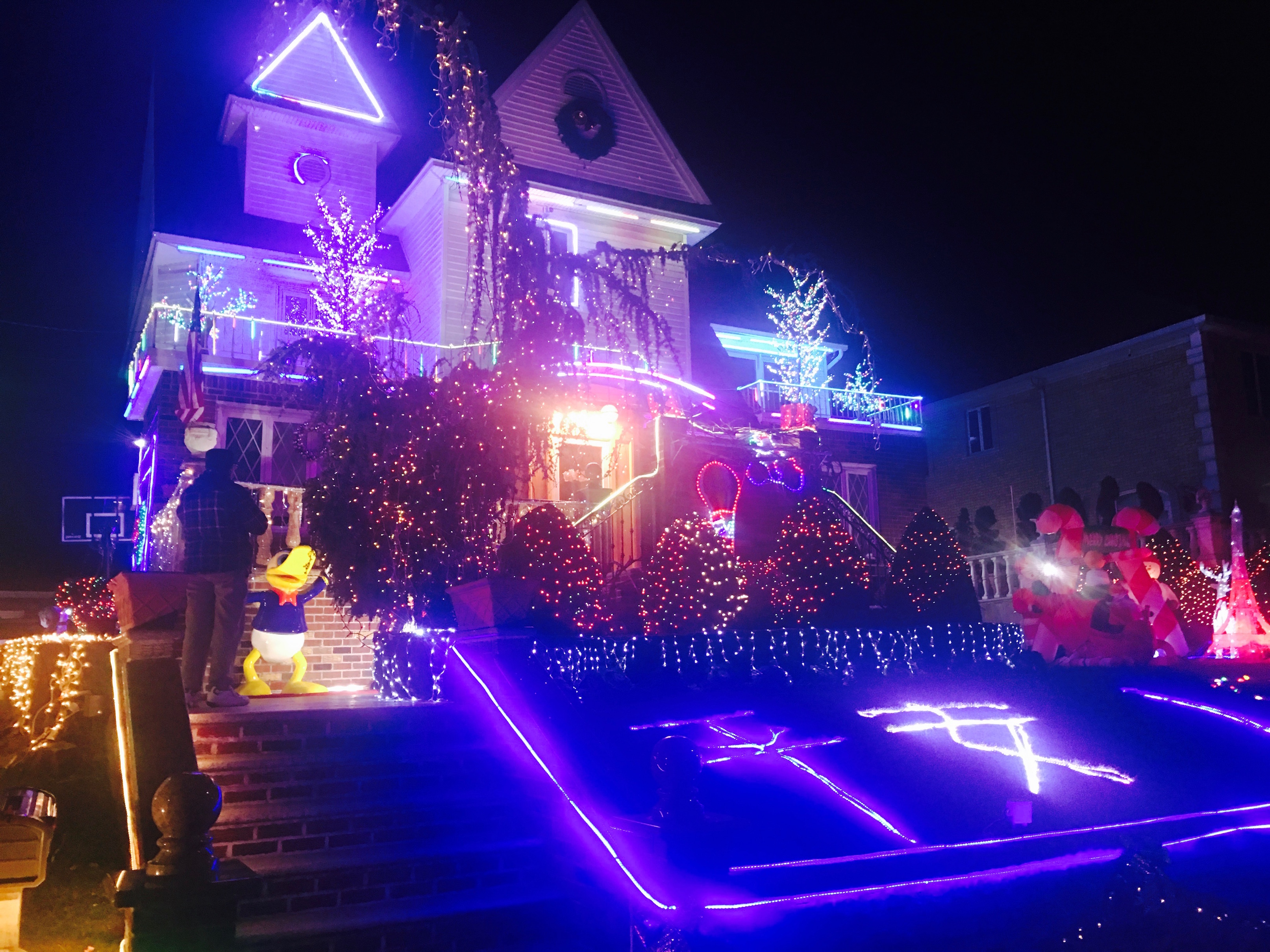
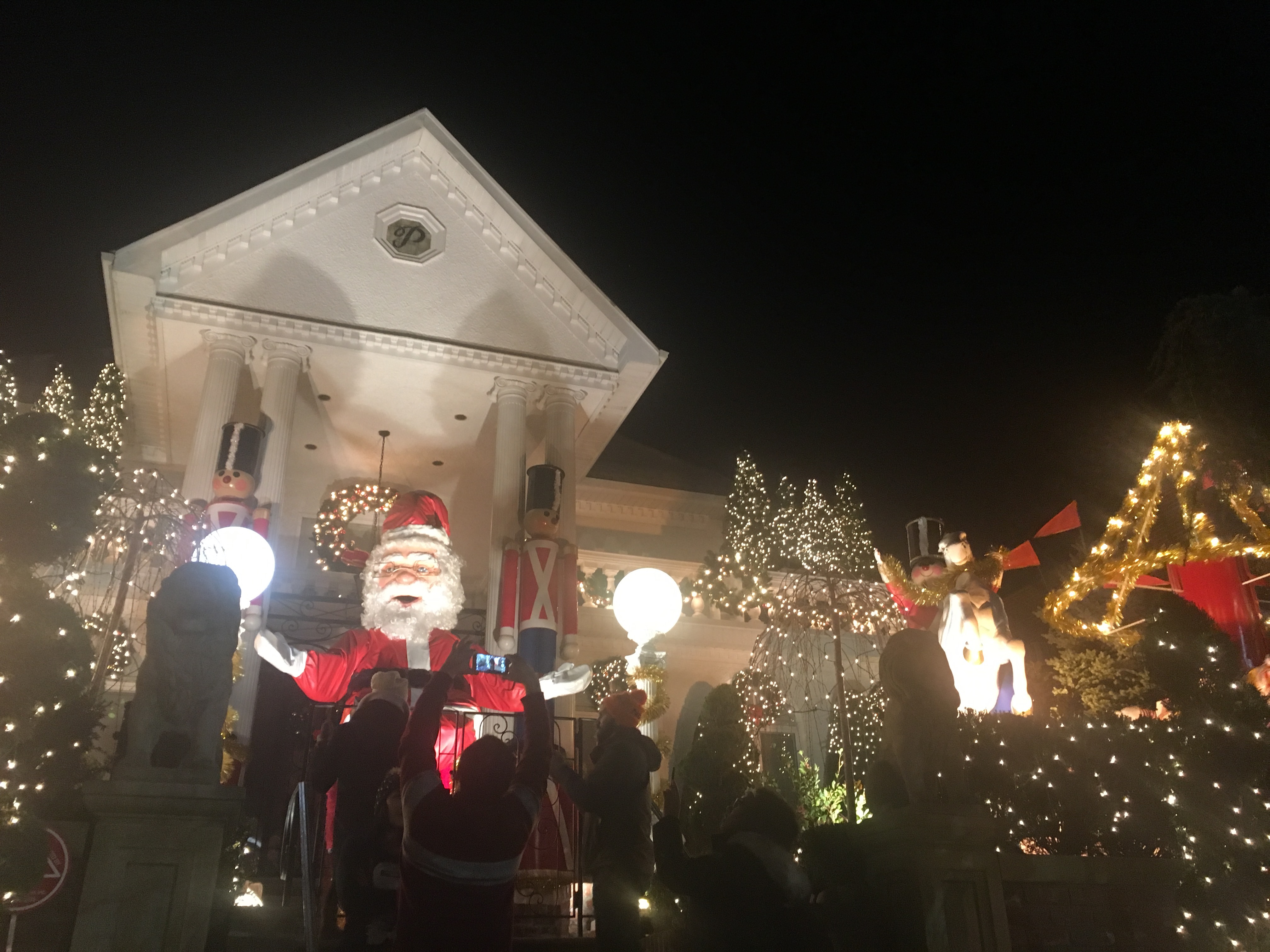
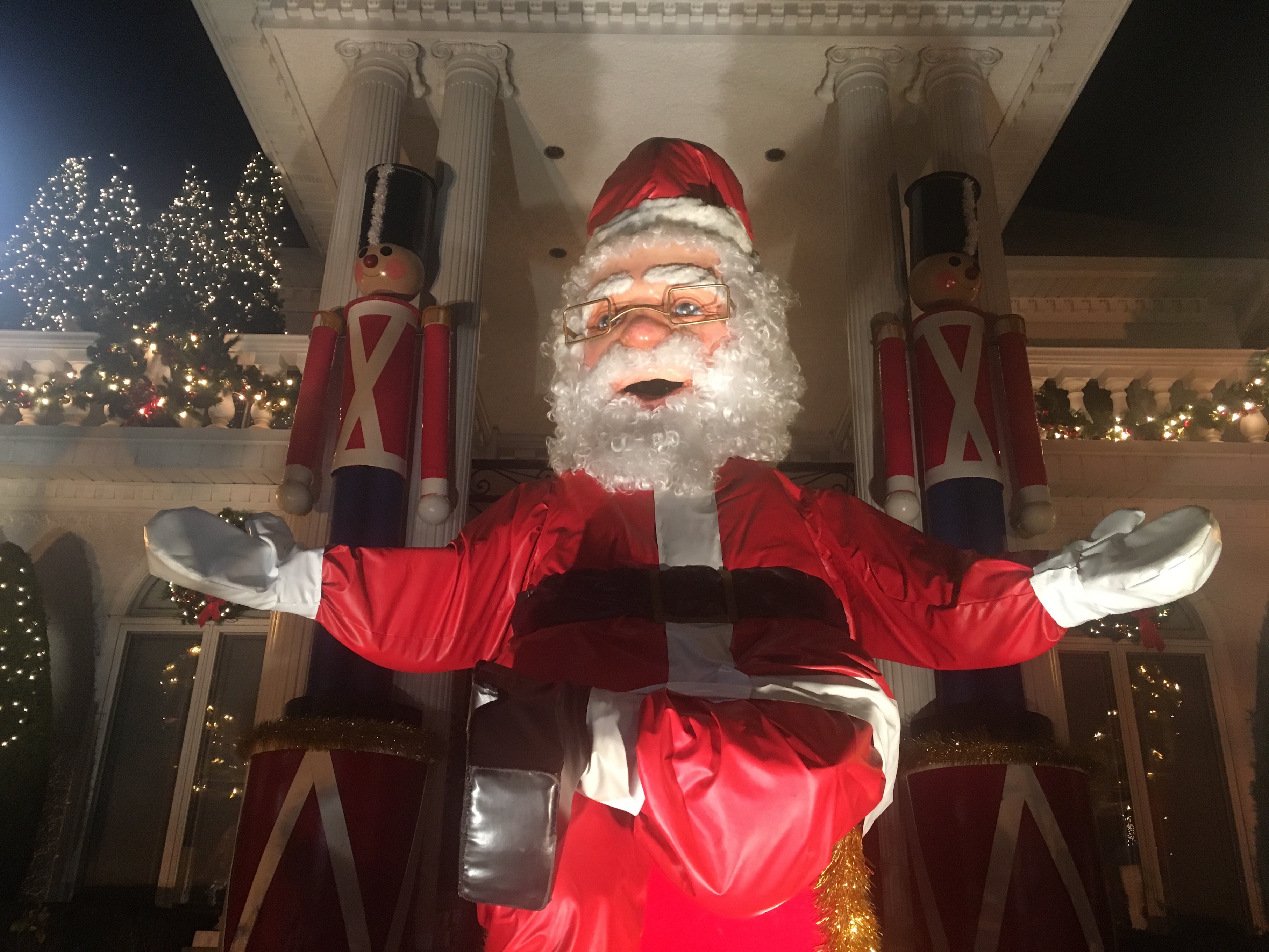
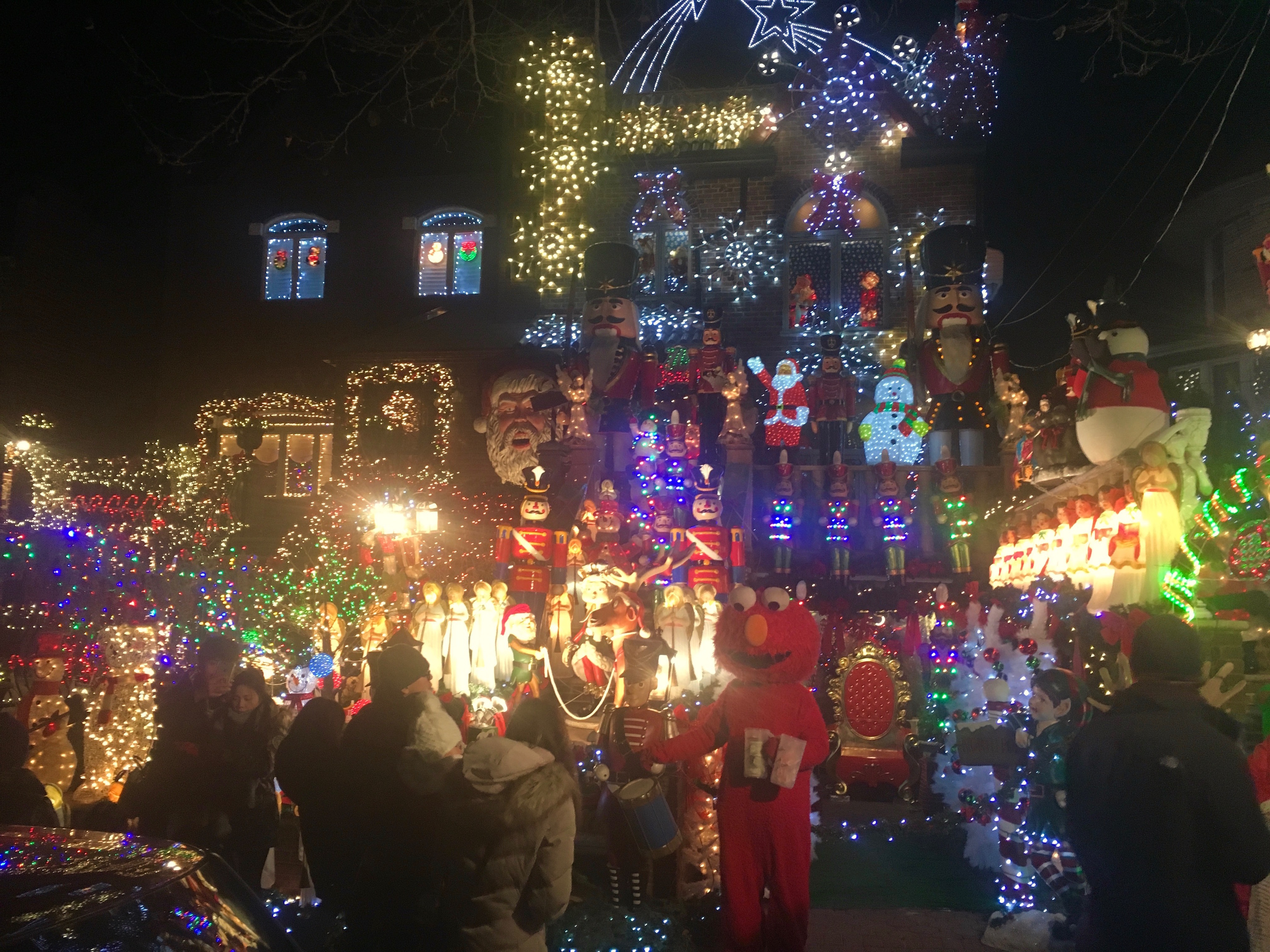
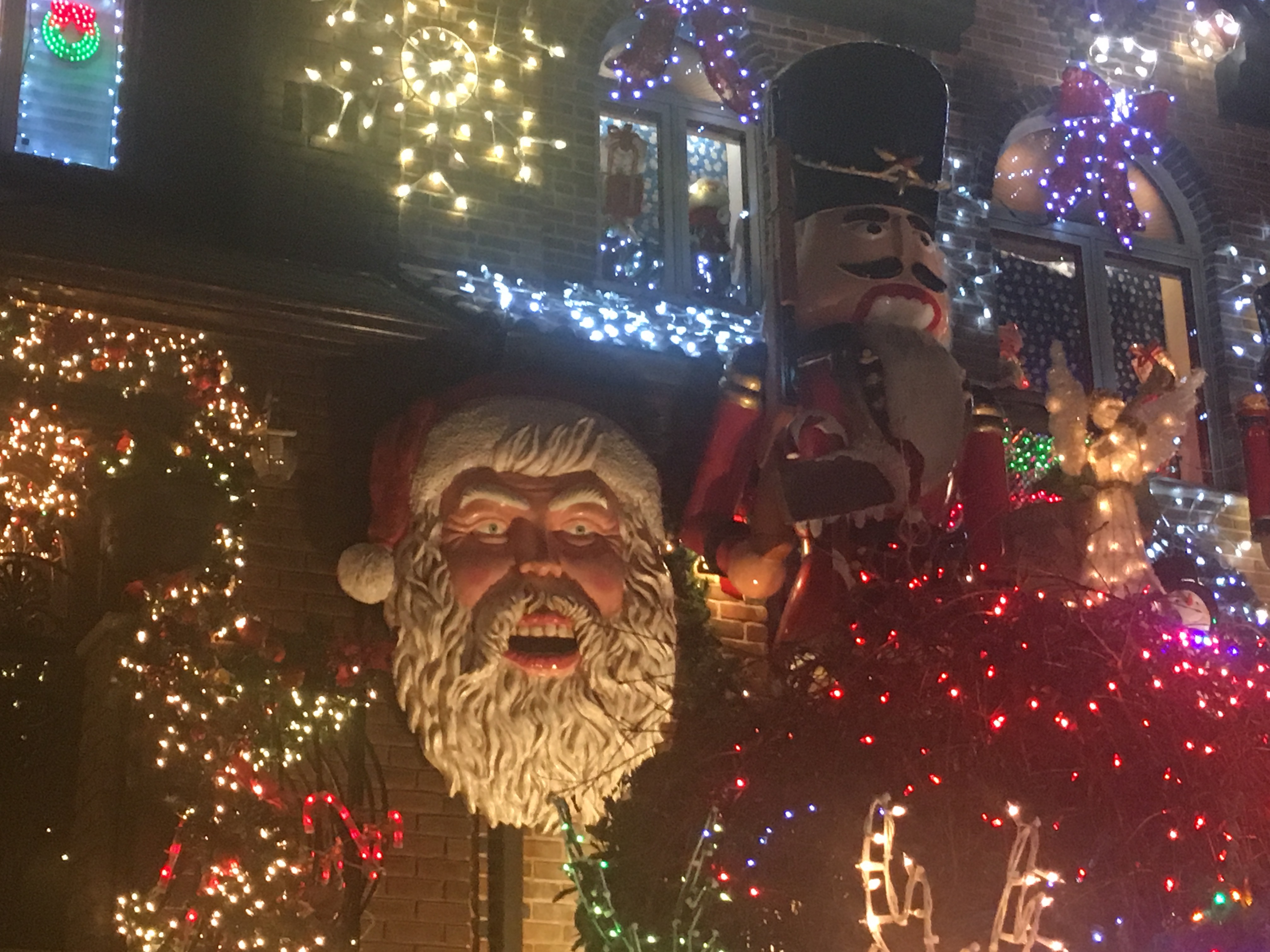
Every December many residents of this area of southwestern Brooklyn ornament their homes in a wild and brilliant parade of Christmas lights and decorations. From gigantic animatronic Santas to armies of toy soldiers!

This electrical spectacle draws thousands of tourists this year, attracted to this imaginative mind-blowing display of Christmas spirit.

In this episode, we look at the lights of Dyker Heights from a few angles. First we explore the history of Christmas lighting in New York City and how such displays brought Christmas into the secular public sphere.

Then we look at the history of Dyker Heights, tracing back to one of the first Dutch settlements and a neighborhood which has developed into a stable Italian community.

Finally, we send our researcher and producer Julia Press on an excursion into Dyker Heights to reveal the origin of the Christmas display extravaganza. Featuring an interview with one of the residents who started it all!

LISTEN NOW — CHRISTMAS IN NEW YORK: THE LIGHTS OF DYKER HEIGHTS

To get this week’s episode, simply download or stream it for FREE from iTunes, Stitcher, Spotify or other podcasting services. You can also get it straight from our satellite site.

Or listen to it straight from here:


THE TAKEOUT

A bonus after-show podcast for those who support us on Patreon. Greg and Tom (and Julia) continue their conversation about the story of the Dyker Heights Christmas tradition.


A big thank you to Lucy Spata and Tony Muia of A Slice of Brooklyn Bus Tours for allowing us to record at the synagogue. And of course HUGE THANKS to Julia Press for contributing to this show and helping up over the past few months. Please check out her website for more links to her past work.


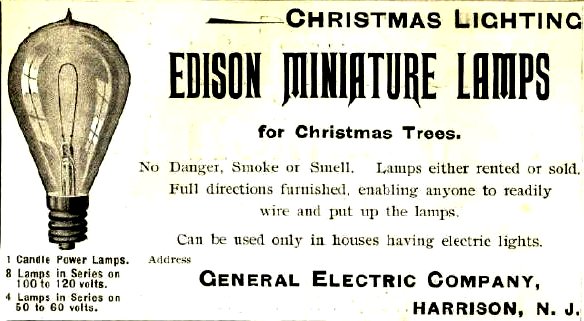
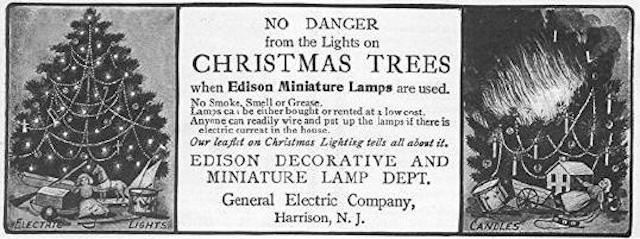
FURTHER LISTENING: This episode was partially inspired by Greg’s episode of The First podcast on the history of electric Christmas lighting. Makes great companion listening to this one:


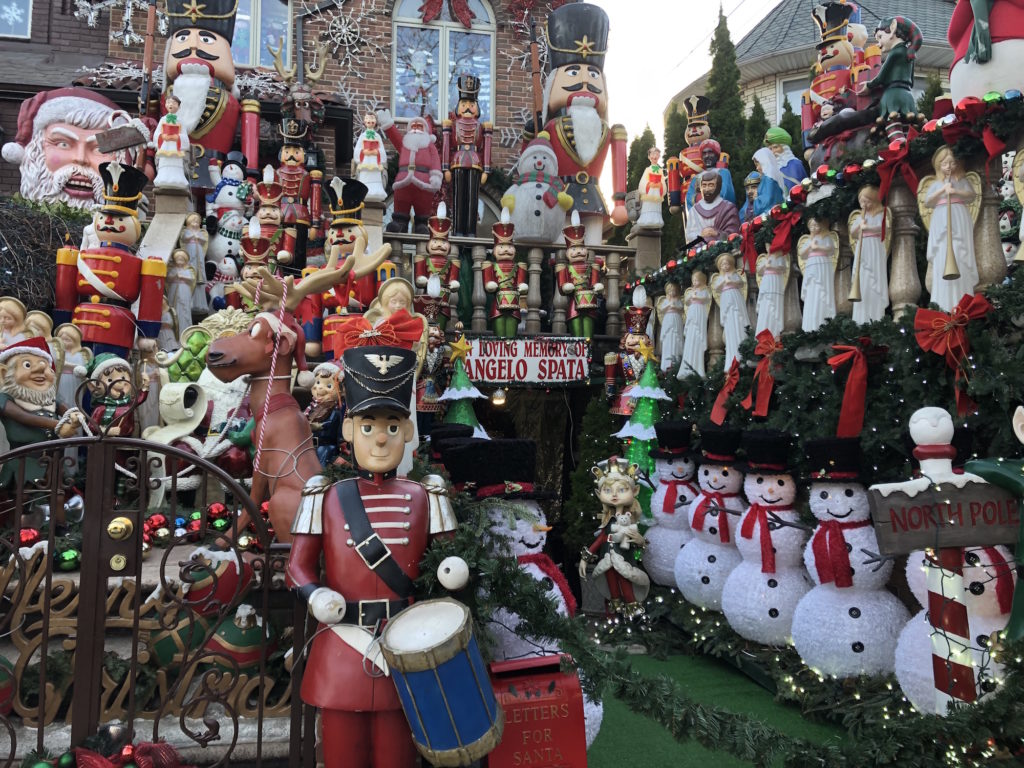
The home of the Spatas, photo by Julia Press

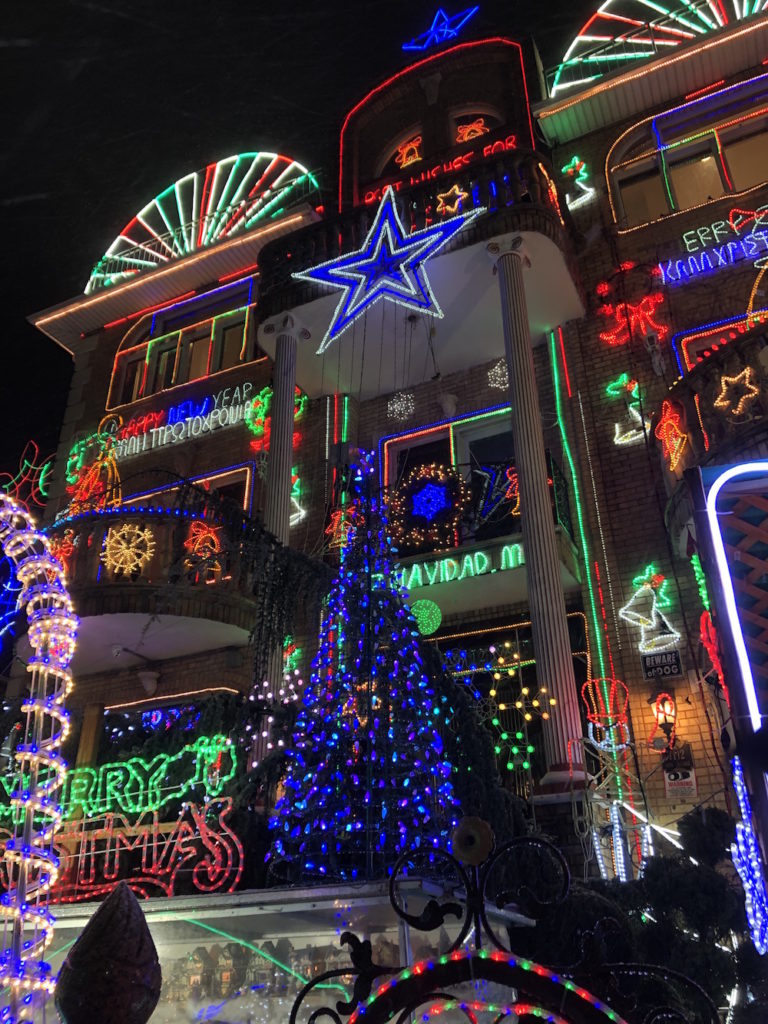
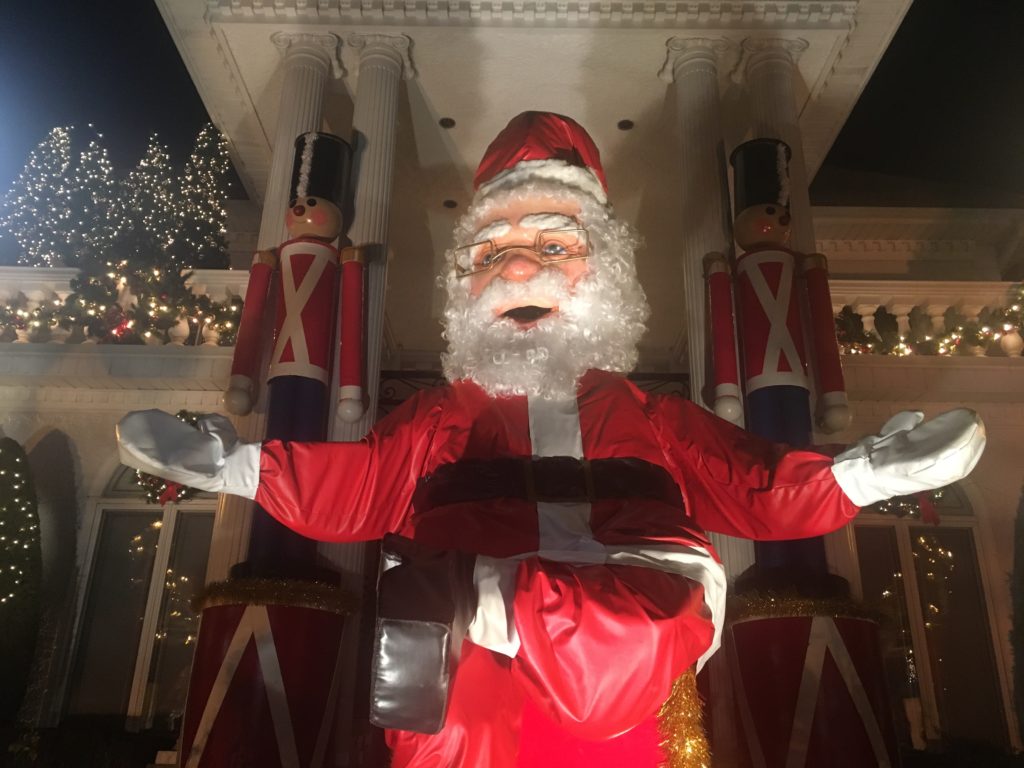
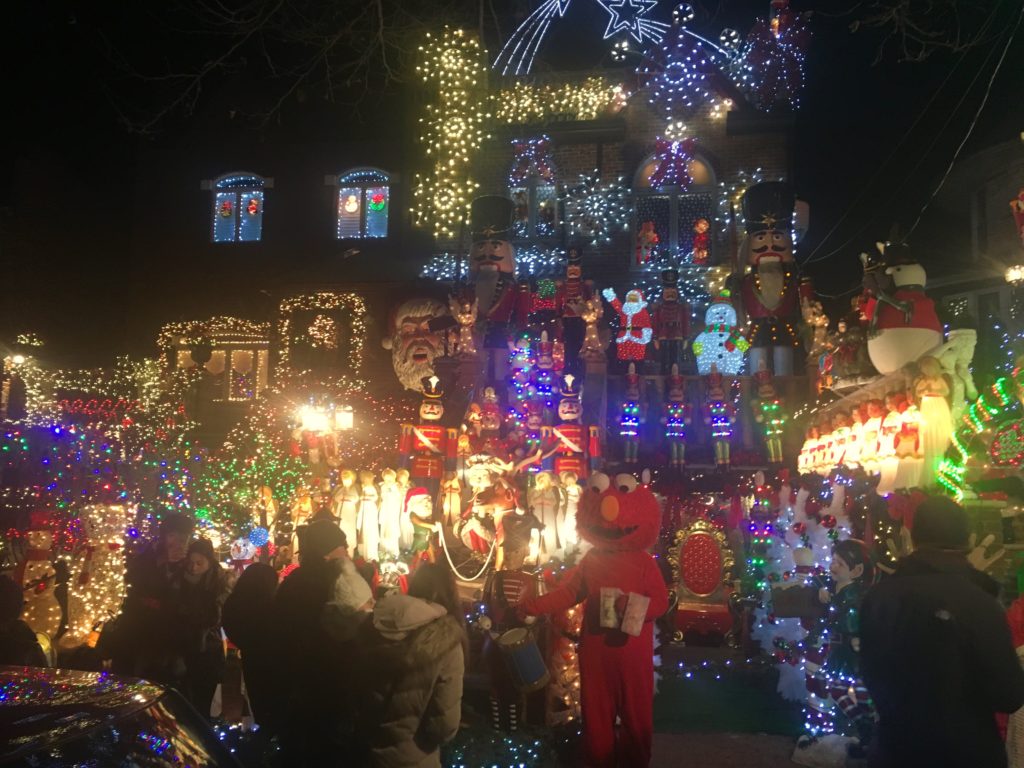
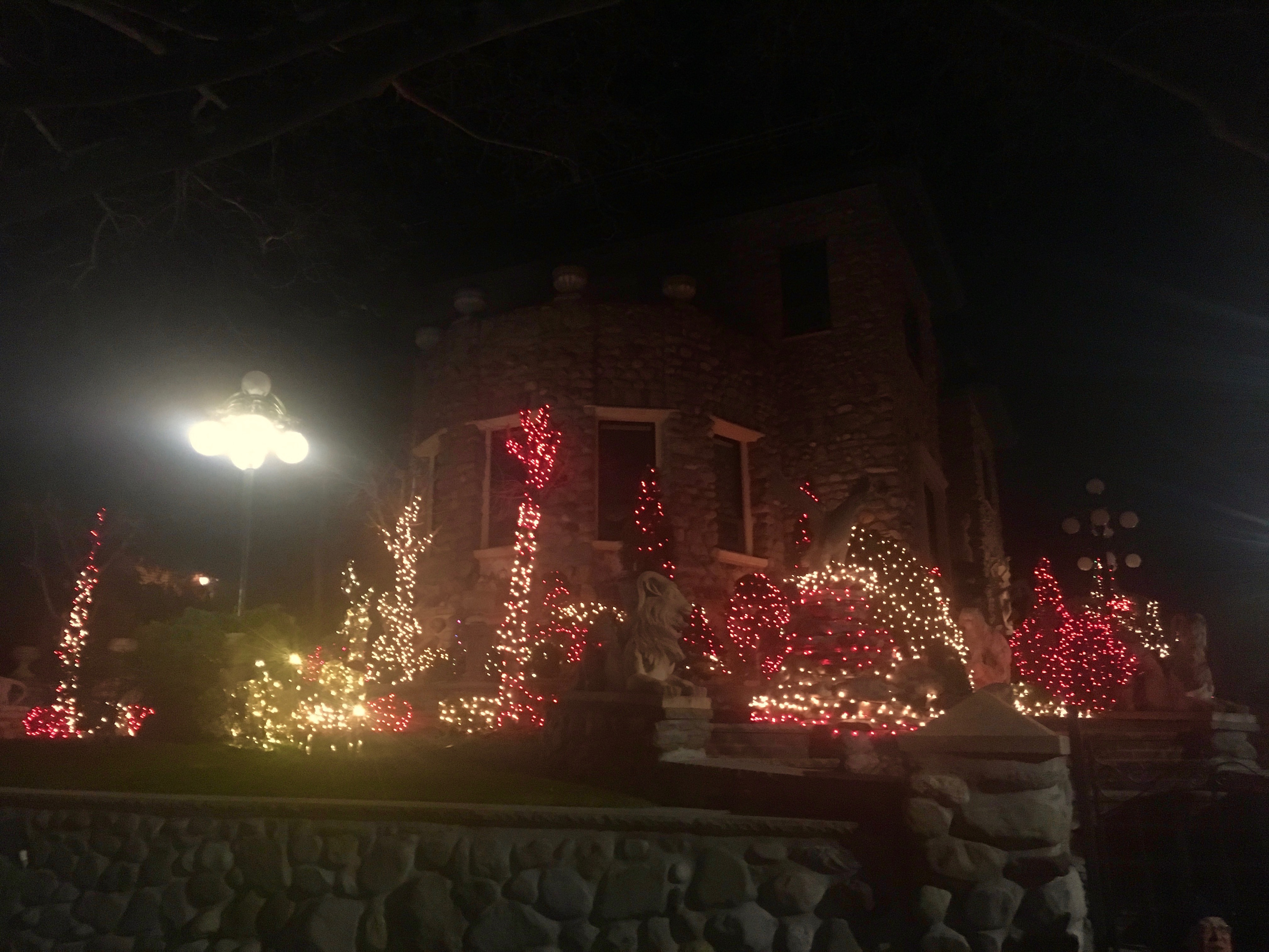
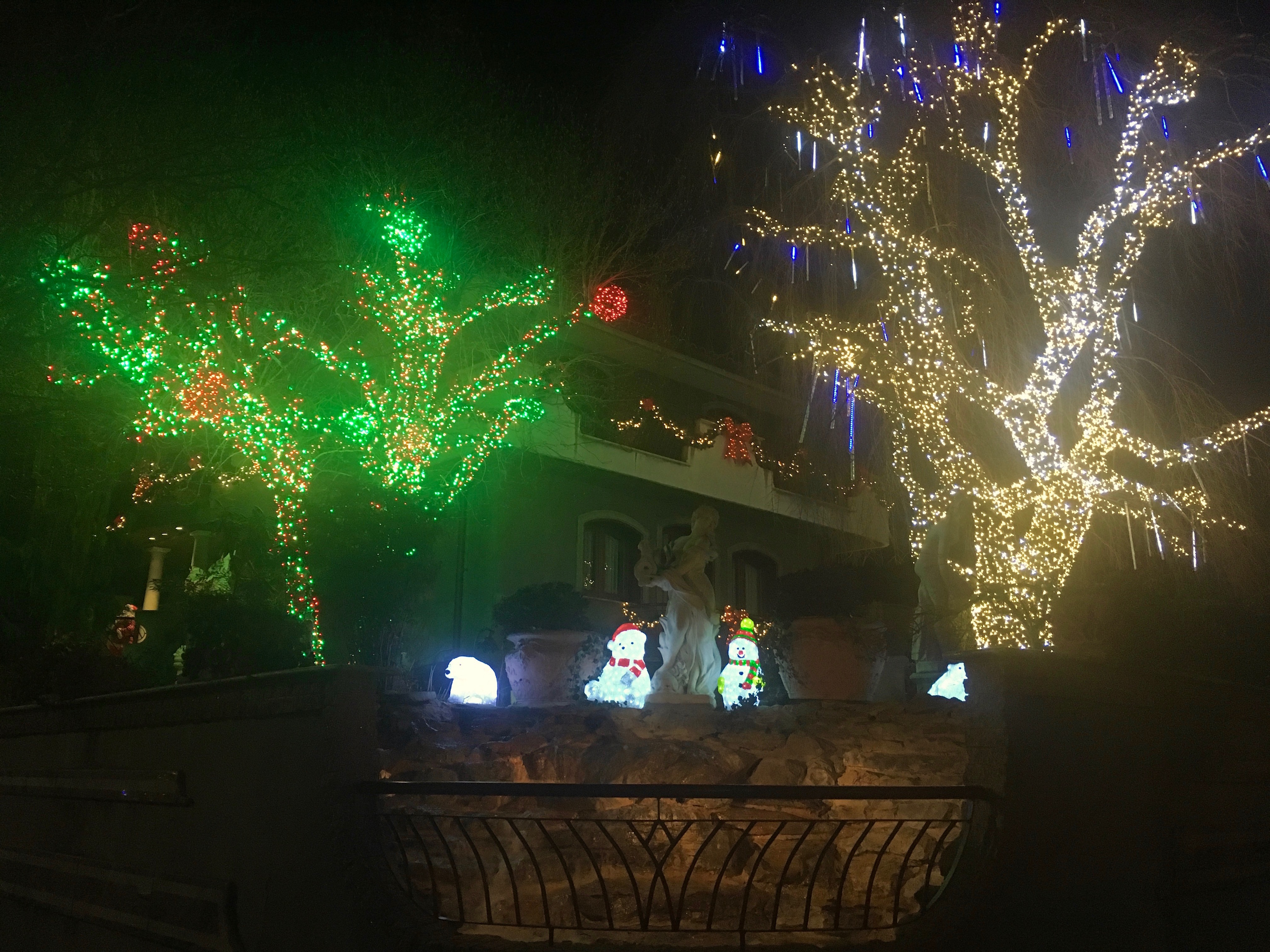
It’s like Las Vegas and Christmas — but in Brooklyn! Photo by Julia Press

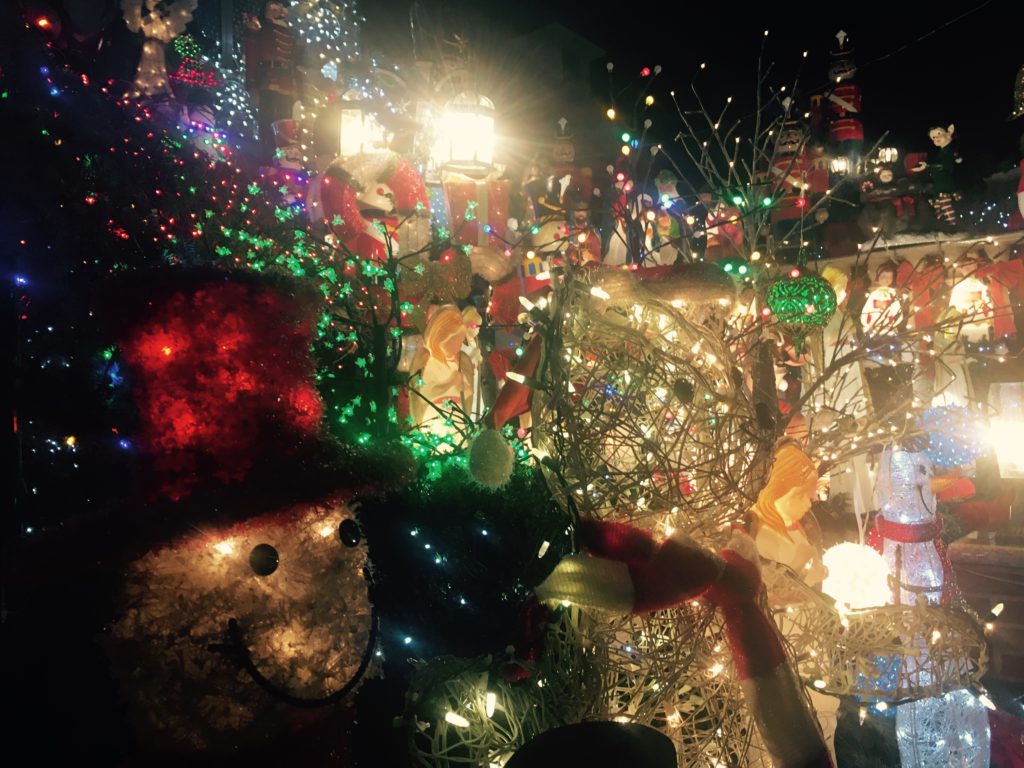
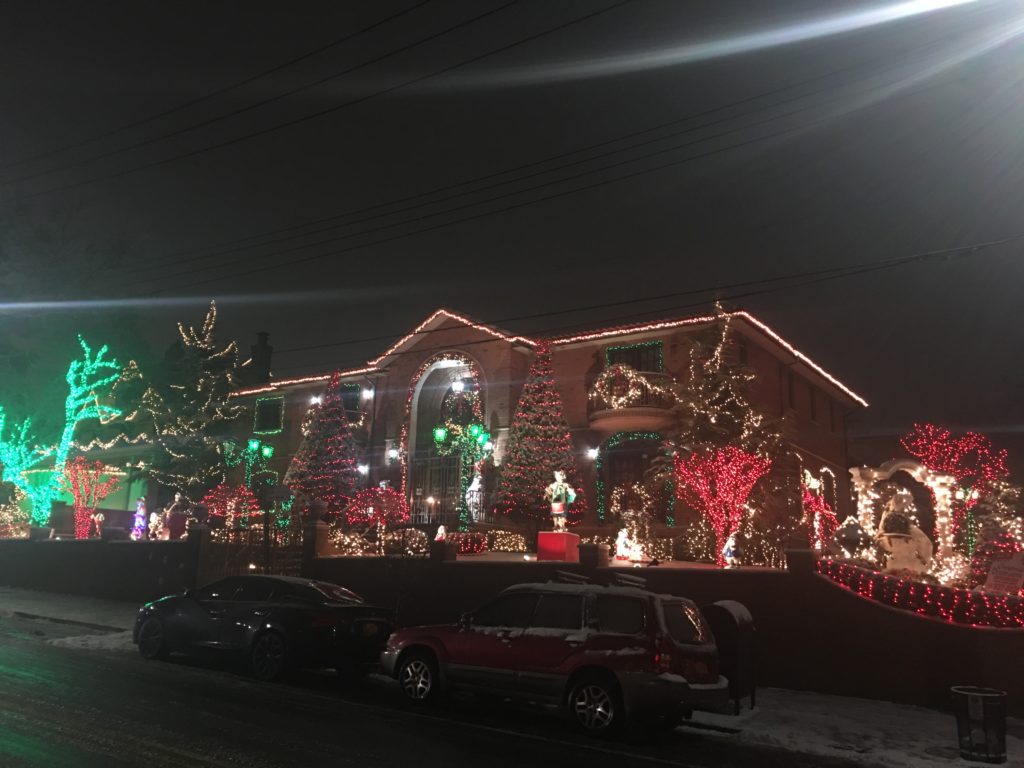
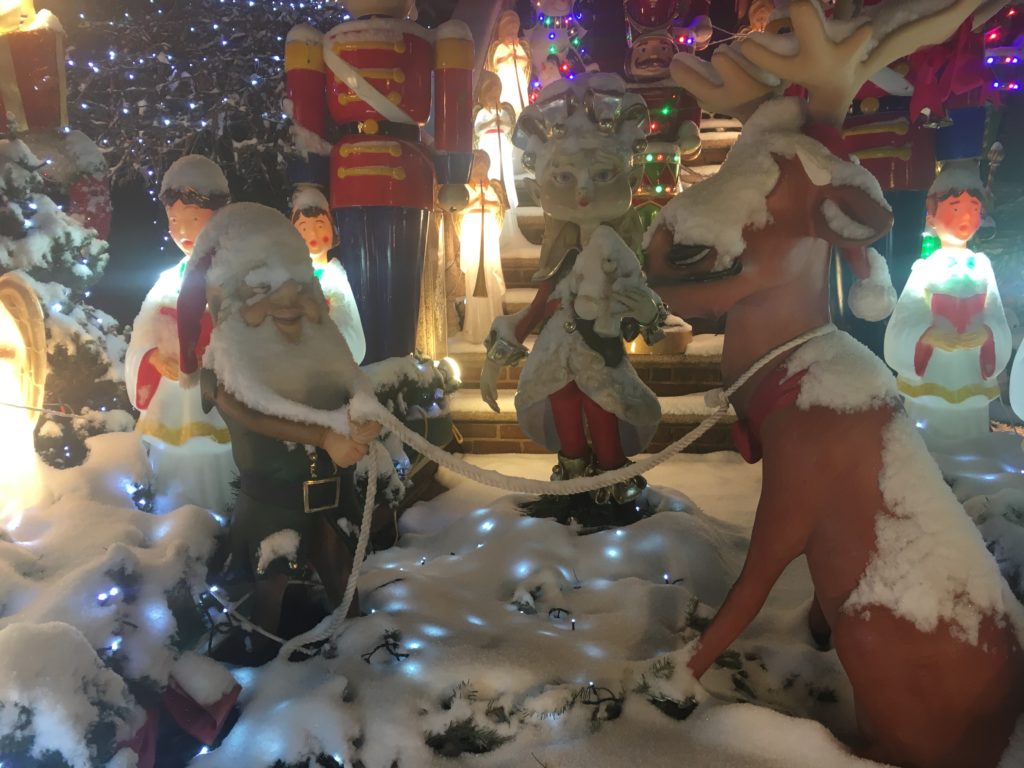
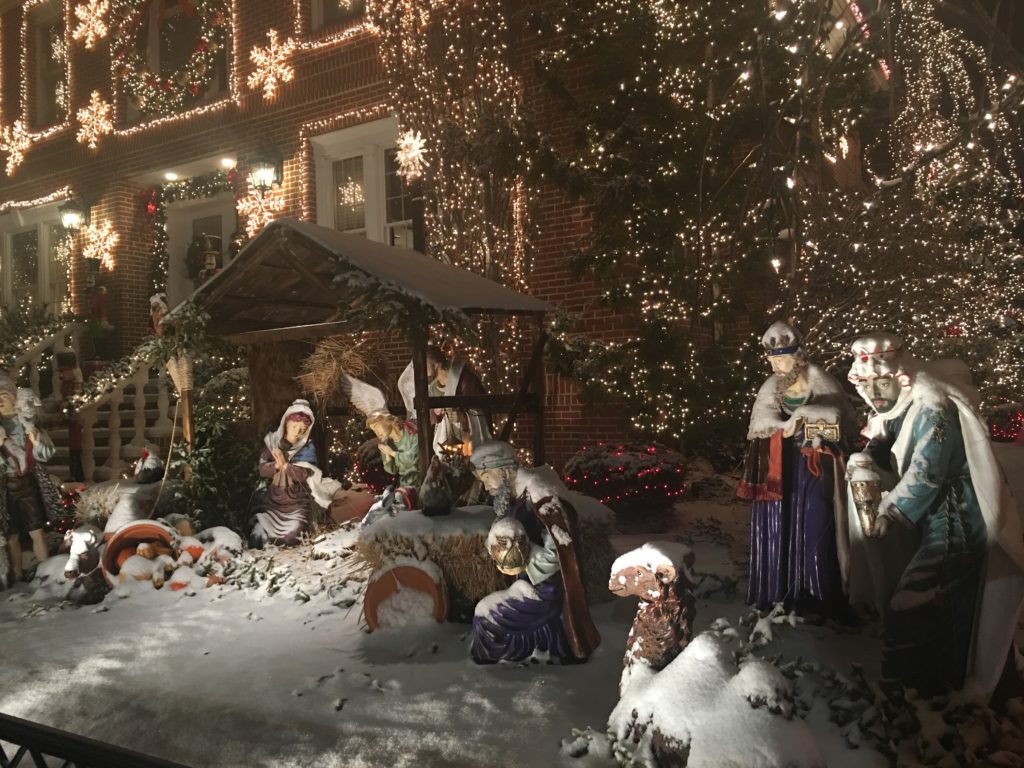
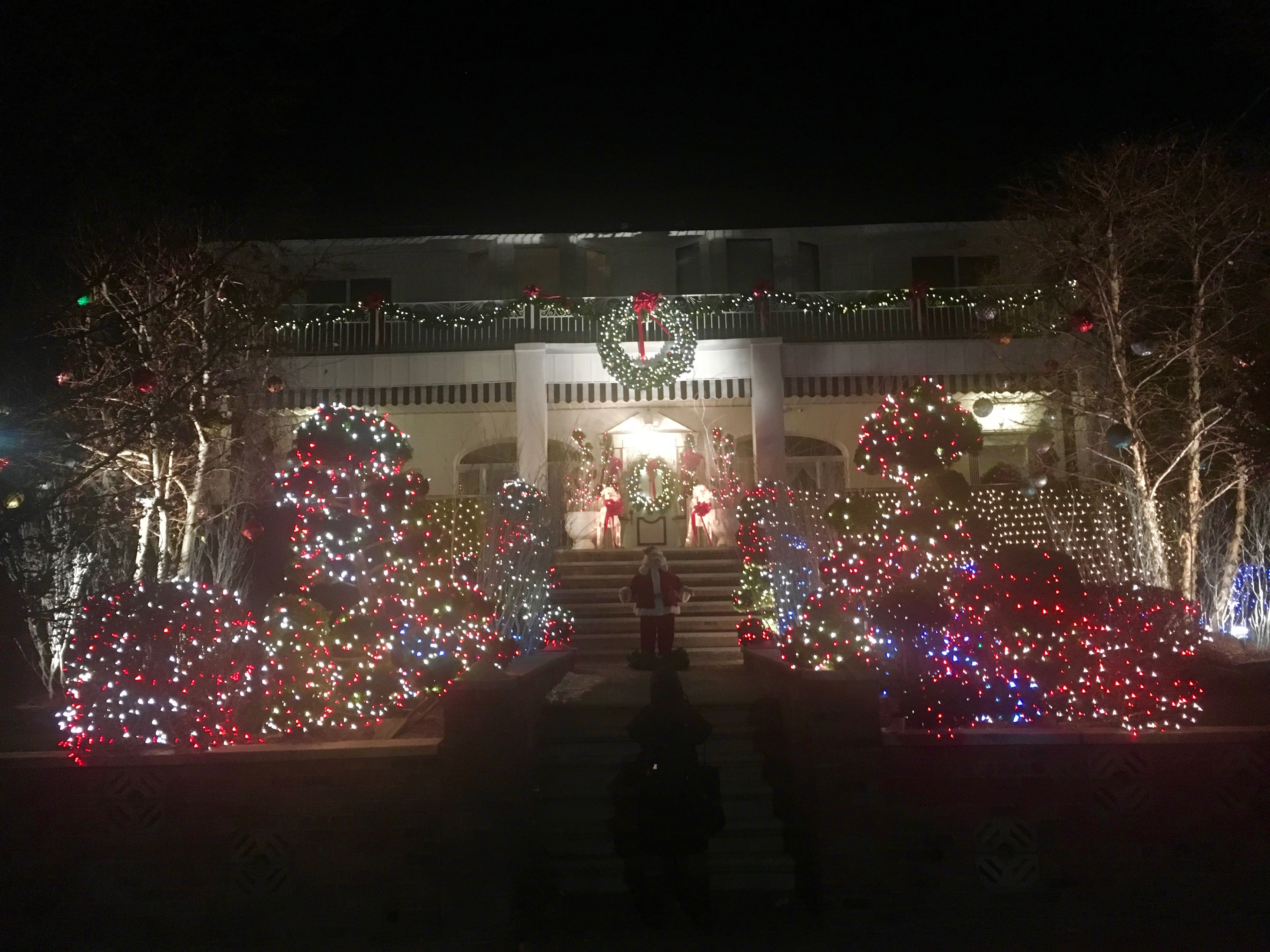
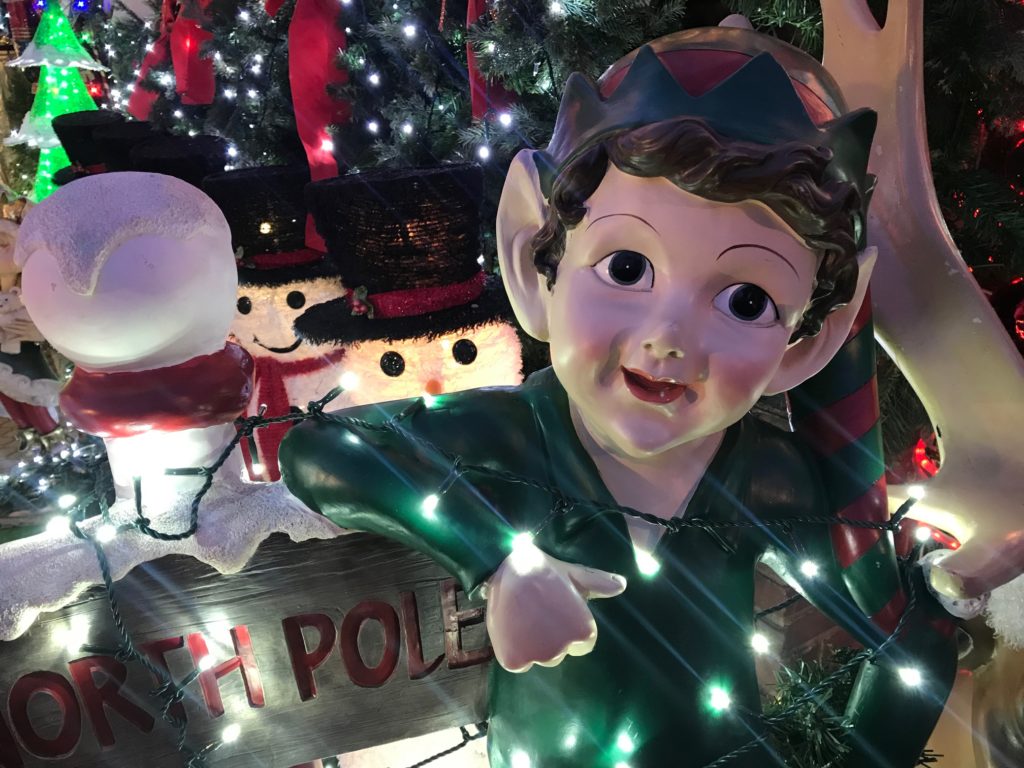
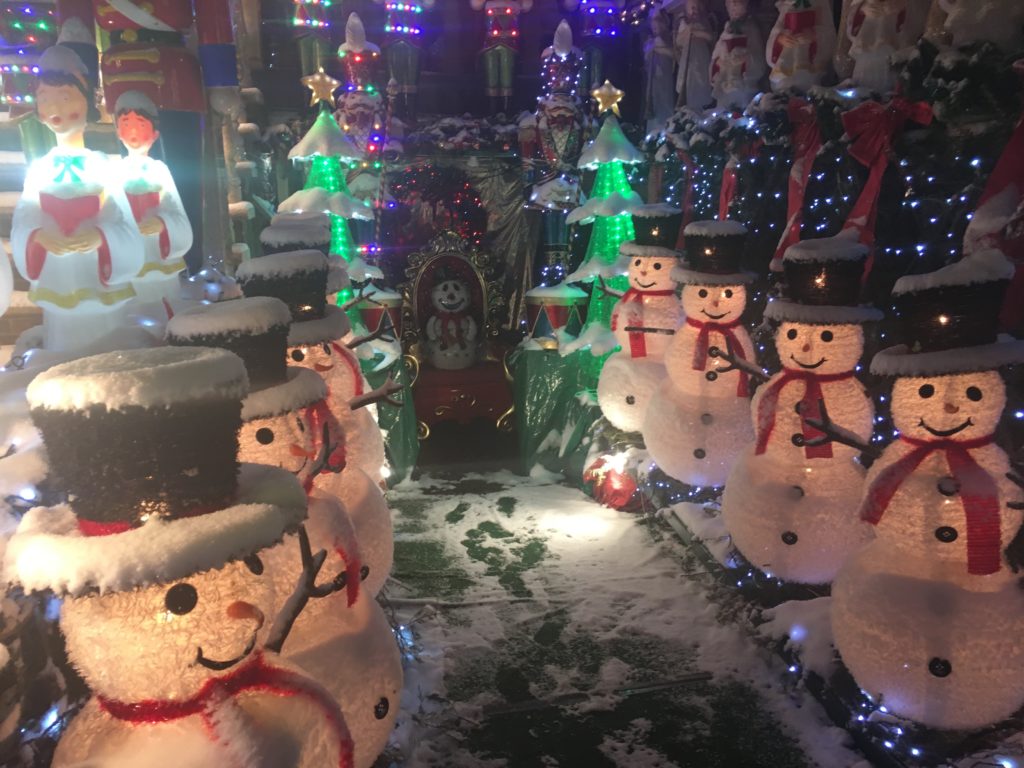
A few images from the 2017 extravaganza — when a nice layer of snow added to the festive spirit.

Further images from the podcast:

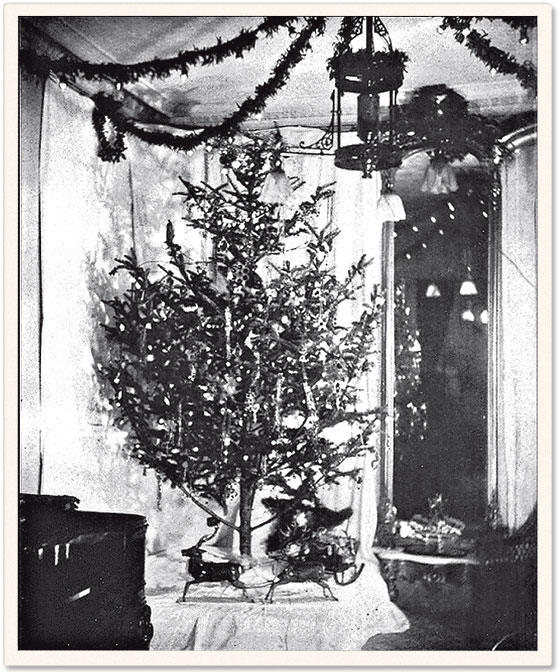
The marvelous rotating Christmas tree of Edward H. Johnson, the first tree with Christmas lights.

Thomas Edison Museum

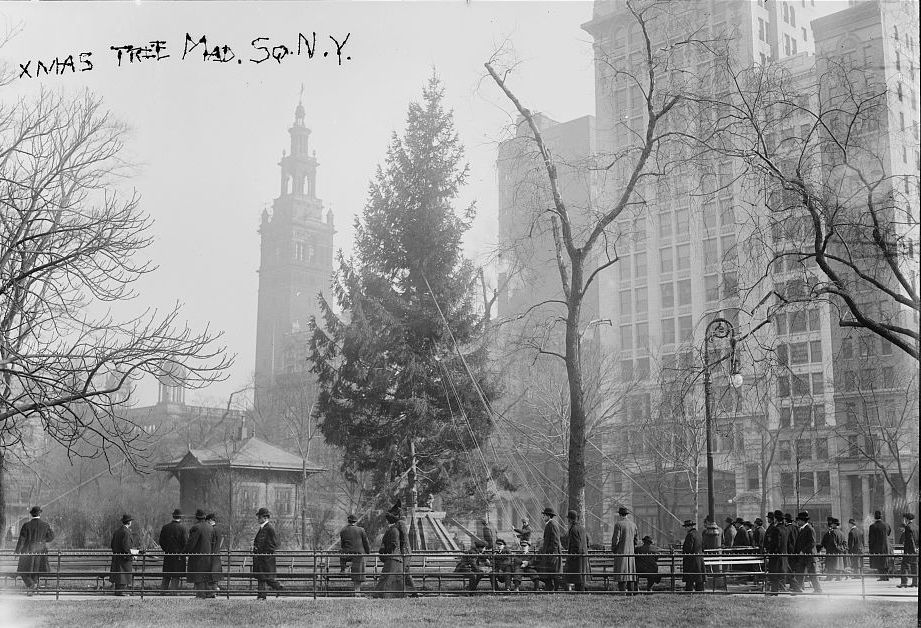
The nation’s first ‘community Christmas tree’ in Madison Square in New York City. Read more about it here.

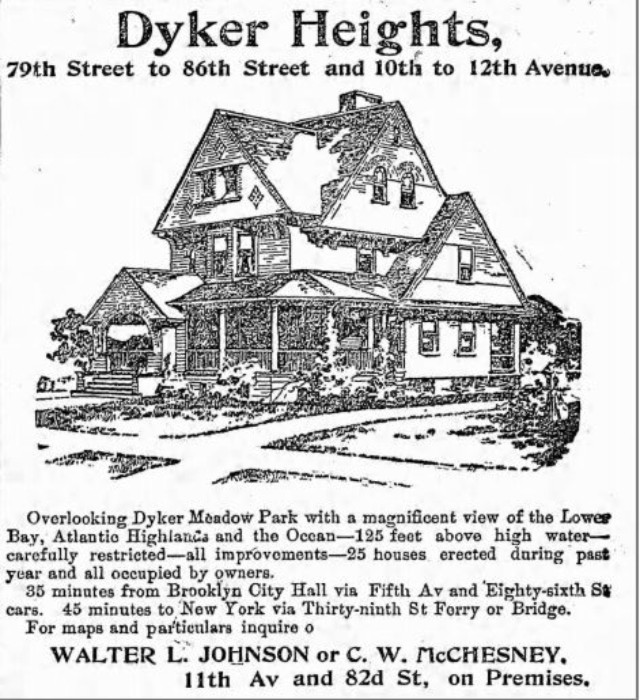
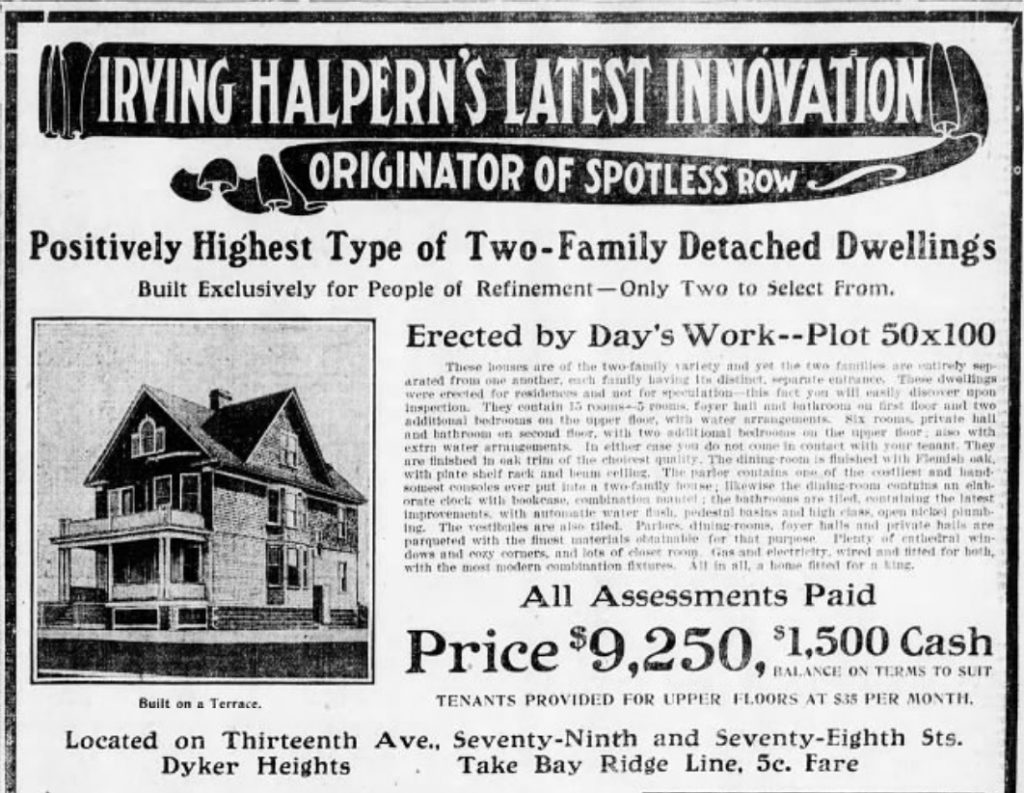
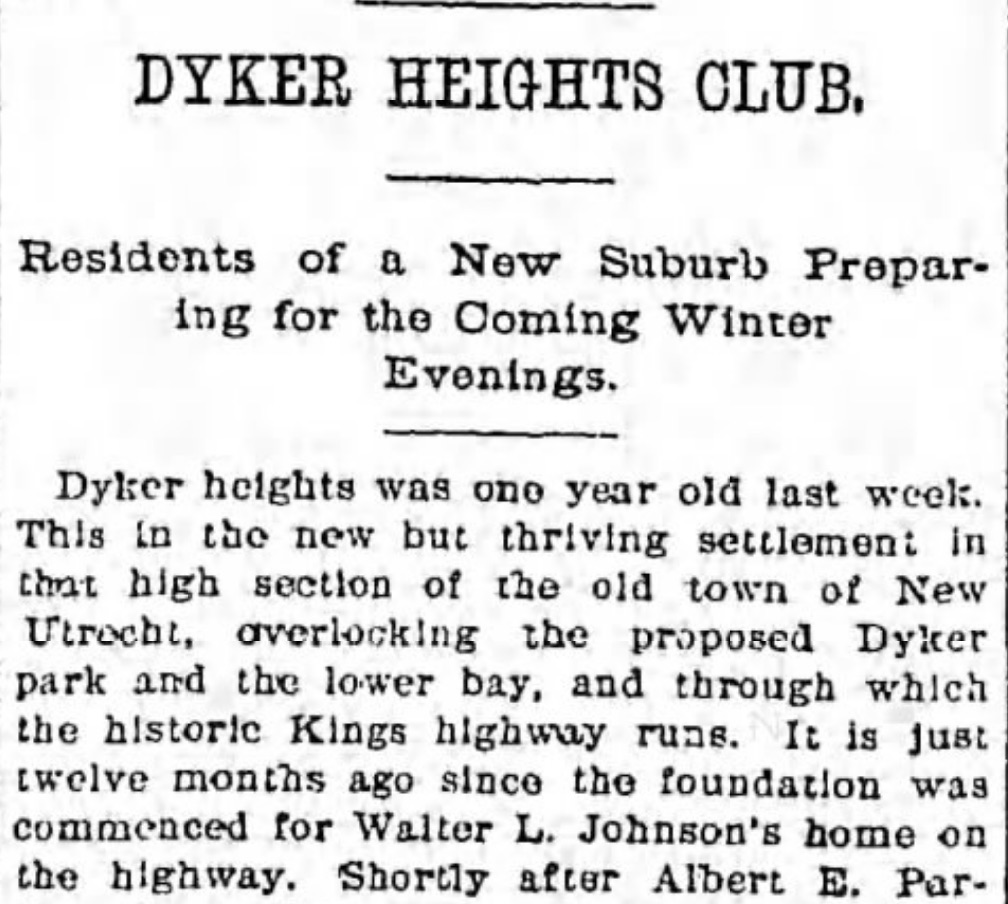
Ads from the early years of Dyker Heights development, Courtesy BrownstonerFrom April 1909 Brooklyn Daily EagleBrooklyn Daily Eagle, October 12, 1896

__________________________________________________________________________

The Bowery Boys: New York City History podcast is brought to you …. by you!

We are now producing a new Bowery Boys podcast every other week. We’re also looking to improve and expand the show in other ways — publishing, social media, live events and other forms of media. But we can only do this with your help!

We are now a creator on Patreon, a patronage platform where you can support your favorite content creators.

Please visit our page on Patreon and watch a short video of us recording the show and talking about our expansion plans. If you’d like to help out, there are six different pledge levels. Check them out and consider being a sponsor.

ALL patrons at all levels will receive many benefits include the next episode of the Bowery Boys Movie Club, an exclusive podcast (released every 6-8 weeks) celebrating New York City in the movies. And patrons at the Five Points ($5) level and up will get our other exclusive podcast — The Bowery Boys: The Takeout — released every two weeks.

We greatly appreciate our listeners and readers and thank you for joining us on this journey so far.

Categories
Christmas

The wildest Rockefeller Center Christmas display ever also caused an equally insane traffic jam

For the 1949 season, the caretakers of the Rockefeller Center Christmas tree decided to go fantastically over the top.

Just a few years earlier, New Yorkers were served up a plainly adorned tree with no electric lights, a reminder of the war in Europe and a nod to energy preservation.  

But the war was over now; it was time to get delightfully gaudy.

Perhaps knowing the mild temperatures that awaited that season — it would only snow two inches between November 1949 and January 1950 — the Rockefeller Center holiday designers decided to spray paint the gigantic 75-foot tree in hundreds of gallons of whimsical camouflage paint.  

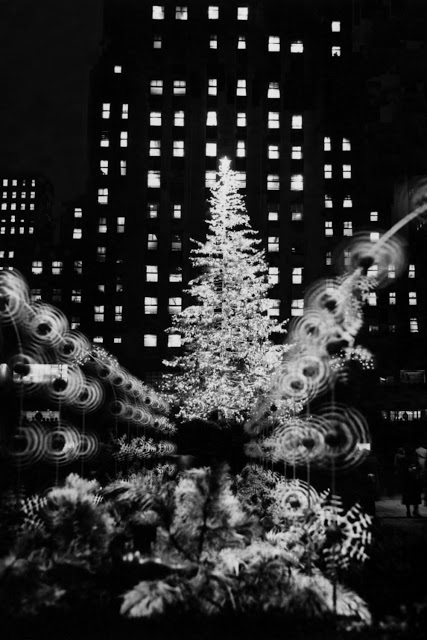
It was then engulfed in 7,500 electric lights in pastel colors — pink, blue, yellow, green and orange, described as “plucked from a sky in fairyland.”

The lighting of the tree on Dec. 9, 1949, was a truly hallucinogenic event.

This Easter-like hue, bouncing off the silver-painted branches, reflected out from behind dozens of glass ornaments, leading up to the brilliant white star on top, which, according to the New York Times, “seemed to send glints of fire almost to the top of the seventy-seventh floor RCA Building in back of the tree.”

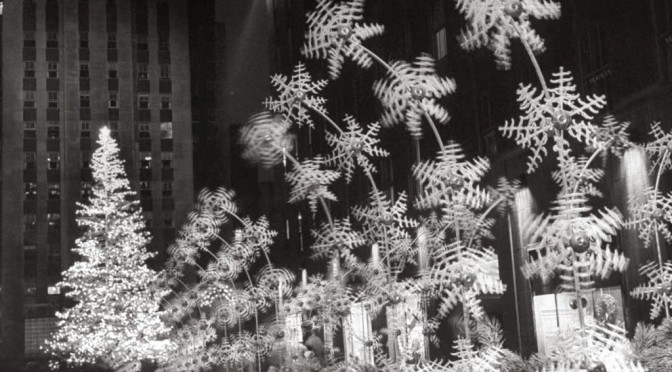
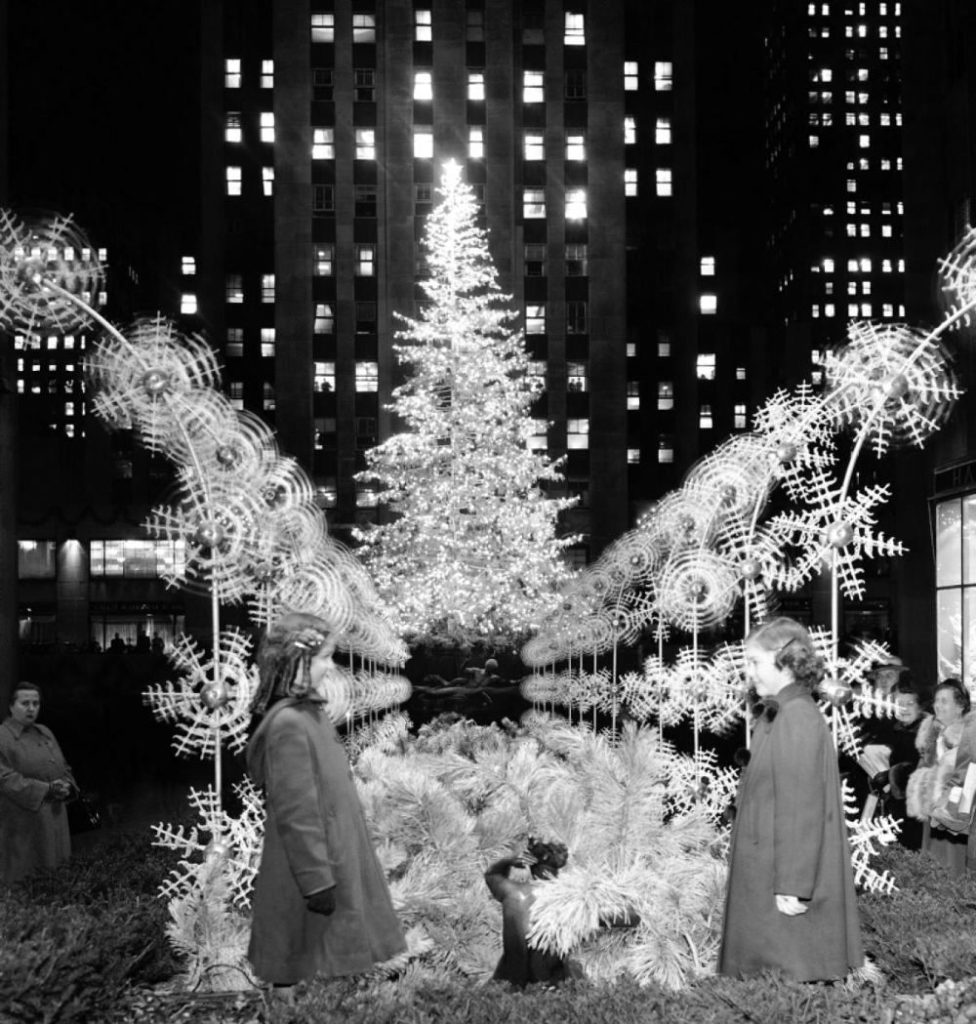
As if that didn’t grab your attention, the promenade leading up to the tree and the skating rink was adorned with a most dizzying decoration — rapidly whirling plastic snowflakes, 576 of them, “each as big as a dinner plate,” illuminated for hypnotic effect.

The rapidly spinning snowflakes and flamboyant tree literally stopped traffic.

Is it any surprise then that this insane display would later create, on December 19, 1949, “one of the worst traffic jams Fifth Avenue traffic jams in recent years“?

Due to shocked motorists trying to catch a glimpse at this electric wonderland, Fifth Avenue became a rush hour nightmare for several hours. “Cars were pinned bumper to bumper from 72nd south to 41st Street along Fifth Avenue, making cross-traffic an impossibility and imprisoning automobiles in side streets.”

Even through police were called out to enforce emergency traffic rules, Midtown was essentially in a state of vehicular trauma until 10 pm that evening.

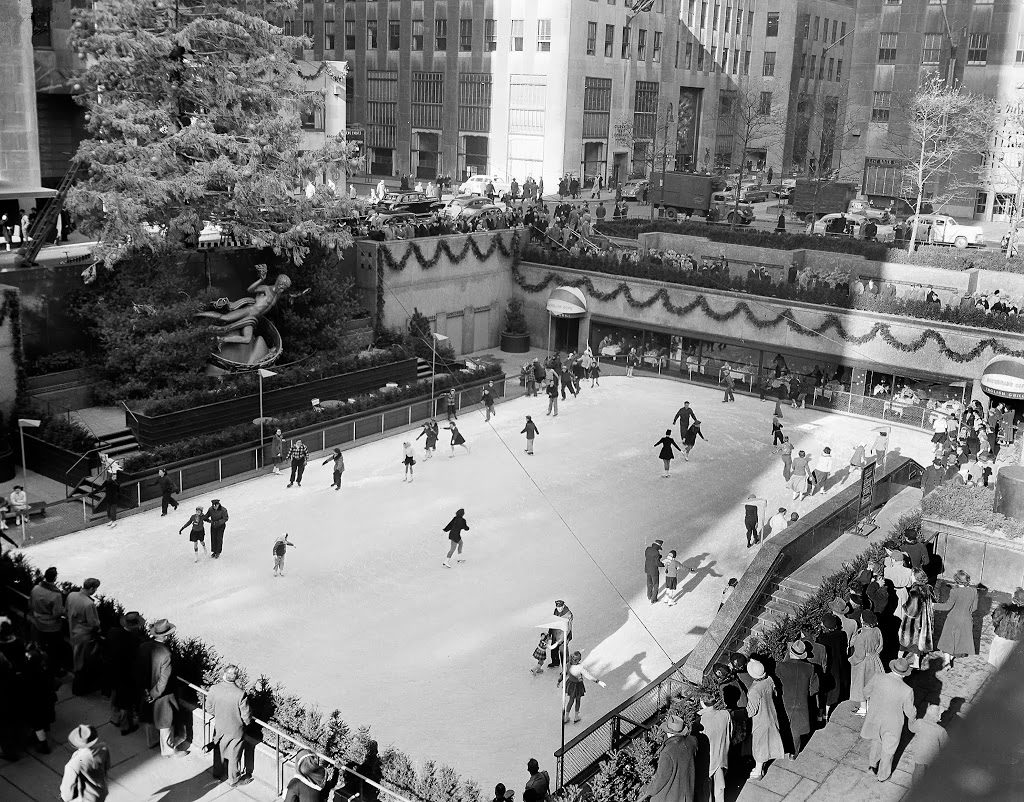
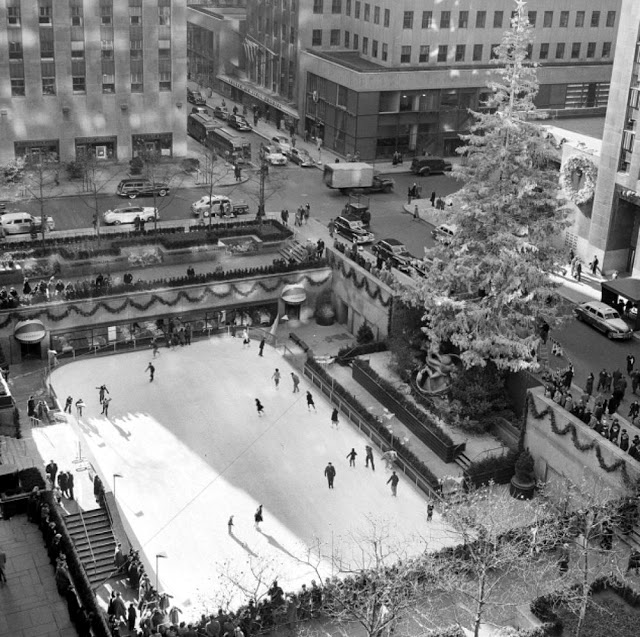
Below: During the day, the silver-painted branches, adorned with heavy glass ornaments, cast a particular glow upon the ice skating pond and the surrounding buildings. Picture courtesy Flickr/lighthousenewsus

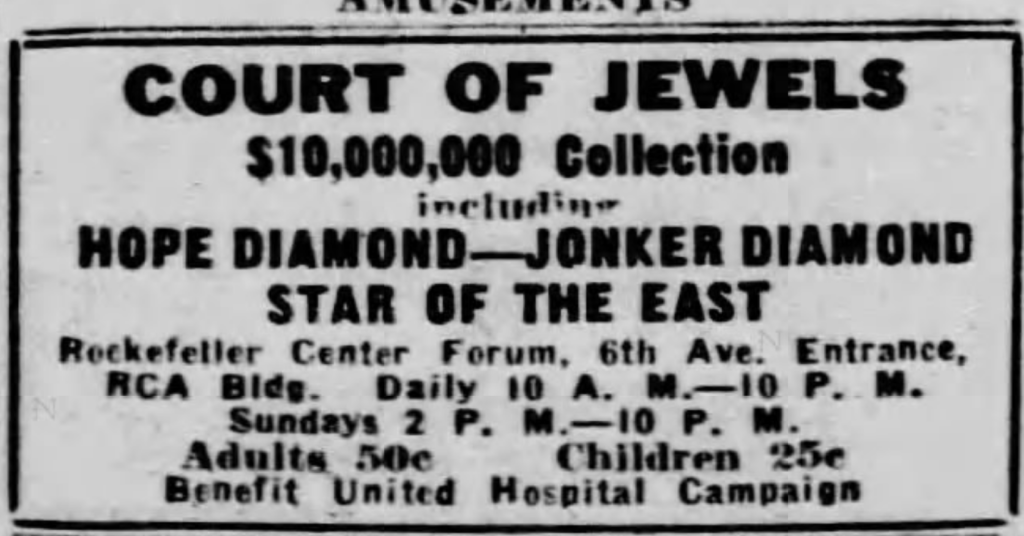
For visitors to Rockefeller Center, if even that wasn’t enough bedazzlement, you could head inside into the forum to see the so-called Court of Jewels:

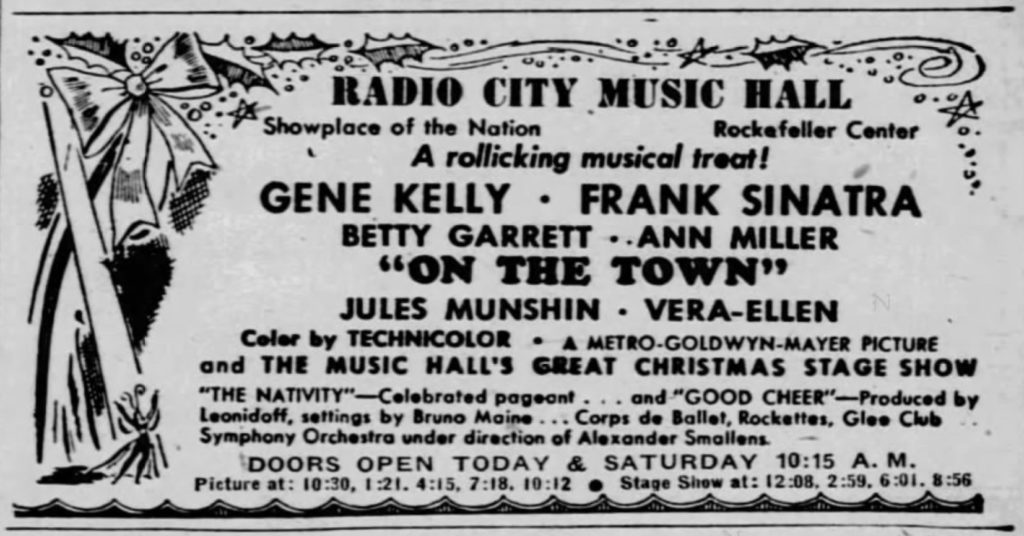
Then of course there was the annual Radio City Music Christmas Spectacular which often prefaced a splashy film premiere. And for that Christmas in 1949, audiences experienced a real treat (and a movie you know we love):

Picture courtesy Life Magazine/Andreas Feninger

Categories
Holidays

Festively bonkers: Welcome to the Dyker Heights Christmas light show

Holiday traditions in Manhattan are of course known the world over, from the glowing light displays of Park Avenue to the Rockefeller Center Christmas tree. But they lack a certain human touch, spun from wealthy corporations and honored tradition.

Which is what makes Dyker Height’s annual lighting spectacular (festival? competition? freak show?) so fascinating. It’s Brooklyn’s biggest holiday event, run entirely by the community.

In the past two decades, the extravaganza has energized a normally quiet neighborhood few in New York know much about. For most of its history, Dyker Heights was virtually uninhabited, either by humans or two-story illuminated snowmen.

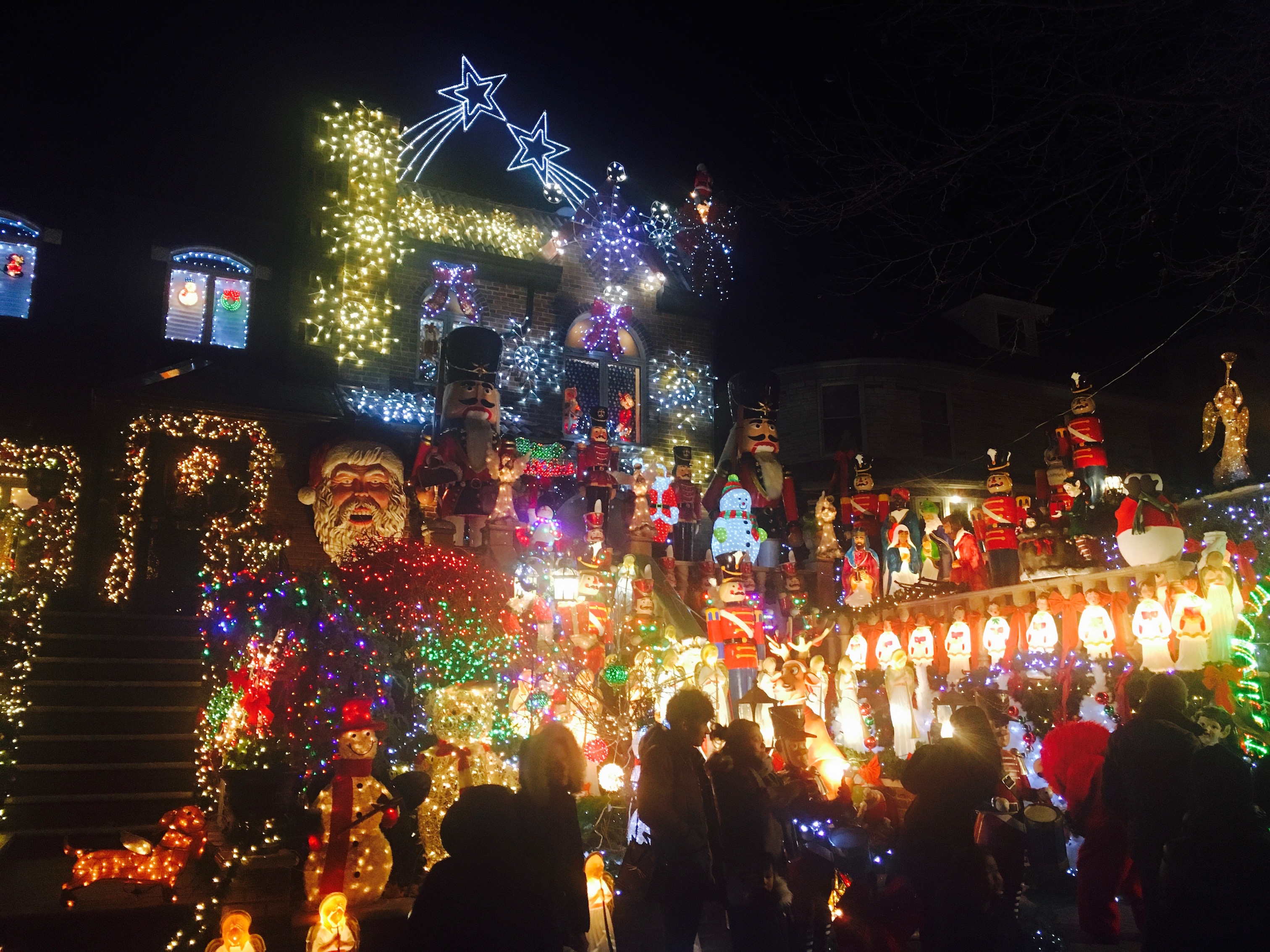
Below is a history of the  Dyker Heights neighborhood, interspersed with pictures I took of this year’s Christmas lights celebration:

Dyker Heights is named for an uninteruppted, sloping meadow which rolled down to the waters edge (today interuppted by the rushing traffic of Shore Parkway). Nobody’s certain where Dyker Meadow got its name, only that it originated from the days of Dutch occupation, either from a Van Dyke family which settled here, or, more generally, from actual dykes the family built to drain the meadow.

Tumuluous history springs up on either side of Dyker meadow and its small forests, as the British who land at nearby Denyce Wharf begin their invasion of Brooklyn in 1776, taking up battle with the Continental Army to the north and east. As part of the township of New Utrecht, the meadow was unsuitable for farming, but its forests were plenty suitable for firewood and materials for building homes.

For awhile, there was only a single dwelling here, atop a hill known as the Lookout, built by civil engineer René Edward De Russy.

Below: Not the home of René Edward De Russy

Development finally came to the area shortly before Brooklyn consolidated with New York. During the 1890s, the nearby area of Bath Beach was quickly becoming a resort getaway similar to Coney Island. Called Bensonhurst-by-the-Sea, the resort adhered to strict moral entertainments (i.e. no booze) and thus was destined to fail.

Luckily, by then, an elevated West End train line (the Brooklyn, Bath and Coney Island line) was attracting speculators eager to draw New Yorkers with residences built on old farmlands. By the late 19th century, the New York Times excitedly noted the saavy practices of land developers in this region of South Brooklyn.

The father of Dyker Heights is developer Walter L. Johnson, who in the 1890s scooped up the land, brought roads and utilities to this fairly remote part of Brooklyn, and quickly created a small community. He even named the area, the ‘Heights’ assumably tacked on to embue it was a cache similar to Brooklyn Heights. Johnson’s gamble paid off; in 1899, the Wall Street Journal proclaimed, “nowhere else in the consolidated city is there anything to compare it with. From here can be seen a marine panorama hard to beat.”


From the beginning, Dyker Heights was designed for home ownership — no tenements and few apartment complexes — and it’s a tradition which mostly lives on today. From an 1899 article: “Dyker Heights is carefully restricted, the restrictions running till 1915 and no building can be erected here on a plot of less than 60 by 100. Each building must cost at least $4.000 and stand well back from the street line.”

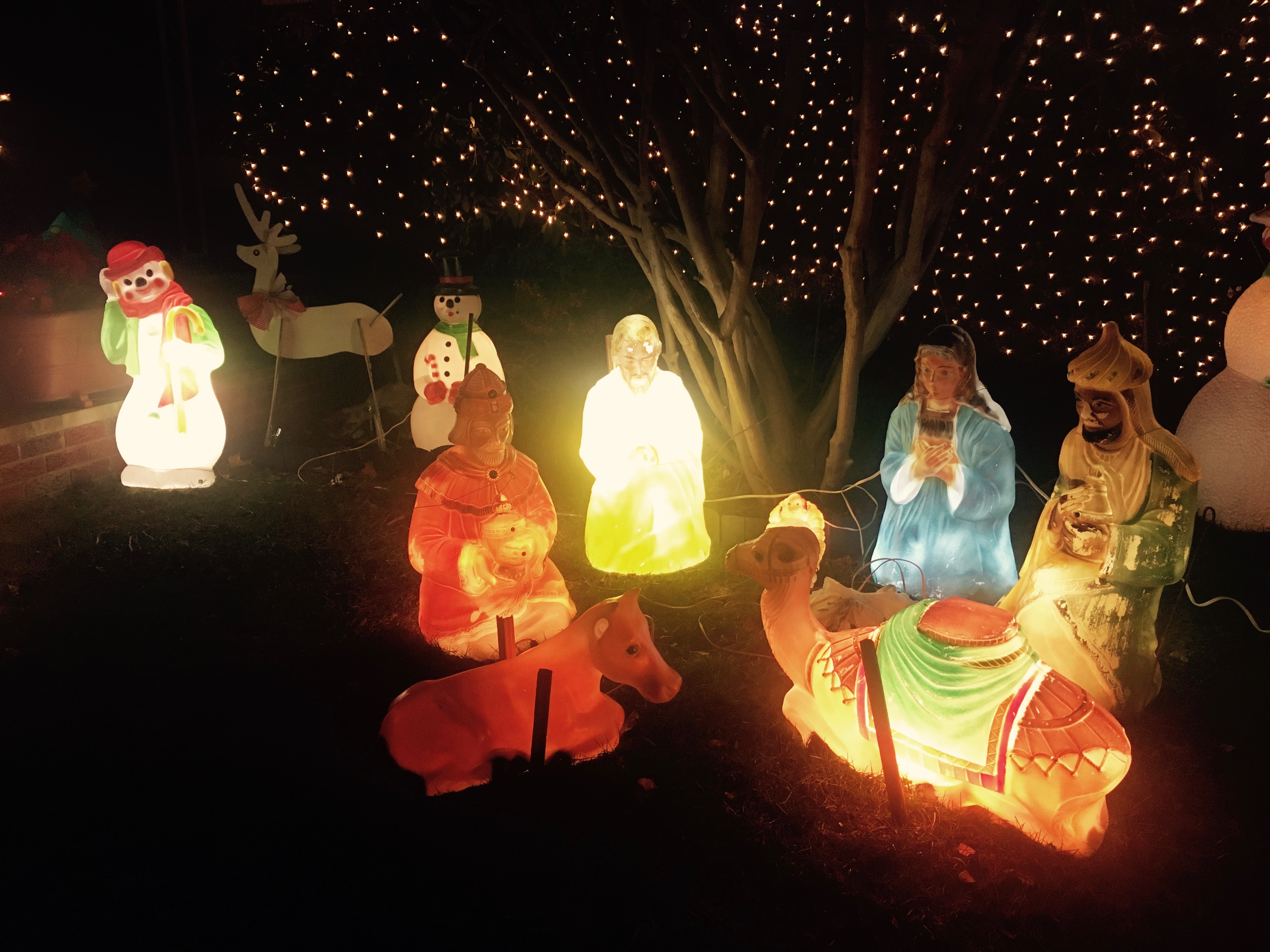
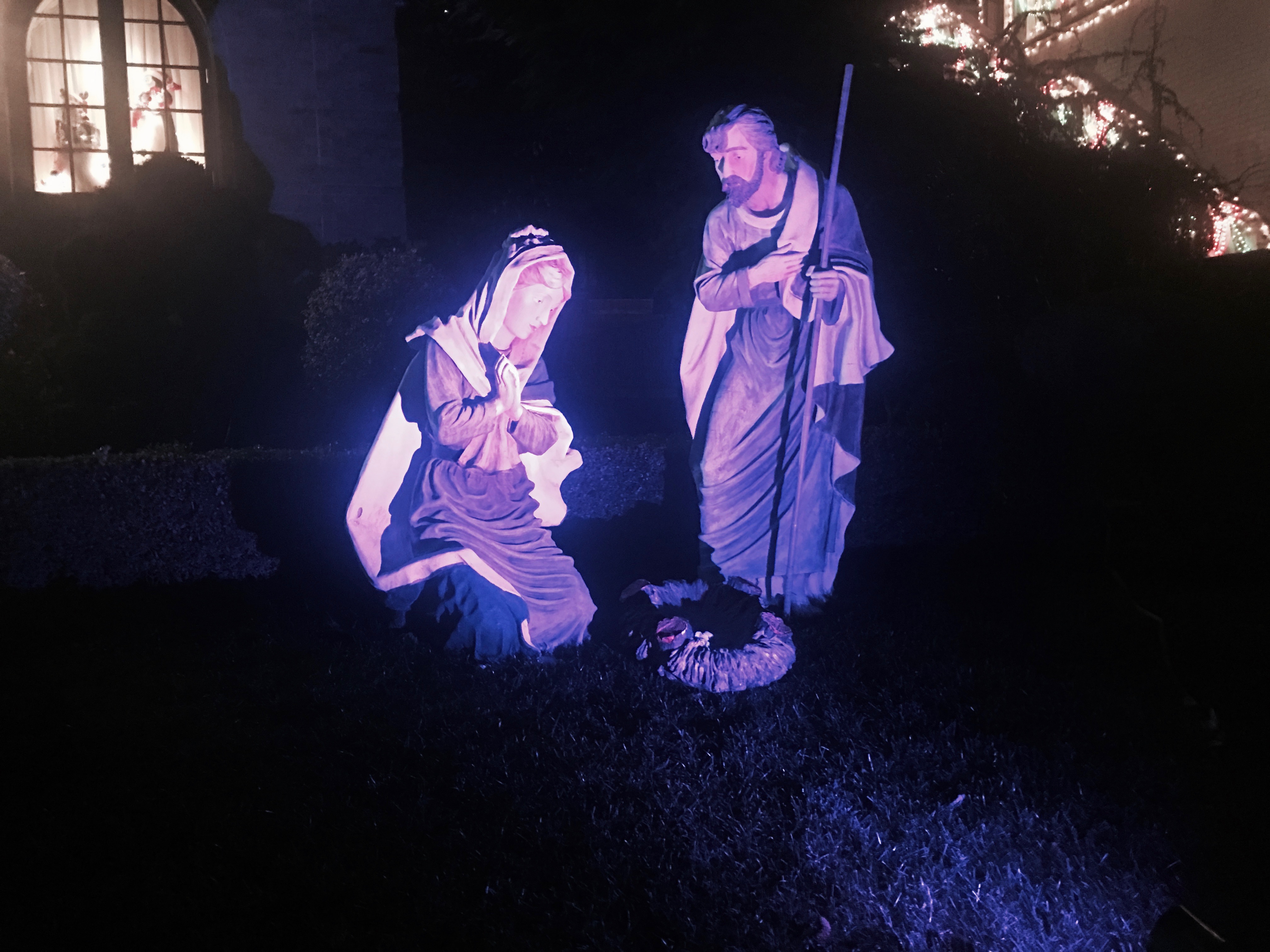
Below: A sampling of the dozens of electric manger scenes awaiting you in Dyker Heights.


Today Dyker Heights is a predominantly middle- to upper-middle class Italian neighborhood, anchored by the Dyker Heights golf course and sandwiched between Bay Ridge and Bensonhurst, with old Fort Hamilton to the southwest and what remains of the old Bath Beach resort area just southeast of here.

What Mr. Johnson could not have predicted — heck, what Thomas Edison, inventor of electric light bulb, could not have foreseen — is the annual holiday expression that occurs on the lawns of many Dyker Heights residences through December.

The neighborhood is already known for its unique, ornamented homes, front lawns festooned with fountains, animal statuary, ornate shrubbery, perfectly manicured grass and home waterfalls.

For the holidays, the busy lawns are then burdened with an abundance of lighted sculptures, animatronic dioramas, and every manner of festive lawn display imaginable. Dozens of trees of all varieties — from willows to even palm trees — are garbed in multi-colored lights.

Befitting an organic neighborhood celebration, the origins of this annual tradition are a bit hazy. Families began hosting displays as far back as the post-war years of the 1940s. An article from the New York Times  suggests that the neighborhood’s Italian leanings may have something to do with it.

The show is concentrated between 81st and 84th Street and between 10th and 13th Avenues, but in recent years, it easily spills over to other blocks and even into the borders of adjoining neighborhoods.

This is a curious tradition, as the best way to enjoy the show — on foot — is obviously the most uncomfortable, especially on brisk December evenings.  There are fine tour companies which present bus tours of the Christmas light show, and if you’re averse to chilly temperatures, they’re the best way to go. (Free Tours By Foot and A Slice of Brooklyn are two reliable tour operators which offer holiday bus tours well into the new year.)

But I prefer seeing the electric light madness on foot, soaking in the Christmas music that seems to emanate from every home. Just grab a giant coffee or cocoa and go! Most of the homes will be festively lit until at least New Year’s Eve.

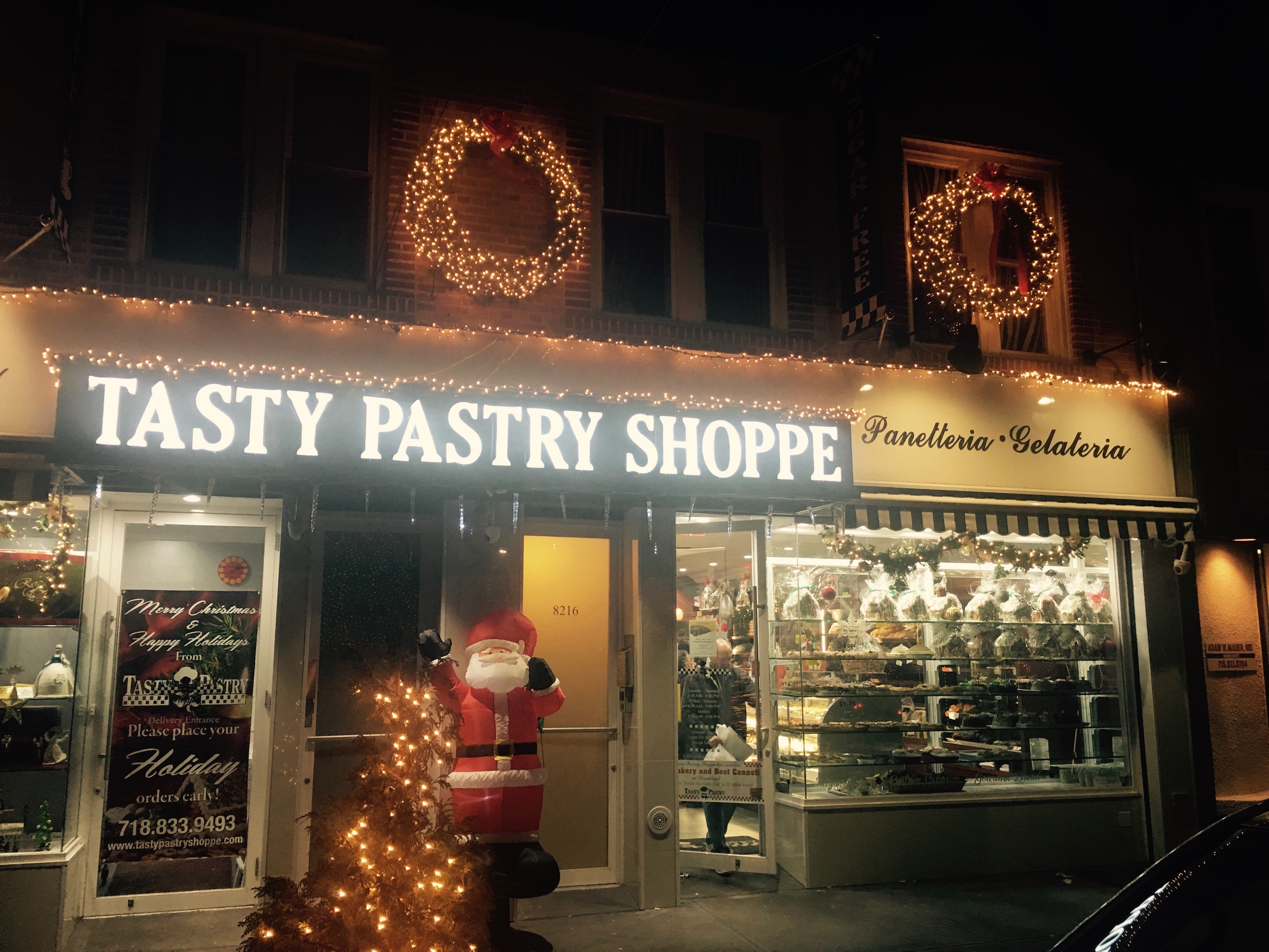
Better yet, before or after your stroll, head up to this amazing place on 13th Avenue and 83rd Street and fill your pockets with cannoli.


By the way, much of the history of Dyker Heights was unearthed several years ago in a thesis paper by then student Christian Zaino.

A model example of a budding New York historian, his research was so exhaustive that one of Dyker Heights’ more glamorous homes — the Saitta House — entered the National Register of Historic Places on the strength of his research. In fact, this is probably one of the few instances that you can use Wikipedia for a resource, as Zaino wrote the page. (In 2014, he also made an hour long documentary film about the history of Dyker Heights. You can watch it here.)


Portions of this article were taken from another Bowery Boys article Blinded By The Lights of Dyker Heights.


Categories
Christmas Pop Culture

The real ‘Miracle On 34th Street’: 21 great historical details from New York City’s most famous Christmas movie


The Bowery Boys Obsessive Guides look very, very closely at a classic movie filmed in New York City, finding buried history, additional context and a few secrets within various scenes and plot points. Filled with film spoilers so read this after you’ve seen the movie — or use it to follow along as you watch it!  Check out my previous guides for Midnight CowboyGhostbusters and The Muppets Take Manhattan.

“Oh, Christmas isn’t just a day, it’s a frame of mind… and that’s what’s been changing. That’s why I’m glad I’m here, maybe I can do something about it.” 

— Kris Kringle (Edmund Gwynn)

Miracle on 34th Street is the most famous New York City Christmas movie ever made, a celebration of post-war prosperity that happily substitutes Herald Square for the North Pole.

The movie is a complete inventory of the commercial Christmas experience. It treats the Macy’s Thanksgiving Day Parade like a starting gate — Thanksgiving? What’s that? — and, like many Americans, spends much of its entire running time in department stores.

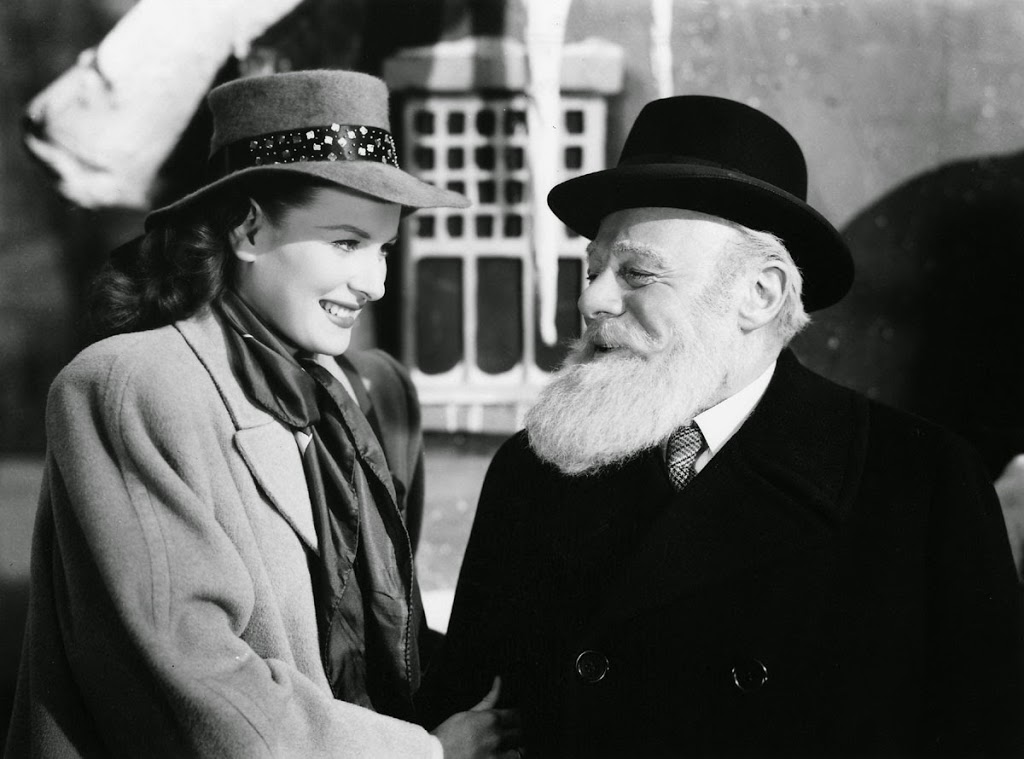
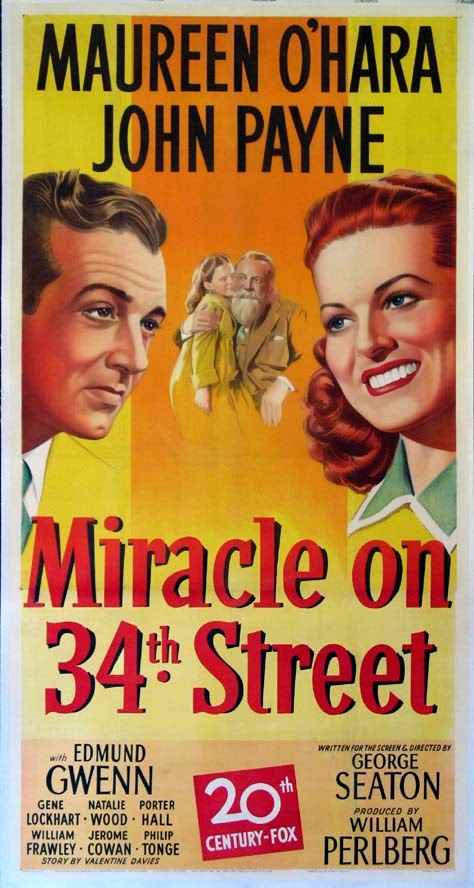
The central question posed by this 1947 classic is whether Macy’s newly hired Santa Claus (played by Edmund Gwenn) is actually the Santa Claus or just some crazy person. At stake is not only the entire world’s celebration of Christmas, but the heart of young Susan (played by Natalie Wood) who never believed in Santa, thanks to her mother Doris (Maureen O’Hara).

Manhattan is perpetually bustling, from the Upper West Side down to Foley Square. Despite its reputation as a saccharine sweet take on the materialistic component of the holiday, the film is really quite cynical, even dark, at times.  Throwing an old man into the Bellevue Hospital psychiatric ward in the 1940s is hardly what I call a warm and fuzzy image.

I recently dug deep into the film and found a great many fascinating details, many involving people and places that lived in New York City at that time.  Here’s my obsessive guide to what normally stuffy critic Bosley Crowther originally called “the freshest little picture in a long time and maybe even the best comedy of the year.”

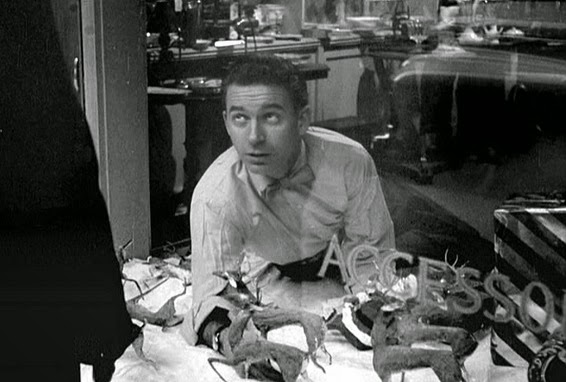
1) Arranging Reindeer  The film opens with Kris Kringle walking south down Madison Avenue. Get it? He’s Santa. He’s from the north! Along the way he passes several long-vanished New York businesses — Rosenberg & Grief furrier, Janice Carol salon, Liszt jeweler (or possibly pawn shop?)

He stops to chastise a store clerk on 19 East 61st Street about the placement of reindeer in the shop windows. That shop belonged to the interior designer Lillian Schary Waldman, often employed by high society and responsible for the homes of a few celebrities including Danny Kaye.  

By the way, you’ll notice there’s no Rudolph in the Christmas display.  The red nosed reindeer was created in 1939, within a coloring book produced by Montgomery Ward (at right), but not popularly considered part of Santa’s team until the 1964 Rankin-Bass animated special. (EDIT: Thanks to the commenter for reminding me of Rudolph’s real coming out –the song “Rudolph the Red-Nosed Reindeer,” recorded by Gene Autry and Bing Crosby in successive years.)

2) Old Newsprint  The film occasionally uses the technique of turning newspaper pages as a way of setting the scene. Notice the first time this is used, before the parade. The prop designer constructed a phony newspaper but used real news articles from the New York Times. Here’s the catch — most of the stories are well over a decade old! Some examples:  “NEW FRENCH CABINET UPHELD BY DEPUTIES” – Dec 23, 1932, “OUR SPEED PRAISED IN CHILD LABOR BAN” – July 20, 1933, and “EARTHS FORCES LAID TO COSMIC IMPULSE” – July 24, 1933

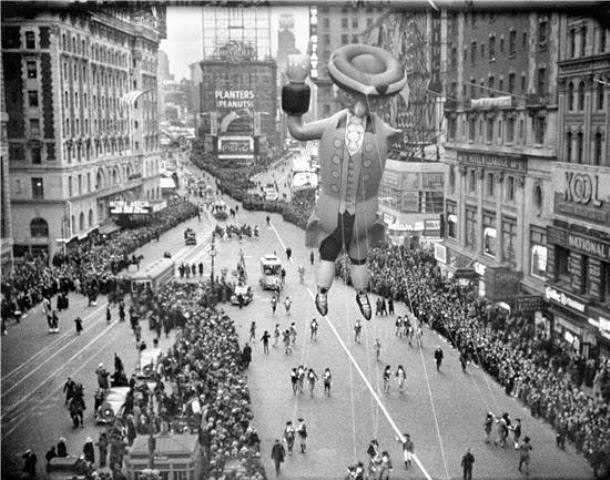
The curious Deitrich Knickerbocker balloon from the 1936 parade. (Courtesy Smithsonian)

3) The Real Parade Santa Claus has appeared in the Macy’s Thanksgiving Day Parade since the very first parade in 1924. One detail that did not quite make it into the modern era — knights in shining armor. Santa arrived in Herald Square “in state. The float upon which he rode was in the form of a sled driven by reindeer over a mountain of ice. Preceding him were men dressed like the knights of old, their spears shining in the sunlight.” [source]

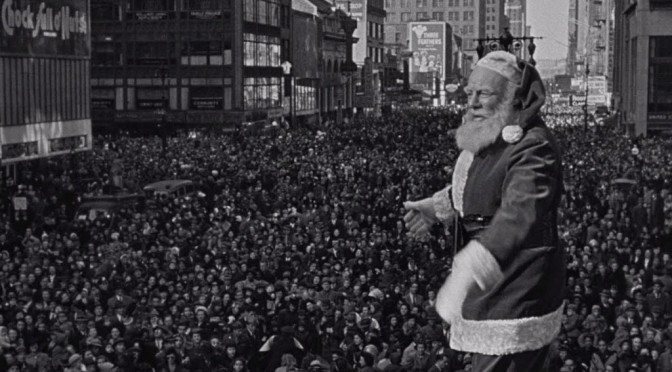
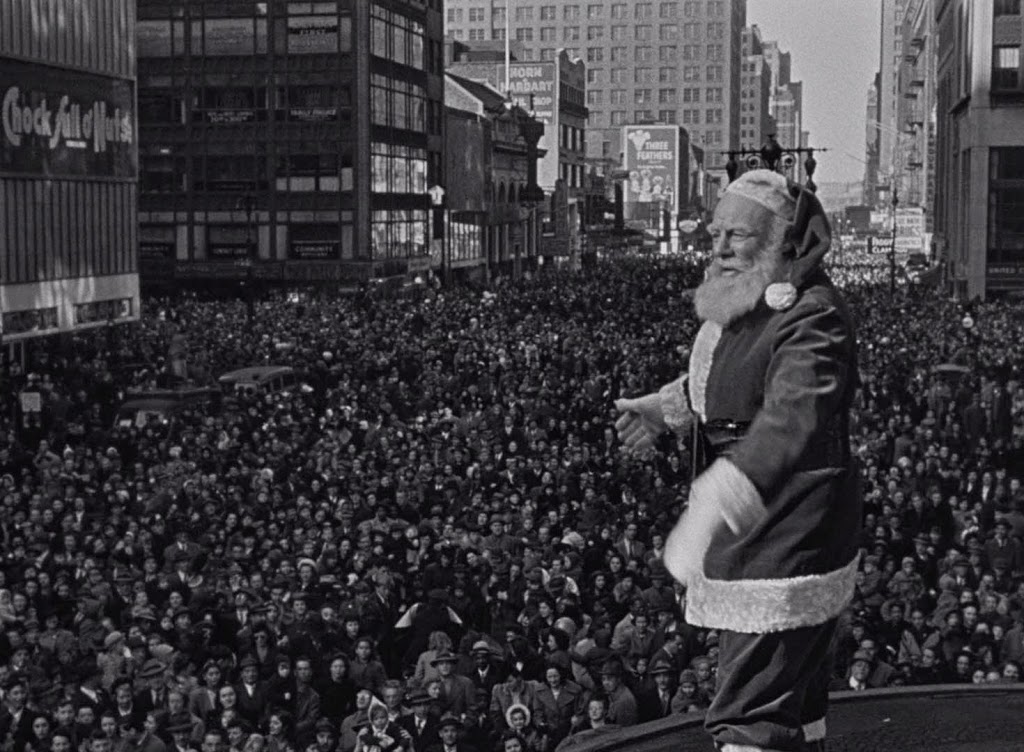
The scenes of the Thanksgiving Day parade in Miracle are real, taken from the 1946 parade. This mixing of live events and fictional set pieces (filmed in Hollywood) was rather unusual for the day.  “Scenes shot in actual New York settings add credibility to the film,” said Crowther. Gwenn was even the parade’s real Santa!  “A somewhat frostbitten Santa Claus, in the person of Edmund Gwenn, the actor, gingerly climbed off his high perch and unveiled Macy’s mechanical windows….” [source]
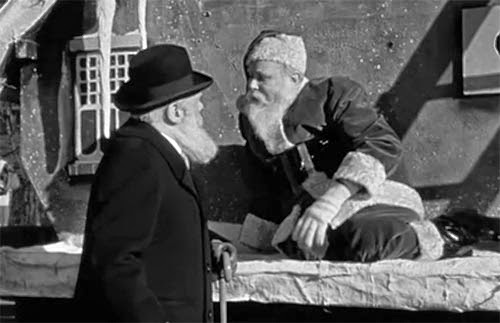
4) Bad Santas  “These pants are gonna fall off in the midst of Columbus Circle,” said the unfortunately inebriated Santa, who is relieved of his duties and replaced by Gwenn’s Santa. Several decades before Santacon, newspapers would occasionally make note of a Santa who would come to work “with liquor on his breath.” It seems there were all sorts of lecherous Santas! In 1948, the year after Miracle, the New York Times Magazine notes a Santa who “grabbed a trim young mother, set her on his knee and suggested that they both go out and have a drink.”

5) Behind The Beard  Edmund Gwenn, the film’s jovial Kris Kringle, went on to win the Academy Award for Best Supporting Actor. (Unfortunately, he beat Richard Widmark‘s work in the film Kiss of Death, widely considered to be one of the greatest film noir performances.)

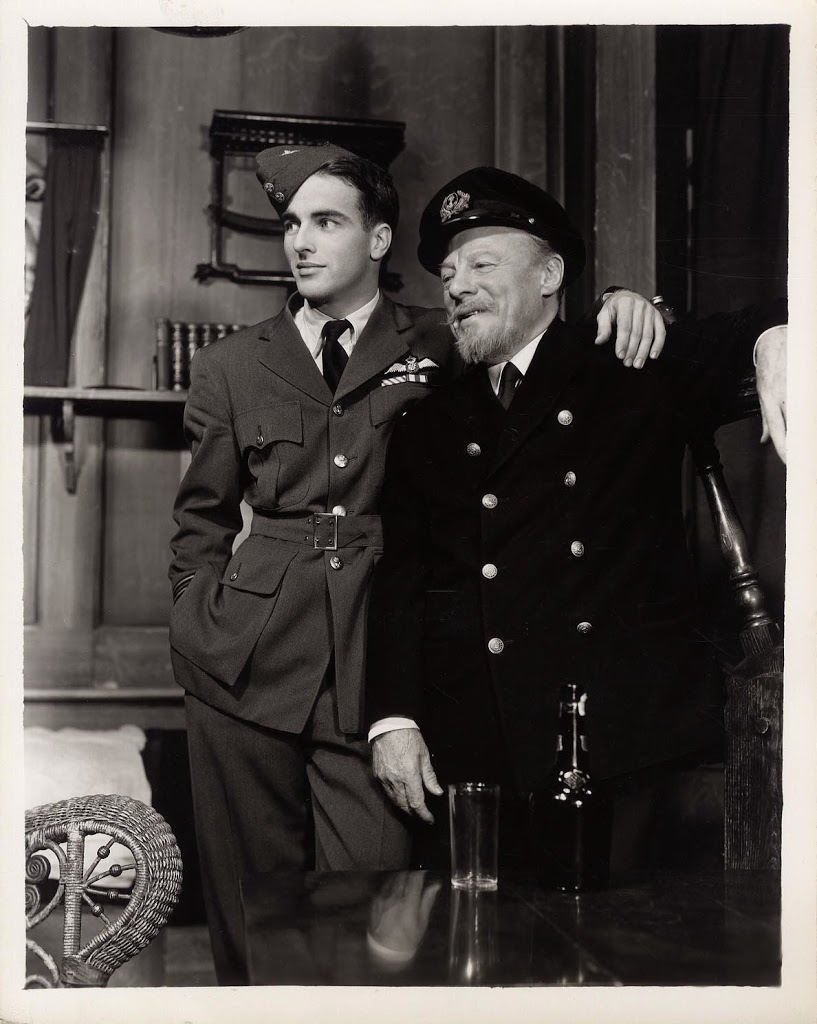
Although he had made dozens of films, the British actor was known for his work on the stage. In fact, right before starting work on Miracle, he gave what would be his last performance on the New York stage — the play You Touched Me with upcoming young star Montgomery Clift.

Above: Clift and Gwenn from their Broadway production of You Touched Me (Courtesy WalterFilm)

6) D-I-V-O-R-C-E  Miracle is unique in that its heroine is a divorced woman, but she’s badly treated by the film’s screenplay. Note the look of shock on the face of Fred Galley (John Payne) when little Susan casually mentions that her mother and father are divorced.

After World War II, divorce rates skyrocketed in America as servicemen returned from war to changed domestic situations. Divorces were only “fault-based” at the time; “typical grounds were adultery, desertion, habitual drunkenness, conviction of a felony, impotence … and, most used by divorcing parties, ‘cruel and inhuman treatment’.” [source]

The film makes some unsubtle commentary — Doris (which even sounds like divorce) is depicted as a cold, cynical woman, lacking little joy. I mean, she’s the director of the Macy’s Thanksgiving Day Parade and she doesn’t even bother to stay and watch it?

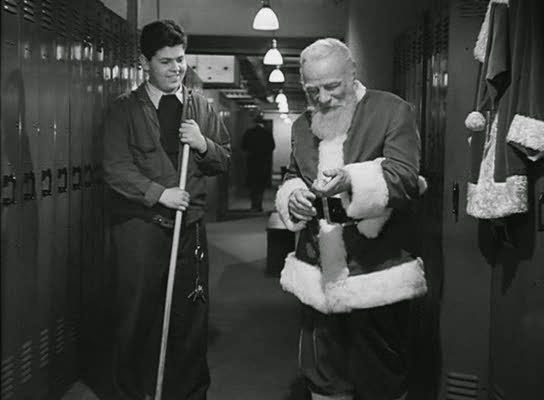
7) Locker Room Talk  We’re granted many scenes of Macy’s work spaces that customers don’t get to see, such as the locker room, where Kringle meets Alfred, the sometimes store Santa “with extra padding” and a thick Brooklyn accent — “just troo ’em on the floor!”

Macy’s was actually once renown for its locker room! From a report in 1913: “At Macy’s there are vast locker rooms containing expanded individual metal lockers for the majority of the employees and some smaller ones for certain groups. Never are two required to use one locker, except during Christmas rush. This is an exceedingly liberal policy, considering the size of the establishment, and a most desirable one.”

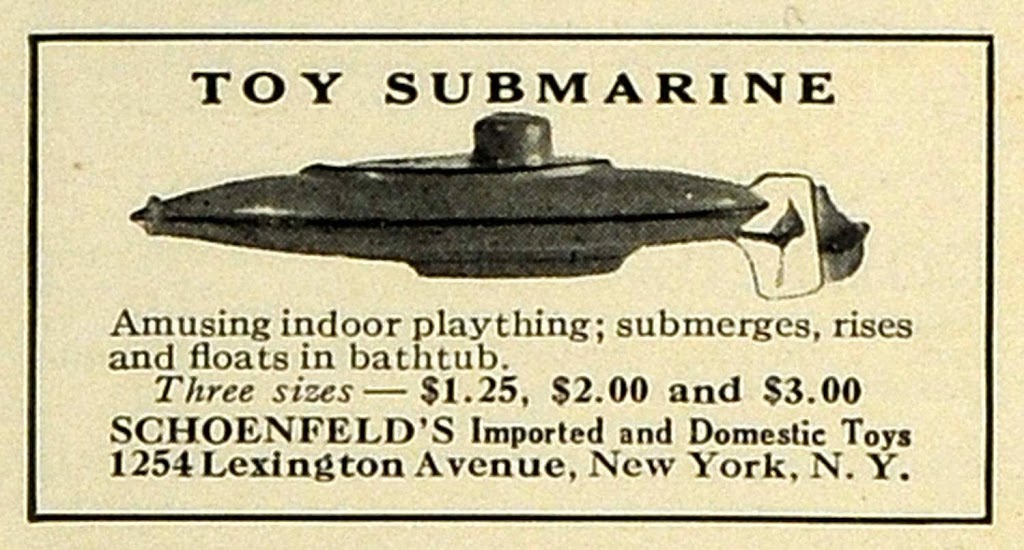
8) Toy Stores We get to the crux of the tale when Kringle, now hired as Macy’s Santa, begins sending customers to other department stores in the city. Most notably he sends a thankful mother (played by Thelma Ritter, in her debut film role) to Macy’s big rival Gimbels and another to a toy store called Schoenfeld’s, in Yorkville, at 1254 Lexington Avenue.

Here’s an ad for a toy submarine that was sold at Schoenfeld’s in 1927.

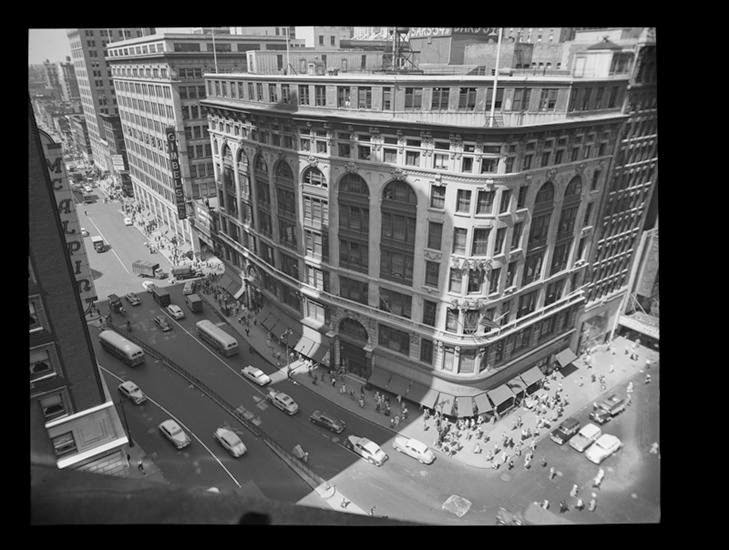
9) Cutthroat Business Macy’s and Gimbel’s were the two biggest department stores in Herald Square and one of New York’s best known rivalries. “Would Macy’s tell Gimbels?” was a popular expression of the time, expressing the fierce secrecy in sales and marketing practices. In Miracle, after Macy’s embraces Kringle’s policy of recommending items for sale at other stores, Gimbals tries to one-up their rival by adhering to the same policy and spread it to their stores across the country.

According to Gimbels lore, the company chairman Bernard Gimbel was asked to take the role of Kringle in Miracle. (I personally find this very hard to believe.) Such a request would not have been made of Macy’s founder Rowland Hussey Macy as he had died almost 70 years before.

Below: Gimbels Department Store in Harold Square, taken in 1915, from the vantage of the Marbridge Building (Photo by the Wurts Brothers, courtesy Museum of City of New York)

10) Home Away From Home When not at the North Pole, Kris Kringle resides at Brooks Memorial Home for the Aged at 126 Maplewood Dr, Great Neck, Long Island. That’s a real address although you won’t find the grand exterior that was used in the film. Why would they put Kringle in a nursing home in Great Neck? Perhaps it was a literary illusion to another great New York City fictional tale — Great Neck is called West Egg in The Great Gatsby, written only twenty-two years previous.

11) Santa Gets It Wrong Kringle is taken in for a psychological evaluation to prove his competence. He’s fully prepared, of course, seeing as he’s frequently accused of being crazy.

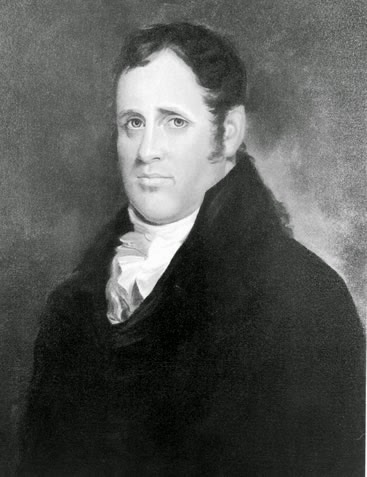
He rattles off a list of questions that might be thrown his direction during the mental examination. The trickiest? “Who was the vice president under John Quincy Adams? Daniel D Tompkins. And I’ll bet your Mr Sawyer doesn’t know that!”

Tompkins was a great many things in his day. Today he’s the namesake of Tompkins Square Park and Tompkinsville, Staten Island. But one thing he was not — he was never vice president under John Quincy Adams. That was John C. Calhoun. Tompkins served under President James Monroe.

So what accounts for this obvious error? Is it a true gaffe or an insight into Kringle’s character? Maybe he was crazy! Or just in need of an encyclopedia.

By the way, the psychiatrist Sawyer is taking his examination cues from a 1946 book called Mastering Your Nerves: How To Relax Through Action.

12) Working Delusion The handsome Doctor Pierce from the Brooks Memorial Home is sure the old man is suffering from a deeply held delusion. But so what?

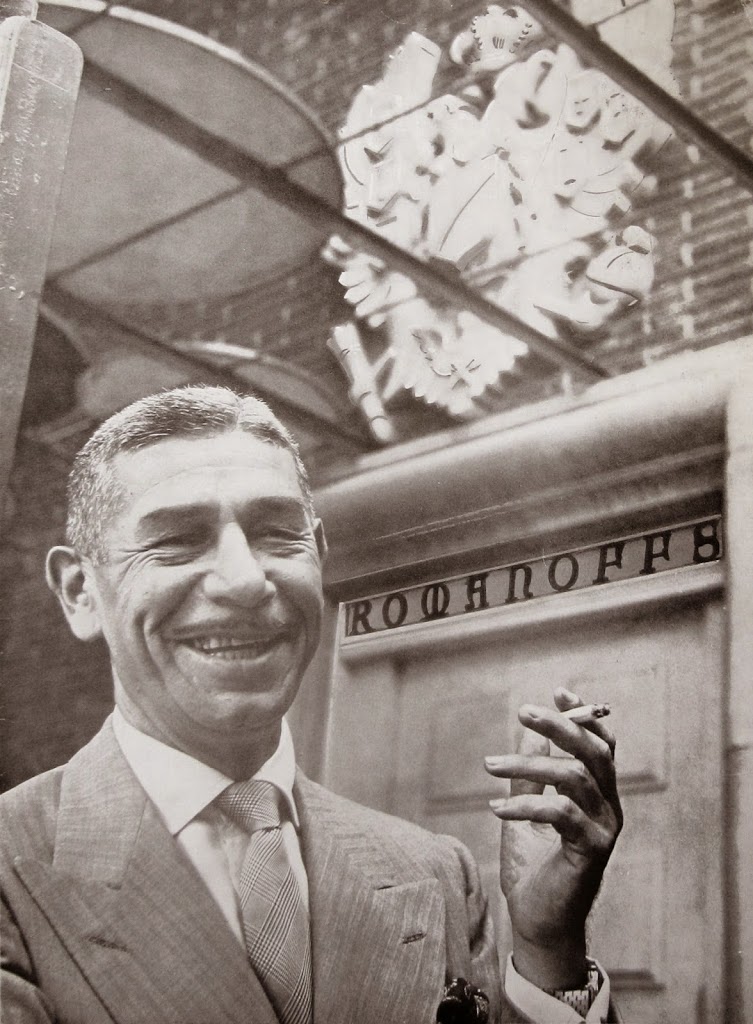
“Why there are thousands of people walking around with similar delusions, living perfectly normal lives in every other respect. A famous example is that fellow — I cant think of his name — but for years he’s insisted he’s a Russian prince. He owns a famous restaurant in Hollywood and is a highly respected citizen.”

Pierce is referencing an actual person named Michael Romanoff (at right), a noted ‘professional imposter’, who once walked the streets of New York City claiming he was Prince Michael Dimitri Alexandrovich Obolensky-Romanoff, nephew of Tsar Nicholas II.

In 1941 he opened the restaurant Romanoff’s in Los Angeles on North Rodeo Drive, enjoying newly found success in a town noted for its impostors. The famous photograph of Sophia Loren and Jayne Mansfield is taken at Romanoff’s.

13) Martini Time! In a delightfully throw-away scene, Shellhammer, the head of Macy’s toy department, tries to convince his wife to let Kringle stay at their home. In order to get her to agree, he gets her wasted on martinis. “We always have martinis before dinner. I’ll make them double-strength tonight.”

We have Prohibition to thank for martini hour in many American homes. Driving alcohol consumption into private dwellings, the cocktail hour was firmly entrenched by the 1930s. It was properly solidified by the world’s most famous martini drinker after James Bond — Franklin Delano Roosevelt. “Before dinner we usually had martini cocktails made by the President’s own hands,” said one cabinet member. Many remembered that Roosevelt made very, very bad martinis, preferring to enhance them with a few drops of absinthe.
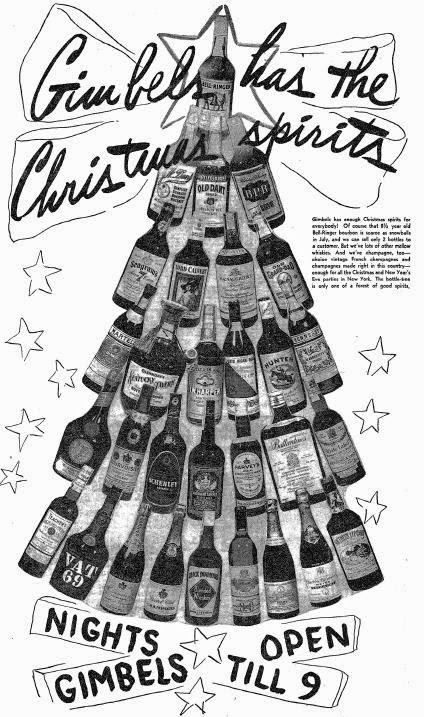
At right: A festive Gimbels ad which ran in the New York Times in 1946

14) Advertising Blitz Macy’s fully embraces the altruistic policy of directing shoppers to other stores if they are looking for an item that is not stocked. In a montage, we get to see some of the other department stores benefiting from Macy’s new rules — Bloomingdales, Hearn’s, Gimbels, Stern’s and McCreery’s. 

These stores were situated very close to one another during the 1940s and had followed each other up the island of Manhattan, beginning their existence in lower Manhattan, then moving to Ladies Mile in the late 19th century, then to Midtown by the new century. For instance, Hearn’s went from Broadway and 8th Street, then to 14th Street between Fifth and Sixth Avenue (very near Macy’s old home).

McCreery’s made its Ladies Mile home at Sixth Avenue and 23rd Street. Today it’s occupied by another building with a Best Buy on the bottom floor. It later moved to 34th Street and Fifth Avenue.

For more information about the department store scene, check out our podcast on Ladies Mile.

15) Vintage Lunch We see Alfred and Kris Kringle in another space for Macy’s employee’s — the cafeteria. This was obviously filmed on location as evidenced by this picture of the cafeteria from 1948 (photo by Nina Leen):

16) The Nut House Kris Kringle purposefully fails a mental exam — heartbroken by what he believes is a betrayal by Doris — and gets thrown into Bellevue Hospital for a few days. Kringle is seen in a relatively safe environment although the hospital’s reputation was less than rosy during this period. This is the era of shock therapy and other controversial treatments. In one experiment at Bellevue from the mid-1940s, almost one hundred children with diagnosed schizophrenia were given shock treatments six days a week.

Bellevue was also famous during this period for its alcohol rehabilitation center. In 1945, the film The Lost Weekend detailed one alcoholic’s “staggering ugly treatment” here.

17) Kooky Headlines In another swirl of headlines, we’re alerted to Kringle’s upcoming court trial to determine his true status. Among the many headlines we see is one that makes a total assault upon the English language — KRIS KRINGLE KRAZY? KOURT KASE KOMNG “KALAMITY” KRY KIDDIES
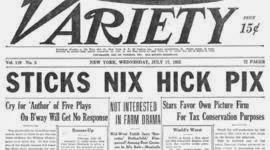
This is a gag directed squarely at Daily Variety, who specialized in absurdist headlines as early as the 1930s. In 1935 they went with the mind-boggling STICKS NIX HICK PIX, a headline later made famous in the 1942 film Yankee Doodle Dandy.

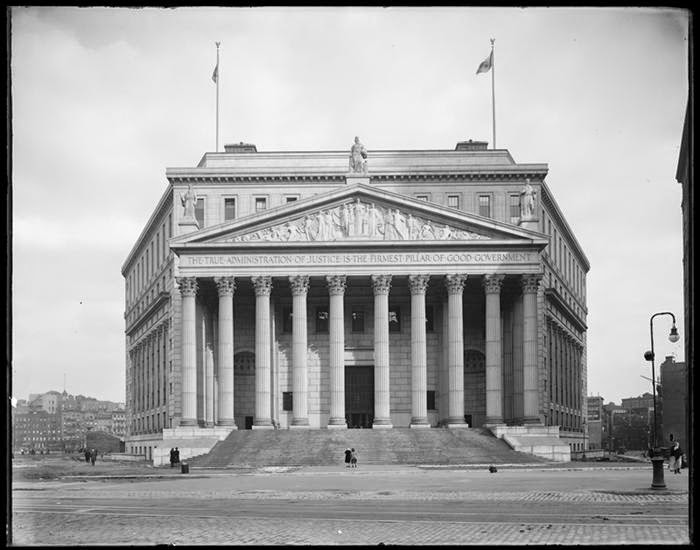
18) Historical Spot The climax of the film arrives at a peculiar place — Foley Square and the New York County Courthouse, one of the pillars of this civic district. The building was a little over 20 years old at the time of this film, and it looks pretty much the same as it does today. Along the top of the structure you can make out a carving of a 1789 quotation by George Washington — “The True Administration of Justice is the Firmest Pillar of Good Government.”

This building sets near the infamous intersection of Five Points and almost exactly on the spot were old Collect Pond once sat!

Below: New York County Courthouse, where Kringle’s fate is decided. (Photo from 1927, Wurts Brothers, courtesy Museum of the City of New York)

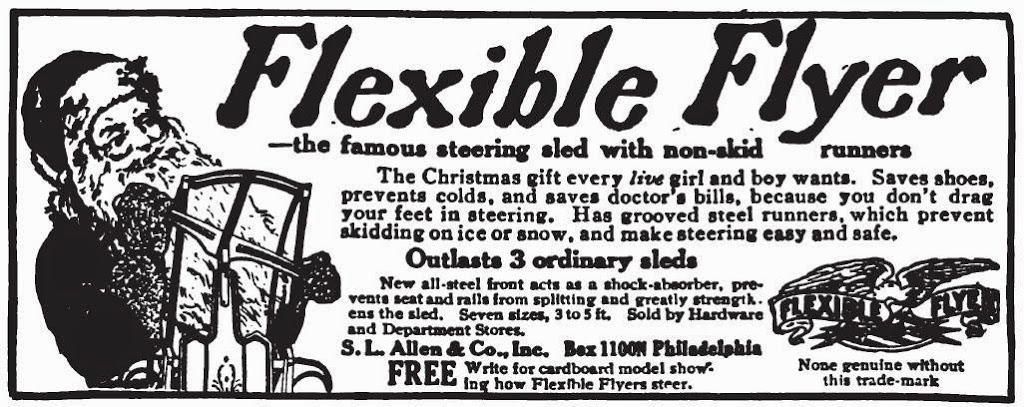
19) Kids Court  In an effort to prove the existence of Santa Claus, the son of the prosecutor is called to the stand. His name is Tom Marrah (you know, because he’s the future — tomorrow) and he is questioned about his beliefs on Old Saint Nick. “He gave me a brand-new flexible flyer sled last year,” he proclaims, then proceeds to point out Kringle from the stand.

The scene is an amusing twist on the great tale of “Yes Virginia there is a Santa Claus,” the famous confirmation of Santa’s existence that was published in the New York Sun fifty years earlier. The Virginia in question was also the child of a city employee — the coroner’s assistant — whose letter was answered by Sun editor Francis Pharcellus Church. In the case of Miracle, it is a more assured child that confirms his identity.  Judge Henry X Harper — a Democrat, we learn — affirms Kringle’s existence to curry favor from the electorate.

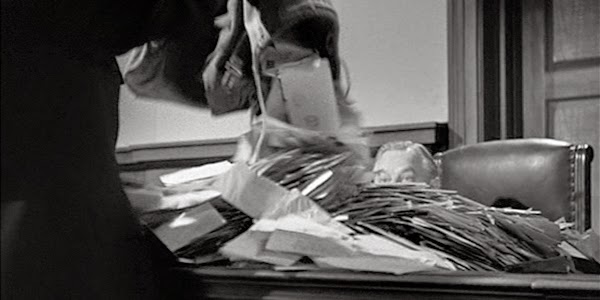
20) Dear Santa The final proof arrives, deus ex machina style, in the form of thousands of letters, re-routed from New York’s mail processing center to Foley Square. Kringle’s lawyer Galley then proceeds to regale the hall with a brief history of the U.S. post office. Galley informs the judge that the mail service was created in 1776 — technically it was 1775 — by the Second Continental Congress. Benjamin Franklin was indeed the first postmaster general.

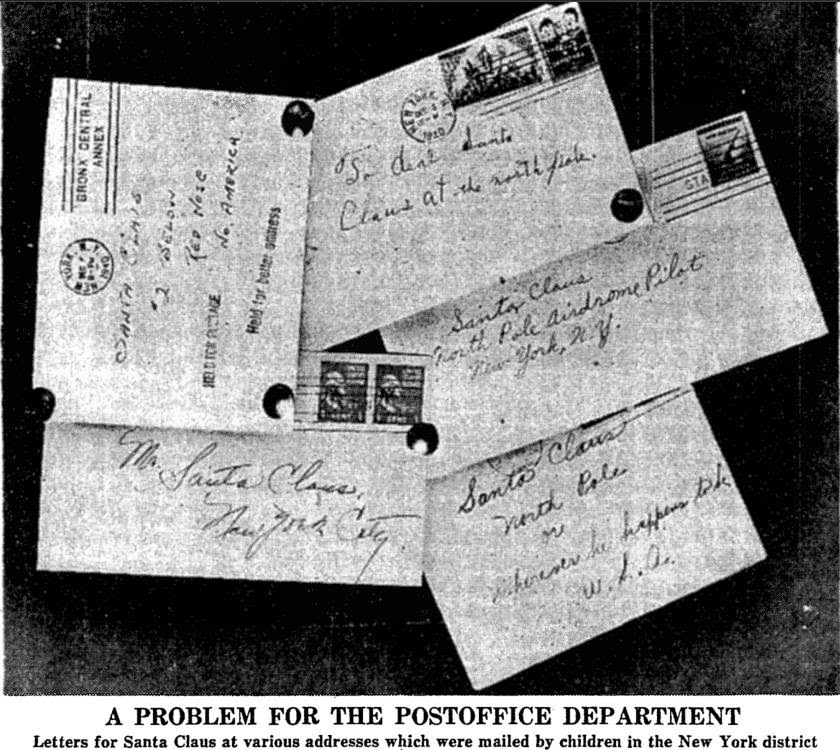
So how many letters does Santa really get a year? In 2013 — even in the era of emails — there were over one million letters from American children alone. [source]  Back in 1940, the postmaster’s office was inundated with correspondence. Letters address to Santa were “opened and read so that ‘the real worthy ones’ can be set aside from those which were childish requests.” Because how dare a child ask Santa a childish request.

The film may have played a hand into an increase of Dear Santa letters in 1947 — “up 25% over 1946,” according to reports.

From the 1940s article:

21) Christmas In June Miracle on 34th Street may be set during Christmastime, but it was originally released in the late spring, June 2, 1947. The film made its New York debut at the Roxy Theatre in a program that also featured comedian Jerry Lester, singer Art Lund, a puppet show and “the Gae Foster Roxyettes,” which replaced the original Roxyettes after they moved to Radio City Music Hall.

As part of the promotion for the film, Macy’s sent an undercover shopper into Gimbel’s to report for Macy’s-owned radio station WOR. It’s doubtful that either department store took Santa’s advice and recommended visiting their competitor.

Categories
Christmas Robert Moses

And Now … Two Christmas Poems By Robert Moses

My new column for A24 Films is up over on their 1981 site (in support of the film A Most Violent Year). 1981 was the year that Robert Moses died, and his death sparked new discussions into what his legacy to the New York City area truly was.  In a word: automobiles.  You can read my article here.

But that’s a little depressing. How about I tell you about the time that the New York Times published a couple Christmas poems written by Moses?

That’s right, the Santa Claus of Long Island, bearing gifts of bridges and highways, did occasionally get into the Christmas spirit, albeit dripping in vitriol and sass.


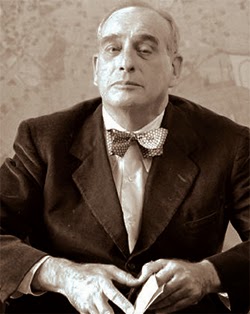
Moses in 1934 during his failed campaign for governor. (Courtesy New York Daily News Archive)
POEM ONE – ‘TIS THE NIGHT BEFORE ELECTION

This loosely poetic speech first manifested in print during the last gasps of Moses’ failed bid for New York governor in 1934.

As the Republican candidate running against incumbent Herbert H. Lehman, young Moses failed to connect with voters, and the experience soured him on elected positions. He was soundly defeated by Lehman, the investment banker-turned-politician aligned with new president Franklin Delano Roosevelt (who had preceded Lehman as governor).

His final words as a candidate were spoken on radio station WEAF and printed the following day.  Those words paid an awkward homage to the great Christmas poem written by Clement Clarke Moore. Despite the fact that the election was in early November, his point in conjuring the visage of Old St. Nick would become clear.  It’s hardly rhythmic. Imagine this read in his gruff, determined voice:
“‘Tis the night before election, and nothing much is stirring throughout the state.

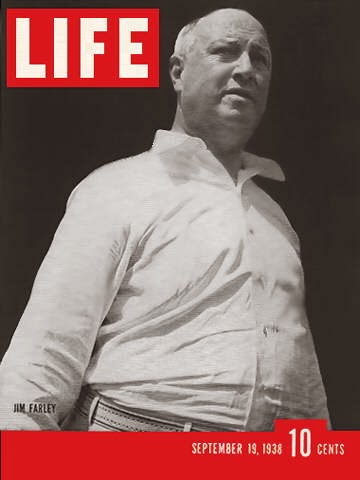
The stockings in Democratic homes are hung by the chimney with care, in the hope that Jim Farley soon will be there.

The Big Bag Man is dressing himself up as Santa. He doesn’t really look the part, but that’s not important.

Neither is the fact that all the presents were bought on credit, and that Santa Claus is running up a tremendous bill.   

The important question is:  Has he plenty of presents to go around for the boys and girls who have been good?

Governor Smith expressed the fondest hopes of the Democratic party, and summed up the strategy of the whole Democratic campaign when he said that he thought the people would not shoot Santa Claus before a hard Christmas.”

Jim Farley (pictured at right, 1938) was considered a ‘kingmaker’ in Democratic politics, responsible for the election of FDR.  He would become Roosevelt’s U.S. Postmaster General.  The James A. Farley Post Office across from Madison Square Garden is named in his honor.
Using the Santa analogy, Moses was taking a dig at Democratic programs that would soon shape FDR’s New Deal.  Of course, as New York’s power builder, Moses would later benefit greatly from these programs so perhaps he shouldn’t have been complaining.

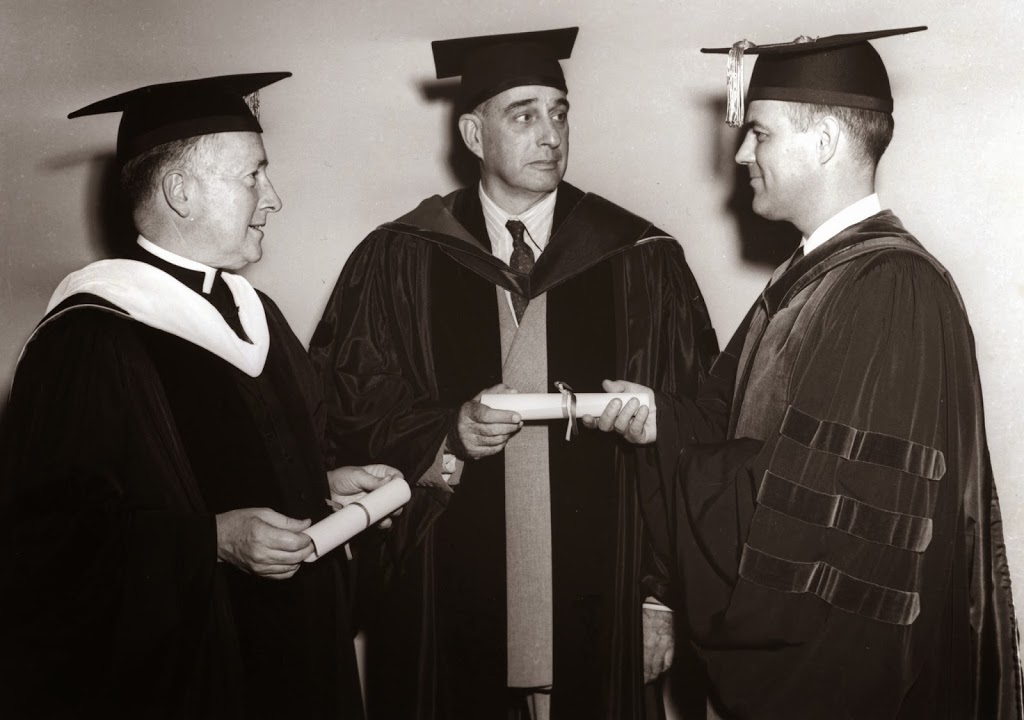
In 1948, Robert Moses received the very first honorary degree from Hofstra University, along with Robert Gannon, the president of Fordham University.  However, that year it would be a phony university that would inspire Moses to pen a sassy Christmas verse. (Courtesy Hofstra University)

POEM TWO: CHRISTMAS GREETINGS (LETTER TO THE CHANCELLOR)

Perhaps more unusual was the poem which ran the day after Christmas in 1948, an inside joke between men of influence.

By the late 1930s, Moses had amassed several positions of responsibility and power and had pushed through a great number of vast, expensive projects, including the Triborough Bridge. Moses had to routinely pitch these projects to the New York Board of Estimate — the men who held the purse strings — which included Henry M. Curran (Deputy Mayor), Newbold Morris (City Council President), and James Lyons (Bronx Borough President).

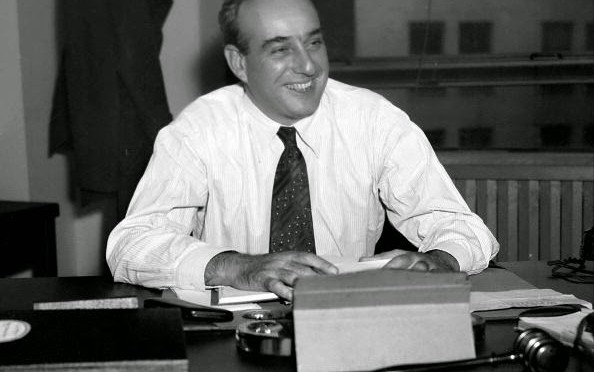
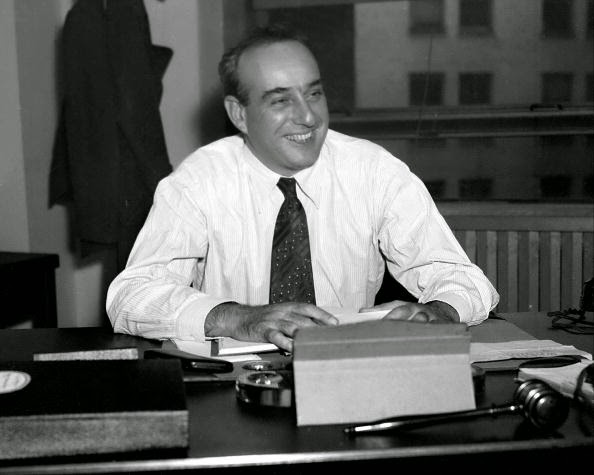
Curran was a bit of a grammar nerd — the kind who cringes at improper usage of words — and recoiled during debates when Moses (at right) and the others misused the English language.

According to the Times, Curran organized among the men a hierarchy of language correction, (jokingly?) referred to as Curran University.  One could only ‘graduate’ from this phony university by excelling in their verbal and written debates with grammatical aplomb.

During a board meeting where the fate of the old Claremont Inn was discussed, Moses used the phrase ‘coign of vantage’ which scandalized Curran but suggested that Moses’ verbal skills were improving.

Then, one day, Moses wrote a memorandum to Lyons using the phrase ‘high-falutin‘ as well an apparent mis-use of the word Aurignacian.  This threw his superiors into a light-hearted conniption.

“We tried to help.  But Moses has failed, flunked.  Up with the bars!  Let Mose wail — without — not within,” wrote Curran.

Moses, who would become more powerful than all three men combined, responded in an unusual way — he wrote a biting Christmas poem.  The following verse, penned by Moses, was delivered to Lyon, who “promptly converted it into a Christmas card — with embellishments — and passed it along to his superior officer.”  The poem, as published in the Times:

CHRISTMAS GREETINGS
To Chancellor Henry H. Curran
Great Chancellor of Curran U
Greetings from Borough Hall and Zoo.
 
Assorted barks and roars and honks
From the four corners of the Bronx.
 
Gannon, Osborn, Robbins and Moses
Greet you with laurel, rhinos and roses.
 
Cheerios and loud hosannas
From Pelham Bay and the Bronx savannas.
 
Great critic of the spoken word,
Greetings with the proverbial bird.
 
From every coign and height definitive
We greet you with a split infinitive.
 
Signed, 
James J Lyons, Dean
Robert Moses, Sophomore Cheer Leader

So remember: the next time you have a friend correct your grammar, remind yourself, “Hey, I have something in common with the Power Broker!”

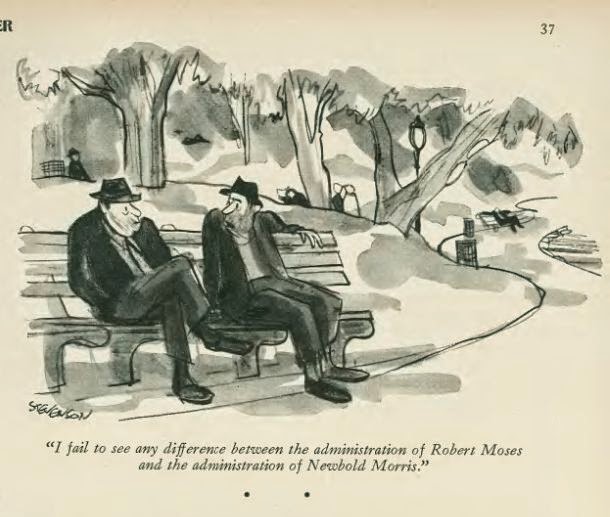
Below: A New Yorker cartoon from 1960, the year when his grammar pal Morris took the job of Parks Commissioner from Moses.


Thank you, Tooth Brush Lady! Newsies get their teeth fixed

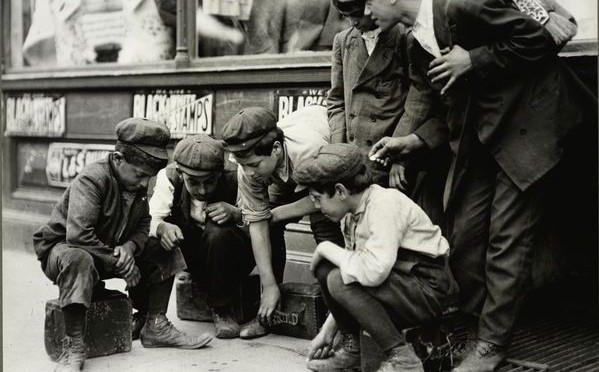
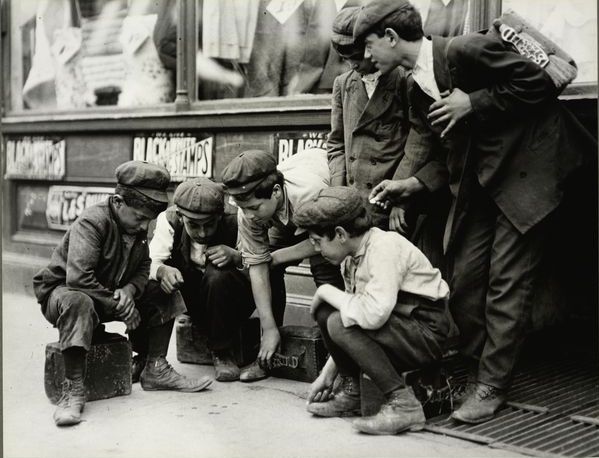
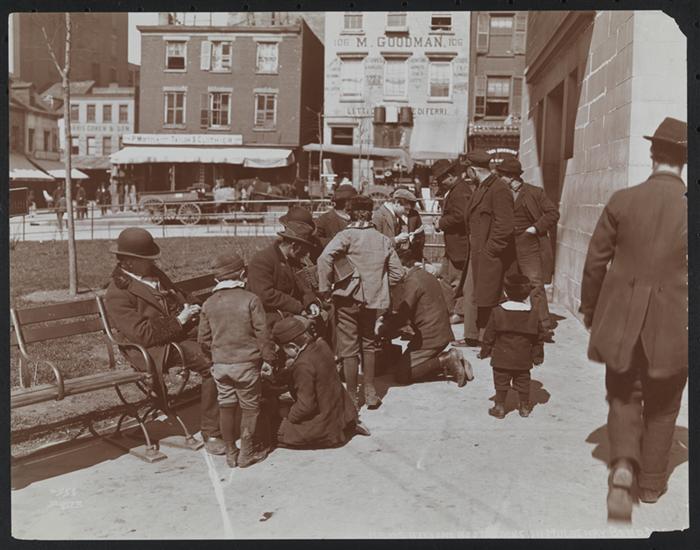
Above: Newsboys and bootblacks playing craps, photographed by Lewis Hines in 1912.  Some of these were most likely recipients of free dental care, provided at the Second Avenue newsie’s lodging house in that year by the Society of Good Cheer.
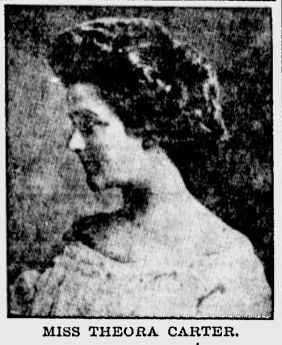
Newsboys with poor teeth one hundred years ago — I’m guessing this would be most of them — had something to smile about in 1912 in the form of Miss Theora Carter and the Society of Good Cheer.
Miss Carter, a native of Seattle, was an inventive social activist and lecturer, focusing on generating an overall sense of good will among the poorest in New York, uplift and cleanliness as a way of promoting health.  An “advocate of good cheer” and a woman of “ample income“, Carter moved to New York and formed the Society of Good Cheer as a method of spreading healthful calm and tranquility. Joining her at the Society’s headquarters at 258 West 74th Street on the Upper West Side were two dozen like-minded young women, many of whom lived at that address. (Carter may also have lived here, although one news clipping claimed she lived in Park Slope.)

At right: A photo of Miss Carter from a Toledo newspaper [source]

The ladies of the Society of Good Cheer canvassed New York’s many hospitals, “seek[ing] out those patients with few or no friends and cheer[ing] them up by reading or talking to them.” During the holidays, the Society provided homes and hospital rooms in New York and Boston with Christmas trees; in many ways, Miss Carter’s holiday work might have inspired another society lady, Emilie Herreshoff, when she provided Madison Square with the very first public Christmas tree in 1912


In 1911, Carter expanded their crusade to noise prevention. After all, the streets were now rapidly filling with automobiles, adding to the noise of streetcars and elevated trains. She focused her wrath at noisemakers outside of children’s hospitals, handing out “cards of human appeal” to “truck drivers, the drivers of automobiles and other noise-making vehicles.” [source]


The following year, inspired by her noise-squelching hospital visits, Miss Carter turned her attentions to the orthodontic needs of poor children, in particular, the many thousands of newsies. ‘The upbuilding of character and the overcoming of physical imperfections through remedying irregularities of children’s teeth’ was Miss Carter’s stated goal. Another article further described her intentions as “good teeth, clean teeth and straight teeth.”


The Childrens Aid Society was already providing free dental inspections to hundreds of children by this time,  so Miss Carter decided to focus one some of the most neglected, most independently minded children, the inhabitants of the Newsboys Home at 170 Second Avenue (at 11th Street). A New York Times editorial from July10, 1912, proclaimed that ‘the teeth, jaws and mouths of some 2,000 newsboys’ would benefit from the new clinic.

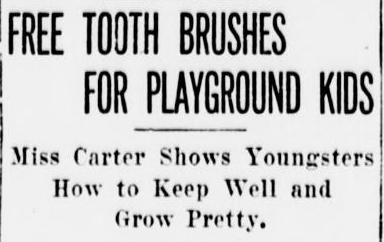
Above: A headline from the New York Sun, September 28, 1912

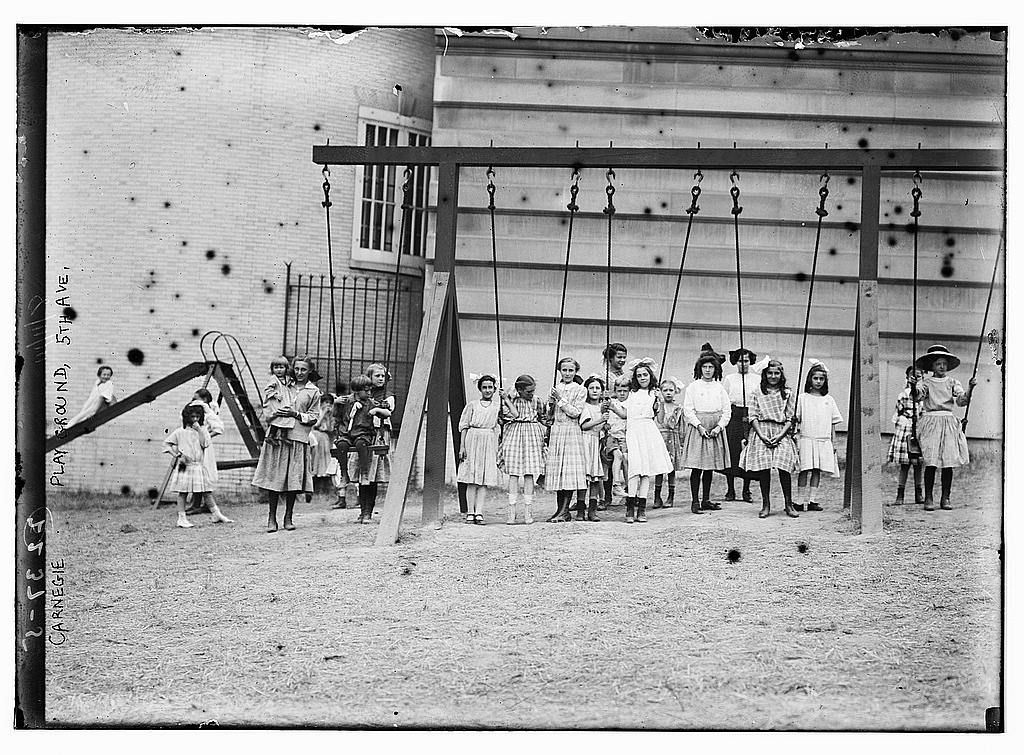
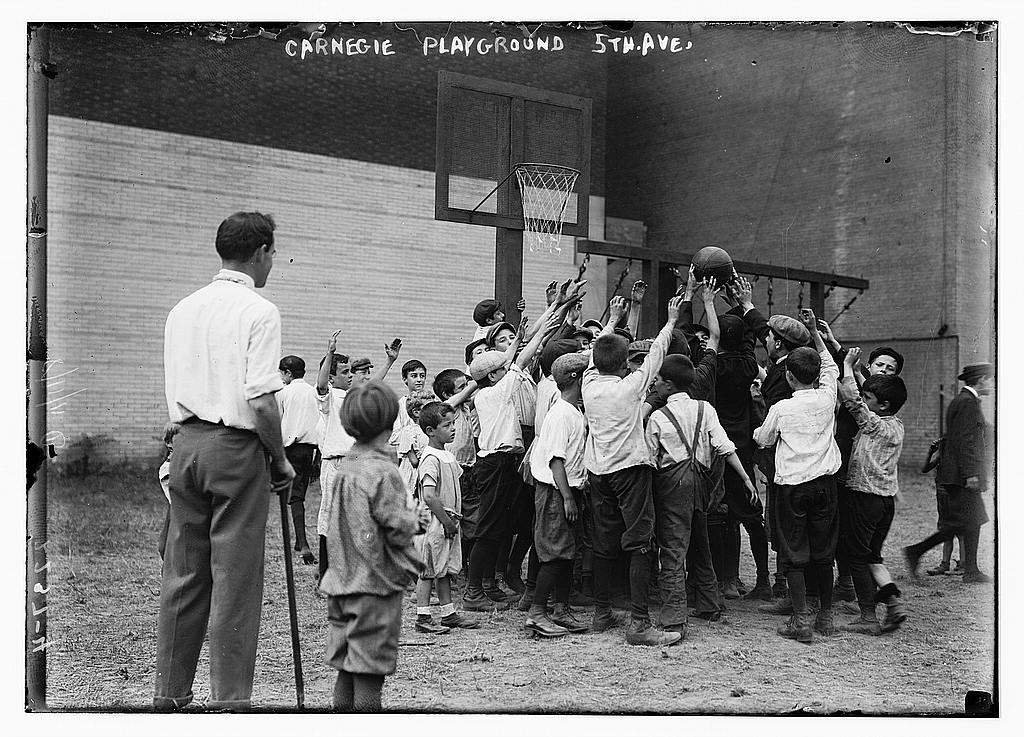
Carter, now fully invested in children’s dental practices, lectured to children on the Carnegie Playground at 91st Street and Fifth Avenue (near the palatial mansion of Andrew Carnegie), providing them with free toothbrushes while underscoring the social advantages of a healthy mouth. “[Y]ou see if you want to be good looking you must clean your teeth.” [source]

Miss Carter, known as the Tooth Brush Lady or ‘the Apostle of the Toothbrush‘, spent the next decade treating New York’s youngest unfortunates to her trademark ‘good cheer’. In 1916, the Society brought Christmas presents to the infirm young patients at the Hospital For Ruptured And Crippled Children — yes, that was its actual name — at 321 East 42nd Street (where the Ford Foundation stands today).

The New York Sun gives an interesting description of the ravishing Miss Carter: “She is slim and svelte, with dusky hair, big hazel eyes and a perfectly straight nose.”

Apparently the Society was so successful that Miss Carter formed a junior off-shoot in Brooklyn called the Little Cheerfuls, which allowed young children from wealthier households to help in the spreading of ‘good cheer’ in local hospitals.

By the way, I have officially fallen in love with Miss Theora Carter.

Below: Children at the Carnegie Playground at 91st and Fifth Avenue. It’s likely that these photographs were taken during Miss Carter’s visit to the playground, as news reports all state that photographers were present during her visit.

Photos courtesy the Library of Congress
Categories
Christmas

Pre-Scrooged: The Ghost of New York Christmas specials


A Bill Murray holiday classic is closely linked to a forgotten 1955 teleplay

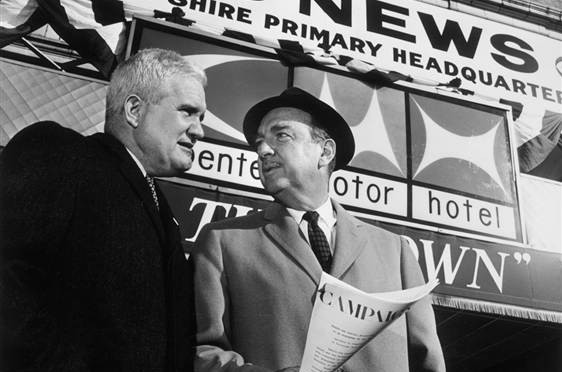
Tracing itself back to one of America’s first television broadcast station, New York’s local WCBS-TV can claim a host of significant achievements, including the first regular broadcasts in color and the first baseball game in color (with the Brooklyn Dodgers, naturally).

Their early news documentary series ‘Eye on New York’, hosted and produced by future CBS president Bill Leonard, took a break from serious reporting on the evening of Christmas 1955 to broadcast a live version of Charles Dickens’ ‘A Christmas Carol’.  I don’t believe a version of this classic exists to view today, but holiday television lovers benefit from one odd quirk of this fleeting program.

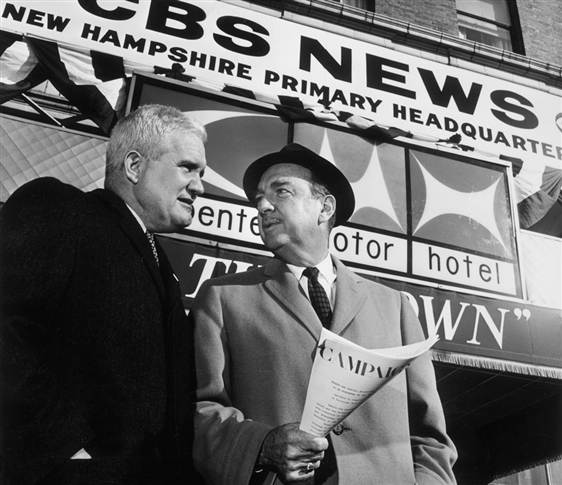
At right: Bill Leonard with CBS News correspondent Walter Cronkite.

This version of ‘Carol’ starred the extraordinary Bronx-born character actor Jonathan Harris (best known as the flamboyant Dr. Smith from ‘Lost In Space’) as Ebenezer Scrooge and Tony Award nominee Biff McGuire as Bob Cratchit.

But far from constructing a dour Victorian London set upon their midtown Manhattan soundstage, Leonard (who wrote the teleplay) decided to change the setting of the story, to modern day New York City. According to author Fred Guida, “this clever conversion preserved the spirit of the original but in the milieu of lower Park Avenue and big industry.”

Harris’ Scrooge was transformed into the bitter old CEO of Metropolitan Plastics, with Cratchit his elevator man. Scrooge was visited by the various ghosts via “a TV receiver as an up-to-date medium for his unearthly visions,” according to Variety.

Leonard’s ‘Carol’ was the very first version of the tale set in New York, and with a modern twist. While this original program has been lost, its cheeky trope has been used in a great many modern shows (especially those of the 1970s and 80s) in ‘very special Christmas episodes’, to bring holiday realizations to jaded characters from Alex P. Keaton of ‘Family Ties’ to even the title character of ‘Xena: Warrior Princess’.

But the greatest beneficiary of Leonard’s holiday twist is the 1988 Bill Murray classicScrooged, where a grumpy New York television producer — filming his own version of ‘A Christmas Carol’ — finds epiphany after an evening with three illuminating spirits, including a cab driver played by former New York Dolls singer David Johansen.

And since we’re on the subject, here’s some more New York holiday themed cheer from Johansen, under the name of his alter ego, Buster Poindexter. Happy holidays from the Bowery Boys!

Categories
Brooklyn History

Holidays on Ice 1861: Skaters flock to Brooklyn’s icy ponds

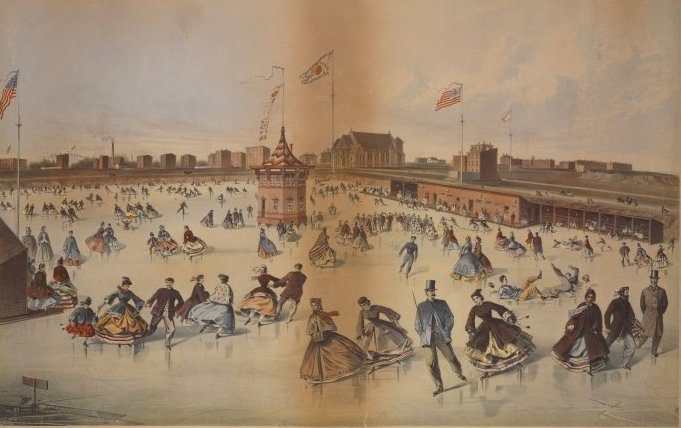
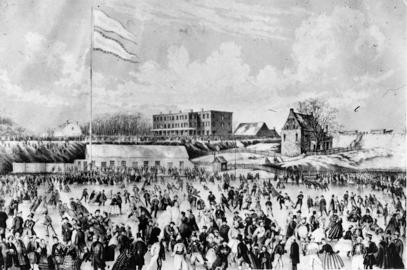
Williamsburg(h)’s Union Pond, one of the finest destinations for ice skating in the city, 1863. It later became America’s first enclosed baseball field.

The nation was at war one hundred and fifty years ago, but that didn’t stop the austere celebrations in the ‘borough of churches’. But while thousands of Brooklyn residents attended church that morning in 1861, many participated in a more whimsical holiday celebration — wild and uncontrollable ice skating.

So famous was the city of Brooklyn’s famed ponds — which reliably froze each winter — that New Yorkers by the boatloads crammed into ferries across the East River to join in the icy merriment. On really cold days, of course, it was often the East River itself that froze solid. But in 1861, an unseasonable warmth kept the river disappointingly liquid, forcing thousands of skaters upon Brooklyn’s small ponds where the ice quickly melted.

For instance, Washington Pond (at right), at 5th Avenue and 6th Street — then considered Gowanus, today it’s Park Slope — was normally ideal for skating. Horse-drawn streetcars took crowds right from the Fulton Ferry to the door of the nearby old stone house, built in 1699 and famous for its role in the Revolutionary War. (It’s why the pond is named for Washington, after all.) But on Christmas 1861, “the ice was unpleasantly rough” there.

Skaters may have found more success at other Brooklyn skating destinations. The Capitoline Skating Lake, near the train station in the former independent village of Bedford, was known as the “principle pond of the Western District.” In Williamsburg, the versatile ‘world-renown‘ Union Pond drew thousands during the winter and thousands more in the summer — as the nation’s first enclosed baseball field. On this particular day, the newly opened pond in its ‘gay and brilliant appearance’ was crammed with skaters laughing and caroling, in various states of sobriety.

By the afternoon of Christmas 1861, most of the closest ponds were mushy and nearly dangerous. At a pond on Third Avenue, “a gentlemen with two ladies fell trough the ice and took their Christmas immersion without any material damage save a very decided shivering,” according to the Brooklyn Eagle.

Urban ice enthusiasts were forced to follow the advice of horsecars festooned with the signs ‘Good Skating in East Brooklyn’. I’m not sure exactly where crowds went that day, but a New York Times article from a three years later lists several ‘free ponds’ that might have been available for ice skating that day, including Seller’s Pond “in Bedford, near the Jamaica Pond Road”, “Dumbleton’s Pond on Myrtle Avenue” and the Suydam’s Pond, “on Atlantic-avenue near the Hunters-Ferry road.”.

All that skating and merriment drove many to more intoxicating holiday spirits, preferring their drinks ‘on the rocks’, or as the 1861 Eagle reports, “the boys will insist that ‘Christmas comes but once a year’ and with it comes a large measure of ‘good cheer’ and so they must get cheerful.” The most serious altercation came with one reveler, tiring of throwing rocks at boys, attempted to pistol whip a police officer.

The more respectable Brooklynites traipsed home at dawn, as the gaslights meet the fading light, casting the wet snow in a bright glare. Many reformed again for choirs of caroling, or else to distribute presents at charity ‘Christmas tree exercises’, where children lined up outside downtown theaters hoping for presents and a gander at the gorgeously trimmed tree, sparkling with candles.

Top pic courtesy NYPL. Second pic courtesy the Old Stone House.

Categories
Christmas Newspapers and Newsies

A Very Special New York Newsies Christmas

The gritty image of the scrappy 19th century newsboy, the can-do kid slinging newspapers from the street corner, full of vinegar and character, was an encouraging invention of the newspapers themselves.

Children were cheap labor, willing to sling stacks of freshly printed papers to corners across the city.

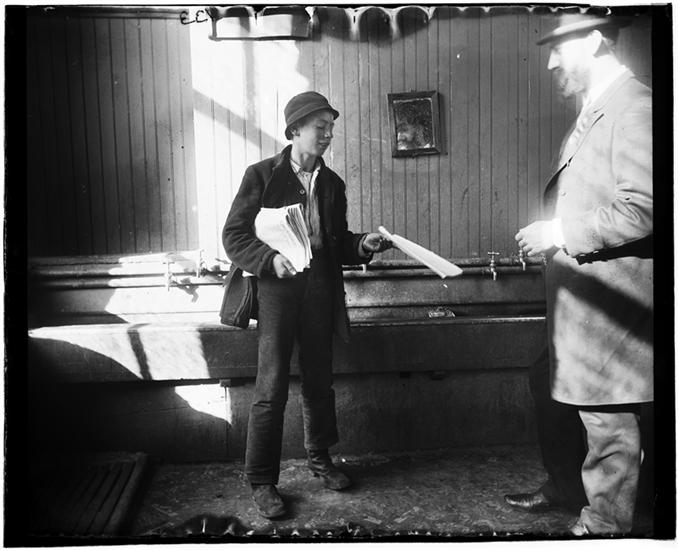
Bootblacks and newsboys at Mulberry Bend, 1898, courtesy Museum of the City of New York

Many kids preferred the profession to that of bootblack or messenger boy, and it was certainly more profitable than peddling door to door.

Newsies were frequently mentioned within general-interest stories of homeless, outcast whelps, considered almost blissfully, as though their own news delivery forces weren’t themselves part of that pathetic number.

The papers stereotyped newsboys (who were occasionally girls, too) as orphans or ‘street arabs’ with purpose, self-sufficient little adults plucked by their profession from the grasp of destitution.

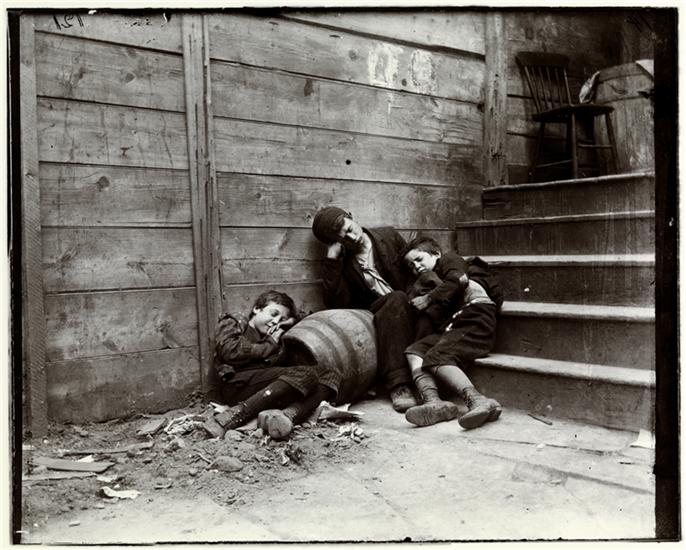
Three boys curled around a barrel, asleep at the bottom of stairs. By Jacob Riis, 1890, courtesy the Museum of the City of New York

Many children were homeless; the lucky ones took shelter in ‘newsboy lodging homes’, but many braved it in doorways and slept over gratings.

Some found this life preferable to New York’s houses of refuge, dreary orphanages that were often grouped with homeless shelters or other asylums.

Those children who did have families took employment out of necessity or as a means of escape. It took organized action (culminating in the Newsboy Strike of 1899) and the work of child-labor activists like photographer Lewis Hine to highlight the unsavory conditions and low pay.

Below: A newsboy posing for a Jacob Riis picture at the Duane Street lodging house, 1889

Newsboy at the Duane Street Lodging House, c 1890, Museum of the City of New York

No time was worse for a newsboy than winter.

Not only was it physically difficult to sell newspapers in cold and snowy weather — or worse, the wet, wintry mix that often typifies the New York season — but children were rarely dressed for comfort.

The idea of Christmas was a luxury. As newspapers were sometimes heavier due to increased page count, some children may have even dreaded the holiday.

But the Gilded Age wealthy were charitable around the holiday, and a few lucky ‘urchins’ got a gracious Christmas handout.

Some groups, like Charles Loring Brace‘s Childrens Aid Society, worked year-round to get children off the streets, via ‘orphan trains’ that sent children to live with families in other places. 

Those that remained in New York, the ones fortunate enough to find shelter at a newsboys lodging house like the one at 9 Duane Street, celebrated the holidays with an large annual feast hosted by importer William M. Fleiss.

The wealthy trader brought annual Christmas meals to the needy children at the lodging house for almost thirty years. “The newsboys were not overlooked by Santa Claus, ” said the New York Times in 1893.

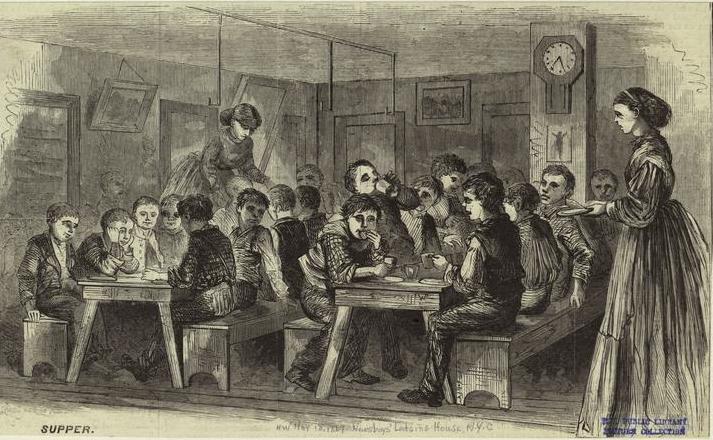
Below: Dinner at a newsboys lodging home, from an earlier period (1867), courtesy NYPL

At the 1897 dinner, the lodging house dining room was festooned with evergreen branches and white linens. Children ate in shifts, enjoying a bountiful feast that included ham, turkey, mashed potatoes and plenty of pie.

A familiar face at some of these lodging dinners was a young police commissioner Theodore Roosevelt, his father being a co-founder of Brace’s aid society.

Reformer Jacob Riis recounts one such dinner:

“Tramp! tramp! comes the to-morrow upon the stage. Two hundred and fifty pairs of little feet, keeping step, are marching to dinner in the Newsboys’ Lodging-House. Five hundred pairs more are restlessly awaiting their turns upstairs….As the file of eagle-eyed youngsters passes down the long tables, there are swift movements of grimy hands, and shirt-waits bulge, ragged coats sag at the pockets. Hardly is the file seated when the pliant rises: ‘I ain’t got no pie! It got swiped on me.’ Seven despoiled ones hold up their hands.”

There was plenty of room for shenanigans at this dinner. Another source confirms that “a few fine, soft pies were deposited down some unfortunate newsboy’s back between his shirt and him.”

By most accounts, however, more food was eaten than thrown.

Fleiss’s generosity, while certainly genuine, kept him in good social company. The wife of William Waldorf Astor (not to be confused with her aunt, in social parlance THE Mrs. Astor) paid for Thanksgiving suppers for the boys.

And for Mr Fleiss, charity may have had a more soul-cleansing motive. In 1894, he was accused during the Lexow police corruption investigation of giving a prominent inspector “about $5,000 to $6.000 as a result of speculation in stocks.”

Another group of newsboys in 1898 enjoyed a bountiful dinner of “oysters on the half shell, consomme julienne, radishes, celery, salmon, mayonnaise dressing, turkey and cranberry sauce” courtesy of early grocery giant Frank Tilford of Park & Tilfords, the Whole Foods of its day.

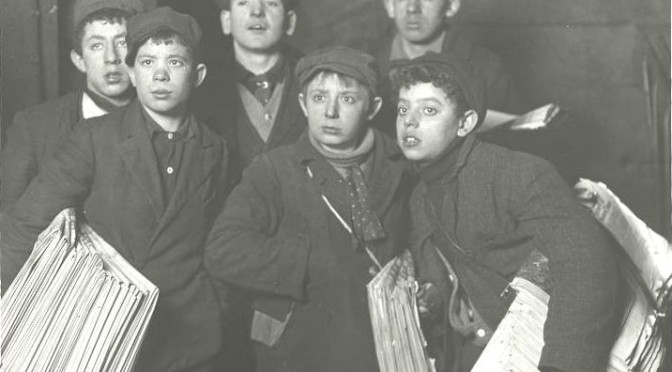
Top picture: Photographed by Lewis Hine, caption “Group of newsboys starting out at Brooklyn Bridge early Sunday morning,” courtesy NYPL

Decked out: America’s first Christmas tree market

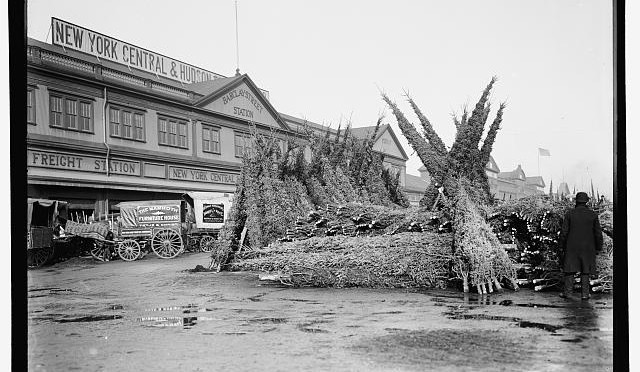
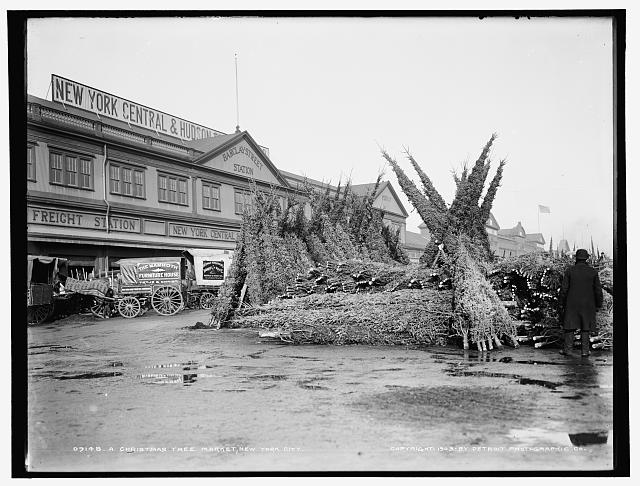
Outside the Barclay Street train station, circa 1903 (courtesy LOC). The Christmas tree marketplace had been well-established by then.

HOW NEW YORK SAVED CHRISTMAS Throughout the month I’ll spotlight several events in New York history that actually helped establish the standard Christmas traditions many Americans celebrate today. Not just New York-centric events like the Rockefeller Christmas Tree or the Rockettes, but actual components of the holiday festivities that are practiced in people’s homes today.

It’s that time of year again, when you can’t make it a few blocks down a street without having to wind perilously by stacks of evergreen trees for sale standing in the sidewalk, the poor things plucked from far away to give New Yorkers a little holiday spirit (and in turn making their apartments feel ever smaller). As history has it, the presence of streetside Christmas trees in the city actually predates Christmas as a national holiday (1870).

In the mid-19th century, hardly any modern Christmas traditions existed. One that did was the Christmas tree, a pre-Christian ritual incorporated into holiday festivities in German-speaking European countries (Those traditional settlers, the Puritans, didn’t much care for Christmas at all.) Although the tradition did exist in the United States thanks to the Dutch, it was German immigrants who popularized it. As a huge surge in German immigration began in the 1840s, it’s not surprising that New York’s first Christmas tree market — in fact, the first mass-market sale of Christmas trees in the United States — came along in 1851.

It doesn’t appear that ‘woodsman’ Mark Carr, living in the lush Catskill Mountains, even celebrated Christmas, but he certainly heard tales of families driving outside of town and chopping down evergreen trees to drag into the city. The go-out-and-get-it-yourself approach probably only benefited the wealthy or anybody with a horse and wagon and the time and energy to travel into the forest and find one. Carr, finding the spirit of the holidays (capitalism) deep within him, thought he’d bring the forest to the city folks.

So on the week of Christmas 1851 — things didn’t start so early back then — Carr and his sons chopped down a couple dozen fir and spruce trees, shoved them into two ox sleds, carted them over to Manhattan on a ferry and set up shop in the Washington Market paying one dollar for the privilege of taking up a sidewalk at Washington Market with his rather ungainly merchandise. Holiday revelers were thrilled to be spared the journey out of town, and Carr’s entire stock of evergreens sold out within the day. No surprise this financial opportunity was mimicked by other farmers the next year, and within a few years, the open-air Christmas tree market was born.

Carr, of course, became the Vanderbilt of the Christmas tree, raking in the dough year after year, selling trees for decades. One source even says that Carr’s sons were still selling trees in the city as late as 1898, in a city quite transformed, or as the old House Beautiful magazine put it, “Mark Carr’s little sidewalk stand now rents for several hundred times what he paid for it.”

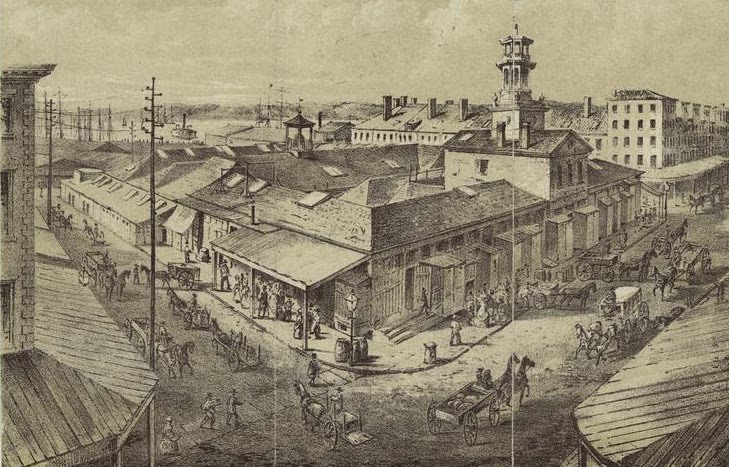
By the way, here’s what Washington Market looked like on a normal day in 1859. The bustling marketplace, opened in 1812, was a rival of the Fulton Fish Market, and not too terribly far from the Barclay Street Station pictured above.

The only remnant of the market today comes in the form of Washington Market Park, sitting where part of the marketplace once resided. Forgotten NY has an interesting write-up on what happened to the market and neighborhood in later years.

View Larger Map