Categories
Podcasts Pop Culture

Super City: The Secret Origin of Comic Books

PODCAST  A history of the comic book industry in New York City, how the energy and diversity of the city influenced the burgeoning medium in the 1930s and 40s and how New York’s history reflects out from the origins of its most popular characters.

In the 1890s a newspaper rivalry between William Randolph Hearst and Joseph Pulitzer helped bring about the birth of the comic strip and, a few decades later, the comic book.
Today, comic book superheroes are bigger than ever — in blockbuster summer movies and television shows — and most of them still have an inseparable bond with New York City.

What’s Spider-Man without a tall building from which to swing? But not only are the comics often set here; the creators were often born here too.

Many of the greatest writers and artists actually came from Jewish communities in the Lower East Side, Brooklyn or the Bronx.
For many decades, nearly all of America’s comic books were produced here.  Unfortunately that meant they were in certain danger of being eliminated entirely during a 1950s witch hunt by a crusading psychiatrist from Bellevue Hospital named Frederic Wertham.

WITH a special chat with comics historian Peter Sanderson about the unique New York City connections of Marvel Comics’ most famous characters. Sanderson is the author of The Marvel Comics Guide to New York City and The Marvel Encyclopedia.

FEATURING: The Yellow Kid, Little Orphan Annie, Batman, Doctor Strange, the Watchmen and the Teenage Mutant Ninja Turtles!

To get this week’s episode, download it for free from your preferred podcast player.

Or listen to it straight from here:


AND after you’re done listening to this history on comic books in New York City, check out Greg’s appearance on an episode of This Week In Marvel, the official Marvel Comics podcast hosted by Ryan “Agent M” Penagos, James Monroe Iglehart, and Lorraine Cink.

In this episode, Greg actually speaks about the Bowery Boys episode about comics and shares his own experiences with reading comic books as a kid.

Find this show here or on your favorite podcast player.
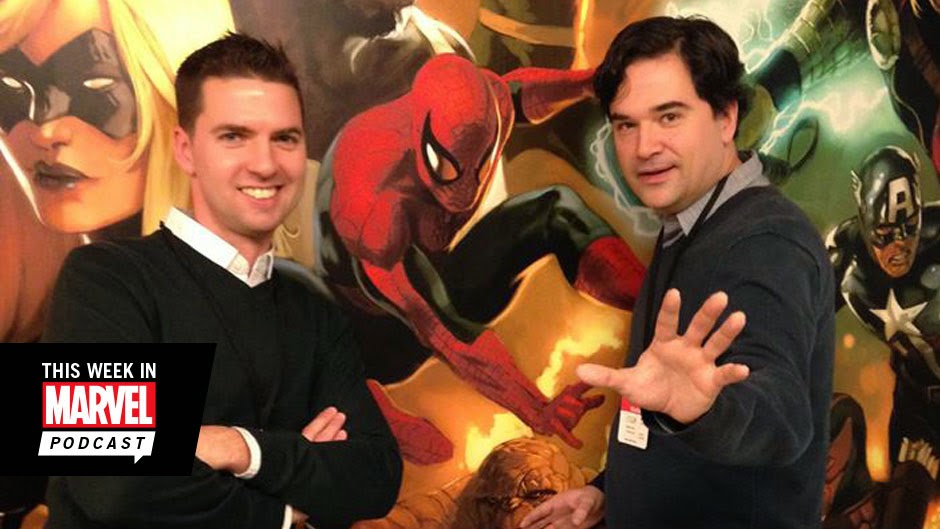
Tom and Greg from their 2014 visit to the Marvel Comics offices in Midtown.

__________________________________________________________

The Bowery Boys: New York City History podcast is brought to you …. by you!

We are now producing a new Bowery Boys podcast every two weeks.  We’re also looking to improve the show in other ways and expand in other ways as well — through publishing, social media, live events and other forms of media.  But we can only do this with your help!

We are now a member of Patreon, a patronage platform where you can support your favorite content creators for as little as a $1 a month.

Please visit our page on Patreon and watch a short video of us recording the show and talking about our expansion plans.  If you’d like to help out, there are five different pledge levels (and with clever names too — Mannahatta, New Amsterdam, Five Points, Gilded Age, Jazz Age and Empire State). Check them out and consider being a sponsor.

We greatly appreciate our listeners and readers and thank you for joining us on this journey so far. And the best is yet to come!

__________________________________________________________

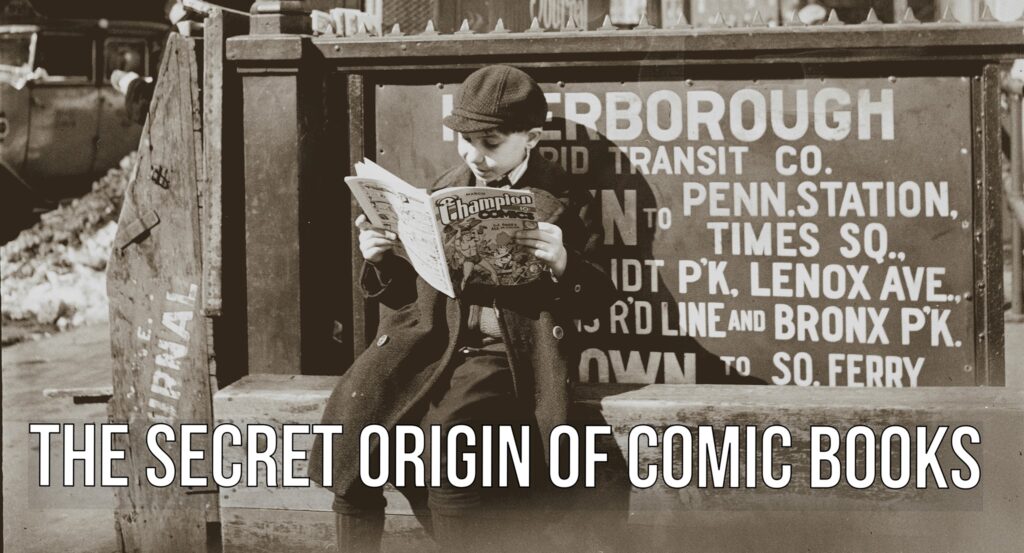
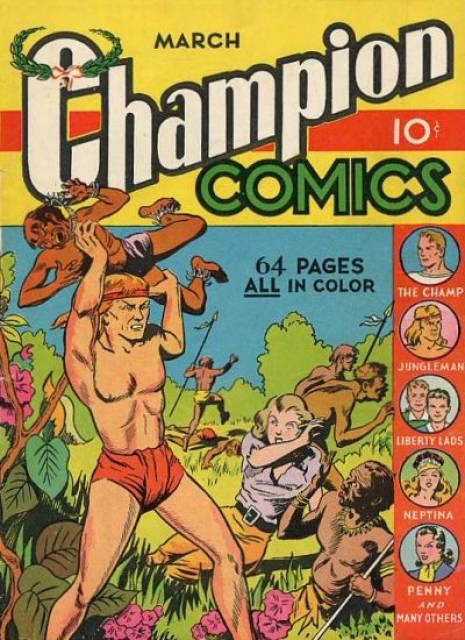
A young New York boy enjoys his comic book on the Bowery. Photo taken in 1940 by Andrew Herman.
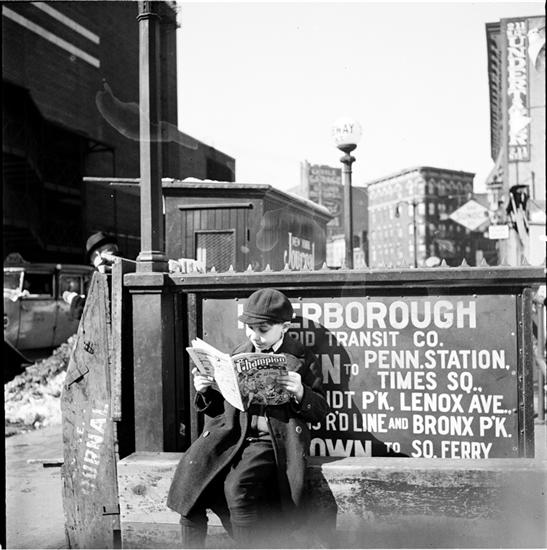
Courtesy Museum of the City of New York

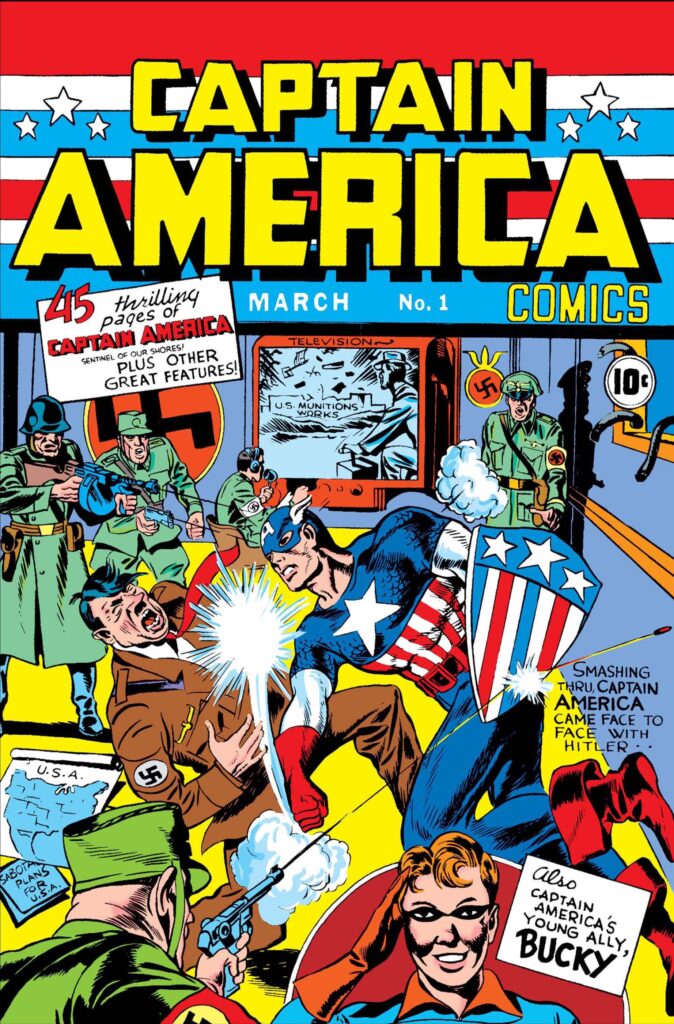
And here’s the comic book he’s reading from March 1940, illustrated by George Papp.
Courtesy Comic Vine
Courtesy Comic Vine

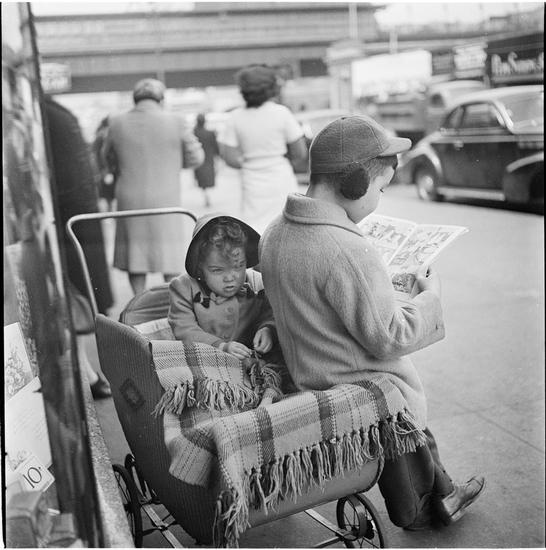
In this 1947 photograph taken by Stanley Kubrick, a boy watches his baby sister and enjoys a Superman comic book while his mother shops inside.
Courtesy the Museum of the City of New York

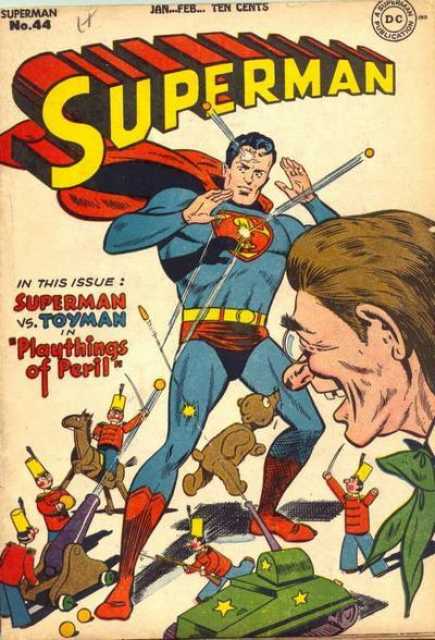
An issue of DC Comics’ Superman from March 1947, with a cover by George Roussos and Jack Burnley
Courtesy DC Comics / Comic Vine

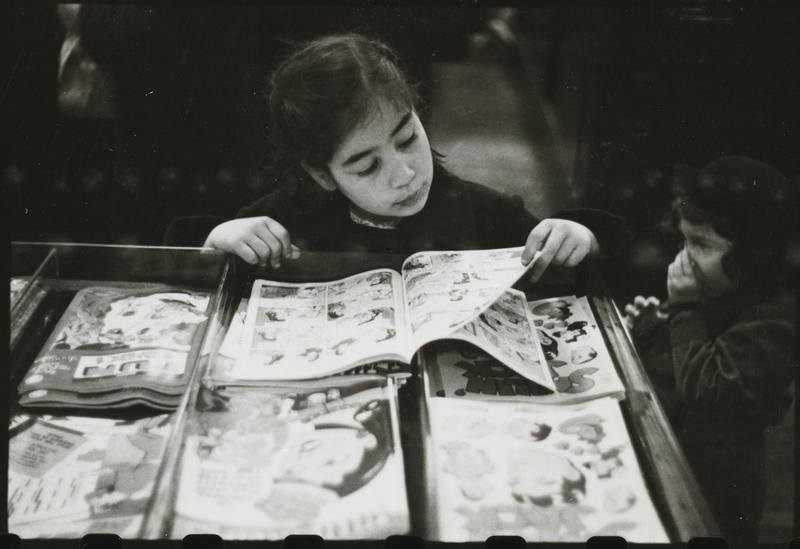
A girl takes a peek at some of the comic book offerings at Woolworth’s. Photograph by Stanley Kubrick taken in 1947.
Courtesy Museum of the City of New York

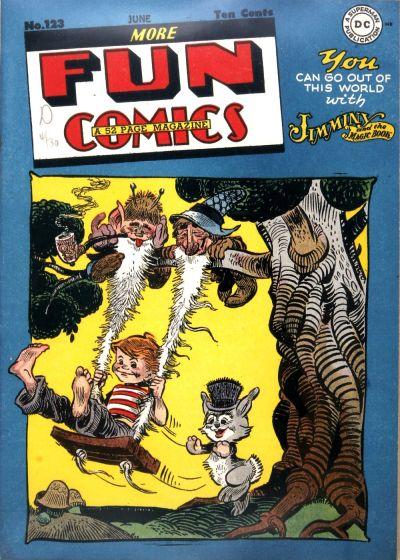
An issue of More Fun Comics from June 1947, produced by DC Comics:
more fun

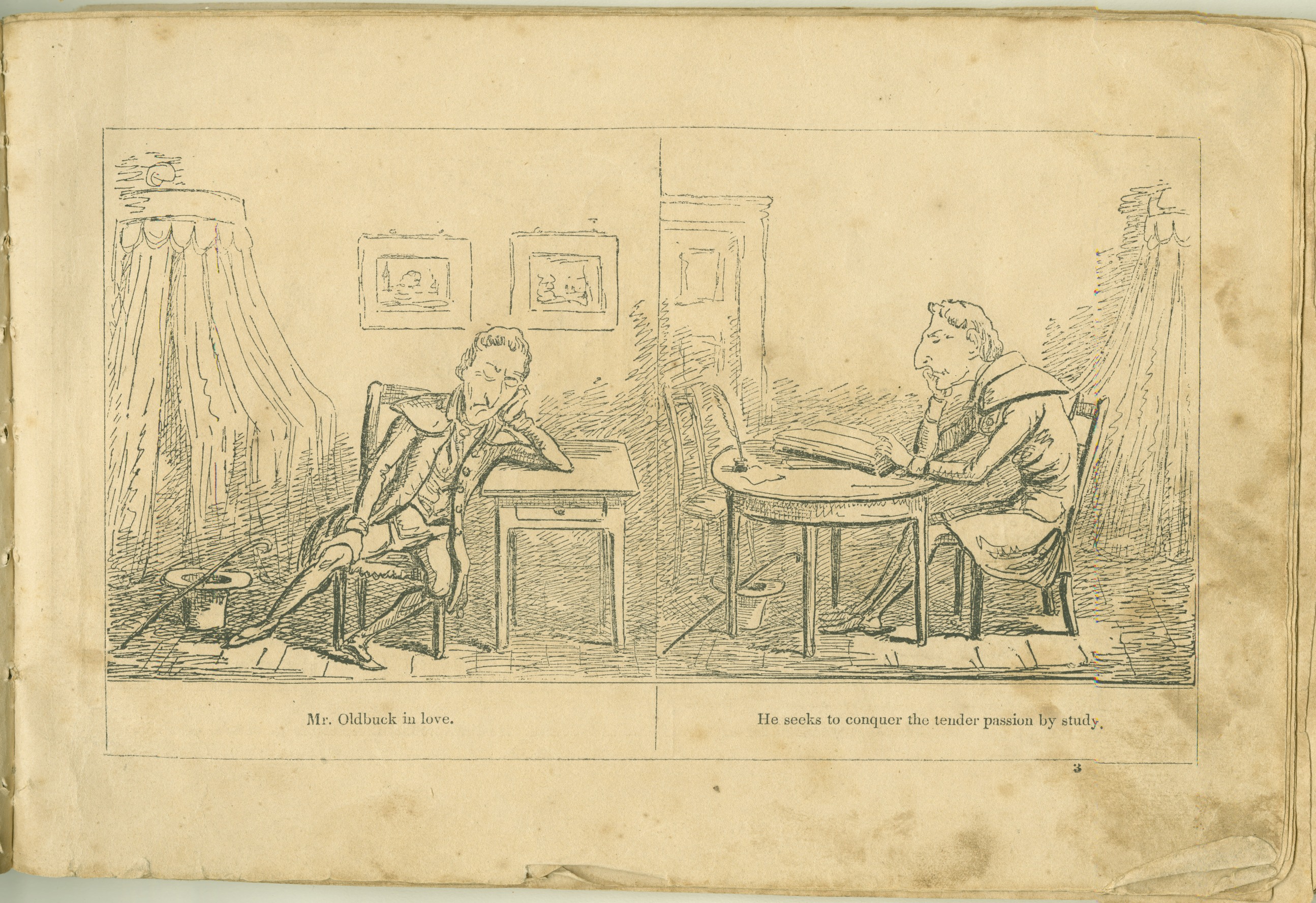
The Adventures of Obadiah Oldbuck, published in 1842, is considered by many to be the wellspring from which the comic medium derives. You can read the entire issue over at the Darmouth College Library website.
Courtesy Dartmouth College Library

A Yellow Kid adventure which would have sprung out from the newspaper due to its vivid colors.
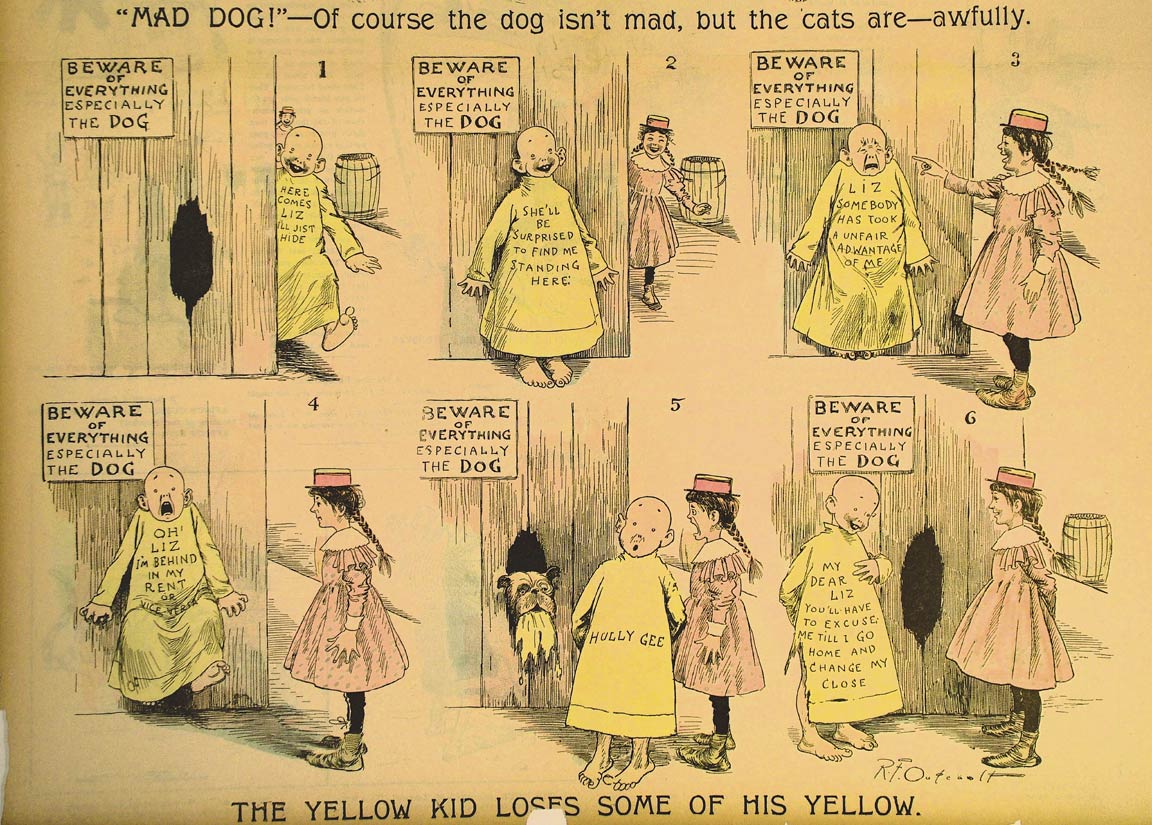
Image courtesy Comix Takoma; art by Richard Outcault

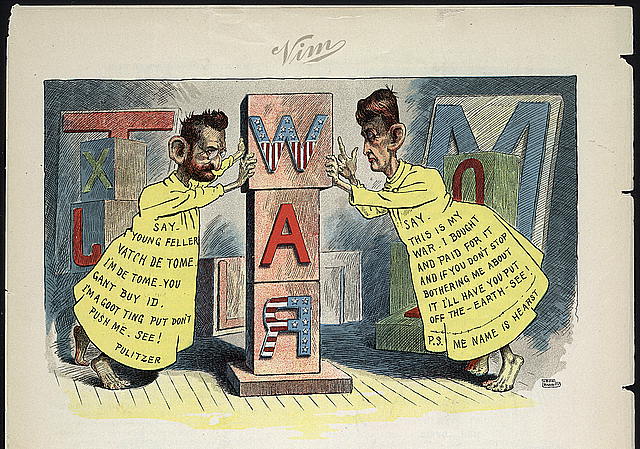
Both Hearst and Pulitzer ran versions of the Yellow Kid comic strip during the years that they were drumming up propaganda which lead to the Spanish-American War.

The unscrupulous nature of their efforts earned them the phrase ‘yellow journalism’, inspired by their war of the popular comic strip by Richard Outcault.
Courtesy the Library of Congress

A section of the colorful comics section of the New York Journal, 1898.
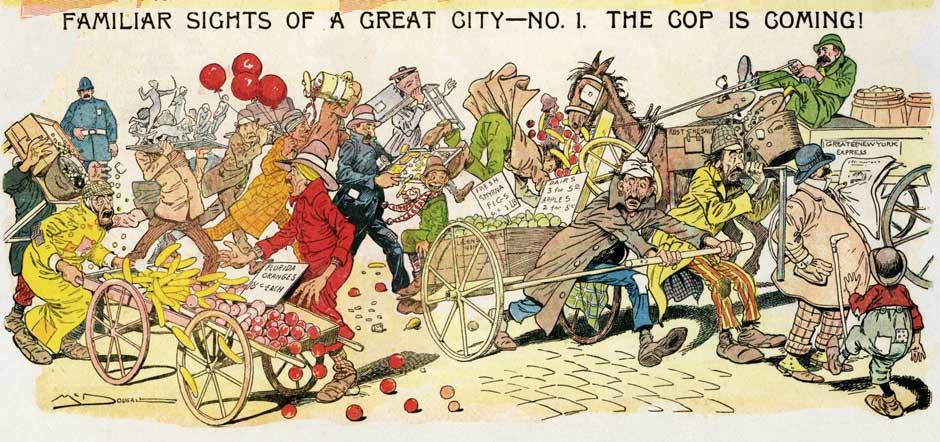
“Familiar Sights of a Great City—No. 1 The Cop is Coming!” by Walt McDougall, New York Journal, Sunday, January 9, 1898 via New York Review of Books

Little Orphan Annie became the biggest crossover star of the early comic strip era. Long before there was a musical, Annie starred in this 1932 melodrama, one of the earliest comic-to-movie crossovers.
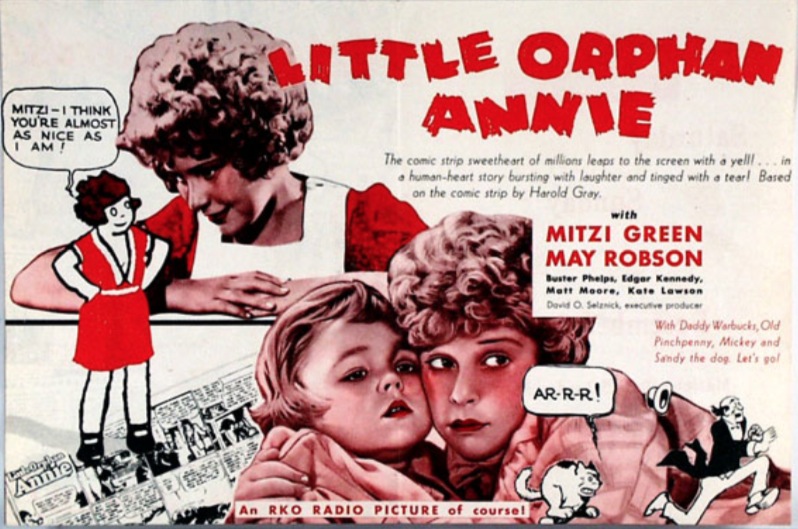
annie

New Fun Comics #1, the very first comic book to contain all new material, and not merely reprints of newspaper comic strips.
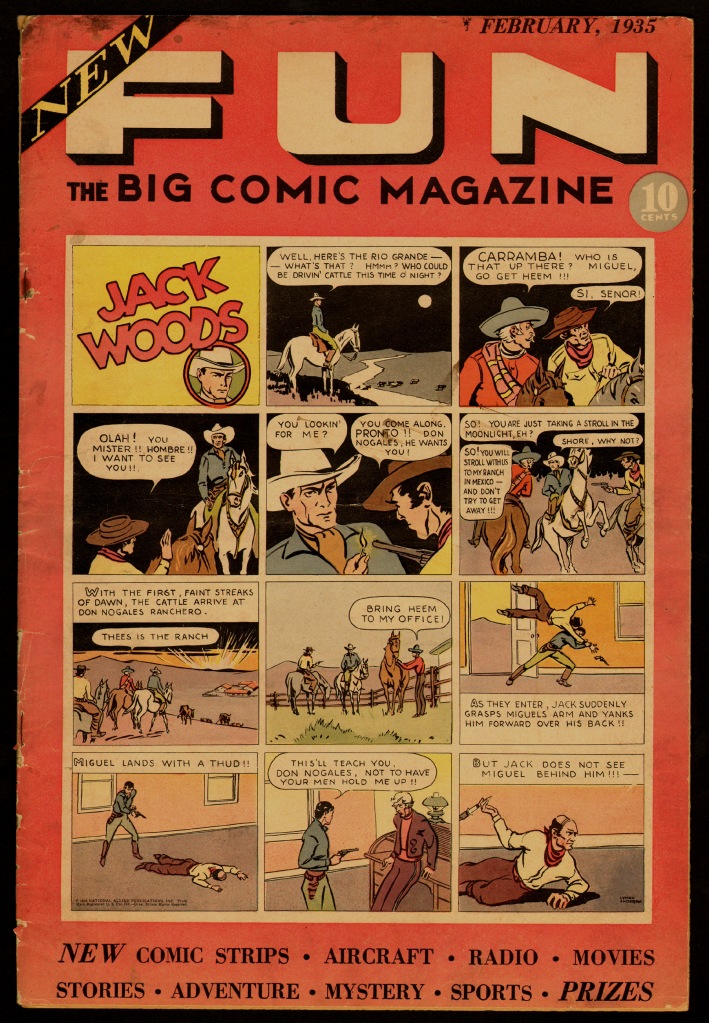
1

The Batman debuted in Detective Comics in 1939, created by Bob Kane and Bill Finger. The city features in these adventures was Gotham City, startlingly similar to the city outside the creators’ windows.
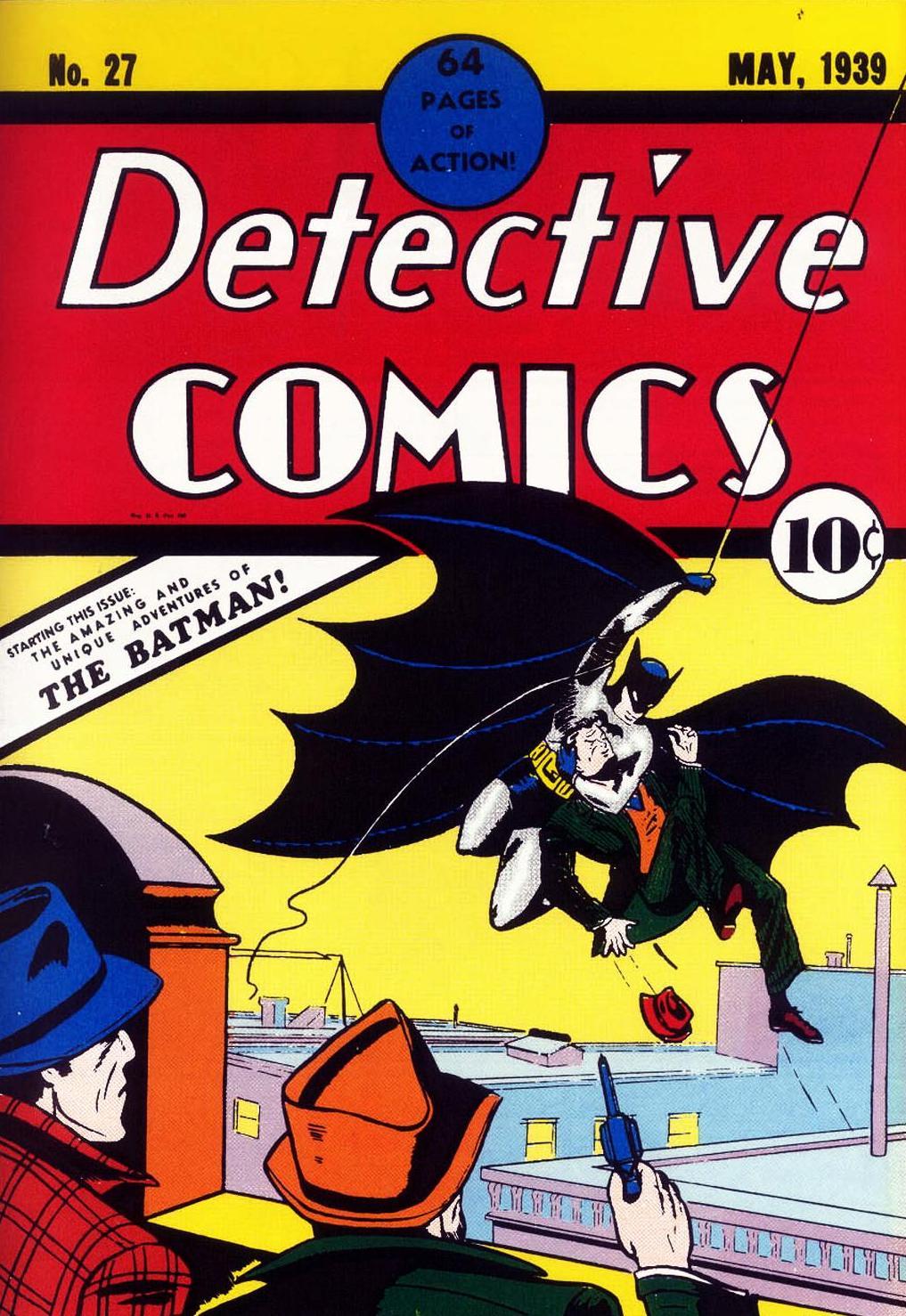
Courtesy DC Comics
Courtesy DC Comics

Gotham City, aka New York City, in 1939
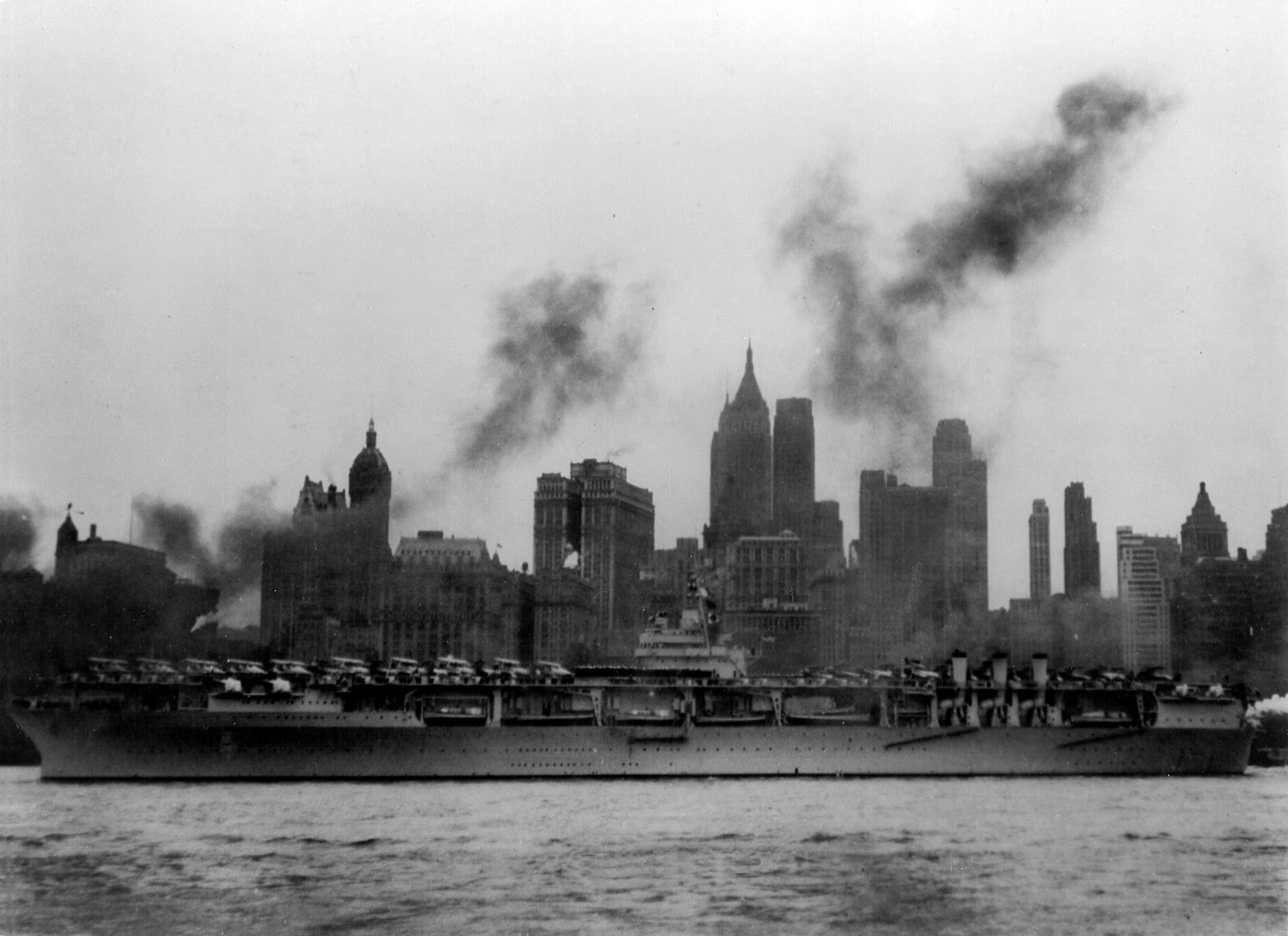
Courtesy U.S. Navy National Museum of Naval Aviation

Vault of Horror, one of an assortment of shocking comic books produced by EC Comics in the early 1950s. The cover art is by Johnny Craig.
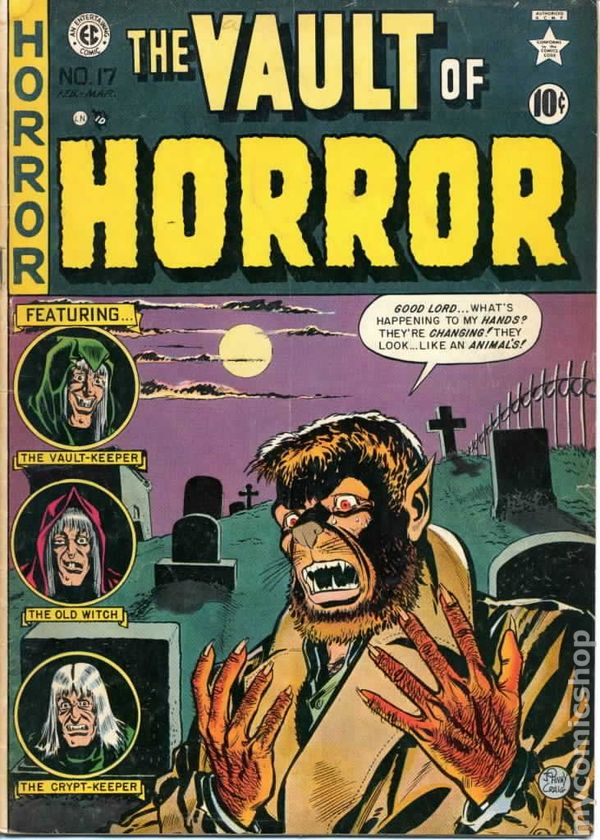
Courtesy EC Comics
Courtesy EC Comics

Bill Gaines, publisher of EC Comics, at his offices at 225 Lafayette Street.
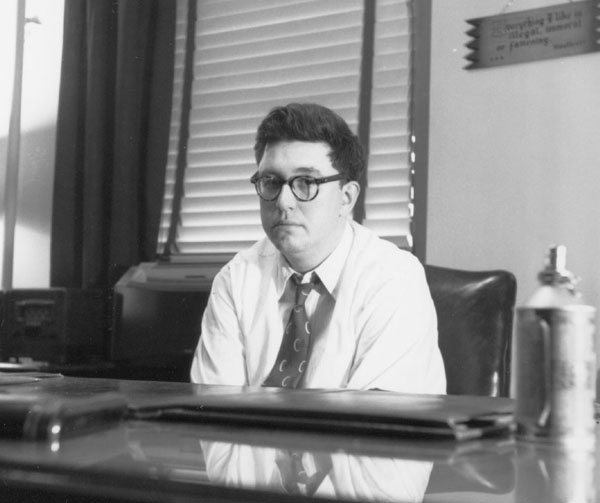
Courtesy Tebeosfera
Courtesy Tebeosfera

Dr. Fredrick Wertham, the writer of Seduction of the Innocent, who lead a charge against the comic book industry.
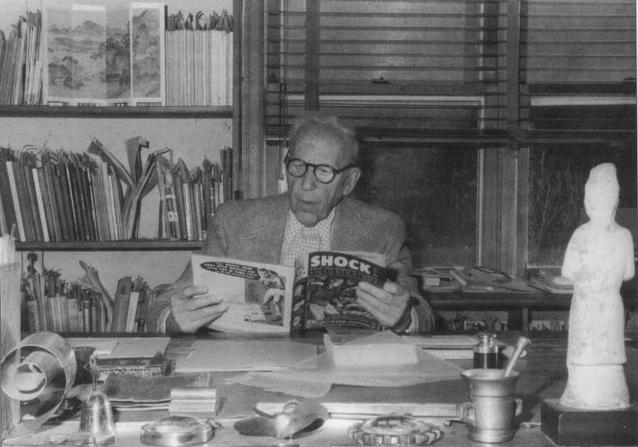
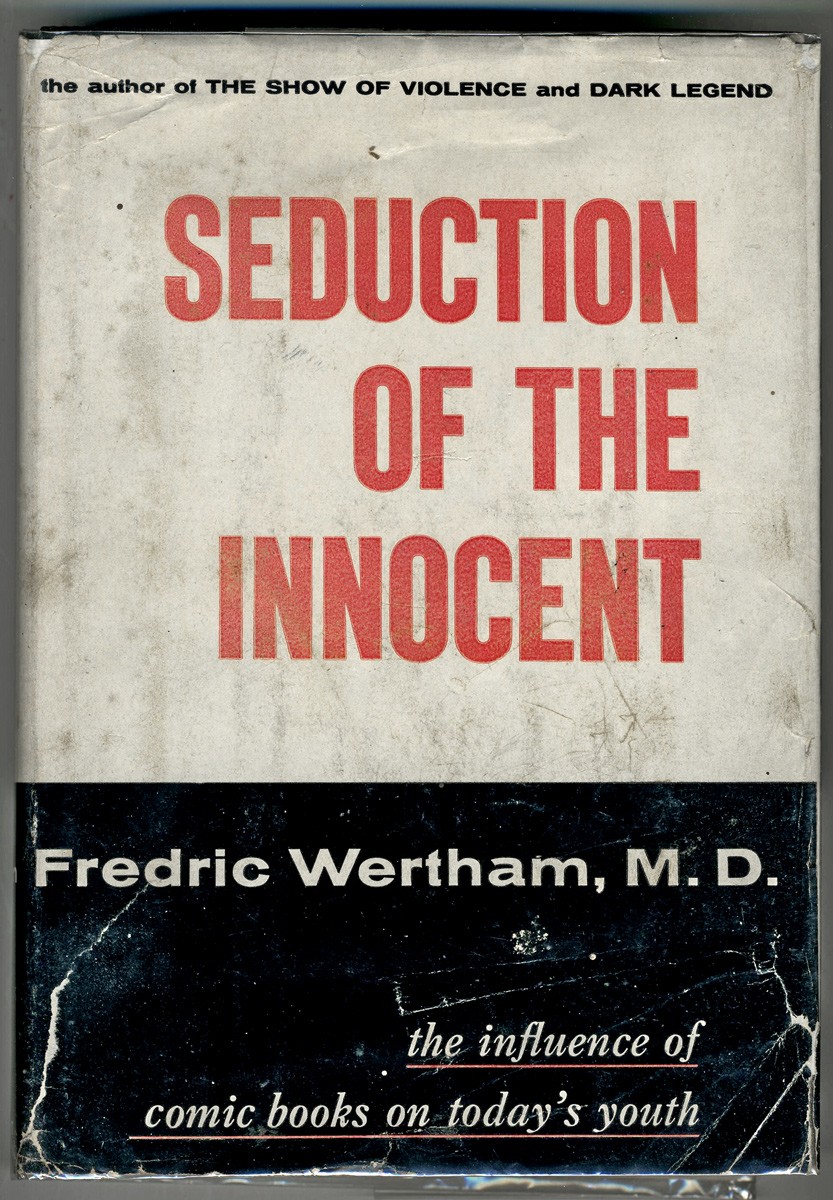
fred

seduction

A young Stan Lee during the war as a member of the US Army’s Signal Corps. He even managed to do a bit of illustration for the cause!
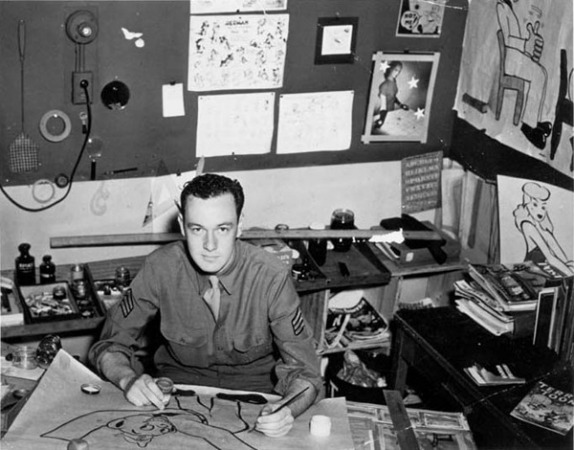
stan lee

The Thing from the Fantastic Four with the Yancy Street Gang, a variation on Delancey Street in the Lower East Side.
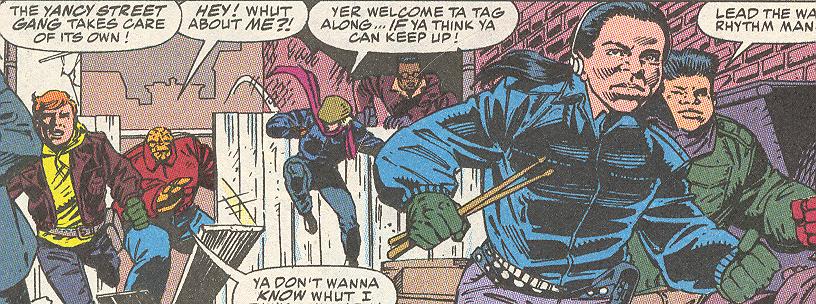
Courtesy Marvel Comics via Comic Viine

Doctor Strange’s Sanctum Sanctorum is located on Bleecker Street in Greenwich Village

Courtesy Marvel Comics
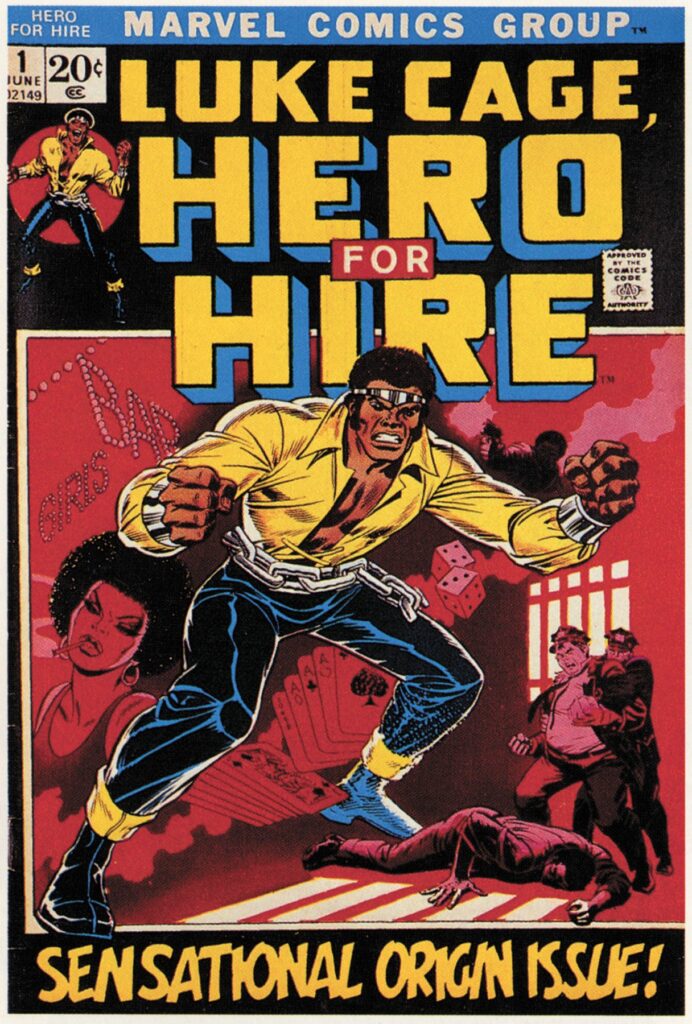
The adventures of Luke Cage, who debuted in his own Marvel Comics series in 1972, could be found mostly in Harlem. But he wasn’t the first African-American superhero from the neighborhood; in 1947 a character named Ace Harlem first appeared in a Philadelphia-published comic book called All-Negro Comics.

What would Spider-Man be without New York City? The image of the Brooklyn Bridge (called the George Washington Bridge in the story) is featured in a classic tale involving the death of his girlfriend Gwen Stacey, written by Gerry Conway and drawn by Gil Kane, John Romita and Tony Mortellaro.
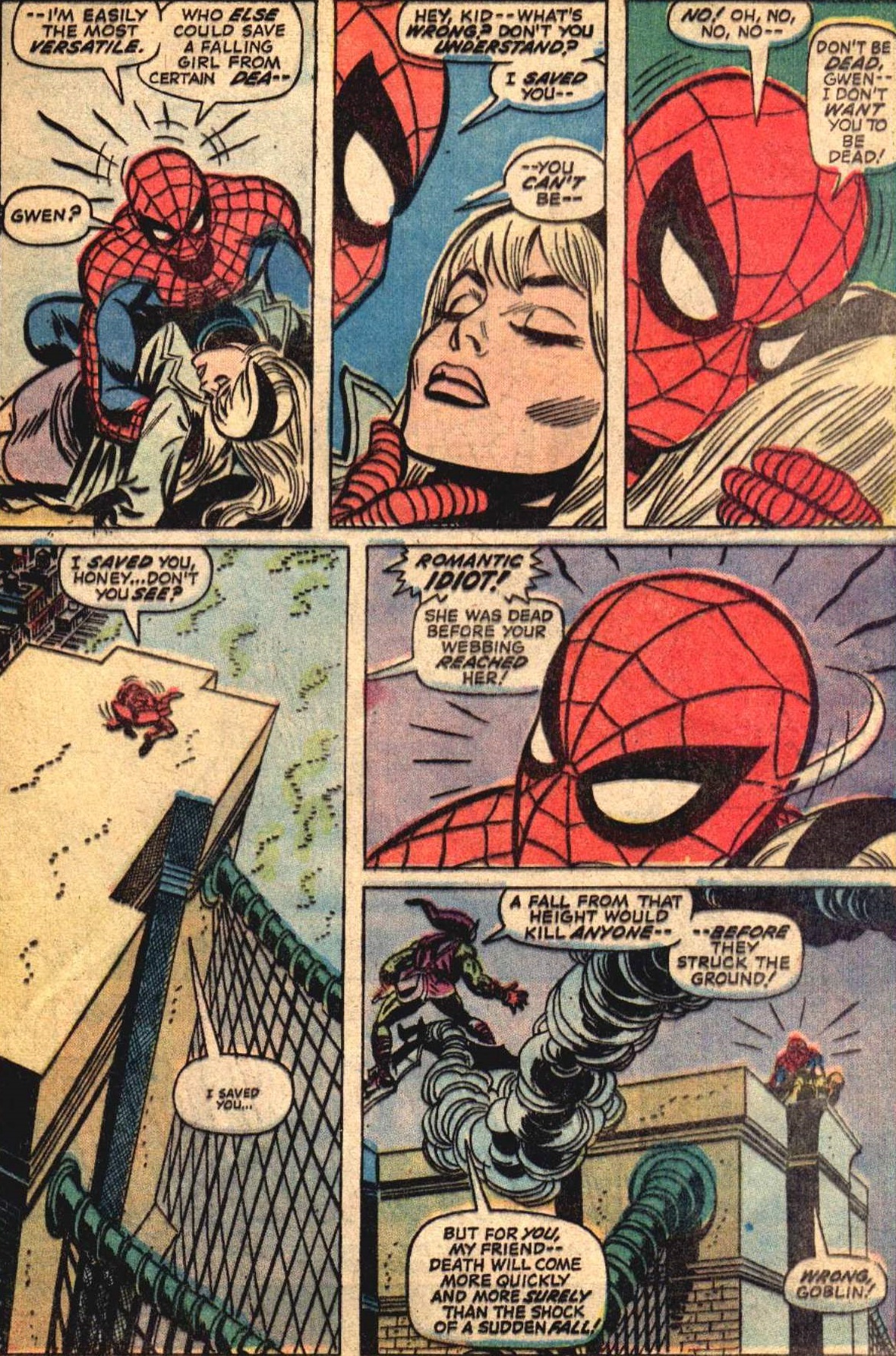
Courtesy Marvel Comics

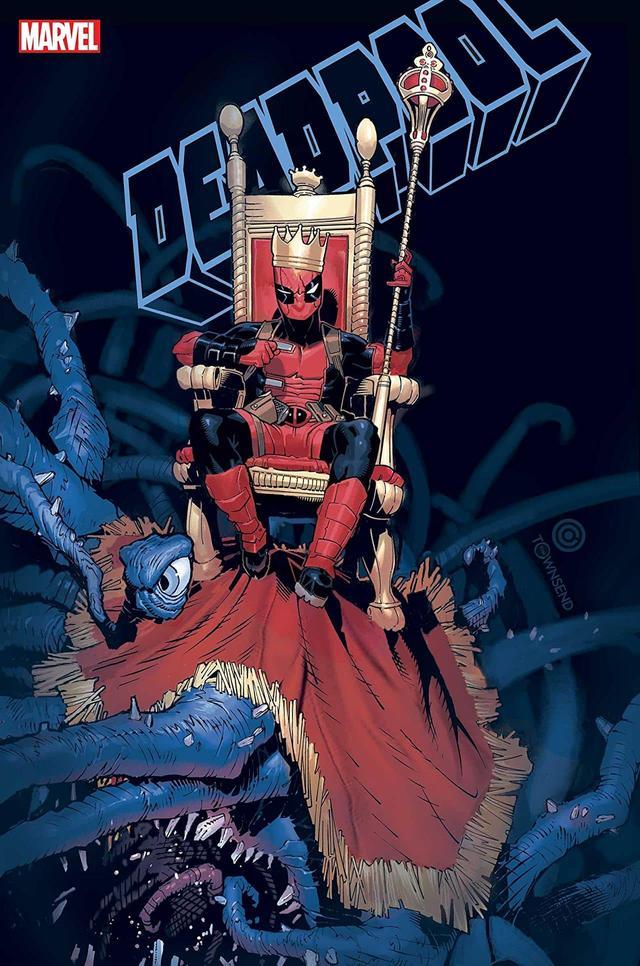
And — oddly enough — Staten Island in the world of Marvel Comics has become Monster Island, ruled by Deadpool. Yes, Deadpool. Haven’t they suffered enough? (Check here for more information.)
A page from Maus by Art Spiegelman, the graphic novel that brought the medium to a new level of respectability in literary circles.
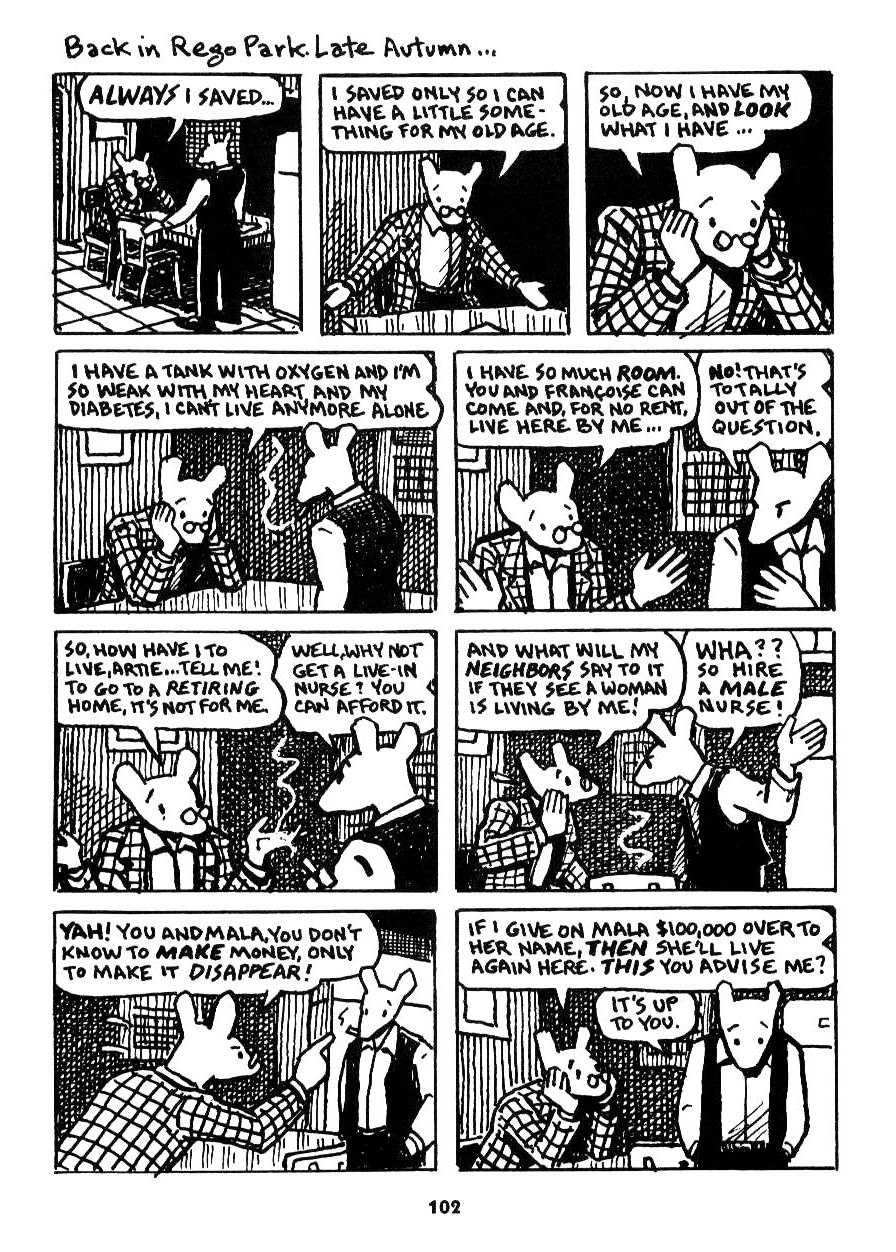
Courtesy Art Spiegelman

The comic book/graphic novel continues to evolve and reach new heights of success and respectability. Roz Chast’s Can’t We Talk About Something More Pleasant, published last year, won the National Book Critics Circle Award for best autobiography.
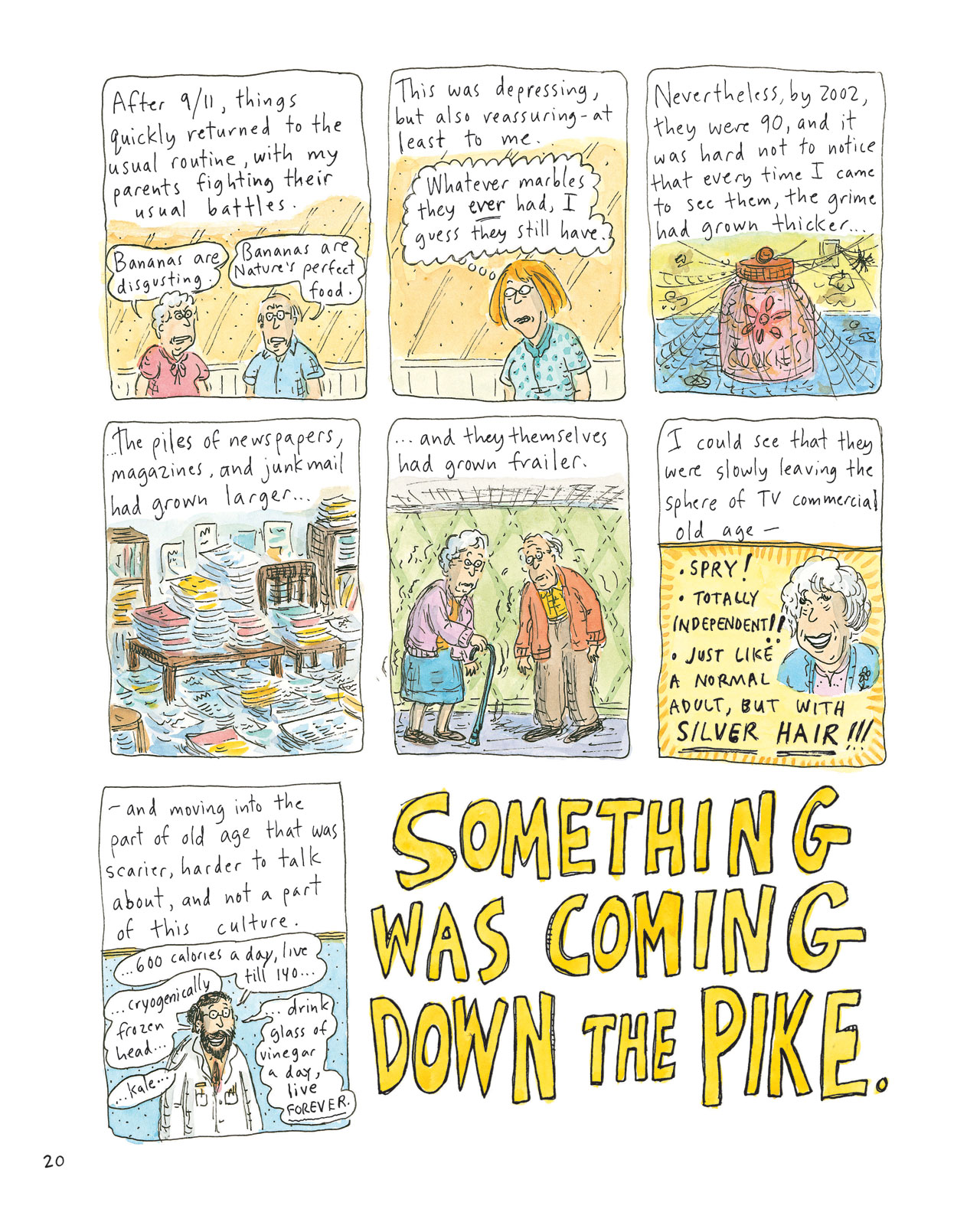
Courtesy Roz Chast/Bloomsbury

The Avengers defended New York during an alien attack in their blockbuster film in 2012
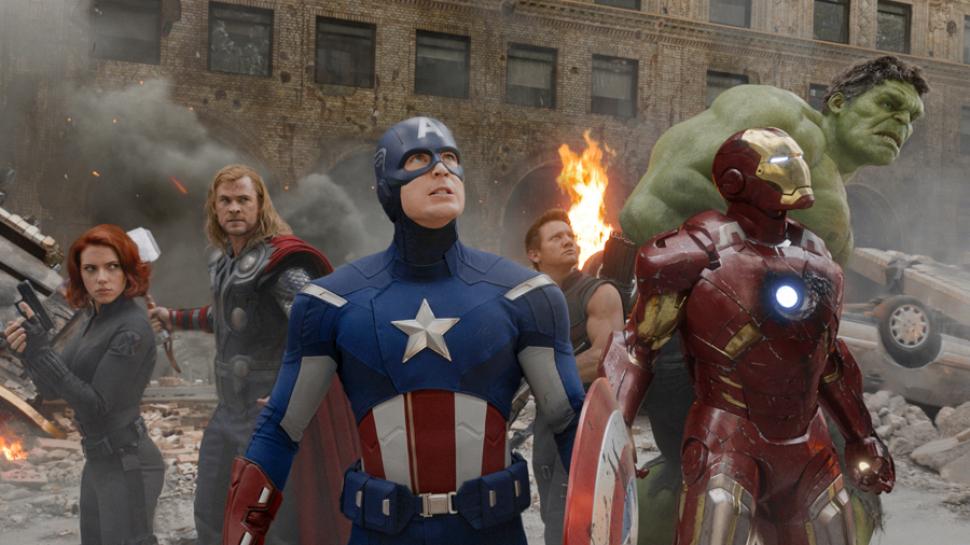
Courtesy Film Frame/Marvel

All images on this website are owned by the original comic book companies which produced them.  Please see individual companies for more information.

RECOMMENDED READING:

If you’re into digging more into this subject, here are a few sources that I used for this podcast:

Jews and American Comics: An Illustrated History of An American Art Form, with written contributions by Paul Buhle

The Ten-Cent Plague: The Great Comic-Book Scare and How It Changed America by David Hadju


Men of Tomorrow: Geeks, Gangster and the Birth of the Comic Book by Gerard Jones

Comic Book Century:  The History of American Comic Books by Stephen Krensky

Tales to Astonish: Jack Kirby, Stan Lee, and the American Comic Book Revolution by Ronin Ro

The Marvel Comics Guide to New York City by Peter Sanderson
Categories
Holidays Newspapers and Newsies

How New York newspapers covered the first Labor Day — September 5, 1882

Clothing cutters, horseshoers, shoemakers, upholsterers, printers, house painters, freight handlers, cabinet makers, varnishers, cigar makers, bricklayers and piano makers.

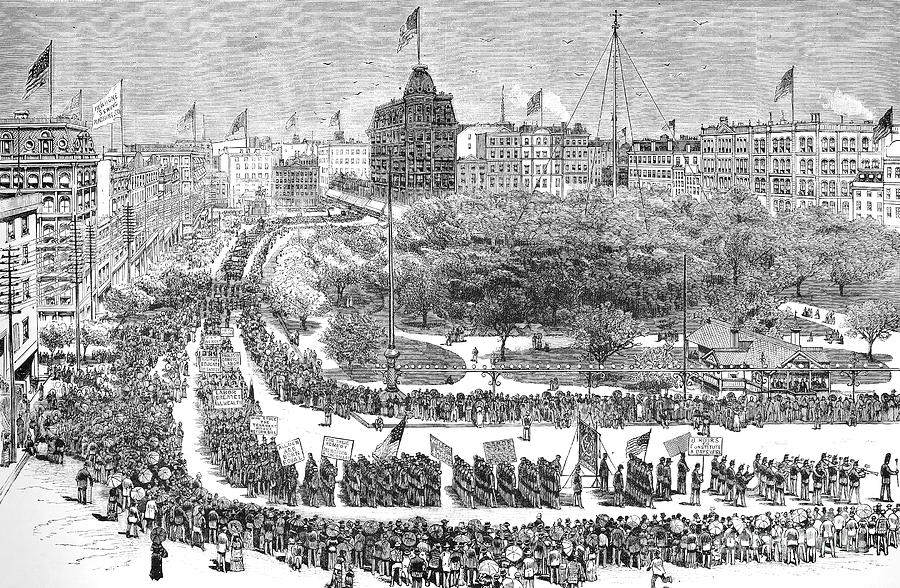
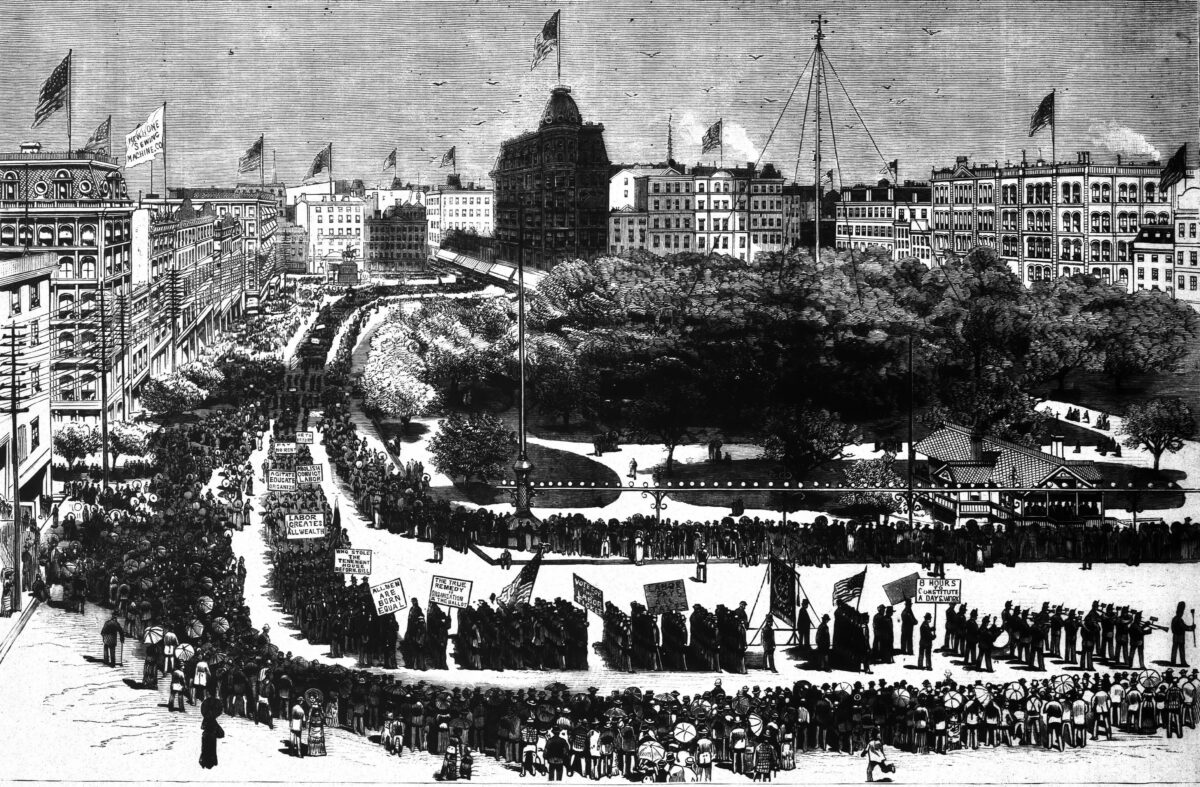
The first American Labor Day began on September 5, 1882, with 10,000 workers from a wide variety of occupations circling Union Square, then parading up to the area of today’s Bryant Park. (A picnic ‘after party’ of sorts took place at a park at today’s Columbus Avenue and 92nd Street.)

Individual workers organizations had taken to the street before, sometimes violently. But this peaceful protest, this public solidarity, took the issues of New York laborers to the heart of the city in a way that could not be ignored.*

*New Yorkers got the Labor Day idea from Canada. Read more about the differences between May Day and Labor Day in this article

Illustration of the first Labor Day parade around Union Square, 1882

We take it for granted today. Labor Day is no more than a day off for most people today.

But looking at the original press notices from newspapers of the day (from the following day, September 6, 1882) suggest an event certain New Yorkers recognized as monumental.

Others considered it trivial, a nuisance or even a dangerous gathering of malicious intent.

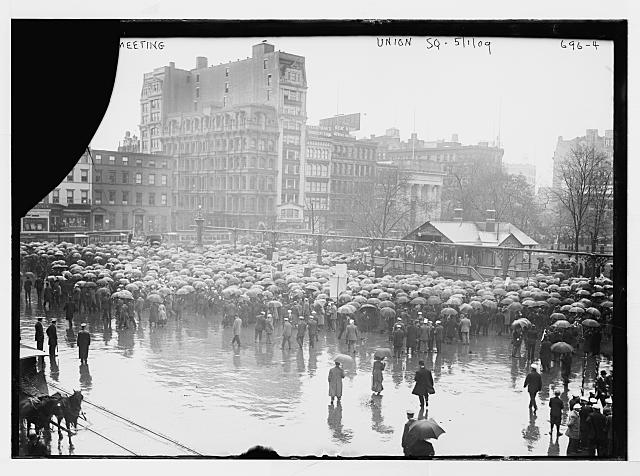
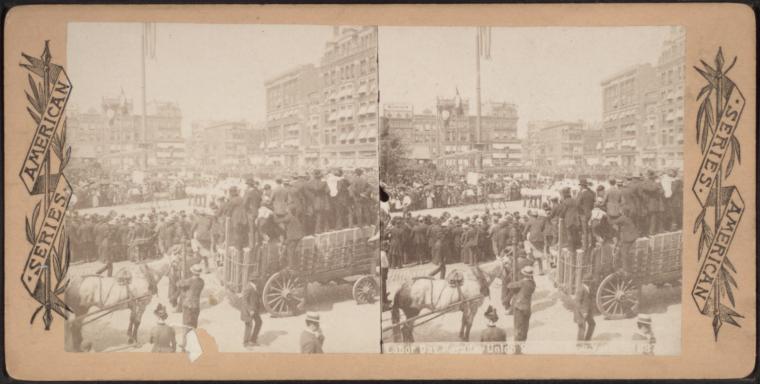
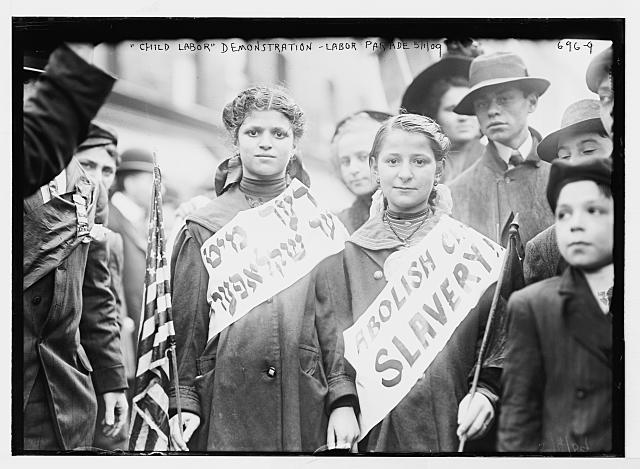
Union Square would continue to be the location of Labor Day festivities for decades afterwards. The image below is of a parade from 1909 (courtesy LOC):

The New York Tribune begins nice enough. “The men who took part in the labor parade generally appeared to be persons of no small intelligence.” The paper’s vitriol was saved for the leaders of the movement, in this case organizers from the Central Labor Union, “demagogues of the worst kind.”

“It is a pity that workingmen allow themselves to be so cheapened.” The Tribune accuse the organizers of an ulterior motive — political chest-thumping.

“But it is not at all unlikely that certain demagogues and dishonest leaders thought it a good time of year to show the two great political parties that there are ten thousand ballots in this city in the hands of men who … might be at the disposal of somebody — for a consideration.”

Indeed, there would be a statewide election exactly two months later, sweeping a host of Democrats into office, including Grover Cleveland into the governor’s office.

Even their reporting of the parade itself is tinged with a little condescension.

“The parade of workingmen yesterday morning was not nearly as large as was expected by the leaders.  This is probably due to the unwillingness of many workmen to lose a day’s work.”

Labor Day parade in Union Square, 1887 (NYPL)

The New York Times seemed to find the parade slightly whimsical, almost superfluous. It echoed the disappointing turnout, but describes the event as calm, “conducted in an orderly and pleasant manner.”

The coverage focuses undue attention on the paraders’ fashionable attire.

“The great majority smoked cigars.” However they stress that the good behavior is attributable to the fact that organizers banned alcohol. This detail is mentioned in no other coverage that I read.

Where the Tribune attested the lower-than-expected turnout to men not leaving their posts, the Times found a different reason — “due to the fact that [laborers] preferred to enjoy the day in quiet excursions in Coney Island, Glen Island and elsewhere.”

Children at the Union Square Labor Day parade, 1909 (NYPL)

The enthusiastic New York Sun describes it as a dry and brutal day. “[T]he rays of sun even in the early morning were very hot, and not a breath of wind brought relief from the oppressive heat.”

The same parade considered disappointing by the Tribune and the Times was conversely described by the Sun as a mob scene.

“As far ahead as one could see and as far down the side streets as forms and faces could be distinguished, the windows and roofs and even the lamp posts and awning frames were occupied by people anxious to get a good view of the first parade in New York of workingmen of all trades united in one organization.”

Far from a nuisance, the Sun recognized the parade as an important banner moment in history. Its description of events is truly painstaking.

Many newspapers outside New York mentioned the parade the following day.  St. Paul’s Daily Globe in Minnesota said “the great labor demonstration today was a success,” quoting a number in attendance (20,000) almost double the actual projected number.

So did the Dallas Daily Herald, who put the event on their front page.

Meanwhile, it should be noted that most major New York newspapers neglected to put the labor parade on their front pages.

Categories
Gilded Age New York Podcasts

Pulitzer vs. Hearst: The Rise of Yellow Journalism in Gilded Age New York

PODCAST (EPISODE 335) In the 1890s, powerful New York publishers Joseph Pulitzer and William Randolph Hearst engaged in an all-out battle for daily readers of their respective newspapers, developing a flamboyant, sensational style of coverage today referred to as ‘yellow journalism’.

This battle between the New York World and the New York Journal would determine the direction of the American media landscape and today we still feel its aftermath — from melodramatic headlines to the birth of eyewitness reporting and so-called ‘fake news’.

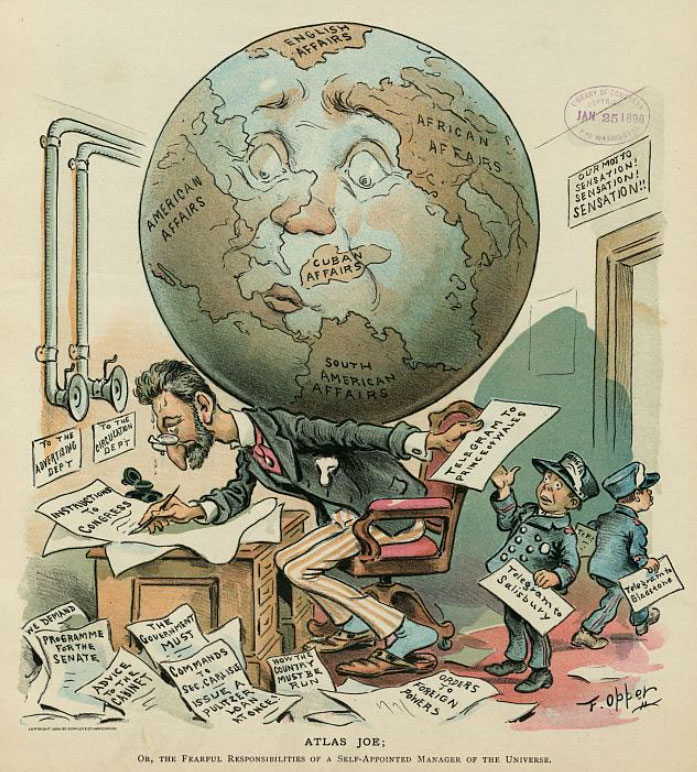
An illustration parodying Joseph Pulitzer from Puck Magazine, created by Frederick Burr Opper, January 1898, Library of Congress, Prints and Photographs Division

The two men come from drastic different backgrounds. Pulitzer, an Hungarian immigrant who started his publishing empire in St. Louis, used the World to highlight injustices upon the working class and to promote worthy civic projects (like the pedestal of the Statue of Liberty).

Hearst, himself the wealthy publisher of a San Francisco newspapers, entered the New York publishing world, specifically aimed at competing with Pulitzer. In many ways, he out-Pulitzered Pulitzer, creating extraordinary daily publications which appeals to all types of New Yorkers. (Even children!)

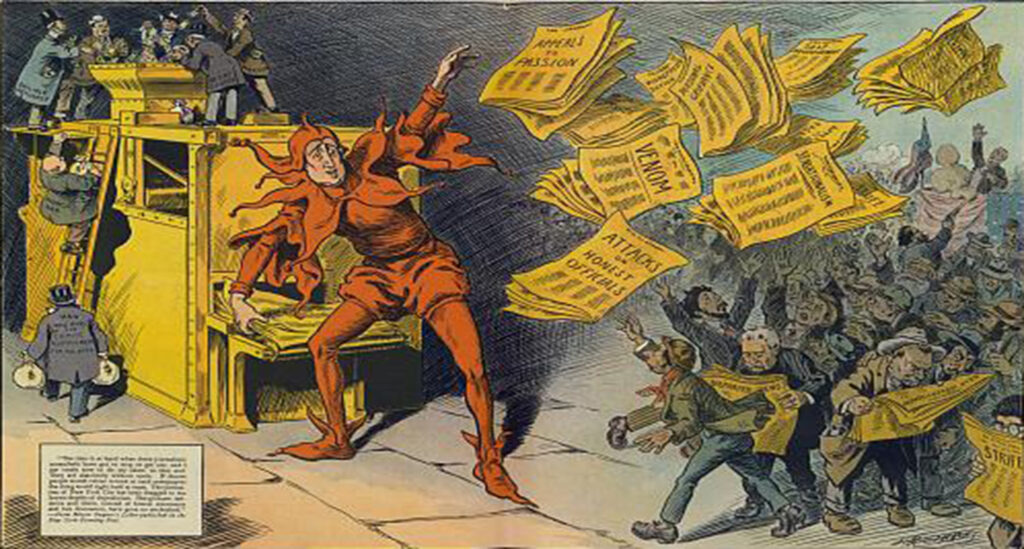
An illustration parodying Hearst from Puck Magazine, “The Yellow Press,” by L.M. Glackens, 1910. Library of Congress, Prints and Photographs Division

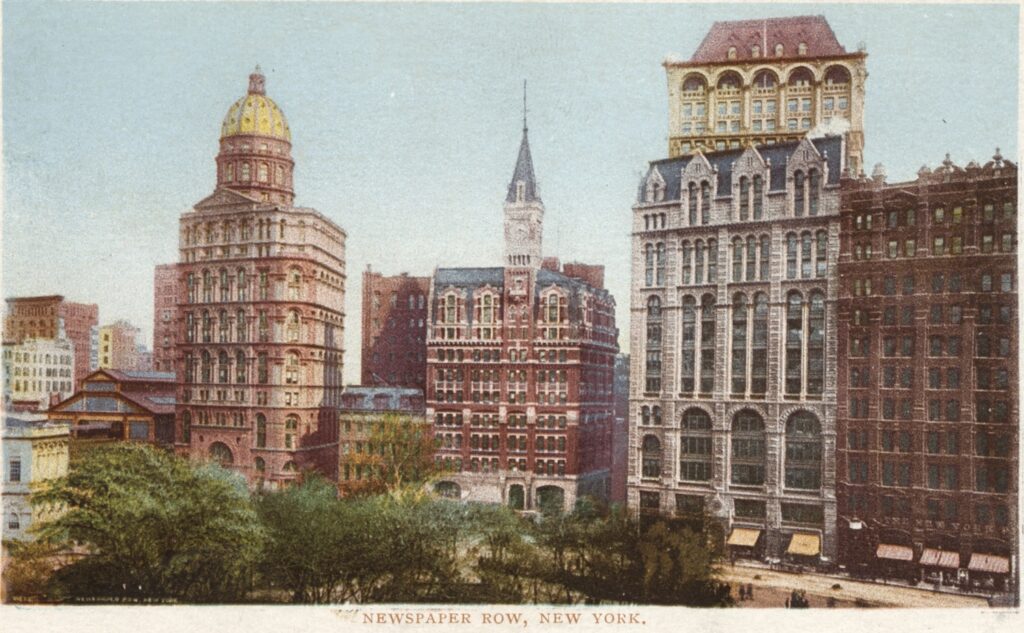
In Part One, we introduce you to the two publishers and meet them on a battlefield of newsprint and full-page headlines — located on just a couple short blocks south of the Brooklyn Bridge.

To get this week’s episode, just find our show on Stitcher or your favorite podcast streaming service. Or listen to it here:


The Bowery Boys: New York City History podcast is brought to you …. by you!

We are now producing a new Bowery Boys podcast every week. We’re also looking to improve and expand the show in other ways — publishing, social media, live events and other forms of media. But we can only do this with your help!

We are now a creator on Patreon, a patronage platform where you can support your favorite content creators.

Please visit our page on Patreon and watch a short video of us recording the show and talking about our expansion plans.

If you’d like to help out, there are six different pledge levels. Check them out and consider being a sponsor.

We greatly appreciate our listeners and readers and thank you for joining us on this journey so far.


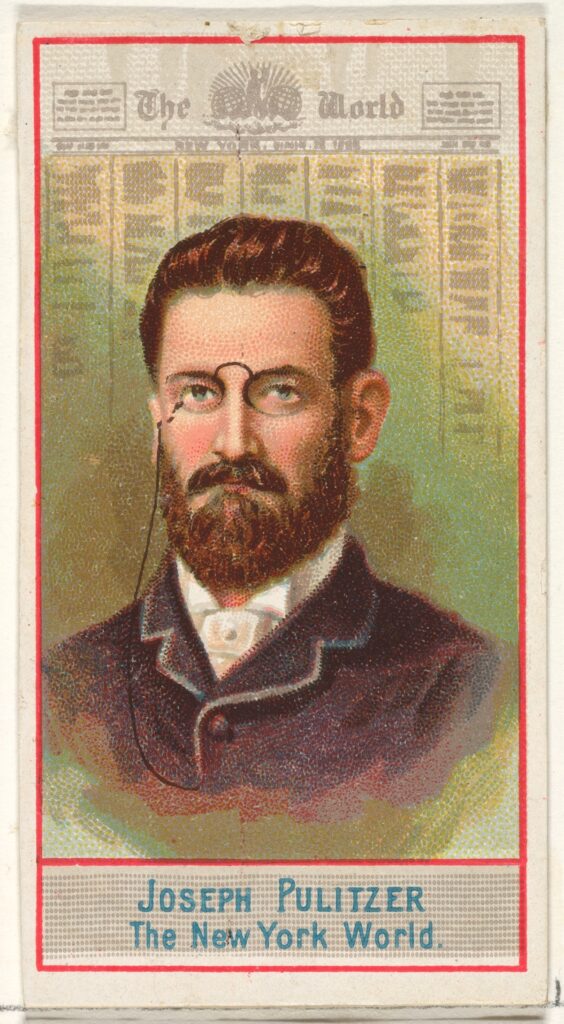
A Joseph Pulitzer collectable cigarette card, issued by Allen & Ginter, 1887. Further details at Met Museum
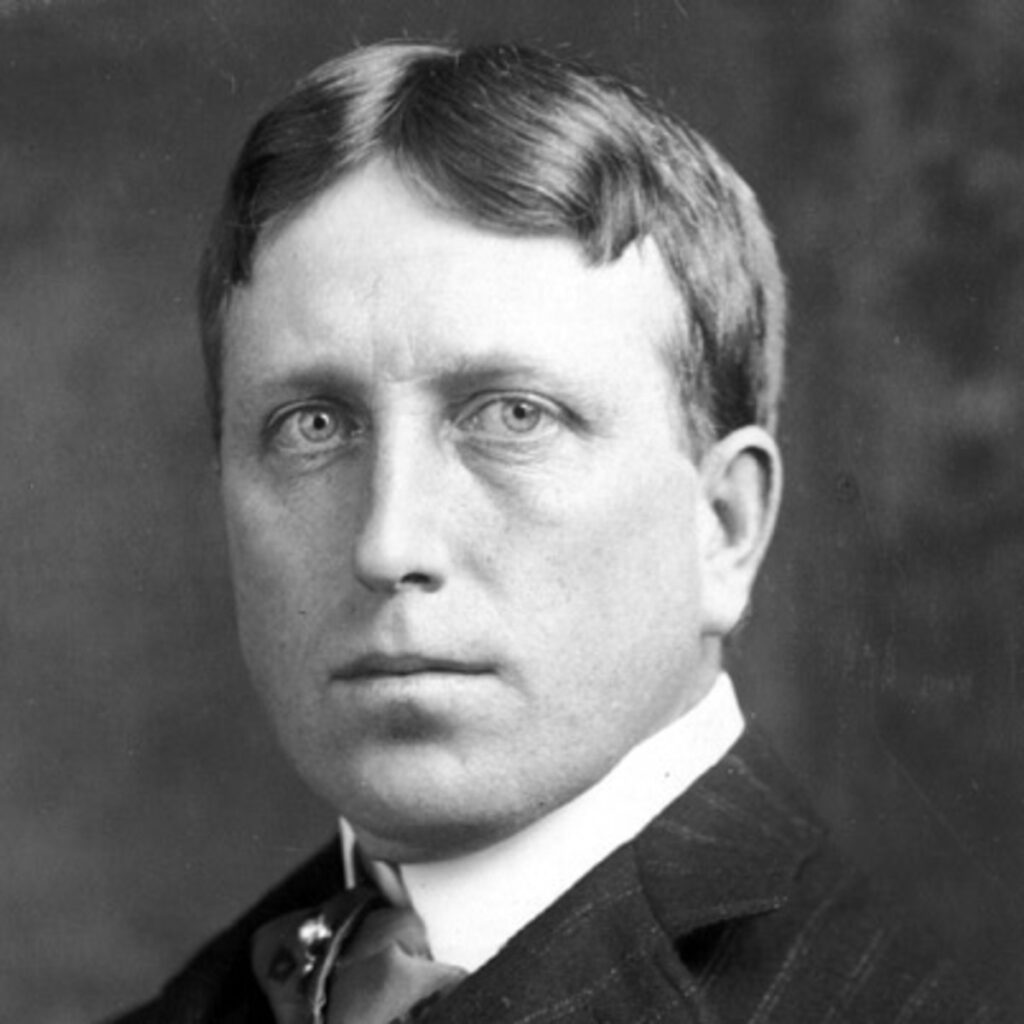
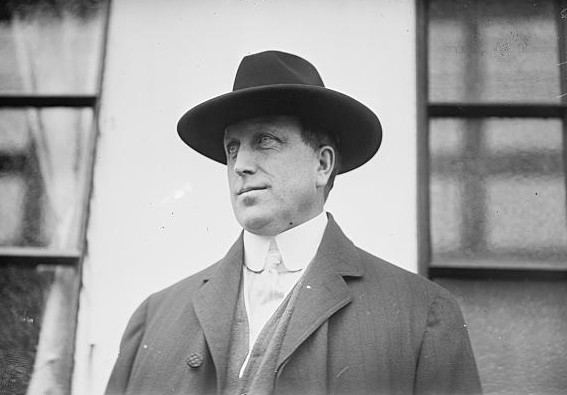
William Randolph Hearst
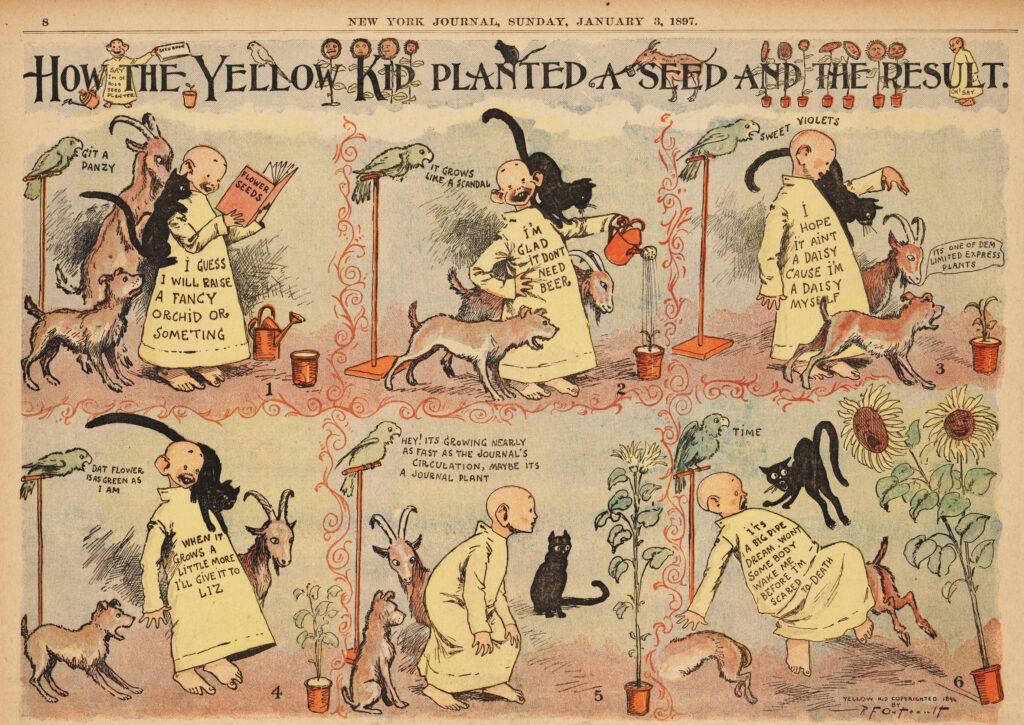
The Yellow Kid in the New York Journal, 1897. Courtesy the Billy Ireland Cartoon Library and Museum/Ohio State University
Categories
Newspapers and Newsies Podcasts

Newsies on Strike! The thrilling tale of New York newsboys fighting back

PODCAST We’re in the mood for a good old-fashioned Gilded Age story so we’re bringing back one of our favorite Bowery Boys episodes ever — Joseph Pulitzer and William Randolph Hearst vs. the newsies!

LISTEN TO THIS SHOW HERE:

It was pandemonium in the streets. One hot summer in July 1899, thousands of corner newsboys (and girls) went on strike against the New York Journal and the New York World. Throngs filled the streets of downtown Manhattan for two weeks and prevented the two largest papers in the country from getting distributed.

In this episode, we look at the development of the sensationalist New York press — the birth of yellow journalism — from its very earliest days, and how sensationalism’s two famous purveyors were held at ransom by the poorest, scrappiest residents of the city.

The conflict put a light to the child labor crisis and became a dramatic example of the need for reform.

Crazy Arborn, Kid Blink, Racetrack Higgins and Barney Peanuts invite you to the listen in to this tale of their finest moment, straight from the street corners of Gilded Age New York.

PLUS: Bonus material featuring a closer look at the Brooklyn Newsboys Strike and a moment with the newsies during the holidays.

To get this week’s episode, simply download it for FREE from iTunes or other podcasting services or get it straight from our satellite site.

To get this week’s episode, simply download or stream it for FREE from iTunes, Stitcher, Spotify or other podcasting services.You can also get it straight from our satellite site.

Or listen to it straight from here:
The Bowery Boys #219: NEWSIES ON STRIKE

___________________________________________________________

The Bowery Boys: New York City History podcast is brought to you …. by you!

We are now producing a new Bowery Boys podcast every other week. We’re also looking to improve and expand the show in other ways — publishing, social media, live events and other forms of media. But we can only do this with your help!

We are now a creator on Patreon, a patronage platform where you can support your favorite content creators.

Please visit our page on Patreon and watch a short video of us recording the show and talking about our expansion plans. If you’d like to help out, there are six different pledge levels. Check them out and consider being a sponsor.

ALL patrons at all levels will receive many benefits include the next episode of the Bowery Boys Movie Club, an exclusive podcast (released every 6-8 weeks) celebrating New York City in the movies. And patrons at the Five Points ($5) level and up will get our other exclusive podcast — The Bowery Boys: The Takeout — released every two weeks.

We greatly appreciate our listeners and readers and thank you for joining us on this journey so far. And the best is yet to come!

___________________________________________________________

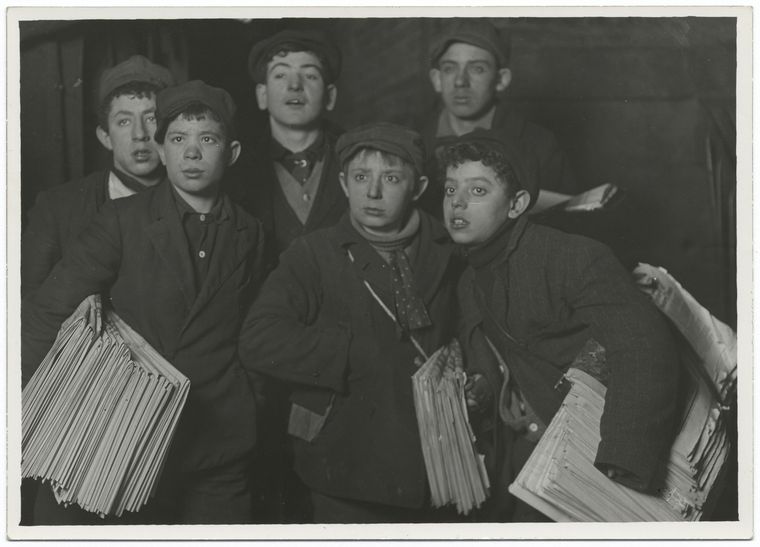
For related images for this week’s show, I’m turning to the extraordinary Lewis Wickes Hine, one of the first photographers to ever turn his lens towards the poor and disadvantaged with the express purpose of public activism.

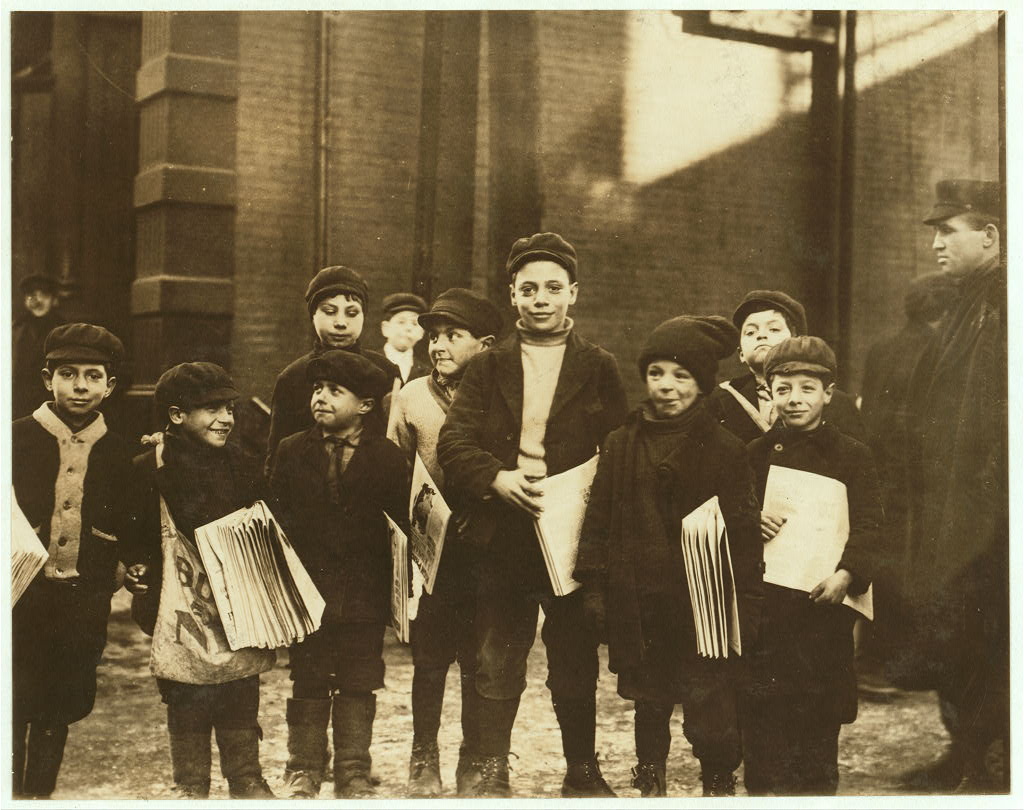
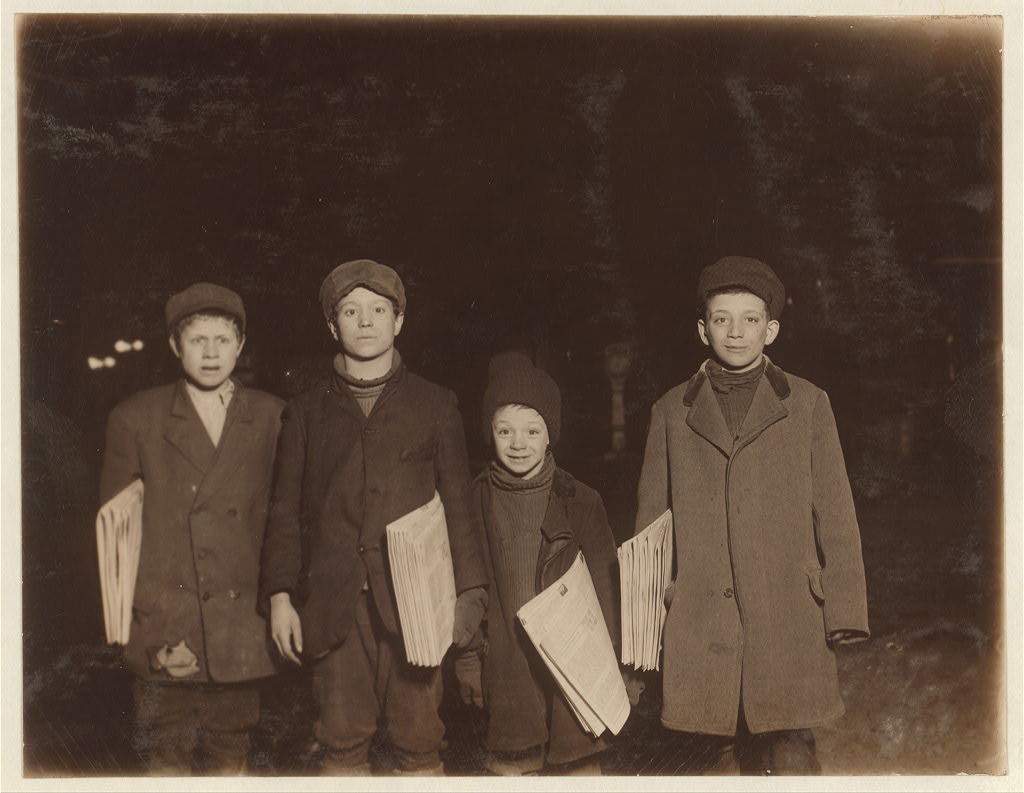
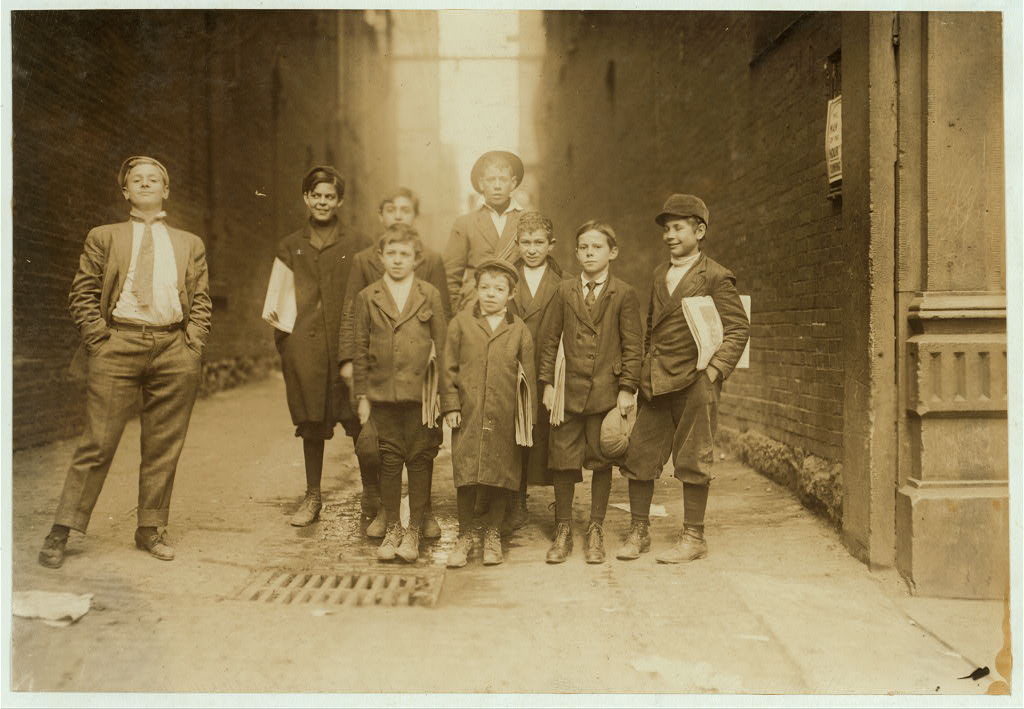
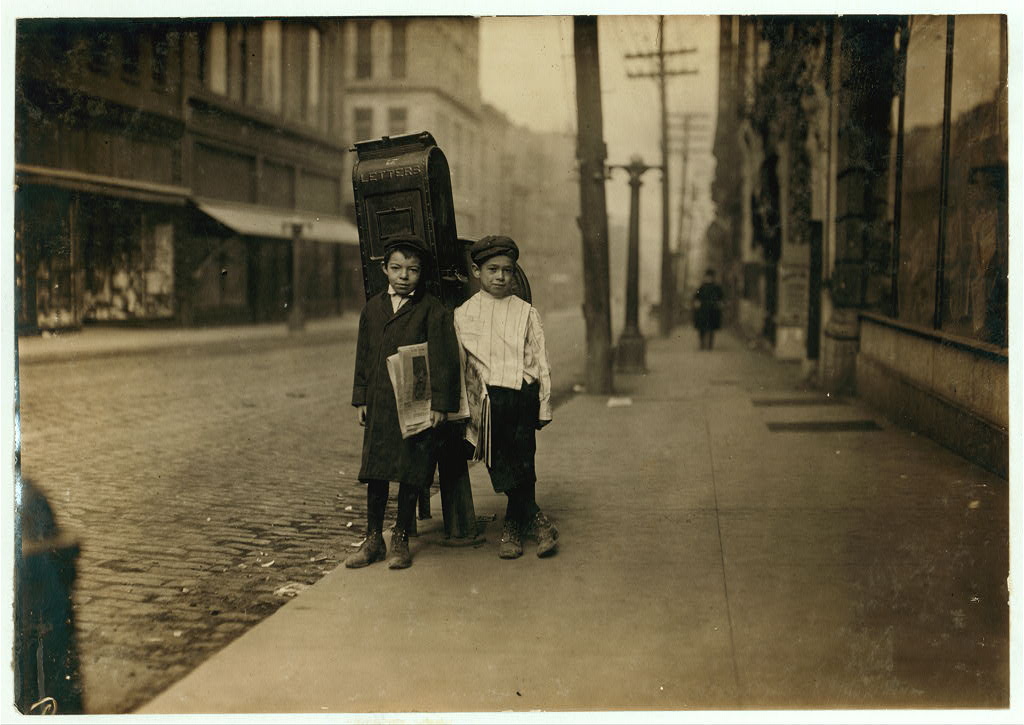
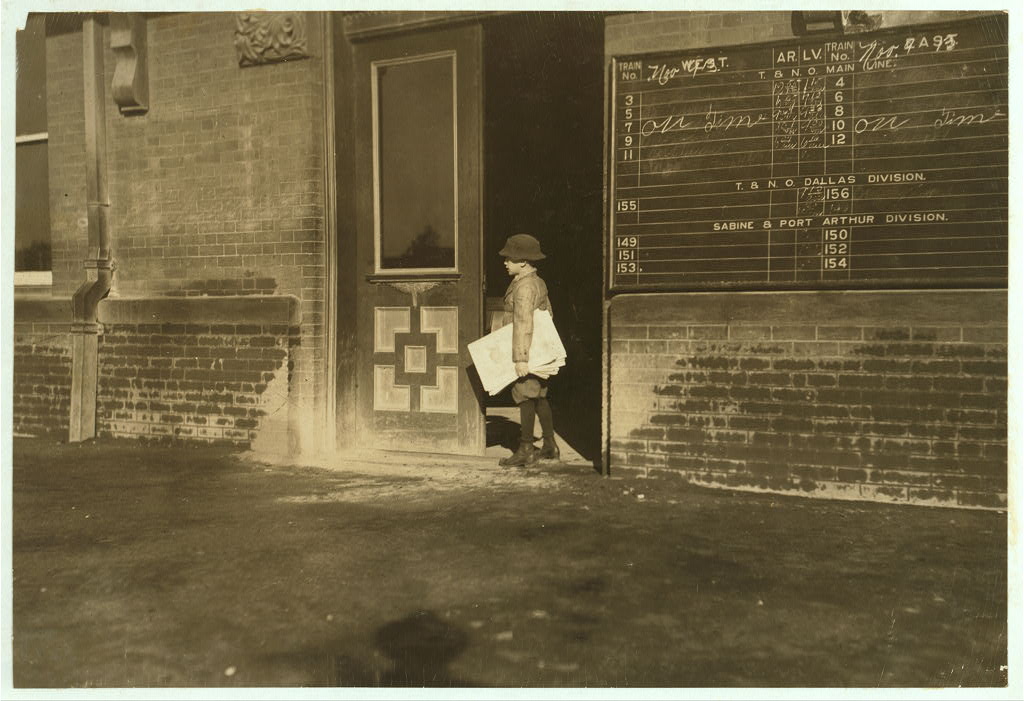
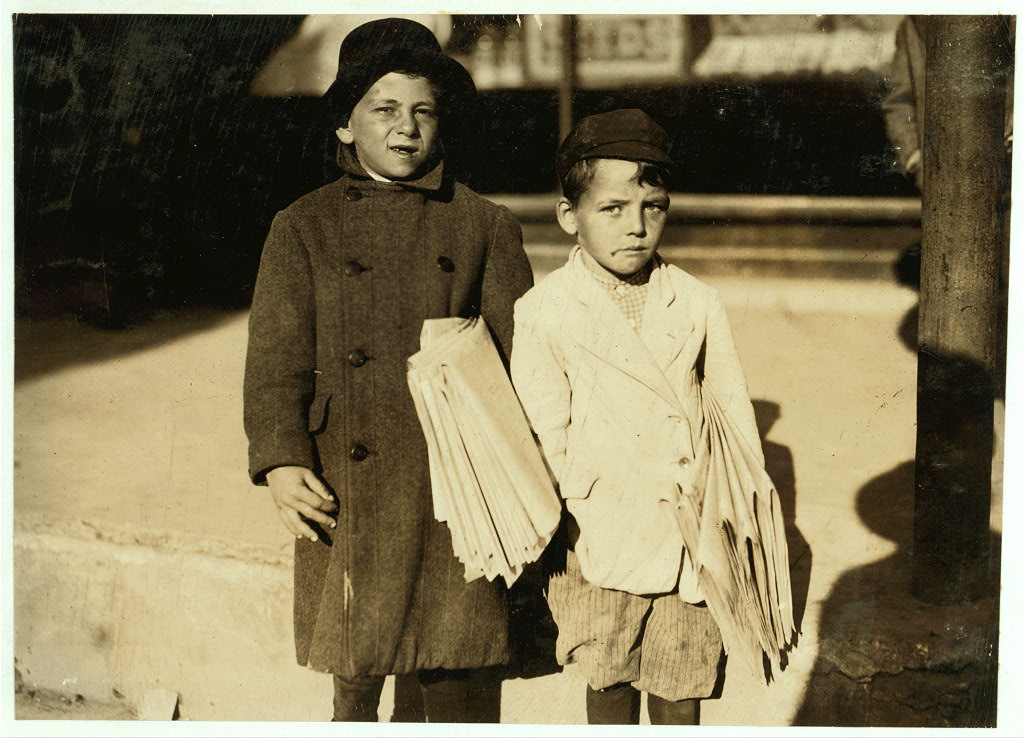
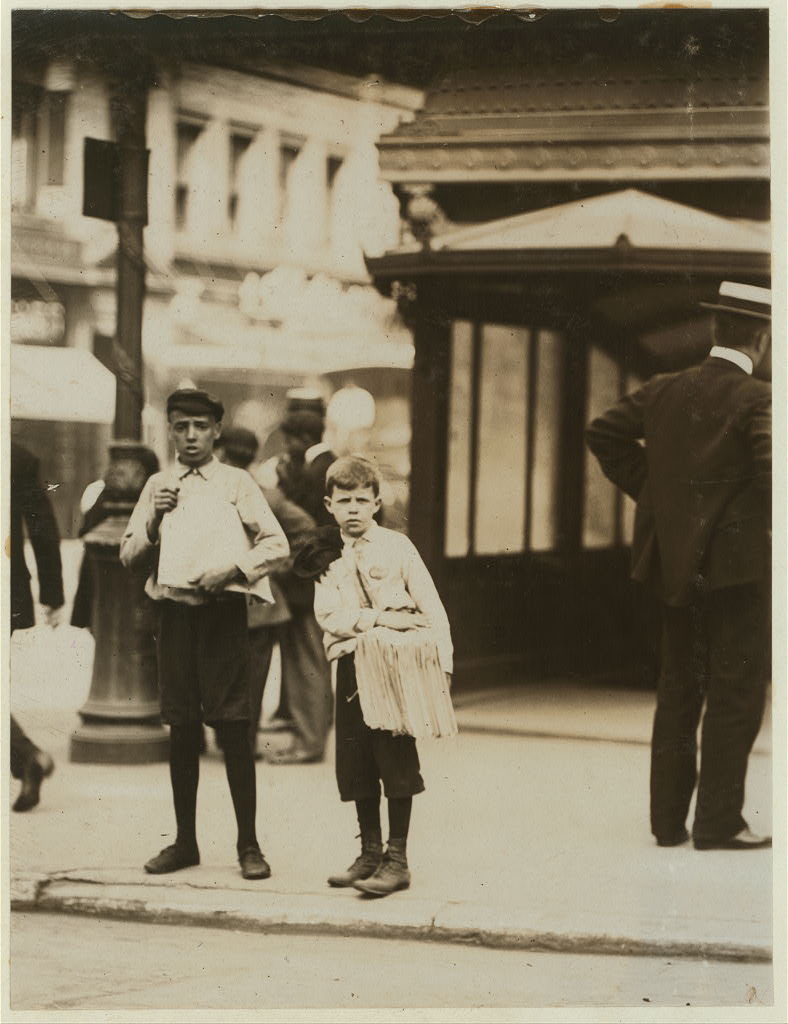
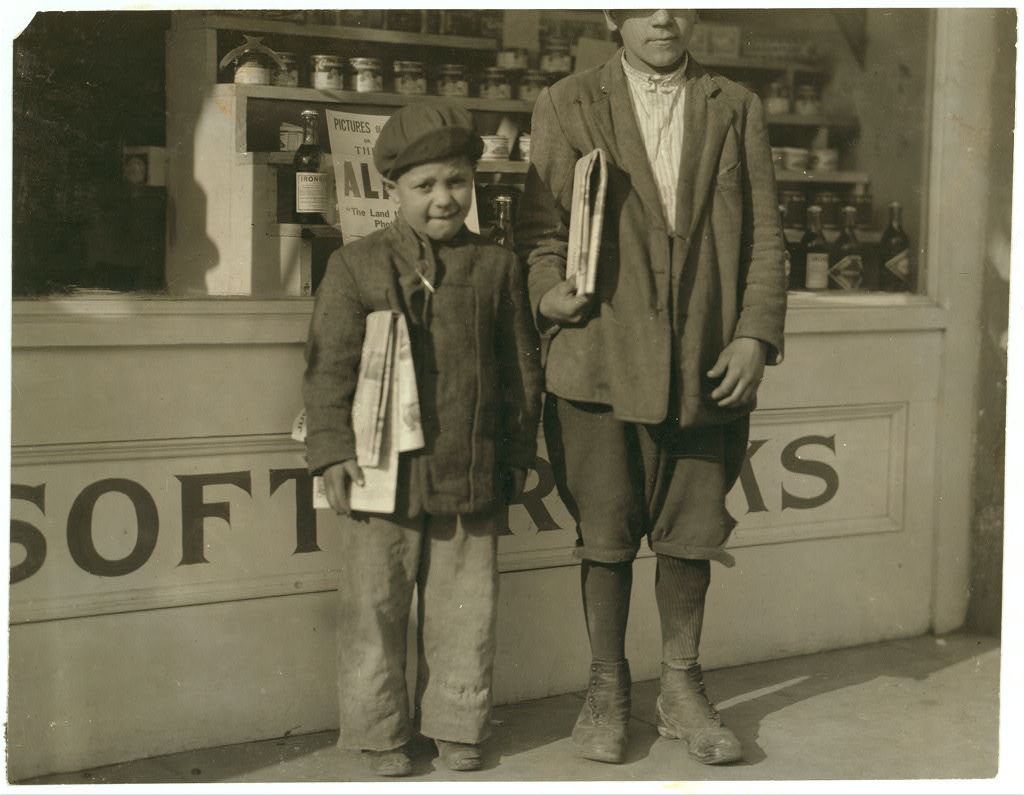
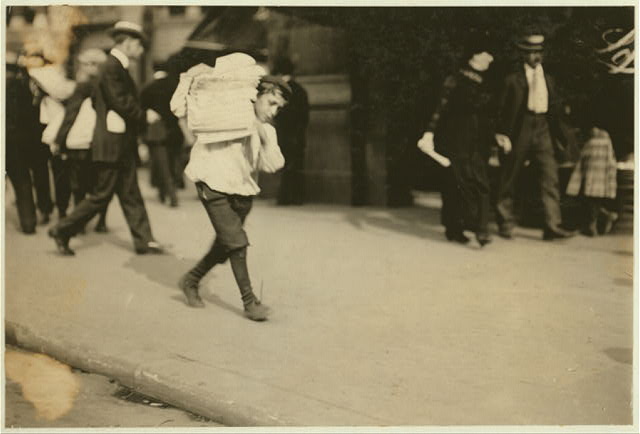
Here is a collection of Hine photographs of newsboys (and some girls), taken from the late 1890s into the early 1920s.  Where possible, I will try and include Hine’s original caption and will feature a selection of images from cities across the country.

Perhaps you will see the face of your grandfather or great-grandfather here? These pictures are equally charming, concerning, life-affirming, tragic,

Pictures courtesy the Library of Congress. Our thanks to them for continually providing great access to their marvelous trove of images.

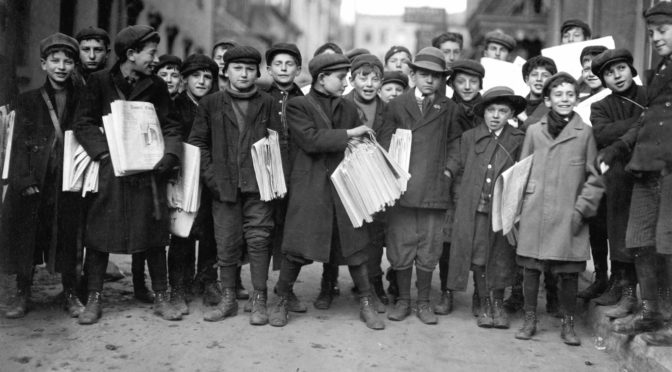
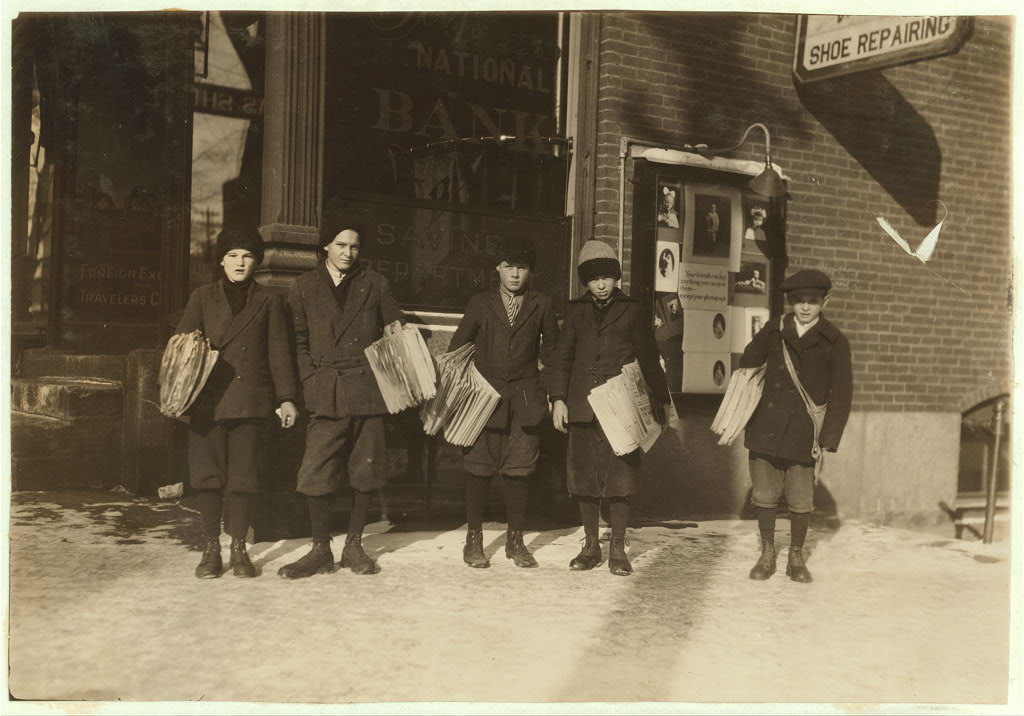
“Group of newsies (youngest 10 years) selling Boston papers at noon. In Barre and Montpelier newsies are excused from school a little early at noon and at night in order to get to their papers earlier. Location: Barre, Vermont” December 18, 1916 — one century old

LOC

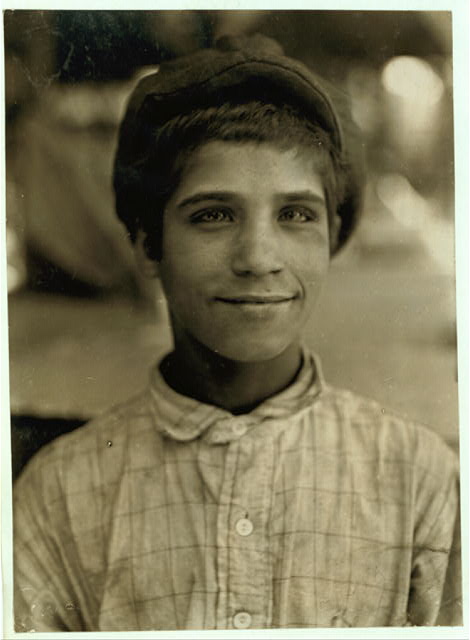
One of the newsies at The Newsboys’ Picnic, Cincinnati. Location: Cincinnati, Ohio, August 1908

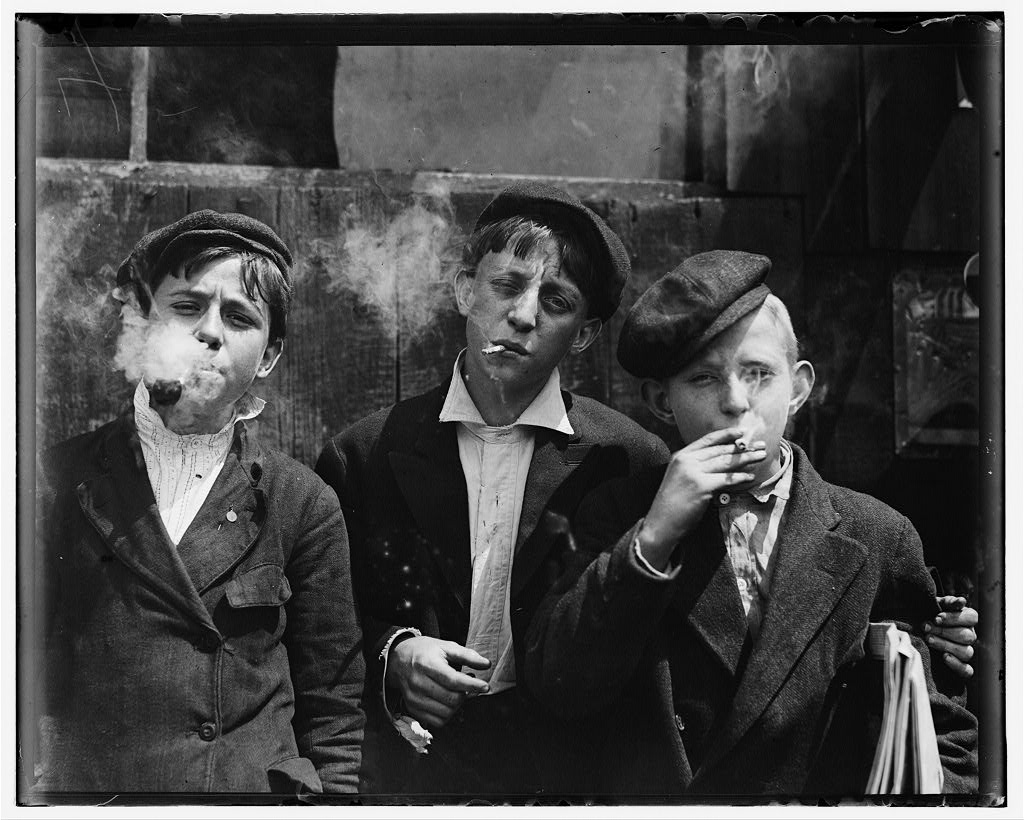
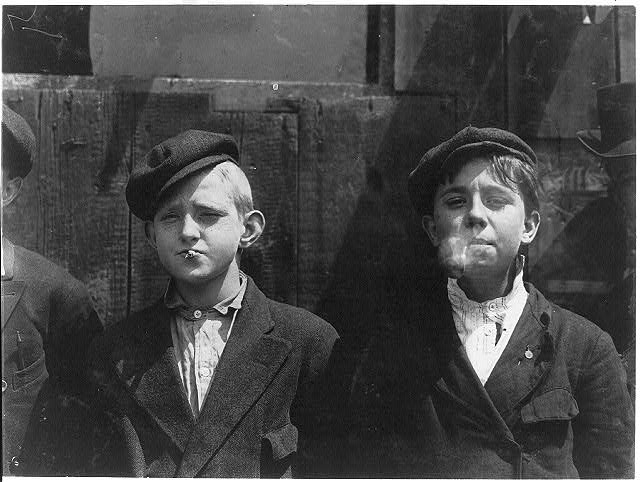
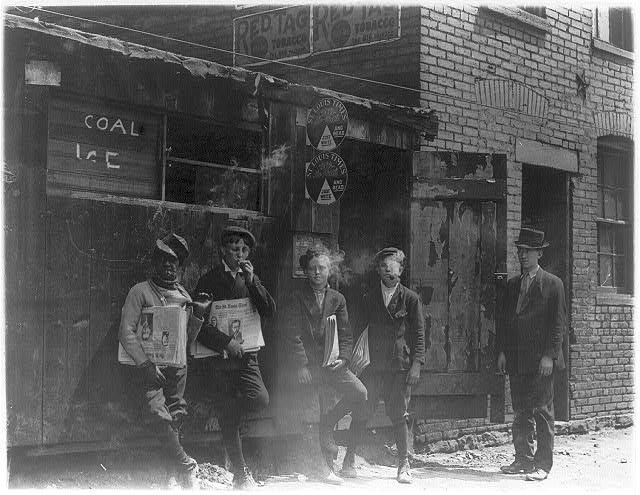
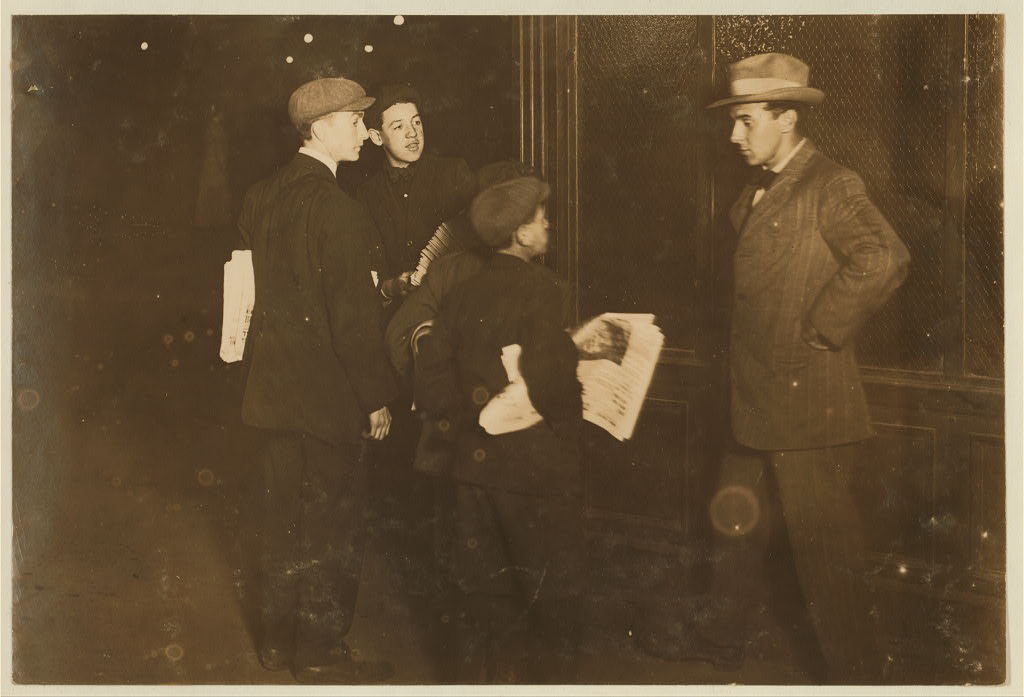
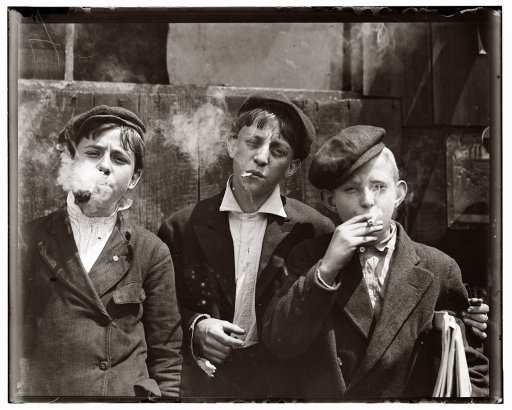
“11:00 A. M . Monday, May 9th, 1910. Newsies at Skeeter’s Branch, Jefferson near Franklin. They were all smoking. Location: St. Louis, Missouri.” May 9, 1910″
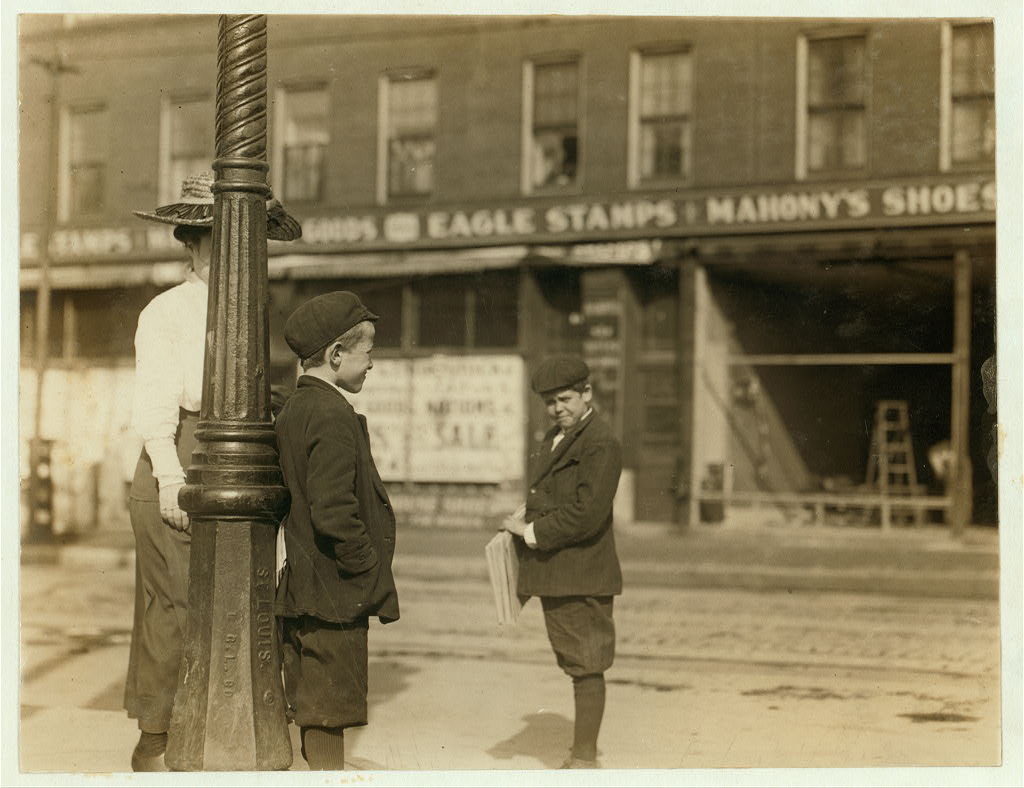
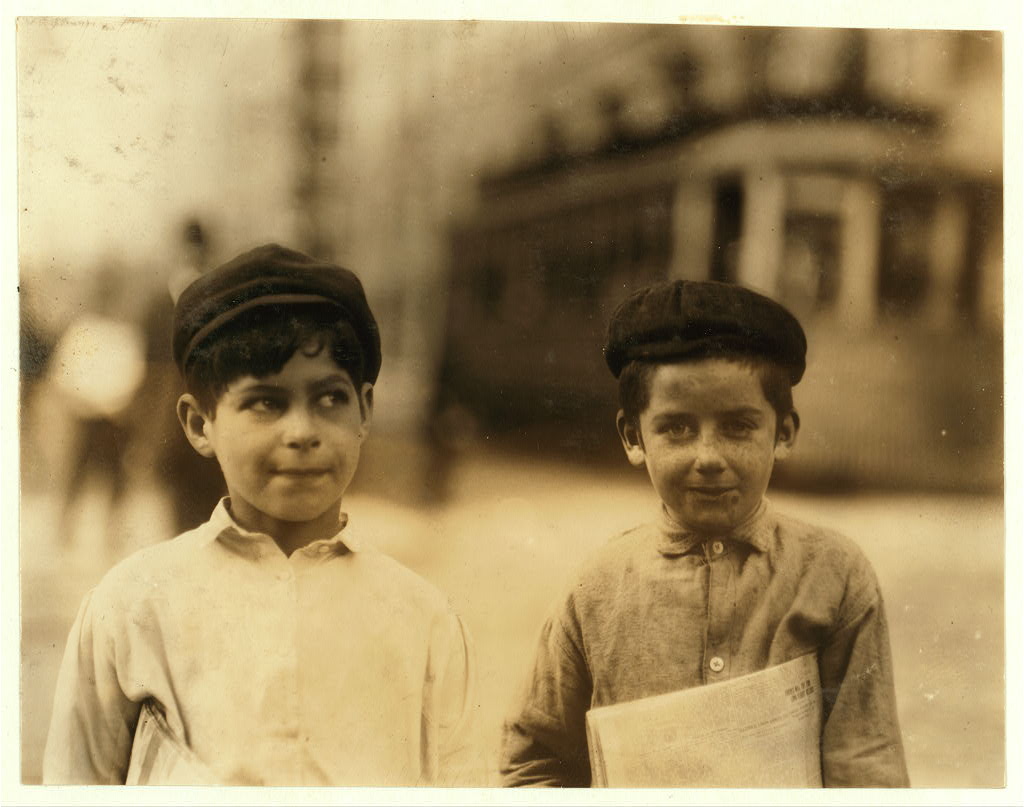
“Two newsies selling in P.M. Grand Avenue. May 9th, 1910. Location: St. Louis, Missouri.”

LOC

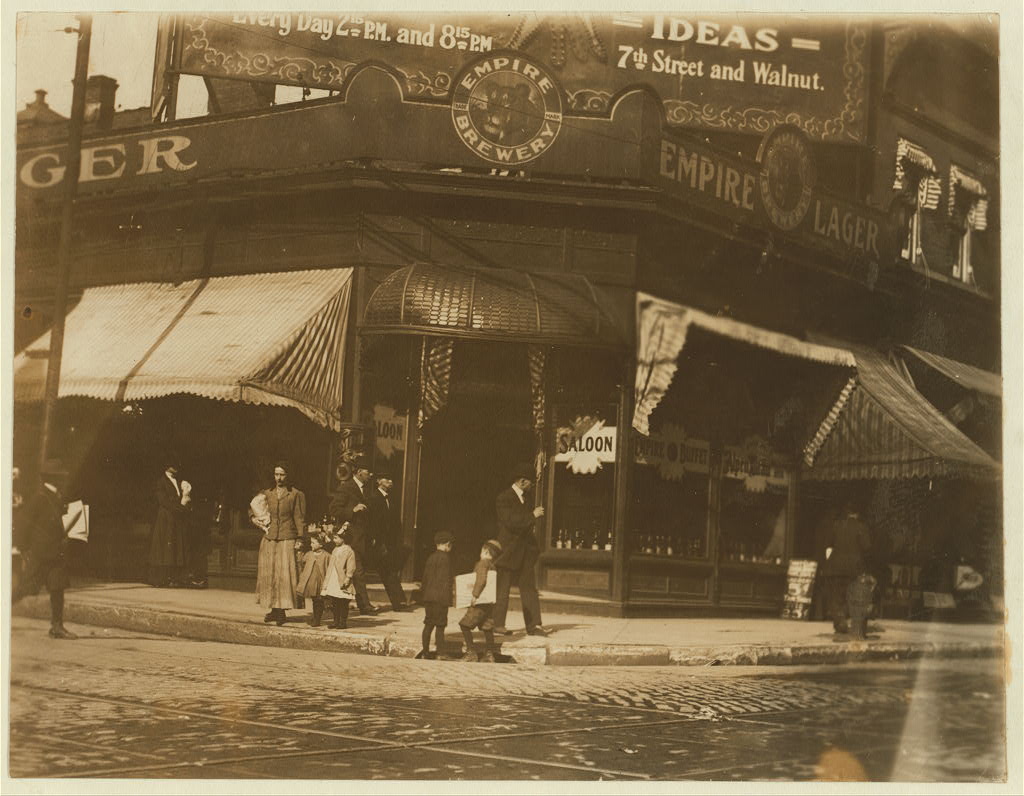
“Newsies selling near saloon. Location: St. Louis, Missouri.”

LOC

“Just newsies.” Location: St. Louis, Missouri. May 1910

LOC

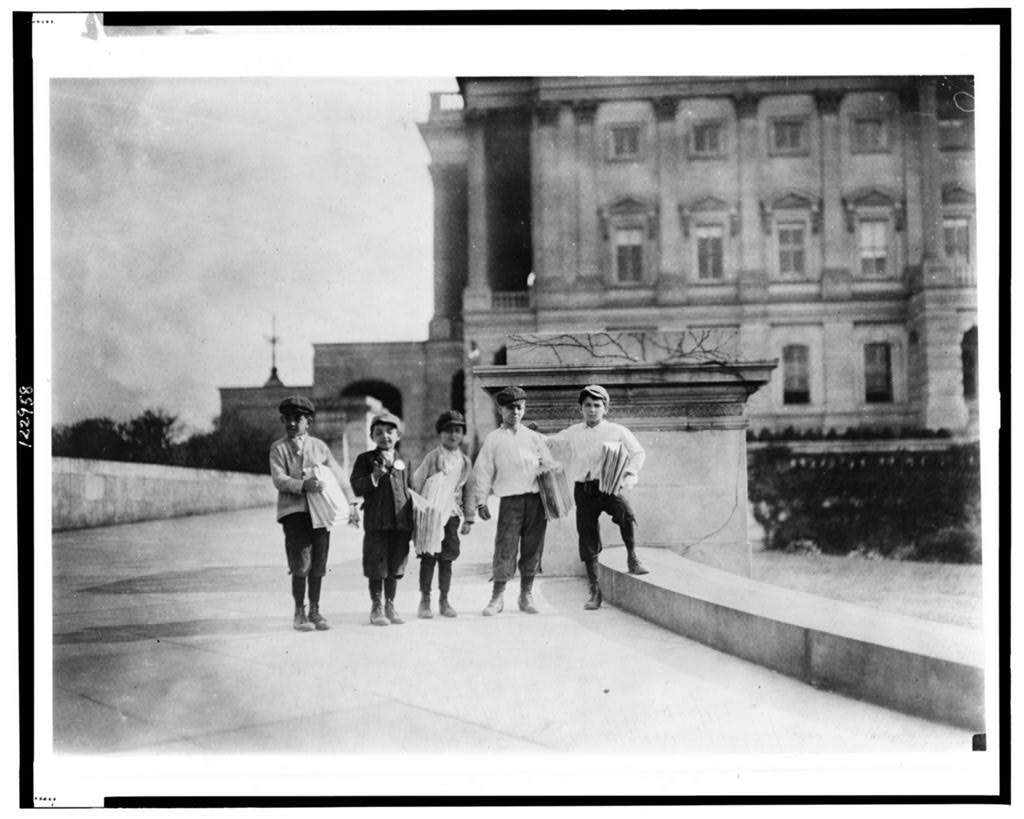
“In comparison with governmental affairs newsies are small matters. This photo taken in the shadow of the National Capitol where the laws are made. This group of young newsboys sells on the Capitol grounds every day, ages 8 years, 9 years, 10 years, 11 years, 12 years. The only boy with a badge, was the 8 year old, and it didn’t belong to him. Names are Tony Passaro, 8 yrs. old, 124 Schottes Alley N.E.; Joseph Passaro, 11 yrs. old, (has made application for badge) Joseph Mase (9 yrs. old), 122 Schottes Alley. Joseph Tucci, (10 yrs. old), 411 1/2 5th St., N.E. Jack Giovinazzi, 228 Schottes Alley, 12 yrs. old. Is in ungraded school for incorrigibility in school. Location: [Washington (D.C.), District of Columbia].” April 1912
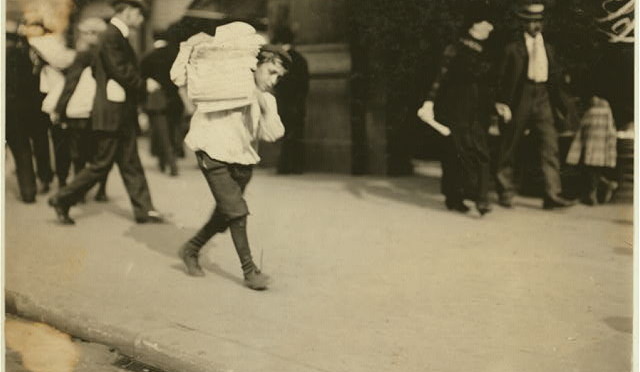
“Some of the youngest newsies hanging around the paper office after school. Location: Buffalo, New York (State)” February 1910″

“Newsies selling on Court St., 8 P.M. Left to right: Frank Spegeale, 13 years old, 72 Terrace St.; Dominick Gagliani, 10 years old, 230 Court St.; Charlie Decarlo, 8 years old; Anthony Decarlo (brother) 13 years old, 32 Front Ave.,. Location: Buffalo, New York (State)” February 10, 1910

“Group of Nashville newsies. In middle of group is 7-year-old Sam. Smart and profane. He sells nights also. Location: Nashville, Tennessee.” November 1910

LOC

Lewis met a lot of profane kids apparently! “Two 7 year old Nashville newsies, profane and smart, selling Sunday. Location: Nashville, Tennessee.”

Beaumont is overrun with little newsies. This boy, Vincent Serio, eight years old, is up at 5:00 A.M. daily. “Have sold papers since I was four years old.” Location: Beaumont, Texas. November 1913

LOC

“Tony and Charlie a pair of six year old newsies. Location: Beaumont, Texas. November 1913”

LOC

And now for a few of their New York brothers:

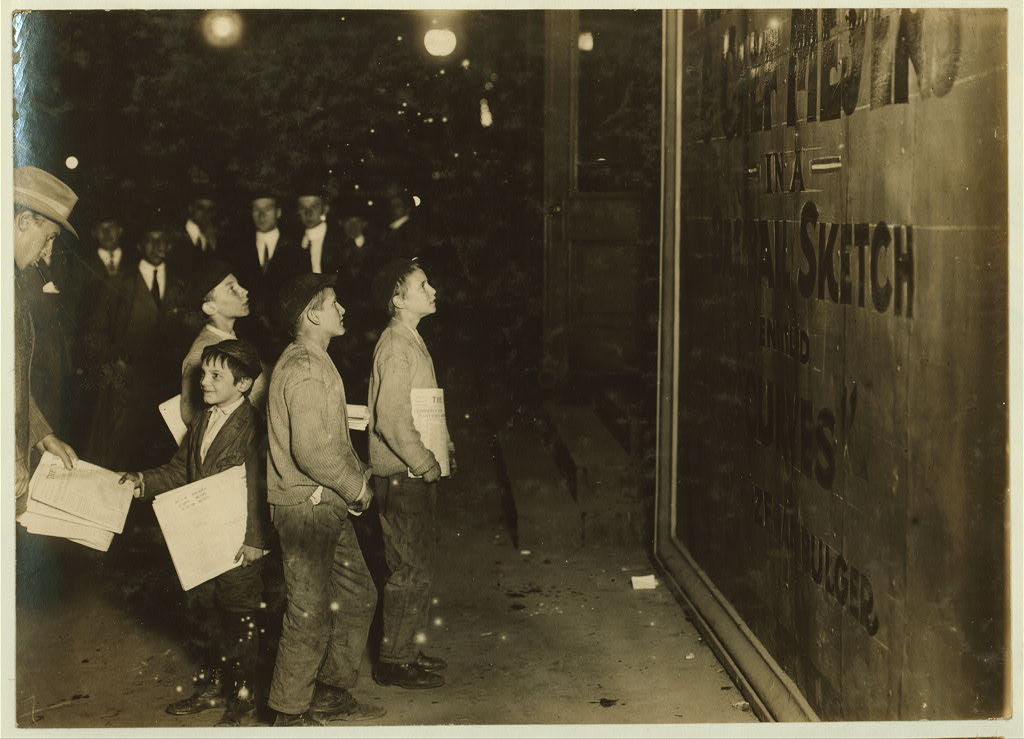
“Group of newsies hanging around Long Acre Square waiting for the theatre to close. Photo taken at the Victoria Theatra [i.e., Theatre], B'[road]way and 42nd St. James Thorpe (boy selling paper) 8 yrs. 640 10th Ave. Richard Farrell, 13 yrs., same address. Harry Farrell, 10 yrs., same address. August Habich, 10 yrs., same address. 10:30 P.M. Oct.’, 1910. Location: New York, New York (State)”

LOC

“In foreground–14 yrs. old Nathan Weis. He comes all the way from East New York in Brooklyn (435 W. Jersey St.) to sell pages at the 14th St. Subway entra[n]ce. St. 11 P.M. with one exception, I saw no other small newsies on 14th St. between 5th and Third Ave. Location: New York, New York (State)” October 1910

LOC

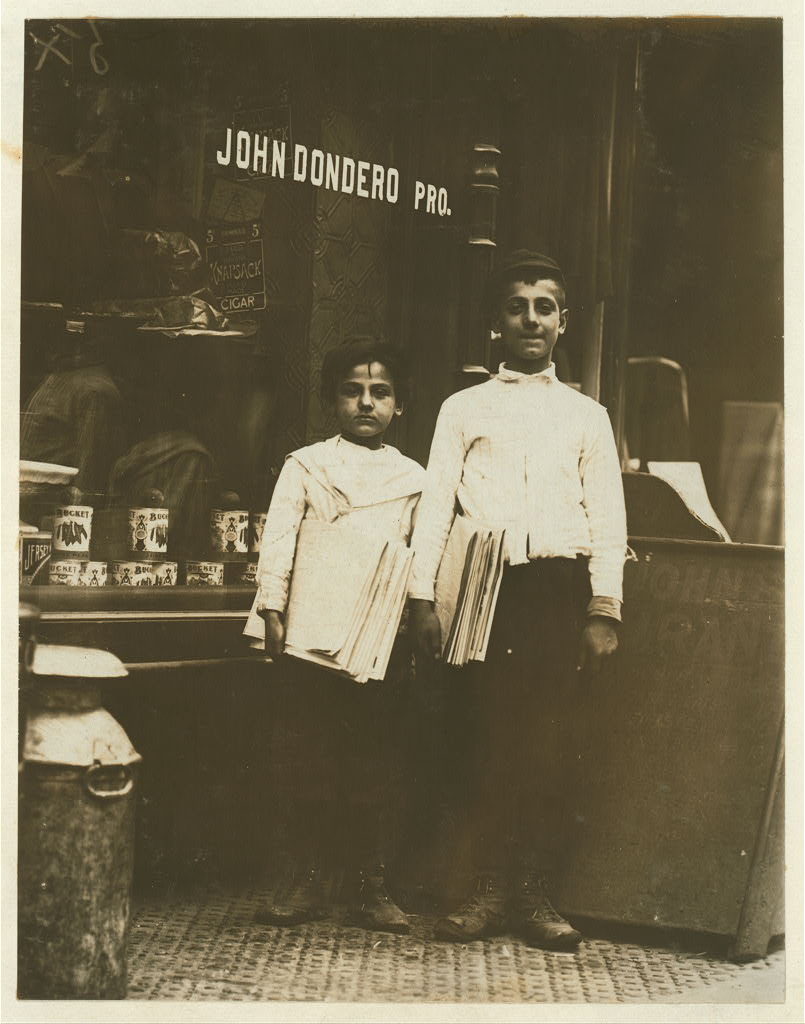
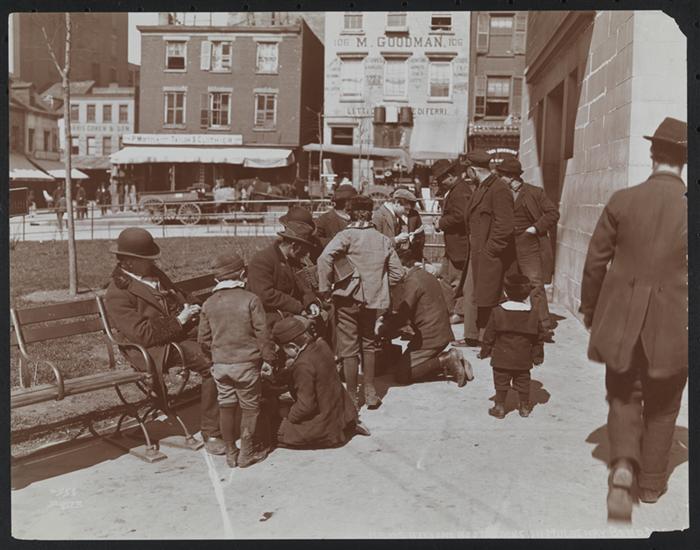
“Newsies. Bowery. Frank & Johnnie Yatemark. 12 Delancey St. Location: New York, New York (State), July 1910”

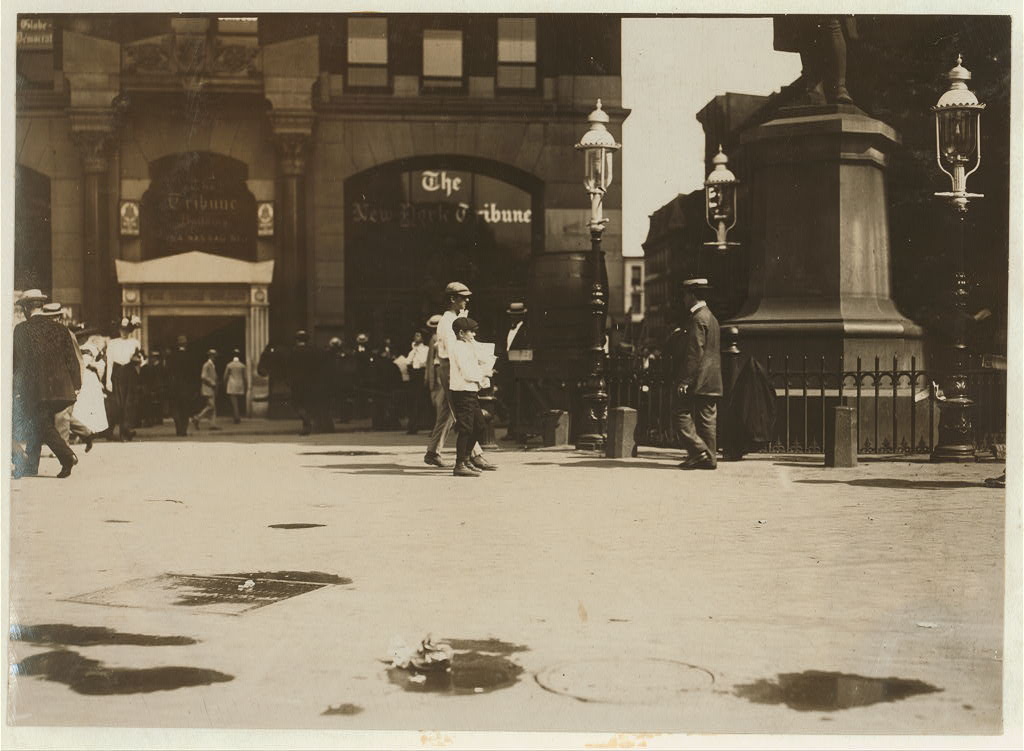
“Park Row Newsies. July 1910”

LOC

“N.Y. Newsies. Location: New York, New York (State)”

LOC

And just to demonstrate Hine’s thoroughness, he even went out to the West Coast, searching for newsboys in action.

“Newsies. Location: Los Angeles, California. May 1916”

LOC

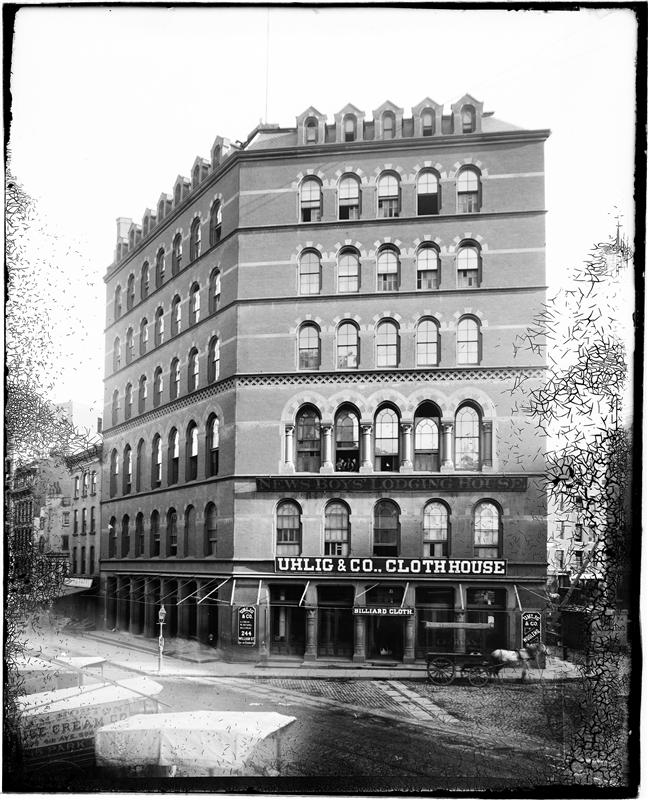
The famous Newsboys Lodging House at 9 Duane Street. Date of photograph unknown, taken by Robert L. Bracklow (1849-1919). Courtesy Museum of the City of New York

Categories
Newspapers and Newsies

Hot off the press: the bicentennial of the Bronx Gutenberg

Hoe Avenue in the Bronx has nothing to do with farming, although it once indeed ran through a grand 19th century farm estate.

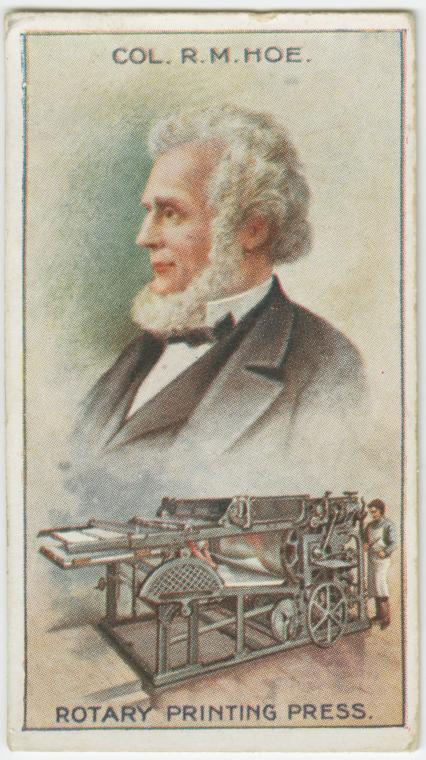
The avenue’s namesake, Richard March Hoe, born 200 years ago today, brought about a revolution in the world of printing. Without his innovations, the phrase ‘hot off the press’ might never have come about.

His father Robert Hoe, born in England in 1784, the year after America won its independence, moved to the new country and began a printing press business in lower Manhattan (10 Cedar Street) with his two brothers-in-law. Hoe tinkered with improving the hand-operated press machine for the ever-demanding industry of New York publishing. But it would be his young son Richard (born Sept. 12, 1812), taking over the reigns of the company in the 1830s, who would change the world of printing forever.

At right: ‘Colonel’ Hoe with his spectacular invention

The answer, of course, was steam power. It had forever changed the worlds of industry and transportation during this period. In 1843, R. Hoe & Company introduced a rotary printing press (nicknamed the ‘lightning press’), using a revolving cylinder drum that rapidly turned out thousands of printed pages using steam power.

His influence on the publishing world by the 1840s cannot be overstated. New York’s penny press, led by newspapers like the Sun, the Tribune and the Herald, utilized the technology to expand their circulation. Soon newspapers across the country were being made using the Hoe printing press, inspiring the growth of daily publications, turning the newspaper into an everyday item and creating a greater demand for the quick delivery of information.

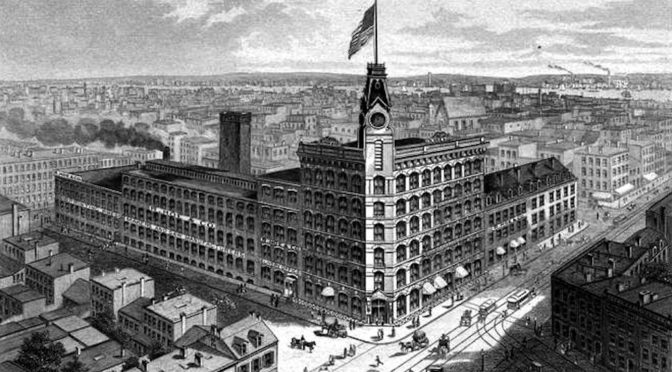
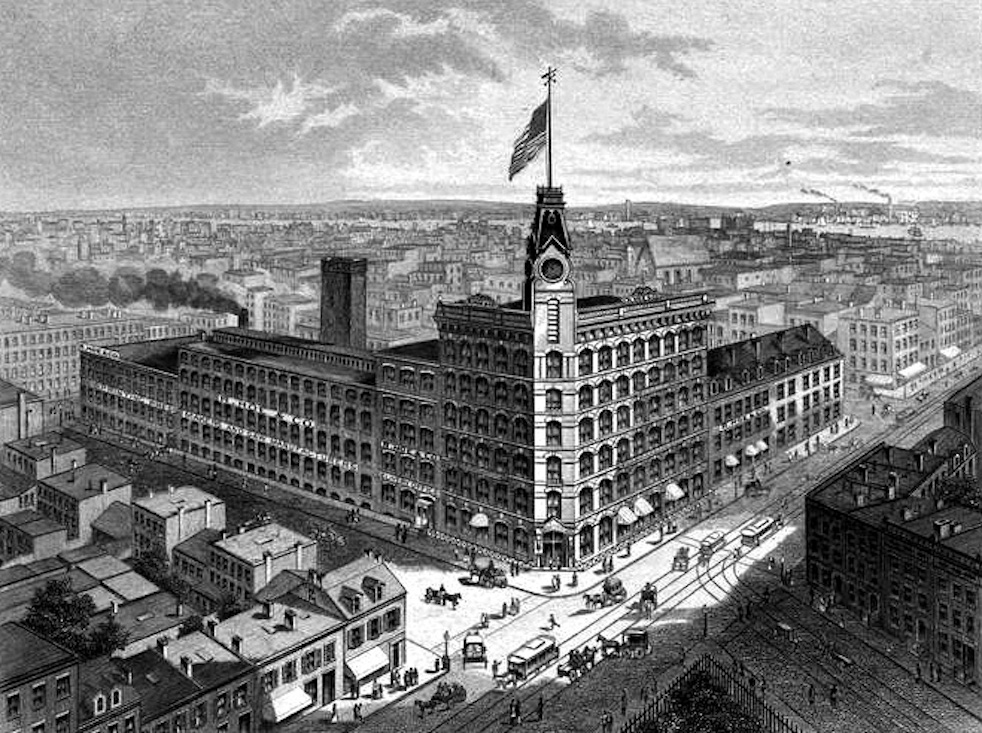
Above: R. Hoe & Company at 504-520 Grand Street.  

Like many great business moguls of the age — certainly men like Thomas Edison were paying attention — Hoe both innovated himself and bought inventions from others, generating a mini-publishing revolution from his headquarters at 504 Grand Street in Manhattan (pictured above).  In 1871, his factory eventually produced America’s first web press, generating two-sided printed pages from a single roll of paper. [source]

If that wasn’t enough, a decade later, Hoe acquired the technology to fold the newspapers as they came off the press.

Interestingly, the company also distinguished themselves in the manufacture of saw blades, a side business not completely unrelated, as they were used to cut metal type.

While Hoe conducted business from the Lower East Side and from offices in London, the printing-press mogul resided in a lavish 53-acre estate named Brightside near the Bronx River, on land once owned by the family of Gouverneur Morris, with plenty of room for an orchard and land for his prize-winning Jersey cattle. His brother Robert bought the neighboring land and opened his own estate called Sunnyslope.

Most signs of these estates is long gone, of course, with the exception of Hoe Avenue.  For modern pop culture junkies, the street is perhaps best known for the Hoe Avenue peace meeting, an assemblage of New York street gangs calling for a truce that inspired the plot of the 1981 film ‘The Warriors (in particular, the ‘Can you dig it?’ scene).

Nearby you’ll find another street named for printers: Aldus Street, a modification of the name Aldo Manuzio, a 15th century Italian printer  At the corner of Aldus and Hoe is a small playground called Printer’s Park, with playground equipment made to look like a rotary printing press.  And nearby is a small garden called — no beer jokes please — the Hoe Garden.

Richard Hoe died in Florence, Italy, on June 7, 1886.

Pictures courtesy New York Public Library.

Categories
Newspapers and Newsies

Before ‘Newsies’: The Brooklyn Newsboys Strike of 1886

The grueling life of a Brooklyn newsboy, taken by Lewis Hine, 1910 (Library of Congress)

The new Disney-produced Broadway musical ‘Newsies‘ puts melody to the events surrounding the Newsboys Strike of 1899. For one week that summer, young newspaper sellers fought back against their employers’ unfair pricing schemes, turning their former street corners into places of mass protest. [You can hear all about in our 2010 podcast on The Newsboys Strike of 1899.]

But did the producers of the Broadway show realize they’re opening their new musical on the anniversary of another significant strike?

The organized disobedience of 1899 was only the grandest of New York’s newsboy strikes. Despite their youth and inexperience, newsies fought back on several occasions throughout the late 19th century. While the image of the street-smart, scrappy whelp was a stereotype often relayed by the newspapers themselves, in some cases, journalism’s youngest workforce used its hot-blooded pluck to great advantage.

With the growth of New York after the 1850s came a fierce competition among its many dozens of newspapers, leading to lamentable and unfair business practices aimed at those who actually sold their product. After all, selling newspapers was a grueling job with low financial reward. Adults looked elsewhere for higher paying work, so in the era before substantial child labor laws,  newspapers often employed younger New Yorkers, mostly boys. And children, cynical publishers believed, were a pliable workforce.

The independence the job required initially appeared to discourage any kind of organization, and newspapers felt they could systematically underpay their ‘freelance’ sellers, often pitting groups of newsboys against each other. A newspaper across the East River, in the pre-consolidation city of Brooklyn, made just such a mistake in March of 1886.

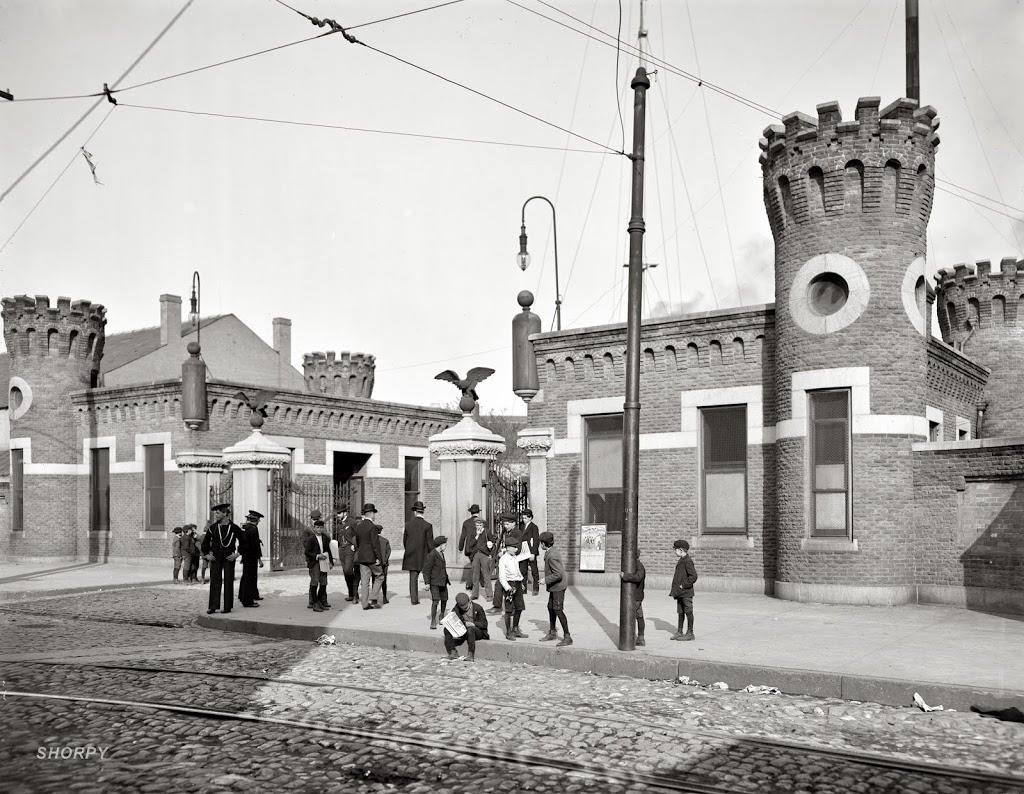
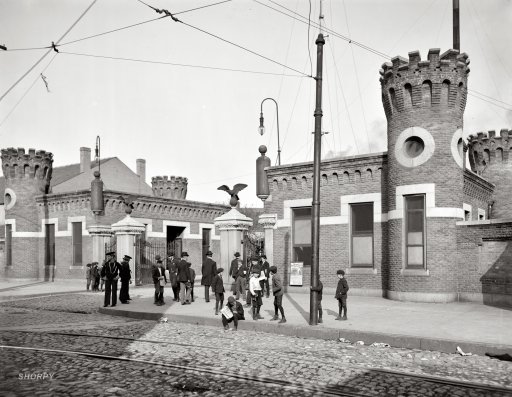
Above: Determined Brooklyn newsies hang around the Brooklyn Navy Yard (at Sands Street) looking for potential buyers. 1903 Picture courtesy Shorpy 

Brooklyn Takes Sides
The Brooklyn Times employed newsboys all throughout the city of Brooklyn, a fast expanding metropolis by the mid-1800s. Originally just the area we consider Brooklyn Heights and the Fulton Ferry, the burgeoning city grew to absorb many Long Island towns along the bay. In 1854, it also expanded to include the independent city of Williamsburgh (today’s neighborhood drops the -h) and Bushwick. These new additions were often referred to as the Eastern District.

However, the city of Brooklyn had a good deal more expansion ahead of it and would eventually swell to include many towns south and southeast of its original borders, an area referred to back then as the Western District, including areas like Bay Ridge, Red Hook, and many others. (This is a tad confusing today as many of these areas were later called South Brooklyn; the Eastern/Western distinction makes sense of you orient it with ‘true north’.)

In an effort to expand sales into the newer regions of Brooklyn, the Times made a unique deal to Western District newsboys. They would receive stacks of newspapers at a lower cost (one cent per paper) than those sold to Eastern District newsboys (one-and-a-fifth cent per paper). The Times publishers believed this would boost sales by encouraging the Western District newsies to “push sales vigorously in new directions.”

Above: Newsies gathered near the Brooklyn Bridge. Courtesy NYPL

Riot on South Eighth Street!
Oh, but when the Eastern District newsboys found this out the following day! On March 29th, according to a report by the Brooklyn Daily Eagle, a hundred newsboys, armed with sticks and stones, stormed the Times distribution offices at South Eighth Street and tried to prevent two wagons of newspapers from heading to the Western District. A whip-wielding wagon driver and arriving police officers thwarted the boys, but one of the trucks was later overturned at the area around today’s Brooklyn Navy Yard.

Many Williamsburg newsies refused to sell the Times, even defying orders of older, more compliant newsboys. Wagons filled with papers were continually attacked on their way south. Any regular newsboy caught selling the Times was set upon by other boys, often roving bands “backed by a number of roughs.” The Daily Eagle reports of some young newsies hiding newspapers in their jackets, selling them to customers in secret, for fear of reprisal.

The Brooklyn newsboy strike lasted for a couple days. Like the later newsboys strike of 1899, the key to success came from adult newspaper sellers at regular newsstands. Once a few of them joined the boycott, the Times agreed to lower their wholesale cost to just one cent per paper for newsboys in both areas of Brooklyn.

By April 1, 1886, newsies returned to their street corners, their hands stained with the ink of the Times and glowing with the satisfaction that their efforts might reward them with a little extra money that day.

SIDE NOTE: It’s probably a good guess to say that many of these young workers lived at the Brooklyn Newsboys Lodging House at 61 Poplar Street, which opened its doors in 1884, one year before the opening of the Brooklyn Bridge.

Categories
Christmas Newspapers and Newsies

A Very Special New York Newsies Christmas

The gritty image of the scrappy 19th century newsboy, the can-do kid slinging newspapers from the street corner, full of vinegar and character, was an encouraging invention of the newspapers themselves.

Children were cheap labor, willing to sling stacks of freshly printed papers to corners across the city.

Bootblacks and newsboys at Mulberry Bend, 1898, courtesy Museum of the City of New York

Many kids preferred the profession to that of bootblack or messenger boy, and it was certainly more profitable than peddling door to door.

Newsies were frequently mentioned within general-interest stories of homeless, outcast whelps, considered almost blissfully, as though their own news delivery forces weren’t themselves part of that pathetic number.

The papers stereotyped newsboys (who were occasionally girls, too) as orphans or ‘street arabs’ with purpose, self-sufficient little adults plucked by their profession from the grasp of destitution.

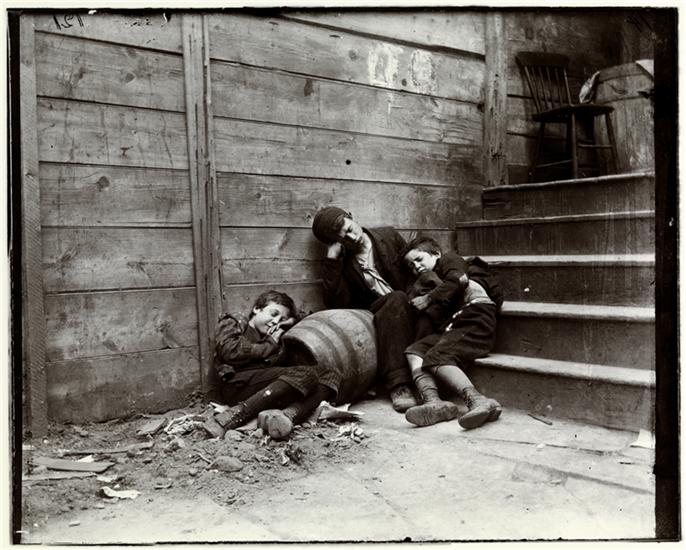
Three boys curled around a barrel, asleep at the bottom of stairs. By Jacob Riis, 1890, courtesy the Museum of the City of New York

Many children were homeless; the lucky ones took shelter in ‘newsboy lodging homes’, but many braved it in doorways and slept over gratings.

Some found this life preferable to New York’s houses of refuge, dreary orphanages that were often grouped with homeless shelters or other asylums.

Those children who did have families took employment out of necessity or as a means of escape. It took organized action (culminating in the Newsboy Strike of 1899) and the work of child-labor activists like photographer Lewis Hine to highlight the unsavory conditions and low pay.

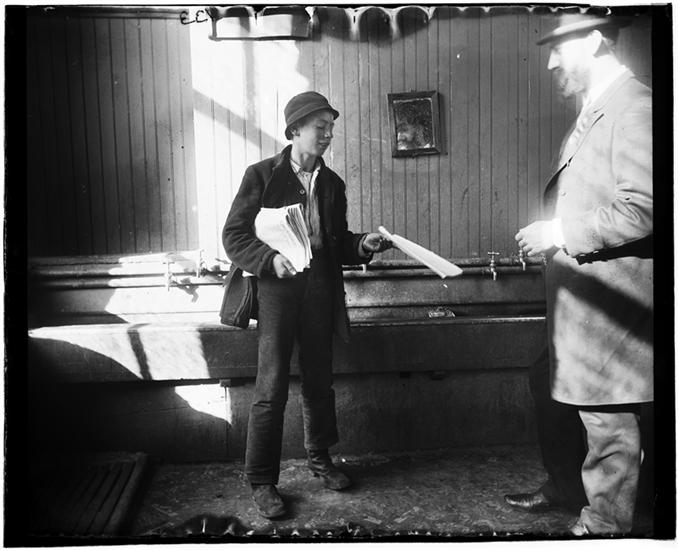
Below: A newsboy posing for a Jacob Riis picture at the Duane Street lodging house, 1889

Newsboy at the Duane Street Lodging House, c 1890, Museum of the City of New York

No time was worse for a newsboy than winter.

Not only was it physically difficult to sell newspapers in cold and snowy weather — or worse, the wet, wintry mix that often typifies the New York season — but children were rarely dressed for comfort.

The idea of Christmas was a luxury. As newspapers were sometimes heavier due to increased page count, some children may have even dreaded the holiday.

But the Gilded Age wealthy were charitable around the holiday, and a few lucky ‘urchins’ got a gracious Christmas handout.

Some groups, like Charles Loring Brace‘s Childrens Aid Society, worked year-round to get children off the streets, via ‘orphan trains’ that sent children to live with families in other places. 

Those that remained in New York, the ones fortunate enough to find shelter at a newsboys lodging house like the one at 9 Duane Street, celebrated the holidays with an large annual feast hosted by importer William M. Fleiss.

The wealthy trader brought annual Christmas meals to the needy children at the lodging house for almost thirty years. “The newsboys were not overlooked by Santa Claus, ” said the New York Times in 1893.

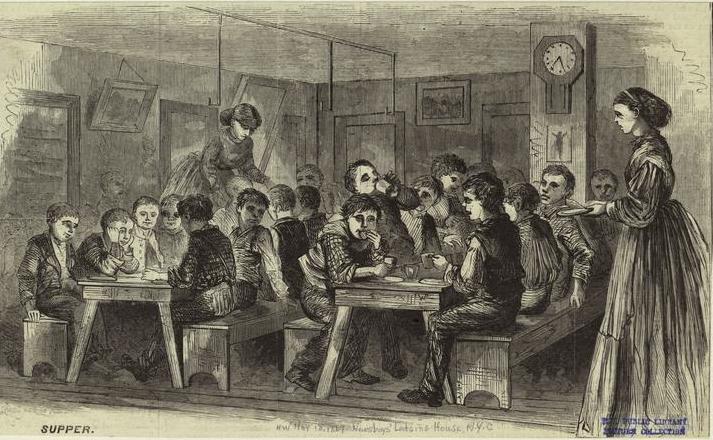
Below: Dinner at a newsboys lodging home, from an earlier period (1867), courtesy NYPL

At the 1897 dinner, the lodging house dining room was festooned with evergreen branches and white linens. Children ate in shifts, enjoying a bountiful feast that included ham, turkey, mashed potatoes and plenty of pie.

A familiar face at some of these lodging dinners was a young police commissioner Theodore Roosevelt, his father being a co-founder of Brace’s aid society.

Reformer Jacob Riis recounts one such dinner:

“Tramp! tramp! comes the to-morrow upon the stage. Two hundred and fifty pairs of little feet, keeping step, are marching to dinner in the Newsboys’ Lodging-House. Five hundred pairs more are restlessly awaiting their turns upstairs….As the file of eagle-eyed youngsters passes down the long tables, there are swift movements of grimy hands, and shirt-waits bulge, ragged coats sag at the pockets. Hardly is the file seated when the pliant rises: ‘I ain’t got no pie! It got swiped on me.’ Seven despoiled ones hold up their hands.”

There was plenty of room for shenanigans at this dinner. Another source confirms that “a few fine, soft pies were deposited down some unfortunate newsboy’s back between his shirt and him.”

By most accounts, however, more food was eaten than thrown.

Fleiss’s generosity, while certainly genuine, kept him in good social company. The wife of William Waldorf Astor (not to be confused with her aunt, in social parlance THE Mrs. Astor) paid for Thanksgiving suppers for the boys.

And for Mr Fleiss, charity may have had a more soul-cleansing motive. In 1894, he was accused during the Lexow police corruption investigation of giving a prominent inspector “about $5,000 to $6.000 as a result of speculation in stocks.”

Another group of newsboys in 1898 enjoyed a bountiful dinner of “oysters on the half shell, consomme julienne, radishes, celery, salmon, mayonnaise dressing, turkey and cranberry sauce” courtesy of early grocery giant Frank Tilford of Park & Tilfords, the Whole Foods of its day.

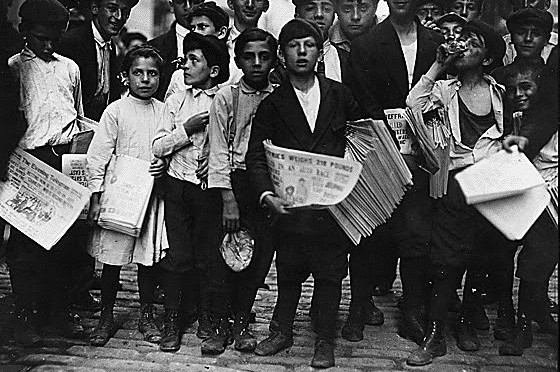
Top picture: Photographed by Lewis Hine, caption “Group of newsboys starting out at Brooklyn Bridge early Sunday morning,” courtesy NYPL

Categories
Podcasts

Newsies vs the World! The Newsboys Strike of 1899

Are you tough enough to mess with them?

PODCAST Extra! Extra! Joseph Pulitzer and William Randolph Hearst vs. the newsboys! Pandemonium in the streets! One hot summer in July 1899, thousands of corner newsboys went on strike against the New York Journal and the New York World. Throngs filled the streets of downtown Manhattan for two weeks and prevented the two largest papers in the country from getting distributed.

In this episode, we look at the development of the sensationalist New York press — the birth of yellow journalism — from its very earliest days, and how sensationalism’s two famous purveyors were held at ransom by the poorest, scrappiest residents of the city. The conflict put a light to the child labor crisis and became a dramatic example of the need for reform.

Crazy Arborn, Kid Blink, Racetrack Higgins and Barney Peanuts invite you to the listen in to this tale of their finest moment, straight from the street corners of Gilded Age New York.


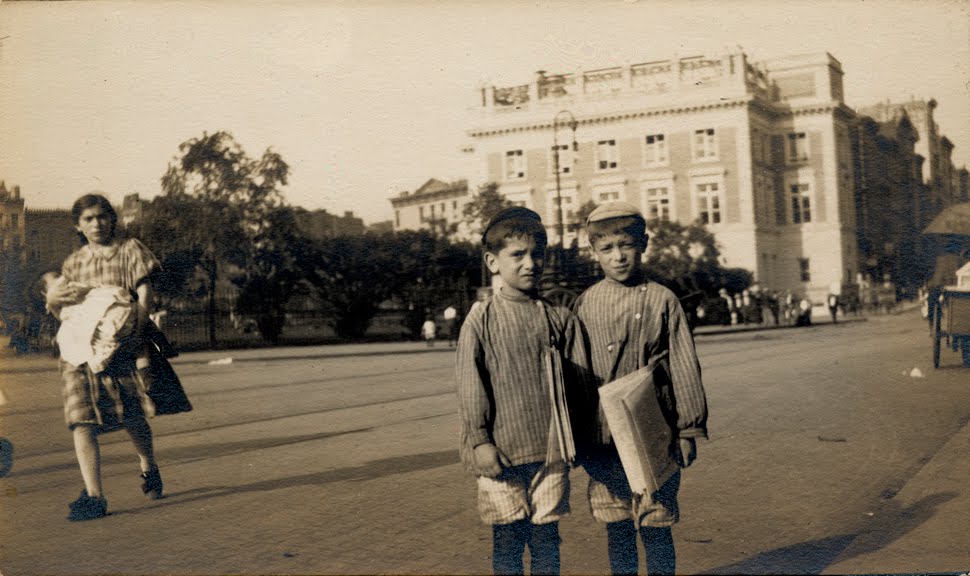
Newsboys in front of Seward Park. Caption: “Eisenberg Brothers, living at 27 Lewis Street. Benjamin, 8 years old, and John 10, selling Jewish papers [assumably the Forward] on East Broadway near Rutgers Street.” By Lewis Hine (Courtesy NYHS)

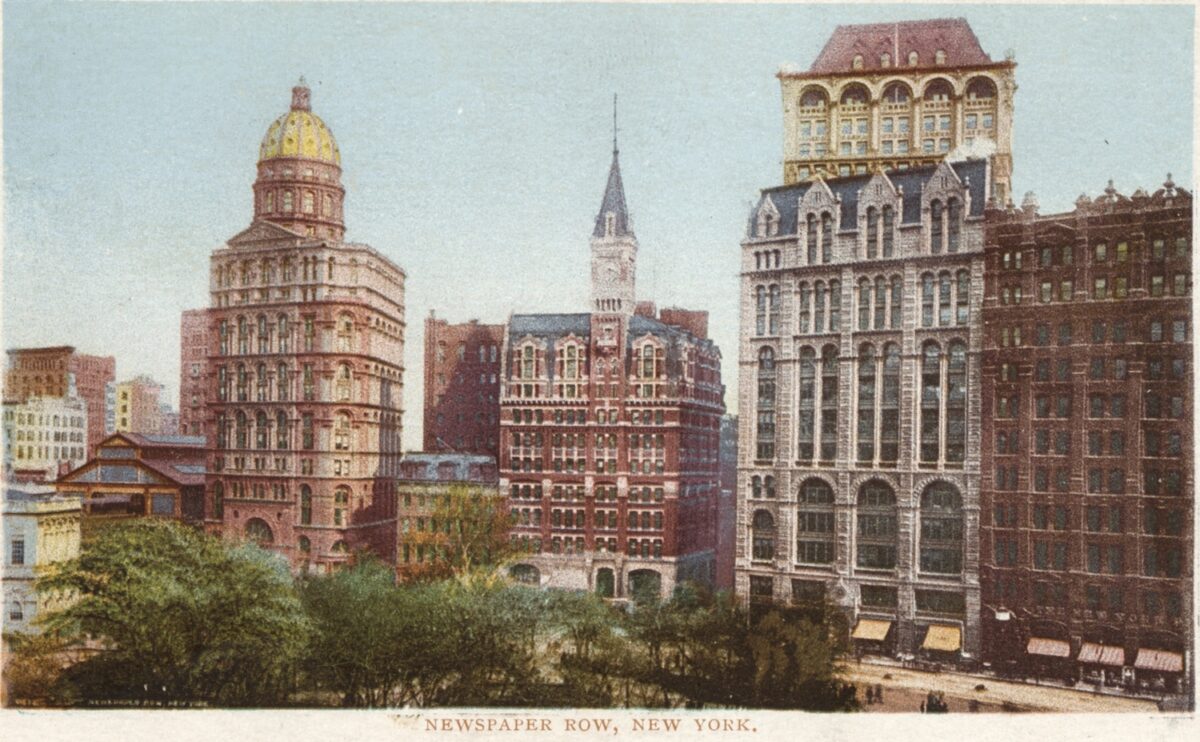
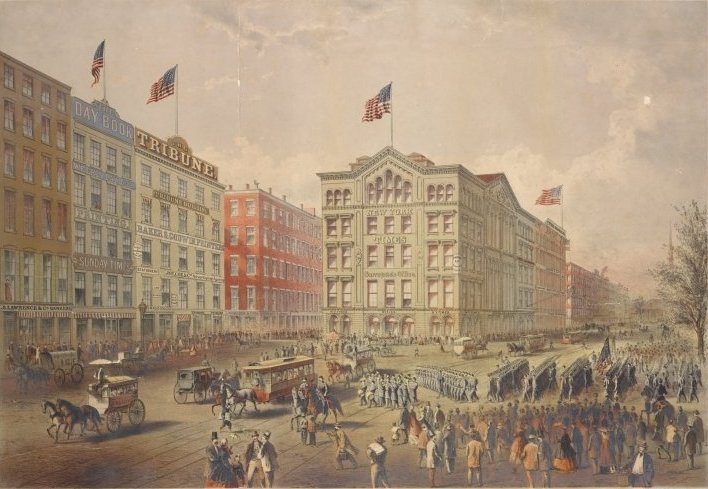
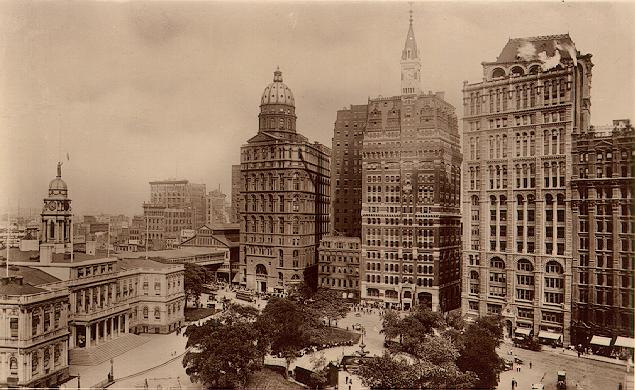
Printing House Square, in a print from 1866, and the world of newspaper publishing in the mid-19th century. This was the heart of journalism in New York, where the streets reeked of ink, reporters and editors darted back and forth from their offices, and newsboys gathered to pick up their morning bundles of hot-off-the-press editions. (NYPL)

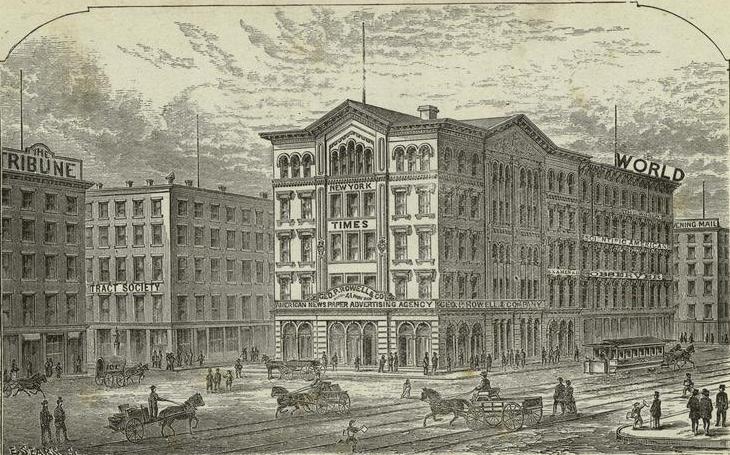
From another angle (print is labeled from 1870s) we see the offices of the Trubune, the Times and the World. The New York World at this time was under publisher Marble Manton was disreputable and unsuccessful.

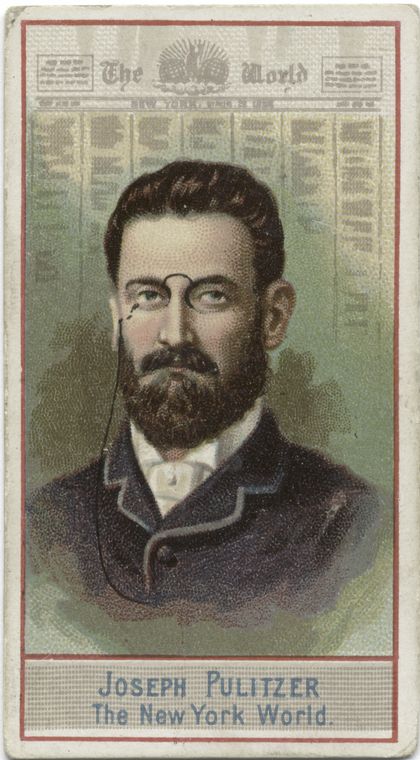
The fate of the New York World was transformed when it was purchased by innovator Joseph Pulitzer, who modernized the publication — introducing such staples of cover photographs and banner headlines — and increased its popularity through sometimes sensational articles. (NYPL)

Not to be outdone, William Randolph Hearst stepped into the publishing fray in 1896 with the New York Morning Journal, matching the World head to head in pulling out the stops to increase circulation and ad revenue.

This is Duane Street in the early 1900s. I’m including this picture because the Newsboys Lodging House, where many of the strikers resided for a nickel a night, was located at 9 Duane Street, in the shadow of the World’s distinctive tower.

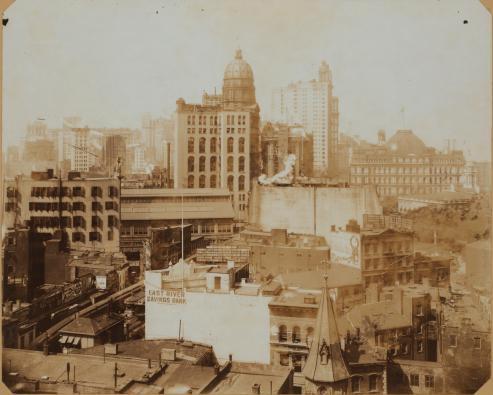
Pulitzer’s World Building from Park Row, designed by George Post, was at one time the tallest building in the world. It sits near the Tribune building, at center.
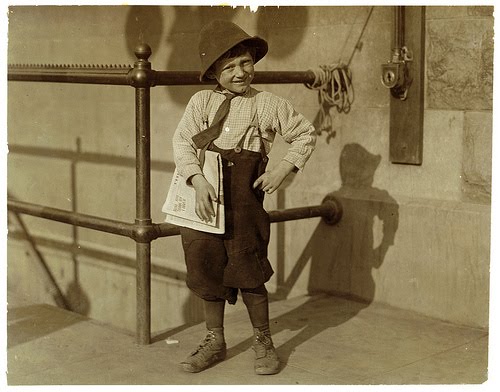
Newsboys were not the ‘plucky’, can-do ambitious entrepreneurs that pop culture has made them out to be, although sometimes (like this guy) they come close.

A Lewis Hine photograph with the caption “Group of newsboys starting out at Brooklyn Bridge early Sunday morning.” The newsies got up every morning to pick up their bundle of newspapers. New York newspapers raised the price of these bundles during the Spanish-American War, when circulation increased. When the war was over, many newspapers lowered the price. All but the World and the Journal. [NYPL]

A cluster of newsboys, amongst sailors and businessmen, out at the Brooklyn Navy Yard, 1903. Brooklyn newsies had taken on the newspapers via a strike as far back as 1886 and joined their Manhattan counterparts in fighting back at Pulitzer and Hearst.(Courtesy Shorpy, who has a beautiful larger version)

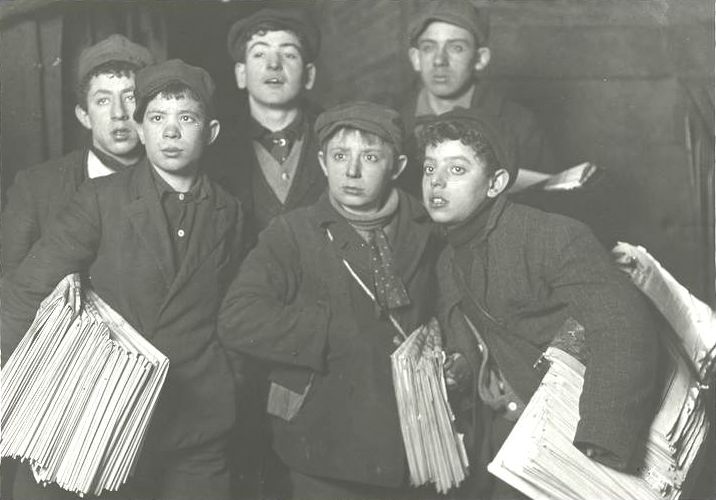
The life of the newsie aged children prematurely. Getting up early, staying up late, most of them homeless and scrounging for nickels and dimes to survive, the 19th century newsboy got by on emulating adulthood. The boys below were photographed by Lewis Hine in St. Louis. (from Shorpy, who have a larger view)

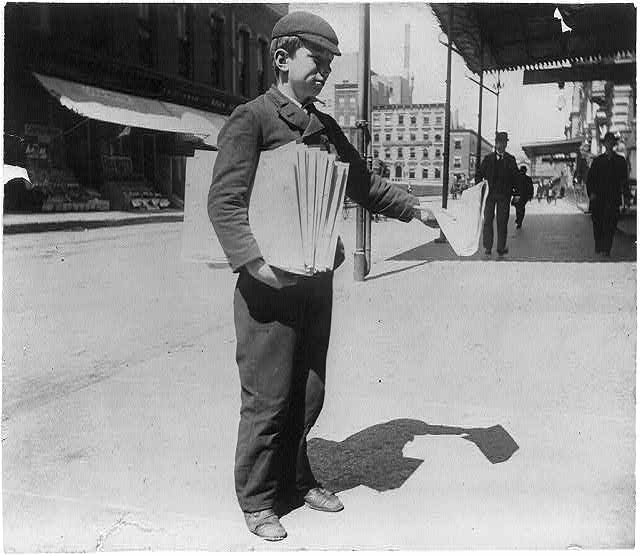
Hine and Staten Islander Alice Austen are the two most well-known photographers of everyday life in New York and captured life on the streets in all its unglamorized tarnish. Below, Austen captures a newsie hard at work in 1906.

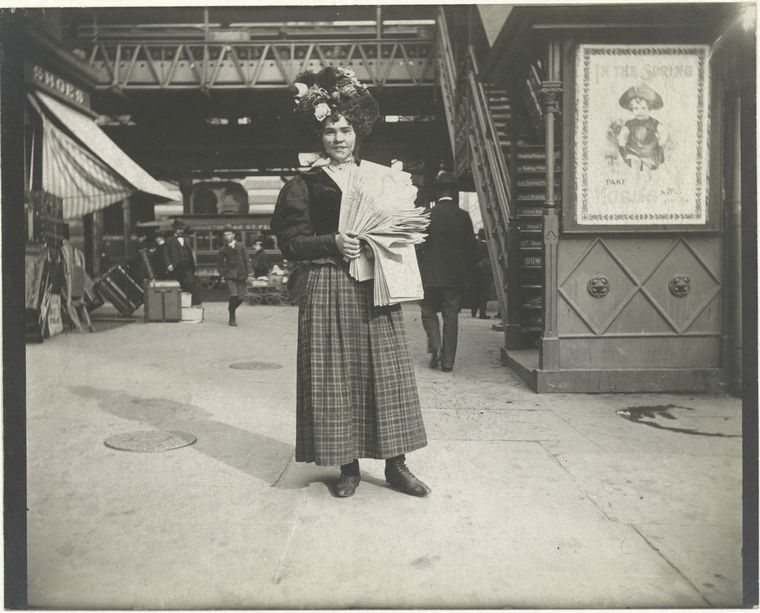
Although most newsies were boys, there were many newsgirls as well, such as this young lady in a fetching hat. Photo by Alice Austen. [NYPL]

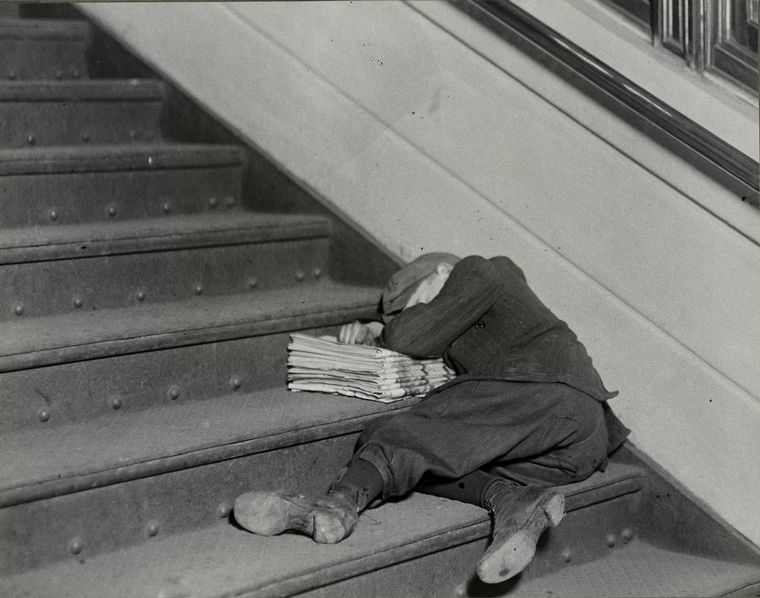
Even with aid organazations like the Children’s Aid Society and lodging homes for wayward waifs, many newsboys lived their entire lives on the streets. The picture below is from 1912, by Hine. (NYPL)

Why do photographs of young kids from this era seem to resonate so strongly? You can look at these pictures and see your own children, nieces and nephews and neighbors. As children — particularly poor ones– have few of the fashionable trappings of adults of this era, we’re able to recognize common expressions. I highly recommend checking out the collections of Lewis Wickes Hine and Alice Austen at both the New York Public Library Digital Collection and the Library of Congress.

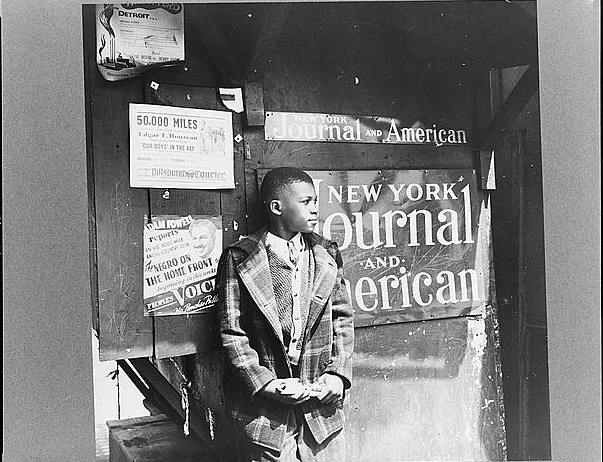
Finally, here’s a one more photograph from 1943 of a modern newsie, decades after the strike, by another great photographer Gordon Parks (yes, the director of Shaft). I like that he’s standing in front of a sign for the Journal-American, the newspaper that Hearst’s Journal morphed into.
[LOC]

And I couldn’t close without a little nod to that oft-maligned, cult classic Newsies , featuring fictional portrayals of Racetrack Higgins, David Simmons and of course Kid Blink (in a reduced role from his actual participation in the strike) (Thanks to Pengo for the link suggestion)

Finally I deeply apologize: I’m sadly aware that my impersonation of a newsboy’s dialect had a bit of an Ozark twang in it! I was never meant for the stage, I guess….