Categories
Podcasts Pop Culture

Super City: The Secret Origin of Comic Books

PODCAST  A history of the comic book industry in New York City, how the energy and diversity of the city influenced the burgeoning medium in the 1930s and 40s and how New York’s history reflects out from the origins of its most popular characters.

In the 1890s a newspaper rivalry between William Randolph Hearst and Joseph Pulitzer helped bring about the birth of the comic strip and, a few decades later, the comic book.
Today, comic book superheroes are bigger than ever — in blockbuster summer movies and television shows — and most of them still have an inseparable bond with New York City.

What’s Spider-Man without a tall building from which to swing? But not only are the comics often set here; the creators were often born here too.

Many of the greatest writers and artists actually came from Jewish communities in the Lower East Side, Brooklyn or the Bronx.
For many decades, nearly all of America’s comic books were produced here.  Unfortunately that meant they were in certain danger of being eliminated entirely during a 1950s witch hunt by a crusading psychiatrist from Bellevue Hospital named Frederic Wertham.

WITH a special chat with comics historian Peter Sanderson about the unique New York City connections of Marvel Comics’ most famous characters. Sanderson is the author of The Marvel Comics Guide to New York City and The Marvel Encyclopedia.

FEATURING: The Yellow Kid, Little Orphan Annie, Batman, Doctor Strange, the Watchmen and the Teenage Mutant Ninja Turtles!

To get this week’s episode, download it for free from your preferred podcast player.

Or listen to it straight from here:


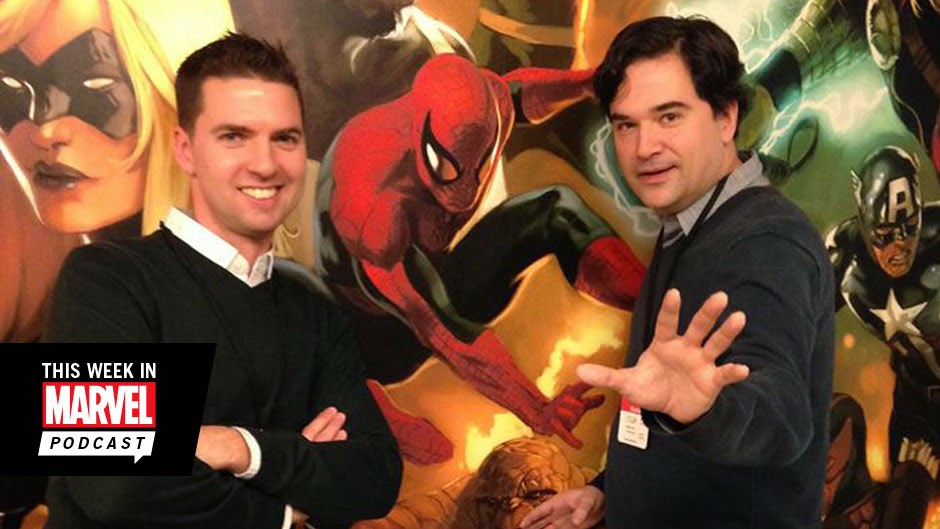
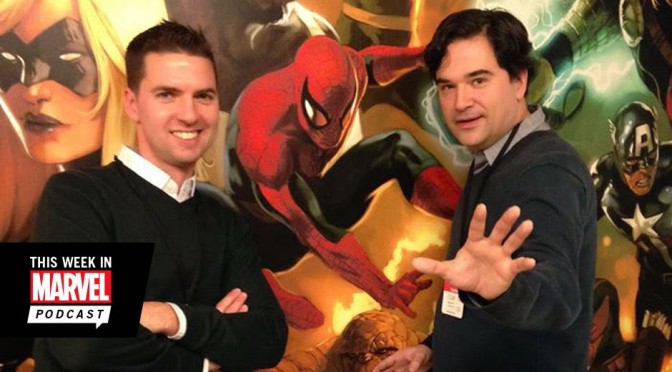
AND after you’re done listening to this history on comic books in New York City, check out Greg’s appearance on an episode of This Week In Marvel, the official Marvel Comics podcast hosted by Ryan “Agent M” Penagos, James Monroe Iglehart, and Lorraine Cink.

In this episode, Greg actually speaks about the Bowery Boys episode about comics and shares his own experiences with reading comic books as a kid.

Find this show here or on your favorite podcast player.
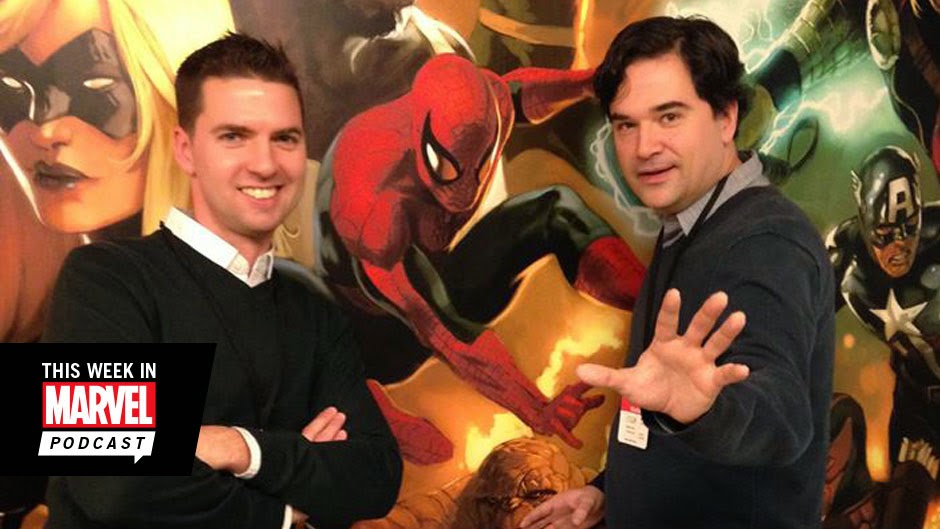
Tom and Greg from their 2014 visit to the Marvel Comics offices in Midtown.

__________________________________________________________

The Bowery Boys: New York City History podcast is brought to you …. by you!

We are now producing a new Bowery Boys podcast every two weeks.  We’re also looking to improve the show in other ways and expand in other ways as well — through publishing, social media, live events and other forms of media.  But we can only do this with your help!

We are now a member of Patreon, a patronage platform where you can support your favorite content creators for as little as a $1 a month.

Please visit our page on Patreon and watch a short video of us recording the show and talking about our expansion plans.  If you’d like to help out, there are five different pledge levels (and with clever names too — Mannahatta, New Amsterdam, Five Points, Gilded Age, Jazz Age and Empire State). Check them out and consider being a sponsor.

We greatly appreciate our listeners and readers and thank you for joining us on this journey so far. And the best is yet to come!

__________________________________________________________

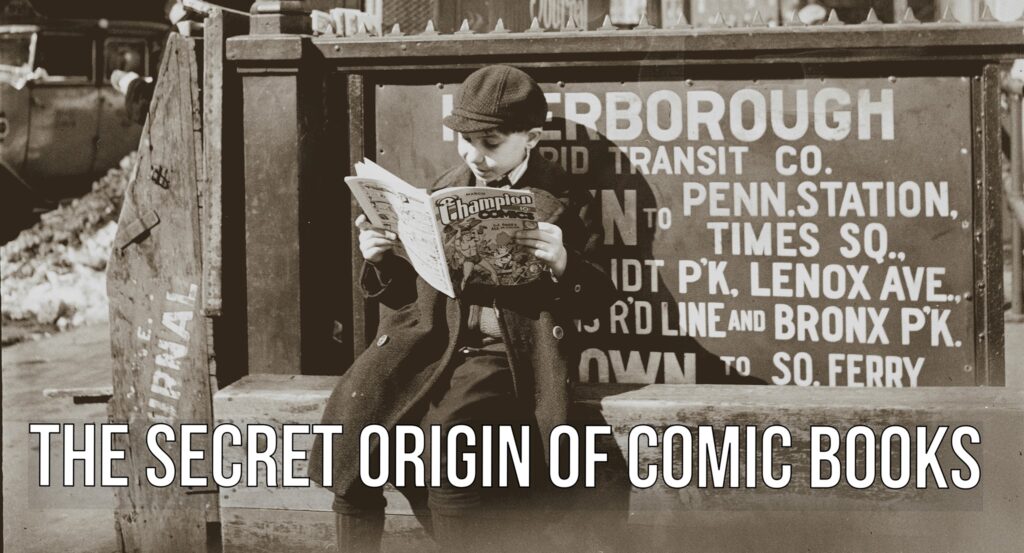
A young New York boy enjoys his comic book on the Bowery. Photo taken in 1940 by Andrew Herman.
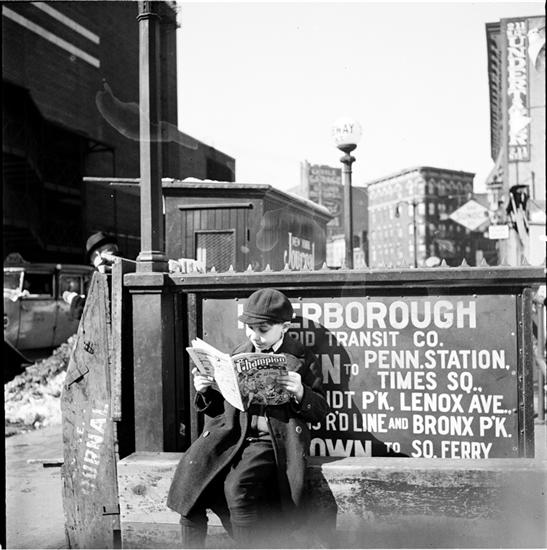
Courtesy Museum of the City of New York

And here’s the comic book he’s reading from March 1940, illustrated by George Papp.
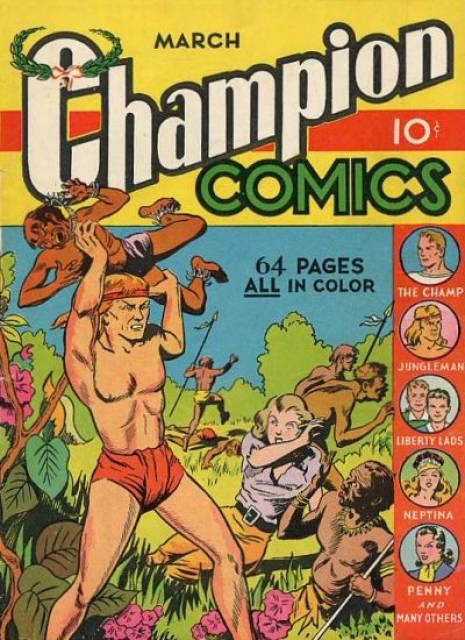
Courtesy Comic Vine
Courtesy Comic Vine

In this 1947 photograph taken by Stanley Kubrick, a boy watches his baby sister and enjoys a Superman comic book while his mother shops inside.
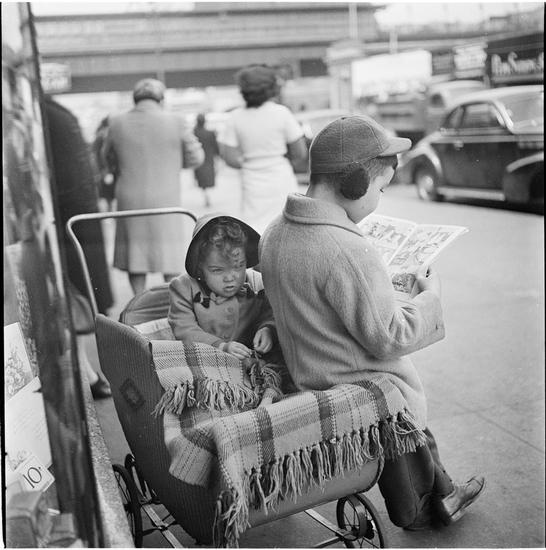
Courtesy the Museum of the City of New York

An issue of DC Comics’ Superman from March 1947, with a cover by George Roussos and Jack Burnley
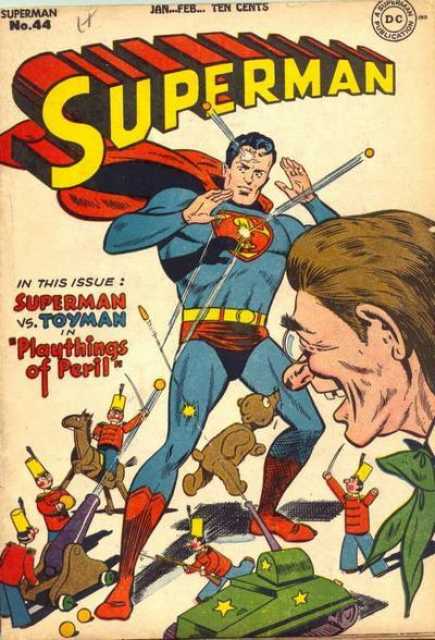
Courtesy DC Comics / Comic Vine

A girl takes a peek at some of the comic book offerings at Woolworth’s. Photograph by Stanley Kubrick taken in 1947.
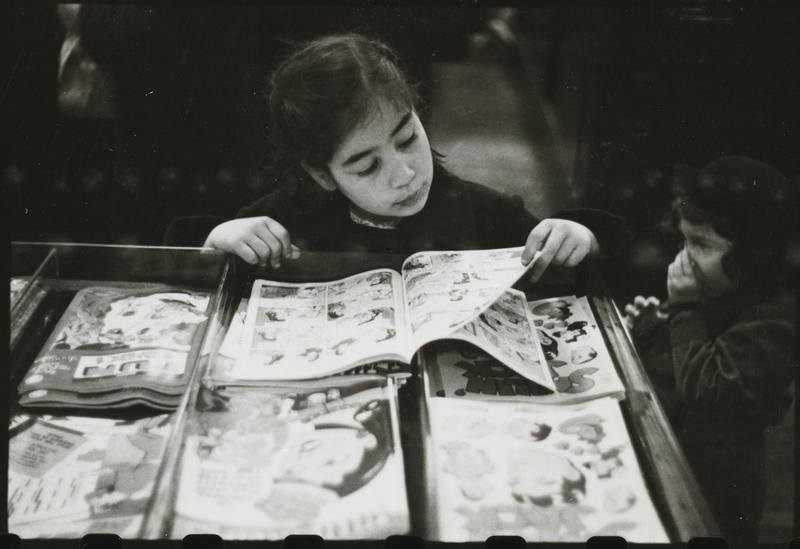
Courtesy Museum of the City of New York

An issue of More Fun Comics from June 1947, produced by DC Comics:
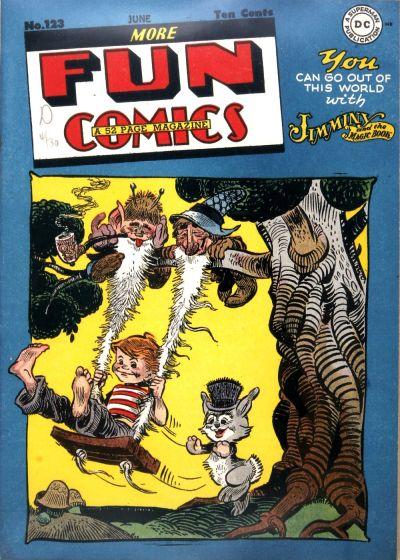
more fun

The Adventures of Obadiah Oldbuck, published in 1842, is considered by many to be the wellspring from which the comic medium derives. You can read the entire issue over at the Darmouth College Library website.
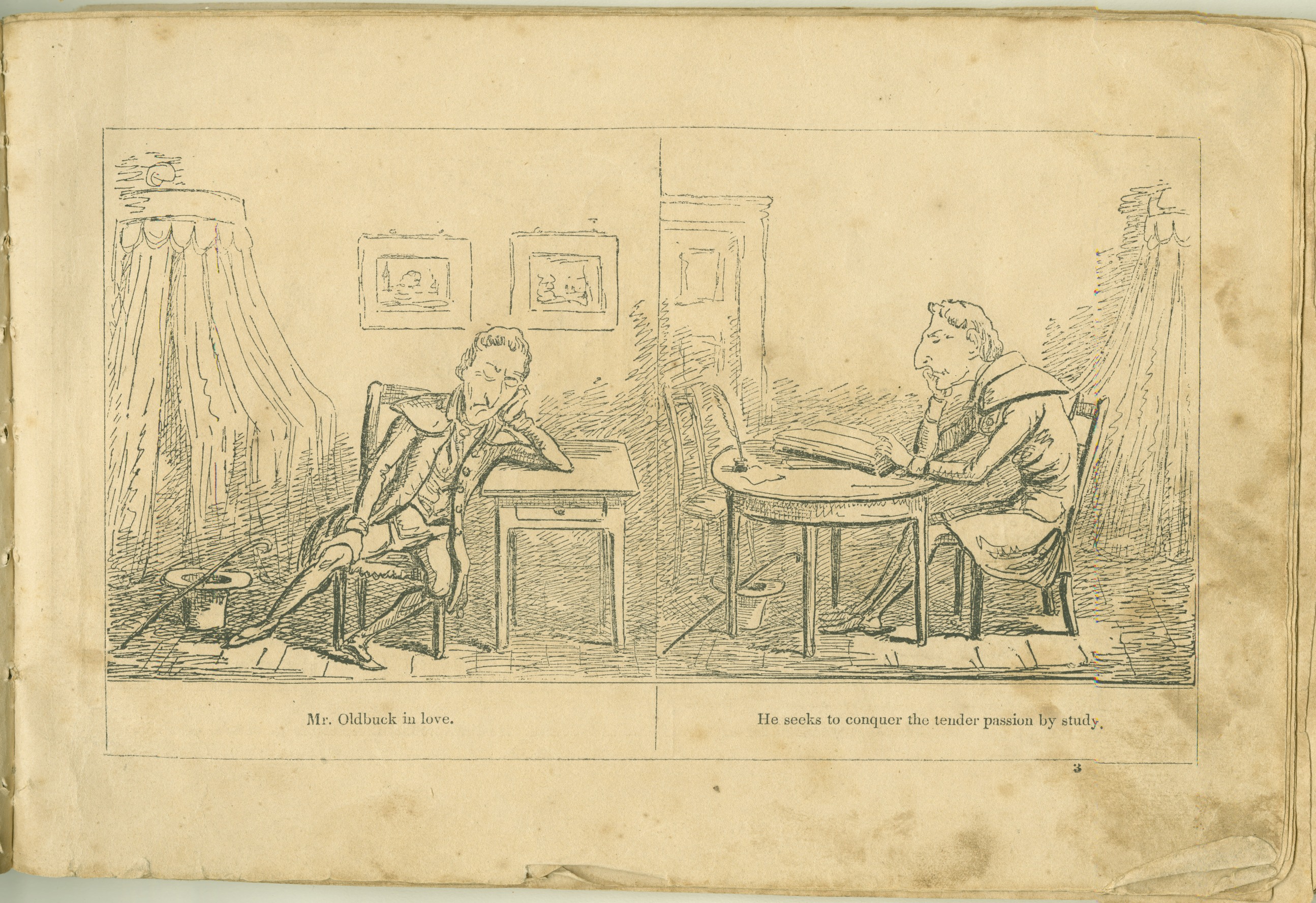
Courtesy Dartmouth College Library

A Yellow Kid adventure which would have sprung out from the newspaper due to its vivid colors.
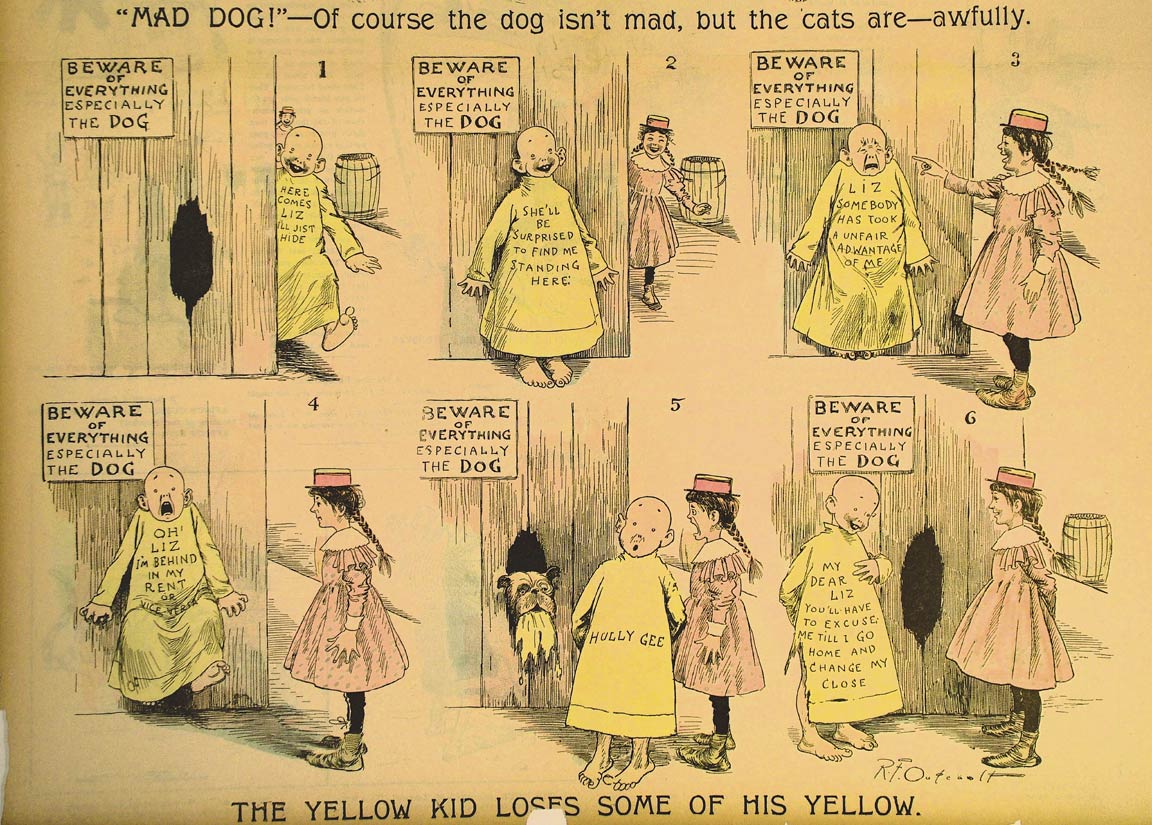
Image courtesy Comix Takoma; art by Richard Outcault

Both Hearst and Pulitzer ran versions of the Yellow Kid comic strip during the years that they were drumming up propaganda which lead to the Spanish-American War.

The unscrupulous nature of their efforts earned them the phrase ‘yellow journalism’, inspired by their war of the popular comic strip by Richard Outcault.
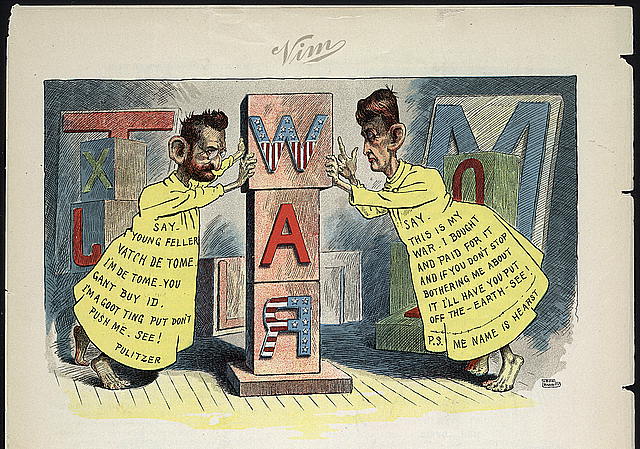
Courtesy the Library of Congress

A section of the colorful comics section of the New York Journal, 1898.
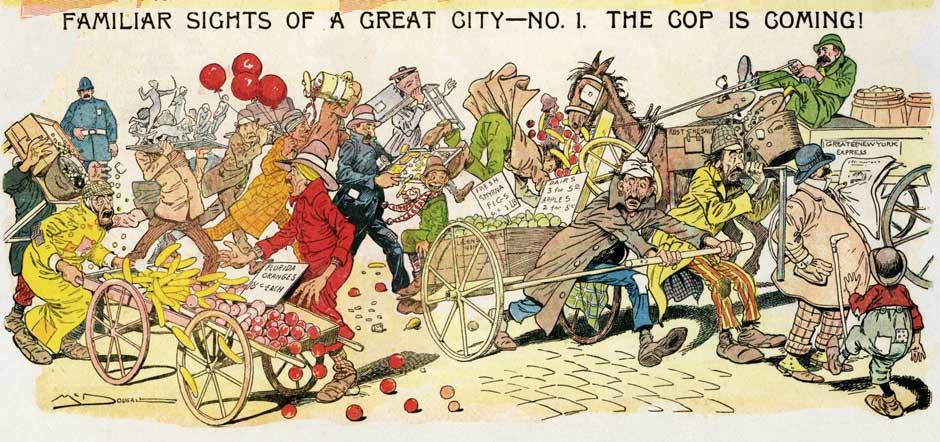
“Familiar Sights of a Great City—No. 1 The Cop is Coming!” by Walt McDougall, New York Journal, Sunday, January 9, 1898 via New York Review of Books

Little Orphan Annie became the biggest crossover star of the early comic strip era. Long before there was a musical, Annie starred in this 1932 melodrama, one of the earliest comic-to-movie crossovers.
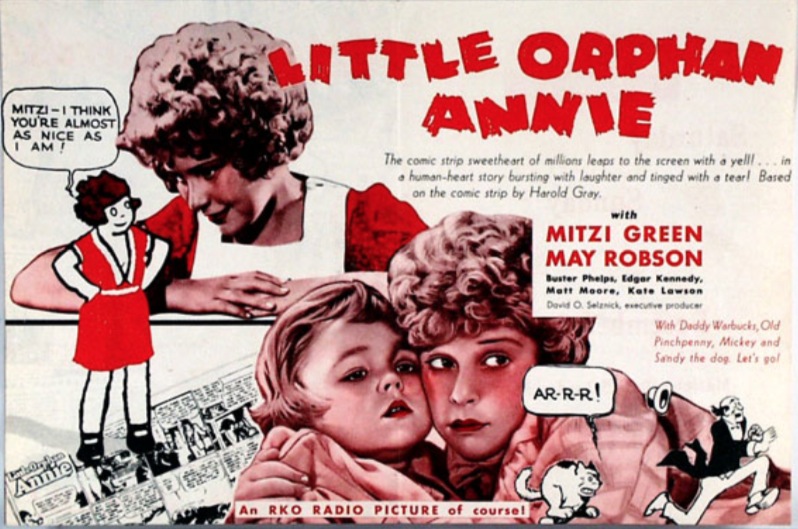
annie

New Fun Comics #1, the very first comic book to contain all new material, and not merely reprints of newspaper comic strips.
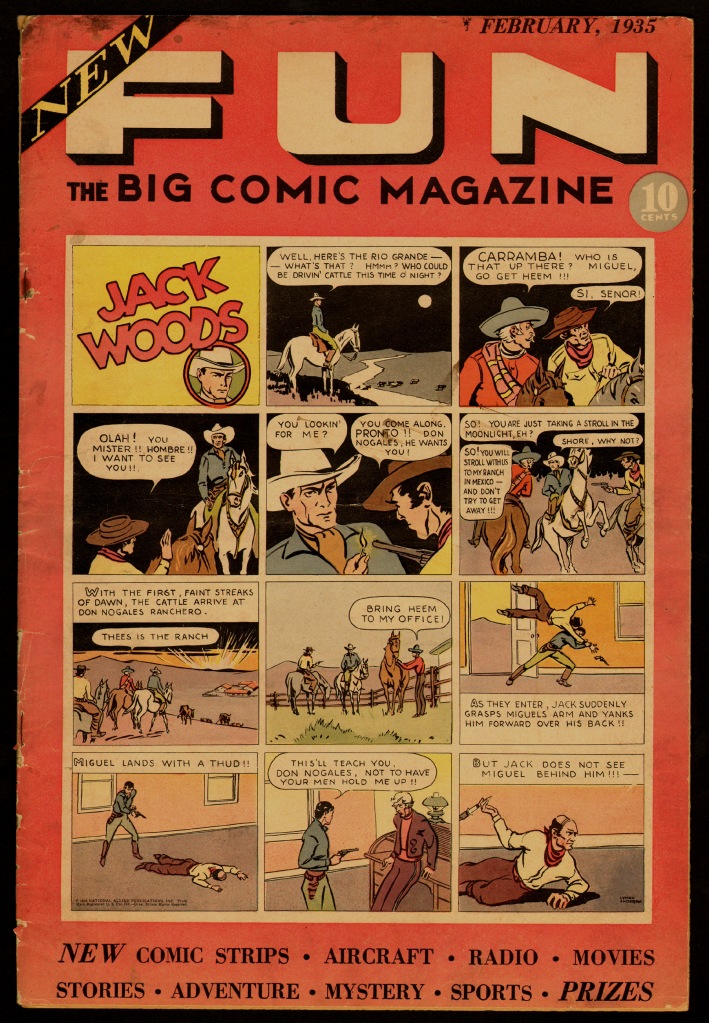
1

The Batman debuted in Detective Comics in 1939, created by Bob Kane and Bill Finger. The city features in these adventures was Gotham City, startlingly similar to the city outside the creators’ windows.
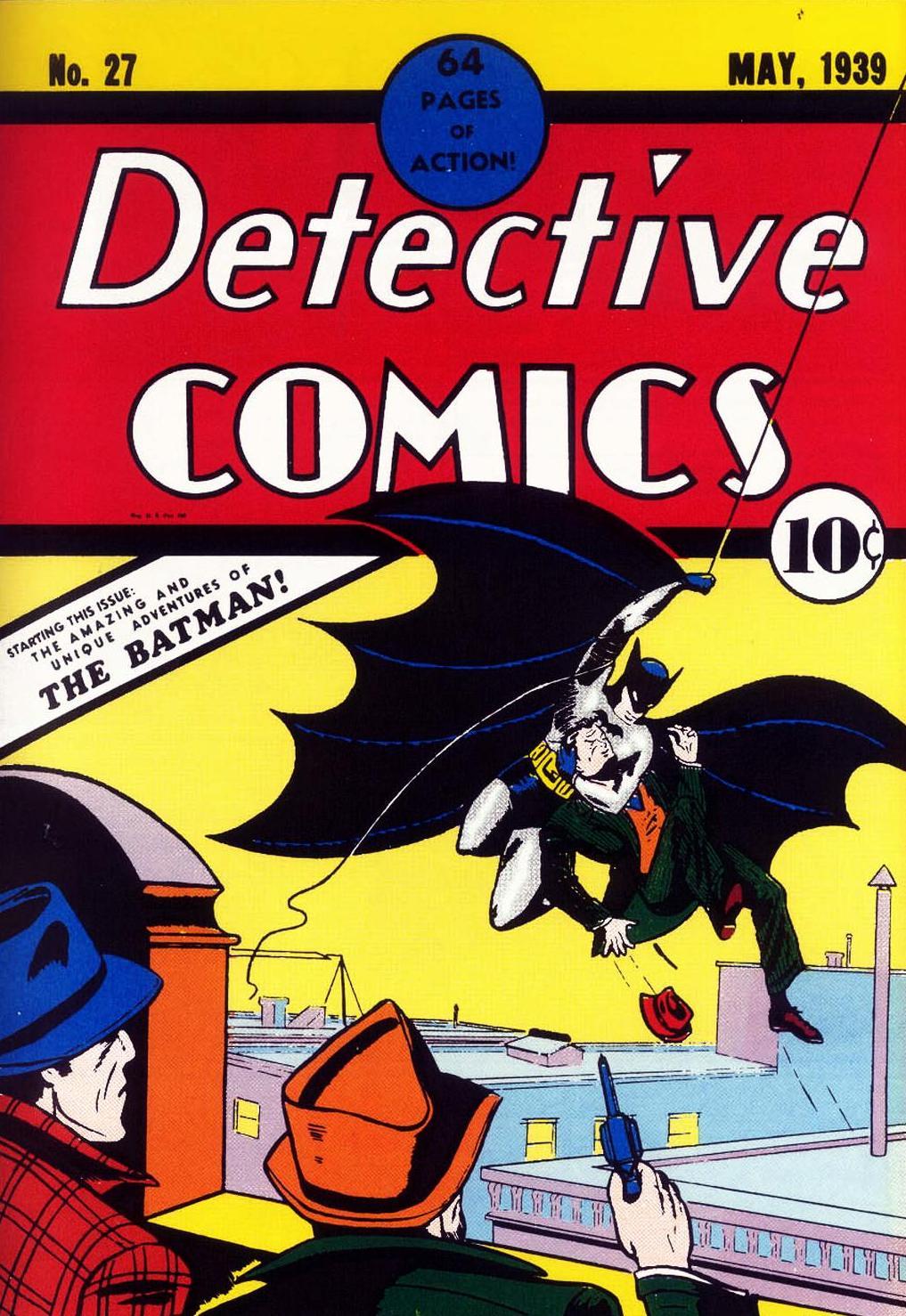
Courtesy DC Comics
Courtesy DC Comics

Gotham City, aka New York City, in 1939
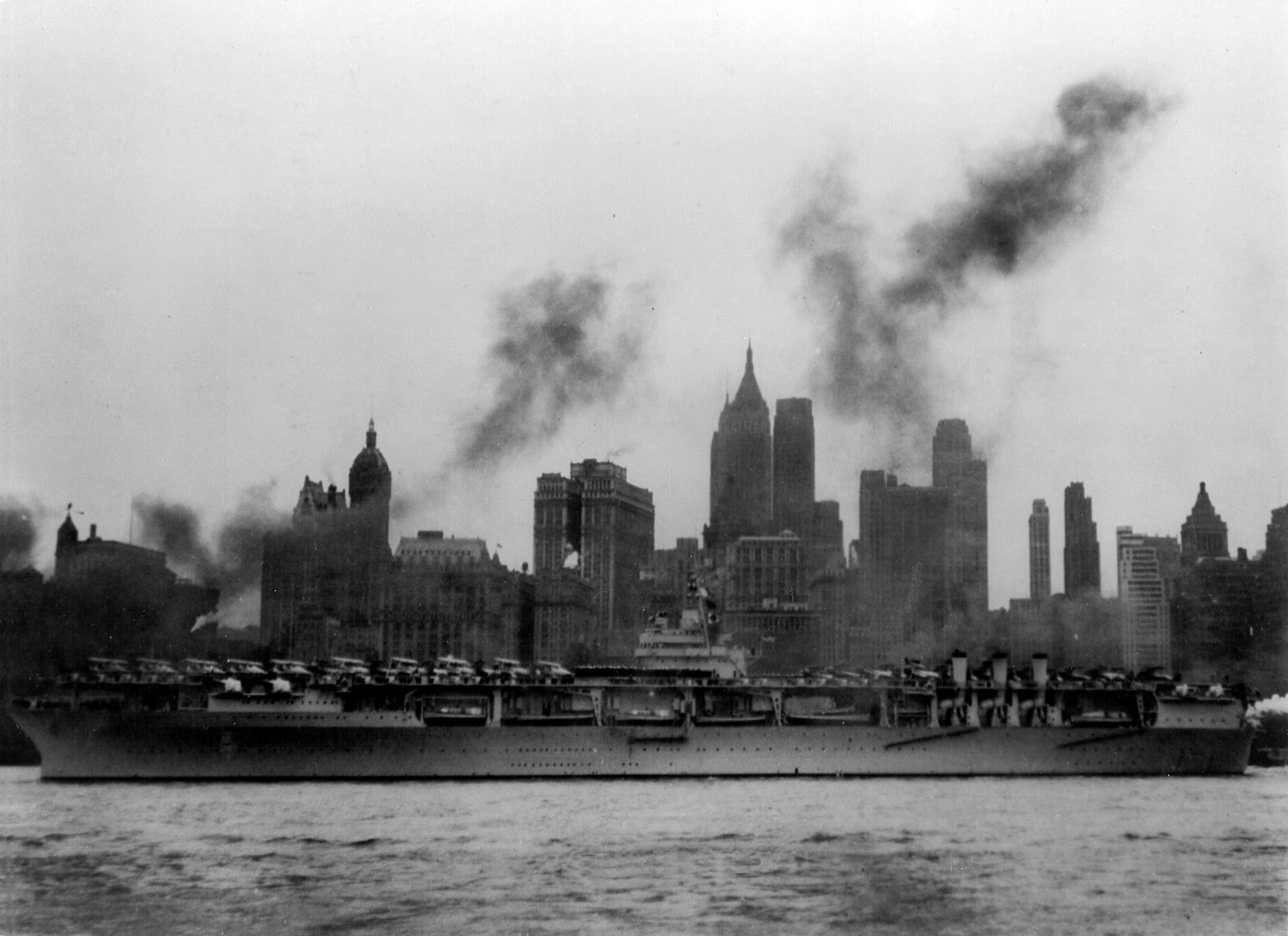
Courtesy U.S. Navy National Museum of Naval Aviation

Vault of Horror, one of an assortment of shocking comic books produced by EC Comics in the early 1950s. The cover art is by Johnny Craig.
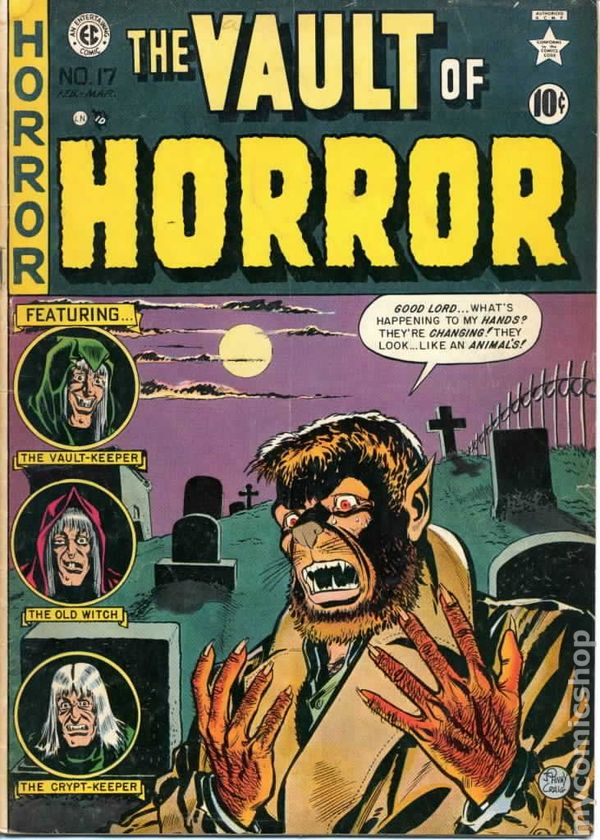
Courtesy EC Comics
Courtesy EC Comics

Bill Gaines, publisher of EC Comics, at his offices at 225 Lafayette Street.
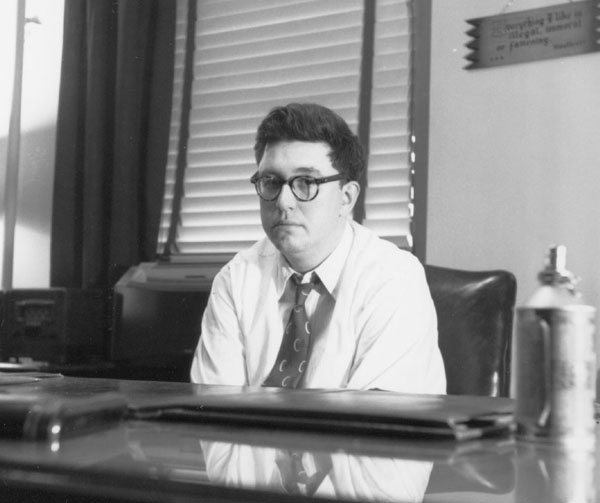
Courtesy Tebeosfera
Courtesy Tebeosfera

Dr. Fredrick Wertham, the writer of Seduction of the Innocent, who lead a charge against the comic book industry.
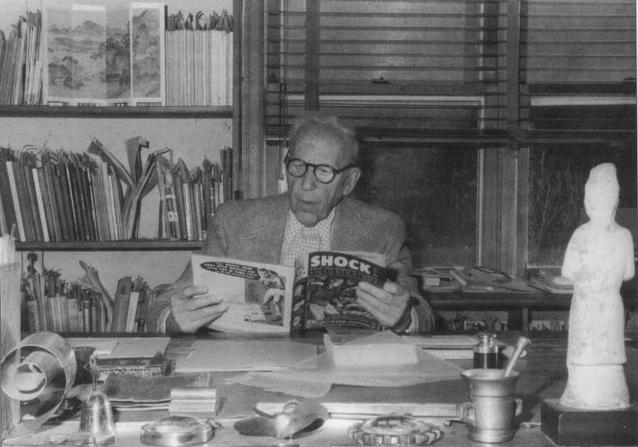
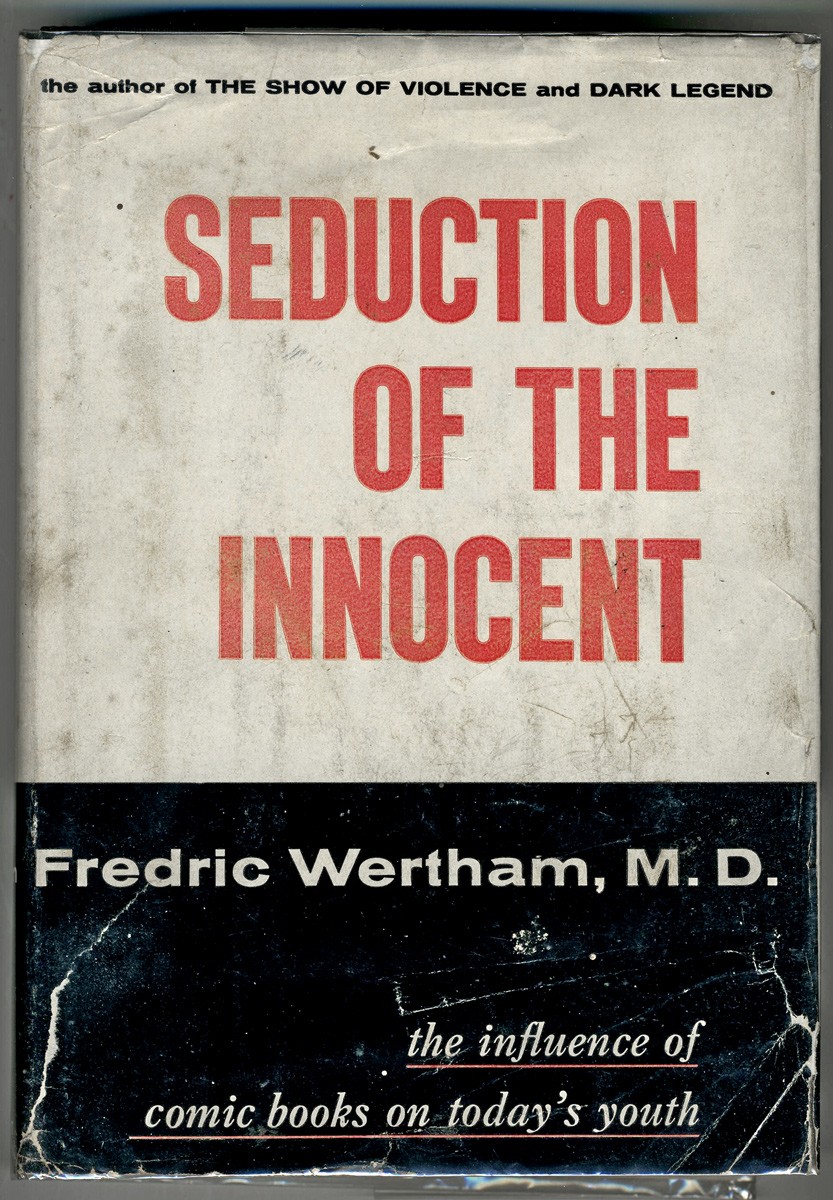
fred

seduction

A young Stan Lee during the war as a member of the US Army’s Signal Corps. He even managed to do a bit of illustration for the cause!
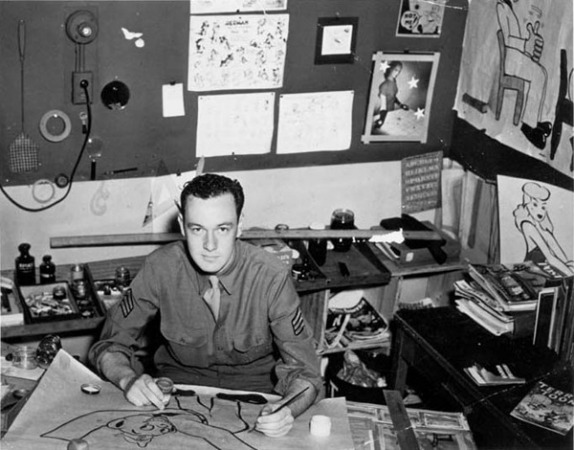
stan lee

The Thing from the Fantastic Four with the Yancy Street Gang, a variation on Delancey Street in the Lower East Side.
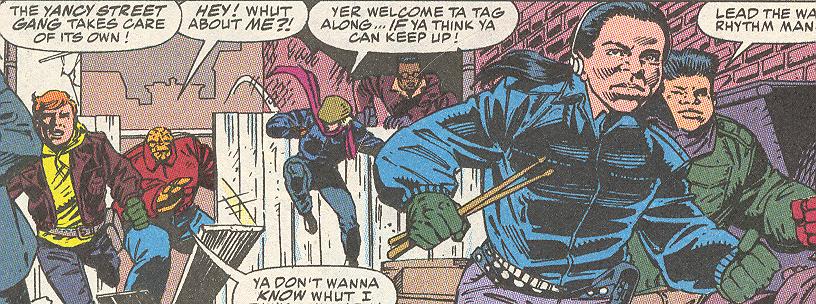
Courtesy Marvel Comics via Comic Viine

Doctor Strange’s Sanctum Sanctorum is located on Bleecker Street in Greenwich Village

Courtesy Marvel Comics
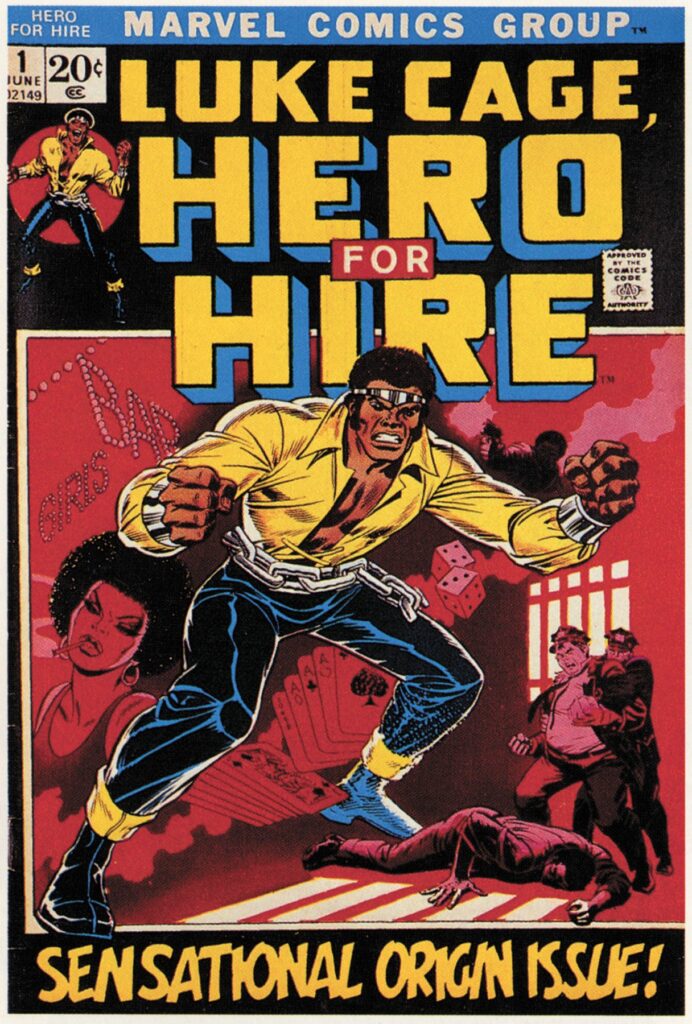
The adventures of Luke Cage, who debuted in his own Marvel Comics series in 1972, could be found mostly in Harlem. But he wasn’t the first African-American superhero from the neighborhood; in 1947 a character named Ace Harlem first appeared in a Philadelphia-published comic book called All-Negro Comics.

What would Spider-Man be without New York City? The image of the Brooklyn Bridge (called the George Washington Bridge in the story) is featured in a classic tale involving the death of his girlfriend Gwen Stacey, written by Gerry Conway and drawn by Gil Kane, John Romita and Tony Mortellaro.
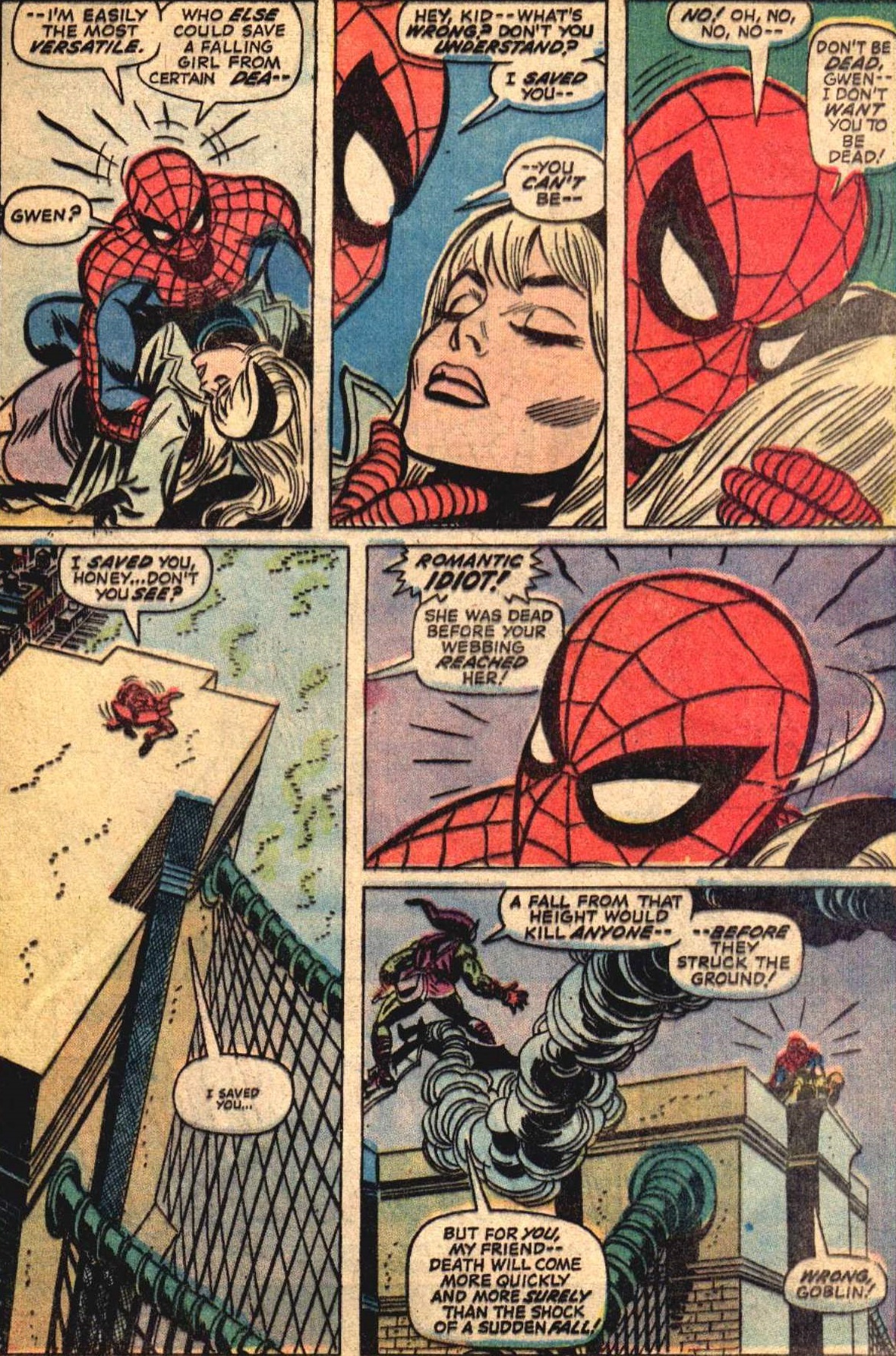
Courtesy Marvel Comics

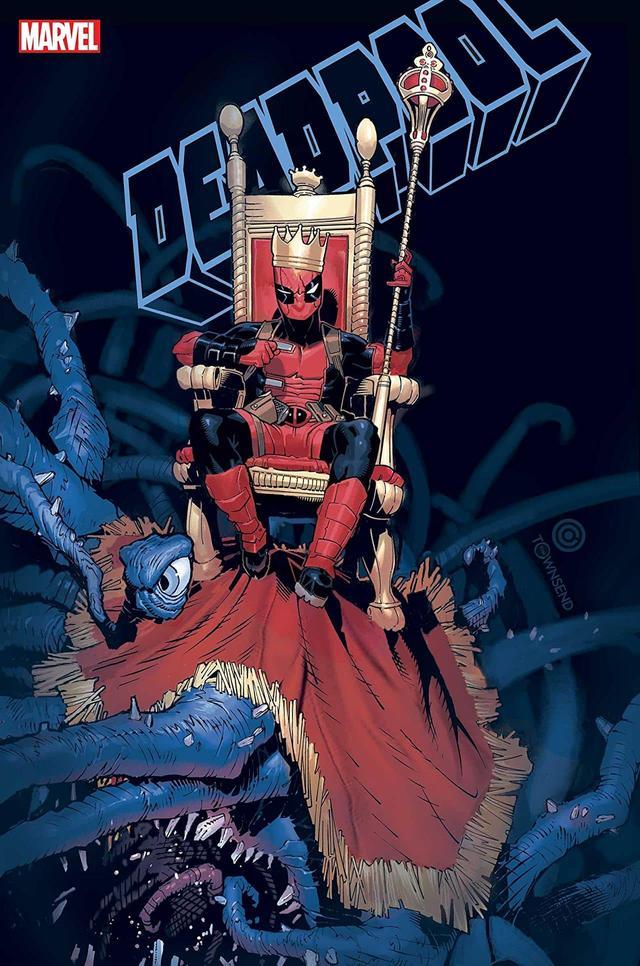
And — oddly enough — Staten Island in the world of Marvel Comics has become Monster Island, ruled by Deadpool. Yes, Deadpool. Haven’t they suffered enough? (Check here for more information.)
A page from Maus by Art Spiegelman, the graphic novel that brought the medium to a new level of respectability in literary circles.
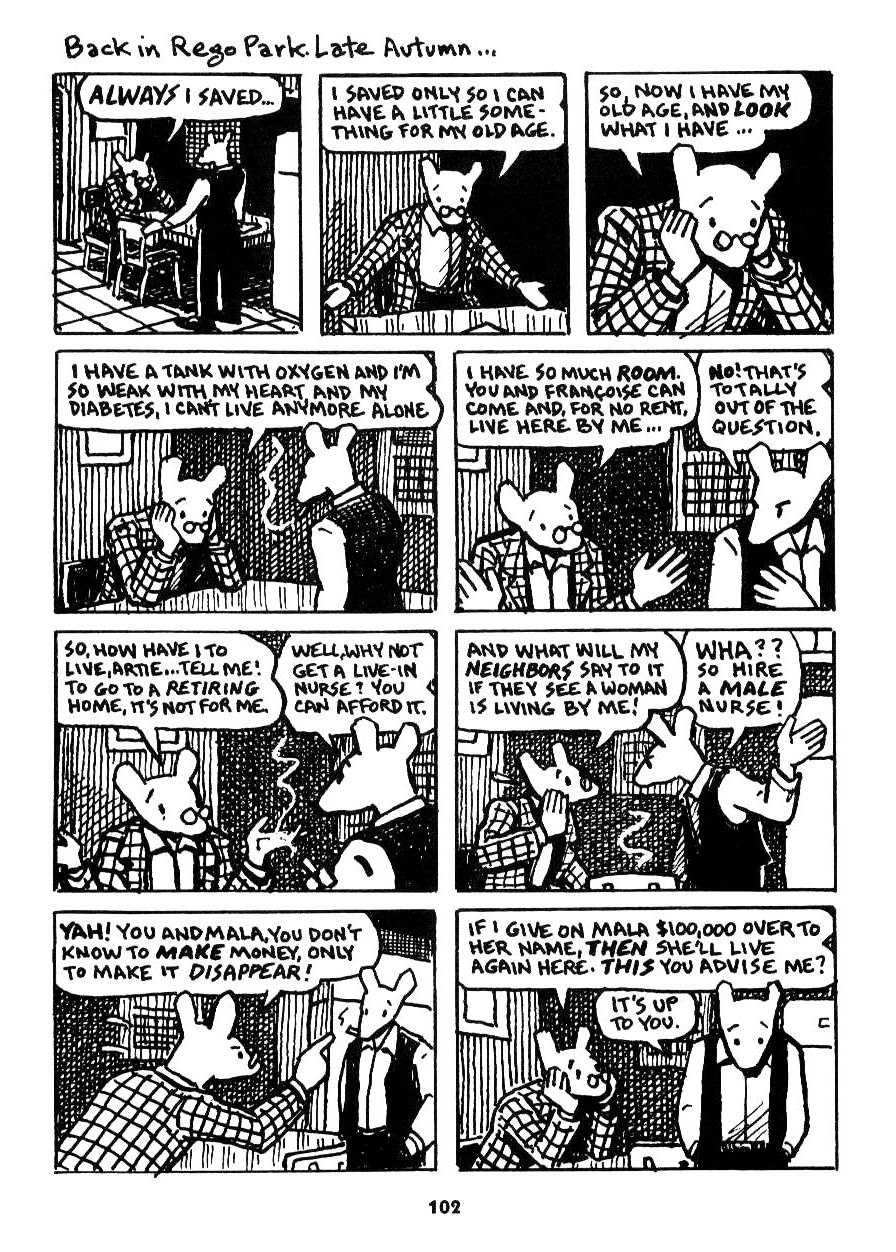
Courtesy Art Spiegelman

The comic book/graphic novel continues to evolve and reach new heights of success and respectability. Roz Chast’s Can’t We Talk About Something More Pleasant, published last year, won the National Book Critics Circle Award for best autobiography.
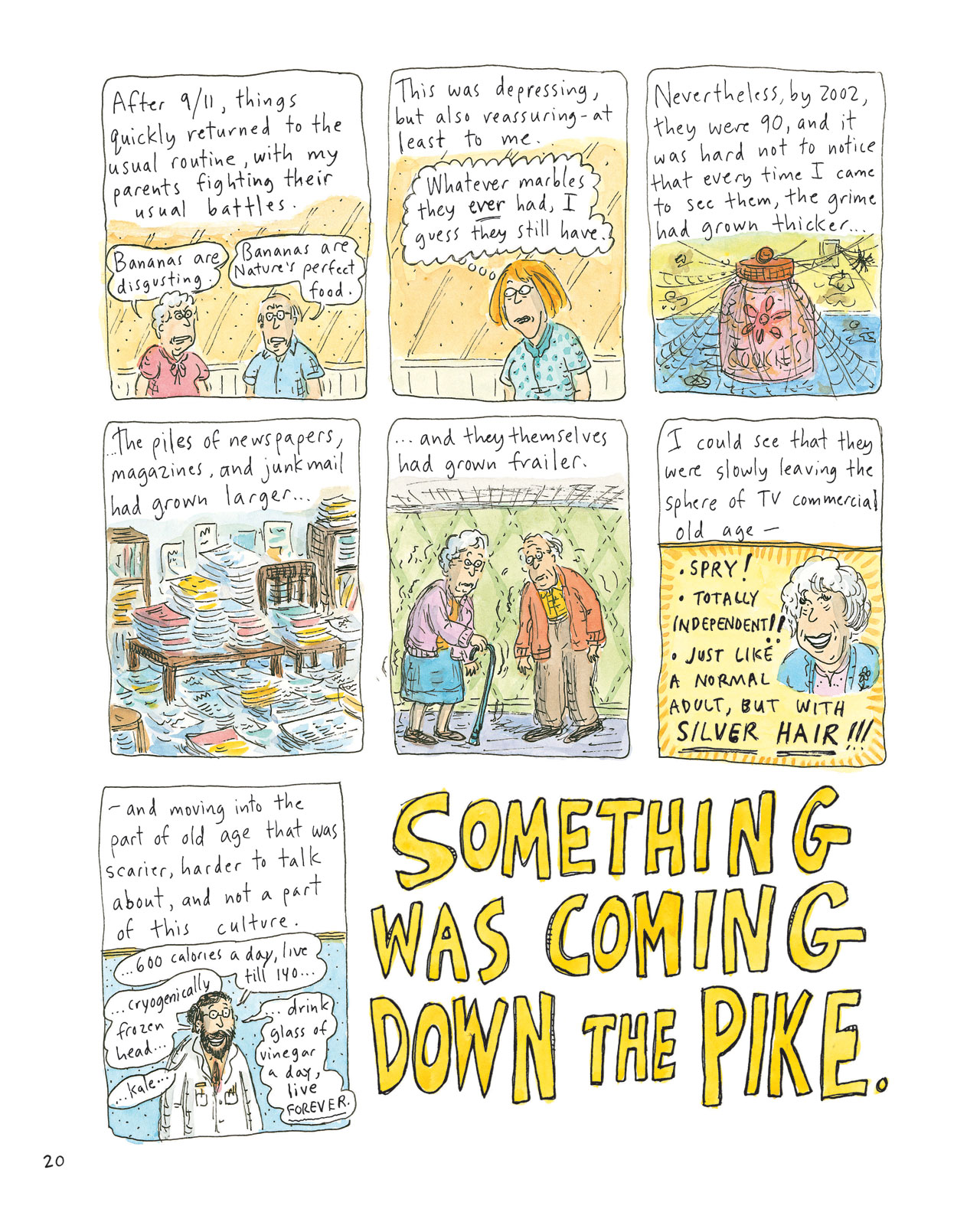
Courtesy Roz Chast/Bloomsbury

The Avengers defended New York during an alien attack in their blockbuster film in 2012
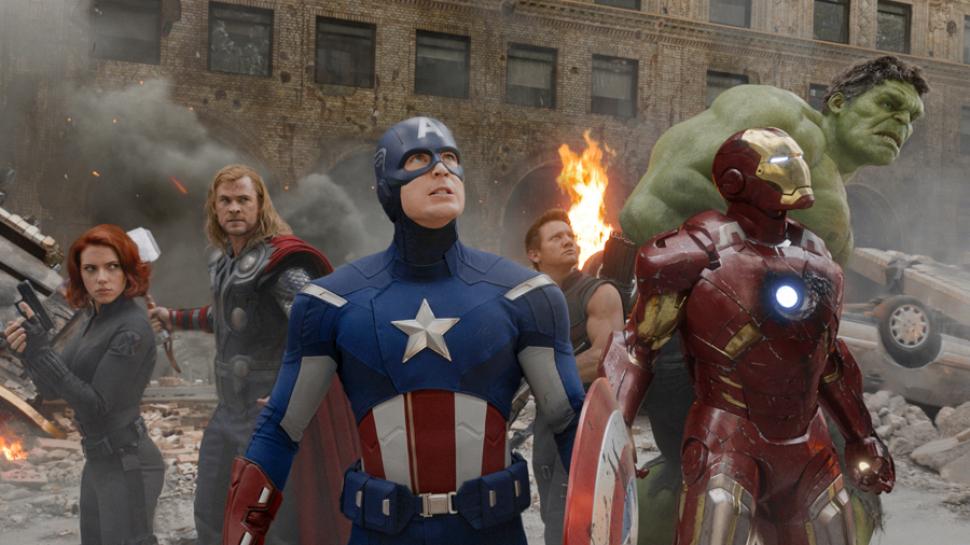
Courtesy Film Frame/Marvel

All images on this website are owned by the original comic book companies which produced them.  Please see individual companies for more information.

RECOMMENDED READING:

If you’re into digging more into this subject, here are a few sources that I used for this podcast:

Jews and American Comics: An Illustrated History of An American Art Form, with written contributions by Paul Buhle

The Ten-Cent Plague: The Great Comic-Book Scare and How It Changed America by David Hadju


Men of Tomorrow: Geeks, Gangster and the Birth of the Comic Book by Gerard Jones

Comic Book Century:  The History of American Comic Books by Stephen Krensky

Tales to Astonish: Jack Kirby, Stan Lee, and the American Comic Book Revolution by Ronin Ro

The Marvel Comics Guide to New York City by Peter Sanderson
Categories
Bowery Boys

The Bowery Boys and Marvel Comics! Plus: Guardian Angels and a special holiday surprise on Christmas

THIS WEEK IN MARVEL
The Bowery Boys are guest stars on this week’s official Marvel Comics podcast This Week In Marvel hosted by those virtual Avengers and Marvel editors Ryan Penagos and Ben Morse.  We had an absolute blast recording this, talking about how New York City has implanted itself into the fabric of the Marvel Comics universe and some of its most popular characters like Spider-Man, Captain America and the X-Men.

What do Dr. Strange and Bob Dylan have in common?  What superhero was created to monopolize upon New York City’s 1970s disco scene?  What famous mystery author got her start writing comics?  Why might comic books be partially responsible for my love of New York City?  ALSO: Is Tom Meyers a member of HYDRA?

You can listen to the show here and also download it from their iTunes page. [This Week In Marvel]

We’re probably still very far away from getting our own blockbuster film, but this does get us one step closer than we were yesterday.

NYC, 1981 – THE RISE OF THE GUARDIAN ANGELS
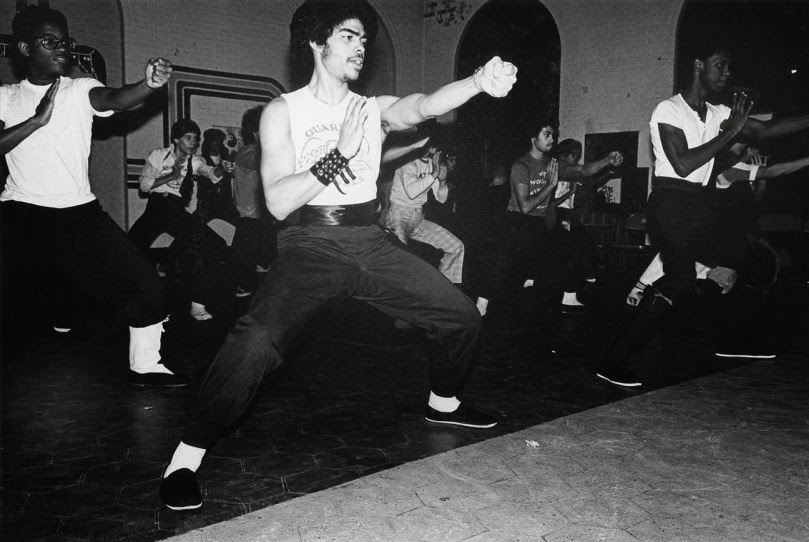
And now for a different sort of superhero!  Over at the A24 Films 1981 website (ramping up for next week’s release of A Most Violent Year with Oscar Isaac and Jessica Chastain) I write about the origins of the Guardian Angels, the independent squadron of subway defenders who patrolled the city streets despite some initial objections from the city.

Included with my article are some outright amazing photographs of the Guardian Angels’ early days, taken by Geoffrey Hiller.

Check it all out right here: [1981]

THE BOWERY BOYS YEAR IN REVIEW ROUNDUP
And we have a special holiday surprise for you — a new podcast this Friday!  We present to you the first annual Bowery Boys year in review.  Just update your podcast feed tomorrow or subscribe to the Bowery Boys on iTunes to get it first.

Categories
Brooklyn History

The horror of moving to Brooklyn — from a 1905 comic strip

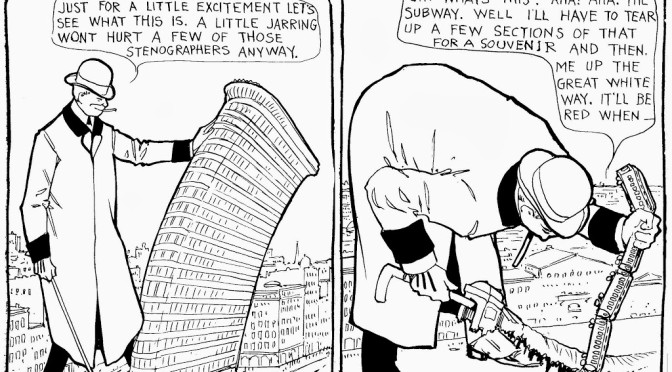
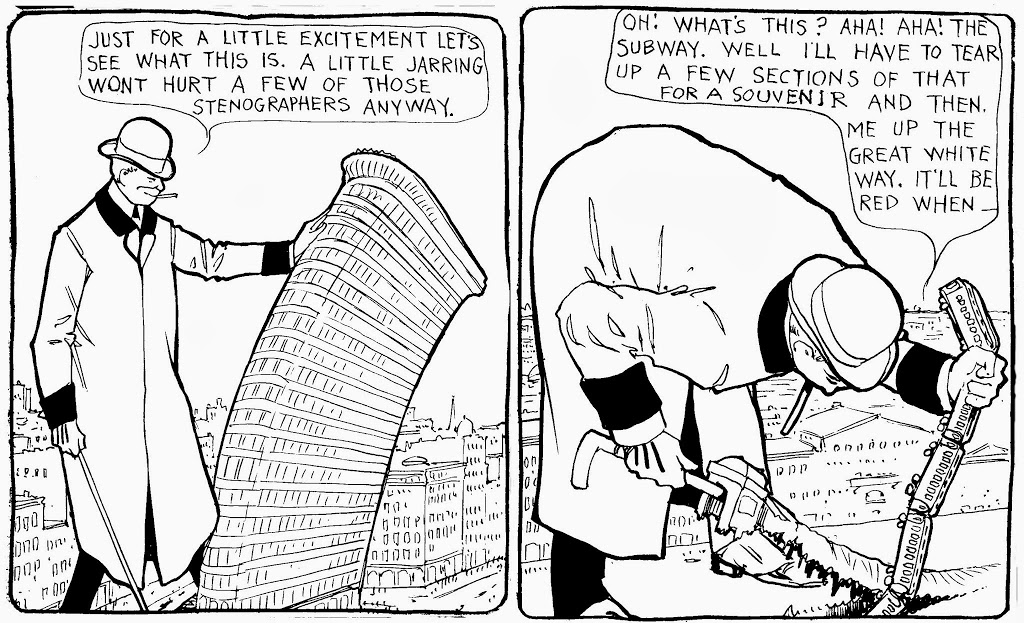
Above: Food can do strange things to you at night: an excerpt from McCay’s January 7, 1905 strip, published two days after the one printed in full below.

Dream of the Rarebit Fiend was one of America’s first great comic strips and easily one of the weirdest. Each eight-panel or nine-panel strip featured an individual trapped within a situation nightmarish for its day, only to be woken up in the final panel.  The cause for the dream was almost always the same — a meal of rarebit the night before.

Written by Winsor McCay (of Little Nemo fame), this extraordinary oddity ran in various New York newspapers starting in 1904, with various spin-offs and revivals well into the 1920s.  McCay was a favorite of publisher William Randolph Hearst, who often stifled the illustrator’s unrelated endeavors to keep the popular artist loyal to Hearst’s publications.

You can find the entire collection of these fascinating little adventures here.

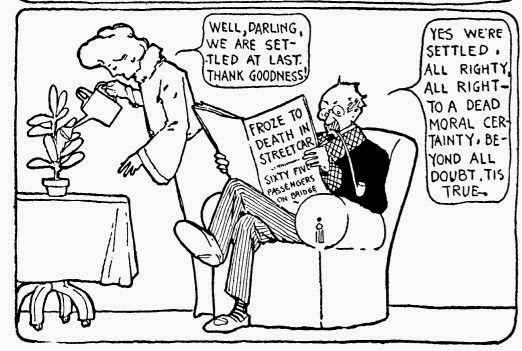
Rarebit — a hot cheesy sauce poured over toasted bread — seems to have had profound effects on the subconscious.  It was able to vividly extract the fears of New Yorkers at night.  While most were magnificently surreal, others touched on modern issues like crowded trains, uncontrollable automobiles and fast streetcars.

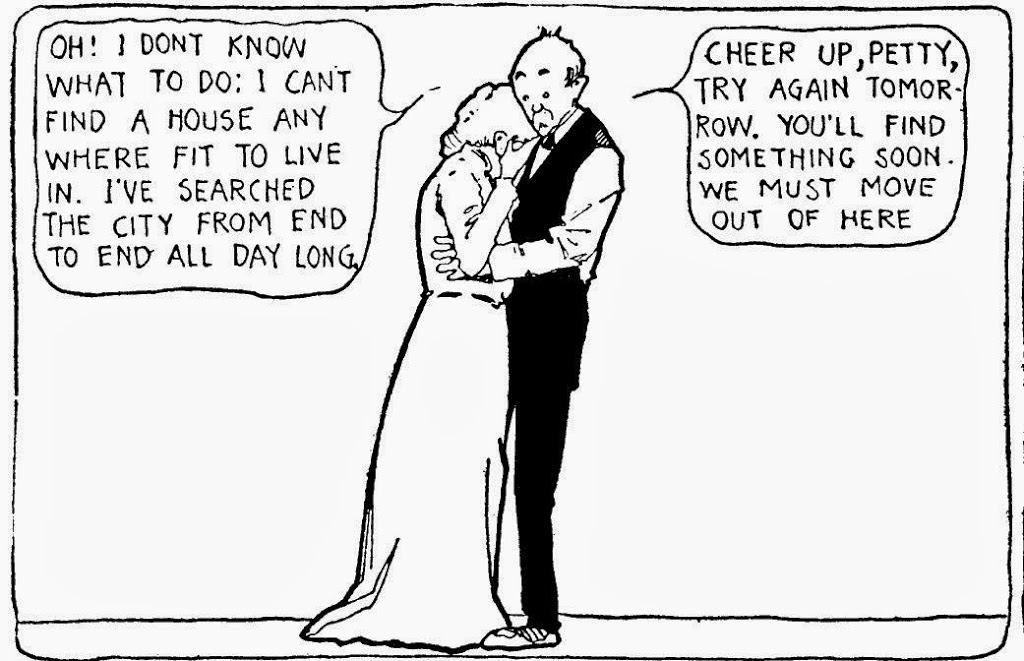
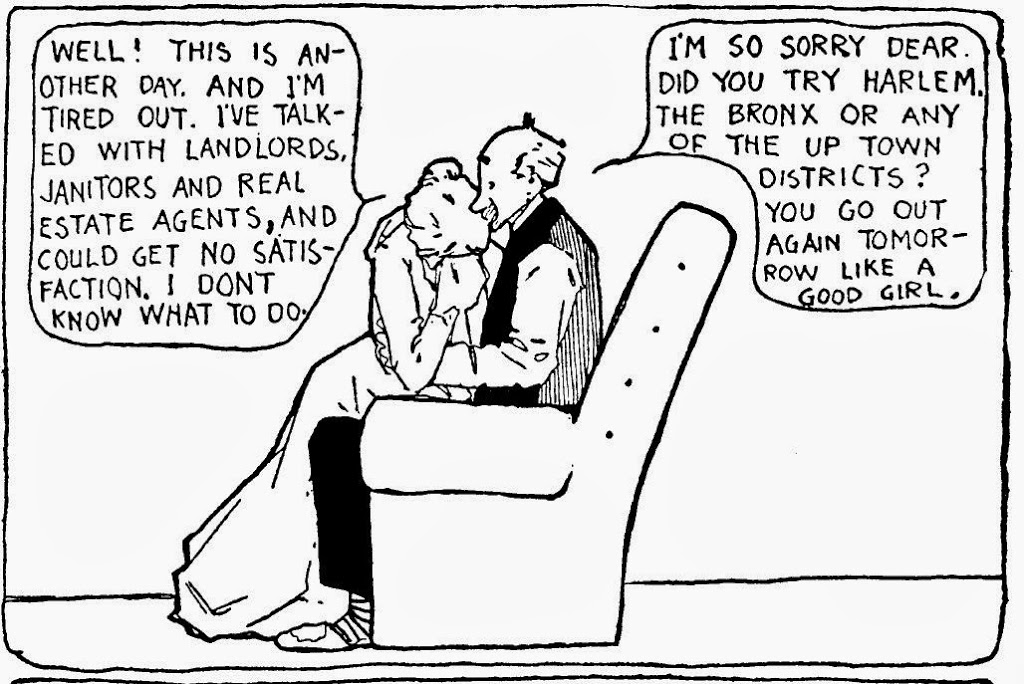
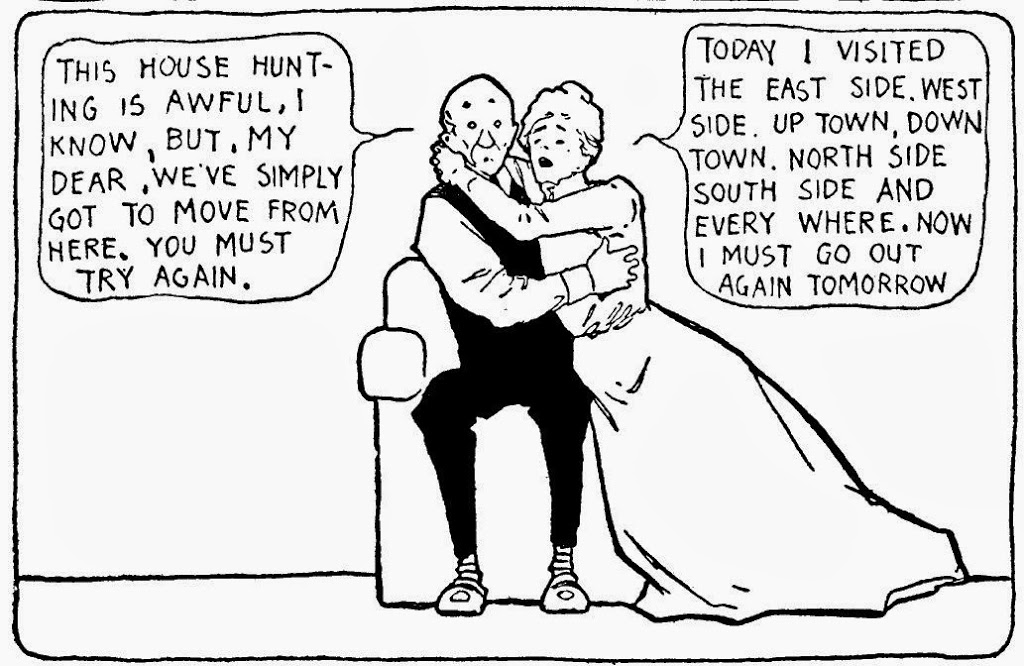
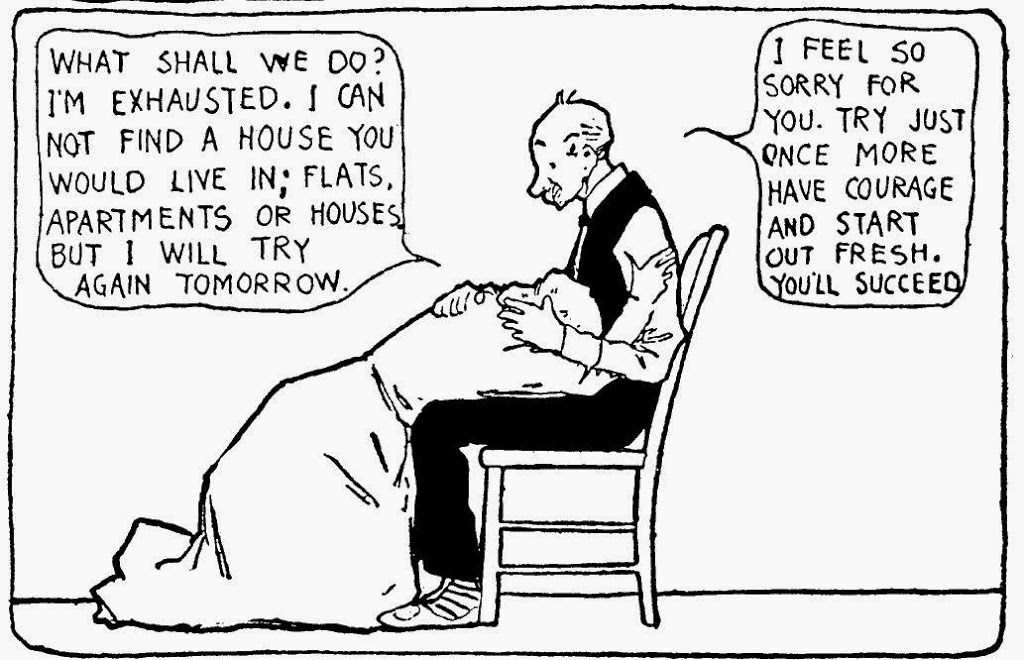
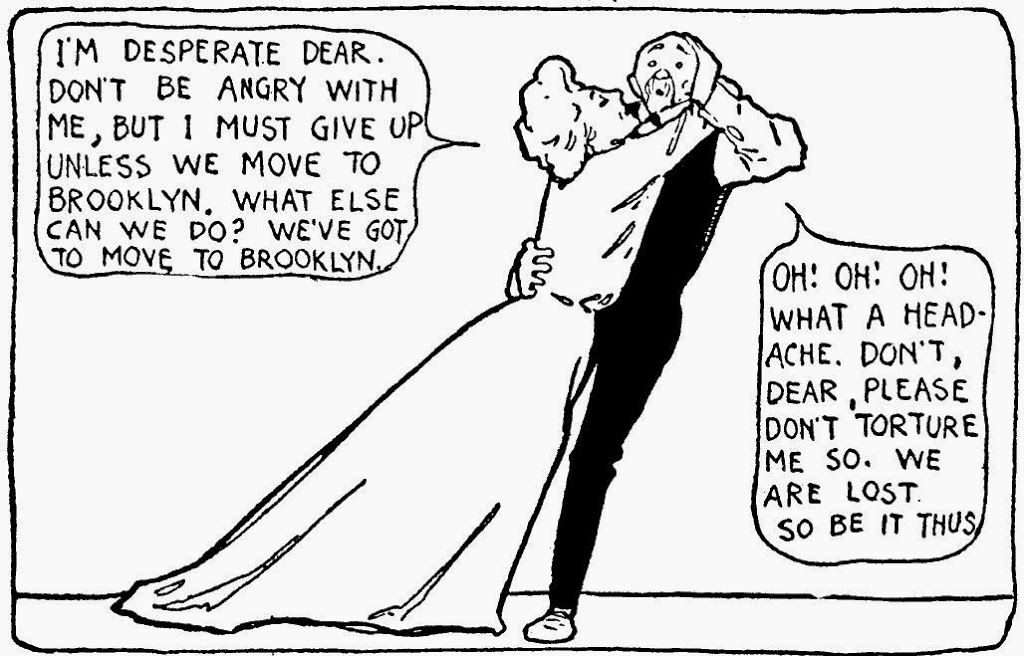
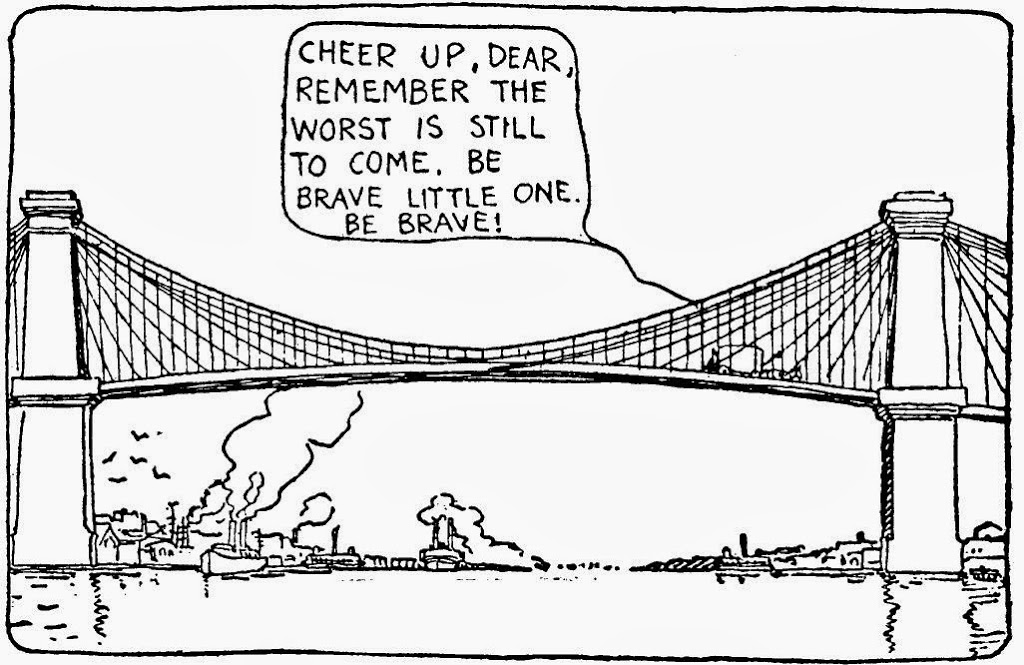
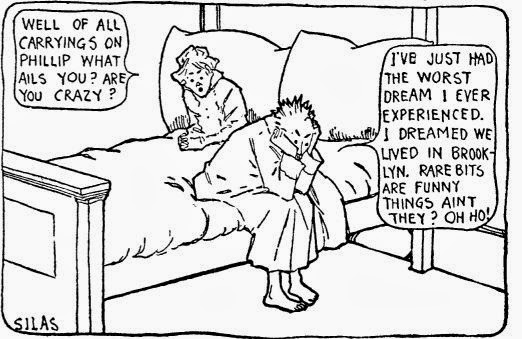
Another such fear, according an entry from January 5, 1905, was the disgrace of moving to Brooklyn.

You can read this particular strip below with the panels broken out.  Read the strip in its original form here.


I found this comic thanks to the guidance of Gawker commenter raincoaster. Thanks for the inspiration!

Categories
Pop Culture

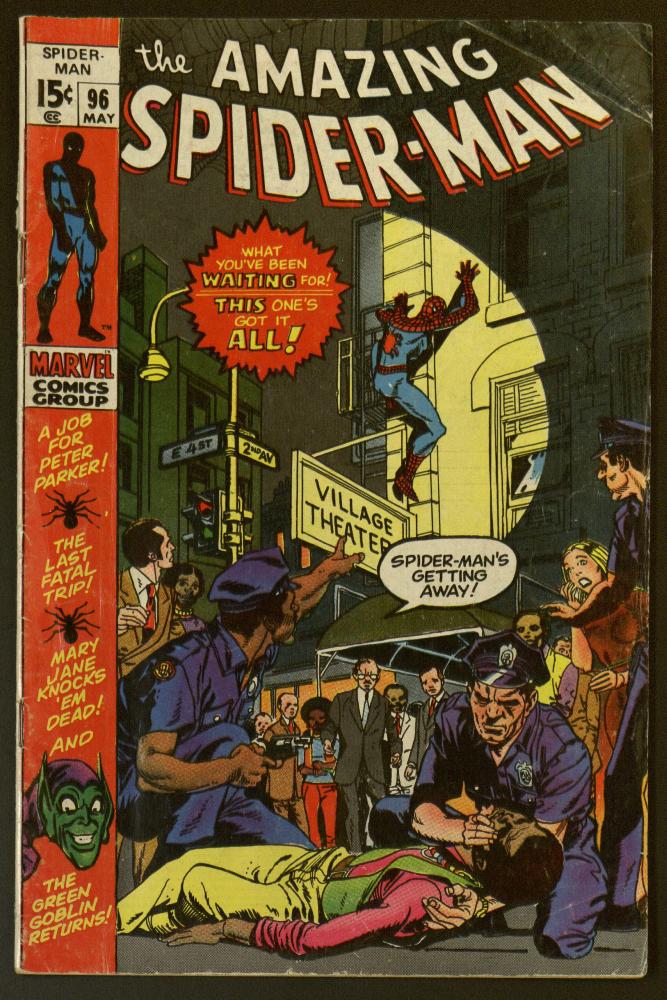
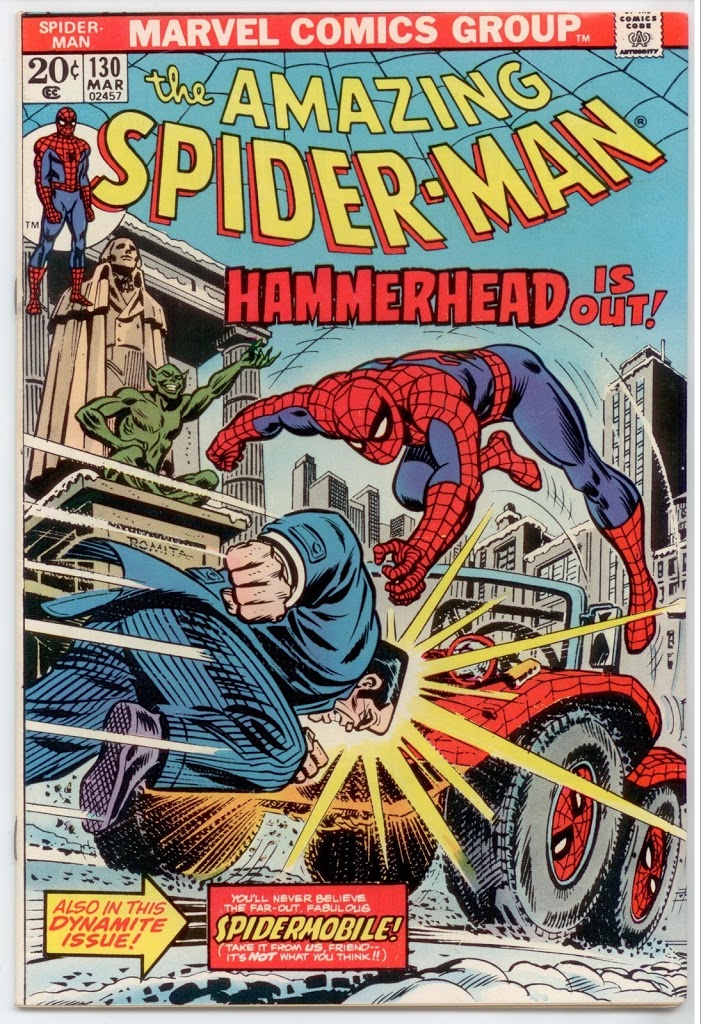
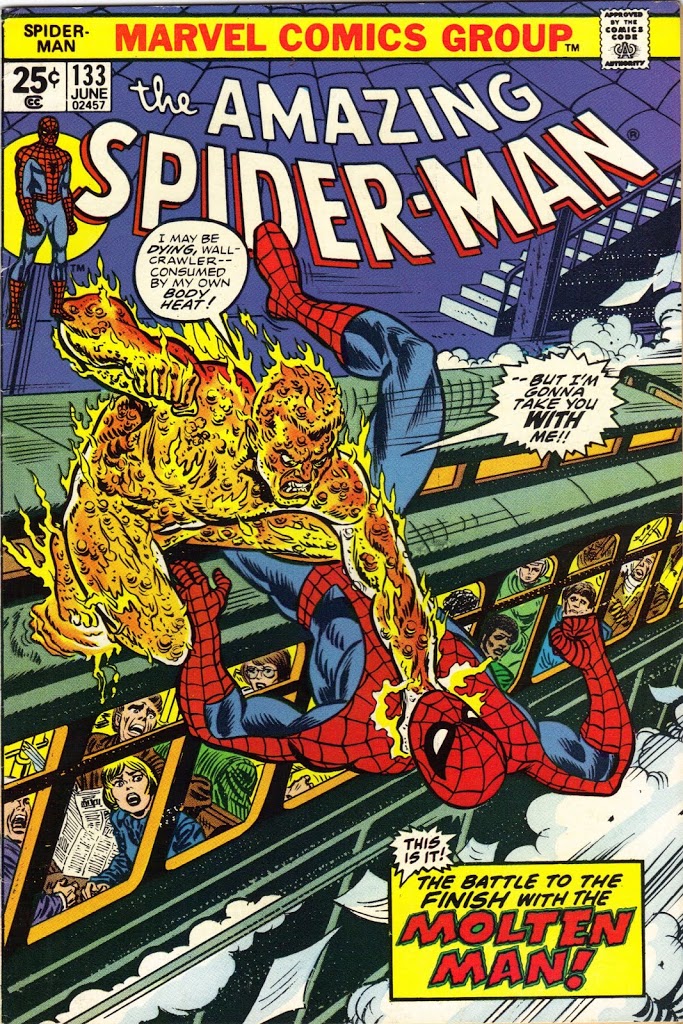
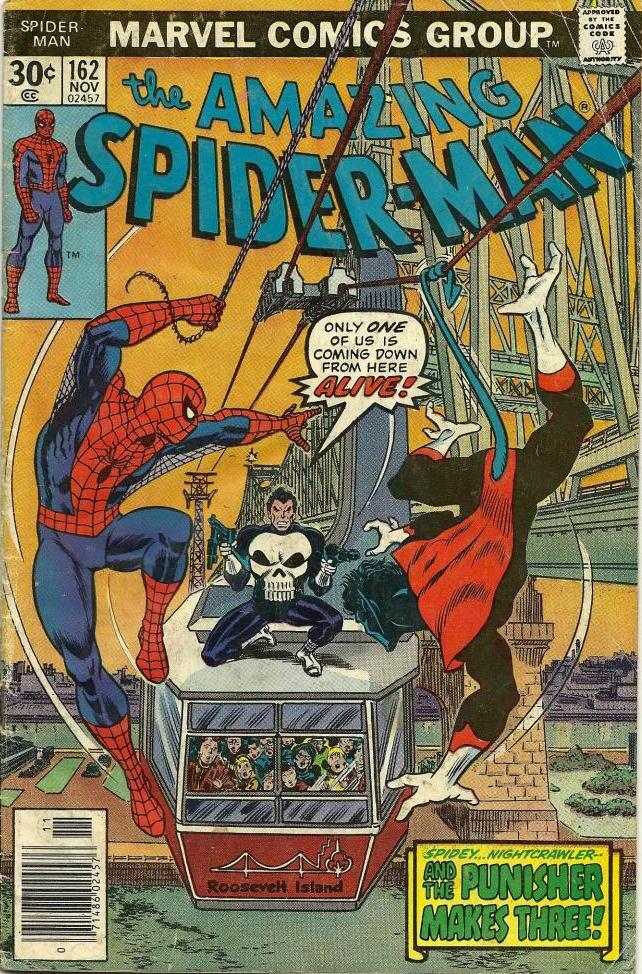
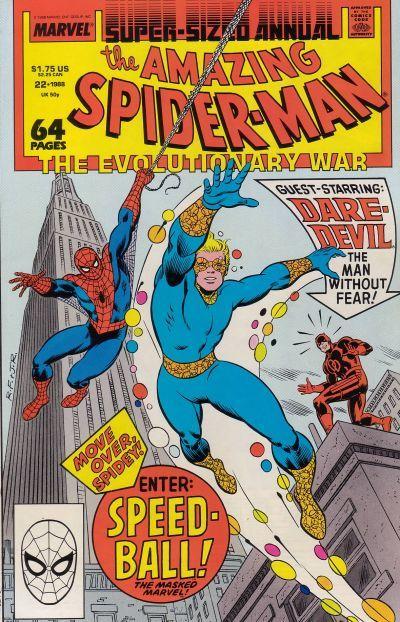
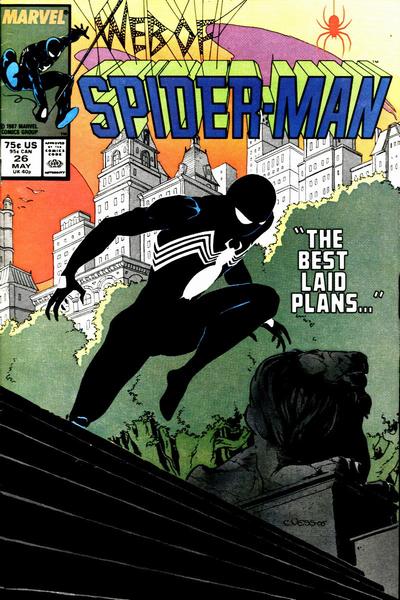
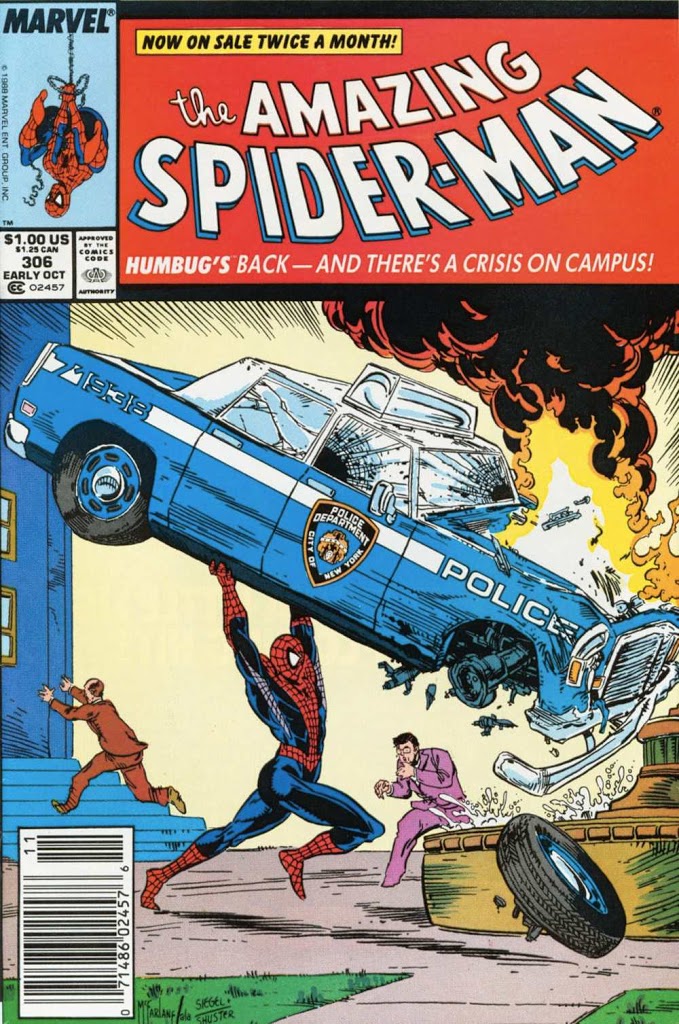
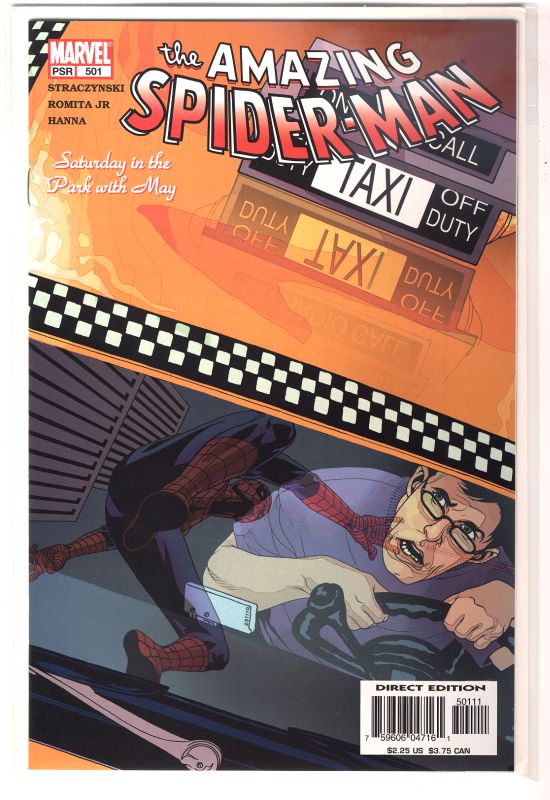
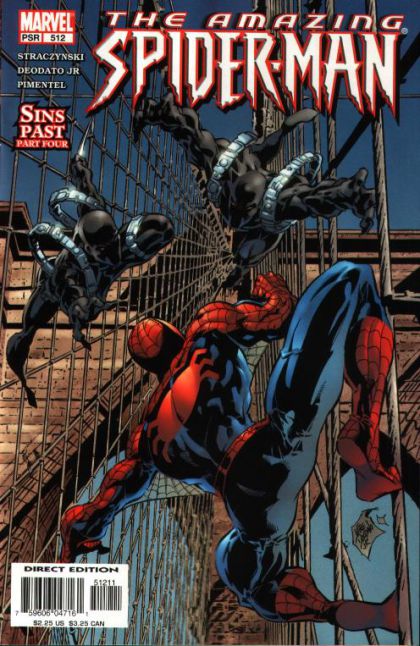
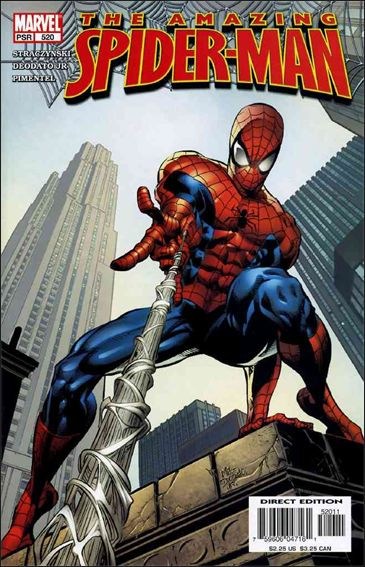
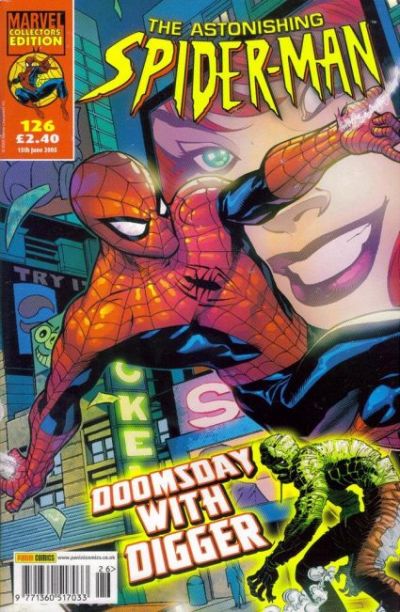
Your friendly neighborhood tour guide: New York as seen through 50 years of Amazing Spider-Man comic book covers

Today is the fifth birthday of this blog, which modestly began on July 4, 2007 and has grown more steadily out of control and independent of the podcast which inspired it.  The following article was inspired by a box of old comics books which have followed me around to various apartments for the past two decades.

Spider-Man might be considered the superhero version of the New York Mets. Ever in the shadow of stronger, older, perhaps stodgier renditions from a different league (Superman, the Yankees), both Spider-Man and the Mets have origin stories which begin in Queens in the 1960s and are often considered New York underdogs. Their fans call them Amazing.

No modern fictional character inhabits a city quite like Spider-Man does with New York City.  Like other creations from the stable of Stan Lee, Spider-Man was meant to reflect a normal human being in a familiar setting, unlike the characters of DC Comics, who were space aliens, amazons or billionaires. Yet it’s only Peter Parker’s humble beginnings as a teen from Forest Hills that seem ordinary; as Spider-Man, he nimbly darts over the city, never in need of public transportation, elevators or a taxicab.

Writer Steve Ditko** fleshed out Lee’s vision of an awkward teenager-turned-acrobat who could virtually sail through the streets outside their window.  The locations of Marvel’s offices and studios — formerly in the Empire State Building, but at 635 Madison Avenue by 1962 – certainly played a role in developing Marvel’s early characters as urbanites.
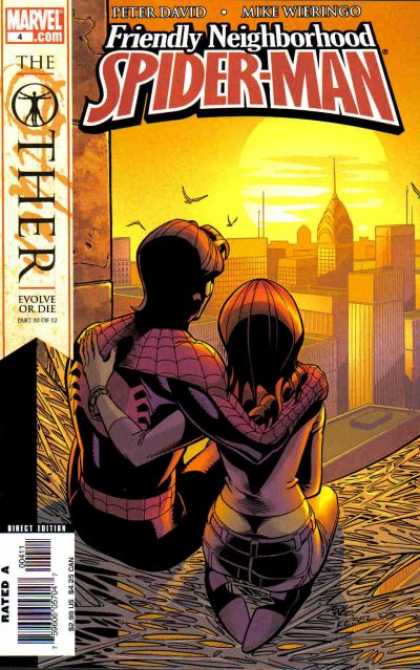
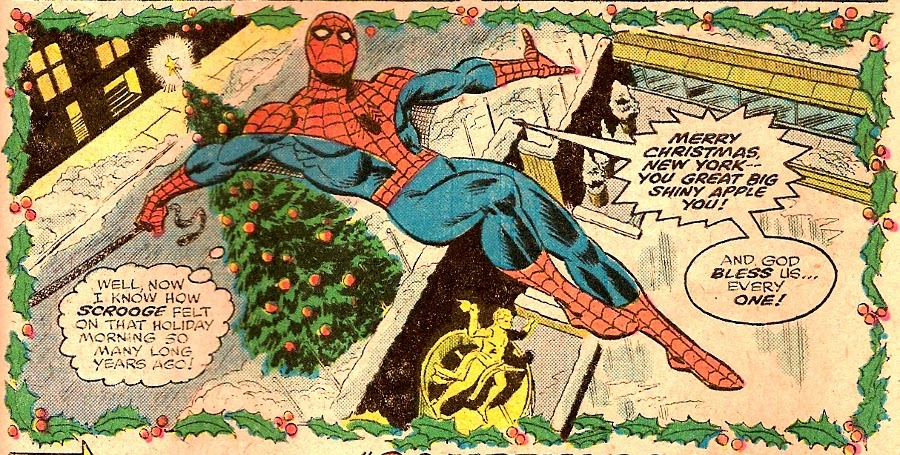
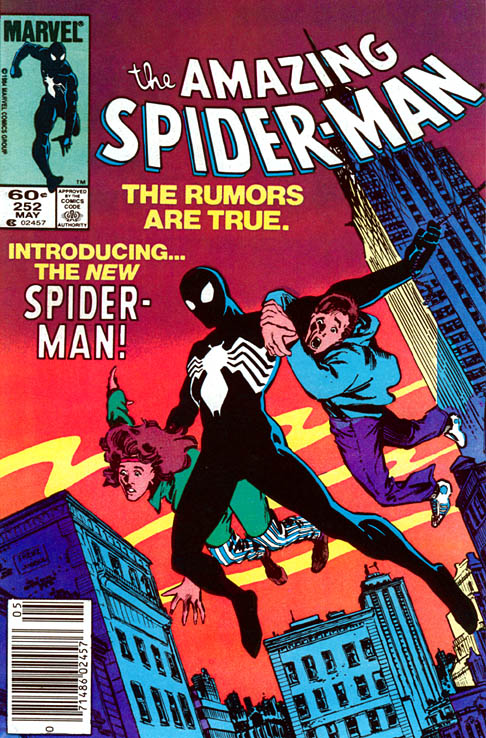
Most all his adventures take place in New York, and the city plays backdrop to these melodramatic, often cataclysmic events.  Upon the covers of hundreds of comics books that Spider-Man has appeared since his debut in August 1962, the webslinger has perilously dangled over the grid, either swinging down the avenues or bouncing super villains against an endless number of brick walls. (Like more than a few fashionistas, he sometimes even wears all black to work.)
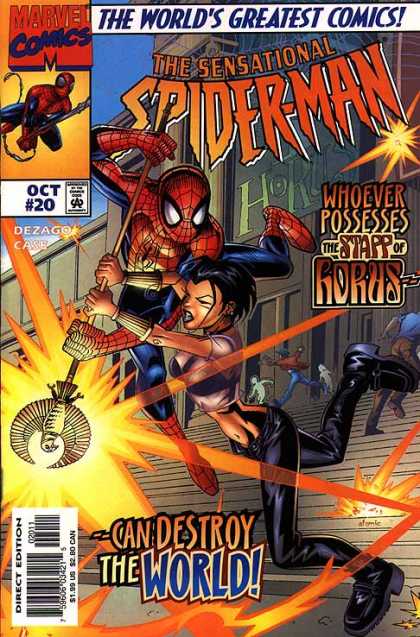
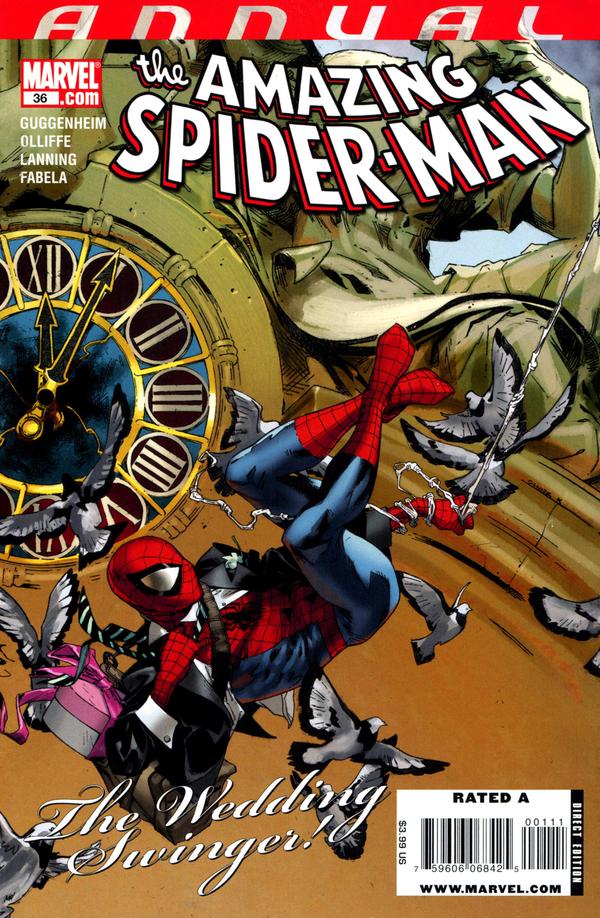
If superheroes existed, New York City’s maintenance and security costs would well exceed its annual budget, and nobody would dare build a new skyscraper. Why, the budget to clean buildings of Spidey’s used webbing would reach into the thousands each year! (Ed. note: I’ve since been informed that the hero’s webbing is basically biodegradable. No wonder he’s Michael Bloomberg’s favorite superhero!)

Most structures depicted in his greatest adventures are mere abstractions, simple ledges for perching and windows for smashing. We rarely see pedestrians fleeing the falling debris or the contractors assessing the damage for disgruntled landlords.

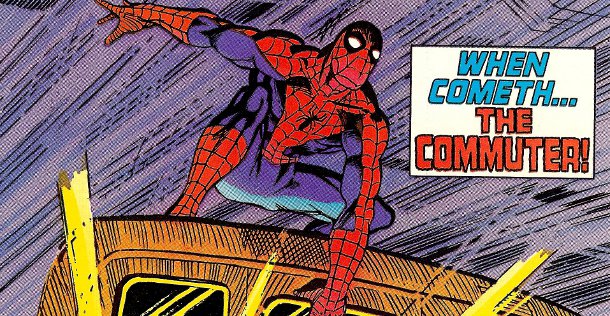
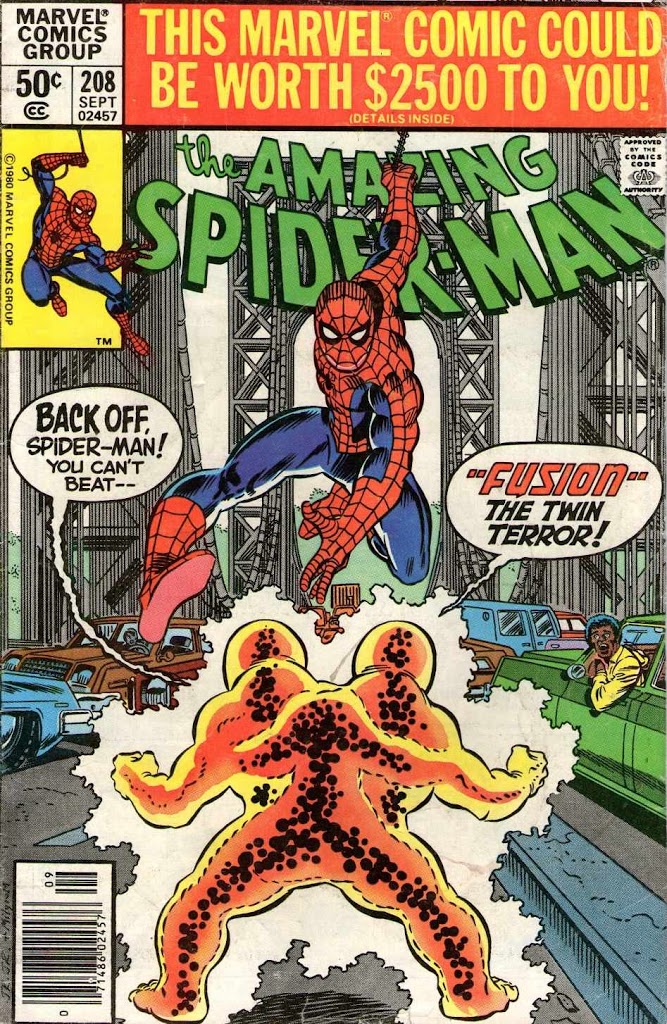
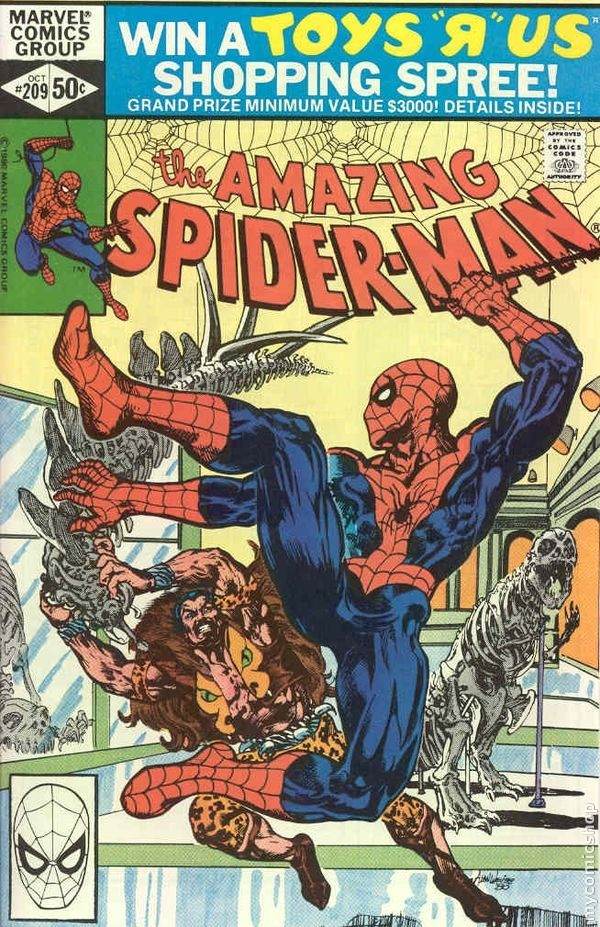
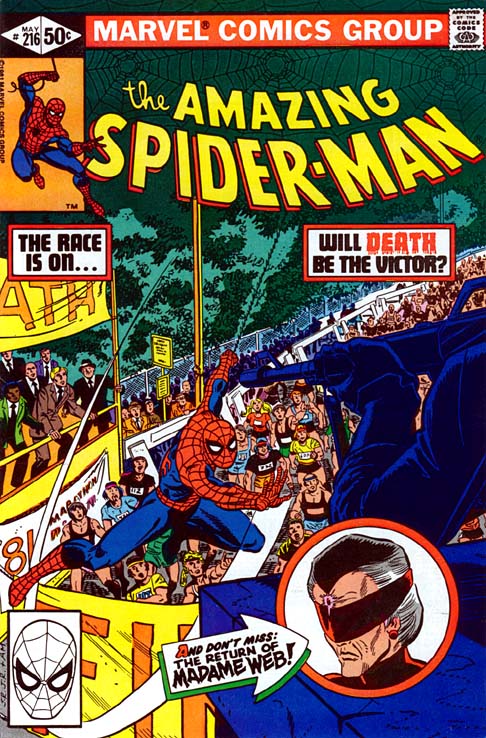
Spider-Man doesn’t fly. The superhero and the city have a symbiotic relationship; he needs the city’s height to swing around, and the city needs him to protect it. And so New York landmarks have frequently popped up on Spider-Man comic book covers, perhaps more than any other superhero creation. He gathers his strength from the famous skyline itself.

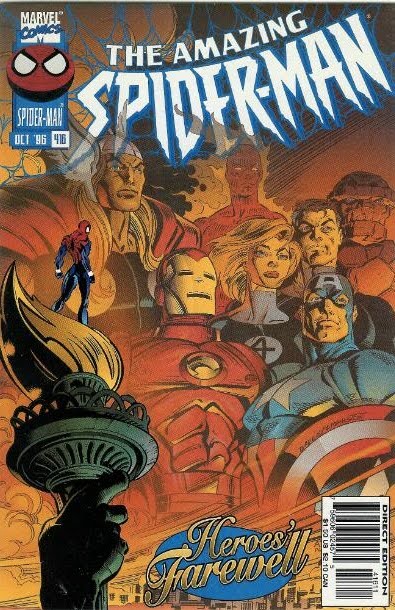
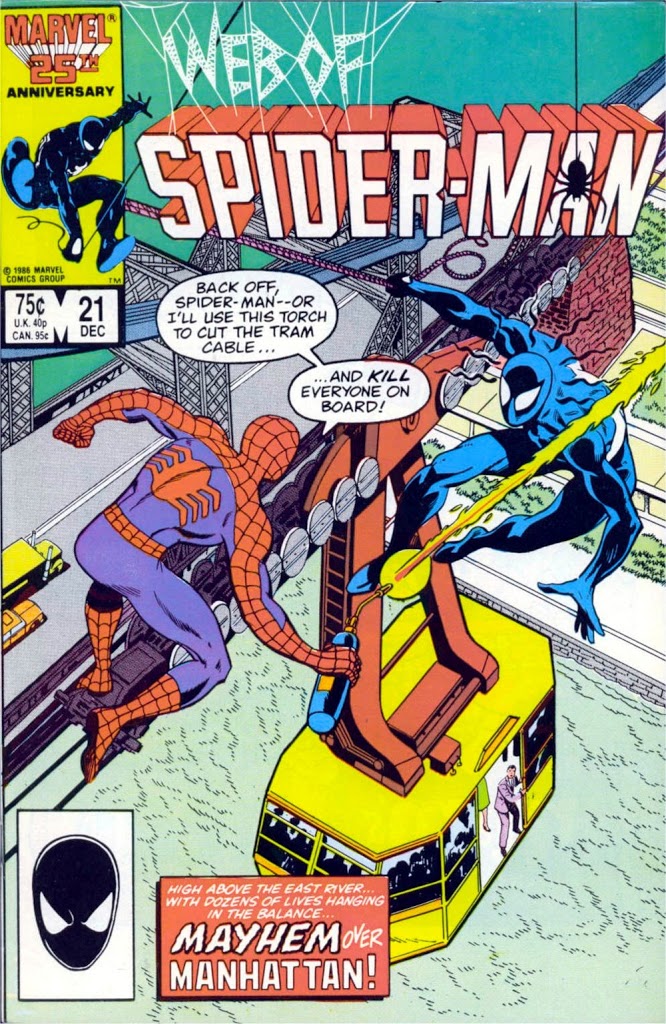
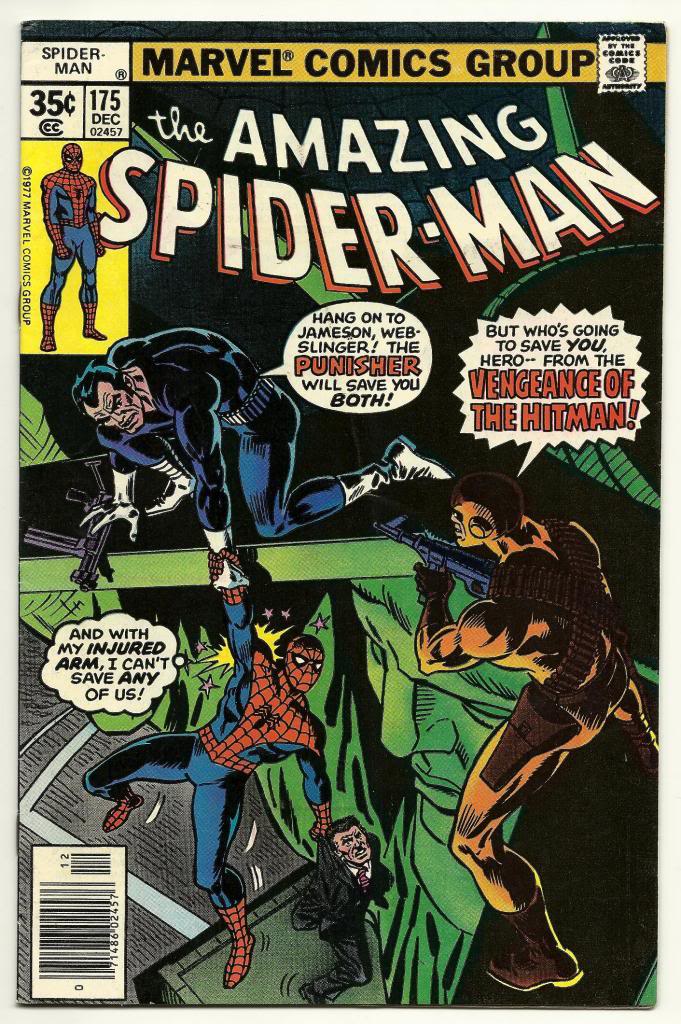
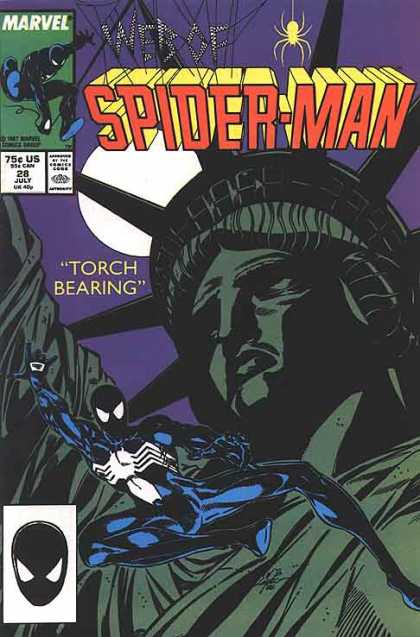
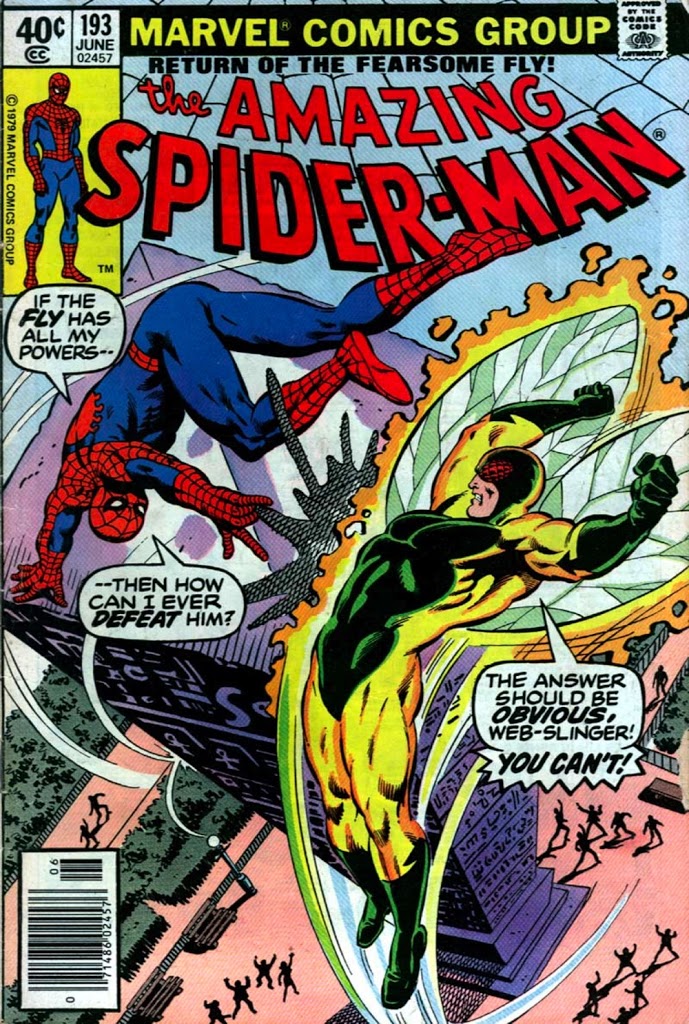
You can actually take a tour of the city through Spider-Man covers, from the 1960s to today. Below are several examples of New York’s guest appearances. Swing along with him as he takes you past 1) the East Village, 2) Federal Hall, 3) the subway, 4-5) the Roosevelt Island tram, 6-7) the Statue of Liberty, 8) Cleopatra’s Needle, 9) the George Washington Bridge, 10) the American Museum of Natural History 11) the New York Marathon, 12-13) the Empire State Building, 14) the New York Public Library, 15) a vehicle from the New York Police Department, 16) a yellow cab, 17) the Brooklyn Bridge, 18) Rockefeller Center, 19) Times Square, 20) the Chrysler Building, 21) the Metropolitan Museum of Art and 22) Grand Central Terminal.

**Note: There is some controversy over whether legendary artist Jack Kirby might also have been involved in the creation of Spider-Man. I have re-edited the story above, however I send you to i09’s 2009 article Who Created Spider-Man? which discusses artist’s possible involvement. (7/9/12)

 
Many more after the jump…


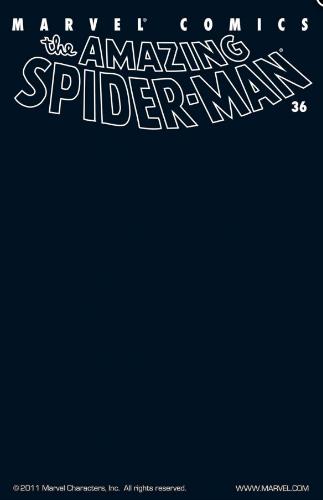
And finally, Marvel and the creators of Spider-Man did pay tribute to the attack on the World Trade Center on September 11, 2001. Appropriately, for a comic book that often wantonly celebrates the crumbling of random structures in high-flying battles with super villains, the creators chose to use no image:

Top image courtesy IGN. A couple of these are from Sam Ruby, a couple of them are my own scan! You can see the complete collection of Spider-Man covers over at Cover Browser where I borrowed a couple of these as well.

Categories
Uncategorized

The Avengers Disassemble the MetLife Building

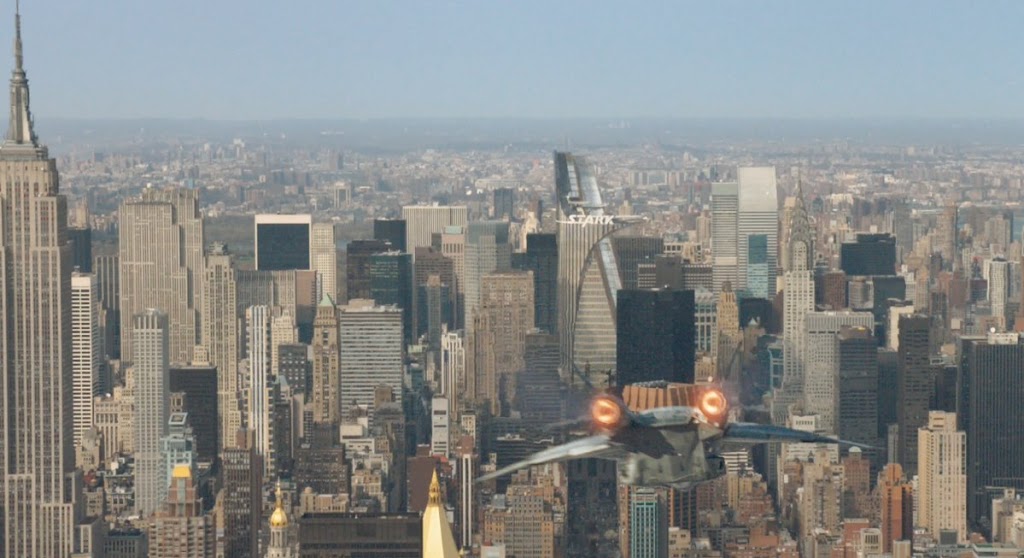
Fare thee well, you who we once called the Pan Am. We hardly knew thee. Image from Comic Book Movie

Warning: This story contains light spoilers.

Recent fantasy films and TV shows have found ways to alter New York City through the creation of alternate universes.  On Fox’s Fringe, a parallel world features a New York where the World Trade Center wasn’t destroyed, the Department of Defense is in a newly-bronzed Statue of Liberty, and Robert Moses never drove the Dodgers from Brooklyn. (The show also showed us what the skyline might look like with some Antonio Gaudi architecture.)

Comic book movies delight in showing super villains destroying the city — this summer’s ‘The Dark Knight Rises’ blows up bridges and ravages Federal Hall, while ‘The Amazing Spider-man’ will trash Midtown — and sometimes they even re-write history itself.

In ‘Captain America: The First Avenger’, the title character, a resident of Red Hook, discovers underground government laboratories in downtown Brooklyn during World War II.  Elsewhere in this Marvel Comics timeline, Moses’ World’s Fair of 1939-40 was such a smashing success that Tony Stark (aka ‘Iron Man’) turns the site into a year-round glittering expo of technology!

The latest Marvel adventure ‘The Avengers’ takes a more proactive approach to revising the city landscape, as though the entire film was a surly New Yorker architecture critic.

Thanks to the Commissioners Plan of 1811, allowing for a grid striped with long uninterrupted canyons, grotesque alien beings from Asgard can fly down the avenues unabated, wrecking havoc through Manhattan — Park Avenue in particular. Fortunately our heroes gather at Grand Central Terminal‘s traffic overpass, a critical location that they turn into a picturesque battleground. (Honorary Avenger Cornelius Vanderbilt, or at least his old statue from St. John’s terminal, stands resolutely in the background, ready to employ his superpower of acquiring railroads.)

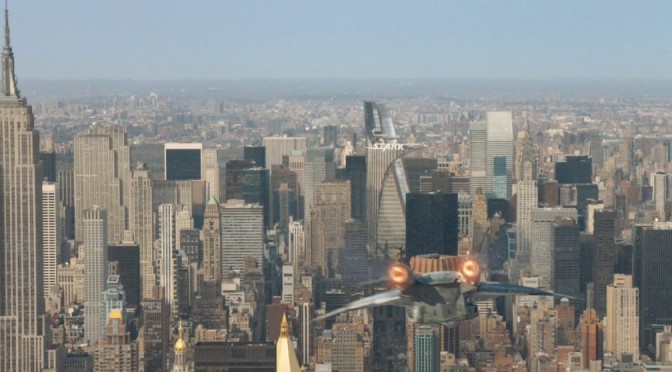
But one famous New York building is notably missing from these shenanigans. Stark, played by Robert Downey Jr., has constructed an energy-efficient new supertower for Stark Industries right on Park Avenue itself. To build this, he has clearly gotten permission from the city to methodically dismantle the MetLife Building (the former Pan Am Building).

The filmmakers have specifically chosen not to merely erase the MetLife Building, but to specifically display it being taken apart. The building is shown greatly reduced in height, decorated with cranes disassembling it like a tinker toy.

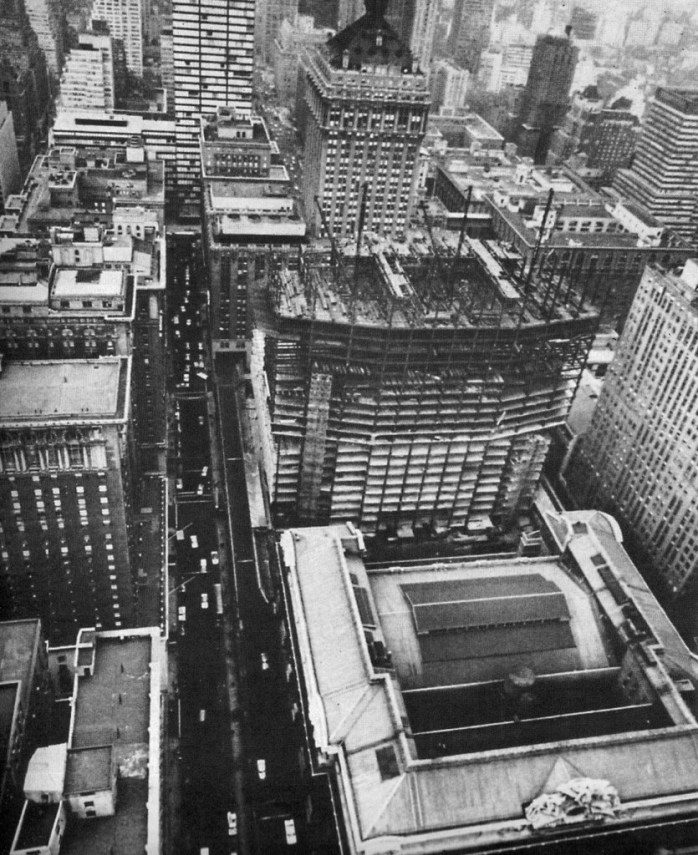
While other buildings enjoy the glamour of being reduced to rubble by gigantic mechanical space fish, the MetLife is ignobly taken apart to be replaced by an even taller, uglier structure. In fact, the dismantling looks a bit like this picture, an image of the Pan Am Building during construction in 1969:

(You can find a few more interesting construction pics here.)

The MetLife Building is easily one of the most disrespected structures in Manhattan and has been almost since the beginnings. Ada Louise Huxtable famously wrote: “A $100 million building cannot really be called cheap. But Pan Am is a colossal collection of minimums.”

According to author Meredith Clausen, “The Pan Am Building and the reaction to it signaled the end of an era. Begun when the modernist aesthetic and the architectural star system ruled architectural theory and practice, the completed building became a symbol of modernism’s fall from grace.”

Its broad-shouldered silhouette calls a halt to Park Avenue in a dated style that hovers between two Beaux-Arts structures (Grand Central to its south, the Helmsley Building to its north). Yet people blame the building for somehow ‘ruining’ Park Avenue — when the two other structures already blocked it — and its sly octagonal shape today makes it one of New York’s more interesting Brutalist-style examples.

Modernism happened, and if you use the same criteria that we might apply to other treasured New York structures, then the MetLife Building is a unique and exemplary building. But can you ever imagine a time when the MetLife Building might ever be landmarked?

This is what I was thinking while Thor and the Hulk were tearing into alien lifeforms.

But ‘The Avengers’ isn’t entirely disrespectful of architecture. In fact, the Chrysler Building is practically fetishized as an ideal view from the newly built penthouse of the Stark Building.

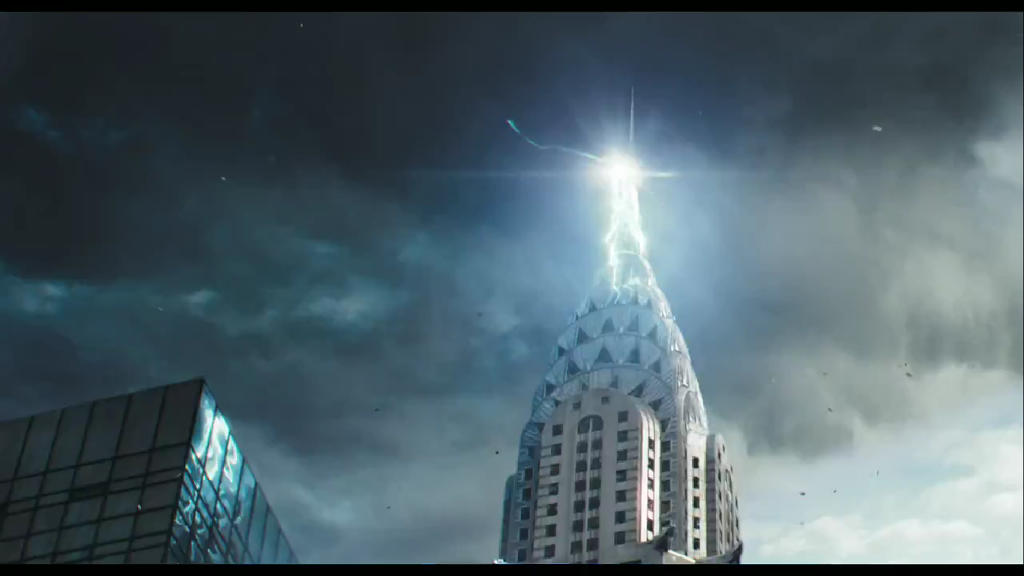
Its antenna spire, which makes it New York’s fourth largest building, is even utilized by Thor in the battle to save the Earth. William Van Alen, the building’s architect, would have been quite amused. This very spire was hoisted to the top of the structure from within the building itself in October 1929, a surprise accessory that allowed the Chrysler to take the title of New York’s tallest building from 40 Wall Street.

Pic above courtesy Bleeding Cool

Super Local: Captain America and New York’s other heroes

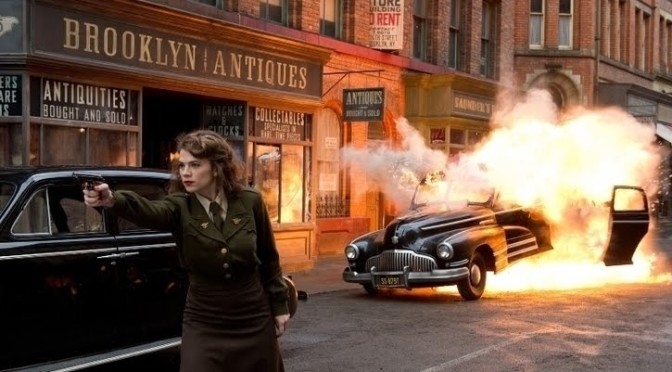
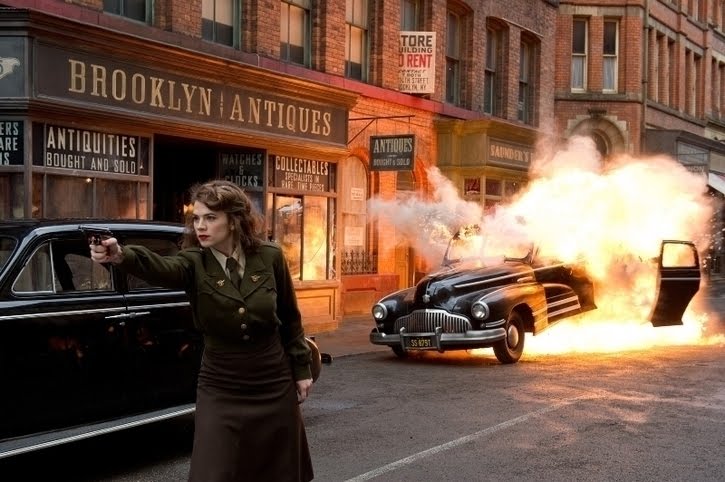
A 1940s antique store carries more than dusty lamps in the summer superhero film, ‘Captain America: The First Avenger,” which transplants its hero’s origins from the Lower East Side to downtown Brooklyn.

I know I can be a bit fanatic in my New York-centeredness, but this statement I can make with fact — the comic book industry was born in New York City. One of the earliest publishers, George Delacorte (familiar to visitors at the Central Park Zoo), founded Dell Publishing in 1921, producing pulp magazines and, eventually, comic strip collections. The publishing precursors to both DC and Marvel Comics got quiet starts in small offices in New York, and both slowly grew to dominate and define the superhero universe.

More importantly, several key comic artists and writers found inspiration in the city. Bob Kane and Bill Finger, the creators of Batman, and the hero’s first artist Jerry Robinson cooked up the character in the Bronx. Martin Nodell dreamt up the Green Lantern from inspiration found at a 34th Street subway station. A bespeckled boy from Brooklyn, Gardner Fox, ditched a law career for a typewriter where he created The Flash.

None are perhaps as famous as Stan Lee, born on the Upper West Side, and the father and co-creator of an entire stable of Marvel Comics’ classics, including Spider-Man, Iron Man and the Hulk. And one of comics’ most influential artists, Jack Kirby, was born and raised in the tenements of the Lower East Side.

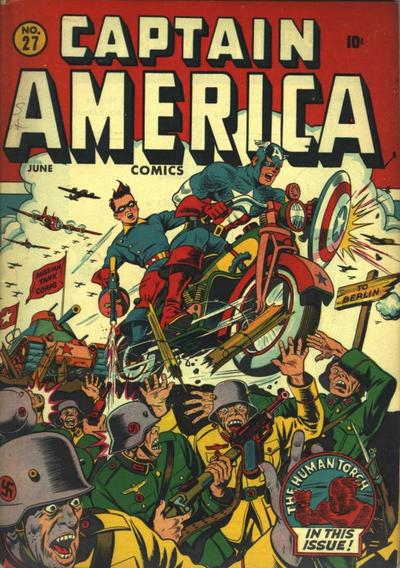
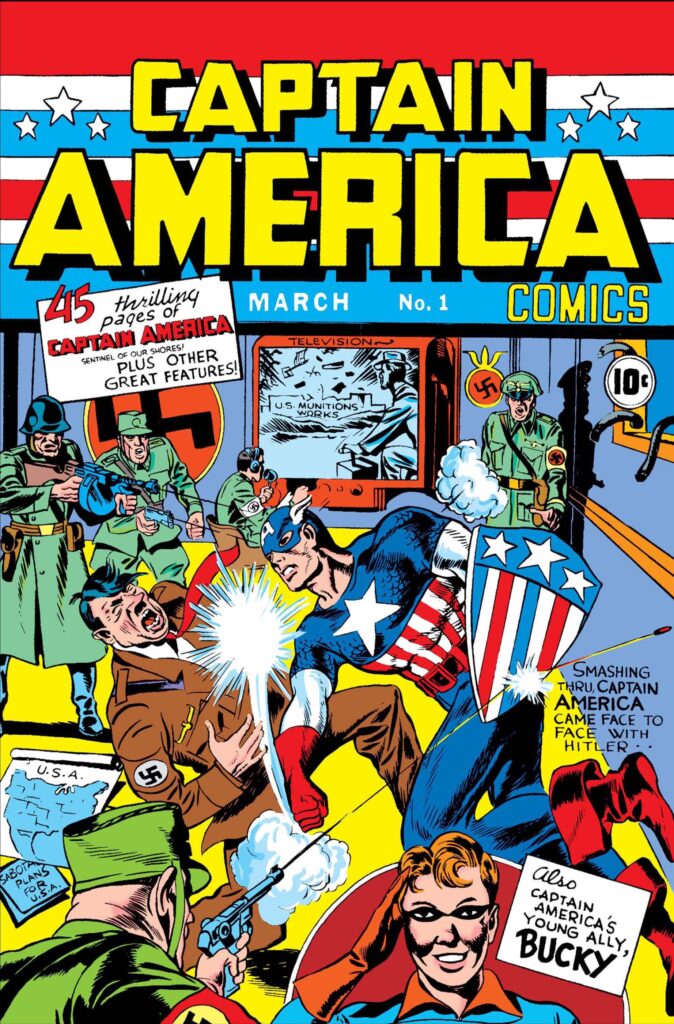
At the start of World War II, Kirby met writer Joe Simon, a photo retoucher living in Morningside Heights, and the two found success in creating a host of classic comic creations. Chief among them was the patriotic themed Captain America. Steve Rogers, a meek young illustrator, wants to fight for his country but suffers from classic comic-book weakling syndrome. A government experiment grants Rogers superhuman powers and a flamboyantly bright uniform, the better to fight Nazi and various supervillians.

Now, after all that set up about New York’s importance to comic-book creation, Rogers actually represents the top of a rarer class — superheroes who are actually born in New York City, according to their origin tales. Rogers, much like his creator Kirby, is from the Lower East Side.

In the new movie, “Captain America: The First Avenger,” the creators have transplanted the origin of the hero — as well as his sidekick Bucky — to Brooklyn*. Not only is Rogers from the mean streets of downtown Brooklyn, but the Army has a super-secret laboratory hidden within a dusty old antique store. (Talk about adding some pizazz to the Fulton Street Mall!)

In the film, 1940s Brooklyn is actually played by Manchester, England, and quite well in my opinion. But it does beg a question — in the various fictional comic book realms, how many superheroes are actual New Yorkers?

The first place to look is amongst the roster of Marvel Comics heroes. DC Comics originally set many of its tales in fictional cities — Metropolis, Gotham City, Keystone City, Star City — and many of its greatest characters are from otherworldly locations (Krypton, Mars, the island of Themyscira). Lee’s philosophy with the creation of Marvel Comics was to root heroes in realistic places and problems, a reaction to DC’s fantastical remove.

The Lower East Side’s Captain America was inherited by Marvel in the early ’60s, but the company created many of its own local heroes. A small sampling includes:

— Peter Parker, transformed by radioactive insect bite to become Spider-Man, is perhaps New York’s most famous native, a resident of Forest Hills, Queens

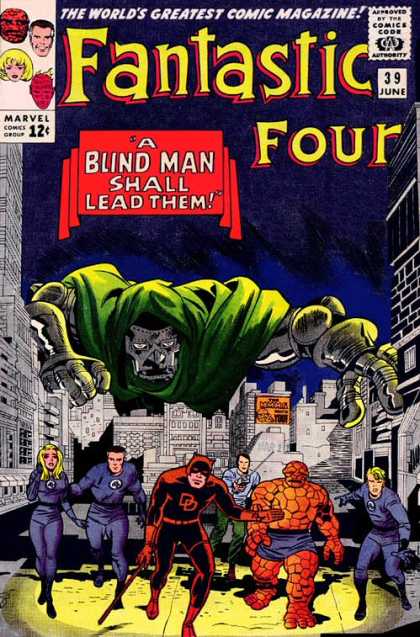
— Another Lower East Side native was scrappy young Benjamin Grimm. He befriended Columbia University college student Reed Richards, who had fallen in love with Long Island girl Sue Storm. Along with Sue’s brother Johnny, the quartet were bathed in cosmic rays to become the Fantastic Four, who donned fabulous blue costumes and set up headquarters in midtown Manhattan at the Baxter Building, overlooking Grand Central. (By the way, Tony Stark, aka Iron Man, is also a Long Island native.)

— Meanwhile, over in Hell’s Kitchen, more radiation — how is it safe to live here?! — blinds the son of a noted boxer who is later killed by gangsters. (I haven’t seen the original issue, but I’m guessing he fought at Madison Square Garden, located in Hell’s Kitchen in the 1960s.) That child, Matthew Murdock, grows up to develop extra-sensory powers and a taste for red spandex, as the Daredevil.

— I’m imagining that young Daniel Rand grew up on the Upper East Side somewhere when his wealthy father took him to the mystical disappearing city of K’un L’un, where Rand develops superhuman martial arts abilities and renames himself Iron Fist. Back in 1970s New York, quite naturally he pairs with Harlem gangster-turned-dogooder Luke Cage. Occasionally, the duo run into that Brooklyn-born hothead Ghost Rider.

— Then there’s that constant reminder of the dark, crime-infested side of 1970s New York with the vigilante called The Punisher, avenging the death of his family in Central Park at the hands of a bloodthirsty mob boss.

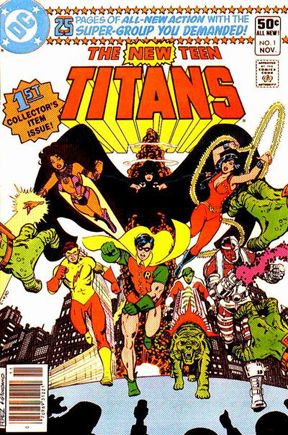
By the late 1970s, there were at least a good couple dozen superheroes flying over the heads of New Yorkers. And other heroes from other comic companies soon joined them. DC Comics saw the benefit in entering the world of actual cities by the early 80s. The popular Teen Titans housed their curious T-shaped headquarters on an unnamed island in the East River. In the alternate universe inhabited by the Watchmen, this team not only watched over the city, one of them eventually destroyed it!

By the mid-’80s, independent publishers began to creep into territory dominated by DC and Marvel, presenting starker, edgier tales. The most successful of these, the Teenage Mutant Ninja Turtles, were characters literally born in the New York sewer system. The comic itself, however, was created in Massachusetts.

With the development of companies like Dark Horse and Image, the modern comic book industry has developed far afield of New York.  But just in case all of New York’s caped crusaders are otherwise engaged, we always have Professor Xavier’s School for Gifted Youngsters — the headquarters for the X-Men — just up in Westchester County!

*Apparently, Steve Rogers actually does moves to Brooklyn at some point in his long career. Red Hook, in fact! Perhaps they sell one of those nifty shields at IKEA