Categories
Podcasts Pop Culture

Super City: The Secret Origin of Comic Books

PODCAST  A history of the comic book industry in New York City, how the energy and diversity of the city influenced the burgeoning medium in the 1930s and 40s and how New York’s history reflects out from the origins of its most popular characters.

In the 1890s a newspaper rivalry between William Randolph Hearst and Joseph Pulitzer helped bring about the birth of the comic strip and, a few decades later, the comic book.
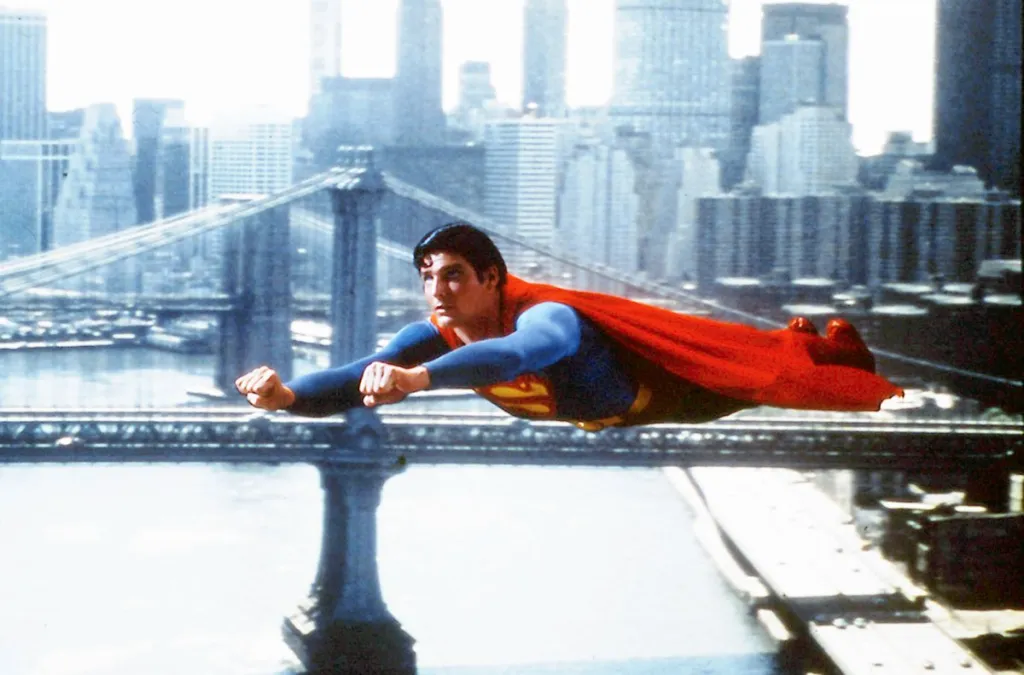
Today, comic book superheroes are bigger than ever — in blockbuster summer movies and television shows — and most of them still have an inseparable bond with New York City.

What’s Spider-Man without a tall building from which to swing? But not only are the comics often set here; the creators were often born here too.

Many of the greatest writers and artists actually came from Jewish communities in the Lower East Side, Brooklyn or the Bronx.
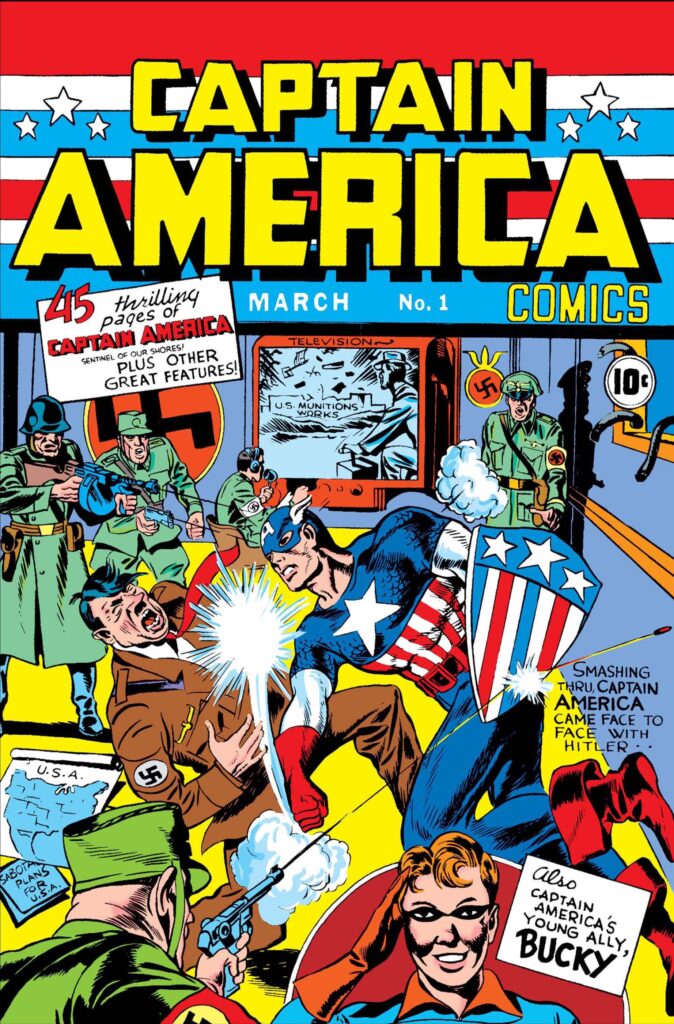
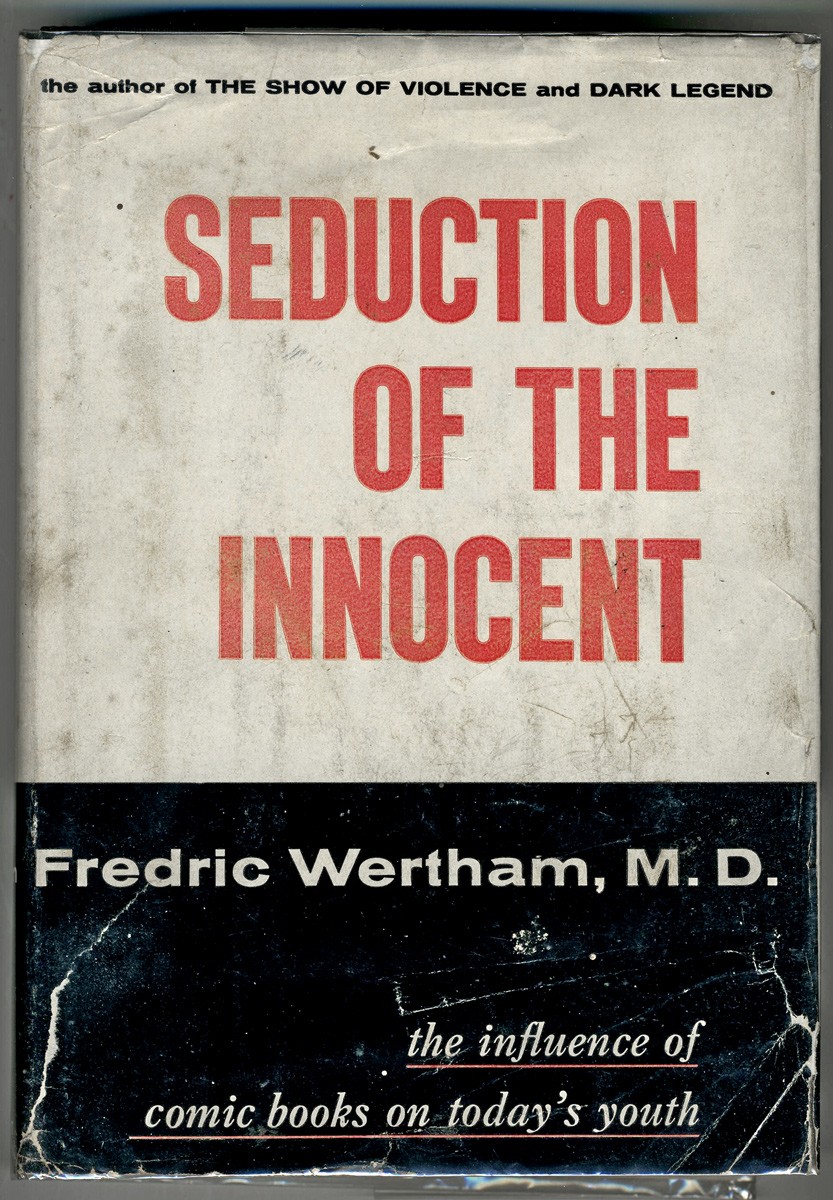
For many decades, nearly all of America’s comic books were produced here.  Unfortunately that meant they were in certain danger of being eliminated entirely during a 1950s witch hunt by a crusading psychiatrist from Bellevue Hospital named Frederic Wertham.

WITH a special chat with comics historian Peter Sanderson about the unique New York City connections of Marvel Comics’ most famous characters. Sanderson is the author of The Marvel Comics Guide to New York City and The Marvel Encyclopedia.

FEATURING: The Yellow Kid, Little Orphan Annie, Batman, Doctor Strange, the Watchmen and the Teenage Mutant Ninja Turtles!

To get this week’s episode, download it for free from your preferred podcast player.

Or listen to it straight from here:


AND after you’re done listening to this history on comic books in New York City, check out Greg’s appearance on an episode of This Week In Marvel, the official Marvel Comics podcast hosted by Ryan “Agent M” Penagos, James Monroe Iglehart, and Lorraine Cink.

In this episode, Greg actually speaks about the Bowery Boys episode about comics and shares his own experiences with reading comic books as a kid.

Find this show here or on your favorite podcast player.
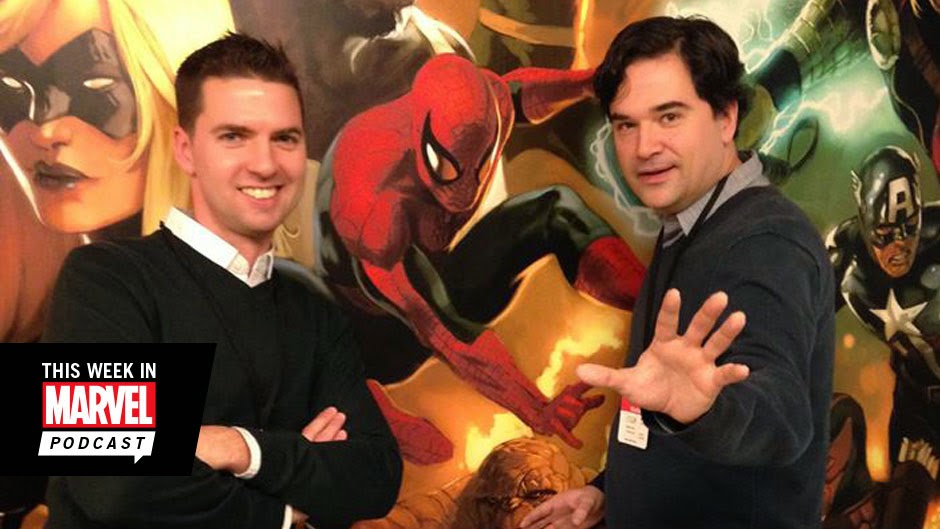
Tom and Greg from their 2014 visit to the Marvel Comics offices in Midtown.

__________________________________________________________

The Bowery Boys: New York City History podcast is brought to you …. by you!

We are now producing a new Bowery Boys podcast every two weeks.  We’re also looking to improve the show in other ways and expand in other ways as well — through publishing, social media, live events and other forms of media.  But we can only do this with your help!

We are now a member of Patreon, a patronage platform where you can support your favorite content creators for as little as a $1 a month.

Please visit our page on Patreon and watch a short video of us recording the show and talking about our expansion plans.  If you’d like to help out, there are five different pledge levels (and with clever names too — Mannahatta, New Amsterdam, Five Points, Gilded Age, Jazz Age and Empire State). Check them out and consider being a sponsor.

We greatly appreciate our listeners and readers and thank you for joining us on this journey so far. And the best is yet to come!

__________________________________________________________

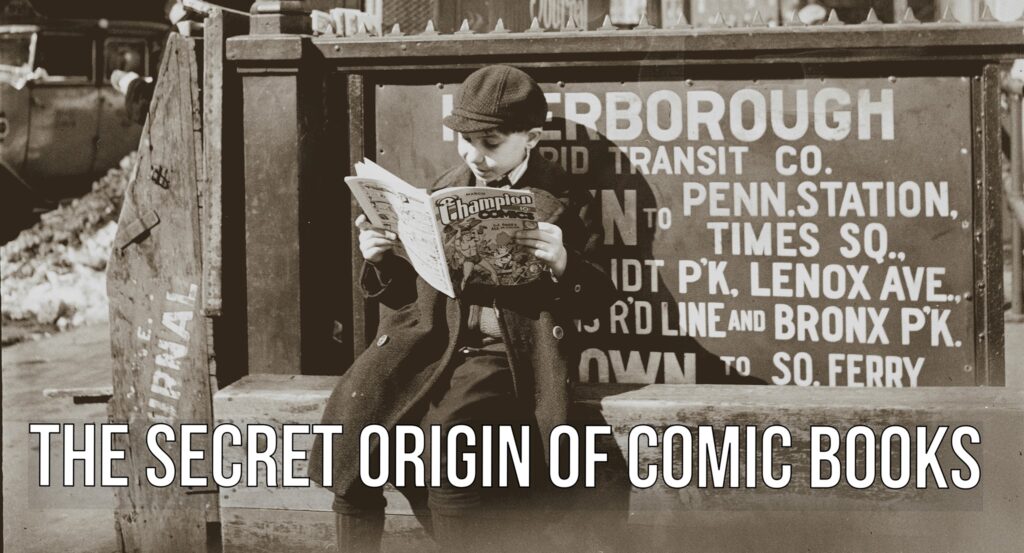
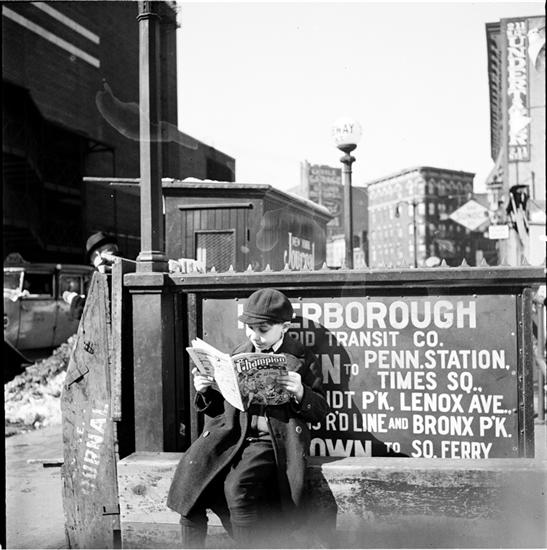
A young New York boy enjoys his comic book on the Bowery. Photo taken in 1940 by Andrew Herman.
Courtesy Museum of the City of New York

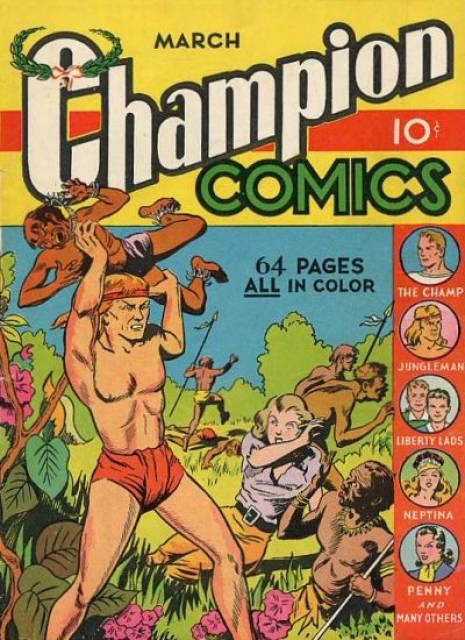
And here’s the comic book he’s reading from March 1940, illustrated by George Papp.
Courtesy Comic Vine
Courtesy Comic Vine

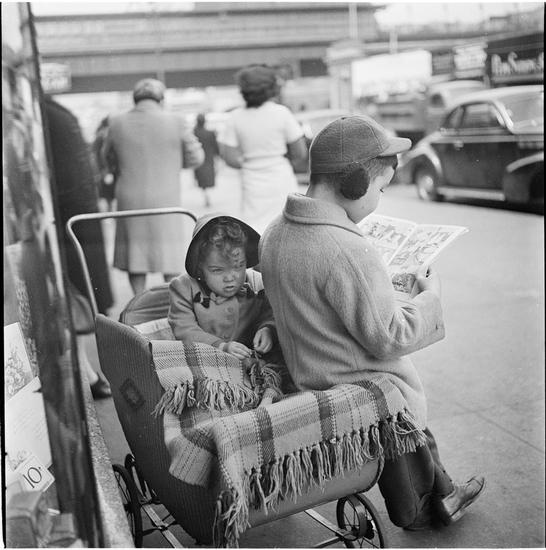
In this 1947 photograph taken by Stanley Kubrick, a boy watches his baby sister and enjoys a Superman comic book while his mother shops inside.
Courtesy the Museum of the City of New York

An issue of DC Comics’ Superman from March 1947, with a cover by George Roussos and Jack Burnley
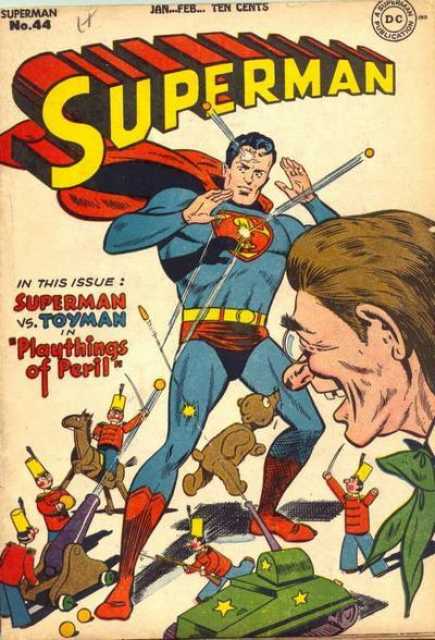
Courtesy DC Comics / Comic Vine

A girl takes a peek at some of the comic book offerings at Woolworth’s. Photograph by Stanley Kubrick taken in 1947.
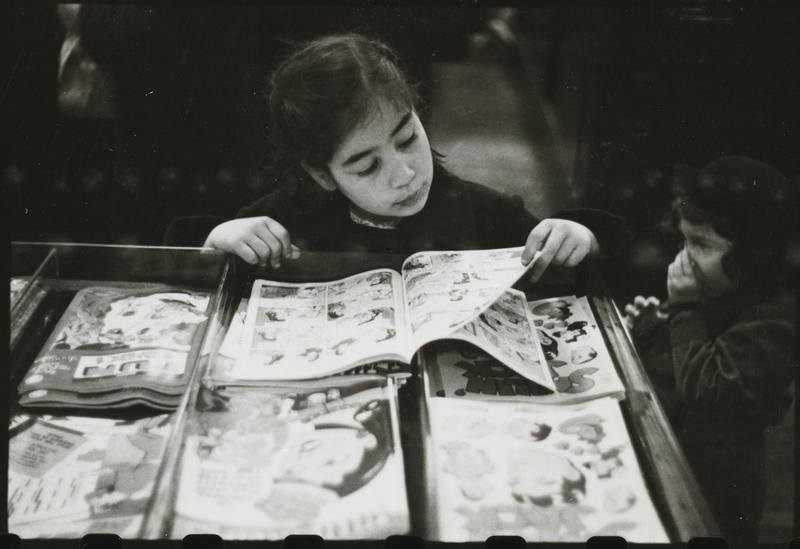
Courtesy Museum of the City of New York

An issue of More Fun Comics from June 1947, produced by DC Comics:
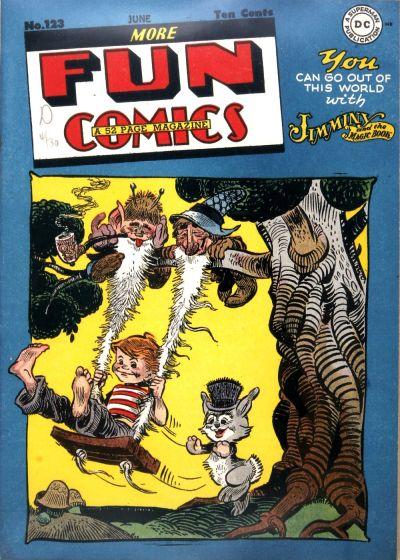
more fun

The Adventures of Obadiah Oldbuck, published in 1842, is considered by many to be the wellspring from which the comic medium derives. You can read the entire issue over at the Darmouth College Library website.
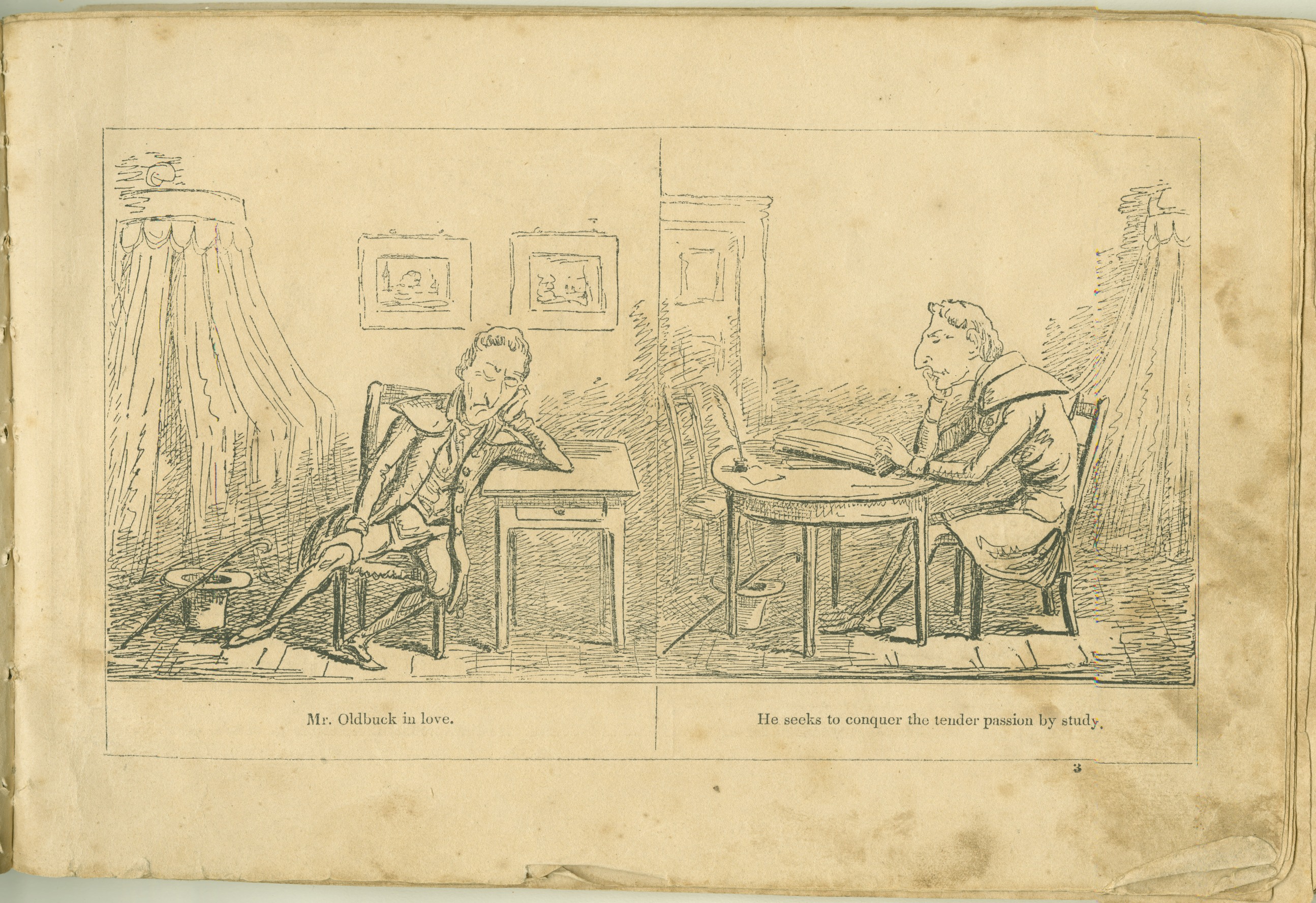
Courtesy Dartmouth College Library

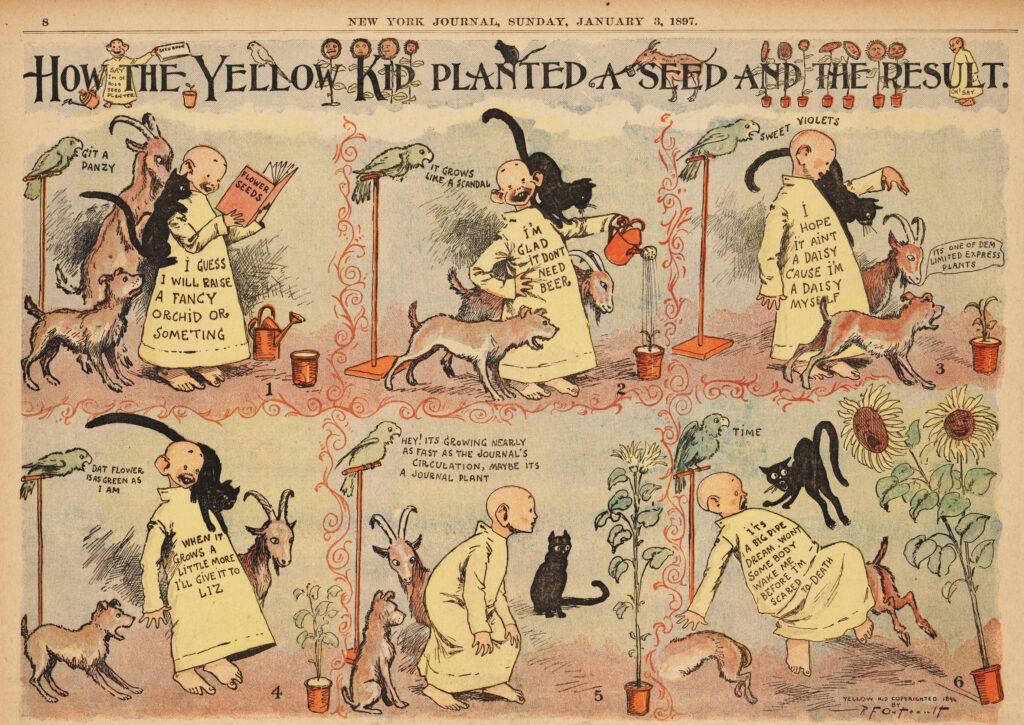
A Yellow Kid adventure which would have sprung out from the newspaper due to its vivid colors.
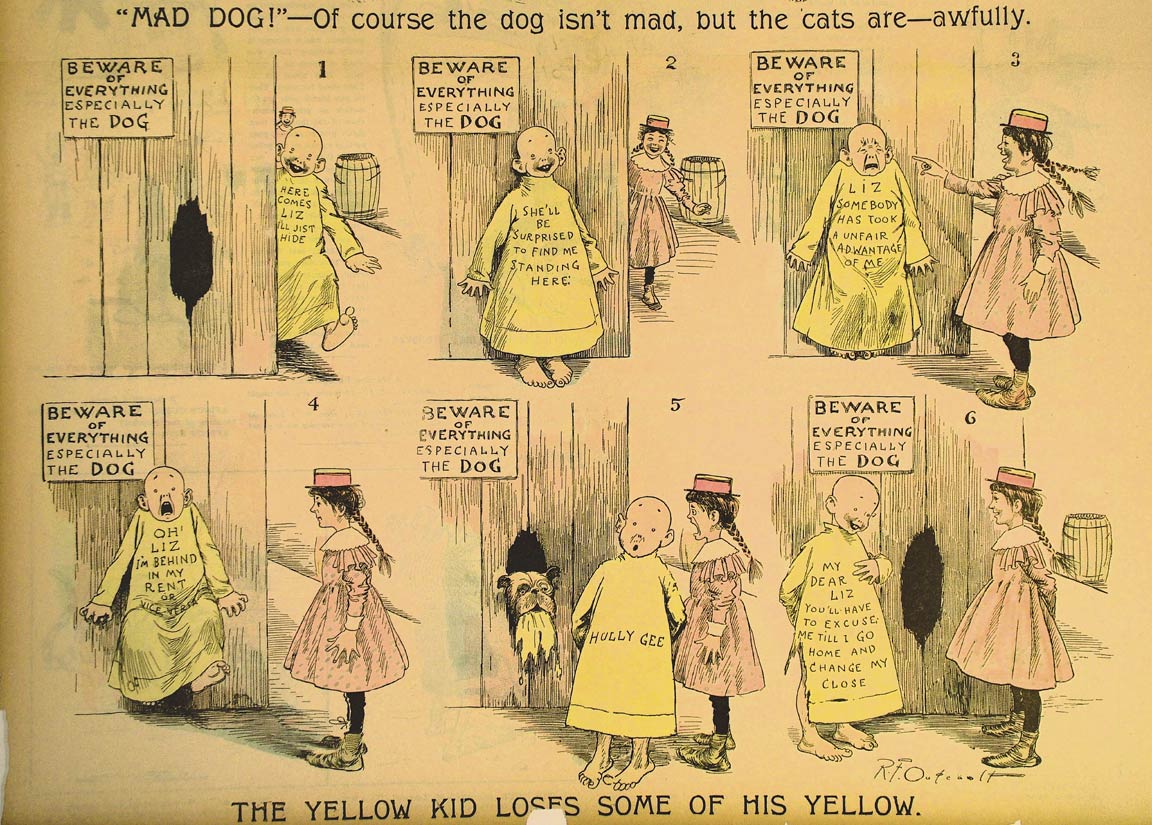
Image courtesy Comix Takoma; art by Richard Outcault

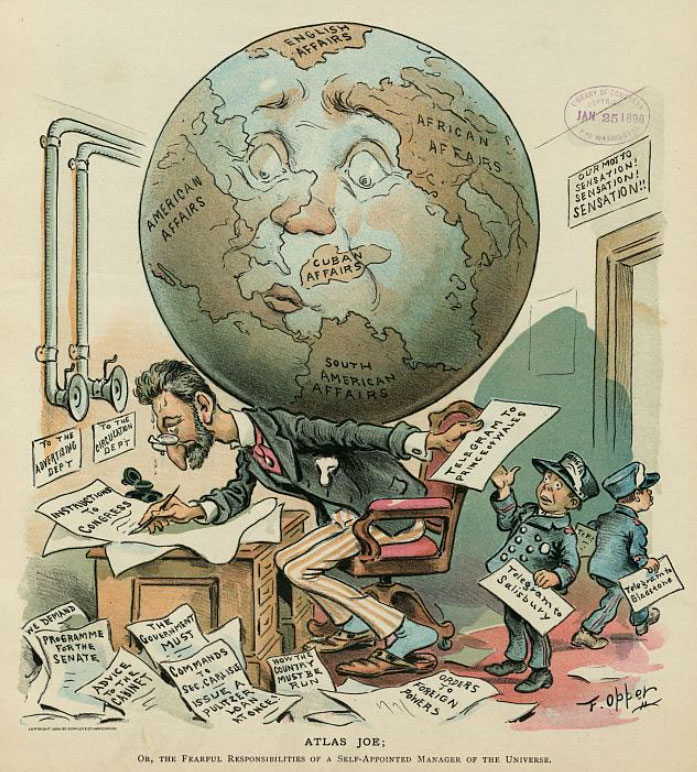
Both Hearst and Pulitzer ran versions of the Yellow Kid comic strip during the years that they were drumming up propaganda which lead to the Spanish-American War.

The unscrupulous nature of their efforts earned them the phrase ‘yellow journalism’, inspired by their war of the popular comic strip by Richard Outcault.
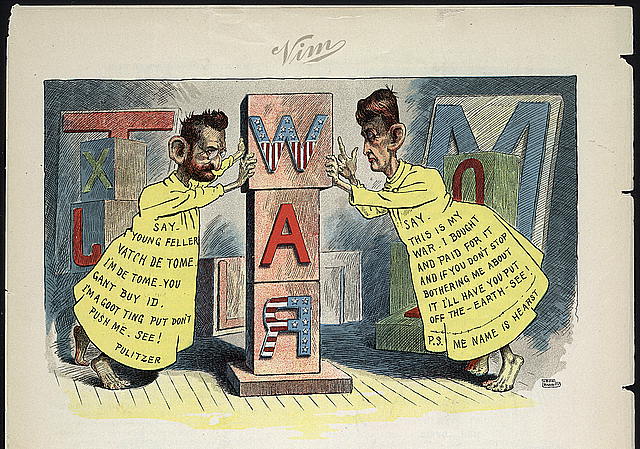
Courtesy the Library of Congress

A section of the colorful comics section of the New York Journal, 1898.
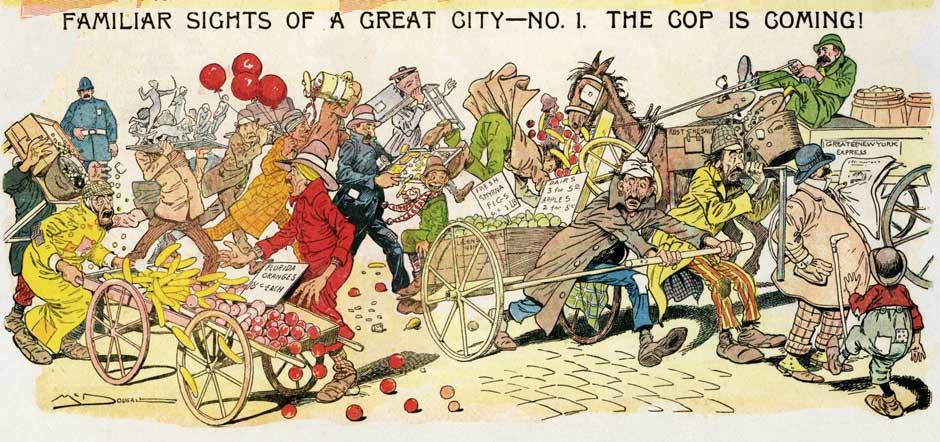
“Familiar Sights of a Great City—No. 1 The Cop is Coming!” by Walt McDougall, New York Journal, Sunday, January 9, 1898 via New York Review of Books

Little Orphan Annie became the biggest crossover star of the early comic strip era. Long before there was a musical, Annie starred in this 1932 melodrama, one of the earliest comic-to-movie crossovers.
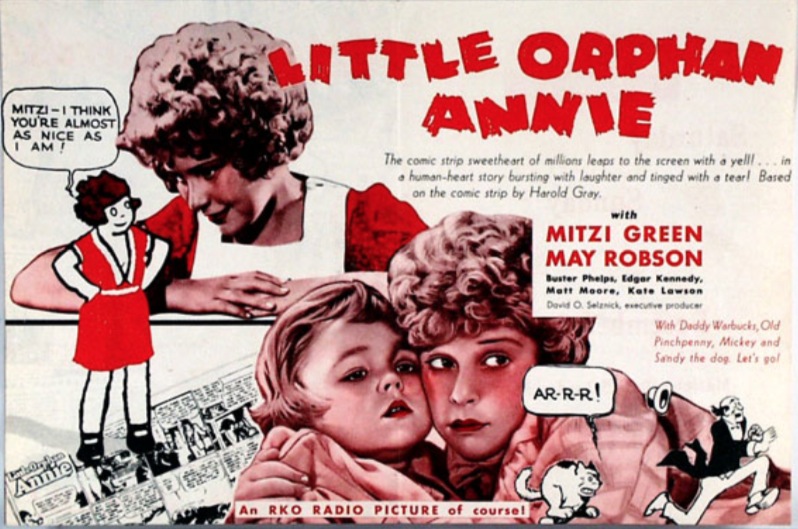
annie

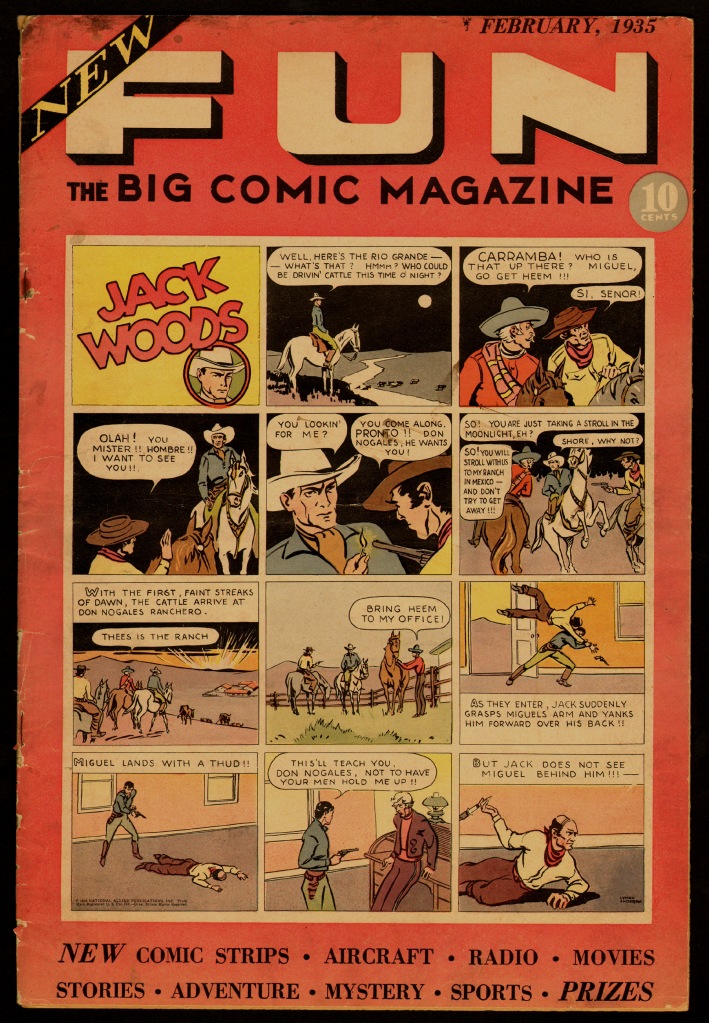
New Fun Comics #1, the very first comic book to contain all new material, and not merely reprints of newspaper comic strips.
1

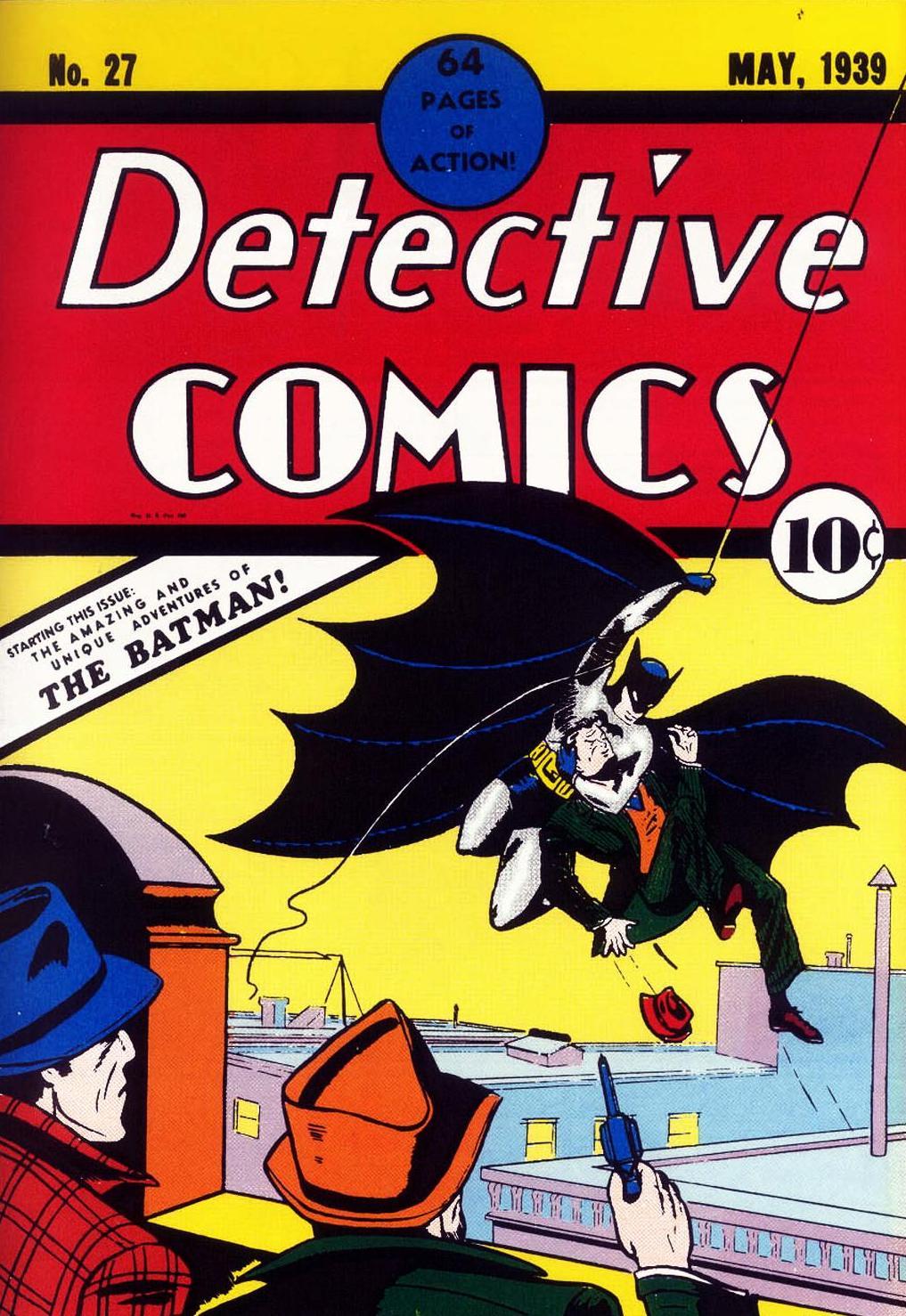
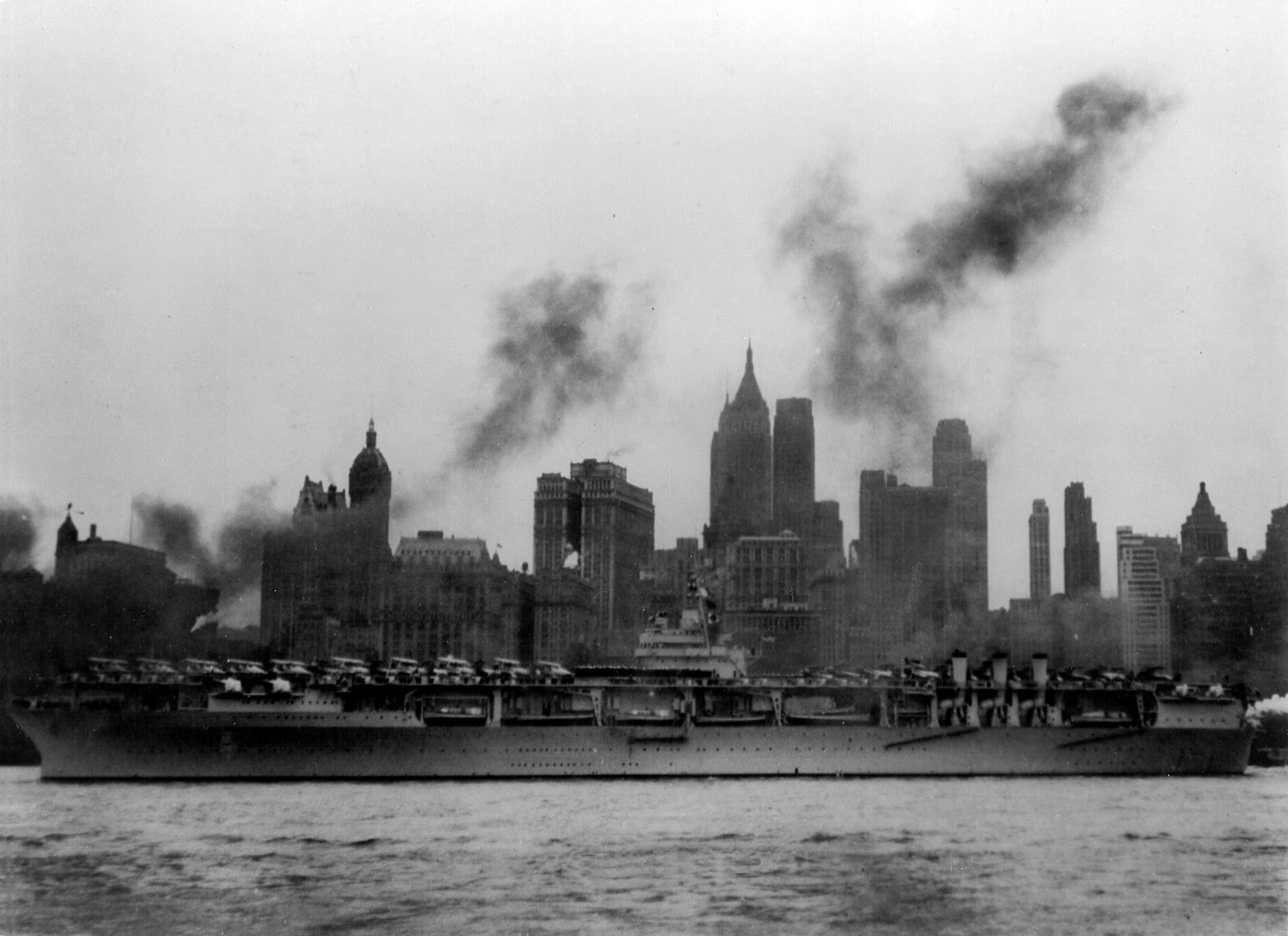
The Batman debuted in Detective Comics in 1939, created by Bob Kane and Bill Finger. The city features in these adventures was Gotham City, startlingly similar to the city outside the creators’ windows.
Courtesy DC Comics
Courtesy DC Comics

Gotham City, aka New York City, in 1939
Courtesy U.S. Navy National Museum of Naval Aviation

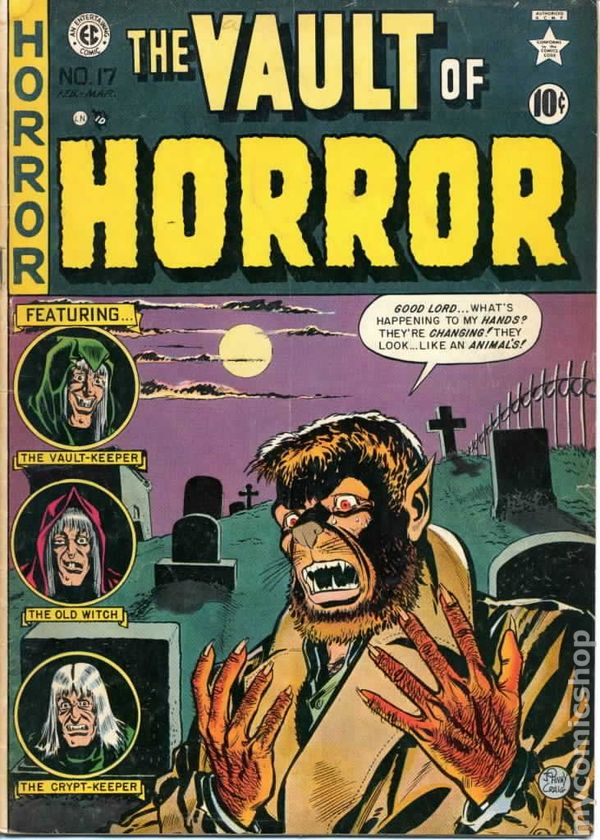
Vault of Horror, one of an assortment of shocking comic books produced by EC Comics in the early 1950s. The cover art is by Johnny Craig.
Courtesy EC Comics
Courtesy EC Comics

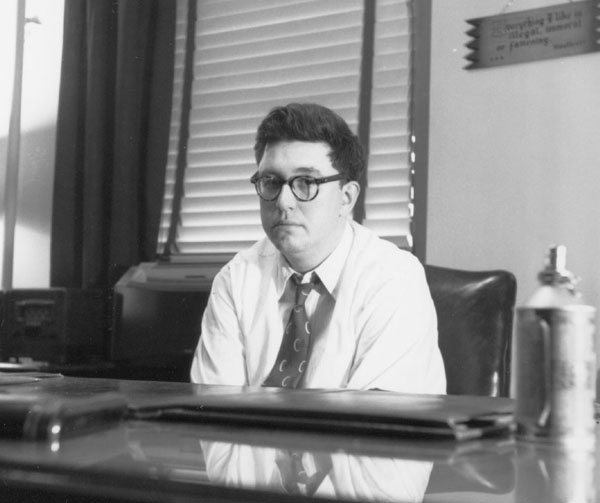
Bill Gaines, publisher of EC Comics, at his offices at 225 Lafayette Street.
Courtesy Tebeosfera
Courtesy Tebeosfera

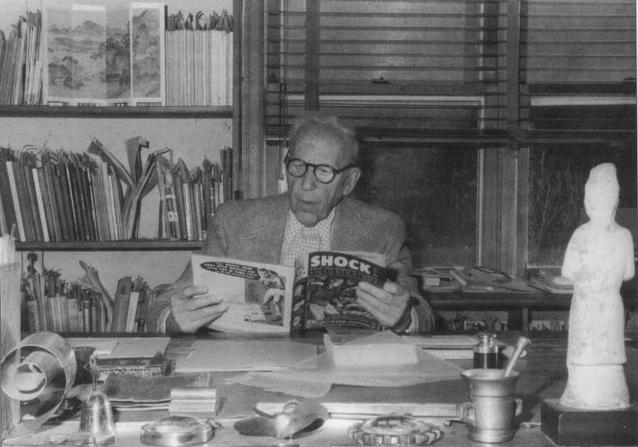
Dr. Fredrick Wertham, the writer of Seduction of the Innocent, who lead a charge against the comic book industry.
fred

seduction

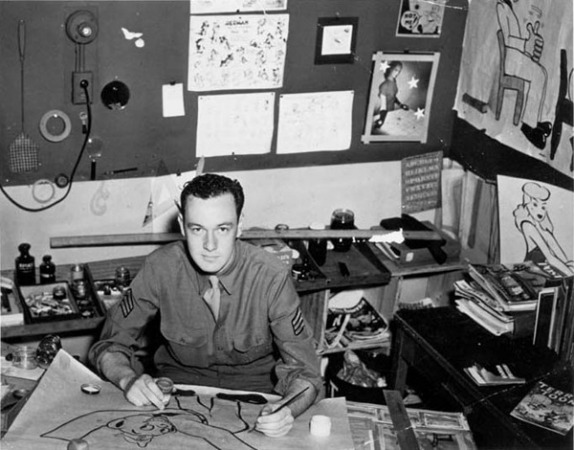
A young Stan Lee during the war as a member of the US Army’s Signal Corps. He even managed to do a bit of illustration for the cause!
stan lee

The Thing from the Fantastic Four with the Yancy Street Gang, a variation on Delancey Street in the Lower East Side.
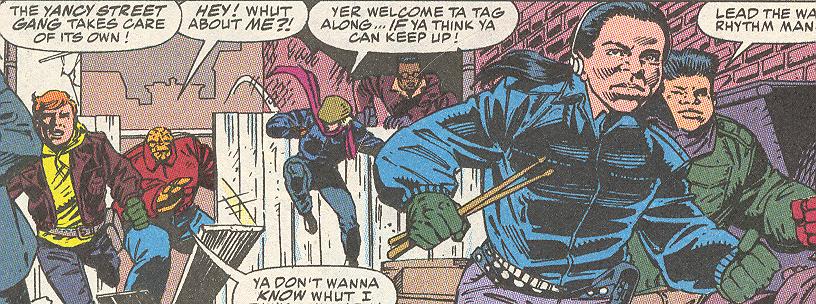
Courtesy Marvel Comics via Comic Viine

Doctor Strange’s Sanctum Sanctorum is located on Bleecker Street in Greenwich Village

Courtesy Marvel Comics
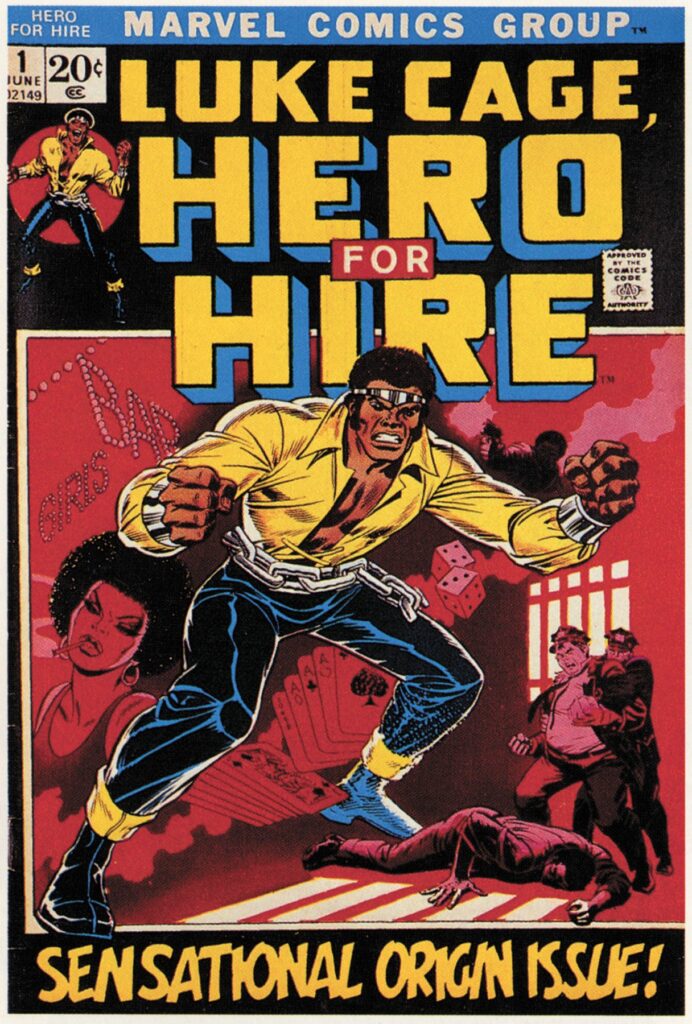
The adventures of Luke Cage, who debuted in his own Marvel Comics series in 1972, could be found mostly in Harlem. But he wasn’t the first African-American superhero from the neighborhood; in 1947 a character named Ace Harlem first appeared in a Philadelphia-published comic book called All-Negro Comics.

What would Spider-Man be without New York City? The image of the Brooklyn Bridge (called the George Washington Bridge in the story) is featured in a classic tale involving the death of his girlfriend Gwen Stacey, written by Gerry Conway and drawn by Gil Kane, John Romita and Tony Mortellaro.
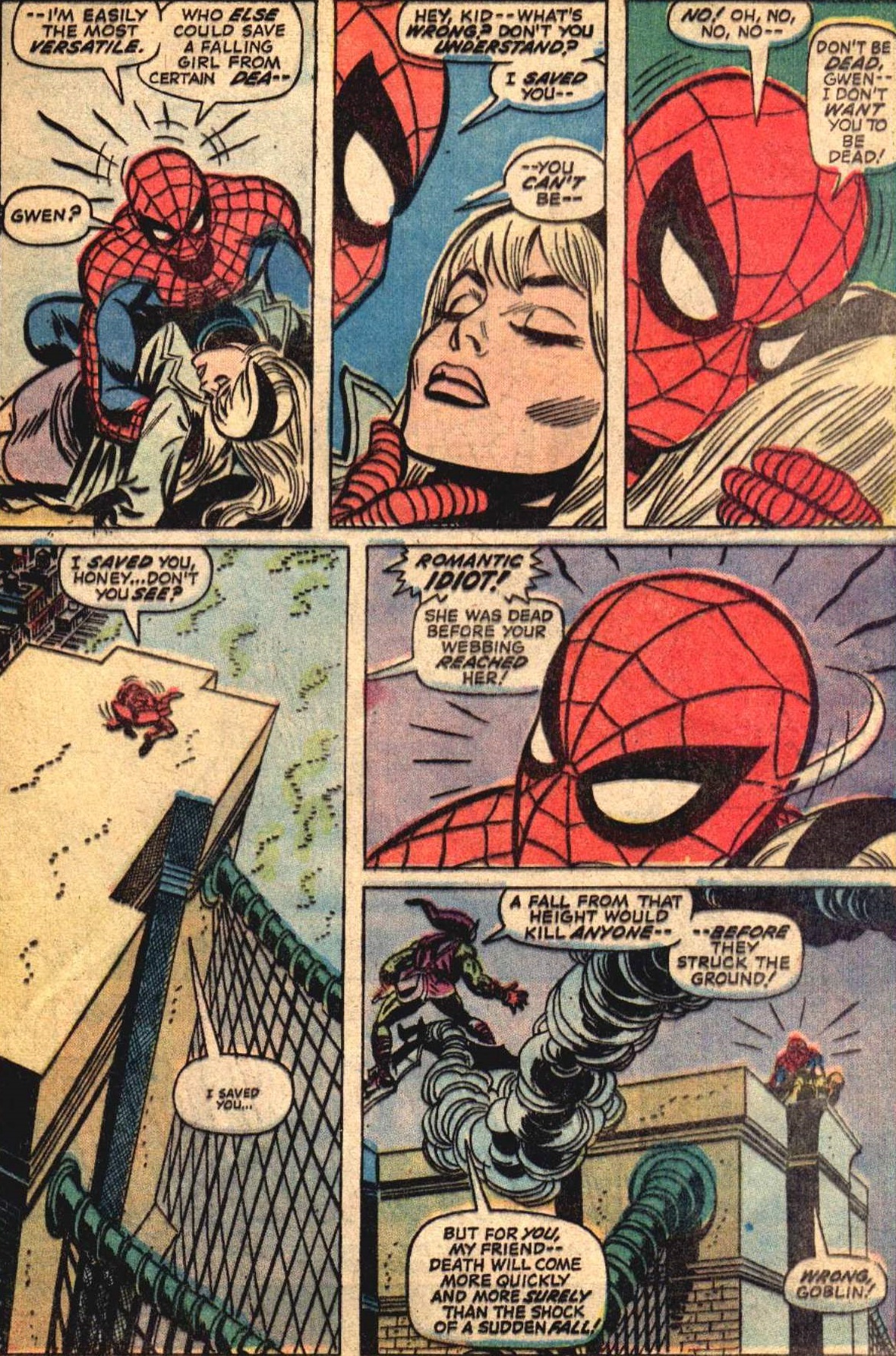
Courtesy Marvel Comics

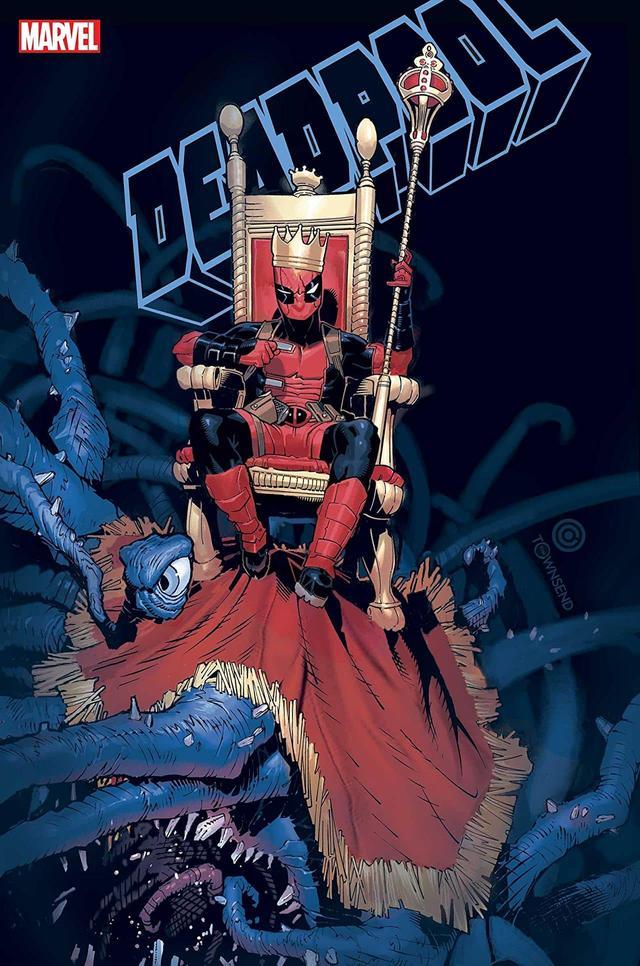
And — oddly enough — Staten Island in the world of Marvel Comics has become Monster Island, ruled by Deadpool. Yes, Deadpool. Haven’t they suffered enough? (Check here for more information.)
A page from Maus by Art Spiegelman, the graphic novel that brought the medium to a new level of respectability in literary circles.
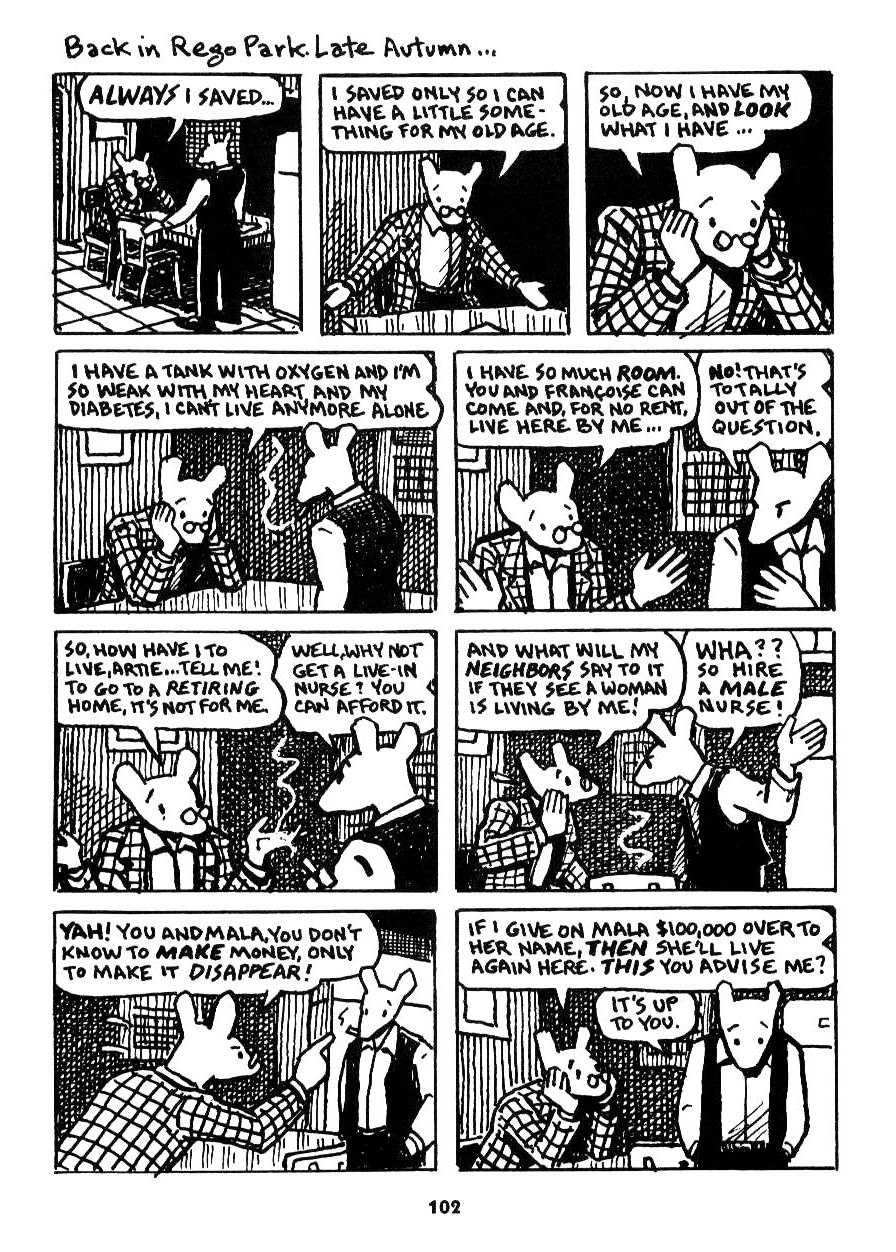
Courtesy Art Spiegelman

The comic book/graphic novel continues to evolve and reach new heights of success and respectability. Roz Chast’s Can’t We Talk About Something More Pleasant, published last year, won the National Book Critics Circle Award for best autobiography.
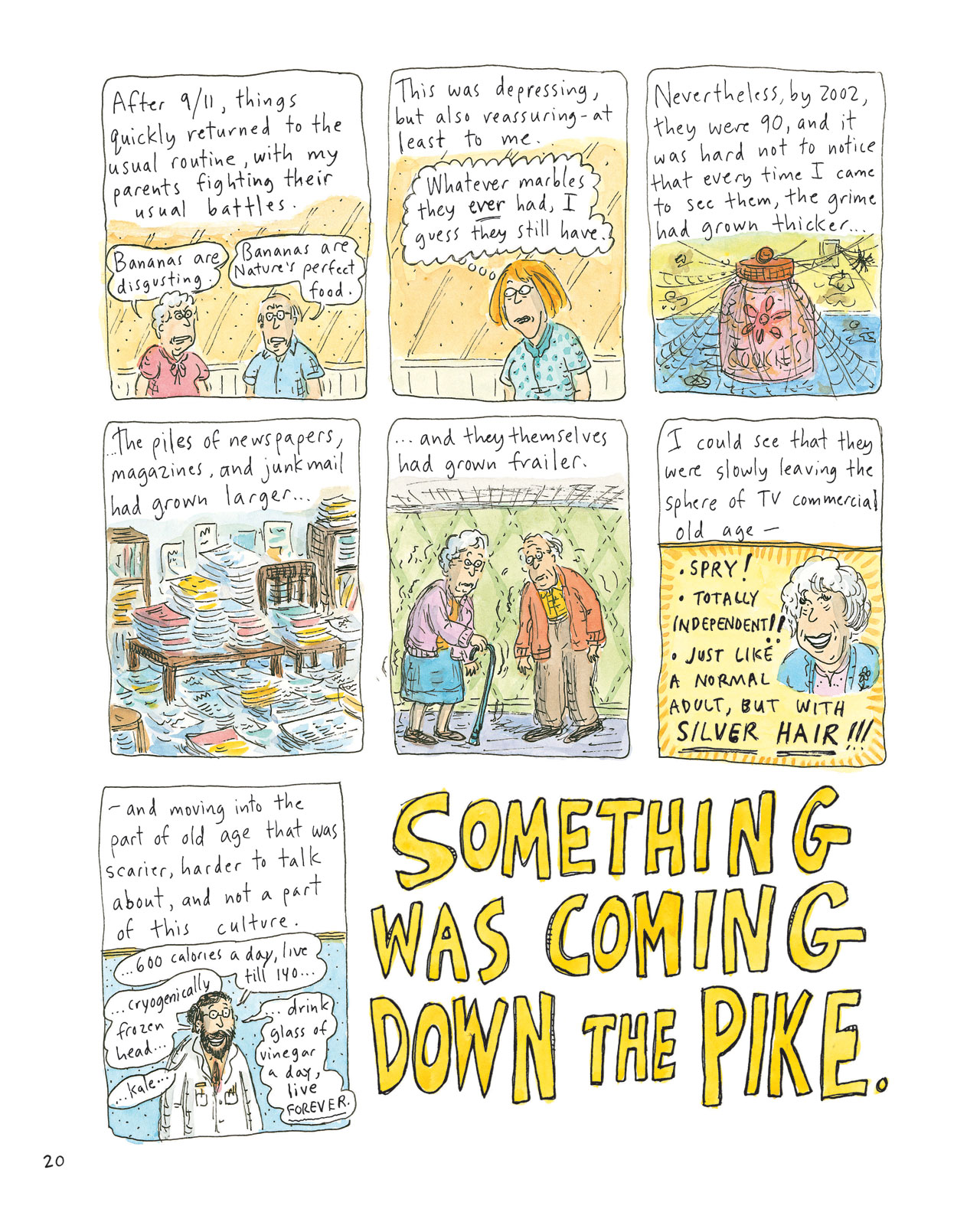
Courtesy Roz Chast/Bloomsbury

The Avengers defended New York during an alien attack in their blockbuster film in 2012
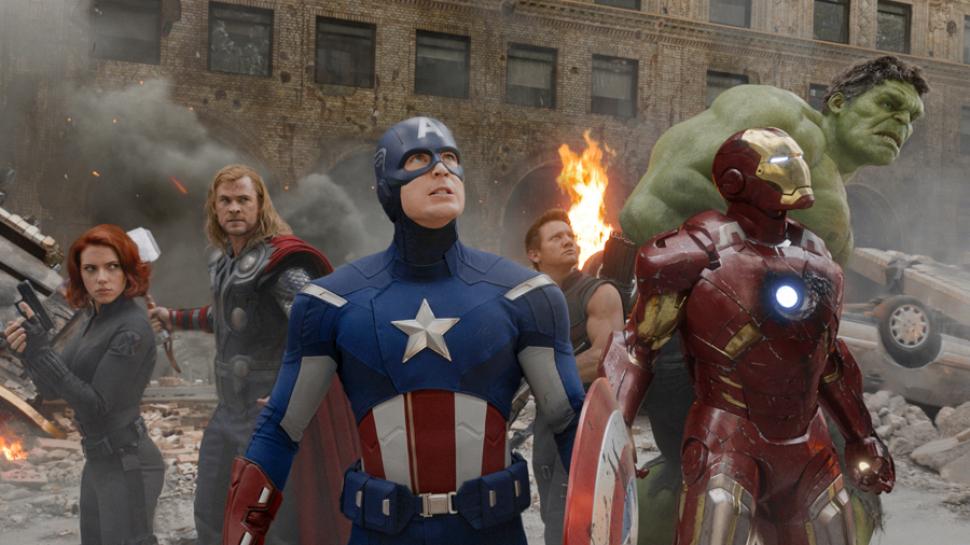
Courtesy Film Frame/Marvel

All images on this website are owned by the original comic book companies which produced them.  Please see individual companies for more information.

RECOMMENDED READING:

If you’re into digging more into this subject, here are a few sources that I used for this podcast:

Jews and American Comics: An Illustrated History of An American Art Form, with written contributions by Paul Buhle

The Ten-Cent Plague: The Great Comic-Book Scare and How It Changed America by David Hadju


Men of Tomorrow: Geeks, Gangster and the Birth of the Comic Book by Gerard Jones

Comic Book Century:  The History of American Comic Books by Stephen Krensky

Tales to Astonish: Jack Kirby, Stan Lee, and the American Comic Book Revolution by Ronin Ro

The Marvel Comics Guide to New York City by Peter Sanderson
Categories
Gilded Age New York Podcasts

Pulitzer vs. Hearst: The Rise of Yellow Journalism in Gilded Age New York

PODCAST (EPISODE 335) In the 1890s, powerful New York publishers Joseph Pulitzer and William Randolph Hearst engaged in an all-out battle for daily readers of their respective newspapers, developing a flamboyant, sensational style of coverage today referred to as ‘yellow journalism’.

This battle between the New York World and the New York Journal would determine the direction of the American media landscape and today we still feel its aftermath — from melodramatic headlines to the birth of eyewitness reporting and so-called ‘fake news’.

An illustration parodying Joseph Pulitzer from Puck Magazine, created by Frederick Burr Opper, January 1898, Library of Congress, Prints and Photographs Division

The two men come from drastic different backgrounds. Pulitzer, an Hungarian immigrant who started his publishing empire in St. Louis, used the World to highlight injustices upon the working class and to promote worthy civic projects (like the pedestal of the Statue of Liberty).

Hearst, himself the wealthy publisher of a San Francisco newspapers, entered the New York publishing world, specifically aimed at competing with Pulitzer. In many ways, he out-Pulitzered Pulitzer, creating extraordinary daily publications which appeals to all types of New Yorkers. (Even children!)

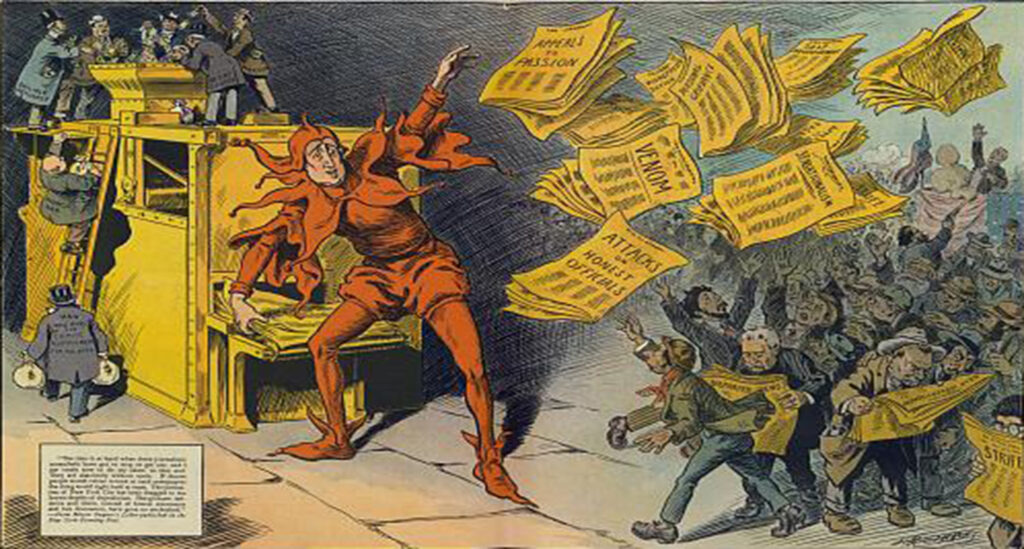
An illustration parodying Hearst from Puck Magazine, “The Yellow Press,” by L.M. Glackens, 1910. Library of Congress, Prints and Photographs Division

In Part One, we introduce you to the two publishers and meet them on a battlefield of newsprint and full-page headlines — located on just a couple short blocks south of the Brooklyn Bridge.

To get this week’s episode, just find our show on Stitcher or your favorite podcast streaming service. Or listen to it here:


The Bowery Boys: New York City History podcast is brought to you …. by you!

We are now producing a new Bowery Boys podcast every week. We’re also looking to improve and expand the show in other ways — publishing, social media, live events and other forms of media. But we can only do this with your help!

We are now a creator on Patreon, a patronage platform where you can support your favorite content creators.

Please visit our page on Patreon and watch a short video of us recording the show and talking about our expansion plans.

If you’d like to help out, there are six different pledge levels. Check them out and consider being a sponsor.

We greatly appreciate our listeners and readers and thank you for joining us on this journey so far.


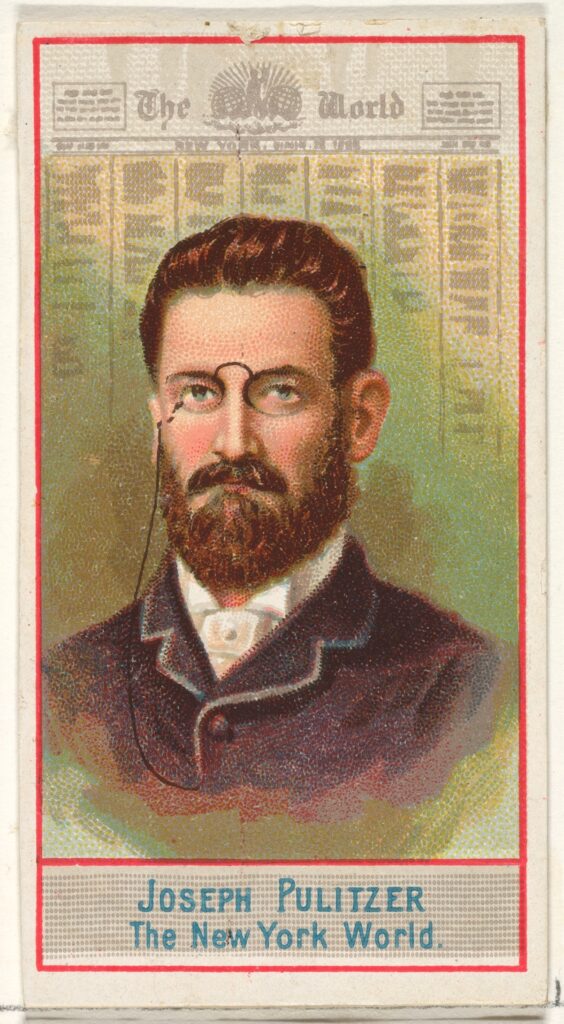
A Joseph Pulitzer collectable cigarette card, issued by Allen & Ginter, 1887. Further details at Met Museum
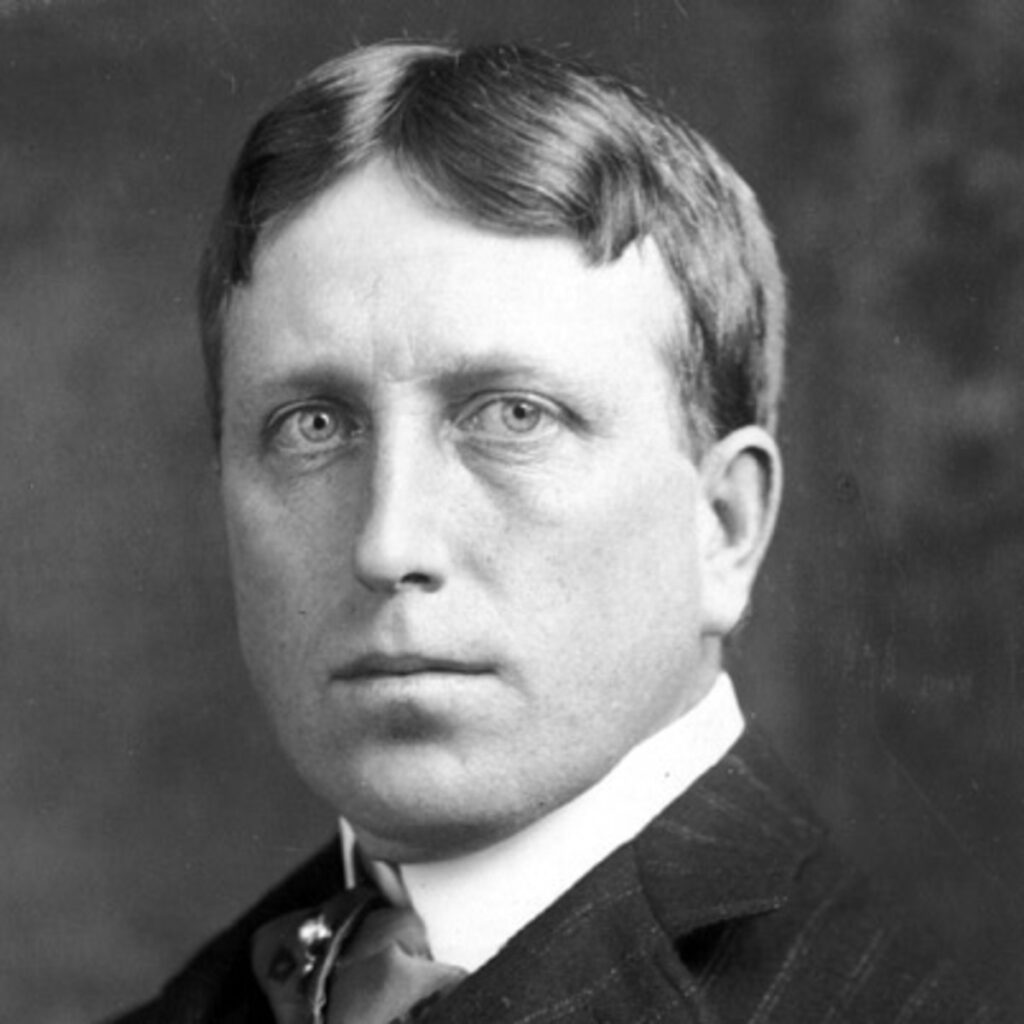
William Randolph Hearst
The Yellow Kid in the New York Journal, 1897. Courtesy the Billy Ireland Cartoon Library and Museum/Ohio State University
Categories
Podcasts Politics and Protest

New York City and the Underground Railroad: Escaping to freedom through a hostile city

PODCAST For thousands of people escaping the bonds of slavery in the South, the journey to freedom wound its way through New York City via the Underground Railroad.


The Underground Railroad was a loose, clandestine network of homes, businesses and churches, operated by freed black people and white abolitionists who put it upon themselves — often at great risk — to hide fugitives on the run.

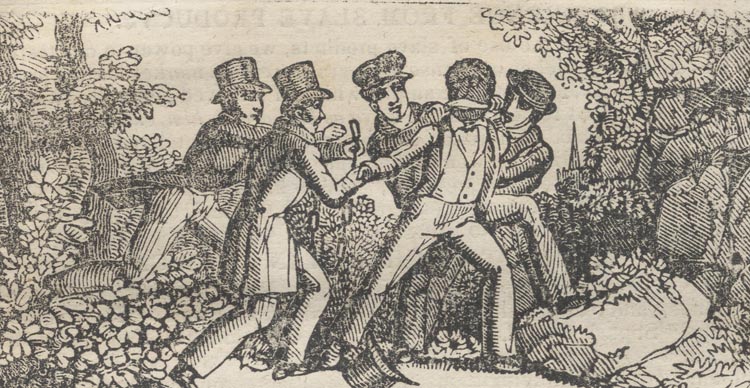
New York and Brooklyn were vital hubs in this network but these cities were hardly safe havens. The streets swarmed with bounty hunters, and a growing number of New Yorkers, enriched by Southern businesses, were sympathetic to the institution of slavery. Not even freed black New Yorkers were safe from kidnapping and racist anti-abolitionist mobs.

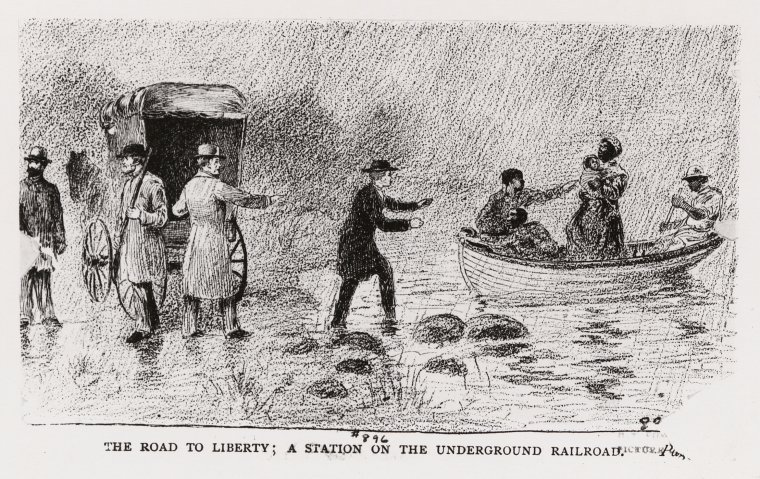
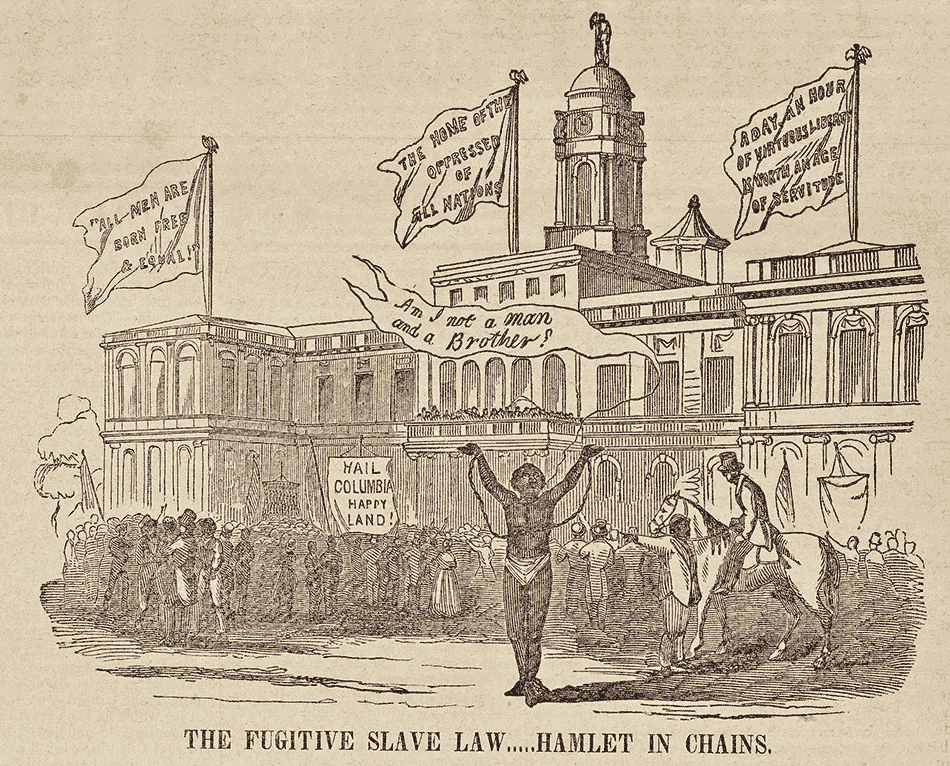
In this podcast we present some of the stops in New York along the Underground Railroad — from offices off Newspaper Row to the basement of New York’s first African-American owned bookstore. You’ll be familiar with some of this story’s leading figures like Frederick Douglass, Harriet Tubman and Henry Ward Beecher. But many of these courageous tales come from people who you may not know — the indefatigable Louis Napoleon, the resolute Sydney Howard Gay, the defiant David Ruggles and James Hamlet, the first victim of the 1850 Fugitive Slave Act.

PLUS: A trip to Brooklyn Heights and the site of New York’s most famous Underground Railroad site — Plymouth Church

LISTEN HERE:

_______________________________________________________

The Bowery Boys: New York City History podcast is brought to you …. by you!

We are now producing a new Bowery Boys podcast every week. We’re also looking to improve the show in other ways and expand in other ways as well — through publishing, social media, live events and other forms of media. But we can only do this with your help!

We are now a member of Patreon, a patronage platform where you can support your favorite content creators for as little as a $1 a month.

Please visit our page on Patreon and watch a short video of us recording the show and talking about our expansion plans. If you’d like to help out, there are five different pledge levels (and with clever names too — Mannahatta, New Amsterdam, Five Points, Gilded Age, Jazz Age and Empire State). Check them out and consider being a sponsor.

We greatly appreciate our listeners and readers and thank you for joining us on this journey so far. 

________________________________________________________

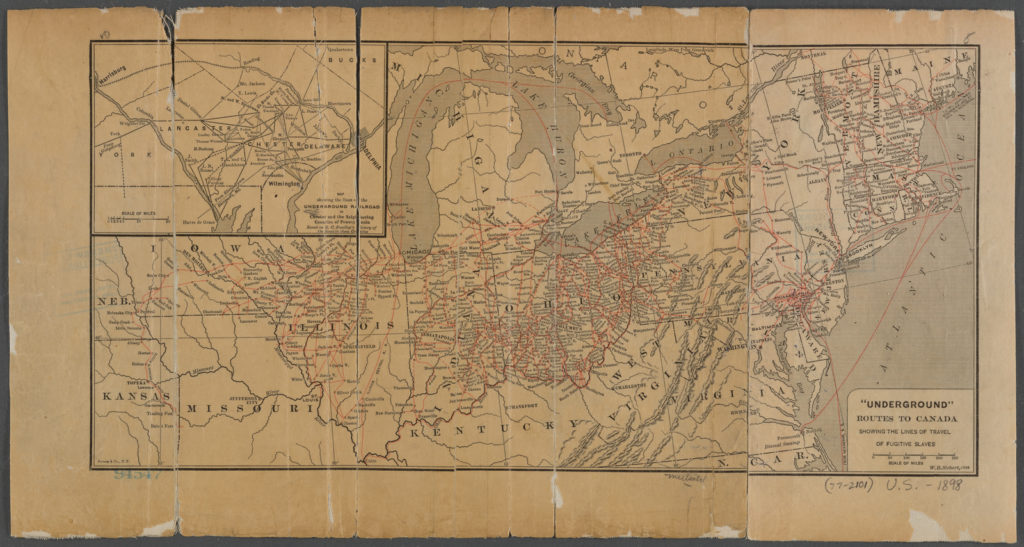
The many routes of the Underground Railroad, in an 1898 map by cartographer Wilbur Henry Siebert.

New York Public Library

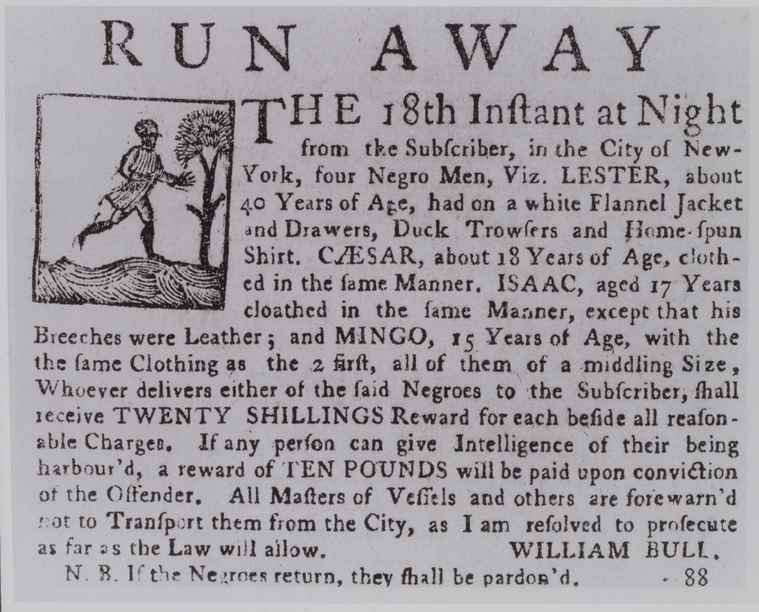
An advertisement for the capture of a runaway slave, published during the colonial era (1760s)

Schomburg Center for Research in Black Culture, Photographs and Prints Division

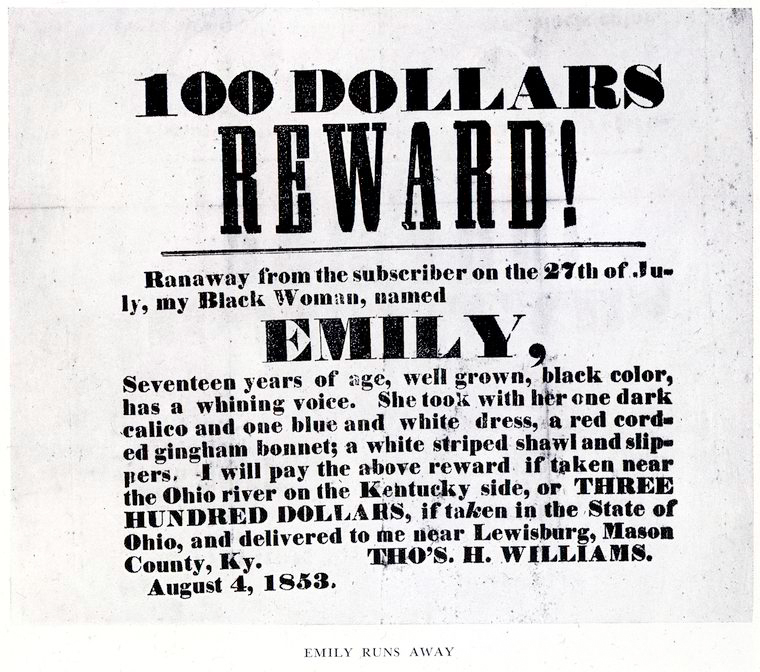
….and another, from 90 years later.

Schomburg Center for Research in Black Culture, Photographs and Prints Division

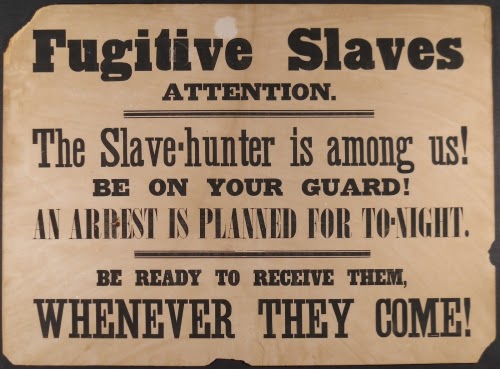
African-American New Yorkers lived in fear of being kidnapped by bounty hunters.

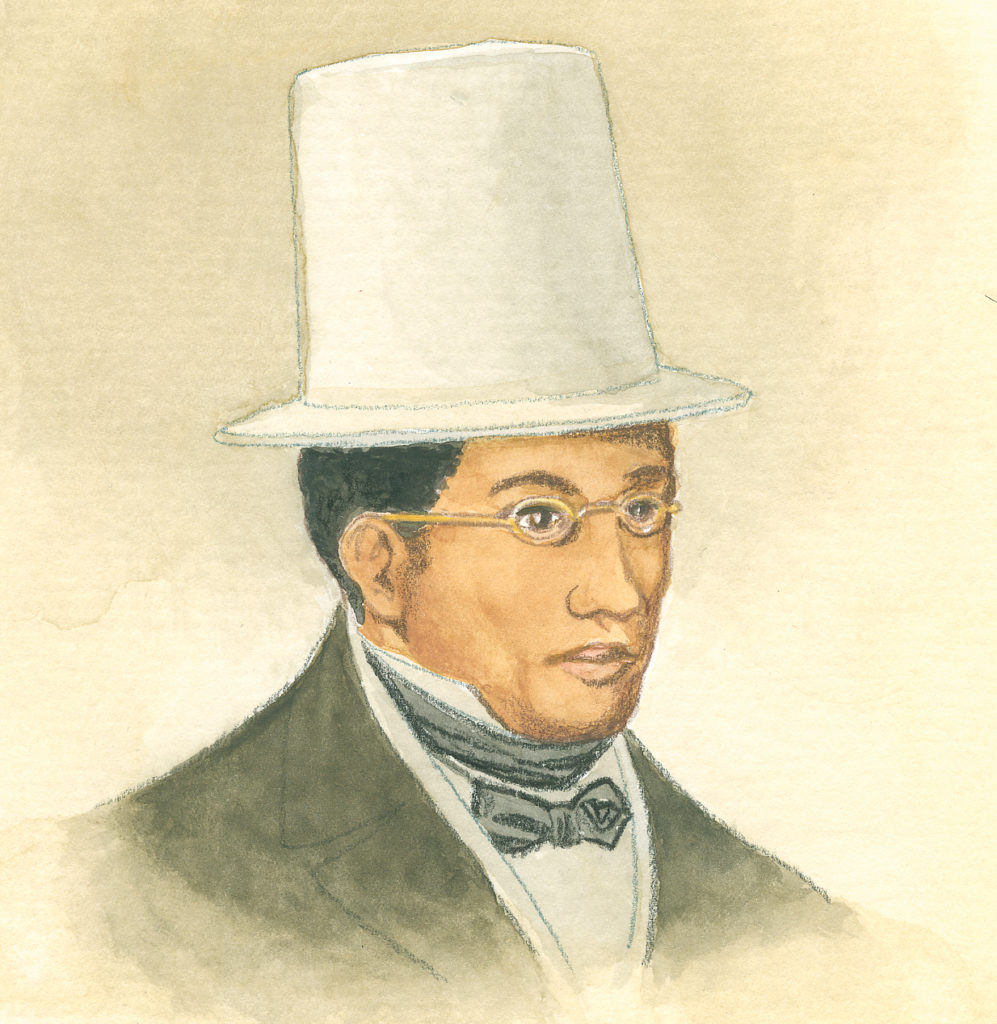
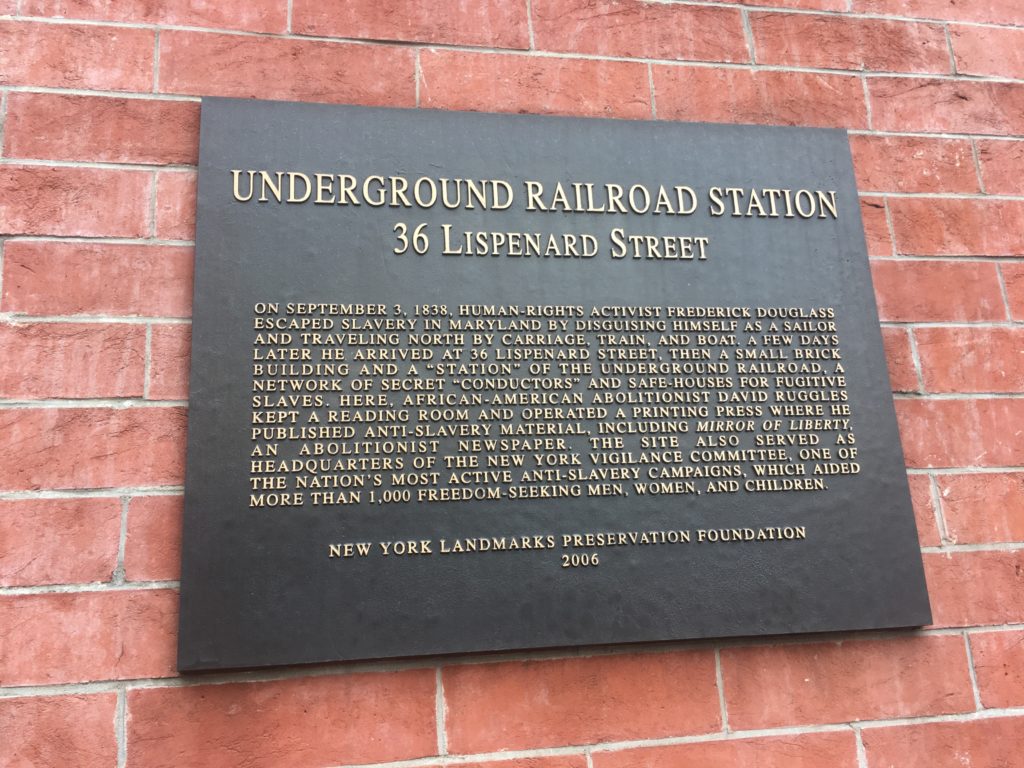
David Ruggles who operated America’s first African-American library and reading room on Lispenard Street. His home was also a stop on the Underground Railroad.

Illustration by Bob Powers (from original engraving)

At the release of James Hamlet (i.e. the purchase of his freedom by the AME Zion Church), this handbill was distributed

Rare Books and Manuscripts Library, Columbia University

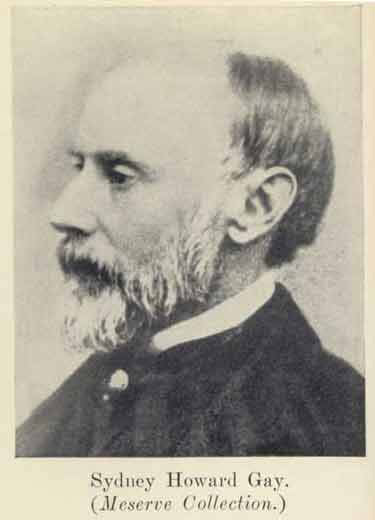
Sydney Howard Gay worked with several operatives on the Underground Railroad and was one of the few to keep records of new fugitive arrivals.

Abigail Hopper Gibbons, daughter of esteemed abolitionist Isaac Hopper, worked as a battlefield nurse in the early years of the Civil War. She returned to New York in 1863, only to be chased from her home by angry mobs during the Civil War Draft Riots.

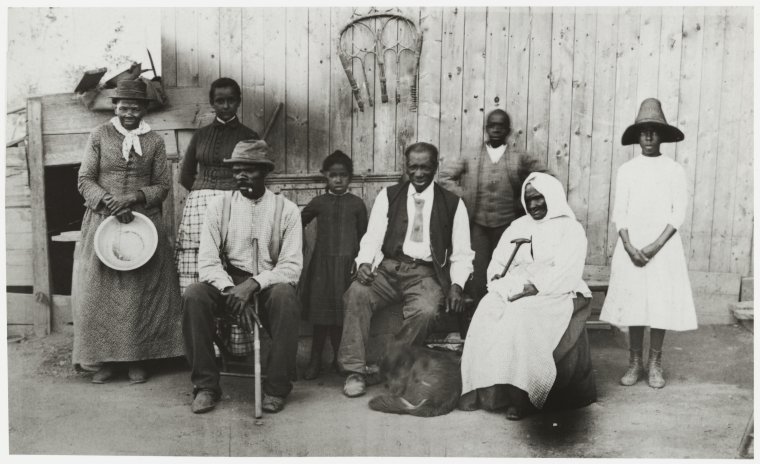
Harriet Tubman and her family — Gertie Davis [Tubman’s adopted daughter]; Nelson Davis [Tubman’s husband]; Lee Cheney; “Pop” Alexander; Walter Green; Sarah Parker [“Blind Auntie” Parker] and Dora Stewart [granddaughter of Tubman’s brother, John Stewart].

Schomburg Center for Research in Black Culture, Photographs and Prints Division

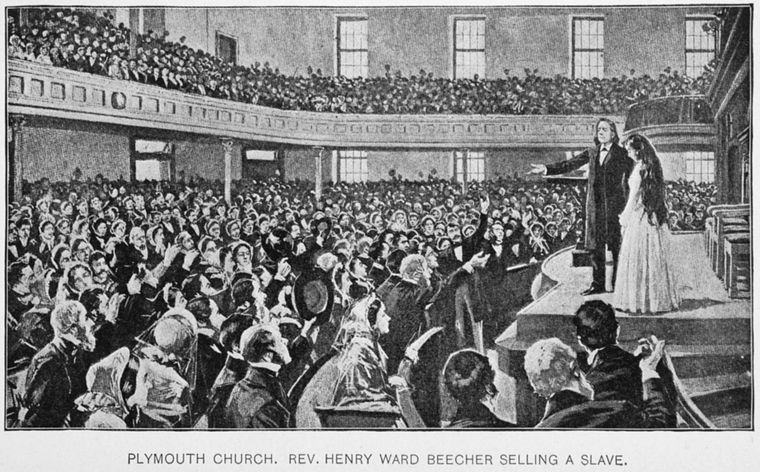
An illustration of Henry Ward Beecher‘s ‘auction’ of the enslaved woman nicknamed Pinky, held at Plymouth Church.

Schomburg Center for Research in Black Culture, Manuscripts, Archives and Rare Books Division

TOURS
Inside Out Tours: Slavery and Underground Railroad Walking Tour
Walks of New York
Black Gotham Experience

Plymouth Church — Public tours every Sunday at 12:30. Visit their website for more information

Plymouth now has a New Abolitionists ministry, tied into New York state’s anti-human trafficking initiatives. Visit Plymouth’s website for further information.

FURTHER READING
Bound for Canaan: The Epic Story of the Underground Railroad by Fergus M. Bordewich
Gateway to Freedom: The Hidden History of the Underground Railroad by Eric Foner
The Underground Railroad: Authentic Narratives and First-Hand Accounts (African American) by William Still

and, of course,

The Underground Railroad by Colson Whitehead

EXHIBITIONS

Brooklyn Historical Society — In Pursuit of Freedom: A long term installation celebrating the lives of Brooklyn abolitionists

Weeksville Heritage Center — Site of one of America’s first free black communities in the 19th century

You may also be interested in New-York Historical Society‘s online exhibit New York Divided: Slavery and the Civil War

FURTHER LISTENING
We mentioned these past Bowery Boys podcast on the show. After you’ve finished listening to our Underground Railroad show, give these a try!

Categories
Planes Trains and Automobiles

The Dual Contracts: The New York City subway system gets a serious upgrade 100 years ago today

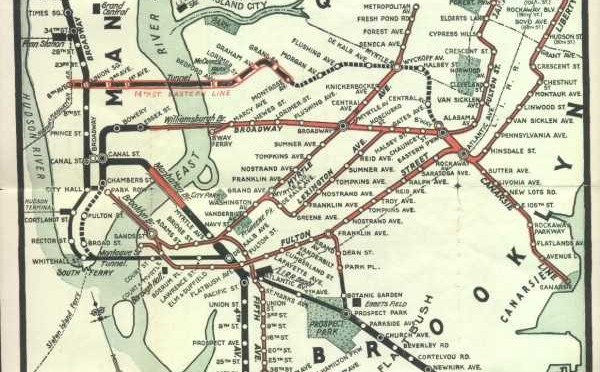
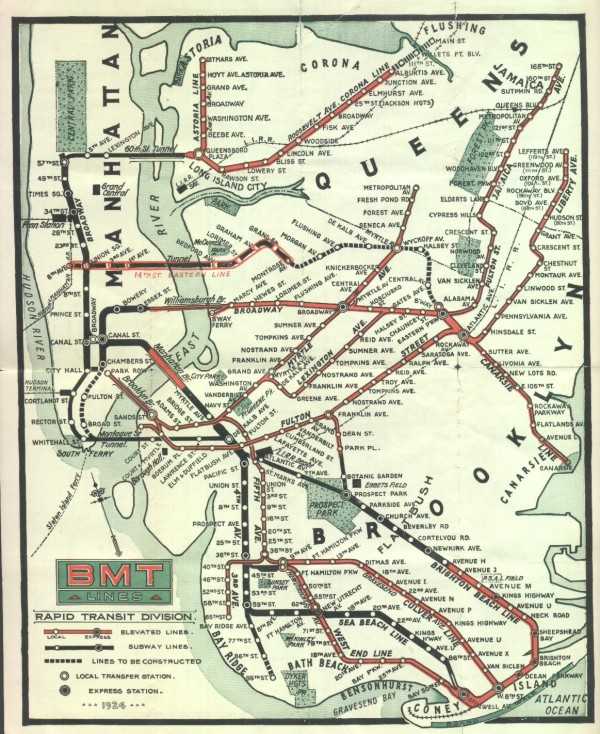
A subway map from 1924, illustrating the system created as a result of the Dual Contracts agreement.

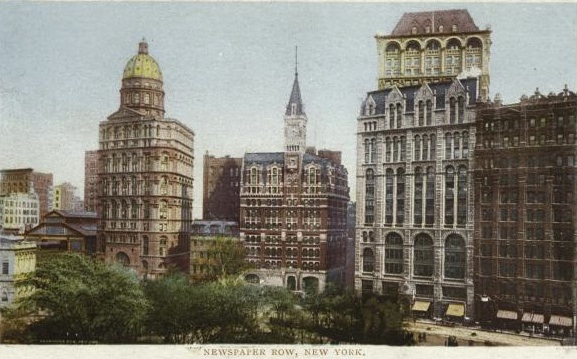
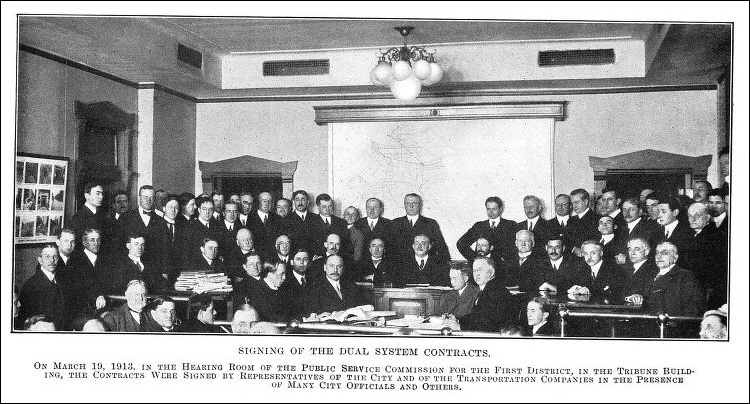
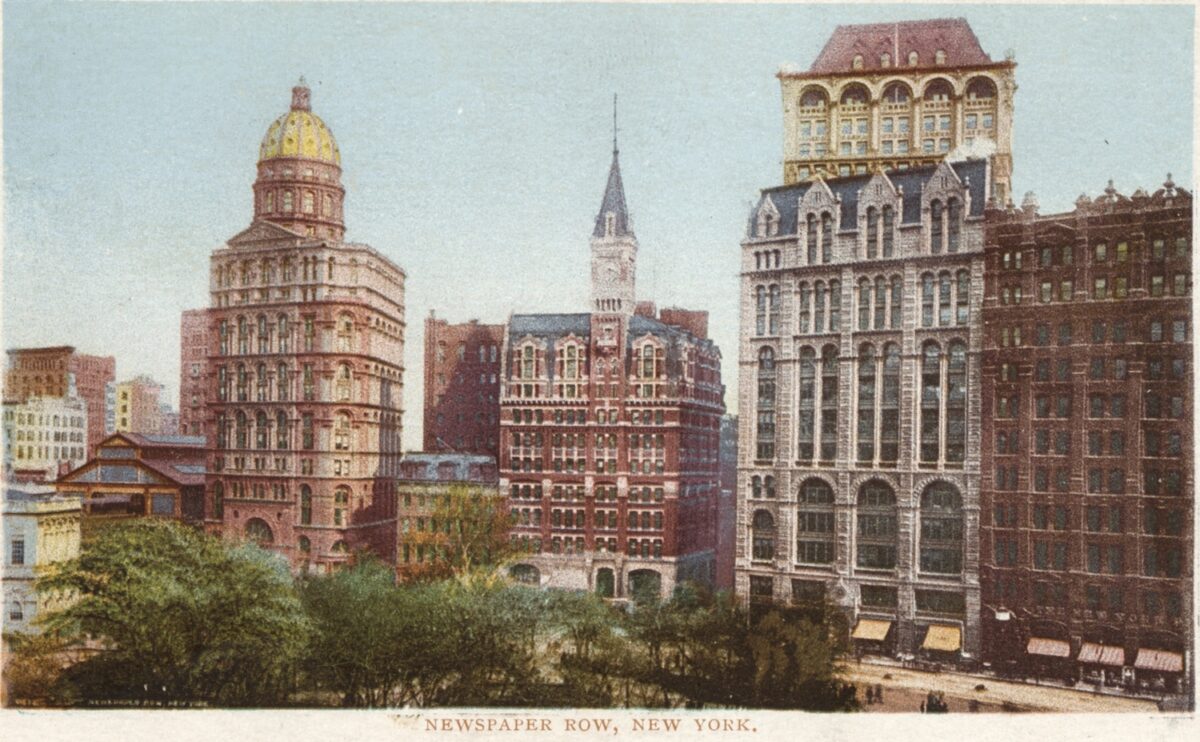
After years of negotiations, false starts and lengthy arguments played out in the press, a group of greatly relieved businessmen entered the large hearing room of the New York Tribune Building (at Nassau and Spruce, where Pace University is today) and put their names to a series of documents that have come to be known as the Dual Contracts.

The beleaguered ceremony ran a half hour late, as a great many gentlemen crammed into the third floor meeting room to sign the official documents, stamped with gold lettering and expensively bound in morocco leather and colored ribbons.

With those signatures, the chaotic New York transportation system — with its fledgling subway and its miles of elevated lines — officially came of age that day — March 19, 1913.

“This makes March 19 a red-letter date on the municipal calendar,” declared the New York Tribune, in whose building the agreement was signed.  The Dual Contracts authorized millions of dollars of new tracks, more than doubling the system in size, from 296 miles of track to 618 miles!

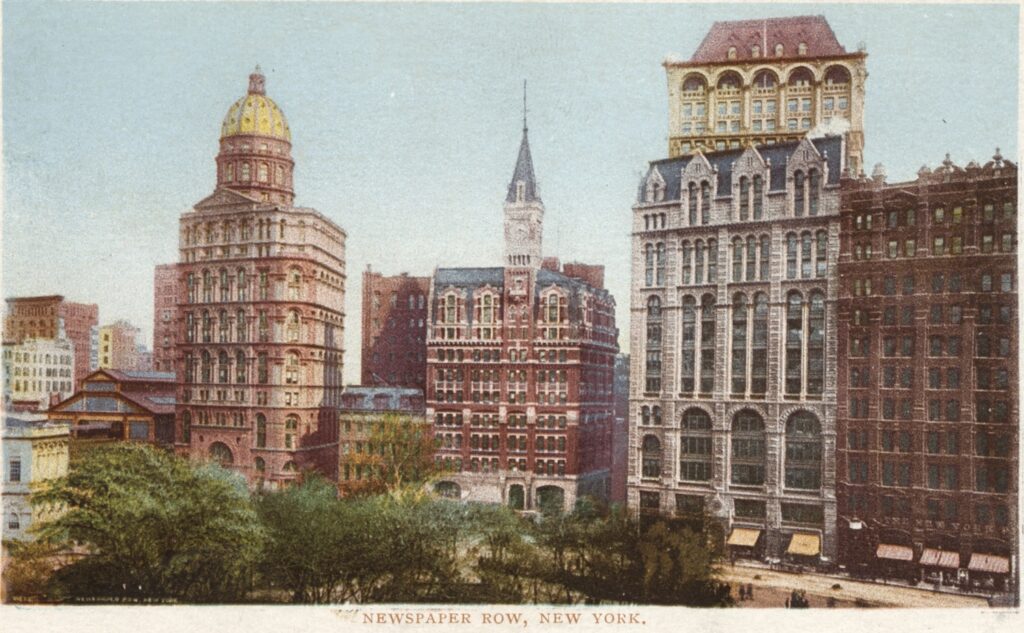
Below: The buildings of Newspaper Row. The towered Tribune Building, in the middle, was the site of the Dual Contracts signing in 1913. 

This seminal agreement in American transportation history is ‘dual’ because the city negotiated two separate contracts — one with August Belmont Jr.’s Interborough Rapid Transit Company (IRT) who operated the New York subway, and the Municipal Railway Company on behalf of the Brooklyn Rapid Transit (BRT), who ran most of Brooklyn’s transit system.

Under the agreement, the city would shoulder some of the cost of building new subway services — many into places where New York expected populations to rise in the coming years — and the two private companies would then lease the new routes from the city and profit from their operation.

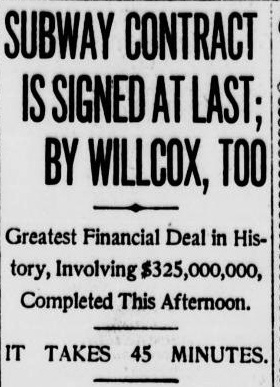
At right: the headline from the New York Evening World

Essentially this gave IRT permission to operate into Brooklyn (once the domain of the BRT) and vice versa.  Previously, people arriving from Brooklyn to Manhattan had to immediately change trains once arriving into the new borough.

According to a report by the Public Service Commission later that year: “The Dual System will remove this abnormal condition and give the Brooklyn company a system of subways in Manhattan, by means of which it shall distribute its passengers through the territory south of 59th Street. Thus the present congestion at the Manhattan terminals of the bridges will be ended and the passengers from Brooklyn will be enabled to reach their destinations in lower Manhattan without change of cars or the payment of an additional fare.” [source]

As part of the deal, the two companies agreed to operate two new lines into Queens.  The importance of this particular part of the deal cannot be overstated.  The borough of Queens was just over a dozen years old by this time and still sparsely populated given its size. (Less than 300,000 people in 1910.)  With the arrival of the Queensboro Bridge in 1909, paired with new subway and elevated services provided by the Dual Contracts, the population of Queens would explode in the 1920s to well over a million.

And this didn’t just stimulate development there.  The deal brought a subway to the Manhattan’s Upper East Side and to the West Village, to most Bronx neighborhoods and down the Eastern Parkway in Brooklyn.  New home and apartment developments into those regions soon followed.

Below: City luminaries gather around to watch representatives from government and the two private companies sign the pretentiously bound contracts. (Picture courtesy NYCSubway, an indispensable destination for transit history.)

The Dual Contracts also created express and local trains, facilitating another great development in the history of New York — the arrival of midtown Manhattan as the heart of business and entertainment.

In all, the contract signed one hundred years ago today made the New York City transit system the largest in the world.  In fact, it was larger than all the rapid transit systems of the world at the time — combined (according to Peter Derrick’s excellent book on the subject Tunneling To The Future).

But this also set in motion one of the great flaws of the subway system. Tracks operated by the IRT were a different size from those operated by the BRT.  The track gauge was wider on BRT tracks.  As a result, today the New York subway system still operates two different sizes of cars. (Ed: See notes below for a slight clarification/better explanation.)

On a humorous note, the original contracts, bound as they were in thick leather volumes, were apparently quite heavy to lift.  The president of the IRT remarked, “I am glad that I have enough strength to receive these contracts.”

For more details on the Dual Contracts, please check out the second podcast on the birth of the New York subway system — Subway by the Numbers (and Letters)